window.__IS_SSR__=true
window.__INITIAL_STATE__={
"attachmentsReducer": {
"audio_0": {
"type": "attachments",
"id": "audio_0",
"imgSizes": {
"kqedFullSize": {
"file": "https://ww2.kqed.org/news/wp-content/themes/KQED-unified/img/audio_bgs/background0.jpg"
}
}
},
"audio_1": {
"type": "attachments",
"id": "audio_1",
"imgSizes": {
"kqedFullSize": {
"file": "https://ww2.kqed.org/news/wp-content/themes/KQED-unified/img/audio_bgs/background1.jpg"
}
}
},
"audio_2": {
"type": "attachments",
"id": "audio_2",
"imgSizes": {
"kqedFullSize": {
"file": "https://ww2.kqed.org/news/wp-content/themes/KQED-unified/img/audio_bgs/background2.jpg"
}
}
},
"audio_3": {
"type": "attachments",
"id": "audio_3",
"imgSizes": {
"kqedFullSize": {
"file": "https://ww2.kqed.org/news/wp-content/themes/KQED-unified/img/audio_bgs/background3.jpg"
}
}
},
"audio_4": {
"type": "attachments",
"id": "audio_4",
"imgSizes": {
"kqedFullSize": {
"file": "https://ww2.kqed.org/news/wp-content/themes/KQED-unified/img/audio_bgs/background4.jpg"
}
}
},
"placeholder": {
"type": "attachments",
"id": "placeholder",
"imgSizes": {
"thumbnail": {
"file": "https://cdn.kqed.org/wp-content/uploads/2024/12/KQED-Default-Image-816638274-2000x1333-1-160x107.jpg",
"width": 160,
"height": 107,
"mimeType": "image/jpeg"
},
"medium": {
"file": "https://cdn.kqed.org/wp-content/uploads/2024/12/KQED-Default-Image-816638274-2000x1333-1-800x533.jpg",
"width": 800,
"height": 533,
"mimeType": "image/jpeg"
},
"medium_large": {
"file": "https://cdn.kqed.org/wp-content/uploads/2024/12/KQED-Default-Image-816638274-2000x1333-1-768x512.jpg",
"width": 768,
"height": 512,
"mimeType": "image/jpeg"
},
"large": {
"file": "https://cdn.kqed.org/wp-content/uploads/2024/12/KQED-Default-Image-816638274-2000x1333-1-1020x680.jpg",
"width": 1020,
"height": 680,
"mimeType": "image/jpeg"
},
"1536x1536": {
"file": "https://cdn.kqed.org/wp-content/uploads/2024/12/KQED-Default-Image-816638274-2000x1333-1-1536x1024.jpg",
"width": 1536,
"height": 1024,
"mimeType": "image/jpeg"
},
"fd-lrg": {
"file": "https://cdn.kqed.org/wp-content/uploads/2024/12/KQED-Default-Image-816638274-2000x1333-1-1536x1024.jpg",
"width": 1536,
"height": 1024,
"mimeType": "image/jpeg"
},
"fd-med": {
"file": "https://cdn.kqed.org/wp-content/uploads/2024/12/KQED-Default-Image-816638274-2000x1333-1-1020x680.jpg",
"width": 1020,
"height": 680,
"mimeType": "image/jpeg"
},
"fd-sm": {
"file": "https://cdn.kqed.org/wp-content/uploads/2024/12/KQED-Default-Image-816638274-2000x1333-1-800x533.jpg",
"width": 800,
"height": 533,
"mimeType": "image/jpeg"
},
"post-thumbnail": {
"file": "https://cdn.kqed.org/wp-content/uploads/2024/12/KQED-Default-Image-816638274-2000x1333-1-672x372.jpg",
"width": 672,
"height": 372,
"mimeType": "image/jpeg"
},
"twentyfourteen-full-width": {
"file": "https://cdn.kqed.org/wp-content/uploads/2024/12/KQED-Default-Image-816638274-2000x1333-1-1038x576.jpg",
"width": 1038,
"height": 576,
"mimeType": "image/jpeg"
},
"xxsmall": {
"file": "https://cdn.kqed.org/wp-content/uploads/2024/12/KQED-Default-Image-816638274-2000x1333-1-160x107.jpg",
"width": 160,
"height": 107,
"mimeType": "image/jpeg"
},
"xsmall": {
"file": "https://cdn.kqed.org/wp-content/uploads/2024/12/KQED-Default-Image-816638274-2000x1333-1-672x372.jpg",
"width": 672,
"height": 372,
"mimeType": "image/jpeg"
},
"small": {
"file": "https://cdn.kqed.org/wp-content/uploads/2024/12/KQED-Default-Image-816638274-2000x1333-1-672x372.jpg",
"width": 672,
"height": 372,
"mimeType": "image/jpeg"
},
"xlarge": {
"file": "https://cdn.kqed.org/wp-content/uploads/2024/12/KQED-Default-Image-816638274-2000x1333-1-1020x680.jpg",
"width": 1020,
"height": 680,
"mimeType": "image/jpeg"
},
"full-width": {
"file": "https://cdn.kqed.org/wp-content/uploads/2024/12/KQED-Default-Image-816638274-2000x1333-1-1920x1280.jpg",
"width": 1920,
"height": 1280,
"mimeType": "image/jpeg"
},
"guest-author-32": {
"file": "https://cdn.kqed.org/wp-content/uploads/2025/01/KQED-Default-Image-816638274-1333x1333-1-160x160.jpg",
"width": 32,
"height": 32,
"mimeType": "image/jpeg"
},
"guest-author-50": {
"file": "https://cdn.kqed.org/wp-content/uploads/2025/01/KQED-Default-Image-816638274-1333x1333-1-160x160.jpg",
"width": 50,
"height": 50,
"mimeType": "image/jpeg"
},
"guest-author-64": {
"file": "https://cdn.kqed.org/wp-content/uploads/2025/01/KQED-Default-Image-816638274-1333x1333-1-160x160.jpg",
"width": 64,
"height": 64,
"mimeType": "image/jpeg"
},
"guest-author-96": {
"file": "https://cdn.kqed.org/wp-content/uploads/2025/01/KQED-Default-Image-816638274-1333x1333-1-160x160.jpg",
"width": 96,
"height": 96,
"mimeType": "image/jpeg"
},
"guest-author-128": {
"file": "https://cdn.kqed.org/wp-content/uploads/2025/01/KQED-Default-Image-816638274-1333x1333-1-160x160.jpg",
"width": 128,
"height": 128,
"mimeType": "image/jpeg"
},
"detail": {
"file": "https://cdn.kqed.org/wp-content/uploads/2025/01/KQED-Default-Image-816638274-1333x1333-1-160x160.jpg",
"width": 160,
"height": 160,
"mimeType": "image/jpeg"
},
"kqedFullSize": {
"file": "https://cdn.kqed.org/wp-content/uploads/2024/12/KQED-Default-Image-816638274-2000x1333-1.jpg",
"width": 2000,
"height": 1333
}
}
},
"arts_13894009": {
"type": "attachments",
"id": "arts_13894009",
"meta": {
"index": "attachments_1716263798",
"site": "arts",
"id": "13894009",
"found": true
},
"parent": 13894007,
"imgSizes": {
"twentyfourteen-full-width": {
"file": "https://ww2.kqed.org/app/uploads/sites/2/2021/03/life-kit_clothes-1-5_slide-f027dc177586fe5fea045c1b920094b773be8ba0-1038x576.jpg",
"width": 1038,
"mimeType": "image/jpeg",
"height": 576
},
"thumbnail": {
"file": "https://ww2.kqed.org/app/uploads/sites/2/2021/03/life-kit_clothes-1-5_slide-f027dc177586fe5fea045c1b920094b773be8ba0-160x107.jpg",
"width": 160,
"mimeType": "image/jpeg",
"height": 107
},
"post-thumbnail": {
"file": "https://ww2.kqed.org/app/uploads/sites/2/2021/03/life-kit_clothes-1-5_slide-f027dc177586fe5fea045c1b920094b773be8ba0-672x372.jpg",
"width": 672,
"mimeType": "image/jpeg",
"height": 372
},
"kqedFullSize": {
"file": "https://ww2.kqed.org/app/uploads/sites/2/2021/03/life-kit_clothes-1-5_slide-f027dc177586fe5fea045c1b920094b773be8ba0.jpg",
"width": 1498,
"height": 999
},
"large": {
"file": "https://ww2.kqed.org/app/uploads/sites/2/2021/03/life-kit_clothes-1-5_slide-f027dc177586fe5fea045c1b920094b773be8ba0-1020x680.jpg",
"width": 1020,
"mimeType": "image/jpeg",
"height": 680
},
"medium": {
"file": "https://ww2.kqed.org/app/uploads/sites/2/2021/03/life-kit_clothes-1-5_slide-f027dc177586fe5fea045c1b920094b773be8ba0-800x534.jpg",
"width": 800,
"mimeType": "image/jpeg",
"height": 534
},
"medium_large": {
"file": "https://ww2.kqed.org/app/uploads/sites/2/2021/03/life-kit_clothes-1-5_slide-f027dc177586fe5fea045c1b920094b773be8ba0-768x512.jpg",
"width": 768,
"mimeType": "image/jpeg",
"height": 512
}
},
"publishDate": 1615835607,
"modified": 1615836485,
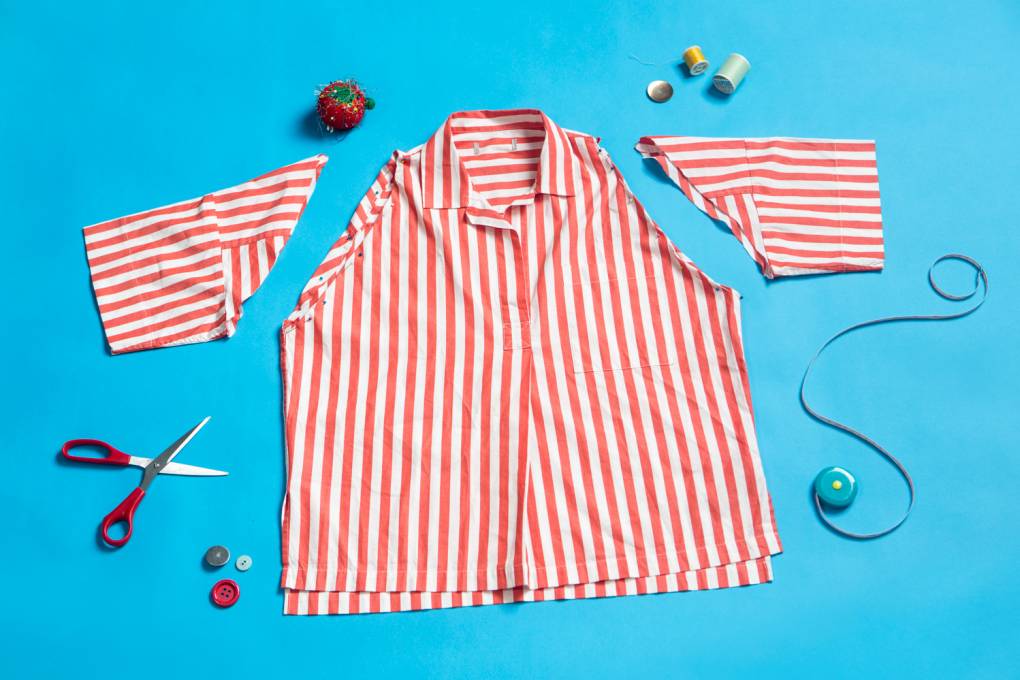
"caption": "Symphony Clarke, known as the Thrift Guru on social media, says one way to give clothes a fresh feel is by revamping them—cutting them up or adding some new details.",
"description": "Symphony Clarke, known as the Thrift Guru on social media, says one way to give clothes a fresh feel is by revamping them—cutting them up or adding some new details.",
"title": "Symphony Clarke, known as the Thrift Guru on social media, says one way to give clothes a fresh feel is by revamping them—cutting them up or adding some new details.",
"credit": "Photo Illustration by Becky Harlan/NPR",
"status": "inherit",
"altTag": "A shirt laid out with the sleeves cut off. Symphony Clarke, known as the Thrift Guru on social media, says one way to give clothes a fresh feel is by revamping them—cutting them up or adding some new details.",
"isLoading": false,
"fetchFailed": false
},
"arts_13893986": {
"type": "attachments",
"id": "arts_13893986",
"meta": {
"index": "attachments_1716263798",
"site": "arts",
"id": "13893986",
"found": true
},
"parent": 13893985,
"imgSizes": {
"twentyfourteen-full-width": {
"file": "https://ww2.kqed.org/app/uploads/sites/2/2021/03/mank-1753ed74fd342c25ac50c4dc2d1244b9aeeccdb2-1038x576.jpg",
"width": 1038,
"mimeType": "image/jpeg",
"height": 576
},
"thumbnail": {
"file": "https://ww2.kqed.org/app/uploads/sites/2/2021/03/mank-1753ed74fd342c25ac50c4dc2d1244b9aeeccdb2-160x120.jpg",
"width": 160,
"mimeType": "image/jpeg",
"height": 120
},
"post-thumbnail": {
"file": "https://ww2.kqed.org/app/uploads/sites/2/2021/03/mank-1753ed74fd342c25ac50c4dc2d1244b9aeeccdb2-672x372.jpg",
"width": 672,
"mimeType": "image/jpeg",
"height": 372
},
"kqedFullSize": {
"file": "https://ww2.kqed.org/app/uploads/sites/2/2021/03/mank-1753ed74fd342c25ac50c4dc2d1244b9aeeccdb2-scaled.jpg",
"width": 2560,
"height": 1920
},
"2048x2048": {
"file": "https://ww2.kqed.org/app/uploads/sites/2/2021/03/mank-1753ed74fd342c25ac50c4dc2d1244b9aeeccdb2-2048x1536.jpg",
"width": 2048,
"mimeType": "image/jpeg",
"height": 1536
},
"large": {
"file": "https://ww2.kqed.org/app/uploads/sites/2/2021/03/mank-1753ed74fd342c25ac50c4dc2d1244b9aeeccdb2-1020x765.jpg",
"width": 1020,
"mimeType": "image/jpeg",
"height": 765
},
"1536x1536": {
"file": "https://ww2.kqed.org/app/uploads/sites/2/2021/03/mank-1753ed74fd342c25ac50c4dc2d1244b9aeeccdb2-1536x1152.jpg",
"width": 1536,
"mimeType": "image/jpeg",
"height": 1152
},
"full-width": {
"file": "https://ww2.kqed.org/app/uploads/sites/2/2021/03/mank-1753ed74fd342c25ac50c4dc2d1244b9aeeccdb2-1920x1440.jpg",
"width": 1920,
"mimeType": "image/jpeg",
"height": 1440
},
"medium": {
"file": "https://ww2.kqed.org/app/uploads/sites/2/2021/03/mank-1753ed74fd342c25ac50c4dc2d1244b9aeeccdb2-800x600.jpg",
"width": 800,
"mimeType": "image/jpeg",
"height": 600
},
"medium_large": {
"file": "https://ww2.kqed.org/app/uploads/sites/2/2021/03/mank-1753ed74fd342c25ac50c4dc2d1244b9aeeccdb2-768x576.jpg",
"width": 768,
"mimeType": "image/jpeg",
"height": 576
}
},
"publishDate": 1615825807,
"modified": 1615826511,
"caption": "Amanda Seyfried as Marion Davies and Gary Oldman in David Fincher's 'Mank,' which led Monday's Oscar nominations.",
"description": "Amanda Seyfried as Marion Davies and Gary Oldman in David Fincher's 'Mank,' which led Monday's Oscar nominations.",
"title": "Amanda Seyfried as Marion Davies and Gary Oldman in David Fincher's 'Mank,' which led Monday's Oscar nominations.",
"credit": "Netflix",
"status": "inherit",
"altTag": null,
"isLoading": false,
"fetchFailed": false
},
"arts_13893984": {
"type": "attachments",
"id": "arts_13893984",
"meta": {
"index": "attachments_1716263798",
"site": "arts",
"id": "13893984",
"found": true
},
"parent": 13893976,
"imgSizes": {
"twentyfourteen-full-width": {
"file": "https://ww2.kqed.org/app/uploads/sites/2/2021/03/GettyImages-1307114595-1038x576.jpg",
"width": 1038,
"mimeType": "image/jpeg",
"height": 576
},
"thumbnail": {
"file": "https://ww2.kqed.org/app/uploads/sites/2/2021/03/GettyImages-1307114595-160x107.jpg",
"width": 160,
"mimeType": "image/jpeg",
"height": 107
},
"post-thumbnail": {
"file": "https://ww2.kqed.org/app/uploads/sites/2/2021/03/GettyImages-1307114595-672x372.jpg",
"width": 672,
"mimeType": "image/jpeg",
"height": 372
},
"kqedFullSize": {
"file": "https://ww2.kqed.org/app/uploads/sites/2/2021/03/GettyImages-1307114595-scaled-e1615786674912.jpg",
"width": 1920,
"height": 1283
},
"2048x2048": {
"file": "https://ww2.kqed.org/app/uploads/sites/2/2021/03/GettyImages-1307114595-2048x1368.jpg",
"width": 2048,
"mimeType": "image/jpeg",
"height": 1368
},
"large": {
"file": "https://ww2.kqed.org/app/uploads/sites/2/2021/03/GettyImages-1307114595-1020x682.jpg",
"width": 1020,
"mimeType": "image/jpeg",
"height": 682
},
"1536x1536": {
"file": "https://ww2.kqed.org/app/uploads/sites/2/2021/03/GettyImages-1307114595-1536x1026.jpg",
"width": 1536,
"mimeType": "image/jpeg",
"height": 1026
},
"full-width": {
"file": "https://ww2.kqed.org/app/uploads/sites/2/2021/03/GettyImages-1307114595-1920x1283.jpg",
"width": 1920,
"mimeType": "image/jpeg",
"height": 1283
},
"medium": {
"file": "https://ww2.kqed.org/app/uploads/sites/2/2021/03/GettyImages-1307114595-800x535.jpg",
"width": 800,
"mimeType": "image/jpeg",
"height": 535
},
"medium_large": {
"file": "https://ww2.kqed.org/app/uploads/sites/2/2021/03/GettyImages-1307114595-768x513.jpg",
"width": 768,
"mimeType": "image/jpeg",
"height": 513
}
},
"publishDate": 1615786653,
"modified": 1615786707,
"caption": "Beyoncé and Megan Thee Stallion accept the Best Rap Performance award for 'Savage' onstage during the 63rd Annual GRAMMY Awards at Los Angeles Convention Center.",
"description": "Beyoncé and Megan Thee Stallion accept the Best Rap Performance award for 'Savage' onstage during the 63rd Annual GRAMMY Awards at Los Angeles Convention Center.",
"title": "Beyoncé and Megan Thee Stallion accept the Best Rap Performance award for 'Savage' onstage during the 63rd Annual GRAMMY Awards at Los Angeles Convention Center.",
"credit": "Kevin Winter/Getty Images for The Recording Academy",
"status": "inherit",
"altTag": "Beyoncé and Megan Thee Stallion accept the Best Rap Performance award for 'Savage' onstage during the 63rd Annual GRAMMY Awards at Los Angeles Convention Center.",
"isLoading": false,
"fetchFailed": false
},
"arts_13893962": {
"type": "attachments",
"id": "arts_13893962",
"meta": {
"index": "attachments_1716263798",
"site": "arts",
"id": "13893962",
"found": true
},
"parent": 13893961,
"imgSizes": {
"twentyfourteen-full-width": {
"file": "https://ww2.kqed.org/app/uploads/sites/2/2021/03/2021-03-11_wide-c4e56a4762b725df072b7d541a292a11cd64cbb4-1038x576.jpg",
"width": 1038,
"mimeType": "image/jpeg",
"height": 576
},
"thumbnail": {
"file": "https://ww2.kqed.org/app/uploads/sites/2/2021/03/2021-03-11_wide-c4e56a4762b725df072b7d541a292a11cd64cbb4-160x90.jpg",
"width": 160,
"mimeType": "image/jpeg",
"height": 90
},
"post-thumbnail": {
"file": "https://ww2.kqed.org/app/uploads/sites/2/2021/03/2021-03-11_wide-c4e56a4762b725df072b7d541a292a11cd64cbb4-672x372.jpg",
"width": 672,
"mimeType": "image/jpeg",
"height": 372
},
"kqedFullSize": {
"file": "https://ww2.kqed.org/app/uploads/sites/2/2021/03/2021-03-11_wide-c4e56a4762b725df072b7d541a292a11cd64cbb4-scaled-e1615590665661.jpg",
"width": 1920,
"height": 1080
},
"2048x2048": {
"file": "https://ww2.kqed.org/app/uploads/sites/2/2021/03/2021-03-11_wide-c4e56a4762b725df072b7d541a292a11cd64cbb4-2048x1152.jpg",
"width": 2048,
"mimeType": "image/jpeg",
"height": 1152
},
"large": {
"file": "https://ww2.kqed.org/app/uploads/sites/2/2021/03/2021-03-11_wide-c4e56a4762b725df072b7d541a292a11cd64cbb4-1020x574.jpg",
"width": 1020,
"mimeType": "image/jpeg",
"height": 574
},
"1536x1536": {
"file": "https://ww2.kqed.org/app/uploads/sites/2/2021/03/2021-03-11_wide-c4e56a4762b725df072b7d541a292a11cd64cbb4-1536x864.jpg",
"width": 1536,
"mimeType": "image/jpeg",
"height": 864
},
"full-width": {
"file": "https://ww2.kqed.org/app/uploads/sites/2/2021/03/2021-03-11_wide-c4e56a4762b725df072b7d541a292a11cd64cbb4-1920x1080.jpg",
"width": 1920,
"mimeType": "image/jpeg",
"height": 1080
},
"medium": {
"file": "https://ww2.kqed.org/app/uploads/sites/2/2021/03/2021-03-11_wide-c4e56a4762b725df072b7d541a292a11cd64cbb4-800x450.jpg",
"width": 800,
"mimeType": "image/jpeg",
"height": 450
},
"medium_large": {
"file": "https://ww2.kqed.org/app/uploads/sites/2/2021/03/2021-03-11_wide-c4e56a4762b725df072b7d541a292a11cd64cbb4-768x432.jpg",
"width": 768,
"mimeType": "image/jpeg",
"height": 432
}
},
"publishDate": 1615590002,
"modified": 1615590708,
"caption": "James Nesbitt plays an Irish police detective whose investigation into an apparent suicide opens up historical wounds in 'Bloodlands' (streaming on Acorn TV beginning March 15).",
"description": "James Nesbitt plays an Irish police detective whose investigation into an apparent suicide opens up historical wounds in 'Bloodlands' (streaming on Acorn TV beginning March 15).",
"title": "James Nesbitt plays an Irish police detective whose investigation into an apparent suicide opens up historical wounds in 'Bloodlands' (streaming on Acorn TV beginning March 15).",
"credit": "Steffan Hill/HTM Television",
"status": "inherit",
"altTag": "James Nesbitt plays an Irish police detective whose investigation into an apparent suicide opens up historical wounds in 'Bloodlands' (streaming on Acorn TV beginning March 15).",
"isLoading": false,
"fetchFailed": false
},
"arts_13893838": {
"type": "attachments",
"id": "arts_13893838",
"meta": {
"index": "attachments_1716263798",
"site": "arts",
"id": "13893838",
"found": true
},
"parent": 13893837,
"imgSizes": {
"twentyfourteen-full-width": {
"file": "https://ww2.kqed.org/app/uploads/sites/2/2021/03/ac-microtransactions_wide-0fafa13b098a6658facfb1b3ad972868609898a6-1038x576.png",
"width": 1038,
"mimeType": "image/png",
"height": 576
},
"thumbnail": {
"file": "https://ww2.kqed.org/app/uploads/sites/2/2021/03/ac-microtransactions_wide-0fafa13b098a6658facfb1b3ad972868609898a6-160x90.png",
"width": 160,
"mimeType": "image/png",
"height": 90
},
"post-thumbnail": {
"file": "https://ww2.kqed.org/app/uploads/sites/2/2021/03/ac-microtransactions_wide-0fafa13b098a6658facfb1b3ad972868609898a6-672x372.png",
"width": 672,
"mimeType": "image/png",
"height": 372
},
"kqedFullSize": {
"file": "https://ww2.kqed.org/app/uploads/sites/2/2021/03/ac-microtransactions_wide-0fafa13b098a6658facfb1b3ad972868609898a6.png",
"width": 1917,
"height": 1078
},
"large": {
"file": "https://ww2.kqed.org/app/uploads/sites/2/2021/03/ac-microtransactions_wide-0fafa13b098a6658facfb1b3ad972868609898a6-1020x574.png",
"width": 1020,
"mimeType": "image/png",
"height": 574
},
"1536x1536": {
"file": "https://ww2.kqed.org/app/uploads/sites/2/2021/03/ac-microtransactions_wide-0fafa13b098a6658facfb1b3ad972868609898a6-1536x864.png",
"width": 1536,
"mimeType": "image/png",
"height": 864
},
"medium": {
"file": "https://ww2.kqed.org/app/uploads/sites/2/2021/03/ac-microtransactions_wide-0fafa13b098a6658facfb1b3ad972868609898a6-800x450.png",
"width": 800,
"mimeType": "image/png",
"height": 450
},
"medium_large": {
"file": "https://ww2.kqed.org/app/uploads/sites/2/2021/03/ac-microtransactions_wide-0fafa13b098a6658facfb1b3ad972868609898a6-768x432.png",
"width": 768,
"mimeType": "image/png",
"height": 432
}
},
"publishDate": 1615486928,
"modified": 1615487811,
"caption": "One of the suits of armor available in 'Assassin's Creed: Valhalla'—if you're willing to pay real money.",
"description": "One of the suits of armor available in 'Assassin's Creed: Valhalla'—if you're willing to pay real money.",
"title": "One of the suits of armor available in 'Assassin's Creed: Valhalla'—if you're willing to pay real money.",
"credit": "Screenshot by Elijah Smith/Ubisoft",
"status": "inherit",
"altTag": "One of the suits of armor available in 'Assassin's Creed: Valhalla'—if you're willing to pay real money.",
"isLoading": false,
"fetchFailed": false
},
"arts_13893801": {
"type": "attachments",
"id": "arts_13893801",
"meta": {
"index": "attachments_1716263798",
"site": "arts",
"id": "13893801",
"found": true
},
"parent": 13893798,
"imgSizes": {
"thumbnail": {
"file": "https://ww2.kqed.org/app/uploads/sites/2/2021/03/Screen-Shot-2021-03-10-at-2.11.50-PM-160x90.png",
"width": 160,
"mimeType": "image/png",
"height": 90
},
"post-thumbnail": {
"file": "https://ww2.kqed.org/app/uploads/sites/2/2021/03/Screen-Shot-2021-03-10-at-2.11.50-PM-672x372.png",
"width": 672,
"mimeType": "image/png",
"height": 372
},
"kqedFullSize": {
"file": "https://ww2.kqed.org/app/uploads/sites/2/2021/03/Screen-Shot-2021-03-10-at-2.11.50-PM.png",
"width": 857,
"height": 483
},
"medium": {
"file": "https://ww2.kqed.org/app/uploads/sites/2/2021/03/Screen-Shot-2021-03-10-at-2.11.50-PM-800x451.png",
"width": 800,
"mimeType": "image/png",
"height": 451
},
"medium_large": {
"file": "https://ww2.kqed.org/app/uploads/sites/2/2021/03/Screen-Shot-2021-03-10-at-2.11.50-PM-768x433.png",
"width": 768,
"mimeType": "image/png",
"height": 433
}
},
"publishDate": 1615414345,
"modified": 1615414376,
"caption": null,
"description": null,
"title": "Screen Shot 2021-03-10 at 2.11.50 PM",
"credit": "Houghton Mifflin Harcourt",
"status": "inherit",
"altTag": null,
"isLoading": false,
"fetchFailed": false
},
"arts_13893740": {
"type": "attachments",
"id": "arts_13893740",
"meta": {
"index": "attachments_1716263798",
"site": "arts",
"id": "13893740",
"found": true
},
"parent": 13893739,
"imgSizes": {
"twentyfourteen-full-width": {
"file": "https://ww2.kqed.org/app/uploads/sites/2/2021/03/2021-03-04_wide-f358cca26189bcc3d353394dcc49a178211914e0-1038x576.jpg",
"width": 1038,
"mimeType": "image/jpeg",
"height": 576
},
"thumbnail": {
"file": "https://ww2.kqed.org/app/uploads/sites/2/2021/03/2021-03-04_wide-f358cca26189bcc3d353394dcc49a178211914e0-160x90.jpg",
"width": 160,
"mimeType": "image/jpeg",
"height": 90
},
"post-thumbnail": {
"file": "https://ww2.kqed.org/app/uploads/sites/2/2021/03/2021-03-04_wide-f358cca26189bcc3d353394dcc49a178211914e0-672x372.jpg",
"width": 672,
"mimeType": "image/jpeg",
"height": 372
},
"kqedFullSize": {
"file": "https://ww2.kqed.org/app/uploads/sites/2/2021/03/2021-03-04_wide-f358cca26189bcc3d353394dcc49a178211914e0.jpg",
"width": 1418,
"height": 798
},
"large": {
"file": "https://ww2.kqed.org/app/uploads/sites/2/2021/03/2021-03-04_wide-f358cca26189bcc3d353394dcc49a178211914e0-1020x574.jpg",
"width": 1020,
"mimeType": "image/jpeg",
"height": 574
},
"medium": {
"file": "https://ww2.kqed.org/app/uploads/sites/2/2021/03/2021-03-04_wide-f358cca26189bcc3d353394dcc49a178211914e0-800x450.jpg",
"width": 800,
"mimeType": "image/jpeg",
"height": 450
},
"medium_large": {
"file": "https://ww2.kqed.org/app/uploads/sites/2/2021/03/2021-03-04_wide-f358cca26189bcc3d353394dcc49a178211914e0-768x432.jpg",
"width": 768,
"mimeType": "image/jpeg",
"height": 432
}
},
"publishDate": 1615249538,
"modified": 1615249978,
"caption": "Raya, a young warrior princess (Kelly Marie Tran), enlists the help of Sisu, a friendly water dragon (Awkwafina) in 'Raya and the Last Dragon.'",
"description": "Raya, a young warrior princess (Kelly Marie Tran), enlists the help of Sisu, a friendly water dragon (Awkwafina) in 'Raya and the Last Dragon.'",
"title": "Raya, a young warrior princess (Kelly Marie Tran), enlists the help of Sisu, a friendly water dragon (Awkwafina) in 'Raya and the Last Dragon.'",
"credit": "Disney",
"status": "inherit",
"altTag": "Raya, a young warrior princess (Kelly Marie Tran), enlists the help of Sisu, a friendly water dragon (Awkwafina) in 'Raya and the Last Dragon.'",
"isLoading": false,
"fetchFailed": false
},
"arts_13893712": {
"type": "attachments",
"id": "arts_13893712",
"meta": {
"index": "attachments_1716263798",
"site": "arts",
"id": "13893712",
"found": true
},
"parent": 13893711,
"imgSizes": {
"twentyfourteen-full-width": {
"file": "https://ww2.kqed.org/app/uploads/sites/2/2021/03/photoprinceharry-meghan-oprah3photocredit-harpoproductions-joepugliese_wide-0bc7644ea5ac6b52f4c9a8c167a8a3da1930ef20-1038x576.jpg",
"width": 1038,
"mimeType": "image/jpeg",
"height": 576
},
"thumbnail": {
"file": "https://ww2.kqed.org/app/uploads/sites/2/2021/03/photoprinceharry-meghan-oprah3photocredit-harpoproductions-joepugliese_wide-0bc7644ea5ac6b52f4c9a8c167a8a3da1930ef20-160x90.jpg",
"width": 160,
"mimeType": "image/jpeg",
"height": 90
},
"post-thumbnail": {
"file": "https://ww2.kqed.org/app/uploads/sites/2/2021/03/photoprinceharry-meghan-oprah3photocredit-harpoproductions-joepugliese_wide-0bc7644ea5ac6b52f4c9a8c167a8a3da1930ef20-672x372.jpg",
"width": 672,
"mimeType": "image/jpeg",
"height": 372
},
"kqedFullSize": {
"file": "https://ww2.kqed.org/app/uploads/sites/2/2021/03/photoprinceharry-meghan-oprah3photocredit-harpoproductions-joepugliese_wide-0bc7644ea5ac6b52f4c9a8c167a8a3da1930ef20.jpg",
"width": 1200,
"height": 675
},
"large": {
"file": "https://ww2.kqed.org/app/uploads/sites/2/2021/03/photoprinceharry-meghan-oprah3photocredit-harpoproductions-joepugliese_wide-0bc7644ea5ac6b52f4c9a8c167a8a3da1930ef20-1020x574.jpg",
"width": 1020,
"mimeType": "image/jpeg",
"height": 574
},
"medium": {
"file": "https://ww2.kqed.org/app/uploads/sites/2/2021/03/photoprinceharry-meghan-oprah3photocredit-harpoproductions-joepugliese_wide-0bc7644ea5ac6b52f4c9a8c167a8a3da1930ef20-800x450.jpg",
"width": 800,
"mimeType": "image/jpeg",
"height": 450
},
"medium_large": {
"file": "https://ww2.kqed.org/app/uploads/sites/2/2021/03/photoprinceharry-meghan-oprah3photocredit-harpoproductions-joepugliese_wide-0bc7644ea5ac6b52f4c9a8c167a8a3da1930ef20-768x432.jpg",
"width": 768,
"mimeType": "image/jpeg",
"height": 432
}
},
"publishDate": 1615225412,
"modified": 1615226149,
"caption": "“Oprah with Meghan and Harry: A CBS Primetime Special” - Pictured: Prince Harry and Meghan, The Duke and Duchess of Sussex with Oprah Winfrey. Featuring Oprah Winfrey as she sits down with Prince Harry and Meghan, The Duke and Duchess of Sussex, will be broadcast as a two-hour exclusive primetime special on Sunday, March 7 from 8:00-10:00 PM, ET/PT on the CBS Television Network. ",
"description": "“Oprah with Meghan and Harry: A CBS Primetime Special” - Pictured: Prince Harry and Meghan, The Duke and Duchess of Sussex with Oprah Winfrey. Featuring Oprah Winfrey as she sits down with Prince Harry and Meghan, The Duke and Duchess of Sussex, will be broadcast as a two-hour exclusive primetime special on Sunday, March 7 from 8:00-10:00 PM, ET/PT on the CBS Television Network. ",
"title": "Prince Harry and Meghan, The Duke and Duchess of Sussex, sat for a long talk with Oprah Winfrey.",
"credit": "Harpo Productions/ Photographer: Joe Pugliese",
"status": "inherit",
"altTag": "Prince Harry and Meghan Markle sit in a garden opposite their interviewer, Oprah.",
"isLoading": false,
"fetchFailed": false
},
"arts_13893476": {
"type": "attachments",
"id": "arts_13893476",
"meta": {
"index": "attachments_1716263798",
"site": "arts",
"id": "13893476",
"found": true
},
"parent": 13893475,
"imgSizes": {
"twentyfourteen-full-width": {
"file": "https://ww2.kqed.org/app/uploads/sites/2/2021/03/behindhereyes_limitedseries_episode4_00_33_14_14_wide-b8869336845ad4a3f935a4ddcde72344ffc98c6b-1038x576.jpg",
"width": 1038,
"mimeType": "image/jpeg",
"height": 576
},
"thumbnail": {
"file": "https://ww2.kqed.org/app/uploads/sites/2/2021/03/behindhereyes_limitedseries_episode4_00_33_14_14_wide-b8869336845ad4a3f935a4ddcde72344ffc98c6b-160x90.jpg",
"width": 160,
"mimeType": "image/jpeg",
"height": 90
},
"post-thumbnail": {
"file": "https://ww2.kqed.org/app/uploads/sites/2/2021/03/behindhereyes_limitedseries_episode4_00_33_14_14_wide-b8869336845ad4a3f935a4ddcde72344ffc98c6b-672x372.jpg",
"width": 672,
"mimeType": "image/jpeg",
"height": 372
},
"kqedFullSize": {
"file": "https://ww2.kqed.org/app/uploads/sites/2/2021/03/behindhereyes_limitedseries_episode4_00_33_14_14_wide-b8869336845ad4a3f935a4ddcde72344ffc98c6b.jpg",
"width": 1834,
"height": 1031
},
"large": {
"file": "https://ww2.kqed.org/app/uploads/sites/2/2021/03/behindhereyes_limitedseries_episode4_00_33_14_14_wide-b8869336845ad4a3f935a4ddcde72344ffc98c6b-1020x573.jpg",
"width": 1020,
"mimeType": "image/jpeg",
"height": 573
},
"1536x1536": {
"file": "https://ww2.kqed.org/app/uploads/sites/2/2021/03/behindhereyes_limitedseries_episode4_00_33_14_14_wide-b8869336845ad4a3f935a4ddcde72344ffc98c6b-1536x863.jpg",
"width": 1536,
"mimeType": "image/jpeg",
"height": 863
},
"medium": {
"file": "https://ww2.kqed.org/app/uploads/sites/2/2021/03/behindhereyes_limitedseries_episode4_00_33_14_14_wide-b8869336845ad4a3f935a4ddcde72344ffc98c6b-800x450.jpg",
"width": 800,
"mimeType": "image/jpeg",
"height": 450
},
"medium_large": {
"file": "https://ww2.kqed.org/app/uploads/sites/2/2021/03/behindhereyes_limitedseries_episode4_00_33_14_14_wide-b8869336845ad4a3f935a4ddcde72344ffc98c6b-768x432.jpg",
"width": 768,
"mimeType": "image/jpeg",
"height": 432
}
},
"publishDate": 1614710348,
"modified": 1614710603,
"caption": "Tom Bateman and Eve Hewson play a couple whose marriage is not what it seems in 'Behind Her Eyes.'",
"description": "Tom Bateman and Eve Hewson play a couple whose marriage is not what it seems in 'Behind Her Eyes.'",
"title": "Tom Bateman and Eve Hewson play a couple whose marriage is not what it seems in 'Behind Her Eyes.'",
"credit": "Netflix",
"status": "inherit",
"altTag": "Tom Bateman and Eve Hewson playing a couple whose marriage is not what it seems in 'Behind Her Eyes.'",
"isLoading": false,
"fetchFailed": false
},
"arts_13893472": {
"type": "attachments",
"id": "arts_13893472",
"meta": {
"index": "attachments_1716263798",
"site": "arts",
"id": "13893472",
"found": true
},
"parent": 13893468,
"imgSizes": {
"thumbnail": {
"file": "https://ww2.kqed.org/app/uploads/sites/2/2021/03/gettyimages-526740680_custom-537f27710c1f219f08eacd9581923c12e376fcf0-s800-c85-160x108.jpg",
"width": 160,
"mimeType": "image/jpeg",
"height": 108
},
"post-thumbnail": {
"file": "https://ww2.kqed.org/app/uploads/sites/2/2021/03/gettyimages-526740680_custom-537f27710c1f219f08eacd9581923c12e376fcf0-s800-c85-672x372.jpg",
"width": 672,
"mimeType": "image/jpeg",
"height": 372
},
"kqedFullSize": {
"file": "https://ww2.kqed.org/app/uploads/sites/2/2021/03/gettyimages-526740680_custom-537f27710c1f219f08eacd9581923c12e376fcf0-s800-c85.jpg",
"width": 800,
"height": 542
},
"medium_large": {
"file": "https://ww2.kqed.org/app/uploads/sites/2/2021/03/gettyimages-526740680_custom-537f27710c1f219f08eacd9581923c12e376fcf0-s800-c85-768x520.jpg",
"width": 768,
"mimeType": "image/jpeg",
"height": 520
}
},
"publishDate": 1614707224,
"modified": 1614707370,
"caption": "Dr. Seuss Enterprises is pulling six of the author's books, saying they \"portray people in ways that are hurtful and wrong.\" Theodor Seuss Geisel, who wrote children's books as Dr. Seuss, is seen here in his La Jolla, Calif., home.",
"description": "Dr. Seuss Enterprises is pulling six of the author's books, saying they \"portray people in ways that are hurtful and wrong.\" Theodor Seuss Geisel, who wrote children's books as Dr. Seuss, is seen here in his La Jolla, Calif., home.",
"title": "Dr. Seuss Drawing at His Desk",
"credit": "James L. Amos/Corbis via Getty Images",
"status": "inherit",
"altTag": "Dr. Seuss drawing at his desk.",
"isLoading": false,
"fetchFailed": false
},
"arts_13893456": {
"type": "attachments",
"id": "arts_13893456",
"meta": {
"index": "attachments_1716263798",
"site": "arts",
"id": "13893456",
"found": true
},
"parent": 13893455,
"imgSizes": {
"twentyfourteen-full-width": {
"file": "https://ww2.kqed.org/app/uploads/sites/2/2021/02/tenzin-56317439eb2a67b44a8c0bbbf9a1bdba65a667cb-876x576.png",
"width": 876,
"mimeType": "image/png",
"height": 576
},
"thumbnail": {
"file": "https://ww2.kqed.org/app/uploads/sites/2/2021/02/tenzin-56317439eb2a67b44a8c0bbbf9a1bdba65a667cb-160x120.png",
"width": 160,
"mimeType": "image/png",
"height": 120
},
"post-thumbnail": {
"file": "https://ww2.kqed.org/app/uploads/sites/2/2021/02/tenzin-56317439eb2a67b44a8c0bbbf9a1bdba65a667cb-672x372.png",
"width": 672,
"mimeType": "image/png",
"height": 372
},
"kqedFullSize": {
"file": "https://ww2.kqed.org/app/uploads/sites/2/2021/02/tenzin-56317439eb2a67b44a8c0bbbf9a1bdba65a667cb.png",
"width": 876,
"height": 657
},
"medium": {
"file": "https://ww2.kqed.org/app/uploads/sites/2/2021/02/tenzin-56317439eb2a67b44a8c0bbbf9a1bdba65a667cb-800x600.png",
"width": 800,
"mimeType": "image/png",
"height": 600
},
"medium_large": {
"file": "https://ww2.kqed.org/app/uploads/sites/2/2021/02/tenzin-56317439eb2a67b44a8c0bbbf9a1bdba65a667cb-768x576.png",
"width": 768,
"mimeType": "image/png",
"height": 576
}
},
"publishDate": 1614626173,
"modified": 1614626884,
"caption": "Tenzin Kalsang's story times in Tibetan and English were originally held at the Williamsburg branch of the Brooklyn Public Library system, but have since moved online.",
"description": "Tenzin Kalsang's story times in Tibetan and English were originally held at the Williamsburg branch of the Brooklyn Public Library system, but have since moved online.",
"title": "Tenzin Kalsang's story times in Tibetan and English were originally held at the Williamsburg branch of the Brooklyn Public Library system, but have since moved online.",
"credit": "Brooklyn Public Library's Facebook page",
"status": "inherit",
"altTag": "Tenzin Kalsang holds a book up to the camera as she reads to children in Tibetan and English.",
"isLoading": false,
"fetchFailed": false
},
"arts_13893447": {
"type": "attachments",
"id": "arts_13893447",
"meta": {
"index": "attachments_1716263798",
"site": "arts",
"id": "13893447",
"found": true
},
"parent": 13893446,
"imgSizes": {
"twentyfourteen-full-width": {
"file": "https://ww2.kqed.org/app/uploads/sites/2/2021/02/gettyimages-1304623431-2d3862334453f74e933055ead4ecb601345faad2-1038x576.jpg",
"width": 1038,
"mimeType": "image/jpeg",
"height": 576
},
"thumbnail": {
"file": "https://ww2.kqed.org/app/uploads/sites/2/2021/02/gettyimages-1304623431-2d3862334453f74e933055ead4ecb601345faad2-160x120.jpg",
"width": 160,
"mimeType": "image/jpeg",
"height": 120
},
"post-thumbnail": {
"file": "https://ww2.kqed.org/app/uploads/sites/2/2021/02/gettyimages-1304623431-2d3862334453f74e933055ead4ecb601345faad2-672x372.jpg",
"width": 672,
"mimeType": "image/jpeg",
"height": 372
},
"kqedFullSize": {
"file": "https://ww2.kqed.org/app/uploads/sites/2/2021/02/gettyimages-1304623431-2d3862334453f74e933055ead4ecb601345faad2-scaled-e1614594982380.jpg",
"width": 1920,
"height": 1439
},
"2048x2048": {
"file": "https://ww2.kqed.org/app/uploads/sites/2/2021/02/gettyimages-1304623431-2d3862334453f74e933055ead4ecb601345faad2-2048x1535.jpg",
"width": 2048,
"mimeType": "image/jpeg",
"height": 1535
},
"large": {
"file": "https://ww2.kqed.org/app/uploads/sites/2/2021/02/gettyimages-1304623431-2d3862334453f74e933055ead4ecb601345faad2-1020x765.jpg",
"width": 1020,
"mimeType": "image/jpeg",
"height": 765
},
"1536x1536": {
"file": "https://ww2.kqed.org/app/uploads/sites/2/2021/02/gettyimages-1304623431-2d3862334453f74e933055ead4ecb601345faad2-1536x1151.jpg",
"width": 1536,
"mimeType": "image/jpeg",
"height": 1151
},
"full-width": {
"file": "https://ww2.kqed.org/app/uploads/sites/2/2021/02/gettyimages-1304623431-2d3862334453f74e933055ead4ecb601345faad2-1920x1439.jpg",
"width": 1920,
"mimeType": "image/jpeg",
"height": 1439
},
"medium": {
"file": "https://ww2.kqed.org/app/uploads/sites/2/2021/02/gettyimages-1304623431-2d3862334453f74e933055ead4ecb601345faad2-800x600.jpg",
"width": 800,
"mimeType": "image/jpeg",
"height": 600
},
"medium_large": {
"file": "https://ww2.kqed.org/app/uploads/sites/2/2021/02/gettyimages-1304623431-2d3862334453f74e933055ead4ecb601345faad2-768x576.jpg",
"width": 768,
"mimeType": "image/jpeg",
"height": 576
}
},
"publishDate": 1614594331,
"modified": 1614595021,
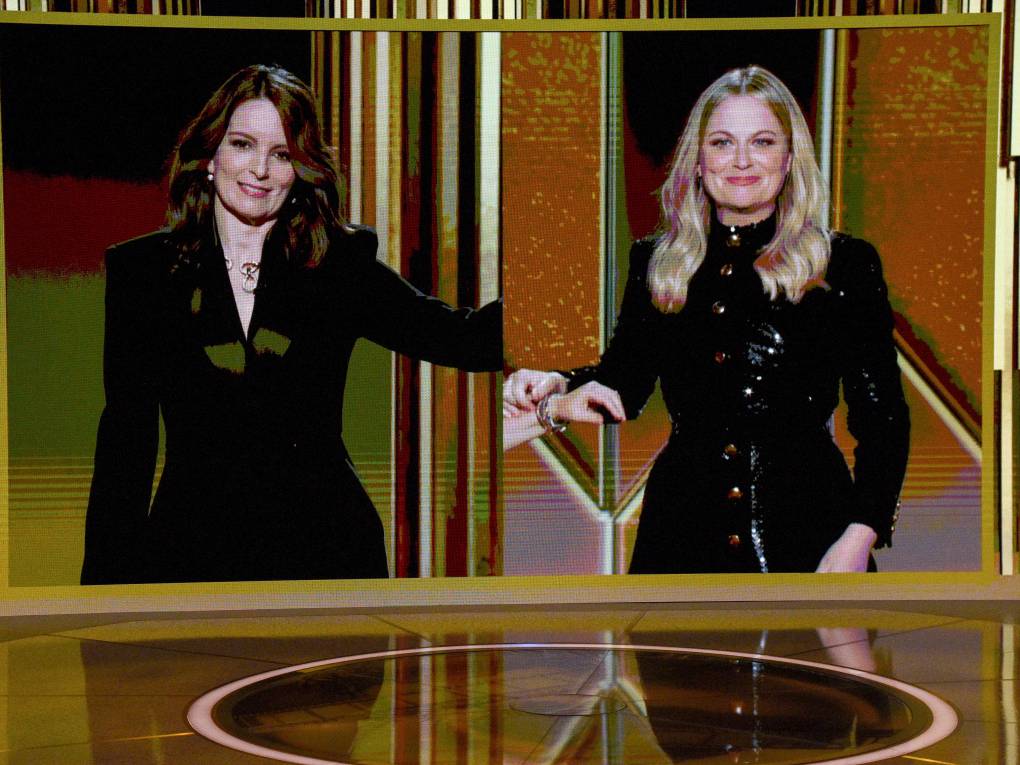
"caption": "Technical difficulties and an overall uninspired program were the themes of this year's Golden Globes, hosted by Tina Fey and Amy Poehler.",
"description": "Technical difficulties and an overall uninspired program were the themes of this year's Golden Globes, hosted by Tina Fey and Amy Poehler.",
"title": "Technical difficulties and an overall uninspired program were the themes of this year's Golden Globes, hosted by Tina Fey and Amy Poehler.",
"credit": null,
"status": "inherit",
"altTag": "Technical difficulties and an overall uninspired program were the themes of this year's Golden Globes, hosted by Tina Fey and Amy Poehler.",
"isLoading": false,
"fetchFailed": false
}
},
"audioPlayerReducer": {
"postId": "stream_live",
"isPaused": true,
"isPlaying": false,
"pfsActive": false,
"pledgeModalIsOpen": true,
"playerDrawerIsOpen": false,
"liveAudioPlayStartedAt": 0,
"liveAudioPlayContext": ""
},
"authorsReducer": {
"byline_arts_13894007": {
"type": "authors",
"id": "byline_arts_13894007",
"meta": {
"override": true
},
"slug": "byline_arts_13894007",
"name": "Elise Hu",
"isLoading": false
},
"byline_arts_13893985": {
"type": "authors",
"id": "byline_arts_13893985",
"meta": {
"override": true
},
"slug": "byline_arts_13893985",
"name": "Linda Holmes",
"isLoading": false
},
"byline_arts_13893976": {
"type": "authors",
"id": "byline_arts_13893976",
"meta": {
"override": true
},
"slug": "byline_arts_13893976",
"name": "Otis Hart",
"isLoading": false
},
"byline_arts_13893961": {
"type": "authors",
"id": "byline_arts_13893961",
"meta": {
"override": true
},
"slug": "byline_arts_13893961",
"name": "John Powers",
"isLoading": false
},
"byline_arts_13893837": {
"type": "authors",
"id": "byline_arts_13893837",
"meta": {
"override": true
},
"slug": "byline_arts_13893837",
"name": "Keller Gordon",
"isLoading": false
},
"byline_arts_13893798": {
"type": "authors",
"id": "byline_arts_13893798",
"meta": {
"override": true
},
"slug": "byline_arts_13893798",
"name": "Mary Louise Kelly",
"isLoading": false
},
"byline_arts_13893739": {
"type": "authors",
"id": "byline_arts_13893739",
"meta": {
"override": true
},
"slug": "byline_arts_13893739",
"name": "Justin Chang",
"isLoading": false
},
"byline_arts_13893711": {
"type": "authors",
"id": "byline_arts_13893711",
"meta": {
"override": true
},
"slug": "byline_arts_13893711",
"name": "Linda Holmes",
"isLoading": false
},
"byline_arts_13893475": {
"type": "authors",
"id": "byline_arts_13893475",
"meta": {
"override": true
},
"slug": "byline_arts_13893475",
"name": "David Bianculli",
"isLoading": false
},
"byline_arts_13893468": {
"type": "authors",
"id": "byline_arts_13893468",
"meta": {
"override": true
},
"slug": "byline_arts_13893468",
"name": "Bill Chappell",
"isLoading": false
},
"byline_arts_13893455": {
"type": "authors",
"id": "byline_arts_13893455",
"meta": {
"override": true
},
"slug": "byline_arts_13893455",
"name": "Sally Herships",
"isLoading": false
},
"byline_arts_13893446": {
"type": "authors",
"id": "byline_arts_13893446",
"meta": {
"override": true
},
"slug": "byline_arts_13893446",
"name": "Aisha Harris",
"isLoading": false
}
},
"pagesReducer": {
"arts_affiliate_npr": {
"type": "terms",
"id": "arts_137",
"meta": {
"index": "terms_1716263798",
"site": "arts",
"id": "137",
"score": 14.258008
},
"featImg": "https://ww2.kqed.org/app/uploads/sites/2/2014/04/logo-npr-lg1.png",
"name": "NPR",
"description": null,
"taxonomy": "affiliate",
"headData": {
"twImgId": null,
"twTitle": null,
"ogTitle": null,
"ogImgId": null,
"twDescription": null,
"description": null,
"title": "NPR Archives | KQED Arts",
"ogDescription": null
},
"ttid": 138,
"slug": "npr",
"isLoading": false,
"title": "NPR",
"pageMeta": {
"site": "arts",
"WpPageTemplate": "page-topic-editorial",
"currentPage": 84
},
"blocks": [
{
"blockName": "kqed/post-list",
"attrs": {
"layout": "cardArticle2",
"query": "posts/arts?affiliate=npr",
"seeMore": false,
"paginated": true,
"page": 84
}
},
{
"blockName": "kqed/ad"
}
]
}
},
"pfsSessionReducer": {},
"postsReducer": {
"stream_live": {
"type": "live",
"id": "stream_live",
"audioUrl": "https://streams.kqed.org/kqedradio",
"title": "Live Stream",
"excerpt": "Live Stream information currently unavailable.",
"link": "/radio",
"featImg": "",
"label": {
"name": "KQED Live",
"link": "/"
}
},
"stream_kqedNewscast": {
"type": "posts",
"id": "stream_kqedNewscast",
"audioUrl": "https://www.kqed.org/.stream/anon/radio/RDnews/newscast.mp3?_=1",
"title": "KQED Newscast",
"featImg": "",
"label": {
"name": "88.5 FM",
"link": "/"
}
},
"arts_13894007": {
"type": "posts",
"id": "arts_13894007",
"meta": {
"index": "posts_1716263798",
"site": "arts",
"id": "13894007",
"score": null,
"sort": [
1615836629000
]
},
"parent": 0,
"labelTerm": {
"site": "arts",
"term": 137
},
"blocks": [],
"publishDate": 1615836629,
"format": "standard",
"title": "5 Tips to Ditch Fast Fashion and Cultivate a Sustainable Closet",
"headTitle": "5 Tips to Ditch Fast Fashion and Cultivate a Sustainable Closet | KQED",
"content": "\u003cp>When fashionable clothes can be so cheap, it can be easy to fill up virtual shopping carts just for the rush of the purchase. But this attitude of excess has led to mass over-production and a clothing waste crisis.\u003c/p>\n\u003cp>“Ultimately, any item of clothing that you get rid of is going to end up in the landfill because the technological solutions just really aren’t at scale yet to do something different with it,” says Elizabeth Cline, author of \u003ca href=\"https://www.elizabethclinebooks.com/the-conscious-closet\" target=\"_blank\" rel=\"noopener noreferrer\">The Conscious Closet: A Revolutionary Guide to Looking Good While Doing Good\u003c/a>.\u003c/p>\n\u003cp>Less than \u003ca href=\"https://www.ellenmacarthurfoundation.org/assets/downloads/A-New-Textiles-Economy_Summary-of-Findings_Updated_1-12-17.pdf\" target=\"_blank\" rel=\"noopener noreferrer\">1% of all clothing\u003c/a> material is ever recycled back into new clothes. And of the clothes we donate to charity, only a fraction gets resold in stores. Much of what doesn’t sell gets shipped in bulk and \u003ca href=\"https://slate.com/human-interest/2012/06/the-salvation-army-and-goodwill-inside-the-places-your-clothes-go-when-you-donate-them.html\" target=\"_blank\" rel=\"noopener noreferrer\">sold internationally\u003c/a>.\u003c/p>\n\u003cp>The costs of fast fashion are huge to the environment and to the people making clothes. Each year the fashion industry consumes approximately \u003ca href=\"https://www.nature.com/articles/s43017-020-0039-9).\" target=\"_blank\" rel=\"noopener noreferrer\">79 trillion liters of water and then throws out 92 million tons of waste. \u003c/a>To make clothes so quickly and affordably, factory workers are often underpaid and operate in unsafe working conditions.\u003c/p>\n\u003cp>It can make us feel powerless, as individuals, to do something about it. But there are ways to shop smarter and to curate a more eco-and ethically conscious closet. Here are some takeaways the experts recommend:\u003c/p>\n\u003ch3>1. Don’t think of your clothes as disposable.\u003c/h3>\n\u003cp>\u003cimg loading=\"lazy\" decoding=\"async\" class=\"size-full wp-image-13894014 aligncenter\" src=\"https://ww2.kqed.org/app/uploads/sites/2/2021/03/Screen-Shot-2021-03-15-at-12.17.57-PM.png\" alt=\"\" width=\"774\" height=\"512\" srcset=\"https://cdn.kqed.org/wp-content/uploads/sites/2/2021/03/Screen-Shot-2021-03-15-at-12.17.57-PM.png 774w, https://cdn.kqed.org/wp-content/uploads/sites/2/2021/03/Screen-Shot-2021-03-15-at-12.17.57-PM-160x106.png 160w, https://cdn.kqed.org/wp-content/uploads/sites/2/2021/03/Screen-Shot-2021-03-15-at-12.17.57-PM-768x508.png 768w\" sizes=\"(max-width: 774px) 100vw, 774px\">\u003c/p>\n\u003cp>[ad fullwidth]\u003c/p>\n\u003cp>Symphony Clarke, known as the \u003ca href=\"https://www.instagram.com/thethriftguru/\" target=\"_blank\" rel=\"noopener noreferrer\">Thrift Guru\u003c/a> on social media, has noticed that a lot of her peers feel pressure to keep up with trends online. Some even feel like they can’t post a picture in the same outfit twice. “That’s the lifespan of their clothing. Once a picture is taken, it’s done,” she says.\u003c/p>\n\u003cp>To abandon that attitude of excess, change your mindset! Buy with the notion that what you purchase should stay with you. Clarke recommends a 30-wear test: When shopping, ask yourself if you’d wear that item 30 times or more.\u003c/p>\n\u003cp>The other way to extend the lifespan of your clothing is with a little more TLC.\u003c/p>\n\u003cp>“Taking care of clothes…I think it can feed the soul. It’s just a very good life skill to have,” says Cline. (We have a \u003ca href=\"https://www.npr.org/2019/12/17/789172148/how-do-i-get-this-out-your-guide-to-stain-removal\" target=\"_blank\" rel=\"noopener noreferrer\">Life Kit episode all about getting stains out\u003c/a>.)\u003c/p>\n\u003cp>https://www.youtube.com/watch?v=H7l2FAIjccU\u003c/p>\n\u003ch3>2. Revamp or “thrift flip” your clothing and accessories.\u003c/h3>\n\u003cp>Clarke established her own personal style by revamping—taking something old and changing it up. She gives clothes a fresh feel by cutting them up or adding some new details.\u003c/p>\n\u003cp>“Go in your closet and say, hey, how can I switch up this old crewneck or this old hoodie that I had? Maybe I could cut it and crop it [into] a whole different item,” Clarke suggests.\u003c/p>\n\u003cp>Watch YouTuber \u003ca href=\"https://www.youtube.com/channel/UCTeNpbcaDZWZiCPziLWkOYw\" target=\"_blank\" rel=\"noopener noreferrer\">Nava Rose\u003c/a>‘s revamps or search YouTube or TikTok for thrift revamps or thrift flips. One useful hashtag to search is #DIYnosew—so that no sewing is required.\u003c/p>\n\u003ch3>3. Get rid of your clothing responsibly.\u003c/h3>\n\u003cp>\u003cimg loading=\"lazy\" decoding=\"async\" class=\"size-medium wp-image-13894010 aligncenter\" src=\"https://ww2.kqed.org/app/uploads/sites/2/2021/03/life-kit_clothes-1-7-copy_slide-3a7c1681ea5d7963f6e1e8fb107cf2d253b9ef93-800x533.jpg\" alt=\"\" width=\"800\" height=\"533\" srcset=\"https://cdn.kqed.org/wp-content/uploads/sites/2/2021/03/life-kit_clothes-1-7-copy_slide-3a7c1681ea5d7963f6e1e8fb107cf2d253b9ef93-800x533.jpg 800w, https://cdn.kqed.org/wp-content/uploads/sites/2/2021/03/life-kit_clothes-1-7-copy_slide-3a7c1681ea5d7963f6e1e8fb107cf2d253b9ef93-1020x680.jpg 1020w, https://cdn.kqed.org/wp-content/uploads/sites/2/2021/03/life-kit_clothes-1-7-copy_slide-3a7c1681ea5d7963f6e1e8fb107cf2d253b9ef93-160x107.jpg 160w, https://cdn.kqed.org/wp-content/uploads/sites/2/2021/03/life-kit_clothes-1-7-copy_slide-3a7c1681ea5d7963f6e1e8fb107cf2d253b9ef93-768x512.jpg 768w, https://cdn.kqed.org/wp-content/uploads/sites/2/2021/03/life-kit_clothes-1-7-copy_slide-3a7c1681ea5d7963f6e1e8fb107cf2d253b9ef93.jpg 1436w\" sizes=\"(max-width: 800px) 100vw, 800px\">\u003c/p>\n\u003cp>Marie Kondo’s popular approach was to throw out that which no longer brought us joy. But be intentional about how you donate.\u003c/p>\n\u003cp>“It has a much, much higher chance of finding a second life [by] finding another person who’s excited to wear it,” Cline says.\u003c/p>\n\u003cp>For instance, you could organize a clothing swap with friends or sell your unneeded items on resale sites like \u003ca href=\"https://www.thredup.com/\" target=\"_blank\" rel=\"noopener noreferrer\">ThredUp\u003c/a>, \u003ca href=\"https://poshmark.com/\" target=\"_blank\" rel=\"noopener noreferrer\">Poshmark\u003c/a>, \u003ca href=\"https://www.depop.com/\" target=\"_blank\" rel=\"noopener noreferrer\">Depop \u003c/a>and \u003ca href=\"https://www.therealreal.com/\" target=\"_blank\" rel=\"noopener noreferrer\">The Real Real\u003c/a>. To attract buyers, Clarke recommends modeling your clothes instead of taking a picture on the floor, so shoppers can see what it looks like on. Good lighting and ironed clothes can also boost your sales.\u003c/p>\n\u003ch3>4. Buy second-hand when you’re in the mood for something “new.”\u003c/h3>\n\u003cp>\u003cimg loading=\"lazy\" decoding=\"async\" class=\"size-medium wp-image-13894008 aligncenter\" src=\"https://ww2.kqed.org/app/uploads/sites/2/2021/03/life-kit_clothes-1-6_slide-f23a9445f9e5536bb3a36aba3df105d972ae1aac-800x534.jpg\" alt=\"\" width=\"800\" height=\"534\" srcset=\"https://cdn.kqed.org/wp-content/uploads/sites/2/2021/03/life-kit_clothes-1-6_slide-f23a9445f9e5536bb3a36aba3df105d972ae1aac-800x534.jpg 800w, https://cdn.kqed.org/wp-content/uploads/sites/2/2021/03/life-kit_clothes-1-6_slide-f23a9445f9e5536bb3a36aba3df105d972ae1aac-1020x680.jpg 1020w, https://cdn.kqed.org/wp-content/uploads/sites/2/2021/03/life-kit_clothes-1-6_slide-f23a9445f9e5536bb3a36aba3df105d972ae1aac-160x107.jpg 160w, https://cdn.kqed.org/wp-content/uploads/sites/2/2021/03/life-kit_clothes-1-6_slide-f23a9445f9e5536bb3a36aba3df105d972ae1aac-768x512.jpg 768w, https://cdn.kqed.org/wp-content/uploads/sites/2/2021/03/life-kit_clothes-1-6_slide-f23a9445f9e5536bb3a36aba3df105d972ae1aac.jpg 1498w\" sizes=\"(max-width: 800px) 100vw, 800px\">\u003c/p>\n\u003cp>Since the pandemic means many people avoid extra in-person shopping, thrifting online is more and more widespread.\u003c/p>\n\u003cp>“You don’t have to have the hassle of going into the thrift store and feeling overwhelmed,” Clarke says.\u003c/p>\n\u003cp>You can buy on the same sites people sell their clothes. Apps like \u003ca href=\"https://www.depop.com/\" target=\"_blank\" rel=\"noopener noreferrer\">Depop \u003c/a>and \u003ca href=\"https://poshmark.com/\" target=\"_blank\" rel=\"noopener noreferrer\">Poshmark\u003c/a> let you search for specific items.\u003c/p>\n\u003ch3>5. Get educated.\u003c/h3>\n\u003cp>\u003cimg loading=\"lazy\" decoding=\"async\" class=\"size-medium wp-image-13894011 aligncenter\" src=\"https://ww2.kqed.org/app/uploads/sites/2/2021/03/life-kit_clothes-1-9_slide-92a36e04650b501705b144382c128508fb81c4bb-800x534.jpg\" alt=\"\" width=\"800\" height=\"534\" srcset=\"https://cdn.kqed.org/wp-content/uploads/sites/2/2021/03/life-kit_clothes-1-9_slide-92a36e04650b501705b144382c128508fb81c4bb-800x534.jpg 800w, https://cdn.kqed.org/wp-content/uploads/sites/2/2021/03/life-kit_clothes-1-9_slide-92a36e04650b501705b144382c128508fb81c4bb-1020x680.jpg 1020w, https://cdn.kqed.org/wp-content/uploads/sites/2/2021/03/life-kit_clothes-1-9_slide-92a36e04650b501705b144382c128508fb81c4bb-160x107.jpg 160w, https://cdn.kqed.org/wp-content/uploads/sites/2/2021/03/life-kit_clothes-1-9_slide-92a36e04650b501705b144382c128508fb81c4bb-768x512.jpg 768w, https://cdn.kqed.org/wp-content/uploads/sites/2/2021/03/life-kit_clothes-1-9_slide-92a36e04650b501705b144382c128508fb81c4bb.jpg 1498w\" sizes=\"(max-width: 800px) 100vw, 800px\">\u003c/p>\n\u003cp>Learn to look out for greenwashing and campaigns for a fairer, more sustainable fashion industry.\u003c/p>\n\u003cp>“Greenwashing is when companies either intentionally mislead consumers or just oversell and embellish the efforts they’re making to be more sustainable,” Cline explains.\u003c/p>\n\u003cp>To learn more, she recommends a site called \u003ca href=\"https://goodonyou.eco/\" target=\"_blank\" rel=\"noopener noreferrer\">Good On You\u003c/a> and a nonprofit called \u003ca href=\"https://remake.world/\" target=\"_blank\" rel=\"noopener noreferrer\">Remake\u003c/a>. Remake’s \u003ca href=\"https://remake.world/wp-content/uploads/2020/11/2020-Remake-Transparency-Report.pdf\" target=\"_blank\" rel=\"noopener noreferrer\">transparency reports\u003c/a> give brands sustainability scores. And once you’re educated, consider getting more involved.\u003c/p>\n\u003cp>“We can’t forget that the problems in the fashion industry are systemic and that we have to have systemic solutions to these issues as well,” Cline says.\u003c/p>\n\u003cp>PayUp Fashion, a campaign Cline co-founded, pushes against exploitative practices in the fashion industry. It’s supporting \u003ca href=\"https://payupfashion.com/everything-you-need-to-know-about-californias-landmark-garment-worker-protect-act/\" target=\"_blank\" rel=\"noopener noreferrer\">California’s Garment Worker Protection Act\u003c/a>, which will hold fashion brands legally and financially accountable for what happens in their garment factories. A reminder there’s strength in numbers.\u003c/p>\n\u003cp>“This is the ultimate intersectional issue. It is the combination of race and gender and class and exploitation that [cuts] so many different ways,” Cline says.\u003c/p>\n\u003cp>But the potential for change is possible. It could lead us to a fashion future that’s better for workers, the planet, and potentially even your wardrobe.\u003c/p>\n\u003chr>\n\u003cp>\u003cem>Symphony Clarke runs her own \u003c/em>\u003ca href=\"https://www.shopthriftguru.com/\" target=\"_blank\" rel=\"noopener noreferrer\">\u003cem>revamped clothing website\u003c/em>\u003c/a>\u003cem>. You can also find her on \u003c/em>\u003ca href=\"https://www.instagram.com/thethriftguru/\" target=\"_blank\" rel=\"noopener noreferrer\">\u003cem>Instagram\u003c/em>\u003c/a>\u003cem>, \u003c/em>\u003ca href=\"https://www.tiktok.com/@thethriftguru?lang=en&is_copy_url=1&is_from_webapp=v1\" target=\"_blank\" rel=\"noopener noreferrer\">\u003cem>TikTok\u003c/em>\u003c/a>\u003cem> and \u003c/em>\u003ca href=\"https://www.youtube.com/channel/UCbQuCnD-n9aNpVs4KN5V-0g\" target=\"_blank\" rel=\"noopener noreferrer\">\u003cem>YouTube\u003c/em>\u003c/a>\u003cem>. \u003c/em>\u003c/p>\n\u003cp>\u003cem>Elizabeth L. Cline is the co-founder of \u003c/em>\u003ca href=\"https://payupfashion.com/the-problem/\" target=\"_blank\" rel=\"noopener noreferrer\">\u003cem>PayUp Fashion\u003c/em>\u003c/a>\u003cem> and author of \u003c/em>\u003ca href=\"https://www.elizabethclinebooks.com/overdressed\" target=\"_blank\" rel=\"noopener noreferrer\">Overdressed: The Shockingly High Cost of Cheap Fashion\u003c/a> \u003cem>(2012) and \u003c/em>\u003ca href=\"https://www.elizabethclinebooks.com/the-conscious-closet\" target=\"_blank\" rel=\"noopener noreferrer\">The Conscious Closet: A Revolutionary Guide to Looking Good While Doing Good\u003c/a>\u003cem> (2019).\u003c/em>\u003c/p>\n\u003cp>\u003cem>The podcast version of this story was produced by Fiona Geiran.\u003c/em>\u003c/p>\n\u003cp>\u003cem>We’d love to hear from you. Leave us a voicemail at 202-216-9823, or email us at LifeKit@npr.org.\u003c/em>\u003c/p>\n\u003cp>\u003c/p>\n\u003cp>\u003cem>For more Life Kit, \u003c/em>\u003ca href=\"https://www.npr.org/newsletter/life-kit\" target=\"_blank\" rel=\"noopener noreferrer\">\u003cem>subscribe to our newsletter\u003c/em>\u003c/a>\u003cem>.\u003c/em>\u003c/p>\n\u003cdiv class=\"fullattribution\">\u003cem>Copyright 2021 NPR. To see more, visit \u003ca href=\"https://www.npr.org\" target=\"_blank\" rel=\"noopener noreferrer\">NPR\u003c/a>.\u003cimg decoding=\"async\" src=\"https://www.google-analytics.com/__utm.gif?utmac=UA-5828686-4&utmdt=5+Tips+To+Ditch+Fast+Fashion+And+Cultivate+A+Sustainable+Closet&utme=8(APIKey)9(MDAxOTAwOTE4MDEyMTkxMDAzNjczZDljZA004)\">\u003c/em>\u003c/div>\n\n",
"stats": {
"hasVideo": true,
"hasChartOrMap": false,
"hasAudio": false,
"hasPolis": false,
"wordCount": 1039,
"hasGoogleForm": false,
"hasGallery": false,
"hasHearkenModule": false,
"iframeSrcs": [],
"paragraphCount": 36
},
"modified": 1705019352,
"excerpt": "Fast fashion takes a toll on the environment and on workers. Here's how you can build a closet with a better impact.",
"headData": {
"twImgId": "",
"twTitle": "",
"ogTitle": "",
"ogImgId": "",
"twDescription": "",
"description": "Fast fashion takes a toll on the environment and on workers. Here's how you can build a closet with a better impact.",
"title": "5 Tips to Ditch Fast Fashion and Cultivate a Sustainable Closet | KQED",
"ogDescription": "",
"schema": {
"@context": "https://schema.org",
"@type": "Article",
"headline": "5 Tips to Ditch Fast Fashion and Cultivate a Sustainable Closet",
"datePublished": "2021-03-15T12:30:29-07:00",
"dateModified": "2024-01-11T16:29:12-08:00",
"image": "https://cdn.kqed.org/wp-content/uploads/2020/02/KQED-OG-Image@1x.png"
}
},
"guestAuthors": [],
"slug": "5-tips-to-ditch-fast-fashion-and-cultivate-a-sustainable-closet",
"status": "publish",
"nprApiLink": "http://api.npr.org/query?id=975728474&apiKey=MDAxOTAwOTE4MDEyMTkxMDAzNjczZDljZA004",
"templateType": "standard",
"nprStoryDate": "Sun, 14 Mar 2021 07:00:57 -0400",
"nprLastModifiedDate": "Sun, 14 Mar 2021 13:48:55 -0400",
"featuredImageType": "standard",
"nprHtmlLink": "https://www.npr.org/2021/03/14/975728474/5-tips-to-ditch-fast-fashion-and-cultivate-a-sustainable-closet?ft=nprml&f=975728474",
"nprAudio": "https://ondemand.npr.org/anon.npr-mp3/npr/lifekit/2021/03/20210308_lifekit_how_to_cultivate_a_sustainable_closet__-_final.mp3?orgId=1&topicId=1008&aggIds=676529561&d=883&story=975728474&ft=nprml&f=975728474",
"nprImageAgency": "Photo Illustration by Becky Harlan/NPR",
"nprAudioM3u": "http://api.npr.org/m3u/1976513000-890857.m3u?orgId=1&topicId=1008&aggIds=676529561&d=883&story=975728474&ft=nprml&f=975728474",
"nprStoryId": "975728474",
"nprByline": "Elise Hu",
"sticky": false,
"nprRetrievedStory": "1",
"nprPubDate": "Sun, 14 Mar 2021 13:48:00 -0400",
"path": "/arts/13894007/5-tips-to-ditch-fast-fashion-and-cultivate-a-sustainable-closet",
"audioUrl": "https://ondemand.npr.org/anon.npr-mp3/npr/lifekit/2021/03/20210308_lifekit_how_to_cultivate_a_sustainable_closet__-_final.mp3?orgId=1&topicId=1008&aggIds=676529561&d=883&story=975728474&ft=nprml&f=975728474",
"audioTrackLength": null,
"parsedContent": [
{
"type": "contentString",
"content": "\u003cdiv class=\"post-body\">\u003cp>\u003cp>When fashionable clothes can be so cheap, it can be easy to fill up virtual shopping carts just for the rush of the purchase. But this attitude of excess has led to mass over-production and a clothing waste crisis.\u003c/p>\n\u003cp>“Ultimately, any item of clothing that you get rid of is going to end up in the landfill because the technological solutions just really aren’t at scale yet to do something different with it,” says Elizabeth Cline, author of \u003ca href=\"https://www.elizabethclinebooks.com/the-conscious-closet\" target=\"_blank\" rel=\"noopener noreferrer\">The Conscious Closet: A Revolutionary Guide to Looking Good While Doing Good\u003c/a>.\u003c/p>\n\u003cp>Less than \u003ca href=\"https://www.ellenmacarthurfoundation.org/assets/downloads/A-New-Textiles-Economy_Summary-of-Findings_Updated_1-12-17.pdf\" target=\"_blank\" rel=\"noopener noreferrer\">1% of all clothing\u003c/a> material is ever recycled back into new clothes. And of the clothes we donate to charity, only a fraction gets resold in stores. Much of what doesn’t sell gets shipped in bulk and \u003ca href=\"https://slate.com/human-interest/2012/06/the-salvation-army-and-goodwill-inside-the-places-your-clothes-go-when-you-donate-them.html\" target=\"_blank\" rel=\"noopener noreferrer\">sold internationally\u003c/a>.\u003c/p>\n\u003cp>The costs of fast fashion are huge to the environment and to the people making clothes. Each year the fashion industry consumes approximately \u003ca href=\"https://www.nature.com/articles/s43017-020-0039-9).\" target=\"_blank\" rel=\"noopener noreferrer\">79 trillion liters of water and then throws out 92 million tons of waste. \u003c/a>To make clothes so quickly and affordably, factory workers are often underpaid and operate in unsafe working conditions.\u003c/p>\n\u003cp>It can make us feel powerless, as individuals, to do something about it. But there are ways to shop smarter and to curate a more eco-and ethically conscious closet. Here are some takeaways the experts recommend:\u003c/p>\n\u003ch3>1. Don’t think of your clothes as disposable.\u003c/h3>\n\u003cp>\u003cimg loading=\"lazy\" decoding=\"async\" class=\"size-full wp-image-13894014 aligncenter\" src=\"https://ww2.kqed.org/app/uploads/sites/2/2021/03/Screen-Shot-2021-03-15-at-12.17.57-PM.png\" alt=\"\" width=\"774\" height=\"512\" srcset=\"https://cdn.kqed.org/wp-content/uploads/sites/2/2021/03/Screen-Shot-2021-03-15-at-12.17.57-PM.png 774w, https://cdn.kqed.org/wp-content/uploads/sites/2/2021/03/Screen-Shot-2021-03-15-at-12.17.57-PM-160x106.png 160w, https://cdn.kqed.org/wp-content/uploads/sites/2/2021/03/Screen-Shot-2021-03-15-at-12.17.57-PM-768x508.png 768w\" sizes=\"(max-width: 774px) 100vw, 774px\">\u003c/p>\n\u003cp>\u003c/p>\u003c/div>",
"attributes": {
"named": {},
"numeric": []
}
},
{
"type": "component",
"content": "",
"name": "ad",
"attributes": {
"named": {
"label": "fullwidth"
},
"numeric": [
"fullwidth"
]
}
},
{
"type": "contentString",
"content": "\u003cdiv class=\"post-body\">\u003cp>\u003c/p>\n\u003cp>Symphony Clarke, known as the \u003ca href=\"https://www.instagram.com/thethriftguru/\" target=\"_blank\" rel=\"noopener noreferrer\">Thrift Guru\u003c/a> on social media, has noticed that a lot of her peers feel pressure to keep up with trends online. Some even feel like they can’t post a picture in the same outfit twice. “That’s the lifespan of their clothing. Once a picture is taken, it’s done,” she says.\u003c/p>\n\u003cp>To abandon that attitude of excess, change your mindset! Buy with the notion that what you purchase should stay with you. Clarke recommends a 30-wear test: When shopping, ask yourself if you’d wear that item 30 times or more.\u003c/p>\n\u003cp>The other way to extend the lifespan of your clothing is with a little more TLC.\u003c/p>\n\u003cp>“Taking care of clothes…I think it can feed the soul. It’s just a very good life skill to have,” says Cline. (We have a \u003ca href=\"https://www.npr.org/2019/12/17/789172148/how-do-i-get-this-out-your-guide-to-stain-removal\" target=\"_blank\" rel=\"noopener noreferrer\">Life Kit episode all about getting stains out\u003c/a>.)\u003c/p>\u003c/p>\u003cp>\u003cspan class='utils-parseShortcode-shortcodes-__youtubeShortcode__embedYoutube'>\n \u003cspan class='utils-parseShortcode-shortcodes-__youtubeShortcode__embedYoutubeInside'>\n \u003ciframe\n loading='lazy'\n class='utils-parseShortcode-shortcodes-__youtubeShortcode__youtubePlayer'\n type='text/html'\n src='//www.youtube.com/embed/H7l2FAIjccU'\n title='//www.youtube.com/embed/H7l2FAIjccU'\n allowfullscreen='true'\n style='border:0;'>\u003c/iframe>\n \u003c/span>\n \u003c/span>\u003c/p>\u003cp>\u003ch3>2. Revamp or “thrift flip” your clothing and accessories.\u003c/h3>\n\u003cp>Clarke established her own personal style by revamping—taking something old and changing it up. She gives clothes a fresh feel by cutting them up or adding some new details.\u003c/p>\n\u003cp>“Go in your closet and say, hey, how can I switch up this old crewneck or this old hoodie that I had? Maybe I could cut it and crop it [into] a whole different item,” Clarke suggests.\u003c/p>\n\u003cp>Watch YouTuber \u003ca href=\"https://www.youtube.com/channel/UCTeNpbcaDZWZiCPziLWkOYw\" target=\"_blank\" rel=\"noopener noreferrer\">Nava Rose\u003c/a>‘s revamps or search YouTube or TikTok for thrift revamps or thrift flips. One useful hashtag to search is #DIYnosew—so that no sewing is required.\u003c/p>\n\u003ch3>3. Get rid of your clothing responsibly.\u003c/h3>\n\u003cp>\u003cimg loading=\"lazy\" decoding=\"async\" class=\"size-medium wp-image-13894010 aligncenter\" src=\"https://ww2.kqed.org/app/uploads/sites/2/2021/03/life-kit_clothes-1-7-copy_slide-3a7c1681ea5d7963f6e1e8fb107cf2d253b9ef93-800x533.jpg\" alt=\"\" width=\"800\" height=\"533\" srcset=\"https://cdn.kqed.org/wp-content/uploads/sites/2/2021/03/life-kit_clothes-1-7-copy_slide-3a7c1681ea5d7963f6e1e8fb107cf2d253b9ef93-800x533.jpg 800w, https://cdn.kqed.org/wp-content/uploads/sites/2/2021/03/life-kit_clothes-1-7-copy_slide-3a7c1681ea5d7963f6e1e8fb107cf2d253b9ef93-1020x680.jpg 1020w, https://cdn.kqed.org/wp-content/uploads/sites/2/2021/03/life-kit_clothes-1-7-copy_slide-3a7c1681ea5d7963f6e1e8fb107cf2d253b9ef93-160x107.jpg 160w, https://cdn.kqed.org/wp-content/uploads/sites/2/2021/03/life-kit_clothes-1-7-copy_slide-3a7c1681ea5d7963f6e1e8fb107cf2d253b9ef93-768x512.jpg 768w, https://cdn.kqed.org/wp-content/uploads/sites/2/2021/03/life-kit_clothes-1-7-copy_slide-3a7c1681ea5d7963f6e1e8fb107cf2d253b9ef93.jpg 1436w\" sizes=\"(max-width: 800px) 100vw, 800px\">\u003c/p>\n\u003cp>Marie Kondo’s popular approach was to throw out that which no longer brought us joy. But be intentional about how you donate.\u003c/p>\n\u003cp>“It has a much, much higher chance of finding a second life [by] finding another person who’s excited to wear it,” Cline says.\u003c/p>\n\u003cp>For instance, you could organize a clothing swap with friends or sell your unneeded items on resale sites like \u003ca href=\"https://www.thredup.com/\" target=\"_blank\" rel=\"noopener noreferrer\">ThredUp\u003c/a>, \u003ca href=\"https://poshmark.com/\" target=\"_blank\" rel=\"noopener noreferrer\">Poshmark\u003c/a>, \u003ca href=\"https://www.depop.com/\" target=\"_blank\" rel=\"noopener noreferrer\">Depop \u003c/a>and \u003ca href=\"https://www.therealreal.com/\" target=\"_blank\" rel=\"noopener noreferrer\">The Real Real\u003c/a>. To attract buyers, Clarke recommends modeling your clothes instead of taking a picture on the floor, so shoppers can see what it looks like on. Good lighting and ironed clothes can also boost your sales.\u003c/p>\n\u003ch3>4. Buy second-hand when you’re in the mood for something “new.”\u003c/h3>\n\u003cp>\u003cimg loading=\"lazy\" decoding=\"async\" class=\"size-medium wp-image-13894008 aligncenter\" src=\"https://ww2.kqed.org/app/uploads/sites/2/2021/03/life-kit_clothes-1-6_slide-f23a9445f9e5536bb3a36aba3df105d972ae1aac-800x534.jpg\" alt=\"\" width=\"800\" height=\"534\" srcset=\"https://cdn.kqed.org/wp-content/uploads/sites/2/2021/03/life-kit_clothes-1-6_slide-f23a9445f9e5536bb3a36aba3df105d972ae1aac-800x534.jpg 800w, https://cdn.kqed.org/wp-content/uploads/sites/2/2021/03/life-kit_clothes-1-6_slide-f23a9445f9e5536bb3a36aba3df105d972ae1aac-1020x680.jpg 1020w, https://cdn.kqed.org/wp-content/uploads/sites/2/2021/03/life-kit_clothes-1-6_slide-f23a9445f9e5536bb3a36aba3df105d972ae1aac-160x107.jpg 160w, https://cdn.kqed.org/wp-content/uploads/sites/2/2021/03/life-kit_clothes-1-6_slide-f23a9445f9e5536bb3a36aba3df105d972ae1aac-768x512.jpg 768w, https://cdn.kqed.org/wp-content/uploads/sites/2/2021/03/life-kit_clothes-1-6_slide-f23a9445f9e5536bb3a36aba3df105d972ae1aac.jpg 1498w\" sizes=\"(max-width: 800px) 100vw, 800px\">\u003c/p>\n\u003cp>Since the pandemic means many people avoid extra in-person shopping, thrifting online is more and more widespread.\u003c/p>\n\u003cp>“You don’t have to have the hassle of going into the thrift store and feeling overwhelmed,” Clarke says.\u003c/p>\n\u003cp>You can buy on the same sites people sell their clothes. Apps like \u003ca href=\"https://www.depop.com/\" target=\"_blank\" rel=\"noopener noreferrer\">Depop \u003c/a>and \u003ca href=\"https://poshmark.com/\" target=\"_blank\" rel=\"noopener noreferrer\">Poshmark\u003c/a> let you search for specific items.\u003c/p>\n\u003ch3>5. Get educated.\u003c/h3>\n\u003cp>\u003cimg loading=\"lazy\" decoding=\"async\" class=\"size-medium wp-image-13894011 aligncenter\" src=\"https://ww2.kqed.org/app/uploads/sites/2/2021/03/life-kit_clothes-1-9_slide-92a36e04650b501705b144382c128508fb81c4bb-800x534.jpg\" alt=\"\" width=\"800\" height=\"534\" srcset=\"https://cdn.kqed.org/wp-content/uploads/sites/2/2021/03/life-kit_clothes-1-9_slide-92a36e04650b501705b144382c128508fb81c4bb-800x534.jpg 800w, https://cdn.kqed.org/wp-content/uploads/sites/2/2021/03/life-kit_clothes-1-9_slide-92a36e04650b501705b144382c128508fb81c4bb-1020x680.jpg 1020w, https://cdn.kqed.org/wp-content/uploads/sites/2/2021/03/life-kit_clothes-1-9_slide-92a36e04650b501705b144382c128508fb81c4bb-160x107.jpg 160w, https://cdn.kqed.org/wp-content/uploads/sites/2/2021/03/life-kit_clothes-1-9_slide-92a36e04650b501705b144382c128508fb81c4bb-768x512.jpg 768w, https://cdn.kqed.org/wp-content/uploads/sites/2/2021/03/life-kit_clothes-1-9_slide-92a36e04650b501705b144382c128508fb81c4bb.jpg 1498w\" sizes=\"(max-width: 800px) 100vw, 800px\">\u003c/p>\n\u003cp>Learn to look out for greenwashing and campaigns for a fairer, more sustainable fashion industry.\u003c/p>\n\u003cp>“Greenwashing is when companies either intentionally mislead consumers or just oversell and embellish the efforts they’re making to be more sustainable,” Cline explains.\u003c/p>\n\u003cp>To learn more, she recommends a site called \u003ca href=\"https://goodonyou.eco/\" target=\"_blank\" rel=\"noopener noreferrer\">Good On You\u003c/a> and a nonprofit called \u003ca href=\"https://remake.world/\" target=\"_blank\" rel=\"noopener noreferrer\">Remake\u003c/a>. Remake’s \u003ca href=\"https://remake.world/wp-content/uploads/2020/11/2020-Remake-Transparency-Report.pdf\" target=\"_blank\" rel=\"noopener noreferrer\">transparency reports\u003c/a> give brands sustainability scores. And once you’re educated, consider getting more involved.\u003c/p>\n\u003cp>“We can’t forget that the problems in the fashion industry are systemic and that we have to have systemic solutions to these issues as well,” Cline says.\u003c/p>\n\u003cp>PayUp Fashion, a campaign Cline co-founded, pushes against exploitative practices in the fashion industry. It’s supporting \u003ca href=\"https://payupfashion.com/everything-you-need-to-know-about-californias-landmark-garment-worker-protect-act/\" target=\"_blank\" rel=\"noopener noreferrer\">California’s Garment Worker Protection Act\u003c/a>, which will hold fashion brands legally and financially accountable for what happens in their garment factories. A reminder there’s strength in numbers.\u003c/p>\n\u003cp>“This is the ultimate intersectional issue. It is the combination of race and gender and class and exploitation that [cuts] so many different ways,” Cline says.\u003c/p>\n\u003cp>But the potential for change is possible. It could lead us to a fashion future that’s better for workers, the planet, and potentially even your wardrobe.\u003c/p>\n\u003chr>\n\u003cp>\u003cem>Symphony Clarke runs her own \u003c/em>\u003ca href=\"https://www.shopthriftguru.com/\" target=\"_blank\" rel=\"noopener noreferrer\">\u003cem>revamped clothing website\u003c/em>\u003c/a>\u003cem>. You can also find her on \u003c/em>\u003ca href=\"https://www.instagram.com/thethriftguru/\" target=\"_blank\" rel=\"noopener noreferrer\">\u003cem>Instagram\u003c/em>\u003c/a>\u003cem>, \u003c/em>\u003ca href=\"https://www.tiktok.com/@thethriftguru?lang=en&is_copy_url=1&is_from_webapp=v1\" target=\"_blank\" rel=\"noopener noreferrer\">\u003cem>TikTok\u003c/em>\u003c/a>\u003cem> and \u003c/em>\u003ca href=\"https://www.youtube.com/channel/UCbQuCnD-n9aNpVs4KN5V-0g\" target=\"_blank\" rel=\"noopener noreferrer\">\u003cem>YouTube\u003c/em>\u003c/a>\u003cem>. \u003c/em>\u003c/p>\n\u003cp>\u003cem>Elizabeth L. Cline is the co-founder of \u003c/em>\u003ca href=\"https://payupfashion.com/the-problem/\" target=\"_blank\" rel=\"noopener noreferrer\">\u003cem>PayUp Fashion\u003c/em>\u003c/a>\u003cem> and author of \u003c/em>\u003ca href=\"https://www.elizabethclinebooks.com/overdressed\" target=\"_blank\" rel=\"noopener noreferrer\">Overdressed: The Shockingly High Cost of Cheap Fashion\u003c/a> \u003cem>(2012) and \u003c/em>\u003ca href=\"https://www.elizabethclinebooks.com/the-conscious-closet\" target=\"_blank\" rel=\"noopener noreferrer\">The Conscious Closet: A Revolutionary Guide to Looking Good While Doing Good\u003c/a>\u003cem> (2019).\u003c/em>\u003c/p>\n\u003cp>\u003cem>The podcast version of this story was produced by Fiona Geiran.\u003c/em>\u003c/p>\n\u003cp>\u003cem>We’d love to hear from you. Leave us a voicemail at 202-216-9823, or email us at LifeKit@npr.org.\u003c/em>\u003c/p>\n\u003cp>\u003c/p>\n\u003cp>\u003cem>For more Life Kit, \u003c/em>\u003ca href=\"https://www.npr.org/newsletter/life-kit\" target=\"_blank\" rel=\"noopener noreferrer\">\u003cem>subscribe to our newsletter\u003c/em>\u003c/a>\u003cem>.\u003c/em>\u003c/p>\n\u003cdiv class=\"fullattribution\">\u003cem>Copyright 2021 NPR. To see more, visit \u003ca href=\"https://www.npr.org\" target=\"_blank\" rel=\"noopener noreferrer\">NPR\u003c/a>.\u003cimg decoding=\"async\" src=\"https://www.google-analytics.com/__utm.gif?utmac=UA-5828686-4&utmdt=5+Tips+To+Ditch+Fast+Fashion+And+Cultivate+A+Sustainable+Closet&utme=8(APIKey)9(MDAxOTAwOTE4MDEyMTkxMDAzNjczZDljZA004)\">\u003c/em>\u003c/div>\n\n\u003c/div>\u003c/p>",
"attributes": {
"named": {},
"numeric": []
}
}
],
"link": "/arts/13894007/5-tips-to-ditch-fast-fashion-and-cultivate-a-sustainable-closet",
"authors": [
"byline_arts_13894007"
],
"categories": [
"arts_1",
"arts_76",
"arts_75"
],
"affiliates": [
"arts_137"
],
"featImg": "arts_13894009",
"label": "arts_137"
},
"arts_13893985": {
"type": "posts",
"id": "arts_13893985",
"meta": {
"index": "posts_1716263798",
"site": "arts",
"id": "13893985",
"score": null,
"sort": [
1615826514000
]
},
"parent": 0,
"labelTerm": {
"site": "arts",
"term": 137
},
"blocks": [],
"publishDate": 1615826514,
"format": "standard",
"title": "‘Mank’ Leads Oscar Nominations in a Year When it's Easy to Judge For Yourself",
"headTitle": "‘Mank’ Leads Oscar Nominations in a Year When it’s Easy to Judge For Yourself | KQED",
"content": "\u003cp>Hollywood loves a movie about Hollywood, so it’s no real surprise that the Oscar nominations on Monday morning were led by \u003cem>Mank\u003c/em>, director David Fincher’s story about the writing of \u003cem>Citizen Kane\u003c/em>. It landed 10 nominations: best picture, actor (Gary Oldman), supporting actress (Amanda Seyfried), directing, cinematography, costume design, makeup, sound, production design and score.\u003c/p>\n\u003cp>Including \u003cem>Mank\u003c/em>, there are a total of eight best picture contenders: \u003cem>The Trial of the Chicago 7\u003c/em>, \u003cem>Minari\u003c/em>, \u003cem>The Father\u003c/em>, \u003cem>Judas and the Black Messiah\u003c/em>, \u003cem>Nomadland\u003c/em> and \u003cem>Sound of Metal\u003c/em>, all of which had six nominations total; and \u003cem>Promising Young Woman\u003c/em>, which had five. (See the full \u003ca href=\"https://www.oscars.org/oscars/ceremonies/2021\" target=\"_blank\" rel=\"noopener noreferrer\">nominations list for the 93rd Academy Awards here\u003c/a>.) [aside postid='arts_13890020']\u003c/p>\n\u003cp>And among the top films, there are certainly firsts. It’s the first year two women—Chloé Zhao for \u003cem>Nomadland\u003c/em> and Emerald Fennell for \u003cem>Promising Young Woman\u003c/em>—have been nominated for best director, and Zhao is the first woman of color nominated and the first woman to have four nominations in one year. (Her other nominations are for writing, editing and producing the film.) Steven Yeun in \u003cem>Minari\u003c/em> is the first Asian American actor, and Riz Ahmed the first actor of Pakistani heritage, to be nominated as leads.\u003c/p>\n\u003cp>Many expect the lead actor Oscar to be awarded posthumously to Chadwick Boseman, who died in August, for his final film role in \u003cem>Ma Rainey’s Black Bottom\u003c/em>; Viola Davis was also nominated for her work in that film. Rounding out the best actor category is Anthony Hopkins, who plays a man dealing with the onset of dementia in the unusually structured film \u003cem>The Father\u003c/em>. (Note: Daniel Kaluuya and LaKeith Stanfield were both nominated for \u003cem>Judas and the Black Messiah\u003c/em>, in the supporting actor category.)\u003c/p>\n\u003cp>In the lead actress race, Davis will face Andra Day in \u003cem>The United States vs. Billie Holiday\u003c/em>, Frances McDormand in \u003cem>Nomadland\u003c/em>, Vanessa Kirby in \u003cem>Pieces of a Woman\u003c/em>, and Carey Mulligan in \u003cem>Promising Young Woman\u003c/em>.\u003c/p>\n\u003cp>[ad fullwidth]\u003c/p>\n\u003cp>Other nominations are certainly more conventional, such as the recognition of the somewhat dutiful \u003cem>The Trial of the Chicago 7\u003c/em>, written and directed by Aaron Sorkin, for which Sacha Baron Cohen was nominated for his portrayal of Abbie Hoffman. (Great men, check. Historical figures, check. Courtroom drama, check.) Glenn Close was nominated for her heavily disguised work in the poorly reviewed \u003cem>Hillbilly Elegy\u003c/em>, which perhaps tellingly got its only other nomination for makeup.\u003c/p>\n\u003cp>As happens every year, this crop of nominees has a lot of delights: The strong showing for \u003cem>Minari\u003c/em>—including nominations for lead actor Steven Yeun, supporting actress Yuh-jung Youn, and director Lee Isaac Chung—follows its disappointing and somewhat baffling move to the foreign language film category at the Golden Globes. (It is an American-made and American-set film.) The academy doesn’t often recognize a purely, truly comedic performance—especially an extravagantly silly one—in the acting categories, but Maria Bakalova grabbed a nomination for \u003cem>Borat Subsequent Moviefilm\u003c/em>. And it’s lovely to see a nomination for \u003cem>Wolfwalkers\u003c/em>, an animated feature that’s nothing like the style of Pixar or Disney, and which sits over on Apple TV+, just waiting to be watched. [aside postid='arts_13893976']\u003c/p>\n\u003cp>But as always, there are nominations that were expected or hoped for that didn’t come through, probably none more noted this year than Delroy Lindo, who was absent for his work in Spike Lee’s \u003cem>Da 5 Bloods\u003c/em>. Regina King, who made her feature directing debut with \u003cem>One Night In Miami\u003c/em>, wasn’t nominated, and the film missed out on best picture, although Leslie Odom Jr. was nominated as a supporting actor for playing Sam Cooke.\u003c/p>\n\u003cp>Another first that’s likely to set the tone for the awards is directly related to the pandemic that shut down theaters in many places for much of 2020: It’s the first year most of the best picture nominees, and most of the other major nominees as well, have been widely available to watch at home for at least some period of time prior to the nominations. The one exception in the best picture category is \u003cem>The Father\u003c/em>, starring nominee Anthony Hopkins, which won’t hit streaming until March 26—which is still well before the ceremony on April 25. It’s possible that by Oscar night, a lot more people than ever before will have seen all (or nearly all) of the nominees, at least in the feature categories.\u003c/p>\n\u003cp>Whether these nods please you or not, you’re probably in a better position to have strong opinions than you’ve been in past years. How pleased you’ll be with the outcomes remains to be seen.\u003c/p>\n\u003cp>\u003c/p>\n\u003cp>\u003ci>Copyright 2021 \u003ca href=\"https://www.npr.org\" target=\"_blank\" rel=\"noopener noreferrer\">NPR\u003c/a>.\u003c/i>\u003c/p>\n\n",
"stats": {
"hasVideo": false,
"hasChartOrMap": false,
"hasAudio": false,
"hasPolis": false,
"wordCount": 800,
"hasGoogleForm": false,
"hasGallery": false,
"hasHearkenModule": false,
"iframeSrcs": [],
"paragraphCount": 13
},
"modified": 1705019354,
"excerpt": "Thanks to streaming services, if you want to pick your own favorites, this is the year to do it.",
"headData": {
"twImgId": "",
"twTitle": "",
"ogTitle": "",
"ogImgId": "",
"twDescription": "",
"description": "Thanks to streaming services, if you want to pick your own favorites, this is the year to do it.",
"title": "‘Mank’ Leads Oscar Nominations in a Year When it's Easy to Judge For Yourself | KQED",
"ogDescription": "",
"schema": {
"@context": "https://schema.org",
"@type": "Article",
"headline": "‘Mank’ Leads Oscar Nominations in a Year When it's Easy to Judge For Yourself",
"datePublished": "2021-03-15T09:41:54-07:00",
"dateModified": "2024-01-11T16:29:14-08:00",
"image": "https://cdn.kqed.org/wp-content/uploads/2020/02/KQED-OG-Image@1x.png"
}
},
"guestAuthors": [],
"slug": "mank-leads-oscar-nominations-in-a-year-when-its-easy-to-judge-for-yourself",
"status": "publish",
"nprApiLink": "http://api.npr.org/query?id=977429961&apiKey=MDAxOTAwOTE4MDEyMTkxMDAzNjczZDljZA004",
"templateType": "standard",
"nprByline": "Linda Holmes",
"nprStoryDate": "Mon, 15 Mar 2021 10:57:53 -0400",
"nprLastModifiedDate": "Mon, 15 Mar 2021 12:28:41 -0400",
"featuredImageType": "standard",
"sticky": false,
"nprHtmlLink": "https://www.npr.org/2021/03/15/977429961/mank-leads-oscar-nominations-in-a-year-when-its-easy-to-judge-for-yourself?ft=nprml&f=977429961",
"nprImageAgency": "Netflix",
"nprStoryId": "977429961",
"nprRetrievedStory": "1",
"nprPubDate": "Mon, 15 Mar 2021 12:28:00 -0400",
"path": "/arts/13893985/mank-leads-oscar-nominations-in-a-year-when-its-easy-to-judge-for-yourself",
"audioTrackLength": null,
"parsedContent": [
{
"type": "contentString",
"content": "\u003cdiv class=\"post-body\">\u003cp>\u003cp>Hollywood loves a movie about Hollywood, so it’s no real surprise that the Oscar nominations on Monday morning were led by \u003cem>Mank\u003c/em>, director David Fincher’s story about the writing of \u003cem>Citizen Kane\u003c/em>. It landed 10 nominations: best picture, actor (Gary Oldman), supporting actress (Amanda Seyfried), directing, cinematography, costume design, makeup, sound, production design and score.\u003c/p>\n\u003cp>Including \u003cem>Mank\u003c/em>, there are a total of eight best picture contenders: \u003cem>The Trial of the Chicago 7\u003c/em>, \u003cem>Minari\u003c/em>, \u003cem>The Father\u003c/em>, \u003cem>Judas and the Black Messiah\u003c/em>, \u003cem>Nomadland\u003c/em> and \u003cem>Sound of Metal\u003c/em>, all of which had six nominations total; and \u003cem>Promising Young Woman\u003c/em>, which had five. (See the full \u003ca href=\"https://www.oscars.org/oscars/ceremonies/2021\" target=\"_blank\" rel=\"noopener noreferrer\">nominations list for the 93rd Academy Awards here\u003c/a>.) \u003c/p>\u003c/div>",
"attributes": {
"named": {},
"numeric": []
}
},
{
"type": "component",
"content": "",
"name": "aside",
"attributes": {
"named": {
"postid": "arts_13890020",
"label": ""
},
"numeric": []
}
},
{
"type": "contentString",
"content": "\u003cdiv class=\"post-body\">\u003cp>\u003c/p>\n\u003cp>And among the top films, there are certainly firsts. It’s the first year two women—Chloé Zhao for \u003cem>Nomadland\u003c/em> and Emerald Fennell for \u003cem>Promising Young Woman\u003c/em>—have been nominated for best director, and Zhao is the first woman of color nominated and the first woman to have four nominations in one year. (Her other nominations are for writing, editing and producing the film.) Steven Yeun in \u003cem>Minari\u003c/em> is the first Asian American actor, and Riz Ahmed the first actor of Pakistani heritage, to be nominated as leads.\u003c/p>\n\u003cp>Many expect the lead actor Oscar to be awarded posthumously to Chadwick Boseman, who died in August, for his final film role in \u003cem>Ma Rainey’s Black Bottom\u003c/em>; Viola Davis was also nominated for her work in that film. Rounding out the best actor category is Anthony Hopkins, who plays a man dealing with the onset of dementia in the unusually structured film \u003cem>The Father\u003c/em>. (Note: Daniel Kaluuya and LaKeith Stanfield were both nominated for \u003cem>Judas and the Black Messiah\u003c/em>, in the supporting actor category.)\u003c/p>\n\u003cp>In the lead actress race, Davis will face Andra Day in \u003cem>The United States vs. Billie Holiday\u003c/em>, Frances McDormand in \u003cem>Nomadland\u003c/em>, Vanessa Kirby in \u003cem>Pieces of a Woman\u003c/em>, and Carey Mulligan in \u003cem>Promising Young Woman\u003c/em>.\u003c/p>\n\u003cp>\u003c/p>\u003c/div>",
"attributes": {
"named": {},
"numeric": []
}
},
{
"type": "component",
"content": "",
"name": "ad",
"attributes": {
"named": {
"label": "fullwidth"
},
"numeric": [
"fullwidth"
]
}
},
{
"type": "contentString",
"content": "\u003cdiv class=\"post-body\">\u003cp>\u003c/p>\n\u003cp>Other nominations are certainly more conventional, such as the recognition of the somewhat dutiful \u003cem>The Trial of the Chicago 7\u003c/em>, written and directed by Aaron Sorkin, for which Sacha Baron Cohen was nominated for his portrayal of Abbie Hoffman. (Great men, check. Historical figures, check. Courtroom drama, check.) Glenn Close was nominated for her heavily disguised work in the poorly reviewed \u003cem>Hillbilly Elegy\u003c/em>, which perhaps tellingly got its only other nomination for makeup.\u003c/p>\n\u003cp>As happens every year, this crop of nominees has a lot of delights: The strong showing for \u003cem>Minari\u003c/em>—including nominations for lead actor Steven Yeun, supporting actress Yuh-jung Youn, and director Lee Isaac Chung—follows its disappointing and somewhat baffling move to the foreign language film category at the Golden Globes. (It is an American-made and American-set film.) The academy doesn’t often recognize a purely, truly comedic performance—especially an extravagantly silly one—in the acting categories, but Maria Bakalova grabbed a nomination for \u003cem>Borat Subsequent Moviefilm\u003c/em>. And it’s lovely to see a nomination for \u003cem>Wolfwalkers\u003c/em>, an animated feature that’s nothing like the style of Pixar or Disney, and which sits over on Apple TV+, just waiting to be watched. \u003c/p>\u003c/div>",
"attributes": {
"named": {},
"numeric": []
}
},
{
"type": "component",
"content": "",
"name": "aside",
"attributes": {
"named": {
"postid": "arts_13893976",
"label": ""
},
"numeric": []
}
},
{
"type": "contentString",
"content": "\u003cdiv class=\"post-body\">\u003cp>\u003c/p>\n\u003cp>But as always, there are nominations that were expected or hoped for that didn’t come through, probably none more noted this year than Delroy Lindo, who was absent for his work in Spike Lee’s \u003cem>Da 5 Bloods\u003c/em>. Regina King, who made her feature directing debut with \u003cem>One Night In Miami\u003c/em>, wasn’t nominated, and the film missed out on best picture, although Leslie Odom Jr. was nominated as a supporting actor for playing Sam Cooke.\u003c/p>\n\u003cp>Another first that’s likely to set the tone for the awards is directly related to the pandemic that shut down theaters in many places for much of 2020: It’s the first year most of the best picture nominees, and most of the other major nominees as well, have been widely available to watch at home for at least some period of time prior to the nominations. The one exception in the best picture category is \u003cem>The Father\u003c/em>, starring nominee Anthony Hopkins, which won’t hit streaming until March 26—which is still well before the ceremony on April 25. It’s possible that by Oscar night, a lot more people than ever before will have seen all (or nearly all) of the nominees, at least in the feature categories.\u003c/p>\n\u003cp>Whether these nods please you or not, you’re probably in a better position to have strong opinions than you’ve been in past years. How pleased you’ll be with the outcomes remains to be seen.\u003c/p>\n\u003cp>\u003c/p>\n\u003cp>\u003ci>Copyright 2021 \u003ca href=\"https://www.npr.org\" target=\"_blank\" rel=\"noopener noreferrer\">NPR\u003c/a>.\u003c/i>\u003c/p>\n\n\u003c/div>\u003c/p>",
"attributes": {
"named": {},
"numeric": []
}
}
],
"link": "/arts/13893985/mank-leads-oscar-nominations-in-a-year-when-its-easy-to-judge-for-yourself",
"authors": [
"byline_arts_13893985"
],
"categories": [
"arts_1",
"arts_74"
],
"tags": [
"arts_3701",
"arts_10278",
"arts_3698"
],
"affiliates": [
"arts_137"
],
"featImg": "arts_13893986",
"label": "arts_137"
},
"arts_13893976": {
"type": "posts",
"id": "arts_13893976",
"meta": {
"index": "posts_1716263798",
"site": "arts",
"id": "13893976",
"score": null,
"sort": [
1615786145000
]
},
"parent": 0,
"labelTerm": {
"site": "arts",
"term": 137
},
"blocks": [],
"publishDate": 1615786145,
"format": "standard",
"title": "Beyoncé Reigns and Billie Eilish Repeats at 2021 Grammy Awards",
"headTitle": "Beyoncé Reigns and Billie Eilish Repeats at 2021 Grammy Awards | KQED",
"content": "\u003cp>Beyoncé won four Grammy Awards to become the most celebrated performer in the awards show’s history during an unpredictable ceremony that mixed the arrival of major new artists with repeat victories by Grammy favorites and surprisingly intimate performances with more familiar staged bombast.\u003c/p>\n\u003cp>The two biggest awards of the night went to Billie Eilish’s “Everything I Wanted,” which won record of the year and Taylor Swift’s quarantine-produced \u003cem>folklore,\u003c/em> which picked up the album of the year prize. After coming up empty in her first five nominations Sunday, Swift had to wait for most of the ceremony before taking home her third career Grammy in that category, becoming just the fourth artist to do so.\u003c/p>\n\u003cp>Upon receiving the Recording Academy’s most prestigious award, Eilish, who swept the major categories in last year’s awards, immediately deflected credit and said Houston rapper Megan Thee Stallion should have won the award for her song “Savage.”\u003c/p>\n\u003cp>“This is really embarrassing to me,” Eilish said. “Megan … girl, you deserve this.”\u003c/p>\n\u003cp>Megan Thee Stallion, one of the music industry’s most notable new arrivals in 2020, still took home three awards: best new artist, best rap song and best rap performance. Her “Savage” remix featuring Beyoncé helped the latter pass Alison Krauss for most Grammys ever by a female artist and tie super-producer Quincy Jones at 28 career trophies. Only classical conductor Georg Solti (31) has won more Grammy hardware.\u003c/p>\n\u003cp>[ad fullwidth]\u003c/p>\n\u003cp>“I wanted to uplift, encourage and celebrate all the beautiful Black queens and kings that continue to inspire me and inspire the whole world,” Beyoncé said after accepting the Grammy for best R&B performance for her Juneteenth surprise single “Black Parade.”\u003c/p>\n\u003cp>https://www.youtube.com/watch?v=QG00h0OASmw\u003c/p>\n\u003cp>The shockwaves of Summer 2020, when a nation defied lockdown to protest the killings of George Floyd and Breonna Taylor at the hands of police, were felt on the outdoor stage at Los Angeles’ Staples Center. H.E.R.’s “\u003ca href=\"https://www.npr.org/sections/we-insist-a-timeline-of-protest-music-in-2020/2020/09/02/903233585/h-e-r-questions-indifference-to-black-agony-on-i-can-t-breathe\" target=\"_blank\" rel=\"noopener noreferrer\">I Can’t Breathe\u003c/a>,” which was also released on Juneteenth, took home song of the year.\u003c/p>\n\u003cp>“You know that fight we had in Summer 2020?” H.E.R. said before she left the stage. “Keep that.”\u003c/p>\n\u003cp>Chart-topping rapper Lil Baby was even more explicit, bringing his nominated anthem “The Bigger Picture” to life in a pre-produced segment that portrayed two police officers killing a Black man after a traffic stop. The video featured Killer Mike delivering a verse from his Run The Jewels project and activist Tamika Mallory, who delivered a passionate plea directly to the White House.\u003c/p>\n\u003cp>“President Biden, we demand justice, equity, policy and everything else that freedom encompasses,” Mallory said. “And to accomplish this, we don’t need allies. We need accomplices. It’s bigger than black and white. This is not a trend, this is our plight.”\u003c/p>\n\u003cp>The ongoing pandemic forced CBS and the Recording Academy to rethink the performances that add up to “Music’s Biggest Night.” Instead of shuffling artists on and off a huge stage in front of a packed arena, host Trevor Noah ushered the cameras into a spacious room featuring a handful of nominees who performed in round robin fashion. Mostly gone were the Broadway sets and “Grammy moments” of retired producer Ken Erhlich, who helmed the broadcast from 1980 until last year. Instead, first-time executive producer Ben Winston often opted for low-key memories by cutting away from performers to capture giddy reactions from their fellow nominees.\u003c/p>\n\u003cp>Harry Styles, donning a scarf and jacket, kicked off the evening’s performances with “Watermelon Sugar,” which later was named best pop solo performance. Rising pop star Dua Lipa, who was favored by some to sweep the big three awards coming into the night, was shut out of the major awards, but did take home best pop vocal album.\u003c/p>\n\u003cp>Sunday night marked the first time the Grammys included the Latin pop album award in its primetime telecast. That prize went to \u003cem>YHLQMDLG \u003c/em>by streaming giant Bad Bunny, who gave one of the night’s most electrifying performances with his “DÁKITI” co-star Jhay Cortez.\u003c/p>\n\u003cp>https://www.youtube.com/watch?v=vv-Y1Ejhk4o\u003c/p>\n\u003cp>The night’s most affecting live performance was, arguably, Mickey Guyton’s “Black Like Me,” which lost out to Vince Gill’s “When My Amy Prays” for best country solo performance earlier in the day. The song was released in the wake of George Floyd’s killing last summer and documents the marginalization that Black people can feel in everyday America.\u003c/p>\n\u003cp>Guyton’s song kicked off a segment of live performances from women nominated in country music categories, which might have featured more female voices than a week’s worth of country radio. Miranda Lambert, who earlier won the best country album award for \u003cem>Wildcard\u003c/em>, performed her nominated song “Bluebird,” while Maren Morris sang “The Bones” with help from John Mayer on guitar.\u003c/p>\n\u003cp>Earlier in the day, Fiona Apple, whose critically-acclaimed album \u003cem>Fetch the Bolt Cutters\u003c/em> received no nominations in the major categories, did win two categories that gave her a chance, capturing both best alternative music album and best rock performance for “Shameika.” The latter came up short in the best rock song category, which was won by Brittany Howard for “Stay High.” That effervescent single from Howard’s album \u003cem>Jaime\u003c/em> was the \u003ca href=\"https://www.npr.org/2019/12/11/778227298/heavy-rotation-public-radios-most-popular-songs-of-2019\" target=\"_blank\" rel=\"noopener noreferrer\">most-played song on NPR stations in 2019\u003c/a>.\u003c/p>\n\u003cp>Two iconic departed musicians received awards from the Academy after unexpected deaths. Chick Corea, who died suddenly in February from cancer, was named a winner for best jazz instrumental album (\u003cem>Trilogy 2\u003c/em> with Christian McBride & Brian Blade) and best improvised jazz solo (for “All Blues” from the same album). Beloved songwriter John Prine, who died last April after contracting COVID-19, was awarded two Grammys for the posthumously released “I Remember Everything,” which was named best American roots performance and best American roots song.\u003c/p>\n\u003cp>https://www.youtube.com/watch?v=fTJDZiW_paM\u003c/p>\n\u003cp>Brandi Carlile performed the song in tribute to Prine during the section of the telecast that paid tribute to dozens of musicians and music professionals who died since last year’s show. Earlier in the day, Carlile, Natalie Hemby and Lori McKenna won the best country song for The Highwomen’s “Crowded Table.”\u003c/p>\n\u003cp>Nas won his first career Grammy, picking up the best rap album prize for his 13th studio album, \u003cem>King’s Disease\u003c/em>. Nas edged critical favorite Freddie Gibbs and The Alchemist’s \u003cem>Alfredo\u003c/em>, but the category received more notoriety for what wasn’t nominated, namely Lil Uzi Vert’s \u003cem>Eternal Atake\u003c/em> and Lil Baby’s \u003cem>My Turn\u003c/em>.\u003c/p>\n\u003cp>[ad floatright]\u003c/p>\n\u003cp>Montreal producer Kaytranada took home both of the dance/electronic category’s awards, winning best dance recording for “10%,” which featured Kali Uchis, and best dance/electronic album for \u003cem>Bubba\u003c/em>. The recognition was justice served for an album released in mid-December 2019, after most of the year’s “best of” lists had already been published. Kaytranada’s victory for \u003cem>Bubba\u003c/em> marked the first time a Black musician took home the dance/electronic album Grammy in the category’s 17-year history.\u003c/p>\n\u003cdiv class=\"fullattribution\">\u003cem>Copyright 2021 NPR. To see more, visit \u003ca href=\"https://www.npr.org\" target=\"_blank\" rel=\"noopener noreferrer\">NPR\u003c/a>.\u003cimg decoding=\"async\" src=\"https://www.google-analytics.com/__utm.gif?utmac=UA-5828686-4&utmdt=Beyonc%C3%A9+Reigns+And+Billie+Eilish+Repeats+At+2021+Grammy+Awards&utme=8(APIKey)9(MDAxOTAwOTE4MDEyMTkxMDAzNjczZDljZA004)\">\u003c/em>\u003c/div>\n\n",
"stats": {
"hasVideo": true,
"hasChartOrMap": false,
"hasAudio": false,
"hasPolis": false,
"wordCount": 1284,
"hasGoogleForm": false,
"hasGallery": false,
"hasHearkenModule": false,
"iframeSrcs": [],
"paragraphCount": 22
},
"modified": 1705019357,
"excerpt": "This year's Grammy ceremony mixed surprisingly intimate moments with familiar staged bombast.",
"headData": {
"twImgId": "",
"twTitle": "",
"ogTitle": "",
"ogImgId": "",
"twDescription": "",
"description": "This year's Grammy ceremony mixed surprisingly intimate moments with familiar staged bombast.",
"title": "Beyoncé Reigns and Billie Eilish Repeats at 2021 Grammy Awards | KQED",
"ogDescription": "",
"schema": {
"@context": "https://schema.org",
"@type": "Article",
"headline": "Beyoncé Reigns and Billie Eilish Repeats at 2021 Grammy Awards",
"datePublished": "2021-03-14T22:29:05-07:00",
"dateModified": "2024-01-11T16:29:17-08:00",
"image": "https://cdn.kqed.org/wp-content/uploads/2020/02/KQED-OG-Image@1x.png"
}
},
"guestAuthors": [],
"slug": "beyonce-reigns-and-billie-eilish-repeats-at-2021-grammy-awards",
"status": "publish",
"nprApiLink": "http://api.npr.org/query?id=977289869&apiKey=MDAxOTAwOTE4MDEyMTkxMDAzNjczZDljZA004",
"templateType": "standard",
"nprStoryDate": "Mon, 15 Mar 2021 00:33:00 -0400",
"nprLastModifiedDate": "Mon, 15 Mar 2021 00:51:50 -0400",
"featuredImageType": "standard",
"nprHtmlLink": "https://www.npr.org/2021/03/15/977289869/beyonce-reigns-and-billie-eilish-repeats-at-2021-grammy-awards?ft=nprml&f=977289869",
"nprImageAgency": "Getty Images for The Recording Academy",
"nprStoryId": "977289869",
"nprByline": "Otis Hart",
"sticky": false,
"nprImageCredit": "Kevin Winter",
"nprRetrievedStory": "1",
"nprPubDate": "Mon, 15 Mar 2021 00:51:00 -0400",
"path": "/arts/13893976/beyonce-reigns-and-billie-eilish-repeats-at-2021-grammy-awards",
"audioTrackLength": null,
"parsedContent": [
{
"type": "contentString",
"content": "\u003cdiv class=\"post-body\">\u003cp>\u003cp>Beyoncé won four Grammy Awards to become the most celebrated performer in the awards show’s history during an unpredictable ceremony that mixed the arrival of major new artists with repeat victories by Grammy favorites and surprisingly intimate performances with more familiar staged bombast.\u003c/p>\n\u003cp>The two biggest awards of the night went to Billie Eilish’s “Everything I Wanted,” which won record of the year and Taylor Swift’s quarantine-produced \u003cem>folklore,\u003c/em> which picked up the album of the year prize. After coming up empty in her first five nominations Sunday, Swift had to wait for most of the ceremony before taking home her third career Grammy in that category, becoming just the fourth artist to do so.\u003c/p>\n\u003cp>Upon receiving the Recording Academy’s most prestigious award, Eilish, who swept the major categories in last year’s awards, immediately deflected credit and said Houston rapper Megan Thee Stallion should have won the award for her song “Savage.”\u003c/p>\n\u003cp>“This is really embarrassing to me,” Eilish said. “Megan … girl, you deserve this.”\u003c/p>\n\u003cp>Megan Thee Stallion, one of the music industry’s most notable new arrivals in 2020, still took home three awards: best new artist, best rap song and best rap performance. Her “Savage” remix featuring Beyoncé helped the latter pass Alison Krauss for most Grammys ever by a female artist and tie super-producer Quincy Jones at 28 career trophies. Only classical conductor Georg Solti (31) has won more Grammy hardware.\u003c/p>\n\u003cp>\u003c/p>\u003c/div>",
"attributes": {
"named": {},
"numeric": []
}
},
{
"type": "component",
"content": "",
"name": "ad",
"attributes": {
"named": {
"label": "fullwidth"
},
"numeric": [
"fullwidth"
]
}
},
{
"type": "contentString",
"content": "\u003cdiv class=\"post-body\">\u003cp>\u003c/p>\n\u003cp>“I wanted to uplift, encourage and celebrate all the beautiful Black queens and kings that continue to inspire me and inspire the whole world,” Beyoncé said after accepting the Grammy for best R&B performance for her Juneteenth surprise single “Black Parade.”\u003c/p>\u003c/p>\u003cp>\u003cspan class='utils-parseShortcode-shortcodes-__youtubeShortcode__embedYoutube'>\n \u003cspan class='utils-parseShortcode-shortcodes-__youtubeShortcode__embedYoutubeInside'>\n \u003ciframe\n loading='lazy'\n class='utils-parseShortcode-shortcodes-__youtubeShortcode__youtubePlayer'\n type='text/html'\n src='//www.youtube.com/embed/QG00h0OASmw'\n title='//www.youtube.com/embed/QG00h0OASmw'\n allowfullscreen='true'\n style='border:0;'>\u003c/iframe>\n \u003c/span>\n \u003c/span>\u003c/p>\u003cp>\u003cp>The shockwaves of Summer 2020, when a nation defied lockdown to protest the killings of George Floyd and Breonna Taylor at the hands of police, were felt on the outdoor stage at Los Angeles’ Staples Center. H.E.R.’s “\u003ca href=\"https://www.npr.org/sections/we-insist-a-timeline-of-protest-music-in-2020/2020/09/02/903233585/h-e-r-questions-indifference-to-black-agony-on-i-can-t-breathe\" target=\"_blank\" rel=\"noopener noreferrer\">I Can’t Breathe\u003c/a>,” which was also released on Juneteenth, took home song of the year.\u003c/p>\n\u003cp>“You know that fight we had in Summer 2020?” H.E.R. said before she left the stage. “Keep that.”\u003c/p>\n\u003cp>Chart-topping rapper Lil Baby was even more explicit, bringing his nominated anthem “The Bigger Picture” to life in a pre-produced segment that portrayed two police officers killing a Black man after a traffic stop. The video featured Killer Mike delivering a verse from his Run The Jewels project and activist Tamika Mallory, who delivered a passionate plea directly to the White House.\u003c/p>\n\u003cp>“President Biden, we demand justice, equity, policy and everything else that freedom encompasses,” Mallory said. “And to accomplish this, we don’t need allies. We need accomplices. It’s bigger than black and white. This is not a trend, this is our plight.”\u003c/p>\n\u003cp>The ongoing pandemic forced CBS and the Recording Academy to rethink the performances that add up to “Music’s Biggest Night.” Instead of shuffling artists on and off a huge stage in front of a packed arena, host Trevor Noah ushered the cameras into a spacious room featuring a handful of nominees who performed in round robin fashion. Mostly gone were the Broadway sets and “Grammy moments” of retired producer Ken Erhlich, who helmed the broadcast from 1980 until last year. Instead, first-time executive producer Ben Winston often opted for low-key memories by cutting away from performers to capture giddy reactions from their fellow nominees.\u003c/p>\n\u003cp>Harry Styles, donning a scarf and jacket, kicked off the evening’s performances with “Watermelon Sugar,” which later was named best pop solo performance. Rising pop star Dua Lipa, who was favored by some to sweep the big three awards coming into the night, was shut out of the major awards, but did take home best pop vocal album.\u003c/p>\n\u003cp>Sunday night marked the first time the Grammys included the Latin pop album award in its primetime telecast. That prize went to \u003cem>YHLQMDLG \u003c/em>by streaming giant Bad Bunny, who gave one of the night’s most electrifying performances with his “DÁKITI” co-star Jhay Cortez.\u003c/p>\u003c/p>\u003cp>\u003cspan class='utils-parseShortcode-shortcodes-__youtubeShortcode__embedYoutube'>\n \u003cspan class='utils-parseShortcode-shortcodes-__youtubeShortcode__embedYoutubeInside'>\n \u003ciframe\n loading='lazy'\n class='utils-parseShortcode-shortcodes-__youtubeShortcode__youtubePlayer'\n type='text/html'\n src='//www.youtube.com/embed/vv-Y1Ejhk4o'\n title='//www.youtube.com/embed/vv-Y1Ejhk4o'\n allowfullscreen='true'\n style='border:0;'>\u003c/iframe>\n \u003c/span>\n \u003c/span>\u003c/p>\u003cp>\u003cp>The night’s most affecting live performance was, arguably, Mickey Guyton’s “Black Like Me,” which lost out to Vince Gill’s “When My Amy Prays” for best country solo performance earlier in the day. The song was released in the wake of George Floyd’s killing last summer and documents the marginalization that Black people can feel in everyday America.\u003c/p>\n\u003cp>Guyton’s song kicked off a segment of live performances from women nominated in country music categories, which might have featured more female voices than a week’s worth of country radio. Miranda Lambert, who earlier won the best country album award for \u003cem>Wildcard\u003c/em>, performed her nominated song “Bluebird,” while Maren Morris sang “The Bones” with help from John Mayer on guitar.\u003c/p>\n\u003cp>Earlier in the day, Fiona Apple, whose critically-acclaimed album \u003cem>Fetch the Bolt Cutters\u003c/em> received no nominations in the major categories, did win two categories that gave her a chance, capturing both best alternative music album and best rock performance for “Shameika.” The latter came up short in the best rock song category, which was won by Brittany Howard for “Stay High.” That effervescent single from Howard’s album \u003cem>Jaime\u003c/em> was the \u003ca href=\"https://www.npr.org/2019/12/11/778227298/heavy-rotation-public-radios-most-popular-songs-of-2019\" target=\"_blank\" rel=\"noopener noreferrer\">most-played song on NPR stations in 2019\u003c/a>.\u003c/p>\n\u003cp>Two iconic departed musicians received awards from the Academy after unexpected deaths. Chick Corea, who died suddenly in February from cancer, was named a winner for best jazz instrumental album (\u003cem>Trilogy 2\u003c/em> with Christian McBride & Brian Blade) and best improvised jazz solo (for “All Blues” from the same album). Beloved songwriter John Prine, who died last April after contracting COVID-19, was awarded two Grammys for the posthumously released “I Remember Everything,” which was named best American roots performance and best American roots song.\u003c/p>\u003c/p>\u003cp>\u003cspan class='utils-parseShortcode-shortcodes-__youtubeShortcode__embedYoutube'>\n \u003cspan class='utils-parseShortcode-shortcodes-__youtubeShortcode__embedYoutubeInside'>\n \u003ciframe\n loading='lazy'\n class='utils-parseShortcode-shortcodes-__youtubeShortcode__youtubePlayer'\n type='text/html'\n src='//www.youtube.com/embed/fTJDZiW_paM'\n title='//www.youtube.com/embed/fTJDZiW_paM'\n allowfullscreen='true'\n style='border:0;'>\u003c/iframe>\n \u003c/span>\n \u003c/span>\u003c/p>\u003cp>\u003cp>Brandi Carlile performed the song in tribute to Prine during the section of the telecast that paid tribute to dozens of musicians and music professionals who died since last year’s show. Earlier in the day, Carlile, Natalie Hemby and Lori McKenna won the best country song for The Highwomen’s “Crowded Table.”\u003c/p>\n\u003cp>Nas won his first career Grammy, picking up the best rap album prize for his 13th studio album, \u003cem>King’s Disease\u003c/em>. Nas edged critical favorite Freddie Gibbs and The Alchemist’s \u003cem>Alfredo\u003c/em>, but the category received more notoriety for what wasn’t nominated, namely Lil Uzi Vert’s \u003cem>Eternal Atake\u003c/em> and Lil Baby’s \u003cem>My Turn\u003c/em>.\u003c/p>\n\u003cp>\u003c/p>\u003c/div>",
"attributes": {
"named": {},
"numeric": []
}
},
{
"type": "component",
"content": "",
"name": "ad",
"attributes": {
"named": {
"label": "floatright"
},
"numeric": [
"floatright"
]
}
},
{
"type": "contentString",
"content": "\u003cdiv class=\"post-body\">\u003cp>\u003c/p>\n\u003cp>Montreal producer Kaytranada took home both of the dance/electronic category’s awards, winning best dance recording for “10%,” which featured Kali Uchis, and best dance/electronic album for \u003cem>Bubba\u003c/em>. The recognition was justice served for an album released in mid-December 2019, after most of the year’s “best of” lists had already been published. Kaytranada’s victory for \u003cem>Bubba\u003c/em> marked the first time a Black musician took home the dance/electronic album Grammy in the category’s 17-year history.\u003c/p>\n\u003cdiv class=\"fullattribution\">\u003cem>Copyright 2021 NPR. To see more, visit \u003ca href=\"https://www.npr.org\" target=\"_blank\" rel=\"noopener noreferrer\">NPR\u003c/a>.\u003cimg decoding=\"async\" src=\"https://www.google-analytics.com/__utm.gif?utmac=UA-5828686-4&utmdt=Beyonc%C3%A9+Reigns+And+Billie+Eilish+Repeats+At+2021+Grammy+Awards&utme=8(APIKey)9(MDAxOTAwOTE4MDEyMTkxMDAzNjczZDljZA004)\">\u003c/em>\u003c/div>\n\n\u003c/div>\u003c/p>",
"attributes": {
"named": {},
"numeric": []
}
}
],
"link": "/arts/13893976/beyonce-reigns-and-billie-eilish-repeats-at-2021-grammy-awards",
"authors": [
"byline_arts_13893976"
],
"categories": [
"arts_1",
"arts_69",
"arts_990"
],
"tags": [
"arts_9943",
"arts_10278",
"arts_1685"
],
"affiliates": [
"arts_137"
],
"featImg": "arts_13893984",
"label": "arts_137"
},
"arts_13893961": {
"type": "posts",
"id": "arts_13893961",
"meta": {
"index": "posts_1716263798",
"site": "arts",
"id": "13893961",
"score": null,
"sort": [
1615590996000
]
},
"parent": 0,
"labelTerm": {
"site": "arts",
"term": 137
},
"blocks": [],
"publishDate": 1615590996,
"format": "standard",
"title": "'Bloodlands' Police Thriller Doesn't Trivialize Northern Ireland's Troubles",
"headTitle": "‘Bloodlands’ Police Thriller Doesn’t Trivialize Northern Ireland’s Troubles | KQED",
"content": "\u003cp>I was maybe 12 when I first saw \u003cem>The Third Man\u003c/em>, the noir classic set in a post-World War II Vienna bursting with expressionist atmospherics and jaunty amorality. Ever since, I’ve been drawn to tales set in the wake of historical turmoil. You get juicy stories when individuals—and whole societies—must deal with the guilts, losses and compromises they’d rather not think about. [aside postid='pop_107528']\u003c/p>\n\u003cp>The ghost of violence past haunts \u003cem>Bloodlands\u003c/em>, a new thriller set in a present-day Northern Ireland still struggling to rebuild a sense of normalcy in the aftermath of what’s known as the Troubles. Written by Chris Brandon, this four-part original series from the Acorn TV streaming service was produced by Jed Mercurio, whose hugely popular shows—such as \u003ca href=\"https://www.npr.org/2018/10/22/659526648/take-thrilling-comfort-in-bodyguard-where-the-malfeasance-is-just-fiction\" target=\"_blank\" rel=\"noopener noreferrer\">\u003cem>Bodyguard\u003c/em>\u003c/a> and \u003cem>Line of Duty\u003c/em>—are notorious for having more twists than a rattlesnake farm. \u003cem>Bloodlands\u003c/em> is more restrained, but trust me, it serves up a couple of lethal doozies.\u003c/p>\n\u003cp>Although you can follow the action without knowing the historical backstory, it helps to remember the basics. Starting in the late 1960s, Northern Ireland lived through a de-facto civil war between Catholics and Protestants, and the violence killed many thousands of its citizens. The conflict ran until the \u003ca href=\"https://www.wbur.org/hereandnow/2018/04/10/good-friday-agreement-ireland-george-mitchell\" target=\"_blank\" rel=\"noopener noreferrer\">Good Friday Agreement of 1998\u003c/a>, which brought about an uneasy peace in a small, intimate land where nobody was left untouched by bloodshed.\u003c/p>\n\u003cp>\u003cem>Bloodlands\u003c/em> begins 20 years after this truce when a car is fished from Strangford Lough with what seems to be a suicide note in it. Assigned to the case is bottled-up police detective Tom Brannick (James Nesbitt) and his partner Niamh—well-played by the sympathetically offbeat Charlene McKenna. Tom spots a connection between this note and an unsolved case—and not just \u003cem>any\u003c/em> unsolved case. This case, which dates back to the Troubles, involved an assassin nicknamed Goliath, who had ties to the police and who killed several people—including some who were close to Tom.\u003c/p>\n\u003cp>Just as Tom and Niamh begin reopening the Goliath case, they’re ordered to stop by Tom’s old friend—and police higher-up—Jackie Twomey, who’s come down from Belfast to take charge of things. Played by Lorcan Cranitch—an actor who could give seminars on seeming slippery—Jackie worries that digging into the past might shatter the precarious peace. Predictably, this doesn’t slow down Tom, who’s obsessed with burying Goliath once and for all.\u003c/p>\n\u003cp>[ad fullwidth]\u003c/p>\n\u003cp>https://www.youtube.com/watch?v=jiHCX98D46U\u003c/p>\n\u003cp>If \u003cem>Bloodlands\u003c/em> initially strikes you as being a tad ponderous and formulaic, do stick around. The action starts to clip along, with nifty cinematography and deft use of the locations around the lovely Strangford Lough. Though I’m no great fan of Nesbitt, who invariably overdoes the clench-faced masculinity bit, the rest of the cast is strong, be it Peter Ballance as an IRA thug turned businessman or Lisa Dwan as a doctor who teaches Tom’s beloved daughter at medical school—and who seems to fancy Tom.\u003c/p>\n\u003cp>Now, there are two big ways that today’s crime dramas tend to go badly wrong. In an attempt to keep our adrenaline pumping, they often hit you with so many twists that the plot starts feeling arbitrary and meaningless. While \u003cem>Bloodlands\u003c/em> does have a few thriller-ish implausibilities, Brandon takes care to lay the groundwork for his big surprises, and he keeps them rooted in our sense of the characters and their world. The story builds to a finale that feels apt and emotionally satisfying. [aside postid='arts_13881516']\u003c/p>\n\u003cp>This is because \u003cem>Bloodlands\u003c/em> avoids the other big mistake, which is a moral one—that of trivializing historical tragedy. At first, I feared that Brandon was exploiting Northern Ireland’s tortured past simply to create a moody backdrop for a routine cop show. But I was wrong. While the series doesn’t rival the best recent looks at Northern Ireland—Anna Burns’ brilliant novel \u003ca href=\"https://www.npr.org/2018/12/04/672956730/brutally-intelligent-milkman-depicts-lives-cramped-by-fear\" target=\"_blank\" rel=\"noopener noreferrer\">\u003cem>Milkman\u003c/em> \u003c/a>and Patrick Radden Keefe’s true crime masterpiece \u003ca href=\"https://www.npr.org/2019/03/04/698552913/say-nothing-murder-memory-and-a-masterful-history-of-the-troubles\" target=\"_blank\" rel=\"noopener noreferrer\">\u003cem>Say Nothing\u003c/em>\u003c/a>—it does have something on its mind.\u003c/p>\n\u003cp>\u003c/p>\n\u003cp>By the end, we see that \u003cem>Bloodlands\u003c/em> isn’t merely unfolding a crime story. It’s offering a metaphor for the troubled soul of Northern Ireland two decades after the Troubles supposedly ended. And its characters learn a hard truth we’ve been learning here in America, too: You can bury the past as deep as you want, but when you get home, its ghost is there waiting for you.\u003c/p>\n\u003cdiv class=\"fullattribution\">\u003cem>Copyright 2021 Fresh Air. To see more, visit \u003ca href=\"http://www.npr.org/programs/fresh-air/\" target=\"_blank\" rel=\"noopener noreferrer\">Fresh Air\u003c/a>.\u003cimg decoding=\"async\" src=\"https://www.google-analytics.com/__utm.gif?utmac=UA-5828686-4&utmdt=%27Bloodlands%27+Police+Thriller+Doesn%27t+Trivialize+Northern+Ireland%27s+Troubles&utme=8(APIKey)9(MDAxOTAwOTE4MDEyMTkxMDAzNjczZDljZA004)\">\u003c/em>\u003c/div>\n\n",
"stats": {
"hasVideo": true,
"hasChartOrMap": false,
"hasAudio": false,
"hasPolis": false,
"wordCount": 792,
"hasGoogleForm": false,
"hasGallery": false,
"hasHearkenModule": false,
"iframeSrcs": [],
"paragraphCount": 11
},
"modified": 1705019358,
"excerpt": "This four-part series isn't merely unfolding a crime story—it offers a metaphor for the troubled soul of Northern Ireland.",
"headData": {
"twImgId": "",
"twTitle": "",
"ogTitle": "",
"ogImgId": "",
"twDescription": "",
"description": "This four-part series isn't merely unfolding a crime story—it offers a metaphor for the troubled soul of Northern Ireland.",
"title": "'Bloodlands' Police Thriller Doesn't Trivialize Northern Ireland's Troubles | KQED",
"ogDescription": "",
"schema": {
"@context": "https://schema.org",
"@type": "Article",
"headline": "'Bloodlands' Police Thriller Doesn't Trivialize Northern Ireland's Troubles",
"datePublished": "2021-03-12T15:16:36-08:00",
"dateModified": "2024-01-11T16:29:18-08:00",
"image": "https://cdn.kqed.org/wp-content/uploads/2020/02/KQED-OG-Image@1x.png"
}
},
"guestAuthors": [],
"slug": "bloodlands-police-thriller-doesnt-trivialize-northern-irelands-troubles",
"status": "publish",
"nprApiLink": "http://api.npr.org/query?id=976047699&apiKey=MDAxOTAwOTE4MDEyMTkxMDAzNjczZDljZA004",
"templateType": "standard",
"nprStoryDate": "Fri, 12 Mar 2021 10:00:46 -0500",
"nprLastModifiedDate": "Fri, 12 Mar 2021 10:12:07 -0500",
"featuredImageType": "standard",
"nprHtmlLink": "https://www.npr.org/2021/03/12/976047699/bloodlands-police-thriller-doesnt-trivialize-northern-irelands-troubles?ft=nprml&f=976047699",
"nprAudio": "https://ondemand.npr.org/anon.npr-mp3/npr/fa/2021/03/20210312_fa_02.mp3?orgId=427869011&topicId=1163&d=358&p=13&story=976047699&ft=nprml&f=976047699",
"nprImageAgency": "HTM Television",
"nprAudioM3u": "http://api.npr.org/m3u/1976512668-c98cf0.m3u?orgId=427869011&topicId=1163&d=358&p=13&story=976047699&ft=nprml&f=976047699",
"nprStoryId": "976047699",
"nprByline": "John Powers",
"sticky": false,
"nprImageCredit": "Steffan Hill",
"nprRetrievedStory": "1",
"nprPubDate": "Fri, 12 Mar 2021 13:36:00 -0500",
"path": "/arts/13893961/bloodlands-police-thriller-doesnt-trivialize-northern-irelands-troubles",
"audioUrl": "https://ondemand.npr.org/anon.npr-mp3/npr/fa/2021/03/20210312_fa_02.mp3?orgId=427869011&topicId=1163&d=358&p=13&story=976047699&ft=nprml&f=976047699",
"audioTrackLength": null,
"parsedContent": [
{
"type": "contentString",
"content": "\u003cdiv class=\"post-body\">\u003cp>\u003cp>I was maybe 12 when I first saw \u003cem>The Third Man\u003c/em>, the noir classic set in a post-World War II Vienna bursting with expressionist atmospherics and jaunty amorality. Ever since, I’ve been drawn to tales set in the wake of historical turmoil. You get juicy stories when individuals—and whole societies—must deal with the guilts, losses and compromises they’d rather not think about. \u003c/p>\u003c/div>",
"attributes": {
"named": {},
"numeric": []
}
},
{
"type": "component",
"content": "",
"name": "aside",
"attributes": {
"named": {
"postid": "pop_107528",
"label": ""
},
"numeric": []
}
},
{
"type": "contentString",
"content": "\u003cdiv class=\"post-body\">\u003cp>\u003c/p>\n\u003cp>The ghost of violence past haunts \u003cem>Bloodlands\u003c/em>, a new thriller set in a present-day Northern Ireland still struggling to rebuild a sense of normalcy in the aftermath of what’s known as the Troubles. Written by Chris Brandon, this four-part original series from the Acorn TV streaming service was produced by Jed Mercurio, whose hugely popular shows—such as \u003ca href=\"https://www.npr.org/2018/10/22/659526648/take-thrilling-comfort-in-bodyguard-where-the-malfeasance-is-just-fiction\" target=\"_blank\" rel=\"noopener noreferrer\">\u003cem>Bodyguard\u003c/em>\u003c/a> and \u003cem>Line of Duty\u003c/em>—are notorious for having more twists than a rattlesnake farm. \u003cem>Bloodlands\u003c/em> is more restrained, but trust me, it serves up a couple of lethal doozies.\u003c/p>\n\u003cp>Although you can follow the action without knowing the historical backstory, it helps to remember the basics. Starting in the late 1960s, Northern Ireland lived through a de-facto civil war between Catholics and Protestants, and the violence killed many thousands of its citizens. The conflict ran until the \u003ca href=\"https://www.wbur.org/hereandnow/2018/04/10/good-friday-agreement-ireland-george-mitchell\" target=\"_blank\" rel=\"noopener noreferrer\">Good Friday Agreement of 1998\u003c/a>, which brought about an uneasy peace in a small, intimate land where nobody was left untouched by bloodshed.\u003c/p>\n\u003cp>\u003cem>Bloodlands\u003c/em> begins 20 years after this truce when a car is fished from Strangford Lough with what seems to be a suicide note in it. Assigned to the case is bottled-up police detective Tom Brannick (James Nesbitt) and his partner Niamh—well-played by the sympathetically offbeat Charlene McKenna. Tom spots a connection between this note and an unsolved case—and not just \u003cem>any\u003c/em> unsolved case. This case, which dates back to the Troubles, involved an assassin nicknamed Goliath, who had ties to the police and who killed several people—including some who were close to Tom.\u003c/p>\n\u003cp>Just as Tom and Niamh begin reopening the Goliath case, they’re ordered to stop by Tom’s old friend—and police higher-up—Jackie Twomey, who’s come down from Belfast to take charge of things. Played by Lorcan Cranitch—an actor who could give seminars on seeming slippery—Jackie worries that digging into the past might shatter the precarious peace. Predictably, this doesn’t slow down Tom, who’s obsessed with burying Goliath once and for all.\u003c/p>\n\u003cp>\u003c/p>\u003c/div>",
"attributes": {
"named": {},
"numeric": []
}
},
{
"type": "component",
"content": "",
"name": "ad",
"attributes": {
"named": {
"label": "fullwidth"
},
"numeric": [
"fullwidth"
]
}
},
{
"type": "contentString",
"content": "\u003cdiv class=\"post-body\">\u003cp>\u003c/p>\u003c/p>\u003cp>\u003cspan class='utils-parseShortcode-shortcodes-__youtubeShortcode__embedYoutube'>\n \u003cspan class='utils-parseShortcode-shortcodes-__youtubeShortcode__embedYoutubeInside'>\n \u003ciframe\n loading='lazy'\n class='utils-parseShortcode-shortcodes-__youtubeShortcode__youtubePlayer'\n type='text/html'\n src='//www.youtube.com/embed/jiHCX98D46U'\n title='//www.youtube.com/embed/jiHCX98D46U'\n allowfullscreen='true'\n style='border:0;'>\u003c/iframe>\n \u003c/span>\n \u003c/span>\u003c/p>\u003cp>\u003cp>If \u003cem>Bloodlands\u003c/em> initially strikes you as being a tad ponderous and formulaic, do stick around. The action starts to clip along, with nifty cinematography and deft use of the locations around the lovely Strangford Lough. Though I’m no great fan of Nesbitt, who invariably overdoes the clench-faced masculinity bit, the rest of the cast is strong, be it Peter Ballance as an IRA thug turned businessman or Lisa Dwan as a doctor who teaches Tom’s beloved daughter at medical school—and who seems to fancy Tom.\u003c/p>\n\u003cp>Now, there are two big ways that today’s crime dramas tend to go badly wrong. In an attempt to keep our adrenaline pumping, they often hit you with so many twists that the plot starts feeling arbitrary and meaningless. While \u003cem>Bloodlands\u003c/em> does have a few thriller-ish implausibilities, Brandon takes care to lay the groundwork for his big surprises, and he keeps them rooted in our sense of the characters and their world. The story builds to a finale that feels apt and emotionally satisfying. \u003c/p>\u003c/div>",
"attributes": {
"named": {},
"numeric": []
}
},
{
"type": "component",
"content": "",
"name": "aside",
"attributes": {
"named": {
"postid": "arts_13881516",
"label": ""
},
"numeric": []
}
},
{
"type": "contentString",
"content": "\u003cdiv class=\"post-body\">\u003cp>\u003c/p>\n\u003cp>This is because \u003cem>Bloodlands\u003c/em> avoids the other big mistake, which is a moral one—that of trivializing historical tragedy. At first, I feared that Brandon was exploiting Northern Ireland’s tortured past simply to create a moody backdrop for a routine cop show. But I was wrong. While the series doesn’t rival the best recent looks at Northern Ireland—Anna Burns’ brilliant novel \u003ca href=\"https://www.npr.org/2018/12/04/672956730/brutally-intelligent-milkman-depicts-lives-cramped-by-fear\" target=\"_blank\" rel=\"noopener noreferrer\">\u003cem>Milkman\u003c/em> \u003c/a>and Patrick Radden Keefe’s true crime masterpiece \u003ca href=\"https://www.npr.org/2019/03/04/698552913/say-nothing-murder-memory-and-a-masterful-history-of-the-troubles\" target=\"_blank\" rel=\"noopener noreferrer\">\u003cem>Say Nothing\u003c/em>\u003c/a>—it does have something on its mind.\u003c/p>\n\u003cp>\u003c/p>\n\u003cp>By the end, we see that \u003cem>Bloodlands\u003c/em> isn’t merely unfolding a crime story. It’s offering a metaphor for the troubled soul of Northern Ireland two decades after the Troubles supposedly ended. And its characters learn a hard truth we’ve been learning here in America, too: You can bury the past as deep as you want, but when you get home, its ghost is there waiting for you.\u003c/p>\n\u003cdiv class=\"fullattribution\">\u003cem>Copyright 2021 Fresh Air. To see more, visit \u003ca href=\"http://www.npr.org/programs/fresh-air/\" target=\"_blank\" rel=\"noopener noreferrer\">Fresh Air\u003c/a>.\u003cimg decoding=\"async\" src=\"https://www.google-analytics.com/__utm.gif?utmac=UA-5828686-4&utmdt=%27Bloodlands%27+Police+Thriller+Doesn%27t+Trivialize+Northern+Ireland%27s+Troubles&utme=8(APIKey)9(MDAxOTAwOTE4MDEyMTkxMDAzNjczZDljZA004)\">\u003c/em>\u003c/div>\n\n\u003c/div>\u003c/p>",
"attributes": {
"named": {},
"numeric": []
}
}
],
"link": "/arts/13893961/bloodlands-police-thriller-doesnt-trivialize-northern-irelands-troubles",
"authors": [
"byline_arts_13893961"
],
"categories": [
"arts_1",
"arts_990"
],
"tags": [
"arts_13193"
],
"affiliates": [
"arts_137"
],
"featImg": "arts_13893962",
"label": "arts_137"
},
"arts_13893837": {
"type": "posts",
"id": "arts_13893837",
"meta": {
"index": "posts_1716263798",
"site": "arts",
"id": "13893837",
"score": null,
"sort": [
1615488219000
]
},
"parent": 0,
"labelTerm": {
"site": "arts",
"term": 137
},
"blocks": [],
"publishDate": 1615488219,
"format": "standard",
"title": "Microtransactions are Great For Game Companies, Costly For Players",
"headTitle": "Microtransactions are Great For Game Companies, Costly For Players | KQED",
"content": "\u003cp>\u003cem>Assassin’s Creed Valhalla\u003c/em>, the latest installment in Ubisoft’s \u003cem>Assassin’s Creed \u003c/em>franchise, came out in November 2020. Like most \u003cem>AC \u003c/em>games, it was highly anticipated; it sold more copies in its opening week than any other game in the series. Needless to say, fans were excited.\u003c/p>\n\u003cp>And yet, just over four months after its release, fans are castigating Ubisoft for including and leveraging overpriced, in-game purchases—more commonly called microtransactions.\u003c/p>\n\u003cp>You’ve probably heard of microtransactions before, even if you’re not a hardcore gamer. Take a look at your phone’s app store, and almost all the games in there will have a little textbox that says “In-App Purchases.” [aside postid='pop_104193']\u003c/p>\n\u003cp>Microtransactions come in all shapes and sizes. Most of the time they’re simply cosmetic, like buying a swanky set of rainbow armor for your avatar. Other times they affect actual gameplay; a player might buy an upgrade that puts them in a better position to beat an opponent online.\u003c/p>\n\u003cp>When it comes to cosmetic in-game purchases, most players don’t seem to mind. Spending money simply to change how your character looks doesn’t affect gameplay itself, so why should it matter?\u003c/p>\n\u003cp>[ad fullwidth]\u003c/p>\n\u003cp>It matters to gamers like Filip Eriksson—one of those flabbergasted \u003cem>Assassin’s Creed \u003c/em>fans—who recently went viral on Reddit for posting about his frustration with the new \u003cem>AC \u003c/em>game.\u003c/p>\n\u003cp>“There are now 9 armor sets in the microtransaction store—just as many as in the entire base game.” Eriksson said in his \u003ca href=\"https://www.reddit.com/r/assassinscreed/comments/lbsmi8/there_are_now_9_armor_sets_in_the/\" target=\"_blank\" rel=\"noopener noreferrer\">post\u003c/a>. “Are we just gonna let this slide?”\u003c/p>\n\u003cp>Visuals are important to players. When they buy a game, they expect an escape, a journey into some unknown world filled with action and adventure. And the scenic terrains aren’t the only visuals that matter.\u003c/p>\n\u003cp>“The cosmetic part, for me, is something that’s pretty important,” Eriksson tells me. “I like customizing my character. The customization was a bit lacking [in \u003cem>Assassin’s Creed Valhalla\u003c/em>] … which made it a bit sour when there was so much available in the microtransaction store.” [aside postid='pop_30073']\u003c/p>\n\u003cp>Eriksson’s concerns come down to the price tag: Do players really want to pay more money—in this case around $20 for a set of armor—for in-game content when they’ve already spent $60 on the game itself?\u003c/p>\n\u003cp>“Generally, in the past \u003cem>Assassin’s Creed \u003c/em>games, they drop a couple of expansions, too,” says Eriksson. “The last big season pass cost about $20. It included a new map, countless quests, and it costs around the same price” as just one of the new armor sets.\u003c/p>\n\u003cp>To go by the replies on Eriksson’s original Reddit post, a lot of \u003cem>AC \u003c/em>fans feel similarly about Ubisoft’s microtransactions in the new game. One reply stuck out in particular:\u003c/p>\n\u003cp>“This is why I wait a year or so until it’s dirt cheap on Steam,” wrote /u/NoHelp_HelpDesk. “I’ll pay what I feel is an honest price if they’re going to nickel and dime me at every turn.”\u003c/p>\n\u003cp>Players just want the chance to customize the main character, Eivor, without feeling like they have to empty their wallets to do so.\u003c/p>\n\u003cp>“In \u003cem>Assassin’s Creed Valhalla\u003c/em>, we are continuing to work hard to create the best possible experience for players,” Ubisoft said in a statement. “That includes offering a wide array of both free and paid content, which is regularly updated, with the goal of enabling players to make Eivor’s story their own through personalization.”\u003c/p>\n\u003cp>Microtransactions aren’t just about the cosmetic upgrades; often, they’re important to the actual gameplay. Dr. Ellen Evers, a marketing professor at the University of California, Berkeley who researches microtransactions, says that can take away a video game’s magic.\u003c/p>\n\u003cp>“Games in general, not just video games, have their own set of norms and rules that you’re supposed to follow,” says Evers. “It’s not against the law to steal money from the bank in \u003cem>Monopoly\u003c/em>, but clearly you’re violating the spirit of the game.”\u003c/p>\n\u003cp>According to Evers, when a player spends money on in-game purchases, they stray from the game’s original purpose.\u003c/p>\n\u003cp>“The implicit assumption is that by playing the game and building up your character, you’re supposed to get better,” says Evers. “Microtransactions basically make the game easier. They violate those rules and norms that are part of the game.”\u003c/p>\n\u003cp>Some games have even become infamous for their “pay-to-win” use of microtransactions, like \u003ca href=\"https://www.businessinsider.com/star-wars-battlefront-2-microtransactions-outrage-2017-11\" target=\"_blank\" rel=\"noopener noreferrer\">\u003cem>Star Wars Battlefront II\u003c/em>\u003c/a> or the mobile game \u003cem>Clash of Clans\u003c/em>, where players could simply buy the most powerful upgrades and easily defeat their online opponents.\u003c/p>\n\u003cp>Certain microtransactions fall somewhere in between cosmetic enhancements and pay-to-win. The well-known mobile game \u003cem>Candy Crush Saga \u003c/em>encourages purchasing what we’ll call “status boosting” microtransactions, where your online ranking may be influenced by how much you’ve spent on the game. While these in-game purchases can’t give you an edge against an opponent (\u003cem>Candy Crush\u003c/em> is a single player game), they affect where you fall in the rankings.\u003c/p>\n\u003cp>“If you play \u003cem>Candy Crush\u003c/em>, you can compare your ranking to other people,” says Evers. “And if your money gives you an edge [on the rankings] … that seems to be a situation where people get the most upset.” [aside postid='arts_13891275']\u003c/p>\n\u003cp>But not all in-game purchases are cause for concern. Downloadable content—or DLC for short—is a type of microtransaction that adds content to an existing game. A player can purchase new DLC to access more content after the game’s main story is complete, whether that’s a new storyline, map, characters or a mixture of all of it. “When you get DLC, you get something that’s more or less worth your money,” says Eriksson.\u003c/p>\n\u003cp>And that’s perhaps the most significant part. Too often major game developers overcharge for their extra content. Whether it’s a pay-to-win purchase or a basic cosmetic upgrade, a dedicated gamer could be throwing money into microtransactions that promise little in return.\u003c/p>\n\u003cp>It would be unfair to say that all game developers are only trying to snatch our wallets; many creators offer free DLC knowing that their fans will return the favor with positive reviews and free advertising. Take games like the magnificent \u003cem>Hollow Knight\u003c/em> or \u003cem>Stardew Valley\u003c/em>: They offer their players hours of extra content for very little, even adding more free DLC after the initial purchase.\u003c/p>\n\u003cp>But for the developers that may be hesitant to give away content for cheap or even for free, prepare for some backlash from the all-powerful internet.\u003c/p>\n\u003cp>[ad floatright]\u003c/p>\n\u003cp>\u003cem>Keller Gordon is a columnist for \u003c/em>Join The Game\u003cem>\u003cem>. Find him on Twitter: \u003ca href=\"https://twitter.com/kelbot_\">@kelbot_\u003c/a>\u003c/em>\u003c/em>\u003c/p>\n\u003cdiv class=\"fullattribution\">\u003cem>Copyright 2021 NPR. To see more, visit \u003ca href=\"https://www.npr.org\" target=\"_blank\" rel=\"noopener noreferrer\">NPR\u003c/a>.\u003cimg decoding=\"async\" src=\"https://www.google-analytics.com/__utm.gif?utmac=UA-5828686-4&utmdt=Microtransactions+Are+Great+For+Game+Companies%2C+Less+Fun+For+Players&utme=8(APIKey)9(MDAxOTAwOTE4MDEyMTkxMDAzNjczZDljZA004)\">\u003c/em>\u003c/div>\n\n",
"stats": {
"hasVideo": false,
"hasChartOrMap": false,
"hasAudio": false,
"hasPolis": false,
"wordCount": 1222,
"hasGoogleForm": false,
"hasGallery": false,
"hasHearkenModule": false,
"iframeSrcs": [],
"paragraphCount": 29
},
"modified": 1705019371,
"excerpt": "Gamers are hitting back against microtransactions in some of their favorite games, including 'Assassin's Creed Valhalla.'",
"headData": {
"twImgId": "",
"twTitle": "",
"ogTitle": "",
"ogImgId": "",
"twDescription": "",
"description": "Gamers are hitting back against microtransactions in some of their favorite games, including 'Assassin's Creed Valhalla.'",
"title": "Microtransactions are Great For Game Companies, Costly For Players | KQED",
"ogDescription": "",
"schema": {
"@context": "https://schema.org",
"@type": "Article",
"headline": "Microtransactions are Great For Game Companies, Costly For Players",
"datePublished": "2021-03-11T10:43:39-08:00",
"dateModified": "2024-01-11T16:29:31-08:00",
"image": "https://cdn.kqed.org/wp-content/uploads/2020/02/KQED-OG-Image@1x.png"
}
},
"guestAuthors": [],
"slug": "microtransactions-are-great-for-game-companies-costly-for-players",
"status": "publish",
"nprApiLink": "http://api.npr.org/query?id=975765363&apiKey=MDAxOTAwOTE4MDEyMTkxMDAzNjczZDljZA004",
"templateType": "standard",
"nprStoryDate": "Thu, 11 Mar 2021 07:00:00 -0500",
"nprLastModifiedDate": "Thu, 11 Mar 2021 11:02:41 -0500",
"featuredImageType": "standard",
"nprHtmlLink": "https://www.npr.org/2021/03/11/975765363/microtransactions-are-great-for-game-companies-less-fun-for-players?ft=nprml&f=975765363",
"nprImageAgency": "Ubisoft",
"nprStoryId": "975765363",
"nprByline": "Keller Gordon",
"sticky": false,
"nprImageCredit": "Screenshot by Elijah Smith",
"nprRetrievedStory": "1",
"nprPubDate": "Thu, 11 Mar 2021 11:02:00 -0500",
"path": "/arts/13893837/microtransactions-are-great-for-game-companies-costly-for-players",
"audioTrackLength": null,
"parsedContent": [
{
"type": "contentString",
"content": "\u003cdiv class=\"post-body\">\u003cp>\u003cp>\u003cem>Assassin’s Creed Valhalla\u003c/em>, the latest installment in Ubisoft’s \u003cem>Assassin’s Creed \u003c/em>franchise, came out in November 2020. Like most \u003cem>AC \u003c/em>games, it was highly anticipated; it sold more copies in its opening week than any other game in the series. Needless to say, fans were excited.\u003c/p>\n\u003cp>And yet, just over four months after its release, fans are castigating Ubisoft for including and leveraging overpriced, in-game purchases—more commonly called microtransactions.\u003c/p>\n\u003cp>You’ve probably heard of microtransactions before, even if you’re not a hardcore gamer. Take a look at your phone’s app store, and almost all the games in there will have a little textbox that says “In-App Purchases.” \u003c/p>\u003c/div>",
"attributes": {
"named": {},
"numeric": []
}
},
{
"type": "component",
"content": "",
"name": "aside",
"attributes": {
"named": {
"postid": "pop_104193",
"label": ""
},
"numeric": []
}
},
{
"type": "contentString",
"content": "\u003cdiv class=\"post-body\">\u003cp>\u003c/p>\n\u003cp>Microtransactions come in all shapes and sizes. Most of the time they’re simply cosmetic, like buying a swanky set of rainbow armor for your avatar. Other times they affect actual gameplay; a player might buy an upgrade that puts them in a better position to beat an opponent online.\u003c/p>\n\u003cp>When it comes to cosmetic in-game purchases, most players don’t seem to mind. Spending money simply to change how your character looks doesn’t affect gameplay itself, so why should it matter?\u003c/p>\n\u003cp>\u003c/p>\u003c/div>",
"attributes": {
"named": {},
"numeric": []
}
},
{
"type": "component",
"content": "",
"name": "ad",
"attributes": {
"named": {
"label": "fullwidth"
},
"numeric": [
"fullwidth"
]
}
},
{
"type": "contentString",
"content": "\u003cdiv class=\"post-body\">\u003cp>\u003c/p>\n\u003cp>It matters to gamers like Filip Eriksson—one of those flabbergasted \u003cem>Assassin’s Creed \u003c/em>fans—who recently went viral on Reddit for posting about his frustration with the new \u003cem>AC \u003c/em>game.\u003c/p>\n\u003cp>“There are now 9 armor sets in the microtransaction store—just as many as in the entire base game.” Eriksson said in his \u003ca href=\"https://www.reddit.com/r/assassinscreed/comments/lbsmi8/there_are_now_9_armor_sets_in_the/\" target=\"_blank\" rel=\"noopener noreferrer\">post\u003c/a>. “Are we just gonna let this slide?”\u003c/p>\n\u003cp>Visuals are important to players. When they buy a game, they expect an escape, a journey into some unknown world filled with action and adventure. And the scenic terrains aren’t the only visuals that matter.\u003c/p>\n\u003cp>“The cosmetic part, for me, is something that’s pretty important,” Eriksson tells me. “I like customizing my character. The customization was a bit lacking [in \u003cem>Assassin’s Creed Valhalla\u003c/em>] … which made it a bit sour when there was so much available in the microtransaction store.” \u003c/p>\u003c/div>",
"attributes": {
"named": {},
"numeric": []
}
},
{
"type": "component",
"content": "",
"name": "aside",
"attributes": {
"named": {
"postid": "pop_30073",
"label": ""
},
"numeric": []
}
},
{
"type": "contentString",
"content": "\u003cdiv class=\"post-body\">\u003cp>\u003c/p>\n\u003cp>Eriksson’s concerns come down to the price tag: Do players really want to pay more money—in this case around $20 for a set of armor—for in-game content when they’ve already spent $60 on the game itself?\u003c/p>\n\u003cp>“Generally, in the past \u003cem>Assassin’s Creed \u003c/em>games, they drop a couple of expansions, too,” says Eriksson. “The last big season pass cost about $20. It included a new map, countless quests, and it costs around the same price” as just one of the new armor sets.\u003c/p>\n\u003cp>To go by the replies on Eriksson’s original Reddit post, a lot of \u003cem>AC \u003c/em>fans feel similarly about Ubisoft’s microtransactions in the new game. One reply stuck out in particular:\u003c/p>\n\u003cp>“This is why I wait a year or so until it’s dirt cheap on Steam,” wrote /u/NoHelp_HelpDesk. “I’ll pay what I feel is an honest price if they’re going to nickel and dime me at every turn.”\u003c/p>\n\u003cp>Players just want the chance to customize the main character, Eivor, without feeling like they have to empty their wallets to do so.\u003c/p>\n\u003cp>“In \u003cem>Assassin’s Creed Valhalla\u003c/em>, we are continuing to work hard to create the best possible experience for players,” Ubisoft said in a statement. “That includes offering a wide array of both free and paid content, which is regularly updated, with the goal of enabling players to make Eivor’s story their own through personalization.”\u003c/p>\n\u003cp>Microtransactions aren’t just about the cosmetic upgrades; often, they’re important to the actual gameplay. Dr. Ellen Evers, a marketing professor at the University of California, Berkeley who researches microtransactions, says that can take away a video game’s magic.\u003c/p>\n\u003cp>“Games in general, not just video games, have their own set of norms and rules that you’re supposed to follow,” says Evers. “It’s not against the law to steal money from the bank in \u003cem>Monopoly\u003c/em>, but clearly you’re violating the spirit of the game.”\u003c/p>\n\u003cp>According to Evers, when a player spends money on in-game purchases, they stray from the game’s original purpose.\u003c/p>\n\u003cp>“The implicit assumption is that by playing the game and building up your character, you’re supposed to get better,” says Evers. “Microtransactions basically make the game easier. They violate those rules and norms that are part of the game.”\u003c/p>\n\u003cp>Some games have even become infamous for their “pay-to-win” use of microtransactions, like \u003ca href=\"https://www.businessinsider.com/star-wars-battlefront-2-microtransactions-outrage-2017-11\" target=\"_blank\" rel=\"noopener noreferrer\">\u003cem>Star Wars Battlefront II\u003c/em>\u003c/a> or the mobile game \u003cem>Clash of Clans\u003c/em>, where players could simply buy the most powerful upgrades and easily defeat their online opponents.\u003c/p>\n\u003cp>Certain microtransactions fall somewhere in between cosmetic enhancements and pay-to-win. The well-known mobile game \u003cem>Candy Crush Saga \u003c/em>encourages purchasing what we’ll call “status boosting” microtransactions, where your online ranking may be influenced by how much you’ve spent on the game. While these in-game purchases can’t give you an edge against an opponent (\u003cem>Candy Crush\u003c/em> is a single player game), they affect where you fall in the rankings.\u003c/p>\n\u003cp>“If you play \u003cem>Candy Crush\u003c/em>, you can compare your ranking to other people,” says Evers. “And if your money gives you an edge [on the rankings] … that seems to be a situation where people get the most upset.” \u003c/p>\u003c/div>",
"attributes": {
"named": {},
"numeric": []
}
},
{
"type": "component",
"content": "",
"name": "aside",
"attributes": {
"named": {
"postid": "arts_13891275",
"label": ""
},
"numeric": []
}
},
{
"type": "contentString",
"content": "\u003cdiv class=\"post-body\">\u003cp>\u003c/p>\n\u003cp>But not all in-game purchases are cause for concern. Downloadable content—or DLC for short—is a type of microtransaction that adds content to an existing game. A player can purchase new DLC to access more content after the game’s main story is complete, whether that’s a new storyline, map, characters or a mixture of all of it. “When you get DLC, you get something that’s more or less worth your money,” says Eriksson.\u003c/p>\n\u003cp>And that’s perhaps the most significant part. Too often major game developers overcharge for their extra content. Whether it’s a pay-to-win purchase or a basic cosmetic upgrade, a dedicated gamer could be throwing money into microtransactions that promise little in return.\u003c/p>\n\u003cp>It would be unfair to say that all game developers are only trying to snatch our wallets; many creators offer free DLC knowing that their fans will return the favor with positive reviews and free advertising. Take games like the magnificent \u003cem>Hollow Knight\u003c/em> or \u003cem>Stardew Valley\u003c/em>: They offer their players hours of extra content for very little, even adding more free DLC after the initial purchase.\u003c/p>\n\u003cp>But for the developers that may be hesitant to give away content for cheap or even for free, prepare for some backlash from the all-powerful internet.\u003c/p>\n\u003cp>\u003c/p>\u003c/div>",
"attributes": {
"named": {},
"numeric": []
}
},
{
"type": "component",
"content": "",
"name": "ad",
"attributes": {
"named": {
"label": "floatright"
},
"numeric": [
"floatright"
]
}
},
{
"type": "contentString",
"content": "\u003cdiv class=\"post-body\">\u003cp>\u003c/p>\n\u003cp>\u003cem>Keller Gordon is a columnist for \u003c/em>Join The Game\u003cem>\u003cem>. Find him on Twitter: \u003ca href=\"https://twitter.com/kelbot_\">@kelbot_\u003c/a>\u003c/em>\u003c/em>\u003c/p>\n\u003cdiv class=\"fullattribution\">\u003cem>Copyright 2021 NPR. To see more, visit \u003ca href=\"https://www.npr.org\" target=\"_blank\" rel=\"noopener noreferrer\">NPR\u003c/a>.\u003cimg decoding=\"async\" src=\"https://www.google-analytics.com/__utm.gif?utmac=UA-5828686-4&utmdt=Microtransactions+Are+Great+For+Game+Companies%2C+Less+Fun+For+Players&utme=8(APIKey)9(MDAxOTAwOTE4MDEyMTkxMDAzNjczZDljZA004)\">\u003c/em>\u003c/div>\n\n\u003c/div>\u003c/p>",
"attributes": {
"named": {},
"numeric": []
}
}
],
"link": "/arts/13893837/microtransactions-are-great-for-game-companies-costly-for-players",
"authors": [
"byline_arts_13893837"
],
"categories": [
"arts_1",
"arts_75"
],
"tags": [
"arts_1270",
"arts_5132",
"arts_2305",
"arts_4149"
],
"affiliates": [
"arts_137"
],
"featImg": "arts_13893838",
"label": "arts_137"
},
"arts_13893798": {
"type": "posts",
"id": "arts_13893798",
"meta": {
"index": "posts_1716263798",
"site": "arts",
"id": "13893798",
"score": null,
"sort": [
1615414478000
]
},
"parent": 0,
"labelTerm": {
"site": "arts",
"term": 137
},
"blocks": [],
"publishDate": 1615414478,
"format": "standard",
"title": "Books Hold the Key to Gripping Mystery, 'The Postscript Murders'",
"headTitle": "Books Hold the Key to Gripping Mystery, ‘The Postscript Murders’ | KQED",
"content": "\u003cp>Ready for a good mystery to distract you from the news cycle? Us too!\u003c/p>\n\u003cp>Enter \u003cem>The Postscript Murders\u003c/em>, which opens with a 90-year-old woman—with a heart condition—found dead.\u003c/p>\n\u003cp>Sad for her friends and loved ones, but hardly newsworthy. Except that it turns out her bookshelves were stuffed with a remarkable number of crime novels, each of which includes a postscript, “PS: For PS.” (The dead woman’s name was Peggy.)\u003c/p>\n\u003cp>Then, the authors of\u003cem> those\u003c/em> novels start dying too. And author Elly Griffiths says the mysterious postscripts point Peggy’s connection to those authors: They hired her to think up murders. “I slightly got the inspiration from my own aunt,” Griffiths says. “She would ring me up and say, ‘Oh Ellen, love, I’ve thought of another good murder for you,’ and I started to think, what if there was such a thing as a murder consultant?”\u003c/p>\n\u003cp>\u003cimg loading=\"lazy\" decoding=\"async\" class=\"size-medium wp-image-13893799 aligncenter\" src=\"https://ww2.kqed.org/app/uploads/sites/2/2021/03/81-xplkkrsl_custom-1a10df72fe149dc3c692dfb38c102b63ad401e23-800x1209.jpg\" alt=\"\" width=\"800\" height=\"1209\" srcset=\"https://cdn.kqed.org/wp-content/uploads/sites/2/2021/03/81-xplkkrsl_custom-1a10df72fe149dc3c692dfb38c102b63ad401e23-800x1209.jpg 800w, https://cdn.kqed.org/wp-content/uploads/sites/2/2021/03/81-xplkkrsl_custom-1a10df72fe149dc3c692dfb38c102b63ad401e23-1020x1541.jpg 1020w, https://cdn.kqed.org/wp-content/uploads/sites/2/2021/03/81-xplkkrsl_custom-1a10df72fe149dc3c692dfb38c102b63ad401e23-160x242.jpg 160w, https://cdn.kqed.org/wp-content/uploads/sites/2/2021/03/81-xplkkrsl_custom-1a10df72fe149dc3c692dfb38c102b63ad401e23-768x1161.jpg 768w, https://cdn.kqed.org/wp-content/uploads/sites/2/2021/03/81-xplkkrsl_custom-1a10df72fe149dc3c692dfb38c102b63ad401e23-1016x1536.jpg 1016w, https://cdn.kqed.org/wp-content/uploads/sites/2/2021/03/81-xplkkrsl_custom-1a10df72fe149dc3c692dfb38c102b63ad401e23-1355x2048.jpg 1355w, https://cdn.kqed.org/wp-content/uploads/sites/2/2021/03/81-xplkkrsl_custom-1a10df72fe149dc3c692dfb38c102b63ad401e23.jpg 1694w\" sizes=\"(max-width: 800px) 100vw, 800px\">\u003c/p>\n\u003chr>\n\u003ch3>Interview Highlights\u003c/h3>\n\u003cp>\u003cstrong>On her aunt’s best murder\u003c/strong>\u003c/p>\n\u003cp>[ad fullwidth]\u003c/p>\n\u003cp>She came up with a very good plot twist for one of my Dr. Ruth Galloway books that involved a stair-lift. And I do remember the book was reviewed in the Financial Times in a really nice review, but they also said “it contains one of the nastiest uses of a stair-lift that I’ve ever heard of.” And I cut that little article out for my aunt, and she was so happy that she framed it. She was so proud of her stair-lift murder.\u003c/p>\n\u003cp>\u003cstrong>On the appeal of a murder mystery\u003c/strong>\u003c/p>\n\u003cp>It is a strange thing, isn’t it? It is a strange thing that lots of people—and me absolutely included—do find reading about these murders quite comforting, really. And of course, there’s absolutely nothing cozy about murder, but I think we do like that sort of puzzle, and unlocking the puzzle. And in this book, the answer to the puzzle lies in books, it lies in golden age mysteries, it lies in readers and in writers. So I hope that will make it, sort of, I don’t know, a comforting and intriguing book to read.\u003c/p>\n\u003cp>\u003cstrong>On our detectives—official and unofficial—taking a road trip to Aberdeen, and whether there’s something about Scotland’s climate and scenery that lends itself to crime fiction\u003c/strong>\u003c/p>\n\u003cp>I think there might well be. You think of those wonderful Scottish crime writers like Ian Rankin and Val McDermid and Denise Mina, and also, you know, Scandinavian noir. So I think there might be something about the cold; about the light. But Aberdeen is a wonderful city, actually, because it’s known as the Granite City, but it’s also called the Silver City, and you can see both sides of it. You know, it’s granite, it’s hard, it’s tough, it’s uncompromising, but in a certain light it’s silvery and beautiful and the coast is just lovely. And the characters do find themselves in a very unsafe safe house on the coast there.\u003c/p>\n\u003cp>\u003cstrong>On how her aunt feels about having inspired a character who gets murdered\u003c/strong>\u003c/p>\n\u003cp>I think she’s okay about it. And I think she likes the whole idea of a murder consultant … Peggy might have been dispatched in the early stages, but she does kind of loom over all the book, and they talk about her a lot. And I think I did draw upon not only my Aunt Marge, but also my mum as well, those characters that seem to know everything. People in the book ask themselves, “How did Peggy know that? How could she have known that? She didn’t travel to those places.” But she knew it all through reading. Both of them were great readers and seemed to acquire all this knowledge through reading, so I think it’s also a book about reading, really, and the power it gives you.\u003c/p>\n\u003cp>\u003c/p>\n\u003cp>\u003cem>This story was edited for radio by Justine Kenin, produced by Mia Venkat and adapted for the Web by Petra Mayer.\u003c/em>\u003c/p>\n\u003cdiv class=\"fullattribution\">\u003cem>Copyright 2021 NPR. To see more, visit \u003ca href=\"https://www.npr.org\" target=\"_blank\" rel=\"noopener noreferrer\">NPR\u003c/a>.\u003cimg decoding=\"async\" src=\"https://www.google-analytics.com/__utm.gif?utmac=UA-5828686-4&utmdt=Books+Hold+The+Key+To+%27The+Postscript+Murders%27&utme=8(APIKey)9(MDAxOTAwOTE4MDEyMTkxMDAzNjczZDljZA004)\">\u003c/em>\u003c/div>\n\n",
"stats": {
"hasVideo": false,
"hasChartOrMap": false,
"hasAudio": false,
"hasPolis": false,
"wordCount": 717,
"hasGoogleForm": false,
"hasGallery": false,
"hasHearkenModule": false,
"iframeSrcs": [],
"paragraphCount": 16
},
"modified": 1705019372,
"excerpt": "The woman who turns up dead at the start of Elly Griffith's new novel was inspired by her aunt, who enjoys thinking up murders.",
"headData": {
"twImgId": "",
"twTitle": "",
"ogTitle": "",
"ogImgId": "",
"twDescription": "",
"description": "The woman who turns up dead at the start of Elly Griffith's new novel was inspired by her aunt, who enjoys thinking up murders.",
"title": "Books Hold the Key to Gripping Mystery, 'The Postscript Murders' | KQED",
"ogDescription": "",
"schema": {
"@context": "https://schema.org",
"@type": "Article",
"headline": "Books Hold the Key to Gripping Mystery, 'The Postscript Murders'",
"datePublished": "2021-03-10T14:14:38-08:00",
"dateModified": "2024-01-11T16:29:32-08:00",
"image": "https://cdn.kqed.org/wp-content/uploads/2020/02/KQED-OG-Image@1x.png"
}
},
"guestAuthors": [],
"slug": "books-hold-the-key-to-gripping-mystery-the-postscript-murders",
"status": "publish",
"nprApiLink": "http://api.npr.org/query?id=975699769&apiKey=MDAxOTAwOTE4MDEyMTkxMDAzNjczZDljZA004",
"templateType": "standard",
"nprByline": "Mary Louise Kelly",
"nprStoryDate": "Wed, 10 Mar 2021 16:20:45 -0500",
"nprLastModifiedDate": "Wed, 10 Mar 2021 16:20:45 -0500",
"featuredImageType": "standard",
"sticky": false,
"nprHtmlLink": "https://www.npr.org/2021/03/10/975699769/books-hold-the-key-to-the-postscript-murders?ft=nprml&f=975699769",
"nprImageAgency": "Houghton Mifflin Harcourt",
"nprStoryId": "975699769",
"nprRetrievedStory": "1",
"nprPubDate": "Wed, 10 Mar 2021 16:23:00 -0500",
"path": "/arts/13893798/books-hold-the-key-to-gripping-mystery-the-postscript-murders",
"audioTrackLength": null,
"parsedContent": [
{
"type": "contentString",
"content": "\u003cdiv class=\"post-body\">\u003cp>\u003cp>Ready for a good mystery to distract you from the news cycle? Us too!\u003c/p>\n\u003cp>Enter \u003cem>The Postscript Murders\u003c/em>, which opens with a 90-year-old woman—with a heart condition—found dead.\u003c/p>\n\u003cp>Sad for her friends and loved ones, but hardly newsworthy. Except that it turns out her bookshelves were stuffed with a remarkable number of crime novels, each of which includes a postscript, “PS: For PS.” (The dead woman’s name was Peggy.)\u003c/p>\n\u003cp>Then, the authors of\u003cem> those\u003c/em> novels start dying too. And author Elly Griffiths says the mysterious postscripts point Peggy’s connection to those authors: They hired her to think up murders. “I slightly got the inspiration from my own aunt,” Griffiths says. “She would ring me up and say, ‘Oh Ellen, love, I’ve thought of another good murder for you,’ and I started to think, what if there was such a thing as a murder consultant?”\u003c/p>\n\u003cp>\u003cimg loading=\"lazy\" decoding=\"async\" class=\"size-medium wp-image-13893799 aligncenter\" src=\"https://ww2.kqed.org/app/uploads/sites/2/2021/03/81-xplkkrsl_custom-1a10df72fe149dc3c692dfb38c102b63ad401e23-800x1209.jpg\" alt=\"\" width=\"800\" height=\"1209\" srcset=\"https://cdn.kqed.org/wp-content/uploads/sites/2/2021/03/81-xplkkrsl_custom-1a10df72fe149dc3c692dfb38c102b63ad401e23-800x1209.jpg 800w, https://cdn.kqed.org/wp-content/uploads/sites/2/2021/03/81-xplkkrsl_custom-1a10df72fe149dc3c692dfb38c102b63ad401e23-1020x1541.jpg 1020w, https://cdn.kqed.org/wp-content/uploads/sites/2/2021/03/81-xplkkrsl_custom-1a10df72fe149dc3c692dfb38c102b63ad401e23-160x242.jpg 160w, https://cdn.kqed.org/wp-content/uploads/sites/2/2021/03/81-xplkkrsl_custom-1a10df72fe149dc3c692dfb38c102b63ad401e23-768x1161.jpg 768w, https://cdn.kqed.org/wp-content/uploads/sites/2/2021/03/81-xplkkrsl_custom-1a10df72fe149dc3c692dfb38c102b63ad401e23-1016x1536.jpg 1016w, https://cdn.kqed.org/wp-content/uploads/sites/2/2021/03/81-xplkkrsl_custom-1a10df72fe149dc3c692dfb38c102b63ad401e23-1355x2048.jpg 1355w, https://cdn.kqed.org/wp-content/uploads/sites/2/2021/03/81-xplkkrsl_custom-1a10df72fe149dc3c692dfb38c102b63ad401e23.jpg 1694w\" sizes=\"(max-width: 800px) 100vw, 800px\">\u003c/p>\n\u003chr>\n\u003ch3>Interview Highlights\u003c/h3>\n\u003cp>\u003cstrong>On her aunt’s best murder\u003c/strong>\u003c/p>\n\u003cp>\u003c/p>\u003c/div>",
"attributes": {
"named": {},
"numeric": []
}
},
{
"type": "component",
"content": "",
"name": "ad",
"attributes": {
"named": {
"label": "fullwidth"
},
"numeric": [
"fullwidth"
]
}
},
{
"type": "contentString",
"content": "\u003cdiv class=\"post-body\">\u003cp>\u003c/p>\n\u003cp>She came up with a very good plot twist for one of my Dr. Ruth Galloway books that involved a stair-lift. And I do remember the book was reviewed in the Financial Times in a really nice review, but they also said “it contains one of the nastiest uses of a stair-lift that I’ve ever heard of.” And I cut that little article out for my aunt, and she was so happy that she framed it. She was so proud of her stair-lift murder.\u003c/p>\n\u003cp>\u003cstrong>On the appeal of a murder mystery\u003c/strong>\u003c/p>\n\u003cp>It is a strange thing, isn’t it? It is a strange thing that lots of people—and me absolutely included—do find reading about these murders quite comforting, really. And of course, there’s absolutely nothing cozy about murder, but I think we do like that sort of puzzle, and unlocking the puzzle. And in this book, the answer to the puzzle lies in books, it lies in golden age mysteries, it lies in readers and in writers. So I hope that will make it, sort of, I don’t know, a comforting and intriguing book to read.\u003c/p>\n\u003cp>\u003cstrong>On our detectives—official and unofficial—taking a road trip to Aberdeen, and whether there’s something about Scotland’s climate and scenery that lends itself to crime fiction\u003c/strong>\u003c/p>\n\u003cp>I think there might well be. You think of those wonderful Scottish crime writers like Ian Rankin and Val McDermid and Denise Mina, and also, you know, Scandinavian noir. So I think there might be something about the cold; about the light. But Aberdeen is a wonderful city, actually, because it’s known as the Granite City, but it’s also called the Silver City, and you can see both sides of it. You know, it’s granite, it’s hard, it’s tough, it’s uncompromising, but in a certain light it’s silvery and beautiful and the coast is just lovely. And the characters do find themselves in a very unsafe safe house on the coast there.\u003c/p>\n\u003cp>\u003cstrong>On how her aunt feels about having inspired a character who gets murdered\u003c/strong>\u003c/p>\n\u003cp>I think she’s okay about it. And I think she likes the whole idea of a murder consultant … Peggy might have been dispatched in the early stages, but she does kind of loom over all the book, and they talk about her a lot. And I think I did draw upon not only my Aunt Marge, but also my mum as well, those characters that seem to know everything. People in the book ask themselves, “How did Peggy know that? How could she have known that? She didn’t travel to those places.” But she knew it all through reading. Both of them were great readers and seemed to acquire all this knowledge through reading, so I think it’s also a book about reading, really, and the power it gives you.\u003c/p>\n\u003cp>\u003c/p>\n\u003cp>\u003cem>This story was edited for radio by Justine Kenin, produced by Mia Venkat and adapted for the Web by Petra Mayer.\u003c/em>\u003c/p>\n\u003cdiv class=\"fullattribution\">\u003cem>Copyright 2021 NPR. To see more, visit \u003ca href=\"https://www.npr.org\" target=\"_blank\" rel=\"noopener noreferrer\">NPR\u003c/a>.\u003cimg decoding=\"async\" src=\"https://www.google-analytics.com/__utm.gif?utmac=UA-5828686-4&utmdt=Books+Hold+The+Key+To+%27The+Postscript+Murders%27&utme=8(APIKey)9(MDAxOTAwOTE4MDEyMTkxMDAzNjczZDljZA004)\">\u003c/em>\u003c/div>\n\n\u003c/div>\u003c/p>",
"attributes": {
"named": {},
"numeric": []
}
}
],
"link": "/arts/13893798/books-hold-the-key-to-gripping-mystery-the-postscript-murders",
"authors": [
"byline_arts_13893798"
],
"categories": [
"arts_1",
"arts_73"
],
"affiliates": [
"arts_137"
],
"featImg": "arts_13893801",
"label": "arts_137"
},
"arts_13893739": {
"type": "posts",
"id": "arts_13893739",
"meta": {
"index": "posts_1716263798",
"site": "arts",
"id": "13893739",
"score": null,
"sort": [
1615250198000
]
},
"parent": 0,
"labelTerm": {
"site": "arts",
"term": 137
},
"blocks": [],
"publishDate": 1615250198,
"format": "standard",
"title": "'Raya and the Last Dragon' is Not Entirely New, But it's Refreshing Nonetheless",
"headTitle": "‘Raya and the Last Dragon’ is Not Entirely New, But it’s Refreshing Nonetheless | KQED",
"content": "\u003cp>\u003cem>Raya and the Last Dragon\u003c/em> is a lovely, moving surprise. Its big selling point is that it’s the first Disney animated film to feature Southeast Asian characters, but like so many movies that break ground in terms of representation, it tells a story that’s actually woven from reassuringly familiar parts. I didn’t mind that in the slightest.\u003c/p>\n\u003cp>The movie, directed by the Disney veteran Don Hall and the animation newcomer Carlos López Estrada, brings us into a fantasy world that’s been beautifully visualized and populated with engaging characters, and it builds to an emotional climax that I’m still thinking about days later.\u003c/p>\n\u003cp>The story is a little complicated, as these stories tend to be. It takes place in Kumandra, an enchanted realm inspired by various Southeast Asian cultures and divided into five kingdoms named after a dragon’s body parts: Heart, Fang, Spine, Talon and Tail.\u003c/p>\n\u003cp>Before they became extinct centuries ago, dragons once roamed the land and served as friendly guardians to humanity. Their magic lives on in a jewel called the Dragon Gem, which is kept in a cave in Heart, but the other four kingdoms covet its mighty powers. One day, all five factions come together and try to reach a peace agreement, but tensions erupt, a fight breaks out and the Gem shatters into five pieces that are scattered across Kumandra. This opens the doorway to an ancient enemy called the Druun, a terrible plague that turns people to stone.\u003c/p>\n\u003cp>Naturally, a hero must rise and save the day. Her name is Raya, and she’s a young warrior princess from Heart, voiced by the excellent Kelly Marie Tran from \u003ca href=\"https://www.npr.org/2017/12/12/569085092/rollicking-star-wars-the-last-jedi-finds-nuance-in-the-force\" target=\"_blank\" rel=\"noopener noreferrer\">\u003cem>Star Wars: The Last Jedi\u003c/em>\u003c/a>. Raya manages to escape the Druun, though her father, her \u003cem>ba\u003c/em>, who’s the leader of Heart, isn’t so lucky. Now Raya must recover the pieces of the Dragon Gem, reverse the damage and banish the Druun for good.\u003c/p>\n\u003cp>[ad fullwidth]\u003c/p>\n\u003cp>https://www.youtube.com/watch?v=1VIZ89FEjYI\u003c/p>\n\u003cp>This isn’t the first time we’ve seen a brave young character embark on a quest for magical baubles, and \u003cem>Raya and the Last Dragon\u003c/em> is rooted in traditional fantasy lore, with \u003cem>The Lord of the Rings\u003c/em> and \u003cem>Game of Thrones\u003c/em> being just the most obvious influences. The movie’s intense scenes of swordplay and hand-to-hand combat give it a tougher, more grown-up feel than most Disney animated fantasies—my own young daughter had to cover her eyes a few times. Like some other recent Disney princesses, including \u003ca href=\"https://www.npr.org/2016/11/23/503039259/disneys-moana-needs-no-prince-just-the-land-and-sea\" target=\"_blank\" rel=\"noopener noreferrer\">Moana \u003c/a>and \u003ca href=\"https://www.npr.org/2019/11/20/779284364/frozen-ii-lets-it-go-darker\" target=\"_blank\" rel=\"noopener noreferrer\">Elsa\u003c/a>, Raya has a bold, adventurous streak and isn’t all that interested in romance. Unlike them, she doesn’t even have time to sing a song.\u003c/p>\n\u003cp>That said, the movie still has plenty of lightness and humor. The screenwriters, Qui Nguyen and Adele Lim, have provided the usual Disney array of cute critters and lively supporting characters. None of them is more colorful than Sisu, a friendly water dragon who is magically resurrected during Raya’s journey. She’s the last of her kind, and she has a crucial role to play in the story. She’s voiced delightfully by \u003ca href=\"https://www.npr.org/2018/08/17/639670914/crazy-rich-asians-star-awkwafina-has-always-aggressively-been-myself\" target=\"_blank\" rel=\"noopener noreferrer\">Awkwafina\u003c/a>, doing one of her signature chatterbox comedy routines and selling every one of Sisu’s anachronistic wisecracks.\u003c/p>\n\u003cp>Raya and Sisu’s journey takes them to all five kingdoms of Kumandra, all of which are so vivid and transporting I found myself wishing they really existed—or that I could have at least seen them on a proper movie screen. There’s the town of Talon, which is built at the edge of a river, and the desert wasteland of Tail, where Raya and Sisu must enter a cave of obstacles straight out of an Indiana Jones adventure.\u003c/p>\n\u003cp>As the two of them search for more Dragon Gem pieces, they of course pick up a few friends along the way. There’s a street-smart boy who cooks a mean shrimp congee and a toddler pickpocket whom I found more creepy than cute. But the movie’s most intriguing character is Namaari, a rival princess from Fang who’s voiced by Gemma Chan. (As a side note, Chan and Awkwafina both appeared in \u003ca href=\"https://www.npr.org/sections/codeswitch/2018/08/15/638775885/in-crazy-rich-asians-jon-chu-directs-all-asian-cast\" target=\"_blank\" rel=\"noopener noreferrer\">\u003cem>Crazy Rich Asians\u003c/em>\u003c/a>, which, like this movie, was co-written by Lim.) Namaari and Raya used to be friends until the fight over the Dragon Gem ripped them apart. Now they’re bitter enemies, and their emotional dynamic is fierce and complicated in ways that relationships are rarely allowed to be in children’s animated films, especially between women.\u003c/p>\n\u003cp>By contrast, Sisu is all feel-good vibes; she’s a dragon, after all, with little understanding of how treacherous humans can be. She doesn’t get why Raya and Namaari distrust each other so, why they can’t just set their differences aside and defeat the Druun together. It’s Sisu’s sincerity and purity of heart that makes the story’s finale so unexpectedly stirring, especially now. Our fates are closely bound together, it reminds us, as it builds a case for forgiveness, reconciliation and mutual sacrifice.\u003c/p>\n\u003cp>\u003c/p>\n\u003cp>The emotional power of \u003cem>Raya and the Last Dragon\u003c/em> sneaks up on you. Its lessons aren’t new, exactly, but it makes you feel like you’re learning them for the first time.\u003c/p>\n\u003cdiv class=\"fullattribution\">\u003cem>Copyright 2021 Fresh Air. To see more, visit \u003ca href=\"http://www.npr.org/programs/fresh-air/\" target=\"_blank\" rel=\"noopener noreferrer\">Fresh Air\u003c/a>.\u003cimg decoding=\"async\" src=\"https://www.google-analytics.com/__utm.gif?utmac=UA-5828686-4&utmdt=%27Raya+And+The+Last+Dragon%27+Is+Not+Entirely+New%2C+But+It%27s+Refreshing+Nonetheless&utme=8(APIKey)9(MDAxOTAwOTE4MDEyMTkxMDAzNjczZDljZA004)\">\u003c/em>\u003c/div>\n\n",
"stats": {
"hasVideo": true,
"hasChartOrMap": false,
"hasAudio": false,
"hasPolis": false,
"wordCount": 929,
"hasGoogleForm": false,
"hasGallery": false,
"hasHearkenModule": false,
"iframeSrcs": [],
"paragraphCount": 13
},
"modified": 1705019381,
"excerpt": "Disney's emotional new offering follows a young girl's quest to recover the pieces of a magical jewel.",
"headData": {
"twImgId": "",
"twTitle": "",
"ogTitle": "",
"ogImgId": "",
"twDescription": "",
"description": "Disney's emotional new offering follows a young girl's quest to recover the pieces of a magical jewel.",
"title": "'Raya and the Last Dragon' is Not Entirely New, But it's Refreshing Nonetheless | KQED",
"ogDescription": "",
"schema": {
"@context": "https://schema.org",
"@type": "Article",
"headline": "'Raya and the Last Dragon' is Not Entirely New, But it's Refreshing Nonetheless",
"datePublished": "2021-03-08T16:36:38-08:00",
"dateModified": "2024-01-11T16:29:41-08:00",
"image": "https://cdn.kqed.org/wp-content/uploads/2020/02/KQED-OG-Image@1x.png"
}
},
"guestAuthors": [],
"slug": "raya-and-the-last-dragon-is-not-entirely-new-but-its-refreshing-nonetheless",
"status": "publish",
"nprApiLink": "http://api.npr.org/query?id=973648616&apiKey=MDAxOTAwOTE4MDEyMTkxMDAzNjczZDljZA004",
"templateType": "standard",
"nprStoryDate": "Fri, 05 Mar 2021 10:56:53 -0500",
"nprLastModifiedDate": "Fri, 05 Mar 2021 10:56:54 -0500",
"featuredImageType": "standard",
"nprHtmlLink": "https://www.npr.org/2021/03/05/973648616/raya-and-the-last-dragon-is-not-entirely-new-but-its-refreshing-nonetheless?ft=nprml&f=973648616",
"nprAudio": "https://ondemand.npr.org/anon.npr-mp3/npr/fa/2021/03/20210305_fa_03.mp3?orgId=427869011&topicId=4467349&d=403&p=13&story=973648616&ft=nprml&f=973648616",
"nprImageAgency": "Disney",
"nprAudioM3u": "http://api.npr.org/m3u/1974104171-7d67a6.m3u?orgId=427869011&topicId=4467349&d=403&p=13&story=973648616&ft=nprml&f=973648616",
"nprStoryId": "973648616",
"nprByline": "Justin Chang",
"sticky": false,
"nprRetrievedStory": "1",
"nprPubDate": "Fri, 05 Mar 2021 13:43:00 -0500",
"path": "/arts/13893739/raya-and-the-last-dragon-is-not-entirely-new-but-its-refreshing-nonetheless",
"audioUrl": "https://ondemand.npr.org/anon.npr-mp3/npr/fa/2021/03/20210305_fa_03.mp3?orgId=427869011&topicId=4467349&d=403&p=13&story=973648616&ft=nprml&f=973648616",
"audioTrackLength": null,
"parsedContent": [
{
"type": "contentString",
"content": "\u003cdiv class=\"post-body\">\u003cp>\u003cp>\u003cem>Raya and the Last Dragon\u003c/em> is a lovely, moving surprise. Its big selling point is that it’s the first Disney animated film to feature Southeast Asian characters, but like so many movies that break ground in terms of representation, it tells a story that’s actually woven from reassuringly familiar parts. I didn’t mind that in the slightest.\u003c/p>\n\u003cp>The movie, directed by the Disney veteran Don Hall and the animation newcomer Carlos López Estrada, brings us into a fantasy world that’s been beautifully visualized and populated with engaging characters, and it builds to an emotional climax that I’m still thinking about days later.\u003c/p>\n\u003cp>The story is a little complicated, as these stories tend to be. It takes place in Kumandra, an enchanted realm inspired by various Southeast Asian cultures and divided into five kingdoms named after a dragon’s body parts: Heart, Fang, Spine, Talon and Tail.\u003c/p>\n\u003cp>Before they became extinct centuries ago, dragons once roamed the land and served as friendly guardians to humanity. Their magic lives on in a jewel called the Dragon Gem, which is kept in a cave in Heart, but the other four kingdoms covet its mighty powers. One day, all five factions come together and try to reach a peace agreement, but tensions erupt, a fight breaks out and the Gem shatters into five pieces that are scattered across Kumandra. This opens the doorway to an ancient enemy called the Druun, a terrible plague that turns people to stone.\u003c/p>\n\u003cp>Naturally, a hero must rise and save the day. Her name is Raya, and she’s a young warrior princess from Heart, voiced by the excellent Kelly Marie Tran from \u003ca href=\"https://www.npr.org/2017/12/12/569085092/rollicking-star-wars-the-last-jedi-finds-nuance-in-the-force\" target=\"_blank\" rel=\"noopener noreferrer\">\u003cem>Star Wars: The Last Jedi\u003c/em>\u003c/a>. Raya manages to escape the Druun, though her father, her \u003cem>ba\u003c/em>, who’s the leader of Heart, isn’t so lucky. Now Raya must recover the pieces of the Dragon Gem, reverse the damage and banish the Druun for good.\u003c/p>\n\u003cp>\u003c/p>\u003c/div>",
"attributes": {
"named": {},
"numeric": []
}
},
{
"type": "component",
"content": "",
"name": "ad",
"attributes": {
"named": {
"label": "fullwidth"
},
"numeric": [
"fullwidth"
]
}
},
{
"type": "contentString",
"content": "\u003cdiv class=\"post-body\">\u003cp>\u003c/p>\u003c/p>\u003cp>\u003cspan class='utils-parseShortcode-shortcodes-__youtubeShortcode__embedYoutube'>\n \u003cspan class='utils-parseShortcode-shortcodes-__youtubeShortcode__embedYoutubeInside'>\n \u003ciframe\n loading='lazy'\n class='utils-parseShortcode-shortcodes-__youtubeShortcode__youtubePlayer'\n type='text/html'\n src='//www.youtube.com/embed/1VIZ89FEjYI'\n title='//www.youtube.com/embed/1VIZ89FEjYI'\n allowfullscreen='true'\n style='border:0;'>\u003c/iframe>\n \u003c/span>\n \u003c/span>\u003c/p>\u003cp>\u003cp>This isn’t the first time we’ve seen a brave young character embark on a quest for magical baubles, and \u003cem>Raya and the Last Dragon\u003c/em> is rooted in traditional fantasy lore, with \u003cem>The Lord of the Rings\u003c/em> and \u003cem>Game of Thrones\u003c/em> being just the most obvious influences. The movie’s intense scenes of swordplay and hand-to-hand combat give it a tougher, more grown-up feel than most Disney animated fantasies—my own young daughter had to cover her eyes a few times. Like some other recent Disney princesses, including \u003ca href=\"https://www.npr.org/2016/11/23/503039259/disneys-moana-needs-no-prince-just-the-land-and-sea\" target=\"_blank\" rel=\"noopener noreferrer\">Moana \u003c/a>and \u003ca href=\"https://www.npr.org/2019/11/20/779284364/frozen-ii-lets-it-go-darker\" target=\"_blank\" rel=\"noopener noreferrer\">Elsa\u003c/a>, Raya has a bold, adventurous streak and isn’t all that interested in romance. Unlike them, she doesn’t even have time to sing a song.\u003c/p>\n\u003cp>That said, the movie still has plenty of lightness and humor. The screenwriters, Qui Nguyen and Adele Lim, have provided the usual Disney array of cute critters and lively supporting characters. None of them is more colorful than Sisu, a friendly water dragon who is magically resurrected during Raya’s journey. She’s the last of her kind, and she has a crucial role to play in the story. She’s voiced delightfully by \u003ca href=\"https://www.npr.org/2018/08/17/639670914/crazy-rich-asians-star-awkwafina-has-always-aggressively-been-myself\" target=\"_blank\" rel=\"noopener noreferrer\">Awkwafina\u003c/a>, doing one of her signature chatterbox comedy routines and selling every one of Sisu’s anachronistic wisecracks.\u003c/p>\n\u003cp>Raya and Sisu’s journey takes them to all five kingdoms of Kumandra, all of which are so vivid and transporting I found myself wishing they really existed—or that I could have at least seen them on a proper movie screen. There’s the town of Talon, which is built at the edge of a river, and the desert wasteland of Tail, where Raya and Sisu must enter a cave of obstacles straight out of an Indiana Jones adventure.\u003c/p>\n\u003cp>As the two of them search for more Dragon Gem pieces, they of course pick up a few friends along the way. There’s a street-smart boy who cooks a mean shrimp congee and a toddler pickpocket whom I found more creepy than cute. But the movie’s most intriguing character is Namaari, a rival princess from Fang who’s voiced by Gemma Chan. (As a side note, Chan and Awkwafina both appeared in \u003ca href=\"https://www.npr.org/sections/codeswitch/2018/08/15/638775885/in-crazy-rich-asians-jon-chu-directs-all-asian-cast\" target=\"_blank\" rel=\"noopener noreferrer\">\u003cem>Crazy Rich Asians\u003c/em>\u003c/a>, which, like this movie, was co-written by Lim.) Namaari and Raya used to be friends until the fight over the Dragon Gem ripped them apart. Now they’re bitter enemies, and their emotional dynamic is fierce and complicated in ways that relationships are rarely allowed to be in children’s animated films, especially between women.\u003c/p>\n\u003cp>By contrast, Sisu is all feel-good vibes; she’s a dragon, after all, with little understanding of how treacherous humans can be. She doesn’t get why Raya and Namaari distrust each other so, why they can’t just set their differences aside and defeat the Druun together. It’s Sisu’s sincerity and purity of heart that makes the story’s finale so unexpectedly stirring, especially now. Our fates are closely bound together, it reminds us, as it builds a case for forgiveness, reconciliation and mutual sacrifice.\u003c/p>\n\u003cp>\u003c/p>\n\u003cp>The emotional power of \u003cem>Raya and the Last Dragon\u003c/em> sneaks up on you. Its lessons aren’t new, exactly, but it makes you feel like you’re learning them for the first time.\u003c/p>\n\u003cdiv class=\"fullattribution\">\u003cem>Copyright 2021 Fresh Air. To see more, visit \u003ca href=\"http://www.npr.org/programs/fresh-air/\" target=\"_blank\" rel=\"noopener noreferrer\">Fresh Air\u003c/a>.\u003cimg decoding=\"async\" src=\"https://www.google-analytics.com/__utm.gif?utmac=UA-5828686-4&utmdt=%27Raya+And+The+Last+Dragon%27+Is+Not+Entirely+New%2C+But+It%27s+Refreshing+Nonetheless&utme=8(APIKey)9(MDAxOTAwOTE4MDEyMTkxMDAzNjczZDljZA004)\">\u003c/em>\u003c/div>\n\n\u003c/div>\u003c/p>",
"attributes": {
"named": {},
"numeric": []
}
}
],
"link": "/arts/13893739/raya-and-the-last-dragon-is-not-entirely-new-but-its-refreshing-nonetheless",
"authors": [
"byline_arts_13893739"
],
"categories": [
"arts_1",
"arts_74"
],
"tags": [
"arts_13689",
"arts_549"
],
"affiliates": [
"arts_137"
],
"featImg": "arts_13893740",
"label": "arts_137"
},
"arts_13893711": {
"type": "posts",
"id": "arts_13893711",
"meta": {
"index": "posts_1716263798",
"site": "arts",
"id": "13893711",
"score": null,
"sort": [
1615226203000
]
},
"parent": 0,
"labelTerm": {
"site": "arts",
"term": 137
},
"blocks": [],
"publishDate": 1615226203,
"format": "standard",
"title": "Harry and Meghan: 10 Takeaways From the Big Oprah Interview",
"headTitle": "Harry and Meghan: 10 Takeaways From the Big Oprah Interview | KQED",
"content": "\u003cp>When Britain’s Prince Harry got married in May 2018 to American actress Meghan Markle—who had found success as a regular on the basic-cable series \u003cem>Suits\u003c/em>—they became the Duke and Duchess of Sussex. For a short time, they lived their lives as royals. They did events, they were affiliated with charities, and they were—she was, in particular—unceasingly, often brutally, covered by the British press. Her clothes, the way she sat, the personality she supposedly had and her general suitability were under constant scrutiny. And, of course, there was from both the press and the public an undercurrent of racism that was sometimes less “under” and more simply “current.” Black women have spoken and written about this \u003ca href=\"https://www.theguardian.com/uk-news/2021/mar/07/almost-embodies-fear-black-women-treatment-meghan\">again\u003c/a> and \u003ca href=\"https://www.teenvogue.com/story/meghan-markle-critics-are-using-internet-troll-tactics-to-perpetuate-misogynoir\">again\u003c/a>, right up until now, and Harry himself decried it in a \u003ca href=\"https://www.washingtonpost.com/news/worldviews/wp/2016/11/08/in-rare-blast-at-british-media-prince-harry-says-his-american-girlfriend-meghan-markle-faces-wave-of-abuse/\">public statement\u003c/a> well before they were married. [aside postid='arts_13866072']\u003c/p>\n\u003cp>In the spring of 2020, they stepped back from that life. They’re still officially the Duke and Duchess of Sussex, but you don’t call them “His/Her Royal Highness” anymore. The couple has relocated to southern California, where they now have deals with Netflix and Spotify and a production company called Archewell. They are pursuing a very different kind of unusual life. And they do not ask for permission to do or say things.\u003c/p>\n\u003cp>That brings us to Sunday’s two-hour interview that Meghan alone, and then the couple together, did with Oprah Winfrey, which aired on CBS in prime time. In the days leading up to it, both the couple and perhaps others as well seemed to be preparing people to receive it in opposite ways. Harry did a jovial segment with James Corden for late-night television, in which he FaceTimed with Meghan and talked warmly about Zoom calls with his grandparents, and about how his grandmother—the queen—sent a waffle maker at Christmas for their son, Archie. (Meghan is currently pregnant with their second child.) At the same time, a fresh flurry of negativity about Meghan appeared in the British press, most prominently an accusation that she “bullied” staff.\u003c/p>\n\u003cp>What wasn’t clear going into Sunday evening was how much there would be in this interview that the royal family—or more precisely the larger business enterprise around it, often called The Firm—wouldn’t want them to say. Based on the Corden interview, Harry wasn’t spoiling for a fight with his grandmother, at least. But once the flood of dirt started to flow about Meghan, it was easy to wonder whether somebody somewhere was nervous about what they might say and was trying to get out ahead of it.\u003c/p>\n\u003cp>And in the end, it was painful and personal and unsparing about the cost of all this to Meghan particularly, and it was not anything the royal family would be excited to have people hear. It wound up being a discussion more profoundly sad than juicy. [aside postid='arts_13872986']\u003c/p>\n\u003cp>[ad fullwidth]\u003c/p>\n\u003cp>Oprah proved quite willing to press for details when an answer was a little … artificially diplomatic. This was a carefully managed backyard sunlit chat, where a pair of expectant parents faced an interviewer who was persistent but also deeply empathetic to them, and where they had two straight hours to get their side of the story on the record. Whether any other sides will emerge remains to be seen.\u003c/p>\n\u003cp>Here are the major takeaways.\u003c/p>\n\u003cp>\u003cstrong>1. Meghan says she had serious and frightening thoughts of suicide during her pregnancy with Archie as she began to understand what the life that lay ahead would really mean, but the institution around the royal family told her she could not get the help she wanted. \u003c/strong>The most revealing conversation may have been about mental health. Meghan described having serious thoughts of suicide. She approached a senior person working for the royal family, who she says forbade her from seeking treatment in the way she asked. (A friend of Diana, Harry’s mother, did offer support.)\u003c/p>\n\u003cp>\u003cstrong>2. They’re having a girl. \u003c/strong>You need at least one straight-up headline out of this, right? The headline that doesn’t require much detail is that the baby Meghan is due to deliver this summer is, they believe, a girl.\u003c/p>\n\u003cp>\u003cstrong>3. Meghan says the royal family declined to make her baby, Archie, a prince or offer him the protection that would come with that title—and expressed concern about his skin color before he was born. \u003c/strong>Meghan told Oprah that when she was pregnant, the family informed her that they would not make her first child (who turned out to be Archie) a prince or princess, and the child would not get the protection that accompanies that title. She says she received no clear reason why and stopped short, just barely, of saying it was because she’s Black. But she says there were also discussions (with Harry, not with her) in which members of the family expressed concerns over what the baby’s skin color might be. She didn’t say which family members, even when prodded, saying she thought revealing that would be “damaging” to them. Harry, too, later acknowledged that at least one such discussion had taken place, but he wouldn’t offer any specifics. Not sharing who was behind these discussions of the baby’s skin color was the firmest boundary the couple drew.\u003c/p>\n\u003cp>\u003cstrong>4. They both cite security concerns as having played a huge role in their choices. \u003c/strong>Harry and Meghan said their hands were forced with regard to moving to California because after they initially moved to Canada (a Commonwealth country), they were informed by the Firm that all their security was being taken away. This left them exposed at a time when, Harry says, the \u003cem>Daily Mail\u003c/em> had revealed where they were living. They moved to the United States and took advantage of the hospitality of Tyler Perry, who could offer them safe harbor until they got settled. Harry also says he was cut off financially by the royal family in early 2020, and that he and Meghan have been able to get by because of what his mother left him—he even speculated that in some way, she “saw this coming.” And he added that the deals he and Meghan now have with Netflix and Spotify are in part to meet their ongoing security needs.\u003c/p>\n\u003cp>\u003cstrong>5. Harry described what he called the “invisible contract” between the royal family and the tabloid press, in which currying favor with particular reporters leads to more favorable press. \u003c/strong>While this might seem self-evident, Harry used it to explain what he called “how scared they [in the family] are of the tabloids turning on them,” and said that he believes this is partially why the family and the Firm failed to offer support to him when it came to bad press. Repeatedly, they both said that the biggest issue that lead to their departure from their duties was this same lack of support from within the family and the institution. No one would stand up for them, they said—which Harry found galling especially when Meghan was suffering racist harassment that earned her the public support of more than 70 members of Parliament—but not the royal family. Meghan summed it up starkly: “They were willing to lie to protect other members of the family”—she did not say who—”but they weren’t willing to tell the truth to protect me and my husband.”\u003c/p>\n\u003cp>\u003cstrong>6. Meghan says a story about her making her sister-in-law, Kate Middleton, cry was quite the opposite.\u003c/strong> The closest thing to a refutation of specific tabloid tales—as well as the only real revelation about the behavior of the other royals—came when Oprah and Meghan spoke about reports that just before her wedding, Meghan had made Kate (her sister-in-law, Prince William’s wife) cry during an argument about flower-girl dresses. According to Meghan, the truth was quite the opposite, but the palace refused to let anyone refute it. She says Kate actually made \u003cem>her\u003c/em> cry—though she says the idea that it was over flower-girl dresses is actually accurate—and that Kate later apologized and even sent her flowers.\u003c/p>\n\u003cp>\u003cstrong>7. Harry’s relationships with his father and brother seem … complicated. \u003c/strong>Harry was quick to speak warmly about his relationship with his grandmother, even now. But long pauses when he was asked to talk about his relationships with his father and his brother William suggested more tension. Of his father’s lack of support when he and Meghan felt so miserable, he said, “I feel really let down. Because he’s been through something similar, he knows what pain feels like, and Archie’s his grandson.” At one point, he says, Prince Charles even stopped taking his calls.\u003c/p>\n\u003cp>\u003cstrong>8. They both say they did not blindside the family and never planned to quit their roles entirely; they only wanted to step back. \u003c/strong>Harry and Meghan said that they never intended to entirely leave their roles with the royal family. They say they wanted not to be \u003cem>senior \u003c/em>members, but to play the smaller roles many other less prominent royals play. They told Oprah they did not get the support they needed to make that possible.\u003c/p>\n\u003cp>9. \u003cstrong>Harry says that he was “trapped” within the system of the royal family—and that his relatives are, too. \u003c/strong>Oprah asked him about stories that present Meghan as a manipulator who coerced him into leaving the family. Would he have left if not for her? she asked. He spun this question in precisely the opposite direction. He would probably not have left if not for Meghan, he acknowledges. He says he was trapped. He says he didn’t realize how trapped he was, and it was meeting her that ultimately let him understand that he wanted something different.\u003c/p>\n\u003cp>[ad floatright]\u003c/p>\n\u003cp>10. \u003cstrong>They got married before they got married. \u003c/strong>It may have been an early sign of what was to come that Harry and Meghan, seemingly overwhelmed by the public spectacle of their wedding, wound up getting married three days early in what Meghan said was a backyard ceremony, although who knows what that looks like for these folks? She says that those are the vows they keep framed. It seems like for them, that wasn’t just their legal wedding, but their true one as well.\u003c/p>\n\u003cdiv class=\"fullattribution\">Copyright 2021 NPR. To see more, visit \u003ca href=\"http://npr.org\" target=\"_blank\" rel=\"noopener noreferrer\">NPR\u003c/a>.\u003c/div>\n\n",
"stats": {
"hasVideo": false,
"hasChartOrMap": false,
"hasAudio": false,
"hasPolis": false,
"wordCount": 1810,
"hasGoogleForm": false,
"hasGallery": false,
"hasHearkenModule": false,
"iframeSrcs": [],
"paragraphCount": 19
},
"modified": 1705019384,
"excerpt": "Meghan, duchess of Sussex and Prince Harry talked to Oprah Winfrey about darkest moments, the persistence of racism and the symbiosis between the royal family and the tabloid press.",
"headData": {
"twImgId": "",
"twTitle": "",
"ogTitle": "",
"ogImgId": "",
"twDescription": "",
"description": "Meghan, duchess of Sussex and Prince Harry talked to Oprah Winfrey about darkest moments, the persistence of racism and the symbiosis between the royal family and the tabloid press.",
"title": "Harry and Meghan: 10 Takeaways From the Big Oprah Interview | KQED",
"ogDescription": "",
"schema": {
"@context": "https://schema.org",
"@type": "Article",
"headline": "Harry and Meghan: 10 Takeaways From the Big Oprah Interview",
"datePublished": "2021-03-08T09:56:43-08:00",
"dateModified": "2024-01-11T16:29:44-08:00",
"image": "https://cdn.kqed.org/wp-content/uploads/2020/02/KQED-OG-Image@1x.png"
}
},
"guestAuthors": [],
"slug": "harry-and-meghan-10-takeaways-from-the-big-oprah-interview",
"status": "publish",
"nprApiLink": "http://api.npr.org/query?id=974630523&apiKey=MDAxOTAwOTE4MDEyMTkxMDAzNjczZDljZA004",
"templateType": "standard",
"nprStoryDate": "Mon, 08 Mar 2021 00:08:00 -0500",
"nprLastModifiedDate": "Mon, 08 Mar 2021 05:37:02 -0500",
"featuredImageType": "standard",
"nprHtmlLink": "https://www.npr.org/2021/03/08/974630523/harry-and-meghan-where-things-stand-and-ten-takeaways-from-the-big-oprah-intervi?ft=nprml&f=974630523",
"nprImageAgency": "CBS",
"nprStoryId": "974630523",
"nprByline": "Linda Holmes",
"sticky": false,
"nprImageCredit": "Joe Pugliese",
"nprRetrievedStory": "1",
"nprPubDate": "Mon, 08 Mar 2021 05:37:00 -0500",
"path": "/arts/13893711/harry-and-meghan-10-takeaways-from-the-big-oprah-interview",
"audioTrackLength": null,
"parsedContent": [
{
"type": "contentString",
"content": "\u003cdiv class=\"post-body\">\u003cp>\u003cp>When Britain’s Prince Harry got married in May 2018 to American actress Meghan Markle—who had found success as a regular on the basic-cable series \u003cem>Suits\u003c/em>—they became the Duke and Duchess of Sussex. For a short time, they lived their lives as royals. They did events, they were affiliated with charities, and they were—she was, in particular—unceasingly, often brutally, covered by the British press. Her clothes, the way she sat, the personality she supposedly had and her general suitability were under constant scrutiny. And, of course, there was from both the press and the public an undercurrent of racism that was sometimes less “under” and more simply “current.” Black women have spoken and written about this \u003ca href=\"https://www.theguardian.com/uk-news/2021/mar/07/almost-embodies-fear-black-women-treatment-meghan\">again\u003c/a> and \u003ca href=\"https://www.teenvogue.com/story/meghan-markle-critics-are-using-internet-troll-tactics-to-perpetuate-misogynoir\">again\u003c/a>, right up until now, and Harry himself decried it in a \u003ca href=\"https://www.washingtonpost.com/news/worldviews/wp/2016/11/08/in-rare-blast-at-british-media-prince-harry-says-his-american-girlfriend-meghan-markle-faces-wave-of-abuse/\">public statement\u003c/a> well before they were married. \u003c/p>\u003c/div>",
"attributes": {
"named": {},
"numeric": []
}
},
{
"type": "component",
"content": "",
"name": "aside",
"attributes": {
"named": {
"postid": "arts_13866072",
"label": ""
},
"numeric": []
}
},
{
"type": "contentString",
"content": "\u003cdiv class=\"post-body\">\u003cp>\u003c/p>\n\u003cp>In the spring of 2020, they stepped back from that life. They’re still officially the Duke and Duchess of Sussex, but you don’t call them “His/Her Royal Highness” anymore. The couple has relocated to southern California, where they now have deals with Netflix and Spotify and a production company called Archewell. They are pursuing a very different kind of unusual life. And they do not ask for permission to do or say things.\u003c/p>\n\u003cp>That brings us to Sunday’s two-hour interview that Meghan alone, and then the couple together, did with Oprah Winfrey, which aired on CBS in prime time. In the days leading up to it, both the couple and perhaps others as well seemed to be preparing people to receive it in opposite ways. Harry did a jovial segment with James Corden for late-night television, in which he FaceTimed with Meghan and talked warmly about Zoom calls with his grandparents, and about how his grandmother—the queen—sent a waffle maker at Christmas for their son, Archie. (Meghan is currently pregnant with their second child.) At the same time, a fresh flurry of negativity about Meghan appeared in the British press, most prominently an accusation that she “bullied” staff.\u003c/p>\n\u003cp>What wasn’t clear going into Sunday evening was how much there would be in this interview that the royal family—or more precisely the larger business enterprise around it, often called The Firm—wouldn’t want them to say. Based on the Corden interview, Harry wasn’t spoiling for a fight with his grandmother, at least. But once the flood of dirt started to flow about Meghan, it was easy to wonder whether somebody somewhere was nervous about what they might say and was trying to get out ahead of it.\u003c/p>\n\u003cp>And in the end, it was painful and personal and unsparing about the cost of all this to Meghan particularly, and it was not anything the royal family would be excited to have people hear. It wound up being a discussion more profoundly sad than juicy. \u003c/p>\u003c/div>",
"attributes": {
"named": {},
"numeric": []
}
},
{
"type": "component",
"content": "",
"name": "aside",
"attributes": {
"named": {
"postid": "arts_13872986",
"label": ""
},
"numeric": []
}
},
{
"type": "contentString",
"content": "\u003cdiv class=\"post-body\">\u003cp>\u003c/p>\n\u003cp>\u003c/p>\u003c/div>",
"attributes": {
"named": {},
"numeric": []
}
},
{
"type": "component",
"content": "",
"name": "ad",
"attributes": {
"named": {
"label": "fullwidth"
},
"numeric": [
"fullwidth"
]
}
},
{
"type": "contentString",
"content": "\u003cdiv class=\"post-body\">\u003cp>\u003c/p>\n\u003cp>Oprah proved quite willing to press for details when an answer was a little … artificially diplomatic. This was a carefully managed backyard sunlit chat, where a pair of expectant parents faced an interviewer who was persistent but also deeply empathetic to them, and where they had two straight hours to get their side of the story on the record. Whether any other sides will emerge remains to be seen.\u003c/p>\n\u003cp>Here are the major takeaways.\u003c/p>\n\u003cp>\u003cstrong>1. Meghan says she had serious and frightening thoughts of suicide during her pregnancy with Archie as she began to understand what the life that lay ahead would really mean, but the institution around the royal family told her she could not get the help she wanted. \u003c/strong>The most revealing conversation may have been about mental health. Meghan described having serious thoughts of suicide. She approached a senior person working for the royal family, who she says forbade her from seeking treatment in the way she asked. (A friend of Diana, Harry’s mother, did offer support.)\u003c/p>\n\u003cp>\u003cstrong>2. They’re having a girl. \u003c/strong>You need at least one straight-up headline out of this, right? The headline that doesn’t require much detail is that the baby Meghan is due to deliver this summer is, they believe, a girl.\u003c/p>\n\u003cp>\u003cstrong>3. Meghan says the royal family declined to make her baby, Archie, a prince or offer him the protection that would come with that title—and expressed concern about his skin color before he was born. \u003c/strong>Meghan told Oprah that when she was pregnant, the family informed her that they would not make her first child (who turned out to be Archie) a prince or princess, and the child would not get the protection that accompanies that title. She says she received no clear reason why and stopped short, just barely, of saying it was because she’s Black. But she says there were also discussions (with Harry, not with her) in which members of the family expressed concerns over what the baby’s skin color might be. She didn’t say which family members, even when prodded, saying she thought revealing that would be “damaging” to them. Harry, too, later acknowledged that at least one such discussion had taken place, but he wouldn’t offer any specifics. Not sharing who was behind these discussions of the baby’s skin color was the firmest boundary the couple drew.\u003c/p>\n\u003cp>\u003cstrong>4. They both cite security concerns as having played a huge role in their choices. \u003c/strong>Harry and Meghan said their hands were forced with regard to moving to California because after they initially moved to Canada (a Commonwealth country), they were informed by the Firm that all their security was being taken away. This left them exposed at a time when, Harry says, the \u003cem>Daily Mail\u003c/em> had revealed where they were living. They moved to the United States and took advantage of the hospitality of Tyler Perry, who could offer them safe harbor until they got settled. Harry also says he was cut off financially by the royal family in early 2020, and that he and Meghan have been able to get by because of what his mother left him—he even speculated that in some way, she “saw this coming.” And he added that the deals he and Meghan now have with Netflix and Spotify are in part to meet their ongoing security needs.\u003c/p>\n\u003cp>\u003cstrong>5. Harry described what he called the “invisible contract” between the royal family and the tabloid press, in which currying favor with particular reporters leads to more favorable press. \u003c/strong>While this might seem self-evident, Harry used it to explain what he called “how scared they [in the family] are of the tabloids turning on them,” and said that he believes this is partially why the family and the Firm failed to offer support to him when it came to bad press. Repeatedly, they both said that the biggest issue that lead to their departure from their duties was this same lack of support from within the family and the institution. No one would stand up for them, they said—which Harry found galling especially when Meghan was suffering racist harassment that earned her the public support of more than 70 members of Parliament—but not the royal family. Meghan summed it up starkly: “They were willing to lie to protect other members of the family”—she did not say who—”but they weren’t willing to tell the truth to protect me and my husband.”\u003c/p>\n\u003cp>\u003cstrong>6. Meghan says a story about her making her sister-in-law, Kate Middleton, cry was quite the opposite.\u003c/strong> The closest thing to a refutation of specific tabloid tales—as well as the only real revelation about the behavior of the other royals—came when Oprah and Meghan spoke about reports that just before her wedding, Meghan had made Kate (her sister-in-law, Prince William’s wife) cry during an argument about flower-girl dresses. According to Meghan, the truth was quite the opposite, but the palace refused to let anyone refute it. She says Kate actually made \u003cem>her\u003c/em> cry—though she says the idea that it was over flower-girl dresses is actually accurate—and that Kate later apologized and even sent her flowers.\u003c/p>\n\u003cp>\u003cstrong>7. Harry’s relationships with his father and brother seem … complicated. \u003c/strong>Harry was quick to speak warmly about his relationship with his grandmother, even now. But long pauses when he was asked to talk about his relationships with his father and his brother William suggested more tension. Of his father’s lack of support when he and Meghan felt so miserable, he said, “I feel really let down. Because he’s been through something similar, he knows what pain feels like, and Archie’s his grandson.” At one point, he says, Prince Charles even stopped taking his calls.\u003c/p>\n\u003cp>\u003cstrong>8. They both say they did not blindside the family and never planned to quit their roles entirely; they only wanted to step back. \u003c/strong>Harry and Meghan said that they never intended to entirely leave their roles with the royal family. They say they wanted not to be \u003cem>senior \u003c/em>members, but to play the smaller roles many other less prominent royals play. They told Oprah they did not get the support they needed to make that possible.\u003c/p>\n\u003cp>9. \u003cstrong>Harry says that he was “trapped” within the system of the royal family—and that his relatives are, too. \u003c/strong>Oprah asked him about stories that present Meghan as a manipulator who coerced him into leaving the family. Would he have left if not for her? she asked. He spun this question in precisely the opposite direction. He would probably not have left if not for Meghan, he acknowledges. He says he was trapped. He says he didn’t realize how trapped he was, and it was meeting her that ultimately let him understand that he wanted something different.\u003c/p>\n\u003cp>\u003c/p>\u003c/div>",
"attributes": {
"named": {},
"numeric": []
}
},
{
"type": "component",
"content": "",
"name": "ad",
"attributes": {
"named": {
"label": "floatright"
},
"numeric": [
"floatright"
]
}
},
{
"type": "contentString",
"content": "\u003cdiv class=\"post-body\">\u003cp>\u003c/p>\n\u003cp>10. \u003cstrong>They got married before they got married. \u003c/strong>It may have been an early sign of what was to come that Harry and Meghan, seemingly overwhelmed by the public spectacle of their wedding, wound up getting married three days early in what Meghan said was a backyard ceremony, although who knows what that looks like for these folks? She says that those are the vows they keep framed. It seems like for them, that wasn’t just their legal wedding, but their true one as well.\u003c/p>\n\u003cdiv class=\"fullattribution\">Copyright 2021 NPR. To see more, visit \u003ca href=\"http://npr.org\" target=\"_blank\" rel=\"noopener noreferrer\">NPR\u003c/a>.\u003c/div>\n\n\u003c/div>\u003c/p>",
"attributes": {
"named": {},
"numeric": []
}
}
],
"link": "/arts/13893711/harry-and-meghan-10-takeaways-from-the-big-oprah-interview",
"authors": [
"byline_arts_13893711"
],
"categories": [
"arts_1"
],
"tags": [
"arts_3423",
"arts_9749",
"arts_1377",
"arts_8580",
"arts_8126"
],
"affiliates": [
"arts_137"
],
"featImg": "arts_13893712",
"label": "arts_137"
},
"arts_13893475": {
"type": "posts",
"id": "arts_13893475",
"meta": {
"index": "posts_1716263798",
"site": "arts",
"id": "13893475",
"score": null,
"sort": [
1614711013000
]
},
"parent": 0,
"labelTerm": {
"site": "arts",
"term": 137
},
"blocks": [],
"publishDate": 1614711013,
"format": "standard",
"title": "With All the Twists and Turns 'Behind Her Eyes,' You'll Want to Watch it Twice",
"headTitle": "With All the Twists and Turns ‘Behind Her Eyes,’ You’ll Want to Watch it Twice | KQED",
"content": "\u003cp>If you’ve read Sarah Pinborough’s 2017 novel \u003cem>Behind Her Eyes\u003c/em>, you already know what to expect from Netflix’s new miniseries adaptation. But if you don’t know what to expect, you ought to do everything you can to keep it that way, and come to this series as uninformed as possible. Just promise yourself, in advance, that you’ll stay with it, and allow its secrets to slowly reveal themselves. Get to the end—the very end—and I all but guarantee you’ll be ready to start watching the whole thing all over again. Immediately.\u003c/p>\n\u003cp>In one sense, the story is a basic romantic drama involving a divorced single mom and a couple that’s been married for 10 years. But nothing in \u003cem>Behind Her Eyes\u003c/em> is that basic, not even the geometry of its romantic triangle. And what begins almost as a romantic comedy finds itself flirting with different genres as it progresses—a bit revenge thriller here, and something else entirely a little later. Think of movies that stunned you by pulling the rug out from under you, movies with key central shocks like \u003cem>The Sixth Sense, The Usual Suspects, The Crying Game \u003c/em>and \u003cem>Se7en\u003c/em>. \u003cem>Behind Her Eyes\u003c/em> is right up there—and also connects, at one point literally, with \u003cem>Alice in Wonderland.\u003c/em>\u003c/p>\n\u003cp>And yet it starts so casually. Simona Brown plays Louise, a single mom out for a rare night at the pub. She literally bumps into a handsome stranger—David, played by Tom Bateman—and the two of them drink, joke and end the night with a kiss, before he quickly and apologetically breaks it off and leaves. A few days later, David reports for his new job as a psychiatrist—and when he enters his office, there stands Louise.\u003c/p>\n\u003cp>The two of them remain intrigued by each other, but early on, there’s another complication: In another seemingly accidental meeting, Louise meets David’s wife, Adele. She’s played by Eve Hewson, who happens to be the daughter of U2 lead singer \u003ca href=\"https://www.npr.org/artists/15289501/bono\">Bono\u003c/a>. Like the other two leads, Hewson is wonderful here; Adele is totally unmannered, casual and, as it turns out, inscrutable.\u003c/p>\n\u003cp>\u003cem>Behind Her Eyes \u003c/em>explores these new relationships, and also some old ones, using a slowly revealing series of flashbacks. It ends up requiring an awful lot of these actors, and they deliver flawlessly. So does Steve Lightfoot, who created this adaptation for TV. He was a writer for NBC’s \u003ca href=\"https://www.npr.org/2014/05/23/315111503/god-the-devil-and-hannibal\" target=\"_blank\" rel=\"noopener noreferrer\">\u003cem>Hannibal\u003c/em>\u003c/a>\u003cem>, \u003c/em>which had lots of visual flair, and created the Netflix series\u003cem> The Punisher, \u003c/em>one of the less impressive Marvel TV shows.\u003c/p>\n\u003cp>[ad fullwidth]\u003c/p>\n\u003cp>But nothing in Lightfoot’s past resume hints at the bold vision he and Erik Richter Strand, who directed all six episodes, pull off here, consistently and brilliantly. The music choices, the color schemes, even the camera angles—everything has a purpose, even if that purpose isn’t revealed fully until the jaw-dropping conclusion.\u003c/p>\n\u003cp>The actors keep you hooked from the very start. Bateman is charming, yet potentially menacing, as David. Brown is not only instantly vulnerable as Louise, but instantly lovable. And as Adele, Hewson covers a 10-year time span so convincingly, it’s as though she’s playing two different people. Watch \u003cem>Behind Her Eyes. \u003c/em>Then watch it again. Then find someone else who has, so you can \u003cem>really \u003c/em>talk about it.\u003c/p>\n\u003cp>\u003c/p>\n\u003cp>https://www.youtube.com/watch?v=c4LtoWQaLxk\u003c/p>\n\u003cdiv class=\"fullattribution\">\u003cem>Copyright 2021 Fresh Air. To see more, visit \u003ca href=\"http://www.npr.org/programs/fresh-air/\" target=\"_blank\" rel=\"noopener noreferrer\">Fresh Air\u003c/a>.\u003c/em>\u003cimg decoding=\"async\" src=\"https://www.google-analytics.com/__utm.gif?utmac=UA-5828686-4&utmdt=With+All+The+Twists+And+Turns+%27Behind+Her+Eyes%2C%27+You%27ll+Want+To+Watch+It+Twice&utme=8(APIKey)9(MDAxOTAwOTE4MDEyMTkxMDAzNjczZDljZA004)\">\u003c/div>\n\n",
"stats": {
"hasVideo": true,
"hasChartOrMap": false,
"hasAudio": false,
"hasPolis": false,
"wordCount": 602,
"hasGoogleForm": false,
"hasGallery": false,
"hasHearkenModule": false,
"iframeSrcs": [],
"paragraphCount": 9
},
"modified": 1705019407,
"excerpt": "Netflix's new six-part miniseries starts out as a romantic drama, but quickly spins into something entirely unexpected.",
"headData": {
"twImgId": "",
"twTitle": "",
"ogTitle": "",
"ogImgId": "",
"twDescription": "",
"description": "Netflix's new six-part miniseries starts out as a romantic drama, but quickly spins into something entirely unexpected.",
"title": "With All the Twists and Turns 'Behind Her Eyes,' You'll Want to Watch it Twice | KQED",
"ogDescription": "",
"schema": {
"@context": "https://schema.org",
"@type": "Article",
"headline": "With All the Twists and Turns 'Behind Her Eyes,' You'll Want to Watch it Twice",
"datePublished": "2021-03-02T10:50:13-08:00",
"dateModified": "2024-01-11T16:30:07-08:00",
"image": "https://cdn.kqed.org/wp-content/uploads/2020/02/KQED-OG-Image@1x.png"
}
},
"guestAuthors": [],
"slug": "with-all-the-twists-and-turns-behind-her-eyes-youll-want-to-watch-it-twice",
"status": "publish",
"nprApiLink": "http://api.npr.org/query?id=972816423&apiKey=MDAxOTAwOTE4MDEyMTkxMDAzNjczZDljZA004",
"templateType": "standard",
"nprStoryDate": "Tue, 02 Mar 2021 12:32:21 -0500",
"nprLastModifiedDate": "Tue, 02 Mar 2021 12:32:38 -0500",
"featuredImageType": "standard",
"nprHtmlLink": "https://www.npr.org/2021/03/02/972816423/with-all-the-twists-and-turns-behind-her-eyes-youll-want-to-watch-it-twice?ft=nprml&f=972816423",
"nprAudio": "https://ondemand.npr.org/anon.npr-mp3/npr/fa/2021/03/20210302_fa_02.mp3?orgId=427869011&topicId=1163&d=416&p=13&story=972816423&ft=nprml&f=972816423",
"nprImageAgency": "Netflix",
"nprAudioM3u": "http://api.npr.org/m3u/1972895051-1fb571.m3u?orgId=427869011&topicId=1163&d=416&p=13&story=972816423&ft=nprml&f=972816423",
"nprStoryId": "972816423",
"nprByline": "David Bianculli",
"sticky": false,
"nprRetrievedStory": "1",
"nprPubDate": "Tue, 02 Mar 2021 13:31:00 -0500",
"path": "/arts/13893475/with-all-the-twists-and-turns-behind-her-eyes-youll-want-to-watch-it-twice",
"audioUrl": "https://ondemand.npr.org/anon.npr-mp3/npr/fa/2021/03/20210302_fa_02.mp3?orgId=427869011&topicId=1163&d=416&p=13&story=972816423&ft=nprml&f=972816423",
"audioTrackLength": null,
"parsedContent": [
{
"type": "contentString",
"content": "\u003cdiv class=\"post-body\">\u003cp>\u003cp>If you’ve read Sarah Pinborough’s 2017 novel \u003cem>Behind Her Eyes\u003c/em>, you already know what to expect from Netflix’s new miniseries adaptation. But if you don’t know what to expect, you ought to do everything you can to keep it that way, and come to this series as uninformed as possible. Just promise yourself, in advance, that you’ll stay with it, and allow its secrets to slowly reveal themselves. Get to the end—the very end—and I all but guarantee you’ll be ready to start watching the whole thing all over again. Immediately.\u003c/p>\n\u003cp>In one sense, the story is a basic romantic drama involving a divorced single mom and a couple that’s been married for 10 years. But nothing in \u003cem>Behind Her Eyes\u003c/em> is that basic, not even the geometry of its romantic triangle. And what begins almost as a romantic comedy finds itself flirting with different genres as it progresses—a bit revenge thriller here, and something else entirely a little later. Think of movies that stunned you by pulling the rug out from under you, movies with key central shocks like \u003cem>The Sixth Sense, The Usual Suspects, The Crying Game \u003c/em>and \u003cem>Se7en\u003c/em>. \u003cem>Behind Her Eyes\u003c/em> is right up there—and also connects, at one point literally, with \u003cem>Alice in Wonderland.\u003c/em>\u003c/p>\n\u003cp>And yet it starts so casually. Simona Brown plays Louise, a single mom out for a rare night at the pub. She literally bumps into a handsome stranger—David, played by Tom Bateman—and the two of them drink, joke and end the night with a kiss, before he quickly and apologetically breaks it off and leaves. A few days later, David reports for his new job as a psychiatrist—and when he enters his office, there stands Louise.\u003c/p>\n\u003cp>The two of them remain intrigued by each other, but early on, there’s another complication: In another seemingly accidental meeting, Louise meets David’s wife, Adele. She’s played by Eve Hewson, who happens to be the daughter of U2 lead singer \u003ca href=\"https://www.npr.org/artists/15289501/bono\">Bono\u003c/a>. Like the other two leads, Hewson is wonderful here; Adele is totally unmannered, casual and, as it turns out, inscrutable.\u003c/p>\n\u003cp>\u003cem>Behind Her Eyes \u003c/em>explores these new relationships, and also some old ones, using a slowly revealing series of flashbacks. It ends up requiring an awful lot of these actors, and they deliver flawlessly. So does Steve Lightfoot, who created this adaptation for TV. He was a writer for NBC’s \u003ca href=\"https://www.npr.org/2014/05/23/315111503/god-the-devil-and-hannibal\" target=\"_blank\" rel=\"noopener noreferrer\">\u003cem>Hannibal\u003c/em>\u003c/a>\u003cem>, \u003c/em>which had lots of visual flair, and created the Netflix series\u003cem> The Punisher, \u003c/em>one of the less impressive Marvel TV shows.\u003c/p>\n\u003cp>\u003c/p>\u003c/div>",
"attributes": {
"named": {},
"numeric": []
}
},
{
"type": "component",
"content": "",
"name": "ad",
"attributes": {
"named": {
"label": "fullwidth"
},
"numeric": [
"fullwidth"
]
}
},
{
"type": "contentString",
"content": "\u003cdiv class=\"post-body\">\u003cp>\u003c/p>\n\u003cp>But nothing in Lightfoot’s past resume hints at the bold vision he and Erik Richter Strand, who directed all six episodes, pull off here, consistently and brilliantly. The music choices, the color schemes, even the camera angles—everything has a purpose, even if that purpose isn’t revealed fully until the jaw-dropping conclusion.\u003c/p>\n\u003cp>The actors keep you hooked from the very start. Bateman is charming, yet potentially menacing, as David. Brown is not only instantly vulnerable as Louise, but instantly lovable. And as Adele, Hewson covers a 10-year time span so convincingly, it’s as though she’s playing two different people. Watch \u003cem>Behind Her Eyes. \u003c/em>Then watch it again. Then find someone else who has, so you can \u003cem>really \u003c/em>talk about it.\u003c/p>\n\u003cp>\u003c/p>\u003c/p>\u003cp>\u003cspan class='utils-parseShortcode-shortcodes-__youtubeShortcode__embedYoutube'>\n \u003cspan class='utils-parseShortcode-shortcodes-__youtubeShortcode__embedYoutubeInside'>\n \u003ciframe\n loading='lazy'\n class='utils-parseShortcode-shortcodes-__youtubeShortcode__youtubePlayer'\n type='text/html'\n src='//www.youtube.com/embed/c4LtoWQaLxk'\n title='//www.youtube.com/embed/c4LtoWQaLxk'\n allowfullscreen='true'\n style='border:0;'>\u003c/iframe>\n \u003c/span>\n \u003c/span>\u003c/p>\u003cp>\u003cdiv class=\"fullattribution\">\u003cem>Copyright 2021 Fresh Air. To see more, visit \u003ca href=\"http://www.npr.org/programs/fresh-air/\" target=\"_blank\" rel=\"noopener noreferrer\">Fresh Air\u003c/a>.\u003c/em>\u003cimg decoding=\"async\" src=\"https://www.google-analytics.com/__utm.gif?utmac=UA-5828686-4&utmdt=With+All+The+Twists+And+Turns+%27Behind+Her+Eyes%2C%27+You%27ll+Want+To+Watch+It+Twice&utme=8(APIKey)9(MDAxOTAwOTE4MDEyMTkxMDAzNjczZDljZA004)\">\u003c/div>\n\n\u003c/div>\u003c/p>",
"attributes": {
"named": {},
"numeric": []
}
}
],
"link": "/arts/13893475/with-all-the-twists-and-turns-behind-her-eyes-youll-want-to-watch-it-twice",
"authors": [
"byline_arts_13893475"
],
"categories": [
"arts_1",
"arts_73",
"arts_990"
],
"tags": [
"arts_3324"
],
"affiliates": [
"arts_137"
],
"featImg": "arts_13893476",
"label": "arts_137"
},
"arts_13893468": {
"type": "posts",
"id": "arts_13893468",
"meta": {
"index": "posts_1716263798",
"site": "arts",
"id": "13893468",
"score": null,
"sort": [
1614707630000
]
},
"parent": 0,
"labelTerm": {
"site": "arts",
"term": 137
},
"blocks": [],
"publishDate": 1614707630,
"format": "standard",
"title": "Dr. Seuss Enterprises Will Shelve Six Books, Citing 'Hurtful' Portrayals",
"headTitle": "Dr. Seuss Enterprises Will Shelve Six Books, Citing ‘Hurtful’ Portrayals | KQED",
"content": "\u003cp>Dr. Seuss Enterprises will cease publishing six of the author’s books — including \u003cem>And to Think That I Saw It on Mulberry Street\u003c/em> and \u003cem>If I Ran the Zoo\u003c/em> — saying they “portray people in ways that are hurtful and wrong.” The books have been criticized for how they depict Asian and Black people.\u003c/p>\n\u003cp>The decision to stop publishing and licensing the books follows a review by a panel of educators and other experts, \u003ca href=\"https://www.seussville.com/statement-from-dr-seuss-enterprises/\">according to Dr. Seuss Enterprises\u003c/a>, the company that controls the author’s books and characters. The other four titles that will be permanently shelved are \u003cem>McElligot’s Pool\u003c/em>,\u003cem> On Beyond Zebra!\u003c/em>,\u003cem> Scrambled Eggs Super!\u003c/em> and \u003cem>The Cat’s Quizzer\u003c/em>.\u003c/p>\n\u003cp>The company says the decision was made last year, in an effort to support “all children and families with messages of hope, inspiration, inclusion, and friendship.”\u003c/p>\n\u003cp>First published in 1937, \u003cem>And to Think That I Saw It on Mulberry Street\u003c/em> is the book that propelled Theodor Seuss Geisel’s career to new heights, as he pivoted from working in advertising to writing children’s books as Dr. Seuss. \u003c/p>\n\u003cp>Several of Geisel’s later books overshadowed \u003cem>Mulberry Street\u003c/em>. But over the years, critics and readers have struggled to reconcile the open-hearted and clever tone of it and other Seuss classics with the small-minded caricatures of minorities they also contain.\u003c/p>\n\u003cp>[ad fullwidth]\u003c/p>\n\u003cp>As NPR’s \u003ca href=\"https://www.npr.org/sections/codeswitch/2019/02/26/695966537/classic-books-are-full-of-problems-why-cant-we-put-them-down\">Code Switch team\u003c/a> has reported:\u003c/p>\n\u003cblockquote>\n\u003cp>“In \u003cem>And to Think That I Saw It on Mulberry Street\u003c/em>, for example, a character described as Chinese has two lines for eyes, carries chopsticks and a bowl of rice, and wears traditional Japanese-style shoes. In \u003cem>If I Ran the Zoo\u003c/em>, two men said to be from Africa are shown shirtless, shoeless and wearing grass skirts as they carry an exotic animal. Outside of his books, the author’s personal legacy has come into question, too — Seuss wrote an entire minstrel show in college and performed as the main character in full blackface.”\u003c/p>\n\u003c/blockquote>\n\u003cfigure id=\"attachment_13893469\" class=\"wp-caption aligncenter\" style=\"max-width: 800px\">\u003cimg loading=\"lazy\" decoding=\"async\" src=\"https://ww2.kqed.org/app/uploads/sites/2/2021/03/gettyimages-3240530-b9d079f6ed2c4d1406a9eaff53cc2e558ebbc43a-800x600.jpg\" alt=\"Dr. Seuss is seen here in his La Jolla, Calif., home in 1957.\" width=\"800\" height=\"600\" class=\"size-medium wp-image-13893469\" srcset=\"https://cdn.kqed.org/wp-content/uploads/sites/2/2021/03/gettyimages-3240530-b9d079f6ed2c4d1406a9eaff53cc2e558ebbc43a-800x600.jpg 800w, https://cdn.kqed.org/wp-content/uploads/sites/2/2021/03/gettyimages-3240530-b9d079f6ed2c4d1406a9eaff53cc2e558ebbc43a-1020x764.jpg 1020w, https://cdn.kqed.org/wp-content/uploads/sites/2/2021/03/gettyimages-3240530-b9d079f6ed2c4d1406a9eaff53cc2e558ebbc43a-160x120.jpg 160w, https://cdn.kqed.org/wp-content/uploads/sites/2/2021/03/gettyimages-3240530-b9d079f6ed2c4d1406a9eaff53cc2e558ebbc43a-768x576.jpg 768w, https://cdn.kqed.org/wp-content/uploads/sites/2/2021/03/gettyimages-3240530-b9d079f6ed2c4d1406a9eaff53cc2e558ebbc43a-1536x1151.jpg 1536w, https://cdn.kqed.org/wp-content/uploads/sites/2/2021/03/gettyimages-3240530-b9d079f6ed2c4d1406a9eaff53cc2e558ebbc43a-2048x1535.jpg 2048w, https://cdn.kqed.org/wp-content/uploads/sites/2/2021/03/gettyimages-3240530-b9d079f6ed2c4d1406a9eaff53cc2e558ebbc43a-1920x1439.jpg 1920w\" sizes=\"(max-width: 800px) 100vw, 800px\">\u003cfigcaption class=\"wp-caption-text\">Dr. Seuss is seen here in his La Jolla, Calif., home in 1957. \u003ccite>(Gene Lester/Getty Images)\u003c/cite>\u003c/figcaption>\u003c/figure>\n\u003cp>Dr. Seuss Enterprises announced the plan to halt publishing and licensing the six books on Read Across America Day, a celebration of children’s books that has long been linked to Dr. Seuss — the March 2 date is also Geisel’s birthday. But the \u003ca href=\"https://www.nea.org/resource-library/read-across-america-frequently-asked-questions\">National Education Association says\u003c/a> it no longer partners with the Dr. Seuss company for Read Across America, its year-round push for parents and families to read.\u003c/p>\n\u003cp>Discussing Read Across America and the Dr. Seuss books \u003ca href=\"https://www.nea.org/resource-library/read-across-america-frequently-asked-questions\">on its website\u003c/a>, the NEA says, “Students need books that provide both windows and mirrors if we are going to create more readers, writers, and people who feel included and recognized, and who understand that the world is far richer than just their experiences alone.”\u003c/p>\n\u003cp>Beyond today’s announcement, Dr. Seuss Enterprises says, it will do more to promote diversity.\u003c/p>\n\u003cp>\u003c/p>\n\u003cp>“Ceasing sales of these books is only part of our commitment and our broader plan to ensure Dr. Seuss Enterprises’s catalog represents and supports all communities and families,” the company says. \u003c/p>\n\u003cdiv class=\"fullattribution\">Copyright 2021 NPR. To see more, visit \u003ca href=\"https://www.npr.org\" rel=\"noopener noreferrer\" target=\"_blank\">NPR\u003c/a>.\u003cimg decoding=\"async\" src=\"https://www.google-analytics.com/__utm.gif?utmac=UA-5828686-4&utmdt=Dr.+Seuss+Enterprises+Will+Shelve+6+Books%2C+Citing+%27Hurtful%27+Portrayals&utme=8(APIKey)9(MDAxOTAwOTE4MDEyMTkxMDAzNjczZDljZA004)\">\u003c/div>\n\n",
"stats": {
"hasVideo": false,
"hasChartOrMap": false,
"hasAudio": false,
"hasPolis": false,
"wordCount": 550,
"hasGoogleForm": false,
"hasGallery": false,
"hasHearkenModule": false,
"iframeSrcs": [],
"paragraphCount": 13
},
"modified": 1705019409,
"excerpt": "The decision includes books such as 'And to Think That I Saw It on Mulberry Street' and 'If I Ran the Zoo,' which have been criticized for how they depict Asian and Black people.",
"headData": {
"twImgId": "",
"twTitle": "",
"ogTitle": "",
"ogImgId": "",
"twDescription": "",
"description": "The decision includes books such as 'And to Think That I Saw It on Mulberry Street' and 'If I Ran the Zoo,' which have been criticized for how they depict Asian and Black people.",
"title": "Dr. Seuss Enterprises Will Shelve Six Books, Citing 'Hurtful' Portrayals | KQED",
"ogDescription": "",
"schema": {
"@context": "https://schema.org",
"@type": "Article",
"headline": "Dr. Seuss Enterprises Will Shelve Six Books, Citing 'Hurtful' Portrayals",
"datePublished": "2021-03-02T09:53:50-08:00",
"dateModified": "2024-01-11T16:30:09-08:00",
"image": "https://cdn.kqed.org/wp-content/uploads/2020/02/KQED-OG-Image@1x.png"
}
},
"guestAuthors": [],
"slug": "dr-seuss-enterprises-will-shelve-six-books-citing-hurtful-portrayals",
"status": "publish",
"nprApiLink": "http://api.npr.org/query?id=972777841&apiKey=MDAxOTAwOTE4MDEyMTkxMDAzNjczZDljZA004",
"templateType": "standard",
"nprByline": "Bill Chappell",
"nprStoryDate": "Tue, 02 Mar 2021 08:41:52 -0500",
"nprLastModifiedDate": "Tue, 02 Mar 2021 11:02:26 -0500",
"featuredImageType": "standard",
"sticky": false,
"nprHtmlLink": "https://www.npr.org/2021/03/02/972777841/dr-seuss-enterprises-will-shelve-6-books-citing-hurtful-portrayals?ft=nprml&f=972777841",
"nprStoryId": "972777841",
"nprRetrievedStory": "1",
"nprPubDate": "Tue, 02 Mar 2021 11:02:00 -0500",
"path": "/arts/13893468/dr-seuss-enterprises-will-shelve-six-books-citing-hurtful-portrayals",
"audioTrackLength": null,
"parsedContent": [
{
"type": "contentString",
"content": "\u003cdiv class=\"post-body\">\u003cp>\u003cp>Dr. Seuss Enterprises will cease publishing six of the author’s books — including \u003cem>And to Think That I Saw It on Mulberry Street\u003c/em> and \u003cem>If I Ran the Zoo\u003c/em> — saying they “portray people in ways that are hurtful and wrong.” The books have been criticized for how they depict Asian and Black people.\u003c/p>\n\u003cp>The decision to stop publishing and licensing the books follows a review by a panel of educators and other experts, \u003ca href=\"https://www.seussville.com/statement-from-dr-seuss-enterprises/\">according to Dr. Seuss Enterprises\u003c/a>, the company that controls the author’s books and characters. The other four titles that will be permanently shelved are \u003cem>McElligot’s Pool\u003c/em>,\u003cem> On Beyond Zebra!\u003c/em>,\u003cem> Scrambled Eggs Super!\u003c/em> and \u003cem>The Cat’s Quizzer\u003c/em>.\u003c/p>\n\u003cp>The company says the decision was made last year, in an effort to support “all children and families with messages of hope, inspiration, inclusion, and friendship.”\u003c/p>\n\u003cp>First published in 1937, \u003cem>And to Think That I Saw It on Mulberry Street\u003c/em> is the book that propelled Theodor Seuss Geisel’s career to new heights, as he pivoted from working in advertising to writing children’s books as Dr. Seuss. \u003c/p>\n\u003cp>Several of Geisel’s later books overshadowed \u003cem>Mulberry Street\u003c/em>. But over the years, critics and readers have struggled to reconcile the open-hearted and clever tone of it and other Seuss classics with the small-minded caricatures of minorities they also contain.\u003c/p>\n\u003cp>\u003c/p>\u003c/div>",
"attributes": {
"named": {},
"numeric": []
}
},
{
"type": "component",
"content": "",
"name": "ad",
"attributes": {
"named": {
"label": "fullwidth"
},
"numeric": [
"fullwidth"
]
}
},
{
"type": "contentString",
"content": "\u003cdiv class=\"post-body\">\u003cp>\u003c/p>\n\u003cp>As NPR’s \u003ca href=\"https://www.npr.org/sections/codeswitch/2019/02/26/695966537/classic-books-are-full-of-problems-why-cant-we-put-them-down\">Code Switch team\u003c/a> has reported:\u003c/p>\n\u003cblockquote>\n\u003cp>“In \u003cem>And to Think That I Saw It on Mulberry Street\u003c/em>, for example, a character described as Chinese has two lines for eyes, carries chopsticks and a bowl of rice, and wears traditional Japanese-style shoes. In \u003cem>If I Ran the Zoo\u003c/em>, two men said to be from Africa are shown shirtless, shoeless and wearing grass skirts as they carry an exotic animal. Outside of his books, the author’s personal legacy has come into question, too — Seuss wrote an entire minstrel show in college and performed as the main character in full blackface.”\u003c/p>\n\u003c/blockquote>\n\u003cfigure id=\"attachment_13893469\" class=\"wp-caption aligncenter\" style=\"max-width: 800px\">\u003cimg loading=\"lazy\" decoding=\"async\" src=\"https://ww2.kqed.org/app/uploads/sites/2/2021/03/gettyimages-3240530-b9d079f6ed2c4d1406a9eaff53cc2e558ebbc43a-800x600.jpg\" alt=\"Dr. Seuss is seen here in his La Jolla, Calif., home in 1957.\" width=\"800\" height=\"600\" class=\"size-medium wp-image-13893469\" srcset=\"https://cdn.kqed.org/wp-content/uploads/sites/2/2021/03/gettyimages-3240530-b9d079f6ed2c4d1406a9eaff53cc2e558ebbc43a-800x600.jpg 800w, https://cdn.kqed.org/wp-content/uploads/sites/2/2021/03/gettyimages-3240530-b9d079f6ed2c4d1406a9eaff53cc2e558ebbc43a-1020x764.jpg 1020w, https://cdn.kqed.org/wp-content/uploads/sites/2/2021/03/gettyimages-3240530-b9d079f6ed2c4d1406a9eaff53cc2e558ebbc43a-160x120.jpg 160w, https://cdn.kqed.org/wp-content/uploads/sites/2/2021/03/gettyimages-3240530-b9d079f6ed2c4d1406a9eaff53cc2e558ebbc43a-768x576.jpg 768w, https://cdn.kqed.org/wp-content/uploads/sites/2/2021/03/gettyimages-3240530-b9d079f6ed2c4d1406a9eaff53cc2e558ebbc43a-1536x1151.jpg 1536w, https://cdn.kqed.org/wp-content/uploads/sites/2/2021/03/gettyimages-3240530-b9d079f6ed2c4d1406a9eaff53cc2e558ebbc43a-2048x1535.jpg 2048w, https://cdn.kqed.org/wp-content/uploads/sites/2/2021/03/gettyimages-3240530-b9d079f6ed2c4d1406a9eaff53cc2e558ebbc43a-1920x1439.jpg 1920w\" sizes=\"(max-width: 800px) 100vw, 800px\">\u003cfigcaption class=\"wp-caption-text\">Dr. Seuss is seen here in his La Jolla, Calif., home in 1957. \u003ccite>(Gene Lester/Getty Images)\u003c/cite>\u003c/figcaption>\u003c/figure>\n\u003cp>Dr. Seuss Enterprises announced the plan to halt publishing and licensing the six books on Read Across America Day, a celebration of children’s books that has long been linked to Dr. Seuss — the March 2 date is also Geisel’s birthday. But the \u003ca href=\"https://www.nea.org/resource-library/read-across-america-frequently-asked-questions\">National Education Association says\u003c/a> it no longer partners with the Dr. Seuss company for Read Across America, its year-round push for parents and families to read.\u003c/p>\n\u003cp>Discussing Read Across America and the Dr. Seuss books \u003ca href=\"https://www.nea.org/resource-library/read-across-america-frequently-asked-questions\">on its website\u003c/a>, the NEA says, “Students need books that provide both windows and mirrors if we are going to create more readers, writers, and people who feel included and recognized, and who understand that the world is far richer than just their experiences alone.”\u003c/p>\n\u003cp>Beyond today’s announcement, Dr. Seuss Enterprises says, it will do more to promote diversity.\u003c/p>\n\u003cp>\u003c/p>\n\u003cp>“Ceasing sales of these books is only part of our commitment and our broader plan to ensure Dr. Seuss Enterprises’s catalog represents and supports all communities and families,” the company says. \u003c/p>\n\u003cdiv class=\"fullattribution\">Copyright 2021 NPR. To see more, visit \u003ca href=\"https://www.npr.org\" rel=\"noopener noreferrer\" target=\"_blank\">NPR\u003c/a>.\u003cimg decoding=\"async\" src=\"https://www.google-analytics.com/__utm.gif?utmac=UA-5828686-4&utmdt=Dr.+Seuss+Enterprises+Will+Shelve+6+Books%2C+Citing+%27Hurtful%27+Portrayals&utme=8(APIKey)9(MDAxOTAwOTE4MDEyMTkxMDAzNjczZDljZA004)\">\u003c/div>\n\n\u003c/div>\u003c/p>",
"attributes": {
"named": {},
"numeric": []
}
}
],
"link": "/arts/13893468/dr-seuss-enterprises-will-shelve-six-books-citing-hurtful-portrayals",
"authors": [
"byline_arts_13893468"
],
"categories": [
"arts_1",
"arts_73",
"arts_235"
],
"tags": [
"arts_928",
"arts_3652"
],
"affiliates": [
"arts_137"
],
"featImg": "arts_13893472",
"label": "arts_137"
},
"arts_13893455": {
"type": "posts",
"id": "arts_13893455",
"meta": {
"index": "posts_1716263798",
"site": "arts",
"id": "13893455",
"score": null,
"sort": [
1614627209000
]
},
"parent": 0,
"labelTerm": {
"site": "arts",
"term": 137
},
"blocks": [],
"publishDate": 1614627209,
"format": "standard",
"title": "Brooklyn Librarian Becomes Unlikely Star With Her Online Bilingual Story Time",
"headTitle": "Brooklyn Librarian Becomes Unlikely Star With Her Online Bilingual Story Time | KQED",
"content": "\u003cp>When Brooklyn librarian Tenzin Kalsang’s story time for kids—in which she reads in both Tibetan and English—moved online last year, she was so nervous she couldn’t sleep the night before.\u003c/p>\n\u003cp>“I was like, oh, my goodness, how am I going to do this?” she said. “When I get shy, my face turns really red.”\u003c/p>\n\u003cp>Kalsang was used to reading stories in person at the Brooklyn Public Library.\u003c/p>\n\u003cp>But she did it. Kalsang set up a colorful corner of her apartment complete with potted plants and kid’s books like \u003cem>Llama Llama Red Pajama\u003c/em> open and on display. Just like they would be on library shelves. She then turned the camera on herself and streamed her stories live on Facebook.\u003c/p>\n\u003cp>“Hello, good morning everyone!” she greeted viewers as they logged on.\u003c/p>\n\u003cp>[ad fullwidth]\u003c/p>\n\u003cp>Her story times soon attracted viewers from around the world, from countries as far away as Australia and Switzerland.\u003c/p>\n\u003cp>Like almost everything these days, libraries are having to move their services online. Books can be reserved and picked up in person, movies streamed and other offerings like career counseling and ESL classes attended virtually.\u003c/p>\n\u003cp>Since the pandemic hit, the Brooklyn Public Library has been offering a number of bilingual story times online including ones in Russian, Spanish and Chinese.\u003c/p>\n\u003cp>But Kalsang’s have been a huge hit. One has been viewed twenty thousand times. That’s like selling out Madison Square Garden. For a library story time, that’s fall off your chair success.\u003c/p>\n\u003cp>https://www.youtube.com/watch?v=lhUkPGFMJjE\u003c/p>\n\u003cp>Still, Kalsang was right to be nervous the first time. She had a pretty tough audience to impress. Like Tsojung Yerutsang, a precocious 9-year-old with shoulder-length hair, a pink t-shirt with a heart and one dimple.\u003c/p>\n\u003cp>“Well, first I honestly thought it was for babies,” she said. And even if not, she worried it would be below her level, she said, “because you know, in like American reading levels, I’m very high. Like above my class, like not to brag or anything.”\u003c/p>\n\u003cp>Kalsang’s bilingual story time has appealed especially to families like Tsojung’s, among the tens of thousands of refugees from Tibet who scattered around the globe following the 1950 Chinese invasion of Tibet.\u003c/p>\n\u003cp>Activists say China is trying to destroy Tibetan culture and fear their language will be lost.\u003c/p>\n\u003cp>“Without language, culture cannot survive. I’m worried she will lose our culture,” Tsojung’s mother Tsering, a traditional Tibetan herbal healer, said about her daughter.\u003c/p>\n\u003cp>“I want to teach her, but it’s not easy. She has to go to school. Everything is English, and her friends and everyone speak English.” Tibetans are a minority, her mother explains. She says even at the library, finding a book in Tibetan isn’t possible.\u003c/p>\n\u003cp>As for Tsojung—she says Kalsang’s story time has made her feel closer to Tibetan culture.\u003c/p>\n\u003cp>“I really like to watch her now. It’s very educational. She does, like one page in English. And then she reads the page again, in Tibetan. It’s really nice.”\u003c/p>\n\u003cp>Kalsang says bilingual story times signal to people that libraries celebrate diversity. And fourth-grader Tsojung agrees that’s an important goal.\u003c/p>\n\u003cp>\u003c/p>\n\u003cp>“I think everyone’s country should be remembered and shared to everyone, because then we can all be remembered,” she says.\u003c/p>\n\u003cfigure id=\"attachment_13893457\" class=\"wp-caption aligncenter\" style=\"max-width: 800px\">\u003cimg loading=\"lazy\" decoding=\"async\" class=\"size-medium wp-image-13893457\" src=\"https://ww2.kqed.org/app/uploads/sites/2/2021/02/image-e6249f3f5632ec026005fd53a103351561acaed4-800x600.png\" alt=\"Tibetan-American Tsojung Yerutsang, 9, celebrating Tibetan New Year.\" width=\"800\" height=\"600\" srcset=\"https://cdn.kqed.org/wp-content/uploads/sites/2/2021/02/image-e6249f3f5632ec026005fd53a103351561acaed4-800x600.png 800w, https://cdn.kqed.org/wp-content/uploads/sites/2/2021/02/image-e6249f3f5632ec026005fd53a103351561acaed4-1020x765.png 1020w, https://cdn.kqed.org/wp-content/uploads/sites/2/2021/02/image-e6249f3f5632ec026005fd53a103351561acaed4-160x120.png 160w, https://cdn.kqed.org/wp-content/uploads/sites/2/2021/02/image-e6249f3f5632ec026005fd53a103351561acaed4-768x576.png 768w, https://cdn.kqed.org/wp-content/uploads/sites/2/2021/02/image-e6249f3f5632ec026005fd53a103351561acaed4-1536x1152.png 1536w, https://cdn.kqed.org/wp-content/uploads/sites/2/2021/02/image-e6249f3f5632ec026005fd53a103351561acaed4.png 1836w\" sizes=\"(max-width: 800px) 100vw, 800px\">\u003cfigcaption class=\"wp-caption-text\">Tibetan-American Tsojung Yerutsang, 9, celebrating Tibetan New Year. \u003ccite>(Tsering Yerutsang)\u003c/cite>\u003c/figcaption>\u003c/figure>\n\u003cdiv class=\"fullattribution\">\u003cem>Copyright 2021 NPR. To see more, visit \u003ca href=\"https://www.npr.org\" target=\"_blank\" rel=\"noopener noreferrer\">NPR\u003c/a>.\u003cimg decoding=\"async\" src=\"https://www.google-analytics.com/__utm.gif?utmac=UA-5828686-4&utmdt=Brooklyn+Librarian+Becomes+Unlikely+Star+With+Her+Bilingual+Story+Time+&utme=8(APIKey)9(MDAxOTAwOTE4MDEyMTkxMDAzNjczZDljZA004)\">\u003c/em>\u003c/div>\n\n",
"stats": {
"hasVideo": true,
"hasChartOrMap": false,
"hasAudio": false,
"hasPolis": false,
"wordCount": 616,
"hasGoogleForm": false,
"hasGallery": false,
"hasHearkenModule": false,
"iframeSrcs": [],
"paragraphCount": 21
},
"modified": 1705019410,
"excerpt": "The pandemic has yielded a silver lining for the Brooklyn Public Library—Tenzin Kalsang's hugely popular Tibetan story time.",
"headData": {
"twImgId": "",
"twTitle": "",
"ogTitle": "",
"ogImgId": "",
"twDescription": "",
"description": "The pandemic has yielded a silver lining for the Brooklyn Public Library—Tenzin Kalsang's hugely popular Tibetan story time.",
"title": "Brooklyn Librarian Becomes Unlikely Star With Her Online Bilingual Story Time | KQED",
"ogDescription": "",
"schema": {
"@context": "https://schema.org",
"@type": "Article",
"headline": "Brooklyn Librarian Becomes Unlikely Star With Her Online Bilingual Story Time",
"datePublished": "2021-03-01T11:33:29-08:00",
"dateModified": "2024-01-11T16:30:10-08:00",
"image": "https://cdn.kqed.org/wp-content/uploads/2020/02/KQED-OG-Image@1x.png"
}
},
"guestAuthors": [],
"slug": "brooklyn-librarian-becomes-unlikely-star-with-her-online-bilingual-story-time",
"status": "publish",
"nprApiLink": "http://api.npr.org/query?id=971129095&apiKey=MDAxOTAwOTE4MDEyMTkxMDAzNjczZDljZA004",
"templateType": "standard",
"nprStoryDate": "Sun, 28 Feb 2021 05:00:59 -0500",
"nprLastModifiedDate": "Sun, 28 Feb 2021 09:00:32 -0500",
"featuredImageType": "standard",
"nprHtmlLink": "https://www.npr.org/2021/02/28/971129095/brooklyn-librarian-becomes-unlikely-star-with-her-bilingual-story-time?ft=nprml&f=971129095",
"nprImageAgency": "Screenshot",
"nprStoryId": "971129095",
"nprByline": "Sally Herships",
"sticky": false,
"nprImageCredit": "Brooklyn Public Library's Facebook Page",
"nprRetrievedStory": "1",
"nprPubDate": "Sun, 28 Feb 2021 09:00:00 -0500",
"path": "/arts/13893455/brooklyn-librarian-becomes-unlikely-star-with-her-online-bilingual-story-time",
"audioTrackLength": null,
"parsedContent": [
{
"type": "contentString",
"content": "\u003cdiv class=\"post-body\">\u003cp>\u003cp>When Brooklyn librarian Tenzin Kalsang’s story time for kids—in which she reads in both Tibetan and English—moved online last year, she was so nervous she couldn’t sleep the night before.\u003c/p>\n\u003cp>“I was like, oh, my goodness, how am I going to do this?” she said. “When I get shy, my face turns really red.”\u003c/p>\n\u003cp>Kalsang was used to reading stories in person at the Brooklyn Public Library.\u003c/p>\n\u003cp>But she did it. Kalsang set up a colorful corner of her apartment complete with potted plants and kid’s books like \u003cem>Llama Llama Red Pajama\u003c/em> open and on display. Just like they would be on library shelves. She then turned the camera on herself and streamed her stories live on Facebook.\u003c/p>\n\u003cp>“Hello, good morning everyone!” she greeted viewers as they logged on.\u003c/p>\n\u003cp>\u003c/p>\u003c/div>",
"attributes": {
"named": {},
"numeric": []
}
},
{
"type": "component",
"content": "",
"name": "ad",
"attributes": {
"named": {
"label": "fullwidth"
},
"numeric": [
"fullwidth"
]
}
},
{
"type": "contentString",
"content": "\u003cdiv class=\"post-body\">\u003cp>\u003c/p>\n\u003cp>Her story times soon attracted viewers from around the world, from countries as far away as Australia and Switzerland.\u003c/p>\n\u003cp>Like almost everything these days, libraries are having to move their services online. Books can be reserved and picked up in person, movies streamed and other offerings like career counseling and ESL classes attended virtually.\u003c/p>\n\u003cp>Since the pandemic hit, the Brooklyn Public Library has been offering a number of bilingual story times online including ones in Russian, Spanish and Chinese.\u003c/p>\n\u003cp>But Kalsang’s have been a huge hit. One has been viewed twenty thousand times. That’s like selling out Madison Square Garden. For a library story time, that’s fall off your chair success.\u003c/p>\u003c/p>\u003cp>\u003cspan class='utils-parseShortcode-shortcodes-__youtubeShortcode__embedYoutube'>\n \u003cspan class='utils-parseShortcode-shortcodes-__youtubeShortcode__embedYoutubeInside'>\n \u003ciframe\n loading='lazy'\n class='utils-parseShortcode-shortcodes-__youtubeShortcode__youtubePlayer'\n type='text/html'\n src='//www.youtube.com/embed/lhUkPGFMJjE'\n title='//www.youtube.com/embed/lhUkPGFMJjE'\n allowfullscreen='true'\n style='border:0;'>\u003c/iframe>\n \u003c/span>\n \u003c/span>\u003c/p>\u003cp>\u003cp>Still, Kalsang was right to be nervous the first time. She had a pretty tough audience to impress. Like Tsojung Yerutsang, a precocious 9-year-old with shoulder-length hair, a pink t-shirt with a heart and one dimple.\u003c/p>\n\u003cp>“Well, first I honestly thought it was for babies,” she said. And even if not, she worried it would be below her level, she said, “because you know, in like American reading levels, I’m very high. Like above my class, like not to brag or anything.”\u003c/p>\n\u003cp>Kalsang’s bilingual story time has appealed especially to families like Tsojung’s, among the tens of thousands of refugees from Tibet who scattered around the globe following the 1950 Chinese invasion of Tibet.\u003c/p>\n\u003cp>Activists say China is trying to destroy Tibetan culture and fear their language will be lost.\u003c/p>\n\u003cp>“Without language, culture cannot survive. I’m worried she will lose our culture,” Tsojung’s mother Tsering, a traditional Tibetan herbal healer, said about her daughter.\u003c/p>\n\u003cp>“I want to teach her, but it’s not easy. She has to go to school. Everything is English, and her friends and everyone speak English.” Tibetans are a minority, her mother explains. She says even at the library, finding a book in Tibetan isn’t possible.\u003c/p>\n\u003cp>As for Tsojung—she says Kalsang’s story time has made her feel closer to Tibetan culture.\u003c/p>\n\u003cp>“I really like to watch her now. It’s very educational. She does, like one page in English. And then she reads the page again, in Tibetan. It’s really nice.”\u003c/p>\n\u003cp>Kalsang says bilingual story times signal to people that libraries celebrate diversity. And fourth-grader Tsojung agrees that’s an important goal.\u003c/p>\n\u003cp>\u003c/p>\n\u003cp>“I think everyone’s country should be remembered and shared to everyone, because then we can all be remembered,” she says.\u003c/p>\n\u003cfigure id=\"attachment_13893457\" class=\"wp-caption aligncenter\" style=\"max-width: 800px\">\u003cimg loading=\"lazy\" decoding=\"async\" class=\"size-medium wp-image-13893457\" src=\"https://ww2.kqed.org/app/uploads/sites/2/2021/02/image-e6249f3f5632ec026005fd53a103351561acaed4-800x600.png\" alt=\"Tibetan-American Tsojung Yerutsang, 9, celebrating Tibetan New Year.\" width=\"800\" height=\"600\" srcset=\"https://cdn.kqed.org/wp-content/uploads/sites/2/2021/02/image-e6249f3f5632ec026005fd53a103351561acaed4-800x600.png 800w, https://cdn.kqed.org/wp-content/uploads/sites/2/2021/02/image-e6249f3f5632ec026005fd53a103351561acaed4-1020x765.png 1020w, https://cdn.kqed.org/wp-content/uploads/sites/2/2021/02/image-e6249f3f5632ec026005fd53a103351561acaed4-160x120.png 160w, https://cdn.kqed.org/wp-content/uploads/sites/2/2021/02/image-e6249f3f5632ec026005fd53a103351561acaed4-768x576.png 768w, https://cdn.kqed.org/wp-content/uploads/sites/2/2021/02/image-e6249f3f5632ec026005fd53a103351561acaed4-1536x1152.png 1536w, https://cdn.kqed.org/wp-content/uploads/sites/2/2021/02/image-e6249f3f5632ec026005fd53a103351561acaed4.png 1836w\" sizes=\"(max-width: 800px) 100vw, 800px\">\u003cfigcaption class=\"wp-caption-text\">Tibetan-American Tsojung Yerutsang, 9, celebrating Tibetan New Year. \u003ccite>(Tsering Yerutsang)\u003c/cite>\u003c/figcaption>\u003c/figure>\n\u003cdiv class=\"fullattribution\">\u003cem>Copyright 2021 NPR. To see more, visit \u003ca href=\"https://www.npr.org\" target=\"_blank\" rel=\"noopener noreferrer\">NPR\u003c/a>.\u003cimg decoding=\"async\" src=\"https://www.google-analytics.com/__utm.gif?utmac=UA-5828686-4&utmdt=Brooklyn+Librarian+Becomes+Unlikely+Star+With+Her+Bilingual+Story+Time+&utme=8(APIKey)9(MDAxOTAwOTE4MDEyMTkxMDAzNjczZDljZA004)\">\u003c/em>\u003c/div>\n\n\u003c/div>\u003c/p>",
"attributes": {
"named": {},
"numeric": []
}
}
],
"link": "/arts/13893455/brooklyn-librarian-becomes-unlikely-star-with-her-online-bilingual-story-time",
"authors": [
"byline_arts_13893455"
],
"categories": [
"arts_1",
"arts_73",
"arts_75"
],
"tags": [
"arts_930",
"arts_10527"
],
"affiliates": [
"arts_137"
],
"featImg": "arts_13893456",
"label": "arts_137"
},
"arts_13893446": {
"type": "posts",
"id": "arts_13893446",
"meta": {
"index": "posts_1716263798",
"site": "arts",
"id": "13893446",
"score": null,
"sort": [
1614595569000
]
},
"parent": 0,
"labelTerm": {
"site": "arts",
"term": 137
},
"blocks": [],
"publishDate": 1614595569,
"format": "standard",
"title": "Not Even Amy Poehler and Tina Fey Could Save This Year's Snoozy Golden Globes",
"headTitle": "Not Even Amy Poehler and Tina Fey Could Save This Year’s Snoozy Golden Globes | KQED",
"content": "\u003cp>In any given year, awards-season viewers are doing some combination of reveling in the booze-filled loosie-goosey nature of the Golden Globes while bemoaning the ostensible arbitrariness of many of its nominees and winners. Do \u003cem>you \u003c/em>recall the movie \u003cem>Salmon Fishing in the Yemen\u003c/em>? (Three nods in 2012, including best picture.) And really, \u003cem>The Kominsky Method \u003c/em>beat out shows like \u003cem>Barry \u003c/em>and \u003cem>The Good Place\u003c/em> for best TV drama in 2019? How?!\u003c/p>\n\u003cp>The mood going into this year’s Globes ceremony was different, however, and not just because the producers had Covid-related logistics to work out for a mostly virtual event. Just a few days earlier, the \u003cem>Los Angeles Times \u003c/em>published \u003ca href=\"https://www.latimes.com/entertainment-arts/business/story/2021-02-21/hfpa-golden-globes-2021-who-are-the-members\" target=\"_blank\" rel=\"noopener noreferrer\">two\u003c/a> \u003ca href=\"https://www.latimes.com/entertainment-arts/business/story/2021-02-21/hfpa-golden-globes-2021\" target=\"_blank\" rel=\"noopener noreferrer\">investigations\u003c/a> looking into the inner workings of the mysterious Hollywood Foreign Press Association, an organization of 87 “journalists” who vote on the awards. Those exposés unveiled a number of details which suggest the Globes are more frivolous (and corrupt) than even the most cynical among us may have considered. Among the reveals: a number of HFPA members were fabulously flown in to France and wined and dined for a set visit to \u003cem>Emily in Paris\u003c/em>, the wildly popular but critically reviled show which received three head-scratching nominations. Also, there are currently zero Black members in the HFPA.\u003c/p>\n\u003cp>On Sunday night, the ceremony addressed the diversity PR nightmare head-on, first via the opening banter between returning co-hosts Amy Poehler and Tina Fey, who were broadcast from the Beverly Hilton in Beverly Hills and the Rainbow Room in New York City, respectively. Sprinkled in between jokes about the differences between movies and television and an acknowledgement of the pandemic first responders in the audience, were cracks about the HFPA’s membership (“around 90 international—no Black—journalists,” a couple of whom “might be ghosts”) and a more serious admission that worthy Black performances and creators were overlooked this year.\u003c/p>\n\u003cp>And a bit later in the evening, three members of the HFPA emerged from obscurity to pledge that the organization felt bad about all the negative publicity and would commit to doing better about inclusion going forward. (There was no mention of whether or not all-expenses paid trips to fancy cities on a Hollywood studio’s dime was also being reconsidered.)\u003c/p>\n\u003cp>Once the awards-giving kicked off, it was often a bumpy ride. While presenters appeared in person in either New York or L.A., nominees attended remotely from their respective homes. The potential for technical chaos was realized almost immediately, when Daniel Kaluuya, who won the first award of the night for his role as Fred Hampton in \u003cem>Judas and the Black Messiah\u003c/em>, couldn’t be heard while giving his acceptance speech. After a few moments, presenter Laura Dern noted the difficulties and attempted to quickly wrap up and move to the next segment; luckily, Kaluuya was able to jump back in, this time with sound in check, and deliver typically charming remarks.\u003c/p>\n\u003cp>[ad fullwidth]\u003c/p>\n\u003cp>https://www.youtube.com/watch?v=4FgS6q-xSoY\u003c/p>\n\u003cp>There were many more awkward sound-related issues, merely irritating and occasionally chaotic—was that acceptance speech where Catherine O’Hara, who took home an award for \u003cem>Schitt’s Creek\u003c/em>, kept being interrupted by her husband Bo Welch’s phone, a planned bit or a kerfluffle-turned-on-the-fly bit? I’m not sure, but whatever it was, it was a rare highlight in an otherwise dull night. The producers padded the run time with skits which, even in normal times, would feel forced—save for a perfectly weird skit involving Maya Rudolph and Kenan Thompson donning faux French accents, anything not directly related to the presentation of awards was superfluous.\u003c/p>\n\u003cp>The big winners of the night were a mixed bag of the surprising and predictable. \u003cem>Nomadland \u003c/em>won best motion picture, drama, and its director Chloe Zhao became the first Asian woman to win the best director award—and first woman since Barbra Streisand won for \u003cem>Yentl \u003c/em>nearly 40 years ago. Chadwick Boseman received a posthumous honor for \u003cem>Ma Rainey’s Black Bottom \u003c/em>in the best actor, drama category; his widow, Taylor Simone Ledward gave a stirring, heartbreaking speech on his behalf. Andra Day triumphed for her first feature starring role in \u003cem>The United States vs. Billie Holiday \u003c/em>in a stacked category that included Viola Davis and Frances McDormand.\u003c/p>\n\u003cp>While \u003cem>Emily In Paris \u003c/em>went home empty-handed—Netflix must be wondering, was that all-expenses paid set visit for all those HFPA members worth it after all?—crowd-pleaser \u003cem>The Queen’s Gambit\u003c/em> beat out Steve McQueen’s transformative\u003cem> Small Axe \u003c/em>for best limited series, drama. (Though John Boyega earned his first Globe win for his role in \u003cem>Red, White and Blue\u003c/em>, one of the films in \u003cem>Small Axe.\u003c/em>)\u003c/p>\n\u003cp>https://www.youtube.com/watch?v=VG58uqZPWsU\u003c/p>\n\u003cp>The show was at its best when the veterans were involved. The 98-year-old Norman Lear was given the Carol Burnett Award for “outstanding contributions to television,” and, perhaps because it was coordinated ahead of time, the TV titan had by far the sharpest audio and visual set-up of all the remote celebrities. He kept his remarks short and sweet, proving yet again that he is a national treasure. Ditto Jane Fonda, who appeared in-person at the Rainbow Room to accept the other honorary award of the evening, the Cecil B. DeMille award. In one of the most riveting moments of the night, she gave a shout out to the recent works that inspired her, including \u003cem>Nomadland, Judas and the Black Messiah\u003c/em>, \u003cem>Minari\u003c/em> (which won after being controversially nominated in the Best Foreign Language category) and \u003cem>I May Destroy You\u003c/em> (which was notably shut out from any nominations despite its critical acclaim).\u003c/p>\n\u003cp>[ad floatright]\u003c/p>\n\u003cp>Perhaps the one saving grace of this snooze fest was that it ended under three and a half hours. But considering how much time the producers had to execute a smooth and relatively painless event—and that they could have looked to last fall’s comparatively successful \u003ca href=\"https://www.npr.org/2020/09/21/915132850/the-emmys-pull-off-a-good-show-as-schitt-s-creek-and-watchmen-shine\" target=\"_blank\" rel=\"noopener noreferrer\">virtual Emmy Awards\u003c/a> for guidance—this year’s Golden Globes only further solidified the event’s irrelevance, for everyone to witness.\u003c/p>\n\u003cdiv class=\"fullattribution\">\u003cem>Copyright 2021 NPR. To see more, visit \u003ca href=\"https://www.npr.org\" target=\"_blank\" rel=\"noopener noreferrer\">NPR\u003c/a>.\u003cimg decoding=\"async\" src=\"https://www.google-analytics.com/__utm.gif?utmac=UA-5828686-4&utmdt=%27Nomadland%27+And+Chadwick+Boseman+Win+Big+During+A+Mostly+Snoozy+Golden+Globes&utme=8(APIKey)9(MDAxOTAwOTE4MDEyMTkxMDAzNjczZDljZA004)\">\u003c/em>\u003c/div>\n\n",
"stats": {
"hasVideo": true,
"hasChartOrMap": false,
"hasAudio": false,
"hasPolis": false,
"wordCount": 1063,
"hasGoogleForm": false,
"hasGallery": false,
"hasHearkenModule": false,
"iframeSrcs": [],
"paragraphCount": 12
},
"modified": 1705019412,
"excerpt": "Technical difficulties made things awkward at Sunday night's virtual event. Thank goodness for Catherine O'Hara and Daniel Kaluuya.",
"headData": {
"twImgId": "",
"twTitle": "",
"ogTitle": "",
"ogImgId": "",
"twDescription": "",
"description": "Technical difficulties made things awkward at Sunday night's virtual event. Thank goodness for Catherine O'Hara and Daniel Kaluuya.",
"title": "Not Even Amy Poehler and Tina Fey Could Save This Year's Snoozy Golden Globes | KQED",
"ogDescription": "",
"schema": {
"@context": "https://schema.org",
"@type": "Article",
"headline": "Not Even Amy Poehler and Tina Fey Could Save This Year's Snoozy Golden Globes",
"datePublished": "2021-03-01T02:46:09-08:00",
"dateModified": "2024-01-11T16:30:12-08:00",
"image": "https://cdn.kqed.org/wp-content/uploads/2020/02/KQED-OG-Image@1x.png"
}
},
"guestAuthors": [],
"slug": "not-even-amy-poehler-and-tina-fey-could-save-this-years-snoozy-golden-globes",
"status": "publish",
"nprApiLink": "http://api.npr.org/query?id=972386301&apiKey=MDAxOTAwOTE4MDEyMTkxMDAzNjczZDljZA004",
"templateType": "standard",
"nprStoryDate": "Sun, 28 Feb 2021 23:58:00 -0500",
"nprLastModifiedDate": "Mon, 01 Mar 2021 00:06:44 -0500",
"featuredImageType": "standard",
"nprHtmlLink": "https://www.npr.org/2021/02/28/972386301/nomadland-and-chadwick-boseman-win-big-during-a-mostly-snoozy-golden-globes?ft=nprml&f=972386301",
"nprImageAgency": "Getty Images for Hollywood Foreign Press Association",
"nprStoryId": "972386301",
"nprByline": "Aisha Harris",
"sticky": false,
"nprImageCredit": "Kevin Mazur",
"nprRetrievedStory": "1",
"nprPubDate": "Mon, 01 Mar 2021 00:06:00 -0500",
"path": "/arts/13893446/not-even-amy-poehler-and-tina-fey-could-save-this-years-snoozy-golden-globes",
"audioTrackLength": null,
"parsedContent": [
{
"type": "contentString",
"content": "\u003cdiv class=\"post-body\">\u003cp>\u003cp>In any given year, awards-season viewers are doing some combination of reveling in the booze-filled loosie-goosey nature of the Golden Globes while bemoaning the ostensible arbitrariness of many of its nominees and winners. Do \u003cem>you \u003c/em>recall the movie \u003cem>Salmon Fishing in the Yemen\u003c/em>? (Three nods in 2012, including best picture.) And really, \u003cem>The Kominsky Method \u003c/em>beat out shows like \u003cem>Barry \u003c/em>and \u003cem>The Good Place\u003c/em> for best TV drama in 2019? How?!\u003c/p>\n\u003cp>The mood going into this year’s Globes ceremony was different, however, and not just because the producers had Covid-related logistics to work out for a mostly virtual event. Just a few days earlier, the \u003cem>Los Angeles Times \u003c/em>published \u003ca href=\"https://www.latimes.com/entertainment-arts/business/story/2021-02-21/hfpa-golden-globes-2021-who-are-the-members\" target=\"_blank\" rel=\"noopener noreferrer\">two\u003c/a> \u003ca href=\"https://www.latimes.com/entertainment-arts/business/story/2021-02-21/hfpa-golden-globes-2021\" target=\"_blank\" rel=\"noopener noreferrer\">investigations\u003c/a> looking into the inner workings of the mysterious Hollywood Foreign Press Association, an organization of 87 “journalists” who vote on the awards. Those exposés unveiled a number of details which suggest the Globes are more frivolous (and corrupt) than even the most cynical among us may have considered. Among the reveals: a number of HFPA members were fabulously flown in to France and wined and dined for a set visit to \u003cem>Emily in Paris\u003c/em>, the wildly popular but critically reviled show which received three head-scratching nominations. Also, there are currently zero Black members in the HFPA.\u003c/p>\n\u003cp>On Sunday night, the ceremony addressed the diversity PR nightmare head-on, first via the opening banter between returning co-hosts Amy Poehler and Tina Fey, who were broadcast from the Beverly Hilton in Beverly Hills and the Rainbow Room in New York City, respectively. Sprinkled in between jokes about the differences between movies and television and an acknowledgement of the pandemic first responders in the audience, were cracks about the HFPA’s membership (“around 90 international—no Black—journalists,” a couple of whom “might be ghosts”) and a more serious admission that worthy Black performances and creators were overlooked this year.\u003c/p>\n\u003cp>And a bit later in the evening, three members of the HFPA emerged from obscurity to pledge that the organization felt bad about all the negative publicity and would commit to doing better about inclusion going forward. (There was no mention of whether or not all-expenses paid trips to fancy cities on a Hollywood studio’s dime was also being reconsidered.)\u003c/p>\n\u003cp>Once the awards-giving kicked off, it was often a bumpy ride. While presenters appeared in person in either New York or L.A., nominees attended remotely from their respective homes. The potential for technical chaos was realized almost immediately, when Daniel Kaluuya, who won the first award of the night for his role as Fred Hampton in \u003cem>Judas and the Black Messiah\u003c/em>, couldn’t be heard while giving his acceptance speech. After a few moments, presenter Laura Dern noted the difficulties and attempted to quickly wrap up and move to the next segment; luckily, Kaluuya was able to jump back in, this time with sound in check, and deliver typically charming remarks.\u003c/p>\n\u003cp>\u003c/p>\u003c/div>",
"attributes": {
"named": {},
"numeric": []
}
},
{
"type": "component",
"content": "",
"name": "ad",
"attributes": {
"named": {
"label": "fullwidth"
},
"numeric": [
"fullwidth"
]
}
},
{
"type": "contentString",
"content": "\u003cdiv class=\"post-body\">\u003cp>\u003c/p>\u003c/p>\u003cp>\u003cspan class='utils-parseShortcode-shortcodes-__youtubeShortcode__embedYoutube'>\n \u003cspan class='utils-parseShortcode-shortcodes-__youtubeShortcode__embedYoutubeInside'>\n \u003ciframe\n loading='lazy'\n class='utils-parseShortcode-shortcodes-__youtubeShortcode__youtubePlayer'\n type='text/html'\n src='//www.youtube.com/embed/4FgS6q-xSoY'\n title='//www.youtube.com/embed/4FgS6q-xSoY'\n allowfullscreen='true'\n style='border:0;'>\u003c/iframe>\n \u003c/span>\n \u003c/span>\u003c/p>\u003cp>\u003cp>There were many more awkward sound-related issues, merely irritating and occasionally chaotic—was that acceptance speech where Catherine O’Hara, who took home an award for \u003cem>Schitt’s Creek\u003c/em>, kept being interrupted by her husband Bo Welch’s phone, a planned bit or a kerfluffle-turned-on-the-fly bit? I’m not sure, but whatever it was, it was a rare highlight in an otherwise dull night. The producers padded the run time with skits which, even in normal times, would feel forced—save for a perfectly weird skit involving Maya Rudolph and Kenan Thompson donning faux French accents, anything not directly related to the presentation of awards was superfluous.\u003c/p>\n\u003cp>The big winners of the night were a mixed bag of the surprising and predictable. \u003cem>Nomadland \u003c/em>won best motion picture, drama, and its director Chloe Zhao became the first Asian woman to win the best director award—and first woman since Barbra Streisand won for \u003cem>Yentl \u003c/em>nearly 40 years ago. Chadwick Boseman received a posthumous honor for \u003cem>Ma Rainey’s Black Bottom \u003c/em>in the best actor, drama category; his widow, Taylor Simone Ledward gave a stirring, heartbreaking speech on his behalf. Andra Day triumphed for her first feature starring role in \u003cem>The United States vs. Billie Holiday \u003c/em>in a stacked category that included Viola Davis and Frances McDormand.\u003c/p>\n\u003cp>While \u003cem>Emily In Paris \u003c/em>went home empty-handed—Netflix must be wondering, was that all-expenses paid set visit for all those HFPA members worth it after all?—crowd-pleaser \u003cem>The Queen’s Gambit\u003c/em> beat out Steve McQueen’s transformative\u003cem> Small Axe \u003c/em>for best limited series, drama. (Though John Boyega earned his first Globe win for his role in \u003cem>Red, White and Blue\u003c/em>, one of the films in \u003cem>Small Axe.\u003c/em>)\u003c/p>\u003c/p>\u003cp>\u003cspan class='utils-parseShortcode-shortcodes-__youtubeShortcode__embedYoutube'>\n \u003cspan class='utils-parseShortcode-shortcodes-__youtubeShortcode__embedYoutubeInside'>\n \u003ciframe\n loading='lazy'\n class='utils-parseShortcode-shortcodes-__youtubeShortcode__youtubePlayer'\n type='text/html'\n src='//www.youtube.com/embed/VG58uqZPWsU'\n title='//www.youtube.com/embed/VG58uqZPWsU'\n allowfullscreen='true'\n style='border:0;'>\u003c/iframe>\n \u003c/span>\n \u003c/span>\u003c/p>\u003cp>\u003cp>The show was at its best when the veterans were involved. The 98-year-old Norman Lear was given the Carol Burnett Award for “outstanding contributions to television,” and, perhaps because it was coordinated ahead of time, the TV titan had by far the sharpest audio and visual set-up of all the remote celebrities. He kept his remarks short and sweet, proving yet again that he is a national treasure. Ditto Jane Fonda, who appeared in-person at the Rainbow Room to accept the other honorary award of the evening, the Cecil B. DeMille award. In one of the most riveting moments of the night, she gave a shout out to the recent works that inspired her, including \u003cem>Nomadland, Judas and the Black Messiah\u003c/em>, \u003cem>Minari\u003c/em> (which won after being controversially nominated in the Best Foreign Language category) and \u003cem>I May Destroy You\u003c/em> (which was notably shut out from any nominations despite its critical acclaim).\u003c/p>\n\u003cp>\u003c/p>\u003c/div>",
"attributes": {
"named": {},
"numeric": []
}
},
{
"type": "component",
"content": "",
"name": "ad",
"attributes": {
"named": {
"label": "floatright"
},
"numeric": [
"floatright"
]
}
},
{
"type": "contentString",
"content": "\u003cdiv class=\"post-body\">\u003cp>\u003c/p>\n\u003cp>Perhaps the one saving grace of this snooze fest was that it ended under three and a half hours. But considering how much time the producers had to execute a smooth and relatively painless event—and that they could have looked to last fall’s comparatively successful \u003ca href=\"https://www.npr.org/2020/09/21/915132850/the-emmys-pull-off-a-good-show-as-schitt-s-creek-and-watchmen-shine\" target=\"_blank\" rel=\"noopener noreferrer\">virtual Emmy Awards\u003c/a> for guidance—this year’s Golden Globes only further solidified the event’s irrelevance, for everyone to witness.\u003c/p>\n\u003cdiv class=\"fullattribution\">\u003cem>Copyright 2021 NPR. To see more, visit \u003ca href=\"https://www.npr.org\" target=\"_blank\" rel=\"noopener noreferrer\">NPR\u003c/a>.\u003cimg decoding=\"async\" src=\"https://www.google-analytics.com/__utm.gif?utmac=UA-5828686-4&utmdt=%27Nomadland%27+And+Chadwick+Boseman+Win+Big+During+A+Mostly+Snoozy+Golden+Globes&utme=8(APIKey)9(MDAxOTAwOTE4MDEyMTkxMDAzNjczZDljZA004)\">\u003c/em>\u003c/div>\n\n\u003c/div>\u003c/p>",
"attributes": {
"named": {},
"numeric": []
}
}
],
"link": "/arts/13893446/not-even-amy-poehler-and-tina-fey-could-save-this-years-snoozy-golden-globes",
"authors": [
"byline_arts_13893446"
],
"categories": [
"arts_1",
"arts_74",
"arts_75",
"arts_990"
],
"tags": [
"arts_9943",
"arts_11327",
"arts_549",
"arts_10278",
"arts_977",
"arts_12322",
"arts_6174",
"arts_2388",
"arts_13605"
],
"affiliates": [
"arts_137"
],
"featImg": "arts_13893447",
"label": "arts_137"
}
},
"podcastsReducer": {
"isFetching": false,
"fetchFailed": false,
"hasFetched": false,
"podcasts": {}
},
"radioProgramsReducer": {
"isFetching": false,
"fetchFailed": false,
"hasFetched": false,
"radioPrograms": {}
},
"radioSearchSegmentsReducer": {},
"programsReducer": {
"all-things-considered": {
"id": "all-things-considered",
"title": "All Things Considered",
"info": "Every weekday, \u003cem>All Things Considered\u003c/em> hosts Robert Siegel, Audie Cornish, Ari Shapiro, and Kelly McEvers present the program's trademark mix of news, interviews, commentaries, reviews, and offbeat features. Michel Martin hosts on the weekends.",
"airtime": "MON-FRI 1pm-2pm, 4:30pm-6:30pm\u003cbr />SAT-SUN 5pm-6pm",
"imageSrc": "https://cdn.kqed.org/wp-content/uploads/2024/04/All-Things-Considered-Podcast-Tile-360x360-1.jpg",
"officialWebsiteLink": "https://www.npr.org/programs/all-things-considered/",
"meta": {
"site": "news",
"source": "npr"
},
"link": "/radio/program/all-things-considered"
},
"american-suburb-podcast": {
"id": "american-suburb-podcast",
"title": "American Suburb: The Podcast",
"tagline": "The flip side of gentrification, told through one town",
"info": "Gentrification is changing cities across America, forcing people from neighborhoods they have long called home. Call them the displaced. Now those priced out of the Bay Area are looking for a better life in an unlikely place. American Suburb follows this migration to one California town along the Delta, 45 miles from San Francisco. But is this once sleepy suburb ready for them?",
"imageSrc": "https://cdn.kqed.org/wp-content/uploads/2024/04/American-Suburb-Podcast-Tile-703x703-1.jpg",
"officialWebsiteLink": "/news/series/american-suburb-podcast",
"meta": {
"site": "news",
"source": "kqed",
"order": 19
},
"link": "/news/series/american-suburb-podcast/",
"subscribe": {
"npr": "https://rpb3r.app.goo.gl/RBrW",
"apple": "https://itunes.apple.com/WebObjects/MZStore.woa/wa/viewPodcast?mt=2&id=1287748328",
"tuneIn": "https://tunein.com/radio/American-Suburb-p1086805/",
"rss": "https://ww2.kqed.org/news/series/american-suburb-podcast/feed/podcast",
"google": "https://podcasts.google.com/feed/aHR0cHM6Ly9mZWVkcy5tZWdhcGhvbmUuZm0vS1FJTkMzMDExODgxNjA5"
}
},
"baycurious": {
"id": "baycurious",
"title": "Bay Curious",
"tagline": "Exploring the Bay Area, one question at a time",
"info": "KQED’s new podcast, Bay Curious, gets to the bottom of the mysteries — both profound and peculiar — that give the Bay Area its unique identity. And we’ll do it with your help! You ask the questions. You decide what Bay Curious investigates. And you join us on the journey to find the answers.",
"imageSrc": "https://cdn.kqed.org/wp-content/uploads/2024/04/Bay-Curious-Podcast-Tile-703x703-1.jpg",
"imageAlt": "KQED Bay Curious",
"officialWebsiteLink": "/news/series/baycurious",
"meta": {
"site": "news",
"source": "kqed",
"order": 3
},
"link": "/podcasts/baycurious",
"subscribe": {
"apple": "https://podcasts.apple.com/us/podcast/bay-curious/id1172473406",
"npr": "https://www.npr.org/podcasts/500557090/bay-curious",
"rss": "https://ww2.kqed.org/news/category/bay-curious-podcast/feed/podcast",
"amazon": "https://music.amazon.com/podcasts/9a90d476-aa04-455d-9a4c-0871ed6216d4/bay-curious",
"stitcher": "https://www.stitcher.com/podcast/kqed/bay-curious",
"spotify": "https://open.spotify.com/show/6O76IdmhixfijmhTZLIJ8k"
}
},
"bbc-world-service": {
"id": "bbc-world-service",
"title": "BBC World Service",
"info": "The day's top stories from BBC News compiled twice daily in the week, once at weekends.",
"airtime": "MON-FRI 9pm-10pm, TUE-FRI 1am-2am",
"imageSrc": "https://cdn.kqed.org/wp-content/uploads/2024/04/BBC-World-Service-Podcast-Tile-360x360-1.jpg",
"officialWebsiteLink": "https://www.bbc.co.uk/sounds/play/live:bbc_world_service",
"meta": {
"site": "news",
"source": "BBC World Service"
},
"link": "/radio/program/bbc-world-service",
"subscribe": {
"apple": "https://itunes.apple.com/us/podcast/global-news-podcast/id135067274?mt=2",
"tuneIn": "https://tunein.com/radio/BBC-World-Service-p455581/",
"rss": "https://podcasts.files.bbci.co.uk/p02nq0gn.rss"
}
},
"californiareport": {
"id": "californiareport",
"title": "The California Report",
"tagline": "California, day by day",
"info": "KQED’s statewide radio news program providing daily coverage of issues, trends and public policy decisions.",
"imageSrc": "https://cdn.kqed.org/wp-content/uploads/2024/04/The-California-Report-Podcast-Tile-703x703-1.jpg",
"imageAlt": "KQED The California Report",
"officialWebsiteLink": "/californiareport",
"meta": {
"site": "news",
"source": "kqed",
"order": 8
},
"link": "/californiareport",
"subscribe": {
"apple": "https://podcasts.apple.com/us/podcast/kqeds-the-california-report/id79681292",
"amazon": "https://music.amazon.com/podcasts/26099305-72af-4542-9dde-ac1807fe36d5/kqed-s-the-california-report",
"npr": "https://www.npr.org/podcasts/432285393/the-california-report",
"stitcher": "https://www.stitcher.com/podcast/kqedfm-kqeds-the-california-report-podcast-8838",
"rss": "https://ww2.kqed.org/news/tag/tcram/feed/podcast"
}
},
"californiareportmagazine": {
"id": "californiareportmagazine",
"title": "The California Report Magazine",
"tagline": "Your state, your stories",
"info": "Every week, The California Report Magazine takes you on a road trip for the ears: to visit the places and meet the people who make California unique. The in-depth storytelling podcast from the California Report.",
"airtime": "FRI 4:30pm-5pm, 6:30pm-7pm, 11pm-11:30pm",
"imageSrc": "https://cdn.kqed.org/wp-content/uploads/2024/04/The-California-Report-Magazine-Podcast-Tile-703x703-1.jpg",
"imageAlt": "KQED The California Report Magazine",
"officialWebsiteLink": "/californiareportmagazine",
"meta": {
"site": "news",
"source": "kqed",
"order": 10
},
"link": "/californiareportmagazine",
"subscribe": {
"apple": "https://podcasts.apple.com/us/podcast/the-california-report-magazine/id1314750545",
"google": "https://podcasts.google.com/feed/aHR0cHM6Ly9mZWVkcy5tZWdhcGhvbmUuZm0vS1FJTkM3NjkwNjk1OTAz",
"npr": "https://www.npr.org/podcasts/564733126/the-california-report-magazine",
"stitcher": "https://www.stitcher.com/podcast/kqed/the-california-report-magazine",
"rss": "https://ww2.kqed.org/news/tag/tcrmag/feed/podcast"
}
},
"city-arts": {
"id": "city-arts",
"title": "City Arts & Lectures",
"info": "A one-hour radio program to hear celebrated writers, artists and thinkers address contemporary ideas and values, often discussing the creative process. Please note: tapes or transcripts are not available",
"imageSrc": "https://ww2.kqed.org/radio/wp-content/uploads/sites/50/2018/05/cityartsandlecture-300x300.jpg",
"officialWebsiteLink": "https://www.cityarts.net/",
"airtime": "SUN 1pm-2pm, TUE 10pm, WED 1am",
"meta": {
"site": "news",
"source": "City Arts & Lectures"
},
"link": "https://www.cityarts.net",
"subscribe": {
"tuneIn": "https://tunein.com/radio/City-Arts-and-Lectures-p692/",
"rss": "https://www.cityarts.net/feed/"
}
},
"closealltabs": {
"id": "closealltabs",
"title": "Close All Tabs",
"tagline": "Your irreverent guide to the trends redefining our world",
"info": "Close All Tabs breaks down how digital culture shapes our world through thoughtful insights and irreverent humor.",
"imageSrc": "https://cdn.kqed.org/wp-content/uploads/2025/02/CAT_2_Tile-scaled.jpg",
"imageAlt": "KQED Close All Tabs",
"officialWebsiteLink": "/podcasts/closealltabs",
"meta": {
"site": "news",
"source": "kqed",
"order": 1
},
"link": "/podcasts/closealltabs",
"subscribe": {
"apple": "https://podcasts.apple.com/us/podcast/close-all-tabs/id214663465",
"rss": "https://feeds.megaphone.fm/KQINC6993880386",
"amazon": "https://music.amazon.com/podcasts/92d9d4ac-67a3-4eed-b10a-fb45d45b1ef2/close-all-tabs",
"spotify": "https://open.spotify.com/show/6LAJFHnGK1pYXYzv6SIol6?si=deb0cae19813417c"
}
},
"code-switch-life-kit": {
"id": "code-switch-life-kit",
"title": "Code Switch / Life Kit",
"info": "\u003cem>Code Switch\u003c/em>, which listeners will hear in the first part of the hour, has fearless and much-needed conversations about race. Hosted by journalists of color, the show tackles the subject of race head-on, exploring how it impacts every part of society — from politics and pop culture to history, sports and more.\u003cbr />\u003cbr />\u003cem>Life Kit\u003c/em>, which will be in the second part of the hour, guides you through spaces and feelings no one prepares you for — from finances to mental health, from workplace microaggressions to imposter syndrome, from relationships to parenting. The show features experts with real world experience and shares their knowledge. Because everyone needs a little help being human.\u003cbr />\u003cbr />\u003ca href=\"https://www.npr.org/podcasts/510312/codeswitch\">\u003cem>Code Switch\u003c/em> offical site and podcast\u003c/a>\u003cbr />\u003ca href=\"https://www.npr.org/lifekit\">\u003cem>Life Kit\u003c/em> offical site and podcast\u003c/a>\u003cbr />",
"airtime": "SUN 9pm-10pm",
"imageSrc": "https://cdn.kqed.org/wp-content/uploads/2024/04/Code-Switch-Life-Kit-Podcast-Tile-360x360-1.jpg",
"meta": {
"site": "radio",
"source": "npr"
},
"link": "/radio/program/code-switch-life-kit",
"subscribe": {
"apple": "https://podcasts.apple.com/podcast/1112190608?mt=2&at=11l79Y&ct=nprdirectory",
"google": "https://podcasts.google.com/feed/aHR0cHM6Ly93d3cubnByLm9yZy9yc3MvcG9kY2FzdC5waHA_aWQ9NTEwMzEy",
"spotify": "https://open.spotify.com/show/3bExJ9JQpkwNhoHvaIIuyV",
"rss": "https://feeds.npr.org/510312/podcast.xml"
}
},
"commonwealth-club": {
"id": "commonwealth-club",
"title": "Commonwealth Club of California Podcast",
"info": "The Commonwealth Club of California is the nation's oldest and largest public affairs forum. As a non-partisan forum, The Club brings to the public airwaves diverse viewpoints on important topics. The Club's weekly radio broadcast - the oldest in the U.S., dating back to 1924 - is carried across the nation on public radio stations and is now podcasting. Our website archive features audio of our recent programs, as well as selected speeches from our long and distinguished history. This podcast feed is usually updated twice a week and is always un-edited.",
"airtime": "THU 10pm, FRI 1am",
"imageSrc": "https://cdn.kqed.org/wp-content/uploads/2024/04/Commonwealth-Club-Podcast-Tile-360x360-1.jpg",
"officialWebsiteLink": "https://www.commonwealthclub.org/podcasts",
"meta": {
"site": "news",
"source": "Commonwealth Club of California"
},
"link": "/radio/program/commonwealth-club",
"subscribe": {
"apple": "https://itunes.apple.com/us/podcast/commonwealth-club-of-california-podcast/id976334034?mt=2",
"google": "https://podcasts.google.com/feed/aHR0cDovL3d3dy5jb21tb253ZWFsdGhjbHViLm9yZy9hdWRpby9wb2RjYXN0L3dlZWtseS54bWw",
"tuneIn": "https://tunein.com/radio/Commonwealth-Club-of-California-p1060/"
}
},
"forum": {
"id": "forum",
"title": "Forum",
"tagline": "The conversation starts here",
"info": "KQED’s live call-in program discussing local, state, national and international issues, as well as in-depth interviews.",
"airtime": "MON-FRI 9am-11am, 10pm-11pm",
"imageSrc": "https://cdn.kqed.org/wp-content/uploads/2024/04/Forum-Podcast-Tile-703x703-1.jpg",
"imageAlt": "KQED Forum with Mina Kim and Alexis Madrigal",
"officialWebsiteLink": "/forum",
"meta": {
"site": "news",
"source": "kqed",
"order": 9
},
"link": "/forum",
"subscribe": {
"apple": "https://podcasts.apple.com/us/podcast/kqeds-forum/id73329719",
"google": "https://podcasts.google.com/feed/aHR0cHM6Ly9mZWVkcy5tZWdhcGhvbmUuZm0vS1FJTkM5NTU3MzgxNjMz",
"npr": "https://www.npr.org/podcasts/432307980/forum",
"stitcher": "https://www.stitcher.com/podcast/kqedfm-kqeds-forum-podcast",
"rss": "https://feeds.megaphone.fm/KQINC9557381633"
}
},
"freakonomics-radio": {
"id": "freakonomics-radio",
"title": "Freakonomics Radio",
"info": "Freakonomics Radio is a one-hour award-winning podcast and public-radio project hosted by Stephen Dubner, with co-author Steve Levitt as a regular guest. It is produced in partnership with WNYC.",
"imageSrc": "https://ww2.kqed.org/news/wp-content/uploads/sites/10/2018/05/freakonomicsRadio.png",
"officialWebsiteLink": "http://freakonomics.com/",
"airtime": "SUN 1am-2am, SAT 3pm-4pm",
"meta": {
"site": "radio",
"source": "WNYC"
},
"link": "/radio/program/freakonomics-radio",
"subscribe": {
"npr": "https://rpb3r.app.goo.gl/4s8b",
"apple": "https://itunes.apple.com/us/podcast/freakonomics-radio/id354668519",
"tuneIn": "https://tunein.com/podcasts/WNYC-Podcasts/Freakonomics-Radio-p272293/",
"rss": "https://feeds.feedburner.com/freakonomicsradio"
}
},
"fresh-air": {
"id": "fresh-air",
"title": "Fresh Air",
"info": "Hosted by Terry Gross, \u003cem>Fresh Air from WHYY\u003c/em> is the Peabody Award-winning weekday magazine of contemporary arts and issues. One of public radio's most popular programs, Fresh Air features intimate conversations with today's biggest luminaries.",
"airtime": "MON-FRI 7pm-8pm",
"imageSrc": "https://cdn.kqed.org/wp-content/uploads/2024/04/Fresh-Air-Podcast-Tile-360x360-1.jpg",
"officialWebsiteLink": "https://www.npr.org/programs/fresh-air/",
"meta": {
"site": "radio",
"source": "npr"
},
"link": "/radio/program/fresh-air",
"subscribe": {
"npr": "https://rpb3r.app.goo.gl/4s8b",
"apple": "https://itunes.apple.com/WebObjects/MZStore.woa/wa/viewPodcast?s=143441&mt=2&id=214089682&at=11l79Y&ct=nprdirectory",
"tuneIn": "https://tunein.com/radio/Fresh-Air-p17/",
"rss": "https://feeds.npr.org/381444908/podcast.xml"
}
},
"here-and-now": {
"id": "here-and-now",
"title": "Here & Now",
"info": "A live production of NPR and WBUR Boston, in collaboration with stations across the country, Here & Now reflects the fluid world of news as it's happening in the middle of the day, with timely, in-depth news, interviews and conversation. Hosted by Robin Young, Jeremy Hobson and Tonya Mosley.",
"airtime": "MON-THU 11am-12pm",
"imageSrc": "https://cdn.kqed.org/wp-content/uploads/2024/04/Here-And-Now-Podcast-Tile-360x360-1.jpg",
"officialWebsiteLink": "http://www.wbur.org/hereandnow",
"meta": {
"site": "news",
"source": "npr"
},
"link": "/radio/program/here-and-now",
"subsdcribe": {
"apple": "https://itunes.apple.com/WebObjects/MZStore.woa/wa/viewPodcast?mt=2&id=426698661",
"tuneIn": "https://tunein.com/radio/Here--Now-p211/",
"rss": "https://feeds.npr.org/510051/podcast.xml"
}
},
"hidden-brain": {
"id": "hidden-brain",
"title": "Hidden Brain",
"info": "Shankar Vedantam uses science and storytelling to reveal the unconscious patterns that drive human behavior, shape our choices and direct our relationships.",
"imageSrc": "https://ww2.kqed.org/radio/wp-content/uploads/sites/50/2018/05/hiddenbrain.jpg",
"officialWebsiteLink": "https://www.npr.org/series/423302056/hidden-brain",
"airtime": "SUN 7pm-8pm",
"meta": {
"site": "news",
"source": "NPR"
},
"link": "/radio/program/hidden-brain",
"subscribe": {
"apple": "https://itunes.apple.com/us/podcast/hidden-brain/id1028908750?mt=2",
"tuneIn": "https://tunein.com/podcasts/Science-Podcasts/Hidden-Brain-p787503/",
"rss": "https://feeds.npr.org/510308/podcast.xml"
}
},
"how-i-built-this": {
"id": "how-i-built-this",
"title": "How I Built This with Guy Raz",
"info": "Guy Raz dives into the stories behind some of the world's best known companies. How I Built This weaves a narrative journey about innovators, entrepreneurs and idealists—and the movements they built.",
"imageSrc": "https://ww2.kqed.org/news/wp-content/uploads/sites/10/2018/05/howIBuiltThis.png",
"officialWebsiteLink": "https://www.npr.org/podcasts/510313/how-i-built-this",
"airtime": "SUN 7:30pm-8pm",
"meta": {
"site": "news",
"source": "npr"
},
"link": "/radio/program/how-i-built-this",
"subscribe": {
"npr": "https://rpb3r.app.goo.gl/3zxy",
"apple": "https://itunes.apple.com/us/podcast/how-i-built-this-with-guy-raz/id1150510297?mt=2",
"tuneIn": "https://tunein.com/podcasts/Arts--Culture-Podcasts/How-I-Built-This-p910896/",
"rss": "https://feeds.npr.org/510313/podcast.xml"
}
},
"hyphenacion": {
"id": "hyphenacion",
"title": "Hyphenación",
"tagline": "Where conversation and cultura meet",
"info": "What kind of no sabo word is Hyphenación? For us, it’s about living within a hyphenation. Like being a third-gen Mexican-American from the Texas border now living that Bay Area Chicano life. Like Xorje! Each week we bring together a couple of hyphenated Latinos to talk all about personal life choices: family, careers, relationships, belonging … everything is on the table. ",
"imageSrc": "https://cdn.kqed.org/wp-content/uploads/2025/03/Hyphenacion_FinalAssets_PodcastTile.png",
"imageAlt": "KQED Hyphenación",
"officialWebsiteLink": "/podcasts/hyphenacion",
"meta": {
"site": "news",
"source": "kqed",
"order": 15
},
"link": "/podcasts/hyphenacion",
"subscribe": {
"apple": "https://podcasts.apple.com/us/podcast/hyphenaci%C3%B3n/id1191591838",
"spotify": "https://open.spotify.com/show/2p3Fifq96nw9BPcmFdIq0o?si=39209f7b25774f38",
"youtube": "https://www.youtube.com/c/kqedarts",
"amazon": "https://music.amazon.com/podcasts/6c3dd23c-93fb-4aab-97ba-1725fa6315f1/hyphenaci%C3%B3n",
"rss": "https://feeds.megaphone.fm/KQINC2275451163"
}
},
"jerrybrown": {
"id": "jerrybrown",
"title": "The Political Mind of Jerry Brown",
"tagline": "Lessons from a lifetime in politics",
"info": "The Political Mind of Jerry Brown brings listeners the wisdom of the former Governor, Mayor, and presidential candidate. Scott Shafer interviewed Brown for more than 40 hours, covering the former governor's life and half-century in the political game – and Brown has some lessons he'd like to share. ",
"imageSrc": "https://cdn.kqed.org/wp-content/uploads/2024/04/The-Political-Mind-of-Jerry-Brown-Podcast-Tile-703x703-1.jpg",
"imageAlt": "KQED The Political Mind of Jerry Brown",
"officialWebsiteLink": "/podcasts/jerrybrown",
"meta": {
"site": "news",
"source": "kqed",
"order": 18
},
"link": "/podcasts/jerrybrown",
"subscribe": {
"npr": "https://www.npr.org/podcasts/790253322/the-political-mind-of-jerry-brown",
"apple": "https://itunes.apple.com/us/podcast/id1492194549",
"rss": "https://ww2.kqed.org/news/series/jerrybrown/feed/podcast/",
"tuneIn": "http://tun.in/pjGcK",
"stitcher": "https://www.stitcher.com/podcast/kqed/the-political-mind-of-jerry-brown",
"spotify": "https://open.spotify.com/show/54C1dmuyFyKMFttY6X2j6r?si=K8SgRCoISNK6ZbjpXrX5-w",
"amazon": "https://music.amazon.com/podcasts/44420f75-3b0e-4301-ab3b-16da6b09e543/the-political-mind-of-jerry-brown"
}
},
"latino-usa": {
"id": "latino-usa",
"title": "Latino USA",
"airtime": "MON 1am-2am, SUN 6pm-7pm",
"info": "Latino USA, the radio journal of news and culture, is the only national, English-language radio program produced from a Latino perspective.",
"imageSrc": "https://ww2.kqed.org/radio/wp-content/uploads/sites/50/2018/04/latinoUsa.jpg",
"officialWebsiteLink": "http://latinousa.org/",
"meta": {
"site": "news",
"source": "npr"
},
"link": "/radio/program/latino-usa",
"subscribe": {
"npr": "https://rpb3r.app.goo.gl/xtTd",
"apple": "https://itunes.apple.com/WebObjects/MZStore.woa/wa/viewPodcast?s=143441&mt=2&id=79681317&at=11l79Y&ct=nprdirectory",
"tuneIn": "https://tunein.com/radio/Latino-USA-p621/",
"rss": "https://feeds.npr.org/510016/podcast.xml"
}
},
"marketplace": {
"id": "marketplace",
"title": "Marketplace",
"info": "Our flagship program, helmed by Kai Ryssdal, examines what the day in money delivered, through stories, conversations, newsworthy numbers and more. Updated Monday through Friday at about 3:30 p.m. PT.",
"airtime": "MON-FRI 4pm-4:30pm, MON-WED 6:30pm-7pm",
"imageSrc": "https://cdn.kqed.org/wp-content/uploads/2024/04/Marketplace-Podcast-Tile-360x360-1.jpg",
"officialWebsiteLink": "https://www.marketplace.org/",
"meta": {
"site": "news",
"source": "American Public Media"
},
"link": "/radio/program/marketplace",
"subscribe": {
"apple": "https://itunes.apple.com/WebObjects/MZStore.woa/wa/viewPodcast?s=143441&mt=2&id=201853034&at=11l79Y&ct=nprdirectory",
"tuneIn": "https://tunein.com/radio/APM-Marketplace-p88/",
"rss": "https://feeds.publicradio.org/public_feeds/marketplace-pm/rss/rss"
}
},
"masters-of-scale": {
"id": "masters-of-scale",
"title": "Masters of Scale",
"info": "Masters of Scale is an original podcast in which LinkedIn co-founder and Greylock Partner Reid Hoffman sets out to describe and prove theories that explain how great entrepreneurs take their companies from zero to a gazillion in ingenious fashion.",
"airtime": "Every other Wednesday June 12 through October 16 at 8pm (repeats Thursdays at 2am)",
"imageSrc": "https://cdn.kqed.org/wp-content/uploads/2024/04/Masters-of-Scale-Podcast-Tile-360x360-1.jpg",
"officialWebsiteLink": "https://mastersofscale.com/",
"meta": {
"site": "radio",
"source": "WaitWhat"
},
"link": "/radio/program/masters-of-scale",
"subscribe": {
"apple": "http://mastersofscale.app.link/",
"rss": "https://rss.art19.com/masters-of-scale"
}
},
"mindshift": {
"id": "mindshift",
"title": "MindShift",
"tagline": "A podcast about the future of learning and how we raise our kids",
"info": "The MindShift podcast explores the innovations in education that are shaping how kids learn. Hosts Ki Sung and Katrina Schwartz introduce listeners to educators, researchers, parents and students who are developing effective ways to improve how kids learn. We cover topics like how fed-up administrators are developing surprising tactics to deal with classroom disruptions; how listening to podcasts are helping kids develop reading skills; the consequences of overparenting; and why interdisciplinary learning can engage students on all ends of the traditional achievement spectrum. This podcast is part of the MindShift education site, a division of KQED News. KQED is an NPR/PBS member station based in San Francisco. You can also visit the MindShift website for episodes and supplemental blog posts or tweet us \u003ca href=\"https://twitter.com/MindShiftKQED\">@MindShiftKQED\u003c/a> or visit us at \u003ca href=\"/mindshift\">MindShift.KQED.org\u003c/a>",
"imageSrc": "https://cdn.kqed.org/wp-content/uploads/2024/04/Mindshift-Podcast-Tile-703x703-1.jpg",
"imageAlt": "KQED MindShift: How We Will Learn",
"officialWebsiteLink": "/mindshift/",
"meta": {
"site": "news",
"source": "kqed",
"order": 12
},
"link": "/podcasts/mindshift",
"subscribe": {
"apple": "https://podcasts.apple.com/us/podcast/mindshift-podcast/id1078765985",
"google": "https://podcasts.google.com/feed/aHR0cHM6Ly9mZWVkcy5tZWdhcGhvbmUuZm0vS1FJTkM1NzY0NjAwNDI5",
"npr": "https://www.npr.org/podcasts/464615685/mind-shift-podcast",
"stitcher": "https://www.stitcher.com/podcast/kqed/stories-teachers-share",
"spotify": "https://open.spotify.com/show/0MxSpNYZKNprFLCl7eEtyx"
}
},
"morning-edition": {
"id": "morning-edition",
"title": "Morning Edition",
"info": "\u003cem>Morning Edition\u003c/em> takes listeners around the country and the world with multi-faceted stories and commentaries every weekday. Hosts Steve Inskeep, David Greene and Rachel Martin bring you the latest breaking news and features to prepare you for the day.",
"airtime": "MON-FRI 3am-9am",
"imageSrc": "https://cdn.kqed.org/wp-content/uploads/2024/04/Morning-Edition-Podcast-Tile-360x360-1.jpg",
"officialWebsiteLink": "https://www.npr.org/programs/morning-edition/",
"meta": {
"site": "news",
"source": "npr"
},
"link": "/radio/program/morning-edition"
},
"onourwatch": {
"id": "onourwatch",
"title": "On Our Watch",
"tagline": "Deeply-reported investigative journalism",
"info": "For decades, the process for how police police themselves has been inconsistent – if not opaque. In some states, like California, these proceedings were completely hidden. After a new police transparency law unsealed scores of internal affairs files, our reporters set out to examine these cases and the shadow world of police discipline. On Our Watch brings listeners into the rooms where officers are questioned and witnesses are interrogated to find out who this system is really protecting. Is it the officers, or the public they've sworn to serve?",
"imageSrc": "https://cdn.kqed.org/wp-content/uploads/2024/04/On-Our-Watch-Podcast-Tile-703x703-1.jpg",
"imageAlt": "On Our Watch from NPR and KQED",
"officialWebsiteLink": "/podcasts/onourwatch",
"meta": {
"site": "news",
"source": "kqed",
"order": 11
},
"link": "/podcasts/onourwatch",
"subscribe": {
"apple": "https://podcasts.apple.com/podcast/id1567098962",
"google": "https://podcasts.google.com/feed/aHR0cHM6Ly9mZWVkcy5ucHIub3JnLzUxMDM2MC9wb2RjYXN0LnhtbD9zYz1nb29nbGVwb2RjYXN0cw",
"npr": "https://rpb3r.app.goo.gl/onourwatch",
"spotify": "https://open.spotify.com/show/0OLWoyizopu6tY1XiuX70x",
"tuneIn": "https://tunein.com/radio/On-Our-Watch-p1436229/",
"stitcher": "https://www.stitcher.com/show/on-our-watch",
"rss": "https://feeds.npr.org/510360/podcast.xml"
}
},
"on-the-media": {
"id": "on-the-media",
"title": "On The Media",
"info": "Our weekly podcast explores how the media 'sausage' is made, casts an incisive eye on fluctuations in the marketplace of ideas, and examines threats to the freedom of information and expression in America and abroad. For one hour a week, the show tries to lift the veil from the process of \"making media,\" especially news media, because it's through that lens that we see the world and the world sees us",
"airtime": "SUN 2pm-3pm, MON 12am-1am",
"imageSrc": "https://ww2.kqed.org/radio/wp-content/uploads/sites/50/2018/04/onTheMedia.png",
"officialWebsiteLink": "https://www.wnycstudios.org/shows/otm",
"meta": {
"site": "news",
"source": "wnyc"
},
"link": "/radio/program/on-the-media",
"subscribe": {
"apple": "https://itunes.apple.com/us/podcast/on-the-media/id73330715?mt=2",
"tuneIn": "https://tunein.com/radio/On-the-Media-p69/",
"rss": "http://feeds.wnyc.org/onthemedia"
}
},
"pbs-newshour": {
"id": "pbs-newshour",
"title": "PBS NewsHour",
"info": "Analysis, background reports and updates from the PBS NewsHour putting today's news in context.",
"airtime": "MON-FRI 3pm-4pm",
"imageSrc": "https://cdn.kqed.org/wp-content/uploads/2024/04/PBS-News-Hour-Podcast-Tile-360x360-1.jpg",
"officialWebsiteLink": "https://www.pbs.org/newshour/",
"meta": {
"site": "news",
"source": "pbs"
},
"link": "/radio/program/pbs-newshour",
"subscribe": {
"apple": "https://itunes.apple.com/us/podcast/pbs-newshour-full-show/id394432287?mt=2",
"tuneIn": "https://tunein.com/radio/PBS-NewsHour---Full-Show-p425698/",
"rss": "https://www.pbs.org/newshour/feeds/rss/podcasts/show"
}
},
"perspectives": {
"id": "perspectives",
"title": "Perspectives",
"tagline": "KQED's series of daily listener commentaries since 1991",
"info": "KQED's series of daily listener commentaries since 1991.",
"imageSrc": "https://cdn.kqed.org/wp-content/uploads/2025/01/Perspectives_Tile_Final.jpg",
"imageAlt": "KQED Perspectives",
"officialWebsiteLink": "/perspectives/",
"meta": {
"site": "radio",
"source": "kqed",
"order": 14
},
"link": "/perspectives",
"subscribe": {
"apple": "https://podcasts.apple.com/us/podcast/id73801135",
"npr": "https://www.npr.org/podcasts/432309616/perspectives",
"rss": "https://ww2.kqed.org/perspectives/category/perspectives/feed/",
"google": "https://podcasts.google.com/feed/aHR0cHM6Ly93dzIua3FlZC5vcmcvcGVyc3BlY3RpdmVzL2NhdGVnb3J5L3BlcnNwZWN0aXZlcy9mZWVkLw"
}
},
"planet-money": {
"id": "planet-money",
"title": "Planet Money",
"info": "The economy explained. Imagine you could call up a friend and say, Meet me at the bar and tell me what's going on with the economy. Now imagine that's actually a fun evening.",
"airtime": "SUN 3pm-4pm",
"imageSrc": "https://ww2.kqed.org/radio/wp-content/uploads/sites/50/2018/04/planetmoney.jpg",
"officialWebsiteLink": "https://www.npr.org/sections/money/",
"meta": {
"site": "news",
"source": "npr"
},
"link": "/radio/program/planet-money",
"subscribe": {
"npr": "https://rpb3r.app.goo.gl/M4f5",
"apple": "https://itunes.apple.com/us/podcast/planet-money/id290783428?mt=2",
"tuneIn": "https://tunein.com/podcasts/Business--Economics-Podcasts/Planet-Money-p164680/",
"rss": "https://feeds.npr.org/510289/podcast.xml"
}
},
"politicalbreakdown": {
"id": "politicalbreakdown",
"title": "Political Breakdown",
"tagline": "Politics from a personal perspective",
"info": "Political Breakdown is a new series that explores the political intersection of California and the nation. Each week hosts Scott Shafer and Marisa Lagos are joined with a new special guest to unpack politics -- with personality — and offer an insider’s glimpse at how politics happens.",
"airtime": "THU 6:30pm-7pm",
"imageSrc": "https://cdn.kqed.org/wp-content/uploads/2024/04/Political-Breakdown-2024-Podcast-Tile-703x703-1.jpg",
"imageAlt": "KQED Political Breakdown",
"officialWebsiteLink": "/podcasts/politicalbreakdown",
"meta": {
"site": "radio",
"source": "kqed",
"order": 5
},
"link": "/podcasts/politicalbreakdown",
"subscribe": {
"apple": "https://podcasts.apple.com/us/podcast/political-breakdown/id1327641087",
"amazon": "https://music.amazon.com/podcasts/e0c2d153-ad36-4c8d-901d-f1da6a724824/political-breakdown",
"npr": "https://www.npr.org/podcasts/572155894/political-breakdown",
"stitcher": "https://www.stitcher.com/podcast/kqed/political-breakdown",
"spotify": "https://open.spotify.com/show/07RVyIjIdk2WDuVehvBMoN",
"rss": "https://ww2.kqed.org/news/tag/political-breakdown/feed/podcast"
}
},
"possible": {
"id": "possible",
"title": "Possible",
"info": "Possible is hosted by entrepreneur Reid Hoffman and writer Aria Finger. Together in Possible, Hoffman and Finger lead enlightening discussions about building a brighter collective future. The show features interviews with visionary guests like Trevor Noah, Sam Altman and Janette Sadik-Khan. Possible paints an optimistic portrait of the world we can create through science, policy, business, art and our shared humanity. It asks: What if everything goes right for once? How can we get there? Each episode also includes a short fiction story generated by advanced AI GPT-4, serving as a thought-provoking springboard to speculate how humanity could leverage technology for good.",
"airtime": "SUN 2pm",
"imageSrc": "https://cdn.kqed.org/wp-content/uploads/2024/04/Possible-Podcast-Tile-360x360-1.jpg",
"officialWebsiteLink": "https://www.possible.fm/",
"meta": {
"site": "news",
"source": "Possible"
},
"link": "/radio/program/possible",
"subscribe": {
"apple": "https://podcasts.apple.com/us/podcast/possible/id1677184070",
"spotify": "https://open.spotify.com/show/730YpdUSNlMyPQwNnyjp4k"
}
},
"pri-the-world": {
"id": "pri-the-world",
"title": "PRI's The World: Latest Edition",
"info": "Each weekday, host Marco Werman and his team of producers bring you the world's most interesting stories in an hour of radio that reminds us just how small our planet really is.",
"airtime": "MON-FRI 2pm-3pm",
"imageSrc": "https://cdn.kqed.org/wp-content/uploads/2024/04/The-World-Podcast-Tile-360x360-1.jpg",
"officialWebsiteLink": "https://www.pri.org/programs/the-world",
"meta": {
"site": "news",
"source": "PRI"
},
"link": "/radio/program/pri-the-world",
"subscribe": {
"apple": "https://itunes.apple.com/us/podcast/pris-the-world-latest-edition/id278196007?mt=2",
"tuneIn": "https://tunein.com/podcasts/News--Politics-Podcasts/PRIs-The-World-p24/",
"rss": "http://feeds.feedburner.com/pri/theworld"
}
},
"radiolab": {
"id": "radiolab",
"title": "Radiolab",
"info": "A two-time Peabody Award-winner, Radiolab is an investigation told through sounds and stories, and centered around one big idea. In the Radiolab world, information sounds like music and science and culture collide. Hosted by Jad Abumrad and Robert Krulwich, the show is designed for listeners who demand skepticism, but appreciate wonder. WNYC Studios is the producer of other leading podcasts including Freakonomics Radio, Death, Sex & Money, On the Media and many more.",
"airtime": "SUN 12am-1am, SAT 2pm-3pm",
"imageSrc": "https://ww2.kqed.org/radio/wp-content/uploads/sites/50/2018/04/radiolab1400.png",
"officialWebsiteLink": "https://www.wnycstudios.org/shows/radiolab/",
"meta": {
"site": "science",
"source": "WNYC"
},
"link": "/radio/program/radiolab",
"subscribe": {
"apple": "https://itunes.apple.com/us/podcast/radiolab/id152249110?mt=2",
"tuneIn": "https://tunein.com/radio/RadioLab-p68032/",
"rss": "https://feeds.wnyc.org/radiolab"
}
},
"reveal": {
"id": "reveal",
"title": "Reveal",
"info": "Created by The Center for Investigative Reporting and PRX, Reveal is public radios first one-hour weekly radio show and podcast dedicated to investigative reporting. Credible, fact based and without a partisan agenda, Reveal combines the power and artistry of driveway moment storytelling with data-rich reporting on critically important issues. The result is stories that inform and inspire, arming our listeners with information to right injustices, hold the powerful accountable and improve lives.Reveal is hosted by Al Letson and showcases the award-winning work of CIR and newsrooms large and small across the nation. In a radio and podcast market crowded with choices, Reveal focuses on important and often surprising stories that illuminate the world for our listeners.",
"airtime": "SAT 4pm-5pm",
"imageSrc": "https://ww2.kqed.org/radio/wp-content/uploads/sites/50/2018/04/reveal300px.png",
"officialWebsiteLink": "https://www.revealnews.org/episodes/",
"meta": {
"site": "news",
"source": "npr"
},
"link": "/radio/program/reveal",
"subscribe": {
"apple": "https://itunes.apple.com/us/podcast/reveal/id886009669",
"tuneIn": "https://tunein.com/radio/Reveal-p679597/",
"rss": "http://feeds.revealradio.org/revealpodcast"
}
},
"rightnowish": {
"id": "rightnowish",
"title": "Rightnowish",
"tagline": "Art is where you find it",
"info": "Rightnowish digs into life in the Bay Area right now… ish. Journalist Pendarvis Harshaw takes us to galleries painted on the sides of liquor stores in West Oakland. We'll dance in warehouses in the Bayview, make smoothies with kids in South Berkeley, and listen to classical music in a 1984 Cutlass Supreme in Richmond. Every week, Pen talks to movers and shakers about how the Bay Area shapes what they create, and how they shape the place we call home.",
"imageSrc": "https://cdn.kqed.org/wp-content/uploads/2024/04/Rightnowish-Podcast-Tile-500x500-1.jpg",
"imageAlt": "KQED Rightnowish with Pendarvis Harshaw",
"officialWebsiteLink": "/podcasts/rightnowish",
"meta": {
"site": "arts",
"source": "kqed",
"order": 16
},
"link": "/podcasts/rightnowish",
"subscribe": {
"npr": "https://www.npr.org/podcasts/721590300/rightnowish",
"rss": "https://ww2.kqed.org/arts/programs/rightnowish/feed/podcast",
"apple": "https://podcasts.apple.com/us/podcast/rightnowish/id1482187648",
"stitcher": "https://www.stitcher.com/podcast/kqed/rightnowish",
"google": "https://podcasts.google.com/feed/aHR0cHM6Ly9mZWVkcy5tZWdhcGhvbmUuZm0vS1FJTkMxMjU5MTY3NDc4",
"spotify": "https://open.spotify.com/show/7kEJuafTzTVan7B78ttz1I"
}
},
"science-friday": {
"id": "science-friday",
"title": "Science Friday",
"info": "Science Friday is a weekly science talk show, broadcast live over public radio stations nationwide. Each week, the show focuses on science topics that are in the news and tries to bring an educated, balanced discussion to bear on the scientific issues at hand. Panels of expert guests join host Ira Flatow, a veteran science journalist, to discuss science and to take questions from listeners during the call-in portion of the program.",
"airtime": "FRI 11am-1pm",
"imageSrc": "https://cdn.kqed.org/wp-content/uploads/2024/04/Science-Friday-Podcast-Tile-360x360-1.jpg",
"officialWebsiteLink": "https://www.wnycstudios.org/shows/science-friday",
"meta": {
"site": "news",
"source": "npr"
},
"link": "/radio/program/science-friday",
"subscribe": {
"apple": "https://itunes.apple.com/WebObjects/MZStore.woa/wa/viewPodcast?s=143441&mt=2&id=73329284&at=11l79Y&ct=nprdirectory",
"tuneIn": "https://tunein.com/radio/Science-Friday-p394/",
"rss": "http://feeds.wnyc.org/science-friday"
}
},
"snap-judgment": {
"id": "snap-judgment",
"title": "Snap Judgment",
"tagline": "Real stories with killer beats",
"info": "The Snap Judgment radio show and podcast mixes real stories with killer beats to produce cinematic, dramatic radio. Snap's musical brand of storytelling dares listeners to see the world through the eyes of another. This is storytelling... with a BEAT!! Snap first aired on public radio stations nationwide in July 2010. Today, Snap Judgment airs on over 450 public radio stations and is brought to the airwaves by KQED & PRX.",
"airtime": "SAT 1pm-2pm, 9pm-10pm",
"imageSrc": "https://cdn.kqed.org/wp-content/uploads/2024/05/Snap-Judgment-Podcast-Tile-703x703-1.jpg",
"imageAlt": "KQED Snap Judgment",
"officialWebsiteLink": "https://snapjudgment.org",
"meta": {
"site": "arts",
"source": "kqed",
"order": 4
},
"link": "https://snapjudgment.org",
"subscribe": {
"apple": "https://podcasts.apple.com/us/podcast/snap-judgment/id283657561",
"npr": "https://www.npr.org/podcasts/449018144/snap-judgment",
"stitcher": "https://www.pandora.com/podcast/snap-judgment/PC:241?source=stitcher-sunset",
"spotify": "https://open.spotify.com/show/3Cct7ZWmxHNAtLgBTqjC5v",
"rss": "https://snap.feed.snapjudgment.org/"
}
},
"soldout": {
"id": "soldout",
"title": "SOLD OUT: Rethinking Housing in America",
"tagline": "A new future for housing",
"info": "Sold Out: Rethinking Housing in America",
"imageSrc": "https://cdn.kqed.org/wp-content/uploads/2024/04/Sold-Out-Podcast-Tile-703x703-1.jpg",
"imageAlt": "KQED Sold Out: Rethinking Housing in America",
"officialWebsiteLink": "/podcasts/soldout",
"meta": {
"site": "news",
"source": "kqed",
"order": 13
},
"link": "/podcasts/soldout",
"subscribe": {
"npr": "https://www.npr.org/podcasts/911586047/s-o-l-d-o-u-t-a-new-future-for-housing",
"apple": "https://podcasts.apple.com/us/podcast/introducing-sold-out-rethinking-housing-in-america/id1531354937",
"rss": "https://feeds.megaphone.fm/soldout",
"spotify": "https://open.spotify.com/show/38dTBSk2ISFoPiyYNoKn1X",
"stitcher": "https://www.stitcher.com/podcast/kqed/sold-out-rethinking-housing-in-america",
"tunein": "https://tunein.com/radio/SOLD-OUT-Rethinking-Housing-in-America-p1365871/"
}
},
"spooked": {
"id": "spooked",
"title": "Spooked",
"tagline": "True-life supernatural stories",
"info": "",
"imageSrc": "https://cdn.kqed.org/wp-content/uploads/2024/10/Spooked-Podcast-Tile-703x703-1.jpg",
"imageAlt": "KQED Spooked",
"officialWebsiteLink": "https://spookedpodcast.org/",
"meta": {
"site": "news",
"source": "kqed",
"order": 7
},
"link": "https://spookedpodcast.org/",
"subscribe": {
"apple": "https://podcasts.apple.com/us/podcast/spooked/id1279361017",
"npr": "https://www.npr.org/podcasts/549547848/snap-judgment-presents-spooked",
"spotify": "https://open.spotify.com/show/76571Rfl3m7PLJQZKQIGCT",
"rss": "https://feeds.simplecast.com/TBotaapn"
}
},
"tech-nation": {
"id": "tech-nation",
"title": "Tech Nation Radio Podcast",
"info": "Tech Nation is a weekly public radio program, hosted by Dr. Moira Gunn. Founded in 1993, it has grown from a simple interview show to a multi-faceted production, featuring conversations with noted technology and science leaders, and a weekly science and technology-related commentary.",
"airtime": "FRI 10pm",
"imageSrc": "https://cdn.kqed.org/wp-content/uploads/2024/04/Tech-Nation-Radio-Podcast-Tile-360x360-1.jpg",
"officialWebsiteLink": "http://technation.podomatic.com/",
"meta": {
"site": "science",
"source": "Tech Nation Media"
},
"link": "/radio/program/tech-nation",
"subscribe": {
"rss": "https://technation.podomatic.com/rss2.xml"
}
},
"ted-radio-hour": {
"id": "ted-radio-hour",
"title": "TED Radio Hour",
"info": "The TED Radio Hour is a journey through fascinating ideas, astonishing inventions, fresh approaches to old problems, and new ways to think and create.",
"airtime": "SUN 3pm-4pm, SAT 10pm-11pm",
"imageSrc": "https://ww2.kqed.org/radio/wp-content/uploads/sites/50/2018/04/tedRadioHour.jpg",
"officialWebsiteLink": "https://www.npr.org/programs/ted-radio-hour/?showDate=2018-06-22",
"meta": {
"site": "news",
"source": "npr"
},
"link": "/radio/program/ted-radio-hour",
"subscribe": {
"npr": "https://rpb3r.app.goo.gl/8vsS",
"apple": "https://itunes.apple.com/WebObjects/MZStore.woa/wa/viewPodcast?s=143441&mt=2&id=523121474&at=11l79Y&ct=nprdirectory",
"tuneIn": "https://tunein.com/radio/TED-Radio-Hour-p418021/",
"rss": "https://feeds.npr.org/510298/podcast.xml"
}
},
"thebay": {
"id": "thebay",
"title": "The Bay",
"tagline": "Local news to keep you rooted",
"info": "Host Devin Katayama walks you through the biggest story of the day with reporters and newsmakers.",
"imageSrc": "https://cdn.kqed.org/wp-content/uploads/2024/04/The-Bay-Podcast-Tile-703x703-1.jpg",
"imageAlt": "KQED The Bay",
"officialWebsiteLink": "/podcasts/thebay",
"meta": {
"site": "radio",
"source": "kqed",
"order": 2
},
"link": "/podcasts/thebay",
"subscribe": {
"apple": "https://podcasts.apple.com/us/podcast/the-bay/id1350043452",
"amazon": "https://music.amazon.com/podcasts/d800ea4c-7a2c-42f2-b861-edaf78a5db0b/the-bay",
"npr": "https://www.npr.org/podcasts/586725995/the-bay",
"stitcher": "https://www.stitcher.com/podcast/kqed/the-bay",
"spotify": "https://open.spotify.com/show/4BIKBKIujizLHlIlBNaAqQ",
"rss": "https://feeds.megaphone.fm/KQINC8259786327"
}
},
"thelatest": {
"id": "thelatest",
"title": "The Latest",
"tagline": "Trusted local news in real time",
"info": "",
"imageSrc": "https://cdn.kqed.org/wp-content/uploads/2025/05/The-Latest-2025-Podcast-Tile-703x703-1.jpg",
"imageAlt": "KQED The Latest",
"officialWebsiteLink": "/thelatest",
"meta": {
"site": "news",
"source": "kqed",
"order": 6
},
"link": "/thelatest",
"subscribe": {
"apple": "https://podcasts.apple.com/us/podcast/the-latest-from-kqed/id1197721799",
"npr": "https://www.npr.org/podcasts/1257949365/the-latest-from-k-q-e-d",
"spotify": "https://open.spotify.com/show/5KIIXMgM9GTi5AepwOYvIZ?si=bd3053fec7244dba",
"rss": "https://feeds.megaphone.fm/KQINC9137121918"
}
},
"theleap": {
"id": "theleap",
"title": "The Leap",
"tagline": "What if you closed your eyes, and jumped?",
"info": "Stories about people making dramatic, risky changes, told by award-winning public radio reporter Judy Campbell.",
"imageSrc": "https://cdn.kqed.org/wp-content/uploads/2024/04/The-Leap-Podcast-Tile-703x703-1.jpg",
"imageAlt": "KQED The Leap",
"officialWebsiteLink": "/podcasts/theleap",
"meta": {
"site": "news",
"source": "kqed",
"order": 17
},
"link": "/podcasts/theleap",
"subscribe": {
"apple": "https://podcasts.apple.com/us/podcast/the-leap/id1046668171",
"npr": "https://www.npr.org/podcasts/447248267/the-leap",
"stitcher": "https://www.stitcher.com/podcast/kqed/the-leap",
"spotify": "https://open.spotify.com/show/3sSlVHHzU0ytLwuGs1SD1U",
"rss": "https://ww2.kqed.org/news/programs/the-leap/feed/podcast"
}
},
"the-moth-radio-hour": {
"id": "the-moth-radio-hour",
"title": "The Moth Radio Hour",
"info": "Since its launch in 1997, The Moth has presented thousands of true stories, told live and without notes, to standing-room-only crowds worldwide. Moth storytellers stand alone, under a spotlight, with only a microphone and a roomful of strangers. The storyteller and the audience embark on a high-wire act of shared experience which is both terrifying and exhilarating. Since 2008, The Moth podcast has featured many of our favorite stories told live on Moth stages around the country. For information on all of our programs and live events, visit themoth.org.",
"airtime": "SAT 8pm-9pm and SUN 11am-12pm",
"imageSrc": "https://ww2.kqed.org/radio/wp-content/uploads/sites/50/2018/04/theMoth.jpg",
"officialWebsiteLink": "https://themoth.org/",
"meta": {
"site": "arts",
"source": "prx"
},
"link": "/radio/program/the-moth-radio-hour",
"subscribe": {
"apple": "https://itunes.apple.com/us/podcast/the-moth-podcast/id275699983?mt=2",
"tuneIn": "https://tunein.com/radio/The-Moth-p273888/",
"rss": "http://feeds.themoth.org/themothpodcast"
}
},
"the-new-yorker-radio-hour": {
"id": "the-new-yorker-radio-hour",
"title": "The New Yorker Radio Hour",
"info": "The New Yorker Radio Hour is a weekly program presented by the magazine's editor, David Remnick, and produced by WNYC Studios and The New Yorker. Each episode features a diverse mix of interviews, profiles, storytelling, and an occasional burst of humor inspired by the magazine, and shaped by its writers, artists, and editors. This isn't a radio version of a magazine, but something all its own, reflecting the rich possibilities of audio storytelling and conversation. Theme music for the show was composed and performed by Merrill Garbus of tUnE-YArDs.",
"airtime": "SAT 10am-11am",
"imageSrc": "https://cdn.kqed.org/wp-content/uploads/2024/04/The-New-Yorker-Podcast-Tile-360x360-1.jpg",
"officialWebsiteLink": "https://www.wnycstudios.org/shows/tnyradiohour",
"meta": {
"site": "arts",
"source": "WNYC"
},
"link": "/radio/program/the-new-yorker-radio-hour",
"subscribe": {
"apple": "https://itunes.apple.com/us/podcast/id1050430296",
"tuneIn": "https://tunein.com/podcasts/WNYC-Podcasts/New-Yorker-Radio-Hour-p803804/",
"rss": "https://feeds.feedburner.com/newyorkerradiohour"
}
},
"the-sam-sanders-show": {
"id": "the-sam-sanders-show",
"title": "The Sam Sanders Show",
"info": "One of public radio's most dynamic voices, Sam Sanders helped launch The NPR Politics Podcast and hosted NPR's hit show It's Been A Minute. Now, the award-winning host returns with something brand new, The Sam Sanders Show. Every week, Sam Sanders and friends dig into the culture that shapes our lives: what's driving the biggest trends, how artists really think, and even the memes you can't stop scrolling past. Sam is beloved for his way of unpacking the world and bringing you up close to fresh currents and engaging conversations. The Sam Sanders Show is smart, funny and always a good time.",
"airtime": "FRI 12-1pm AND SAT 11am-12pm",
"imageSrc": "https://cdn.kqed.org/wp-content/uploads/2025/11/The-Sam-Sanders-Show-Podcast-Tile-400x400-1.jpg",
"officialWebsiteLink": "https://www.kcrw.com/shows/the-sam-sanders-show/latest",
"meta": {
"site": "arts",
"source": "KCRW"
},
"link": "https://www.kcrw.com/shows/the-sam-sanders-show/latest",
"subscribe": {
"rss": "https://feed.cdnstream1.com/zjb/feed/download/ac/28/59/ac28594c-e1d0-4231-8728-61865cdc80e8.xml"
}
},
"the-splendid-table": {
"id": "the-splendid-table",
"title": "The Splendid Table",
"info": "\u003cem>The Splendid Table\u003c/em> hosts our nation's conversations about cooking, sustainability and food culture.",
"imageSrc": "https://cdn.kqed.org/wp-content/uploads/2024/04/The-Splendid-Table-Podcast-Tile-360x360-1.jpg",
"officialWebsiteLink": "https://www.splendidtable.org/",
"airtime": "SUN 10-11 pm",
"meta": {
"site": "radio",
"source": "npr"
},
"link": "/radio/program/the-splendid-table"
},
"this-american-life": {
"id": "this-american-life",
"title": "This American Life",
"info": "This American Life is a weekly public radio show, heard by 2.2 million people on more than 500 stations. Another 2.5 million people download the weekly podcast. It is hosted by Ira Glass, produced in collaboration with Chicago Public Media, delivered to stations by PRX The Public Radio Exchange, and has won all of the major broadcasting awards.",
"airtime": "SAT 12pm-1pm, 7pm-8pm",
"imageSrc": "https://ww2.kqed.org/radio/wp-content/uploads/sites/50/2018/04/thisAmericanLife.png",
"officialWebsiteLink": "https://www.thisamericanlife.org/",
"meta": {
"site": "news",
"source": "wbez"
},
"link": "/radio/program/this-american-life",
"subscribe": {
"apple": "https://itunes.apple.com/WebObjects/MZStore.woa/wa/viewPodcast?s=143441&mt=2&id=201671138&at=11l79Y&ct=nprdirectory",
"rss": "https://www.thisamericanlife.org/podcast/rss.xml"
}
},
"tinydeskradio": {
"id": "tinydeskradio",
"title": "Tiny Desk Radio",
"info": "We're bringing the best of Tiny Desk to the airwaves, only on public radio.",
"airtime": "SUN 8pm and SAT 9pm",
"imageSrc": "https://cdn.kqed.org/wp-content/uploads/2025/04/300x300-For-Member-Station-Logo-Tiny-Desk-Radio-@2x.png",
"officialWebsiteLink": "https://www.npr.org/series/g-s1-52030/tiny-desk-radio",
"meta": {
"site": "news",
"source": "npr"
},
"link": "/radio/program/tinydeskradio",
"subscribe": {
"rss": "https://feeds.npr.org/g-s1-52030/rss.xml"
}
},
"wait-wait-dont-tell-me": {
"id": "wait-wait-dont-tell-me",
"title": "Wait Wait... Don't Tell Me!",
"info": "Peter Sagal and Bill Kurtis host the weekly NPR News quiz show alongside some of the best and brightest news and entertainment personalities.",
"airtime": "SUN 10am-11am, SAT 11am-12pm, SAT 6pm-7pm",
"imageSrc": "https://cdn.kqed.org/wp-content/uploads/2024/04/Wait-Wait-Podcast-Tile-300x300-1.jpg",
"officialWebsiteLink": "https://www.npr.org/programs/wait-wait-dont-tell-me/",
"meta": {
"site": "news",
"source": "npr"
},
"link": "/radio/program/wait-wait-dont-tell-me",
"subscribe": {
"npr": "https://rpb3r.app.goo.gl/Xogv",
"apple": "https://itunes.apple.com/WebObjects/MZStore.woa/wa/viewPodcast?s=143441&mt=2&id=121493804&at=11l79Y&ct=nprdirectory",
"tuneIn": "https://tunein.com/radio/Wait-Wait-Dont-Tell-Me-p46/",
"rss": "https://feeds.npr.org/344098539/podcast.xml"
}
},
"weekend-edition-saturday": {
"id": "weekend-edition-saturday",
"title": "Weekend Edition Saturday",
"info": "Weekend Edition Saturday wraps up the week's news and offers a mix of analysis and features on a wide range of topics, including arts, sports, entertainment, and human interest stories. The two-hour program is hosted by NPR's Peabody Award-winning Scott Simon.",
"airtime": "SAT 5am-10am",
"imageSrc": "https://cdn.kqed.org/wp-content/uploads/2024/04/Weekend-Edition-Podcast-Tile-360x360-1.jpg",
"officialWebsiteLink": "https://www.npr.org/programs/weekend-edition-saturday/",
"meta": {
"site": "news",
"source": "npr"
},
"link": "/radio/program/weekend-edition-saturday"
},
"weekend-edition-sunday": {
"id": "weekend-edition-sunday",
"title": "Weekend Edition Sunday",
"info": "Weekend Edition Sunday features interviews with newsmakers, artists, scientists, politicians, musicians, writers, theologians and historians. The program has covered news events from Nelson Mandela's 1990 release from a South African prison to the capture of Saddam Hussein.",
"airtime": "SUN 5am-10am",
"imageSrc": "https://cdn.kqed.org/wp-content/uploads/2024/04/Weekend-Edition-Podcast-Tile-360x360-1.jpg",
"officialWebsiteLink": "https://www.npr.org/programs/weekend-edition-sunday/",
"meta": {
"site": "news",
"source": "npr"
},
"link": "/radio/program/weekend-edition-sunday"
}
},
"racesReducer": {},
"racesGenElectionReducer": {},
"racesGenElection2026Reducer": {},
"racesGenElection2026PresidentialReducer": {},
"radioSchedulesReducer": {},
"listsReducer": {
"posts/arts?affiliate=npr": {
"isFetching": false,
"latestQuery": {
"from": 996,
"size": 12
},
"vitalsOnly": false,
"totalRequested": 12,
"isLoading": false,
"isLoadingMore": true,
"total": {
"value": 2513,
"relation": "eq"
},
"items": [
"arts_13894007",
"arts_13893985",
"arts_13893976",
"arts_13893961",
"arts_13893837",
"arts_13893798",
"arts_13893739",
"arts_13893711",
"arts_13893475",
"arts_13893468",
"arts_13893455",
"arts_13893446"
],
"complete": true
}
},
"recallGuideReducer": {
"intros": {},
"policy": {},
"candidates": {}
},
"savedArticleReducer": {
"articles": [],
"status": {}
},
"newslettersReducer": {
"isFetching": false,
"fetchFailed": false,
"hasFetched": false,
"newsletters": {},
"isSubscribing": false,
"isUnsubscribing": false,
"subscribedNewsletters": {}
},
"termsReducer": {
"about": {
"name": "About",
"type": "terms",
"id": "about",
"slug": "about",
"link": "/about",
"taxonomy": "site"
},
"arts": {
"name": "Arts & Culture",
"grouping": [
"arts",
"pop",
"trulyca"
],
"description": "KQED Arts provides daily in-depth coverage of the Bay Area's music, art, film, performing arts, literature and arts news, as well as cultural commentary and criticism.",
"type": "terms",
"id": "arts",
"slug": "arts",
"link": "/arts",
"taxonomy": "site"
},
"artschool": {
"name": "Art School",
"parent": "arts",
"type": "terms",
"id": "artschool",
"slug": "artschool",
"link": "/artschool",
"taxonomy": "site"
},
"bayareabites": {
"name": "KQED food",
"grouping": [
"food",
"bayareabites",
"checkplease"
],
"parent": "food",
"type": "terms",
"id": "bayareabites",
"slug": "bayareabites",
"link": "/food",
"taxonomy": "site"
},
"bayareahiphop": {
"name": "Bay Area Hiphop",
"type": "terms",
"id": "bayareahiphop",
"slug": "bayareahiphop",
"link": "/bayareahiphop",
"taxonomy": "site"
},
"campaign21": {
"name": "Campaign 21",
"type": "terms",
"id": "campaign21",
"slug": "campaign21",
"link": "/campaign21",
"taxonomy": "site"
},
"careers": {
"name": "Careers",
"type": "terms",
"id": "careers",
"slug": "careers",
"link": "/careers",
"taxonomy": "site"
},
"checkplease": {
"name": "KQED food",
"grouping": [
"food",
"bayareabites",
"checkplease"
],
"parent": "food",
"type": "terms",
"id": "checkplease",
"slug": "checkplease",
"link": "/food",
"taxonomy": "site"
},
"education": {
"name": "Education",
"grouping": [
"education"
],
"type": "terms",
"id": "education",
"slug": "education",
"link": "/education",
"taxonomy": "site"
},
"elections": {
"name": "Elections",
"type": "terms",
"id": "elections",
"slug": "elections",
"link": "/elections",
"taxonomy": "site"
},
"events": {
"name": "Events",
"type": "terms",
"id": "events",
"slug": "events",
"link": "/events",
"taxonomy": "site"
},
"event": {
"name": "Event",
"alias": "events",
"type": "terms",
"id": "event",
"slug": "event",
"link": "/event",
"taxonomy": "site"
},
"filmschoolshorts": {
"name": "Film School Shorts",
"type": "terms",
"id": "filmschoolshorts",
"slug": "filmschoolshorts",
"link": "/filmschoolshorts",
"taxonomy": "site"
},
"food": {
"name": "KQED food",
"grouping": [
"food",
"bayareabites",
"checkplease"
],
"type": "terms",
"id": "food",
"slug": "food",
"link": "/food",
"taxonomy": "site"
},
"forum": {
"name": "Forum",
"relatedContentQuery": "posts/forum?",
"parent": "news",
"type": "terms",
"id": "forum",
"slug": "forum",
"link": "/forum",
"taxonomy": "site"
},
"futureofyou": {
"name": "Future of You",
"grouping": [
"science",
"futureofyou"
],
"parent": "science",
"type": "terms",
"id": "futureofyou",
"slug": "futureofyou",
"link": "/futureofyou",
"taxonomy": "site"
},
"jpepinheart": {
"name": "KQED food",
"relatedContentQuery": "posts/food,bayareabites,checkplease",
"parent": "food",
"type": "terms",
"id": "jpepinheart",
"slug": "jpepinheart",
"link": "/food",
"taxonomy": "site"
},
"liveblog": {
"name": "Live Blog",
"type": "terms",
"id": "liveblog",
"slug": "liveblog",
"link": "/liveblog",
"taxonomy": "site"
},
"livetv": {
"name": "Live TV",
"parent": "tv",
"type": "terms",
"id": "livetv",
"slug": "livetv",
"link": "/livetv",
"taxonomy": "site"
},
"lowdown": {
"name": "The Lowdown",
"relatedContentQuery": "posts/lowdown?",
"parent": "news",
"type": "terms",
"id": "lowdown",
"slug": "lowdown",
"link": "/lowdown",
"taxonomy": "site"
},
"mindshift": {
"name": "Mindshift",
"parent": "news",
"description": "MindShift explores the future of education by highlighting the innovative – and sometimes counterintuitive – ways educators and parents are helping all children succeed.",
"type": "terms",
"id": "mindshift",
"slug": "mindshift",
"link": "/mindshift",
"taxonomy": "site"
},
"news": {
"name": "News",
"grouping": [
"news",
"forum"
],
"type": "terms",
"id": "news",
"slug": "news",
"link": "/news",
"taxonomy": "site"
},
"newsletters": {
"name": "newsletters",
"type": "terms",
"id": "newsletters",
"slug": "newsletters",
"link": "/newsletters",
"taxonomy": "site"
},
"perspectives": {
"name": "Perspectives",
"parent": "radio",
"type": "terms",
"id": "perspectives",
"slug": "perspectives",
"link": "/perspectives",
"taxonomy": "site"
},
"podcasts": {
"name": "Podcasts",
"type": "terms",
"id": "podcasts",
"slug": "podcasts",
"link": "/podcasts",
"taxonomy": "site"
},
"pop": {
"name": "Pop",
"parent": "arts",
"type": "terms",
"id": "pop",
"slug": "pop",
"link": "/pop",
"taxonomy": "site"
},
"pressroom": {
"name": "Pressroom",
"type": "terms",
"id": "pressroom",
"slug": "pressroom",
"link": "/pressroom",
"taxonomy": "site"
},
"quest": {
"name": "Quest",
"parent": "science",
"type": "terms",
"id": "quest",
"slug": "quest",
"link": "/quest",
"taxonomy": "site"
},
"radio": {
"name": "Radio",
"grouping": [
"forum",
"perspectives"
],
"description": "Listen to KQED Public Radio – home of Forum and The California Report – on 88.5 FM in San Francisco, 89.3 FM in Sacramento, 88.3 FM in Santa Rosa and 88.1 FM in Martinez.",
"type": "terms",
"id": "radio",
"slug": "radio",
"link": "/radio",
"taxonomy": "site"
},
"root": {
"name": "KQED",
"image": "https://ww2.kqed.org/app/uploads/2020/02/KQED-OG-Image@1x.png",
"imageWidth": 1200,
"imageHeight": 630,
"headData": {
"title": "KQED | News, Radio, Podcasts, TV | Public Media for Northern California",
"description": "KQED provides public radio, television, and independent reporting on issues that matter to the Bay Area. We’re the NPR and PBS member station for Northern California."
},
"type": "terms",
"id": "root",
"slug": "root",
"link": "/root",
"taxonomy": "site"
},
"science": {
"name": "Science",
"grouping": [
"science",
"futureofyou"
],
"description": "KQED Science brings you award-winning science and environment coverage from the Bay Area and beyond.",
"type": "terms",
"id": "science",
"slug": "science",
"link": "/science",
"taxonomy": "site"
},
"stateofhealth": {
"name": "State of Health",
"parent": "science",
"type": "terms",
"id": "stateofhealth",
"slug": "stateofhealth",
"link": "/stateofhealth",
"taxonomy": "site"
},
"support": {
"name": "Support",
"type": "terms",
"id": "support",
"slug": "support",
"link": "/support",
"taxonomy": "site"
},
"thedolist": {
"name": "The Do List",
"parent": "arts",
"type": "terms",
"id": "thedolist",
"slug": "thedolist",
"link": "/thedolist",
"taxonomy": "site"
},
"trulyca": {
"name": "Truly CA",
"grouping": [
"arts",
"pop",
"trulyca"
],
"parent": "arts",
"type": "terms",
"id": "trulyca",
"slug": "trulyca",
"link": "/trulyca",
"taxonomy": "site"
},
"tv": {
"name": "TV",
"type": "terms",
"id": "tv",
"slug": "tv",
"link": "/tv",
"taxonomy": "site"
},
"voterguide": {
"name": "Voter Guide",
"parent": "elections",
"alias": "elections",
"type": "terms",
"id": "voterguide",
"slug": "voterguide",
"link": "/voterguide",
"taxonomy": "site"
},
"guiaelectoral": {
"name": "Guia Electoral",
"parent": "elections",
"alias": "elections",
"type": "terms",
"id": "guiaelectoral",
"slug": "guiaelectoral",
"link": "/guiaelectoral",
"taxonomy": "site"
},
"arts_affiliate_npr": {
"isLoading": true
},
"arts_137": {
"type": "terms",
"id": "arts_137",
"meta": {
"index": "terms_1716263798",
"site": "arts",
"id": "137",
"found": true
},
"relationships": {},
"featImg": "https://ww2.kqed.org/app/uploads/sites/2/2014/04/logo-npr-lg1.png",
"name": "NPR",
"description": null,
"taxonomy": "affiliate",
"headData": {
"twImgId": null,
"twTitle": null,
"ogTitle": null,
"ogImgId": null,
"twDescription": null,
"description": null,
"title": "NPR Archives | KQED Arts",
"ogDescription": null
},
"ttid": 138,
"slug": "npr",
"isLoading": false,
"link": "/arts/affiliate/npr"
},
"arts_1": {
"type": "terms",
"id": "arts_1",
"meta": {
"index": "terms_1716263798",
"site": "arts",
"id": "1",
"found": true
},
"relationships": {},
"featImg": null,
"name": "Arts",
"description": null,
"taxonomy": "category",
"headData": {
"twImgId": null,
"twTitle": null,
"ogTitle": null,
"ogImgId": null,
"twDescription": null,
"description": null,
"title": "Arts Archives | KQED Arts",
"ogDescription": null
},
"ttid": 1,
"slug": "arts",
"isLoading": false,
"link": "/arts/category/arts"
},
"arts_76": {
"type": "terms",
"id": "arts_76",
"meta": {
"index": "terms_1716263798",
"site": "arts",
"id": "76",
"found": true
},
"relationships": {},
"featImg": null,
"name": "Fashion/Design",
"description": null,
"taxonomy": "category",
"headData": {
"twImgId": null,
"twTitle": null,
"ogTitle": null,
"ogImgId": null,
"twDescription": null,
"description": null,
"title": "Fashion/Design Archives | KQED Arts",
"ogDescription": null
},
"ttid": 77,
"slug": "design",
"isLoading": false,
"link": "/arts/category/design"
},
"arts_75": {
"type": "terms",
"id": "arts_75",
"meta": {
"index": "terms_1716263798",
"site": "arts",
"id": "75",
"found": true
},
"relationships": {},
"featImg": null,
"name": "Pop Culture",
"description": null,
"taxonomy": "category",
"headData": {
"twImgId": null,
"twTitle": null,
"ogTitle": null,
"ogImgId": null,
"twDescription": null,
"description": null,
"title": "Pop Culture Archives | KQED Arts",
"ogDescription": null
},
"ttid": 76,
"slug": "popculture",
"isLoading": false,
"link": "/arts/category/popculture"
},
"arts_74": {
"type": "terms",
"id": "arts_74",
"meta": {
"index": "terms_1716263798",
"site": "arts",
"id": "74",
"found": true
},
"relationships": {},
"featImg": null,
"name": "Movies",
"description": null,
"taxonomy": "category",
"headData": {
"twImgId": null,
"twTitle": null,
"ogTitle": null,
"ogImgId": null,
"twDescription": null,
"description": null,
"title": "Movies Archives | KQED Arts",
"ogDescription": null
},
"ttid": 75,
"slug": "movies",
"isLoading": false,
"link": "/arts/category/movies"
},
"arts_3701": {
"type": "terms",
"id": "arts_3701",
"meta": {
"index": "terms_1716263798",
"site": "arts",
"id": "3701",
"found": true
},
"relationships": {},
"featImg": null,
"name": "academy awards",
"description": null,
"taxonomy": "tag",
"headData": {
"twImgId": null,
"twTitle": null,
"ogTitle": null,
"ogImgId": null,
"twDescription": null,
"description": null,
"title": "academy awards Archives | KQED Arts",
"ogDescription": null
},
"ttid": 3713,
"slug": "academy-awards",
"isLoading": false,
"link": "/arts/tag/academy-awards"
},
"arts_10278": {
"type": "terms",
"id": "arts_10278",
"meta": {
"index": "terms_1716263798",
"site": "arts",
"id": "10278",
"found": true
},
"relationships": {},
"featImg": null,
"name": "featured-arts",
"description": null,
"taxonomy": "tag",
"headData": {
"twImgId": null,
"twTitle": null,
"ogTitle": null,
"ogImgId": null,
"twDescription": null,
"description": null,
"title": "featured-arts Archives | KQED Arts",
"ogDescription": null
},
"ttid": 10290,
"slug": "featured-arts",
"isLoading": false,
"link": "/arts/tag/featured-arts"
},
"arts_3698": {
"type": "terms",
"id": "arts_3698",
"meta": {
"index": "terms_1716263798",
"site": "arts",
"id": "3698",
"found": true
},
"relationships": {},
"featImg": null,
"name": "oscars",
"description": null,
"taxonomy": "tag",
"headData": {
"twImgId": null,
"twTitle": null,
"ogTitle": null,
"ogImgId": null,
"twDescription": null,
"description": null,
"title": "oscars Archives | KQED Arts",
"ogDescription": null
},
"ttid": 3710,
"slug": "oscars",
"isLoading": false,
"link": "/arts/tag/oscars"
},
"arts_69": {
"type": "terms",
"id": "arts_69",
"meta": {
"index": "terms_1716263798",
"site": "arts",
"id": "69",
"found": true
},
"relationships": {},
"featImg": null,
"name": "Music",
"description": null,
"taxonomy": "category",
"headData": {
"twImgId": null,
"twTitle": null,
"ogTitle": null,
"ogImgId": null,
"twDescription": null,
"description": null,
"title": "Music Archives | KQED Arts",
"ogDescription": null
},
"ttid": 70,
"slug": "music",
"isLoading": false,
"link": "/arts/category/music"
},
"arts_990": {
"type": "terms",
"id": "arts_990",
"meta": {
"index": "terms_1716263798",
"site": "arts",
"id": "990",
"found": true
},
"relationships": {},
"featImg": null,
"name": "TV",
"description": null,
"taxonomy": "category",
"headData": {
"twImgId": null,
"twTitle": null,
"ogTitle": null,
"ogImgId": null,
"twDescription": null,
"description": null,
"title": "TV Archives | KQED Arts",
"ogDescription": null
},
"ttid": 1008,
"slug": "tv",
"isLoading": false,
"link": "/arts/category/tv"
},
"arts_9943": {
"type": "terms",
"id": "arts_9943",
"meta": {
"index": "terms_1716263798",
"site": "arts",
"id": "9943",
"found": true
},
"relationships": {},
"featImg": null,
"name": "Awards",
"description": null,
"taxonomy": "tag",
"headData": {
"twImgId": null,
"twTitle": null,
"ogTitle": null,
"ogImgId": null,
"twDescription": null,
"description": null,
"title": "Awards Archives | KQED Arts",
"ogDescription": null
},
"ttid": 9955,
"slug": "awards",
"isLoading": false,
"link": "/arts/tag/awards"
},
"arts_1685": {
"type": "terms",
"id": "arts_1685",
"meta": {
"index": "terms_1716263798",
"site": "arts",
"id": "1685",
"found": true
},
"relationships": {},
"featImg": null,
"name": "grammys",
"description": null,
"taxonomy": "tag",
"headData": {
"twImgId": null,
"twTitle": null,
"ogTitle": null,
"ogImgId": null,
"twDescription": null,
"description": null,
"title": "grammys Archives | KQED Arts",
"ogDescription": null
},
"ttid": 1697,
"slug": "grammys",
"isLoading": false,
"link": "/arts/tag/grammys"
},
"arts_13193": {
"type": "terms",
"id": "arts_13193",
"meta": {
"index": "terms_1716263798",
"site": "arts",
"id": "13193",
"found": true
},
"relationships": {},
"featImg": null,
"name": "IRA",
"description": null,
"taxonomy": "tag",
"headData": {
"twImgId": null,
"twTitle": null,
"ogTitle": null,
"ogImgId": null,
"twDescription": null,
"description": null,
"title": "IRA Archives | KQED Arts",
"ogDescription": null
},
"ttid": 13205,
"slug": "ira",
"isLoading": false,
"link": "/arts/tag/ira"
},
"arts_1270": {
"type": "terms",
"id": "arts_1270",
"meta": {
"index": "terms_1716263798",
"site": "arts",
"id": "1270",
"found": true
},
"relationships": {},
"featImg": null,
"name": "Berkeley",
"description": null,
"taxonomy": "tag",
"headData": {
"twImgId": null,
"twTitle": null,
"ogTitle": null,
"ogImgId": null,
"twDescription": null,
"description": null,
"title": "Berkeley Archives | KQED Arts",
"ogDescription": null
},
"ttid": 1282,
"slug": "berkeley",
"isLoading": false,
"link": "/arts/tag/berkeley"
},
"arts_5132": {
"type": "terms",
"id": "arts_5132",
"meta": {
"index": "terms_1716263798",
"site": "arts",
"id": "5132",
"found": true
},
"relationships": {},
"featImg": null,
"name": "gaming",
"description": null,
"taxonomy": "tag",
"headData": {
"twImgId": null,
"twTitle": null,
"ogTitle": null,
"ogImgId": null,
"twDescription": null,
"description": null,
"title": "gaming Archives | KQED Arts",
"ogDescription": null
},
"ttid": 5144,
"slug": "gaming",
"isLoading": false,
"link": "/arts/tag/gaming"
},
"arts_2305": {
"type": "terms",
"id": "arts_2305",
"meta": {
"index": "terms_1716263798",
"site": "arts",
"id": "2305",
"found": true
},
"relationships": {},
"featImg": null,
"name": "internet",
"description": null,
"taxonomy": "tag",
"headData": {
"twImgId": null,
"twTitle": null,
"ogTitle": null,
"ogImgId": null,
"twDescription": null,
"description": null,
"title": "internet Archives | KQED Arts",
"ogDescription": null
},
"ttid": 2317,
"slug": "internet",
"isLoading": false,
"link": "/arts/tag/internet"
},
"arts_4149": {
"type": "terms",
"id": "arts_4149",
"meta": {
"index": "terms_1716263798",
"site": "arts",
"id": "4149",
"found": true
},
"relationships": {},
"featImg": null,
"name": "video games",
"description": null,
"taxonomy": "tag",
"headData": {
"twImgId": null,
"twTitle": null,
"ogTitle": null,
"ogImgId": null,
"twDescription": null,
"description": null,
"title": "video games Archives | KQED Arts",
"ogDescription": null
},
"ttid": 4161,
"slug": "video-games",
"isLoading": false,
"link": "/arts/tag/video-games"
},
"arts_73": {
"type": "terms",
"id": "arts_73",
"meta": {
"index": "terms_1716263798",
"site": "arts",
"id": "73",
"found": true
},
"relationships": {},
"featImg": null,
"name": "Books",
"description": null,
"taxonomy": "category",
"headData": {
"twImgId": null,
"twTitle": null,
"ogTitle": null,
"ogImgId": null,
"twDescription": null,
"description": null,
"title": "Books Archives | KQED Arts",
"ogDescription": null
},
"ttid": 74,
"slug": "literature",
"isLoading": false,
"link": "/arts/category/literature"
},
"arts_13689": {
"type": "terms",
"id": "arts_13689",
"meta": {
"index": "terms_1716263798",
"site": "arts",
"id": "13689",
"found": true
},
"relationships": {},
"featImg": null,
"name": "Adele Lim",
"description": null,
"taxonomy": "tag",
"headData": {
"twImgId": null,
"twTitle": null,
"ogTitle": null,
"ogImgId": null,
"twDescription": null,
"description": null,
"title": "Adele Lim Archives | KQED Arts",
"ogDescription": null
},
"ttid": 13701,
"slug": "adele-lim",
"isLoading": false,
"link": "/arts/tag/adele-lim"
},
"arts_549": {
"type": "terms",
"id": "arts_549",
"meta": {
"index": "terms_1716263798",
"site": "arts",
"id": "549",
"found": true
},
"relationships": {},
"featImg": null,
"name": "comedy",
"description": null,
"taxonomy": "tag",
"headData": {
"twImgId": null,
"twTitle": null,
"ogTitle": null,
"ogImgId": null,
"twDescription": null,
"description": null,
"title": "comedy Archives | KQED Arts",
"ogDescription": null
},
"ttid": 550,
"slug": "comedy",
"isLoading": false,
"link": "/arts/tag/comedy"
},
"arts_3423": {
"type": "terms",
"id": "arts_3423",
"meta": {
"index": "terms_1716263798",
"site": "arts",
"id": "3423",
"found": true
},
"relationships": {},
"featImg": null,
"name": "Meghan Markle",
"description": null,
"taxonomy": "tag",
"headData": {
"twImgId": null,
"twTitle": null,
"ogTitle": null,
"ogImgId": null,
"twDescription": null,
"description": null,
"title": "Meghan Markle Archives | KQED Arts",
"ogDescription": null
},
"ttid": 3435,
"slug": "meghan-markle",
"isLoading": false,
"link": "/arts/tag/meghan-markle"
},
"arts_9749": {
"type": "terms",
"id": "arts_9749",
"meta": {
"index": "terms_1716263798",
"site": "arts",
"id": "9749",
"found": true
},
"relationships": {},
"featImg": null,
"name": "Megxit",
"description": null,
"taxonomy": "tag",
"headData": {
"twImgId": null,
"twTitle": null,
"ogTitle": null,
"ogImgId": null,
"twDescription": null,
"description": null,
"title": "Megxit Archives | KQED Arts",
"ogDescription": null
},
"ttid": 9761,
"slug": "megxit",
"isLoading": false,
"link": "/arts/tag/megxit"
},
"arts_1377": {
"type": "terms",
"id": "arts_1377",
"meta": {
"index": "terms_1716263798",
"site": "arts",
"id": "1377",
"found": true
},
"relationships": {},
"featImg": null,
"name": "NPR",
"description": null,
"taxonomy": "tag",
"headData": {
"twImgId": null,
"twTitle": null,
"ogTitle": null,
"ogImgId": null,
"twDescription": null,
"description": null,
"title": "NPR Archives | KQED Arts",
"ogDescription": null
},
"ttid": 1389,
"slug": "npr",
"isLoading": false,
"link": "/arts/tag/npr"
},
"arts_8580": {
"type": "terms",
"id": "arts_8580",
"meta": {
"index": "terms_1716263798",
"site": "arts",
"id": "8580",
"found": true
},
"relationships": {},
"featImg": null,
"name": "Prince Harry",
"description": null,
"taxonomy": "tag",
"headData": {
"twImgId": null,
"twTitle": null,
"ogTitle": null,
"ogImgId": null,
"twDescription": null,
"description": null,
"title": "Prince Harry Archives | KQED Arts",
"ogDescription": null
},
"ttid": 8592,
"slug": "prince-harry",
"isLoading": false,
"link": "/arts/tag/prince-harry"
},
"arts_8126": {
"type": "terms",
"id": "arts_8126",
"meta": {
"index": "terms_1716263798",
"site": "arts",
"id": "8126",
"found": true
},
"relationships": {},
"featImg": null,
"name": "royal family",
"description": null,
"taxonomy": "tag",
"headData": {
"twImgId": null,
"twTitle": null,
"ogTitle": null,
"ogImgId": null,
"twDescription": null,
"description": null,
"title": "royal family Archives | KQED Arts",
"ogDescription": null
},
"ttid": 8138,
"slug": "royal-family",
"isLoading": false,
"link": "/arts/tag/royal-family"
},
"arts_3324": {
"type": "terms",
"id": "arts_3324",
"meta": {
"index": "terms_1716263798",
"site": "arts",
"id": "3324",
"found": true
},
"relationships": {},
"featImg": null,
"name": "Netflix",
"description": null,
"taxonomy": "tag",
"headData": {
"twImgId": null,
"twTitle": null,
"ogTitle": null,
"ogImgId": null,
"twDescription": null,
"description": null,
"title": "Netflix Archives | KQED Arts",
"ogDescription": null
},
"ttid": 3336,
"slug": "netflix",
"isLoading": false,
"link": "/arts/tag/netflix"
},
"arts_235": {
"type": "terms",
"id": "arts_235",
"meta": {
"index": "terms_1716263798",
"site": "arts",
"id": "235",
"found": true
},
"relationships": {},
"featImg": null,
"name": "News",
"description": null,
"taxonomy": "category",
"headData": {
"twImgId": null,
"twTitle": null,
"ogTitle": null,
"ogImgId": null,
"twDescription": null,
"description": null,
"title": "News Archives | KQED Arts",
"ogDescription": null
},
"ttid": 236,
"slug": "news",
"isLoading": false,
"link": "/arts/category/news"
},
"arts_928": {
"type": "terms",
"id": "arts_928",
"meta": {
"index": "terms_1716263798",
"site": "arts",
"id": "928",
"found": true
},
"relationships": {},
"featImg": null,
"name": "books",
"description": null,
"taxonomy": "tag",
"headData": {
"twImgId": null,
"twTitle": null,
"ogTitle": null,
"ogImgId": null,
"twDescription": null,
"description": null,
"title": "books Archives | KQED Arts",
"ogDescription": null
},
"ttid": 946,
"slug": "books",
"isLoading": false,
"link": "/arts/tag/books"
},
"arts_3652": {
"type": "terms",
"id": "arts_3652",
"meta": {
"index": "terms_1716263798",
"site": "arts",
"id": "3652",
"found": true
},
"relationships": {},
"featImg": null,
"name": "racism",
"description": null,
"taxonomy": "tag",
"headData": {
"twImgId": null,
"twTitle": null,
"ogTitle": null,
"ogImgId": null,
"twDescription": null,
"description": null,
"title": "racism Archives | KQED Arts",
"ogDescription": null
},
"ttid": 3664,
"slug": "racism",
"isLoading": false,
"link": "/arts/tag/racism"
},
"arts_930": {
"type": "terms",
"id": "arts_930",
"meta": {
"index": "terms_1716263798",
"site": "arts",
"id": "930",
"found": true
},
"relationships": {},
"featImg": null,
"name": "kids",
"description": null,
"taxonomy": "tag",
"headData": {
"twImgId": null,
"twTitle": null,
"ogTitle": null,
"ogImgId": null,
"twDescription": null,
"description": null,
"title": "kids Archives | KQED Arts",
"ogDescription": null
},
"ttid": 948,
"slug": "kids",
"isLoading": false,
"link": "/arts/tag/kids"
},
"arts_10527": {
"type": "terms",
"id": "arts_10527",
"meta": {
"index": "terms_1716263798",
"site": "arts",
"id": "10527",
"found": true
},
"relationships": {},
"featImg": null,
"name": "kids books",
"description": null,
"taxonomy": "tag",
"headData": {
"twImgId": null,
"twTitle": null,
"ogTitle": null,
"ogImgId": null,
"twDescription": null,
"description": null,
"title": "kids books Archives | KQED Arts",
"ogDescription": null
},
"ttid": 10539,
"slug": "kids-books",
"isLoading": false,
"link": "/arts/tag/kids-books"
},
"arts_11327": {
"type": "terms",
"id": "arts_11327",
"meta": {
"index": "terms_1716263798",
"site": "arts",
"id": "11327",
"found": true
},
"relationships": {},
"featImg": null,
"name": "Chadwick Boseman",
"description": null,
"taxonomy": "tag",
"headData": {
"twImgId": null,
"twTitle": null,
"ogTitle": null,
"ogImgId": null,
"twDescription": null,
"description": null,
"title": "Chadwick Boseman Archives | KQED Arts",
"ogDescription": null
},
"ttid": 11339,
"slug": "chadwick-boseman",
"isLoading": false,
"link": "/arts/tag/chadwick-boseman"
},
"arts_977": {
"type": "terms",
"id": "arts_977",
"meta": {
"index": "terms_1716263798",
"site": "arts",
"id": "977",
"found": true
},
"relationships": {},
"name": "Film",
"slug": "film",
"taxonomy": "tag",
"description": null,
"featImg": null,
"headData": {
"title": "Film Archives | KQED Arts",
"description": null,
"ogTitle": null,
"ogDescription": null,
"ogImgId": null,
"twTitle": null,
"twDescription": null,
"twImgId": null
},
"ttid": 995,
"isLoading": false,
"link": "/arts/tag/film"
},
"arts_12322": {
"type": "terms",
"id": "arts_12322",
"meta": {
"index": "terms_1716263798",
"site": "arts",
"id": "12322",
"found": true
},
"relationships": {},
"featImg": null,
"name": "films",
"description": null,
"taxonomy": "tag",
"headData": {
"twImgId": null,
"twTitle": null,
"ogTitle": null,
"ogImgId": null,
"twDescription": null,
"description": null,
"title": "films Archives | KQED Arts",
"ogDescription": null
},
"ttid": 12334,
"slug": "films",
"isLoading": false,
"link": "/arts/tag/films"
},
"arts_6174": {
"type": "terms",
"id": "arts_6174",
"meta": {
"index": "terms_1716263798",
"site": "arts",
"id": "6174",
"found": true
},
"relationships": {},
"featImg": null,
"name": "golden globes",
"description": null,
"taxonomy": "tag",
"headData": {
"twImgId": null,
"twTitle": null,
"ogTitle": null,
"ogImgId": null,
"twDescription": null,
"description": null,
"title": "golden globes Archives | KQED Arts",
"ogDescription": null
},
"ttid": 6186,
"slug": "golden-globes",
"isLoading": false,
"link": "/arts/tag/golden-globes"
},
"arts_2388": {
"type": "terms",
"id": "arts_2388",
"meta": {
"index": "terms_1716263798",
"site": "arts",
"id": "2388",
"found": true
},
"relationships": {},
"featImg": null,
"name": "Jane Fonda",
"description": null,
"taxonomy": "tag",
"headData": {
"twImgId": null,
"twTitle": null,
"ogTitle": null,
"ogImgId": null,
"twDescription": null,
"description": null,
"title": "Jane Fonda Archives | KQED Arts",
"ogDescription": null
},
"ttid": 2400,
"slug": "jane-fonda",
"isLoading": false,
"link": "/arts/tag/jane-fonda"
},
"arts_13605": {
"type": "terms",
"id": "arts_13605",
"meta": {
"index": "terms_1716263798",
"site": "arts",
"id": "13605",
"found": true
},
"relationships": {},
"featImg": null,
"name": "Laura Dern",
"description": null,
"taxonomy": "tag",
"headData": {
"twImgId": null,
"twTitle": null,
"ogTitle": null,
"ogImgId": null,
"twDescription": null,
"description": null,
"title": "Laura Dern Archives | KQED Arts",
"ogDescription": null
},
"ttid": 13617,
"slug": "laura-dern",
"isLoading": false,
"link": "/arts/tag/laura-dern"
}
},
"userPermissionsReducer": {
"wpLoggedIn": false
},
"eventsReducer": {},
"fssReducer": {},
"tvDailyScheduleReducer": {},
"tvWeeklyScheduleReducer": {},
"tvPrimetimeScheduleReducer": {},
"tvMonthlyScheduleReducer": {},
"userAccountReducer": {
"user": {
"email": null,
"emailStatus": "EMAIL_UNVALIDATED",
"loggedStatus": "LOGGED_OUT",
"loggingChecked": false,
"articles": [],
"firstName": null,
"lastName": null,
"phoneNumber": null,
"fetchingMembership": false,
"membershipError": false,
"memberships": [
{
"id": null,
"startDate": null,
"firstName": null,
"lastName": null,
"familyNumber": null,
"memberNumber": null,
"memberSince": null,
"expirationDate": null,
"pfsEligible": false,
"isSustaining": false,
"membershipLevel": "Prospect",
"membershipStatus": "Non Member",
"lastGiftDate": null,
"renewalDate": null,
"lastDonationAmount": null
}
]
},
"authModal": {
"isOpen": false,
"view": "LANDING_VIEW"
},
"error": null
},
"youthMediaReducer": {},
"checkPleaseReducer": {
"filterData": {
"region": {
"key": "Restaurant Region",
"filters": [
"Any Region"
]
},
"cuisine": {
"key": "Restaurant Cuisine",
"filters": [
"Any Cuisine"
]
}
},
"restaurantDataById": {},
"restaurantIdsSorted": [],
"error": null
},
"userAgentReducer": {
"userAgent": "Mozilla/5.0 AppleWebKit/537.36 (KHTML, like Gecko; compatible; ClaudeBot/1.0; +claudebot@anthropic.com)",
"isBot": true
},
"requestOutcomesReducer": {
"notFound": []
}
}