window.__IS_SSR__=true
window.__INITIAL_STATE__={
"attachmentsReducer": {
"audio_0": {
"type": "attachments",
"id": "audio_0",
"imgSizes": {
"kqedFullSize": {
"file": "https://ww2.kqed.org/news/wp-content/themes/KQED-unified/img/audio_bgs/background0.jpg"
}
}
},
"audio_1": {
"type": "attachments",
"id": "audio_1",
"imgSizes": {
"kqedFullSize": {
"file": "https://ww2.kqed.org/news/wp-content/themes/KQED-unified/img/audio_bgs/background1.jpg"
}
}
},
"audio_2": {
"type": "attachments",
"id": "audio_2",
"imgSizes": {
"kqedFullSize": {
"file": "https://ww2.kqed.org/news/wp-content/themes/KQED-unified/img/audio_bgs/background2.jpg"
}
}
},
"audio_3": {
"type": "attachments",
"id": "audio_3",
"imgSizes": {
"kqedFullSize": {
"file": "https://ww2.kqed.org/news/wp-content/themes/KQED-unified/img/audio_bgs/background3.jpg"
}
}
},
"audio_4": {
"type": "attachments",
"id": "audio_4",
"imgSizes": {
"kqedFullSize": {
"file": "https://ww2.kqed.org/news/wp-content/themes/KQED-unified/img/audio_bgs/background4.jpg"
}
}
},
"placeholder": {
"type": "attachments",
"id": "placeholder",
"imgSizes": {
"thumbnail": {
"file": "https://cdn.kqed.org/wp-content/uploads/2024/12/KQED-Default-Image-816638274-2000x1333-1-160x107.jpg",
"width": 160,
"height": 107,
"mimeType": "image/jpeg"
},
"medium": {
"file": "https://cdn.kqed.org/wp-content/uploads/2024/12/KQED-Default-Image-816638274-2000x1333-1-800x533.jpg",
"width": 800,
"height": 533,
"mimeType": "image/jpeg"
},
"medium_large": {
"file": "https://cdn.kqed.org/wp-content/uploads/2024/12/KQED-Default-Image-816638274-2000x1333-1-768x512.jpg",
"width": 768,
"height": 512,
"mimeType": "image/jpeg"
},
"large": {
"file": "https://cdn.kqed.org/wp-content/uploads/2024/12/KQED-Default-Image-816638274-2000x1333-1-1020x680.jpg",
"width": 1020,
"height": 680,
"mimeType": "image/jpeg"
},
"1536x1536": {
"file": "https://cdn.kqed.org/wp-content/uploads/2024/12/KQED-Default-Image-816638274-2000x1333-1-1536x1024.jpg",
"width": 1536,
"height": 1024,
"mimeType": "image/jpeg"
},
"fd-lrg": {
"file": "https://cdn.kqed.org/wp-content/uploads/2024/12/KQED-Default-Image-816638274-2000x1333-1-1536x1024.jpg",
"width": 1536,
"height": 1024,
"mimeType": "image/jpeg"
},
"fd-med": {
"file": "https://cdn.kqed.org/wp-content/uploads/2024/12/KQED-Default-Image-816638274-2000x1333-1-1020x680.jpg",
"width": 1020,
"height": 680,
"mimeType": "image/jpeg"
},
"fd-sm": {
"file": "https://cdn.kqed.org/wp-content/uploads/2024/12/KQED-Default-Image-816638274-2000x1333-1-800x533.jpg",
"width": 800,
"height": 533,
"mimeType": "image/jpeg"
},
"post-thumbnail": {
"file": "https://cdn.kqed.org/wp-content/uploads/2024/12/KQED-Default-Image-816638274-2000x1333-1-672x372.jpg",
"width": 672,
"height": 372,
"mimeType": "image/jpeg"
},
"twentyfourteen-full-width": {
"file": "https://cdn.kqed.org/wp-content/uploads/2024/12/KQED-Default-Image-816638274-2000x1333-1-1038x576.jpg",
"width": 1038,
"height": 576,
"mimeType": "image/jpeg"
},
"xxsmall": {
"file": "https://cdn.kqed.org/wp-content/uploads/2024/12/KQED-Default-Image-816638274-2000x1333-1-160x107.jpg",
"width": 160,
"height": 107,
"mimeType": "image/jpeg"
},
"xsmall": {
"file": "https://cdn.kqed.org/wp-content/uploads/2024/12/KQED-Default-Image-816638274-2000x1333-1-672x372.jpg",
"width": 672,
"height": 372,
"mimeType": "image/jpeg"
},
"small": {
"file": "https://cdn.kqed.org/wp-content/uploads/2024/12/KQED-Default-Image-816638274-2000x1333-1-672x372.jpg",
"width": 672,
"height": 372,
"mimeType": "image/jpeg"
},
"xlarge": {
"file": "https://cdn.kqed.org/wp-content/uploads/2024/12/KQED-Default-Image-816638274-2000x1333-1-1020x680.jpg",
"width": 1020,
"height": 680,
"mimeType": "image/jpeg"
},
"full-width": {
"file": "https://cdn.kqed.org/wp-content/uploads/2024/12/KQED-Default-Image-816638274-2000x1333-1-1920x1280.jpg",
"width": 1920,
"height": 1280,
"mimeType": "image/jpeg"
},
"guest-author-32": {
"file": "https://cdn.kqed.org/wp-content/uploads/2025/01/KQED-Default-Image-816638274-1333x1333-1-160x160.jpg",
"width": 32,
"height": 32,
"mimeType": "image/jpeg"
},
"guest-author-50": {
"file": "https://cdn.kqed.org/wp-content/uploads/2025/01/KQED-Default-Image-816638274-1333x1333-1-160x160.jpg",
"width": 50,
"height": 50,
"mimeType": "image/jpeg"
},
"guest-author-64": {
"file": "https://cdn.kqed.org/wp-content/uploads/2025/01/KQED-Default-Image-816638274-1333x1333-1-160x160.jpg",
"width": 64,
"height": 64,
"mimeType": "image/jpeg"
},
"guest-author-96": {
"file": "https://cdn.kqed.org/wp-content/uploads/2025/01/KQED-Default-Image-816638274-1333x1333-1-160x160.jpg",
"width": 96,
"height": 96,
"mimeType": "image/jpeg"
},
"guest-author-128": {
"file": "https://cdn.kqed.org/wp-content/uploads/2025/01/KQED-Default-Image-816638274-1333x1333-1-160x160.jpg",
"width": 128,
"height": 128,
"mimeType": "image/jpeg"
},
"detail": {
"file": "https://cdn.kqed.org/wp-content/uploads/2025/01/KQED-Default-Image-816638274-1333x1333-1-160x160.jpg",
"width": 160,
"height": 160,
"mimeType": "image/jpeg"
},
"kqedFullSize": {
"file": "https://cdn.kqed.org/wp-content/uploads/2024/12/KQED-Default-Image-816638274-2000x1333-1.jpg",
"width": 2000,
"height": 1333
}
}
},
"arts_13952550": {
"type": "attachments",
"id": "arts_13952550",
"meta": {
"index": "attachments_1716263798",
"site": "arts",
"id": "13952550",
"found": true
},
"parent": 13952549,
"imgSizes": {
"twentyfourteen-full-width": {
"file": "https://cdn.kqed.org/wp-content/uploads/sites/2/2024/02/throuple_custom-9874d4298d1c61cd1d6366f12c6c8c9124db01ef-1038x576.jpg",
"width": 1038,
"mimeType": "image/jpeg",
"height": 576
},
"thumbnail": {
"file": "https://cdn.kqed.org/wp-content/uploads/sites/2/2024/02/throuple_custom-9874d4298d1c61cd1d6366f12c6c8c9124db01ef-160x114.jpg",
"width": 160,
"mimeType": "image/jpeg",
"height": 114
},
"post-thumbnail": {
"file": "https://cdn.kqed.org/wp-content/uploads/sites/2/2024/02/throuple_custom-9874d4298d1c61cd1d6366f12c6c8c9124db01ef-672x372.jpg",
"width": 672,
"mimeType": "image/jpeg",
"height": 372
},
"kqedFullSize": {
"file": "https://cdn.kqed.org/wp-content/uploads/sites/2/2024/02/throuple_custom-9874d4298d1c61cd1d6366f12c6c8c9124db01ef.jpg",
"width": 1100,
"height": 781
},
"large": {
"file": "https://cdn.kqed.org/wp-content/uploads/sites/2/2024/02/throuple_custom-9874d4298d1c61cd1d6366f12c6c8c9124db01ef-1020x724.jpg",
"width": 1020,
"mimeType": "image/jpeg",
"height": 724
},
"medium": {
"file": "https://cdn.kqed.org/wp-content/uploads/sites/2/2024/02/throuple_custom-9874d4298d1c61cd1d6366f12c6c8c9124db01ef-800x568.jpg",
"width": 800,
"mimeType": "image/jpeg",
"height": 568
},
"medium_large": {
"file": "https://cdn.kqed.org/wp-content/uploads/sites/2/2024/02/throuple_custom-9874d4298d1c61cd1d6366f12c6c8c9124db01ef-768x545.jpg",
"width": 768,
"mimeType": "image/jpeg",
"height": 545
}
},
"publishDate": 1708445378,
"modified": 1708445804,
"caption": "Above, Denyse, left, Wilder, and Corey in the ‘Communication’ episode of ‘Couple to Throuple.’.",
"description": null,
"title": "Above, Denyse, left, Wilder, and Corey in the ‘Communication’ episode of ‘Couple to Throuple.’.",
"credit": "Paul Castillero/ Peacock",
"status": "inherit",
"altTag": "A man in brightly colored clothes stands with his arms around two women. Both women are kissing him on the cheeks.",
"isLoading": false,
"fetchFailed": false
},
"arts_13952135": {
"type": "attachments",
"id": "arts_13952135",
"meta": {
"index": "attachments_1716263798",
"site": "arts",
"id": "13952135",
"found": true
},
"parent": 13952134,
"imgSizes": {
"twentyfourteen-full-width": {
"file": "https://cdn.kqed.org/wp-content/uploads/sites/2/2024/02/the-daily-show-jon-desk-2_wide-76882ef35ce559143d333e3ece96d0c214dc7f66-1038x576.jpg",
"width": 1038,
"mimeType": "image/jpeg",
"height": 576
},
"thumbnail": {
"file": "https://cdn.kqed.org/wp-content/uploads/sites/2/2024/02/the-daily-show-jon-desk-2_wide-76882ef35ce559143d333e3ece96d0c214dc7f66-160x90.jpg",
"width": 160,
"mimeType": "image/jpeg",
"height": 90
},
"post-thumbnail": {
"file": "https://cdn.kqed.org/wp-content/uploads/sites/2/2024/02/the-daily-show-jon-desk-2_wide-76882ef35ce559143d333e3ece96d0c214dc7f66-672x372.jpg",
"width": 672,
"mimeType": "image/jpeg",
"height": 372
},
"kqedFullSize": {
"file": "https://cdn.kqed.org/wp-content/uploads/sites/2/2024/02/the-daily-show-jon-desk-2_wide-76882ef35ce559143d333e3ece96d0c214dc7f66.jpg",
"width": 1352,
"height": 760
},
"large": {
"file": "https://cdn.kqed.org/wp-content/uploads/sites/2/2024/02/the-daily-show-jon-desk-2_wide-76882ef35ce559143d333e3ece96d0c214dc7f66-1020x573.jpg",
"width": 1020,
"mimeType": "image/jpeg",
"height": 573
},
"medium": {
"file": "https://cdn.kqed.org/wp-content/uploads/sites/2/2024/02/the-daily-show-jon-desk-2_wide-76882ef35ce559143d333e3ece96d0c214dc7f66-800x450.jpg",
"width": 800,
"mimeType": "image/jpeg",
"height": 450
},
"medium_large": {
"file": "https://cdn.kqed.org/wp-content/uploads/sites/2/2024/02/the-daily-show-jon-desk-2_wide-76882ef35ce559143d333e3ece96d0c214dc7f66-768x432.jpg",
"width": 768,
"mimeType": "image/jpeg",
"height": 432
}
},
"publishDate": 1707849648,
"modified": 1707851267,
"caption": "Jon Stewart returned Monday as host of ‘The Daily Show.’",
"description": null,
"title": "Jon Stewart returned Monday as host of ‘The Daily Show.’",
"credit": "Matt Wilson/ Comedy Central",
"status": "inherit",
"altTag": "A white man in a suit sits behind a news desk in a TV studio.",
"isLoading": false,
"fetchFailed": false
},
"arts_13952078": {
"type": "attachments",
"id": "arts_13952078",
"meta": {
"index": "attachments_1716263798",
"site": "arts",
"id": "13952078",
"found": true
},
"parent": 13952077,
"imgSizes": {
"twentyfourteen-full-width": {
"file": "https://cdn.kqed.org/wp-content/uploads/sites/2/2024/02/cardib-fdb7c7eb45345212692a62a65341b749daae1e1b-1038x576.jpg",
"width": 1038,
"mimeType": "image/jpeg",
"height": 576
},
"thumbnail": {
"file": "https://cdn.kqed.org/wp-content/uploads/sites/2/2024/02/cardib-fdb7c7eb45345212692a62a65341b749daae1e1b-160x120.jpg",
"width": 160,
"mimeType": "image/jpeg",
"height": 120
},
"post-thumbnail": {
"file": "https://cdn.kqed.org/wp-content/uploads/sites/2/2024/02/cardib-fdb7c7eb45345212692a62a65341b749daae1e1b-672x372.jpg",
"width": 672,
"mimeType": "image/jpeg",
"height": 372
},
"kqedFullSize": {
"file": "https://cdn.kqed.org/wp-content/uploads/sites/2/2024/02/cardib-fdb7c7eb45345212692a62a65341b749daae1e1b.jpg",
"width": 1188,
"height": 891
},
"large": {
"file": "https://cdn.kqed.org/wp-content/uploads/sites/2/2024/02/cardib-fdb7c7eb45345212692a62a65341b749daae1e1b-1020x765.jpg",
"width": 1020,
"mimeType": "image/jpeg",
"height": 765
},
"medium": {
"file": "https://cdn.kqed.org/wp-content/uploads/sites/2/2024/02/cardib-fdb7c7eb45345212692a62a65341b749daae1e1b-800x600.jpg",
"width": 800,
"mimeType": "image/jpeg",
"height": 600
},
"medium_large": {
"file": "https://cdn.kqed.org/wp-content/uploads/sites/2/2024/02/cardib-fdb7c7eb45345212692a62a65341b749daae1e1b-768x576.jpg",
"width": 768,
"mimeType": "image/jpeg",
"height": 576
}
},
"publishDate": 1707760831,
"modified": 1707761493,
"caption": "Cardi B. advertising for NYX Cosmetics.",
"description": null,
"title": "Cardi B. advertising for NYX Cosmetics.",
"credit": "NYX",
"status": "inherit",
"altTag": "A Black woman with very long nails holds up a lipstick.",
"isLoading": false,
"fetchFailed": false
},
"arts_13952068": {
"type": "attachments",
"id": "arts_13952068",
"meta": {
"index": "attachments_1716263798",
"site": "arts",
"id": "13952068",
"found": true
},
"parent": 13952067,
"imgSizes": {
"twentyfourteen-full-width": {
"file": "https://cdn.kqed.org/wp-content/uploads/sites/2/2024/02/gettyimages-1463293152_slide-8e4dc1b2241222ecd7be5fafb973a2002ec60927-1038x576.jpg",
"width": 1038,
"mimeType": "image/jpeg",
"height": 576
},
"thumbnail": {
"file": "https://cdn.kqed.org/wp-content/uploads/sites/2/2024/02/gettyimages-1463293152_slide-8e4dc1b2241222ecd7be5fafb973a2002ec60927-160x107.jpg",
"width": 160,
"mimeType": "image/jpeg",
"height": 107
},
"post-thumbnail": {
"file": "https://cdn.kqed.org/wp-content/uploads/sites/2/2024/02/gettyimages-1463293152_slide-8e4dc1b2241222ecd7be5fafb973a2002ec60927-672x372.jpg",
"width": 672,
"mimeType": "image/jpeg",
"height": 372
},
"kqedFullSize": {
"file": "https://cdn.kqed.org/wp-content/uploads/sites/2/2024/02/gettyimages-1463293152_slide-8e4dc1b2241222ecd7be5fafb973a2002ec60927-scaled-e1707713330675.jpg",
"width": 1920,
"height": 1280
},
"2048x2048": {
"file": "https://cdn.kqed.org/wp-content/uploads/sites/2/2024/02/gettyimages-1463293152_slide-8e4dc1b2241222ecd7be5fafb973a2002ec60927-2048x1365.jpg",
"width": 2048,
"mimeType": "image/jpeg",
"height": 1365
},
"large": {
"file": "https://cdn.kqed.org/wp-content/uploads/sites/2/2024/02/gettyimages-1463293152_slide-8e4dc1b2241222ecd7be5fafb973a2002ec60927-1020x680.jpg",
"width": 1020,
"mimeType": "image/jpeg",
"height": 680
},
"1536x1536": {
"file": "https://cdn.kqed.org/wp-content/uploads/sites/2/2024/02/gettyimages-1463293152_slide-8e4dc1b2241222ecd7be5fafb973a2002ec60927-1536x1024.jpg",
"width": 1536,
"mimeType": "image/jpeg",
"height": 1024
},
"full-width": {
"file": "https://cdn.kqed.org/wp-content/uploads/sites/2/2024/02/gettyimages-1463293152_slide-8e4dc1b2241222ecd7be5fafb973a2002ec60927-1920x1280.jpg",
"width": 1920,
"mimeType": "image/jpeg",
"height": 1280
},
"medium": {
"file": "https://cdn.kqed.org/wp-content/uploads/sites/2/2024/02/gettyimages-1463293152_slide-8e4dc1b2241222ecd7be5fafb973a2002ec60927-800x533.jpg",
"width": 800,
"mimeType": "image/jpeg",
"height": 533
},
"medium_large": {
"file": "https://cdn.kqed.org/wp-content/uploads/sites/2/2024/02/gettyimages-1463293152_slide-8e4dc1b2241222ecd7be5fafb973a2002ec60927-768x512.jpg",
"width": 768,
"mimeType": "image/jpeg",
"height": 512
}
},
"publishDate": 1707712950,
"modified": 1707713465,
"caption": "Beyoncé accepts the Best Dance/Electronic Music Album award for ‘Renaissance’ onstage during the 2023 Grammy Awards.",
"description": null,
"title": "Beyoncé accepts the Best Dance/Electronic Music Album award for ‘Renaissance’ onstage during the 2023 Grammy Awards.",
"credit": "Frazer Harrison/ Getty Images",
"status": "inherit",
"altTag": "A Black woman wearing a gown stands on stage accepting an award. She is smiling.",
"isLoading": false,
"fetchFailed": false
},
"arts_13952049": {
"type": "attachments",
"id": "arts_13952049",
"meta": {
"index": "attachments_1716263798",
"site": "arts",
"id": "13952049",
"found": true
},
"parent": 13952039,
"imgSizes": {
"twentyfourteen-full-width": {
"file": "https://cdn.kqed.org/wp-content/uploads/sites/2/2024/02/Screen-Shot-2024-02-09-at-11.26.39-AM-1038x576.png",
"width": 1038,
"mimeType": "image/png",
"height": 576
},
"thumbnail": {
"file": "https://cdn.kqed.org/wp-content/uploads/sites/2/2024/02/Screen-Shot-2024-02-09-at-11.26.39-AM-160x111.png",
"width": 160,
"mimeType": "image/png",
"height": 111
},
"post-thumbnail": {
"file": "https://cdn.kqed.org/wp-content/uploads/sites/2/2024/02/Screen-Shot-2024-02-09-at-11.26.39-AM-672x372.png",
"width": 672,
"mimeType": "image/png",
"height": 372
},
"kqedFullSize": {
"file": "https://cdn.kqed.org/wp-content/uploads/sites/2/2024/02/Screen-Shot-2024-02-09-at-11.26.39-AM.png",
"width": 1994,
"height": 1384
},
"large": {
"file": "https://cdn.kqed.org/wp-content/uploads/sites/2/2024/02/Screen-Shot-2024-02-09-at-11.26.39-AM-1020x708.png",
"width": 1020,
"mimeType": "image/png",
"height": 708
},
"1536x1536": {
"file": "https://cdn.kqed.org/wp-content/uploads/sites/2/2024/02/Screen-Shot-2024-02-09-at-11.26.39-AM-1536x1066.png",
"width": 1536,
"mimeType": "image/png",
"height": 1066
},
"full-width": {
"file": "https://cdn.kqed.org/wp-content/uploads/sites/2/2024/02/Screen-Shot-2024-02-09-at-11.26.39-AM-1920x1333.png",
"width": 1920,
"mimeType": "image/png",
"height": 1333
},
"medium": {
"file": "https://cdn.kqed.org/wp-content/uploads/sites/2/2024/02/Screen-Shot-2024-02-09-at-11.26.39-AM-800x555.png",
"width": 800,
"mimeType": "image/png",
"height": 555
},
"medium_large": {
"file": "https://cdn.kqed.org/wp-content/uploads/sites/2/2024/02/Screen-Shot-2024-02-09-at-11.26.39-AM-768x533.png",
"width": 768,
"mimeType": "image/png",
"height": 533
}
},
"publishDate": 1707506829,
"modified": 1707506890,
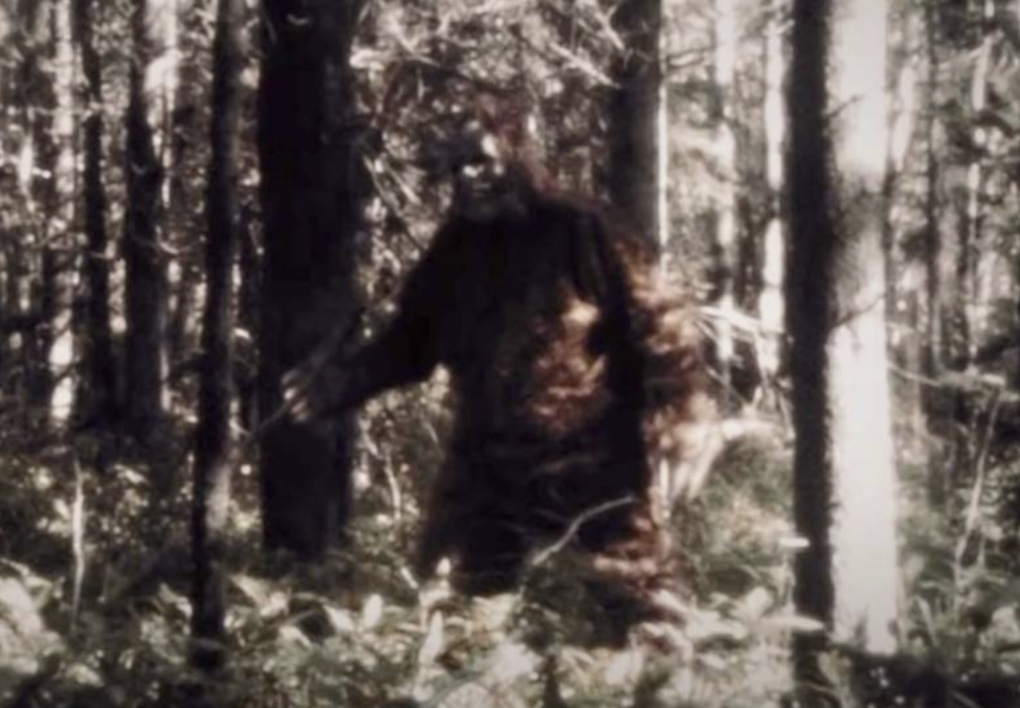
"caption": "A moment from Hulu documentary series, 'Sasquatch'.",
"description": null,
"title": "A moment from Hulu documentary series, 'Sasquatch'.",
"credit": "Hulu",
"status": "inherit",
"altTag": "A person wearing a Bigfoot suit standing in the woods.",
"isLoading": false,
"fetchFailed": false
},
"arts_13952028": {
"type": "attachments",
"id": "arts_13952028",
"meta": {
"index": "attachments_1716263798",
"site": "arts",
"id": "13952028",
"found": true
},
"parent": 13952027,
"imgSizes": {
"twentyfourteen-full-width": {
"file": "https://cdn.kqed.org/wp-content/uploads/sites/2/2024/02/gettyimages-1370016958-3415bd725dab154096ce25b271983d999acf9624-1038x576.jpg",
"width": 1038,
"mimeType": "image/jpeg",
"height": 576
},
"thumbnail": {
"file": "https://cdn.kqed.org/wp-content/uploads/sites/2/2024/02/gettyimages-1370016958-3415bd725dab154096ce25b271983d999acf9624-160x120.jpg",
"width": 160,
"mimeType": "image/jpeg",
"height": 120
},
"post-thumbnail": {
"file": "https://cdn.kqed.org/wp-content/uploads/sites/2/2024/02/gettyimages-1370016958-3415bd725dab154096ce25b271983d999acf9624-672x372.jpg",
"width": 672,
"mimeType": "image/jpeg",
"height": 372
},
"kqedFullSize": {
"file": "https://cdn.kqed.org/wp-content/uploads/sites/2/2024/02/gettyimages-1370016958-3415bd725dab154096ce25b271983d999acf9624-scaled-e1707504103787.jpg",
"width": 1920,
"height": 1439
},
"2048x2048": {
"file": "https://cdn.kqed.org/wp-content/uploads/sites/2/2024/02/gettyimages-1370016958-3415bd725dab154096ce25b271983d999acf9624-2048x1535.jpg",
"width": 2048,
"mimeType": "image/jpeg",
"height": 1535
},
"large": {
"file": "https://cdn.kqed.org/wp-content/uploads/sites/2/2024/02/gettyimages-1370016958-3415bd725dab154096ce25b271983d999acf9624-1020x764.jpg",
"width": 1020,
"mimeType": "image/jpeg",
"height": 764
},
"1536x1536": {
"file": "https://cdn.kqed.org/wp-content/uploads/sites/2/2024/02/gettyimages-1370016958-3415bd725dab154096ce25b271983d999acf9624-1536x1151.jpg",
"width": 1536,
"mimeType": "image/jpeg",
"height": 1151
},
"full-width": {
"file": "https://cdn.kqed.org/wp-content/uploads/sites/2/2024/02/gettyimages-1370016958-3415bd725dab154096ce25b271983d999acf9624-1920x1439.jpg",
"width": 1920,
"mimeType": "image/jpeg",
"height": 1439
},
"medium": {
"file": "https://cdn.kqed.org/wp-content/uploads/sites/2/2024/02/gettyimages-1370016958-3415bd725dab154096ce25b271983d999acf9624-800x599.jpg",
"width": 800,
"mimeType": "image/jpeg",
"height": 599
},
"medium_large": {
"file": "https://cdn.kqed.org/wp-content/uploads/sites/2/2024/02/gettyimages-1370016958-3415bd725dab154096ce25b271983d999acf9624-768x575.jpg",
"width": 768,
"mimeType": "image/jpeg",
"height": 575
}
},
"publishDate": 1707503493,
"modified": 1707504174,
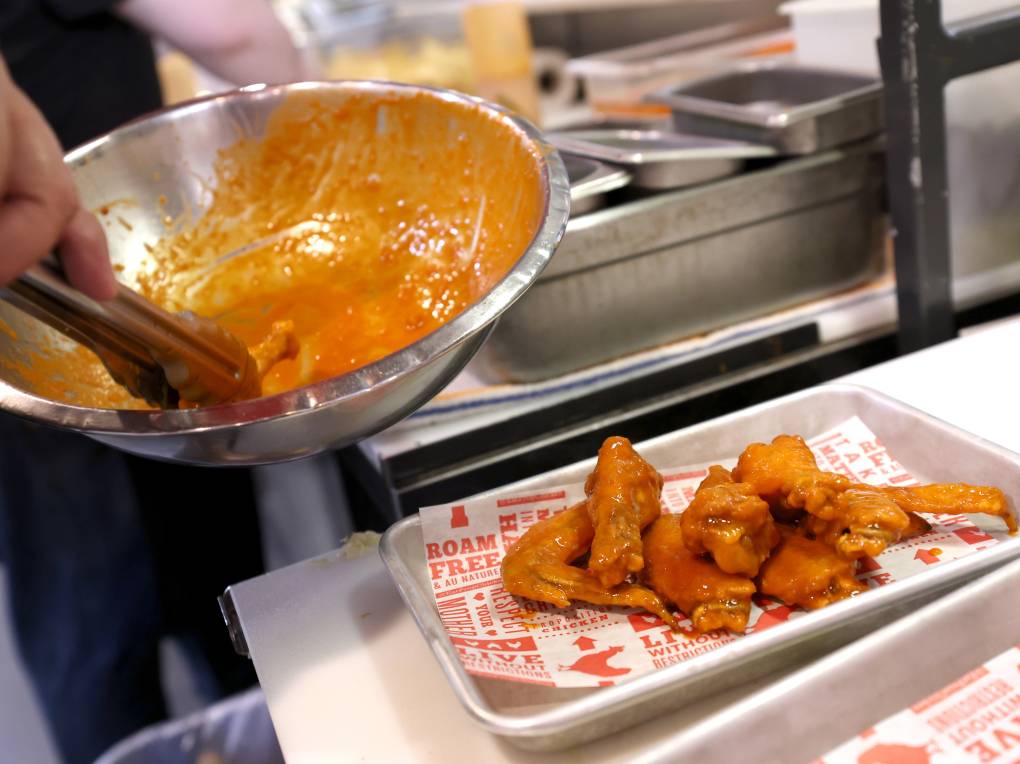
"caption": "Chicken wing prices have fallen for the second year in a row, in a windfall for Super Bowl snackers.",
"description": null,
"title": "Chicken wing prices have fallen for the second year in a row, in a windfall for Super Bowl snackers.",
"credit": "Justin Sullivan/ Getty Images",
"status": "inherit",
"altTag": "A plate of chicken wings sits next to a stove. Someone holds a bowl of sauce over the plate.",
"isLoading": false,
"fetchFailed": false
},
"arts_13951633": {
"type": "attachments",
"id": "arts_13951633",
"meta": {
"index": "attachments_1716263798",
"site": "arts",
"id": "13951633",
"found": true
},
"parent": 13951631,
"imgSizes": {
"twentyfourteen-full-width": {
"file": "https://cdn.kqed.org/wp-content/uploads/sites/2/2024/02/gettyimages-1965748280-15e1ea6959272bdd27a69f3ec111a94fa889924f-1038x576.jpg",
"width": 1038,
"mimeType": "image/jpeg",
"height": 576
},
"thumbnail": {
"file": "https://cdn.kqed.org/wp-content/uploads/sites/2/2024/02/gettyimages-1965748280-15e1ea6959272bdd27a69f3ec111a94fa889924f-160x120.jpg",
"width": 160,
"mimeType": "image/jpeg",
"height": 120
},
"post-thumbnail": {
"file": "https://cdn.kqed.org/wp-content/uploads/sites/2/2024/02/gettyimages-1965748280-15e1ea6959272bdd27a69f3ec111a94fa889924f-672x372.jpg",
"width": 672,
"mimeType": "image/jpeg",
"height": 372
},
"kqedFullSize": {
"file": "https://cdn.kqed.org/wp-content/uploads/sites/2/2024/02/gettyimages-1965748280-15e1ea6959272bdd27a69f3ec111a94fa889924f-scaled-e1707237889195.jpg",
"width": 1920,
"height": 1440
},
"2048x2048": {
"file": "https://cdn.kqed.org/wp-content/uploads/sites/2/2024/02/gettyimages-1965748280-15e1ea6959272bdd27a69f3ec111a94fa889924f-2048x1536.jpg",
"width": 2048,
"mimeType": "image/jpeg",
"height": 1536
},
"large": {
"file": "https://cdn.kqed.org/wp-content/uploads/sites/2/2024/02/gettyimages-1965748280-15e1ea6959272bdd27a69f3ec111a94fa889924f-1020x765.jpg",
"width": 1020,
"mimeType": "image/jpeg",
"height": 765
},
"1536x1536": {
"file": "https://cdn.kqed.org/wp-content/uploads/sites/2/2024/02/gettyimages-1965748280-15e1ea6959272bdd27a69f3ec111a94fa889924f-1536x1152.jpg",
"width": 1536,
"mimeType": "image/jpeg",
"height": 1152
},
"full-width": {
"file": "https://cdn.kqed.org/wp-content/uploads/sites/2/2024/02/gettyimages-1965748280-15e1ea6959272bdd27a69f3ec111a94fa889924f-1920x1440.jpg",
"width": 1920,
"mimeType": "image/jpeg",
"height": 1440
},
"medium": {
"file": "https://cdn.kqed.org/wp-content/uploads/sites/2/2024/02/gettyimages-1965748280-15e1ea6959272bdd27a69f3ec111a94fa889924f-800x600.jpg",
"width": 800,
"mimeType": "image/jpeg",
"height": 600
},
"medium_large": {
"file": "https://cdn.kqed.org/wp-content/uploads/sites/2/2024/02/gettyimages-1965748280-15e1ea6959272bdd27a69f3ec111a94fa889924f-768x576.jpg",
"width": 768,
"mimeType": "image/jpeg",
"height": 576
}
},
"publishDate": 1707234827,
"modified": 1707238058,
"caption": "Handala, a symbol of Palestinian struggle, is held up at a Madrid protest on Jan. 27, 2024, in support of Palestinians.",
"description": null,
"title": "Handala, a symbol of Palestinian struggle, is held up at a Madrid protest on Jan. 27, 2024, in support of Palestinians.",
"credit": "Pablo Blazquez Dominguez/ Getty Images",
"status": "inherit",
"altTag": "A protest march, people waving Palestinian flags and a cardboard cutout of a boy with his back turned.",
"isLoading": false,
"fetchFailed": false
},
"arts_13951530": {
"type": "attachments",
"id": "arts_13951530",
"meta": {
"index": "attachments_1716263798",
"site": "arts",
"id": "13951530",
"found": true
},
"parent": 13951529,
"imgSizes": {
"twentyfourteen-full-width": {
"file": "https://cdn.kqed.org/wp-content/uploads/sites/2/2024/02/gettyimages-1986513650_custom-d12ff8ecb904a0b4d4e0f9619ebbc59ef2292633-1038x576.jpg",
"width": 1038,
"mimeType": "image/jpeg",
"height": 576
},
"thumbnail": {
"file": "https://cdn.kqed.org/wp-content/uploads/sites/2/2024/02/gettyimages-1986513650_custom-d12ff8ecb904a0b4d4e0f9619ebbc59ef2292633-160x115.jpg",
"width": 160,
"mimeType": "image/jpeg",
"height": 115
},
"post-thumbnail": {
"file": "https://cdn.kqed.org/wp-content/uploads/sites/2/2024/02/gettyimages-1986513650_custom-d12ff8ecb904a0b4d4e0f9619ebbc59ef2292633-672x372.jpg",
"width": 672,
"mimeType": "image/jpeg",
"height": 372
},
"kqedFullSize": {
"file": "https://cdn.kqed.org/wp-content/uploads/sites/2/2024/02/gettyimages-1986513650_custom-d12ff8ecb904a0b4d4e0f9619ebbc59ef2292633-scaled-e1707106163745.jpg",
"width": 1920,
"height": 1378
},
"2048x2048": {
"file": "https://cdn.kqed.org/wp-content/uploads/sites/2/2024/02/gettyimages-1986513650_custom-d12ff8ecb904a0b4d4e0f9619ebbc59ef2292633-2048x1469.jpg",
"width": 2048,
"mimeType": "image/jpeg",
"height": 1469
},
"large": {
"file": "https://cdn.kqed.org/wp-content/uploads/sites/2/2024/02/gettyimages-1986513650_custom-d12ff8ecb904a0b4d4e0f9619ebbc59ef2292633-1020x732.jpg",
"width": 1020,
"mimeType": "image/jpeg",
"height": 732
},
"1536x1536": {
"file": "https://cdn.kqed.org/wp-content/uploads/sites/2/2024/02/gettyimages-1986513650_custom-d12ff8ecb904a0b4d4e0f9619ebbc59ef2292633-1536x1102.jpg",
"width": 1536,
"mimeType": "image/jpeg",
"height": 1102
},
"full-width": {
"file": "https://cdn.kqed.org/wp-content/uploads/sites/2/2024/02/gettyimages-1986513650_custom-d12ff8ecb904a0b4d4e0f9619ebbc59ef2292633-1920x1377.jpg",
"width": 1920,
"mimeType": "image/jpeg",
"height": 1377
},
"medium": {
"file": "https://cdn.kqed.org/wp-content/uploads/sites/2/2024/02/gettyimages-1986513650_custom-d12ff8ecb904a0b4d4e0f9619ebbc59ef2292633-800x574.jpg",
"width": 800,
"mimeType": "image/jpeg",
"height": 574
},
"medium_large": {
"file": "https://cdn.kqed.org/wp-content/uploads/sites/2/2024/02/gettyimages-1986513650_custom-d12ff8ecb904a0b4d4e0f9619ebbc59ef2292633-768x551.jpg",
"width": 768,
"mimeType": "image/jpeg",
"height": 551
}
},
"publishDate": 1707105019,
"modified": 1707106281,
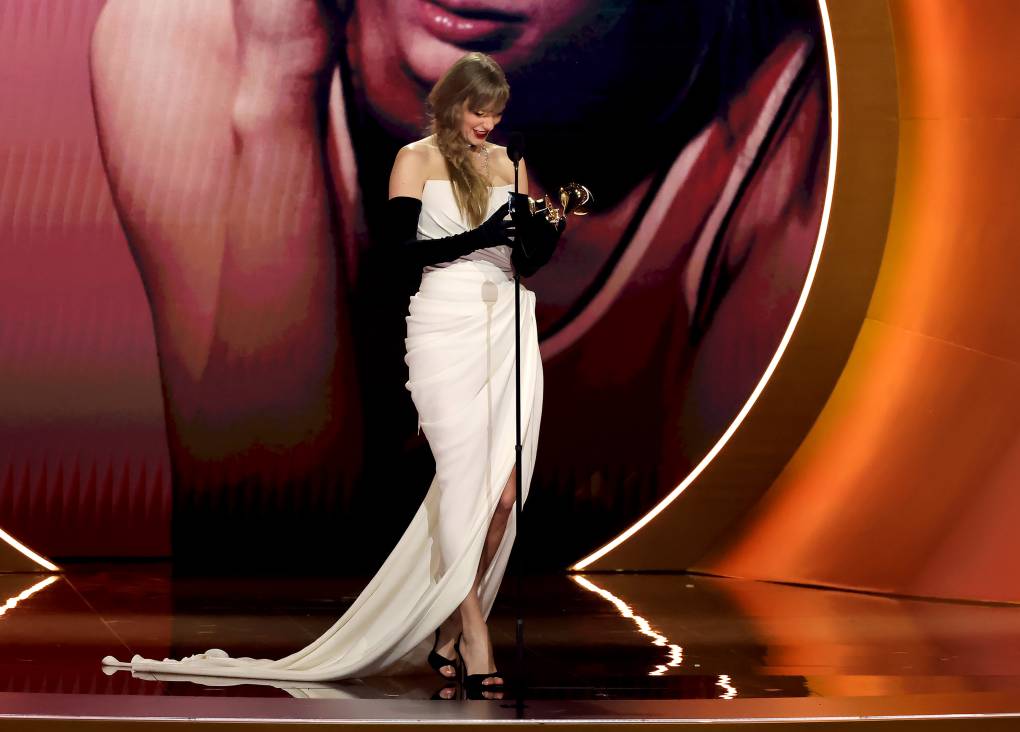
"caption": "During Taylor Swift's acceptance speech for Best Pop Vocal Album for ‘Midnights,’ the singer announced the release of her next album, ‘The Tortured Poets Department.’",
"description": null,
"title": "During Taylor Swift's acceptance speech for Best Pop Vocal Album for ‘Midnights,’ the singer announced the release of her next album, ‘The Tortured Poets Department.’",
"credit": "Kevin Winter/ Getty Images for The Recording Academy",
"status": "inherit",
"altTag": "Taylor Swift on stage clutching a trophy. She is wearing a white flowing gown and long black gloves.",
"isLoading": false,
"fetchFailed": false
},
"arts_13951525": {
"type": "attachments",
"id": "arts_13951525",
"meta": {
"index": "attachments_1716263798",
"site": "arts",
"id": "13951525",
"found": true
},
"parent": 13951471,
"imgSizes": {
"twentyfourteen-full-width": {
"file": "https://cdn.kqed.org/wp-content/uploads/sites/2/2024/02/Screen-Shot-2024-02-04-at-7.35.22-PM-1038x576.png",
"width": 1038,
"mimeType": "image/png",
"height": 576
},
"thumbnail": {
"file": "https://cdn.kqed.org/wp-content/uploads/sites/2/2024/02/Screen-Shot-2024-02-04-at-7.35.22-PM-160x92.png",
"width": 160,
"mimeType": "image/png",
"height": 92
},
"post-thumbnail": {
"file": "https://cdn.kqed.org/wp-content/uploads/sites/2/2024/02/Screen-Shot-2024-02-04-at-7.35.22-PM-672x372.png",
"width": 672,
"mimeType": "image/png",
"height": 372
},
"kqedFullSize": {
"file": "https://cdn.kqed.org/wp-content/uploads/sites/2/2024/02/Screen-Shot-2024-02-04-at-7.35.22-PM.png",
"width": 1598,
"height": 920
},
"large": {
"file": "https://cdn.kqed.org/wp-content/uploads/sites/2/2024/02/Screen-Shot-2024-02-04-at-7.35.22-PM-1020x587.png",
"width": 1020,
"mimeType": "image/png",
"height": 587
},
"1536x1536": {
"file": "https://cdn.kqed.org/wp-content/uploads/sites/2/2024/02/Screen-Shot-2024-02-04-at-7.35.22-PM-1536x884.png",
"width": 1536,
"mimeType": "image/png",
"height": 884
},
"medium": {
"file": "https://cdn.kqed.org/wp-content/uploads/sites/2/2024/02/Screen-Shot-2024-02-04-at-7.35.22-PM-800x461.png",
"width": 800,
"mimeType": "image/png",
"height": 461
},
"medium_large": {
"file": "https://cdn.kqed.org/wp-content/uploads/sites/2/2024/02/Screen-Shot-2024-02-04-at-7.35.22-PM-768x442.png",
"width": 768,
"mimeType": "image/png",
"height": 442
}
},
"publishDate": 1707104148,
"modified": 1707104200,
"caption": "(L-R) Phoebe Bridgers, Lucy Dacus, and Julien Baker of Boygenius.",
"description": null,
"title": "(L-R) Phoebe Bridgers, Lucy Dacus, and Julien Baker of Boygenius.",
"credit": "Kayla Oaddams/ WireImage",
"status": "inherit",
"altTag": "Three young women in matching white suits and red ties.",
"isLoading": false,
"fetchFailed": false
},
"arts_13951375": {
"type": "attachments",
"id": "arts_13951375",
"meta": {
"index": "attachments_1716263798",
"site": "arts",
"id": "13951375",
"found": true
},
"parent": 13951374,
"imgSizes": {
"twentyfourteen-full-width": {
"file": "https://cdn.kqed.org/wp-content/uploads/sites/2/2024/02/mams_s1_ut_1_221003_leedav_00887rc_3000-1-_custom-d2f43ffd85bf865faaabe72d7668eee6c98df82e-1038x576.jpg",
"width": 1038,
"mimeType": "image/jpeg",
"height": 576
},
"thumbnail": {
"file": "https://cdn.kqed.org/wp-content/uploads/sites/2/2024/02/mams_s1_ut_1_221003_leedav_00887rc_3000-1-_custom-d2f43ffd85bf865faaabe72d7668eee6c98df82e-160x107.jpg",
"width": 160,
"mimeType": "image/jpeg",
"height": 107
},
"post-thumbnail": {
"file": "https://cdn.kqed.org/wp-content/uploads/sites/2/2024/02/mams_s1_ut_1_221003_leedav_00887rc_3000-1-_custom-d2f43ffd85bf865faaabe72d7668eee6c98df82e-672x372.jpg",
"width": 672,
"mimeType": "image/jpeg",
"height": 372
},
"kqedFullSize": {
"file": "https://cdn.kqed.org/wp-content/uploads/sites/2/2024/02/mams_s1_ut_1_221003_leedav_00887rc_3000-1-_custom-d2f43ffd85bf865faaabe72d7668eee6c98df82e-scaled-e1706818459378.jpg",
"width": 1920,
"height": 1279
},
"2048x2048": {
"file": "https://cdn.kqed.org/wp-content/uploads/sites/2/2024/02/mams_s1_ut_1_221003_leedav_00887rc_3000-1-_custom-d2f43ffd85bf865faaabe72d7668eee6c98df82e-2048x1364.jpg",
"width": 2048,
"mimeType": "image/jpeg",
"height": 1364
},
"large": {
"file": "https://cdn.kqed.org/wp-content/uploads/sites/2/2024/02/mams_s1_ut_1_221003_leedav_00887rc_3000-1-_custom-d2f43ffd85bf865faaabe72d7668eee6c98df82e-1020x679.jpg",
"width": 1020,
"mimeType": "image/jpeg",
"height": 679
},
"1536x1536": {
"file": "https://cdn.kqed.org/wp-content/uploads/sites/2/2024/02/mams_s1_ut_1_221003_leedav_00887rc_3000-1-_custom-d2f43ffd85bf865faaabe72d7668eee6c98df82e-1536x1023.jpg",
"width": 1536,
"mimeType": "image/jpeg",
"height": 1023
},
"full-width": {
"file": "https://cdn.kqed.org/wp-content/uploads/sites/2/2024/02/mams_s1_ut_1_221003_leedav_00887rc_3000-1-_custom-d2f43ffd85bf865faaabe72d7668eee6c98df82e-1920x1279.jpg",
"width": 1920,
"mimeType": "image/jpeg",
"height": 1279
},
"medium": {
"file": "https://cdn.kqed.org/wp-content/uploads/sites/2/2024/02/mams_s1_ut_1_221003_leedav_00887rc_3000-1-_custom-d2f43ffd85bf865faaabe72d7668eee6c98df82e-800x533.jpg",
"width": 800,
"mimeType": "image/jpeg",
"height": 533
},
"medium_large": {
"file": "https://cdn.kqed.org/wp-content/uploads/sites/2/2024/02/mams_s1_ut_1_221003_leedav_00887rc_3000-1-_custom-d2f43ffd85bf865faaabe72d7668eee6c98df82e-768x511.jpg",
"width": 768,
"mimeType": "image/jpeg",
"height": 511
}
},
"publishDate": 1706817617,
"modified": 1706818525,
"caption": "Donald Glover and Maya Erskine star as John and Jane in ‘Mr. & Mrs. Smith.’",
"description": null,
"title": "Donald Glover and Maya Erskine star as John and Jane in ‘Mr. & Mrs. Smith.’",
"credit": "David Lee/ Prime Video",
"status": "inherit",
"altTag": "A Black man and Asian woman lie on the floor, face to face and very close.",
"isLoading": false,
"fetchFailed": false
},
"arts_13951301": {
"type": "attachments",
"id": "arts_13951301",
"meta": {
"index": "attachments_1716263798",
"site": "arts",
"id": "13951301",
"found": true
},
"parent": 13951300,
"imgSizes": {
"twentyfourteen-full-width": {
"file": "https://cdn.kqed.org/wp-content/uploads/sites/2/2024/01/gettyimages-1583886894-e742c7b71629fe87512c7a1cf757e74ca3357996-1038x576.jpg",
"width": 1038,
"mimeType": "image/jpeg",
"height": 576
},
"thumbnail": {
"file": "https://cdn.kqed.org/wp-content/uploads/sites/2/2024/01/gettyimages-1583886894-e742c7b71629fe87512c7a1cf757e74ca3357996-160x120.jpg",
"width": 160,
"mimeType": "image/jpeg",
"height": 120
},
"post-thumbnail": {
"file": "https://cdn.kqed.org/wp-content/uploads/sites/2/2024/01/gettyimages-1583886894-e742c7b71629fe87512c7a1cf757e74ca3357996-672x372.jpg",
"width": 672,
"mimeType": "image/jpeg",
"height": 372
},
"kqedFullSize": {
"file": "https://cdn.kqed.org/wp-content/uploads/sites/2/2024/01/gettyimages-1583886894-e742c7b71629fe87512c7a1cf757e74ca3357996-scaled-e1706729221364.jpg",
"width": 1920,
"height": 1440
},
"2048x2048": {
"file": "https://cdn.kqed.org/wp-content/uploads/sites/2/2024/01/gettyimages-1583886894-e742c7b71629fe87512c7a1cf757e74ca3357996-2048x1536.jpg",
"width": 2048,
"mimeType": "image/jpeg",
"height": 1536
},
"large": {
"file": "https://cdn.kqed.org/wp-content/uploads/sites/2/2024/01/gettyimages-1583886894-e742c7b71629fe87512c7a1cf757e74ca3357996-1020x765.jpg",
"width": 1020,
"mimeType": "image/jpeg",
"height": 765
},
"1536x1536": {
"file": "https://cdn.kqed.org/wp-content/uploads/sites/2/2024/01/gettyimages-1583886894-e742c7b71629fe87512c7a1cf757e74ca3357996-1536x1152.jpg",
"width": 1536,
"mimeType": "image/jpeg",
"height": 1152
},
"full-width": {
"file": "https://cdn.kqed.org/wp-content/uploads/sites/2/2024/01/gettyimages-1583886894-e742c7b71629fe87512c7a1cf757e74ca3357996-1920x1440.jpg",
"width": 1920,
"mimeType": "image/jpeg",
"height": 1440
},
"medium": {
"file": "https://cdn.kqed.org/wp-content/uploads/sites/2/2024/01/gettyimages-1583886894-e742c7b71629fe87512c7a1cf757e74ca3357996-800x600.jpg",
"width": 800,
"mimeType": "image/jpeg",
"height": 600
},
"medium_large": {
"file": "https://cdn.kqed.org/wp-content/uploads/sites/2/2024/01/gettyimages-1583886894-e742c7b71629fe87512c7a1cf757e74ca3357996-768x576.jpg",
"width": 768,
"mimeType": "image/jpeg",
"height": 576
}
},
"publishDate": 1706728878,
"modified": 1706729316,
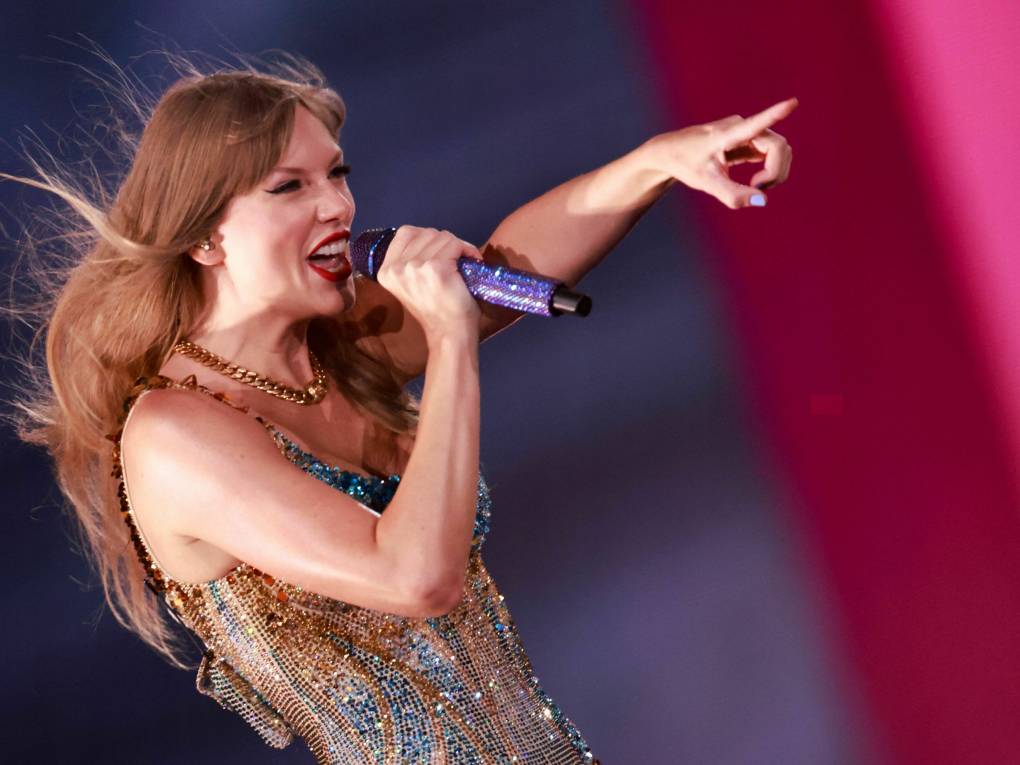
"caption": "Taylor Swift performs during her Eras Tour at Sofi stadium in Inglewood, August 2023.",
"description": null,
"title": "Taylor Swift performs during her Eras Tour at Sofi stadium in Inglewood, August 2023.",
"credit": "Michael Tran/ AFP via Getty Images",
"status": "inherit",
"altTag": "A woman in a sequined body suit stands on stage singing into a microphone and pointing one arm ahead.",
"isLoading": false,
"fetchFailed": false
},
"arts_13951220": {
"type": "attachments",
"id": "arts_13951220",
"meta": {
"index": "attachments_1716263798",
"site": "arts",
"id": "13951220",
"found": true
},
"parent": 13951218,
"imgSizes": {
"twentyfourteen-full-width": {
"file": "https://cdn.kqed.org/wp-content/uploads/sites/2/2024/01/feud_301_cdfa_082323.new_.01.sub_.11-copy_wide-4e64d9afc6396c953e9c8163e798176d8988347e-1-1038x576.jpg",
"width": 1038,
"mimeType": "image/jpeg",
"height": 576
},
"thumbnail": {
"file": "https://cdn.kqed.org/wp-content/uploads/sites/2/2024/01/feud_301_cdfa_082323.new_.01.sub_.11-copy_wide-4e64d9afc6396c953e9c8163e798176d8988347e-1-160x90.jpg",
"width": 160,
"mimeType": "image/jpeg",
"height": 90
},
"post-thumbnail": {
"file": "https://cdn.kqed.org/wp-content/uploads/sites/2/2024/01/feud_301_cdfa_082323.new_.01.sub_.11-copy_wide-4e64d9afc6396c953e9c8163e798176d8988347e-1-672x372.jpg",
"width": 672,
"mimeType": "image/jpeg",
"height": 372
},
"kqedFullSize": {
"file": "https://cdn.kqed.org/wp-content/uploads/sites/2/2024/01/feud_301_cdfa_082323.new_.01.sub_.11-copy_wide-4e64d9afc6396c953e9c8163e798176d8988347e-1.jpg",
"width": 1412,
"height": 794
},
"large": {
"file": "https://cdn.kqed.org/wp-content/uploads/sites/2/2024/01/feud_301_cdfa_082323.new_.01.sub_.11-copy_wide-4e64d9afc6396c953e9c8163e798176d8988347e-1-1020x574.jpg",
"width": 1020,
"mimeType": "image/jpeg",
"height": 574
},
"medium": {
"file": "https://cdn.kqed.org/wp-content/uploads/sites/2/2024/01/feud_301_cdfa_082323.new_.01.sub_.11-copy_wide-4e64d9afc6396c953e9c8163e798176d8988347e-1-800x450.jpg",
"width": 800,
"mimeType": "image/jpeg",
"height": 450
},
"medium_large": {
"file": "https://cdn.kqed.org/wp-content/uploads/sites/2/2024/01/feud_301_cdfa_082323.new_.01.sub_.11-copy_wide-4e64d9afc6396c953e9c8163e798176d8988347e-1-768x432.jpg",
"width": 768,
"mimeType": "image/jpeg",
"height": 432
}
},
"publishDate": 1706640805,
"modified": 1706643063,
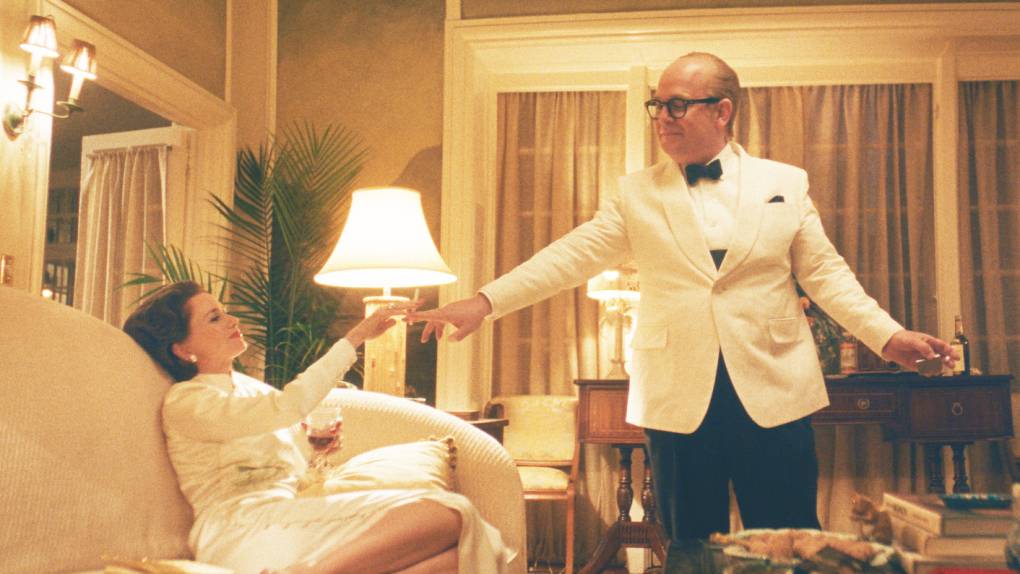
"caption": "Naomi Watts plays Babe Paley and Tom Hollander is Truman Capote in ‘Feud: Capote Vs. the Swans.’",
"description": null,
"title": "Naomi Watts plays Babe Paley and Tom Hollander is Truman Capote in ‘Feud: Capote Vs. the Swans.’",
"credit": "FX",
"status": "inherit",
"altTag": "A balding man with glasses wearing a tuxedo reaches out to a woman sitting on a plush couch.",
"isLoading": false,
"fetchFailed": false
}
},
"audioPlayerReducer": {
"postId": "stream_live",
"isPaused": true,
"isPlaying": false,
"pfsActive": false,
"pledgeModalIsOpen": true,
"playerDrawerIsOpen": false,
"liveAudioPlayStartedAt": 0,
"liveAudioPlayContext": ""
},
"authorsReducer": {
"byline_arts_13952549": {
"type": "authors",
"id": "byline_arts_13952549",
"meta": {
"override": true
},
"slug": "byline_arts_13952549",
"name": "Linda Holmes",
"isLoading": false
},
"byline_arts_13952134": {
"type": "authors",
"id": "byline_arts_13952134",
"meta": {
"override": true
},
"slug": "byline_arts_13952134",
"name": "Eric Deggans",
"isLoading": false
},
"byline_arts_13952077": {
"type": "authors",
"id": "byline_arts_13952077",
"meta": {
"override": true
},
"slug": "byline_arts_13952077",
"name": "Eric Deggans",
"isLoading": false
},
"byline_arts_13952067": {
"type": "authors",
"id": "byline_arts_13952067",
"meta": {
"override": true
},
"slug": "byline_arts_13952067",
"name": "Rachel Treisman",
"isLoading": false
},
"byline_arts_13952039": {
"type": "authors",
"id": "byline_arts_13952039",
"meta": {
"override": true
},
"slug": "byline_arts_13952039",
"name": "Gabino Iglesias",
"isLoading": false
},
"byline_arts_13952027": {
"type": "authors",
"id": "byline_arts_13952027",
"meta": {
"override": true
},
"slug": "byline_arts_13952027",
"name": "Scott Horsley",
"isLoading": false
},
"byline_arts_13951631": {
"type": "authors",
"id": "byline_arts_13951631",
"meta": {
"override": true
},
"slug": "byline_arts_13951631",
"name": "Hadeel Al-Shalchi",
"isLoading": false
},
"byline_arts_13951529": {
"type": "authors",
"id": "byline_arts_13951529",
"meta": {
"override": true
},
"slug": "byline_arts_13951529",
"name": "Anastasia Tsioulcas",
"isLoading": false
},
"byline_arts_13951374": {
"type": "authors",
"id": "byline_arts_13951374",
"meta": {
"override": true
},
"slug": "byline_arts_13951374",
"name": "Linda Holmes",
"isLoading": false
},
"byline_arts_13951300": {
"type": "authors",
"id": "byline_arts_13951300",
"meta": {
"override": true
},
"slug": "byline_arts_13951300",
"name": "Neda Ulaby",
"isLoading": false
},
"byline_arts_13951218": {
"type": "authors",
"id": "byline_arts_13951218",
"meta": {
"override": true
},
"slug": "byline_arts_13951218",
"name": "David Bianculli",
"isLoading": false
},
"kqedarts": {
"type": "authors",
"id": "92",
"meta": {
"index": "authors_1716337520",
"id": "92",
"found": true
},
"name": "KQED Arts",
"firstName": "KQED",
"lastName": "Arts",
"slug": "kqedarts",
"email": "arts@kqed.org",
"display_author_email": false,
"staff_mastheads": [],
"title": "KQED Staff",
"bio": null,
"avatar": "https://secure.gravatar.com/avatar/321c9ebfeb7736f9e55366a6d3399ab0?s=600&d=blank&r=g",
"twitter": null,
"facebook": null,
"instagram": "https://www.instagram.com/kqed_arts/",
"linkedin": null,
"sites": [
{
"site": "arts",
"roles": [
"contributor"
]
},
{
"site": "pop",
"roles": [
"contributor"
]
},
{
"site": "science",
"roles": [
"author"
]
},
{
"site": "food",
"roles": [
"contributor"
]
}
],
"headData": {
"title": "KQED Arts | KQED",
"description": "KQED Staff",
"ogImgSrc": "https://secure.gravatar.com/avatar/321c9ebfeb7736f9e55366a6d3399ab0?s=600&d=blank&r=g",
"twImgSrc": "https://secure.gravatar.com/avatar/321c9ebfeb7736f9e55366a6d3399ab0?s=600&d=blank&r=g"
},
"isLoading": false,
"link": "/author/kqedarts"
}
},
"pagesReducer": {
"arts_affiliate_npr": {
"type": "terms",
"id": "arts_137",
"meta": {
"index": "terms_1716263798",
"site": "arts",
"id": "137",
"score": 14.257292
},
"featImg": "https://ww2.kqed.org/app/uploads/sites/2/2014/04/logo-npr-lg1.png",
"name": "NPR",
"description": null,
"taxonomy": "affiliate",
"headData": {
"twImgId": null,
"twTitle": null,
"ogTitle": null,
"ogImgId": null,
"twDescription": null,
"description": null,
"title": "NPR Archives | KQED Arts",
"ogDescription": null
},
"ttid": 138,
"slug": "npr",
"isLoading": false,
"title": "NPR",
"pageMeta": {
"site": "arts",
"WpPageTemplate": "page-topic-editorial",
"currentPage": 32
},
"blocks": [
{
"blockName": "kqed/post-list",
"attrs": {
"layout": "cardArticle2",
"query": "posts/arts?affiliate=npr",
"seeMore": false,
"paginated": true,
"page": 32
}
},
{
"blockName": "kqed/ad"
}
]
}
},
"pfsSessionReducer": {},
"postsReducer": {
"stream_live": {
"type": "live",
"id": "stream_live",
"audioUrl": "https://streams.kqed.org/kqedradio",
"title": "Live Stream",
"excerpt": "Live Stream information currently unavailable.",
"link": "/radio",
"featImg": "",
"label": {
"name": "KQED Live",
"link": "/"
}
},
"stream_kqedNewscast": {
"type": "posts",
"id": "stream_kqedNewscast",
"audioUrl": "https://www.kqed.org/.stream/anon/radio/RDnews/newscast.mp3?_=1",
"title": "KQED Newscast",
"featImg": "",
"label": {
"name": "88.5 FM",
"link": "/"
}
},
"arts_13952549": {
"type": "posts",
"id": "arts_13952549",
"meta": {
"index": "posts_1716263798",
"site": "arts",
"id": "13952549",
"score": null,
"sort": [
1708447549000
]
},
"parent": 0,
"labelTerm": {
"site": "arts",
"term": 140
},
"blocks": [],
"publishDate": 1708447549,
"format": "standard",
"title": "Two’s Company, Three’s Allowed in New Dating Show ‘Couple to Throuple’",
"headTitle": "Two’s Company, Three’s Allowed in New Dating Show ‘Couple to Throuple’ | KQED",
"content": "\u003cp>The only reasons people watch dating shows, really, are sex and mess.\u003c/p>\n\u003cp>Dating shows have been around for ages, swelling* when there’s a big success like \u003cem>The Bachelor \u003c/em>or \u003cem>Joe Millionaire \u003c/em>or \u003cem>Love Is Blind\u003c/em>. But they take all kinds of different shapes — it’s a test to see if you’ll cheat, or there’s a chance the person is ugly, or you have to get married, or whatever. They certainly have wildly varying levels of sex. \u003cem>The Bachelor \u003c/em>takes a kind of “and then the door closes and the music plays and you definitely do not even hear anybody making any noises,” while some other shows will give you considerably more than that.\u003c/p>\n\u003cp>[aside postid='arts_13952409']They all have mess, too. Not just mess, but messy messy mess. As I was telling a friend this week, Peacock’s \u003cem>Couple to Throuple \u003c/em>is really just more mess (and it’s on the high end for the amount of sex you’ll see), and in that sense it’s very conventional. But at least it’s a different \u003cem>kind\u003c/em> of mess than most other shows offer, particularly on mainstream outlets.\u003c/p>\n\u003cp>The setup is this: Four couples arrive at a resort. A bunch of single people also show up. Each couple is interested in potentially exploring a throuple, which (for the uninitiated) is an awkward portman-ménage-à-teau for an ongoing relationship among three people. Three of the couples include a man and a woman: Brittne and Sean, Dylan and Lauren, and Wilder and Corey. The other is two men, Rehman and Ashmal. All of the couples have some experience with experimentation with other people, but not in this kind of throuple arrangement. The show brings in some single people, all of whom also have some relevant experience, and each couple gets to pick one to try out as a possible third for their relationship. (If you think this sounds kind of strange and possibly a little unfair to the single person, that does come up.)\u003c/p>\n\u003cp>https://www.youtube.com/watch?v=C1_YG-EKIQU\u003c/p>\n\u003cp>[ad fullwidth]\u003c/p>\n\u003cp>I want to make clear that there is nothing inherently salacious about polyamory. There are plenty of people who make it work. So when I say the show is joyfully trashy, that’s because of the show, not the relationship structure. After all, you can make joyfully trashy shows about couples, too. There’s also nothing particularly new about the throuple life \u003cem>if \u003c/em>you happen to know people who do it or have tried it, which an increasing number of us do. But at least it’s new mess. Different mess. Mess that makes you go, “Oh, yikes, that’s tricky.”\u003c/p>\n\u003cp>The first thing that experienced polyamorous people will tell you, I have learned, is that it requires a lot of work and communication. There are people who go into it — or who just think about it — imagining, “Whee, this must be a no-strings-attached sex festival!” But my first thought after watching two episodes was, “This seems like a relationship structure perfect for people who like to attend a lot of meetings.”\u003c/p>\n\u003cp>[aside postid='arts_13951751']Even on dating shows, I have rarely seen this much \u003cem>talking about the relationship\u003c/em>. Does the third like both of the people in the couple equally? Do both people in the couple like the third equally? Do these people connect physically but those people emotionally? What are the reasonable expectations of the potential third?\u003c/p>\n\u003cp>Familiar dynamics take on new specifics, as when the couples do an exercise with their potential thirds where one partner engages in sexier and sexier contact with the third, and the other sees how long they’re comfortable before they say the safe word to put a stop to it. In one couple, an argument breaks out in which the partner who was watching later gets mad and basically says, “The question isn’t why I didn’t use the safe word if I was getting upset, the question is why \u003cem>you \u003c/em>didn’t use the safe word when you should have \u003cem>known\u003c/em> I was getting upset.” You gotta think that level of expected mind-reading is going to make a throuple arrangement very, very difficult — as it would a couple arrangement.\u003c/p>\n\u003cfigure id=\"attachment_13952554\" class=\"wp-caption aligncenter\" style=\"max-width: 1200px\">\u003cimg loading=\"lazy\" decoding=\"async\" class=\"size-full wp-image-13952554\" src=\"https://cdn.kqed.org/wp-content/uploads/sites/2/2024/02/Screen-Shot-2024-02-20-at-8.22.39-AM.png\" alt=\"Two men stand in a tropical looking resort, both wearing white shirts and pants, both looking serious.\" width=\"1200\" height=\"738\" srcset=\"https://cdn.kqed.org/wp-content/uploads/sites/2/2024/02/Screen-Shot-2024-02-20-at-8.22.39-AM.png 1200w, https://cdn.kqed.org/wp-content/uploads/sites/2/2024/02/Screen-Shot-2024-02-20-at-8.22.39-AM-800x492.png 800w, https://cdn.kqed.org/wp-content/uploads/sites/2/2024/02/Screen-Shot-2024-02-20-at-8.22.39-AM-1020x627.png 1020w, https://cdn.kqed.org/wp-content/uploads/sites/2/2024/02/Screen-Shot-2024-02-20-at-8.22.39-AM-160x98.png 160w, https://cdn.kqed.org/wp-content/uploads/sites/2/2024/02/Screen-Shot-2024-02-20-at-8.22.39-AM-768x472.png 768w\" sizes=\"(max-width: 1200px) 100vw, 1200px\">\u003cfigcaption class=\"wp-caption-text\">Ashmal, left, and Rehman in the ‘Boundaries’ episode of ‘Couple to Throuple.’ \u003ccite>(Paul Castillero/ Peacock)\u003c/cite>\u003c/figcaption>\u003c/figure>\n\u003cp>There are also some intriguing power shifts where at first, the thirds seem to be trying to put their best feet forward to be “chosen” by the couples, and then trying to impress them, but then before you know it, some of the thirds are sort of looking around saying, “Uh, it was nice knowing you guys.” Sometimes you’re the windshield, sometimes you’re the bug; sometimes you’re the pursuer, and sometimes you’re the pursued.\u003c/p>\n\u003cp>It’s a mess. I will watch it all.\u003c/p>\n\u003cp>*I apologize for using the word “swelling” in a discussion of dating shows.\u003c/p>\n\u003cp>\u003cem>This piece also appeared in NPR’s Pop Culture Happy Hour newsletter. \u003c/em>\u003ca href=\"https://www.npr.org/newsletter/pop-culture\">\u003cem>Sign up for the newsletter\u003c/em>\u003c/a>\u003cem> so you don’t miss the next one, plus get weekly recommendations about what’s making us happy.\u003c/em>\u003c/p>\n\u003cp>\u003c/p>\n\u003cp>\u003cem>Listen to Pop Culture Happy Hour on \u003c/em>\u003ca href=\"http://n.pr/3xNgYt9\">\u003cem>Apple Podcasts\u003c/em>\u003c/a>\u003cem> and \u003c/em>\u003ca href=\"http://n.pr/3ELR3n6\">\u003cem>Spotify\u003c/em>\u003c/a>\u003cem>.\u003c/em>\u003c/p>\n\u003cdiv class=\"fullattribution\">\u003cem>Copyright 2024 NPR. To see more, \u003ca href=\"https://www.npr.org\">visit NPR\u003c/a>.\u003cimg decoding=\"async\" src=\"https://www.google-analytics.com/__utm.gif?utmac=UA-5828686-4&utmdt=Two%27s+company%2C+three%27s+allowed+in+the+dating+show+%27Couple+to+Throuple%27&utme=8(APIKey)9(MDAxOTAwOTE4MDEyMTkxMDAzNjczZDljZA004)\">\u003c/em>\u003c/div>\n\n",
"stats": {
"hasVideo": true,
"hasChartOrMap": false,
"hasAudio": false,
"hasPolis": false,
"wordCount": 930,
"hasGoogleForm": false,
"hasGallery": false,
"hasHearkenModule": false,
"iframeSrcs": [],
"paragraphCount": 15
},
"modified": 1708447836,
"excerpt": "Based on this show, polyamory seems like a relationship structure perfect for people who like to attend a lot of meetings... ",
"headData": {
"twImgId": "",
"twTitle": "Two’s Company, Three’s Allowed in New Dating Show ‘Couple to Throuple’",
"socialTitle": "Peacock’s New Dating Show ‘Couple to Throuple’ is Good-Messy %%page%% %%sep%% KQED",
"ogTitle": "Two’s Company, Three’s Allowed in New Dating Show ‘Couple to Throuple’",
"ogImgId": "",
"twDescription": "",
"description": "Based on this show, polyamory seems like a relationship structure perfect for people who like to attend a lot of meetings... ",
"title": "Peacock’s New Dating Show ‘Couple to Throuple’ is Good-Messy | KQED",
"ogDescription": "",
"schema": {
"@context": "https://schema.org",
"@type": "Article",
"headline": "Two’s Company, Three’s Allowed in New Dating Show ‘Couple to Throuple’",
"datePublished": "2024-02-20T08:45:49-08:00",
"dateModified": "2024-02-20T08:50:36-08:00",
"image": "https://cdn.kqed.org/wp-content/uploads/2020/02/KQED-OG-Image@1x.png"
}
},
"guestAuthors": [],
"slug": "couple-to-throuple-review-peacock-polyamory-dating-reality-show",
"status": "publish",
"nprApiLink": "http://api.npr.org/query?id=1232033944&apiKey=MDAxOTAwOTE4MDEyMTkxMDAzNjczZDljZA004",
"templateType": "standard",
"nprStoryDate": "Sat, 17 Feb 2024 07:00:46 -0500",
"excludeFromSiteSearch": "Include",
"nprLastModifiedDate": "Sat, 17 Feb 2024 07:00:46 -0500",
"featuredImageType": "standard",
"nprHtmlLink": "https://www.npr.org/2024/02/17/1232033944/twos-company-threes-allowed-in-the-dating-show-couple-to-throuple?ft=nprml&f=1232033944",
"nprImageAgency": "Peacock",
"nprStoryId": "1232033944",
"nprByline": "Linda Holmes",
"sticky": false,
"nprImageCredit": "Paul Castillero",
"showOnAuthorArchivePages": "No",
"articleAge": "0",
"nprRetrievedStory": "1",
"nprPubDate": "Sat, 17 Feb 2024 07:00:00 -0500",
"path": "/arts/13952549/couple-to-throuple-review-peacock-polyamory-dating-reality-show",
"audioTrackLength": null,
"parsedContent": [
{
"type": "contentString",
"content": "\u003cdiv class=\"post-body\">\u003cp>\u003cp>The only reasons people watch dating shows, really, are sex and mess.\u003c/p>\n\u003cp>Dating shows have been around for ages, swelling* when there’s a big success like \u003cem>The Bachelor \u003c/em>or \u003cem>Joe Millionaire \u003c/em>or \u003cem>Love Is Blind\u003c/em>. But they take all kinds of different shapes — it’s a test to see if you’ll cheat, or there’s a chance the person is ugly, or you have to get married, or whatever. They certainly have wildly varying levels of sex. \u003cem>The Bachelor \u003c/em>takes a kind of “and then the door closes and the music plays and you definitely do not even hear anybody making any noises,” while some other shows will give you considerably more than that.\u003c/p>\n\u003cp>\u003c/p>\u003c/div>",
"attributes": {
"named": {},
"numeric": []
}
},
{
"type": "component",
"content": "",
"name": "aside",
"attributes": {
"named": {
"postid": "arts_13952409",
"label": ""
},
"numeric": []
}
},
{
"type": "contentString",
"content": "\u003cdiv class=\"post-body\">\u003cp>They all have mess, too. Not just mess, but messy messy mess. As I was telling a friend this week, Peacock’s \u003cem>Couple to Throuple \u003c/em>is really just more mess (and it’s on the high end for the amount of sex you’ll see), and in that sense it’s very conventional. But at least it’s a different \u003cem>kind\u003c/em> of mess than most other shows offer, particularly on mainstream outlets.\u003c/p>\n\u003cp>The setup is this: Four couples arrive at a resort. A bunch of single people also show up. Each couple is interested in potentially exploring a throuple, which (for the uninitiated) is an awkward portman-ménage-à-teau for an ongoing relationship among three people. Three of the couples include a man and a woman: Brittne and Sean, Dylan and Lauren, and Wilder and Corey. The other is two men, Rehman and Ashmal. All of the couples have some experience with experimentation with other people, but not in this kind of throuple arrangement. The show brings in some single people, all of whom also have some relevant experience, and each couple gets to pick one to try out as a possible third for their relationship. (If you think this sounds kind of strange and possibly a little unfair to the single person, that does come up.)\u003c/p>\u003c/p>\u003cp>\u003cspan class='utils-parseShortcode-shortcodes-__youtubeShortcode__embedYoutube'>\n \u003cspan class='utils-parseShortcode-shortcodes-__youtubeShortcode__embedYoutubeInside'>\n \u003ciframe\n loading='lazy'\n class='utils-parseShortcode-shortcodes-__youtubeShortcode__youtubePlayer'\n type='text/html'\n src='//www.youtube.com/embed/C1_YG-EKIQU'\n title='//www.youtube.com/embed/C1_YG-EKIQU'\n allowfullscreen='true'\n style='border:0;'>\u003c/iframe>\n \u003c/span>\n \u003c/span>\u003c/p>\u003cp>\u003cp>\u003c/p>\u003c/div>",
"attributes": {
"named": {},
"numeric": []
}
},
{
"type": "component",
"content": "",
"name": "ad",
"attributes": {
"named": {
"label": "fullwidth"
},
"numeric": [
"fullwidth"
]
}
},
{
"type": "contentString",
"content": "\u003cdiv class=\"post-body\">\u003cp>\u003c/p>\n\u003cp>I want to make clear that there is nothing inherently salacious about polyamory. There are plenty of people who make it work. So when I say the show is joyfully trashy, that’s because of the show, not the relationship structure. After all, you can make joyfully trashy shows about couples, too. There’s also nothing particularly new about the throuple life \u003cem>if \u003c/em>you happen to know people who do it or have tried it, which an increasing number of us do. But at least it’s new mess. Different mess. Mess that makes you go, “Oh, yikes, that’s tricky.”\u003c/p>\n\u003cp>The first thing that experienced polyamorous people will tell you, I have learned, is that it requires a lot of work and communication. There are people who go into it — or who just think about it — imagining, “Whee, this must be a no-strings-attached sex festival!” But my first thought after watching two episodes was, “This seems like a relationship structure perfect for people who like to attend a lot of meetings.”\u003c/p>\n\u003cp>\u003c/p>\u003c/div>",
"attributes": {
"named": {},
"numeric": []
}
},
{
"type": "component",
"content": "",
"name": "aside",
"attributes": {
"named": {
"postid": "arts_13951751",
"label": ""
},
"numeric": []
}
},
{
"type": "contentString",
"content": "\u003cdiv class=\"post-body\">\u003cp>Even on dating shows, I have rarely seen this much \u003cem>talking about the relationship\u003c/em>. Does the third like both of the people in the couple equally? Do both people in the couple like the third equally? Do these people connect physically but those people emotionally? What are the reasonable expectations of the potential third?\u003c/p>\n\u003cp>Familiar dynamics take on new specifics, as when the couples do an exercise with their potential thirds where one partner engages in sexier and sexier contact with the third, and the other sees how long they’re comfortable before they say the safe word to put a stop to it. In one couple, an argument breaks out in which the partner who was watching later gets mad and basically says, “The question isn’t why I didn’t use the safe word if I was getting upset, the question is why \u003cem>you \u003c/em>didn’t use the safe word when you should have \u003cem>known\u003c/em> I was getting upset.” You gotta think that level of expected mind-reading is going to make a throuple arrangement very, very difficult — as it would a couple arrangement.\u003c/p>\n\u003cfigure id=\"attachment_13952554\" class=\"wp-caption aligncenter\" style=\"max-width: 1200px\">\u003cimg loading=\"lazy\" decoding=\"async\" class=\"size-full wp-image-13952554\" src=\"https://cdn.kqed.org/wp-content/uploads/sites/2/2024/02/Screen-Shot-2024-02-20-at-8.22.39-AM.png\" alt=\"Two men stand in a tropical looking resort, both wearing white shirts and pants, both looking serious.\" width=\"1200\" height=\"738\" srcset=\"https://cdn.kqed.org/wp-content/uploads/sites/2/2024/02/Screen-Shot-2024-02-20-at-8.22.39-AM.png 1200w, https://cdn.kqed.org/wp-content/uploads/sites/2/2024/02/Screen-Shot-2024-02-20-at-8.22.39-AM-800x492.png 800w, https://cdn.kqed.org/wp-content/uploads/sites/2/2024/02/Screen-Shot-2024-02-20-at-8.22.39-AM-1020x627.png 1020w, https://cdn.kqed.org/wp-content/uploads/sites/2/2024/02/Screen-Shot-2024-02-20-at-8.22.39-AM-160x98.png 160w, https://cdn.kqed.org/wp-content/uploads/sites/2/2024/02/Screen-Shot-2024-02-20-at-8.22.39-AM-768x472.png 768w\" sizes=\"(max-width: 1200px) 100vw, 1200px\">\u003cfigcaption class=\"wp-caption-text\">Ashmal, left, and Rehman in the ‘Boundaries’ episode of ‘Couple to Throuple.’ \u003ccite>(Paul Castillero/ Peacock)\u003c/cite>\u003c/figcaption>\u003c/figure>\n\u003cp>There are also some intriguing power shifts where at first, the thirds seem to be trying to put their best feet forward to be “chosen” by the couples, and then trying to impress them, but then before you know it, some of the thirds are sort of looking around saying, “Uh, it was nice knowing you guys.” Sometimes you’re the windshield, sometimes you’re the bug; sometimes you’re the pursuer, and sometimes you’re the pursued.\u003c/p>\n\u003cp>It’s a mess. I will watch it all.\u003c/p>\n\u003cp>*I apologize for using the word “swelling” in a discussion of dating shows.\u003c/p>\n\u003cp>\u003cem>This piece also appeared in NPR’s Pop Culture Happy Hour newsletter. \u003c/em>\u003ca href=\"https://www.npr.org/newsletter/pop-culture\">\u003cem>Sign up for the newsletter\u003c/em>\u003c/a>\u003cem> so you don’t miss the next one, plus get weekly recommendations about what’s making us happy.\u003c/em>\u003c/p>\n\u003cp>\u003c/p>\n\u003cp>\u003cem>Listen to Pop Culture Happy Hour on \u003c/em>\u003ca href=\"http://n.pr/3xNgYt9\">\u003cem>Apple Podcasts\u003c/em>\u003c/a>\u003cem> and \u003c/em>\u003ca href=\"http://n.pr/3ELR3n6\">\u003cem>Spotify\u003c/em>\u003c/a>\u003cem>.\u003c/em>\u003c/p>\n\u003cdiv class=\"fullattribution\">\u003cem>Copyright 2024 NPR. To see more, \u003ca href=\"https://www.npr.org\">visit NPR\u003c/a>.\u003cimg decoding=\"async\" src=\"https://www.google-analytics.com/__utm.gif?utmac=UA-5828686-4&utmdt=Two%27s+company%2C+three%27s+allowed+in+the+dating+show+%27Couple+to+Throuple%27&utme=8(APIKey)9(MDAxOTAwOTE4MDEyMTkxMDAzNjczZDljZA004)\">\u003c/em>\u003c/div>\n\n\u003c/div>\u003c/p>",
"attributes": {
"named": {},
"numeric": []
}
}
],
"link": "/arts/13952549/couple-to-throuple-review-peacock-polyamory-dating-reality-show",
"authors": [
"byline_arts_13952549"
],
"programs": [
"arts_140"
],
"categories": [
"arts_1",
"arts_75",
"arts_990"
],
"tags": [
"arts_21951",
"arts_21794",
"arts_21952",
"arts_1386",
"arts_585"
],
"affiliates": [
"arts_137"
],
"featImg": "arts_13952550",
"label": "arts_140"
},
"arts_13952134": {
"type": "posts",
"id": "arts_13952134",
"meta": {
"index": "posts_1716263798",
"site": "arts",
"id": "13952134",
"score": null,
"sort": [
1707851535000
]
},
"parent": 0,
"labelTerm": {
"site": "arts",
"term": 140
},
"blocks": [],
"publishDate": 1707851535,
"format": "standard",
"title": "Jon Stewart’s ‘Daily Show’ Return Is So Smooth, it’s Like He Never Left",
"headTitle": "Jon Stewart’s ‘Daily Show’ Return Is So Smooth, it’s Like He Never Left | KQED",
"content": "\u003cp>After watching Jon Stewart’s triumphant return to \u003cem>The Daily Show\u003c/em> on Monday night, I had two thoughts.\u003c/p>\n\u003cp>The GOAT of late night satire is back. And even some of the show’s biggest fans may not be all that happy to see him return.\u003c/p>\n\u003cp>That’s because, in his first episode returning as host — nearly nine years after he originally left — Stewart took on a subject that even his most liberal fans might find touchy: the idea that concerns about how age may have affected President Biden aren’t necessarily overblown.\u003c/p>\n\u003cp>https://www.youtube.com/watch?v=NpBPm0b9deQ\u003c/p>\n\u003cp>He didn’t mince words about the erratic behavior of Biden’s likely opponent for the presidency, Donald Trump, either — showing how the former president couldn’t remember basic things during court depositions like how long he was married to Marla Maples or whether he had bragged about how great his memory was. (“It turns out, the leading cause of early onset dementia is being deposed,” Stewart cracked, after showing a montage of Trump’s grown children having similar recall issues.)\u003c/p>\n\u003cp>[ad fullwidth]\u003c/p>\n\u003cp>[aside postid='arts_13952077']But even though some liberals may be sensitive to the idea that comparing Biden’s gaffes with Trump’s behavior is an unfair “both sides” balancing act, Stewart insisted supporters should do a better job showing the current president is vital and effective as they say he is.\u003c/p>\n\u003cp>“It’s the candidate’s job to assuage concerns,” Stewart said in a 20-minute segment that kicked off last night’s program. “Not the voter’s job not to mention them.”\u003c/p>\n\u003cp>https://www.youtube.com/watch?v=6F4L5NkdaRY\u003c/p>\n\u003ch3>Easily slipping back into the host chair\u003c/h3>\n\u003cp>From the show’s opening moments, Stewart eased back into the host’s chair without missing a beat, firing off jokes with a familiar style that felt like he had left just a few weeks ago, rather than in 2015. He brought a confidence the program sorely needs; it’s been searching for a permanent host for more than a year since the departure of Trevor Noah, who succeeded Stewart as host.\u003c/p>\n\u003cp>Stewart returns in a unique arrangement, hosting\u003cem> The Daily Show\u003c/em> on Monday nights and serving as an executive producer for all evenings — similar to an arrangement crafted by another cable TV star, Rachel Maddow on MSNBC. The new setup allows him to avoid the grind of daily hosting, ceding the rest of the week to the show’s correspondents, starting with Jordan Klepper, who hosts Tuesday through Thursday.\u003c/p>\n\u003cp>https://www.youtube.com/watch?v=7cmWbSv-GOE\u003c/p>\n\u003cp>Even as he eased into familiar rhythms — poking fun at the idea that he’s an old guy returning to his old job, highlighting concerns about two other old guys competing to get their old job back — Stewart faced a new challenge: reminding everyone why he was such a venerated host in the first place.\u003c/p>\n\u003cp>In his first 16 years hosting \u003cem>The Daily Show\u003c/em>, Stewart elevated the program into an incisive look at the hypocrisies of media, politics and society. Along the way, he helped birth a style of fact-based satire that has exploded all over television, from the work by \u003cem>Daily Show\u003c/em> alums John Oliver on HBO’s \u003cem>Last Week Tonight\u003c/em> and Stephen Colbert on CBS’ \u003cem>The Late Show\u003c/em> to the sharper political tone of \u003cem>Late Night with Seth Meyers \u003c/em>and \u003cem>Jimmy Kimmel Live\u003c/em>.\u003c/p>\n\u003cp>[aside postid='arts_13951374']But the media environment Stewart has returned to is quite different. Ratings in late night have declined, and the young audiences that once fueled the genre have moved on to TikTok and YouTube. With luck, Stewart’s appeal to \u003cem>The Daily Show\u003c/em>‘s old school fans will bring better ratings on the cable channel, but it’s still likely to be a smaller crowd than he once commanded.\u003c/p>\n\u003cp>Regardless, last night’s program shows Stewart’s still got the comedy chops and incisive ideas to power the show at least through the presidential election in November. He has \u003ca href=\"https://www.cbsnews.com/news/jon-stewart-daily-show-return-what-to-expect/\">said in interviews\u003c/a> that part of the appeal in returning was to have a place to “unload thoughts” as the election season progresses.\u003c/p>\n\u003cp>\u003c/p>\n\u003cp>Last night’s debut proved Stewart will bring that and more, buying time for an influential show at a crossroads to figure out a new future for itself at least one more time.\u003c/p>\n\u003cdiv class=\"fullattribution\">\u003cem>Copyright 2024 NPR. To see more, \u003ca href=\"https://www.npr.org\">visit NPR\u003c/a>.\u003cimg decoding=\"async\" src=\"https://www.google-analytics.com/__utm.gif?utmac=UA-5828686-4&utmdt=Jon+Stewart%27s+%27Daily+Show%27+return+is+so+smooth%2C+it%27s+like+he+never+left+&utme=8(APIKey)9(MDAxOTAwOTE4MDEyMTkxMDAzNjczZDljZA004)\">\u003c/em>\u003c/div>\n\n",
"stats": {
"hasVideo": true,
"hasChartOrMap": false,
"hasAudio": false,
"hasPolis": false,
"wordCount": 771,
"hasGoogleForm": false,
"hasGallery": false,
"hasHearkenModule": false,
"iframeSrcs": [],
"paragraphCount": 15
},
"modified": 1707851535,
"excerpt": "Stewart eased back into the host's chair without missing a beat. It felt like he left a few weeks ago, rather than in 2015.",
"headData": {
"twImgId": "",
"twTitle": "Jon Stewart’s ‘Daily Show’ Return Is So Smooth, it’s Like He Never Left",
"socialTitle": "Jon Stewart Returns to ‘The Daily Show’ in Time for Election 2024%%page%% %%sep%% KQED",
"ogTitle": "Jon Stewart’s ‘Daily Show’ Return Is So Smooth, it’s Like He Never Left",
"ogImgId": "",
"twDescription": "",
"description": "Stewart eased back into the host's chair without missing a beat. It felt like he left a few weeks ago, rather than in 2015.",
"title": "Jon Stewart Returns to ‘The Daily Show’ in Time for Election 2024 | KQED",
"ogDescription": "",
"schema": {
"@context": "https://schema.org",
"@type": "Article",
"headline": "Jon Stewart’s ‘Daily Show’ Return Is So Smooth, it’s Like He Never Left",
"datePublished": "2024-02-13T11:12:15-08:00",
"dateModified": "2024-02-13T11:12:15-08:00",
"image": "https://cdn.kqed.org/wp-content/uploads/2020/02/KQED-OG-Image@1x.png"
}
},
"guestAuthors": [],
"slug": "the-daily-show-with-jon-stewarts-returns-triumph",
"status": "publish",
"nprApiLink": "http://api.npr.org/query?id=1231062790&apiKey=MDAxOTAwOTE4MDEyMTkxMDAzNjczZDljZA004",
"templateType": "standard",
"nprStoryDate": "Tue, 13 Feb 2024 05:41:00 -0500",
"excludeFromSiteSearch": "Include",
"nprLastModifiedDate": "Tue, 13 Feb 2024 12:13:53 -0500",
"featuredImageType": "standard",
"nprHtmlLink": "https://www.npr.org/2024/02/13/1231062790/jon-stewart-daily-show-return-smooth?ft=nprml&f=1231062790",
"nprAudio": "https://play.podtrac.com/npr-191676894/ondemand.npr.org/anon.npr-mp3/npr/me/2024/02/20240213_me_jon_stewart_returns.mp3?orgId=1&topicId=1138&d=215&p=3&story=1231062790&ft=nprml&f=1231062790",
"nprImageAgency": "Comedy Central",
"nprAudioM3u": "http://api.npr.org/m3u/11231099279-c610fd.m3u?orgId=1&topicId=1138&d=215&p=3&story=1231062790&ft=nprml&f=1231062790",
"nprStoryId": "1231062790",
"nprByline": "Eric Deggans",
"sticky": false,
"nprImageCredit": "Matt Wilson",
"showOnAuthorArchivePages": "No",
"articleAge": "0",
"nprRetrievedStory": "1",
"nprPubDate": "Tue, 13 Feb 2024 12:13:00 -0500",
"path": "/arts/13952134/the-daily-show-with-jon-stewarts-returns-triumph",
"audioUrl": "https://play.podtrac.com/npr-191676894/ondemand.npr.org/anon.npr-mp3/npr/me/2024/02/20240213_me_jon_stewart_returns.mp3?orgId=1&topicId=1138&d=215&p=3&story=1231062790&ft=nprml&f=1231062790",
"audioTrackLength": null,
"parsedContent": [
{
"type": "contentString",
"content": "\u003cdiv class=\"post-body\">\u003cp>\u003cp>After watching Jon Stewart’s triumphant return to \u003cem>The Daily Show\u003c/em> on Monday night, I had two thoughts.\u003c/p>\n\u003cp>The GOAT of late night satire is back. And even some of the show’s biggest fans may not be all that happy to see him return.\u003c/p>\n\u003cp>That’s because, in his first episode returning as host — nearly nine years after he originally left — Stewart took on a subject that even his most liberal fans might find touchy: the idea that concerns about how age may have affected President Biden aren’t necessarily overblown.\u003c/p>\u003c/p>\u003cp>\u003cspan class='utils-parseShortcode-shortcodes-__youtubeShortcode__embedYoutube'>\n \u003cspan class='utils-parseShortcode-shortcodes-__youtubeShortcode__embedYoutubeInside'>\n \u003ciframe\n loading='lazy'\n class='utils-parseShortcode-shortcodes-__youtubeShortcode__youtubePlayer'\n type='text/html'\n src='//www.youtube.com/embed/NpBPm0b9deQ'\n title='//www.youtube.com/embed/NpBPm0b9deQ'\n allowfullscreen='true'\n style='border:0;'>\u003c/iframe>\n \u003c/span>\n \u003c/span>\u003c/p>\u003cp>\u003cp>He didn’t mince words about the erratic behavior of Biden’s likely opponent for the presidency, Donald Trump, either — showing how the former president couldn’t remember basic things during court depositions like how long he was married to Marla Maples or whether he had bragged about how great his memory was. (“It turns out, the leading cause of early onset dementia is being deposed,” Stewart cracked, after showing a montage of Trump’s grown children having similar recall issues.)\u003c/p>\n\u003cp>\u003c/p>\u003c/div>",
"attributes": {
"named": {},
"numeric": []
}
},
{
"type": "component",
"content": "",
"name": "ad",
"attributes": {
"named": {
"label": "fullwidth"
},
"numeric": [
"fullwidth"
]
}
},
{
"type": "contentString",
"content": "\u003cdiv class=\"post-body\">\u003cp>\u003c/p>\n\u003cp>\u003c/p>\u003c/div>",
"attributes": {
"named": {},
"numeric": []
}
},
{
"type": "component",
"content": "",
"name": "aside",
"attributes": {
"named": {
"postid": "arts_13952077",
"label": ""
},
"numeric": []
}
},
{
"type": "contentString",
"content": "\u003cdiv class=\"post-body\">\u003cp>But even though some liberals may be sensitive to the idea that comparing Biden’s gaffes with Trump’s behavior is an unfair “both sides” balancing act, Stewart insisted supporters should do a better job showing the current president is vital and effective as they say he is.\u003c/p>\n\u003cp>“It’s the candidate’s job to assuage concerns,” Stewart said in a 20-minute segment that kicked off last night’s program. “Not the voter’s job not to mention them.”\u003c/p>\u003c/p>\u003cp>\u003cspan class='utils-parseShortcode-shortcodes-__youtubeShortcode__embedYoutube'>\n \u003cspan class='utils-parseShortcode-shortcodes-__youtubeShortcode__embedYoutubeInside'>\n \u003ciframe\n loading='lazy'\n class='utils-parseShortcode-shortcodes-__youtubeShortcode__youtubePlayer'\n type='text/html'\n src='//www.youtube.com/embed/6F4L5NkdaRY'\n title='//www.youtube.com/embed/6F4L5NkdaRY'\n allowfullscreen='true'\n style='border:0;'>\u003c/iframe>\n \u003c/span>\n \u003c/span>\u003c/p>\u003cp>\u003ch3>Easily slipping back into the host chair\u003c/h3>\n\u003cp>From the show’s opening moments, Stewart eased back into the host’s chair without missing a beat, firing off jokes with a familiar style that felt like he had left just a few weeks ago, rather than in 2015. He brought a confidence the program sorely needs; it’s been searching for a permanent host for more than a year since the departure of Trevor Noah, who succeeded Stewart as host.\u003c/p>\n\u003cp>Stewart returns in a unique arrangement, hosting\u003cem> The Daily Show\u003c/em> on Monday nights and serving as an executive producer for all evenings — similar to an arrangement crafted by another cable TV star, Rachel Maddow on MSNBC. The new setup allows him to avoid the grind of daily hosting, ceding the rest of the week to the show’s correspondents, starting with Jordan Klepper, who hosts Tuesday through Thursday.\u003c/p>\u003c/p>\u003cp>\u003cspan class='utils-parseShortcode-shortcodes-__youtubeShortcode__embedYoutube'>\n \u003cspan class='utils-parseShortcode-shortcodes-__youtubeShortcode__embedYoutubeInside'>\n \u003ciframe\n loading='lazy'\n class='utils-parseShortcode-shortcodes-__youtubeShortcode__youtubePlayer'\n type='text/html'\n src='//www.youtube.com/embed/7cmWbSv-GOE'\n title='//www.youtube.com/embed/7cmWbSv-GOE'\n allowfullscreen='true'\n style='border:0;'>\u003c/iframe>\n \u003c/span>\n \u003c/span>\u003c/p>\u003cp>\u003cp>Even as he eased into familiar rhythms — poking fun at the idea that he’s an old guy returning to his old job, highlighting concerns about two other old guys competing to get their old job back — Stewart faced a new challenge: reminding everyone why he was such a venerated host in the first place.\u003c/p>\n\u003cp>In his first 16 years hosting \u003cem>The Daily Show\u003c/em>, Stewart elevated the program into an incisive look at the hypocrisies of media, politics and society. Along the way, he helped birth a style of fact-based satire that has exploded all over television, from the work by \u003cem>Daily Show\u003c/em> alums John Oliver on HBO’s \u003cem>Last Week Tonight\u003c/em> and Stephen Colbert on CBS’ \u003cem>The Late Show\u003c/em> to the sharper political tone of \u003cem>Late Night with Seth Meyers \u003c/em>and \u003cem>Jimmy Kimmel Live\u003c/em>.\u003c/p>\n\u003cp>\u003c/p>\u003c/div>",
"attributes": {
"named": {},
"numeric": []
}
},
{
"type": "component",
"content": "",
"name": "aside",
"attributes": {
"named": {
"postid": "arts_13951374",
"label": ""
},
"numeric": []
}
},
{
"type": "contentString",
"content": "\u003cdiv class=\"post-body\">\u003cp>But the media environment Stewart has returned to is quite different. Ratings in late night have declined, and the young audiences that once fueled the genre have moved on to TikTok and YouTube. With luck, Stewart’s appeal to \u003cem>The Daily Show\u003c/em>‘s old school fans will bring better ratings on the cable channel, but it’s still likely to be a smaller crowd than he once commanded.\u003c/p>\n\u003cp>Regardless, last night’s program shows Stewart’s still got the comedy chops and incisive ideas to power the show at least through the presidential election in November. He has \u003ca href=\"https://www.cbsnews.com/news/jon-stewart-daily-show-return-what-to-expect/\">said in interviews\u003c/a> that part of the appeal in returning was to have a place to “unload thoughts” as the election season progresses.\u003c/p>\n\u003cp>\u003c/p>\n\u003cp>Last night’s debut proved Stewart will bring that and more, buying time for an influential show at a crossroads to figure out a new future for itself at least one more time.\u003c/p>\n\u003cdiv class=\"fullattribution\">\u003cem>Copyright 2024 NPR. To see more, \u003ca href=\"https://www.npr.org\">visit NPR\u003c/a>.\u003cimg decoding=\"async\" src=\"https://www.google-analytics.com/__utm.gif?utmac=UA-5828686-4&utmdt=Jon+Stewart%27s+%27Daily+Show%27+return+is+so+smooth%2C+it%27s+like+he+never+left+&utme=8(APIKey)9(MDAxOTAwOTE4MDEyMTkxMDAzNjczZDljZA004)\">\u003c/em>\u003c/div>\n\n\u003c/div>\u003c/p>",
"attributes": {
"named": {},
"numeric": []
}
}
],
"link": "/arts/13952134/the-daily-show-with-jon-stewarts-returns-triumph",
"authors": [
"byline_arts_13952134"
],
"programs": [
"arts_140"
],
"categories": [
"arts_1",
"arts_75",
"arts_990"
],
"tags": [
"arts_4949",
"arts_8805",
"arts_585"
],
"affiliates": [
"arts_137"
],
"featImg": "arts_13952135",
"label": "arts_140"
},
"arts_13952077": {
"type": "posts",
"id": "arts_13952077",
"meta": {
"index": "posts_1716263798",
"site": "arts",
"id": "13952077",
"score": null,
"sort": [
1707762468000
]
},
"parent": 0,
"labelTerm": {
"site": "arts",
"term": 137
},
"blocks": [],
"publishDate": 1707762468,
"format": "standard",
"title": "Super Bowl Ads Played it Safe, but There Were Still Some Winners",
"headTitle": "Super Bowl Ads Played it Safe, but There Were Still Some Winners | KQED",
"content": "\u003cp>When I spoke with Shayne Millington about the cheeky Super Bowl ad she was planning with Cardi B, the advertising executive was excited about the prospect of tweaking male sports fans in a way Big Game ads often don’t do.\u003c/p>\n\u003cp>But the NFL threw some cold water on her plans Sunday, preventing makeup brand NYX from airing part of their ad suggesting that men may have mistaken the name of their Duck Plump lip gloss and used it in a certain private area. Instead, \u003ca href=\"https://youtu.be/LOhNE2zCvEs?si=TDLuyxJi6aLs7qgo\">they aired 30 seconds featuring Cardi B\u003c/a> and displayed a QR code viewers could use to access the full ad.\u003c/p>\n\u003cp>https://www.youtube.com/watch?v=5Z3vPLTpa30\u003c/p>\n\u003cp>Millington, the chief creative officer at McCann New York, told me before the game that the ad was an attempt to turn the tables on traditional Super Bowl advertising.\u003c/p>\n\u003cp>“You have to really look at how women have been portrayed in Super Bowl ads and in the past, and it’s not great,” she added. “So, on a platform as big as the Super Bowl, where men have [traditionally] had the upper hand with humor … [this time] women will have the last laugh with Cardi B.”\u003c/p>\n\u003cp>[ad fullwidth]\u003c/p>\n\u003cp>Turns out, Millington’s ad was among the sauciest in a Super Bowl where brands played it safe even more than usual, perhaps due to the mammoth, $7 million-per-30-seconds fee for airtime.\u003c/p>\n\u003cp>Political messages were subtle and shaded, including a retro-looking ad for independent presidential candidate Robert Kennedy Jr. that didn’t get near his controversial stands on vaccines and other issues (talk about a nepo baby). An ad for the website hegetsus.com aimed at boosting Jesus Christ focused on how his teachings might bring people together, not the \u003ca href=\"https://www.npr.org/2023/02/06/1154880673/jesus-commercial-super-bowl-billboard-he-gets-us-hobby-lobby-evangelical-billion\">controversial stands of one funder\u003c/a>, the family that owns notably religious craft store chain Hobby Lobby.\u003c/p>\n\u003cp>[aside postid='arts_13951795']Blame the intensely crazy pace of real-life news or the back-breaking price for ads, but this year’s crop of commercials seemed to lean away from controversy and into nostalgia, celebrity and cross promotion — with Super Bowl halftime performer Usher appearing in more spots than the Budweiser Clydesdales.\u003c/p>\n\u003cp>Here’s a breakdown of what worked and didn’t in the biggest — and most expensive — advertising showcase on American television.\u003c/p>\n\u003ch3>\u003cstrong>Best use of a celebrity poking fun at something he knows we’re all laughing at anyway: State Farm’s ‘Like a Good Neighbaa’\u003c/strong>\u003c/h3>\n\u003cp>We all know Arnold Schwarzenegger has somehow won over America’s hearts despite delivering lines in films so drenched with his Austrian accent that it sounds like English put through a Cuisinart. That’s why it’s so delightful to see him willing to send up both his action hero past and his dicey diction, playing a swashbuckling State Farm agent who somehow can’t say “labor,” “concealer” or “neighbor.” Even Jake From State Farm couldn’t help coach him through a speech pattern that, somehow, still makes all those words sound cooler when they come out of Ahnuld’s mouth. (Though his former \u003cem>Twins \u003c/em>co-star Danny DeVito untimately had to help him out.)\u003c/p>\n\u003cp>https://www.youtube.com/watch?v=sNGbLrrGYGs\u003c/p>\n\u003ch3>\u003cstrong>Worst use of a celebrity tolerating something we’re all laughing at anyway: BMW’s ‘Talkin’ Like Walken’\u003c/strong>\u003c/h3>\n\u003cp>How do you come up with a concept so promising — much-mimicked Hollywood eccentric Christopher Walken walks through a day where everyone is doing their own Walken impressions — and wind up with a spot so, well, odd? Where are the celebrities who do amazing Walken impressions, like Kevin Pollak, Jay Mohr or even Tom Hiddleston? Where’s the moment Walken has fun with people trying to cop his off-kilter patois, (instead of looking like he can’t wait to get off the screen)? And why is the Super Bowl’s halftime headliner Usher showing up at the end and NOT doing a Walken impersonation? Small wonder this overhyped ad is also in the running for Best Missed Opportunity. Sigh.\u003c/p>\n\u003cp>https://www.youtube.com/watch?v=sfB-glrgn5o\u003c/p>\n\u003ch3>Best way to get someone else to publicize your new music: Verizon’s ‘Can’t B Broken’\u003c/h3>\n\u003cp>The ad itself is a fun affair, with Beyoncé trying to “break” Verizon’s 5G network through a series of outlandish stunts (assisted by \u003cem>Veep\u003c/em> co-star Tony Hale), including creating Beyonc-A.I., the pink-themed Bar-Bey, and a musical performance in space. When none of that succeeds in bringing down Verizon, she says “OK. They ready. Drop the new music.”\u003c/p>\n\u003cp>Of course, Beyoncé meant business, dropping \u003ca href=\"https://www.kqed.org/arts/13952067/beyonce-new-songs-super-bowl-16-carriages-texas-hold-em\">two new tunes on her website\u003c/a> and announcing the debut of a country-inspired album, \u003cem>Act II\u003c/em>, for March 29. Forget about announcing a new album during the Grammys; Bey dropped her announcement on TV’s biggest platform, paid for by Verizon. Respect.\u003c/p>\n\u003cp>https://www.youtube.com/watch?v=hRaBlE6maf4\u003c/p>\n\u003ch3>\u003cstrong>Best celebrity save: Uber Eats’ ‘Don’t Forget Uber Eats’\u003c/strong>\u003c/h3>\n\u003cp>Actually, I want to forget much of this spot, which features wooden moments like David and Victoria Beckham pretending to forget she was in the Spice Girls (Will anyone catch that they’re spoofing a scene from his Netflix docuseries?) and another, um, forgettable cameo from Usher (Did you know he’s playing the Super Bowl halftime? Feels like he’s popping up in half of the Super Bowl ads to remind you!)\u003c/p>\n\u003cp>[aside postid='pop_105499']But the conceit — that you have to forget something to make room in your memory for Uber Eats’ awesome services — hit home when Jennifer Aniston appeared, ignoring David Schwimmer even as he reminds her they worked together for 10 years on one of the most popular sitcoms in TV history.\u003c/p>\n\u003cp>Perhaps it’s because I disliked his character Ross’ romance with Aniston’s character on \u003cem>Friends \u003c/em>so much, but when she walked away, convinced she didn’t know him, and he muttered “I hate this town,” I felt like TV justice had somehow been served.\u003c/p>\n\u003cp>https://www.youtube.com/watch?v=0LXSb0PQ6HQ\u003c/p>\n\u003ch3>\u003cstrong>Best hope for Marvel fans: The ‘Deadpool’ movie\u003c/strong>\u003c/h3>\n\u003cp>That sound you heard at the game’s start wasn’t sports fans settling in for the Big Game. It was Marvel fans screaming in anticipation after realizing that Ryan Reynolds’ new \u003cem>Deadpool\u003c/em> movie won’t just feature Hugh Jackman returning as Wolverine, but Reynolds’ disfigured, wisecracking mercenary superhero getting kidnapped by the TVA — an organization from the \u003cem>Loki\u003c/em> series. And the TVA’s representative here is none other than \u003cem>Succession’\u003c/em>s Tom Wambsgans, or the actor Matthew Macfadyen. If any film can rescue the world from superhero fatigue, this might be the one.\u003c/p>\n\u003cp>https://www.youtube.com/watch?v=xW-zNOT4P1A\u003c/p>\n\u003ch3>\u003cstrong>Best use of a cat/worst use of a McKinnon: Hellmann’s ‘Mayo Cat’\u003c/strong>\u003c/h3>\n\u003cp>Fans know \u003cem>Saturday Night Live\u003c/em> alum Kate McKinnon has a special bond with cats — she’s even come up with \u003ca href=\"https://www.youtube.com/watch?v=bv8MDqVrRH0\">some sidesplitting sketches on the subject\u003c/a> — so it was cute to see her alongside a feline who captivates the world by simply saying “mayo.” The ad also has a cool button at the end, where the cat dates and breaks up with fellow \u003cem>SNL\u003c/em> alum Pete Davidson (“You lasted longer than most,” McKinnon quips.) But how do you spend millions on a commercial starring the funniest woman on TV and give all the action to her cat? Purrfectly frustrating. (Yes, I went there.)\u003c/p>\n\u003cp>https://www.youtube.com/watch?v=aUnKqXTSJWU\u003c/p>\n\u003ch3>\u003cstrong>Second best use of a celebrity poking fun at themselves: Skechers ‘Mr. T in Skechers’\u003c/strong>\u003c/h3>\n\u003cp>I’ll be honest, I didn’t notice there was no “T” in the footwear company’s name until Tony Romo upsets the famous \u003cem>A Team\u003c/em> star by pointing it out. Watching a 71-year-old Mr. T walk on hot coals and do CGI-assisted pull-ups while insisting “I pity the fool who has to touch his shoes” as he cavorts in Skechers slip-on shoes, I saw a mix of nostalgia, absurdity and good-hearted self-parody that I didn’t even knew I needed until it happened. Once again, Mr. T. for the win.\u003c/p>\n\u003cp>https://www.youtube.com/watch?v=6zolFHbtEew\u003c/p>\n\u003ch3>\u003cstrong>Best tribute to a departed legend: FanDuel’s Super Bowl Kick of Destiny Part 2\u003c/strong>\u003c/h3>\n\u003cp>Reprising the stunt from last year, where the four-time Super Bowl champion tight end tried — and failed — to make a 25-yard field goal, this year’s commercial featured Gronk failing again. In a teaser for the series of ads released early, \u003cem>Rocky \u003c/em>co-star Carl Weathers was shown riding up on a motorcycle to encourage Gronkowski. After Weathers died earlier this month at age 76, producers reworked one of those ads to show the actor saying ruefully, “You gave us your all, Gronk.” Then the spot flashed to an image of Weathers with the message “Thank you, Carl. 1948 — 2024.” Glad to see the company kept him in the spot; there’s no better, classier tribute to a towering talent than tipping the hat to him on the biggest platform in the world.\u003c/p>\n\u003cp>https://www.youtube.com/watch?v=sZtdfuNZtIU\u003c/p>\n\u003ch3>\u003cstrong>Best ‘I’m not crying, you’re crying’ ad: Google Pixel’s ‘Javier in Frame’\u003c/strong>\u003c/h3>\n\u003cp>I first gave this award last year for the \u003ca href=\"https://www.youtube.com/watch?v=IAIo-pUDl0s\">dog food ad \u003c/a>that made everyone emotional. This time, it’s Google Pixel showcasing its guided frame technology, in which the phone tells users when faces are fully in the picture frame. We see this work from the perspective of Javier, who utilizes the phone despite his problems with blurred vision to capture important moments in his life, including the birth of his child. The spot’s director, Adam Morse, is blind and it’s narrated at the end by Stevie Wonder. Poignant doesn’t begin to describe it.\u003c/p>\n\u003cp>https://www.youtube.com/watch?v=wYPTZIFQoDQ\u003c/p>\n\u003ch3>Most confusing movie ad: ‘Twisters’\u003c/h3>\n\u003cp>It’s not apparent from watching the Super Bowl ad whether this film is a reboot or a sequel to the 1996 film that featured Helen Hunt, Bill Paxton and Philip Seymour Hoffman (\u003ca href=\"https://variety.com/2024/film/news/twisters-super-bowl-trailer-glen-powell-daisy-edgar-jones-1235901269/\">according to\u003cem> Variety\u003c/em>\u003c/a>, it’s indeed a sequel). But after watching Glen Powell and Daisy Edgar-Jones jostling around in a 2-minute spot spouting dialogue that referenced the original, I only had one question that really needed answering: Why?\u003c/p>\n\u003cp>https://www.youtube.com/watch?v=wdok0rZdmx4\u003c/p>\n\u003ch3>Best contest with the worst ad: DoorDash’s ‘All the Ads’\u003c/h3>\n\u003cp>It’s an inspired giveaway: DoorDash will provide all of the items in every Super Bowl commercial to one lucky winner, including a 2024 BMW All-Electric i5, chicken wings from Popeyes for 150-plus people, a $50,000 check for their dream home and much more (you had to watch the commercial during the game and add a promotional code \u003ca href=\"https://www.doordash-all-the-ads.com/\">at this URL\u003c/a> to enter). But hearing Laurence Fishburne majestically narrate a preview ad that uses DoorDash as a verb while products are bursting from the ground makes me want to DoorDash as far away from it all as possible.\u003c/p>\n\u003cp>https://www.youtube.com/watch?v=DTLM5o-9hYg\u003c/p>\n\u003ch3>\u003cstrong>Worst use of a celebrity: ‘Sir Patrick Stewart Throws a Hail Arnold’ on Paramount+\u003c/strong>\u003c/h3>\n\u003cp>Yes, you read the title right. Patrick Stewart, star of \u003cem>Star Trek: Picard \u003c/em>on Paramount+, appears in a spot where he argues with Drew Barrymore, then orders Miami Dolphins quarterback Tua Tagovailoa to throw an animated fourth-grader from \u003cem>Hey Arnold!\u003c/em> up a mountain, before doing it himself. (The band Creed also shows up to play a song for some reason.)\u003c/p>\n\u003cp>All I want is a sample of whatever the scriptwriters were smoking when they came up with this nonsense — or when they got Stewart to agree to appear in it.\u003c/p>\n\u003cp>https://www.youtube.com/watch?v=YKzk1h7qrj8\u003c/p>\n\u003ch3>\u003cstrong>Second-worst use of a celebrity: Squarespace’s ‘Hello Down There’\u003c/strong>\u003c/h3>\n\u003cp>The concept’s not so bad: We’re so distracted by our phones and social media that no one on Earth notices a fleet of flying saucers overhead until the aliens build a website with Squarespace.\u003c/p>\n\u003cp>But it’s a drag seeing Oscar winner Martin Scorsese direct this bit of fluff without much humor and a punchline that goes over like, well, a badly formatted website: Scorsese, in traffic, looks at a sky filled with spaceships and tells his driver: “I told you to take Broadway. This always happens.”\u003c/p>\n\u003cp>Feels a little like hiring Frank Lloyd Wright to design your kid’s backyard playhouse.\u003c/p>\n\u003cp>[ad floatright]\u003c/p>\n\u003cp>https://www.youtube.com/watch?v=OBcd8S0YYuU\u003c/p>\n\u003cdiv class=\"fullattribution\">\u003cem>Copyright 2024 NPR. To see more, \u003ca href=\"https://www.npr.org\">visit NPR\u003c/a>.\u003cimg decoding=\"async\" src=\"https://www.google-analytics.com/__utm.gif?utmac=UA-5828686-4&utmdt=Super+Bowl+ads+played+it+safe%2C+but+there+were+still+some+winners&utme=8(APIKey)9(MDAxOTAwOTE4MDEyMTkxMDAzNjczZDljZA004)\">\u003c/em>\u003c/div>\n\n",
"stats": {
"hasVideo": true,
"hasChartOrMap": false,
"hasAudio": false,
"hasPolis": false,
"wordCount": 2220,
"hasGoogleForm": false,
"hasGallery": false,
"hasHearkenModule": false,
"iframeSrcs": [],
"paragraphCount": 29
},
"modified": 1707762468,
"excerpt": "Celebrities from Cardi B to Arnold Schwarzenegger sold products with a wink.",
"headData": {
"twImgId": "",
"twTitle": "Super Bowl Ads Played it Safe, but There Were Still Some Winners",
"socialTitle": "Best and Worst Super Bowl Ads, 2024 %%page%% %%sep%% KQED",
"ogTitle": "Super Bowl Ads Played it Safe, but There Were Still Some Winners",
"ogImgId": "",
"twDescription": "",
"description": "Celebrities from Cardi B to Arnold Schwarzenegger sold products with a wink.",
"title": "Best and Worst Super Bowl Ads, 2024 | KQED",
"ogDescription": "",
"schema": {
"@context": "https://schema.org",
"@type": "Article",
"headline": "Super Bowl Ads Played it Safe, but There Were Still Some Winners",
"datePublished": "2024-02-12T10:27:48-08:00",
"dateModified": "2024-02-12T10:27:48-08:00",
"image": "https://cdn.kqed.org/wp-content/uploads/2020/02/KQED-OG-Image@1x.png"
}
},
"guestAuthors": [],
"slug": "super-bowl-commercials-best-and-worst-2024",
"status": "publish",
"nprApiLink": "http://api.npr.org/query?id=1229431685&apiKey=MDAxOTAwOTE4MDEyMTkxMDAzNjczZDljZA004",
"templateType": "standard",
"nprStoryDate": "Mon, 12 Feb 2024 05:01:11 -0500",
"excludeFromSiteSearch": "Include",
"nprLastModifiedDate": "Mon, 12 Feb 2024 12:13:08 -0500",
"featuredImageType": "standard",
"nprHtmlLink": "https://www.npr.org/2024/02/12/1229431685/best-super-bowl-commercials?ft=nprml&f=1229431685",
"nprImageAgency": "Screenshot by NPR",
"nprStoryId": "1229431685",
"nprByline": "Eric Deggans",
"sticky": false,
"showOnAuthorArchivePages": "No",
"articleAge": "0",
"nprRetrievedStory": "1",
"nprPubDate": "Mon, 12 Feb 2024 12:13:00 -0500",
"path": "/arts/13952077/super-bowl-commercials-best-and-worst-2024",
"audioTrackLength": null,
"parsedContent": [
{
"type": "contentString",
"content": "\u003cdiv class=\"post-body\">\u003cp>\u003cp>When I spoke with Shayne Millington about the cheeky Super Bowl ad she was planning with Cardi B, the advertising executive was excited about the prospect of tweaking male sports fans in a way Big Game ads often don’t do.\u003c/p>\n\u003cp>But the NFL threw some cold water on her plans Sunday, preventing makeup brand NYX from airing part of their ad suggesting that men may have mistaken the name of their Duck Plump lip gloss and used it in a certain private area. Instead, \u003ca href=\"https://youtu.be/LOhNE2zCvEs?si=TDLuyxJi6aLs7qgo\">they aired 30 seconds featuring Cardi B\u003c/a> and displayed a QR code viewers could use to access the full ad.\u003c/p>\u003c/p>\u003cp>\u003cspan class='utils-parseShortcode-shortcodes-__youtubeShortcode__embedYoutube'>\n \u003cspan class='utils-parseShortcode-shortcodes-__youtubeShortcode__embedYoutubeInside'>\n \u003ciframe\n loading='lazy'\n class='utils-parseShortcode-shortcodes-__youtubeShortcode__youtubePlayer'\n type='text/html'\n src='//www.youtube.com/embed/5Z3vPLTpa30'\n title='//www.youtube.com/embed/5Z3vPLTpa30'\n allowfullscreen='true'\n style='border:0;'>\u003c/iframe>\n \u003c/span>\n \u003c/span>\u003c/p>\u003cp>\u003cp>Millington, the chief creative officer at McCann New York, told me before the game that the ad was an attempt to turn the tables on traditional Super Bowl advertising.\u003c/p>\n\u003cp>“You have to really look at how women have been portrayed in Super Bowl ads and in the past, and it’s not great,” she added. “So, on a platform as big as the Super Bowl, where men have [traditionally] had the upper hand with humor … [this time] women will have the last laugh with Cardi B.”\u003c/p>\n\u003cp>\u003c/p>\u003c/div>",
"attributes": {
"named": {},
"numeric": []
}
},
{
"type": "component",
"content": "",
"name": "ad",
"attributes": {
"named": {
"label": "fullwidth"
},
"numeric": [
"fullwidth"
]
}
},
{
"type": "contentString",
"content": "\u003cdiv class=\"post-body\">\u003cp>\u003c/p>\n\u003cp>Turns out, Millington’s ad was among the sauciest in a Super Bowl where brands played it safe even more than usual, perhaps due to the mammoth, $7 million-per-30-seconds fee for airtime.\u003c/p>\n\u003cp>Political messages were subtle and shaded, including a retro-looking ad for independent presidential candidate Robert Kennedy Jr. that didn’t get near his controversial stands on vaccines and other issues (talk about a nepo baby). An ad for the website hegetsus.com aimed at boosting Jesus Christ focused on how his teachings might bring people together, not the \u003ca href=\"https://www.npr.org/2023/02/06/1154880673/jesus-commercial-super-bowl-billboard-he-gets-us-hobby-lobby-evangelical-billion\">controversial stands of one funder\u003c/a>, the family that owns notably religious craft store chain Hobby Lobby.\u003c/p>\n\u003cp>\u003c/p>\u003c/div>",
"attributes": {
"named": {},
"numeric": []
}
},
{
"type": "component",
"content": "",
"name": "aside",
"attributes": {
"named": {
"postid": "arts_13951795",
"label": ""
},
"numeric": []
}
},
{
"type": "contentString",
"content": "\u003cdiv class=\"post-body\">\u003cp>Blame the intensely crazy pace of real-life news or the back-breaking price for ads, but this year’s crop of commercials seemed to lean away from controversy and into nostalgia, celebrity and cross promotion — with Super Bowl halftime performer Usher appearing in more spots than the Budweiser Clydesdales.\u003c/p>\n\u003cp>Here’s a breakdown of what worked and didn’t in the biggest — and most expensive — advertising showcase on American television.\u003c/p>\n\u003ch3>\u003cstrong>Best use of a celebrity poking fun at something he knows we’re all laughing at anyway: State Farm’s ‘Like a Good Neighbaa’\u003c/strong>\u003c/h3>\n\u003cp>We all know Arnold Schwarzenegger has somehow won over America’s hearts despite delivering lines in films so drenched with his Austrian accent that it sounds like English put through a Cuisinart. That’s why it’s so delightful to see him willing to send up both his action hero past and his dicey diction, playing a swashbuckling State Farm agent who somehow can’t say “labor,” “concealer” or “neighbor.” Even Jake From State Farm couldn’t help coach him through a speech pattern that, somehow, still makes all those words sound cooler when they come out of Ahnuld’s mouth. (Though his former \u003cem>Twins \u003c/em>co-star Danny DeVito untimately had to help him out.)\u003c/p>\u003c/p>\u003cp>\u003cspan class='utils-parseShortcode-shortcodes-__youtubeShortcode__embedYoutube'>\n \u003cspan class='utils-parseShortcode-shortcodes-__youtubeShortcode__embedYoutubeInside'>\n \u003ciframe\n loading='lazy'\n class='utils-parseShortcode-shortcodes-__youtubeShortcode__youtubePlayer'\n type='text/html'\n src='//www.youtube.com/embed/sNGbLrrGYGs'\n title='//www.youtube.com/embed/sNGbLrrGYGs'\n allowfullscreen='true'\n style='border:0;'>\u003c/iframe>\n \u003c/span>\n \u003c/span>\u003c/p>\u003cp>\u003ch3>\u003cstrong>Worst use of a celebrity tolerating something we’re all laughing at anyway: BMW’s ‘Talkin’ Like Walken’\u003c/strong>\u003c/h3>\n\u003cp>How do you come up with a concept so promising — much-mimicked Hollywood eccentric Christopher Walken walks through a day where everyone is doing their own Walken impressions — and wind up with a spot so, well, odd? Where are the celebrities who do amazing Walken impressions, like Kevin Pollak, Jay Mohr or even Tom Hiddleston? Where’s the moment Walken has fun with people trying to cop his off-kilter patois, (instead of looking like he can’t wait to get off the screen)? And why is the Super Bowl’s halftime headliner Usher showing up at the end and NOT doing a Walken impersonation? Small wonder this overhyped ad is also in the running for Best Missed Opportunity. Sigh.\u003c/p>\u003c/p>\u003cp>\u003cspan class='utils-parseShortcode-shortcodes-__youtubeShortcode__embedYoutube'>\n \u003cspan class='utils-parseShortcode-shortcodes-__youtubeShortcode__embedYoutubeInside'>\n \u003ciframe\n loading='lazy'\n class='utils-parseShortcode-shortcodes-__youtubeShortcode__youtubePlayer'\n type='text/html'\n src='//www.youtube.com/embed/sfB-glrgn5o'\n title='//www.youtube.com/embed/sfB-glrgn5o'\n allowfullscreen='true'\n style='border:0;'>\u003c/iframe>\n \u003c/span>\n \u003c/span>\u003c/p>\u003cp>\u003ch3>Best way to get someone else to publicize your new music: Verizon’s ‘Can’t B Broken’\u003c/h3>\n\u003cp>The ad itself is a fun affair, with Beyoncé trying to “break” Verizon’s 5G network through a series of outlandish stunts (assisted by \u003cem>Veep\u003c/em> co-star Tony Hale), including creating Beyonc-A.I., the pink-themed Bar-Bey, and a musical performance in space. When none of that succeeds in bringing down Verizon, she says “OK. They ready. Drop the new music.”\u003c/p>\n\u003cp>Of course, Beyoncé meant business, dropping \u003ca href=\"https://www.kqed.org/arts/13952067/beyonce-new-songs-super-bowl-16-carriages-texas-hold-em\">two new tunes on her website\u003c/a> and announcing the debut of a country-inspired album, \u003cem>Act II\u003c/em>, for March 29. Forget about announcing a new album during the Grammys; Bey dropped her announcement on TV’s biggest platform, paid for by Verizon. Respect.\u003c/p>\u003c/p>\u003cp>\u003cspan class='utils-parseShortcode-shortcodes-__youtubeShortcode__embedYoutube'>\n \u003cspan class='utils-parseShortcode-shortcodes-__youtubeShortcode__embedYoutubeInside'>\n \u003ciframe\n loading='lazy'\n class='utils-parseShortcode-shortcodes-__youtubeShortcode__youtubePlayer'\n type='text/html'\n src='//www.youtube.com/embed/hRaBlE6maf4'\n title='//www.youtube.com/embed/hRaBlE6maf4'\n allowfullscreen='true'\n style='border:0;'>\u003c/iframe>\n \u003c/span>\n \u003c/span>\u003c/p>\u003cp>\u003ch3>\u003cstrong>Best celebrity save: Uber Eats’ ‘Don’t Forget Uber Eats’\u003c/strong>\u003c/h3>\n\u003cp>Actually, I want to forget much of this spot, which features wooden moments like David and Victoria Beckham pretending to forget she was in the Spice Girls (Will anyone catch that they’re spoofing a scene from his Netflix docuseries?) and another, um, forgettable cameo from Usher (Did you know he’s playing the Super Bowl halftime? Feels like he’s popping up in half of the Super Bowl ads to remind you!)\u003c/p>\n\u003cp>\u003c/p>\u003c/div>",
"attributes": {
"named": {},
"numeric": []
}
},
{
"type": "component",
"content": "",
"name": "aside",
"attributes": {
"named": {
"postid": "pop_105499",
"label": ""
},
"numeric": []
}
},
{
"type": "contentString",
"content": "\u003cdiv class=\"post-body\">\u003cp>But the conceit — that you have to forget something to make room in your memory for Uber Eats’ awesome services — hit home when Jennifer Aniston appeared, ignoring David Schwimmer even as he reminds her they worked together for 10 years on one of the most popular sitcoms in TV history.\u003c/p>\n\u003cp>Perhaps it’s because I disliked his character Ross’ romance with Aniston’s character on \u003cem>Friends \u003c/em>so much, but when she walked away, convinced she didn’t know him, and he muttered “I hate this town,” I felt like TV justice had somehow been served.\u003c/p>\u003c/p>\u003cp>\u003cspan class='utils-parseShortcode-shortcodes-__youtubeShortcode__embedYoutube'>\n \u003cspan class='utils-parseShortcode-shortcodes-__youtubeShortcode__embedYoutubeInside'>\n \u003ciframe\n loading='lazy'\n class='utils-parseShortcode-shortcodes-__youtubeShortcode__youtubePlayer'\n type='text/html'\n src='//www.youtube.com/embed/0LXSb0PQ6HQ'\n title='//www.youtube.com/embed/0LXSb0PQ6HQ'\n allowfullscreen='true'\n style='border:0;'>\u003c/iframe>\n \u003c/span>\n \u003c/span>\u003c/p>\u003cp>\u003ch3>\u003cstrong>Best hope for Marvel fans: The ‘Deadpool’ movie\u003c/strong>\u003c/h3>\n\u003cp>That sound you heard at the game’s start wasn’t sports fans settling in for the Big Game. It was Marvel fans screaming in anticipation after realizing that Ryan Reynolds’ new \u003cem>Deadpool\u003c/em> movie won’t just feature Hugh Jackman returning as Wolverine, but Reynolds’ disfigured, wisecracking mercenary superhero getting kidnapped by the TVA — an organization from the \u003cem>Loki\u003c/em> series. And the TVA’s representative here is none other than \u003cem>Succession’\u003c/em>s Tom Wambsgans, or the actor Matthew Macfadyen. If any film can rescue the world from superhero fatigue, this might be the one.\u003c/p>\u003c/p>\u003cp>\u003cspan class='utils-parseShortcode-shortcodes-__youtubeShortcode__embedYoutube'>\n \u003cspan class='utils-parseShortcode-shortcodes-__youtubeShortcode__embedYoutubeInside'>\n \u003ciframe\n loading='lazy'\n class='utils-parseShortcode-shortcodes-__youtubeShortcode__youtubePlayer'\n type='text/html'\n src='//www.youtube.com/embed/xW-zNOT4P1A'\n title='//www.youtube.com/embed/xW-zNOT4P1A'\n allowfullscreen='true'\n style='border:0;'>\u003c/iframe>\n \u003c/span>\n \u003c/span>\u003c/p>\u003cp>\u003ch3>\u003cstrong>Best use of a cat/worst use of a McKinnon: Hellmann’s ‘Mayo Cat’\u003c/strong>\u003c/h3>\n\u003cp>Fans know \u003cem>Saturday Night Live\u003c/em> alum Kate McKinnon has a special bond with cats — she’s even come up with \u003ca href=\"https://www.youtube.com/watch?v=bv8MDqVrRH0\">some sidesplitting sketches on the subject\u003c/a> — so it was cute to see her alongside a feline who captivates the world by simply saying “mayo.” The ad also has a cool button at the end, where the cat dates and breaks up with fellow \u003cem>SNL\u003c/em> alum Pete Davidson (“You lasted longer than most,” McKinnon quips.) But how do you spend millions on a commercial starring the funniest woman on TV and give all the action to her cat? Purrfectly frustrating. (Yes, I went there.)\u003c/p>\u003c/p>\u003cp>\u003cspan class='utils-parseShortcode-shortcodes-__youtubeShortcode__embedYoutube'>\n \u003cspan class='utils-parseShortcode-shortcodes-__youtubeShortcode__embedYoutubeInside'>\n \u003ciframe\n loading='lazy'\n class='utils-parseShortcode-shortcodes-__youtubeShortcode__youtubePlayer'\n type='text/html'\n src='//www.youtube.com/embed/aUnKqXTSJWU'\n title='//www.youtube.com/embed/aUnKqXTSJWU'\n allowfullscreen='true'\n style='border:0;'>\u003c/iframe>\n \u003c/span>\n \u003c/span>\u003c/p>\u003cp>\u003ch3>\u003cstrong>Second best use of a celebrity poking fun at themselves: Skechers ‘Mr. T in Skechers’\u003c/strong>\u003c/h3>\n\u003cp>I’ll be honest, I didn’t notice there was no “T” in the footwear company’s name until Tony Romo upsets the famous \u003cem>A Team\u003c/em> star by pointing it out. Watching a 71-year-old Mr. T walk on hot coals and do CGI-assisted pull-ups while insisting “I pity the fool who has to touch his shoes” as he cavorts in Skechers slip-on shoes, I saw a mix of nostalgia, absurdity and good-hearted self-parody that I didn’t even knew I needed until it happened. Once again, Mr. T. for the win.\u003c/p>\u003c/p>\u003cp>\u003cspan class='utils-parseShortcode-shortcodes-__youtubeShortcode__embedYoutube'>\n \u003cspan class='utils-parseShortcode-shortcodes-__youtubeShortcode__embedYoutubeInside'>\n \u003ciframe\n loading='lazy'\n class='utils-parseShortcode-shortcodes-__youtubeShortcode__youtubePlayer'\n type='text/html'\n src='//www.youtube.com/embed/6zolFHbtEew'\n title='//www.youtube.com/embed/6zolFHbtEew'\n allowfullscreen='true'\n style='border:0;'>\u003c/iframe>\n \u003c/span>\n \u003c/span>\u003c/p>\u003cp>\u003ch3>\u003cstrong>Best tribute to a departed legend: FanDuel’s Super Bowl Kick of Destiny Part 2\u003c/strong>\u003c/h3>\n\u003cp>Reprising the stunt from last year, where the four-time Super Bowl champion tight end tried — and failed — to make a 25-yard field goal, this year’s commercial featured Gronk failing again. In a teaser for the series of ads released early, \u003cem>Rocky \u003c/em>co-star Carl Weathers was shown riding up on a motorcycle to encourage Gronkowski. After Weathers died earlier this month at age 76, producers reworked one of those ads to show the actor saying ruefully, “You gave us your all, Gronk.” Then the spot flashed to an image of Weathers with the message “Thank you, Carl. 1948 — 2024.” Glad to see the company kept him in the spot; there’s no better, classier tribute to a towering talent than tipping the hat to him on the biggest platform in the world.\u003c/p>\u003c/p>\u003cp>\u003cspan class='utils-parseShortcode-shortcodes-__youtubeShortcode__embedYoutube'>\n \u003cspan class='utils-parseShortcode-shortcodes-__youtubeShortcode__embedYoutubeInside'>\n \u003ciframe\n loading='lazy'\n class='utils-parseShortcode-shortcodes-__youtubeShortcode__youtubePlayer'\n type='text/html'\n src='//www.youtube.com/embed/sZtdfuNZtIU'\n title='//www.youtube.com/embed/sZtdfuNZtIU'\n allowfullscreen='true'\n style='border:0;'>\u003c/iframe>\n \u003c/span>\n \u003c/span>\u003c/p>\u003cp>\u003ch3>\u003cstrong>Best ‘I’m not crying, you’re crying’ ad: Google Pixel’s ‘Javier in Frame’\u003c/strong>\u003c/h3>\n\u003cp>I first gave this award last year for the \u003ca href=\"https://www.youtube.com/watch?v=IAIo-pUDl0s\">dog food ad \u003c/a>that made everyone emotional. This time, it’s Google Pixel showcasing its guided frame technology, in which the phone tells users when faces are fully in the picture frame. We see this work from the perspective of Javier, who utilizes the phone despite his problems with blurred vision to capture important moments in his life, including the birth of his child. The spot’s director, Adam Morse, is blind and it’s narrated at the end by Stevie Wonder. Poignant doesn’t begin to describe it.\u003c/p>\u003c/p>\u003cp>\u003cspan class='utils-parseShortcode-shortcodes-__youtubeShortcode__embedYoutube'>\n \u003cspan class='utils-parseShortcode-shortcodes-__youtubeShortcode__embedYoutubeInside'>\n \u003ciframe\n loading='lazy'\n class='utils-parseShortcode-shortcodes-__youtubeShortcode__youtubePlayer'\n type='text/html'\n src='//www.youtube.com/embed/wYPTZIFQoDQ'\n title='//www.youtube.com/embed/wYPTZIFQoDQ'\n allowfullscreen='true'\n style='border:0;'>\u003c/iframe>\n \u003c/span>\n \u003c/span>\u003c/p>\u003cp>\u003ch3>Most confusing movie ad: ‘Twisters’\u003c/h3>\n\u003cp>It’s not apparent from watching the Super Bowl ad whether this film is a reboot or a sequel to the 1996 film that featured Helen Hunt, Bill Paxton and Philip Seymour Hoffman (\u003ca href=\"https://variety.com/2024/film/news/twisters-super-bowl-trailer-glen-powell-daisy-edgar-jones-1235901269/\">according to\u003cem> Variety\u003c/em>\u003c/a>, it’s indeed a sequel). But after watching Glen Powell and Daisy Edgar-Jones jostling around in a 2-minute spot spouting dialogue that referenced the original, I only had one question that really needed answering: Why?\u003c/p>\u003c/p>\u003cp>\u003cspan class='utils-parseShortcode-shortcodes-__youtubeShortcode__embedYoutube'>\n \u003cspan class='utils-parseShortcode-shortcodes-__youtubeShortcode__embedYoutubeInside'>\n \u003ciframe\n loading='lazy'\n class='utils-parseShortcode-shortcodes-__youtubeShortcode__youtubePlayer'\n type='text/html'\n src='//www.youtube.com/embed/wdok0rZdmx4'\n title='//www.youtube.com/embed/wdok0rZdmx4'\n allowfullscreen='true'\n style='border:0;'>\u003c/iframe>\n \u003c/span>\n \u003c/span>\u003c/p>\u003cp>\u003ch3>Best contest with the worst ad: DoorDash’s ‘All the Ads’\u003c/h3>\n\u003cp>It’s an inspired giveaway: DoorDash will provide all of the items in every Super Bowl commercial to one lucky winner, including a 2024 BMW All-Electric i5, chicken wings from Popeyes for 150-plus people, a $50,000 check for their dream home and much more (you had to watch the commercial during the game and add a promotional code \u003ca href=\"https://www.doordash-all-the-ads.com/\">at this URL\u003c/a> to enter). But hearing Laurence Fishburne majestically narrate a preview ad that uses DoorDash as a verb while products are bursting from the ground makes me want to DoorDash as far away from it all as possible.\u003c/p>\u003c/p>\u003cp>\u003cspan class='utils-parseShortcode-shortcodes-__youtubeShortcode__embedYoutube'>\n \u003cspan class='utils-parseShortcode-shortcodes-__youtubeShortcode__embedYoutubeInside'>\n \u003ciframe\n loading='lazy'\n class='utils-parseShortcode-shortcodes-__youtubeShortcode__youtubePlayer'\n type='text/html'\n src='//www.youtube.com/embed/DTLM5o-9hYg'\n title='//www.youtube.com/embed/DTLM5o-9hYg'\n allowfullscreen='true'\n style='border:0;'>\u003c/iframe>\n \u003c/span>\n \u003c/span>\u003c/p>\u003cp>\u003ch3>\u003cstrong>Worst use of a celebrity: ‘Sir Patrick Stewart Throws a Hail Arnold’ on Paramount+\u003c/strong>\u003c/h3>\n\u003cp>Yes, you read the title right. Patrick Stewart, star of \u003cem>Star Trek: Picard \u003c/em>on Paramount+, appears in a spot where he argues with Drew Barrymore, then orders Miami Dolphins quarterback Tua Tagovailoa to throw an animated fourth-grader from \u003cem>Hey Arnold!\u003c/em> up a mountain, before doing it himself. (The band Creed also shows up to play a song for some reason.)\u003c/p>\n\u003cp>All I want is a sample of whatever the scriptwriters were smoking when they came up with this nonsense — or when they got Stewart to agree to appear in it.\u003c/p>\u003c/p>\u003cp>\u003cspan class='utils-parseShortcode-shortcodes-__youtubeShortcode__embedYoutube'>\n \u003cspan class='utils-parseShortcode-shortcodes-__youtubeShortcode__embedYoutubeInside'>\n \u003ciframe\n loading='lazy'\n class='utils-parseShortcode-shortcodes-__youtubeShortcode__youtubePlayer'\n type='text/html'\n src='//www.youtube.com/embed/YKzk1h7qrj8'\n title='//www.youtube.com/embed/YKzk1h7qrj8'\n allowfullscreen='true'\n style='border:0;'>\u003c/iframe>\n \u003c/span>\n \u003c/span>\u003c/p>\u003cp>\u003ch3>\u003cstrong>Second-worst use of a celebrity: Squarespace’s ‘Hello Down There’\u003c/strong>\u003c/h3>\n\u003cp>The concept’s not so bad: We’re so distracted by our phones and social media that no one on Earth notices a fleet of flying saucers overhead until the aliens build a website with Squarespace.\u003c/p>\n\u003cp>But it’s a drag seeing Oscar winner Martin Scorsese direct this bit of fluff without much humor and a punchline that goes over like, well, a badly formatted website: Scorsese, in traffic, looks at a sky filled with spaceships and tells his driver: “I told you to take Broadway. This always happens.”\u003c/p>\n\u003cp>Feels a little like hiring Frank Lloyd Wright to design your kid’s backyard playhouse.\u003c/p>\n\u003cp>\u003c/p>\u003c/div>",
"attributes": {
"named": {},
"numeric": []
}
},
{
"type": "component",
"content": "",
"name": "ad",
"attributes": {
"named": {
"label": "floatright"
},
"numeric": [
"floatright"
]
}
},
{
"type": "contentString",
"content": "\u003cdiv class=\"post-body\">\u003cp>\u003c/p>\u003c/p>\u003cp>\u003cspan class='utils-parseShortcode-shortcodes-__youtubeShortcode__embedYoutube'>\n \u003cspan class='utils-parseShortcode-shortcodes-__youtubeShortcode__embedYoutubeInside'>\n \u003ciframe\n loading='lazy'\n class='utils-parseShortcode-shortcodes-__youtubeShortcode__youtubePlayer'\n type='text/html'\n src='//www.youtube.com/embed/OBcd8S0YYuU'\n title='//www.youtube.com/embed/OBcd8S0YYuU'\n allowfullscreen='true'\n style='border:0;'>\u003c/iframe>\n \u003c/span>\n \u003c/span>\u003c/p>\u003cp>\u003cdiv class=\"fullattribution\">\u003cem>Copyright 2024 NPR. To see more, \u003ca href=\"https://www.npr.org\">visit NPR\u003c/a>.\u003cimg decoding=\"async\" src=\"https://www.google-analytics.com/__utm.gif?utmac=UA-5828686-4&utmdt=Super+Bowl+ads+played+it+safe%2C+but+there+were+still+some+winners&utme=8(APIKey)9(MDAxOTAwOTE4MDEyMTkxMDAzNjczZDljZA004)\">\u003c/em>\u003c/div>\n\n\u003c/div>\u003c/p>",
"attributes": {
"named": {},
"numeric": []
}
}
],
"link": "/arts/13952077/super-bowl-commercials-best-and-worst-2024",
"authors": [
"byline_arts_13952077"
],
"categories": [
"arts_1",
"arts_75",
"arts_990"
],
"tags": [
"arts_21823",
"arts_3842"
],
"affiliates": [
"arts_137"
],
"featImg": "arts_13952078",
"label": "arts_137"
},
"arts_13952067": {
"type": "posts",
"id": "arts_13952067",
"meta": {
"index": "posts_1716263798",
"site": "arts",
"id": "13952067",
"score": null,
"sort": [
1707713684000
]
},
"parent": 0,
"labelTerm": {
"site": "arts",
"term": 137
},
"blocks": [],
"publishDate": 1707713684,
"format": "standard",
"title": "Beyoncé Releases Two New Songs During the Super Bowl, Teasing More to Come",
"headTitle": "Beyoncé Releases Two New Songs During the Super Bowl, Teasing More to Come | KQED",
"content": "\u003cp>Beyoncé teased, announced and dropped new music in the span of less than an hour during Sunday’s Super Bowl.\u003c/p>\n\u003cp>“Okay, they ready! Drop the new music,” Beyoncé says in the final seconds of a \u003ca href=\"https://www.instagram.com/reel/C3Os7bUxELf/?utm_source=ig_web_copy_link&igsh=MzRlODBiNWFlZA==\">Verizon commercial\u003c/a> that aired during the third quarter.\u003c/p>\n\u003cp>[aside postid='arts_13873945']Social media, already \u003ca href=\"https://www.npr.org/2024/02/10/1230621176/super-bowl-58\">buzzing from the Super Bowl action\u003c/a> on and off the field (star-studded stands, halftime show and commercials included), went into a further frenzy.\u003c/p>\n\u003cp>Within minutes, Beyoncé’s accounts had made it official.\u003c/p>\n\u003cp>The star posted a minute-long \u003ca href=\"https://www.instagram.com/p/C3Ot8xfRIaA/\">video to Instagram\u003c/a> showing a taxi with a Texas vanity plate (“HOLD-EM”) driving through dusty roads, past radio towers and a sign for “Radio Texas.”\u003c/p>\n\u003cp>[ad fullwidth]\u003c/p>\n\u003cp>It ends with a crowd gathered in front of a billboard of her waving next to the words “Texas! Hold ’em,” as a song with those words starts to play. The video ends with: “act ii” and the date March 29.\u003c/p>\n\u003cp>Her \u003ca href=\"https://www.beyonce.com/\">official website \u003c/a>advertises the same video and date, as well as the name of two songs: “Texas Hold ‘Em” and “16 carriages.” Thirty-second snippets of both songs were \u003ca href=\"https://tidal.com/browse/album/344957697\">posted to Tidal\u003c/a> shortly thereafter. Then the full versions dropped on Spotify and YouTube.\u003c/p>\n\u003cp>https://www.youtube.com/watch?v=-fV37wdHG8U\u003c/p>\n\u003cp>The accompanying images show Beyoncé wearing cowboy hats and other decidedly Western wear.\u003c/p>\n\u003cp>Notably, Beyoncé \u003ca href=\"https://x.com/Beyonce/status/1542540338002219008?s=20\">advertised\u003c/a> her 2022 album \u003cem>Renaissance\u003c/em> as “act i.”\u003c/p>\n\u003cp>It \u003ca href=\"https://www.grammy.com/news/beyonce-most-grammys-in-history-renaissance-best-dance-electronic-album-2023-grammys-acceptance-speech\">won the Grammy\u003c/a> for best Dance/Electronic Music Album in 2023, a record-breaking 32nd for the Houston-born icon.\u003c/p>\n\u003cp>\u003c/p>\n\u003cp>https://www.youtube.com/watch?v=g92AYBlNOi0\u003c/p>\n\u003cdiv class=\"fullattribution\">Copyright 2024 NPR. To see more, \u003ca href=\"https://www.npr.org\">visit NPR\u003c/a>.\u003cimg decoding=\"async\" src=\"https://www.google-analytics.com/__utm.gif?utmac=UA-5828686-4&utmdt=Beyonc%C3%A9+releases+two+new+songs+during+the+Super+Bowl%2C+teasing+more+to+come&utme=8(APIKey)9(MDAxOTAwOTE4MDEyMTkxMDAzNjczZDljZA004)\">\u003c/div>\n\n",
"stats": {
"hasVideo": true,
"hasChartOrMap": false,
"hasAudio": false,
"hasPolis": false,
"wordCount": 292,
"hasGoogleForm": false,
"hasGallery": false,
"hasHearkenModule": false,
"iframeSrcs": [],
"paragraphCount": 12
},
"modified": 1707714120,
"excerpt": "Beyoncé teased, confirmed and dropped new music in the span of less than an hour during Sunday's Super Bowl.",
"headData": {
"twImgId": "",
"twTitle": "Beyoncé Releases Two New Songs During the Super Bowl, Teasing More to Come",
"socialTitle": "Beyoncé Won the Super Bowl, Dropping Two New Songs %%page%% %%sep%% KQED",
"ogTitle": "Beyoncé Releases Two New Songs During the Super Bowl, Teasing More to Come",
"ogImgId": "",
"twDescription": "",
"description": "Beyoncé teased, confirmed and dropped new music in the span of less than an hour during Sunday's Super Bowl.",
"title": "Beyoncé Won the Super Bowl, Dropping Two New Songs | KQED",
"ogDescription": "",
"schema": {
"@context": "https://schema.org",
"@type": "Article",
"headline": "Beyoncé Releases Two New Songs During the Super Bowl, Teasing More to Come",
"datePublished": "2024-02-11T20:54:44-08:00",
"dateModified": "2024-02-11T21:02:00-08:00",
"image": "https://cdn.kqed.org/wp-content/uploads/2020/02/KQED-OG-Image@1x.png"
}
},
"guestAuthors": [],
"slug": "beyonce-new-songs-super-bowl-16-carriages-texas-hold-em",
"status": "publish",
"nprApiLink": "http://api.npr.org/query?id=1230788187&apiKey=MDAxOTAwOTE4MDEyMTkxMDAzNjczZDljZA004",
"templateType": "standard",
"nprStoryDate": "Sun, 11 Feb 2024 21:58:46 -0500",
"excludeFromSiteSearch": "Include",
"nprLastModifiedDate": "Sun, 11 Feb 2024 21:58:46 -0500",
"featuredImageType": "standard",
"nprHtmlLink": "https://www.npr.org/2024/02/11/1230788187/beyonce-new-music-texas-hold-em?ft=nprml&f=1230788187",
"nprImageAgency": "Getty Images",
"nprStoryId": "1230788187",
"nprByline": "Rachel Treisman",
"sticky": false,
"nprImageCredit": "Frazer Harrison",
"showOnAuthorArchivePages": "No",
"articleAge": "0",
"nprRetrievedStory": "1",
"nprPubDate": "Sun, 11 Feb 2024 21:58:00 -0500",
"path": "/arts/13952067/beyonce-new-songs-super-bowl-16-carriages-texas-hold-em",
"audioTrackLength": null,
"parsedContent": [
{
"type": "contentString",
"content": "\u003cdiv class=\"post-body\">\u003cp>\u003cp>Beyoncé teased, announced and dropped new music in the span of less than an hour during Sunday’s Super Bowl.\u003c/p>\n\u003cp>“Okay, they ready! Drop the new music,” Beyoncé says in the final seconds of a \u003ca href=\"https://www.instagram.com/reel/C3Os7bUxELf/?utm_source=ig_web_copy_link&igsh=MzRlODBiNWFlZA==\">Verizon commercial\u003c/a> that aired during the third quarter.\u003c/p>\n\u003cp>\u003c/p>\u003c/div>",
"attributes": {
"named": {},
"numeric": []
}
},
{
"type": "component",
"content": "",
"name": "aside",
"attributes": {
"named": {
"postid": "arts_13873945",
"label": ""
},
"numeric": []
}
},
{
"type": "contentString",
"content": "\u003cdiv class=\"post-body\">\u003cp>Social media, already \u003ca href=\"https://www.npr.org/2024/02/10/1230621176/super-bowl-58\">buzzing from the Super Bowl action\u003c/a> on and off the field (star-studded stands, halftime show and commercials included), went into a further frenzy.\u003c/p>\n\u003cp>Within minutes, Beyoncé’s accounts had made it official.\u003c/p>\n\u003cp>The star posted a minute-long \u003ca href=\"https://www.instagram.com/p/C3Ot8xfRIaA/\">video to Instagram\u003c/a> showing a taxi with a Texas vanity plate (“HOLD-EM”) driving through dusty roads, past radio towers and a sign for “Radio Texas.”\u003c/p>\n\u003cp>\u003c/p>\u003c/div>",
"attributes": {
"named": {},
"numeric": []
}
},
{
"type": "component",
"content": "",
"name": "ad",
"attributes": {
"named": {
"label": "fullwidth"
},
"numeric": [
"fullwidth"
]
}
},
{
"type": "contentString",
"content": "\u003cdiv class=\"post-body\">\u003cp>\u003c/p>\n\u003cp>It ends with a crowd gathered in front of a billboard of her waving next to the words “Texas! Hold ’em,” as a song with those words starts to play. The video ends with: “act ii” and the date March 29.\u003c/p>\n\u003cp>Her \u003ca href=\"https://www.beyonce.com/\">official website \u003c/a>advertises the same video and date, as well as the name of two songs: “Texas Hold ‘Em” and “16 carriages.” Thirty-second snippets of both songs were \u003ca href=\"https://tidal.com/browse/album/344957697\">posted to Tidal\u003c/a> shortly thereafter. Then the full versions dropped on Spotify and YouTube.\u003c/p>\u003c/p>\u003cp>\u003cspan class='utils-parseShortcode-shortcodes-__youtubeShortcode__embedYoutube'>\n \u003cspan class='utils-parseShortcode-shortcodes-__youtubeShortcode__embedYoutubeInside'>\n \u003ciframe\n loading='lazy'\n class='utils-parseShortcode-shortcodes-__youtubeShortcode__youtubePlayer'\n type='text/html'\n src='//www.youtube.com/embed/-fV37wdHG8U'\n title='//www.youtube.com/embed/-fV37wdHG8U'\n allowfullscreen='true'\n style='border:0;'>\u003c/iframe>\n \u003c/span>\n \u003c/span>\u003c/p>\u003cp>\u003cp>The accompanying images show Beyoncé wearing cowboy hats and other decidedly Western wear.\u003c/p>\n\u003cp>Notably, Beyoncé \u003ca href=\"https://x.com/Beyonce/status/1542540338002219008?s=20\">advertised\u003c/a> her 2022 album \u003cem>Renaissance\u003c/em> as “act i.”\u003c/p>\n\u003cp>It \u003ca href=\"https://www.grammy.com/news/beyonce-most-grammys-in-history-renaissance-best-dance-electronic-album-2023-grammys-acceptance-speech\">won the Grammy\u003c/a> for best Dance/Electronic Music Album in 2023, a record-breaking 32nd for the Houston-born icon.\u003c/p>\n\u003cp>\u003c/p>\u003c/p>\u003cp>\u003cspan class='utils-parseShortcode-shortcodes-__youtubeShortcode__embedYoutube'>\n \u003cspan class='utils-parseShortcode-shortcodes-__youtubeShortcode__embedYoutubeInside'>\n \u003ciframe\n loading='lazy'\n class='utils-parseShortcode-shortcodes-__youtubeShortcode__youtubePlayer'\n type='text/html'\n src='//www.youtube.com/embed/g92AYBlNOi0'\n title='//www.youtube.com/embed/g92AYBlNOi0'\n allowfullscreen='true'\n style='border:0;'>\u003c/iframe>\n \u003c/span>\n \u003c/span>\u003c/p>\u003cp>\u003cdiv class=\"fullattribution\">Copyright 2024 NPR. To see more, \u003ca href=\"https://www.npr.org\">visit NPR\u003c/a>.\u003cimg decoding=\"async\" src=\"https://www.google-analytics.com/__utm.gif?utmac=UA-5828686-4&utmdt=Beyonc%C3%A9+releases+two+new+songs+during+the+Super+Bowl%2C+teasing+more+to+come&utme=8(APIKey)9(MDAxOTAwOTE4MDEyMTkxMDAzNjczZDljZA004)\">\u003c/div>\n\n\u003c/div>\u003c/p>",
"attributes": {
"named": {},
"numeric": []
}
}
],
"link": "/arts/13952067/beyonce-new-songs-super-bowl-16-carriages-texas-hold-em",
"authors": [
"byline_arts_13952067"
],
"categories": [
"arts_1",
"arts_69",
"arts_75"
],
"tags": [
"arts_1686",
"arts_7534",
"arts_10278",
"arts_2624",
"arts_3842"
],
"affiliates": [
"arts_137"
],
"featImg": "arts_13952068",
"label": "arts_137"
},
"arts_13952039": {
"type": "posts",
"id": "arts_13952039",
"meta": {
"index": "posts_1716263798",
"site": "arts",
"id": "13952039",
"score": null,
"sort": [
1707510564000
]
},
"guestAuthors": [],
"slug": "is-bigfoot-real-a-new-book-dives-deep-into-the-legend",
"title": "Is Bigfoot Real? A New Book Dives Deep Into the Legend",
"publishDate": 1707510564,
"format": "standard",
"headTitle": "Is Bigfoot Real? A New Book Dives Deep Into the Legend | KQED",
"labelTerm": {
"term": 140,
"site": "arts"
},
"content": "\u003cp>My obsession with literature exploded in my early teens. Back then, my diet consisted mostly of whatever classics I could find, novels by Jules Verne, poetry by Mario Benedetti, and a lot of horror novels by Stephen King, Richard Laymon, and Bentley Little — all of which I was arguably way too young to be reading.\u003c/p>\n\u003cp>[aside postid='arts_13935838']Then I discovered cryptozoology and went down a rabbit hole, consuming anything I could find about cryptids like Nessie, mokèlé-mbèmbé, and the chupacabras as well as animals that had jumped from cryptozoology to the pages of science books — the giant squid (\u003cem>Architeuthis dux\u003c/em>) and the coelacanth. My favorite cryptid? Bigfoot. Books, documentaries shot with a $12 budget, shaky footage online; I couldn’t get enough. I wanted to know more about it, but also about the folks who swore it was real, the people who had seen it, the devout researchers who spent countless nights out in the middle of woods looking for the famous creature I’d seen in the Patterson-Gimlin film (which is, along with the Zapruder film, probably one of the most scrutinized pieces of footage in history).\u003c/p>\n\u003cp>https://www.youtube.com/watch?v=oPlRr_OfxZI\u003c/p>\n\u003cp>When I heard John O’Connor’s \u003cem>The Secret History of Bigfoot: Field Notes on a North American Monster\u003c/em> was coming, I knew I had to read it. My expectations were somewhere close to the exosphere — unfair, I know — but O’Connor surpassed all of them.\u003c/p>\n\u003cp>If you’re looking for a book that proves the existence of Bigfoot, look elsewhere. If you want a book that’s all about discrediting evidence and making those who believe in Bigfoot look like mumbling fools wearing tinfoil hats, also look elsewhere. \u003cem>The Secret History of Bigfoot \u003c/em>is a smart, engaging, incredibly informative, hilarious, and wonderfully immersive journey not only into the history of Bigfoot in North America and the culture around but also a deep, honest, heartfelt look at the people who obsess about, the meaning of its myth’s lingering appeal, and the psychology behind it.\u003c/p>\n\u003cp>[ad fullwidth]\u003c/p>\n\u003cp>O’Connor, a journalist and self-diagnosed skeptic, is fascinated by Bigfoot, so he spent a year travelling around the country, talking to those who live for Sasquatch, and tracking Bigfoot in the untamed terrain of the Pacific Northwest. The book would’ve been interesting if O’Connor merely transcribed his interviews with those looking for Bigfoot. But his research and interviews also include psychologists and scientists — and he delves deep into everything from history and philosophy to politics and the flawed nature of memory. The result is one of the most compelling nonfiction books you’ll read this year.\u003c/p>\n\u003cp>[aside postid='arts_13896082']There are two elements that make this is fantastic read. The first is O’Connor’s voice. As knowledgeable as he is funny and as well-read as he is self-deprecating, O’Connor quickly turns into the perfect narrator for this adventure. His quest for understanding is powerful, and he presents every person in this book with the same gravitas. Yes, this is a hilarious narrative, but also a very serious and enlightening one in which O’Connor prefers to make fun of himself instead of making fun of others (except for folks who are convinced the election was stolen).\u003c/p>\n\u003cfigure id=\"attachment_13952046\" class=\"wp-caption aligncenter\" style=\"max-width: 830px\">\u003cimg loading=\"lazy\" decoding=\"async\" class=\"size-full wp-image-13952046\" src=\"https://cdn.kqed.org/wp-content/uploads/sites/2/2024/02/Screen-Shot-2024-02-09-at-11.11.15-AM.png\" alt=\"Cover of The Secret History of Bigfoot. Text over an image of trees.\" width=\"830\" height=\"1216\" srcset=\"https://cdn.kqed.org/wp-content/uploads/sites/2/2024/02/Screen-Shot-2024-02-09-at-11.11.15-AM.png 830w, https://cdn.kqed.org/wp-content/uploads/sites/2/2024/02/Screen-Shot-2024-02-09-at-11.11.15-AM-800x1172.png 800w, https://cdn.kqed.org/wp-content/uploads/sites/2/2024/02/Screen-Shot-2024-02-09-at-11.11.15-AM-160x234.png 160w, https://cdn.kqed.org/wp-content/uploads/sites/2/2024/02/Screen-Shot-2024-02-09-at-11.11.15-AM-768x1125.png 768w\" sizes=\"auto, (max-width: 830px) 100vw, 830px\">\u003cfigcaption class=\"wp-caption-text\">‘The Secret History of Bigfoot’ by John O’Connor. \u003ccite>(Sourcebooks)\u003c/cite>\u003c/figcaption>\u003c/figure>\n\u003cp>The second element is the breadth and scope of this book. This is about Bigfoot, about its history and the people trying to find him, but O’Connor somehow manages to take the discussion into unexpected places without ever straying far from the creature at the core of the narrative. Occam’s razor, Heisenberg’s uncertainty principle, the effects of unreliable witness accounts and racism in our legal system, pseudoscience and its appeal, “the magnetic tug of hidden things,” and “the considerable gap between perception and reality” are all part of this book. So are Fernando Pessoa, Henry David Thoreau, M.C. Escher, Joseph Campbell, the Appalachian Trail, the movies \u003cem>Harry and the Hendersons\u003c/em> and \u003cem>Predator,\u003c/em> Immanuel Kant, Martin Heidegger, and Dr. Jeff Meldrum, a full professor of anatomy and anthropology at Idaho State University who was always the voice of reason in many of those documentaries I used to watch. And those are only a few of the people, cultural products, and ideas in the book. O’Connor is brilliant in an engaging way. You’ll learn things reading this book, but you’ll never feel like he’s trying to teach you something or preaching about his own beliefs.\u003c/p>\n\u003cp>[aside postid='news_10708114']\u003cem>The Secret History of Bigfoot \u003c/em>is a wonderful book about one of the most ubiquitous myths in the U.S. and around the world: a wild man, a hairy beast stalking the woods, a magical creature that remains untouched by the mess we’ve made. It’s also a celebration of one of the weirdest subcultures we have and a narrative that fully embraces the fact that we sometimes need to believe in something that’s bigger and freer than us. Bigfoot, a large being stomping around in the woods, is all of that and more. He speaks to us of fear, sure, but also of magic and the wildness of nature. Bigfoot might be out there, but its presence is all over this book. Go look for it. I assure you it’s an amazing adventure you can embark on without leaving your house.\u003c/p>\n\u003cp>\u003c/p>\n\u003cp>\u003cem>Gabino Iglesias is an author, book reviewer and professor living in Austin, Texas. Find him on X, formerly Twitter, at\u003c/em> \u003ca href=\"https://twitter.com/Gabino_Iglesias\">@Gabino_Iglesias\u003c/a>.\u003c/p>\n\u003cdiv class=\"fullattribution\">\u003cem>Copyright 2024 NPR. To see more, \u003ca href=\"https://www.npr.org\">visit NPR\u003c/a>.\u003cimg decoding=\"async\" src=\"https://www.google-analytics.com/__utm.gif?utmac=UA-5828686-4&utmdt=Is+Bigfoot+real%3F+A+new+book+dives+deep+into+the+legend&utme=8(APIKey)9(MDAxOTAwOTE4MDEyMTkxMDAzNjczZDljZA004)\">\u003c/em>\u003c/div>\n\n",
"blocks": [],
"excerpt": "‘The Secret History of Bigfoot’ is a smart and immersive journey into the history of Bigfoot and the people who obsess about it.",
"status": "publish",
"parent": 0,
"modified": 1741715579,
"stats": {
"hasAudio": false,
"hasVideo": true,
"hasChartOrMap": false,
"iframeSrcs": [],
"hasGoogleForm": false,
"hasGallery": false,
"hasHearkenModule": false,
"hasPolis": false,
"paragraphCount": 11,
"wordCount": 982
},
"headData": {
"title": "Book Review: ‘The Secret History of Bigfoot’ by John O’Connor | KQED",
"description": "‘The Secret History of Bigfoot’ is a smart and immersive journey into the history of Bigfoot and the people who obsess about it.",
"ogTitle": "Is Bigfoot Real? A New Book Dives Deep Into the Legend",
"ogDescription": "",
"ogImgId": "",
"twTitle": "Is Bigfoot Real? A New Book Dives Deep Into the Legend",
"twDescription": "",
"twImgId": "",
"socialTitle": "Book Review: ‘The Secret History of Bigfoot’ by John O’Connor %%page%% %%sep%% KQED",
"schema": {
"@context": "https://schema.org",
"@type": "Article",
"headline": "Is Bigfoot Real? A New Book Dives Deep Into the Legend",
"datePublished": "2024-02-09T12:29:24-08:00",
"dateModified": "2025-03-11T10:52:59-07:00",
"image": "https://cdn.kqed.org/wp-content/uploads/2020/02/KQED-OG-Image@1x.png"
}
},
"sticky": false,
"nprImageCredit": "Kayana Szymczak",
"nprByline": "Gabino Iglesias",
"nprImageAgency": "Getty Images",
"nprStoryId": "1229533661",
"nprApiLink": "http://api.npr.org/query?id=1229533661&apiKey=MDAxOTAwOTE4MDEyMTkxMDAzNjczZDljZA004",
"nprHtmlLink": "https://www.npr.org/2024/02/09/1229533661/john-oconnor-book-the-secret-history-of-bigfoot-legend?ft=nprml&f=1229533661",
"nprRetrievedStory": "1",
"nprPubDate": "Fri, 09 Feb 2024 06:00:00 -0500",
"nprStoryDate": "Fri, 09 Feb 2024 06:00:09 -0500",
"nprLastModifiedDate": "Fri, 09 Feb 2024 06:00:09 -0500",
"templateType": "standard",
"featuredImageType": "standard",
"excludeFromSiteSearch": "Include",
"showOnAuthorArchivePages": "No",
"articleAge": "0",
"path": "/arts/13952039/is-bigfoot-real-a-new-book-dives-deep-into-the-legend",
"audioTrackLength": null,
"parsedContent": [
{
"type": "contentString",
"content": "\u003cdiv class=\"post-body\">\u003cp>\u003cp>My obsession with literature exploded in my early teens. Back then, my diet consisted mostly of whatever classics I could find, novels by Jules Verne, poetry by Mario Benedetti, and a lot of horror novels by Stephen King, Richard Laymon, and Bentley Little — all of which I was arguably way too young to be reading.\u003c/p>\n\u003cp>\u003c/p>\u003c/div>",
"attributes": {
"named": {},
"numeric": []
}
},
{
"type": "component",
"content": "",
"name": "aside",
"attributes": {
"named": {
"postid": "arts_13935838",
"label": ""
},
"numeric": []
}
},
{
"type": "contentString",
"content": "\u003cdiv class=\"post-body\">\u003cp>Then I discovered cryptozoology and went down a rabbit hole, consuming anything I could find about cryptids like Nessie, mokèlé-mbèmbé, and the chupacabras as well as animals that had jumped from cryptozoology to the pages of science books — the giant squid (\u003cem>Architeuthis dux\u003c/em>) and the coelacanth. My favorite cryptid? Bigfoot. Books, documentaries shot with a $12 budget, shaky footage online; I couldn’t get enough. I wanted to know more about it, but also about the folks who swore it was real, the people who had seen it, the devout researchers who spent countless nights out in the middle of woods looking for the famous creature I’d seen in the Patterson-Gimlin film (which is, along with the Zapruder film, probably one of the most scrutinized pieces of footage in history).\u003c/p>\u003c/p>\u003cp>\u003cspan class='utils-parseShortcode-shortcodes-__youtubeShortcode__embedYoutube'>\n \u003cspan class='utils-parseShortcode-shortcodes-__youtubeShortcode__embedYoutubeInside'>\n \u003ciframe\n loading='lazy'\n class='utils-parseShortcode-shortcodes-__youtubeShortcode__youtubePlayer'\n type='text/html'\n src='//www.youtube.com/embed/oPlRr_OfxZI'\n title='//www.youtube.com/embed/oPlRr_OfxZI'\n allowfullscreen='true'\n style='border:0;'>\u003c/iframe>\n \u003c/span>\n \u003c/span>\u003c/p>\u003cp>\u003cp>When I heard John O’Connor’s \u003cem>The Secret History of Bigfoot: Field Notes on a North American Monster\u003c/em> was coming, I knew I had to read it. My expectations were somewhere close to the exosphere — unfair, I know — but O’Connor surpassed all of them.\u003c/p>\n\u003cp>If you’re looking for a book that proves the existence of Bigfoot, look elsewhere. If you want a book that’s all about discrediting evidence and making those who believe in Bigfoot look like mumbling fools wearing tinfoil hats, also look elsewhere. \u003cem>The Secret History of Bigfoot \u003c/em>is a smart, engaging, incredibly informative, hilarious, and wonderfully immersive journey not only into the history of Bigfoot in North America and the culture around but also a deep, honest, heartfelt look at the people who obsess about, the meaning of its myth’s lingering appeal, and the psychology behind it.\u003c/p>\n\u003cp>\u003c/p>\u003c/div>",
"attributes": {
"named": {},
"numeric": []
}
},
{
"type": "component",
"content": "",
"name": "ad",
"attributes": {
"named": {
"label": "fullwidth"
},
"numeric": [
"fullwidth"
]
}
},
{
"type": "contentString",
"content": "\u003cdiv class=\"post-body\">\u003cp>\u003c/p>\n\u003cp>O’Connor, a journalist and self-diagnosed skeptic, is fascinated by Bigfoot, so he spent a year travelling around the country, talking to those who live for Sasquatch, and tracking Bigfoot in the untamed terrain of the Pacific Northwest. The book would’ve been interesting if O’Connor merely transcribed his interviews with those looking for Bigfoot. But his research and interviews also include psychologists and scientists — and he delves deep into everything from history and philosophy to politics and the flawed nature of memory. The result is one of the most compelling nonfiction books you’ll read this year.\u003c/p>\n\u003cp>\u003c/p>\u003c/div>",
"attributes": {
"named": {},
"numeric": []
}
},
{
"type": "component",
"content": "",
"name": "aside",
"attributes": {
"named": {
"postid": "arts_13896082",
"label": ""
},
"numeric": []
}
},
{
"type": "contentString",
"content": "\u003cdiv class=\"post-body\">\u003cp>There are two elements that make this is fantastic read. The first is O’Connor’s voice. As knowledgeable as he is funny and as well-read as he is self-deprecating, O’Connor quickly turns into the perfect narrator for this adventure. His quest for understanding is powerful, and he presents every person in this book with the same gravitas. Yes, this is a hilarious narrative, but also a very serious and enlightening one in which O’Connor prefers to make fun of himself instead of making fun of others (except for folks who are convinced the election was stolen).\u003c/p>\n\u003cfigure id=\"attachment_13952046\" class=\"wp-caption aligncenter\" style=\"max-width: 830px\">\u003cimg loading=\"lazy\" decoding=\"async\" class=\"size-full wp-image-13952046\" src=\"https://cdn.kqed.org/wp-content/uploads/sites/2/2024/02/Screen-Shot-2024-02-09-at-11.11.15-AM.png\" alt=\"Cover of The Secret History of Bigfoot. Text over an image of trees.\" width=\"830\" height=\"1216\" srcset=\"https://cdn.kqed.org/wp-content/uploads/sites/2/2024/02/Screen-Shot-2024-02-09-at-11.11.15-AM.png 830w, https://cdn.kqed.org/wp-content/uploads/sites/2/2024/02/Screen-Shot-2024-02-09-at-11.11.15-AM-800x1172.png 800w, https://cdn.kqed.org/wp-content/uploads/sites/2/2024/02/Screen-Shot-2024-02-09-at-11.11.15-AM-160x234.png 160w, https://cdn.kqed.org/wp-content/uploads/sites/2/2024/02/Screen-Shot-2024-02-09-at-11.11.15-AM-768x1125.png 768w\" sizes=\"auto, (max-width: 830px) 100vw, 830px\">\u003cfigcaption class=\"wp-caption-text\">‘The Secret History of Bigfoot’ by John O’Connor. \u003ccite>(Sourcebooks)\u003c/cite>\u003c/figcaption>\u003c/figure>\n\u003cp>The second element is the breadth and scope of this book. This is about Bigfoot, about its history and the people trying to find him, but O’Connor somehow manages to take the discussion into unexpected places without ever straying far from the creature at the core of the narrative. Occam’s razor, Heisenberg’s uncertainty principle, the effects of unreliable witness accounts and racism in our legal system, pseudoscience and its appeal, “the magnetic tug of hidden things,” and “the considerable gap between perception and reality” are all part of this book. So are Fernando Pessoa, Henry David Thoreau, M.C. Escher, Joseph Campbell, the Appalachian Trail, the movies \u003cem>Harry and the Hendersons\u003c/em> and \u003cem>Predator,\u003c/em> Immanuel Kant, Martin Heidegger, and Dr. Jeff Meldrum, a full professor of anatomy and anthropology at Idaho State University who was always the voice of reason in many of those documentaries I used to watch. And those are only a few of the people, cultural products, and ideas in the book. O’Connor is brilliant in an engaging way. You’ll learn things reading this book, but you’ll never feel like he’s trying to teach you something or preaching about his own beliefs.\u003c/p>\n\u003cp>\u003c/p>\u003c/div>",
"attributes": {
"named": {},
"numeric": []
}
},
{
"type": "component",
"content": "",
"name": "aside",
"attributes": {
"named": {
"postid": "news_10708114",
"label": ""
},
"numeric": []
}
},
{
"type": "contentString",
"content": "\u003cdiv class=\"post-body\">\u003cp>\u003cem>The Secret History of Bigfoot \u003c/em>is a wonderful book about one of the most ubiquitous myths in the U.S. and around the world: a wild man, a hairy beast stalking the woods, a magical creature that remains untouched by the mess we’ve made. It’s also a celebration of one of the weirdest subcultures we have and a narrative that fully embraces the fact that we sometimes need to believe in something that’s bigger and freer than us. Bigfoot, a large being stomping around in the woods, is all of that and more. He speaks to us of fear, sure, but also of magic and the wildness of nature. Bigfoot might be out there, but its presence is all over this book. Go look for it. I assure you it’s an amazing adventure you can embark on without leaving your house.\u003c/p>\n\u003cp>\u003c/p>\n\u003cp>\u003cem>Gabino Iglesias is an author, book reviewer and professor living in Austin, Texas. Find him on X, formerly Twitter, at\u003c/em> \u003ca href=\"https://twitter.com/Gabino_Iglesias\">@Gabino_Iglesias\u003c/a>.\u003c/p>\n\u003cdiv class=\"fullattribution\">\u003cem>Copyright 2024 NPR. To see more, \u003ca href=\"https://www.npr.org\">visit NPR\u003c/a>.\u003cimg decoding=\"async\" src=\"https://www.google-analytics.com/__utm.gif?utmac=UA-5828686-4&utmdt=Is+Bigfoot+real%3F+A+new+book+dives+deep+into+the+legend&utme=8(APIKey)9(MDAxOTAwOTE4MDEyMTkxMDAzNjczZDljZA004)\">\u003c/em>\u003c/div>\n\n\u003c/div>\u003c/p>",
"attributes": {
"named": {},
"numeric": []
}
}
],
"link": "/arts/13952039/is-bigfoot-real-a-new-book-dives-deep-into-the-legend",
"authors": [
"byline_arts_13952039"
],
"programs": [
"arts_140"
],
"categories": [
"arts_1",
"arts_73",
"arts_75"
],
"tags": [
"arts_21933",
"arts_22296",
"arts_769",
"arts_585"
],
"affiliates": [
"arts_137"
],
"featImg": "arts_13952049",
"label": "arts_140"
},
"arts_13952027": {
"type": "posts",
"id": "arts_13952027",
"meta": {
"index": "posts_1716263798",
"site": "arts",
"id": "13952027",
"score": null,
"sort": [
1707504478000
]
},
"parent": 0,
"labelTerm": {},
"blocks": [],
"publishDate": 1707504478,
"format": "standard",
"title": "Wings Cost Less and Beer’s Flat: Super Bowl Fans Are Expected to Splurge",
"headTitle": "Wings Cost Less and Beer’s Flat: Super Bowl Fans Are Expected to Splurge | KQED",
"content": "\u003cp>More than 100 million people in the United States are expected to watch the Super Bowl this weekend. Some will tune in for the football, others for \u003ca href=\"https://www.kqed.org/arts/13873945/the-weird-and-not-very-wonderful-history-of-the-super-bowl-halftime-show\">the half-time show\u003c/a> or the commercials, and some \u003ca href=\"https://www.kqed.org/arts/13951795/super-bowl-bay-area-taylor-swift-fans-travis-kelce-49ers\">just to see Taylor Swift\u003c/a>.\u003c/p>\n\u003cp>But there’s one thing \u003cem>most\u003c/em> people will do: Eat.\u003c/p>\n\u003cp>[aside postid='arts_13951795']Some restaurants have been preparing for this moment for months.\u003c/p>\n\u003cp>“We would talk to our meat vendor over the summer and ask them to freeze pallets of wings or at least pre-purchase for us at a certain, agreed-up on price,” says Marc Schechter, owner of \u003ca href=\"https://squarepieguys.com/\">Square Pie Guys\u003c/a> pizza in San Francisco — home of the 49s who face off against the Kansas City Chiefs on Sunday. “We were trying very early on to lock in a lower price.”\u003c/p>\n\u003cp>Schechter expects to go through a whole lot of wings this weekend, along with a couple thousand pounds of mozzarella cheese for his deep-dish pizzas. He and his team began battering wings on Thursday, days before the big game.\u003c/p>\n\u003cp>[ad fullwidth]\u003c/p>\n\u003cp>That planning will help, as fans are expected to splurge. Whether ordering out for pizza and wings or cooking up nachos at home, the average Super Bowl fan is expected to spend about $43 on food and drinks this Sunday, \u003ca href=\"https://www.circana.com/wp-content/uploads/2024/02/2024-Super-Bowl-Spend.pdf\">according to the market research firm Circana\u003c/a>. That’s 23% more than last year.\u003c/p>\n\u003cp>“It’s a celebration,” says Circana vice president Joan Driggs. “You’re going to do what you want to do. Maybe it’s your tradition. Maybe you’re adding a little something to the mix to spice it up. But people are going to go all in.”\u003c/p>\n\u003cp>It helps that wages are now outpacing inflation and food prices have moderated over the last year. Wings, in particular, are plentiful this season and prices have fallen for the second year in a row. \u003ca href=\"https://www.wellsfargo.com/com/insights/agri-food-intelligence/wells-fargo-reveals-top-pick-super-bowl/#:~:text=The%202024%20Super%20Bowl%20celebration,a%20touchdown%20in%20job%20growth.\">Research from Wells Fargo \u003c/a>shows fresh chicken wing prices have dropped about 5% from last year while the price of frozen wings has fallen about 11%.\u003c/p>\n\u003ch3>Kansas City restaurant expects brisk business for its hickory-smoked ribs and brisket\u003c/h3>\n\u003cp>Beef prices, on the other hand, continue to climb, as cattle ranchers slowly rebuild their herds after years of drought. That means Chiefs fans may have to pay more for a Kansas City strip steak or barbecued ribs.\u003c/p>\n\u003cp>Nevertheless, Gates Bar-B-Q in Kansas City expects to do a brisk take-out business this weekend.\u003c/p>\n\u003cp>“‘There’s so many people that are coming in from out of town for friends and family,” says Arzelia Gates, whose grandfather started the barbecue business almost 80 years ago. “We are very much a part of that.”\u003c/p>\n\u003cp>[aside postid='arts_13951768']Gates says even with elevated beef prices, customers are hungry for the restaurant’s hickory-smoked ribs and brisket.\u003c/p>\n\u003cp>“We use three stages so it gives you the tenderness of the meat,” she says. “And then we get that smoky flavor throughout.”\u003c/p>\n\u003cp>Although grocery prices are still high, they haven’t increased much in the past year — just 1.3% overall. And some foods, like shrimp, have actually gotten cheaper.\u003c/p>\n\u003cp>“Some people are going to get lucky this year,” says Michael Swanson, a food economist at Wells Fargo. “The people that love shrimp are lucky and the guys who have to have that burger are going to pay a little bit more.”\u003c/p>\n\u003cfigure id=\"attachment_13952029\" class=\"wp-caption aligncenter\" style=\"max-width: 1920px\">\u003cimg loading=\"lazy\" decoding=\"async\" class=\"size-full wp-image-13952029\" src=\"https://cdn.kqed.org/wp-content/uploads/sites/2/2024/02/gettyimages-1369643597-376a83033e6763d50d4d923872a90e2d2380e079-scaled-e1707504593665.jpg\" alt=\"Avocados, cut in half.\" width=\"1920\" height=\"1439\">\u003cfigcaption class=\"wp-caption-text\">Grocery prices have risen just 1.3% over the last year, while wages have jumped more than three times as fast. \u003ccite>(Justin Sullivan/ Getty Images)\u003c/cite>\u003c/figcaption>\u003c/figure>\n\u003ch3>Beer and guacamole are ok, but chips and dip are more expensive\u003c/h3>\n\u003cp>Guacamole and beer prices are essentially flat — rising less than 1% over the last year. (This is one case where “flat” in connection with beer is a good thing.) But prices are still climbing for other Super Bowl staples such as chips and dip and especially soft drinks.\u003c/p>\n\u003cp>Soda prices have risen sharply since the beginning of the pandemic, which is partly the result of costly aluminum cans.\u003c/p>\n\u003cp>Super Bowl hosts “might want to think about those 2-liter bottles with some ice and some cups,” Swanson says. “They really save you a lot of money.”\u003c/p>\n\u003cp>[aside postid='arts_13873945']While savvy shoppers may try to save on some items, Swanson expects a lot of people to spend freely this Super Bowl. They’ve got money in their pockets, since wages have risen faster than food prices this past year. And there are 2.9 million more jobs now than there were a year ago.\u003c/p>\n\u003cp>“For all the issues that we have — and they’re real issues — people have to appreciate the fact that it’s going to be a blowout Super Bowl,” Swanson says. “Most people, when they have a job they’re going to spend money.”\u003c/p>\n\u003cp>Restaurant owners Schechter and Gates say it’s a super opportunity to eat, drink and celebrate, no matter which team you’re rooting for.\u003c/p>\n\u003cp>“Go ‘Niners,” Schechter says.\u003c/p>\n\u003cp>\u003c/p>\n\u003cp>And Gates chimes in, “Go Chiefs.”\u003c/p>\n\u003cdiv class=\"fullattribution\">\u003cem>Copyright 2024 NPR. To see more, \u003ca href=\"https://www.npr.org\">visit NPR\u003c/a>.\u003cimg decoding=\"async\" src=\"https://www.google-analytics.com/__utm.gif?utmac=UA-5828686-4&utmdt=Good+thing%2C+wings+cost+less+and+beer%27s+flat%3A+Super+Bowl+fans+are+expected+to+splurge+&utme=8(APIKey)9(MDAxOTAwOTE4MDEyMTkxMDAzNjczZDljZA004)\">\u003c/em>\u003c/div>\n\n",
"stats": {
"hasVideo": false,
"hasChartOrMap": false,
"hasAudio": false,
"hasPolis": false,
"wordCount": 892,
"hasGoogleForm": false,
"hasGallery": false,
"hasHearkenModule": false,
"iframeSrcs": [],
"paragraphCount": 25
},
"modified": 1707508736,
"excerpt": "Chicken wings are a bargain this year! Here's a playbook for staying well fed without having a your wallet thrown for a loss. ",
"headData": {
"twImgId": "",
"twTitle": "Wings Cost Less and Beer’s Flat: Super Bowl Fans are Expected to Splurge",
"socialTitle": "The Best Snacks for This Year’s Super Bowl %%page%% %%sep%% KQED",
"ogTitle": "Wings Cost Less and Beer’s Flat: Super Bowl Fans are Expected to Splurge",
"ogImgId": "",
"twDescription": "",
"description": "Chicken wings are a bargain this year! Here's a playbook for staying well fed without having a your wallet thrown for a loss. ",
"title": "The Best Snacks for This Year’s Super Bowl | KQED",
"ogDescription": "",
"schema": {
"@context": "https://schema.org",
"@type": "Article",
"headline": "Wings Cost Less and Beer’s Flat: Super Bowl Fans Are Expected to Splurge",
"datePublished": "2024-02-09T10:47:58-08:00",
"dateModified": "2024-02-09T11:58:56-08:00",
"image": "https://cdn.kqed.org/wp-content/uploads/2020/02/KQED-OG-Image@1x.png"
}
},
"guestAuthors": [],
"slug": "best-super-bowl-snacks-wings-beer-chips-fan-favorites",
"status": "publish",
"nprApiLink": "http://api.npr.org/query?id=1230159549&apiKey=MDAxOTAwOTE4MDEyMTkxMDAzNjczZDljZA004",
"templateType": "standard",
"nprStoryDate": "Fri, 09 Feb 2024 08:40:12 -0500",
"excludeFromSiteSearch": "Include",
"nprLastModifiedDate": "Fri, 09 Feb 2024 09:01:29 -0500",
"featuredImageType": "standard",
"nprHtmlLink": "https://www.npr.org/2024/02/09/1230159549/super-bowl-food-snacks-beer-chips-wings?ft=nprml&f=1230159549",
"nprImageAgency": "Getty Images",
"source": "Food",
"nprStoryId": "1230159549",
"sourceUrl": "https://www.kqed.org/food",
"nprByline": "Scott Horsley",
"sticky": false,
"nprImageCredit": "Justin Sullivan",
"showOnAuthorArchivePages": "No",
"articleAge": "0",
"nprRetrievedStory": "1",
"nprPubDate": "Fri, 09 Feb 2024 09:01:00 -0500",
"path": "/arts/13952027/best-super-bowl-snacks-wings-beer-chips-fan-favorites",
"audioTrackLength": null,
"parsedContent": [
{
"type": "contentString",
"content": "\u003cdiv class=\"post-body\">\u003cp>\u003cp>More than 100 million people in the United States are expected to watch the Super Bowl this weekend. Some will tune in for the football, others for \u003ca href=\"https://www.kqed.org/arts/13873945/the-weird-and-not-very-wonderful-history-of-the-super-bowl-halftime-show\">the half-time show\u003c/a> or the commercials, and some \u003ca href=\"https://www.kqed.org/arts/13951795/super-bowl-bay-area-taylor-swift-fans-travis-kelce-49ers\">just to see Taylor Swift\u003c/a>.\u003c/p>\n\u003cp>But there’s one thing \u003cem>most\u003c/em> people will do: Eat.\u003c/p>\n\u003cp>\u003c/p>\u003c/div>",
"attributes": {
"named": {},
"numeric": []
}
},
{
"type": "component",
"content": "",
"name": "aside",
"attributes": {
"named": {
"postid": "arts_13951795",
"label": ""
},
"numeric": []
}
},
{
"type": "contentString",
"content": "\u003cdiv class=\"post-body\">\u003cp>Some restaurants have been preparing for this moment for months.\u003c/p>\n\u003cp>“We would talk to our meat vendor over the summer and ask them to freeze pallets of wings or at least pre-purchase for us at a certain, agreed-up on price,” says Marc Schechter, owner of \u003ca href=\"https://squarepieguys.com/\">Square Pie Guys\u003c/a> pizza in San Francisco — home of the 49s who face off against the Kansas City Chiefs on Sunday. “We were trying very early on to lock in a lower price.”\u003c/p>\n\u003cp>Schechter expects to go through a whole lot of wings this weekend, along with a couple thousand pounds of mozzarella cheese for his deep-dish pizzas. He and his team began battering wings on Thursday, days before the big game.\u003c/p>\n\u003cp>\u003c/p>\u003c/div>",
"attributes": {
"named": {},
"numeric": []
}
},
{
"type": "component",
"content": "",
"name": "ad",
"attributes": {
"named": {
"label": "fullwidth"
},
"numeric": [
"fullwidth"
]
}
},
{
"type": "contentString",
"content": "\u003cdiv class=\"post-body\">\u003cp>\u003c/p>\n\u003cp>That planning will help, as fans are expected to splurge. Whether ordering out for pizza and wings or cooking up nachos at home, the average Super Bowl fan is expected to spend about $43 on food and drinks this Sunday, \u003ca href=\"https://www.circana.com/wp-content/uploads/2024/02/2024-Super-Bowl-Spend.pdf\">according to the market research firm Circana\u003c/a>. That’s 23% more than last year.\u003c/p>\n\u003cp>“It’s a celebration,” says Circana vice president Joan Driggs. “You’re going to do what you want to do. Maybe it’s your tradition. Maybe you’re adding a little something to the mix to spice it up. But people are going to go all in.”\u003c/p>\n\u003cp>It helps that wages are now outpacing inflation and food prices have moderated over the last year. Wings, in particular, are plentiful this season and prices have fallen for the second year in a row. \u003ca href=\"https://www.wellsfargo.com/com/insights/agri-food-intelligence/wells-fargo-reveals-top-pick-super-bowl/#:~:text=The%202024%20Super%20Bowl%20celebration,a%20touchdown%20in%20job%20growth.\">Research from Wells Fargo \u003c/a>shows fresh chicken wing prices have dropped about 5% from last year while the price of frozen wings has fallen about 11%.\u003c/p>\n\u003ch3>Kansas City restaurant expects brisk business for its hickory-smoked ribs and brisket\u003c/h3>\n\u003cp>Beef prices, on the other hand, continue to climb, as cattle ranchers slowly rebuild their herds after years of drought. That means Chiefs fans may have to pay more for a Kansas City strip steak or barbecued ribs.\u003c/p>\n\u003cp>Nevertheless, Gates Bar-B-Q in Kansas City expects to do a brisk take-out business this weekend.\u003c/p>\n\u003cp>“‘There’s so many people that are coming in from out of town for friends and family,” says Arzelia Gates, whose grandfather started the barbecue business almost 80 years ago. “We are very much a part of that.”\u003c/p>\n\u003cp>\u003c/p>\u003c/div>",
"attributes": {
"named": {},
"numeric": []
}
},
{
"type": "component",
"content": "",
"name": "aside",
"attributes": {
"named": {
"postid": "arts_13951768",
"label": ""
},
"numeric": []
}
},
{
"type": "contentString",
"content": "\u003cdiv class=\"post-body\">\u003cp>Gates says even with elevated beef prices, customers are hungry for the restaurant’s hickory-smoked ribs and brisket.\u003c/p>\n\u003cp>“We use three stages so it gives you the tenderness of the meat,” she says. “And then we get that smoky flavor throughout.”\u003c/p>\n\u003cp>Although grocery prices are still high, they haven’t increased much in the past year — just 1.3% overall. And some foods, like shrimp, have actually gotten cheaper.\u003c/p>\n\u003cp>“Some people are going to get lucky this year,” says Michael Swanson, a food economist at Wells Fargo. “The people that love shrimp are lucky and the guys who have to have that burger are going to pay a little bit more.”\u003c/p>\n\u003cfigure id=\"attachment_13952029\" class=\"wp-caption aligncenter\" style=\"max-width: 1920px\">\u003cimg loading=\"lazy\" decoding=\"async\" class=\"size-full wp-image-13952029\" src=\"https://cdn.kqed.org/wp-content/uploads/sites/2/2024/02/gettyimages-1369643597-376a83033e6763d50d4d923872a90e2d2380e079-scaled-e1707504593665.jpg\" alt=\"Avocados, cut in half.\" width=\"1920\" height=\"1439\">\u003cfigcaption class=\"wp-caption-text\">Grocery prices have risen just 1.3% over the last year, while wages have jumped more than three times as fast. \u003ccite>(Justin Sullivan/ Getty Images)\u003c/cite>\u003c/figcaption>\u003c/figure>\n\u003ch3>Beer and guacamole are ok, but chips and dip are more expensive\u003c/h3>\n\u003cp>Guacamole and beer prices are essentially flat — rising less than 1% over the last year. (This is one case where “flat” in connection with beer is a good thing.) But prices are still climbing for other Super Bowl staples such as chips and dip and especially soft drinks.\u003c/p>\n\u003cp>Soda prices have risen sharply since the beginning of the pandemic, which is partly the result of costly aluminum cans.\u003c/p>\n\u003cp>Super Bowl hosts “might want to think about those 2-liter bottles with some ice and some cups,” Swanson says. “They really save you a lot of money.”\u003c/p>\n\u003cp>\u003c/p>\u003c/div>",
"attributes": {
"named": {},
"numeric": []
}
},
{
"type": "component",
"content": "",
"name": "aside",
"attributes": {
"named": {
"postid": "arts_13873945",
"label": ""
},
"numeric": []
}
},
{
"type": "contentString",
"content": "\u003cdiv class=\"post-body\">\u003cp>While savvy shoppers may try to save on some items, Swanson expects a lot of people to spend freely this Super Bowl. They’ve got money in their pockets, since wages have risen faster than food prices this past year. And there are 2.9 million more jobs now than there were a year ago.\u003c/p>\n\u003cp>“For all the issues that we have — and they’re real issues — people have to appreciate the fact that it’s going to be a blowout Super Bowl,” Swanson says. “Most people, when they have a job they’re going to spend money.”\u003c/p>\n\u003cp>Restaurant owners Schechter and Gates say it’s a super opportunity to eat, drink and celebrate, no matter which team you’re rooting for.\u003c/p>\n\u003cp>“Go ‘Niners,” Schechter says.\u003c/p>\n\u003cp>\u003c/p>\n\u003cp>And Gates chimes in, “Go Chiefs.”\u003c/p>\n\u003cdiv class=\"fullattribution\">\u003cem>Copyright 2024 NPR. To see more, \u003ca href=\"https://www.npr.org\">visit NPR\u003c/a>.\u003cimg decoding=\"async\" src=\"https://www.google-analytics.com/__utm.gif?utmac=UA-5828686-4&utmdt=Good+thing%2C+wings+cost+less+and+beer%27s+flat%3A+Super+Bowl+fans+are+expected+to+splurge+&utme=8(APIKey)9(MDAxOTAwOTE4MDEyMTkxMDAzNjczZDljZA004)\">\u003c/em>\u003c/div>\n\n\u003c/div>\u003c/p>",
"attributes": {
"named": {},
"numeric": []
}
}
],
"link": "/arts/13952027/best-super-bowl-snacks-wings-beer-chips-fan-favorites",
"authors": [
"byline_arts_13952027"
],
"categories": [
"arts_1",
"arts_12276",
"arts_13238"
],
"tags": [
"arts_21932",
"arts_3842"
],
"affiliates": [
"arts_137"
],
"featImg": "arts_13952028",
"label": "source_arts_13952027"
},
"arts_13951631": {
"type": "posts",
"id": "arts_13951631",
"meta": {
"index": "posts_1716263798",
"site": "arts",
"id": "13951631",
"score": null,
"sort": [
1707238453000
]
},
"guestAuthors": [],
"slug": "who-is-handala-the-spiky-haired-boy-who-symbolizes-palestinian-resistance",
"title": "Who is Handala, the Spiky-Haired Boy Who Symbolizes Palestinian Resistance?",
"publishDate": 1707238453,
"format": "standard",
"headTitle": "Who is Handala, the Spiky-Haired Boy Who Symbolizes Palestinian Resistance? | KQED",
"labelTerm": {
"term": 137,
"site": "arts"
},
"content": "\u003cp>His hair is like a hedgehog, his feet are bare, his clothes are rags and his back is to the world always. His name is Handala.\u003c/p>\n\u003cp>A character created by Palestinian newspaper cartoonist Naji al-Ali in 1969 — two years after the \u003ca href=\"https://www.npr.org/series/10738897/the-six-day-war-40-years-on\">1967 Arab-Israeli war\u003c/a> — the boy known as Handala is a symbol of the Palestinian struggle and resistance to occupation to this day.\u003c/p>\n\u003cp>[aside postid='arts_13940282']As the \u003ca href=\"https://www.kqed.org/news/11972402/san-francisco-becomes-largest-city-in-u-s-to-approve-cease-fire-resolution\">Israel-Hamas war rages on in Gaza\u003c/a>, there has been renewed interest in Handala and what he represents. For instance, a group of artists in Italy recently banded together to create a poster that pays tribute to Handala.\u003c/p>\n\u003cp>An Italian publishing house asked artists to send in their work — with one rule: All the figures had to be drawn with their backs to the reader, like Handala.\u003c/p>\n\u003cp>With the 80 submissions it received, the publishing house created a poster \u003ca href=\"https://www.erisedizioni.org/ebook/Handala-1.pdf\">that is available online\u003c/a> and has been circulating widely on social media over the past few months. There is a monster, a mouse and a two-headed person, all with their backs to the reader.\u003c/p>\n\u003cfigure id=\"attachment_13951634\" class=\"wp-caption aligncenter\" style=\"max-width: 1725px\">\u003cimg loading=\"lazy\" decoding=\"async\" class=\"size-full wp-image-13951634\" src=\"https://cdn.kqed.org/wp-content/uploads/sites/2/2024/02/handala-1-copy_custom-b3d19557c656e6da4a8a48c2098e48d40d4b7271-scaled.jpg\" alt=\"\" width=\"1725\" height=\"2560\" srcset=\"https://cdn.kqed.org/wp-content/uploads/sites/2/2024/02/handala-1-copy_custom-b3d19557c656e6da4a8a48c2098e48d40d4b7271-scaled.jpg 1725w, https://cdn.kqed.org/wp-content/uploads/sites/2/2024/02/handala-1-copy_custom-b3d19557c656e6da4a8a48c2098e48d40d4b7271-800x1187.jpg 800w, https://cdn.kqed.org/wp-content/uploads/sites/2/2024/02/handala-1-copy_custom-b3d19557c656e6da4a8a48c2098e48d40d4b7271-1020x1514.jpg 1020w, https://cdn.kqed.org/wp-content/uploads/sites/2/2024/02/handala-1-copy_custom-b3d19557c656e6da4a8a48c2098e48d40d4b7271-160x237.jpg 160w, https://cdn.kqed.org/wp-content/uploads/sites/2/2024/02/handala-1-copy_custom-b3d19557c656e6da4a8a48c2098e48d40d4b7271-768x1140.jpg 768w, https://cdn.kqed.org/wp-content/uploads/sites/2/2024/02/handala-1-copy_custom-b3d19557c656e6da4a8a48c2098e48d40d4b7271-1035x1536.jpg 1035w, https://cdn.kqed.org/wp-content/uploads/sites/2/2024/02/handala-1-copy_custom-b3d19557c656e6da4a8a48c2098e48d40d4b7271-1380x2048.jpg 1380w, https://cdn.kqed.org/wp-content/uploads/sites/2/2024/02/handala-1-copy_custom-b3d19557c656e6da4a8a48c2098e48d40d4b7271-1920x2849.jpg 1920w\" sizes=\"(max-width: 1725px) 100vw, 1725px\">\u003cfigcaption class=\"wp-caption-text\">In Italy, publishing house Eris Edizioni solicited contributions from artists to reimagine Handala and created a poster. It reads: “Without flags and united for Handala / To ask for an immediate cease-fire.” \u003ccite>(Anna Matilde Sali)\u003c/cite>\u003c/figcaption>\u003c/figure>\n\u003cp>In solidarity, a \u003ca href=\"https://drive.google.com/file/d/1hwVR8_LzkexwEYaoGTjM_N6nCFkj7hIB/viewhttps://ssl.form-mailer.jp/fms/1ca67e6f809306\">group of artists in Japan\u003c/a> created \u003ca href=\"https://drive.google.com/file/d/1hwVR8_LzkexwEYaoGTjM_N6nCFkj7hIB/view\">its own poster\u003c/a>.\u003c/p>\n\u003cp>[ad fullwidth]\u003c/p>\n\u003cp>Here’s a history of who Handala and his creator are.\u003c/p>\n\u003ch3>Who is Handala?\u003c/h3>\n\u003cp>Handala is forever 10 years old — the age that Ali was when his family was forced to move during the mass displacement of Palestinians in 1948 when the state of Israel was formed. Palestinians and their supporters refer to that displacement as the \u003ca href=\"https://www.npr.org/2023/05/15/1176097958/un-nakba-day-explained-anniversary-palestine-israel\">Nakba\u003c/a>, or Arabic for “catastrophe.”\u003c/p>\n\u003cp>Ali’s refugee boy character shares his name with a resilient, bitter plant that grows in the Middle East called \u003cem>handal\u003c/em>. It has deep roots and will always grow back even if it’s weeded out.\u003c/p>\n\u003cp>[aside postid='arts_13937170']“This character represents insurgency, refusal and struggle,” says Egyptian columnist Nadi Hafez of \u003ca href=\"https://www.alqabas.com/\">\u003cem>al-Qabas\u003c/em> newspaper\u003c/a>, where Ali worked for a long time. “And it satirizes the politics around the Palestinian cause, or the politics of the Arab world, or indeed international politics when it comes to the Palestinian cause.”\u003c/p>\n\u003cp>Handala didn’t turn his back to the reader until 1973, after the Yom Kippur War, when a coalition of Arab countries led by Egypt and Syria fought Israel in October of that year. At the time, there was a push by countries including the U.S. for a settlement of the conflict. By turning Handala’s back to the world, Ali was expressing his rejection of solutions from foreign nations imposed on Palestinians.\u003c/p>\n\u003cp>“The overpowering image is Handala silently watching things going on,” says cartoonist and journalist Joe Sacco, \u003ca href=\"https://www.npr.org/2024/01/18/1225003548/joe-sacco-palestine-gaza-comics-journalism\">author of the graphic novel \u003cem>Palestine\u003c/em>\u003c/a>. “He is silent, but he is observing, and it is clear to the reader that he is knowing, he knows what’s going on. He knows there is hypocrisy.”\u003c/p>\n\u003cfigure id=\"attachment_13951636\" class=\"wp-caption aligncenter\" style=\"max-width: 1920px\">\u003cimg loading=\"lazy\" decoding=\"async\" class=\"size-full wp-image-13951636\" src=\"https://cdn.kqed.org/wp-content/uploads/sites/2/2024/02/handala-scaled-e1707237141692.jpg\" alt=\"Three images. A cartoon of a two figures with their backs turned, one a small boy, one a girl wearing a hijab. A mural of a small boy holding up a large slice of watermelon. A photo of a leg tattoo featuring a small boy with his back turned.\" width=\"1920\" height=\"891\">\u003cfigcaption class=\"wp-caption-text\">Just a few of the Handala interpretations that have been circulating on social media. \u003ccite>((L): Instagram @yesimhotinthis; (C) Roots/ Pali Graffiti Art/ Instagram @bodez.art; (R) Instagram @sensualputty, @malamiastudio, Calle Loiza.)\u003c/cite>\u003c/figcaption>\u003c/figure>\n\u003cp>During times of upheaval between Israel and Palestinians, Ali sometimes showed Handala engaged in activities that signify resistance, like throwing rocks, although there has been criticism of the way he depicted Israeli soldiers.\u003c/p>\n\u003cp>“The rights of resistance are understood, and when that is expressed through Handala, I think that is just a sign of incredible frustration about diplomacy, peace talks that generally lead nowhere,” Sacco says.\u003c/p>\n\u003ch3>Who was Naji al-Ali, Handala’s creator?\u003c/h3>\n\u003cp>Born in 1938 in the Palestinian village of al-Shajara in Galilee in what is now northern Israel, Naji al-Ali drew more than \u003ca href=\"https://www.versobooks.com/blogs/authors/al-ali-naji\">40,000 cartoons\u003c/a> during his career and was equally critical of Israeli and Arab governments.\u003c/p>\n\u003cp>[aside postid='arts_13937219']Ali was a pan-Arab nationalist and was jailed many times for his anti-government activism.\u003c/p>\n\u003cp>He spent much of his career in Kuwait, where he worked for \u003ca href=\"https://alseyassah.com/\">\u003cem>al-Seyassah\u003c/em>\u003c/a> newspaper and then at \u003cem>al-Qabas\u003c/em> newspaper.\u003c/p>\n\u003cp>Ali was killed in 1987, shot by unknown assailants outside \u003cem>al-Qabas\u003c/em>‘ office in London.\u003c/p>\n\u003cp>London’s Metropolitan Police reopened the case in 2017, but the murder remains unsolved.\u003c/p>\n\u003ch3>Why Handala continues to be relevant\u003c/h3>\n\u003cp>Handala’s image is popular in street art and graffiti, especially on the \u003ca href=\"https://www.researchgate.net/figure/Matthew-DeMaio-Handala-and-the-Statue-of-Liberty-Bethlehem-Wall-Courtesy-of-the_fig3_273087602\">Israeli-built barrier\u003c/a> that separates Israel from the West Bank.\u003c/p>\n\u003cfigure id=\"attachment_13951632\" class=\"wp-caption aligncenter\" style=\"max-width: 1920px\">\u003cimg loading=\"lazy\" decoding=\"async\" class=\"size-full wp-image-13951632\" src=\"https://cdn.kqed.org/wp-content/uploads/sites/2/2024/02/gettyimages-1832021163_custom-be0af48d1e51b10b3376a4f77af6daf0b7a3cf40-scaled-e1707237482476.jpg\" alt=\"A young man walks past a graffiti image of a young boy with his back turned.\" width=\"1920\" height=\"1279\">\u003cfigcaption class=\"wp-caption-text\">A man walks near a mural of Handala in the village of al-Fara, in the occupied West Bank, following an Israeli raid on Dec. 8, 2023. \u003ccite>(Zain Jaafar/ AFP via Getty Images)\u003c/cite>\u003c/figcaption>\u003c/figure>\n\u003cp>“Handala was the perfect embodiment of dispossession,” Sacco says. “Handala became the symbol for the poor and all those [ordinary] Arabs who were being shafted by their own elite, and by the West, and by Israel.”\u003c/p>\n\u003cp>Hafez, the Egyptian columnist who knew Ali, says that Handala remains important in this moment during the war.\u003c/p>\n\u003cp>\u003c/p>\n\u003cp>“Handala is the character that the artist Naji al-Ali has made immortal in the human consciousness,” he says.\u003c/p>\n\u003cdiv class=\"fullattribution\">\u003cem>Copyright 2024 NPR. To see more, \u003ca href=\"https://www.npr.org\">visit NPR\u003c/a>.\u003cimg decoding=\"async\" src=\"https://www.google-analytics.com/__utm.gif?utmac=UA-5828686-4&utmdt=Who+is+Handala%2C+the+barefoot%2C+spiky-haired+boy+who+symbolizes+Palestinian+resistance%3F&utme=8(APIKey)9(MDAxOTAwOTE4MDEyMTkxMDAzNjczZDljZA004)\">\u003c/em>\u003c/div>\n\n",
"blocks": [],
"excerpt": "Created by cartoonist Naji al-Ali in 1969, Handala is a 10-year-old Palestinian refugee with his back to the world.",
"status": "publish",
"parent": 0,
"modified": 1726757301,
"stats": {
"hasAudio": false,
"hasVideo": false,
"hasChartOrMap": false,
"iframeSrcs": [],
"hasGoogleForm": false,
"hasGallery": false,
"hasHearkenModule": false,
"hasPolis": false,
"paragraphCount": 25,
"wordCount": 899
},
"headData": {
"title": "Handala, the Palestinian Cartoon by Naji al-Ali, Lives on in Protest | KQED",
"description": "Created by cartoonist Naji al-Ali in 1969, Handala is a 10-year-old Palestinian refugee with his back to the world.",
"ogTitle": "Who is Handala, the Spiky-Haired Boy Who Symbolizes Palestinian Resistance?",
"ogDescription": "",
"ogImgId": "",
"twTitle": "Who is Handala, the Spiky-Haired Boy Who Symbolizes Palestinian Resistance?",
"twDescription": "",
"twImgId": "",
"socialTitle": "Handala, the Palestinian Cartoon by Naji al-Ali, Lives on in Protest %%page%% %%sep%% KQED",
"schema": {
"@context": "https://schema.org",
"@type": "Article",
"headline": "Who is Handala, the Spiky-Haired Boy Who Symbolizes Palestinian Resistance?",
"datePublished": "2024-02-06T08:54:13-08:00",
"dateModified": "2024-09-19T07:48:21-07:00",
"image": "https://cdn.kqed.org/wp-content/uploads/2020/02/KQED-OG-Image@1x.png"
}
},
"sticky": false,
"nprImageCredit": "Zain Jaafar",
"nprByline": "Hadeel Al-Shalchi",
"nprImageAgency": "AFP via Getty Images",
"nprStoryId": "1228097975",
"nprApiLink": "http://api.npr.org/query?id=1228097975&apiKey=MDAxOTAwOTE4MDEyMTkxMDAzNjczZDljZA004",
"nprHtmlLink": "https://www.npr.org/2024/02/06/1228097975/handala-naji-al-ali-cartoon-palestinian-symbol?ft=nprml&f=1228097975",
"nprRetrievedStory": "1",
"nprPubDate": "Tue, 06 Feb 2024 05:00:00 -0500",
"nprStoryDate": "Tue, 06 Feb 2024 05:00:46 -0500",
"nprLastModifiedDate": "Tue, 06 Feb 2024 05:00:46 -0500",
"templateType": "standard",
"featuredImageType": "standard",
"excludeFromSiteSearch": "Include",
"showOnAuthorArchivePages": "No",
"articleAge": "0",
"path": "/arts/13951631/who-is-handala-the-spiky-haired-boy-who-symbolizes-palestinian-resistance",
"audioTrackLength": null,
"parsedContent": [
{
"type": "contentString",
"content": "\u003cdiv class=\"post-body\">\u003cp>\u003cp>His hair is like a hedgehog, his feet are bare, his clothes are rags and his back is to the world always. His name is Handala.\u003c/p>\n\u003cp>A character created by Palestinian newspaper cartoonist Naji al-Ali in 1969 — two years after the \u003ca href=\"https://www.npr.org/series/10738897/the-six-day-war-40-years-on\">1967 Arab-Israeli war\u003c/a> — the boy known as Handala is a symbol of the Palestinian struggle and resistance to occupation to this day.\u003c/p>\n\u003cp>\u003c/p>\u003c/div>",
"attributes": {
"named": {},
"numeric": []
}
},
{
"type": "component",
"content": "",
"name": "aside",
"attributes": {
"named": {
"postid": "arts_13940282",
"label": ""
},
"numeric": []
}
},
{
"type": "contentString",
"content": "\u003cdiv class=\"post-body\">\u003cp>As the \u003ca href=\"https://www.kqed.org/news/11972402/san-francisco-becomes-largest-city-in-u-s-to-approve-cease-fire-resolution\">Israel-Hamas war rages on in Gaza\u003c/a>, there has been renewed interest in Handala and what he represents. For instance, a group of artists in Italy recently banded together to create a poster that pays tribute to Handala.\u003c/p>\n\u003cp>An Italian publishing house asked artists to send in their work — with one rule: All the figures had to be drawn with their backs to the reader, like Handala.\u003c/p>\n\u003cp>With the 80 submissions it received, the publishing house created a poster \u003ca href=\"https://www.erisedizioni.org/ebook/Handala-1.pdf\">that is available online\u003c/a> and has been circulating widely on social media over the past few months. There is a monster, a mouse and a two-headed person, all with their backs to the reader.\u003c/p>\n\u003cfigure id=\"attachment_13951634\" class=\"wp-caption aligncenter\" style=\"max-width: 1725px\">\u003cimg loading=\"lazy\" decoding=\"async\" class=\"size-full wp-image-13951634\" src=\"https://cdn.kqed.org/wp-content/uploads/sites/2/2024/02/handala-1-copy_custom-b3d19557c656e6da4a8a48c2098e48d40d4b7271-scaled.jpg\" alt=\"\" width=\"1725\" height=\"2560\" srcset=\"https://cdn.kqed.org/wp-content/uploads/sites/2/2024/02/handala-1-copy_custom-b3d19557c656e6da4a8a48c2098e48d40d4b7271-scaled.jpg 1725w, https://cdn.kqed.org/wp-content/uploads/sites/2/2024/02/handala-1-copy_custom-b3d19557c656e6da4a8a48c2098e48d40d4b7271-800x1187.jpg 800w, https://cdn.kqed.org/wp-content/uploads/sites/2/2024/02/handala-1-copy_custom-b3d19557c656e6da4a8a48c2098e48d40d4b7271-1020x1514.jpg 1020w, https://cdn.kqed.org/wp-content/uploads/sites/2/2024/02/handala-1-copy_custom-b3d19557c656e6da4a8a48c2098e48d40d4b7271-160x237.jpg 160w, https://cdn.kqed.org/wp-content/uploads/sites/2/2024/02/handala-1-copy_custom-b3d19557c656e6da4a8a48c2098e48d40d4b7271-768x1140.jpg 768w, https://cdn.kqed.org/wp-content/uploads/sites/2/2024/02/handala-1-copy_custom-b3d19557c656e6da4a8a48c2098e48d40d4b7271-1035x1536.jpg 1035w, https://cdn.kqed.org/wp-content/uploads/sites/2/2024/02/handala-1-copy_custom-b3d19557c656e6da4a8a48c2098e48d40d4b7271-1380x2048.jpg 1380w, https://cdn.kqed.org/wp-content/uploads/sites/2/2024/02/handala-1-copy_custom-b3d19557c656e6da4a8a48c2098e48d40d4b7271-1920x2849.jpg 1920w\" sizes=\"(max-width: 1725px) 100vw, 1725px\">\u003cfigcaption class=\"wp-caption-text\">In Italy, publishing house Eris Edizioni solicited contributions from artists to reimagine Handala and created a poster. It reads: “Without flags and united for Handala / To ask for an immediate cease-fire.” \u003ccite>(Anna Matilde Sali)\u003c/cite>\u003c/figcaption>\u003c/figure>\n\u003cp>In solidarity, a \u003ca href=\"https://drive.google.com/file/d/1hwVR8_LzkexwEYaoGTjM_N6nCFkj7hIB/viewhttps://ssl.form-mailer.jp/fms/1ca67e6f809306\">group of artists in Japan\u003c/a> created \u003ca href=\"https://drive.google.com/file/d/1hwVR8_LzkexwEYaoGTjM_N6nCFkj7hIB/view\">its own poster\u003c/a>.\u003c/p>\n\u003cp>\u003c/p>\u003c/div>",
"attributes": {
"named": {},
"numeric": []
}
},
{
"type": "component",
"content": "",
"name": "ad",
"attributes": {
"named": {
"label": "fullwidth"
},
"numeric": [
"fullwidth"
]
}
},
{
"type": "contentString",
"content": "\u003cdiv class=\"post-body\">\u003cp>\u003c/p>\n\u003cp>Here’s a history of who Handala and his creator are.\u003c/p>\n\u003ch3>Who is Handala?\u003c/h3>\n\u003cp>Handala is forever 10 years old — the age that Ali was when his family was forced to move during the mass displacement of Palestinians in 1948 when the state of Israel was formed. Palestinians and their supporters refer to that displacement as the \u003ca href=\"https://www.npr.org/2023/05/15/1176097958/un-nakba-day-explained-anniversary-palestine-israel\">Nakba\u003c/a>, or Arabic for “catastrophe.”\u003c/p>\n\u003cp>Ali’s refugee boy character shares his name with a resilient, bitter plant that grows in the Middle East called \u003cem>handal\u003c/em>. It has deep roots and will always grow back even if it’s weeded out.\u003c/p>\n\u003cp>\u003c/p>\u003c/div>",
"attributes": {
"named": {},
"numeric": []
}
},
{
"type": "component",
"content": "",
"name": "aside",
"attributes": {
"named": {
"postid": "arts_13937170",
"label": ""
},
"numeric": []
}
},
{
"type": "contentString",
"content": "\u003cdiv class=\"post-body\">\u003cp>“This character represents insurgency, refusal and struggle,” says Egyptian columnist Nadi Hafez of \u003ca href=\"https://www.alqabas.com/\">\u003cem>al-Qabas\u003c/em> newspaper\u003c/a>, where Ali worked for a long time. “And it satirizes the politics around the Palestinian cause, or the politics of the Arab world, or indeed international politics when it comes to the Palestinian cause.”\u003c/p>\n\u003cp>Handala didn’t turn his back to the reader until 1973, after the Yom Kippur War, when a coalition of Arab countries led by Egypt and Syria fought Israel in October of that year. At the time, there was a push by countries including the U.S. for a settlement of the conflict. By turning Handala’s back to the world, Ali was expressing his rejection of solutions from foreign nations imposed on Palestinians.\u003c/p>\n\u003cp>“The overpowering image is Handala silently watching things going on,” says cartoonist and journalist Joe Sacco, \u003ca href=\"https://www.npr.org/2024/01/18/1225003548/joe-sacco-palestine-gaza-comics-journalism\">author of the graphic novel \u003cem>Palestine\u003c/em>\u003c/a>. “He is silent, but he is observing, and it is clear to the reader that he is knowing, he knows what’s going on. He knows there is hypocrisy.”\u003c/p>\n\u003cfigure id=\"attachment_13951636\" class=\"wp-caption aligncenter\" style=\"max-width: 1920px\">\u003cimg loading=\"lazy\" decoding=\"async\" class=\"size-full wp-image-13951636\" src=\"https://cdn.kqed.org/wp-content/uploads/sites/2/2024/02/handala-scaled-e1707237141692.jpg\" alt=\"Three images. A cartoon of a two figures with their backs turned, one a small boy, one a girl wearing a hijab. A mural of a small boy holding up a large slice of watermelon. A photo of a leg tattoo featuring a small boy with his back turned.\" width=\"1920\" height=\"891\">\u003cfigcaption class=\"wp-caption-text\">Just a few of the Handala interpretations that have been circulating on social media. \u003ccite>((L): Instagram @yesimhotinthis; (C) Roots/ Pali Graffiti Art/ Instagram @bodez.art; (R) Instagram @sensualputty, @malamiastudio, Calle Loiza.)\u003c/cite>\u003c/figcaption>\u003c/figure>\n\u003cp>During times of upheaval between Israel and Palestinians, Ali sometimes showed Handala engaged in activities that signify resistance, like throwing rocks, although there has been criticism of the way he depicted Israeli soldiers.\u003c/p>\n\u003cp>“The rights of resistance are understood, and when that is expressed through Handala, I think that is just a sign of incredible frustration about diplomacy, peace talks that generally lead nowhere,” Sacco says.\u003c/p>\n\u003ch3>Who was Naji al-Ali, Handala’s creator?\u003c/h3>\n\u003cp>Born in 1938 in the Palestinian village of al-Shajara in Galilee in what is now northern Israel, Naji al-Ali drew more than \u003ca href=\"https://www.versobooks.com/blogs/authors/al-ali-naji\">40,000 cartoons\u003c/a> during his career and was equally critical of Israeli and Arab governments.\u003c/p>\n\u003cp>\u003c/p>\u003c/div>",
"attributes": {
"named": {},
"numeric": []
}
},
{
"type": "component",
"content": "",
"name": "aside",
"attributes": {
"named": {
"postid": "arts_13937219",
"label": ""
},
"numeric": []
}
},
{
"type": "contentString",
"content": "\u003cdiv class=\"post-body\">\u003cp>Ali was a pan-Arab nationalist and was jailed many times for his anti-government activism.\u003c/p>\n\u003cp>He spent much of his career in Kuwait, where he worked for \u003ca href=\"https://alseyassah.com/\">\u003cem>al-Seyassah\u003c/em>\u003c/a> newspaper and then at \u003cem>al-Qabas\u003c/em> newspaper.\u003c/p>\n\u003cp>Ali was killed in 1987, shot by unknown assailants outside \u003cem>al-Qabas\u003c/em>‘ office in London.\u003c/p>\n\u003cp>London’s Metropolitan Police reopened the case in 2017, but the murder remains unsolved.\u003c/p>\n\u003ch3>Why Handala continues to be relevant\u003c/h3>\n\u003cp>Handala’s image is popular in street art and graffiti, especially on the \u003ca href=\"https://www.researchgate.net/figure/Matthew-DeMaio-Handala-and-the-Statue-of-Liberty-Bethlehem-Wall-Courtesy-of-the_fig3_273087602\">Israeli-built barrier\u003c/a> that separates Israel from the West Bank.\u003c/p>\n\u003cfigure id=\"attachment_13951632\" class=\"wp-caption aligncenter\" style=\"max-width: 1920px\">\u003cimg loading=\"lazy\" decoding=\"async\" class=\"size-full wp-image-13951632\" src=\"https://cdn.kqed.org/wp-content/uploads/sites/2/2024/02/gettyimages-1832021163_custom-be0af48d1e51b10b3376a4f77af6daf0b7a3cf40-scaled-e1707237482476.jpg\" alt=\"A young man walks past a graffiti image of a young boy with his back turned.\" width=\"1920\" height=\"1279\">\u003cfigcaption class=\"wp-caption-text\">A man walks near a mural of Handala in the village of al-Fara, in the occupied West Bank, following an Israeli raid on Dec. 8, 2023. \u003ccite>(Zain Jaafar/ AFP via Getty Images)\u003c/cite>\u003c/figcaption>\u003c/figure>\n\u003cp>“Handala was the perfect embodiment of dispossession,” Sacco says. “Handala became the symbol for the poor and all those [ordinary] Arabs who were being shafted by their own elite, and by the West, and by Israel.”\u003c/p>\n\u003cp>Hafez, the Egyptian columnist who knew Ali, says that Handala remains important in this moment during the war.\u003c/p>\n\u003cp>\u003c/p>\n\u003cp>“Handala is the character that the artist Naji al-Ali has made immortal in the human consciousness,” he says.\u003c/p>\n\u003cdiv class=\"fullattribution\">\u003cem>Copyright 2024 NPR. To see more, \u003ca href=\"https://www.npr.org\">visit NPR\u003c/a>.\u003cimg decoding=\"async\" src=\"https://www.google-analytics.com/__utm.gif?utmac=UA-5828686-4&utmdt=Who+is+Handala%2C+the+barefoot%2C+spiky-haired+boy+who+symbolizes+Palestinian+resistance%3F&utme=8(APIKey)9(MDAxOTAwOTE4MDEyMTkxMDAzNjczZDljZA004)\">\u003c/em>\u003c/div>\n\n\u003c/div>\u003c/p>",
"attributes": {
"named": {},
"numeric": []
}
}
],
"link": "/arts/13951631/who-is-handala-the-spiky-haired-boy-who-symbolizes-palestinian-resistance",
"authors": [
"byline_arts_13951631"
],
"categories": [
"arts_1"
],
"tags": [
"arts_8838",
"arts_903",
"arts_21682",
"arts_1756",
"arts_5375"
],
"affiliates": [
"arts_137"
],
"featImg": "arts_13951633",
"label": "arts_137"
},
"arts_13951529": {
"type": "posts",
"id": "arts_13951529",
"meta": {
"index": "posts_1716263798",
"site": "arts",
"id": "13951529",
"score": null,
"sort": [
1707106661000
]
},
"parent": 0,
"labelTerm": {
"site": "arts",
"term": 137
},
"blocks": [],
"publishDate": 1707106661,
"format": "standard",
"title": "At the 2024 Grammys, Taylor Swift and Tracy Chapman Offer Surprises",
"headTitle": "At the 2024 Grammys, Taylor Swift and Tracy Chapman Offer Surprises | KQED",
"content": "\u003cp>From blockbuster concert events like Beyoncé’s \u003cem>RENAISSANCE\u003c/em> and Taylor Swift’s \u003cem>Eras\u003c/em> tour, to the massive hit in Greta Gerwig’s \u003cem>Barbie\u003c/em>, 2023 was “\u003ca href=\"https://www.kqed.org/arts/13933011/taylor-swift-beyonce-barbie-greta-gerwig-margot-robbie-summer-2023\">the year of the girl.\u003c/a>” That streak continued at the 66th Grammy Awards, with young women artists who made their mark on the pop charts this past year dominating the major categories.\u003c/p>\n\u003cp>Seven out of eight artists \u003ca href=\"https://www.npr.org/2024/02/04/1228452956/here-are-the-2024-grammy-award-winners\">nominated for\u003c/a> the album of the year category are for albums by women artists under the age of 40: the rock group boygenius, Miley Cyrus, Lana Del Rey, Janelle Monáe, Olivia Rodrigo, Taylor Swift and SZA.\u003c/p>\n\u003cp>[aside postid='arts_13951471']The outlier in that group is five-time Grammy winner Jon Batiste, who is nominated for six awards tonight and who took home the album of the year trophy in 2022 for \u003cem>We Are\u003c/em>. But the category’s inclusion of women artists across the pop and R&B spectrum stands in stark contrast to candidates nominated last year, which included Latin pop star Bad Bunny, rock band Coldplay and a win by Harry Styles’ \u003cem>Harry’s House \u003c/em>over Beyoncé’s \u003cem>RENAISSANCE\u003c/em>.\u003c/p>\n\u003cp>Tonight’s main event, hosted by comedian Trevor Noah, opened with a medley of two new songs performed by Dua Lipa — her recent single “Houdini” and the unreleased “Training Season,” both from her forthcoming studio album — sandwiching a snippet from her song from the \u003cem>Barbie\u003c/em> soundtrack, “Dance the Night.”\u003c/p>\n\u003cp>In the first televised award presentation of the evening, Miley Cyrus won best pop solo performance for her song “Flowers.” As she noted a few minutes later during a raucous performance of the hit, it was her first-ever Grammy win. Cyrus took full advantage of the spotlight during the performance, ribbing the audience for not singing along to the song more at the start, and throwing her mic down at its end.\u003c/p>\n\u003cp>[ad fullwidth]\u003c/p>\n\u003cp>https://www.youtube.com/watch?v=gzlpHYXIzdY\u003c/p>\n\u003cp>Never one to be upstaged, Taylor Swift took her turn at the spotlight — while accepting her 13th career Grammy, this time for best pop vocal album — to let the audience and her fans in on a secret: she has a new album on the way, \u003cem>The Tortured Poets Department\u003c/em>, dropping April 19.\u003c/p>\n\u003cp>[aside postid='arts_13951430']The Grammys are notable (or infamous) for their unlikely live collaborations, but one of the most hotly anticipated joint performances of this year was Luke Combs and Tracy Chapman’s duet on Chapman’s song “Fast Car,” which Combs has brought back into the public eye. Chapman, who performed the song at the Grammys 35 years ago, when it was nominated for record and song of the year and she won best new artist along with two other prizes, was not announced as a performer.\u003c/p>\n\u003cp>Colombian singer and songwriter Karol G took home the award for best musica urbana album, for her album\u003cem>Mañana Será Bonito\u003c/em>. “This is my first time at the Grammys, and this is my first time holding my own,” Karol G said during her acceptance speech.\u003c/p>\n\u003cp>SZA performed a duet of two of her hits: “Snooze” and “Kill Bill,” the first with a stage set featuring a literal dumpster fire, and the second with references to Quentin Tarantino’s films of the same name. Later, she won the Grammy for best R&B song for “Snooze,” thanking her family and team. “You don’t understand, I came really, really far, and it feels very fake,” she said during her emotional speech. “I’m not a very attractive crier.”\u003c/p>\n\u003cp>https://www.youtube.com/watch?v=FMKQIgh85Kk\u003c/p>\n\u003cp>Billie Eilish performed her song “What Was I Made For?” from the \u003cem>Barbie\u003c/em> soundtrack, which beat out three other cuts from the soundtrack (Dua Lipa’s “Dance the Night,” Ryan Gosling’s “I’m Just Ken,” and Nicki Minaj and Ice Spice’s “Barbie World”) to win the Grammy for best song written for visual media earlier in the night. ”\u003c/p>\n\u003cp>Since there are actually 94 Grammy categories, most awards are presented hours before the televised ceremony. Among the winners in that pre-telecast ceremony were boygenius, the indie supergroup composed of singer-songwriters Lucy Dacus, Julien Baker and Phoebe Bridgers, who took home three awards for best rock song, best rock performance and best alternative music album for its release \u003cem>the record\u003c/em>. SZA, nominated for nine Grammys, the most of any artist, earned her first two in the best progressive R&B and best pop duo/group performance categories, the latter for “Ghost In The Machine,” featuring boygenius member Bridgers.\u003c/p>\n\u003cp>\u003c/p>\n\u003cp>Killer Mike’s solo autobiographical album, \u003cem>Michael\u003c/em>, and his first in more than a decade, won in three of the four rap categories, taking home best rap performance, best rap song and best rap album. The rapper was handcuffed and escorted out of the venue by police shortly before the televised ceremony, according to \u003ca href=\"https://variety.com/2024/music/news/killer-mike-grammys-handcuffs-1235897372/#recipient_hashed=d0fb2ac9319a8fb7706ab82ce78458eb2dfd3070a4bcba67337ace27f83e7f94&recipient_salt=118e54f0cf77b06b8ed467582be14fb86e395ab39cc76a7c88524fc23b243123\">a report\u003c/a> in \u003cem>Variety\u003c/em>. When reached by NPR, the LAPD did not provide more information about reports of the arrest.\u003c/p>\n\u003cdiv class=\"fullattribution\">\u003cem>Copyright 2024 NPR. To see more, \u003ca href=\"https://www.npr.org\">visit NPR\u003c/a>.\u003cimg decoding=\"async\" src=\"https://www.google-analytics.com/__utm.gif?utmac=UA-5828686-4&utmdt=At+the+2024+Grammys%2C+Tracy+Chapman+and+Taylor+Swift+offer+surprises&utme=8(APIKey)9(MDAxOTAwOTE4MDEyMTkxMDAzNjczZDljZA004)\">\u003c/em>\u003c/div>\n\n",
"stats": {
"hasVideo": true,
"hasChartOrMap": false,
"hasAudio": false,
"hasPolis": false,
"wordCount": 895,
"hasGoogleForm": false,
"hasGallery": false,
"hasHearkenModule": false,
"iframeSrcs": [],
"paragraphCount": 14
},
"modified": 1707106661,
"excerpt": "Energetic performances and wins by women dominated the 66th Grammy Awards. ",
"headData": {
"twImgId": "",
"twTitle": "At the 2024 Grammys, Taylor Swift and Tracy Chapman Offer Surprises",
"socialTitle": "Taylor Swift Announces New Album at the Grammys %%page%% %%sep%% KQED",
"ogTitle": "At the 2024 Grammys, Taylor Swift and Tracy Chapman Offer Surprises",
"ogImgId": "",
"twDescription": "",
"description": "Energetic performances and wins by women dominated the 66th Grammy Awards. ",
"title": "Taylor Swift Announces New Album at the Grammys | KQED",
"ogDescription": "",
"schema": {
"@context": "https://schema.org",
"@type": "Article",
"headline": "At the 2024 Grammys, Taylor Swift and Tracy Chapman Offer Surprises",
"datePublished": "2024-02-04T20:17:41-08:00",
"dateModified": "2024-02-04T20:17:41-08:00",
"image": "https://cdn.kqed.org/wp-content/uploads/2020/02/KQED-OG-Image@1x.png"
}
},
"guestAuthors": [],
"slug": "grammy-awards-2024-taylor-swift-new-album",
"status": "publish",
"nprApiLink": "http://api.npr.org/query?id=1228748198&apiKey=MDAxOTAwOTE4MDEyMTkxMDAzNjczZDljZA004",
"templateType": "standard",
"nprStoryDate": "Sun, 04 Feb 2024 22:03:14 -0500",
"excludeFromSiteSearch": "Include",
"nprLastModifiedDate": "Sun, 04 Feb 2024 22:03:14 -0500",
"featuredImageType": "standard",
"nprHtmlLink": "https://www.npr.org/2024/02/04/1228748198/2024-grammy-awards-winners-performances?ft=nprml&f=1228748198",
"nprImageAgency": "Getty Images for The Recording Academy",
"nprStoryId": "1228748198",
"nprByline": "Anastasia Tsioulcas",
"sticky": false,
"nprImageCredit": "Kevin Winter",
"showOnAuthorArchivePages": "No",
"articleAge": "0",
"nprRetrievedStory": "1",
"nprPubDate": "Sun, 04 Feb 2024 22:03:00 -0500",
"path": "/arts/13951529/grammy-awards-2024-taylor-swift-new-album",
"audioTrackLength": null,
"parsedContent": [
{
"type": "contentString",
"content": "\u003cdiv class=\"post-body\">\u003cp>\u003cp>From blockbuster concert events like Beyoncé’s \u003cem>RENAISSANCE\u003c/em> and Taylor Swift’s \u003cem>Eras\u003c/em> tour, to the massive hit in Greta Gerwig’s \u003cem>Barbie\u003c/em>, 2023 was “\u003ca href=\"https://www.kqed.org/arts/13933011/taylor-swift-beyonce-barbie-greta-gerwig-margot-robbie-summer-2023\">the year of the girl.\u003c/a>” That streak continued at the 66th Grammy Awards, with young women artists who made their mark on the pop charts this past year dominating the major categories.\u003c/p>\n\u003cp>Seven out of eight artists \u003ca href=\"https://www.npr.org/2024/02/04/1228452956/here-are-the-2024-grammy-award-winners\">nominated for\u003c/a> the album of the year category are for albums by women artists under the age of 40: the rock group boygenius, Miley Cyrus, Lana Del Rey, Janelle Monáe, Olivia Rodrigo, Taylor Swift and SZA.\u003c/p>\n\u003cp>\u003c/p>\u003c/div>",
"attributes": {
"named": {},
"numeric": []
}
},
{
"type": "component",
"content": "",
"name": "aside",
"attributes": {
"named": {
"postid": "arts_13951471",
"label": ""
},
"numeric": []
}
},
{
"type": "contentString",
"content": "\u003cdiv class=\"post-body\">\u003cp>The outlier in that group is five-time Grammy winner Jon Batiste, who is nominated for six awards tonight and who took home the album of the year trophy in 2022 for \u003cem>We Are\u003c/em>. But the category’s inclusion of women artists across the pop and R&B spectrum stands in stark contrast to candidates nominated last year, which included Latin pop star Bad Bunny, rock band Coldplay and a win by Harry Styles’ \u003cem>Harry’s House \u003c/em>over Beyoncé’s \u003cem>RENAISSANCE\u003c/em>.\u003c/p>\n\u003cp>Tonight’s main event, hosted by comedian Trevor Noah, opened with a medley of two new songs performed by Dua Lipa — her recent single “Houdini” and the unreleased “Training Season,” both from her forthcoming studio album — sandwiching a snippet from her song from the \u003cem>Barbie\u003c/em> soundtrack, “Dance the Night.”\u003c/p>\n\u003cp>In the first televised award presentation of the evening, Miley Cyrus won best pop solo performance for her song “Flowers.” As she noted a few minutes later during a raucous performance of the hit, it was her first-ever Grammy win. Cyrus took full advantage of the spotlight during the performance, ribbing the audience for not singing along to the song more at the start, and throwing her mic down at its end.\u003c/p>\n\u003cp>\u003c/p>\u003c/div>",
"attributes": {
"named": {},
"numeric": []
}
},
{
"type": "component",
"content": "",
"name": "ad",
"attributes": {
"named": {
"label": "fullwidth"
},
"numeric": [
"fullwidth"
]
}
},
{
"type": "contentString",
"content": "\u003cdiv class=\"post-body\">\u003cp>\u003c/p>\u003c/p>\u003cp>\u003cspan class='utils-parseShortcode-shortcodes-__youtubeShortcode__embedYoutube'>\n \u003cspan class='utils-parseShortcode-shortcodes-__youtubeShortcode__embedYoutubeInside'>\n \u003ciframe\n loading='lazy'\n class='utils-parseShortcode-shortcodes-__youtubeShortcode__youtubePlayer'\n type='text/html'\n src='//www.youtube.com/embed/gzlpHYXIzdY'\n title='//www.youtube.com/embed/gzlpHYXIzdY'\n allowfullscreen='true'\n style='border:0;'>\u003c/iframe>\n \u003c/span>\n \u003c/span>\u003c/p>\u003cp>\u003cp>Never one to be upstaged, Taylor Swift took her turn at the spotlight — while accepting her 13th career Grammy, this time for best pop vocal album — to let the audience and her fans in on a secret: she has a new album on the way, \u003cem>The Tortured Poets Department\u003c/em>, dropping April 19.\u003c/p>\n\u003cp>\u003c/p>\u003c/div>",
"attributes": {
"named": {},
"numeric": []
}
},
{
"type": "component",
"content": "",
"name": "aside",
"attributes": {
"named": {
"postid": "arts_13951430",
"label": ""
},
"numeric": []
}
},
{
"type": "contentString",
"content": "\u003cdiv class=\"post-body\">\u003cp>The Grammys are notable (or infamous) for their unlikely live collaborations, but one of the most hotly anticipated joint performances of this year was Luke Combs and Tracy Chapman’s duet on Chapman’s song “Fast Car,” which Combs has brought back into the public eye. Chapman, who performed the song at the Grammys 35 years ago, when it was nominated for record and song of the year and she won best new artist along with two other prizes, was not announced as a performer.\u003c/p>\n\u003cp>Colombian singer and songwriter Karol G took home the award for best musica urbana album, for her album\u003cem>Mañana Será Bonito\u003c/em>. “This is my first time at the Grammys, and this is my first time holding my own,” Karol G said during her acceptance speech.\u003c/p>\n\u003cp>SZA performed a duet of two of her hits: “Snooze” and “Kill Bill,” the first with a stage set featuring a literal dumpster fire, and the second with references to Quentin Tarantino’s films of the same name. Later, she won the Grammy for best R&B song for “Snooze,” thanking her family and team. “You don’t understand, I came really, really far, and it feels very fake,” she said during her emotional speech. “I’m not a very attractive crier.”\u003c/p>\u003c/p>\u003cp>\u003cspan class='utils-parseShortcode-shortcodes-__youtubeShortcode__embedYoutube'>\n \u003cspan class='utils-parseShortcode-shortcodes-__youtubeShortcode__embedYoutubeInside'>\n \u003ciframe\n loading='lazy'\n class='utils-parseShortcode-shortcodes-__youtubeShortcode__youtubePlayer'\n type='text/html'\n src='//www.youtube.com/embed/FMKQIgh85Kk'\n title='//www.youtube.com/embed/FMKQIgh85Kk'\n allowfullscreen='true'\n style='border:0;'>\u003c/iframe>\n \u003c/span>\n \u003c/span>\u003c/p>\u003cp>\u003cp>Billie Eilish performed her song “What Was I Made For?” from the \u003cem>Barbie\u003c/em> soundtrack, which beat out three other cuts from the soundtrack (Dua Lipa’s “Dance the Night,” Ryan Gosling’s “I’m Just Ken,” and Nicki Minaj and Ice Spice’s “Barbie World”) to win the Grammy for best song written for visual media earlier in the night. ”\u003c/p>\n\u003cp>Since there are actually 94 Grammy categories, most awards are presented hours before the televised ceremony. Among the winners in that pre-telecast ceremony were boygenius, the indie supergroup composed of singer-songwriters Lucy Dacus, Julien Baker and Phoebe Bridgers, who took home three awards for best rock song, best rock performance and best alternative music album for its release \u003cem>the record\u003c/em>. SZA, nominated for nine Grammys, the most of any artist, earned her first two in the best progressive R&B and best pop duo/group performance categories, the latter for “Ghost In The Machine,” featuring boygenius member Bridgers.\u003c/p>\n\u003cp>\u003c/p>\n\u003cp>Killer Mike’s solo autobiographical album, \u003cem>Michael\u003c/em>, and his first in more than a decade, won in three of the four rap categories, taking home best rap performance, best rap song and best rap album. The rapper was handcuffed and escorted out of the venue by police shortly before the televised ceremony, according to \u003ca href=\"https://variety.com/2024/music/news/killer-mike-grammys-handcuffs-1235897372/#recipient_hashed=d0fb2ac9319a8fb7706ab82ce78458eb2dfd3070a4bcba67337ace27f83e7f94&recipient_salt=118e54f0cf77b06b8ed467582be14fb86e395ab39cc76a7c88524fc23b243123\">a report\u003c/a> in \u003cem>Variety\u003c/em>. When reached by NPR, the LAPD did not provide more information about reports of the arrest.\u003c/p>\n\u003cdiv class=\"fullattribution\">\u003cem>Copyright 2024 NPR. To see more, \u003ca href=\"https://www.npr.org\">visit NPR\u003c/a>.\u003cimg decoding=\"async\" src=\"https://www.google-analytics.com/__utm.gif?utmac=UA-5828686-4&utmdt=At+the+2024+Grammys%2C+Tracy+Chapman+and+Taylor+Swift+offer+surprises&utme=8(APIKey)9(MDAxOTAwOTE4MDEyMTkxMDAzNjczZDljZA004)\">\u003c/em>\u003c/div>\n\n\u003c/div>\u003c/p>",
"attributes": {
"named": {},
"numeric": []
}
}
],
"link": "/arts/13951529/grammy-awards-2024-taylor-swift-new-album",
"authors": [
"byline_arts_13951529"
],
"categories": [
"arts_1",
"arts_69",
"arts_75"
],
"tags": [
"arts_9943",
"arts_8417",
"arts_1685",
"arts_3026"
],
"affiliates": [
"arts_137"
],
"featImg": "arts_13951530",
"label": "arts_137"
},
"arts_13951471": {
"type": "posts",
"id": "arts_13951471",
"meta": {
"index": "posts_1716263798",
"site": "arts",
"id": "13951471",
"score": null,
"sort": [
1707104629000
]
},
"parent": 0,
"labelTerm": {
"site": "arts",
"term": 137
},
"blocks": [],
"publishDate": 1707104629,
"format": "aside",
"title": "Red Carpet Looks From the 2024 Grammy Awards",
"headTitle": "Red Carpet Looks From the 2024 Grammy Awards | KQED",
"content": "\u003cp>The 66th annual Grammy Award show is in full swing. Trevor Noah is hosting for his fourth consecutive year at Crypto.com Arena in Los Angeles, CA. Some big names are attending including SZA, who has nine nominations for her album \u003cem>SOS\u003c/em>, as well as Victoria Monét, Phoebe Bridgers, Taylor Swift and more.\u003c/p>\n\u003cp>A number of artists will perform live during the show. Joni Mitchell, a nominee tonight and a nine Grammy award winner, will be performing at the show tonight for the first time. Her live album \u003cem>Joni Mitchell in Newport\u003c/em> is up for best folk album.\u003c/p>\n\u003cp>Here are some of the most memorable looks of the night.\u003c/p>\n\u003cfigure id=\"attachment_13951526\" class=\"wp-caption aligncenter\" style=\"max-width: 1707px\">\u003cimg loading=\"lazy\" decoding=\"async\" class=\"size-full wp-image-13951526\" src=\"https://cdn.kqed.org/wp-content/uploads/sites/2/2024/02/GettyImages-1986539539-scaled.jpg\" alt=\"A white woman in a high cut white flowing gown and long black gloves.\" width=\"1707\" height=\"2560\" srcset=\"https://cdn.kqed.org/wp-content/uploads/sites/2/2024/02/GettyImages-1986539539-scaled.jpg 1707w, https://cdn.kqed.org/wp-content/uploads/sites/2/2024/02/GettyImages-1986539539-800x1200.jpg 800w, https://cdn.kqed.org/wp-content/uploads/sites/2/2024/02/GettyImages-1986539539-1020x1530.jpg 1020w, https://cdn.kqed.org/wp-content/uploads/sites/2/2024/02/GettyImages-1986539539-160x240.jpg 160w, https://cdn.kqed.org/wp-content/uploads/sites/2/2024/02/GettyImages-1986539539-768x1152.jpg 768w, https://cdn.kqed.org/wp-content/uploads/sites/2/2024/02/GettyImages-1986539539-1024x1536.jpg 1024w, https://cdn.kqed.org/wp-content/uploads/sites/2/2024/02/GettyImages-1986539539-1365x2048.jpg 1365w, https://cdn.kqed.org/wp-content/uploads/sites/2/2024/02/GettyImages-1986539539-1920x2880.jpg 1920w\" sizes=\"(max-width: 1707px) 100vw, 1707px\">\u003cfigcaption class=\"wp-caption-text\">Taylor Swift. \u003ccite>(Jeff Kravitz/ FilmMagic)\u003c/cite>\u003c/figcaption>\u003c/figure>\n\u003cfigure id=\"attachment_13951473\" class=\"wp-caption aligncenter\" style=\"max-width: 1710px\">\u003cimg loading=\"lazy\" decoding=\"async\" class=\"size-full wp-image-13951473\" src=\"https://cdn.kqed.org/wp-content/uploads/sites/2/2024/02/gettyimages-1986096056_custom-8a8fa8595ffc8e48f7ea2f45bb2f3b34187dbd2c-scaled.jpg\" alt=\"A Black man in a green suit and a Black woman in a tight rose gold gown stand on the red carpet. The woman is holding a small child.\" width=\"1710\" height=\"2560\" srcset=\"https://cdn.kqed.org/wp-content/uploads/sites/2/2024/02/gettyimages-1986096056_custom-8a8fa8595ffc8e48f7ea2f45bb2f3b34187dbd2c-scaled.jpg 1710w, https://cdn.kqed.org/wp-content/uploads/sites/2/2024/02/gettyimages-1986096056_custom-8a8fa8595ffc8e48f7ea2f45bb2f3b34187dbd2c-800x1198.jpg 800w, https://cdn.kqed.org/wp-content/uploads/sites/2/2024/02/gettyimages-1986096056_custom-8a8fa8595ffc8e48f7ea2f45bb2f3b34187dbd2c-1020x1527.jpg 1020w, https://cdn.kqed.org/wp-content/uploads/sites/2/2024/02/gettyimages-1986096056_custom-8a8fa8595ffc8e48f7ea2f45bb2f3b34187dbd2c-160x240.jpg 160w, https://cdn.kqed.org/wp-content/uploads/sites/2/2024/02/gettyimages-1986096056_custom-8a8fa8595ffc8e48f7ea2f45bb2f3b34187dbd2c-768x1150.jpg 768w, https://cdn.kqed.org/wp-content/uploads/sites/2/2024/02/gettyimages-1986096056_custom-8a8fa8595ffc8e48f7ea2f45bb2f3b34187dbd2c-1026x1536.jpg 1026w, https://cdn.kqed.org/wp-content/uploads/sites/2/2024/02/gettyimages-1986096056_custom-8a8fa8595ffc8e48f7ea2f45bb2f3b34187dbd2c-1368x2048.jpg 1368w, https://cdn.kqed.org/wp-content/uploads/sites/2/2024/02/gettyimages-1986096056_custom-8a8fa8595ffc8e48f7ea2f45bb2f3b34187dbd2c-1920x2874.jpg 1920w\" sizes=\"(max-width: 1710px) 100vw, 1710px\">\u003cfigcaption class=\"wp-caption-text\">John Gaines, Victoria Monét, and Hazel Monét Gaines. \u003ccite>(Kayla Oaddams/ WireImage)\u003c/cite>\u003c/figcaption>\u003c/figure>\n\u003cfigure id=\"attachment_13951502\" class=\"wp-caption aligncenter\" style=\"max-width: 864px\">\u003cimg loading=\"lazy\" decoding=\"async\" class=\"size-full wp-image-13951502\" src=\"https://cdn.kqed.org/wp-content/uploads/sites/2/2024/02/Screen-Shot-2024-02-04-at-6.33.54-PM.png\" alt=\"A Black woman strikes a pose in a plunging PVC and silver gown.\" width=\"864\" height=\"1316\" srcset=\"https://cdn.kqed.org/wp-content/uploads/sites/2/2024/02/Screen-Shot-2024-02-04-at-6.33.54-PM.png 864w, https://cdn.kqed.org/wp-content/uploads/sites/2/2024/02/Screen-Shot-2024-02-04-at-6.33.54-PM-800x1219.png 800w, https://cdn.kqed.org/wp-content/uploads/sites/2/2024/02/Screen-Shot-2024-02-04-at-6.33.54-PM-160x244.png 160w, https://cdn.kqed.org/wp-content/uploads/sites/2/2024/02/Screen-Shot-2024-02-04-at-6.33.54-PM-768x1170.png 768w\" sizes=\"(max-width: 864px) 100vw, 864px\">\u003cfigcaption class=\"wp-caption-text\">Janelle Monae. \u003ccite>(Matt Winkelmeyer/Getty Images for The Recording Academy)\u003c/cite>\u003c/figcaption>\u003c/figure>\n\u003cfigure id=\"attachment_13951503\" class=\"wp-caption aligncenter\" style=\"max-width: 862px\">\u003cimg loading=\"lazy\" decoding=\"async\" class=\"size-full wp-image-13951503\" src=\"https://cdn.kqed.org/wp-content/uploads/sites/2/2024/02/Screen-Shot-2024-02-04-at-6.35.36-PM.png\" alt=\"A tattooed woman stands in a sheer skin toned gown in the red carpet. She is looking over her shoulder.\" width=\"862\" height=\"1326\" srcset=\"https://cdn.kqed.org/wp-content/uploads/sites/2/2024/02/Screen-Shot-2024-02-04-at-6.35.36-PM.png 862w, https://cdn.kqed.org/wp-content/uploads/sites/2/2024/02/Screen-Shot-2024-02-04-at-6.35.36-PM-800x1231.png 800w, https://cdn.kqed.org/wp-content/uploads/sites/2/2024/02/Screen-Shot-2024-02-04-at-6.35.36-PM-160x246.png 160w, https://cdn.kqed.org/wp-content/uploads/sites/2/2024/02/Screen-Shot-2024-02-04-at-6.35.36-PM-768x1181.png 768w\" sizes=\"(max-width: 862px) 100vw, 862px\">\u003cfigcaption class=\"wp-caption-text\">Doja Cat. \u003ccite>(Jordan Strauss/ Invision/ AP)\u003c/cite>\u003c/figcaption>\u003c/figure>\n\u003cfigure id=\"attachment_13951504\" class=\"wp-caption aligncenter\" style=\"max-width: 1707px\">\u003cimg loading=\"lazy\" decoding=\"async\" class=\"size-full wp-image-13951504\" src=\"https://cdn.kqed.org/wp-content/uploads/sites/2/2024/02/GettyImages-1986476579-scaled.jpg\" alt=\"A woman with cascading dark hair stands on the red carpet wearing a tight white gown.\" width=\"1707\" height=\"2560\" srcset=\"https://cdn.kqed.org/wp-content/uploads/sites/2/2024/02/GettyImages-1986476579-scaled.jpg 1707w, https://cdn.kqed.org/wp-content/uploads/sites/2/2024/02/GettyImages-1986476579-800x1200.jpg 800w, https://cdn.kqed.org/wp-content/uploads/sites/2/2024/02/GettyImages-1986476579-1020x1530.jpg 1020w, https://cdn.kqed.org/wp-content/uploads/sites/2/2024/02/GettyImages-1986476579-160x240.jpg 160w, https://cdn.kqed.org/wp-content/uploads/sites/2/2024/02/GettyImages-1986476579-768x1152.jpg 768w, https://cdn.kqed.org/wp-content/uploads/sites/2/2024/02/GettyImages-1986476579-1024x1536.jpg 1024w, https://cdn.kqed.org/wp-content/uploads/sites/2/2024/02/GettyImages-1986476579-1365x2048.jpg 1365w, https://cdn.kqed.org/wp-content/uploads/sites/2/2024/02/GettyImages-1986476579-1920x2880.jpg 1920w\" sizes=\"(max-width: 1707px) 100vw, 1707px\">\u003cfigcaption class=\"wp-caption-text\">Olivia Rodrigo. \u003ccite>(Kayla Oaddams/ WireImage)\u003c/cite>\u003c/figcaption>\u003c/figure>\n\u003cfigure id=\"attachment_13951505\" class=\"wp-caption aligncenter\" style=\"max-width: 860px\">\u003cimg loading=\"lazy\" decoding=\"async\" class=\"size-full wp-image-13951505\" src=\"https://cdn.kqed.org/wp-content/uploads/sites/2/2024/02/Screen-Shot-2024-02-04-at-6.40.39-PM.png\" alt=\"A woman with big hair stands on the red carpet in a gold sheer gown.\" width=\"860\" height=\"1298\" srcset=\"https://cdn.kqed.org/wp-content/uploads/sites/2/2024/02/Screen-Shot-2024-02-04-at-6.40.39-PM.png 860w, https://cdn.kqed.org/wp-content/uploads/sites/2/2024/02/Screen-Shot-2024-02-04-at-6.40.39-PM-800x1207.png 800w, https://cdn.kqed.org/wp-content/uploads/sites/2/2024/02/Screen-Shot-2024-02-04-at-6.40.39-PM-160x241.png 160w, https://cdn.kqed.org/wp-content/uploads/sites/2/2024/02/Screen-Shot-2024-02-04-at-6.40.39-PM-768x1159.png 768w\" sizes=\"(max-width: 860px) 100vw, 860px\">\u003cfigcaption class=\"wp-caption-text\">Miley Cyrus. \u003ccite>(Frazer Harrison/ Getty Images)\u003c/cite>\u003c/figcaption>\u003c/figure>\n\u003cfigure id=\"attachment_13951476\" class=\"wp-caption aligncenter\" style=\"max-width: 1818px\">\u003cimg loading=\"lazy\" decoding=\"async\" class=\"size-full wp-image-13951476\" src=\"https://cdn.kqed.org/wp-content/uploads/sites/2/2024/02/gettyimages-1986261016_custom-de7f432d40b105e7f9ae46f72d1ac98c20d9157f-scaled.jpg\" alt=\"A slender blond woman in a black and silver dress and a bald man in black suit and sunglasses stand on the red carpet with two young girls in black dresses.\" width=\"1818\" height=\"2560\" srcset=\"https://cdn.kqed.org/wp-content/uploads/sites/2/2024/02/gettyimages-1986261016_custom-de7f432d40b105e7f9ae46f72d1ac98c20d9157f-scaled.jpg 1818w, https://cdn.kqed.org/wp-content/uploads/sites/2/2024/02/gettyimages-1986261016_custom-de7f432d40b105e7f9ae46f72d1ac98c20d9157f-800x1126.jpg 800w, https://cdn.kqed.org/wp-content/uploads/sites/2/2024/02/gettyimages-1986261016_custom-de7f432d40b105e7f9ae46f72d1ac98c20d9157f-1020x1436.jpg 1020w, https://cdn.kqed.org/wp-content/uploads/sites/2/2024/02/gettyimages-1986261016_custom-de7f432d40b105e7f9ae46f72d1ac98c20d9157f-160x225.jpg 160w, https://cdn.kqed.org/wp-content/uploads/sites/2/2024/02/gettyimages-1986261016_custom-de7f432d40b105e7f9ae46f72d1ac98c20d9157f-768x1081.jpg 768w, https://cdn.kqed.org/wp-content/uploads/sites/2/2024/02/gettyimages-1986261016_custom-de7f432d40b105e7f9ae46f72d1ac98c20d9157f-1091x1536.jpg 1091w, https://cdn.kqed.org/wp-content/uploads/sites/2/2024/02/gettyimages-1986261016_custom-de7f432d40b105e7f9ae46f72d1ac98c20d9157f-1455x2048.jpg 1455w, https://cdn.kqed.org/wp-content/uploads/sites/2/2024/02/gettyimages-1986261016_custom-de7f432d40b105e7f9ae46f72d1ac98c20d9157f-1920x2703.jpg 1920w\" sizes=\"(max-width: 1818px) 100vw, 1818px\">\u003cfigcaption class=\"wp-caption-text\">Alexis Roderick, Billy Joel, Della Joel and Remy Joel \u003ccite>(Matt Winkelmeyer/ Getty Images for The Recording Academy)\u003c/cite>\u003c/figcaption>\u003c/figure>\n\u003cfigure id=\"attachment_13951506\" class=\"wp-caption aligncenter\" style=\"max-width: 1707px\">\u003cimg loading=\"lazy\" decoding=\"async\" class=\"size-full wp-image-13951506\" src=\"https://cdn.kqed.org/wp-content/uploads/sites/2/2024/02/GettyImages-1986204941-scaled.jpg\" alt=\"A young woman with red and black hair stands on the red carpet wearing oversized black pants and a bomber jacket.\" width=\"1707\" height=\"2560\" srcset=\"https://cdn.kqed.org/wp-content/uploads/sites/2/2024/02/GettyImages-1986204941-scaled.jpg 1707w, https://cdn.kqed.org/wp-content/uploads/sites/2/2024/02/GettyImages-1986204941-800x1200.jpg 800w, https://cdn.kqed.org/wp-content/uploads/sites/2/2024/02/GettyImages-1986204941-1020x1530.jpg 1020w, https://cdn.kqed.org/wp-content/uploads/sites/2/2024/02/GettyImages-1986204941-160x240.jpg 160w, https://cdn.kqed.org/wp-content/uploads/sites/2/2024/02/GettyImages-1986204941-768x1152.jpg 768w, https://cdn.kqed.org/wp-content/uploads/sites/2/2024/02/GettyImages-1986204941-1024x1536.jpg 1024w, https://cdn.kqed.org/wp-content/uploads/sites/2/2024/02/GettyImages-1986204941-1365x2048.jpg 1365w, https://cdn.kqed.org/wp-content/uploads/sites/2/2024/02/GettyImages-1986204941-1920x2880.jpg 1920w\" sizes=\"(max-width: 1707px) 100vw, 1707px\">\u003cfigcaption class=\"wp-caption-text\">Billie Eilish. \u003ccite>(Kayla Oaddams/ WireImage)\u003c/cite>\u003c/figcaption>\u003c/figure>\n\u003cfigure id=\"attachment_13951507\" class=\"wp-caption aligncenter\" style=\"max-width: 866px\">\u003cimg loading=\"lazy\" decoding=\"async\" class=\"size-full wp-image-13951507\" src=\"https://cdn.kqed.org/wp-content/uploads/sites/2/2024/02/Screen-Shot-2024-02-04-at-6.48.15-PM.png\" alt=\"A smiling Black woman wearing a plunging silver gown.\" width=\"866\" height=\"1228\" srcset=\"https://cdn.kqed.org/wp-content/uploads/sites/2/2024/02/Screen-Shot-2024-02-04-at-6.48.15-PM.png 866w, https://cdn.kqed.org/wp-content/uploads/sites/2/2024/02/Screen-Shot-2024-02-04-at-6.48.15-PM-800x1134.png 800w, https://cdn.kqed.org/wp-content/uploads/sites/2/2024/02/Screen-Shot-2024-02-04-at-6.48.15-PM-160x227.png 160w, https://cdn.kqed.org/wp-content/uploads/sites/2/2024/02/Screen-Shot-2024-02-04-at-6.48.15-PM-768x1089.png 768w\" sizes=\"(max-width: 866px) 100vw, 866px\">\u003cfigcaption class=\"wp-caption-text\">Coco Jones. \u003ccite>(Matt Winkelmeyer/ Getty Images for The Recording Academy)\u003c/cite>\u003c/figcaption>\u003c/figure>\n\u003cfigure id=\"attachment_13951478\" class=\"wp-caption aligncenter\" style=\"max-width: 1871px\">\u003cimg loading=\"lazy\" decoding=\"async\" class=\"size-full wp-image-13951478\" src=\"https://cdn.kqed.org/wp-content/uploads/sites/2/2024/02/gettyimages-1986154109_custom-a5e323e0f2eef6e01f49dc39891204f7865a53ae-scaled.jpg\" alt=\"A woman with long red hair wearing a plunging silver and sheer dress.\" width=\"1871\" height=\"2560\" srcset=\"https://cdn.kqed.org/wp-content/uploads/sites/2/2024/02/gettyimages-1986154109_custom-a5e323e0f2eef6e01f49dc39891204f7865a53ae-scaled.jpg 1871w, https://cdn.kqed.org/wp-content/uploads/sites/2/2024/02/gettyimages-1986154109_custom-a5e323e0f2eef6e01f49dc39891204f7865a53ae-800x1094.jpg 800w, https://cdn.kqed.org/wp-content/uploads/sites/2/2024/02/gettyimages-1986154109_custom-a5e323e0f2eef6e01f49dc39891204f7865a53ae-1020x1395.jpg 1020w, https://cdn.kqed.org/wp-content/uploads/sites/2/2024/02/gettyimages-1986154109_custom-a5e323e0f2eef6e01f49dc39891204f7865a53ae-160x219.jpg 160w, https://cdn.kqed.org/wp-content/uploads/sites/2/2024/02/gettyimages-1986154109_custom-a5e323e0f2eef6e01f49dc39891204f7865a53ae-768x1051.jpg 768w, https://cdn.kqed.org/wp-content/uploads/sites/2/2024/02/gettyimages-1986154109_custom-a5e323e0f2eef6e01f49dc39891204f7865a53ae-1123x1536.jpg 1123w, https://cdn.kqed.org/wp-content/uploads/sites/2/2024/02/gettyimages-1986154109_custom-a5e323e0f2eef6e01f49dc39891204f7865a53ae-1497x2048.jpg 1497w, https://cdn.kqed.org/wp-content/uploads/sites/2/2024/02/gettyimages-1986154109_custom-a5e323e0f2eef6e01f49dc39891204f7865a53ae-1920x2627.jpg 1920w\" sizes=\"(max-width: 1871px) 100vw, 1871px\">\u003cfigcaption class=\"wp-caption-text\">Dua Lipa. \u003ccite>(Matt Winkelmeyer/ Getty Images for The Recording Academy)\u003c/cite>\u003c/figcaption>\u003c/figure>\n\u003cfigure id=\"attachment_13951508\" class=\"wp-caption aligncenter\" style=\"max-width: 862px\">\u003cimg loading=\"lazy\" decoding=\"async\" class=\"size-full wp-image-13951508\" src=\"https://cdn.kqed.org/wp-content/uploads/sites/2/2024/02/Screen-Shot-2024-02-04-at-6.52.14-PM.png\" alt=\"A smiling man in an all black tudedo.\" width=\"862\" height=\"1284\" srcset=\"https://cdn.kqed.org/wp-content/uploads/sites/2/2024/02/Screen-Shot-2024-02-04-at-6.52.14-PM.png 862w, https://cdn.kqed.org/wp-content/uploads/sites/2/2024/02/Screen-Shot-2024-02-04-at-6.52.14-PM-800x1192.png 800w, https://cdn.kqed.org/wp-content/uploads/sites/2/2024/02/Screen-Shot-2024-02-04-at-6.52.14-PM-160x238.png 160w, https://cdn.kqed.org/wp-content/uploads/sites/2/2024/02/Screen-Shot-2024-02-04-at-6.52.14-PM-768x1144.png 768w\" sizes=\"(max-width: 862px) 100vw, 862px\">\u003cfigcaption class=\"wp-caption-text\">Noah Kahan. \u003ccite>(Matt Winkelmeyer/Getty Images for The Recording Academy)\u003c/cite>\u003c/figcaption>\u003c/figure>\n\u003cfigure id=\"attachment_13951509\" class=\"wp-caption aligncenter\" style=\"max-width: 1707px\">\u003cimg loading=\"lazy\" decoding=\"async\" class=\"size-full wp-image-13951509\" src=\"https://cdn.kqed.org/wp-content/uploads/sites/2/2024/02/GettyImages-1986036640-scaled.jpg\" alt=\"Three young women in matching white suits and red ties.\" width=\"1707\" height=\"2560\" srcset=\"https://cdn.kqed.org/wp-content/uploads/sites/2/2024/02/GettyImages-1986036640-scaled.jpg 1707w, https://cdn.kqed.org/wp-content/uploads/sites/2/2024/02/GettyImages-1986036640-800x1200.jpg 800w, https://cdn.kqed.org/wp-content/uploads/sites/2/2024/02/GettyImages-1986036640-1020x1530.jpg 1020w, https://cdn.kqed.org/wp-content/uploads/sites/2/2024/02/GettyImages-1986036640-160x240.jpg 160w, https://cdn.kqed.org/wp-content/uploads/sites/2/2024/02/GettyImages-1986036640-768x1152.jpg 768w, https://cdn.kqed.org/wp-content/uploads/sites/2/2024/02/GettyImages-1986036640-1024x1536.jpg 1024w, https://cdn.kqed.org/wp-content/uploads/sites/2/2024/02/GettyImages-1986036640-1365x2048.jpg 1365w, https://cdn.kqed.org/wp-content/uploads/sites/2/2024/02/GettyImages-1986036640-1920x2880.jpg 1920w\" sizes=\"(max-width: 1707px) 100vw, 1707px\">\u003cfigcaption class=\"wp-caption-text\">(L-R) Phoebe Bridgers, Lucy Dacus, and Julien Baker of Boygenius. \u003ccite>(Kayla Oaddams/ WireImage)\u003c/cite>\u003c/figcaption>\u003c/figure>\n\u003cfigure id=\"attachment_13951480\" class=\"wp-caption aligncenter\" style=\"max-width: 1804px\">\u003cimg loading=\"lazy\" decoding=\"async\" class=\"size-full wp-image-13951480\" src=\"https://cdn.kqed.org/wp-content/uploads/sites/2/2024/02/gettyimages-1986285428_custom-ebc16f62530f5626c4fba70e74a43148ed58e753-scaled.jpg\" alt=\"A man in an embroidered suit and a woman in a shiny pale blue gown.\" width=\"1804\" height=\"2560\" srcset=\"https://cdn.kqed.org/wp-content/uploads/sites/2/2024/02/gettyimages-1986285428_custom-ebc16f62530f5626c4fba70e74a43148ed58e753-scaled.jpg 1804w, https://cdn.kqed.org/wp-content/uploads/sites/2/2024/02/gettyimages-1986285428_custom-ebc16f62530f5626c4fba70e74a43148ed58e753-800x1135.jpg 800w, https://cdn.kqed.org/wp-content/uploads/sites/2/2024/02/gettyimages-1986285428_custom-ebc16f62530f5626c4fba70e74a43148ed58e753-1020x1448.jpg 1020w, https://cdn.kqed.org/wp-content/uploads/sites/2/2024/02/gettyimages-1986285428_custom-ebc16f62530f5626c4fba70e74a43148ed58e753-160x227.jpg 160w, https://cdn.kqed.org/wp-content/uploads/sites/2/2024/02/gettyimages-1986285428_custom-ebc16f62530f5626c4fba70e74a43148ed58e753-768x1090.jpg 768w, https://cdn.kqed.org/wp-content/uploads/sites/2/2024/02/gettyimages-1986285428_custom-ebc16f62530f5626c4fba70e74a43148ed58e753-1082x1536.jpg 1082w, https://cdn.kqed.org/wp-content/uploads/sites/2/2024/02/gettyimages-1986285428_custom-ebc16f62530f5626c4fba70e74a43148ed58e753-1443x2048.jpg 1443w, https://cdn.kqed.org/wp-content/uploads/sites/2/2024/02/gettyimages-1986285428_custom-ebc16f62530f5626c4fba70e74a43148ed58e753-1920x2725.jpg 1920w\" sizes=\"(max-width: 1804px) 100vw, 1804px\">\u003cfigcaption class=\"wp-caption-text\">Peso Pluma and Nicki Nicole. \u003ccite>(Matt Winkelmeyer/ Getty Images for The Recording Academy)\u003c/cite>\u003c/figcaption>\u003c/figure>\n\u003cfigure id=\"attachment_13951510\" class=\"wp-caption aligncenter\" style=\"max-width: 864px\">\u003cimg loading=\"lazy\" decoding=\"async\" class=\"size-full wp-image-13951510\" src=\"https://cdn.kqed.org/wp-content/uploads/sites/2/2024/02/Screen-Shot-2024-02-04-at-6.57.45-PM.png\" alt=\"A young white women stands smiling in a cropped corset and black skirt.\" width=\"864\" height=\"1326\" srcset=\"https://cdn.kqed.org/wp-content/uploads/sites/2/2024/02/Screen-Shot-2024-02-04-at-6.57.45-PM.png 864w, https://cdn.kqed.org/wp-content/uploads/sites/2/2024/02/Screen-Shot-2024-02-04-at-6.57.45-PM-800x1228.png 800w, https://cdn.kqed.org/wp-content/uploads/sites/2/2024/02/Screen-Shot-2024-02-04-at-6.57.45-PM-160x246.png 160w, https://cdn.kqed.org/wp-content/uploads/sites/2/2024/02/Screen-Shot-2024-02-04-at-6.57.45-PM-768x1179.png 768w\" sizes=\"(max-width: 864px) 100vw, 864px\">\u003cfigcaption class=\"wp-caption-text\">Gracie Abrams. \u003ccite>(Frazer Harrison/ Getty Images)\u003c/cite>\u003c/figcaption>\u003c/figure>\n\u003cfigure id=\"attachment_13951511\" class=\"wp-caption aligncenter\" style=\"max-width: 860px\">\u003cimg loading=\"lazy\" decoding=\"async\" class=\"size-full wp-image-13951511\" src=\"https://cdn.kqed.org/wp-content/uploads/sites/2/2024/02/Screen-Shot-2024-02-04-at-6.59.58-PM.png\" alt=\"A man in a brown elaborately patterned suit stands with a woman in a high cut silver gown.\" width=\"860\" height=\"1218\" srcset=\"https://cdn.kqed.org/wp-content/uploads/sites/2/2024/02/Screen-Shot-2024-02-04-at-6.59.58-PM.png 860w, https://cdn.kqed.org/wp-content/uploads/sites/2/2024/02/Screen-Shot-2024-02-04-at-6.59.58-PM-800x1133.png 800w, https://cdn.kqed.org/wp-content/uploads/sites/2/2024/02/Screen-Shot-2024-02-04-at-6.59.58-PM-160x227.png 160w, https://cdn.kqed.org/wp-content/uploads/sites/2/2024/02/Screen-Shot-2024-02-04-at-6.59.58-PM-768x1088.png 768w\" sizes=\"(max-width: 860px) 100vw, 860px\">\u003cfigcaption class=\"wp-caption-text\">Calvin Harris and Vick Hope. \u003ccite>(Frazer Harrison/ Getty Images)\u003c/cite>\u003c/figcaption>\u003c/figure>\n\u003cfigure id=\"attachment_13951512\" class=\"wp-caption aligncenter\" style=\"max-width: 864px\">\u003cimg loading=\"lazy\" decoding=\"async\" class=\"size-full wp-image-13951512\" src=\"https://cdn.kqed.org/wp-content/uploads/sites/2/2024/02/Screen-Shot-2024-02-04-at-7.02.17-PM.png\" alt=\"A woman with long brown hair poses in a sheer, very frilled skirt and pink top.\" width=\"864\" height=\"1170\" srcset=\"https://cdn.kqed.org/wp-content/uploads/sites/2/2024/02/Screen-Shot-2024-02-04-at-7.02.17-PM.png 864w, https://cdn.kqed.org/wp-content/uploads/sites/2/2024/02/Screen-Shot-2024-02-04-at-7.02.17-PM-800x1083.png 800w, https://cdn.kqed.org/wp-content/uploads/sites/2/2024/02/Screen-Shot-2024-02-04-at-7.02.17-PM-160x217.png 160w, https://cdn.kqed.org/wp-content/uploads/sites/2/2024/02/Screen-Shot-2024-02-04-at-7.02.17-PM-768x1040.png 768w\" sizes=\"(max-width: 864px) 100vw, 864px\">\u003cfigcaption class=\"wp-caption-text\">Paty Cantu. \u003ccite>(Matt Winkelmeyer/ Getty Images for The Recording Academy)\u003c/cite>\u003c/figcaption>\u003c/figure>\n\u003cfigure id=\"attachment_13951484\" class=\"wp-caption aligncenter\" style=\"max-width: 1684px\">\u003cimg loading=\"lazy\" decoding=\"async\" class=\"size-full wp-image-13951484\" src=\"https://cdn.kqed.org/wp-content/uploads/sites/2/2024/02/gettyimages-1986219918_custom-a8b9e169b7e6df7e8e2b421f4ff3460ac3cc7cbd-scaled.jpg\" alt=\"A man in a neon yellow suit and a woman in a lilac fitted gown.\" width=\"1684\" height=\"2560\" srcset=\"https://cdn.kqed.org/wp-content/uploads/sites/2/2024/02/gettyimages-1986219918_custom-a8b9e169b7e6df7e8e2b421f4ff3460ac3cc7cbd-scaled.jpg 1684w, https://cdn.kqed.org/wp-content/uploads/sites/2/2024/02/gettyimages-1986219918_custom-a8b9e169b7e6df7e8e2b421f4ff3460ac3cc7cbd-800x1216.jpg 800w, https://cdn.kqed.org/wp-content/uploads/sites/2/2024/02/gettyimages-1986219918_custom-a8b9e169b7e6df7e8e2b421f4ff3460ac3cc7cbd-1020x1551.jpg 1020w, https://cdn.kqed.org/wp-content/uploads/sites/2/2024/02/gettyimages-1986219918_custom-a8b9e169b7e6df7e8e2b421f4ff3460ac3cc7cbd-160x243.jpg 160w, https://cdn.kqed.org/wp-content/uploads/sites/2/2024/02/gettyimages-1986219918_custom-a8b9e169b7e6df7e8e2b421f4ff3460ac3cc7cbd-768x1167.jpg 768w, https://cdn.kqed.org/wp-content/uploads/sites/2/2024/02/gettyimages-1986219918_custom-a8b9e169b7e6df7e8e2b421f4ff3460ac3cc7cbd-1010x1536.jpg 1010w, https://cdn.kqed.org/wp-content/uploads/sites/2/2024/02/gettyimages-1986219918_custom-a8b9e169b7e6df7e8e2b421f4ff3460ac3cc7cbd-1347x2048.jpg 1347w, https://cdn.kqed.org/wp-content/uploads/sites/2/2024/02/gettyimages-1986219918_custom-a8b9e169b7e6df7e8e2b421f4ff3460ac3cc7cbd-1920x2919.jpg 1920w\" sizes=\"(max-width: 1684px) 100vw, 1684px\">\u003cfigcaption class=\"wp-caption-text\">Michael Trotter Jr. and Tanya Trotter. \u003ccite>(Matt Winkelmeyer/ Getty Images for The Recording Academy)\u003c/cite>\u003c/figcaption>\u003c/figure>\n\u003cfigure id=\"attachment_13951513\" class=\"wp-caption aligncenter\" style=\"max-width: 860px\">\u003cimg loading=\"lazy\" decoding=\"async\" class=\"size-full wp-image-13951513\" src=\"https://cdn.kqed.org/wp-content/uploads/sites/2/2024/02/Screen-Shot-2024-02-04-at-7.05.54-PM.png\" alt=\"A man in a patchwork suit.\" width=\"860\" height=\"1294\" srcset=\"https://cdn.kqed.org/wp-content/uploads/sites/2/2024/02/Screen-Shot-2024-02-04-at-7.05.54-PM.png 860w, https://cdn.kqed.org/wp-content/uploads/sites/2/2024/02/Screen-Shot-2024-02-04-at-7.05.54-PM-800x1204.png 800w, https://cdn.kqed.org/wp-content/uploads/sites/2/2024/02/Screen-Shot-2024-02-04-at-7.05.54-PM-160x241.png 160w, https://cdn.kqed.org/wp-content/uploads/sites/2/2024/02/Screen-Shot-2024-02-04-at-7.05.54-PM-768x1156.png 768w\" sizes=\"(max-width: 860px) 100vw, 860px\">\u003cfigcaption class=\"wp-caption-text\">Ed Sheeran. \u003ccite>(Frazer Harrison/ Getty Images)\u003c/cite>\u003c/figcaption>\u003c/figure>\n\u003cfigure id=\"attachment_13951486\" class=\"wp-caption aligncenter\" style=\"max-width: 1690px\">\u003cimg loading=\"lazy\" decoding=\"async\" class=\"size-full wp-image-13951486\" src=\"https://cdn.kqed.org/wp-content/uploads/sites/2/2024/02/gettyimages-1986220436_custom-37a30414683ff4ae216933a6548d857329336365.jpg\" alt=\"A striking woman in a white gown with oversized collar.\" width=\"1690\" height=\"2452\" srcset=\"https://cdn.kqed.org/wp-content/uploads/sites/2/2024/02/gettyimages-1986220436_custom-37a30414683ff4ae216933a6548d857329336365.jpg 1690w, https://cdn.kqed.org/wp-content/uploads/sites/2/2024/02/gettyimages-1986220436_custom-37a30414683ff4ae216933a6548d857329336365-800x1161.jpg 800w, https://cdn.kqed.org/wp-content/uploads/sites/2/2024/02/gettyimages-1986220436_custom-37a30414683ff4ae216933a6548d857329336365-1020x1480.jpg 1020w, https://cdn.kqed.org/wp-content/uploads/sites/2/2024/02/gettyimages-1986220436_custom-37a30414683ff4ae216933a6548d857329336365-160x232.jpg 160w, https://cdn.kqed.org/wp-content/uploads/sites/2/2024/02/gettyimages-1986220436_custom-37a30414683ff4ae216933a6548d857329336365-768x1114.jpg 768w, https://cdn.kqed.org/wp-content/uploads/sites/2/2024/02/gettyimages-1986220436_custom-37a30414683ff4ae216933a6548d857329336365-1059x1536.jpg 1059w, https://cdn.kqed.org/wp-content/uploads/sites/2/2024/02/gettyimages-1986220436_custom-37a30414683ff4ae216933a6548d857329336365-1412x2048.jpg 1412w\" sizes=\"(max-width: 1690px) 100vw, 1690px\">\u003cfigcaption class=\"wp-caption-text\">Kat Graham. \u003ccite>(Frazer Harrison/ Getty Images)\u003c/cite>\u003c/figcaption>\u003c/figure>\n\u003cfigure id=\"attachment_13951514\" class=\"wp-caption aligncenter\" style=\"max-width: 864px\">\u003cimg loading=\"lazy\" decoding=\"async\" class=\"size-full wp-image-13951514\" src=\"https://cdn.kqed.org/wp-content/uploads/sites/2/2024/02/Screen-Shot-2024-02-04-at-7.08.22-PM.png\" alt=\"A Black woman with a lip piercing and cropped hair stands in a silver and black gown.\" width=\"864\" height=\"1194\" srcset=\"https://cdn.kqed.org/wp-content/uploads/sites/2/2024/02/Screen-Shot-2024-02-04-at-7.08.22-PM.png 864w, https://cdn.kqed.org/wp-content/uploads/sites/2/2024/02/Screen-Shot-2024-02-04-at-7.08.22-PM-800x1106.png 800w, https://cdn.kqed.org/wp-content/uploads/sites/2/2024/02/Screen-Shot-2024-02-04-at-7.08.22-PM-160x221.png 160w, https://cdn.kqed.org/wp-content/uploads/sites/2/2024/02/Screen-Shot-2024-02-04-at-7.08.22-PM-768x1061.png 768w\" sizes=\"(max-width: 864px) 100vw, 864px\">\u003cfigcaption class=\"wp-caption-text\">Fantasia Barrino. \u003ccite>(Frazer Harrison/ Getty Images)\u003c/cite>\u003c/figcaption>\u003c/figure>\n\u003cfigure id=\"attachment_13951515\" class=\"wp-caption aligncenter\" style=\"max-width: 862px\">\u003cimg loading=\"lazy\" decoding=\"async\" class=\"size-full wp-image-13951515\" src=\"https://cdn.kqed.org/wp-content/uploads/sites/2/2024/02/Screen-Shot-2024-02-04-at-7.10.10-PM.png\" alt=\"Two Black men wearing sunglasses and oversized shirts and pants stand side by side. One of them has a small boy at his side.\" width=\"862\" height=\"1216\" srcset=\"https://cdn.kqed.org/wp-content/uploads/sites/2/2024/02/Screen-Shot-2024-02-04-at-7.10.10-PM.png 862w, https://cdn.kqed.org/wp-content/uploads/sites/2/2024/02/Screen-Shot-2024-02-04-at-7.10.10-PM-800x1129.png 800w, https://cdn.kqed.org/wp-content/uploads/sites/2/2024/02/Screen-Shot-2024-02-04-at-7.10.10-PM-160x226.png 160w, https://cdn.kqed.org/wp-content/uploads/sites/2/2024/02/Screen-Shot-2024-02-04-at-7.10.10-PM-768x1083.png 768w\" sizes=\"(max-width: 862px) 100vw, 862px\">\u003cfigcaption class=\"wp-caption-text\">Big Hit and Hit-Boy. \u003ccite>(Frazer Harrison/ Getty Images)\u003c/cite>\u003c/figcaption>\u003c/figure>\n\u003cfigure id=\"attachment_13951516\" class=\"wp-caption aligncenter\" style=\"max-width: 864px\">\u003cimg loading=\"lazy\" decoding=\"async\" class=\"size-full wp-image-13951516\" src=\"https://cdn.kqed.org/wp-content/uploads/sites/2/2024/02/Screen-Shot-2024-02-04-at-7.12.10-PM.png\" alt=\"A Black man wearing a shiny black Versace suit and sunglasses.\" width=\"864\" height=\"1178\" srcset=\"https://cdn.kqed.org/wp-content/uploads/sites/2/2024/02/Screen-Shot-2024-02-04-at-7.12.10-PM.png 864w, https://cdn.kqed.org/wp-content/uploads/sites/2/2024/02/Screen-Shot-2024-02-04-at-7.12.10-PM-800x1091.png 800w, https://cdn.kqed.org/wp-content/uploads/sites/2/2024/02/Screen-Shot-2024-02-04-at-7.12.10-PM-160x218.png 160w, https://cdn.kqed.org/wp-content/uploads/sites/2/2024/02/Screen-Shot-2024-02-04-at-7.12.10-PM-768x1047.png 768w\" sizes=\"(max-width: 864px) 100vw, 864px\">\u003cfigcaption class=\"wp-caption-text\">Babyface. \u003ccite>(Matt Winkelmeyer/ Getty Images for The Recording Academy)\u003c/cite>\u003c/figcaption>\u003c/figure>\n\u003cfigure id=\"attachment_13951517\" class=\"wp-caption aligncenter\" style=\"max-width: 862px\">\u003cimg loading=\"lazy\" decoding=\"async\" class=\"size-full wp-image-13951517\" src=\"https://cdn.kqed.org/wp-content/uploads/sites/2/2024/02/Screen-Shot-2024-02-04-at-7.14.02-PM.png\" alt=\"A woman in a beige hat and cascading multicolor dress.\" width=\"862\" height=\"1238\" srcset=\"https://cdn.kqed.org/wp-content/uploads/sites/2/2024/02/Screen-Shot-2024-02-04-at-7.14.02-PM.png 862w, https://cdn.kqed.org/wp-content/uploads/sites/2/2024/02/Screen-Shot-2024-02-04-at-7.14.02-PM-800x1149.png 800w, https://cdn.kqed.org/wp-content/uploads/sites/2/2024/02/Screen-Shot-2024-02-04-at-7.14.02-PM-160x230.png 160w, https://cdn.kqed.org/wp-content/uploads/sites/2/2024/02/Screen-Shot-2024-02-04-at-7.14.02-PM-768x1103.png 768w\" sizes=\"(max-width: 862px) 100vw, 862px\">\u003cfigcaption class=\"wp-caption-text\">Lauren Daigle. \u003ccite>(Matt Winkelmeyer/ Getty Images for The Recording Academy)\u003c/cite>\u003c/figcaption>\u003c/figure>\n\u003cfigure id=\"attachment_13951491\" class=\"wp-caption aligncenter\" style=\"max-width: 1688px\">\u003cimg loading=\"lazy\" decoding=\"async\" class=\"size-full wp-image-13951491\" src=\"https://cdn.kqed.org/wp-content/uploads/sites/2/2024/02/gettyimages-1986063826_custom-c2661e793822b239b81cd2bf4587beddec235084-scaled.jpg\" alt=\"A man wearing a black suit with very long sleeves.\" width=\"1688\" height=\"2560\" srcset=\"https://cdn.kqed.org/wp-content/uploads/sites/2/2024/02/gettyimages-1986063826_custom-c2661e793822b239b81cd2bf4587beddec235084-scaled.jpg 1688w, https://cdn.kqed.org/wp-content/uploads/sites/2/2024/02/gettyimages-1986063826_custom-c2661e793822b239b81cd2bf4587beddec235084-800x1213.jpg 800w, https://cdn.kqed.org/wp-content/uploads/sites/2/2024/02/gettyimages-1986063826_custom-c2661e793822b239b81cd2bf4587beddec235084-1020x1547.jpg 1020w, https://cdn.kqed.org/wp-content/uploads/sites/2/2024/02/gettyimages-1986063826_custom-c2661e793822b239b81cd2bf4587beddec235084-160x243.jpg 160w, https://cdn.kqed.org/wp-content/uploads/sites/2/2024/02/gettyimages-1986063826_custom-c2661e793822b239b81cd2bf4587beddec235084-768x1165.jpg 768w, https://cdn.kqed.org/wp-content/uploads/sites/2/2024/02/gettyimages-1986063826_custom-c2661e793822b239b81cd2bf4587beddec235084-1013x1536.jpg 1013w, https://cdn.kqed.org/wp-content/uploads/sites/2/2024/02/gettyimages-1986063826_custom-c2661e793822b239b81cd2bf4587beddec235084-1350x2048.jpg 1350w, https://cdn.kqed.org/wp-content/uploads/sites/2/2024/02/gettyimages-1986063826_custom-c2661e793822b239b81cd2bf4587beddec235084-1920x2912.jpg 1920w\" sizes=\"(max-width: 1688px) 100vw, 1688px\">\u003cfigcaption class=\"wp-caption-text\">Luis Figueroa. \u003ccite>(Frazer Harrison/ Getty Images)\u003c/cite>\u003c/figcaption>\u003c/figure>\n\u003cfigure id=\"attachment_13951518\" class=\"wp-caption aligncenter\" style=\"max-width: 864px\">\u003cimg loading=\"lazy\" decoding=\"async\" class=\"size-full wp-image-13951518\" src=\"https://cdn.kqed.org/wp-content/uploads/sites/2/2024/02/Screen-Shot-2024-02-04-at-7.17.31-PM.png\" alt=\"A Black woman wearing a red gown with structured straps that sprout into feathers over her head.\" width=\"864\" height=\"1302\" srcset=\"https://cdn.kqed.org/wp-content/uploads/sites/2/2024/02/Screen-Shot-2024-02-04-at-7.17.31-PM.png 864w, https://cdn.kqed.org/wp-content/uploads/sites/2/2024/02/Screen-Shot-2024-02-04-at-7.17.31-PM-800x1206.png 800w, https://cdn.kqed.org/wp-content/uploads/sites/2/2024/02/Screen-Shot-2024-02-04-at-7.17.31-PM-160x241.png 160w, https://cdn.kqed.org/wp-content/uploads/sites/2/2024/02/Screen-Shot-2024-02-04-at-7.17.31-PM-768x1157.png 768w\" sizes=\"(max-width: 864px) 100vw, 864px\">\u003cfigcaption class=\"wp-caption-text\">Dawn Richard. \u003ccite>(Matt Winkelmeyer/ Getty Images for The Recording Academy)\u003c/cite>\u003c/figcaption>\u003c/figure>\n\u003cfigure id=\"attachment_13951493\" class=\"wp-caption aligncenter\" style=\"max-width: 1698px\">\u003cimg loading=\"lazy\" decoding=\"async\" class=\"size-full wp-image-13951493\" src=\"https://cdn.kqed.org/wp-content/uploads/sites/2/2024/02/gettyimages-1986027176_custom-5cc671e7860ce4cd2b3c52b6794c59d04a5186bb-scaled.jpg\" alt=\"A white man with scruffy facial hair in a black suit.\" width=\"1698\" height=\"2560\" srcset=\"https://cdn.kqed.org/wp-content/uploads/sites/2/2024/02/gettyimages-1986027176_custom-5cc671e7860ce4cd2b3c52b6794c59d04a5186bb-scaled.jpg 1698w, https://cdn.kqed.org/wp-content/uploads/sites/2/2024/02/gettyimages-1986027176_custom-5cc671e7860ce4cd2b3c52b6794c59d04a5186bb-800x1206.jpg 800w, https://cdn.kqed.org/wp-content/uploads/sites/2/2024/02/gettyimages-1986027176_custom-5cc671e7860ce4cd2b3c52b6794c59d04a5186bb-1020x1538.jpg 1020w, https://cdn.kqed.org/wp-content/uploads/sites/2/2024/02/gettyimages-1986027176_custom-5cc671e7860ce4cd2b3c52b6794c59d04a5186bb-160x241.jpg 160w, https://cdn.kqed.org/wp-content/uploads/sites/2/2024/02/gettyimages-1986027176_custom-5cc671e7860ce4cd2b3c52b6794c59d04a5186bb-768x1158.jpg 768w, https://cdn.kqed.org/wp-content/uploads/sites/2/2024/02/gettyimages-1986027176_custom-5cc671e7860ce4cd2b3c52b6794c59d04a5186bb-1019x1536.jpg 1019w, https://cdn.kqed.org/wp-content/uploads/sites/2/2024/02/gettyimages-1986027176_custom-5cc671e7860ce4cd2b3c52b6794c59d04a5186bb-1358x2048.jpg 1358w, https://cdn.kqed.org/wp-content/uploads/sites/2/2024/02/gettyimages-1986027176_custom-5cc671e7860ce4cd2b3c52b6794c59d04a5186bb-1920x2895.jpg 1920w\" sizes=\"(max-width: 1698px) 100vw, 1698px\">\u003cfigcaption class=\"wp-caption-text\">Josh Groban. \u003ccite>(Frazer Harrison/ Getty Images)\u003c/cite>\u003c/figcaption>\u003c/figure>\n\u003cfigure id=\"attachment_13951519\" class=\"wp-caption aligncenter\" style=\"max-width: 862px\">\u003cimg loading=\"lazy\" decoding=\"async\" class=\"size-full wp-image-13951519\" src=\"https://cdn.kqed.org/wp-content/uploads/sites/2/2024/02/Screen-Shot-2024-02-04-at-7.20.45-PM.png\" alt=\"A Black man with shoulder length dreadlocks stands wearing a white shirt, black pants and sunglasses.\" width=\"862\" height=\"1296\" srcset=\"https://cdn.kqed.org/wp-content/uploads/sites/2/2024/02/Screen-Shot-2024-02-04-at-7.20.45-PM.png 862w, https://cdn.kqed.org/wp-content/uploads/sites/2/2024/02/Screen-Shot-2024-02-04-at-7.20.45-PM-800x1203.png 800w, https://cdn.kqed.org/wp-content/uploads/sites/2/2024/02/Screen-Shot-2024-02-04-at-7.20.45-PM-160x241.png 160w, https://cdn.kqed.org/wp-content/uploads/sites/2/2024/02/Screen-Shot-2024-02-04-at-7.20.45-PM-768x1155.png 768w\" sizes=\"(max-width: 862px) 100vw, 862px\">\u003cfigcaption class=\"wp-caption-text\">Eric Burton. \u003ccite>(Matt Winkelmeyer/ Getty Images for The Recording Academy)\u003c/cite>\u003c/figcaption>\u003c/figure>\n\u003cfigure id=\"attachment_13951520\" class=\"wp-caption aligncenter\" style=\"max-width: 860px\">\u003cimg loading=\"lazy\" decoding=\"async\" class=\"size-full wp-image-13951520\" src=\"https://cdn.kqed.org/wp-content/uploads/sites/2/2024/02/Screen-Shot-2024-02-04-at-7.22.37-PM.png\" alt=\"A young blond woman glances over her shoulder and smiles. She is wearing an off the shoulder black dress.\" width=\"860\" height=\"1286\" srcset=\"https://cdn.kqed.org/wp-content/uploads/sites/2/2024/02/Screen-Shot-2024-02-04-at-7.22.37-PM.png 860w, https://cdn.kqed.org/wp-content/uploads/sites/2/2024/02/Screen-Shot-2024-02-04-at-7.22.37-PM-800x1196.png 800w, https://cdn.kqed.org/wp-content/uploads/sites/2/2024/02/Screen-Shot-2024-02-04-at-7.22.37-PM-160x239.png 160w, https://cdn.kqed.org/wp-content/uploads/sites/2/2024/02/Screen-Shot-2024-02-04-at-7.22.37-PM-768x1148.png 768w\" sizes=\"(max-width: 860px) 100vw, 860px\">\u003cfigcaption class=\"wp-caption-text\">Charlotte Lawrence. \u003ccite>(Neilson Barnard/ Getty Images for The Recording Academy)\u003c/cite>\u003c/figcaption>\u003c/figure>\n\u003cfigure id=\"attachment_13951521\" class=\"wp-caption aligncenter\" style=\"max-width: 860px\">\u003cimg loading=\"lazy\" decoding=\"async\" class=\"size-full wp-image-13951521\" src=\"https://cdn.kqed.org/wp-content/uploads/sites/2/2024/02/Screen-Shot-2024-02-04-at-7.24.16-PM.png\" alt=\"A woman wearing an orange suit and pink blouse.\" width=\"860\" height=\"1270\" srcset=\"https://cdn.kqed.org/wp-content/uploads/sites/2/2024/02/Screen-Shot-2024-02-04-at-7.24.16-PM.png 860w, https://cdn.kqed.org/wp-content/uploads/sites/2/2024/02/Screen-Shot-2024-02-04-at-7.24.16-PM-800x1181.png 800w, https://cdn.kqed.org/wp-content/uploads/sites/2/2024/02/Screen-Shot-2024-02-04-at-7.24.16-PM-160x236.png 160w, https://cdn.kqed.org/wp-content/uploads/sites/2/2024/02/Screen-Shot-2024-02-04-at-7.24.16-PM-768x1134.png 768w\" sizes=\"(max-width: 860px) 100vw, 860px\">\u003cfigcaption class=\"wp-caption-text\">Brandi Carlile. \u003ccite>(ROBYN BECK/ AFP via Getty Images)\u003c/cite>\u003c/figcaption>\u003c/figure>\n\u003cfigure id=\"attachment_13951522\" class=\"wp-caption aligncenter\" style=\"max-width: 860px\">\u003cimg loading=\"lazy\" decoding=\"async\" class=\"size-full wp-image-13951522\" src=\"https://cdn.kqed.org/wp-content/uploads/sites/2/2024/02/Screen-Shot-2024-02-04-at-7.25.45-PM.png\" alt=\"A man in a Black suit clutches the pregnant belly of a woman wearing a flowing white gown.\" width=\"860\" height=\"1298\" srcset=\"https://cdn.kqed.org/wp-content/uploads/sites/2/2024/02/Screen-Shot-2024-02-04-at-7.25.45-PM.png 860w, https://cdn.kqed.org/wp-content/uploads/sites/2/2024/02/Screen-Shot-2024-02-04-at-7.25.45-PM-800x1207.png 800w, https://cdn.kqed.org/wp-content/uploads/sites/2/2024/02/Screen-Shot-2024-02-04-at-7.25.45-PM-160x241.png 160w, https://cdn.kqed.org/wp-content/uploads/sites/2/2024/02/Screen-Shot-2024-02-04-at-7.25.45-PM-768x1159.png 768w\" sizes=\"(max-width: 860px) 100vw, 860px\">\u003cfigcaption class=\"wp-caption-text\">Jessica Ledon and David Guetta. \u003ccite>(Frazer Harrison/ Getty Images)\u003c/cite>\u003c/figcaption>\u003c/figure>\n\u003cfigure id=\"attachment_13951523\" class=\"wp-caption aligncenter\" style=\"max-width: 862px\">\u003cimg loading=\"lazy\" decoding=\"async\" class=\"size-full wp-image-13951523\" src=\"https://cdn.kqed.org/wp-content/uploads/sites/2/2024/02/Screen-Shot-2024-02-04-at-7.27.32-PM.png\" alt=\"A woman wearing a flowing orange gown.\" width=\"862\" height=\"1354\" srcset=\"https://cdn.kqed.org/wp-content/uploads/sites/2/2024/02/Screen-Shot-2024-02-04-at-7.27.32-PM.png 862w, https://cdn.kqed.org/wp-content/uploads/sites/2/2024/02/Screen-Shot-2024-02-04-at-7.27.32-PM-800x1257.png 800w, https://cdn.kqed.org/wp-content/uploads/sites/2/2024/02/Screen-Shot-2024-02-04-at-7.27.32-PM-160x251.png 160w, https://cdn.kqed.org/wp-content/uploads/sites/2/2024/02/Screen-Shot-2024-02-04-at-7.27.32-PM-768x1206.png 768w\" sizes=\"(max-width: 862px) 100vw, 862px\">\u003cfigcaption class=\"wp-caption-text\">Tessa Brooks. \u003ccite>(Frazer Harrison/ Getty Images)\u003c/cite>\u003c/figcaption>\u003c/figure>\n\u003cfigure id=\"attachment_13951524\" class=\"wp-caption aligncenter\" style=\"max-width: 862px\">\u003cimg loading=\"lazy\" decoding=\"async\" class=\"size-full wp-image-13951524\" src=\"https://cdn.kqed.org/wp-content/uploads/sites/2/2024/02/Screen-Shot-2024-02-04-at-7.29.09-PM.png\" alt=\"A white man with curly brown hair and glasses wearing black pants and green and gold band jacket.\" width=\"862\" height=\"1326\" srcset=\"https://cdn.kqed.org/wp-content/uploads/sites/2/2024/02/Screen-Shot-2024-02-04-at-7.29.09-PM.png 862w, https://cdn.kqed.org/wp-content/uploads/sites/2/2024/02/Screen-Shot-2024-02-04-at-7.29.09-PM-800x1231.png 800w, https://cdn.kqed.org/wp-content/uploads/sites/2/2024/02/Screen-Shot-2024-02-04-at-7.29.09-PM-160x246.png 160w, https://cdn.kqed.org/wp-content/uploads/sites/2/2024/02/Screen-Shot-2024-02-04-at-7.29.09-PM-768x1181.png 768w\" sizes=\"(max-width: 862px) 100vw, 862px\">\u003cfigcaption class=\"wp-caption-text\">Tessa Brooks. \u003ccite>(Marc Whitmore Kevin Mazur/ Getty Images for The Recording Academy)\u003c/cite>\u003c/figcaption>\u003c/figure>\n\u003cfigure id=\"attachment_13951500\" class=\"wp-caption aligncenter\" style=\"max-width: 1770px\">\u003cimg loading=\"lazy\" decoding=\"async\" class=\"size-full wp-image-13951500\" src=\"https://cdn.kqed.org/wp-content/uploads/sites/2/2024/02/gettyimages-1986022651_custom-7a6d5725822e321f84d5c59209e2fa503d986547-scaled.jpg\" alt=\"A woman wearing bloomers, a pink shirt and oversized red shoulder accessories.\" width=\"1770\" height=\"2560\" srcset=\"https://cdn.kqed.org/wp-content/uploads/sites/2/2024/02/gettyimages-1986022651_custom-7a6d5725822e321f84d5c59209e2fa503d986547-scaled.jpg 1770w, https://cdn.kqed.org/wp-content/uploads/sites/2/2024/02/gettyimages-1986022651_custom-7a6d5725822e321f84d5c59209e2fa503d986547-800x1157.jpg 800w, https://cdn.kqed.org/wp-content/uploads/sites/2/2024/02/gettyimages-1986022651_custom-7a6d5725822e321f84d5c59209e2fa503d986547-1020x1475.jpg 1020w, https://cdn.kqed.org/wp-content/uploads/sites/2/2024/02/gettyimages-1986022651_custom-7a6d5725822e321f84d5c59209e2fa503d986547-160x231.jpg 160w, https://cdn.kqed.org/wp-content/uploads/sites/2/2024/02/gettyimages-1986022651_custom-7a6d5725822e321f84d5c59209e2fa503d986547-768x1111.jpg 768w, https://cdn.kqed.org/wp-content/uploads/sites/2/2024/02/gettyimages-1986022651_custom-7a6d5725822e321f84d5c59209e2fa503d986547-1062x1536.jpg 1062w, https://cdn.kqed.org/wp-content/uploads/sites/2/2024/02/gettyimages-1986022651_custom-7a6d5725822e321f84d5c59209e2fa503d986547-1416x2048.jpg 1416w, https://cdn.kqed.org/wp-content/uploads/sites/2/2024/02/gettyimages-1986022651_custom-7a6d5725822e321f84d5c59209e2fa503d986547-1920x2777.jpg 1920w\" sizes=\"(max-width: 1770px) 100vw, 1770px\">\u003cfigcaption class=\"wp-caption-text\">Montaigne. \u003ccite>(Matt Winkelmeyer/ Getty Images for The Recording Academy)\u003c/cite>\u003c/figcaption>\u003c/figure>\n\u003cdiv class=\"fullattribution\">\u003cem>Copyright 2024 NPR. To see more, \u003ca href=\"https://www.npr.org\">visit NPR\u003c/a>.\u003cimg decoding=\"async\" src=\"https://www.google-analytics.com/__utm.gif?utmac=UA-5828686-4&utmdt=Red+carpet+looks+from+the+2024+Grammy+Awards&utme=8(APIKey)9(MDAxOTAwOTE4MDEyMTkxMDAzNjczZDljZA004)\">\u003c/em>\u003c/div>\n\u003cp>[ad fullwidth]\u003c/p>\u003cp>\u003c/p>\n",
"stats": {
"hasVideo": false,
"hasChartOrMap": false,
"hasAudio": false,
"hasPolis": false,
"wordCount": 418,
"hasGoogleForm": false,
"hasGallery": false,
"hasHearkenModule": false,
"iframeSrcs": [],
"paragraphCount": 5
},
"modified": 1707104629,
"excerpt": "Check out some of the this year’s most memorable red carpet looks from the 66th annual Grammy Awards.",
"headData": {
"twImgId": "",
"twTitle": "Red Carpet Looks From the 2024 Grammy Awards",
"socialTitle": "Grammys 2024: Fashions on the Red Carpet %%page%% %%sep%% KQED",
"ogTitle": "Red Carpet Looks From the 2024 Grammy Awards",
"ogImgId": "",
"twDescription": "",
"description": "Check out some of the this year’s most memorable red carpet looks from the 66th annual Grammy Awards.",
"title": "Grammys 2024: Fashions on the Red Carpet | KQED",
"ogDescription": "",
"schema": {
"@context": "https://schema.org",
"@type": "Article",
"headline": "Red Carpet Looks From the 2024 Grammy Awards",
"datePublished": "2024-02-04T19:43:49-08:00",
"dateModified": "2024-02-04T19:43:49-08:00",
"image": "https://cdn.kqed.org/wp-content/uploads/2020/02/KQED-OG-Image@1x.png"
}
},
"guestAuthors": [],
"slug": "2024-grammy-awards-red-carpet-fashion",
"status": "publish",
"nprApiLink": "http://api.npr.org/query?id=1228979366&apiKey=MDAxOTAwOTE4MDEyMTkxMDAzNjczZDljZA004",
"templateType": "standard",
"nprStoryDate": "Sun, 04 Feb 2024 18:04:55 -0500",
"excludeFromSiteSearch": "Include",
"nprLastModifiedDate": "Sun, 04 Feb 2024 21:17:33 -0500",
"featuredImageType": "standard",
"nprHtmlLink": "https://www.npr.org/sections/pictureshow/2024/02/04/1228979366/red-carpet-looks-from-the-2024-grammy-awards?ft=nprml&f=1228979366",
"nprImageAgency": "Jordan Strauss/Invision/AP",
"nprStoryId": "1228979366",
"sticky": false,
"articleAge": "0",
"nprRetrievedStory": "1",
"nprPubDate": "Sun, 04 Feb 2024 21:17:00 -0500",
"path": "/arts/13951471/2024-grammy-awards-red-carpet-fashion",
"audioTrackLength": null,
"parsedContent": [
{
"type": "contentString",
"content": "\u003cdiv class=\"post-body\">\u003cp>\u003cp>The 66th annual Grammy Award show is in full swing. Trevor Noah is hosting for his fourth consecutive year at Crypto.com Arena in Los Angeles, CA. Some big names are attending including SZA, who has nine nominations for her album \u003cem>SOS\u003c/em>, as well as Victoria Monét, Phoebe Bridgers, Taylor Swift and more.\u003c/p>\n\u003cp>A number of artists will perform live during the show. Joni Mitchell, a nominee tonight and a nine Grammy award winner, will be performing at the show tonight for the first time. Her live album \u003cem>Joni Mitchell in Newport\u003c/em> is up for best folk album.\u003c/p>\n\u003cp>Here are some of the most memorable looks of the night.\u003c/p>\n\u003cfigure id=\"attachment_13951526\" class=\"wp-caption aligncenter\" style=\"max-width: 1707px\">\u003cimg loading=\"lazy\" decoding=\"async\" class=\"size-full wp-image-13951526\" src=\"https://cdn.kqed.org/wp-content/uploads/sites/2/2024/02/GettyImages-1986539539-scaled.jpg\" alt=\"A white woman in a high cut white flowing gown and long black gloves.\" width=\"1707\" height=\"2560\" srcset=\"https://cdn.kqed.org/wp-content/uploads/sites/2/2024/02/GettyImages-1986539539-scaled.jpg 1707w, https://cdn.kqed.org/wp-content/uploads/sites/2/2024/02/GettyImages-1986539539-800x1200.jpg 800w, https://cdn.kqed.org/wp-content/uploads/sites/2/2024/02/GettyImages-1986539539-1020x1530.jpg 1020w, https://cdn.kqed.org/wp-content/uploads/sites/2/2024/02/GettyImages-1986539539-160x240.jpg 160w, https://cdn.kqed.org/wp-content/uploads/sites/2/2024/02/GettyImages-1986539539-768x1152.jpg 768w, https://cdn.kqed.org/wp-content/uploads/sites/2/2024/02/GettyImages-1986539539-1024x1536.jpg 1024w, https://cdn.kqed.org/wp-content/uploads/sites/2/2024/02/GettyImages-1986539539-1365x2048.jpg 1365w, https://cdn.kqed.org/wp-content/uploads/sites/2/2024/02/GettyImages-1986539539-1920x2880.jpg 1920w\" sizes=\"(max-width: 1707px) 100vw, 1707px\">\u003cfigcaption class=\"wp-caption-text\">Taylor Swift. \u003ccite>(Jeff Kravitz/ FilmMagic)\u003c/cite>\u003c/figcaption>\u003c/figure>\n\u003cfigure id=\"attachment_13951473\" class=\"wp-caption aligncenter\" style=\"max-width: 1710px\">\u003cimg loading=\"lazy\" decoding=\"async\" class=\"size-full wp-image-13951473\" src=\"https://cdn.kqed.org/wp-content/uploads/sites/2/2024/02/gettyimages-1986096056_custom-8a8fa8595ffc8e48f7ea2f45bb2f3b34187dbd2c-scaled.jpg\" alt=\"A Black man in a green suit and a Black woman in a tight rose gold gown stand on the red carpet. The woman is holding a small child.\" width=\"1710\" height=\"2560\" srcset=\"https://cdn.kqed.org/wp-content/uploads/sites/2/2024/02/gettyimages-1986096056_custom-8a8fa8595ffc8e48f7ea2f45bb2f3b34187dbd2c-scaled.jpg 1710w, https://cdn.kqed.org/wp-content/uploads/sites/2/2024/02/gettyimages-1986096056_custom-8a8fa8595ffc8e48f7ea2f45bb2f3b34187dbd2c-800x1198.jpg 800w, https://cdn.kqed.org/wp-content/uploads/sites/2/2024/02/gettyimages-1986096056_custom-8a8fa8595ffc8e48f7ea2f45bb2f3b34187dbd2c-1020x1527.jpg 1020w, https://cdn.kqed.org/wp-content/uploads/sites/2/2024/02/gettyimages-1986096056_custom-8a8fa8595ffc8e48f7ea2f45bb2f3b34187dbd2c-160x240.jpg 160w, https://cdn.kqed.org/wp-content/uploads/sites/2/2024/02/gettyimages-1986096056_custom-8a8fa8595ffc8e48f7ea2f45bb2f3b34187dbd2c-768x1150.jpg 768w, https://cdn.kqed.org/wp-content/uploads/sites/2/2024/02/gettyimages-1986096056_custom-8a8fa8595ffc8e48f7ea2f45bb2f3b34187dbd2c-1026x1536.jpg 1026w, https://cdn.kqed.org/wp-content/uploads/sites/2/2024/02/gettyimages-1986096056_custom-8a8fa8595ffc8e48f7ea2f45bb2f3b34187dbd2c-1368x2048.jpg 1368w, https://cdn.kqed.org/wp-content/uploads/sites/2/2024/02/gettyimages-1986096056_custom-8a8fa8595ffc8e48f7ea2f45bb2f3b34187dbd2c-1920x2874.jpg 1920w\" sizes=\"(max-width: 1710px) 100vw, 1710px\">\u003cfigcaption class=\"wp-caption-text\">John Gaines, Victoria Monét, and Hazel Monét Gaines. \u003ccite>(Kayla Oaddams/ WireImage)\u003c/cite>\u003c/figcaption>\u003c/figure>\n\u003cfigure id=\"attachment_13951502\" class=\"wp-caption aligncenter\" style=\"max-width: 864px\">\u003cimg loading=\"lazy\" decoding=\"async\" class=\"size-full wp-image-13951502\" src=\"https://cdn.kqed.org/wp-content/uploads/sites/2/2024/02/Screen-Shot-2024-02-04-at-6.33.54-PM.png\" alt=\"A Black woman strikes a pose in a plunging PVC and silver gown.\" width=\"864\" height=\"1316\" srcset=\"https://cdn.kqed.org/wp-content/uploads/sites/2/2024/02/Screen-Shot-2024-02-04-at-6.33.54-PM.png 864w, https://cdn.kqed.org/wp-content/uploads/sites/2/2024/02/Screen-Shot-2024-02-04-at-6.33.54-PM-800x1219.png 800w, https://cdn.kqed.org/wp-content/uploads/sites/2/2024/02/Screen-Shot-2024-02-04-at-6.33.54-PM-160x244.png 160w, https://cdn.kqed.org/wp-content/uploads/sites/2/2024/02/Screen-Shot-2024-02-04-at-6.33.54-PM-768x1170.png 768w\" sizes=\"(max-width: 864px) 100vw, 864px\">\u003cfigcaption class=\"wp-caption-text\">Janelle Monae. \u003ccite>(Matt Winkelmeyer/Getty Images for The Recording Academy)\u003c/cite>\u003c/figcaption>\u003c/figure>\n\u003cfigure id=\"attachment_13951503\" class=\"wp-caption aligncenter\" style=\"max-width: 862px\">\u003cimg loading=\"lazy\" decoding=\"async\" class=\"size-full wp-image-13951503\" src=\"https://cdn.kqed.org/wp-content/uploads/sites/2/2024/02/Screen-Shot-2024-02-04-at-6.35.36-PM.png\" alt=\"A tattooed woman stands in a sheer skin toned gown in the red carpet. She is looking over her shoulder.\" width=\"862\" height=\"1326\" srcset=\"https://cdn.kqed.org/wp-content/uploads/sites/2/2024/02/Screen-Shot-2024-02-04-at-6.35.36-PM.png 862w, https://cdn.kqed.org/wp-content/uploads/sites/2/2024/02/Screen-Shot-2024-02-04-at-6.35.36-PM-800x1231.png 800w, https://cdn.kqed.org/wp-content/uploads/sites/2/2024/02/Screen-Shot-2024-02-04-at-6.35.36-PM-160x246.png 160w, https://cdn.kqed.org/wp-content/uploads/sites/2/2024/02/Screen-Shot-2024-02-04-at-6.35.36-PM-768x1181.png 768w\" sizes=\"(max-width: 862px) 100vw, 862px\">\u003cfigcaption class=\"wp-caption-text\">Doja Cat. \u003ccite>(Jordan Strauss/ Invision/ AP)\u003c/cite>\u003c/figcaption>\u003c/figure>\n\u003cfigure id=\"attachment_13951504\" class=\"wp-caption aligncenter\" style=\"max-width: 1707px\">\u003cimg loading=\"lazy\" decoding=\"async\" class=\"size-full wp-image-13951504\" src=\"https://cdn.kqed.org/wp-content/uploads/sites/2/2024/02/GettyImages-1986476579-scaled.jpg\" alt=\"A woman with cascading dark hair stands on the red carpet wearing a tight white gown.\" width=\"1707\" height=\"2560\" srcset=\"https://cdn.kqed.org/wp-content/uploads/sites/2/2024/02/GettyImages-1986476579-scaled.jpg 1707w, https://cdn.kqed.org/wp-content/uploads/sites/2/2024/02/GettyImages-1986476579-800x1200.jpg 800w, https://cdn.kqed.org/wp-content/uploads/sites/2/2024/02/GettyImages-1986476579-1020x1530.jpg 1020w, https://cdn.kqed.org/wp-content/uploads/sites/2/2024/02/GettyImages-1986476579-160x240.jpg 160w, https://cdn.kqed.org/wp-content/uploads/sites/2/2024/02/GettyImages-1986476579-768x1152.jpg 768w, https://cdn.kqed.org/wp-content/uploads/sites/2/2024/02/GettyImages-1986476579-1024x1536.jpg 1024w, https://cdn.kqed.org/wp-content/uploads/sites/2/2024/02/GettyImages-1986476579-1365x2048.jpg 1365w, https://cdn.kqed.org/wp-content/uploads/sites/2/2024/02/GettyImages-1986476579-1920x2880.jpg 1920w\" sizes=\"(max-width: 1707px) 100vw, 1707px\">\u003cfigcaption class=\"wp-caption-text\">Olivia Rodrigo. \u003ccite>(Kayla Oaddams/ WireImage)\u003c/cite>\u003c/figcaption>\u003c/figure>\n\u003cfigure id=\"attachment_13951505\" class=\"wp-caption aligncenter\" style=\"max-width: 860px\">\u003cimg loading=\"lazy\" decoding=\"async\" class=\"size-full wp-image-13951505\" src=\"https://cdn.kqed.org/wp-content/uploads/sites/2/2024/02/Screen-Shot-2024-02-04-at-6.40.39-PM.png\" alt=\"A woman with big hair stands on the red carpet in a gold sheer gown.\" width=\"860\" height=\"1298\" srcset=\"https://cdn.kqed.org/wp-content/uploads/sites/2/2024/02/Screen-Shot-2024-02-04-at-6.40.39-PM.png 860w, https://cdn.kqed.org/wp-content/uploads/sites/2/2024/02/Screen-Shot-2024-02-04-at-6.40.39-PM-800x1207.png 800w, https://cdn.kqed.org/wp-content/uploads/sites/2/2024/02/Screen-Shot-2024-02-04-at-6.40.39-PM-160x241.png 160w, https://cdn.kqed.org/wp-content/uploads/sites/2/2024/02/Screen-Shot-2024-02-04-at-6.40.39-PM-768x1159.png 768w\" sizes=\"(max-width: 860px) 100vw, 860px\">\u003cfigcaption class=\"wp-caption-text\">Miley Cyrus. \u003ccite>(Frazer Harrison/ Getty Images)\u003c/cite>\u003c/figcaption>\u003c/figure>\n\u003cfigure id=\"attachment_13951476\" class=\"wp-caption aligncenter\" style=\"max-width: 1818px\">\u003cimg loading=\"lazy\" decoding=\"async\" class=\"size-full wp-image-13951476\" src=\"https://cdn.kqed.org/wp-content/uploads/sites/2/2024/02/gettyimages-1986261016_custom-de7f432d40b105e7f9ae46f72d1ac98c20d9157f-scaled.jpg\" alt=\"A slender blond woman in a black and silver dress and a bald man in black suit and sunglasses stand on the red carpet with two young girls in black dresses.\" width=\"1818\" height=\"2560\" srcset=\"https://cdn.kqed.org/wp-content/uploads/sites/2/2024/02/gettyimages-1986261016_custom-de7f432d40b105e7f9ae46f72d1ac98c20d9157f-scaled.jpg 1818w, https://cdn.kqed.org/wp-content/uploads/sites/2/2024/02/gettyimages-1986261016_custom-de7f432d40b105e7f9ae46f72d1ac98c20d9157f-800x1126.jpg 800w, https://cdn.kqed.org/wp-content/uploads/sites/2/2024/02/gettyimages-1986261016_custom-de7f432d40b105e7f9ae46f72d1ac98c20d9157f-1020x1436.jpg 1020w, https://cdn.kqed.org/wp-content/uploads/sites/2/2024/02/gettyimages-1986261016_custom-de7f432d40b105e7f9ae46f72d1ac98c20d9157f-160x225.jpg 160w, https://cdn.kqed.org/wp-content/uploads/sites/2/2024/02/gettyimages-1986261016_custom-de7f432d40b105e7f9ae46f72d1ac98c20d9157f-768x1081.jpg 768w, https://cdn.kqed.org/wp-content/uploads/sites/2/2024/02/gettyimages-1986261016_custom-de7f432d40b105e7f9ae46f72d1ac98c20d9157f-1091x1536.jpg 1091w, https://cdn.kqed.org/wp-content/uploads/sites/2/2024/02/gettyimages-1986261016_custom-de7f432d40b105e7f9ae46f72d1ac98c20d9157f-1455x2048.jpg 1455w, https://cdn.kqed.org/wp-content/uploads/sites/2/2024/02/gettyimages-1986261016_custom-de7f432d40b105e7f9ae46f72d1ac98c20d9157f-1920x2703.jpg 1920w\" sizes=\"(max-width: 1818px) 100vw, 1818px\">\u003cfigcaption class=\"wp-caption-text\">Alexis Roderick, Billy Joel, Della Joel and Remy Joel \u003ccite>(Matt Winkelmeyer/ Getty Images for The Recording Academy)\u003c/cite>\u003c/figcaption>\u003c/figure>\n\u003cfigure id=\"attachment_13951506\" class=\"wp-caption aligncenter\" style=\"max-width: 1707px\">\u003cimg loading=\"lazy\" decoding=\"async\" class=\"size-full wp-image-13951506\" src=\"https://cdn.kqed.org/wp-content/uploads/sites/2/2024/02/GettyImages-1986204941-scaled.jpg\" alt=\"A young woman with red and black hair stands on the red carpet wearing oversized black pants and a bomber jacket.\" width=\"1707\" height=\"2560\" srcset=\"https://cdn.kqed.org/wp-content/uploads/sites/2/2024/02/GettyImages-1986204941-scaled.jpg 1707w, https://cdn.kqed.org/wp-content/uploads/sites/2/2024/02/GettyImages-1986204941-800x1200.jpg 800w, https://cdn.kqed.org/wp-content/uploads/sites/2/2024/02/GettyImages-1986204941-1020x1530.jpg 1020w, https://cdn.kqed.org/wp-content/uploads/sites/2/2024/02/GettyImages-1986204941-160x240.jpg 160w, https://cdn.kqed.org/wp-content/uploads/sites/2/2024/02/GettyImages-1986204941-768x1152.jpg 768w, https://cdn.kqed.org/wp-content/uploads/sites/2/2024/02/GettyImages-1986204941-1024x1536.jpg 1024w, https://cdn.kqed.org/wp-content/uploads/sites/2/2024/02/GettyImages-1986204941-1365x2048.jpg 1365w, https://cdn.kqed.org/wp-content/uploads/sites/2/2024/02/GettyImages-1986204941-1920x2880.jpg 1920w\" sizes=\"(max-width: 1707px) 100vw, 1707px\">\u003cfigcaption class=\"wp-caption-text\">Billie Eilish. \u003ccite>(Kayla Oaddams/ WireImage)\u003c/cite>\u003c/figcaption>\u003c/figure>\n\u003cfigure id=\"attachment_13951507\" class=\"wp-caption aligncenter\" style=\"max-width: 866px\">\u003cimg loading=\"lazy\" decoding=\"async\" class=\"size-full wp-image-13951507\" src=\"https://cdn.kqed.org/wp-content/uploads/sites/2/2024/02/Screen-Shot-2024-02-04-at-6.48.15-PM.png\" alt=\"A smiling Black woman wearing a plunging silver gown.\" width=\"866\" height=\"1228\" srcset=\"https://cdn.kqed.org/wp-content/uploads/sites/2/2024/02/Screen-Shot-2024-02-04-at-6.48.15-PM.png 866w, https://cdn.kqed.org/wp-content/uploads/sites/2/2024/02/Screen-Shot-2024-02-04-at-6.48.15-PM-800x1134.png 800w, https://cdn.kqed.org/wp-content/uploads/sites/2/2024/02/Screen-Shot-2024-02-04-at-6.48.15-PM-160x227.png 160w, https://cdn.kqed.org/wp-content/uploads/sites/2/2024/02/Screen-Shot-2024-02-04-at-6.48.15-PM-768x1089.png 768w\" sizes=\"(max-width: 866px) 100vw, 866px\">\u003cfigcaption class=\"wp-caption-text\">Coco Jones. \u003ccite>(Matt Winkelmeyer/ Getty Images for The Recording Academy)\u003c/cite>\u003c/figcaption>\u003c/figure>\n\u003cfigure id=\"attachment_13951478\" class=\"wp-caption aligncenter\" style=\"max-width: 1871px\">\u003cimg loading=\"lazy\" decoding=\"async\" class=\"size-full wp-image-13951478\" src=\"https://cdn.kqed.org/wp-content/uploads/sites/2/2024/02/gettyimages-1986154109_custom-a5e323e0f2eef6e01f49dc39891204f7865a53ae-scaled.jpg\" alt=\"A woman with long red hair wearing a plunging silver and sheer dress.\" width=\"1871\" height=\"2560\" srcset=\"https://cdn.kqed.org/wp-content/uploads/sites/2/2024/02/gettyimages-1986154109_custom-a5e323e0f2eef6e01f49dc39891204f7865a53ae-scaled.jpg 1871w, https://cdn.kqed.org/wp-content/uploads/sites/2/2024/02/gettyimages-1986154109_custom-a5e323e0f2eef6e01f49dc39891204f7865a53ae-800x1094.jpg 800w, https://cdn.kqed.org/wp-content/uploads/sites/2/2024/02/gettyimages-1986154109_custom-a5e323e0f2eef6e01f49dc39891204f7865a53ae-1020x1395.jpg 1020w, https://cdn.kqed.org/wp-content/uploads/sites/2/2024/02/gettyimages-1986154109_custom-a5e323e0f2eef6e01f49dc39891204f7865a53ae-160x219.jpg 160w, https://cdn.kqed.org/wp-content/uploads/sites/2/2024/02/gettyimages-1986154109_custom-a5e323e0f2eef6e01f49dc39891204f7865a53ae-768x1051.jpg 768w, https://cdn.kqed.org/wp-content/uploads/sites/2/2024/02/gettyimages-1986154109_custom-a5e323e0f2eef6e01f49dc39891204f7865a53ae-1123x1536.jpg 1123w, https://cdn.kqed.org/wp-content/uploads/sites/2/2024/02/gettyimages-1986154109_custom-a5e323e0f2eef6e01f49dc39891204f7865a53ae-1497x2048.jpg 1497w, https://cdn.kqed.org/wp-content/uploads/sites/2/2024/02/gettyimages-1986154109_custom-a5e323e0f2eef6e01f49dc39891204f7865a53ae-1920x2627.jpg 1920w\" sizes=\"(max-width: 1871px) 100vw, 1871px\">\u003cfigcaption class=\"wp-caption-text\">Dua Lipa. \u003ccite>(Matt Winkelmeyer/ Getty Images for The Recording Academy)\u003c/cite>\u003c/figcaption>\u003c/figure>\n\u003cfigure id=\"attachment_13951508\" class=\"wp-caption aligncenter\" style=\"max-width: 862px\">\u003cimg loading=\"lazy\" decoding=\"async\" class=\"size-full wp-image-13951508\" src=\"https://cdn.kqed.org/wp-content/uploads/sites/2/2024/02/Screen-Shot-2024-02-04-at-6.52.14-PM.png\" alt=\"A smiling man in an all black tudedo.\" width=\"862\" height=\"1284\" srcset=\"https://cdn.kqed.org/wp-content/uploads/sites/2/2024/02/Screen-Shot-2024-02-04-at-6.52.14-PM.png 862w, https://cdn.kqed.org/wp-content/uploads/sites/2/2024/02/Screen-Shot-2024-02-04-at-6.52.14-PM-800x1192.png 800w, https://cdn.kqed.org/wp-content/uploads/sites/2/2024/02/Screen-Shot-2024-02-04-at-6.52.14-PM-160x238.png 160w, https://cdn.kqed.org/wp-content/uploads/sites/2/2024/02/Screen-Shot-2024-02-04-at-6.52.14-PM-768x1144.png 768w\" sizes=\"(max-width: 862px) 100vw, 862px\">\u003cfigcaption class=\"wp-caption-text\">Noah Kahan. \u003ccite>(Matt Winkelmeyer/Getty Images for The Recording Academy)\u003c/cite>\u003c/figcaption>\u003c/figure>\n\u003cfigure id=\"attachment_13951509\" class=\"wp-caption aligncenter\" style=\"max-width: 1707px\">\u003cimg loading=\"lazy\" decoding=\"async\" class=\"size-full wp-image-13951509\" src=\"https://cdn.kqed.org/wp-content/uploads/sites/2/2024/02/GettyImages-1986036640-scaled.jpg\" alt=\"Three young women in matching white suits and red ties.\" width=\"1707\" height=\"2560\" srcset=\"https://cdn.kqed.org/wp-content/uploads/sites/2/2024/02/GettyImages-1986036640-scaled.jpg 1707w, https://cdn.kqed.org/wp-content/uploads/sites/2/2024/02/GettyImages-1986036640-800x1200.jpg 800w, https://cdn.kqed.org/wp-content/uploads/sites/2/2024/02/GettyImages-1986036640-1020x1530.jpg 1020w, https://cdn.kqed.org/wp-content/uploads/sites/2/2024/02/GettyImages-1986036640-160x240.jpg 160w, https://cdn.kqed.org/wp-content/uploads/sites/2/2024/02/GettyImages-1986036640-768x1152.jpg 768w, https://cdn.kqed.org/wp-content/uploads/sites/2/2024/02/GettyImages-1986036640-1024x1536.jpg 1024w, https://cdn.kqed.org/wp-content/uploads/sites/2/2024/02/GettyImages-1986036640-1365x2048.jpg 1365w, https://cdn.kqed.org/wp-content/uploads/sites/2/2024/02/GettyImages-1986036640-1920x2880.jpg 1920w\" sizes=\"(max-width: 1707px) 100vw, 1707px\">\u003cfigcaption class=\"wp-caption-text\">(L-R) Phoebe Bridgers, Lucy Dacus, and Julien Baker of Boygenius. \u003ccite>(Kayla Oaddams/ WireImage)\u003c/cite>\u003c/figcaption>\u003c/figure>\n\u003cfigure id=\"attachment_13951480\" class=\"wp-caption aligncenter\" style=\"max-width: 1804px\">\u003cimg loading=\"lazy\" decoding=\"async\" class=\"size-full wp-image-13951480\" src=\"https://cdn.kqed.org/wp-content/uploads/sites/2/2024/02/gettyimages-1986285428_custom-ebc16f62530f5626c4fba70e74a43148ed58e753-scaled.jpg\" alt=\"A man in an embroidered suit and a woman in a shiny pale blue gown.\" width=\"1804\" height=\"2560\" srcset=\"https://cdn.kqed.org/wp-content/uploads/sites/2/2024/02/gettyimages-1986285428_custom-ebc16f62530f5626c4fba70e74a43148ed58e753-scaled.jpg 1804w, https://cdn.kqed.org/wp-content/uploads/sites/2/2024/02/gettyimages-1986285428_custom-ebc16f62530f5626c4fba70e74a43148ed58e753-800x1135.jpg 800w, https://cdn.kqed.org/wp-content/uploads/sites/2/2024/02/gettyimages-1986285428_custom-ebc16f62530f5626c4fba70e74a43148ed58e753-1020x1448.jpg 1020w, https://cdn.kqed.org/wp-content/uploads/sites/2/2024/02/gettyimages-1986285428_custom-ebc16f62530f5626c4fba70e74a43148ed58e753-160x227.jpg 160w, https://cdn.kqed.org/wp-content/uploads/sites/2/2024/02/gettyimages-1986285428_custom-ebc16f62530f5626c4fba70e74a43148ed58e753-768x1090.jpg 768w, https://cdn.kqed.org/wp-content/uploads/sites/2/2024/02/gettyimages-1986285428_custom-ebc16f62530f5626c4fba70e74a43148ed58e753-1082x1536.jpg 1082w, https://cdn.kqed.org/wp-content/uploads/sites/2/2024/02/gettyimages-1986285428_custom-ebc16f62530f5626c4fba70e74a43148ed58e753-1443x2048.jpg 1443w, https://cdn.kqed.org/wp-content/uploads/sites/2/2024/02/gettyimages-1986285428_custom-ebc16f62530f5626c4fba70e74a43148ed58e753-1920x2725.jpg 1920w\" sizes=\"(max-width: 1804px) 100vw, 1804px\">\u003cfigcaption class=\"wp-caption-text\">Peso Pluma and Nicki Nicole. \u003ccite>(Matt Winkelmeyer/ Getty Images for The Recording Academy)\u003c/cite>\u003c/figcaption>\u003c/figure>\n\u003cfigure id=\"attachment_13951510\" class=\"wp-caption aligncenter\" style=\"max-width: 864px\">\u003cimg loading=\"lazy\" decoding=\"async\" class=\"size-full wp-image-13951510\" src=\"https://cdn.kqed.org/wp-content/uploads/sites/2/2024/02/Screen-Shot-2024-02-04-at-6.57.45-PM.png\" alt=\"A young white women stands smiling in a cropped corset and black skirt.\" width=\"864\" height=\"1326\" srcset=\"https://cdn.kqed.org/wp-content/uploads/sites/2/2024/02/Screen-Shot-2024-02-04-at-6.57.45-PM.png 864w, https://cdn.kqed.org/wp-content/uploads/sites/2/2024/02/Screen-Shot-2024-02-04-at-6.57.45-PM-800x1228.png 800w, https://cdn.kqed.org/wp-content/uploads/sites/2/2024/02/Screen-Shot-2024-02-04-at-6.57.45-PM-160x246.png 160w, https://cdn.kqed.org/wp-content/uploads/sites/2/2024/02/Screen-Shot-2024-02-04-at-6.57.45-PM-768x1179.png 768w\" sizes=\"(max-width: 864px) 100vw, 864px\">\u003cfigcaption class=\"wp-caption-text\">Gracie Abrams. \u003ccite>(Frazer Harrison/ Getty Images)\u003c/cite>\u003c/figcaption>\u003c/figure>\n\u003cfigure id=\"attachment_13951511\" class=\"wp-caption aligncenter\" style=\"max-width: 860px\">\u003cimg loading=\"lazy\" decoding=\"async\" class=\"size-full wp-image-13951511\" src=\"https://cdn.kqed.org/wp-content/uploads/sites/2/2024/02/Screen-Shot-2024-02-04-at-6.59.58-PM.png\" alt=\"A man in a brown elaborately patterned suit stands with a woman in a high cut silver gown.\" width=\"860\" height=\"1218\" srcset=\"https://cdn.kqed.org/wp-content/uploads/sites/2/2024/02/Screen-Shot-2024-02-04-at-6.59.58-PM.png 860w, https://cdn.kqed.org/wp-content/uploads/sites/2/2024/02/Screen-Shot-2024-02-04-at-6.59.58-PM-800x1133.png 800w, https://cdn.kqed.org/wp-content/uploads/sites/2/2024/02/Screen-Shot-2024-02-04-at-6.59.58-PM-160x227.png 160w, https://cdn.kqed.org/wp-content/uploads/sites/2/2024/02/Screen-Shot-2024-02-04-at-6.59.58-PM-768x1088.png 768w\" sizes=\"(max-width: 860px) 100vw, 860px\">\u003cfigcaption class=\"wp-caption-text\">Calvin Harris and Vick Hope. \u003ccite>(Frazer Harrison/ Getty Images)\u003c/cite>\u003c/figcaption>\u003c/figure>\n\u003cfigure id=\"attachment_13951512\" class=\"wp-caption aligncenter\" style=\"max-width: 864px\">\u003cimg loading=\"lazy\" decoding=\"async\" class=\"size-full wp-image-13951512\" src=\"https://cdn.kqed.org/wp-content/uploads/sites/2/2024/02/Screen-Shot-2024-02-04-at-7.02.17-PM.png\" alt=\"A woman with long brown hair poses in a sheer, very frilled skirt and pink top.\" width=\"864\" height=\"1170\" srcset=\"https://cdn.kqed.org/wp-content/uploads/sites/2/2024/02/Screen-Shot-2024-02-04-at-7.02.17-PM.png 864w, https://cdn.kqed.org/wp-content/uploads/sites/2/2024/02/Screen-Shot-2024-02-04-at-7.02.17-PM-800x1083.png 800w, https://cdn.kqed.org/wp-content/uploads/sites/2/2024/02/Screen-Shot-2024-02-04-at-7.02.17-PM-160x217.png 160w, https://cdn.kqed.org/wp-content/uploads/sites/2/2024/02/Screen-Shot-2024-02-04-at-7.02.17-PM-768x1040.png 768w\" sizes=\"(max-width: 864px) 100vw, 864px\">\u003cfigcaption class=\"wp-caption-text\">Paty Cantu. \u003ccite>(Matt Winkelmeyer/ Getty Images for The Recording Academy)\u003c/cite>\u003c/figcaption>\u003c/figure>\n\u003cfigure id=\"attachment_13951484\" class=\"wp-caption aligncenter\" style=\"max-width: 1684px\">\u003cimg loading=\"lazy\" decoding=\"async\" class=\"size-full wp-image-13951484\" src=\"https://cdn.kqed.org/wp-content/uploads/sites/2/2024/02/gettyimages-1986219918_custom-a8b9e169b7e6df7e8e2b421f4ff3460ac3cc7cbd-scaled.jpg\" alt=\"A man in a neon yellow suit and a woman in a lilac fitted gown.\" width=\"1684\" height=\"2560\" srcset=\"https://cdn.kqed.org/wp-content/uploads/sites/2/2024/02/gettyimages-1986219918_custom-a8b9e169b7e6df7e8e2b421f4ff3460ac3cc7cbd-scaled.jpg 1684w, https://cdn.kqed.org/wp-content/uploads/sites/2/2024/02/gettyimages-1986219918_custom-a8b9e169b7e6df7e8e2b421f4ff3460ac3cc7cbd-800x1216.jpg 800w, https://cdn.kqed.org/wp-content/uploads/sites/2/2024/02/gettyimages-1986219918_custom-a8b9e169b7e6df7e8e2b421f4ff3460ac3cc7cbd-1020x1551.jpg 1020w, https://cdn.kqed.org/wp-content/uploads/sites/2/2024/02/gettyimages-1986219918_custom-a8b9e169b7e6df7e8e2b421f4ff3460ac3cc7cbd-160x243.jpg 160w, https://cdn.kqed.org/wp-content/uploads/sites/2/2024/02/gettyimages-1986219918_custom-a8b9e169b7e6df7e8e2b421f4ff3460ac3cc7cbd-768x1167.jpg 768w, https://cdn.kqed.org/wp-content/uploads/sites/2/2024/02/gettyimages-1986219918_custom-a8b9e169b7e6df7e8e2b421f4ff3460ac3cc7cbd-1010x1536.jpg 1010w, https://cdn.kqed.org/wp-content/uploads/sites/2/2024/02/gettyimages-1986219918_custom-a8b9e169b7e6df7e8e2b421f4ff3460ac3cc7cbd-1347x2048.jpg 1347w, https://cdn.kqed.org/wp-content/uploads/sites/2/2024/02/gettyimages-1986219918_custom-a8b9e169b7e6df7e8e2b421f4ff3460ac3cc7cbd-1920x2919.jpg 1920w\" sizes=\"(max-width: 1684px) 100vw, 1684px\">\u003cfigcaption class=\"wp-caption-text\">Michael Trotter Jr. and Tanya Trotter. \u003ccite>(Matt Winkelmeyer/ Getty Images for The Recording Academy)\u003c/cite>\u003c/figcaption>\u003c/figure>\n\u003cfigure id=\"attachment_13951513\" class=\"wp-caption aligncenter\" style=\"max-width: 860px\">\u003cimg loading=\"lazy\" decoding=\"async\" class=\"size-full wp-image-13951513\" src=\"https://cdn.kqed.org/wp-content/uploads/sites/2/2024/02/Screen-Shot-2024-02-04-at-7.05.54-PM.png\" alt=\"A man in a patchwork suit.\" width=\"860\" height=\"1294\" srcset=\"https://cdn.kqed.org/wp-content/uploads/sites/2/2024/02/Screen-Shot-2024-02-04-at-7.05.54-PM.png 860w, https://cdn.kqed.org/wp-content/uploads/sites/2/2024/02/Screen-Shot-2024-02-04-at-7.05.54-PM-800x1204.png 800w, https://cdn.kqed.org/wp-content/uploads/sites/2/2024/02/Screen-Shot-2024-02-04-at-7.05.54-PM-160x241.png 160w, https://cdn.kqed.org/wp-content/uploads/sites/2/2024/02/Screen-Shot-2024-02-04-at-7.05.54-PM-768x1156.png 768w\" sizes=\"(max-width: 860px) 100vw, 860px\">\u003cfigcaption class=\"wp-caption-text\">Ed Sheeran. \u003ccite>(Frazer Harrison/ Getty Images)\u003c/cite>\u003c/figcaption>\u003c/figure>\n\u003cfigure id=\"attachment_13951486\" class=\"wp-caption aligncenter\" style=\"max-width: 1690px\">\u003cimg loading=\"lazy\" decoding=\"async\" class=\"size-full wp-image-13951486\" src=\"https://cdn.kqed.org/wp-content/uploads/sites/2/2024/02/gettyimages-1986220436_custom-37a30414683ff4ae216933a6548d857329336365.jpg\" alt=\"A striking woman in a white gown with oversized collar.\" width=\"1690\" height=\"2452\" srcset=\"https://cdn.kqed.org/wp-content/uploads/sites/2/2024/02/gettyimages-1986220436_custom-37a30414683ff4ae216933a6548d857329336365.jpg 1690w, https://cdn.kqed.org/wp-content/uploads/sites/2/2024/02/gettyimages-1986220436_custom-37a30414683ff4ae216933a6548d857329336365-800x1161.jpg 800w, https://cdn.kqed.org/wp-content/uploads/sites/2/2024/02/gettyimages-1986220436_custom-37a30414683ff4ae216933a6548d857329336365-1020x1480.jpg 1020w, https://cdn.kqed.org/wp-content/uploads/sites/2/2024/02/gettyimages-1986220436_custom-37a30414683ff4ae216933a6548d857329336365-160x232.jpg 160w, https://cdn.kqed.org/wp-content/uploads/sites/2/2024/02/gettyimages-1986220436_custom-37a30414683ff4ae216933a6548d857329336365-768x1114.jpg 768w, https://cdn.kqed.org/wp-content/uploads/sites/2/2024/02/gettyimages-1986220436_custom-37a30414683ff4ae216933a6548d857329336365-1059x1536.jpg 1059w, https://cdn.kqed.org/wp-content/uploads/sites/2/2024/02/gettyimages-1986220436_custom-37a30414683ff4ae216933a6548d857329336365-1412x2048.jpg 1412w\" sizes=\"(max-width: 1690px) 100vw, 1690px\">\u003cfigcaption class=\"wp-caption-text\">Kat Graham. \u003ccite>(Frazer Harrison/ Getty Images)\u003c/cite>\u003c/figcaption>\u003c/figure>\n\u003cfigure id=\"attachment_13951514\" class=\"wp-caption aligncenter\" style=\"max-width: 864px\">\u003cimg loading=\"lazy\" decoding=\"async\" class=\"size-full wp-image-13951514\" src=\"https://cdn.kqed.org/wp-content/uploads/sites/2/2024/02/Screen-Shot-2024-02-04-at-7.08.22-PM.png\" alt=\"A Black woman with a lip piercing and cropped hair stands in a silver and black gown.\" width=\"864\" height=\"1194\" srcset=\"https://cdn.kqed.org/wp-content/uploads/sites/2/2024/02/Screen-Shot-2024-02-04-at-7.08.22-PM.png 864w, https://cdn.kqed.org/wp-content/uploads/sites/2/2024/02/Screen-Shot-2024-02-04-at-7.08.22-PM-800x1106.png 800w, https://cdn.kqed.org/wp-content/uploads/sites/2/2024/02/Screen-Shot-2024-02-04-at-7.08.22-PM-160x221.png 160w, https://cdn.kqed.org/wp-content/uploads/sites/2/2024/02/Screen-Shot-2024-02-04-at-7.08.22-PM-768x1061.png 768w\" sizes=\"(max-width: 864px) 100vw, 864px\">\u003cfigcaption class=\"wp-caption-text\">Fantasia Barrino. \u003ccite>(Frazer Harrison/ Getty Images)\u003c/cite>\u003c/figcaption>\u003c/figure>\n\u003cfigure id=\"attachment_13951515\" class=\"wp-caption aligncenter\" style=\"max-width: 862px\">\u003cimg loading=\"lazy\" decoding=\"async\" class=\"size-full wp-image-13951515\" src=\"https://cdn.kqed.org/wp-content/uploads/sites/2/2024/02/Screen-Shot-2024-02-04-at-7.10.10-PM.png\" alt=\"Two Black men wearing sunglasses and oversized shirts and pants stand side by side. One of them has a small boy at his side.\" width=\"862\" height=\"1216\" srcset=\"https://cdn.kqed.org/wp-content/uploads/sites/2/2024/02/Screen-Shot-2024-02-04-at-7.10.10-PM.png 862w, https://cdn.kqed.org/wp-content/uploads/sites/2/2024/02/Screen-Shot-2024-02-04-at-7.10.10-PM-800x1129.png 800w, https://cdn.kqed.org/wp-content/uploads/sites/2/2024/02/Screen-Shot-2024-02-04-at-7.10.10-PM-160x226.png 160w, https://cdn.kqed.org/wp-content/uploads/sites/2/2024/02/Screen-Shot-2024-02-04-at-7.10.10-PM-768x1083.png 768w\" sizes=\"(max-width: 862px) 100vw, 862px\">\u003cfigcaption class=\"wp-caption-text\">Big Hit and Hit-Boy. \u003ccite>(Frazer Harrison/ Getty Images)\u003c/cite>\u003c/figcaption>\u003c/figure>\n\u003cfigure id=\"attachment_13951516\" class=\"wp-caption aligncenter\" style=\"max-width: 864px\">\u003cimg loading=\"lazy\" decoding=\"async\" class=\"size-full wp-image-13951516\" src=\"https://cdn.kqed.org/wp-content/uploads/sites/2/2024/02/Screen-Shot-2024-02-04-at-7.12.10-PM.png\" alt=\"A Black man wearing a shiny black Versace suit and sunglasses.\" width=\"864\" height=\"1178\" srcset=\"https://cdn.kqed.org/wp-content/uploads/sites/2/2024/02/Screen-Shot-2024-02-04-at-7.12.10-PM.png 864w, https://cdn.kqed.org/wp-content/uploads/sites/2/2024/02/Screen-Shot-2024-02-04-at-7.12.10-PM-800x1091.png 800w, https://cdn.kqed.org/wp-content/uploads/sites/2/2024/02/Screen-Shot-2024-02-04-at-7.12.10-PM-160x218.png 160w, https://cdn.kqed.org/wp-content/uploads/sites/2/2024/02/Screen-Shot-2024-02-04-at-7.12.10-PM-768x1047.png 768w\" sizes=\"(max-width: 864px) 100vw, 864px\">\u003cfigcaption class=\"wp-caption-text\">Babyface. \u003ccite>(Matt Winkelmeyer/ Getty Images for The Recording Academy)\u003c/cite>\u003c/figcaption>\u003c/figure>\n\u003cfigure id=\"attachment_13951517\" class=\"wp-caption aligncenter\" style=\"max-width: 862px\">\u003cimg loading=\"lazy\" decoding=\"async\" class=\"size-full wp-image-13951517\" src=\"https://cdn.kqed.org/wp-content/uploads/sites/2/2024/02/Screen-Shot-2024-02-04-at-7.14.02-PM.png\" alt=\"A woman in a beige hat and cascading multicolor dress.\" width=\"862\" height=\"1238\" srcset=\"https://cdn.kqed.org/wp-content/uploads/sites/2/2024/02/Screen-Shot-2024-02-04-at-7.14.02-PM.png 862w, https://cdn.kqed.org/wp-content/uploads/sites/2/2024/02/Screen-Shot-2024-02-04-at-7.14.02-PM-800x1149.png 800w, https://cdn.kqed.org/wp-content/uploads/sites/2/2024/02/Screen-Shot-2024-02-04-at-7.14.02-PM-160x230.png 160w, https://cdn.kqed.org/wp-content/uploads/sites/2/2024/02/Screen-Shot-2024-02-04-at-7.14.02-PM-768x1103.png 768w\" sizes=\"(max-width: 862px) 100vw, 862px\">\u003cfigcaption class=\"wp-caption-text\">Lauren Daigle. \u003ccite>(Matt Winkelmeyer/ Getty Images for The Recording Academy)\u003c/cite>\u003c/figcaption>\u003c/figure>\n\u003cfigure id=\"attachment_13951491\" class=\"wp-caption aligncenter\" style=\"max-width: 1688px\">\u003cimg loading=\"lazy\" decoding=\"async\" class=\"size-full wp-image-13951491\" src=\"https://cdn.kqed.org/wp-content/uploads/sites/2/2024/02/gettyimages-1986063826_custom-c2661e793822b239b81cd2bf4587beddec235084-scaled.jpg\" alt=\"A man wearing a black suit with very long sleeves.\" width=\"1688\" height=\"2560\" srcset=\"https://cdn.kqed.org/wp-content/uploads/sites/2/2024/02/gettyimages-1986063826_custom-c2661e793822b239b81cd2bf4587beddec235084-scaled.jpg 1688w, https://cdn.kqed.org/wp-content/uploads/sites/2/2024/02/gettyimages-1986063826_custom-c2661e793822b239b81cd2bf4587beddec235084-800x1213.jpg 800w, https://cdn.kqed.org/wp-content/uploads/sites/2/2024/02/gettyimages-1986063826_custom-c2661e793822b239b81cd2bf4587beddec235084-1020x1547.jpg 1020w, https://cdn.kqed.org/wp-content/uploads/sites/2/2024/02/gettyimages-1986063826_custom-c2661e793822b239b81cd2bf4587beddec235084-160x243.jpg 160w, https://cdn.kqed.org/wp-content/uploads/sites/2/2024/02/gettyimages-1986063826_custom-c2661e793822b239b81cd2bf4587beddec235084-768x1165.jpg 768w, https://cdn.kqed.org/wp-content/uploads/sites/2/2024/02/gettyimages-1986063826_custom-c2661e793822b239b81cd2bf4587beddec235084-1013x1536.jpg 1013w, https://cdn.kqed.org/wp-content/uploads/sites/2/2024/02/gettyimages-1986063826_custom-c2661e793822b239b81cd2bf4587beddec235084-1350x2048.jpg 1350w, https://cdn.kqed.org/wp-content/uploads/sites/2/2024/02/gettyimages-1986063826_custom-c2661e793822b239b81cd2bf4587beddec235084-1920x2912.jpg 1920w\" sizes=\"(max-width: 1688px) 100vw, 1688px\">\u003cfigcaption class=\"wp-caption-text\">Luis Figueroa. \u003ccite>(Frazer Harrison/ Getty Images)\u003c/cite>\u003c/figcaption>\u003c/figure>\n\u003cfigure id=\"attachment_13951518\" class=\"wp-caption aligncenter\" style=\"max-width: 864px\">\u003cimg loading=\"lazy\" decoding=\"async\" class=\"size-full wp-image-13951518\" src=\"https://cdn.kqed.org/wp-content/uploads/sites/2/2024/02/Screen-Shot-2024-02-04-at-7.17.31-PM.png\" alt=\"A Black woman wearing a red gown with structured straps that sprout into feathers over her head.\" width=\"864\" height=\"1302\" srcset=\"https://cdn.kqed.org/wp-content/uploads/sites/2/2024/02/Screen-Shot-2024-02-04-at-7.17.31-PM.png 864w, https://cdn.kqed.org/wp-content/uploads/sites/2/2024/02/Screen-Shot-2024-02-04-at-7.17.31-PM-800x1206.png 800w, https://cdn.kqed.org/wp-content/uploads/sites/2/2024/02/Screen-Shot-2024-02-04-at-7.17.31-PM-160x241.png 160w, https://cdn.kqed.org/wp-content/uploads/sites/2/2024/02/Screen-Shot-2024-02-04-at-7.17.31-PM-768x1157.png 768w\" sizes=\"(max-width: 864px) 100vw, 864px\">\u003cfigcaption class=\"wp-caption-text\">Dawn Richard. \u003ccite>(Matt Winkelmeyer/ Getty Images for The Recording Academy)\u003c/cite>\u003c/figcaption>\u003c/figure>\n\u003cfigure id=\"attachment_13951493\" class=\"wp-caption aligncenter\" style=\"max-width: 1698px\">\u003cimg loading=\"lazy\" decoding=\"async\" class=\"size-full wp-image-13951493\" src=\"https://cdn.kqed.org/wp-content/uploads/sites/2/2024/02/gettyimages-1986027176_custom-5cc671e7860ce4cd2b3c52b6794c59d04a5186bb-scaled.jpg\" alt=\"A white man with scruffy facial hair in a black suit.\" width=\"1698\" height=\"2560\" srcset=\"https://cdn.kqed.org/wp-content/uploads/sites/2/2024/02/gettyimages-1986027176_custom-5cc671e7860ce4cd2b3c52b6794c59d04a5186bb-scaled.jpg 1698w, https://cdn.kqed.org/wp-content/uploads/sites/2/2024/02/gettyimages-1986027176_custom-5cc671e7860ce4cd2b3c52b6794c59d04a5186bb-800x1206.jpg 800w, https://cdn.kqed.org/wp-content/uploads/sites/2/2024/02/gettyimages-1986027176_custom-5cc671e7860ce4cd2b3c52b6794c59d04a5186bb-1020x1538.jpg 1020w, https://cdn.kqed.org/wp-content/uploads/sites/2/2024/02/gettyimages-1986027176_custom-5cc671e7860ce4cd2b3c52b6794c59d04a5186bb-160x241.jpg 160w, https://cdn.kqed.org/wp-content/uploads/sites/2/2024/02/gettyimages-1986027176_custom-5cc671e7860ce4cd2b3c52b6794c59d04a5186bb-768x1158.jpg 768w, https://cdn.kqed.org/wp-content/uploads/sites/2/2024/02/gettyimages-1986027176_custom-5cc671e7860ce4cd2b3c52b6794c59d04a5186bb-1019x1536.jpg 1019w, https://cdn.kqed.org/wp-content/uploads/sites/2/2024/02/gettyimages-1986027176_custom-5cc671e7860ce4cd2b3c52b6794c59d04a5186bb-1358x2048.jpg 1358w, https://cdn.kqed.org/wp-content/uploads/sites/2/2024/02/gettyimages-1986027176_custom-5cc671e7860ce4cd2b3c52b6794c59d04a5186bb-1920x2895.jpg 1920w\" sizes=\"(max-width: 1698px) 100vw, 1698px\">\u003cfigcaption class=\"wp-caption-text\">Josh Groban. \u003ccite>(Frazer Harrison/ Getty Images)\u003c/cite>\u003c/figcaption>\u003c/figure>\n\u003cfigure id=\"attachment_13951519\" class=\"wp-caption aligncenter\" style=\"max-width: 862px\">\u003cimg loading=\"lazy\" decoding=\"async\" class=\"size-full wp-image-13951519\" src=\"https://cdn.kqed.org/wp-content/uploads/sites/2/2024/02/Screen-Shot-2024-02-04-at-7.20.45-PM.png\" alt=\"A Black man with shoulder length dreadlocks stands wearing a white shirt, black pants and sunglasses.\" width=\"862\" height=\"1296\" srcset=\"https://cdn.kqed.org/wp-content/uploads/sites/2/2024/02/Screen-Shot-2024-02-04-at-7.20.45-PM.png 862w, https://cdn.kqed.org/wp-content/uploads/sites/2/2024/02/Screen-Shot-2024-02-04-at-7.20.45-PM-800x1203.png 800w, https://cdn.kqed.org/wp-content/uploads/sites/2/2024/02/Screen-Shot-2024-02-04-at-7.20.45-PM-160x241.png 160w, https://cdn.kqed.org/wp-content/uploads/sites/2/2024/02/Screen-Shot-2024-02-04-at-7.20.45-PM-768x1155.png 768w\" sizes=\"(max-width: 862px) 100vw, 862px\">\u003cfigcaption class=\"wp-caption-text\">Eric Burton. \u003ccite>(Matt Winkelmeyer/ Getty Images for The Recording Academy)\u003c/cite>\u003c/figcaption>\u003c/figure>\n\u003cfigure id=\"attachment_13951520\" class=\"wp-caption aligncenter\" style=\"max-width: 860px\">\u003cimg loading=\"lazy\" decoding=\"async\" class=\"size-full wp-image-13951520\" src=\"https://cdn.kqed.org/wp-content/uploads/sites/2/2024/02/Screen-Shot-2024-02-04-at-7.22.37-PM.png\" alt=\"A young blond woman glances over her shoulder and smiles. She is wearing an off the shoulder black dress.\" width=\"860\" height=\"1286\" srcset=\"https://cdn.kqed.org/wp-content/uploads/sites/2/2024/02/Screen-Shot-2024-02-04-at-7.22.37-PM.png 860w, https://cdn.kqed.org/wp-content/uploads/sites/2/2024/02/Screen-Shot-2024-02-04-at-7.22.37-PM-800x1196.png 800w, https://cdn.kqed.org/wp-content/uploads/sites/2/2024/02/Screen-Shot-2024-02-04-at-7.22.37-PM-160x239.png 160w, https://cdn.kqed.org/wp-content/uploads/sites/2/2024/02/Screen-Shot-2024-02-04-at-7.22.37-PM-768x1148.png 768w\" sizes=\"(max-width: 860px) 100vw, 860px\">\u003cfigcaption class=\"wp-caption-text\">Charlotte Lawrence. \u003ccite>(Neilson Barnard/ Getty Images for The Recording Academy)\u003c/cite>\u003c/figcaption>\u003c/figure>\n\u003cfigure id=\"attachment_13951521\" class=\"wp-caption aligncenter\" style=\"max-width: 860px\">\u003cimg loading=\"lazy\" decoding=\"async\" class=\"size-full wp-image-13951521\" src=\"https://cdn.kqed.org/wp-content/uploads/sites/2/2024/02/Screen-Shot-2024-02-04-at-7.24.16-PM.png\" alt=\"A woman wearing an orange suit and pink blouse.\" width=\"860\" height=\"1270\" srcset=\"https://cdn.kqed.org/wp-content/uploads/sites/2/2024/02/Screen-Shot-2024-02-04-at-7.24.16-PM.png 860w, https://cdn.kqed.org/wp-content/uploads/sites/2/2024/02/Screen-Shot-2024-02-04-at-7.24.16-PM-800x1181.png 800w, https://cdn.kqed.org/wp-content/uploads/sites/2/2024/02/Screen-Shot-2024-02-04-at-7.24.16-PM-160x236.png 160w, https://cdn.kqed.org/wp-content/uploads/sites/2/2024/02/Screen-Shot-2024-02-04-at-7.24.16-PM-768x1134.png 768w\" sizes=\"(max-width: 860px) 100vw, 860px\">\u003cfigcaption class=\"wp-caption-text\">Brandi Carlile. \u003ccite>(ROBYN BECK/ AFP via Getty Images)\u003c/cite>\u003c/figcaption>\u003c/figure>\n\u003cfigure id=\"attachment_13951522\" class=\"wp-caption aligncenter\" style=\"max-width: 860px\">\u003cimg loading=\"lazy\" decoding=\"async\" class=\"size-full wp-image-13951522\" src=\"https://cdn.kqed.org/wp-content/uploads/sites/2/2024/02/Screen-Shot-2024-02-04-at-7.25.45-PM.png\" alt=\"A man in a Black suit clutches the pregnant belly of a woman wearing a flowing white gown.\" width=\"860\" height=\"1298\" srcset=\"https://cdn.kqed.org/wp-content/uploads/sites/2/2024/02/Screen-Shot-2024-02-04-at-7.25.45-PM.png 860w, https://cdn.kqed.org/wp-content/uploads/sites/2/2024/02/Screen-Shot-2024-02-04-at-7.25.45-PM-800x1207.png 800w, https://cdn.kqed.org/wp-content/uploads/sites/2/2024/02/Screen-Shot-2024-02-04-at-7.25.45-PM-160x241.png 160w, https://cdn.kqed.org/wp-content/uploads/sites/2/2024/02/Screen-Shot-2024-02-04-at-7.25.45-PM-768x1159.png 768w\" sizes=\"(max-width: 860px) 100vw, 860px\">\u003cfigcaption class=\"wp-caption-text\">Jessica Ledon and David Guetta. \u003ccite>(Frazer Harrison/ Getty Images)\u003c/cite>\u003c/figcaption>\u003c/figure>\n\u003cfigure id=\"attachment_13951523\" class=\"wp-caption aligncenter\" style=\"max-width: 862px\">\u003cimg loading=\"lazy\" decoding=\"async\" class=\"size-full wp-image-13951523\" src=\"https://cdn.kqed.org/wp-content/uploads/sites/2/2024/02/Screen-Shot-2024-02-04-at-7.27.32-PM.png\" alt=\"A woman wearing a flowing orange gown.\" width=\"862\" height=\"1354\" srcset=\"https://cdn.kqed.org/wp-content/uploads/sites/2/2024/02/Screen-Shot-2024-02-04-at-7.27.32-PM.png 862w, https://cdn.kqed.org/wp-content/uploads/sites/2/2024/02/Screen-Shot-2024-02-04-at-7.27.32-PM-800x1257.png 800w, https://cdn.kqed.org/wp-content/uploads/sites/2/2024/02/Screen-Shot-2024-02-04-at-7.27.32-PM-160x251.png 160w, https://cdn.kqed.org/wp-content/uploads/sites/2/2024/02/Screen-Shot-2024-02-04-at-7.27.32-PM-768x1206.png 768w\" sizes=\"(max-width: 862px) 100vw, 862px\">\u003cfigcaption class=\"wp-caption-text\">Tessa Brooks. \u003ccite>(Frazer Harrison/ Getty Images)\u003c/cite>\u003c/figcaption>\u003c/figure>\n\u003cfigure id=\"attachment_13951524\" class=\"wp-caption aligncenter\" style=\"max-width: 862px\">\u003cimg loading=\"lazy\" decoding=\"async\" class=\"size-full wp-image-13951524\" src=\"https://cdn.kqed.org/wp-content/uploads/sites/2/2024/02/Screen-Shot-2024-02-04-at-7.29.09-PM.png\" alt=\"A white man with curly brown hair and glasses wearing black pants and green and gold band jacket.\" width=\"862\" height=\"1326\" srcset=\"https://cdn.kqed.org/wp-content/uploads/sites/2/2024/02/Screen-Shot-2024-02-04-at-7.29.09-PM.png 862w, https://cdn.kqed.org/wp-content/uploads/sites/2/2024/02/Screen-Shot-2024-02-04-at-7.29.09-PM-800x1231.png 800w, https://cdn.kqed.org/wp-content/uploads/sites/2/2024/02/Screen-Shot-2024-02-04-at-7.29.09-PM-160x246.png 160w, https://cdn.kqed.org/wp-content/uploads/sites/2/2024/02/Screen-Shot-2024-02-04-at-7.29.09-PM-768x1181.png 768w\" sizes=\"(max-width: 862px) 100vw, 862px\">\u003cfigcaption class=\"wp-caption-text\">Tessa Brooks. \u003ccite>(Marc Whitmore Kevin Mazur/ Getty Images for The Recording Academy)\u003c/cite>\u003c/figcaption>\u003c/figure>\n\u003cfigure id=\"attachment_13951500\" class=\"wp-caption aligncenter\" style=\"max-width: 1770px\">\u003cimg loading=\"lazy\" decoding=\"async\" class=\"size-full wp-image-13951500\" src=\"https://cdn.kqed.org/wp-content/uploads/sites/2/2024/02/gettyimages-1986022651_custom-7a6d5725822e321f84d5c59209e2fa503d986547-scaled.jpg\" alt=\"A woman wearing bloomers, a pink shirt and oversized red shoulder accessories.\" width=\"1770\" height=\"2560\" srcset=\"https://cdn.kqed.org/wp-content/uploads/sites/2/2024/02/gettyimages-1986022651_custom-7a6d5725822e321f84d5c59209e2fa503d986547-scaled.jpg 1770w, https://cdn.kqed.org/wp-content/uploads/sites/2/2024/02/gettyimages-1986022651_custom-7a6d5725822e321f84d5c59209e2fa503d986547-800x1157.jpg 800w, https://cdn.kqed.org/wp-content/uploads/sites/2/2024/02/gettyimages-1986022651_custom-7a6d5725822e321f84d5c59209e2fa503d986547-1020x1475.jpg 1020w, https://cdn.kqed.org/wp-content/uploads/sites/2/2024/02/gettyimages-1986022651_custom-7a6d5725822e321f84d5c59209e2fa503d986547-160x231.jpg 160w, https://cdn.kqed.org/wp-content/uploads/sites/2/2024/02/gettyimages-1986022651_custom-7a6d5725822e321f84d5c59209e2fa503d986547-768x1111.jpg 768w, https://cdn.kqed.org/wp-content/uploads/sites/2/2024/02/gettyimages-1986022651_custom-7a6d5725822e321f84d5c59209e2fa503d986547-1062x1536.jpg 1062w, https://cdn.kqed.org/wp-content/uploads/sites/2/2024/02/gettyimages-1986022651_custom-7a6d5725822e321f84d5c59209e2fa503d986547-1416x2048.jpg 1416w, https://cdn.kqed.org/wp-content/uploads/sites/2/2024/02/gettyimages-1986022651_custom-7a6d5725822e321f84d5c59209e2fa503d986547-1920x2777.jpg 1920w\" sizes=\"(max-width: 1770px) 100vw, 1770px\">\u003cfigcaption class=\"wp-caption-text\">Montaigne. \u003ccite>(Matt Winkelmeyer/ Getty Images for The Recording Academy)\u003c/cite>\u003c/figcaption>\u003c/figure>\n\u003cdiv class=\"fullattribution\">\u003cem>Copyright 2024 NPR. To see more, \u003ca href=\"https://www.npr.org\">visit NPR\u003c/a>.\u003cimg decoding=\"async\" src=\"https://www.google-analytics.com/__utm.gif?utmac=UA-5828686-4&utmdt=Red+carpet+looks+from+the+2024+Grammy+Awards&utme=8(APIKey)9(MDAxOTAwOTE4MDEyMTkxMDAzNjczZDljZA004)\">\u003c/em>\u003c/div>\n\u003cp>\u003c/p>\u003c/div>",
"attributes": {
"named": {},
"numeric": []
}
},
{
"type": "component",
"content": "",
"name": "ad",
"attributes": {
"named": {
"label": "fullwidth"
},
"numeric": [
"fullwidth"
]
}
},
{
"type": "contentString",
"content": "\u003cdiv class=\"post-body\">\u003cp>\u003c/p>\u003cp>\u003c/p>\n\u003c/div>\u003c/p>",
"attributes": {
"named": {},
"numeric": []
}
}
],
"link": "/arts/13951471/2024-grammy-awards-red-carpet-fashion",
"authors": [
"92"
],
"categories": [
"arts_1",
"arts_76",
"arts_69",
"arts_75"
],
"tags": [
"arts_9943",
"arts_8417",
"arts_1685"
],
"affiliates": [
"arts_137"
],
"featImg": "arts_13951525",
"label": "arts_137"
},
"arts_13951374": {
"type": "posts",
"id": "arts_13951374",
"meta": {
"index": "posts_1716263798",
"site": "arts",
"id": "13951374",
"score": null,
"sort": [
1706819182000
]
},
"parent": 0,
"labelTerm": {
"site": "arts",
"term": 140
},
"blocks": [],
"publishDate": 1706819182,
"format": "standard",
"title": "‘Mr. & Mrs. Smith’ Are Back — So Are the Fights and Bewitching On-Screen Chemistry",
"headTitle": "‘Mr. & Mrs. Smith’ Are Back — So Are the Fights and Bewitching On-Screen Chemistry | KQED",
"content": "\u003cp>Deep into the run of the new series \u003cem>Mr. & Mrs. Smith\u003c/em>, John and Jane (Donald Glover and Maya Erskine), spies and partners, are partaking in a foot chase. You know, like couples do. She is all in black, in the manner of a classic operative on casual Friday: smart tailored pants, a tank top with a short jacket, practical flat shoes. A simple gold pendant glints under her throat, and her long, dark hair hangs loose. He is all in white: the snug pants of a guy who works out, and a close-fit turtleneck that looks so soft and luscious you could put a scoop of it on top of a slice of pie. His sandy, ankle-high shoes and handsome short beard are photoshoot ready, but he is working.\u003c/p>\n\u003cp>They are running full-out, dodging pedestrians, then flying up sets of stairs. Their work is shady, so they evade the police. They pause now and then to fight when they have to, and then they go on.\u003c/p>\n\u003cp>It’s \u003cem>cool\u003c/em>.\u003c/p>\n\u003cp>\u003cem>[aside postid='arts_13951349']\u003c/em>It’s not cool like \u003cem>great\u003c/em>, not cool like \u003cem>nifty\u003c/em>, not cool like \u003cem>terrific\u003c/em>. It’s cool like Cary Grant if he ever sprinted. Cool like Pam Grier, or like Steve McQueen without the bike, maybe Shaft if he had his own character-driven cable half-hour that raised eyebrows when the Emmys called it a comedy.\u003c/p>\n\u003cp>\u003cem>Mr. & Mrs. Smith\u003c/em> was created by Glover with Francesca Sloane, a writer on \u003cem>Atlanta \u003c/em>and \u003cem>Fargo\u003c/em>, after the departure of his original collaborator, \u003ca href=\"https://www.hollywoodreporter.com/movies/movie-news/phoebe-waller-bridge-amazon-deal-exiting-mr-and-mrs-smith-series-1235524838/\">Phoebe Waller-Bridge\u003c/a>. As a side note, it’s a fascinating exercise imagining what that version might have looked like, a joint venture between those two idiosyncratic talents who have both already had \u003ca href=\"https://www.rottentomatoes.com/tv/fleabag\">great success in\u003c/a> signature projects that rely heavily on their singular voices. Unlike Sloane’s, Waller-Bridge’s career isn’t linked to his; they would have met as something like industry equals. It’s striking, and maybe a little bit darkly funny, that Waller-Bridge likened the collaboration to a marriage that didn’t work out, given the premise. It’s nice to hope no one got hurt, and given what a satisfying final project Glover and Sloane have created, easy to chalk it up to the complexities of partnering for a particular job. Sometimes it works out, sometimes you burn hot and then flame out, and sometimes you wind up … well, wherever you wind up.\u003c/p>\n\u003cp>[ad fullwidth]\u003c/p>\n\u003cp>https://www.youtube.com/watch?v=CZ0B22z22pI\u003c/p>\n\u003cp>The series is loosely based on the 2005 film of the same name that’s probably more famous as a \u003ca href=\"https://ew.com/article/2005/05/30/tabloid-drama-behind-mr-mrs-smith/\">chapter in the Brad Pitt and Angelina Jolie story\u003c/a> than as a film. “Loosely,” here, means that only the barest bones of the premise — “sexy married spies” — survive. In this version, John and Jane (Glover and Erskine) are strangers who have been matched by the secretive agency that employs them both, sending them on missions that they often don’t even understand: they have to follow this person or deliver this package or tap that phone. Their names are not John and Jane Smith, but they have agreed to abandon their true identities and pretend to be a real married couple, an efficient pair that can work together for the benefit of their reclusive boss.\u003c/p>\n\u003cp>Some of the time, this is a mission-of-the-week show in which the backdrop for the adventure changes shape and the mood shifts. There are those chases on city streets, but there is also (how could there not be?) a fancy gala where they dress up and are impossibly glamorous. Red dress, check. Tux, check (with a twist, you’ll see). There is a trip to a snowy paradise in the Italian Dolomites, so that they can ride a ski lift together, wear their hottest winter gear, and be colorful splashes on what look like endless white mountains. There’s Lake Como. There had to be Lake Como, didn’t there?\u003c/p>\n\u003cp>https://www.youtube.com/watch?v=AsaMWxppznk\u003c/p>\n\u003cp>\u003cem>Mr. & Mrs. Smith\u003c/em> also uses a specific idea to build each episode, as \u003cem>Atlanta \u003c/em>does, rather than treating the season only as a segmented linear plot. One is structured around couples’ therapy. One is a dinner party story where they meet and befriend another couple. There’s an installment where Jane feels threatened by another woman in a couple of different ways, which plays out largely through their conversations with her.\u003c/p>\n\u003cp>[aside postid='arts_13951126']It’s an incisive — and sometimes sad — character study of these two messy people who take a quick liking to each other in the passionate, limited, fearful, lustful and precarious way that makes sense to them. It’s not clear whether a healthy relationship can possibly happen for Jane and John, and it’s certainly not clear whether having one would be a good idea.\u003c/p>\n\u003cp>But even with the scenery and style, this is the engine of the show: the bewitching chemistry, which is sexy and comic but also dramatic and emotional, between Glover and Erskine. In a funny early scene when their attraction is new but evident, he appears without his shirt on, and she comments impassively: “You lost your shirt.” A minute later, he starts nervously explaining why he doesn’t have a shirt on, which takes away from his attempts to make it seem like he just \u003cem>happens \u003c/em>not to have a shirt on.\u003c/p>\n\u003cfigure id=\"attachment_13951376\" class=\"wp-caption aligncenter\" style=\"max-width: 1920px\">\u003cimg loading=\"lazy\" decoding=\"async\" class=\"size-full wp-image-13951376\" src=\"https://cdn.kqed.org/wp-content/uploads/sites/2/2024/02/mams_s1_ut_1_220624_leedav_00080rc_3000_wide-33b354cb21f5017cb643d1076483fede18ed7cce-scaled-e1706818592426.jpg\" alt=\"A muscular and shirtless Black man.\" width=\"1920\" height=\"1080\">\u003cfigcaption class=\"wp-caption-text\">Donald Glover as John Smith. \u003ccite>(David Lee/ Prime Video)\u003c/cite>\u003c/figcaption>\u003c/figure>\n\u003cp>He has been caught in a vulnerable moment of vanity that illuminates maybe the biggest difference between them when they’re getting to know each other: they’re both very attractive, but she doesn’t preen at him the way he sometimes does at her; they approach attraction differently. He’s cool but would prefer to be warm; she’s cool but would prefer to be cold. It’s an intriguing dynamic, and it shifts several times over these eight well-paced episodes. Who is confident and who is not, both in the relationship and at work, is a question that takes some smart turns.\u003c/p>\n\u003cp>[aside postid='arts_13951218']Both stars slip smoothly into this mode, the action-romcom, even though it’s different from their best-known work. Glover has played true goofballs (\u003cem>Community\u003c/em>), and on \u003cem>Atlanta\u003c/em>, his central character of Earn was uncertain and often ambivalent. John’s slick layer of confidence, even though it covers insecurities and unrealized dreams, calls on different skills, as does the frequency with which you see him get in fights.\u003c/p>\n\u003cp>Erskine’s breakthrough with mainstream (or mainstream-ish) audiences was \u003cem>PEN15\u003c/em>, an \u003ca href=\"https://www.npr.org/2020/09/20/913969600/pen15-is-back-and-girlhood-is-still-painfully-awkward\">inventive show\u003c/a> in which she and Anna Konkle played 13-year-olds going through the pains of adolescence, surrounded by actually adolescent actors. A lot of the pain of \u003cem>PEN15 \u003c/em>was driven by her awkwardness, her \u003cem>lack \u003c/em>of cool. But Jane is constantly sneaking through houses and, yes, running through the streets, and Erskine seems at home here, too.\u003c/p>\n\u003cp>Alongside our main characters, you’ll see a roster of guest stars in larger and smaller roles that rivals \u003ca href=\"https://www.npr.org/2023/01/25/1151052867/poker-face-review-natasha-lyonne-rian-johnson\">\u003cem>Poker Face\u003c/em>\u003c/a> for its marvelous abundance that’s almost ostentatious: John Turturro, Michaela Coel, Sarah Paulson, Parker Posey! Sharon Horgan, Alexander Skarsgård! Ron Perlman! Paul Dano! It just keeps on going, and they all seem to be having a spectacularly good time. Dano, in particular, is an actor who can be sweet or wicked, and who can be creepy or winning, which makes him perfect for this story in which it’s hard to say, ever, who anybody really is.\u003c/p>\n\u003cfigure id=\"attachment_13951377\" class=\"wp-caption aligncenter\" style=\"max-width: 1920px\">\u003cimg loading=\"lazy\" decoding=\"async\" class=\"size-full wp-image-13951377\" src=\"https://cdn.kqed.org/wp-content/uploads/sites/2/2024/02/mams_s1_ut_1_220926_leedav_00244rc_3000_wide-a5694ae72f8968e805b7afa3f26c04dd6be4c561-scaled-e1706818669817.jpg\" alt=\"A Asian woman stands n a kitchen holding up a large automatic weapon.\" width=\"1920\" height=\"1080\">\u003cfigcaption class=\"wp-caption-text\">Maya Erskine plays Jane, who is not to be trifled with. \u003ccite>(David Lee/ Prime Video)\u003c/cite>\u003c/figcaption>\u003c/figure>\n\u003cp>What a delight to watch something smart and deeply felt that’s also so fizzy and funny. And on top of that, it’s stylish and great-looking. It’s shot like the inventive prestige comedy-drama it often is; Hiro Murai, whose bona fides from \u003ca href=\"https://www.npr.org/2016/09/17/494390868/donald-glover-explores-a-surreal-feel-in-atlanta\">\u003cem>Atlanta\u003c/em>\u003c/a> and \u003ca href=\"https://www.npr.org/2023/04/14/1169643470/barry-season-4-review-hbo-bill-hader\">\u003cem>Barry \u003c/em>\u003c/a>and \u003ca href=\"https://www.npr.org/2023/06/23/1184000989/the-bear-season-2-review\">\u003cem>The Bear\u003c/em>\u003c/a> couldn’t be more persuasive, directs the first two episodes. But in the best way, it also looks a little like a cologne ad, or like a retro heist movie. You may come away moved or amused, and you may also come away trying to source John’s cozy shawl-collared jacket.\u003c/p>\n\u003cp>[ad floatright]\u003c/p>\n\u003cp>It’s hard to say whether they want a second season; the door is left open … ish? It depends, perhaps, on your capacity for optimism. It won’t be incomplete without one; that’s the most important thing. It’s the nature of partnerships, no? Sometimes they last, and sometimes they don’t, and sometimes the book closes even though it could have continued. And that, too, can depend on whether you believe hard enough.\u003c/p>\n\u003cdiv class=\"fullattribution\">\u003cem>Copyright 2024 NPR. To see more, \u003ca href=\"https://www.npr.org\">visit NPR\u003c/a>.\u003cimg decoding=\"async\" src=\"https://www.google-analytics.com/__utm.gif?utmac=UA-5828686-4&utmdt=%27Mr.+%26+Mrs.+Smith%27+are+back+%E2%80%94+so+are+the+fights+and+bewitching+on-screen+chemistry&utme=8(APIKey)9(MDAxOTAwOTE4MDEyMTkxMDAzNjczZDljZA004)\">\u003c/em>\u003c/div>\n\n",
"stats": {
"hasVideo": true,
"hasChartOrMap": false,
"hasAudio": false,
"hasPolis": false,
"wordCount": 1520,
"hasGoogleForm": false,
"hasGallery": false,
"hasHearkenModule": false,
"iframeSrcs": [],
"paragraphCount": 18
},
"modified": 1706819452,
"excerpt": "Donald Glover’s new Prime Video series looks a little like a cologne ad or a retro heist movie ... in a good way.",
"headData": {
"twImgId": "",
"twTitle": "‘Mr. & Mrs. Smith’ Are Back — So Are the Fights and Bewitching On-Screen Chemistry",
"socialTitle": "‘Mr. & Mrs. Smith’ Review: Winning Action, On-Screen Chemistry %%page%% %%sep%% KQED",
"ogTitle": "‘Mr. & Mrs. Smith’ Are Back — So Are the Fights and Bewitching On-Screen Chemistry",
"ogImgId": "",
"twDescription": "",
"description": "Donald Glover’s new Prime Video series looks a little like a cologne ad or a retro heist movie ... in a good way.",
"title": "‘Mr. & Mrs. Smith’ Review: Winning Action, On-Screen Chemistry | KQED",
"ogDescription": "",
"schema": {
"@context": "https://schema.org",
"@type": "Article",
"headline": "‘Mr. & Mrs. Smith’ Are Back — So Are the Fights and Bewitching On-Screen Chemistry",
"datePublished": "2024-02-01T12:26:22-08:00",
"dateModified": "2024-02-01T12:30:52-08:00",
"image": "https://cdn.kqed.org/wp-content/uploads/2020/02/KQED-OG-Image@1x.png"
}
},
"guestAuthors": [],
"slug": "mr-mrs-smith-are-back-so-are-the-fights-and-bewitching-on-screen-chemistry",
"status": "publish",
"nprApiLink": "http://api.npr.org/query?id=1228129090&apiKey=MDAxOTAwOTE4MDEyMTkxMDAzNjczZDljZA004",
"templateType": "standard",
"nprStoryDate": "Thu, 01 Feb 2024 09:01:08 -0500",
"excludeFromSiteSearch": "Include",
"nprLastModifiedDate": "Thu, 01 Feb 2024 09:01:08 -0500",
"featuredImageType": "standard",
"nprHtmlLink": "https://www.npr.org/2024/02/01/1228129090/mr-mrs-smith-review-donald-glover-maya-erskine?ft=nprml&f=1228129090",
"nprImageAgency": "Prime Video",
"nprStoryId": "1228129090",
"nprByline": "Linda Holmes",
"sticky": false,
"nprImageCredit": "David Lee",
"showOnAuthorArchivePages": "No",
"articleAge": "0",
"nprRetrievedStory": "1",
"nprPubDate": "Thu, 01 Feb 2024 09:01:00 -0500",
"path": "/arts/13951374/mr-mrs-smith-are-back-so-are-the-fights-and-bewitching-on-screen-chemistry",
"audioTrackLength": null,
"parsedContent": [
{
"type": "contentString",
"content": "\u003cdiv class=\"post-body\">\u003cp>\u003cp>Deep into the run of the new series \u003cem>Mr. & Mrs. Smith\u003c/em>, John and Jane (Donald Glover and Maya Erskine), spies and partners, are partaking in a foot chase. You know, like couples do. She is all in black, in the manner of a classic operative on casual Friday: smart tailored pants, a tank top with a short jacket, practical flat shoes. A simple gold pendant glints under her throat, and her long, dark hair hangs loose. He is all in white: the snug pants of a guy who works out, and a close-fit turtleneck that looks so soft and luscious you could put a scoop of it on top of a slice of pie. His sandy, ankle-high shoes and handsome short beard are photoshoot ready, but he is working.\u003c/p>\n\u003cp>They are running full-out, dodging pedestrians, then flying up sets of stairs. Their work is shady, so they evade the police. They pause now and then to fight when they have to, and then they go on.\u003c/p>\n\u003cp>It’s \u003cem>cool\u003c/em>.\u003c/p>\n\u003cp>\u003cem>\u003c/p>\u003c/div>",
"attributes": {
"named": {},
"numeric": []
}
},
{
"type": "component",
"content": "",
"name": "aside",
"attributes": {
"named": {
"postid": "arts_13951349",
"label": ""
},
"numeric": []
}
},
{
"type": "contentString",
"content": "\u003cdiv class=\"post-body\">\u003cp>\u003c/em>It’s not cool like \u003cem>great\u003c/em>, not cool like \u003cem>nifty\u003c/em>, not cool like \u003cem>terrific\u003c/em>. It’s cool like Cary Grant if he ever sprinted. Cool like Pam Grier, or like Steve McQueen without the bike, maybe Shaft if he had his own character-driven cable half-hour that raised eyebrows when the Emmys called it a comedy.\u003c/p>\n\u003cp>\u003cem>Mr. & Mrs. Smith\u003c/em> was created by Glover with Francesca Sloane, a writer on \u003cem>Atlanta \u003c/em>and \u003cem>Fargo\u003c/em>, after the departure of his original collaborator, \u003ca href=\"https://www.hollywoodreporter.com/movies/movie-news/phoebe-waller-bridge-amazon-deal-exiting-mr-and-mrs-smith-series-1235524838/\">Phoebe Waller-Bridge\u003c/a>. As a side note, it’s a fascinating exercise imagining what that version might have looked like, a joint venture between those two idiosyncratic talents who have both already had \u003ca href=\"https://www.rottentomatoes.com/tv/fleabag\">great success in\u003c/a> signature projects that rely heavily on their singular voices. Unlike Sloane’s, Waller-Bridge’s career isn’t linked to his; they would have met as something like industry equals. It’s striking, and maybe a little bit darkly funny, that Waller-Bridge likened the collaboration to a marriage that didn’t work out, given the premise. It’s nice to hope no one got hurt, and given what a satisfying final project Glover and Sloane have created, easy to chalk it up to the complexities of partnering for a particular job. Sometimes it works out, sometimes you burn hot and then flame out, and sometimes you wind up … well, wherever you wind up.\u003c/p>\n\u003cp>\u003c/p>\u003c/div>",
"attributes": {
"named": {},
"numeric": []
}
},
{
"type": "component",
"content": "",
"name": "ad",
"attributes": {
"named": {
"label": "fullwidth"
},
"numeric": [
"fullwidth"
]
}
},
{
"type": "contentString",
"content": "\u003cdiv class=\"post-body\">\u003cp>\u003c/p>\u003c/p>\u003cp>\u003cspan class='utils-parseShortcode-shortcodes-__youtubeShortcode__embedYoutube'>\n \u003cspan class='utils-parseShortcode-shortcodes-__youtubeShortcode__embedYoutubeInside'>\n \u003ciframe\n loading='lazy'\n class='utils-parseShortcode-shortcodes-__youtubeShortcode__youtubePlayer'\n type='text/html'\n src='//www.youtube.com/embed/CZ0B22z22pI'\n title='//www.youtube.com/embed/CZ0B22z22pI'\n allowfullscreen='true'\n style='border:0;'>\u003c/iframe>\n \u003c/span>\n \u003c/span>\u003c/p>\u003cp>\u003cp>The series is loosely based on the 2005 film of the same name that’s probably more famous as a \u003ca href=\"https://ew.com/article/2005/05/30/tabloid-drama-behind-mr-mrs-smith/\">chapter in the Brad Pitt and Angelina Jolie story\u003c/a> than as a film. “Loosely,” here, means that only the barest bones of the premise — “sexy married spies” — survive. In this version, John and Jane (Glover and Erskine) are strangers who have been matched by the secretive agency that employs them both, sending them on missions that they often don’t even understand: they have to follow this person or deliver this package or tap that phone. Their names are not John and Jane Smith, but they have agreed to abandon their true identities and pretend to be a real married couple, an efficient pair that can work together for the benefit of their reclusive boss.\u003c/p>\n\u003cp>Some of the time, this is a mission-of-the-week show in which the backdrop for the adventure changes shape and the mood shifts. There are those chases on city streets, but there is also (how could there not be?) a fancy gala where they dress up and are impossibly glamorous. Red dress, check. Tux, check (with a twist, you’ll see). There is a trip to a snowy paradise in the Italian Dolomites, so that they can ride a ski lift together, wear their hottest winter gear, and be colorful splashes on what look like endless white mountains. There’s Lake Como. There had to be Lake Como, didn’t there?\u003c/p>\u003c/p>\u003cp>\u003cspan class='utils-parseShortcode-shortcodes-__youtubeShortcode__embedYoutube'>\n \u003cspan class='utils-parseShortcode-shortcodes-__youtubeShortcode__embedYoutubeInside'>\n \u003ciframe\n loading='lazy'\n class='utils-parseShortcode-shortcodes-__youtubeShortcode__youtubePlayer'\n type='text/html'\n src='//www.youtube.com/embed/AsaMWxppznk'\n title='//www.youtube.com/embed/AsaMWxppznk'\n allowfullscreen='true'\n style='border:0;'>\u003c/iframe>\n \u003c/span>\n \u003c/span>\u003c/p>\u003cp>\u003cp>\u003cem>Mr. & Mrs. Smith\u003c/em> also uses a specific idea to build each episode, as \u003cem>Atlanta \u003c/em>does, rather than treating the season only as a segmented linear plot. One is structured around couples’ therapy. One is a dinner party story where they meet and befriend another couple. There’s an installment where Jane feels threatened by another woman in a couple of different ways, which plays out largely through their conversations with her.\u003c/p>\n\u003cp>\u003c/p>\u003c/div>",
"attributes": {
"named": {},
"numeric": []
}
},
{
"type": "component",
"content": "",
"name": "aside",
"attributes": {
"named": {
"postid": "arts_13951126",
"label": ""
},
"numeric": []
}
},
{
"type": "contentString",
"content": "\u003cdiv class=\"post-body\">\u003cp>It’s an incisive — and sometimes sad — character study of these two messy people who take a quick liking to each other in the passionate, limited, fearful, lustful and precarious way that makes sense to them. It’s not clear whether a healthy relationship can possibly happen for Jane and John, and it’s certainly not clear whether having one would be a good idea.\u003c/p>\n\u003cp>But even with the scenery and style, this is the engine of the show: the bewitching chemistry, which is sexy and comic but also dramatic and emotional, between Glover and Erskine. In a funny early scene when their attraction is new but evident, he appears without his shirt on, and she comments impassively: “You lost your shirt.” A minute later, he starts nervously explaining why he doesn’t have a shirt on, which takes away from his attempts to make it seem like he just \u003cem>happens \u003c/em>not to have a shirt on.\u003c/p>\n\u003cfigure id=\"attachment_13951376\" class=\"wp-caption aligncenter\" style=\"max-width: 1920px\">\u003cimg loading=\"lazy\" decoding=\"async\" class=\"size-full wp-image-13951376\" src=\"https://cdn.kqed.org/wp-content/uploads/sites/2/2024/02/mams_s1_ut_1_220624_leedav_00080rc_3000_wide-33b354cb21f5017cb643d1076483fede18ed7cce-scaled-e1706818592426.jpg\" alt=\"A muscular and shirtless Black man.\" width=\"1920\" height=\"1080\">\u003cfigcaption class=\"wp-caption-text\">Donald Glover as John Smith. \u003ccite>(David Lee/ Prime Video)\u003c/cite>\u003c/figcaption>\u003c/figure>\n\u003cp>He has been caught in a vulnerable moment of vanity that illuminates maybe the biggest difference between them when they’re getting to know each other: they’re both very attractive, but she doesn’t preen at him the way he sometimes does at her; they approach attraction differently. He’s cool but would prefer to be warm; she’s cool but would prefer to be cold. It’s an intriguing dynamic, and it shifts several times over these eight well-paced episodes. Who is confident and who is not, both in the relationship and at work, is a question that takes some smart turns.\u003c/p>\n\u003cp>\u003c/p>\u003c/div>",
"attributes": {
"named": {},
"numeric": []
}
},
{
"type": "component",
"content": "",
"name": "aside",
"attributes": {
"named": {
"postid": "arts_13951218",
"label": ""
},
"numeric": []
}
},
{
"type": "contentString",
"content": "\u003cdiv class=\"post-body\">\u003cp>Both stars slip smoothly into this mode, the action-romcom, even though it’s different from their best-known work. Glover has played true goofballs (\u003cem>Community\u003c/em>), and on \u003cem>Atlanta\u003c/em>, his central character of Earn was uncertain and often ambivalent. John’s slick layer of confidence, even though it covers insecurities and unrealized dreams, calls on different skills, as does the frequency with which you see him get in fights.\u003c/p>\n\u003cp>Erskine’s breakthrough with mainstream (or mainstream-ish) audiences was \u003cem>PEN15\u003c/em>, an \u003ca href=\"https://www.npr.org/2020/09/20/913969600/pen15-is-back-and-girlhood-is-still-painfully-awkward\">inventive show\u003c/a> in which she and Anna Konkle played 13-year-olds going through the pains of adolescence, surrounded by actually adolescent actors. A lot of the pain of \u003cem>PEN15 \u003c/em>was driven by her awkwardness, her \u003cem>lack \u003c/em>of cool. But Jane is constantly sneaking through houses and, yes, running through the streets, and Erskine seems at home here, too.\u003c/p>\n\u003cp>Alongside our main characters, you’ll see a roster of guest stars in larger and smaller roles that rivals \u003ca href=\"https://www.npr.org/2023/01/25/1151052867/poker-face-review-natasha-lyonne-rian-johnson\">\u003cem>Poker Face\u003c/em>\u003c/a> for its marvelous abundance that’s almost ostentatious: John Turturro, Michaela Coel, Sarah Paulson, Parker Posey! Sharon Horgan, Alexander Skarsgård! Ron Perlman! Paul Dano! It just keeps on going, and they all seem to be having a spectacularly good time. Dano, in particular, is an actor who can be sweet or wicked, and who can be creepy or winning, which makes him perfect for this story in which it’s hard to say, ever, who anybody really is.\u003c/p>\n\u003cfigure id=\"attachment_13951377\" class=\"wp-caption aligncenter\" style=\"max-width: 1920px\">\u003cimg loading=\"lazy\" decoding=\"async\" class=\"size-full wp-image-13951377\" src=\"https://cdn.kqed.org/wp-content/uploads/sites/2/2024/02/mams_s1_ut_1_220926_leedav_00244rc_3000_wide-a5694ae72f8968e805b7afa3f26c04dd6be4c561-scaled-e1706818669817.jpg\" alt=\"A Asian woman stands n a kitchen holding up a large automatic weapon.\" width=\"1920\" height=\"1080\">\u003cfigcaption class=\"wp-caption-text\">Maya Erskine plays Jane, who is not to be trifled with. \u003ccite>(David Lee/ Prime Video)\u003c/cite>\u003c/figcaption>\u003c/figure>\n\u003cp>What a delight to watch something smart and deeply felt that’s also so fizzy and funny. And on top of that, it’s stylish and great-looking. It’s shot like the inventive prestige comedy-drama it often is; Hiro Murai, whose bona fides from \u003ca href=\"https://www.npr.org/2016/09/17/494390868/donald-glover-explores-a-surreal-feel-in-atlanta\">\u003cem>Atlanta\u003c/em>\u003c/a> and \u003ca href=\"https://www.npr.org/2023/04/14/1169643470/barry-season-4-review-hbo-bill-hader\">\u003cem>Barry \u003c/em>\u003c/a>and \u003ca href=\"https://www.npr.org/2023/06/23/1184000989/the-bear-season-2-review\">\u003cem>The Bear\u003c/em>\u003c/a> couldn’t be more persuasive, directs the first two episodes. But in the best way, it also looks a little like a cologne ad, or like a retro heist movie. You may come away moved or amused, and you may also come away trying to source John’s cozy shawl-collared jacket.\u003c/p>\n\u003cp>\u003c/p>\u003c/div>",
"attributes": {
"named": {},
"numeric": []
}
},
{
"type": "component",
"content": "",
"name": "ad",
"attributes": {
"named": {
"label": "floatright"
},
"numeric": [
"floatright"
]
}
},
{
"type": "contentString",
"content": "\u003cdiv class=\"post-body\">\u003cp>\u003c/p>\n\u003cp>It’s hard to say whether they want a second season; the door is left open … ish? It depends, perhaps, on your capacity for optimism. It won’t be incomplete without one; that’s the most important thing. It’s the nature of partnerships, no? Sometimes they last, and sometimes they don’t, and sometimes the book closes even though it could have continued. And that, too, can depend on whether you believe hard enough.\u003c/p>\n\u003cdiv class=\"fullattribution\">\u003cem>Copyright 2024 NPR. To see more, \u003ca href=\"https://www.npr.org\">visit NPR\u003c/a>.\u003cimg decoding=\"async\" src=\"https://www.google-analytics.com/__utm.gif?utmac=UA-5828686-4&utmdt=%27Mr.+%26+Mrs.+Smith%27+are+back+%E2%80%94+so+are+the+fights+and+bewitching+on-screen+chemistry&utme=8(APIKey)9(MDAxOTAwOTE4MDEyMTkxMDAzNjczZDljZA004)\">\u003c/em>\u003c/div>\n\n\u003c/div>\u003c/p>",
"attributes": {
"named": {},
"numeric": []
}
}
],
"link": "/arts/13951374/mr-mrs-smith-are-back-so-are-the-fights-and-bewitching-on-screen-chemistry",
"authors": [
"byline_arts_13951374"
],
"programs": [
"arts_140"
],
"categories": [
"arts_1",
"arts_75",
"arts_990"
],
"tags": [
"arts_10521",
"arts_21913",
"arts_769",
"arts_585"
],
"affiliates": [
"arts_137"
],
"featImg": "arts_13951375",
"label": "arts_140"
},
"arts_13951300": {
"type": "posts",
"id": "arts_13951300",
"meta": {
"index": "posts_1716263798",
"site": "arts",
"id": "13951300",
"score": null,
"sort": [
1706729888000
]
},
"parent": 0,
"labelTerm": {
"site": "arts",
"term": 137
},
"blocks": [],
"publishDate": 1706729888,
"format": "standard",
"title": "Why Taylor Swift, BTS, Drake and More May Have Their Music Taken Off TikTok",
"headTitle": "Why Taylor Swift, BTS, Drake and More May Have Their Music Taken Off TikTok | KQED",
"content": "\u003cp>Universal Music Group \u003ca href=\"https://www.universalmusic.com/an-open-letter-to-the-artist-and-songwriter-community-why-we-must-call-time-out-on-tiktok/\">has threatened to remove\u003c/a> all of the music it owns from TikTok, unless the streaming platform agrees to more favorable terms for its vast catalog.\u003c/p>\n\u003cp>Negotiations between the social media giant and the world’s largest music company have intensified as they’ve worked to hammer out a new contract, says Tatiana Cirisano, a music industry analyst at Midia Research. The current one expires on Jan. 31, 2024.\u003c/p>\n\u003cp>[aside postid='arts_13936325']“UMG is kind of taking the nuclear option of removing all their music and trying to prove … that TikTok couldn’t exist if it didn’t have their catalog,” she says.\u003c/p>\n\u003cp>Early Wednesday morning, UMG released what it called “\u003ca href=\"https://www.universalmusic.com/an-open-letter-to-the-artist-and-songwriter-community-why-we-must-call-time-out-on-tiktok/\">An Open Letter to the Artist And Songwriter Community\u003c/a> — Why We Must Call Time Out On TikTok.” The letter, one suspects, is actually for music fans and tech watchdogs as well.\u003c/p>\n\u003cp>“In our contract renewal discussions, we have been pressing them on three critical issues,” the letter says of TikTok, noting the issues include protection against AI-generated recordings, online safety issues for users and higher compensation for its artists and songwriters.\u003c/p>\n\u003cp>[ad fullwidth]\u003c/p>\n\u003cp>“With respect to the issue of artist and songwriter compensation,” the letter continues, “TikTok proposed paying our artists and songwriters at a rate that is a fraction of the rate that similarly situated major social platforms pay. Today, as an indication of how little TikTok compensates artists and songwriters, despite its massive and growing user base, rapidly rising advertising revenue and increasing reliance on music-based content, TikTok accounts for only about 1% of our total revenue. Ultimately TikTok is trying to build a music-based business, without paying fair value for the music.”\u003c/p>\n\u003cp>[aside postid='arts_13931533']Compensation is the big sticking point here, says Cirisano. “I would also point out that this is probably going to do more for Universal Music Group as a company than it is for any of their individual artists and songwriters,” she says.\u003c/p>\n\u003cp>In \u003ca href=\"https://twitter.com/TikTokComms/status/1752539546233843884?ref_src=twsrc%5Etfw%7Ctwcamp%5Etweetembed%7Ctwterm%5E1752539546233843884%7Ctwgr%5E9258156bd65d97b97e65ff72d32edcba3d1bf95a%7Ctwcon%5Es1_&ref_url=https%3A%2F%2Fiframe.nbcnews.com%2F7MnRSi3%3F_showcaption%3Dtrueapp%3D1\">a statement on social media\u003c/a>, TikTok accused UMG of promoting “false narratives and rhetoric” and of putting “greed above the interests of their artist and songwriter.”\u003c/p>\n\u003cp>“TikTok has been able to reach ‘artist-first’ agreements with every other label and publisher,” it says. “Clearly, Universal’s self-serving actions are not in the best interests of artists, songwriters and fans.”\u003c/p>\n\u003cp>Cirisano says the idea of TikTok building what UMG calls a “music-based business” has some merit. TikTok used to be just a place where artists could get exposure and market their music, she says. But the platform and its users are evolving.\u003c/p>\n\u003cp>“It’s becoming sort of a form of music consumption in its own right,” she says. “This is a space where especially young people are going on and listening to music … as they’re consuming. It’s a completely different experience than, say, adding a song to your Instagram story or things that were happening in the past.”\u003c/p>\n\u003cp>[aside postid='arts_13929332']The dispute should not overly affect the well-being or popularity of the labels’ roster of celebrity artists, she adds, which includes Taylor Swift, Lady Gaga and Elton John. But for the many other musicians whose work has become a part of TikTok’s fabric, there are larger implications for the future.\u003c/p>\n\u003cp>“There’s this really fast growing sector of independent artists and what is commonly referred to as ‘the long tail’ that are also releasing their music to streaming services and competing for attention,” she says, referring to all of the other music floating around that’s available to be used. “There’s a lot of other music that TikTok users have access to beyond the major label catalog than they would have five or 10 years ago. UMG is still the most powerful player here, but I think those dynamics have shifted a little bit.”\u003c/p>\n\u003cp>\u003c/p>\n\u003cp>TikTok and other social media platforms, she says, are where new fandom and cultures are being built — and the music industry’s power players are wary of being left behind.\u003c/p>\n\u003cdiv class=\"fullattribution\">\u003cem>Copyright 2024 NPR. To see more, \u003ca href=\"https://www.npr.org\">visit NPR\u003c/a>.\u003cimg decoding=\"async\" src=\"https://www.google-analytics.com/__utm.gif?utmac=UA-5828686-4&utmdt=Taylor+Swift%2C+Drake%2C+BTS+and+more+may+have+their+music+taken+off+TikTok+%E2%80%94+here%27s+why&utme=8(APIKey)9(MDAxOTAwOTE4MDEyMTkxMDAzNjczZDljZA004)\">\u003c/em>\u003c/div>\n\n",
"stats": {
"hasVideo": false,
"hasChartOrMap": false,
"hasAudio": false,
"hasPolis": false,
"wordCount": 728,
"hasGoogleForm": false,
"hasGallery": false,
"hasHearkenModule": false,
"iframeSrcs": [],
"paragraphCount": 16
},
"modified": 1706729888,
"excerpt": "The world's largest music company has threatened to remove its music from TikTok unless the app agrees to better terms.",
"headData": {
"twImgId": "",
"twTitle": "Why Taylor Swift, BTS, Drake and More May Have Their Music Taken Off TikTok",
"socialTitle": "Universal Music Group Might Pull Taylor Swift's Music Off TikTok%%page%% %%sep%% KQED",
"ogTitle": "Why Taylor Swift, BTS, Drake and More May Have Their Music Taken Off TikTok",
"ogImgId": "",
"twDescription": "",
"description": "The world's largest music company has threatened to remove its music from TikTok unless the app agrees to better terms.",
"title": "Universal Music Group Might Pull Taylor Swift's Music Off TikTok | KQED",
"ogDescription": "",
"schema": {
"@context": "https://schema.org",
"@type": "Article",
"headline": "Why Taylor Swift, BTS, Drake and More May Have Their Music Taken Off TikTok",
"datePublished": "2024-01-31T11:38:08-08:00",
"dateModified": "2024-01-31T11:38:08-08:00",
"image": "https://cdn.kqed.org/wp-content/uploads/2020/02/KQED-OG-Image@1x.png"
}
},
"guestAuthors": [],
"slug": "taylor-swift-drake-bts-universal-music-tiktok",
"status": "publish",
"nprApiLink": "http://api.npr.org/query?id=1228091512&apiKey=MDAxOTAwOTE4MDEyMTkxMDAzNjczZDljZA004",
"templateType": "standard",
"nprStoryDate": "Wed, 31 Jan 2024 13:57:42 -0500",
"excludeFromSiteSearch": "Include",
"nprLastModifiedDate": "Wed, 31 Jan 2024 14:03:26 -0500",
"featuredImageType": "standard",
"nprHtmlLink": "https://www.npr.org/2024/01/31/1228091512/tiktok-universal-music-group?ft=nprml&f=1228091512",
"nprImageAgency": "AFP via Getty Images",
"nprStoryId": "1228091512",
"nprByline": "Neda Ulaby",
"sticky": false,
"nprImageCredit": "Michael Tran",
"showOnAuthorArchivePages": "No",
"articleAge": "0",
"nprRetrievedStory": "1",
"nprPubDate": "Wed, 31 Jan 2024 14:03:00 -0500",
"path": "/arts/13951300/taylor-swift-drake-bts-universal-music-tiktok",
"audioTrackLength": null,
"parsedContent": [
{
"type": "contentString",
"content": "\u003cdiv class=\"post-body\">\u003cp>\u003cp>Universal Music Group \u003ca href=\"https://www.universalmusic.com/an-open-letter-to-the-artist-and-songwriter-community-why-we-must-call-time-out-on-tiktok/\">has threatened to remove\u003c/a> all of the music it owns from TikTok, unless the streaming platform agrees to more favorable terms for its vast catalog.\u003c/p>\n\u003cp>Negotiations between the social media giant and the world’s largest music company have intensified as they’ve worked to hammer out a new contract, says Tatiana Cirisano, a music industry analyst at Midia Research. The current one expires on Jan. 31, 2024.\u003c/p>\n\u003cp>\u003c/p>\u003c/div>",
"attributes": {
"named": {},
"numeric": []
}
},
{
"type": "component",
"content": "",
"name": "aside",
"attributes": {
"named": {
"postid": "arts_13936325",
"label": ""
},
"numeric": []
}
},
{
"type": "contentString",
"content": "\u003cdiv class=\"post-body\">\u003cp>“UMG is kind of taking the nuclear option of removing all their music and trying to prove … that TikTok couldn’t exist if it didn’t have their catalog,” she says.\u003c/p>\n\u003cp>Early Wednesday morning, UMG released what it called “\u003ca href=\"https://www.universalmusic.com/an-open-letter-to-the-artist-and-songwriter-community-why-we-must-call-time-out-on-tiktok/\">An Open Letter to the Artist And Songwriter Community\u003c/a> — Why We Must Call Time Out On TikTok.” The letter, one suspects, is actually for music fans and tech watchdogs as well.\u003c/p>\n\u003cp>“In our contract renewal discussions, we have been pressing them on three critical issues,” the letter says of TikTok, noting the issues include protection against AI-generated recordings, online safety issues for users and higher compensation for its artists and songwriters.\u003c/p>\n\u003cp>\u003c/p>\u003c/div>",
"attributes": {
"named": {},
"numeric": []
}
},
{
"type": "component",
"content": "",
"name": "ad",
"attributes": {
"named": {
"label": "fullwidth"
},
"numeric": [
"fullwidth"
]
}
},
{
"type": "contentString",
"content": "\u003cdiv class=\"post-body\">\u003cp>\u003c/p>\n\u003cp>“With respect to the issue of artist and songwriter compensation,” the letter continues, “TikTok proposed paying our artists and songwriters at a rate that is a fraction of the rate that similarly situated major social platforms pay. Today, as an indication of how little TikTok compensates artists and songwriters, despite its massive and growing user base, rapidly rising advertising revenue and increasing reliance on music-based content, TikTok accounts for only about 1% of our total revenue. Ultimately TikTok is trying to build a music-based business, without paying fair value for the music.”\u003c/p>\n\u003cp>\u003c/p>\u003c/div>",
"attributes": {
"named": {},
"numeric": []
}
},
{
"type": "component",
"content": "",
"name": "aside",
"attributes": {
"named": {
"postid": "arts_13931533",
"label": ""
},
"numeric": []
}
},
{
"type": "contentString",
"content": "\u003cdiv class=\"post-body\">\u003cp>Compensation is the big sticking point here, says Cirisano. “I would also point out that this is probably going to do more for Universal Music Group as a company than it is for any of their individual artists and songwriters,” she says.\u003c/p>\n\u003cp>In \u003ca href=\"https://twitter.com/TikTokComms/status/1752539546233843884?ref_src=twsrc%5Etfw%7Ctwcamp%5Etweetembed%7Ctwterm%5E1752539546233843884%7Ctwgr%5E9258156bd65d97b97e65ff72d32edcba3d1bf95a%7Ctwcon%5Es1_&ref_url=https%3A%2F%2Fiframe.nbcnews.com%2F7MnRSi3%3F_showcaption%3Dtrueapp%3D1\">a statement on social media\u003c/a>, TikTok accused UMG of promoting “false narratives and rhetoric” and of putting “greed above the interests of their artist and songwriter.”\u003c/p>\n\u003cp>“TikTok has been able to reach ‘artist-first’ agreements with every other label and publisher,” it says. “Clearly, Universal’s self-serving actions are not in the best interests of artists, songwriters and fans.”\u003c/p>\n\u003cp>Cirisano says the idea of TikTok building what UMG calls a “music-based business” has some merit. TikTok used to be just a place where artists could get exposure and market their music, she says. But the platform and its users are evolving.\u003c/p>\n\u003cp>“It’s becoming sort of a form of music consumption in its own right,” she says. “This is a space where especially young people are going on and listening to music … as they’re consuming. It’s a completely different experience than, say, adding a song to your Instagram story or things that were happening in the past.”\u003c/p>\n\u003cp>\u003c/p>\u003c/div>",
"attributes": {
"named": {},
"numeric": []
}
},
{
"type": "component",
"content": "",
"name": "aside",
"attributes": {
"named": {
"postid": "arts_13929332",
"label": ""
},
"numeric": []
}
},
{
"type": "contentString",
"content": "\u003cdiv class=\"post-body\">\u003cp>The dispute should not overly affect the well-being or popularity of the labels’ roster of celebrity artists, she adds, which includes Taylor Swift, Lady Gaga and Elton John. But for the many other musicians whose work has become a part of TikTok’s fabric, there are larger implications for the future.\u003c/p>\n\u003cp>“There’s this really fast growing sector of independent artists and what is commonly referred to as ‘the long tail’ that are also releasing their music to streaming services and competing for attention,” she says, referring to all of the other music floating around that’s available to be used. “There’s a lot of other music that TikTok users have access to beyond the major label catalog than they would have five or 10 years ago. UMG is still the most powerful player here, but I think those dynamics have shifted a little bit.”\u003c/p>\n\u003cp>\u003c/p>\n\u003cp>TikTok and other social media platforms, she says, are where new fandom and cultures are being built — and the music industry’s power players are wary of being left behind.\u003c/p>\n\u003cdiv class=\"fullattribution\">\u003cem>Copyright 2024 NPR. To see more, \u003ca href=\"https://www.npr.org\">visit NPR\u003c/a>.\u003cimg decoding=\"async\" src=\"https://www.google-analytics.com/__utm.gif?utmac=UA-5828686-4&utmdt=Taylor+Swift%2C+Drake%2C+BTS+and+more+may+have+their+music+taken+off+TikTok+%E2%80%94+here%27s+why&utme=8(APIKey)9(MDAxOTAwOTE4MDEyMTkxMDAzNjczZDljZA004)\">\u003c/em>\u003c/div>\n\n\u003c/div>\u003c/p>",
"attributes": {
"named": {},
"numeric": []
}
}
],
"link": "/arts/13951300/taylor-swift-drake-bts-universal-music-tiktok",
"authors": [
"byline_arts_13951300"
],
"categories": [
"arts_1",
"arts_69",
"arts_75"
],
"tags": [
"arts_3620",
"arts_2137",
"arts_8017"
],
"affiliates": [
"arts_137"
],
"featImg": "arts_13951301",
"label": "arts_137"
},
"arts_13951218": {
"type": "posts",
"id": "arts_13951218",
"meta": {
"index": "posts_1716263798",
"site": "arts",
"id": "13951218",
"score": null,
"sort": [
1706643212000
]
},
"parent": 0,
"labelTerm": {
"site": "arts",
"term": 140
},
"blocks": [],
"publishDate": 1706643212,
"format": "standard",
"title": "Don’t Miss the Latest ‘Feud’ – Between Truman Capote and NYC’s Society Ladies",
"headTitle": "Don’t Miss the Latest ‘Feud’ – Between Truman Capote and NYC’s Society Ladies | KQED",
"content": "\u003cp>In 2017, the FX network presented the first edition of Ryan Murphy’s \u003cem>Feud\u003c/em>, an anthology series dramatizing infamous real-life conflicts. The inaugural edition was called \u003ca href=\"https://www.kqed.org/pop/33377/bette-davis-v-joan-crawford-the-hateful-history-behind-old-hollywoods-nastiest-feud\">\u003cem>Feud: Bette and Joan\u003c/em>\u003c/a>, and detailed the intense rivalry between Hollywood stars Bette Davis and Joan Crawford. Now, seven years later, the second installment of \u003cem>Feud \u003c/em>finally has arrived.\u003c/p>\n\u003cp>FX is promoting \u003cem>Feud: Capote vs. the Swans\u003c/em> as “the original \u003cem>Real Housewives\u003c/em>,” but it’s a lot deeper than that — and infinitely more watchable. Based on the book \u003ca href=\"https://www.penguinrandomhouse.com/books/658463/capotes-women-by-laurence-leamer/\">\u003cem>Capote’s Women\u003c/em>\u003c/a> by Laurence Leamer, this eight-part series tells of Truman Capote’s friendships with, and betrayals of, New York’s most prominent society women — the ladies who lunch.\u003c/p>\n\u003cp>[aside postid='arts_13951126']Jon Robin Baitz, who created the ABC series \u003cem>Brothers & Sisters\u003c/em>, developed and wrote this edition of \u003cem>Feud\u003c/em> for television — and Gus Van Sant directed most episodes, with others directed by Jennifer Lynch and Max Winkler. However, it’s the names in front of the camera, not behind, who demand most of the attention here. Tom Hollander, from the most recent season of \u003cem>The White Lotus\u003c/em>, plays Capote — and captures him so that Capote is a character, not a caricature.\u003c/p>\n\u003cp>And the women playing the swans all get their turns to shine, in a cast list that’s almost laughably talented and lengthy. Naomi Watts plays Babe Paley, the wife of CBS chairman Bill Paley. Calista Flockhart plays Lee Radziwill, the sister of Jackie Kennedy. Other socialites are played — rivetingly well — by Diane Lane, Chloë Sevigny, \u003ca href=\"https://www.kqed.org/pop/88718/serena-williams-pregnancy-shoot-may-never-have-happened-without-demi-moores-trailblazing\">Demi Moore\u003c/a> and Molly Ringwald. \u003ca href=\"https://video.kqed.org/video/treat-williams-on-the-acting-process-with-sidney-lumet-1swutc/\">Treat Williams\u003c/a>, who died last year, is featured in his final role, as Bill Paley.\u003c/p>\n\u003cp>Even Jessica Lange, who starred as Joan Crawford in the previous \u003cem>Feud\u003c/em> series, and helped jump-start Murphy’s TV empire by starring in the first few outings of his earliest anthology series, \u003cem>American Horror Story\u003c/em>, is here. She makes a few guest appearances playing Truman’s late mother — and she’s haunting, in more ways than one.\u003c/p>\n\u003cp>[ad fullwidth]\u003c/p>\n\u003cp>https://www.youtube.com/watch?v=YabKNs66eeg\u003c/p>\n\u003cp>\u003cem>Feud: Capote vs. the Swans\u003c/em> jumps around in time, showing the characters before and after \u003cem>Esquire \u003c/em>magazine published a chapter of Capote’s in-progress book in 1975. It was a thinly veiled exposé of the preening, privileged women he called “the Swans” — and it hurt them deeply. But drama and pain were not new to most of these women.\u003c/p>\n\u003cp>[aside postid='arts_13950974']The first \u003cem>Feud \u003c/em>miniseries veered at times into camp, but \u003cem>Capote vs. the Swans \u003c/em>takes its story more seriously. It’s got the loving details of a \u003ca href=\"https://www.npr.org/2019/09/19/762260318/downton-abbey-returns-for-an-extravagant-new-film\">\u003cem>Downton Abbey\u003c/em>\u003c/a> or an \u003ca href=\"https://www.npr.org/2011/04/08/135207548/upstairs-downstairs-takes-a-new-step-back-in-time\">\u003cem>Upstairs, Downstairs \u003c/em>\u003c/a>— lots of lingering shots of the food and the fashion and the jewels — but this drama is almost exclusively upstairs. And Baitz and Van Sant, in particular, frame things beautifully.\u003c/p>\n\u003cp>Capote’s famous Black and White masquerade ball, in 1966, is the subject of the entire third episode — and it’s shot, almost completely, in black and white. That’s because the \u003ca href=\"https://www.npr.org/2015/03/06/391269387/albert-maysles-pioneering-documentary-filmmaker-dies\">Maysles brothers\u003c/a> were filming a documentary about Capote that same year, which allows \u003cem>Feud \u003c/em>to adopt that perspective to interview some of the Swans about their literary acquaintance.\u003c/p>\n\u003cp>\u003c/p>\n\u003cp>\u003cem>Capote vs. the Swans \u003c/em>deserves our attention. It’s a good drama, a compelling story with a powerhouse cast — and in this new installment of \u003cem>Feud\u003c/em>, they all do some very powerful work.\u003c/p>\n\u003cdiv class=\"fullattribution\">\u003cem>Copyright 2024 Fresh Air. To see more, visit \u003ca href=\"http://www.npr.org/programs/fresh-air/\">Fresh Air\u003c/a>.\u003cimg decoding=\"async\" src=\"https://www.google-analytics.com/__utm.gif?utmac=UA-5828686-4&utmdt=Don%27t+miss+the+latest+%27Feud%27+%E2%80%93+between+Truman+Capote+and+NYC%27s+society+ladies&utme=8(APIKey)9(MDAxOTAwOTE4MDEyMTkxMDAzNjczZDljZA004)\">\u003c/em>\u003c/div>\n\n",
"stats": {
"hasVideo": true,
"hasChartOrMap": false,
"hasAudio": false,
"hasPolis": false,
"wordCount": 605,
"hasGoogleForm": false,
"hasGallery": false,
"hasHearkenModule": false,
"iframeSrcs": [],
"paragraphCount": 11
},
"modified": 1706643212,
"excerpt": "Tom Hollander and Naomi Watts lead a powerhouse cast in the new eight-part FX series, mostly directed by Gus Van Sant.",
"headData": {
"twImgId": "",
"twTitle": "Don’t Miss the Latest ‘Feud’ – Between Truman Capote and NYC’s Society Ladies",
"socialTitle": "‘Feud: Truman Capote Vs. The Swans’ Review: Unmissable TV %%page%% %%sep%% KQED",
"ogTitle": "Don’t Miss the Latest ‘Feud’ – Between Truman Capote and NYC’s Society Ladies",
"ogImgId": "",
"twDescription": "",
"description": "Tom Hollander and Naomi Watts lead a powerhouse cast in the new eight-part FX series, mostly directed by Gus Van Sant.",
"title": "‘Feud: Truman Capote Vs. The Swans’ Review: Unmissable TV | KQED",
"ogDescription": "",
"schema": {
"@context": "https://schema.org",
"@type": "Article",
"headline": "Don’t Miss the Latest ‘Feud’ – Between Truman Capote and NYC’s Society Ladies",
"datePublished": "2024-01-30T11:33:32-08:00",
"dateModified": "2024-01-30T11:33:32-08:00",
"image": "https://cdn.kqed.org/wp-content/uploads/2020/02/KQED-OG-Image@1x.png"
}
},
"guestAuthors": [],
"slug": "dont-miss-the-latest-feud-between-truman-capote-and-nycs-society-ladies",
"status": "publish",
"nprApiLink": "http://api.npr.org/query?id=1227854692&apiKey=MDAxOTAwOTE4MDEyMTkxMDAzNjczZDljZA004",
"templateType": "standard",
"nprStoryDate": "Tue, 30 Jan 2024 12:21:19 -0500",
"excludeFromSiteSearch": "Include",
"nprLastModifiedDate": "Tue, 30 Jan 2024 12:21:19 -0500",
"featuredImageType": "standard",
"nprHtmlLink": "https://www.npr.org/2024/01/30/1227854692/feud-truman-capote-vs-the-swans-review?ft=nprml&f=1227854692",
"nprImageAgency": "FX",
"nprStoryId": "1227854692",
"nprByline": "David Bianculli",
"sticky": false,
"showOnAuthorArchivePages": "No",
"articleAge": "0",
"nprRetrievedStory": "1",
"nprPubDate": "Tue, 30 Jan 2024 12:21:00 -0500",
"path": "/arts/13951218/dont-miss-the-latest-feud-between-truman-capote-and-nycs-society-ladies",
"audioTrackLength": null,
"parsedContent": [
{
"type": "contentString",
"content": "\u003cdiv class=\"post-body\">\u003cp>\u003cp>In 2017, the FX network presented the first edition of Ryan Murphy’s \u003cem>Feud\u003c/em>, an anthology series dramatizing infamous real-life conflicts. The inaugural edition was called \u003ca href=\"https://www.kqed.org/pop/33377/bette-davis-v-joan-crawford-the-hateful-history-behind-old-hollywoods-nastiest-feud\">\u003cem>Feud: Bette and Joan\u003c/em>\u003c/a>, and detailed the intense rivalry between Hollywood stars Bette Davis and Joan Crawford. Now, seven years later, the second installment of \u003cem>Feud \u003c/em>finally has arrived.\u003c/p>\n\u003cp>FX is promoting \u003cem>Feud: Capote vs. the Swans\u003c/em> as “the original \u003cem>Real Housewives\u003c/em>,” but it’s a lot deeper than that — and infinitely more watchable. Based on the book \u003ca href=\"https://www.penguinrandomhouse.com/books/658463/capotes-women-by-laurence-leamer/\">\u003cem>Capote’s Women\u003c/em>\u003c/a> by Laurence Leamer, this eight-part series tells of Truman Capote’s friendships with, and betrayals of, New York’s most prominent society women — the ladies who lunch.\u003c/p>\n\u003cp>\u003c/p>\u003c/div>",
"attributes": {
"named": {},
"numeric": []
}
},
{
"type": "component",
"content": "",
"name": "aside",
"attributes": {
"named": {
"postid": "arts_13951126",
"label": ""
},
"numeric": []
}
},
{
"type": "contentString",
"content": "\u003cdiv class=\"post-body\">\u003cp>Jon Robin Baitz, who created the ABC series \u003cem>Brothers & Sisters\u003c/em>, developed and wrote this edition of \u003cem>Feud\u003c/em> for television — and Gus Van Sant directed most episodes, with others directed by Jennifer Lynch and Max Winkler. However, it’s the names in front of the camera, not behind, who demand most of the attention here. Tom Hollander, from the most recent season of \u003cem>The White Lotus\u003c/em>, plays Capote — and captures him so that Capote is a character, not a caricature.\u003c/p>\n\u003cp>And the women playing the swans all get their turns to shine, in a cast list that’s almost laughably talented and lengthy. Naomi Watts plays Babe Paley, the wife of CBS chairman Bill Paley. Calista Flockhart plays Lee Radziwill, the sister of Jackie Kennedy. Other socialites are played — rivetingly well — by Diane Lane, Chloë Sevigny, \u003ca href=\"https://www.kqed.org/pop/88718/serena-williams-pregnancy-shoot-may-never-have-happened-without-demi-moores-trailblazing\">Demi Moore\u003c/a> and Molly Ringwald. \u003ca href=\"https://video.kqed.org/video/treat-williams-on-the-acting-process-with-sidney-lumet-1swutc/\">Treat Williams\u003c/a>, who died last year, is featured in his final role, as Bill Paley.\u003c/p>\n\u003cp>Even Jessica Lange, who starred as Joan Crawford in the previous \u003cem>Feud\u003c/em> series, and helped jump-start Murphy’s TV empire by starring in the first few outings of his earliest anthology series, \u003cem>American Horror Story\u003c/em>, is here. She makes a few guest appearances playing Truman’s late mother — and she’s haunting, in more ways than one.\u003c/p>\n\u003cp>\u003c/p>\u003c/div>",
"attributes": {
"named": {},
"numeric": []
}
},
{
"type": "component",
"content": "",
"name": "ad",
"attributes": {
"named": {
"label": "fullwidth"
},
"numeric": [
"fullwidth"
]
}
},
{
"type": "contentString",
"content": "\u003cdiv class=\"post-body\">\u003cp>\u003c/p>\u003c/p>\u003cp>\u003cspan class='utils-parseShortcode-shortcodes-__youtubeShortcode__embedYoutube'>\n \u003cspan class='utils-parseShortcode-shortcodes-__youtubeShortcode__embedYoutubeInside'>\n \u003ciframe\n loading='lazy'\n class='utils-parseShortcode-shortcodes-__youtubeShortcode__youtubePlayer'\n type='text/html'\n src='//www.youtube.com/embed/YabKNs66eeg'\n title='//www.youtube.com/embed/YabKNs66eeg'\n allowfullscreen='true'\n style='border:0;'>\u003c/iframe>\n \u003c/span>\n \u003c/span>\u003c/p>\u003cp>\u003cp>\u003cem>Feud: Capote vs. the Swans\u003c/em> jumps around in time, showing the characters before and after \u003cem>Esquire \u003c/em>magazine published a chapter of Capote’s in-progress book in 1975. It was a thinly veiled exposé of the preening, privileged women he called “the Swans” — and it hurt them deeply. But drama and pain were not new to most of these women.\u003c/p>\n\u003cp>\u003c/p>\u003c/div>",
"attributes": {
"named": {},
"numeric": []
}
},
{
"type": "component",
"content": "",
"name": "aside",
"attributes": {
"named": {
"postid": "arts_13950974",
"label": ""
},
"numeric": []
}
},
{
"type": "contentString",
"content": "\u003cdiv class=\"post-body\">\u003cp>The first \u003cem>Feud \u003c/em>miniseries veered at times into camp, but \u003cem>Capote vs. the Swans \u003c/em>takes its story more seriously. It’s got the loving details of a \u003ca href=\"https://www.npr.org/2019/09/19/762260318/downton-abbey-returns-for-an-extravagant-new-film\">\u003cem>Downton Abbey\u003c/em>\u003c/a> or an \u003ca href=\"https://www.npr.org/2011/04/08/135207548/upstairs-downstairs-takes-a-new-step-back-in-time\">\u003cem>Upstairs, Downstairs \u003c/em>\u003c/a>— lots of lingering shots of the food and the fashion and the jewels — but this drama is almost exclusively upstairs. And Baitz and Van Sant, in particular, frame things beautifully.\u003c/p>\n\u003cp>Capote’s famous Black and White masquerade ball, in 1966, is the subject of the entire third episode — and it’s shot, almost completely, in black and white. That’s because the \u003ca href=\"https://www.npr.org/2015/03/06/391269387/albert-maysles-pioneering-documentary-filmmaker-dies\">Maysles brothers\u003c/a> were filming a documentary about Capote that same year, which allows \u003cem>Feud \u003c/em>to adopt that perspective to interview some of the Swans about their literary acquaintance.\u003c/p>\n\u003cp>\u003c/p>\n\u003cp>\u003cem>Capote vs. the Swans \u003c/em>deserves our attention. It’s a good drama, a compelling story with a powerhouse cast — and in this new installment of \u003cem>Feud\u003c/em>, they all do some very powerful work.\u003c/p>\n\u003cdiv class=\"fullattribution\">\u003cem>Copyright 2024 Fresh Air. To see more, visit \u003ca href=\"http://www.npr.org/programs/fresh-air/\">Fresh Air\u003c/a>.\u003cimg decoding=\"async\" src=\"https://www.google-analytics.com/__utm.gif?utmac=UA-5828686-4&utmdt=Don%27t+miss+the+latest+%27Feud%27+%E2%80%93+between+Truman+Capote+and+NYC%27s+society+ladies&utme=8(APIKey)9(MDAxOTAwOTE4MDEyMTkxMDAzNjczZDljZA004)\">\u003c/em>\u003c/div>\n\n\u003c/div>\u003c/p>",
"attributes": {
"named": {},
"numeric": []
}
}
],
"link": "/arts/13951218/dont-miss-the-latest-feud-between-truman-capote-and-nycs-society-ladies",
"authors": [
"byline_arts_13951218"
],
"programs": [
"arts_140"
],
"categories": [
"arts_1",
"arts_75",
"arts_990"
],
"tags": [
"arts_8237",
"arts_769",
"arts_585",
"arts_21901"
],
"affiliates": [
"arts_137"
],
"featImg": "arts_13951220",
"label": "arts_140"
}
},
"podcastsReducer": {
"isFetching": false,
"fetchFailed": false,
"hasFetched": false,
"podcasts": {}
},
"radioProgramsReducer": {
"isFetching": false,
"fetchFailed": false,
"hasFetched": false,
"radioPrograms": {}
},
"radioSearchSegmentsReducer": {},
"programsReducer": {
"all-things-considered": {
"id": "all-things-considered",
"title": "All Things Considered",
"info": "Every weekday, \u003cem>All Things Considered\u003c/em> hosts Robert Siegel, Audie Cornish, Ari Shapiro, and Kelly McEvers present the program's trademark mix of news, interviews, commentaries, reviews, and offbeat features. Michel Martin hosts on the weekends.",
"airtime": "MON-FRI 1pm-2pm, 4:30pm-6:30pm\u003cbr />SAT-SUN 5pm-6pm",
"imageSrc": "https://cdn.kqed.org/wp-content/uploads/2024/04/All-Things-Considered-Podcast-Tile-360x360-1.jpg",
"officialWebsiteLink": "https://www.npr.org/programs/all-things-considered/",
"meta": {
"site": "news",
"source": "npr"
},
"link": "/radio/program/all-things-considered"
},
"american-suburb-podcast": {
"id": "american-suburb-podcast",
"title": "American Suburb: The Podcast",
"tagline": "The flip side of gentrification, told through one town",
"info": "Gentrification is changing cities across America, forcing people from neighborhoods they have long called home. Call them the displaced. Now those priced out of the Bay Area are looking for a better life in an unlikely place. American Suburb follows this migration to one California town along the Delta, 45 miles from San Francisco. But is this once sleepy suburb ready for them?",
"imageSrc": "https://cdn.kqed.org/wp-content/uploads/2024/04/American-Suburb-Podcast-Tile-703x703-1.jpg",
"officialWebsiteLink": "/news/series/american-suburb-podcast",
"meta": {
"site": "news",
"source": "kqed",
"order": 19
},
"link": "/news/series/american-suburb-podcast/",
"subscribe": {
"npr": "https://rpb3r.app.goo.gl/RBrW",
"apple": "https://itunes.apple.com/WebObjects/MZStore.woa/wa/viewPodcast?mt=2&id=1287748328",
"tuneIn": "https://tunein.com/radio/American-Suburb-p1086805/",
"rss": "https://ww2.kqed.org/news/series/american-suburb-podcast/feed/podcast",
"google": "https://podcasts.google.com/feed/aHR0cHM6Ly9mZWVkcy5tZWdhcGhvbmUuZm0vS1FJTkMzMDExODgxNjA5"
}
},
"baycurious": {
"id": "baycurious",
"title": "Bay Curious",
"tagline": "Exploring the Bay Area, one question at a time",
"info": "KQED’s new podcast, Bay Curious, gets to the bottom of the mysteries — both profound and peculiar — that give the Bay Area its unique identity. And we’ll do it with your help! You ask the questions. You decide what Bay Curious investigates. And you join us on the journey to find the answers.",
"imageSrc": "https://cdn.kqed.org/wp-content/uploads/2024/04/Bay-Curious-Podcast-Tile-703x703-1.jpg",
"imageAlt": "KQED Bay Curious",
"officialWebsiteLink": "/news/series/baycurious",
"meta": {
"site": "news",
"source": "kqed",
"order": 3
},
"link": "/podcasts/baycurious",
"subscribe": {
"apple": "https://podcasts.apple.com/us/podcast/bay-curious/id1172473406",
"npr": "https://www.npr.org/podcasts/500557090/bay-curious",
"rss": "https://ww2.kqed.org/news/category/bay-curious-podcast/feed/podcast",
"amazon": "https://music.amazon.com/podcasts/9a90d476-aa04-455d-9a4c-0871ed6216d4/bay-curious",
"stitcher": "https://www.stitcher.com/podcast/kqed/bay-curious",
"spotify": "https://open.spotify.com/show/6O76IdmhixfijmhTZLIJ8k"
}
},
"bbc-world-service": {
"id": "bbc-world-service",
"title": "BBC World Service",
"info": "The day's top stories from BBC News compiled twice daily in the week, once at weekends.",
"airtime": "MON-FRI 9pm-10pm, TUE-FRI 1am-2am",
"imageSrc": "https://cdn.kqed.org/wp-content/uploads/2024/04/BBC-World-Service-Podcast-Tile-360x360-1.jpg",
"officialWebsiteLink": "https://www.bbc.co.uk/sounds/play/live:bbc_world_service",
"meta": {
"site": "news",
"source": "BBC World Service"
},
"link": "/radio/program/bbc-world-service",
"subscribe": {
"apple": "https://itunes.apple.com/us/podcast/global-news-podcast/id135067274?mt=2",
"tuneIn": "https://tunein.com/radio/BBC-World-Service-p455581/",
"rss": "https://podcasts.files.bbci.co.uk/p02nq0gn.rss"
}
},
"californiareport": {
"id": "californiareport",
"title": "The California Report",
"tagline": "California, day by day",
"info": "KQED’s statewide radio news program providing daily coverage of issues, trends and public policy decisions.",
"imageSrc": "https://cdn.kqed.org/wp-content/uploads/2024/04/The-California-Report-Podcast-Tile-703x703-1.jpg",
"imageAlt": "KQED The California Report",
"officialWebsiteLink": "/californiareport",
"meta": {
"site": "news",
"source": "kqed",
"order": 8
},
"link": "/californiareport",
"subscribe": {
"apple": "https://podcasts.apple.com/us/podcast/kqeds-the-california-report/id79681292",
"amazon": "https://music.amazon.com/podcasts/26099305-72af-4542-9dde-ac1807fe36d5/kqed-s-the-california-report",
"npr": "https://www.npr.org/podcasts/432285393/the-california-report",
"stitcher": "https://www.stitcher.com/podcast/kqedfm-kqeds-the-california-report-podcast-8838",
"rss": "https://ww2.kqed.org/news/tag/tcram/feed/podcast"
}
},
"californiareportmagazine": {
"id": "californiareportmagazine",
"title": "The California Report Magazine",
"tagline": "Your state, your stories",
"info": "Every week, The California Report Magazine takes you on a road trip for the ears: to visit the places and meet the people who make California unique. The in-depth storytelling podcast from the California Report.",
"airtime": "FRI 4:30pm-5pm, 6:30pm-7pm, 11pm-11:30pm",
"imageSrc": "https://cdn.kqed.org/wp-content/uploads/2024/04/The-California-Report-Magazine-Podcast-Tile-703x703-1.jpg",
"imageAlt": "KQED The California Report Magazine",
"officialWebsiteLink": "/californiareportmagazine",
"meta": {
"site": "news",
"source": "kqed",
"order": 10
},
"link": "/californiareportmagazine",
"subscribe": {
"apple": "https://podcasts.apple.com/us/podcast/the-california-report-magazine/id1314750545",
"google": "https://podcasts.google.com/feed/aHR0cHM6Ly9mZWVkcy5tZWdhcGhvbmUuZm0vS1FJTkM3NjkwNjk1OTAz",
"npr": "https://www.npr.org/podcasts/564733126/the-california-report-magazine",
"stitcher": "https://www.stitcher.com/podcast/kqed/the-california-report-magazine",
"rss": "https://ww2.kqed.org/news/tag/tcrmag/feed/podcast"
}
},
"city-arts": {
"id": "city-arts",
"title": "City Arts & Lectures",
"info": "A one-hour radio program to hear celebrated writers, artists and thinkers address contemporary ideas and values, often discussing the creative process. Please note: tapes or transcripts are not available",
"imageSrc": "https://ww2.kqed.org/radio/wp-content/uploads/sites/50/2018/05/cityartsandlecture-300x300.jpg",
"officialWebsiteLink": "https://www.cityarts.net/",
"airtime": "SUN 1pm-2pm, TUE 10pm, WED 1am",
"meta": {
"site": "news",
"source": "City Arts & Lectures"
},
"link": "https://www.cityarts.net",
"subscribe": {
"tuneIn": "https://tunein.com/radio/City-Arts-and-Lectures-p692/",
"rss": "https://www.cityarts.net/feed/"
}
},
"closealltabs": {
"id": "closealltabs",
"title": "Close All Tabs",
"tagline": "Your irreverent guide to the trends redefining our world",
"info": "Close All Tabs breaks down how digital culture shapes our world through thoughtful insights and irreverent humor.",
"imageSrc": "https://cdn.kqed.org/wp-content/uploads/2025/02/CAT_2_Tile-scaled.jpg",
"imageAlt": "KQED Close All Tabs",
"officialWebsiteLink": "/podcasts/closealltabs",
"meta": {
"site": "news",
"source": "kqed",
"order": 1
},
"link": "/podcasts/closealltabs",
"subscribe": {
"apple": "https://podcasts.apple.com/us/podcast/close-all-tabs/id214663465",
"rss": "https://feeds.megaphone.fm/KQINC6993880386",
"amazon": "https://music.amazon.com/podcasts/92d9d4ac-67a3-4eed-b10a-fb45d45b1ef2/close-all-tabs",
"spotify": "https://open.spotify.com/show/6LAJFHnGK1pYXYzv6SIol6?si=deb0cae19813417c"
}
},
"code-switch-life-kit": {
"id": "code-switch-life-kit",
"title": "Code Switch / Life Kit",
"info": "\u003cem>Code Switch\u003c/em>, which listeners will hear in the first part of the hour, has fearless and much-needed conversations about race. Hosted by journalists of color, the show tackles the subject of race head-on, exploring how it impacts every part of society — from politics and pop culture to history, sports and more.\u003cbr />\u003cbr />\u003cem>Life Kit\u003c/em>, which will be in the second part of the hour, guides you through spaces and feelings no one prepares you for — from finances to mental health, from workplace microaggressions to imposter syndrome, from relationships to parenting. The show features experts with real world experience and shares their knowledge. Because everyone needs a little help being human.\u003cbr />\u003cbr />\u003ca href=\"https://www.npr.org/podcasts/510312/codeswitch\">\u003cem>Code Switch\u003c/em> offical site and podcast\u003c/a>\u003cbr />\u003ca href=\"https://www.npr.org/lifekit\">\u003cem>Life Kit\u003c/em> offical site and podcast\u003c/a>\u003cbr />",
"airtime": "SUN 9pm-10pm",
"imageSrc": "https://cdn.kqed.org/wp-content/uploads/2024/04/Code-Switch-Life-Kit-Podcast-Tile-360x360-1.jpg",
"meta": {
"site": "radio",
"source": "npr"
},
"link": "/radio/program/code-switch-life-kit",
"subscribe": {
"apple": "https://podcasts.apple.com/podcast/1112190608?mt=2&at=11l79Y&ct=nprdirectory",
"google": "https://podcasts.google.com/feed/aHR0cHM6Ly93d3cubnByLm9yZy9yc3MvcG9kY2FzdC5waHA_aWQ9NTEwMzEy",
"spotify": "https://open.spotify.com/show/3bExJ9JQpkwNhoHvaIIuyV",
"rss": "https://feeds.npr.org/510312/podcast.xml"
}
},
"commonwealth-club": {
"id": "commonwealth-club",
"title": "Commonwealth Club of California Podcast",
"info": "The Commonwealth Club of California is the nation's oldest and largest public affairs forum. As a non-partisan forum, The Club brings to the public airwaves diverse viewpoints on important topics. The Club's weekly radio broadcast - the oldest in the U.S., dating back to 1924 - is carried across the nation on public radio stations and is now podcasting. Our website archive features audio of our recent programs, as well as selected speeches from our long and distinguished history. This podcast feed is usually updated twice a week and is always un-edited.",
"airtime": "THU 10pm, FRI 1am",
"imageSrc": "https://cdn.kqed.org/wp-content/uploads/2024/04/Commonwealth-Club-Podcast-Tile-360x360-1.jpg",
"officialWebsiteLink": "https://www.commonwealthclub.org/podcasts",
"meta": {
"site": "news",
"source": "Commonwealth Club of California"
},
"link": "/radio/program/commonwealth-club",
"subscribe": {
"apple": "https://itunes.apple.com/us/podcast/commonwealth-club-of-california-podcast/id976334034?mt=2",
"google": "https://podcasts.google.com/feed/aHR0cDovL3d3dy5jb21tb253ZWFsdGhjbHViLm9yZy9hdWRpby9wb2RjYXN0L3dlZWtseS54bWw",
"tuneIn": "https://tunein.com/radio/Commonwealth-Club-of-California-p1060/"
}
},
"forum": {
"id": "forum",
"title": "Forum",
"tagline": "The conversation starts here",
"info": "KQED’s live call-in program discussing local, state, national and international issues, as well as in-depth interviews.",
"airtime": "MON-FRI 9am-11am, 10pm-11pm",
"imageSrc": "https://cdn.kqed.org/wp-content/uploads/2024/04/Forum-Podcast-Tile-703x703-1.jpg",
"imageAlt": "KQED Forum with Mina Kim and Alexis Madrigal",
"officialWebsiteLink": "/forum",
"meta": {
"site": "news",
"source": "kqed",
"order": 9
},
"link": "/forum",
"subscribe": {
"apple": "https://podcasts.apple.com/us/podcast/kqeds-forum/id73329719",
"google": "https://podcasts.google.com/feed/aHR0cHM6Ly9mZWVkcy5tZWdhcGhvbmUuZm0vS1FJTkM5NTU3MzgxNjMz",
"npr": "https://www.npr.org/podcasts/432307980/forum",
"stitcher": "https://www.stitcher.com/podcast/kqedfm-kqeds-forum-podcast",
"rss": "https://feeds.megaphone.fm/KQINC9557381633"
}
},
"freakonomics-radio": {
"id": "freakonomics-radio",
"title": "Freakonomics Radio",
"info": "Freakonomics Radio is a one-hour award-winning podcast and public-radio project hosted by Stephen Dubner, with co-author Steve Levitt as a regular guest. It is produced in partnership with WNYC.",
"imageSrc": "https://ww2.kqed.org/news/wp-content/uploads/sites/10/2018/05/freakonomicsRadio.png",
"officialWebsiteLink": "http://freakonomics.com/",
"airtime": "SUN 1am-2am, SAT 3pm-4pm",
"meta": {
"site": "radio",
"source": "WNYC"
},
"link": "/radio/program/freakonomics-radio",
"subscribe": {
"npr": "https://rpb3r.app.goo.gl/4s8b",
"apple": "https://itunes.apple.com/us/podcast/freakonomics-radio/id354668519",
"tuneIn": "https://tunein.com/podcasts/WNYC-Podcasts/Freakonomics-Radio-p272293/",
"rss": "https://feeds.feedburner.com/freakonomicsradio"
}
},
"fresh-air": {
"id": "fresh-air",
"title": "Fresh Air",
"info": "Hosted by Terry Gross, \u003cem>Fresh Air from WHYY\u003c/em> is the Peabody Award-winning weekday magazine of contemporary arts and issues. One of public radio's most popular programs, Fresh Air features intimate conversations with today's biggest luminaries.",
"airtime": "MON-FRI 7pm-8pm",
"imageSrc": "https://cdn.kqed.org/wp-content/uploads/2024/04/Fresh-Air-Podcast-Tile-360x360-1.jpg",
"officialWebsiteLink": "https://www.npr.org/programs/fresh-air/",
"meta": {
"site": "radio",
"source": "npr"
},
"link": "/radio/program/fresh-air",
"subscribe": {
"npr": "https://rpb3r.app.goo.gl/4s8b",
"apple": "https://itunes.apple.com/WebObjects/MZStore.woa/wa/viewPodcast?s=143441&mt=2&id=214089682&at=11l79Y&ct=nprdirectory",
"tuneIn": "https://tunein.com/radio/Fresh-Air-p17/",
"rss": "https://feeds.npr.org/381444908/podcast.xml"
}
},
"here-and-now": {
"id": "here-and-now",
"title": "Here & Now",
"info": "A live production of NPR and WBUR Boston, in collaboration with stations across the country, Here & Now reflects the fluid world of news as it's happening in the middle of the day, with timely, in-depth news, interviews and conversation. Hosted by Robin Young, Jeremy Hobson and Tonya Mosley.",
"airtime": "MON-THU 11am-12pm",
"imageSrc": "https://cdn.kqed.org/wp-content/uploads/2024/04/Here-And-Now-Podcast-Tile-360x360-1.jpg",
"officialWebsiteLink": "http://www.wbur.org/hereandnow",
"meta": {
"site": "news",
"source": "npr"
},
"link": "/radio/program/here-and-now",
"subsdcribe": {
"apple": "https://itunes.apple.com/WebObjects/MZStore.woa/wa/viewPodcast?mt=2&id=426698661",
"tuneIn": "https://tunein.com/radio/Here--Now-p211/",
"rss": "https://feeds.npr.org/510051/podcast.xml"
}
},
"hidden-brain": {
"id": "hidden-brain",
"title": "Hidden Brain",
"info": "Shankar Vedantam uses science and storytelling to reveal the unconscious patterns that drive human behavior, shape our choices and direct our relationships.",
"imageSrc": "https://ww2.kqed.org/radio/wp-content/uploads/sites/50/2018/05/hiddenbrain.jpg",
"officialWebsiteLink": "https://www.npr.org/series/423302056/hidden-brain",
"airtime": "SUN 7pm-8pm",
"meta": {
"site": "news",
"source": "NPR"
},
"link": "/radio/program/hidden-brain",
"subscribe": {
"apple": "https://itunes.apple.com/us/podcast/hidden-brain/id1028908750?mt=2",
"tuneIn": "https://tunein.com/podcasts/Science-Podcasts/Hidden-Brain-p787503/",
"rss": "https://feeds.npr.org/510308/podcast.xml"
}
},
"how-i-built-this": {
"id": "how-i-built-this",
"title": "How I Built This with Guy Raz",
"info": "Guy Raz dives into the stories behind some of the world's best known companies. How I Built This weaves a narrative journey about innovators, entrepreneurs and idealists—and the movements they built.",
"imageSrc": "https://ww2.kqed.org/news/wp-content/uploads/sites/10/2018/05/howIBuiltThis.png",
"officialWebsiteLink": "https://www.npr.org/podcasts/510313/how-i-built-this",
"airtime": "SUN 7:30pm-8pm",
"meta": {
"site": "news",
"source": "npr"
},
"link": "/radio/program/how-i-built-this",
"subscribe": {
"npr": "https://rpb3r.app.goo.gl/3zxy",
"apple": "https://itunes.apple.com/us/podcast/how-i-built-this-with-guy-raz/id1150510297?mt=2",
"tuneIn": "https://tunein.com/podcasts/Arts--Culture-Podcasts/How-I-Built-This-p910896/",
"rss": "https://feeds.npr.org/510313/podcast.xml"
}
},
"hyphenacion": {
"id": "hyphenacion",
"title": "Hyphenación",
"tagline": "Where conversation and cultura meet",
"info": "What kind of no sabo word is Hyphenación? For us, it’s about living within a hyphenation. Like being a third-gen Mexican-American from the Texas border now living that Bay Area Chicano life. Like Xorje! Each week we bring together a couple of hyphenated Latinos to talk all about personal life choices: family, careers, relationships, belonging … everything is on the table. ",
"imageSrc": "https://cdn.kqed.org/wp-content/uploads/2025/03/Hyphenacion_FinalAssets_PodcastTile.png",
"imageAlt": "KQED Hyphenación",
"officialWebsiteLink": "/podcasts/hyphenacion",
"meta": {
"site": "news",
"source": "kqed",
"order": 15
},
"link": "/podcasts/hyphenacion",
"subscribe": {
"apple": "https://podcasts.apple.com/us/podcast/hyphenaci%C3%B3n/id1191591838",
"spotify": "https://open.spotify.com/show/2p3Fifq96nw9BPcmFdIq0o?si=39209f7b25774f38",
"youtube": "https://www.youtube.com/c/kqedarts",
"amazon": "https://music.amazon.com/podcasts/6c3dd23c-93fb-4aab-97ba-1725fa6315f1/hyphenaci%C3%B3n",
"rss": "https://feeds.megaphone.fm/KQINC2275451163"
}
},
"jerrybrown": {
"id": "jerrybrown",
"title": "The Political Mind of Jerry Brown",
"tagline": "Lessons from a lifetime in politics",
"info": "The Political Mind of Jerry Brown brings listeners the wisdom of the former Governor, Mayor, and presidential candidate. Scott Shafer interviewed Brown for more than 40 hours, covering the former governor's life and half-century in the political game – and Brown has some lessons he'd like to share. ",
"imageSrc": "https://cdn.kqed.org/wp-content/uploads/2024/04/The-Political-Mind-of-Jerry-Brown-Podcast-Tile-703x703-1.jpg",
"imageAlt": "KQED The Political Mind of Jerry Brown",
"officialWebsiteLink": "/podcasts/jerrybrown",
"meta": {
"site": "news",
"source": "kqed",
"order": 18
},
"link": "/podcasts/jerrybrown",
"subscribe": {
"npr": "https://www.npr.org/podcasts/790253322/the-political-mind-of-jerry-brown",
"apple": "https://itunes.apple.com/us/podcast/id1492194549",
"rss": "https://ww2.kqed.org/news/series/jerrybrown/feed/podcast/",
"tuneIn": "http://tun.in/pjGcK",
"stitcher": "https://www.stitcher.com/podcast/kqed/the-political-mind-of-jerry-brown",
"spotify": "https://open.spotify.com/show/54C1dmuyFyKMFttY6X2j6r?si=K8SgRCoISNK6ZbjpXrX5-w",
"amazon": "https://music.amazon.com/podcasts/44420f75-3b0e-4301-ab3b-16da6b09e543/the-political-mind-of-jerry-brown"
}
},
"latino-usa": {
"id": "latino-usa",
"title": "Latino USA",
"airtime": "MON 1am-2am, SUN 6pm-7pm",
"info": "Latino USA, the radio journal of news and culture, is the only national, English-language radio program produced from a Latino perspective.",
"imageSrc": "https://ww2.kqed.org/radio/wp-content/uploads/sites/50/2018/04/latinoUsa.jpg",
"officialWebsiteLink": "http://latinousa.org/",
"meta": {
"site": "news",
"source": "npr"
},
"link": "/radio/program/latino-usa",
"subscribe": {
"npr": "https://rpb3r.app.goo.gl/xtTd",
"apple": "https://itunes.apple.com/WebObjects/MZStore.woa/wa/viewPodcast?s=143441&mt=2&id=79681317&at=11l79Y&ct=nprdirectory",
"tuneIn": "https://tunein.com/radio/Latino-USA-p621/",
"rss": "https://feeds.npr.org/510016/podcast.xml"
}
},
"marketplace": {
"id": "marketplace",
"title": "Marketplace",
"info": "Our flagship program, helmed by Kai Ryssdal, examines what the day in money delivered, through stories, conversations, newsworthy numbers and more. Updated Monday through Friday at about 3:30 p.m. PT.",
"airtime": "MON-FRI 4pm-4:30pm, MON-WED 6:30pm-7pm",
"imageSrc": "https://cdn.kqed.org/wp-content/uploads/2024/04/Marketplace-Podcast-Tile-360x360-1.jpg",
"officialWebsiteLink": "https://www.marketplace.org/",
"meta": {
"site": "news",
"source": "American Public Media"
},
"link": "/radio/program/marketplace",
"subscribe": {
"apple": "https://itunes.apple.com/WebObjects/MZStore.woa/wa/viewPodcast?s=143441&mt=2&id=201853034&at=11l79Y&ct=nprdirectory",
"tuneIn": "https://tunein.com/radio/APM-Marketplace-p88/",
"rss": "https://feeds.publicradio.org/public_feeds/marketplace-pm/rss/rss"
}
},
"masters-of-scale": {
"id": "masters-of-scale",
"title": "Masters of Scale",
"info": "Masters of Scale is an original podcast in which LinkedIn co-founder and Greylock Partner Reid Hoffman sets out to describe and prove theories that explain how great entrepreneurs take their companies from zero to a gazillion in ingenious fashion.",
"airtime": "Every other Wednesday June 12 through October 16 at 8pm (repeats Thursdays at 2am)",
"imageSrc": "https://cdn.kqed.org/wp-content/uploads/2024/04/Masters-of-Scale-Podcast-Tile-360x360-1.jpg",
"officialWebsiteLink": "https://mastersofscale.com/",
"meta": {
"site": "radio",
"source": "WaitWhat"
},
"link": "/radio/program/masters-of-scale",
"subscribe": {
"apple": "http://mastersofscale.app.link/",
"rss": "https://rss.art19.com/masters-of-scale"
}
},
"mindshift": {
"id": "mindshift",
"title": "MindShift",
"tagline": "A podcast about the future of learning and how we raise our kids",
"info": "The MindShift podcast explores the innovations in education that are shaping how kids learn. Hosts Ki Sung and Katrina Schwartz introduce listeners to educators, researchers, parents and students who are developing effective ways to improve how kids learn. We cover topics like how fed-up administrators are developing surprising tactics to deal with classroom disruptions; how listening to podcasts are helping kids develop reading skills; the consequences of overparenting; and why interdisciplinary learning can engage students on all ends of the traditional achievement spectrum. This podcast is part of the MindShift education site, a division of KQED News. KQED is an NPR/PBS member station based in San Francisco. You can also visit the MindShift website for episodes and supplemental blog posts or tweet us \u003ca href=\"https://twitter.com/MindShiftKQED\">@MindShiftKQED\u003c/a> or visit us at \u003ca href=\"/mindshift\">MindShift.KQED.org\u003c/a>",
"imageSrc": "https://cdn.kqed.org/wp-content/uploads/2024/04/Mindshift-Podcast-Tile-703x703-1.jpg",
"imageAlt": "KQED MindShift: How We Will Learn",
"officialWebsiteLink": "/mindshift/",
"meta": {
"site": "news",
"source": "kqed",
"order": 12
},
"link": "/podcasts/mindshift",
"subscribe": {
"apple": "https://podcasts.apple.com/us/podcast/mindshift-podcast/id1078765985",
"google": "https://podcasts.google.com/feed/aHR0cHM6Ly9mZWVkcy5tZWdhcGhvbmUuZm0vS1FJTkM1NzY0NjAwNDI5",
"npr": "https://www.npr.org/podcasts/464615685/mind-shift-podcast",
"stitcher": "https://www.stitcher.com/podcast/kqed/stories-teachers-share",
"spotify": "https://open.spotify.com/show/0MxSpNYZKNprFLCl7eEtyx"
}
},
"morning-edition": {
"id": "morning-edition",
"title": "Morning Edition",
"info": "\u003cem>Morning Edition\u003c/em> takes listeners around the country and the world with multi-faceted stories and commentaries every weekday. Hosts Steve Inskeep, David Greene and Rachel Martin bring you the latest breaking news and features to prepare you for the day.",
"airtime": "MON-FRI 3am-9am",
"imageSrc": "https://cdn.kqed.org/wp-content/uploads/2024/04/Morning-Edition-Podcast-Tile-360x360-1.jpg",
"officialWebsiteLink": "https://www.npr.org/programs/morning-edition/",
"meta": {
"site": "news",
"source": "npr"
},
"link": "/radio/program/morning-edition"
},
"onourwatch": {
"id": "onourwatch",
"title": "On Our Watch",
"tagline": "Deeply-reported investigative journalism",
"info": "For decades, the process for how police police themselves has been inconsistent – if not opaque. In some states, like California, these proceedings were completely hidden. After a new police transparency law unsealed scores of internal affairs files, our reporters set out to examine these cases and the shadow world of police discipline. On Our Watch brings listeners into the rooms where officers are questioned and witnesses are interrogated to find out who this system is really protecting. Is it the officers, or the public they've sworn to serve?",
"imageSrc": "https://cdn.kqed.org/wp-content/uploads/2024/04/On-Our-Watch-Podcast-Tile-703x703-1.jpg",
"imageAlt": "On Our Watch from NPR and KQED",
"officialWebsiteLink": "/podcasts/onourwatch",
"meta": {
"site": "news",
"source": "kqed",
"order": 11
},
"link": "/podcasts/onourwatch",
"subscribe": {
"apple": "https://podcasts.apple.com/podcast/id1567098962",
"google": "https://podcasts.google.com/feed/aHR0cHM6Ly9mZWVkcy5ucHIub3JnLzUxMDM2MC9wb2RjYXN0LnhtbD9zYz1nb29nbGVwb2RjYXN0cw",
"npr": "https://rpb3r.app.goo.gl/onourwatch",
"spotify": "https://open.spotify.com/show/0OLWoyizopu6tY1XiuX70x",
"tuneIn": "https://tunein.com/radio/On-Our-Watch-p1436229/",
"stitcher": "https://www.stitcher.com/show/on-our-watch",
"rss": "https://feeds.npr.org/510360/podcast.xml"
}
},
"on-the-media": {
"id": "on-the-media",
"title": "On The Media",
"info": "Our weekly podcast explores how the media 'sausage' is made, casts an incisive eye on fluctuations in the marketplace of ideas, and examines threats to the freedom of information and expression in America and abroad. For one hour a week, the show tries to lift the veil from the process of \"making media,\" especially news media, because it's through that lens that we see the world and the world sees us",
"airtime": "SUN 2pm-3pm, MON 12am-1am",
"imageSrc": "https://ww2.kqed.org/radio/wp-content/uploads/sites/50/2018/04/onTheMedia.png",
"officialWebsiteLink": "https://www.wnycstudios.org/shows/otm",
"meta": {
"site": "news",
"source": "wnyc"
},
"link": "/radio/program/on-the-media",
"subscribe": {
"apple": "https://itunes.apple.com/us/podcast/on-the-media/id73330715?mt=2",
"tuneIn": "https://tunein.com/radio/On-the-Media-p69/",
"rss": "http://feeds.wnyc.org/onthemedia"
}
},
"pbs-newshour": {
"id": "pbs-newshour",
"title": "PBS NewsHour",
"info": "Analysis, background reports and updates from the PBS NewsHour putting today's news in context.",
"airtime": "MON-FRI 3pm-4pm",
"imageSrc": "https://cdn.kqed.org/wp-content/uploads/2024/04/PBS-News-Hour-Podcast-Tile-360x360-1.jpg",
"officialWebsiteLink": "https://www.pbs.org/newshour/",
"meta": {
"site": "news",
"source": "pbs"
},
"link": "/radio/program/pbs-newshour",
"subscribe": {
"apple": "https://itunes.apple.com/us/podcast/pbs-newshour-full-show/id394432287?mt=2",
"tuneIn": "https://tunein.com/radio/PBS-NewsHour---Full-Show-p425698/",
"rss": "https://www.pbs.org/newshour/feeds/rss/podcasts/show"
}
},
"perspectives": {
"id": "perspectives",
"title": "Perspectives",
"tagline": "KQED's series of daily listener commentaries since 1991",
"info": "KQED's series of daily listener commentaries since 1991.",
"imageSrc": "https://cdn.kqed.org/wp-content/uploads/2025/01/Perspectives_Tile_Final.jpg",
"imageAlt": "KQED Perspectives",
"officialWebsiteLink": "/perspectives/",
"meta": {
"site": "radio",
"source": "kqed",
"order": 14
},
"link": "/perspectives",
"subscribe": {
"apple": "https://podcasts.apple.com/us/podcast/id73801135",
"npr": "https://www.npr.org/podcasts/432309616/perspectives",
"rss": "https://ww2.kqed.org/perspectives/category/perspectives/feed/",
"google": "https://podcasts.google.com/feed/aHR0cHM6Ly93dzIua3FlZC5vcmcvcGVyc3BlY3RpdmVzL2NhdGVnb3J5L3BlcnNwZWN0aXZlcy9mZWVkLw"
}
},
"planet-money": {
"id": "planet-money",
"title": "Planet Money",
"info": "The economy explained. Imagine you could call up a friend and say, Meet me at the bar and tell me what's going on with the economy. Now imagine that's actually a fun evening.",
"airtime": "SUN 3pm-4pm",
"imageSrc": "https://ww2.kqed.org/radio/wp-content/uploads/sites/50/2018/04/planetmoney.jpg",
"officialWebsiteLink": "https://www.npr.org/sections/money/",
"meta": {
"site": "news",
"source": "npr"
},
"link": "/radio/program/planet-money",
"subscribe": {
"npr": "https://rpb3r.app.goo.gl/M4f5",
"apple": "https://itunes.apple.com/us/podcast/planet-money/id290783428?mt=2",
"tuneIn": "https://tunein.com/podcasts/Business--Economics-Podcasts/Planet-Money-p164680/",
"rss": "https://feeds.npr.org/510289/podcast.xml"
}
},
"politicalbreakdown": {
"id": "politicalbreakdown",
"title": "Political Breakdown",
"tagline": "Politics from a personal perspective",
"info": "Political Breakdown is a new series that explores the political intersection of California and the nation. Each week hosts Scott Shafer and Marisa Lagos are joined with a new special guest to unpack politics -- with personality — and offer an insider’s glimpse at how politics happens.",
"airtime": "THU 6:30pm-7pm",
"imageSrc": "https://cdn.kqed.org/wp-content/uploads/2024/04/Political-Breakdown-2024-Podcast-Tile-703x703-1.jpg",
"imageAlt": "KQED Political Breakdown",
"officialWebsiteLink": "/podcasts/politicalbreakdown",
"meta": {
"site": "radio",
"source": "kqed",
"order": 5
},
"link": "/podcasts/politicalbreakdown",
"subscribe": {
"apple": "https://podcasts.apple.com/us/podcast/political-breakdown/id1327641087",
"amazon": "https://music.amazon.com/podcasts/e0c2d153-ad36-4c8d-901d-f1da6a724824/political-breakdown",
"npr": "https://www.npr.org/podcasts/572155894/political-breakdown",
"stitcher": "https://www.stitcher.com/podcast/kqed/political-breakdown",
"spotify": "https://open.spotify.com/show/07RVyIjIdk2WDuVehvBMoN",
"rss": "https://ww2.kqed.org/news/tag/political-breakdown/feed/podcast"
}
},
"possible": {
"id": "possible",
"title": "Possible",
"info": "Possible is hosted by entrepreneur Reid Hoffman and writer Aria Finger. Together in Possible, Hoffman and Finger lead enlightening discussions about building a brighter collective future. The show features interviews with visionary guests like Trevor Noah, Sam Altman and Janette Sadik-Khan. Possible paints an optimistic portrait of the world we can create through science, policy, business, art and our shared humanity. It asks: What if everything goes right for once? How can we get there? Each episode also includes a short fiction story generated by advanced AI GPT-4, serving as a thought-provoking springboard to speculate how humanity could leverage technology for good.",
"airtime": "SUN 2pm",
"imageSrc": "https://cdn.kqed.org/wp-content/uploads/2024/04/Possible-Podcast-Tile-360x360-1.jpg",
"officialWebsiteLink": "https://www.possible.fm/",
"meta": {
"site": "news",
"source": "Possible"
},
"link": "/radio/program/possible",
"subscribe": {
"apple": "https://podcasts.apple.com/us/podcast/possible/id1677184070",
"spotify": "https://open.spotify.com/show/730YpdUSNlMyPQwNnyjp4k"
}
},
"pri-the-world": {
"id": "pri-the-world",
"title": "PRI's The World: Latest Edition",
"info": "Each weekday, host Marco Werman and his team of producers bring you the world's most interesting stories in an hour of radio that reminds us just how small our planet really is.",
"airtime": "MON-FRI 2pm-3pm",
"imageSrc": "https://cdn.kqed.org/wp-content/uploads/2024/04/The-World-Podcast-Tile-360x360-1.jpg",
"officialWebsiteLink": "https://www.pri.org/programs/the-world",
"meta": {
"site": "news",
"source": "PRI"
},
"link": "/radio/program/pri-the-world",
"subscribe": {
"apple": "https://itunes.apple.com/us/podcast/pris-the-world-latest-edition/id278196007?mt=2",
"tuneIn": "https://tunein.com/podcasts/News--Politics-Podcasts/PRIs-The-World-p24/",
"rss": "http://feeds.feedburner.com/pri/theworld"
}
},
"radiolab": {
"id": "radiolab",
"title": "Radiolab",
"info": "A two-time Peabody Award-winner, Radiolab is an investigation told through sounds and stories, and centered around one big idea. In the Radiolab world, information sounds like music and science and culture collide. Hosted by Jad Abumrad and Robert Krulwich, the show is designed for listeners who demand skepticism, but appreciate wonder. WNYC Studios is the producer of other leading podcasts including Freakonomics Radio, Death, Sex & Money, On the Media and many more.",
"airtime": "SUN 12am-1am, SAT 2pm-3pm",
"imageSrc": "https://ww2.kqed.org/radio/wp-content/uploads/sites/50/2018/04/radiolab1400.png",
"officialWebsiteLink": "https://www.wnycstudios.org/shows/radiolab/",
"meta": {
"site": "science",
"source": "WNYC"
},
"link": "/radio/program/radiolab",
"subscribe": {
"apple": "https://itunes.apple.com/us/podcast/radiolab/id152249110?mt=2",
"tuneIn": "https://tunein.com/radio/RadioLab-p68032/",
"rss": "https://feeds.wnyc.org/radiolab"
}
},
"reveal": {
"id": "reveal",
"title": "Reveal",
"info": "Created by The Center for Investigative Reporting and PRX, Reveal is public radios first one-hour weekly radio show and podcast dedicated to investigative reporting. Credible, fact based and without a partisan agenda, Reveal combines the power and artistry of driveway moment storytelling with data-rich reporting on critically important issues. The result is stories that inform and inspire, arming our listeners with information to right injustices, hold the powerful accountable and improve lives.Reveal is hosted by Al Letson and showcases the award-winning work of CIR and newsrooms large and small across the nation. In a radio and podcast market crowded with choices, Reveal focuses on important and often surprising stories that illuminate the world for our listeners.",
"airtime": "SAT 4pm-5pm",
"imageSrc": "https://ww2.kqed.org/radio/wp-content/uploads/sites/50/2018/04/reveal300px.png",
"officialWebsiteLink": "https://www.revealnews.org/episodes/",
"meta": {
"site": "news",
"source": "npr"
},
"link": "/radio/program/reveal",
"subscribe": {
"apple": "https://itunes.apple.com/us/podcast/reveal/id886009669",
"tuneIn": "https://tunein.com/radio/Reveal-p679597/",
"rss": "http://feeds.revealradio.org/revealpodcast"
}
},
"rightnowish": {
"id": "rightnowish",
"title": "Rightnowish",
"tagline": "Art is where you find it",
"info": "Rightnowish digs into life in the Bay Area right now… ish. Journalist Pendarvis Harshaw takes us to galleries painted on the sides of liquor stores in West Oakland. We'll dance in warehouses in the Bayview, make smoothies with kids in South Berkeley, and listen to classical music in a 1984 Cutlass Supreme in Richmond. Every week, Pen talks to movers and shakers about how the Bay Area shapes what they create, and how they shape the place we call home.",
"imageSrc": "https://cdn.kqed.org/wp-content/uploads/2024/04/Rightnowish-Podcast-Tile-500x500-1.jpg",
"imageAlt": "KQED Rightnowish with Pendarvis Harshaw",
"officialWebsiteLink": "/podcasts/rightnowish",
"meta": {
"site": "arts",
"source": "kqed",
"order": 16
},
"link": "/podcasts/rightnowish",
"subscribe": {
"npr": "https://www.npr.org/podcasts/721590300/rightnowish",
"rss": "https://ww2.kqed.org/arts/programs/rightnowish/feed/podcast",
"apple": "https://podcasts.apple.com/us/podcast/rightnowish/id1482187648",
"stitcher": "https://www.stitcher.com/podcast/kqed/rightnowish",
"google": "https://podcasts.google.com/feed/aHR0cHM6Ly9mZWVkcy5tZWdhcGhvbmUuZm0vS1FJTkMxMjU5MTY3NDc4",
"spotify": "https://open.spotify.com/show/7kEJuafTzTVan7B78ttz1I"
}
},
"science-friday": {
"id": "science-friday",
"title": "Science Friday",
"info": "Science Friday is a weekly science talk show, broadcast live over public radio stations nationwide. Each week, the show focuses on science topics that are in the news and tries to bring an educated, balanced discussion to bear on the scientific issues at hand. Panels of expert guests join host Ira Flatow, a veteran science journalist, to discuss science and to take questions from listeners during the call-in portion of the program.",
"airtime": "FRI 11am-1pm",
"imageSrc": "https://cdn.kqed.org/wp-content/uploads/2024/04/Science-Friday-Podcast-Tile-360x360-1.jpg",
"officialWebsiteLink": "https://www.wnycstudios.org/shows/science-friday",
"meta": {
"site": "news",
"source": "npr"
},
"link": "/radio/program/science-friday",
"subscribe": {
"apple": "https://itunes.apple.com/WebObjects/MZStore.woa/wa/viewPodcast?s=143441&mt=2&id=73329284&at=11l79Y&ct=nprdirectory",
"tuneIn": "https://tunein.com/radio/Science-Friday-p394/",
"rss": "http://feeds.wnyc.org/science-friday"
}
},
"snap-judgment": {
"id": "snap-judgment",
"title": "Snap Judgment",
"tagline": "Real stories with killer beats",
"info": "The Snap Judgment radio show and podcast mixes real stories with killer beats to produce cinematic, dramatic radio. Snap's musical brand of storytelling dares listeners to see the world through the eyes of another. This is storytelling... with a BEAT!! Snap first aired on public radio stations nationwide in July 2010. Today, Snap Judgment airs on over 450 public radio stations and is brought to the airwaves by KQED & PRX.",
"airtime": "SAT 1pm-2pm, 9pm-10pm",
"imageSrc": "https://cdn.kqed.org/wp-content/uploads/2024/05/Snap-Judgment-Podcast-Tile-703x703-1.jpg",
"imageAlt": "KQED Snap Judgment",
"officialWebsiteLink": "https://snapjudgment.org",
"meta": {
"site": "arts",
"source": "kqed",
"order": 4
},
"link": "https://snapjudgment.org",
"subscribe": {
"apple": "https://podcasts.apple.com/us/podcast/snap-judgment/id283657561",
"npr": "https://www.npr.org/podcasts/449018144/snap-judgment",
"stitcher": "https://www.pandora.com/podcast/snap-judgment/PC:241?source=stitcher-sunset",
"spotify": "https://open.spotify.com/show/3Cct7ZWmxHNAtLgBTqjC5v",
"rss": "https://snap.feed.snapjudgment.org/"
}
},
"soldout": {
"id": "soldout",
"title": "SOLD OUT: Rethinking Housing in America",
"tagline": "A new future for housing",
"info": "Sold Out: Rethinking Housing in America",
"imageSrc": "https://cdn.kqed.org/wp-content/uploads/2024/04/Sold-Out-Podcast-Tile-703x703-1.jpg",
"imageAlt": "KQED Sold Out: Rethinking Housing in America",
"officialWebsiteLink": "/podcasts/soldout",
"meta": {
"site": "news",
"source": "kqed",
"order": 13
},
"link": "/podcasts/soldout",
"subscribe": {
"npr": "https://www.npr.org/podcasts/911586047/s-o-l-d-o-u-t-a-new-future-for-housing",
"apple": "https://podcasts.apple.com/us/podcast/introducing-sold-out-rethinking-housing-in-america/id1531354937",
"rss": "https://feeds.megaphone.fm/soldout",
"spotify": "https://open.spotify.com/show/38dTBSk2ISFoPiyYNoKn1X",
"stitcher": "https://www.stitcher.com/podcast/kqed/sold-out-rethinking-housing-in-america",
"tunein": "https://tunein.com/radio/SOLD-OUT-Rethinking-Housing-in-America-p1365871/"
}
},
"spooked": {
"id": "spooked",
"title": "Spooked",
"tagline": "True-life supernatural stories",
"info": "",
"imageSrc": "https://cdn.kqed.org/wp-content/uploads/2024/10/Spooked-Podcast-Tile-703x703-1.jpg",
"imageAlt": "KQED Spooked",
"officialWebsiteLink": "https://spookedpodcast.org/",
"meta": {
"site": "news",
"source": "kqed",
"order": 7
},
"link": "https://spookedpodcast.org/",
"subscribe": {
"apple": "https://podcasts.apple.com/us/podcast/spooked/id1279361017",
"npr": "https://www.npr.org/podcasts/549547848/snap-judgment-presents-spooked",
"spotify": "https://open.spotify.com/show/76571Rfl3m7PLJQZKQIGCT",
"rss": "https://feeds.simplecast.com/TBotaapn"
}
},
"tech-nation": {
"id": "tech-nation",
"title": "Tech Nation Radio Podcast",
"info": "Tech Nation is a weekly public radio program, hosted by Dr. Moira Gunn. Founded in 1993, it has grown from a simple interview show to a multi-faceted production, featuring conversations with noted technology and science leaders, and a weekly science and technology-related commentary.",
"airtime": "FRI 10pm",
"imageSrc": "https://cdn.kqed.org/wp-content/uploads/2024/04/Tech-Nation-Radio-Podcast-Tile-360x360-1.jpg",
"officialWebsiteLink": "http://technation.podomatic.com/",
"meta": {
"site": "science",
"source": "Tech Nation Media"
},
"link": "/radio/program/tech-nation",
"subscribe": {
"rss": "https://technation.podomatic.com/rss2.xml"
}
},
"ted-radio-hour": {
"id": "ted-radio-hour",
"title": "TED Radio Hour",
"info": "The TED Radio Hour is a journey through fascinating ideas, astonishing inventions, fresh approaches to old problems, and new ways to think and create.",
"airtime": "SUN 3pm-4pm, SAT 10pm-11pm",
"imageSrc": "https://ww2.kqed.org/radio/wp-content/uploads/sites/50/2018/04/tedRadioHour.jpg",
"officialWebsiteLink": "https://www.npr.org/programs/ted-radio-hour/?showDate=2018-06-22",
"meta": {
"site": "news",
"source": "npr"
},
"link": "/radio/program/ted-radio-hour",
"subscribe": {
"npr": "https://rpb3r.app.goo.gl/8vsS",
"apple": "https://itunes.apple.com/WebObjects/MZStore.woa/wa/viewPodcast?s=143441&mt=2&id=523121474&at=11l79Y&ct=nprdirectory",
"tuneIn": "https://tunein.com/radio/TED-Radio-Hour-p418021/",
"rss": "https://feeds.npr.org/510298/podcast.xml"
}
},
"thebay": {
"id": "thebay",
"title": "The Bay",
"tagline": "Local news to keep you rooted",
"info": "Host Devin Katayama walks you through the biggest story of the day with reporters and newsmakers.",
"imageSrc": "https://cdn.kqed.org/wp-content/uploads/2024/04/The-Bay-Podcast-Tile-703x703-1.jpg",
"imageAlt": "KQED The Bay",
"officialWebsiteLink": "/podcasts/thebay",
"meta": {
"site": "radio",
"source": "kqed",
"order": 2
},
"link": "/podcasts/thebay",
"subscribe": {
"apple": "https://podcasts.apple.com/us/podcast/the-bay/id1350043452",
"amazon": "https://music.amazon.com/podcasts/d800ea4c-7a2c-42f2-b861-edaf78a5db0b/the-bay",
"npr": "https://www.npr.org/podcasts/586725995/the-bay",
"stitcher": "https://www.stitcher.com/podcast/kqed/the-bay",
"spotify": "https://open.spotify.com/show/4BIKBKIujizLHlIlBNaAqQ",
"rss": "https://feeds.megaphone.fm/KQINC8259786327"
}
},
"thelatest": {
"id": "thelatest",
"title": "The Latest",
"tagline": "Trusted local news in real time",
"info": "",
"imageSrc": "https://cdn.kqed.org/wp-content/uploads/2025/05/The-Latest-2025-Podcast-Tile-703x703-1.jpg",
"imageAlt": "KQED The Latest",
"officialWebsiteLink": "/thelatest",
"meta": {
"site": "news",
"source": "kqed",
"order": 6
},
"link": "/thelatest",
"subscribe": {
"apple": "https://podcasts.apple.com/us/podcast/the-latest-from-kqed/id1197721799",
"npr": "https://www.npr.org/podcasts/1257949365/the-latest-from-k-q-e-d",
"spotify": "https://open.spotify.com/show/5KIIXMgM9GTi5AepwOYvIZ?si=bd3053fec7244dba",
"rss": "https://feeds.megaphone.fm/KQINC9137121918"
}
},
"theleap": {
"id": "theleap",
"title": "The Leap",
"tagline": "What if you closed your eyes, and jumped?",
"info": "Stories about people making dramatic, risky changes, told by award-winning public radio reporter Judy Campbell.",
"imageSrc": "https://cdn.kqed.org/wp-content/uploads/2024/04/The-Leap-Podcast-Tile-703x703-1.jpg",
"imageAlt": "KQED The Leap",
"officialWebsiteLink": "/podcasts/theleap",
"meta": {
"site": "news",
"source": "kqed",
"order": 17
},
"link": "/podcasts/theleap",
"subscribe": {
"apple": "https://podcasts.apple.com/us/podcast/the-leap/id1046668171",
"npr": "https://www.npr.org/podcasts/447248267/the-leap",
"stitcher": "https://www.stitcher.com/podcast/kqed/the-leap",
"spotify": "https://open.spotify.com/show/3sSlVHHzU0ytLwuGs1SD1U",
"rss": "https://ww2.kqed.org/news/programs/the-leap/feed/podcast"
}
},
"the-moth-radio-hour": {
"id": "the-moth-radio-hour",
"title": "The Moth Radio Hour",
"info": "Since its launch in 1997, The Moth has presented thousands of true stories, told live and without notes, to standing-room-only crowds worldwide. Moth storytellers stand alone, under a spotlight, with only a microphone and a roomful of strangers. The storyteller and the audience embark on a high-wire act of shared experience which is both terrifying and exhilarating. Since 2008, The Moth podcast has featured many of our favorite stories told live on Moth stages around the country. For information on all of our programs and live events, visit themoth.org.",
"airtime": "SAT 8pm-9pm and SUN 11am-12pm",
"imageSrc": "https://ww2.kqed.org/radio/wp-content/uploads/sites/50/2018/04/theMoth.jpg",
"officialWebsiteLink": "https://themoth.org/",
"meta": {
"site": "arts",
"source": "prx"
},
"link": "/radio/program/the-moth-radio-hour",
"subscribe": {
"apple": "https://itunes.apple.com/us/podcast/the-moth-podcast/id275699983?mt=2",
"tuneIn": "https://tunein.com/radio/The-Moth-p273888/",
"rss": "http://feeds.themoth.org/themothpodcast"
}
},
"the-new-yorker-radio-hour": {
"id": "the-new-yorker-radio-hour",
"title": "The New Yorker Radio Hour",
"info": "The New Yorker Radio Hour is a weekly program presented by the magazine's editor, David Remnick, and produced by WNYC Studios and The New Yorker. Each episode features a diverse mix of interviews, profiles, storytelling, and an occasional burst of humor inspired by the magazine, and shaped by its writers, artists, and editors. This isn't a radio version of a magazine, but something all its own, reflecting the rich possibilities of audio storytelling and conversation. Theme music for the show was composed and performed by Merrill Garbus of tUnE-YArDs.",
"airtime": "SAT 10am-11am",
"imageSrc": "https://cdn.kqed.org/wp-content/uploads/2024/04/The-New-Yorker-Podcast-Tile-360x360-1.jpg",
"officialWebsiteLink": "https://www.wnycstudios.org/shows/tnyradiohour",
"meta": {
"site": "arts",
"source": "WNYC"
},
"link": "/radio/program/the-new-yorker-radio-hour",
"subscribe": {
"apple": "https://itunes.apple.com/us/podcast/id1050430296",
"tuneIn": "https://tunein.com/podcasts/WNYC-Podcasts/New-Yorker-Radio-Hour-p803804/",
"rss": "https://feeds.feedburner.com/newyorkerradiohour"
}
},
"the-sam-sanders-show": {
"id": "the-sam-sanders-show",
"title": "The Sam Sanders Show",
"info": "One of public radio's most dynamic voices, Sam Sanders helped launch The NPR Politics Podcast and hosted NPR's hit show It's Been A Minute. Now, the award-winning host returns with something brand new, The Sam Sanders Show. Every week, Sam Sanders and friends dig into the culture that shapes our lives: what's driving the biggest trends, how artists really think, and even the memes you can't stop scrolling past. Sam is beloved for his way of unpacking the world and bringing you up close to fresh currents and engaging conversations. The Sam Sanders Show is smart, funny and always a good time.",
"airtime": "FRI 12-1pm AND SAT 11am-12pm",
"imageSrc": "https://cdn.kqed.org/wp-content/uploads/2025/11/The-Sam-Sanders-Show-Podcast-Tile-400x400-1.jpg",
"officialWebsiteLink": "https://www.kcrw.com/shows/the-sam-sanders-show/latest",
"meta": {
"site": "arts",
"source": "KCRW"
},
"link": "https://www.kcrw.com/shows/the-sam-sanders-show/latest",
"subscribe": {
"rss": "https://feed.cdnstream1.com/zjb/feed/download/ac/28/59/ac28594c-e1d0-4231-8728-61865cdc80e8.xml"
}
},
"the-splendid-table": {
"id": "the-splendid-table",
"title": "The Splendid Table",
"info": "\u003cem>The Splendid Table\u003c/em> hosts our nation's conversations about cooking, sustainability and food culture.",
"imageSrc": "https://cdn.kqed.org/wp-content/uploads/2024/04/The-Splendid-Table-Podcast-Tile-360x360-1.jpg",
"officialWebsiteLink": "https://www.splendidtable.org/",
"airtime": "SUN 10-11 pm",
"meta": {
"site": "radio",
"source": "npr"
},
"link": "/radio/program/the-splendid-table"
},
"this-american-life": {
"id": "this-american-life",
"title": "This American Life",
"info": "This American Life is a weekly public radio show, heard by 2.2 million people on more than 500 stations. Another 2.5 million people download the weekly podcast. It is hosted by Ira Glass, produced in collaboration with Chicago Public Media, delivered to stations by PRX The Public Radio Exchange, and has won all of the major broadcasting awards.",
"airtime": "SAT 12pm-1pm, 7pm-8pm",
"imageSrc": "https://ww2.kqed.org/radio/wp-content/uploads/sites/50/2018/04/thisAmericanLife.png",
"officialWebsiteLink": "https://www.thisamericanlife.org/",
"meta": {
"site": "news",
"source": "wbez"
},
"link": "/radio/program/this-american-life",
"subscribe": {
"apple": "https://itunes.apple.com/WebObjects/MZStore.woa/wa/viewPodcast?s=143441&mt=2&id=201671138&at=11l79Y&ct=nprdirectory",
"rss": "https://www.thisamericanlife.org/podcast/rss.xml"
}
},
"tinydeskradio": {
"id": "tinydeskradio",
"title": "Tiny Desk Radio",
"info": "We're bringing the best of Tiny Desk to the airwaves, only on public radio.",
"airtime": "SUN 8pm and SAT 9pm",
"imageSrc": "https://cdn.kqed.org/wp-content/uploads/2025/04/300x300-For-Member-Station-Logo-Tiny-Desk-Radio-@2x.png",
"officialWebsiteLink": "https://www.npr.org/series/g-s1-52030/tiny-desk-radio",
"meta": {
"site": "news",
"source": "npr"
},
"link": "/radio/program/tinydeskradio",
"subscribe": {
"rss": "https://feeds.npr.org/g-s1-52030/rss.xml"
}
},
"wait-wait-dont-tell-me": {
"id": "wait-wait-dont-tell-me",
"title": "Wait Wait... Don't Tell Me!",
"info": "Peter Sagal and Bill Kurtis host the weekly NPR News quiz show alongside some of the best and brightest news and entertainment personalities.",
"airtime": "SUN 10am-11am, SAT 11am-12pm, SAT 6pm-7pm",
"imageSrc": "https://cdn.kqed.org/wp-content/uploads/2024/04/Wait-Wait-Podcast-Tile-300x300-1.jpg",
"officialWebsiteLink": "https://www.npr.org/programs/wait-wait-dont-tell-me/",
"meta": {
"site": "news",
"source": "npr"
},
"link": "/radio/program/wait-wait-dont-tell-me",
"subscribe": {
"npr": "https://rpb3r.app.goo.gl/Xogv",
"apple": "https://itunes.apple.com/WebObjects/MZStore.woa/wa/viewPodcast?s=143441&mt=2&id=121493804&at=11l79Y&ct=nprdirectory",
"tuneIn": "https://tunein.com/radio/Wait-Wait-Dont-Tell-Me-p46/",
"rss": "https://feeds.npr.org/344098539/podcast.xml"
}
},
"weekend-edition-saturday": {
"id": "weekend-edition-saturday",
"title": "Weekend Edition Saturday",
"info": "Weekend Edition Saturday wraps up the week's news and offers a mix of analysis and features on a wide range of topics, including arts, sports, entertainment, and human interest stories. The two-hour program is hosted by NPR's Peabody Award-winning Scott Simon.",
"airtime": "SAT 5am-10am",
"imageSrc": "https://cdn.kqed.org/wp-content/uploads/2024/04/Weekend-Edition-Podcast-Tile-360x360-1.jpg",
"officialWebsiteLink": "https://www.npr.org/programs/weekend-edition-saturday/",
"meta": {
"site": "news",
"source": "npr"
},
"link": "/radio/program/weekend-edition-saturday"
},
"weekend-edition-sunday": {
"id": "weekend-edition-sunday",
"title": "Weekend Edition Sunday",
"info": "Weekend Edition Sunday features interviews with newsmakers, artists, scientists, politicians, musicians, writers, theologians and historians. The program has covered news events from Nelson Mandela's 1990 release from a South African prison to the capture of Saddam Hussein.",
"airtime": "SUN 5am-10am",
"imageSrc": "https://cdn.kqed.org/wp-content/uploads/2024/04/Weekend-Edition-Podcast-Tile-360x360-1.jpg",
"officialWebsiteLink": "https://www.npr.org/programs/weekend-edition-sunday/",
"meta": {
"site": "news",
"source": "npr"
},
"link": "/radio/program/weekend-edition-sunday"
}
},
"racesReducer": {},
"racesGenElectionReducer": {},
"racesGenElection2026Reducer": {},
"racesGenElection2026PresidentialReducer": {},
"radioSchedulesReducer": {},
"listsReducer": {
"posts/arts?affiliate=npr": {
"isFetching": false,
"latestQuery": {
"from": 372,
"size": 12
},
"vitalsOnly": false,
"totalRequested": 12,
"isLoading": false,
"isLoadingMore": true,
"total": {
"value": 2513,
"relation": "eq"
},
"items": [
"arts_13952549",
"arts_13952134",
"arts_13952077",
"arts_13952067",
"arts_13952039",
"arts_13952027",
"arts_13951631",
"arts_13951529",
"arts_13951471",
"arts_13951374",
"arts_13951300",
"arts_13951218"
],
"complete": true
}
},
"recallGuideReducer": {
"intros": {},
"policy": {},
"candidates": {}
},
"savedArticleReducer": {
"articles": [],
"status": {}
},
"newslettersReducer": {
"isFetching": false,
"fetchFailed": false,
"hasFetched": false,
"newsletters": {},
"isSubscribing": false,
"isUnsubscribing": false,
"subscribedNewsletters": {}
},
"termsReducer": {
"about": {
"name": "About",
"type": "terms",
"id": "about",
"slug": "about",
"link": "/about",
"taxonomy": "site"
},
"arts": {
"name": "Arts & Culture",
"grouping": [
"arts",
"pop",
"trulyca"
],
"description": "KQED Arts provides daily in-depth coverage of the Bay Area's music, art, film, performing arts, literature and arts news, as well as cultural commentary and criticism.",
"type": "terms",
"id": "arts",
"slug": "arts",
"link": "/arts",
"taxonomy": "site"
},
"artschool": {
"name": "Art School",
"parent": "arts",
"type": "terms",
"id": "artschool",
"slug": "artschool",
"link": "/artschool",
"taxonomy": "site"
},
"bayareabites": {
"name": "KQED food",
"grouping": [
"food",
"bayareabites",
"checkplease"
],
"parent": "food",
"type": "terms",
"id": "bayareabites",
"slug": "bayareabites",
"link": "/food",
"taxonomy": "site"
},
"bayareahiphop": {
"name": "Bay Area Hiphop",
"type": "terms",
"id": "bayareahiphop",
"slug": "bayareahiphop",
"link": "/bayareahiphop",
"taxonomy": "site"
},
"campaign21": {
"name": "Campaign 21",
"type": "terms",
"id": "campaign21",
"slug": "campaign21",
"link": "/campaign21",
"taxonomy": "site"
},
"careers": {
"name": "Careers",
"type": "terms",
"id": "careers",
"slug": "careers",
"link": "/careers",
"taxonomy": "site"
},
"checkplease": {
"name": "KQED food",
"grouping": [
"food",
"bayareabites",
"checkplease"
],
"parent": "food",
"type": "terms",
"id": "checkplease",
"slug": "checkplease",
"link": "/food",
"taxonomy": "site"
},
"education": {
"name": "Education",
"grouping": [
"education"
],
"type": "terms",
"id": "education",
"slug": "education",
"link": "/education",
"taxonomy": "site"
},
"elections": {
"name": "Elections",
"type": "terms",
"id": "elections",
"slug": "elections",
"link": "/elections",
"taxonomy": "site"
},
"events": {
"name": "Events",
"type": "terms",
"id": "events",
"slug": "events",
"link": "/events",
"taxonomy": "site"
},
"event": {
"name": "Event",
"alias": "events",
"type": "terms",
"id": "event",
"slug": "event",
"link": "/event",
"taxonomy": "site"
},
"filmschoolshorts": {
"name": "Film School Shorts",
"type": "terms",
"id": "filmschoolshorts",
"slug": "filmschoolshorts",
"link": "/filmschoolshorts",
"taxonomy": "site"
},
"food": {
"name": "KQED food",
"grouping": [
"food",
"bayareabites",
"checkplease"
],
"type": "terms",
"id": "food",
"slug": "food",
"link": "/food",
"taxonomy": "site"
},
"forum": {
"name": "Forum",
"relatedContentQuery": "posts/forum?",
"parent": "news",
"type": "terms",
"id": "forum",
"slug": "forum",
"link": "/forum",
"taxonomy": "site"
},
"futureofyou": {
"name": "Future of You",
"grouping": [
"science",
"futureofyou"
],
"parent": "science",
"type": "terms",
"id": "futureofyou",
"slug": "futureofyou",
"link": "/futureofyou",
"taxonomy": "site"
},
"jpepinheart": {
"name": "KQED food",
"relatedContentQuery": "posts/food,bayareabites,checkplease",
"parent": "food",
"type": "terms",
"id": "jpepinheart",
"slug": "jpepinheart",
"link": "/food",
"taxonomy": "site"
},
"liveblog": {
"name": "Live Blog",
"type": "terms",
"id": "liveblog",
"slug": "liveblog",
"link": "/liveblog",
"taxonomy": "site"
},
"livetv": {
"name": "Live TV",
"parent": "tv",
"type": "terms",
"id": "livetv",
"slug": "livetv",
"link": "/livetv",
"taxonomy": "site"
},
"lowdown": {
"name": "The Lowdown",
"relatedContentQuery": "posts/lowdown?",
"parent": "news",
"type": "terms",
"id": "lowdown",
"slug": "lowdown",
"link": "/lowdown",
"taxonomy": "site"
},
"mindshift": {
"name": "Mindshift",
"parent": "news",
"description": "MindShift explores the future of education by highlighting the innovative – and sometimes counterintuitive – ways educators and parents are helping all children succeed.",
"type": "terms",
"id": "mindshift",
"slug": "mindshift",
"link": "/mindshift",
"taxonomy": "site"
},
"news": {
"name": "News",
"grouping": [
"news",
"forum"
],
"type": "terms",
"id": "news",
"slug": "news",
"link": "/news",
"taxonomy": "site"
},
"newsletters": {
"name": "newsletters",
"type": "terms",
"id": "newsletters",
"slug": "newsletters",
"link": "/newsletters",
"taxonomy": "site"
},
"perspectives": {
"name": "Perspectives",
"parent": "radio",
"type": "terms",
"id": "perspectives",
"slug": "perspectives",
"link": "/perspectives",
"taxonomy": "site"
},
"podcasts": {
"name": "Podcasts",
"type": "terms",
"id": "podcasts",
"slug": "podcasts",
"link": "/podcasts",
"taxonomy": "site"
},
"pop": {
"name": "Pop",
"parent": "arts",
"type": "terms",
"id": "pop",
"slug": "pop",
"link": "/pop",
"taxonomy": "site"
},
"pressroom": {
"name": "Pressroom",
"type": "terms",
"id": "pressroom",
"slug": "pressroom",
"link": "/pressroom",
"taxonomy": "site"
},
"quest": {
"name": "Quest",
"parent": "science",
"type": "terms",
"id": "quest",
"slug": "quest",
"link": "/quest",
"taxonomy": "site"
},
"radio": {
"name": "Radio",
"grouping": [
"forum",
"perspectives"
],
"description": "Listen to KQED Public Radio – home of Forum and The California Report – on 88.5 FM in San Francisco, 89.3 FM in Sacramento, 88.3 FM in Santa Rosa and 88.1 FM in Martinez.",
"type": "terms",
"id": "radio",
"slug": "radio",
"link": "/radio",
"taxonomy": "site"
},
"root": {
"name": "KQED",
"image": "https://ww2.kqed.org/app/uploads/2020/02/KQED-OG-Image@1x.png",
"imageWidth": 1200,
"imageHeight": 630,
"headData": {
"title": "KQED | News, Radio, Podcasts, TV | Public Media for Northern California",
"description": "KQED provides public radio, television, and independent reporting on issues that matter to the Bay Area. We’re the NPR and PBS member station for Northern California."
},
"type": "terms",
"id": "root",
"slug": "root",
"link": "/root",
"taxonomy": "site"
},
"science": {
"name": "Science",
"grouping": [
"science",
"futureofyou"
],
"description": "KQED Science brings you award-winning science and environment coverage from the Bay Area and beyond.",
"type": "terms",
"id": "science",
"slug": "science",
"link": "/science",
"taxonomy": "site"
},
"stateofhealth": {
"name": "State of Health",
"parent": "science",
"type": "terms",
"id": "stateofhealth",
"slug": "stateofhealth",
"link": "/stateofhealth",
"taxonomy": "site"
},
"support": {
"name": "Support",
"type": "terms",
"id": "support",
"slug": "support",
"link": "/support",
"taxonomy": "site"
},
"thedolist": {
"name": "The Do List",
"parent": "arts",
"type": "terms",
"id": "thedolist",
"slug": "thedolist",
"link": "/thedolist",
"taxonomy": "site"
},
"trulyca": {
"name": "Truly CA",
"grouping": [
"arts",
"pop",
"trulyca"
],
"parent": "arts",
"type": "terms",
"id": "trulyca",
"slug": "trulyca",
"link": "/trulyca",
"taxonomy": "site"
},
"tv": {
"name": "TV",
"type": "terms",
"id": "tv",
"slug": "tv",
"link": "/tv",
"taxonomy": "site"
},
"voterguide": {
"name": "Voter Guide",
"parent": "elections",
"alias": "elections",
"type": "terms",
"id": "voterguide",
"slug": "voterguide",
"link": "/voterguide",
"taxonomy": "site"
},
"guiaelectoral": {
"name": "Guia Electoral",
"parent": "elections",
"alias": "elections",
"type": "terms",
"id": "guiaelectoral",
"slug": "guiaelectoral",
"link": "/guiaelectoral",
"taxonomy": "site"
},
"arts_affiliate_npr": {
"isLoading": true
},
"arts_137": {
"type": "terms",
"id": "arts_137",
"meta": {
"index": "terms_1716263798",
"site": "arts",
"id": "137",
"found": true
},
"relationships": {},
"featImg": "https://ww2.kqed.org/app/uploads/sites/2/2014/04/logo-npr-lg1.png",
"name": "NPR",
"description": null,
"taxonomy": "affiliate",
"headData": {
"twImgId": null,
"twTitle": null,
"ogTitle": null,
"ogImgId": null,
"twDescription": null,
"description": null,
"title": "NPR Archives | KQED Arts",
"ogDescription": null
},
"ttid": 138,
"slug": "npr",
"isLoading": false,
"link": "/arts/affiliate/npr"
},
"source_arts_13952027": {
"type": "terms",
"id": "source_arts_13952027",
"meta": {
"override": true
},
"name": "Food",
"link": "https://www.kqed.org/food",
"isLoading": false
},
"arts_140": {
"type": "terms",
"id": "arts_140",
"meta": {
"index": "terms_1716263798",
"site": "arts",
"id": "140",
"found": true
},
"relationships": {},
"name": "The Do List",
"slug": "the-do-list",
"taxonomy": "program",
"description": null,
"featImg": "https://cdn.kqed.org/wp-content/uploads/sites/2/2015/11/The-Do-LIst-logo-2014-horizontal-015.png",
"headData": {
"title": "The Do List Archives | KQED Arts",
"description": null,
"ogTitle": null,
"ogDescription": null,
"ogImgId": null,
"twTitle": null,
"twDescription": null,
"twImgId": null
},
"ttid": 141,
"isLoading": false,
"link": "/arts/program/the-do-list"
},
"arts_1": {
"type": "terms",
"id": "arts_1",
"meta": {
"index": "terms_1716263798",
"site": "arts",
"id": "1",
"found": true
},
"relationships": {},
"featImg": null,
"name": "Arts",
"description": null,
"taxonomy": "category",
"headData": {
"twImgId": null,
"twTitle": null,
"ogTitle": null,
"ogImgId": null,
"twDescription": null,
"description": null,
"title": "Arts Archives | KQED Arts",
"ogDescription": null
},
"ttid": 1,
"slug": "arts",
"isLoading": false,
"link": "/arts/category/arts"
},
"arts_75": {
"type": "terms",
"id": "arts_75",
"meta": {
"index": "terms_1716263798",
"site": "arts",
"id": "75",
"found": true
},
"relationships": {},
"featImg": null,
"name": "Pop Culture",
"description": null,
"taxonomy": "category",
"headData": {
"twImgId": null,
"twTitle": null,
"ogTitle": null,
"ogImgId": null,
"twDescription": null,
"description": null,
"title": "Pop Culture Archives | KQED Arts",
"ogDescription": null
},
"ttid": 76,
"slug": "popculture",
"isLoading": false,
"link": "/arts/category/popculture"
},
"arts_990": {
"type": "terms",
"id": "arts_990",
"meta": {
"index": "terms_1716263798",
"site": "arts",
"id": "990",
"found": true
},
"relationships": {},
"featImg": null,
"name": "TV",
"description": null,
"taxonomy": "category",
"headData": {
"twImgId": null,
"twTitle": null,
"ogTitle": null,
"ogImgId": null,
"twDescription": null,
"description": null,
"title": "TV Archives | KQED Arts",
"ogDescription": null
},
"ttid": 1008,
"slug": "tv",
"isLoading": false,
"link": "/arts/category/tv"
},
"arts_21951": {
"type": "terms",
"id": "arts_21951",
"meta": {
"index": "terms_1716263798",
"site": "arts",
"id": "21951",
"found": true
},
"relationships": {},
"featImg": null,
"name": "dating",
"description": null,
"taxonomy": "tag",
"headData": {
"twImgId": null,
"twTitle": null,
"ogTitle": null,
"ogImgId": null,
"twDescription": null,
"description": null,
"title": "dating Archives | KQED Arts",
"ogDescription": null
},
"ttid": 21963,
"slug": "dating",
"isLoading": false,
"link": "/arts/tag/dating"
},
"arts_21794": {
"type": "terms",
"id": "arts_21794",
"meta": {
"index": "terms_1716263798",
"site": "arts",
"id": "21794",
"found": true
},
"relationships": {},
"featImg": null,
"name": "Peacock",
"description": null,
"taxonomy": "tag",
"headData": {
"twImgId": null,
"twTitle": null,
"ogTitle": null,
"ogImgId": null,
"twDescription": null,
"description": null,
"title": "Peacock Archives | KQED Arts",
"ogDescription": null
},
"ttid": 21806,
"slug": "peacock",
"isLoading": false,
"link": "/arts/tag/peacock"
},
"arts_21952": {
"type": "terms",
"id": "arts_21952",
"meta": {
"index": "terms_1716263798",
"site": "arts",
"id": "21952",
"found": true
},
"relationships": {},
"featImg": null,
"name": "reality tv",
"description": null,
"taxonomy": "tag",
"headData": {
"twImgId": null,
"twTitle": null,
"ogTitle": null,
"ogImgId": null,
"twDescription": null,
"description": null,
"title": "reality tv Archives | KQED Arts",
"ogDescription": null
},
"ttid": 21964,
"slug": "reality-tv",
"isLoading": false,
"link": "/arts/tag/reality-tv"
},
"arts_1386": {
"type": "terms",
"id": "arts_1386",
"meta": {
"index": "terms_1716263798",
"site": "arts",
"id": "1386",
"found": true
},
"relationships": {},
"featImg": null,
"name": "sex",
"description": null,
"taxonomy": "tag",
"headData": {
"twImgId": null,
"twTitle": null,
"ogTitle": null,
"ogImgId": null,
"twDescription": null,
"description": null,
"title": "sex Archives | KQED Arts",
"ogDescription": null
},
"ttid": 1398,
"slug": "sex",
"isLoading": false,
"link": "/arts/tag/sex"
},
"arts_585": {
"type": "terms",
"id": "arts_585",
"meta": {
"index": "terms_1716263798",
"site": "arts",
"id": "585",
"found": true
},
"relationships": {},
"featImg": null,
"name": "thedolist",
"description": null,
"taxonomy": "tag",
"headData": {
"twImgId": null,
"twTitle": null,
"ogTitle": null,
"ogImgId": null,
"twDescription": null,
"description": null,
"title": "thedolist Archives | KQED Arts",
"ogDescription": null
},
"ttid": 590,
"slug": "thedolist",
"isLoading": false,
"link": "/arts/tag/thedolist"
},
"arts_4949": {
"type": "terms",
"id": "arts_4949",
"meta": {
"index": "terms_1716263798",
"site": "arts",
"id": "4949",
"found": true
},
"relationships": {},
"featImg": null,
"name": "election",
"description": null,
"taxonomy": "tag",
"headData": {
"twImgId": null,
"twTitle": null,
"ogTitle": null,
"ogImgId": null,
"twDescription": null,
"description": null,
"title": "election Archives | KQED Arts",
"ogDescription": null
},
"ttid": 4961,
"slug": "election",
"isLoading": false,
"link": "/arts/tag/election"
},
"arts_8805": {
"type": "terms",
"id": "arts_8805",
"meta": {
"index": "terms_1716263798",
"site": "arts",
"id": "8805",
"found": true
},
"relationships": {},
"featImg": null,
"name": "late night",
"description": null,
"taxonomy": "tag",
"headData": {
"twImgId": null,
"twTitle": null,
"ogTitle": null,
"ogImgId": null,
"twDescription": null,
"description": null,
"title": "late night Archives | KQED Arts",
"ogDescription": null
},
"ttid": 8817,
"slug": "late-night",
"isLoading": false,
"link": "/arts/tag/late-night"
},
"arts_21823": {
"type": "terms",
"id": "arts_21823",
"meta": {
"index": "terms_1716263798",
"site": "arts",
"id": "21823",
"found": true
},
"relationships": {},
"featImg": null,
"name": "2024",
"description": null,
"taxonomy": "tag",
"headData": {
"twImgId": null,
"twTitle": null,
"ogTitle": null,
"ogImgId": null,
"twDescription": null,
"description": null,
"title": "2024 Archives | KQED Arts",
"ogDescription": null
},
"ttid": 21835,
"slug": "2024",
"isLoading": false,
"link": "/arts/tag/2024"
},
"arts_3842": {
"type": "terms",
"id": "arts_3842",
"meta": {
"index": "terms_1716263798",
"site": "arts",
"id": "3842",
"found": true
},
"relationships": {},
"featImg": null,
"name": "Super Bowl",
"description": null,
"taxonomy": "tag",
"headData": {
"twImgId": null,
"twTitle": null,
"ogTitle": null,
"ogImgId": null,
"twDescription": null,
"description": null,
"title": "Super Bowl Archives | KQED Arts",
"ogDescription": null
},
"ttid": 3854,
"slug": "super-bowl",
"isLoading": false,
"link": "/arts/tag/super-bowl"
},
"arts_69": {
"type": "terms",
"id": "arts_69",
"meta": {
"index": "terms_1716263798",
"site": "arts",
"id": "69",
"found": true
},
"relationships": {},
"featImg": null,
"name": "Music",
"description": null,
"taxonomy": "category",
"headData": {
"twImgId": null,
"twTitle": null,
"ogTitle": null,
"ogImgId": null,
"twDescription": null,
"description": null,
"title": "Music Archives | KQED Arts",
"ogDescription": null
},
"ttid": 70,
"slug": "music",
"isLoading": false,
"link": "/arts/category/music"
},
"arts_1686": {
"type": "terms",
"id": "arts_1686",
"meta": {
"index": "terms_1716263798",
"site": "arts",
"id": "1686",
"found": true
},
"relationships": {},
"featImg": null,
"name": "beyonce",
"description": null,
"taxonomy": "tag",
"headData": {
"twImgId": null,
"twTitle": null,
"ogTitle": null,
"ogImgId": null,
"twDescription": null,
"description": null,
"title": "beyonce Archives | KQED Arts",
"ogDescription": null
},
"ttid": 1698,
"slug": "beyonce",
"isLoading": false,
"link": "/arts/tag/beyonce"
},
"arts_7534": {
"type": "terms",
"id": "arts_7534",
"meta": {
"index": "terms_1716263798",
"site": "arts",
"id": "7534",
"found": true
},
"relationships": {},
"featImg": null,
"name": "country music",
"description": null,
"taxonomy": "tag",
"headData": {
"twImgId": null,
"twTitle": null,
"ogTitle": null,
"ogImgId": null,
"twDescription": null,
"description": null,
"title": "country music Archives | KQED Arts",
"ogDescription": null
},
"ttid": 7546,
"slug": "country-music",
"isLoading": false,
"link": "/arts/tag/country-music"
},
"arts_10278": {
"type": "terms",
"id": "arts_10278",
"meta": {
"index": "terms_1716263798",
"site": "arts",
"id": "10278",
"found": true
},
"relationships": {},
"featImg": null,
"name": "featured-arts",
"description": null,
"taxonomy": "tag",
"headData": {
"twImgId": null,
"twTitle": null,
"ogTitle": null,
"ogImgId": null,
"twDescription": null,
"description": null,
"title": "featured-arts Archives | KQED Arts",
"ogDescription": null
},
"ttid": 10290,
"slug": "featured-arts",
"isLoading": false,
"link": "/arts/tag/featured-arts"
},
"arts_2624": {
"type": "terms",
"id": "arts_2624",
"meta": {
"index": "terms_1716263798",
"site": "arts",
"id": "2624",
"found": true
},
"relationships": {},
"featImg": null,
"name": "new music",
"description": null,
"taxonomy": "tag",
"headData": {
"twImgId": null,
"twTitle": null,
"ogTitle": null,
"ogImgId": null,
"twDescription": null,
"description": null,
"title": "new music Archives | KQED Arts",
"ogDescription": null
},
"ttid": 2636,
"slug": "new-music",
"isLoading": false,
"link": "/arts/tag/new-music"
},
"arts_73": {
"type": "terms",
"id": "arts_73",
"meta": {
"index": "terms_1716263798",
"site": "arts",
"id": "73",
"found": true
},
"relationships": {},
"featImg": null,
"name": "Books",
"description": null,
"taxonomy": "category",
"headData": {
"twImgId": null,
"twTitle": null,
"ogTitle": null,
"ogImgId": null,
"twDescription": null,
"description": null,
"title": "Books Archives | KQED Arts",
"ogDescription": null
},
"ttid": 74,
"slug": "literature",
"isLoading": false,
"link": "/arts/category/literature"
},
"arts_21933": {
"type": "terms",
"id": "arts_21933",
"meta": {
"index": "terms_1716263798",
"site": "arts",
"id": "21933",
"found": true
},
"relationships": {},
"featImg": null,
"name": "Bigfoot",
"description": null,
"taxonomy": "tag",
"headData": {
"twImgId": null,
"twTitle": null,
"ogTitle": null,
"ogImgId": null,
"twDescription": null,
"description": null,
"title": "Bigfoot Archives | KQED Arts",
"ogDescription": null
},
"ttid": 21945,
"slug": "bigfoot",
"isLoading": false,
"link": "/arts/tag/bigfoot"
},
"arts_22296": {
"type": "terms",
"id": "arts_22296",
"meta": {
"index": "terms_1716263798",
"site": "arts",
"id": "22296",
"found": true
},
"relationships": {},
"name": "nonfiction",
"slug": "nonfiction",
"taxonomy": "tag",
"description": null,
"featImg": null,
"headData": {
"title": "nonfiction | KQED Arts",
"description": null,
"ogTitle": null,
"ogDescription": null,
"ogImgId": null,
"twTitle": null,
"twDescription": null,
"twImgId": null
},
"ttid": 22308,
"isLoading": false,
"link": "/arts/tag/nonfiction"
},
"arts_769": {
"type": "terms",
"id": "arts_769",
"meta": {
"index": "terms_1716263798",
"site": "arts",
"id": "769",
"found": true
},
"relationships": {},
"featImg": null,
"name": "review",
"description": null,
"taxonomy": "tag",
"headData": {
"twImgId": null,
"twTitle": null,
"ogTitle": null,
"ogImgId": null,
"twDescription": null,
"description": null,
"title": "review Archives | KQED Arts",
"ogDescription": null
},
"ttid": 787,
"slug": "review",
"isLoading": false,
"link": "/arts/tag/review"
},
"arts_12276": {
"type": "terms",
"id": "arts_12276",
"meta": {
"index": "terms_1716263798",
"site": "arts",
"id": "12276",
"found": true
},
"relationships": {},
"featImg": null,
"name": "Food",
"description": null,
"taxonomy": "category",
"headData": {
"twImgId": null,
"twTitle": null,
"ogTitle": null,
"ogImgId": null,
"twDescription": null,
"description": "Explore the Bay Area culinary scene through KQED's food stories, recipes, dining experiences, and stories from the diverse tastemakers that define the Bay's cuisines.",
"title": "Bay Area Food Archives, Articles, News, and Reviews | KQED",
"ogDescription": null
},
"ttid": 12288,
"slug": "food",
"isLoading": false,
"link": "/arts/category/food"
},
"arts_13238": {
"type": "terms",
"id": "arts_13238",
"meta": {
"index": "terms_1716263798",
"site": "arts",
"id": "13238",
"found": true
},
"relationships": {},
"featImg": null,
"name": "Sports",
"description": null,
"taxonomy": "category",
"headData": {
"twImgId": null,
"twTitle": null,
"ogTitle": null,
"ogImgId": null,
"twDescription": null,
"description": null,
"title": "Sports Archives | KQED Arts",
"ogDescription": null
},
"ttid": 13250,
"slug": "sports",
"isLoading": false,
"link": "/arts/category/sports"
},
"arts_21932": {
"type": "terms",
"id": "arts_21932",
"meta": {
"index": "terms_1716263798",
"site": "arts",
"id": "21932",
"found": true
},
"relationships": {},
"featImg": null,
"name": "snacks",
"description": null,
"taxonomy": "tag",
"headData": {
"twImgId": null,
"twTitle": null,
"ogTitle": null,
"ogImgId": null,
"twDescription": null,
"description": null,
"title": "snacks Archives | KQED Arts",
"ogDescription": null
},
"ttid": 21944,
"slug": "snacks",
"isLoading": false,
"link": "/arts/tag/snacks"
},
"arts_8838": {
"type": "terms",
"id": "arts_8838",
"meta": {
"index": "terms_1716263798",
"site": "arts",
"id": "8838",
"found": true
},
"relationships": {},
"featImg": null,
"name": "gaza",
"description": null,
"taxonomy": "tag",
"headData": {
"twImgId": null,
"twTitle": null,
"ogTitle": null,
"ogImgId": null,
"twDescription": null,
"description": null,
"title": "gaza Archives | KQED Arts",
"ogDescription": null
},
"ttid": 8850,
"slug": "gaza",
"isLoading": false,
"link": "/arts/tag/gaza"
},
"arts_903": {
"type": "terms",
"id": "arts_903",
"meta": {
"index": "terms_1716263798",
"site": "arts",
"id": "903",
"found": true
},
"relationships": {},
"featImg": null,
"name": "graffiti",
"description": null,
"taxonomy": "tag",
"headData": {
"twImgId": null,
"twTitle": null,
"ogTitle": null,
"ogImgId": null,
"twDescription": null,
"description": null,
"title": "graffiti Archives | KQED Arts",
"ogDescription": null
},
"ttid": 921,
"slug": "graffiti",
"isLoading": false,
"link": "/arts/tag/graffiti"
},
"arts_21682": {
"type": "terms",
"id": "arts_21682",
"meta": {
"index": "terms_1716263798",
"site": "arts",
"id": "21682",
"found": true
},
"relationships": {},
"featImg": null,
"name": "palestine",
"description": null,
"taxonomy": "tag",
"headData": {
"twImgId": null,
"twTitle": null,
"ogTitle": null,
"ogImgId": null,
"twDescription": null,
"description": null,
"title": "palestine Archives | KQED Arts",
"ogDescription": null
},
"ttid": 21694,
"slug": "palestine",
"isLoading": false,
"link": "/arts/tag/palestine"
},
"arts_1756": {
"type": "terms",
"id": "arts_1756",
"meta": {
"index": "terms_1716263798",
"site": "arts",
"id": "1756",
"found": true
},
"relationships": {},
"featImg": null,
"name": "protest",
"description": null,
"taxonomy": "tag",
"headData": {
"twImgId": null,
"twTitle": null,
"ogTitle": null,
"ogImgId": null,
"twDescription": null,
"description": null,
"title": "protest Archives | KQED Arts",
"ogDescription": null
},
"ttid": 1768,
"slug": "protest",
"isLoading": false,
"link": "/arts/tag/protest"
},
"arts_5375": {
"type": "terms",
"id": "arts_5375",
"meta": {
"index": "terms_1716263798",
"site": "arts",
"id": "5375",
"found": true
},
"relationships": {},
"featImg": null,
"name": "protest art",
"description": null,
"taxonomy": "tag",
"headData": {
"twImgId": null,
"twTitle": null,
"ogTitle": null,
"ogImgId": null,
"twDescription": null,
"description": null,
"title": "protest art Archives | KQED Arts",
"ogDescription": null
},
"ttid": 5387,
"slug": "protest-art",
"isLoading": false,
"link": "/arts/tag/protest-art"
},
"arts_9943": {
"type": "terms",
"id": "arts_9943",
"meta": {
"index": "terms_1716263798",
"site": "arts",
"id": "9943",
"found": true
},
"relationships": {},
"featImg": null,
"name": "Awards",
"description": null,
"taxonomy": "tag",
"headData": {
"twImgId": null,
"twTitle": null,
"ogTitle": null,
"ogImgId": null,
"twDescription": null,
"description": null,
"title": "Awards Archives | KQED Arts",
"ogDescription": null
},
"ttid": 9955,
"slug": "awards",
"isLoading": false,
"link": "/arts/tag/awards"
},
"arts_8417": {
"type": "terms",
"id": "arts_8417",
"meta": {
"index": "terms_1716263798",
"site": "arts",
"id": "8417",
"found": true
},
"relationships": {},
"featImg": null,
"name": "awards shows",
"description": null,
"taxonomy": "tag",
"headData": {
"twImgId": null,
"twTitle": null,
"ogTitle": null,
"ogImgId": null,
"twDescription": null,
"description": null,
"title": "awards shows Archives | KQED Arts",
"ogDescription": null
},
"ttid": 8429,
"slug": "awards-shows",
"isLoading": false,
"link": "/arts/tag/awards-shows"
},
"arts_1685": {
"type": "terms",
"id": "arts_1685",
"meta": {
"index": "terms_1716263798",
"site": "arts",
"id": "1685",
"found": true
},
"relationships": {},
"featImg": null,
"name": "grammys",
"description": null,
"taxonomy": "tag",
"headData": {
"twImgId": null,
"twTitle": null,
"ogTitle": null,
"ogImgId": null,
"twDescription": null,
"description": null,
"title": "grammys Archives | KQED Arts",
"ogDescription": null
},
"ttid": 1697,
"slug": "grammys",
"isLoading": false,
"link": "/arts/tag/grammys"
},
"arts_3026": {
"type": "terms",
"id": "arts_3026",
"meta": {
"index": "terms_1716263798",
"site": "arts",
"id": "3026",
"found": true
},
"relationships": {},
"featImg": null,
"name": "Taylor Swift",
"description": null,
"taxonomy": "tag",
"headData": {
"twImgId": null,
"twTitle": null,
"ogTitle": null,
"ogImgId": null,
"twDescription": null,
"description": null,
"title": "Taylor Swift Archives | KQED Arts",
"ogDescription": null
},
"ttid": 3038,
"slug": "taylor-swift",
"isLoading": false,
"link": "/arts/tag/taylor-swift"
},
"arts_76": {
"type": "terms",
"id": "arts_76",
"meta": {
"index": "terms_1716263798",
"site": "arts",
"id": "76",
"found": true
},
"relationships": {},
"featImg": null,
"name": "Fashion/Design",
"description": null,
"taxonomy": "category",
"headData": {
"twImgId": null,
"twTitle": null,
"ogTitle": null,
"ogImgId": null,
"twDescription": null,
"description": null,
"title": "Fashion/Design Archives | KQED Arts",
"ogDescription": null
},
"ttid": 77,
"slug": "design",
"isLoading": false,
"link": "/arts/category/design"
},
"arts_10521": {
"type": "terms",
"id": "arts_10521",
"meta": {
"index": "terms_1716263798",
"site": "arts",
"id": "10521",
"found": true
},
"relationships": {},
"featImg": null,
"name": "Prime Video",
"description": null,
"taxonomy": "tag",
"headData": {
"twImgId": null,
"twTitle": null,
"ogTitle": null,
"ogImgId": null,
"twDescription": null,
"description": null,
"title": "Prime Video Archives | KQED Arts",
"ogDescription": null
},
"ttid": 10533,
"slug": "prime-video",
"isLoading": false,
"link": "/arts/tag/prime-video"
},
"arts_21913": {
"type": "terms",
"id": "arts_21913",
"meta": {
"index": "terms_1716263798",
"site": "arts",
"id": "21913",
"found": true
},
"relationships": {},
"featImg": null,
"name": "reboot",
"description": null,
"taxonomy": "tag",
"headData": {
"twImgId": null,
"twTitle": null,
"ogTitle": null,
"ogImgId": null,
"twDescription": null,
"description": null,
"title": "reboot Archives | KQED Arts",
"ogDescription": null
},
"ttid": 21925,
"slug": "reboot",
"isLoading": false,
"link": "/arts/tag/reboot"
},
"arts_3620": {
"type": "terms",
"id": "arts_3620",
"meta": {
"index": "terms_1716263798",
"site": "arts",
"id": "3620",
"found": true
},
"relationships": {},
"featImg": null,
"name": "music industry",
"description": null,
"taxonomy": "tag",
"headData": {
"twImgId": null,
"twTitle": null,
"ogTitle": null,
"ogImgId": null,
"twDescription": null,
"description": null,
"title": "music industry Archives | KQED Arts",
"ogDescription": null
},
"ttid": 3632,
"slug": "music-industry",
"isLoading": false,
"link": "/arts/tag/music-industry"
},
"arts_2137": {
"type": "terms",
"id": "arts_2137",
"meta": {
"index": "terms_1716263798",
"site": "arts",
"id": "2137",
"found": true
},
"relationships": {},
"featImg": null,
"name": "social media",
"description": null,
"taxonomy": "tag",
"headData": {
"twImgId": null,
"twTitle": null,
"ogTitle": null,
"ogImgId": null,
"twDescription": null,
"description": null,
"title": "social media Archives | KQED Arts",
"ogDescription": null
},
"ttid": 2149,
"slug": "social-media",
"isLoading": false,
"link": "/arts/tag/social-media"
},
"arts_8017": {
"type": "terms",
"id": "arts_8017",
"meta": {
"index": "terms_1716263798",
"site": "arts",
"id": "8017",
"found": true
},
"relationships": {},
"featImg": null,
"name": "tiktok",
"description": null,
"taxonomy": "tag",
"headData": {
"twImgId": null,
"twTitle": null,
"ogTitle": null,
"ogImgId": null,
"twDescription": null,
"description": null,
"title": "tiktok Archives | KQED Arts",
"ogDescription": null
},
"ttid": 8029,
"slug": "tiktok",
"isLoading": false,
"link": "/arts/tag/tiktok"
},
"arts_8237": {
"type": "terms",
"id": "arts_8237",
"meta": {
"index": "terms_1716263798",
"site": "arts",
"id": "8237",
"found": true
},
"relationships": {},
"featImg": null,
"name": "FX",
"description": null,
"taxonomy": "tag",
"headData": {
"twImgId": null,
"twTitle": null,
"ogTitle": null,
"ogImgId": null,
"twDescription": null,
"description": null,
"title": "FX Archives | KQED Arts",
"ogDescription": null
},
"ttid": 8249,
"slug": "fx",
"isLoading": false,
"link": "/arts/tag/fx"
},
"arts_21901": {
"type": "terms",
"id": "arts_21901",
"meta": {
"index": "terms_1716263798",
"site": "arts",
"id": "21901",
"found": true
},
"relationships": {},
"featImg": null,
"name": "Truman Capote",
"description": null,
"taxonomy": "tag",
"headData": {
"twImgId": null,
"twTitle": null,
"ogTitle": null,
"ogImgId": null,
"twDescription": null,
"description": null,
"title": "Truman Capote Archives | KQED Arts",
"ogDescription": null
},
"ttid": 21913,
"slug": "truman-capote",
"isLoading": false,
"link": "/arts/tag/truman-capote"
}
},
"userPermissionsReducer": {
"wpLoggedIn": false
},
"eventsReducer": {},
"fssReducer": {},
"tvDailyScheduleReducer": {},
"tvWeeklyScheduleReducer": {},
"tvPrimetimeScheduleReducer": {},
"tvMonthlyScheduleReducer": {},
"userAccountReducer": {
"user": {
"email": null,
"emailStatus": "EMAIL_UNVALIDATED",
"loggedStatus": "LOGGED_OUT",
"loggingChecked": false,
"articles": [],
"firstName": null,
"lastName": null,
"phoneNumber": null,
"fetchingMembership": false,
"membershipError": false,
"memberships": [
{
"id": null,
"startDate": null,
"firstName": null,
"lastName": null,
"familyNumber": null,
"memberNumber": null,
"memberSince": null,
"expirationDate": null,
"pfsEligible": false,
"isSustaining": false,
"membershipLevel": "Prospect",
"membershipStatus": "Non Member",
"lastGiftDate": null,
"renewalDate": null,
"lastDonationAmount": null
}
]
},
"authModal": {
"isOpen": false,
"view": "LANDING_VIEW"
},
"error": null
},
"youthMediaReducer": {},
"checkPleaseReducer": {
"filterData": {
"region": {
"key": "Restaurant Region",
"filters": [
"Any Region"
]
},
"cuisine": {
"key": "Restaurant Cuisine",
"filters": [
"Any Cuisine"
]
}
},
"restaurantDataById": {},
"restaurantIdsSorted": [],
"error": null
},
"userAgentReducer": {
"userAgent": "Mozilla/5.0 AppleWebKit/537.36 (KHTML, like Gecko; compatible; ClaudeBot/1.0; +claudebot@anthropic.com)",
"isBot": true
},
"requestOutcomesReducer": {
"notFound": []
}
}