Irving Norman Painted Horrors to Save Us From Them
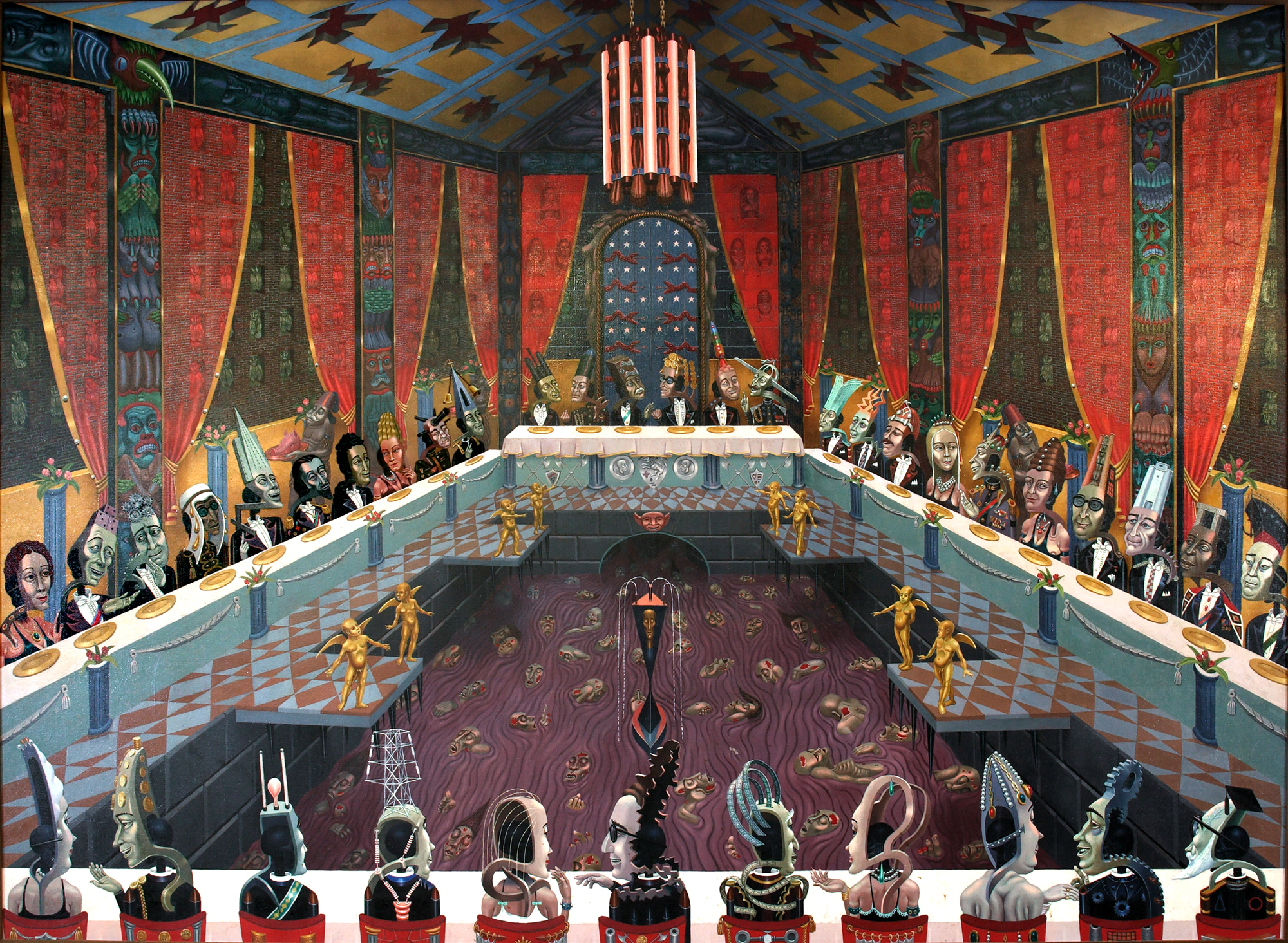
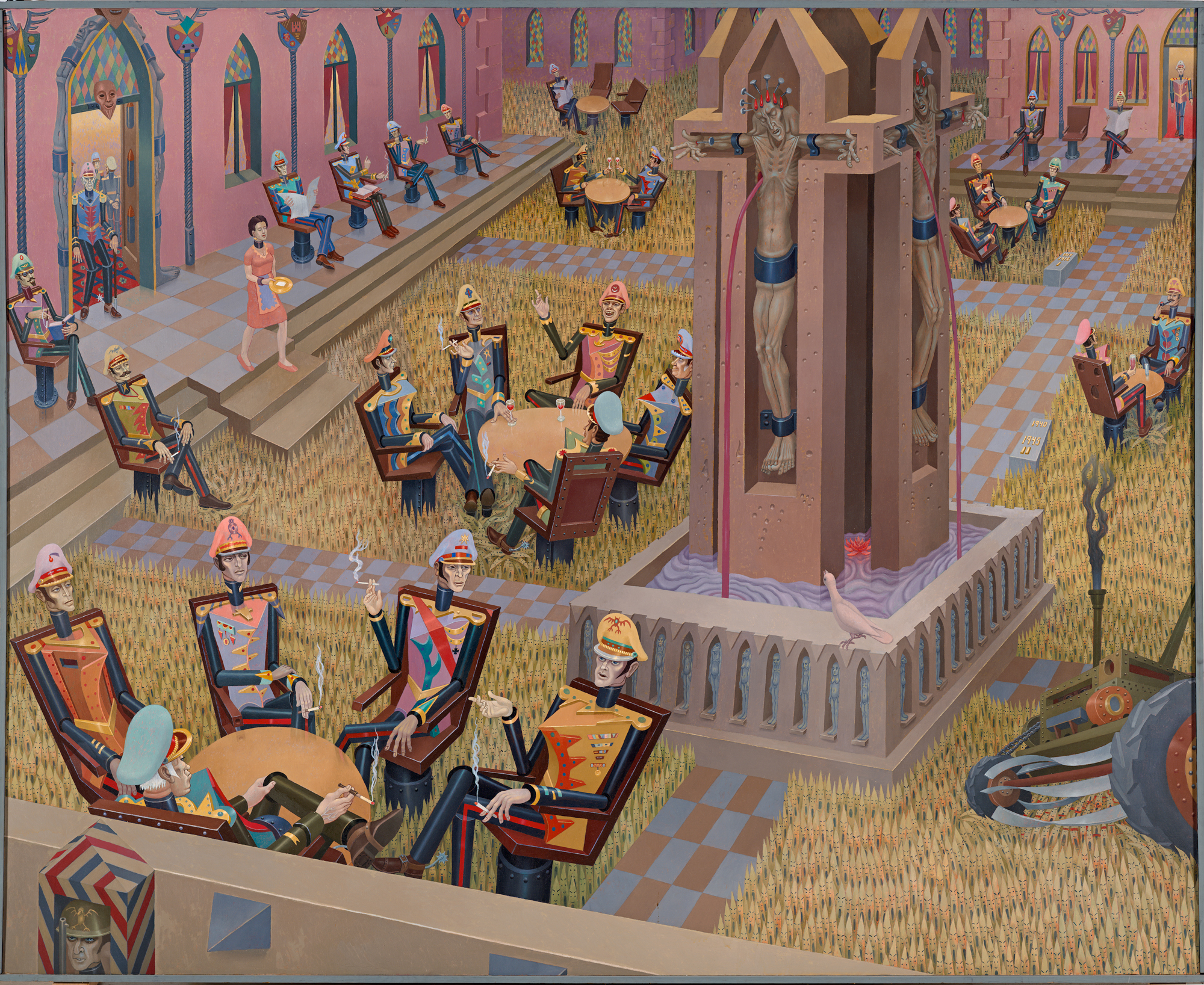
There’s no hiding from Irving Norman’s point of view. His monumental canvases, some measuring 10 feet tall, are filled with hundreds of distorted bodies — people subjected to the horrors of industrialism, consumerism, imprisonment and war. The cumulative effect of his work is overwhelming, relentless. In one painting, even the blades of grass have faces, screaming open-mouthed under the heels of well-dressed military officers.
Irving Norman: Fight for Life, now on view at the San José Museum of Art, includes 13 of Norman’s highly detailed oil paintings, made between 1953 and 1984. Across those decades, Norman’s style remained consistent. The artist, an immigrant to the United States who joined the Abraham Lincoln Brigade to fight fascist forces during the Spanish Civil War, channeled the strength of his beliefs into wholly original social-surrealist paintings.
While he worked steadily, from his first art classes at the California School of Fine Arts (later the San Francisco Art Institute) to the day of his death in 1989, Norman didn’t exhibit widely. This focused survey at the SJMA will be a revelation to many.
Born Isaac Noachowitz in 1906 in Vilna, Poland (now Vilnius, Lithuania), Norman’s childhood was marked by antisemitism, poverty, successive military occupations and famine. He worked as a barber after immigrating to the U.S. at age 17, and got involved in leftist politics. In 1938 he answered the Communist Party’s call to fight in Spain, where he served as a machine gunner. He did not expect to survive the experience.
“After the war, I wanted to go to a monastery, one of those where you can’t talk, just so I wouldn’t have to discuss what I saw,” he said in a 1975 interview. “I learned how any side, right or left, can be unbelievably cruel.”
Back in the U.S., living a life he nearly lost, Norman decided to devote himself to painting. Fight for Life displays the results of this dedication. His compositions are complex, filled with the kind of interlocking shapes M.C. Escher might admire. He had a sophisticated sense of color — balancing sickly greens and fleshy pinks to create rich, cohesive spaces. His architecture is enormous, the people tiny. Drama fills every scene.
In American Street Scene, a dizzying painting from 1961, bodies angle dramatically away from each other. No one makes eye contact, no one interacts. Everyone consumes alone, unaware they’re in the same, chaotic, advertisement-filled world.
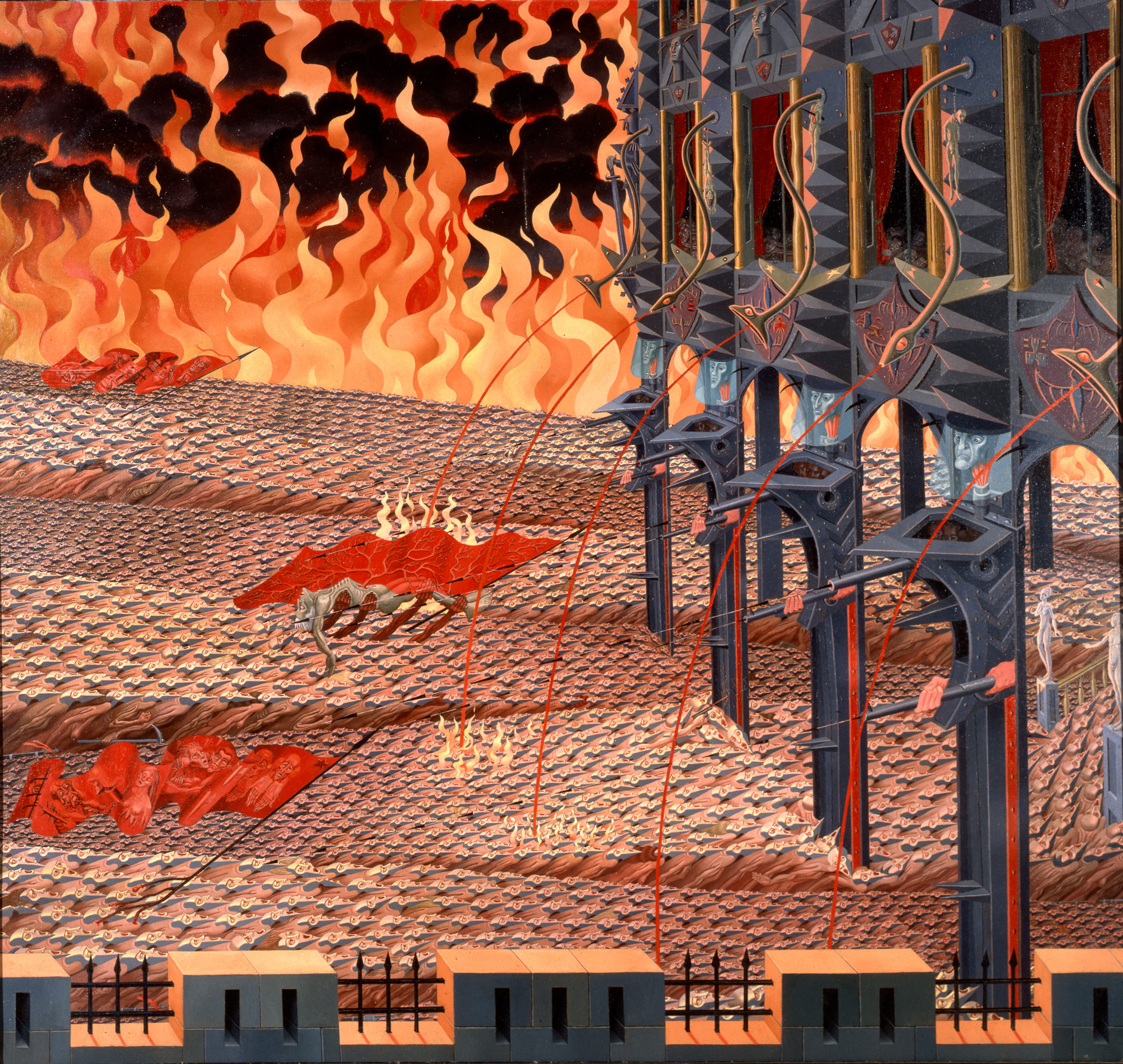
Norman used repetition to emphasize the scale of the systems he depicted — and the numbers it might take to overturn them. In Rebellions and Revolutions (1970), marching crowds carrying red banners advance towards a fortified structure, flames rising in the background. He painted the scene the same year the Ohio National Guard shot and killed four students during anti-war protests at Kent State.
Bureaucrats and high-ranking military personnel routinely appear monumental in size, dwarfing their armies. Norman often rendered those in power spikily, like hard-bodied robots draped in finery, while he painted the masses naked, hairless, their bodies twisted and packed together. The apparatus of war confines men into a box in Drafted (1979). A society of scoliosis patients dines on an endless ribbon-like counter in Bacchanal (1954).
Norman’s paintings are aggressively anti-commercial, and stylistically not of their time. While the popular artists of his era were working in abstraction, Norman was committed to figuration, to depicting the human cost of extractive systems.
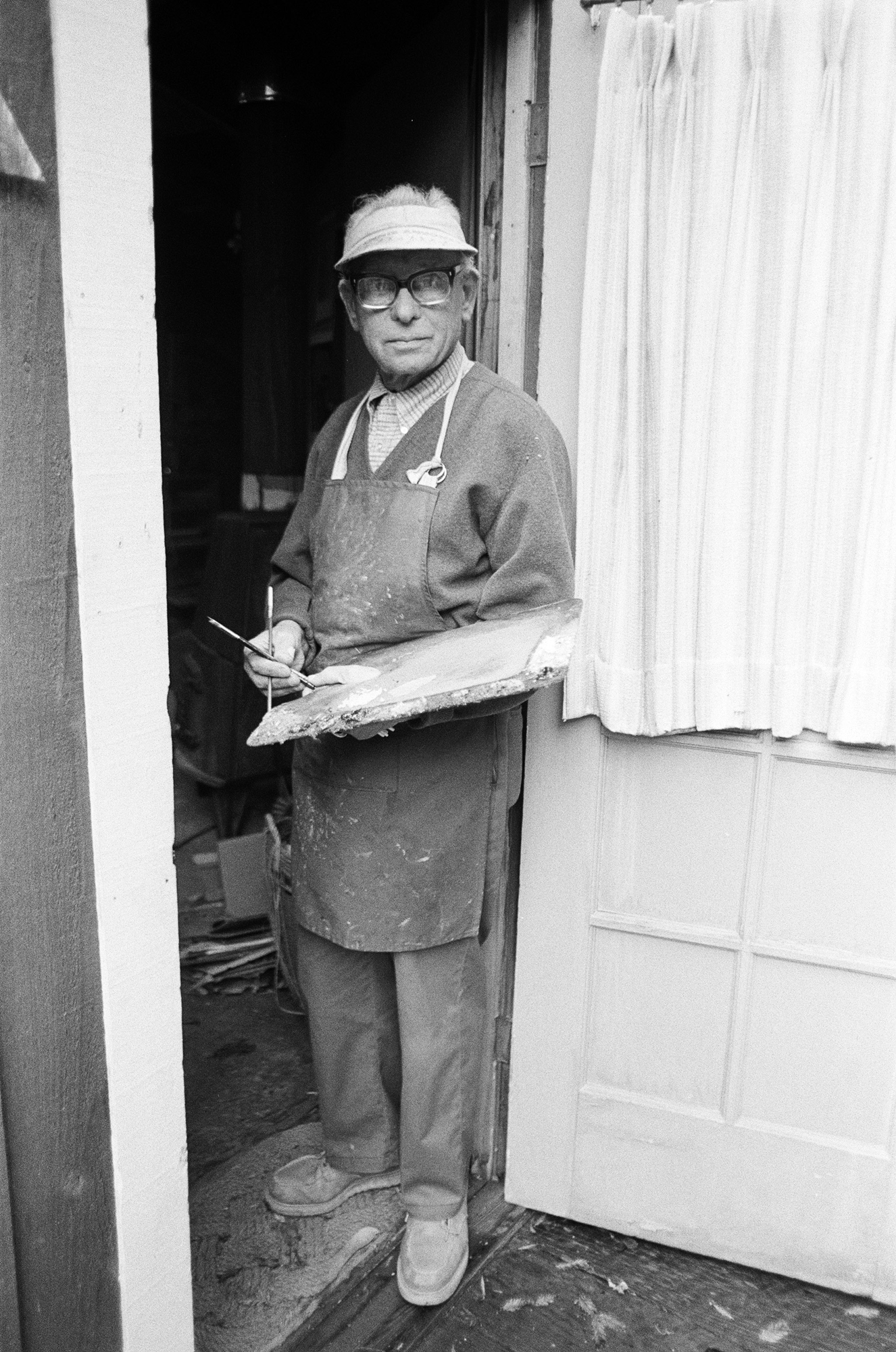
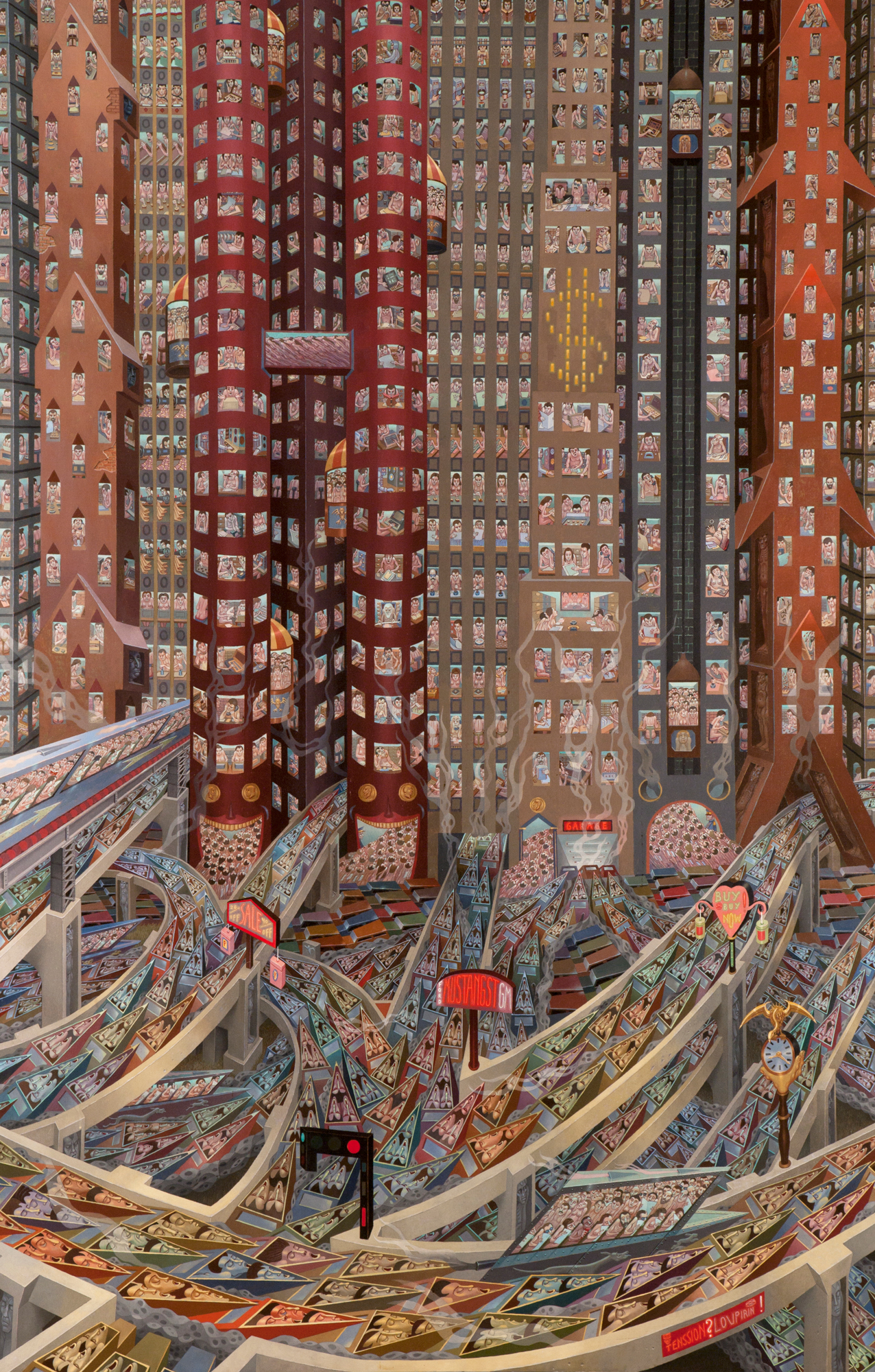
And yet his paintings teem with humanity; they are full of crowds, banquets, dense city scenes. Yet he lived apart from all that. Norman moved to Half Moon Bay in the early 1960s, where he worked out of a home studio. His wife Hela tended to a stunning garden on the property.
With their scale, density and the intense subject matter, Norman’s paintings are meant to be seen in public space. They should hang where our mayors, supervisors or town councils meet. Where our social safety nets are cut. Where wars are started.
For his early involvement with the Communist Party, Norman was subject to over 20 years of FBI surveillance. A vitrine in Fight for Life includes a number of reports on his activities, including from his mail carrier. One 1956 report reads: “The subject is an extremely morbid individual.” Of his paintings: “All … seemed to carry the primary thesis of horror and fear.”
But to Norman, there was hope in the depiction of the realities ignored by so many. “If you understand the way things are, you can do something,” he said in that 1975 interview. “I try to make people more humane.”
‘Irving Norman: Fight for Life’ is on view at the San José Museum of Art (110 South Market St.) through May 9, 2027.