How Oakland’s Black Rock Climbers Find Each Other on the Crag
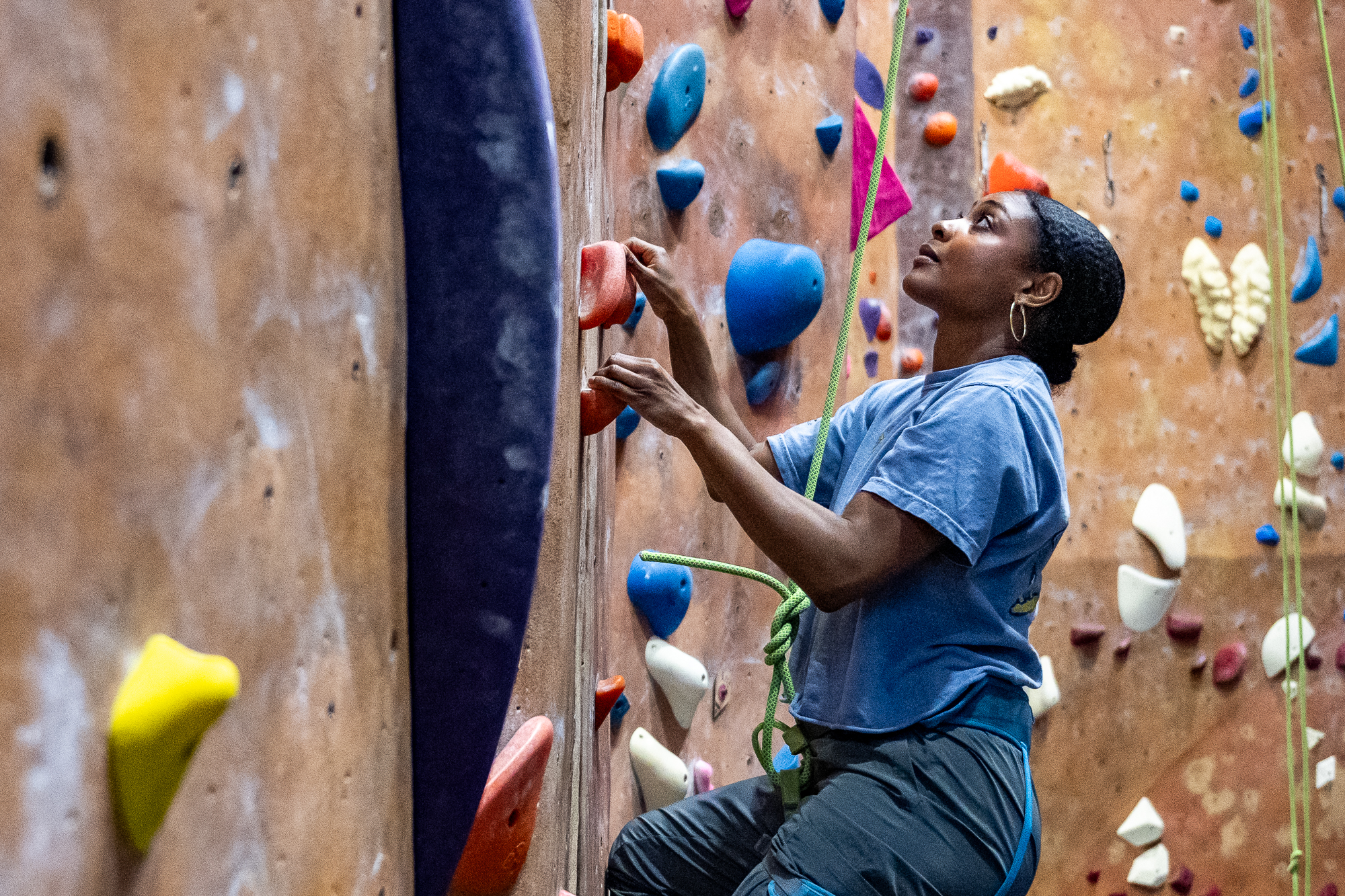
This story is part of Finding Your People, a series celebrating the Bay Area’s meetups and subcultures that bring people together IRL in an increasingly online world.
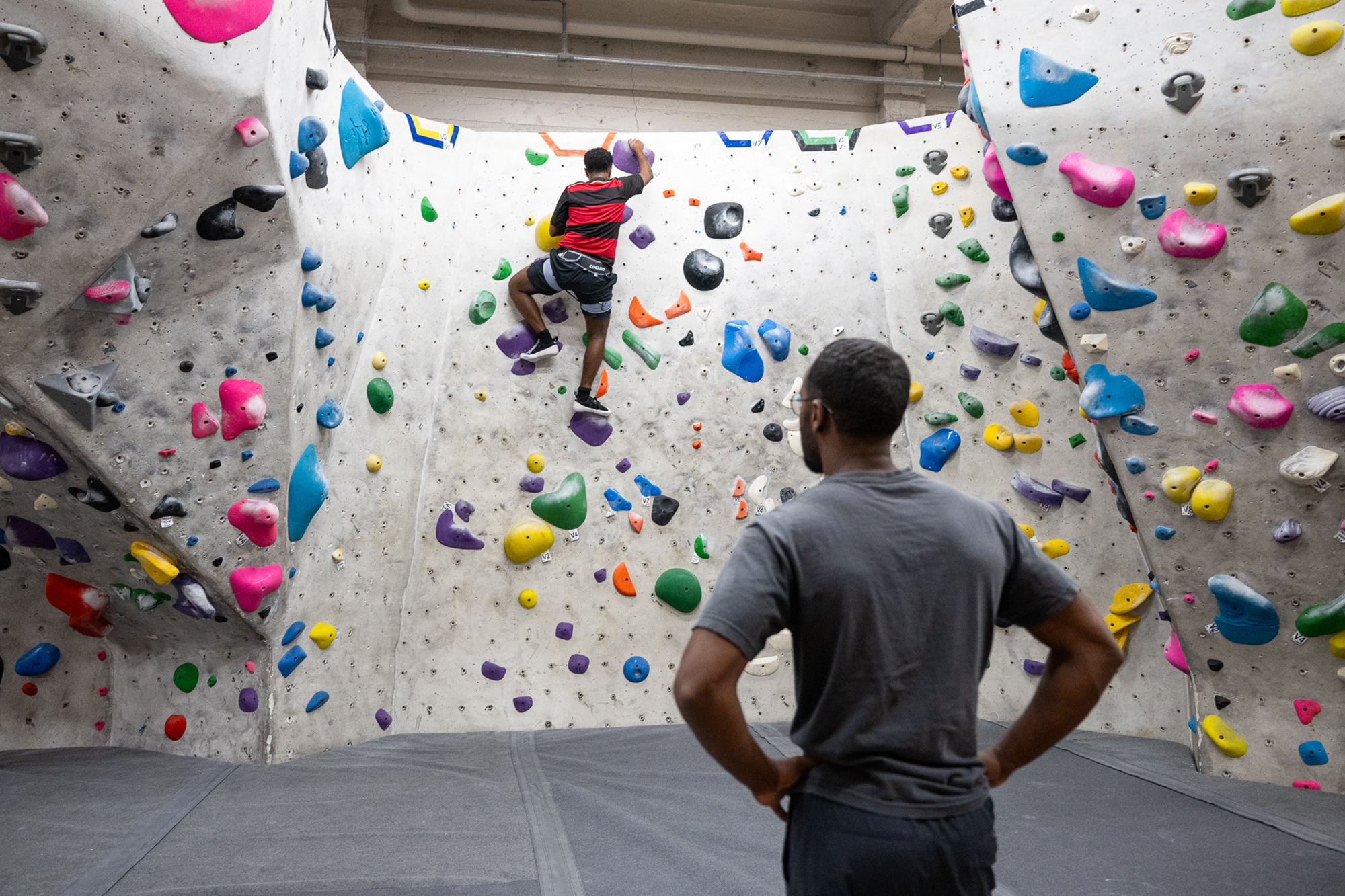
On a recent Thursday evening, about a dozen rock climbers gather inside a hulking industrial building in downtown Oakland to try their hand at defying gravity.
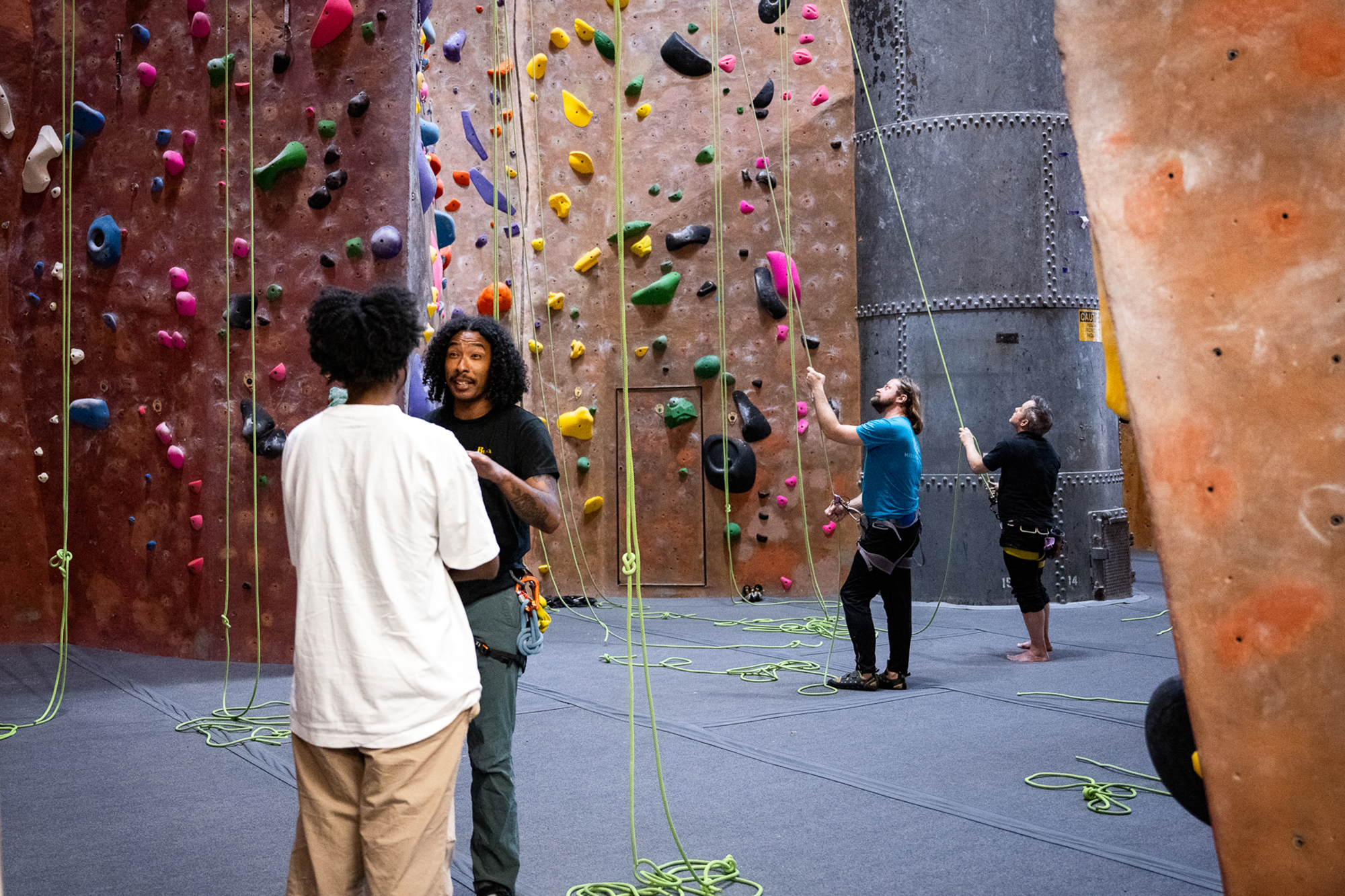
Named after the steam power plant that used to occupy the space, the Great Western Power Company is an 11,000-square-foot climbing gym. The members of the Black Rock Collective fit right in among the fitness buffs and amateur daredevils who spend their days climbing plastic rocks as high as 30 or 40 feet.
The one thing that sets them apart? The Black Rock climbers are outliers in what is, at least in the United States, an overwhelmingly white sport and hobby.
Ahmed Nour, a 26-year-old relative newcomer to the sport, sums it up bluntly: “There just aren’t a lot of Black people who climb.”
The numbers bear this out. While there’s little formal scholarship on issues of diversity in rock climbing, USA Climbing, the sport’s national governing body, reported in its 2023 internal diversity scorecard that only about 22% of its nearly 25,000-plus dues-paying members were people of color. Meanwhile, existing surveys on climber demographics peg the percentage of Black climbers much, much lower — typically somewhere between 1 and 1.5%.
For Black Rock Collective founder Brittney Butler, the absence of other Black climbers felt extremely isolating. She’d fallen in love with the sport back in 2020, climbing outdoors with her now-husband at Lover’s Leap and Donner Summit, near Tahoe, during the thick of the pandemic. But even as she thrived on the physical challenges of the sport, she couldn’t help but notice that she was always the only Black person out there on the crag.
There are few activities where you feel as exposed as you do when you’re rock climbing, Butler explains. “[I’m] up on a rope doing something really hard, and there are a lot of white people looking at me right now,” she remembers thinking. She’d never experienced the uncomfortable sensation of so many eyes on her at once — though “grad school was like that a little bit,” she says, laughing. “It was hard for me to be perceived so much.”
In the end, she decided, “I want to be perceived by people I feel comfortable with.”
Back home in Oakland, Butler went to Pacific Pipe, the largest climbing gym in North America, and asked if they’d be willing to host an event for Black climbers. She put up flyers and advertised on Instagram. And as it turned out, there were other Black climbers (and folks who were at least climbing-curious) in the Bay Area. They just hadn’t found each other yet. About 30 people showed up to the Black Rock Collective’s first meetup in December 2021 — more than Butler had dared to hope. A woman came and served Jamaican food, and over time, Butler and her collaborators were able to set up a fund for participants who couldn’t afford rental gear or a day pass at the gym.
Butler wound up moving to Arizona, but the community she built continues to thrive. These days, Black Rock hosts at least two climbing meetups every month and recently hosted its second-ever outdoor climbing expedition for Juneteenth.
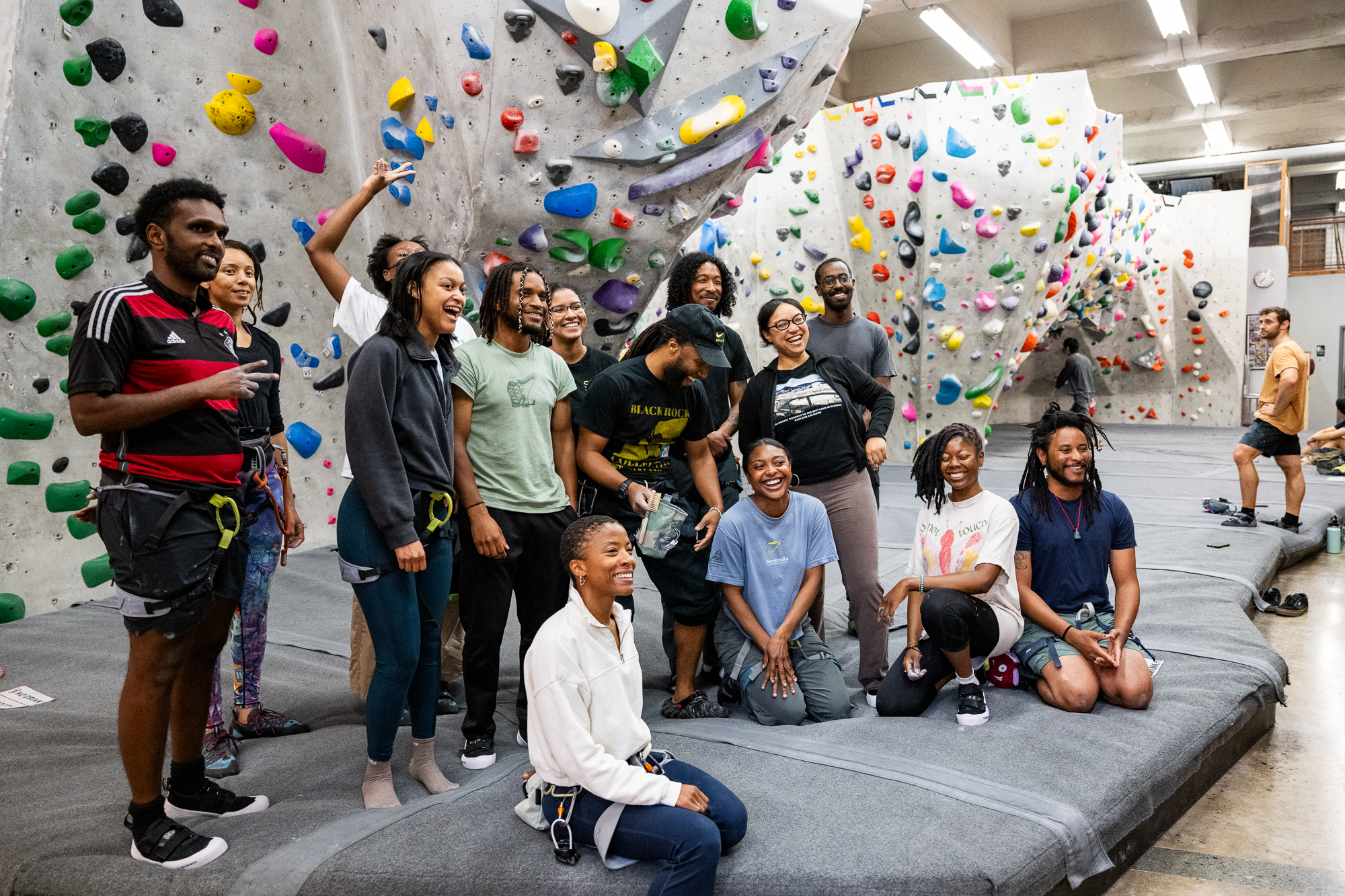
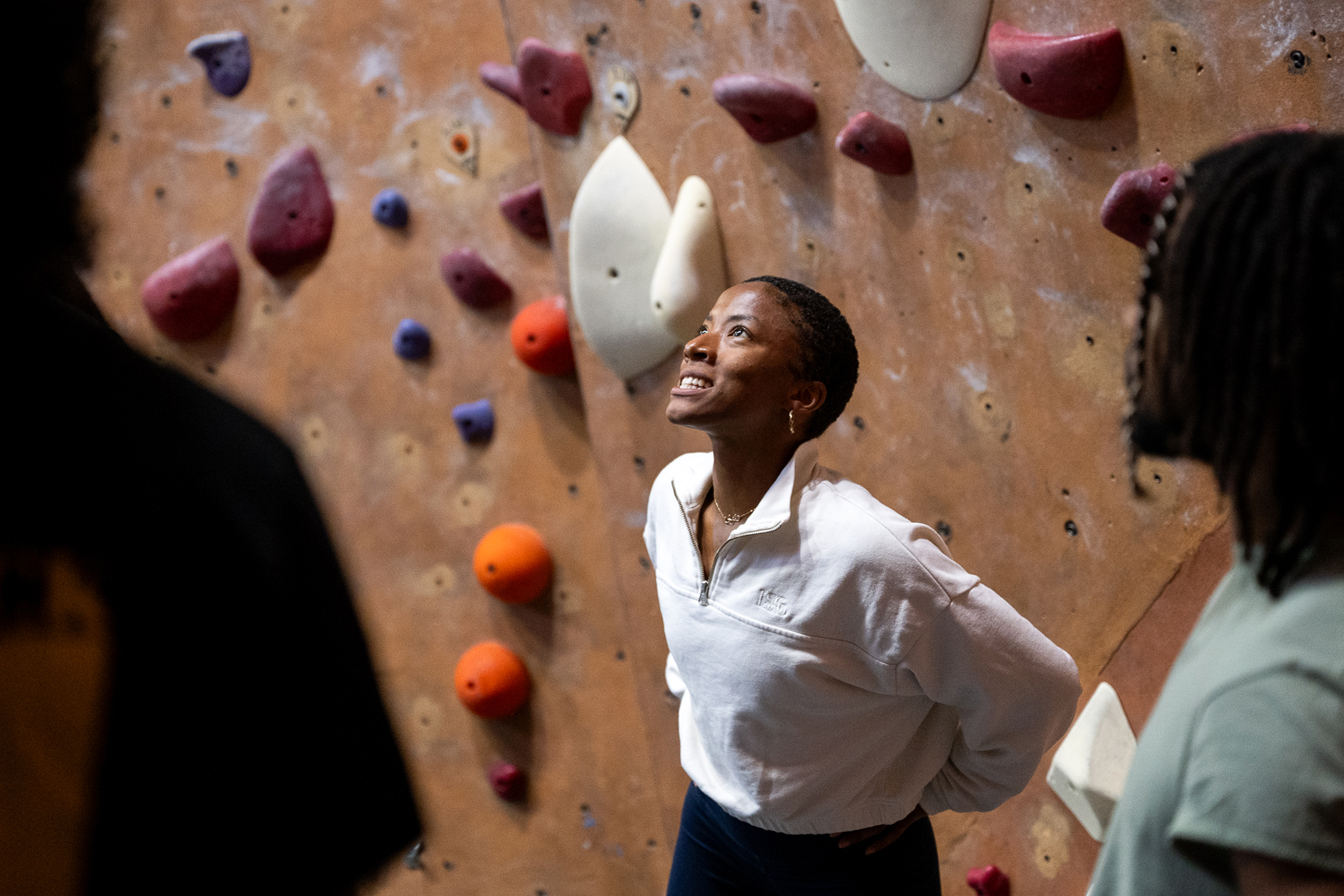
Based on the crowd at the Great Western event in May, you’d never guess that rock climbing has any kind of diversity problem. About two-thirds of the climbers at the gym that night are Black or brown, and if this was your first exposure to rock climbing, you’d come away thinking that it is very much a Black sport.
“The energy that I get from the group when I’m stuck [on a climb] is always beautiful,” says Taqwa, an experienced climber who comes for Black Rock Collective’s intimate, supportive vibe.
Then there’s Philip Lang (aka Philip Bank$), a rapper and nonprofit worker who is the main organizer of the Black Rock Collective’s Great Western meetups. Lang says he’s never experienced overt racism at Bay Area climbing gyms — if anything, the climbing community is famous for how friendly it is. But the lack of a strong Black presence means there’s a cultural barrier.
“If you go into the gym [for the first time], you’re going to feel hella awkward,” Lang says.
Where do you get the chalky powder that you see everyone applying to their hands? What’s the etiquette for climbing a route when someone else is already on the wall? What do you do with your hair if you have long braids or locs?
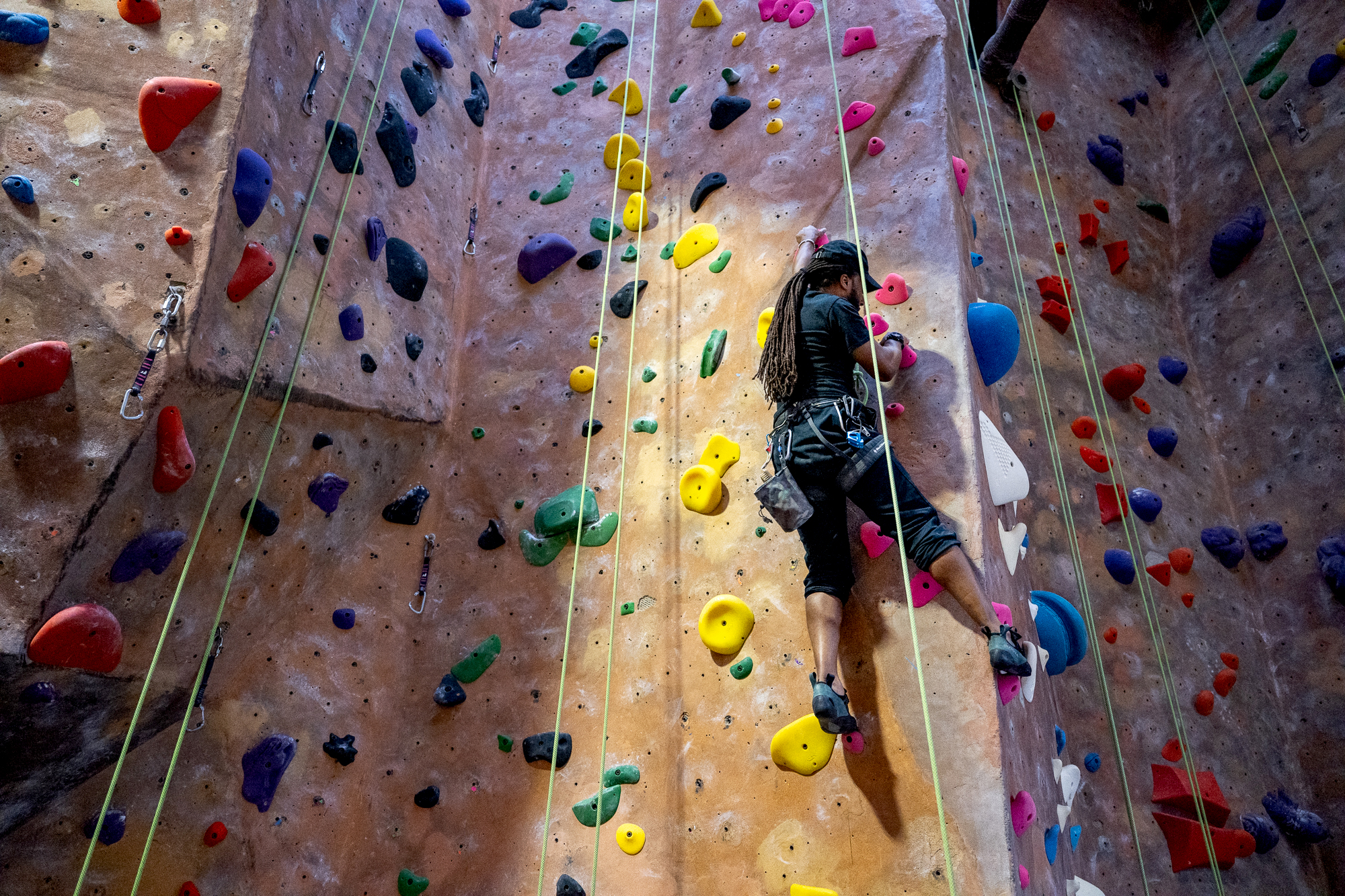
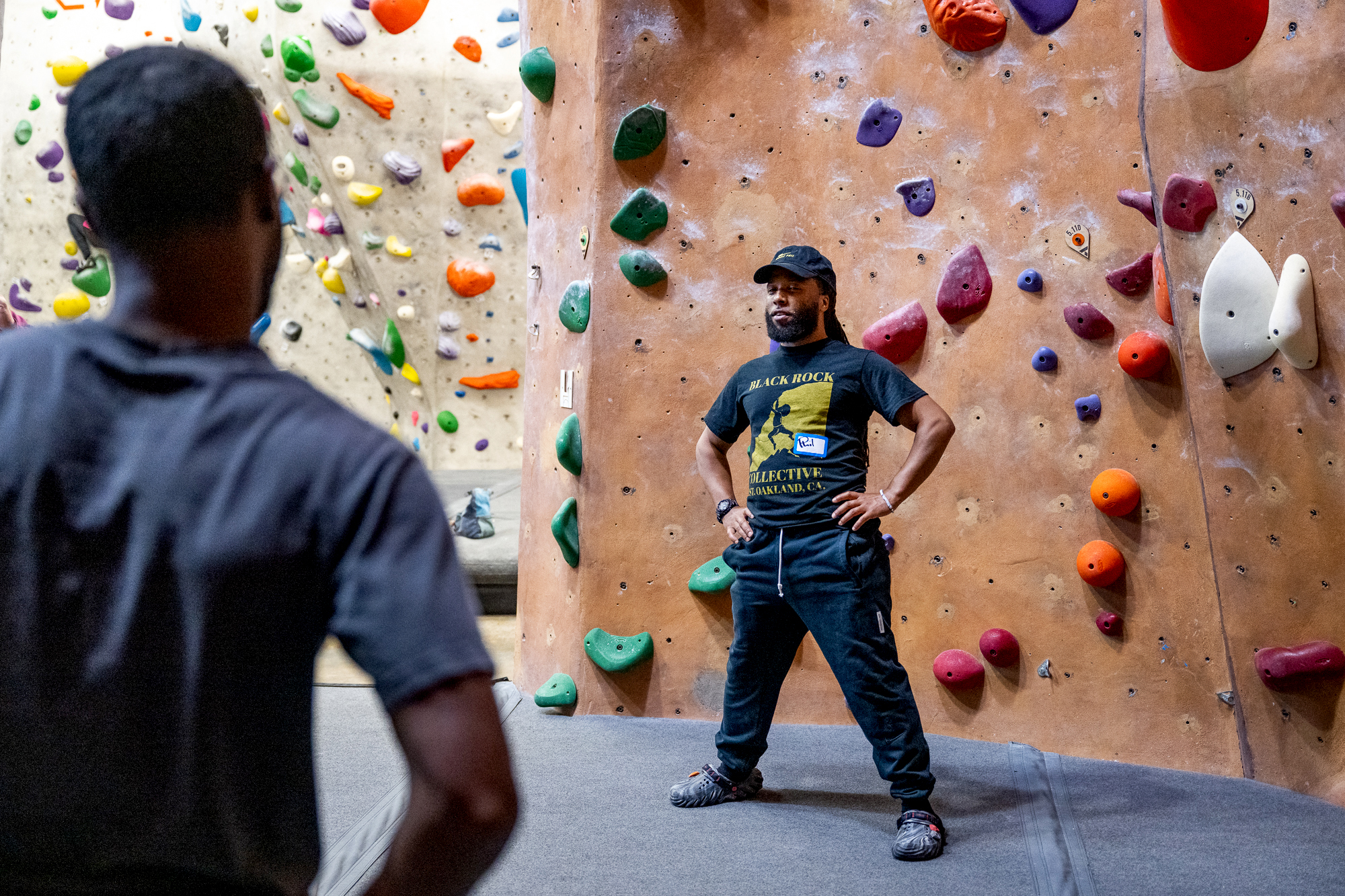
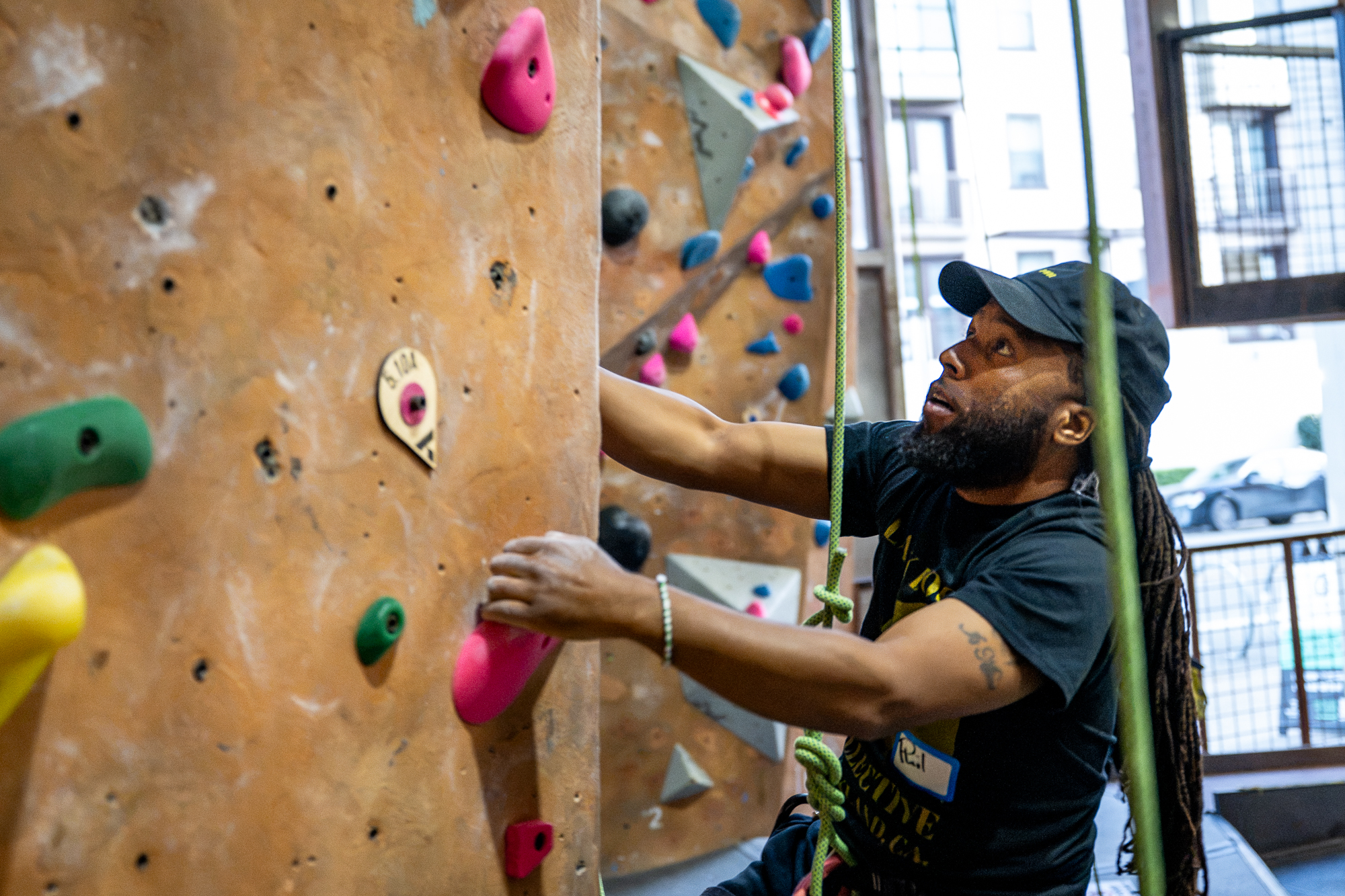
“Everything in climbing is a cultural interaction, and all these little unspoken cultural rules aren’t written down,” he explains. “And being Black also has unspoken rules. So I’m able to be that liaison between Black culture and climbing culture.”
At a recent meetup, he recalls, there was a Black woman climbing for the first time who felt nervous about her long nails. His advice? She should try top-rope climbing, which would be less stressful on her manicure than trying to support her entire body weight on the steeply angled bouldering walls.
“We’re providing that initial catalyst for starting this cultural journey,” he says.
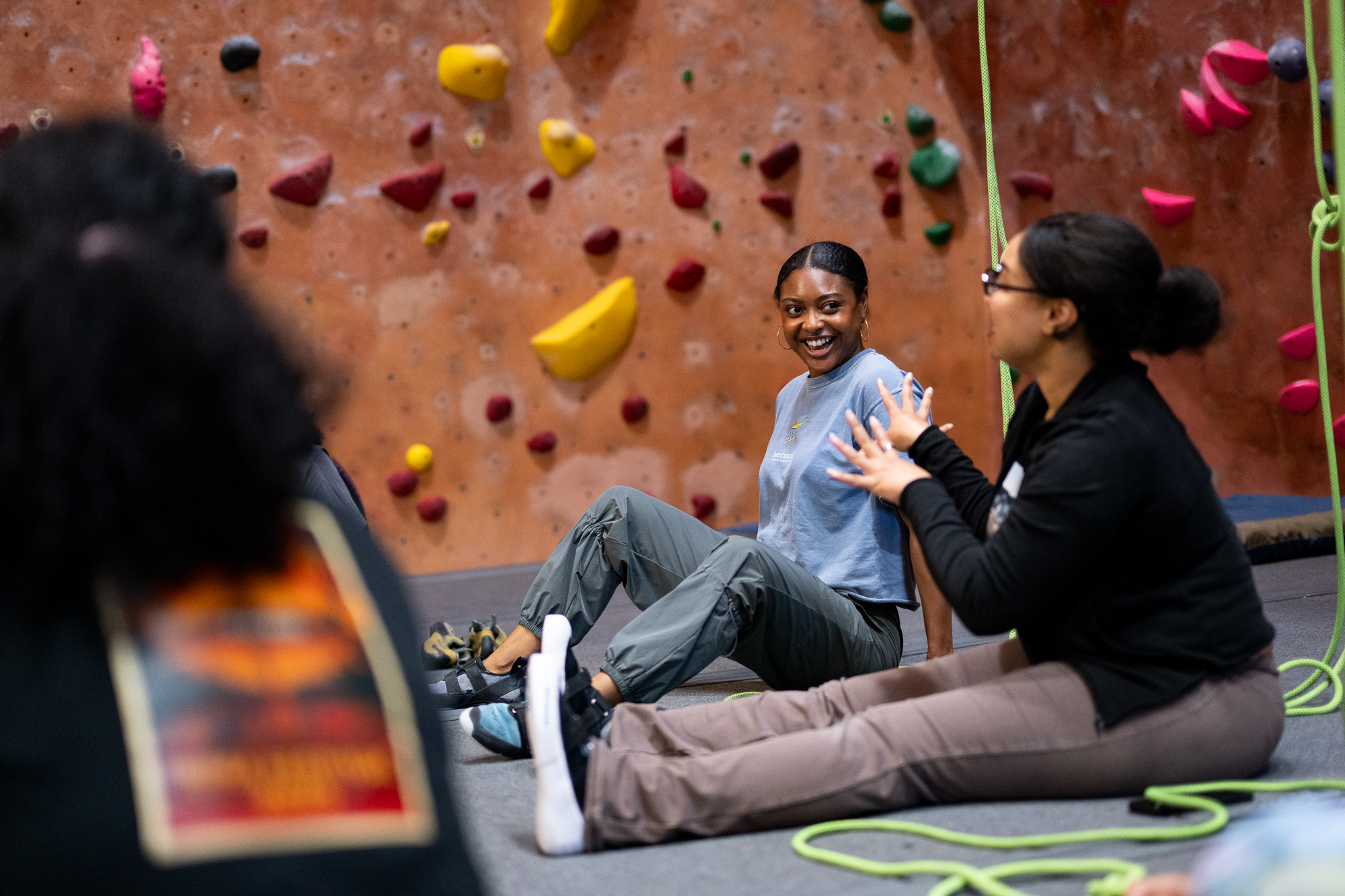
Lang says if climbing is going to become more diverse, changes need to happen at a deeper structural and institutional level. How, for instance, are climbing gyms supposed to be more inclusive of underrepresented communities if they keep raising their prices year after year? It’s good that Touchstone, the company that runs both Great Western and Pacific Pipe, hosts Black Rock meetups twice a month. But Lang thinks it could be doing more. Pacific Pipe is located right in the heart of a historically Black neighborhood, he points out: “They should be partnering with schools in West Oakland.”
Back at Great Western, Marissa Duckett is getting a quick lesson on how to belay from Lang. He’s harnessed to go up the route, and it’s her job to handle the ropes for him, safely “spotting” him in case he falls. Up and up he goes, and afterwards, Duckett is positively beaming at having successfully completed the task. It was her first time belaying, she says — a kind of full-circle moment, she explains, since Lang was actually the one who first taught her how to climb at an earlier Black Rock Collective meetup just a few months ago.
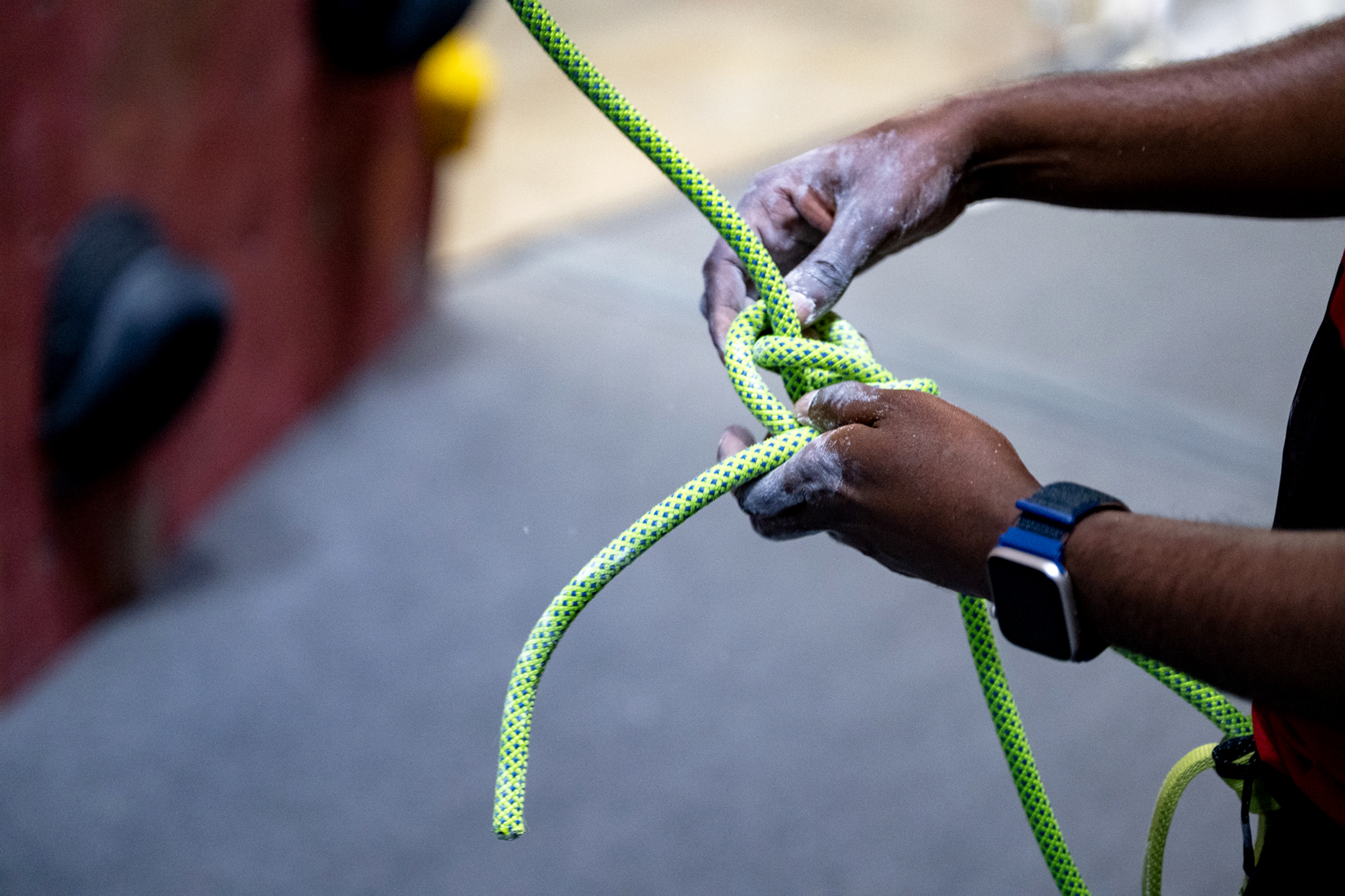
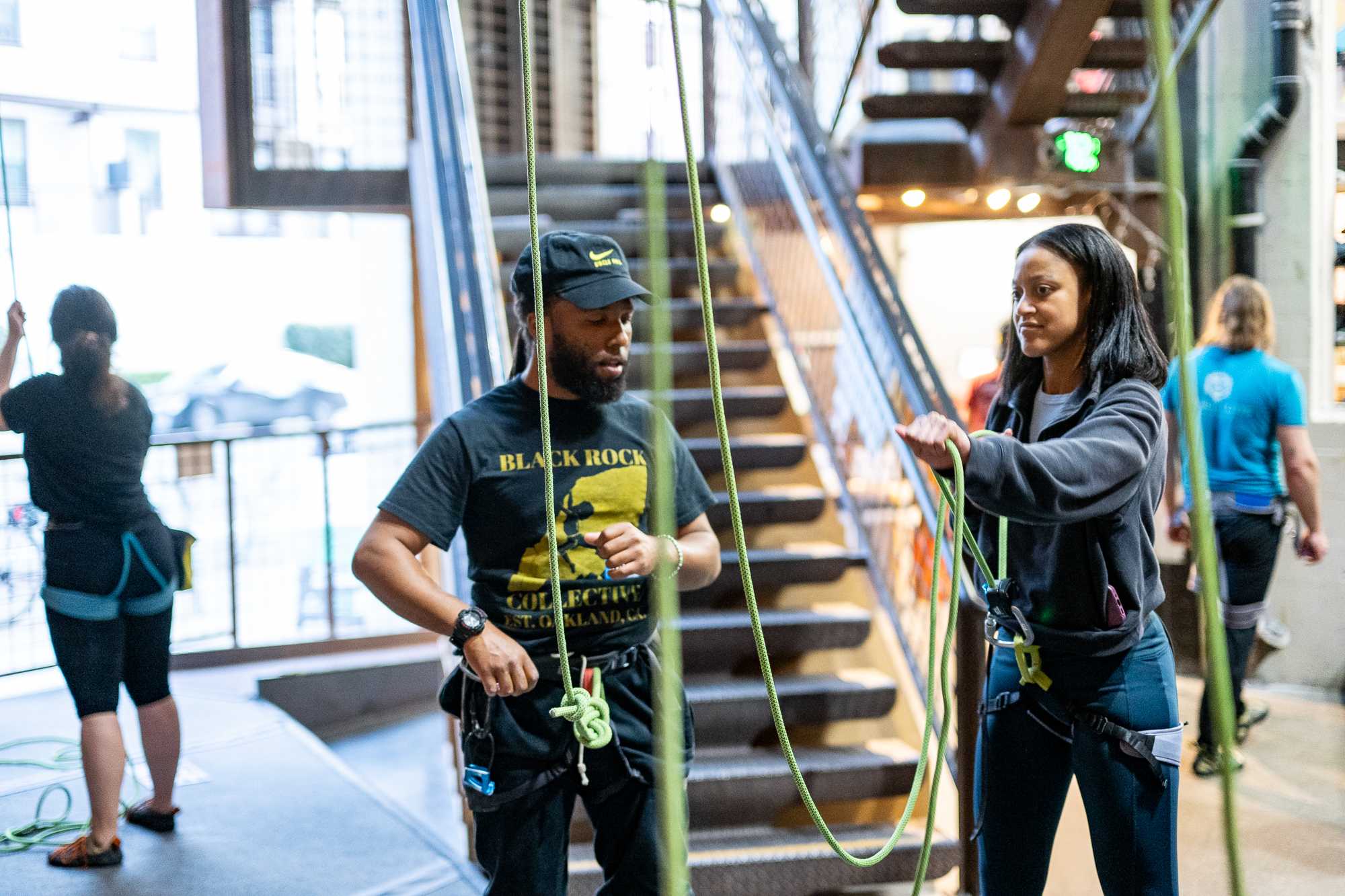
“They’re so welcoming,” she says of the group. “Phil has such a happy spirit to him. Every time you meet him, it’s like he’s known you for a while.”
Toward the end of the evening, someone brings out a big tray of Mexican food for the group to share — birria, chicken tinga, black beans and rice. And as Lang and Duckett stand around eating and chatting about their families, slowly it dawns on them that they’re both talking about the same big family reunion in Oklahoma, the same family seal that they’ve had for generations. And while they haven’t quite figured out the exact connection (maybe it’s through her grandfather, Duckett muses), they are definitely related.
And if that’s not a metaphor for the whole concept behind the Black Rock Collective, I don’t know what is. A chance meetup on a random Thursday, and here they are literally finding family. Finding their people.
The Black Rock Collective hosts regular meetups the first Thursday of every month at Great Western Power Company and the third Thursday of the month at Pacific Pipe. Attendees can sign up in advance online.