How Bay Area Artists Foster Belonging in Unexpected Spaces
The San Francisco skyline glitters across the Bay — a miraculous angle I’ve never seen it from until I step onto the deck of artist Yiming Clara’s Berkeley apartment. Bustling in and out of the apartment, which doubles as the exhibition space 202019: Occasions, are artists, friends, writers and students from across the water or down the street.
To cut through the Bay Area’s high cost of living, artists have learned to carve out exhibition spaces where they can. Apartment or studio galleries, unconventional displays, or fully plein-air roving projects all thread into the DNA of the region’s art scene. Dimitri Grachis’ Spatsa Gallery (in a one-car garage off Fillmore, 1957–1961), Alberta Mayo’s Manitoba Museum of Finds Art (in the waiting area of the director’s offices at the San Francisco Museum of Modern Art, 1975–1978), and Margaret Tedesco’s 2nd floor projects (in her apartment, 2007–2017) all come to mind, but the list of past and present alternative spaces seems like it could be endless.
Conventional commercial galleries are crucial to an arts ecosystem. They support artist’s careers and bolster aesthetic and intellectual continuity. But breaking these conventions — especially by moving away from brightly lit white-cube spaces — sustains a regional historical discourse, enables critical exploration and keeps the organism of an arts community alive.
Despite a recent wave of institution and gallery closures, grassroots organizing that centers the Bay Area’s artist community itself persists. In this scene, ad-hoc viewing rooms, irregular hours and a near counter-commercial air enable artists’ growth and experimentation. Three spaces operating today, Yiming Clara’s 202019: Occasions, Gui Veloso’s The Attic, and Andrew Berg’s Small Works Projects Gallery follow suit, using their urban backdrops as stages to broaden and connect with their communities in a region in flux.
A meeting of the minds
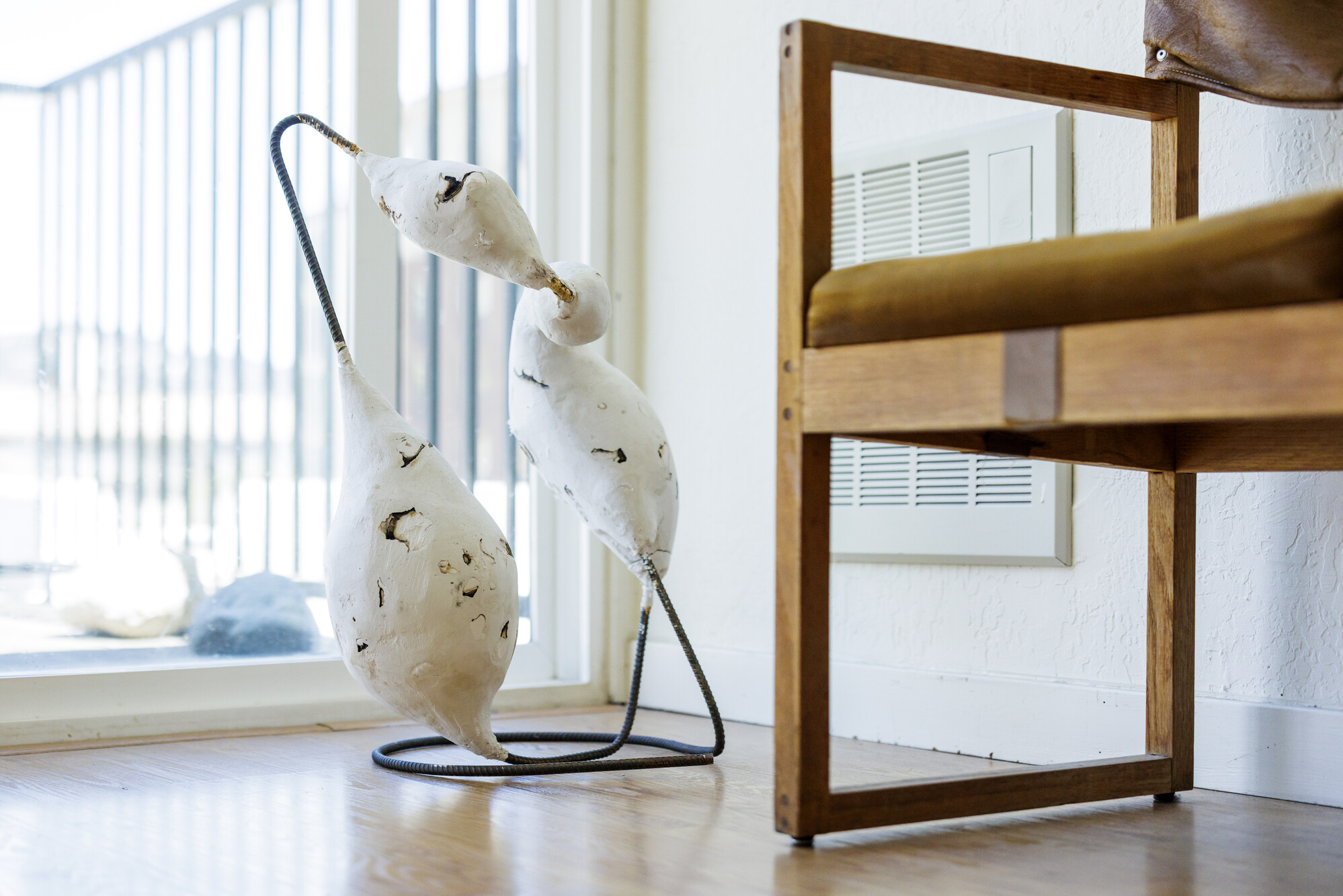
For Yiming Clara, the call to create her own exhibition space was twofold: an “under-saturation,” as she puts it, of conceptually driven alternative spaces available to her locally; and her growing interest in rethinking the role of the artist. She opened 202019: Occasions in December 2025 with The Chair, a group exhibition that predominantly featured text.
“It began with an idea that doesn’t really fit anywhere,” she says, describing how she was deeply inspired by, and wanted to exhibit, the note-annotation practice of her mentor Alejandra Perez Rotondo. Although Perez Rotondo may not have seen her own work as artwork, to Yiming Clara, it was very familiar as an artist’s inquiry.
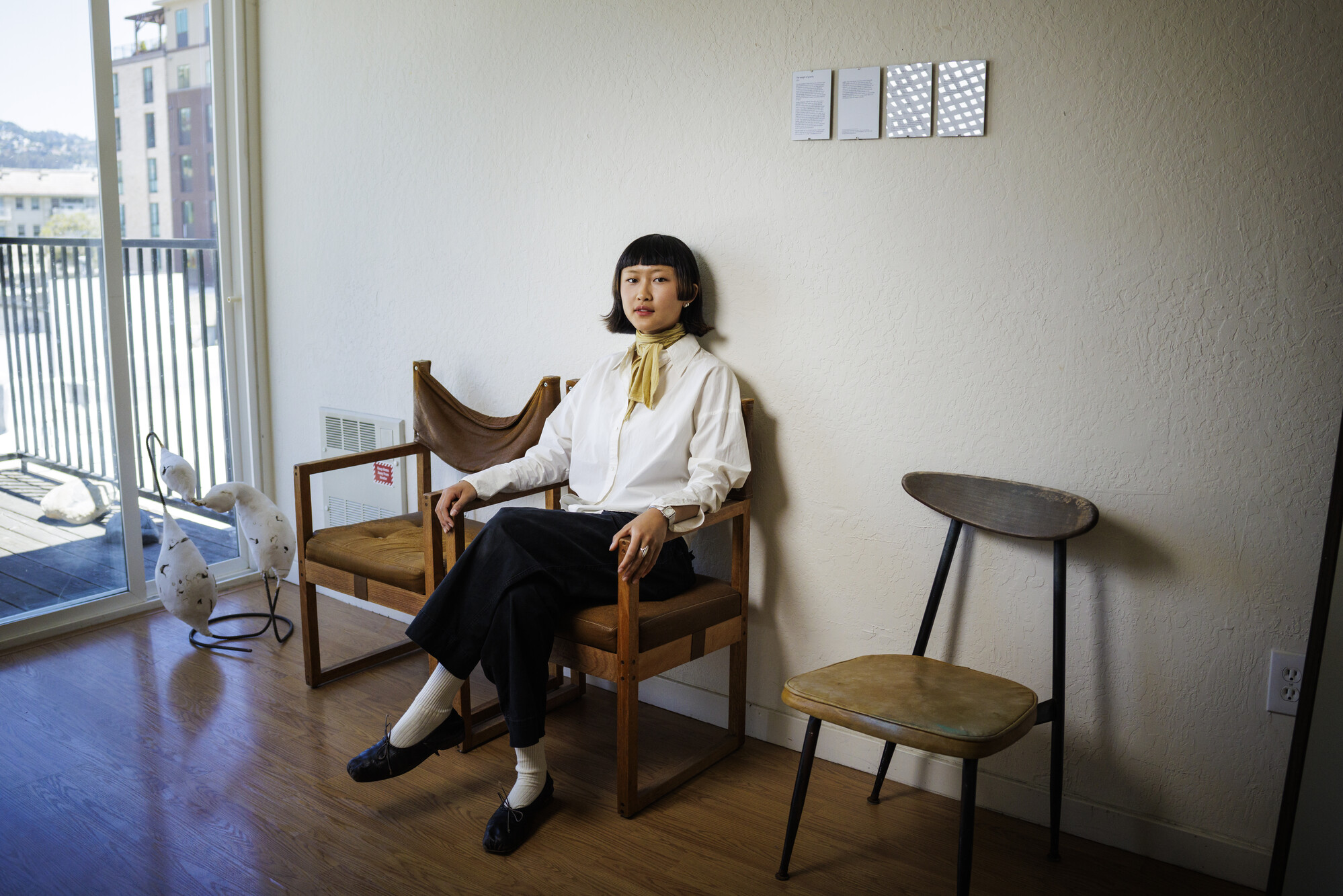
Yiming Clara’s most recent exhibition, Eliot D’Silva’s Realty Principle, played directly with the domestic nature of the gallery by staging an “open house,” complete with a four-channel sound installation, that examined the mythologies of real-estate speculation.
This was the second of a three-part “sonic salon” series titled Speakers Never Learn. The series launched in January 2026 with a reading co-organized with Hyungtae Kim. That first event was dedicated to the late artist Theresa Hak Kyung Cha, and timed to coincide with her retrospective at the Berkeley Art Museum and Pacific Film Archive.
The reading ran from sunrise until 11 a.m. in Yiming Clara’s living space and centered on friendship. Like the collaborations Cha undertook during her own time in Berkeley, the event was a celebration of participatory exhibition-making.
Playing with how an exhibition space can upend traditional expectations of authorship, interactivity and even viewing hours has also given Yiming Clara a greater understanding of her own role as a developing artist. Growing up as the daughter of architects, she has long been interested in how spaces create the conditions for all kinds of social, spiritual or relational possibilities. One question central to her project is: what are the conditions that determine someone is an artist? She wonders if 202019: Occasions can act as research for artistic development, allowing for all types of people, and a multiplicity of approaches and work, to inhabit the role of artist.
Using what we already have
Sharing Yiming Clara’s impulse to explore how unexpected spaces can generate artistic community, Gui Veloso noticed that the attic of his workplace was sitting empty. (Veloso heads communications and community partnerships for 500 Capp Street, the home of the late artist David Ireland.) Ireland himself added the attic to the house; it’s where his children and grandchildren would camp out when visiting.
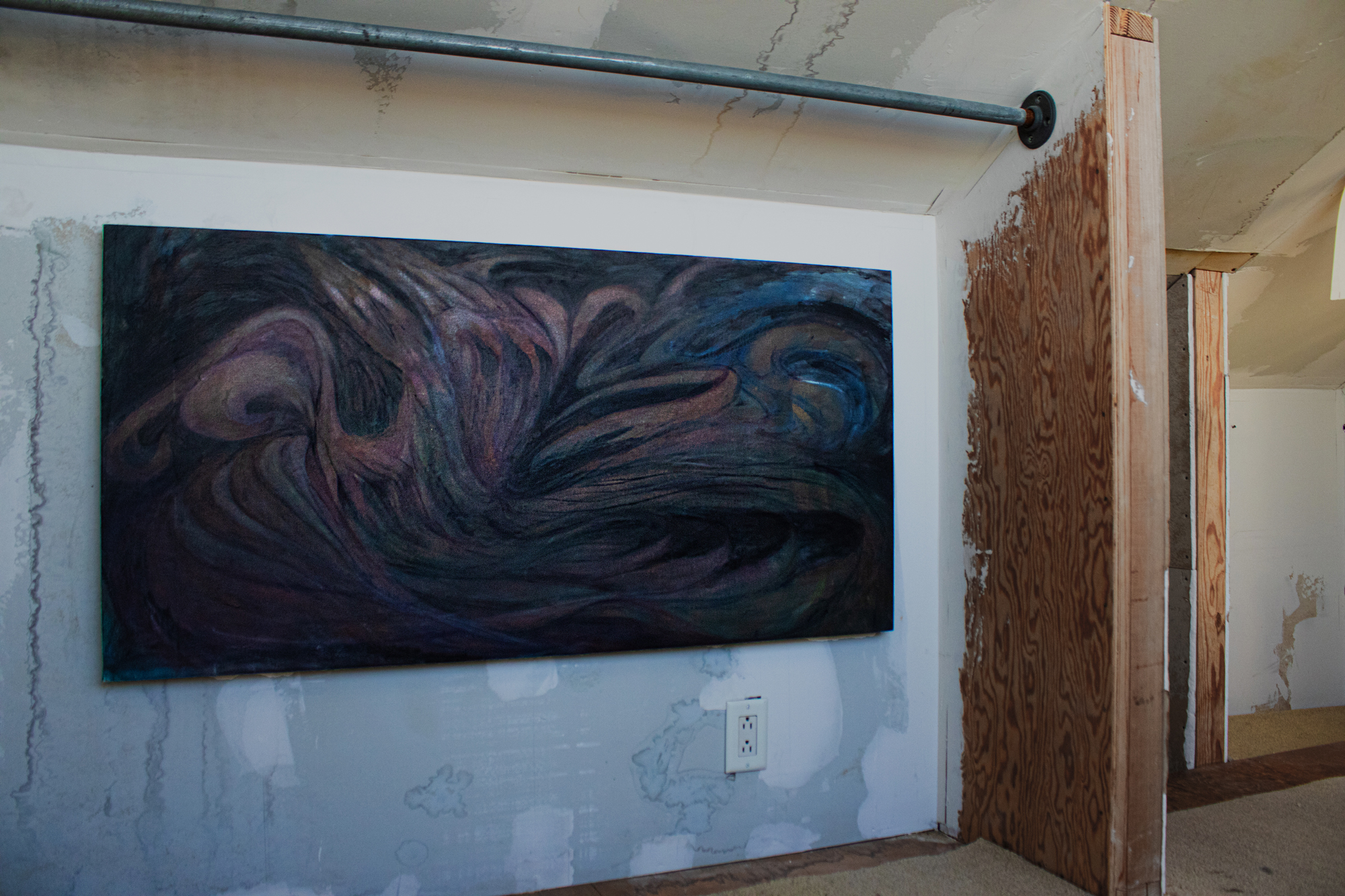
While some artists have made use of the space — David Wilson exhibited a sound work in the attic in 2021, and Virginia Overton installed work there in 2017 — it’s rough, not easy to access, and tucked away amid Ireland’s more dramatic interventions in the house.
“It was mostly used for storage after. I would sometimes just come up here and enjoy the silence,” Veloso says as we climb the ladder tucked past the house’s second-story office.
After Veloso helped launch 500 Capp’s Accordion Shop, which sells small works from a rotating cast of artists, he asked if he might be able to host occasional exhibitions of his own in the unused attic. The foundation is already an unconventional space: an artist-altered house that hosts residencies, houses David Ireland’s archive, and mounts regular exhibitions. But The Attic is a further departure — it is not tied to 500 Capp Street programming and is not officially affiliated with the institution.
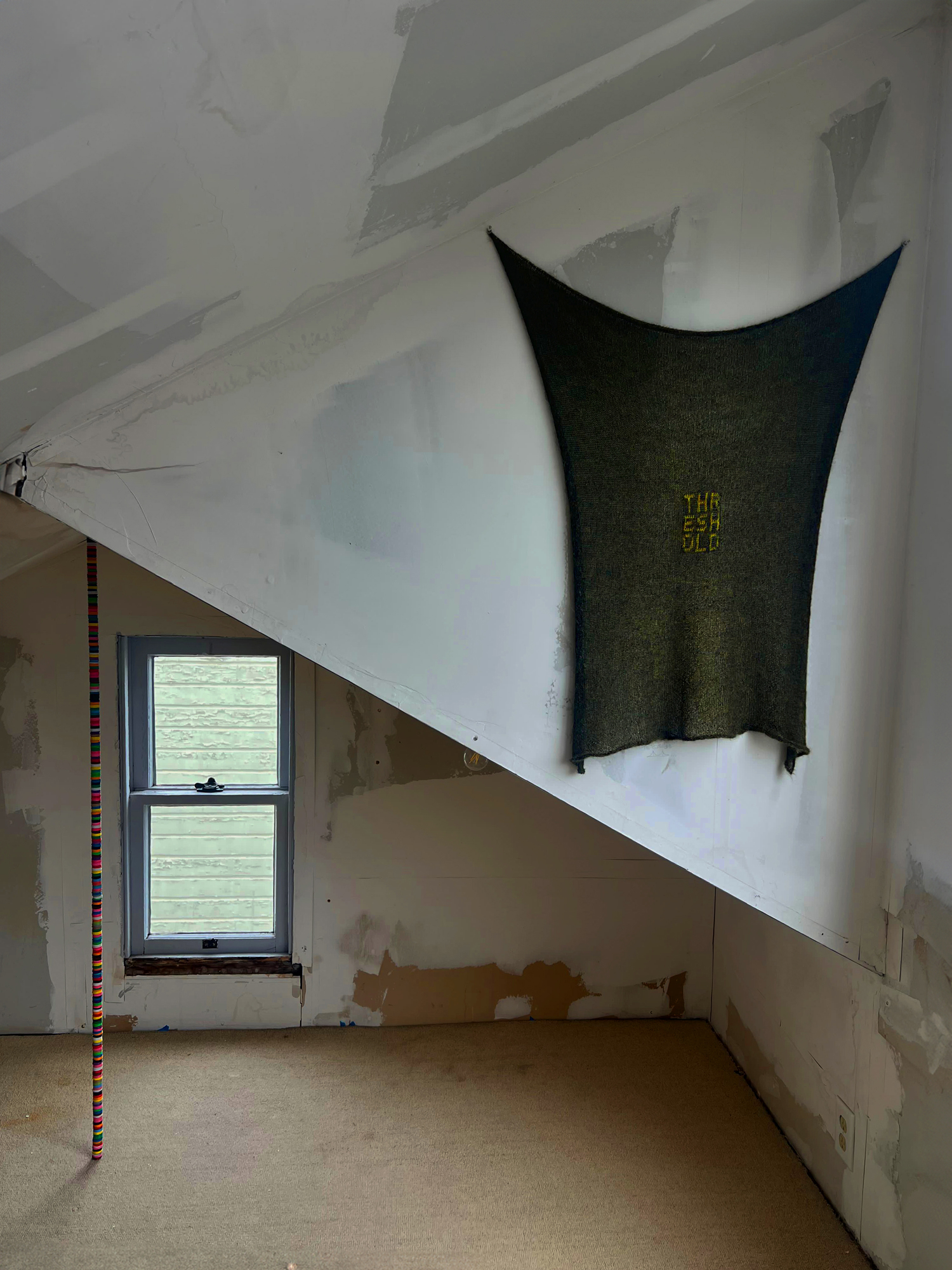
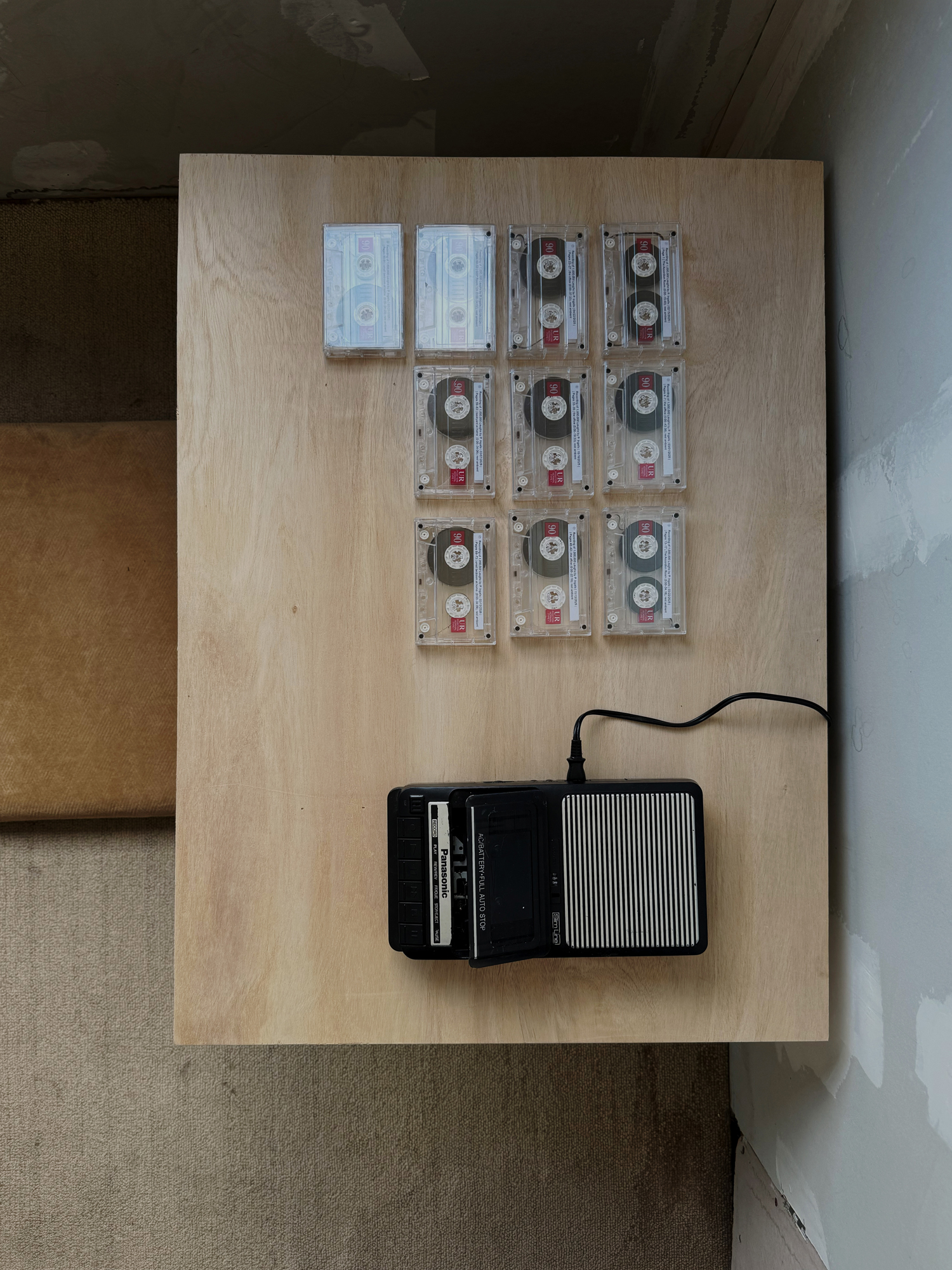
A 1,000,000 Laughs is Veloso’s first program, a group show on view through Sept. 7, 2026. At the April 5 opening, he served coffee and breakfast. People crouched in and out of the unpainted, low-ceilinged room, pressing play on a tape player in the corner that featured Natasha Loewy reading from Peggy Ingalls’ book — “HA” printed one million times. In a forthcoming work for The Attic, artist Beril Or will conduct a 24-hour sleeping performance.
In the Bay Area, the constant economic flux of living and working creates a demand for practicality, often forcing art spaces into a more conservative approach under the auspices of survival. Spaces like The Attic provide safe havens for artists’ growth, experimentation, vulnerability and discovery, without the need for monthly revenue to cover overhead. The added proximity to a slice of Bay Area art history — being situated within an institution — enables Attic artists to see themselves as a part of the greater fabric of the region.
Knowing how hard it can be to live as an artist in this city, this creative project, and the connections it facilitates, is a bridge, Veloso says, “between laughter and whatever comes next.”
Extended spaces
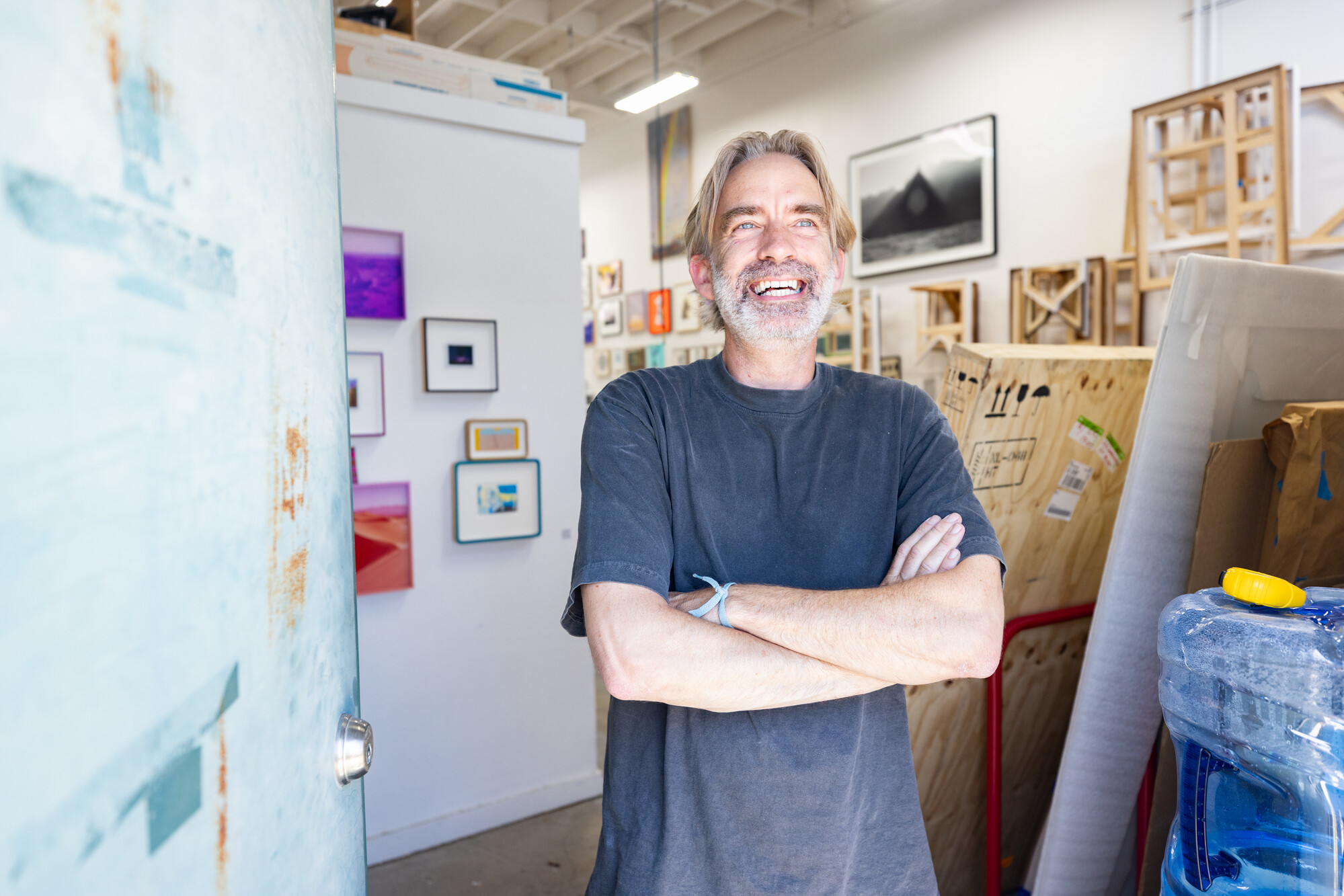
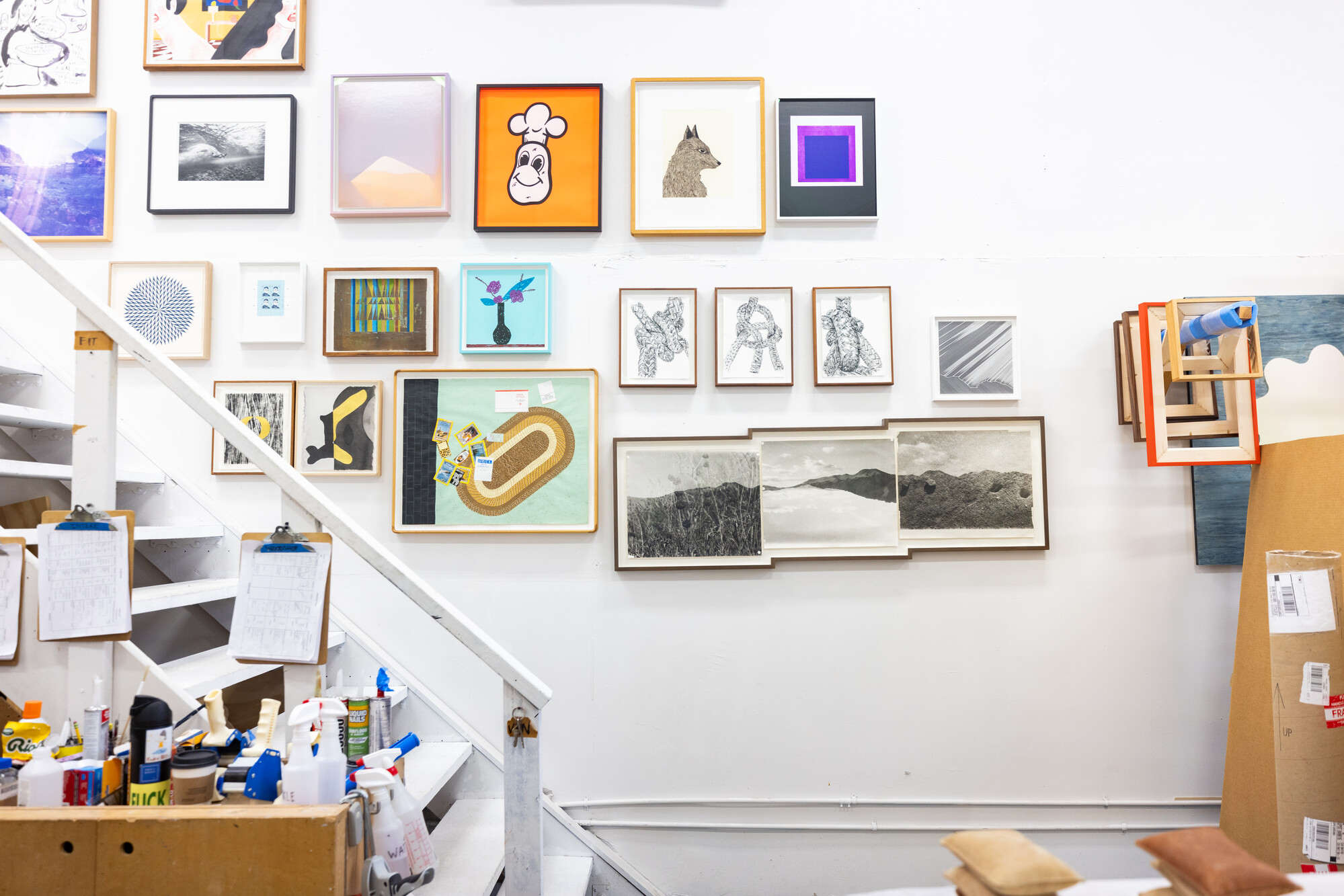
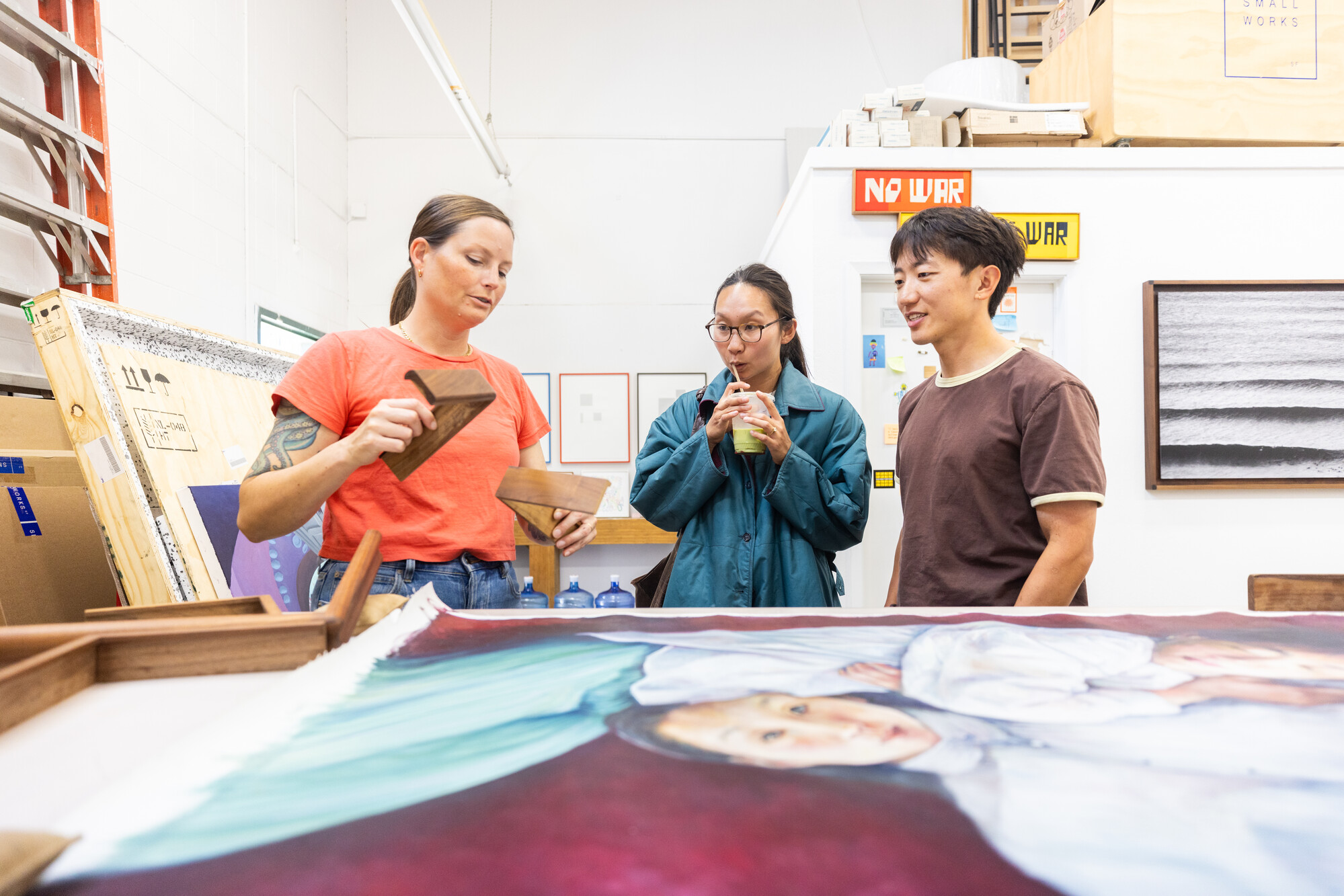
Veloso isn’t alone in carving exhibition space out of a place of work. Andrew Berg opened his bespoke frame shop Small Works in 2012, and moved into his current Potrero Hill location in 2017. When he first began working in the new space, he thought to use the upstairs mezzanine, complete with a balcony, as the shop’s office. But the space proved too hot to work in for long periods of time. Berg listed it online; anyone interested in transforming it could use the space for three months for their own exhibitions.
A group of artists who go by Glue Projects (Annie Artell, Alex Uranga and Lucie Scanlon) answered the call, helping seal off the balcony that looked over the shop, painting and prepping walls and lights for exhibitions, and then programming there, as promised.
Since May 2024 Berg has run the mezzanine as Small Works Projects Gallery, hosting over a dozen exhibitions (including one raucous Summer Open that packed as many artworks into the space as it could hold). He will open his next show, with artist Charlie Callahan, on Aug. 15.
A playful, social, “sense of discovery,” drives the space, Berg says. He loves seeing how artists do their own thing, and interpret Small Works — full of passageways, staircases, holes to peer through, racks of frames and other artwork.
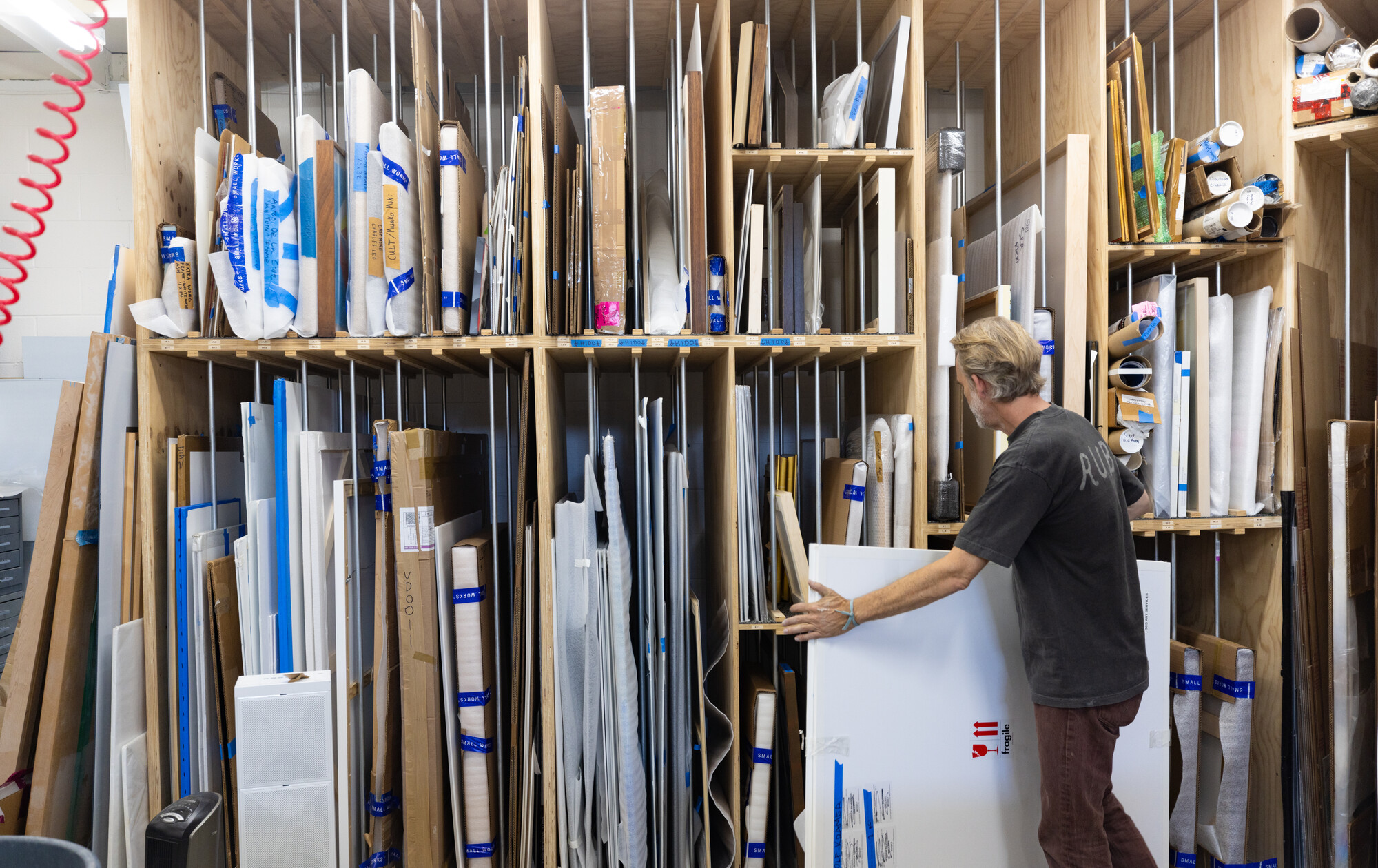
Exhibitions expand far beyond their designated area. In December 2025, the roving programming series The Search held a fashion and arts show atop the very tables Small Works uses for framing. In 2024, the Vallejo residency program Winslow House organized TREE WORK, where artist Olivia Ronan led a performance that progressed from the building’s tree-laden front area through the entirety of the shop.
Small Works throws dance parties, hosts dinners, holds open calls. It’s clear that, to Berg, the “person is everything.” Friendship is soaked deep into the paint and walls of both the gallery and the frame shop.
The greater ecosystem
202019: Occasions, The Attic and Small Works are just some of the latest in a long history of Bay Area alternative spaces. Integrated directly into the fabric of the city by necessity and design, oddly shaped, built by many voices and rarely abiding by set hours or a routine calendar, these spaces provide their communities of artists with proximity, intimacy and a shared language.
Being physically close to people is part of the equation. When I met with Berg to talk about Small Works, he made me a cup of coffee and we sat on the floor of the empty gallery. When I spoke with Veloso, we crawled out the window of the attic and leaned against the roof of David Ireland’s house, watching the fog roll over the hill and settling around Sutro Tower.
Our region is in constant economic and industrial flux. The challenges this brings, in cost and access to space, have built upon artistic practice such that they have begun to feel inseparable, learning and driving social and creative growth as one conjoined architecture. Perhaps they always have been. The organizers of spaces such as these reach towards each other, towards an ecosystem they want to see not just for themselves in isolation, but for all Bay Area artists as a greater whole.
Often, what emerges are thoughtful, playful and rigorous exhibitions that challenge the status quo, producing friendships and a complex ecosystem within the Bay Area arts community — as much as the shows themselves. Art is not separate from the backdrop of our urban realities, it is part and parcel, conspirator and collaborator, always working to close a gap between precarity and belonging.