An Exhibition in San José Asks Visitors to Become Water
Decades of settled science and even cultural consensus haven’t saved us from climate change. Four years after two Just Stop Oil activists threw tomato soup on Vincent Van Gogh’s Sunflowers, their jail sentences have passed and thousands have died in heat waves in Europe. Yet another research paper is unlikely to spur collective action.
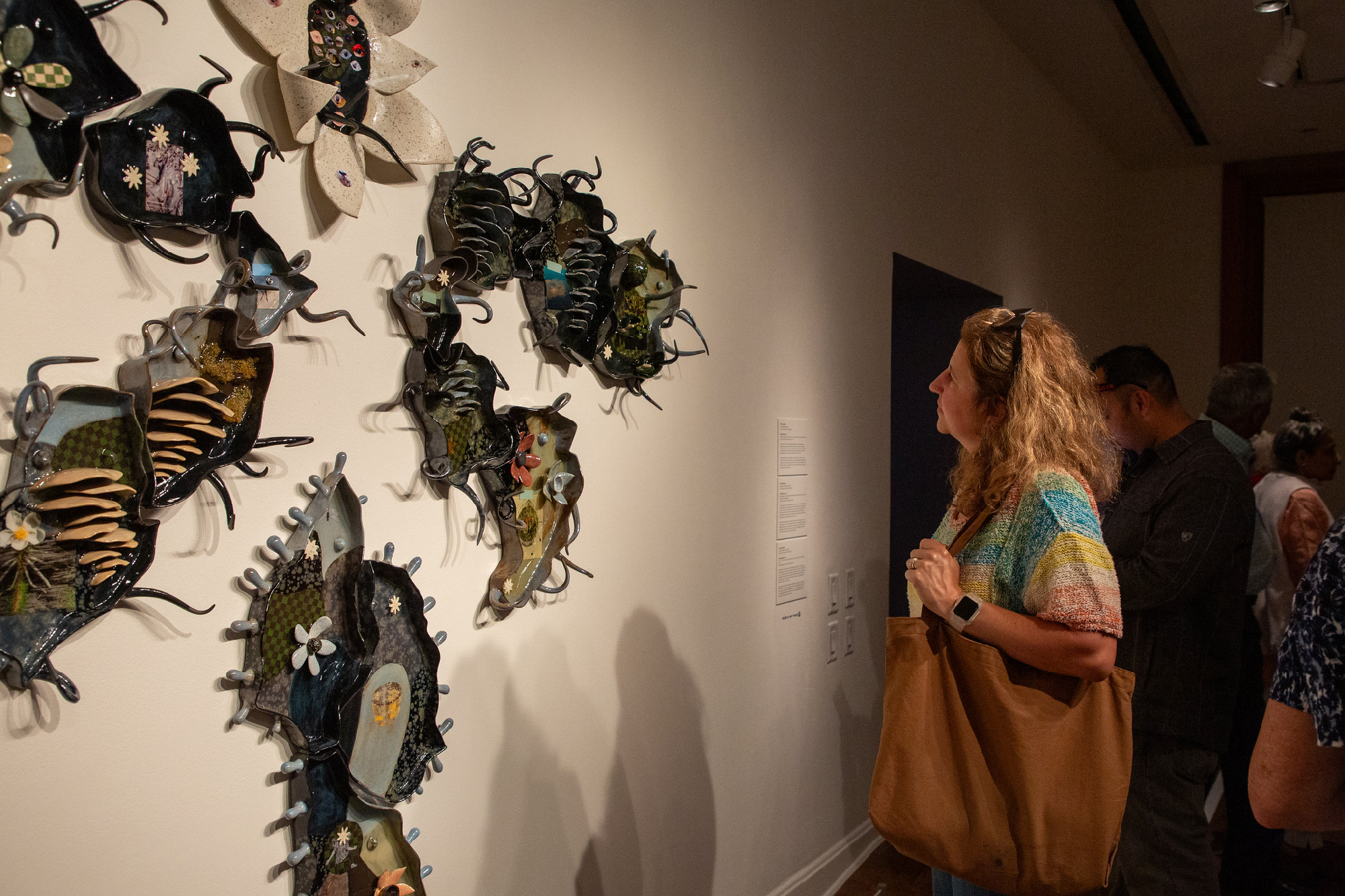
It’s time to try something new. a small ocean swallowed, an unabashedly feminist ecological exhibition at the San José Museum of Art, leans into almost all the words the current presidential administration loathes. Gathering works by six artists both national and international, the show proposes a change of worldview.
My own perspective suddenly flipped with Erin Jane Nelson’s Bulb Cam. To make the work, the artist nestled a pinhole camera in a ceramic sculpture, then placed the camera in Georgia’s Okefenokee Swamp. The resulting photograph, hung on the museum wall a short distance from the camera, takes the point of view of a flower (or a turtle in the case of the artist’s Turtle Cam). And that wasn’t the only transformation that occurred.
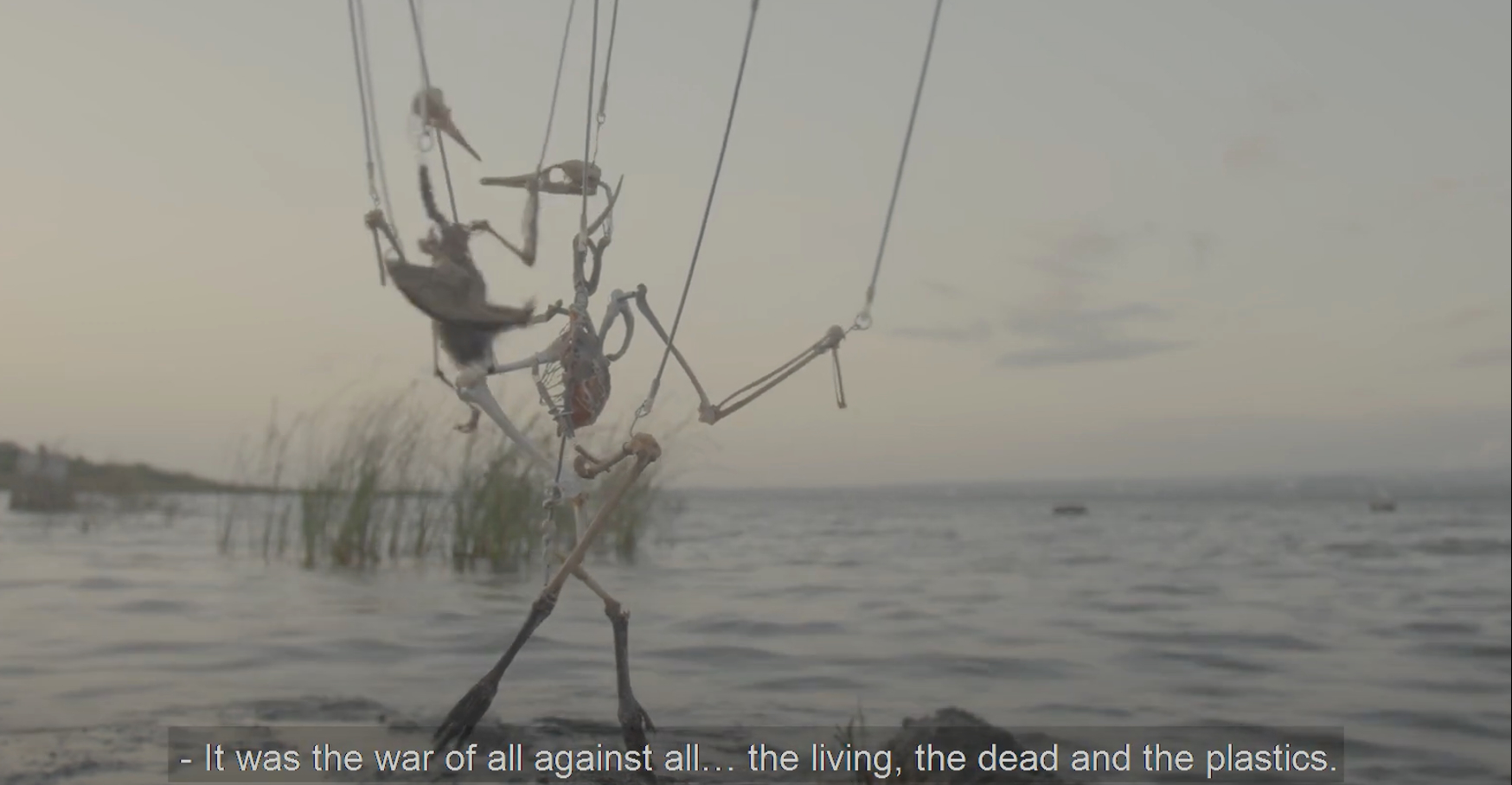
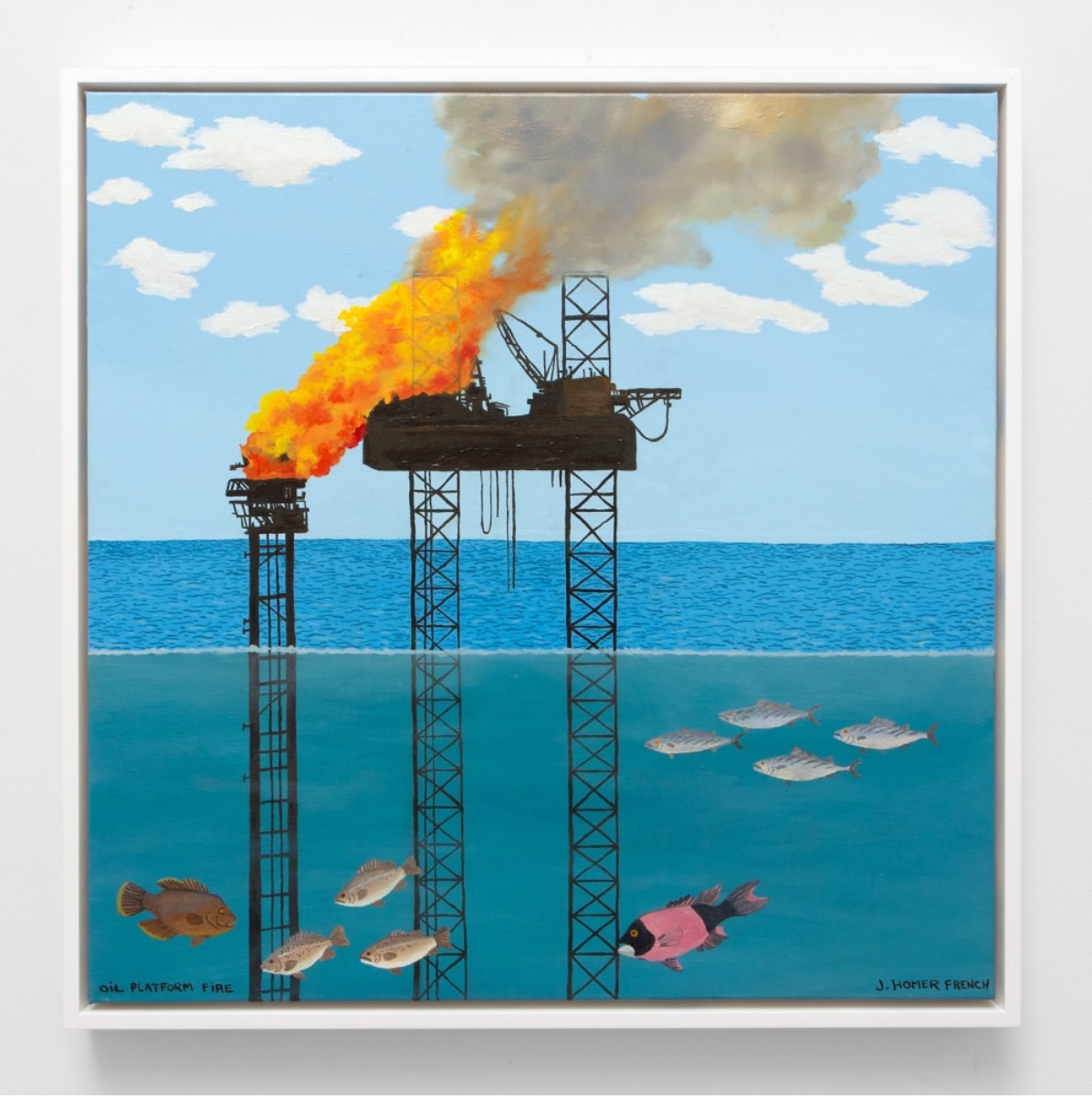
Exploring waterways around the world, the installations, video pieces, sculptures, and photography that comprise a small ocean swallowed emphasize ecological entwinement between humans and the natural world. In Patricia Belli’s video piece Recuerdos (Memories), two cormorant skeleton marionettes struggle to remember their lives among the pollution in Nicaragua that eventually killed them. Jessie Homer French paints the unease of fish swimming between oil platforms unnervingly ablaze above a blue ocean. Could these ills be remedied if humans themselves became water?
Curator Talia Heiman has organized the exhibition around hydrofeminism, a proposal of cultural theorist Astrida Neimanis that asks us to imagine ourselves as bodies of water. The concept pushes beyond hokey calls to love the earth and the easily ignored, measured language of scientists. Relinquishing hierarchy abolishes both the idea of humans as earth’s custodians (à la Adam and Eve) as well as humans as authorized extractors of natural resources (à la capitalism). An equalitarian aqueousness could wash away boundaries, leaving pure connection in its wake.
It’s an intriguing proposition. In Sunaura Taylor’s pen and watercolor drawings of aquifers, the underground waters turn anthropomorphic. The water becomes outstretched human hands reaching towards the roots of a tree. The drawings form part of Taylor’s account of her Tucson community’s successful efforts to heal their aquifer after it was poisoned by illegal dumping from a missile producer.
Even the entrance corridor to the exhibition invites a hydrofeminist experience. Blue light suffuses the space, submerging a visitor’s body. This, coupled with artist Sholeh Asgary’s soundscape Anahita II, produces the feeling of oneness with the water. It’s a little more complicated than summer days pausing beneath the pool surface though.
The dark blue hallway is part of Asgary’s installation, which references the tradition — still practiced in some parts of Iran — of having widows marry a failing qanat (aqueduct) in times of drought. The widow marrying the qanat swims in its waters to restore the flume. Their presence is registered in plaster hands emerging from cloudy waters (i.e., the gallery walls). These widows are powerful figures who could save their communities, but they are also the people burdened with responsibility. The qanat-marrying widow demonstrates the need for a feminist understanding of ecological concerns.
Kiyo Gutierrez also takes on imperiled waters in nepantlera, a 13-minute video work that explores waterways as harmful borders. Dressed as a nepantlera, a hybrid sea creature/water goddess developed out of the anthropological idea of nepantla, a space between cultures, Gutierrez swims through the Pacific Ocean, the Colorado River and Gila River. The barbed wire and border fences visible along the shores are the legacy of the Treaty of Guadalupe Hidalgo that ended the US–Mexico war in 1848, designating these waters as zones of separation rather than communion.
Gutierrez destroys the treaty in multiple ways: tearing pages, chewing them, drowning them in waters. She blots out the words with elderberry liquid. “What she’s really doing is rejecting this idea that water could ever be a tool of division,” explained Heiman, the show’s curator.
“It’s hard to do a show about water because everything becomes a metaphor,” Heiman said with a laugh. Yet therein lies the brilliance of the concept: water is the H₂O we drink, the force that carved the Grand Canyon, and an endless font of metaphors orienting our relationship to the world. a small ocean swallowed takes a step towards making the metaphorical material, guiding us to see our irrevocable connection to this world’s oceans, rivers, rain and waterways.
‘a small ocean swallowed’ is on view through Feb. 14, 2027 at the San José Museum of Art (110 South Market St., San José).