window.__IS_SSR__=true
window.__INITIAL_STATE__={
"attachmentsReducer": {
"audio_0": {
"type": "attachments",
"id": "audio_0",
"imgSizes": {
"kqedFullSize": {
"file": "https://ww2.kqed.org/news/wp-content/themes/KQED-unified/img/audio_bgs/background0.jpg"
}
}
},
"audio_1": {
"type": "attachments",
"id": "audio_1",
"imgSizes": {
"kqedFullSize": {
"file": "https://ww2.kqed.org/news/wp-content/themes/KQED-unified/img/audio_bgs/background1.jpg"
}
}
},
"audio_2": {
"type": "attachments",
"id": "audio_2",
"imgSizes": {
"kqedFullSize": {
"file": "https://ww2.kqed.org/news/wp-content/themes/KQED-unified/img/audio_bgs/background2.jpg"
}
}
},
"audio_3": {
"type": "attachments",
"id": "audio_3",
"imgSizes": {
"kqedFullSize": {
"file": "https://ww2.kqed.org/news/wp-content/themes/KQED-unified/img/audio_bgs/background3.jpg"
}
}
},
"audio_4": {
"type": "attachments",
"id": "audio_4",
"imgSizes": {
"kqedFullSize": {
"file": "https://ww2.kqed.org/news/wp-content/themes/KQED-unified/img/audio_bgs/background4.jpg"
}
}
},
"placeholder": {
"type": "attachments",
"id": "placeholder",
"imgSizes": {
"thumbnail": {
"file": "https://cdn.kqed.org/wp-content/uploads/2024/12/KQED-Default-Image-816638274-2000x1333-1-160x107.jpg",
"width": 160,
"height": 107,
"mimeType": "image/jpeg"
},
"medium": {
"file": "https://cdn.kqed.org/wp-content/uploads/2024/12/KQED-Default-Image-816638274-2000x1333-1-800x533.jpg",
"width": 800,
"height": 533,
"mimeType": "image/jpeg"
},
"medium_large": {
"file": "https://cdn.kqed.org/wp-content/uploads/2024/12/KQED-Default-Image-816638274-2000x1333-1-768x512.jpg",
"width": 768,
"height": 512,
"mimeType": "image/jpeg"
},
"large": {
"file": "https://cdn.kqed.org/wp-content/uploads/2024/12/KQED-Default-Image-816638274-2000x1333-1-1020x680.jpg",
"width": 1020,
"height": 680,
"mimeType": "image/jpeg"
},
"1536x1536": {
"file": "https://cdn.kqed.org/wp-content/uploads/2024/12/KQED-Default-Image-816638274-2000x1333-1-1536x1024.jpg",
"width": 1536,
"height": 1024,
"mimeType": "image/jpeg"
},
"fd-lrg": {
"file": "https://cdn.kqed.org/wp-content/uploads/2024/12/KQED-Default-Image-816638274-2000x1333-1-1536x1024.jpg",
"width": 1536,
"height": 1024,
"mimeType": "image/jpeg"
},
"fd-med": {
"file": "https://cdn.kqed.org/wp-content/uploads/2024/12/KQED-Default-Image-816638274-2000x1333-1-1020x680.jpg",
"width": 1020,
"height": 680,
"mimeType": "image/jpeg"
},
"fd-sm": {
"file": "https://cdn.kqed.org/wp-content/uploads/2024/12/KQED-Default-Image-816638274-2000x1333-1-800x533.jpg",
"width": 800,
"height": 533,
"mimeType": "image/jpeg"
},
"post-thumbnail": {
"file": "https://cdn.kqed.org/wp-content/uploads/2024/12/KQED-Default-Image-816638274-2000x1333-1-672x372.jpg",
"width": 672,
"height": 372,
"mimeType": "image/jpeg"
},
"twentyfourteen-full-width": {
"file": "https://cdn.kqed.org/wp-content/uploads/2024/12/KQED-Default-Image-816638274-2000x1333-1-1038x576.jpg",
"width": 1038,
"height": 576,
"mimeType": "image/jpeg"
},
"xxsmall": {
"file": "https://cdn.kqed.org/wp-content/uploads/2024/12/KQED-Default-Image-816638274-2000x1333-1-160x107.jpg",
"width": 160,
"height": 107,
"mimeType": "image/jpeg"
},
"xsmall": {
"file": "https://cdn.kqed.org/wp-content/uploads/2024/12/KQED-Default-Image-816638274-2000x1333-1-672x372.jpg",
"width": 672,
"height": 372,
"mimeType": "image/jpeg"
},
"small": {
"file": "https://cdn.kqed.org/wp-content/uploads/2024/12/KQED-Default-Image-816638274-2000x1333-1-672x372.jpg",
"width": 672,
"height": 372,
"mimeType": "image/jpeg"
},
"xlarge": {
"file": "https://cdn.kqed.org/wp-content/uploads/2024/12/KQED-Default-Image-816638274-2000x1333-1-1020x680.jpg",
"width": 1020,
"height": 680,
"mimeType": "image/jpeg"
},
"full-width": {
"file": "https://cdn.kqed.org/wp-content/uploads/2024/12/KQED-Default-Image-816638274-2000x1333-1-1920x1280.jpg",
"width": 1920,
"height": 1280,
"mimeType": "image/jpeg"
},
"guest-author-32": {
"file": "https://cdn.kqed.org/wp-content/uploads/2025/01/KQED-Default-Image-816638274-1333x1333-1-160x160.jpg",
"width": 32,
"height": 32,
"mimeType": "image/jpeg"
},
"guest-author-50": {
"file": "https://cdn.kqed.org/wp-content/uploads/2025/01/KQED-Default-Image-816638274-1333x1333-1-160x160.jpg",
"width": 50,
"height": 50,
"mimeType": "image/jpeg"
},
"guest-author-64": {
"file": "https://cdn.kqed.org/wp-content/uploads/2025/01/KQED-Default-Image-816638274-1333x1333-1-160x160.jpg",
"width": 64,
"height": 64,
"mimeType": "image/jpeg"
},
"guest-author-96": {
"file": "https://cdn.kqed.org/wp-content/uploads/2025/01/KQED-Default-Image-816638274-1333x1333-1-160x160.jpg",
"width": 96,
"height": 96,
"mimeType": "image/jpeg"
},
"guest-author-128": {
"file": "https://cdn.kqed.org/wp-content/uploads/2025/01/KQED-Default-Image-816638274-1333x1333-1-160x160.jpg",
"width": 128,
"height": 128,
"mimeType": "image/jpeg"
},
"detail": {
"file": "https://cdn.kqed.org/wp-content/uploads/2025/01/KQED-Default-Image-816638274-1333x1333-1-160x160.jpg",
"width": 160,
"height": 160,
"mimeType": "image/jpeg"
},
"kqedFullSize": {
"file": "https://cdn.kqed.org/wp-content/uploads/2024/12/KQED-Default-Image-816638274-2000x1333-1.jpg",
"width": 2000,
"height": 1333
}
}
},
"stateofhealth_16531": {
"type": "attachments",
"id": "stateofhealth_16531",
"meta": {
"index": "attachments_1716263798",
"site": "stateofhealth",
"id": "16531",
"found": true
},
"parent": 16516,
"imgSizes": {
"thumbnail": {
"file": "https://ww2.kqed.org/app/uploads/sites/27/2013/12/450630139-e1386185604738-400x266.jpg",
"width": 400,
"mimeType": "image/jpeg",
"height": 266
},
"fd-sm": {
"file": "https://ww2.kqed.org/app/uploads/sites/27/2013/12/450630139-e1386185604738-320x213.jpg",
"width": 320,
"mimeType": "image/jpeg",
"height": 213
},
"post-thumbnail": {
"file": "https://ww2.kqed.org/app/uploads/sites/27/2013/12/450630139-e1386185604738-641x372.jpg",
"width": 641,
"mimeType": "image/jpeg",
"height": 372
},
"kqedFullSize": {
"file": "https://ww2.kqed.org/app/uploads/sites/27/2013/12/450630139-e1386185604738.jpg",
"width": 641,
"height": 427
},
"guest-author-96": {
"file": "https://ww2.kqed.org/app/uploads/sites/27/2013/12/450630139-e1386185604738-96x96.jpg",
"width": 96,
"mimeType": "image/jpeg",
"height": 96
},
"guest-author-64": {
"file": "https://ww2.kqed.org/app/uploads/sites/27/2013/12/450630139-e1386185604738-64x64.jpg",
"width": 64,
"mimeType": "image/jpeg",
"height": 64
},
"detail": {
"file": "https://ww2.kqed.org/app/uploads/sites/27/2013/12/450630139-e1386185604738-75x75.jpg",
"width": 75,
"mimeType": "image/jpeg",
"height": 75
},
"guest-author-32": {
"file": "https://ww2.kqed.org/app/uploads/sites/27/2013/12/450630139-e1386185604738-32x32.jpg",
"width": 32,
"mimeType": "image/jpeg",
"height": 32
},
"guest-author-128": {
"file": "https://ww2.kqed.org/app/uploads/sites/27/2013/12/450630139-e1386185604738-128x128.jpg",
"width": 128,
"mimeType": "image/jpeg",
"height": 128
}
},
"publishDate": 1386185594,
"modified": 1468887472,
"caption": "Certified specialist helps a consumer apply to Covered California at a free enrollment fair at Pasadena City College. ",
"description": "Covered California",
"title": "450630139",
"credit": "David McNew/Getty Images",
"status": "inherit",
"isLoading": false,
"fetchFailed": false
},
"stateofhealth_23937": {
"type": "attachments",
"id": "stateofhealth_23937",
"meta": {
"index": "attachments_1716263798",
"site": "stateofhealth",
"id": "23937",
"found": true
},
"parent": 23932,
"imgSizes": {
"twentyfourteen-full-width": {
"file": "https://ww2.kqed.org/app/uploads/sites/27/2015/02/Screen-Shot-2015-02-17-at-9.08.14-PM-e1424236127706-1038x576.png",
"width": 1038,
"mimeType": "image/png",
"height": 576
},
"thumbnail": {
"file": "https://ww2.kqed.org/app/uploads/sites/27/2015/02/Screen-Shot-2015-02-17-at-9.08.14-PM-e1424236127706-400x197.png",
"width": 400,
"mimeType": "image/png",
"height": 197
},
"fd-sm": {
"file": "https://ww2.kqed.org/app/uploads/sites/27/2015/02/Screen-Shot-2015-02-17-at-9.08.14-PM-e1424236127706-320x157.png",
"width": 320,
"mimeType": "image/png",
"height": 157
},
"post-thumbnail": {
"file": "https://ww2.kqed.org/app/uploads/sites/27/2015/02/Screen-Shot-2015-02-17-at-9.08.14-PM-e1424236127706-672x372.png",
"width": 672,
"mimeType": "image/png",
"height": 372
},
"kqedFullSize": {
"file": "https://ww2.kqed.org/app/uploads/sites/27/2015/02/Screen-Shot-2015-02-17-at-9.08.14-PM-e1424236127706.png",
"width": 1439,
"height": 707
},
"guest-author-96": {
"file": "https://ww2.kqed.org/app/uploads/sites/27/2015/02/Screen-Shot-2015-02-17-at-9.08.14-PM-e1424236127706-96x96.png",
"width": 96,
"mimeType": "image/png",
"height": 96
},
"medium": {
"file": "https://ww2.kqed.org/app/uploads/sites/27/2015/02/Screen-Shot-2015-02-17-at-9.08.14-PM-e1424236127706-800x393.png",
"width": 800,
"mimeType": "image/png",
"height": 393
},
"guest-author-64": {
"file": "https://ww2.kqed.org/app/uploads/sites/27/2015/02/Screen-Shot-2015-02-17-at-9.08.14-PM-e1424236127706-64x64.png",
"width": 64,
"mimeType": "image/png",
"height": 64
},
"guest-author-32": {
"file": "https://ww2.kqed.org/app/uploads/sites/27/2015/02/Screen-Shot-2015-02-17-at-9.08.14-PM-e1424236127706-32x32.png",
"width": 32,
"mimeType": "image/png",
"height": 32
},
"fd-lrg": {
"file": "https://ww2.kqed.org/app/uploads/sites/27/2015/02/Screen-Shot-2015-02-17-at-9.08.14-PM-e1424236127706-1180x580.png",
"width": 1180,
"mimeType": "image/png",
"height": 580
},
"fd-med": {
"file": "https://ww2.kqed.org/app/uploads/sites/27/2015/02/Screen-Shot-2015-02-17-at-9.08.14-PM-e1424236127706-768x377.png",
"width": 768,
"mimeType": "image/png",
"height": 377
},
"detail": {
"file": "https://ww2.kqed.org/app/uploads/sites/27/2015/02/Screen-Shot-2015-02-17-at-9.08.14-PM-e1424236127706-75x75.png",
"width": 75,
"mimeType": "image/png",
"height": 75
},
"guest-author-128": {
"file": "https://ww2.kqed.org/app/uploads/sites/27/2015/02/Screen-Shot-2015-02-17-at-9.08.14-PM-e1424236127706-128x128.png",
"width": 128,
"mimeType": "image/png",
"height": 128
}
},
"publishDate": 1424236116,
"modified": 1424236152,
"caption": "Screenshot of Covered California's website.",
"description": "Screenshot of Covered California's website.",
"title": "Screen Shot 2015-02-17 at 9.08.14 PM",
"credit": null,
"status": "inherit",
"isLoading": false,
"fetchFailed": false
},
"stateofhealth_23105": {
"type": "attachments",
"id": "stateofhealth_23105",
"meta": {
"index": "attachments_1716263798",
"site": "stateofhealth",
"id": "23105",
"found": true
},
"parent": 23509,
"imgSizes": {
"twentyfourteen-full-width": {
"file": "https://ww2.kqed.org/app/uploads/sites/27/2014/12/coveredcaliforniashot-1038x576.jpg",
"width": 1038,
"mimeType": "image/jpeg",
"height": 576
},
"thumbnail": {
"file": "https://ww2.kqed.org/app/uploads/sites/27/2014/12/coveredcaliforniashot-400x246.jpg",
"width": 400,
"mimeType": "image/jpeg",
"height": 246
},
"fd-sm": {
"file": "https://ww2.kqed.org/app/uploads/sites/27/2014/12/coveredcaliforniashot-320x196.jpg",
"width": 320,
"mimeType": "image/jpeg",
"height": 196
},
"post-thumbnail": {
"file": "https://ww2.kqed.org/app/uploads/sites/27/2014/12/coveredcaliforniashot-672x372.jpg",
"width": 672,
"mimeType": "image/jpeg",
"height": 372
},
"kqedFullSize": {
"file": "https://ww2.kqed.org/app/uploads/sites/27/2014/12/coveredcaliforniashot.jpg",
"width": 1440,
"height": 884
},
"large": {
"file": "https://ww2.kqed.org/app/uploads/sites/27/2014/12/coveredcaliforniashot-1440x884.jpg",
"width": 1440,
"mimeType": "image/jpeg",
"height": 884
},
"guest-author-96": {
"file": "https://ww2.kqed.org/app/uploads/sites/27/2014/12/coveredcaliforniashot-96x96.jpg",
"width": 96,
"mimeType": "image/jpeg",
"height": 96
},
"medium": {
"file": "https://ww2.kqed.org/app/uploads/sites/27/2014/12/coveredcaliforniashot-800x491.jpg",
"width": 800,
"mimeType": "image/jpeg",
"height": 491
},
"guest-author-64": {
"file": "https://ww2.kqed.org/app/uploads/sites/27/2014/12/coveredcaliforniashot-64x64.jpg",
"width": 64,
"mimeType": "image/jpeg",
"height": 64
},
"guest-author-32": {
"file": "https://ww2.kqed.org/app/uploads/sites/27/2014/12/coveredcaliforniashot-32x32.jpg",
"width": 32,
"mimeType": "image/jpeg",
"height": 32
},
"fd-lrg": {
"file": "https://ww2.kqed.org/app/uploads/sites/27/2014/12/coveredcaliforniashot-1180x724.jpg",
"width": 1180,
"mimeType": "image/jpeg",
"height": 724
},
"fd-med": {
"file": "https://ww2.kqed.org/app/uploads/sites/27/2014/12/coveredcaliforniashot-768x471.jpg",
"width": 768,
"mimeType": "image/jpeg",
"height": 471
},
"detail": {
"file": "https://ww2.kqed.org/app/uploads/sites/27/2014/12/coveredcaliforniashot-75x75.jpg",
"width": 75,
"mimeType": "image/jpeg",
"height": 75
},
"guest-author-128": {
"file": "https://ww2.kqed.org/app/uploads/sites/27/2014/12/coveredcaliforniashot-128x128.jpg",
"width": 128,
"mimeType": "image/jpeg",
"height": 128
}
},
"publishDate": 1419015871,
"modified": 1421381413,
"caption": "Screenshot from the Covered California website. ",
"description": "Covered California",
"title": "coveredcaliforniashot",
"credit": null,
"status": "inherit",
"isLoading": false,
"fetchFailed": false
},
"stateofhealth_5765": {
"type": "attachments",
"id": "stateofhealth_5765",
"meta": {
"index": "attachments_1716263798",
"site": "stateofhealth",
"id": "5765",
"found": true
},
"parent": 5761,
"imgSizes": {
"twentyfourteen-full-width": {
"file": "https://ww2.kqed.org/app/uploads/sites/27/2012/05/TruvadaBottle_05102012_JustinSullivan_GettyImages-e1411097604408-1038x576.jpg",
"width": 1038,
"mimeType": "image/jpeg",
"height": 576
},
"thumbnail": {
"file": "https://ww2.kqed.org/app/uploads/sites/27/2012/05/TruvadaBottle_05102012_JustinSullivan_GettyImages-e1411097604408-400x276.jpg",
"width": 400,
"mimeType": "image/jpeg",
"height": 276
},
"fd-sm": {
"file": "https://ww2.kqed.org/app/uploads/sites/27/2012/05/TruvadaBottle_05102012_JustinSullivan_GettyImages-e1411097604408-320x220.jpg",
"width": 320,
"mimeType": "image/jpeg",
"height": 220
},
"post-thumbnail": {
"file": "https://ww2.kqed.org/app/uploads/sites/27/2012/05/TruvadaBottle_05102012_JustinSullivan_GettyImages-e1411097604408-672x372.jpg",
"width": 672,
"mimeType": "image/jpeg",
"height": 372
},
"kqedFullSize": {
"file": "https://ww2.kqed.org/app/uploads/sites/27/2012/05/TruvadaBottle_05102012_JustinSullivan_GettyImages-e1411097604408.jpg",
"width": 1401,
"height": 965
},
"guest-author-96": {
"file": "https://ww2.kqed.org/app/uploads/sites/27/2012/05/TruvadaBottle_05102012_JustinSullivan_GettyImages-e1411097604408-96x96.jpg",
"width": 96,
"mimeType": "image/jpeg",
"height": 96
},
"medium": {
"file": "https://ww2.kqed.org/app/uploads/sites/27/2012/05/TruvadaBottle_05102012_JustinSullivan_GettyImages-e1411097604408-800x551.jpg",
"width": 800,
"mimeType": "image/jpeg",
"height": 551
},
"guest-author-64": {
"file": "https://ww2.kqed.org/app/uploads/sites/27/2012/05/TruvadaBottle_05102012_JustinSullivan_GettyImages-e1411097604408-64x64.jpg",
"width": 64,
"mimeType": "image/jpeg",
"height": 64
},
"guest-author-32": {
"file": "https://ww2.kqed.org/app/uploads/sites/27/2012/05/TruvadaBottle_05102012_JustinSullivan_GettyImages-e1411097604408-32x32.jpg",
"width": 32,
"mimeType": "image/jpeg",
"height": 32
},
"fd-lrg": {
"file": "https://ww2.kqed.org/app/uploads/sites/27/2012/05/TruvadaBottle_05102012_JustinSullivan_GettyImages-e1411097604408-1180x813.jpg",
"width": 1180,
"mimeType": "image/jpeg",
"height": 813
},
"fd-med": {
"file": "https://ww2.kqed.org/app/uploads/sites/27/2012/05/TruvadaBottle_05102012_JustinSullivan_GettyImages-e1411097604408-768x529.jpg",
"width": 768,
"mimeType": "image/jpeg",
"height": 529
},
"detail": {
"file": "https://ww2.kqed.org/app/uploads/sites/27/2012/05/TruvadaBottle_05102012_JustinSullivan_GettyImages-e1411097604408-75x75.jpg",
"width": 75,
"mimeType": "image/jpeg",
"height": 75
},
"guest-author-128": {
"file": "https://ww2.kqed.org/app/uploads/sites/27/2012/05/TruvadaBottle_05102012_JustinSullivan_GettyImages-e1411097604408-128x128.jpg",
"width": 128,
"mimeType": "image/jpeg",
"height": 128
}
},
"publishDate": 1336694295,
"modified": 1336694295,
"caption": "The FDA panel approved Truvada, an antiretroviral drug for use by healthy people to prevent HIV infection. (Justin Sullivan: Getty Images)",
"description": "Bottles of antiretroviral drug Truvada are shown at Jack's Pharmacy on November 23, 2010 in San Anselmo, California.",
"title": "The FDA panel approved Truvada, an antiretroviral drug for use by healthy people to prevent HIV infection. (Justin Sullivan: Getty Images)",
"credit": null,
"status": "inherit",
"isLoading": false,
"fetchFailed": false
},
"stateofhealth_23872": {
"type": "attachments",
"id": "stateofhealth_23872",
"meta": {
"index": "attachments_1716263798",
"site": "stateofhealth",
"id": "23872",
"found": true
},
"parent": 23871,
"imgSizes": {
"twentyfourteen-full-width": {
"file": "https://ww2.kqed.org/app/uploads/sites/27/2015/02/IMG_3152-e1423612551360-1038x576.jpg",
"width": 1038,
"mimeType": "image/jpeg",
"height": 576
},
"thumbnail": {
"file": "https://ww2.kqed.org/app/uploads/sites/27/2015/02/IMG_3152-e1423612551360-400x267.jpg",
"width": 400,
"mimeType": "image/jpeg",
"height": 267
},
"fd-sm": {
"file": "https://ww2.kqed.org/app/uploads/sites/27/2015/02/IMG_3152-e1423612551360-320x213.jpg",
"width": 320,
"mimeType": "image/jpeg",
"height": 213
},
"post-thumbnail": {
"file": "https://ww2.kqed.org/app/uploads/sites/27/2015/02/IMG_3152-e1423612551360-672x372.jpg",
"width": 672,
"mimeType": "image/jpeg",
"height": 372
},
"kqedFullSize": {
"file": "https://ww2.kqed.org/app/uploads/sites/27/2015/02/IMG_3152-e1423612551360.jpg",
"width": 1440,
"height": 960
},
"large": {
"file": "https://ww2.kqed.org/app/uploads/sites/27/2015/02/IMG_3152-e1423612551360-1440x960.jpg",
"width": 1440,
"mimeType": "image/jpeg",
"height": 960
},
"guest-author-96": {
"file": "https://ww2.kqed.org/app/uploads/sites/27/2015/02/IMG_3152-e1423612551360-96x96.jpg",
"width": 96,
"mimeType": "image/jpeg",
"height": 96
},
"medium": {
"file": "https://ww2.kqed.org/app/uploads/sites/27/2015/02/IMG_3152-e1423612551360-800x533.jpg",
"width": 800,
"mimeType": "image/jpeg",
"height": 533
},
"guest-author-64": {
"file": "https://ww2.kqed.org/app/uploads/sites/27/2015/02/IMG_3152-e1423612551360-64x64.jpg",
"width": 64,
"mimeType": "image/jpeg",
"height": 64
},
"guest-author-32": {
"file": "https://ww2.kqed.org/app/uploads/sites/27/2015/02/IMG_3152-e1423612551360-32x32.jpg",
"width": 32,
"mimeType": "image/jpeg",
"height": 32
},
"fd-lrg": {
"file": "https://ww2.kqed.org/app/uploads/sites/27/2015/02/IMG_3152-e1423612551360-1180x787.jpg",
"width": 1180,
"mimeType": "image/jpeg",
"height": 787
},
"fd-med": {
"file": "https://ww2.kqed.org/app/uploads/sites/27/2015/02/IMG_3152-e1423612551360-768x512.jpg",
"width": 768,
"mimeType": "image/jpeg",
"height": 512
},
"detail": {
"file": "https://ww2.kqed.org/app/uploads/sites/27/2015/02/IMG_3152-e1423612551360-75x75.jpg",
"width": 75,
"mimeType": "image/jpeg",
"height": 75
},
"guest-author-128": {
"file": "https://ww2.kqed.org/app/uploads/sites/27/2015/02/IMG_3152-e1423612551360-128x128.jpg",
"width": 128,
"mimeType": "image/jpeg",
"height": 128
}
},
"publishDate": 1423612470,
"modified": 1423612556,
"caption": "A parent talks to a health care enrollment specialist at a health insurance sign-up event at Natomas Unified in Sacramento. (Courtesy: The Children's Partnership)",
"description": "A parent talks to a health care enrollment specialist at a health insurance sign-up event at Natomas Unified in Sacramento. (Courtesy: The Children's Partnership)",
"title": "IMG_3152",
"credit": null,
"status": "inherit",
"isLoading": false,
"fetchFailed": false
},
"stateofhealth_23688": {
"type": "attachments",
"id": "stateofhealth_23688",
"meta": {
"index": "attachments_1716263798",
"site": "stateofhealth",
"id": "23688",
"found": true
},
"parent": 23685,
"imgSizes": {
"twentyfourteen-full-width": {
"file": "https://ww2.kqed.org/app/uploads/sites/27/2015/01/Medi-Cal-Kids-1-copy-e1422510410416-1038x576.jpg",
"width": 1038,
"mimeType": "image/jpeg",
"height": 576
},
"thumbnail": {
"file": "https://ww2.kqed.org/app/uploads/sites/27/2015/01/Medi-Cal-Kids-1-copy-e1422510410416-400x319.jpg",
"width": 400,
"mimeType": "image/jpeg",
"height": 319
},
"fd-sm": {
"file": "https://ww2.kqed.org/app/uploads/sites/27/2015/01/Medi-Cal-Kids-1-copy-e1422510410416-320x255.jpg",
"width": 320,
"mimeType": "image/jpeg",
"height": 255
},
"post-thumbnail": {
"file": "https://ww2.kqed.org/app/uploads/sites/27/2015/01/Medi-Cal-Kids-1-copy-e1422510410416-672x372.jpg",
"width": 672,
"mimeType": "image/jpeg",
"height": 372
},
"kqedFullSize": {
"file": "https://ww2.kqed.org/app/uploads/sites/27/2015/01/Medi-Cal-Kids-1-copy-e1422510410416.jpg",
"width": 1440,
"height": 1147
},
"large": {
"file": "https://ww2.kqed.org/app/uploads/sites/27/2015/01/Medi-Cal-Kids-1-copy-e1422510410416-1440x1147.jpg",
"width": 1440,
"mimeType": "image/jpeg",
"height": 1147
},
"guest-author-96": {
"file": "https://ww2.kqed.org/app/uploads/sites/27/2015/01/Medi-Cal-Kids-1-copy-e1422510410416-96x96.jpg",
"width": 96,
"mimeType": "image/jpeg",
"height": 96
},
"medium": {
"file": "https://ww2.kqed.org/app/uploads/sites/27/2015/01/Medi-Cal-Kids-1-copy-e1422510410416-800x637.jpg",
"width": 800,
"mimeType": "image/jpeg",
"height": 637
},
"guest-author-64": {
"file": "https://ww2.kqed.org/app/uploads/sites/27/2015/01/Medi-Cal-Kids-1-copy-e1422510410416-64x64.jpg",
"width": 64,
"mimeType": "image/jpeg",
"height": 64
},
"guest-author-32": {
"file": "https://ww2.kqed.org/app/uploads/sites/27/2015/01/Medi-Cal-Kids-1-copy-e1422510410416-32x32.jpg",
"width": 32,
"mimeType": "image/jpeg",
"height": 32
},
"fd-lrg": {
"file": "https://ww2.kqed.org/app/uploads/sites/27/2015/01/Medi-Cal-Kids-1-copy-e1422510410416-1180x940.jpg",
"width": 1180,
"mimeType": "image/jpeg",
"height": 940
},
"fd-med": {
"file": "https://ww2.kqed.org/app/uploads/sites/27/2015/01/Medi-Cal-Kids-1-copy-e1422510410416-768x612.jpg",
"width": 768,
"mimeType": "image/jpeg",
"height": 612
},
"detail": {
"file": "https://ww2.kqed.org/app/uploads/sites/27/2015/01/Medi-Cal-Kids-1-copy-e1422510410416-75x75.jpg",
"width": 75,
"mimeType": "image/jpeg",
"height": 75
},
"guest-author-128": {
"file": "https://ww2.kqed.org/app/uploads/sites/27/2015/01/Medi-Cal-Kids-1-copy-e1422510410416-128x128.jpg",
"width": 128,
"mimeType": "image/jpeg",
"height": 128
}
},
"publishDate": 1422510339,
"modified": 1422510404,
"caption": "Sarah Boone, a behavior analyst with the social services agency EMQ FamiliesFirst, evaluates Ernesto Santiago, 6, of San Jose for autism therapy services. (Barbara Feder Ostrov/Kaiser Health News)",
"description": "Sarah Boone, a behavior analyst with the social services agency EMQ FamiliesFirst, evaluates Ernesto Santiago, 6, of San Jose for autism therapy services. (Photo by Barbara Feder Ostrov)",
"title": "Medi-Cal-Kids-1 copy",
"credit": null,
"status": "inherit",
"isLoading": false,
"fetchFailed": false
},
"stateofhealth_23444": {
"type": "attachments",
"id": "stateofhealth_23444",
"meta": {
"index": "attachments_1716263798",
"site": "stateofhealth",
"id": "23444",
"found": true
},
"parent": 23438,
"imgSizes": {
"twentyfourteen-full-width": {
"file": "https://ww2.kqed.org/app/uploads/sites/27/2015/01/iStock_000035187222_Large-e1421179900706-1038x576.jpg",
"width": 1038,
"mimeType": "image/jpeg",
"height": 576
},
"thumbnail": {
"file": "https://ww2.kqed.org/app/uploads/sites/27/2015/01/iStock_000035187222_Large-e1421179900706-400x266.jpg",
"width": 400,
"mimeType": "image/jpeg",
"height": 266
},
"fd-sm": {
"file": "https://ww2.kqed.org/app/uploads/sites/27/2015/01/iStock_000035187222_Large-e1421179900706-320x213.jpg",
"width": 320,
"mimeType": "image/jpeg",
"height": 213
},
"post-thumbnail": {
"file": "https://ww2.kqed.org/app/uploads/sites/27/2015/01/iStock_000035187222_Large-e1421179900706-672x372.jpg",
"width": 672,
"mimeType": "image/jpeg",
"height": 372
},
"kqedFullSize": {
"file": "https://ww2.kqed.org/app/uploads/sites/27/2015/01/iStock_000035187222_Large-e1421179900706.jpg",
"width": 1441,
"height": 960
},
"large": {
"file": "https://ww2.kqed.org/app/uploads/sites/27/2015/01/iStock_000035187222_Large-e1421179900706-1440x959.jpg",
"width": 1440,
"mimeType": "image/jpeg",
"height": 959
},
"guest-author-96": {
"file": "https://ww2.kqed.org/app/uploads/sites/27/2015/01/iStock_000035187222_Large-e1421179900706-96x96.jpg",
"width": 96,
"mimeType": "image/jpeg",
"height": 96
},
"medium": {
"file": "https://ww2.kqed.org/app/uploads/sites/27/2015/01/iStock_000035187222_Large-e1421179900706-800x533.jpg",
"width": 800,
"mimeType": "image/jpeg",
"height": 533
},
"guest-author-64": {
"file": "https://ww2.kqed.org/app/uploads/sites/27/2015/01/iStock_000035187222_Large-e1421179900706-64x64.jpg",
"width": 64,
"mimeType": "image/jpeg",
"height": 64
},
"guest-author-32": {
"file": "https://ww2.kqed.org/app/uploads/sites/27/2015/01/iStock_000035187222_Large-e1421179900706-32x32.jpg",
"width": 32,
"mimeType": "image/jpeg",
"height": 32
},
"fd-lrg": {
"file": "https://ww2.kqed.org/app/uploads/sites/27/2015/01/iStock_000035187222_Large-e1421179900706-1180x786.jpg",
"width": 1180,
"mimeType": "image/jpeg",
"height": 786
},
"fd-med": {
"file": "https://ww2.kqed.org/app/uploads/sites/27/2015/01/iStock_000035187222_Large-e1421179900706-768x512.jpg",
"width": 768,
"mimeType": "image/jpeg",
"height": 512
},
"detail": {
"file": "https://ww2.kqed.org/app/uploads/sites/27/2015/01/iStock_000035187222_Large-e1421179900706-75x75.jpg",
"width": 75,
"mimeType": "image/jpeg",
"height": 75
},
"guest-author-128": {
"file": "https://ww2.kqed.org/app/uploads/sites/27/2015/01/iStock_000035187222_Large-e1421179900706-128x128.jpg",
"width": 128,
"mimeType": "image/jpeg",
"height": 128
}
},
"publishDate": 1421179890,
"modified": 1421179915,
"caption": "(Getty Images)",
"description": "Tax time concept with sign post under blue sky",
"title": "Tax Time Ahead",
"credit": null,
"status": "inherit",
"isLoading": false,
"fetchFailed": false
},
"stateofhealth_23396": {
"type": "attachments",
"id": "stateofhealth_23396",
"meta": {
"index": "attachments_1716263798",
"site": "stateofhealth",
"id": "23396",
"found": true
},
"parent": 23390,
"imgSizes": {
"twentyfourteen-full-width": {
"file": "https://ww2.kqed.org/app/uploads/sites/27/2015/01/iStock_000003655048_Large-e1420745935690-1038x576.jpg",
"width": 1038,
"mimeType": "image/jpeg",
"height": 576
},
"thumbnail": {
"file": "https://ww2.kqed.org/app/uploads/sites/27/2015/01/iStock_000003655048_Large-e1420745935690-400x268.jpg",
"width": 400,
"mimeType": "image/jpeg",
"height": 268
},
"fd-sm": {
"file": "https://ww2.kqed.org/app/uploads/sites/27/2015/01/iStock_000003655048_Large-e1420745935690-320x214.jpg",
"width": 320,
"mimeType": "image/jpeg",
"height": 214
},
"post-thumbnail": {
"file": "https://ww2.kqed.org/app/uploads/sites/27/2015/01/iStock_000003655048_Large-e1420745935690-672x372.jpg",
"width": 672,
"mimeType": "image/jpeg",
"height": 372
},
"kqedFullSize": {
"file": "https://ww2.kqed.org/app/uploads/sites/27/2015/01/iStock_000003655048_Large-e1420745935690.jpg",
"width": 1440,
"height": 964
},
"large": {
"file": "https://ww2.kqed.org/app/uploads/sites/27/2015/01/iStock_000003655048_Large-e1420745935690-1440x964.jpg",
"width": 1440,
"mimeType": "image/jpeg",
"height": 964
},
"guest-author-96": {
"file": "https://ww2.kqed.org/app/uploads/sites/27/2015/01/iStock_000003655048_Large-e1420745935690-96x96.jpg",
"width": 96,
"mimeType": "image/jpeg",
"height": 96
},
"medium": {
"file": "https://ww2.kqed.org/app/uploads/sites/27/2015/01/iStock_000003655048_Large-e1420745935690-800x536.jpg",
"width": 800,
"mimeType": "image/jpeg",
"height": 536
},
"guest-author-64": {
"file": "https://ww2.kqed.org/app/uploads/sites/27/2015/01/iStock_000003655048_Large-e1420745935690-64x64.jpg",
"width": 64,
"mimeType": "image/jpeg",
"height": 64
},
"guest-author-32": {
"file": "https://ww2.kqed.org/app/uploads/sites/27/2015/01/iStock_000003655048_Large-e1420745935690-32x32.jpg",
"width": 32,
"mimeType": "image/jpeg",
"height": 32
},
"fd-lrg": {
"file": "https://ww2.kqed.org/app/uploads/sites/27/2015/01/iStock_000003655048_Large-e1420745935690-1180x790.jpg",
"width": 1180,
"mimeType": "image/jpeg",
"height": 790
},
"fd-med": {
"file": "https://ww2.kqed.org/app/uploads/sites/27/2015/01/iStock_000003655048_Large-e1420745935690-768x514.jpg",
"width": 768,
"mimeType": "image/jpeg",
"height": 514
},
"detail": {
"file": "https://ww2.kqed.org/app/uploads/sites/27/2015/01/iStock_000003655048_Large-e1420745935690-75x75.jpg",
"width": 75,
"mimeType": "image/jpeg",
"height": 75
},
"guest-author-128": {
"file": "https://ww2.kqed.org/app/uploads/sites/27/2015/01/iStock_000003655048_Large-e1420745935690-128x128.jpg",
"width": 128,
"mimeType": "image/jpeg",
"height": 128
}
},
"publishDate": 1420745922,
"modified": 1420745978,
"caption": "This is the first year people without health insurance could face big penalties. (Getty Images)",
"description": "Tax return check on 1040 form background",
"title": "Tax return check",
"credit": null,
"status": "inherit",
"isLoading": false,
"fetchFailed": false
},
"stateofhealth_23324": {
"type": "attachments",
"id": "stateofhealth_23324",
"meta": {
"index": "attachments_1716263798",
"site": "stateofhealth",
"id": "23324",
"found": true
},
"parent": 23323,
"imgSizes": {
"twentyfourteen-full-width": {
"file": "https://ww2.kqed.org/app/uploads/sites/27/2015/01/RS13895_IMG_3044-EditREV-1038x576.jpg",
"width": 1038,
"mimeType": "image/jpeg",
"height": 576
},
"thumbnail": {
"file": "https://ww2.kqed.org/app/uploads/sites/27/2015/01/RS13895_IMG_3044-EditREV-400x198.jpg",
"width": 400,
"mimeType": "image/jpeg",
"height": 198
},
"fd-sm": {
"file": "https://ww2.kqed.org/app/uploads/sites/27/2015/01/RS13895_IMG_3044-EditREV-320x158.jpg",
"width": 320,
"mimeType": "image/jpeg",
"height": 158
},
"post-thumbnail": {
"file": "https://ww2.kqed.org/app/uploads/sites/27/2015/01/RS13895_IMG_3044-EditREV-672x372.jpg",
"width": 672,
"mimeType": "image/jpeg",
"height": 372
},
"kqedFullSize": {
"file": "https://ww2.kqed.org/app/uploads/sites/27/2015/01/RS13895_IMG_3044-EditREV.jpg",
"width": 1275,
"height": 630
},
"guest-author-96": {
"file": "https://ww2.kqed.org/app/uploads/sites/27/2015/01/RS13895_IMG_3044-EditREV-96x96.jpg",
"width": 96,
"mimeType": "image/jpeg",
"height": 96
},
"medium": {
"file": "https://ww2.kqed.org/app/uploads/sites/27/2015/01/RS13895_IMG_3044-EditREV-800x395.jpg",
"width": 800,
"mimeType": "image/jpeg",
"height": 395
},
"guest-author-64": {
"file": "https://ww2.kqed.org/app/uploads/sites/27/2015/01/RS13895_IMG_3044-EditREV-64x64.jpg",
"width": 64,
"mimeType": "image/jpeg",
"height": 64
},
"guest-author-32": {
"file": "https://ww2.kqed.org/app/uploads/sites/27/2015/01/RS13895_IMG_3044-EditREV-32x32.jpg",
"width": 32,
"mimeType": "image/jpeg",
"height": 32
},
"fd-lrg": {
"file": "https://ww2.kqed.org/app/uploads/sites/27/2015/01/RS13895_IMG_3044-EditREV-1180x583.jpg",
"width": 1180,
"mimeType": "image/jpeg",
"height": 583
},
"fd-med": {
"file": "https://ww2.kqed.org/app/uploads/sites/27/2015/01/RS13895_IMG_3044-EditREV-768x379.jpg",
"width": 768,
"mimeType": "image/jpeg",
"height": 379
},
"detail": {
"file": "https://ww2.kqed.org/app/uploads/sites/27/2015/01/RS13895_IMG_3044-EditREV-75x75.jpg",
"width": 75,
"mimeType": "image/jpeg",
"height": 75
},
"guest-author-128": {
"file": "https://ww2.kqed.org/app/uploads/sites/27/2015/01/RS13895_IMG_3044-EditREV-128x128.jpg",
"width": 128,
"mimeType": "image/jpeg",
"height": 128
}
},
"publishDate": 1420497361,
"modified": 1440003509,
"caption": "Brown says special session on Medi-Cal funding is not the appropriate venue to consider assisted suicide issue. ",
"description": "Gov. Jerry Brown is sworn in as California governor for the fourth time. (Andrew Nixon/Capital Public Radio)",
"title": "RS13895_IMG_3044-EditREV",
"credit": " Andrew Nixon/Capital Public Radio",
"status": "inherit",
"isLoading": false,
"fetchFailed": false
},
"stateofhealth_23287": {
"type": "attachments",
"id": "stateofhealth_23287",
"meta": {
"index": "attachments_1716263798",
"site": "stateofhealth",
"id": "23287",
"found": true
},
"parent": 23266,
"imgSizes": {
"twentyfourteen-full-width": {
"file": "https://ww2.kqed.org/app/uploads/sites/27/2014/12/iStock_000031315864_Large-e1420045919252-1038x576.jpg",
"width": 1038,
"mimeType": "image/jpeg",
"height": 576
},
"thumbnail": {
"file": "https://ww2.kqed.org/app/uploads/sites/27/2014/12/iStock_000031315864_Large-e1420045919252-400x266.jpg",
"width": 400,
"mimeType": "image/jpeg",
"height": 266
},
"fd-sm": {
"file": "https://ww2.kqed.org/app/uploads/sites/27/2014/12/iStock_000031315864_Large-e1420045919252-320x213.jpg",
"width": 320,
"mimeType": "image/jpeg",
"height": 213
},
"post-thumbnail": {
"file": "https://ww2.kqed.org/app/uploads/sites/27/2014/12/iStock_000031315864_Large-e1420045919252-672x372.jpg",
"width": 672,
"mimeType": "image/jpeg",
"height": 372
},
"kqedFullSize": {
"file": "https://ww2.kqed.org/app/uploads/sites/27/2014/12/iStock_000031315864_Large-e1420045919252.jpg",
"width": 1441,
"height": 960
},
"large": {
"file": "https://ww2.kqed.org/app/uploads/sites/27/2014/12/iStock_000031315864_Large-e1420045919252-1440x959.jpg",
"width": 1440,
"mimeType": "image/jpeg",
"height": 959
},
"guest-author-96": {
"file": "https://ww2.kqed.org/app/uploads/sites/27/2014/12/iStock_000031315864_Large-e1420045919252-96x96.jpg",
"width": 96,
"mimeType": "image/jpeg",
"height": 96
},
"medium": {
"file": "https://ww2.kqed.org/app/uploads/sites/27/2014/12/iStock_000031315864_Large-e1420045919252-800x533.jpg",
"width": 800,
"mimeType": "image/jpeg",
"height": 533
},
"guest-author-64": {
"file": "https://ww2.kqed.org/app/uploads/sites/27/2014/12/iStock_000031315864_Large-e1420045919252-64x64.jpg",
"width": 64,
"mimeType": "image/jpeg",
"height": 64
},
"guest-author-32": {
"file": "https://ww2.kqed.org/app/uploads/sites/27/2014/12/iStock_000031315864_Large-e1420045919252-32x32.jpg",
"width": 32,
"mimeType": "image/jpeg",
"height": 32
},
"fd-lrg": {
"file": "https://ww2.kqed.org/app/uploads/sites/27/2014/12/iStock_000031315864_Large-e1420045919252-1180x786.jpg",
"width": 1180,
"mimeType": "image/jpeg",
"height": 786
},
"fd-med": {
"file": "https://ww2.kqed.org/app/uploads/sites/27/2014/12/iStock_000031315864_Large-e1420045919252-768x512.jpg",
"width": 768,
"mimeType": "image/jpeg",
"height": 512
},
"detail": {
"file": "https://ww2.kqed.org/app/uploads/sites/27/2014/12/iStock_000031315864_Large-e1420045919252-75x75.jpg",
"width": 75,
"mimeType": "image/jpeg",
"height": 75
},
"guest-author-128": {
"file": "https://ww2.kqed.org/app/uploads/sites/27/2014/12/iStock_000031315864_Large-e1420045919252-128x128.jpg",
"width": 128,
"mimeType": "image/jpeg",
"height": 128
}
},
"publishDate": 1420045908,
"modified": 1420045937,
"caption": "(Getty Images)",
"description": "restaurant workers; chef; kitchen",
"title": "motion chefs of a restaurant kitchen",
"credit": null,
"status": "inherit",
"isLoading": false,
"fetchFailed": false
},
"stateofhealth_23251": {
"type": "attachments",
"id": "stateofhealth_23251",
"meta": {
"index": "attachments_1716263798",
"site": "stateofhealth",
"id": "23251",
"found": true
},
"parent": 23240,
"imgSizes": {
"thumbnail": {
"file": "https://ww2.kqed.org/app/uploads/sites/27/2014/12/Screen-Shot-2014-12-30-at-9.59.03-AM-400x265.png",
"width": 400,
"mimeType": "image/png",
"height": 265
},
"fd-sm": {
"file": "https://ww2.kqed.org/app/uploads/sites/27/2014/12/Screen-Shot-2014-12-30-at-9.59.03-AM-320x212.png",
"width": 320,
"mimeType": "image/png",
"height": 212
},
"post-thumbnail": {
"file": "https://ww2.kqed.org/app/uploads/sites/27/2014/12/Screen-Shot-2014-12-30-at-9.59.03-AM-672x372.png",
"width": 672,
"mimeType": "image/png",
"height": 372
},
"kqedFullSize": {
"file": "https://ww2.kqed.org/app/uploads/sites/27/2014/12/Screen-Shot-2014-12-30-at-9.59.03-AM.png",
"width": 760,
"height": 503
},
"guest-author-96": {
"file": "https://ww2.kqed.org/app/uploads/sites/27/2014/12/Screen-Shot-2014-12-30-at-9.59.03-AM-96x96.png",
"width": 96,
"mimeType": "image/png",
"height": 96
},
"guest-author-64": {
"file": "https://ww2.kqed.org/app/uploads/sites/27/2014/12/Screen-Shot-2014-12-30-at-9.59.03-AM-64x64.png",
"width": 64,
"mimeType": "image/png",
"height": 64
},
"detail": {
"file": "https://ww2.kqed.org/app/uploads/sites/27/2014/12/Screen-Shot-2014-12-30-at-9.59.03-AM-75x75.png",
"width": 75,
"mimeType": "image/png",
"height": 75
},
"guest-author-32": {
"file": "https://ww2.kqed.org/app/uploads/sites/27/2014/12/Screen-Shot-2014-12-30-at-9.59.03-AM-32x32.png",
"width": 32,
"mimeType": "image/png",
"height": 32
},
"guest-author-128": {
"file": "https://ww2.kqed.org/app/uploads/sites/27/2014/12/Screen-Shot-2014-12-30-at-9.59.03-AM-128x128.png",
"width": 128,
"mimeType": "image/png",
"height": 128
}
},
"publishDate": 1419962530,
"modified": 1419962590,
"caption": "Cecily Liu, 37, feeds her 6-month-old son Nolan. She had trouble adding him to the Blue Shield insurance plan she purchased through Covered California. (Heidi de Marco/Kaiser Health News)",
"description": "Cecily Liu, 37, feeds her 6-month-old son Nolan. She had trouble adding him to the Blue Shield insurance plan she purchased through Covered California. (Heidi de Marco/Kaiser Health News)",
"title": "Screen Shot 2014-12-30 at 9.59.03 AM",
"credit": null,
"status": "inherit",
"isLoading": false,
"fetchFailed": false
}
},
"audioPlayerReducer": {
"postId": "stream_live",
"isPaused": true,
"isPlaying": false,
"pfsActive": false,
"pledgeModalIsOpen": true,
"playerDrawerIsOpen": false,
"liveAudioPlayStartedAt": 0,
"liveAudioPlayContext": ""
},
"authorsReducer": {
"lisaaliferis": {
"type": "authors",
"id": "240",
"meta": {
"index": "authors_1716337520",
"id": "240",
"found": true
},
"name": "Lisa Aliferis",
"firstName": "Lisa",
"lastName": "Aliferis",
"slug": "lisaaliferis",
"email": "laliferis@kqed.org",
"display_author_email": false,
"staff_mastheads": [],
"title": "KQED Contributor",
"bio": "Lisa Aliferis is the founding editor of KQED's \u003cem>State of Health\u003c/em> blog. Since 2011, she's been writing and editing stories for the site. Before taking up blogging, she toiled for many years (more than we can count) producing health stories for television, including\u003cem> Dateline NBC\u003c/em> and San Francisco's CBS affiliate, KPIX-TV. She also wrote up a \u003ca title=\"http://www.kqed.org/news/health/obamacare/obamacare-guide.jsp\" href=\"http://www.kqed.org/news/health/obamacare/obamacare-guide.jsp\">handy guide to the Affordable Care Act\u003c/a>, especially for Californians. Her work has been honored for many awards. Most recently she was a finalist for \"Best Topical Reporting\" from the Online News Association. You can follow her on Twitter: \u003ca title=\"https://twitter.com/laliferis\" href=\"https://twitter.com/laliferis\">@laliferis\u003c/a>",
"avatar": "https://secure.gravatar.com/avatar/86c339d5cdcb0dcd2b6cf5d7c3f5886b?s=600&d=mm&r=g",
"twitter": "laliferis",
"facebook": null,
"instagram": null,
"linkedin": null,
"sites": [
{
"site": "news",
"roles": [
"subscriber"
]
},
{
"site": "futureofyou",
"roles": [
"subscriber"
]
},
{
"site": "stateofhealth",
"roles": [
"subscriber"
]
},
{
"site": "science",
"roles": [
"subscriber"
]
},
{
"site": "food",
"roles": []
}
],
"headData": {
"title": "Lisa Aliferis | KQED",
"description": "KQED Contributor",
"ogImgSrc": "https://secure.gravatar.com/avatar/86c339d5cdcb0dcd2b6cf5d7c3f5886b?s=600&d=mm&r=g",
"twImgSrc": "https://secure.gravatar.com/avatar/86c339d5cdcb0dcd2b6cf5d7c3f5886b?s=600&d=mm&r=g"
},
"isLoading": false,
"link": "/author/lisaaliferis"
},
"state-of-health": {
"type": "authors",
"id": "8344",
"meta": {
"index": "authors_1716337520",
"id": "8344",
"found": true
},
"name": "State of Health",
"firstName": "State of Health",
"lastName": null,
"slug": "state-of-health",
"email": "stateofhealth@kqed.org",
"display_author_email": false,
"staff_mastheads": [],
"title": null,
"bio": null,
"avatar": "https://secure.gravatar.com/avatar/66de4bf6d331fa7402bba1ffe8135e17?s=600&d=blank&r=g",
"twitter": null,
"facebook": null,
"instagram": null,
"linkedin": null,
"sites": [
{
"site": "arts",
"roles": [
"author"
]
},
{
"site": "stateofhealth",
"roles": [
"editor"
]
}
],
"headData": {
"title": "State of Health | KQED",
"description": null,
"ogImgSrc": "https://secure.gravatar.com/avatar/66de4bf6d331fa7402bba1ffe8135e17?s=600&d=blank&r=g",
"twImgSrc": "https://secure.gravatar.com/avatar/66de4bf6d331fa7402bba1ffe8135e17?s=600&d=blank&r=g"
},
"isLoading": false,
"link": "/author/state-of-health"
}
},
"pagesReducer": {
"stateofhealth_category_reform": {
"type": "terms",
"id": "stateofhealth_15",
"meta": {
"index": "terms_1716263798",
"site": "stateofhealth",
"id": "15",
"score": 13.558132
},
"featImg": null,
"name": "Obamacare",
"description": "The Affordable Care Act celebrates its seventh birthday this year. California has embraced the law, but will it survive a new Congress and President? \r\n",
"taxonomy": "category",
"headData": {
"twImgId": null,
"twTitle": null,
"ogTitle": null,
"ogImgId": null,
"twDescription": null,
"description": "The Affordable Care Act celebrates its seventh birthday this year. California has embraced the law, but will it survive a new Congress and President?",
"title": "Obamacare Archives | KQED Arts",
"ogDescription": null
},
"ttid": 15,
"slug": "reform",
"isLoading": false,
"title": "Obamacare",
"pageMeta": {
"site": "stateofhealth",
"WpPageTemplate": "page-topic-editorial",
"currentPage": 11
},
"blocks": [
{
"blockName": "kqed/company-paragraph",
"content": "The Affordable Care Act celebrates its seventh birthday this year. California has embraced the law, but will it survive a new Congress and President? \r\n"
},
{
"blockName": "kqed/post-list",
"attrs": {
"layout": "cardArticle2",
"query": "posts/stateofhealth?category=reform",
"seeMore": false,
"paginated": true,
"page": 11
}
},
{
"blockName": "kqed/ad"
}
]
}
},
"pfsSessionReducer": {},
"postsReducer": {
"stream_live": {
"type": "live",
"id": "stream_live",
"audioUrl": "https://hls.kqed.org/hls/kqed_app/playlist.m3u8",
"title": "Live Stream",
"excerpt": "Live Stream information currently unavailable.",
"link": "/radio",
"featImg": "",
"label": {
"name": "KQED Live",
"link": "/"
}
},
"stream_kqedNewscast": {
"type": "posts",
"id": "stream_kqedNewscast",
"audioUrl": "https://www.kqed.org/.stream/anon/radio/RDnews/newscast.mp3?_=1",
"title": "KQED Newscast",
"featImg": "",
"label": {
"name": "88.5 FM",
"link": "/"
}
},
"stateofhealth_23970": {
"type": "posts",
"id": "stateofhealth_23970",
"meta": {
"index": "posts_1716263798",
"site": "stateofhealth",
"id": "23970",
"score": null,
"sort": [
1424472664000
]
},
"parent": 0,
"labelTerm": {
"site": "stateofhealth"
},
"blocks": [],
"publishDate": 1424472664,
"format": "aside",
"disqusTitle": "Covered California Grants Special Enrollment Through April",
"title": "Covered California Grants Special Enrollment Through April",
"headTitle": "State of Health | KQED News",
"content": "\u003cfigure id=\"attachment_16531\" class=\"wp-caption aligncenter\" style=\"max-width: 640px\">\u003ca href=\"http://ww2.kqed.org/stateofhealth/wp-content/uploads/sites/27/2013/12/450630139-e1386185604738.jpg\">\u003cimg class=\"size-large wp-image-16531\" title=\"\" src=\"http://ww2.kqed.org/stateofhealth/wp-content/uploads/sites/27/2013/12/450630139-640x426.jpg\" alt=\"Certified specialist helps a consumer apply to Covered California at a free enrollment fair at Pasadena City College. (David McNew/Getty Images)\" width=\"640\" height=\"426\">\u003c/a>\u003cfigcaption class=\"wp-caption-text\">Certified specialist helps a consumer apply to Covered California at a free enrollment fair at Pasadena City College. (David McNew/Getty Images) \u003ccite>(David McNew/Getty Images)\u003c/cite>\u003c/figcaption>\u003c/figure>\n\u003cp>Covered California will offer a special extension to buy health insurance through the marketplace for people who say they weren't aware they would face a tax penalty for being uninsured.\u003c/p>\n\u003cp>Covered California Executive Director Peter Lee announced the extension Friday. He said the special enrollment will start on Monday and run through April 30. People must attest to the fact that they were not aware of the penalty, which they can do when they apply on the Covered California website.\u003c/p>\n\u003cp>Lee said as many as 600,000 people may face a penalty under the Affordable Care Act. While the extension does not exempt people from paying the 2014 tax penalty, it would help them avoid bigger penalties in 2015.\u003c!--more-->\u003c/p>\n\u003cp>How big?\u003c/p>\n\u003cp>In 2014, the penalty is $95 per person -- or 1 percent of income, which can be much more than $95.\u003c/p>\n\u003cp>[ad fullwidth]\u003c/p>\n\u003cp>According to Covered California:\u003c/p>\n\u003cul>\n\u003cli>A single person earning $40,000 a year will pay a penalty of nearly $300 for being uninsured in 2014.\u003c/li>\n\u003cli>A family of four earning $70,000 a year will pay nearly $500 for being uninsured in 2014.\u003c/li>\n\u003c/ul>\n\u003cp>Those penalties increase in 2015, to $325 per person or 2 percent of income:\u003c/p>\n\u003cul>\n\u003cli>That same individual making $40,000 will see their penalty jump from almost $300 to nearly $600.\u003c/li>\n\u003cli>That family of four will see its bill jump from nearly $500 to almost $1,000.\u003c/li>\n\u003c/ul>\n\u003cp>In the meantime, this Los Angeles Times reported earlier this week that Covered California sent erroneous tax forms to about 100,000 of its customers. From \u003ca title=\"Los Angeles Times\" href=\"http://www.latimes.com/business/healthcare/la-fi-obamacare-california-tax-forms-20150213-story.html\" target=\"_blank\">the Times\u003c/a>:\u003c/p>\n\u003cblockquote>\u003cp>At issue is Form 1095-A, which health-law exchanges must send to individuals and families showing how much money they received in 2014 from the federal government to subsidize their health insurance premiums.\u003c/p>\n\u003cp>Covered California said it sent incorrect information on some forms because its customer data didn't match what health plans had on file.\u003c/p>\u003c/blockquote>\n\u003cp>A spokesperson for Covered California says they are correcting the information and will send out revised forms.\u003c/p>\n\u003cp>Enrollment was previously extended until Sunday for people who did not complete their application by the Feb. 15 deadline.\u003c/p>\n\u003cp>So far, \u003ca title=\"http://ww2.kqed.org/stateofhealth/2015/02/17/covered-california-you-still-have-a-few-days-to-sign-up/\" href=\"http://ww2.kqed.org/stateofhealth/2015/02/17/covered-california-you-still-have-a-few-days-to-sign-up/\" target=\"_blank\">1.4 million Californians \u003c/a>have signed up for private insurance.\u003c/p>\n\u003cp>\u003ca title=\"http://www.npr.org/blogs/health/2015/02/20/387760723/administration-grants-tax-time-reprieve-for-obamacare-procrastinators\" href=\"http://www.npr.org/blogs/health/2015/02/20/387760723/administration-grants-tax-time-reprieve-for-obamacare-procrastinators\" target=\"_blank\">The federal exchange also extended enrollment \u003c/a>from March 15 to April 30.\u003c/p>\n\u003cp>\u003c/p>\n\u003cp>\u003cem>The Associated Press contributed to this report. \u003c/em>\u003c/p>\n\n",
"disqusIdentifier": "23970 http://blogs.kqed.org/stateofhealth/?p=23970",
"disqusUrl": "https://ww2.kqed.org/stateofhealth/2015/02/20/covered-california-grants-special-enrollment-through-april/",
"stats": {
"hasVideo": false,
"hasChartOrMap": false,
"hasAudio": false,
"hasPolis": false,
"wordCount": 415,
"hasGoogleForm": false,
"hasGallery": false,
"hasHearkenModule": false,
"iframeSrcs": [],
"paragraphCount": 17
},
"modified": 1424473328,
"excerpt": "As many as 600,000 Californians face a penalty for being uninsured in 2015.",
"headData": {
"twImgId": "",
"twTitle": "",
"ogTitle": "",
"ogImgId": "",
"twDescription": "",
"description": "As many as 600,000 Californians face a penalty for being uninsured in 2015.",
"title": "Covered California Grants Special Enrollment Through April | KQED",
"ogDescription": "",
"schema": {
"@context": "https://schema.org",
"@type": "Article",
"headline": "Covered California Grants Special Enrollment Through April",
"datePublished": "2015-02-20T14:51:04-08:00",
"dateModified": "2015-02-20T15:02:08-08:00",
"image": "https://cdn.kqed.org/wp-content/uploads/2020/02/KQED-OG-Image@1x.png"
}
},
"guestAuthors": [],
"slug": "covered-california-grants-special-enrollment-through-april",
"status": "publish",
"path": "/stateofhealth/23970/covered-california-grants-special-enrollment-through-april",
"audioTrackLength": null,
"parsedContent": [
{
"type": "contentString",
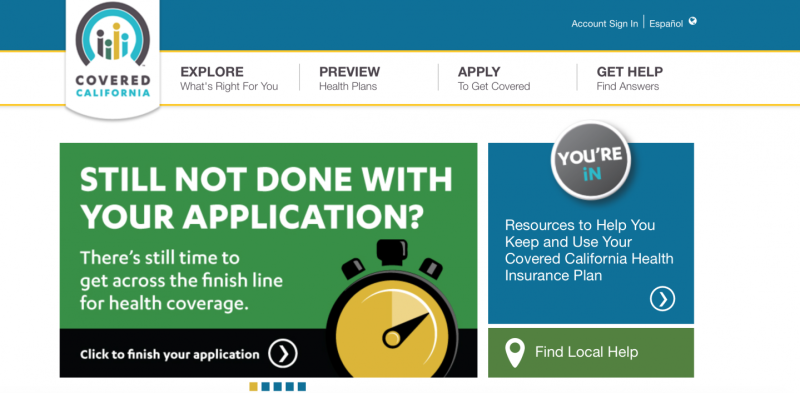
"content": "\u003cdiv class=\"post-body\">\u003cp>\u003cfigure id=\"attachment_16531\" class=\"wp-caption aligncenter\" style=\"max-width: 640px\">\u003ca href=\"http://ww2.kqed.org/stateofhealth/wp-content/uploads/sites/27/2013/12/450630139-e1386185604738.jpg\">\u003cimg class=\"size-large wp-image-16531\" title=\"\" src=\"http://ww2.kqed.org/stateofhealth/wp-content/uploads/sites/27/2013/12/450630139-640x426.jpg\" alt=\"Certified specialist helps a consumer apply to Covered California at a free enrollment fair at Pasadena City College. (David McNew/Getty Images)\" width=\"640\" height=\"426\">\u003c/a>\u003cfigcaption class=\"wp-caption-text\">Certified specialist helps a consumer apply to Covered California at a free enrollment fair at Pasadena City College. (David McNew/Getty Images) \u003ccite>(David McNew/Getty Images)\u003c/cite>\u003c/figcaption>\u003c/figure>\n\u003cp>Covered California will offer a special extension to buy health insurance through the marketplace for people who say they weren't aware they would face a tax penalty for being uninsured.\u003c/p>\n\u003cp>Covered California Executive Director Peter Lee announced the extension Friday. He said the special enrollment will start on Monday and run through April 30. People must attest to the fact that they were not aware of the penalty, which they can do when they apply on the Covered California website.\u003c/p>\n\u003cp>Lee said as many as 600,000 people may face a penalty under the Affordable Care Act. While the extension does not exempt people from paying the 2014 tax penalty, it would help them avoid bigger penalties in 2015.\u003c!--more-->\u003c/p>\n\u003cp>How big?\u003c/p>\n\u003cp>In 2014, the penalty is $95 per person -- or 1 percent of income, which can be much more than $95.\u003c/p>\n\u003cp>\u003c/p>\u003c/div>",
"attributes": {
"named": {},
"numeric": []
}
},
{
"type": "component",
"content": "",
"name": "ad",
"attributes": {
"named": {
"label": "fullwidth"
},
"numeric": [
"fullwidth"
]
}
},
{
"type": "contentString",
"content": "\u003cdiv class=\"post-body\">\u003cp>\u003c/p>\n\u003cp>According to Covered California:\u003c/p>\n\u003cul>\n\u003cli>A single person earning $40,000 a year will pay a penalty of nearly $300 for being uninsured in 2014.\u003c/li>\n\u003cli>A family of four earning $70,000 a year will pay nearly $500 for being uninsured in 2014.\u003c/li>\n\u003c/ul>\n\u003cp>Those penalties increase in 2015, to $325 per person or 2 percent of income:\u003c/p>\n\u003cul>\n\u003cli>That same individual making $40,000 will see their penalty jump from almost $300 to nearly $600.\u003c/li>\n\u003cli>That family of four will see its bill jump from nearly $500 to almost $1,000.\u003c/li>\n\u003c/ul>\n\u003cp>In the meantime, this Los Angeles Times reported earlier this week that Covered California sent erroneous tax forms to about 100,000 of its customers. From \u003ca title=\"Los Angeles Times\" href=\"http://www.latimes.com/business/healthcare/la-fi-obamacare-california-tax-forms-20150213-story.html\" target=\"_blank\">the Times\u003c/a>:\u003c/p>\n\u003cblockquote>\u003cp>At issue is Form 1095-A, which health-law exchanges must send to individuals and families showing how much money they received in 2014 from the federal government to subsidize their health insurance premiums.\u003c/p>\n\u003cp>Covered California said it sent incorrect information on some forms because its customer data didn't match what health plans had on file.\u003c/p>\u003c/blockquote>\n\u003cp>A spokesperson for Covered California says they are correcting the information and will send out revised forms.\u003c/p>\n\u003cp>Enrollment was previously extended until Sunday for people who did not complete their application by the Feb. 15 deadline.\u003c/p>\n\u003cp>So far, \u003ca title=\"http://ww2.kqed.org/stateofhealth/2015/02/17/covered-california-you-still-have-a-few-days-to-sign-up/\" href=\"http://ww2.kqed.org/stateofhealth/2015/02/17/covered-california-you-still-have-a-few-days-to-sign-up/\" target=\"_blank\">1.4 million Californians \u003c/a>have signed up for private insurance.\u003c/p>\n\u003cp>\u003ca title=\"http://www.npr.org/blogs/health/2015/02/20/387760723/administration-grants-tax-time-reprieve-for-obamacare-procrastinators\" href=\"http://www.npr.org/blogs/health/2015/02/20/387760723/administration-grants-tax-time-reprieve-for-obamacare-procrastinators\" target=\"_blank\">The federal exchange also extended enrollment \u003c/a>from March 15 to April 30.\u003c/p>\n\u003cp>\u003c/p>\n\u003cp>\u003cem>The Associated Press contributed to this report. \u003c/em>\u003c/p>\n\n\u003c/div>\u003c/p>",
"attributes": {
"named": {},
"numeric": []
}
}
],
"link": "/stateofhealth/23970/covered-california-grants-special-enrollment-through-april",
"authors": [
"240"
],
"categories": [
"stateofhealth_15"
],
"tags": [
"stateofhealth_368"
],
"featImg": "stateofhealth_16531",
"label": "stateofhealth"
},
"stateofhealth_23932": {
"type": "posts",
"id": "stateofhealth_23932",
"meta": {
"index": "posts_1716263798",
"site": "stateofhealth",
"id": "23932",
"score": null,
"sort": [
1424236548000
]
},
"parent": 0,
"labelTerm": {
"site": "stateofhealth"
},
"blocks": [],
"publishDate": 1424236548,
"format": "aside",
"disqusTitle": "Covered California: You Still Have A Few Days to Sign Up",
"title": "Covered California: You Still Have A Few Days to Sign Up",
"headTitle": "State of Health | KQED News",
"content": "\u003cfigure id=\"attachment_23937\" class=\"wp-caption aligncenter\" style=\"max-width: 640px\">\u003ca href=\"http://ww2.kqed.org/stateofhealth/wp-content/uploads/sites/27/2015/02/Screen-Shot-2015-02-17-at-9.08.14-PM-e1424236127706.png\">\u003cimg class=\"size-large wp-image-23937\" title=\"\" src=\"http://ww2.kqed.org/stateofhealth/wp-content/uploads/sites/27/2015/02/Screen-Shot-2015-02-17-at-9.08.14-PM-640x314.png\" alt=\"Screenshot of Covered California's website.\" width=\"640\" height=\"314\">\u003c/a>\u003cfigcaption class=\"wp-caption-text\">Screenshot of Covered California's website.\u003c/figcaption>\u003c/figure>\n\u003cp>Nearly 474,000 people signed up for health insurance on Covered California, the state's marketplace, by the deadline Sunday night, officials announced today. But if you didn't sign up, you still have a chance.\u003c/p>\n\u003cp>As Covered California\u003ca title=\"http://ww2.kqed.org/stateofhealth/2014/12/17/covered-california-sign-ups-continue-at-strong-pace/#more-23055\" href=\"http://ww2.kqed.org/stateofhealth/2014/12/17/covered-california-sign-ups-continue-at-strong-pace/#more-23055\" target=\"_blank\"> has done in the past\u003c/a>, the agency is allowing a few extra days for those who have started the application process, but not yet finished. That extra time was announced last week.\u003c/p>\n\u003cp>On Tuesday, executive director Peter Lee added a couple more days to the deadline. Now people have until this Sunday to finish applications. The change aligns Covered California with a federal extension announced over the weekend.\u003c!--more-->\u003c/p>\n\u003cp>In addition, Covered California will permit those who say they tried to start an application, but couldn't due to the crush of last minute enrollees, the extra time as well. But those people need to get in-person help.\u003c/p>\n\u003cp>\"They need to go to CoveredCA.com,\" Lee said \"and find a storefront or insurance agent in their community to help them.\" \u003ca title=\"http://www.coveredca.com/get-help/local/events/\" href=\"http://www.coveredca.com/get-help/local/events/\" target=\"_blank\">Many agencies\u003c/a> across the state have announced extra hours this week.\u003c/p>\n\u003cp>[ad fullwidth]\u003c/p>\n\u003cp>Lee said he expects Covered California will reach its goal of 500,000 new enrollees by Sunday.\u003c/p>\n\u003cp>He also\u003ca title=\"http://ww2.kqed.org/stateofhealth/2015/02/12/covered-california-looking-at-enrollment-contingency-plans-tied-to-tax-deadline/\" href=\"http://ww2.kqed.org/stateofhealth/2015/02/12/covered-california-looking-at-enrollment-contingency-plans-tied-to-tax-deadline/\" target=\"_blank\"> reiterated\u003c/a> that the agency is considering a \"special enrollment period\" for people who did not know they would be subject to a tax penalty if they did not have health insurance. \"We are in active discussions right now with the Franchise Tax Board, the Board of Equalization and with some of the major tax advisors in California. We have not decided to (have a special enrollment period), but we think there's a lot of merit and are giving it close consideration.\u003c/p>\n\u003cp>While new enrollees are on target, Covered California appears to have fallen short on renewals. But Lee said the agency had set the target months ago, at 1.2 million people eligible for renewal.\u003c/p>\n\u003cp>\"It ended up being more like 1 million people,\" Lee said. Ultimately, about 944,000 people renewed, and almost all stayed with the same health plan.\u003c/p>\n\u003cp>Nicole Evans, spokesperson for the California Association of Health Plans, did not seem troubled by the change in the renewal estimates. She instead pointed to the high retention rate of health plans.\u003c/p>\n\u003cp>\"For (insurers), knowing that 90 percent of their enrollees are sticking with their existing plan, that means there's stability in the market,\" she said, \"and people are pleased with their coverage.\"\u003c/p>\n\u003cp>Anthony Wright, executive director of Health Access, an advocacy group, said Lee's explanation of the fall off \"seemed credible to me.\"\u003c/p>\n\u003cp>\u003c/p>\n\u003cp>\"I'm not surprised,\" Wright said. \"but there's more work to be done to make sure people are leaving (Covered California) for the right reasons and not the wrong reasons, but I agree with their assessment -- there's a lot of churn in the individual market.\"\u003c/p>\n\n",
"disqusIdentifier": "23932 http://blogs.kqed.org/stateofhealth/?p=23932",
"disqusUrl": "https://ww2.kqed.org/stateofhealth/2015/02/17/covered-california-you-still-have-a-few-days-to-sign-up/",
"stats": {
"hasVideo": false,
"hasChartOrMap": false,
"hasAudio": false,
"hasPolis": false,
"wordCount": 483,
"hasGoogleForm": false,
"hasGallery": false,
"hasHearkenModule": false,
"iframeSrcs": [],
"paragraphCount": 15
},
"modified": 1424475260,
"excerpt": "Nearly 474,000 Californians are newly signed up for health insurance .",
"headData": {
"twImgId": "",
"twTitle": "",
"ogTitle": "",
"ogImgId": "",
"twDescription": "",
"description": "Nearly 474,000 Californians are newly signed up for health insurance .",
"title": "Covered California: You Still Have A Few Days to Sign Up | KQED",
"ogDescription": "",
"schema": {
"@context": "https://schema.org",
"@type": "Article",
"headline": "Covered California: You Still Have A Few Days to Sign Up",
"datePublished": "2015-02-17T21:15:48-08:00",
"dateModified": "2015-02-20T15:34:20-08:00",
"image": "https://cdn.kqed.org/wp-content/uploads/2020/02/KQED-OG-Image@1x.png"
}
},
"guestAuthors": [],
"slug": "covered-california-you-still-have-a-few-days-to-sign-up",
"status": "publish",
"path": "/stateofhealth/23932/covered-california-you-still-have-a-few-days-to-sign-up",
"audioTrackLength": null,
"parsedContent": [
{
"type": "contentString",
"content": "\u003cdiv class=\"post-body\">\u003cp>\u003cfigure id=\"attachment_23937\" class=\"wp-caption aligncenter\" style=\"max-width: 640px\">\u003ca href=\"http://ww2.kqed.org/stateofhealth/wp-content/uploads/sites/27/2015/02/Screen-Shot-2015-02-17-at-9.08.14-PM-e1424236127706.png\">\u003cimg class=\"size-large wp-image-23937\" title=\"\" src=\"http://ww2.kqed.org/stateofhealth/wp-content/uploads/sites/27/2015/02/Screen-Shot-2015-02-17-at-9.08.14-PM-640x314.png\" alt=\"Screenshot of Covered California's website.\" width=\"640\" height=\"314\">\u003c/a>\u003cfigcaption class=\"wp-caption-text\">Screenshot of Covered California's website.\u003c/figcaption>\u003c/figure>\n\u003cp>Nearly 474,000 people signed up for health insurance on Covered California, the state's marketplace, by the deadline Sunday night, officials announced today. But if you didn't sign up, you still have a chance.\u003c/p>\n\u003cp>As Covered California\u003ca title=\"http://ww2.kqed.org/stateofhealth/2014/12/17/covered-california-sign-ups-continue-at-strong-pace/#more-23055\" href=\"http://ww2.kqed.org/stateofhealth/2014/12/17/covered-california-sign-ups-continue-at-strong-pace/#more-23055\" target=\"_blank\"> has done in the past\u003c/a>, the agency is allowing a few extra days for those who have started the application process, but not yet finished. That extra time was announced last week.\u003c/p>\n\u003cp>On Tuesday, executive director Peter Lee added a couple more days to the deadline. Now people have until this Sunday to finish applications. The change aligns Covered California with a federal extension announced over the weekend.\u003c!--more-->\u003c/p>\n\u003cp>In addition, Covered California will permit those who say they tried to start an application, but couldn't due to the crush of last minute enrollees, the extra time as well. But those people need to get in-person help.\u003c/p>\n\u003cp>\"They need to go to CoveredCA.com,\" Lee said \"and find a storefront or insurance agent in their community to help them.\" \u003ca title=\"http://www.coveredca.com/get-help/local/events/\" href=\"http://www.coveredca.com/get-help/local/events/\" target=\"_blank\">Many agencies\u003c/a> across the state have announced extra hours this week.\u003c/p>\n\u003cp>\u003c/p>\u003c/div>",
"attributes": {
"named": {},
"numeric": []
}
},
{
"type": "component",
"content": "",
"name": "ad",
"attributes": {
"named": {
"label": "fullwidth"
},
"numeric": [
"fullwidth"
]
}
},
{
"type": "contentString",
"content": "\u003cdiv class=\"post-body\">\u003cp>\u003c/p>\n\u003cp>Lee said he expects Covered California will reach its goal of 500,000 new enrollees by Sunday.\u003c/p>\n\u003cp>He also\u003ca title=\"http://ww2.kqed.org/stateofhealth/2015/02/12/covered-california-looking-at-enrollment-contingency-plans-tied-to-tax-deadline/\" href=\"http://ww2.kqed.org/stateofhealth/2015/02/12/covered-california-looking-at-enrollment-contingency-plans-tied-to-tax-deadline/\" target=\"_blank\"> reiterated\u003c/a> that the agency is considering a \"special enrollment period\" for people who did not know they would be subject to a tax penalty if they did not have health insurance. \"We are in active discussions right now with the Franchise Tax Board, the Board of Equalization and with some of the major tax advisors in California. We have not decided to (have a special enrollment period), but we think there's a lot of merit and are giving it close consideration.\u003c/p>\n\u003cp>While new enrollees are on target, Covered California appears to have fallen short on renewals. But Lee said the agency had set the target months ago, at 1.2 million people eligible for renewal.\u003c/p>\n\u003cp>\"It ended up being more like 1 million people,\" Lee said. Ultimately, about 944,000 people renewed, and almost all stayed with the same health plan.\u003c/p>\n\u003cp>Nicole Evans, spokesperson for the California Association of Health Plans, did not seem troubled by the change in the renewal estimates. She instead pointed to the high retention rate of health plans.\u003c/p>\n\u003cp>\"For (insurers), knowing that 90 percent of their enrollees are sticking with their existing plan, that means there's stability in the market,\" she said, \"and people are pleased with their coverage.\"\u003c/p>\n\u003cp>Anthony Wright, executive director of Health Access, an advocacy group, said Lee's explanation of the fall off \"seemed credible to me.\"\u003c/p>\n\u003cp>\u003c/p>\n\u003cp>\"I'm not surprised,\" Wright said. \"but there's more work to be done to make sure people are leaving (Covered California) for the right reasons and not the wrong reasons, but I agree with their assessment -- there's a lot of churn in the individual market.\"\u003c/p>\n\n\u003c/div>\u003c/p>",
"attributes": {
"named": {},
"numeric": []
}
}
],
"link": "/stateofhealth/23932/covered-california-you-still-have-a-few-days-to-sign-up",
"authors": [
"240"
],
"categories": [
"stateofhealth_15"
],
"tags": [
"stateofhealth_368"
],
"featImg": "stateofhealth_23937",
"label": "stateofhealth"
},
"stateofhealth_23898": {
"type": "posts",
"id": "stateofhealth_23898",
"meta": {
"index": "posts_1716263798",
"site": "stateofhealth",
"id": "23898",
"score": null,
"sort": [
1423789208000
]
},
"parent": 0,
"labelTerm": {
"site": "stateofhealth"
},
"blocks": [],
"publishDate": 1423789208,
"format": "aside",
"disqusTitle": "Covered California Considering Enrollment 'Contingency Plans' Tied to Tax Deadline",
"title": "Covered California Considering Enrollment 'Contingency Plans' Tied to Tax Deadline",
"headTitle": "State of Health | KQED News",
"content": "\u003cfigure id=\"attachment_23105\" class=\"wp-caption aligncenter\" style=\"max-width: 640px\">\u003ca href=\"http://ww2.kqed.org/stateofhealth/wp-content/uploads/sites/27/2014/12/coveredcaliforniashot.jpg\">\u003cimg class=\"size-large wp-image-23105\" title=\"\" src=\"http://ww2.kqed.org/stateofhealth/wp-content/uploads/sites/27/2014/12/coveredcaliforniashot-640x392.jpg\" alt=\"Screenshot from the Covered California website. \" width=\"640\" height=\"392\">\u003c/a>\u003cfigcaption class=\"wp-caption-text\">Screenshot from the Covered California website.\u003c/figcaption>\u003c/figure>\n\u003cp>Covered California open enrollment ends this Sunday. Sort of.\u003c/p>\n\u003caside class=\"pullquote alignleft\">Special enrollment for people who did not know about the tax penalty? \u003c/aside>\n\u003cp>For starters, the agency announced Thursday that people who start an application by this Sunday get until next Friday, Feb. 20, to finish it. That's similar to steps that Covered California \u003ca title=\"http://ww2.kqed.org/stateofhealth/2014/03/31/covered-california-extends-deadline-with-caveats/\" href=\"http://ww2.kqed.org/stateofhealth/2014/03/31/covered-california-extends-deadline-with-caveats/\" target=\"_blank\">has taken in the past. \u003c/a>\u003c/p>\n\u003cp>But advocates have long been frustrated with the timing of open enrollment. That's because of how penalties for lacking insurance are assessed -- on your taxes. The tax deadline is not for another two months, April 15.\u003c!--more-->\u003c/p>\n\u003cp>It's easy to imagine that plenty of people will discover the penalty as they file their taxes over the next two months -- and simultaneously discover they are locked out of buying insurance.\u003c/p>\n\u003cp>In a surprise, Peter Lee told me Thursday afternoon that Covered California is considering \"contingency plans.\"\u003c/p>\n\u003cp>[ad fullwidth]\u003c/p>\n\u003cp>[soundcloud url=\"https://api.soundcloud.com/tracks/191032658\" params=\"color=ff5500&auto_play=false&hide_related=false&show_comments=true&show_user=true&show_reposts=false\" width=\"100%\" height=\"166\" iframe=\"true\" /]\u003c/p>\n\u003cp>He said the agency will be \"looking actively\" at people who might not have understood there was a penalty. \"Do we make a special provision for them between now and the end of tax season?\" he said.\u003c/p>\n\u003cp>Lee stressed there has been no decision, that Covered California is focusing now on getting through open enrollment, \"but this is a major issue and we're going to be looking at this in the next week or two.\"\u003c/p>\n\u003cp>Lee said the move would not require action by its board. \"Covered California has the authority to adopt special enrollment criteria if consumers didn't have the opportunity and didn't have the information to enroll,\" Lee said.\u003c/p>\n\u003cp>Anthony Wright, executive director of Health Access, an advocacy group, seemed intrigued by the idea. \"We were never big fans of the open enrollment period to begin with,\" he said.\u003c/p>\n\u003cp>Wright said that an additional enrollment period \"would attract generally healthy people into coverage,\" arguing that people who are sick are likely already in the system.\u003c/p>\n\u003cp>Wright said there was no federally mandated open enrollment period. His agency had advocated at the federal level to tie the open enrollment more closely to the tax season. The current open enrollment started Nov. 15 and runs through Sunday. \"You lose a lot of time during the holidays,\" Wright said, \"because no one is focused on (health insurance).\"\u003c/p>\n\u003cp>Nicole Evans, spokeswoman for the California Association of Health Plans, said, \"This is the first we've heard of it,\" and declined to comment as the organization had not received any \"official communication\" from Covered California.\u003c/p>\n\u003cp>\u003c/p>\n\u003cp>Last year's open enrollment ran more than six months, Wright pointed out. The open enrollment period \"is not handed down in stone. We can take a look at it,\" he said.\u003c/p>\n\n",
"disqusIdentifier": "23898 http://blogs.kqed.org/stateofhealth/?p=23898",
"disqusUrl": "https://ww2.kqed.org/stateofhealth/2015/02/12/covered-california-looking-at-enrollment-contingency-plans-tied-to-tax-deadline/",
"stats": {
"hasVideo": false,
"hasChartOrMap": false,
"hasAudio": false,
"hasPolis": false,
"wordCount": 486,
"hasGoogleForm": false,
"hasGallery": false,
"hasHearkenModule": false,
"iframeSrcs": [],
"paragraphCount": 16
},
"modified": 1423932570,
"excerpt": "The problem is that open enrollment ends two full months before taxes -- and penalties for not being insured -- are due.",
"headData": {
"twImgId": "",
"twTitle": "",
"ogTitle": "",
"ogImgId": "",
"twDescription": "",
"description": "The problem is that open enrollment ends two full months before taxes -- and penalties for not being insured -- are due.",
"title": "Covered California Considering Enrollment 'Contingency Plans' Tied to Tax Deadline | KQED",
"ogDescription": "",
"schema": {
"@context": "https://schema.org",
"@type": "Article",
"headline": "Covered California Considering Enrollment 'Contingency Plans' Tied to Tax Deadline",
"datePublished": "2015-02-12T17:00:08-08:00",
"dateModified": "2015-02-14T08:49:30-08:00",
"image": "https://cdn.kqed.org/wp-content/uploads/2020/02/KQED-OG-Image@1x.png"
}
},
"guestAuthors": [],
"slug": "covered-california-looking-at-enrollment-contingency-plans-tied-to-tax-deadline",
"status": "publish",
"path": "/stateofhealth/23898/covered-california-looking-at-enrollment-contingency-plans-tied-to-tax-deadline",
"audioTrackLength": null,
"parsedContent": [
{
"type": "contentString",
"content": "\u003cdiv class=\"post-body\">\u003cp>\u003cfigure id=\"attachment_23105\" class=\"wp-caption aligncenter\" style=\"max-width: 640px\">\u003ca href=\"http://ww2.kqed.org/stateofhealth/wp-content/uploads/sites/27/2014/12/coveredcaliforniashot.jpg\">\u003cimg class=\"size-large wp-image-23105\" title=\"\" src=\"http://ww2.kqed.org/stateofhealth/wp-content/uploads/sites/27/2014/12/coveredcaliforniashot-640x392.jpg\" alt=\"Screenshot from the Covered California website. \" width=\"640\" height=\"392\">\u003c/a>\u003cfigcaption class=\"wp-caption-text\">Screenshot from the Covered California website.\u003c/figcaption>\u003c/figure>\n\u003cp>Covered California open enrollment ends this Sunday. Sort of.\u003c/p>\n\u003caside class=\"pullquote alignleft\">Special enrollment for people who did not know about the tax penalty? \u003c/aside>\n\u003cp>For starters, the agency announced Thursday that people who start an application by this Sunday get until next Friday, Feb. 20, to finish it. That's similar to steps that Covered California \u003ca title=\"http://ww2.kqed.org/stateofhealth/2014/03/31/covered-california-extends-deadline-with-caveats/\" href=\"http://ww2.kqed.org/stateofhealth/2014/03/31/covered-california-extends-deadline-with-caveats/\" target=\"_blank\">has taken in the past. \u003c/a>\u003c/p>\n\u003cp>But advocates have long been frustrated with the timing of open enrollment. That's because of how penalties for lacking insurance are assessed -- on your taxes. The tax deadline is not for another two months, April 15.\u003c!--more-->\u003c/p>\n\u003cp>It's easy to imagine that plenty of people will discover the penalty as they file their taxes over the next two months -- and simultaneously discover they are locked out of buying insurance.\u003c/p>\n\u003cp>In a surprise, Peter Lee told me Thursday afternoon that Covered California is considering \"contingency plans.\"\u003c/p>\n\u003cp>\u003c/p>\u003c/div>",
"attributes": {
"named": {},
"numeric": []
}
},
{
"type": "component",
"content": "",
"name": "ad",
"attributes": {
"named": {
"label": "fullwidth"
},
"numeric": [
"fullwidth"
]
}
},
{
"type": "contentString",
"content": "\u003cdiv class=\"post-body\">\u003cp>\u003c/p>\n\u003cp>\u003c/p>\u003cp>\u003cdiv class='utils-parseShortcode-shortcodes-__shortcodes__shortcodeWrapper'>\n \u003ciframe width='100%' height='166'\n scrolling='no' frameborder='no'\n src='https://w.soundcloud.com/player/?url=https://api.soundcloud.com/tracks/191032658&visual=true&color=ff5500&auto_play=false&hide_related=false&show_comments=true&show_user=true&show_reposts=false'\n title='https://api.soundcloud.com/tracks/191032658'>\n \u003c/iframe>\n \u003c/div>\u003c/p>\u003cp>\u003c/p>\n\u003cp>He said the agency will be \"looking actively\" at people who might not have understood there was a penalty. \"Do we make a special provision for them between now and the end of tax season?\" he said.\u003c/p>\n\u003cp>Lee stressed there has been no decision, that Covered California is focusing now on getting through open enrollment, \"but this is a major issue and we're going to be looking at this in the next week or two.\"\u003c/p>\n\u003cp>Lee said the move would not require action by its board. \"Covered California has the authority to adopt special enrollment criteria if consumers didn't have the opportunity and didn't have the information to enroll,\" Lee said.\u003c/p>\n\u003cp>Anthony Wright, executive director of Health Access, an advocacy group, seemed intrigued by the idea. \"We were never big fans of the open enrollment period to begin with,\" he said.\u003c/p>\n\u003cp>Wright said that an additional enrollment period \"would attract generally healthy people into coverage,\" arguing that people who are sick are likely already in the system.\u003c/p>\n\u003cp>Wright said there was no federally mandated open enrollment period. His agency had advocated at the federal level to tie the open enrollment more closely to the tax season. The current open enrollment started Nov. 15 and runs through Sunday. \"You lose a lot of time during the holidays,\" Wright said, \"because no one is focused on (health insurance).\"\u003c/p>\n\u003cp>Nicole Evans, spokeswoman for the California Association of Health Plans, said, \"This is the first we've heard of it,\" and declined to comment as the organization had not received any \"official communication\" from Covered California.\u003c/p>\n\u003cp>\u003c/p>\n\u003cp>Last year's open enrollment ran more than six months, Wright pointed out. The open enrollment period \"is not handed down in stone. We can take a look at it,\" he said.\u003c/p>\n\n\u003c/div>\u003c/p>",
"attributes": {
"named": {},
"numeric": []
}
}
],
"link": "/stateofhealth/23898/covered-california-looking-at-enrollment-contingency-plans-tied-to-tax-deadline",
"authors": [
"240"
],
"categories": [
"stateofhealth_15",
"stateofhealth_14"
],
"tags": [
"stateofhealth_368"
],
"featImg": "stateofhealth_23105",
"label": "stateofhealth"
},
"stateofhealth_23893": {
"type": "posts",
"id": "stateofhealth_23893",
"meta": {
"index": "posts_1716263798",
"site": "stateofhealth",
"id": "23893",
"score": null,
"sort": [
1423781841000
]
},
"parent": 0,
"labelTerm": {
"site": "stateofhealth"
},
"blocks": [],
"publishDate": 1423781841,
"format": "aside",
"disqusTitle": "As Covered California Enrollment Winds Down, a Push for HIV Prevention",
"title": "As Covered California Enrollment Winds Down, a Push for HIV Prevention",
"headTitle": "State of Health | KQED News",
"content": "\u003cp>\u003cstrong>By Heather Boerner\u003c/strong>\u003c/p>\n\u003cp>You’ve got just three days left to choose a new health plan under Covered California.\u003c/p>\n\u003cp>Choose carefully — especially if you want to take the only pill approved by the Food and Drug Administration to block HIV.\u003c/p>\n\u003cp>“Some plans may look appealing because their premiums are low,” Dr. Hyman Scott, who specializes in HIV at San Francisco General Hospital, said he tells patients interested in the drug, Truvada. “But the copays and deductibles, especially for what are often considered specialty drugs, can be really high.”\u003c/p>\n\u003cp>Enrollment in Covered California closes Sunday. Local doctors, social workers and navigators are helping the people most at risk for HIV figure out how — and if — they can afford the drug, which costs $13,000 a year, according to the drug’s maker, Gilead Sciences.\u003c!--more-->\u003c/p>\n\u003cp>[ad fullwidth]\u003c/p>\n\u003cp>In September, Dr. Robert Grant, HIV prevention researcher and professor at UCSF’s Gladstone Institute, estimated that if 6,000 San Franciscans at high risk infection took Truvada, the number of \u003ca title=\"http://ww2.kqed.org/stateofhealth/2014/09/18/sf-supervisor-proposes-funding-better-access-to-hiv-preventive-drug/\" href=\"http://ww2.kqed.org/stateofhealth/2014/09/18/sf-supervisor-proposes-funding-better-access-to-hiv-preventive-drug/\" target=\"_blank\">new infections annually in the city might drop from 400 to 50\u003c/a>.\u003c/p>\n\u003cp>But for individuals — and the city at large — to benefit from the 90-percent effectiveness rate of Truvada when taken daily, people have to be able to afford it. And one of the big barriers to that is simply understanding health insurance. \u003ca href=\"http://kff.org/report-section/survey-of-non-group-health-insurance-enrollees-section-2/\" target=\"_blank\">A 2014 Kaiser Family Foundation survey\u003c/a> found that 18 percent of people who buy their own insurance didn’t know their monthly premium. Another 37 percent didn’t what their deductible was, and that’s to say nothing of the cost of prescriptions.\u003c/p>\n\u003cp>But to afford Truvada, you have to weigh all these factors, said Matt Sachs, San Francisco’s only official PrEP navigator. So, he said, start by checking the following on every plan you’re considering:\u003c/p>\n\u003cul>\n\u003cli>\u003cstrong>Your premium\u003c/strong>: That is, how much you pay a month.\u003c/li>\n\u003cli>\u003cstrong>Your deductible:\u003c/strong> This is how much you must pay out of pocket before your benefits kick in. On Covered California, the lowest-premium plans also come with a $5,000 deductible.\u003c/li>\n\u003cli>\u003cstrong>Your prescription benefits:\u003c/strong> On plans with the lowest premiums under Covered California, you’re also likely to have a deductible for prescriptions in addition to a deductible for appointments and lab work.\u003c/li>\n\u003c/ul>\n\u003cp>(These tips also apply to anyone in the market for health insurance.)\u003c/p>\n\u003cp>The best bet for a plan that will cover Truvada? Sachs told \u003ca href=\"http://www.thedailybeast.com/articles/2015/02/08/even-after-obamacare-it-s-still-way-too-hard-to-get-hiv-meds.html\" target=\"_blank\">The Daily Beast\u003c/a> that Covered California \"silver-tier\" plans, are usually the best bet. You’ll pay more out of pocket every month for your premium than you would for a bronze plan, but silver plans have lower deductibles — only $250 — and copays of $50.\u003c/p>\n\u003cp>Since the regimen for Truvada includes quarterly doctors’ appointments and lab work to test for HIV, sexually transmitted infections, and liver and kidney function, a silver-level plan may cost you less in the long run, said Brad Hare, director of HIV Care and Prevention at Kaiser Permanente San Francisco.\u003c/p>\n\u003cp>“Just like you have to talk about the side effects of drugs and safer sex, with Truvada, we also have to talk about the cost of the drug,” he said.\u003c/p>\n\u003cp>If you are planning to keep the same Covered California plan, that doesn’t mean your benefits will stay the same year over year. Hare and Scott both said they advise patients to investigate their current plans before the end of open enrollment, since many plans are changing radically in terms of the benefits they provide, and cost-sharing they require.\u003c/p>\n\u003cp>“Covered California is new,” he said. “There are going to be a lot of changes to Covered California plans in the next few years. So it’s really important, if people aren’t changing plans, to look every year and to be mindful of what your pharmaceutical benefits are.”\u003c/p>\n\u003cp>But even if you investigate your plan thoroughly, you may be hit with a surprise, as Erik Gibb was when he went to pick up his three-month supply of Truvada in January. Gibb did not buy through Covered California, he purchased a plan directly from Kaiser San Francisco, a plan with a high premium, but no deductible and low copays for prescriptions — all so he could afford PrEP.\u003c/p>\n\u003cp>But at the pharmacy, he discovered that the cost of the drugs has radically changed in 2015 — from a $15 copay to more than $400, the result of a formulary change that switched Truvada and other specialty drugs from payment on a copay basis to coinsurance, where patients pay a percentage of the cost of the drug. And Gibb is not alone. When San Francisco AIDS Foundation and Project Inform created \u003ca href=\"http://www.projectinform.org/pdf/CCformularies.pdf\" target=\"_blank\">an analysis of where HIV drugs like Truvada fall on various Covered California-plan formularies\u003c/a>, they found unpredictable changes, Courtney Mulhern-Pearson with the AIDS Foundation told The Daily Beast.\u003c/p>\n\u003cp>Kaiser's Hare confirmed the change, saying the company’s pharmacy department made the change, affecting at least all Kaiser's California facilities and potentially all of them nationwide. While the change doesn’t affect every Kaiser insurance plan, it does affect every plan the company offers on Covered California and some direct-purchase individual plans. The change means coinsurance costs of between 10 and 40 percent.\u003c/p>\n\u003cp>For his part, Gibb doesn’t like the switch, but at least for him, it doesn’t put Truvada out of reach.\u003c/p>\n\u003cp>“Don't get me wrong, I don't like paying that at all,” he said. “And I would love it if Kaiser would integrate with the reimbursement program like other pharmacies, but I can deal.”\u003c/p>\n\u003cp>The cost change is a concern from Hare’s end, as well. His department is contacting PrEP patients who might be at risk of cost changes to warn them. He said he directs them to Kaiser’s internal medical financial assistance program.\u003c/p>\n\u003cp>There’s also a \u003ca href=\"http://www.gilead.com/responsibility/us-patient-access/truvada%20for%20prep%20medication%20assistance%20program\" target=\"_blank\">medication assistance program from Gilead\u003c/a>, which covers the full cost of the drug for a limited time for people who earn less than $58,000 a year, as well as a Gilead copay assistance card, which covers $300 a month toward the cost of the prescription. Last month, the Patient Access Network (PAN) Foundation also announced that it will cover Truvada for PrEP in \u003ca title=\"http://www.panfoundation.org/hiv-treatment-and-prevention\" href=\"http://www.panfoundation.org/hiv-treatment-and-prevention\" target=\"_blank\">its drug assistance program\u003c/a>.\u003c/p>\n\u003cp>[ad floatright]\u003c/p>\n\u003cp>“There definitely is a concern on our end for all the costs,” said Hare. “The last thing we want is for people to go to the pharmacy to pick up their prescriptions and be surprised by a high deductible or coinsurance. Cost is still the elephant in the room.”\u003c/p>\n\n",
"disqusIdentifier": "23893 http://blogs.kqed.org/stateofhealth/?p=23893",
"disqusUrl": "https://ww2.kqed.org/stateofhealth/2015/02/12/as-covered-california-enrollment-winds-down-a-push-for-hiv-prevention/",
"stats": {
"hasVideo": false,
"hasChartOrMap": false,
"hasAudio": false,
"hasPolis": false,
"wordCount": 1139,
"hasGoogleForm": false,
"hasGallery": false,
"hasHearkenModule": false,
"iframeSrcs": [],
"paragraphCount": 24
},
"modified": 1423855850,
"excerpt": null,
"headData": {
"twImgId": "",
"twTitle": "",
"ogTitle": "",
"ogImgId": "",
"twDescription": "",
"description": "By Heather Boerner You’ve got just three days left to choose a new health plan under Covered California. Choose carefully — especially if you want to take the only pill approved by the Food and Drug Administration to block HIV. “Some plans may look appealing because their premiums are low,” Dr. Hyman Scott, who specializes",
"title": "As Covered California Enrollment Winds Down, a Push for HIV Prevention | KQED",
"ogDescription": "",
"schema": {
"@context": "https://schema.org",
"@type": "Article",
"headline": "As Covered California Enrollment Winds Down, a Push for HIV Prevention",
"datePublished": "2015-02-12T14:57:21-08:00",
"dateModified": "2015-02-13T11:30:50-08:00",
"image": "https://cdn.kqed.org/wp-content/uploads/2020/02/KQED-OG-Image@1x.png"
}
},
"guestAuthors": [],
"slug": "as-covered-california-enrollment-winds-down-a-push-for-hiv-prevention",
"status": "publish",
"path": "/stateofhealth/23893/as-covered-california-enrollment-winds-down-a-push-for-hiv-prevention",
"audioTrackLength": null,
"parsedContent": [
{
"type": "contentString",
"content": "\u003cdiv class=\"post-body\">\u003cp>\u003cp>\u003cstrong>By Heather Boerner\u003c/strong>\u003c/p>\n\u003cp>You’ve got just three days left to choose a new health plan under Covered California.\u003c/p>\n\u003cp>Choose carefully — especially if you want to take the only pill approved by the Food and Drug Administration to block HIV.\u003c/p>\n\u003cp>“Some plans may look appealing because their premiums are low,” Dr. Hyman Scott, who specializes in HIV at San Francisco General Hospital, said he tells patients interested in the drug, Truvada. “But the copays and deductibles, especially for what are often considered specialty drugs, can be really high.”\u003c/p>\n\u003cp>Enrollment in Covered California closes Sunday. Local doctors, social workers and navigators are helping the people most at risk for HIV figure out how — and if — they can afford the drug, which costs $13,000 a year, according to the drug’s maker, Gilead Sciences.\u003c!--more-->\u003c/p>\n\u003cp>\u003c/p>\u003c/div>",
"attributes": {
"named": {},
"numeric": []
}
},
{
"type": "component",
"content": "",
"name": "ad",
"attributes": {
"named": {
"label": "fullwidth"
},
"numeric": [
"fullwidth"
]
}
},
{
"type": "contentString",
"content": "\u003cdiv class=\"post-body\">\u003cp>\u003c/p>\n\u003cp>In September, Dr. Robert Grant, HIV prevention researcher and professor at UCSF’s Gladstone Institute, estimated that if 6,000 San Franciscans at high risk infection took Truvada, the number of \u003ca title=\"http://ww2.kqed.org/stateofhealth/2014/09/18/sf-supervisor-proposes-funding-better-access-to-hiv-preventive-drug/\" href=\"http://ww2.kqed.org/stateofhealth/2014/09/18/sf-supervisor-proposes-funding-better-access-to-hiv-preventive-drug/\" target=\"_blank\">new infections annually in the city might drop from 400 to 50\u003c/a>.\u003c/p>\n\u003cp>But for individuals — and the city at large — to benefit from the 90-percent effectiveness rate of Truvada when taken daily, people have to be able to afford it. And one of the big barriers to that is simply understanding health insurance. \u003ca href=\"http://kff.org/report-section/survey-of-non-group-health-insurance-enrollees-section-2/\" target=\"_blank\">A 2014 Kaiser Family Foundation survey\u003c/a> found that 18 percent of people who buy their own insurance didn’t know their monthly premium. Another 37 percent didn’t what their deductible was, and that’s to say nothing of the cost of prescriptions.\u003c/p>\n\u003cp>But to afford Truvada, you have to weigh all these factors, said Matt Sachs, San Francisco’s only official PrEP navigator. So, he said, start by checking the following on every plan you’re considering:\u003c/p>\n\u003cul>\n\u003cli>\u003cstrong>Your premium\u003c/strong>: That is, how much you pay a month.\u003c/li>\n\u003cli>\u003cstrong>Your deductible:\u003c/strong> This is how much you must pay out of pocket before your benefits kick in. On Covered California, the lowest-premium plans also come with a $5,000 deductible.\u003c/li>\n\u003cli>\u003cstrong>Your prescription benefits:\u003c/strong> On plans with the lowest premiums under Covered California, you’re also likely to have a deductible for prescriptions in addition to a deductible for appointments and lab work.\u003c/li>\n\u003c/ul>\n\u003cp>(These tips also apply to anyone in the market for health insurance.)\u003c/p>\n\u003cp>The best bet for a plan that will cover Truvada? Sachs told \u003ca href=\"http://www.thedailybeast.com/articles/2015/02/08/even-after-obamacare-it-s-still-way-too-hard-to-get-hiv-meds.html\" target=\"_blank\">The Daily Beast\u003c/a> that Covered California \"silver-tier\" plans, are usually the best bet. You’ll pay more out of pocket every month for your premium than you would for a bronze plan, but silver plans have lower deductibles — only $250 — and copays of $50.\u003c/p>\n\u003cp>Since the regimen for Truvada includes quarterly doctors’ appointments and lab work to test for HIV, sexually transmitted infections, and liver and kidney function, a silver-level plan may cost you less in the long run, said Brad Hare, director of HIV Care and Prevention at Kaiser Permanente San Francisco.\u003c/p>\n\u003cp>“Just like you have to talk about the side effects of drugs and safer sex, with Truvada, we also have to talk about the cost of the drug,” he said.\u003c/p>\n\u003cp>If you are planning to keep the same Covered California plan, that doesn’t mean your benefits will stay the same year over year. Hare and Scott both said they advise patients to investigate their current plans before the end of open enrollment, since many plans are changing radically in terms of the benefits they provide, and cost-sharing they require.\u003c/p>\n\u003cp>“Covered California is new,” he said. “There are going to be a lot of changes to Covered California plans in the next few years. So it’s really important, if people aren’t changing plans, to look every year and to be mindful of what your pharmaceutical benefits are.”\u003c/p>\n\u003cp>But even if you investigate your plan thoroughly, you may be hit with a surprise, as Erik Gibb was when he went to pick up his three-month supply of Truvada in January. Gibb did not buy through Covered California, he purchased a plan directly from Kaiser San Francisco, a plan with a high premium, but no deductible and low copays for prescriptions — all so he could afford PrEP.\u003c/p>\n\u003cp>But at the pharmacy, he discovered that the cost of the drugs has radically changed in 2015 — from a $15 copay to more than $400, the result of a formulary change that switched Truvada and other specialty drugs from payment on a copay basis to coinsurance, where patients pay a percentage of the cost of the drug. And Gibb is not alone. When San Francisco AIDS Foundation and Project Inform created \u003ca href=\"http://www.projectinform.org/pdf/CCformularies.pdf\" target=\"_blank\">an analysis of where HIV drugs like Truvada fall on various Covered California-plan formularies\u003c/a>, they found unpredictable changes, Courtney Mulhern-Pearson with the AIDS Foundation told The Daily Beast.\u003c/p>\n\u003cp>Kaiser's Hare confirmed the change, saying the company’s pharmacy department made the change, affecting at least all Kaiser's California facilities and potentially all of them nationwide. While the change doesn’t affect every Kaiser insurance plan, it does affect every plan the company offers on Covered California and some direct-purchase individual plans. The change means coinsurance costs of between 10 and 40 percent.\u003c/p>\n\u003cp>For his part, Gibb doesn’t like the switch, but at least for him, it doesn’t put Truvada out of reach.\u003c/p>\n\u003cp>“Don't get me wrong, I don't like paying that at all,” he said. “And I would love it if Kaiser would integrate with the reimbursement program like other pharmacies, but I can deal.”\u003c/p>\n\u003cp>The cost change is a concern from Hare’s end, as well. His department is contacting PrEP patients who might be at risk of cost changes to warn them. He said he directs them to Kaiser’s internal medical financial assistance program.\u003c/p>\n\u003cp>There’s also a \u003ca href=\"http://www.gilead.com/responsibility/us-patient-access/truvada%20for%20prep%20medication%20assistance%20program\" target=\"_blank\">medication assistance program from Gilead\u003c/a>, which covers the full cost of the drug for a limited time for people who earn less than $58,000 a year, as well as a Gilead copay assistance card, which covers $300 a month toward the cost of the prescription. Last month, the Patient Access Network (PAN) Foundation also announced that it will cover Truvada for PrEP in \u003ca title=\"http://www.panfoundation.org/hiv-treatment-and-prevention\" href=\"http://www.panfoundation.org/hiv-treatment-and-prevention\" target=\"_blank\">its drug assistance program\u003c/a>.\u003c/p>\n\u003cp>\u003c/p>\u003c/div>",
"attributes": {
"named": {},
"numeric": []
}
},
{
"type": "component",
"content": "",
"name": "ad",
"attributes": {
"named": {
"label": "floatright"
},
"numeric": [
"floatright"
]
}
},
{
"type": "contentString",
"content": "\u003cdiv class=\"post-body\">\u003cp>\u003c/p>\n\u003cp>“There definitely is a concern on our end for all the costs,” said Hare. “The last thing we want is for people to go to the pharmacy to pick up their prescriptions and be surprised by a high deductible or coinsurance. Cost is still the elephant in the room.”\u003c/p>\n\n\u003c/div>\u003c/p>",
"attributes": {
"named": {},
"numeric": []
}
}
],
"link": "/stateofhealth/23893/as-covered-california-enrollment-winds-down-a-push-for-hiv-prevention",
"authors": [
"8344"
],
"categories": [
"stateofhealth_15",
"stateofhealth_13"
],
"tags": [
"stateofhealth_368",
"stateofhealth_64"
],
"featImg": "stateofhealth_5765",
"label": "stateofhealth"
},
"stateofhealth_23871": {
"type": "posts",
"id": "stateofhealth_23871",
"meta": {
"index": "posts_1716263798",
"site": "stateofhealth",
"id": "23871",
"score": null,
"sort": [
1423612685000
]
},
"parent": 0,
"labelTerm": {
"site": "stateofhealth"
},
"blocks": [],
"publishDate": 1423612685,
"format": "aside",
"disqusTitle": "Schools Helping Families Enroll in Covered California and Medi-Cal",
"title": "Schools Helping Families Enroll in Covered California and Medi-Cal",
"headTitle": "State of Health | KQED News",
"content": "\u003cfigure id=\"attachment_23872\" class=\"wp-caption aligncenter\" style=\"max-width: 640px\">\u003ca href=\"http://ww2.kqed.org/stateofhealth/wp-content/uploads/sites/27/2015/02/IMG_3152-e1423612551360.jpg\">\u003cimg class=\"size-large wp-image-23872\" title=\"\" src=\"http://ww2.kqed.org/stateofhealth/wp-content/uploads/sites/27/2015/02/IMG_3152-640x427.jpg\" alt=\"A parent talks to a health care enrollment specialist at a health insurance sign-up event at Natomas Unified in Sacramento. (Courtesy: The Children's Partnership)\" width=\"640\" height=\"427\">\u003c/a>\u003cfigcaption class=\"wp-caption-text\">A parent talks to a health care enrollment specialist at a health insurance sign-up event at Natomas Unified in Sacramento. (Courtesy: The Children's Partnership)\u003c/figcaption>\u003c/figure>\n\u003cp>\u003cstrong>By Jane Meredith Adams,\u003c/strong> \u003ca title=\"http://edsource.org/2015/schools-help-families-enroll-in-covered-california-medi-cal/74097#.VNqXe0vJ4Ts\" href=\"http://edsource.org/2015/schools-help-families-enroll-in-covered-california-medi-cal/74097#.VNqXe0vJ4Ts\" target=\"_blank\">EdSource\u003c/a>\u003c/p>\n\u003cp>With huge numbers of California children still uninsured, schools are beginning to take the lead in letting families know that affordable health care coverage is available.\u003cdel>\u003c/del>\u003c/p>\n\u003caside class=\"pullquote alignleft\">The deadline to sign up for a Covered California plan is this Sunday. \u003c/aside>\n\u003cp>In school libraries and courtyards from Sacramento to Los Angeles and beyond, trained enrollment counselors have been invited to set up folding tables, commandeer desk space and corral parents before the Feb. 15 sign-up deadline for Covered California, the state’s health insurance marketplace created under the Affordable Care Act.\u003c/p>\n\u003cp>And the outreach will increase. Under a new state law, all California schools must include in their 2015-16 enrollment packets information about options for health care coverage and how to get help with the sign-up process. The law, \u003ca class=\"external\" href=\"http://leginfo.legislature.ca.gov/faces/billNavClient.xhtml?bill_id=201320140AB2706\" target=\"_blank\">Assembly Bill 2706\u003c/a>, authored by Roger Hernández, D-West Covina, is intended to reduce the number of children who are eligible for health insurance subsidies but remain uninsured.\u003c!--more-->\u003c/p>\n\u003cp>“We don’t expect school administrators to be health care enrollers or experts in health care,” said Stephanie Papas, a school health education consultant at the California Department of Education.\u003c/p>\n\u003cp>[ad fullwidth]\u003c/p>\n\u003cp>Papas\u003cstrong> \u003c/strong>is working with Covered California, The Children’s Partnership, an advocacy group, and California Coverage & Health Initiatives, a statewide association of affordable insurance outreach groups, to create a sample health care information document for districts to use or modify. “Our goal is to lead families to the most accurate information,” she said.\u003c/p>\n\u003cp>In the meantime, with the Feb. 15 open-enrollment deadline looming, Natomas High School in Sacramento hosted a Saturday event last month. In the library, families learned how to enroll in health insurance, while in nearby classrooms, parents and students learned how to plan for college. About 70 families showed up. Eighteen enrollment counselors settled their laptops on tables around the library as parents trickled in, many of whom were new to the idea of a health insurance plan.\u003c/p>\n\u003cp>By the end of the event, 17 families had enrolled in either a Covered California plan or Medi-Cal, the state insurance program for low-income residents, said Carol Williams, with the Natomas Unified School District. All told, in the January event and two other events last year, the district has helped about 100 families sign up for health insurance, she said.\u003c/p>\n\u003cp>A look at attendance data prompted the district to think about hosting a health care enrollment event, Williams said. “When you see attendance patterns, you have to ask yourself what’s going on –- and do something to address it,” Williams said. “We wanted to make sure that if kids were ill, they could go to a doctor.”\u003c/p>\n\u003cp>In 2013, more than \u003ca class=\"external\" href=\"http://ccf.georgetown.edu/wp-content/uploads/2014/10/Childrens-Coverage-at-a-Crossroads.pdf\" target=\"_blank\">650,000 California children\u003c/a> were uninsured. While that number has decreased through new enrollments in both Covered California and Medi-Cal since the implementation of the Affordable Care Act a year ago, a more recent count of uninsured children is not yet available.\u003c/p>\n\u003cp>Schools are a natural partner for efforts to improve student health, advocates said. Schools are funded based on average daily attendance figures, chronic absenteeism is closely tied to the physical and emotional well-being of families, and health insurance is a way to help students get the care they need to be ready to learn.\u003c/p>\n\u003cp>In addition, districts are now required to include strategies and goals for improving attendance in their three-year planning documents, known as Local Control and Accountability Plans.\u003c/p>\n\u003cp>“We see this as an ongoing effort to help schools understand that healthy kids make better students,” said Wendy Lazarus, co-president of The Children’s Partnership. “Health coverage assistance is one way to start.”\u003c/p>\n\u003cp>As school districts prepare for the kick-off of kindergarten enrollment next month, the California Department of Education is hustling to prepare a two-sided sheet of health coverage information. The new law requires the department to create a sample document by Aug. 1, but Papas said the materials will be ready before then. Additionally, the department intends to post online various tools for districts, including a sample blurb about finding health coverage options that districts could include in newsletters.\u003c/p>\n\u003cp>The key information for families, Papas said, is how to contact Covered California or find a Covered California enrollment event, where families can meet in person with counselors, speak confidentially and find out if they qualify for a subsidized health care plan or Medi-Cal. Undocumented residents are not eligible for Covered California health plans or Medi-Cal, but some counties do provide health care services for them.\u003c/p>\n\u003cp>\u003c/p>\n\u003cp>In the meantime, more school presentations are planned by the All In Campaign and Covered California, including \u003ca class=\"external\" href=\"http://www.coveredca.com/get-help/local/events/\" target=\"_blank\">enrollment events\u003c/a> at Woodrow Wilson Elementary in San Mateo C0unty, the Hesperia Unified Parent Resource Center in San Bernardino County and Eastman Elementary in Los Angeles County.\u003c/p>\n\n",
"disqusIdentifier": "23871 http://blogs.kqed.org/stateofhealth/?p=23871",
"disqusUrl": "https://ww2.kqed.org/stateofhealth/2015/02/10/schools-helping-families-enroll-in-covered-california-and-medi-cal/",
"stats": {
"hasVideo": false,
"hasChartOrMap": false,
"hasAudio": false,
"hasPolis": false,
"wordCount": 860,
"hasGoogleForm": false,
"hasGallery": false,
"hasHearkenModule": false,
"iframeSrcs": [],
"paragraphCount": 18
},
"modified": 1423612685,
"excerpt": "The deadline to sign up for a Covered California plan is this Sunday. ",
"headData": {
"twImgId": "",
"twTitle": "",
"ogTitle": "",
"ogImgId": "",
"twDescription": "",
"description": "The deadline to sign up for a Covered California plan is this Sunday. ",
"title": "Schools Helping Families Enroll in Covered California and Medi-Cal | KQED",
"ogDescription": "",
"schema": {
"@context": "https://schema.org",
"@type": "Article",
"headline": "Schools Helping Families Enroll in Covered California and Medi-Cal",
"datePublished": "2015-02-10T15:58:05-08:00",
"dateModified": "2015-02-10T15:58:05-08:00",
"image": "https://cdn.kqed.org/wp-content/uploads/2020/02/KQED-OG-Image@1x.png"
}
},
"guestAuthors": [],
"slug": "schools-helping-families-enroll-in-covered-california-and-medi-cal",
"status": "publish",
"path": "/stateofhealth/23871/schools-helping-families-enroll-in-covered-california-and-medi-cal",
"audioTrackLength": null,
"parsedContent": [
{
"type": "contentString",
"content": "\u003cdiv class=\"post-body\">\u003cp>\u003cfigure id=\"attachment_23872\" class=\"wp-caption aligncenter\" style=\"max-width: 640px\">\u003ca href=\"http://ww2.kqed.org/stateofhealth/wp-content/uploads/sites/27/2015/02/IMG_3152-e1423612551360.jpg\">\u003cimg class=\"size-large wp-image-23872\" title=\"\" src=\"http://ww2.kqed.org/stateofhealth/wp-content/uploads/sites/27/2015/02/IMG_3152-640x427.jpg\" alt=\"A parent talks to a health care enrollment specialist at a health insurance sign-up event at Natomas Unified in Sacramento. (Courtesy: The Children's Partnership)\" width=\"640\" height=\"427\">\u003c/a>\u003cfigcaption class=\"wp-caption-text\">A parent talks to a health care enrollment specialist at a health insurance sign-up event at Natomas Unified in Sacramento. (Courtesy: The Children's Partnership)\u003c/figcaption>\u003c/figure>\n\u003cp>\u003cstrong>By Jane Meredith Adams,\u003c/strong> \u003ca title=\"http://edsource.org/2015/schools-help-families-enroll-in-covered-california-medi-cal/74097#.VNqXe0vJ4Ts\" href=\"http://edsource.org/2015/schools-help-families-enroll-in-covered-california-medi-cal/74097#.VNqXe0vJ4Ts\" target=\"_blank\">EdSource\u003c/a>\u003c/p>\n\u003cp>With huge numbers of California children still uninsured, schools are beginning to take the lead in letting families know that affordable health care coverage is available.\u003cdel>\u003c/del>\u003c/p>\n\u003caside class=\"pullquote alignleft\">The deadline to sign up for a Covered California plan is this Sunday. \u003c/aside>\n\u003cp>In school libraries and courtyards from Sacramento to Los Angeles and beyond, trained enrollment counselors have been invited to set up folding tables, commandeer desk space and corral parents before the Feb. 15 sign-up deadline for Covered California, the state’s health insurance marketplace created under the Affordable Care Act.\u003c/p>\n\u003cp>And the outreach will increase. Under a new state law, all California schools must include in their 2015-16 enrollment packets information about options for health care coverage and how to get help with the sign-up process. The law, \u003ca class=\"external\" href=\"http://leginfo.legislature.ca.gov/faces/billNavClient.xhtml?bill_id=201320140AB2706\" target=\"_blank\">Assembly Bill 2706\u003c/a>, authored by Roger Hernández, D-West Covina, is intended to reduce the number of children who are eligible for health insurance subsidies but remain uninsured.\u003c!--more-->\u003c/p>\n\u003cp>“We don’t expect school administrators to be health care enrollers or experts in health care,” said Stephanie Papas, a school health education consultant at the California Department of Education.\u003c/p>\n\u003cp>\u003c/p>\u003c/div>",
"attributes": {
"named": {},
"numeric": []
}
},
{
"type": "component",
"content": "",
"name": "ad",
"attributes": {
"named": {
"label": "fullwidth"
},
"numeric": [
"fullwidth"
]
}
},
{
"type": "contentString",
"content": "\u003cdiv class=\"post-body\">\u003cp>\u003c/p>\n\u003cp>Papas\u003cstrong> \u003c/strong>is working with Covered California, The Children’s Partnership, an advocacy group, and California Coverage & Health Initiatives, a statewide association of affordable insurance outreach groups, to create a sample health care information document for districts to use or modify. “Our goal is to lead families to the most accurate information,” she said.\u003c/p>\n\u003cp>In the meantime, with the Feb. 15 open-enrollment deadline looming, Natomas High School in Sacramento hosted a Saturday event last month. In the library, families learned how to enroll in health insurance, while in nearby classrooms, parents and students learned how to plan for college. About 70 families showed up. Eighteen enrollment counselors settled their laptops on tables around the library as parents trickled in, many of whom were new to the idea of a health insurance plan.\u003c/p>\n\u003cp>By the end of the event, 17 families had enrolled in either a Covered California plan or Medi-Cal, the state insurance program for low-income residents, said Carol Williams, with the Natomas Unified School District. All told, in the January event and two other events last year, the district has helped about 100 families sign up for health insurance, she said.\u003c/p>\n\u003cp>A look at attendance data prompted the district to think about hosting a health care enrollment event, Williams said. “When you see attendance patterns, you have to ask yourself what’s going on –- and do something to address it,” Williams said. “We wanted to make sure that if kids were ill, they could go to a doctor.”\u003c/p>\n\u003cp>In 2013, more than \u003ca class=\"external\" href=\"http://ccf.georgetown.edu/wp-content/uploads/2014/10/Childrens-Coverage-at-a-Crossroads.pdf\" target=\"_blank\">650,000 California children\u003c/a> were uninsured. While that number has decreased through new enrollments in both Covered California and Medi-Cal since the implementation of the Affordable Care Act a year ago, a more recent count of uninsured children is not yet available.\u003c/p>\n\u003cp>Schools are a natural partner for efforts to improve student health, advocates said. Schools are funded based on average daily attendance figures, chronic absenteeism is closely tied to the physical and emotional well-being of families, and health insurance is a way to help students get the care they need to be ready to learn.\u003c/p>\n\u003cp>In addition, districts are now required to include strategies and goals for improving attendance in their three-year planning documents, known as Local Control and Accountability Plans.\u003c/p>\n\u003cp>“We see this as an ongoing effort to help schools understand that healthy kids make better students,” said Wendy Lazarus, co-president of The Children’s Partnership. “Health coverage assistance is one way to start.”\u003c/p>\n\u003cp>As school districts prepare for the kick-off of kindergarten enrollment next month, the California Department of Education is hustling to prepare a two-sided sheet of health coverage information. The new law requires the department to create a sample document by Aug. 1, but Papas said the materials will be ready before then. Additionally, the department intends to post online various tools for districts, including a sample blurb about finding health coverage options that districts could include in newsletters.\u003c/p>\n\u003cp>The key information for families, Papas said, is how to contact Covered California or find a Covered California enrollment event, where families can meet in person with counselors, speak confidentially and find out if they qualify for a subsidized health care plan or Medi-Cal. Undocumented residents are not eligible for Covered California health plans or Medi-Cal, but some counties do provide health care services for them.\u003c/p>\n\u003cp>\u003c/p>\n\u003cp>In the meantime, more school presentations are planned by the All In Campaign and Covered California, including \u003ca class=\"external\" href=\"http://www.coveredca.com/get-help/local/events/\" target=\"_blank\">enrollment events\u003c/a> at Woodrow Wilson Elementary in San Mateo C0unty, the Hesperia Unified Parent Resource Center in San Bernardino County and Eastman Elementary in Los Angeles County.\u003c/p>\n\n\u003c/div>\u003c/p>",
"attributes": {
"named": {},
"numeric": []
}
}
],
"link": "/stateofhealth/23871/schools-helping-families-enroll-in-covered-california-and-medi-cal",
"authors": [
"8344"
],
"categories": [
"stateofhealth_15"
],
"tags": [
"stateofhealth_368",
"stateofhealth_99"
],
"featImg": "stateofhealth_23872",
"label": "stateofhealth"
},
"stateofhealth_23685": {
"type": "posts",
"id": "stateofhealth_23685",
"meta": {
"index": "posts_1716263798",
"site": "stateofhealth",
"id": "23685",
"score": null,
"sort": [
1422519250000
]
},
"parent": 0,
"labelTerm": {
"site": "stateofhealth"
},
"blocks": [],
"publishDate": 1422519250,
"format": "aside",
"disqusTitle": "Half of California's Children Now Covered by Medi-Cal",
"title": "Half of California's Children Now Covered by Medi-Cal",
"headTitle": "State of Health | KQED News",
"content": "\u003cfigure id=\"attachment_23688\" class=\"wp-caption aligncenter\" style=\"max-width: 640px\">\u003ca href=\"http://ww2.kqed.org/stateofhealth/wp-content/uploads/sites/27/2015/01/Medi-Cal-Kids-1-copy-e1422510410416.jpg\">\u003cimg class=\"size-large wp-image-23688\" title=\"\" src=\"http://ww2.kqed.org/stateofhealth/wp-content/uploads/sites/27/2015/01/Medi-Cal-Kids-1-copy-640x510.jpg\" alt=\"Sarah Boone, a behavior analyst with the social services agency EMQ FamiliesFirst, evaluates Ernesto Santiago, 6, of San Jose for autism therapy services. (Barbara Feder Ostrov/Kaiser Health News)\" width=\"640\" height=\"510\">\u003c/a>\u003cfigcaption class=\"wp-caption-text\">Sarah Boone, a behavior analyst with the social services agency EMQ FamiliesFirst, evaluates Ernesto Santiago, 6, of San Jose for autism therapy services. (Barbara Feder Ostrov/Kaiser Health News)\u003c/figcaption>\u003c/figure>\n\u003cp>\u003cstrong>By Barbara Feder Ostrov, \u003ca title=\"http://kaiserhealthnews.org\" href=\"http://kaiserhealthnews.org\" target=\"_blank\">Kaiser Health News\u003c/a>\u003c/strong>\u003c/p>\n\u003cp>California's Medi-Cal program has grown to cover nearly half of the state’s children, causing policymakers and child advocates to question the ability of the taxpayer-funded program to adequately serve so many poor kids.\u003c/p>\n\u003cp>In the past two years alone, the program has added nearly 1 million young people up to age 20, including those newly eligible for Medi-Cal coverage under the Affordable Care Act. The increase brings the total number of young people on Medi-Cal to 5.2 million, more than ever before.\u003c/p>\n\u003cp>Medi-Cal is California’s version of Medicaid and the largest program of its kind in the nation.\u003c/p>\n\u003cp>Many pediatricians and specialists already refuse to accept new Medi-Cal patients, at least in part because the program offers among the lowest payment rates in the country. New rate cuts took effect this January. Health care advocates say adding more children to the mix will only worsen the likelihood of timely treatment.\u003c!--more-->\u003c/p>\n\u003cp>[ad fullwidth]\u003c/p>\n\u003cp>Evidence is emerging that the public insurance program is falling short in some key respects. According to an ongoing study led by Ninez Ponce at UCLA and funded by the California Healthcare Foundation, children on Medi-Cal were five times more likely than kids on private plans to have visited the emergency department for asthma care because they couldn’t see their own doctor.\u003c/p>\n\u003cp>And according to a state \u003ca title=\"http://www.dhcs.ca.gov/services/Documents/MMCD/MMCD_Dashboard_August2014.pdf\" href=\"http://www.dhcs.ca.gov/services/Documents/MMCD/MMCD_Dashboard_August2014.pdf\" target=\"_blank\">report\u003c/a> based on 2013 data, more than two-thirds of California's Medicaid managed care plans performed below the national average for Medicaid plans in ensuring that children had required immunizations by age 2.\u003c/p>\n\u003cp>Advocates and some policymakers say the state has downplayed problems with children's care and not provided adequate data to help evaluate and improve services. They say officials have traditionally paid more attention to Medi-Cal's more costly adult population.\u003c/p>\n\u003cp>\"When you have half of all of California's children in Medi-Cal, it's essential that the state keeps its promises to children that they can get access to the care that they need. This is our future,\" said state Sen. Richard Pan, D-Sacramento, a pediatrician who has been pushing the agency to provide better data on children's care.\u003c/p>\n\u003cp>State officials say they are working to improve access to care for children but do not see widespread problems or a need to raise reimbursement rates.\u003c/p>\n\u003cp>\"At this time, we feel the rates are sufficient,\" said Anastasia Dodson, associate director of policy at the California Department of Health Care Services, which oversees Medi-Cal.\u003c/p>\n\u003cp>Over the past two years, Medi-Cal absorbed about 750,000 children when California eliminated its Healthy Families child health insurance program, which was aimed at working families with higher incomes than the Medi-Cal population. An additional 232,000 children joined with the expansion of Medi-Cal under the Affordable Care Act, according to a spokesman for the health care services department.\u003c/p>\n\u003cp>Nearly all of these children are enrolled in managed care plans, which pay a fixed monthly rate per patient in an effort to save money and streamline care. Most families pay small monthly premiums for each child depending on income.\u003c/p>\n\u003cp>The transition from Healthy Families, which generally \u003ca title=\"http://www.californiahealthline.org/insight/2013/as-healthy-families-shift-goes-so-goes-rural-expansion-of-medical-managed-care\" href=\"http://www.californiahealthline.org/insight/2013/as-healthy-families-shift-goes-so-goes-rural-expansion-of-medical-managed-care\" target=\"_blank\">paid higher rates to doctors,\u003c/a> saved about $39 million in the 2013-2014 budget year, said Dodson, less than the agency's initial estimate of $52 million. (Overall, the Medi-Cal budget is projected to be $95.4 billion in 2015-2016.)\u003c/p>\n\u003cp>\u003cstrong>Some See Long Waits for Care\u003c/strong>\u003c/p>\n\u003cp>The transition went smoothly for many families, but had its share of serious challenges.\u003c/p>\n\u003cp>Some children lost access to critical services, such as autism behavioral therapies, that had been previously covered by Healthy Families. The autism services were eventually restored, but advocates faulted the Department of Health Care Services for being slow to react, and families are still dealing with the fallout of trying to regain services for their children.\u003c/p>\n\u003cp>Glaiza Santiago of San Jose lost autism therapy for her 6-year-old son, Ernesto, for about a year after her children were transferred from Healthy Families to Medi-Cal. Only after filing complaints with her managed care plan, Santa Clara Family Health Plan, and the Department of Health Care Services was she able to get Ernesto reevaluated so that his therapy could resume.\u003c/p>\n\u003cp>\"It's just been a battle to get him therapy and the other things that he needs,\" said Santiago, who has two other young children and is studying to become a medical assistant. \"I felt so helpless…I never realized it would be that hard. I never had problems before.\"\u003c/p>\n\u003cp>Other families have experienced long waits for care, particularly dental services.\u003c/p>\n\u003cp>Diana Vega, an elementary school teacher in San Pablo, has mixed feelings about her three children's experience with Medi-Cal managed care. She appreciates that her premiums to participate in the program have declined by about 25 percent since switching from Healthy Families; her kids also were able to keep their pediatrician.\u003c/p>\n\u003cp>Like Santiago, she had trouble restoring therapy services for her son, diagnosed with autism and Prader-Willi syndrome, a genetic condition that weakens muscles. But she also was taken aback by how much more difficult it was to get eyeglasses and dental care.\u003c/p>\n\u003cp>After waiting nearly eight months for an appointment with a dentist who would accept her children's Denti-Cal insurance, Vega said, the dentist said the insurance would not pay for him to fill a small cavity in her daughter's mouth because it wasn't yet \"visible to the eye.\" So Vega purchased a separate dental insurance policy for her children and abandoned Denti-Cal.\u003c/p>\n\u003cp>Medi-Cal's dental services have drawn particular criticism, including\u003ca title=\"https://www.auditor.ca.gov/reports/summary/2013-125\" href=\"https://www.auditor.ca.gov/reports/summary/2013-125\" target=\"_blank\"> a state audit\u003c/a> released in December that found that dental services had been provided to less than half of the program's children, mostly because so few dentists were willing to accept the low reimbursement rates.\u003c/p>\n\u003cp>Dodson of the health care services department said that families can call a telephone service center (800-322-6384) when they are having problems finding a dentist or a timely appointment with any provider, and the state is working to recruit new dentists willing to accept new Denti-Cal patients.\u003c/p>\n\u003cp>Dodson said her agency regularly monitors the networks of Medi-Cal managed care plans to ensure there are enough doctors to care for patients and that she has not heard of widespread problems for children who need specialty care. Efforts are underway statewide to increase the number of doctors willing to accept Medi-Cal patients, particularly in Riverside and San Bernardino counties, where the Inland Empire Health Plan is \u003ca title=\"https://ww2.iehp.org/en/providers/join-our-provider-team/network-expansion-fund/~/media/Provider%20Services/Become%20and%20IEHP%20Provider/How%20do%20I%20Join%20the%20IEHP%20Provider%20Team/Network%20Expansion%20Fund/Provider%20Network%20Expansion%20Program%20Description.pdf\" href=\"https://ww2.iehp.org/en/providers/join-our-provider-team/network-expansion-fund/~/media/Provider%20Services/Become%20and%20IEHP%20Provider/How%20do%20I%20Join%20the%20IEHP%20Provider%20Team/Network%20Expansion%20Fund/Provider%20Network%20Expansion%20Program%20Description.pdf\" target=\"_blank\">offering physicians bonuses\u003c/a> of up to $100,000 to treat its members.\u003c/p>\n\u003cp>The agency also is working with a new committee of experts, the Medi-Cal Children’s Health Advisory Panel, to develop better pediatric data that will help identify any gaps in care, she said.\u003c/p>\n\u003cp>At the panel's first meeting in January, Sen. Pan, who pushed legislation to create the panel – \u003ca title=\"http://www.californiahealthline.org/capitol-desk/2014/7/health-agency-opposes-bill-to-create-childrens-medical-advisory-panel\" href=\"http://www.californiahealthline.org/capitol-desk/2014/7/health-agency-opposes-bill-to-create-childrens-medical-advisory-panel\" target=\"_blank\">against the Department of Health Care Services' wishes\u003c/a> – cast the stakes for the committee's work in stark terms:\u003c/p>\n\u003cp>[ad floatright]\u003c/p>\n\u003cp>\"When you're covering half of California's children, it's hardly 'those kids' anymore,” he said. “It's all our kids.'\"\u003c/p>\n\n",
"disqusIdentifier": "23685 http://blogs.kqed.org/stateofhealth/?p=23685",
"disqusUrl": "https://ww2.kqed.org/stateofhealth/2015/01/29/half-of-californias-children-now-covered-by-medi-cal/",
"stats": {
"hasVideo": false,
"hasChartOrMap": false,
"hasAudio": false,
"hasPolis": false,
"wordCount": 1253,
"hasGoogleForm": false,
"hasGallery": false,
"hasHearkenModule": false,
"iframeSrcs": [],
"paragraphCount": 31
},
"modified": 1422602140,
"excerpt": "Advocates and policymakers alike question whether the program can adequately serve so many poor children.",
"headData": {
"twImgId": "",
"twTitle": "",
"ogTitle": "",
"ogImgId": "",
"twDescription": "",
"description": "Advocates and policymakers alike question whether the program can adequately serve so many poor children.",
"title": "Half of California's Children Now Covered by Medi-Cal | KQED",
"ogDescription": "",
"schema": {
"@context": "https://schema.org",
"@type": "Article",
"headline": "Half of California's Children Now Covered by Medi-Cal",
"datePublished": "2015-01-29T00:14:10-08:00",
"dateModified": "2015-01-29T23:15:40-08:00",
"image": "https://cdn.kqed.org/wp-content/uploads/2020/02/KQED-OG-Image@1x.png"
}
},
"guestAuthors": [],
"slug": "half-of-californias-children-now-covered-by-medi-cal",
"status": "publish",
"path": "/stateofhealth/23685/half-of-californias-children-now-covered-by-medi-cal",
"audioTrackLength": null,
"parsedContent": [
{
"type": "contentString",
"content": "\u003cdiv class=\"post-body\">\u003cp>\u003cfigure id=\"attachment_23688\" class=\"wp-caption aligncenter\" style=\"max-width: 640px\">\u003ca href=\"http://ww2.kqed.org/stateofhealth/wp-content/uploads/sites/27/2015/01/Medi-Cal-Kids-1-copy-e1422510410416.jpg\">\u003cimg class=\"size-large wp-image-23688\" title=\"\" src=\"http://ww2.kqed.org/stateofhealth/wp-content/uploads/sites/27/2015/01/Medi-Cal-Kids-1-copy-640x510.jpg\" alt=\"Sarah Boone, a behavior analyst with the social services agency EMQ FamiliesFirst, evaluates Ernesto Santiago, 6, of San Jose for autism therapy services. (Barbara Feder Ostrov/Kaiser Health News)\" width=\"640\" height=\"510\">\u003c/a>\u003cfigcaption class=\"wp-caption-text\">Sarah Boone, a behavior analyst with the social services agency EMQ FamiliesFirst, evaluates Ernesto Santiago, 6, of San Jose for autism therapy services. (Barbara Feder Ostrov/Kaiser Health News)\u003c/figcaption>\u003c/figure>\n\u003cp>\u003cstrong>By Barbara Feder Ostrov, \u003ca title=\"http://kaiserhealthnews.org\" href=\"http://kaiserhealthnews.org\" target=\"_blank\">Kaiser Health News\u003c/a>\u003c/strong>\u003c/p>\n\u003cp>California's Medi-Cal program has grown to cover nearly half of the state’s children, causing policymakers and child advocates to question the ability of the taxpayer-funded program to adequately serve so many poor kids.\u003c/p>\n\u003cp>In the past two years alone, the program has added nearly 1 million young people up to age 20, including those newly eligible for Medi-Cal coverage under the Affordable Care Act. The increase brings the total number of young people on Medi-Cal to 5.2 million, more than ever before.\u003c/p>\n\u003cp>Medi-Cal is California’s version of Medicaid and the largest program of its kind in the nation.\u003c/p>\n\u003cp>Many pediatricians and specialists already refuse to accept new Medi-Cal patients, at least in part because the program offers among the lowest payment rates in the country. New rate cuts took effect this January. Health care advocates say adding more children to the mix will only worsen the likelihood of timely treatment.\u003c!--more-->\u003c/p>\n\u003cp>\u003c/p>\u003c/div>",
"attributes": {
"named": {},
"numeric": []
}
},
{
"type": "component",
"content": "",
"name": "ad",
"attributes": {
"named": {
"label": "fullwidth"
},
"numeric": [
"fullwidth"
]
}
},
{
"type": "contentString",
"content": "\u003cdiv class=\"post-body\">\u003cp>\u003c/p>\n\u003cp>Evidence is emerging that the public insurance program is falling short in some key respects. According to an ongoing study led by Ninez Ponce at UCLA and funded by the California Healthcare Foundation, children on Medi-Cal were five times more likely than kids on private plans to have visited the emergency department for asthma care because they couldn’t see their own doctor.\u003c/p>\n\u003cp>And according to a state \u003ca title=\"http://www.dhcs.ca.gov/services/Documents/MMCD/MMCD_Dashboard_August2014.pdf\" href=\"http://www.dhcs.ca.gov/services/Documents/MMCD/MMCD_Dashboard_August2014.pdf\" target=\"_blank\">report\u003c/a> based on 2013 data, more than two-thirds of California's Medicaid managed care plans performed below the national average for Medicaid plans in ensuring that children had required immunizations by age 2.\u003c/p>\n\u003cp>Advocates and some policymakers say the state has downplayed problems with children's care and not provided adequate data to help evaluate and improve services. They say officials have traditionally paid more attention to Medi-Cal's more costly adult population.\u003c/p>\n\u003cp>\"When you have half of all of California's children in Medi-Cal, it's essential that the state keeps its promises to children that they can get access to the care that they need. This is our future,\" said state Sen. Richard Pan, D-Sacramento, a pediatrician who has been pushing the agency to provide better data on children's care.\u003c/p>\n\u003cp>State officials say they are working to improve access to care for children but do not see widespread problems or a need to raise reimbursement rates.\u003c/p>\n\u003cp>\"At this time, we feel the rates are sufficient,\" said Anastasia Dodson, associate director of policy at the California Department of Health Care Services, which oversees Medi-Cal.\u003c/p>\n\u003cp>Over the past two years, Medi-Cal absorbed about 750,000 children when California eliminated its Healthy Families child health insurance program, which was aimed at working families with higher incomes than the Medi-Cal population. An additional 232,000 children joined with the expansion of Medi-Cal under the Affordable Care Act, according to a spokesman for the health care services department.\u003c/p>\n\u003cp>Nearly all of these children are enrolled in managed care plans, which pay a fixed monthly rate per patient in an effort to save money and streamline care. Most families pay small monthly premiums for each child depending on income.\u003c/p>\n\u003cp>The transition from Healthy Families, which generally \u003ca title=\"http://www.californiahealthline.org/insight/2013/as-healthy-families-shift-goes-so-goes-rural-expansion-of-medical-managed-care\" href=\"http://www.californiahealthline.org/insight/2013/as-healthy-families-shift-goes-so-goes-rural-expansion-of-medical-managed-care\" target=\"_blank\">paid higher rates to doctors,\u003c/a> saved about $39 million in the 2013-2014 budget year, said Dodson, less than the agency's initial estimate of $52 million. (Overall, the Medi-Cal budget is projected to be $95.4 billion in 2015-2016.)\u003c/p>\n\u003cp>\u003cstrong>Some See Long Waits for Care\u003c/strong>\u003c/p>\n\u003cp>The transition went smoothly for many families, but had its share of serious challenges.\u003c/p>\n\u003cp>Some children lost access to critical services, such as autism behavioral therapies, that had been previously covered by Healthy Families. The autism services were eventually restored, but advocates faulted the Department of Health Care Services for being slow to react, and families are still dealing with the fallout of trying to regain services for their children.\u003c/p>\n\u003cp>Glaiza Santiago of San Jose lost autism therapy for her 6-year-old son, Ernesto, for about a year after her children were transferred from Healthy Families to Medi-Cal. Only after filing complaints with her managed care plan, Santa Clara Family Health Plan, and the Department of Health Care Services was she able to get Ernesto reevaluated so that his therapy could resume.\u003c/p>\n\u003cp>\"It's just been a battle to get him therapy and the other things that he needs,\" said Santiago, who has two other young children and is studying to become a medical assistant. \"I felt so helpless…I never realized it would be that hard. I never had problems before.\"\u003c/p>\n\u003cp>Other families have experienced long waits for care, particularly dental services.\u003c/p>\n\u003cp>Diana Vega, an elementary school teacher in San Pablo, has mixed feelings about her three children's experience with Medi-Cal managed care. She appreciates that her premiums to participate in the program have declined by about 25 percent since switching from Healthy Families; her kids also were able to keep their pediatrician.\u003c/p>\n\u003cp>Like Santiago, she had trouble restoring therapy services for her son, diagnosed with autism and Prader-Willi syndrome, a genetic condition that weakens muscles. But she also was taken aback by how much more difficult it was to get eyeglasses and dental care.\u003c/p>\n\u003cp>After waiting nearly eight months for an appointment with a dentist who would accept her children's Denti-Cal insurance, Vega said, the dentist said the insurance would not pay for him to fill a small cavity in her daughter's mouth because it wasn't yet \"visible to the eye.\" So Vega purchased a separate dental insurance policy for her children and abandoned Denti-Cal.\u003c/p>\n\u003cp>Medi-Cal's dental services have drawn particular criticism, including\u003ca title=\"https://www.auditor.ca.gov/reports/summary/2013-125\" href=\"https://www.auditor.ca.gov/reports/summary/2013-125\" target=\"_blank\"> a state audit\u003c/a> released in December that found that dental services had been provided to less than half of the program's children, mostly because so few dentists were willing to accept the low reimbursement rates.\u003c/p>\n\u003cp>Dodson of the health care services department said that families can call a telephone service center (800-322-6384) when they are having problems finding a dentist or a timely appointment with any provider, and the state is working to recruit new dentists willing to accept new Denti-Cal patients.\u003c/p>\n\u003cp>Dodson said her agency regularly monitors the networks of Medi-Cal managed care plans to ensure there are enough doctors to care for patients and that she has not heard of widespread problems for children who need specialty care. Efforts are underway statewide to increase the number of doctors willing to accept Medi-Cal patients, particularly in Riverside and San Bernardino counties, where the Inland Empire Health Plan is \u003ca title=\"https://ww2.iehp.org/en/providers/join-our-provider-team/network-expansion-fund/~/media/Provider%20Services/Become%20and%20IEHP%20Provider/How%20do%20I%20Join%20the%20IEHP%20Provider%20Team/Network%20Expansion%20Fund/Provider%20Network%20Expansion%20Program%20Description.pdf\" href=\"https://ww2.iehp.org/en/providers/join-our-provider-team/network-expansion-fund/~/media/Provider%20Services/Become%20and%20IEHP%20Provider/How%20do%20I%20Join%20the%20IEHP%20Provider%20Team/Network%20Expansion%20Fund/Provider%20Network%20Expansion%20Program%20Description.pdf\" target=\"_blank\">offering physicians bonuses\u003c/a> of up to $100,000 to treat its members.\u003c/p>\n\u003cp>The agency also is working with a new committee of experts, the Medi-Cal Children’s Health Advisory Panel, to develop better pediatric data that will help identify any gaps in care, she said.\u003c/p>\n\u003cp>At the panel's first meeting in January, Sen. Pan, who pushed legislation to create the panel – \u003ca title=\"http://www.californiahealthline.org/capitol-desk/2014/7/health-agency-opposes-bill-to-create-childrens-medical-advisory-panel\" href=\"http://www.californiahealthline.org/capitol-desk/2014/7/health-agency-opposes-bill-to-create-childrens-medical-advisory-panel\" target=\"_blank\">against the Department of Health Care Services' wishes\u003c/a> – cast the stakes for the committee's work in stark terms:\u003c/p>\n\u003cp>\u003c/p>\u003c/div>",
"attributes": {
"named": {},
"numeric": []
}
},
{
"type": "component",
"content": "",
"name": "ad",
"attributes": {
"named": {
"label": "floatright"
},
"numeric": [
"floatright"
]
}
},
{
"type": "contentString",
"content": "\u003cdiv class=\"post-body\">\u003cp>\u003c/p>\n\u003cp>\"When you're covering half of California's children, it's hardly 'those kids' anymore,” he said. “It's all our kids.'\"\u003c/p>\n\n\u003c/div>\u003c/p>",
"attributes": {
"named": {},
"numeric": []
}
}
],
"link": "/stateofhealth/23685/half-of-californias-children-now-covered-by-medi-cal",
"authors": [
"8344"
],
"categories": [
"stateofhealth_15"
],
"tags": [
"stateofhealth_96",
"stateofhealth_99"
],
"featImg": "stateofhealth_23688",
"label": "stateofhealth"
},
"stateofhealth_23509": {
"type": "posts",
"id": "stateofhealth_23509",
"meta": {
"index": "posts_1716263798",
"site": "stateofhealth",
"id": "23509",
"score": null,
"sort": [
1421381546000
]
},
"parent": 0,
"labelTerm": {
"site": "stateofhealth"
},
"blocks": [],
"publishDate": 1421381546,
"format": "aside",
"disqusTitle": "Latino Obamacare Enrollment Keeping Pace",
"title": "Latino Obamacare Enrollment Keeping Pace",
"headTitle": "State of Health | KQED News",
"content": "\u003cfigure id=\"attachment_23105\" class=\"wp-caption aligncenter\" style=\"max-width: 640px\">\u003ca href=\"http://ww2.kqed.org/stateofhealth/wp-content/uploads/sites/27/2014/12/coveredcaliforniashot.jpg\">\u003cimg class=\"size-large wp-image-23105\" title=\"\" src=\"http://ww2.kqed.org/stateofhealth/wp-content/uploads/sites/27/2014/12/coveredcaliforniashot-640x392.jpg\" alt=\"Screenshot from the Covered California website. \" width=\"640\" height=\"392\">\u003c/a>\u003cfigcaption class=\"wp-caption-text\">Screenshot from the Covered California website.\u003c/figcaption>\u003c/figure>\n\u003cp>\u003cstrong>By April Dembosky\u003c/strong>\u003c/p>\n\u003cp>California's health insurance marketplace is holding steady in signing Latinos up for coverage under the Affordable Care Act: 28 percent of people who have enrolled in a plan so far this season are Latino, according to data released at Covered California’s board meeting on Thursday.\u003c/p>\n\u003cp>That’s exactly the same breakdown as last year, when the first open enrollment period closed. Latinos make up more than 60 percent of the uninsured population in California.\u003c/p>\n\u003cp>However, of the people who have started an application but haven't picked a plan, 50 percent are Latino.\u003c!--more-->\u003c/p>\n\u003cp>“This really demonstrates that our investments in Spanish-language advertising, our investments in storefronts, and outreach in Latino communities, is making a difference,” said Peter Lee, Covered California executive director.\u003c/p>\n\u003cp>[ad fullwidth]\u003c/p>\n\u003cp>But he acknowledged that the figures also highlight the difficulty the agency faces in getting Latinos to complete their applications.\u003c/p>\n\u003cp>“Many of the people that are signing up for coverage, have not had insurance before,” Lee said. “So the fact that many people have signed up, been determined eligible, and then when they get to that point of picking a health plan, what’s the right benefit design for me, they need help.”\u003c/p>\n\u003cp>Lee noted there is a similar trend among African Americans. They make up 6 percent of people who have started an application, but only 3 percent of people who have completed one. Whites and Asians are picking plans at rates that match or exceed their representation in the state population.\u003c/p>\n\u003cp>Advocates were pleased with the numbers, but also stressed the need for insurance agents and counselors to provide more and better information to Latino and African American consumers who are shopping for plans.\u003c/p>\n\u003cp>Betsy Imholz of Consumers Union said that last year, many people signed up for a plan that was not a financial fit for them, even when more affordable plans were available. This year, \u003ca title=\"http://ww2.kqed.org/stateofhealth/2015/01/08/why-obamacare-means-one-of-the-most-complicated-tax-seasons-ever/\" href=\"http://ww2.kqed.org/stateofhealth/2015/01/08/why-obamacare-means-one-of-the-most-complicated-tax-seasons-ever/\" target=\"_blank\">confusion is mounting with new tax penalties\u003c/a> kicking in for people who are uninsured.\u003c/p>\n\u003cp>“There’s a lot of work to be done,” she said. “The health literacy issues will only increase.”\u003c/p>\n\u003cp>\u003c/p>\n\u003cp>Lee said that Covered California planned to follow up with insurance agents to make sure people who started applications get the help they need to “cross the finish line.”\u003c/p>\n\n",
"disqusIdentifier": "23509 http://blogs.kqed.org/stateofhealth/?p=23509",
"disqusUrl": "https://ww2.kqed.org/stateofhealth/2015/01/15/latino-obamacare-enrollment-keeping-pace/",
"stats": {
"hasVideo": false,
"hasChartOrMap": false,
"hasAudio": false,
"hasPolis": false,
"wordCount": 402,
"hasGoogleForm": false,
"hasGallery": false,
"hasHearkenModule": false,
"iframeSrcs": [],
"paragraphCount": 14
},
"modified": 1421381546,
"excerpt": "Latinos make up 28% of Covered California enrollees so far, the same as last year.",
"headData": {
"twImgId": "",
"twTitle": "",
"ogTitle": "",
"ogImgId": "",
"twDescription": "",
"description": "Latinos make up 28% of Covered California enrollees so far, the same as last year.",
"title": "Latino Obamacare Enrollment Keeping Pace | KQED",
"ogDescription": "",
"schema": {
"@context": "https://schema.org",
"@type": "Article",
"headline": "Latino Obamacare Enrollment Keeping Pace",
"datePublished": "2015-01-15T20:12:26-08:00",
"dateModified": "2015-01-15T20:12:26-08:00",
"image": "https://cdn.kqed.org/wp-content/uploads/2020/02/KQED-OG-Image@1x.png"
}
},
"guestAuthors": [],
"slug": "latino-obamacare-enrollment-keeping-pace",
"status": "publish",
"path": "/stateofhealth/23509/latino-obamacare-enrollment-keeping-pace",
"audioTrackLength": null,
"parsedContent": [
{
"type": "contentString",
"content": "\u003cdiv class=\"post-body\">\u003cp>\u003cfigure id=\"attachment_23105\" class=\"wp-caption aligncenter\" style=\"max-width: 640px\">\u003ca href=\"http://ww2.kqed.org/stateofhealth/wp-content/uploads/sites/27/2014/12/coveredcaliforniashot.jpg\">\u003cimg class=\"size-large wp-image-23105\" title=\"\" src=\"http://ww2.kqed.org/stateofhealth/wp-content/uploads/sites/27/2014/12/coveredcaliforniashot-640x392.jpg\" alt=\"Screenshot from the Covered California website. \" width=\"640\" height=\"392\">\u003c/a>\u003cfigcaption class=\"wp-caption-text\">Screenshot from the Covered California website.\u003c/figcaption>\u003c/figure>\n\u003cp>\u003cstrong>By April Dembosky\u003c/strong>\u003c/p>\n\u003cp>California's health insurance marketplace is holding steady in signing Latinos up for coverage under the Affordable Care Act: 28 percent of people who have enrolled in a plan so far this season are Latino, according to data released at Covered California’s board meeting on Thursday.\u003c/p>\n\u003cp>That’s exactly the same breakdown as last year, when the first open enrollment period closed. Latinos make up more than 60 percent of the uninsured population in California.\u003c/p>\n\u003cp>However, of the people who have started an application but haven't picked a plan, 50 percent are Latino.\u003c!--more-->\u003c/p>\n\u003cp>“This really demonstrates that our investments in Spanish-language advertising, our investments in storefronts, and outreach in Latino communities, is making a difference,” said Peter Lee, Covered California executive director.\u003c/p>\n\u003cp>\u003c/p>\u003c/div>",
"attributes": {
"named": {},
"numeric": []
}
},
{
"type": "component",
"content": "",
"name": "ad",
"attributes": {
"named": {
"label": "fullwidth"
},
"numeric": [
"fullwidth"
]
}
},
{
"type": "contentString",
"content": "\u003cdiv class=\"post-body\">\u003cp>\u003c/p>\n\u003cp>But he acknowledged that the figures also highlight the difficulty the agency faces in getting Latinos to complete their applications.\u003c/p>\n\u003cp>“Many of the people that are signing up for coverage, have not had insurance before,” Lee said. “So the fact that many people have signed up, been determined eligible, and then when they get to that point of picking a health plan, what’s the right benefit design for me, they need help.”\u003c/p>\n\u003cp>Lee noted there is a similar trend among African Americans. They make up 6 percent of people who have started an application, but only 3 percent of people who have completed one. Whites and Asians are picking plans at rates that match or exceed their representation in the state population.\u003c/p>\n\u003cp>Advocates were pleased with the numbers, but also stressed the need for insurance agents and counselors to provide more and better information to Latino and African American consumers who are shopping for plans.\u003c/p>\n\u003cp>Betsy Imholz of Consumers Union said that last year, many people signed up for a plan that was not a financial fit for them, even when more affordable plans were available. This year, \u003ca title=\"http://ww2.kqed.org/stateofhealth/2015/01/08/why-obamacare-means-one-of-the-most-complicated-tax-seasons-ever/\" href=\"http://ww2.kqed.org/stateofhealth/2015/01/08/why-obamacare-means-one-of-the-most-complicated-tax-seasons-ever/\" target=\"_blank\">confusion is mounting with new tax penalties\u003c/a> kicking in for people who are uninsured.\u003c/p>\n\u003cp>“There’s a lot of work to be done,” she said. “The health literacy issues will only increase.”\u003c/p>\n\u003cp>\u003c/p>\n\u003cp>Lee said that Covered California planned to follow up with insurance agents to make sure people who started applications get the help they need to “cross the finish line.”\u003c/p>\n\n\u003c/div>\u003c/p>",
"attributes": {
"named": {},
"numeric": []
}
}
],
"link": "/stateofhealth/23509/latino-obamacare-enrollment-keeping-pace",
"authors": [
"8344"
],
"categories": [
"stateofhealth_15"
],
"tags": [
"stateofhealth_368"
],
"featImg": "stateofhealth_23105",
"label": "stateofhealth"
},
"stateofhealth_23438": {
"type": "posts",
"id": "stateofhealth_23438",
"meta": {
"index": "posts_1716263798",
"site": "stateofhealth",
"id": "23438",
"score": null,
"sort": [
1421179964000
]
},
"parent": 0,
"labelTerm": {
"site": "stateofhealth"
},
"blocks": [],
"publishDate": 1421179964,
"format": "aside",
"disqusTitle": "Filing Your Taxes? Here's How To Prove You Have Health Insurance",
"title": "Filing Your Taxes? Here's How To Prove You Have Health Insurance",
"headTitle": "State of Health | KQED News",
"content": "\u003cfigure id=\"attachment_23444\" class=\"wp-caption aligncenter\" style=\"max-width: 640px\">\u003ca href=\"http://ww2.kqed.org/stateofhealth/wp-content/uploads/sites/27/2015/01/iStock_000035187222_Large-e1421179900706.jpg\">\u003cimg class=\"size-large wp-image-23444\" title=\"\" src=\"http://ww2.kqed.org/stateofhealth/wp-content/uploads/sites/27/2015/01/iStock_000035187222_Large-640x426.jpg\" alt=\"(Getty Images)\" width=\"640\" height=\"426\">\u003c/a>\u003cfigcaption class=\"wp-caption-text\">(Getty Images)\u003c/figcaption>\u003c/figure>\n\u003cp>\u003cstrong>By Michelle Andrews,\u003c/strong> \u003ca title=\"http://kaiserhealthnews.org/news/most-marketplace-customers-have-new-filing-requirements-this-tax-season/\" href=\"http://kaiserhealthnews.org/news/most-marketplace-customers-have-new-filing-requirements-this-tax-season/\" target=\"_blank\">Kaiser Health News\u003c/a>\u003c/p>\n\u003cp>In addition to the normal thrills and chills of the income tax filing season, this year consumers have the added excitement of figuring out how the health law figures in their 2014 taxes.\u003c/p>\n\u003cp>The good news is that for most people the only change to their normal tax filing routine will be to check the box on their Form 1040 that says they had health insurance all year.\u003c/p>\n\u003cp>“Someone who had employer-based coverage or Medicaid or Medicare, that’s all they have to do,” says Tricia Brooks, a senior fellow at Georgetown University’s Center for Children and Families.\u003c/p>\n\u003cp>The law requires people to have “\u003ca title=\"Minimum Essential Coverage\" href=\"http://www.irs.gov/Affordable-Care-Act/Individuals-and-Families/ACA-Individual-Shared-Responsibility-Provision-Minimum-Essential-Coverage\" target=\"_blank\">minimum essential coverage\u003c/a>,” but most types of insurance qualify.\u003c!--more-->\u003c/p>\n\u003cp>[ad fullwidth]\u003c/p>\n\u003cp>But for others, here are several situations to keep in mind.\u003c/p>\n\u003cp>\u003cstrong>If You Were Uninsured for Some or All of the Year\u003c/strong>\u003c/p>\n\u003cp>If you had health insurance for only part of 2014 or didn’t have coverage at all, it’s a bit more complicated. If you were uninsured for more than three months, you need to pay a penalty for every month you were not covered. In that case, you’ll have to file \u003ca title=\"Form 8965\" href=\"http://www.irs.gov/pub/irs-prior/f8965--2014.pdf\" target=\"_blank\">Form 8965\u003c/a>, which details how to calculate your penalty for the months that you weren’t covered or allows you to claim an exemption from the requirement to have insurance.\u003c/p>\n\u003cp>\u003cspan>On page 2 of \u003c/span>\u003ca style=\"font-size: 14px\" href=\"http://www.irs.gov/pub/irs-prior/i8965--2014.pdf\" target=\"_blank\">the instructions\u003c/a>\u003cspan> for Form 8965 you’ll see a lengthy list of the coverage exemptions for which you may qualify. For starters, if your income is below the filing threshold ($10,150 for an individual in 2014), you’re exempt. Likewise if coverage was unaffordable because it would have cost more than 8 percent of your household income, or you experienced \u003c/span>\u003ca style=\"font-size: 14px\" href=\"https://marketplace.cms.gov/applications-and-forms/hardship-exemption.pdf\" target=\"_blank\">a hardship\u003c/a>\u003cspan> that prevented you from buying a marketplace plan, or you had a short coverage gap of no more than three consecutive months. These are just some of the circumstances that would allow you to avoid the penalty.\u003c/span>\u003c/p>\n\u003cp>You don’t have to pay a penalty if you live in a state that didn’t expand Medicaid to adults with incomes up to 138 percent of the federal poverty level and your income falls below that level. (California did expand Medicaid -- Medi-Cal as the program is called in the state -- and more than two million people enrolled last year.)\u003c/p>\n\u003cp>Some of the exemptions have to be granted by the health insurance marketplace, but many can be claimed right on your tax return. The tax form instructions spell out where to claim each type of exemption.\u003c/p>\n\u003cp>If you do have to go to the marketplace to get an exemption, be aware that it may take \u003ca href=\"http://www.healthreformbeyondthebasics.org/wp-content/uploads/2014/12/Tax-Webinar-11.04.14-Part-2_Exemptions_UPDATED-12-05-14.pdf\" target=\"_blank\">two weeks or more\u003c/a> to process the application. Act promptly if you want to avoid bumping up against the April 15 filing deadline, says Timothy Jost, a law professor at Washington and Lee University who is an expert on the health law.\u003c/p>\n\u003cp>\u003cstrong>If You Don’t Qualify for a Coverage Exemption\u003c/strong>\u003c/p>\n\u003cp>If none of the exemptions apply to you, you’ll owe a penalty of either $95 or 1 percent of your income above the tax filing threshold, whichever is greater. The penalty will be prorated if you had coverage for at least part of the year. The amount of the \u003ca href=\"http://www.irs.gov/pub/irs-drop/rp-14-46.pdf\" target=\"_blank\">penalty is capped\u003c/a> at the national average premium for a bronze level plan, or $2,448 for an individual in 2014.\u003c/p>\n\u003cp>The \u003ca href=\"http://www.irs.gov/pub/irs-prior/i8965--2014.pdf\" target=\"_blank\">instructions\u003c/a> for Form 8965 include a worksheet to calculate the amount of your penalty.\u003c/p>\n\u003cp>\u003cstrong>If You Received a Subsidy for a Marketplace Plan\u003c/strong>\u003c/p>\n\u003cp>Under the health law, Californians with incomes between 138 and 400 percent of the federal poverty level ($15,856 to $45,960 for an individual) could qualify for subsidies -- formally called \"premium tax credits\" -- for 2014 coverage bought on the Covered California marketplace. (In states that did not expand Medicaid, people with incomes starting at 100 percent of poverty may qualify for a subsidy.) If consumers wished, the subsidy was payable in advance directly to the insurer. Many chose that option.\u003c/p>\n\u003cp>The marketplace determined the amount of premium tax credit people were eligible for based on their estimated income for 2014. At tax time those estimates will be reconciled against actual income. People whose actual income was lower than they estimated may have received too little in premium tax credit. They can claim the amount they’re owed as a tax refund.\u003c/p>\n\u003cp>People whose income was higher than estimated and received too much in premium tax credits will generally have to pay some or all of it back. The amount that must be repaid is capped based on a sliding income scale, but people whose income is 400 percent of poverty or higher will have to pay the entire amount of any subsidy back.\u003c/p>\n\u003cp>If you bought a plan on the Covered California marketplace (or, nationally, another marketplace), you’ll receive a Form 1095-A from them by Jan. 31 that spells out how much your insurer received in advance premium tax credits. You’ll use that information to complete Form 8962 \u003ca href=\"http://www.healthreformbeyondthebasics.org/wp-content/uploads/2014/11/Tax-Webinar-11.18.14-Part-3_PTCs.pdf\">to reconcile\u003c/a> how much you received against the amount you should have received.\u003c/p>\n\u003cp>Assuming the information on the form is correct, “It should be easy to reconcile,” says Judith Solomon, vice president for health policy at the Center on Budget and Policy Priorities. Tax software programs and tax preparers should know how to make the calculations, she said.\u003c/p>\n\u003cp>In addition to using commercial tax software or hiring tax preparer, many lower income consumers and seniors can get \u003ca href=\"http://irs.treasury.gov/freetaxprep/\" target=\"_blank\">free tax preparation assistance\u003c/a> through the IRS Volunteer Income Tax Assistance (VITA) and the Tax Counseling for the Elderly (TCE) programs.\u003c/p>\n\u003cp>Despite resources to help consumers, this first filing season is \u003ca title=\"http://ww2.kqed.org/stateofhealth/2015/01/08/why-obamacare-means-one-of-the-most-complicated-tax-seasons-ever/\" href=\"http://ww2.kqed.org/stateofhealth/2015/01/08/why-obamacare-means-one-of-the-most-complicated-tax-seasons-ever/\" target=\"_blank\">likely to be bumpy\u003c/a>, particularly for people who have complicated family situations or who receive inaccurate information from the marketplace.\u003c/p>\n\u003cp>\u003c/p>\n\u003cp>“There is just so much confusion out there,” says Jennifer Tolbert, director of state health reform at the Kaiser Family Foundation (KHN is an editorially independent program of the foundation.). “People are going to see these forms and not have any idea what they’re supposed to do with them.”\u003c/p>\n\n",
"disqusIdentifier": "23438 http://blogs.kqed.org/stateofhealth/?p=23438",
"disqusUrl": "https://ww2.kqed.org/stateofhealth/2015/01/13/filing-your-taxes-heres-how-to-prove-you-have-health-insurance/",
"stats": {
"hasVideo": false,
"hasChartOrMap": false,
"hasAudio": false,
"hasPolis": false,
"wordCount": 1076,
"hasGoogleForm": false,
"hasGallery": false,
"hasHearkenModule": false,
"iframeSrcs": [],
"paragraphCount": 26
},
"modified": 1421346644,
"excerpt": "This is the first year that people who do not have health insurance will have to pay a fine.",
"headData": {
"twImgId": "",
"twTitle": "",
"ogTitle": "",
"ogImgId": "",
"twDescription": "",
"description": "This is the first year that people who do not have health insurance will have to pay a fine.",
"title": "Filing Your Taxes? Here's How To Prove You Have Health Insurance | KQED",
"ogDescription": "",
"schema": {
"@context": "https://schema.org",
"@type": "Article",
"headline": "Filing Your Taxes? Here's How To Prove You Have Health Insurance",
"datePublished": "2015-01-13T12:12:44-08:00",
"dateModified": "2015-01-15T10:30:44-08:00",
"image": "https://cdn.kqed.org/wp-content/uploads/2020/02/KQED-OG-Image@1x.png"
}
},
"guestAuthors": [],
"slug": "filing-your-taxes-heres-how-to-prove-you-have-health-insurance",
"status": "publish",
"path": "/stateofhealth/23438/filing-your-taxes-heres-how-to-prove-you-have-health-insurance",
"audioTrackLength": null,
"parsedContent": [
{
"type": "contentString",
"content": "\u003cdiv class=\"post-body\">\u003cp>\u003cfigure id=\"attachment_23444\" class=\"wp-caption aligncenter\" style=\"max-width: 640px\">\u003ca href=\"http://ww2.kqed.org/stateofhealth/wp-content/uploads/sites/27/2015/01/iStock_000035187222_Large-e1421179900706.jpg\">\u003cimg class=\"size-large wp-image-23444\" title=\"\" src=\"http://ww2.kqed.org/stateofhealth/wp-content/uploads/sites/27/2015/01/iStock_000035187222_Large-640x426.jpg\" alt=\"(Getty Images)\" width=\"640\" height=\"426\">\u003c/a>\u003cfigcaption class=\"wp-caption-text\">(Getty Images)\u003c/figcaption>\u003c/figure>\n\u003cp>\u003cstrong>By Michelle Andrews,\u003c/strong> \u003ca title=\"http://kaiserhealthnews.org/news/most-marketplace-customers-have-new-filing-requirements-this-tax-season/\" href=\"http://kaiserhealthnews.org/news/most-marketplace-customers-have-new-filing-requirements-this-tax-season/\" target=\"_blank\">Kaiser Health News\u003c/a>\u003c/p>\n\u003cp>In addition to the normal thrills and chills of the income tax filing season, this year consumers have the added excitement of figuring out how the health law figures in their 2014 taxes.\u003c/p>\n\u003cp>The good news is that for most people the only change to their normal tax filing routine will be to check the box on their Form 1040 that says they had health insurance all year.\u003c/p>\n\u003cp>“Someone who had employer-based coverage or Medicaid or Medicare, that’s all they have to do,” says Tricia Brooks, a senior fellow at Georgetown University’s Center for Children and Families.\u003c/p>\n\u003cp>The law requires people to have “\u003ca title=\"Minimum Essential Coverage\" href=\"http://www.irs.gov/Affordable-Care-Act/Individuals-and-Families/ACA-Individual-Shared-Responsibility-Provision-Minimum-Essential-Coverage\" target=\"_blank\">minimum essential coverage\u003c/a>,” but most types of insurance qualify.\u003c!--more-->\u003c/p>\n\u003cp>\u003c/p>\u003c/div>",
"attributes": {
"named": {},
"numeric": []
}
},
{
"type": "component",
"content": "",
"name": "ad",
"attributes": {
"named": {
"label": "fullwidth"
},
"numeric": [
"fullwidth"
]
}
},
{
"type": "contentString",
"content": "\u003cdiv class=\"post-body\">\u003cp>\u003c/p>\n\u003cp>But for others, here are several situations to keep in mind.\u003c/p>\n\u003cp>\u003cstrong>If You Were Uninsured for Some or All of the Year\u003c/strong>\u003c/p>\n\u003cp>If you had health insurance for only part of 2014 or didn’t have coverage at all, it’s a bit more complicated. If you were uninsured for more than three months, you need to pay a penalty for every month you were not covered. In that case, you’ll have to file \u003ca title=\"Form 8965\" href=\"http://www.irs.gov/pub/irs-prior/f8965--2014.pdf\" target=\"_blank\">Form 8965\u003c/a>, which details how to calculate your penalty for the months that you weren’t covered or allows you to claim an exemption from the requirement to have insurance.\u003c/p>\n\u003cp>\u003cspan>On page 2 of \u003c/span>\u003ca style=\"font-size: 14px\" href=\"http://www.irs.gov/pub/irs-prior/i8965--2014.pdf\" target=\"_blank\">the instructions\u003c/a>\u003cspan> for Form 8965 you’ll see a lengthy list of the coverage exemptions for which you may qualify. For starters, if your income is below the filing threshold ($10,150 for an individual in 2014), you’re exempt. Likewise if coverage was unaffordable because it would have cost more than 8 percent of your household income, or you experienced \u003c/span>\u003ca style=\"font-size: 14px\" href=\"https://marketplace.cms.gov/applications-and-forms/hardship-exemption.pdf\" target=\"_blank\">a hardship\u003c/a>\u003cspan> that prevented you from buying a marketplace plan, or you had a short coverage gap of no more than three consecutive months. These are just some of the circumstances that would allow you to avoid the penalty.\u003c/span>\u003c/p>\n\u003cp>You don’t have to pay a penalty if you live in a state that didn’t expand Medicaid to adults with incomes up to 138 percent of the federal poverty level and your income falls below that level. (California did expand Medicaid -- Medi-Cal as the program is called in the state -- and more than two million people enrolled last year.)\u003c/p>\n\u003cp>Some of the exemptions have to be granted by the health insurance marketplace, but many can be claimed right on your tax return. The tax form instructions spell out where to claim each type of exemption.\u003c/p>\n\u003cp>If you do have to go to the marketplace to get an exemption, be aware that it may take \u003ca href=\"http://www.healthreformbeyondthebasics.org/wp-content/uploads/2014/12/Tax-Webinar-11.04.14-Part-2_Exemptions_UPDATED-12-05-14.pdf\" target=\"_blank\">two weeks or more\u003c/a> to process the application. Act promptly if you want to avoid bumping up against the April 15 filing deadline, says Timothy Jost, a law professor at Washington and Lee University who is an expert on the health law.\u003c/p>\n\u003cp>\u003cstrong>If You Don’t Qualify for a Coverage Exemption\u003c/strong>\u003c/p>\n\u003cp>If none of the exemptions apply to you, you’ll owe a penalty of either $95 or 1 percent of your income above the tax filing threshold, whichever is greater. The penalty will be prorated if you had coverage for at least part of the year. The amount of the \u003ca href=\"http://www.irs.gov/pub/irs-drop/rp-14-46.pdf\" target=\"_blank\">penalty is capped\u003c/a> at the national average premium for a bronze level plan, or $2,448 for an individual in 2014.\u003c/p>\n\u003cp>The \u003ca href=\"http://www.irs.gov/pub/irs-prior/i8965--2014.pdf\" target=\"_blank\">instructions\u003c/a> for Form 8965 include a worksheet to calculate the amount of your penalty.\u003c/p>\n\u003cp>\u003cstrong>If You Received a Subsidy for a Marketplace Plan\u003c/strong>\u003c/p>\n\u003cp>Under the health law, Californians with incomes between 138 and 400 percent of the federal poverty level ($15,856 to $45,960 for an individual) could qualify for subsidies -- formally called \"premium tax credits\" -- for 2014 coverage bought on the Covered California marketplace. (In states that did not expand Medicaid, people with incomes starting at 100 percent of poverty may qualify for a subsidy.) If consumers wished, the subsidy was payable in advance directly to the insurer. Many chose that option.\u003c/p>\n\u003cp>The marketplace determined the amount of premium tax credit people were eligible for based on their estimated income for 2014. At tax time those estimates will be reconciled against actual income. People whose actual income was lower than they estimated may have received too little in premium tax credit. They can claim the amount they’re owed as a tax refund.\u003c/p>\n\u003cp>People whose income was higher than estimated and received too much in premium tax credits will generally have to pay some or all of it back. The amount that must be repaid is capped based on a sliding income scale, but people whose income is 400 percent of poverty or higher will have to pay the entire amount of any subsidy back.\u003c/p>\n\u003cp>If you bought a plan on the Covered California marketplace (or, nationally, another marketplace), you’ll receive a Form 1095-A from them by Jan. 31 that spells out how much your insurer received in advance premium tax credits. You’ll use that information to complete Form 8962 \u003ca href=\"http://www.healthreformbeyondthebasics.org/wp-content/uploads/2014/11/Tax-Webinar-11.18.14-Part-3_PTCs.pdf\">to reconcile\u003c/a> how much you received against the amount you should have received.\u003c/p>\n\u003cp>Assuming the information on the form is correct, “It should be easy to reconcile,” says Judith Solomon, vice president for health policy at the Center on Budget and Policy Priorities. Tax software programs and tax preparers should know how to make the calculations, she said.\u003c/p>\n\u003cp>In addition to using commercial tax software or hiring tax preparer, many lower income consumers and seniors can get \u003ca href=\"http://irs.treasury.gov/freetaxprep/\" target=\"_blank\">free tax preparation assistance\u003c/a> through the IRS Volunteer Income Tax Assistance (VITA) and the Tax Counseling for the Elderly (TCE) programs.\u003c/p>\n\u003cp>Despite resources to help consumers, this first filing season is \u003ca title=\"http://ww2.kqed.org/stateofhealth/2015/01/08/why-obamacare-means-one-of-the-most-complicated-tax-seasons-ever/\" href=\"http://ww2.kqed.org/stateofhealth/2015/01/08/why-obamacare-means-one-of-the-most-complicated-tax-seasons-ever/\" target=\"_blank\">likely to be bumpy\u003c/a>, particularly for people who have complicated family situations or who receive inaccurate information from the marketplace.\u003c/p>\n\u003cp>\u003c/p>\n\u003cp>“There is just so much confusion out there,” says Jennifer Tolbert, director of state health reform at the Kaiser Family Foundation (KHN is an editorially independent program of the foundation.). “People are going to see these forms and not have any idea what they’re supposed to do with them.”\u003c/p>\n\n\u003c/div>\u003c/p>",
"attributes": {
"named": {},
"numeric": []
}
}
],
"link": "/stateofhealth/23438/filing-your-taxes-heres-how-to-prove-you-have-health-insurance",
"authors": [
"8344"
],
"categories": [
"stateofhealth_15"
],
"tags": [
"stateofhealth_368",
"stateofhealth_498"
],
"featImg": "stateofhealth_23444",
"label": "stateofhealth"
},
"stateofhealth_23390": {
"type": "posts",
"id": "stateofhealth_23390",
"meta": {
"index": "posts_1716263798",
"site": "stateofhealth",
"id": "23390",
"score": null,
"sort": [
1420746059000
]
},
"parent": 0,
"labelTerm": {
"site": "stateofhealth"
},
"blocks": [],
"publishDate": 1420746059,
"format": "aside",
"disqusTitle": "Why Obamacare Means One of the Most Complicated Tax Seasons Ever",
"title": "Why Obamacare Means One of the Most Complicated Tax Seasons Ever",
"headTitle": "State of Health | KQED News",
"content": "\u003cfigure id=\"attachment_23396\" class=\"wp-caption aligncenter\" style=\"max-width: 640px\">\u003ca href=\"http://ww2.kqed.org/stateofhealth/wp-content/uploads/sites/27/2015/01/iStock_000003655048_Large-e1420745935690.jpg\">\u003cimg class=\"wp-image-23396 size-large\" src=\"http://ww2.kqed.org/stateofhealth/wp-content/uploads/sites/27/2015/01/iStock_000003655048_Large-640x428.jpg\" alt=\"This is the first year people without health insurance could face big penalties. (Getty Images)\" width=\"640\" height=\"428\">\u003c/a>\u003cfigcaption class=\"wp-caption-text\">This is the first year people without health insurance could face big penalties. (Getty Images)\u003c/figcaption>\u003c/figure>\n\u003cp>\u003cstrong>By April Dembosky\u003c/strong>\u003c/p>\n\u003cp>Most days in early January, tax preparation offices are dead. Most people won't get their W-2 or other tax documents until later this month.\u003c/p>\n\u003caside class=\"pullquote alignleft\">It's all about the penalty for not having health insurance. \u003c/aside>\n\u003cp>But at one H&R Block office in San Francisco, office manager Sue Ellen Smith is expecting things to pick up fast. The IRS commissioner declared back in November that this tax season will be \u003ca title=\"http://www.journalofaccountancy.com/news/2014/nov/201411270.html\" href=\"http://www.journalofaccountancy.com/news/2014/nov/201411270.html\" target=\"_blank\">one of the most complicated ever\u003c/a>.\u003c/p>\n\u003cp>\"This year taxes and health care intersect in a brand-new way,\" Smith said.\u003c/p>\n\u003cp>This is the first year that people who do not have health insurance will have to pay a fine, and Smith says that fine could be bigger than most people expect.\u003c/p>\n\u003cp>[ad fullwidth]\u003c/p>\n\u003cp>She takes the example of Ray and Vicky. They're a fictional couple from an H&R Block flier. Together they earn $65,000 a year. Neither has health insurance.\u003c!--more-->\u003c/p>\n\u003cp>\"The biggest misconception I hear people say is, 'Oh, the penalty’s only $95, that’s easy,'\" Smith says.\u003c/p>\n\u003cp>But a lot of people like Ray and Vicky could be in for a surprise this year, Smith says. For the fictional couple, their fine will be much more than $95. \"In this situation, it’s almost $450.\"\u003c/p>\n\u003cp>That's because \u003ca title=\"https://www.healthcare.gov/fees-exemptions/fee-for-not-being-covered/\" href=\"https://www.healthcare.gov/fees-exemptions/fee-for-not-being-covered/\" target=\"_blank\">the penalty\u003c/a> for being uninsured is $95 or 1 percent of income, whichever is greater. Next year, the fine goes up to \u003ca title=\"https://www.healthcare.gov/fees-exemptions/fee-for-not-being-covered/\" href=\"https://www.healthcare.gov/fees-exemptions/fee-for-not-being-covered/\" target=\"_blank\">$325 per person or 2 percent of income\u003c/a>.\u003c/p>\n\u003cp>Smith says there's some relief for people who come in before Feb. 15. That's the deadline to enroll in a health plan through Covered California, the state's health insurance marketplace. \"That's the smartest move,\" Smith says.\u003c/p>\n\u003cp>For those who come in by Feb. 15, they would still have to pay the penalty for having been uninsured in 2014, but would avoid the penalty for next year.\u003c/p>\n\u003cp>\u003ciframe src=\"https://w.soundcloud.com/player/?url=https%3A//api.soundcloud.com/tracks/185091459&color=ff5500&auto_play=false&hide_related=false&show_comments=true&show_user=true&show_reposts=false\" width=\"100%\" height=\"166\" frameborder=\"no\" scrolling=\"no\">\u003c/iframe>\u003c/p>\n\u003cp>But a lot of folks won't file their taxes until April. For them, it will be too late to do anything about the penalty for being uninsured in 2015. They'll pay a penalty in their 2014 taxes and find out that they will have to pay an even greater penalty on their 2015 taxes.\u003c/p>\n\u003cp>\"They're kind of stuck,\" says Mark Steber, the chief tax officer for Jackson Hewitt Tax Service. The company is running role-playing exercises with tax advisers to prepare them for delivering bad news -- in case taxpayers want to blame the messenger.\u003c/p>\n\u003cp>\"Quite frankly, that’s a very difficult discussion,\" Steber says.\u003c/p>\n\u003cp>Steber says Jackson Hewitt has been trying to get the government to align the health insurance enrollment deadline with the tax deadline, so people filing their taxes after Feb. 15 won't be caught off guard.\u003c/p>\n\u003cp>Back at the H&R Block office, Sue Ellen Smith has another couple to review: Dan and Lucy. They did sign up for health insurance last year. They even got a subsidy to help them pay their premiums.\u003c/p>\n\u003cp>\"They were entitled to a $1,500 subsidy,\" Smith says.\u003c/p>\n\u003cp>But then Lucy got a part-time job, raising the family's income and reducing the amount of subsidy for which they were eligible. That means they'll have to pay the subsidy back.\u003c/p>\n\u003cp>\"So that would come out of any potential refund,\" Smith says. Or increase the amount of tax they pay, if they are not getting a refund.\u003c/p>\n\u003cp>On the other hand, for people whose incomes went down over the year, they could see their refunds go up.\u003c/p>\n\u003cp>Later this month, Covered California will send out \u003ca title=\"http://www.irs.gov/pub/irs-pdf/i1095a.pdf\" href=\"http://www.irs.gov/pub/irs-pdf/i1095a.pdf\" target=\"_blank\">1095\u003c/a> forms -- a new tax form -- detailing how much subsidy each Covered California enrollee received. Employers and insurance companies will provide different versions of the 1095 form to employees and policyholders.\u003c/p>\n\u003cp>\u003c/p>\n\u003cp>Covered California is expected to begin a major public information push around taxes starting mid-January. State of Health will continue to follow the issue of Obamacare and your taxes.\u003c/p>\n\n",
"disqusIdentifier": "23390 http://blogs.kqed.org/stateofhealth/?p=23390",
"disqusUrl": "https://ww2.kqed.org/stateofhealth/2015/01/08/why-obamacare-means-one-of-the-most-complicated-tax-seasons-ever/",
"stats": {
"hasVideo": false,
"hasChartOrMap": true,
"hasAudio": true,
"hasPolis": false,
"wordCount": 690,
"hasGoogleForm": false,
"hasGallery": false,
"hasHearkenModule": false,
"iframeSrcs": [
"https://w.soundcloud.com/player/"
],
"paragraphCount": 25
},
"modified": 1420996362,
"excerpt": "It's all about the penalty for not having health insurance.",
"headData": {
"twImgId": "",
"twTitle": "",
"ogTitle": "",
"ogImgId": "",
"twDescription": "",
"description": "It's all about the penalty for not having health insurance.",
"title": "Why Obamacare Means One of the Most Complicated Tax Seasons Ever | KQED",
"ogDescription": "",
"schema": {
"@context": "https://schema.org",
"@type": "Article",
"headline": "Why Obamacare Means One of the Most Complicated Tax Seasons Ever",
"datePublished": "2015-01-08T11:40:59-08:00",
"dateModified": "2015-01-11T09:12:42-08:00",
"image": "https://cdn.kqed.org/wp-content/uploads/2020/02/KQED-OG-Image@1x.png"
}
},
"guestAuthors": [],
"slug": "why-obamacare-means-one-of-the-most-complicated-tax-seasons-ever",
"status": "publish",
"path": "/stateofhealth/23390/why-obamacare-means-one-of-the-most-complicated-tax-seasons-ever",
"audioTrackLength": null,
"parsedContent": [
{
"type": "contentString",
"content": "\u003cdiv class=\"post-body\">\u003cp>\u003cfigure id=\"attachment_23396\" class=\"wp-caption aligncenter\" style=\"max-width: 640px\">\u003ca href=\"http://ww2.kqed.org/stateofhealth/wp-content/uploads/sites/27/2015/01/iStock_000003655048_Large-e1420745935690.jpg\">\u003cimg class=\"wp-image-23396 size-large\" src=\"http://ww2.kqed.org/stateofhealth/wp-content/uploads/sites/27/2015/01/iStock_000003655048_Large-640x428.jpg\" alt=\"This is the first year people without health insurance could face big penalties. (Getty Images)\" width=\"640\" height=\"428\">\u003c/a>\u003cfigcaption class=\"wp-caption-text\">This is the first year people without health insurance could face big penalties. (Getty Images)\u003c/figcaption>\u003c/figure>\n\u003cp>\u003cstrong>By April Dembosky\u003c/strong>\u003c/p>\n\u003cp>Most days in early January, tax preparation offices are dead. Most people won't get their W-2 or other tax documents until later this month.\u003c/p>\n\u003caside class=\"pullquote alignleft\">It's all about the penalty for not having health insurance. \u003c/aside>\n\u003cp>But at one H&R Block office in San Francisco, office manager Sue Ellen Smith is expecting things to pick up fast. The IRS commissioner declared back in November that this tax season will be \u003ca title=\"http://www.journalofaccountancy.com/news/2014/nov/201411270.html\" href=\"http://www.journalofaccountancy.com/news/2014/nov/201411270.html\" target=\"_blank\">one of the most complicated ever\u003c/a>.\u003c/p>\n\u003cp>\"This year taxes and health care intersect in a brand-new way,\" Smith said.\u003c/p>\n\u003cp>This is the first year that people who do not have health insurance will have to pay a fine, and Smith says that fine could be bigger than most people expect.\u003c/p>\n\u003cp>\u003c/p>\u003c/div>",
"attributes": {
"named": {},
"numeric": []
}
},
{
"type": "component",
"content": "",
"name": "ad",
"attributes": {
"named": {
"label": "fullwidth"
},
"numeric": [
"fullwidth"
]
}
},
{
"type": "contentString",
"content": "\u003cdiv class=\"post-body\">\u003cp>\u003c/p>\n\u003cp>She takes the example of Ray and Vicky. They're a fictional couple from an H&R Block flier. Together they earn $65,000 a year. Neither has health insurance.\u003c!--more-->\u003c/p>\n\u003cp>\"The biggest misconception I hear people say is, 'Oh, the penalty’s only $95, that’s easy,'\" Smith says.\u003c/p>\n\u003cp>But a lot of people like Ray and Vicky could be in for a surprise this year, Smith says. For the fictional couple, their fine will be much more than $95. \"In this situation, it’s almost $450.\"\u003c/p>\n\u003cp>That's because \u003ca title=\"https://www.healthcare.gov/fees-exemptions/fee-for-not-being-covered/\" href=\"https://www.healthcare.gov/fees-exemptions/fee-for-not-being-covered/\" target=\"_blank\">the penalty\u003c/a> for being uninsured is $95 or 1 percent of income, whichever is greater. Next year, the fine goes up to \u003ca title=\"https://www.healthcare.gov/fees-exemptions/fee-for-not-being-covered/\" href=\"https://www.healthcare.gov/fees-exemptions/fee-for-not-being-covered/\" target=\"_blank\">$325 per person or 2 percent of income\u003c/a>.\u003c/p>\n\u003cp>Smith says there's some relief for people who come in before Feb. 15. That's the deadline to enroll in a health plan through Covered California, the state's health insurance marketplace. \"That's the smartest move,\" Smith says.\u003c/p>\n\u003cp>For those who come in by Feb. 15, they would still have to pay the penalty for having been uninsured in 2014, but would avoid the penalty for next year.\u003c/p>\n\u003cp>\u003ciframe src=\"https://w.soundcloud.com/player/?url=https%3A//api.soundcloud.com/tracks/185091459&color=ff5500&auto_play=false&hide_related=false&show_comments=true&show_user=true&show_reposts=false\" width=\"100%\" height=\"166\" frameborder=\"no\" scrolling=\"no\">\u003c/iframe>\u003c/p>\n\u003cp>But a lot of folks won't file their taxes until April. For them, it will be too late to do anything about the penalty for being uninsured in 2015. They'll pay a penalty in their 2014 taxes and find out that they will have to pay an even greater penalty on their 2015 taxes.\u003c/p>\n\u003cp>\"They're kind of stuck,\" says Mark Steber, the chief tax officer for Jackson Hewitt Tax Service. The company is running role-playing exercises with tax advisers to prepare them for delivering bad news -- in case taxpayers want to blame the messenger.\u003c/p>\n\u003cp>\"Quite frankly, that’s a very difficult discussion,\" Steber says.\u003c/p>\n\u003cp>Steber says Jackson Hewitt has been trying to get the government to align the health insurance enrollment deadline with the tax deadline, so people filing their taxes after Feb. 15 won't be caught off guard.\u003c/p>\n\u003cp>Back at the H&R Block office, Sue Ellen Smith has another couple to review: Dan and Lucy. They did sign up for health insurance last year. They even got a subsidy to help them pay their premiums.\u003c/p>\n\u003cp>\"They were entitled to a $1,500 subsidy,\" Smith says.\u003c/p>\n\u003cp>But then Lucy got a part-time job, raising the family's income and reducing the amount of subsidy for which they were eligible. That means they'll have to pay the subsidy back.\u003c/p>\n\u003cp>\"So that would come out of any potential refund,\" Smith says. Or increase the amount of tax they pay, if they are not getting a refund.\u003c/p>\n\u003cp>On the other hand, for people whose incomes went down over the year, they could see their refunds go up.\u003c/p>\n\u003cp>Later this month, Covered California will send out \u003ca title=\"http://www.irs.gov/pub/irs-pdf/i1095a.pdf\" href=\"http://www.irs.gov/pub/irs-pdf/i1095a.pdf\" target=\"_blank\">1095\u003c/a> forms -- a new tax form -- detailing how much subsidy each Covered California enrollee received. Employers and insurance companies will provide different versions of the 1095 form to employees and policyholders.\u003c/p>\n\u003cp>\u003c/p>\n\u003cp>Covered California is expected to begin a major public information push around taxes starting mid-January. State of Health will continue to follow the issue of Obamacare and your taxes.\u003c/p>\n\n\u003c/div>\u003c/p>",
"attributes": {
"named": {},
"numeric": []
}
}
],
"link": "/stateofhealth/23390/why-obamacare-means-one-of-the-most-complicated-tax-seasons-ever",
"authors": [
"8344"
],
"categories": [
"stateofhealth_15"
],
"tags": [
"stateofhealth_368",
"stateofhealth_498"
],
"featImg": "stateofhealth_23396",
"label": "stateofhealth"
},
"stateofhealth_23323": {
"type": "posts",
"id": "stateofhealth_23323",
"meta": {
"index": "posts_1716263798",
"site": "stateofhealth",
"id": "23323",
"score": null,
"sort": [
1420497452000
]
},
"parent": 0,
"labelTerm": {
"site": "stateofhealth"
},
"blocks": [],
"publishDate": 1420497452,
"format": "aside",
"disqusTitle": "Brown on Health Coverage: \"Right Thing to Do. But It Isn't Free.\"",
"title": "Brown on Health Coverage: \"Right Thing to Do. But It Isn't Free.\"",
"headTitle": "State of Health | KQED News",
"content": "\u003cfigure id=\"attachment_23324\" class=\"wp-caption aligncenter\" style=\"max-width: 640px\">\u003ca href=\"http://ww2.kqed.org/stateofhealth/wp-content/uploads/sites/27/2015/01/RS13895_IMG_3044-EditREV.jpg\">\u003cimg class=\"size-large wp-image-23324\" title=\"\" src=\"http://ww2.kqed.org/stateofhealth/wp-content/uploads/sites/27/2015/01/RS13895_IMG_3044-EditREV-640x316.jpg\" alt=\"Gov. Jerry Brown is sworn in as California governor for the fourth time. (Andrew Nixon/Capital Public Radio)\" width=\"640\" height=\"316\">\u003c/a>\u003cfigcaption class=\"wp-caption-text\">Gov. Jerry Brown is sworn in as California governor for the fourth time. (Andrew Nixon/Capital Public Radio) \u003ccite>( Andrew Nixon/Capital Public Radio)\u003c/cite>\u003c/figcaption>\u003c/figure>\n\u003cp>Jerry Brown was sworn into his fourth term as governor of California Monday morning. \u003ca title=\"http://ww2.kqed.org/news/2015/01/05-jerry-brown-inaugural-tackles-legacy-head-on/\" href=\"http://ww2.kqed.org/news/2015/01/05-jerry-brown-inaugural-tackles-legacy-head-on/\" target=\"_blank\">In a wide-ranging inaugural address\u003c/a> (that doubled as a State of the State address), he included some brief remarks about the Affordable Care Act.\u003c/p>\n\u003cp>Here's the text of what he said:\u003c/p>\n\u003cblockquote>\u003cp>Along with education, health and human services constitute a major part of what state government does. And in the past few years we have made massive commitments in this area, which will require increasing levels of spending, the full extent of which is not yet known. For example, two years ago California embraced the Affordable Care Act, dramatically increasing its health insurance coverage under the Medi-Cal program. The state will enroll 12.2 million people during this new budget year, a more than 50 percent increase.\u003c/p>\n\u003cp>Providing the security of health coverage to so many Californians who need it is the right thing to do. But it isn't free. Although the federal government will temporarily foot much of the bill, new state costs - now and more so in the future - will run into the billions.\u003c/p>\u003c/blockquote>\n\u003cp>Before we take a deeper look at his statements about Medi-Cal, let's go back a year ago to last year's budget. Then, Brown's budget proposal included an \u003ca title=\"http://ww2.kqed.org/stateofhealth/2014/01/09/governors-budget-includes-670-million-for-medi-cal-preserves-provider-rate-cuts/\" href=\"http://ww2.kqed.org/stateofhealth/2014/01/09/governors-budget-includes-670-million-for-medi-cal-preserves-provider-rate-cuts/\" target=\"_blank\">additional $670 million for Medi-Cal,\u003c/a> at least in part because of the expected additional costs due the expansion of Medi-Cal under the Affordable Care Act. Perhaps more importantly, “The Medi-Cal caseload is expected to be approximately 24 percent of the state’s total population,” the governor said when he released last year's budget.\u003c/p>\n\u003cp>Speed forward a year. Obamacare sign-ups surged in California during 2014 and outstripped all estimates. Specifically in Medi-Cal, it's not 24 percent of the population that is covered by the program, it's closer to 33 percent.\u003c/p>\n\u003cp>While the ACA pays for 100 percent of the people who are newly eligible for Medi-Cal, many people who signed up in 2014 were already eligible before the ACA expansion. They just had not enrolled. With all the hoopla around the ACA, plenty of those previously-eligible people signed up. Many refer to this as the \u003ca title=\"http://kff.org/report-section/where-are-californias-uninsured-now-section-1-who-got-covered/\" href=\"http://kff.org/report-section/where-are-californias-uninsured-now-section-1-who-got-covered/\" target=\"_blank\">\"woodwork\" effect\u003c/a>.\u003c/p>\n\u003cp>[ad fullwidth]\u003c/p>\n\u003cp>Estimates are of the 2.4 million people who signed up for Medi-Cal by Mar. 31, about 800,000 of them were previously eligible. The federal government funds those people at the non-expansion rate of 50 precent. That's why in the \u003ca title=\"http://gov.ca.gov/news.php?id=18521\" href=\"http://gov.ca.gov/news.php?id=18521\" target=\"_blank\">May revision\u003c/a> of his budget, Gov. Brown included an additional $1.2 billion to fund the caseload.\u003c/p>\n\u003cp>Brown closed his brief remarks about health with a remark about the state's costs \"in the future.\" The federal government is funding 100 percent of the Medi-Cal expansion only through 2016. Come 2017, the match will start to drift down and ultimately end at 90 percent. Yes, this is still a generous federal outlay. But 10 percent of billions of dollars is a lot of money.\u003c/p>\n\u003cp>\u003c/p>\n\u003cp>The governor is expected to release his budget proposal on Friday.\u003c/p>\n\n",
"disqusIdentifier": "23323 http://blogs.kqed.org/stateofhealth/?p=23323",
"disqusUrl": "https://ww2.kqed.org/stateofhealth/2015/01/05/brown-on-health-coverage-right-thing-to-do-but-it-isnt-free/",
"stats": {
"hasVideo": false,
"hasChartOrMap": false,
"hasAudio": false,
"hasPolis": false,
"wordCount": 543,
"hasGoogleForm": false,
"hasGallery": false,
"hasHearkenModule": false,
"iframeSrcs": [],
"paragraphCount": 12
},
"modified": 1420655963,
"excerpt": "Gov. Brown spoke briefly about the Affordable Care Act and Medi-Cal in his inaugural address.",
"headData": {
"twImgId": "",
"twTitle": "",
"ogTitle": "",
"ogImgId": "",
"twDescription": "",
"description": "Gov. Brown spoke briefly about the Affordable Care Act and Medi-Cal in his inaugural address.",
"title": "Brown on Health Coverage: \"Right Thing to Do. But It Isn't Free.\" | KQED",
"ogDescription": "",
"schema": {
"@context": "https://schema.org",
"@type": "Article",
"headline": "Brown on Health Coverage: \"Right Thing to Do. But It Isn't Free.\"",
"datePublished": "2015-01-05T14:37:32-08:00",
"dateModified": "2015-01-07T10:39:23-08:00",
"image": "https://cdn.kqed.org/wp-content/uploads/2020/02/KQED-OG-Image@1x.png"
}
},
"guestAuthors": [],
"slug": "brown-on-health-coverage-right-thing-to-do-but-it-isnt-free",
"status": "publish",
"path": "/stateofhealth/23323/brown-on-health-coverage-right-thing-to-do-but-it-isnt-free",
"audioTrackLength": null,
"parsedContent": [
{
"type": "contentString",
"content": "\u003cdiv class=\"post-body\">\u003cp>\u003cfigure id=\"attachment_23324\" class=\"wp-caption aligncenter\" style=\"max-width: 640px\">\u003ca href=\"http://ww2.kqed.org/stateofhealth/wp-content/uploads/sites/27/2015/01/RS13895_IMG_3044-EditREV.jpg\">\u003cimg class=\"size-large wp-image-23324\" title=\"\" src=\"http://ww2.kqed.org/stateofhealth/wp-content/uploads/sites/27/2015/01/RS13895_IMG_3044-EditREV-640x316.jpg\" alt=\"Gov. Jerry Brown is sworn in as California governor for the fourth time. (Andrew Nixon/Capital Public Radio)\" width=\"640\" height=\"316\">\u003c/a>\u003cfigcaption class=\"wp-caption-text\">Gov. Jerry Brown is sworn in as California governor for the fourth time. (Andrew Nixon/Capital Public Radio) \u003ccite>( Andrew Nixon/Capital Public Radio)\u003c/cite>\u003c/figcaption>\u003c/figure>\n\u003cp>Jerry Brown was sworn into his fourth term as governor of California Monday morning. \u003ca title=\"http://ww2.kqed.org/news/2015/01/05-jerry-brown-inaugural-tackles-legacy-head-on/\" href=\"http://ww2.kqed.org/news/2015/01/05-jerry-brown-inaugural-tackles-legacy-head-on/\" target=\"_blank\">In a wide-ranging inaugural address\u003c/a> (that doubled as a State of the State address), he included some brief remarks about the Affordable Care Act.\u003c/p>\n\u003cp>Here's the text of what he said:\u003c/p>\n\u003cblockquote>\u003cp>Along with education, health and human services constitute a major part of what state government does. And in the past few years we have made massive commitments in this area, which will require increasing levels of spending, the full extent of which is not yet known. For example, two years ago California embraced the Affordable Care Act, dramatically increasing its health insurance coverage under the Medi-Cal program. The state will enroll 12.2 million people during this new budget year, a more than 50 percent increase.\u003c/p>\n\u003cp>Providing the security of health coverage to so many Californians who need it is the right thing to do. But it isn't free. Although the federal government will temporarily foot much of the bill, new state costs - now and more so in the future - will run into the billions.\u003c/p>\u003c/blockquote>\n\u003cp>Before we take a deeper look at his statements about Medi-Cal, let's go back a year ago to last year's budget. Then, Brown's budget proposal included an \u003ca title=\"http://ww2.kqed.org/stateofhealth/2014/01/09/governors-budget-includes-670-million-for-medi-cal-preserves-provider-rate-cuts/\" href=\"http://ww2.kqed.org/stateofhealth/2014/01/09/governors-budget-includes-670-million-for-medi-cal-preserves-provider-rate-cuts/\" target=\"_blank\">additional $670 million for Medi-Cal,\u003c/a> at least in part because of the expected additional costs due the expansion of Medi-Cal under the Affordable Care Act. Perhaps more importantly, “The Medi-Cal caseload is expected to be approximately 24 percent of the state’s total population,” the governor said when he released last year's budget.\u003c/p>\n\u003cp>Speed forward a year. Obamacare sign-ups surged in California during 2014 and outstripped all estimates. Specifically in Medi-Cal, it's not 24 percent of the population that is covered by the program, it's closer to 33 percent.\u003c/p>\n\u003cp>While the ACA pays for 100 percent of the people who are newly eligible for Medi-Cal, many people who signed up in 2014 were already eligible before the ACA expansion. They just had not enrolled. With all the hoopla around the ACA, plenty of those previously-eligible people signed up. Many refer to this as the \u003ca title=\"http://kff.org/report-section/where-are-californias-uninsured-now-section-1-who-got-covered/\" href=\"http://kff.org/report-section/where-are-californias-uninsured-now-section-1-who-got-covered/\" target=\"_blank\">\"woodwork\" effect\u003c/a>.\u003c/p>\n\u003cp>\u003c/p>\u003c/div>",
"attributes": {
"named": {},
"numeric": []
}
},
{
"type": "component",
"content": "",
"name": "ad",
"attributes": {
"named": {
"label": "fullwidth"
},
"numeric": [
"fullwidth"
]
}
},
{
"type": "contentString",
"content": "\u003cdiv class=\"post-body\">\u003cp>\u003c/p>\n\u003cp>Estimates are of the 2.4 million people who signed up for Medi-Cal by Mar. 31, about 800,000 of them were previously eligible. The federal government funds those people at the non-expansion rate of 50 precent. That's why in the \u003ca title=\"http://gov.ca.gov/news.php?id=18521\" href=\"http://gov.ca.gov/news.php?id=18521\" target=\"_blank\">May revision\u003c/a> of his budget, Gov. Brown included an additional $1.2 billion to fund the caseload.\u003c/p>\n\u003cp>Brown closed his brief remarks about health with a remark about the state's costs \"in the future.\" The federal government is funding 100 percent of the Medi-Cal expansion only through 2016. Come 2017, the match will start to drift down and ultimately end at 90 percent. Yes, this is still a generous federal outlay. But 10 percent of billions of dollars is a lot of money.\u003c/p>\n\u003cp>\u003c/p>\n\u003cp>The governor is expected to release his budget proposal on Friday.\u003c/p>\n\n\u003c/div>\u003c/p>",
"attributes": {
"named": {},
"numeric": []
}
}
],
"link": "/stateofhealth/23323/brown-on-health-coverage-right-thing-to-do-but-it-isnt-free",
"authors": [
"240"
],
"categories": [
"stateofhealth_15",
"stateofhealth_14"
],
"tags": [
"stateofhealth_99"
],
"featImg": "stateofhealth_23324",
"label": "stateofhealth"
},
"stateofhealth_23266": {
"type": "posts",
"id": "stateofhealth_23266",
"meta": {
"index": "posts_1716263798",
"site": "stateofhealth",
"id": "23266",
"score": null,
"sort": [
1420305713000
]
},
"parent": 0,
"labelTerm": {
"site": "stateofhealth"
},
"blocks": [],
"publishDate": 1420305713,
"format": "aside",
"disqusTitle": "Health Law Mandate in Effect, Hits Employers Unevenly",
"title": "Health Law Mandate in Effect, Hits Employers Unevenly",
"headTitle": "State of Health | KQED News",
"content": "\u003cfigure id=\"attachment_23287\" class=\"wp-caption aligncenter\" style=\"max-width: 640px\">\u003ca href=\"http://ww2.kqed.org/stateofhealth/wp-content/uploads/sites/27/2014/12/iStock_000031315864_Large-e1420045919252.jpg\">\u003cimg class=\"size-large wp-image-23287\" title=\"\" src=\"http://ww2.kqed.org/stateofhealth/wp-content/uploads/sites/27/2014/12/iStock_000031315864_Large-640x426.jpg\" alt=\"(Getty Images)\" width=\"640\" height=\"426\">\u003c/a>\u003cfigcaption class=\"wp-caption-text\">Business owners who employ more low-wage workers, such as restaurants and retail, are likely to feel the employer mandate the most. (Getty Images)\u003c/figcaption>\u003c/figure>\n\u003cp>\u003cstrong>By Emily Bazar,\u003c/strong> \u003ca title=\"http://centerforhealthreporting.org\" href=\"http://centerforhealthreporting.org\" target=\"_blank\">CHCF Center for Health Reporting\u003c/a>\u003c/p>\n\u003cp>Remember those end-of-the world predictions from Nostradamus, the ancient Mayans and Pat Robertson that we somehow survived?\u003c/p>\n\u003caside class=\"pullquote alignleft\">“If I’m a restaurant owner and don’t offer coverage to my employees now, my world will change a lot after Jan. 1 and it will change for the workers as well.\" \u003c/aside>\n\u003cp>The “\u003ca href=\"http://www.irs.gov/Affordable-Care-Act/Employers/Questions-and-Answers-on-Employer-Shared-Responsibility-Provisions-Under-the-Affordable-Care-Act\">employer mandate\u003c/a>” may be Obamacare’s version of that.\u003c/p>\n\u003cp>One of the most-feared aspects of the Affordable Care Act took effect Jan. 1 after some delay, and requires large businesses to provide health coverage to their employees or face financial penalties.\u003c/p>\n\u003cp>Despite the concerns surrounding the mandate, it won’t hit all businesses hard, nor will it provide coverage to all uninsured workers. Instead, just like the rest of Obamacare, its impacts will be felt unevenly, among some industries and employees more than others.\u003c/p>\n\u003cp>[ad fullwidth]\u003c/p>\n\u003cp>Think restaurants, retail and low-wage workers.\u003c/p>\n\u003cp>\u003cstrong>Q: My employer doesn’t offer health insurance. Will that change under Obamacare?\u003c/strong>\u003c/p>\n\u003cp>A: It all depends.\u003c!--more-->\u003c/p>\n\u003cp>In 2015, businesses with at least 100 full-time equivalent workers must offer “affordable” health coverage that meets certain criteria. The coverage must be available to full-time employees and their children, but not necessarily spouses, says \u003ca href=\"http://kff.org/person/larry-levitt/\">Larry Levitt\u003c/a> a senior vice president at the \u003ca href=\"http://kff.org/\">Kaiser Family Foundation\u003c/a>.\u003c/p>\n\u003cp>Under the law, a full-time employee is someone who works an average of at least 30 hours per week. Don’t worry, the law includes elements that discourage employers from reducing workers’ hours below 30 a week to avoid the mandate.\u003c/p>\n\u003cp>If large businesses don’t provide health insurance – or if the insurance they offer doesn’t meet the law’s standards – they will face financial penalties. The penalties kick in if at least one of their workers sign up for health plans from a health insurance exchange such as \u003ca href=\"http://www.coveredca.com\">Covered California\u003c/a>, AND receive tax credits to reduce the cost of those plans.\u003c/p>\n\u003cp>\u003ca href=\"http://files.kff.org/attachment/employer-responsibility-under-the-affordable-care-act-2-flowchart\">How much will the businesses owe\u003c/a>? A large business will face a penalty if it doesn’t offer health insurance to at least 70 percent of its full-time employees and their children (\u003ca href=\"http://www.treasury.gov/press-center/press-releases/Documents/Fact%20Sheet%20021014.pdf\">rising to 95 percent in 2016 and beyond\u003c/a>). If at least one employee receives Covered California tax credits, the business will be fined up to $2,084 for each of its full-time employees in 2015. However, the employer won’t have to pay fines for the first 80 employees in 2015 (dropping to 30 in 2016 and beyond.)\u003c/p>\n\u003cp>Are you still with me? Brace yourself. There’s more.\u003c/p>\n\u003cp>If, on the other hand, the businesses offer insurance that doesn’t meet certain standards under the law, which I will explain below, they would face a different penalty: A fine of up to $3,126 for each worker who receives tax credits in 2015.\u003c/p>\n\u003cp>The penalties increase each year, Levitt says. And in 2016 and beyond, businesses with 50 or more full-time equivalent workers will have to comply.\u003c/p>\n\u003cp>I know this sounds very complicated and scary. But the impact on businesses and workers likely will be limited.\u003c/p>\n\u003cp>Even before Obamacare, 96 percent of large businesses already offered health coverage to their employees, says David Chase, California director for the \u003ca href=\"http://www.smallbusinessmajority.org/about-small-business-majority/team.php\">Small Business Majority\u003c/a>.\u003c/p>\n\u003cp>“Generally, businesses are going to find they’re exempt because of their size or because they’re already in compliance,” he says.\u003c/p>\n\u003cp>Some industries, however, will be affected more than others.\u003c/p>\n\u003cp>Consider companies with a high share of low-wage workers, defined as firms where at least 35 percent of workers earn $23,000 a year or less. Among those establishments, 74 percent offer health insurance, according to the Kaiser Family Foundation.\u003c/p>\n\u003cp>“It’s really that segment of the economy, among low-wage workers, where the changes will be the greatest,” Levitt says. “If I’m a restaurant owner or own a small chain of restaurants and don’t offer coverage to my employees now, my world will change a lot after Jan. 1 and it will change for the workers as well.”\u003c/p>\n\u003cp>Matt Sutton, a vice president at the \u003ca href=\"http://www.calrest.org/\">California Restaurant Association\u003c/a>, which represents about 22,000 eating establishments, confirms that some restaurants are scrambling to comply. “It’s the hottest topic in town,” he says.\u003c/p>\n\u003cp>Up to now, it was fairly common for restaurants to provide health insurance at the managerial level, he says. “This is collecting and embracing a whole other segment of the workforce,” he says.\u003c/p>\n\u003cp>For business owners who aren’t sure if you have to comply with the mandate, seek help, Chase suggests. “Talk to a broker or whatever advisor you feel comfortable talking to and figure out what your options are,” he says.\u003c/p>\n\u003cp>For workers who want to know whether your employer’s health plan satisfies the law’s standards, in general the plan has to meet two criteria:\u003c/p>\n\u003cul>\n\u003cli>If you are single, your share of the insurance premium must be no more than 9.56 percent of your wages in 2015. If you have family coverage, that test doesn’t change – it all depends on the cost to the single worker.\u003c/li>\n\u003c/ul>\n\u003cp>AND\u003c/p>\n\u003cul>\n\u003cli>Your employer’s insurance plan must cover, on average, more than 60 percent of your medical expenses, leaving you with expenses of 40 percent or less.\u003c/li>\n\u003c/ul>\n\u003cp>If you’re not sure whether your health insurance passes these tests, talk to your human resources department or ask your boss. Either should know. If they don’t, they better find out.\u003c/p>\n\u003cp>\u003cem>Qu\u003c/em>\u003cem>esti\u003c/em>\u003cem>ons for Emily: \u003c/em>\u003ca href=\"mailto:AskEmily@usc.edu\">\u003cem>AskEmily@usc.edu\u003c/em>\u003c/a>\u003cbr>\n\u003cem>Read \u003ca title=\"http://centerforhealthreporting.org/project/answers-consumer-questions-about-obamacare\" href=\"http://centerforhealthreporting.org/project/answers-consumer-questions-about-obamacare\" target=\"_blank\">previous Ask Emily columns\u003c/a>. \u003c/em>\u003c/p>\n\u003cp>\u003c/p>\n\u003cp>\u003cem> \u003c/em>\u003cem>The \u003c/em>\u003ca href=\"http://www.centerforhealthreporting.org/\">\u003cem>CHCF Center for Health Reporting\u003c/em>\u003c/a>\u003cem> partners with news organizations to cover California health policy. Located at the \u003c/em>\u003ca href=\"http://annenberg.usc.edu/\">\u003cem>USC Annenberg School for Communication and Journalism\u003c/em>\u003c/a>\u003cem>, it is funded by the nonpartisan \u003c/em>\u003ca href=\"http://www.chcf.org/\">\u003cem>California HealthCare Foundation\u003c/em>\u003c/a>\u003cem>.\u003c/em>\u003c/p>\n\n",
"disqusIdentifier": "23266 http://blogs.kqed.org/stateofhealth/?p=23266",
"disqusUrl": "https://ww2.kqed.org/stateofhealth/2015/01/03/with-new-year-health-law-mandate-in-effect-hits-employers-unevenly/",
"stats": {
"hasVideo": false,
"hasChartOrMap": false,
"hasAudio": false,
"hasPolis": false,
"wordCount": 1031,
"hasGoogleForm": false,
"hasGallery": false,
"hasHearkenModule": false,
"iframeSrcs": [],
"paragraphCount": 30
},
"modified": 1420139962,
"excerpt": "Business owners who employ more low-wage workers, such as restaurants and retail, are likely to feel the employer mandate the most.",
"headData": {
"twImgId": "",
"twTitle": "",
"ogTitle": "",
"ogImgId": "",
"twDescription": "",
"description": "Business owners who employ more low-wage workers, such as restaurants and retail, are likely to feel the employer mandate the most.",
"title": "Health Law Mandate in Effect, Hits Employers Unevenly | KQED",
"ogDescription": "",
"schema": {
"@context": "https://schema.org",
"@type": "Article",
"headline": "Health Law Mandate in Effect, Hits Employers Unevenly",
"datePublished": "2015-01-03T09:21:53-08:00",
"dateModified": "2015-01-01T11:19:22-08:00",
"image": "https://cdn.kqed.org/wp-content/uploads/2020/02/KQED-OG-Image@1x.png"
}
},
"guestAuthors": [],
"slug": "with-new-year-health-law-mandate-in-effect-hits-employers-unevenly",
"status": "publish",
"path": "/stateofhealth/23266/with-new-year-health-law-mandate-in-effect-hits-employers-unevenly",
"audioTrackLength": null,
"parsedContent": [
{
"type": "contentString",
"content": "\u003cdiv class=\"post-body\">\u003cp>\u003cfigure id=\"attachment_23287\" class=\"wp-caption aligncenter\" style=\"max-width: 640px\">\u003ca href=\"http://ww2.kqed.org/stateofhealth/wp-content/uploads/sites/27/2014/12/iStock_000031315864_Large-e1420045919252.jpg\">\u003cimg class=\"size-large wp-image-23287\" title=\"\" src=\"http://ww2.kqed.org/stateofhealth/wp-content/uploads/sites/27/2014/12/iStock_000031315864_Large-640x426.jpg\" alt=\"(Getty Images)\" width=\"640\" height=\"426\">\u003c/a>\u003cfigcaption class=\"wp-caption-text\">Business owners who employ more low-wage workers, such as restaurants and retail, are likely to feel the employer mandate the most. (Getty Images)\u003c/figcaption>\u003c/figure>\n\u003cp>\u003cstrong>By Emily Bazar,\u003c/strong> \u003ca title=\"http://centerforhealthreporting.org\" href=\"http://centerforhealthreporting.org\" target=\"_blank\">CHCF Center for Health Reporting\u003c/a>\u003c/p>\n\u003cp>Remember those end-of-the world predictions from Nostradamus, the ancient Mayans and Pat Robertson that we somehow survived?\u003c/p>\n\u003caside class=\"pullquote alignleft\">“If I’m a restaurant owner and don’t offer coverage to my employees now, my world will change a lot after Jan. 1 and it will change for the workers as well.\" \u003c/aside>\n\u003cp>The “\u003ca href=\"http://www.irs.gov/Affordable-Care-Act/Employers/Questions-and-Answers-on-Employer-Shared-Responsibility-Provisions-Under-the-Affordable-Care-Act\">employer mandate\u003c/a>” may be Obamacare’s version of that.\u003c/p>\n\u003cp>One of the most-feared aspects of the Affordable Care Act took effect Jan. 1 after some delay, and requires large businesses to provide health coverage to their employees or face financial penalties.\u003c/p>\n\u003cp>Despite the concerns surrounding the mandate, it won’t hit all businesses hard, nor will it provide coverage to all uninsured workers. Instead, just like the rest of Obamacare, its impacts will be felt unevenly, among some industries and employees more than others.\u003c/p>\n\u003cp>\u003c/p>\u003c/div>",
"attributes": {
"named": {},
"numeric": []
}
},
{
"type": "component",
"content": "",
"name": "ad",
"attributes": {
"named": {
"label": "fullwidth"
},
"numeric": [
"fullwidth"
]
}
},
{
"type": "contentString",
"content": "\u003cdiv class=\"post-body\">\u003cp>\u003c/p>\n\u003cp>Think restaurants, retail and low-wage workers.\u003c/p>\n\u003cp>\u003cstrong>Q: My employer doesn’t offer health insurance. Will that change under Obamacare?\u003c/strong>\u003c/p>\n\u003cp>A: It all depends.\u003c!--more-->\u003c/p>\n\u003cp>In 2015, businesses with at least 100 full-time equivalent workers must offer “affordable” health coverage that meets certain criteria. The coverage must be available to full-time employees and their children, but not necessarily spouses, says \u003ca href=\"http://kff.org/person/larry-levitt/\">Larry Levitt\u003c/a> a senior vice president at the \u003ca href=\"http://kff.org/\">Kaiser Family Foundation\u003c/a>.\u003c/p>\n\u003cp>Under the law, a full-time employee is someone who works an average of at least 30 hours per week. Don’t worry, the law includes elements that discourage employers from reducing workers’ hours below 30 a week to avoid the mandate.\u003c/p>\n\u003cp>If large businesses don’t provide health insurance – or if the insurance they offer doesn’t meet the law’s standards – they will face financial penalties. The penalties kick in if at least one of their workers sign up for health plans from a health insurance exchange such as \u003ca href=\"http://www.coveredca.com\">Covered California\u003c/a>, AND receive tax credits to reduce the cost of those plans.\u003c/p>\n\u003cp>\u003ca href=\"http://files.kff.org/attachment/employer-responsibility-under-the-affordable-care-act-2-flowchart\">How much will the businesses owe\u003c/a>? A large business will face a penalty if it doesn’t offer health insurance to at least 70 percent of its full-time employees and their children (\u003ca href=\"http://www.treasury.gov/press-center/press-releases/Documents/Fact%20Sheet%20021014.pdf\">rising to 95 percent in 2016 and beyond\u003c/a>). If at least one employee receives Covered California tax credits, the business will be fined up to $2,084 for each of its full-time employees in 2015. However, the employer won’t have to pay fines for the first 80 employees in 2015 (dropping to 30 in 2016 and beyond.)\u003c/p>\n\u003cp>Are you still with me? Brace yourself. There’s more.\u003c/p>\n\u003cp>If, on the other hand, the businesses offer insurance that doesn’t meet certain standards under the law, which I will explain below, they would face a different penalty: A fine of up to $3,126 for each worker who receives tax credits in 2015.\u003c/p>\n\u003cp>The penalties increase each year, Levitt says. And in 2016 and beyond, businesses with 50 or more full-time equivalent workers will have to comply.\u003c/p>\n\u003cp>I know this sounds very complicated and scary. But the impact on businesses and workers likely will be limited.\u003c/p>\n\u003cp>Even before Obamacare, 96 percent of large businesses already offered health coverage to their employees, says David Chase, California director for the \u003ca href=\"http://www.smallbusinessmajority.org/about-small-business-majority/team.php\">Small Business Majority\u003c/a>.\u003c/p>\n\u003cp>“Generally, businesses are going to find they’re exempt because of their size or because they’re already in compliance,” he says.\u003c/p>\n\u003cp>Some industries, however, will be affected more than others.\u003c/p>\n\u003cp>Consider companies with a high share of low-wage workers, defined as firms where at least 35 percent of workers earn $23,000 a year or less. Among those establishments, 74 percent offer health insurance, according to the Kaiser Family Foundation.\u003c/p>\n\u003cp>“It’s really that segment of the economy, among low-wage workers, where the changes will be the greatest,” Levitt says. “If I’m a restaurant owner or own a small chain of restaurants and don’t offer coverage to my employees now, my world will change a lot after Jan. 1 and it will change for the workers as well.”\u003c/p>\n\u003cp>Matt Sutton, a vice president at the \u003ca href=\"http://www.calrest.org/\">California Restaurant Association\u003c/a>, which represents about 22,000 eating establishments, confirms that some restaurants are scrambling to comply. “It’s the hottest topic in town,” he says.\u003c/p>\n\u003cp>Up to now, it was fairly common for restaurants to provide health insurance at the managerial level, he says. “This is collecting and embracing a whole other segment of the workforce,” he says.\u003c/p>\n\u003cp>For business owners who aren’t sure if you have to comply with the mandate, seek help, Chase suggests. “Talk to a broker or whatever advisor you feel comfortable talking to and figure out what your options are,” he says.\u003c/p>\n\u003cp>For workers who want to know whether your employer’s health plan satisfies the law’s standards, in general the plan has to meet two criteria:\u003c/p>\n\u003cul>\n\u003cli>If you are single, your share of the insurance premium must be no more than 9.56 percent of your wages in 2015. If you have family coverage, that test doesn’t change – it all depends on the cost to the single worker.\u003c/li>\n\u003c/ul>\n\u003cp>AND\u003c/p>\n\u003cul>\n\u003cli>Your employer’s insurance plan must cover, on average, more than 60 percent of your medical expenses, leaving you with expenses of 40 percent or less.\u003c/li>\n\u003c/ul>\n\u003cp>If you’re not sure whether your health insurance passes these tests, talk to your human resources department or ask your boss. Either should know. If they don’t, they better find out.\u003c/p>\n\u003cp>\u003cem>Qu\u003c/em>\u003cem>esti\u003c/em>\u003cem>ons for Emily: \u003c/em>\u003ca href=\"mailto:AskEmily@usc.edu\">\u003cem>AskEmily@usc.edu\u003c/em>\u003c/a>\u003cbr>\n\u003cem>Read \u003ca title=\"http://centerforhealthreporting.org/project/answers-consumer-questions-about-obamacare\" href=\"http://centerforhealthreporting.org/project/answers-consumer-questions-about-obamacare\" target=\"_blank\">previous Ask Emily columns\u003c/a>. \u003c/em>\u003c/p>\n\u003cp>\u003c/p>\n\u003cp>\u003cem> \u003c/em>\u003cem>The \u003c/em>\u003ca href=\"http://www.centerforhealthreporting.org/\">\u003cem>CHCF Center for Health Reporting\u003c/em>\u003c/a>\u003cem> partners with news organizations to cover California health policy. Located at the \u003c/em>\u003ca href=\"http://annenberg.usc.edu/\">\u003cem>USC Annenberg School for Communication and Journalism\u003c/em>\u003c/a>\u003cem>, it is funded by the nonpartisan \u003c/em>\u003ca href=\"http://www.chcf.org/\">\u003cem>California HealthCare Foundation\u003c/em>\u003c/a>\u003cem>.\u003c/em>\u003c/p>\n\n\u003c/div>\u003c/p>",
"attributes": {
"named": {},
"numeric": []
}
}
],
"link": "/stateofhealth/23266/with-new-year-health-law-mandate-in-effect-hits-employers-unevenly",
"authors": [
"8344"
],
"categories": [
"stateofhealth_15"
],
"tags": [
"stateofhealth_368"
],
"featImg": "stateofhealth_23287",
"label": "stateofhealth"
},
"stateofhealth_23240": {
"type": "posts",
"id": "stateofhealth_23240",
"meta": {
"index": "posts_1716263798",
"site": "stateofhealth",
"id": "23240",
"score": null,
"sort": [
1420219034000
]
},
"parent": 0,
"labelTerm": {
"site": "stateofhealth"
},
"blocks": [],
"publishDate": 1420219034,
"format": "aside",
"disqusTitle": "Deciding Whether That Covered California Subsidy Is Worth the Hassle",
"title": "Deciding Whether That Covered California Subsidy Is Worth the Hassle",
"headTitle": "State of Health | KQED News",
"content": "\u003cfigure id=\"attachment_23252\" class=\"wp-caption aligncenter\" style=\"max-width: 640px\">\u003ca href=\"http://ww2.kqed.org/stateofhealth/wp-content/uploads/sites/27/2014/12/Screen-Shot-2014-12-30-at-10.34.11-AM-e1419964520634.png\">\u003cimg class=\"size-large wp-image-23252\" title=\"\" src=\"http://ww2.kqed.org/stateofhealth/wp-content/uploads/sites/27/2014/12/Screen-Shot-2014-12-30-at-10.34.11-AM-640x364.png\" alt=\"Cecily Liu, 37, with her three children – Nolan Lin, 6 months, Fiona Lin, 3, and Larissa Lin, 5 at their house in Richmond, Calif. The self-employed accountant said signing up her family through Covered California was a hassle (Heidi de Marco/Kaiser Health News).\" width=\"640\" height=\"364\">\u003c/a>\u003cfigcaption class=\"wp-caption-text\">Cecily Liu, 37, with her son at their house in Richmond, Calif. The self-employed accountant said signing up her family through Covered California was a hassle. (Heidi de Marco/Kaiser Health News)\u003c/figcaption>\u003c/figure>\n\u003cp>\u003cstrong>By Andrew Wang,\u003c/strong> \u003ca title=\"http://kaiserhealthnews.org/news/deciding-whether-subsidized-health-insurance-is-worth-the-hassle/\" href=\"http://kaiserhealthnews.org/news/deciding-whether-subsidized-health-insurance-is-worth-the-hassle/\" target=\"_blank\">Kaiser Health News\u003c/a>\u003c/p>\n\u003cp>With the deadline looming to re-enroll in California’s insurance exchange, Kuei Lin Liu faced a tough question: Do I want to go through this all over again?\u003c/p>\n\u003cp>After a year of bureaucratic snags, data glitches and inexplicably dropped coverage, Liu wondered whether Covered California was worth the effort.\u003c/p>\n\u003cp>“I’m so frustrated right now,” she said. “I spent the last year trying to work out this mess.”\u003c/p>\n\u003cp>The 37-year-old Richmond resident first enrolled in the exchange last fall, when she left a senior accounting position at a big corporation and the benefits that came with it. With two daughters under 5 and a son due in May, Liu said going uninsured was not an option.\u003c/p>\n\u003cp>[ad fullwidth]\u003c/p>\n\u003cp>So Liu and her husband Qing Lin, a stay-at-home dad, signed up for a benefits-rich platinum plan from Blue Shield of California. With a projected income of about $90,000 from Liu's tax preparation business, the family was eligible for a subsidy that covered a third of their nearly $1,600-a-month premium.\u003c!--more-->\u003c/p>\n\u003cp>The plan wasn’t as generous as the coverage at her accounting job, but having most of the year virtually free to spend with her family was, to her, a fair trade.\u003c/p>\n\u003cp>Then the hassles began, said Liu, a CPA and native of Taiwan who immigrated to the United States in 1997 to attend college.\u003c/p>\n\u003cp>After applying in November 2013 for the Blue Shield plan, she didn’t hear back. With no response from the exchange or the insurer by Dec. 28, she panicked. She had her insurance broker \u003ca title=\"http://ww2.kqed.org/stateofhealth/2014/01/21/just-over-500000-people-enrolled-in-covered-california-in-2013-some-report-problems/\" href=\"http://ww2.kqed.org/stateofhealth/2014/01/21/just-over-500000-people-enrolled-in-covered-california-in-2013-some-report-problems/\" target=\"_blank\">submit another application.\u003c/a>\u003c/p>\n\u003cp>The New Year came and went with neither a confirmation nor a bill from Covered California or Blue Shield. She had to pay for an ultrasound out-of-pocket — about $600, said Liu, who goes by Cecily in English. Fearful of giving birth without insurance, she shelled out about $1,200 for an off-exchange policy with Blue Shield that started on Feb. 1.\u003c/p>\n\u003cfigure id=\"attachment_23250\" class=\"wp-caption alignright\" style=\"max-width: 300px\">\u003ca href=\"http://ww2.kqed.org/stateofhealth/wp-content/uploads/sites/27/2014/12/Screen-Shot-2014-12-30-at-9.58.19-AM.png\">\u003cimg class=\"size-medium wp-image-23250\" title=\"\" src=\"http://ww2.kqed.org/stateofhealth/wp-content/uploads/sites/27/2014/12/Screen-Shot-2014-12-30-at-9.58.19-AM-300x198.png\" alt=\"Cecily Liu, 37, with her three children. (Heidi de Marco/Kaiser Health News)\" width=\"300\" height=\"198\">\u003c/a>\u003cfigcaption class=\"wp-caption-text\">Cecily Liu, 37, with her three children. (Heidi de Marco/Kaiser Health News)\u003c/figcaption>\u003c/figure>\n\u003cp>Shortly afterward, Liu received confirmation that her Covered California plan was in effect. Blue Shield agreed to apply the payment she had already made on the off-exchange plan to the exchange plan — but that took another month. The reason: Blue Shield had separate payment systems for off- and on-exchange plans.\u003c/p>\n\u003cp>“I actually visited Blue Shield in El Dorado Hills, their corporate office, to try and make them move the payments,” said Liu’s broker, Kevin Knauss.\u003c/p>\n\u003cp>Liu thought her problems were behind her after the company applied the payment correctly. Then, in May, her son Nolan was born.\u003c/p>\n\u003cp>Knauss contacted Covered California the day after his birth to add him to the family policy. When the enrollment data was submitted to Blue Shield, however, the rest of the family’s coverage disappeared from the computer record. It was reinstated –- except for Liu’s older daughter Larissa.\u003c/p>\n\u003cp>That problem eventually was corrected but the policy started on the wrong date.\u003c/p>\n\u003cp>Although Blue Shield covered the baby’s birth, Liu and Knauss had to hector the insurer and Covered California for two months to ensure Nolan and his siblings remained properly enrolled, they said. Liu even filed a complaint with the state Department of Managed Health Care.\u003c/p>\n\u003cp>“No one was willing to take responsibility. I told them… ‘You took my money and ran,’” she said.\u003c/p>\n\u003cp>In late September, Knauss was checking online and noticed the family’s coverage seemed to have disappeared again.\u003c/p>\n\u003cp>After another round of calls they were back in the system. But all the stress resurfaced in November when the pediatrician’s office called to say coverage couldn’t be verified for her younger daughter Fiona’s visit back in July.\u003c/p>\n\u003cp>“It’s like history is repeating,” said an exasperated Liu, who fielded several similar calls in the summer, when she was trying to sign up her son. “It’s ridiculous.”\u003c/p>\n\u003cp>\u003cstrong>‘We can do better’\u003c/strong>\u003c/p>\n\u003cp>Neither Covered California nor Blue Shield would comment specifically on Liu’s case. But they and consumer advocates both underscored the need to improve “the customer experience.”\u003c/p>\n\u003cp>Covered California is “going to have to not just promise but provide a better experience for people in renewing and signing up for coverage,” said Anthony Wright, executive director of Health Access California, an advocacy group.\u003c/p>\n\u003cp>Despite glitches, Covered California’s first enrollment period, which started in October 2013, was a success compared to the rollout of its federal counterpart operating in 36 states, healthcare.gov.\u003c/p>\n\u003cp>Enrollment this year began on Nov. 15 and runs until Feb. 15, and California’s exchange appears to be going more smoothly. In the first month, 144,178 people selected a health plan, nearly a third more than signed up in the first month in 2013, according to Covered California.\u003c/p>\n\u003cp>Exchange officials say they spent the summer making improvements, bolstering technological infrastructure and adding staff.\u003c/p>\n\u003cp>“I’m sure there are people who have had a negative experience that won’t come back,” said Roy Kennedy, a spokesman. “We ask that they come back and let us try to make it up to them. We know that we can do better.”\u003c/p>\n\u003cp>A Blue Shield spokesman said in an email that during the early implementation of the health reform law, “some customers did not experience the level of service they deserve.”\u003c/p>\n\u003cp>“We have and will continue to work closely with Covered California and our vendors to address these issues and streamline the process in 2015 and beyond,” said the spokesman, Sean Barry.\u003c/p>\n\u003cp>\u003cstrong>A Cautious Decision\u003c/strong>\u003c/p>\n\u003cp>For months, Liu went back and forth about whether to re-enroll.\u003c/p>\n\u003cp>She found herself thinking, “It’s just too much work. I don’t have time for that.”\u003c/p>\n\u003cp>If she took no action, she and her family would be automatically re-enrolled in their Blue Shield platinum policy. The pre-subsidy premium would be $1,699 a month, a $116 hike.\u003c/p>\n\u003cp>Days before the Dec. 21 deadline for coverage beginning in the New Year, Liu cautiously decided to give Covered California another try. Instead of a platinum plan, she picked a slightly less rich gold one because she doesn’t expect to need as much care as this year when she had the baby. She will pay $1,482—or $949 with the tax credit.\u003c/p>\n\u003cp>Liu’s hoping the switch proceeds without difficulties but if the service isn’t substantially better, she’s buying private insurance off exchange next time.\u003c/p>\n\u003cp>[ad floatright]\u003c/p>\n\u003cp>“I don’t want to deal with that headache again,” she said.\u003c/p>\n\n",
"disqusIdentifier": "23240 http://blogs.kqed.org/stateofhealth/?p=23240",
"disqusUrl": "https://ww2.kqed.org/stateofhealth/2015/01/02/deciding-whether-that-covered-california-subsidy-is-worth-the-hassle/",
"stats": {
"hasVideo": false,
"hasChartOrMap": false,
"hasAudio": false,
"hasPolis": false,
"wordCount": 1199,
"hasGoogleForm": false,
"hasGallery": false,
"hasHearkenModule": false,
"iframeSrcs": [],
"paragraphCount": 38
},
"modified": 1420057237,
"excerpt": "A Richmond family spends 2014 trying to get their coverage sorted out. Is renewing worth it?",
"headData": {
"twImgId": "",
"twTitle": "",
"ogTitle": "",
"ogImgId": "",
"twDescription": "",
"description": "A Richmond family spends 2014 trying to get their coverage sorted out. Is renewing worth it?",
"title": "Deciding Whether That Covered California Subsidy Is Worth the Hassle | KQED",
"ogDescription": "",
"schema": {
"@context": "https://schema.org",
"@type": "Article",
"headline": "Deciding Whether That Covered California Subsidy Is Worth the Hassle",
"datePublished": "2015-01-02T09:17:14-08:00",
"dateModified": "2014-12-31T12:20:37-08:00",
"image": "https://cdn.kqed.org/wp-content/uploads/2020/02/KQED-OG-Image@1x.png"
}
},
"guestAuthors": [],
"slug": "deciding-whether-that-covered-california-subsidy-is-worth-the-hassle",
"status": "publish",
"path": "/stateofhealth/23240/deciding-whether-that-covered-california-subsidy-is-worth-the-hassle",
"audioTrackLength": null,
"parsedContent": [
{
"type": "contentString",
"content": "\u003cdiv class=\"post-body\">\u003cp>\u003cfigure id=\"attachment_23252\" class=\"wp-caption aligncenter\" style=\"max-width: 640px\">\u003ca href=\"http://ww2.kqed.org/stateofhealth/wp-content/uploads/sites/27/2014/12/Screen-Shot-2014-12-30-at-10.34.11-AM-e1419964520634.png\">\u003cimg class=\"size-large wp-image-23252\" title=\"\" src=\"http://ww2.kqed.org/stateofhealth/wp-content/uploads/sites/27/2014/12/Screen-Shot-2014-12-30-at-10.34.11-AM-640x364.png\" alt=\"Cecily Liu, 37, with her three children – Nolan Lin, 6 months, Fiona Lin, 3, and Larissa Lin, 5 at their house in Richmond, Calif. The self-employed accountant said signing up her family through Covered California was a hassle (Heidi de Marco/Kaiser Health News).\" width=\"640\" height=\"364\">\u003c/a>\u003cfigcaption class=\"wp-caption-text\">Cecily Liu, 37, with her son at their house in Richmond, Calif. The self-employed accountant said signing up her family through Covered California was a hassle. (Heidi de Marco/Kaiser Health News)\u003c/figcaption>\u003c/figure>\n\u003cp>\u003cstrong>By Andrew Wang,\u003c/strong> \u003ca title=\"http://kaiserhealthnews.org/news/deciding-whether-subsidized-health-insurance-is-worth-the-hassle/\" href=\"http://kaiserhealthnews.org/news/deciding-whether-subsidized-health-insurance-is-worth-the-hassle/\" target=\"_blank\">Kaiser Health News\u003c/a>\u003c/p>\n\u003cp>With the deadline looming to re-enroll in California’s insurance exchange, Kuei Lin Liu faced a tough question: Do I want to go through this all over again?\u003c/p>\n\u003cp>After a year of bureaucratic snags, data glitches and inexplicably dropped coverage, Liu wondered whether Covered California was worth the effort.\u003c/p>\n\u003cp>“I’m so frustrated right now,” she said. “I spent the last year trying to work out this mess.”\u003c/p>\n\u003cp>The 37-year-old Richmond resident first enrolled in the exchange last fall, when she left a senior accounting position at a big corporation and the benefits that came with it. With two daughters under 5 and a son due in May, Liu said going uninsured was not an option.\u003c/p>\n\u003cp>\u003c/p>\u003c/div>",
"attributes": {
"named": {},
"numeric": []
}
},
{
"type": "component",
"content": "",
"name": "ad",
"attributes": {
"named": {
"label": "fullwidth"
},
"numeric": [
"fullwidth"
]
}
},
{
"type": "contentString",
"content": "\u003cdiv class=\"post-body\">\u003cp>\u003c/p>\n\u003cp>So Liu and her husband Qing Lin, a stay-at-home dad, signed up for a benefits-rich platinum plan from Blue Shield of California. With a projected income of about $90,000 from Liu's tax preparation business, the family was eligible for a subsidy that covered a third of their nearly $1,600-a-month premium.\u003c!--more-->\u003c/p>\n\u003cp>The plan wasn’t as generous as the coverage at her accounting job, but having most of the year virtually free to spend with her family was, to her, a fair trade.\u003c/p>\n\u003cp>Then the hassles began, said Liu, a CPA and native of Taiwan who immigrated to the United States in 1997 to attend college.\u003c/p>\n\u003cp>After applying in November 2013 for the Blue Shield plan, she didn’t hear back. With no response from the exchange or the insurer by Dec. 28, she panicked. She had her insurance broker \u003ca title=\"http://ww2.kqed.org/stateofhealth/2014/01/21/just-over-500000-people-enrolled-in-covered-california-in-2013-some-report-problems/\" href=\"http://ww2.kqed.org/stateofhealth/2014/01/21/just-over-500000-people-enrolled-in-covered-california-in-2013-some-report-problems/\" target=\"_blank\">submit another application.\u003c/a>\u003c/p>\n\u003cp>The New Year came and went with neither a confirmation nor a bill from Covered California or Blue Shield. She had to pay for an ultrasound out-of-pocket — about $600, said Liu, who goes by Cecily in English. Fearful of giving birth without insurance, she shelled out about $1,200 for an off-exchange policy with Blue Shield that started on Feb. 1.\u003c/p>\n\u003cfigure id=\"attachment_23250\" class=\"wp-caption alignright\" style=\"max-width: 300px\">\u003ca href=\"http://ww2.kqed.org/stateofhealth/wp-content/uploads/sites/27/2014/12/Screen-Shot-2014-12-30-at-9.58.19-AM.png\">\u003cimg class=\"size-medium wp-image-23250\" title=\"\" src=\"http://ww2.kqed.org/stateofhealth/wp-content/uploads/sites/27/2014/12/Screen-Shot-2014-12-30-at-9.58.19-AM-300x198.png\" alt=\"Cecily Liu, 37, with her three children. (Heidi de Marco/Kaiser Health News)\" width=\"300\" height=\"198\">\u003c/a>\u003cfigcaption class=\"wp-caption-text\">Cecily Liu, 37, with her three children. (Heidi de Marco/Kaiser Health News)\u003c/figcaption>\u003c/figure>\n\u003cp>Shortly afterward, Liu received confirmation that her Covered California plan was in effect. Blue Shield agreed to apply the payment she had already made on the off-exchange plan to the exchange plan — but that took another month. The reason: Blue Shield had separate payment systems for off- and on-exchange plans.\u003c/p>\n\u003cp>“I actually visited Blue Shield in El Dorado Hills, their corporate office, to try and make them move the payments,” said Liu’s broker, Kevin Knauss.\u003c/p>\n\u003cp>Liu thought her problems were behind her after the company applied the payment correctly. Then, in May, her son Nolan was born.\u003c/p>\n\u003cp>Knauss contacted Covered California the day after his birth to add him to the family policy. When the enrollment data was submitted to Blue Shield, however, the rest of the family’s coverage disappeared from the computer record. It was reinstated –- except for Liu’s older daughter Larissa.\u003c/p>\n\u003cp>That problem eventually was corrected but the policy started on the wrong date.\u003c/p>\n\u003cp>Although Blue Shield covered the baby’s birth, Liu and Knauss had to hector the insurer and Covered California for two months to ensure Nolan and his siblings remained properly enrolled, they said. Liu even filed a complaint with the state Department of Managed Health Care.\u003c/p>\n\u003cp>“No one was willing to take responsibility. I told them… ‘You took my money and ran,’” she said.\u003c/p>\n\u003cp>In late September, Knauss was checking online and noticed the family’s coverage seemed to have disappeared again.\u003c/p>\n\u003cp>After another round of calls they were back in the system. But all the stress resurfaced in November when the pediatrician’s office called to say coverage couldn’t be verified for her younger daughter Fiona’s visit back in July.\u003c/p>\n\u003cp>“It’s like history is repeating,” said an exasperated Liu, who fielded several similar calls in the summer, when she was trying to sign up her son. “It’s ridiculous.”\u003c/p>\n\u003cp>\u003cstrong>‘We can do better’\u003c/strong>\u003c/p>\n\u003cp>Neither Covered California nor Blue Shield would comment specifically on Liu’s case. But they and consumer advocates both underscored the need to improve “the customer experience.”\u003c/p>\n\u003cp>Covered California is “going to have to not just promise but provide a better experience for people in renewing and signing up for coverage,” said Anthony Wright, executive director of Health Access California, an advocacy group.\u003c/p>\n\u003cp>Despite glitches, Covered California’s first enrollment period, which started in October 2013, was a success compared to the rollout of its federal counterpart operating in 36 states, healthcare.gov.\u003c/p>\n\u003cp>Enrollment this year began on Nov. 15 and runs until Feb. 15, and California’s exchange appears to be going more smoothly. In the first month, 144,178 people selected a health plan, nearly a third more than signed up in the first month in 2013, according to Covered California.\u003c/p>\n\u003cp>Exchange officials say they spent the summer making improvements, bolstering technological infrastructure and adding staff.\u003c/p>\n\u003cp>“I’m sure there are people who have had a negative experience that won’t come back,” said Roy Kennedy, a spokesman. “We ask that they come back and let us try to make it up to them. We know that we can do better.”\u003c/p>\n\u003cp>A Blue Shield spokesman said in an email that during the early implementation of the health reform law, “some customers did not experience the level of service they deserve.”\u003c/p>\n\u003cp>“We have and will continue to work closely with Covered California and our vendors to address these issues and streamline the process in 2015 and beyond,” said the spokesman, Sean Barry.\u003c/p>\n\u003cp>\u003cstrong>A Cautious Decision\u003c/strong>\u003c/p>\n\u003cp>For months, Liu went back and forth about whether to re-enroll.\u003c/p>\n\u003cp>She found herself thinking, “It’s just too much work. I don’t have time for that.”\u003c/p>\n\u003cp>If she took no action, she and her family would be automatically re-enrolled in their Blue Shield platinum policy. The pre-subsidy premium would be $1,699 a month, a $116 hike.\u003c/p>\n\u003cp>Days before the Dec. 21 deadline for coverage beginning in the New Year, Liu cautiously decided to give Covered California another try. Instead of a platinum plan, she picked a slightly less rich gold one because she doesn’t expect to need as much care as this year when she had the baby. She will pay $1,482—or $949 with the tax credit.\u003c/p>\n\u003cp>Liu’s hoping the switch proceeds without difficulties but if the service isn’t substantially better, she’s buying private insurance off exchange next time.\u003c/p>\n\u003cp>\u003c/p>\u003c/div>",
"attributes": {
"named": {},
"numeric": []
}
},
{
"type": "component",
"content": "",
"name": "ad",
"attributes": {
"named": {
"label": "floatright"
},
"numeric": [
"floatright"
]
}
},
{
"type": "contentString",
"content": "\u003cdiv class=\"post-body\">\u003cp>\u003c/p>\n\u003cp>“I don’t want to deal with that headache again,” she said.\u003c/p>\n\n\u003c/div>\u003c/p>",
"attributes": {
"named": {},
"numeric": []
}
}
],
"link": "/stateofhealth/23240/deciding-whether-that-covered-california-subsidy-is-worth-the-hassle",
"authors": [
"8344"
],
"categories": [
"stateofhealth_15"
],
"tags": [
"stateofhealth_368"
],
"featImg": "stateofhealth_23251",
"label": "stateofhealth"
}
},
"podcastsReducer": {
"isFetching": false,
"fetchFailed": false,
"hasFetched": false,
"podcasts": {}
},
"radioProgramsReducer": {
"isFetching": false,
"fetchFailed": false,
"hasFetched": false,
"radioPrograms": {}
},
"radioSearchSegmentsReducer": {},
"programsReducer": {
"all-things-considered": {
"id": "all-things-considered",
"title": "All Things Considered",
"info": "Every weekday, \u003cem>All Things Considered\u003c/em> hosts Robert Siegel, Audie Cornish, Ari Shapiro, and Kelly McEvers present the program's trademark mix of news, interviews, commentaries, reviews, and offbeat features. Michel Martin hosts on the weekends.",
"airtime": "MON-FRI 1pm-2pm, 4:30pm-6:30pm\u003cbr />SAT-SUN 5pm-6pm",
"imageSrc": "https://cdn.kqed.org/wp-content/uploads/2024/04/All-Things-Considered-Podcast-Tile-360x360-1.jpg",
"officialWebsiteLink": "https://www.npr.org/programs/all-things-considered/",
"meta": {
"site": "news",
"source": "npr"
},
"link": "/radio/program/all-things-considered"
},
"american-suburb-podcast": {
"id": "american-suburb-podcast",
"title": "American Suburb: The Podcast",
"tagline": "The flip side of gentrification, told through one town",
"info": "Gentrification is changing cities across America, forcing people from neighborhoods they have long called home. Call them the displaced. Now those priced out of the Bay Area are looking for a better life in an unlikely place. American Suburb follows this migration to one California town along the Delta, 45 miles from San Francisco. But is this once sleepy suburb ready for them?",
"imageSrc": "https://cdn.kqed.org/wp-content/uploads/2024/04/American-Suburb-Podcast-Tile-703x703-1.jpg",
"officialWebsiteLink": "/news/series/american-suburb-podcast",
"meta": {
"site": "news",
"source": "kqed",
"order": 19
},
"link": "/news/series/american-suburb-podcast/",
"subscribe": {
"npr": "https://rpb3r.app.goo.gl/RBrW",
"apple": "https://itunes.apple.com/WebObjects/MZStore.woa/wa/viewPodcast?mt=2&id=1287748328",
"tuneIn": "https://tunein.com/radio/American-Suburb-p1086805/",
"rss": "https://ww2.kqed.org/news/series/american-suburb-podcast/feed/podcast",
"google": "https://podcasts.google.com/feed/aHR0cHM6Ly9mZWVkcy5tZWdhcGhvbmUuZm0vS1FJTkMzMDExODgxNjA5"
}
},
"baycurious": {
"id": "baycurious",
"title": "Bay Curious",
"tagline": "Exploring the Bay Area, one question at a time",
"info": "KQED’s new podcast, Bay Curious, gets to the bottom of the mysteries — both profound and peculiar — that give the Bay Area its unique identity. And we’ll do it with your help! You ask the questions. You decide what Bay Curious investigates. And you join us on the journey to find the answers.",
"imageSrc": "https://cdn.kqed.org/wp-content/uploads/2024/04/Bay-Curious-Podcast-Tile-703x703-1.jpg",
"imageAlt": "KQED Bay Curious",
"officialWebsiteLink": "/news/series/baycurious",
"meta": {
"site": "news",
"source": "kqed",
"order": 3
},
"link": "/podcasts/baycurious",
"subscribe": {
"apple": "https://podcasts.apple.com/us/podcast/bay-curious/id1172473406",
"npr": "https://www.npr.org/podcasts/500557090/bay-curious",
"rss": "https://ww2.kqed.org/news/category/bay-curious-podcast/feed/podcast",
"amazon": "https://music.amazon.com/podcasts/9a90d476-aa04-455d-9a4c-0871ed6216d4/bay-curious",
"stitcher": "https://www.stitcher.com/podcast/kqed/bay-curious",
"spotify": "https://open.spotify.com/show/6O76IdmhixfijmhTZLIJ8k"
}
},
"bbc-world-service": {
"id": "bbc-world-service",
"title": "BBC World Service",
"info": "The day's top stories from BBC News compiled twice daily in the week, once at weekends.",
"airtime": "MON-FRI 9pm-10pm, TUE-FRI 1am-2am",
"imageSrc": "https://cdn.kqed.org/wp-content/uploads/2024/04/BBC-World-Service-Podcast-Tile-360x360-1.jpg",
"officialWebsiteLink": "https://www.bbc.co.uk/sounds/play/live:bbc_world_service",
"meta": {
"site": "news",
"source": "BBC World Service"
},
"link": "/radio/program/bbc-world-service",
"subscribe": {
"apple": "https://itunes.apple.com/us/podcast/global-news-podcast/id135067274?mt=2",
"tuneIn": "https://tunein.com/radio/BBC-World-Service-p455581/",
"rss": "https://podcasts.files.bbci.co.uk/p02nq0gn.rss"
}
},
"californiareport": {
"id": "californiareport",
"title": "The California Report",
"tagline": "California, day by day",
"info": "KQED’s statewide radio news program providing daily coverage of issues, trends and public policy decisions.",
"imageSrc": "https://cdn.kqed.org/wp-content/uploads/2024/04/The-California-Report-Podcast-Tile-703x703-1.jpg",
"imageAlt": "KQED The California Report",
"officialWebsiteLink": "/californiareport",
"meta": {
"site": "news",
"source": "kqed",
"order": 8
},
"link": "/californiareport",
"subscribe": {
"apple": "https://podcasts.apple.com/us/podcast/kqeds-the-california-report/id79681292",
"amazon": "https://music.amazon.com/podcasts/26099305-72af-4542-9dde-ac1807fe36d5/kqed-s-the-california-report",
"npr": "https://www.npr.org/podcasts/432285393/the-california-report",
"stitcher": "https://www.stitcher.com/podcast/kqedfm-kqeds-the-california-report-podcast-8838",
"rss": "https://ww2.kqed.org/news/tag/tcram/feed/podcast"
}
},
"californiareportmagazine": {
"id": "californiareportmagazine",
"title": "The California Report Magazine",
"tagline": "Your state, your stories",
"info": "Every week, The California Report Magazine takes you on a road trip for the ears: to visit the places and meet the people who make California unique. The in-depth storytelling podcast from the California Report.",
"airtime": "FRI 4:30pm-5pm, 6:30pm-7pm, 11pm-11:30pm",
"imageSrc": "https://cdn.kqed.org/wp-content/uploads/2024/04/The-California-Report-Magazine-Podcast-Tile-703x703-1.jpg",
"imageAlt": "KQED The California Report Magazine",
"officialWebsiteLink": "/californiareportmagazine",
"meta": {
"site": "news",
"source": "kqed",
"order": 10
},
"link": "/californiareportmagazine",
"subscribe": {
"apple": "https://podcasts.apple.com/us/podcast/the-california-report-magazine/id1314750545",
"google": "https://podcasts.google.com/feed/aHR0cHM6Ly9mZWVkcy5tZWdhcGhvbmUuZm0vS1FJTkM3NjkwNjk1OTAz",
"npr": "https://www.npr.org/podcasts/564733126/the-california-report-magazine",
"stitcher": "https://www.stitcher.com/podcast/kqed/the-california-report-magazine",
"rss": "https://ww2.kqed.org/news/tag/tcrmag/feed/podcast"
}
},
"city-arts": {
"id": "city-arts",
"title": "City Arts & Lectures",
"info": "A one-hour radio program to hear celebrated writers, artists and thinkers address contemporary ideas and values, often discussing the creative process. Please note: tapes or transcripts are not available",
"imageSrc": "https://ww2.kqed.org/radio/wp-content/uploads/sites/50/2018/05/cityartsandlecture-300x300.jpg",
"officialWebsiteLink": "https://www.cityarts.net/",
"airtime": "SUN 1pm-2pm, TUE 10pm, WED 1am",
"meta": {
"site": "news",
"source": "City Arts & Lectures"
},
"link": "https://www.cityarts.net",
"subscribe": {
"tuneIn": "https://tunein.com/radio/City-Arts-and-Lectures-p692/",
"rss": "https://www.cityarts.net/feed/"
}
},
"closealltabs": {
"id": "closealltabs",
"title": "Close All Tabs",
"tagline": "Your irreverent guide to the trends redefining our world",
"info": "Close All Tabs breaks down how digital culture shapes our world through thoughtful insights and irreverent humor.",
"imageSrc": "https://cdn.kqed.org/wp-content/uploads/2025/02/CAT_2_Tile-scaled.jpg",
"imageAlt": "KQED Close All Tabs",
"officialWebsiteLink": "/podcasts/closealltabs",
"meta": {
"site": "news",
"source": "kqed",
"order": 1
},
"link": "/podcasts/closealltabs",
"subscribe": {
"apple": "https://podcasts.apple.com/us/podcast/close-all-tabs/id214663465",
"rss": "https://feeds.megaphone.fm/KQINC6993880386",
"amazon": "https://music.amazon.com/podcasts/92d9d4ac-67a3-4eed-b10a-fb45d45b1ef2/close-all-tabs",
"spotify": "https://open.spotify.com/show/6LAJFHnGK1pYXYzv6SIol6?si=deb0cae19813417c"
}
},
"code-switch-life-kit": {
"id": "code-switch-life-kit",
"title": "Code Switch / Life Kit",
"info": "\u003cem>Code Switch\u003c/em>, which listeners will hear in the first part of the hour, has fearless and much-needed conversations about race. Hosted by journalists of color, the show tackles the subject of race head-on, exploring how it impacts every part of society — from politics and pop culture to history, sports and more.\u003cbr />\u003cbr />\u003cem>Life Kit\u003c/em>, which will be in the second part of the hour, guides you through spaces and feelings no one prepares you for — from finances to mental health, from workplace microaggressions to imposter syndrome, from relationships to parenting. The show features experts with real world experience and shares their knowledge. Because everyone needs a little help being human.\u003cbr />\u003cbr />\u003ca href=\"https://www.npr.org/podcasts/510312/codeswitch\">\u003cem>Code Switch\u003c/em> offical site and podcast\u003c/a>\u003cbr />\u003ca href=\"https://www.npr.org/lifekit\">\u003cem>Life Kit\u003c/em> offical site and podcast\u003c/a>\u003cbr />",
"airtime": "SUN 9pm-10pm",
"imageSrc": "https://cdn.kqed.org/wp-content/uploads/2024/04/Code-Switch-Life-Kit-Podcast-Tile-360x360-1.jpg",
"meta": {
"site": "radio",
"source": "npr"
},
"link": "/radio/program/code-switch-life-kit",
"subscribe": {
"apple": "https://podcasts.apple.com/podcast/1112190608?mt=2&at=11l79Y&ct=nprdirectory",
"google": "https://podcasts.google.com/feed/aHR0cHM6Ly93d3cubnByLm9yZy9yc3MvcG9kY2FzdC5waHA_aWQ9NTEwMzEy",
"spotify": "https://open.spotify.com/show/3bExJ9JQpkwNhoHvaIIuyV",
"rss": "https://feeds.npr.org/510312/podcast.xml"
}
},
"commonwealth-club": {
"id": "commonwealth-club",
"title": "Commonwealth Club of California Podcast",
"info": "The Commonwealth Club of California is the nation's oldest and largest public affairs forum. As a non-partisan forum, The Club brings to the public airwaves diverse viewpoints on important topics. The Club's weekly radio broadcast - the oldest in the U.S., dating back to 1924 - is carried across the nation on public radio stations and is now podcasting. Our website archive features audio of our recent programs, as well as selected speeches from our long and distinguished history. This podcast feed is usually updated twice a week and is always un-edited.",
"airtime": "THU 10pm, FRI 1am",
"imageSrc": "https://cdn.kqed.org/wp-content/uploads/2024/04/Commonwealth-Club-Podcast-Tile-360x360-1.jpg",
"officialWebsiteLink": "https://www.commonwealthclub.org/podcasts",
"meta": {
"site": "news",
"source": "Commonwealth Club of California"
},
"link": "/radio/program/commonwealth-club",
"subscribe": {
"apple": "https://itunes.apple.com/us/podcast/commonwealth-club-of-california-podcast/id976334034?mt=2",
"google": "https://podcasts.google.com/feed/aHR0cDovL3d3dy5jb21tb253ZWFsdGhjbHViLm9yZy9hdWRpby9wb2RjYXN0L3dlZWtseS54bWw",
"tuneIn": "https://tunein.com/radio/Commonwealth-Club-of-California-p1060/"
}
},
"forum": {
"id": "forum",
"title": "Forum",
"tagline": "The conversation starts here",
"info": "KQED’s live call-in program discussing local, state, national and international issues, as well as in-depth interviews.",
"airtime": "MON-FRI 9am-11am, 10pm-11pm",
"imageSrc": "https://cdn.kqed.org/wp-content/uploads/2024/04/Forum-Podcast-Tile-703x703-1.jpg",
"imageAlt": "KQED Forum with Mina Kim and Alexis Madrigal",
"officialWebsiteLink": "/forum",
"meta": {
"site": "news",
"source": "kqed",
"order": 9
},
"link": "/forum",
"subscribe": {
"apple": "https://podcasts.apple.com/us/podcast/kqeds-forum/id73329719",
"google": "https://podcasts.google.com/feed/aHR0cHM6Ly9mZWVkcy5tZWdhcGhvbmUuZm0vS1FJTkM5NTU3MzgxNjMz",
"npr": "https://www.npr.org/podcasts/432307980/forum",
"stitcher": "https://www.stitcher.com/podcast/kqedfm-kqeds-forum-podcast",
"rss": "https://feeds.megaphone.fm/KQINC9557381633"
}
},
"freakonomics-radio": {
"id": "freakonomics-radio",
"title": "Freakonomics Radio",
"info": "Freakonomics Radio is a one-hour award-winning podcast and public-radio project hosted by Stephen Dubner, with co-author Steve Levitt as a regular guest. It is produced in partnership with WNYC.",
"imageSrc": "https://ww2.kqed.org/news/wp-content/uploads/sites/10/2018/05/freakonomicsRadio.png",
"officialWebsiteLink": "http://freakonomics.com/",
"airtime": "SUN 1am-2am, SAT 3pm-4pm",
"meta": {
"site": "radio",
"source": "WNYC"
},
"link": "/radio/program/freakonomics-radio",
"subscribe": {
"npr": "https://rpb3r.app.goo.gl/4s8b",
"apple": "https://itunes.apple.com/us/podcast/freakonomics-radio/id354668519",
"tuneIn": "https://tunein.com/podcasts/WNYC-Podcasts/Freakonomics-Radio-p272293/",
"rss": "https://feeds.feedburner.com/freakonomicsradio"
}
},
"fresh-air": {
"id": "fresh-air",
"title": "Fresh Air",
"info": "Hosted by Terry Gross, \u003cem>Fresh Air from WHYY\u003c/em> is the Peabody Award-winning weekday magazine of contemporary arts and issues. One of public radio's most popular programs, Fresh Air features intimate conversations with today's biggest luminaries.",
"airtime": "MON-FRI 7pm-8pm",
"imageSrc": "https://cdn.kqed.org/wp-content/uploads/2024/04/Fresh-Air-Podcast-Tile-360x360-1.jpg",
"officialWebsiteLink": "https://www.npr.org/programs/fresh-air/",
"meta": {
"site": "radio",
"source": "npr"
},
"link": "/radio/program/fresh-air",
"subscribe": {
"npr": "https://rpb3r.app.goo.gl/4s8b",
"apple": "https://itunes.apple.com/WebObjects/MZStore.woa/wa/viewPodcast?s=143441&mt=2&id=214089682&at=11l79Y&ct=nprdirectory",
"tuneIn": "https://tunein.com/radio/Fresh-Air-p17/",
"rss": "https://feeds.npr.org/381444908/podcast.xml"
}
},
"here-and-now": {
"id": "here-and-now",
"title": "Here & Now",
"info": "A live production of NPR and WBUR Boston, in collaboration with stations across the country, Here & Now reflects the fluid world of news as it's happening in the middle of the day, with timely, in-depth news, interviews and conversation. Hosted by Robin Young, Jeremy Hobson and Tonya Mosley.",
"airtime": "MON-THU 11am-12pm",
"imageSrc": "https://cdn.kqed.org/wp-content/uploads/2024/04/Here-And-Now-Podcast-Tile-360x360-1.jpg",
"officialWebsiteLink": "http://www.wbur.org/hereandnow",
"meta": {
"site": "news",
"source": "npr"
},
"link": "/radio/program/here-and-now",
"subsdcribe": {
"apple": "https://itunes.apple.com/WebObjects/MZStore.woa/wa/viewPodcast?mt=2&id=426698661",
"tuneIn": "https://tunein.com/radio/Here--Now-p211/",
"rss": "https://feeds.npr.org/510051/podcast.xml"
}
},
"hidden-brain": {
"id": "hidden-brain",
"title": "Hidden Brain",
"info": "Shankar Vedantam uses science and storytelling to reveal the unconscious patterns that drive human behavior, shape our choices and direct our relationships.",
"imageSrc": "https://ww2.kqed.org/radio/wp-content/uploads/sites/50/2018/05/hiddenbrain.jpg",
"officialWebsiteLink": "https://www.npr.org/series/423302056/hidden-brain",
"airtime": "SUN 7pm-8pm",
"meta": {
"site": "news",
"source": "NPR"
},
"link": "/radio/program/hidden-brain",
"subscribe": {
"apple": "https://itunes.apple.com/us/podcast/hidden-brain/id1028908750?mt=2",
"tuneIn": "https://tunein.com/podcasts/Science-Podcasts/Hidden-Brain-p787503/",
"rss": "https://feeds.npr.org/510308/podcast.xml"
}
},
"how-i-built-this": {
"id": "how-i-built-this",
"title": "How I Built This with Guy Raz",
"info": "Guy Raz dives into the stories behind some of the world's best known companies. How I Built This weaves a narrative journey about innovators, entrepreneurs and idealists—and the movements they built.",
"imageSrc": "https://ww2.kqed.org/news/wp-content/uploads/sites/10/2018/05/howIBuiltThis.png",
"officialWebsiteLink": "https://www.npr.org/podcasts/510313/how-i-built-this",
"airtime": "SUN 7:30pm-8pm",
"meta": {
"site": "news",
"source": "npr"
},
"link": "/radio/program/how-i-built-this",
"subscribe": {
"npr": "https://rpb3r.app.goo.gl/3zxy",
"apple": "https://itunes.apple.com/us/podcast/how-i-built-this-with-guy-raz/id1150510297?mt=2",
"tuneIn": "https://tunein.com/podcasts/Arts--Culture-Podcasts/How-I-Built-This-p910896/",
"rss": "https://feeds.npr.org/510313/podcast.xml"
}
},
"hyphenacion": {
"id": "hyphenacion",
"title": "Hyphenación",
"tagline": "Where conversation and cultura meet",
"info": "What kind of no sabo word is Hyphenación? For us, it’s about living within a hyphenation. Like being a third-gen Mexican-American from the Texas border now living that Bay Area Chicano life. Like Xorje! Each week we bring together a couple of hyphenated Latinos to talk all about personal life choices: family, careers, relationships, belonging … everything is on the table. ",
"imageSrc": "https://cdn.kqed.org/wp-content/uploads/2025/03/Hyphenacion_FinalAssets_PodcastTile.png",
"imageAlt": "KQED Hyphenación",
"officialWebsiteLink": "/podcasts/hyphenacion",
"meta": {
"site": "news",
"source": "kqed",
"order": 15
},
"link": "/podcasts/hyphenacion",
"subscribe": {
"apple": "https://podcasts.apple.com/us/podcast/hyphenaci%C3%B3n/id1191591838",
"spotify": "https://open.spotify.com/show/2p3Fifq96nw9BPcmFdIq0o?si=39209f7b25774f38",
"youtube": "https://www.youtube.com/c/kqedarts",
"amazon": "https://music.amazon.com/podcasts/6c3dd23c-93fb-4aab-97ba-1725fa6315f1/hyphenaci%C3%B3n",
"rss": "https://feeds.megaphone.fm/KQINC2275451163"
}
},
"jerrybrown": {
"id": "jerrybrown",
"title": "The Political Mind of Jerry Brown",
"tagline": "Lessons from a lifetime in politics",
"info": "The Political Mind of Jerry Brown brings listeners the wisdom of the former Governor, Mayor, and presidential candidate. Scott Shafer interviewed Brown for more than 40 hours, covering the former governor's life and half-century in the political game – and Brown has some lessons he'd like to share. ",
"imageSrc": "https://cdn.kqed.org/wp-content/uploads/2024/04/The-Political-Mind-of-Jerry-Brown-Podcast-Tile-703x703-1.jpg",
"imageAlt": "KQED The Political Mind of Jerry Brown",
"officialWebsiteLink": "/podcasts/jerrybrown",
"meta": {
"site": "news",
"source": "kqed",
"order": 18
},
"link": "/podcasts/jerrybrown",
"subscribe": {
"npr": "https://www.npr.org/podcasts/790253322/the-political-mind-of-jerry-brown",
"apple": "https://itunes.apple.com/us/podcast/id1492194549",
"rss": "https://ww2.kqed.org/news/series/jerrybrown/feed/podcast/",
"tuneIn": "http://tun.in/pjGcK",
"stitcher": "https://www.stitcher.com/podcast/kqed/the-political-mind-of-jerry-brown",
"spotify": "https://open.spotify.com/show/54C1dmuyFyKMFttY6X2j6r?si=K8SgRCoISNK6ZbjpXrX5-w",
"amazon": "https://music.amazon.com/podcasts/44420f75-3b0e-4301-ab3b-16da6b09e543/the-political-mind-of-jerry-brown"
}
},
"latino-usa": {
"id": "latino-usa",
"title": "Latino USA",
"airtime": "MON 1am-2am, SUN 6pm-7pm",
"info": "Latino USA, the radio journal of news and culture, is the only national, English-language radio program produced from a Latino perspective.",
"imageSrc": "https://ww2.kqed.org/radio/wp-content/uploads/sites/50/2018/04/latinoUsa.jpg",
"officialWebsiteLink": "http://latinousa.org/",
"meta": {
"site": "news",
"source": "npr"
},
"link": "/radio/program/latino-usa",
"subscribe": {
"npr": "https://rpb3r.app.goo.gl/xtTd",
"apple": "https://itunes.apple.com/WebObjects/MZStore.woa/wa/viewPodcast?s=143441&mt=2&id=79681317&at=11l79Y&ct=nprdirectory",
"tuneIn": "https://tunein.com/radio/Latino-USA-p621/",
"rss": "https://feeds.npr.org/510016/podcast.xml"
}
},
"marketplace": {
"id": "marketplace",
"title": "Marketplace",
"info": "Our flagship program, helmed by Kai Ryssdal, examines what the day in money delivered, through stories, conversations, newsworthy numbers and more. Updated Monday through Friday at about 3:30 p.m. PT.",
"airtime": "MON-FRI 4pm-4:30pm, MON-WED 6:30pm-7pm",
"imageSrc": "https://cdn.kqed.org/wp-content/uploads/2024/04/Marketplace-Podcast-Tile-360x360-1.jpg",
"officialWebsiteLink": "https://www.marketplace.org/",
"meta": {
"site": "news",
"source": "American Public Media"
},
"link": "/radio/program/marketplace",
"subscribe": {
"apple": "https://itunes.apple.com/WebObjects/MZStore.woa/wa/viewPodcast?s=143441&mt=2&id=201853034&at=11l79Y&ct=nprdirectory",
"tuneIn": "https://tunein.com/radio/APM-Marketplace-p88/",
"rss": "https://feeds.publicradio.org/public_feeds/marketplace-pm/rss/rss"
}
},
"masters-of-scale": {
"id": "masters-of-scale",
"title": "Masters of Scale",
"info": "Masters of Scale is an original podcast in which LinkedIn co-founder and Greylock Partner Reid Hoffman sets out to describe and prove theories that explain how great entrepreneurs take their companies from zero to a gazillion in ingenious fashion.",
"airtime": "Every other Wednesday June 12 through October 16 at 8pm (repeats Thursdays at 2am)",
"imageSrc": "https://cdn.kqed.org/wp-content/uploads/2024/04/Masters-of-Scale-Podcast-Tile-360x360-1.jpg",
"officialWebsiteLink": "https://mastersofscale.com/",
"meta": {
"site": "radio",
"source": "WaitWhat"
},
"link": "/radio/program/masters-of-scale",
"subscribe": {
"apple": "http://mastersofscale.app.link/",
"rss": "https://rss.art19.com/masters-of-scale"
}
},
"mindshift": {
"id": "mindshift",
"title": "MindShift",
"tagline": "A podcast about the future of learning and how we raise our kids",
"info": "The MindShift podcast explores the innovations in education that are shaping how kids learn. Hosts Ki Sung and Katrina Schwartz introduce listeners to educators, researchers, parents and students who are developing effective ways to improve how kids learn. We cover topics like how fed-up administrators are developing surprising tactics to deal with classroom disruptions; how listening to podcasts are helping kids develop reading skills; the consequences of overparenting; and why interdisciplinary learning can engage students on all ends of the traditional achievement spectrum. This podcast is part of the MindShift education site, a division of KQED News. KQED is an NPR/PBS member station based in San Francisco. You can also visit the MindShift website for episodes and supplemental blog posts or tweet us \u003ca href=\"https://twitter.com/MindShiftKQED\">@MindShiftKQED\u003c/a> or visit us at \u003ca href=\"/mindshift\">MindShift.KQED.org\u003c/a>",
"imageSrc": "https://cdn.kqed.org/wp-content/uploads/2024/04/Mindshift-Podcast-Tile-703x703-1.jpg",
"imageAlt": "KQED MindShift: How We Will Learn",
"officialWebsiteLink": "/mindshift/",
"meta": {
"site": "news",
"source": "kqed",
"order": 12
},
"link": "/podcasts/mindshift",
"subscribe": {
"apple": "https://podcasts.apple.com/us/podcast/mindshift-podcast/id1078765985",
"google": "https://podcasts.google.com/feed/aHR0cHM6Ly9mZWVkcy5tZWdhcGhvbmUuZm0vS1FJTkM1NzY0NjAwNDI5",
"npr": "https://www.npr.org/podcasts/464615685/mind-shift-podcast",
"stitcher": "https://www.stitcher.com/podcast/kqed/stories-teachers-share",
"spotify": "https://open.spotify.com/show/0MxSpNYZKNprFLCl7eEtyx"
}
},
"morning-edition": {
"id": "morning-edition",
"title": "Morning Edition",
"info": "\u003cem>Morning Edition\u003c/em> takes listeners around the country and the world with multi-faceted stories and commentaries every weekday. Hosts Steve Inskeep, David Greene and Rachel Martin bring you the latest breaking news and features to prepare you for the day.",
"airtime": "MON-FRI 3am-9am",
"imageSrc": "https://cdn.kqed.org/wp-content/uploads/2024/04/Morning-Edition-Podcast-Tile-360x360-1.jpg",
"officialWebsiteLink": "https://www.npr.org/programs/morning-edition/",
"meta": {
"site": "news",
"source": "npr"
},
"link": "/radio/program/morning-edition"
},
"onourwatch": {
"id": "onourwatch",
"title": "On Our Watch",
"tagline": "Deeply-reported investigative journalism",
"info": "For decades, the process for how police police themselves has been inconsistent – if not opaque. In some states, like California, these proceedings were completely hidden. After a new police transparency law unsealed scores of internal affairs files, our reporters set out to examine these cases and the shadow world of police discipline. On Our Watch brings listeners into the rooms where officers are questioned and witnesses are interrogated to find out who this system is really protecting. Is it the officers, or the public they've sworn to serve?",
"imageSrc": "https://cdn.kqed.org/wp-content/uploads/2024/04/On-Our-Watch-Podcast-Tile-703x703-1.jpg",
"imageAlt": "On Our Watch from NPR and KQED",
"officialWebsiteLink": "/podcasts/onourwatch",
"meta": {
"site": "news",
"source": "kqed",
"order": 11
},
"link": "/podcasts/onourwatch",
"subscribe": {
"apple": "https://podcasts.apple.com/podcast/id1567098962",
"google": "https://podcasts.google.com/feed/aHR0cHM6Ly9mZWVkcy5ucHIub3JnLzUxMDM2MC9wb2RjYXN0LnhtbD9zYz1nb29nbGVwb2RjYXN0cw",
"npr": "https://rpb3r.app.goo.gl/onourwatch",
"spotify": "https://open.spotify.com/show/0OLWoyizopu6tY1XiuX70x",
"tuneIn": "https://tunein.com/radio/On-Our-Watch-p1436229/",
"stitcher": "https://www.stitcher.com/show/on-our-watch",
"rss": "https://feeds.npr.org/510360/podcast.xml"
}
},
"on-the-media": {
"id": "on-the-media",
"title": "On The Media",
"info": "Our weekly podcast explores how the media 'sausage' is made, casts an incisive eye on fluctuations in the marketplace of ideas, and examines threats to the freedom of information and expression in America and abroad. For one hour a week, the show tries to lift the veil from the process of \"making media,\" especially news media, because it's through that lens that we see the world and the world sees us",
"airtime": "SUN 2pm-3pm, MON 12am-1am",
"imageSrc": "https://ww2.kqed.org/radio/wp-content/uploads/sites/50/2018/04/onTheMedia.png",
"officialWebsiteLink": "https://www.wnycstudios.org/shows/otm",
"meta": {
"site": "news",
"source": "wnyc"
},
"link": "/radio/program/on-the-media",
"subscribe": {
"apple": "https://itunes.apple.com/us/podcast/on-the-media/id73330715?mt=2",
"tuneIn": "https://tunein.com/radio/On-the-Media-p69/",
"rss": "http://feeds.wnyc.org/onthemedia"
}
},
"pbs-newshour": {
"id": "pbs-newshour",
"title": "PBS NewsHour",
"info": "Analysis, background reports and updates from the PBS NewsHour putting today's news in context.",
"airtime": "MON-FRI 3pm-4pm",
"imageSrc": "https://cdn.kqed.org/wp-content/uploads/2024/04/PBS-News-Hour-Podcast-Tile-360x360-1.jpg",
"officialWebsiteLink": "https://www.pbs.org/newshour/",
"meta": {
"site": "news",
"source": "pbs"
},
"link": "/radio/program/pbs-newshour",
"subscribe": {
"apple": "https://itunes.apple.com/us/podcast/pbs-newshour-full-show/id394432287?mt=2",
"tuneIn": "https://tunein.com/radio/PBS-NewsHour---Full-Show-p425698/",
"rss": "https://www.pbs.org/newshour/feeds/rss/podcasts/show"
}
},
"perspectives": {
"id": "perspectives",
"title": "Perspectives",
"tagline": "KQED's series of daily listener commentaries since 1991",
"info": "KQED's series of daily listener commentaries since 1991.",
"imageSrc": "https://cdn.kqed.org/wp-content/uploads/2025/01/Perspectives_Tile_Final.jpg",
"imageAlt": "KQED Perspectives",
"officialWebsiteLink": "/perspectives/",
"meta": {
"site": "radio",
"source": "kqed",
"order": 14
},
"link": "/perspectives",
"subscribe": {
"apple": "https://podcasts.apple.com/us/podcast/id73801135",
"npr": "https://www.npr.org/podcasts/432309616/perspectives",
"rss": "https://ww2.kqed.org/perspectives/category/perspectives/feed/",
"google": "https://podcasts.google.com/feed/aHR0cHM6Ly93dzIua3FlZC5vcmcvcGVyc3BlY3RpdmVzL2NhdGVnb3J5L3BlcnNwZWN0aXZlcy9mZWVkLw"
}
},
"planet-money": {
"id": "planet-money",
"title": "Planet Money",
"info": "The economy explained. Imagine you could call up a friend and say, Meet me at the bar and tell me what's going on with the economy. Now imagine that's actually a fun evening.",
"airtime": "SUN 3pm-4pm",
"imageSrc": "https://ww2.kqed.org/radio/wp-content/uploads/sites/50/2018/04/planetmoney.jpg",
"officialWebsiteLink": "https://www.npr.org/sections/money/",
"meta": {
"site": "news",
"source": "npr"
},
"link": "/radio/program/planet-money",
"subscribe": {
"npr": "https://rpb3r.app.goo.gl/M4f5",
"apple": "https://itunes.apple.com/us/podcast/planet-money/id290783428?mt=2",
"tuneIn": "https://tunein.com/podcasts/Business--Economics-Podcasts/Planet-Money-p164680/",
"rss": "https://feeds.npr.org/510289/podcast.xml"
}
},
"politicalbreakdown": {
"id": "politicalbreakdown",
"title": "Political Breakdown",
"tagline": "Politics from a personal perspective",
"info": "Political Breakdown is a new series that explores the political intersection of California and the nation. Each week hosts Scott Shafer and Marisa Lagos are joined with a new special guest to unpack politics -- with personality — and offer an insider’s glimpse at how politics happens.",
"airtime": "THU 6:30pm-7pm",
"imageSrc": "https://cdn.kqed.org/wp-content/uploads/2024/04/Political-Breakdown-2024-Podcast-Tile-703x703-1.jpg",
"imageAlt": "KQED Political Breakdown",
"officialWebsiteLink": "/podcasts/politicalbreakdown",
"meta": {
"site": "radio",
"source": "kqed",
"order": 5
},
"link": "/podcasts/politicalbreakdown",
"subscribe": {
"apple": "https://podcasts.apple.com/us/podcast/political-breakdown/id1327641087",
"amazon": "https://music.amazon.com/podcasts/e0c2d153-ad36-4c8d-901d-f1da6a724824/political-breakdown",
"npr": "https://www.npr.org/podcasts/572155894/political-breakdown",
"stitcher": "https://www.stitcher.com/podcast/kqed/political-breakdown",
"spotify": "https://open.spotify.com/show/07RVyIjIdk2WDuVehvBMoN",
"rss": "https://ww2.kqed.org/news/tag/political-breakdown/feed/podcast"
}
},
"possible": {
"id": "possible",
"title": "Possible",
"info": "Possible is hosted by entrepreneur Reid Hoffman and writer Aria Finger. Together in Possible, Hoffman and Finger lead enlightening discussions about building a brighter collective future. The show features interviews with visionary guests like Trevor Noah, Sam Altman and Janette Sadik-Khan. Possible paints an optimistic portrait of the world we can create through science, policy, business, art and our shared humanity. It asks: What if everything goes right for once? How can we get there? Each episode also includes a short fiction story generated by advanced AI GPT-4, serving as a thought-provoking springboard to speculate how humanity could leverage technology for good.",
"airtime": "SUN 2pm",
"imageSrc": "https://cdn.kqed.org/wp-content/uploads/2024/04/Possible-Podcast-Tile-360x360-1.jpg",
"officialWebsiteLink": "https://www.possible.fm/",
"meta": {
"site": "news",
"source": "Possible"
},
"link": "/radio/program/possible",
"subscribe": {
"apple": "https://podcasts.apple.com/us/podcast/possible/id1677184070",
"spotify": "https://open.spotify.com/show/730YpdUSNlMyPQwNnyjp4k"
}
},
"pri-the-world": {
"id": "pri-the-world",
"title": "PRI's The World: Latest Edition",
"info": "Each weekday, host Marco Werman and his team of producers bring you the world's most interesting stories in an hour of radio that reminds us just how small our planet really is.",
"airtime": "MON-FRI 2pm-3pm",
"imageSrc": "https://cdn.kqed.org/wp-content/uploads/2024/04/The-World-Podcast-Tile-360x360-1.jpg",
"officialWebsiteLink": "https://www.pri.org/programs/the-world",
"meta": {
"site": "news",
"source": "PRI"
},
"link": "/radio/program/pri-the-world",
"subscribe": {
"apple": "https://itunes.apple.com/us/podcast/pris-the-world-latest-edition/id278196007?mt=2",
"tuneIn": "https://tunein.com/podcasts/News--Politics-Podcasts/PRIs-The-World-p24/",
"rss": "http://feeds.feedburner.com/pri/theworld"
}
},
"radiolab": {
"id": "radiolab",
"title": "Radiolab",
"info": "A two-time Peabody Award-winner, Radiolab is an investigation told through sounds and stories, and centered around one big idea. In the Radiolab world, information sounds like music and science and culture collide. Hosted by Jad Abumrad and Robert Krulwich, the show is designed for listeners who demand skepticism, but appreciate wonder. WNYC Studios is the producer of other leading podcasts including Freakonomics Radio, Death, Sex & Money, On the Media and many more.",
"airtime": "SUN 12am-1am, SAT 2pm-3pm",
"imageSrc": "https://ww2.kqed.org/radio/wp-content/uploads/sites/50/2018/04/radiolab1400.png",
"officialWebsiteLink": "https://www.wnycstudios.org/shows/radiolab/",
"meta": {
"site": "science",
"source": "WNYC"
},
"link": "/radio/program/radiolab",
"subscribe": {
"apple": "https://itunes.apple.com/us/podcast/radiolab/id152249110?mt=2",
"tuneIn": "https://tunein.com/radio/RadioLab-p68032/",
"rss": "https://feeds.wnyc.org/radiolab"
}
},
"reveal": {
"id": "reveal",
"title": "Reveal",
"info": "Created by The Center for Investigative Reporting and PRX, Reveal is public radios first one-hour weekly radio show and podcast dedicated to investigative reporting. Credible, fact based and without a partisan agenda, Reveal combines the power and artistry of driveway moment storytelling with data-rich reporting on critically important issues. The result is stories that inform and inspire, arming our listeners with information to right injustices, hold the powerful accountable and improve lives.Reveal is hosted by Al Letson and showcases the award-winning work of CIR and newsrooms large and small across the nation. In a radio and podcast market crowded with choices, Reveal focuses on important and often surprising stories that illuminate the world for our listeners.",
"airtime": "SAT 4pm-5pm",
"imageSrc": "https://ww2.kqed.org/radio/wp-content/uploads/sites/50/2018/04/reveal300px.png",
"officialWebsiteLink": "https://www.revealnews.org/episodes/",
"meta": {
"site": "news",
"source": "npr"
},
"link": "/radio/program/reveal",
"subscribe": {
"apple": "https://itunes.apple.com/us/podcast/reveal/id886009669",
"tuneIn": "https://tunein.com/radio/Reveal-p679597/",
"rss": "http://feeds.revealradio.org/revealpodcast"
}
},
"rightnowish": {
"id": "rightnowish",
"title": "Rightnowish",
"tagline": "Art is where you find it",
"info": "Rightnowish digs into life in the Bay Area right now… ish. Journalist Pendarvis Harshaw takes us to galleries painted on the sides of liquor stores in West Oakland. We'll dance in warehouses in the Bayview, make smoothies with kids in South Berkeley, and listen to classical music in a 1984 Cutlass Supreme in Richmond. Every week, Pen talks to movers and shakers about how the Bay Area shapes what they create, and how they shape the place we call home.",
"imageSrc": "https://cdn.kqed.org/wp-content/uploads/2024/04/Rightnowish-Podcast-Tile-500x500-1.jpg",
"imageAlt": "KQED Rightnowish with Pendarvis Harshaw",
"officialWebsiteLink": "/podcasts/rightnowish",
"meta": {
"site": "arts",
"source": "kqed",
"order": 16
},
"link": "/podcasts/rightnowish",
"subscribe": {
"npr": "https://www.npr.org/podcasts/721590300/rightnowish",
"rss": "https://ww2.kqed.org/arts/programs/rightnowish/feed/podcast",
"apple": "https://podcasts.apple.com/us/podcast/rightnowish/id1482187648",
"stitcher": "https://www.stitcher.com/podcast/kqed/rightnowish",
"google": "https://podcasts.google.com/feed/aHR0cHM6Ly9mZWVkcy5tZWdhcGhvbmUuZm0vS1FJTkMxMjU5MTY3NDc4",
"spotify": "https://open.spotify.com/show/7kEJuafTzTVan7B78ttz1I"
}
},
"science-friday": {
"id": "science-friday",
"title": "Science Friday",
"info": "Science Friday is a weekly science talk show, broadcast live over public radio stations nationwide. Each week, the show focuses on science topics that are in the news and tries to bring an educated, balanced discussion to bear on the scientific issues at hand. Panels of expert guests join host Ira Flatow, a veteran science journalist, to discuss science and to take questions from listeners during the call-in portion of the program.",
"airtime": "FRI 11am-1pm",
"imageSrc": "https://cdn.kqed.org/wp-content/uploads/2024/04/Science-Friday-Podcast-Tile-360x360-1.jpg",
"officialWebsiteLink": "https://www.wnycstudios.org/shows/science-friday",
"meta": {
"site": "news",
"source": "npr"
},
"link": "/radio/program/science-friday",
"subscribe": {
"apple": "https://itunes.apple.com/WebObjects/MZStore.woa/wa/viewPodcast?s=143441&mt=2&id=73329284&at=11l79Y&ct=nprdirectory",
"tuneIn": "https://tunein.com/radio/Science-Friday-p394/",
"rss": "http://feeds.wnyc.org/science-friday"
}
},
"snap-judgment": {
"id": "snap-judgment",
"title": "Snap Judgment",
"tagline": "Real stories with killer beats",
"info": "The Snap Judgment radio show and podcast mixes real stories with killer beats to produce cinematic, dramatic radio. Snap's musical brand of storytelling dares listeners to see the world through the eyes of another. This is storytelling... with a BEAT!! Snap first aired on public radio stations nationwide in July 2010. Today, Snap Judgment airs on over 450 public radio stations and is brought to the airwaves by KQED & PRX.",
"airtime": "SAT 1pm-2pm, 9pm-10pm",
"imageSrc": "https://cdn.kqed.org/wp-content/uploads/2024/05/Snap-Judgment-Podcast-Tile-703x703-1.jpg",
"imageAlt": "KQED Snap Judgment",
"officialWebsiteLink": "https://snapjudgment.org",
"meta": {
"site": "arts",
"source": "kqed",
"order": 4
},
"link": "https://snapjudgment.org",
"subscribe": {
"apple": "https://podcasts.apple.com/us/podcast/snap-judgment/id283657561",
"npr": "https://www.npr.org/podcasts/449018144/snap-judgment",
"stitcher": "https://www.pandora.com/podcast/snap-judgment/PC:241?source=stitcher-sunset",
"spotify": "https://open.spotify.com/show/3Cct7ZWmxHNAtLgBTqjC5v",
"rss": "https://snap.feed.snapjudgment.org/"
}
},
"soldout": {
"id": "soldout",
"title": "SOLD OUT: Rethinking Housing in America",
"tagline": "A new future for housing",
"info": "Sold Out: Rethinking Housing in America",
"imageSrc": "https://cdn.kqed.org/wp-content/uploads/2024/04/Sold-Out-Podcast-Tile-703x703-1.jpg",
"imageAlt": "KQED Sold Out: Rethinking Housing in America",
"officialWebsiteLink": "/podcasts/soldout",
"meta": {
"site": "news",
"source": "kqed",
"order": 13
},
"link": "/podcasts/soldout",
"subscribe": {
"npr": "https://www.npr.org/podcasts/911586047/s-o-l-d-o-u-t-a-new-future-for-housing",
"apple": "https://podcasts.apple.com/us/podcast/introducing-sold-out-rethinking-housing-in-america/id1531354937",
"rss": "https://feeds.megaphone.fm/soldout",
"spotify": "https://open.spotify.com/show/38dTBSk2ISFoPiyYNoKn1X",
"stitcher": "https://www.stitcher.com/podcast/kqed/sold-out-rethinking-housing-in-america",
"tunein": "https://tunein.com/radio/SOLD-OUT-Rethinking-Housing-in-America-p1365871/"
}
},
"spooked": {
"id": "spooked",
"title": "Spooked",
"tagline": "True-life supernatural stories",
"info": "",
"imageSrc": "https://cdn.kqed.org/wp-content/uploads/2024/10/Spooked-Podcast-Tile-703x703-1.jpg",
"imageAlt": "KQED Spooked",
"officialWebsiteLink": "https://spookedpodcast.org/",
"meta": {
"site": "news",
"source": "kqed",
"order": 7
},
"link": "https://spookedpodcast.org/",
"subscribe": {
"apple": "https://podcasts.apple.com/us/podcast/spooked/id1279361017",
"npr": "https://www.npr.org/podcasts/549547848/snap-judgment-presents-spooked",
"spotify": "https://open.spotify.com/show/76571Rfl3m7PLJQZKQIGCT",
"rss": "https://feeds.simplecast.com/TBotaapn"
}
},
"tech-nation": {
"id": "tech-nation",
"title": "Tech Nation Radio Podcast",
"info": "Tech Nation is a weekly public radio program, hosted by Dr. Moira Gunn. Founded in 1993, it has grown from a simple interview show to a multi-faceted production, featuring conversations with noted technology and science leaders, and a weekly science and technology-related commentary.",
"airtime": "FRI 10pm",
"imageSrc": "https://cdn.kqed.org/wp-content/uploads/2024/04/Tech-Nation-Radio-Podcast-Tile-360x360-1.jpg",
"officialWebsiteLink": "http://technation.podomatic.com/",
"meta": {
"site": "science",
"source": "Tech Nation Media"
},
"link": "/radio/program/tech-nation",
"subscribe": {
"rss": "https://technation.podomatic.com/rss2.xml"
}
},
"ted-radio-hour": {
"id": "ted-radio-hour",
"title": "TED Radio Hour",
"info": "The TED Radio Hour is a journey through fascinating ideas, astonishing inventions, fresh approaches to old problems, and new ways to think and create.",
"airtime": "SUN 3pm-4pm, SAT 10pm-11pm",
"imageSrc": "https://ww2.kqed.org/radio/wp-content/uploads/sites/50/2018/04/tedRadioHour.jpg",
"officialWebsiteLink": "https://www.npr.org/programs/ted-radio-hour/?showDate=2018-06-22",
"meta": {
"site": "news",
"source": "npr"
},
"link": "/radio/program/ted-radio-hour",
"subscribe": {
"npr": "https://rpb3r.app.goo.gl/8vsS",
"apple": "https://itunes.apple.com/WebObjects/MZStore.woa/wa/viewPodcast?s=143441&mt=2&id=523121474&at=11l79Y&ct=nprdirectory",
"tuneIn": "https://tunein.com/radio/TED-Radio-Hour-p418021/",
"rss": "https://feeds.npr.org/510298/podcast.xml"
}
},
"thebay": {
"id": "thebay",
"title": "The Bay",
"tagline": "Local news to keep you rooted",
"info": "Host Devin Katayama walks you through the biggest story of the day with reporters and newsmakers.",
"imageSrc": "https://cdn.kqed.org/wp-content/uploads/2024/04/The-Bay-Podcast-Tile-703x703-1.jpg",
"imageAlt": "KQED The Bay",
"officialWebsiteLink": "/podcasts/thebay",
"meta": {
"site": "radio",
"source": "kqed",
"order": 2
},
"link": "/podcasts/thebay",
"subscribe": {
"apple": "https://podcasts.apple.com/us/podcast/the-bay/id1350043452",
"amazon": "https://music.amazon.com/podcasts/d800ea4c-7a2c-42f2-b861-edaf78a5db0b/the-bay",
"npr": "https://www.npr.org/podcasts/586725995/the-bay",
"stitcher": "https://www.stitcher.com/podcast/kqed/the-bay",
"spotify": "https://open.spotify.com/show/4BIKBKIujizLHlIlBNaAqQ",
"rss": "https://feeds.megaphone.fm/KQINC8259786327"
}
},
"thelatest": {
"id": "thelatest",
"title": "The Latest",
"tagline": "Trusted local news in real time",
"info": "",
"imageSrc": "https://cdn.kqed.org/wp-content/uploads/2025/05/The-Latest-2025-Podcast-Tile-703x703-1.jpg",
"imageAlt": "KQED The Latest",
"officialWebsiteLink": "/thelatest",
"meta": {
"site": "news",
"source": "kqed",
"order": 6
},
"link": "/thelatest",
"subscribe": {
"apple": "https://podcasts.apple.com/us/podcast/the-latest-from-kqed/id1197721799",
"npr": "https://www.npr.org/podcasts/1257949365/the-latest-from-k-q-e-d",
"spotify": "https://open.spotify.com/show/5KIIXMgM9GTi5AepwOYvIZ?si=bd3053fec7244dba",
"rss": "https://feeds.megaphone.fm/KQINC9137121918"
}
},
"theleap": {
"id": "theleap",
"title": "The Leap",
"tagline": "What if you closed your eyes, and jumped?",
"info": "Stories about people making dramatic, risky changes, told by award-winning public radio reporter Judy Campbell.",
"imageSrc": "https://cdn.kqed.org/wp-content/uploads/2024/04/The-Leap-Podcast-Tile-703x703-1.jpg",
"imageAlt": "KQED The Leap",
"officialWebsiteLink": "/podcasts/theleap",
"meta": {
"site": "news",
"source": "kqed",
"order": 17
},
"link": "/podcasts/theleap",
"subscribe": {
"apple": "https://podcasts.apple.com/us/podcast/the-leap/id1046668171",
"npr": "https://www.npr.org/podcasts/447248267/the-leap",
"stitcher": "https://www.stitcher.com/podcast/kqed/the-leap",
"spotify": "https://open.spotify.com/show/3sSlVHHzU0ytLwuGs1SD1U",
"rss": "https://ww2.kqed.org/news/programs/the-leap/feed/podcast"
}
},
"the-moth-radio-hour": {
"id": "the-moth-radio-hour",
"title": "The Moth Radio Hour",
"info": "Since its launch in 1997, The Moth has presented thousands of true stories, told live and without notes, to standing-room-only crowds worldwide. Moth storytellers stand alone, under a spotlight, with only a microphone and a roomful of strangers. The storyteller and the audience embark on a high-wire act of shared experience which is both terrifying and exhilarating. Since 2008, The Moth podcast has featured many of our favorite stories told live on Moth stages around the country. For information on all of our programs and live events, visit themoth.org.",
"airtime": "SAT 8pm-9pm and SUN 11am-12pm",
"imageSrc": "https://ww2.kqed.org/radio/wp-content/uploads/sites/50/2018/04/theMoth.jpg",
"officialWebsiteLink": "https://themoth.org/",
"meta": {
"site": "arts",
"source": "prx"
},
"link": "/radio/program/the-moth-radio-hour",
"subscribe": {
"apple": "https://itunes.apple.com/us/podcast/the-moth-podcast/id275699983?mt=2",
"tuneIn": "https://tunein.com/radio/The-Moth-p273888/",
"rss": "http://feeds.themoth.org/themothpodcast"
}
},
"the-new-yorker-radio-hour": {
"id": "the-new-yorker-radio-hour",
"title": "The New Yorker Radio Hour",
"info": "The New Yorker Radio Hour is a weekly program presented by the magazine's editor, David Remnick, and produced by WNYC Studios and The New Yorker. Each episode features a diverse mix of interviews, profiles, storytelling, and an occasional burst of humor inspired by the magazine, and shaped by its writers, artists, and editors. This isn't a radio version of a magazine, but something all its own, reflecting the rich possibilities of audio storytelling and conversation. Theme music for the show was composed and performed by Merrill Garbus of tUnE-YArDs.",
"airtime": "SAT 10am-11am",
"imageSrc": "https://cdn.kqed.org/wp-content/uploads/2024/04/The-New-Yorker-Podcast-Tile-360x360-1.jpg",
"officialWebsiteLink": "https://www.wnycstudios.org/shows/tnyradiohour",
"meta": {
"site": "arts",
"source": "WNYC"
},
"link": "/radio/program/the-new-yorker-radio-hour",
"subscribe": {
"apple": "https://itunes.apple.com/us/podcast/id1050430296",
"tuneIn": "https://tunein.com/podcasts/WNYC-Podcasts/New-Yorker-Radio-Hour-p803804/",
"rss": "https://feeds.feedburner.com/newyorkerradiohour"
}
},
"the-sam-sanders-show": {
"id": "the-sam-sanders-show",
"title": "The Sam Sanders Show",
"info": "One of public radio's most dynamic voices, Sam Sanders helped launch The NPR Politics Podcast and hosted NPR's hit show It's Been A Minute. Now, the award-winning host returns with something brand new, The Sam Sanders Show. Every week, Sam Sanders and friends dig into the culture that shapes our lives: what's driving the biggest trends, how artists really think, and even the memes you can't stop scrolling past. Sam is beloved for his way of unpacking the world and bringing you up close to fresh currents and engaging conversations. The Sam Sanders Show is smart, funny and always a good time.",
"airtime": "FRI 12-1pm AND SAT 11am-12pm",
"imageSrc": "https://cdn.kqed.org/wp-content/uploads/2025/11/The-Sam-Sanders-Show-Podcast-Tile-400x400-1.jpg",
"officialWebsiteLink": "https://www.kcrw.com/shows/the-sam-sanders-show/latest",
"meta": {
"site": "arts",
"source": "KCRW"
},
"link": "https://www.kcrw.com/shows/the-sam-sanders-show/latest",
"subscribe": {
"rss": "https://feed.cdnstream1.com/zjb/feed/download/ac/28/59/ac28594c-e1d0-4231-8728-61865cdc80e8.xml"
}
},
"the-splendid-table": {
"id": "the-splendid-table",
"title": "The Splendid Table",
"info": "\u003cem>The Splendid Table\u003c/em> hosts our nation's conversations about cooking, sustainability and food culture.",
"imageSrc": "https://cdn.kqed.org/wp-content/uploads/2024/04/The-Splendid-Table-Podcast-Tile-360x360-1.jpg",
"officialWebsiteLink": "https://www.splendidtable.org/",
"airtime": "SUN 10-11 pm",
"meta": {
"site": "radio",
"source": "npr"
},
"link": "/radio/program/the-splendid-table"
},
"this-american-life": {
"id": "this-american-life",
"title": "This American Life",
"info": "This American Life is a weekly public radio show, heard by 2.2 million people on more than 500 stations. Another 2.5 million people download the weekly podcast. It is hosted by Ira Glass, produced in collaboration with Chicago Public Media, delivered to stations by PRX The Public Radio Exchange, and has won all of the major broadcasting awards.",
"airtime": "SAT 12pm-1pm, 7pm-8pm",
"imageSrc": "https://ww2.kqed.org/radio/wp-content/uploads/sites/50/2018/04/thisAmericanLife.png",
"officialWebsiteLink": "https://www.thisamericanlife.org/",
"meta": {
"site": "news",
"source": "wbez"
},
"link": "/radio/program/this-american-life",
"subscribe": {
"apple": "https://itunes.apple.com/WebObjects/MZStore.woa/wa/viewPodcast?s=143441&mt=2&id=201671138&at=11l79Y&ct=nprdirectory",
"rss": "https://www.thisamericanlife.org/podcast/rss.xml"
}
},
"tinydeskradio": {
"id": "tinydeskradio",
"title": "Tiny Desk Radio",
"info": "We're bringing the best of Tiny Desk to the airwaves, only on public radio.",
"airtime": "SUN 8pm and SAT 9pm",
"imageSrc": "https://cdn.kqed.org/wp-content/uploads/2025/04/300x300-For-Member-Station-Logo-Tiny-Desk-Radio-@2x.png",
"officialWebsiteLink": "https://www.npr.org/series/g-s1-52030/tiny-desk-radio",
"meta": {
"site": "news",
"source": "npr"
},
"link": "/radio/program/tinydeskradio",
"subscribe": {
"rss": "https://feeds.npr.org/g-s1-52030/rss.xml"
}
},
"wait-wait-dont-tell-me": {
"id": "wait-wait-dont-tell-me",
"title": "Wait Wait... Don't Tell Me!",
"info": "Peter Sagal and Bill Kurtis host the weekly NPR News quiz show alongside some of the best and brightest news and entertainment personalities.",
"airtime": "SUN 10am-11am, SAT 11am-12pm, SAT 6pm-7pm",
"imageSrc": "https://cdn.kqed.org/wp-content/uploads/2024/04/Wait-Wait-Podcast-Tile-300x300-1.jpg",
"officialWebsiteLink": "https://www.npr.org/programs/wait-wait-dont-tell-me/",
"meta": {
"site": "news",
"source": "npr"
},
"link": "/radio/program/wait-wait-dont-tell-me",
"subscribe": {
"npr": "https://rpb3r.app.goo.gl/Xogv",
"apple": "https://itunes.apple.com/WebObjects/MZStore.woa/wa/viewPodcast?s=143441&mt=2&id=121493804&at=11l79Y&ct=nprdirectory",
"tuneIn": "https://tunein.com/radio/Wait-Wait-Dont-Tell-Me-p46/",
"rss": "https://feeds.npr.org/344098539/podcast.xml"
}
},
"weekend-edition-saturday": {
"id": "weekend-edition-saturday",
"title": "Weekend Edition Saturday",
"info": "Weekend Edition Saturday wraps up the week's news and offers a mix of analysis and features on a wide range of topics, including arts, sports, entertainment, and human interest stories. The two-hour program is hosted by NPR's Peabody Award-winning Scott Simon.",
"airtime": "SAT 5am-10am",
"imageSrc": "https://cdn.kqed.org/wp-content/uploads/2024/04/Weekend-Edition-Podcast-Tile-360x360-1.jpg",
"officialWebsiteLink": "https://www.npr.org/programs/weekend-edition-saturday/",
"meta": {
"site": "news",
"source": "npr"
},
"link": "/radio/program/weekend-edition-saturday"
},
"weekend-edition-sunday": {
"id": "weekend-edition-sunday",
"title": "Weekend Edition Sunday",
"info": "Weekend Edition Sunday features interviews with newsmakers, artists, scientists, politicians, musicians, writers, theologians and historians. The program has covered news events from Nelson Mandela's 1990 release from a South African prison to the capture of Saddam Hussein.",
"airtime": "SUN 5am-10am",
"imageSrc": "https://cdn.kqed.org/wp-content/uploads/2024/04/Weekend-Edition-Podcast-Tile-360x360-1.jpg",
"officialWebsiteLink": "https://www.npr.org/programs/weekend-edition-sunday/",
"meta": {
"site": "news",
"source": "npr"
},
"link": "/radio/program/weekend-edition-sunday"
}
},
"racesReducer": {},
"racesGenElectionReducer": {},
"racesGenElection2026Reducer": {},
"racesGeneralEl2026Reducer": {},
"radioSchedulesReducer": {},
"listsReducer": {
"posts/stateofhealth?category=reform": {
"isFetching": false,
"latestQuery": {
"from": 120,
"size": 12
},
"vitalsOnly": false,
"totalRequested": 12,
"isLoading": false,
"isLoadingMore": true,
"total": {
"value": 450,
"relation": "eq"
},
"items": [
"stateofhealth_23970",
"stateofhealth_23932",
"stateofhealth_23898",
"stateofhealth_23893",
"stateofhealth_23871",
"stateofhealth_23685",
"stateofhealth_23509",
"stateofhealth_23438",
"stateofhealth_23390",
"stateofhealth_23323",
"stateofhealth_23266",
"stateofhealth_23240"
],
"complete": true
}
},
"recallGuideReducer": {
"intros": {},
"policy": {},
"candidates": {}
},
"savedArticleReducer": {
"articles": [],
"status": {}
},
"newslettersReducer": {
"isFetching": false,
"fetchFailed": false,
"hasFetched": false,
"newsletters": {},
"isSubscribing": false,
"isUnsubscribing": false,
"subscribedNewsletters": {}
},
"termsReducer": {
"about": {
"name": "About",
"type": "terms",
"id": "about",
"slug": "about",
"link": "/about",
"taxonomy": "site"
},
"arts": {
"name": "Arts & Culture",
"grouping": [
"arts",
"pop",
"trulyca"
],
"description": "KQED Arts provides daily in-depth coverage of the Bay Area's music, art, film, performing arts, literature and arts news, as well as cultural commentary and criticism.",
"type": "terms",
"id": "arts",
"slug": "arts",
"link": "/arts",
"taxonomy": "site"
},
"artschool": {
"name": "Art School",
"parent": "arts",
"type": "terms",
"id": "artschool",
"slug": "artschool",
"link": "/artschool",
"taxonomy": "site"
},
"bayareabites": {
"name": "KQED food",
"grouping": [
"food",
"bayareabites",
"checkplease"
],
"parent": "food",
"type": "terms",
"id": "bayareabites",
"slug": "bayareabites",
"link": "/food",
"taxonomy": "site"
},
"bayareahiphop": {
"name": "Bay Area Hiphop",
"type": "terms",
"id": "bayareahiphop",
"slug": "bayareahiphop",
"link": "/bayareahiphop",
"taxonomy": "site"
},
"campaign21": {
"name": "Campaign 21",
"type": "terms",
"id": "campaign21",
"slug": "campaign21",
"link": "/campaign21",
"taxonomy": "site"
},
"careers": {
"name": "Careers",
"type": "terms",
"id": "careers",
"slug": "careers",
"link": "/careers",
"taxonomy": "site"
},
"checkplease": {
"name": "KQED food",
"grouping": [
"food",
"bayareabites",
"checkplease"
],
"parent": "food",
"type": "terms",
"id": "checkplease",
"slug": "checkplease",
"link": "/food",
"taxonomy": "site"
},
"education": {
"name": "Education",
"grouping": [
"education"
],
"type": "terms",
"id": "education",
"slug": "education",
"link": "/education",
"taxonomy": "site"
},
"elections": {
"name": "Elections",
"type": "terms",
"id": "elections",
"slug": "elections",
"link": "/elections",
"taxonomy": "site"
},
"events": {
"name": "Events",
"type": "terms",
"id": "events",
"slug": "events",
"link": "/events",
"taxonomy": "site"
},
"event": {
"name": "Event",
"alias": "events",
"type": "terms",
"id": "event",
"slug": "event",
"link": "/event",
"taxonomy": "site"
},
"filmschoolshorts": {
"name": "Film School Shorts",
"type": "terms",
"id": "filmschoolshorts",
"slug": "filmschoolshorts",
"link": "/filmschoolshorts",
"taxonomy": "site"
},
"food": {
"name": "KQED food",
"grouping": [
"food",
"bayareabites",
"checkplease"
],
"type": "terms",
"id": "food",
"slug": "food",
"link": "/food",
"taxonomy": "site"
},
"forum": {
"name": "Forum",
"relatedContentQuery": "posts/forum?",
"parent": "news",
"type": "terms",
"id": "forum",
"slug": "forum",
"link": "/forum",
"taxonomy": "site"
},
"futureofyou": {
"name": "Future of You",
"grouping": [
"science",
"futureofyou"
],
"parent": "science",
"type": "terms",
"id": "futureofyou",
"slug": "futureofyou",
"link": "/futureofyou",
"taxonomy": "site"
},
"jpepinheart": {
"name": "KQED food",
"relatedContentQuery": "posts/food,bayareabites,checkplease",
"parent": "food",
"type": "terms",
"id": "jpepinheart",
"slug": "jpepinheart",
"link": "/food",
"taxonomy": "site"
},
"liveblog": {
"name": "Live Blog",
"type": "terms",
"id": "liveblog",
"slug": "liveblog",
"link": "/liveblog",
"taxonomy": "site"
},
"livetv": {
"name": "Live TV",
"parent": "tv",
"type": "terms",
"id": "livetv",
"slug": "livetv",
"link": "/livetv",
"taxonomy": "site"
},
"lowdown": {
"name": "The Lowdown",
"relatedContentQuery": "posts/lowdown?",
"parent": "news",
"type": "terms",
"id": "lowdown",
"slug": "lowdown",
"link": "/lowdown",
"taxonomy": "site"
},
"mindshift": {
"name": "Mindshift",
"parent": "news",
"description": "MindShift explores the future of education by highlighting the innovative – and sometimes counterintuitive – ways educators and parents are helping all children succeed.",
"type": "terms",
"id": "mindshift",
"slug": "mindshift",
"link": "/mindshift",
"taxonomy": "site"
},
"news": {
"name": "News",
"grouping": [
"news",
"forum"
],
"type": "terms",
"id": "news",
"slug": "news",
"link": "/news",
"taxonomy": "site"
},
"newsletters": {
"name": "newsletters",
"type": "terms",
"id": "newsletters",
"slug": "newsletters",
"link": "/newsletters",
"taxonomy": "site"
},
"perspectives": {
"name": "Perspectives",
"parent": "radio",
"type": "terms",
"id": "perspectives",
"slug": "perspectives",
"link": "/perspectives",
"taxonomy": "site"
},
"podcasts": {
"name": "Podcasts",
"type": "terms",
"id": "podcasts",
"slug": "podcasts",
"link": "/podcasts",
"taxonomy": "site"
},
"pop": {
"name": "Pop",
"parent": "arts",
"type": "terms",
"id": "pop",
"slug": "pop",
"link": "/pop",
"taxonomy": "site"
},
"pressroom": {
"name": "Pressroom",
"type": "terms",
"id": "pressroom",
"slug": "pressroom",
"link": "/pressroom",
"taxonomy": "site"
},
"quest": {
"name": "Quest",
"parent": "science",
"type": "terms",
"id": "quest",
"slug": "quest",
"link": "/quest",
"taxonomy": "site"
},
"radio": {
"name": "Radio",
"grouping": [
"forum",
"perspectives"
],
"description": "Listen to KQED Public Radio – home of Forum and The California Report – on 88.5 FM in San Francisco, 89.3 FM in Sacramento, 88.3 FM in Santa Rosa and 88.1 FM in Martinez.",
"type": "terms",
"id": "radio",
"slug": "radio",
"link": "/radio",
"taxonomy": "site"
},
"root": {
"name": "KQED",
"image": "https://ww2.kqed.org/app/uploads/2020/02/KQED-OG-Image@1x.png",
"imageWidth": 1200,
"imageHeight": 630,
"headData": {
"title": "KQED | News, Radio, Podcasts, TV | Public Media for Northern California",
"description": "KQED provides public radio, television, and independent reporting on issues that matter to the Bay Area. We’re the NPR and PBS member station for Northern California."
},
"type": "terms",
"id": "root",
"slug": "root",
"link": "/root",
"taxonomy": "site"
},
"science": {
"name": "Science",
"grouping": [
"science",
"futureofyou"
],
"description": "KQED Science brings you award-winning science and environment coverage from the Bay Area and beyond.",
"type": "terms",
"id": "science",
"slug": "science",
"link": "/science",
"taxonomy": "site"
},
"stateofhealth": {
"name": "State of Health",
"parent": "science",
"type": "terms",
"id": "stateofhealth",
"slug": "stateofhealth",
"link": "/stateofhealth",
"taxonomy": "site"
},
"support": {
"name": "Support",
"type": "terms",
"id": "support",
"slug": "support",
"link": "/support",
"taxonomy": "site"
},
"thedolist": {
"name": "The Do List",
"parent": "arts",
"type": "terms",
"id": "thedolist",
"slug": "thedolist",
"link": "/thedolist",
"taxonomy": "site"
},
"trulyca": {
"name": "Truly CA",
"grouping": [
"arts",
"pop",
"trulyca"
],
"parent": "arts",
"type": "terms",
"id": "trulyca",
"slug": "trulyca",
"link": "/trulyca",
"taxonomy": "site"
},
"tv": {
"name": "TV",
"type": "terms",
"id": "tv",
"slug": "tv",
"link": "/tv",
"taxonomy": "site"
},
"voterguide": {
"name": "Voter Guide",
"parent": "elections",
"alias": "elections",
"type": "terms",
"id": "voterguide",
"slug": "voterguide",
"link": "/voterguide",
"taxonomy": "site"
},
"guiaelectoral": {
"name": "Guia Electoral",
"parent": "elections",
"alias": "elections",
"type": "terms",
"id": "guiaelectoral",
"slug": "guiaelectoral",
"link": "/guiaelectoral",
"taxonomy": "site"
},
"stateofhealth_category_reform": {
"isLoading": true
},
"stateofhealth_15": {
"type": "terms",
"id": "stateofhealth_15",
"meta": {
"index": "terms_1716263798",
"site": "stateofhealth",
"id": "15",
"found": true
},
"relationships": {},
"featImg": null,
"name": "Obamacare",
"description": "The Affordable Care Act celebrates its seventh birthday this year. California has embraced the law, but will it survive a new Congress and President? \r\n",
"taxonomy": "category",
"headData": {
"twImgId": null,
"twTitle": null,
"ogTitle": null,
"ogImgId": null,
"twDescription": null,
"description": "The Affordable Care Act celebrates its seventh birthday this year. California has embraced the law, but will it survive a new Congress and President?",
"title": "Obamacare Archives | KQED Arts",
"ogDescription": null
},
"ttid": 15,
"slug": "reform",
"isLoading": false,
"link": "/stateofhealth/category/reform"
},
"stateofhealth_368": {
"type": "terms",
"id": "stateofhealth_368",
"meta": {
"index": "terms_1716263798",
"site": "stateofhealth",
"id": "368",
"found": true
},
"relationships": {},
"featImg": null,
"name": "Covered California",
"description": null,
"taxonomy": "tag",
"headData": {
"twImgId": null,
"twTitle": null,
"ogTitle": null,
"ogImgId": null,
"twDescription": null,
"description": null,
"title": "Covered California Archives | KQED Arts",
"ogDescription": null
},
"ttid": 369,
"slug": "covered-california",
"isLoading": false,
"link": "/stateofhealth/tag/covered-california"
},
"stateofhealth_14": {
"type": "terms",
"id": "stateofhealth_14",
"meta": {
"index": "terms_1716263798",
"site": "stateofhealth",
"id": "14",
"found": true
},
"relationships": {},
"featImg": null,
"name": "Policy",
"description": "Actions by people in power – lawmakers, regulators and the like – can make a difference to your health, for better or for worse. We keep you informed",
"taxonomy": "category",
"headData": {
"twImgId": null,
"twTitle": null,
"ogTitle": null,
"ogImgId": null,
"twDescription": null,
"description": "Actions by people in power – lawmakers, regulators and the like – can make a difference to your health, for better or for worse. We keep you informed",
"title": "Policy Archives | KQED Arts",
"ogDescription": null
},
"ttid": 14,
"slug": "policy",
"isLoading": false,
"link": "/stateofhealth/category/policy"
},
"stateofhealth_13": {
"type": "terms",
"id": "stateofhealth_13",
"meta": {
"index": "terms_1716263798",
"site": "stateofhealth",
"id": "13",
"found": true
},
"relationships": {},
"featImg": null,
"name": "Tests & Treatments",
"description": "Information and new research about advances in discovering and treating diseases and conditions.",
"taxonomy": "category",
"headData": {
"twImgId": null,
"twTitle": null,
"ogTitle": null,
"ogImgId": null,
"twDescription": null,
"description": "Information and new research about advances in discovering and treating diseases and conditions.",
"title": "Tests & Treatments Archives | KQED Arts",
"ogDescription": null
},
"ttid": 13,
"slug": "tests-treatments",
"isLoading": false,
"link": "/stateofhealth/category/tests-treatments"
},
"stateofhealth_64": {
"type": "terms",
"id": "stateofhealth_64",
"meta": {
"index": "terms_1716263798",
"site": "stateofhealth",
"id": "64",
"found": true
},
"relationships": {},
"featImg": null,
"name": "HIV",
"description": null,
"taxonomy": "tag",
"headData": {
"twImgId": null,
"twTitle": null,
"ogTitle": null,
"ogImgId": null,
"twDescription": null,
"description": null,
"title": "HIV Archives | KQED Arts",
"ogDescription": null
},
"ttid": 64,
"slug": "hiv",
"isLoading": false,
"link": "/stateofhealth/tag/hiv"
},
"stateofhealth_99": {
"type": "terms",
"id": "stateofhealth_99",
"meta": {
"index": "terms_1716263798",
"site": "stateofhealth",
"id": "99",
"found": true
},
"relationships": {},
"featImg": null,
"name": "Medi-Cal",
"description": null,
"taxonomy": "tag",
"headData": {
"twImgId": null,
"twTitle": null,
"ogTitle": null,
"ogImgId": null,
"twDescription": null,
"description": null,
"title": "Medi-Cal Archives | KQED Arts",
"ogDescription": null
},
"ttid": 99,
"slug": "medi-cal",
"isLoading": false,
"link": "/stateofhealth/tag/medi-cal"
},
"stateofhealth_96": {
"type": "terms",
"id": "stateofhealth_96",
"meta": {
"index": "terms_1716263798",
"site": "stateofhealth",
"id": "96",
"found": true
},
"relationships": {},
"featImg": null,
"name": "Children's Health",
"description": null,
"taxonomy": "tag",
"headData": {
"twImgId": null,
"twTitle": null,
"ogTitle": null,
"ogImgId": null,
"twDescription": null,
"description": null,
"title": "Children's Health Archives | KQED Arts",
"ogDescription": null
},
"ttid": 96,
"slug": "childrens-health",
"isLoading": false,
"link": "/stateofhealth/tag/childrens-health"
},
"stateofhealth_498": {
"type": "terms",
"id": "stateofhealth_498",
"meta": {
"index": "terms_1716263798",
"site": "stateofhealth",
"id": "498",
"found": true
},
"relationships": {},
"featImg": null,
"name": "Taxes",
"description": null,
"taxonomy": "tag",
"headData": {
"twImgId": null,
"twTitle": null,
"ogTitle": null,
"ogImgId": null,
"twDescription": null,
"description": null,
"title": "Taxes Archives | KQED Arts",
"ogDescription": null
},
"ttid": 499,
"slug": "taxes",
"isLoading": false,
"link": "/stateofhealth/tag/taxes"
}
},
"userPermissionsReducer": {
"wpLoggedIn": false
},
"eventsReducer": {},
"fssReducer": {},
"tvDailyScheduleReducer": {},
"tvWeeklyScheduleReducer": {},
"tvPrimetimeScheduleReducer": {},
"tvMonthlyScheduleReducer": {},
"userAccountReducer": {
"user": {
"email": null,
"emailStatus": "EMAIL_UNVALIDATED",
"loggedStatus": "LOGGED_OUT",
"loggingChecked": false,
"articles": [],
"firstName": null,
"lastName": null,
"phoneNumber": null,
"fetchingMembership": false,
"membershipError": false,
"memberships": [
{
"id": null,
"startDate": null,
"firstName": null,
"lastName": null,
"familyNumber": null,
"memberNumber": null,
"memberSince": null,
"expirationDate": null,
"pfsEligible": false,
"isSustaining": false,
"membershipLevel": "Prospect",
"membershipStatus": "Non Member",
"lastGiftDate": null,
"renewalDate": null,
"lastDonationAmount": null
}
]
},
"authModal": {
"isOpen": false,
"view": "LANDING_VIEW"
},
"error": null
},
"youthMediaReducer": {},
"checkPleaseReducer": {
"filterData": {
"region": {
"key": "Restaurant Region",
"filters": [
"Any Region"
]
},
"cuisine": {
"key": "Restaurant Cuisine",
"filters": [
"Any Cuisine"
]
}
},
"restaurantDataById": {},
"restaurantIdsSorted": [],
"error": null
},
"userAgentReducer": {
"userAgent": "Mozilla/5.0 AppleWebKit/537.36 (KHTML, like Gecko; compatible; ClaudeBot/1.0; +claudebot@anthropic.com)",
"isBot": true
},
"requestOutcomesReducer": {
"notFound": []
},
"navPromosReducer": {
"isFetching": false,
"fetchFailed": false,
"hasFetched": true,
"promos": {
"news": {
"name": "2026 Voter Guide",
"link": "/voterguide",
"imageURL": "https://cdn.kqed.org/wp-content/uploads/2026/10/Nav-News-Nov2026ElectionCoverage@2x-7bd4aad4.png",
"description": "Get informed in minutes with our Voter Guide for California’s November 3 election."
},
"podcasts-radio": {},
"video-tv": {},
"events": {},
"support": {}
}
}
}