window.__IS_SSR__=true
window.__INITIAL_STATE__={
"attachmentsReducer": {
"audio_0": {
"type": "attachments",
"id": "audio_0",
"imgSizes": {
"kqedFullSize": {
"file": "https://ww2.kqed.org/news/wp-content/themes/KQED-unified/img/audio_bgs/background0.jpg"
}
}
},
"audio_1": {
"type": "attachments",
"id": "audio_1",
"imgSizes": {
"kqedFullSize": {
"file": "https://ww2.kqed.org/news/wp-content/themes/KQED-unified/img/audio_bgs/background1.jpg"
}
}
},
"audio_2": {
"type": "attachments",
"id": "audio_2",
"imgSizes": {
"kqedFullSize": {
"file": "https://ww2.kqed.org/news/wp-content/themes/KQED-unified/img/audio_bgs/background2.jpg"
}
}
},
"audio_3": {
"type": "attachments",
"id": "audio_3",
"imgSizes": {
"kqedFullSize": {
"file": "https://ww2.kqed.org/news/wp-content/themes/KQED-unified/img/audio_bgs/background3.jpg"
}
}
},
"audio_4": {
"type": "attachments",
"id": "audio_4",
"imgSizes": {
"kqedFullSize": {
"file": "https://ww2.kqed.org/news/wp-content/themes/KQED-unified/img/audio_bgs/background4.jpg"
}
}
},
"placeholder": {
"type": "attachments",
"id": "placeholder",
"imgSizes": {
"thumbnail": {
"file": "https://cdn.kqed.org/wp-content/uploads/2024/12/KQED-Default-Image-816638274-2000x1333-1-160x107.jpg",
"width": 160,
"height": 107,
"mimeType": "image/jpeg"
},
"medium": {
"file": "https://cdn.kqed.org/wp-content/uploads/2024/12/KQED-Default-Image-816638274-2000x1333-1-800x533.jpg",
"width": 800,
"height": 533,
"mimeType": "image/jpeg"
},
"medium_large": {
"file": "https://cdn.kqed.org/wp-content/uploads/2024/12/KQED-Default-Image-816638274-2000x1333-1-768x512.jpg",
"width": 768,
"height": 512,
"mimeType": "image/jpeg"
},
"large": {
"file": "https://cdn.kqed.org/wp-content/uploads/2024/12/KQED-Default-Image-816638274-2000x1333-1-1020x680.jpg",
"width": 1020,
"height": 680,
"mimeType": "image/jpeg"
},
"1536x1536": {
"file": "https://cdn.kqed.org/wp-content/uploads/2024/12/KQED-Default-Image-816638274-2000x1333-1-1536x1024.jpg",
"width": 1536,
"height": 1024,
"mimeType": "image/jpeg"
},
"fd-lrg": {
"file": "https://cdn.kqed.org/wp-content/uploads/2024/12/KQED-Default-Image-816638274-2000x1333-1-1536x1024.jpg",
"width": 1536,
"height": 1024,
"mimeType": "image/jpeg"
},
"fd-med": {
"file": "https://cdn.kqed.org/wp-content/uploads/2024/12/KQED-Default-Image-816638274-2000x1333-1-1020x680.jpg",
"width": 1020,
"height": 680,
"mimeType": "image/jpeg"
},
"fd-sm": {
"file": "https://cdn.kqed.org/wp-content/uploads/2024/12/KQED-Default-Image-816638274-2000x1333-1-800x533.jpg",
"width": 800,
"height": 533,
"mimeType": "image/jpeg"
},
"post-thumbnail": {
"file": "https://cdn.kqed.org/wp-content/uploads/2024/12/KQED-Default-Image-816638274-2000x1333-1-672x372.jpg",
"width": 672,
"height": 372,
"mimeType": "image/jpeg"
},
"twentyfourteen-full-width": {
"file": "https://cdn.kqed.org/wp-content/uploads/2024/12/KQED-Default-Image-816638274-2000x1333-1-1038x576.jpg",
"width": 1038,
"height": 576,
"mimeType": "image/jpeg"
},
"xxsmall": {
"file": "https://cdn.kqed.org/wp-content/uploads/2024/12/KQED-Default-Image-816638274-2000x1333-1-160x107.jpg",
"width": 160,
"height": 107,
"mimeType": "image/jpeg"
},
"xsmall": {
"file": "https://cdn.kqed.org/wp-content/uploads/2024/12/KQED-Default-Image-816638274-2000x1333-1-672x372.jpg",
"width": 672,
"height": 372,
"mimeType": "image/jpeg"
},
"small": {
"file": "https://cdn.kqed.org/wp-content/uploads/2024/12/KQED-Default-Image-816638274-2000x1333-1-672x372.jpg",
"width": 672,
"height": 372,
"mimeType": "image/jpeg"
},
"xlarge": {
"file": "https://cdn.kqed.org/wp-content/uploads/2024/12/KQED-Default-Image-816638274-2000x1333-1-1020x680.jpg",
"width": 1020,
"height": 680,
"mimeType": "image/jpeg"
},
"full-width": {
"file": "https://cdn.kqed.org/wp-content/uploads/2024/12/KQED-Default-Image-816638274-2000x1333-1-1920x1280.jpg",
"width": 1920,
"height": 1280,
"mimeType": "image/jpeg"
},
"guest-author-32": {
"file": "https://cdn.kqed.org/wp-content/uploads/2025/01/KQED-Default-Image-816638274-1333x1333-1-160x160.jpg",
"width": 32,
"height": 32,
"mimeType": "image/jpeg"
},
"guest-author-50": {
"file": "https://cdn.kqed.org/wp-content/uploads/2025/01/KQED-Default-Image-816638274-1333x1333-1-160x160.jpg",
"width": 50,
"height": 50,
"mimeType": "image/jpeg"
},
"guest-author-64": {
"file": "https://cdn.kqed.org/wp-content/uploads/2025/01/KQED-Default-Image-816638274-1333x1333-1-160x160.jpg",
"width": 64,
"height": 64,
"mimeType": "image/jpeg"
},
"guest-author-96": {
"file": "https://cdn.kqed.org/wp-content/uploads/2025/01/KQED-Default-Image-816638274-1333x1333-1-160x160.jpg",
"width": 96,
"height": 96,
"mimeType": "image/jpeg"
},
"guest-author-128": {
"file": "https://cdn.kqed.org/wp-content/uploads/2025/01/KQED-Default-Image-816638274-1333x1333-1-160x160.jpg",
"width": 128,
"height": 128,
"mimeType": "image/jpeg"
},
"detail": {
"file": "https://cdn.kqed.org/wp-content/uploads/2025/01/KQED-Default-Image-816638274-1333x1333-1-160x160.jpg",
"width": 160,
"height": 160,
"mimeType": "image/jpeg"
},
"kqedFullSize": {
"file": "https://cdn.kqed.org/wp-content/uploads/2024/12/KQED-Default-Image-816638274-2000x1333-1.jpg",
"width": 2000,
"height": 1333
}
}
},
"stateofhealth_83922": {
"type": "attachments",
"id": "stateofhealth_83922",
"meta": {
"index": "attachments_1716263798",
"site": "stateofhealth",
"id": "83922",
"found": true
},
"parent": 83818,
"imgSizes": {
"twentyfourteen-full-width": {
"file": "https://ww2.kqed.org/app/uploads/sites/27/2015/09/Angelina-Home-1038x576.png",
"width": 1038,
"mimeType": "image/png",
"height": 576
},
"thumbnail": {
"file": "https://ww2.kqed.org/app/uploads/sites/27/2015/09/Angelina-Home-400x225.png",
"width": 400,
"mimeType": "image/png",
"height": 225
},
"fd-sm": {
"file": "https://ww2.kqed.org/app/uploads/sites/27/2015/09/Angelina-Home-960x540.png",
"width": 960,
"mimeType": "image/png",
"height": 540
},
"post-thumbnail": {
"file": "https://ww2.kqed.org/app/uploads/sites/27/2015/09/Angelina-Home-672x372.png",
"width": 672,
"mimeType": "image/png",
"height": 372
},
"kqedFullSize": {
"file": "https://ww2.kqed.org/app/uploads/sites/27/2015/09/Angelina-Home-e1443448476305.png",
"width": 1920,
"height": 1080
},
"large": {
"file": "https://ww2.kqed.org/app/uploads/sites/27/2015/09/Angelina-Home-1440x810.png",
"width": 1440,
"mimeType": "image/png",
"height": 810
},
"guest-author-96": {
"file": "https://ww2.kqed.org/app/uploads/sites/27/2015/09/Angelina-Home-96x96.png",
"width": 96,
"mimeType": "image/png",
"height": 96
},
"medium": {
"file": "https://ww2.kqed.org/app/uploads/sites/27/2015/09/Angelina-Home-800x450.png",
"width": 800,
"mimeType": "image/png",
"height": 450
},
"guest-author-64": {
"file": "https://ww2.kqed.org/app/uploads/sites/27/2015/09/Angelina-Home-64x64.png",
"width": 64,
"mimeType": "image/png",
"height": 64
},
"guest-author-32": {
"file": "https://ww2.kqed.org/app/uploads/sites/27/2015/09/Angelina-Home-32x32.png",
"width": 32,
"mimeType": "image/png",
"height": 32
},
"jmtc-small-thumb": {
"file": "https://ww2.kqed.org/app/uploads/sites/27/2015/09/Angelina-Home-280x150.png",
"width": 280,
"mimeType": "image/png",
"height": 150
},
"fd-lrg": {
"file": "https://ww2.kqed.org/app/uploads/sites/27/2015/09/Angelina-Home-1920x1080.png",
"width": 1920,
"mimeType": "image/png",
"height": 1080
},
"fd-med": {
"file": "https://ww2.kqed.org/app/uploads/sites/27/2015/09/Angelina-Home-1180x664.png",
"width": 1180,
"mimeType": "image/png",
"height": 664
},
"detail": {
"file": "https://ww2.kqed.org/app/uploads/sites/27/2015/09/Angelina-Home-75x75.png",
"width": 75,
"mimeType": "image/png",
"height": 75
},
"guest-author-128": {
"file": "https://ww2.kqed.org/app/uploads/sites/27/2015/09/Angelina-Home-128x128.png",
"width": 128,
"mimeType": "image/png",
"height": 128
}
},
"publishDate": 1443221541,
"modified": 1443448867,
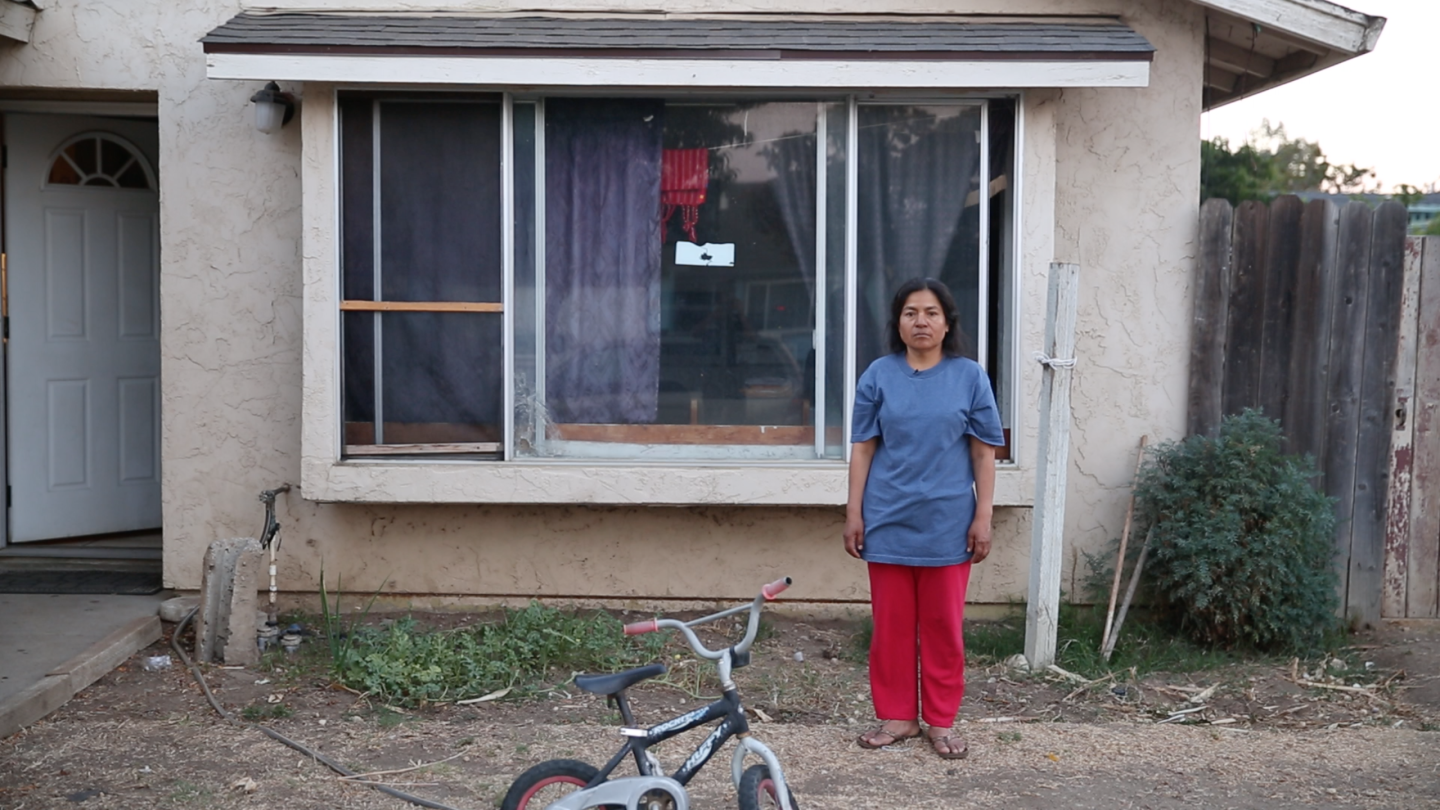
"caption": "When Angelina Diaz-Ramirez, an immigrant farmworker from Mexico, suffered a heart attack, no one at the hospital could explain what was happening to her. She speaks Triqui, an indigenous language in southern Mexico.",
"description": "When Angelina Diaz-Ramirez, an immigrant farmworker from Mexico who works in Salinas Valley, suffered a heart attack, no one at the hospital could explain what was happening to her. She speaks Triqui, an indigenous language in southern Mexico.",
"title": "Angelina Home",
"credit": "Jeremy Raff/KQED",
"status": "inherit",
"isLoading": false,
"fetchFailed": false
},
"stateofhealth_83791": {
"type": "attachments",
"id": "stateofhealth_83791",
"meta": {
"index": "attachments_1716263798",
"site": "stateofhealth",
"id": "83791",
"found": true
},
"parent": 82687,
"imgSizes": {
"twentyfourteen-full-width": {
"file": "https://ww2.kqed.org/app/uploads/sites/27/2015/09/RS16630_Valley-Fire-1-qut-1038x576.jpg",
"width": 1038,
"mimeType": "image/jpeg",
"height": 576
},
"thumbnail": {
"file": "https://ww2.kqed.org/app/uploads/sites/27/2015/09/RS16630_Valley-Fire-1-qut-400x267.jpg",
"width": 400,
"mimeType": "image/jpeg",
"height": 267
},
"fd-sm": {
"file": "https://ww2.kqed.org/app/uploads/sites/27/2015/09/RS16630_Valley-Fire-1-qut-960x640.jpg",
"width": 960,
"mimeType": "image/jpeg",
"height": 640
},
"post-thumbnail": {
"file": "https://ww2.kqed.org/app/uploads/sites/27/2015/09/RS16630_Valley-Fire-1-qut-672x372.jpg",
"width": 672,
"mimeType": "image/jpeg",
"height": 372
},
"kqedFullSize": {
"file": "https://ww2.kqed.org/app/uploads/sites/27/2015/09/RS16630_Valley-Fire-1-qut.jpg",
"width": 1920,
"height": 1280
},
"large": {
"file": "https://ww2.kqed.org/app/uploads/sites/27/2015/09/RS16630_Valley-Fire-1-qut-1440x960.jpg",
"width": 1440,
"mimeType": "image/jpeg",
"height": 960
},
"guest-author-96": {
"file": "https://ww2.kqed.org/app/uploads/sites/27/2015/09/RS16630_Valley-Fire-1-qut-96x96.jpg",
"width": 96,
"mimeType": "image/jpeg",
"height": 96
},
"medium": {
"file": "https://ww2.kqed.org/app/uploads/sites/27/2015/09/RS16630_Valley-Fire-1-qut-800x533.jpg",
"width": 800,
"mimeType": "image/jpeg",
"height": 533
},
"guest-author-64": {
"file": "https://ww2.kqed.org/app/uploads/sites/27/2015/09/RS16630_Valley-Fire-1-qut-64x64.jpg",
"width": 64,
"mimeType": "image/jpeg",
"height": 64
},
"guest-author-32": {
"file": "https://ww2.kqed.org/app/uploads/sites/27/2015/09/RS16630_Valley-Fire-1-qut-32x32.jpg",
"width": 32,
"mimeType": "image/jpeg",
"height": 32
},
"jmtc-small-thumb": {
"file": "https://ww2.kqed.org/app/uploads/sites/27/2015/09/RS16630_Valley-Fire-1-qut-280x150.jpg",
"width": 280,
"mimeType": "image/jpeg",
"height": 150
},
"fd-lrg": {
"file": "https://ww2.kqed.org/app/uploads/sites/27/2015/09/RS16630_Valley-Fire-1-qut-1920x1280.jpg",
"width": 1920,
"mimeType": "image/jpeg",
"height": 1280
},
"fd-med": {
"file": "https://ww2.kqed.org/app/uploads/sites/27/2015/09/RS16630_Valley-Fire-1-qut-1180x787.jpg",
"width": 1180,
"mimeType": "image/jpeg",
"height": 787
},
"detail": {
"file": "https://ww2.kqed.org/app/uploads/sites/27/2015/09/RS16630_Valley-Fire-1-qut-75x75.jpg",
"width": 75,
"mimeType": "image/jpeg",
"height": 75
},
"guest-author-128": {
"file": "https://ww2.kqed.org/app/uploads/sites/27/2015/09/RS16630_Valley-Fire-1-qut-128x128.jpg",
"width": 128,
"mimeType": "image/jpeg",
"height": 128
}
},
"publishDate": 1443203302,
"modified": 1443203613,
"caption": "A car burns in front of a burning home in Middletown during the Valley Fire earlier this month. The fire is now 90 percent contained.",
"description": null,
"title": "RS16630_Valley Fire 1-qut",
"credit": "Stephen Lam/KQED",
"status": "inherit",
"isLoading": false,
"fetchFailed": false
},
"stateofhealth_82331": {
"type": "attachments",
"id": "stateofhealth_82331",
"meta": {
"index": "attachments_1716263798",
"site": "stateofhealth",
"id": "82331",
"found": true
},
"parent": 82271,
"imgSizes": {
"twentyfourteen-full-width": {
"file": "https://ww2.kqed.org/app/uploads/sites/27/2015/09/RS16745_IMG_9566.JPG-qut-1038x576.jpg",
"width": 1038,
"mimeType": "image/jpeg",
"height": 576
},
"thumbnail": {
"file": "https://ww2.kqed.org/app/uploads/sites/27/2015/09/RS16745_IMG_9566.JPG-qut-400x267.jpg",
"width": 400,
"mimeType": "image/jpeg",
"height": 267
},
"fd-sm": {
"file": "https://ww2.kqed.org/app/uploads/sites/27/2015/09/RS16745_IMG_9566.JPG-qut-960x640.jpg",
"width": 960,
"mimeType": "image/jpeg",
"height": 640
},
"post-thumbnail": {
"file": "https://ww2.kqed.org/app/uploads/sites/27/2015/09/RS16745_IMG_9566.JPG-qut-672x372.jpg",
"width": 672,
"mimeType": "image/jpeg",
"height": 372
},
"kqedFullSize": {
"file": "https://ww2.kqed.org/app/uploads/sites/27/2015/09/RS16745_IMG_9566.JPG-qut.jpg",
"width": 1920,
"height": 1280
},
"large": {
"file": "https://ww2.kqed.org/app/uploads/sites/27/2015/09/RS16745_IMG_9566.JPG-qut-1440x960.jpg",
"width": 1440,
"mimeType": "image/jpeg",
"height": 960
},
"guest-author-96": {
"file": "https://ww2.kqed.org/app/uploads/sites/27/2015/09/RS16745_IMG_9566.JPG-qut-96x96.jpg",
"width": 96,
"mimeType": "image/jpeg",
"height": 96
},
"medium": {
"file": "https://ww2.kqed.org/app/uploads/sites/27/2015/09/RS16745_IMG_9566.JPG-qut-800x533.jpg",
"width": 800,
"mimeType": "image/jpeg",
"height": 533
},
"guest-author-64": {
"file": "https://ww2.kqed.org/app/uploads/sites/27/2015/09/RS16745_IMG_9566.JPG-qut-64x64.jpg",
"width": 64,
"mimeType": "image/jpeg",
"height": 64
},
"guest-author-32": {
"file": "https://ww2.kqed.org/app/uploads/sites/27/2015/09/RS16745_IMG_9566.JPG-qut-32x32.jpg",
"width": 32,
"mimeType": "image/jpeg",
"height": 32
},
"jmtc-small-thumb": {
"file": "https://ww2.kqed.org/app/uploads/sites/27/2015/09/RS16745_IMG_9566.JPG-qut-280x150.jpg",
"width": 280,
"mimeType": "image/jpeg",
"height": 150
},
"fd-lrg": {
"file": "https://ww2.kqed.org/app/uploads/sites/27/2015/09/RS16745_IMG_9566.JPG-qut-1920x1280.jpg",
"width": 1920,
"mimeType": "image/jpeg",
"height": 1280
},
"fd-med": {
"file": "https://ww2.kqed.org/app/uploads/sites/27/2015/09/RS16745_IMG_9566.JPG-qut-1180x787.jpg",
"width": 1180,
"mimeType": "image/jpeg",
"height": 787
},
"detail": {
"file": "https://ww2.kqed.org/app/uploads/sites/27/2015/09/RS16745_IMG_9566.JPG-qut-75x75.jpg",
"width": 75,
"mimeType": "image/jpeg",
"height": 75
},
"guest-author-128": {
"file": "https://ww2.kqed.org/app/uploads/sites/27/2015/09/RS16745_IMG_9566.JPG-qut-128x128.jpg",
"width": 128,
"mimeType": "image/jpeg",
"height": 128
}
},
"publishDate": 1442978030,
"modified": 1442978249,
"caption": "Jane Garcia, CEO of La Clinica de la Raza addresses supporters of expanding health care in Contra Costa County. La Clinica de la Raza is one of several community clinics partnering with local hospitals and the county to cover uninsured residents.",
"description": null,
"title": "RS16745_IMG_9566.JPG-qut",
"credit": "Farida Jhabvala Romero/KQED",
"status": "inherit",
"isLoading": false,
"fetchFailed": false
},
"stateofhealth_79249": {
"type": "attachments",
"id": "stateofhealth_79249",
"meta": {
"index": "attachments_1716263798",
"site": "stateofhealth",
"id": "79249",
"found": true
},
"parent": 79201,
"imgSizes": {
"twentyfourteen-full-width": {
"file": "https://ww2.kqed.org/app/uploads/sites/27/2015/09/MusicNapa-1038x576.jpg",
"width": 1038,
"mimeType": "image/jpeg",
"height": 576
},
"thumbnail": {
"file": "https://ww2.kqed.org/app/uploads/sites/27/2015/09/MusicNapa-400x300.jpg",
"width": 400,
"mimeType": "image/jpeg",
"height": 300
},
"fd-sm": {
"file": "https://ww2.kqed.org/app/uploads/sites/27/2015/09/MusicNapa-960x720.jpg",
"width": 960,
"mimeType": "image/jpeg",
"height": 720
},
"post-thumbnail": {
"file": "https://ww2.kqed.org/app/uploads/sites/27/2015/09/MusicNapa-672x372.jpg",
"width": 672,
"mimeType": "image/jpeg",
"height": 372
},
"kqedFullSize": {
"file": "https://ww2.kqed.org/app/uploads/sites/27/2015/09/MusicNapa-e1442513652536.jpg",
"width": 1920,
"height": 1440
},
"large": {
"file": "https://ww2.kqed.org/app/uploads/sites/27/2015/09/MusicNapa-1440x1080.jpg",
"width": 1440,
"mimeType": "image/jpeg",
"height": 1080
},
"guest-author-96": {
"file": "https://ww2.kqed.org/app/uploads/sites/27/2015/09/MusicNapa-96x96.jpg",
"width": 96,
"mimeType": "image/jpeg",
"height": 96
},
"medium": {
"file": "https://ww2.kqed.org/app/uploads/sites/27/2015/09/MusicNapa-800x600.jpg",
"width": 800,
"mimeType": "image/jpeg",
"height": 600
},
"guest-author-64": {
"file": "https://ww2.kqed.org/app/uploads/sites/27/2015/09/MusicNapa-64x64.jpg",
"width": 64,
"mimeType": "image/jpeg",
"height": 64
},
"guest-author-32": {
"file": "https://ww2.kqed.org/app/uploads/sites/27/2015/09/MusicNapa-32x32.jpg",
"width": 32,
"mimeType": "image/jpeg",
"height": 32
},
"jmtc-small-thumb": {
"file": "https://ww2.kqed.org/app/uploads/sites/27/2015/09/MusicNapa-280x150.jpg",
"width": 280,
"mimeType": "image/jpeg",
"height": 150
},
"fd-lrg": {
"file": "https://ww2.kqed.org/app/uploads/sites/27/2015/09/MusicNapa-1920x1440.jpg",
"width": 1920,
"mimeType": "image/jpeg",
"height": 1440
},
"fd-med": {
"file": "https://ww2.kqed.org/app/uploads/sites/27/2015/09/MusicNapa-1180x885.jpg",
"width": 1180,
"mimeType": "image/jpeg",
"height": 885
},
"detail": {
"file": "https://ww2.kqed.org/app/uploads/sites/27/2015/09/MusicNapa-75x75.jpg",
"width": 75,
"mimeType": "image/jpeg",
"height": 75
},
"guest-author-128": {
"file": "https://ww2.kqed.org/app/uploads/sites/27/2015/09/MusicNapa-128x128.jpg",
"width": 128,
"mimeType": "image/jpeg",
"height": 128
}
},
"publishDate": 1442513637,
"modified": 1442530909,
"caption": "Kay Ashley, left, plays tambourine with other musicians at the Napa County Fairgrounds in Calistoga. They are all evacuees of the Valley Fire. ",
"description": "Kay Ashley, left, plays tambourine with other musicians at the Napa County Fairgrounds in Calistoga. They are all evacuees of the Valley Fire. ",
"title": "MusicNapa",
"credit": "April Dembosky/KQED",
"status": "inherit",
"isLoading": false,
"fetchFailed": false
},
"stateofhealth_78210": {
"type": "attachments",
"id": "stateofhealth_78210",
"meta": {
"index": "attachments_1716263798",
"site": "stateofhealth",
"id": "78210",
"found": true
},
"parent": 78182,
"imgSizes": {
"twentyfourteen-full-width": {
"file": "https://ww2.kqed.org/app/uploads/sites/27/2015/09/RS16634_DSCF0132-1038x576.jpg",
"width": 1038,
"mimeType": "image/jpeg",
"height": 576
},
"thumbnail": {
"file": "https://ww2.kqed.org/app/uploads/sites/27/2015/09/RS16634_DSCF0132-400x300.jpg",
"width": 400,
"mimeType": "image/jpeg",
"height": 300
},
"fd-sm": {
"file": "https://ww2.kqed.org/app/uploads/sites/27/2015/09/RS16634_DSCF0132-960x720.jpg",
"width": 960,
"mimeType": "image/jpeg",
"height": 720
},
"post-thumbnail": {
"file": "https://ww2.kqed.org/app/uploads/sites/27/2015/09/RS16634_DSCF0132-672x372.jpg",
"width": 672,
"mimeType": "image/jpeg",
"height": 372
},
"kqedFullSize": {
"file": "https://ww2.kqed.org/app/uploads/sites/27/2015/09/RS16634_DSCF0132.jpg",
"width": 1280,
"height": 960
},
"guest-author-96": {
"file": "https://ww2.kqed.org/app/uploads/sites/27/2015/09/RS16634_DSCF0132-96x96.jpg",
"width": 96,
"mimeType": "image/jpeg",
"height": 96
},
"medium": {
"file": "https://ww2.kqed.org/app/uploads/sites/27/2015/09/RS16634_DSCF0132-800x600.jpg",
"width": 800,
"mimeType": "image/jpeg",
"height": 600
},
"guest-author-64": {
"file": "https://ww2.kqed.org/app/uploads/sites/27/2015/09/RS16634_DSCF0132-64x64.jpg",
"width": 64,
"mimeType": "image/jpeg",
"height": 64
},
"guest-author-32": {
"file": "https://ww2.kqed.org/app/uploads/sites/27/2015/09/RS16634_DSCF0132-32x32.jpg",
"width": 32,
"mimeType": "image/jpeg",
"height": 32
},
"jmtc-small-thumb": {
"file": "https://ww2.kqed.org/app/uploads/sites/27/2015/09/RS16634_DSCF0132-280x150.jpg",
"width": 280,
"mimeType": "image/jpeg",
"height": 150
},
"fd-med": {
"file": "https://ww2.kqed.org/app/uploads/sites/27/2015/09/RS16634_DSCF0132-1180x885.jpg",
"width": 1180,
"mimeType": "image/jpeg",
"height": 885
},
"detail": {
"file": "https://ww2.kqed.org/app/uploads/sites/27/2015/09/RS16634_DSCF0132-75x75.jpg",
"width": 75,
"mimeType": "image/jpeg",
"height": 75
},
"guest-author-128": {
"file": "https://ww2.kqed.org/app/uploads/sites/27/2015/09/RS16634_DSCF0132-128x128.jpg",
"width": 128,
"mimeType": "image/jpeg",
"height": 128
}
},
"publishDate": 1442342277,
"modified": 1442342322,
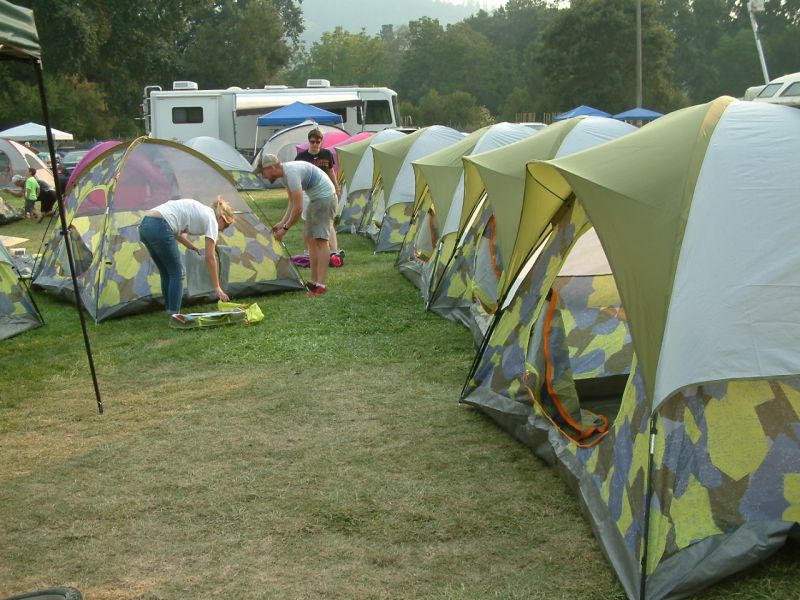
"caption": "Tents for Valley Fire evacuees at the Napa County Fairgrounds in Calistoga. ",
"description": null,
"title": "RS16634_DSCF0132",
"credit": "Danielle Venton/KQED",
"status": "inherit",
"isLoading": false,
"fetchFailed": false
},
"stateofhealth_76381": {
"type": "attachments",
"id": "stateofhealth_76381",
"meta": {
"index": "attachments_1716263798",
"site": "stateofhealth",
"id": "76381",
"found": true
},
"parent": 76380,
"imgSizes": {
"twentyfourteen-full-width": {
"file": "https://ww2.kqed.org/app/uploads/sites/27/2015/09/IMG_6984-1038x576.jpg",
"width": 1038,
"mimeType": "image/jpeg",
"height": 576
},
"thumbnail": {
"file": "https://ww2.kqed.org/app/uploads/sites/27/2015/09/IMG_6984-400x300.jpg",
"width": 400,
"mimeType": "image/jpeg",
"height": 300
},
"fd-sm": {
"file": "https://ww2.kqed.org/app/uploads/sites/27/2015/09/IMG_6984-960x720.jpg",
"width": 960,
"mimeType": "image/jpeg",
"height": 720
},
"post-thumbnail": {
"file": "https://ww2.kqed.org/app/uploads/sites/27/2015/09/IMG_6984-672x372.jpg",
"width": 672,
"mimeType": "image/jpeg",
"height": 372
},
"kqedFullSize": {
"file": "https://ww2.kqed.org/app/uploads/sites/27/2015/09/IMG_6984-e1442011190550.jpg",
"width": 1920,
"height": 1440
},
"large": {
"file": "https://ww2.kqed.org/app/uploads/sites/27/2015/09/IMG_6984-1440x1080.jpg",
"width": 1440,
"mimeType": "image/jpeg",
"height": 1080
},
"guest-author-96": {
"file": "https://ww2.kqed.org/app/uploads/sites/27/2015/09/IMG_6984-96x96.jpg",
"width": 96,
"mimeType": "image/jpeg",
"height": 96
},
"medium": {
"file": "https://ww2.kqed.org/app/uploads/sites/27/2015/09/IMG_6984-800x600.jpg",
"width": 800,
"mimeType": "image/jpeg",
"height": 600
},
"guest-author-64": {
"file": "https://ww2.kqed.org/app/uploads/sites/27/2015/09/IMG_6984-64x64.jpg",
"width": 64,
"mimeType": "image/jpeg",
"height": 64
},
"guest-author-32": {
"file": "https://ww2.kqed.org/app/uploads/sites/27/2015/09/IMG_6984-32x32.jpg",
"width": 32,
"mimeType": "image/jpeg",
"height": 32
},
"jmtc-small-thumb": {
"file": "https://ww2.kqed.org/app/uploads/sites/27/2015/09/IMG_6984-280x150.jpg",
"width": 280,
"mimeType": "image/jpeg",
"height": 150
},
"fd-lrg": {
"file": "https://ww2.kqed.org/app/uploads/sites/27/2015/09/IMG_6984-1920x1440.jpg",
"width": 1920,
"mimeType": "image/jpeg",
"height": 1440
},
"fd-med": {
"file": "https://ww2.kqed.org/app/uploads/sites/27/2015/09/IMG_6984-1180x885.jpg",
"width": 1180,
"mimeType": "image/jpeg",
"height": 885
},
"detail": {
"file": "https://ww2.kqed.org/app/uploads/sites/27/2015/09/IMG_6984-75x75.jpg",
"width": 75,
"mimeType": "image/jpeg",
"height": 75
},
"guest-author-128": {
"file": "https://ww2.kqed.org/app/uploads/sites/27/2015/09/IMG_6984-128x128.jpg",
"width": 128,
"mimeType": "image/jpeg",
"height": 128
}
},
"publishDate": 1442011179,
"modified": 1442011256,
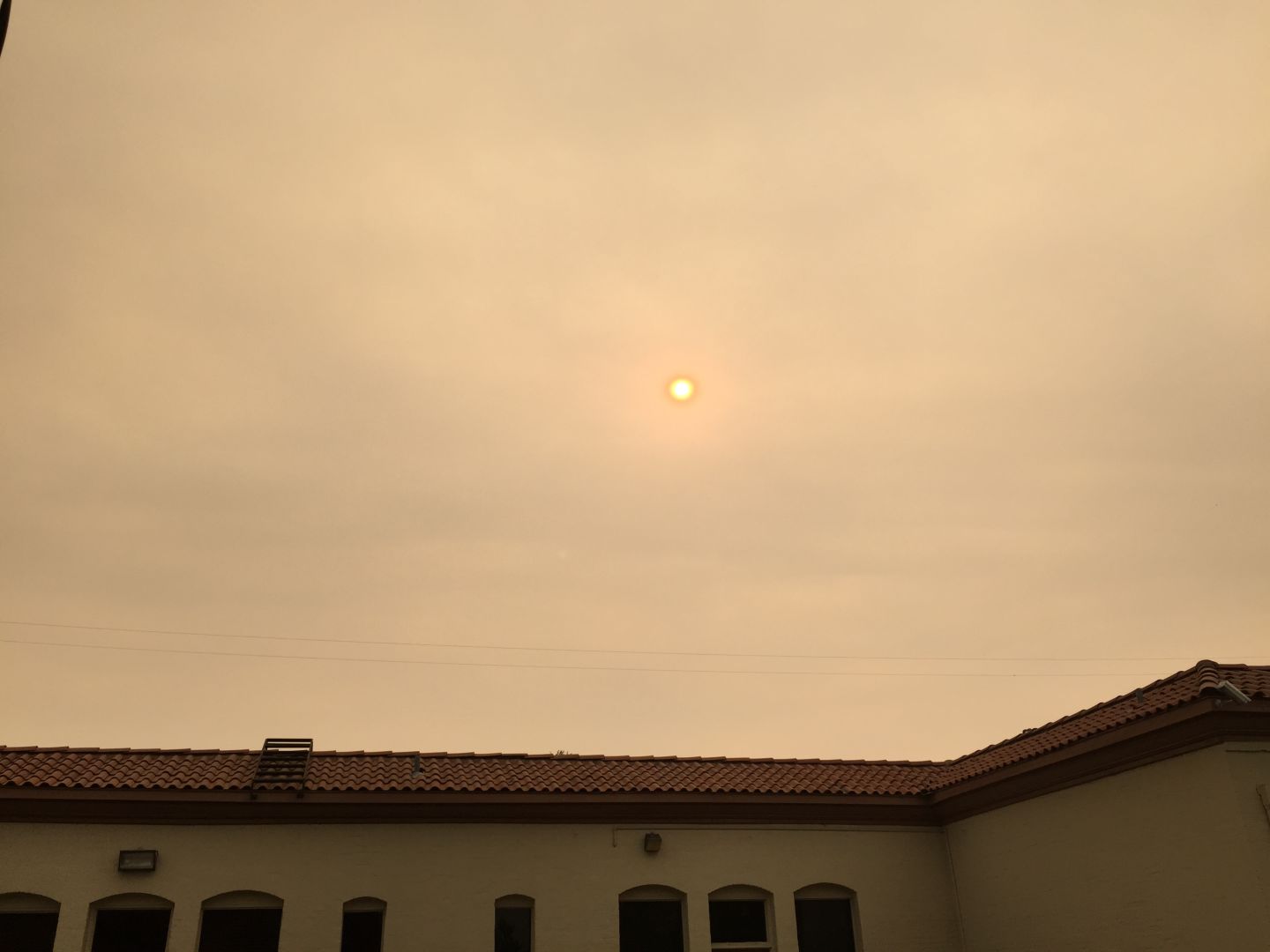
"caption": "The Friday morning sun over the KQED office in Fresno which reporter Sasha Khokha described as \"bizarrely yellowish-gray.\"",
"description": null,
"title": "IMG_6984",
"credit": "Sasha Khokha/KQED",
"status": "inherit",
"isLoading": false,
"fetchFailed": false
},
"stateofhealth_74739": {
"type": "attachments",
"id": "stateofhealth_74739",
"meta": {
"index": "attachments_1716263798",
"site": "stateofhealth",
"id": "74739",
"found": true
},
"parent": 74709,
"imgSizes": {
"twentyfourteen-full-width": {
"file": "https://ww2.kqed.org/app/uploads/sites/27/2015/09/new-mexico-17-1038x576.jpg",
"width": 1038,
"mimeType": "image/jpeg",
"height": 576
},
"thumbnail": {
"file": "https://ww2.kqed.org/app/uploads/sites/27/2015/09/new-mexico-17-400x267.jpg",
"width": 400,
"mimeType": "image/jpeg",
"height": 267
},
"fd-sm": {
"file": "https://ww2.kqed.org/app/uploads/sites/27/2015/09/new-mexico-17-960x641.jpg",
"width": 960,
"mimeType": "image/jpeg",
"height": 641
},
"post-thumbnail": {
"file": "https://ww2.kqed.org/app/uploads/sites/27/2015/09/new-mexico-17-672x372.jpg",
"width": 672,
"mimeType": "image/jpeg",
"height": 372
},
"kqedFullSize": {
"file": "https://ww2.kqed.org/app/uploads/sites/27/2015/09/new-mexico-17-e1441733233634.jpg",
"width": 1919,
"height": 1281
},
"large": {
"file": "https://ww2.kqed.org/app/uploads/sites/27/2015/09/new-mexico-17-1440x961.jpg",
"width": 1440,
"mimeType": "image/jpeg",
"height": 961
},
"guest-author-96": {
"file": "https://ww2.kqed.org/app/uploads/sites/27/2015/09/new-mexico-17-96x96.jpg",
"width": 96,
"mimeType": "image/jpeg",
"height": 96
},
"medium": {
"file": "https://ww2.kqed.org/app/uploads/sites/27/2015/09/new-mexico-17-800x534.jpg",
"width": 800,
"mimeType": "image/jpeg",
"height": 534
},
"guest-author-64": {
"file": "https://ww2.kqed.org/app/uploads/sites/27/2015/09/new-mexico-17-64x64.jpg",
"width": 64,
"mimeType": "image/jpeg",
"height": 64
},
"guest-author-32": {
"file": "https://ww2.kqed.org/app/uploads/sites/27/2015/09/new-mexico-17-32x32.jpg",
"width": 32,
"mimeType": "image/jpeg",
"height": 32
},
"jmtc-small-thumb": {
"file": "https://ww2.kqed.org/app/uploads/sites/27/2015/09/new-mexico-17-280x150.jpg",
"width": 280,
"mimeType": "image/jpeg",
"height": 150
},
"fd-lrg": {
"file": "https://ww2.kqed.org/app/uploads/sites/27/2015/09/new-mexico-17-1920x1281.jpg",
"width": 1920,
"mimeType": "image/jpeg",
"height": 1281
},
"fd-med": {
"file": "https://ww2.kqed.org/app/uploads/sites/27/2015/09/new-mexico-17-1180x787.jpg",
"width": 1180,
"mimeType": "image/jpeg",
"height": 787
},
"detail": {
"file": "https://ww2.kqed.org/app/uploads/sites/27/2015/09/new-mexico-17-75x75.jpg",
"width": 75,
"mimeType": "image/jpeg",
"height": 75
},
"guest-author-128": {
"file": "https://ww2.kqed.org/app/uploads/sites/27/2015/09/new-mexico-17-128x128.jpg",
"width": 128,
"mimeType": "image/jpeg",
"height": 128
}
},
"publishDate": 1441733214,
"modified": 1441733340,
"caption": "Margaret Thompson, 59, who has arthritis and diabetes, signed up for a private plan through the New Mexico exchange for herself and her husband. The tax credits cover the $811 monthly premium.",
"description": null,
"title": "new-mexico-17",
"credit": "Heidi de Marco/KHN",
"status": "inherit",
"isLoading": false,
"fetchFailed": false
},
"stateofhealth_72049": {
"type": "attachments",
"id": "stateofhealth_72049",
"meta": {
"index": "attachments_1716263798",
"site": "stateofhealth",
"id": "72049",
"found": true
},
"parent": 71914,
"imgSizes": {
"twentyfourteen-full-width": {
"file": "https://ww2.kqed.org/app/uploads/sites/27/2015/09/RS14678_107091586-1038x576.jpg",
"width": 1038,
"mimeType": "image/jpeg",
"height": 576
},
"thumbnail": {
"file": "https://ww2.kqed.org/app/uploads/sites/27/2015/09/RS14678_107091586-400x259.jpg",
"width": 400,
"mimeType": "image/jpeg",
"height": 259
},
"fd-sm": {
"file": "https://ww2.kqed.org/app/uploads/sites/27/2015/09/RS14678_107091586-960x622.jpg",
"width": 960,
"mimeType": "image/jpeg",
"height": 622
},
"post-thumbnail": {
"file": "https://ww2.kqed.org/app/uploads/sites/27/2015/09/RS14678_107091586-672x372.jpg",
"width": 672,
"mimeType": "image/jpeg",
"height": 372
},
"kqedFullSize": {
"file": "https://ww2.kqed.org/app/uploads/sites/27/2015/09/RS14678_107091586-e1441256083247.jpg",
"width": 1920,
"height": 1244
},
"large": {
"file": "https://ww2.kqed.org/app/uploads/sites/27/2015/09/RS14678_107091586-1440x933.jpg",
"width": 1440,
"mimeType": "image/jpeg",
"height": 933
},
"guest-author-96": {
"file": "https://ww2.kqed.org/app/uploads/sites/27/2015/09/RS14678_107091586-96x96.jpg",
"width": 96,
"mimeType": "image/jpeg",
"height": 96
},
"medium": {
"file": "https://ww2.kqed.org/app/uploads/sites/27/2015/09/RS14678_107091586-800x518.jpg",
"width": 800,
"mimeType": "image/jpeg",
"height": 518
},
"guest-author-64": {
"file": "https://ww2.kqed.org/app/uploads/sites/27/2015/09/RS14678_107091586-64x64.jpg",
"width": 64,
"mimeType": "image/jpeg",
"height": 64
},
"guest-author-32": {
"file": "https://ww2.kqed.org/app/uploads/sites/27/2015/09/RS14678_107091586-32x32.jpg",
"width": 32,
"mimeType": "image/jpeg",
"height": 32
},
"jmtc-small-thumb": {
"file": "https://ww2.kqed.org/app/uploads/sites/27/2015/09/RS14678_107091586-280x150.jpg",
"width": 280,
"mimeType": "image/jpeg",
"height": 150
},
"fd-lrg": {
"file": "https://ww2.kqed.org/app/uploads/sites/27/2015/09/RS14678_107091586-1920x1244.jpg",
"width": 1920,
"mimeType": "image/jpeg",
"height": 1244
},
"fd-med": {
"file": "https://ww2.kqed.org/app/uploads/sites/27/2015/09/RS14678_107091586-1180x765.jpg",
"width": 1180,
"mimeType": "image/jpeg",
"height": 765
},
"detail": {
"file": "https://ww2.kqed.org/app/uploads/sites/27/2015/09/RS14678_107091586-75x75.jpg",
"width": 75,
"mimeType": "image/jpeg",
"height": 75
},
"guest-author-128": {
"file": "https://ww2.kqed.org/app/uploads/sites/27/2015/09/RS14678_107091586-128x128.jpg",
"width": 128,
"mimeType": "image/jpeg",
"height": 128
}
},
"publishDate": 1441256074,
"modified": 1441256206,
"caption": "The antiretroviral drug Truvada, currently the only drug approved by the FDA for HIV preexposure prophylaxis. ",
"description": "truvada",
"title": "Daily Antiretroviral Pill Found To Protect Healthy From AIDS Transmission",
"credit": "Justin Sullivan/Getty Images",
"status": "inherit",
"isLoading": false,
"fetchFailed": false
},
"stateofhealth_71796": {
"type": "attachments",
"id": "stateofhealth_71796",
"meta": {
"index": "attachments_1716263798",
"site": "stateofhealth",
"id": "71796",
"found": true
},
"parent": 71795,
"imgSizes": {
"twentyfourteen-full-width": {
"file": "https://ww2.kqed.org/app/uploads/sites/27/2015/09/pouring-pills_wide-310fde6f5557f51c3c6d5590f5d75b37a9417c12-1038x576.jpg",
"width": 1038,
"mimeType": "image/jpeg",
"height": 576
},
"thumbnail": {
"file": "https://ww2.kqed.org/app/uploads/sites/27/2015/09/pouring-pills_wide-310fde6f5557f51c3c6d5590f5d75b37a9417c12-400x225.jpg",
"width": 400,
"mimeType": "image/jpeg",
"height": 225
},
"fd-sm": {
"file": "https://ww2.kqed.org/app/uploads/sites/27/2015/09/pouring-pills_wide-310fde6f5557f51c3c6d5590f5d75b37a9417c12-960x539.jpg",
"width": 960,
"mimeType": "image/jpeg",
"height": 539
},
"post-thumbnail": {
"file": "https://ww2.kqed.org/app/uploads/sites/27/2015/09/pouring-pills_wide-310fde6f5557f51c3c6d5590f5d75b37a9417c12-672x372.jpg",
"width": 672,
"mimeType": "image/jpeg",
"height": 372
},
"kqedFullSize": {
"file": "https://ww2.kqed.org/app/uploads/sites/27/2015/09/pouring-pills_wide-310fde6f5557f51c3c6d5590f5d75b37a9417c12.jpg",
"width": 1719,
"height": 965
},
"large": {
"file": "https://ww2.kqed.org/app/uploads/sites/27/2015/09/pouring-pills_wide-310fde6f5557f51c3c6d5590f5d75b37a9417c12-1440x808.jpg",
"width": 1440,
"mimeType": "image/jpeg",
"height": 808
},
"guest-author-96": {
"file": "https://ww2.kqed.org/app/uploads/sites/27/2015/09/pouring-pills_wide-310fde6f5557f51c3c6d5590f5d75b37a9417c12-96x96.jpg",
"width": 96,
"mimeType": "image/jpeg",
"height": 96
},
"medium": {
"file": "https://ww2.kqed.org/app/uploads/sites/27/2015/09/pouring-pills_wide-310fde6f5557f51c3c6d5590f5d75b37a9417c12-800x449.jpg",
"width": 800,
"mimeType": "image/jpeg",
"height": 449
},
"guest-author-64": {
"file": "https://ww2.kqed.org/app/uploads/sites/27/2015/09/pouring-pills_wide-310fde6f5557f51c3c6d5590f5d75b37a9417c12-64x64.jpg",
"width": 64,
"mimeType": "image/jpeg",
"height": 64
},
"guest-author-32": {
"file": "https://ww2.kqed.org/app/uploads/sites/27/2015/09/pouring-pills_wide-310fde6f5557f51c3c6d5590f5d75b37a9417c12-32x32.jpg",
"width": 32,
"mimeType": "image/jpeg",
"height": 32
},
"jmtc-small-thumb": {
"file": "https://ww2.kqed.org/app/uploads/sites/27/2015/09/pouring-pills_wide-310fde6f5557f51c3c6d5590f5d75b37a9417c12-280x150.jpg",
"width": 280,
"mimeType": "image/jpeg",
"height": 150
},
"fd-med": {
"file": "https://ww2.kqed.org/app/uploads/sites/27/2015/09/pouring-pills_wide-310fde6f5557f51c3c6d5590f5d75b37a9417c12-1180x662.jpg",
"width": 1180,
"mimeType": "image/jpeg",
"height": 662
},
"detail": {
"file": "https://ww2.kqed.org/app/uploads/sites/27/2015/09/pouring-pills_wide-310fde6f5557f51c3c6d5590f5d75b37a9417c12-75x75.jpg",
"width": 75,
"mimeType": "image/jpeg",
"height": 75
},
"guest-author-128": {
"file": "https://ww2.kqed.org/app/uploads/sites/27/2015/09/pouring-pills_wide-310fde6f5557f51c3c6d5590f5d75b37a9417c12-128x128.jpg",
"width": 128,
"mimeType": "image/jpeg",
"height": 128
}
},
"publishDate": 1441217221,
"modified": 1441217536,
"caption": null,
"description": "pouring pills, drugs, medicine",
"title": "Andy Baker/Ikon Images/Getty Images",
"credit": "Andy Baker/Ikon Images/Getty Images",
"status": "inherit",
"isLoading": false,
"fetchFailed": false
},
"stateofhealth_71790": {
"type": "attachments",
"id": "stateofhealth_71790",
"meta": {
"index": "attachments_1716263798",
"site": "stateofhealth",
"id": "71790",
"found": true
},
"parent": 70737,
"imgSizes": {
"twentyfourteen-full-width": {
"file": "https://ww2.kqed.org/app/uploads/sites/27/2015/09/iStock_000011321000_Large-1038x576.jpg",
"width": 1038,
"mimeType": "image/jpeg",
"height": 576
},
"thumbnail": {
"file": "https://ww2.kqed.org/app/uploads/sites/27/2015/09/iStock_000011321000_Large-400x266.jpg",
"width": 400,
"mimeType": "image/jpeg",
"height": 266
},
"fd-sm": {
"file": "https://ww2.kqed.org/app/uploads/sites/27/2015/09/iStock_000011321000_Large-960x638.jpg",
"width": 960,
"mimeType": "image/jpeg",
"height": 638
},
"post-thumbnail": {
"file": "https://ww2.kqed.org/app/uploads/sites/27/2015/09/iStock_000011321000_Large-672x372.jpg",
"width": 672,
"mimeType": "image/jpeg",
"height": 372
},
"kqedFullSize": {
"file": "https://ww2.kqed.org/app/uploads/sites/27/2015/09/iStock_000011321000_Large-e1441214181334.jpg",
"width": 1921,
"height": 1277
},
"large": {
"file": "https://ww2.kqed.org/app/uploads/sites/27/2015/09/iStock_000011321000_Large-1440x957.jpg",
"width": 1440,
"mimeType": "image/jpeg",
"height": 957
},
"guest-author-96": {
"file": "https://ww2.kqed.org/app/uploads/sites/27/2015/09/iStock_000011321000_Large-96x96.jpg",
"width": 96,
"mimeType": "image/jpeg",
"height": 96
},
"medium": {
"file": "https://ww2.kqed.org/app/uploads/sites/27/2015/09/iStock_000011321000_Large-800x532.jpg",
"width": 800,
"mimeType": "image/jpeg",
"height": 532
},
"guest-author-64": {
"file": "https://ww2.kqed.org/app/uploads/sites/27/2015/09/iStock_000011321000_Large-64x64.jpg",
"width": 64,
"mimeType": "image/jpeg",
"height": 64
},
"guest-author-32": {
"file": "https://ww2.kqed.org/app/uploads/sites/27/2015/09/iStock_000011321000_Large-32x32.jpg",
"width": 32,
"mimeType": "image/jpeg",
"height": 32
},
"jmtc-small-thumb": {
"file": "https://ww2.kqed.org/app/uploads/sites/27/2015/09/iStock_000011321000_Large-280x150.jpg",
"width": 280,
"mimeType": "image/jpeg",
"height": 150
},
"fd-lrg": {
"file": "https://ww2.kqed.org/app/uploads/sites/27/2015/09/iStock_000011321000_Large-1920x1277.jpg",
"width": 1920,
"mimeType": "image/jpeg",
"height": 1277
},
"fd-med": {
"file": "https://ww2.kqed.org/app/uploads/sites/27/2015/09/iStock_000011321000_Large-1180x785.jpg",
"width": 1180,
"mimeType": "image/jpeg",
"height": 785
},
"detail": {
"file": "https://ww2.kqed.org/app/uploads/sites/27/2015/09/iStock_000011321000_Large-75x75.jpg",
"width": 75,
"mimeType": "image/jpeg",
"height": 75
},
"guest-author-128": {
"file": "https://ww2.kqed.org/app/uploads/sites/27/2015/09/iStock_000011321000_Large-128x128.jpg",
"width": 128,
"mimeType": "image/jpeg",
"height": 128
}
},
"publishDate": 1441214167,
"modified": 1441214194,
"caption": null,
"description": "ambulance, emergency",
"title": "iStock_000011321000_Large",
"credit": "Getty Images",
"status": "inherit",
"isLoading": false,
"fetchFailed": false
},
"stateofhealth_71492": {
"type": "attachments",
"id": "stateofhealth_71492",
"meta": {
"index": "attachments_1716263798",
"site": "stateofhealth",
"id": "71492",
"found": true
},
"parent": 71311,
"imgSizes": {
"twentyfourteen-full-width": {
"file": "https://ww2.kqed.org/app/uploads/sites/27/2015/09/RS15672_GettyImages-73076435-1038x576.jpg",
"width": 1038,
"mimeType": "image/jpeg",
"height": 576
},
"thumbnail": {
"file": "https://ww2.kqed.org/app/uploads/sites/27/2015/09/RS15672_GettyImages-73076435-400x267.jpg",
"width": 400,
"mimeType": "image/jpeg",
"height": 267
},
"fd-sm": {
"file": "https://ww2.kqed.org/app/uploads/sites/27/2015/09/RS15672_GettyImages-73076435-960x641.jpg",
"width": 960,
"mimeType": "image/jpeg",
"height": 641
},
"post-thumbnail": {
"file": "https://ww2.kqed.org/app/uploads/sites/27/2015/09/RS15672_GettyImages-73076435-672x372.jpg",
"width": 672,
"mimeType": "image/jpeg",
"height": 372
},
"kqedFullSize": {
"file": "https://ww2.kqed.org/app/uploads/sites/27/2015/09/RS15672_GettyImages-73076435-e1441169598650.jpg",
"width": 1921,
"height": 1283
},
"large": {
"file": "https://ww2.kqed.org/app/uploads/sites/27/2015/09/RS15672_GettyImages-73076435-1440x962.jpg",
"width": 1440,
"mimeType": "image/jpeg",
"height": 962
},
"guest-author-96": {
"file": "https://ww2.kqed.org/app/uploads/sites/27/2015/09/RS15672_GettyImages-73076435-96x96.jpg",
"width": 96,
"mimeType": "image/jpeg",
"height": 96
},
"medium": {
"file": "https://ww2.kqed.org/app/uploads/sites/27/2015/09/RS15672_GettyImages-73076435-800x534.jpg",
"width": 800,
"mimeType": "image/jpeg",
"height": 534
},
"guest-author-64": {
"file": "https://ww2.kqed.org/app/uploads/sites/27/2015/09/RS15672_GettyImages-73076435-64x64.jpg",
"width": 64,
"mimeType": "image/jpeg",
"height": 64
},
"guest-author-32": {
"file": "https://ww2.kqed.org/app/uploads/sites/27/2015/09/RS15672_GettyImages-73076435-32x32.jpg",
"width": 32,
"mimeType": "image/jpeg",
"height": 32
},
"jmtc-small-thumb": {
"file": "https://ww2.kqed.org/app/uploads/sites/27/2015/09/RS15672_GettyImages-73076435-280x150.jpg",
"width": 280,
"mimeType": "image/jpeg",
"height": 150
},
"fd-lrg": {
"file": "https://ww2.kqed.org/app/uploads/sites/27/2015/09/RS15672_GettyImages-73076435-1920x1283.jpg",
"width": 1920,
"mimeType": "image/jpeg",
"height": 1283
},
"fd-med": {
"file": "https://ww2.kqed.org/app/uploads/sites/27/2015/09/RS15672_GettyImages-73076435-1180x788.jpg",
"width": 1180,
"mimeType": "image/jpeg",
"height": 788
},
"detail": {
"file": "https://ww2.kqed.org/app/uploads/sites/27/2015/09/RS15672_GettyImages-73076435-75x75.jpg",
"width": 75,
"mimeType": "image/jpeg",
"height": 75
},
"guest-author-128": {
"file": "https://ww2.kqed.org/app/uploads/sites/27/2015/09/RS15672_GettyImages-73076435-128x128.jpg",
"width": 128,
"mimeType": "image/jpeg",
"height": 128
}
},
"publishDate": 1441169583,
"modified": 1441169693,
"caption": "Six San Quentin inmates have been diagnosed with Legionnaire's Disease, but there have been no additional cases since Sunday.",
"description": null,
"title": "Supreme Court Rejects California Sentencing Law",
"credit": "Justin Sullivan/Getty Images",
"status": "inherit",
"isLoading": false,
"fetchFailed": false
},
"stateofhealth_71257": {
"type": "attachments",
"id": "stateofhealth_71257",
"meta": {
"index": "attachments_1716263798",
"site": "stateofhealth",
"id": "71257",
"found": true
},
"parent": 71211,
"imgSizes": {
"twentyfourteen-full-width": {
"file": "https://ww2.kqed.org/app/uploads/sites/27/2015/09/RS8759_ucberkeley20140213-1038x576.jpg",
"width": 1038,
"mimeType": "image/jpeg",
"height": 576
},
"thumbnail": {
"file": "https://ww2.kqed.org/app/uploads/sites/27/2015/09/RS8759_ucberkeley20140213-400x266.jpg",
"width": 400,
"mimeType": "image/jpeg",
"height": 266
},
"fd-sm": {
"file": "https://ww2.kqed.org/app/uploads/sites/27/2015/09/RS8759_ucberkeley20140213-960x639.jpg",
"width": 960,
"mimeType": "image/jpeg",
"height": 639
},
"post-thumbnail": {
"file": "https://ww2.kqed.org/app/uploads/sites/27/2015/09/RS8759_ucberkeley20140213-672x372.jpg",
"width": 672,
"mimeType": "image/jpeg",
"height": 372
},
"kqedFullSize": {
"file": "https://ww2.kqed.org/app/uploads/sites/27/2015/09/RS8759_ucberkeley20140213-e1441131725689.jpg",
"width": 1920,
"height": 1279
},
"large": {
"file": "https://ww2.kqed.org/app/uploads/sites/27/2015/09/RS8759_ucberkeley20140213-1440x959.jpg",
"width": 1440,
"mimeType": "image/jpeg",
"height": 959
},
"guest-author-96": {
"file": "https://ww2.kqed.org/app/uploads/sites/27/2015/09/RS8759_ucberkeley20140213-96x96.jpg",
"width": 96,
"mimeType": "image/jpeg",
"height": 96
},
"medium": {
"file": "https://ww2.kqed.org/app/uploads/sites/27/2015/09/RS8759_ucberkeley20140213-800x533.jpg",
"width": 800,
"mimeType": "image/jpeg",
"height": 533
},
"guest-author-64": {
"file": "https://ww2.kqed.org/app/uploads/sites/27/2015/09/RS8759_ucberkeley20140213-64x64.jpg",
"width": 64,
"mimeType": "image/jpeg",
"height": 64
},
"guest-author-32": {
"file": "https://ww2.kqed.org/app/uploads/sites/27/2015/09/RS8759_ucberkeley20140213-32x32.jpg",
"width": 32,
"mimeType": "image/jpeg",
"height": 32
},
"jmtc-small-thumb": {
"file": "https://ww2.kqed.org/app/uploads/sites/27/2015/09/RS8759_ucberkeley20140213-280x150.jpg",
"width": 280,
"mimeType": "image/jpeg",
"height": 150
},
"fd-lrg": {
"file": "https://ww2.kqed.org/app/uploads/sites/27/2015/09/RS8759_ucberkeley20140213-1920x1279.jpg",
"width": 1920,
"mimeType": "image/jpeg",
"height": 1279
},
"fd-med": {
"file": "https://ww2.kqed.org/app/uploads/sites/27/2015/09/RS8759_ucberkeley20140213-1180x786.jpg",
"width": 1180,
"mimeType": "image/jpeg",
"height": 786
},
"detail": {
"file": "https://ww2.kqed.org/app/uploads/sites/27/2015/09/RS8759_ucberkeley20140213-75x75.jpg",
"width": 75,
"mimeType": "image/jpeg",
"height": 75
},
"guest-author-128": {
"file": "https://ww2.kqed.org/app/uploads/sites/27/2015/09/RS8759_ucberkeley20140213-128x128.jpg",
"width": 128,
"mimeType": "image/jpeg",
"height": 128
}
},
"publishDate": 1441131715,
"modified": 1441131759,
"caption": "Sproul Plaza on the UC Berkeley campus.",
"description": null,
"title": "New Report: Half Of Recent College Graduates Under- Or Unemployed",
"credit": "Justin Sullivan/Getty Images",
"status": "inherit",
"isLoading": false,
"fetchFailed": false
}
},
"audioPlayerReducer": {
"postId": "stream_live",
"isPaused": true,
"isPlaying": false,
"pfsActive": false,
"pledgeModalIsOpen": true,
"playerDrawerIsOpen": false,
"liveAudioPlayStartedAt": 0,
"liveAudioPlayContext": ""
},
"authorsReducer": {
"byline_stateofhealth_74709": {
"type": "authors",
"id": "byline_stateofhealth_74709",
"meta": {
"override": true
},
"slug": "byline_stateofhealth_74709",
"name": "Anna Gorman",
"isLoading": false
},
"byline_stateofhealth_71795": {
"type": "authors",
"id": "byline_stateofhealth_71795",
"meta": {
"override": true
},
"slug": "byline_stateofhealth_71795",
"name": "Elaine Korry",
"isLoading": false
},
"byline_stateofhealth_70737": {
"type": "authors",
"id": "byline_stateofhealth_70737",
"meta": {
"override": true
},
"slug": "byline_stateofhealth_70737",
"name": "Barbara Feder Ostrov",
"isLoading": false
},
"jeremyraff": {
"type": "authors",
"id": "230",
"meta": {
"index": "authors_1716337520",
"id": "230",
"found": true
},
"name": "Jeremy Raff",
"firstName": "Jeremy",
"lastName": "Raff",
"slug": "jeremyraff",
"email": "jeremyraff@gmail.com",
"display_author_email": false,
"staff_mastheads": [],
"title": null,
"bio": "Jeremy Raff is a multimedia producer interested in migration, rural change, and health disparities. He produces KQED's community health series\u003ca href=\"http://blogs.kqed.org/stateofhealth/series/vital-signs/\" target=\"_blank\" rel=\"noopener\"> Vital Signs\u003c/a>. Reach him at jraff@kqed.org",
"avatar": "https://secure.gravatar.com/avatar/1444299e18b67b815fbbdc87a85e7dff?s=600&d=blank&r=g",
"twitter": null,
"facebook": null,
"instagram": null,
"linkedin": null,
"sites": [
{
"site": "news",
"roles": [
"subscriber"
]
},
{
"site": "stateofhealth",
"roles": [
"subscriber"
]
}
],
"headData": {
"title": "Jeremy Raff | KQED",
"description": null,
"ogImgSrc": "https://secure.gravatar.com/avatar/1444299e18b67b815fbbdc87a85e7dff?s=600&d=blank&r=g",
"twImgSrc": "https://secure.gravatar.com/avatar/1444299e18b67b815fbbdc87a85e7dff?s=600&d=blank&r=g"
},
"isLoading": false,
"link": "/author/jeremyraff"
},
"lisaaliferis": {
"type": "authors",
"id": "240",
"meta": {
"index": "authors_1716337520",
"id": "240",
"found": true
},
"name": "Lisa Aliferis",
"firstName": "Lisa",
"lastName": "Aliferis",
"slug": "lisaaliferis",
"email": "laliferis@kqed.org",
"display_author_email": false,
"staff_mastheads": [],
"title": "KQED Contributor",
"bio": "Lisa Aliferis is the founding editor of KQED's \u003cem>State of Health\u003c/em> blog. Since 2011, she's been writing and editing stories for the site. Before taking up blogging, she toiled for many years (more than we can count) producing health stories for television, including\u003cem> Dateline NBC\u003c/em> and San Francisco's CBS affiliate, KPIX-TV. She also wrote up a \u003ca title=\"http://www.kqed.org/news/health/obamacare/obamacare-guide.jsp\" href=\"http://www.kqed.org/news/health/obamacare/obamacare-guide.jsp\">handy guide to the Affordable Care Act\u003c/a>, especially for Californians. Her work has been honored for many awards. Most recently she was a finalist for \"Best Topical Reporting\" from the Online News Association. You can follow her on Twitter: \u003ca title=\"https://twitter.com/laliferis\" href=\"https://twitter.com/laliferis\">@laliferis\u003c/a>",
"avatar": "https://secure.gravatar.com/avatar/86c339d5cdcb0dcd2b6cf5d7c3f5886b?s=600&d=mm&r=g",
"twitter": "laliferis",
"facebook": null,
"instagram": null,
"linkedin": null,
"sites": [
{
"site": "news",
"roles": [
"subscriber"
]
},
{
"site": "futureofyou",
"roles": [
"subscriber"
]
},
{
"site": "stateofhealth",
"roles": [
"subscriber"
]
},
{
"site": "science",
"roles": [
"subscriber"
]
},
{
"site": "food",
"roles": []
}
],
"headData": {
"title": "Lisa Aliferis | KQED",
"description": "KQED Contributor",
"ogImgSrc": "https://secure.gravatar.com/avatar/86c339d5cdcb0dcd2b6cf5d7c3f5886b?s=600&d=mm&r=g",
"twImgSrc": "https://secure.gravatar.com/avatar/86c339d5cdcb0dcd2b6cf5d7c3f5886b?s=600&d=mm&r=g"
},
"isLoading": false,
"link": "/author/lisaaliferis"
},
"adembosky": {
"type": "authors",
"id": "3205",
"meta": {
"index": "authors_1716337520",
"id": "3205",
"found": true
},
"name": "April Dembosky",
"firstName": "April",
"lastName": "Dembosky",
"slug": "adembosky",
"email": "adembosky@kqed.org",
"display_author_email": false,
"staff_mastheads": [
"news",
"science"
],
"title": "KQED Health Correspondent",
"bio": "April Dembosky is the health correspondent for KQED News and a regular contributor to NPR. She specializes in covering altered states of mind, from postpartum depression to methamphetamine-induced psychosis to the insanity defense. Her investigative series on insurance companies sidestepping mental health laws won multiple awards, including first place in beat reporting from the national Association of Health Care Journalists. She is the recipient of numerous other prizes and fellowships, including a national Edward R. Murrow award for investigative reporting, a Society of Professional Journalists award for long-form storytelling, and a Carter Center Fellowship for Mental Health Journalism.\r\n\r\nDembosky reported and produced \u003cem>Soundtrack of Silence\u003c/em>, an audio documentary about music and memory that is currently being made into a feature film by Paramount Pictures.\r\n\r\nBefore joining KQED in 2013, Dembosky covered technology and Silicon Valley for \u003cem>The Financial Times of London,\u003c/em> and contributed business and arts stories to \u003cem>Marketplace \u003c/em>and \u003cem>The New York Times.\u003c/em> She got her undergraduate degree in philosophy from Smith College and her master's in journalism from the University of California, Berkeley. She is a classically trained violinist and proud alum of the first symphony orchestra at Burning Man.",
"avatar": "https://secure.gravatar.com/avatar/ef92999be4ceb9ea60701e7dc276f813?s=600&d=blank&r=g",
"twitter": "adembosky",
"facebook": null,
"instagram": null,
"linkedin": null,
"sites": [
{
"site": "arts",
"roles": [
"author"
]
},
{
"site": "news",
"roles": [
"editor"
]
},
{
"site": "futureofyou",
"roles": [
"author"
]
},
{
"site": "stateofhealth",
"roles": [
"editor"
]
},
{
"site": "science",
"roles": [
"editor"
]
},
{
"site": "forum",
"roles": [
"editor"
]
}
],
"headData": {
"title": "April Dembosky | KQED",
"description": "KQED Health Correspondent",
"ogImgSrc": "https://secure.gravatar.com/avatar/ef92999be4ceb9ea60701e7dc276f813?s=600&d=blank&r=g",
"twImgSrc": "https://secure.gravatar.com/avatar/ef92999be4ceb9ea60701e7dc276f813?s=600&d=blank&r=g"
},
"isLoading": false,
"link": "/author/adembosky"
},
"state-of-health": {
"type": "authors",
"id": "8344",
"meta": {
"index": "authors_1716337520",
"id": "8344",
"found": true
},
"name": "State of Health",
"firstName": "State of Health",
"lastName": null,
"slug": "state-of-health",
"email": "stateofhealth@kqed.org",
"display_author_email": false,
"staff_mastheads": [],
"title": null,
"bio": null,
"avatar": "https://secure.gravatar.com/avatar/66de4bf6d331fa7402bba1ffe8135e17?s=600&d=blank&r=g",
"twitter": null,
"facebook": null,
"instagram": null,
"linkedin": null,
"sites": [
{
"site": "arts",
"roles": [
"author"
]
},
{
"site": "stateofhealth",
"roles": [
"editor"
]
}
],
"headData": {
"title": "State of Health | KQED",
"description": null,
"ogImgSrc": "https://secure.gravatar.com/avatar/66de4bf6d331fa7402bba1ffe8135e17?s=600&d=blank&r=g",
"twImgSrc": "https://secure.gravatar.com/avatar/66de4bf6d331fa7402bba1ffe8135e17?s=600&d=blank&r=g"
},
"isLoading": false,
"link": "/author/state-of-health"
},
"fjhabvala": {
"type": "authors",
"id": "8659",
"meta": {
"index": "authors_1716337520",
"id": "8659",
"found": true
},
"name": "Farida Jhabvala Romero",
"firstName": "Farida",
"lastName": "Jhabvala Romero",
"slug": "fjhabvala",
"email": "fjhabvala@kqed.org",
"display_author_email": true,
"staff_mastheads": [
"news"
],
"title": "KQED Contributor",
"bio": "Farida Jhabvala Romero is a Labor Correspondent for KQED. She previously covered immigration. Farida was \u003ca href=\"https://www.ccnma.org/2022-most-influential-latina-journalists\">named\u003c/a> one of the 10 Most Influential Latina Journalists in California in 2022 by the California Chicano News Media Association. Her work has won awards from the Society of Professional Journalists (Northern California), as well as a national and regional Edward M. Murrow Award for the collaborative reporting projects “Dangerous Air” and “Graying California.” Before joining KQED, Farida worked as a producer at Radio Bilingüe, a national public radio network. Farida earned her master’s degree in journalism from Stanford University.",
"avatar": "https://secure.gravatar.com/avatar/f9f022d4e2609741874222a1e9d41f48fea74011aa7c615eef91d9a50c944ebe?s=600&d=blank&r=g",
"twitter": "FaridaJhabvala",
"bluesky": null,
"facebook": null,
"instagram": null,
"linkedin": "https://www.linkedin.com/in/faridajhabvala/",
"sites": [
{
"site": "news",
"roles": [
"editor"
]
},
{
"site": "stateofhealth",
"roles": [
"author"
]
},
{
"site": "liveblog",
"roles": [
"author"
]
}
],
"headData": {
"title": "Farida Jhabvala Romero | KQED",
"description": "KQED Contributor",
"ogImgSrc": "https://secure.gravatar.com/avatar/f9f022d4e2609741874222a1e9d41f48fea74011aa7c615eef91d9a50c944ebe?s=600&d=blank&r=g",
"twImgSrc": "https://secure.gravatar.com/avatar/f9f022d4e2609741874222a1e9d41f48fea74011aa7c615eef91d9a50c944ebe?s=600&d=blank&r=g"
},
"isLoading": false,
"link": "/author/fjhabvala"
}
},
"pagesReducer": {
"stateofhealth_category_place-matters": {
"type": "terms",
"id": "stateofhealth_11",
"meta": {
"index": "terms_1716263798",
"site": "stateofhealth",
"id": "11",
"score": 14.406237
},
"featImg": null,
"name": "Community Health",
"description": "\r\n\r\nFrom rural California to urban neighborhoods, where you live affects your health",
"taxonomy": "category",
"headData": {
"twImgId": null,
"twTitle": null,
"ogTitle": null,
"ogImgId": null,
"twDescription": null,
"description": "From rural California to urban neighborhoods, where you live affects your health",
"title": "Community Health Archives | KQED Arts",
"ogDescription": null
},
"ttid": 11,
"slug": "place-matters",
"isLoading": false,
"title": "Community Health",
"pageMeta": {
"site": "stateofhealth",
"WpPageTemplate": "page-topic-editorial",
"currentPage": 18
},
"blocks": [
{
"blockName": "kqed/company-paragraph",
"content": "\r\n\r\nFrom rural California to urban neighborhoods, where you live affects your health"
},
{
"blockName": "kqed/post-list",
"attrs": {
"layout": "cardArticle2",
"query": "posts/stateofhealth?category=place-matters",
"seeMore": false,
"paginated": true,
"page": 18
}
},
{
"blockName": "kqed/ad"
}
]
}
},
"pfsSessionReducer": {},
"postsReducer": {
"stream_live": {
"type": "live",
"id": "stream_live",
"audioUrl": "https://streams.kqed.org/kqedradio",
"title": "Live Stream",
"excerpt": "Live Stream information currently unavailable.",
"link": "/radio",
"featImg": "",
"label": {
"name": "KQED Live",
"link": "/"
}
},
"stream_kqedNewscast": {
"type": "posts",
"id": "stream_kqedNewscast",
"audioUrl": "https://www.kqed.org/.stream/anon/radio/RDnews/newscast.mp3?_=1",
"title": "KQED Newscast",
"featImg": "",
"label": {
"name": "88.5 FM",
"link": "/"
}
},
"stateofhealth_83818": {
"type": "posts",
"id": "stateofhealth_83818",
"meta": {
"index": "posts_1716263798",
"site": "stateofhealth",
"id": "83818",
"score": null,
"sort": [
1443451543000
]
},
"parent": 0,
"labelTerm": {
"site": "stateofhealth"
},
"blocks": [],
"publishDate": 1443451543,
"format": "image",
"disqusTitle": "Mexican Indigenous Immigrants' Dire Need for Medical Interpreters",
"title": "Mexican Indigenous Immigrants' Dire Need for Medical Interpreters",
"headTitle": "State of Health | KQED News",
"content": "\u003cp>Imagine you are rushed to the hospital as pain radiates through your chest. Doctors whirl around you, but you don’t know what's happening because everyone is speaking a foreign language.\u003c/p>\n\u003cp>That’s what happened to farmworker Angelina Diaz-Ramirez, 50, after she had a heart attack in a Monterey County green bean field in 2012.\u003c/p>\n\u003cp>The foreman of her work crew took her to the main road and put her in an ambulance, alone. Diaz-Ramirez is an immigrant from Mexico, and while there were Spanish-speaking staff, she was still isolated by a language barrier.\u003c/p>\n\u003cp>That's because Diaz-Ramirez, like a third of California farmworkers, speaks a language indigenous to southern Mexico. She doesn’t understand Spanish. Her language, Triqui, is as different from Spanish as Navajo is from English.\u003c/p>\n\u003cp>https://vimeo.com/140479930\u003c/p>\n\u003cp>[ad fullwidth]\u003c/p>\n\u003cp>At the hospital, without a Triqui interpreter, “no one explained anything to me,” said Diaz-Ramirez.\u003c/p>\n\u003cp>“I was scared, but I didn’t have a choice,\" she said.\u003c/p>\n\u003cp>As anesthesia blotted out the operating room, Diaz-Ramirez had no idea a surgeon was about to cut open her chest to implant a pacemaker.\u003c/p>\n\u003cp>\u003cstrong>Medical Interpreters Are Key\u003c/strong>\u003c/p>\n\u003cp>Diaz-Ramirez’s case highlights the importance of trained medical interpreters, researchers say.\u003c/p>\n\u003caside class=\"pullquote alignright\">'No one explained anything to me. I was scared but I didn't have a choice.'\u003ccite>Angelina Diaz-Ramirez, Triqui farmworker who had heart surgery without an interpreter\u003c/cite>\u003c/aside>\n\u003cp>Interpreters are “absolutely necessary,” said Alicia Fernandez, a medical interpretation expert at UC San Francisco, because quality health care and basic informed consent are nearly impossible without one.\u003c/p>\n\u003cp>Interpreters “enormously increase patient understanding and satisfaction,” said Fernandez. She adds that interpreters also “increase physician satisfaction with the care they deliver.”\u003c/p>\n\u003cp>Medicine, she said, is not an antiseptic, scientific process. Doctors can’t just scan, medicate and operate. Clear communication is essential for accurate diagnosis and effective treatment.\u003c/p>\n\u003cp>[contextly_sidebar id=\"2KQd30QKKYZZL3bwvUkl6icTu31wfvST\"]\u003c/p>\n\u003cp>That’s why using improvised sign language, or asking a child to interpret -- just \"getting by\" -- is simply not good enough, said Fernandez.\u003c/p>\n\u003cp>“Getting by leads to mistakes,” she said. “And mistakes can be tragic, for both the patient and the physician.”\u003c/p>\n\u003cp>\u003cstrong>Indigenous Farmworkers Without Interpreters\u003c/strong>\u003c/p>\n\u003cp>Erica Gastelum, a pediatrician in Fresno, regrets that she rarely has access to an interpreter for her Mixteco-speaking patients. She says without one, “You're not able to provide equal care to all comers.”\u003c/p>\n\u003cfigure id=\"attachment_83923\" class=\"wp-caption alignleft\" style=\"max-width: 400px\">\u003ca href=\"http://ww2.kqed.org/stateofhealth/wp-content/uploads/sites/27/2015/09/Lagnuage-map.png\">\u003cimg class=\"wp-image-83923 size-thumbnail\" src=\"http://ww2.kqed.org/stateofhealth/wp-content/uploads/sites/27/2015/09/Lagnuage-map-400x225.png\" alt=\"This map shows where Mexican indigenous languages originate. Triqui and Mixteco belong to the oto-mangue family, in southwest of the country (Jeremy Raff/KQED). \" width=\"400\" height=\"225\">\u003c/a>\u003cfigcaption class=\"wp-caption-text\">This map shows where Mexican indigenous languages originate. Triqui and Mixteco belong to the oto-mangue family, in the southwest of the country. (Jeremy Raff/KQED).\u003c/figcaption>\u003c/figure>\n\u003cp>She remembers a 1-year-old boy with fatal congenital heart disease. Doctors had exhausted every option, and the family was gathered in the intensive care unit.\u003c/p>\n\u003cp>“This is it, this is the moment where we’re going to disconnect the tubes,” said Gastelum. “It seemed like they understood. But in such a crucial moment like that, it would have been so much better to have a culturally sensitive, in-person interpreter.”\u003c/p>\n\u003cp>Most hospitals, including Gastelum’s, have telephone services that should let doctors call up an interpreter for any language. In practice, though, the system doesn’t always work for more unusual languages.\u003c/p>\n\u003cp>“When you try to use the phone interpreter line to get the indigenous speaker, you’ll be on hold for like two hours,” said Jasmine Walker, also a pediatrician in Fresno. “Then when you get them, they don't actually speak the language that you need.”\u003c/p>\n\u003cp>Seth Holmes is a physician who lived and worked alongside Triqui migrant farmworkers for 10 years and wrote about his experiences in the book \"\u003ca href=\"http://www.ucpress.edu/book.php?isbn=9780520275140\" target=\"_blank\">Fresh Fruit, Broken Bodies\u003c/a>.\" As the migrants followed crops up and down the West Coast, they often asked Holmes to accompany them to health clinics.\u003c/p>\n\u003cp>In dozens of clinics throughout California, Washington and Oregon, he said, “I have never seen any Triqui person get a medical interpreter.”\u003c/p>\n\u003cp>Hospitals may underestimate how many indigenous patients they have -- and how many interpreters they need -- because many providers assume all Mexicans speak Spanish. Some indigenous people may be afraid to call attention to themselves by asking for an interpreter because they are undocumented.\u003c/p>\n\u003cp>“They don't know that they’re entitled to someone who speaks their language,” said Leoncio Vasquez, who has been training interpreters for 15 years.\u003c/p>\n\u003cp>Any health care facility receiving public money has a legal obligation under both state and federal law to provide an interpreter to every patient who needs one. But only a few health care providers have made\u003ca href=\"http://www.indigenousfarmworkers.org/\" target=\"_blank\"> California’s 120,000 indigenous farmworkers\u003c/a> an explicit priority.\u003c/p>\n\u003cp>\u003cstrong>Interpreting a Big Opportunity for Some Farmworkers\u003c/strong>\u003c/p>\n\u003cp>Brigida Gonzalez, wearing a big \"Qualified Interpreter\" badge, hustles around Natividad Medical Center in Salinas. It's a big building and she’s needed all over.\u003c/p>\n\u003cp>Today she’s a professional employee at a big hospital. A year ago, she was picking strawberries nearby.\u003c/p>\n\u003cfigure id=\"attachment_83917\" class=\"wp-caption alignright\" style=\"max-width: 400px\">\u003ca href=\"http://ww2.kqed.org/stateofhealth/wp-content/uploads/sites/27/2015/09/Brigida-Patient3-e1443272915487.png\">\u003cimg class=\"wp-image-83917 size-thumbnail\" src=\"http://ww2.kqed.org/stateofhealth/wp-content/uploads/sites/27/2015/09/Brigida-Patient3-400x225.png\" alt=\"Interpreter Brigida Gonzalez\" width=\"400\" height=\"225\">\u003c/a>\u003cfigcaption class=\"wp-caption-text\">Before interpreter training, Brigida Gonzalez (R) worked in the strawberry fields nearby. \u003ccite>(Jeremy Raff/KQED)\u003c/cite>\u003c/figcaption>\u003c/figure>\n\u003cp>In the fields one day, another picker noticed Gonzalez spoke English -- a rarity in agriculture -- and suggested she look into Natividad’s training program.\u003c/p>\n\u003cp>Staff at Natividad were thrilled to hear from Gonzalez, “because it was so hard to find someone who spoke English, Spanish and an indigenous language like Mixteco and Triqui,” she said.\u003c/p>\n\u003cp>Gonzalez completed Natividad's six-month training program for indigenous interpreters, the first of its kind, and now works there part time.\u003c/p>\n\u003cp>\u003cstrong>Not Just Hospitals\u003c/strong>\u003c/p>\n\u003cp>The need for trilingual interpreters like Gonzalez is growing, and it's not just hospitals.\u003c/p>\n\u003cp>Four hours down the coast in Oxnard, all three school districts have hired Mixteco interpreters, and the police have one on contract.\u003c/p>\n\u003cp>Altogether, there are about 20 Mixteco speakers making a good living with their language skills in Ventura County.\u003c/p>\n\u003cp>These opportunities are one reason why Argelia Zarate, the Oxnard school district’s first full-time Mixteco interpreter, encourages students to practice their Mixteco so they don’t lose it.\u003c/p>\n\u003cfigure id=\"attachment_83919\" class=\"wp-caption aligncenter\" style=\"max-width: 1920px\">\u003ca href=\"http://ww2.kqed.org/stateofhealth/wp-content/uploads/sites/27/2015/09/Argelia-1-of-1-e1443466270661.jpg\">\u003cimg class=\"size-full wp-image-83919\" src=\"http://ww2.kqed.org/stateofhealth/wp-content/uploads/sites/27/2015/09/Argelia-1-of-1-e1443466270661.jpg\" alt=\"Argelia Zarate, a Mixteco interpreter at the Oxnard School District, encourages students to practice their native languages.\" width=\"1920\" height=\"1280\">\u003c/a>\u003cfigcaption class=\"wp-caption-text\">Argelia Zarate, a Mixteco interpreter at the Oxnard School District, encourages students to practice their native languages. \u003ccite>(Jeremy Raff/KQED)\u003c/cite>\u003c/figcaption>\u003c/figure>\n\u003cp>“I didn't go to college, yet I have this job,” said Zarate, “because the community is growing so big that they don't need bilinguals-- they need trilinguals.”\u003c/p>\n\u003cp>The U.S. Bureau of Labor Statistics expects employment of interpreters and translators to grow by\u003ca href=\"http://www.bls.gov/ooh/media-and-communication/interpreters-and-translators.htm\" target=\"_blank\"> 46 percent between 2012 and 2022.\u003c/a> Driving that demand is the \u003ca href=\"http://www.census.gov/content/dam/Census/library/publications/2013/acs/acs-22.pdf\" target=\"_blank\">158 percent increase since 1980 \u003c/a>in the number of people who speak a language other than English at home.\u003c/p>\n\u003cp>Nationally, the median hourly wage for interpreters is $25, compared with $9.09 for farm work.\u003c/p>\n\u003cp>Zarate says the better pay, stable hours and a chance to serve her community all make interpreting a big step up from field work.\u003c/p>\n\u003cp>“Here everybody is nice to you: they talk to you, appreciate what you do,” Zarate said at the elementary school where she works. “In the fields, they treat you like you’re nothing, a slave working for a little bit of money.”\u003c/p>\n\u003cp>The Mixteco/Indigena Community Organizing Project has trained dozens of interpreters in Ventura County and has pressured public agencies to make use of them.\u003c/p>\n\u003cfigure id=\"attachment_83920\" class=\"wp-caption alignright\" style=\"max-width: 5010px\">\u003ca href=\"http://ww2.kqed.org/stateofhealth/wp-content/uploads/sites/27/2015/09/Argelia-2-of-2.jpg\">\u003cimg class=\"size-full wp-image-83920\" src=\"http://ww2.kqed.org/stateofhealth/wp-content/uploads/sites/27/2015/09/Argelia-2-of-2.jpg\" alt=\"Maria, 6, arrived in Oxnard, CA, from the Mexican state of Oaxaca recently and speaks only Mixteco (Jeremy Raff/KQED).\" width=\"5010\" height=\"3340\" srcset=\"https://ww2.kqed.org/app/uploads/sites/27/2015/09/Argelia-2-of-2.jpg 5010w, https://ww2.kqed.org/app/uploads/sites/27/2015/09/Argelia-2-of-2-400x267.jpg 400w, https://ww2.kqed.org/app/uploads/sites/27/2015/09/Argelia-2-of-2-800x533.jpg 800w, https://ww2.kqed.org/app/uploads/sites/27/2015/09/Argelia-2-of-2-1440x960.jpg 1440w, https://ww2.kqed.org/app/uploads/sites/27/2015/09/Argelia-2-of-2-1180x787.jpg 1180w, https://ww2.kqed.org/app/uploads/sites/27/2015/09/Argelia-2-of-2-960x640.jpg 960w\" sizes=\"(max-width: 5010px) 100vw, 5010px\">\u003c/a>\u003cfigcaption class=\"wp-caption-text\">Maria, 6, arrived in Oxnard, CA, from the Mexican state of Oaxaca recently and speaks only Mixteco. (Jeremy Raff/KQED).\u003c/figcaption>\u003c/figure>\n\u003cp>Today, “Ventura County has invested in having better language access than most parts of California, and honestly most parts of Oaxaca,” said Margaret Sawyer, the group’s development director, referring to the Mexican state that many Mixteco migrants are from.\u003c/p>\n\u003cp>\u003cstrong>Barriers Remain\u003c/strong>\u003c/p>\n\u003cp>Not everyone trilingual can make the switch from farm work, though, because there are only a few full-time jobs.\u003c/p>\n\u003cp>Instead, most hospitals rely on freelance part-time interpreters, who have a hard time making a living.\u003c/p>\n\u003cp>“They will have you for two or three hours, then you’re done for the whole day,” said Israel Vasquez, a trilingual interpreter. “You can’t really live off that.” He eventually quit because he couldn’t get enough hours.\u003c/p>\n\u003cp>“Making a living specifically in health care interpreting right now is not really going to happen,” said Don Schinske, executive director of the California Healthcare Interpreting Association.\u003c/p>\n\u003cp>Part of the problem, Schinske said, is that even though federal law requires hospitals to provide interpreters, there is not a direct federal funding stream to pay for those services.\u003c/p>\n\u003cp>“You get a lot of this sentiment from hospitals: ‘Look, we’re trying to get people services in their language, but it is a nicety, not a necessity,’ ” said Schinske.\u003c/p>\n\u003cp>The indigenous interpretation programs at Natividad Medical Center are funded by private donations from agricultural businesses in the area, who have contributed $1.7 million since 2010.\u003c/p>\n\u003cp>Meanwhile, \u003ca href=\"http://leginfo.legislature.ca.gov/faces/billTextClient.xhtml?bill_id=201520160AB635\" target=\"_blank\">a bill \u003c/a>that would make it easier for hospitals to get federal money for medical interpreters has stalled in the California Legislature.\u003c/p>\n\u003cp>[soundcloud url=\"https://api.soundcloud.com/tracks/225965640\" params=\"color=ff5500&auto_play=false&hide_related=false&show_comments=true&show_user=true&show_reposts=false\" width=\"100%\" height=\"166\" iframe=\"true\" /]\u003c/p>\n\u003cp>\u003cstrong>Wasted Resource\u003c/strong>\u003c/p>\n\u003cp>Farmworker Angelina Diaz-Ramirez returned home after her surgery with a new pacemaker ticking in her chest -- and a stack of printed instructions that she couldn’t read.\u003c/p>\n\u003cp>“I didn’t know what to do,\" she said, through an interpreter. \"I had strong pain. Should I call them back?”\u003c/p>\n\u003cp>Diaz-Ramirez didn’t know who her cardiologist was, how to get an appointment or which medications to take. It's just the kind of confusion that a trained medical interpreter can prevent.\u003c/p>\n\u003cp>\"I just felt very sad,\" she said.\u003c/p>\n\u003cp>Every week, indigenous people with these same questions visit Leoncio Vasquez, the interpreter trainer in Fresno.\u003c/p>\n\u003cp>He looks through their paperwork, pieces together a backstory, and helps them figure out what to do next -- something that should have happened at the hospital or clinic, with one of the dozens of interpreters Vasquez has already trained.\u003c/p>\n\u003cp>But those interpreters “can’t find jobs related to interpreting,” said Vasquez. What do they do instead? “Some go back to the fields to do farm work.”\u003c/p>\n\u003cp>To Vasquez, it's a waste. He says that until more hospitals recognize these immigrants’ valuable language skills, trained interpreters will stay in the fields, picking strawberries.\u003c/p>\n\u003cp>\u003cem>This piece was produced with support from the Institute for Justice and Journalism.\u003c/em>\u003c/p>\n\u003cp>[ad floatright]\u003c/p>\n\u003cp>\u003ci>California has the seventh-largest economy in the world, and immigrants have a long history in building that prosperity. Today one out of every three working people in California is an immigrant — a share that has grown in recent decades. Our state is shaped by these workers and entrepreneurs — 6 million people who’ve found a job in the Golden State. In our series “\u003ca href=\"http://ww2.kqed.org/news/series/california-immigrants-at-work\">Immigrant Shift\u003c/a>,” KQED and The California Report explore the impact they have, the challenges they face and the policies that affect them.\u003c/i>\u003c/p>\n\n",
"disqusIdentifier": "83818 http://ww2.kqed.org/stateofhealth/?p=83818",
"disqusUrl": "https://ww2.kqed.org/stateofhealth/2015/09/28/need-a-medical-interpreter-try-looking-in-californias-strawberry-fields/",
"stats": {
"hasVideo": false,
"hasChartOrMap": false,
"hasAudio": false,
"hasPolis": false,
"wordCount": 1896,
"hasGoogleForm": false,
"hasGallery": false,
"hasHearkenModule": false,
"iframeSrcs": [],
"paragraphCount": 67
},
"modified": 1443477793,
"excerpt": "One in three California farmworkers speaks an indigenous language and barely understands Spanish. ",
"headData": {
"twImgId": "",
"twTitle": "",
"ogTitle": "",
"ogImgId": "",
"twDescription": "",
"description": "One in three California farmworkers speaks an indigenous language and barely understands Spanish. ",
"title": "Mexican Indigenous Immigrants' Dire Need for Medical Interpreters | KQED",
"ogDescription": "",
"schema": {
"@context": "https://schema.org",
"@type": "Article",
"headline": "Mexican Indigenous Immigrants' Dire Need for Medical Interpreters",
"datePublished": "2015-09-28T07:45:43-07:00",
"dateModified": "2015-09-28T15:03:13-07:00",
"image": "https://cdn.kqed.org/wp-content/uploads/2020/02/KQED-OG-Image@1x.png"
}
},
"guestAuthors": [],
"slug": "need-a-medical-interpreter-try-looking-in-californias-strawberry-fields",
"status": "publish",
"path": "/stateofhealth/83818/need-a-medical-interpreter-try-looking-in-californias-strawberry-fields",
"audioTrackLength": null,
"parsedContent": [
{
"type": "contentString",
"content": "\u003cdiv class=\"post-body\">\u003cp>\u003cp>Imagine you are rushed to the hospital as pain radiates through your chest. Doctors whirl around you, but you don’t know what's happening because everyone is speaking a foreign language.\u003c/p>\n\u003cp>That’s what happened to farmworker Angelina Diaz-Ramirez, 50, after she had a heart attack in a Monterey County green bean field in 2012.\u003c/p>\n\u003cp>The foreman of her work crew took her to the main road and put her in an ambulance, alone. Diaz-Ramirez is an immigrant from Mexico, and while there were Spanish-speaking staff, she was still isolated by a language barrier.\u003c/p>\n\u003cp>That's because Diaz-Ramirez, like a third of California farmworkers, speaks a language indigenous to southern Mexico. She doesn’t understand Spanish. Her language, Triqui, is as different from Spanish as Navajo is from English.\u003c/p>\u003c/p>\u003c/div>",
"attributes": {
"named": {},
"numeric": []
}
},
{
"type": "component",
"content": "",
"name": "vimeoLink",
"attributes": {
"named": {
"vimeoId": "140479930"
},
"numeric": []
}
},
{
"type": "contentString",
"content": "\u003cdiv class=\"post-body\">\u003cp>\u003cp>\u003c/p>\u003c/div>",
"attributes": {
"named": {},
"numeric": []
}
},
{
"type": "component",
"content": "",
"name": "ad",
"attributes": {
"named": {
"label": "fullwidth"
},
"numeric": [
"fullwidth"
]
}
},
{
"type": "contentString",
"content": "\u003cdiv class=\"post-body\">\u003cp>\u003c/p>\n\u003cp>At the hospital, without a Triqui interpreter, “no one explained anything to me,” said Diaz-Ramirez.\u003c/p>\n\u003cp>“I was scared, but I didn’t have a choice,\" she said.\u003c/p>\n\u003cp>As anesthesia blotted out the operating room, Diaz-Ramirez had no idea a surgeon was about to cut open her chest to implant a pacemaker.\u003c/p>\n\u003cp>\u003cstrong>Medical Interpreters Are Key\u003c/strong>\u003c/p>\n\u003cp>Diaz-Ramirez’s case highlights the importance of trained medical interpreters, researchers say.\u003c/p>\n\u003caside class=\"pullquote alignright\">'No one explained anything to me. I was scared but I didn't have a choice.'\u003ccite>Angelina Diaz-Ramirez, Triqui farmworker who had heart surgery without an interpreter\u003c/cite>\u003c/aside>\n\u003cp>Interpreters are “absolutely necessary,” said Alicia Fernandez, a medical interpretation expert at UC San Francisco, because quality health care and basic informed consent are nearly impossible without one.\u003c/p>\n\u003cp>Interpreters “enormously increase patient understanding and satisfaction,” said Fernandez. She adds that interpreters also “increase physician satisfaction with the care they deliver.”\u003c/p>\n\u003cp>Medicine, she said, is not an antiseptic, scientific process. Doctors can’t just scan, medicate and operate. Clear communication is essential for accurate diagnosis and effective treatment.\u003c/p>\n\u003cp>\u003c/p>\u003cp>\u003c/p>\u003cp>\u003c/p>\n\u003cp>That’s why using improvised sign language, or asking a child to interpret -- just \"getting by\" -- is simply not good enough, said Fernandez.\u003c/p>\n\u003cp>“Getting by leads to mistakes,” she said. “And mistakes can be tragic, for both the patient and the physician.”\u003c/p>\n\u003cp>\u003cstrong>Indigenous Farmworkers Without Interpreters\u003c/strong>\u003c/p>\n\u003cp>Erica Gastelum, a pediatrician in Fresno, regrets that she rarely has access to an interpreter for her Mixteco-speaking patients. She says without one, “You're not able to provide equal care to all comers.”\u003c/p>\n\u003cfigure id=\"attachment_83923\" class=\"wp-caption alignleft\" style=\"max-width: 400px\">\u003ca href=\"http://ww2.kqed.org/stateofhealth/wp-content/uploads/sites/27/2015/09/Lagnuage-map.png\">\u003cimg class=\"wp-image-83923 size-thumbnail\" src=\"http://ww2.kqed.org/stateofhealth/wp-content/uploads/sites/27/2015/09/Lagnuage-map-400x225.png\" alt=\"This map shows where Mexican indigenous languages originate. Triqui and Mixteco belong to the oto-mangue family, in southwest of the country (Jeremy Raff/KQED). \" width=\"400\" height=\"225\">\u003c/a>\u003cfigcaption class=\"wp-caption-text\">This map shows where Mexican indigenous languages originate. Triqui and Mixteco belong to the oto-mangue family, in the southwest of the country. (Jeremy Raff/KQED).\u003c/figcaption>\u003c/figure>\n\u003cp>She remembers a 1-year-old boy with fatal congenital heart disease. Doctors had exhausted every option, and the family was gathered in the intensive care unit.\u003c/p>\n\u003cp>“This is it, this is the moment where we’re going to disconnect the tubes,” said Gastelum. “It seemed like they understood. But in such a crucial moment like that, it would have been so much better to have a culturally sensitive, in-person interpreter.”\u003c/p>\n\u003cp>Most hospitals, including Gastelum’s, have telephone services that should let doctors call up an interpreter for any language. In practice, though, the system doesn’t always work for more unusual languages.\u003c/p>\n\u003cp>“When you try to use the phone interpreter line to get the indigenous speaker, you’ll be on hold for like two hours,” said Jasmine Walker, also a pediatrician in Fresno. “Then when you get them, they don't actually speak the language that you need.”\u003c/p>\n\u003cp>Seth Holmes is a physician who lived and worked alongside Triqui migrant farmworkers for 10 years and wrote about his experiences in the book \"\u003ca href=\"http://www.ucpress.edu/book.php?isbn=9780520275140\" target=\"_blank\">Fresh Fruit, Broken Bodies\u003c/a>.\" As the migrants followed crops up and down the West Coast, they often asked Holmes to accompany them to health clinics.\u003c/p>\n\u003cp>In dozens of clinics throughout California, Washington and Oregon, he said, “I have never seen any Triqui person get a medical interpreter.”\u003c/p>\n\u003cp>Hospitals may underestimate how many indigenous patients they have -- and how many interpreters they need -- because many providers assume all Mexicans speak Spanish. Some indigenous people may be afraid to call attention to themselves by asking for an interpreter because they are undocumented.\u003c/p>\n\u003cp>“They don't know that they’re entitled to someone who speaks their language,” said Leoncio Vasquez, who has been training interpreters for 15 years.\u003c/p>\n\u003cp>Any health care facility receiving public money has a legal obligation under both state and federal law to provide an interpreter to every patient who needs one. But only a few health care providers have made\u003ca href=\"http://www.indigenousfarmworkers.org/\" target=\"_blank\"> California’s 120,000 indigenous farmworkers\u003c/a> an explicit priority.\u003c/p>\n\u003cp>\u003cstrong>Interpreting a Big Opportunity for Some Farmworkers\u003c/strong>\u003c/p>\n\u003cp>Brigida Gonzalez, wearing a big \"Qualified Interpreter\" badge, hustles around Natividad Medical Center in Salinas. It's a big building and she’s needed all over.\u003c/p>\n\u003cp>Today she’s a professional employee at a big hospital. A year ago, she was picking strawberries nearby.\u003c/p>\n\u003cfigure id=\"attachment_83917\" class=\"wp-caption alignright\" style=\"max-width: 400px\">\u003ca href=\"http://ww2.kqed.org/stateofhealth/wp-content/uploads/sites/27/2015/09/Brigida-Patient3-e1443272915487.png\">\u003cimg class=\"wp-image-83917 size-thumbnail\" src=\"http://ww2.kqed.org/stateofhealth/wp-content/uploads/sites/27/2015/09/Brigida-Patient3-400x225.png\" alt=\"Interpreter Brigida Gonzalez\" width=\"400\" height=\"225\">\u003c/a>\u003cfigcaption class=\"wp-caption-text\">Before interpreter training, Brigida Gonzalez (R) worked in the strawberry fields nearby. \u003ccite>(Jeremy Raff/KQED)\u003c/cite>\u003c/figcaption>\u003c/figure>\n\u003cp>In the fields one day, another picker noticed Gonzalez spoke English -- a rarity in agriculture -- and suggested she look into Natividad’s training program.\u003c/p>\n\u003cp>Staff at Natividad were thrilled to hear from Gonzalez, “because it was so hard to find someone who spoke English, Spanish and an indigenous language like Mixteco and Triqui,” she said.\u003c/p>\n\u003cp>Gonzalez completed Natividad's six-month training program for indigenous interpreters, the first of its kind, and now works there part time.\u003c/p>\n\u003cp>\u003cstrong>Not Just Hospitals\u003c/strong>\u003c/p>\n\u003cp>The need for trilingual interpreters like Gonzalez is growing, and it's not just hospitals.\u003c/p>\n\u003cp>Four hours down the coast in Oxnard, all three school districts have hired Mixteco interpreters, and the police have one on contract.\u003c/p>\n\u003cp>Altogether, there are about 20 Mixteco speakers making a good living with their language skills in Ventura County.\u003c/p>\n\u003cp>These opportunities are one reason why Argelia Zarate, the Oxnard school district’s first full-time Mixteco interpreter, encourages students to practice their Mixteco so they don’t lose it.\u003c/p>\n\u003cfigure id=\"attachment_83919\" class=\"wp-caption aligncenter\" style=\"max-width: 1920px\">\u003ca href=\"http://ww2.kqed.org/stateofhealth/wp-content/uploads/sites/27/2015/09/Argelia-1-of-1-e1443466270661.jpg\">\u003cimg class=\"size-full wp-image-83919\" src=\"http://ww2.kqed.org/stateofhealth/wp-content/uploads/sites/27/2015/09/Argelia-1-of-1-e1443466270661.jpg\" alt=\"Argelia Zarate, a Mixteco interpreter at the Oxnard School District, encourages students to practice their native languages.\" width=\"1920\" height=\"1280\">\u003c/a>\u003cfigcaption class=\"wp-caption-text\">Argelia Zarate, a Mixteco interpreter at the Oxnard School District, encourages students to practice their native languages. \u003ccite>(Jeremy Raff/KQED)\u003c/cite>\u003c/figcaption>\u003c/figure>\n\u003cp>“I didn't go to college, yet I have this job,” said Zarate, “because the community is growing so big that they don't need bilinguals-- they need trilinguals.”\u003c/p>\n\u003cp>The U.S. Bureau of Labor Statistics expects employment of interpreters and translators to grow by\u003ca href=\"http://www.bls.gov/ooh/media-and-communication/interpreters-and-translators.htm\" target=\"_blank\"> 46 percent between 2012 and 2022.\u003c/a> Driving that demand is the \u003ca href=\"http://www.census.gov/content/dam/Census/library/publications/2013/acs/acs-22.pdf\" target=\"_blank\">158 percent increase since 1980 \u003c/a>in the number of people who speak a language other than English at home.\u003c/p>\n\u003cp>Nationally, the median hourly wage for interpreters is $25, compared with $9.09 for farm work.\u003c/p>\n\u003cp>Zarate says the better pay, stable hours and a chance to serve her community all make interpreting a big step up from field work.\u003c/p>\n\u003cp>“Here everybody is nice to you: they talk to you, appreciate what you do,” Zarate said at the elementary school where she works. “In the fields, they treat you like you’re nothing, a slave working for a little bit of money.”\u003c/p>\n\u003cp>The Mixteco/Indigena Community Organizing Project has trained dozens of interpreters in Ventura County and has pressured public agencies to make use of them.\u003c/p>\n\u003cfigure id=\"attachment_83920\" class=\"wp-caption alignright\" style=\"max-width: 5010px\">\u003ca href=\"http://ww2.kqed.org/stateofhealth/wp-content/uploads/sites/27/2015/09/Argelia-2-of-2.jpg\">\u003cimg class=\"size-full wp-image-83920\" src=\"http://ww2.kqed.org/stateofhealth/wp-content/uploads/sites/27/2015/09/Argelia-2-of-2.jpg\" alt=\"Maria, 6, arrived in Oxnard, CA, from the Mexican state of Oaxaca recently and speaks only Mixteco (Jeremy Raff/KQED).\" width=\"5010\" height=\"3340\" srcset=\"https://ww2.kqed.org/app/uploads/sites/27/2015/09/Argelia-2-of-2.jpg 5010w, https://ww2.kqed.org/app/uploads/sites/27/2015/09/Argelia-2-of-2-400x267.jpg 400w, https://ww2.kqed.org/app/uploads/sites/27/2015/09/Argelia-2-of-2-800x533.jpg 800w, https://ww2.kqed.org/app/uploads/sites/27/2015/09/Argelia-2-of-2-1440x960.jpg 1440w, https://ww2.kqed.org/app/uploads/sites/27/2015/09/Argelia-2-of-2-1180x787.jpg 1180w, https://ww2.kqed.org/app/uploads/sites/27/2015/09/Argelia-2-of-2-960x640.jpg 960w\" sizes=\"(max-width: 5010px) 100vw, 5010px\">\u003c/a>\u003cfigcaption class=\"wp-caption-text\">Maria, 6, arrived in Oxnard, CA, from the Mexican state of Oaxaca recently and speaks only Mixteco. (Jeremy Raff/KQED).\u003c/figcaption>\u003c/figure>\n\u003cp>Today, “Ventura County has invested in having better language access than most parts of California, and honestly most parts of Oaxaca,” said Margaret Sawyer, the group’s development director, referring to the Mexican state that many Mixteco migrants are from.\u003c/p>\n\u003cp>\u003cstrong>Barriers Remain\u003c/strong>\u003c/p>\n\u003cp>Not everyone trilingual can make the switch from farm work, though, because there are only a few full-time jobs.\u003c/p>\n\u003cp>Instead, most hospitals rely on freelance part-time interpreters, who have a hard time making a living.\u003c/p>\n\u003cp>“They will have you for two or three hours, then you’re done for the whole day,” said Israel Vasquez, a trilingual interpreter. “You can’t really live off that.” He eventually quit because he couldn’t get enough hours.\u003c/p>\n\u003cp>“Making a living specifically in health care interpreting right now is not really going to happen,” said Don Schinske, executive director of the California Healthcare Interpreting Association.\u003c/p>\n\u003cp>Part of the problem, Schinske said, is that even though federal law requires hospitals to provide interpreters, there is not a direct federal funding stream to pay for those services.\u003c/p>\n\u003cp>“You get a lot of this sentiment from hospitals: ‘Look, we’re trying to get people services in their language, but it is a nicety, not a necessity,’ ” said Schinske.\u003c/p>\n\u003cp>The indigenous interpretation programs at Natividad Medical Center are funded by private donations from agricultural businesses in the area, who have contributed $1.7 million since 2010.\u003c/p>\n\u003cp>Meanwhile, \u003ca href=\"http://leginfo.legislature.ca.gov/faces/billTextClient.xhtml?bill_id=201520160AB635\" target=\"_blank\">a bill \u003c/a>that would make it easier for hospitals to get federal money for medical interpreters has stalled in the California Legislature.\u003c/p>\n\u003cp>\u003c/p>\u003cp>\u003cdiv class='utils-parseShortcode-shortcodes-__shortcodes__shortcodeWrapper'>\n \u003ciframe width='100%' height='166'\n scrolling='no' frameborder='no'\n src='https://w.soundcloud.com/player/?url=https://api.soundcloud.com/tracks/225965640&visual=true&color=ff5500&auto_play=false&hide_related=false&show_comments=true&show_user=true&show_reposts=false'\n title='https://api.soundcloud.com/tracks/225965640'>\n \u003c/iframe>\n \u003c/div>\u003c/p>\u003cp>\u003c/p>\n\u003cp>\u003cstrong>Wasted Resource\u003c/strong>\u003c/p>\n\u003cp>Farmworker Angelina Diaz-Ramirez returned home after her surgery with a new pacemaker ticking in her chest -- and a stack of printed instructions that she couldn’t read.\u003c/p>\n\u003cp>“I didn’t know what to do,\" she said, through an interpreter. \"I had strong pain. Should I call them back?”\u003c/p>\n\u003cp>Diaz-Ramirez didn’t know who her cardiologist was, how to get an appointment or which medications to take. It's just the kind of confusion that a trained medical interpreter can prevent.\u003c/p>\n\u003cp>\"I just felt very sad,\" she said.\u003c/p>\n\u003cp>Every week, indigenous people with these same questions visit Leoncio Vasquez, the interpreter trainer in Fresno.\u003c/p>\n\u003cp>He looks through their paperwork, pieces together a backstory, and helps them figure out what to do next -- something that should have happened at the hospital or clinic, with one of the dozens of interpreters Vasquez has already trained.\u003c/p>\n\u003cp>But those interpreters “can’t find jobs related to interpreting,” said Vasquez. What do they do instead? “Some go back to the fields to do farm work.”\u003c/p>\n\u003cp>To Vasquez, it's a waste. He says that until more hospitals recognize these immigrants’ valuable language skills, trained interpreters will stay in the fields, picking strawberries.\u003c/p>\n\u003cp>\u003cem>This piece was produced with support from the Institute for Justice and Journalism.\u003c/em>\u003c/p>\n\u003cp>\u003c/p>\u003c/div>",
"attributes": {
"named": {},
"numeric": []
}
},
{
"type": "component",
"content": "",
"name": "ad",
"attributes": {
"named": {
"label": "floatright"
},
"numeric": [
"floatright"
]
}
},
{
"type": "contentString",
"content": "\u003cdiv class=\"post-body\">\u003cp>\u003c/p>\n\u003cp>\u003ci>California has the seventh-largest economy in the world, and immigrants have a long history in building that prosperity. Today one out of every three working people in California is an immigrant — a share that has grown in recent decades. Our state is shaped by these workers and entrepreneurs — 6 million people who’ve found a job in the Golden State. In our series “\u003ca href=\"http://ww2.kqed.org/news/series/california-immigrants-at-work\">Immigrant Shift\u003c/a>,” KQED and The California Report explore the impact they have, the challenges they face and the policies that affect them.\u003c/i>\u003c/p>\n\n\u003c/div>\u003c/p>",
"attributes": {
"named": {},
"numeric": []
}
}
],
"link": "/stateofhealth/83818/need-a-medical-interpreter-try-looking-in-californias-strawberry-fields",
"authors": [
"230"
],
"categories": [
"stateofhealth_11"
],
"tags": [
"stateofhealth_280",
"stateofhealth_249",
"stateofhealth_407",
"stateofhealth_325",
"stateofhealth_53",
"stateofhealth_2519",
"stateofhealth_251"
],
"featImg": "stateofhealth_83922",
"label": "stateofhealth"
},
"stateofhealth_82687": {
"type": "posts",
"id": "stateofhealth_82687",
"meta": {
"index": "posts_1716263798",
"site": "stateofhealth",
"id": "82687",
"score": null,
"sort": [
1443192314000
]
},
"parent": 0,
"labelTerm": {
"site": "stateofhealth",
"term": 2363
},
"blocks": [],
"publishDate": 1443192314,
"format": "standard",
"disqusTitle": "Valley Fire Triggers Memories of Vietnam Trauma for Evacuated Veteran",
"title": "Valley Fire Triggers Memories of Vietnam Trauma for Evacuated Veteran",
"headTitle": "Vital Signs | State of Health | KQED News",
"content": "\u003cp>\u003cem>Editor's note: For Lake County veterans who fought in Vietnam, the sights and sounds of the Valley Fire two weeks ago immediately stirred images of burning napalm and exploding grenades. As part of our \u003ca href=\"http://ww2.kqed.org/stateofhealth/series/vital-signs/\" target=\"_blank\">Vital Signs\u003c/a> series, reporter April Dembosky interviewed Vietnam veteran Jack Reece. He shares his story, starting with his view of the fire -- just before he fled his home in Hidden Valley. The interview has been edited for length and clarity.\u003c/em>\u003c/p>\n\u003cp>I was up there on that hillside watching that fire come off of Cobb [in Lake County] and then down and into the valley.\u003c/p>\n\u003cp>It was like a unit moving forward with tanks and everything, and those canisters, those propane canisters going off, they make a \"whooooo... boom!\"\u003c/p>\n\u003cp>I tried to stay there as long as I could, and then I had to drive out through a firestorm. All those houses were on fire and I had to drive through it, about 150 yards. It tripped me, the flashes.\u003c/p>\n\u003cp>It all flashed back.\u003c/p>\n\u003cp>[ad fullwidth]\u003c/p>\n\u003cp>I mean, watching people get hit with napalm. Taking a hill and having little children dropping grenades down these things. You run up to them and kill them all -- and find out they’re children. It's horrible. You don’t want to know. I was a squad leader and a hit man.\u003c/p>\n\u003cp>My whole f***ing leg got blown apart. All the way up to here. And then I got a concussion. I was in a coma for three days.\u003c/p>\n\u003cp>Ninety-six of us went over in our unit, and only 14 of us came back.\u003c/p>\n\u003cp>[soundcloud url=\"https://api.soundcloud.com/tracks/225536921\" params=\"color=ff5500&auto_play=false&hide_related=false&show_comments=true&show_user=true&show_reposts=false\" width=\"100%\" height=\"166\" iframe=\"true\" /]\u003c/p>\n\u003cp>As soon as you go through an experience like that again, you start hearing people screaming and yelling. I don’t need that in my life and so, I self medicated. Night before last -- I like gin and tonic, and I can just, run 'em through. It was okay, for just that night, because I couldn’t get any meds -- because my meds were up the house.\u003c/p>\n\u003cp>Monday morning, I knew I had to, I knew it. I got my ass over there and got to see the psychiatrist, and she took care of me.\u003c/p>\n\u003cp>Because with vets, we’re never going to get over it, honey. Never. But, we can learn to manage it. When we realize we’re at those points where we go and we need help and we ask for it. Most guys don’t know that. They freak out on it.\u003c/p>\n\u003cp>\u003c/p>\n\u003cp>Anyway. I’m so fortunate. I think the guys upstairs, whoever’s watching over, they have to do double time with me.\u003c/p>\n\n",
"disqusIdentifier": "82687 http://ww2.kqed.org/stateofhealth/?p=82687",
"disqusUrl": "https://ww2.kqed.org/stateofhealth/2015/09/25/valley-fire-triggers-memories-of-vietnam-trauma-for-evacuated-veteran/",
"stats": {
"hasVideo": false,
"hasChartOrMap": false,
"hasAudio": false,
"hasPolis": false,
"wordCount": 483,
"hasGoogleForm": false,
"hasGallery": false,
"hasHearkenModule": false,
"iframeSrcs": [],
"paragraphCount": 15
},
"modified": 1443222959,
"excerpt": "\"All those houses were on fire and I had to drive through it. It tripped me. I mean, the flashes. It all flashed back.\"",
"headData": {
"twImgId": "",
"twTitle": "",
"ogTitle": "",
"ogImgId": "",
"twDescription": "",
"description": ""All those houses were on fire and I had to drive through it. It tripped me. I mean, the flashes. It all flashed back."",
"title": "Valley Fire Triggers Memories of Vietnam Trauma for Evacuated Veteran | KQED",
"ogDescription": "",
"schema": {
"@context": "https://schema.org",
"@type": "Article",
"headline": "Valley Fire Triggers Memories of Vietnam Trauma for Evacuated Veteran",
"datePublished": "2015-09-25T07:45:14-07:00",
"dateModified": "2015-09-25T16:15:59-07:00",
"image": "https://cdn.kqed.org/wp-content/uploads/2020/02/KQED-OG-Image@1x.png"
}
},
"guestAuthors": [],
"slug": "valley-fire-triggers-memories-of-vietnam-trauma-for-evacuated-veteran",
"status": "publish",
"path": "/stateofhealth/82687/valley-fire-triggers-memories-of-vietnam-trauma-for-evacuated-veteran",
"audioTrackLength": null,
"parsedContent": [
{
"type": "contentString",
"content": "\u003cdiv class=\"post-body\">\u003cp>\u003cp>\u003cem>Editor's note: For Lake County veterans who fought in Vietnam, the sights and sounds of the Valley Fire two weeks ago immediately stirred images of burning napalm and exploding grenades. As part of our \u003ca href=\"http://ww2.kqed.org/stateofhealth/series/vital-signs/\" target=\"_blank\">Vital Signs\u003c/a> series, reporter April Dembosky interviewed Vietnam veteran Jack Reece. He shares his story, starting with his view of the fire -- just before he fled his home in Hidden Valley. The interview has been edited for length and clarity.\u003c/em>\u003c/p>\n\u003cp>I was up there on that hillside watching that fire come off of Cobb [in Lake County] and then down and into the valley.\u003c/p>\n\u003cp>It was like a unit moving forward with tanks and everything, and those canisters, those propane canisters going off, they make a \"whooooo... boom!\"\u003c/p>\n\u003cp>I tried to stay there as long as I could, and then I had to drive out through a firestorm. All those houses were on fire and I had to drive through it, about 150 yards. It tripped me, the flashes.\u003c/p>\n\u003cp>It all flashed back.\u003c/p>\n\u003cp>\u003c/p>\u003c/div>",
"attributes": {
"named": {},
"numeric": []
}
},
{
"type": "component",
"content": "",
"name": "ad",
"attributes": {
"named": {
"label": "fullwidth"
},
"numeric": [
"fullwidth"
]
}
},
{
"type": "contentString",
"content": "\u003cdiv class=\"post-body\">\u003cp>\u003c/p>\n\u003cp>I mean, watching people get hit with napalm. Taking a hill and having little children dropping grenades down these things. You run up to them and kill them all -- and find out they’re children. It's horrible. You don’t want to know. I was a squad leader and a hit man.\u003c/p>\n\u003cp>My whole f***ing leg got blown apart. All the way up to here. And then I got a concussion. I was in a coma for three days.\u003c/p>\n\u003cp>Ninety-six of us went over in our unit, and only 14 of us came back.\u003c/p>\n\u003cp>\u003c/p>\u003cp>\u003cdiv class='utils-parseShortcode-shortcodes-__shortcodes__shortcodeWrapper'>\n \u003ciframe width='100%' height='166'\n scrolling='no' frameborder='no'\n src='https://w.soundcloud.com/player/?url=https://api.soundcloud.com/tracks/225536921&visual=true&color=ff5500&auto_play=false&hide_related=false&show_comments=true&show_user=true&show_reposts=false'\n title='https://api.soundcloud.com/tracks/225536921'>\n \u003c/iframe>\n \u003c/div>\u003c/p>\u003cp>\u003c/p>\n\u003cp>As soon as you go through an experience like that again, you start hearing people screaming and yelling. I don’t need that in my life and so, I self medicated. Night before last -- I like gin and tonic, and I can just, run 'em through. It was okay, for just that night, because I couldn’t get any meds -- because my meds were up the house.\u003c/p>\n\u003cp>Monday morning, I knew I had to, I knew it. I got my ass over there and got to see the psychiatrist, and she took care of me.\u003c/p>\n\u003cp>Because with vets, we’re never going to get over it, honey. Never. But, we can learn to manage it. When we realize we’re at those points where we go and we need help and we ask for it. Most guys don’t know that. They freak out on it.\u003c/p>\n\u003cp>\u003c/p>\n\u003cp>Anyway. I’m so fortunate. I think the guys upstairs, whoever’s watching over, they have to do double time with me.\u003c/p>\n\n\u003c/div>\u003c/p>",
"attributes": {
"named": {},
"numeric": []
}
}
],
"link": "/stateofhealth/82687/valley-fire-triggers-memories-of-vietnam-trauma-for-evacuated-veteran",
"authors": [
"8344"
],
"series": [
"stateofhealth_2363"
],
"categories": [
"stateofhealth_11"
],
"tags": [
"stateofhealth_68",
"stateofhealth_2519",
"stateofhealth_137"
],
"featImg": "stateofhealth_83791",
"label": "stateofhealth_2363"
},
"stateofhealth_82271": {
"type": "posts",
"id": "stateofhealth_82271",
"meta": {
"index": "posts_1716263798",
"site": "stateofhealth",
"id": "82271",
"score": null,
"sort": [
1442978683000
]
},
"parent": 0,
"labelTerm": {
"site": "stateofhealth"
},
"blocks": [],
"publishDate": 1442978683,
"format": "standard",
"disqusTitle": "Contra Costa Restores Health Care for Undocumented Adults",
"title": "Contra Costa Restores Health Care for Undocumented Adults",
"headTitle": "State of Health | KQED News",
"content": "\u003cp>The Contra Costa County Board of Supervisors voted Tuesday to restore primary health care services to undocumented adults living in the county. The services had been cut in 2009 during the economic downturn. The county had never ceased covering undocumented children.\u003c/p>\n\u003cp>Contra Costa, which includes the cities of Richmond, Concord and Antioch, now joins 46 other California counties that have approved non-emergency care to undocumented immigrants.\u003c/p>\n\u003cp>“Providing health care coverage to all is not only about the human morality issue that we should address, but also from a cost effective point of view … this is absolutely the right thing,” said Jane Garcia, CEO of La Clínica de la Raza, which serves 25,000 patients in Contra Costa, many of them low-income Latinos.\u003c/p>\n\u003cp>The program is not full scope insurance, but will provide preventive care. Health care providers and other supporters, such as Supervisor John Gioia, say that increasing access to preventive services will cut down visits to the emergency room and save the county money in the long run.\u003c/p>\n\u003cp>“It will mean better health care access for all, improved public health, lower cost to our health care system, and it’s just the right thing to do for people, especially undocumented adults who are not covered under the Affordable Care Act,” said Gioia.\u003c/p>\n\u003cp>[ad fullwidth]\u003c/p>\n\u003cp>In its first year, the program, Contra Costa Cares, will assign up to 3,000 people a “medical home” at a community health center. Benefits will include regular physician checkups, immunizations, a nurse advice line and mental health services.\u003c/p>\n\u003cp>Rosa Arriaga, 72, joined the dozens of supporters wearing “Health4All” t-shirts who packed the meeting. She currently buys over-the-counter medication to help ease the arthritic pains she feels in her knees and along her left arm, but hopes to get regular medical treatment for her asthma and depression as well.\u003c/p>\n\u003cp>“I have worked, paid taxes and never asked for anything from the government. But now I feel sick, and I need to see a doctor,” said Arriaga in Spanish. She has lived in Richmond for 24 years.\u003c/p>\n\u003cp>“It’s not just me. A lot of other people in the county need this program,” added Arriaga, who is currently unemployed and says she has trouble paying the rent for a single room she shares with her nephew.\u003c/p>\n\u003cfigure id=\"attachment_82336\" class=\"wp-caption alignright\" style=\"max-width: 400px\">\u003ca href=\"http://ww2.kqed.org/stateofhealth/wp-content/uploads/sites/27/2015/09/RS16747_IMG_9633.JPG-qut.jpg\">\u003cimg class=\"size-thumbnail wp-image-82336\" src=\"http://ww2.kqed.org/stateofhealth/wp-content/uploads/sites/27/2015/09/RS16747_IMG_9633.JPG-qut-400x267.jpg\" alt=\"Alvaro Fuentes, executive director of the Community Clinic Consortium, led the planning effort to revive health care services for undocumented in Contra Costa.\" width=\"400\" height=\"267\" srcset=\"https://ww2.kqed.org/app/uploads/sites/27/2015/09/RS16747_IMG_9633.JPG-qut-400x267.jpg 400w, https://ww2.kqed.org/app/uploads/sites/27/2015/09/RS16747_IMG_9633.JPG-qut-800x533.jpg 800w, https://ww2.kqed.org/app/uploads/sites/27/2015/09/RS16747_IMG_9633.JPG-qut-1440x960.jpg 1440w, https://ww2.kqed.org/app/uploads/sites/27/2015/09/RS16747_IMG_9633.JPG-qut-1180x787.jpg 1180w, https://ww2.kqed.org/app/uploads/sites/27/2015/09/RS16747_IMG_9633.JPG-qut-960x640.jpg 960w\" sizes=\"(max-width: 400px) 100vw, 400px\">\u003c/a>\u003cfigcaption class=\"wp-caption-text\">Alvaro Fuentes, executive director of the Community Clinic Consortium, led the planning effort to revive health care services for undocumented in Contra Costa. \u003ccite>(Farida Jhabvala Romero/KQED)\u003c/cite>\u003c/figcaption>\u003c/figure>\n\u003cp>The Cares program is being established as a year-long pilot program. It will benefit 16 percent of the estimated undocumented population in Contra Costa, about 19,000 people. Advocates hope the program will continue and be expanded after this first year.\u003c/p>\n\u003cp>The Board of Supervisors agreed to allocate $500,000 to Cares. In addition, three local hospitals -- including Kaiser, Sutter Health and John Muir Health -- have promised an additional $500,000 in funding.\u003c/p>\n\u003cp>The vote was 4-1. Supervisor Candace Andersen cast the lone dissenting vote. She said she worries that the funding for the program is not sustainable.\u003c/p>\n\u003cp>“To me when you start a pilot program, you need to see where to go next, and I don’t see the funding in place right now,” said Andersen, who represents District II. “I’m very troubled that we are having to take half a million dollars from our (county's) general fund.”\u003c/p>\n\u003cp>Before the summer, only a few counties in California provided health care services to undocumented immigrants. In June, a group of 35 mostly-rural counties in California opted to cover all residents regardless of immigration status, according to the advocacy group Health Access. As recently as last week, the Monterey County Board of Supervisors gave a thumbs-up to expanding health care services.\u003c/p>\n\u003cp>\"Contra Costa is in good company in regards to this,” said Anthony Wright, executive director of Health Access. “It’s a really important step forward.\"\u003c/p>\n\u003cp>Contra Costa Cares could begin as early as November.\u003c/p>\n\u003cp>Statewide, an estimated one million undocumented immigrants remain uninsured, said Wright.\u003c/p>\n\u003cp>The movement to increase health care access to more residents has also made strides at the state level. In June, the California legislature and Gov. Jerry Brown announced a budget deal to provide public healthcare coverage for undocumented children from low income families as early as May 2016.\u003c/p>\n\u003cp>Tanya Broder, staff attorney at the National Immigration Law Center, said that a number of California counties were already covering children regardless of immigration status, and that paved the way for the statewide agreement.\u003c/p>\n\u003cp>“California is one of the few states with a large immigrant population that recognizes that it makes sense to provide healthcare to immigrants ineligible for federal care,” said Broder. “And the state is taking steps to provide coverage to all residents, but it’s not there yet.”\u003c/p>\n\u003cp>Since 2014, at least two recent proposals to expand health coverage to undocumented adults were unsuccessful in the state legislature. However, Broder believes the issue will resurface next year.\u003c/p>\n\u003cp>“Now, the conversation is not whether we should cover people regardless of immigration status. It’s how do we do it,” said Broder.\u003c/p>\n\u003cp>\u003c/p>\n\u003cp>Washington, Illinois, New York, Massachusetts and District of Columbia already provide health coverage for immigrant children. But D.C. goes even further. At the state level, only D.C. allows for all qualifying residents, including the undocumented, to receive public health coverage through the \u003ca href=\"http://dhcf.dc.gov/service/health-care-alliance\" target=\"_blank\">DC Healthcare Alliance\u003c/a> program, according to \u003ca href=\"///Users/faridajhabvala/Downloads/med-services-for-imms-in-states-2015-09.pdf\" target=\"_blank\">data\u003c/a> by the National Immigration Law Center.\u003c/p>\n\n",
"disqusIdentifier": "82271 http://ww2.kqed.org/stateofhealth/?p=82271",
"disqusUrl": "https://ww2.kqed.org/stateofhealth/2015/09/22/contra-costa-restores-health-care-for-undocumented-adults/",
"stats": {
"hasVideo": false,
"hasChartOrMap": false,
"hasAudio": false,
"hasPolis": false,
"wordCount": 966,
"hasGoogleForm": false,
"hasGallery": false,
"hasHearkenModule": false,
"iframeSrcs": [],
"paragraphCount": 25
},
"modified": 1443557615,
"excerpt": "3,000 adult immigrants will soon be eligible for preventive services at county and nonprofit health clinics.",
"headData": {
"twImgId": "",
"twTitle": "",
"ogTitle": "",
"ogImgId": "",
"twDescription": "",
"description": "3,000 adult immigrants will soon be eligible for preventive services at county and nonprofit health clinics.",
"title": "Contra Costa Restores Health Care for Undocumented Adults | KQED",
"ogDescription": "",
"schema": {
"@context": "https://schema.org",
"@type": "Article",
"headline": "Contra Costa Restores Health Care for Undocumented Adults",
"datePublished": "2015-09-22T20:24:43-07:00",
"dateModified": "2015-09-29T13:13:35-07:00",
"image": "https://cdn.kqed.org/wp-content/uploads/2020/02/KQED-OG-Image@1x.png"
}
},
"guestAuthors": [],
"slug": "contra-costa-restores-health-care-for-undocumented-adults",
"status": "publish",
"path": "/stateofhealth/82271/contra-costa-restores-health-care-for-undocumented-adults",
"audioTrackLength": null,
"parsedContent": [
{
"type": "contentString",
"content": "\u003cdiv class=\"post-body\">\u003cp>\u003cp>The Contra Costa County Board of Supervisors voted Tuesday to restore primary health care services to undocumented adults living in the county. The services had been cut in 2009 during the economic downturn. The county had never ceased covering undocumented children.\u003c/p>\n\u003cp>Contra Costa, which includes the cities of Richmond, Concord and Antioch, now joins 46 other California counties that have approved non-emergency care to undocumented immigrants.\u003c/p>\n\u003cp>“Providing health care coverage to all is not only about the human morality issue that we should address, but also from a cost effective point of view … this is absolutely the right thing,” said Jane Garcia, CEO of La Clínica de la Raza, which serves 25,000 patients in Contra Costa, many of them low-income Latinos.\u003c/p>\n\u003cp>The program is not full scope insurance, but will provide preventive care. Health care providers and other supporters, such as Supervisor John Gioia, say that increasing access to preventive services will cut down visits to the emergency room and save the county money in the long run.\u003c/p>\n\u003cp>“It will mean better health care access for all, improved public health, lower cost to our health care system, and it’s just the right thing to do for people, especially undocumented adults who are not covered under the Affordable Care Act,” said Gioia.\u003c/p>\n\u003cp>\u003c/p>\u003c/div>",
"attributes": {
"named": {},
"numeric": []
}
},
{
"type": "component",
"content": "",
"name": "ad",
"attributes": {
"named": {
"label": "fullwidth"
},
"numeric": [
"fullwidth"
]
}
},
{
"type": "contentString",
"content": "\u003cdiv class=\"post-body\">\u003cp>\u003c/p>\n\u003cp>In its first year, the program, Contra Costa Cares, will assign up to 3,000 people a “medical home” at a community health center. Benefits will include regular physician checkups, immunizations, a nurse advice line and mental health services.\u003c/p>\n\u003cp>Rosa Arriaga, 72, joined the dozens of supporters wearing “Health4All” t-shirts who packed the meeting. She currently buys over-the-counter medication to help ease the arthritic pains she feels in her knees and along her left arm, but hopes to get regular medical treatment for her asthma and depression as well.\u003c/p>\n\u003cp>“I have worked, paid taxes and never asked for anything from the government. But now I feel sick, and I need to see a doctor,” said Arriaga in Spanish. She has lived in Richmond for 24 years.\u003c/p>\n\u003cp>“It’s not just me. A lot of other people in the county need this program,” added Arriaga, who is currently unemployed and says she has trouble paying the rent for a single room she shares with her nephew.\u003c/p>\n\u003cfigure id=\"attachment_82336\" class=\"wp-caption alignright\" style=\"max-width: 400px\">\u003ca href=\"http://ww2.kqed.org/stateofhealth/wp-content/uploads/sites/27/2015/09/RS16747_IMG_9633.JPG-qut.jpg\">\u003cimg class=\"size-thumbnail wp-image-82336\" src=\"http://ww2.kqed.org/stateofhealth/wp-content/uploads/sites/27/2015/09/RS16747_IMG_9633.JPG-qut-400x267.jpg\" alt=\"Alvaro Fuentes, executive director of the Community Clinic Consortium, led the planning effort to revive health care services for undocumented in Contra Costa.\" width=\"400\" height=\"267\" srcset=\"https://ww2.kqed.org/app/uploads/sites/27/2015/09/RS16747_IMG_9633.JPG-qut-400x267.jpg 400w, https://ww2.kqed.org/app/uploads/sites/27/2015/09/RS16747_IMG_9633.JPG-qut-800x533.jpg 800w, https://ww2.kqed.org/app/uploads/sites/27/2015/09/RS16747_IMG_9633.JPG-qut-1440x960.jpg 1440w, https://ww2.kqed.org/app/uploads/sites/27/2015/09/RS16747_IMG_9633.JPG-qut-1180x787.jpg 1180w, https://ww2.kqed.org/app/uploads/sites/27/2015/09/RS16747_IMG_9633.JPG-qut-960x640.jpg 960w\" sizes=\"(max-width: 400px) 100vw, 400px\">\u003c/a>\u003cfigcaption class=\"wp-caption-text\">Alvaro Fuentes, executive director of the Community Clinic Consortium, led the planning effort to revive health care services for undocumented in Contra Costa. \u003ccite>(Farida Jhabvala Romero/KQED)\u003c/cite>\u003c/figcaption>\u003c/figure>\n\u003cp>The Cares program is being established as a year-long pilot program. It will benefit 16 percent of the estimated undocumented population in Contra Costa, about 19,000 people. Advocates hope the program will continue and be expanded after this first year.\u003c/p>\n\u003cp>The Board of Supervisors agreed to allocate $500,000 to Cares. In addition, three local hospitals -- including Kaiser, Sutter Health and John Muir Health -- have promised an additional $500,000 in funding.\u003c/p>\n\u003cp>The vote was 4-1. Supervisor Candace Andersen cast the lone dissenting vote. She said she worries that the funding for the program is not sustainable.\u003c/p>\n\u003cp>“To me when you start a pilot program, you need to see where to go next, and I don’t see the funding in place right now,” said Andersen, who represents District II. “I’m very troubled that we are having to take half a million dollars from our (county's) general fund.”\u003c/p>\n\u003cp>Before the summer, only a few counties in California provided health care services to undocumented immigrants. In June, a group of 35 mostly-rural counties in California opted to cover all residents regardless of immigration status, according to the advocacy group Health Access. As recently as last week, the Monterey County Board of Supervisors gave a thumbs-up to expanding health care services.\u003c/p>\n\u003cp>\"Contra Costa is in good company in regards to this,” said Anthony Wright, executive director of Health Access. “It’s a really important step forward.\"\u003c/p>\n\u003cp>Contra Costa Cares could begin as early as November.\u003c/p>\n\u003cp>Statewide, an estimated one million undocumented immigrants remain uninsured, said Wright.\u003c/p>\n\u003cp>The movement to increase health care access to more residents has also made strides at the state level. In June, the California legislature and Gov. Jerry Brown announced a budget deal to provide public healthcare coverage for undocumented children from low income families as early as May 2016.\u003c/p>\n\u003cp>Tanya Broder, staff attorney at the National Immigration Law Center, said that a number of California counties were already covering children regardless of immigration status, and that paved the way for the statewide agreement.\u003c/p>\n\u003cp>“California is one of the few states with a large immigrant population that recognizes that it makes sense to provide healthcare to immigrants ineligible for federal care,” said Broder. “And the state is taking steps to provide coverage to all residents, but it’s not there yet.”\u003c/p>\n\u003cp>Since 2014, at least two recent proposals to expand health coverage to undocumented adults were unsuccessful in the state legislature. However, Broder believes the issue will resurface next year.\u003c/p>\n\u003cp>“Now, the conversation is not whether we should cover people regardless of immigration status. It’s how do we do it,” said Broder.\u003c/p>\n\u003cp>\u003c/p>\n\u003cp>Washington, Illinois, New York, Massachusetts and District of Columbia already provide health coverage for immigrant children. But D.C. goes even further. At the state level, only D.C. allows for all qualifying residents, including the undocumented, to receive public health coverage through the \u003ca href=\"http://dhcf.dc.gov/service/health-care-alliance\" target=\"_blank\">DC Healthcare Alliance\u003c/a> program, according to \u003ca href=\"///Users/faridajhabvala/Downloads/med-services-for-imms-in-states-2015-09.pdf\" target=\"_blank\">data\u003c/a> by the National Immigration Law Center.\u003c/p>\n\n\u003c/div>\u003c/p>",
"attributes": {
"named": {},
"numeric": []
}
}
],
"link": "/stateofhealth/82271/contra-costa-restores-health-care-for-undocumented-adults",
"authors": [
"8659"
],
"categories": [
"stateofhealth_11",
"stateofhealth_2442"
],
"tags": [
"stateofhealth_2519",
"stateofhealth_489"
],
"featImg": "stateofhealth_82331",
"label": "stateofhealth"
},
"stateofhealth_79201": {
"type": "posts",
"id": "stateofhealth_79201",
"meta": {
"index": "posts_1716263798",
"site": "stateofhealth",
"id": "79201",
"score": null,
"sort": [
1442514658000
]
},
"parent": 0,
"labelTerm": {
"site": "stateofhealth"
},
"blocks": [],
"publishDate": 1442514658,
"format": "standard",
"disqusTitle": "While Fire Still Burns, Evacuees Find Solace in Music",
"title": "While Fire Still Burns, Evacuees Find Solace in Music",
"headTitle": "State of Health | KQED News",
"content": "\u003cp>Kay Ashley is celebrating her 47\u003csup>th\u003c/sup> birthday at the Valley Fire evacuation site on the Napa County Fairgrounds. She and a group of her friends, all musicians, set up some amps and microphones in the bleachers at the Calistoga Speedway.\u003c/p>\n\u003cp>They let Ashley take a few solos first, and she plays one of her songs, \"Long Tall Man.\"\u003c/p>\n\u003cp>\"My heart is trembling. My heart is trembling,\" she sings in a low alto.\u003c/p>\n\u003cp>On this birthday, gifts aren’t on her mind. Rather, a list of things she’s lost.\u003c/p>\n\u003cp>\"I lost several guitars. A mandolin that my father built,\" she says. \"A tamboura from India. Ukulele, piano.\"\u003c/p>\n\u003cp>[ad fullwidth]\u003c/p>\n\u003cp>Her friend rescued her cat. But Ashley’s pretty sure everything else is gone. She says playing music out here is helping her keep her sanity.\u003c/p>\n\u003cfigure id=\"attachment_79368\" class=\"wp-caption alignright\" style=\"max-width: 400px\">\u003ca href=\"http://ww2.kqed.org/stateofhealth/wp-content/uploads/sites/27/2015/09/IMG_1271-e1442530767820.jpg\">\u003cimg class=\"size-thumbnail wp-image-79368\" src=\"http://ww2.kqed.org/stateofhealth/wp-content/uploads/sites/27/2015/09/IMG_1271-e1442530753556-400x533.jpg\" alt=\"Sophie Lauterborn. a Valley Fire evacuees, play washboard with other musicians a the Napa County Fairgrounds evacuation center in Calistoga. \" width=\"400\" height=\"533\">\u003c/a>\u003cfigcaption class=\"wp-caption-text\">Sophie Lauterborn. a Valley Fire evacuees, play washboard with other musicians a the Napa County Fairgrounds evacuation center in Calistoga. \u003ccite>(April Dembosky/KQED)\u003c/cite>\u003c/figcaption>\u003c/figure>\n\u003cp>\"Playing the guitar, strumming the strings, feeling the vibration. It’s like, working it out. Moving the energy.\"\u003c/p>\n\u003cp>These musicians know each other from \u003ca href=\"http://harbin.org\" target=\"_blank\">Harbin Hot Springs\u003c/a>,\u003cstrong>\u003cem> \u003c/em>\u003c/strong>the New Age resort that was mostly \u003ca href=\"http://ww2.kqed.org/news/2015/09/15/harbin-hot-springs-a-love-letter\" target=\"_blank\">destroyed in the fire\u003c/a>. Together, they’re mourning the loss of a place they considered spiritual and sacred.\u003c/p>\n\u003cp>\"Locking in with music is like locking in with the fabric of everything, and it’s a way to stay present,\" Ashley says. \"It’s a way to not panic about what has happened or what’s going to happen. It’s grounding.\"\u003c/p>\n\u003cp>Ashley knows this emotional landscape. In 2001, she lived in New York City and worked at the World Trade Center. She wasn't at work on Sept. 11; but many people she knew were and were killed. Ten years later, she moved to Harbin Hot Springs.\u003c/p>\n\u003cp>\"The years I remained in New York I didn’t heal. I was just numb,\" she says. \"I was shut down in fundamental ways for a very long time. And my healing really started when I got away from New York.\"\u003c/p>\n\u003cp>Now she's trying to wrap her head around a double anniversary. The Valley Fire broke out on Sept. 12.\u003c/p>\n\u003cp>\"The day after the anniversary. This place I came to heal and grow, Harbin Hot Springs, is ash,\" she says. \"Just like Lower Manhattan was.\"\u003c/p>\n\u003cp>Ashley says, at the evacuation center, music has been healing for her, and for others.\u003c/p>\n\u003cp>[soundcloud url=\"https://api.soundcloud.com/tracks/224301263\" params=\"color=ff5500&auto_play=false&hide_related=false&show_comments=true&show_user=true&show_reposts=false\" width=\"100%\" height=\"166\" iframe=\"true\" /]\u003c/p>\n\u003cp>A guy has been walking around the tent city singing and letting people play his guitar. There have been spontaneous drum circles and Beatles sing-a-longs. Also,\u003cstrong>\u003cem> \u003c/em>\u003c/strong>a lot of renditions of the Janis Joplin classic, Me and Bobby McGee -- especially the refrain, \"Freedom's just another word for nothing left to lose.\"\u003c/p>\n\u003cp>Ashley’s taking the cue.\u003c/p>\n\u003cp>\"I feel strangely relieved and free,\" she says. \"It’s so shocking to have everything go so quickly. And now, I’m free.\"\u003c/p>\n\u003cp>She had rented her house and didn’t have insurance. While others are vowing to rebuild, she’s thinking about moving on.\u003c/p>\n\u003cp>\u003c/p>\n\u003cp>\"I’m feeling like wow, if I can get a minivan, I’m just going to hit the road and just play music all the time, you know, why not?\" she says.\u003c/p>\n\n",
"disqusIdentifier": "79201 http://ww2.kqed.org/stateofhealth/?p=79201",
"disqusUrl": "https://ww2.kqed.org/stateofhealth/2015/09/17/while-fire-still-burns-evacuees-find-healing-in-music/",
"stats": {
"hasVideo": false,
"hasChartOrMap": false,
"hasAudio": false,
"hasPolis": false,
"wordCount": 596,
"hasGoogleForm": false,
"hasGallery": false,
"hasHearkenModule": false,
"iframeSrcs": [],
"paragraphCount": 22
},
"modified": 1442531072,
"excerpt": "\"It’s a way to not panic about what has happened or what’s going to happen. It’s grounding.\"",
"headData": {
"twImgId": "",
"twTitle": "",
"ogTitle": "",
"ogImgId": "",
"twDescription": "",
"description": ""It’s a way to not panic about what has happened or what’s going to happen. It’s grounding."",
"title": "While Fire Still Burns, Evacuees Find Solace in Music | KQED",
"ogDescription": "",
"schema": {
"@context": "https://schema.org",
"@type": "Article",
"headline": "While Fire Still Burns, Evacuees Find Solace in Music",
"datePublished": "2015-09-17T11:30:58-07:00",
"dateModified": "2015-09-17T16:04:32-07:00",
"image": "https://cdn.kqed.org/wp-content/uploads/2020/02/KQED-OG-Image@1x.png"
}
},
"guestAuthors": [],
"slug": "while-fire-still-burns-evacuees-find-healing-in-music",
"status": "publish",
"path": "/stateofhealth/79201/while-fire-still-burns-evacuees-find-healing-in-music",
"audioTrackLength": null,
"parsedContent": [
{
"type": "contentString",
"content": "\u003cdiv class=\"post-body\">\u003cp>\u003cp>Kay Ashley is celebrating her 47\u003csup>th\u003c/sup> birthday at the Valley Fire evacuation site on the Napa County Fairgrounds. She and a group of her friends, all musicians, set up some amps and microphones in the bleachers at the Calistoga Speedway.\u003c/p>\n\u003cp>They let Ashley take a few solos first, and she plays one of her songs, \"Long Tall Man.\"\u003c/p>\n\u003cp>\"My heart is trembling. My heart is trembling,\" she sings in a low alto.\u003c/p>\n\u003cp>On this birthday, gifts aren’t on her mind. Rather, a list of things she’s lost.\u003c/p>\n\u003cp>\"I lost several guitars. A mandolin that my father built,\" she says. \"A tamboura from India. Ukulele, piano.\"\u003c/p>\n\u003cp>\u003c/p>\u003c/div>",
"attributes": {
"named": {},
"numeric": []
}
},
{
"type": "component",
"content": "",
"name": "ad",
"attributes": {
"named": {
"label": "fullwidth"
},
"numeric": [
"fullwidth"
]
}
},
{
"type": "contentString",
"content": "\u003cdiv class=\"post-body\">\u003cp>\u003c/p>\n\u003cp>Her friend rescued her cat. But Ashley’s pretty sure everything else is gone. She says playing music out here is helping her keep her sanity.\u003c/p>\n\u003cfigure id=\"attachment_79368\" class=\"wp-caption alignright\" style=\"max-width: 400px\">\u003ca href=\"http://ww2.kqed.org/stateofhealth/wp-content/uploads/sites/27/2015/09/IMG_1271-e1442530767820.jpg\">\u003cimg class=\"size-thumbnail wp-image-79368\" src=\"http://ww2.kqed.org/stateofhealth/wp-content/uploads/sites/27/2015/09/IMG_1271-e1442530753556-400x533.jpg\" alt=\"Sophie Lauterborn. a Valley Fire evacuees, play washboard with other musicians a the Napa County Fairgrounds evacuation center in Calistoga. \" width=\"400\" height=\"533\">\u003c/a>\u003cfigcaption class=\"wp-caption-text\">Sophie Lauterborn. a Valley Fire evacuees, play washboard with other musicians a the Napa County Fairgrounds evacuation center in Calistoga. \u003ccite>(April Dembosky/KQED)\u003c/cite>\u003c/figcaption>\u003c/figure>\n\u003cp>\"Playing the guitar, strumming the strings, feeling the vibration. It’s like, working it out. Moving the energy.\"\u003c/p>\n\u003cp>These musicians know each other from \u003ca href=\"http://harbin.org\" target=\"_blank\">Harbin Hot Springs\u003c/a>,\u003cstrong>\u003cem> \u003c/em>\u003c/strong>the New Age resort that was mostly \u003ca href=\"http://ww2.kqed.org/news/2015/09/15/harbin-hot-springs-a-love-letter\" target=\"_blank\">destroyed in the fire\u003c/a>. Together, they’re mourning the loss of a place they considered spiritual and sacred.\u003c/p>\n\u003cp>\"Locking in with music is like locking in with the fabric of everything, and it’s a way to stay present,\" Ashley says. \"It’s a way to not panic about what has happened or what’s going to happen. It’s grounding.\"\u003c/p>\n\u003cp>Ashley knows this emotional landscape. In 2001, she lived in New York City and worked at the World Trade Center. She wasn't at work on Sept. 11; but many people she knew were and were killed. Ten years later, she moved to Harbin Hot Springs.\u003c/p>\n\u003cp>\"The years I remained in New York I didn’t heal. I was just numb,\" she says. \"I was shut down in fundamental ways for a very long time. And my healing really started when I got away from New York.\"\u003c/p>\n\u003cp>Now she's trying to wrap her head around a double anniversary. The Valley Fire broke out on Sept. 12.\u003c/p>\n\u003cp>\"The day after the anniversary. This place I came to heal and grow, Harbin Hot Springs, is ash,\" she says. \"Just like Lower Manhattan was.\"\u003c/p>\n\u003cp>Ashley says, at the evacuation center, music has been healing for her, and for others.\u003c/p>\n\u003cp>\u003c/p>\u003cp>\u003cdiv class='utils-parseShortcode-shortcodes-__shortcodes__shortcodeWrapper'>\n \u003ciframe width='100%' height='166'\n scrolling='no' frameborder='no'\n src='https://w.soundcloud.com/player/?url=https://api.soundcloud.com/tracks/224301263&visual=true&color=ff5500&auto_play=false&hide_related=false&show_comments=true&show_user=true&show_reposts=false'\n title='https://api.soundcloud.com/tracks/224301263'>\n \u003c/iframe>\n \u003c/div>\u003c/p>\u003cp>\u003c/p>\n\u003cp>A guy has been walking around the tent city singing and letting people play his guitar. There have been spontaneous drum circles and Beatles sing-a-longs. Also,\u003cstrong>\u003cem> \u003c/em>\u003c/strong>a lot of renditions of the Janis Joplin classic, Me and Bobby McGee -- especially the refrain, \"Freedom's just another word for nothing left to lose.\"\u003c/p>\n\u003cp>Ashley’s taking the cue.\u003c/p>\n\u003cp>\"I feel strangely relieved and free,\" she says. \"It’s so shocking to have everything go so quickly. And now, I’m free.\"\u003c/p>\n\u003cp>She had rented her house and didn’t have insurance. While others are vowing to rebuild, she’s thinking about moving on.\u003c/p>\n\u003cp>\u003c/p>\n\u003cp>\"I’m feeling like wow, if I can get a minivan, I’m just going to hit the road and just play music all the time, you know, why not?\" she says.\u003c/p>\n\n\u003c/div>\u003c/p>",
"attributes": {
"named": {},
"numeric": []
}
}
],
"link": "/stateofhealth/79201/while-fire-still-burns-evacuees-find-healing-in-music",
"authors": [
"3205"
],
"categories": [
"stateofhealth_11"
],
"featImg": "stateofhealth_79249",
"label": "stateofhealth"
},
"stateofhealth_78182": {
"type": "posts",
"id": "stateofhealth_78182",
"meta": {
"index": "posts_1716263798",
"site": "stateofhealth",
"id": "78182",
"score": null,
"sort": [
1442342351000
]
},
"parent": 0,
"labelTerm": {
"site": "stateofhealth"
},
"blocks": [],
"publishDate": 1442342351,
"format": "standard",
"disqusTitle": "Anxiety Taking Toll on Fire Evacuees and Exacerbating Other Health Problems",
"title": "Anxiety Taking Toll on Fire Evacuees and Exacerbating Other Health Problems",
"headTitle": "State of Health | KQED News",
"content": "\u003cp>More than 23,000 people have been evacuated in the face of the Valley Fire in Lake County and the Butte Fire east of Stockton. Officials have not set a timeline for when residents can return to their homes -- if they have homes to return to.\u003c/p>\n\u003cp>As firefighters \u003ca href=\"http://ww2.kqed.org/news/2015/09/13/valley-fire-forcing-residents-to-evacuate-injures-firefighters-in-lake-county\" target=\"_blank\">struggle to contain those fires\u003c/a> and others burning across the state, relief workers are preparing to staff evacuation centers through the end of the week or longer.\u003c/p>\n\u003cp>One of those centers is the Napa County Fairgrounds in Calistoga, and it's a study in contrasts right now. There are big signs posted in carnival lettering that beckon people to buy tickets for the Calistoga Speedway. You can imagine the cotton candy hanging in the food and beverage window.\u003c/p>\n\u003cp>But today, hundreds of people who have lost everything they own line up for lunch served by the Red Cross.\u003c/p>\n\u003cp>[contextly_sidebar id=\"G4jT3NNFonA7JR5KwD4yRHS0tqZoPC7x\"]Jenea Rubio walks with her husband, son and daughter, carrying plates of potato salad and pulled pork. They fled the wildfires in Hidden Valley over the weekend.\u003c/p>\n\u003cp>[ad fullwidth]\u003c/p>\n\u003cp>\"We literally had a four-minute warning to get out,\" Rubio says. \"We had no time to grab [anything]. We left with the clothes on our backs.\"\u003c/p>\n\u003cp>Then, on Sunday night, they were watching the news on TV and saw the remnants of their own home on the screen.\u003c/p>\n\u003cp>\"It was a video, so we were able to watch it and see that there’s nothing left,\" Rubio said. \"At all. Anywhere on the property.\"\u003c/p>\n\u003cp>Rubio says knowing the house is gone is better than constantly wondering what happened to it.\u003c/p>\n\u003cp>\"I just kind of felt a sense of peace once I knew, and I had an answer,\" she says. \"Well, it is what it is. We’re going to deal with it and move on.\"\u003c/p>\n\u003cp>[soundcloud url=\"https://api.soundcloud.com/tracks/223974747\" params=\"color=ff5500&auto_play=false&hide_related=false&show_comments=true&show_user=true&show_reposts=false\" width=\"100%\" height=\"166\" iframe=\"true\" /]\u003c/p>\n\u003cp>For a lot of other people here, the anxiety of not knowing is getting to them. Dr. Colleen Townsend, a family practice doctor in Napa, is helping to staff the makeshift medical center inside one of the buildings on the fairgrounds. She says anxiety is one of the main complaints. And that is making other health conditions worse.\u003c/p>\n\u003cp>\"So many folks in this area are really affected by chronic illness,\" Townsend says, especially diabetes and high blood pressure. Because people were evacuated so quickly, many didn't have time to grab medications.\u003c/p>\n\u003cp>\"Certainly in these settings, their blood sugar and blood pressure are already rising just from the stress of the occasion,\" Townsend said. \"Without adequate supplies of their medicines, that can cause acute symptoms like feeling shaky, nausea, sometimes dehydration.\"\u003c/p>\n\u003cp>Raul Arroyo lies on a cot recovering from smoke inhalation and a high blood pressure scare. He’s on six different drugs, but he hasn't taken any of them in three days.\u003c/p>\n\u003cp>There was \"no time to get anything,\" he says. \"No medication, no nothing.\"\u003c/p>\n\u003cp>He lives in an apartment complex in Middletown. Many of his neighbors are disabled, and he tried to help them get out as the fire rushed into town.\u003c/p>\n\u003cp>From his cot, he tries to describe how he's feeling. \"Stress, helping people, because I thought I wasn’t good enough, and see the thing coming, stressful, really bad,\" he says. \" ’Cause you don’t know what to do, you know? That’s worry, you know, lots of worry.\"\u003c/p>\n\u003cp>\u003c/p>\n\u003cp>Mental health staff say most people here are still in shock. But as the days go by, they are expecting to see more people with signs of post-traumatic stress disorder and depression.\u003c/p>\n\n",
"disqusIdentifier": "78182 http://ww2.kqed.org/stateofhealth/?p=78182",
"disqusUrl": "https://ww2.kqed.org/stateofhealth/2015/09/15/anxiety-taking-toll-on-fire-evacuees-and-exacerbating-other-health-problems/",
"stats": {
"hasVideo": false,
"hasChartOrMap": false,
"hasAudio": false,
"hasPolis": false,
"wordCount": 632,
"hasGoogleForm": false,
"hasGallery": false,
"hasHearkenModule": false,
"iframeSrcs": [],
"paragraphCount": 21
},
"modified": 1442369271,
"excerpt": "One family said they had just 4 minutes to evacuate, leaving little time to get anything -- like medications.",
"headData": {
"twImgId": "",
"twTitle": "",
"ogTitle": "",
"ogImgId": "",
"twDescription": "",
"description": "One family said they had just 4 minutes to evacuate, leaving little time to get anything -- like medications.",
"title": "Anxiety Taking Toll on Fire Evacuees and Exacerbating Other Health Problems | KQED",
"ogDescription": "",
"schema": {
"@context": "https://schema.org",
"@type": "Article",
"headline": "Anxiety Taking Toll on Fire Evacuees and Exacerbating Other Health Problems",
"datePublished": "2015-09-15T11:39:11-07:00",
"dateModified": "2015-09-15T19:07:51-07:00",
"image": "https://cdn.kqed.org/wp-content/uploads/2020/02/KQED-OG-Image@1x.png"
}
},
"guestAuthors": [],
"slug": "anxiety-taking-toll-on-fire-evacuees-and-exacerbating-other-health-problems",
"status": "publish",
"path": "/stateofhealth/78182/anxiety-taking-toll-on-fire-evacuees-and-exacerbating-other-health-problems",
"audioTrackLength": null,
"parsedContent": [
{
"type": "contentString",
"content": "\u003cdiv class=\"post-body\">\u003cp>\u003cp>More than 23,000 people have been evacuated in the face of the Valley Fire in Lake County and the Butte Fire east of Stockton. Officials have not set a timeline for when residents can return to their homes -- if they have homes to return to.\u003c/p>\n\u003cp>As firefighters \u003ca href=\"http://ww2.kqed.org/news/2015/09/13/valley-fire-forcing-residents-to-evacuate-injures-firefighters-in-lake-county\" target=\"_blank\">struggle to contain those fires\u003c/a> and others burning across the state, relief workers are preparing to staff evacuation centers through the end of the week or longer.\u003c/p>\n\u003cp>One of those centers is the Napa County Fairgrounds in Calistoga, and it's a study in contrasts right now. There are big signs posted in carnival lettering that beckon people to buy tickets for the Calistoga Speedway. You can imagine the cotton candy hanging in the food and beverage window.\u003c/p>\n\u003cp>But today, hundreds of people who have lost everything they own line up for lunch served by the Red Cross.\u003c/p>\n\u003cp>\u003c/p>\u003cp>\u003c/p>\u003cp>Jenea Rubio walks with her husband, son and daughter, carrying plates of potato salad and pulled pork. They fled the wildfires in Hidden Valley over the weekend.\u003c/p>\n\u003cp>\u003c/p>\u003c/div>",
"attributes": {
"named": {},
"numeric": []
}
},
{
"type": "component",
"content": "",
"name": "ad",
"attributes": {
"named": {
"label": "fullwidth"
},
"numeric": [
"fullwidth"
]
}
},
{
"type": "contentString",
"content": "\u003cdiv class=\"post-body\">\u003cp>\u003c/p>\n\u003cp>\"We literally had a four-minute warning to get out,\" Rubio says. \"We had no time to grab [anything]. We left with the clothes on our backs.\"\u003c/p>\n\u003cp>Then, on Sunday night, they were watching the news on TV and saw the remnants of their own home on the screen.\u003c/p>\n\u003cp>\"It was a video, so we were able to watch it and see that there’s nothing left,\" Rubio said. \"At all. Anywhere on the property.\"\u003c/p>\n\u003cp>Rubio says knowing the house is gone is better than constantly wondering what happened to it.\u003c/p>\n\u003cp>\"I just kind of felt a sense of peace once I knew, and I had an answer,\" she says. \"Well, it is what it is. We’re going to deal with it and move on.\"\u003c/p>\n\u003cp>\u003c/p>\u003cp>\u003cdiv class='utils-parseShortcode-shortcodes-__shortcodes__shortcodeWrapper'>\n \u003ciframe width='100%' height='166'\n scrolling='no' frameborder='no'\n src='https://w.soundcloud.com/player/?url=https://api.soundcloud.com/tracks/223974747&visual=true&color=ff5500&auto_play=false&hide_related=false&show_comments=true&show_user=true&show_reposts=false'\n title='https://api.soundcloud.com/tracks/223974747'>\n \u003c/iframe>\n \u003c/div>\u003c/p>\u003cp>\u003c/p>\n\u003cp>For a lot of other people here, the anxiety of not knowing is getting to them. Dr. Colleen Townsend, a family practice doctor in Napa, is helping to staff the makeshift medical center inside one of the buildings on the fairgrounds. She says anxiety is one of the main complaints. And that is making other health conditions worse.\u003c/p>\n\u003cp>\"So many folks in this area are really affected by chronic illness,\" Townsend says, especially diabetes and high blood pressure. Because people were evacuated so quickly, many didn't have time to grab medications.\u003c/p>\n\u003cp>\"Certainly in these settings, their blood sugar and blood pressure are already rising just from the stress of the occasion,\" Townsend said. \"Without adequate supplies of their medicines, that can cause acute symptoms like feeling shaky, nausea, sometimes dehydration.\"\u003c/p>\n\u003cp>Raul Arroyo lies on a cot recovering from smoke inhalation and a high blood pressure scare. He’s on six different drugs, but he hasn't taken any of them in three days.\u003c/p>\n\u003cp>There was \"no time to get anything,\" he says. \"No medication, no nothing.\"\u003c/p>\n\u003cp>He lives in an apartment complex in Middletown. Many of his neighbors are disabled, and he tried to help them get out as the fire rushed into town.\u003c/p>\n\u003cp>From his cot, he tries to describe how he's feeling. \"Stress, helping people, because I thought I wasn’t good enough, and see the thing coming, stressful, really bad,\" he says. \" ’Cause you don’t know what to do, you know? That’s worry, you know, lots of worry.\"\u003c/p>\n\u003cp>\u003c/p>\n\u003cp>Mental health staff say most people here are still in shock. But as the days go by, they are expecting to see more people with signs of post-traumatic stress disorder and depression.\u003c/p>\n\n\u003c/div>\u003c/p>",
"attributes": {
"named": {},
"numeric": []
}
}
],
"link": "/stateofhealth/78182/anxiety-taking-toll-on-fire-evacuees-and-exacerbating-other-health-problems",
"authors": [
"3205"
],
"categories": [
"stateofhealth_11"
],
"tags": [
"stateofhealth_68"
],
"featImg": "stateofhealth_78210",
"label": "stateofhealth"
},
"stateofhealth_76380": {
"type": "posts",
"id": "stateofhealth_76380",
"meta": {
"index": "posts_1716263798",
"site": "stateofhealth",
"id": "76380",
"score": null,
"sort": [
1442011572000
]
},
"parent": 0,
"labelTerm": {
"site": "stateofhealth"
},
"blocks": [],
"publishDate": 1442011572,
"format": "standard",
"disqusTitle": "In Fresno, 'Unprecedented Increase' in ER Visits Due to Rough Fire",
"title": "In Fresno, 'Unprecedented Increase' in ER Visits Due to Rough Fire",
"headTitle": "State of Health | KQED News",
"content": "\u003cp>Fresno health officials are alerting county residents to limit all outdoor activities as the Rough Fire \"\u003ca href=\"http://ww2.kqed.org/news/2015/x08/18/campgrounds-closed-as-fast-moving-sierra-fire-burns-20000-acres\" target=\"_blank\">rains ash\u003c/a>\" on Fresno.\u003c/p>\n\u003cp>Fresno County's department of public health reports an \"unprecedented increase\" in emergency room visits. Over the last 72 hours, local ERs have seen:\u003c/p>\n\u003cul>\n\u003cli>411 percent increase in visits due to respiratory issues\u003c/li>\n\u003cli>90 percent increase in visits due to cough\u003c/li>\n\u003c/ul>\n\u003cp>Health officials say that half of the patients affected fall into two groups: those aged 15-24 and those over age 65. KQED's Sasha Khokha \u003ca href=\"http://ww2.kqed.org/news/2015/x08/18/campgrounds-closed-as-fast-moving-sierra-fire-burns-20000-acres\" target=\"_blank\">reports\u003c/a> that even children with healthy lungs are showing up in the ER with burning eyes and a hacking cough.\u003c/p>\n\u003cp>\"It's definitely scary,\" said Dolores Weller, head of the Central Valley Air Quality Coalition, an advocacy group. \"We've been getting a lot of phone calls from concerned parents, coaches, school officials, and day care centers.\"\u003c/p>\n\u003cp>Weller said that many callers were confused because air district monitors are designed to measure fine particulate matter and not larger particulates like ash. So air quality levels \u003ca href=\"http://www.valleyair.org/programs/raan/raan_index.htm?x=FRSGRLND\" target=\"_blank\">measure lower \u003c/a>than a reflection of the true risk.\u003c/p>\n\u003cp>[ad fullwidth]\u003c/p>\n\u003cp>\"If you see ash or smell smoke it is a level 4 hazard,\" says \u003ca href=\"http://www.co.fresno.ca.us/uploadedFiles/Departments/Public_Health/Divisions/PPC/Health_Messages/NEW%20DPH%20ALERT%20Increased%20Health%20Impact%20to%20Fresno%20County%20Residents%20Due%20to%20Rough%20Fire%209-11-15%20Final.pdf\" target=\"_blank\">the alert\u003c/a>, \"and all outdoor activities should be limited.\"\u003c/p>\n\u003cp>In response to the health alert, Fresno Unified School District has canceled all sporting events, including football games, scheduled for Friday evening. All practices, both indoor and outdoor, are also canceled. Fresno Unified's middle school football games are canceled Saturday.\u003c/p>\n\u003cp>\u003c/p>\n\u003cp>Smoky conditions are expected to continue over the next several days.\u003c/p>\n\n",
"disqusIdentifier": "76380 http://ww2.kqed.org/stateofhealth/?p=76380",
"disqusUrl": "https://ww2.kqed.org/stateofhealth/2015/09/11/in-fresno-unprecedented-increase-in-er-visits-due-to-rough-fire/",
"stats": {
"hasVideo": false,
"hasChartOrMap": false,
"hasAudio": false,
"hasPolis": false,
"wordCount": 259,
"hasGoogleForm": false,
"hasGallery": false,
"hasHearkenModule": false,
"iframeSrcs": [],
"paragraphCount": 10
},
"modified": 1442014614,
"excerpt": "Health officials urge people to stay indoors, and schools have canceled all sporting events. ",
"headData": {
"twImgId": "",
"twTitle": "",
"ogTitle": "",
"ogImgId": "",
"twDescription": "",
"description": "Health officials urge people to stay indoors, and schools have canceled all sporting events. ",
"title": "In Fresno, 'Unprecedented Increase' in ER Visits Due to Rough Fire | KQED",
"ogDescription": "",
"schema": {
"@context": "https://schema.org",
"@type": "Article",
"headline": "In Fresno, 'Unprecedented Increase' in ER Visits Due to Rough Fire",
"datePublished": "2015-09-11T15:46:12-07:00",
"dateModified": "2015-09-11T16:36:54-07:00",
"image": "https://cdn.kqed.org/wp-content/uploads/2020/02/KQED-OG-Image@1x.png"
}
},
"guestAuthors": [],
"slug": "in-fresno-unprecedented-increase-in-er-visits-due-to-rough-fire",
"status": "publish",
"path": "/stateofhealth/76380/in-fresno-unprecedented-increase-in-er-visits-due-to-rough-fire",
"audioTrackLength": null,
"parsedContent": [
{
"type": "contentString",
"content": "\u003cdiv class=\"post-body\">\u003cp>\u003cp>Fresno health officials are alerting county residents to limit all outdoor activities as the Rough Fire \"\u003ca href=\"http://ww2.kqed.org/news/2015/x08/18/campgrounds-closed-as-fast-moving-sierra-fire-burns-20000-acres\" target=\"_blank\">rains ash\u003c/a>\" on Fresno.\u003c/p>\n\u003cp>Fresno County's department of public health reports an \"unprecedented increase\" in emergency room visits. Over the last 72 hours, local ERs have seen:\u003c/p>\n\u003cul>\n\u003cli>411 percent increase in visits due to respiratory issues\u003c/li>\n\u003cli>90 percent increase in visits due to cough\u003c/li>\n\u003c/ul>\n\u003cp>Health officials say that half of the patients affected fall into two groups: those aged 15-24 and those over age 65. KQED's Sasha Khokha \u003ca href=\"http://ww2.kqed.org/news/2015/x08/18/campgrounds-closed-as-fast-moving-sierra-fire-burns-20000-acres\" target=\"_blank\">reports\u003c/a> that even children with healthy lungs are showing up in the ER with burning eyes and a hacking cough.\u003c/p>\n\u003cp>\"It's definitely scary,\" said Dolores Weller, head of the Central Valley Air Quality Coalition, an advocacy group. \"We've been getting a lot of phone calls from concerned parents, coaches, school officials, and day care centers.\"\u003c/p>\n\u003cp>Weller said that many callers were confused because air district monitors are designed to measure fine particulate matter and not larger particulates like ash. So air quality levels \u003ca href=\"http://www.valleyair.org/programs/raan/raan_index.htm?x=FRSGRLND\" target=\"_blank\">measure lower \u003c/a>than a reflection of the true risk.\u003c/p>\n\u003cp>\u003c/p>\u003c/div>",
"attributes": {
"named": {},
"numeric": []
}
},
{
"type": "component",
"content": "",
"name": "ad",
"attributes": {
"named": {
"label": "fullwidth"
},
"numeric": [
"fullwidth"
]
}
},
{
"type": "contentString",
"content": "\u003cdiv class=\"post-body\">\u003cp>\u003c/p>\n\u003cp>\"If you see ash or smell smoke it is a level 4 hazard,\" says \u003ca href=\"http://www.co.fresno.ca.us/uploadedFiles/Departments/Public_Health/Divisions/PPC/Health_Messages/NEW%20DPH%20ALERT%20Increased%20Health%20Impact%20to%20Fresno%20County%20Residents%20Due%20to%20Rough%20Fire%209-11-15%20Final.pdf\" target=\"_blank\">the alert\u003c/a>, \"and all outdoor activities should be limited.\"\u003c/p>\n\u003cp>In response to the health alert, Fresno Unified School District has canceled all sporting events, including football games, scheduled for Friday evening. All practices, both indoor and outdoor, are also canceled. Fresno Unified's middle school football games are canceled Saturday.\u003c/p>\n\u003cp>\u003c/p>\n\u003cp>Smoky conditions are expected to continue over the next several days.\u003c/p>\n\n\u003c/div>\u003c/p>",
"attributes": {
"named": {},
"numeric": []
}
}
],
"link": "/stateofhealth/76380/in-fresno-unprecedented-increase-in-er-visits-due-to-rough-fire",
"authors": [
"240"
],
"categories": [
"stateofhealth_11"
],
"tags": [
"stateofhealth_21",
"stateofhealth_23",
"stateofhealth_280"
],
"featImg": "stateofhealth_76381",
"label": "stateofhealth"
},
"stateofhealth_74709": {
"type": "posts",
"id": "stateofhealth_74709",
"meta": {
"index": "posts_1716263798",
"site": "stateofhealth",
"id": "74709",
"score": null,
"sort": [
1441735133000
]
},
"parent": 0,
"labelTerm": {
"site": "stateofhealth"
},
"blocks": [],
"publishDate": 1441735133,
"format": "aside",
"disqusTitle": "Spreading the Word: Obamacare Is for Native Americans, Too",
"title": "Spreading the Word: Obamacare Is for Native Americans, Too",
"headTitle": "State of Health | KQED News",
"content": "\u003cfigure id=\"attachment_74731\" class=\"wp-caption aligncenter\" style=\"max-width: 1920px\">\u003ca href=\"http://ww2.kqed.org/stateofhealth/wp-content/uploads/sites/27/2015/09/new-mexico-2-e1441732506605.jpg\">\u003cimg class=\"size-full wp-image-74731\" src=\"http://ww2.kqed.org/stateofhealth/wp-content/uploads/sites/27/2015/09/new-mexico-2-e1441732506605.jpg\" alt=\"Rochelle Jake, 45, says she thought the Indian Health Service should be responsible for her health care, not Obamacare.\" width=\"1920\" height=\"1281\">\u003c/a>\u003cfigcaption class=\"wp-caption-text\">Rochelle Jake, 45, says she thought the Indian Health Service should be responsible for her health care, not Obamacare. \u003ccite>(Heidi de Marco/KHN)\u003c/cite>\u003c/figcaption>\u003c/figure>\n\u003cp>ALBUQUERQUE, N.M. — As a member of the Navajo tribe, Rochelle Jake has received free care through the Indian Health Service (IHS) her entire life. The clinics took care of her asthma, allergies and eczema – chronic problems, nothing urgent.\u003c/p>\n\u003cp>Recently, though, she felt sharp pains in her side. Her doctor recommended an MRI and other tests she couldn’t get through IHS. To pay for it, he urged her to sign up for private insurance under the Affordable Care Act.\u003c/p>\n\u003cp>“I couldn’t wrap my head around it,” said Jake, 45, sitting on the porch swing of her home in Albuquerque. She didn’t think Obamacare applied to her.\u003c/p>\n\u003cp>“I thought [IHS] should be responsible for my health care because I am Native American.”\u003c/p>\n\u003cp>Tribes, health care advocates and government officials across the nation are trying to enroll as many Native Americans as possible in \u003ca href=\"https://www.healthcare.gov/american-indians-alaska-natives/coverage/\">Obamacare\u003c/a>, saying it offers new choices to patients and financial relief for struggling Indian hospitals and clinics.\u003c/p>\n\u003cfigure id=\"attachment_74734\" class=\"wp-caption aligncenter\" style=\"max-width: 1919px\">\u003ca href=\"http://ww2.kqed.org/stateofhealth/wp-content/uploads/sites/27/2015/09/new-mexico-22-e1441732623438.jpg\">\u003cimg class=\"size-full wp-image-74734\" src=\"http://ww2.kqed.org/stateofhealth/wp-content/uploads/sites/27/2015/09/new-mexico-22-e1441732623438.jpg\" alt=\"Landscape en route to Gallup, New Mexico.\" width=\"1919\" height=\"1281\">\u003c/a>\u003cfigcaption class=\"wp-caption-text\">Landscape en route to Gallup, New Mexico. \u003ccite>(Heidi de Marco/KHN)\u003c/cite>\u003c/figcaption>\u003c/figure>\n\u003cp>Under the health law, many uninsured Native Americans can get coverage under the expanded Medicaid program for low-income Americans or buy subsidized plans through insurance exchanges. That allows them to receive treatment from private doctors and hospitals rather than rely solely on government and tribal facilities.\u003c/p>\n\u003cp>[ad fullwidth]\u003c/p>\n\u003cp>And the coverage allows Indian health facilities – which tribal leaders say are chronically underfunded – to bill insurers for care they already provide as well as offer new services.\u003c/p>\n\u003cp>Advocates see the health law as a chance to reduce the health disparities that have long afflicted Native Americans, including rates of diabetes that are three times higher than the U.S. population and a life span that is four years shorter. More patients now have access to substance abuse services, mental health treatment and preventive care.\u003c/p>\n\u003cp>“The Affordable Care Act is starting to fill the gap between need and current resources,” said Doneg McDonough, a consultant to tribes on implementation of the health law. “And it is a huge gap that has to be filled in.”\u003c/p>\n\u003cp>The \u003ca href=\"http://www.nmhix.com/\" target=\"_blank\">Indian Health Service\u003c/a> provides care to about 2.2 million American Indians and Alaska Natives in 35 states. But the federal agency, with a fixed budget of $4.6 billion, can’t afford comprehensive services at all its far-flung facilities.\u003c/p>\n\u003cp>“I don’t know if you guys have all heard of this saying, ‘Don’t get sick after June because IHS runs out of funding in June?’” one Obamacare enrollment worker recently told a crowd at a Navajo agricultural business near Farmington, N.M. “So don’t get sick in July or August.”\u003c/p>\n\u003cp>Enrollment workers have an uphill battle, however, because many Native Americans are unfamiliar with the law and insurance or are mistrustful of the government. And because of treaties that require the U.S. to provide free health care, Native Americans can get an exemption from the health law’s mandate that everyone get insurance.\u003c/p>\n\u003cp>“We are just now starting to scratch the surface,” said Sonny Weahkee, outreach coordinator for \u003ca href=\"http://www.nappr.org/health-education-and-outreach\" target=\"_blank\">Native American Professional Parent Resources\u003c/a>, which has a contract with New Mexico to do outreach and enrollment among Native communities. “Insurance has always been available to other people, but it is brand new for us.”\u003c/p>\n\u003cp>Weahkee, who wears his hair in a long ponytail and greets friends with a hug, travels across the state to talk to Native Americans about Obamacare. His organization convinced Jake, despite her initial reluctance, to enroll in a plan through New Mexico’s exchange that costs about $37 a month. She can finally schedule an MRI.\u003c/p>\n\u003cp>“I was surprised when I was told I needed to pay,” said Jake, who works as a state tax processor. “But I got a good plan.”\u003c/p>\n\u003cp>Though the enrollment window for insurance exchanges has closed for most other people, Native Americans in federally-recognized tribes can sign up year-round. Weahkee meets one on one with potential enrollees where they work and live, answering questions and promoting the benefits of insurance.\u003c/p>\n\u003cfigure id=\"attachment_74732\" class=\"wp-caption alignright\" style=\"max-width: 400px\">\u003ca href=\"http://ww2.kqed.org/stateofhealth/wp-content/uploads/sites/27/2015/09/new-mexico-3-e1441732543424.jpg\">\u003cimg class=\"size-thumbnail wp-image-74732\" src=\"http://ww2.kqed.org/stateofhealth/wp-content/uploads/sites/27/2015/09/new-mexico-3-400x267.jpg\" alt=\"Advocate Sonny Weahkee, part Navajo and part Pueblo, promotes health insurance for Native Americans through the New Mexico health exchange.\" width=\"400\" height=\"267\">\u003c/a>\u003cfigcaption class=\"wp-caption-text\">Advocate Sonny Weahkee, part Navajo and part Pueblo, promotes health insurance for Native Americans through the New Mexico health exchange. \u003ccite>(Heidi de Marco/KHN)\u003c/cite>\u003c/figcaption>\u003c/figure>\n\u003cp>At a traditional tribal feast in Santo Domingo, a small pueblo about 45 minutes from Albuquerque, Weahkee stood in front of a shaded table, handing out brochures and fans with the logo of the New Mexico exchange.\u003c/p>\n\u003cp>Weahkee also likes to visit laundromats, where people have time to kill. At one in Farmington, he spotted a woman folding clothes and launched into his spiel. “We signed up people in Jicarilla for like 32 cents a month. That’s all they paid … and they can go to any hospital.”\u003c/p>\n\u003cp>The woman, a Navajo tribe member, said would pass along the information to relatives. She’d already signed up for Medicaid.\u003c/p>\n\u003cp>\u003cstrong>Helping Hospitals Too\u003c/strong>\u003c/p>\n\u003cp>No reliable estimates exist on the total number of Native Americans who have enrolled in Obamacare. But tribal officials and experts around the country said Indian health facilities and contractors are already reaping the benefits. In fiscal year 2014, the Indian Health Service collected $49 million more in revenue because of patients newly insured through the Affordable Care Act, according to the agency.\u003c/p>\n\u003cp>In New Mexico, Leonard Thomas, acting IHS director for the Albuquerque region, said the money is helping the agency modernize aging facilities and add pharmacists, nurse practitioners and other medical staff. In addition, Thomas said IHS can now pay for more services, such as diagnostic tests and orthopedic care, if they have to be provided at outside facilities.\u003c/p>\n\u003cp>Before the law took effect, the agency only paid when patients’ lives were in danger. “It has increased our patients’ access to care,” Thomas said. “It really raises the bar on the type of services patients receive.”\u003c/p>\n\u003cp>Brian Garretson, director of patient financial services for the San Juan Regional Medical Center, a nonprofit community hospital in Farmington, was more than willing to lend space to outreach workers to sign up new enrollees. His hospital contracts with IHS to provide care to Native Americans but Garretson said the hospital can’t always recoup the cost from the agency.\u003c/p>\n\u003cp>“There are times when we get to the end of their fiscal year and they have already gone through all their money so we aren’t going to get paid,” he said.\u003c/p>\n\u003cfigure id=\"attachment_74735\" class=\"wp-caption alignright\" style=\"max-width: 400px\">\u003ca href=\"http://ww2.kqed.org/stateofhealth/wp-content/uploads/sites/27/2015/09/new-mexico-25-e1441732663560.jpg\">\u003cimg class=\"wp-image-74735 size-thumbnail\" src=\"http://ww2.kqed.org/stateofhealth/wp-content/uploads/sites/27/2015/09/new-mexico-25-400x267.jpg\" alt=\"The Affordable Care Act is helping to improve services at IHS hospitals and clinics across New Mexico, such as the Zuni Comprehensive Community Health Center.\" width=\"400\" height=\"267\">\u003c/a>\u003cfigcaption class=\"wp-caption-text\">The Affordable Care Act is helping to improve services at IHS hospitals and clinics across New Mexico, such as the Zuni Comprehensive Community Health Center. \u003ccite>(Heidi de Marco/KHN)\u003c/cite>\u003c/figcaption>\u003c/figure>\n\u003cp>At the Zuni Comprehensive Health Center on a reservation west of Albuquerque, a modest single-story building in a quiet neighborhood, CEO Jean Othole said she’s excited about the future. With added revenue, she plans to overhaul the obstetrics unit and expand the number of exam rooms throughout the hospital.\u003c/p>\n\u003cp>Still, Othole said, the hospital struggles to recruit doctors, and patients have to leave for surgeries and most emergency and specialty care. That includes women who need C-sections or who face high-risk births.\u003c/p>\n\u003cp>The Affordable Care Act is helping to improve services at IHS hospitals and clinics well beyond New Mexico, health officials and tribal leaders say.\u003c/p>\n\u003cp>In Oregon, the ability to bill insurers means tribal health facilities aren’t “running out of money as quickly,” said Jim Roberts, who serves on the Northwest Portland Indian Area Health Board. Ed Fox, health director for Port Gamble S’Klallam tribe in Washington, said added Medicaid funds were used to increase fitness programs, expand chiropractic and acupuncture services and hire community health nurses.\u003c/p>\n\u003cp>Fox said the tribe not only strongly encourages members to sign up, it even pays the exchange premium for some members.\u003c/p>\n\u003cp>\u003cstrong>Much More To Do\u003c/strong>\u003c/p>\n\u003cp>For all its promise, the health law has had an uneven impact on Native Americans and health centers that serve them.\u003c/p>\n\u003cp>Not all states chose to expand their Medicaid programs. Low-income members of a tribe who live in North Dakota can get Medicaid coverage, while others is the same tribe who live in South Dakota cannot.\u003c/p>\n\u003cp>And because of the way the law defines Native American, only certain tribal members are entitled to special benefits such as a restriction on out-of-pocket costs like co-pays and deductibles.\u003c/p>\n\u003cp>Some people are more receptive to health insurance than others. Krystal Raye, 35, who is Navajo and lives in Pinehill, said she and her entire family signed up for Medicaid. The plan pays for transportation to Albuquerque two hours away, which she said has been especially helpful since her mother is still recovering from a stroke and her brother recently had a heart attack.\u003c/p>\n\u003cp>Raye said a lot of Native Americans don’t realize that insurance can pay for costly health care off the reservation – which is a shame because so many are poor. “Nobody makes that much money out here,” said Raye, a home health care provider.\u003c/p>\n\u003cp>But Galen Martinez, a teacher who lives on the Acoma pueblo west of Albuquerque, filed for the exemption allowed to Native Americans under the law. As he cooked chicken wings at a tribal ceremonial gathering in Gallup, Martinez explained that he was borderline diabetic. He’s trying to keep healthy by running.\u003c/p>\n\u003cp>From his perspective, the U.S. government should fully fund Indian facilities and provide comprehensive health care to Native Americans for free. Insurance doesn’t solve the problem – even if you have it, getting from remote reservations to cities for care is burdensome, he said.\u003c/p>\n\u003cp>Weahkee, who is part Navajo and part Pueblo, agrees — the “U.S. signed on the dotted line” to provide free health care. But he said some services are only available from private providers, and the government’s promise “doesn’t pay for them bills once the bill collector comes calling.”\u003c/p>\n\u003cfigure id=\"attachment_74739\" class=\"wp-caption alignright\" style=\"max-width: 400px\">\u003ca href=\"http://ww2.kqed.org/stateofhealth/wp-content/uploads/sites/27/2015/09/new-mexico-17-e1441733233634.jpg\">\u003cimg class=\"size-thumbnail wp-image-74739\" src=\"http://ww2.kqed.org/stateofhealth/wp-content/uploads/sites/27/2015/09/new-mexico-17-400x267.jpg\" alt=\"Margaret Thompson, 59, who has arthritis and diabetes, signed up for a private plan through the New Mexico exchange for herself and her husband. The tax credits cover the $811 monthly premium.\" width=\"400\" height=\"267\">\u003c/a>\u003cfigcaption class=\"wp-caption-text\">Margaret Thompson, 59, who has arthritis and diabetes, signed up for a private plan through the New Mexico exchange for herself and her husband. The tax credits cover the $811 monthly premium. \u003ccite>(Heidi de Marco/KHN)\u003c/cite>\u003c/figcaption>\u003c/figure>\n\u003cp>Even as outreach and enrollment continues, Weahkee and others said they are also moving onto their next goal: getting Native Americans like Margaret Thompson to use their new plans.\u003c/p>\n\u003cp>Thompson, a stocky Navajo woman who sells beaded necklaces, signed her husband and herself up for a private plan through the exchange. This was the first time in her life that she had insurance. The tax credits cover the entire monthly premium of $811, and she doesn’t have any co-pays or deductibles, she said.\u003c/p>\n\u003cp>Thompson, 59, has arthritis and diabetes and knows she needs to see a physical therapist and an eye doctor, services she hasn’t been able to get through IHS. But Thompson said she is used to the Indian Health Service and nervous about seeking out private doctors.\u003c/p>\n\u003cp>“I don’t know where to begin,” she said.\u003c/p>\n\u003cp>[ad floatright]\u003c/p>\n\u003cp>\u003cem>Anna Gorman is a senior correspondent with \u003c/em>\u003ca href=\"http://khn.org\">\u003cem>Kaiser Health News\u003c/em>\u003c/a>\u003cem>, a nonprofit news organization covering health care policy and politics. It is an editorially independent program of the \u003c/em>\u003ca href=\"http://www.kff.org/\">\u003cstrong>\u003cem>Kaiser Family Foundation\u003c/em>\u003c/strong>\u003c/a>\u003cem>.\u003c/em>\u003c/p>\n\n",
"disqusIdentifier": "74709 http://ww2.kqed.org/stateofhealth/?p=74709",
"disqusUrl": "https://ww2.kqed.org/stateofhealth/2015/09/08/spreading-the-word-obamacare-is-for-native-americans-too/",
"stats": {
"hasVideo": false,
"hasChartOrMap": false,
"hasAudio": false,
"hasPolis": false,
"wordCount": 1953,
"hasGoogleForm": false,
"hasGallery": false,
"hasHearkenModule": false,
"iframeSrcs": [],
"paragraphCount": 46
},
"modified": 1441741334,
"excerpt": "Enrollment workers have an uphill battle, because many Native Americans are unfamiliar with the health law or mistrustful of the government.",
"headData": {
"twImgId": "",
"twTitle": "",
"ogTitle": "",
"ogImgId": "",
"twDescription": "",
"description": "Enrollment workers have an uphill battle, because many Native Americans are unfamiliar with the health law or mistrustful of the government.",
"title": "Spreading the Word: Obamacare Is for Native Americans, Too | KQED",
"ogDescription": "",
"schema": {
"@context": "https://schema.org",
"@type": "Article",
"headline": "Spreading the Word: Obamacare Is for Native Americans, Too",
"datePublished": "2015-09-08T10:58:53-07:00",
"dateModified": "2015-09-08T12:42:14-07:00",
"image": "https://cdn.kqed.org/wp-content/uploads/2020/02/KQED-OG-Image@1x.png"
}
},
"guestAuthors": [],
"slug": "spreading-the-word-obamacare-is-for-native-americans-too",
"status": "publish",
"nprByline": "Anna Gorman",
"path": "/stateofhealth/74709/spreading-the-word-obamacare-is-for-native-americans-too",
"audioTrackLength": null,
"parsedContent": [
{
"type": "contentString",
"content": "\u003cdiv class=\"post-body\">\u003cp>\u003cfigure id=\"attachment_74731\" class=\"wp-caption aligncenter\" style=\"max-width: 1920px\">\u003ca href=\"http://ww2.kqed.org/stateofhealth/wp-content/uploads/sites/27/2015/09/new-mexico-2-e1441732506605.jpg\">\u003cimg class=\"size-full wp-image-74731\" src=\"http://ww2.kqed.org/stateofhealth/wp-content/uploads/sites/27/2015/09/new-mexico-2-e1441732506605.jpg\" alt=\"Rochelle Jake, 45, says she thought the Indian Health Service should be responsible for her health care, not Obamacare.\" width=\"1920\" height=\"1281\">\u003c/a>\u003cfigcaption class=\"wp-caption-text\">Rochelle Jake, 45, says she thought the Indian Health Service should be responsible for her health care, not Obamacare. \u003ccite>(Heidi de Marco/KHN)\u003c/cite>\u003c/figcaption>\u003c/figure>\n\u003cp>ALBUQUERQUE, N.M. — As a member of the Navajo tribe, Rochelle Jake has received free care through the Indian Health Service (IHS) her entire life. The clinics took care of her asthma, allergies and eczema – chronic problems, nothing urgent.\u003c/p>\n\u003cp>Recently, though, she felt sharp pains in her side. Her doctor recommended an MRI and other tests she couldn’t get through IHS. To pay for it, he urged her to sign up for private insurance under the Affordable Care Act.\u003c/p>\n\u003cp>“I couldn’t wrap my head around it,” said Jake, 45, sitting on the porch swing of her home in Albuquerque. She didn’t think Obamacare applied to her.\u003c/p>\n\u003cp>“I thought [IHS] should be responsible for my health care because I am Native American.”\u003c/p>\n\u003cp>Tribes, health care advocates and government officials across the nation are trying to enroll as many Native Americans as possible in \u003ca href=\"https://www.healthcare.gov/american-indians-alaska-natives/coverage/\">Obamacare\u003c/a>, saying it offers new choices to patients and financial relief for struggling Indian hospitals and clinics.\u003c/p>\n\u003cfigure id=\"attachment_74734\" class=\"wp-caption aligncenter\" style=\"max-width: 1919px\">\u003ca href=\"http://ww2.kqed.org/stateofhealth/wp-content/uploads/sites/27/2015/09/new-mexico-22-e1441732623438.jpg\">\u003cimg class=\"size-full wp-image-74734\" src=\"http://ww2.kqed.org/stateofhealth/wp-content/uploads/sites/27/2015/09/new-mexico-22-e1441732623438.jpg\" alt=\"Landscape en route to Gallup, New Mexico.\" width=\"1919\" height=\"1281\">\u003c/a>\u003cfigcaption class=\"wp-caption-text\">Landscape en route to Gallup, New Mexico. \u003ccite>(Heidi de Marco/KHN)\u003c/cite>\u003c/figcaption>\u003c/figure>\n\u003cp>Under the health law, many uninsured Native Americans can get coverage under the expanded Medicaid program for low-income Americans or buy subsidized plans through insurance exchanges. That allows them to receive treatment from private doctors and hospitals rather than rely solely on government and tribal facilities.\u003c/p>\n\u003cp>\u003c/p>\u003c/div>",
"attributes": {
"named": {},
"numeric": []
}
},
{
"type": "component",
"content": "",
"name": "ad",
"attributes": {
"named": {
"label": "fullwidth"
},
"numeric": [
"fullwidth"
]
}
},
{
"type": "contentString",
"content": "\u003cdiv class=\"post-body\">\u003cp>\u003c/p>\n\u003cp>And the coverage allows Indian health facilities – which tribal leaders say are chronically underfunded – to bill insurers for care they already provide as well as offer new services.\u003c/p>\n\u003cp>Advocates see the health law as a chance to reduce the health disparities that have long afflicted Native Americans, including rates of diabetes that are three times higher than the U.S. population and a life span that is four years shorter. More patients now have access to substance abuse services, mental health treatment and preventive care.\u003c/p>\n\u003cp>“The Affordable Care Act is starting to fill the gap between need and current resources,” said Doneg McDonough, a consultant to tribes on implementation of the health law. “And it is a huge gap that has to be filled in.”\u003c/p>\n\u003cp>The \u003ca href=\"http://www.nmhix.com/\" target=\"_blank\">Indian Health Service\u003c/a> provides care to about 2.2 million American Indians and Alaska Natives in 35 states. But the federal agency, with a fixed budget of $4.6 billion, can’t afford comprehensive services at all its far-flung facilities.\u003c/p>\n\u003cp>“I don’t know if you guys have all heard of this saying, ‘Don’t get sick after June because IHS runs out of funding in June?’” one Obamacare enrollment worker recently told a crowd at a Navajo agricultural business near Farmington, N.M. “So don’t get sick in July or August.”\u003c/p>\n\u003cp>Enrollment workers have an uphill battle, however, because many Native Americans are unfamiliar with the law and insurance or are mistrustful of the government. And because of treaties that require the U.S. to provide free health care, Native Americans can get an exemption from the health law’s mandate that everyone get insurance.\u003c/p>\n\u003cp>“We are just now starting to scratch the surface,” said Sonny Weahkee, outreach coordinator for \u003ca href=\"http://www.nappr.org/health-education-and-outreach\" target=\"_blank\">Native American Professional Parent Resources\u003c/a>, which has a contract with New Mexico to do outreach and enrollment among Native communities. “Insurance has always been available to other people, but it is brand new for us.”\u003c/p>\n\u003cp>Weahkee, who wears his hair in a long ponytail and greets friends with a hug, travels across the state to talk to Native Americans about Obamacare. His organization convinced Jake, despite her initial reluctance, to enroll in a plan through New Mexico’s exchange that costs about $37 a month. She can finally schedule an MRI.\u003c/p>\n\u003cp>“I was surprised when I was told I needed to pay,” said Jake, who works as a state tax processor. “But I got a good plan.”\u003c/p>\n\u003cp>Though the enrollment window for insurance exchanges has closed for most other people, Native Americans in federally-recognized tribes can sign up year-round. Weahkee meets one on one with potential enrollees where they work and live, answering questions and promoting the benefits of insurance.\u003c/p>\n\u003cfigure id=\"attachment_74732\" class=\"wp-caption alignright\" style=\"max-width: 400px\">\u003ca href=\"http://ww2.kqed.org/stateofhealth/wp-content/uploads/sites/27/2015/09/new-mexico-3-e1441732543424.jpg\">\u003cimg class=\"size-thumbnail wp-image-74732\" src=\"http://ww2.kqed.org/stateofhealth/wp-content/uploads/sites/27/2015/09/new-mexico-3-400x267.jpg\" alt=\"Advocate Sonny Weahkee, part Navajo and part Pueblo, promotes health insurance for Native Americans through the New Mexico health exchange.\" width=\"400\" height=\"267\">\u003c/a>\u003cfigcaption class=\"wp-caption-text\">Advocate Sonny Weahkee, part Navajo and part Pueblo, promotes health insurance for Native Americans through the New Mexico health exchange. \u003ccite>(Heidi de Marco/KHN)\u003c/cite>\u003c/figcaption>\u003c/figure>\n\u003cp>At a traditional tribal feast in Santo Domingo, a small pueblo about 45 minutes from Albuquerque, Weahkee stood in front of a shaded table, handing out brochures and fans with the logo of the New Mexico exchange.\u003c/p>\n\u003cp>Weahkee also likes to visit laundromats, where people have time to kill. At one in Farmington, he spotted a woman folding clothes and launched into his spiel. “We signed up people in Jicarilla for like 32 cents a month. That’s all they paid … and they can go to any hospital.”\u003c/p>\n\u003cp>The woman, a Navajo tribe member, said would pass along the information to relatives. She’d already signed up for Medicaid.\u003c/p>\n\u003cp>\u003cstrong>Helping Hospitals Too\u003c/strong>\u003c/p>\n\u003cp>No reliable estimates exist on the total number of Native Americans who have enrolled in Obamacare. But tribal officials and experts around the country said Indian health facilities and contractors are already reaping the benefits. In fiscal year 2014, the Indian Health Service collected $49 million more in revenue because of patients newly insured through the Affordable Care Act, according to the agency.\u003c/p>\n\u003cp>In New Mexico, Leonard Thomas, acting IHS director for the Albuquerque region, said the money is helping the agency modernize aging facilities and add pharmacists, nurse practitioners and other medical staff. In addition, Thomas said IHS can now pay for more services, such as diagnostic tests and orthopedic care, if they have to be provided at outside facilities.\u003c/p>\n\u003cp>Before the law took effect, the agency only paid when patients’ lives were in danger. “It has increased our patients’ access to care,” Thomas said. “It really raises the bar on the type of services patients receive.”\u003c/p>\n\u003cp>Brian Garretson, director of patient financial services for the San Juan Regional Medical Center, a nonprofit community hospital in Farmington, was more than willing to lend space to outreach workers to sign up new enrollees. His hospital contracts with IHS to provide care to Native Americans but Garretson said the hospital can’t always recoup the cost from the agency.\u003c/p>\n\u003cp>“There are times when we get to the end of their fiscal year and they have already gone through all their money so we aren’t going to get paid,” he said.\u003c/p>\n\u003cfigure id=\"attachment_74735\" class=\"wp-caption alignright\" style=\"max-width: 400px\">\u003ca href=\"http://ww2.kqed.org/stateofhealth/wp-content/uploads/sites/27/2015/09/new-mexico-25-e1441732663560.jpg\">\u003cimg class=\"wp-image-74735 size-thumbnail\" src=\"http://ww2.kqed.org/stateofhealth/wp-content/uploads/sites/27/2015/09/new-mexico-25-400x267.jpg\" alt=\"The Affordable Care Act is helping to improve services at IHS hospitals and clinics across New Mexico, such as the Zuni Comprehensive Community Health Center.\" width=\"400\" height=\"267\">\u003c/a>\u003cfigcaption class=\"wp-caption-text\">The Affordable Care Act is helping to improve services at IHS hospitals and clinics across New Mexico, such as the Zuni Comprehensive Community Health Center. \u003ccite>(Heidi de Marco/KHN)\u003c/cite>\u003c/figcaption>\u003c/figure>\n\u003cp>At the Zuni Comprehensive Health Center on a reservation west of Albuquerque, a modest single-story building in a quiet neighborhood, CEO Jean Othole said she’s excited about the future. With added revenue, she plans to overhaul the obstetrics unit and expand the number of exam rooms throughout the hospital.\u003c/p>\n\u003cp>Still, Othole said, the hospital struggles to recruit doctors, and patients have to leave for surgeries and most emergency and specialty care. That includes women who need C-sections or who face high-risk births.\u003c/p>\n\u003cp>The Affordable Care Act is helping to improve services at IHS hospitals and clinics well beyond New Mexico, health officials and tribal leaders say.\u003c/p>\n\u003cp>In Oregon, the ability to bill insurers means tribal health facilities aren’t “running out of money as quickly,” said Jim Roberts, who serves on the Northwest Portland Indian Area Health Board. Ed Fox, health director for Port Gamble S’Klallam tribe in Washington, said added Medicaid funds were used to increase fitness programs, expand chiropractic and acupuncture services and hire community health nurses.\u003c/p>\n\u003cp>Fox said the tribe not only strongly encourages members to sign up, it even pays the exchange premium for some members.\u003c/p>\n\u003cp>\u003cstrong>Much More To Do\u003c/strong>\u003c/p>\n\u003cp>For all its promise, the health law has had an uneven impact on Native Americans and health centers that serve them.\u003c/p>\n\u003cp>Not all states chose to expand their Medicaid programs. Low-income members of a tribe who live in North Dakota can get Medicaid coverage, while others is the same tribe who live in South Dakota cannot.\u003c/p>\n\u003cp>And because of the way the law defines Native American, only certain tribal members are entitled to special benefits such as a restriction on out-of-pocket costs like co-pays and deductibles.\u003c/p>\n\u003cp>Some people are more receptive to health insurance than others. Krystal Raye, 35, who is Navajo and lives in Pinehill, said she and her entire family signed up for Medicaid. The plan pays for transportation to Albuquerque two hours away, which she said has been especially helpful since her mother is still recovering from a stroke and her brother recently had a heart attack.\u003c/p>\n\u003cp>Raye said a lot of Native Americans don’t realize that insurance can pay for costly health care off the reservation – which is a shame because so many are poor. “Nobody makes that much money out here,” said Raye, a home health care provider.\u003c/p>\n\u003cp>But Galen Martinez, a teacher who lives on the Acoma pueblo west of Albuquerque, filed for the exemption allowed to Native Americans under the law. As he cooked chicken wings at a tribal ceremonial gathering in Gallup, Martinez explained that he was borderline diabetic. He’s trying to keep healthy by running.\u003c/p>\n\u003cp>From his perspective, the U.S. government should fully fund Indian facilities and provide comprehensive health care to Native Americans for free. Insurance doesn’t solve the problem – even if you have it, getting from remote reservations to cities for care is burdensome, he said.\u003c/p>\n\u003cp>Weahkee, who is part Navajo and part Pueblo, agrees — the “U.S. signed on the dotted line” to provide free health care. But he said some services are only available from private providers, and the government’s promise “doesn’t pay for them bills once the bill collector comes calling.”\u003c/p>\n\u003cfigure id=\"attachment_74739\" class=\"wp-caption alignright\" style=\"max-width: 400px\">\u003ca href=\"http://ww2.kqed.org/stateofhealth/wp-content/uploads/sites/27/2015/09/new-mexico-17-e1441733233634.jpg\">\u003cimg class=\"size-thumbnail wp-image-74739\" src=\"http://ww2.kqed.org/stateofhealth/wp-content/uploads/sites/27/2015/09/new-mexico-17-400x267.jpg\" alt=\"Margaret Thompson, 59, who has arthritis and diabetes, signed up for a private plan through the New Mexico exchange for herself and her husband. The tax credits cover the $811 monthly premium.\" width=\"400\" height=\"267\">\u003c/a>\u003cfigcaption class=\"wp-caption-text\">Margaret Thompson, 59, who has arthritis and diabetes, signed up for a private plan through the New Mexico exchange for herself and her husband. The tax credits cover the $811 monthly premium. \u003ccite>(Heidi de Marco/KHN)\u003c/cite>\u003c/figcaption>\u003c/figure>\n\u003cp>Even as outreach and enrollment continues, Weahkee and others said they are also moving onto their next goal: getting Native Americans like Margaret Thompson to use their new plans.\u003c/p>\n\u003cp>Thompson, a stocky Navajo woman who sells beaded necklaces, signed her husband and herself up for a private plan through the exchange. This was the first time in her life that she had insurance. The tax credits cover the entire monthly premium of $811, and she doesn’t have any co-pays or deductibles, she said.\u003c/p>\n\u003cp>Thompson, 59, has arthritis and diabetes and knows she needs to see a physical therapist and an eye doctor, services she hasn’t been able to get through IHS. But Thompson said she is used to the Indian Health Service and nervous about seeking out private doctors.\u003c/p>\n\u003cp>“I don’t know where to begin,” she said.\u003c/p>\n\u003cp>\u003c/p>\u003c/div>",
"attributes": {
"named": {},
"numeric": []
}
},
{
"type": "component",
"content": "",
"name": "ad",
"attributes": {
"named": {
"label": "floatright"
},
"numeric": [
"floatright"
]
}
},
{
"type": "contentString",
"content": "\u003cdiv class=\"post-body\">\u003cp>\u003c/p>\n\u003cp>\u003cem>Anna Gorman is a senior correspondent with \u003c/em>\u003ca href=\"http://khn.org\">\u003cem>Kaiser Health News\u003c/em>\u003c/a>\u003cem>, a nonprofit news organization covering health care policy and politics. It is an editorially independent program of the \u003c/em>\u003ca href=\"http://www.kff.org/\">\u003cstrong>\u003cem>Kaiser Family Foundation\u003c/em>\u003c/strong>\u003c/a>\u003cem>.\u003c/em>\u003c/p>\n\n\u003c/div>\u003c/p>",
"attributes": {
"named": {},
"numeric": []
}
}
],
"link": "/stateofhealth/74709/spreading-the-word-obamacare-is-for-native-americans-too",
"authors": [
"byline_stateofhealth_74709"
],
"categories": [
"stateofhealth_11"
],
"featImg": "stateofhealth_74739",
"label": "stateofhealth"
},
"stateofhealth_71914": {
"type": "posts",
"id": "stateofhealth_71914",
"meta": {
"index": "posts_1716263798",
"site": "stateofhealth",
"id": "71914",
"score": null,
"sort": [
1441259919000
]
},
"parent": 0,
"labelTerm": {
"site": "stateofhealth"
},
"blocks": [],
"publishDate": 1441259919,
"format": "standard",
"disqusTitle": "No New Infections in Hundreds Taking Pill to Prevent HIV",
"title": "No New Infections in Hundreds Taking Pill to Prevent HIV",
"headTitle": "State of Health | KQED News",
"content": "\u003cp>Among hundreds of HIV-negative people using pre-exposure prophylaxis, known as PrEP, there were no new HIV infections over a two-and-a-half-year period, according to \u003ca href=\"http://cid.oxfordjournals.org/content/early/2015/09/01/cid.civ778.abstract\" target=\"_blank\">an analysis \u003c/a>by researchers at Kaiser San Francisco published Wednesday.\u003c/p>\n\u003cp>In the study, researchers at Kaiser San Francisco followed 657 of its patients who were referred for PrEP and then followed the regimen. In an interview, lead author Dr. Jonathan Volk, an infectious disease specialist with Kaiser called the results \"incredibly exciting.\"\u003c/p>\n\u003cp>\"I was optimistic, but this is even more ... reassuring than I had expected initially,\" he said. \"It really reinforces how well this medication can work to help reduce risk for HIV for patients who are using it daily.\"\u003c/p>\n\u003cp>In the study, published in Clinical Infectious Diseases, almost all the participants -- 99 percent -- were men who have sex with men.\u003c/p>\n\u003cp>In 2012, the FDA \u003ca href=\"http://ww2.kqed.org/news/2012/07/16/fda-approves-truvada-as-first-medication-to-reduce-hiv-risk-in-healthy-people\" target=\"_blank\">approved the drug Truvada\u003c/a> to help people who are HIV-negative to avoid becoming infected. While studies showed it to be highly effective, some advocates were concerned that use of the drug would lead to unsafe behavior -- and HIV infection.\u003c/p>\n\u003cp>[ad fullwidth]\u003c/p>\n\u003cp>[contextly_sidebar id=\"Z3PBxmIAbFpdzMPl82A4D1i3wxvUuOkG\"]Yet in 2014, the U.S. Public Health Service published guidelines for PrEP and in July, President Obama \u003ca href=\"https://www.whitehouse.gov/the-press-office/2015/07/30/fact-sheet-national-hivaids-strategy-updated-2020\" target=\"_blank\">signed an executive order\u003c/a> updating the National HIV/AIDS Strategy to include full access to PrEP for those who want it.\u003c/p>\n\u003cp>Volk said the Kaiser study is significant in part because of the success during real-world application. Researchers tracked condom use and sexually transmitted infections and found that 41 percent of participants reported a decrease in their use of condoms, and half were diagnosed with a sexually transmitted disease in the first year after starting PrEP.\u003c/p>\n\u003cp>\"The fact that we've seen as many sexually transmitted infections as we have and not seen any new HIV infections really reinforces that this medication seems to work very well, even in a high-risk setting,\" Volk said.\u003c/p>\n\u003cp>\u003cstrong>\"Remarkable Study\"\u003c/strong>\u003c/p>\n\u003cp>Dr. Susan Buchbinder is director of the HIV Research Section for the San Francisco Department of Public Health and was not involved with the analysis.\u003c/p>\n\u003cp>\"It's a remarkable study,\" she said. \"It's critically important. This really demonstrates that in a ... very busy clinical setting, the systems can be developed to adequately and accurately screen people for PrEP, put them on PrEP, and follow them over time.\"\u003c/p>\n\u003cp>Paul Marcelin started PrEP in July, 2013 as part of a separate one-year study. When that wrapped up, Marcelin, 40, who lives in Alameda but is a Kaiser San Francisco patient, continued on PrEP with Kaiser.\u003c/p>\n\u003cp>\"It's been wonderful to receive this care from my regular provider,\" he said in an interview.\u003c/p>\n\u003cp>Marcelin's boyfriend of one year is HIV positive. Fifteen years ago, Marcelin said he dated another man who was HIV positive. \"It was a barrier in our sex life and in our intimacy,\" he said. \"It's amazing to think that today I've met a new person, an amazing person, and we don't have any fear. We have a completely natural sex life.\"\u003c/p>\n\u003cp>Marcelin says he's experienced no side effects from taking Truvada. It is recommended that anyone on Truvada is tested for HIV and other sexually transmitted infections every three months. Patients are also monitored for drug side effects, especially changes in kidney function.\u003c/p>\n\u003cp>\u003cstrong>Stigma Remains\u003c/strong>\u003c/p>\n\u003cp>Despite the success of PrEP as a preventive, stigma remains. People who take PrEP are sometimes viewed as promiscuous, Marcelin told me. \"People say, 'Why are you not just using condoms?' ... Sometimes people say, 'You must be slut.' So there's negative stigma.\"\u003c/p>\n\u003cp>Another barrier may be cost -- $15,000 annually or $1,250 per month. Insurance does cover at least some of the cost, but how much is dependent on the type of insurance an individual has. Gilead, which makes Truvada, will reimburse patients up to $300 per month. Marcelin's cost sharing after his Kaiser plan is $35 per month, and he says Gilead reimburses that.\u003c/p>\n\u003cp>[contextly_sidebar id=\"TYpef1eMvxU4HPsSLQDHrpynDtuBeiCQ\"]Buchbinder helps direct an ambitious campaign to eliminate new HIV infections in San Francisco called \u003ca href=\"http://www.gettingtozerosf.org\" target=\"_blank\">Getting to Zero\u003c/a>. For years, new infections have been declining. Between 2006 and 2014, new infections in men who have sex with men fell from 357 to 221, nearly a 40 percent decline. The decline in new infections by race/ethnicity are also significant. Again, new HIV infections declined as follows, from 2006 to 2014:\u003c/p>\n\u003cul>\n\u003cli>Whites: 278 to 136\u003c/li>\n\u003cli>African American: 75 to 33\u003c/li>\n\u003cli>Latino: 113 to 82\u003c/li>\n\u003c/ul>\n\u003cp>PrEP is a strong component of the campaign, but it's \"really the culmination of many, many different things that the city has been doing in particular over the last five years,\" Buchbinder said. \u003cstrong>\u003cem> \u003c/em>\u003c/strong>\u003c/p>\n\u003cp>Kaiser is continuing to monitor its patients on PrEP. Demand for PrEP is growing. Volk said that at the time the analysis was submitted, there were the 600-plus patients, today it's closer to 900.\u003c/p>\n\u003cp>\u003c/p>\n\u003cp>\"What is exciting for me as a clinician,\" Volk said \"is now I have many different tools I can use to help prevent HIV, and PrEP is one of them. PrEP is probably not right for all my patients ... but it is for many of them.\"\u003c/p>\n\n",
"disqusIdentifier": "71914 http://ww2.kqed.org/stateofhealth/?p=71914",
"disqusUrl": "https://ww2.kqed.org/stateofhealth/2015/09/02/no-new-infections-in-hundreds-taking-pill-to-prevent-hiv/",
"stats": {
"hasVideo": false,
"hasChartOrMap": false,
"hasAudio": false,
"hasPolis": false,
"wordCount": 872,
"hasGoogleForm": false,
"hasGallery": false,
"hasHearkenModule": false,
"iframeSrcs": [],
"paragraphCount": 24
},
"modified": 1441296949,
"excerpt": "Despite a decline in use of condoms, there were no new HIV infections among the 650 people in the San Francisco study. ",
"headData": {
"twImgId": "",
"twTitle": "",
"ogTitle": "",
"ogImgId": "",
"twDescription": "",
"description": "Despite a decline in use of condoms, there were no new HIV infections among the 650 people in the San Francisco study. ",
"title": "No New Infections in Hundreds Taking Pill to Prevent HIV | KQED",
"ogDescription": "",
"schema": {
"@context": "https://schema.org",
"@type": "Article",
"headline": "No New Infections in Hundreds Taking Pill to Prevent HIV",
"datePublished": "2015-09-02T22:58:39-07:00",
"dateModified": "2015-09-03T09:15:49-07:00",
"image": "https://cdn.kqed.org/wp-content/uploads/2020/02/KQED-OG-Image@1x.png"
}
},
"guestAuthors": [],
"slug": "no-new-infections-in-hundreds-taking-pill-to-prevent-hiv",
"status": "publish",
"path": "/stateofhealth/71914/no-new-infections-in-hundreds-taking-pill-to-prevent-hiv",
"audioTrackLength": null,
"parsedContent": [
{
"type": "contentString",
"content": "\u003cdiv class=\"post-body\">\u003cp>\u003cp>Among hundreds of HIV-negative people using pre-exposure prophylaxis, known as PrEP, there were no new HIV infections over a two-and-a-half-year period, according to \u003ca href=\"http://cid.oxfordjournals.org/content/early/2015/09/01/cid.civ778.abstract\" target=\"_blank\">an analysis \u003c/a>by researchers at Kaiser San Francisco published Wednesday.\u003c/p>\n\u003cp>In the study, researchers at Kaiser San Francisco followed 657 of its patients who were referred for PrEP and then followed the regimen. In an interview, lead author Dr. Jonathan Volk, an infectious disease specialist with Kaiser called the results \"incredibly exciting.\"\u003c/p>\n\u003cp>\"I was optimistic, but this is even more ... reassuring than I had expected initially,\" he said. \"It really reinforces how well this medication can work to help reduce risk for HIV for patients who are using it daily.\"\u003c/p>\n\u003cp>In the study, published in Clinical Infectious Diseases, almost all the participants -- 99 percent -- were men who have sex with men.\u003c/p>\n\u003cp>In 2012, the FDA \u003ca href=\"http://ww2.kqed.org/news/2012/07/16/fda-approves-truvada-as-first-medication-to-reduce-hiv-risk-in-healthy-people\" target=\"_blank\">approved the drug Truvada\u003c/a> to help people who are HIV-negative to avoid becoming infected. While studies showed it to be highly effective, some advocates were concerned that use of the drug would lead to unsafe behavior -- and HIV infection.\u003c/p>\n\u003cp>\u003c/p>\u003c/div>",
"attributes": {
"named": {},
"numeric": []
}
},
{
"type": "component",
"content": "",
"name": "ad",
"attributes": {
"named": {
"label": "fullwidth"
},
"numeric": [
"fullwidth"
]
}
},
{
"type": "contentString",
"content": "\u003cdiv class=\"post-body\">\u003cp>\u003c/p>\n\u003cp>\u003c/p>\u003cp>\u003c/p>\u003cp>Yet in 2014, the U.S. Public Health Service published guidelines for PrEP and in July, President Obama \u003ca href=\"https://www.whitehouse.gov/the-press-office/2015/07/30/fact-sheet-national-hivaids-strategy-updated-2020\" target=\"_blank\">signed an executive order\u003c/a> updating the National HIV/AIDS Strategy to include full access to PrEP for those who want it.\u003c/p>\n\u003cp>Volk said the Kaiser study is significant in part because of the success during real-world application. Researchers tracked condom use and sexually transmitted infections and found that 41 percent of participants reported a decrease in their use of condoms, and half were diagnosed with a sexually transmitted disease in the first year after starting PrEP.\u003c/p>\n\u003cp>\"The fact that we've seen as many sexually transmitted infections as we have and not seen any new HIV infections really reinforces that this medication seems to work very well, even in a high-risk setting,\" Volk said.\u003c/p>\n\u003cp>\u003cstrong>\"Remarkable Study\"\u003c/strong>\u003c/p>\n\u003cp>Dr. Susan Buchbinder is director of the HIV Research Section for the San Francisco Department of Public Health and was not involved with the analysis.\u003c/p>\n\u003cp>\"It's a remarkable study,\" she said. \"It's critically important. This really demonstrates that in a ... very busy clinical setting, the systems can be developed to adequately and accurately screen people for PrEP, put them on PrEP, and follow them over time.\"\u003c/p>\n\u003cp>Paul Marcelin started PrEP in July, 2013 as part of a separate one-year study. When that wrapped up, Marcelin, 40, who lives in Alameda but is a Kaiser San Francisco patient, continued on PrEP with Kaiser.\u003c/p>\n\u003cp>\"It's been wonderful to receive this care from my regular provider,\" he said in an interview.\u003c/p>\n\u003cp>Marcelin's boyfriend of one year is HIV positive. Fifteen years ago, Marcelin said he dated another man who was HIV positive. \"It was a barrier in our sex life and in our intimacy,\" he said. \"It's amazing to think that today I've met a new person, an amazing person, and we don't have any fear. We have a completely natural sex life.\"\u003c/p>\n\u003cp>Marcelin says he's experienced no side effects from taking Truvada. It is recommended that anyone on Truvada is tested for HIV and other sexually transmitted infections every three months. Patients are also monitored for drug side effects, especially changes in kidney function.\u003c/p>\n\u003cp>\u003cstrong>Stigma Remains\u003c/strong>\u003c/p>\n\u003cp>Despite the success of PrEP as a preventive, stigma remains. People who take PrEP are sometimes viewed as promiscuous, Marcelin told me. \"People say, 'Why are you not just using condoms?' ... Sometimes people say, 'You must be slut.' So there's negative stigma.\"\u003c/p>\n\u003cp>Another barrier may be cost -- $15,000 annually or $1,250 per month. Insurance does cover at least some of the cost, but how much is dependent on the type of insurance an individual has. Gilead, which makes Truvada, will reimburse patients up to $300 per month. Marcelin's cost sharing after his Kaiser plan is $35 per month, and he says Gilead reimburses that.\u003c/p>\n\u003cp>\u003c/p>\u003cp>\u003c/p>\u003cp>Buchbinder helps direct an ambitious campaign to eliminate new HIV infections in San Francisco called \u003ca href=\"http://www.gettingtozerosf.org\" target=\"_blank\">Getting to Zero\u003c/a>. For years, new infections have been declining. Between 2006 and 2014, new infections in men who have sex with men fell from 357 to 221, nearly a 40 percent decline. The decline in new infections by race/ethnicity are also significant. Again, new HIV infections declined as follows, from 2006 to 2014:\u003c/p>\n\u003cul>\n\u003cli>Whites: 278 to 136\u003c/li>\n\u003cli>African American: 75 to 33\u003c/li>\n\u003cli>Latino: 113 to 82\u003c/li>\n\u003c/ul>\n\u003cp>PrEP is a strong component of the campaign, but it's \"really the culmination of many, many different things that the city has been doing in particular over the last five years,\" Buchbinder said. \u003cstrong>\u003cem> \u003c/em>\u003c/strong>\u003c/p>\n\u003cp>Kaiser is continuing to monitor its patients on PrEP. Demand for PrEP is growing. Volk said that at the time the analysis was submitted, there were the 600-plus patients, today it's closer to 900.\u003c/p>\n\u003cp>\u003c/p>\n\u003cp>\"What is exciting for me as a clinician,\" Volk said \"is now I have many different tools I can use to help prevent HIV, and PrEP is one of them. PrEP is probably not right for all my patients ... but it is for many of them.\"\u003c/p>\n\n\u003c/div>\u003c/p>",
"attributes": {
"named": {},
"numeric": []
}
}
],
"link": "/stateofhealth/71914/no-new-infections-in-hundreds-taking-pill-to-prevent-hiv",
"authors": [
"240"
],
"categories": [
"stateofhealth_11",
"stateofhealth_13"
],
"tags": [
"stateofhealth_64",
"stateofhealth_461",
"stateofhealth_320"
],
"featImg": "stateofhealth_72049",
"label": "stateofhealth"
},
"stateofhealth_71795": {
"type": "posts",
"id": "stateofhealth_71795",
"meta": {
"index": "posts_1716263798",
"site": "stateofhealth",
"id": "71795",
"score": null,
"sort": [
1441221351000
]
},
"parent": 0,
"labelTerm": {
"site": "stateofhealth"
},
"blocks": [],
"publishDate": 1441221351,
"format": "standard",
"disqusTitle": "California Moves To Stop Misuse Of Psychiatric Meds In Foster Care",
"title": "California Moves To Stop Misuse Of Psychiatric Meds In Foster Care",
"headTitle": "State of Health | KQED News",
"content": "\u003cp>By the time DeAngelo Cortijo was 14, he had been in more than a dozen foster homes. He had run away and lived on the streets for months, and he had been diagnosed with bipolar and anxiety disorders, attachment disorder, intermittent explosive disorder or post-traumatic stress disorder. He had been in and out of mental hospitals and heavily medicated.\u003c/p>\n\u003cp>Cortijo, who was born in San Francisco, was taken from his mother after she attempted suicide when he was 3.\u003c/p>\n\u003cp>After his later diagnoses, he was prescribed a combination of antipsychotics, antidepressants and stimulants, and was told that taking them was his only hope of being normal. Instead, he said, medication made him feel \"doped up and completely lost.\"\u003c/p>\n\u003cp>It was not until he spent several months developing a relationship with a horse — \"and it was huge,\" said Cortijo with a smile — that he began to really acknowledge his own feelings. \"Animals sense you, your fears, anxieties and insecurities,\" he said.\u003c/p>\n\u003cp>Finding help through equine-assisted therapy — riding a horse, feeding, grooming and communicating with it — helped Cortijo to gain a better perspective on himself. \"It allowed me to understand what a bond was, to realize I am an individual who is capable of caring, capable of being normal,\" said Cortijo.\u003c/p>\n\u003cfigure id=\"attachment_71797\" class=\"wp-caption aligncenter\" style=\"max-width: 1920px\">\u003ca href=\"http://ww2.kqed.org/stateofhealth/wp-content/uploads/sites/27/2015/09/sam-1_enl-22bcb13ff05089c6d5a2490ebf0f3a08ab1b43c0-e1441217324828.jpg\">\u003cimg class=\"size-full wp-image-71797\" src=\"http://ww2.kqed.org/stateofhealth/wp-content/uploads/sites/27/2015/09/sam-1_enl-22bcb13ff05089c6d5a2490ebf0f3a08ab1b43c0-e1441217324828.jpg\" alt=\"DeAngelo Cortijo, 22, says he benefited more from therapy than from psychotropic medications during his years in foster care.\" width=\"1920\" height=\"1439\">\u003c/a>\u003cfigcaption class=\"wp-caption-text\">DeAngelo Cortijo, 22, says he benefited more from therapy than from psychotropic medications during his years in foster care. \u003ccite>(Elaine Korry)\u003c/cite>\u003c/figcaption>\u003c/figure>\n\u003cp>He's now 22, off all medication, and is helping troubled youth as a juvenile justice intern at the National Center for Youth Law.\u003c/p>\n\u003cp>[ad fullwidth]\u003c/p>\n\u003cp>Children in foster care are prescribed antipsychotic drugs at double to quadruple the rate of those not in foster care, according to a \u003ca href=\"http://www.gao.gov/products/GAO-12-201\">Government Accountability Office \u003c/a> report. Hundreds of children were found to be taking five or more psychotropic medications at a time, although there is no medical evidence to support such a drug regimen. Thousands of children were prescribed doses that exceeded FDA-approved guidelines. The report found monitoring programs for psychotropic drugs provided to foster children fell short of guidelines established by the American Academy of Child and Adolescent Psychiatry.\u003c/p>\n\u003cp>In March, a \u003ca href=\"http://oig.hhs.gov/oei/reports/oei-07-12-00320.pdf\">report\u003c/a> by the inspector general at Health and Human Services found quality-of-care concerns in more than two-thirds of claims for psychotropic drugs paid for by Medicaid, the health insurer for most children in foster care. Those included too many drugs (37 percent); wrong dose (23 percent); poor monitoring (53 percent); or wrong treatment (41 percent). The OIG recommended that the Centers for Medicare & Medicaid Services (CMS) work with the states to enhance oversight, medical reviews and utilization reviews of psychotropics prescribed to children.\u003c/p>\n\u003cp>In California, a sweeping package of laws to regulate the prescribing of powerful psychiatric medications to children and teens in the child-welfare system has passed the Senate and is heading to the state Assembly, where it faces no formal opposition. The reforms also are being eyed as a template for federal legislation. Anna Johnson, a social analyst at the Oakland-based \u003ca href=\"http://youthlaw.org/\">National Center for Youth Law\u003c/a>, which helped write the legislation, said an enforcement mechanism is needed to change prescribing practices.\u003c/p>\n\u003cp>\"The legislation describes in detail the oversight function — what everyone's role is, from the juvenile court judge and the social workers, to the care providers, the lawyers, the doctors,\" said Johnson. \"And it names specifically the prescribing practices we want to see reduced: the use of multiple drugs on children, dosages that exceed maximums and the use of antipsychotics where not medically necessary because of physical health risk factors.\"\u003c/p>\n\u003cp>The push for tougher laws follows last year's publication of a \u003ca href=\"http://webspecial.mercurynews.com/druggedkids/\">series of investigative articles \u003c/a>in the San Jose Mercury News, which alleged widespread use of antipsychotics and other psychiatric drugs without proper evaluation and monitoring among the estimated 63,000 California children in foster care.\u003c/p>\n\u003cp>\"It is well beyond time for us to be having this discussion and intervening,\" said Ken Berrick, president and CEO of the \u003ca href=\"http://www.senecafoa.org/\">Seneca Family of Agencies\u003c/a>, which provides mental health and other services for children in California. According to Berrick, overuse of medication has been a problem for decades, often because better alternatives simply weren't available. \"Medication is available right now on demand, and other services are not,\" he said. \"When you don't have a choice, you rely on what you have.\"\u003c/p>\n\u003cp>Under the reforms, there would be better monitoring of children on medication and closer scrutiny of physicians to identify doctors who rely most heavily on medication. The bill also calls for stricter oversight of group homes to determine if psychotropic medications are used to control children's behavior. \"Drugging and sedating children should never be considered the primary option in lieu of counseling, therapy and appropriate treatment,\" said the bill's author, Sen. Jim Beall, D-San Jose.\u003c/p>\n\u003cp>In addition, social workers and caregivers in California would receive training in the risks, benefits and side effects of psychiatric medications. A mix of state and federal dollars would establish a structure to provide second medical opinions.\u003c/p>\n\u003cp>Beyond reining in prescribing outliers, the legislation also places a new emphasis on defining what comprises appropriate care for vulnerable youth. \"It's no longer a drugs-only approach,\" explained Johnson, who said the legislation would require that children who are being given powerful medications also receive other services.\u003c/p>\n\u003cp>\u003ca href=\"http://ww2.kqed.org/stateofhealth/wp-content/uploads/sites/27/2015/09/taking-pills_wide-781ec7995da58abafd14751200dad6284914990a-e1441217370456.jpg\">\u003cimg class=\"aligncenter size-full wp-image-71798\" src=\"http://ww2.kqed.org/stateofhealth/wp-content/uploads/sites/27/2015/09/taking-pills_wide-781ec7995da58abafd14751200dad6284914990a-e1441217370456.jpg\" alt=\"Andy Baker/Ikon Images/Getty Images\" width=\"1920\" height=\"1080\">\u003c/a>\u003c/p>\n\u003cp> \u003c/p>\n\u003cp>\"We're saying, you have to do something else — either first or at the same time — to really help a troubled child,\" said Johnson. \"Swallowing a pill doesn't help with grief or trauma. It may contain symptoms, but it doesn't help you move forward and be functional in life.\"\u003c/p>\n\u003cp>In legislative hearings, former foster youth testified about negative side effects from taking psychotropic medications, sometimes unwillingly. And they described how alternatives to drug therapy often led to better outcomes.\u003c/p>\n\u003cp>For Tisha Ortiz, 22, help finally came in the form of a therapeutic behavioral services worker who took a genuine interest in her. \"I felt loved by her, that she actually cared,\" said Ortiz.\u003c/p>\n\u003cp>Ortiz had a chaotic childhood filled with emotional and sexual abuse. While she lived in various group homes, she often lashed out at adults and resorted to self-harm when her emotions got the better of her. For years she lived with flashbacks to traumatic events, which her caregivers and social workers misinterpreted. \"They considered the flashbacks as hearing voices, so I got put on psychotropic meds for that, when I wasn't hearing voices at all.\"\u003c/p>\n\u003cp>On medication, Ortiz gained weight and found it hard to stay awake, yet she continued to feel abandoned and depressed. \"I just felt sedated, and I wasn't really dealing with the problems,\" she said.\u003c/p>\n\u003cp>According to Ortiz, she did not begin to get better until she was connected with a behavioral services worker who encouraged her to talk about her past. \"She helped me understand that what I was feeling was because of the situations I went through and not because there's all these things wrong with me.\"\u003c/p>\n\u003cp>Since then, Ortiz has had other therapists who she felt really listened to her, whom she still occasionally calls if she's had a bad day. But the self-harm has stopped, and she's tapering off the one medication that she still takes. Ortiz says it was human interaction, not drugs, that helped her. \"Having that love was one of the first steps that put me on the road to getting better.\"\u003c/p>\n\u003cp>There are a lot of good evidence-based treatments that work, said Shadi Houshyar, vice president for child welfare policy at \u003ca href=\"http://firstfocus.org/\">First Focus\u003c/a>, a national children's advocacy organization. \"States are just struggling with finding the providers, the resources and the dollars to pay for these interventions,\" she said.\u003c/p>\n\u003cp>Some states resort to Medicaid waivers or use their child welfare general funds to match Medicaid dollars, but that's not enough, Houshyar said. That's why First Focus and other advocacy groups have been big proponents of a White House program aimed at curbing the misuse of psychiatric medication in foster care.\u003c/p>\n\u003cp>The Obama administration has called on states to advance alternative treatments in their child welfare systems. In his 2015 and 2016 budget proposals, President Obama unveiled a two-pronged plan allocating $750 million in grant dollars and incentive payments to address the overprescribing of psychotropics.\u003c/p>\n\u003cp>The demonstration project would bring child welfare and Medicaid agencies together to provide more coordinated services, including behavioral therapies, to foster kids with a history of trauma or mental health problems. \"If we really want to solve this problem, we have to make the alternative interventions available at the same level at which medication is available,\" said Berrick. \"It's really a question of access. When that happens, people will make the right decision.\"\u003c/p>\n\u003cp>[ad floatright]\u003c/p>\n\u003cp>\u003cem>Elaine Korry writes about health care and social policy from the San Francisco Bay Area. This story was produced by \u003ca href=\"http://www.youthtoday.org/\" target=\"_blank\">Youth Today\u003c/a>, the national news source for youth-service professionals, including child welfare and juvenile justice, youth development and out-of-school-time programming. \u003c/em>\u003c/p>\n\u003cdiv class=\"fullattribution\">Copyright 2015 NPR. To see more, visit http://www.npr.org/.\u003cimg src=\"http://www.google-analytics.com/__utm.gif?utmac=UA-5828686-4&utmdt=California+Moves+To+Stop+Misuse+Of+Psychiatric+Meds+In+Foster+Care&utme=8(APIKey)9(MDAxOTAwOTE4MDEyMTkxMDAzNjczZDljZA004)\" alt=\"\">\u003c/div>\n\n",
"disqusIdentifier": "71795 http://ww2.kqed.org/stateofhealth/?p=71795",
"disqusUrl": "https://ww2.kqed.org/stateofhealth/2015/09/02/california-moves-to-stop-misuse-of-psychiatric-meds-in-foster-care/",
"stats": {
"hasVideo": false,
"hasChartOrMap": false,
"hasAudio": false,
"hasPolis": false,
"wordCount": 1528,
"hasGoogleForm": false,
"hasGallery": false,
"hasHearkenModule": false,
"iframeSrcs": [],
"paragraphCount": 30
},
"modified": 1441235247,
"excerpt": "Children in foster care often get powerful psychiatric medications when other treatments would be safer and more effective. ",
"headData": {
"twImgId": "",
"twTitle": "",
"ogTitle": "",
"ogImgId": "",
"twDescription": "",
"description": "Children in foster care often get powerful psychiatric medications when other treatments would be safer and more effective. ",
"title": "California Moves To Stop Misuse Of Psychiatric Meds In Foster Care | KQED",
"ogDescription": "",
"schema": {
"@context": "https://schema.org",
"@type": "Article",
"headline": "California Moves To Stop Misuse Of Psychiatric Meds In Foster Care",
"datePublished": "2015-09-02T12:15:51-07:00",
"dateModified": "2015-09-02T16:07:27-07:00",
"image": "https://cdn.kqed.org/wp-content/uploads/2020/02/KQED-OG-Image@1x.png"
}
},
"guestAuthors": [],
"slug": "california-moves-to-stop-misuse-of-psychiatric-meds-in-foster-care",
"status": "publish",
"nprApiLink": "http://api.npr.org/query?id=436350334&apiKey=MDAxOTAwOTE4MDEyMTkxMDAzNjczZDljZA004",
"nprByline": "Elaine Korry",
"nprStoryDate": "Wed, 02 Sep 2015 12:02:50 -0400",
"nprLastModifiedDate": "Wed, 02 Sep 2015 12:02:50 -0400",
"nprHtmlLink": "http://www.npr.org/sections/health-shots/2015/09/02/436350334/california-moves-to-stop-misuse-of-psychiatric-meds-in-foster-care?ft=nprml&f=436350334",
"nprStoryId": "436350334",
"nprRetrievedStory": "1",
"nprPubDate": "Wed, 02 Sep 2015 12:02:00 -0400",
"path": "/stateofhealth/71795/california-moves-to-stop-misuse-of-psychiatric-meds-in-foster-care",
"audioTrackLength": null,
"parsedContent": [
{
"type": "contentString",
"content": "\u003cdiv class=\"post-body\">\u003cp>\u003cp>By the time DeAngelo Cortijo was 14, he had been in more than a dozen foster homes. He had run away and lived on the streets for months, and he had been diagnosed with bipolar and anxiety disorders, attachment disorder, intermittent explosive disorder or post-traumatic stress disorder. He had been in and out of mental hospitals and heavily medicated.\u003c/p>\n\u003cp>Cortijo, who was born in San Francisco, was taken from his mother after she attempted suicide when he was 3.\u003c/p>\n\u003cp>After his later diagnoses, he was prescribed a combination of antipsychotics, antidepressants and stimulants, and was told that taking them was his only hope of being normal. Instead, he said, medication made him feel \"doped up and completely lost.\"\u003c/p>\n\u003cp>It was not until he spent several months developing a relationship with a horse — \"and it was huge,\" said Cortijo with a smile — that he began to really acknowledge his own feelings. \"Animals sense you, your fears, anxieties and insecurities,\" he said.\u003c/p>\n\u003cp>Finding help through equine-assisted therapy — riding a horse, feeding, grooming and communicating with it — helped Cortijo to gain a better perspective on himself. \"It allowed me to understand what a bond was, to realize I am an individual who is capable of caring, capable of being normal,\" said Cortijo.\u003c/p>\n\u003cfigure id=\"attachment_71797\" class=\"wp-caption aligncenter\" style=\"max-width: 1920px\">\u003ca href=\"http://ww2.kqed.org/stateofhealth/wp-content/uploads/sites/27/2015/09/sam-1_enl-22bcb13ff05089c6d5a2490ebf0f3a08ab1b43c0-e1441217324828.jpg\">\u003cimg class=\"size-full wp-image-71797\" src=\"http://ww2.kqed.org/stateofhealth/wp-content/uploads/sites/27/2015/09/sam-1_enl-22bcb13ff05089c6d5a2490ebf0f3a08ab1b43c0-e1441217324828.jpg\" alt=\"DeAngelo Cortijo, 22, says he benefited more from therapy than from psychotropic medications during his years in foster care.\" width=\"1920\" height=\"1439\">\u003c/a>\u003cfigcaption class=\"wp-caption-text\">DeAngelo Cortijo, 22, says he benefited more from therapy than from psychotropic medications during his years in foster care. \u003ccite>(Elaine Korry)\u003c/cite>\u003c/figcaption>\u003c/figure>\n\u003cp>He's now 22, off all medication, and is helping troubled youth as a juvenile justice intern at the National Center for Youth Law.\u003c/p>\n\u003cp>\u003c/p>\u003c/div>",
"attributes": {
"named": {},
"numeric": []
}
},
{
"type": "component",
"content": "",
"name": "ad",
"attributes": {
"named": {
"label": "fullwidth"
},
"numeric": [
"fullwidth"
]
}
},
{
"type": "contentString",
"content": "\u003cdiv class=\"post-body\">\u003cp>\u003c/p>\n\u003cp>Children in foster care are prescribed antipsychotic drugs at double to quadruple the rate of those not in foster care, according to a \u003ca href=\"http://www.gao.gov/products/GAO-12-201\">Government Accountability Office \u003c/a> report. Hundreds of children were found to be taking five or more psychotropic medications at a time, although there is no medical evidence to support such a drug regimen. Thousands of children were prescribed doses that exceeded FDA-approved guidelines. The report found monitoring programs for psychotropic drugs provided to foster children fell short of guidelines established by the American Academy of Child and Adolescent Psychiatry.\u003c/p>\n\u003cp>In March, a \u003ca href=\"http://oig.hhs.gov/oei/reports/oei-07-12-00320.pdf\">report\u003c/a> by the inspector general at Health and Human Services found quality-of-care concerns in more than two-thirds of claims for psychotropic drugs paid for by Medicaid, the health insurer for most children in foster care. Those included too many drugs (37 percent); wrong dose (23 percent); poor monitoring (53 percent); or wrong treatment (41 percent). The OIG recommended that the Centers for Medicare & Medicaid Services (CMS) work with the states to enhance oversight, medical reviews and utilization reviews of psychotropics prescribed to children.\u003c/p>\n\u003cp>In California, a sweeping package of laws to regulate the prescribing of powerful psychiatric medications to children and teens in the child-welfare system has passed the Senate and is heading to the state Assembly, where it faces no formal opposition. The reforms also are being eyed as a template for federal legislation. Anna Johnson, a social analyst at the Oakland-based \u003ca href=\"http://youthlaw.org/\">National Center for Youth Law\u003c/a>, which helped write the legislation, said an enforcement mechanism is needed to change prescribing practices.\u003c/p>\n\u003cp>\"The legislation describes in detail the oversight function — what everyone's role is, from the juvenile court judge and the social workers, to the care providers, the lawyers, the doctors,\" said Johnson. \"And it names specifically the prescribing practices we want to see reduced: the use of multiple drugs on children, dosages that exceed maximums and the use of antipsychotics where not medically necessary because of physical health risk factors.\"\u003c/p>\n\u003cp>The push for tougher laws follows last year's publication of a \u003ca href=\"http://webspecial.mercurynews.com/druggedkids/\">series of investigative articles \u003c/a>in the San Jose Mercury News, which alleged widespread use of antipsychotics and other psychiatric drugs without proper evaluation and monitoring among the estimated 63,000 California children in foster care.\u003c/p>\n\u003cp>\"It is well beyond time for us to be having this discussion and intervening,\" said Ken Berrick, president and CEO of the \u003ca href=\"http://www.senecafoa.org/\">Seneca Family of Agencies\u003c/a>, which provides mental health and other services for children in California. According to Berrick, overuse of medication has been a problem for decades, often because better alternatives simply weren't available. \"Medication is available right now on demand, and other services are not,\" he said. \"When you don't have a choice, you rely on what you have.\"\u003c/p>\n\u003cp>Under the reforms, there would be better monitoring of children on medication and closer scrutiny of physicians to identify doctors who rely most heavily on medication. The bill also calls for stricter oversight of group homes to determine if psychotropic medications are used to control children's behavior. \"Drugging and sedating children should never be considered the primary option in lieu of counseling, therapy and appropriate treatment,\" said the bill's author, Sen. Jim Beall, D-San Jose.\u003c/p>\n\u003cp>In addition, social workers and caregivers in California would receive training in the risks, benefits and side effects of psychiatric medications. A mix of state and federal dollars would establish a structure to provide second medical opinions.\u003c/p>\n\u003cp>Beyond reining in prescribing outliers, the legislation also places a new emphasis on defining what comprises appropriate care for vulnerable youth. \"It's no longer a drugs-only approach,\" explained Johnson, who said the legislation would require that children who are being given powerful medications also receive other services.\u003c/p>\n\u003cp>\u003ca href=\"http://ww2.kqed.org/stateofhealth/wp-content/uploads/sites/27/2015/09/taking-pills_wide-781ec7995da58abafd14751200dad6284914990a-e1441217370456.jpg\">\u003cimg class=\"aligncenter size-full wp-image-71798\" src=\"http://ww2.kqed.org/stateofhealth/wp-content/uploads/sites/27/2015/09/taking-pills_wide-781ec7995da58abafd14751200dad6284914990a-e1441217370456.jpg\" alt=\"Andy Baker/Ikon Images/Getty Images\" width=\"1920\" height=\"1080\">\u003c/a>\u003c/p>\n\u003cp> \u003c/p>\n\u003cp>\"We're saying, you have to do something else — either first or at the same time — to really help a troubled child,\" said Johnson. \"Swallowing a pill doesn't help with grief or trauma. It may contain symptoms, but it doesn't help you move forward and be functional in life.\"\u003c/p>\n\u003cp>In legislative hearings, former foster youth testified about negative side effects from taking psychotropic medications, sometimes unwillingly. And they described how alternatives to drug therapy often led to better outcomes.\u003c/p>\n\u003cp>For Tisha Ortiz, 22, help finally came in the form of a therapeutic behavioral services worker who took a genuine interest in her. \"I felt loved by her, that she actually cared,\" said Ortiz.\u003c/p>\n\u003cp>Ortiz had a chaotic childhood filled with emotional and sexual abuse. While she lived in various group homes, she often lashed out at adults and resorted to self-harm when her emotions got the better of her. For years she lived with flashbacks to traumatic events, which her caregivers and social workers misinterpreted. \"They considered the flashbacks as hearing voices, so I got put on psychotropic meds for that, when I wasn't hearing voices at all.\"\u003c/p>\n\u003cp>On medication, Ortiz gained weight and found it hard to stay awake, yet she continued to feel abandoned and depressed. \"I just felt sedated, and I wasn't really dealing with the problems,\" she said.\u003c/p>\n\u003cp>According to Ortiz, she did not begin to get better until she was connected with a behavioral services worker who encouraged her to talk about her past. \"She helped me understand that what I was feeling was because of the situations I went through and not because there's all these things wrong with me.\"\u003c/p>\n\u003cp>Since then, Ortiz has had other therapists who she felt really listened to her, whom she still occasionally calls if she's had a bad day. But the self-harm has stopped, and she's tapering off the one medication that she still takes. Ortiz says it was human interaction, not drugs, that helped her. \"Having that love was one of the first steps that put me on the road to getting better.\"\u003c/p>\n\u003cp>There are a lot of good evidence-based treatments that work, said Shadi Houshyar, vice president for child welfare policy at \u003ca href=\"http://firstfocus.org/\">First Focus\u003c/a>, a national children's advocacy organization. \"States are just struggling with finding the providers, the resources and the dollars to pay for these interventions,\" she said.\u003c/p>\n\u003cp>Some states resort to Medicaid waivers or use their child welfare general funds to match Medicaid dollars, but that's not enough, Houshyar said. That's why First Focus and other advocacy groups have been big proponents of a White House program aimed at curbing the misuse of psychiatric medication in foster care.\u003c/p>\n\u003cp>The Obama administration has called on states to advance alternative treatments in their child welfare systems. In his 2015 and 2016 budget proposals, President Obama unveiled a two-pronged plan allocating $750 million in grant dollars and incentive payments to address the overprescribing of psychotropics.\u003c/p>\n\u003cp>The demonstration project would bring child welfare and Medicaid agencies together to provide more coordinated services, including behavioral therapies, to foster kids with a history of trauma or mental health problems. \"If we really want to solve this problem, we have to make the alternative interventions available at the same level at which medication is available,\" said Berrick. \"It's really a question of access. When that happens, people will make the right decision.\"\u003c/p>\n\u003cp>\u003c/p>\u003c/div>",
"attributes": {
"named": {},
"numeric": []
}
},
{
"type": "component",
"content": "",
"name": "ad",
"attributes": {
"named": {
"label": "floatright"
},
"numeric": [
"floatright"
]
}
},
{
"type": "contentString",
"content": "\u003cdiv class=\"post-body\">\u003cp>\u003c/p>\n\u003cp>\u003cem>Elaine Korry writes about health care and social policy from the San Francisco Bay Area. This story was produced by \u003ca href=\"http://www.youthtoday.org/\" target=\"_blank\">Youth Today\u003c/a>, the national news source for youth-service professionals, including child welfare and juvenile justice, youth development and out-of-school-time programming. \u003c/em>\u003c/p>\n\u003cdiv class=\"fullattribution\">Copyright 2015 NPR. To see more, visit http://www.npr.org/.\u003cimg src=\"http://www.google-analytics.com/__utm.gif?utmac=UA-5828686-4&utmdt=California+Moves+To+Stop+Misuse+Of+Psychiatric+Meds+In+Foster+Care&utme=8(APIKey)9(MDAxOTAwOTE4MDEyMTkxMDAzNjczZDljZA004)\" alt=\"\">\u003c/div>\n\n\u003c/div>\u003c/p>",
"attributes": {
"named": {},
"numeric": []
}
}
],
"link": "/stateofhealth/71795/california-moves-to-stop-misuse-of-psychiatric-meds-in-foster-care",
"authors": [
"byline_stateofhealth_71795"
],
"categories": [
"stateofhealth_11",
"stateofhealth_14"
],
"tags": [
"stateofhealth_96",
"stateofhealth_68"
],
"featImg": "stateofhealth_71796",
"label": "stateofhealth"
},
"stateofhealth_70737": {
"type": "posts",
"id": "stateofhealth_70737",
"meta": {
"index": "posts_1716263798",
"site": "stateofhealth",
"id": "70737",
"score": null,
"sort": [
1441214943000
]
},
"parent": 0,
"labelTerm": {
"site": "stateofhealth"
},
"blocks": [],
"publishDate": 1441214943,
"format": "standard",
"disqusTitle": "Heart Attack Patients More Likely To Die After Ambulances Are Diverted",
"title": "Heart Attack Patients More Likely To Die After Ambulances Are Diverted",
"headTitle": "State of Health | KQED News",
"content": "\u003cp>Heart attack patients whose ambulances were diverted from crowded emergency rooms to hospitals farther away were more likely to be dead a year later than patients who weren’t diverted, according to a \u003ca href=\"http://content.healthaffairs.org/content/34/8/1273.abstract\" target=\"_blank\">recent study\u003c/a> published in the journal Health Affairs.\u003c/p>\n\u003caside class=\"pullquote alignright\">Heart attack patients whose ambulances had been diverted to an emergency room farther away were nearly 10 percent more likely to be dead one year later.\u003c/aside>\n\u003cp>The study, conducted by researchers at UC San Francisco and the National Bureau of Economic Research, looked at ambulance diversions affecting nearly 30,000 Medicare patients in 26 California counties from 2001 to 2011.\u003c/p>\n\u003cp>The study adds to a growing body of research nationally showing that temporary diversions of ambulances from the nearest hospital can harm patients with life-threatening conditions, including heart attacks and stroke. One smaller study in New York City also linked diversions with higher heart attack death rates, while others have found that diversions can lead to delays in administering drug therapy to heart attack patients.\u003c/p>\n\u003cp>Some hospitals see diversion as a necessary safety valve for full-up emergency rooms. But emergency care experts say they push the crowding problem to nearby hospitals and can compromise patient care, especially in life-threatening cases.\u003c/p>\n\u003cp>“This setup is absolutely a disaster for these kinds of patients,” said Mike Williams, president of the Abaris Group, a Martinez-based health care consulting firm that specializes in emergency medical services. Williams was not involved in the study.\u003c/p>\n\u003cp>[ad fullwidth]\u003c/p>\n\u003cp>The researchers found that heart attack patients whose ambulances had been diverted to an emergency room farther away were nearly 10 percent more likely to be dead one year later than those whose ambulances were not diverted. They were also slightly less likely to get the treatment they needed to restore blood flow to major organs, such as an angioplasty or coronary artery bypass graft.\u003c/p>\n\u003cp>That’s primarily because diverted patients were taken to ERs with less advanced cardiac care technology.\u003c/p>\n\u003cp>“This study is telling us that as we continue to saturate our emergency care system, [diversions] affect everybody,” said UCSF researcher Dr. Renee Hsia, one of the study’s authors. “We tend to think that it’s only people who aren’t that sick who don’t get treated quickly in emergency rooms. Diversions affect patients who are really sick, too.”\u003c/p>\n\u003cp>The study found, however, that patients of color were more likely to be diverted. Statewide, about half of heart attack patients were diverted to other hospitals on the day of admission between 2001 and 2011.\u003c/p>\n\u003cp>Diversion policies varied from one county EMS agency to another, and some places were far more affected than others. In L.A. County, as many as three-quarters of heart attack patients were diverted in some years, the study showed.\u003c/p>\n\u003cp>Experts said that the higher mortality rate is particularly troubling because it is only the most extreme indicator of how patients fare. Other possible outcomes include non-fatal strokes, bleeding complications or heart arrhythmias, all of which can require re-hospitalization later on.\u003c/p>\n\u003cp>“Those are hidden behind the higher mortality rate,” said Dr. James Augustine, director of clinical operations for Emergency Medicine Physicians, a national network of emergency doctors based in Ohio. “You’re only looking at the worst outcomes when you do these studies.”\u003c/p>\n\u003cp>The good news is that ambulance diversions declined statewide during the decade. Records show one of the county’s busiest ERs, at LAC+USC Medical Center, went from diverting ambulance patients an average of 62 percent of the time in 2011 to 32 percent in 2014. Los Angeles County officials in 2006 created policies to ensure hospitals cannot automatically remain on diversion for hours on end.\u003c/p>\n\u003cp>Overall, average diversion rates for the county’s 71 hospitals with emergency rooms dropped from 10.5 percent of the time in 2011 to 7.8 percent in 2014, county data show.\u003c/p>\n\u003cp>Nationwide, hospital and EMS staff have \u003ca href=\"http://www.ncbi.nlm.nih.gov/pubmed/21859971\" target=\"_blank\">significantly speeded up treatment\u003c/a> for heart attacks, when minutes can mean the difference between life and death. But not enough has been done to expand emergency room capacity, critics say.\u003c/p>\n\u003cp>“Diversion is essentially a crutch that allows hospitals to understaff and not make efficient use of all the resources they have,” said Ross Elliott of the California Ambulance Association, an industry group that primarily represents private ambulance contractors.\u003c/p>\n\u003cp>On the other hand, diversions can reduce “wall time” in which paramedics wait at the hospital’s emergency room until their patients can be admitted, he said.\u003c/p>\n\u003cp>“It still boils down to lack of resources to meet the demand,” Elliott said.\u003c/p>\n\u003cp>B.J. Bartleson, vice president of nursing and clinical services for the California Hospital Association, said the state’s hospitals are working with local EMS agencies to make sure patients get to the right hospital at the right time.\u003c/p>\n\u003cp>One large-scale effort began in the mid-2000s, about midway through the UCSF study. It involves dispatching patients with a particularly deadly type of heart attack, known by the acronym STEMI, to 136 hospitals around the state specifically certified to receive and rapidly treat them.\u003c/p>\n\u003cp>These “STEMI receiving centers,” as they’re known, have advanced cardiac technology and may not refuse STEMI patients, even when their emergency rooms are otherwise diverting ambulances.\u003c/p>\n\u003cp>And while other kinds of heart attack patients still may be diverted to a non-specialized hospital, there’s a process to quickly get them to a receiving center if their symptoms worsen, said Dr. Marianne Gausche-Hill, medical director of L.A. County’s EMS agency.\u003c/p>\n\u003cp>Dr. Marc Futernick, president of the California chapter of the American College of Emergency Physicians and medical director of the emergency department at a downtown Los Angeles hospital, favors a more radical solution. He believes hospitals should agree to stop diverting ambulances altogether, except in extreme cases. He recently asked several emergency department directors in his area to commit to a no-diversion policy.\u003c/p>\n\u003cp>“They didn’t agree,” he said.\u003c/p>\n\u003cp>\u003c/p>\n\u003cp>\u003cem>This story was produced by \u003c/em>\u003ca href=\"http://khn.org\">\u003cem>Kaiser Health News\u003c/em>\u003c/a>\u003cem>, a nonprofit news organization covering health care policy and politics. It is an editorially independent program of the \u003c/em>\u003ca href=\"http://www.kff.org/\">\u003cstrong>\u003cem>Kaiser Family Foundation\u003c/em>\u003c/strong>\u003c/a>\u003cem>.\u003c/em>\u003c/p>\n\n",
"disqusIdentifier": "70737 http://ww2.kqed.org/stateofhealth/?p=70737",
"disqusUrl": "https://ww2.kqed.org/stateofhealth/2015/09/02/heart-attack-patients-more-likely-to-die-after-ambulances-are-diverted-ucsf-study/",
"stats": {
"hasVideo": false,
"hasChartOrMap": false,
"hasAudio": false,
"hasPolis": false,
"wordCount": 1076,
"hasGoogleForm": false,
"hasGallery": false,
"hasHearkenModule": false,
"iframeSrcs": [],
"paragraphCount": 27
},
"modified": 1441238928,
"excerpt": "Researchers looked at 30,000 California patients and found a 10% higher death rate if the ambulance was diverted.",
"headData": {
"twImgId": "",
"twTitle": "",
"ogTitle": "",
"ogImgId": "",
"twDescription": "",
"description": "Researchers looked at 30,000 California patients and found a 10% higher death rate if the ambulance was diverted.",
"title": "Heart Attack Patients More Likely To Die After Ambulances Are Diverted | KQED",
"ogDescription": "",
"schema": {
"@context": "https://schema.org",
"@type": "Article",
"headline": "Heart Attack Patients More Likely To Die After Ambulances Are Diverted",
"datePublished": "2015-09-02T10:29:03-07:00",
"dateModified": "2015-09-02T17:08:48-07:00",
"image": "https://cdn.kqed.org/wp-content/uploads/2020/02/KQED-OG-Image@1x.png"
}
},
"guestAuthors": [],
"slug": "heart-attack-patients-more-likely-to-die-after-ambulances-are-diverted-ucsf-study",
"status": "publish",
"nprByline": "Barbara Feder Ostrov",
"path": "/stateofhealth/70737/heart-attack-patients-more-likely-to-die-after-ambulances-are-diverted-ucsf-study",
"audioTrackLength": null,
"parsedContent": [
{
"type": "contentString",
"content": "\u003cdiv class=\"post-body\">\u003cp>\u003cp>Heart attack patients whose ambulances were diverted from crowded emergency rooms to hospitals farther away were more likely to be dead a year later than patients who weren’t diverted, according to a \u003ca href=\"http://content.healthaffairs.org/content/34/8/1273.abstract\" target=\"_blank\">recent study\u003c/a> published in the journal Health Affairs.\u003c/p>\n\u003caside class=\"pullquote alignright\">Heart attack patients whose ambulances had been diverted to an emergency room farther away were nearly 10 percent more likely to be dead one year later.\u003c/aside>\n\u003cp>The study, conducted by researchers at UC San Francisco and the National Bureau of Economic Research, looked at ambulance diversions affecting nearly 30,000 Medicare patients in 26 California counties from 2001 to 2011.\u003c/p>\n\u003cp>The study adds to a growing body of research nationally showing that temporary diversions of ambulances from the nearest hospital can harm patients with life-threatening conditions, including heart attacks and stroke. One smaller study in New York City also linked diversions with higher heart attack death rates, while others have found that diversions can lead to delays in administering drug therapy to heart attack patients.\u003c/p>\n\u003cp>Some hospitals see diversion as a necessary safety valve for full-up emergency rooms. But emergency care experts say they push the crowding problem to nearby hospitals and can compromise patient care, especially in life-threatening cases.\u003c/p>\n\u003cp>“This setup is absolutely a disaster for these kinds of patients,” said Mike Williams, president of the Abaris Group, a Martinez-based health care consulting firm that specializes in emergency medical services. Williams was not involved in the study.\u003c/p>\n\u003cp>\u003c/p>\u003c/div>",
"attributes": {
"named": {},
"numeric": []
}
},
{
"type": "component",
"content": "",
"name": "ad",
"attributes": {
"named": {
"label": "fullwidth"
},
"numeric": [
"fullwidth"
]
}
},
{
"type": "contentString",
"content": "\u003cdiv class=\"post-body\">\u003cp>\u003c/p>\n\u003cp>The researchers found that heart attack patients whose ambulances had been diverted to an emergency room farther away were nearly 10 percent more likely to be dead one year later than those whose ambulances were not diverted. They were also slightly less likely to get the treatment they needed to restore blood flow to major organs, such as an angioplasty or coronary artery bypass graft.\u003c/p>\n\u003cp>That’s primarily because diverted patients were taken to ERs with less advanced cardiac care technology.\u003c/p>\n\u003cp>“This study is telling us that as we continue to saturate our emergency care system, [diversions] affect everybody,” said UCSF researcher Dr. Renee Hsia, one of the study’s authors. “We tend to think that it’s only people who aren’t that sick who don’t get treated quickly in emergency rooms. Diversions affect patients who are really sick, too.”\u003c/p>\n\u003cp>The study found, however, that patients of color were more likely to be diverted. Statewide, about half of heart attack patients were diverted to other hospitals on the day of admission between 2001 and 2011.\u003c/p>\n\u003cp>Diversion policies varied from one county EMS agency to another, and some places were far more affected than others. In L.A. County, as many as three-quarters of heart attack patients were diverted in some years, the study showed.\u003c/p>\n\u003cp>Experts said that the higher mortality rate is particularly troubling because it is only the most extreme indicator of how patients fare. Other possible outcomes include non-fatal strokes, bleeding complications or heart arrhythmias, all of which can require re-hospitalization later on.\u003c/p>\n\u003cp>“Those are hidden behind the higher mortality rate,” said Dr. James Augustine, director of clinical operations for Emergency Medicine Physicians, a national network of emergency doctors based in Ohio. “You’re only looking at the worst outcomes when you do these studies.”\u003c/p>\n\u003cp>The good news is that ambulance diversions declined statewide during the decade. Records show one of the county’s busiest ERs, at LAC+USC Medical Center, went from diverting ambulance patients an average of 62 percent of the time in 2011 to 32 percent in 2014. Los Angeles County officials in 2006 created policies to ensure hospitals cannot automatically remain on diversion for hours on end.\u003c/p>\n\u003cp>Overall, average diversion rates for the county’s 71 hospitals with emergency rooms dropped from 10.5 percent of the time in 2011 to 7.8 percent in 2014, county data show.\u003c/p>\n\u003cp>Nationwide, hospital and EMS staff have \u003ca href=\"http://www.ncbi.nlm.nih.gov/pubmed/21859971\" target=\"_blank\">significantly speeded up treatment\u003c/a> for heart attacks, when minutes can mean the difference between life and death. But not enough has been done to expand emergency room capacity, critics say.\u003c/p>\n\u003cp>“Diversion is essentially a crutch that allows hospitals to understaff and not make efficient use of all the resources they have,” said Ross Elliott of the California Ambulance Association, an industry group that primarily represents private ambulance contractors.\u003c/p>\n\u003cp>On the other hand, diversions can reduce “wall time” in which paramedics wait at the hospital’s emergency room until their patients can be admitted, he said.\u003c/p>\n\u003cp>“It still boils down to lack of resources to meet the demand,” Elliott said.\u003c/p>\n\u003cp>B.J. Bartleson, vice president of nursing and clinical services for the California Hospital Association, said the state’s hospitals are working with local EMS agencies to make sure patients get to the right hospital at the right time.\u003c/p>\n\u003cp>One large-scale effort began in the mid-2000s, about midway through the UCSF study. It involves dispatching patients with a particularly deadly type of heart attack, known by the acronym STEMI, to 136 hospitals around the state specifically certified to receive and rapidly treat them.\u003c/p>\n\u003cp>These “STEMI receiving centers,” as they’re known, have advanced cardiac technology and may not refuse STEMI patients, even when their emergency rooms are otherwise diverting ambulances.\u003c/p>\n\u003cp>And while other kinds of heart attack patients still may be diverted to a non-specialized hospital, there’s a process to quickly get them to a receiving center if their symptoms worsen, said Dr. Marianne Gausche-Hill, medical director of L.A. County’s EMS agency.\u003c/p>\n\u003cp>Dr. Marc Futernick, president of the California chapter of the American College of Emergency Physicians and medical director of the emergency department at a downtown Los Angeles hospital, favors a more radical solution. He believes hospitals should agree to stop diverting ambulances altogether, except in extreme cases. He recently asked several emergency department directors in his area to commit to a no-diversion policy.\u003c/p>\n\u003cp>“They didn’t agree,” he said.\u003c/p>\n\u003cp>\u003c/p>\n\u003cp>\u003cem>This story was produced by \u003c/em>\u003ca href=\"http://khn.org\">\u003cem>Kaiser Health News\u003c/em>\u003c/a>\u003cem>, a nonprofit news organization covering health care policy and politics. It is an editorially independent program of the \u003c/em>\u003ca href=\"http://www.kff.org/\">\u003cstrong>\u003cem>Kaiser Family Foundation\u003c/em>\u003c/strong>\u003c/a>\u003cem>.\u003c/em>\u003c/p>\n\n\u003c/div>\u003c/p>",
"attributes": {
"named": {},
"numeric": []
}
}
],
"link": "/stateofhealth/70737/heart-attack-patients-more-likely-to-die-after-ambulances-are-diverted-ucsf-study",
"authors": [
"byline_stateofhealth_70737"
],
"categories": [
"stateofhealth_11",
"stateofhealth_13"
],
"featImg": "stateofhealth_71790",
"label": "stateofhealth"
},
"stateofhealth_71311": {
"type": "posts",
"id": "stateofhealth_71311",
"meta": {
"index": "posts_1716263798",
"site": "stateofhealth",
"id": "71311",
"score": null,
"sort": [
1441169826000
]
},
"parent": 0,
"labelTerm": {
"site": "stateofhealth"
},
"blocks": [],
"publishDate": 1441169826,
"format": "standard",
"disqusTitle": "The San Quentin Legionnaires' Disease Outbreak, Explained",
"title": "The San Quentin Legionnaires' Disease Outbreak, Explained",
"headTitle": "State of Health | KQED News",
"content": "\u003cp>The number of confirmed cases of Legionnaires' disease at San Quentin prison is holding steady at six,\u003ca href=\"http://cdcrtoday.blogspot.com\" target=\"_blank\"> state officials said Tuesday\u003c/a>.\u003c/p>\n\u003cp>Another 85 inmates are under observation because of respiratory illness, but have not been diagnosed with Legionnaires' disease. The inmates are being treated at San Quentin's medical unit.\u003c/p>\n\u003cp>\"We've got transmission control,\" Dr. Steven Tharratt, director of health care operations for the California Department of Corrections and Rehabilitation, said on \u003ca href=\"http://www.kqed.org/a/forum/R201509010900\" target=\"_blank\">KQED \u003cem>Forum\u003c/em>\u003c/a> Tuesday morning.\u003c/p>\n\u003cp>Administrators at the Marin County prison are restoring some services that had been suspended, including preparation of hot meals. Inmates had been receiving boxed meals for the last several days. Last Friday, officials confirmed the first case of Legionnaires' at the prison. The number of cases had grown to six by Sunday.\u003c/p>\n\u003cp>Donald Specter, director of the Prison Law Office, an advocacy group, commended prison officials for their handling of the outbreak. \"They have been really transparent in this instance,\" he told \u003cem>Forum's\u003c/em> audience.\u003c/p>\n\u003cp>[ad fullwidth]\u003c/p>\n\u003cp>CDCR says it will continue to update the public daily. Here's what you need to know about the outbreak:\u003c/p>\n\u003cp>\u003cstrong>What Is Legionnaires' Disease?\u003c/strong>\u003c/p>\n\u003cp>Legionnaires' disease is a type of pneumonia caused by the Legionella bacteria. It is not spread person-to-person. Instead, it is present in water, especially warm water, and is carried by steam and mist. San Quentin officials had shut down many plumbing systems, and suspended cooking -- because steam from cooking could carry the bacteria and infect people.\u003c/p>\n\u003cp>According to the \u003ca href=\"http://www.cdc.gov/healthywater/swimming/rwi/illnesses/legionella.html\" target=\"_blank\">Centers for Disease Control\u003c/a>, the bacteria are \"one of the most frequent causes of waterborne disease among humans in the United States.\"\u003c/p>\n\u003cp>\u003cstrong>Who Is At Risk?\u003c/strong>\u003c/p>\n\u003cp>The CDC says that 8,000-18,000 people are hospitalized in the U.S. every year with Legionnaires' disease. (By comparison, far more people are sickened every year by the more-common \u003ca href=\"http://www.cdc.gov/pneumococcal/about/facts.html\" target=\"_blank\">pneumococcal pneumonia;\u003c/a> it affects 900,000 people.)\u003c/p>\n\u003cp>Those most at risk of becoming seriously ill are:\u003c/p>\n\u003cul>\n\u003cli>People over age 50\u003c/li>\n\u003cli>Smokers\u003c/li>\n\u003cli>Those with chronic lung disease\u003c/li>\n\u003cli>People with weakened immune systems\u003c/li>\n\u003c/ul>\n\u003cp>\u003cstrong>How Is It Treated?\u003c/strong>\u003c/p>\n\u003cp>While Legionnaires' can be fatal, it is generally successfully treated with commonly available antibiotics.\u003c/p>\n\u003cp>\u003cstrong>Can It Be Prevented?\u003c/strong>\u003c/p>\n\u003cp>Since the Legionella bacteria are waterborne, everything from water storage towers to plumbing to \u003ca href=\"http://www.cdc.gov/healthywater/pdf/swimming/resources/legionella-factsheet.pdf\" target=\"_blank\">hot tubs\u003c/a> need to be properly disinfected. Samples have been collected at San Quentin, officials say, but the source of the contamination has not yet been identified. Lab tests on those samples take about two weeks to process. In the meantime, officials are hopeful that the suspension of plumbing at San Quentin has been successful.\u003c/p>\n\u003cp>\"We believe the transmission of the organism was stopped last week,\" Tharratt said.\u003c/p>\n\u003cp>\u003cstrong>Why Is It Called \"Legionnaires' \"?\u003c/strong>\u003c/p>\n\u003cp>In 1976, 2,000 members of the American Legion were gathered for a big conference in Philadelphia. Many became sick with a mysterious respiratory illness. The outbreak launched a massive public health investigation, which\u003ca href=\"http://www.ncbi.nlm.nih.gov/pmc/articles/PMC358030/\" target=\"_blank\"> resulted in identification \u003c/a>of a new family of bacteria.\u003c/p>\n\u003cp>(On an historical note, in the early 1980s, those fighting for a similar public health response to another mysterious disease -- one that was striking gay men -- were sorely disappointed. As early as 1982, \u003ca href=\"http://www.sfgate.com/health/article/Randy-Shilts-warned-early-about-baffling-2795293.php\" target=\"_blank\">there were already significantly more deaths\u003c/a> from what came to be called AIDS than had died in the 1976 Legionnaires' outbreak.)\u003c/p>\n\u003cp>\u003cstrong>Where Else Have Legionnaires' Outbreaks Happened Recently?\u003c/strong>\u003c/p>\n\u003cp>\u003c/p>\n\u003cp>As noted, Legionnaires' disease is a fairly common illness. The Associated Press compiled these outbreaks that have occurred around the country this summer:\u003c/p>\n\u003cul>\n\u003cli>In Illinois, an outbreak reported last week at the Illinois Veterans Home in Quincy, an assisted living and nursing home southwest of Chicago, has led to the deaths of seven elderly residents, all with underlying conditions. Another 32 residents have been sickened. Tests were pending Tuesday for other residents. The source has not been identified.\u003c/li>\n\u003cli>In New York, an outbreak in July and August that killed 12 people and sickened more than 100 was traced to bacteria found in an air-conditioning unit cooling tower at a Bronx hotel.\u003c/li>\n\u003cli>Two isolated illnesses occurred -- one at Illinois' Stateville prison last month, the other in July at West Chester University in Pennsylvania.\u003c/li>\n\u003cli>High levels of Legionella bacteria were found last week in the water system at a substance abuse treatment unit in Arizona at the Phoenix Veterans Affairs Health Care System, leading authorities to relocate 20 patients. The bacteria were discovered during routine testing and no illnesses have been reported, spokeswoman Jean Schaefer said.\u003c/li>\n\u003cli>A building at a GlaxoSmithKline drug manufacturing plant in Zebulon, N.C. ,was closed temporarily in August after Legionella bacteria were found in the external cooling towers there; no one was sickened.\u003c/li>\n\u003c/ul>\n\n",
"disqusIdentifier": "71311 http://ww2.kqed.org/stateofhealth/?p=71311",
"disqusUrl": "https://ww2.kqed.org/stateofhealth/2015/09/01/the-san-quentin-legionnaires-disease-outbreak-explained/",
"stats": {
"hasVideo": false,
"hasChartOrMap": false,
"hasAudio": false,
"hasPolis": false,
"wordCount": 772,
"hasGoogleForm": false,
"hasGallery": false,
"hasHearkenModule": false,
"iframeSrcs": [],
"paragraphCount": 24
},
"modified": 1441242458,
"excerpt": "Six San Quentin inmates have been diagnosed with Legionnaires' disease, but there have been no additional cases since Sunday.",
"headData": {
"twImgId": "",
"twTitle": "",
"ogTitle": "",
"ogImgId": "",
"twDescription": "",
"description": "Six San Quentin inmates have been diagnosed with Legionnaires' disease, but there have been no additional cases since Sunday.",
"title": "The San Quentin Legionnaires' Disease Outbreak, Explained | KQED",
"ogDescription": "",
"schema": {
"@context": "https://schema.org",
"@type": "Article",
"headline": "The San Quentin Legionnaires' Disease Outbreak, Explained",
"datePublished": "2015-09-01T21:57:06-07:00",
"dateModified": "2015-09-02T18:07:38-07:00",
"image": "https://cdn.kqed.org/wp-content/uploads/2020/02/KQED-OG-Image@1x.png"
}
},
"guestAuthors": [],
"slug": "the-san-quentin-legionnaires-disease-outbreak-explained",
"status": "publish",
"path": "/stateofhealth/71311/the-san-quentin-legionnaires-disease-outbreak-explained",
"audioTrackLength": null,
"parsedContent": [
{
"type": "contentString",
"content": "\u003cdiv class=\"post-body\">\u003cp>\u003cp>The number of confirmed cases of Legionnaires' disease at San Quentin prison is holding steady at six,\u003ca href=\"http://cdcrtoday.blogspot.com\" target=\"_blank\"> state officials said Tuesday\u003c/a>.\u003c/p>\n\u003cp>Another 85 inmates are under observation because of respiratory illness, but have not been diagnosed with Legionnaires' disease. The inmates are being treated at San Quentin's medical unit.\u003c/p>\n\u003cp>\"We've got transmission control,\" Dr. Steven Tharratt, director of health care operations for the California Department of Corrections and Rehabilitation, said on \u003ca href=\"http://www.kqed.org/a/forum/R201509010900\" target=\"_blank\">KQED \u003cem>Forum\u003c/em>\u003c/a> Tuesday morning.\u003c/p>\n\u003cp>Administrators at the Marin County prison are restoring some services that had been suspended, including preparation of hot meals. Inmates had been receiving boxed meals for the last several days. Last Friday, officials confirmed the first case of Legionnaires' at the prison. The number of cases had grown to six by Sunday.\u003c/p>\n\u003cp>Donald Specter, director of the Prison Law Office, an advocacy group, commended prison officials for their handling of the outbreak. \"They have been really transparent in this instance,\" he told \u003cem>Forum's\u003c/em> audience.\u003c/p>\n\u003cp>\u003c/p>\u003c/div>",
"attributes": {
"named": {},
"numeric": []
}
},
{
"type": "component",
"content": "",
"name": "ad",
"attributes": {
"named": {
"label": "fullwidth"
},
"numeric": [
"fullwidth"
]
}
},
{
"type": "contentString",
"content": "\u003cdiv class=\"post-body\">\u003cp>\u003c/p>\n\u003cp>CDCR says it will continue to update the public daily. Here's what you need to know about the outbreak:\u003c/p>\n\u003cp>\u003cstrong>What Is Legionnaires' Disease?\u003c/strong>\u003c/p>\n\u003cp>Legionnaires' disease is a type of pneumonia caused by the Legionella bacteria. It is not spread person-to-person. Instead, it is present in water, especially warm water, and is carried by steam and mist. San Quentin officials had shut down many plumbing systems, and suspended cooking -- because steam from cooking could carry the bacteria and infect people.\u003c/p>\n\u003cp>According to the \u003ca href=\"http://www.cdc.gov/healthywater/swimming/rwi/illnesses/legionella.html\" target=\"_blank\">Centers for Disease Control\u003c/a>, the bacteria are \"one of the most frequent causes of waterborne disease among humans in the United States.\"\u003c/p>\n\u003cp>\u003cstrong>Who Is At Risk?\u003c/strong>\u003c/p>\n\u003cp>The CDC says that 8,000-18,000 people are hospitalized in the U.S. every year with Legionnaires' disease. (By comparison, far more people are sickened every year by the more-common \u003ca href=\"http://www.cdc.gov/pneumococcal/about/facts.html\" target=\"_blank\">pneumococcal pneumonia;\u003c/a> it affects 900,000 people.)\u003c/p>\n\u003cp>Those most at risk of becoming seriously ill are:\u003c/p>\n\u003cul>\n\u003cli>People over age 50\u003c/li>\n\u003cli>Smokers\u003c/li>\n\u003cli>Those with chronic lung disease\u003c/li>\n\u003cli>People with weakened immune systems\u003c/li>\n\u003c/ul>\n\u003cp>\u003cstrong>How Is It Treated?\u003c/strong>\u003c/p>\n\u003cp>While Legionnaires' can be fatal, it is generally successfully treated with commonly available antibiotics.\u003c/p>\n\u003cp>\u003cstrong>Can It Be Prevented?\u003c/strong>\u003c/p>\n\u003cp>Since the Legionella bacteria are waterborne, everything from water storage towers to plumbing to \u003ca href=\"http://www.cdc.gov/healthywater/pdf/swimming/resources/legionella-factsheet.pdf\" target=\"_blank\">hot tubs\u003c/a> need to be properly disinfected. Samples have been collected at San Quentin, officials say, but the source of the contamination has not yet been identified. Lab tests on those samples take about two weeks to process. In the meantime, officials are hopeful that the suspension of plumbing at San Quentin has been successful.\u003c/p>\n\u003cp>\"We believe the transmission of the organism was stopped last week,\" Tharratt said.\u003c/p>\n\u003cp>\u003cstrong>Why Is It Called \"Legionnaires' \"?\u003c/strong>\u003c/p>\n\u003cp>In 1976, 2,000 members of the American Legion were gathered for a big conference in Philadelphia. Many became sick with a mysterious respiratory illness. The outbreak launched a massive public health investigation, which\u003ca href=\"http://www.ncbi.nlm.nih.gov/pmc/articles/PMC358030/\" target=\"_blank\"> resulted in identification \u003c/a>of a new family of bacteria.\u003c/p>\n\u003cp>(On an historical note, in the early 1980s, those fighting for a similar public health response to another mysterious disease -- one that was striking gay men -- were sorely disappointed. As early as 1982, \u003ca href=\"http://www.sfgate.com/health/article/Randy-Shilts-warned-early-about-baffling-2795293.php\" target=\"_blank\">there were already significantly more deaths\u003c/a> from what came to be called AIDS than had died in the 1976 Legionnaires' outbreak.)\u003c/p>\n\u003cp>\u003cstrong>Where Else Have Legionnaires' Outbreaks Happened Recently?\u003c/strong>\u003c/p>\n\u003cp>\u003c/p>\n\u003cp>As noted, Legionnaires' disease is a fairly common illness. The Associated Press compiled these outbreaks that have occurred around the country this summer:\u003c/p>\n\u003cul>\n\u003cli>In Illinois, an outbreak reported last week at the Illinois Veterans Home in Quincy, an assisted living and nursing home southwest of Chicago, has led to the deaths of seven elderly residents, all with underlying conditions. Another 32 residents have been sickened. Tests were pending Tuesday for other residents. The source has not been identified.\u003c/li>\n\u003cli>In New York, an outbreak in July and August that killed 12 people and sickened more than 100 was traced to bacteria found in an air-conditioning unit cooling tower at a Bronx hotel.\u003c/li>\n\u003cli>Two isolated illnesses occurred -- one at Illinois' Stateville prison last month, the other in July at West Chester University in Pennsylvania.\u003c/li>\n\u003cli>High levels of Legionella bacteria were found last week in the water system at a substance abuse treatment unit in Arizona at the Phoenix Veterans Affairs Health Care System, leading authorities to relocate 20 patients. The bacteria were discovered during routine testing and no illnesses have been reported, spokeswoman Jean Schaefer said.\u003c/li>\n\u003cli>A building at a GlaxoSmithKline drug manufacturing plant in Zebulon, N.C. ,was closed temporarily in August after Legionella bacteria were found in the external cooling towers there; no one was sickened.\u003c/li>\n\u003c/ul>\n\n\u003c/div>\u003c/p>",
"attributes": {
"named": {},
"numeric": []
}
}
],
"link": "/stateofhealth/71311/the-san-quentin-legionnaires-disease-outbreak-explained",
"authors": [
"240"
],
"categories": [
"stateofhealth_11"
],
"tags": [
"stateofhealth_599"
],
"featImg": "stateofhealth_71492",
"label": "stateofhealth"
},
"stateofhealth_71211": {
"type": "posts",
"id": "stateofhealth_71211",
"meta": {
"index": "posts_1716263798",
"site": "stateofhealth",
"id": "71211",
"score": null,
"sort": [
1441132021000
]
},
"parent": 0,
"labelTerm": {
"site": "stateofhealth"
},
"blocks": [],
"publishDate": 1441132021,
"format": "standard",
"disqusTitle": "Health Officials Confirm a UC Berkeley Student Has Measles",
"title": "Health Officials Confirm a UC Berkeley Student Has Measles",
"headTitle": "State of Health | KQED News",
"content": "\u003cp>Berkeley health officials are \u003ca href=\"http://www.ci.berkeley.ca.us/City_Manager/Press_Releases/2015/2015-08-31_Measles_Case_in_Berkeley.aspx\" target=\"_blank\">alerting the public\u003c/a> that a UC Berkeley student has a confirmed case of measles. The student rode public transportation in the Berkeley area and was on campus before being diagnosed and placed in isolation on Saturday.\u003c/p>\n\u003cp>The student has not been identified. Officials say the student was likely contagious as early as last Monday, Aug. 24. Measles is contagious before a person shows any symptoms, and both city and state health officials are working with the university to identify people who have been living or working in close contact with the student.\u003c/p>\n\u003cp>Measles is one of the most contagious pathogens known and can linger up to two hours after the infected person has left. The measles vaccine is considered more than 99 percent effective.\u003c/p>\n\u003cp>In a statement, Berkeley health officer Dr. Janet Berreman encouraged people in Berkeley to \"make sure they and their children have received the required two doses. Obtaining records of your vaccination could prove critical in the event of a local outbreak.\"\u003c/p>\n\u003cp>Measles is marked by a red rash that starts on the head and spreads to the rest of the body. Other symptoms include fever, runny nose and red eyes. According to the \u003ca href=\"http://www.cdc.gov/measles/about/parents-top4.html\" target=\"_blank\">Centers for Disease Control\u003c/a>, one out of four people who develop measles will require hospitalization.\u003c/p>\n\u003cp>[ad fullwidth]\u003c/p>\n\u003cp>Berkeley officials asks that anyone who develops symptoms and believes they may have been exposed to contact their doctor.\u003c/p>\n\u003cp>A measles outbreak tied to\u003ca href=\"http://ww2.kqed.org/stateofhealth/2015/01/07/nine-measles-cases-tied-to-disneyland-parks/\" target=\"_blank\"> Disneyland theme parks\u003c/a> in Orange County started last December and spread across the state and beyond. It ultimately sickened more than 130 people in California before health officials \u003ca href=\"http://ww2.kqed.org/stateofhealth/2015/04/16/disneyland-measles-outbreak-to-be-declared-over/\" target=\"_blank\">declared it over\u003c/a> in April.\u003c/p>\n\u003cp>UC Berkeley's health services\u003ca href=\"http://www.uhs.berkeley.edu/home/news/measles.shtml\" target=\"_blank\"> recommends\u003c/a> that anyone who is not already immunized to get vaccinated. If you are unsure of your vaccination status, you can be immunized -- extra doses of the vaccine are not harmful, experts say.\u003c/p>\n\u003cp>In addition to those who are not vaccinated, those at highest risk from measles are infants, pregnant women and people with compromised immune systems, such as cancer or HIV patients. Those who have had the recommended two doses of the MMR vaccine are at very low risk, officials said.\u003c/p>\n\u003cp>Starting next fall, all students in the University of California system \u003ca href=\"http://www.universityofcalifornia.edu/news/uc-plans-require-vaccinations-incoming-students\" target=\"_blank\">will be required\u003c/a> to be vaccinated against several diseases, including measles. Currently, students are only required to be vaccinated against hepatitis B.\u003c/p>\n\u003cp>\u003c/p>\n\u003cp>\u003cem>Bay City News contributed to this report. \u003c/em>\u003c/p>\n\n",
"disqusIdentifier": "71211 http://ww2.kqed.org/stateofhealth/?p=71211",
"disqusUrl": "https://ww2.kqed.org/stateofhealth/2015/09/01/health-officials-confirm-a-uc-berkeley-student-has-measles/",
"stats": {
"hasVideo": false,
"hasChartOrMap": false,
"hasAudio": false,
"hasPolis": false,
"wordCount": 404,
"hasGoogleForm": false,
"hasGallery": false,
"hasHearkenModule": false,
"iframeSrcs": [],
"paragraphCount": 13
},
"modified": 1441132604,
"excerpt": "Officials are working to identify people who have been living or working in close contact with the student.",
"headData": {
"twImgId": "",
"twTitle": "",
"ogTitle": "",
"ogImgId": "",
"twDescription": "",
"description": "Officials are working to identify people who have been living or working in close contact with the student.",
"title": "Health Officials Confirm a UC Berkeley Student Has Measles | KQED",
"ogDescription": "",
"schema": {
"@context": "https://schema.org",
"@type": "Article",
"headline": "Health Officials Confirm a UC Berkeley Student Has Measles",
"datePublished": "2015-09-01T11:27:01-07:00",
"dateModified": "2015-09-01T11:36:44-07:00",
"image": "https://cdn.kqed.org/wp-content/uploads/2020/02/KQED-OG-Image@1x.png"
}
},
"guestAuthors": [],
"slug": "health-officials-confirm-a-uc-berkeley-student-has-measles",
"status": "publish",
"path": "/stateofhealth/71211/health-officials-confirm-a-uc-berkeley-student-has-measles",
"audioTrackLength": null,
"parsedContent": [
{
"type": "contentString",
"content": "\u003cdiv class=\"post-body\">\u003cp>\u003cp>Berkeley health officials are \u003ca href=\"http://www.ci.berkeley.ca.us/City_Manager/Press_Releases/2015/2015-08-31_Measles_Case_in_Berkeley.aspx\" target=\"_blank\">alerting the public\u003c/a> that a UC Berkeley student has a confirmed case of measles. The student rode public transportation in the Berkeley area and was on campus before being diagnosed and placed in isolation on Saturday.\u003c/p>\n\u003cp>The student has not been identified. Officials say the student was likely contagious as early as last Monday, Aug. 24. Measles is contagious before a person shows any symptoms, and both city and state health officials are working with the university to identify people who have been living or working in close contact with the student.\u003c/p>\n\u003cp>Measles is one of the most contagious pathogens known and can linger up to two hours after the infected person has left. The measles vaccine is considered more than 99 percent effective.\u003c/p>\n\u003cp>In a statement, Berkeley health officer Dr. Janet Berreman encouraged people in Berkeley to \"make sure they and their children have received the required two doses. Obtaining records of your vaccination could prove critical in the event of a local outbreak.\"\u003c/p>\n\u003cp>Measles is marked by a red rash that starts on the head and spreads to the rest of the body. Other symptoms include fever, runny nose and red eyes. According to the \u003ca href=\"http://www.cdc.gov/measles/about/parents-top4.html\" target=\"_blank\">Centers for Disease Control\u003c/a>, one out of four people who develop measles will require hospitalization.\u003c/p>\n\u003cp>\u003c/p>\u003c/div>",
"attributes": {
"named": {},
"numeric": []
}
},
{
"type": "component",
"content": "",
"name": "ad",
"attributes": {
"named": {
"label": "fullwidth"
},
"numeric": [
"fullwidth"
]
}
},
{
"type": "contentString",
"content": "\u003cdiv class=\"post-body\">\u003cp>\u003c/p>\n\u003cp>Berkeley officials asks that anyone who develops symptoms and believes they may have been exposed to contact their doctor.\u003c/p>\n\u003cp>A measles outbreak tied to\u003ca href=\"http://ww2.kqed.org/stateofhealth/2015/01/07/nine-measles-cases-tied-to-disneyland-parks/\" target=\"_blank\"> Disneyland theme parks\u003c/a> in Orange County started last December and spread across the state and beyond. It ultimately sickened more than 130 people in California before health officials \u003ca href=\"http://ww2.kqed.org/stateofhealth/2015/04/16/disneyland-measles-outbreak-to-be-declared-over/\" target=\"_blank\">declared it over\u003c/a> in April.\u003c/p>\n\u003cp>UC Berkeley's health services\u003ca href=\"http://www.uhs.berkeley.edu/home/news/measles.shtml\" target=\"_blank\"> recommends\u003c/a> that anyone who is not already immunized to get vaccinated. If you are unsure of your vaccination status, you can be immunized -- extra doses of the vaccine are not harmful, experts say.\u003c/p>\n\u003cp>In addition to those who are not vaccinated, those at highest risk from measles are infants, pregnant women and people with compromised immune systems, such as cancer or HIV patients. Those who have had the recommended two doses of the MMR vaccine are at very low risk, officials said.\u003c/p>\n\u003cp>Starting next fall, all students in the University of California system \u003ca href=\"http://www.universityofcalifornia.edu/news/uc-plans-require-vaccinations-incoming-students\" target=\"_blank\">will be required\u003c/a> to be vaccinated against several diseases, including measles. Currently, students are only required to be vaccinated against hepatitis B.\u003c/p>\n\u003cp>\u003c/p>\n\u003cp>\u003cem>Bay City News contributed to this report. \u003c/em>\u003c/p>\n\n\u003c/div>\u003c/p>",
"attributes": {
"named": {},
"numeric": []
}
}
],
"link": "/stateofhealth/71211/health-officials-confirm-a-uc-berkeley-student-has-measles",
"authors": [
"240"
],
"categories": [
"stateofhealth_11",
"stateofhealth_13"
],
"tags": [
"stateofhealth_726"
],
"featImg": "stateofhealth_71257",
"label": "stateofhealth"
}
},
"podcastsReducer": {
"isFetching": false,
"fetchFailed": false,
"hasFetched": false,
"podcasts": {}
},
"radioProgramsReducer": {
"isFetching": false,
"fetchFailed": false,
"hasFetched": false,
"radioPrograms": {}
},
"radioSearchSegmentsReducer": {},
"programsReducer": {
"all-things-considered": {
"id": "all-things-considered",
"title": "All Things Considered",
"info": "Every weekday, \u003cem>All Things Considered\u003c/em> hosts Robert Siegel, Audie Cornish, Ari Shapiro, and Kelly McEvers present the program's trademark mix of news, interviews, commentaries, reviews, and offbeat features. Michel Martin hosts on the weekends.",
"airtime": "MON-FRI 1pm-2pm, 4:30pm-6:30pm\u003cbr />SAT-SUN 5pm-6pm",
"imageSrc": "https://cdn.kqed.org/wp-content/uploads/2024/04/All-Things-Considered-Podcast-Tile-360x360-1.jpg",
"officialWebsiteLink": "https://www.npr.org/programs/all-things-considered/",
"meta": {
"site": "news",
"source": "npr"
},
"link": "/radio/program/all-things-considered"
},
"american-suburb-podcast": {
"id": "american-suburb-podcast",
"title": "American Suburb: The Podcast",
"tagline": "The flip side of gentrification, told through one town",
"info": "Gentrification is changing cities across America, forcing people from neighborhoods they have long called home. Call them the displaced. Now those priced out of the Bay Area are looking for a better life in an unlikely place. American Suburb follows this migration to one California town along the Delta, 45 miles from San Francisco. But is this once sleepy suburb ready for them?",
"imageSrc": "https://cdn.kqed.org/wp-content/uploads/2024/04/American-Suburb-Podcast-Tile-703x703-1.jpg",
"officialWebsiteLink": "/news/series/american-suburb-podcast",
"meta": {
"site": "news",
"source": "kqed",
"order": 19
},
"link": "/news/series/american-suburb-podcast/",
"subscribe": {
"npr": "https://rpb3r.app.goo.gl/RBrW",
"apple": "https://itunes.apple.com/WebObjects/MZStore.woa/wa/viewPodcast?mt=2&id=1287748328",
"tuneIn": "https://tunein.com/radio/American-Suburb-p1086805/",
"rss": "https://ww2.kqed.org/news/series/american-suburb-podcast/feed/podcast",
"google": "https://podcasts.google.com/feed/aHR0cHM6Ly9mZWVkcy5tZWdhcGhvbmUuZm0vS1FJTkMzMDExODgxNjA5"
}
},
"baycurious": {
"id": "baycurious",
"title": "Bay Curious",
"tagline": "Exploring the Bay Area, one question at a time",
"info": "KQED’s new podcast, Bay Curious, gets to the bottom of the mysteries — both profound and peculiar — that give the Bay Area its unique identity. And we’ll do it with your help! You ask the questions. You decide what Bay Curious investigates. And you join us on the journey to find the answers.",
"imageSrc": "https://cdn.kqed.org/wp-content/uploads/2024/04/Bay-Curious-Podcast-Tile-703x703-1.jpg",
"imageAlt": "KQED Bay Curious",
"officialWebsiteLink": "/news/series/baycurious",
"meta": {
"site": "news",
"source": "kqed",
"order": 3
},
"link": "/podcasts/baycurious",
"subscribe": {
"apple": "https://podcasts.apple.com/us/podcast/bay-curious/id1172473406",
"npr": "https://www.npr.org/podcasts/500557090/bay-curious",
"rss": "https://ww2.kqed.org/news/category/bay-curious-podcast/feed/podcast",
"amazon": "https://music.amazon.com/podcasts/9a90d476-aa04-455d-9a4c-0871ed6216d4/bay-curious",
"stitcher": "https://www.stitcher.com/podcast/kqed/bay-curious",
"spotify": "https://open.spotify.com/show/6O76IdmhixfijmhTZLIJ8k"
}
},
"bbc-world-service": {
"id": "bbc-world-service",
"title": "BBC World Service",
"info": "The day's top stories from BBC News compiled twice daily in the week, once at weekends.",
"airtime": "MON-FRI 9pm-10pm, TUE-FRI 1am-2am",
"imageSrc": "https://cdn.kqed.org/wp-content/uploads/2024/04/BBC-World-Service-Podcast-Tile-360x360-1.jpg",
"officialWebsiteLink": "https://www.bbc.co.uk/sounds/play/live:bbc_world_service",
"meta": {
"site": "news",
"source": "BBC World Service"
},
"link": "/radio/program/bbc-world-service",
"subscribe": {
"apple": "https://itunes.apple.com/us/podcast/global-news-podcast/id135067274?mt=2",
"tuneIn": "https://tunein.com/radio/BBC-World-Service-p455581/",
"rss": "https://podcasts.files.bbci.co.uk/p02nq0gn.rss"
}
},
"californiareport": {
"id": "californiareport",
"title": "The California Report",
"tagline": "California, day by day",
"info": "KQED’s statewide radio news program providing daily coverage of issues, trends and public policy decisions.",
"imageSrc": "https://cdn.kqed.org/wp-content/uploads/2024/04/The-California-Report-Podcast-Tile-703x703-1.jpg",
"imageAlt": "KQED The California Report",
"officialWebsiteLink": "/californiareport",
"meta": {
"site": "news",
"source": "kqed",
"order": 8
},
"link": "/californiareport",
"subscribe": {
"apple": "https://podcasts.apple.com/us/podcast/kqeds-the-california-report/id79681292",
"amazon": "https://music.amazon.com/podcasts/26099305-72af-4542-9dde-ac1807fe36d5/kqed-s-the-california-report",
"npr": "https://www.npr.org/podcasts/432285393/the-california-report",
"stitcher": "https://www.stitcher.com/podcast/kqedfm-kqeds-the-california-report-podcast-8838",
"rss": "https://ww2.kqed.org/news/tag/tcram/feed/podcast"
}
},
"californiareportmagazine": {
"id": "californiareportmagazine",
"title": "The California Report Magazine",
"tagline": "Your state, your stories",
"info": "Every week, The California Report Magazine takes you on a road trip for the ears: to visit the places and meet the people who make California unique. The in-depth storytelling podcast from the California Report.",
"airtime": "FRI 4:30pm-5pm, 6:30pm-7pm, 11pm-11:30pm",
"imageSrc": "https://cdn.kqed.org/wp-content/uploads/2024/04/The-California-Report-Magazine-Podcast-Tile-703x703-1.jpg",
"imageAlt": "KQED The California Report Magazine",
"officialWebsiteLink": "/californiareportmagazine",
"meta": {
"site": "news",
"source": "kqed",
"order": 10
},
"link": "/californiareportmagazine",
"subscribe": {
"apple": "https://podcasts.apple.com/us/podcast/the-california-report-magazine/id1314750545",
"google": "https://podcasts.google.com/feed/aHR0cHM6Ly9mZWVkcy5tZWdhcGhvbmUuZm0vS1FJTkM3NjkwNjk1OTAz",
"npr": "https://www.npr.org/podcasts/564733126/the-california-report-magazine",
"stitcher": "https://www.stitcher.com/podcast/kqed/the-california-report-magazine",
"rss": "https://ww2.kqed.org/news/tag/tcrmag/feed/podcast"
}
},
"city-arts": {
"id": "city-arts",
"title": "City Arts & Lectures",
"info": "A one-hour radio program to hear celebrated writers, artists and thinkers address contemporary ideas and values, often discussing the creative process. Please note: tapes or transcripts are not available",
"imageSrc": "https://ww2.kqed.org/radio/wp-content/uploads/sites/50/2018/05/cityartsandlecture-300x300.jpg",
"officialWebsiteLink": "https://www.cityarts.net/",
"airtime": "SUN 1pm-2pm, TUE 10pm, WED 1am",
"meta": {
"site": "news",
"source": "City Arts & Lectures"
},
"link": "https://www.cityarts.net",
"subscribe": {
"tuneIn": "https://tunein.com/radio/City-Arts-and-Lectures-p692/",
"rss": "https://www.cityarts.net/feed/"
}
},
"closealltabs": {
"id": "closealltabs",
"title": "Close All Tabs",
"tagline": "Your irreverent guide to the trends redefining our world",
"info": "Close All Tabs breaks down how digital culture shapes our world through thoughtful insights and irreverent humor.",
"imageSrc": "https://cdn.kqed.org/wp-content/uploads/2025/02/CAT_2_Tile-scaled.jpg",
"imageAlt": "KQED Close All Tabs",
"officialWebsiteLink": "/podcasts/closealltabs",
"meta": {
"site": "news",
"source": "kqed",
"order": 1
},
"link": "/podcasts/closealltabs",
"subscribe": {
"apple": "https://podcasts.apple.com/us/podcast/close-all-tabs/id214663465",
"rss": "https://feeds.megaphone.fm/KQINC6993880386",
"amazon": "https://music.amazon.com/podcasts/92d9d4ac-67a3-4eed-b10a-fb45d45b1ef2/close-all-tabs",
"spotify": "https://open.spotify.com/show/6LAJFHnGK1pYXYzv6SIol6?si=deb0cae19813417c"
}
},
"code-switch-life-kit": {
"id": "code-switch-life-kit",
"title": "Code Switch / Life Kit",
"info": "\u003cem>Code Switch\u003c/em>, which listeners will hear in the first part of the hour, has fearless and much-needed conversations about race. Hosted by journalists of color, the show tackles the subject of race head-on, exploring how it impacts every part of society — from politics and pop culture to history, sports and more.\u003cbr />\u003cbr />\u003cem>Life Kit\u003c/em>, which will be in the second part of the hour, guides you through spaces and feelings no one prepares you for — from finances to mental health, from workplace microaggressions to imposter syndrome, from relationships to parenting. The show features experts with real world experience and shares their knowledge. Because everyone needs a little help being human.\u003cbr />\u003cbr />\u003ca href=\"https://www.npr.org/podcasts/510312/codeswitch\">\u003cem>Code Switch\u003c/em> offical site and podcast\u003c/a>\u003cbr />\u003ca href=\"https://www.npr.org/lifekit\">\u003cem>Life Kit\u003c/em> offical site and podcast\u003c/a>\u003cbr />",
"airtime": "SUN 9pm-10pm",
"imageSrc": "https://cdn.kqed.org/wp-content/uploads/2024/04/Code-Switch-Life-Kit-Podcast-Tile-360x360-1.jpg",
"meta": {
"site": "radio",
"source": "npr"
},
"link": "/radio/program/code-switch-life-kit",
"subscribe": {
"apple": "https://podcasts.apple.com/podcast/1112190608?mt=2&at=11l79Y&ct=nprdirectory",
"google": "https://podcasts.google.com/feed/aHR0cHM6Ly93d3cubnByLm9yZy9yc3MvcG9kY2FzdC5waHA_aWQ9NTEwMzEy",
"spotify": "https://open.spotify.com/show/3bExJ9JQpkwNhoHvaIIuyV",
"rss": "https://feeds.npr.org/510312/podcast.xml"
}
},
"commonwealth-club": {
"id": "commonwealth-club",
"title": "Commonwealth Club of California Podcast",
"info": "The Commonwealth Club of California is the nation's oldest and largest public affairs forum. As a non-partisan forum, The Club brings to the public airwaves diverse viewpoints on important topics. The Club's weekly radio broadcast - the oldest in the U.S., dating back to 1924 - is carried across the nation on public radio stations and is now podcasting. Our website archive features audio of our recent programs, as well as selected speeches from our long and distinguished history. This podcast feed is usually updated twice a week and is always un-edited.",
"airtime": "THU 10pm, FRI 1am",
"imageSrc": "https://cdn.kqed.org/wp-content/uploads/2024/04/Commonwealth-Club-Podcast-Tile-360x360-1.jpg",
"officialWebsiteLink": "https://www.commonwealthclub.org/podcasts",
"meta": {
"site": "news",
"source": "Commonwealth Club of California"
},
"link": "/radio/program/commonwealth-club",
"subscribe": {
"apple": "https://itunes.apple.com/us/podcast/commonwealth-club-of-california-podcast/id976334034?mt=2",
"google": "https://podcasts.google.com/feed/aHR0cDovL3d3dy5jb21tb253ZWFsdGhjbHViLm9yZy9hdWRpby9wb2RjYXN0L3dlZWtseS54bWw",
"tuneIn": "https://tunein.com/radio/Commonwealth-Club-of-California-p1060/"
}
},
"forum": {
"id": "forum",
"title": "Forum",
"tagline": "The conversation starts here",
"info": "KQED’s live call-in program discussing local, state, national and international issues, as well as in-depth interviews.",
"airtime": "MON-FRI 9am-11am, 10pm-11pm",
"imageSrc": "https://cdn.kqed.org/wp-content/uploads/2024/04/Forum-Podcast-Tile-703x703-1.jpg",
"imageAlt": "KQED Forum with Mina Kim and Alexis Madrigal",
"officialWebsiteLink": "/forum",
"meta": {
"site": "news",
"source": "kqed",
"order": 9
},
"link": "/forum",
"subscribe": {
"apple": "https://podcasts.apple.com/us/podcast/kqeds-forum/id73329719",
"google": "https://podcasts.google.com/feed/aHR0cHM6Ly9mZWVkcy5tZWdhcGhvbmUuZm0vS1FJTkM5NTU3MzgxNjMz",
"npr": "https://www.npr.org/podcasts/432307980/forum",
"stitcher": "https://www.stitcher.com/podcast/kqedfm-kqeds-forum-podcast",
"rss": "https://feeds.megaphone.fm/KQINC9557381633"
}
},
"freakonomics-radio": {
"id": "freakonomics-radio",
"title": "Freakonomics Radio",
"info": "Freakonomics Radio is a one-hour award-winning podcast and public-radio project hosted by Stephen Dubner, with co-author Steve Levitt as a regular guest. It is produced in partnership with WNYC.",
"imageSrc": "https://ww2.kqed.org/news/wp-content/uploads/sites/10/2018/05/freakonomicsRadio.png",
"officialWebsiteLink": "http://freakonomics.com/",
"airtime": "SUN 1am-2am, SAT 3pm-4pm",
"meta": {
"site": "radio",
"source": "WNYC"
},
"link": "/radio/program/freakonomics-radio",
"subscribe": {
"npr": "https://rpb3r.app.goo.gl/4s8b",
"apple": "https://itunes.apple.com/us/podcast/freakonomics-radio/id354668519",
"tuneIn": "https://tunein.com/podcasts/WNYC-Podcasts/Freakonomics-Radio-p272293/",
"rss": "https://feeds.feedburner.com/freakonomicsradio"
}
},
"fresh-air": {
"id": "fresh-air",
"title": "Fresh Air",
"info": "Hosted by Terry Gross, \u003cem>Fresh Air from WHYY\u003c/em> is the Peabody Award-winning weekday magazine of contemporary arts and issues. One of public radio's most popular programs, Fresh Air features intimate conversations with today's biggest luminaries.",
"airtime": "MON-FRI 7pm-8pm",
"imageSrc": "https://cdn.kqed.org/wp-content/uploads/2024/04/Fresh-Air-Podcast-Tile-360x360-1.jpg",
"officialWebsiteLink": "https://www.npr.org/programs/fresh-air/",
"meta": {
"site": "radio",
"source": "npr"
},
"link": "/radio/program/fresh-air",
"subscribe": {
"npr": "https://rpb3r.app.goo.gl/4s8b",
"apple": "https://itunes.apple.com/WebObjects/MZStore.woa/wa/viewPodcast?s=143441&mt=2&id=214089682&at=11l79Y&ct=nprdirectory",
"tuneIn": "https://tunein.com/radio/Fresh-Air-p17/",
"rss": "https://feeds.npr.org/381444908/podcast.xml"
}
},
"here-and-now": {
"id": "here-and-now",
"title": "Here & Now",
"info": "A live production of NPR and WBUR Boston, in collaboration with stations across the country, Here & Now reflects the fluid world of news as it's happening in the middle of the day, with timely, in-depth news, interviews and conversation. Hosted by Robin Young, Jeremy Hobson and Tonya Mosley.",
"airtime": "MON-THU 11am-12pm",
"imageSrc": "https://cdn.kqed.org/wp-content/uploads/2024/04/Here-And-Now-Podcast-Tile-360x360-1.jpg",
"officialWebsiteLink": "http://www.wbur.org/hereandnow",
"meta": {
"site": "news",
"source": "npr"
},
"link": "/radio/program/here-and-now",
"subsdcribe": {
"apple": "https://itunes.apple.com/WebObjects/MZStore.woa/wa/viewPodcast?mt=2&id=426698661",
"tuneIn": "https://tunein.com/radio/Here--Now-p211/",
"rss": "https://feeds.npr.org/510051/podcast.xml"
}
},
"hidden-brain": {
"id": "hidden-brain",
"title": "Hidden Brain",
"info": "Shankar Vedantam uses science and storytelling to reveal the unconscious patterns that drive human behavior, shape our choices and direct our relationships.",
"imageSrc": "https://ww2.kqed.org/radio/wp-content/uploads/sites/50/2018/05/hiddenbrain.jpg",
"officialWebsiteLink": "https://www.npr.org/series/423302056/hidden-brain",
"airtime": "SUN 7pm-8pm",
"meta": {
"site": "news",
"source": "NPR"
},
"link": "/radio/program/hidden-brain",
"subscribe": {
"apple": "https://itunes.apple.com/us/podcast/hidden-brain/id1028908750?mt=2",
"tuneIn": "https://tunein.com/podcasts/Science-Podcasts/Hidden-Brain-p787503/",
"rss": "https://feeds.npr.org/510308/podcast.xml"
}
},
"how-i-built-this": {
"id": "how-i-built-this",
"title": "How I Built This with Guy Raz",
"info": "Guy Raz dives into the stories behind some of the world's best known companies. How I Built This weaves a narrative journey about innovators, entrepreneurs and idealists—and the movements they built.",
"imageSrc": "https://ww2.kqed.org/news/wp-content/uploads/sites/10/2018/05/howIBuiltThis.png",
"officialWebsiteLink": "https://www.npr.org/podcasts/510313/how-i-built-this",
"airtime": "SUN 7:30pm-8pm",
"meta": {
"site": "news",
"source": "npr"
},
"link": "/radio/program/how-i-built-this",
"subscribe": {
"npr": "https://rpb3r.app.goo.gl/3zxy",
"apple": "https://itunes.apple.com/us/podcast/how-i-built-this-with-guy-raz/id1150510297?mt=2",
"tuneIn": "https://tunein.com/podcasts/Arts--Culture-Podcasts/How-I-Built-This-p910896/",
"rss": "https://feeds.npr.org/510313/podcast.xml"
}
},
"hyphenacion": {
"id": "hyphenacion",
"title": "Hyphenación",
"tagline": "Where conversation and cultura meet",
"info": "What kind of no sabo word is Hyphenación? For us, it’s about living within a hyphenation. Like being a third-gen Mexican-American from the Texas border now living that Bay Area Chicano life. Like Xorje! Each week we bring together a couple of hyphenated Latinos to talk all about personal life choices: family, careers, relationships, belonging … everything is on the table. ",
"imageSrc": "https://cdn.kqed.org/wp-content/uploads/2025/03/Hyphenacion_FinalAssets_PodcastTile.png",
"imageAlt": "KQED Hyphenación",
"officialWebsiteLink": "/podcasts/hyphenacion",
"meta": {
"site": "news",
"source": "kqed",
"order": 15
},
"link": "/podcasts/hyphenacion",
"subscribe": {
"apple": "https://podcasts.apple.com/us/podcast/hyphenaci%C3%B3n/id1191591838",
"spotify": "https://open.spotify.com/show/2p3Fifq96nw9BPcmFdIq0o?si=39209f7b25774f38",
"youtube": "https://www.youtube.com/c/kqedarts",
"amazon": "https://music.amazon.com/podcasts/6c3dd23c-93fb-4aab-97ba-1725fa6315f1/hyphenaci%C3%B3n",
"rss": "https://feeds.megaphone.fm/KQINC2275451163"
}
},
"jerrybrown": {
"id": "jerrybrown",
"title": "The Political Mind of Jerry Brown",
"tagline": "Lessons from a lifetime in politics",
"info": "The Political Mind of Jerry Brown brings listeners the wisdom of the former Governor, Mayor, and presidential candidate. Scott Shafer interviewed Brown for more than 40 hours, covering the former governor's life and half-century in the political game – and Brown has some lessons he'd like to share. ",
"imageSrc": "https://cdn.kqed.org/wp-content/uploads/2024/04/The-Political-Mind-of-Jerry-Brown-Podcast-Tile-703x703-1.jpg",
"imageAlt": "KQED The Political Mind of Jerry Brown",
"officialWebsiteLink": "/podcasts/jerrybrown",
"meta": {
"site": "news",
"source": "kqed",
"order": 18
},
"link": "/podcasts/jerrybrown",
"subscribe": {
"npr": "https://www.npr.org/podcasts/790253322/the-political-mind-of-jerry-brown",
"apple": "https://itunes.apple.com/us/podcast/id1492194549",
"rss": "https://ww2.kqed.org/news/series/jerrybrown/feed/podcast/",
"tuneIn": "http://tun.in/pjGcK",
"stitcher": "https://www.stitcher.com/podcast/kqed/the-political-mind-of-jerry-brown",
"spotify": "https://open.spotify.com/show/54C1dmuyFyKMFttY6X2j6r?si=K8SgRCoISNK6ZbjpXrX5-w",
"amazon": "https://music.amazon.com/podcasts/44420f75-3b0e-4301-ab3b-16da6b09e543/the-political-mind-of-jerry-brown"
}
},
"latino-usa": {
"id": "latino-usa",
"title": "Latino USA",
"airtime": "MON 1am-2am, SUN 6pm-7pm",
"info": "Latino USA, the radio journal of news and culture, is the only national, English-language radio program produced from a Latino perspective.",
"imageSrc": "https://ww2.kqed.org/radio/wp-content/uploads/sites/50/2018/04/latinoUsa.jpg",
"officialWebsiteLink": "http://latinousa.org/",
"meta": {
"site": "news",
"source": "npr"
},
"link": "/radio/program/latino-usa",
"subscribe": {
"npr": "https://rpb3r.app.goo.gl/xtTd",
"apple": "https://itunes.apple.com/WebObjects/MZStore.woa/wa/viewPodcast?s=143441&mt=2&id=79681317&at=11l79Y&ct=nprdirectory",
"tuneIn": "https://tunein.com/radio/Latino-USA-p621/",
"rss": "https://feeds.npr.org/510016/podcast.xml"
}
},
"marketplace": {
"id": "marketplace",
"title": "Marketplace",
"info": "Our flagship program, helmed by Kai Ryssdal, examines what the day in money delivered, through stories, conversations, newsworthy numbers and more. Updated Monday through Friday at about 3:30 p.m. PT.",
"airtime": "MON-FRI 4pm-4:30pm, MON-WED 6:30pm-7pm",
"imageSrc": "https://cdn.kqed.org/wp-content/uploads/2024/04/Marketplace-Podcast-Tile-360x360-1.jpg",
"officialWebsiteLink": "https://www.marketplace.org/",
"meta": {
"site": "news",
"source": "American Public Media"
},
"link": "/radio/program/marketplace",
"subscribe": {
"apple": "https://itunes.apple.com/WebObjects/MZStore.woa/wa/viewPodcast?s=143441&mt=2&id=201853034&at=11l79Y&ct=nprdirectory",
"tuneIn": "https://tunein.com/radio/APM-Marketplace-p88/",
"rss": "https://feeds.publicradio.org/public_feeds/marketplace-pm/rss/rss"
}
},
"masters-of-scale": {
"id": "masters-of-scale",
"title": "Masters of Scale",
"info": "Masters of Scale is an original podcast in which LinkedIn co-founder and Greylock Partner Reid Hoffman sets out to describe and prove theories that explain how great entrepreneurs take their companies from zero to a gazillion in ingenious fashion.",
"airtime": "Every other Wednesday June 12 through October 16 at 8pm (repeats Thursdays at 2am)",
"imageSrc": "https://cdn.kqed.org/wp-content/uploads/2024/04/Masters-of-Scale-Podcast-Tile-360x360-1.jpg",
"officialWebsiteLink": "https://mastersofscale.com/",
"meta": {
"site": "radio",
"source": "WaitWhat"
},
"link": "/radio/program/masters-of-scale",
"subscribe": {
"apple": "http://mastersofscale.app.link/",
"rss": "https://rss.art19.com/masters-of-scale"
}
},
"mindshift": {
"id": "mindshift",
"title": "MindShift",
"tagline": "A podcast about the future of learning and how we raise our kids",
"info": "The MindShift podcast explores the innovations in education that are shaping how kids learn. Hosts Ki Sung and Katrina Schwartz introduce listeners to educators, researchers, parents and students who are developing effective ways to improve how kids learn. We cover topics like how fed-up administrators are developing surprising tactics to deal with classroom disruptions; how listening to podcasts are helping kids develop reading skills; the consequences of overparenting; and why interdisciplinary learning can engage students on all ends of the traditional achievement spectrum. This podcast is part of the MindShift education site, a division of KQED News. KQED is an NPR/PBS member station based in San Francisco. You can also visit the MindShift website for episodes and supplemental blog posts or tweet us \u003ca href=\"https://twitter.com/MindShiftKQED\">@MindShiftKQED\u003c/a> or visit us at \u003ca href=\"/mindshift\">MindShift.KQED.org\u003c/a>",
"imageSrc": "https://cdn.kqed.org/wp-content/uploads/2024/04/Mindshift-Podcast-Tile-703x703-1.jpg",
"imageAlt": "KQED MindShift: How We Will Learn",
"officialWebsiteLink": "/mindshift/",
"meta": {
"site": "news",
"source": "kqed",
"order": 12
},
"link": "/podcasts/mindshift",
"subscribe": {
"apple": "https://podcasts.apple.com/us/podcast/mindshift-podcast/id1078765985",
"google": "https://podcasts.google.com/feed/aHR0cHM6Ly9mZWVkcy5tZWdhcGhvbmUuZm0vS1FJTkM1NzY0NjAwNDI5",
"npr": "https://www.npr.org/podcasts/464615685/mind-shift-podcast",
"stitcher": "https://www.stitcher.com/podcast/kqed/stories-teachers-share",
"spotify": "https://open.spotify.com/show/0MxSpNYZKNprFLCl7eEtyx"
}
},
"morning-edition": {
"id": "morning-edition",
"title": "Morning Edition",
"info": "\u003cem>Morning Edition\u003c/em> takes listeners around the country and the world with multi-faceted stories and commentaries every weekday. Hosts Steve Inskeep, David Greene and Rachel Martin bring you the latest breaking news and features to prepare you for the day.",
"airtime": "MON-FRI 3am-9am",
"imageSrc": "https://cdn.kqed.org/wp-content/uploads/2024/04/Morning-Edition-Podcast-Tile-360x360-1.jpg",
"officialWebsiteLink": "https://www.npr.org/programs/morning-edition/",
"meta": {
"site": "news",
"source": "npr"
},
"link": "/radio/program/morning-edition"
},
"onourwatch": {
"id": "onourwatch",
"title": "On Our Watch",
"tagline": "Deeply-reported investigative journalism",
"info": "For decades, the process for how police police themselves has been inconsistent – if not opaque. In some states, like California, these proceedings were completely hidden. After a new police transparency law unsealed scores of internal affairs files, our reporters set out to examine these cases and the shadow world of police discipline. On Our Watch brings listeners into the rooms where officers are questioned and witnesses are interrogated to find out who this system is really protecting. Is it the officers, or the public they've sworn to serve?",
"imageSrc": "https://cdn.kqed.org/wp-content/uploads/2024/04/On-Our-Watch-Podcast-Tile-703x703-1.jpg",
"imageAlt": "On Our Watch from NPR and KQED",
"officialWebsiteLink": "/podcasts/onourwatch",
"meta": {
"site": "news",
"source": "kqed",
"order": 11
},
"link": "/podcasts/onourwatch",
"subscribe": {
"apple": "https://podcasts.apple.com/podcast/id1567098962",
"google": "https://podcasts.google.com/feed/aHR0cHM6Ly9mZWVkcy5ucHIub3JnLzUxMDM2MC9wb2RjYXN0LnhtbD9zYz1nb29nbGVwb2RjYXN0cw",
"npr": "https://rpb3r.app.goo.gl/onourwatch",
"spotify": "https://open.spotify.com/show/0OLWoyizopu6tY1XiuX70x",
"tuneIn": "https://tunein.com/radio/On-Our-Watch-p1436229/",
"stitcher": "https://www.stitcher.com/show/on-our-watch",
"rss": "https://feeds.npr.org/510360/podcast.xml"
}
},
"on-the-media": {
"id": "on-the-media",
"title": "On The Media",
"info": "Our weekly podcast explores how the media 'sausage' is made, casts an incisive eye on fluctuations in the marketplace of ideas, and examines threats to the freedom of information and expression in America and abroad. For one hour a week, the show tries to lift the veil from the process of \"making media,\" especially news media, because it's through that lens that we see the world and the world sees us",
"airtime": "SUN 2pm-3pm, MON 12am-1am",
"imageSrc": "https://ww2.kqed.org/radio/wp-content/uploads/sites/50/2018/04/onTheMedia.png",
"officialWebsiteLink": "https://www.wnycstudios.org/shows/otm",
"meta": {
"site": "news",
"source": "wnyc"
},
"link": "/radio/program/on-the-media",
"subscribe": {
"apple": "https://itunes.apple.com/us/podcast/on-the-media/id73330715?mt=2",
"tuneIn": "https://tunein.com/radio/On-the-Media-p69/",
"rss": "http://feeds.wnyc.org/onthemedia"
}
},
"pbs-newshour": {
"id": "pbs-newshour",
"title": "PBS NewsHour",
"info": "Analysis, background reports and updates from the PBS NewsHour putting today's news in context.",
"airtime": "MON-FRI 3pm-4pm",
"imageSrc": "https://cdn.kqed.org/wp-content/uploads/2024/04/PBS-News-Hour-Podcast-Tile-360x360-1.jpg",
"officialWebsiteLink": "https://www.pbs.org/newshour/",
"meta": {
"site": "news",
"source": "pbs"
},
"link": "/radio/program/pbs-newshour",
"subscribe": {
"apple": "https://itunes.apple.com/us/podcast/pbs-newshour-full-show/id394432287?mt=2",
"tuneIn": "https://tunein.com/radio/PBS-NewsHour---Full-Show-p425698/",
"rss": "https://www.pbs.org/newshour/feeds/rss/podcasts/show"
}
},
"perspectives": {
"id": "perspectives",
"title": "Perspectives",
"tagline": "KQED's series of daily listener commentaries since 1991",
"info": "KQED's series of daily listener commentaries since 1991.",
"imageSrc": "https://cdn.kqed.org/wp-content/uploads/2025/01/Perspectives_Tile_Final.jpg",
"imageAlt": "KQED Perspectives",
"officialWebsiteLink": "/perspectives/",
"meta": {
"site": "radio",
"source": "kqed",
"order": 14
},
"link": "/perspectives",
"subscribe": {
"apple": "https://podcasts.apple.com/us/podcast/id73801135",
"npr": "https://www.npr.org/podcasts/432309616/perspectives",
"rss": "https://ww2.kqed.org/perspectives/category/perspectives/feed/",
"google": "https://podcasts.google.com/feed/aHR0cHM6Ly93dzIua3FlZC5vcmcvcGVyc3BlY3RpdmVzL2NhdGVnb3J5L3BlcnNwZWN0aXZlcy9mZWVkLw"
}
},
"planet-money": {
"id": "planet-money",
"title": "Planet Money",
"info": "The economy explained. Imagine you could call up a friend and say, Meet me at the bar and tell me what's going on with the economy. Now imagine that's actually a fun evening.",
"airtime": "SUN 3pm-4pm",
"imageSrc": "https://ww2.kqed.org/radio/wp-content/uploads/sites/50/2018/04/planetmoney.jpg",
"officialWebsiteLink": "https://www.npr.org/sections/money/",
"meta": {
"site": "news",
"source": "npr"
},
"link": "/radio/program/planet-money",
"subscribe": {
"npr": "https://rpb3r.app.goo.gl/M4f5",
"apple": "https://itunes.apple.com/us/podcast/planet-money/id290783428?mt=2",
"tuneIn": "https://tunein.com/podcasts/Business--Economics-Podcasts/Planet-Money-p164680/",
"rss": "https://feeds.npr.org/510289/podcast.xml"
}
},
"politicalbreakdown": {
"id": "politicalbreakdown",
"title": "Political Breakdown",
"tagline": "Politics from a personal perspective",
"info": "Political Breakdown is a new series that explores the political intersection of California and the nation. Each week hosts Scott Shafer and Marisa Lagos are joined with a new special guest to unpack politics -- with personality — and offer an insider’s glimpse at how politics happens.",
"airtime": "THU 6:30pm-7pm",
"imageSrc": "https://cdn.kqed.org/wp-content/uploads/2024/04/Political-Breakdown-2024-Podcast-Tile-703x703-1.jpg",
"imageAlt": "KQED Political Breakdown",
"officialWebsiteLink": "/podcasts/politicalbreakdown",
"meta": {
"site": "radio",
"source": "kqed",
"order": 5
},
"link": "/podcasts/politicalbreakdown",
"subscribe": {
"apple": "https://podcasts.apple.com/us/podcast/political-breakdown/id1327641087",
"amazon": "https://music.amazon.com/podcasts/e0c2d153-ad36-4c8d-901d-f1da6a724824/political-breakdown",
"npr": "https://www.npr.org/podcasts/572155894/political-breakdown",
"stitcher": "https://www.stitcher.com/podcast/kqed/political-breakdown",
"spotify": "https://open.spotify.com/show/07RVyIjIdk2WDuVehvBMoN",
"rss": "https://ww2.kqed.org/news/tag/political-breakdown/feed/podcast"
}
},
"possible": {
"id": "possible",
"title": "Possible",
"info": "Possible is hosted by entrepreneur Reid Hoffman and writer Aria Finger. Together in Possible, Hoffman and Finger lead enlightening discussions about building a brighter collective future. The show features interviews with visionary guests like Trevor Noah, Sam Altman and Janette Sadik-Khan. Possible paints an optimistic portrait of the world we can create through science, policy, business, art and our shared humanity. It asks: What if everything goes right for once? How can we get there? Each episode also includes a short fiction story generated by advanced AI GPT-4, serving as a thought-provoking springboard to speculate how humanity could leverage technology for good.",
"airtime": "SUN 2pm",
"imageSrc": "https://cdn.kqed.org/wp-content/uploads/2024/04/Possible-Podcast-Tile-360x360-1.jpg",
"officialWebsiteLink": "https://www.possible.fm/",
"meta": {
"site": "news",
"source": "Possible"
},
"link": "/radio/program/possible",
"subscribe": {
"apple": "https://podcasts.apple.com/us/podcast/possible/id1677184070",
"spotify": "https://open.spotify.com/show/730YpdUSNlMyPQwNnyjp4k"
}
},
"pri-the-world": {
"id": "pri-the-world",
"title": "PRI's The World: Latest Edition",
"info": "Each weekday, host Marco Werman and his team of producers bring you the world's most interesting stories in an hour of radio that reminds us just how small our planet really is.",
"airtime": "MON-FRI 2pm-3pm",
"imageSrc": "https://cdn.kqed.org/wp-content/uploads/2024/04/The-World-Podcast-Tile-360x360-1.jpg",
"officialWebsiteLink": "https://www.pri.org/programs/the-world",
"meta": {
"site": "news",
"source": "PRI"
},
"link": "/radio/program/pri-the-world",
"subscribe": {
"apple": "https://itunes.apple.com/us/podcast/pris-the-world-latest-edition/id278196007?mt=2",
"tuneIn": "https://tunein.com/podcasts/News--Politics-Podcasts/PRIs-The-World-p24/",
"rss": "http://feeds.feedburner.com/pri/theworld"
}
},
"radiolab": {
"id": "radiolab",
"title": "Radiolab",
"info": "A two-time Peabody Award-winner, Radiolab is an investigation told through sounds and stories, and centered around one big idea. In the Radiolab world, information sounds like music and science and culture collide. Hosted by Jad Abumrad and Robert Krulwich, the show is designed for listeners who demand skepticism, but appreciate wonder. WNYC Studios is the producer of other leading podcasts including Freakonomics Radio, Death, Sex & Money, On the Media and many more.",
"airtime": "SUN 12am-1am, SAT 2pm-3pm",
"imageSrc": "https://ww2.kqed.org/radio/wp-content/uploads/sites/50/2018/04/radiolab1400.png",
"officialWebsiteLink": "https://www.wnycstudios.org/shows/radiolab/",
"meta": {
"site": "science",
"source": "WNYC"
},
"link": "/radio/program/radiolab",
"subscribe": {
"apple": "https://itunes.apple.com/us/podcast/radiolab/id152249110?mt=2",
"tuneIn": "https://tunein.com/radio/RadioLab-p68032/",
"rss": "https://feeds.wnyc.org/radiolab"
}
},
"reveal": {
"id": "reveal",
"title": "Reveal",
"info": "Created by The Center for Investigative Reporting and PRX, Reveal is public radios first one-hour weekly radio show and podcast dedicated to investigative reporting. Credible, fact based and without a partisan agenda, Reveal combines the power and artistry of driveway moment storytelling with data-rich reporting on critically important issues. The result is stories that inform and inspire, arming our listeners with information to right injustices, hold the powerful accountable and improve lives.Reveal is hosted by Al Letson and showcases the award-winning work of CIR and newsrooms large and small across the nation. In a radio and podcast market crowded with choices, Reveal focuses on important and often surprising stories that illuminate the world for our listeners.",
"airtime": "SAT 4pm-5pm",
"imageSrc": "https://ww2.kqed.org/radio/wp-content/uploads/sites/50/2018/04/reveal300px.png",
"officialWebsiteLink": "https://www.revealnews.org/episodes/",
"meta": {
"site": "news",
"source": "npr"
},
"link": "/radio/program/reveal",
"subscribe": {
"apple": "https://itunes.apple.com/us/podcast/reveal/id886009669",
"tuneIn": "https://tunein.com/radio/Reveal-p679597/",
"rss": "http://feeds.revealradio.org/revealpodcast"
}
},
"rightnowish": {
"id": "rightnowish",
"title": "Rightnowish",
"tagline": "Art is where you find it",
"info": "Rightnowish digs into life in the Bay Area right now… ish. Journalist Pendarvis Harshaw takes us to galleries painted on the sides of liquor stores in West Oakland. We'll dance in warehouses in the Bayview, make smoothies with kids in South Berkeley, and listen to classical music in a 1984 Cutlass Supreme in Richmond. Every week, Pen talks to movers and shakers about how the Bay Area shapes what they create, and how they shape the place we call home.",
"imageSrc": "https://cdn.kqed.org/wp-content/uploads/2024/04/Rightnowish-Podcast-Tile-500x500-1.jpg",
"imageAlt": "KQED Rightnowish with Pendarvis Harshaw",
"officialWebsiteLink": "/podcasts/rightnowish",
"meta": {
"site": "arts",
"source": "kqed",
"order": 16
},
"link": "/podcasts/rightnowish",
"subscribe": {
"npr": "https://www.npr.org/podcasts/721590300/rightnowish",
"rss": "https://ww2.kqed.org/arts/programs/rightnowish/feed/podcast",
"apple": "https://podcasts.apple.com/us/podcast/rightnowish/id1482187648",
"stitcher": "https://www.stitcher.com/podcast/kqed/rightnowish",
"google": "https://podcasts.google.com/feed/aHR0cHM6Ly9mZWVkcy5tZWdhcGhvbmUuZm0vS1FJTkMxMjU5MTY3NDc4",
"spotify": "https://open.spotify.com/show/7kEJuafTzTVan7B78ttz1I"
}
},
"science-friday": {
"id": "science-friday",
"title": "Science Friday",
"info": "Science Friday is a weekly science talk show, broadcast live over public radio stations nationwide. Each week, the show focuses on science topics that are in the news and tries to bring an educated, balanced discussion to bear on the scientific issues at hand. Panels of expert guests join host Ira Flatow, a veteran science journalist, to discuss science and to take questions from listeners during the call-in portion of the program.",
"airtime": "FRI 11am-1pm",
"imageSrc": "https://cdn.kqed.org/wp-content/uploads/2024/04/Science-Friday-Podcast-Tile-360x360-1.jpg",
"officialWebsiteLink": "https://www.wnycstudios.org/shows/science-friday",
"meta": {
"site": "news",
"source": "npr"
},
"link": "/radio/program/science-friday",
"subscribe": {
"apple": "https://itunes.apple.com/WebObjects/MZStore.woa/wa/viewPodcast?s=143441&mt=2&id=73329284&at=11l79Y&ct=nprdirectory",
"tuneIn": "https://tunein.com/radio/Science-Friday-p394/",
"rss": "http://feeds.wnyc.org/science-friday"
}
},
"snap-judgment": {
"id": "snap-judgment",
"title": "Snap Judgment",
"tagline": "Real stories with killer beats",
"info": "The Snap Judgment radio show and podcast mixes real stories with killer beats to produce cinematic, dramatic radio. Snap's musical brand of storytelling dares listeners to see the world through the eyes of another. This is storytelling... with a BEAT!! Snap first aired on public radio stations nationwide in July 2010. Today, Snap Judgment airs on over 450 public radio stations and is brought to the airwaves by KQED & PRX.",
"airtime": "SAT 1pm-2pm, 9pm-10pm",
"imageSrc": "https://cdn.kqed.org/wp-content/uploads/2024/05/Snap-Judgment-Podcast-Tile-703x703-1.jpg",
"imageAlt": "KQED Snap Judgment",
"officialWebsiteLink": "https://snapjudgment.org",
"meta": {
"site": "arts",
"source": "kqed",
"order": 4
},
"link": "https://snapjudgment.org",
"subscribe": {
"apple": "https://podcasts.apple.com/us/podcast/snap-judgment/id283657561",
"npr": "https://www.npr.org/podcasts/449018144/snap-judgment",
"stitcher": "https://www.pandora.com/podcast/snap-judgment/PC:241?source=stitcher-sunset",
"spotify": "https://open.spotify.com/show/3Cct7ZWmxHNAtLgBTqjC5v",
"rss": "https://snap.feed.snapjudgment.org/"
}
},
"soldout": {
"id": "soldout",
"title": "SOLD OUT: Rethinking Housing in America",
"tagline": "A new future for housing",
"info": "Sold Out: Rethinking Housing in America",
"imageSrc": "https://cdn.kqed.org/wp-content/uploads/2024/04/Sold-Out-Podcast-Tile-703x703-1.jpg",
"imageAlt": "KQED Sold Out: Rethinking Housing in America",
"officialWebsiteLink": "/podcasts/soldout",
"meta": {
"site": "news",
"source": "kqed",
"order": 13
},
"link": "/podcasts/soldout",
"subscribe": {
"npr": "https://www.npr.org/podcasts/911586047/s-o-l-d-o-u-t-a-new-future-for-housing",
"apple": "https://podcasts.apple.com/us/podcast/introducing-sold-out-rethinking-housing-in-america/id1531354937",
"rss": "https://feeds.megaphone.fm/soldout",
"spotify": "https://open.spotify.com/show/38dTBSk2ISFoPiyYNoKn1X",
"stitcher": "https://www.stitcher.com/podcast/kqed/sold-out-rethinking-housing-in-america",
"tunein": "https://tunein.com/radio/SOLD-OUT-Rethinking-Housing-in-America-p1365871/"
}
},
"spooked": {
"id": "spooked",
"title": "Spooked",
"tagline": "True-life supernatural stories",
"info": "",
"imageSrc": "https://cdn.kqed.org/wp-content/uploads/2024/10/Spooked-Podcast-Tile-703x703-1.jpg",
"imageAlt": "KQED Spooked",
"officialWebsiteLink": "https://spookedpodcast.org/",
"meta": {
"site": "news",
"source": "kqed",
"order": 7
},
"link": "https://spookedpodcast.org/",
"subscribe": {
"apple": "https://podcasts.apple.com/us/podcast/spooked/id1279361017",
"npr": "https://www.npr.org/podcasts/549547848/snap-judgment-presents-spooked",
"spotify": "https://open.spotify.com/show/76571Rfl3m7PLJQZKQIGCT",
"rss": "https://feeds.simplecast.com/TBotaapn"
}
},
"tech-nation": {
"id": "tech-nation",
"title": "Tech Nation Radio Podcast",
"info": "Tech Nation is a weekly public radio program, hosted by Dr. Moira Gunn. Founded in 1993, it has grown from a simple interview show to a multi-faceted production, featuring conversations with noted technology and science leaders, and a weekly science and technology-related commentary.",
"airtime": "FRI 10pm",
"imageSrc": "https://cdn.kqed.org/wp-content/uploads/2024/04/Tech-Nation-Radio-Podcast-Tile-360x360-1.jpg",
"officialWebsiteLink": "http://technation.podomatic.com/",
"meta": {
"site": "science",
"source": "Tech Nation Media"
},
"link": "/radio/program/tech-nation",
"subscribe": {
"rss": "https://technation.podomatic.com/rss2.xml"
}
},
"ted-radio-hour": {
"id": "ted-radio-hour",
"title": "TED Radio Hour",
"info": "The TED Radio Hour is a journey through fascinating ideas, astonishing inventions, fresh approaches to old problems, and new ways to think and create.",
"airtime": "SUN 3pm-4pm, SAT 10pm-11pm",
"imageSrc": "https://ww2.kqed.org/radio/wp-content/uploads/sites/50/2018/04/tedRadioHour.jpg",
"officialWebsiteLink": "https://www.npr.org/programs/ted-radio-hour/?showDate=2018-06-22",
"meta": {
"site": "news",
"source": "npr"
},
"link": "/radio/program/ted-radio-hour",
"subscribe": {
"npr": "https://rpb3r.app.goo.gl/8vsS",
"apple": "https://itunes.apple.com/WebObjects/MZStore.woa/wa/viewPodcast?s=143441&mt=2&id=523121474&at=11l79Y&ct=nprdirectory",
"tuneIn": "https://tunein.com/radio/TED-Radio-Hour-p418021/",
"rss": "https://feeds.npr.org/510298/podcast.xml"
}
},
"thebay": {
"id": "thebay",
"title": "The Bay",
"tagline": "Local news to keep you rooted",
"info": "Host Devin Katayama walks you through the biggest story of the day with reporters and newsmakers.",
"imageSrc": "https://cdn.kqed.org/wp-content/uploads/2024/04/The-Bay-Podcast-Tile-703x703-1.jpg",
"imageAlt": "KQED The Bay",
"officialWebsiteLink": "/podcasts/thebay",
"meta": {
"site": "radio",
"source": "kqed",
"order": 2
},
"link": "/podcasts/thebay",
"subscribe": {
"apple": "https://podcasts.apple.com/us/podcast/the-bay/id1350043452",
"amazon": "https://music.amazon.com/podcasts/d800ea4c-7a2c-42f2-b861-edaf78a5db0b/the-bay",
"npr": "https://www.npr.org/podcasts/586725995/the-bay",
"stitcher": "https://www.stitcher.com/podcast/kqed/the-bay",
"spotify": "https://open.spotify.com/show/4BIKBKIujizLHlIlBNaAqQ",
"rss": "https://feeds.megaphone.fm/KQINC8259786327"
}
},
"thelatest": {
"id": "thelatest",
"title": "The Latest",
"tagline": "Trusted local news in real time",
"info": "",
"imageSrc": "https://cdn.kqed.org/wp-content/uploads/2025/05/The-Latest-2025-Podcast-Tile-703x703-1.jpg",
"imageAlt": "KQED The Latest",
"officialWebsiteLink": "/thelatest",
"meta": {
"site": "news",
"source": "kqed",
"order": 6
},
"link": "/thelatest",
"subscribe": {
"apple": "https://podcasts.apple.com/us/podcast/the-latest-from-kqed/id1197721799",
"npr": "https://www.npr.org/podcasts/1257949365/the-latest-from-k-q-e-d",
"spotify": "https://open.spotify.com/show/5KIIXMgM9GTi5AepwOYvIZ?si=bd3053fec7244dba",
"rss": "https://feeds.megaphone.fm/KQINC9137121918"
}
},
"theleap": {
"id": "theleap",
"title": "The Leap",
"tagline": "What if you closed your eyes, and jumped?",
"info": "Stories about people making dramatic, risky changes, told by award-winning public radio reporter Judy Campbell.",
"imageSrc": "https://cdn.kqed.org/wp-content/uploads/2024/04/The-Leap-Podcast-Tile-703x703-1.jpg",
"imageAlt": "KQED The Leap",
"officialWebsiteLink": "/podcasts/theleap",
"meta": {
"site": "news",
"source": "kqed",
"order": 17
},
"link": "/podcasts/theleap",
"subscribe": {
"apple": "https://podcasts.apple.com/us/podcast/the-leap/id1046668171",
"npr": "https://www.npr.org/podcasts/447248267/the-leap",
"stitcher": "https://www.stitcher.com/podcast/kqed/the-leap",
"spotify": "https://open.spotify.com/show/3sSlVHHzU0ytLwuGs1SD1U",
"rss": "https://ww2.kqed.org/news/programs/the-leap/feed/podcast"
}
},
"the-moth-radio-hour": {
"id": "the-moth-radio-hour",
"title": "The Moth Radio Hour",
"info": "Since its launch in 1997, The Moth has presented thousands of true stories, told live and without notes, to standing-room-only crowds worldwide. Moth storytellers stand alone, under a spotlight, with only a microphone and a roomful of strangers. The storyteller and the audience embark on a high-wire act of shared experience which is both terrifying and exhilarating. Since 2008, The Moth podcast has featured many of our favorite stories told live on Moth stages around the country. For information on all of our programs and live events, visit themoth.org.",
"airtime": "SAT 8pm-9pm and SUN 11am-12pm",
"imageSrc": "https://ww2.kqed.org/radio/wp-content/uploads/sites/50/2018/04/theMoth.jpg",
"officialWebsiteLink": "https://themoth.org/",
"meta": {
"site": "arts",
"source": "prx"
},
"link": "/radio/program/the-moth-radio-hour",
"subscribe": {
"apple": "https://itunes.apple.com/us/podcast/the-moth-podcast/id275699983?mt=2",
"tuneIn": "https://tunein.com/radio/The-Moth-p273888/",
"rss": "http://feeds.themoth.org/themothpodcast"
}
},
"the-new-yorker-radio-hour": {
"id": "the-new-yorker-radio-hour",
"title": "The New Yorker Radio Hour",
"info": "The New Yorker Radio Hour is a weekly program presented by the magazine's editor, David Remnick, and produced by WNYC Studios and The New Yorker. Each episode features a diverse mix of interviews, profiles, storytelling, and an occasional burst of humor inspired by the magazine, and shaped by its writers, artists, and editors. This isn't a radio version of a magazine, but something all its own, reflecting the rich possibilities of audio storytelling and conversation. Theme music for the show was composed and performed by Merrill Garbus of tUnE-YArDs.",
"airtime": "SAT 10am-11am",
"imageSrc": "https://cdn.kqed.org/wp-content/uploads/2024/04/The-New-Yorker-Podcast-Tile-360x360-1.jpg",
"officialWebsiteLink": "https://www.wnycstudios.org/shows/tnyradiohour",
"meta": {
"site": "arts",
"source": "WNYC"
},
"link": "/radio/program/the-new-yorker-radio-hour",
"subscribe": {
"apple": "https://itunes.apple.com/us/podcast/id1050430296",
"tuneIn": "https://tunein.com/podcasts/WNYC-Podcasts/New-Yorker-Radio-Hour-p803804/",
"rss": "https://feeds.feedburner.com/newyorkerradiohour"
}
},
"the-sam-sanders-show": {
"id": "the-sam-sanders-show",
"title": "The Sam Sanders Show",
"info": "One of public radio's most dynamic voices, Sam Sanders helped launch The NPR Politics Podcast and hosted NPR's hit show It's Been A Minute. Now, the award-winning host returns with something brand new, The Sam Sanders Show. Every week, Sam Sanders and friends dig into the culture that shapes our lives: what's driving the biggest trends, how artists really think, and even the memes you can't stop scrolling past. Sam is beloved for his way of unpacking the world and bringing you up close to fresh currents and engaging conversations. The Sam Sanders Show is smart, funny and always a good time.",
"airtime": "FRI 12-1pm AND SAT 11am-12pm",
"imageSrc": "https://cdn.kqed.org/wp-content/uploads/2025/11/The-Sam-Sanders-Show-Podcast-Tile-400x400-1.jpg",
"officialWebsiteLink": "https://www.kcrw.com/shows/the-sam-sanders-show/latest",
"meta": {
"site": "arts",
"source": "KCRW"
},
"link": "https://www.kcrw.com/shows/the-sam-sanders-show/latest",
"subscribe": {
"rss": "https://feed.cdnstream1.com/zjb/feed/download/ac/28/59/ac28594c-e1d0-4231-8728-61865cdc80e8.xml"
}
},
"the-splendid-table": {
"id": "the-splendid-table",
"title": "The Splendid Table",
"info": "\u003cem>The Splendid Table\u003c/em> hosts our nation's conversations about cooking, sustainability and food culture.",
"imageSrc": "https://cdn.kqed.org/wp-content/uploads/2024/04/The-Splendid-Table-Podcast-Tile-360x360-1.jpg",
"officialWebsiteLink": "https://www.splendidtable.org/",
"airtime": "SUN 10-11 pm",
"meta": {
"site": "radio",
"source": "npr"
},
"link": "/radio/program/the-splendid-table"
},
"this-american-life": {
"id": "this-american-life",
"title": "This American Life",
"info": "This American Life is a weekly public radio show, heard by 2.2 million people on more than 500 stations. Another 2.5 million people download the weekly podcast. It is hosted by Ira Glass, produced in collaboration with Chicago Public Media, delivered to stations by PRX The Public Radio Exchange, and has won all of the major broadcasting awards.",
"airtime": "SAT 12pm-1pm, 7pm-8pm",
"imageSrc": "https://ww2.kqed.org/radio/wp-content/uploads/sites/50/2018/04/thisAmericanLife.png",
"officialWebsiteLink": "https://www.thisamericanlife.org/",
"meta": {
"site": "news",
"source": "wbez"
},
"link": "/radio/program/this-american-life",
"subscribe": {
"apple": "https://itunes.apple.com/WebObjects/MZStore.woa/wa/viewPodcast?s=143441&mt=2&id=201671138&at=11l79Y&ct=nprdirectory",
"rss": "https://www.thisamericanlife.org/podcast/rss.xml"
}
},
"tinydeskradio": {
"id": "tinydeskradio",
"title": "Tiny Desk Radio",
"info": "We're bringing the best of Tiny Desk to the airwaves, only on public radio.",
"airtime": "SUN 8pm and SAT 9pm",
"imageSrc": "https://cdn.kqed.org/wp-content/uploads/2025/04/300x300-For-Member-Station-Logo-Tiny-Desk-Radio-@2x.png",
"officialWebsiteLink": "https://www.npr.org/series/g-s1-52030/tiny-desk-radio",
"meta": {
"site": "news",
"source": "npr"
},
"link": "/radio/program/tinydeskradio",
"subscribe": {
"rss": "https://feeds.npr.org/g-s1-52030/rss.xml"
}
},
"wait-wait-dont-tell-me": {
"id": "wait-wait-dont-tell-me",
"title": "Wait Wait... Don't Tell Me!",
"info": "Peter Sagal and Bill Kurtis host the weekly NPR News quiz show alongside some of the best and brightest news and entertainment personalities.",
"airtime": "SUN 10am-11am, SAT 11am-12pm, SAT 6pm-7pm",
"imageSrc": "https://cdn.kqed.org/wp-content/uploads/2024/04/Wait-Wait-Podcast-Tile-300x300-1.jpg",
"officialWebsiteLink": "https://www.npr.org/programs/wait-wait-dont-tell-me/",
"meta": {
"site": "news",
"source": "npr"
},
"link": "/radio/program/wait-wait-dont-tell-me",
"subscribe": {
"npr": "https://rpb3r.app.goo.gl/Xogv",
"apple": "https://itunes.apple.com/WebObjects/MZStore.woa/wa/viewPodcast?s=143441&mt=2&id=121493804&at=11l79Y&ct=nprdirectory",
"tuneIn": "https://tunein.com/radio/Wait-Wait-Dont-Tell-Me-p46/",
"rss": "https://feeds.npr.org/344098539/podcast.xml"
}
},
"weekend-edition-saturday": {
"id": "weekend-edition-saturday",
"title": "Weekend Edition Saturday",
"info": "Weekend Edition Saturday wraps up the week's news and offers a mix of analysis and features on a wide range of topics, including arts, sports, entertainment, and human interest stories. The two-hour program is hosted by NPR's Peabody Award-winning Scott Simon.",
"airtime": "SAT 5am-10am",
"imageSrc": "https://cdn.kqed.org/wp-content/uploads/2024/04/Weekend-Edition-Podcast-Tile-360x360-1.jpg",
"officialWebsiteLink": "https://www.npr.org/programs/weekend-edition-saturday/",
"meta": {
"site": "news",
"source": "npr"
},
"link": "/radio/program/weekend-edition-saturday"
},
"weekend-edition-sunday": {
"id": "weekend-edition-sunday",
"title": "Weekend Edition Sunday",
"info": "Weekend Edition Sunday features interviews with newsmakers, artists, scientists, politicians, musicians, writers, theologians and historians. The program has covered news events from Nelson Mandela's 1990 release from a South African prison to the capture of Saddam Hussein.",
"airtime": "SUN 5am-10am",
"imageSrc": "https://cdn.kqed.org/wp-content/uploads/2024/04/Weekend-Edition-Podcast-Tile-360x360-1.jpg",
"officialWebsiteLink": "https://www.npr.org/programs/weekend-edition-sunday/",
"meta": {
"site": "news",
"source": "npr"
},
"link": "/radio/program/weekend-edition-sunday"
}
},
"racesReducer": {},
"racesGenElectionReducer": {},
"racesGenElection2026Reducer": {},
"racesGenElection2026PresidentialReducer": {},
"radioSchedulesReducer": {},
"listsReducer": {
"posts/stateofhealth?category=place-matters": {
"isFetching": false,
"latestQuery": {
"from": 204,
"size": 12
},
"vitalsOnly": false,
"totalRequested": 12,
"isLoading": false,
"isLoadingMore": true,
"total": {
"value": 676,
"relation": "eq"
},
"items": [
"stateofhealth_83818",
"stateofhealth_82687",
"stateofhealth_82271",
"stateofhealth_79201",
"stateofhealth_78182",
"stateofhealth_76380",
"stateofhealth_74709",
"stateofhealth_71914",
"stateofhealth_71795",
"stateofhealth_70737",
"stateofhealth_71311",
"stateofhealth_71211"
],
"complete": true
}
},
"recallGuideReducer": {
"intros": {},
"policy": {},
"candidates": {}
},
"savedArticleReducer": {
"articles": [],
"status": {}
},
"newslettersReducer": {
"isFetching": false,
"fetchFailed": false,
"hasFetched": false,
"newsletters": {},
"isSubscribing": false,
"isUnsubscribing": false,
"subscribedNewsletters": {}
},
"termsReducer": {
"about": {
"name": "About",
"type": "terms",
"id": "about",
"slug": "about",
"link": "/about",
"taxonomy": "site"
},
"arts": {
"name": "Arts & Culture",
"grouping": [
"arts",
"pop",
"trulyca"
],
"description": "KQED Arts provides daily in-depth coverage of the Bay Area's music, art, film, performing arts, literature and arts news, as well as cultural commentary and criticism.",
"type": "terms",
"id": "arts",
"slug": "arts",
"link": "/arts",
"taxonomy": "site"
},
"artschool": {
"name": "Art School",
"parent": "arts",
"type": "terms",
"id": "artschool",
"slug": "artschool",
"link": "/artschool",
"taxonomy": "site"
},
"bayareabites": {
"name": "KQED food",
"grouping": [
"food",
"bayareabites",
"checkplease"
],
"parent": "food",
"type": "terms",
"id": "bayareabites",
"slug": "bayareabites",
"link": "/food",
"taxonomy": "site"
},
"bayareahiphop": {
"name": "Bay Area Hiphop",
"type": "terms",
"id": "bayareahiphop",
"slug": "bayareahiphop",
"link": "/bayareahiphop",
"taxonomy": "site"
},
"campaign21": {
"name": "Campaign 21",
"type": "terms",
"id": "campaign21",
"slug": "campaign21",
"link": "/campaign21",
"taxonomy": "site"
},
"careers": {
"name": "Careers",
"type": "terms",
"id": "careers",
"slug": "careers",
"link": "/careers",
"taxonomy": "site"
},
"checkplease": {
"name": "KQED food",
"grouping": [
"food",
"bayareabites",
"checkplease"
],
"parent": "food",
"type": "terms",
"id": "checkplease",
"slug": "checkplease",
"link": "/food",
"taxonomy": "site"
},
"education": {
"name": "Education",
"grouping": [
"education"
],
"type": "terms",
"id": "education",
"slug": "education",
"link": "/education",
"taxonomy": "site"
},
"elections": {
"name": "Elections",
"type": "terms",
"id": "elections",
"slug": "elections",
"link": "/elections",
"taxonomy": "site"
},
"events": {
"name": "Events",
"type": "terms",
"id": "events",
"slug": "events",
"link": "/events",
"taxonomy": "site"
},
"event": {
"name": "Event",
"alias": "events",
"type": "terms",
"id": "event",
"slug": "event",
"link": "/event",
"taxonomy": "site"
},
"filmschoolshorts": {
"name": "Film School Shorts",
"type": "terms",
"id": "filmschoolshorts",
"slug": "filmschoolshorts",
"link": "/filmschoolshorts",
"taxonomy": "site"
},
"food": {
"name": "KQED food",
"grouping": [
"food",
"bayareabites",
"checkplease"
],
"type": "terms",
"id": "food",
"slug": "food",
"link": "/food",
"taxonomy": "site"
},
"forum": {
"name": "Forum",
"relatedContentQuery": "posts/forum?",
"parent": "news",
"type": "terms",
"id": "forum",
"slug": "forum",
"link": "/forum",
"taxonomy": "site"
},
"futureofyou": {
"name": "Future of You",
"grouping": [
"science",
"futureofyou"
],
"parent": "science",
"type": "terms",
"id": "futureofyou",
"slug": "futureofyou",
"link": "/futureofyou",
"taxonomy": "site"
},
"jpepinheart": {
"name": "KQED food",
"relatedContentQuery": "posts/food,bayareabites,checkplease",
"parent": "food",
"type": "terms",
"id": "jpepinheart",
"slug": "jpepinheart",
"link": "/food",
"taxonomy": "site"
},
"liveblog": {
"name": "Live Blog",
"type": "terms",
"id": "liveblog",
"slug": "liveblog",
"link": "/liveblog",
"taxonomy": "site"
},
"livetv": {
"name": "Live TV",
"parent": "tv",
"type": "terms",
"id": "livetv",
"slug": "livetv",
"link": "/livetv",
"taxonomy": "site"
},
"lowdown": {
"name": "The Lowdown",
"relatedContentQuery": "posts/lowdown?",
"parent": "news",
"type": "terms",
"id": "lowdown",
"slug": "lowdown",
"link": "/lowdown",
"taxonomy": "site"
},
"mindshift": {
"name": "Mindshift",
"parent": "news",
"description": "MindShift explores the future of education by highlighting the innovative – and sometimes counterintuitive – ways educators and parents are helping all children succeed.",
"type": "terms",
"id": "mindshift",
"slug": "mindshift",
"link": "/mindshift",
"taxonomy": "site"
},
"news": {
"name": "News",
"grouping": [
"news",
"forum"
],
"type": "terms",
"id": "news",
"slug": "news",
"link": "/news",
"taxonomy": "site"
},
"newsletters": {
"name": "newsletters",
"type": "terms",
"id": "newsletters",
"slug": "newsletters",
"link": "/newsletters",
"taxonomy": "site"
},
"perspectives": {
"name": "Perspectives",
"parent": "radio",
"type": "terms",
"id": "perspectives",
"slug": "perspectives",
"link": "/perspectives",
"taxonomy": "site"
},
"podcasts": {
"name": "Podcasts",
"type": "terms",
"id": "podcasts",
"slug": "podcasts",
"link": "/podcasts",
"taxonomy": "site"
},
"pop": {
"name": "Pop",
"parent": "arts",
"type": "terms",
"id": "pop",
"slug": "pop",
"link": "/pop",
"taxonomy": "site"
},
"pressroom": {
"name": "Pressroom",
"type": "terms",
"id": "pressroom",
"slug": "pressroom",
"link": "/pressroom",
"taxonomy": "site"
},
"quest": {
"name": "Quest",
"parent": "science",
"type": "terms",
"id": "quest",
"slug": "quest",
"link": "/quest",
"taxonomy": "site"
},
"radio": {
"name": "Radio",
"grouping": [
"forum",
"perspectives"
],
"description": "Listen to KQED Public Radio – home of Forum and The California Report – on 88.5 FM in San Francisco, 89.3 FM in Sacramento, 88.3 FM in Santa Rosa and 88.1 FM in Martinez.",
"type": "terms",
"id": "radio",
"slug": "radio",
"link": "/radio",
"taxonomy": "site"
},
"root": {
"name": "KQED",
"image": "https://ww2.kqed.org/app/uploads/2020/02/KQED-OG-Image@1x.png",
"imageWidth": 1200,
"imageHeight": 630,
"headData": {
"title": "KQED | News, Radio, Podcasts, TV | Public Media for Northern California",
"description": "KQED provides public radio, television, and independent reporting on issues that matter to the Bay Area. We’re the NPR and PBS member station for Northern California."
},
"type": "terms",
"id": "root",
"slug": "root",
"link": "/root",
"taxonomy": "site"
},
"science": {
"name": "Science",
"grouping": [
"science",
"futureofyou"
],
"description": "KQED Science brings you award-winning science and environment coverage from the Bay Area and beyond.",
"type": "terms",
"id": "science",
"slug": "science",
"link": "/science",
"taxonomy": "site"
},
"stateofhealth": {
"name": "State of Health",
"parent": "science",
"type": "terms",
"id": "stateofhealth",
"slug": "stateofhealth",
"link": "/stateofhealth",
"taxonomy": "site"
},
"support": {
"name": "Support",
"type": "terms",
"id": "support",
"slug": "support",
"link": "/support",
"taxonomy": "site"
},
"thedolist": {
"name": "The Do List",
"parent": "arts",
"type": "terms",
"id": "thedolist",
"slug": "thedolist",
"link": "/thedolist",
"taxonomy": "site"
},
"trulyca": {
"name": "Truly CA",
"grouping": [
"arts",
"pop",
"trulyca"
],
"parent": "arts",
"type": "terms",
"id": "trulyca",
"slug": "trulyca",
"link": "/trulyca",
"taxonomy": "site"
},
"tv": {
"name": "TV",
"type": "terms",
"id": "tv",
"slug": "tv",
"link": "/tv",
"taxonomy": "site"
},
"voterguide": {
"name": "Voter Guide",
"parent": "elections",
"alias": "elections",
"type": "terms",
"id": "voterguide",
"slug": "voterguide",
"link": "/voterguide",
"taxonomy": "site"
},
"guiaelectoral": {
"name": "Guia Electoral",
"parent": "elections",
"alias": "elections",
"type": "terms",
"id": "guiaelectoral",
"slug": "guiaelectoral",
"link": "/guiaelectoral",
"taxonomy": "site"
},
"stateofhealth_category_place-matters": {
"isLoading": true
},
"stateofhealth_11": {
"type": "terms",
"id": "stateofhealth_11",
"meta": {
"index": "terms_1716263798",
"site": "stateofhealth",
"id": "11",
"found": true
},
"relationships": {},
"featImg": null,
"name": "Community Health",
"description": "\r\n\r\nFrom rural California to urban neighborhoods, where you live affects your health",
"taxonomy": "category",
"headData": {
"twImgId": null,
"twTitle": null,
"ogTitle": null,
"ogImgId": null,
"twDescription": null,
"description": "From rural California to urban neighborhoods, where you live affects your health",
"title": "Community Health Archives | KQED Arts",
"ogDescription": null
},
"ttid": 11,
"slug": "place-matters",
"isLoading": false,
"link": "/stateofhealth/category/place-matters"
},
"stateofhealth_280": {
"type": "terms",
"id": "stateofhealth_280",
"meta": {
"index": "terms_1716263798",
"site": "stateofhealth",
"id": "280",
"found": true
},
"relationships": {},
"featImg": null,
"name": "Central Valley",
"description": null,
"taxonomy": "tag",
"headData": {
"twImgId": null,
"twTitle": null,
"ogTitle": null,
"ogImgId": null,
"twDescription": null,
"description": null,
"title": "Central Valley Archives | KQED Arts",
"ogDescription": null
},
"ttid": 280,
"slug": "central-valley",
"isLoading": false,
"link": "/stateofhealth/tag/central-valley"
},
"stateofhealth_249": {
"type": "terms",
"id": "stateofhealth_249",
"meta": {
"index": "terms_1716263798",
"site": "stateofhealth",
"id": "249",
"found": true
},
"relationships": {},
"featImg": null,
"name": "Health Disparities",
"description": null,
"taxonomy": "tag",
"headData": {
"twImgId": null,
"twTitle": null,
"ogTitle": null,
"ogImgId": null,
"twDescription": null,
"description": null,
"title": "Health Disparities Archives | KQED Arts",
"ogDescription": null
},
"ttid": 249,
"slug": "health-disparities",
"isLoading": false,
"link": "/stateofhealth/tag/health-disparities"
},
"stateofhealth_407": {
"type": "terms",
"id": "stateofhealth_407",
"meta": {
"index": "terms_1716263798",
"site": "stateofhealth",
"id": "407",
"found": true
},
"relationships": {},
"featImg": null,
"name": "Immigrant Health",
"description": null,
"taxonomy": "tag",
"headData": {
"twImgId": null,
"twTitle": null,
"ogTitle": null,
"ogImgId": null,
"twDescription": null,
"description": null,
"title": "Immigrant Health Archives | KQED Arts",
"ogDescription": null
},
"ttid": 408,
"slug": "immigrant-health",
"isLoading": false,
"link": "/stateofhealth/tag/immigrant-health"
},
"stateofhealth_325": {
"type": "terms",
"id": "stateofhealth_325",
"meta": {
"index": "terms_1716263798",
"site": "stateofhealth",
"id": "325",
"found": true
},
"relationships": {},
"featImg": null,
"name": "Latino Health",
"description": null,
"taxonomy": "tag",
"headData": {
"twImgId": null,
"twTitle": null,
"ogTitle": null,
"ogImgId": null,
"twDescription": null,
"description": null,
"title": "Latino Health Archives | KQED Arts",
"ogDescription": null
},
"ttid": 326,
"slug": "latino-health",
"isLoading": false,
"link": "/stateofhealth/tag/latino-health"
},
"stateofhealth_53": {
"type": "terms",
"id": "stateofhealth_53",
"meta": {
"index": "terms_1716263798",
"site": "stateofhealth",
"id": "53",
"found": true
},
"relationships": {},
"featImg": null,
"name": "Medical Error",
"description": null,
"taxonomy": "tag",
"headData": {
"twImgId": null,
"twTitle": null,
"ogTitle": null,
"ogImgId": null,
"twDescription": null,
"description": null,
"title": "Medical Error Archives | KQED Arts",
"ogDescription": null
},
"ttid": 53,
"slug": "medical-error",
"isLoading": false,
"link": "/stateofhealth/tag/medical-error"
},
"stateofhealth_2519": {
"type": "terms",
"id": "stateofhealth_2519",
"meta": {
"index": "terms_1716263798",
"site": "stateofhealth",
"id": "2519",
"found": true
},
"relationships": {},
"featImg": null,
"name": "News",
"description": null,
"taxonomy": "tag",
"headData": {
"twImgId": null,
"twTitle": null,
"ogTitle": null,
"ogImgId": null,
"twDescription": null,
"description": null,
"title": "News Archives | KQED Arts",
"ogDescription": null
},
"ttid": 2528,
"slug": "news",
"isLoading": false,
"link": "/stateofhealth/tag/news"
},
"stateofhealth_251": {
"type": "terms",
"id": "stateofhealth_251",
"meta": {
"index": "terms_1716263798",
"site": "stateofhealth",
"id": "251",
"found": true
},
"relationships": {},
"featImg": null,
"name": "Rural Health",
"description": null,
"taxonomy": "tag",
"headData": {
"twImgId": null,
"twTitle": null,
"ogTitle": null,
"ogImgId": null,
"twDescription": null,
"description": null,
"title": "Rural Health Archives | KQED Arts",
"ogDescription": null
},
"ttid": 251,
"slug": "rural-health",
"isLoading": false,
"link": "/stateofhealth/tag/rural-health"
},
"stateofhealth_2363": {
"type": "terms",
"id": "stateofhealth_2363",
"meta": {
"index": "terms_1716263798",
"site": "stateofhealth",
"id": "2363",
"found": true
},
"relationships": {},
"featImg": null,
"name": "Vital Signs",
"description": "What does health look like for you, your family, and your neighborhood? Share your story about what your community needs to be healthy.\r\n\r\nIf you would like to learn more, please contact KQED's \u003ca href=\"mailto:fjhabvala@kqed.org\" target=\"_blank\">Farida Jhabvala Romero.\u003c/a>",
"taxonomy": "series",
"headData": {
"twImgId": null,
"twTitle": null,
"ogTitle": null,
"ogImgId": null,
"twDescription": null,
"description": "What does health look like for you, your family, and your neighborhood? Share your story about what your community needs to be healthy. If you would like to learn more, please contact KQED's Farida Jhabvala Romero.",
"title": "Vital Signs Archives | KQED Arts",
"ogDescription": null
},
"ttid": 722,
"slug": "vital-signs",
"isLoading": false,
"link": "/stateofhealth/series/vital-signs"
},
"stateofhealth_68": {
"type": "terms",
"id": "stateofhealth_68",
"meta": {
"index": "terms_1716263798",
"site": "stateofhealth",
"id": "68",
"found": true
},
"relationships": {},
"featImg": null,
"name": "Mental Health",
"description": null,
"taxonomy": "tag",
"headData": {
"twImgId": null,
"twTitle": null,
"ogTitle": null,
"ogImgId": null,
"twDescription": null,
"description": null,
"title": "Mental Health Archives | KQED Arts",
"ogDescription": null
},
"ttid": 68,
"slug": "mental-health",
"isLoading": false,
"link": "/stateofhealth/tag/mental-health"
},
"stateofhealth_137": {
"type": "terms",
"id": "stateofhealth_137",
"meta": {
"index": "terms_1716263798",
"site": "stateofhealth",
"id": "137",
"found": true
},
"relationships": {},
"featImg": null,
"name": "Veterans",
"description": null,
"taxonomy": "tag",
"headData": {
"twImgId": null,
"twTitle": null,
"ogTitle": null,
"ogImgId": null,
"twDescription": null,
"description": null,
"title": "Veterans Archives | KQED Arts",
"ogDescription": null
},
"ttid": 137,
"slug": "veterans",
"isLoading": false,
"link": "/stateofhealth/tag/veterans"
},
"stateofhealth_2442": {
"type": "terms",
"id": "stateofhealth_2442",
"meta": {
"index": "terms_1716263798",
"site": "stateofhealth",
"id": "2442",
"found": true
},
"relationships": {},
"featImg": null,
"name": "Health Insurance",
"description": null,
"taxonomy": "category",
"headData": {
"twImgId": null,
"twTitle": null,
"ogTitle": null,
"ogImgId": null,
"twDescription": null,
"description": null,
"title": "Health Insurance Archives | KQED Arts",
"ogDescription": null
},
"ttid": 2453,
"slug": "health-insurance",
"isLoading": false,
"link": "/stateofhealth/category/health-insurance"
},
"stateofhealth_489": {
"type": "terms",
"id": "stateofhealth_489",
"meta": {
"index": "terms_1716263798",
"site": "stateofhealth",
"id": "489",
"found": true
},
"relationships": {},
"featImg": null,
"name": "Undocumented Immigrants",
"description": null,
"taxonomy": "tag",
"headData": {
"twImgId": null,
"twTitle": null,
"ogTitle": null,
"ogImgId": null,
"twDescription": null,
"description": null,
"title": "Undocumented Immigrants Archives | KQED Arts",
"ogDescription": null
},
"ttid": 490,
"slug": "undocumented-immigrants",
"isLoading": false,
"link": "/stateofhealth/tag/undocumented-immigrants"
},
"stateofhealth_21": {
"type": "terms",
"id": "stateofhealth_21",
"meta": {
"index": "terms_1716263798",
"site": "stateofhealth",
"id": "21",
"found": true
},
"relationships": {},
"featImg": null,
"name": "air pollution",
"description": null,
"taxonomy": "tag",
"headData": {
"twImgId": null,
"twTitle": null,
"ogTitle": null,
"ogImgId": null,
"twDescription": null,
"description": null,
"title": "air pollution Archives | KQED Arts",
"ogDescription": null
},
"ttid": 21,
"slug": "air-pollution",
"isLoading": false,
"link": "/stateofhealth/tag/air-pollution"
},
"stateofhealth_23": {
"type": "terms",
"id": "stateofhealth_23",
"meta": {
"index": "terms_1716263798",
"site": "stateofhealth",
"id": "23",
"found": true
},
"relationships": {},
"featImg": null,
"name": "asthma",
"description": null,
"taxonomy": "tag",
"headData": {
"twImgId": null,
"twTitle": null,
"ogTitle": null,
"ogImgId": null,
"twDescription": null,
"description": null,
"title": "asthma Archives | KQED Arts",
"ogDescription": null
},
"ttid": 23,
"slug": "asthma",
"isLoading": false,
"link": "/stateofhealth/tag/asthma"
},
"stateofhealth_13": {
"type": "terms",
"id": "stateofhealth_13",
"meta": {
"index": "terms_1716263798",
"site": "stateofhealth",
"id": "13",
"found": true
},
"relationships": {},
"featImg": null,
"name": "Tests & Treatments",
"description": "Information and new research about advances in discovering and treating diseases and conditions.",
"taxonomy": "category",
"headData": {
"twImgId": null,
"twTitle": null,
"ogTitle": null,
"ogImgId": null,
"twDescription": null,
"description": "Information and new research about advances in discovering and treating diseases and conditions.",
"title": "Tests & Treatments Archives | KQED Arts",
"ogDescription": null
},
"ttid": 13,
"slug": "tests-treatments",
"isLoading": false,
"link": "/stateofhealth/category/tests-treatments"
},
"stateofhealth_64": {
"type": "terms",
"id": "stateofhealth_64",
"meta": {
"index": "terms_1716263798",
"site": "stateofhealth",
"id": "64",
"found": true
},
"relationships": {},
"featImg": null,
"name": "HIV",
"description": null,
"taxonomy": "tag",
"headData": {
"twImgId": null,
"twTitle": null,
"ogTitle": null,
"ogImgId": null,
"twDescription": null,
"description": null,
"title": "HIV Archives | KQED Arts",
"ogDescription": null
},
"ttid": 64,
"slug": "hiv",
"isLoading": false,
"link": "/stateofhealth/tag/hiv"
},
"stateofhealth_461": {
"type": "terms",
"id": "stateofhealth_461",
"meta": {
"index": "terms_1716263798",
"site": "stateofhealth",
"id": "461",
"found": true
},
"relationships": {},
"featImg": null,
"name": "Science",
"description": null,
"taxonomy": "tag",
"headData": {
"twImgId": null,
"twTitle": null,
"ogTitle": null,
"ogImgId": null,
"twDescription": null,
"description": null,
"title": "Science Archives | KQED Arts",
"ogDescription": null
},
"ttid": 462,
"slug": "science",
"isLoading": false,
"link": "/stateofhealth/tag/science"
},
"stateofhealth_320": {
"type": "terms",
"id": "stateofhealth_320",
"meta": {
"index": "terms_1716263798",
"site": "stateofhealth",
"id": "320",
"found": true
},
"relationships": {},
"featImg": null,
"name": "Truvada",
"description": null,
"taxonomy": "tag",
"headData": {
"twImgId": null,
"twTitle": null,
"ogTitle": null,
"ogImgId": null,
"twDescription": null,
"description": null,
"title": "Truvada Archives | KQED Arts",
"ogDescription": null
},
"ttid": 321,
"slug": "truvada",
"isLoading": false,
"link": "/stateofhealth/tag/truvada"
},
"stateofhealth_14": {
"type": "terms",
"id": "stateofhealth_14",
"meta": {
"index": "terms_1716263798",
"site": "stateofhealth",
"id": "14",
"found": true
},
"relationships": {},
"featImg": null,
"name": "Policy",
"description": "Actions by people in power – lawmakers, regulators and the like – can make a difference to your health, for better or for worse. We keep you informed",
"taxonomy": "category",
"headData": {
"twImgId": null,
"twTitle": null,
"ogTitle": null,
"ogImgId": null,
"twDescription": null,
"description": "Actions by people in power – lawmakers, regulators and the like – can make a difference to your health, for better or for worse. We keep you informed",
"title": "Policy Archives | KQED Arts",
"ogDescription": null
},
"ttid": 14,
"slug": "policy",
"isLoading": false,
"link": "/stateofhealth/category/policy"
},
"stateofhealth_96": {
"type": "terms",
"id": "stateofhealth_96",
"meta": {
"index": "terms_1716263798",
"site": "stateofhealth",
"id": "96",
"found": true
},
"relationships": {},
"featImg": null,
"name": "Children's Health",
"description": null,
"taxonomy": "tag",
"headData": {
"twImgId": null,
"twTitle": null,
"ogTitle": null,
"ogImgId": null,
"twDescription": null,
"description": null,
"title": "Children's Health Archives | KQED Arts",
"ogDescription": null
},
"ttid": 96,
"slug": "childrens-health",
"isLoading": false,
"link": "/stateofhealth/tag/childrens-health"
},
"stateofhealth_599": {
"type": "terms",
"id": "stateofhealth_599",
"meta": {
"index": "terms_1716263798",
"site": "stateofhealth",
"id": "599",
"found": true
},
"relationships": {},
"featImg": null,
"name": "Prison Health",
"description": null,
"taxonomy": "tag",
"headData": {
"twImgId": null,
"twTitle": null,
"ogTitle": null,
"ogImgId": null,
"twDescription": null,
"description": null,
"title": "Prison Health Archives | KQED Arts",
"ogDescription": null
},
"ttid": 600,
"slug": "prison-health",
"isLoading": false,
"link": "/stateofhealth/tag/prison-health"
},
"stateofhealth_726": {
"type": "terms",
"id": "stateofhealth_726",
"meta": {
"index": "terms_1716263798",
"site": "stateofhealth",
"id": "726",
"found": true
},
"relationships": {},
"featImg": null,
"name": "Measles",
"description": null,
"taxonomy": "tag",
"headData": {
"twImgId": null,
"twTitle": null,
"ogTitle": null,
"ogImgId": null,
"twDescription": null,
"description": null,
"title": "Measles Archives | KQED Arts",
"ogDescription": null
},
"ttid": 728,
"slug": "measles",
"isLoading": false,
"link": "/stateofhealth/tag/measles"
}
},
"userPermissionsReducer": {
"wpLoggedIn": false
},
"eventsReducer": {},
"fssReducer": {},
"tvDailyScheduleReducer": {},
"tvWeeklyScheduleReducer": {},
"tvPrimetimeScheduleReducer": {},
"tvMonthlyScheduleReducer": {},
"userAccountReducer": {
"user": {
"email": null,
"emailStatus": "EMAIL_UNVALIDATED",
"loggedStatus": "LOGGED_OUT",
"loggingChecked": false,
"articles": [],
"firstName": null,
"lastName": null,
"phoneNumber": null,
"fetchingMembership": false,
"membershipError": false,
"memberships": [
{
"id": null,
"startDate": null,
"firstName": null,
"lastName": null,
"familyNumber": null,
"memberNumber": null,
"memberSince": null,
"expirationDate": null,
"pfsEligible": false,
"isSustaining": false,
"membershipLevel": "Prospect",
"membershipStatus": "Non Member",
"lastGiftDate": null,
"renewalDate": null,
"lastDonationAmount": null
}
]
},
"authModal": {
"isOpen": false,
"view": "LANDING_VIEW"
},
"error": null
},
"youthMediaReducer": {},
"checkPleaseReducer": {
"filterData": {
"region": {
"key": "Restaurant Region",
"filters": [
"Any Region"
]
},
"cuisine": {
"key": "Restaurant Cuisine",
"filters": [
"Any Cuisine"
]
}
},
"restaurantDataById": {},
"restaurantIdsSorted": [],
"error": null
},
"userAgentReducer": {
"userAgent": "Mozilla/5.0 AppleWebKit/537.36 (KHTML, like Gecko; compatible; ClaudeBot/1.0; +claudebot@anthropic.com)",
"isBot": true
},
"requestOutcomesReducer": {
"notFound": []
}
}