window.__IS_SSR__=true
window.__INITIAL_STATE__={
"attachmentsReducer": {
"audio_0": {
"type": "attachments",
"id": "audio_0",
"imgSizes": {
"kqedFullSize": {
"file": "https://ww2.kqed.org/news/wp-content/themes/KQED-unified/img/audio_bgs/background0.jpg"
}
}
},
"audio_1": {
"type": "attachments",
"id": "audio_1",
"imgSizes": {
"kqedFullSize": {
"file": "https://ww2.kqed.org/news/wp-content/themes/KQED-unified/img/audio_bgs/background1.jpg"
}
}
},
"audio_2": {
"type": "attachments",
"id": "audio_2",
"imgSizes": {
"kqedFullSize": {
"file": "https://ww2.kqed.org/news/wp-content/themes/KQED-unified/img/audio_bgs/background2.jpg"
}
}
},
"audio_3": {
"type": "attachments",
"id": "audio_3",
"imgSizes": {
"kqedFullSize": {
"file": "https://ww2.kqed.org/news/wp-content/themes/KQED-unified/img/audio_bgs/background3.jpg"
}
}
},
"audio_4": {
"type": "attachments",
"id": "audio_4",
"imgSizes": {
"kqedFullSize": {
"file": "https://ww2.kqed.org/news/wp-content/themes/KQED-unified/img/audio_bgs/background4.jpg"
}
}
},
"placeholder": {
"type": "attachments",
"id": "placeholder",
"imgSizes": {
"thumbnail": {
"file": "https://cdn.kqed.org/wp-content/uploads/2024/12/KQED-Default-Image-816638274-2000x1333-1-160x107.jpg",
"width": 160,
"height": 107,
"mimeType": "image/jpeg"
},
"medium": {
"file": "https://cdn.kqed.org/wp-content/uploads/2024/12/KQED-Default-Image-816638274-2000x1333-1-800x533.jpg",
"width": 800,
"height": 533,
"mimeType": "image/jpeg"
},
"medium_large": {
"file": "https://cdn.kqed.org/wp-content/uploads/2024/12/KQED-Default-Image-816638274-2000x1333-1-768x512.jpg",
"width": 768,
"height": 512,
"mimeType": "image/jpeg"
},
"large": {
"file": "https://cdn.kqed.org/wp-content/uploads/2024/12/KQED-Default-Image-816638274-2000x1333-1-1020x680.jpg",
"width": 1020,
"height": 680,
"mimeType": "image/jpeg"
},
"1536x1536": {
"file": "https://cdn.kqed.org/wp-content/uploads/2024/12/KQED-Default-Image-816638274-2000x1333-1-1536x1024.jpg",
"width": 1536,
"height": 1024,
"mimeType": "image/jpeg"
},
"fd-lrg": {
"file": "https://cdn.kqed.org/wp-content/uploads/2024/12/KQED-Default-Image-816638274-2000x1333-1-1536x1024.jpg",
"width": 1536,
"height": 1024,
"mimeType": "image/jpeg"
},
"fd-med": {
"file": "https://cdn.kqed.org/wp-content/uploads/2024/12/KQED-Default-Image-816638274-2000x1333-1-1020x680.jpg",
"width": 1020,
"height": 680,
"mimeType": "image/jpeg"
},
"fd-sm": {
"file": "https://cdn.kqed.org/wp-content/uploads/2024/12/KQED-Default-Image-816638274-2000x1333-1-800x533.jpg",
"width": 800,
"height": 533,
"mimeType": "image/jpeg"
},
"post-thumbnail": {
"file": "https://cdn.kqed.org/wp-content/uploads/2024/12/KQED-Default-Image-816638274-2000x1333-1-672x372.jpg",
"width": 672,
"height": 372,
"mimeType": "image/jpeg"
},
"twentyfourteen-full-width": {
"file": "https://cdn.kqed.org/wp-content/uploads/2024/12/KQED-Default-Image-816638274-2000x1333-1-1038x576.jpg",
"width": 1038,
"height": 576,
"mimeType": "image/jpeg"
},
"xxsmall": {
"file": "https://cdn.kqed.org/wp-content/uploads/2024/12/KQED-Default-Image-816638274-2000x1333-1-160x107.jpg",
"width": 160,
"height": 107,
"mimeType": "image/jpeg"
},
"xsmall": {
"file": "https://cdn.kqed.org/wp-content/uploads/2024/12/KQED-Default-Image-816638274-2000x1333-1-672x372.jpg",
"width": 672,
"height": 372,
"mimeType": "image/jpeg"
},
"small": {
"file": "https://cdn.kqed.org/wp-content/uploads/2024/12/KQED-Default-Image-816638274-2000x1333-1-672x372.jpg",
"width": 672,
"height": 372,
"mimeType": "image/jpeg"
},
"xlarge": {
"file": "https://cdn.kqed.org/wp-content/uploads/2024/12/KQED-Default-Image-816638274-2000x1333-1-1020x680.jpg",
"width": 1020,
"height": 680,
"mimeType": "image/jpeg"
},
"full-width": {
"file": "https://cdn.kqed.org/wp-content/uploads/2024/12/KQED-Default-Image-816638274-2000x1333-1-1920x1280.jpg",
"width": 1920,
"height": 1280,
"mimeType": "image/jpeg"
},
"guest-author-32": {
"file": "https://cdn.kqed.org/wp-content/uploads/2025/01/KQED-Default-Image-816638274-1333x1333-1-160x160.jpg",
"width": 32,
"height": 32,
"mimeType": "image/jpeg"
},
"guest-author-50": {
"file": "https://cdn.kqed.org/wp-content/uploads/2025/01/KQED-Default-Image-816638274-1333x1333-1-160x160.jpg",
"width": 50,
"height": 50,
"mimeType": "image/jpeg"
},
"guest-author-64": {
"file": "https://cdn.kqed.org/wp-content/uploads/2025/01/KQED-Default-Image-816638274-1333x1333-1-160x160.jpg",
"width": 64,
"height": 64,
"mimeType": "image/jpeg"
},
"guest-author-96": {
"file": "https://cdn.kqed.org/wp-content/uploads/2025/01/KQED-Default-Image-816638274-1333x1333-1-160x160.jpg",
"width": 96,
"height": 96,
"mimeType": "image/jpeg"
},
"guest-author-128": {
"file": "https://cdn.kqed.org/wp-content/uploads/2025/01/KQED-Default-Image-816638274-1333x1333-1-160x160.jpg",
"width": 128,
"height": 128,
"mimeType": "image/jpeg"
},
"detail": {
"file": "https://cdn.kqed.org/wp-content/uploads/2025/01/KQED-Default-Image-816638274-1333x1333-1-160x160.jpg",
"width": 160,
"height": 160,
"mimeType": "image/jpeg"
},
"kqedFullSize": {
"file": "https://cdn.kqed.org/wp-content/uploads/2024/12/KQED-Default-Image-816638274-2000x1333-1.jpg",
"width": 2000,
"height": 1333
}
}
},
"science_21584": {
"type": "attachments",
"id": "science_21584",
"meta": {
"index": "attachments_1716263798",
"site": "science",
"id": "21584",
"found": true
},
"parent": 21581,
"imgSizes": {
"kqedFullSize": {
"file": "https://ww2.kqed.org/app/uploads/sites/35/2014/09/River-runoff.jpg",
"width": 640,
"height": 360
}
},
"publishDate": 1410469854,
"modified": 1410469854,
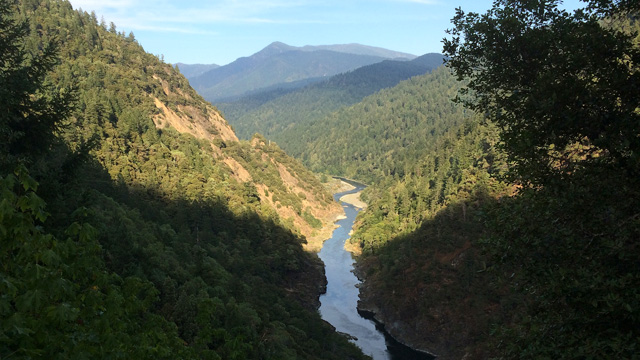
"caption": "Sierra Nevada forests are denser than they once were, potentially reducing the amount of runoff that reaches California's reservoirs. (Dan Brekke/KQED)",
"description": null,
"title": "River-runoff",
"credit": null,
"status": "inherit",
"isLoading": false,
"fetchFailed": false
},
"science_20879": {
"type": "attachments",
"id": "science_20879",
"meta": {
"index": "attachments_1716263798",
"site": "science",
"id": "20879",
"found": true
},
"parent": 20847,
"imgSizes": {
"kqedFullSize": {
"file": "https://ww2.kqed.org/app/uploads/sites/35/2014/08/DSC014881.jpg",
"width": 640,
"height": 360
}
},
"publishDate": 1408759561,
"modified": 1408759561,
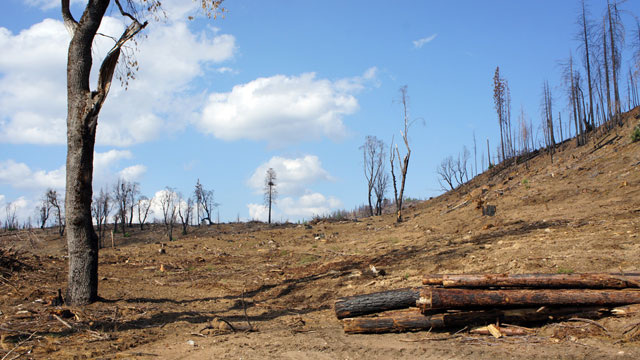
"caption": "Sierra Pacific Industries began clearing its private land within weeks after the Rim Fire burned through. (Lauren Sommer/KQED)",
"description": "Sierra Pacific Industries began clearing its private land within weeks after the Rim Fire burned through. (Lauren Sommer/KQED)",
"title": "DSC01488",
"credit": null,
"status": "inherit",
"isLoading": false,
"fetchFailed": false
},
"science_20641": {
"type": "attachments",
"id": "science_20641",
"meta": {
"index": "attachments_1716263798",
"site": "science",
"id": "20641",
"found": true
},
"parent": 20636,
"imgSizes": {
"kqedFullSize": {
"file": "https://ww2.kqed.org/app/uploads/sites/35/2014/08/seedling1.jpg",
"width": 1280,
"height": 720
}
},
"publishDate": 1408137653,
"modified": 1408137653,
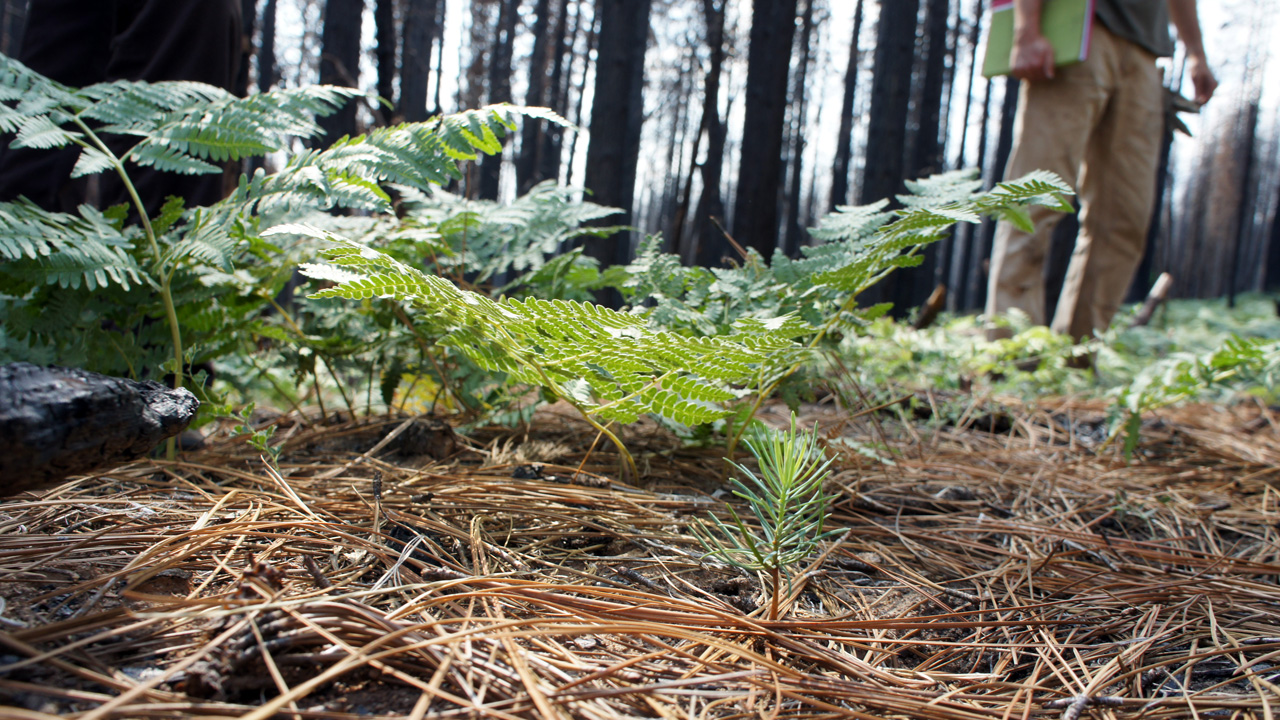
"caption": "A pine tree seedling emerges in a burned area of the Stanislaus National Forest. (Lauren Sommer/KQED)",
"description": null,
"title": "seedling",
"credit": null,
"status": "inherit",
"isLoading": false,
"fetchFailed": false
},
"science_20040": {
"type": "attachments",
"id": "science_20040",
"meta": {
"index": "attachments_1716263798",
"site": "science",
"id": "20040",
"found": true
},
"parent": 20029,
"imgSizes": {
"kqedFullSize": {
"file": "https://ww2.kqed.org/app/uploads/sites/35/2014/07/RS11351_smokejumpers-jump-hpf.jpg",
"width": 640,
"height": 456
}
},
"publishDate": 1406770231,
"modified": 1406770231,
"caption": "The view from a helmet-mounted camera, worn by smokejumper Curtis Matthews, mid-jump. ",
"description": "The view from a helmet-mounted camera, worn by smokejumper Curtis Matthews, mid-jump. ",
"title": "RS11351_smokejumpers- jump-hpf",
"credit": null,
"status": "inherit",
"isLoading": false,
"fetchFailed": false
},
"science_19786": {
"type": "attachments",
"id": "science_19786",
"meta": {
"index": "attachments_1716263798",
"site": "science",
"id": "19786",
"found": true
},
"parent": 19607,
"imgSizes": {
"kqedFullSize": {
"file": "https://ww2.kqed.org/app/uploads/sites/35/2014/07/RS11253_deng_face-sfi.jpg",
"width": 640,
"height": 360
}
},
"publishDate": 1406237766,
"modified": 1406237766,
"caption": "Emir Dunn at work on the Bully Fire in Shasta County. (Adam Grossberg/KQED)",
"description": "Emir Dunn at work on the Bully Fire in Shasta County. (Adam Grossberg/KQED)",
"title": "Emir Dunn",
"credit": null,
"status": "inherit",
"isLoading": false,
"fetchFailed": false
},
"science_19582": {
"type": "attachments",
"id": "science_19582",
"meta": {
"index": "attachments_1716263798",
"site": "science",
"id": "19582",
"found": true
},
"parent": 19549,
"imgSizes": {
"kqedFullSize": {
"file": "https://ww2.kqed.org/app/uploads/sites/35/2014/07/2614143760_4919fd38ae_z.jpg",
"width": 640,
"height": 428
}
},
"publishDate": 1405966489,
"modified": 1405966489,
"caption": "In 2008, lightning ignited more than 2,000 fires in California, including this one near Big Sur. (rskoon/Flickr) ",
"description": "In 2008, lightning ignited more than 2,000 fires in California, including this one near Big Sur. (rskoon/Flickr) ",
"title": "2614143760_4919fd38ae_z",
"credit": null,
"status": "inherit",
"isLoading": false,
"fetchFailed": false
},
"science_17568": {
"type": "attachments",
"id": "science_17568",
"meta": {
"index": "attachments_1716263798",
"site": "science",
"id": "17568",
"found": true
},
"parent": 17553,
"imgSizes": {
"kqedFullSize": {
"file": "https://ww2.kqed.org/app/uploads/sites/35/2014/05/hose-featured.jpg",
"width": 640,
"height": 360
}
},
"publishDate": 1400276694,
"modified": 1400276694,
"caption": "Seasonal CalFire firefighters practice with hoses at a training center in Napa County. (Molly Samuel/KQED)",
"description": "Seasonal CalFire firefighters practice with hoses at a training center in Napa County. (Molly Samuel/KQED)",
"title": "hose-featured",
"credit": null,
"status": "inherit",
"isLoading": false,
"fetchFailed": false
},
"science_16457": {
"type": "attachments",
"id": "science_16457",
"meta": {
"index": "attachments_1716263798",
"site": "science",
"id": "16457",
"found": true
},
"parent": 16415,
"imgSizes": {
"kqedFullSize": {
"file": "https://ww2.kqed.org/app/uploads/sites/35/2014/04/6501scr_74e0f2dda29239a.jpg",
"width": 640,
"height": 360
}
},
"publishDate": 1397253250,
"modified": 1397253250,
"caption": "Flames from the Rim Fire consume trees on August 25, 2013 near Groveland, California. (Justin Sullivan/Getty Images)",
"description": null,
"title": "6501scr_74e0f2dda29239a",
"credit": null,
"status": "inherit",
"isLoading": false,
"fetchFailed": false
},
"science_16073": {
"type": "attachments",
"id": "science_16073",
"meta": {
"index": "attachments_1716263798",
"site": "science",
"id": "16073",
"found": true
},
"parent": 16064,
"imgSizes": {
"kqedFullSize": {
"file": "https://ww2.kqed.org/app/uploads/sites/35/2014/04/7017scr_d01835d281bde2b.jpg",
"width": 640,
"height": 360
}
},
"publishDate": 1396485763,
"modified": 1396485763,
"caption": "The forest after the Rim Fire, just outside of Yosemite National Park. (Lauren Sommer/KQED)",
"description": "The forest after the Rim Fire, just outside of Yosemite National Park. (Lauren Sommer/KQED)",
"title": "7017scr_d01835d281bde2b",
"credit": null,
"status": "inherit",
"isLoading": false,
"fetchFailed": false
},
"science_16025": {
"type": "attachments",
"id": "science_16025",
"meta": {
"index": "attachments_1716263798",
"site": "science",
"id": "16025",
"found": true
},
"parent": 16016,
"imgSizes": {
"kqedFullSize": {
"file": "https://ww2.kqed.org/app/uploads/sites/35/2014/04/stacks.jpg",
"width": 640,
"height": 360
}
},
"publishDate": 1396378875,
"modified": 1396378875,
"caption": "The Department of Water and Power San Fernando Valley Generating Station is seen December 11, 2008 in Sun Valley, California. (David McNew/Getty Images)",
"description": "The Department of Water and Power San Fernando Valley Generating Station is seen December 11, 2008 in Sun Valley, California. (David McNew/Getty Images)",
"title": "stacks",
"credit": null,
"status": "inherit",
"isLoading": false,
"fetchFailed": false
},
"science_11066": {
"type": "attachments",
"id": "science_11066",
"meta": {
"index": "attachments_1716263798",
"site": "science",
"id": "11066",
"found": true
},
"parent": 10944,
"imgSizes": {
"kqedFullSize": {
"file": "https://ww2.kqed.org/app/uploads/sites/35/2013/11/nightburn-small.jpg",
"width": 640,
"height": 360
}
},
"publishDate": 1384554995,
"modified": 1384554995,
"caption": "A nighttime prescribed burn in the Stanislaus National Forest in California's Sierra Nevada. (Eric Knapp/U.S. Forest Service)",
"description": "A nighttime prescribed burn in the Stanislaus National Forest in California's Sierra Nevada. (Eric Knapp/U.S. Forest Service)",
"title": "prescribed burn at night",
"credit": null,
"status": "inherit",
"isLoading": false,
"fetchFailed": false
}
},
"audioPlayerReducer": {
"postId": "stream_live",
"isPaused": true,
"isPlaying": false,
"pfsActive": false,
"pledgeModalIsOpen": true,
"playerDrawerIsOpen": false,
"liveAudioPlayStartedAt": 0,
"liveAudioPlayContext": ""
},
"authorsReducer": {
"mollysamuel": {
"type": "authors",
"id": "200",
"meta": {
"index": "authors_1716337520",
"id": "200",
"found": true
},
"name": "Molly Samuel",
"firstName": "Molly",
"lastName": "Samuel",
"slug": "mollysamuel",
"email": "msamuel@kqed.org",
"display_author_email": false,
"staff_mastheads": [],
"title": null,
"bio": "Molly Samuel joined KQED as an intern in 2007, and since then has worked here as a reporter, producer, director and blogger. Before becoming KQED Science’s Multimedia Producer, she was a producer for Climate Watch. Molly has also reported for NPR, KALW and High Country News, and has produced audio stories for The Encyclopedia of Life and the Oakland Museum of California. She was a fellow with the Middlebury Fellowships in Environmental Journalism and a journalist-in-residence at the National Evolutionary Synthesis Center. Molly has a degree in Ancient Greek from Oberlin College and is a co-founder of the record label True Panther Sounds.",
"avatar": "https://secure.gravatar.com/avatar/a6abd3b949a89fe5109fa9917631d0b6?s=600&d=blank&r=g",
"twitter": null,
"facebook": null,
"instagram": null,
"linkedin": null,
"sites": [
{
"site": "news",
"roles": [
"subscriber"
]
},
{
"site": "stateofhealth",
"roles": [
"subscriber"
]
},
{
"site": "science",
"roles": [
"subscriber"
]
},
{
"site": "quest",
"roles": [
"edit_users",
"subscriber"
]
}
],
"headData": {
"title": "Molly Samuel | KQED",
"description": null,
"ogImgSrc": "https://secure.gravatar.com/avatar/a6abd3b949a89fe5109fa9917631d0b6?s=600&d=blank&r=g",
"twImgSrc": "https://secure.gravatar.com/avatar/a6abd3b949a89fe5109fa9917631d0b6?s=600&d=blank&r=g"
},
"isLoading": false,
"link": "/author/mollysamuel"
},
"ahelmick": {
"type": "authors",
"id": "207",
"meta": {
"index": "authors_1716337520",
"id": "207",
"found": true
},
"name": "Alex Helmick",
"firstName": "Alex",
"lastName": "Helmick",
"slug": "ahelmick",
"email": "ahelmick@kqed.org",
"display_author_email": false,
"staff_mastheads": [],
"title": "KQED Contributor",
"bio": "Alex Helmick is a former supervising editor of KQED's newscast unit. He led a team of 10 and edited content for KQED’s 20 daily newscasts as well as occasionally editing \u003cem>The California Report.\u003c/em>\r\n\r\nBefore joining KQED, Alex worked in Geneva, Switzerland, where he reported from the United Nations European Headquarters and later hosted a 2-hour daily current events program. In 2009, he covered the war in Afghanistan and its impact on the humanitarian crisis in the country. He has also covered business in Chicago and produced the evening news for WBEZ.",
"avatar": "https://secure.gravatar.com/avatar/0a6dd12640740a1e6333d9102e3ae8a8?s=600&d=blank&r=g",
"twitter": null,
"facebook": null,
"instagram": null,
"linkedin": null,
"sites": [
{
"site": "news",
"roles": [
"subscriber"
]
},
{
"site": "science",
"roles": []
}
],
"headData": {
"title": "Alex Helmick | KQED",
"description": "KQED Contributor",
"ogImgSrc": "https://secure.gravatar.com/avatar/0a6dd12640740a1e6333d9102e3ae8a8?s=600&d=blank&r=g",
"twImgSrc": "https://secure.gravatar.com/avatar/0a6dd12640740a1e6333d9102e3ae8a8?s=600&d=blank&r=g"
},
"isLoading": false,
"link": "/author/ahelmick"
},
"cmiller": {
"type": "authors",
"id": "221",
"meta": {
"index": "authors_1716337520",
"id": "221",
"found": true
},
"name": "Craig Miller",
"firstName": "Craig",
"lastName": "Miller",
"slug": "cmiller",
"email": "craig@voxterra.net",
"display_author_email": false,
"staff_mastheads": [
"science"
],
"title": "Editor Emeritus, Science",
"bio": "Craig is a former KQED Science editor, specializing in weather, climate, water & energy issues, with a little seismology thrown in just to shake things up. Prior to that, he launched and led the station's award-winning multimedia project, Climate Watch. Craig is also an accomplished writer/producer of television documentaries, with a focus on natural resource issues.",
"avatar": "https://secure.gravatar.com/avatar/b91661df645e001a9cafe0861fa685f9?s=600&d=blank&r=g",
"twitter": "voxterra",
"facebook": null,
"instagram": null,
"linkedin": null,
"sites": [
{
"site": "news",
"roles": [
"author"
]
},
{
"site": "futureofyou",
"roles": [
"editor"
]
},
{
"site": "stateofhealth",
"roles": [
"author"
]
},
{
"site": "science",
"roles": [
"editor"
]
},
{
"site": "quest",
"roles": [
"editor"
]
}
],
"headData": {
"title": "Craig Miller | KQED",
"description": "Editor Emeritus, Science",
"ogImgSrc": "https://secure.gravatar.com/avatar/b91661df645e001a9cafe0861fa685f9?s=600&d=blank&r=g",
"twImgSrc": "https://secure.gravatar.com/avatar/b91661df645e001a9cafe0861fa685f9?s=600&d=blank&r=g"
},
"isLoading": false,
"link": "/author/cmiller"
},
"katsnow": {
"type": "authors",
"id": "235",
"meta": {
"index": "authors_1716337520",
"id": "235",
"found": true
},
"name": "Katrin Snow",
"firstName": "Katrin",
"lastName": "Snow",
"slug": "katsnow",
"email": "ksnow@kqed.org",
"display_author_email": true,
"staff_mastheads": [
"science"
],
"title": "Senior Editor",
"bio": "Kat started in radio in 1985 at KMUN in Astoria, Oregon, where the Columbia River meets the sea. She worked several years protecting monarch butterfly habitat in California with the Xerces Society, an invertebrate conservation organization, before a love for radio news drew her back into journalism. Kat came to KQED in 2002, and before that was a reporter and news director at KUER in Salt Lake City, covering the state legislature, the environment and health. Kat coaches reporters and others in embodied narration and public speaking. She is a certified teacher of Soul Motion®, a conscious dance practice, and can sometimes be found in the Mojave desert or the Eastern Sierra.",
"avatar": "https://secure.gravatar.com/avatar/fa6bf8a74a2692973a5484e64ebd2b52?s=600&d=blank&r=g",
"twitter": "cosmologicalkat",
"facebook": null,
"instagram": null,
"linkedin": null,
"sites": [
{
"site": "arts",
"roles": [
"contributor"
]
},
{
"site": "news",
"roles": [
"editor"
]
},
{
"site": "futureofyou",
"roles": [
"editor"
]
},
{
"site": "science",
"roles": [
"editor"
]
}
],
"headData": {
"title": "Katrin Snow | KQED",
"description": "Senior Editor",
"ogImgSrc": "https://secure.gravatar.com/avatar/fa6bf8a74a2692973a5484e64ebd2b52?s=600&d=blank&r=g",
"twImgSrc": "https://secure.gravatar.com/avatar/fa6bf8a74a2692973a5484e64ebd2b52?s=600&d=blank&r=g"
},
"isLoading": false,
"link": "/author/katsnow"
},
"laurensommer": {
"type": "authors",
"id": "239",
"meta": {
"index": "authors_1716337520",
"id": "239",
"found": true
},
"name": "Lauren Sommer",
"firstName": "Lauren",
"lastName": "Sommer",
"slug": "laurensommer",
"email": "lsommer@kqed.org",
"display_author_email": false,
"staff_mastheads": [],
"title": "KQED Contributor",
"bio": "Lauren is a radio reporter formerly covering environment, water, and energy for KQED Science. As part of her day job, she has scaled Sierra Nevada peaks, run from charging elephant seals, and desperately tried to get her sea legs - all in pursuit of good radio. Her work has appeared on Marketplace, Living on Earth, Science Friday and NPR's Morning Edition and All Things Considered. You can find her on Twitter at \u003ca href=\"https://twitter.com/lesommer\">@lesommer\u003c/a>.",
"avatar": "https://secure.gravatar.com/avatar/33aa3772bb86c6ad45b8aca6a238bbdf?s=600&d=blank&r=g",
"twitter": null,
"facebook": null,
"instagram": null,
"linkedin": null,
"sites": [
{
"site": "news",
"roles": [
"author"
]
},
{
"site": "science",
"roles": [
"editor",
"manage_content_types",
"manage_taxonomies"
]
},
{
"site": "quest",
"roles": [
"editor"
]
}
],
"headData": {
"title": "Lauren Sommer | KQED",
"description": "KQED Contributor",
"ogImgSrc": "https://secure.gravatar.com/avatar/33aa3772bb86c6ad45b8aca6a238bbdf?s=600&d=blank&r=g",
"twImgSrc": "https://secure.gravatar.com/avatar/33aa3772bb86c6ad45b8aca6a238bbdf?s=600&d=blank&r=g"
},
"isLoading": false,
"link": "/author/laurensommer"
},
"kqedscience": {
"type": "authors",
"id": "6387",
"meta": {
"index": "authors_1716337520",
"id": "6387",
"found": true
},
"name": "KQED Science",
"firstName": "KQED",
"lastName": "Science",
"slug": "kqedscience",
"email": "kqedscience@gmail.com",
"display_author_email": false,
"staff_mastheads": [],
"title": null,
"bio": "KQED Science brings you award-winning science and environment coverage from the Bay Area and beyond by the flagship Northern California PBS and NPR affiliate.",
"avatar": "https://secure.gravatar.com/avatar/5a295ff49cf82a8c0f30937d3f788b2f?s=600&d=blank&r=g",
"twitter": null,
"facebook": null,
"instagram": null,
"linkedin": null,
"sites": [
{
"site": "science",
"roles": [
"contributor"
]
},
{
"site": "quest",
"roles": [
"editor"
]
},
{
"site": "food",
"roles": [
"contributor"
]
}
],
"headData": {
"title": "KQED Science | KQED",
"description": null,
"ogImgSrc": "https://secure.gravatar.com/avatar/5a295ff49cf82a8c0f30937d3f788b2f?s=600&d=blank&r=g",
"twImgSrc": "https://secure.gravatar.com/avatar/5a295ff49cf82a8c0f30937d3f788b2f?s=600&d=blank&r=g"
},
"isLoading": false,
"link": "/author/kqedscience"
},
"stonn": {
"type": "authors",
"id": "6538",
"meta": {
"index": "authors_1716337520",
"id": "6538",
"found": true
},
"name": "Shara Tonn",
"firstName": "Shara",
"lastName": "Tonn",
"slug": "stonn",
"email": "stonn@KQED.org",
"display_author_email": false,
"staff_mastheads": [],
"title": null,
"bio": "Shara Tonn is a Master’s student at Stanford University in Earth Systems, an interdisciplinary environmental science degree. Her focus is science communication and education. She is a part of the environmental radio group on campus, GreenGrid Radio and also enjoys performing improv with the Stanford Improvisers (SIMPs). Born and raised in Tennessee, Shara loves to travel and has lived overseas in Italy, Japan and Australia.",
"avatar": "https://secure.gravatar.com/avatar/9968feeee672a136559a0d7b615ee13e?s=600&d=blank&r=g",
"twitter": null,
"facebook": null,
"instagram": null,
"linkedin": null,
"sites": [
{
"site": "science",
"roles": [
"editor"
]
}
],
"headData": {
"title": "Shara Tonn | KQED",
"description": null,
"ogImgSrc": "https://secure.gravatar.com/avatar/9968feeee672a136559a0d7b615ee13e?s=600&d=blank&r=g",
"twImgSrc": "https://secure.gravatar.com/avatar/9968feeee672a136559a0d7b615ee13e?s=600&d=blank&r=g"
},
"isLoading": false,
"link": "/author/stonn"
}
},
"pagesReducer": {
"science_tag_wildfire": {
"type": "terms",
"id": "science_113",
"meta": {
"index": "terms_1716263798",
"site": "science",
"id": "113",
"score": 8.673303
},
"featImg": null,
"name": "wildfire",
"description": null,
"taxonomy": "tag",
"headData": {
"twImgId": null,
"twTitle": null,
"ogTitle": null,
"ogImgId": null,
"twDescription": null,
"description": null,
"title": "wildfire Archives | KQED Science",
"ogDescription": null
},
"ttid": 117,
"slug": "wildfire",
"isLoading": false,
"title": "wildfire",
"pageMeta": {
"site": "science",
"WpPageTemplate": "page-topic-editorial",
"currentPage": 18
},
"blocks": [
{
"blockName": "kqed/post-list",
"attrs": {
"layout": "cardArticle2",
"query": "posts/science?tag=wildfire",
"seeMore": false,
"paginated": true,
"page": 18
}
},
{
"blockName": "kqed/ad"
}
]
}
},
"pfsSessionReducer": {},
"postsReducer": {
"stream_live": {
"type": "live",
"id": "stream_live",
"audioUrl": "https://hls.kqed.org/hls/kqed_app/playlist.m3u8",
"title": "Live Stream",
"excerpt": "Live Stream information currently unavailable.",
"link": "/radio",
"featImg": "",
"label": {
"name": "KQED Live",
"link": "/"
}
},
"stream_kqedNewscast": {
"type": "posts",
"id": "stream_kqedNewscast",
"audioUrl": "https://www.kqed.org/.stream/anon/radio/RDnews/newscast.mp3?_=1",
"title": "KQED Newscast",
"featImg": "",
"label": {
"name": "88.5 FM",
"link": "/"
}
},
"science_21581": {
"type": "posts",
"id": "science_21581",
"meta": {
"index": "posts_1716263798",
"site": "science",
"id": "21581",
"score": null,
"sort": [
1410764481000
]
},
"parent": 0,
"labelTerm": {
"site": "science",
"term": 1151
},
"blocks": [],
"publishDate": 1410764481,
"format": "aside",
"title": "Why More Trees in the Sierra Mean Less Water for California",
"headTitle": "Why More Trees in the Sierra Mean Less Water for California | KQED",
"content": "\u003cdiv class=\"audio-wrap\">\n\u003ch2>Listen:\u003c/h2>\n\u003cp>http://www.kqed.org/.stream/anon/radio/science/2014/09/20140915science.mp3\u003c/p>\n\u003c/div>\n\u003cfigure id=\"attachment_21584\" class=\"wp-caption alignleft\" style=\"max-width: 640px\">\u003ca href=\"http://ww2.kqed.org/science/wp-content/uploads/sites/35/2014/09/River-runoff.jpg\">\u003cimg loading=\"lazy\" decoding=\"async\" class=\"size-full wp-image-21584\" src=\"http://ww2.kqed.org/science/wp-content/uploads/sites/35/2014/09/River-runoff.jpg\" alt=\"Sierra Nevada forests are denser than they once were, potentially reducing the amount of runoff that reaches California's reservoirs. (Dan Brekke/KQED)\" width=\"640\" height=\"360\">\u003c/a>\u003cfigcaption class=\"wp-caption-text\">Sierra Nevada forests are denser than they once were, potentially reducing the amount of runoff that reaches California’s reservoirs. (Dan Brekke/KQED)\u003c/figcaption>\u003c/figure>\n\u003cp>With California’s reservoir levels dropping, just about everyone is wishing the state had gotten more water this year. That doesn’t just depend on the weather, according to a team of scientists. Sierra Nevada forests play a big role in the state’s water supply.\u003c/p>\n\u003cp>Just like crops, trees consume water. And Sierra Nevada forests are denser than they once were after decades of fire suppression. That could be reducing the amount of runoff coming from the snowpack — runoff that provides water for most of the state.\u003c/p>\n\u003cp>“We call the Sierra Nevada our water towers for California,” says Roger Bales, a hydrologist with UC Merced. “About 60 percent of our consumable water comes from the Sierra Nevada.”\u003c/p>\n\u003cp>Bales is working in a pine forest about 20 miles west of Lake Tahoe, to understand the balance between and trees and runoff. His team has installed hundreds of sensors in the American River basin to record snow depth and soil moisture.\u003c/p>\n\u003cp>“The snowmelt really enters the soil,” he says, “and flows downslope to the nearest stream channel.”\u003c/p>\n\u003cp>[ad fullwidth]\u003c/p>\n\u003cp>From there, it joins major rivers and \u003ca href=\"http://www.kqed.org/news/science/climatewatch/waterandpower/map.jsp\">goes into reservoirs\u003c/a> and canals that reach \u003ca href=\"http://ww2.kqed.org/science/2014/02/28/bay-area-do-you-know-where-your-water-comes-from/\">all the way to cities and farms\u003c/a> in the Central Valley, Bay Area and Southern California.\u003c/p>\n\u003cfigure id=\"attachment_21585\" class=\"wp-caption alignright\" style=\"max-width: 340px\">\u003ca href=\"http://ww2.kqed.org/science/wp-content/uploads/sites/35/2014/09/bales-729x1024.jpg\">\u003cimg loading=\"lazy\" decoding=\"async\" class=\"wp-image-21585\" src=\"http://ww2.kqed.org/science/wp-content/uploads/sites/35/2014/09/bales-729x1024.jpg\" alt=\"UC Merced's Roger Bales and Ziran Zhang work on a snow sensor tower in the Tahoe National Forest. (Lauren Sommer/KQED)\" width=\"340\" height=\"477\">\u003c/a>\u003cfigcaption class=\"wp-caption-text\">UC Merced’s Roger Bales and Ziran Zhang work on a snow sensor tower in the Tahoe National Forest. (Lauren Sommer/KQED)\u003c/figcaption>\u003c/figure>\n\u003cp>When trees use water through the process of evapotranspiration, it doesn’t run off into rivers and reservoirs. \u003c/p>\n\u003cp>“That water travels up the tree trunk and then goes out through the leaves to the atmosphere,” Bales says. And there are a lot more trees using water today than there once were.\u003c/p>\n\u003cp>Frequent, low-intensity fires once cleared out small trees and maintained spaces in the forest. Decades of suppressing fires has allowed the forest to fill in.\u003c/p>\n\u003cp>“You go back about 100-to-150 years and the forest data show us there were maybe only half as many trees here,” Bales says.\u003c/p>\n\u003cp>The snowpack is also less stable in a dense forest. The snow gets stuck in the trees’ branches before reaching the ground and evaporates faster because it’s more susceptible to sun and wind.\u003c/p>\n\u003cp>Because these changes have happened over millions of acres of forest, Bales says it’s led researchers to a basic question:\u003c/p>\n\u003cp>“If there were half as many trees, would there be more runoff?” he asks.\u003c/p>\n\u003cp>The research points to yes, he says — potentially a lot more.\u003c/p>\n\u003cp>“Is it 20 percent, 30 percent or 40 percent?” Bales says. “We’re sort of in that range. But that’s a hypothesis. Our back-of-the-envelope calculations suggest that you could get anywhere from half a million to a million acre-feet additional water out of the Sierra Nevada.” \u003c/p>\n\u003cp>A million acre-feet of water is enough to supply two million households in California for a year — an amount that could make a big difference during a drought.\u003c/p>\n\u003cp>\u003cstrong>Managing Overgrown Forests\u003c/strong>\u003c/p>\n\u003cp>“I think the water piece is really huge,” says Scott Stephens, professor of fire science at UC Berkeley. “I think it’s under-appreciated but it’s massive.”\u003c/p>\n\u003cp>Stephens has found similar results in the Illilouette Creek basin in Yosemite National Park. About 40 fires have been allowed to burn there over several decades, reducing the number of trees per acre.\u003c/p>\n\u003cp>“It looks like there’s 20 percent more surface water leaving the streams in that area since the fire program began in the mid-1970s,” he says.\u003c/p>\n\u003cp>The widely spaced trees also make the forest more resistant to high-severity fire.\u003c/p>\n\u003cp>[contextly_sidebar id=”ebfC6eGZE6wvva0IQjLqdbheiT23eRrP”]\u003c/p>\n\u003cp>“I call it a potential win-win,” Stephens says. “It’s a win from a fire standpoint to have more resilient forests and also maybe a win in terms of being able to provide a critical resource for California, which is water.”\u003c/p>\n\u003cp>But leaving naturally caused fires to burn over large areas of the Sierra Nevada is tricky, he says, especially near houses and communities.\u003c/p>\n\u003cp>“Letting fire work in those lands is risky,” Stephens says. “Sometimes it’s going to go as expected and once in a while it goes wrong.”\u003c/p>\n\u003cp>Another option is to allow timber companies to cut small trees, thinning the forest. It’s commonly done where roads already exist, but can be prohibitively expensive in remote areas and often faces environmental opposition.\u003c/p>\n\u003cp>Climate change could make the problem even worse. A \u003ca href=\"http://news.uci.edu/press-releases/sierra-nevada-freshwater-runoff-could-drop-26-percent-by-2100-uc-study-finds/\">recent study\u003c/a> from UC Irvine found California’s forests will be using even more water by the end of the century, because warming temperatures will make the growing season longer. Runoff could drop by as much as 26 percent.\u003c/p>\n\u003cp>“If we don’t act today, our grandkids’ grandkids are going to have so few options,” Stephens says. “It’s going to be warmer. It’s going to be more difficult to do this work and they’re going to be basically chasing their tails.”\u003c/p>\n\u003cp>\u003c/p>\n\u003cp>Stephens says the good news is that California water districts are joining the conversation about how to manage forests. While it didn’t used to be on their radar, the connection between trees and our drinking water is becoming hard to ignore.\u003c/p>\n\n",
"stats": {
"hasVideo": false,
"hasChartOrMap": false,
"hasAudio": true,
"hasPolis": false,
"wordCount": 962,
"hasGoogleForm": false,
"hasGallery": false,
"hasHearkenModule": false,
"iframeSrcs": [],
"paragraphCount": 31
},
"modified": 1704932947,
"excerpt": "California water districts are eyeing a potential new source of water: trees. After a century of fire suppression, Sierra Nevada forests are more dense than ever before. And those pine trees are taking up a lot of water that might otherwise run off into California rivers. \r\n",
"headData": {
"twImgId": "",
"twTitle": "",
"ogTitle": "",
"ogImgId": "",
"twDescription": "",
"description": "California water districts are eyeing a potential new source of water: trees. After a century of fire suppression, Sierra Nevada forests are more dense than ever before. And those pine trees are taking up a lot of water that might otherwise run off into California rivers. \r\n",
"title": "Why More Trees in the Sierra Mean Less Water for California | KQED",
"ogDescription": "",
"schema": {
"@context": "https://schema.org",
"@type": "Article",
"headline": "Why More Trees in the Sierra Mean Less Water for California",
"datePublished": "2014-09-15T00:01:21-07:00",
"dateModified": "2024-01-10T16:29:07-08:00",
"image": "https://cdn.kqed.org/wp-content/uploads/2020/02/KQED-OG-Image@1x.png"
}
},
"guestAuthors": [],
"slug": "why-more-trees-in-the-sierra-mean-less-water-for-california",
"status": "publish",
"audioUrl": "http://www.kqed.org/.stream/anon/radio/science/2014/09/20140915science.mp3",
"sticky": false,
"path": "/science/21581/why-more-trees-in-the-sierra-mean-less-water-for-california",
"audioTrackLength": null,
"parsedContent": [
{
"type": "contentString",
"content": "\u003cdiv class=\"post-body\">\u003cp>\u003cdiv class=\"audio-wrap\">\n\u003ch2>Listen:\u003c/h2>\u003c/p>\u003c/div>",
"attributes": {
"named": {},
"numeric": []
}
},
{
"type": "component",
"content": "",
"name": "audioLink",
"attributes": {
"named": {
"src": "http://www.kqed.org/.stream/anon/radio/science/2014/09/20140915science.mp3"
},
"numeric": []
}
},
{
"type": "contentString",
"content": "\u003cdiv class=\"post-body\">\u003cp>\u003c/div>\n\u003cfigure id=\"attachment_21584\" class=\"wp-caption alignleft\" style=\"max-width: 640px\">\u003ca href=\"http://ww2.kqed.org/science/wp-content/uploads/sites/35/2014/09/River-runoff.jpg\">\u003cimg loading=\"lazy\" decoding=\"async\" class=\"size-full wp-image-21584\" src=\"http://ww2.kqed.org/science/wp-content/uploads/sites/35/2014/09/River-runoff.jpg\" alt=\"Sierra Nevada forests are denser than they once were, potentially reducing the amount of runoff that reaches California's reservoirs. (Dan Brekke/KQED)\" width=\"640\" height=\"360\">\u003c/a>\u003cfigcaption class=\"wp-caption-text\">Sierra Nevada forests are denser than they once were, potentially reducing the amount of runoff that reaches California’s reservoirs. (Dan Brekke/KQED)\u003c/figcaption>\u003c/figure>\n\u003cp>With California’s reservoir levels dropping, just about everyone is wishing the state had gotten more water this year. That doesn’t just depend on the weather, according to a team of scientists. Sierra Nevada forests play a big role in the state’s water supply.\u003c/p>\n\u003cp>Just like crops, trees consume water. And Sierra Nevada forests are denser than they once were after decades of fire suppression. That could be reducing the amount of runoff coming from the snowpack — runoff that provides water for most of the state.\u003c/p>\n\u003cp>“We call the Sierra Nevada our water towers for California,” says Roger Bales, a hydrologist with UC Merced. “About 60 percent of our consumable water comes from the Sierra Nevada.”\u003c/p>\n\u003cp>Bales is working in a pine forest about 20 miles west of Lake Tahoe, to understand the balance between and trees and runoff. His team has installed hundreds of sensors in the American River basin to record snow depth and soil moisture.\u003c/p>\n\u003cp>“The snowmelt really enters the soil,” he says, “and flows downslope to the nearest stream channel.”\u003c/p>\n\u003cp>\u003c/p>\u003c/div>",
"attributes": {
"named": {},
"numeric": []
}
},
{
"type": "component",
"content": "",
"name": "ad",
"attributes": {
"named": {
"label": "fullwidth"
},
"numeric": [
"fullwidth"
]
}
},
{
"type": "contentString",
"content": "\u003cdiv class=\"post-body\">\u003cp>\u003c/p>\n\u003cp>From there, it joins major rivers and \u003ca href=\"http://www.kqed.org/news/science/climatewatch/waterandpower/map.jsp\">goes into reservoirs\u003c/a> and canals that reach \u003ca href=\"http://ww2.kqed.org/science/2014/02/28/bay-area-do-you-know-where-your-water-comes-from/\">all the way to cities and farms\u003c/a> in the Central Valley, Bay Area and Southern California.\u003c/p>\n\u003cfigure id=\"attachment_21585\" class=\"wp-caption alignright\" style=\"max-width: 340px\">\u003ca href=\"http://ww2.kqed.org/science/wp-content/uploads/sites/35/2014/09/bales-729x1024.jpg\">\u003cimg loading=\"lazy\" decoding=\"async\" class=\"wp-image-21585\" src=\"http://ww2.kqed.org/science/wp-content/uploads/sites/35/2014/09/bales-729x1024.jpg\" alt=\"UC Merced's Roger Bales and Ziran Zhang work on a snow sensor tower in the Tahoe National Forest. (Lauren Sommer/KQED)\" width=\"340\" height=\"477\">\u003c/a>\u003cfigcaption class=\"wp-caption-text\">UC Merced’s Roger Bales and Ziran Zhang work on a snow sensor tower in the Tahoe National Forest. (Lauren Sommer/KQED)\u003c/figcaption>\u003c/figure>\n\u003cp>When trees use water through the process of evapotranspiration, it doesn’t run off into rivers and reservoirs. \u003c/p>\n\u003cp>“That water travels up the tree trunk and then goes out through the leaves to the atmosphere,” Bales says. And there are a lot more trees using water today than there once were.\u003c/p>\n\u003cp>Frequent, low-intensity fires once cleared out small trees and maintained spaces in the forest. Decades of suppressing fires has allowed the forest to fill in.\u003c/p>\n\u003cp>“You go back about 100-to-150 years and the forest data show us there were maybe only half as many trees here,” Bales says.\u003c/p>\n\u003cp>The snowpack is also less stable in a dense forest. The snow gets stuck in the trees’ branches before reaching the ground and evaporates faster because it’s more susceptible to sun and wind.\u003c/p>\n\u003cp>Because these changes have happened over millions of acres of forest, Bales says it’s led researchers to a basic question:\u003c/p>\n\u003cp>“If there were half as many trees, would there be more runoff?” he asks.\u003c/p>\n\u003cp>The research points to yes, he says — potentially a lot more.\u003c/p>\n\u003cp>“Is it 20 percent, 30 percent or 40 percent?” Bales says. “We’re sort of in that range. But that’s a hypothesis. Our back-of-the-envelope calculations suggest that you could get anywhere from half a million to a million acre-feet additional water out of the Sierra Nevada.” \u003c/p>\n\u003cp>A million acre-feet of water is enough to supply two million households in California for a year — an amount that could make a big difference during a drought.\u003c/p>\n\u003cp>\u003cstrong>Managing Overgrown Forests\u003c/strong>\u003c/p>\n\u003cp>“I think the water piece is really huge,” says Scott Stephens, professor of fire science at UC Berkeley. “I think it’s under-appreciated but it’s massive.”\u003c/p>\n\u003cp>Stephens has found similar results in the Illilouette Creek basin in Yosemite National Park. About 40 fires have been allowed to burn there over several decades, reducing the number of trees per acre.\u003c/p>\n\u003cp>“It looks like there’s 20 percent more surface water leaving the streams in that area since the fire program began in the mid-1970s,” he says.\u003c/p>\n\u003cp>The widely spaced trees also make the forest more resistant to high-severity fire.\u003c/p>\n\u003cp>\u003c/p>\u003cp>\u003c/p>\u003cp>\u003c/p>\n\u003cp>“I call it a potential win-win,” Stephens says. “It’s a win from a fire standpoint to have more resilient forests and also maybe a win in terms of being able to provide a critical resource for California, which is water.”\u003c/p>\n\u003cp>But leaving naturally caused fires to burn over large areas of the Sierra Nevada is tricky, he says, especially near houses and communities.\u003c/p>\n\u003cp>“Letting fire work in those lands is risky,” Stephens says. “Sometimes it’s going to go as expected and once in a while it goes wrong.”\u003c/p>\n\u003cp>Another option is to allow timber companies to cut small trees, thinning the forest. It’s commonly done where roads already exist, but can be prohibitively expensive in remote areas and often faces environmental opposition.\u003c/p>\n\u003cp>Climate change could make the problem even worse. A \u003ca href=\"http://news.uci.edu/press-releases/sierra-nevada-freshwater-runoff-could-drop-26-percent-by-2100-uc-study-finds/\">recent study\u003c/a> from UC Irvine found California’s forests will be using even more water by the end of the century, because warming temperatures will make the growing season longer. Runoff could drop by as much as 26 percent.\u003c/p>\n\u003cp>“If we don’t act today, our grandkids’ grandkids are going to have so few options,” Stephens says. “It’s going to be warmer. It’s going to be more difficult to do this work and they’re going to be basically chasing their tails.”\u003c/p>\n\u003cp>\u003c/p>\n\u003cp>Stephens says the good news is that California water districts are joining the conversation about how to manage forests. While it didn’t used to be on their radar, the connection between trees and our drinking water is becoming hard to ignore.\u003c/p>\n\n\u003c/div>\u003c/p>",
"attributes": {
"named": {},
"numeric": []
}
}
],
"link": "/science/21581/why-more-trees-in-the-sierra-mean-less-water-for-california",
"authors": [
"239"
],
"series": [
"science_1151"
],
"categories": [
"science_46",
"science_31",
"science_35",
"science_40",
"science_43",
"science_98"
],
"tags": [
"science_194",
"science_572",
"science_112",
"science_762",
"science_64",
"science_109",
"science_1127",
"science_787",
"science_201",
"science_113"
],
"featImg": "science_21584",
"label": "science_1151"
},
"science_20847": {
"type": "posts",
"id": "science_20847",
"meta": {
"index": "posts_1716263798",
"site": "science",
"id": "20847",
"score": null,
"sort": [
1409059849000
]
},
"parent": 0,
"labelTerm": {
"site": "science"
},
"blocks": [],
"publishDate": 1409059849,
"format": "aside",
"title": "After Record-Breaking Rim Fire, Log Trees or Leave Them?",
"headTitle": "After Record-Breaking Rim Fire, Log Trees or Leave Them? | KQED",
"content": "\u003cfigure id=\"attachment_20853\" class=\"wp-caption alignleft\" style=\"max-width: 640px\">\u003ca href=\"http://ww2.kqed.org/science/wp-content/uploads/sites/35/2014/08/logging5-1024x612.jpg\">\u003cimg loading=\"lazy\" decoding=\"async\" class=\"wp-image-20853\" src=\"http://ww2.kqed.org/science/wp-content/uploads/sites/35/2014/08/logging5-1024x612.jpg\" alt=\"Burned trees from Sierra Pacific Industries' private land wait at the company's saw mill. (Lauren Sommer/KQED)\" width=\"640\" height=\"383\">\u003c/a>\u003cfigcaption class=\"wp-caption-text\">Burned trees from Sierra Pacific Industries’ private land wait at the company’s saw mill. (Lauren Sommer/KQED)\u003c/figcaption>\u003c/figure>\n\u003cp>Last year’s record-breaking Rim Fire left thousands of acres of dead trees around Yosemite National Park. What to do about those trees has sparked a fierce debate.\u003c/p>\n\u003cp>Later this week, the U.S. Forest Service will release plans to allow logging companies to harvest some of the dead trees. Some environmental groups say it would destroy important wildlife habitat.\u003c/p>\n\u003cp>On several thousand acres, the decision has already been made. Sierra Pacific Industries, the second largest lumber company in the country, had crews harvesting trees on the company’s private land within weeks of the Rim Fire.\u003c/p>\n\u003cp>“You can see here from some of these logs, if you look beyond the bark, inside the wood looks pretty good,” says Mark Luster of Sierra Pacific Industries, pointing to stacks of hundreds of burned logs at the company’s saw mill in Sonora, California.\u003c/p>\n\u003cp>About 90 percent of the wood is still usable and will become everything from two-by-fours to number two pencils.\u003c/p>\n\u003cp>[ad fullwidth]\u003c/p>\n\u003cp>Sierra Pacific Industries is hoping to move onto logging Forest Service land next. Opening it up would provide an economic boost to the region, Luster says.\u003c/p>\n\u003cp>“It makes sense to create jobs here in California, get our wood here and create jobs for Californians,” he says.\u003c/p>\n\u003cp>California’s timber industry has shrunk dramatically over the decades, while the market for wood has not.\u003c/p>\n\u003cp>“Currently California imports about 80 percent of wood that consumers use,” Luster says. “It comes from other states and countries.”\u003c/p>\n\u003cfigure id=\"attachment_20857\" class=\"wp-caption alignleft\" style=\"max-width: 640px\">\u003ca href=\"http://ww2.kqed.org/science/wp-content/uploads/sites/35/2014/08/DSC01451-1280-1024x576.jpg\">\u003cimg loading=\"lazy\" decoding=\"async\" class=\"wp-image-20857\" src=\"http://ww2.kqed.org/science/wp-content/uploads/sites/35/2014/08/DSC01451-1280-1024x576.jpg\" alt=\"Trees killed in the Rim Fire will likely stay standing for only a decade or so. (Lauren Sommer/KQED)\" width=\"640\" height=\"360\">\u003c/a>\u003cfigcaption class=\"wp-caption-text\">Trees killed in the Rim Fire will likely stay standing for only a decade or so. (Lauren Sommer/KQED)\u003c/figcaption>\u003c/figure>\n\u003cp>The Forest Service has other motivations for the plan.\u003c/p>\n\u003cp>“If all the standing dead is left, it’s that intensity of that next fire that comes through,” says Maria Benech, who is working on the Forest Service’s plans for salvage logging, as it’s known.\u003c/p>\n\u003cp>Benech is walking through part of the Stanislaus National Forest that saw some of the worst of the Rim Fire. She says most of the dead trees will only stand for a decade or so.\u003c/p>\n\u003cp>“Picture all those logs lying on top of each other, jack-strawed with that vegetation coming back through,” she says.\u003c/p>\n\u003cp>Once they’re on the ground, there’s a risk of making the next fire more intense, damaging the soil and slowing forest recovery.\u003c/p>\n\u003cp>To deal with the fuel load, the Forest Service has made a preliminary proposal to open up about 44,000 acres for logging companies; that’s about a third of agency’s burned land.\u003c/p>\n\u003cp>Not all the trees will be taken. Benech points to several trees with orange paint on their bark. “Those are leave trees, so those are the trees that will stay,” she says.\u003c/p>\n\u003cp>\u003cstrong>Impacts On Wildlife\u003c/strong>\u003c/p>\n\u003cp>Some animals like dead trees. Wildlife like black-backed woodpeckers moves in to eat insects, and California spotted owls hunt in the bare forest. So the Forest Service is requiring that four to six dead trees be left on each acre.\u003c/p>\n\u003cp>\u003c!-- iframe plugin v.4.3 wordpress.org/plugins/iframe/ -->\u003cbr>\n\u003ciframe loading=\"lazy\" src=\"http://projects1.kqed.org/imageslider/loggingslider.html\" width=\"640\" height=\"860\" frameborder=\"no\" scrolling=\"no\" class=\"iframe-class\">\u003c/iframe>\u003c/p>\n\u003cp>That number isn’t enough for some environmental groups.\u003c/p>\n\u003cp>“Humans, when they look at a burned forest, they think it’s devastation,” says Justin Augustine, an attorney with the Center for Biological Diversity, a non-profit group. “But just the opposite happens out there in the forest.” His group doesn’t want to see the forest touched.\u003c/p>\n\u003cp>“The more severe a fire is, the better that area is going to be for black-backed woodpeckers,” he says. “And right now there’s a significant deficit of that kind of habitat.”\u003c/p>\n\u003cp>The Forest Service says it’s trying to balance both sides. Some areas won’t be logged, but others will. Other environmental groups are aiming for some kind of middle-ground resolution.\u003c/p>\n\u003cp>[contextly_sidebar id=”IcBukGmFw50R5V8sb3m8Yd6R9vf3kHXc”]\u003c/p>\n\u003cp>“It’s frustrating to see that the Rim Fire is the battleground between the environmentalists and those who want logging,” says John Buckley, director of the Central Sierra Environmental Resource Center.\u003c/p>\n\u003cp>Buckley says the Rim Fire was so massive that both sides can get what they want.\u003c/p>\n\u003cp>“You can create a mosaic of un-salvaged areas where there’s lots of dead trees and salvaged areas where most of the dead trees have been removed,” he says.\u003c/p>\n\u003cp>It’s possible that many areas won’t be logged no matter what the Forest Service proposes. Logging companies only have about a year to do the work, because beetles are already damaging the dead trees, making them less valuable.\u003c/p>\n\u003cp>“The local timber industry only has so much mill capacity,” Buckley says. “There are only so many logging trucks and pieces of equipment. And the time frame is so short.”\u003c/p>\n\u003cp>\u003cstrong>An Opportunity For Forestry Researchers\u003c/strong>\u003c/p>\n\u003cfigure id=\"attachment_20863\" class=\"wp-caption alignleft\" style=\"max-width: 640px\">\u003ca href=\"http://ww2.kqed.org/science/wp-content/uploads/sites/35/2014/08/DSC01488-1024x576.jpg\">\u003cimg loading=\"lazy\" decoding=\"async\" class=\"wp-image-20863\" src=\"http://ww2.kqed.org/science/wp-content/uploads/sites/35/2014/08/DSC01488-1024x576.jpg\" alt=\"Sierra Pacific Industries began clearing its private land within weeks after the Rim Fire burned through. \" width=\"640\" height=\"360\">\u003c/a>\u003cfigcaption class=\"wp-caption-text\">Sierra Pacific Industries began clearing its private land within weeks after the Rim Fire burned through. (Lauren Sommer/KQED)\u003c/figcaption>\u003c/figure>\n\u003cp>For many scientists, the size of the Rim Fire also provides an opportunity to study the effects of salvage logging.\u003c/p>\n\u003cp>“It’s surprising that, although salvage logging has been controversial, there’s not all that much scientific research in places where we’ve had frequent fire,” says Malcolm North, a scientist with the Forest Service.\u003c/p>\n\u003cp>More studies on the ecological benefits of dead trees have been done in the Pacific Northwest, where fire is less frequent. Less is known about Sierra Nevada forests.\u003c/p>\n\u003cp>North says further study could help answer questions about how many dead trees should be left on a landscape. Four to six per acre may not be enough.\u003c/p>\n\u003cp>“It’s probably a little bit on the low end,” he says. “Whether it’s sufficient to provide habitat for species, particularly like the black-backed woodpeckers, we just don’t have the answer to that yet.”\u003c/p>\n\u003cp>What scientists do know, he says, is that the area will burn again and dead trees will provide more fuel. “It may burn up all the trees that are regrowing.” Downed trees could also make it difficult for larger wildlife like deer to migrate through the area.\u003c/p>\n\u003cp>North and other ecologists are setting up study plots in the Rim Fire burn area and are hoping learn more about wildlife responds to both logged and unlogged areas.\u003c/p>\n\u003cp>[ad floatright]\u003c/p>\n\u003cp>The Forest Service will release final plans about how much logging will be opened up after the Rim Fire by the end of this week.\u003c/p>\n\n",
"stats": {
"hasVideo": false,
"hasChartOrMap": true,
"hasAudio": false,
"hasPolis": false,
"wordCount": 1139,
"hasGoogleForm": false,
"hasGallery": false,
"hasHearkenModule": false,
"iframeSrcs": [
"http://projects1.kqed.org/imageslider/loggingslider.html"
],
"paragraphCount": 40
},
"modified": 1704933074,
"excerpt": "Later this week, the U.S. Forest Service will release plans to allow logging companies to harvest some of the dead trees. Some environmental groups say it would destroy important wildlife habitat.",
"headData": {
"twImgId": "",
"twTitle": "",
"ogTitle": "",
"ogImgId": "",
"twDescription": "",
"description": "Later this week, the U.S. Forest Service will release plans to allow logging companies to harvest some of the dead trees. Some environmental groups say it would destroy important wildlife habitat.",
"title": "After Record-Breaking Rim Fire, Log Trees or Leave Them? | KQED",
"ogDescription": "",
"schema": {
"@context": "https://schema.org",
"@type": "Article",
"headline": "After Record-Breaking Rim Fire, Log Trees or Leave Them?",
"datePublished": "2014-08-26T06:30:49-07:00",
"dateModified": "2024-01-10T16:31:14-08:00",
"image": "https://cdn.kqed.org/wp-content/uploads/2020/02/KQED-OG-Image@1x.png"
}
},
"guestAuthors": [],
"slug": "after-record-breaking-rim-fire-log-trees-or-leave-them",
"status": "publish",
"sticky": false,
"path": "/science/20847/after-record-breaking-rim-fire-log-trees-or-leave-them",
"audioTrackLength": null,
"parsedContent": [
{
"type": "contentString",
"content": "\u003cdiv class=\"post-body\">\u003cp>\u003cfigure id=\"attachment_20853\" class=\"wp-caption alignleft\" style=\"max-width: 640px\">\u003ca href=\"http://ww2.kqed.org/science/wp-content/uploads/sites/35/2014/08/logging5-1024x612.jpg\">\u003cimg loading=\"lazy\" decoding=\"async\" class=\"wp-image-20853\" src=\"http://ww2.kqed.org/science/wp-content/uploads/sites/35/2014/08/logging5-1024x612.jpg\" alt=\"Burned trees from Sierra Pacific Industries' private land wait at the company's saw mill. (Lauren Sommer/KQED)\" width=\"640\" height=\"383\">\u003c/a>\u003cfigcaption class=\"wp-caption-text\">Burned trees from Sierra Pacific Industries’ private land wait at the company’s saw mill. (Lauren Sommer/KQED)\u003c/figcaption>\u003c/figure>\n\u003cp>Last year’s record-breaking Rim Fire left thousands of acres of dead trees around Yosemite National Park. What to do about those trees has sparked a fierce debate.\u003c/p>\n\u003cp>Later this week, the U.S. Forest Service will release plans to allow logging companies to harvest some of the dead trees. Some environmental groups say it would destroy important wildlife habitat.\u003c/p>\n\u003cp>On several thousand acres, the decision has already been made. Sierra Pacific Industries, the second largest lumber company in the country, had crews harvesting trees on the company’s private land within weeks of the Rim Fire.\u003c/p>\n\u003cp>“You can see here from some of these logs, if you look beyond the bark, inside the wood looks pretty good,” says Mark Luster of Sierra Pacific Industries, pointing to stacks of hundreds of burned logs at the company’s saw mill in Sonora, California.\u003c/p>\n\u003cp>About 90 percent of the wood is still usable and will become everything from two-by-fours to number two pencils.\u003c/p>\n\u003cp>\u003c/p>\u003c/div>",
"attributes": {
"named": {},
"numeric": []
}
},
{
"type": "component",
"content": "",
"name": "ad",
"attributes": {
"named": {
"label": "fullwidth"
},
"numeric": [
"fullwidth"
]
}
},
{
"type": "contentString",
"content": "\u003cdiv class=\"post-body\">\u003cp>\u003c/p>\n\u003cp>Sierra Pacific Industries is hoping to move onto logging Forest Service land next. Opening it up would provide an economic boost to the region, Luster says.\u003c/p>\n\u003cp>“It makes sense to create jobs here in California, get our wood here and create jobs for Californians,” he says.\u003c/p>\n\u003cp>California’s timber industry has shrunk dramatically over the decades, while the market for wood has not.\u003c/p>\n\u003cp>“Currently California imports about 80 percent of wood that consumers use,” Luster says. “It comes from other states and countries.”\u003c/p>\n\u003cfigure id=\"attachment_20857\" class=\"wp-caption alignleft\" style=\"max-width: 640px\">\u003ca href=\"http://ww2.kqed.org/science/wp-content/uploads/sites/35/2014/08/DSC01451-1280-1024x576.jpg\">\u003cimg loading=\"lazy\" decoding=\"async\" class=\"wp-image-20857\" src=\"http://ww2.kqed.org/science/wp-content/uploads/sites/35/2014/08/DSC01451-1280-1024x576.jpg\" alt=\"Trees killed in the Rim Fire will likely stay standing for only a decade or so. (Lauren Sommer/KQED)\" width=\"640\" height=\"360\">\u003c/a>\u003cfigcaption class=\"wp-caption-text\">Trees killed in the Rim Fire will likely stay standing for only a decade or so. (Lauren Sommer/KQED)\u003c/figcaption>\u003c/figure>\n\u003cp>The Forest Service has other motivations for the plan.\u003c/p>\n\u003cp>“If all the standing dead is left, it’s that intensity of that next fire that comes through,” says Maria Benech, who is working on the Forest Service’s plans for salvage logging, as it’s known.\u003c/p>\n\u003cp>Benech is walking through part of the Stanislaus National Forest that saw some of the worst of the Rim Fire. She says most of the dead trees will only stand for a decade or so.\u003c/p>\n\u003cp>“Picture all those logs lying on top of each other, jack-strawed with that vegetation coming back through,” she says.\u003c/p>\n\u003cp>Once they’re on the ground, there’s a risk of making the next fire more intense, damaging the soil and slowing forest recovery.\u003c/p>\n\u003cp>To deal with the fuel load, the Forest Service has made a preliminary proposal to open up about 44,000 acres for logging companies; that’s about a third of agency’s burned land.\u003c/p>\n\u003cp>Not all the trees will be taken. Benech points to several trees with orange paint on their bark. “Those are leave trees, so those are the trees that will stay,” she says.\u003c/p>\n\u003cp>\u003cstrong>Impacts On Wildlife\u003c/strong>\u003c/p>\n\u003cp>Some animals like dead trees. Wildlife like black-backed woodpeckers moves in to eat insects, and California spotted owls hunt in the bare forest. So the Forest Service is requiring that four to six dead trees be left on each acre.\u003c/p>\n\u003cp>\u003c!-- iframe plugin v.4.3 wordpress.org/plugins/iframe/ -->\u003cbr>\n\u003ciframe loading=\"lazy\" src=\"http://projects1.kqed.org/imageslider/loggingslider.html\" width=\"640\" height=\"860\" frameborder=\"no\" scrolling=\"no\" class=\"iframe-class\">\u003c/iframe>\u003c/p>\n\u003cp>That number isn’t enough for some environmental groups.\u003c/p>\n\u003cp>“Humans, when they look at a burned forest, they think it’s devastation,” says Justin Augustine, an attorney with the Center for Biological Diversity, a non-profit group. “But just the opposite happens out there in the forest.” His group doesn’t want to see the forest touched.\u003c/p>\n\u003cp>“The more severe a fire is, the better that area is going to be for black-backed woodpeckers,” he says. “And right now there’s a significant deficit of that kind of habitat.”\u003c/p>\n\u003cp>The Forest Service says it’s trying to balance both sides. Some areas won’t be logged, but others will. Other environmental groups are aiming for some kind of middle-ground resolution.\u003c/p>\n\u003cp>\u003c/p>\u003cp>\u003c/p>\u003cp>\u003c/p>\n\u003cp>“It’s frustrating to see that the Rim Fire is the battleground between the environmentalists and those who want logging,” says John Buckley, director of the Central Sierra Environmental Resource Center.\u003c/p>\n\u003cp>Buckley says the Rim Fire was so massive that both sides can get what they want.\u003c/p>\n\u003cp>“You can create a mosaic of un-salvaged areas where there’s lots of dead trees and salvaged areas where most of the dead trees have been removed,” he says.\u003c/p>\n\u003cp>It’s possible that many areas won’t be logged no matter what the Forest Service proposes. Logging companies only have about a year to do the work, because beetles are already damaging the dead trees, making them less valuable.\u003c/p>\n\u003cp>“The local timber industry only has so much mill capacity,” Buckley says. “There are only so many logging trucks and pieces of equipment. And the time frame is so short.”\u003c/p>\n\u003cp>\u003cstrong>An Opportunity For Forestry Researchers\u003c/strong>\u003c/p>\n\u003cfigure id=\"attachment_20863\" class=\"wp-caption alignleft\" style=\"max-width: 640px\">\u003ca href=\"http://ww2.kqed.org/science/wp-content/uploads/sites/35/2014/08/DSC01488-1024x576.jpg\">\u003cimg loading=\"lazy\" decoding=\"async\" class=\"wp-image-20863\" src=\"http://ww2.kqed.org/science/wp-content/uploads/sites/35/2014/08/DSC01488-1024x576.jpg\" alt=\"Sierra Pacific Industries began clearing its private land within weeks after the Rim Fire burned through. \" width=\"640\" height=\"360\">\u003c/a>\u003cfigcaption class=\"wp-caption-text\">Sierra Pacific Industries began clearing its private land within weeks after the Rim Fire burned through. (Lauren Sommer/KQED)\u003c/figcaption>\u003c/figure>\n\u003cp>For many scientists, the size of the Rim Fire also provides an opportunity to study the effects of salvage logging.\u003c/p>\n\u003cp>“It’s surprising that, although salvage logging has been controversial, there’s not all that much scientific research in places where we’ve had frequent fire,” says Malcolm North, a scientist with the Forest Service.\u003c/p>\n\u003cp>More studies on the ecological benefits of dead trees have been done in the Pacific Northwest, where fire is less frequent. Less is known about Sierra Nevada forests.\u003c/p>\n\u003cp>North says further study could help answer questions about how many dead trees should be left on a landscape. Four to six per acre may not be enough.\u003c/p>\n\u003cp>“It’s probably a little bit on the low end,” he says. “Whether it’s sufficient to provide habitat for species, particularly like the black-backed woodpeckers, we just don’t have the answer to that yet.”\u003c/p>\n\u003cp>What scientists do know, he says, is that the area will burn again and dead trees will provide more fuel. “It may burn up all the trees that are regrowing.” Downed trees could also make it difficult for larger wildlife like deer to migrate through the area.\u003c/p>\n\u003cp>North and other ecologists are setting up study plots in the Rim Fire burn area and are hoping learn more about wildlife responds to both logged and unlogged areas.\u003c/p>\n\u003cp>\u003c/p>\u003c/div>",
"attributes": {
"named": {},
"numeric": []
}
},
{
"type": "component",
"content": "",
"name": "ad",
"attributes": {
"named": {
"label": "floatright"
},
"numeric": [
"floatright"
]
}
},
{
"type": "contentString",
"content": "\u003cdiv class=\"post-body\">\u003cp>\u003c/p>\n\u003cp>The Forest Service will release final plans about how much logging will be opened up after the Rim Fire by the end of this week.\u003c/p>\n\n\u003c/div>\u003c/p>",
"attributes": {
"named": {},
"numeric": []
}
}
],
"link": "/science/20847/after-record-breaking-rim-fire-log-trees-or-leave-them",
"authors": [
"239"
],
"categories": [
"science_35",
"science_40",
"science_43"
],
"tags": [
"science_762",
"science_763",
"science_64",
"science_607",
"science_113",
"science_804"
],
"featImg": "science_20879",
"label": "science"
},
"science_20636": {
"type": "posts",
"id": "science_20636",
"meta": {
"index": "posts_1716263798",
"site": "science",
"id": "20636",
"score": null,
"sort": [
1408345314000
]
},
"parent": 0,
"labelTerm": {
"site": "science"
},
"blocks": [],
"publishDate": 1408345314,
"format": "aside",
"title": "A Year After Rim Fire, Debate Sparks Over Replanting Trees",
"headTitle": "A Year After Rim Fire, Debate Sparks Over Replanting Trees | KQED",
"content": "\u003cdiv class=\"audio-wrap\">\n\u003ch2>Listen:\u003c/h2>\n\u003cp>http://www.kqed.org/.stream/anon/radio/science/2014/08/20140818science.mp3\u003c/p>\n\u003c/div>\n\u003cfigure id=\"attachment_20640\" class=\"wp-caption aligncenter\" style=\"max-width: 1280px\">\u003ca href=\"http://ww2.kqed.org/science/wp-content/uploads/sites/35/2014/08/seedling.jpg\">\u003cimg loading=\"lazy\" decoding=\"async\" class=\"size-full wp-image-20640\" src=\"http://ww2.kqed.org/science/wp-content/uploads/sites/35/2014/08/seedling.jpg\" alt=\"A pine tree seedling emerges in a burned area of the Stanislaus National Forest. (Lauren Sommer/KQED)\" width=\"1280\" height=\"720\">\u003c/a>\u003cfigcaption class=\"wp-caption-text\">A pine tree seedling emerges in a burned area of the Stanislaus National Forest. (Lauren Sommer/KQED)\u003c/figcaption>\u003c/figure>\n\u003cp>One year after the record-breaking Rim Fire began in the Sierra Nevada, signs of recovery are appearing. Green ferns and small seedlings dot the forest floor.\u003c/p>\n\u003cp>But with a full recovery expected to take a century or more, forest officials are working on plans to speed it along by planting new trees. Reforestation is common after large fires in the West, but some scientists say it’s time to rethink how forests are replanted.\u003c/p>\n\u003cp>The Rim Fire is the largest wildfire ever recorded in the Sierra Nevada. Fed by high winds and bone-dry conditions, it consumed 257,000 acres – an area nine times the size of San Francisco. A hunter recently pleaded not guilty to charges that he started it with an illegal campfire.\u003c/p>\n\u003cp>Thousands of acres were severely burned, with trees and vegetation wiped out in about 40 percent of the burned area.\u003c/p>\n\u003cp>“The trees in this area have definitely torched out,” says Eric Knapp, a research ecologist with the Forest Service, walking around a burned patch of the Stanislaus National Forest. “You can see the bark char going pretty much all the way up the tree.”\u003c/p>\n\u003cp>[ad fullwidth]\u003c/p>\n\u003cp>\u003c!-- iframe plugin v.4.3 wordpress.org/plugins/iframe/ -->\u003cbr>\n\u003ciframe loading=\"lazy\" src=\"http://projects1.kqed.org/imageslider/rimfireslideshow.html\" width=\"640\" height=\"445\" frameborder=\"no\" scrolling=\"no\" class=\"iframe-class\">\u003c/iframe>\u003c/p>\n\u003cp>Shrubs and ferns have been able to come back quickly in many places, thanks in part to California’s historic drought. Without big winter storms to create soil erosion, plants were able to take hold.\u003c/p>\n\u003cp>“It’s remarkable even in one year what can come back,” Knapp says.\u003c/p>\n\u003cp>Pine tree seedlings are harder to find. Knapp finally spots a three-inch pine tree.\u003c/p>\n\u003cp>“The seed source is probably…” he says, looking around for where it came from. “There was green forest over there at least a hundred yards away. But nice thing about these pine seedlings is the seeds have these little wings on them so they get up into the wind.”\u003c/p>\n\u003cp>That’s how this kind of mixed-conifer forest regrows in the Sierra Nevada, he says. Green trees on the edges of a burn send their seeds into dead areas.\u003c/p>\n\u003cp>“All the plants and trees can recolonize from the edge, but if your edge is too far away, that becomes more challenging,” he says.\u003c/p>\n\u003cp>That’s the problem in the Rim Fire, he says. There are huge patches of dead trees and seeds can only travel so far, either by the wind or animals. The largest dead patch is more than 60,000 acres.\u003c/p>\n\u003cfigure id=\"attachment_20667\" class=\"wp-caption aligncenter\" style=\"max-width: 640px\">\u003cimg loading=\"lazy\" decoding=\"async\" class=\"wp-image-20667 size-full\" src=\"http://ww2.kqed.org/science/wp-content/uploads/sites/35/2014/08/Rimfiregraphic-e1408148390108.jpeg\" alt=\"(David Pierce/KQED)\" width=\"640\" height=\"816\">\u003cfigcaption class=\"wp-caption-text\">(David Pierce/KQED)\u003c/figcaption>\u003c/figure>\n\u003cp>“We estimate it could take centuries – a couple centuries – to really get that back in because there’s no seed source,” says the Forest Service’s Maria Benech.\u003c/p>\n\u003cp>The Forest Service is working on a Rim Fire recovery plan that includes reforestation, which could begin in a year and half.\u003c/p>\n\u003cp>“It’s all done by hand, so it’s all hand-planted,” she says. “Just little tiny guys that are four, five inches tall.”\u003c/p>\n\u003cp>The seedlings are usually planted densely, 10 feet apart. Reforestation has been done this way in the West for decades, but planting trees in the Sierra Nevada is no guarantee of success.\u003c/p>\n\u003cp>After fires in 1987, the Forest Service replanted some of the forest, in what’s known as the “Penny Pines” tree plantation. A good part of the plantation was killed by the Rim Fire.\u003c/p>\n\u003cp>“These were fairly young, 20-25 year old stands,” Benech says. “They had branching all the way to the ground – a lot of interlocking branches.”\u003c/p>\n\u003cp>The fire moved easily through the dense foliage.\u003c/p>\n\u003cp>“People have criticized how close we planted trees,” she says. “But the idea all along was to come in, year seven, year ten, and thin those out.”\u003c/p>\n\u003cfigure id=\"attachment_20689\" class=\"wp-caption alignright\" style=\"max-width: 640px\">\u003ca href=\"http://ww2.kqed.org/science/wp-content/uploads/sites/35/2014/08/DSC01475.jpg\">\u003cimg loading=\"lazy\" decoding=\"async\" src=\"http://ww2.kqed.org/science/wp-content/uploads/sites/35/2014/08/DSC01475.jpg\" alt=\"Ferns and brush return to the forest floor in the Stanislaus National Forest. (Lauren Sommer/KQED)\" width=\"640\" height=\"380\" class=\"size-full wp-image-20689\">\u003c/a>\u003cfigcaption class=\"wp-caption-text\">Ferns and brush return to the forest floor in the Stanislaus National Forest. (Lauren Sommer/KQED)\u003c/figcaption>\u003c/figure>\n\u003cp>But it takes funding to selectively cut trees and create spaces in the forest. The Forest Service had made plans to do it, but hadn’t gotten the resources yet. Without that, the replanted trees went from restoration to liability.\u003c/p>\n\u003cp>“Plantations are really prone to burning up,” says Malcolm North, a research scientist with the Forest Service and an affiliate professor at UC Davis.\u003c/p>\n\u003cp>North says there may be a better way to replant trees after wildfires. Researchers have learned a lot about how Sierra Nevada forests once looked, before Smokey Bear and decades of fire suppression.\u003c/p>\n\u003cp>“What we now know is that we eventually want to produce trees that have kind of a clumped and open – a group-y, gap-y type structure,” he says. “That’s the pattern we find time and time again in these forests.”\u003c/p>\n\u003cp>Trees could be planted in a way that mimics that natural pattern – in clumps instead of rows. That could make them more resilient to future fires, North says.\u003c/p>\n\u003cp>\u003c/p>\n\u003cp>A team of scientists and environmental groups has been meeting to work on that idea. There’s still a lot to learn about how do that type of restoration. But that’s the silver lining of the Rim Fire, North says. With such a high profile fire comes the opportunity to learn from it.\u003c/p>\n\n",
"stats": {
"hasVideo": false,
"hasChartOrMap": true,
"hasAudio": true,
"hasPolis": false,
"wordCount": 923,
"hasGoogleForm": false,
"hasGallery": false,
"hasHearkenModule": false,
"iframeSrcs": [
"http://projects1.kqed.org/imageslider/rimfireslideshow.html"
],
"paragraphCount": 29
},
"modified": 1704933129,
"excerpt": "Reforestation is common after large fires in the West, but some scientists say it’s time to rethink how forests are replanted.",
"headData": {
"twImgId": "",
"twTitle": "",
"ogTitle": "",
"ogImgId": "",
"twDescription": "",
"description": "Reforestation is common after large fires in the West, but some scientists say it’s time to rethink how forests are replanted.",
"title": "A Year After Rim Fire, Debate Sparks Over Replanting Trees | KQED",
"ogDescription": "",
"schema": {
"@context": "https://schema.org",
"@type": "Article",
"headline": "A Year After Rim Fire, Debate Sparks Over Replanting Trees",
"datePublished": "2014-08-18T00:01:54-07:00",
"dateModified": "2024-01-10T16:32:09-08:00",
"image": "https://cdn.kqed.org/wp-content/uploads/2020/02/KQED-OG-Image@1x.png"
}
},
"guestAuthors": [],
"slug": "a-year-after-rim-fire-debate-sparks-over-replanting-trees",
"status": "publish",
"audioUrl": "http://www.kqed.org/.stream/anon/radio/science/2014/08/20140818science.mp3",
"sticky": false,
"path": "/science/20636/a-year-after-rim-fire-debate-sparks-over-replanting-trees",
"audioTrackLength": null,
"parsedContent": [
{
"type": "contentString",
"content": "\u003cdiv class=\"post-body\">\u003cp>\u003cdiv class=\"audio-wrap\">\n\u003ch2>Listen:\u003c/h2>\u003c/p>\u003c/div>",
"attributes": {
"named": {},
"numeric": []
}
},
{
"type": "component",
"content": "",
"name": "audioLink",
"attributes": {
"named": {
"src": "http://www.kqed.org/.stream/anon/radio/science/2014/08/20140818science.mp3"
},
"numeric": []
}
},
{
"type": "contentString",
"content": "\u003cdiv class=\"post-body\">\u003cp>\u003c/div>\n\u003cfigure id=\"attachment_20640\" class=\"wp-caption aligncenter\" style=\"max-width: 1280px\">\u003ca href=\"http://ww2.kqed.org/science/wp-content/uploads/sites/35/2014/08/seedling.jpg\">\u003cimg loading=\"lazy\" decoding=\"async\" class=\"size-full wp-image-20640\" src=\"http://ww2.kqed.org/science/wp-content/uploads/sites/35/2014/08/seedling.jpg\" alt=\"A pine tree seedling emerges in a burned area of the Stanislaus National Forest. (Lauren Sommer/KQED)\" width=\"1280\" height=\"720\">\u003c/a>\u003cfigcaption class=\"wp-caption-text\">A pine tree seedling emerges in a burned area of the Stanislaus National Forest. (Lauren Sommer/KQED)\u003c/figcaption>\u003c/figure>\n\u003cp>One year after the record-breaking Rim Fire began in the Sierra Nevada, signs of recovery are appearing. Green ferns and small seedlings dot the forest floor.\u003c/p>\n\u003cp>But with a full recovery expected to take a century or more, forest officials are working on plans to speed it along by planting new trees. Reforestation is common after large fires in the West, but some scientists say it’s time to rethink how forests are replanted.\u003c/p>\n\u003cp>The Rim Fire is the largest wildfire ever recorded in the Sierra Nevada. Fed by high winds and bone-dry conditions, it consumed 257,000 acres – an area nine times the size of San Francisco. A hunter recently pleaded not guilty to charges that he started it with an illegal campfire.\u003c/p>\n\u003cp>Thousands of acres were severely burned, with trees and vegetation wiped out in about 40 percent of the burned area.\u003c/p>\n\u003cp>“The trees in this area have definitely torched out,” says Eric Knapp, a research ecologist with the Forest Service, walking around a burned patch of the Stanislaus National Forest. “You can see the bark char going pretty much all the way up the tree.”\u003c/p>\n\u003cp>\u003c/p>\u003c/div>",
"attributes": {
"named": {},
"numeric": []
}
},
{
"type": "component",
"content": "",
"name": "ad",
"attributes": {
"named": {
"label": "fullwidth"
},
"numeric": [
"fullwidth"
]
}
},
{
"type": "contentString",
"content": "\u003cdiv class=\"post-body\">\u003cp>\u003c/p>\n\u003cp>\u003c!-- iframe plugin v.4.3 wordpress.org/plugins/iframe/ -->\u003cbr>\n\u003ciframe loading=\"lazy\" src=\"http://projects1.kqed.org/imageslider/rimfireslideshow.html\" width=\"640\" height=\"445\" frameborder=\"no\" scrolling=\"no\" class=\"iframe-class\">\u003c/iframe>\u003c/p>\n\u003cp>Shrubs and ferns have been able to come back quickly in many places, thanks in part to California’s historic drought. Without big winter storms to create soil erosion, plants were able to take hold.\u003c/p>\n\u003cp>“It’s remarkable even in one year what can come back,” Knapp says.\u003c/p>\n\u003cp>Pine tree seedlings are harder to find. Knapp finally spots a three-inch pine tree.\u003c/p>\n\u003cp>“The seed source is probably…” he says, looking around for where it came from. “There was green forest over there at least a hundred yards away. But nice thing about these pine seedlings is the seeds have these little wings on them so they get up into the wind.”\u003c/p>\n\u003cp>That’s how this kind of mixed-conifer forest regrows in the Sierra Nevada, he says. Green trees on the edges of a burn send their seeds into dead areas.\u003c/p>\n\u003cp>“All the plants and trees can recolonize from the edge, but if your edge is too far away, that becomes more challenging,” he says.\u003c/p>\n\u003cp>That’s the problem in the Rim Fire, he says. There are huge patches of dead trees and seeds can only travel so far, either by the wind or animals. The largest dead patch is more than 60,000 acres.\u003c/p>\n\u003cfigure id=\"attachment_20667\" class=\"wp-caption aligncenter\" style=\"max-width: 640px\">\u003cimg loading=\"lazy\" decoding=\"async\" class=\"wp-image-20667 size-full\" src=\"http://ww2.kqed.org/science/wp-content/uploads/sites/35/2014/08/Rimfiregraphic-e1408148390108.jpeg\" alt=\"(David Pierce/KQED)\" width=\"640\" height=\"816\">\u003cfigcaption class=\"wp-caption-text\">(David Pierce/KQED)\u003c/figcaption>\u003c/figure>\n\u003cp>“We estimate it could take centuries – a couple centuries – to really get that back in because there’s no seed source,” says the Forest Service’s Maria Benech.\u003c/p>\n\u003cp>The Forest Service is working on a Rim Fire recovery plan that includes reforestation, which could begin in a year and half.\u003c/p>\n\u003cp>“It’s all done by hand, so it’s all hand-planted,” she says. “Just little tiny guys that are four, five inches tall.”\u003c/p>\n\u003cp>The seedlings are usually planted densely, 10 feet apart. Reforestation has been done this way in the West for decades, but planting trees in the Sierra Nevada is no guarantee of success.\u003c/p>\n\u003cp>After fires in 1987, the Forest Service replanted some of the forest, in what’s known as the “Penny Pines” tree plantation. A good part of the plantation was killed by the Rim Fire.\u003c/p>\n\u003cp>“These were fairly young, 20-25 year old stands,” Benech says. “They had branching all the way to the ground – a lot of interlocking branches.”\u003c/p>\n\u003cp>The fire moved easily through the dense foliage.\u003c/p>\n\u003cp>“People have criticized how close we planted trees,” she says. “But the idea all along was to come in, year seven, year ten, and thin those out.”\u003c/p>\n\u003cfigure id=\"attachment_20689\" class=\"wp-caption alignright\" style=\"max-width: 640px\">\u003ca href=\"http://ww2.kqed.org/science/wp-content/uploads/sites/35/2014/08/DSC01475.jpg\">\u003cimg loading=\"lazy\" decoding=\"async\" src=\"http://ww2.kqed.org/science/wp-content/uploads/sites/35/2014/08/DSC01475.jpg\" alt=\"Ferns and brush return to the forest floor in the Stanislaus National Forest. (Lauren Sommer/KQED)\" width=\"640\" height=\"380\" class=\"size-full wp-image-20689\">\u003c/a>\u003cfigcaption class=\"wp-caption-text\">Ferns and brush return to the forest floor in the Stanislaus National Forest. (Lauren Sommer/KQED)\u003c/figcaption>\u003c/figure>\n\u003cp>But it takes funding to selectively cut trees and create spaces in the forest. The Forest Service had made plans to do it, but hadn’t gotten the resources yet. Without that, the replanted trees went from restoration to liability.\u003c/p>\n\u003cp>“Plantations are really prone to burning up,” says Malcolm North, a research scientist with the Forest Service and an affiliate professor at UC Davis.\u003c/p>\n\u003cp>North says there may be a better way to replant trees after wildfires. Researchers have learned a lot about how Sierra Nevada forests once looked, before Smokey Bear and decades of fire suppression.\u003c/p>\n\u003cp>“What we now know is that we eventually want to produce trees that have kind of a clumped and open – a group-y, gap-y type structure,” he says. “That’s the pattern we find time and time again in these forests.”\u003c/p>\n\u003cp>Trees could be planted in a way that mimics that natural pattern – in clumps instead of rows. That could make them more resilient to future fires, North says.\u003c/p>\n\u003cp>\u003c/p>\n\u003cp>A team of scientists and environmental groups has been meeting to work on that idea. There’s still a lot to learn about how do that type of restoration. But that’s the silver lining of the Rim Fire, North says. With such a high profile fire comes the opportunity to learn from it.\u003c/p>\n\n\u003c/div>\u003c/p>",
"attributes": {
"named": {},
"numeric": []
}
}
],
"link": "/science/20636/a-year-after-rim-fire-debate-sparks-over-replanting-trees",
"authors": [
"239"
],
"categories": [
"science_46",
"science_35",
"science_40",
"science_43"
],
"tags": [
"science_762",
"science_763",
"science_64",
"science_670",
"science_607",
"science_787",
"science_113"
],
"featImg": "science_20641",
"label": "science"
},
"science_20029": {
"type": "posts",
"id": "science_20029",
"meta": {
"index": "posts_1716263798",
"site": "science",
"id": "20029",
"score": null,
"sort": [
1406919912000
]
},
"parent": 0,
"labelTerm": {
"site": "science"
},
"blocks": [],
"publishDate": 1406919912,
"format": "aside",
"title": "California's Smokejumpers Fight the Hardest-to-Reach Wildfires",
"headTitle": "California’s Smokejumpers Fight the Hardest-to-Reach Wildfires | KQED",
"content": "\u003cp>\u003c!-- iframe plugin v.4.3 wordpress.org/plugins/iframe/ -->\u003cbr>\n\u003ciframe loading=\"lazy\" width=\"100%\" height=\"20\" scrolling=\"no\" frameborder=\"no\" src=\"https://w.soundcloud.com/player/?url=https%3A//api.soundcloud.com/tracks/161324193&color=ff5500&inverse=false&auto_play=false\" class=\"iframe-class\">\u003c/iframe>\u003c/p>\n\u003cp>Fires started by lightning often erupt in very remote, mountainous parts of the state, far from any roads. Sometimes the only way to get fire crews to them is to have them jump out of planes. It takes a special breed to jump (a) out of a perfectly good airplane, and (b) into an active fire zone. But smokejumpers have been doing it for decades.\u003c/p>\n\u003cp>From 1,500 feet above the Sierra Nevada, the trees are bushy green dots and everything on the ground blends together. Standing out in this sea of green is a stream of dark smoke snaking up from the forest. Lightning hit here moments ago and sparked a fire.\u003c/p>\n\u003cp>https://vimeo.com/102178241\u003c/p>\n\u003cp>The plane circles (and circles) until the crew spots a safe place for them to land. Then one-by-one, the smokejumpers leap from the plane.\u003c/p>\n\u003cp>[ad fullwidth]\u003c/p>\n\u003cp>They’re wearing fire suits underneath yellow jumpsuits, along with knee pads and heavy duty ankle braces. They’re carrying emergency gear, like a 150-foot rappelling line, in case their parachutes get caught in the trees.\u003c/p>\n\u003cp>The chainsaws, axes, food and drinking water all come on a cargo drop later.\u003c/p>\n\u003cp>“We never jump into the middle of a fire. It’s always right next to it,” says Josh Mathieson, operations captain at the base in California. The state has \u003ca href=\"http://gacc.nifc.gov/oncc/logistics/crews/smokejumpers/index.html\">one unit\u003c/a>, based in Redding, out of nine nationwide. Mathieson has made 350 jumps. Tall and bald with a bit of grizzle on his face, he sort of resembles a slender version of action-movie star Jason Statham.\u003c/p>\n\u003cp>“I mean, I could jump right next to a fire,” he says. “I do it a lot. Or sometimes it is a little further away based upon terrain, trees. There’s no spot to jump into sometimes, so it depends.”\u003c/p>\n\u003cp>So they jump out of planes toward a fire, toward trees that are \u003cem>on fire\u003c/em> with all that unpredictable wind.\u003c/p>\n\u003cp>“You know, I was so scared of heights when I got here,” says Franki Betancourt. He’s been a smokejumper since 2012. He’s a slender, former Marine with dark hair and a perfectly trimmed handlebar mustache.\u003c/p>\n\u003cp>“My first jump was on the Sierra National Forest. You have all these practice jumps — 16 practice jumps — and they’re all nice little meadows. Nice little open flat green spots. And first fire jump, there’s no open meadow or flat green spot. In fact it was just a side of a slope.”\u003c/p>\n\u003cp>“It’s so surreal at the time,” he recalls. “The rush. It’s your first fire jump, you have that rush, you don’t really have time to think.”\u003c/p>\n\u003cfigure id=\"attachment_20196\" class=\"wp-caption aligncenter\" style=\"max-width: 640px\">\u003ca href=\"http://ww2.kqed.org/science/wp-content/uploads/sites/35/2014/08/RS11349_smokejumpers-12-class-sfi.jpg\">\u003cimg loading=\"lazy\" decoding=\"async\" src=\"http://ww2.kqed.org/science/wp-content/uploads/sites/35/2014/08/RS11349_smokejumpers-12-class-sfi.jpg\" alt=\"The California Smokejumpers Class of 2012. Franki Betancourt, seated front row, center, was in his first season as a smokejumper. (Courtesy of California Smokejumpers)\" width=\"640\" height=\"360\" class=\"size-full wp-image-20196\">\u003c/a>\u003cfigcaption class=\"wp-caption-text\">The California Smokejumpers Class of 2012. Franki Betancourt, seated front row, center, was in his first season as a smokejumper. (Courtesy of California Smokejumpers)\u003c/figcaption>\u003c/figure>\n\u003cp>To be a smokejumper you have to be a firefighter first, then you train in how to jump. Think of it as extreme skydiving. But unlike skydiving, when you might celebrate a successful landing, Mathieson says a smokejumper’s job just begins with the landing.\u003c/p>\n\u003cp>“You take that jumpsuit off,” he says. “The parachute sits in a bag and it’s time to dig line, run a chainsaw, coordinate aircraft or whatever. That’s when the real work starts.”\u003c/p>\n\u003cp>Because there’s no access to water the crew builds a containment line to stop the fire, chopping, digging and removing anything close to the blaze that might burn. That’s often when the real danger begins.\u003c/p>\n\u003cp>Last summer, Mathieson \u003ca title=\"Wildfire Today - post\" href=\"http://wildfiretoday.com/2013/06/11/smokejumper-killed-in-northern-california/\">lost a member of his unit\u003c/a>. Luke Sheehy, a 28-year-old smokejumper from Susanville, was killed when he was caught under a falling limb while fighting the Saddle Back Fire in the Modoc National Forest.\u003c/p>\n\u003cp>Mathieson says he’s been out battling a fire for as long as 2 1/2 weeks. Planes just keep dropping more supplies to the crew. Then after all that, they hike out, often for miles. Mathieson’s been doing this work for more than a decade. Starting pay is around $31,000.\u003c/p>\n\u003cp>[contextly_sidebar id=”U1DGTxv6K6IvTTxKayvjAHfZgXNWHSat”]\u003c/p>\n\u003cp>When Disney was developing its movie, \u003cem>Planes: Fire and Rescue\u003c/em>, released this summer, members of that team came here to Redding, to watch the smokejumpers in action. They consulted with Mathieson and other members of his crew.\u003c/p>\n\u003cp>“They did a great job of capturing the lingo,” says Mathieson. “Stuff only we’ll pick up on.”\u003c/p>\n\u003cp>A number of other movies and TV shows have showcased smokejumping, maybe because it’s dramatic and unusual, a job about heroes taking it to the extreme.\u003c/p>\n\u003cp>But for Betancourt, it’s more simple and meaningful than that.\u003c/p>\n\u003cp>“I just tell myself this is who I am. This is what I am,” he says. “So this is like, the best job in the world. I’m a smokejumper.”\u003c/p>\n\u003cp>\u003c/p>\n\u003cp>And it’s a good thing they like doing what they do. If the weather experts are right, August could be a record-breaking month for wildfires started by lightning strikes in California, keeping Betancourt, Mathieson and their fellow smokejumpers very busy.\u003c/p>\n\n",
"stats": {
"hasVideo": false,
"hasChartOrMap": false,
"hasAudio": true,
"hasPolis": false,
"wordCount": 896,
"hasGoogleForm": false,
"hasGallery": false,
"hasHearkenModule": false,
"iframeSrcs": [],
"paragraphCount": 26
},
"modified": 1704933198,
"excerpt": "It takes a special breed to jump (a) out of a perfectly good airplane, and (b) into an active fire zone. But smokejumpers have been doing it for decades.",
"headData": {
"twImgId": "",
"twTitle": "",
"ogTitle": "",
"ogImgId": "",
"twDescription": "",
"description": "It takes a special breed to jump (a) out of a perfectly good airplane, and (b) into an active fire zone. But smokejumpers have been doing it for decades.",
"title": "California's Smokejumpers Fight the Hardest-to-Reach Wildfires | KQED",
"ogDescription": "",
"schema": {
"@context": "https://schema.org",
"@type": "Article",
"headline": "California's Smokejumpers Fight the Hardest-to-Reach Wildfires",
"datePublished": "2014-08-01T12:05:12-07:00",
"dateModified": "2024-01-10T16:33:18-08:00",
"image": "https://cdn.kqed.org/wp-content/uploads/2020/02/KQED-OG-Image@1x.png"
}
},
"guestAuthors": [],
"slug": "californias-smokejumpers-fight-the-hardest-to-reach-wildfires",
"status": "publish",
"sticky": false,
"path": "/science/20029/californias-smokejumpers-fight-the-hardest-to-reach-wildfires",
"audioTrackLength": null,
"parsedContent": [
{
"type": "contentString",
"content": "\u003cdiv class=\"post-body\">\u003cp>\u003cp>\u003c!-- iframe plugin v.4.3 wordpress.org/plugins/iframe/ -->\u003cbr>\n\u003ciframe loading=\"lazy\" width=\"100%\" height=\"20\" scrolling=\"no\" frameborder=\"no\" src=\"https://w.soundcloud.com/player/?url=https%3A//api.soundcloud.com/tracks/161324193&color=ff5500&inverse=false&auto_play=false\" class=\"iframe-class\">\u003c/iframe>\u003c/p>\n\u003cp>Fires started by lightning often erupt in very remote, mountainous parts of the state, far from any roads. Sometimes the only way to get fire crews to them is to have them jump out of planes. It takes a special breed to jump (a) out of a perfectly good airplane, and (b) into an active fire zone. But smokejumpers have been doing it for decades.\u003c/p>\n\u003cp>From 1,500 feet above the Sierra Nevada, the trees are bushy green dots and everything on the ground blends together. Standing out in this sea of green is a stream of dark smoke snaking up from the forest. Lightning hit here moments ago and sparked a fire.\u003c/p>\u003c/p>\u003c/div>",
"attributes": {
"named": {},
"numeric": []
}
},
{
"type": "component",
"content": "",
"name": "vimeoLink",
"attributes": {
"named": {
"vimeoId": "102178241"
},
"numeric": []
}
},
{
"type": "contentString",
"content": "\u003cdiv class=\"post-body\">\u003cp>\u003cp>The plane circles (and circles) until the crew spots a safe place for them to land. Then one-by-one, the smokejumpers leap from the plane.\u003c/p>\n\u003cp>\u003c/p>\u003c/div>",
"attributes": {
"named": {},
"numeric": []
}
},
{
"type": "component",
"content": "",
"name": "ad",
"attributes": {
"named": {
"label": "fullwidth"
},
"numeric": [
"fullwidth"
]
}
},
{
"type": "contentString",
"content": "\u003cdiv class=\"post-body\">\u003cp>\u003c/p>\n\u003cp>They’re wearing fire suits underneath yellow jumpsuits, along with knee pads and heavy duty ankle braces. They’re carrying emergency gear, like a 150-foot rappelling line, in case their parachutes get caught in the trees.\u003c/p>\n\u003cp>The chainsaws, axes, food and drinking water all come on a cargo drop later.\u003c/p>\n\u003cp>“We never jump into the middle of a fire. It’s always right next to it,” says Josh Mathieson, operations captain at the base in California. The state has \u003ca href=\"http://gacc.nifc.gov/oncc/logistics/crews/smokejumpers/index.html\">one unit\u003c/a>, based in Redding, out of nine nationwide. Mathieson has made 350 jumps. Tall and bald with a bit of grizzle on his face, he sort of resembles a slender version of action-movie star Jason Statham.\u003c/p>\n\u003cp>“I mean, I could jump right next to a fire,” he says. “I do it a lot. Or sometimes it is a little further away based upon terrain, trees. There’s no spot to jump into sometimes, so it depends.”\u003c/p>\n\u003cp>So they jump out of planes toward a fire, toward trees that are \u003cem>on fire\u003c/em> with all that unpredictable wind.\u003c/p>\n\u003cp>“You know, I was so scared of heights when I got here,” says Franki Betancourt. He’s been a smokejumper since 2012. He’s a slender, former Marine with dark hair and a perfectly trimmed handlebar mustache.\u003c/p>\n\u003cp>“My first jump was on the Sierra National Forest. You have all these practice jumps — 16 practice jumps — and they’re all nice little meadows. Nice little open flat green spots. And first fire jump, there’s no open meadow or flat green spot. In fact it was just a side of a slope.”\u003c/p>\n\u003cp>“It’s so surreal at the time,” he recalls. “The rush. It’s your first fire jump, you have that rush, you don’t really have time to think.”\u003c/p>\n\u003cfigure id=\"attachment_20196\" class=\"wp-caption aligncenter\" style=\"max-width: 640px\">\u003ca href=\"http://ww2.kqed.org/science/wp-content/uploads/sites/35/2014/08/RS11349_smokejumpers-12-class-sfi.jpg\">\u003cimg loading=\"lazy\" decoding=\"async\" src=\"http://ww2.kqed.org/science/wp-content/uploads/sites/35/2014/08/RS11349_smokejumpers-12-class-sfi.jpg\" alt=\"The California Smokejumpers Class of 2012. Franki Betancourt, seated front row, center, was in his first season as a smokejumper. (Courtesy of California Smokejumpers)\" width=\"640\" height=\"360\" class=\"size-full wp-image-20196\">\u003c/a>\u003cfigcaption class=\"wp-caption-text\">The California Smokejumpers Class of 2012. Franki Betancourt, seated front row, center, was in his first season as a smokejumper. (Courtesy of California Smokejumpers)\u003c/figcaption>\u003c/figure>\n\u003cp>To be a smokejumper you have to be a firefighter first, then you train in how to jump. Think of it as extreme skydiving. But unlike skydiving, when you might celebrate a successful landing, Mathieson says a smokejumper’s job just begins with the landing.\u003c/p>\n\u003cp>“You take that jumpsuit off,” he says. “The parachute sits in a bag and it’s time to dig line, run a chainsaw, coordinate aircraft or whatever. That’s when the real work starts.”\u003c/p>\n\u003cp>Because there’s no access to water the crew builds a containment line to stop the fire, chopping, digging and removing anything close to the blaze that might burn. That’s often when the real danger begins.\u003c/p>\n\u003cp>Last summer, Mathieson \u003ca title=\"Wildfire Today - post\" href=\"http://wildfiretoday.com/2013/06/11/smokejumper-killed-in-northern-california/\">lost a member of his unit\u003c/a>. Luke Sheehy, a 28-year-old smokejumper from Susanville, was killed when he was caught under a falling limb while fighting the Saddle Back Fire in the Modoc National Forest.\u003c/p>\n\u003cp>Mathieson says he’s been out battling a fire for as long as 2 1/2 weeks. Planes just keep dropping more supplies to the crew. Then after all that, they hike out, often for miles. Mathieson’s been doing this work for more than a decade. Starting pay is around $31,000.\u003c/p>\n\u003cp>\u003c/p>\u003cp>\u003c/p>\u003cp>\u003c/p>\n\u003cp>When Disney was developing its movie, \u003cem>Planes: Fire and Rescue\u003c/em>, released this summer, members of that team came here to Redding, to watch the smokejumpers in action. They consulted with Mathieson and other members of his crew.\u003c/p>\n\u003cp>“They did a great job of capturing the lingo,” says Mathieson. “Stuff only we’ll pick up on.”\u003c/p>\n\u003cp>A number of other movies and TV shows have showcased smokejumping, maybe because it’s dramatic and unusual, a job about heroes taking it to the extreme.\u003c/p>\n\u003cp>But for Betancourt, it’s more simple and meaningful than that.\u003c/p>\n\u003cp>“I just tell myself this is who I am. This is what I am,” he says. “So this is like, the best job in the world. I’m a smokejumper.”\u003c/p>\n\u003cp>\u003c/p>\n\u003cp>And it’s a good thing they like doing what they do. If the weather experts are right, August could be a record-breaking month for wildfires started by lightning strikes in California, keeping Betancourt, Mathieson and their fellow smokejumpers very busy.\u003c/p>\n\n\u003c/div>\u003c/p>",
"attributes": {
"named": {},
"numeric": []
}
}
],
"link": "/science/20029/californias-smokejumpers-fight-the-hardest-to-reach-wildfires",
"authors": [
"207"
],
"categories": [
"science_40"
],
"tags": [
"science_113"
],
"featImg": "science_20040",
"label": "science"
},
"science_19607": {
"type": "posts",
"id": "science_19607",
"meta": {
"index": "posts_1716263798",
"site": "science",
"id": "19607",
"score": null,
"sort": [
1406300435000
]
},
"parent": 0,
"labelTerm": {
"site": "science"
},
"blocks": [],
"publishDate": 1406300435,
"format": "aside",
"title": "California Leans Heavily on Thousands of Inmate Firefighters",
"headTitle": "California Leans Heavily on Thousands of Inmate Firefighters | KQED",
"content": "\u003cp>The \u003ca href=\"http://cdfdata.fire.ca.gov/incidents/incidents_details_info?incident_id=1001\">Bully Fire\u003c/a>, which has burned more than 12,600 acres in Shasta County, is nearly contained. In the two weeks since it ignited, about 2,000 firefighters have battled the blaze. Nearly half of them — 900 — are \u003ca href=\"http://www.cdcr.ca.gov/Conservation_Camps/\">inmates with the California Department of Corrections\u003c/a>. These “low-level offenders” making just $2 an hour are a crucial component in how the state battles wildfires.\u003c/p>\n\u003cp>https://vimeo.com/101666018\u003c/p>\n\u003cp>“First day we was out here it was like 111 or 115 and that’s not including the fire,” says Emir Dunn. His orange fire suit swamps his slender body, but don’t be fooled by his size. Like most inmate firefighters he lugs more than 100 pounds of gear with him: an axe, food, water, fuel for the chainsaw.\u003c/p>\n\u003cp>The air tastes like a charcoal briquette. The wind picks up, and a mix of dirt and ash swirl from the ground. Dunn scours the scorched area looking for embers that could reignite. He sees smoke billowing from the ground. He readies the hose and he and a crewmate blast the smoking mound with water.\u003c/p>\n\u003cfigure id=\"attachment_19786\" class=\"wp-caption aligncenter\" style=\"max-width: 640px\">\u003ca href=\"http://ww2.kqed.org/science/wp-content/uploads/sites/35/2014/07/RS11253_deng_face-sfi.jpg\">\u003cimg loading=\"lazy\" decoding=\"async\" class=\"size-full wp-image-19786\" src=\"http://ww2.kqed.org/science/wp-content/uploads/sites/35/2014/07/RS11253_deng_face-sfi.jpg\" alt=\"Emir Dunn at work on the Bully Fire in Shasta County. (Adam Grossberg/KQED)\" width=\"640\" height=\"360\">\u003c/a>\u003cfigcaption class=\"wp-caption-text\">Emir Dunn at work on the Bully Fire in Shasta County. (Adam Grossberg/KQED)\u003c/figcaption>\u003c/figure>\n\u003cp>Dunn and 15 others will stay here for a 24-hour shift. They might catch some sleep, but very little. They hiked up here and they’ll hike back to the pick-up point, a slog that’s likely to be several miles.\u003c/p>\n\u003cp>[ad fullwidth]\u003c/p>\n\u003cp>Each crew has one professional firefighter, a captain, and the rest are men convicted of crimes including drug offenses and armed robbery.\u003c/p>\n\u003caside class=\"pullquote alignleft\">‘It’s just like working with any other group of guys. You kind of get to know their personalities and what they’re capable of.’\u003ccite>— Josh Kitchens, Cal Fire\u003c/cite>\u003c/aside>\n\u003cp>Captain Josh Kitchens looks like he came straight out of central casting: tall with a chiseled jaw and the stare of someone who doesn’t play around. He runs Dunn’s crew. He’s pretty much alone with inmates wielding axes and chainsaws in the middle of a forest that happens to be on fire. But he shrugs it off.\u003c/p>\n\u003cp>“It’s just like working with any other group of guys,” he says. “You kind of get to know their personalities and what they’re capable of and you put them in positions most suited for them.”\u003c/p>\n\u003cp>Before he was the captain of this crew Kitchens was a more traditional firefighter, but he says he signed up to oversee an inmate crew five months ago to expand his experience. And he’s impressed with their work ethic.\u003c/p>\n\u003cp>“These guys are some workhorses,” he says. “When it’s time to do some grunt labor, that’s what we’re good at. Get a lot of stuff done with 16 bodies.”\u003c/p>\n\u003cp>California’s Department of Corrections and Rehabilitation has prisoners and Cal Fire needs firefighters. Across the state there are more than 4,000 inmate firefighters. Their labor saves the state more than $100 million a year, according to CDCR.\u003c/p>\n\u003cfigure id=\"attachment_19788\" class=\"wp-caption aligncenter\" style=\"max-width: 640px\">\u003ca href=\"http://ww2.kqed.org/science/wp-content/uploads/sites/35/2014/07/RS11248_sleeping-hpf.jpg\">\u003cimg loading=\"lazy\" decoding=\"async\" class=\"size-full wp-image-19788\" src=\"http://ww2.kqed.org/science/wp-content/uploads/sites/35/2014/07/RS11248_sleeping-hpf.jpg\" alt=\"An inmate firefighter crew sleeps at a base camp in Redding after a 24-hour shift. (Adam Grossberg/KQED)\" width=\"640\" height=\"360\">\u003c/a>\u003cfigcaption class=\"wp-caption-text\">An inmate firefighter crew rests at a base camp in Redding after a 24-hour shift. (Adam Grossberg/KQED)\u003c/figcaption>\u003c/figure>\n\u003cp>As far as whether the program affects recidivism, corrections officials say they don’t have hard numbers. Anecdotally though, they say they see fewer of these guys back behind bars than those in other programs or straight out of a prison.\u003c/p>\n\u003cp>Down the mountain from the Bully Fire, at base camp, inmate Cory Sills is resting after a 24-hour shift. He says he thinks the camps are a success because they’re completely different from prisons.\u003c/p>\n\u003cp>“There’s an assembly where we have a formation in the mornings and it was like my second or third day and the lieutenant comes out and he goes, ‘Look, we’ll treat you like men first, firefighters second and prisoners if we have to,'” Sills recalls. “That right there, that stuck in my head for two years now because now I have a chance to be treated like a man.”\u003c/p>\n\u003caside class=\"pullquote alignleft\">‘It’s not just the walls you get rid of.’\u003ccite>— Michael Dignan, Inmate Firefighter\u003c/cite>\u003c/aside>\n\u003cp>There are guards at the base camp, but you won’t see guns, truncheons or barbed wire. On-site warehouses and large white makeshift tents, cooled with fans and air conditioners, are sleeping quarters. There’s a medical tent used by both professional firefighters and inmates. Most here are being treated for poison oak.\u003c/p>\n\u003cp>Then there’s the food: it’s hearty, to keep the inmates fueled for the rough work. Base camps and fire camps like these are where the inmates will do nearly all of their time. When they aren’t fighting fires they do community work, like building a flood barrier or setting up a park for an ice cream social. Once they’re in the program they never spend a night in a prison facility.\u003c/p>\n\u003cp>“It’s not just the walls you get rid of,” says Michael Dignan, who’s been an inmate firefighter for four years. “You learn a lot about yourself. You learn that there is stuff you can put yourself through that you never thought you would have been able to do.”\u003c/p>\n\u003cfigure id=\"attachment_19790\" class=\"wp-caption aligncenter\" style=\"max-width: 640px\">\u003ca href=\"http://ww2.kqed.org/science/wp-content/uploads/sites/35/2014/07/RS11251_crew-from-distance-hpf.jpg\">\u003cimg loading=\"lazy\" decoding=\"async\" class=\"size-full wp-image-19790\" src=\"http://ww2.kqed.org/science/wp-content/uploads/sites/35/2014/07/RS11251_crew-from-distance-hpf.jpg\" alt=\"Two inmate firefighters at work on the Bully Fire. (Adam Grossberg/KQED)\" width=\"640\" height=\"360\">\u003c/a>\u003cfigcaption class=\"wp-caption-text\">Two inmate firefighters at work on the Bully Fire. (Adam Grossberg/KQED)\u003c/figcaption>\u003c/figure>\n\u003cp>“When you think you’re done, you’re just not. When you see that last hill you have to climb and you tell yourself you can’t make it, you end up at the top of it,” Dignan says.\u003c/p>\n\u003cp>Dignan will need that kind of perseverance. He’s scheduled to be released in less than 30 days. He says he’ll go back home to Ohio and back to tree trimming; that’s what he did before being locked up.\u003c/p>\n\u003cp>A few other men say they might try firefighting when they’re released, but most, citing the hot, hard work and long hours, say, “No way.”\u003c/p>\n\u003cp>\u003c/p>\n\u003cp>\u003c!-- iframe plugin v.4.3 wordpress.org/plugins/iframe/ -->\u003cbr>\n\u003ciframe loading=\"lazy\" src=\"https://w.soundcloud.com/player/?url=https%3A//api.soundcloud.com/tracks/160165075&color=ff5500&auto_play=false&hide_related=false&show_comments=true&show_user=true&show_reposts=false\" width=\"100%\" height=\"166\" frameborder=\"no\" scrolling=\"no\" class=\"iframe-class\">\u003c/iframe>\u003c/p>\n\n",
"stats": {
"hasVideo": false,
"hasChartOrMap": false,
"hasAudio": true,
"hasPolis": false,
"wordCount": 1048,
"hasGoogleForm": false,
"hasGallery": false,
"hasHearkenModule": false,
"iframeSrcs": [],
"paragraphCount": 22
},
"modified": 1704933233,
"excerpt": "More than 4,000 low-level offenders making $2 a day are a crucial component in how the state battles wildfires.",
"headData": {
"twImgId": "",
"twTitle": "",
"ogTitle": "",
"ogImgId": "",
"twDescription": "",
"description": "More than 4,000 low-level offenders making $2 a day are a crucial component in how the state battles wildfires.",
"title": "California Leans Heavily on Thousands of Inmate Firefighters | KQED",
"ogDescription": "",
"schema": {
"@context": "https://schema.org",
"@type": "Article",
"headline": "California Leans Heavily on Thousands of Inmate Firefighters",
"datePublished": "2014-07-25T08:00:35-07:00",
"dateModified": "2024-01-10T16:33:53-08:00",
"image": "https://cdn.kqed.org/wp-content/uploads/2020/02/KQED-OG-Image@1x.png"
}
},
"guestAuthors": [],
"slug": "california-leans-heavily-on-thousands-of-inmate-firefighters",
"status": "publish",
"sticky": false,
"path": "/science/19607/california-leans-heavily-on-thousands-of-inmate-firefighters",
"audioTrackLength": null,
"parsedContent": [
{
"type": "contentString",
"content": "\u003cdiv class=\"post-body\">\u003cp>\u003cp>The \u003ca href=\"http://cdfdata.fire.ca.gov/incidents/incidents_details_info?incident_id=1001\">Bully Fire\u003c/a>, which has burned more than 12,600 acres in Shasta County, is nearly contained. In the two weeks since it ignited, about 2,000 firefighters have battled the blaze. Nearly half of them — 900 — are \u003ca href=\"http://www.cdcr.ca.gov/Conservation_Camps/\">inmates with the California Department of Corrections\u003c/a>. These “low-level offenders” making just $2 an hour are a crucial component in how the state battles wildfires.\u003c/p>\u003c/p>\u003c/div>",
"attributes": {
"named": {},
"numeric": []
}
},
{
"type": "component",
"content": "",
"name": "vimeoLink",
"attributes": {
"named": {
"vimeoId": "101666018"
},
"numeric": []
}
},
{
"type": "contentString",
"content": "\u003cdiv class=\"post-body\">\u003cp>\u003cp>“First day we was out here it was like 111 or 115 and that’s not including the fire,” says Emir Dunn. His orange fire suit swamps his slender body, but don’t be fooled by his size. Like most inmate firefighters he lugs more than 100 pounds of gear with him: an axe, food, water, fuel for the chainsaw.\u003c/p>\n\u003cp>The air tastes like a charcoal briquette. The wind picks up, and a mix of dirt and ash swirl from the ground. Dunn scours the scorched area looking for embers that could reignite. He sees smoke billowing from the ground. He readies the hose and he and a crewmate blast the smoking mound with water.\u003c/p>\n\u003cfigure id=\"attachment_19786\" class=\"wp-caption aligncenter\" style=\"max-width: 640px\">\u003ca href=\"http://ww2.kqed.org/science/wp-content/uploads/sites/35/2014/07/RS11253_deng_face-sfi.jpg\">\u003cimg loading=\"lazy\" decoding=\"async\" class=\"size-full wp-image-19786\" src=\"http://ww2.kqed.org/science/wp-content/uploads/sites/35/2014/07/RS11253_deng_face-sfi.jpg\" alt=\"Emir Dunn at work on the Bully Fire in Shasta County. (Adam Grossberg/KQED)\" width=\"640\" height=\"360\">\u003c/a>\u003cfigcaption class=\"wp-caption-text\">Emir Dunn at work on the Bully Fire in Shasta County. (Adam Grossberg/KQED)\u003c/figcaption>\u003c/figure>\n\u003cp>Dunn and 15 others will stay here for a 24-hour shift. They might catch some sleep, but very little. They hiked up here and they’ll hike back to the pick-up point, a slog that’s likely to be several miles.\u003c/p>\n\u003cp>\u003c/p>\u003c/div>",
"attributes": {
"named": {},
"numeric": []
}
},
{
"type": "component",
"content": "",
"name": "ad",
"attributes": {
"named": {
"label": "fullwidth"
},
"numeric": [
"fullwidth"
]
}
},
{
"type": "contentString",
"content": "\u003cdiv class=\"post-body\">\u003cp>\u003c/p>\n\u003cp>Each crew has one professional firefighter, a captain, and the rest are men convicted of crimes including drug offenses and armed robbery.\u003c/p>\n\u003caside class=\"pullquote alignleft\">‘It’s just like working with any other group of guys. You kind of get to know their personalities and what they’re capable of.’\u003ccite>— Josh Kitchens, Cal Fire\u003c/cite>\u003c/aside>\n\u003cp>Captain Josh Kitchens looks like he came straight out of central casting: tall with a chiseled jaw and the stare of someone who doesn’t play around. He runs Dunn’s crew. He’s pretty much alone with inmates wielding axes and chainsaws in the middle of a forest that happens to be on fire. But he shrugs it off.\u003c/p>\n\u003cp>“It’s just like working with any other group of guys,” he says. “You kind of get to know their personalities and what they’re capable of and you put them in positions most suited for them.”\u003c/p>\n\u003cp>Before he was the captain of this crew Kitchens was a more traditional firefighter, but he says he signed up to oversee an inmate crew five months ago to expand his experience. And he’s impressed with their work ethic.\u003c/p>\n\u003cp>“These guys are some workhorses,” he says. “When it’s time to do some grunt labor, that’s what we’re good at. Get a lot of stuff done with 16 bodies.”\u003c/p>\n\u003cp>California’s Department of Corrections and Rehabilitation has prisoners and Cal Fire needs firefighters. Across the state there are more than 4,000 inmate firefighters. Their labor saves the state more than $100 million a year, according to CDCR.\u003c/p>\n\u003cfigure id=\"attachment_19788\" class=\"wp-caption aligncenter\" style=\"max-width: 640px\">\u003ca href=\"http://ww2.kqed.org/science/wp-content/uploads/sites/35/2014/07/RS11248_sleeping-hpf.jpg\">\u003cimg loading=\"lazy\" decoding=\"async\" class=\"size-full wp-image-19788\" src=\"http://ww2.kqed.org/science/wp-content/uploads/sites/35/2014/07/RS11248_sleeping-hpf.jpg\" alt=\"An inmate firefighter crew sleeps at a base camp in Redding after a 24-hour shift. (Adam Grossberg/KQED)\" width=\"640\" height=\"360\">\u003c/a>\u003cfigcaption class=\"wp-caption-text\">An inmate firefighter crew rests at a base camp in Redding after a 24-hour shift. (Adam Grossberg/KQED)\u003c/figcaption>\u003c/figure>\n\u003cp>As far as whether the program affects recidivism, corrections officials say they don’t have hard numbers. Anecdotally though, they say they see fewer of these guys back behind bars than those in other programs or straight out of a prison.\u003c/p>\n\u003cp>Down the mountain from the Bully Fire, at base camp, inmate Cory Sills is resting after a 24-hour shift. He says he thinks the camps are a success because they’re completely different from prisons.\u003c/p>\n\u003cp>“There’s an assembly where we have a formation in the mornings and it was like my second or third day and the lieutenant comes out and he goes, ‘Look, we’ll treat you like men first, firefighters second and prisoners if we have to,'” Sills recalls. “That right there, that stuck in my head for two years now because now I have a chance to be treated like a man.”\u003c/p>\n\u003caside class=\"pullquote alignleft\">‘It’s not just the walls you get rid of.’\u003ccite>— Michael Dignan, Inmate Firefighter\u003c/cite>\u003c/aside>\n\u003cp>There are guards at the base camp, but you won’t see guns, truncheons or barbed wire. On-site warehouses and large white makeshift tents, cooled with fans and air conditioners, are sleeping quarters. There’s a medical tent used by both professional firefighters and inmates. Most here are being treated for poison oak.\u003c/p>\n\u003cp>Then there’s the food: it’s hearty, to keep the inmates fueled for the rough work. Base camps and fire camps like these are where the inmates will do nearly all of their time. When they aren’t fighting fires they do community work, like building a flood barrier or setting up a park for an ice cream social. Once they’re in the program they never spend a night in a prison facility.\u003c/p>\n\u003cp>“It’s not just the walls you get rid of,” says Michael Dignan, who’s been an inmate firefighter for four years. “You learn a lot about yourself. You learn that there is stuff you can put yourself through that you never thought you would have been able to do.”\u003c/p>\n\u003cfigure id=\"attachment_19790\" class=\"wp-caption aligncenter\" style=\"max-width: 640px\">\u003ca href=\"http://ww2.kqed.org/science/wp-content/uploads/sites/35/2014/07/RS11251_crew-from-distance-hpf.jpg\">\u003cimg loading=\"lazy\" decoding=\"async\" class=\"size-full wp-image-19790\" src=\"http://ww2.kqed.org/science/wp-content/uploads/sites/35/2014/07/RS11251_crew-from-distance-hpf.jpg\" alt=\"Two inmate firefighters at work on the Bully Fire. (Adam Grossberg/KQED)\" width=\"640\" height=\"360\">\u003c/a>\u003cfigcaption class=\"wp-caption-text\">Two inmate firefighters at work on the Bully Fire. (Adam Grossberg/KQED)\u003c/figcaption>\u003c/figure>\n\u003cp>“When you think you’re done, you’re just not. When you see that last hill you have to climb and you tell yourself you can’t make it, you end up at the top of it,” Dignan says.\u003c/p>\n\u003cp>Dignan will need that kind of perseverance. He’s scheduled to be released in less than 30 days. He says he’ll go back home to Ohio and back to tree trimming; that’s what he did before being locked up.\u003c/p>\n\u003cp>A few other men say they might try firefighting when they’re released, but most, citing the hot, hard work and long hours, say, “No way.”\u003c/p>\n\u003cp>\u003c/p>\n\u003cp>\u003c!-- iframe plugin v.4.3 wordpress.org/plugins/iframe/ -->\u003cbr>\n\u003ciframe loading=\"lazy\" src=\"https://w.soundcloud.com/player/?url=https%3A//api.soundcloud.com/tracks/160165075&color=ff5500&auto_play=false&hide_related=false&show_comments=true&show_user=true&show_reposts=false\" width=\"100%\" height=\"166\" frameborder=\"no\" scrolling=\"no\" class=\"iframe-class\">\u003c/iframe>\u003c/p>\n\n\u003c/div>\u003c/p>",
"attributes": {
"named": {},
"numeric": []
}
}
],
"link": "/science/19607/california-leans-heavily-on-thousands-of-inmate-firefighters",
"authors": [
"207"
],
"categories": [
"science_35",
"science_40"
],
"tags": [
"science_5194",
"science_64",
"science_113"
],
"featImg": "science_19786",
"label": "science"
},
"science_19549": {
"type": "posts",
"id": "science_19549",
"meta": {
"index": "posts_1716263798",
"site": "science",
"id": "19549",
"score": null,
"sort": [
1405968682000
]
},
"parent": 0,
"labelTerm": {
"site": "science",
"term": 1151
},
"blocks": [],
"publishDate": 1405968682,
"format": "aside",
"title": "California Fire Season: Threat of Dry Lightning Looms",
"headTitle": "California Fire Season: Threat of Dry Lightning Looms | KQED",
"content": "\u003cp>\u003cstrong>By Alex Helmick and Molly Samuel\u003cbr>\nKQED News\u003c/strong>\u003c/p>\n\u003cfigure id=\"attachment_19582\" class=\"wp-caption aligncenter\" style=\"max-width: 640px\">\u003ca href=\"http://ww2.kqed.org/science/wp-content/uploads/sites/35/2014/07/2614143760_4919fd38ae_z.jpg\">\u003cimg loading=\"lazy\" decoding=\"async\" class=\"size-full wp-image-19582\" src=\"http://ww2.kqed.org/science/wp-content/uploads/sites/35/2014/07/2614143760_4919fd38ae_z.jpg\" alt=\"rskoon/Flickr https://www.flickr.com/photos/68137880@N00/2614143760/in/photolist-4Z1aS9-5hvihF-5hzFJG-5hzDqN-5hzDiG-5hzDBh-51gREX\" width=\"640\" height=\"428\">\u003c/a>\u003cfigcaption class=\"wp-caption-text\">In 2008, lightning ignited more than 2,000 fires in California, including this one near Big Sur. (\u003ca href=\"https://www.flickr.com/photos/68137880@N00/2614143760/in/photolist-4Z1aS9-5hvihF-5hzFJG-5hzDqN-5hzDiG-5hzDBh-51gREX\">rskoon/Flickr\u003c/a>)\u003c/figcaption>\u003c/figure>\n\u003cp>Weather experts say the next couple of weeks could be some of the worst in state history for wildfires caused by lightning strikes.\u003c/p>\n\u003cp>Three years of drought have caused the state to become incredibly dry, with significantly more wildfires than last year.[contextly_sidebar id=”i0sI5ymLYhFb41Y0TeOjViymp8Z9M5Vu”]\u003c/p>\n\u003cp>“From here on in as we finish July and go into August, it’s just going to get considerably worse,” said Basil Newmerzhycky, a fire weather meteorologist at the Northern California Geographic Area Coordination Center, a wildfire-fighting center in Redding.\u003c/p>\n\u003cp>Newmerzhycky says over the coming weeks we could see 500-1,000 lightning strikes across the state. (Update: In fact, check out the graphic below from the National Weather Service; there were 6,000 lightning strikes detected in California just yesterday.) Last week, thunderstorms in the Sierra brought plenty of lightning, and a \u003ca href=\"http://www.fresnobee.com/2014/07/20/4032809/flash-flood-warning-for-rim-fire.html?sp=/99/406/\">few fires started in Yosemite\u003c/a>. According to the Fresno Bee, those were extinguished, and since the lightning was accompanied by rain, it didn’t do as much damage as it would have had it been dry.\u003c/p>\n\u003cp>[ad fullwidth]\u003c/p>\n\u003cp>Nonetheless, Newmerzhycky expects that wet patch to be short, with a return to dry conditions and a \u003ca href=\"http://psgeodata.fs.fed.us/7day/action/forecast/10\">high risk of fire\u003c/a> later this week.\u003c/p>\n\u003cp>“With a normal lightning pattern, we will probably see an above-normal fire occurrence,” he said, chalking it up to the extremely dry vegetation. “If we happen to not get as many lightning events, though, that could be our saving grace.”\u003c/p>\n\u003cp>In 2008, dry lightning ignited \u003ca href=\"http://baynature.org/articles/forged-by-fire/\">more than 2,000 fires\u003c/a> in California in a span of a few days.\u003c/p>\n\u003cfigure id=\"attachment_19600\" class=\"wp-caption aligncenter\" style=\"max-width: 600px\">\u003ca href=\"http://ww2.kqed.org/science/wp-content/uploads/sites/35/2014/07/lightning.png\">\u003cimg loading=\"lazy\" decoding=\"async\" src=\"http://ww2.kqed.org/science/wp-content/uploads/sites/35/2014/07/lightning.png\" alt=\"(National Weather Service)\" width=\"600\" height=\"597\" class=\"size-full wp-image-19600\">\u003c/a>\u003cfigcaption class=\"wp-caption-text\">(National Weather Service)\u003c/figcaption>\u003c/figure>\n\u003cp>\u003c/p>\n\u003cp>[soundcloud url=”https://api.soundcloud.com/tracks/159675922″ params=”color=ff5500&auto_play=false&hide_related=false&show_comments=true&show_user=true&show_reposts=false” width=”100%” height=”166″ iframe=”true” /]\u003c/p>\n\n",
"stats": {
"hasVideo": false,
"hasChartOrMap": false,
"hasAudio": false,
"hasPolis": false,
"wordCount": 343,
"hasGoogleForm": false,
"hasGallery": false,
"hasHearkenModule": false,
"iframeSrcs": [],
"paragraphCount": 11
},
"modified": 1704933252,
"excerpt": "Weather experts say the next couple of weeks could be some of the worst in state history for wildfires caused by lightning strikes.",
"headData": {
"twImgId": "",
"twTitle": "",
"ogTitle": "",
"ogImgId": "",
"twDescription": "",
"description": "Weather experts say the next couple of weeks could be some of the worst in state history for wildfires caused by lightning strikes.",
"title": "California Fire Season: Threat of Dry Lightning Looms | KQED",
"ogDescription": "",
"schema": {
"@context": "https://schema.org",
"@type": "Article",
"headline": "California Fire Season: Threat of Dry Lightning Looms",
"datePublished": "2014-07-21T11:51:22-07:00",
"dateModified": "2024-01-10T16:34:12-08:00",
"image": "https://cdn.kqed.org/wp-content/uploads/2020/02/KQED-OG-Image@1x.png"
}
},
"guestAuthors": [],
"slug": "california-fire-season-threat-of-dry-lightning-looms",
"status": "publish",
"sticky": false,
"path": "/science/19549/california-fire-season-threat-of-dry-lightning-looms",
"audioTrackLength": null,
"parsedContent": [
{
"type": "contentString",
"content": "\u003cdiv class=\"post-body\">\u003cp>\u003cp>\u003cstrong>By Alex Helmick and Molly Samuel\u003cbr>\nKQED News\u003c/strong>\u003c/p>\n\u003cfigure id=\"attachment_19582\" class=\"wp-caption aligncenter\" style=\"max-width: 640px\">\u003ca href=\"http://ww2.kqed.org/science/wp-content/uploads/sites/35/2014/07/2614143760_4919fd38ae_z.jpg\">\u003cimg loading=\"lazy\" decoding=\"async\" class=\"size-full wp-image-19582\" src=\"http://ww2.kqed.org/science/wp-content/uploads/sites/35/2014/07/2614143760_4919fd38ae_z.jpg\" alt=\"rskoon/Flickr https://www.flickr.com/photos/68137880@N00/2614143760/in/photolist-4Z1aS9-5hvihF-5hzFJG-5hzDqN-5hzDiG-5hzDBh-51gREX\" width=\"640\" height=\"428\">\u003c/a>\u003cfigcaption class=\"wp-caption-text\">In 2008, lightning ignited more than 2,000 fires in California, including this one near Big Sur. (\u003ca href=\"https://www.flickr.com/photos/68137880@N00/2614143760/in/photolist-4Z1aS9-5hvihF-5hzFJG-5hzDqN-5hzDiG-5hzDBh-51gREX\">rskoon/Flickr\u003c/a>)\u003c/figcaption>\u003c/figure>\n\u003cp>Weather experts say the next couple of weeks could be some of the worst in state history for wildfires caused by lightning strikes.\u003c/p>\n\u003cp>Three years of drought have caused the state to become incredibly dry, with significantly more wildfires than last year.\u003c/p>\u003cp>\u003c/p>\u003cp>\u003c/p>\n\u003cp>“From here on in as we finish July and go into August, it’s just going to get considerably worse,” said Basil Newmerzhycky, a fire weather meteorologist at the Northern California Geographic Area Coordination Center, a wildfire-fighting center in Redding.\u003c/p>\n\u003cp>Newmerzhycky says over the coming weeks we could see 500-1,000 lightning strikes across the state. (Update: In fact, check out the graphic below from the National Weather Service; there were 6,000 lightning strikes detected in California just yesterday.) Last week, thunderstorms in the Sierra brought plenty of lightning, and a \u003ca href=\"http://www.fresnobee.com/2014/07/20/4032809/flash-flood-warning-for-rim-fire.html?sp=/99/406/\">few fires started in Yosemite\u003c/a>. According to the Fresno Bee, those were extinguished, and since the lightning was accompanied by rain, it didn’t do as much damage as it would have had it been dry.\u003c/p>\n\u003cp>\u003c/p>\u003c/div>",
"attributes": {
"named": {},
"numeric": []
}
},
{
"type": "component",
"content": "",
"name": "ad",
"attributes": {
"named": {
"label": "fullwidth"
},
"numeric": [
"fullwidth"
]
}
},
{
"type": "contentString",
"content": "\u003cdiv class=\"post-body\">\u003cp>\u003c/p>\n\u003cp>Nonetheless, Newmerzhycky expects that wet patch to be short, with a return to dry conditions and a \u003ca href=\"http://psgeodata.fs.fed.us/7day/action/forecast/10\">high risk of fire\u003c/a> later this week.\u003c/p>\n\u003cp>“With a normal lightning pattern, we will probably see an above-normal fire occurrence,” he said, chalking it up to the extremely dry vegetation. “If we happen to not get as many lightning events, though, that could be our saving grace.”\u003c/p>\n\u003cp>In 2008, dry lightning ignited \u003ca href=\"http://baynature.org/articles/forged-by-fire/\">more than 2,000 fires\u003c/a> in California in a span of a few days.\u003c/p>\n\u003cfigure id=\"attachment_19600\" class=\"wp-caption aligncenter\" style=\"max-width: 600px\">\u003ca href=\"http://ww2.kqed.org/science/wp-content/uploads/sites/35/2014/07/lightning.png\">\u003cimg loading=\"lazy\" decoding=\"async\" src=\"http://ww2.kqed.org/science/wp-content/uploads/sites/35/2014/07/lightning.png\" alt=\"(National Weather Service)\" width=\"600\" height=\"597\" class=\"size-full wp-image-19600\">\u003c/a>\u003cfigcaption class=\"wp-caption-text\">(National Weather Service)\u003c/figcaption>\u003c/figure>\n\u003cp>\u003c/p>\n\u003cp>\u003c/p>\u003cp>\u003cdiv class='utils-parseShortcode-shortcodes-__shortcodes__shortcodeWrapper'>\n \u003ciframe width='”100%”' height='”166″'\n scrolling='no' frameborder='no'\n src='https://w.soundcloud.com/player/?url=”https://api.soundcloud.com/tracks/159675922″&visual=true&”color=ff5500&auto_play=false&hide_related=false&show_comments=true&show_user=true&show_reposts=false”'\n title='”https://api.soundcloud.com/tracks/159675922″'>\n \u003c/iframe>\n \u003c/div>\u003c/p>\u003cp>\u003c/p>\n\n\u003c/div>\u003c/p>",
"attributes": {
"named": {},
"numeric": []
}
}
],
"link": "/science/19549/california-fire-season-threat-of-dry-lightning-looms",
"authors": [
"6387"
],
"series": [
"science_1151"
],
"categories": [
"science_35",
"science_40"
],
"tags": [
"science_1746",
"science_365",
"science_113"
],
"featImg": "science_19582",
"label": "science_1151"
},
"science_17553": {
"type": "posts",
"id": "science_17553",
"meta": {
"index": "posts_1716263798",
"site": "science",
"id": "17553",
"score": null,
"sort": [
1400505667000
]
},
"parent": 0,
"labelTerm": {
"site": "science",
"term": 1151
},
"blocks": [],
"publishDate": 1400505667,
"format": "aside",
"title": "California Wildfires: Training for a Tough Season",
"headTitle": "California Wildfires: Training for a Tough Season | KQED",
"content": "\u003cdiv class=\"audio-wrap\">\n\u003ch2>Listen:\u003c/h2>\n\u003cp>http://www.kqed.org/.stream/anon/radio/science/2014/05/20140519science.mp3\u003c/p>\n\u003c/div>\n\u003cp>Firefighters in Southern California are still mopping up fires that raged last week, stoked by record-breaking heat and strong winds on top of the three-year drought.\u003c/p>\n\u003cp>Officials warn that Northern California is dry and ready to burn, too, and seasonal firefighters were brought on earlier than usual. In mid-May, newly hired CalFire firefighters were running through drills, climbing ladders and unfurling hoses at a training facility in rural Napa County.\u003c/p>\n\u003cfigure id=\"attachment_17575\" class=\"wp-caption aligncenter\" style=\"max-width: 640px\">\u003cimg loading=\"lazy\" decoding=\"async\" class=\"size-full wp-image-17575\" src=\"http://ww2.kqed.org/science/wp-content/uploads/sites/35/2014/05/ladders-web.jpg\" alt=\"CalFire firefighters running through drills at a training facility in Napa County. (Molly Samuel/KQED)\" width=\"640\" height=\"480\">\u003cfigcaption class=\"wp-caption-text\">CalFire firefighters running through drills at a training facility in Napa County. (Molly Samuel/KQED)\u003c/figcaption>\u003c/figure>\n\u003cp>“We do this every year,” said Jason Hill, who is starting his third season with CalFire. “Every fire season they say is going to be the worst, but this season I think will definitely be a good one.”\u003c/p>\n\u003caside class=\"pullquote alignleft\">‘We’ve already seen a significant increase in wildfire activity due to the drought.’\u003ccite>— Amy Head, CalFire\u003c/cite>\u003c/aside>\n\u003cp>By “good” he means what most people might consider “bad.”\u003c/p>\n\u003cp>“We’ve already seen a significant increase in wildfire activity due to the drought,” said Amy Head, a fire captain with CalFire. More fires have started in California this year than had started by this time last year.\u003c/p>\n\u003cp>[ad fullwidth]\u003c/p>\n\u003cp>“We did start hiring our seasonals as early as January, which is something I’ve never heard of,” Head said. “And Southern California never even saw an end to fire season.”\u003c/p>\n\u003cp>It was the same for the Forest Service. “We never really had an off season,” said Shawna Legarza, the regional fire and aviation director with the Forest Service in California. “Usually we get some time off during the holidays. We had fires right before Christmas. We had fires in Northern California in January. We had fires in Central and Southern California in February. We’ve been busy.”\u003c/p>\n\u003cp>Last year, more than 570,000 acres burned in wildfires in California. The Rim Fire, near Yosemite, was huge, but overall, total acres burned in the state was near average. \u003c/p>\n\u003caside class=\"pullquote alignleft\">‘A lot of the preparedness efforts we make cost money. We have to justify that with evidence.’\u003ccite>— Tom Knecht, CalFire\u003c/cite>\u003c/aside>\n\u003cp> This year, CalFire is preparing for a busy season by hiring extra staff — firefighters and also inspectors to check whether homeowners have cleared vegetation to create extra space around their houses, called “defensible space.”\u003c/p>\n\u003cp>\u003cstrong>Pre-Fire Science\u003c/strong>\u003c/p>\n\u003cp>“A lot of the preparedness efforts we make cost money. We have to justify that with evidence,” said Tom Knecht, a fire captain and pre-fire engineer with CalFire. His job includes collecting some of that evidence.\u003c/p>\n\u003cp>Because, though it may seem like common sense that it’s dry out there, there is a science to knowing how dry, and to knowing when the threat of fire is at its worst.\u003c/p>\n\u003cp>Knecht took me up a trail in the Las Posadas State Forest, about 20 miles northeast of Santa Rosa. The trail was lined on either side by a plant called chemise that grew higher than our heads. “It looks a lot like rosemary,” Knecht said, as he snipped twigs off the plant with a pair of garden shears and stuffed them into a plastic container shaped like a water bottle.\u003c/p>\n\u003cp>He weighs the chemise he collects, then dehydrates it and weighs it again. The difference between those two numbers tells him how much water is in the plant; this is called the live fuel moisture. (As opposed to dead fuel moisture, another measurement tracking the water content in dead trees and branches.)\u003c/p>\n\u003cfigure id=\"attachment_17581\" class=\"wp-caption alignleft\" style=\"max-width: 298px\">\u003cimg loading=\"lazy\" decoding=\"async\" class=\"wp-image-17581 \" src=\"http://ww2.kqed.org/science/wp-content/uploads/sites/35/2014/05/fuels-web-e1400278725917.jpg\" alt=\"Tom Knecht of CalFire collects chemise to find its fuel moisture. (Molly Samuel/KQED)\" width=\"298\" height=\"298\">\u003cfigcaption class=\"wp-caption-text\">Tom Knecht of CalFire collects chemise to find its fuel moisture. (Molly Samuel/KQED)\u003c/figcaption>\u003c/figure>\n\u003cp>At this point in the year, there’s still a good amount of water.\u003c/p>\n\u003cp>“We’re still seeing the plants taking on water,” Knecht said. “So they’re still getting moisture out of the ground. They’re still growing. You can see the new growth, they’re getting ready to flower. That whole time the plant is full of moisture.”\u003c/p>\n\u003cp>Eventually, the plants will begin to go dormant. That’s the moment Knecht is on the look out for.\u003c/p>\n\u003cp>“We really want to know when it turns the corner, when it stops taking on water and then starts to dry out,” he said. When the chemise is growing, it could burn, but the fire would be slower and less intense. Once the plant is dormant and dried out, its presence marks the places that could burn hot and fast.\u003c/p>\n\u003cp>Knecht said the plants look like they’ll be turning that corner sooner this year. “The plants, although they’re taking on moisture and have new growth, they’re behind where they were last year this time,” he said. “I expect to see them dry out earlier, turn the corner earlier, be dormant earlier.”\u003c/p>\n\u003cp>Knecht does these studies monthly, and sometimes more often than that. Fire officials look at the live fuel moisture measured in various plant species all around the state. And they feed that into a model along with the dead fuel moisture. Then they combine that with weather conditions to figure out the energy release component. That tells them, if a fire does catch, how intense it will be.\u003c/p>\n\u003cp>“We look at weather every day, and the topography — we know where there’s steep ridges and hills and so forth. But the fuel moistures change, and that’s one of the things we need situational awareness of, to be able to base our actions on current and expected fire behavior,” Knecht said. “That’s why I’m out here doing this.”\u003c/p>\n\u003cp>\u003cstrong>Putting the Data to Use\u003c/strong>\u003c/p>\n\u003caside class=\"pullquote alignleft\">‘We’re only in May and we’re seeing conditions that we would normally see in August.’\u003ccite>— Chief Ken Pimlott, CalFire\u003c/cite>\u003c/aside>\n\u003cp>Armed with that information, fire officials can work to ensure that firefighters and equipment like air tankers are moved to the right part of the state, and — in a year like this one — that they’re in place early as needed.\u003c/p>\n\u003cp>“We’re only in May and we’re seeing conditions that we would normally see in August,” said Chief Ken Pimlott, the director of CalFire. He said Governor Jerry Brown’s drought declaration in January put extra money toward firefighting. “He has made a very firm commitment that CalFire and our partners will have the resources and the funding it needs to combat this risk.”\u003c/p>\n\u003cp>CalFire has the budget for an extra 300 firefighters this season. Like CalFire, the U.S. Forest Service brought staff on earlier, too, and is prepared to bring firefighters in from other parts of the country.\u003c/p>\n\u003cp>So the firefighting agencies say they’re ready. What they can’t predict is when or how a fire will start.\u003c/p>\n\u003cp>“We can’t control the lightning, that’s out of control,” said Legarza. But the majority of wildfires, she points out, are human-caused. “So we can help give information to the public to help us prevent wildland fires.”\u003c/p>\n\u003cp>[ad floatright]\u003c/p>\n\u003cp>Like making sure brush and branches are cut back around your property, following rules about campfires and being careful with tools that might spark a flame. And as Smokey Bear’s been reminding us for decades, whatever you do, don’t throw that cigarette butt out the window.\u003c/p>\n\n",
"stats": {
"hasVideo": false,
"hasChartOrMap": false,
"hasAudio": true,
"hasPolis": false,
"wordCount": 1295,
"hasGoogleForm": false,
"hasGallery": false,
"hasHearkenModule": false,
"iframeSrcs": [],
"paragraphCount": 30
},
"modified": 1704933640,
"excerpt": "Seasonal firefighters started training months earlier than usual this year. It may seem like common sense that it's dry out there, but there is a science to knowing how dry, and to knowing when the threat of wildfire is at its worst.",
"headData": {
"twImgId": "",
"twTitle": "",
"ogTitle": "",
"ogImgId": "",
"twDescription": "",
"description": "Seasonal firefighters started training months earlier than usual this year. It may seem like common sense that it's dry out there, but there is a science to knowing how dry, and to knowing when the threat of wildfire is at its worst.",
"title": "California Wildfires: Training for a Tough Season | KQED",
"ogDescription": "",
"schema": {
"@context": "https://schema.org",
"@type": "Article",
"headline": "California Wildfires: Training for a Tough Season",
"datePublished": "2014-05-19T06:21:07-07:00",
"dateModified": "2024-01-10T16:40:40-08:00",
"image": "https://cdn.kqed.org/wp-content/uploads/2020/02/KQED-OG-Image@1x.png"
}
},
"guestAuthors": [],
"slug": "california-wildfires-training-for-a-tough-season",
"status": "publish",
"audioUrl": "http://www.kqed.org/.stream/anon/radio/science/2014/05/20140519science.mp3",
"sticky": false,
"path": "/science/17553/california-wildfires-training-for-a-tough-season",
"audioTrackLength": null,
"parsedContent": [
{
"type": "contentString",
"content": "\u003cdiv class=\"post-body\">\u003cp>\u003cdiv class=\"audio-wrap\">\n\u003ch2>Listen:\u003c/h2>\u003c/p>\u003c/div>",
"attributes": {
"named": {},
"numeric": []
}
},
{
"type": "component",
"content": "",
"name": "audioLink",
"attributes": {
"named": {
"src": "http://www.kqed.org/.stream/anon/radio/science/2014/05/20140519science.mp3"
},
"numeric": []
}
},
{
"type": "contentString",
"content": "\u003cdiv class=\"post-body\">\u003cp>\u003c/div>\n\u003cp>Firefighters in Southern California are still mopping up fires that raged last week, stoked by record-breaking heat and strong winds on top of the three-year drought.\u003c/p>\n\u003cp>Officials warn that Northern California is dry and ready to burn, too, and seasonal firefighters were brought on earlier than usual. In mid-May, newly hired CalFire firefighters were running through drills, climbing ladders and unfurling hoses at a training facility in rural Napa County.\u003c/p>\n\u003cfigure id=\"attachment_17575\" class=\"wp-caption aligncenter\" style=\"max-width: 640px\">\u003cimg loading=\"lazy\" decoding=\"async\" class=\"size-full wp-image-17575\" src=\"http://ww2.kqed.org/science/wp-content/uploads/sites/35/2014/05/ladders-web.jpg\" alt=\"CalFire firefighters running through drills at a training facility in Napa County. (Molly Samuel/KQED)\" width=\"640\" height=\"480\">\u003cfigcaption class=\"wp-caption-text\">CalFire firefighters running through drills at a training facility in Napa County. (Molly Samuel/KQED)\u003c/figcaption>\u003c/figure>\n\u003cp>“We do this every year,” said Jason Hill, who is starting his third season with CalFire. “Every fire season they say is going to be the worst, but this season I think will definitely be a good one.”\u003c/p>\n\u003caside class=\"pullquote alignleft\">‘We’ve already seen a significant increase in wildfire activity due to the drought.’\u003ccite>— Amy Head, CalFire\u003c/cite>\u003c/aside>\n\u003cp>By “good” he means what most people might consider “bad.”\u003c/p>\n\u003cp>“We’ve already seen a significant increase in wildfire activity due to the drought,” said Amy Head, a fire captain with CalFire. More fires have started in California this year than had started by this time last year.\u003c/p>\n\u003cp>\u003c/p>\u003c/div>",
"attributes": {
"named": {},
"numeric": []
}
},
{
"type": "component",
"content": "",
"name": "ad",
"attributes": {
"named": {
"label": "fullwidth"
},
"numeric": [
"fullwidth"
]
}
},
{
"type": "contentString",
"content": "\u003cdiv class=\"post-body\">\u003cp>\u003c/p>\n\u003cp>“We did start hiring our seasonals as early as January, which is something I’ve never heard of,” Head said. “And Southern California never even saw an end to fire season.”\u003c/p>\n\u003cp>It was the same for the Forest Service. “We never really had an off season,” said Shawna Legarza, the regional fire and aviation director with the Forest Service in California. “Usually we get some time off during the holidays. We had fires right before Christmas. We had fires in Northern California in January. We had fires in Central and Southern California in February. We’ve been busy.”\u003c/p>\n\u003cp>Last year, more than 570,000 acres burned in wildfires in California. The Rim Fire, near Yosemite, was huge, but overall, total acres burned in the state was near average. \u003c/p>\n\u003caside class=\"pullquote alignleft\">‘A lot of the preparedness efforts we make cost money. We have to justify that with evidence.’\u003ccite>— Tom Knecht, CalFire\u003c/cite>\u003c/aside>\n\u003cp> This year, CalFire is preparing for a busy season by hiring extra staff — firefighters and also inspectors to check whether homeowners have cleared vegetation to create extra space around their houses, called “defensible space.”\u003c/p>\n\u003cp>\u003cstrong>Pre-Fire Science\u003c/strong>\u003c/p>\n\u003cp>“A lot of the preparedness efforts we make cost money. We have to justify that with evidence,” said Tom Knecht, a fire captain and pre-fire engineer with CalFire. His job includes collecting some of that evidence.\u003c/p>\n\u003cp>Because, though it may seem like common sense that it’s dry out there, there is a science to knowing how dry, and to knowing when the threat of fire is at its worst.\u003c/p>\n\u003cp>Knecht took me up a trail in the Las Posadas State Forest, about 20 miles northeast of Santa Rosa. The trail was lined on either side by a plant called chemise that grew higher than our heads. “It looks a lot like rosemary,” Knecht said, as he snipped twigs off the plant with a pair of garden shears and stuffed them into a plastic container shaped like a water bottle.\u003c/p>\n\u003cp>He weighs the chemise he collects, then dehydrates it and weighs it again. The difference between those two numbers tells him how much water is in the plant; this is called the live fuel moisture. (As opposed to dead fuel moisture, another measurement tracking the water content in dead trees and branches.)\u003c/p>\n\u003cfigure id=\"attachment_17581\" class=\"wp-caption alignleft\" style=\"max-width: 298px\">\u003cimg loading=\"lazy\" decoding=\"async\" class=\"wp-image-17581 \" src=\"http://ww2.kqed.org/science/wp-content/uploads/sites/35/2014/05/fuels-web-e1400278725917.jpg\" alt=\"Tom Knecht of CalFire collects chemise to find its fuel moisture. (Molly Samuel/KQED)\" width=\"298\" height=\"298\">\u003cfigcaption class=\"wp-caption-text\">Tom Knecht of CalFire collects chemise to find its fuel moisture. (Molly Samuel/KQED)\u003c/figcaption>\u003c/figure>\n\u003cp>At this point in the year, there’s still a good amount of water.\u003c/p>\n\u003cp>“We’re still seeing the plants taking on water,” Knecht said. “So they’re still getting moisture out of the ground. They’re still growing. You can see the new growth, they’re getting ready to flower. That whole time the plant is full of moisture.”\u003c/p>\n\u003cp>Eventually, the plants will begin to go dormant. That’s the moment Knecht is on the look out for.\u003c/p>\n\u003cp>“We really want to know when it turns the corner, when it stops taking on water and then starts to dry out,” he said. When the chemise is growing, it could burn, but the fire would be slower and less intense. Once the plant is dormant and dried out, its presence marks the places that could burn hot and fast.\u003c/p>\n\u003cp>Knecht said the plants look like they’ll be turning that corner sooner this year. “The plants, although they’re taking on moisture and have new growth, they’re behind where they were last year this time,” he said. “I expect to see them dry out earlier, turn the corner earlier, be dormant earlier.”\u003c/p>\n\u003cp>Knecht does these studies monthly, and sometimes more often than that. Fire officials look at the live fuel moisture measured in various plant species all around the state. And they feed that into a model along with the dead fuel moisture. Then they combine that with weather conditions to figure out the energy release component. That tells them, if a fire does catch, how intense it will be.\u003c/p>\n\u003cp>“We look at weather every day, and the topography — we know where there’s steep ridges and hills and so forth. But the fuel moistures change, and that’s one of the things we need situational awareness of, to be able to base our actions on current and expected fire behavior,” Knecht said. “That’s why I’m out here doing this.”\u003c/p>\n\u003cp>\u003cstrong>Putting the Data to Use\u003c/strong>\u003c/p>\n\u003caside class=\"pullquote alignleft\">‘We’re only in May and we’re seeing conditions that we would normally see in August.’\u003ccite>— Chief Ken Pimlott, CalFire\u003c/cite>\u003c/aside>\n\u003cp>Armed with that information, fire officials can work to ensure that firefighters and equipment like air tankers are moved to the right part of the state, and — in a year like this one — that they’re in place early as needed.\u003c/p>\n\u003cp>“We’re only in May and we’re seeing conditions that we would normally see in August,” said Chief Ken Pimlott, the director of CalFire. He said Governor Jerry Brown’s drought declaration in January put extra money toward firefighting. “He has made a very firm commitment that CalFire and our partners will have the resources and the funding it needs to combat this risk.”\u003c/p>\n\u003cp>CalFire has the budget for an extra 300 firefighters this season. Like CalFire, the U.S. Forest Service brought staff on earlier, too, and is prepared to bring firefighters in from other parts of the country.\u003c/p>\n\u003cp>So the firefighting agencies say they’re ready. What they can’t predict is when or how a fire will start.\u003c/p>\n\u003cp>“We can’t control the lightning, that’s out of control,” said Legarza. But the majority of wildfires, she points out, are human-caused. “So we can help give information to the public to help us prevent wildland fires.”\u003c/p>\n\u003cp>\u003c/p>\u003c/div>",
"attributes": {
"named": {},
"numeric": []
}
},
{
"type": "component",
"content": "",
"name": "ad",
"attributes": {
"named": {
"label": "floatright"
},
"numeric": [
"floatright"
]
}
},
{
"type": "contentString",
"content": "\u003cdiv class=\"post-body\">\u003cp>\u003c/p>\n\u003cp>Like making sure brush and branches are cut back around your property, following rules about campfires and being careful with tools that might spark a flame. And as Smokey Bear’s been reminding us for decades, whatever you do, don’t throw that cigarette butt out the window.\u003c/p>\n\n\u003c/div>\u003c/p>",
"attributes": {
"named": {},
"numeric": []
}
}
],
"link": "/science/17553/california-wildfires-training-for-a-tough-season",
"authors": [
"200"
],
"series": [
"science_1151"
],
"categories": [
"science_46",
"science_35",
"science_40",
"science_43"
],
"tags": [
"science_5194",
"science_1596",
"science_763",
"science_113"
],
"featImg": "science_17568",
"label": "science_1151"
},
"science_16415": {
"type": "posts",
"id": "science_16415",
"meta": {
"index": "posts_1716263798",
"site": "science",
"id": "16415",
"score": null,
"sort": [
1397254179000
]
},
"parent": 0,
"labelTerm": {
"site": "science"
},
"blocks": [],
"publishDate": 1397254179,
"format": "aside",
"title": "California Wildfire Study: Spend on Prevention to Save on Disasters",
"headTitle": "California Wildfire Study: Spend on Prevention to Save on Disasters | KQED",
"content": "\u003cfigure id=\"attachment_16457\" class=\"wp-caption aligncenter\" style=\"max-width: 640px\">\u003cimg loading=\"lazy\" decoding=\"async\" class=\"size-full wp-image-16457\" src=\"http://ww2.kqed.org/science/wp-content/uploads/sites/35/2014/04/6501scr_74e0f2dda29239a.jpg\" alt=\"Flames from the Rim Fire consume trees on August 25, 2013 near Groveland, California. (Justin Sullivan/Getty Images)\" width=\"640\" height=\"360\">\u003cfigcaption class=\"wp-caption-text\">Flames from the Rim Fire consume trees on August 25, 2013 near Groveland, California. (Justin Sullivan/Getty Images)\u003c/figcaption>\u003c/figure>\n\u003cp>A \u003ca href=\"http://www.sierranevada.ca.gov/our-work/mokelumne-watershed-analysis/macafullreport\">new study\u003c/a> from the U. S. Forest Service and two environmental groups finds that investing in forest management could shrink the size of wildfires and save California hundreds of millions of dollars.\u003c/p>\n\u003cp>“It’s a classic case of pay me now, or pay me a lot more later when the big fires occur,” says David Edelson, the Sierra Nevada Project Director at The Nature Conservancy and a primary author on the report.\u003c/p>\n\u003caside class=\"pullquote alignleft\">‘We are in a negative feedback loop, and we’ve gotta stop doing that.’\u003c/aside>\n\u003cp>Scientists from The Nature Conservancy, the Sierra Nevada Conservancy and the Forest Service concluded that forest management can save two to three times what it costs to fight and clean up after fires, and shrink the size and intensity of fires up to 75 percent.\u003c/p>\n\u003cp>The report recommends two steps to manage forests: Thin the undergrowth by cutting down smaller trees so they won’t be able to carry the fire up into the canopy; and conduct prescribed burns to clear the underbrush.\u003c/p>\n\u003cp>“By having frequent low-severity fires the underbrush and small trees cleared out, and the risk of these kinds of destructive megafires was much lower,” says Edelson. “Currently, we’re robbing Peter to pay Paul. When there’s a huge fire, we take the money away from the pots that are used to reduce wildfire risk. We are in a negative feedback loop, and we’ve gotta stop doing that.”\u003c/p>\n\u003cp>[ad fullwidth]\u003c/p>\n\u003cp>The biggest costs of a wildfire come from damage to homes and buildings, clean-up after the fire and the massive amount of carbon dioxide released during the fire.\u003c/p>\n\u003cdl id=\"attachment_16433\" class=\"wp-caption alignnone\" style=\"width: 898px\">\n\u003cdd class=\"wp-caption-dd\">Total Costs and Benefits for Fuel Treatment Scenarios\u003c/dd>\n\u003c/dl>\n\u003cfigure id=\"attachment_16433\" class=\"wp-caption alignnone\" style=\"max-width: 888px\">\u003ca style=\"background-color: #f3f3f3;text-align: center\" href=\"http://ww2.kqed.org/science/wp-content/uploads/sites/35/2014/04/firechartbig.png\">\u003cimg loading=\"lazy\" decoding=\"async\" class=\"size-full wp-image-16433\" src=\"http://ww2.kqed.org/science/wp-content/uploads/sites/35/2014/04/firechartbig.png\" alt=\"\" width=\"888\" height=\"385\">\u003c/a>\u003cfigcaption class=\"wp-caption-text\">This chart, taken from the report, compares the cost of a fuel treatment program with the money saved by preventing large wildfires, over a 30-year period. The “low” and “high” columns reflect the range of savings.\u003c/figcaption>\u003c/figure>\n\u003cp>The study drew on 30 years of fire data from the Mokelumne River watershed, an area researchers said is representative of watersheds across the Sierra Nevada. Based on that history, they forecasted the rate and intensity of fires over the next 30 years under two scenarios: with forest management and without it.\u003c/p>\n\u003cp>The current drought is drying out soils and leaving trees weakened, conditions that are conducive to megafires, say scientists.\u003c/p>\n\u003cp>“An event such as the Rim Fire would be more likely in these drought condition years because they are more conducive to intense burning,” says Phil Bowden, the Regional Fuels Program Manager for the U. S. Forest Service Pacific Southwest Region.\u003c/p>\n\u003cp>\u003ca href=\"http://ww2.kqed.org/science/audio/can-california-burn-its-way-out-of-its-wildfire-problem/\">Fire scientists say\u003c/a> a lack of funding combined with a century of fire suppression has left a massive load of undergrowth in the state’s forests. Right now, the U.S. Forest Service takes fire prevention measures on about 150,000 acres of national park land in California each year; its goal is to raise that to 500,000 acres.\u003c/p>\n\u003cp>\u003c/p>\n\u003cp>The issue has long been on the agenda at the national level, as well. On April 10, the Obama administration released the \u003ca href=\"http://www.doi.gov/news/loader.cfm?csModule=security/getfile&pageid=526008\">National Cohesive Wildland Fire Management Strategy\u003c/a>, which focuses on fire prevention. For a quick breakdown of its recommendations, check out this Grist \u003ca href=\"http://grist.org/news/climate-change-just-reshaped-americas-wildfire-strategy/\">article\u003c/a> by John Upton.\u003c/p>\n\n",
"stats": {
"hasVideo": false,
"hasChartOrMap": false,
"hasAudio": false,
"hasPolis": false,
"wordCount": 582,
"hasGoogleForm": false,
"hasGallery": false,
"hasHearkenModule": false,
"iframeSrcs": [],
"paragraphCount": 13
},
"modified": 1704933844,
"excerpt": "A new study finds that investing in forest management could shrink the size of wildfires and save California hundreds of millions of dollars.",
"headData": {
"twImgId": "",
"twTitle": "",
"ogTitle": "",
"ogImgId": "",
"twDescription": "",
"description": "A new study finds that investing in forest management could shrink the size of wildfires and save California hundreds of millions of dollars.",
"title": "California Wildfire Study: Spend on Prevention to Save on Disasters | KQED",
"ogDescription": "",
"schema": {
"@context": "https://schema.org",
"@type": "Article",
"headline": "California Wildfire Study: Spend on Prevention to Save on Disasters",
"datePublished": "2014-04-11T15:09:39-07:00",
"dateModified": "2024-01-10T16:44:04-08:00",
"image": "https://cdn.kqed.org/wp-content/uploads/2020/02/KQED-OG-Image@1x.png"
}
},
"guestAuthors": [],
"slug": "california-wildfire-study-spend-on-prevention-to-save-on-disasters",
"status": "publish",
"sticky": false,
"path": "/science/16415/california-wildfire-study-spend-on-prevention-to-save-on-disasters",
"audioTrackLength": null,
"parsedContent": [
{
"type": "contentString",
"content": "\u003cdiv class=\"post-body\">\u003cp>\u003cfigure id=\"attachment_16457\" class=\"wp-caption aligncenter\" style=\"max-width: 640px\">\u003cimg loading=\"lazy\" decoding=\"async\" class=\"size-full wp-image-16457\" src=\"http://ww2.kqed.org/science/wp-content/uploads/sites/35/2014/04/6501scr_74e0f2dda29239a.jpg\" alt=\"Flames from the Rim Fire consume trees on August 25, 2013 near Groveland, California. (Justin Sullivan/Getty Images)\" width=\"640\" height=\"360\">\u003cfigcaption class=\"wp-caption-text\">Flames from the Rim Fire consume trees on August 25, 2013 near Groveland, California. (Justin Sullivan/Getty Images)\u003c/figcaption>\u003c/figure>\n\u003cp>A \u003ca href=\"http://www.sierranevada.ca.gov/our-work/mokelumne-watershed-analysis/macafullreport\">new study\u003c/a> from the U. S. Forest Service and two environmental groups finds that investing in forest management could shrink the size of wildfires and save California hundreds of millions of dollars.\u003c/p>\n\u003cp>“It’s a classic case of pay me now, or pay me a lot more later when the big fires occur,” says David Edelson, the Sierra Nevada Project Director at The Nature Conservancy and a primary author on the report.\u003c/p>\n\u003caside class=\"pullquote alignleft\">‘We are in a negative feedback loop, and we’ve gotta stop doing that.’\u003c/aside>\n\u003cp>Scientists from The Nature Conservancy, the Sierra Nevada Conservancy and the Forest Service concluded that forest management can save two to three times what it costs to fight and clean up after fires, and shrink the size and intensity of fires up to 75 percent.\u003c/p>\n\u003cp>The report recommends two steps to manage forests: Thin the undergrowth by cutting down smaller trees so they won’t be able to carry the fire up into the canopy; and conduct prescribed burns to clear the underbrush.\u003c/p>\n\u003cp>“By having frequent low-severity fires the underbrush and small trees cleared out, and the risk of these kinds of destructive megafires was much lower,” says Edelson. “Currently, we’re robbing Peter to pay Paul. When there’s a huge fire, we take the money away from the pots that are used to reduce wildfire risk. We are in a negative feedback loop, and we’ve gotta stop doing that.”\u003c/p>\n\u003cp>\u003c/p>\u003c/div>",
"attributes": {
"named": {},
"numeric": []
}
},
{
"type": "component",
"content": "",
"name": "ad",
"attributes": {
"named": {
"label": "fullwidth"
},
"numeric": [
"fullwidth"
]
}
},
{
"type": "contentString",
"content": "\u003cdiv class=\"post-body\">\u003cp>\u003c/p>\n\u003cp>The biggest costs of a wildfire come from damage to homes and buildings, clean-up after the fire and the massive amount of carbon dioxide released during the fire.\u003c/p>\n\u003cdl id=\"attachment_16433\" class=\"wp-caption alignnone\" style=\"width: 898px\">\n\u003cdd class=\"wp-caption-dd\">Total Costs and Benefits for Fuel Treatment Scenarios\u003c/dd>\n\u003c/dl>\n\u003cfigure id=\"attachment_16433\" class=\"wp-caption alignnone\" style=\"max-width: 888px\">\u003ca style=\"background-color: #f3f3f3;text-align: center\" href=\"http://ww2.kqed.org/science/wp-content/uploads/sites/35/2014/04/firechartbig.png\">\u003cimg loading=\"lazy\" decoding=\"async\" class=\"size-full wp-image-16433\" src=\"http://ww2.kqed.org/science/wp-content/uploads/sites/35/2014/04/firechartbig.png\" alt=\"\" width=\"888\" height=\"385\">\u003c/a>\u003cfigcaption class=\"wp-caption-text\">This chart, taken from the report, compares the cost of a fuel treatment program with the money saved by preventing large wildfires, over a 30-year period. The “low” and “high” columns reflect the range of savings.\u003c/figcaption>\u003c/figure>\n\u003cp>The study drew on 30 years of fire data from the Mokelumne River watershed, an area researchers said is representative of watersheds across the Sierra Nevada. Based on that history, they forecasted the rate and intensity of fires over the next 30 years under two scenarios: with forest management and without it.\u003c/p>\n\u003cp>The current drought is drying out soils and leaving trees weakened, conditions that are conducive to megafires, say scientists.\u003c/p>\n\u003cp>“An event such as the Rim Fire would be more likely in these drought condition years because they are more conducive to intense burning,” says Phil Bowden, the Regional Fuels Program Manager for the U. S. Forest Service Pacific Southwest Region.\u003c/p>\n\u003cp>\u003ca href=\"http://ww2.kqed.org/science/audio/can-california-burn-its-way-out-of-its-wildfire-problem/\">Fire scientists say\u003c/a> a lack of funding combined with a century of fire suppression has left a massive load of undergrowth in the state’s forests. Right now, the U.S. Forest Service takes fire prevention measures on about 150,000 acres of national park land in California each year; its goal is to raise that to 500,000 acres.\u003c/p>\n\u003cp>\u003c/p>\n\u003cp>The issue has long been on the agenda at the national level, as well. On April 10, the Obama administration released the \u003ca href=\"http://www.doi.gov/news/loader.cfm?csModule=security/getfile&pageid=526008\">National Cohesive Wildland Fire Management Strategy\u003c/a>, which focuses on fire prevention. For a quick breakdown of its recommendations, check out this Grist \u003ca href=\"http://grist.org/news/climate-change-just-reshaped-americas-wildfire-strategy/\">article\u003c/a> by John Upton.\u003c/p>\n\n\u003c/div>\u003c/p>",
"attributes": {
"named": {},
"numeric": []
}
}
],
"link": "/science/16415/california-wildfire-study-spend-on-prevention-to-save-on-disasters",
"authors": [
"6538"
],
"categories": [
"science_31",
"science_35",
"science_40"
],
"tags": [
"science_959",
"science_607",
"science_113"
],
"featImg": "science_16457",
"label": "science"
},
"science_16064": {
"type": "posts",
"id": "science_16064",
"meta": {
"index": "posts_1716263798",
"site": "science",
"id": "16064",
"score": null,
"sort": [
1396485971000
]
},
"parent": 0,
"labelTerm": {
"site": "science"
},
"blocks": [],
"publishDate": 1396485971,
"format": "aside",
"title": "Yosemite Opens Areas Closed After Last Summer's Huge Rim Fire",
"headTitle": "Yosemite Opens Areas Closed After Last Summer’s Huge Rim Fire | KQED",
"content": "\u003cp>National Park Service officials have re-opened parts of Yosemite that have been closed ever since the Rim Fire tore through large swaths of the park last summer.\u003c/p>\n\u003cp>Visitors can now return to the Tuolumne Grove of Giant Sequoias and to hiking trails near Hetch Hetchy, among other areas. Park officials caution visitors to be careful in burned lands, however, as these areas can still be dangerous, with uneven ground, debris on trails, hazardous trees and the potential for falling rocks.\u003c/p>\n\u003cp>The Rim Fire burned more than a quarter of a million acres, including about 77,000 acres inside Yosemite National Park, \u003ca href=\"http://ww2.kqed.org/science/audio/can-renewable-energy-reduce-californias-fire-risk/\">leaving a stark and denuded landscape of dead trees\u003c/a>. Park closures during and after the fire crippled businesses that cater to visitors from around the world.\u003c/p>\n\u003cfigure id=\"attachment_16073\" class=\"wp-caption aligncenter\" style=\"max-width: 640px\">\u003cimg loading=\"lazy\" decoding=\"async\" src=\"http://ww2.kqed.org/science/wp-content/uploads/sites/35/2014/04/7017scr_d01835d281bde2b.jpg\" alt=\"The forest after the Rim Fire, just outside of Yosemite National Park. (Lauren Sommer/KQED)\" width=\"640\" height=\"360\" class=\"size-full wp-image-16073\">\u003cfigcaption class=\"wp-caption-text\">The forest after the Rim Fire, just outside of Yosemite National Park. (Lauren Sommer/KQED)\u003c/figcaption>\u003c/figure>\n\u003cp>“With the opening of these closed areas and looking at a good year,” said park ranger Scott Gediman, “we’re hopeful that a lot of those businesses can rebound and do well.”\u003c/p>\n\u003cp>\u003ca href=\"http://ww2.kqed.org/science/2013/10/03/drought-could-hamper-forest-recovery-after-rim-fire/\">Fire ecologists say it will take decades\u003c/a> for the forests to recover, both because of the extent of the burned area and because of California’s drought.\u003c/p>\n\u003cp>[ad fullwidth]\u003c/p>\n\u003cp>The Rim Fire started in the Stanislaus National Forest on August 17, 2013, when a hunter’s illegal fire got out of control and raged through \u003ca href=\"http://ww2.kqed.org/science/audio/can-california-burn-its-way-out-of-its-wildfire-problem/\">forests thick with dry trees and brush\u003c/a>. \u003c/p>\n\u003cp>The photos below show the same location in the Stanislaus National Forest before the fire, and about two weeks after it. Fire scientist Scott Stephens of the University of California, Berkeley, was measuring plots and taking a timber inventory with graduate students when the fire forced them to evacuate. Stephens said when he returned to the area in late September, he had to locate it using GPS, as it was so changed he couldn’t recognize it.\u003c/p>\n\u003cp>“There was 100 percent mortality,” Stephens said, “so all trees in this site were dead. And this is actually very sad, because one reason I was interested in this particular spot is there are remnant old trees here.”\u003c/p>\n\u003cp>\u003cem>Drag the slider back and forth to compare before and after shots.\u003c/em>\u003c/p>\n\u003cp>\u003c!-- iframe plugin v.4.3 wordpress.org/plugins/iframe/ -->\u003cbr>\n\u003ciframe loading=\"lazy\" src=\"http://projects1.kqed.org/rimfire/rimfiresliders.html\" height=\"2280px\" width=\"640px\" frameborder=\"0\" scrolling=\"yes\" class=\"iframe-class\">\u003c/iframe>\u003cbr>\nIn the first “before” photo, a lone California black oak pokes gnarled branches into the sky amid a stand of conifers. Stephens said the black oak is important for wildlife, both for its acorns and for the cavities it creates where birds and small mammals nest.\u003c/p>\n\u003cp>“This actually in some ways is a little victory for the oak,” Stephens said, “because the oak’s the only species that can re-sprout. So it’ll re-sprout from dormant buds under its bark and that tree’s going to grow like crazy.”\u003c/p>\n\u003cp>The next picture shows a downed sugar pine log, with a small dead tree laying across it. The “after” photo shows the shrunken, scarred remains of that small tree. \u003c/p>\n\u003cp>\u003c/p>\n\u003cp>The final picture shows how the fire cleared out the dead sapling in the foreground. \u003c/p>\n\n",
"stats": {
"hasVideo": false,
"hasChartOrMap": true,
"hasAudio": false,
"hasPolis": false,
"wordCount": 522,
"hasGoogleForm": false,
"hasGallery": false,
"hasHearkenModule": false,
"iframeSrcs": [
"http://projects1.kqed.org/rimfire/rimfiresliders.html"
],
"paragraphCount": 15
},
"modified": 1704933905,
"excerpt": "The fire burned more than a quarter of a million acres in Yosemite and the Stanislaus National Forest. See before-and-after photos from a plot in the national forest.",
"headData": {
"twImgId": "",
"twTitle": "",
"ogTitle": "",
"ogImgId": "",
"twDescription": "",
"description": "The fire burned more than a quarter of a million acres in Yosemite and the Stanislaus National Forest. See before-and-after photos from a plot in the national forest.",
"title": "Yosemite Opens Areas Closed After Last Summer's Huge Rim Fire | KQED",
"ogDescription": "",
"schema": {
"@context": "https://schema.org",
"@type": "Article",
"headline": "Yosemite Opens Areas Closed After Last Summer's Huge Rim Fire",
"datePublished": "2014-04-02T17:46:11-07:00",
"dateModified": "2024-01-10T16:45:05-08:00",
"image": "https://cdn.kqed.org/wp-content/uploads/2020/02/KQED-OG-Image@1x.png"
}
},
"guestAuthors": [],
"slug": "yosemite-opens-areas-closed-after-last-summers-huge-rim-fire",
"status": "publish",
"sticky": false,
"path": "/science/16064/yosemite-opens-areas-closed-after-last-summers-huge-rim-fire",
"audioTrackLength": null,
"parsedContent": [
{
"type": "contentString",
"content": "\u003cdiv class=\"post-body\">\u003cp>\u003cp>National Park Service officials have re-opened parts of Yosemite that have been closed ever since the Rim Fire tore through large swaths of the park last summer.\u003c/p>\n\u003cp>Visitors can now return to the Tuolumne Grove of Giant Sequoias and to hiking trails near Hetch Hetchy, among other areas. Park officials caution visitors to be careful in burned lands, however, as these areas can still be dangerous, with uneven ground, debris on trails, hazardous trees and the potential for falling rocks.\u003c/p>\n\u003cp>The Rim Fire burned more than a quarter of a million acres, including about 77,000 acres inside Yosemite National Park, \u003ca href=\"http://ww2.kqed.org/science/audio/can-renewable-energy-reduce-californias-fire-risk/\">leaving a stark and denuded landscape of dead trees\u003c/a>. Park closures during and after the fire crippled businesses that cater to visitors from around the world.\u003c/p>\n\u003cfigure id=\"attachment_16073\" class=\"wp-caption aligncenter\" style=\"max-width: 640px\">\u003cimg loading=\"lazy\" decoding=\"async\" src=\"http://ww2.kqed.org/science/wp-content/uploads/sites/35/2014/04/7017scr_d01835d281bde2b.jpg\" alt=\"The forest after the Rim Fire, just outside of Yosemite National Park. (Lauren Sommer/KQED)\" width=\"640\" height=\"360\" class=\"size-full wp-image-16073\">\u003cfigcaption class=\"wp-caption-text\">The forest after the Rim Fire, just outside of Yosemite National Park. (Lauren Sommer/KQED)\u003c/figcaption>\u003c/figure>\n\u003cp>“With the opening of these closed areas and looking at a good year,” said park ranger Scott Gediman, “we’re hopeful that a lot of those businesses can rebound and do well.”\u003c/p>\n\u003cp>\u003ca href=\"http://ww2.kqed.org/science/2013/10/03/drought-could-hamper-forest-recovery-after-rim-fire/\">Fire ecologists say it will take decades\u003c/a> for the forests to recover, both because of the extent of the burned area and because of California’s drought.\u003c/p>\n\u003cp>\u003c/p>\u003c/div>",
"attributes": {
"named": {},
"numeric": []
}
},
{
"type": "component",
"content": "",
"name": "ad",
"attributes": {
"named": {
"label": "fullwidth"
},
"numeric": [
"fullwidth"
]
}
},
{
"type": "contentString",
"content": "\u003cdiv class=\"post-body\">\u003cp>\u003c/p>\n\u003cp>The Rim Fire started in the Stanislaus National Forest on August 17, 2013, when a hunter’s illegal fire got out of control and raged through \u003ca href=\"http://ww2.kqed.org/science/audio/can-california-burn-its-way-out-of-its-wildfire-problem/\">forests thick with dry trees and brush\u003c/a>. \u003c/p>\n\u003cp>The photos below show the same location in the Stanislaus National Forest before the fire, and about two weeks after it. Fire scientist Scott Stephens of the University of California, Berkeley, was measuring plots and taking a timber inventory with graduate students when the fire forced them to evacuate. Stephens said when he returned to the area in late September, he had to locate it using GPS, as it was so changed he couldn’t recognize it.\u003c/p>\n\u003cp>“There was 100 percent mortality,” Stephens said, “so all trees in this site were dead. And this is actually very sad, because one reason I was interested in this particular spot is there are remnant old trees here.”\u003c/p>\n\u003cp>\u003cem>Drag the slider back and forth to compare before and after shots.\u003c/em>\u003c/p>\n\u003cp>\u003c!-- iframe plugin v.4.3 wordpress.org/plugins/iframe/ -->\u003cbr>\n\u003ciframe loading=\"lazy\" src=\"http://projects1.kqed.org/rimfire/rimfiresliders.html\" height=\"2280px\" width=\"640px\" frameborder=\"0\" scrolling=\"yes\" class=\"iframe-class\">\u003c/iframe>\u003cbr>\nIn the first “before” photo, a lone California black oak pokes gnarled branches into the sky amid a stand of conifers. Stephens said the black oak is important for wildlife, both for its acorns and for the cavities it creates where birds and small mammals nest.\u003c/p>\n\u003cp>“This actually in some ways is a little victory for the oak,” Stephens said, “because the oak’s the only species that can re-sprout. So it’ll re-sprout from dormant buds under its bark and that tree’s going to grow like crazy.”\u003c/p>\n\u003cp>The next picture shows a downed sugar pine log, with a small dead tree laying across it. The “after” photo shows the shrunken, scarred remains of that small tree. \u003c/p>\n\u003cp>\u003c/p>\n\u003cp>The final picture shows how the fire cleared out the dead sapling in the foreground. \u003c/p>\n\n\u003c/div>\u003c/p>",
"attributes": {
"named": {},
"numeric": []
}
}
],
"link": "/science/16064/yosemite-opens-areas-closed-after-last-summers-huge-rim-fire",
"authors": [
"235"
],
"categories": [
"science_30",
"science_35",
"science_40"
],
"tags": [
"science_64",
"science_607",
"science_113",
"science_159"
],
"featImg": "science_16073",
"label": "science"
},
"science_16016": {
"type": "posts",
"id": "science_16016",
"meta": {
"index": "posts_1716263798",
"site": "science",
"id": "16016",
"score": null,
"sort": [
1396379964000
]
},
"parent": 0,
"labelTerm": {
"site": "science"
},
"blocks": [],
"publishDate": 1396379964,
"format": "aside",
"title": "IPCC: Climate Change Is Taking a Toll in California and It's Going to Get Worse",
"headTitle": "IPCC: Climate Change Is Taking a Toll in California and It’s Going to Get Worse | KQED",
"content": "\u003cp>The latest \u003ca href=\"http://ipcc-wg2.gov/AR5/\">report from the United Nations’ Intergovernmental Panel on Climate Change\u003c/a> focuses on impacts from climate change, both current and looming, and recommendations for how to adapt. It also ratchets up considerably the confidence levels for those predicted impacts.\u003c/p>\n\u003cp>\u003ca href=\"http://www.kqed.org/a/forum/R201404010900\">KQED’s Forum\u003c/a> hosted a segment on the report Tuesday morning. And the \u003ca href=\"http://www.nytimes.com/2014/04/01/science/earth/climate.html\">New York Times has this story\u003c/a> on the scope of the IPCC’s work, the expected impacts from climate change — hunger, thirst, flooding, violent conflicts, mass migrations — and the political response (or lack thereof):\u003c/p>\n\u003cdiv class=\"mceItemEmbedly\">\n\u003cdiv class=\"embedly\">\u003cimg decoding=\"async\" src=\"http://static01.nyt.com/images/2014/03/31/science/earth/31climate/31climate-videoSixteenByNine1050.jpg\" class=\"thumb embedly-thumbnail-small\">\u003ca class=\"embedly-title\" target=\"_blank\" href=\"http://www.nytimes.com/2014/04/01/science/earth/climate.html\" rel=\"noopener\">Panel’s Warning on Climate Risk: Worst Is Yet to Come\u003c/a>YOKOHAMA, Japan – Climate change is already having sweeping effects on every continent and throughout the world’s oceans, scientists reported on Monday, and they warned that the problem was likely to grow substantially worse unless greenhouse emissions are brought under control.\n\u003cdiv class=\"embedly-clear\">\u003c/div>\n\u003cp>\u003cspan class=\"embedly-powered\" style=\"float:right\">\u003ca target=\"_blank\" href=\"http://embed.ly/code?url=http%3A%2F%2Fwww.nytimes.com%2F2014%2F04%2F01%2Fscience%2Fearth%2Fclimate.html\" title=\"Powered by Embedly\" rel=\"noopener\">\u003cimg decoding=\"async\" src=\"http://static.embed.ly/images/logos/embedly-powered-small-light.png\" alt=\"Embedly Powered\">\u003c/a>\u003c/span>\u003c/p>\n\u003cdiv class=\"media-attribution\">\u003cspan>via \u003c/span>\u003ca href=\"http://www.nytimes.com\" class=\"media-attribution-link\" target=\"_blank\" rel=\"noopener\">Nytimes\u003c/a>\u003c/div>\n\u003cdiv class=\"embedly-clear\">\u003c/div>\n\u003c/div>\n\u003c/div>\n\u003cp>The \u003ca href=\"http://ipcc-wg2.gov/AR5/images/uploads/WGIIAR5-Chap26_FGDall.pdf\">North America\u003c/a> section drills down into some local impacts. Here’s a taste of what the IPCC says we can expect in California. And yes, the report says that some of this is already happening.\u003c/p>\n\u003cul>\n\u003cli>Flooding in the \u003ca href=\"http://ww2.kqed.org/science/series/ca-delta/\">Sacramento-San Joaquin Delta\u003c/a>\u003c/li>\n\u003cli>Loss of suitable land for wine growing\u003c/li>\n\u003cli>\u003ca href=\"http://science.kqed.org/quest/video/heat-and-harvest/\">Declines in agricultural productivity\u003c/a> for other crops, though some of that may be softened by irrigation\u003c/li>\n\u003cli>A longer \u003ca href=\"http://ww2.kqed.org/science/audio/can-california-burn-its-way-out-of-its-wildfire-problem/\">wildfire season\u003c/a> and more acreage burned\u003c/li>\n\u003cli>Earlier spring runoff and declines in the amount of water stored by the mountain snowpack\u003c/li>\n\u003cli>\u003ca href=\"http://science.kqed.org/quest/audio/san-francisco-a-test-case-for-coping-with-rising-seas/\">Sea level rise\u003c/a>\u003c/li>\n\u003c/ul>\n\u003cp>[ad fullwidth]\u003c/p>\u003cp>\u003c/p>\n",
"stats": {
"hasVideo": false,
"hasChartOrMap": false,
"hasAudio": false,
"hasPolis": false,
"wordCount": 243,
"hasGoogleForm": false,
"hasGallery": false,
"hasHearkenModule": false,
"iframeSrcs": [],
"paragraphCount": 6
},
"modified": 1704933914,
"excerpt": "The latest report from the U.N.'s Intergovernmental Panel on Climate Change focuses on impacts from climate change, both current and looming, and recommendations for how to adapt.",
"headData": {
"twImgId": "",
"twTitle": "",
"ogTitle": "",
"ogImgId": "",
"twDescription": "",
"description": "The latest report from the U.N.'s Intergovernmental Panel on Climate Change focuses on impacts from climate change, both current and looming, and recommendations for how to adapt.",
"title": "IPCC: Climate Change Is Taking a Toll in California and It's Going to Get Worse | KQED",
"ogDescription": "",
"schema": {
"@context": "https://schema.org",
"@type": "Article",
"headline": "IPCC: Climate Change Is Taking a Toll in California and It's Going to Get Worse",
"datePublished": "2014-04-01T12:19:24-07:00",
"dateModified": "2024-01-10T16:45:14-08:00",
"image": "https://cdn.kqed.org/wp-content/uploads/2020/02/KQED-OG-Image@1x.png"
}
},
"guestAuthors": [],
"slug": "ipcc-climate-change-is-taking-a-toll-in-california-and-its-going-to-get-worse",
"status": "publish",
"sticky": false,
"path": "/science/16016/ipcc-climate-change-is-taking-a-toll-in-california-and-its-going-to-get-worse",
"audioTrackLength": null,
"parsedContent": [
{
"type": "contentString",
"content": "\u003cdiv class=\"post-body\">\u003cp>\u003cp>The latest \u003ca href=\"http://ipcc-wg2.gov/AR5/\">report from the United Nations’ Intergovernmental Panel on Climate Change\u003c/a> focuses on impacts from climate change, both current and looming, and recommendations for how to adapt. It also ratchets up considerably the confidence levels for those predicted impacts.\u003c/p>\n\u003cp>\u003ca href=\"http://www.kqed.org/a/forum/R201404010900\">KQED’s Forum\u003c/a> hosted a segment on the report Tuesday morning. And the \u003ca href=\"http://www.nytimes.com/2014/04/01/science/earth/climate.html\">New York Times has this story\u003c/a> on the scope of the IPCC’s work, the expected impacts from climate change — hunger, thirst, flooding, violent conflicts, mass migrations — and the political response (or lack thereof):\u003c/p>\n\u003cdiv class=\"mceItemEmbedly\">\n\u003cdiv class=\"embedly\">\u003cimg decoding=\"async\" src=\"http://static01.nyt.com/images/2014/03/31/science/earth/31climate/31climate-videoSixteenByNine1050.jpg\" class=\"thumb embedly-thumbnail-small\">\u003ca class=\"embedly-title\" target=\"_blank\" href=\"http://www.nytimes.com/2014/04/01/science/earth/climate.html\" rel=\"noopener\">Panel’s Warning on Climate Risk: Worst Is Yet to Come\u003c/a>YOKOHAMA, Japan – Climate change is already having sweeping effects on every continent and throughout the world’s oceans, scientists reported on Monday, and they warned that the problem was likely to grow substantially worse unless greenhouse emissions are brought under control.\n\u003cdiv class=\"embedly-clear\">\u003c/div>\n\u003cp>\u003cspan class=\"embedly-powered\" style=\"float:right\">\u003ca target=\"_blank\" href=\"http://embed.ly/code?url=http%3A%2F%2Fwww.nytimes.com%2F2014%2F04%2F01%2Fscience%2Fearth%2Fclimate.html\" title=\"Powered by Embedly\" rel=\"noopener\">\u003cimg decoding=\"async\" src=\"http://static.embed.ly/images/logos/embedly-powered-small-light.png\" alt=\"Embedly Powered\">\u003c/a>\u003c/span>\u003c/p>\n\u003cdiv class=\"media-attribution\">\u003cspan>via \u003c/span>\u003ca href=\"http://www.nytimes.com\" class=\"media-attribution-link\" target=\"_blank\" rel=\"noopener\">Nytimes\u003c/a>\u003c/div>\n\u003cdiv class=\"embedly-clear\">\u003c/div>\n\u003c/div>\n\u003c/div>\n\u003cp>The \u003ca href=\"http://ipcc-wg2.gov/AR5/images/uploads/WGIIAR5-Chap26_FGDall.pdf\">North America\u003c/a> section drills down into some local impacts. Here’s a taste of what the IPCC says we can expect in California. And yes, the report says that some of this is already happening.\u003c/p>\n\u003cul>\n\u003cli>Flooding in the \u003ca href=\"http://ww2.kqed.org/science/series/ca-delta/\">Sacramento-San Joaquin Delta\u003c/a>\u003c/li>\n\u003cli>Loss of suitable land for wine growing\u003c/li>\n\u003cli>\u003ca href=\"http://science.kqed.org/quest/video/heat-and-harvest/\">Declines in agricultural productivity\u003c/a> for other crops, though some of that may be softened by irrigation\u003c/li>\n\u003cli>A longer \u003ca href=\"http://ww2.kqed.org/science/audio/can-california-burn-its-way-out-of-its-wildfire-problem/\">wildfire season\u003c/a> and more acreage burned\u003c/li>\n\u003cli>Earlier spring runoff and declines in the amount of water stored by the mountain snowpack\u003c/li>\n\u003cli>\u003ca href=\"http://science.kqed.org/quest/audio/san-francisco-a-test-case-for-coping-with-rising-seas/\">Sea level rise\u003c/a>\u003c/li>\n\u003c/ul>\n\u003cp>\u003c/p>\u003c/div>",
"attributes": {
"named": {},
"numeric": []
}
},
{
"type": "component",
"content": "",
"name": "ad",
"attributes": {
"named": {
"label": "fullwidth"
},
"numeric": [
"fullwidth"
]
}
},
{
"type": "contentString",
"content": "\u003cdiv class=\"post-body\">\u003cp>\u003c/p>\u003cp>\u003c/p>\n\u003c/div>\u003c/p>",
"attributes": {
"named": {},
"numeric": []
}
}
],
"link": "/science/16016/ipcc-climate-change-is-taking-a-toll-in-california-and-its-going-to-get-worse",
"authors": [
"200"
],
"categories": [
"science_31",
"science_40"
],
"tags": [
"science_1461",
"science_603",
"science_1460",
"science_100",
"science_206",
"science_113"
],
"featImg": "science_16025",
"label": "science"
},
"science_12380": {
"type": "posts",
"id": "science_12380",
"meta": {
"index": "posts_1716263798",
"site": "science",
"id": "12380",
"score": null,
"sort": [
1387910239000
]
},
"parent": 0,
"labelTerm": {
"site": "science"
},
"blocks": [],
"publishDate": 1387910239,
"format": "aside",
"title": "Little Cheer for Some Big Sur Fire Evacuees",
"headTitle": "Little Cheer for Some Big Sur Fire Evacuees | KQED",
"content": "\u003cp>Residents are returning to their homes — or what remains of them — as crews continue “mopping up” the Big Sur wildfire that destroyed at least 34 homes, reportedly including that of the local fire chief. That’s a dozen more than officials had originally estimated.\u003c/p>\n\u003cp>“It’s a little challenging,” said Pfeiffer Ridge resident Tara Evans, who says she plans to spend Christmas Eve helping her sister, who lost her home in the blaze. During the evacuation, “We could look back down and see it burning,” she said. Evans put the best face on the tragedy. “We’re going to dig in and help them out,” she said. “It’s certainly going to be a joyous Christmas, to be back at home. We got out with our lives.”\u003c/p>\n\u003cp>Designated as the \u003ca title=\"Inciweb - Pfeiffer\" href=\"http://inciweb.nwcg.gov/incident/3761/\">Pfeiffer Fire\u003c/a>, the blaze began around midnight of December 17th and led to evacuations along Pfeiffer Ridge Road and burned more than 900 acres in the Los Padres National Forest west of Highway 1. Authorities declared the fire \u003ca title=\"Monterey Herald - post\" href=\"http://www.montereyherald.com/news/ci_24762072/big-sur-fire-running-out-steam\">fully contained\u003c/a> on Saturday. Incident Commander Kevin Poyner says that at its peak, as close to 1,000 firefighters and support personnel joined the effort.\u003c/p>\n\u003cfigure id=\"attachment_12402\" class=\"wp-caption aligncenter\" style=\"max-width: 489px\">\u003ca href=\"http://ww2.kqed.org/science/wp-content/uploads/sites/35/2013/12/PfeifferFire_grab.jpg\" rel=\"attachment wp-att-12402\">\u003cimg loading=\"lazy\" decoding=\"async\" class=\"size-full wp-image-12402 \" src=\"http://ww2.kqed.org/science/wp-content/uploads/sites/35/2013/12/PfeifferFire_grab.jpg\" alt=\"The Pfeiffer Fire consumed more than 900 acres. (USFS/Inciweb)\" width=\"489\" height=\"283\">\u003c/a>\u003cfigcaption class=\"wp-caption-text\">The Pfeiffer Fire consumed more than 900 acres. (USFS/Inciweb)\u003c/figcaption>\u003c/figure>\n\u003cp>Authorities said that damage assessment teams had completed “preliminary” surveys over the weekend and found little remaining of some homes. About 100 residents were displaced, at least temporarily. Evans, who says she was “born and raised in Big Sur,” and been through several fires and road closures in the region, says, “Each time the community seems to come together stronger. The love and support we get from our neighbors literally blows me away.”\u003c/p>\n\u003cp>Evans, whose own home was spared, says neighbors were able to save some homes by pumping water out of a 30,000-gallon swimming pool. She nonetheless describes this fire as “incredibly hot” and “one of the more devastating” that she can recall. The fire was somewhat \u003ca title=\"NF - post\" href=\"http://ww2.kqed.org/news/2013/12/18/121124/\">unusual for this time of year\u003c/a>, when forests would normally be sodden by now with winter rains. But Evans says the particular spot where her home is located hadn’t burned in about 100 years, so a large amount of fuel had accumulated.\u003c/p>\n\u003cp>[ad fullwidth]\u003c/p>\n\u003cp>Published reports on Monday said that Forest Service officials were \u003ca title=\"Monterey Herald - post\" href=\"http://www.montereyherald.com/news/ci_24784100/forest-service-big-sur-fire-cause-be-revealed\">close to determining\u003c/a> what caused the fire but on Tuesday, Poyner told KQED that the fire is “still under investigation” and there is “no timeline” for an announcement of the cause.\u003c/p>\n\u003cp> \u003c/p>\n\u003cp>\u003c/p>\n\u003cp> \u003c/p>\n\n",
"stats": {
"hasVideo": false,
"hasChartOrMap": false,
"hasAudio": false,
"hasPolis": false,
"wordCount": 442,
"hasGoogleForm": false,
"hasGallery": false,
"hasHearkenModule": false,
"iframeSrcs": [],
"paragraphCount": 8
},
"modified": 1704934498,
"excerpt": "Evacuees return home after the Big Sur fire that damaged or destroyed 34 residences.",
"headData": {
"twImgId": "",
"twTitle": "",
"ogTitle": "",
"ogImgId": "",
"twDescription": "",
"description": "Evacuees return home after the Big Sur fire that damaged or destroyed 34 residences.",
"title": "Little Cheer for Some Big Sur Fire Evacuees | KQED",
"ogDescription": "",
"schema": {
"@context": "https://schema.org",
"@type": "Article",
"headline": "Little Cheer for Some Big Sur Fire Evacuees",
"datePublished": "2013-12-24T10:37:19-08:00",
"dateModified": "2024-01-10T16:54:58-08:00",
"image": "https://cdn.kqed.org/wp-content/uploads/2020/02/KQED-OG-Image@1x.png"
}
},
"guestAuthors": [],
"slug": "little-cheer-for-some-big-sur-fire-evacuees",
"status": "publish",
"sticky": false,
"path": "/science/12380/little-cheer-for-some-big-sur-fire-evacuees",
"audioTrackLength": null,
"parsedContent": [
{
"type": "contentString",
"content": "\u003cdiv class=\"post-body\">\u003cp>\u003cp>Residents are returning to their homes — or what remains of them — as crews continue “mopping up” the Big Sur wildfire that destroyed at least 34 homes, reportedly including that of the local fire chief. That’s a dozen more than officials had originally estimated.\u003c/p>\n\u003cp>“It’s a little challenging,” said Pfeiffer Ridge resident Tara Evans, who says she plans to spend Christmas Eve helping her sister, who lost her home in the blaze. During the evacuation, “We could look back down and see it burning,” she said. Evans put the best face on the tragedy. “We’re going to dig in and help them out,” she said. “It’s certainly going to be a joyous Christmas, to be back at home. We got out with our lives.”\u003c/p>\n\u003cp>Designated as the \u003ca title=\"Inciweb - Pfeiffer\" href=\"http://inciweb.nwcg.gov/incident/3761/\">Pfeiffer Fire\u003c/a>, the blaze began around midnight of December 17th and led to evacuations along Pfeiffer Ridge Road and burned more than 900 acres in the Los Padres National Forest west of Highway 1. Authorities declared the fire \u003ca title=\"Monterey Herald - post\" href=\"http://www.montereyherald.com/news/ci_24762072/big-sur-fire-running-out-steam\">fully contained\u003c/a> on Saturday. Incident Commander Kevin Poyner says that at its peak, as close to 1,000 firefighters and support personnel joined the effort.\u003c/p>\n\u003cfigure id=\"attachment_12402\" class=\"wp-caption aligncenter\" style=\"max-width: 489px\">\u003ca href=\"http://ww2.kqed.org/science/wp-content/uploads/sites/35/2013/12/PfeifferFire_grab.jpg\" rel=\"attachment wp-att-12402\">\u003cimg loading=\"lazy\" decoding=\"async\" class=\"size-full wp-image-12402 \" src=\"http://ww2.kqed.org/science/wp-content/uploads/sites/35/2013/12/PfeifferFire_grab.jpg\" alt=\"The Pfeiffer Fire consumed more than 900 acres. (USFS/Inciweb)\" width=\"489\" height=\"283\">\u003c/a>\u003cfigcaption class=\"wp-caption-text\">The Pfeiffer Fire consumed more than 900 acres. (USFS/Inciweb)\u003c/figcaption>\u003c/figure>\n\u003cp>Authorities said that damage assessment teams had completed “preliminary” surveys over the weekend and found little remaining of some homes. About 100 residents were displaced, at least temporarily. Evans, who says she was “born and raised in Big Sur,” and been through several fires and road closures in the region, says, “Each time the community seems to come together stronger. The love and support we get from our neighbors literally blows me away.”\u003c/p>\n\u003cp>Evans, whose own home was spared, says neighbors were able to save some homes by pumping water out of a 30,000-gallon swimming pool. She nonetheless describes this fire as “incredibly hot” and “one of the more devastating” that she can recall. The fire was somewhat \u003ca title=\"NF - post\" href=\"http://ww2.kqed.org/news/2013/12/18/121124/\">unusual for this time of year\u003c/a>, when forests would normally be sodden by now with winter rains. But Evans says the particular spot where her home is located hadn’t burned in about 100 years, so a large amount of fuel had accumulated.\u003c/p>\n\u003cp>\u003c/p>\u003c/div>",
"attributes": {
"named": {},
"numeric": []
}
},
{
"type": "component",
"content": "",
"name": "ad",
"attributes": {
"named": {
"label": "fullwidth"
},
"numeric": [
"fullwidth"
]
}
},
{
"type": "contentString",
"content": "\u003cdiv class=\"post-body\">\u003cp>\u003c/p>\n\u003cp>Published reports on Monday said that Forest Service officials were \u003ca title=\"Monterey Herald - post\" href=\"http://www.montereyherald.com/news/ci_24784100/forest-service-big-sur-fire-cause-be-revealed\">close to determining\u003c/a> what caused the fire but on Tuesday, Poyner told KQED that the fire is “still under investigation” and there is “no timeline” for an announcement of the cause.\u003c/p>\n\u003cp> \u003c/p>\n\u003cp>\u003c/p>\n\u003cp> \u003c/p>\n\n\u003c/div>\u003c/p>",
"attributes": {
"named": {},
"numeric": []
}
}
],
"link": "/science/12380/little-cheer-for-some-big-sur-fire-evacuees",
"authors": [
"221"
],
"categories": [
"science_40"
],
"tags": [
"science_572",
"science_113"
],
"label": "science"
},
"science_10944": {
"type": "posts",
"id": "science_10944",
"meta": {
"index": "posts_1716263798",
"site": "science",
"id": "10944",
"score": null,
"sort": [
1384571245000
]
},
"parent": 0,
"labelTerm": {
"site": "science"
},
"blocks": [],
"publishDate": 1384571245,
"format": "aside",
"title": "Can California Burn its Way Out of its Wildfire Problem?",
"headTitle": "Can California Burn its Way Out of its Wildfire Problem? | KQED",
"content": "\u003cdiv class=\"audio-wrap\">\n\u003ch2>Listen:\u003c/h2>\n\u003cp>http://www.kqed.org/.stream/anon/radio/science/2013/11/20131118science.mp3\u003c/p>\n\u003c/div>\n\u003cfigure id=\"attachment_11068\" class=\"wp-caption aligncenter\" style=\"max-width: 1280px\">\u003ca href=\"http://ww2.kqed.org/science/wp-content/uploads/sites/35/2013/11/nightburn-large.jpg\">\u003cimg loading=\"lazy\" decoding=\"async\" class=\"size-full wp-image-11068\" src=\"http://ww2.kqed.org/science/wp-content/uploads/sites/35/2013/11/nightburn-large.jpg\" alt=\"A nighttime prescribed burn in the Stanislaus National Forest in California's Sierra Nevada. (Eric Knapp/U.S. Forest Service)\" width=\"1280\" height=\"720\">\u003c/a>\u003cfigcaption class=\"wp-caption-text\">A nighttime prescribed burn in the Stanislaus National Forest in California’s Sierra Nevada. (Eric Knapp/U.S. Forest Service)\u003c/figcaption>\u003c/figure>\n\u003cp>The Rim Fire, which consumed more than 250,000 acres in and around Yosemite National Park this summer, is a prime example of America’s dangerous legacy of putting out too many wildfires. After a century of suppressing the flames, firefighting agencies have let the brush and small trees get so thick, that when a fire does get going, it can turn into a monster.\u003c/p>\n\u003cp>People who fight and study fire generally agree that one of the best tools for preventing massive wildfires is prescribed burning: intentionally setting smaller fires before the big ones hit. But there are major challenges to fighting fire with fire.\u003c/p>\n\u003cp>\u003cstrong>Setting the Forest on Fire\u003c/strong>\u003c/p>\n\u003cp>On a sunny day earlier this fall, about 50 Forest Service firefighters, mostly men, all wearing the Forest Service uniform of fire-resistant bright yellow shirts and fire-resistant dark green pants, are working a prescribed burn in the Shasta National Forest, near Redding, California.\u003c/p>\n\u003cp>\u003c!-- iframe plugin v.4.3 wordpress.org/plugins/iframe/ -->\u003cbr>\n\u003ciframe loading=\"lazy\" src=\"http://www.kqed.org/assets/slideshow/fightfirewithfire/_files/iframe.html?noscale=640x400\" frameborder=\"0\" scrolling=\"no\" width=\"640\" height=\"360\" class=\"iframe-class\">\u003c/iframe>\u003c/p>\n\u003cp>[ad fullwidth]\u003c/p>\n\u003cp>Setting fire to a forest actually requires many of the same tactics as putting one out. The crews are planning today to burn a slope near Shasta Lake, bordered on three sides by fire lines, and on the fourth by the lake itself.\u003c/p>\n\u003cp>They had earlier cleared fire lines, strips without brush and leaves, that will contain the flames. As they begin their work this morning, they burn what they call “the black,” an area ahead of and along the edges of the area to be burned that creates a safety zone for them and helps keep the fire from spreading. Then, beginning at the top of the ridge and working their way down (fire travels uphill, so this helps keep it in check), the crews set flame to dead leaves, and let the fire do its work.\u003c/p>\n\u003cfigure id=\"attachment_11079\" class=\"wp-caption aligncenter\" style=\"max-width: 1280px\">\u003ca href=\"http://ww2.kqed.org/science/wp-content/uploads/sites/35/2013/11/settingfire.jpg\">\u003cimg loading=\"lazy\" decoding=\"async\" class=\"size-full wp-image-11079\" src=\"http://ww2.kqed.org/science/wp-content/uploads/sites/35/2013/11/settingfire.jpg\" alt=\"A firefighter works a prescribed burn at the Shasta National Forest.(Molly Samuel/KQED)\" width=\"1280\" height=\"720\">\u003c/a>\u003cfigcaption class=\"wp-caption-text\">A firefighter works a prescribed burn at the Shasta National Forest.(Molly Samuel/KQED)\u003c/figcaption>\u003c/figure>\n\u003cp>This is not a scene from \u003cem>“Bambi,”\u003c/em> with flames raging and animals fleeing. For the most part, the fire barely reaches a foot high. It kills bushes and smaller trees and clears out leaves and brush. But most of the bigger, older trees survive. Fires like this have, on occasion, gotten out of control and turned into wildfires in their own right. But this one is well under control. It’s the end of the wildfire season, and the firefighters — many of whom are on the elite hotshot teams that fight the biggest fires — are relaxed while monitoring the flames, talking about their kids and their dogs. \u003c/p>\n\u003cp>“I always like seeing fire on the ground,” says Eric Knapp, an ecologist with the Forest Service. He says prescribed burns are good for the environment, for animals, for preventing massive wildfires and for keeping firefighters and the public safe.\u003c/p>\n\u003cp>But getting them done is tricky.\u003c/p>\n\u003cfigure id=\"attachment_11081\" class=\"wp-caption aligncenter\" style=\"max-width: 1280px\">\u003ca href=\"http://ww2.kqed.org/science/wp-content/uploads/sites/35/2013/11/fireline.jpg\">\u003cimg loading=\"lazy\" decoding=\"async\" class=\"size-full wp-image-11081 \" src=\"http://ww2.kqed.org/science/wp-content/uploads/sites/35/2013/11/fireline.jpg\" alt=\"A fire line marks the left-hand side of the burn. (It looks like a hiking trail.) The area to the left of the line burned previously. (Molly Samuel/KQED)\" width=\"1280\" height=\"720\">\u003c/a>\u003cfigcaption class=\"wp-caption-text\">A fire line marks the left-hand side of the burn. (It looks like a hiking trail.) The area to the left of the line burned previously. (Molly Samuel/KQED)\u003c/figcaption>\u003c/figure>\n\u003cp>\u003cstrong>It’s Not Easy to Fight Fire with Fire\u003c/strong>\u003c/p>\n\u003cp>The window for conducting prescribed burns is narrow: when it’s dry enough that a fire will start, but not so dry that it will rage. “We have a limited opportunity to burn, maybe a week or two every year,” says Knapp. “And (we have) a limited number of resources to get a lot of acres done.”\u003c/p>\n\u003cp>Often the people conducting the burns are seasonal firefighters, who are only budgeted for six months. “A lot of their seasons are spent dealing with wildfire during the hotter, drier times,” says Knapp. In fact, at the Shasta burn, some of the firefighters are on the second-to-last day of their contracts.\u003c/p>\n\u003cp>Then there’s the smoke. “It’s a carcinogen,” Knapp acknowledges. “And there are people who are legitimately strongly affected.” Because of that, regional air quality districts tightly regulate prescribed burns. Another burn, scheduled to take place near Redding on the same day we went to Shasta, was cancelled because of smoke.\u003c/p>\n\u003cfigure id=\"attachment_11083\" class=\"wp-caption aligncenter\" style=\"max-width: 1280px\">\u003ca href=\"http://ww2.kqed.org/science/wp-content/uploads/sites/35/2013/11/smoke.jpg\">\u003cimg loading=\"lazy\" decoding=\"async\" class=\"size-full wp-image-11083\" src=\"http://ww2.kqed.org/science/wp-content/uploads/sites/35/2013/11/smoke.jpg\" alt=\"Smoke rises from the prescribed burn at the Shasta National Forest. (Molly Samuel/KQED)\" width=\"1280\" height=\"720\">\u003c/a>\u003cfigcaption class=\"wp-caption-text\">Smoke rises from the prescribed burn at the Shasta National Forest. (Molly Samuel/KQED)\u003c/figcaption>\u003c/figure>\n\u003cp>And sometimes it just comes down to a public relations issue. Not everyone sees the benefit of starting fires. “There’s a consensus among the scientists and the land managers,” Knapp says. “I don’t believe there’s a consensus in the public.”\u003c/p>\n\u003caside class=\"pullquote alignleft\">It’s like we’re losing the race, we’re just not losing it quite as fast.\u003c/aside>\n\u003cp>It all adds up to mean that not enough acres burn. “Every year we fall further behind and the fuel continues to build up,” says Knapp. “If it weren’t for prescribed burning, we’d fall behind even more. But it’s like we’re losing the race, we’re just not losing it quite as fast.”\u003c/p>\n\u003cp>\u003cstrong>The Backlog\u003c/strong>\u003c/p>\n\u003cp>In California alone, about 15 million acres of forest are in need of some kind of treatment.\u003c/p>\n\u003cp>“We’re in a huge deficit,” says Scott Stephens, a fire scientist at University of California, Berkeley. Before the year 1800, he says, 4.5 million acres burned in California every year. Fires started either by Native Americans or by lightning were generally smaller and less intense, but much more frequent. Many areas burned every ten years or so.\u003c/p>\n\u003cfigure id=\"attachment_11089\" class=\"wp-caption aligncenter\" style=\"max-width: 1280px\">\u003ca href=\"http://ww2.kqed.org/science/wp-content/uploads/sites/35/2013/11/firefighters.jpg\">\u003cimg loading=\"lazy\" decoding=\"async\" class=\"size-full wp-image-11089\" src=\"http://ww2.kqed.org/science/wp-content/uploads/sites/35/2013/11/firefighters.jpg\" alt=\"Firefighters monitor the flames and keep the burn on the right side of the fire line. (Molly Samuel/KQED)\" width=\"1280\" height=\"720\">\u003c/a>\u003cfigcaption class=\"wp-caption-text\">Firefighters monitor the flames and keep the burn on the right side of the fire line. (Molly Samuel/KQED)\u003c/figcaption>\u003c/figure>\n\u003cp>But because of aggressive fire suppression policies that managers followed for decades, many places haven’t burned in a century or more. Some forests are so overgrown, they have ten times the number of trees as they had historically. That’s the difference between running through the trees, arms outstretched, maybe with a couple of friends by your side, and not being able to crawl through. Forests like these are more susceptible to giant wildfires, because there’s more fuel to burn and it burns hotter.\u003c/p>\n\u003caside class=\"pullquote alignleft\">We’re carrying these forests that are incredibly vulnerable forward into climate change. It’s a disaster really.\u003c/aside>\n\u003cp>“We’re carrying these forests that are incredibly vulnerable forward into climate change,” says Stephens. “It’s a disaster really.” Because, he explains, California’s changing climate will make the fire season longer, and the prescribed-burn season shorter.\u003c/p>\n\u003cp>Caught in the middle are the firefighting agencies, each with different approaches and priorities. The National Park Service and the Forest Service both have prescribed burn programs, but while the parks are concerned with conservation, the Forest Service must also take into account logging, and other land uses.\u003c/p>\n\u003cp>The state agency, CalFire, has its own constraints, fighting many wildfires close to development in the “wildland-urban interface.” This mingling of forest and residential areas makes prescribed burns still more difficult.\u003c/p>\n\u003cfigure id=\"attachment_11092\" class=\"wp-caption aligncenter\" style=\"max-width: 1280px\">\u003ca href=\"http://ww2.kqed.org/science/wp-content/uploads/sites/35/2013/11/burning.jpg\">\u003cimg loading=\"lazy\" decoding=\"async\" class=\"size-full wp-image-11092\" src=\"http://ww2.kqed.org/science/wp-content/uploads/sites/35/2013/11/burning.jpg\" alt=\"The firefighters set the fire in spots then let it spread uphill. (Molly Samuel/KQED)\" width=\"1280\" height=\"720\">\u003c/a>\u003cfigcaption class=\"wp-caption-text\">The firefighters set the fire in spots then let it spread uphill. (Molly Samuel/KQED)\u003c/figcaption>\u003c/figure>\n\u003cp>\u003cstrong>A Success and a Nightmare Scenario\u003c/strong>\u003c/p>\n\u003cp>If this summer’s Rim Fire — the largest known fire in the Sierra Nevada and the third-largest in California history — is a lesson in the dangers of fire suppression, it also offers glimmers of hope about the benefits of prescribed burns.\u003c/p>\n\u003cp>“Where I started my division assignment on the Rim Fire, was in areas where the Forest Service had recently completed some prescribed burns,” says Tom Garcia, the fire manager at Whiskeytown National Recreation Area. “And we were able to stall that fire out in that particular area and buy some decision space and some time.” With that extra time, Garcia says, they were able to get ahead of the fire, and save some nearby homes.\u003c/p>\n\u003cfigure id=\"attachment_11098\" class=\"wp-caption alignleft\" style=\"max-width: 308px\">\u003ca href=\"http://ww2.kqed.org/science/wp-content/uploads/sites/35/2013/11/ericknapp.jpg\">\u003cimg loading=\"lazy\" decoding=\"async\" class=\" wp-image-11098 \" src=\"http://ww2.kqed.org/science/wp-content/uploads/sites/35/2013/11/ericknapp.jpg\" alt=\"Eric Knapp, an ecologist with the Forest Service, says we're going to have to accept more frequent fires. (Molly Samuel/KQED)\" width=\"308\" height=\"431\">\u003c/a>\u003cfigcaption class=\"wp-caption-text\">Eric Knapp, an ecologist with the Forest Service, says we’re going to have to accept more frequent fires. (Molly Samuel/KQED)\u003c/figcaption>\u003c/figure>\n\u003cp>“My real nightmare scenario is current conditions going forward,” says Stephens. He says he hopes the Rim Fire will serve as a turning point: a glimpse of the path we’re on, and an opportunity to choose a different path that includes more thinning, more prescribed burns and more ability to manage and take advantage of fires that start naturally. A few of the National Forests in California are currently reviewing their management plans, and Stephens says he sees that as an opportunity to bring in more fire, too. \u003c/p>\n\u003cp>“If we don’t do it now we’re going to set people up in the future for less decision space. They’re going to have less options. It’s going to be warmer. It’s going to have longer drier periods,” he says. “50 years from now, 80 years from now, they will just wish that we would have moved.”\u003c/p>\n\u003cp>Knapp, the Forest Service ecologist, says he’s optimistic about the future. But major wildfires will be a part of it.\u003c/p>\n\u003cp>“We’re going to have to accept the fact that we live in an environment with occasional fire and that fire is more intense,” he says.\u003c/p>\n\u003cp>[ad floatright]\u003c/p>\n\u003cp>Because after a century of admonishments from Smokey Bear, even with the best efforts of firefighters, even with prescribed burns and logging and managed wildland fire, the era of catastrophic fires is upon us.\u003c/p>\n\n",
"stats": {
"hasVideo": false,
"hasChartOrMap": true,
"hasAudio": true,
"hasPolis": false,
"wordCount": 1636,
"hasGoogleForm": false,
"hasGallery": false,
"hasHearkenModule": false,
"iframeSrcs": [
"http://www.kqed.org/assets/slideshow/fightfirewithfire/_files/iframe.html"
],
"paragraphCount": 33
},
"modified": 1704934684,
"excerpt": "People who fight and study fire generally agree that one of the best tools for preventing massive wildfires is prescribed burning: intentionally setting smaller fires before the big ones hit. But there are major challenges to fighting fire with fire.",
"headData": {
"twImgId": "",
"twTitle": "",
"ogTitle": "",
"ogImgId": "",
"twDescription": "",
"description": "People who fight and study fire generally agree that one of the best tools for preventing massive wildfires is prescribed burning: intentionally setting smaller fires before the big ones hit. But there are major challenges to fighting fire with fire.",
"title": "Can California Burn its Way Out of its Wildfire Problem? | KQED",
"ogDescription": "",
"schema": {
"@context": "https://schema.org",
"@type": "Article",
"headline": "Can California Burn its Way Out of its Wildfire Problem?",
"datePublished": "2013-11-15T19:07:25-08:00",
"dateModified": "2024-01-10T16:58:04-08:00",
"image": "https://cdn.kqed.org/wp-content/uploads/2020/02/KQED-OG-Image@1x.png"
}
},
"guestAuthors": [],
"slug": "can-california-burn-its-way-out-of-its-wildfire-problem",
"status": "publish",
"audioUrl": "http://www.kqed.org/.stream/anon/radio/science/2013/11/20131118science.mp3",
"sticky": false,
"path": "/science/10944/can-california-burn-its-way-out-of-its-wildfire-problem",
"audioTrackLength": null,
"parsedContent": [
{
"type": "contentString",
"content": "\u003cdiv class=\"post-body\">\u003cp>\u003cdiv class=\"audio-wrap\">\n\u003ch2>Listen:\u003c/h2>\u003c/p>\u003c/div>",
"attributes": {
"named": {},
"numeric": []
}
},
{
"type": "component",
"content": "",
"name": "audioLink",
"attributes": {
"named": {
"src": "http://www.kqed.org/.stream/anon/radio/science/2013/11/20131118science.mp3"
},
"numeric": []
}
},
{
"type": "contentString",
"content": "\u003cdiv class=\"post-body\">\u003cp>\u003c/div>\n\u003cfigure id=\"attachment_11068\" class=\"wp-caption aligncenter\" style=\"max-width: 1280px\">\u003ca href=\"http://ww2.kqed.org/science/wp-content/uploads/sites/35/2013/11/nightburn-large.jpg\">\u003cimg loading=\"lazy\" decoding=\"async\" class=\"size-full wp-image-11068\" src=\"http://ww2.kqed.org/science/wp-content/uploads/sites/35/2013/11/nightburn-large.jpg\" alt=\"A nighttime prescribed burn in the Stanislaus National Forest in California's Sierra Nevada. (Eric Knapp/U.S. Forest Service)\" width=\"1280\" height=\"720\">\u003c/a>\u003cfigcaption class=\"wp-caption-text\">A nighttime prescribed burn in the Stanislaus National Forest in California’s Sierra Nevada. (Eric Knapp/U.S. Forest Service)\u003c/figcaption>\u003c/figure>\n\u003cp>The Rim Fire, which consumed more than 250,000 acres in and around Yosemite National Park this summer, is a prime example of America’s dangerous legacy of putting out too many wildfires. After a century of suppressing the flames, firefighting agencies have let the brush and small trees get so thick, that when a fire does get going, it can turn into a monster.\u003c/p>\n\u003cp>People who fight and study fire generally agree that one of the best tools for preventing massive wildfires is prescribed burning: intentionally setting smaller fires before the big ones hit. But there are major challenges to fighting fire with fire.\u003c/p>\n\u003cp>\u003cstrong>Setting the Forest on Fire\u003c/strong>\u003c/p>\n\u003cp>On a sunny day earlier this fall, about 50 Forest Service firefighters, mostly men, all wearing the Forest Service uniform of fire-resistant bright yellow shirts and fire-resistant dark green pants, are working a prescribed burn in the Shasta National Forest, near Redding, California.\u003c/p>\n\u003cp>\u003c!-- iframe plugin v.4.3 wordpress.org/plugins/iframe/ -->\u003cbr>\n\u003ciframe loading=\"lazy\" src=\"http://www.kqed.org/assets/slideshow/fightfirewithfire/_files/iframe.html?noscale=640x400\" frameborder=\"0\" scrolling=\"no\" width=\"640\" height=\"360\" class=\"iframe-class\">\u003c/iframe>\u003c/p>\n\u003cp>\u003c/p>\u003c/div>",
"attributes": {
"named": {},
"numeric": []
}
},
{
"type": "component",
"content": "",
"name": "ad",
"attributes": {
"named": {
"label": "fullwidth"
},
"numeric": [
"fullwidth"
]
}
},
{
"type": "contentString",
"content": "\u003cdiv class=\"post-body\">\u003cp>\u003c/p>\n\u003cp>Setting fire to a forest actually requires many of the same tactics as putting one out. The crews are planning today to burn a slope near Shasta Lake, bordered on three sides by fire lines, and on the fourth by the lake itself.\u003c/p>\n\u003cp>They had earlier cleared fire lines, strips without brush and leaves, that will contain the flames. As they begin their work this morning, they burn what they call “the black,” an area ahead of and along the edges of the area to be burned that creates a safety zone for them and helps keep the fire from spreading. Then, beginning at the top of the ridge and working their way down (fire travels uphill, so this helps keep it in check), the crews set flame to dead leaves, and let the fire do its work.\u003c/p>\n\u003cfigure id=\"attachment_11079\" class=\"wp-caption aligncenter\" style=\"max-width: 1280px\">\u003ca href=\"http://ww2.kqed.org/science/wp-content/uploads/sites/35/2013/11/settingfire.jpg\">\u003cimg loading=\"lazy\" decoding=\"async\" class=\"size-full wp-image-11079\" src=\"http://ww2.kqed.org/science/wp-content/uploads/sites/35/2013/11/settingfire.jpg\" alt=\"A firefighter works a prescribed burn at the Shasta National Forest.(Molly Samuel/KQED)\" width=\"1280\" height=\"720\">\u003c/a>\u003cfigcaption class=\"wp-caption-text\">A firefighter works a prescribed burn at the Shasta National Forest.(Molly Samuel/KQED)\u003c/figcaption>\u003c/figure>\n\u003cp>This is not a scene from \u003cem>“Bambi,”\u003c/em> with flames raging and animals fleeing. For the most part, the fire barely reaches a foot high. It kills bushes and smaller trees and clears out leaves and brush. But most of the bigger, older trees survive. Fires like this have, on occasion, gotten out of control and turned into wildfires in their own right. But this one is well under control. It’s the end of the wildfire season, and the firefighters — many of whom are on the elite hotshot teams that fight the biggest fires — are relaxed while monitoring the flames, talking about their kids and their dogs. \u003c/p>\n\u003cp>“I always like seeing fire on the ground,” says Eric Knapp, an ecologist with the Forest Service. He says prescribed burns are good for the environment, for animals, for preventing massive wildfires and for keeping firefighters and the public safe.\u003c/p>\n\u003cp>But getting them done is tricky.\u003c/p>\n\u003cfigure id=\"attachment_11081\" class=\"wp-caption aligncenter\" style=\"max-width: 1280px\">\u003ca href=\"http://ww2.kqed.org/science/wp-content/uploads/sites/35/2013/11/fireline.jpg\">\u003cimg loading=\"lazy\" decoding=\"async\" class=\"size-full wp-image-11081 \" src=\"http://ww2.kqed.org/science/wp-content/uploads/sites/35/2013/11/fireline.jpg\" alt=\"A fire line marks the left-hand side of the burn. (It looks like a hiking trail.) The area to the left of the line burned previously. (Molly Samuel/KQED)\" width=\"1280\" height=\"720\">\u003c/a>\u003cfigcaption class=\"wp-caption-text\">A fire line marks the left-hand side of the burn. (It looks like a hiking trail.) The area to the left of the line burned previously. (Molly Samuel/KQED)\u003c/figcaption>\u003c/figure>\n\u003cp>\u003cstrong>It’s Not Easy to Fight Fire with Fire\u003c/strong>\u003c/p>\n\u003cp>The window for conducting prescribed burns is narrow: when it’s dry enough that a fire will start, but not so dry that it will rage. “We have a limited opportunity to burn, maybe a week or two every year,” says Knapp. “And (we have) a limited number of resources to get a lot of acres done.”\u003c/p>\n\u003cp>Often the people conducting the burns are seasonal firefighters, who are only budgeted for six months. “A lot of their seasons are spent dealing with wildfire during the hotter, drier times,” says Knapp. In fact, at the Shasta burn, some of the firefighters are on the second-to-last day of their contracts.\u003c/p>\n\u003cp>Then there’s the smoke. “It’s a carcinogen,” Knapp acknowledges. “And there are people who are legitimately strongly affected.” Because of that, regional air quality districts tightly regulate prescribed burns. Another burn, scheduled to take place near Redding on the same day we went to Shasta, was cancelled because of smoke.\u003c/p>\n\u003cfigure id=\"attachment_11083\" class=\"wp-caption aligncenter\" style=\"max-width: 1280px\">\u003ca href=\"http://ww2.kqed.org/science/wp-content/uploads/sites/35/2013/11/smoke.jpg\">\u003cimg loading=\"lazy\" decoding=\"async\" class=\"size-full wp-image-11083\" src=\"http://ww2.kqed.org/science/wp-content/uploads/sites/35/2013/11/smoke.jpg\" alt=\"Smoke rises from the prescribed burn at the Shasta National Forest. (Molly Samuel/KQED)\" width=\"1280\" height=\"720\">\u003c/a>\u003cfigcaption class=\"wp-caption-text\">Smoke rises from the prescribed burn at the Shasta National Forest. (Molly Samuel/KQED)\u003c/figcaption>\u003c/figure>\n\u003cp>And sometimes it just comes down to a public relations issue. Not everyone sees the benefit of starting fires. “There’s a consensus among the scientists and the land managers,” Knapp says. “I don’t believe there’s a consensus in the public.”\u003c/p>\n\u003caside class=\"pullquote alignleft\">It’s like we’re losing the race, we’re just not losing it quite as fast.\u003c/aside>\n\u003cp>It all adds up to mean that not enough acres burn. “Every year we fall further behind and the fuel continues to build up,” says Knapp. “If it weren’t for prescribed burning, we’d fall behind even more. But it’s like we’re losing the race, we’re just not losing it quite as fast.”\u003c/p>\n\u003cp>\u003cstrong>The Backlog\u003c/strong>\u003c/p>\n\u003cp>In California alone, about 15 million acres of forest are in need of some kind of treatment.\u003c/p>\n\u003cp>“We’re in a huge deficit,” says Scott Stephens, a fire scientist at University of California, Berkeley. Before the year 1800, he says, 4.5 million acres burned in California every year. Fires started either by Native Americans or by lightning were generally smaller and less intense, but much more frequent. Many areas burned every ten years or so.\u003c/p>\n\u003cfigure id=\"attachment_11089\" class=\"wp-caption aligncenter\" style=\"max-width: 1280px\">\u003ca href=\"http://ww2.kqed.org/science/wp-content/uploads/sites/35/2013/11/firefighters.jpg\">\u003cimg loading=\"lazy\" decoding=\"async\" class=\"size-full wp-image-11089\" src=\"http://ww2.kqed.org/science/wp-content/uploads/sites/35/2013/11/firefighters.jpg\" alt=\"Firefighters monitor the flames and keep the burn on the right side of the fire line. (Molly Samuel/KQED)\" width=\"1280\" height=\"720\">\u003c/a>\u003cfigcaption class=\"wp-caption-text\">Firefighters monitor the flames and keep the burn on the right side of the fire line. (Molly Samuel/KQED)\u003c/figcaption>\u003c/figure>\n\u003cp>But because of aggressive fire suppression policies that managers followed for decades, many places haven’t burned in a century or more. Some forests are so overgrown, they have ten times the number of trees as they had historically. That’s the difference between running through the trees, arms outstretched, maybe with a couple of friends by your side, and not being able to crawl through. Forests like these are more susceptible to giant wildfires, because there’s more fuel to burn and it burns hotter.\u003c/p>\n\u003caside class=\"pullquote alignleft\">We’re carrying these forests that are incredibly vulnerable forward into climate change. It’s a disaster really.\u003c/aside>\n\u003cp>“We’re carrying these forests that are incredibly vulnerable forward into climate change,” says Stephens. “It’s a disaster really.” Because, he explains, California’s changing climate will make the fire season longer, and the prescribed-burn season shorter.\u003c/p>\n\u003cp>Caught in the middle are the firefighting agencies, each with different approaches and priorities. The National Park Service and the Forest Service both have prescribed burn programs, but while the parks are concerned with conservation, the Forest Service must also take into account logging, and other land uses.\u003c/p>\n\u003cp>The state agency, CalFire, has its own constraints, fighting many wildfires close to development in the “wildland-urban interface.” This mingling of forest and residential areas makes prescribed burns still more difficult.\u003c/p>\n\u003cfigure id=\"attachment_11092\" class=\"wp-caption aligncenter\" style=\"max-width: 1280px\">\u003ca href=\"http://ww2.kqed.org/science/wp-content/uploads/sites/35/2013/11/burning.jpg\">\u003cimg loading=\"lazy\" decoding=\"async\" class=\"size-full wp-image-11092\" src=\"http://ww2.kqed.org/science/wp-content/uploads/sites/35/2013/11/burning.jpg\" alt=\"The firefighters set the fire in spots then let it spread uphill. (Molly Samuel/KQED)\" width=\"1280\" height=\"720\">\u003c/a>\u003cfigcaption class=\"wp-caption-text\">The firefighters set the fire in spots then let it spread uphill. (Molly Samuel/KQED)\u003c/figcaption>\u003c/figure>\n\u003cp>\u003cstrong>A Success and a Nightmare Scenario\u003c/strong>\u003c/p>\n\u003cp>If this summer’s Rim Fire — the largest known fire in the Sierra Nevada and the third-largest in California history — is a lesson in the dangers of fire suppression, it also offers glimmers of hope about the benefits of prescribed burns.\u003c/p>\n\u003cp>“Where I started my division assignment on the Rim Fire, was in areas where the Forest Service had recently completed some prescribed burns,” says Tom Garcia, the fire manager at Whiskeytown National Recreation Area. “And we were able to stall that fire out in that particular area and buy some decision space and some time.” With that extra time, Garcia says, they were able to get ahead of the fire, and save some nearby homes.\u003c/p>\n\u003cfigure id=\"attachment_11098\" class=\"wp-caption alignleft\" style=\"max-width: 308px\">\u003ca href=\"http://ww2.kqed.org/science/wp-content/uploads/sites/35/2013/11/ericknapp.jpg\">\u003cimg loading=\"lazy\" decoding=\"async\" class=\" wp-image-11098 \" src=\"http://ww2.kqed.org/science/wp-content/uploads/sites/35/2013/11/ericknapp.jpg\" alt=\"Eric Knapp, an ecologist with the Forest Service, says we're going to have to accept more frequent fires. (Molly Samuel/KQED)\" width=\"308\" height=\"431\">\u003c/a>\u003cfigcaption class=\"wp-caption-text\">Eric Knapp, an ecologist with the Forest Service, says we’re going to have to accept more frequent fires. (Molly Samuel/KQED)\u003c/figcaption>\u003c/figure>\n\u003cp>“My real nightmare scenario is current conditions going forward,” says Stephens. He says he hopes the Rim Fire will serve as a turning point: a glimpse of the path we’re on, and an opportunity to choose a different path that includes more thinning, more prescribed burns and more ability to manage and take advantage of fires that start naturally. A few of the National Forests in California are currently reviewing their management plans, and Stephens says he sees that as an opportunity to bring in more fire, too. \u003c/p>\n\u003cp>“If we don’t do it now we’re going to set people up in the future for less decision space. They’re going to have less options. It’s going to be warmer. It’s going to have longer drier periods,” he says. “50 years from now, 80 years from now, they will just wish that we would have moved.”\u003c/p>\n\u003cp>Knapp, the Forest Service ecologist, says he’s optimistic about the future. But major wildfires will be a part of it.\u003c/p>\n\u003cp>“We’re going to have to accept the fact that we live in an environment with occasional fire and that fire is more intense,” he says.\u003c/p>\n\u003cp>\u003c/p>\u003c/div>",
"attributes": {
"named": {},
"numeric": []
}
},
{
"type": "component",
"content": "",
"name": "ad",
"attributes": {
"named": {
"label": "floatright"
},
"numeric": [
"floatright"
]
}
},
{
"type": "contentString",
"content": "\u003cdiv class=\"post-body\">\u003cp>\u003c/p>\n\u003cp>Because after a century of admonishments from Smokey Bear, even with the best efforts of firefighters, even with prescribed burns and logging and managed wildland fire, the era of catastrophic fires is upon us.\u003c/p>\n\n\u003c/div>\u003c/p>",
"attributes": {
"named": {},
"numeric": []
}
}
],
"link": "/science/10944/can-california-burn-its-way-out-of-its-wildfire-problem",
"authors": [
"200"
],
"categories": [
"science_46",
"science_30",
"science_31",
"science_35",
"science_40",
"science_43"
],
"tags": [
"science_5178",
"science_112",
"science_763",
"science_956",
"science_448",
"science_959",
"science_607",
"science_113"
],
"featImg": "science_11066",
"label": "science"
}
},
"podcastsReducer": {
"isFetching": false,
"fetchFailed": false,
"hasFetched": false,
"podcasts": {}
},
"radioProgramsReducer": {
"isFetching": false,
"fetchFailed": false,
"hasFetched": false,
"radioPrograms": {}
},
"radioSearchSegmentsReducer": {},
"programsReducer": {
"all-things-considered": {
"id": "all-things-considered",
"title": "All Things Considered",
"info": "Every weekday, \u003cem>All Things Considered\u003c/em> hosts Robert Siegel, Audie Cornish, Ari Shapiro, and Kelly McEvers present the program's trademark mix of news, interviews, commentaries, reviews, and offbeat features. Michel Martin hosts on the weekends.",
"airtime": "MON-FRI 1pm-2pm, 4:30pm-6:30pm\u003cbr />SAT-SUN 5pm-6pm",
"imageSrc": "https://cdn.kqed.org/wp-content/uploads/2024/04/All-Things-Considered-Podcast-Tile-360x360-1.jpg",
"officialWebsiteLink": "https://www.npr.org/programs/all-things-considered/",
"meta": {
"site": "news",
"source": "npr"
},
"link": "/radio/program/all-things-considered"
},
"american-suburb-podcast": {
"id": "american-suburb-podcast",
"title": "American Suburb: The Podcast",
"tagline": "The flip side of gentrification, told through one town",
"info": "Gentrification is changing cities across America, forcing people from neighborhoods they have long called home. Call them the displaced. Now those priced out of the Bay Area are looking for a better life in an unlikely place. American Suburb follows this migration to one California town along the Delta, 45 miles from San Francisco. But is this once sleepy suburb ready for them?",
"imageSrc": "https://cdn.kqed.org/wp-content/uploads/2024/04/American-Suburb-Podcast-Tile-703x703-1.jpg",
"officialWebsiteLink": "/news/series/american-suburb-podcast",
"meta": {
"site": "news",
"source": "kqed",
"order": 19
},
"link": "/news/series/american-suburb-podcast/",
"subscribe": {
"npr": "https://rpb3r.app.goo.gl/RBrW",
"apple": "https://itunes.apple.com/WebObjects/MZStore.woa/wa/viewPodcast?mt=2&id=1287748328",
"tuneIn": "https://tunein.com/radio/American-Suburb-p1086805/",
"rss": "https://ww2.kqed.org/news/series/american-suburb-podcast/feed/podcast",
"google": "https://podcasts.google.com/feed/aHR0cHM6Ly9mZWVkcy5tZWdhcGhvbmUuZm0vS1FJTkMzMDExODgxNjA5"
}
},
"baycurious": {
"id": "baycurious",
"title": "Bay Curious",
"tagline": "Exploring the Bay Area, one question at a time",
"info": "KQED’s new podcast, Bay Curious, gets to the bottom of the mysteries — both profound and peculiar — that give the Bay Area its unique identity. And we’ll do it with your help! You ask the questions. You decide what Bay Curious investigates. And you join us on the journey to find the answers.",
"imageSrc": "https://cdn.kqed.org/wp-content/uploads/2024/04/Bay-Curious-Podcast-Tile-703x703-1.jpg",
"imageAlt": "KQED Bay Curious",
"officialWebsiteLink": "/news/series/baycurious",
"meta": {
"site": "news",
"source": "kqed",
"order": 3
},
"link": "/podcasts/baycurious",
"subscribe": {
"apple": "https://podcasts.apple.com/us/podcast/bay-curious/id1172473406",
"npr": "https://www.npr.org/podcasts/500557090/bay-curious",
"rss": "https://ww2.kqed.org/news/category/bay-curious-podcast/feed/podcast",
"amazon": "https://music.amazon.com/podcasts/9a90d476-aa04-455d-9a4c-0871ed6216d4/bay-curious",
"stitcher": "https://www.stitcher.com/podcast/kqed/bay-curious",
"spotify": "https://open.spotify.com/show/6O76IdmhixfijmhTZLIJ8k"
}
},
"bbc-world-service": {
"id": "bbc-world-service",
"title": "BBC World Service",
"info": "The day's top stories from BBC News compiled twice daily in the week, once at weekends.",
"airtime": "MON-FRI 9pm-10pm, TUE-FRI 1am-2am",
"imageSrc": "https://cdn.kqed.org/wp-content/uploads/2024/04/BBC-World-Service-Podcast-Tile-360x360-1.jpg",
"officialWebsiteLink": "https://www.bbc.co.uk/sounds/play/live:bbc_world_service",
"meta": {
"site": "news",
"source": "BBC World Service"
},
"link": "/radio/program/bbc-world-service",
"subscribe": {
"apple": "https://itunes.apple.com/us/podcast/global-news-podcast/id135067274?mt=2",
"tuneIn": "https://tunein.com/radio/BBC-World-Service-p455581/",
"rss": "https://podcasts.files.bbci.co.uk/p02nq0gn.rss"
}
},
"californiareport": {
"id": "californiareport",
"title": "The California Report",
"tagline": "California, day by day",
"info": "KQED’s statewide radio news program providing daily coverage of issues, trends and public policy decisions.",
"imageSrc": "https://cdn.kqed.org/wp-content/uploads/2024/04/The-California-Report-Podcast-Tile-703x703-1.jpg",
"imageAlt": "KQED The California Report",
"officialWebsiteLink": "/californiareport",
"meta": {
"site": "news",
"source": "kqed",
"order": 8
},
"link": "/californiareport",
"subscribe": {
"apple": "https://podcasts.apple.com/us/podcast/kqeds-the-california-report/id79681292",
"amazon": "https://music.amazon.com/podcasts/26099305-72af-4542-9dde-ac1807fe36d5/kqed-s-the-california-report",
"npr": "https://www.npr.org/podcasts/432285393/the-california-report",
"stitcher": "https://www.stitcher.com/podcast/kqedfm-kqeds-the-california-report-podcast-8838",
"rss": "https://ww2.kqed.org/news/tag/tcram/feed/podcast"
}
},
"californiareportmagazine": {
"id": "californiareportmagazine",
"title": "The California Report Magazine",
"tagline": "Your state, your stories",
"info": "Every week, The California Report Magazine takes you on a road trip for the ears: to visit the places and meet the people who make California unique. The in-depth storytelling podcast from the California Report.",
"airtime": "FRI 4:30pm-5pm, 6:30pm-7pm, 11pm-11:30pm",
"imageSrc": "https://cdn.kqed.org/wp-content/uploads/2024/04/The-California-Report-Magazine-Podcast-Tile-703x703-1.jpg",
"imageAlt": "KQED The California Report Magazine",
"officialWebsiteLink": "/californiareportmagazine",
"meta": {
"site": "news",
"source": "kqed",
"order": 10
},
"link": "/californiareportmagazine",
"subscribe": {
"apple": "https://podcasts.apple.com/us/podcast/the-california-report-magazine/id1314750545",
"google": "https://podcasts.google.com/feed/aHR0cHM6Ly9mZWVkcy5tZWdhcGhvbmUuZm0vS1FJTkM3NjkwNjk1OTAz",
"npr": "https://www.npr.org/podcasts/564733126/the-california-report-magazine",
"stitcher": "https://www.stitcher.com/podcast/kqed/the-california-report-magazine",
"rss": "https://ww2.kqed.org/news/tag/tcrmag/feed/podcast"
}
},
"city-arts": {
"id": "city-arts",
"title": "City Arts & Lectures",
"info": "A one-hour radio program to hear celebrated writers, artists and thinkers address contemporary ideas and values, often discussing the creative process. Please note: tapes or transcripts are not available",
"imageSrc": "https://ww2.kqed.org/radio/wp-content/uploads/sites/50/2018/05/cityartsandlecture-300x300.jpg",
"officialWebsiteLink": "https://www.cityarts.net/",
"airtime": "SUN 1pm-2pm, TUE 10pm, WED 1am",
"meta": {
"site": "news",
"source": "City Arts & Lectures"
},
"link": "https://www.cityarts.net",
"subscribe": {
"tuneIn": "https://tunein.com/radio/City-Arts-and-Lectures-p692/",
"rss": "https://www.cityarts.net/feed/"
}
},
"closealltabs": {
"id": "closealltabs",
"title": "Close All Tabs",
"tagline": "Your irreverent guide to the trends redefining our world",
"info": "Close All Tabs breaks down how digital culture shapes our world through thoughtful insights and irreverent humor.",
"imageSrc": "https://cdn.kqed.org/wp-content/uploads/2025/02/CAT_2_Tile-scaled.jpg",
"imageAlt": "KQED Close All Tabs",
"officialWebsiteLink": "/podcasts/closealltabs",
"meta": {
"site": "news",
"source": "kqed",
"order": 1
},
"link": "/podcasts/closealltabs",
"subscribe": {
"apple": "https://podcasts.apple.com/us/podcast/close-all-tabs/id214663465",
"rss": "https://feeds.megaphone.fm/KQINC6993880386",
"amazon": "https://music.amazon.com/podcasts/92d9d4ac-67a3-4eed-b10a-fb45d45b1ef2/close-all-tabs",
"spotify": "https://open.spotify.com/show/6LAJFHnGK1pYXYzv6SIol6?si=deb0cae19813417c"
}
},
"code-switch-life-kit": {
"id": "code-switch-life-kit",
"title": "Code Switch / Life Kit",
"info": "\u003cem>Code Switch\u003c/em>, which listeners will hear in the first part of the hour, has fearless and much-needed conversations about race. Hosted by journalists of color, the show tackles the subject of race head-on, exploring how it impacts every part of society — from politics and pop culture to history, sports and more.\u003cbr />\u003cbr />\u003cem>Life Kit\u003c/em>, which will be in the second part of the hour, guides you through spaces and feelings no one prepares you for — from finances to mental health, from workplace microaggressions to imposter syndrome, from relationships to parenting. The show features experts with real world experience and shares their knowledge. Because everyone needs a little help being human.\u003cbr />\u003cbr />\u003ca href=\"https://www.npr.org/podcasts/510312/codeswitch\">\u003cem>Code Switch\u003c/em> offical site and podcast\u003c/a>\u003cbr />\u003ca href=\"https://www.npr.org/lifekit\">\u003cem>Life Kit\u003c/em> offical site and podcast\u003c/a>\u003cbr />",
"airtime": "SUN 9pm-10pm",
"imageSrc": "https://cdn.kqed.org/wp-content/uploads/2024/04/Code-Switch-Life-Kit-Podcast-Tile-360x360-1.jpg",
"meta": {
"site": "radio",
"source": "npr"
},
"link": "/radio/program/code-switch-life-kit",
"subscribe": {
"apple": "https://podcasts.apple.com/podcast/1112190608?mt=2&at=11l79Y&ct=nprdirectory",
"google": "https://podcasts.google.com/feed/aHR0cHM6Ly93d3cubnByLm9yZy9yc3MvcG9kY2FzdC5waHA_aWQ9NTEwMzEy",
"spotify": "https://open.spotify.com/show/3bExJ9JQpkwNhoHvaIIuyV",
"rss": "https://feeds.npr.org/510312/podcast.xml"
}
},
"commonwealth-club": {
"id": "commonwealth-club",
"title": "Commonwealth Club of California Podcast",
"info": "The Commonwealth Club of California is the nation's oldest and largest public affairs forum. As a non-partisan forum, The Club brings to the public airwaves diverse viewpoints on important topics. The Club's weekly radio broadcast - the oldest in the U.S., dating back to 1924 - is carried across the nation on public radio stations and is now podcasting. Our website archive features audio of our recent programs, as well as selected speeches from our long and distinguished history. This podcast feed is usually updated twice a week and is always un-edited.",
"airtime": "THU 10pm, FRI 1am",
"imageSrc": "https://cdn.kqed.org/wp-content/uploads/2024/04/Commonwealth-Club-Podcast-Tile-360x360-1.jpg",
"officialWebsiteLink": "https://www.commonwealthclub.org/podcasts",
"meta": {
"site": "news",
"source": "Commonwealth Club of California"
},
"link": "/radio/program/commonwealth-club",
"subscribe": {
"apple": "https://itunes.apple.com/us/podcast/commonwealth-club-of-california-podcast/id976334034?mt=2",
"google": "https://podcasts.google.com/feed/aHR0cDovL3d3dy5jb21tb253ZWFsdGhjbHViLm9yZy9hdWRpby9wb2RjYXN0L3dlZWtseS54bWw",
"tuneIn": "https://tunein.com/radio/Commonwealth-Club-of-California-p1060/"
}
},
"forum": {
"id": "forum",
"title": "Forum",
"tagline": "The conversation starts here",
"info": "KQED’s live call-in program discussing local, state, national and international issues, as well as in-depth interviews.",
"airtime": "MON-FRI 9am-11am, 10pm-11pm",
"imageSrc": "https://cdn.kqed.org/wp-content/uploads/2024/04/Forum-Podcast-Tile-703x703-1.jpg",
"imageAlt": "KQED Forum with Mina Kim and Alexis Madrigal",
"officialWebsiteLink": "/forum",
"meta": {
"site": "news",
"source": "kqed",
"order": 9
},
"link": "/forum",
"subscribe": {
"apple": "https://podcasts.apple.com/us/podcast/kqeds-forum/id73329719",
"google": "https://podcasts.google.com/feed/aHR0cHM6Ly9mZWVkcy5tZWdhcGhvbmUuZm0vS1FJTkM5NTU3MzgxNjMz",
"npr": "https://www.npr.org/podcasts/432307980/forum",
"stitcher": "https://www.stitcher.com/podcast/kqedfm-kqeds-forum-podcast",
"rss": "https://feeds.megaphone.fm/KQINC9557381633"
}
},
"freakonomics-radio": {
"id": "freakonomics-radio",
"title": "Freakonomics Radio",
"info": "Freakonomics Radio is a one-hour award-winning podcast and public-radio project hosted by Stephen Dubner, with co-author Steve Levitt as a regular guest. It is produced in partnership with WNYC.",
"imageSrc": "https://ww2.kqed.org/news/wp-content/uploads/sites/10/2018/05/freakonomicsRadio.png",
"officialWebsiteLink": "http://freakonomics.com/",
"airtime": "SUN 1am-2am, SAT 3pm-4pm",
"meta": {
"site": "radio",
"source": "WNYC"
},
"link": "/radio/program/freakonomics-radio",
"subscribe": {
"npr": "https://rpb3r.app.goo.gl/4s8b",
"apple": "https://itunes.apple.com/us/podcast/freakonomics-radio/id354668519",
"tuneIn": "https://tunein.com/podcasts/WNYC-Podcasts/Freakonomics-Radio-p272293/",
"rss": "https://feeds.feedburner.com/freakonomicsradio"
}
},
"fresh-air": {
"id": "fresh-air",
"title": "Fresh Air",
"info": "Hosted by Terry Gross, \u003cem>Fresh Air from WHYY\u003c/em> is the Peabody Award-winning weekday magazine of contemporary arts and issues. One of public radio's most popular programs, Fresh Air features intimate conversations with today's biggest luminaries.",
"airtime": "MON-FRI 7pm-8pm",
"imageSrc": "https://cdn.kqed.org/wp-content/uploads/2024/04/Fresh-Air-Podcast-Tile-360x360-1.jpg",
"officialWebsiteLink": "https://www.npr.org/programs/fresh-air/",
"meta": {
"site": "radio",
"source": "npr"
},
"link": "/radio/program/fresh-air",
"subscribe": {
"npr": "https://rpb3r.app.goo.gl/4s8b",
"apple": "https://itunes.apple.com/WebObjects/MZStore.woa/wa/viewPodcast?s=143441&mt=2&id=214089682&at=11l79Y&ct=nprdirectory",
"tuneIn": "https://tunein.com/radio/Fresh-Air-p17/",
"rss": "https://feeds.npr.org/381444908/podcast.xml"
}
},
"here-and-now": {
"id": "here-and-now",
"title": "Here & Now",
"info": "A live production of NPR and WBUR Boston, in collaboration with stations across the country, Here & Now reflects the fluid world of news as it's happening in the middle of the day, with timely, in-depth news, interviews and conversation. Hosted by Robin Young, Jeremy Hobson and Tonya Mosley.",
"airtime": "MON-THU 11am-12pm",
"imageSrc": "https://cdn.kqed.org/wp-content/uploads/2024/04/Here-And-Now-Podcast-Tile-360x360-1.jpg",
"officialWebsiteLink": "http://www.wbur.org/hereandnow",
"meta": {
"site": "news",
"source": "npr"
},
"link": "/radio/program/here-and-now",
"subsdcribe": {
"apple": "https://itunes.apple.com/WebObjects/MZStore.woa/wa/viewPodcast?mt=2&id=426698661",
"tuneIn": "https://tunein.com/radio/Here--Now-p211/",
"rss": "https://feeds.npr.org/510051/podcast.xml"
}
},
"hidden-brain": {
"id": "hidden-brain",
"title": "Hidden Brain",
"info": "Shankar Vedantam uses science and storytelling to reveal the unconscious patterns that drive human behavior, shape our choices and direct our relationships.",
"imageSrc": "https://ww2.kqed.org/radio/wp-content/uploads/sites/50/2018/05/hiddenbrain.jpg",
"officialWebsiteLink": "https://www.npr.org/series/423302056/hidden-brain",
"airtime": "SUN 7pm-8pm",
"meta": {
"site": "news",
"source": "NPR"
},
"link": "/radio/program/hidden-brain",
"subscribe": {
"apple": "https://itunes.apple.com/us/podcast/hidden-brain/id1028908750?mt=2",
"tuneIn": "https://tunein.com/podcasts/Science-Podcasts/Hidden-Brain-p787503/",
"rss": "https://feeds.npr.org/510308/podcast.xml"
}
},
"how-i-built-this": {
"id": "how-i-built-this",
"title": "How I Built This with Guy Raz",
"info": "Guy Raz dives into the stories behind some of the world's best known companies. How I Built This weaves a narrative journey about innovators, entrepreneurs and idealists—and the movements they built.",
"imageSrc": "https://ww2.kqed.org/news/wp-content/uploads/sites/10/2018/05/howIBuiltThis.png",
"officialWebsiteLink": "https://www.npr.org/podcasts/510313/how-i-built-this",
"airtime": "SUN 7:30pm-8pm",
"meta": {
"site": "news",
"source": "npr"
},
"link": "/radio/program/how-i-built-this",
"subscribe": {
"npr": "https://rpb3r.app.goo.gl/3zxy",
"apple": "https://itunes.apple.com/us/podcast/how-i-built-this-with-guy-raz/id1150510297?mt=2",
"tuneIn": "https://tunein.com/podcasts/Arts--Culture-Podcasts/How-I-Built-This-p910896/",
"rss": "https://feeds.npr.org/510313/podcast.xml"
}
},
"hyphenacion": {
"id": "hyphenacion",
"title": "Hyphenación",
"tagline": "Where conversation and cultura meet",
"info": "What kind of no sabo word is Hyphenación? For us, it’s about living within a hyphenation. Like being a third-gen Mexican-American from the Texas border now living that Bay Area Chicano life. Like Xorje! Each week we bring together a couple of hyphenated Latinos to talk all about personal life choices: family, careers, relationships, belonging … everything is on the table. ",
"imageSrc": "https://cdn.kqed.org/wp-content/uploads/2025/03/Hyphenacion_FinalAssets_PodcastTile.png",
"imageAlt": "KQED Hyphenación",
"officialWebsiteLink": "/podcasts/hyphenacion",
"meta": {
"site": "news",
"source": "kqed",
"order": 15
},
"link": "/podcasts/hyphenacion",
"subscribe": {
"apple": "https://podcasts.apple.com/us/podcast/hyphenaci%C3%B3n/id1191591838",
"spotify": "https://open.spotify.com/show/2p3Fifq96nw9BPcmFdIq0o?si=39209f7b25774f38",
"youtube": "https://www.youtube.com/c/kqedarts",
"amazon": "https://music.amazon.com/podcasts/6c3dd23c-93fb-4aab-97ba-1725fa6315f1/hyphenaci%C3%B3n",
"rss": "https://feeds.megaphone.fm/KQINC2275451163"
}
},
"jerrybrown": {
"id": "jerrybrown",
"title": "The Political Mind of Jerry Brown",
"tagline": "Lessons from a lifetime in politics",
"info": "The Political Mind of Jerry Brown brings listeners the wisdom of the former Governor, Mayor, and presidential candidate. Scott Shafer interviewed Brown for more than 40 hours, covering the former governor's life and half-century in the political game – and Brown has some lessons he'd like to share. ",
"imageSrc": "https://cdn.kqed.org/wp-content/uploads/2024/04/The-Political-Mind-of-Jerry-Brown-Podcast-Tile-703x703-1.jpg",
"imageAlt": "KQED The Political Mind of Jerry Brown",
"officialWebsiteLink": "/podcasts/jerrybrown",
"meta": {
"site": "news",
"source": "kqed",
"order": 18
},
"link": "/podcasts/jerrybrown",
"subscribe": {
"npr": "https://www.npr.org/podcasts/790253322/the-political-mind-of-jerry-brown",
"apple": "https://itunes.apple.com/us/podcast/id1492194549",
"rss": "https://ww2.kqed.org/news/series/jerrybrown/feed/podcast/",
"tuneIn": "http://tun.in/pjGcK",
"stitcher": "https://www.stitcher.com/podcast/kqed/the-political-mind-of-jerry-brown",
"spotify": "https://open.spotify.com/show/54C1dmuyFyKMFttY6X2j6r?si=K8SgRCoISNK6ZbjpXrX5-w",
"amazon": "https://music.amazon.com/podcasts/44420f75-3b0e-4301-ab3b-16da6b09e543/the-political-mind-of-jerry-brown"
}
},
"latino-usa": {
"id": "latino-usa",
"title": "Latino USA",
"airtime": "MON 1am-2am, SUN 6pm-7pm",
"info": "Latino USA, the radio journal of news and culture, is the only national, English-language radio program produced from a Latino perspective.",
"imageSrc": "https://ww2.kqed.org/radio/wp-content/uploads/sites/50/2018/04/latinoUsa.jpg",
"officialWebsiteLink": "http://latinousa.org/",
"meta": {
"site": "news",
"source": "npr"
},
"link": "/radio/program/latino-usa",
"subscribe": {
"npr": "https://rpb3r.app.goo.gl/xtTd",
"apple": "https://itunes.apple.com/WebObjects/MZStore.woa/wa/viewPodcast?s=143441&mt=2&id=79681317&at=11l79Y&ct=nprdirectory",
"tuneIn": "https://tunein.com/radio/Latino-USA-p621/",
"rss": "https://feeds.npr.org/510016/podcast.xml"
}
},
"marketplace": {
"id": "marketplace",
"title": "Marketplace",
"info": "Our flagship program, helmed by Kai Ryssdal, examines what the day in money delivered, through stories, conversations, newsworthy numbers and more. Updated Monday through Friday at about 3:30 p.m. PT.",
"airtime": "MON-FRI 4pm-4:30pm, MON-WED 6:30pm-7pm",
"imageSrc": "https://cdn.kqed.org/wp-content/uploads/2024/04/Marketplace-Podcast-Tile-360x360-1.jpg",
"officialWebsiteLink": "https://www.marketplace.org/",
"meta": {
"site": "news",
"source": "American Public Media"
},
"link": "/radio/program/marketplace",
"subscribe": {
"apple": "https://itunes.apple.com/WebObjects/MZStore.woa/wa/viewPodcast?s=143441&mt=2&id=201853034&at=11l79Y&ct=nprdirectory",
"tuneIn": "https://tunein.com/radio/APM-Marketplace-p88/",
"rss": "https://feeds.publicradio.org/public_feeds/marketplace-pm/rss/rss"
}
},
"masters-of-scale": {
"id": "masters-of-scale",
"title": "Masters of Scale",
"info": "Masters of Scale is an original podcast in which LinkedIn co-founder and Greylock Partner Reid Hoffman sets out to describe and prove theories that explain how great entrepreneurs take their companies from zero to a gazillion in ingenious fashion.",
"airtime": "Every other Wednesday June 12 through October 16 at 8pm (repeats Thursdays at 2am)",
"imageSrc": "https://cdn.kqed.org/wp-content/uploads/2024/04/Masters-of-Scale-Podcast-Tile-360x360-1.jpg",
"officialWebsiteLink": "https://mastersofscale.com/",
"meta": {
"site": "radio",
"source": "WaitWhat"
},
"link": "/radio/program/masters-of-scale",
"subscribe": {
"apple": "http://mastersofscale.app.link/",
"rss": "https://rss.art19.com/masters-of-scale"
}
},
"mindshift": {
"id": "mindshift",
"title": "MindShift",
"tagline": "A podcast about the future of learning and how we raise our kids",
"info": "The MindShift podcast explores the innovations in education that are shaping how kids learn. Hosts Ki Sung and Katrina Schwartz introduce listeners to educators, researchers, parents and students who are developing effective ways to improve how kids learn. We cover topics like how fed-up administrators are developing surprising tactics to deal with classroom disruptions; how listening to podcasts are helping kids develop reading skills; the consequences of overparenting; and why interdisciplinary learning can engage students on all ends of the traditional achievement spectrum. This podcast is part of the MindShift education site, a division of KQED News. KQED is an NPR/PBS member station based in San Francisco. You can also visit the MindShift website for episodes and supplemental blog posts or tweet us \u003ca href=\"https://twitter.com/MindShiftKQED\">@MindShiftKQED\u003c/a> or visit us at \u003ca href=\"/mindshift\">MindShift.KQED.org\u003c/a>",
"imageSrc": "https://cdn.kqed.org/wp-content/uploads/2024/04/Mindshift-Podcast-Tile-703x703-1.jpg",
"imageAlt": "KQED MindShift: How We Will Learn",
"officialWebsiteLink": "/mindshift/",
"meta": {
"site": "news",
"source": "kqed",
"order": 12
},
"link": "/podcasts/mindshift",
"subscribe": {
"apple": "https://podcasts.apple.com/us/podcast/mindshift-podcast/id1078765985",
"google": "https://podcasts.google.com/feed/aHR0cHM6Ly9mZWVkcy5tZWdhcGhvbmUuZm0vS1FJTkM1NzY0NjAwNDI5",
"npr": "https://www.npr.org/podcasts/464615685/mind-shift-podcast",
"stitcher": "https://www.stitcher.com/podcast/kqed/stories-teachers-share",
"spotify": "https://open.spotify.com/show/0MxSpNYZKNprFLCl7eEtyx"
}
},
"morning-edition": {
"id": "morning-edition",
"title": "Morning Edition",
"info": "\u003cem>Morning Edition\u003c/em> takes listeners around the country and the world with multi-faceted stories and commentaries every weekday. Hosts Steve Inskeep, David Greene and Rachel Martin bring you the latest breaking news and features to prepare you for the day.",
"airtime": "MON-FRI 3am-9am",
"imageSrc": "https://cdn.kqed.org/wp-content/uploads/2024/04/Morning-Edition-Podcast-Tile-360x360-1.jpg",
"officialWebsiteLink": "https://www.npr.org/programs/morning-edition/",
"meta": {
"site": "news",
"source": "npr"
},
"link": "/radio/program/morning-edition"
},
"onourwatch": {
"id": "onourwatch",
"title": "On Our Watch",
"tagline": "Deeply-reported investigative journalism",
"info": "For decades, the process for how police police themselves has been inconsistent – if not opaque. In some states, like California, these proceedings were completely hidden. After a new police transparency law unsealed scores of internal affairs files, our reporters set out to examine these cases and the shadow world of police discipline. On Our Watch brings listeners into the rooms where officers are questioned and witnesses are interrogated to find out who this system is really protecting. Is it the officers, or the public they've sworn to serve?",
"imageSrc": "https://cdn.kqed.org/wp-content/uploads/2024/04/On-Our-Watch-Podcast-Tile-703x703-1.jpg",
"imageAlt": "On Our Watch from NPR and KQED",
"officialWebsiteLink": "/podcasts/onourwatch",
"meta": {
"site": "news",
"source": "kqed",
"order": 11
},
"link": "/podcasts/onourwatch",
"subscribe": {
"apple": "https://podcasts.apple.com/podcast/id1567098962",
"google": "https://podcasts.google.com/feed/aHR0cHM6Ly9mZWVkcy5ucHIub3JnLzUxMDM2MC9wb2RjYXN0LnhtbD9zYz1nb29nbGVwb2RjYXN0cw",
"npr": "https://rpb3r.app.goo.gl/onourwatch",
"spotify": "https://open.spotify.com/show/0OLWoyizopu6tY1XiuX70x",
"tuneIn": "https://tunein.com/radio/On-Our-Watch-p1436229/",
"stitcher": "https://www.stitcher.com/show/on-our-watch",
"rss": "https://feeds.npr.org/510360/podcast.xml"
}
},
"on-the-media": {
"id": "on-the-media",
"title": "On The Media",
"info": "Our weekly podcast explores how the media 'sausage' is made, casts an incisive eye on fluctuations in the marketplace of ideas, and examines threats to the freedom of information and expression in America and abroad. For one hour a week, the show tries to lift the veil from the process of \"making media,\" especially news media, because it's through that lens that we see the world and the world sees us",
"airtime": "SUN 2pm-3pm, MON 12am-1am",
"imageSrc": "https://ww2.kqed.org/radio/wp-content/uploads/sites/50/2018/04/onTheMedia.png",
"officialWebsiteLink": "https://www.wnycstudios.org/shows/otm",
"meta": {
"site": "news",
"source": "wnyc"
},
"link": "/radio/program/on-the-media",
"subscribe": {
"apple": "https://itunes.apple.com/us/podcast/on-the-media/id73330715?mt=2",
"tuneIn": "https://tunein.com/radio/On-the-Media-p69/",
"rss": "http://feeds.wnyc.org/onthemedia"
}
},
"pbs-newshour": {
"id": "pbs-newshour",
"title": "PBS NewsHour",
"info": "Analysis, background reports and updates from the PBS NewsHour putting today's news in context.",
"airtime": "MON-FRI 3pm-4pm",
"imageSrc": "https://cdn.kqed.org/wp-content/uploads/2024/04/PBS-News-Hour-Podcast-Tile-360x360-1.jpg",
"officialWebsiteLink": "https://www.pbs.org/newshour/",
"meta": {
"site": "news",
"source": "pbs"
},
"link": "/radio/program/pbs-newshour",
"subscribe": {
"apple": "https://itunes.apple.com/us/podcast/pbs-newshour-full-show/id394432287?mt=2",
"tuneIn": "https://tunein.com/radio/PBS-NewsHour---Full-Show-p425698/",
"rss": "https://www.pbs.org/newshour/feeds/rss/podcasts/show"
}
},
"perspectives": {
"id": "perspectives",
"title": "Perspectives",
"tagline": "KQED's series of daily listener commentaries since 1991",
"info": "KQED's series of daily listener commentaries since 1991.",
"imageSrc": "https://cdn.kqed.org/wp-content/uploads/2025/01/Perspectives_Tile_Final.jpg",
"imageAlt": "KQED Perspectives",
"officialWebsiteLink": "/perspectives/",
"meta": {
"site": "radio",
"source": "kqed",
"order": 14
},
"link": "/perspectives",
"subscribe": {
"apple": "https://podcasts.apple.com/us/podcast/id73801135",
"npr": "https://www.npr.org/podcasts/432309616/perspectives",
"rss": "https://ww2.kqed.org/perspectives/category/perspectives/feed/",
"google": "https://podcasts.google.com/feed/aHR0cHM6Ly93dzIua3FlZC5vcmcvcGVyc3BlY3RpdmVzL2NhdGVnb3J5L3BlcnNwZWN0aXZlcy9mZWVkLw"
}
},
"planet-money": {
"id": "planet-money",
"title": "Planet Money",
"info": "The economy explained. Imagine you could call up a friend and say, Meet me at the bar and tell me what's going on with the economy. Now imagine that's actually a fun evening.",
"airtime": "SUN 3pm-4pm",
"imageSrc": "https://ww2.kqed.org/radio/wp-content/uploads/sites/50/2018/04/planetmoney.jpg",
"officialWebsiteLink": "https://www.npr.org/sections/money/",
"meta": {
"site": "news",
"source": "npr"
},
"link": "/radio/program/planet-money",
"subscribe": {
"npr": "https://rpb3r.app.goo.gl/M4f5",
"apple": "https://itunes.apple.com/us/podcast/planet-money/id290783428?mt=2",
"tuneIn": "https://tunein.com/podcasts/Business--Economics-Podcasts/Planet-Money-p164680/",
"rss": "https://feeds.npr.org/510289/podcast.xml"
}
},
"politicalbreakdown": {
"id": "politicalbreakdown",
"title": "Political Breakdown",
"tagline": "Politics from a personal perspective",
"info": "Political Breakdown is a new series that explores the political intersection of California and the nation. Each week hosts Scott Shafer and Marisa Lagos are joined with a new special guest to unpack politics -- with personality — and offer an insider’s glimpse at how politics happens.",
"airtime": "THU 6:30pm-7pm",
"imageSrc": "https://cdn.kqed.org/wp-content/uploads/2024/04/Political-Breakdown-2024-Podcast-Tile-703x703-1.jpg",
"imageAlt": "KQED Political Breakdown",
"officialWebsiteLink": "/podcasts/politicalbreakdown",
"meta": {
"site": "radio",
"source": "kqed",
"order": 5
},
"link": "/podcasts/politicalbreakdown",
"subscribe": {
"apple": "https://podcasts.apple.com/us/podcast/political-breakdown/id1327641087",
"amazon": "https://music.amazon.com/podcasts/e0c2d153-ad36-4c8d-901d-f1da6a724824/political-breakdown",
"npr": "https://www.npr.org/podcasts/572155894/political-breakdown",
"stitcher": "https://www.stitcher.com/podcast/kqed/political-breakdown",
"spotify": "https://open.spotify.com/show/07RVyIjIdk2WDuVehvBMoN",
"rss": "https://ww2.kqed.org/news/tag/political-breakdown/feed/podcast"
}
},
"possible": {
"id": "possible",
"title": "Possible",
"info": "Possible is hosted by entrepreneur Reid Hoffman and writer Aria Finger. Together in Possible, Hoffman and Finger lead enlightening discussions about building a brighter collective future. The show features interviews with visionary guests like Trevor Noah, Sam Altman and Janette Sadik-Khan. Possible paints an optimistic portrait of the world we can create through science, policy, business, art and our shared humanity. It asks: What if everything goes right for once? How can we get there? Each episode also includes a short fiction story generated by advanced AI GPT-4, serving as a thought-provoking springboard to speculate how humanity could leverage technology for good.",
"airtime": "SUN 2pm",
"imageSrc": "https://cdn.kqed.org/wp-content/uploads/2024/04/Possible-Podcast-Tile-360x360-1.jpg",
"officialWebsiteLink": "https://www.possible.fm/",
"meta": {
"site": "news",
"source": "Possible"
},
"link": "/radio/program/possible",
"subscribe": {
"apple": "https://podcasts.apple.com/us/podcast/possible/id1677184070",
"spotify": "https://open.spotify.com/show/730YpdUSNlMyPQwNnyjp4k"
}
},
"pri-the-world": {
"id": "pri-the-world",
"title": "PRI's The World: Latest Edition",
"info": "Each weekday, host Marco Werman and his team of producers bring you the world's most interesting stories in an hour of radio that reminds us just how small our planet really is.",
"airtime": "MON-FRI 2pm-3pm",
"imageSrc": "https://cdn.kqed.org/wp-content/uploads/2024/04/The-World-Podcast-Tile-360x360-1.jpg",
"officialWebsiteLink": "https://www.pri.org/programs/the-world",
"meta": {
"site": "news",
"source": "PRI"
},
"link": "/radio/program/pri-the-world",
"subscribe": {
"apple": "https://itunes.apple.com/us/podcast/pris-the-world-latest-edition/id278196007?mt=2",
"tuneIn": "https://tunein.com/podcasts/News--Politics-Podcasts/PRIs-The-World-p24/",
"rss": "http://feeds.feedburner.com/pri/theworld"
}
},
"radiolab": {
"id": "radiolab",
"title": "Radiolab",
"info": "A two-time Peabody Award-winner, Radiolab is an investigation told through sounds and stories, and centered around one big idea. In the Radiolab world, information sounds like music and science and culture collide. Hosted by Jad Abumrad and Robert Krulwich, the show is designed for listeners who demand skepticism, but appreciate wonder. WNYC Studios is the producer of other leading podcasts including Freakonomics Radio, Death, Sex & Money, On the Media and many more.",
"airtime": "SUN 12am-1am, SAT 2pm-3pm",
"imageSrc": "https://ww2.kqed.org/radio/wp-content/uploads/sites/50/2018/04/radiolab1400.png",
"officialWebsiteLink": "https://www.wnycstudios.org/shows/radiolab/",
"meta": {
"site": "science",
"source": "WNYC"
},
"link": "/radio/program/radiolab",
"subscribe": {
"apple": "https://itunes.apple.com/us/podcast/radiolab/id152249110?mt=2",
"tuneIn": "https://tunein.com/radio/RadioLab-p68032/",
"rss": "https://feeds.wnyc.org/radiolab"
}
},
"reveal": {
"id": "reveal",
"title": "Reveal",
"info": "Created by The Center for Investigative Reporting and PRX, Reveal is public radios first one-hour weekly radio show and podcast dedicated to investigative reporting. Credible, fact based and without a partisan agenda, Reveal combines the power and artistry of driveway moment storytelling with data-rich reporting on critically important issues. The result is stories that inform and inspire, arming our listeners with information to right injustices, hold the powerful accountable and improve lives.Reveal is hosted by Al Letson and showcases the award-winning work of CIR and newsrooms large and small across the nation. In a radio and podcast market crowded with choices, Reveal focuses on important and often surprising stories that illuminate the world for our listeners.",
"airtime": "SAT 4pm-5pm",
"imageSrc": "https://ww2.kqed.org/radio/wp-content/uploads/sites/50/2018/04/reveal300px.png",
"officialWebsiteLink": "https://www.revealnews.org/episodes/",
"meta": {
"site": "news",
"source": "npr"
},
"link": "/radio/program/reveal",
"subscribe": {
"apple": "https://itunes.apple.com/us/podcast/reveal/id886009669",
"tuneIn": "https://tunein.com/radio/Reveal-p679597/",
"rss": "http://feeds.revealradio.org/revealpodcast"
}
},
"rightnowish": {
"id": "rightnowish",
"title": "Rightnowish",
"tagline": "Art is where you find it",
"info": "Rightnowish digs into life in the Bay Area right now… ish. Journalist Pendarvis Harshaw takes us to galleries painted on the sides of liquor stores in West Oakland. We'll dance in warehouses in the Bayview, make smoothies with kids in South Berkeley, and listen to classical music in a 1984 Cutlass Supreme in Richmond. Every week, Pen talks to movers and shakers about how the Bay Area shapes what they create, and how they shape the place we call home.",
"imageSrc": "https://cdn.kqed.org/wp-content/uploads/2024/04/Rightnowish-Podcast-Tile-500x500-1.jpg",
"imageAlt": "KQED Rightnowish with Pendarvis Harshaw",
"officialWebsiteLink": "/podcasts/rightnowish",
"meta": {
"site": "arts",
"source": "kqed",
"order": 16
},
"link": "/podcasts/rightnowish",
"subscribe": {
"npr": "https://www.npr.org/podcasts/721590300/rightnowish",
"rss": "https://ww2.kqed.org/arts/programs/rightnowish/feed/podcast",
"apple": "https://podcasts.apple.com/us/podcast/rightnowish/id1482187648",
"stitcher": "https://www.stitcher.com/podcast/kqed/rightnowish",
"google": "https://podcasts.google.com/feed/aHR0cHM6Ly9mZWVkcy5tZWdhcGhvbmUuZm0vS1FJTkMxMjU5MTY3NDc4",
"spotify": "https://open.spotify.com/show/7kEJuafTzTVan7B78ttz1I"
}
},
"science-friday": {
"id": "science-friday",
"title": "Science Friday",
"info": "Science Friday is a weekly science talk show, broadcast live over public radio stations nationwide. Each week, the show focuses on science topics that are in the news and tries to bring an educated, balanced discussion to bear on the scientific issues at hand. Panels of expert guests join host Ira Flatow, a veteran science journalist, to discuss science and to take questions from listeners during the call-in portion of the program.",
"airtime": "FRI 11am-1pm",
"imageSrc": "https://cdn.kqed.org/wp-content/uploads/2024/04/Science-Friday-Podcast-Tile-360x360-1.jpg",
"officialWebsiteLink": "https://www.wnycstudios.org/shows/science-friday",
"meta": {
"site": "news",
"source": "npr"
},
"link": "/radio/program/science-friday",
"subscribe": {
"apple": "https://itunes.apple.com/WebObjects/MZStore.woa/wa/viewPodcast?s=143441&mt=2&id=73329284&at=11l79Y&ct=nprdirectory",
"tuneIn": "https://tunein.com/radio/Science-Friday-p394/",
"rss": "http://feeds.wnyc.org/science-friday"
}
},
"snap-judgment": {
"id": "snap-judgment",
"title": "Snap Judgment",
"tagline": "Real stories with killer beats",
"info": "The Snap Judgment radio show and podcast mixes real stories with killer beats to produce cinematic, dramatic radio. Snap's musical brand of storytelling dares listeners to see the world through the eyes of another. This is storytelling... with a BEAT!! Snap first aired on public radio stations nationwide in July 2010. Today, Snap Judgment airs on over 450 public radio stations and is brought to the airwaves by KQED & PRX.",
"airtime": "SAT 1pm-2pm, 9pm-10pm",
"imageSrc": "https://cdn.kqed.org/wp-content/uploads/2024/05/Snap-Judgment-Podcast-Tile-703x703-1.jpg",
"imageAlt": "KQED Snap Judgment",
"officialWebsiteLink": "https://snapjudgment.org",
"meta": {
"site": "arts",
"source": "kqed",
"order": 4
},
"link": "https://snapjudgment.org",
"subscribe": {
"apple": "https://podcasts.apple.com/us/podcast/snap-judgment/id283657561",
"npr": "https://www.npr.org/podcasts/449018144/snap-judgment",
"stitcher": "https://www.pandora.com/podcast/snap-judgment/PC:241?source=stitcher-sunset",
"spotify": "https://open.spotify.com/show/3Cct7ZWmxHNAtLgBTqjC5v",
"rss": "https://snap.feed.snapjudgment.org/"
}
},
"soldout": {
"id": "soldout",
"title": "SOLD OUT: Rethinking Housing in America",
"tagline": "A new future for housing",
"info": "Sold Out: Rethinking Housing in America",
"imageSrc": "https://cdn.kqed.org/wp-content/uploads/2024/04/Sold-Out-Podcast-Tile-703x703-1.jpg",
"imageAlt": "KQED Sold Out: Rethinking Housing in America",
"officialWebsiteLink": "/podcasts/soldout",
"meta": {
"site": "news",
"source": "kqed",
"order": 13
},
"link": "/podcasts/soldout",
"subscribe": {
"npr": "https://www.npr.org/podcasts/911586047/s-o-l-d-o-u-t-a-new-future-for-housing",
"apple": "https://podcasts.apple.com/us/podcast/introducing-sold-out-rethinking-housing-in-america/id1531354937",
"rss": "https://feeds.megaphone.fm/soldout",
"spotify": "https://open.spotify.com/show/38dTBSk2ISFoPiyYNoKn1X",
"stitcher": "https://www.stitcher.com/podcast/kqed/sold-out-rethinking-housing-in-america",
"tunein": "https://tunein.com/radio/SOLD-OUT-Rethinking-Housing-in-America-p1365871/"
}
},
"spooked": {
"id": "spooked",
"title": "Spooked",
"tagline": "True-life supernatural stories",
"info": "",
"imageSrc": "https://cdn.kqed.org/wp-content/uploads/2024/10/Spooked-Podcast-Tile-703x703-1.jpg",
"imageAlt": "KQED Spooked",
"officialWebsiteLink": "https://spookedpodcast.org/",
"meta": {
"site": "news",
"source": "kqed",
"order": 7
},
"link": "https://spookedpodcast.org/",
"subscribe": {
"apple": "https://podcasts.apple.com/us/podcast/spooked/id1279361017",
"npr": "https://www.npr.org/podcasts/549547848/snap-judgment-presents-spooked",
"spotify": "https://open.spotify.com/show/76571Rfl3m7PLJQZKQIGCT",
"rss": "https://feeds.simplecast.com/TBotaapn"
}
},
"tech-nation": {
"id": "tech-nation",
"title": "Tech Nation Radio Podcast",
"info": "Tech Nation is a weekly public radio program, hosted by Dr. Moira Gunn. Founded in 1993, it has grown from a simple interview show to a multi-faceted production, featuring conversations with noted technology and science leaders, and a weekly science and technology-related commentary.",
"airtime": "FRI 10pm",
"imageSrc": "https://cdn.kqed.org/wp-content/uploads/2024/04/Tech-Nation-Radio-Podcast-Tile-360x360-1.jpg",
"officialWebsiteLink": "http://technation.podomatic.com/",
"meta": {
"site": "science",
"source": "Tech Nation Media"
},
"link": "/radio/program/tech-nation",
"subscribe": {
"rss": "https://technation.podomatic.com/rss2.xml"
}
},
"ted-radio-hour": {
"id": "ted-radio-hour",
"title": "TED Radio Hour",
"info": "The TED Radio Hour is a journey through fascinating ideas, astonishing inventions, fresh approaches to old problems, and new ways to think and create.",
"airtime": "SUN 3pm-4pm, SAT 10pm-11pm",
"imageSrc": "https://ww2.kqed.org/radio/wp-content/uploads/sites/50/2018/04/tedRadioHour.jpg",
"officialWebsiteLink": "https://www.npr.org/programs/ted-radio-hour/?showDate=2018-06-22",
"meta": {
"site": "news",
"source": "npr"
},
"link": "/radio/program/ted-radio-hour",
"subscribe": {
"npr": "https://rpb3r.app.goo.gl/8vsS",
"apple": "https://itunes.apple.com/WebObjects/MZStore.woa/wa/viewPodcast?s=143441&mt=2&id=523121474&at=11l79Y&ct=nprdirectory",
"tuneIn": "https://tunein.com/radio/TED-Radio-Hour-p418021/",
"rss": "https://feeds.npr.org/510298/podcast.xml"
}
},
"thebay": {
"id": "thebay",
"title": "The Bay",
"tagline": "Local news to keep you rooted",
"info": "Host Devin Katayama walks you through the biggest story of the day with reporters and newsmakers.",
"imageSrc": "https://cdn.kqed.org/wp-content/uploads/2024/04/The-Bay-Podcast-Tile-703x703-1.jpg",
"imageAlt": "KQED The Bay",
"officialWebsiteLink": "/podcasts/thebay",
"meta": {
"site": "radio",
"source": "kqed",
"order": 2
},
"link": "/podcasts/thebay",
"subscribe": {
"apple": "https://podcasts.apple.com/us/podcast/the-bay/id1350043452",
"amazon": "https://music.amazon.com/podcasts/d800ea4c-7a2c-42f2-b861-edaf78a5db0b/the-bay",
"npr": "https://www.npr.org/podcasts/586725995/the-bay",
"stitcher": "https://www.stitcher.com/podcast/kqed/the-bay",
"spotify": "https://open.spotify.com/show/4BIKBKIujizLHlIlBNaAqQ",
"rss": "https://feeds.megaphone.fm/KQINC8259786327"
}
},
"thelatest": {
"id": "thelatest",
"title": "The Latest",
"tagline": "Trusted local news in real time",
"info": "",
"imageSrc": "https://cdn.kqed.org/wp-content/uploads/2025/05/The-Latest-2025-Podcast-Tile-703x703-1.jpg",
"imageAlt": "KQED The Latest",
"officialWebsiteLink": "/thelatest",
"meta": {
"site": "news",
"source": "kqed",
"order": 6
},
"link": "/thelatest",
"subscribe": {
"apple": "https://podcasts.apple.com/us/podcast/the-latest-from-kqed/id1197721799",
"npr": "https://www.npr.org/podcasts/1257949365/the-latest-from-k-q-e-d",
"spotify": "https://open.spotify.com/show/5KIIXMgM9GTi5AepwOYvIZ?si=bd3053fec7244dba",
"rss": "https://feeds.megaphone.fm/KQINC9137121918"
}
},
"theleap": {
"id": "theleap",
"title": "The Leap",
"tagline": "What if you closed your eyes, and jumped?",
"info": "Stories about people making dramatic, risky changes, told by award-winning public radio reporter Judy Campbell.",
"imageSrc": "https://cdn.kqed.org/wp-content/uploads/2024/04/The-Leap-Podcast-Tile-703x703-1.jpg",
"imageAlt": "KQED The Leap",
"officialWebsiteLink": "/podcasts/theleap",
"meta": {
"site": "news",
"source": "kqed",
"order": 17
},
"link": "/podcasts/theleap",
"subscribe": {
"apple": "https://podcasts.apple.com/us/podcast/the-leap/id1046668171",
"npr": "https://www.npr.org/podcasts/447248267/the-leap",
"stitcher": "https://www.stitcher.com/podcast/kqed/the-leap",
"spotify": "https://open.spotify.com/show/3sSlVHHzU0ytLwuGs1SD1U",
"rss": "https://ww2.kqed.org/news/programs/the-leap/feed/podcast"
}
},
"the-moth-radio-hour": {
"id": "the-moth-radio-hour",
"title": "The Moth Radio Hour",
"info": "Since its launch in 1997, The Moth has presented thousands of true stories, told live and without notes, to standing-room-only crowds worldwide. Moth storytellers stand alone, under a spotlight, with only a microphone and a roomful of strangers. The storyteller and the audience embark on a high-wire act of shared experience which is both terrifying and exhilarating. Since 2008, The Moth podcast has featured many of our favorite stories told live on Moth stages around the country. For information on all of our programs and live events, visit themoth.org.",
"airtime": "SAT 8pm-9pm and SUN 11am-12pm",
"imageSrc": "https://ww2.kqed.org/radio/wp-content/uploads/sites/50/2018/04/theMoth.jpg",
"officialWebsiteLink": "https://themoth.org/",
"meta": {
"site": "arts",
"source": "prx"
},
"link": "/radio/program/the-moth-radio-hour",
"subscribe": {
"apple": "https://itunes.apple.com/us/podcast/the-moth-podcast/id275699983?mt=2",
"tuneIn": "https://tunein.com/radio/The-Moth-p273888/",
"rss": "http://feeds.themoth.org/themothpodcast"
}
},
"the-new-yorker-radio-hour": {
"id": "the-new-yorker-radio-hour",
"title": "The New Yorker Radio Hour",
"info": "The New Yorker Radio Hour is a weekly program presented by the magazine's editor, David Remnick, and produced by WNYC Studios and The New Yorker. Each episode features a diverse mix of interviews, profiles, storytelling, and an occasional burst of humor inspired by the magazine, and shaped by its writers, artists, and editors. This isn't a radio version of a magazine, but something all its own, reflecting the rich possibilities of audio storytelling and conversation. Theme music for the show was composed and performed by Merrill Garbus of tUnE-YArDs.",
"airtime": "SAT 10am-11am",
"imageSrc": "https://cdn.kqed.org/wp-content/uploads/2024/04/The-New-Yorker-Podcast-Tile-360x360-1.jpg",
"officialWebsiteLink": "https://www.wnycstudios.org/shows/tnyradiohour",
"meta": {
"site": "arts",
"source": "WNYC"
},
"link": "/radio/program/the-new-yorker-radio-hour",
"subscribe": {
"apple": "https://itunes.apple.com/us/podcast/id1050430296",
"tuneIn": "https://tunein.com/podcasts/WNYC-Podcasts/New-Yorker-Radio-Hour-p803804/",
"rss": "https://feeds.feedburner.com/newyorkerradiohour"
}
},
"the-sam-sanders-show": {
"id": "the-sam-sanders-show",
"title": "The Sam Sanders Show",
"info": "One of public radio's most dynamic voices, Sam Sanders helped launch The NPR Politics Podcast and hosted NPR's hit show It's Been A Minute. Now, the award-winning host returns with something brand new, The Sam Sanders Show. Every week, Sam Sanders and friends dig into the culture that shapes our lives: what's driving the biggest trends, how artists really think, and even the memes you can't stop scrolling past. Sam is beloved for his way of unpacking the world and bringing you up close to fresh currents and engaging conversations. The Sam Sanders Show is smart, funny and always a good time.",
"airtime": "FRI 12-1pm AND SAT 11am-12pm",
"imageSrc": "https://cdn.kqed.org/wp-content/uploads/2025/11/The-Sam-Sanders-Show-Podcast-Tile-400x400-1.jpg",
"officialWebsiteLink": "https://www.kcrw.com/shows/the-sam-sanders-show/latest",
"meta": {
"site": "arts",
"source": "KCRW"
},
"link": "https://www.kcrw.com/shows/the-sam-sanders-show/latest",
"subscribe": {
"rss": "https://feed.cdnstream1.com/zjb/feed/download/ac/28/59/ac28594c-e1d0-4231-8728-61865cdc80e8.xml"
}
},
"the-splendid-table": {
"id": "the-splendid-table",
"title": "The Splendid Table",
"info": "\u003cem>The Splendid Table\u003c/em> hosts our nation's conversations about cooking, sustainability and food culture.",
"imageSrc": "https://cdn.kqed.org/wp-content/uploads/2024/04/The-Splendid-Table-Podcast-Tile-360x360-1.jpg",
"officialWebsiteLink": "https://www.splendidtable.org/",
"airtime": "SUN 10-11 pm",
"meta": {
"site": "radio",
"source": "npr"
},
"link": "/radio/program/the-splendid-table"
},
"this-american-life": {
"id": "this-american-life",
"title": "This American Life",
"info": "This American Life is a weekly public radio show, heard by 2.2 million people on more than 500 stations. Another 2.5 million people download the weekly podcast. It is hosted by Ira Glass, produced in collaboration with Chicago Public Media, delivered to stations by PRX The Public Radio Exchange, and has won all of the major broadcasting awards.",
"airtime": "SAT 12pm-1pm, 7pm-8pm",
"imageSrc": "https://ww2.kqed.org/radio/wp-content/uploads/sites/50/2018/04/thisAmericanLife.png",
"officialWebsiteLink": "https://www.thisamericanlife.org/",
"meta": {
"site": "news",
"source": "wbez"
},
"link": "/radio/program/this-american-life",
"subscribe": {
"apple": "https://itunes.apple.com/WebObjects/MZStore.woa/wa/viewPodcast?s=143441&mt=2&id=201671138&at=11l79Y&ct=nprdirectory",
"rss": "https://www.thisamericanlife.org/podcast/rss.xml"
}
},
"tinydeskradio": {
"id": "tinydeskradio",
"title": "Tiny Desk Radio",
"info": "We're bringing the best of Tiny Desk to the airwaves, only on public radio.",
"airtime": "SUN 8pm and SAT 9pm",
"imageSrc": "https://cdn.kqed.org/wp-content/uploads/2025/04/300x300-For-Member-Station-Logo-Tiny-Desk-Radio-@2x.png",
"officialWebsiteLink": "https://www.npr.org/series/g-s1-52030/tiny-desk-radio",
"meta": {
"site": "news",
"source": "npr"
},
"link": "/radio/program/tinydeskradio",
"subscribe": {
"rss": "https://feeds.npr.org/g-s1-52030/rss.xml"
}
},
"wait-wait-dont-tell-me": {
"id": "wait-wait-dont-tell-me",
"title": "Wait Wait... Don't Tell Me!",
"info": "Peter Sagal and Bill Kurtis host the weekly NPR News quiz show alongside some of the best and brightest news and entertainment personalities.",
"airtime": "SUN 10am-11am, SAT 11am-12pm, SAT 6pm-7pm",
"imageSrc": "https://cdn.kqed.org/wp-content/uploads/2024/04/Wait-Wait-Podcast-Tile-300x300-1.jpg",
"officialWebsiteLink": "https://www.npr.org/programs/wait-wait-dont-tell-me/",
"meta": {
"site": "news",
"source": "npr"
},
"link": "/radio/program/wait-wait-dont-tell-me",
"subscribe": {
"npr": "https://rpb3r.app.goo.gl/Xogv",
"apple": "https://itunes.apple.com/WebObjects/MZStore.woa/wa/viewPodcast?s=143441&mt=2&id=121493804&at=11l79Y&ct=nprdirectory",
"tuneIn": "https://tunein.com/radio/Wait-Wait-Dont-Tell-Me-p46/",
"rss": "https://feeds.npr.org/344098539/podcast.xml"
}
},
"weekend-edition-saturday": {
"id": "weekend-edition-saturday",
"title": "Weekend Edition Saturday",
"info": "Weekend Edition Saturday wraps up the week's news and offers a mix of analysis and features on a wide range of topics, including arts, sports, entertainment, and human interest stories. The two-hour program is hosted by NPR's Peabody Award-winning Scott Simon.",
"airtime": "SAT 5am-10am",
"imageSrc": "https://cdn.kqed.org/wp-content/uploads/2024/04/Weekend-Edition-Podcast-Tile-360x360-1.jpg",
"officialWebsiteLink": "https://www.npr.org/programs/weekend-edition-saturday/",
"meta": {
"site": "news",
"source": "npr"
},
"link": "/radio/program/weekend-edition-saturday"
},
"weekend-edition-sunday": {
"id": "weekend-edition-sunday",
"title": "Weekend Edition Sunday",
"info": "Weekend Edition Sunday features interviews with newsmakers, artists, scientists, politicians, musicians, writers, theologians and historians. The program has covered news events from Nelson Mandela's 1990 release from a South African prison to the capture of Saddam Hussein.",
"airtime": "SUN 5am-10am",
"imageSrc": "https://cdn.kqed.org/wp-content/uploads/2024/04/Weekend-Edition-Podcast-Tile-360x360-1.jpg",
"officialWebsiteLink": "https://www.npr.org/programs/weekend-edition-sunday/",
"meta": {
"site": "news",
"source": "npr"
},
"link": "/radio/program/weekend-edition-sunday"
}
},
"racesReducer": {},
"racesGenElectionReducer": {},
"racesGenElection2026Reducer": {},
"racesGeneralEl2026Reducer": {},
"radioSchedulesReducer": {},
"listsReducer": {
"posts/science?tag=wildfire": {
"isFetching": false,
"latestQuery": {
"from": 204,
"size": 12
},
"vitalsOnly": false,
"totalRequested": 12,
"isLoading": false,
"isLoadingMore": true,
"total": {
"value": 221,
"relation": "eq"
},
"items": [
"science_21581",
"science_20847",
"science_20636",
"science_20029",
"science_19607",
"science_19549",
"science_17553",
"science_16415",
"science_16064",
"science_16016",
"science_12380",
"science_10944"
],
"complete": true
}
},
"recallGuideReducer": {
"intros": {},
"policy": {},
"candidates": {}
},
"savedArticleReducer": {
"articles": [],
"status": {}
},
"newslettersReducer": {
"isFetching": false,
"fetchFailed": false,
"hasFetched": false,
"newsletters": {},
"isSubscribing": false,
"isUnsubscribing": false,
"subscribedNewsletters": {}
},
"termsReducer": {
"about": {
"name": "About",
"type": "terms",
"id": "about",
"slug": "about",
"link": "/about",
"taxonomy": "site"
},
"arts": {
"name": "Arts & Culture",
"grouping": [
"arts",
"pop",
"trulyca"
],
"description": "KQED Arts provides daily in-depth coverage of the Bay Area's music, art, film, performing arts, literature and arts news, as well as cultural commentary and criticism.",
"type": "terms",
"id": "arts",
"slug": "arts",
"link": "/arts",
"taxonomy": "site"
},
"artschool": {
"name": "Art School",
"parent": "arts",
"type": "terms",
"id": "artschool",
"slug": "artschool",
"link": "/artschool",
"taxonomy": "site"
},
"bayareabites": {
"name": "KQED food",
"grouping": [
"food",
"bayareabites",
"checkplease"
],
"parent": "food",
"type": "terms",
"id": "bayareabites",
"slug": "bayareabites",
"link": "/food",
"taxonomy": "site"
},
"bayareahiphop": {
"name": "Bay Area Hiphop",
"type": "terms",
"id": "bayareahiphop",
"slug": "bayareahiphop",
"link": "/bayareahiphop",
"taxonomy": "site"
},
"campaign21": {
"name": "Campaign 21",
"type": "terms",
"id": "campaign21",
"slug": "campaign21",
"link": "/campaign21",
"taxonomy": "site"
},
"careers": {
"name": "Careers",
"type": "terms",
"id": "careers",
"slug": "careers",
"link": "/careers",
"taxonomy": "site"
},
"checkplease": {
"name": "KQED food",
"grouping": [
"food",
"bayareabites",
"checkplease"
],
"parent": "food",
"type": "terms",
"id": "checkplease",
"slug": "checkplease",
"link": "/food",
"taxonomy": "site"
},
"education": {
"name": "Education",
"grouping": [
"education"
],
"type": "terms",
"id": "education",
"slug": "education",
"link": "/education",
"taxonomy": "site"
},
"elections": {
"name": "Elections",
"type": "terms",
"id": "elections",
"slug": "elections",
"link": "/elections",
"taxonomy": "site"
},
"events": {
"name": "Events",
"type": "terms",
"id": "events",
"slug": "events",
"link": "/events",
"taxonomy": "site"
},
"event": {
"name": "Event",
"alias": "events",
"type": "terms",
"id": "event",
"slug": "event",
"link": "/event",
"taxonomy": "site"
},
"filmschoolshorts": {
"name": "Film School Shorts",
"type": "terms",
"id": "filmschoolshorts",
"slug": "filmschoolshorts",
"link": "/filmschoolshorts",
"taxonomy": "site"
},
"food": {
"name": "KQED food",
"grouping": [
"food",
"bayareabites",
"checkplease"
],
"type": "terms",
"id": "food",
"slug": "food",
"link": "/food",
"taxonomy": "site"
},
"forum": {
"name": "Forum",
"relatedContentQuery": "posts/forum?",
"parent": "news",
"type": "terms",
"id": "forum",
"slug": "forum",
"link": "/forum",
"taxonomy": "site"
},
"futureofyou": {
"name": "Future of You",
"grouping": [
"science",
"futureofyou"
],
"parent": "science",
"type": "terms",
"id": "futureofyou",
"slug": "futureofyou",
"link": "/futureofyou",
"taxonomy": "site"
},
"jpepinheart": {
"name": "KQED food",
"relatedContentQuery": "posts/food,bayareabites,checkplease",
"parent": "food",
"type": "terms",
"id": "jpepinheart",
"slug": "jpepinheart",
"link": "/food",
"taxonomy": "site"
},
"liveblog": {
"name": "Live Blog",
"type": "terms",
"id": "liveblog",
"slug": "liveblog",
"link": "/liveblog",
"taxonomy": "site"
},
"livetv": {
"name": "Live TV",
"parent": "tv",
"type": "terms",
"id": "livetv",
"slug": "livetv",
"link": "/livetv",
"taxonomy": "site"
},
"lowdown": {
"name": "The Lowdown",
"relatedContentQuery": "posts/lowdown?",
"parent": "news",
"type": "terms",
"id": "lowdown",
"slug": "lowdown",
"link": "/lowdown",
"taxonomy": "site"
},
"mindshift": {
"name": "Mindshift",
"parent": "news",
"description": "MindShift explores the future of education by highlighting the innovative – and sometimes counterintuitive – ways educators and parents are helping all children succeed.",
"type": "terms",
"id": "mindshift",
"slug": "mindshift",
"link": "/mindshift",
"taxonomy": "site"
},
"news": {
"name": "News",
"grouping": [
"news",
"forum"
],
"type": "terms",
"id": "news",
"slug": "news",
"link": "/news",
"taxonomy": "site"
},
"newsletters": {
"name": "newsletters",
"type": "terms",
"id": "newsletters",
"slug": "newsletters",
"link": "/newsletters",
"taxonomy": "site"
},
"perspectives": {
"name": "Perspectives",
"parent": "radio",
"type": "terms",
"id": "perspectives",
"slug": "perspectives",
"link": "/perspectives",
"taxonomy": "site"
},
"podcasts": {
"name": "Podcasts",
"type": "terms",
"id": "podcasts",
"slug": "podcasts",
"link": "/podcasts",
"taxonomy": "site"
},
"pop": {
"name": "Pop",
"parent": "arts",
"type": "terms",
"id": "pop",
"slug": "pop",
"link": "/pop",
"taxonomy": "site"
},
"pressroom": {
"name": "Pressroom",
"type": "terms",
"id": "pressroom",
"slug": "pressroom",
"link": "/pressroom",
"taxonomy": "site"
},
"quest": {
"name": "Quest",
"parent": "science",
"type": "terms",
"id": "quest",
"slug": "quest",
"link": "/quest",
"taxonomy": "site"
},
"radio": {
"name": "Radio",
"grouping": [
"forum",
"perspectives"
],
"description": "Listen to KQED Public Radio – home of Forum and The California Report – on 88.5 FM in San Francisco, 89.3 FM in Sacramento, 88.3 FM in Santa Rosa and 88.1 FM in Martinez.",
"type": "terms",
"id": "radio",
"slug": "radio",
"link": "/radio",
"taxonomy": "site"
},
"root": {
"name": "KQED",
"image": "https://ww2.kqed.org/app/uploads/2020/02/KQED-OG-Image@1x.png",
"imageWidth": 1200,
"imageHeight": 630,
"headData": {
"title": "KQED | News, Radio, Podcasts, TV | Public Media for Northern California",
"description": "KQED provides public radio, television, and independent reporting on issues that matter to the Bay Area. We’re the NPR and PBS member station for Northern California."
},
"type": "terms",
"id": "root",
"slug": "root",
"link": "/root",
"taxonomy": "site"
},
"science": {
"name": "Science",
"grouping": [
"science",
"futureofyou"
],
"description": "KQED Science brings you award-winning science and environment coverage from the Bay Area and beyond.",
"type": "terms",
"id": "science",
"slug": "science",
"link": "/science",
"taxonomy": "site"
},
"stateofhealth": {
"name": "State of Health",
"parent": "science",
"type": "terms",
"id": "stateofhealth",
"slug": "stateofhealth",
"link": "/stateofhealth",
"taxonomy": "site"
},
"support": {
"name": "Support",
"type": "terms",
"id": "support",
"slug": "support",
"link": "/support",
"taxonomy": "site"
},
"thedolist": {
"name": "The Do List",
"parent": "arts",
"type": "terms",
"id": "thedolist",
"slug": "thedolist",
"link": "/thedolist",
"taxonomy": "site"
},
"trulyca": {
"name": "Truly CA",
"grouping": [
"arts",
"pop",
"trulyca"
],
"parent": "arts",
"type": "terms",
"id": "trulyca",
"slug": "trulyca",
"link": "/trulyca",
"taxonomy": "site"
},
"tv": {
"name": "TV",
"type": "terms",
"id": "tv",
"slug": "tv",
"link": "/tv",
"taxonomy": "site"
},
"voterguide": {
"name": "Voter Guide",
"parent": "elections",
"alias": "elections",
"type": "terms",
"id": "voterguide",
"slug": "voterguide",
"link": "/voterguide",
"taxonomy": "site"
},
"guiaelectoral": {
"name": "Guia Electoral",
"parent": "elections",
"alias": "elections",
"type": "terms",
"id": "guiaelectoral",
"slug": "guiaelectoral",
"link": "/guiaelectoral",
"taxonomy": "site"
},
"science_tag_wildfire": {
"isLoading": true
},
"science_113": {
"type": "terms",
"id": "science_113",
"meta": {
"index": "terms_1716263798",
"site": "science",
"id": "113",
"found": true
},
"relationships": {},
"featImg": null,
"name": "wildfire",
"description": null,
"taxonomy": "tag",
"headData": {
"twImgId": null,
"twTitle": null,
"ogTitle": null,
"ogImgId": null,
"twDescription": null,
"description": null,
"title": "wildfire Archives | KQED Science",
"ogDescription": null
},
"ttid": 117,
"slug": "wildfire",
"isLoading": false,
"link": "/science/tag/wildfire"
},
"science_1151": {
"type": "terms",
"id": "science_1151",
"meta": {
"index": "terms_1716263798",
"site": "science",
"id": "1151",
"found": true
},
"relationships": {},
"featImg": null,
"name": "Drought Watch",
"description": "\u003cem>What California's reservoirs look like right now (From KQED's \u003ca href=\"http://ww2.kqed.org/lowdown/\">The Lowdown\u003c/a>)\u003c/em>\r\n\r\n[iframe src=\"http://kroodsma.com/KQED/water-supply-master/public/map.html\" width=\"640\" height=\"720\" frameborder=\"0\" scrolling=\"no\"]\r\n\r\n\u003cem>We’re collecting all of our California drought coverage here, starting with the current state of the drought, then providing the \u003ca href=\"#background\">background\u003c/a> and rounding up \u003ca href=\"#river\">all the stories\u003c/a> we’ve produced.\u003c/em>\r\n\r\n\u003cstrong>Relief at Last\r\n\u003c/strong>\r\n\r\nIn early April, after more than five years of the most withering drought on record, California Governor Jerry Brown finally lifted the emergency drought order he issued in January of 2014. By that time, the record-setting winter of 2016-17 had removed all doubt that the drought was over, though concerns over depleted groundwater levels still remain. According to the \u003ca href=\"http://droughtmonitor.unl.edu/\" target=\"_blank\">U.S. Drought Monitor\u003c/a>, less than 10 percent of California remains in “moderate drought” — compared to nearly 100 percent of the state a year ago.\r\n\r\n[http_redir]",
"taxonomy": "series",
"headData": {
"twImgId": null,
"twTitle": null,
"ogTitle": null,
"ogImgId": null,
"twDescription": null,
"description": "What California's reservoirs look like right now (From KQED's The Lowdown) [iframe src=\"http://kroodsma.com/KQED/water-supply-master/public/map.html\" width=\"640\" height=\"720\" frameborder=\"0\" scrolling=\"no\"] We’re collecting all of our California drought coverage here, starting with the current state of the drought, then providing the background and rounding up all the stories we’ve produced. Relief at Last In early April, after more than five years of the most withering drought on record, California Governor Jerry Brown finally lifted the emergency drought order he issued in January of 2014. By that time, the record-setting winter of 2016-17 had removed all doubt that the drought was over, though concerns over depleted groundwater levels still remain. According to the U.S. Drought Monitor, less than 10 percent of California remains in “moderate drought” — compared to nearly 100 percent of the state a year ago. [http_redir]",
"title": "Drought Watch Archives | KQED Science",
"ogDescription": null
},
"ttid": 1160,
"slug": "california-drought-watch",
"isLoading": false,
"link": "/science/series/california-drought-watch"
},
"science_46": {
"type": "terms",
"id": "science_46",
"meta": {
"index": "terms_1716263798",
"site": "science",
"id": "46",
"found": true
},
"relationships": {},
"featImg": null,
"name": "Audio",
"description": null,
"taxonomy": "category",
"headData": {
"twImgId": null,
"twTitle": null,
"ogTitle": null,
"ogImgId": null,
"twDescription": null,
"description": null,
"title": "Audio Archives | KQED Science",
"ogDescription": null
},
"ttid": 48,
"slug": "audio",
"isLoading": false,
"link": "/science/category/audio"
},
"science_31": {
"type": "terms",
"id": "science_31",
"meta": {
"index": "terms_1716263798",
"site": "science",
"id": "31",
"found": true
},
"relationships": {},
"featImg": null,
"name": "Climate",
"description": null,
"taxonomy": "category",
"headData": {
"twImgId": null,
"twTitle": null,
"ogTitle": null,
"ogImgId": null,
"twDescription": null,
"description": null,
"title": "Climate Archives | KQED Science",
"ogDescription": null
},
"ttid": 33,
"slug": "climate",
"isLoading": false,
"link": "/science/category/climate"
},
"science_35": {
"type": "terms",
"id": "science_35",
"meta": {
"index": "terms_1716263798",
"site": "science",
"id": "35",
"found": true
},
"relationships": {},
"featImg": null,
"name": "Environment",
"description": null,
"taxonomy": "category",
"headData": {
"twImgId": null,
"twTitle": null,
"ogTitle": null,
"ogImgId": null,
"twDescription": null,
"description": null,
"title": "Environment Archives | KQED Science",
"ogDescription": null
},
"ttid": 37,
"slug": "environment",
"isLoading": false,
"link": "/science/category/environment"
},
"science_40": {
"type": "terms",
"id": "science_40",
"meta": {
"index": "terms_1716263798",
"site": "science",
"id": "40",
"found": true
},
"relationships": {},
"featImg": null,
"name": "News",
"description": null,
"taxonomy": "category",
"headData": {
"twImgId": null,
"twTitle": null,
"ogTitle": null,
"ogImgId": null,
"twDescription": null,
"description": null,
"title": "News Archives | KQED Science",
"ogDescription": null
},
"ttid": 42,
"slug": "news",
"isLoading": false,
"link": "/science/category/news"
},
"science_43": {
"type": "terms",
"id": "science_43",
"meta": {
"index": "terms_1716263798",
"site": "science",
"id": "43",
"found": true
},
"relationships": {},
"featImg": null,
"name": "Radio",
"description": null,
"taxonomy": "category",
"headData": {
"twImgId": null,
"twTitle": null,
"ogTitle": null,
"ogImgId": null,
"twDescription": null,
"description": null,
"title": "Radio Archives | KQED Science",
"ogDescription": null
},
"ttid": 45,
"slug": "radio",
"isLoading": false,
"link": "/science/category/radio"
},
"science_98": {
"type": "terms",
"id": "science_98",
"meta": {
"index": "terms_1716263798",
"site": "science",
"id": "98",
"found": true
},
"relationships": {},
"featImg": null,
"name": "Water",
"description": null,
"taxonomy": "category",
"headData": {
"twImgId": null,
"twTitle": null,
"ogTitle": null,
"ogImgId": null,
"twDescription": null,
"description": null,
"title": "Water Archives | KQED Science",
"ogDescription": null
},
"ttid": 102,
"slug": "water",
"isLoading": false,
"link": "/science/category/water"
},
"science_194": {
"type": "terms",
"id": "science_194",
"meta": {
"index": "terms_1716263798",
"site": "science",
"id": "194",
"found": true
},
"relationships": {},
"featImg": null,
"name": "climate change",
"description": null,
"taxonomy": "tag",
"headData": {
"twImgId": null,
"twTitle": null,
"ogTitle": null,
"ogImgId": null,
"twDescription": null,
"description": null,
"title": "climate change Archives | KQED Science",
"ogDescription": null
},
"ttid": 198,
"slug": "climate-change",
"isLoading": false,
"link": "/science/tag/climate-change"
},
"science_572": {
"type": "terms",
"id": "science_572",
"meta": {
"index": "terms_1716263798",
"site": "science",
"id": "572",
"found": true
},
"relationships": {},
"featImg": null,
"name": "drought",
"description": null,
"taxonomy": "tag",
"headData": {
"twImgId": null,
"twTitle": null,
"ogTitle": null,
"ogImgId": null,
"twDescription": null,
"description": null,
"title": "drought Archives | KQED Science",
"ogDescription": null
},
"ttid": 578,
"slug": "drought",
"isLoading": false,
"link": "/science/tag/drought"
},
"science_112": {
"type": "terms",
"id": "science_112",
"meta": {
"index": "terms_1716263798",
"site": "science",
"id": "112",
"found": true
},
"relationships": {},
"featImg": null,
"name": "fire",
"description": null,
"taxonomy": "tag",
"headData": {
"twImgId": null,
"twTitle": null,
"ogTitle": null,
"ogImgId": null,
"twDescription": null,
"description": null,
"title": "fire Archives | KQED Science",
"ogDescription": null
},
"ttid": 116,
"slug": "fire",
"isLoading": false,
"link": "/science/tag/fire"
},
"science_762": {
"type": "terms",
"id": "science_762",
"meta": {
"index": "terms_1716263798",
"site": "science",
"id": "762",
"found": true
},
"relationships": {},
"featImg": null,
"name": "forest",
"description": null,
"taxonomy": "tag",
"headData": {
"twImgId": null,
"twTitle": null,
"ogTitle": null,
"ogImgId": null,
"twDescription": null,
"description": null,
"title": "forest Archives | KQED Science",
"ogDescription": null
},
"ttid": 769,
"slug": "forest",
"isLoading": false,
"link": "/science/tag/forest"
},
"science_64": {
"type": "terms",
"id": "science_64",
"meta": {
"index": "terms_1716263798",
"site": "science",
"id": "64",
"found": true
},
"relationships": {},
"featImg": null,
"name": "full-image",
"description": null,
"taxonomy": "tag",
"headData": {
"twImgId": null,
"twTitle": null,
"ogTitle": null,
"ogImgId": null,
"twDescription": null,
"description": null,
"title": "full-image Archives | KQED Science",
"ogDescription": null
},
"ttid": 67,
"slug": "full-image",
"isLoading": false,
"link": "/science/tag/full-image"
},
"science_109": {
"type": "terms",
"id": "science_109",
"meta": {
"index": "terms_1716263798",
"site": "science",
"id": "109",
"found": true
},
"relationships": {},
"featImg": null,
"name": "sierra nevada",
"description": null,
"taxonomy": "tag",
"headData": {
"twImgId": null,
"twTitle": null,
"ogTitle": null,
"ogImgId": null,
"twDescription": null,
"description": null,
"title": "sierra nevada Archives | KQED Science",
"ogDescription": null
},
"ttid": 113,
"slug": "sierra-nevada",
"isLoading": false,
"link": "/science/tag/sierra-nevada"
},
"science_1127": {
"type": "terms",
"id": "science_1127",
"meta": {
"index": "terms_1716263798",
"site": "science",
"id": "1127",
"found": true
},
"relationships": {},
"featImg": null,
"name": "snowpack",
"description": null,
"taxonomy": "tag",
"headData": {
"twImgId": null,
"twTitle": null,
"ogTitle": null,
"ogImgId": null,
"twDescription": null,
"description": null,
"title": "snowpack Archives | KQED Science",
"ogDescription": null
},
"ttid": 1135,
"slug": "snowpack",
"isLoading": false,
"link": "/science/tag/snowpack"
},
"science_787": {
"type": "terms",
"id": "science_787",
"meta": {
"index": "terms_1716263798",
"site": "science",
"id": "787",
"found": true
},
"relationships": {},
"featImg": null,
"name": "trees",
"description": null,
"taxonomy": "tag",
"headData": {
"twImgId": null,
"twTitle": null,
"ogTitle": null,
"ogImgId": null,
"twDescription": null,
"description": null,
"title": "trees Archives | KQED Science",
"ogDescription": null
},
"ttid": 794,
"slug": "trees",
"isLoading": false,
"link": "/science/tag/trees"
},
"science_201": {
"type": "terms",
"id": "science_201",
"meta": {
"index": "terms_1716263798",
"site": "science",
"id": "201",
"found": true
},
"relationships": {},
"featImg": null,
"name": "water",
"description": null,
"taxonomy": "tag",
"headData": {
"twImgId": null,
"twTitle": null,
"ogTitle": null,
"ogImgId": null,
"twDescription": null,
"description": null,
"title": "water Archives | KQED Science",
"ogDescription": null
},
"ttid": 205,
"slug": "water-2",
"isLoading": false,
"link": "/science/tag/water-2"
},
"science_763": {
"type": "terms",
"id": "science_763",
"meta": {
"index": "terms_1716263798",
"site": "science",
"id": "763",
"found": true
},
"relationships": {},
"featImg": null,
"name": "forest service",
"description": null,
"taxonomy": "tag",
"headData": {
"twImgId": null,
"twTitle": null,
"ogTitle": null,
"ogImgId": null,
"twDescription": null,
"description": null,
"title": "forest service Archives | KQED Science",
"ogDescription": null
},
"ttid": 770,
"slug": "forest-service",
"isLoading": false,
"link": "/science/tag/forest-service"
},
"science_607": {
"type": "terms",
"id": "science_607",
"meta": {
"index": "terms_1716263798",
"site": "science",
"id": "607",
"found": true
},
"relationships": {},
"featImg": null,
"name": "Rim Fire",
"description": null,
"taxonomy": "tag",
"headData": {
"twImgId": null,
"twTitle": null,
"ogTitle": null,
"ogImgId": null,
"twDescription": null,
"description": null,
"title": "Rim Fire Archives | KQED Science",
"ogDescription": null
},
"ttid": 613,
"slug": "rim-fire",
"isLoading": false,
"link": "/science/tag/rim-fire"
},
"science_804": {
"type": "terms",
"id": "science_804",
"meta": {
"index": "terms_1716263798",
"site": "science",
"id": "804",
"found": true
},
"relationships": {},
"featImg": null,
"name": "wildlife",
"description": null,
"taxonomy": "tag",
"headData": {
"twImgId": null,
"twTitle": null,
"ogTitle": null,
"ogImgId": null,
"twDescription": null,
"description": null,
"title": "wildlife Archives | KQED Science",
"ogDescription": null
},
"ttid": 811,
"slug": "wildlife",
"isLoading": false,
"link": "/science/tag/wildlife"
},
"science_670": {
"type": "terms",
"id": "science_670",
"meta": {
"index": "terms_1716263798",
"site": "science",
"id": "670",
"found": true
},
"relationships": {},
"featImg": null,
"name": "restoration",
"description": null,
"taxonomy": "tag",
"headData": {
"twImgId": null,
"twTitle": null,
"ogTitle": null,
"ogImgId": null,
"twDescription": null,
"description": null,
"title": "restoration Archives | KQED Science",
"ogDescription": null
},
"ttid": 676,
"slug": "restoration",
"isLoading": false,
"link": "/science/tag/restoration"
},
"science_5194": {
"type": "terms",
"id": "science_5194",
"meta": {
"index": "terms_1716263798",
"site": "science",
"id": "5194",
"found": true
},
"relationships": {},
"featImg": null,
"name": "CAL FIRE",
"description": null,
"taxonomy": "tag",
"headData": {
"twImgId": null,
"twTitle": null,
"ogTitle": null,
"ogImgId": null,
"twDescription": null,
"description": null,
"title": "CAL FIRE Archives | KQED Science",
"ogDescription": null
},
"ttid": 5194,
"slug": "cal-fire",
"isLoading": false,
"link": "/science/tag/cal-fire"
},
"science_1746": {
"type": "terms",
"id": "science_1746",
"meta": {
"index": "terms_1716263798",
"site": "science",
"id": "1746",
"found": true
},
"relationships": {},
"featImg": null,
"name": "lightning",
"description": null,
"taxonomy": "tag",
"headData": {
"twImgId": null,
"twTitle": null,
"ogTitle": null,
"ogImgId": null,
"twDescription": null,
"description": null,
"title": "lightning Archives | KQED Science",
"ogDescription": null
},
"ttid": 1756,
"slug": "lightning",
"isLoading": false,
"link": "/science/tag/lightning"
},
"science_365": {
"type": "terms",
"id": "science_365",
"meta": {
"index": "terms_1716263798",
"site": "science",
"id": "365",
"found": true
},
"relationships": {},
"featImg": null,
"name": "weather",
"description": null,
"taxonomy": "tag",
"headData": {
"twImgId": null,
"twTitle": null,
"ogTitle": null,
"ogImgId": null,
"twDescription": null,
"description": null,
"title": "weather Archives | KQED Science",
"ogDescription": null
},
"ttid": 371,
"slug": "weather",
"isLoading": false,
"link": "/science/tag/weather"
},
"science_1596": {
"type": "terms",
"id": "science_1596",
"meta": {
"index": "terms_1716263798",
"site": "science",
"id": "1596",
"found": true
},
"relationships": {},
"featImg": null,
"name": "fire season",
"description": null,
"taxonomy": "tag",
"headData": {
"twImgId": null,
"twTitle": null,
"ogTitle": null,
"ogImgId": null,
"twDescription": null,
"description": null,
"title": "fire season Archives | KQED Science",
"ogDescription": null
},
"ttid": 1605,
"slug": "fire-season",
"isLoading": false,
"link": "/science/tag/fire-season"
},
"science_959": {
"type": "terms",
"id": "science_959",
"meta": {
"index": "terms_1716263798",
"site": "science",
"id": "959",
"found": true
},
"relationships": {},
"featImg": null,
"name": "prescribed burning",
"description": null,
"taxonomy": "tag",
"headData": {
"twImgId": null,
"twTitle": null,
"ogTitle": null,
"ogImgId": null,
"twDescription": null,
"description": null,
"title": "prescribed burning Archives | KQED Science",
"ogDescription": null
},
"ttid": 966,
"slug": "prescribed-burning",
"isLoading": false,
"link": "/science/tag/prescribed-burning"
},
"science_30": {
"type": "terms",
"id": "science_30",
"meta": {
"index": "terms_1716263798",
"site": "science",
"id": "30",
"found": true
},
"relationships": {},
"featImg": null,
"name": "Biology",
"description": null,
"taxonomy": "category",
"headData": {
"twImgId": null,
"twTitle": null,
"ogTitle": null,
"ogImgId": null,
"twDescription": null,
"description": null,
"title": "Biology Archives | KQED Science",
"ogDescription": null
},
"ttid": 32,
"slug": "biology",
"isLoading": false,
"link": "/science/category/biology"
},
"science_159": {
"type": "terms",
"id": "science_159",
"meta": {
"index": "terms_1716263798",
"site": "science",
"id": "159",
"found": true
},
"relationships": {},
"featImg": null,
"name": "Yosemite",
"description": null,
"taxonomy": "tag",
"headData": {
"twImgId": null,
"twTitle": null,
"ogTitle": null,
"ogImgId": null,
"twDescription": null,
"description": null,
"title": "Yosemite Archives | KQED Science",
"ogDescription": null
},
"ttid": 163,
"slug": "yosemite",
"isLoading": false,
"link": "/science/tag/yosemite"
},
"science_1461": {
"type": "terms",
"id": "science_1461",
"meta": {
"index": "terms_1716263798",
"site": "science",
"id": "1461",
"found": true
},
"relationships": {},
"featImg": null,
"name": "climate change adaptation",
"description": null,
"taxonomy": "tag",
"headData": {
"twImgId": null,
"twTitle": null,
"ogTitle": null,
"ogImgId": null,
"twDescription": null,
"description": null,
"title": "climate change adaptation Archives | KQED Science",
"ogDescription": null
},
"ttid": 1470,
"slug": "climate-change-adaptation",
"isLoading": false,
"link": "/science/tag/climate-change-adaptation"
},
"science_603": {
"type": "terms",
"id": "science_603",
"meta": {
"index": "terms_1716263798",
"site": "science",
"id": "603",
"found": true
},
"relationships": {},
"featImg": null,
"name": "climate change impacts",
"description": null,
"taxonomy": "tag",
"headData": {
"twImgId": null,
"twTitle": null,
"ogTitle": null,
"ogImgId": null,
"twDescription": null,
"description": null,
"title": "climate change impacts Archives | KQED Science",
"ogDescription": null
},
"ttid": 609,
"slug": "climate-change-impacts",
"isLoading": false,
"link": "/science/tag/climate-change-impacts"
},
"science_1460": {
"type": "terms",
"id": "science_1460",
"meta": {
"index": "terms_1716263798",
"site": "science",
"id": "1460",
"found": true
},
"relationships": {},
"featImg": null,
"name": "ipcc",
"description": null,
"taxonomy": "tag",
"headData": {
"twImgId": null,
"twTitle": null,
"ogTitle": null,
"ogImgId": null,
"twDescription": null,
"description": null,
"title": "ipcc Archives | KQED Science",
"ogDescription": null
},
"ttid": 1469,
"slug": "ipcc",
"isLoading": false,
"link": "/science/tag/ipcc"
},
"science_100": {
"type": "terms",
"id": "science_100",
"meta": {
"index": "terms_1716263798",
"site": "science",
"id": "100",
"found": true
},
"relationships": {},
"featImg": null,
"name": "Sacramento-San Joaquin Delta",
"description": null,
"taxonomy": "tag",
"headData": {
"twImgId": null,
"twTitle": null,
"ogTitle": null,
"ogImgId": null,
"twDescription": null,
"description": null,
"title": "Sacramento-San Joaquin Delta Archives | KQED Science",
"ogDescription": null
},
"ttid": 104,
"slug": "sacramento-san-joaquin-delta",
"isLoading": false,
"link": "/science/tag/sacramento-san-joaquin-delta"
},
"science_206": {
"type": "terms",
"id": "science_206",
"meta": {
"index": "terms_1716263798",
"site": "science",
"id": "206",
"found": true
},
"relationships": {},
"featImg": null,
"name": "sea level rise",
"description": null,
"taxonomy": "tag",
"headData": {
"twImgId": null,
"twTitle": null,
"ogTitle": null,
"ogImgId": null,
"twDescription": null,
"description": null,
"title": "sea level rise Archives | KQED Science",
"ogDescription": null
},
"ttid": 210,
"slug": "sea-level-rise",
"isLoading": false,
"link": "/science/tag/sea-level-rise"
},
"science_5178": {
"type": "terms",
"id": "science_5178",
"meta": {
"index": "terms_1716263798",
"site": "science",
"id": "5178",
"found": true
},
"relationships": {},
"featImg": null,
"name": "California",
"description": null,
"taxonomy": "tag",
"headData": {
"twImgId": null,
"twTitle": null,
"ogTitle": null,
"ogImgId": null,
"twDescription": null,
"description": null,
"title": "California Archives | KQED Science",
"ogDescription": null
},
"ttid": 5178,
"slug": "california",
"isLoading": false,
"link": "/science/tag/california"
},
"science_956": {
"type": "terms",
"id": "science_956",
"meta": {
"index": "terms_1716263798",
"site": "science",
"id": "956",
"found": true
},
"relationships": {},
"featImg": null,
"name": "national park service",
"description": null,
"taxonomy": "tag",
"headData": {
"twImgId": null,
"twTitle": null,
"ogTitle": null,
"ogImgId": null,
"twDescription": null,
"description": null,
"title": "national park service Archives | KQED Science",
"ogDescription": null
},
"ttid": 963,
"slug": "national-park-service",
"isLoading": false,
"link": "/science/tag/national-park-service"
},
"science_448": {
"type": "terms",
"id": "science_448",
"meta": {
"index": "terms_1716263798",
"site": "science",
"id": "448",
"found": true
},
"relationships": {},
"featImg": null,
"name": "parks",
"description": null,
"taxonomy": "tag",
"headData": {
"twImgId": null,
"twTitle": null,
"ogTitle": null,
"ogImgId": null,
"twDescription": null,
"description": null,
"title": "parks Archives | KQED Science",
"ogDescription": null
},
"ttid": 454,
"slug": "parks",
"isLoading": false,
"link": "/science/tag/parks"
}
},
"userPermissionsReducer": {
"wpLoggedIn": false
},
"eventsReducer": {},
"fssReducer": {},
"tvDailyScheduleReducer": {},
"tvWeeklyScheduleReducer": {},
"tvPrimetimeScheduleReducer": {},
"tvMonthlyScheduleReducer": {},
"userAccountReducer": {
"user": {
"email": null,
"emailStatus": "EMAIL_UNVALIDATED",
"loggedStatus": "LOGGED_OUT",
"loggingChecked": false,
"articles": [],
"firstName": null,
"lastName": null,
"phoneNumber": null,
"fetchingMembership": false,
"membershipError": false,
"memberships": [
{
"id": null,
"startDate": null,
"firstName": null,
"lastName": null,
"familyNumber": null,
"memberNumber": null,
"memberSince": null,
"expirationDate": null,
"pfsEligible": false,
"isSustaining": false,
"membershipLevel": "Prospect",
"membershipStatus": "Non Member",
"lastGiftDate": null,
"renewalDate": null,
"lastDonationAmount": null
}
]
},
"authModal": {
"isOpen": false,
"view": "LANDING_VIEW"
},
"error": null
},
"youthMediaReducer": {},
"checkPleaseReducer": {
"filterData": {
"region": {
"key": "Restaurant Region",
"filters": [
"Any Region"
]
},
"cuisine": {
"key": "Restaurant Cuisine",
"filters": [
"Any Cuisine"
]
}
},
"restaurantDataById": {},
"restaurantIdsSorted": [],
"error": null
},
"userAgentReducer": {
"userAgent": "Mozilla/5.0 AppleWebKit/537.36 (KHTML, like Gecko; compatible; ClaudeBot/1.0; +claudebot@anthropic.com)",
"isBot": true
},
"requestOutcomesReducer": {
"notFound": []
},
"navPromosReducer": {
"isFetching": false,
"fetchFailed": false,
"hasFetched": true,
"promos": {
"news": {},
"podcasts-radio": {},
"video-tv": {},
"events": {},
"support": {
"name": "Shop exclusive Bay Area offers",
"link": "https://shop.kqed.org/",
"imageURL": "https://cdn.kqed.org/wp-content/uploads/2026/11/Nav-Support-KQED-Marketplace@2x-e29b8111.png",
"description": "100% of net proceeds go to support KQED’s mission."
}
}
}
}