window.__IS_SSR__=true
window.__INITIAL_STATE__={
"attachmentsReducer": {
"audio_0": {
"type": "attachments",
"id": "audio_0",
"imgSizes": {
"kqedFullSize": {
"file": "https://ww2.kqed.org/news/wp-content/themes/KQED-unified/img/audio_bgs/background0.jpg"
}
}
},
"audio_1": {
"type": "attachments",
"id": "audio_1",
"imgSizes": {
"kqedFullSize": {
"file": "https://ww2.kqed.org/news/wp-content/themes/KQED-unified/img/audio_bgs/background1.jpg"
}
}
},
"audio_2": {
"type": "attachments",
"id": "audio_2",
"imgSizes": {
"kqedFullSize": {
"file": "https://ww2.kqed.org/news/wp-content/themes/KQED-unified/img/audio_bgs/background2.jpg"
}
}
},
"audio_3": {
"type": "attachments",
"id": "audio_3",
"imgSizes": {
"kqedFullSize": {
"file": "https://ww2.kqed.org/news/wp-content/themes/KQED-unified/img/audio_bgs/background3.jpg"
}
}
},
"audio_4": {
"type": "attachments",
"id": "audio_4",
"imgSizes": {
"kqedFullSize": {
"file": "https://ww2.kqed.org/news/wp-content/themes/KQED-unified/img/audio_bgs/background4.jpg"
}
}
},
"placeholder": {
"type": "attachments",
"id": "placeholder",
"imgSizes": {
"thumbnail": {
"file": "https://cdn.kqed.org/wp-content/uploads/2024/12/KQED-Default-Image-816638274-2000x1333-1-160x107.jpg",
"width": 160,
"height": 107,
"mimeType": "image/jpeg"
},
"medium": {
"file": "https://cdn.kqed.org/wp-content/uploads/2024/12/KQED-Default-Image-816638274-2000x1333-1-800x533.jpg",
"width": 800,
"height": 533,
"mimeType": "image/jpeg"
},
"medium_large": {
"file": "https://cdn.kqed.org/wp-content/uploads/2024/12/KQED-Default-Image-816638274-2000x1333-1-768x512.jpg",
"width": 768,
"height": 512,
"mimeType": "image/jpeg"
},
"large": {
"file": "https://cdn.kqed.org/wp-content/uploads/2024/12/KQED-Default-Image-816638274-2000x1333-1-1020x680.jpg",
"width": 1020,
"height": 680,
"mimeType": "image/jpeg"
},
"1536x1536": {
"file": "https://cdn.kqed.org/wp-content/uploads/2024/12/KQED-Default-Image-816638274-2000x1333-1-1536x1024.jpg",
"width": 1536,
"height": 1024,
"mimeType": "image/jpeg"
},
"fd-lrg": {
"file": "https://cdn.kqed.org/wp-content/uploads/2024/12/KQED-Default-Image-816638274-2000x1333-1-1536x1024.jpg",
"width": 1536,
"height": 1024,
"mimeType": "image/jpeg"
},
"fd-med": {
"file": "https://cdn.kqed.org/wp-content/uploads/2024/12/KQED-Default-Image-816638274-2000x1333-1-1020x680.jpg",
"width": 1020,
"height": 680,
"mimeType": "image/jpeg"
},
"fd-sm": {
"file": "https://cdn.kqed.org/wp-content/uploads/2024/12/KQED-Default-Image-816638274-2000x1333-1-800x533.jpg",
"width": 800,
"height": 533,
"mimeType": "image/jpeg"
},
"post-thumbnail": {
"file": "https://cdn.kqed.org/wp-content/uploads/2024/12/KQED-Default-Image-816638274-2000x1333-1-672x372.jpg",
"width": 672,
"height": 372,
"mimeType": "image/jpeg"
},
"twentyfourteen-full-width": {
"file": "https://cdn.kqed.org/wp-content/uploads/2024/12/KQED-Default-Image-816638274-2000x1333-1-1038x576.jpg",
"width": 1038,
"height": 576,
"mimeType": "image/jpeg"
},
"xxsmall": {
"file": "https://cdn.kqed.org/wp-content/uploads/2024/12/KQED-Default-Image-816638274-2000x1333-1-160x107.jpg",
"width": 160,
"height": 107,
"mimeType": "image/jpeg"
},
"xsmall": {
"file": "https://cdn.kqed.org/wp-content/uploads/2024/12/KQED-Default-Image-816638274-2000x1333-1-672x372.jpg",
"width": 672,
"height": 372,
"mimeType": "image/jpeg"
},
"small": {
"file": "https://cdn.kqed.org/wp-content/uploads/2024/12/KQED-Default-Image-816638274-2000x1333-1-672x372.jpg",
"width": 672,
"height": 372,
"mimeType": "image/jpeg"
},
"xlarge": {
"file": "https://cdn.kqed.org/wp-content/uploads/2024/12/KQED-Default-Image-816638274-2000x1333-1-1020x680.jpg",
"width": 1020,
"height": 680,
"mimeType": "image/jpeg"
},
"full-width": {
"file": "https://cdn.kqed.org/wp-content/uploads/2024/12/KQED-Default-Image-816638274-2000x1333-1-1920x1280.jpg",
"width": 1920,
"height": 1280,
"mimeType": "image/jpeg"
},
"guest-author-32": {
"file": "https://cdn.kqed.org/wp-content/uploads/2025/01/KQED-Default-Image-816638274-1333x1333-1-160x160.jpg",
"width": 32,
"height": 32,
"mimeType": "image/jpeg"
},
"guest-author-50": {
"file": "https://cdn.kqed.org/wp-content/uploads/2025/01/KQED-Default-Image-816638274-1333x1333-1-160x160.jpg",
"width": 50,
"height": 50,
"mimeType": "image/jpeg"
},
"guest-author-64": {
"file": "https://cdn.kqed.org/wp-content/uploads/2025/01/KQED-Default-Image-816638274-1333x1333-1-160x160.jpg",
"width": 64,
"height": 64,
"mimeType": "image/jpeg"
},
"guest-author-96": {
"file": "https://cdn.kqed.org/wp-content/uploads/2025/01/KQED-Default-Image-816638274-1333x1333-1-160x160.jpg",
"width": 96,
"height": 96,
"mimeType": "image/jpeg"
},
"guest-author-128": {
"file": "https://cdn.kqed.org/wp-content/uploads/2025/01/KQED-Default-Image-816638274-1333x1333-1-160x160.jpg",
"width": 128,
"height": 128,
"mimeType": "image/jpeg"
},
"detail": {
"file": "https://cdn.kqed.org/wp-content/uploads/2025/01/KQED-Default-Image-816638274-1333x1333-1-160x160.jpg",
"width": 160,
"height": 160,
"mimeType": "image/jpeg"
},
"kqedFullSize": {
"file": "https://cdn.kqed.org/wp-content/uploads/2024/12/KQED-Default-Image-816638274-2000x1333-1.jpg",
"width": 2000,
"height": 1333
}
}
},
"science_1928231": {
"type": "attachments",
"id": "science_1928231",
"meta": {
"index": "attachments_1716263798",
"site": "science",
"id": "1928231",
"found": true
},
"parent": 1928143,
"imgSizes": {
"small": {
"file": "https://ww2.kqed.org/app/uploads/sites/35/2018/07/RS32077_IMG_1096-qut-520x347.jpg",
"width": 520,
"mimeType": "image/jpeg",
"height": 347
},
"twentyfourteen-full-width": {
"file": "https://ww2.kqed.org/app/uploads/sites/35/2018/07/RS32077_IMG_1096-qut-1038x576.jpg",
"width": 1038,
"mimeType": "image/jpeg",
"height": 576
},
"thumbnail": {
"file": "https://ww2.kqed.org/app/uploads/sites/35/2018/07/RS32077_IMG_1096-qut-160x107.jpg",
"width": 160,
"mimeType": "image/jpeg",
"height": 107
},
"fd-sm": {
"file": "https://ww2.kqed.org/app/uploads/sites/35/2018/07/RS32077_IMG_1096-qut-960x640.jpg",
"width": 960,
"mimeType": "image/jpeg",
"height": 640
},
"post-thumbnail": {
"file": "https://ww2.kqed.org/app/uploads/sites/35/2018/07/RS32077_IMG_1096-qut-672x372.jpg",
"width": 672,
"mimeType": "image/jpeg",
"height": 372
},
"xsmall": {
"file": "https://ww2.kqed.org/app/uploads/sites/35/2018/07/RS32077_IMG_1096-qut-375x250.jpg",
"width": 375,
"mimeType": "image/jpeg",
"height": 250
},
"kqedFullSize": {
"file": "https://ww2.kqed.org/app/uploads/sites/35/2018/07/RS32077_IMG_1096-qut.jpg",
"width": 1920,
"height": 1280
},
"large": {
"file": "https://ww2.kqed.org/app/uploads/sites/35/2018/07/RS32077_IMG_1096-qut-1020x680.jpg",
"width": 1020,
"mimeType": "image/jpeg",
"height": 680
},
"xlarge": {
"file": "https://ww2.kqed.org/app/uploads/sites/35/2018/07/RS32077_IMG_1096-qut-1180x787.jpg",
"width": 1180,
"mimeType": "image/jpeg",
"height": 787
},
"complete_open_graph": {
"file": "https://ww2.kqed.org/app/uploads/sites/35/2018/07/RS32077_IMG_1096-qut-1200x800.jpg",
"width": 1200,
"mimeType": "image/jpeg",
"height": 800
},
"guest-author-50": {
"file": "https://ww2.kqed.org/app/uploads/sites/35/2018/07/RS32077_IMG_1096-qut-50x50.jpg",
"width": 50,
"mimeType": "image/jpeg",
"height": 50
},
"guest-author-96": {
"file": "https://ww2.kqed.org/app/uploads/sites/35/2018/07/RS32077_IMG_1096-qut-96x96.jpg",
"width": 96,
"mimeType": "image/jpeg",
"height": 96
},
"medium": {
"file": "https://ww2.kqed.org/app/uploads/sites/35/2018/07/RS32077_IMG_1096-qut-800x533.jpg",
"width": 800,
"mimeType": "image/jpeg",
"height": 533
},
"guest-author-64": {
"file": "https://ww2.kqed.org/app/uploads/sites/35/2018/07/RS32077_IMG_1096-qut-64x64.jpg",
"width": 64,
"mimeType": "image/jpeg",
"height": 64
},
"guest-author-32": {
"file": "https://ww2.kqed.org/app/uploads/sites/35/2018/07/RS32077_IMG_1096-qut-32x32.jpg",
"width": 32,
"mimeType": "image/jpeg",
"height": 32
},
"fd-lrg": {
"file": "https://ww2.kqed.org/app/uploads/sites/35/2018/07/RS32077_IMG_1096-qut-1920x1280.jpg",
"width": 1920,
"mimeType": "image/jpeg",
"height": 1280
},
"fd-med": {
"file": "https://ww2.kqed.org/app/uploads/sites/35/2018/07/RS32077_IMG_1096-qut-1180x787.jpg",
"width": 1180,
"mimeType": "image/jpeg",
"height": 787
},
"full-width": {
"file": "https://ww2.kqed.org/app/uploads/sites/35/2018/07/RS32077_IMG_1096-qut-1920x1280.jpg",
"width": 1920,
"mimeType": "image/jpeg",
"height": 1280
},
"detail": {
"file": "https://ww2.kqed.org/app/uploads/sites/35/2018/07/RS32077_IMG_1096-qut-150x150.jpg",
"width": 150,
"mimeType": "image/jpeg",
"height": 150
},
"medium_large": {
"file": "https://ww2.kqed.org/app/uploads/sites/35/2018/07/RS32077_IMG_1096-qut-768x512.jpg",
"width": 768,
"mimeType": "image/jpeg",
"height": 512
},
"guest-author-128": {
"file": "https://ww2.kqed.org/app/uploads/sites/35/2018/07/RS32077_IMG_1096-qut-128x128.jpg",
"width": 128,
"mimeType": "image/jpeg",
"height": 128
},
"xxsmall": {
"file": "https://ww2.kqed.org/app/uploads/sites/35/2018/07/RS32077_IMG_1096-qut-240x160.jpg",
"width": 240,
"mimeType": "image/jpeg",
"height": 160
}
},
"publishDate": 1532966878,
"modified": 1532966973,
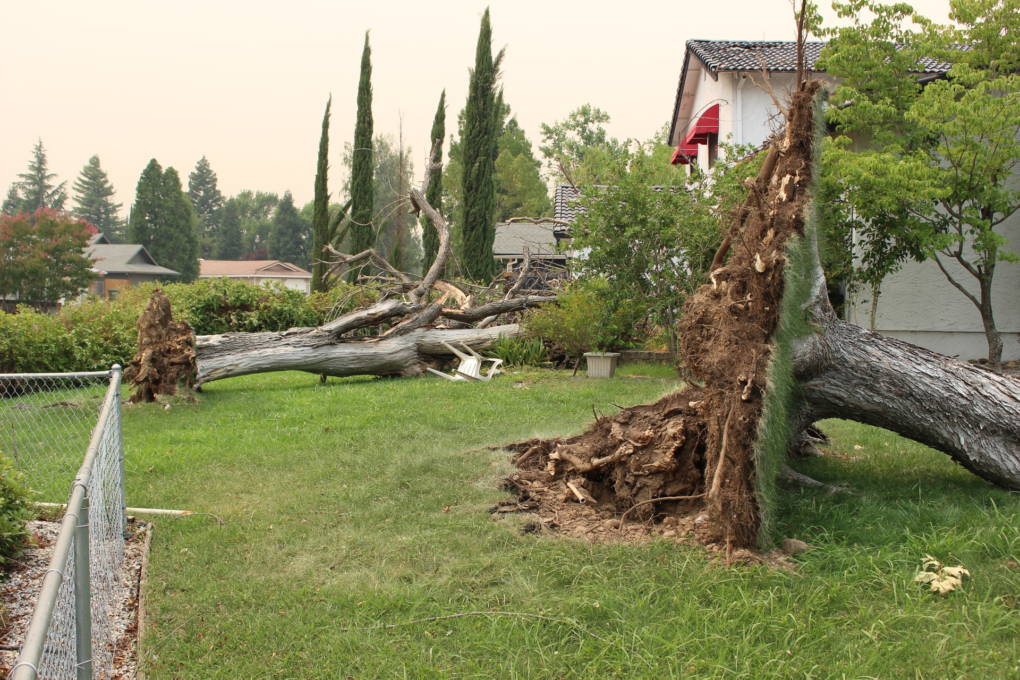
"caption": "Trees uprooted outside the burn zone by fierce winds around the Carr Fire.",
"description": "Trees uprooted by fierce winds around the Carr Fire.",
"title": "RS32077_IMG_1096-qut",
"credit": "Danielle Venton/KQED",
"status": "inherit",
"isLoading": false,
"fetchFailed": false
},
"science_1928127": {
"type": "attachments",
"id": "science_1928127",
"meta": {
"index": "attachments_1716263798",
"site": "science",
"id": "1928127",
"found": true
},
"parent": 1927988,
"imgSizes": {
"small": {
"file": "https://ww2.kqed.org/app/uploads/sites/35/2018/07/IMG_9145-520x390.jpg",
"width": 520,
"mimeType": "image/jpeg",
"height": 390
},
"twentyfourteen-full-width": {
"file": "https://ww2.kqed.org/app/uploads/sites/35/2018/07/IMG_9145-1038x576.jpg",
"width": 1038,
"mimeType": "image/jpeg",
"height": 576
},
"thumbnail": {
"file": "https://ww2.kqed.org/app/uploads/sites/35/2018/07/IMG_9145-160x120.jpg",
"width": 160,
"mimeType": "image/jpeg",
"height": 120
},
"fd-sm": {
"file": "https://ww2.kqed.org/app/uploads/sites/35/2018/07/IMG_9145-960x720.jpg",
"width": 960,
"mimeType": "image/jpeg",
"height": 720
},
"post-thumbnail": {
"file": "https://ww2.kqed.org/app/uploads/sites/35/2018/07/IMG_9145-672x372.jpg",
"width": 672,
"mimeType": "image/jpeg",
"height": 372
},
"xsmall": {
"file": "https://ww2.kqed.org/app/uploads/sites/35/2018/07/IMG_9145-375x281.jpg",
"width": 375,
"mimeType": "image/jpeg",
"height": 281
},
"kqedFullSize": {
"file": "https://ww2.kqed.org/app/uploads/sites/35/2018/07/IMG_9145.jpg",
"width": 2000,
"height": 1500
},
"large": {
"file": "https://ww2.kqed.org/app/uploads/sites/35/2018/07/IMG_9145-1020x765.jpg",
"width": 1020,
"mimeType": "image/jpeg",
"height": 765
},
"xlarge": {
"file": "https://ww2.kqed.org/app/uploads/sites/35/2018/07/IMG_9145-1180x885.jpg",
"width": 1180,
"mimeType": "image/jpeg",
"height": 885
},
"complete_open_graph": {
"file": "https://ww2.kqed.org/app/uploads/sites/35/2018/07/IMG_9145-1200x900.jpg",
"width": 1200,
"mimeType": "image/jpeg",
"height": 900
},
"guest-author-50": {
"file": "https://ww2.kqed.org/app/uploads/sites/35/2018/07/IMG_9145-50x50.jpg",
"width": 50,
"mimeType": "image/jpeg",
"height": 50
},
"guest-author-96": {
"file": "https://ww2.kqed.org/app/uploads/sites/35/2018/07/IMG_9145-96x96.jpg",
"width": 96,
"mimeType": "image/jpeg",
"height": 96
},
"medium": {
"file": "https://ww2.kqed.org/app/uploads/sites/35/2018/07/IMG_9145-800x600.jpg",
"width": 800,
"mimeType": "image/jpeg",
"height": 600
},
"guest-author-64": {
"file": "https://ww2.kqed.org/app/uploads/sites/35/2018/07/IMG_9145-64x64.jpg",
"width": 64,
"mimeType": "image/jpeg",
"height": 64
},
"guest-author-32": {
"file": "https://ww2.kqed.org/app/uploads/sites/35/2018/07/IMG_9145-32x32.jpg",
"width": 32,
"mimeType": "image/jpeg",
"height": 32
},
"fd-lrg": {
"file": "https://ww2.kqed.org/app/uploads/sites/35/2018/07/IMG_9145-1920x1440.jpg",
"width": 1920,
"mimeType": "image/jpeg",
"height": 1440
},
"fd-med": {
"file": "https://ww2.kqed.org/app/uploads/sites/35/2018/07/IMG_9145-1180x885.jpg",
"width": 1180,
"mimeType": "image/jpeg",
"height": 885
},
"full-width": {
"file": "https://ww2.kqed.org/app/uploads/sites/35/2018/07/IMG_9145-1920x1440.jpg",
"width": 1920,
"mimeType": "image/jpeg",
"height": 1440
},
"detail": {
"file": "https://ww2.kqed.org/app/uploads/sites/35/2018/07/IMG_9145-150x150.jpg",
"width": 150,
"mimeType": "image/jpeg",
"height": 150
},
"medium_large": {
"file": "https://ww2.kqed.org/app/uploads/sites/35/2018/07/IMG_9145-768x576.jpg",
"width": 768,
"mimeType": "image/jpeg",
"height": 576
},
"guest-author-128": {
"file": "https://ww2.kqed.org/app/uploads/sites/35/2018/07/IMG_9145-128x128.jpg",
"width": 128,
"mimeType": "image/jpeg",
"height": 128
},
"xxsmall": {
"file": "https://ww2.kqed.org/app/uploads/sites/35/2018/07/IMG_9145-240x180.jpg",
"width": 240,
"mimeType": "image/jpeg",
"height": 180
}
},
"publishDate": 1532725336,
"modified": 1532725443,
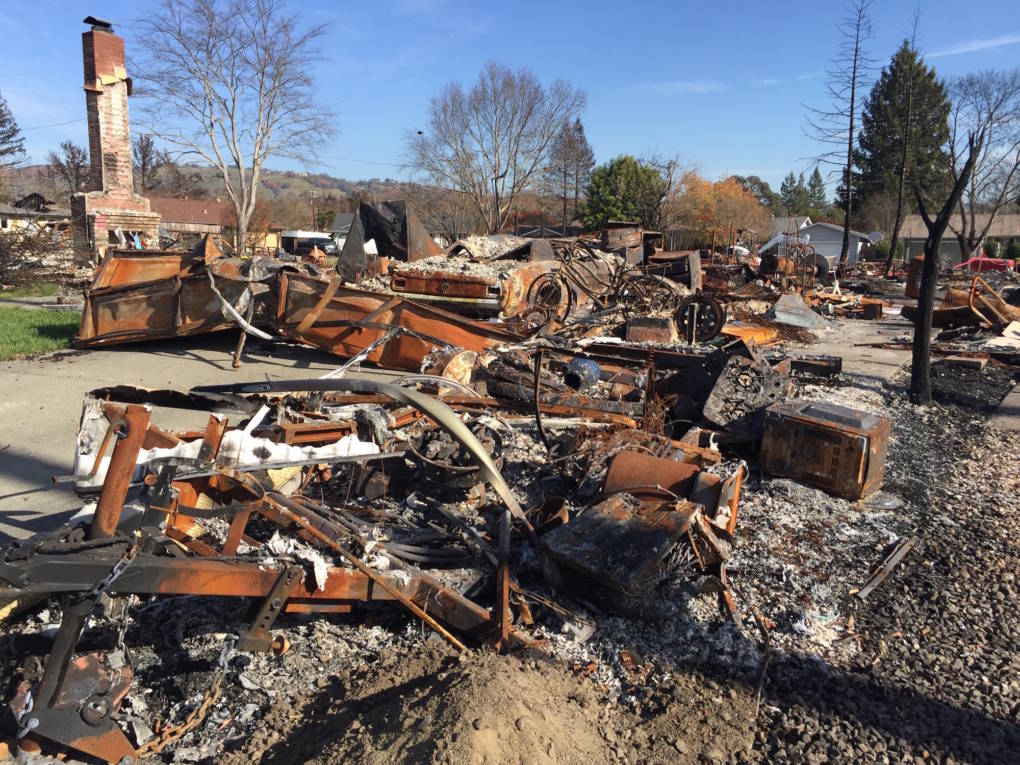
"caption": "Remnants of Santa Rosa's Coffey Park neighborhood after the October fires of 2017.",
"description": "Remnants of Santa Rosa's Coffey Park neighborhood after the October fires of 2017.",
"title": "IMG_9145",
"credit": "Craig Miller/KQED",
"status": "inherit",
"isLoading": false,
"fetchFailed": false
},
"science_1928112": {
"type": "attachments",
"id": "science_1928112",
"meta": {
"index": "attachments_1716263798",
"site": "science",
"id": "1928112",
"found": true
},
"parent": 1927988,
"imgSizes": {
"small": {
"file": "https://ww2.kqed.org/app/uploads/sites/35/2018/07/RS28406_GettyImages-888389390-qut-520x347.jpg",
"width": 520,
"mimeType": "image/jpeg",
"height": 347
},
"twentyfourteen-full-width": {
"file": "https://ww2.kqed.org/app/uploads/sites/35/2018/07/RS28406_GettyImages-888389390-qut-1038x576.jpg",
"width": 1038,
"mimeType": "image/jpeg",
"height": 576
},
"thumbnail": {
"file": "https://ww2.kqed.org/app/uploads/sites/35/2018/07/RS28406_GettyImages-888389390-qut-160x107.jpg",
"width": 160,
"mimeType": "image/jpeg",
"height": 107
},
"fd-sm": {
"file": "https://ww2.kqed.org/app/uploads/sites/35/2018/07/RS28406_GettyImages-888389390-qut-960x640.jpg",
"width": 960,
"mimeType": "image/jpeg",
"height": 640
},
"post-thumbnail": {
"file": "https://ww2.kqed.org/app/uploads/sites/35/2018/07/RS28406_GettyImages-888389390-qut-672x372.jpg",
"width": 672,
"mimeType": "image/jpeg",
"height": 372
},
"xsmall": {
"file": "https://ww2.kqed.org/app/uploads/sites/35/2018/07/RS28406_GettyImages-888389390-qut-375x250.jpg",
"width": 375,
"mimeType": "image/jpeg",
"height": 250
},
"kqedFullSize": {
"file": "https://ww2.kqed.org/app/uploads/sites/35/2018/07/RS28406_GettyImages-888389390-qut.jpg",
"width": 1920,
"height": 1280
},
"large": {
"file": "https://ww2.kqed.org/app/uploads/sites/35/2018/07/RS28406_GettyImages-888389390-qut-1020x680.jpg",
"width": 1020,
"mimeType": "image/jpeg",
"height": 680
},
"xlarge": {
"file": "https://ww2.kqed.org/app/uploads/sites/35/2018/07/RS28406_GettyImages-888389390-qut-1180x787.jpg",
"width": 1180,
"mimeType": "image/jpeg",
"height": 787
},
"complete_open_graph": {
"file": "https://ww2.kqed.org/app/uploads/sites/35/2018/07/RS28406_GettyImages-888389390-qut-1200x800.jpg",
"width": 1200,
"mimeType": "image/jpeg",
"height": 800
},
"guest-author-50": {
"file": "https://ww2.kqed.org/app/uploads/sites/35/2018/07/RS28406_GettyImages-888389390-qut-50x50.jpg",
"width": 50,
"mimeType": "image/jpeg",
"height": 50
},
"guest-author-96": {
"file": "https://ww2.kqed.org/app/uploads/sites/35/2018/07/RS28406_GettyImages-888389390-qut-96x96.jpg",
"width": 96,
"mimeType": "image/jpeg",
"height": 96
},
"medium": {
"file": "https://ww2.kqed.org/app/uploads/sites/35/2018/07/RS28406_GettyImages-888389390-qut-800x533.jpg",
"width": 800,
"mimeType": "image/jpeg",
"height": 533
},
"guest-author-64": {
"file": "https://ww2.kqed.org/app/uploads/sites/35/2018/07/RS28406_GettyImages-888389390-qut-64x64.jpg",
"width": 64,
"mimeType": "image/jpeg",
"height": 64
},
"guest-author-32": {
"file": "https://ww2.kqed.org/app/uploads/sites/35/2018/07/RS28406_GettyImages-888389390-qut-32x32.jpg",
"width": 32,
"mimeType": "image/jpeg",
"height": 32
},
"fd-lrg": {
"file": "https://ww2.kqed.org/app/uploads/sites/35/2018/07/RS28406_GettyImages-888389390-qut-1920x1280.jpg",
"width": 1920,
"mimeType": "image/jpeg",
"height": 1280
},
"fd-med": {
"file": "https://ww2.kqed.org/app/uploads/sites/35/2018/07/RS28406_GettyImages-888389390-qut-1180x787.jpg",
"width": 1180,
"mimeType": "image/jpeg",
"height": 787
},
"full-width": {
"file": "https://ww2.kqed.org/app/uploads/sites/35/2018/07/RS28406_GettyImages-888389390-qut-1920x1280.jpg",
"width": 1920,
"mimeType": "image/jpeg",
"height": 1280
},
"detail": {
"file": "https://ww2.kqed.org/app/uploads/sites/35/2018/07/RS28406_GettyImages-888389390-qut-150x150.jpg",
"width": 150,
"mimeType": "image/jpeg",
"height": 150
},
"medium_large": {
"file": "https://ww2.kqed.org/app/uploads/sites/35/2018/07/RS28406_GettyImages-888389390-qut-768x512.jpg",
"width": 768,
"mimeType": "image/jpeg",
"height": 512
},
"guest-author-128": {
"file": "https://ww2.kqed.org/app/uploads/sites/35/2018/07/RS28406_GettyImages-888389390-qut-128x128.jpg",
"width": 128,
"mimeType": "image/jpeg",
"height": 128
},
"xxsmall": {
"file": "https://ww2.kqed.org/app/uploads/sites/35/2018/07/RS28406_GettyImages-888389390-qut-240x160.jpg",
"width": 240,
"mimeType": "image/jpeg",
"height": 160
}
},
"publishDate": 1532724008,
"modified": 1532724190,
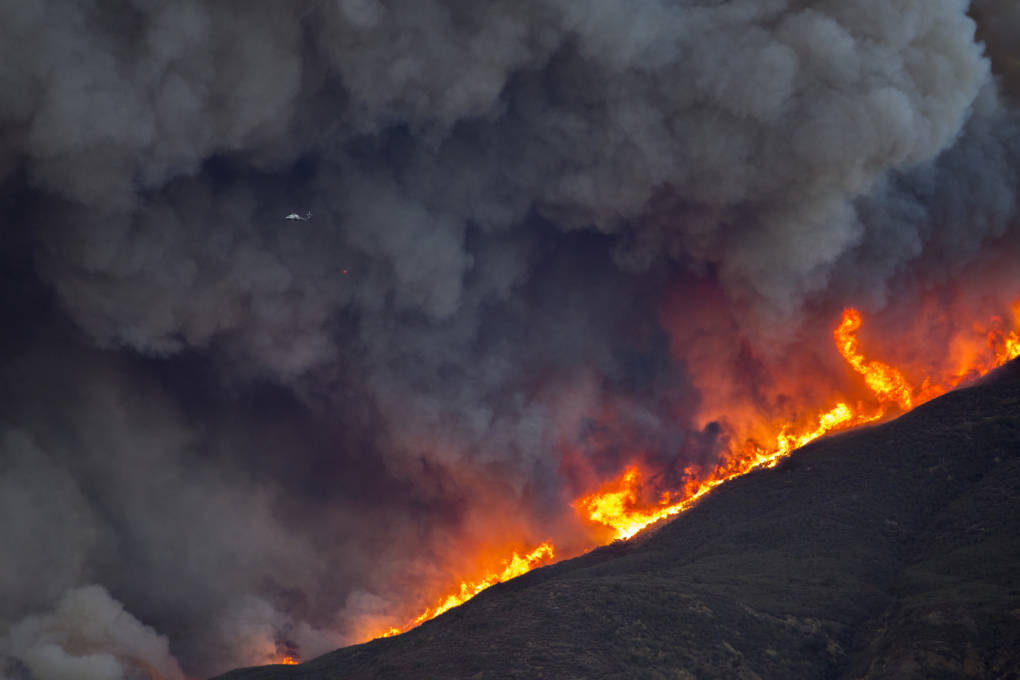
"caption": "Wildfires typically tend to race uphill and creep slowly downhill. But this fire season is hardly typical.",
"description": "Scene from the Thomas Fire in Santa Barbara County, 2017.",
"title": "Southern California Wildfires Forces Thousands to Evacuate",
"credit": "David McNew/Getty Images",
"status": "inherit",
"isLoading": false,
"fetchFailed": false
},
"science_1927504": {
"type": "attachments",
"id": "science_1927504",
"meta": {
"index": "attachments_1716263798",
"site": "science",
"id": "1927504",
"found": true
},
"parent": 1927472,
"imgSizes": {
"small": {
"file": "https://ww2.kqed.org/app/uploads/sites/35/2018/07/GettyImages-81200484-520x347.jpg",
"width": 520,
"mimeType": "image/jpeg",
"height": 347
},
"twentyfourteen-full-width": {
"file": "https://ww2.kqed.org/app/uploads/sites/35/2018/07/GettyImages-81200484-1038x576.jpg",
"width": 1038,
"mimeType": "image/jpeg",
"height": 576
},
"thumbnail": {
"file": "https://ww2.kqed.org/app/uploads/sites/35/2018/07/GettyImages-81200484-160x107.jpg",
"width": 160,
"mimeType": "image/jpeg",
"height": 107
},
"fd-sm": {
"file": "https://ww2.kqed.org/app/uploads/sites/35/2018/07/GettyImages-81200484-960x640.jpg",
"width": 960,
"mimeType": "image/jpeg",
"height": 640
},
"post-thumbnail": {
"file": "https://ww2.kqed.org/app/uploads/sites/35/2018/07/GettyImages-81200484-672x372.jpg",
"width": 672,
"mimeType": "image/jpeg",
"height": 372
},
"xsmall": {
"file": "https://ww2.kqed.org/app/uploads/sites/35/2018/07/GettyImages-81200484-375x250.jpg",
"width": 375,
"mimeType": "image/jpeg",
"height": 250
},
"kqedFullSize": {
"file": "https://ww2.kqed.org/app/uploads/sites/35/2018/07/GettyImages-81200484.jpg",
"width": 3000,
"height": 2000
},
"large": {
"file": "https://ww2.kqed.org/app/uploads/sites/35/2018/07/GettyImages-81200484-1020x680.jpg",
"width": 1020,
"mimeType": "image/jpeg",
"height": 680
},
"xlarge": {
"file": "https://ww2.kqed.org/app/uploads/sites/35/2018/07/GettyImages-81200484-1180x787.jpg",
"width": 1180,
"mimeType": "image/jpeg",
"height": 787
},
"complete_open_graph": {
"file": "https://ww2.kqed.org/app/uploads/sites/35/2018/07/GettyImages-81200484-1200x800.jpg",
"width": 1200,
"mimeType": "image/jpeg",
"height": 800
},
"guest-author-50": {
"file": "https://ww2.kqed.org/app/uploads/sites/35/2018/07/GettyImages-81200484-50x50.jpg",
"width": 50,
"mimeType": "image/jpeg",
"height": 50
},
"guest-author-96": {
"file": "https://ww2.kqed.org/app/uploads/sites/35/2018/07/GettyImages-81200484-96x96.jpg",
"width": 96,
"mimeType": "image/jpeg",
"height": 96
},
"medium": {
"file": "https://ww2.kqed.org/app/uploads/sites/35/2018/07/GettyImages-81200484-800x533.jpg",
"width": 800,
"mimeType": "image/jpeg",
"height": 533
},
"guest-author-64": {
"file": "https://ww2.kqed.org/app/uploads/sites/35/2018/07/GettyImages-81200484-64x64.jpg",
"width": 64,
"mimeType": "image/jpeg",
"height": 64
},
"guest-author-32": {
"file": "https://ww2.kqed.org/app/uploads/sites/35/2018/07/GettyImages-81200484-32x32.jpg",
"width": 32,
"mimeType": "image/jpeg",
"height": 32
},
"fd-lrg": {
"file": "https://ww2.kqed.org/app/uploads/sites/35/2018/07/GettyImages-81200484-1920x1280.jpg",
"width": 1920,
"mimeType": "image/jpeg",
"height": 1280
},
"fd-med": {
"file": "https://ww2.kqed.org/app/uploads/sites/35/2018/07/GettyImages-81200484-1180x787.jpg",
"width": 1180,
"mimeType": "image/jpeg",
"height": 787
},
"full-width": {
"file": "https://ww2.kqed.org/app/uploads/sites/35/2018/07/GettyImages-81200484-1920x1280.jpg",
"width": 1920,
"mimeType": "image/jpeg",
"height": 1280
},
"detail": {
"file": "https://ww2.kqed.org/app/uploads/sites/35/2018/07/GettyImages-81200484-150x150.jpg",
"width": 150,
"mimeType": "image/jpeg",
"height": 150
},
"medium_large": {
"file": "https://ww2.kqed.org/app/uploads/sites/35/2018/07/GettyImages-81200484-768x512.jpg",
"width": 768,
"mimeType": "image/jpeg",
"height": 512
},
"guest-author-128": {
"file": "https://ww2.kqed.org/app/uploads/sites/35/2018/07/GettyImages-81200484-128x128.jpg",
"width": 128,
"mimeType": "image/jpeg",
"height": 128
},
"xxsmall": {
"file": "https://ww2.kqed.org/app/uploads/sites/35/2018/07/GettyImages-81200484-240x160.jpg",
"width": 240,
"mimeType": "image/jpeg",
"height": 160
}
},
"publishDate": 1531779324,
"modified": 1531779371,
"caption": "Poison oak grows in Topanga State Park in Los Angeles, California. ",
"description": null,
"title": "Historic Trust Releases List Of Most Endangered US Places",
"credit": "David McNew/Getty Images",
"status": "inherit",
"isLoading": false,
"fetchFailed": false
},
"science_1927406": {
"type": "attachments",
"id": "science_1927406",
"meta": {
"index": "attachments_1716263798",
"site": "science",
"id": "1927406",
"found": true
},
"title": "IMG_0118",
"publishDate": 1531516248,
"status": "inherit",
"parent": 1927354,
"modified": 1742855404,
"caption": "California fire officials say planning more burns safely could reduce catastrophic risks posed by wildfire.",
"credit": "Courtesy Cal Fire",
"altTag": "A CalFire wildland crewmember uses a drip torch to light land on fire for a prescribed burn.",
"description": null,
"imgSizes": {
"thumbnail": {
"file": "https://cdn.kqed.org/wp-content/uploads/sites/35/2018/07/IMG_0118-160x107.jpg",
"width": 160,
"height": 107,
"mimeType": "image/jpeg"
},
"medium": {
"file": "https://cdn.kqed.org/wp-content/uploads/sites/35/2018/07/IMG_0118-800x533.jpg",
"width": 800,
"height": 533,
"mimeType": "image/jpeg"
},
"medium_large": {
"file": "https://cdn.kqed.org/wp-content/uploads/sites/35/2018/07/IMG_0118-768x512.jpg",
"width": 768,
"height": 512,
"mimeType": "image/jpeg"
},
"large": {
"file": "https://cdn.kqed.org/wp-content/uploads/sites/35/2018/07/IMG_0118-1020x680.jpg",
"width": 1020,
"height": 680,
"mimeType": "image/jpeg"
},
"complete_open_graph": {
"file": "https://cdn.kqed.org/wp-content/uploads/sites/35/2018/07/IMG_0118-1200x800.jpg",
"width": 1200,
"height": 800,
"mimeType": "image/jpeg"
},
"fd-lrg": {
"file": "https://cdn.kqed.org/wp-content/uploads/sites/35/2018/07/IMG_0118-1920x1280.jpg",
"width": 1920,
"height": 1280,
"mimeType": "image/jpeg"
},
"fd-med": {
"file": "https://cdn.kqed.org/wp-content/uploads/sites/35/2018/07/IMG_0118-1180x787.jpg",
"width": 1180,
"height": 787,
"mimeType": "image/jpeg"
},
"fd-sm": {
"file": "https://cdn.kqed.org/wp-content/uploads/sites/35/2018/07/IMG_0118-960x640.jpg",
"width": 960,
"height": 640,
"mimeType": "image/jpeg"
},
"post-thumbnail": {
"file": "https://cdn.kqed.org/wp-content/uploads/sites/35/2018/07/IMG_0118-672x372.jpg",
"width": 672,
"height": 372,
"mimeType": "image/jpeg"
},
"twentyfourteen-full-width": {
"file": "https://cdn.kqed.org/wp-content/uploads/sites/35/2018/07/IMG_0118-1038x576.jpg",
"width": 1038,
"height": 576,
"mimeType": "image/jpeg"
},
"xxsmall": {
"file": "https://cdn.kqed.org/wp-content/uploads/sites/35/2018/07/IMG_0118-240x160.jpg",
"width": 240,
"height": 160,
"mimeType": "image/jpeg"
},
"xsmall": {
"file": "https://cdn.kqed.org/wp-content/uploads/sites/35/2018/07/IMG_0118-375x250.jpg",
"width": 375,
"height": 250,
"mimeType": "image/jpeg"
},
"small": {
"file": "https://cdn.kqed.org/wp-content/uploads/sites/35/2018/07/IMG_0118-520x347.jpg",
"width": 520,
"height": 347,
"mimeType": "image/jpeg"
},
"xlarge": {
"file": "https://cdn.kqed.org/wp-content/uploads/sites/35/2018/07/IMG_0118-1180x787.jpg",
"width": 1180,
"height": 787,
"mimeType": "image/jpeg"
},
"full-width": {
"file": "https://cdn.kqed.org/wp-content/uploads/sites/35/2018/07/IMG_0118-1920x1280.jpg",
"width": 1920,
"height": 1280,
"mimeType": "image/jpeg"
},
"guest-author-32": {
"file": "https://cdn.kqed.org/wp-content/uploads/sites/35/2018/07/IMG_0118-32x32.jpg",
"width": 32,
"height": 32,
"mimeType": "image/jpeg"
},
"guest-author-50": {
"file": "https://cdn.kqed.org/wp-content/uploads/sites/35/2018/07/IMG_0118-50x50.jpg",
"width": 50,
"height": 50,
"mimeType": "image/jpeg"
},
"guest-author-64": {
"file": "https://cdn.kqed.org/wp-content/uploads/sites/35/2018/07/IMG_0118-64x64.jpg",
"width": 64,
"height": 64,
"mimeType": "image/jpeg"
},
"guest-author-96": {
"file": "https://cdn.kqed.org/wp-content/uploads/sites/35/2018/07/IMG_0118-96x96.jpg",
"width": 96,
"height": 96,
"mimeType": "image/jpeg"
},
"guest-author-128": {
"file": "https://cdn.kqed.org/wp-content/uploads/sites/35/2018/07/IMG_0118-128x128.jpg",
"width": 128,
"height": 128,
"mimeType": "image/jpeg"
},
"detail": {
"file": "https://cdn.kqed.org/wp-content/uploads/sites/35/2018/07/IMG_0118-150x150.jpg",
"width": 150,
"height": 150,
"mimeType": "image/jpeg"
},
"kqedFullSize": {
"file": "https://cdn.kqed.org/wp-content/uploads/sites/35/2018/07/IMG_0118-e1742855390118.jpg",
"width": 2000,
"height": 1333
}
},
"isLoading": false,
"fetchFailed": false
},
"science_1927069": {
"type": "attachments",
"id": "science_1927069",
"meta": {
"index": "attachments_1716263798",
"site": "science",
"id": "1927069",
"found": true
},
"parent": 1927059,
"imgSizes": {
"small": {
"file": "https://ww2.kqed.org/app/uploads/sites/35/2018/07/GettyImages-873788996-1-520x334.jpg",
"width": 520,
"mimeType": "image/jpeg",
"height": 334
},
"twentyfourteen-full-width": {
"file": "https://ww2.kqed.org/app/uploads/sites/35/2018/07/GettyImages-873788996-1-1038x576.jpg",
"width": 1038,
"mimeType": "image/jpeg",
"height": 576
},
"thumbnail": {
"file": "https://ww2.kqed.org/app/uploads/sites/35/2018/07/GettyImages-873788996-1-160x103.jpg",
"width": 160,
"mimeType": "image/jpeg",
"height": 103
},
"fd-sm": {
"file": "https://ww2.kqed.org/app/uploads/sites/35/2018/07/GettyImages-873788996-1-960x617.jpg",
"width": 960,
"mimeType": "image/jpeg",
"height": 617
},
"post-thumbnail": {
"file": "https://ww2.kqed.org/app/uploads/sites/35/2018/07/GettyImages-873788996-1-672x372.jpg",
"width": 672,
"mimeType": "image/jpeg",
"height": 372
},
"xsmall": {
"file": "https://ww2.kqed.org/app/uploads/sites/35/2018/07/GettyImages-873788996-1-375x241.jpg",
"width": 375,
"mimeType": "image/jpeg",
"height": 241
},
"kqedFullSize": {
"file": "https://ww2.kqed.org/app/uploads/sites/35/2018/07/GettyImages-873788996-1.jpg",
"width": 3000,
"height": 1928
},
"large": {
"file": "https://ww2.kqed.org/app/uploads/sites/35/2018/07/GettyImages-873788996-1-1020x656.jpg",
"width": 1020,
"mimeType": "image/jpeg",
"height": 656
},
"xlarge": {
"file": "https://ww2.kqed.org/app/uploads/sites/35/2018/07/GettyImages-873788996-1-1180x758.jpg",
"width": 1180,
"mimeType": "image/jpeg",
"height": 758
},
"complete_open_graph": {
"file": "https://ww2.kqed.org/app/uploads/sites/35/2018/07/GettyImages-873788996-1-1200x771.jpg",
"width": 1200,
"mimeType": "image/jpeg",
"height": 771
},
"guest-author-50": {
"file": "https://ww2.kqed.org/app/uploads/sites/35/2018/07/GettyImages-873788996-1-50x50.jpg",
"width": 50,
"mimeType": "image/jpeg",
"height": 50
},
"guest-author-96": {
"file": "https://ww2.kqed.org/app/uploads/sites/35/2018/07/GettyImages-873788996-1-96x96.jpg",
"width": 96,
"mimeType": "image/jpeg",
"height": 96
},
"medium": {
"file": "https://ww2.kqed.org/app/uploads/sites/35/2018/07/GettyImages-873788996-1-800x514.jpg",
"width": 800,
"mimeType": "image/jpeg",
"height": 514
},
"guest-author-64": {
"file": "https://ww2.kqed.org/app/uploads/sites/35/2018/07/GettyImages-873788996-1-64x64.jpg",
"width": 64,
"mimeType": "image/jpeg",
"height": 64
},
"guest-author-32": {
"file": "https://ww2.kqed.org/app/uploads/sites/35/2018/07/GettyImages-873788996-1-32x32.jpg",
"width": 32,
"mimeType": "image/jpeg",
"height": 32
},
"fd-lrg": {
"file": "https://ww2.kqed.org/app/uploads/sites/35/2018/07/GettyImages-873788996-1-1920x1234.jpg",
"width": 1920,
"mimeType": "image/jpeg",
"height": 1234
},
"fd-med": {
"file": "https://ww2.kqed.org/app/uploads/sites/35/2018/07/GettyImages-873788996-1-1180x758.jpg",
"width": 1180,
"mimeType": "image/jpeg",
"height": 758
},
"full-width": {
"file": "https://ww2.kqed.org/app/uploads/sites/35/2018/07/GettyImages-873788996-1-1920x1234.jpg",
"width": 1920,
"mimeType": "image/jpeg",
"height": 1234
},
"detail": {
"file": "https://ww2.kqed.org/app/uploads/sites/35/2018/07/GettyImages-873788996-1-150x150.jpg",
"width": 150,
"mimeType": "image/jpeg",
"height": 150
},
"medium_large": {
"file": "https://ww2.kqed.org/app/uploads/sites/35/2018/07/GettyImages-873788996-1-768x494.jpg",
"width": 768,
"mimeType": "image/jpeg",
"height": 494
},
"guest-author-128": {
"file": "https://ww2.kqed.org/app/uploads/sites/35/2018/07/GettyImages-873788996-1-128x128.jpg",
"width": 128,
"mimeType": "image/jpeg",
"height": 128
},
"xxsmall": {
"file": "https://ww2.kqed.org/app/uploads/sites/35/2018/07/GettyImages-873788996-1-240x154.jpg",
"width": 240,
"mimeType": "image/jpeg",
"height": 154
}
},
"publishDate": 1531161732,
"modified": 1531161839,
"caption": "Following the deadly and destructive Northern California wildfires, crews worked to clear debris from homes that were destroyed. ",
"description": null,
"title": "Work Crews Continue To Clean Up Neighborhoods Devastated By Last Month's Wild Fires",
"credit": "Justin Sullivan/Getty Images",
"status": "inherit",
"isLoading": false,
"fetchFailed": false
},
"science_1927105": {
"type": "attachments",
"id": "science_1927105",
"meta": {
"index": "attachments_1716263798",
"site": "science",
"id": "1927105",
"found": true
},
"parent": 1927097,
"imgSizes": {
"small": {
"file": "https://ww2.kqed.org/app/uploads/sites/35/2018/07/IMG_1775-520x390.jpg",
"width": 520,
"mimeType": "image/jpeg",
"height": 390
},
"twentyfourteen-full-width": {
"file": "https://ww2.kqed.org/app/uploads/sites/35/2018/07/IMG_1775-1038x576.jpg",
"width": 1038,
"mimeType": "image/jpeg",
"height": 576
},
"thumbnail": {
"file": "https://ww2.kqed.org/app/uploads/sites/35/2018/07/IMG_1775-160x120.jpg",
"width": 160,
"mimeType": "image/jpeg",
"height": 120
},
"fd-sm": {
"file": "https://ww2.kqed.org/app/uploads/sites/35/2018/07/IMG_1775-960x720.jpg",
"width": 960,
"mimeType": "image/jpeg",
"height": 720
},
"post-thumbnail": {
"file": "https://ww2.kqed.org/app/uploads/sites/35/2018/07/IMG_1775-672x372.jpg",
"width": 672,
"mimeType": "image/jpeg",
"height": 372
},
"xsmall": {
"file": "https://ww2.kqed.org/app/uploads/sites/35/2018/07/IMG_1775-375x281.jpg",
"width": 375,
"mimeType": "image/jpeg",
"height": 281
},
"kqedFullSize": {
"file": "https://ww2.kqed.org/app/uploads/sites/35/2018/07/IMG_1775.jpg",
"width": 3264,
"height": 2447
},
"large": {
"file": "https://ww2.kqed.org/app/uploads/sites/35/2018/07/IMG_1775-1020x765.jpg",
"width": 1020,
"mimeType": "image/jpeg",
"height": 765
},
"xlarge": {
"file": "https://ww2.kqed.org/app/uploads/sites/35/2018/07/IMG_1775-1180x885.jpg",
"width": 1180,
"mimeType": "image/jpeg",
"height": 885
},
"complete_open_graph": {
"file": "https://ww2.kqed.org/app/uploads/sites/35/2018/07/IMG_1775-1200x900.jpg",
"width": 1200,
"mimeType": "image/jpeg",
"height": 900
},
"guest-author-50": {
"file": "https://ww2.kqed.org/app/uploads/sites/35/2018/07/IMG_1775-50x50.jpg",
"width": 50,
"mimeType": "image/jpeg",
"height": 50
},
"guest-author-96": {
"file": "https://ww2.kqed.org/app/uploads/sites/35/2018/07/IMG_1775-96x96.jpg",
"width": 96,
"mimeType": "image/jpeg",
"height": 96
},
"medium": {
"file": "https://ww2.kqed.org/app/uploads/sites/35/2018/07/IMG_1775-800x600.jpg",
"width": 800,
"mimeType": "image/jpeg",
"height": 600
},
"guest-author-64": {
"file": "https://ww2.kqed.org/app/uploads/sites/35/2018/07/IMG_1775-64x64.jpg",
"width": 64,
"mimeType": "image/jpeg",
"height": 64
},
"guest-author-32": {
"file": "https://ww2.kqed.org/app/uploads/sites/35/2018/07/IMG_1775-32x32.jpg",
"width": 32,
"mimeType": "image/jpeg",
"height": 32
},
"fd-lrg": {
"file": "https://ww2.kqed.org/app/uploads/sites/35/2018/07/IMG_1775-1920x1439.jpg",
"width": 1920,
"mimeType": "image/jpeg",
"height": 1439
},
"fd-med": {
"file": "https://ww2.kqed.org/app/uploads/sites/35/2018/07/IMG_1775-1180x885.jpg",
"width": 1180,
"mimeType": "image/jpeg",
"height": 885
},
"full-width": {
"file": "https://ww2.kqed.org/app/uploads/sites/35/2018/07/IMG_1775-1920x1439.jpg",
"width": 1920,
"mimeType": "image/jpeg",
"height": 1439
},
"detail": {
"file": "https://ww2.kqed.org/app/uploads/sites/35/2018/07/IMG_1775-150x150.jpg",
"width": 150,
"mimeType": "image/jpeg",
"height": 150
},
"medium_large": {
"file": "https://ww2.kqed.org/app/uploads/sites/35/2018/07/IMG_1775-768x576.jpg",
"width": 768,
"mimeType": "image/jpeg",
"height": 576
},
"guest-author-128": {
"file": "https://ww2.kqed.org/app/uploads/sites/35/2018/07/IMG_1775-128x128.jpg",
"width": 128,
"mimeType": "image/jpeg",
"height": 128
},
"xxsmall": {
"file": "https://ww2.kqed.org/app/uploads/sites/35/2018/07/IMG_1775-240x180.jpg",
"width": 240,
"mimeType": "image/jpeg",
"height": 180
}
},
"publishDate": 1531184390,
"modified": 1531184920,
"caption": "A grassland in Lake County, California flourished in the year after the 2015 Jerusalem Fire.",
"description": "Green grassland on a sunny day with flowers and oak trees in the background.",
"title": "IMG_1775",
"credit": "Allie Weill",
"status": "inherit",
"isLoading": false,
"fetchFailed": false
},
"science_1927038": {
"type": "attachments",
"id": "science_1927038",
"meta": {
"index": "attachments_1716263798",
"site": "science",
"id": "1927038",
"found": true
},
"parent": 1926996,
"imgSizes": {
"small": {
"file": "https://ww2.kqed.org/app/uploads/sites/35/2018/07/RS16260_GettyImages-482742956-qut-520x304.jpg",
"width": 520,
"mimeType": "image/jpeg",
"height": 304
},
"twentyfourteen-full-width": {
"file": "https://ww2.kqed.org/app/uploads/sites/35/2018/07/RS16260_GettyImages-482742956-qut-1038x576.jpg",
"width": 1038,
"mimeType": "image/jpeg",
"height": 576
},
"thumbnail": {
"file": "https://ww2.kqed.org/app/uploads/sites/35/2018/07/RS16260_GettyImages-482742956-qut-160x94.jpg",
"width": 160,
"mimeType": "image/jpeg",
"height": 94
},
"fd-sm": {
"file": "https://ww2.kqed.org/app/uploads/sites/35/2018/07/RS16260_GettyImages-482742956-qut-960x561.jpg",
"width": 960,
"mimeType": "image/jpeg",
"height": 561
},
"post-thumbnail": {
"file": "https://ww2.kqed.org/app/uploads/sites/35/2018/07/RS16260_GettyImages-482742956-qut-672x372.jpg",
"width": 672,
"mimeType": "image/jpeg",
"height": 372
},
"xsmall": {
"file": "https://ww2.kqed.org/app/uploads/sites/35/2018/07/RS16260_GettyImages-482742956-qut-375x219.jpg",
"width": 375,
"mimeType": "image/jpeg",
"height": 219
},
"kqedFullSize": {
"file": "https://ww2.kqed.org/app/uploads/sites/35/2018/07/RS16260_GettyImages-482742956-qut.jpg",
"width": 1920,
"height": 1122
},
"large": {
"file": "https://ww2.kqed.org/app/uploads/sites/35/2018/07/RS16260_GettyImages-482742956-qut-1020x596.jpg",
"width": 1020,
"mimeType": "image/jpeg",
"height": 596
},
"xlarge": {
"file": "https://ww2.kqed.org/app/uploads/sites/35/2018/07/RS16260_GettyImages-482742956-qut-1180x690.jpg",
"width": 1180,
"mimeType": "image/jpeg",
"height": 690
},
"complete_open_graph": {
"file": "https://ww2.kqed.org/app/uploads/sites/35/2018/07/RS16260_GettyImages-482742956-qut-1200x701.jpg",
"width": 1200,
"mimeType": "image/jpeg",
"height": 701
},
"guest-author-50": {
"file": "https://ww2.kqed.org/app/uploads/sites/35/2018/07/RS16260_GettyImages-482742956-qut-50x50.jpg",
"width": 50,
"mimeType": "image/jpeg",
"height": 50
},
"guest-author-96": {
"file": "https://ww2.kqed.org/app/uploads/sites/35/2018/07/RS16260_GettyImages-482742956-qut-96x96.jpg",
"width": 96,
"mimeType": "image/jpeg",
"height": 96
},
"medium": {
"file": "https://ww2.kqed.org/app/uploads/sites/35/2018/07/RS16260_GettyImages-482742956-qut-800x468.jpg",
"width": 800,
"mimeType": "image/jpeg",
"height": 468
},
"guest-author-64": {
"file": "https://ww2.kqed.org/app/uploads/sites/35/2018/07/RS16260_GettyImages-482742956-qut-64x64.jpg",
"width": 64,
"mimeType": "image/jpeg",
"height": 64
},
"guest-author-32": {
"file": "https://ww2.kqed.org/app/uploads/sites/35/2018/07/RS16260_GettyImages-482742956-qut-32x32.jpg",
"width": 32,
"mimeType": "image/jpeg",
"height": 32
},
"fd-lrg": {
"file": "https://ww2.kqed.org/app/uploads/sites/35/2018/07/RS16260_GettyImages-482742956-qut-1920x1122.jpg",
"width": 1920,
"mimeType": "image/jpeg",
"height": 1122
},
"fd-med": {
"file": "https://ww2.kqed.org/app/uploads/sites/35/2018/07/RS16260_GettyImages-482742956-qut-1180x690.jpg",
"width": 1180,
"mimeType": "image/jpeg",
"height": 690
},
"full-width": {
"file": "https://ww2.kqed.org/app/uploads/sites/35/2018/07/RS16260_GettyImages-482742956-qut-1920x1122.jpg",
"width": 1920,
"mimeType": "image/jpeg",
"height": 1122
},
"detail": {
"file": "https://ww2.kqed.org/app/uploads/sites/35/2018/07/RS16260_GettyImages-482742956-qut-150x150.jpg",
"width": 150,
"mimeType": "image/jpeg",
"height": 150
},
"medium_large": {
"file": "https://ww2.kqed.org/app/uploads/sites/35/2018/07/RS16260_GettyImages-482742956-qut-768x449.jpg",
"width": 768,
"mimeType": "image/jpeg",
"height": 449
},
"guest-author-128": {
"file": "https://ww2.kqed.org/app/uploads/sites/35/2018/07/RS16260_GettyImages-482742956-qut-128x128.jpg",
"width": 128,
"mimeType": "image/jpeg",
"height": 128
},
"xxsmall": {
"file": "https://ww2.kqed.org/app/uploads/sites/35/2018/07/RS16260_GettyImages-482742956-qut-240x140.jpg",
"width": 240,
"mimeType": "image/jpeg",
"height": 140
}
},
"publishDate": 1530925726,
"modified": 1530925874,
"caption": "Warmer nighttime temperatures could be a key factor in recent changes in fire behavior.",
"description": "Warmer nighttime temperatures could be a key factor in recent changes in fire behavior.",
"title": "RS16260_GettyImages-482742956-qut",
"credit": "Josh Edelson",
"status": "inherit",
"isLoading": false,
"fetchFailed": false
},
"science_1926604": {
"type": "attachments",
"id": "science_1926604",
"meta": {
"index": "attachments_1716263798",
"site": "science",
"id": "1926604",
"found": true
},
"parent": 1926563,
"imgSizes": {
"small": {
"file": "https://ww2.kqed.org/app/uploads/sites/35/2018/06/GettyImages-865518912-1-520x352.jpg",
"width": 520,
"mimeType": "image/jpeg",
"height": 352
},
"twentyfourteen-full-width": {
"file": "https://ww2.kqed.org/app/uploads/sites/35/2018/06/GettyImages-865518912-1-1038x576.jpg",
"width": 1038,
"mimeType": "image/jpeg",
"height": 576
},
"thumbnail": {
"file": "https://ww2.kqed.org/app/uploads/sites/35/2018/06/GettyImages-865518912-1-160x108.jpg",
"width": 160,
"mimeType": "image/jpeg",
"height": 108
},
"fd-sm": {
"file": "https://ww2.kqed.org/app/uploads/sites/35/2018/06/GettyImages-865518912-1-960x650.jpg",
"width": 960,
"mimeType": "image/jpeg",
"height": 650
},
"post-thumbnail": {
"file": "https://ww2.kqed.org/app/uploads/sites/35/2018/06/GettyImages-865518912-1-672x372.jpg",
"width": 672,
"mimeType": "image/jpeg",
"height": 372
},
"xsmall": {
"file": "https://ww2.kqed.org/app/uploads/sites/35/2018/06/GettyImages-865518912-1-375x254.jpg",
"width": 375,
"mimeType": "image/jpeg",
"height": 254
},
"kqedFullSize": {
"file": "https://ww2.kqed.org/app/uploads/sites/35/2018/06/GettyImages-865518912-1.jpg",
"width": 3000,
"height": 2032
},
"large": {
"file": "https://ww2.kqed.org/app/uploads/sites/35/2018/06/GettyImages-865518912-1-1020x691.jpg",
"width": 1020,
"mimeType": "image/jpeg",
"height": 691
},
"xlarge": {
"file": "https://ww2.kqed.org/app/uploads/sites/35/2018/06/GettyImages-865518912-1-1180x799.jpg",
"width": 1180,
"mimeType": "image/jpeg",
"height": 799
},
"complete_open_graph": {
"file": "https://ww2.kqed.org/app/uploads/sites/35/2018/06/GettyImages-865518912-1-1200x813.jpg",
"width": 1200,
"mimeType": "image/jpeg",
"height": 813
},
"guest-author-50": {
"file": "https://ww2.kqed.org/app/uploads/sites/35/2018/06/GettyImages-865518912-1-50x50.jpg",
"width": 50,
"mimeType": "image/jpeg",
"height": 50
},
"guest-author-96": {
"file": "https://ww2.kqed.org/app/uploads/sites/35/2018/06/GettyImages-865518912-1-96x96.jpg",
"width": 96,
"mimeType": "image/jpeg",
"height": 96
},
"medium": {
"file": "https://ww2.kqed.org/app/uploads/sites/35/2018/06/GettyImages-865518912-1-800x542.jpg",
"width": 800,
"mimeType": "image/jpeg",
"height": 542
},
"guest-author-64": {
"file": "https://ww2.kqed.org/app/uploads/sites/35/2018/06/GettyImages-865518912-1-64x64.jpg",
"width": 64,
"mimeType": "image/jpeg",
"height": 64
},
"guest-author-32": {
"file": "https://ww2.kqed.org/app/uploads/sites/35/2018/06/GettyImages-865518912-1-32x32.jpg",
"width": 32,
"mimeType": "image/jpeg",
"height": 32
},
"fd-lrg": {
"file": "https://ww2.kqed.org/app/uploads/sites/35/2018/06/GettyImages-865518912-1-1920x1300.jpg",
"width": 1920,
"mimeType": "image/jpeg",
"height": 1300
},
"fd-med": {
"file": "https://ww2.kqed.org/app/uploads/sites/35/2018/06/GettyImages-865518912-1-1180x799.jpg",
"width": 1180,
"mimeType": "image/jpeg",
"height": 799
},
"full-width": {
"file": "https://ww2.kqed.org/app/uploads/sites/35/2018/06/GettyImages-865518912-1-1920x1300.jpg",
"width": 1920,
"mimeType": "image/jpeg",
"height": 1300
},
"detail": {
"file": "https://ww2.kqed.org/app/uploads/sites/35/2018/06/GettyImages-865518912-1-150x150.jpg",
"width": 150,
"mimeType": "image/jpeg",
"height": 150
},
"medium_large": {
"file": "https://ww2.kqed.org/app/uploads/sites/35/2018/06/GettyImages-865518912-1-768x520.jpg",
"width": 768,
"mimeType": "image/jpeg",
"height": 520
},
"guest-author-128": {
"file": "https://ww2.kqed.org/app/uploads/sites/35/2018/06/GettyImages-865518912-1-128x128.jpg",
"width": 128,
"mimeType": "image/jpeg",
"height": 128
},
"xxsmall": {
"file": "https://ww2.kqed.org/app/uploads/sites/35/2018/06/GettyImages-865518912-1-240x163.jpg",
"width": 240,
"mimeType": "image/jpeg",
"height": 163
}
},
"publishDate": 1530133719,
"modified": 1530133756,
"caption": "Renee Hernandez looks over the remains of her Coffey Park home that was destroyed by the Tubbs Fire on October 23, 2017 in Santa Rosa, California. ",
"description": null,
"title": "Structures Destroyed By California Wine Country Wildfires Rises To 8400",
"credit": "Justin Sullivan/Getty Images",
"status": "inherit",
"isLoading": false,
"fetchFailed": false
},
"science_1925770": {
"type": "attachments",
"id": "science_1925770",
"meta": {
"index": "attachments_1716263798",
"site": "science",
"id": "1925770",
"found": true
},
"parent": 1925768,
"imgSizes": {
"small": {
"file": "https://ww2.kqed.org/app/uploads/sites/35/2018/06/RS27216_GettyImages-859406004-520x347.jpg",
"width": 520,
"mimeType": "image/jpeg",
"height": 347
},
"twentyfourteen-full-width": {
"file": "https://ww2.kqed.org/app/uploads/sites/35/2018/06/RS27216_GettyImages-859406004-1038x576.jpg",
"width": 1038,
"mimeType": "image/jpeg",
"height": 576
},
"thumbnail": {
"file": "https://ww2.kqed.org/app/uploads/sites/35/2018/06/RS27216_GettyImages-859406004-160x107.jpg",
"width": 160,
"mimeType": "image/jpeg",
"height": 107
},
"fd-sm": {
"file": "https://ww2.kqed.org/app/uploads/sites/35/2018/06/RS27216_GettyImages-859406004-960x640.jpg",
"width": 960,
"mimeType": "image/jpeg",
"height": 640
},
"post-thumbnail": {
"file": "https://ww2.kqed.org/app/uploads/sites/35/2018/06/RS27216_GettyImages-859406004-672x372.jpg",
"width": 672,
"mimeType": "image/jpeg",
"height": 372
},
"xsmall": {
"file": "https://ww2.kqed.org/app/uploads/sites/35/2018/06/RS27216_GettyImages-859406004-375x250.jpg",
"width": 375,
"mimeType": "image/jpeg",
"height": 250
},
"kqedFullSize": {
"file": "https://ww2.kqed.org/app/uploads/sites/35/2018/06/RS27216_GettyImages-859406004.jpg",
"width": 3000,
"height": 2000
},
"large": {
"file": "https://ww2.kqed.org/app/uploads/sites/35/2018/06/RS27216_GettyImages-859406004-1020x680.jpg",
"width": 1020,
"mimeType": "image/jpeg",
"height": 680
},
"xlarge": {
"file": "https://ww2.kqed.org/app/uploads/sites/35/2018/06/RS27216_GettyImages-859406004-1180x787.jpg",
"width": 1180,
"mimeType": "image/jpeg",
"height": 787
},
"complete_open_graph": {
"file": "https://ww2.kqed.org/app/uploads/sites/35/2018/06/RS27216_GettyImages-859406004-1200x800.jpg",
"width": 1200,
"mimeType": "image/jpeg",
"height": 800
},
"guest-author-50": {
"file": "https://ww2.kqed.org/app/uploads/sites/35/2018/06/RS27216_GettyImages-859406004-50x50.jpg",
"width": 50,
"mimeType": "image/jpeg",
"height": 50
},
"guest-author-96": {
"file": "https://ww2.kqed.org/app/uploads/sites/35/2018/06/RS27216_GettyImages-859406004-96x96.jpg",
"width": 96,
"mimeType": "image/jpeg",
"height": 96
},
"medium": {
"file": "https://ww2.kqed.org/app/uploads/sites/35/2018/06/RS27216_GettyImages-859406004-800x533.jpg",
"width": 800,
"mimeType": "image/jpeg",
"height": 533
},
"guest-author-64": {
"file": "https://ww2.kqed.org/app/uploads/sites/35/2018/06/RS27216_GettyImages-859406004-64x64.jpg",
"width": 64,
"mimeType": "image/jpeg",
"height": 64
},
"guest-author-32": {
"file": "https://ww2.kqed.org/app/uploads/sites/35/2018/06/RS27216_GettyImages-859406004-32x32.jpg",
"width": 32,
"mimeType": "image/jpeg",
"height": 32
},
"fd-lrg": {
"file": "https://ww2.kqed.org/app/uploads/sites/35/2018/06/RS27216_GettyImages-859406004-1920x1280.jpg",
"width": 1920,
"mimeType": "image/jpeg",
"height": 1280
},
"fd-med": {
"file": "https://ww2.kqed.org/app/uploads/sites/35/2018/06/RS27216_GettyImages-859406004-1180x787.jpg",
"width": 1180,
"mimeType": "image/jpeg",
"height": 787
},
"full-width": {
"file": "https://ww2.kqed.org/app/uploads/sites/35/2018/06/RS27216_GettyImages-859406004-1920x1280.jpg",
"width": 1920,
"mimeType": "image/jpeg",
"height": 1280
},
"detail": {
"file": "https://ww2.kqed.org/app/uploads/sites/35/2018/06/RS27216_GettyImages-859406004-150x150.jpg",
"width": 150,
"mimeType": "image/jpeg",
"height": 150
},
"medium_large": {
"file": "https://ww2.kqed.org/app/uploads/sites/35/2018/06/RS27216_GettyImages-859406004-768x512.jpg",
"width": 768,
"mimeType": "image/jpeg",
"height": 512
},
"guest-author-128": {
"file": "https://ww2.kqed.org/app/uploads/sites/35/2018/06/RS27216_GettyImages-859406004-128x128.jpg",
"width": 128,
"mimeType": "image/jpeg",
"height": 128
},
"xxsmall": {
"file": "https://ww2.kqed.org/app/uploads/sites/35/2018/06/RS27216_GettyImages-859406004-240x160.jpg",
"width": 240,
"mimeType": "image/jpeg",
"height": 160
}
},
"publishDate": 1529003379,
"modified": 1529003494,
"caption": "Flames consume a home as out-of-control wildfires move through the area on October 9, 2017 in Glen Ellen, California. Insurers are now asking to raise rates in areas where climate change puts homes at greater risk.",
"description": null,
"title": "Wildfire",
"credit": "Justin Sullivan/Getty Images",
"status": "inherit",
"isLoading": false,
"fetchFailed": false
},
"science_1921882": {
"type": "attachments",
"id": "science_1921882",
"meta": {
"index": "attachments_1716263798",
"site": "science",
"id": "1921882",
"found": true
},
"parent": 1921878,
"imgSizes": {
"small": {
"file": "https://ww2.kqed.org/app/uploads/sites/35/2018/03/iStock-91699645-520x348.jpg",
"width": 520,
"mimeType": "image/jpeg",
"height": 348
},
"twentyfourteen-full-width": {
"file": "https://ww2.kqed.org/app/uploads/sites/35/2018/03/iStock-91699645-1038x576.jpg",
"width": 1038,
"mimeType": "image/jpeg",
"height": 576
},
"thumbnail": {
"file": "https://ww2.kqed.org/app/uploads/sites/35/2018/03/iStock-91699645-160x107.jpg",
"width": 160,
"mimeType": "image/jpeg",
"height": 107
},
"fd-sm": {
"file": "https://ww2.kqed.org/app/uploads/sites/35/2018/03/iStock-91699645-960x643.jpg",
"width": 960,
"mimeType": "image/jpeg",
"height": 643
},
"post-thumbnail": {
"file": "https://ww2.kqed.org/app/uploads/sites/35/2018/03/iStock-91699645-672x372.jpg",
"width": 672,
"mimeType": "image/jpeg",
"height": 372
},
"xsmall": {
"file": "https://ww2.kqed.org/app/uploads/sites/35/2018/03/iStock-91699645-375x251.jpg",
"width": 375,
"mimeType": "image/jpeg",
"height": 251
},
"kqedFullSize": {
"file": "https://ww2.kqed.org/app/uploads/sites/35/2018/03/iStock-91699645.jpg",
"width": 3872,
"height": 2592
},
"large": {
"file": "https://ww2.kqed.org/app/uploads/sites/35/2018/03/iStock-91699645-1020x683.jpg",
"width": 1020,
"mimeType": "image/jpeg",
"height": 683
},
"xlarge": {
"file": "https://ww2.kqed.org/app/uploads/sites/35/2018/03/iStock-91699645-1180x790.jpg",
"width": 1180,
"mimeType": "image/jpeg",
"height": 790
},
"guest-author-50": {
"file": "https://ww2.kqed.org/app/uploads/sites/35/2018/03/iStock-91699645-50x50.jpg",
"width": 50,
"mimeType": "image/jpeg",
"height": 50
},
"guest-author-96": {
"file": "https://ww2.kqed.org/app/uploads/sites/35/2018/03/iStock-91699645-96x96.jpg",
"width": 96,
"mimeType": "image/jpeg",
"height": 96
},
"medium": {
"file": "https://ww2.kqed.org/app/uploads/sites/35/2018/03/iStock-91699645-800x536.jpg",
"width": 800,
"mimeType": "image/jpeg",
"height": 536
},
"guest-author-64": {
"file": "https://ww2.kqed.org/app/uploads/sites/35/2018/03/iStock-91699645-64x64.jpg",
"width": 64,
"mimeType": "image/jpeg",
"height": 64
},
"guest-author-32": {
"file": "https://ww2.kqed.org/app/uploads/sites/35/2018/03/iStock-91699645-32x32.jpg",
"width": 32,
"mimeType": "image/jpeg",
"height": 32
},
"fd-lrg": {
"file": "https://ww2.kqed.org/app/uploads/sites/35/2018/03/iStock-91699645-1920x1285.jpg",
"width": 1920,
"mimeType": "image/jpeg",
"height": 1285
},
"fd-med": {
"file": "https://ww2.kqed.org/app/uploads/sites/35/2018/03/iStock-91699645-1180x790.jpg",
"width": 1180,
"mimeType": "image/jpeg",
"height": 790
},
"full-width": {
"file": "https://ww2.kqed.org/app/uploads/sites/35/2018/03/iStock-91699645-1920x1285.jpg",
"width": 1920,
"mimeType": "image/jpeg",
"height": 1285
},
"detail": {
"file": "https://ww2.kqed.org/app/uploads/sites/35/2018/03/iStock-91699645-150x150.jpg",
"width": 150,
"mimeType": "image/jpeg",
"height": 150
},
"medium_large": {
"file": "https://ww2.kqed.org/app/uploads/sites/35/2018/03/iStock-91699645-768x514.jpg",
"width": 768,
"mimeType": "image/jpeg",
"height": 514
},
"guest-author-128": {
"file": "https://ww2.kqed.org/app/uploads/sites/35/2018/03/iStock-91699645-128x128.jpg",
"width": 128,
"mimeType": "image/jpeg",
"height": 128
},
"xxsmall": {
"file": "https://ww2.kqed.org/app/uploads/sites/35/2018/03/iStock-91699645-240x161.jpg",
"width": 240,
"mimeType": "image/jpeg",
"height": 161
}
},
"publishDate": 1522440944,
"modified": 1522441825,
"caption": "Last year’s wildfires, the worst in modern California history, have put a microscope on the forests that cover a third of the state.",
"description": null,
"title": "Cloud of smoke from a California wildfire",
"credit": "iStock",
"status": "inherit",
"isLoading": false,
"fetchFailed": false
},
"science_1920856": {
"type": "attachments",
"id": "science_1920856",
"meta": {
"index": "attachments_1716263798",
"site": "science",
"id": "1920856",
"found": true
},
"parent": 1920847,
"imgSizes": {
"small": {
"file": "https://ww2.kqed.org/app/uploads/sites/35/2018/03/GettyImages-886271744-520x336.jpg",
"width": 520,
"mimeType": "image/jpeg",
"height": 336
},
"twentyfourteen-full-width": {
"file": "https://ww2.kqed.org/app/uploads/sites/35/2018/03/GettyImages-886271744-1038x576.jpg",
"width": 1038,
"mimeType": "image/jpeg",
"height": 576
},
"thumbnail": {
"file": "https://ww2.kqed.org/app/uploads/sites/35/2018/03/GettyImages-886271744-160x103.jpg",
"width": 160,
"mimeType": "image/jpeg",
"height": 103
},
"fd-sm": {
"file": "https://ww2.kqed.org/app/uploads/sites/35/2018/03/GettyImages-886271744-960x620.jpg",
"width": 960,
"mimeType": "image/jpeg",
"height": 620
},
"post-thumbnail": {
"file": "https://ww2.kqed.org/app/uploads/sites/35/2018/03/GettyImages-886271744-672x372.jpg",
"width": 672,
"mimeType": "image/jpeg",
"height": 372
},
"xsmall": {
"file": "https://ww2.kqed.org/app/uploads/sites/35/2018/03/GettyImages-886271744-375x242.jpg",
"width": 375,
"mimeType": "image/jpeg",
"height": 242
},
"kqedFullSize": {
"file": "https://ww2.kqed.org/app/uploads/sites/35/2018/03/GettyImages-886271744.jpg",
"width": 5704,
"height": 3682
},
"large": {
"file": "https://ww2.kqed.org/app/uploads/sites/35/2018/03/GettyImages-886271744-1020x658.jpg",
"width": 1020,
"mimeType": "image/jpeg",
"height": 658
},
"xlarge": {
"file": "https://ww2.kqed.org/app/uploads/sites/35/2018/03/GettyImages-886271744-1180x762.jpg",
"width": 1180,
"mimeType": "image/jpeg",
"height": 762
},
"guest-author-50": {
"file": "https://ww2.kqed.org/app/uploads/sites/35/2018/03/GettyImages-886271744-50x50.jpg",
"width": 50,
"mimeType": "image/jpeg",
"height": 50
},
"guest-author-96": {
"file": "https://ww2.kqed.org/app/uploads/sites/35/2018/03/GettyImages-886271744-96x96.jpg",
"width": 96,
"mimeType": "image/jpeg",
"height": 96
},
"medium": {
"file": "https://ww2.kqed.org/app/uploads/sites/35/2018/03/GettyImages-886271744-800x516.jpg",
"width": 800,
"mimeType": "image/jpeg",
"height": 516
},
"guest-author-64": {
"file": "https://ww2.kqed.org/app/uploads/sites/35/2018/03/GettyImages-886271744-64x64.jpg",
"width": 64,
"mimeType": "image/jpeg",
"height": 64
},
"guest-author-32": {
"file": "https://ww2.kqed.org/app/uploads/sites/35/2018/03/GettyImages-886271744-32x32.jpg",
"width": 32,
"mimeType": "image/jpeg",
"height": 32
},
"fd-lrg": {
"file": "https://ww2.kqed.org/app/uploads/sites/35/2018/03/GettyImages-886271744-1920x1239.jpg",
"width": 1920,
"mimeType": "image/jpeg",
"height": 1239
},
"fd-med": {
"file": "https://ww2.kqed.org/app/uploads/sites/35/2018/03/GettyImages-886271744-1180x762.jpg",
"width": 1180,
"mimeType": "image/jpeg",
"height": 762
},
"full-width": {
"file": "https://ww2.kqed.org/app/uploads/sites/35/2018/03/GettyImages-886271744-1920x1239.jpg",
"width": 1920,
"mimeType": "image/jpeg",
"height": 1239
},
"detail": {
"file": "https://ww2.kqed.org/app/uploads/sites/35/2018/03/GettyImages-886271744-150x150.jpg",
"width": 150,
"mimeType": "image/jpeg",
"height": 150
},
"medium_large": {
"file": "https://ww2.kqed.org/app/uploads/sites/35/2018/03/GettyImages-886271744-768x496.jpg",
"width": 768,
"mimeType": "image/jpeg",
"height": 496
},
"guest-author-128": {
"file": "https://ww2.kqed.org/app/uploads/sites/35/2018/03/GettyImages-886271744-128x128.jpg",
"width": 128,
"mimeType": "image/jpeg",
"height": 128
},
"xxsmall": {
"file": "https://ww2.kqed.org/app/uploads/sites/35/2018/03/GettyImages-886271744-240x155.jpg",
"width": 240,
"mimeType": "image/jpeg",
"height": 155
}
},
"publishDate": 1520465043,
"modified": 1520899512,
"caption": "A firefighter battles a wildfire as it burns along a hillside near homes in Santa Paula, California, on December 5, 2017.",
"description": null,
"title": "US-WEATHER-FIRES-CALIFORNIA",
"credit": "RINGO CHIU/AFP/Getty Images)",
"status": "inherit",
"isLoading": false,
"fetchFailed": false
}
},
"audioPlayerReducer": {
"postId": "stream_live",
"isPaused": true,
"isPlaying": false,
"pfsActive": false,
"pledgeModalIsOpen": true,
"playerDrawerIsOpen": false,
"liveAudioPlayStartedAt": 0,
"liveAudioPlayContext": ""
},
"authorsReducer": {
"byline_science_1928201": {
"type": "authors",
"id": "byline_science_1928201",
"meta": {
"override": true
},
"slug": "byline_science_1928201",
"name": "Seth Borenstein and Frank Jordans\u003cbr />The Associated Press",
"isLoading": false
},
"byline_science_1921878": {
"type": "authors",
"id": "byline_science_1921878",
"meta": {
"override": true
},
"slug": "byline_science_1921878",
"name": "\u003ca href=\"https://calmatters.org/articles/author/julie-cart/\" target=\"_blank\" rel=\"noopener\">Julie Cart\u003c/a>,\u003c/br>\u003ca href=\"https://calmatters.org/\" target=\"_blank\" rel=\"noopener\">CALmatters\u003c/a>",
"isLoading": false
},
"cmiller": {
"type": "authors",
"id": "221",
"meta": {
"index": "authors_1716337520",
"id": "221",
"found": true
},
"name": "Craig Miller",
"firstName": "Craig",
"lastName": "Miller",
"slug": "cmiller",
"email": "craig@voxterra.net",
"display_author_email": false,
"staff_mastheads": [
"science"
],
"title": "Editor Emeritus, Science",
"bio": "Craig is a former KQED Science editor, specializing in weather, climate, water & energy issues, with a little seismology thrown in just to shake things up. Prior to that, he launched and led the station's award-winning multimedia project, Climate Watch. Craig is also an accomplished writer/producer of television documentaries, with a focus on natural resource issues.",
"avatar": "https://secure.gravatar.com/avatar/b91661df645e001a9cafe0861fa685f9?s=600&d=blank&r=g",
"twitter": "voxterra",
"facebook": null,
"instagram": null,
"linkedin": null,
"sites": [
{
"site": "news",
"roles": [
"author"
]
},
{
"site": "futureofyou",
"roles": [
"editor"
]
},
{
"site": "stateofhealth",
"roles": [
"author"
]
},
{
"site": "science",
"roles": [
"editor"
]
},
{
"site": "quest",
"roles": [
"editor"
]
}
],
"headData": {
"title": "Craig Miller | KQED",
"description": "Editor Emeritus, Science",
"ogImgSrc": "https://secure.gravatar.com/avatar/b91661df645e001a9cafe0861fa685f9?s=600&d=blank&r=g",
"twImgSrc": "https://secure.gravatar.com/avatar/b91661df645e001a9cafe0861fa685f9?s=600&d=blank&r=g"
},
"isLoading": false,
"link": "/author/cmiller"
},
"mpeterson": {
"type": "authors",
"id": "11223",
"meta": {
"index": "authors_1716337520",
"id": "11223",
"found": true
},
"name": "Molly Peterson",
"firstName": "Molly",
"lastName": "Peterson",
"slug": "mpeterson",
"email": "mpeterson@kqed.org",
"display_author_email": false,
"staff_mastheads": [],
"title": null,
"bio": "Molly Peterson reports for KQED science and news on climate change, catastrophe and risk. Previously she was environment correspondent at Southern California Public Radio. Her work has also appeared at The New York Times, The Guardian, on NPR, at High Country News, on Code Switch, and other national outlets. She has been honored with awards from Public Radio News Directors Incorporated, Investigative Reporters and Editors, the Society for Professional Journalists, the Los Angeles Press Club, and RTNDA Edward R. Murrow awards, among others.",
"avatar": "https://secure.gravatar.com/avatar/7908e2807131f776cc8165c649530b05?s=600&d=blank&r=g",
"twitter": "Mollydacious",
"facebook": null,
"instagram": "https://www.instagram.com/radiomolly/",
"linkedin": null,
"sites": [
{
"site": "news",
"roles": [
"subscriber"
]
},
{
"site": "futureofyou",
"roles": [
"editor"
]
},
{
"site": "science",
"roles": [
"editor"
]
}
],
"headData": {
"title": "Molly Peterson | KQED",
"description": null,
"ogImgSrc": "https://secure.gravatar.com/avatar/7908e2807131f776cc8165c649530b05?s=600&d=blank&r=g",
"twImgSrc": "https://secure.gravatar.com/avatar/7908e2807131f776cc8165c649530b05?s=600&d=blank&r=g"
},
"isLoading": false,
"link": "/author/mpeterson"
},
"aahmed": {
"type": "authors",
"id": "11428",
"meta": {
"index": "authors_1716337520",
"id": "11428",
"found": true
},
"name": "Amel Ahmed",
"firstName": "Amel",
"lastName": "Ahmed",
"slug": "aahmed",
"email": "aahmed@kqed.org",
"display_author_email": false,
"staff_mastheads": [],
"title": "KQED Contributor",
"bio": "Amel Ahmed is a reporter for KQED. Prior to joining KQED, Amel worked at Al Jazeera America, Al Jazeera English, Democracy Now! and Punched Productions. She also helped produce \u003cem>Changing Face of Harlem\u003c/em>, a documentary that tracked gentrification in Harlem over a period of ten years. She is a 2013 graduate of Brooklyn Law School and is currently researching war on terror prosecutions for an upcoming book.",
"avatar": "https://secure.gravatar.com/avatar/c8b48ebc98e770640f3013c470d23f3e?s=600&d=blank&r=g",
"twitter": "amelscript",
"facebook": null,
"instagram": null,
"linkedin": null,
"sites": [
{
"site": "futureofyou",
"roles": []
},
{
"site": "science",
"roles": []
}
],
"headData": {
"title": "Amel Ahmed | KQED",
"description": "KQED Contributor",
"ogImgSrc": "https://secure.gravatar.com/avatar/c8b48ebc98e770640f3013c470d23f3e?s=600&d=blank&r=g",
"twImgSrc": "https://secure.gravatar.com/avatar/c8b48ebc98e770640f3013c470d23f3e?s=600&d=blank&r=g"
},
"isLoading": false,
"link": "/author/aahmed"
},
"aweill": {
"type": "authors",
"id": "11518",
"meta": {
"index": "authors_1716337520",
"id": "11518",
"found": true
},
"name": "Allie Weill",
"firstName": "Allie",
"lastName": "Weill",
"slug": "aweill",
"email": "aweill@kqed.org",
"display_author_email": false,
"staff_mastheads": [],
"title": "KQED Contributor",
"bio": "Allie Weill is the 2018 AAAS Mass Media Fellow at KQED Science. Allie comes to KQED from the University of California, Davis, where her dissertation research focuses on wildfire in California shrublands. She has a background in youth science education and citizen science and has taught about environmental topics in a wide range of places, from boats on the Hudson River to the forests of the Sierra Nevada. She has a BA in Biological Sciences and a BS in Geophysical Sciences from the University of Chicago. Her interests include plants, fire, lichens, fossils, diversity in science, crossword puzzles, and pie making. Find her on Twitter @Al_R_Wallace",
"avatar": "https://secure.gravatar.com/avatar/f08760c1295c7adfc339c9eb765a3230?s=600&d=blank&r=g",
"twitter": null,
"facebook": null,
"instagram": null,
"linkedin": null,
"sites": [
{
"site": "news",
"roles": [
"contributor"
]
},
{
"site": "science",
"roles": []
}
],
"headData": {
"title": "Allie Weill | KQED",
"description": "KQED Contributor",
"ogImgSrc": "https://secure.gravatar.com/avatar/f08760c1295c7adfc339c9eb765a3230?s=600&d=blank&r=g",
"twImgSrc": "https://secure.gravatar.com/avatar/f08760c1295c7adfc339c9eb765a3230?s=600&d=blank&r=g"
},
"isLoading": false,
"link": "/author/aweill"
}
},
"pagesReducer": {
"science_tag_wildfire": {
"type": "terms",
"id": "science_113",
"meta": {
"index": "terms_1716263798",
"site": "science",
"id": "113",
"score": 8.673263
},
"featImg": null,
"name": "wildfire",
"description": null,
"taxonomy": "tag",
"headData": {
"twImgId": null,
"twTitle": null,
"ogTitle": null,
"ogImgId": null,
"twDescription": null,
"description": null,
"title": "wildfire Archives | KQED Science",
"ogDescription": null
},
"ttid": 117,
"slug": "wildfire",
"isLoading": false,
"title": "wildfire",
"pageMeta": {
"site": "science",
"WpPageTemplate": "page-topic-editorial",
"currentPage": 15
},
"blocks": [
{
"blockName": "kqed/post-list",
"attrs": {
"layout": "cardArticle2",
"query": "posts/science?tag=wildfire",
"seeMore": false,
"paginated": true,
"page": 15
}
},
{
"blockName": "kqed/ad"
}
]
}
},
"pfsSessionReducer": {},
"postsReducer": {
"stream_live": {
"type": "live",
"id": "stream_live",
"audioUrl": "https://hls.kqed.org/hls/kqed_app/playlist.m3u8",
"title": "Live Stream",
"excerpt": "Live Stream information currently unavailable.",
"link": "/radio",
"featImg": "",
"label": {
"name": "KQED Live",
"link": "/"
}
},
"stream_kqedNewscast": {
"type": "posts",
"id": "stream_kqedNewscast",
"audioUrl": "https://www.kqed.org/.stream/anon/radio/RDnews/newscast.mp3?_=1",
"title": "KQED Newscast",
"featImg": "",
"label": {
"name": "88.5 FM",
"link": "/"
}
},
"science_1928143": {
"type": "posts",
"id": "science_1928143",
"meta": {
"index": "posts_1716263798",
"site": "science",
"id": "1928143",
"score": null,
"sort": [
1532968280000
]
},
"guestAuthors": [],
"slug": "reddings-firenado-was-not-your-garden-variety-fire-whirl",
"title": "Redding's Fire Tornado Was Not Your Garden Variety Fire Whirl (Video)",
"publishDate": 1532968280,
"format": "audio",
"headTitle": "Redding’s Fire Tornado Was Not Your Garden Variety Fire Whirl (Video) | KQED",
"labelTerm": {},
"content": "\u003cp>On Thursday evening, \u003ca href=\"https://www.kqed.org/news/11683111/wildfire-races-to-outskirts-of-redding-firefighter-dozer-driver-killed\">the Carr Fire exploded\u003c/a> into the outskirts of Redding, blazing through everything in its path.\u003c/p>\n\u003cp>By the next morning, through images and video posted online, the world could see the force that had driven the fire’s leap across the Sacramento River and rapid spread into the city: a massive, rotating cloud of smoke and ash and flame. ABC10, which \u003ca href=\"https://twitter.com/ABC10/status/1022862397780852739\">posted one of the most widely shared videos on Twitter\u003c/a>, said it wasn’t a tornado. But it sure looked like one.\u003c/p>\n\u003cp>It was a fire whirl, also known as a fire devil, fire vortex, fire tornado, or “firenado.”\u003c/p>\n\u003cp>\u003ca href=\"https://twitter.com/ABC10/status/1022862397780852739\" target=\"_blank\" rel=\"noopener\">\u003cimg loading=\"lazy\" decoding=\"async\" class=\"aligncenter wp-image-1928250 size-full\" src=\"https://ww2.kqed.org/science/wp-content/uploads/sites/35/2018/07/firenado.png\" alt=\"\" width=\"474\" height=\"472\" srcset=\"https://cdn.kqed.org/wp-content/uploads/sites/35/2018/07/firenado.png 474w, https://cdn.kqed.org/wp-content/uploads/sites/35/2018/07/firenado-160x159.png 160w, https://cdn.kqed.org/wp-content/uploads/sites/35/2018/07/firenado-240x239.png 240w, https://cdn.kqed.org/wp-content/uploads/sites/35/2018/07/firenado-375x373.png 375w, https://cdn.kqed.org/wp-content/uploads/sites/35/2018/07/firenado-32x32.png 32w, https://cdn.kqed.org/wp-content/uploads/sites/35/2018/07/firenado-50x50.png 50w, https://cdn.kqed.org/wp-content/uploads/sites/35/2018/07/firenado-64x64.png 64w, https://cdn.kqed.org/wp-content/uploads/sites/35/2018/07/firenado-96x96.png 96w, https://cdn.kqed.org/wp-content/uploads/sites/35/2018/07/firenado-128x128.png 128w, https://cdn.kqed.org/wp-content/uploads/sites/35/2018/07/firenado-150x150.png 150w\" sizes=\"(max-width: 474px) 100vw, 474px\">\u003c/a>\u003c/p>\n\u003cp>A \u003ca href=\"https://en.wikipedia.org/wiki/Fire_whirl\" target=\"_blank\" rel=\"noopener\">fire whirl\u003c/a> is any intensely rotating column of heated air that rises from a wildfire, according to Neil Lareau, an atmospheric scientist at the University of Nevada, Reno.\u003c/p>\n\u003cp>[ad fullwidth]\u003c/p>\n\u003cp>It begins to form when air starts to rotate, usually near the surface of the earth. The air is very hot because of the fire, but also due to the hot ambient air temperatures that set the stage for the fire in the first place. Heat rises, so that spinning air at the surface gets stretched high into the atmosphere, forming a rotating column of hot air that pulls ash and flame along with it.\u003c/p>\n\u003cp>What causes the rotation in the first place?\u003c/p>\n\u003cp>“That’s the part we don’t really know,” says Lareau.\u003c/p>\n\u003caside class=\"pullquote alignright\">Fire tornadoes are just one type of extreme fire behavior that may be exacerbated by climate change.\u003c/aside>\n\u003cp>Rotation can be driven by differences in wind speed or temperature, caused by features of the local environment: the terrain or an obstacle on the ground. But researchers don’t understand this part very well, and it’s difficult to pinpoint what exactly started the rotation at the Carr Fire.\u003c/p>\n\u003cp>What happens when the rotation rises into the air is better understood. The rotation becomes concentrated in that column. Lareau likens it to a whirling figure skater who puts their arms up over their head to spin faster.\u003c/p>\n\u003cp>https://www.youtube.com/watch?time_continue=1&v=UBAcJ3BP_GM\u003c/p>\n\u003cp>“They kind of concentrate that rotation, and make it stronger. And the fire is doing this huge vertical boost to that rotation that may have been at the surface,” he explains, “It’s starting to look more like a tornado than your garden-variety fire whirl.”\u003c/p>\n\u003cp>Usually, meteorologists take issue with describing fire whirls as “fire tornadoes” because they form differently, and fire whirls are usually made up of much weaker winds than tornadoes. Last Thursday, though, seeing the aftermath with roofs ripped off of homes and large trees completely uprooted just outside the burn zone, even the weather experts were tempted to describe the Carr Fire whirl as a tornado.\u003c/p>\n\u003cblockquote class=\"twitter-tweet\">\n\u003cp dir=\"ltr\" lang=\"en\">Always see confusion about calling firewhirls tornados, yet this damage from the \u003ca href=\"https://twitter.com/hashtag/CarrFire?src=hash&ref_src=twsrc%5Etfw\">#CarrFire\u003c/a> is very compelling. Not sure what it takes to knock over light posts, but these photos suggest severe mesoscale tornadic-like winds in unburned neighborhoods. Incredible. \u003ca href=\"https://twitter.com/hashtag/CAfire?src=hash&ref_src=twsrc%5Etfw\">#CAfire\u003c/a> \u003ca href=\"https://twitter.com/hashtag/CAwx?src=hash&ref_src=twsrc%5Etfw\">#CAwx\u003c/a> \u003ca href=\"https://t.co/1aoxkbTT5D\">https://t.co/1aoxkbTT5D\u003c/a>\u003c/p>\n\u003cp>— Matt Roberts (@WxMattt) \u003ca href=\"https://twitter.com/WxMattt/status/1022914361797439489?ref_src=twsrc%5Etfw\">July 27, 2018\u003c/a>\u003c/p>\u003c/blockquote>\n\u003cp>Fire whirls are not an uncommon sight at a wildfire. But they’re usually small, up to 1,000 feet high, and last only minutes or even seconds. On Thursday night, the fire whirl outside of Redding stretched to about 18,000 feet into the air and lasted for nearly an hour, and winds were clocked near the lower end of tornado-strength wind speeds.\u003c/p>\n\u003cp>“It’s very rare as well to have these really persistent long-lived events like that, ” says Lareau, “To get a big one like this is really scary.”\u003c/p>\n\u003cp>Fire whirls are dangerous not only because of the strength of the winds involved but because they lift embers high into the air, where higher-altitude winds can carry them far from the flaming front. That’s one way that fires get past what should be major barriers — like the Sacramento River.\u003c/p>\n\u003cfigure id=\"attachment_1928160\" class=\"wp-caption alignnone\" style=\"max-width: 800px\">\u003cimg loading=\"lazy\" decoding=\"async\" class=\"size-medium wp-image-1928160\" src=\"https://ww2.kqed.org/science/wp-content/uploads/sites/35/2018/07/CARR_PYROCB_VORTEX-800x677.png\" alt=\"\" width=\"800\" height=\"677\" srcset=\"https://cdn.kqed.org/wp-content/uploads/sites/35/2018/07/CARR_PYROCB_VORTEX-800x677.png 800w, https://cdn.kqed.org/wp-content/uploads/sites/35/2018/07/CARR_PYROCB_VORTEX-160x135.png 160w, https://cdn.kqed.org/wp-content/uploads/sites/35/2018/07/CARR_PYROCB_VORTEX-768x650.png 768w, https://cdn.kqed.org/wp-content/uploads/sites/35/2018/07/CARR_PYROCB_VORTEX-1020x864.png 1020w, https://cdn.kqed.org/wp-content/uploads/sites/35/2018/07/CARR_PYROCB_VORTEX-1200x1016.png 1200w, https://cdn.kqed.org/wp-content/uploads/sites/35/2018/07/CARR_PYROCB_VORTEX-1180x999.png 1180w, https://cdn.kqed.org/wp-content/uploads/sites/35/2018/07/CARR_PYROCB_VORTEX-960x813.png 960w, https://cdn.kqed.org/wp-content/uploads/sites/35/2018/07/CARR_PYROCB_VORTEX-240x203.png 240w, https://cdn.kqed.org/wp-content/uploads/sites/35/2018/07/CARR_PYROCB_VORTEX-375x318.png 375w, https://cdn.kqed.org/wp-content/uploads/sites/35/2018/07/CARR_PYROCB_VORTEX-520x440.png 520w, https://cdn.kqed.org/wp-content/uploads/sites/35/2018/07/CARR_PYROCB_VORTEX.png 1324w\" sizes=\"(max-width: 800px) 100vw, 800px\">\u003cfigcaption class=\"wp-caption-text\">A 3D visualization of the ‘fire tornado’ at the Carr Fire on the evening of July 26. \u003ccite>(Neil Lareau)\u003c/cite>\u003c/figcaption>\u003c/figure>\n\u003cp>Lareau says that other fire whirls on this scale have occurred in Northern California in the recent past, but not in densely populated areas like Redding. Big fire whirls may have played a role in the spread of last year’s \u003ca href=\"https://www.cnn.com/2018/06/02/us/thomas-fire-officially-out/index.html\" target=\"_blank\" rel=\"noopener\">Thomas Fire\u003c/a> and North Bay Fires — counted as the state’s largest and most destructive on record, respectively — but the fire whirls were not on the same scale, and those fires were mostly driven by regional Santa Ana and Diablo winds.\u003c/p>\n\u003cp>Scientists are really just starting to learn about fire whirls, and are a long way from being able to predict the occurrence of major fire whirl events — but they can identify the ingredients that make such an event more likely. The topography of the area is part of it. And the heat, which reached 113 degrees in Redding last week.\u003c/p>\n\u003cp>“When you get a big temperature differential you get a big pressure differential. And when you get a big pressure differential you accelerate the winds,” explains Lareau, “You’re kind of off to the races once you get something like this going.”\u003c/p>\n\u003cp>While it’s difficult to tie any one event to climate change, Lareau says that “it’s not a coincidence the that this is the record-[hottest] July for the northern Sacramento Valley, embedded in a broader trend, and we’re going to keep seeing that.”\u003c/p>\n\u003cp>Fire tornadoes are just one type of extreme fire behavior that may be exacerbated by climate change. And as UC Merced fire scientist Anthony Westerling argued on Twitter, the “new normal” of fire might not really be “normal” at all, but a permanent state of unpredictability.\u003c/p>\n\u003cblockquote class=\"twitter-tweet\">\n\u003cp dir=\"ltr\" lang=\"en\">We are not, and will not, experience a “new normal” of wildland fire behavior. A “normal” is a long term average that provides a useful guide to the future, but wildfire is responding to accelerating climate change: no one alive today will ever see a stable climate again. \u003ca href=\"https://t.co/wyqnMz7AFP\">https://t.co/wyqnMz7AFP\u003c/a>\u003c/p>\n\u003cp>— A. LeRoy Westerling (@LeroyWesterling) \u003ca href=\"https://twitter.com/LeroyWesterling/status/1023767908080467973?ref_src=twsrc%5Etfw\">July 30, 2018\u003c/a>\u003c/p>\u003c/blockquote>\n\u003cp>[ad floatright]\u003c/p>\n\u003cp>But whether it’s fires \u003ca href=\"https://www.kqed.org/science/1926996/something-else-adding-fuel-to-californias-fire-season-warmer-nights\">burning intensely at night\u003c/a>, or \u003ca href=\"https://www.kqed.org/science/1927988/how-wildfires-are-breaking-the-rules-in-california-by-racing-downhill\">rapidly downhill\u003c/a>, or forming fire whirls with tornado strength winds, or all three at the same time — as has been the case at the Carr Fire — firefighters and communities will need to adjust. Soon.\u003c/p>\n\n",
"blocks": [],
"excerpt": "'Fire whirls' are not unusual, but the tornado-like scale and ferocity of the whirl in Redding stunned even the experts.",
"status": "publish",
"parent": 0,
"modified": 1727135661,
"stats": {
"hasAudio": false,
"hasVideo": true,
"hasChartOrMap": false,
"iframeSrcs": [],
"hasGoogleForm": false,
"hasGallery": false,
"hasHearkenModule": false,
"hasPolis": false,
"paragraphCount": 25,
"wordCount": 1104
},
"headData": {
"title": "Redding's Fire Tornado Was Not Your Garden Variety Fire Whirl (Video) | KQED",
"description": "'Fire whirls' are not unusual, but the tornado-like scale and ferocity of the whirl in Redding stunned even the experts.",
"ogTitle": "",
"ogDescription": "",
"ogImgId": "",
"twTitle": "",
"twDescription": "",
"twImgId": "",
"schema": {
"@context": "https://schema.org",
"@type": "Article",
"headline": "Redding's Fire Tornado Was Not Your Garden Variety Fire Whirl (Video)",
"datePublished": "2018-07-30T09:31:20-07:00",
"dateModified": "2024-09-23T16:54:21-07:00",
"image": "https://cdn.kqed.org/wp-content/uploads/2020/02/KQED-OG-Image@1x.png"
}
},
"source": "Wildfires",
"audioUrl": "https://www.kqed.org/.stream/anon/radio/science/2018/07/VentonFireTornados.mp3",
"sticky": false,
"audioTrackLength": 422,
"path": "/science/1928143/reddings-firenado-was-not-your-garden-variety-fire-whirl",
"parsedContent": [
{
"type": "contentString",
"content": "\u003cdiv class=\"post-body\">\u003cp>\u003cp>On Thursday evening, \u003ca href=\"https://www.kqed.org/news/11683111/wildfire-races-to-outskirts-of-redding-firefighter-dozer-driver-killed\">the Carr Fire exploded\u003c/a> into the outskirts of Redding, blazing through everything in its path.\u003c/p>\n\u003cp>By the next morning, through images and video posted online, the world could see the force that had driven the fire’s leap across the Sacramento River and rapid spread into the city: a massive, rotating cloud of smoke and ash and flame. ABC10, which \u003ca href=\"https://twitter.com/ABC10/status/1022862397780852739\">posted one of the most widely shared videos on Twitter\u003c/a>, said it wasn’t a tornado. But it sure looked like one.\u003c/p>\n\u003cp>It was a fire whirl, also known as a fire devil, fire vortex, fire tornado, or “firenado.”\u003c/p>\n\u003cp>\u003ca href=\"https://twitter.com/ABC10/status/1022862397780852739\" target=\"_blank\" rel=\"noopener\">\u003cimg loading=\"lazy\" decoding=\"async\" class=\"aligncenter wp-image-1928250 size-full\" src=\"https://ww2.kqed.org/science/wp-content/uploads/sites/35/2018/07/firenado.png\" alt=\"\" width=\"474\" height=\"472\" srcset=\"https://cdn.kqed.org/wp-content/uploads/sites/35/2018/07/firenado.png 474w, https://cdn.kqed.org/wp-content/uploads/sites/35/2018/07/firenado-160x159.png 160w, https://cdn.kqed.org/wp-content/uploads/sites/35/2018/07/firenado-240x239.png 240w, https://cdn.kqed.org/wp-content/uploads/sites/35/2018/07/firenado-375x373.png 375w, https://cdn.kqed.org/wp-content/uploads/sites/35/2018/07/firenado-32x32.png 32w, https://cdn.kqed.org/wp-content/uploads/sites/35/2018/07/firenado-50x50.png 50w, https://cdn.kqed.org/wp-content/uploads/sites/35/2018/07/firenado-64x64.png 64w, https://cdn.kqed.org/wp-content/uploads/sites/35/2018/07/firenado-96x96.png 96w, https://cdn.kqed.org/wp-content/uploads/sites/35/2018/07/firenado-128x128.png 128w, https://cdn.kqed.org/wp-content/uploads/sites/35/2018/07/firenado-150x150.png 150w\" sizes=\"(max-width: 474px) 100vw, 474px\">\u003c/a>\u003c/p>\n\u003cp>A \u003ca href=\"https://en.wikipedia.org/wiki/Fire_whirl\" target=\"_blank\" rel=\"noopener\">fire whirl\u003c/a> is any intensely rotating column of heated air that rises from a wildfire, according to Neil Lareau, an atmospheric scientist at the University of Nevada, Reno.\u003c/p>\n\u003cp>\u003c/p>\u003c/div>",
"attributes": {
"named": {},
"numeric": []
}
},
{
"type": "component",
"content": "",
"name": "ad",
"attributes": {
"named": {
"label": "fullwidth"
},
"numeric": [
"fullwidth"
]
}
},
{
"type": "contentString",
"content": "\u003cdiv class=\"post-body\">\u003cp>\u003c/p>\n\u003cp>It begins to form when air starts to rotate, usually near the surface of the earth. The air is very hot because of the fire, but also due to the hot ambient air temperatures that set the stage for the fire in the first place. Heat rises, so that spinning air at the surface gets stretched high into the atmosphere, forming a rotating column of hot air that pulls ash and flame along with it.\u003c/p>\n\u003cp>What causes the rotation in the first place?\u003c/p>\n\u003cp>“That’s the part we don’t really know,” says Lareau.\u003c/p>\n\u003caside class=\"pullquote alignright\">Fire tornadoes are just one type of extreme fire behavior that may be exacerbated by climate change.\u003c/aside>\n\u003cp>Rotation can be driven by differences in wind speed or temperature, caused by features of the local environment: the terrain or an obstacle on the ground. But researchers don’t understand this part very well, and it’s difficult to pinpoint what exactly started the rotation at the Carr Fire.\u003c/p>\n\u003cp>What happens when the rotation rises into the air is better understood. The rotation becomes concentrated in that column. Lareau likens it to a whirling figure skater who puts their arms up over their head to spin faster.\u003c/p>\u003c/p>\u003cp>\u003cspan class='utils-parseShortcode-shortcodes-__youtubeShortcode__embedYoutube'>\n \u003cspan class='utils-parseShortcode-shortcodes-__youtubeShortcode__embedYoutubeInside'>\n \u003ciframe\n loading='lazy'\n class='utils-parseShortcode-shortcodes-__youtubeShortcode__youtubePlayer'\n type='text/html'\n src='//www.youtube.com/embed/UBAcJ3BP_GM'\n title='//www.youtube.com/embed/UBAcJ3BP_GM'\n allowfullscreen='true'\n style='border:0;'>\u003c/iframe>\n \u003c/span>\n \u003c/span>\u003c/p>\u003cp>\u003cp>“They kind of concentrate that rotation, and make it stronger. And the fire is doing this huge vertical boost to that rotation that may have been at the surface,” he explains, “It’s starting to look more like a tornado than your garden-variety fire whirl.”\u003c/p>\n\u003cp>Usually, meteorologists take issue with describing fire whirls as “fire tornadoes” because they form differently, and fire whirls are usually made up of much weaker winds than tornadoes. Last Thursday, though, seeing the aftermath with roofs ripped off of homes and large trees completely uprooted just outside the burn zone, even the weather experts were tempted to describe the Carr Fire whirl as a tornado.\u003c/p>\n\u003cblockquote class=\"twitter-tweet\">\n\u003cp dir=\"ltr\" lang=\"en\">Always see confusion about calling firewhirls tornados, yet this damage from the \u003ca href=\"https://twitter.com/hashtag/CarrFire?src=hash&ref_src=twsrc%5Etfw\">#CarrFire\u003c/a> is very compelling. Not sure what it takes to knock over light posts, but these photos suggest severe mesoscale tornadic-like winds in unburned neighborhoods. Incredible. \u003ca href=\"https://twitter.com/hashtag/CAfire?src=hash&ref_src=twsrc%5Etfw\">#CAfire\u003c/a> \u003ca href=\"https://twitter.com/hashtag/CAwx?src=hash&ref_src=twsrc%5Etfw\">#CAwx\u003c/a> \u003ca href=\"https://t.co/1aoxkbTT5D\">https://t.co/1aoxkbTT5D\u003c/a>\u003c/p>\n\u003cp>— Matt Roberts (@WxMattt) \u003ca href=\"https://twitter.com/WxMattt/status/1022914361797439489?ref_src=twsrc%5Etfw\">July 27, 2018\u003c/a>\u003c/p>\u003c/blockquote>\n\u003cp>Fire whirls are not an uncommon sight at a wildfire. But they’re usually small, up to 1,000 feet high, and last only minutes or even seconds. On Thursday night, the fire whirl outside of Redding stretched to about 18,000 feet into the air and lasted for nearly an hour, and winds were clocked near the lower end of tornado-strength wind speeds.\u003c/p>\n\u003cp>“It’s very rare as well to have these really persistent long-lived events like that, ” says Lareau, “To get a big one like this is really scary.”\u003c/p>\n\u003cp>Fire whirls are dangerous not only because of the strength of the winds involved but because they lift embers high into the air, where higher-altitude winds can carry them far from the flaming front. That’s one way that fires get past what should be major barriers — like the Sacramento River.\u003c/p>\n\u003cfigure id=\"attachment_1928160\" class=\"wp-caption alignnone\" style=\"max-width: 800px\">\u003cimg loading=\"lazy\" decoding=\"async\" class=\"size-medium wp-image-1928160\" src=\"https://ww2.kqed.org/science/wp-content/uploads/sites/35/2018/07/CARR_PYROCB_VORTEX-800x677.png\" alt=\"\" width=\"800\" height=\"677\" srcset=\"https://cdn.kqed.org/wp-content/uploads/sites/35/2018/07/CARR_PYROCB_VORTEX-800x677.png 800w, https://cdn.kqed.org/wp-content/uploads/sites/35/2018/07/CARR_PYROCB_VORTEX-160x135.png 160w, https://cdn.kqed.org/wp-content/uploads/sites/35/2018/07/CARR_PYROCB_VORTEX-768x650.png 768w, https://cdn.kqed.org/wp-content/uploads/sites/35/2018/07/CARR_PYROCB_VORTEX-1020x864.png 1020w, https://cdn.kqed.org/wp-content/uploads/sites/35/2018/07/CARR_PYROCB_VORTEX-1200x1016.png 1200w, https://cdn.kqed.org/wp-content/uploads/sites/35/2018/07/CARR_PYROCB_VORTEX-1180x999.png 1180w, https://cdn.kqed.org/wp-content/uploads/sites/35/2018/07/CARR_PYROCB_VORTEX-960x813.png 960w, https://cdn.kqed.org/wp-content/uploads/sites/35/2018/07/CARR_PYROCB_VORTEX-240x203.png 240w, https://cdn.kqed.org/wp-content/uploads/sites/35/2018/07/CARR_PYROCB_VORTEX-375x318.png 375w, https://cdn.kqed.org/wp-content/uploads/sites/35/2018/07/CARR_PYROCB_VORTEX-520x440.png 520w, https://cdn.kqed.org/wp-content/uploads/sites/35/2018/07/CARR_PYROCB_VORTEX.png 1324w\" sizes=\"(max-width: 800px) 100vw, 800px\">\u003cfigcaption class=\"wp-caption-text\">A 3D visualization of the ‘fire tornado’ at the Carr Fire on the evening of July 26. \u003ccite>(Neil Lareau)\u003c/cite>\u003c/figcaption>\u003c/figure>\n\u003cp>Lareau says that other fire whirls on this scale have occurred in Northern California in the recent past, but not in densely populated areas like Redding. Big fire whirls may have played a role in the spread of last year’s \u003ca href=\"https://www.cnn.com/2018/06/02/us/thomas-fire-officially-out/index.html\" target=\"_blank\" rel=\"noopener\">Thomas Fire\u003c/a> and North Bay Fires — counted as the state’s largest and most destructive on record, respectively — but the fire whirls were not on the same scale, and those fires were mostly driven by regional Santa Ana and Diablo winds.\u003c/p>\n\u003cp>Scientists are really just starting to learn about fire whirls, and are a long way from being able to predict the occurrence of major fire whirl events — but they can identify the ingredients that make such an event more likely. The topography of the area is part of it. And the heat, which reached 113 degrees in Redding last week.\u003c/p>\n\u003cp>“When you get a big temperature differential you get a big pressure differential. And when you get a big pressure differential you accelerate the winds,” explains Lareau, “You’re kind of off to the races once you get something like this going.”\u003c/p>\n\u003cp>While it’s difficult to tie any one event to climate change, Lareau says that “it’s not a coincidence the that this is the record-[hottest] July for the northern Sacramento Valley, embedded in a broader trend, and we’re going to keep seeing that.”\u003c/p>\n\u003cp>Fire tornadoes are just one type of extreme fire behavior that may be exacerbated by climate change. And as UC Merced fire scientist Anthony Westerling argued on Twitter, the “new normal” of fire might not really be “normal” at all, but a permanent state of unpredictability.\u003c/p>\n\u003cblockquote class=\"twitter-tweet\">\n\u003cp dir=\"ltr\" lang=\"en\">We are not, and will not, experience a “new normal” of wildland fire behavior. A “normal” is a long term average that provides a useful guide to the future, but wildfire is responding to accelerating climate change: no one alive today will ever see a stable climate again. \u003ca href=\"https://t.co/wyqnMz7AFP\">https://t.co/wyqnMz7AFP\u003c/a>\u003c/p>\n\u003cp>— A. LeRoy Westerling (@LeroyWesterling) \u003ca href=\"https://twitter.com/LeroyWesterling/status/1023767908080467973?ref_src=twsrc%5Etfw\">July 30, 2018\u003c/a>\u003c/p>\u003c/blockquote>\n\u003cp>\u003c/p>\u003c/div>",
"attributes": {
"named": {},
"numeric": []
}
},
{
"type": "component",
"content": "",
"name": "ad",
"attributes": {
"named": {
"label": "floatright"
},
"numeric": [
"floatright"
]
}
},
{
"type": "contentString",
"content": "\u003cdiv class=\"post-body\">\u003cp>\u003c/p>\n\u003cp>But whether it’s fires \u003ca href=\"https://www.kqed.org/science/1926996/something-else-adding-fuel-to-californias-fire-season-warmer-nights\">burning intensely at night\u003c/a>, or \u003ca href=\"https://www.kqed.org/science/1927988/how-wildfires-are-breaking-the-rules-in-california-by-racing-downhill\">rapidly downhill\u003c/a>, or forming fire whirls with tornado strength winds, or all three at the same time — as has been the case at the Carr Fire — firefighters and communities will need to adjust. Soon.\u003c/p>\n\n\u003c/div>\u003c/p>",
"attributes": {
"named": {},
"numeric": []
}
}
],
"link": "/science/1928143/reddings-firenado-was-not-your-garden-variety-fire-whirl",
"authors": [
"11518"
],
"programs": [
"science_5376"
],
"categories": [
"science_31",
"science_35",
"science_40",
"science_42",
"science_5141",
"science_3423",
"science_3730"
],
"tags": [
"science_194",
"science_3203",
"science_3370",
"science_113"
],
"featImg": "science_1928231",
"label": "source_science_1928143"
},
"science_1928201": {
"type": "posts",
"id": "science_1928201",
"meta": {
"index": "posts_1716263798",
"site": "science",
"id": "1928201",
"score": null,
"sort": [
1532966451000
]
},
"parent": 0,
"labelTerm": {
"site": "science"
},
"blocks": [],
"publishDate": 1532966451,
"format": "standard",
"title": "Record Heat, Fires Worsened By Climate Change",
"headTitle": "Record Heat, Fires Worsened By Climate Change | KQED",
"content": "\u003cp>Heat waves are setting all-time temperature records across the globe, again. Europe suffered its deadliest wildfire in more than a century, and one of nearly 90 large fires in the U.S. West burned dozens of homes and forced the evacuation of at least 37,000 people near Redding, California. Flood-inducing downpours have pounded the U.S. East this week.[contextly_sidebar id=”230sLAPRzLOXfRsPS4qfMGZHlKYA7p98″]\u003c/p>\n\u003cp>It’s all part of summer — but it’s all being made worse by human-caused climate change, scientists say.\u003c/p>\n\u003cp>“Weirdness abounds,” said Rutgers University climate scientist Jennifer Francis.\u003c/p>\n\u003cp>Japan hit 106 degrees on Monday, its hottest temperature ever. Records fell in parts of Massachusetts, Maine, Wyoming, Colorado, Oregon, New Mexico and Texas. And then there’s crazy heat in Europe, where normally chill Norway, Sweden and Finland all saw temperatures they have never seen before on any date, pushing past 90 degrees.\u003c/p>\n\u003cp>So far this month, at least 118 of these all-time heat records have been set or tied across the globe, according to the National Oceanic and Atmospheric Administration.\u003c/p>\n\u003cp>[ad fullwidth]\u003c/p>\n\u003cp>The explanations should sound as familiar as the crash of broken records.\u003c/p>\n\u003cp>“We now have very strong evidence that global warming has already put a thumb on the scales, upping the odds of extremes like severe heat and heavy rainfall,” Stanford University climate scientist Noah Diffenbaugh said. “We find that global warming has increased the odds of record-setting hot events over more than 80 percent of the planet, and has increased the odds of record-setting wet events at around half of the planet.”\u003c/p>\n\u003cp>Climate change is making the world warmer because of the build-up of heat-trapping gases from the burning of fossil fuels like coal and oil and other human activities. And experts say the jet stream — which dictates weather in the Northern Hemisphere — is again behaving strangely.[contextly_sidebar id=”HFX1bmd78yzB41Sj8w7bvH2k2Jl175K0″]\u003c/p>\n\u003cp>“An unusually sharply kinked jet stream has been stuck in place for weeks now,” said Jeff Masters, director of the private Weather Underground. He says that allows the heat to stay in place over three areas where the kinks are: Europe, Japan and the western United States.\u003c/p>\n\u003cp>The same jet stream pattern caused the 2003 European heat wave, the 2010 Russian heat wave and fires, the 2011 Texas and Oklahoma drought and the 2016 Canadian wildfires, Pennsylvania State University climate scientist Michael Mann said, pointing to past studies by him and others. He said in an email that these extremes are “becoming more common because of human-caused climate change and in particular, the amplified warming in the Arctic.”\u003c/p>\n\u003cp>Climate scientists have long said they can’t directly link single weather events, like a heat wave, to human caused climate change without extensive study. In the past decade they have used observations, statistics and computer simulations to calculate if global warming increases the chances of the events.\u003c/p>\n\u003cp>A study by European scientists Friday found that the ongoing European heat wave is twice as likely because of human-caused global warming, though those conclusions have not yet been confirmed by outside scientists. The World Weather Attribution team said they compared three-day heat measurements and forecasts for the Netherlands, Denmark and Ireland with historical records going back to the early 1900s.[contextly_sidebar id=”lPZjy9tps81YDBgJDm50rI5BoWOkpmrF”]\u003c/p>\n\u003cp>“The world is becoming warmer and so heat waves like this are becoming more common,” said Friederike Otto, a member of the team and deputy director of the Environmental Change Institute at the University of Oxford.\u003c/p>\n\u003cp>Erich Fischer, an expert on weather extremes at the Swiss Federal Institute of Technology in Zurich who wasn’t part of the analysis said the authors used well-established methods to make their conclusions, adding “their estimates may even be rather conservative.”\u003c/p>\n\u003cp>Georgia Tech climate scientist Kim Cobb said the link between climate change and fires isn’t as strong as it is with heat waves, but it is becoming clearer.\u003c/p>\n\u003cp>A devastating fire in Greece — with at least 86 fatalities — is the deadliest fire in Europe since 1900, according to the International Disaster Database run by the Centre for the Research on the Epidemiology of Disasters in Brussels, Belgium.\u003c/p>\n\u003cp>In the United States on Friday, there were 89 active large fires, consuming nearly 900,000 acres, according to the National Interagency Fire Center. So far this year, fires have burned 4.15 million acres, which is nearly 14 percent higher than average over the past 10 years.\u003c/p>\n\u003cp>The first major science study to connect greenhouse gases to stronger and longer heat waves was in 2004. It was titled “More intense, more frequent and longer lasting heat waves in the 21st century.” Study author Gerald Meehl of the National Center for Atmospheric Research said Friday that now it “reads like a prediction of what has been happening and will continue to happen as long as average temperatures continue to rise with ever-increasing emissions of greenhouse gases from burning fossil fuels. It’s no mystery.”\u003c/p>\n\u003cp>___\u003c/p>\n\u003cp>\u003c/p>\n\u003cp>Borenstein reported from Washington, Jordans from Berlin.\u003c/p>\n\n",
"stats": {
"hasVideo": false,
"hasChartOrMap": false,
"hasAudio": false,
"hasPolis": false,
"wordCount": 872,
"hasGoogleForm": false,
"hasGallery": false,
"hasHearkenModule": false,
"iframeSrcs": [],
"paragraphCount": 22
},
"modified": 1704927645,
"excerpt": null,
"headData": {
"twImgId": "",
"twTitle": "",
"ogTitle": "",
"ogImgId": "",
"twDescription": "",
"description": "Heat waves are setting all-time temperature records across the globe, again. Europe suffered its deadliest wildfire in more than a century, and one of nearly 90 large fires in the U.S. West burned dozens of homes and forced the evacuation of at least 37,000 people near Redding, California. Flood-inducing downpours have pounded the U.S. East",
"title": "Record Heat, Fires Worsened By Climate Change | KQED",
"ogDescription": "",
"schema": {
"@context": "https://schema.org",
"@type": "Article",
"headline": "Record Heat, Fires Worsened By Climate Change",
"datePublished": "2018-07-30T09:00:51-07:00",
"dateModified": "2024-01-10T15:00:45-08:00",
"image": "https://cdn.kqed.org/wp-content/uploads/2020/02/KQED-OG-Image@1x.png"
}
},
"guestAuthors": [],
"slug": "science-says-record-heat-fires-worsened-by-climate-change",
"status": "publish",
"nprByline": "Seth Borenstein and Frank Jordans\u003cbr />The Associated Press",
"sticky": false,
"path": "/science/1928201/science-says-record-heat-fires-worsened-by-climate-change",
"audioTrackLength": null,
"parsedContent": [
{
"type": "contentString",
"content": "\u003cdiv class=\"post-body\">\u003cp>\u003cp>Heat waves are setting all-time temperature records across the globe, again. Europe suffered its deadliest wildfire in more than a century, and one of nearly 90 large fires in the U.S. West burned dozens of homes and forced the evacuation of at least 37,000 people near Redding, California. Flood-inducing downpours have pounded the U.S. East this week.\u003c/p>\u003cp>\u003c/p>\u003cp>\u003c/p>\n\u003cp>It’s all part of summer — but it’s all being made worse by human-caused climate change, scientists say.\u003c/p>\n\u003cp>“Weirdness abounds,” said Rutgers University climate scientist Jennifer Francis.\u003c/p>\n\u003cp>Japan hit 106 degrees on Monday, its hottest temperature ever. Records fell in parts of Massachusetts, Maine, Wyoming, Colorado, Oregon, New Mexico and Texas. And then there’s crazy heat in Europe, where normally chill Norway, Sweden and Finland all saw temperatures they have never seen before on any date, pushing past 90 degrees.\u003c/p>\n\u003cp>So far this month, at least 118 of these all-time heat records have been set or tied across the globe, according to the National Oceanic and Atmospheric Administration.\u003c/p>\n\u003cp>\u003c/p>\u003c/div>",
"attributes": {
"named": {},
"numeric": []
}
},
{
"type": "component",
"content": "",
"name": "ad",
"attributes": {
"named": {
"label": "fullwidth"
},
"numeric": [
"fullwidth"
]
}
},
{
"type": "contentString",
"content": "\u003cdiv class=\"post-body\">\u003cp>\u003c/p>\n\u003cp>The explanations should sound as familiar as the crash of broken records.\u003c/p>\n\u003cp>“We now have very strong evidence that global warming has already put a thumb on the scales, upping the odds of extremes like severe heat and heavy rainfall,” Stanford University climate scientist Noah Diffenbaugh said. “We find that global warming has increased the odds of record-setting hot events over more than 80 percent of the planet, and has increased the odds of record-setting wet events at around half of the planet.”\u003c/p>\n\u003cp>Climate change is making the world warmer because of the build-up of heat-trapping gases from the burning of fossil fuels like coal and oil and other human activities. And experts say the jet stream — which dictates weather in the Northern Hemisphere — is again behaving strangely.\u003c/p>\u003cp>\u003c/p>\u003cp>\u003c/p>\n\u003cp>“An unusually sharply kinked jet stream has been stuck in place for weeks now,” said Jeff Masters, director of the private Weather Underground. He says that allows the heat to stay in place over three areas where the kinks are: Europe, Japan and the western United States.\u003c/p>\n\u003cp>The same jet stream pattern caused the 2003 European heat wave, the 2010 Russian heat wave and fires, the 2011 Texas and Oklahoma drought and the 2016 Canadian wildfires, Pennsylvania State University climate scientist Michael Mann said, pointing to past studies by him and others. He said in an email that these extremes are “becoming more common because of human-caused climate change and in particular, the amplified warming in the Arctic.”\u003c/p>\n\u003cp>Climate scientists have long said they can’t directly link single weather events, like a heat wave, to human caused climate change without extensive study. In the past decade they have used observations, statistics and computer simulations to calculate if global warming increases the chances of the events.\u003c/p>\n\u003cp>A study by European scientists Friday found that the ongoing European heat wave is twice as likely because of human-caused global warming, though those conclusions have not yet been confirmed by outside scientists. The World Weather Attribution team said they compared three-day heat measurements and forecasts for the Netherlands, Denmark and Ireland with historical records going back to the early 1900s.\u003c/p>\u003cp>\u003c/p>\u003cp>\u003c/p>\n\u003cp>“The world is becoming warmer and so heat waves like this are becoming more common,” said Friederike Otto, a member of the team and deputy director of the Environmental Change Institute at the University of Oxford.\u003c/p>\n\u003cp>Erich Fischer, an expert on weather extremes at the Swiss Federal Institute of Technology in Zurich who wasn’t part of the analysis said the authors used well-established methods to make their conclusions, adding “their estimates may even be rather conservative.”\u003c/p>\n\u003cp>Georgia Tech climate scientist Kim Cobb said the link between climate change and fires isn’t as strong as it is with heat waves, but it is becoming clearer.\u003c/p>\n\u003cp>A devastating fire in Greece — with at least 86 fatalities — is the deadliest fire in Europe since 1900, according to the International Disaster Database run by the Centre for the Research on the Epidemiology of Disasters in Brussels, Belgium.\u003c/p>\n\u003cp>In the United States on Friday, there were 89 active large fires, consuming nearly 900,000 acres, according to the National Interagency Fire Center. So far this year, fires have burned 4.15 million acres, which is nearly 14 percent higher than average over the past 10 years.\u003c/p>\n\u003cp>The first major science study to connect greenhouse gases to stronger and longer heat waves was in 2004. It was titled “More intense, more frequent and longer lasting heat waves in the 21st century.” Study author Gerald Meehl of the National Center for Atmospheric Research said Friday that now it “reads like a prediction of what has been happening and will continue to happen as long as average temperatures continue to rise with ever-increasing emissions of greenhouse gases from burning fossil fuels. It’s no mystery.”\u003c/p>\n\u003cp>___\u003c/p>\n\u003cp>\u003c/p>\n\u003cp>Borenstein reported from Washington, Jordans from Berlin.\u003c/p>\n\n\u003c/div>\u003c/p>",
"attributes": {
"named": {},
"numeric": []
}
}
],
"link": "/science/1928201/science-says-record-heat-fires-worsened-by-climate-change",
"authors": [
"byline_science_1928201"
],
"categories": [
"science_31",
"science_35",
"science_40",
"science_3730"
],
"tags": [
"science_194",
"science_192",
"science_556",
"science_452",
"science_113"
],
"featImg": "science_1928127",
"label": "science"
},
"science_1927988": {
"type": "posts",
"id": "science_1927988",
"meta": {
"index": "posts_1716263798",
"site": "science",
"id": "1927988",
"score": null,
"sort": [
1532725561000
]
},
"parent": 0,
"labelTerm": {},
"blocks": [],
"publishDate": 1532725561,
"format": "standard",
"title": "California Wildfires Are Breaking the Rules by Burning Downhill Fast",
"headTitle": "California Wildfires Are Breaking the Rules by Burning Downhill Fast | KQED",
"content": "\u003cp>Right now, on the outskirts of Redding, a rampaging wildfire is doing something that was once unusual: It’s burning fast…downhill.\u003c/p>\n\u003cp>“Fires are burning almost as fast downhill as they burn uphill,” said Cal Fire spokesman Scott McLean, from the scene of the Carr Fire, which by midday Friday had torched more than 44,000 acres and was only 3 percent contained.\u003c/p>\n\u003cp>That’s not typical. One of the first things wildland firefighters learn is that fires burn much faster uphill.\u003c/p>\n\u003cp>It’s simple physics: heat rises, so the heat from the fire warms and dries out the upslope fuels fastest. It’s also a case of proximity: if you draw a picture of a flame on a slope, you’ll see that there’s a much shorter distance between flame and ground on the uphill side than downhill, so the fire can jump directly from one blade of grass to another.\u003c/p>\n\u003cp>Then there’s the wind. During the day, when fires are typically most active, wind tends to blow uphill, carrying heat and embers up the slope. Facing a fire coming up a hill has long been a serious threat to firefighters, and fires moving rapidly uphill have been implicated in many of the deadliest fires for firefighters, such as the \u003ca href=\"https://www.fs.fed.us/rm/pubs/rmrs_rp009.pdf\">South Canyon Fire\u003c/a> of 1994 and the \u003ca href=\"https://www.fs.fed.us/rm/pubs_int/int_gtr299.pdf\">Mann Gulch Fire\u003c/a> of 1949, which killed 14 and 13 firefighters, respectively.\u003c/p>\n\u003cp>[ad fullwidth]\u003c/p>\n\u003cp>Because of the dangers of fighting a fire burning up a hill, crews working in hilly terrain take advantage of the opposite effect, anchoring firefighting operations on the downhill side of a fire and using the slope as a buffer zone as fire will move more slowly downhill.\u003c/p>\n\u003cp>But this trick has become less reliable in recent years. Chris Anthony, a division chief at Cal Fire who has worked on fires for more than 25 years, has observed more examples of fires spreading rapidly downhill. The Carr Fire is just one example.\u003c/p>\n\u003cp>Researchers haven’t measured this trend yet, so nobody knows for sure why this might be happening, but Anthony has an idea.\u003c/p>\n\u003cp>“One of the things that really contributes to that, right now, is we came out of this very long drought period, and we still have a lot of fuels out there, that are very dry or very dead, even,” says Anthony. “And so they carry fire much more rapidly than prior to the drought.”\u003c/p>\n\u003cp>The wet winter that followed the drought added to the fuel load. The hillsides are now so packed with dry grasses that the slope matters less on a downhill run. When there’s so much ready fuel, combined with hot, dry conditions and strong winds, fires just move faster in all directions.\u003c/p>\n\u003cp>An uptick in downhill fire behavior might also be related to the \u003ca href=\"https://www.kqed.org/science/1926996/something-else-adding-fuel-to-californias-fire-season-warmer-nights\">increase in nighttime temperatures\u003c/a>. On a typical day, local winds move uphill during the day and downhill in the evening. In the past, cooler nighttime temperatures could impede fire activity driven by these evening winds. But if fires remain active at night, local evening winds could drive faster downslope fires.\u003c/p>\n\u003cp>For now, the trend toward more intense downhill fires is anecdotal, and some researchers are hesitant to speculate why firefighters might be seeing this behavior.\u003c/p>\n\u003cp>“Is that a statistically significant trend?” asks Nick Nauslar, a fire weather forecaster at the National Weather Service’s \u003ca href=\"https://www.spc.noaa.gov/\">Storm Prediction Center\u003c/a> in Oklahoma. “And if so what might be causing that? There would have to be a couple more steps before I try to make assumptions or formulate theories on why that might be happening.”\u003c/p>\n\u003caside class=\"pullquote alignright\">Fires that burn quickly downhill are particularly worrisome because communities are often situated at the base of the mountains.\u003c/aside>\n\u003cp>Regardless, there have always been some downslope fires that spread quickly. Santa Ana and Diablo winds typically run downslope, says Nauslar. These winds have long driven most of California’s most destructive fires, including the 2017 Wine Country Fires, which were the state’s deadliest fires, and the Thomas Fire in Southern California, now the state’s largest fire on record. There’s \u003ca href=\"https://www.nytimes.com/2017/10/11/climate/caifornia-fires-wind.html\">mixed evidence\u003c/a> as to \u003ca href=\"http://ww2.kqed.org/climatewatch/2011/12/01/santa-ana-wind-season-may-be-stretched-by-climate-change/\">whether climate change is affecting the strength or frequency of these winds\u003c/a>, but they were especially powerful last year.\u003c/p>\n\u003cp>“We saw \u003ca href=\"https://www.kqed.org/science/1917067/wine-country-fires-were-fanned-by-unprecedented-winds\">some of the strongest winds\u003c/a> in recorded history, especially from that direction, that northerly, northeastern component winds, and that’s downslope,” says Nauslar of the Wine Country fires.\u003c/p>\n\u003cp>Rapidly spreading downhill fires also played a major role in last winter’s Thomas Fire. It coincided with the longest Santa Ana wind event on record, according to \u003ca href=\"http://www.mdpi.com/2571-6255/1/1/18/xml\">a recent analysis\u003c/a> of the 2017 fires led by Nauslar.\u003c/p>\n\u003cp>“You would still see very, very active fire behavior on the downslope portion of those fires,” adds Anthony, “because those fuels were so extremely dry and the climatic conditions were such that embers would start new fires ahead of the main fire front.”\u003c/p>\n\u003cfigure id=\"attachment_1928127\" class=\"wp-caption aligncenter\" style=\"max-width: 2000px\">\u003ca href=\"https://ww2.kqed.org/science/wp-content/uploads/sites/35/2018/07/IMG_9145.jpg\">\u003cimg loading=\"lazy\" decoding=\"async\" class=\"size-full wp-image-1928127\" src=\"https://ww2.kqed.org/science/wp-content/uploads/sites/35/2018/07/IMG_9145.jpg\" alt=\"Photo: Coffey Park house ruins\" width=\"2000\" height=\"1500\" srcset=\"https://cdn.kqed.org/wp-content/uploads/sites/35/2018/07/IMG_9145.jpg 2000w, https://cdn.kqed.org/wp-content/uploads/sites/35/2018/07/IMG_9145-160x120.jpg 160w, https://cdn.kqed.org/wp-content/uploads/sites/35/2018/07/IMG_9145-800x600.jpg 800w, https://cdn.kqed.org/wp-content/uploads/sites/35/2018/07/IMG_9145-768x576.jpg 768w, https://cdn.kqed.org/wp-content/uploads/sites/35/2018/07/IMG_9145-1020x765.jpg 1020w, https://cdn.kqed.org/wp-content/uploads/sites/35/2018/07/IMG_9145-1200x900.jpg 1200w, https://cdn.kqed.org/wp-content/uploads/sites/35/2018/07/IMG_9145-1920x1440.jpg 1920w, https://cdn.kqed.org/wp-content/uploads/sites/35/2018/07/IMG_9145-1180x885.jpg 1180w, https://cdn.kqed.org/wp-content/uploads/sites/35/2018/07/IMG_9145-960x720.jpg 960w, https://cdn.kqed.org/wp-content/uploads/sites/35/2018/07/IMG_9145-240x180.jpg 240w, https://cdn.kqed.org/wp-content/uploads/sites/35/2018/07/IMG_9145-375x281.jpg 375w, https://cdn.kqed.org/wp-content/uploads/sites/35/2018/07/IMG_9145-520x390.jpg 520w\" sizes=\"(max-width: 2000px) 100vw, 2000px\">\u003c/a>\u003cfigcaption class=\"wp-caption-text\">Remnants of Santa Rosa’s Coffey Park neighborhood after the October fires of 2017. \u003ccite>(Craig Miller/KQED)\u003c/cite>\u003c/figcaption>\u003c/figure>\n\u003cp>Fires that burn quickly downhill are particularly worrisome because communities are often situated at the base of the mountains. Last fall, it was a downslope fire that pushed into Santa Rosa and drove \u003ca href=\"https://www.kqed.org/science/1916352/santa-rosa-residents-face-neighborhoods-destroyed-by-fire\">the destruction of Coffey Park\u003c/a> and other local communities.\u003c/p>\n\u003cp>Firefighters are keeping careful tabs on changes in fire behavior to help prevent tragedies like what happened in Santa Rosa.\u003c/p>\n\u003cp>“If we get reports that we’re going to have a large downslope or down-canyon wind in the evenings,” notes Cal Fire Battalion Chief Jonathan Cox, “there’s things we can do such as reinforcing the downhill line, putting additional resources below the fire in anticipation, and understanding that when the fire comes downhill what the risks might be as far as communities or hazards or whatnot that we need to protect.”\u003c/p>\n\u003cp>The tools are there to manage downhill fires, but Cal Fire’s general approach to firefighting may need to readjust to changing times as these difficult conditions become more common. Climate change is expected to continue to increase nighttime temperatures and the types of extreme weather that has primed fuels this year for faster, bigger fires.\u003c/p>\n\u003cp>[ad floatright]\u003c/p>\n\u003cp>“It makes us really have to reevaluate our strategy,” says Anthony, “and not just expect that fire to just transition to something that is going to burn less intensely.”\u003c/p>\n\n",
"stats": {
"hasVideo": false,
"hasChartOrMap": false,
"hasAudio": false,
"hasPolis": false,
"wordCount": 1098,
"hasGoogleForm": false,
"hasGallery": false,
"hasHearkenModule": false,
"iframeSrcs": [],
"paragraphCount": 24
},
"modified": 1704927649,
"excerpt": "Fires that burn quickly downhill are especially worrisome as towns are often situated at the base of the mountains.",
"headData": {
"twImgId": "",
"twTitle": "",
"ogTitle": "",
"ogImgId": "",
"twDescription": "",
"description": "Fires that burn quickly downhill are especially worrisome as towns are often situated at the base of the mountains.",
"title": "California Wildfires Are Breaking the Rules by Burning Downhill Fast | KQED",
"ogDescription": "",
"schema": {
"@context": "https://schema.org",
"@type": "Article",
"headline": "California Wildfires Are Breaking the Rules by Burning Downhill Fast",
"datePublished": "2018-07-27T14:06:01-07:00",
"dateModified": "2024-01-10T15:00:49-08:00",
"image": "https://cdn.kqed.org/wp-content/uploads/2020/02/KQED-OG-Image@1x.png"
}
},
"guestAuthors": [],
"slug": "how-wildfires-are-breaking-the-rules-in-california-by-racing-downhill",
"status": "publish",
"sticky": false,
"source": "Environment",
"path": "/science/1927988/how-wildfires-are-breaking-the-rules-in-california-by-racing-downhill",
"audioTrackLength": null,
"parsedContent": [
{
"type": "contentString",
"content": "\u003cdiv class=\"post-body\">\u003cp>\u003cp>Right now, on the outskirts of Redding, a rampaging wildfire is doing something that was once unusual: It’s burning fast…downhill.\u003c/p>\n\u003cp>“Fires are burning almost as fast downhill as they burn uphill,” said Cal Fire spokesman Scott McLean, from the scene of the Carr Fire, which by midday Friday had torched more than 44,000 acres and was only 3 percent contained.\u003c/p>\n\u003cp>That’s not typical. One of the first things wildland firefighters learn is that fires burn much faster uphill.\u003c/p>\n\u003cp>It’s simple physics: heat rises, so the heat from the fire warms and dries out the upslope fuels fastest. It’s also a case of proximity: if you draw a picture of a flame on a slope, you’ll see that there’s a much shorter distance between flame and ground on the uphill side than downhill, so the fire can jump directly from one blade of grass to another.\u003c/p>\n\u003cp>Then there’s the wind. During the day, when fires are typically most active, wind tends to blow uphill, carrying heat and embers up the slope. Facing a fire coming up a hill has long been a serious threat to firefighters, and fires moving rapidly uphill have been implicated in many of the deadliest fires for firefighters, such as the \u003ca href=\"https://www.fs.fed.us/rm/pubs/rmrs_rp009.pdf\">South Canyon Fire\u003c/a> of 1994 and the \u003ca href=\"https://www.fs.fed.us/rm/pubs_int/int_gtr299.pdf\">Mann Gulch Fire\u003c/a> of 1949, which killed 14 and 13 firefighters, respectively.\u003c/p>\n\u003cp>\u003c/p>\u003c/div>",
"attributes": {
"named": {},
"numeric": []
}
},
{
"type": "component",
"content": "",
"name": "ad",
"attributes": {
"named": {
"label": "fullwidth"
},
"numeric": [
"fullwidth"
]
}
},
{
"type": "contentString",
"content": "\u003cdiv class=\"post-body\">\u003cp>\u003c/p>\n\u003cp>Because of the dangers of fighting a fire burning up a hill, crews working in hilly terrain take advantage of the opposite effect, anchoring firefighting operations on the downhill side of a fire and using the slope as a buffer zone as fire will move more slowly downhill.\u003c/p>\n\u003cp>But this trick has become less reliable in recent years. Chris Anthony, a division chief at Cal Fire who has worked on fires for more than 25 years, has observed more examples of fires spreading rapidly downhill. The Carr Fire is just one example.\u003c/p>\n\u003cp>Researchers haven’t measured this trend yet, so nobody knows for sure why this might be happening, but Anthony has an idea.\u003c/p>\n\u003cp>“One of the things that really contributes to that, right now, is we came out of this very long drought period, and we still have a lot of fuels out there, that are very dry or very dead, even,” says Anthony. “And so they carry fire much more rapidly than prior to the drought.”\u003c/p>\n\u003cp>The wet winter that followed the drought added to the fuel load. The hillsides are now so packed with dry grasses that the slope matters less on a downhill run. When there’s so much ready fuel, combined with hot, dry conditions and strong winds, fires just move faster in all directions.\u003c/p>\n\u003cp>An uptick in downhill fire behavior might also be related to the \u003ca href=\"https://www.kqed.org/science/1926996/something-else-adding-fuel-to-californias-fire-season-warmer-nights\">increase in nighttime temperatures\u003c/a>. On a typical day, local winds move uphill during the day and downhill in the evening. In the past, cooler nighttime temperatures could impede fire activity driven by these evening winds. But if fires remain active at night, local evening winds could drive faster downslope fires.\u003c/p>\n\u003cp>For now, the trend toward more intense downhill fires is anecdotal, and some researchers are hesitant to speculate why firefighters might be seeing this behavior.\u003c/p>\n\u003cp>“Is that a statistically significant trend?” asks Nick Nauslar, a fire weather forecaster at the National Weather Service’s \u003ca href=\"https://www.spc.noaa.gov/\">Storm Prediction Center\u003c/a> in Oklahoma. “And if so what might be causing that? There would have to be a couple more steps before I try to make assumptions or formulate theories on why that might be happening.”\u003c/p>\n\u003caside class=\"pullquote alignright\">Fires that burn quickly downhill are particularly worrisome because communities are often situated at the base of the mountains.\u003c/aside>\n\u003cp>Regardless, there have always been some downslope fires that spread quickly. Santa Ana and Diablo winds typically run downslope, says Nauslar. These winds have long driven most of California’s most destructive fires, including the 2017 Wine Country Fires, which were the state’s deadliest fires, and the Thomas Fire in Southern California, now the state’s largest fire on record. There’s \u003ca href=\"https://www.nytimes.com/2017/10/11/climate/caifornia-fires-wind.html\">mixed evidence\u003c/a> as to \u003ca href=\"http://ww2.kqed.org/climatewatch/2011/12/01/santa-ana-wind-season-may-be-stretched-by-climate-change/\">whether climate change is affecting the strength or frequency of these winds\u003c/a>, but they were especially powerful last year.\u003c/p>\n\u003cp>“We saw \u003ca href=\"https://www.kqed.org/science/1917067/wine-country-fires-were-fanned-by-unprecedented-winds\">some of the strongest winds\u003c/a> in recorded history, especially from that direction, that northerly, northeastern component winds, and that’s downslope,” says Nauslar of the Wine Country fires.\u003c/p>\n\u003cp>Rapidly spreading downhill fires also played a major role in last winter’s Thomas Fire. It coincided with the longest Santa Ana wind event on record, according to \u003ca href=\"http://www.mdpi.com/2571-6255/1/1/18/xml\">a recent analysis\u003c/a> of the 2017 fires led by Nauslar.\u003c/p>\n\u003cp>“You would still see very, very active fire behavior on the downslope portion of those fires,” adds Anthony, “because those fuels were so extremely dry and the climatic conditions were such that embers would start new fires ahead of the main fire front.”\u003c/p>\n\u003cfigure id=\"attachment_1928127\" class=\"wp-caption aligncenter\" style=\"max-width: 2000px\">\u003ca href=\"https://ww2.kqed.org/science/wp-content/uploads/sites/35/2018/07/IMG_9145.jpg\">\u003cimg loading=\"lazy\" decoding=\"async\" class=\"size-full wp-image-1928127\" src=\"https://ww2.kqed.org/science/wp-content/uploads/sites/35/2018/07/IMG_9145.jpg\" alt=\"Photo: Coffey Park house ruins\" width=\"2000\" height=\"1500\" srcset=\"https://cdn.kqed.org/wp-content/uploads/sites/35/2018/07/IMG_9145.jpg 2000w, https://cdn.kqed.org/wp-content/uploads/sites/35/2018/07/IMG_9145-160x120.jpg 160w, https://cdn.kqed.org/wp-content/uploads/sites/35/2018/07/IMG_9145-800x600.jpg 800w, https://cdn.kqed.org/wp-content/uploads/sites/35/2018/07/IMG_9145-768x576.jpg 768w, https://cdn.kqed.org/wp-content/uploads/sites/35/2018/07/IMG_9145-1020x765.jpg 1020w, https://cdn.kqed.org/wp-content/uploads/sites/35/2018/07/IMG_9145-1200x900.jpg 1200w, https://cdn.kqed.org/wp-content/uploads/sites/35/2018/07/IMG_9145-1920x1440.jpg 1920w, https://cdn.kqed.org/wp-content/uploads/sites/35/2018/07/IMG_9145-1180x885.jpg 1180w, https://cdn.kqed.org/wp-content/uploads/sites/35/2018/07/IMG_9145-960x720.jpg 960w, https://cdn.kqed.org/wp-content/uploads/sites/35/2018/07/IMG_9145-240x180.jpg 240w, https://cdn.kqed.org/wp-content/uploads/sites/35/2018/07/IMG_9145-375x281.jpg 375w, https://cdn.kqed.org/wp-content/uploads/sites/35/2018/07/IMG_9145-520x390.jpg 520w\" sizes=\"(max-width: 2000px) 100vw, 2000px\">\u003c/a>\u003cfigcaption class=\"wp-caption-text\">Remnants of Santa Rosa’s Coffey Park neighborhood after the October fires of 2017. \u003ccite>(Craig Miller/KQED)\u003c/cite>\u003c/figcaption>\u003c/figure>\n\u003cp>Fires that burn quickly downhill are particularly worrisome because communities are often situated at the base of the mountains. Last fall, it was a downslope fire that pushed into Santa Rosa and drove \u003ca href=\"https://www.kqed.org/science/1916352/santa-rosa-residents-face-neighborhoods-destroyed-by-fire\">the destruction of Coffey Park\u003c/a> and other local communities.\u003c/p>\n\u003cp>Firefighters are keeping careful tabs on changes in fire behavior to help prevent tragedies like what happened in Santa Rosa.\u003c/p>\n\u003cp>“If we get reports that we’re going to have a large downslope or down-canyon wind in the evenings,” notes Cal Fire Battalion Chief Jonathan Cox, “there’s things we can do such as reinforcing the downhill line, putting additional resources below the fire in anticipation, and understanding that when the fire comes downhill what the risks might be as far as communities or hazards or whatnot that we need to protect.”\u003c/p>\n\u003cp>The tools are there to manage downhill fires, but Cal Fire’s general approach to firefighting may need to readjust to changing times as these difficult conditions become more common. Climate change is expected to continue to increase nighttime temperatures and the types of extreme weather that has primed fuels this year for faster, bigger fires.\u003c/p>\n\u003cp>\u003c/p>\u003c/div>",
"attributes": {
"named": {},
"numeric": []
}
},
{
"type": "component",
"content": "",
"name": "ad",
"attributes": {
"named": {
"label": "floatright"
},
"numeric": [
"floatright"
]
}
},
{
"type": "contentString",
"content": "\u003cdiv class=\"post-body\">\u003cp>\u003c/p>\n\u003cp>“It makes us really have to reevaluate our strategy,” says Anthony, “and not just expect that fire to just transition to something that is going to burn less intensely.”\u003c/p>\n\n\u003c/div>\u003c/p>",
"attributes": {
"named": {},
"numeric": []
}
}
],
"link": "/science/1927988/how-wildfires-are-breaking-the-rules-in-california-by-racing-downhill",
"authors": [
"11518"
],
"categories": [
"science_31",
"science_35",
"science_40",
"science_42"
],
"tags": [
"science_5194",
"science_1622",
"science_3370",
"science_3464",
"science_113"
],
"featImg": "science_1928112",
"label": "source_science_1927988"
},
"science_1927472": {
"type": "posts",
"id": "science_1927472",
"meta": {
"index": "posts_1716263798",
"site": "science",
"id": "1927472",
"score": null,
"sort": [
1532025727000
]
},
"parent": 0,
"labelTerm": {},
"blocks": [],
"publishDate": 1532025727,
"format": "standard",
"title": "Protect Yourself From Poison Oak Exposure in Wildfire Smoke",
"headTitle": "Protect Yourself From Poison Oak Exposure in Wildfire Smoke | KQED",
"content": "\u003cp>Californians living near wildfire outbreaks are used to worrying about an array of fire hazards, but poison oak poisoning transmitted by wildfire smoke is not usually one of them. [contextly_sidebar id=”JKkMt8yvdWLQCSEIHTClXYYhUiDaZ5c5″]\u003c/p>\n\u003cp>Residents of Rancho Cordova, just east of Sacramento, began discussing on Facebook last week what might have caused the rashes they were noticing. The\u003ca href=\"https://sacramento.cbslocal.com/2018/07/11/did-nearby-fires-cause-mystery-rashes/\" target=\"_blank\" rel=\"noopener\"> speculation began when Jenni Matamoro uploaded a photo\u003c/a> of her skin rash, and several other residents began replying with their own experiences, saying they, too, developed similar rashes.\u003c/p>\n\u003cp>At the time Matamoro noticed the rash, she was at home with the windows open.\u003c/p>\n\u003cp>“My skin was getting tight and swollen and I was constantly itching my neck,” Matamoros \u003ca href=\"https://sacramento.cbslocal.com/2018/07/11/did-nearby-fires-cause-mystery-rashes/\" target=\"_blank\" rel=\"noopener\">told local news outlets.\u003c/a>\u003c/p>\n\u003cp>She also sent the photo to her sister, a registered nurse, who told her to take Benadryl.\u003c/p>\n\u003cp>[ad fullwidth]\u003c/p>\n\u003cp>While the exact cause of the neighborhood’s bout with skin rashes remains unknown, many residents began linking it to nearby wildfires at the time, including the \u003ca href=\"https://fox40.com/2018/07/08/wind-fuels-vegetation-fire-in-rancho-cordova/\" target=\"_blank\" rel=\"noopener\">Oregon St. Fire\u003c/a> that burned more than 200 acres.[contextly_sidebar id=”S9U9Fh4WrixgpVr8kzJTP3z5jmoFKeVB”]\u003c/p>\n\u003cp>When Pacific poison oak burns, the urushiol oil in the plant dissipates in the air and is \u003ca href=\"https://www.fs.fed.us/database/feis/plants/vine/toxdiv/all.html\" target=\"_blank\" rel=\"noopener\">then distributed by\u003c/a> the wildfire smoke, according to the U.S. Forest Service.\u003c/p>\n\u003cp>Poison oak is highly immunogenic, meaning even mild exposure can trigger an eruption, according to Dr. Emmanuel Maverakis, an associate professor of dermatology at U.C. Davis.\u003c/p>\n\u003cp>“Poison oak is one of the strongest allergens out there,” says Maverakis. “People have varying sensitivity but the vast majority will likely experience a reaction. Even a single exposure can cause an allergic response.”\u003c/p>\n\u003cp>Maverakis, however, urged caution and said widespread poison oak poisoning from wildfires is rare.[contextly_sidebar id=”4aVhIqGYdJwyVxt14myABBh3lMY9jKAq”]\u003c/p>\n\u003cp>In terms of how close you actually have to be to contract poison oak via wildfire smoke, no clear guidance has yet been issued, however, experts say that individual variables like wind and personal sensitivity play a factor.\u003c/p>\n\u003cp>“The farther away you are from the fire,” says Maverakis, “the less exposure you will have.”\u003c/p>\n\u003cp>About 70 to 85 percent of the population will develop an allergic reaction to\u003ca href=\"https://www.fs.fed.us/t-d/pubs/pdfpubs/pdf07672313/pdf07672313dpi72.pdf\" target=\"_blank\" rel=\"noopener\"> poison oak although it\u003c/a> seldom occurs on the first exposure, according to the U.S. Forest Service.\u003c/p>\n\u003cp>“Sensitivity increases with each exposure,” says the U.S. Forest Service. “People who are exposed to urushiol oil repeatedly may become more sensitive, reacting to lower and lower concentrations. However, people become less sensitive to urushiol oil as they get older.”\u003c/p>\n\u003cp>In the case of Rancho Cordova, Dr. Maverakis says that, based on the few photos he’s seen of residents’ rashes, the sun is a more likely culprit.\u003c/p>\n\u003cp>“This is, after all, sunburn season and the thing with a sunburn is that it doesn’t happen right away,” he says. “It would be easy for someone to blame a rash on other causes if it developed hours later.”\u003c/p>\n\u003cp>Symptoms of poison oak usually develop within 24 hours of exposure and include \u003ca href=\"https://www.cdc.gov/niosh/topics/plants/symptoms.html\" target=\"_blank\" rel=\"noopener\">rash, itching and swelling\u003c/a>, according to the Centers for Disease Control and Prevention.\u003c/p>\n\u003cp>In 2017, \u003ca href=\"https://www.firehouse.com/safety-health/news/12357457/poison-oak-effects-hundreds-of-firefighters-on-wildland-frontlines\" target=\"_blank\" rel=\"noopener\">more than 400 firefighters\u003c/a> battling wildifres in Santa Barbara County alone were treated for poison oak, according to Firehouse News.\u003c/p>\n\u003cp>“Poison oak is just a hazard of the job,” Santa Barbara County firefighter Danny Haynes told KEYT during the 2017 wildfires. “There’s \u003ca href=\"http://www.keyt.com/news/wildfire/hundreds-of-firefighters-get-poison-oak-poisoning-while-fighting-whittier-fire/599760765\" target=\"_blank\" rel=\"noopener\">poison oak\u003c/a> on almost every fire we go on here on the Central Coast.”\u003c/p>\n\u003cp>\u003c/p>\n\u003cp>If you believe you have been exposed to urushiol oil from poison oak, the CDC recommends the following steps:\u003c/p>\n\u003cul>\n\u003cli>Immediately rinse skin with rubbing alcohol, specialized poison plant washes, dishwashing soap, and plenty of water.\u003c/li>\n\u003cli>Rinse frequently. Make sure that wash solutions do not dry on the skin and further spread the urushiol.\u003c/li>\n\u003cli>Scrub under nails with a brush.\u003c/li>\n\u003cli>Apply wet compresses, calamine lotion, or hydrocortisone cream to the affected area to reduce itching. Do not apply to broken skin.\u003c/li>\n\u003cli>Take an antihistamine such as Benadryl for itching.\u003c/li>\n\u003cli>In severe cases, such as difficulty breathing or if the rash is on the face or genitals, seek immediate medical attention.\u003c/li>\n\u003c/ul>\n\n",
"stats": {
"hasVideo": false,
"hasChartOrMap": false,
"hasAudio": false,
"hasPolis": false,
"wordCount": 712,
"hasGoogleForm": false,
"hasGallery": false,
"hasHearkenModule": false,
"iframeSrcs": [],
"paragraphCount": 22
},
"modified": 1704927681,
"excerpt": "Wildfire smoke can carry the oil from burned poison oak. Residents in one Rancho Cordova community think that might be what caused their mysterious rashes.",
"headData": {
"twImgId": "",
"twTitle": "",
"ogTitle": "",
"ogImgId": "",
"twDescription": "",
"description": "Wildfire smoke can carry the oil from burned poison oak. Residents in one Rancho Cordova community think that might be what caused their mysterious rashes.",
"title": "Protect Yourself From Poison Oak Exposure in Wildfire Smoke | KQED",
"ogDescription": "",
"schema": {
"@context": "https://schema.org",
"@type": "Article",
"headline": "Protect Yourself From Poison Oak Exposure in Wildfire Smoke",
"datePublished": "2018-07-19T11:42:07-07:00",
"dateModified": "2024-01-10T15:01:21-08:00",
"image": "https://cdn.kqed.org/wp-content/uploads/2020/02/KQED-OG-Image@1x.png"
}
},
"guestAuthors": [],
"slug": "protect-yourself-from-poison-oak-exposure-in-wildfire-smoke",
"status": "publish",
"sticky": false,
"source": "Health",
"path": "/science/1927472/protect-yourself-from-poison-oak-exposure-in-wildfire-smoke",
"audioTrackLength": null,
"parsedContent": [
{
"type": "contentString",
"content": "\u003cdiv class=\"post-body\">\u003cp>\u003cp>Californians living near wildfire outbreaks are used to worrying about an array of fire hazards, but poison oak poisoning transmitted by wildfire smoke is not usually one of them. \u003c/p>\u003cp>\u003c/p>\u003cp>\u003c/p>\n\u003cp>Residents of Rancho Cordova, just east of Sacramento, began discussing on Facebook last week what might have caused the rashes they were noticing. The\u003ca href=\"https://sacramento.cbslocal.com/2018/07/11/did-nearby-fires-cause-mystery-rashes/\" target=\"_blank\" rel=\"noopener\"> speculation began when Jenni Matamoro uploaded a photo\u003c/a> of her skin rash, and several other residents began replying with their own experiences, saying they, too, developed similar rashes.\u003c/p>\n\u003cp>At the time Matamoro noticed the rash, she was at home with the windows open.\u003c/p>\n\u003cp>“My skin was getting tight and swollen and I was constantly itching my neck,” Matamoros \u003ca href=\"https://sacramento.cbslocal.com/2018/07/11/did-nearby-fires-cause-mystery-rashes/\" target=\"_blank\" rel=\"noopener\">told local news outlets.\u003c/a>\u003c/p>\n\u003cp>She also sent the photo to her sister, a registered nurse, who told her to take Benadryl.\u003c/p>\n\u003cp>\u003c/p>\u003c/div>",
"attributes": {
"named": {},
"numeric": []
}
},
{
"type": "component",
"content": "",
"name": "ad",
"attributes": {
"named": {
"label": "fullwidth"
},
"numeric": [
"fullwidth"
]
}
},
{
"type": "contentString",
"content": "\u003cdiv class=\"post-body\">\u003cp>\u003c/p>\n\u003cp>While the exact cause of the neighborhood’s bout with skin rashes remains unknown, many residents began linking it to nearby wildfires at the time, including the \u003ca href=\"https://fox40.com/2018/07/08/wind-fuels-vegetation-fire-in-rancho-cordova/\" target=\"_blank\" rel=\"noopener\">Oregon St. Fire\u003c/a> that burned more than 200 acres.\u003c/p>\u003cp>\u003c/p>\u003cp>\u003c/p>\n\u003cp>When Pacific poison oak burns, the urushiol oil in the plant dissipates in the air and is \u003ca href=\"https://www.fs.fed.us/database/feis/plants/vine/toxdiv/all.html\" target=\"_blank\" rel=\"noopener\">then distributed by\u003c/a> the wildfire smoke, according to the U.S. Forest Service.\u003c/p>\n\u003cp>Poison oak is highly immunogenic, meaning even mild exposure can trigger an eruption, according to Dr. Emmanuel Maverakis, an associate professor of dermatology at U.C. Davis.\u003c/p>\n\u003cp>“Poison oak is one of the strongest allergens out there,” says Maverakis. “People have varying sensitivity but the vast majority will likely experience a reaction. Even a single exposure can cause an allergic response.”\u003c/p>\n\u003cp>Maverakis, however, urged caution and said widespread poison oak poisoning from wildfires is rare.\u003c/p>\u003cp>\u003c/p>\u003cp>\u003c/p>\n\u003cp>In terms of how close you actually have to be to contract poison oak via wildfire smoke, no clear guidance has yet been issued, however, experts say that individual variables like wind and personal sensitivity play a factor.\u003c/p>\n\u003cp>“The farther away you are from the fire,” says Maverakis, “the less exposure you will have.”\u003c/p>\n\u003cp>About 70 to 85 percent of the population will develop an allergic reaction to\u003ca href=\"https://www.fs.fed.us/t-d/pubs/pdfpubs/pdf07672313/pdf07672313dpi72.pdf\" target=\"_blank\" rel=\"noopener\"> poison oak although it\u003c/a> seldom occurs on the first exposure, according to the U.S. Forest Service.\u003c/p>\n\u003cp>“Sensitivity increases with each exposure,” says the U.S. Forest Service. “People who are exposed to urushiol oil repeatedly may become more sensitive, reacting to lower and lower concentrations. However, people become less sensitive to urushiol oil as they get older.”\u003c/p>\n\u003cp>In the case of Rancho Cordova, Dr. Maverakis says that, based on the few photos he’s seen of residents’ rashes, the sun is a more likely culprit.\u003c/p>\n\u003cp>“This is, after all, sunburn season and the thing with a sunburn is that it doesn’t happen right away,” he says. “It would be easy for someone to blame a rash on other causes if it developed hours later.”\u003c/p>\n\u003cp>Symptoms of poison oak usually develop within 24 hours of exposure and include \u003ca href=\"https://www.cdc.gov/niosh/topics/plants/symptoms.html\" target=\"_blank\" rel=\"noopener\">rash, itching and swelling\u003c/a>, according to the Centers for Disease Control and Prevention.\u003c/p>\n\u003cp>In 2017, \u003ca href=\"https://www.firehouse.com/safety-health/news/12357457/poison-oak-effects-hundreds-of-firefighters-on-wildland-frontlines\" target=\"_blank\" rel=\"noopener\">more than 400 firefighters\u003c/a> battling wildifres in Santa Barbara County alone were treated for poison oak, according to Firehouse News.\u003c/p>\n\u003cp>“Poison oak is just a hazard of the job,” Santa Barbara County firefighter Danny Haynes told KEYT during the 2017 wildfires. “There’s \u003ca href=\"http://www.keyt.com/news/wildfire/hundreds-of-firefighters-get-poison-oak-poisoning-while-fighting-whittier-fire/599760765\" target=\"_blank\" rel=\"noopener\">poison oak\u003c/a> on almost every fire we go on here on the Central Coast.”\u003c/p>\n\u003cp>\u003c/p>\n\u003cp>If you believe you have been exposed to urushiol oil from poison oak, the CDC recommends the following steps:\u003c/p>\n\u003cul>\n\u003cli>Immediately rinse skin with rubbing alcohol, specialized poison plant washes, dishwashing soap, and plenty of water.\u003c/li>\n\u003cli>Rinse frequently. Make sure that wash solutions do not dry on the skin and further spread the urushiol.\u003c/li>\n\u003cli>Scrub under nails with a brush.\u003c/li>\n\u003cli>Apply wet compresses, calamine lotion, or hydrocortisone cream to the affected area to reduce itching. Do not apply to broken skin.\u003c/li>\n\u003cli>Take an antihistamine such as Benadryl for itching.\u003c/li>\n\u003cli>In severe cases, such as difficulty breathing or if the rash is on the face or genitals, seek immediate medical attention.\u003c/li>\n\u003c/ul>\n\n\u003c/div>\u003c/p>",
"attributes": {
"named": {},
"numeric": []
}
}
],
"link": "/science/1927472/protect-yourself-from-poison-oak-exposure-in-wildfire-smoke",
"authors": [
"11428"
],
"categories": [
"science_35",
"science_39",
"science_40"
],
"tags": [
"science_5181",
"science_113",
"science_3693"
],
"featImg": "science_1927504",
"label": "source_science_1927472"
},
"science_1927354": {
"type": "posts",
"id": "science_1927354",
"meta": {
"index": "posts_1716263798",
"site": "science",
"id": "1927354",
"score": null,
"sort": [
1531724479000
]
},
"guestAuthors": [],
"slug": "controlled-burns-can-help-solve-californias-fire-problem-so-why-arent-there-more-of-them",
"title": "Why California's Best Strategy Against Wildfire Is Hardly Ever Used",
"publishDate": 1531724479,
"format": "audio",
"headTitle": "Why California’s Best Strategy Against Wildfire Is Hardly Ever Used | KQED",
"labelTerm": {},
"content": "\u003cp>With climate change, wildfires threaten disaster and chaos in more California communities, more often. But experts say it’s possible to avoid catastrophic harm to human and forest health by setting planned burns before human error, lightning or arson choose when fires start.\u003c/p>\n\u003cp>[contextly_sidebar id=”jxcGO35mXk1KJYVaQ7fcALHMXXhgpY5X”]“Putting prescribed fire back out on the landscape at a pace and scale to get real work done and to actually make a difference is a high priority,” says Cal Fire chief Ken Pimlott. “It really is, and it’s going to take a lot of effort.”\u003c/p>\n\u003cp>\u003cstrong>‘Unprecedented Catastrophe’\u003c/strong>\u003c/p>\n\u003cp>In a February report, the watchdog \u003ca href=\"http://www.lhc.ca.gov/\" target=\"_blank\" rel=\"noopener\">Little Hoover Commission\u003c/a> concluded that the way California landowners have collectively managed forests is an “unprecedented catastrophe.” In May, Gov. Jerry Brown issued an executive order to improve forest management, and with it, a dramatic change.\u003c/p>\n\u003cp>Now Pimlott says that Cal Fire intends to triple the amount of prescribed fire on lands the state controls.\u003c/p>\n\u003cp>[ad fullwidth]\u003c/p>\n\u003cp>“We can prevent these large catastrophic fires or at least reduce the intensity when fires do occur,” he says. “So a little bit of smoke now and a little bit of inconvenience now is well worth offsetting these large damaging fires.”\u003c/p>\n\u003cp>That’s a small step toward addressing a major deficit. According to \u003ca href=\"http://www.lhc.ca.gov/report/fire-mountain-rethinking-forest-management-sierra-nevada\" target=\"_blank\" rel=\"noopener\">the commission’s report\u003c/a>, an area the size of Maryland—including state, private and federal land—needs maintenance or planned fire to become healthier.\u003c/p>\n\u003caside class=\"pullquote alignright\">‘We can prevent these large catastrophic fires or at least reduce the intensity…’\u003ccite>Ken Pimlott, CalFire Chief\u003c/cite>\u003c/aside>\n\u003cp>One day of prescribed burning in the Tahoe National Forest offers a glimpse of the difficulties in completing these projects.\u003c/p>\n\u003cp>\u003cstrong>Easier Said Than Done\u003c/strong>\u003c/p>\n\u003cp>U.S. Forest Service wildland firefighters hacked a line into the earth, around a patch of land on the Yuba River District near Pendola, overlooking Bullard’s Bar for one day of work. A “hot shot” crew and crew members from two engine companies gathered for the day’s work.\u003c/p>\n\u003cfigure id=\"attachment_1927417\" class=\"wp-caption aligncenter\" style=\"max-width: 640px\">\u003ca href=\"https://ww2.kqed.org/science/wp-content/uploads/sites/35/2018/07/20180522_FS_TNF_Yuba_rxfire_5-e1531518096613.jpg\">\u003cimg loading=\"lazy\" decoding=\"async\" class=\"size-large wp-image-1927417\" src=\"https://ww2.kqed.org/science/wp-content/uploads/sites/35/2018/07/20180522_FS_TNF_Yuba_rxfire_5-e1531518096613-1020x1020.jpg\" alt=\"In May, U.S. Forest Service crews set a 23-acre prescribed burn in the Yuba River District for the Tahoe National Forest. \" width=\"640\" height=\"640\" srcset=\"https://cdn.kqed.org/wp-content/uploads/sites/35/2018/07/20180522_FS_TNF_Yuba_rxfire_5-e1531518096613-1020x1020.jpg 1020w, https://cdn.kqed.org/wp-content/uploads/sites/35/2018/07/20180522_FS_TNF_Yuba_rxfire_5-e1531518096613-160x160.jpg 160w, https://cdn.kqed.org/wp-content/uploads/sites/35/2018/07/20180522_FS_TNF_Yuba_rxfire_5-e1531518096613-800x800.jpg 800w, https://cdn.kqed.org/wp-content/uploads/sites/35/2018/07/20180522_FS_TNF_Yuba_rxfire_5-e1531518096613-768x768.jpg 768w, https://cdn.kqed.org/wp-content/uploads/sites/35/2018/07/20180522_FS_TNF_Yuba_rxfire_5-e1531518096613-1200x1200.jpg 1200w, https://cdn.kqed.org/wp-content/uploads/sites/35/2018/07/20180522_FS_TNF_Yuba_rxfire_5-e1531518096613-1180x1180.jpg 1180w, https://cdn.kqed.org/wp-content/uploads/sites/35/2018/07/20180522_FS_TNF_Yuba_rxfire_5-e1531518096613-960x960.jpg 960w, https://cdn.kqed.org/wp-content/uploads/sites/35/2018/07/20180522_FS_TNF_Yuba_rxfire_5-e1531518096613-240x240.jpg 240w, https://cdn.kqed.org/wp-content/uploads/sites/35/2018/07/20180522_FS_TNF_Yuba_rxfire_5-e1531518096613-375x375.jpg 375w, https://cdn.kqed.org/wp-content/uploads/sites/35/2018/07/20180522_FS_TNF_Yuba_rxfire_5-e1531518096613-520x520.jpg 520w, https://cdn.kqed.org/wp-content/uploads/sites/35/2018/07/20180522_FS_TNF_Yuba_rxfire_5-e1531518096613-32x32.jpg 32w, https://cdn.kqed.org/wp-content/uploads/sites/35/2018/07/20180522_FS_TNF_Yuba_rxfire_5-e1531518096613-50x50.jpg 50w, https://cdn.kqed.org/wp-content/uploads/sites/35/2018/07/20180522_FS_TNF_Yuba_rxfire_5-e1531518096613-64x64.jpg 64w, https://cdn.kqed.org/wp-content/uploads/sites/35/2018/07/20180522_FS_TNF_Yuba_rxfire_5-e1531518096613-96x96.jpg 96w, https://cdn.kqed.org/wp-content/uploads/sites/35/2018/07/20180522_FS_TNF_Yuba_rxfire_5-e1531518096613-128x128.jpg 128w, https://cdn.kqed.org/wp-content/uploads/sites/35/2018/07/20180522_FS_TNF_Yuba_rxfire_5-e1531518096613-150x150.jpg 150w, https://cdn.kqed.org/wp-content/uploads/sites/35/2018/07/20180522_FS_TNF_Yuba_rxfire_5-e1531518096613.jpg 1536w\" sizes=\"(max-width: 640px) 100vw, 640px\">\u003c/a>\u003cfigcaption class=\"wp-caption-text\">In May, U.S. Forest Service crews set a 23-acre prescribed burn in the Yuba River District for the Tahoe National Forest. \u003ccite>(Jennifer Hinckley)\u003c/cite>\u003c/figcaption>\u003c/figure>\n\u003cp>“This day started a few years back,” Jennifer Hinckley laughs dryly. Hinckley is a fire and fuels specialist for the Tahoe National Forest. And she does a lot of paperwork: before the first torch even can drip fire on the ground, federal law requires extensive environmental review.\u003c/p>\n\u003cp>Even with approval, federal wildland managers waited months for the right weather and environmental conditions here. Hinckley says those criteria range from wind speed and temperature, to how much water is in the soil. It was a very wet spring; on-and-off rains created several months of delay here.\u003c/p>\n\u003cp>Thick vegetation in the understory is a limiting factor, too. Hinckley says her crews often need to chop and flatten vegetation to make safe conditions for burning.\u003c/p>\n\u003cp>Even when all of the stars align, Hinckley says she might not have warm bodies for the job. That happened last fall, when fires up and down the state kept fire crews hamstrung.\u003c/p>\n\u003cp>“I didn’t have crews to perform prescribed burns,” she says, “because the wildfires take priority.”\u003c/p>\n\u003cp>Even when the permit is done and the weather is right and crews are available, the air might already be too polluted to add more smoke to the mix. Air regulators grant permission for burn days, and it’s hard to get: regional atmospheric conditions mean that smoke from Sierra Nevada forests funnels toward the central valley, where air pollution is consistently bad.\u003c/p>\n\u003cp>\u003cstrong>Balancing Forest and Human Health\u003c/strong>\u003c/p>\n\u003cp>Whether from wildfire or planned burn, smoke feels like pollution to vulnerable lungs.\u003c/p>\n\u003cp>“The consequences are the same in terms of patient response,” says Fresno-based asthma and allergy specialist Praveen Budigga. “I mean, patients are going to have the same effects of the fire.”\u003c/p>\n\u003cp>State and regional air boards say they’re working to balance forest and human health.\u003c/p>\n\u003cp>“We have to protect public health; that’s our mandate,” says Dar Mims, a meteorologist with the California Air Resources Board. “But we also recognize that we need burning in the forest, and a lot of those trade-offs have to happen in real time because the decisions have to be made—do we want to potentially impact the air basin, or do we want to burn.”\u003c/p>\n\u003caside class=\"pullquote alignright\">’We have to protect public health. That’s our mandate.’\u003ccite>Dar Mims, CARB\u003c/cite>\u003c/aside>\n\u003cp>Air regulators and fire officials say that to promote prescribed burns will require better public education about their relative hazards. Last year, a \u003ca href=\"https://agupubs.onlinelibrary.wiley.com/doi/full/10.1002/2016JD026315\" target=\"_blank\" rel=\"noopener\">groundbreaking study\u003c/a> concluded that wildfire smoke contains three times as much pollution as smoke from prescribed fires.\u003c/p>\n\u003cp>CalFire’s Ken Pimlott says that’s reason to push for more burn days.\u003c/p>\n\u003cp>“We want the ability to have some more flexibility to be able to burn on days [when] maybe it’s not quite as close to an air quality attainment day as one would like but it’s a perfect prescription window,” he says. “Say we have the resources available and the temperatures and humidities and wind—all of those, vegetation, are all in alignment to make a perfect burn and so we want the ability have a little flexibility.”\u003c/p>\n\u003cfigure id=\"attachment_1927412\" class=\"wp-caption alignright\" style=\"max-width: 800px\">\u003ca href=\"https://ww2.kqed.org/science/wp-content/uploads/sites/35/2018/07/FullSizeRender.jpg\">\u003cimg loading=\"lazy\" decoding=\"async\" class=\"size-medium wp-image-1927412\" src=\"https://ww2.kqed.org/science/wp-content/uploads/sites/35/2018/07/FullSizeRender-800x1067.jpg\" alt=\"\" width=\"800\" height=\"1067\" srcset=\"https://cdn.kqed.org/wp-content/uploads/sites/35/2018/07/FullSizeRender-800x1067.jpg 800w, https://cdn.kqed.org/wp-content/uploads/sites/35/2018/07/FullSizeRender-160x213.jpg 160w, https://cdn.kqed.org/wp-content/uploads/sites/35/2018/07/FullSizeRender-768x1024.jpg 768w, https://cdn.kqed.org/wp-content/uploads/sites/35/2018/07/FullSizeRender-1020x1360.jpg 1020w, https://cdn.kqed.org/wp-content/uploads/sites/35/2018/07/FullSizeRender-900x1200.jpg 900w, https://cdn.kqed.org/wp-content/uploads/sites/35/2018/07/FullSizeRender-1920x2560.jpg 1920w, https://cdn.kqed.org/wp-content/uploads/sites/35/2018/07/FullSizeRender-1180x1573.jpg 1180w, https://cdn.kqed.org/wp-content/uploads/sites/35/2018/07/FullSizeRender-960x1280.jpg 960w, https://cdn.kqed.org/wp-content/uploads/sites/35/2018/07/FullSizeRender-240x320.jpg 240w, https://cdn.kqed.org/wp-content/uploads/sites/35/2018/07/FullSizeRender-375x500.jpg 375w, https://cdn.kqed.org/wp-content/uploads/sites/35/2018/07/FullSizeRender-520x693.jpg 520w\" sizes=\"(max-width: 800px) 100vw, 800px\">\u003c/a>\u003cfigcaption class=\"wp-caption-text\">A flame-scarred tree trunk at Bouverie Preserve. A prescribed burn might have kept fire from burning hot and high, destroying buildings, and damaging trees. \u003ccite>(Molly Peterson)\u003c/cite>\u003c/figcaption>\u003c/figure>\n\u003cp>\u003cstrong>Bringing Fire to a Healthier Landscape\u003c/strong>\u003c/p>\n\u003cp>Evidence of the ecological benefits of fire are visible at the Bouverie Preserve, a wildland area in Sonoma County. Beginning in spring, a living carpet of purple lupine, white popcornflower, yellow fiddleneck unrolled across the preserve’s fields and canyons.\u003c/p>\n\u003cp>“It’s lush and green with wildflowers. It’s pretty beautiful,” says fire ecologist Sasha Berleman. To her, this off-the-charts growth signals a healthy landscape, where wildflowers followed the fire in short order.\u003c/p>\n\u003cp>But look closer at the trees, she says, pointing out how the heat of the Nuns fire blackened the ground and charred the oaks, their trunks scarred with flames up to six feet high. Berleman wonders whether the fire needed to be that severe.\u003c/p>\n\u003cp>“With that wind event that we had, it’s not that this fire is completely preventable but we could have probably had an impact on the behavior of the fire within the area that burned,” she reflects.\u003c/p>\n\u003cp>To see how, she points across the path, to a 17.5-acre plot where she lit a prescribed fire last May. Those trees remained green. Flames were only inches high. These lands will recover faster.\u003c/p>\n\u003cp>“They might have not burned so hot or so extreme in the oak woodlands if we had been managing them on a regular basis,” Berleman says.\u003c/p>\n\u003cfigure id=\"attachment_1927414\" class=\"wp-caption aligncenter\" style=\"max-width: 640px\">\u003ca href=\"https://ww2.kqed.org/science/wp-content/uploads/sites/35/2018/07/IMG_5492.jpg\">\u003cimg loading=\"lazy\" decoding=\"async\" class=\"size-large wp-image-1927414\" src=\"https://ww2.kqed.org/science/wp-content/uploads/sites/35/2018/07/IMG_5492-1020x765.jpg\" alt=\"\" width=\"640\" height=\"480\" srcset=\"https://cdn.kqed.org/wp-content/uploads/sites/35/2018/07/IMG_5492-1020x765.jpg 1020w, https://cdn.kqed.org/wp-content/uploads/sites/35/2018/07/IMG_5492-160x120.jpg 160w, https://cdn.kqed.org/wp-content/uploads/sites/35/2018/07/IMG_5492-800x600.jpg 800w, https://cdn.kqed.org/wp-content/uploads/sites/35/2018/07/IMG_5492-768x576.jpg 768w, https://cdn.kqed.org/wp-content/uploads/sites/35/2018/07/IMG_5492-1200x900.jpg 1200w, https://cdn.kqed.org/wp-content/uploads/sites/35/2018/07/IMG_5492-1920x1440.jpg 1920w, https://cdn.kqed.org/wp-content/uploads/sites/35/2018/07/IMG_5492-1180x885.jpg 1180w, https://cdn.kqed.org/wp-content/uploads/sites/35/2018/07/IMG_5492-960x720.jpg 960w, https://cdn.kqed.org/wp-content/uploads/sites/35/2018/07/IMG_5492-240x180.jpg 240w, https://cdn.kqed.org/wp-content/uploads/sites/35/2018/07/IMG_5492-375x281.jpg 375w, https://cdn.kqed.org/wp-content/uploads/sites/35/2018/07/IMG_5492-520x390.jpg 520w\" sizes=\"(max-width: 640px) 100vw, 640px\">\u003c/a>\u003cfigcaption class=\"wp-caption-text\">Fire ecologist Sasha Berleman set a prescribed burn at the Bouverie Preserve last spring. She says it prepared the land for the October fires that tore across Sonoma County. \u003ccite>(Molly Peterson)\u003c/cite>\u003c/figcaption>\u003c/figure>\n\u003cp>She also thinks more planned burns could have saved Bouverie’s buildings. That hot and extreme fire torched all but one of them. Berleman went back to the preserve as the fire raged. She and two men were able to save that last building, David Bouverie’s own, using a bucket, a shovel and a chain.\u003c/p>\n\u003cp>“So now that building has a special place in my heart,” she laughs. “We spent a good 24 hours together.”\u003c/p>\n\u003cp>Berleman now works as a consultant, promoting the use of ecologically applied fire for private clients and the East Bay Regional Park District, among others. Paradoxically this summer, she’s deploying her “hot shot” training as a wildland firefighter, where the job is to stamp fires out.\u003c/p>\n\u003cp>“I felt like we’re sometimes putting out fires that were doing good work. Just because that’s what the machine does,” Berleman says. “That’s what we do, put out fires.”\u003c/p>\n\u003cp>Her hope is to reconcile the conflicting aims of these jobs, and the relationship between fire and California’s landscape, to get scientists and wildland managers heading in the same direction.\u003c/p>\n\u003cp>\u003cstrong>In Harm’s Way\u003c/strong>\u003c/p>\n\u003cp>Craig Thomas, conservation director for the Sierra Forest Legacy, says in the last 25 years, that’s become easier to do. But during those years, Thomas points out a different challenge has been growing: more people have moved into wildlands from cities.\u003c/p>\n\u003cp>“There is a, you know, thinking that a landscape is like a photograph,” he says ruefully. “You know, when you have these big beautiful trees and we want to freeze-frame them.”\u003c/p>\n\u003cp>Thomas argues that’s a bad idea. Fire is a natural disturbance, he says, “a process that is every bit as much of the picture of where you land as the trees are.”\u003c/p>\n\u003cp>[ad floatright]\u003c/p>\n\u003cp>For him, the forests are a movie, not a picture. Trees have a starring role, but so does fire. And it doesn’t have to be the bad guy in a summer blockbuster.\u003c/p>\n\n",
"blocks": [],
"excerpt": "Experts say it’s possible to avoid catastrophic harm to human and forest health by setting planned burns before human error, lightning or arson choose when fires start. But it's easier said than done.",
"status": "publish",
"parent": 0,
"modified": 1727135671,
"stats": {
"hasAudio": false,
"hasVideo": false,
"hasChartOrMap": false,
"iframeSrcs": [],
"hasGoogleForm": false,
"hasGallery": false,
"hasHearkenModule": false,
"hasPolis": false,
"paragraphCount": 43,
"wordCount": 1574
},
"headData": {
"title": "Why California's Best Strategy Against Wildfire Is Hardly Ever Used | KQED",
"description": "Experts say it’s possible to avoid catastrophic harm to human and forest health by setting planned burns before human error, lightning or arson choose when fires start. But it's easier said than done.",
"ogTitle": "",
"ogDescription": "",
"ogImgId": "",
"twTitle": "",
"twDescription": "",
"twImgId": "",
"schema": {
"@context": "https://schema.org",
"@type": "Article",
"headline": "Why California's Best Strategy Against Wildfire Is Hardly Ever Used",
"datePublished": "2018-07-16T00:01:19-07:00",
"dateModified": "2024-09-23T16:54:31-07:00",
"image": "https://cdn.kqed.org/wp-content/uploads/2020/02/KQED-OG-Image@1x.png"
}
},
"source": "Environment",
"audioUrl": "https://www.kqed.org/.stream/anon/radio/science/2018/07/PetersonControlledBurns.mp3",
"sticky": false,
"audioTrackLength": 437,
"path": "/science/1927354/controlled-burns-can-help-solve-californias-fire-problem-so-why-arent-there-more-of-them",
"audioDuration": 454000,
"parsedContent": [
{
"type": "contentString",
"content": "\u003cdiv class=\"post-body\">\u003cp>\u003cp>With climate change, wildfires threaten disaster and chaos in more California communities, more often. But experts say it’s possible to avoid catastrophic harm to human and forest health by setting planned burns before human error, lightning or arson choose when fires start.\u003c/p>\n\u003cp>\u003c/p>\u003cp>\u003c/p>\u003cp>“Putting prescribed fire back out on the landscape at a pace and scale to get real work done and to actually make a difference is a high priority,” says Cal Fire chief Ken Pimlott. “It really is, and it’s going to take a lot of effort.”\u003c/p>\n\u003cp>\u003cstrong>‘Unprecedented Catastrophe’\u003c/strong>\u003c/p>\n\u003cp>In a February report, the watchdog \u003ca href=\"http://www.lhc.ca.gov/\" target=\"_blank\" rel=\"noopener\">Little Hoover Commission\u003c/a> concluded that the way California landowners have collectively managed forests is an “unprecedented catastrophe.” In May, Gov. Jerry Brown issued an executive order to improve forest management, and with it, a dramatic change.\u003c/p>\n\u003cp>Now Pimlott says that Cal Fire intends to triple the amount of prescribed fire on lands the state controls.\u003c/p>\n\u003cp>\u003c/p>\u003c/div>",
"attributes": {
"named": {},
"numeric": []
}
},
{
"type": "component",
"content": "",
"name": "ad",
"attributes": {
"named": {
"label": "fullwidth"
},
"numeric": [
"fullwidth"
]
}
},
{
"type": "contentString",
"content": "\u003cdiv class=\"post-body\">\u003cp>\u003c/p>\n\u003cp>“We can prevent these large catastrophic fires or at least reduce the intensity when fires do occur,” he says. “So a little bit of smoke now and a little bit of inconvenience now is well worth offsetting these large damaging fires.”\u003c/p>\n\u003cp>That’s a small step toward addressing a major deficit. According to \u003ca href=\"http://www.lhc.ca.gov/report/fire-mountain-rethinking-forest-management-sierra-nevada\" target=\"_blank\" rel=\"noopener\">the commission’s report\u003c/a>, an area the size of Maryland—including state, private and federal land—needs maintenance or planned fire to become healthier.\u003c/p>\n\u003caside class=\"pullquote alignright\">‘We can prevent these large catastrophic fires or at least reduce the intensity…’\u003ccite>Ken Pimlott, CalFire Chief\u003c/cite>\u003c/aside>\n\u003cp>One day of prescribed burning in the Tahoe National Forest offers a glimpse of the difficulties in completing these projects.\u003c/p>\n\u003cp>\u003cstrong>Easier Said Than Done\u003c/strong>\u003c/p>\n\u003cp>U.S. Forest Service wildland firefighters hacked a line into the earth, around a patch of land on the Yuba River District near Pendola, overlooking Bullard’s Bar for one day of work. A “hot shot” crew and crew members from two engine companies gathered for the day’s work.\u003c/p>\n\u003cfigure id=\"attachment_1927417\" class=\"wp-caption aligncenter\" style=\"max-width: 640px\">\u003ca href=\"https://ww2.kqed.org/science/wp-content/uploads/sites/35/2018/07/20180522_FS_TNF_Yuba_rxfire_5-e1531518096613.jpg\">\u003cimg loading=\"lazy\" decoding=\"async\" class=\"size-large wp-image-1927417\" src=\"https://ww2.kqed.org/science/wp-content/uploads/sites/35/2018/07/20180522_FS_TNF_Yuba_rxfire_5-e1531518096613-1020x1020.jpg\" alt=\"In May, U.S. Forest Service crews set a 23-acre prescribed burn in the Yuba River District for the Tahoe National Forest. \" width=\"640\" height=\"640\" srcset=\"https://cdn.kqed.org/wp-content/uploads/sites/35/2018/07/20180522_FS_TNF_Yuba_rxfire_5-e1531518096613-1020x1020.jpg 1020w, https://cdn.kqed.org/wp-content/uploads/sites/35/2018/07/20180522_FS_TNF_Yuba_rxfire_5-e1531518096613-160x160.jpg 160w, https://cdn.kqed.org/wp-content/uploads/sites/35/2018/07/20180522_FS_TNF_Yuba_rxfire_5-e1531518096613-800x800.jpg 800w, https://cdn.kqed.org/wp-content/uploads/sites/35/2018/07/20180522_FS_TNF_Yuba_rxfire_5-e1531518096613-768x768.jpg 768w, https://cdn.kqed.org/wp-content/uploads/sites/35/2018/07/20180522_FS_TNF_Yuba_rxfire_5-e1531518096613-1200x1200.jpg 1200w, https://cdn.kqed.org/wp-content/uploads/sites/35/2018/07/20180522_FS_TNF_Yuba_rxfire_5-e1531518096613-1180x1180.jpg 1180w, https://cdn.kqed.org/wp-content/uploads/sites/35/2018/07/20180522_FS_TNF_Yuba_rxfire_5-e1531518096613-960x960.jpg 960w, https://cdn.kqed.org/wp-content/uploads/sites/35/2018/07/20180522_FS_TNF_Yuba_rxfire_5-e1531518096613-240x240.jpg 240w, https://cdn.kqed.org/wp-content/uploads/sites/35/2018/07/20180522_FS_TNF_Yuba_rxfire_5-e1531518096613-375x375.jpg 375w, https://cdn.kqed.org/wp-content/uploads/sites/35/2018/07/20180522_FS_TNF_Yuba_rxfire_5-e1531518096613-520x520.jpg 520w, https://cdn.kqed.org/wp-content/uploads/sites/35/2018/07/20180522_FS_TNF_Yuba_rxfire_5-e1531518096613-32x32.jpg 32w, https://cdn.kqed.org/wp-content/uploads/sites/35/2018/07/20180522_FS_TNF_Yuba_rxfire_5-e1531518096613-50x50.jpg 50w, https://cdn.kqed.org/wp-content/uploads/sites/35/2018/07/20180522_FS_TNF_Yuba_rxfire_5-e1531518096613-64x64.jpg 64w, https://cdn.kqed.org/wp-content/uploads/sites/35/2018/07/20180522_FS_TNF_Yuba_rxfire_5-e1531518096613-96x96.jpg 96w, https://cdn.kqed.org/wp-content/uploads/sites/35/2018/07/20180522_FS_TNF_Yuba_rxfire_5-e1531518096613-128x128.jpg 128w, https://cdn.kqed.org/wp-content/uploads/sites/35/2018/07/20180522_FS_TNF_Yuba_rxfire_5-e1531518096613-150x150.jpg 150w, https://cdn.kqed.org/wp-content/uploads/sites/35/2018/07/20180522_FS_TNF_Yuba_rxfire_5-e1531518096613.jpg 1536w\" sizes=\"(max-width: 640px) 100vw, 640px\">\u003c/a>\u003cfigcaption class=\"wp-caption-text\">In May, U.S. Forest Service crews set a 23-acre prescribed burn in the Yuba River District for the Tahoe National Forest. \u003ccite>(Jennifer Hinckley)\u003c/cite>\u003c/figcaption>\u003c/figure>\n\u003cp>“This day started a few years back,” Jennifer Hinckley laughs dryly. Hinckley is a fire and fuels specialist for the Tahoe National Forest. And she does a lot of paperwork: before the first torch even can drip fire on the ground, federal law requires extensive environmental review.\u003c/p>\n\u003cp>Even with approval, federal wildland managers waited months for the right weather and environmental conditions here. Hinckley says those criteria range from wind speed and temperature, to how much water is in the soil. It was a very wet spring; on-and-off rains created several months of delay here.\u003c/p>\n\u003cp>Thick vegetation in the understory is a limiting factor, too. Hinckley says her crews often need to chop and flatten vegetation to make safe conditions for burning.\u003c/p>\n\u003cp>Even when all of the stars align, Hinckley says she might not have warm bodies for the job. That happened last fall, when fires up and down the state kept fire crews hamstrung.\u003c/p>\n\u003cp>“I didn’t have crews to perform prescribed burns,” she says, “because the wildfires take priority.”\u003c/p>\n\u003cp>Even when the permit is done and the weather is right and crews are available, the air might already be too polluted to add more smoke to the mix. Air regulators grant permission for burn days, and it’s hard to get: regional atmospheric conditions mean that smoke from Sierra Nevada forests funnels toward the central valley, where air pollution is consistently bad.\u003c/p>\n\u003cp>\u003cstrong>Balancing Forest and Human Health\u003c/strong>\u003c/p>\n\u003cp>Whether from wildfire or planned burn, smoke feels like pollution to vulnerable lungs.\u003c/p>\n\u003cp>“The consequences are the same in terms of patient response,” says Fresno-based asthma and allergy specialist Praveen Budigga. “I mean, patients are going to have the same effects of the fire.”\u003c/p>\n\u003cp>State and regional air boards say they’re working to balance forest and human health.\u003c/p>\n\u003cp>“We have to protect public health; that’s our mandate,” says Dar Mims, a meteorologist with the California Air Resources Board. “But we also recognize that we need burning in the forest, and a lot of those trade-offs have to happen in real time because the decisions have to be made—do we want to potentially impact the air basin, or do we want to burn.”\u003c/p>\n\u003caside class=\"pullquote alignright\">’We have to protect public health. That’s our mandate.’\u003ccite>Dar Mims, CARB\u003c/cite>\u003c/aside>\n\u003cp>Air regulators and fire officials say that to promote prescribed burns will require better public education about their relative hazards. Last year, a \u003ca href=\"https://agupubs.onlinelibrary.wiley.com/doi/full/10.1002/2016JD026315\" target=\"_blank\" rel=\"noopener\">groundbreaking study\u003c/a> concluded that wildfire smoke contains three times as much pollution as smoke from prescribed fires.\u003c/p>\n\u003cp>CalFire’s Ken Pimlott says that’s reason to push for more burn days.\u003c/p>\n\u003cp>“We want the ability to have some more flexibility to be able to burn on days [when] maybe it’s not quite as close to an air quality attainment day as one would like but it’s a perfect prescription window,” he says. “Say we have the resources available and the temperatures and humidities and wind—all of those, vegetation, are all in alignment to make a perfect burn and so we want the ability have a little flexibility.”\u003c/p>\n\u003cfigure id=\"attachment_1927412\" class=\"wp-caption alignright\" style=\"max-width: 800px\">\u003ca href=\"https://ww2.kqed.org/science/wp-content/uploads/sites/35/2018/07/FullSizeRender.jpg\">\u003cimg loading=\"lazy\" decoding=\"async\" class=\"size-medium wp-image-1927412\" src=\"https://ww2.kqed.org/science/wp-content/uploads/sites/35/2018/07/FullSizeRender-800x1067.jpg\" alt=\"\" width=\"800\" height=\"1067\" srcset=\"https://cdn.kqed.org/wp-content/uploads/sites/35/2018/07/FullSizeRender-800x1067.jpg 800w, https://cdn.kqed.org/wp-content/uploads/sites/35/2018/07/FullSizeRender-160x213.jpg 160w, https://cdn.kqed.org/wp-content/uploads/sites/35/2018/07/FullSizeRender-768x1024.jpg 768w, https://cdn.kqed.org/wp-content/uploads/sites/35/2018/07/FullSizeRender-1020x1360.jpg 1020w, https://cdn.kqed.org/wp-content/uploads/sites/35/2018/07/FullSizeRender-900x1200.jpg 900w, https://cdn.kqed.org/wp-content/uploads/sites/35/2018/07/FullSizeRender-1920x2560.jpg 1920w, https://cdn.kqed.org/wp-content/uploads/sites/35/2018/07/FullSizeRender-1180x1573.jpg 1180w, https://cdn.kqed.org/wp-content/uploads/sites/35/2018/07/FullSizeRender-960x1280.jpg 960w, https://cdn.kqed.org/wp-content/uploads/sites/35/2018/07/FullSizeRender-240x320.jpg 240w, https://cdn.kqed.org/wp-content/uploads/sites/35/2018/07/FullSizeRender-375x500.jpg 375w, https://cdn.kqed.org/wp-content/uploads/sites/35/2018/07/FullSizeRender-520x693.jpg 520w\" sizes=\"(max-width: 800px) 100vw, 800px\">\u003c/a>\u003cfigcaption class=\"wp-caption-text\">A flame-scarred tree trunk at Bouverie Preserve. A prescribed burn might have kept fire from burning hot and high, destroying buildings, and damaging trees. \u003ccite>(Molly Peterson)\u003c/cite>\u003c/figcaption>\u003c/figure>\n\u003cp>\u003cstrong>Bringing Fire to a Healthier Landscape\u003c/strong>\u003c/p>\n\u003cp>Evidence of the ecological benefits of fire are visible at the Bouverie Preserve, a wildland area in Sonoma County. Beginning in spring, a living carpet of purple lupine, white popcornflower, yellow fiddleneck unrolled across the preserve’s fields and canyons.\u003c/p>\n\u003cp>“It’s lush and green with wildflowers. It’s pretty beautiful,” says fire ecologist Sasha Berleman. To her, this off-the-charts growth signals a healthy landscape, where wildflowers followed the fire in short order.\u003c/p>\n\u003cp>But look closer at the trees, she says, pointing out how the heat of the Nuns fire blackened the ground and charred the oaks, their trunks scarred with flames up to six feet high. Berleman wonders whether the fire needed to be that severe.\u003c/p>\n\u003cp>“With that wind event that we had, it’s not that this fire is completely preventable but we could have probably had an impact on the behavior of the fire within the area that burned,” she reflects.\u003c/p>\n\u003cp>To see how, she points across the path, to a 17.5-acre plot where she lit a prescribed fire last May. Those trees remained green. Flames were only inches high. These lands will recover faster.\u003c/p>\n\u003cp>“They might have not burned so hot or so extreme in the oak woodlands if we had been managing them on a regular basis,” Berleman says.\u003c/p>\n\u003cfigure id=\"attachment_1927414\" class=\"wp-caption aligncenter\" style=\"max-width: 640px\">\u003ca href=\"https://ww2.kqed.org/science/wp-content/uploads/sites/35/2018/07/IMG_5492.jpg\">\u003cimg loading=\"lazy\" decoding=\"async\" class=\"size-large wp-image-1927414\" src=\"https://ww2.kqed.org/science/wp-content/uploads/sites/35/2018/07/IMG_5492-1020x765.jpg\" alt=\"\" width=\"640\" height=\"480\" srcset=\"https://cdn.kqed.org/wp-content/uploads/sites/35/2018/07/IMG_5492-1020x765.jpg 1020w, https://cdn.kqed.org/wp-content/uploads/sites/35/2018/07/IMG_5492-160x120.jpg 160w, https://cdn.kqed.org/wp-content/uploads/sites/35/2018/07/IMG_5492-800x600.jpg 800w, https://cdn.kqed.org/wp-content/uploads/sites/35/2018/07/IMG_5492-768x576.jpg 768w, https://cdn.kqed.org/wp-content/uploads/sites/35/2018/07/IMG_5492-1200x900.jpg 1200w, https://cdn.kqed.org/wp-content/uploads/sites/35/2018/07/IMG_5492-1920x1440.jpg 1920w, https://cdn.kqed.org/wp-content/uploads/sites/35/2018/07/IMG_5492-1180x885.jpg 1180w, https://cdn.kqed.org/wp-content/uploads/sites/35/2018/07/IMG_5492-960x720.jpg 960w, https://cdn.kqed.org/wp-content/uploads/sites/35/2018/07/IMG_5492-240x180.jpg 240w, https://cdn.kqed.org/wp-content/uploads/sites/35/2018/07/IMG_5492-375x281.jpg 375w, https://cdn.kqed.org/wp-content/uploads/sites/35/2018/07/IMG_5492-520x390.jpg 520w\" sizes=\"(max-width: 640px) 100vw, 640px\">\u003c/a>\u003cfigcaption class=\"wp-caption-text\">Fire ecologist Sasha Berleman set a prescribed burn at the Bouverie Preserve last spring. She says it prepared the land for the October fires that tore across Sonoma County. \u003ccite>(Molly Peterson)\u003c/cite>\u003c/figcaption>\u003c/figure>\n\u003cp>She also thinks more planned burns could have saved Bouverie’s buildings. That hot and extreme fire torched all but one of them. Berleman went back to the preserve as the fire raged. She and two men were able to save that last building, David Bouverie’s own, using a bucket, a shovel and a chain.\u003c/p>\n\u003cp>“So now that building has a special place in my heart,” she laughs. “We spent a good 24 hours together.”\u003c/p>\n\u003cp>Berleman now works as a consultant, promoting the use of ecologically applied fire for private clients and the East Bay Regional Park District, among others. Paradoxically this summer, she’s deploying her “hot shot” training as a wildland firefighter, where the job is to stamp fires out.\u003c/p>\n\u003cp>“I felt like we’re sometimes putting out fires that were doing good work. Just because that’s what the machine does,” Berleman says. “That’s what we do, put out fires.”\u003c/p>\n\u003cp>Her hope is to reconcile the conflicting aims of these jobs, and the relationship between fire and California’s landscape, to get scientists and wildland managers heading in the same direction.\u003c/p>\n\u003cp>\u003cstrong>In Harm’s Way\u003c/strong>\u003c/p>\n\u003cp>Craig Thomas, conservation director for the Sierra Forest Legacy, says in the last 25 years, that’s become easier to do. But during those years, Thomas points out a different challenge has been growing: more people have moved into wildlands from cities.\u003c/p>\n\u003cp>“There is a, you know, thinking that a landscape is like a photograph,” he says ruefully. “You know, when you have these big beautiful trees and we want to freeze-frame them.”\u003c/p>\n\u003cp>Thomas argues that’s a bad idea. Fire is a natural disturbance, he says, “a process that is every bit as much of the picture of where you land as the trees are.”\u003c/p>\n\u003cp>\u003c/p>\u003c/div>",
"attributes": {
"named": {},
"numeric": []
}
},
{
"type": "component",
"content": "",
"name": "ad",
"attributes": {
"named": {
"label": "floatright"
},
"numeric": [
"floatright"
]
}
},
{
"type": "contentString",
"content": "\u003cdiv class=\"post-body\">\u003cp>\u003c/p>\n\u003cp>For him, the forests are a movie, not a picture. Trees have a starring role, but so does fire. And it doesn’t have to be the bad guy in a summer blockbuster.\u003c/p>\n\n\u003c/div>\u003c/p>",
"attributes": {
"named": {},
"numeric": []
}
}
],
"link": "/science/1927354/controlled-burns-can-help-solve-californias-fire-problem-so-why-arent-there-more-of-them",
"authors": [
"11223"
],
"programs": [
"science_5376"
],
"categories": [
"science_35",
"science_40",
"science_5141",
"science_3423"
],
"tags": [
"science_3203",
"science_3370",
"science_113"
],
"featImg": "science_1927406",
"label": "source_science_1927354"
},
"science_1927059": {
"type": "posts",
"id": "science_1927059",
"meta": {
"index": "posts_1716263798",
"site": "science",
"id": "1927059",
"score": null,
"sort": [
1531268999000
]
},
"parent": 0,
"labelTerm": {},
"blocks": [],
"publishDate": 1531268999,
"format": "standard",
"title": "PG&E Customers to Foot the Bill for Wine Country Fire Costs, Under Revised Bill",
"headTitle": "PG&E Customers to Foot the Bill for Wine Country Fire Costs, Under Revised Bill | KQED",
"content": "\u003cp>Pacific Gas & Electric wants its customers to pay for the costs of the October 2017 wildfires that tore through northern California, destroying more than 8,000 buildings and killing 44 people. Under legislation now at the state capitol, PG&E customers would be charged an involuntary fee to help the utility company pay off settlements stemming from pending wildfire lawsuits.\u003c/p>\n\u003caside class=\"pullquote alignright\">‘Why is it fair for someone in Santa Cruz to pay for what happened in Santa Rosa?’\u003ccite>John Franzman, Fountaingrove\u003c/cite>\u003c/aside>\n\u003cp>The legislation comes just weeks after \u003ca href=\"http://calfire.ca.gov/communications/downloads/newsreleases/2018/2017_WildfireSiege_Cause.pdf\" target=\"_blank\" rel=\"noopener\">Cal Fire investigators\u003c/a> concluded that PG&E power lines and poles were responsible for 12 of the October wildfires, prompting hundreds of lawsuits against the utility.\u003c/p>\n\u003cp>\u003ca href=\"https://leginfo.legislature.ca.gov/faces/billTextClient.xhtml?bill_id=201720180AB33\">AB33 \u003c/a>would allow PG&E to use state-issued bonds to pay for property damage, personal injury and fire-fighting costs resulting from multiple blazes last October. PG&E customers would pay off the bonds in the form of a “non-bypassable” charge on their bills. \u003ca href=\"https://www.sfchronicle.com/business/article/PG-E-customers-would-pay-some-Wine-Country-fire-13058808.php?src=hp_totn\" target=\"_blank\" rel=\"noopener\">From the Chronicle\u003c/a>:\u003c/p>\n\u003cblockquote>\u003cp>‘That means even customers who generate most of their own electricity with a rooftop solar array or who buy their electricity from a community choice program such as CleanPowerSF would still pay the charge.’\u003c/p>\u003c/blockquote>\n\u003cp>[contextly_sidebar id=”gs5eWJ4qUrNUB2HZuWbRg5SpPM0S9DGk”]PG&E could be liable for billions of dollars in damages in wildfires that destroyed 8,880 buildings and killed 45 people. The company \u003ca href=\"http://abc7news.com/pg-e-expects-to-pay-%2425b-for-costs-related-to-north-bay-fires/3631775/\" target=\"_blank\" rel=\"noopener\">told shareholders in June\u003c/a> that it has set aside 2.5 billion dollars in expected liability. But that could be a fraction of the total cost. \u003ca href=\"https://leginfo.legislature.ca.gov/faces/billTextClient.xhtml?bill_id=201720180AB33\" target=\"_blank\" rel=\"noopener\">AB33\u003c/a> explains that the burden on PG&E would be too great:\u003c/p>\n\u003cblockquote>\u003cp>‘…the magnitude of potential damage claims undermines Pacific Gas and Electric Company’s ability to invest in the infrastructure necessary to meet the state’s aggressive wildfire mitigation and clean energy plans \u003ci>\u003c/i>and has the potential to create an unsustainable hardship for customers if passed on in the form of higher rates through the typical ratemaking processes.’\u003c/p>\u003c/blockquote>\n\u003cp>John Franzman, who lost his Fountaingrove home in the fires, blasted the proposal.\u003c/p>\n\u003cp>[ad fullwidth]\u003c/p>\n\u003cp class=\"p1\">“I read the legislation and scratched my head,” Franzman said. “Why is it fair for someone in Santa Cruz to pay for what happened in Santa Rosa? That means my 90-year-old father who lives 150 miles away is paying for this. I’m paying for my own recovery.”\u003c/p>\n\u003cp>[contextly_sidebar id=”Hd72jPIEp7KnzF9jIST6NjlJZICSaOkQ”]\u003cbr>\nErin Brockovich, an environmental activist and attorney, is suing PG&E on behalf of Bay Area residents who lost their homes in the fires. She attacked the bill on Monday and accused PG&E of shielding itself from wildfire lawsuits.\u003c/p>\n\u003cp class=\"p1\">“This company is a ginormous monopoly that has the privilege of working in this state,” she said Monday. “Yet you take no accountability and no responsibility for your actions that harm people and kill people.”\u003c/p>\n\u003cp>The bill, first introduced in 2016, was originally aimed at promoting electric cars. It was gutted and amended last week, however, to address PG&E’s liability.\u003c/p>\n\u003cp>“The potential liability from the 2017 northern California wildfires requires immediate legislative action,” the bill reads. “The number of persons affected by the wildfires, and the extent of their losses, highlight the need for timely and equitable resolution of their claims.”\u003c/p>\n\u003cp>A PG&E spokesperson called the bill a “common sense” approach.\u003c/p>\n\u003cp>“The measure does not absolve PG&E from responsibility,” said spokeswoman Lynsey Paulo. “Instead, it takes a balanced, common-sense approach that will protect electric customers, the communities PG&E serves and our state’s clean energy future.”\u003c/p>\n\u003cp>The October wildfires in Northern California wound up being the largest group of wildfires in recorded state history. The damage resulted in about $10 billion in insurance claims.\u003c/p>\n\u003cp>\u003c/p>\n\u003cp>\u003cem>The Associated Press contributed to this report. \u003c/em>\u003c/p>\n\n",
"stats": {
"hasVideo": false,
"hasChartOrMap": false,
"hasAudio": false,
"hasPolis": false,
"wordCount": 673,
"hasGoogleForm": false,
"hasGallery": false,
"hasHearkenModule": false,
"iframeSrcs": [],
"paragraphCount": 16
},
"modified": 1704927708,
"excerpt": "Facing billions of dollars in potential liability, PG&E is asking lawmakers for a change in the law. Victims have slammed the current proposal as a “bailout.\"",
"headData": {
"twImgId": "",
"twTitle": "",
"ogTitle": "",
"ogImgId": "",
"twDescription": "",
"description": "Facing billions of dollars in potential liability, PG&E is asking lawmakers for a change in the law. Victims have slammed the current proposal as a “bailout."",
"title": "PG&E Customers to Foot the Bill for Wine Country Fire Costs, Under Revised Bill | KQED",
"ogDescription": "",
"schema": {
"@context": "https://schema.org",
"@type": "Article",
"headline": "PG&E Customers to Foot the Bill for Wine Country Fire Costs, Under Revised Bill",
"datePublished": "2018-07-10T17:29:59-07:00",
"dateModified": "2024-01-10T15:01:48-08:00",
"image": "https://cdn.kqed.org/wp-content/uploads/2020/02/KQED-OG-Image@1x.png"
}
},
"guestAuthors": [],
"slug": "pge-customers-to-foot-the-bill-for-wine-country-fire-costs-under-revised-bill",
"status": "publish",
"sticky": false,
"source": "Environment",
"path": "/science/1927059/pge-customers-to-foot-the-bill-for-wine-country-fire-costs-under-revised-bill",
"audioTrackLength": null,
"parsedContent": [
{
"type": "contentString",
"content": "\u003cdiv class=\"post-body\">\u003cp>\u003cp>Pacific Gas & Electric wants its customers to pay for the costs of the October 2017 wildfires that tore through northern California, destroying more than 8,000 buildings and killing 44 people. Under legislation now at the state capitol, PG&E customers would be charged an involuntary fee to help the utility company pay off settlements stemming from pending wildfire lawsuits.\u003c/p>\n\u003caside class=\"pullquote alignright\">‘Why is it fair for someone in Santa Cruz to pay for what happened in Santa Rosa?’\u003ccite>John Franzman, Fountaingrove\u003c/cite>\u003c/aside>\n\u003cp>The legislation comes just weeks after \u003ca href=\"http://calfire.ca.gov/communications/downloads/newsreleases/2018/2017_WildfireSiege_Cause.pdf\" target=\"_blank\" rel=\"noopener\">Cal Fire investigators\u003c/a> concluded that PG&E power lines and poles were responsible for 12 of the October wildfires, prompting hundreds of lawsuits against the utility.\u003c/p>\n\u003cp>\u003ca href=\"https://leginfo.legislature.ca.gov/faces/billTextClient.xhtml?bill_id=201720180AB33\">AB33 \u003c/a>would allow PG&E to use state-issued bonds to pay for property damage, personal injury and fire-fighting costs resulting from multiple blazes last October. PG&E customers would pay off the bonds in the form of a “non-bypassable” charge on their bills. \u003ca href=\"https://www.sfchronicle.com/business/article/PG-E-customers-would-pay-some-Wine-Country-fire-13058808.php?src=hp_totn\" target=\"_blank\" rel=\"noopener\">From the Chronicle\u003c/a>:\u003c/p>\n\u003cblockquote>\u003cp>‘That means even customers who generate most of their own electricity with a rooftop solar array or who buy their electricity from a community choice program such as CleanPowerSF would still pay the charge.’\u003c/p>\u003c/blockquote>\n\u003cp>\u003c/p>\u003cp>\u003c/p>\u003cp>PG&E could be liable for billions of dollars in damages in wildfires that destroyed 8,880 buildings and killed 45 people. The company \u003ca href=\"http://abc7news.com/pg-e-expects-to-pay-%2425b-for-costs-related-to-north-bay-fires/3631775/\" target=\"_blank\" rel=\"noopener\">told shareholders in June\u003c/a> that it has set aside 2.5 billion dollars in expected liability. But that could be a fraction of the total cost. \u003ca href=\"https://leginfo.legislature.ca.gov/faces/billTextClient.xhtml?bill_id=201720180AB33\" target=\"_blank\" rel=\"noopener\">AB33\u003c/a> explains that the burden on PG&E would be too great:\u003c/p>\n\u003cblockquote>\u003cp>‘…the magnitude of potential damage claims undermines Pacific Gas and Electric Company’s ability to invest in the infrastructure necessary to meet the state’s aggressive wildfire mitigation and clean energy plans \u003ci>\u003c/i>and has the potential to create an unsustainable hardship for customers if passed on in the form of higher rates through the typical ratemaking processes.’\u003c/p>\u003c/blockquote>\n\u003cp>John Franzman, who lost his Fountaingrove home in the fires, blasted the proposal.\u003c/p>\n\u003cp>\u003c/p>\u003c/div>",
"attributes": {
"named": {},
"numeric": []
}
},
{
"type": "component",
"content": "",
"name": "ad",
"attributes": {
"named": {
"label": "fullwidth"
},
"numeric": [
"fullwidth"
]
}
},
{
"type": "contentString",
"content": "\u003cdiv class=\"post-body\">\u003cp>\u003c/p>\n\u003cp class=\"p1\">“I read the legislation and scratched my head,” Franzman said. “Why is it fair for someone in Santa Cruz to pay for what happened in Santa Rosa? That means my 90-year-old father who lives 150 miles away is paying for this. I’m paying for my own recovery.”\u003c/p>\n\u003cp>\u003c/p>\u003cp>\u003c/p>\u003cp>\u003cbr>\nErin Brockovich, an environmental activist and attorney, is suing PG&E on behalf of Bay Area residents who lost their homes in the fires. She attacked the bill on Monday and accused PG&E of shielding itself from wildfire lawsuits.\u003c/p>\n\u003cp class=\"p1\">“This company is a ginormous monopoly that has the privilege of working in this state,” she said Monday. “Yet you take no accountability and no responsibility for your actions that harm people and kill people.”\u003c/p>\n\u003cp>The bill, first introduced in 2016, was originally aimed at promoting electric cars. It was gutted and amended last week, however, to address PG&E’s liability.\u003c/p>\n\u003cp>“The potential liability from the 2017 northern California wildfires requires immediate legislative action,” the bill reads. “The number of persons affected by the wildfires, and the extent of their losses, highlight the need for timely and equitable resolution of their claims.”\u003c/p>\n\u003cp>A PG&E spokesperson called the bill a “common sense” approach.\u003c/p>\n\u003cp>“The measure does not absolve PG&E from responsibility,” said spokeswoman Lynsey Paulo. “Instead, it takes a balanced, common-sense approach that will protect electric customers, the communities PG&E serves and our state’s clean energy future.”\u003c/p>\n\u003cp>The October wildfires in Northern California wound up being the largest group of wildfires in recorded state history. The damage resulted in about $10 billion in insurance claims.\u003c/p>\n\u003cp>\u003c/p>\n\u003cp>\u003cem>The Associated Press contributed to this report. \u003c/em>\u003c/p>\n\n\u003c/div>\u003c/p>",
"attributes": {
"named": {},
"numeric": []
}
}
],
"link": "/science/1927059/pge-customers-to-foot-the-bill-for-wine-country-fire-costs-under-revised-bill",
"authors": [
"11428"
],
"categories": [
"science_31",
"science_35",
"science_40"
],
"tags": [
"science_192",
"science_3370",
"science_3464",
"science_136",
"science_113"
],
"featImg": "science_1927069",
"label": "source_science_1927059"
},
"science_1927097": {
"type": "posts",
"id": "science_1927097",
"meta": {
"index": "posts_1716263798",
"site": "science",
"id": "1927097",
"score": null,
"sort": [
1531246124000
]
},
"parent": 0,
"labelTerm": {},
"blocks": [],
"publishDate": 1531246124,
"format": "standard",
"title": "Anyone Thinking About Planting Grasslands to Fight Climate Change? They Should",
"headTitle": "Anyone Thinking About Planting Grasslands to Fight Climate Change? They Should | KQED",
"content": "\u003cp>Over the past week, multiple large wildfires have broken out across California from San Diego County to the Oregon border, releasing tons of carbon dioxide into the air. As the vegetation grows back, the system should reabsorb carbon from the atmosphere, serving as carbon sinks — but that depends on how well those grasses and trees respond to a changing climate in the years to come.\u003c/p>\n\u003cp>A new study from researchers at UC Davis finds that grasslands are likely to be more resilient carbon sinks than forests as the climate changes. Grasses store more of their carbon underground, leading to fewer carbon losses from fire or drought. Currently, forests store much greater amounts of carbon than grasslands. California redwoods, for example, absorb more carbon per acre than any other system in the world.\u003c/p>\n\u003cp>But as a whole, California’s forests are faring poorly in the face of increasingly severe drought, fire, and beetle kill. The Forest Service \u003ca href=\"https://www.fs.fed.us/psw/topics/tree_mortality/california/index.shtml\">has estimated \u003c/a>that 129 million trees have died in California since 2010. Most of the carbon that these trees stored is above ground and will be released when the trees burn or decay.\u003c/p>\n\u003cp>Lead author Pawlok Dass, a postdoctoral researcher at Davis, who focuses on the global carbon cycle and climate change impacts on ecosystems, wondered whether the focus on forests in climate mitigation plans might be a problem.\u003c/p>\n\u003cp>“We realized that a lot of money is being invested in the forests which are being impacted quite a bit by these wildfires,” he says, “which are literally burning the forests and causing all the money invested to go up in smoke.”\u003c/p>\n\u003cp>[ad fullwidth]\u003c/p>\n\u003cp>Meanwhile, Dass notes, grasslands were getting very little attention, even though grasslands are an important native ecosystem in California — especially in the southern part of the state.\u003c/p>\n\u003cp>\u003cstrong>Forests and Grasses Under Climate Change\u003c/strong>\u003c/p>\n\u003cp>The researchers used a forest simulation model to test how well forests and grasslands in California would fare in four different climate scenarios: 1) an optimistic scenario where emissions stop, 2) a “business-as-usual,” where emissions continue at the present rate, 3) cyclical drought, and 4) “megadrought” that persists for the next century. In all four scenarios, grasslands generally did better than forests. Grasslands expanded in the Sierra Nevada and southern parts of the state and contracted in the north. On the other hand, forest area shrank under most of the climate scenarios, only expanding in the most optimistic scenario.\u003c/p>\n\u003cp>The model does not account for any kind of direct human activity, such as logging or fire suppression. It also lumps plants into broad categories: a coast redwood tree counts the same as a lodgepole pine tree, even though a redwood can easily re-sprout after a fire, whereas a pine cannot. Similarly, non-native grasses are treated the same as native grasses, though non-native grasslands are pervasive in California and \u003ca href=\"http://iopscience.iop.org/article/10.1088/1748-9326/6/4/044001/meta\">research suggests\u003c/a> non-native grasses store less carbon than native grasses.\u003c/p>\n\u003cp>While Dass concedes that the simulation is an oversimplification, he says it’s a way to do experiments that would be impossible or unethical to do on a large scale in the real world.\u003c/p>\n\u003cp>The model predicts that in the absence of human intervention, California’s vegetation will lose more carbon than it can absorb under all but the most optimistic climate mitigation scenario. In order to compare the relative effects on grasses and trees, the researchers ran two experiments. First, how would carbon storage change if there were only grasses in California? They found that California remained a carbon sink in the long term. But when they asked the opposite question—what if there were only forests?—carbon storage quickly declined, because the forests couldn’t cope with fire and drought.\u003c/p>\n\u003cp>In the most ambitious climate mitigation scenario, forests remain the largest carbon sinks in California.\u003c/p>\n\u003cp>But Dass is not optimistic.\u003c/p>\n\u003cp>“We do not see any sign of any mitigation,” he notes. “The current US administration has withdrawn from the Paris Agreement and a lot of other nations don’t seem to be giving much importance to climate change mitigation, so the probability of humanity doing something to prevent climate change seems to be less and less.”\u003c/p>\n\u003cp>\u003cstrong>A National Treasure\u003c/strong>\u003c/p>\n\u003cp>The study’s authors are quick to emphasize that we should still protect forests.\u003c/p>\n\u003cp>“The forests of California are a national treasure,” says Dass. “It would absolutely make no sense to remove forests or not to conserve forests.”\u003c/p>\n\u003cp>And the researchers acknowledge that their study does not account for forest management activities, such as forest thinning and prescribed burning, which can increase the resilience of forests in the face of climate change. Governor Jerry Brown’s final \u003ca href=\"https://www.gov.ca.gov/2018/06/27/governor-brown-signs-final-state-budget-with-record-rainy-day-fund-school-funding/\">budget plan\u003c/a> includes $210 million for forest improvement and wildfire prevention projects, supporting the California Forest Carbon Plan \u003ca href=\"https://www.gov.ca.gov/2018/05/10/governor-brown-issues-executive-order-to-protect-communities-from-wildfire-climate-impacts/\">announced in May\u003c/a>. The \u003ca href=\"http://resources.ca.gov/wp-content/uploads/2018/03/Laird-Fire-Funding-Fix-statement.pdf\">“fire funding fix,”\u003c/a> passed by Congress as part of a federal spending package in March, which changes the way fire suppression is funded, is also designed to support forest resilience projects in the years to come.\u003c/p>\n\u003cfigure id=\"attachment_1927106\" class=\"wp-caption alignnone\" style=\"max-width: 800px\">\u003cimg loading=\"lazy\" decoding=\"async\" class=\"size-medium wp-image-1927106\" src=\"https://ww2.kqed.org/science/wp-content/uploads/sites/35/2018/07/IMG_8964-800x534.jpg\" alt=\"\" width=\"800\" height=\"534\" srcset=\"https://cdn.kqed.org/wp-content/uploads/sites/35/2018/07/IMG_8964-800x534.jpg 800w, https://cdn.kqed.org/wp-content/uploads/sites/35/2018/07/IMG_8964-160x107.jpg 160w, https://cdn.kqed.org/wp-content/uploads/sites/35/2018/07/IMG_8964-768x512.jpg 768w, https://cdn.kqed.org/wp-content/uploads/sites/35/2018/07/IMG_8964-1020x680.jpg 1020w, https://cdn.kqed.org/wp-content/uploads/sites/35/2018/07/IMG_8964-960x640.jpg 960w, https://cdn.kqed.org/wp-content/uploads/sites/35/2018/07/IMG_8964-240x160.jpg 240w, https://cdn.kqed.org/wp-content/uploads/sites/35/2018/07/IMG_8964-375x250.jpg 375w, https://cdn.kqed.org/wp-content/uploads/sites/35/2018/07/IMG_8964-520x347.jpg 520w, https://cdn.kqed.org/wp-content/uploads/sites/35/2018/07/IMG_8964.jpg 1024w\" sizes=\"(max-width: 800px) 100vw, 800px\">\u003cfigcaption class=\"wp-caption-text\">The 2013 Rim Fire burned hundreds of thousands of acres in Stanislaus National Forest and Yosemite National Park, much of it at high severity. The forests may store less carbon in a warmer future. \u003ccite>(Allie Weill)\u003c/cite>\u003c/figcaption>\u003c/figure>\n\u003cp>Still, forest treatments need to be applied strategically and consistently; \u003ca href=\"https://esajournals.onlinelibrary.wiley.com/doi/abs/10.1890/110057\">some researchers argue \u003c/a>that forest treatments are unlikely to increase carbon stocks on a large scale. If you do a controlled burn on an area that never sees a wildfire come through, the net effect is carbon loss. Depending on forests and forest management activities for carbon storage can be risky. Based on the new study, grasslands are more reliable carbon sinks.\u003c/p>\n\u003cp>“If you invest Y amount of dollars in a grassland, the initial return will be definitely less than the investment of the forest, but the probability of that amount of dollars being lost in a wildfire is much less, compared to the amount invested in the forest,” says Dass. “It’s a low gain, long term investment.”\u003c/p>\n\u003cp>\u003cstrong>Rethinking the Strategy\u003cbr>\n\u003c/strong>\u003c/p>\n\u003cp>The study’s authors argue that grassland conservation should be more seriously considered as carbon sinks for the state’s \u003ca href=\"https://www.arb.ca.gov/cc/capandtrade/capandtrade.htm\">Cap-and-Trade offset program\u003c/a>, which is regulated by the California Air Resources Board. Under the program, businesses can offset up to 8 percent of their carbon emissions by supporting approved carbon mitigation projects. Approved projects cover a wide range of activities but their carbon storage capacity must be verifiable over the long term. Many of the approved projects focus on forest conservation and management. And forest offset projects must already account for their own riskiness, says Dave Clegern, a spokesman for the California Air Resources Board. There’s a buffer built in for wildfire or other unintended disturbances.\u003c/p>\n\u003cp>Currently, grasslands are not on the list of acceptable project types. Dass and the authors of the new study thinks that it’s time to add grasslands to the portfolio. Dass notes that “grasslands are more stable than forests, but they are by no means immune to the effects of climate change.” The authors cite the \u003ca href=\"https://www.marincarbonproject.org/\">Marin Carbon Project \u003c/a> as an example, which promotes carbon sequestration in rangeland, agricultural, and forest soils by encouraging practices like adding compost to grasslands.\u003c/p>\n\u003cp>Clegern says the Air Resources Board is aware of these projects, but that they have not proven their case as a viable alternative.\u003c/p>\n\u003cp>[ad floatright]\u003c/p>\n\u003cp>“We really want to see some more research,” says Clegern.\u003c/p>\n\n",
"stats": {
"hasVideo": false,
"hasChartOrMap": false,
"hasAudio": false,
"hasPolis": false,
"wordCount": 1276,
"hasGoogleForm": false,
"hasGallery": false,
"hasHearkenModule": false,
"iframeSrcs": [],
"paragraphCount": 27
},
"modified": 1704927713,
"excerpt": "New research suggests that policymakers have been missing a major opportunity to soak up carbon and slow down climate change.",
"headData": {
"twImgId": "",
"twTitle": "",
"ogTitle": "",
"ogImgId": "",
"twDescription": "",
"description": "New research suggests that policymakers have been missing a major opportunity to soak up carbon and slow down climate change.",
"title": "Anyone Thinking About Planting Grasslands to Fight Climate Change? They Should | KQED",
"ogDescription": "",
"schema": {
"@context": "https://schema.org",
"@type": "Article",
"headline": "Anyone Thinking About Planting Grasslands to Fight Climate Change? They Should",
"datePublished": "2018-07-10T11:08:44-07:00",
"dateModified": "2024-01-10T15:01:53-08:00",
"image": "https://cdn.kqed.org/wp-content/uploads/2020/02/KQED-OG-Image@1x.png"
}
},
"guestAuthors": [],
"slug": "to-fight-climate-change-grasslands-may-be-a-safer-bet-than-forests",
"status": "publish",
"sticky": false,
"source": "Climate",
"path": "/science/1927097/to-fight-climate-change-grasslands-may-be-a-safer-bet-than-forests",
"audioTrackLength": null,
"parsedContent": [
{
"type": "contentString",
"content": "\u003cdiv class=\"post-body\">\u003cp>\u003cp>Over the past week, multiple large wildfires have broken out across California from San Diego County to the Oregon border, releasing tons of carbon dioxide into the air. As the vegetation grows back, the system should reabsorb carbon from the atmosphere, serving as carbon sinks — but that depends on how well those grasses and trees respond to a changing climate in the years to come.\u003c/p>\n\u003cp>A new study from researchers at UC Davis finds that grasslands are likely to be more resilient carbon sinks than forests as the climate changes. Grasses store more of their carbon underground, leading to fewer carbon losses from fire or drought. Currently, forests store much greater amounts of carbon than grasslands. California redwoods, for example, absorb more carbon per acre than any other system in the world.\u003c/p>\n\u003cp>But as a whole, California’s forests are faring poorly in the face of increasingly severe drought, fire, and beetle kill. The Forest Service \u003ca href=\"https://www.fs.fed.us/psw/topics/tree_mortality/california/index.shtml\">has estimated \u003c/a>that 129 million trees have died in California since 2010. Most of the carbon that these trees stored is above ground and will be released when the trees burn or decay.\u003c/p>\n\u003cp>Lead author Pawlok Dass, a postdoctoral researcher at Davis, who focuses on the global carbon cycle and climate change impacts on ecosystems, wondered whether the focus on forests in climate mitigation plans might be a problem.\u003c/p>\n\u003cp>“We realized that a lot of money is being invested in the forests which are being impacted quite a bit by these wildfires,” he says, “which are literally burning the forests and causing all the money invested to go up in smoke.”\u003c/p>\n\u003cp>\u003c/p>\u003c/div>",
"attributes": {
"named": {},
"numeric": []
}
},
{
"type": "component",
"content": "",
"name": "ad",
"attributes": {
"named": {
"label": "fullwidth"
},
"numeric": [
"fullwidth"
]
}
},
{
"type": "contentString",
"content": "\u003cdiv class=\"post-body\">\u003cp>\u003c/p>\n\u003cp>Meanwhile, Dass notes, grasslands were getting very little attention, even though grasslands are an important native ecosystem in California — especially in the southern part of the state.\u003c/p>\n\u003cp>\u003cstrong>Forests and Grasses Under Climate Change\u003c/strong>\u003c/p>\n\u003cp>The researchers used a forest simulation model to test how well forests and grasslands in California would fare in four different climate scenarios: 1) an optimistic scenario where emissions stop, 2) a “business-as-usual,” where emissions continue at the present rate, 3) cyclical drought, and 4) “megadrought” that persists for the next century. In all four scenarios, grasslands generally did better than forests. Grasslands expanded in the Sierra Nevada and southern parts of the state and contracted in the north. On the other hand, forest area shrank under most of the climate scenarios, only expanding in the most optimistic scenario.\u003c/p>\n\u003cp>The model does not account for any kind of direct human activity, such as logging or fire suppression. It also lumps plants into broad categories: a coast redwood tree counts the same as a lodgepole pine tree, even though a redwood can easily re-sprout after a fire, whereas a pine cannot. Similarly, non-native grasses are treated the same as native grasses, though non-native grasslands are pervasive in California and \u003ca href=\"http://iopscience.iop.org/article/10.1088/1748-9326/6/4/044001/meta\">research suggests\u003c/a> non-native grasses store less carbon than native grasses.\u003c/p>\n\u003cp>While Dass concedes that the simulation is an oversimplification, he says it’s a way to do experiments that would be impossible or unethical to do on a large scale in the real world.\u003c/p>\n\u003cp>The model predicts that in the absence of human intervention, California’s vegetation will lose more carbon than it can absorb under all but the most optimistic climate mitigation scenario. In order to compare the relative effects on grasses and trees, the researchers ran two experiments. First, how would carbon storage change if there were only grasses in California? They found that California remained a carbon sink in the long term. But when they asked the opposite question—what if there were only forests?—carbon storage quickly declined, because the forests couldn’t cope with fire and drought.\u003c/p>\n\u003cp>In the most ambitious climate mitigation scenario, forests remain the largest carbon sinks in California.\u003c/p>\n\u003cp>But Dass is not optimistic.\u003c/p>\n\u003cp>“We do not see any sign of any mitigation,” he notes. “The current US administration has withdrawn from the Paris Agreement and a lot of other nations don’t seem to be giving much importance to climate change mitigation, so the probability of humanity doing something to prevent climate change seems to be less and less.”\u003c/p>\n\u003cp>\u003cstrong>A National Treasure\u003c/strong>\u003c/p>\n\u003cp>The study’s authors are quick to emphasize that we should still protect forests.\u003c/p>\n\u003cp>“The forests of California are a national treasure,” says Dass. “It would absolutely make no sense to remove forests or not to conserve forests.”\u003c/p>\n\u003cp>And the researchers acknowledge that their study does not account for forest management activities, such as forest thinning and prescribed burning, which can increase the resilience of forests in the face of climate change. Governor Jerry Brown’s final \u003ca href=\"https://www.gov.ca.gov/2018/06/27/governor-brown-signs-final-state-budget-with-record-rainy-day-fund-school-funding/\">budget plan\u003c/a> includes $210 million for forest improvement and wildfire prevention projects, supporting the California Forest Carbon Plan \u003ca href=\"https://www.gov.ca.gov/2018/05/10/governor-brown-issues-executive-order-to-protect-communities-from-wildfire-climate-impacts/\">announced in May\u003c/a>. The \u003ca href=\"http://resources.ca.gov/wp-content/uploads/2018/03/Laird-Fire-Funding-Fix-statement.pdf\">“fire funding fix,”\u003c/a> passed by Congress as part of a federal spending package in March, which changes the way fire suppression is funded, is also designed to support forest resilience projects in the years to come.\u003c/p>\n\u003cfigure id=\"attachment_1927106\" class=\"wp-caption alignnone\" style=\"max-width: 800px\">\u003cimg loading=\"lazy\" decoding=\"async\" class=\"size-medium wp-image-1927106\" src=\"https://ww2.kqed.org/science/wp-content/uploads/sites/35/2018/07/IMG_8964-800x534.jpg\" alt=\"\" width=\"800\" height=\"534\" srcset=\"https://cdn.kqed.org/wp-content/uploads/sites/35/2018/07/IMG_8964-800x534.jpg 800w, https://cdn.kqed.org/wp-content/uploads/sites/35/2018/07/IMG_8964-160x107.jpg 160w, https://cdn.kqed.org/wp-content/uploads/sites/35/2018/07/IMG_8964-768x512.jpg 768w, https://cdn.kqed.org/wp-content/uploads/sites/35/2018/07/IMG_8964-1020x680.jpg 1020w, https://cdn.kqed.org/wp-content/uploads/sites/35/2018/07/IMG_8964-960x640.jpg 960w, https://cdn.kqed.org/wp-content/uploads/sites/35/2018/07/IMG_8964-240x160.jpg 240w, https://cdn.kqed.org/wp-content/uploads/sites/35/2018/07/IMG_8964-375x250.jpg 375w, https://cdn.kqed.org/wp-content/uploads/sites/35/2018/07/IMG_8964-520x347.jpg 520w, https://cdn.kqed.org/wp-content/uploads/sites/35/2018/07/IMG_8964.jpg 1024w\" sizes=\"(max-width: 800px) 100vw, 800px\">\u003cfigcaption class=\"wp-caption-text\">The 2013 Rim Fire burned hundreds of thousands of acres in Stanislaus National Forest and Yosemite National Park, much of it at high severity. The forests may store less carbon in a warmer future. \u003ccite>(Allie Weill)\u003c/cite>\u003c/figcaption>\u003c/figure>\n\u003cp>Still, forest treatments need to be applied strategically and consistently; \u003ca href=\"https://esajournals.onlinelibrary.wiley.com/doi/abs/10.1890/110057\">some researchers argue \u003c/a>that forest treatments are unlikely to increase carbon stocks on a large scale. If you do a controlled burn on an area that never sees a wildfire come through, the net effect is carbon loss. Depending on forests and forest management activities for carbon storage can be risky. Based on the new study, grasslands are more reliable carbon sinks.\u003c/p>\n\u003cp>“If you invest Y amount of dollars in a grassland, the initial return will be definitely less than the investment of the forest, but the probability of that amount of dollars being lost in a wildfire is much less, compared to the amount invested in the forest,” says Dass. “It’s a low gain, long term investment.”\u003c/p>\n\u003cp>\u003cstrong>Rethinking the Strategy\u003cbr>\n\u003c/strong>\u003c/p>\n\u003cp>The study’s authors argue that grassland conservation should be more seriously considered as carbon sinks for the state’s \u003ca href=\"https://www.arb.ca.gov/cc/capandtrade/capandtrade.htm\">Cap-and-Trade offset program\u003c/a>, which is regulated by the California Air Resources Board. Under the program, businesses can offset up to 8 percent of their carbon emissions by supporting approved carbon mitigation projects. Approved projects cover a wide range of activities but their carbon storage capacity must be verifiable over the long term. Many of the approved projects focus on forest conservation and management. And forest offset projects must already account for their own riskiness, says Dave Clegern, a spokesman for the California Air Resources Board. There’s a buffer built in for wildfire or other unintended disturbances.\u003c/p>\n\u003cp>Currently, grasslands are not on the list of acceptable project types. Dass and the authors of the new study thinks that it’s time to add grasslands to the portfolio. Dass notes that “grasslands are more stable than forests, but they are by no means immune to the effects of climate change.” The authors cite the \u003ca href=\"https://www.marincarbonproject.org/\">Marin Carbon Project \u003c/a> as an example, which promotes carbon sequestration in rangeland, agricultural, and forest soils by encouraging practices like adding compost to grasslands.\u003c/p>\n\u003cp>Clegern says the Air Resources Board is aware of these projects, but that they have not proven their case as a viable alternative.\u003c/p>\n\u003cp>\u003c/p>\u003c/div>",
"attributes": {
"named": {},
"numeric": []
}
},
{
"type": "component",
"content": "",
"name": "ad",
"attributes": {
"named": {
"label": "floatright"
},
"numeric": [
"floatright"
]
}
},
{
"type": "contentString",
"content": "\u003cdiv class=\"post-body\">\u003cp>\u003c/p>\n\u003cp>“We really want to see some more research,” says Clegern.\u003c/p>\n\n\u003c/div>\u003c/p>",
"attributes": {
"named": {},
"numeric": []
}
}
],
"link": "/science/1927097/to-fight-climate-change-grasslands-may-be-a-safer-bet-than-forests",
"authors": [
"11518"
],
"categories": [
"science_31",
"science_35"
],
"tags": [
"science_765",
"science_1627",
"science_194",
"science_762",
"science_113"
],
"featImg": "science_1927105",
"label": "source_science_1927097"
},
"science_1926996": {
"type": "posts",
"id": "science_1926996",
"meta": {
"index": "posts_1716263798",
"site": "science",
"id": "1926996",
"score": null,
"sort": [
1531119707000
]
},
"guestAuthors": [],
"slug": "something-else-adding-fuel-to-californias-fire-season-warmer-nights",
"title": "Something Else Adding Fuel to California's Fire Season: Warmer Nights",
"publishDate": 1531119707,
"format": "audio",
"headTitle": "Something Else Adding Fuel to California’s Fire Season: Warmer Nights | KQED",
"labelTerm": {},
"content": "\u003cp>It will most likely be weeks before the County Fire west of Sacramento is completely extinguished. By Friday it had consumed nearly 140 square miles — an area larger than Las Vegas.\u003c/p>\n\u003cp>Firefighters say it was a vicious cycle of weather conditions, terrain and vegetation that made it one of the fastest-growing fires in recent memory. But there was something else at work: a relatively new challenge confronting fire crews.\u003c/p>\n\u003cp>Scientists have noted that nighttime temperatures — overnight lows, in particular — are rising at a faster rate than daytime highs.\u003c/p>\n\u003caside class=\"pullquote alignright\">‘We know this has been going on and impacting firefighting operations.’\u003ccite>Tim Brown, Western Regional Climate Ctr.\u003c/cite>\u003c/aside>\n\u003cp>“It is a significant difference,” says Tim Brown, who directs the \u003ca href=\"https://wrcc.dri.edu/\" target=\"_blank\" rel=\"noopener\">Western Regional Climate Center\u003c/a> in Reno. “Both temperatures are rising, but the minimum temperatures are rising even more.”\u003c/p>\n\u003cp>Brown says the difference in rates first started showing up in the data around 1980, and that overnight lows are now running about 2 degrees F above the 1981-2010 period that climate scientists use as a benchmark.\u003c/p>\n\u003cp>[ad fullwidth]\u003c/p>\n\u003cp>“We can see both the trends in the daily high temperatures,” he notes, “but an even stronger trend in the daily night time temperature.”\u003c/p>\n\u003cfigure id=\"attachment_1927045\" class=\"wp-caption aligncenter\" style=\"max-width: 2000px\">\u003ca href=\"https://ww2.kqed.org/science/wp-content/uploads/sites/35/2018/07/NorCalTmins_20186timeseries_sm.png\">\u003cimg loading=\"lazy\" decoding=\"async\" class=\"size-full wp-image-1927045\" src=\"https://ww2.kqed.org/science/wp-content/uploads/sites/35/2018/07/NorCalTmins_20186timeseries_sm.png\" alt=\"Graph: N. Calif. overnight low temps since pre-20th C.\" width=\"2000\" height=\"1180\" srcset=\"https://cdn.kqed.org/wp-content/uploads/sites/35/2018/07/NorCalTmins_20186timeseries_sm.png 2000w, https://cdn.kqed.org/wp-content/uploads/sites/35/2018/07/NorCalTmins_20186timeseries_sm-160x94.png 160w, https://cdn.kqed.org/wp-content/uploads/sites/35/2018/07/NorCalTmins_20186timeseries_sm-800x472.png 800w, https://cdn.kqed.org/wp-content/uploads/sites/35/2018/07/NorCalTmins_20186timeseries_sm-768x453.png 768w, https://cdn.kqed.org/wp-content/uploads/sites/35/2018/07/NorCalTmins_20186timeseries_sm-1020x602.png 1020w, https://cdn.kqed.org/wp-content/uploads/sites/35/2018/07/NorCalTmins_20186timeseries_sm-1200x708.png 1200w, https://cdn.kqed.org/wp-content/uploads/sites/35/2018/07/NorCalTmins_20186timeseries_sm-1920x1133.png 1920w, https://cdn.kqed.org/wp-content/uploads/sites/35/2018/07/NorCalTmins_20186timeseries_sm-1180x696.png 1180w, https://cdn.kqed.org/wp-content/uploads/sites/35/2018/07/NorCalTmins_20186timeseries_sm-960x566.png 960w, https://cdn.kqed.org/wp-content/uploads/sites/35/2018/07/NorCalTmins_20186timeseries_sm-240x142.png 240w, https://cdn.kqed.org/wp-content/uploads/sites/35/2018/07/NorCalTmins_20186timeseries_sm-375x221.png 375w, https://cdn.kqed.org/wp-content/uploads/sites/35/2018/07/NorCalTmins_20186timeseries_sm-520x307.png 520w\" sizes=\"(max-width: 2000px) 100vw, 2000px\">\u003c/a>\u003cfigcaption class=\"wp-caption-text\">Graph shows the recent spike in Northern California’s overnight low temperatures, compared to 1981-2010 period. \u003ccite>(Western Regional Climate Center)\u003c/cite>\u003c/figcaption>\u003c/figure>\n\u003cp>And it’s not good news for firefighters, who have complained in recent years that wildfires have not been “laying down” at night as they had in the past.\u003c/p>\n\u003cp>Brown says the trend has been particularly apparent at this time of year, and in the part of the state where the season’s first two major fires erupted.\u003c/p>\n\u003cp>“This rise has been occurring all over the state,” says Brown. “But where the current fires are — the County Fire, the Pawnee Fire — yes, over the last six years, we can see from these observations that the nighttime temperatures have been particularly warmer than usual during the spring months and into summer.”\u003c/p>\n\u003cp>It could’ve been a contributing factor when \u003ca href=\"https://www.kqed.org/news/11678850/firefighters-struggle-to-contain-massive-northern-california-blaze\" target=\"_blank\" rel=\"noopener\">the County Fire\u003c/a> started devouring landscape at the rate of 1,000 acres an hour, growing fourfold in size on its first night. The higher nighttime temperatures were just part of a witch’s brew of heat, low humidity, erratic winds, and terrain that made for a difficult fire fight.\u003c/p>\n\u003cp>“We know this has been going on and impacting firefighting operations,” says Brown.\u003c/p>\n\u003cp>California’s fire season is off to an early start. By early July, Cal Fire had responded to about \u003ca href=\"https://www.sacbee.com/latest-news/article214198989.html\" target=\"_blank\" rel=\"noopener\">260 more fires\u003c/a> than by the same time last year.\u003c/p>\n\u003cp>Brown says that since nights have warmed and humidity dropped, there isn’t as much moisture for “cured” or dead vegetation to absorb from the air. And, he says, if fire crews can’t make as much headway at night as they used to, it means there is also more smoke to contend with.\u003c/p>\n\u003cp>\u003c/p>\n\u003cp>“There’s a substantial increase in the potential for public health impacts that we can link to this increase in nighttime temperature,” says Brown.\u003c/p>\n\n",
"blocks": [],
"excerpt": "It's a little-known oddity about the changing climate: overnight low temperatures are rising faster than daytime highs. That's not good news for the fire season.",
"status": "publish",
"parent": 0,
"modified": 1727135679,
"stats": {
"hasAudio": false,
"hasVideo": false,
"hasChartOrMap": false,
"iframeSrcs": [],
"hasGoogleForm": false,
"hasGallery": false,
"hasHearkenModule": false,
"hasPolis": false,
"paragraphCount": 16,
"wordCount": 545
},
"headData": {
"title": "Something Else Adding Fuel to California's Fire Season: Warmer Nights | KQED",
"description": "It's a little-known oddity about the changing climate: overnight low temperatures are rising faster than daytime highs. That's not good news for the fire season.",
"ogTitle": "",
"ogDescription": "",
"ogImgId": "",
"twTitle": "",
"twDescription": "",
"twImgId": "",
"schema": {
"@context": "https://schema.org",
"@type": "Article",
"headline": "Something Else Adding Fuel to California's Fire Season: Warmer Nights",
"datePublished": "2018-07-09T00:01:47-07:00",
"dateModified": "2024-09-23T16:54:39-07:00",
"image": "https://cdn.kqed.org/wp-content/uploads/2020/02/KQED-OG-Image@1x.png"
}
},
"source": "Climate",
"audioUrl": "https://www.kqed.org/.stream/anon/radio/science/2018/07/MillerFiresNightTemps.mp3",
"sticky": false,
"path": "/science/1926996/something-else-adding-fuel-to-californias-fire-season-warmer-nights",
"audioDuration": 441000,
"audioTrackLength": null,
"parsedContent": [
{
"type": "contentString",
"content": "\u003cdiv class=\"post-body\">\u003cp>\u003cp>It will most likely be weeks before the County Fire west of Sacramento is completely extinguished. By Friday it had consumed nearly 140 square miles — an area larger than Las Vegas.\u003c/p>\n\u003cp>Firefighters say it was a vicious cycle of weather conditions, terrain and vegetation that made it one of the fastest-growing fires in recent memory. But there was something else at work: a relatively new challenge confronting fire crews.\u003c/p>\n\u003cp>Scientists have noted that nighttime temperatures — overnight lows, in particular — are rising at a faster rate than daytime highs.\u003c/p>\n\u003caside class=\"pullquote alignright\">‘We know this has been going on and impacting firefighting operations.’\u003ccite>Tim Brown, Western Regional Climate Ctr.\u003c/cite>\u003c/aside>\n\u003cp>“It is a significant difference,” says Tim Brown, who directs the \u003ca href=\"https://wrcc.dri.edu/\" target=\"_blank\" rel=\"noopener\">Western Regional Climate Center\u003c/a> in Reno. “Both temperatures are rising, but the minimum temperatures are rising even more.”\u003c/p>\n\u003cp>Brown says the difference in rates first started showing up in the data around 1980, and that overnight lows are now running about 2 degrees F above the 1981-2010 period that climate scientists use as a benchmark.\u003c/p>\n\u003cp>\u003c/p>\u003c/div>",
"attributes": {
"named": {},
"numeric": []
}
},
{
"type": "component",
"content": "",
"name": "ad",
"attributes": {
"named": {
"label": "fullwidth"
},
"numeric": [
"fullwidth"
]
}
},
{
"type": "contentString",
"content": "\u003cdiv class=\"post-body\">\u003cp>\u003c/p>\n\u003cp>“We can see both the trends in the daily high temperatures,” he notes, “but an even stronger trend in the daily night time temperature.”\u003c/p>\n\u003cfigure id=\"attachment_1927045\" class=\"wp-caption aligncenter\" style=\"max-width: 2000px\">\u003ca href=\"https://ww2.kqed.org/science/wp-content/uploads/sites/35/2018/07/NorCalTmins_20186timeseries_sm.png\">\u003cimg loading=\"lazy\" decoding=\"async\" class=\"size-full wp-image-1927045\" src=\"https://ww2.kqed.org/science/wp-content/uploads/sites/35/2018/07/NorCalTmins_20186timeseries_sm.png\" alt=\"Graph: N. Calif. overnight low temps since pre-20th C.\" width=\"2000\" height=\"1180\" srcset=\"https://cdn.kqed.org/wp-content/uploads/sites/35/2018/07/NorCalTmins_20186timeseries_sm.png 2000w, https://cdn.kqed.org/wp-content/uploads/sites/35/2018/07/NorCalTmins_20186timeseries_sm-160x94.png 160w, https://cdn.kqed.org/wp-content/uploads/sites/35/2018/07/NorCalTmins_20186timeseries_sm-800x472.png 800w, https://cdn.kqed.org/wp-content/uploads/sites/35/2018/07/NorCalTmins_20186timeseries_sm-768x453.png 768w, https://cdn.kqed.org/wp-content/uploads/sites/35/2018/07/NorCalTmins_20186timeseries_sm-1020x602.png 1020w, https://cdn.kqed.org/wp-content/uploads/sites/35/2018/07/NorCalTmins_20186timeseries_sm-1200x708.png 1200w, https://cdn.kqed.org/wp-content/uploads/sites/35/2018/07/NorCalTmins_20186timeseries_sm-1920x1133.png 1920w, https://cdn.kqed.org/wp-content/uploads/sites/35/2018/07/NorCalTmins_20186timeseries_sm-1180x696.png 1180w, https://cdn.kqed.org/wp-content/uploads/sites/35/2018/07/NorCalTmins_20186timeseries_sm-960x566.png 960w, https://cdn.kqed.org/wp-content/uploads/sites/35/2018/07/NorCalTmins_20186timeseries_sm-240x142.png 240w, https://cdn.kqed.org/wp-content/uploads/sites/35/2018/07/NorCalTmins_20186timeseries_sm-375x221.png 375w, https://cdn.kqed.org/wp-content/uploads/sites/35/2018/07/NorCalTmins_20186timeseries_sm-520x307.png 520w\" sizes=\"(max-width: 2000px) 100vw, 2000px\">\u003c/a>\u003cfigcaption class=\"wp-caption-text\">Graph shows the recent spike in Northern California’s overnight low temperatures, compared to 1981-2010 period. \u003ccite>(Western Regional Climate Center)\u003c/cite>\u003c/figcaption>\u003c/figure>\n\u003cp>And it’s not good news for firefighters, who have complained in recent years that wildfires have not been “laying down” at night as they had in the past.\u003c/p>\n\u003cp>Brown says the trend has been particularly apparent at this time of year, and in the part of the state where the season’s first two major fires erupted.\u003c/p>\n\u003cp>“This rise has been occurring all over the state,” says Brown. “But where the current fires are — the County Fire, the Pawnee Fire — yes, over the last six years, we can see from these observations that the nighttime temperatures have been particularly warmer than usual during the spring months and into summer.”\u003c/p>\n\u003cp>It could’ve been a contributing factor when \u003ca href=\"https://www.kqed.org/news/11678850/firefighters-struggle-to-contain-massive-northern-california-blaze\" target=\"_blank\" rel=\"noopener\">the County Fire\u003c/a> started devouring landscape at the rate of 1,000 acres an hour, growing fourfold in size on its first night. The higher nighttime temperatures were just part of a witch’s brew of heat, low humidity, erratic winds, and terrain that made for a difficult fire fight.\u003c/p>\n\u003cp>“We know this has been going on and impacting firefighting operations,” says Brown.\u003c/p>\n\u003cp>California’s fire season is off to an early start. By early July, Cal Fire had responded to about \u003ca href=\"https://www.sacbee.com/latest-news/article214198989.html\" target=\"_blank\" rel=\"noopener\">260 more fires\u003c/a> than by the same time last year.\u003c/p>\n\u003cp>Brown says that since nights have warmed and humidity dropped, there isn’t as much moisture for “cured” or dead vegetation to absorb from the air. And, he says, if fire crews can’t make as much headway at night as they used to, it means there is also more smoke to contend with.\u003c/p>\n\u003cp>\u003c/p>\n\u003cp>“There’s a substantial increase in the potential for public health impacts that we can link to this increase in nighttime temperature,” says Brown.\u003c/p>\n\n\u003c/div>\u003c/p>",
"attributes": {
"named": {},
"numeric": []
}
}
],
"link": "/science/1926996/something-else-adding-fuel-to-californias-fire-season-warmer-nights",
"authors": [
"221"
],
"programs": [
"science_5376"
],
"categories": [
"science_31",
"science_35",
"science_40",
"science_5141",
"science_3423"
],
"tags": [
"science_194",
"science_3370",
"science_3428",
"science_113"
],
"featImg": "science_1927038",
"label": "source_science_1926996"
},
"science_1926563": {
"type": "posts",
"id": "science_1926563",
"meta": {
"index": "posts_1716263798",
"site": "science",
"id": "1926563",
"score": null,
"sort": [
1530143102000
]
},
"parent": 0,
"labelTerm": {},
"blocks": [],
"publishDate": 1530143102,
"format": "standard",
"title": "Pacific Gas and Electric Plan to Cut Power During Extreme Weather Draws Criticism",
"headTitle": "Pacific Gas and Electric Plan to Cut Power During Extreme Weather Draws Criticism | KQED",
"content": "\u003cp>In an attempt to reduce fire risks posed by power lines and equipment during extreme weather, PG&E has announced a new plan to cut off power in Northern California neighborhoods during times of extreme fire hazard. [contextly_sidebar id=”tEbNdC5Xer0aXcPjFFNTeynoiGJfj62S”]\u003c/p>\n\u003cp>The plan has drawn criticism from officials and residents who worry the loss of power during dangerous weather could further threaten public safety. The power cuts would apply to regions the state has designated at high risk for wildfires.\u003c/p>\n\u003cp>Some worry that a “pre-emptive blackout” could cause medical equipment to malfunction and cut off vital channels of communication in areas with spotty cellular service. \u003ca href=\"http://www.santacruzsentinel.com/article/NE/20180626/NEWS/180629766\" target=\"_blank\" rel=\"noopener\">The Santa Cruz Sentinel \u003c/a>reported concerns raised Tuesday after a PG&E presentation at a Santa Cruz Board of Supervisors meeting:\u003c/p>\n\u003cblockquote>\u003cp>“It’s not just the power lines causing fires but a lot of other factors, and, in fact, cutting power lines exacerbates the danger,” County Supervisor Ryan Coonerty told two PG&E representatives Tuesday following a presentation on the utility’s wildfire safety plan at the board of supervisors meeting.\u003c/p>\u003c/blockquote>\n\u003cp>PG&E says the plan will only apply in extreme circumstances.\u003c/p>\n\u003cp>“It is really, truly, a last-resort effort, and you’re right, there are tradeoffs,” Gregg Lemler, vice president of electric transmission operations at PG&E, said at the meeting. [contextly_sidebar id=”9h4SOS00OBEvr4djsKyAQWmKb9dZ7PVS”]\u003c/p>\n\u003cp>[ad fullwidth]\u003c/p>\n\u003cp>Some PG&E customers are on board with the preemptive blackout plan\u003ca href=\"http://sacramento.cbslocal.com/2018/06/12/pge-planned-power-outage-wildfires/\" target=\"_blank\" rel=\"noopener\">, reports CBS Sacramento: \u003c/a>\u003c/p>\n\u003cblockquote>\u003cp>“I think if they’re proactively looking for a solution and looking ahead of something that could be hazardous or something that’s not good for the community, I think that’s pretty good,” said one customer.\u003c/p>\u003c/blockquote>\n\u003cp>PG&E’s new measure follows a \u003ca href=\"http://calfire.ca.gov/communications/downloads/newsreleases/2018/2017_WildfireSiege_Cause.pdf\" target=\"_blank\" rel=\"noopener\">Cal Fire report \u003c/a>linking 12 of last year’s destructive blazes to trees and branches that came into contact with PG&E power lines and equipment. The report also found potential violations of state law. Its findings have been forwarded to county district attorneys’ offices, according to\u003ca href=\"http://calfire.ca.gov/communications/downloads/newsreleases/2018/2017_WildfireSiege_Cause.pdf\" target=\"_blank\" rel=\"noopener\"> a Cal Fire news release.\u003c/a>\u003c/p>\n\u003cp>\u003c/p>\n\u003cp>PG&E told investors last week it expects to pay at least $2.5 billion in damages from those fires, according to \u003ca href=\"http://www.northbaybusinessjournal.com/northbay/sonomacounty/8458200-181/pge-sonoma-napa-mendocino-lake-wildfire-liability\" target=\"_blank\" rel=\"noopener\">the North Bay Business Journal.\u003c/a>\u003c/p>\n\n",
"stats": {
"hasVideo": false,
"hasChartOrMap": false,
"hasAudio": false,
"hasPolis": false,
"wordCount": 394,
"hasGoogleForm": false,
"hasGallery": false,
"hasHearkenModule": false,
"iframeSrcs": [],
"paragraphCount": 12
},
"modified": 1704927755,
"excerpt": "The controversial plan to cut off power during extreme fire events comes on the heels of a Cal Fire report that blames the utility for at least 12 of last year's wildfires.",
"headData": {
"twImgId": "",
"twTitle": "",
"ogTitle": "",
"ogImgId": "",
"twDescription": "",
"description": "The controversial plan to cut off power during extreme fire events comes on the heels of a Cal Fire report that blames the utility for at least 12 of last year's wildfires.",
"title": "Pacific Gas and Electric Plan to Cut Power During Extreme Weather Draws Criticism | KQED",
"ogDescription": "",
"schema": {
"@context": "https://schema.org",
"@type": "Article",
"headline": "Pacific Gas and Electric Plan to Cut Power During Extreme Weather Draws Criticism",
"datePublished": "2018-06-27T16:45:02-07:00",
"dateModified": "2024-01-10T15:02:35-08:00",
"image": "https://cdn.kqed.org/wp-content/uploads/2020/02/KQED-OG-Image@1x.png"
}
},
"guestAuthors": [],
"slug": "pge-plan-to-cut-power-during-extreme-weather-draws-criticism",
"status": "publish",
"sticky": false,
"source": "Environment",
"path": "/science/1926563/pge-plan-to-cut-power-during-extreme-weather-draws-criticism",
"audioTrackLength": null,
"parsedContent": [
{
"type": "contentString",
"content": "\u003cdiv class=\"post-body\">\u003cp>\u003cp>In an attempt to reduce fire risks posed by power lines and equipment during extreme weather, PG&E has announced a new plan to cut off power in Northern California neighborhoods during times of extreme fire hazard. \u003c/p>\u003cp>\u003c/p>\u003cp>\u003c/p>\n\u003cp>The plan has drawn criticism from officials and residents who worry the loss of power during dangerous weather could further threaten public safety. The power cuts would apply to regions the state has designated at high risk for wildfires.\u003c/p>\n\u003cp>Some worry that a “pre-emptive blackout” could cause medical equipment to malfunction and cut off vital channels of communication in areas with spotty cellular service. \u003ca href=\"http://www.santacruzsentinel.com/article/NE/20180626/NEWS/180629766\" target=\"_blank\" rel=\"noopener\">The Santa Cruz Sentinel \u003c/a>reported concerns raised Tuesday after a PG&E presentation at a Santa Cruz Board of Supervisors meeting:\u003c/p>\n\u003cblockquote>\u003cp>“It’s not just the power lines causing fires but a lot of other factors, and, in fact, cutting power lines exacerbates the danger,” County Supervisor Ryan Coonerty told two PG&E representatives Tuesday following a presentation on the utility’s wildfire safety plan at the board of supervisors meeting.\u003c/p>\u003c/blockquote>\n\u003cp>PG&E says the plan will only apply in extreme circumstances.\u003c/p>\n\u003cp>“It is really, truly, a last-resort effort, and you’re right, there are tradeoffs,” Gregg Lemler, vice president of electric transmission operations at PG&E, said at the meeting. \u003c/p>\u003cp>\u003c/p>\u003cp>\u003c/p>\n\u003cp>\u003c/p>\u003c/div>",
"attributes": {
"named": {},
"numeric": []
}
},
{
"type": "component",
"content": "",
"name": "ad",
"attributes": {
"named": {
"label": "fullwidth"
},
"numeric": [
"fullwidth"
]
}
},
{
"type": "contentString",
"content": "\u003cdiv class=\"post-body\">\u003cp>\u003c/p>\n\u003cp>Some PG&E customers are on board with the preemptive blackout plan\u003ca href=\"http://sacramento.cbslocal.com/2018/06/12/pge-planned-power-outage-wildfires/\" target=\"_blank\" rel=\"noopener\">, reports CBS Sacramento: \u003c/a>\u003c/p>\n\u003cblockquote>\u003cp>“I think if they’re proactively looking for a solution and looking ahead of something that could be hazardous or something that’s not good for the community, I think that’s pretty good,” said one customer.\u003c/p>\u003c/blockquote>\n\u003cp>PG&E’s new measure follows a \u003ca href=\"http://calfire.ca.gov/communications/downloads/newsreleases/2018/2017_WildfireSiege_Cause.pdf\" target=\"_blank\" rel=\"noopener\">Cal Fire report \u003c/a>linking 12 of last year’s destructive blazes to trees and branches that came into contact with PG&E power lines and equipment. The report also found potential violations of state law. Its findings have been forwarded to county district attorneys’ offices, according to\u003ca href=\"http://calfire.ca.gov/communications/downloads/newsreleases/2018/2017_WildfireSiege_Cause.pdf\" target=\"_blank\" rel=\"noopener\"> a Cal Fire news release.\u003c/a>\u003c/p>\n\u003cp>\u003c/p>\n\u003cp>PG&E told investors last week it expects to pay at least $2.5 billion in damages from those fires, according to \u003ca href=\"http://www.northbaybusinessjournal.com/northbay/sonomacounty/8458200-181/pge-sonoma-napa-mendocino-lake-wildfire-liability\" target=\"_blank\" rel=\"noopener\">the North Bay Business Journal.\u003c/a>\u003c/p>\n\n\u003c/div>\u003c/p>",
"attributes": {
"named": {},
"numeric": []
}
}
],
"link": "/science/1926563/pge-plan-to-cut-power-during-extreme-weather-draws-criticism",
"authors": [
"11428"
],
"categories": [
"science_33",
"science_35",
"science_37",
"science_39",
"science_40"
],
"tags": [
"science_5194",
"science_135",
"science_136",
"science_113"
],
"featImg": "science_1926604",
"label": "source_science_1926563"
},
"science_1925768": {
"type": "posts",
"id": "science_1925768",
"meta": {
"index": "posts_1716263798",
"site": "science",
"id": "1925768",
"score": null,
"sort": [
1529305302000
]
},
"guestAuthors": [],
"slug": "climate-related-disasters-make-it-harder-to-buy-home-insurance-in-california",
"title": "Climate-Related Disasters Make It Harder to Buy Home Insurance in California",
"publishDate": 1529305302,
"format": "audio",
"headTitle": "Climate-Related Disasters Make It Harder to Buy Home Insurance in California | KQED",
"labelTerm": {
"term": 5376,
"site": "science"
},
"content": "\u003cp>Insurers can calculate how likely your home is to burn down in a wildfire, or flood in a high tide, and for some time now they’ve been using climate science to shape those estimates.\u003c/p>\n\u003caside class=\"pullquote alignright\">‘Areas that were thought to be lower risk like Santa Rosa are now understood to be at a higher risk.’\u003ccite>Dave Jones,\u003cbr>\nCalifornia Insurance Commissioner\u003c/cite>\u003c/aside>\n\u003cp>KQED Science Reporter Molly Peterson spoke with state Insurance Commissioner Dave Jones. He told her the growing risk of climate-related disasters is already hitting the insurance market.\u003c/p>\n\u003cp>\u003cstrong>DAVE JONES:\u003c/strong> So one measure of this is the incidence of nonrenewals between 2015 and 2016 in these wildland urban interface counties. We’ve seen about a 15 percent increase in nonrenewals. Now, that doesn’t mean that those 15 percent can’t find any insurance. But the company they did have decided it was too risky to write insurance for them and decided not to renew them.\u003c/p>\n\u003cp>\u003cstrong>MOLLY PETERSON:\u003c/strong> How can Californians know that the insurance industry is pricing the risk of climate change correctly?\u003c/p>\n\u003cp>\u003cstrong>Percent of California Housing in High-Risk Fire Zones\u003c/strong>\u003c/p>\n\u003cp>[ad fullwidth]\u003c/p>\n\u003cp>\u003c!-- iframe plugin v.4.3 wordpress.org/plugins/iframe/ -->\u003cbr>\n\u003ciframe loading=\"lazy\" src=\"https://kqednews.carto.com/builder/4d933281-119d-401a-b29a-739d8844de95/embed\" width=\"100%\" height=\"500\" scrolling=\"yes\" class=\"iframe-class\" frameborder=\"0\">\u003c/iframe>\u003c/p>\n\u003cp>\u003cem>SOURCE: California Department of Insurance;\u003cbr>\nCREDIT: Lisa Pickoff-White, Teodros Hailye/KQED\u003c/em>\u003c/p>\n\u003cp>\u003cstrong>DJ:\u003c/strong> Fundamentally what they’re rating on is their experience in historic losses. So the fires that occured in 2017 — which caused some $12.3 billion in losses — they’re not allowed to take those $12.3 billion and shove them into next year’s rate. But there is a catastrophic load in the rate development that allows them to, over time, get rate increases accordingly.\u003c/p>\n\u003cp>So as climate change drives more catastrophic weather events, property and casualty insurers are thinking about these sorts of risks. For example, they’re starting to use ever more sophisticated fire risk models. So they look at things like topography, slope, wind direction. It used to be that insurers had more generic approaches to try to figure out these risks. They would look at whole zip codes or whole counties or whole area codes. But now they’re able to do it on a home-by-home basis.\u003c/p>\n\u003cp>[contextly_sidebar id=”5g5CbqXmALdCjZt9Y3YSQuRIanjEl0Kt”]\u003cstrong>MP:\u003c/strong> If fires are getting bigger because of climate change, past experience only tells you so much about what that experience is going to be in the future.\u003c/p>\n\u003cp>\u003cstrong>DJ:\u003c/strong> But the forward-looking science isn’t fully developed enough to be able to rely on. There is a gap between the climate modeling versus the kind of modeling insurance companies need (in order) to decide what risk to write. And I think we are going to see rates go up. We’re already getting rate filings that reflect the losses that the carriers experienced in 2017.\u003c/p>\n\u003cp>The other thing that’s occurring too — areas that were thought to be lower risk like Santa Rosa are now understood to be at a higher risk. And so what that means is that the rate that they’re entitled to get in certain areas is going to change, because those areas now demonstrably are at higher risk, too.\u003c/p>\n\u003cp>\u003cstrong>MP:\u003c/strong> What do we know about how insurance companies use climate science?\u003c/p>\n\u003cp>[emailsignup newslettername='science' align='right']\u003cstrong>DJ:\u003c/strong> Where the big deficit has occurred is in insurance companies thinking about climate-related risk on the investment side of what they do. So, what’s an example of this? Coal. Well, what’s happened with regard to coal over the past couple of years? Some 35 coal companies went bankrupt. The Dow Jones stock indices for coal dropped some 92 percent in value. Major U.S. banks said they’re no longer going to invest in coal infrastructure because it’s not a good investment. I want insurance companies, as their regulator, to be invested in things that retain value, not things that drop in value. And I want them, at a minimum, to be thinking about this, and I concluded that they weren’t.\u003c/p>\n\u003cp>\u003cstrong>MP:\u003c/strong> We’re talking about property owners around California who are vulnerable to a flood, vulnerable to fire, vulnerable to sea level rise in ways that weren’t true in the past. Do you think the state should increase that burden on property owners to prepare for that vulnerability?\u003c/p>\n\u003cp>\u003c/p>\n\u003cp>\u003cstrong>DJ:\u003c/strong> There’s no question that the state of California, like every other state, does a lousy job of making land-use decisions. One of the big disconnects that’s resulting in more businesses and people living in harm’s way is that decisions about whether to put new subdivisions or new homes, new businesses, into a floodplain or a high-risk fire area or on top of an earthquake fault, are made by local governments. And those local governments are not required, nor do they have any financial liability for, those decisions. Probably the biggest single improvement we could make is saying, look, we’re going to require local governments to bear some of the cost of those decisions.\u003c/p>\n\n",
"blocks": [],
"excerpt": "California's Insurance Commissioner says home insurance rates are likely to go up. Companies have already filed rate hike requests to start recouping some of the costs of last fall's wildfires.",
"status": "publish",
"parent": 0,
"modified": 1727135683,
"stats": {
"hasAudio": false,
"hasVideo": false,
"hasChartOrMap": true,
"iframeSrcs": [
"https://kqednews.carto.com/builder/4d933281-119d-401a-b29a-739d8844de95/embed"
],
"hasGoogleForm": false,
"hasGallery": false,
"hasHearkenModule": false,
"hasPolis": false,
"paragraphCount": 18,
"wordCount": 853
},
"headData": {
"title": "Climate-Related Disasters Make It Harder to Buy Home Insurance in California | KQED",
"description": "California's Insurance Commissioner says home insurance rates are likely to go up. Companies have already filed rate hike requests to start recouping some of the costs of last fall's wildfires.",
"ogTitle": "",
"ogDescription": "",
"ogImgId": "",
"twTitle": "",
"twDescription": "",
"twImgId": "",
"schema": {
"@context": "https://schema.org",
"@type": "Article",
"headline": "Climate-Related Disasters Make It Harder to Buy Home Insurance in California",
"datePublished": "2018-06-18T00:01:42-07:00",
"dateModified": "2024-09-23T16:54:43-07:00",
"image": "https://cdn.kqed.org/wp-content/uploads/2020/02/KQED-OG-Image@1x.png"
}
},
"audioUrl": "https://www.kqed.org/.stream/anon/radio/science/2018/06/Peterson2wayInsuranceClimateChange.mp3",
"sticky": false,
"path": "/science/1925768/climate-related-disasters-make-it-harder-to-buy-home-insurance-in-california",
"audioTrackLength": null,
"parsedContent": [
{
"type": "contentString",
"content": "\u003cdiv class=\"post-body\">\u003cp>\u003cp>Insurers can calculate how likely your home is to burn down in a wildfire, or flood in a high tide, and for some time now they’ve been using climate science to shape those estimates.\u003c/p>\n\u003caside class=\"pullquote alignright\">‘Areas that were thought to be lower risk like Santa Rosa are now understood to be at a higher risk.’\u003ccite>Dave Jones,\u003cbr>\nCalifornia Insurance Commissioner\u003c/cite>\u003c/aside>\n\u003cp>KQED Science Reporter Molly Peterson spoke with state Insurance Commissioner Dave Jones. He told her the growing risk of climate-related disasters is already hitting the insurance market.\u003c/p>\n\u003cp>\u003cstrong>DAVE JONES:\u003c/strong> So one measure of this is the incidence of nonrenewals between 2015 and 2016 in these wildland urban interface counties. We’ve seen about a 15 percent increase in nonrenewals. Now, that doesn’t mean that those 15 percent can’t find any insurance. But the company they did have decided it was too risky to write insurance for them and decided not to renew them.\u003c/p>\n\u003cp>\u003cstrong>MOLLY PETERSON:\u003c/strong> How can Californians know that the insurance industry is pricing the risk of climate change correctly?\u003c/p>\n\u003cp>\u003cstrong>Percent of California Housing in High-Risk Fire Zones\u003c/strong>\u003c/p>\n\u003cp>\u003c/p>\u003c/div>",
"attributes": {
"named": {},
"numeric": []
}
},
{
"type": "component",
"content": "",
"name": "ad",
"attributes": {
"named": {
"label": "fullwidth"
},
"numeric": [
"fullwidth"
]
}
},
{
"type": "contentString",
"content": "\u003cdiv class=\"post-body\">\u003cp>\u003c/p>\n\u003cp>\u003c!-- iframe plugin v.4.3 wordpress.org/plugins/iframe/ -->\u003cbr>\n\u003ciframe loading=\"lazy\" src=\"https://kqednews.carto.com/builder/4d933281-119d-401a-b29a-739d8844de95/embed\" width=\"100%\" height=\"500\" scrolling=\"yes\" class=\"iframe-class\" frameborder=\"0\">\u003c/iframe>\u003c/p>\n\u003cp>\u003cem>SOURCE: California Department of Insurance;\u003cbr>\nCREDIT: Lisa Pickoff-White, Teodros Hailye/KQED\u003c/em>\u003c/p>\n\u003cp>\u003cstrong>DJ:\u003c/strong> Fundamentally what they’re rating on is their experience in historic losses. So the fires that occured in 2017 — which caused some $12.3 billion in losses — they’re not allowed to take those $12.3 billion and shove them into next year’s rate. But there is a catastrophic load in the rate development that allows them to, over time, get rate increases accordingly.\u003c/p>\n\u003cp>So as climate change drives more catastrophic weather events, property and casualty insurers are thinking about these sorts of risks. For example, they’re starting to use ever more sophisticated fire risk models. So they look at things like topography, slope, wind direction. It used to be that insurers had more generic approaches to try to figure out these risks. They would look at whole zip codes or whole counties or whole area codes. But now they’re able to do it on a home-by-home basis.\u003c/p>\n\u003cp>\u003c/p>\u003cp>\u003c/p>\u003cp>\u003cstrong>MP:\u003c/strong> If fires are getting bigger because of climate change, past experience only tells you so much about what that experience is going to be in the future.\u003c/p>\n\u003cp>\u003cstrong>DJ:\u003c/strong> But the forward-looking science isn’t fully developed enough to be able to rely on. There is a gap between the climate modeling versus the kind of modeling insurance companies need (in order) to decide what risk to write. And I think we are going to see rates go up. We’re already getting rate filings that reflect the losses that the carriers experienced in 2017.\u003c/p>\n\u003cp>The other thing that’s occurring too — areas that were thought to be lower risk like Santa Rosa are now understood to be at a higher risk. And so what that means is that the rate that they’re entitled to get in certain areas is going to change, because those areas now demonstrably are at higher risk, too.\u003c/p>\n\u003cp>\u003cstrong>MP:\u003c/strong> What do we know about how insurance companies use climate science?\u003c/p>\n\u003cp>\u003c/p>\u003c/div>",
"attributes": {
"named": {},
"numeric": []
}
},
{
"type": "component",
"content": "",
"name": "emailsignup",
"attributes": {
"named": {
"newslettername": "science",
"align": "right",
"label": ""
},
"numeric": []
}
},
{
"type": "contentString",
"content": "\u003cdiv class=\"post-body\">\u003cp>\u003cstrong>DJ:\u003c/strong> Where the big deficit has occurred is in insurance companies thinking about climate-related risk on the investment side of what they do. So, what’s an example of this? Coal. Well, what’s happened with regard to coal over the past couple of years? Some 35 coal companies went bankrupt. The Dow Jones stock indices for coal dropped some 92 percent in value. Major U.S. banks said they’re no longer going to invest in coal infrastructure because it’s not a good investment. I want insurance companies, as their regulator, to be invested in things that retain value, not things that drop in value. And I want them, at a minimum, to be thinking about this, and I concluded that they weren’t.\u003c/p>\n\u003cp>\u003cstrong>MP:\u003c/strong> We’re talking about property owners around California who are vulnerable to a flood, vulnerable to fire, vulnerable to sea level rise in ways that weren’t true in the past. Do you think the state should increase that burden on property owners to prepare for that vulnerability?\u003c/p>\n\u003cp>\u003c/p>\n\u003cp>\u003cstrong>DJ:\u003c/strong> There’s no question that the state of California, like every other state, does a lousy job of making land-use decisions. One of the big disconnects that’s resulting in more businesses and people living in harm’s way is that decisions about whether to put new subdivisions or new homes, new businesses, into a floodplain or a high-risk fire area or on top of an earthquake fault, are made by local governments. And those local governments are not required, nor do they have any financial liability for, those decisions. Probably the biggest single improvement we could make is saying, look, we’re going to require local governments to bear some of the cost of those decisions.\u003c/p>\n\n\u003c/div>\u003c/p>",
"attributes": {
"named": {},
"numeric": []
}
}
],
"link": "/science/1925768/climate-related-disasters-make-it-harder-to-buy-home-insurance-in-california",
"authors": [
"11223"
],
"programs": [
"science_5376"
],
"categories": [
"science_46",
"science_31",
"science_40",
"science_5141",
"science_43",
"science_3423"
],
"tags": [
"science_194",
"science_3370",
"science_113"
],
"featImg": "science_1925770",
"label": "science_5376"
},
"science_1921878": {
"type": "posts",
"id": "science_1921878",
"meta": {
"index": "posts_1716263798",
"site": "science",
"id": "1921878",
"score": null,
"sort": [
1522441834000
]
},
"parent": 0,
"labelTerm": {},
"blocks": [],
"publishDate": 1522441834,
"format": "standard",
"title": "Wildfire Prevention Takes a Back Seat in California",
"headTitle": "Wildfire Prevention Takes a Back Seat in California | KQED",
"content": "\u003cp>Dave Kinateder has a keen eye for trees. But when Kinateder, a fire ecologist in the Plumas National Forest, surveys a hillside lush with pines, he doesn’t see abundance or the glory of nature’s bounty.\u003c/p>\n\u003cp>He sees a disaster-in-waiting.\u003c/p>\n\u003cp>[contextly_sidebar id=”XvW8tq5rEZdq0j2MMxoysQoqzkOPsjwk”]“It’s a ticking time bomb,” he said, gazing across the dense, green carpet of trees near Quincy, a small community high in the northern Sierra Nevada.\u003c/p>\n\u003cp>Last year’s wildfires, the worst in modern California history, have put a microscope on the forests that cover a third of the state–in particular, on managing these wooded lands in ways that would reduce the frequency and intensity of such blazes.\u003c/p>\n\u003cp>California is grappling with the counterintuitive dilemma of too many trees, packed too closely together, robbed of the space they need to thrive—and with how to clear out more than 100 million dead trees, felled by drought or insects, that provide tinder for the next infernos.[contextly_sidebar id=”W78j62BzZQgCQHG4Uhnb5gMw3bHmzNrJ”]\u003c/p>\n\u003cp>[ad fullwidth]\u003c/p>\n\u003cp>Curing these unhealthy forests is both difficult and expensive, and as with human health, prevention is far less costly than treatment. But these days the state firefighting agency, Cal Fire, spends the bulk of its resources battling fires rather than practicing preventive measures.\u003c/p>\n\u003cp>At stake is nothing less than life, property, air quality and the lands that hold most of California’s water. A state commission recently \u003ca href=\"http://www.lhc.ca.gov/sites/lhc.ca.gov/files/Reports/242/Report242.pdf\" target=\"_blank\" rel=\"noopener\">prescribed\u003c/a> radical changes to address what it terms the “neglect” of California’s largest forests.\u003c/p>\n\u003cp>A 19th-century California forest would have held fewer than 50 trees an acre. Today the state’s forests have grown to an unnatural 300 to 500 trees an acre, or more. That doesn’t count the 2 million drought-stressed trees a month lost to bark beetles that have killed entire stands.[contextly_sidebar id=”7ztdqfj3wRFHxO5rfPD2guBOX7lJUHQJ”]\u003c/p>\n\u003cp>Gov. Jerry Brown, who in 2014 declared tree mortality a state of emergency, said in his January State of the State address that California needs to manage its forests more intelligently. He vowed to convene a task force “to review thoroughly the way our forests are managed and suggest ways to reduce the threat of devastating fires.”\u003c/p>\n\u003cp>California has dozens of agencies attacking problem but still cannot keep up with the work. Crews around the state have been busy clearing trees as fast as funding allows. This wielding of chainsaws they call “whacking and stacking” leaves massive wood piles along highways in some areas. But it amounts to no more than triage: Cal Fire removes trees on fewer than 40,000 acres a year, far short of its goal of clearing a half-million acres annually.\u003c/p>\n\u003cp>\u003cimg loading=\"lazy\" decoding=\"async\" class=\"alignleft size-medium wp-image-1921881\" src=\"https://ww2.kqed.org/science/wp-content/uploads/sites/35/2018/03/1-800x1244.png\" alt=\"\" width=\"800\" height=\"1244\" srcset=\"https://cdn.kqed.org/wp-content/uploads/sites/35/2018/03/1-800x1244.png 800w, https://cdn.kqed.org/wp-content/uploads/sites/35/2018/03/1-160x249.png 160w, https://cdn.kqed.org/wp-content/uploads/sites/35/2018/03/1-768x1194.png 768w, https://cdn.kqed.org/wp-content/uploads/sites/35/2018/03/1-1020x1586.png 1020w, https://cdn.kqed.org/wp-content/uploads/sites/35/2018/03/1-1180x1835.png 1180w, https://cdn.kqed.org/wp-content/uploads/sites/35/2018/03/1-960x1493.png 960w, https://cdn.kqed.org/wp-content/uploads/sites/35/2018/03/1-240x373.png 240w, https://cdn.kqed.org/wp-content/uploads/sites/35/2018/03/1-375x583.png 375w, https://cdn.kqed.org/wp-content/uploads/sites/35/2018/03/1-520x809.png 520w, https://cdn.kqed.org/wp-content/uploads/sites/35/2018/03/1.png 1317w\" sizes=\"(max-width: 800px) 100vw, 800px\">Kinateder estimates that removing trees in this way costs as much as $1,400 an acre. By comparison, controlled burns—those set by fire managers to remove vegetation from forests—is a bargain at less than $150 an acre. Fighting a wildfire comes in at just over $800 an acre, according to the report.\u003c/p>\n\u003cp>Far from the forest floor, California officials are wrestling with the financial and environmental cost of the state’s forest practices. At a hearing in March in Sacramento, legislators listened to lurid descriptions of raging fire and wrenching stories of human misery recounted by a stream of state and local officials: flames rearing up like an enormous beast, residents running for their lives, neighborhoods leveled, fire burning so hot and for so long that soils were rendered sterile.[contextly_sidebar id=”0ul4kP3DzeWs0FzlnhMdgFepk98LDj0R”]\u003c/p>\n\u003cp>A portion of the proceedings focused on a recent \u003ca href=\"http://www.lhc.ca.gov/sites/lhc.ca.gov/files/Reports/242/Report242.pdf\" target=\"_blank\" rel=\"noopener\">report\u003c/a> about wildfires and forest health from the Little Hoover Commission, an independent state oversight agency that gave its findings to the governor and Legislature in February. The document pulled no punches, calling the state of the Sierra Nevada’s forests “an unprecedented environmental catastrophe.”\u003c/p>\n\u003cp>It cited a century of “mismanaging” the 10 million wooded acres in the Sierra, calling out state and federal firefighting agencies for their longstanding policy of aggressively putting out all fires rather than letting those that can safely burn do so, thereby thinning the choked woodlands.\u003c/p>\n\u003cp>[contextly_sidebar id=”I4v79I4vD7MYIXswWhic9rNtNP98HPtb”]Helge Eng, deputy director of Cal Fire, acknowledged the report was “spot on” in its assessment of the state of the Sierra, adding that the analysis “did an especially good job of recognizing that there are no easy, black-and-white answers to the problems we are facing.”\u003c/p>\n\u003cp>Cal Fire boasts that it stops 95 percent of fires at 10 acres or less, saving lives, property and entire forests from conflagration. Fire experts argue that a negative could be turned into a positive if fire bosses let them burn while still steering them away from people and structures and toward overgrown wildlands in need of clearing.\u003c/p>\n\u003cp>That’s an approach sometimes used by the National Park Service, but it’s difficult to defend when forests are ablaze, frightening the public and many elected officials alike.\u003c/p>\n\u003cp>Still, the report said, “it is not enough for agency leaders, scientists and advocates to recognize the benefits of fire as a tool; the bureaucracy of the state government and public sentiment as a whole must undergo a culture shift to embrace fire as a tool for forest health.”\u003c/p>\n\u003cfigure id=\"attachment_1921880\" class=\"wp-caption aligncenter\" style=\"max-width: 600px\">\u003cimg loading=\"lazy\" decoding=\"async\" class=\"size-full wp-image-1921880\" src=\"https://ww2.kqed.org/science/wp-content/uploads/sites/35/2018/03/sierra-nevada-600x338.jpg\" alt=\"\" width=\"600\" height=\"338\" srcset=\"https://cdn.kqed.org/wp-content/uploads/sites/35/2018/03/sierra-nevada-600x338.jpg 600w, https://cdn.kqed.org/wp-content/uploads/sites/35/2018/03/sierra-nevada-600x338-160x90.jpg 160w, https://cdn.kqed.org/wp-content/uploads/sites/35/2018/03/sierra-nevada-600x338-240x135.jpg 240w, https://cdn.kqed.org/wp-content/uploads/sites/35/2018/03/sierra-nevada-600x338-375x211.jpg 375w, https://cdn.kqed.org/wp-content/uploads/sites/35/2018/03/sierra-nevada-600x338-520x293.jpg 520w\" sizes=\"(max-width: 600px) 100vw, 600px\">\u003cfigcaption class=\"wp-caption-text\">U.S. Forest Service employees in the Plumas National Forest near Quincy, in California’s northern Sierra. \u003ccite>(U.S. Forest Service.)\u003c/cite>\u003c/figcaption>\u003c/figure>\n\u003cp>Eng said Cal Fire is considering adopting the managed-burn approach, when appropriate, but noted that federal firefighters are often working in wild settings, away from development.\u003c/p>\n\u003cp>“Cal Fire’s mission is different; we protect life and property” in areas that may be densely populated, Eng said in a written response to questions. “There is most often not an opportunity to let a fire burn. The risk to human life is just too great.”\u003c/p>\n\u003cp>The report also detailed a public safety threat from 129 million \u003ca href=\"https://calmatters.org/articles/drought-pests-and-disease-are-killing-californias-trees/\" target=\"_blank\" rel=\"noopener\">dead trees\u003c/a>, the crushing cost—up to $1,000 a tree—to private property owners to have trees removed from their land and the enormous burden on rural governments to both recover from fire and prepare their forests to mitigate the intensity of the next one. In no uncertain terms, the commission prescribed dramatically ramping up tree-thinning projects and, as awful as the optics are, creating and controlling some fires to achieve the same result.[contextly_sidebar id=”o9bU6RxRQfRBAmu2y51bCPOsDeuxvWSO”]\u003c/p>\n\u003cp>Eng agreed that the state firefighting agency was far from achieving its “aspirational” goal of clearing a half-million acres of land each year, citing such impediments as “the logistics of capacity of staff and equipment and environmental compliance,” among other factors.\u003c/p>\n\u003cp>In a moment notable for its rarity in Sacramento, there was bipartisan agreement in the hearing room this month about the problem, its scope and the appropriate measures to deal with it. Focus more intensely on the problem, they agreed, and throw money at it. The state spent $900 million fighting fires last year. Just one of those late-season blazes caused more than $9 billion in reported property damage.\u003c/p>\n\u003cp>“We’ve made mistakes, and we’ve created systems that are unwieldy….\u003c/p>\n\u003cp>It’s all of our fault,” Jim Branham, executive officer of the \u003ca href=\"http://www.sierranevadaconservancy.ca.gov/\" target=\"_blank\" rel=\"noopener\">Sierra Nevada Conservancy\u003c/a>, a state agency, told CALmatters. “Money alone won’t solve it, but we won’t solve it without money, either.”\u003c/p>\n\u003cp>The mosaic of land ownership in California means the state owns only 2 percent of the forests but has legal responsibility over much more: 31 million acres, including land in rural counties.[contextly_sidebar id=”qdmMEBfcIp3vwOTTVG40OwwA7aE0POSd”]\u003c/p>\n\u003cp>Cal Fire received more than $200 million for forest health projects last year and has proposed an additional $160 million for the next fiscal year. Those sums are on top of the agency’s current $2.7 billion budget. Cal Fire, in turn, doles out millions of those dollars in grants to local governments and community groups to do some thinning themselves, and it teams with the federal Forest Service to tackle clearing projects.\u003c/p>\n\u003cp>\u003cstrong> \u003c/strong>The work to improve forest health dovetails with other state priorities—protecting water sources and reducing greenhouse-gas emissions.\u003c/p>\n\u003cp>The Sierra Nevada range is the headwaters for 60 percent of California’s developed water supply. Burned, denuded hillsides don’t store water efficiently when it rains. Sediment cascades downhill, filling streams, affecting water quality and loading up reservoirs, reducing their storage capacity\u003c/p>\n\u003cp>\u003cstrong> \u003c/strong>The carbon equation is equally direct: When trees burn or decay, they release \u003ca href=\"https://calmatters.org/articles/californias-wildfires-looming-threat-climate-goals/\" target=\"_blank\" rel=\"noopener\">greenhouse gases\u003c/a>. The 2013 Rim Fire near Yosemite National Park produced \u003ca href=\"http://www.sierranevadaconservancy.ca.gov/our-region/rim-fire/rimairqualityfacts.pdf/view\" target=\"_blank\" rel=\"noopener\">emissions \u003c/a>equal to those of 2.3 million cars in a year.\u003c/p>\n\u003cp>Prescribed burns emit less carbon than higher-intensity fires, because managed fire is aimed at smaller trees and shrubs. Cleared forest land may still ignite, but it will burn with less intensity and fewer emissions.\u003c/p>\n\u003cp>Moreover, when trees die, they stop absorbing carbon from the atmosphere. The state depends on that critical service to help reduce greenhouse gases. \u003ca href=\"https://nau.pure.elsevier.com/en/publications/recovery-of-ponderosa-pine-ecosystem-carbon-and-water-fluxes-from\" target=\"_blank\" rel=\"noopener\">Research \u003c/a>suggests that severely burned areas regrow with shrubs or grasses, plants that store about 10 percent less carbon than trees do.\u003c/p>\n\u003cp>John Moorlach, a Republican state senator from Costa Mesa, suggests the Democratic governor, a champion of the fight against climate change, has a “gigantic blind spot” when it comes to reducing carbon emissions. Moorlach said in an interview that Brown’s emphasis on electric cars, for example, ignores the role of fire in California’s greenhouse gas inventory.\u003c/p>\n\u003cp>\u003cstrong> \u003c/strong>“We’re being absolute phonies about climate change if we are not dealing with the real driver of greenhouse gas; that’s these wildfires,” said Moorlach. He has \u003ca href=\"https://leginfo.legislature.ca.gov/faces/billNavClient.xhtml?bill_id=201520160SB1463\" target=\"_blank\" rel=\"noopener\">proposed\u003c/a> that the state dedicate 25 percent of the revenue from its cap and trade grreenhouse-gas-reduction system to help counties’ fire mitigation efforts.\u003c/p>\n\u003cp>Counties would welcome the help. Randy Hanvelt, a supervisor in Tuolumne County, said that where forest management is concerned, there’s a “leadership problem.”\u003c/p>\n\u003cp>“Talk is cheap,” he said. “We have got ourselves a giant colossal mess. This is a war of sorts. Time is against us. Every available tool has to be applied.”\u003c/p>\n\u003cp>One such tool is carefully designed burns. But the meticulous planning necessary can take two to three years, and the burns require favorable weather, a permit from the local air district and, crucially, buy-in from local communities that must first be educated about the benefits. And controlled doesn’t mean risk-free.\u003c/p>\n\u003cp>“Politically, you have to have the ability to make mistakes and move on,” he said.\u003c/p>\n\u003cp>[vimeo 262300538 w=640 h=360]\u003c/p>\n\u003cp>Nick Bunch, who plans thinning projects for the Plumas National Forest, pointed to a partly cleared hillside outside of Quincy where one of his extensively planned prescribed burns went awry, undone by a shift in the wind.\u003c/p>\n\u003cp>“We were about an hour into the burn and the smoke started going into town,” Bunch said, shaking his head at the memory. Even though the burn was going as planned, the smoke was not acceptable to nearby residents, who protested to fire officials. “Phones started ringing. Calls were made, and we shut it down.”\u003c/p>\n\u003cp>Another method is used in Florida, which trains and certifies private property owners to burn their overgrown land and provides limited liability coverage in some cases. Florida cleared 2.1 million acres this way last year. Scott Stephens, who heads a wildland fire research lab at the University of California, Berkeley, said the widespread adoption of the policy has educated residents on both its benefits and risks.[contextly_sidebar id=”HXxaZrdRAqKYzcHGFu2bpkZlQEEg5Y6t”]\u003c/p>\n\u003cp>Back in Plumas County, a hulking building in a parking lot outside a community health complex may offer the final piece of the forest-health puzzle: creating a market for trees removed from California’s forests.\u003c/p>\n\u003cp>Part of a project managed by the Sierra Institute for Community and Environment, the unremarkable square structure shows a potential use for California trees. The building is the state’s first to be fully constructed from cross-laminated timber—layers of wood pressed together to make thick sheets and posts—equal to or greater than the strength of steel.\u003c/p>\n\u003cp>In addition, the $2.3 million facility will house a large boiler to provide heat for the health center by consuming 500 tons of local wood chips a year.\u003c/p>\n\u003cp>The project is the brainchild of the institute, which envisions it as a way to boost the economies of forest communities. It’s the kind of innovation the governor and Legislature hoped to promote by establishing a \u003ca href=\"http://resources.ca.gov/wp-content/uploads/2014/07/Wood-Products-Recommendations.pdf\" target=\"_blank\" rel=\"noopener\">Wood Products Working Group\u003c/a> to develop commercial uses for the piles of trees beside the state’s roads.\u003c/p>\n\u003cp>There’s little left in California today of the early 20th century’s timber cutters, sawmills and biomass industry. If the state follows the Little Hoover Commission’s recommendations and accelerates forest thinning, an entire segment of state industry would need to be rejuvenated.\u003c/p>\n\u003cp>Meanwhile, officials emphasize the need to educate Californians about the role of forests in the ecosystem.\u003c/p>\n\u003cp>“If you want people to care about something, they have to understand why it matters,” said Pedro Nava, chairman of the Little Hoover Commission. “They need to understand the deep connection between the health of our state and the state of our forests.”\u003c/p>\n\u003cp>Branham, of the Sierra Nevada Conservancy, said that won’t be easy.\u003c/p>\n\u003cp>“Some of our messages are counterintuitive: We must cut down healthy living trees to save the forest,” he noted. “It’s a challenge.”\u003c/p>\n\u003cp>[ad floatright]\u003c/p>\n\u003cp>\u003cem>CALmatters is a non-profit journalism venture dedicated to exploring state policies and politics. \u003c/em>\u003c/p>\n\n",
"stats": {
"hasVideo": true,
"hasChartOrMap": false,
"hasAudio": false,
"hasPolis": false,
"wordCount": 2350,
"hasGoogleForm": false,
"hasGallery": false,
"hasHearkenModule": false,
"iframeSrcs": [],
"paragraphCount": 51
},
"modified": 1704928055,
"excerpt": "A state commission recently prescribed radical changes to address the “neglect” of California’s forests.",
"headData": {
"twImgId": "",
"twTitle": "",
"ogTitle": "",
"ogImgId": "",
"twDescription": "",
"description": "A state commission recently prescribed radical changes to address the “neglect” of California’s forests.",
"title": "Wildfire Prevention Takes a Back Seat in California | KQED",
"ogDescription": "",
"schema": {
"@context": "https://schema.org",
"@type": "Article",
"headline": "Wildfire Prevention Takes a Back Seat in California",
"datePublished": "2018-03-30T13:30:34-07:00",
"dateModified": "2024-01-10T15:07:35-08:00",
"image": "https://cdn.kqed.org/wp-content/uploads/2020/02/KQED-OG-Image@1x.png"
}
},
"guestAuthors": [],
"slug": "wildfire-prevention-takes-a-back-seat-in-california",
"status": "publish",
"nprByline": "\u003ca href=\"https://calmatters.org/articles/author/julie-cart/\" target=\"_blank\" rel=\"noopener\">Julie Cart\u003c/a>,\u003c/br>\u003ca href=\"https://calmatters.org/\" target=\"_blank\" rel=\"noopener\">CALmatters\u003c/a>",
"sticky": false,
"source": "Environment",
"path": "/science/1921878/wildfire-prevention-takes-a-back-seat-in-california",
"audioTrackLength": null,
"parsedContent": [
{
"type": "contentString",
"content": "\u003cdiv class=\"post-body\">\u003cp>\u003cp>Dave Kinateder has a keen eye for trees. But when Kinateder, a fire ecologist in the Plumas National Forest, surveys a hillside lush with pines, he doesn’t see abundance or the glory of nature’s bounty.\u003c/p>\n\u003cp>He sees a disaster-in-waiting.\u003c/p>\n\u003cp>\u003c/p>\u003cp>\u003c/p>\u003cp>“It’s a ticking time bomb,” he said, gazing across the dense, green carpet of trees near Quincy, a small community high in the northern Sierra Nevada.\u003c/p>\n\u003cp>Last year’s wildfires, the worst in modern California history, have put a microscope on the forests that cover a third of the state–in particular, on managing these wooded lands in ways that would reduce the frequency and intensity of such blazes.\u003c/p>\n\u003cp>California is grappling with the counterintuitive dilemma of too many trees, packed too closely together, robbed of the space they need to thrive—and with how to clear out more than 100 million dead trees, felled by drought or insects, that provide tinder for the next infernos.\u003c/p>\u003cp>\u003c/p>\u003cp>\u003c/p>\n\u003cp>\u003c/p>\u003c/div>",
"attributes": {
"named": {},
"numeric": []
}
},
{
"type": "component",
"content": "",
"name": "ad",
"attributes": {
"named": {
"label": "fullwidth"
},
"numeric": [
"fullwidth"
]
}
},
{
"type": "contentString",
"content": "\u003cdiv class=\"post-body\">\u003cp>\u003c/p>\n\u003cp>Curing these unhealthy forests is both difficult and expensive, and as with human health, prevention is far less costly than treatment. But these days the state firefighting agency, Cal Fire, spends the bulk of its resources battling fires rather than practicing preventive measures.\u003c/p>\n\u003cp>At stake is nothing less than life, property, air quality and the lands that hold most of California’s water. A state commission recently \u003ca href=\"http://www.lhc.ca.gov/sites/lhc.ca.gov/files/Reports/242/Report242.pdf\" target=\"_blank\" rel=\"noopener\">prescribed\u003c/a> radical changes to address what it terms the “neglect” of California’s largest forests.\u003c/p>\n\u003cp>A 19th-century California forest would have held fewer than 50 trees an acre. Today the state’s forests have grown to an unnatural 300 to 500 trees an acre, or more. That doesn’t count the 2 million drought-stressed trees a month lost to bark beetles that have killed entire stands.\u003c/p>\u003cp>\u003c/p>\u003cp>\u003c/p>\n\u003cp>Gov. Jerry Brown, who in 2014 declared tree mortality a state of emergency, said in his January State of the State address that California needs to manage its forests more intelligently. He vowed to convene a task force “to review thoroughly the way our forests are managed and suggest ways to reduce the threat of devastating fires.”\u003c/p>\n\u003cp>California has dozens of agencies attacking problem but still cannot keep up with the work. Crews around the state have been busy clearing trees as fast as funding allows. This wielding of chainsaws they call “whacking and stacking” leaves massive wood piles along highways in some areas. But it amounts to no more than triage: Cal Fire removes trees on fewer than 40,000 acres a year, far short of its goal of clearing a half-million acres annually.\u003c/p>\n\u003cp>\u003cimg loading=\"lazy\" decoding=\"async\" class=\"alignleft size-medium wp-image-1921881\" src=\"https://ww2.kqed.org/science/wp-content/uploads/sites/35/2018/03/1-800x1244.png\" alt=\"\" width=\"800\" height=\"1244\" srcset=\"https://cdn.kqed.org/wp-content/uploads/sites/35/2018/03/1-800x1244.png 800w, https://cdn.kqed.org/wp-content/uploads/sites/35/2018/03/1-160x249.png 160w, https://cdn.kqed.org/wp-content/uploads/sites/35/2018/03/1-768x1194.png 768w, https://cdn.kqed.org/wp-content/uploads/sites/35/2018/03/1-1020x1586.png 1020w, https://cdn.kqed.org/wp-content/uploads/sites/35/2018/03/1-1180x1835.png 1180w, https://cdn.kqed.org/wp-content/uploads/sites/35/2018/03/1-960x1493.png 960w, https://cdn.kqed.org/wp-content/uploads/sites/35/2018/03/1-240x373.png 240w, https://cdn.kqed.org/wp-content/uploads/sites/35/2018/03/1-375x583.png 375w, https://cdn.kqed.org/wp-content/uploads/sites/35/2018/03/1-520x809.png 520w, https://cdn.kqed.org/wp-content/uploads/sites/35/2018/03/1.png 1317w\" sizes=\"(max-width: 800px) 100vw, 800px\">Kinateder estimates that removing trees in this way costs as much as $1,400 an acre. By comparison, controlled burns—those set by fire managers to remove vegetation from forests—is a bargain at less than $150 an acre. Fighting a wildfire comes in at just over $800 an acre, according to the report.\u003c/p>\n\u003cp>Far from the forest floor, California officials are wrestling with the financial and environmental cost of the state’s forest practices. At a hearing in March in Sacramento, legislators listened to lurid descriptions of raging fire and wrenching stories of human misery recounted by a stream of state and local officials: flames rearing up like an enormous beast, residents running for their lives, neighborhoods leveled, fire burning so hot and for so long that soils were rendered sterile.\u003c/p>\u003cp>\u003c/p>\u003cp>\u003c/p>\n\u003cp>A portion of the proceedings focused on a recent \u003ca href=\"http://www.lhc.ca.gov/sites/lhc.ca.gov/files/Reports/242/Report242.pdf\" target=\"_blank\" rel=\"noopener\">report\u003c/a> about wildfires and forest health from the Little Hoover Commission, an independent state oversight agency that gave its findings to the governor and Legislature in February. The document pulled no punches, calling the state of the Sierra Nevada’s forests “an unprecedented environmental catastrophe.”\u003c/p>\n\u003cp>It cited a century of “mismanaging” the 10 million wooded acres in the Sierra, calling out state and federal firefighting agencies for their longstanding policy of aggressively putting out all fires rather than letting those that can safely burn do so, thereby thinning the choked woodlands.\u003c/p>\n\u003cp>\u003c/p>\u003cp>\u003c/p>\u003cp>Helge Eng, deputy director of Cal Fire, acknowledged the report was “spot on” in its assessment of the state of the Sierra, adding that the analysis “did an especially good job of recognizing that there are no easy, black-and-white answers to the problems we are facing.”\u003c/p>\n\u003cp>Cal Fire boasts that it stops 95 percent of fires at 10 acres or less, saving lives, property and entire forests from conflagration. Fire experts argue that a negative could be turned into a positive if fire bosses let them burn while still steering them away from people and structures and toward overgrown wildlands in need of clearing.\u003c/p>\n\u003cp>That’s an approach sometimes used by the National Park Service, but it’s difficult to defend when forests are ablaze, frightening the public and many elected officials alike.\u003c/p>\n\u003cp>Still, the report said, “it is not enough for agency leaders, scientists and advocates to recognize the benefits of fire as a tool; the bureaucracy of the state government and public sentiment as a whole must undergo a culture shift to embrace fire as a tool for forest health.”\u003c/p>\n\u003cfigure id=\"attachment_1921880\" class=\"wp-caption aligncenter\" style=\"max-width: 600px\">\u003cimg loading=\"lazy\" decoding=\"async\" class=\"size-full wp-image-1921880\" src=\"https://ww2.kqed.org/science/wp-content/uploads/sites/35/2018/03/sierra-nevada-600x338.jpg\" alt=\"\" width=\"600\" height=\"338\" srcset=\"https://cdn.kqed.org/wp-content/uploads/sites/35/2018/03/sierra-nevada-600x338.jpg 600w, https://cdn.kqed.org/wp-content/uploads/sites/35/2018/03/sierra-nevada-600x338-160x90.jpg 160w, https://cdn.kqed.org/wp-content/uploads/sites/35/2018/03/sierra-nevada-600x338-240x135.jpg 240w, https://cdn.kqed.org/wp-content/uploads/sites/35/2018/03/sierra-nevada-600x338-375x211.jpg 375w, https://cdn.kqed.org/wp-content/uploads/sites/35/2018/03/sierra-nevada-600x338-520x293.jpg 520w\" sizes=\"(max-width: 600px) 100vw, 600px\">\u003cfigcaption class=\"wp-caption-text\">U.S. Forest Service employees in the Plumas National Forest near Quincy, in California’s northern Sierra. \u003ccite>(U.S. Forest Service.)\u003c/cite>\u003c/figcaption>\u003c/figure>\n\u003cp>Eng said Cal Fire is considering adopting the managed-burn approach, when appropriate, but noted that federal firefighters are often working in wild settings, away from development.\u003c/p>\n\u003cp>“Cal Fire’s mission is different; we protect life and property” in areas that may be densely populated, Eng said in a written response to questions. “There is most often not an opportunity to let a fire burn. The risk to human life is just too great.”\u003c/p>\n\u003cp>The report also detailed a public safety threat from 129 million \u003ca href=\"https://calmatters.org/articles/drought-pests-and-disease-are-killing-californias-trees/\" target=\"_blank\" rel=\"noopener\">dead trees\u003c/a>, the crushing cost—up to $1,000 a tree—to private property owners to have trees removed from their land and the enormous burden on rural governments to both recover from fire and prepare their forests to mitigate the intensity of the next one. In no uncertain terms, the commission prescribed dramatically ramping up tree-thinning projects and, as awful as the optics are, creating and controlling some fires to achieve the same result.\u003c/p>\u003cp>\u003c/p>\u003cp>\u003c/p>\n\u003cp>Eng agreed that the state firefighting agency was far from achieving its “aspirational” goal of clearing a half-million acres of land each year, citing such impediments as “the logistics of capacity of staff and equipment and environmental compliance,” among other factors.\u003c/p>\n\u003cp>In a moment notable for its rarity in Sacramento, there was bipartisan agreement in the hearing room this month about the problem, its scope and the appropriate measures to deal with it. Focus more intensely on the problem, they agreed, and throw money at it. The state spent $900 million fighting fires last year. Just one of those late-season blazes caused more than $9 billion in reported property damage.\u003c/p>\n\u003cp>“We’ve made mistakes, and we’ve created systems that are unwieldy….\u003c/p>\n\u003cp>It’s all of our fault,” Jim Branham, executive officer of the \u003ca href=\"http://www.sierranevadaconservancy.ca.gov/\" target=\"_blank\" rel=\"noopener\">Sierra Nevada Conservancy\u003c/a>, a state agency, told CALmatters. “Money alone won’t solve it, but we won’t solve it without money, either.”\u003c/p>\n\u003cp>The mosaic of land ownership in California means the state owns only 2 percent of the forests but has legal responsibility over much more: 31 million acres, including land in rural counties.\u003c/p>\u003cp>\u003c/p>\u003cp>\u003c/p>\n\u003cp>Cal Fire received more than $200 million for forest health projects last year and has proposed an additional $160 million for the next fiscal year. Those sums are on top of the agency’s current $2.7 billion budget. Cal Fire, in turn, doles out millions of those dollars in grants to local governments and community groups to do some thinning themselves, and it teams with the federal Forest Service to tackle clearing projects.\u003c/p>\n\u003cp>\u003cstrong> \u003c/strong>The work to improve forest health dovetails with other state priorities—protecting water sources and reducing greenhouse-gas emissions.\u003c/p>\n\u003cp>The Sierra Nevada range is the headwaters for 60 percent of California’s developed water supply. Burned, denuded hillsides don’t store water efficiently when it rains. Sediment cascades downhill, filling streams, affecting water quality and loading up reservoirs, reducing their storage capacity\u003c/p>\n\u003cp>\u003cstrong> \u003c/strong>The carbon equation is equally direct: When trees burn or decay, they release \u003ca href=\"https://calmatters.org/articles/californias-wildfires-looming-threat-climate-goals/\" target=\"_blank\" rel=\"noopener\">greenhouse gases\u003c/a>. The 2013 Rim Fire near Yosemite National Park produced \u003ca href=\"http://www.sierranevadaconservancy.ca.gov/our-region/rim-fire/rimairqualityfacts.pdf/view\" target=\"_blank\" rel=\"noopener\">emissions \u003c/a>equal to those of 2.3 million cars in a year.\u003c/p>\n\u003cp>Prescribed burns emit less carbon than higher-intensity fires, because managed fire is aimed at smaller trees and shrubs. Cleared forest land may still ignite, but it will burn with less intensity and fewer emissions.\u003c/p>\n\u003cp>Moreover, when trees die, they stop absorbing carbon from the atmosphere. The state depends on that critical service to help reduce greenhouse gases. \u003ca href=\"https://nau.pure.elsevier.com/en/publications/recovery-of-ponderosa-pine-ecosystem-carbon-and-water-fluxes-from\" target=\"_blank\" rel=\"noopener\">Research \u003c/a>suggests that severely burned areas regrow with shrubs or grasses, plants that store about 10 percent less carbon than trees do.\u003c/p>\n\u003cp>John Moorlach, a Republican state senator from Costa Mesa, suggests the Democratic governor, a champion of the fight against climate change, has a “gigantic blind spot” when it comes to reducing carbon emissions. Moorlach said in an interview that Brown’s emphasis on electric cars, for example, ignores the role of fire in California’s greenhouse gas inventory.\u003c/p>\n\u003cp>\u003cstrong> \u003c/strong>“We’re being absolute phonies about climate change if we are not dealing with the real driver of greenhouse gas; that’s these wildfires,” said Moorlach. He has \u003ca href=\"https://leginfo.legislature.ca.gov/faces/billNavClient.xhtml?bill_id=201520160SB1463\" target=\"_blank\" rel=\"noopener\">proposed\u003c/a> that the state dedicate 25 percent of the revenue from its cap and trade grreenhouse-gas-reduction system to help counties’ fire mitigation efforts.\u003c/p>\n\u003cp>Counties would welcome the help. Randy Hanvelt, a supervisor in Tuolumne County, said that where forest management is concerned, there’s a “leadership problem.”\u003c/p>\n\u003cp>“Talk is cheap,” he said. “We have got ourselves a giant colossal mess. This is a war of sorts. Time is against us. Every available tool has to be applied.”\u003c/p>\n\u003cp>One such tool is carefully designed burns. But the meticulous planning necessary can take two to three years, and the burns require favorable weather, a permit from the local air district and, crucially, buy-in from local communities that must first be educated about the benefits. And controlled doesn’t mean risk-free.\u003c/p>\n\u003cp>“Politically, you have to have the ability to make mistakes and move on,” he said.\u003c/p>\n\u003cp>\u003c/p>\u003c/div>",
"attributes": {
"named": {},
"numeric": []
}
},
{
"type": "component",
"content": "",
"name": "vimeo",
"attributes": {
"named": {
"w": "640",
"h": "360",
"label": "262300538"
},
"numeric": [
"262300538"
]
}
},
{
"type": "contentString",
"content": "\u003cdiv class=\"post-body\">\u003cp>\u003c/p>\n\u003cp>Nick Bunch, who plans thinning projects for the Plumas National Forest, pointed to a partly cleared hillside outside of Quincy where one of his extensively planned prescribed burns went awry, undone by a shift in the wind.\u003c/p>\n\u003cp>“We were about an hour into the burn and the smoke started going into town,” Bunch said, shaking his head at the memory. Even though the burn was going as planned, the smoke was not acceptable to nearby residents, who protested to fire officials. “Phones started ringing. Calls were made, and we shut it down.”\u003c/p>\n\u003cp>Another method is used in Florida, which trains and certifies private property owners to burn their overgrown land and provides limited liability coverage in some cases. Florida cleared 2.1 million acres this way last year. Scott Stephens, who heads a wildland fire research lab at the University of California, Berkeley, said the widespread adoption of the policy has educated residents on both its benefits and risks.\u003c/p>\u003cp>\u003c/p>\u003cp>\u003c/p>\n\u003cp>Back in Plumas County, a hulking building in a parking lot outside a community health complex may offer the final piece of the forest-health puzzle: creating a market for trees removed from California’s forests.\u003c/p>\n\u003cp>Part of a project managed by the Sierra Institute for Community and Environment, the unremarkable square structure shows a potential use for California trees. The building is the state’s first to be fully constructed from cross-laminated timber—layers of wood pressed together to make thick sheets and posts—equal to or greater than the strength of steel.\u003c/p>\n\u003cp>In addition, the $2.3 million facility will house a large boiler to provide heat for the health center by consuming 500 tons of local wood chips a year.\u003c/p>\n\u003cp>The project is the brainchild of the institute, which envisions it as a way to boost the economies of forest communities. It’s the kind of innovation the governor and Legislature hoped to promote by establishing a \u003ca href=\"http://resources.ca.gov/wp-content/uploads/2014/07/Wood-Products-Recommendations.pdf\" target=\"_blank\" rel=\"noopener\">Wood Products Working Group\u003c/a> to develop commercial uses for the piles of trees beside the state’s roads.\u003c/p>\n\u003cp>There’s little left in California today of the early 20th century’s timber cutters, sawmills and biomass industry. If the state follows the Little Hoover Commission’s recommendations and accelerates forest thinning, an entire segment of state industry would need to be rejuvenated.\u003c/p>\n\u003cp>Meanwhile, officials emphasize the need to educate Californians about the role of forests in the ecosystem.\u003c/p>\n\u003cp>“If you want people to care about something, they have to understand why it matters,” said Pedro Nava, chairman of the Little Hoover Commission. “They need to understand the deep connection between the health of our state and the state of our forests.”\u003c/p>\n\u003cp>Branham, of the Sierra Nevada Conservancy, said that won’t be easy.\u003c/p>\n\u003cp>“Some of our messages are counterintuitive: We must cut down healthy living trees to save the forest,” he noted. “It’s a challenge.”\u003c/p>\n\u003cp>\u003c/p>\u003c/div>",
"attributes": {
"named": {},
"numeric": []
}
},
{
"type": "component",
"content": "",
"name": "ad",
"attributes": {
"named": {
"label": "floatright"
},
"numeric": [
"floatright"
]
}
},
{
"type": "contentString",
"content": "\u003cdiv class=\"post-body\">\u003cp>\u003c/p>\n\u003cp>\u003cem>CALmatters is a non-profit journalism venture dedicated to exploring state policies and politics. \u003c/em>\u003c/p>\n\n\u003c/div>\u003c/p>",
"attributes": {
"named": {},
"numeric": []
}
}
],
"link": "/science/1921878/wildfire-prevention-takes-a-back-seat-in-california",
"authors": [
"byline_science_1921878"
],
"categories": [
"science_31",
"science_35",
"science_40"
],
"tags": [
"science_5178",
"science_192",
"science_762",
"science_113",
"science_1498"
],
"featImg": "science_1921882",
"label": "source_science_1921878"
},
"science_1920847": {
"type": "posts",
"id": "science_1920847",
"meta": {
"index": "posts_1716263798",
"site": "science",
"id": "1920847",
"score": null,
"sort": [
1520481630000
]
},
"parent": 0,
"labelTerm": {},
"blocks": [],
"publishDate": 1520481630,
"format": "standard",
"title": "2017 Wildfires Affected the Atmosphere Like a Volcanic Eruption, Study Says",
"headTitle": "2017 Wildfires Affected the Atmosphere Like a Volcanic Eruption, Study Says | KQED",
"content": "\u003cp>Massive smoke plumes from the record-breaking 2017 North American wildfires affected Earth’s atmosphere like a volcanic eruption does, according to \u003ca href=\"http://onlinelibrary.wiley.com/doi/10.1002/2017GL076763/epdf?r3_referer=wol&tracking_action=preview_click&show_checkout=1&purchase_referrer=onlinelibrary.wiley.com&purchase_site_license=LICENSE_DENIED_NO_CUSTOMER\" target=\"_blank\" rel=\"noopener\">a new study\u003c/a> published in the journal \u003cem>Geophysical Research Letters.\u003c/em>\u003c/p>\n\u003cp>Powerful flames from the wildfires released thick smoke into the stratosphere, the next highest layer of the Earth’s atmosphere that sits about six miles above the Earth’s surface. “Once there, the smoke particles circled the globe in roughly two weeks and remained in the stratosphere for several months,” \u003ca href=\"https://blogs.agu.org/geospace/2018/03/05/2017-north-american-wildfire-pollution-comparable-moderate-volcanic-eruption/?utm_source=CPRE&utm_medium=email&utm_content=this+week+from+AGU+3%2f7%2f18\" target=\"_blank\" rel=\"noopener\">writes reporter Brendan Bane\u003c/a> for the website, \u003ca href=\"https://blogs.agu.org/geospace/\" target=\"_blank\" rel=\"noopener\">Geospace\u003c/a>:\u003c/p>\n\u003cblockquote>\u003cp>The overall impact of the 2017 North American fires on the stratosphere surpassed all other documented wildfire events since the beginning of stratospheric observations in the 1980s and had an effect equivalent to a volcanic eruption, according to the study’s authors.\u003c/p>\n\u003cp>‘This event was so big and its fires were so powerful that not only did they inject material into the stratosphere, they injected enough material that the stratosphere was polluted on a hemispheric scale,’ said Sergey Khaykin, an atmospheric scientist at Versailles University (UVSQ) in France, and lead author of the new study in \u003cem>Geophysical Research Letters\u003c/em>, a journal of the American Geophysical Union. ‘The effect really was comparable to a moderate volcanic eruption.’\u003c/p>\u003c/blockquote>\n\u003cfigure class=\"wp-caption alignnone\" style=\"max-width: 1200px\">\u003ca href=\"https://blogs.agu.org/geospace/2018/03/05/2017-north-american-wildfire-pollution-comparable-moderate-volcanic-eruption/\">\u003cimg loading=\"lazy\" decoding=\"async\" class=\"size-medium\" src=\"https://blogs.agu.org/geospace/files/2018/03/smoke_plume_tracking.gif\" alt=\"smoke plumes from north america 2017 fire season\" width=\"1200\" height=\"364\">\u003c/a>\u003cfigcaption class=\"wp-caption-text\">Watch as smoke plumes from North America’s 2017 fire season dissipate across the northern hemisphere. In just a few days, the plume’s contents spread across the globe and back again, covering thousands of miles in just a short time.\u003cbr>Credit: Sergey Khaykin.\u003c/figcaption>\u003c/figure>\n\u003cp>Bane describes why the 2017 North American wildfires were uniquely powerful and how the smoke moved through Earth’s atmosphere in fascinating detail.\u003c/p>\n\u003cp>The authors of the study hope their findings will lead other researchers to pay more attention to the effects of wildfire pollution on Earth’s atmosphere.\u003c/p>\n\u003cp>[contextly_sidebar id=”S3C0e0WUKFKCoLcjv17gBGqipRAoZjY1″]\u003c/p>\n\u003cp>Last year’s wildfire season was one of the most destructive in recent history, destroying millions of acres throughout British Columbia, California, Montana, and Oregon.\u003c/p>\n\u003cp>[ad fullwidth]\u003c/p>\n\u003cp>Massive recovery efforts included about 28,000 personnel, 1,900 fire engines, and 200 active-duty military personnel, according to a Mother Jones \u003ca href=\"https://www.motherjones.com/environment/2017/12/the-2017-fire-season-has-been-more-expensive-than-any-on-record-and-its-only-going-to-get-worse/\" target=\"_blank\" rel=\"noopener\">report\u003c/a>.\u003c/p>\n\u003cp>\u003c/p>\n\u003cp>A KQED \u003ca href=\"https://www.kqed.org/news\" target=\"_blank\" rel=\"noopener\">investigation\u003c/a> into the causes of the wildfire and the emergency response is airing this week at 6:22 a.m. and 8:22 a.m. on FM 88.5.\u003c/p>\n\n",
"stats": {
"hasVideo": false,
"hasChartOrMap": false,
"hasAudio": false,
"hasPolis": false,
"wordCount": 403,
"hasGoogleForm": false,
"hasGallery": false,
"hasHearkenModule": false,
"iframeSrcs": [],
"paragraphCount": 12
},
"modified": 1704928136,
"excerpt": "Smoke particles from the 2017 wildfires circled the entire globe in roughly two weeks.",
"headData": {
"twImgId": "",
"twTitle": "",
"ogTitle": "",
"ogImgId": "",
"twDescription": "",
"description": "Smoke particles from the 2017 wildfires circled the entire globe in roughly two weeks.",
"title": "2017 Wildfires Affected the Atmosphere Like a Volcanic Eruption, Study Says | KQED",
"ogDescription": "",
"schema": {
"@context": "https://schema.org",
"@type": "Article",
"headline": "2017 Wildfires Affected the Atmosphere Like a Volcanic Eruption, Study Says",
"datePublished": "2018-03-07T20:00:30-08:00",
"dateModified": "2024-01-10T15:08:56-08:00",
"image": "https://cdn.kqed.org/wp-content/uploads/2020/02/KQED-OG-Image@1x.png"
}
},
"guestAuthors": [],
"slug": "2017-wildfires-affected-the-atmosphere-like-a-volcanic-eruption-study-says",
"status": "publish",
"sticky": false,
"source": "Wildfires",
"path": "/science/1920847/2017-wildfires-affected-the-atmosphere-like-a-volcanic-eruption-study-says",
"audioTrackLength": null,
"parsedContent": [
{
"type": "contentString",
"content": "\u003cdiv class=\"post-body\">\u003cp>\u003cp>Massive smoke plumes from the record-breaking 2017 North American wildfires affected Earth’s atmosphere like a volcanic eruption does, according to \u003ca href=\"http://onlinelibrary.wiley.com/doi/10.1002/2017GL076763/epdf?r3_referer=wol&tracking_action=preview_click&show_checkout=1&purchase_referrer=onlinelibrary.wiley.com&purchase_site_license=LICENSE_DENIED_NO_CUSTOMER\" target=\"_blank\" rel=\"noopener\">a new study\u003c/a> published in the journal \u003cem>Geophysical Research Letters.\u003c/em>\u003c/p>\n\u003cp>Powerful flames from the wildfires released thick smoke into the stratosphere, the next highest layer of the Earth’s atmosphere that sits about six miles above the Earth’s surface. “Once there, the smoke particles circled the globe in roughly two weeks and remained in the stratosphere for several months,” \u003ca href=\"https://blogs.agu.org/geospace/2018/03/05/2017-north-american-wildfire-pollution-comparable-moderate-volcanic-eruption/?utm_source=CPRE&utm_medium=email&utm_content=this+week+from+AGU+3%2f7%2f18\" target=\"_blank\" rel=\"noopener\">writes reporter Brendan Bane\u003c/a> for the website, \u003ca href=\"https://blogs.agu.org/geospace/\" target=\"_blank\" rel=\"noopener\">Geospace\u003c/a>:\u003c/p>\n\u003cblockquote>\u003cp>The overall impact of the 2017 North American fires on the stratosphere surpassed all other documented wildfire events since the beginning of stratospheric observations in the 1980s and had an effect equivalent to a volcanic eruption, according to the study’s authors.\u003c/p>\n\u003cp>‘This event was so big and its fires were so powerful that not only did they inject material into the stratosphere, they injected enough material that the stratosphere was polluted on a hemispheric scale,’ said Sergey Khaykin, an atmospheric scientist at Versailles University (UVSQ) in France, and lead author of the new study in \u003cem>Geophysical Research Letters\u003c/em>, a journal of the American Geophysical Union. ‘The effect really was comparable to a moderate volcanic eruption.’\u003c/p>\u003c/blockquote>\n\u003cfigure class=\"wp-caption alignnone\" style=\"max-width: 1200px\">\u003ca href=\"https://blogs.agu.org/geospace/2018/03/05/2017-north-american-wildfire-pollution-comparable-moderate-volcanic-eruption/\">\u003cimg loading=\"lazy\" decoding=\"async\" class=\"size-medium\" src=\"https://blogs.agu.org/geospace/files/2018/03/smoke_plume_tracking.gif\" alt=\"smoke plumes from north america 2017 fire season\" width=\"1200\" height=\"364\">\u003c/a>\u003cfigcaption class=\"wp-caption-text\">Watch as smoke plumes from North America’s 2017 fire season dissipate across the northern hemisphere. In just a few days, the plume’s contents spread across the globe and back again, covering thousands of miles in just a short time.\u003cbr>Credit: Sergey Khaykin.\u003c/figcaption>\u003c/figure>\n\u003cp>Bane describes why the 2017 North American wildfires were uniquely powerful and how the smoke moved through Earth’s atmosphere in fascinating detail.\u003c/p>\n\u003cp>The authors of the study hope their findings will lead other researchers to pay more attention to the effects of wildfire pollution on Earth’s atmosphere.\u003c/p>\n\u003cp>\u003c/p>\u003cp>\u003c/p>\u003cp>\u003c/p>\n\u003cp>Last year’s wildfire season was one of the most destructive in recent history, destroying millions of acres throughout British Columbia, California, Montana, and Oregon.\u003c/p>\n\u003cp>\u003c/p>\u003c/div>",
"attributes": {
"named": {},
"numeric": []
}
},
{
"type": "component",
"content": "",
"name": "ad",
"attributes": {
"named": {
"label": "fullwidth"
},
"numeric": [
"fullwidth"
]
}
},
{
"type": "contentString",
"content": "\u003cdiv class=\"post-body\">\u003cp>\u003c/p>\n\u003cp>Massive recovery efforts included about 28,000 personnel, 1,900 fire engines, and 200 active-duty military personnel, according to a Mother Jones \u003ca href=\"https://www.motherjones.com/environment/2017/12/the-2017-fire-season-has-been-more-expensive-than-any-on-record-and-its-only-going-to-get-worse/\" target=\"_blank\" rel=\"noopener\">report\u003c/a>.\u003c/p>\n\u003cp>\u003c/p>\n\u003cp>A KQED \u003ca href=\"https://www.kqed.org/news\" target=\"_blank\" rel=\"noopener\">investigation\u003c/a> into the causes of the wildfire and the emergency response is airing this week at 6:22 a.m. and 8:22 a.m. on FM 88.5.\u003c/p>\n\n\u003c/div>\u003c/p>",
"attributes": {
"named": {},
"numeric": []
}
}
],
"link": "/science/1920847/2017-wildfires-affected-the-atmosphere-like-a-volcanic-eruption-study-says",
"authors": [
"11428"
],
"categories": [
"science_31",
"science_35",
"science_40"
],
"tags": [
"science_505",
"science_1852",
"science_182",
"science_113"
],
"featImg": "science_1920856",
"label": "source_science_1920847"
}
},
"podcastsReducer": {
"isFetching": false,
"fetchFailed": false,
"hasFetched": false,
"podcasts": {}
},
"radioProgramsReducer": {
"isFetching": false,
"fetchFailed": false,
"hasFetched": false,
"radioPrograms": {}
},
"radioSearchSegmentsReducer": {},
"programsReducer": {
"all-things-considered": {
"id": "all-things-considered",
"title": "All Things Considered",
"info": "Every weekday, \u003cem>All Things Considered\u003c/em> hosts Robert Siegel, Audie Cornish, Ari Shapiro, and Kelly McEvers present the program's trademark mix of news, interviews, commentaries, reviews, and offbeat features. Michel Martin hosts on the weekends.",
"airtime": "MON-FRI 1pm-2pm, 4:30pm-6:30pm\u003cbr />SAT-SUN 5pm-6pm",
"imageSrc": "https://cdn.kqed.org/wp-content/uploads/2024/04/All-Things-Considered-Podcast-Tile-360x360-1.jpg",
"officialWebsiteLink": "https://www.npr.org/programs/all-things-considered/",
"meta": {
"site": "news",
"source": "npr"
},
"link": "/radio/program/all-things-considered"
},
"american-suburb-podcast": {
"id": "american-suburb-podcast",
"title": "American Suburb: The Podcast",
"tagline": "The flip side of gentrification, told through one town",
"info": "Gentrification is changing cities across America, forcing people from neighborhoods they have long called home. Call them the displaced. Now those priced out of the Bay Area are looking for a better life in an unlikely place. American Suburb follows this migration to one California town along the Delta, 45 miles from San Francisco. But is this once sleepy suburb ready for them?",
"imageSrc": "https://cdn.kqed.org/wp-content/uploads/2024/04/American-Suburb-Podcast-Tile-703x703-1.jpg",
"officialWebsiteLink": "/news/series/american-suburb-podcast",
"meta": {
"site": "news",
"source": "kqed",
"order": 19
},
"link": "/news/series/american-suburb-podcast/",
"subscribe": {
"npr": "https://rpb3r.app.goo.gl/RBrW",
"apple": "https://itunes.apple.com/WebObjects/MZStore.woa/wa/viewPodcast?mt=2&id=1287748328",
"tuneIn": "https://tunein.com/radio/American-Suburb-p1086805/",
"rss": "https://ww2.kqed.org/news/series/american-suburb-podcast/feed/podcast",
"google": "https://podcasts.google.com/feed/aHR0cHM6Ly9mZWVkcy5tZWdhcGhvbmUuZm0vS1FJTkMzMDExODgxNjA5"
}
},
"baycurious": {
"id": "baycurious",
"title": "Bay Curious",
"tagline": "Exploring the Bay Area, one question at a time",
"info": "KQED’s new podcast, Bay Curious, gets to the bottom of the mysteries — both profound and peculiar — that give the Bay Area its unique identity. And we’ll do it with your help! You ask the questions. You decide what Bay Curious investigates. And you join us on the journey to find the answers.",
"imageSrc": "https://cdn.kqed.org/wp-content/uploads/2024/04/Bay-Curious-Podcast-Tile-703x703-1.jpg",
"imageAlt": "KQED Bay Curious",
"officialWebsiteLink": "/news/series/baycurious",
"meta": {
"site": "news",
"source": "kqed",
"order": 3
},
"link": "/podcasts/baycurious",
"subscribe": {
"apple": "https://podcasts.apple.com/us/podcast/bay-curious/id1172473406",
"npr": "https://www.npr.org/podcasts/500557090/bay-curious",
"rss": "https://ww2.kqed.org/news/category/bay-curious-podcast/feed/podcast",
"amazon": "https://music.amazon.com/podcasts/9a90d476-aa04-455d-9a4c-0871ed6216d4/bay-curious",
"stitcher": "https://www.stitcher.com/podcast/kqed/bay-curious",
"spotify": "https://open.spotify.com/show/6O76IdmhixfijmhTZLIJ8k"
}
},
"bbc-world-service": {
"id": "bbc-world-service",
"title": "BBC World Service",
"info": "The day's top stories from BBC News compiled twice daily in the week, once at weekends.",
"airtime": "MON-FRI 9pm-10pm, TUE-FRI 1am-2am",
"imageSrc": "https://cdn.kqed.org/wp-content/uploads/2024/04/BBC-World-Service-Podcast-Tile-360x360-1.jpg",
"officialWebsiteLink": "https://www.bbc.co.uk/sounds/play/live:bbc_world_service",
"meta": {
"site": "news",
"source": "BBC World Service"
},
"link": "/radio/program/bbc-world-service",
"subscribe": {
"apple": "https://itunes.apple.com/us/podcast/global-news-podcast/id135067274?mt=2",
"tuneIn": "https://tunein.com/radio/BBC-World-Service-p455581/",
"rss": "https://podcasts.files.bbci.co.uk/p02nq0gn.rss"
}
},
"californiareport": {
"id": "californiareport",
"title": "The California Report",
"tagline": "California, day by day",
"info": "KQED’s statewide radio news program providing daily coverage of issues, trends and public policy decisions.",
"imageSrc": "https://cdn.kqed.org/wp-content/uploads/2024/04/The-California-Report-Podcast-Tile-703x703-1.jpg",
"imageAlt": "KQED The California Report",
"officialWebsiteLink": "/californiareport",
"meta": {
"site": "news",
"source": "kqed",
"order": 8
},
"link": "/californiareport",
"subscribe": {
"apple": "https://podcasts.apple.com/us/podcast/kqeds-the-california-report/id79681292",
"amazon": "https://music.amazon.com/podcasts/26099305-72af-4542-9dde-ac1807fe36d5/kqed-s-the-california-report",
"npr": "https://www.npr.org/podcasts/432285393/the-california-report",
"stitcher": "https://www.stitcher.com/podcast/kqedfm-kqeds-the-california-report-podcast-8838",
"rss": "https://ww2.kqed.org/news/tag/tcram/feed/podcast"
}
},
"californiareportmagazine": {
"id": "californiareportmagazine",
"title": "The California Report Magazine",
"tagline": "Your state, your stories",
"info": "Every week, The California Report Magazine takes you on a road trip for the ears: to visit the places and meet the people who make California unique. The in-depth storytelling podcast from the California Report.",
"airtime": "FRI 4:30pm-5pm, 6:30pm-7pm, 11pm-11:30pm",
"imageSrc": "https://cdn.kqed.org/wp-content/uploads/2024/04/The-California-Report-Magazine-Podcast-Tile-703x703-1.jpg",
"imageAlt": "KQED The California Report Magazine",
"officialWebsiteLink": "/californiareportmagazine",
"meta": {
"site": "news",
"source": "kqed",
"order": 10
},
"link": "/californiareportmagazine",
"subscribe": {
"apple": "https://podcasts.apple.com/us/podcast/the-california-report-magazine/id1314750545",
"google": "https://podcasts.google.com/feed/aHR0cHM6Ly9mZWVkcy5tZWdhcGhvbmUuZm0vS1FJTkM3NjkwNjk1OTAz",
"npr": "https://www.npr.org/podcasts/564733126/the-california-report-magazine",
"stitcher": "https://www.stitcher.com/podcast/kqed/the-california-report-magazine",
"rss": "https://ww2.kqed.org/news/tag/tcrmag/feed/podcast"
}
},
"city-arts": {
"id": "city-arts",
"title": "City Arts & Lectures",
"info": "A one-hour radio program to hear celebrated writers, artists and thinkers address contemporary ideas and values, often discussing the creative process. Please note: tapes or transcripts are not available",
"imageSrc": "https://ww2.kqed.org/radio/wp-content/uploads/sites/50/2018/05/cityartsandlecture-300x300.jpg",
"officialWebsiteLink": "https://www.cityarts.net/",
"airtime": "SUN 1pm-2pm, TUE 10pm, WED 1am",
"meta": {
"site": "news",
"source": "City Arts & Lectures"
},
"link": "https://www.cityarts.net",
"subscribe": {
"tuneIn": "https://tunein.com/radio/City-Arts-and-Lectures-p692/",
"rss": "https://www.cityarts.net/feed/"
}
},
"closealltabs": {
"id": "closealltabs",
"title": "Close All Tabs",
"tagline": "Your irreverent guide to the trends redefining our world",
"info": "Close All Tabs breaks down how digital culture shapes our world through thoughtful insights and irreverent humor.",
"imageSrc": "https://cdn.kqed.org/wp-content/uploads/2025/02/CAT_2_Tile-scaled.jpg",
"imageAlt": "KQED Close All Tabs",
"officialWebsiteLink": "/podcasts/closealltabs",
"meta": {
"site": "news",
"source": "kqed",
"order": 1
},
"link": "/podcasts/closealltabs",
"subscribe": {
"apple": "https://podcasts.apple.com/us/podcast/close-all-tabs/id214663465",
"rss": "https://feeds.megaphone.fm/KQINC6993880386",
"amazon": "https://music.amazon.com/podcasts/92d9d4ac-67a3-4eed-b10a-fb45d45b1ef2/close-all-tabs",
"spotify": "https://open.spotify.com/show/6LAJFHnGK1pYXYzv6SIol6?si=deb0cae19813417c"
}
},
"code-switch-life-kit": {
"id": "code-switch-life-kit",
"title": "Code Switch / Life Kit",
"info": "\u003cem>Code Switch\u003c/em>, which listeners will hear in the first part of the hour, has fearless and much-needed conversations about race. Hosted by journalists of color, the show tackles the subject of race head-on, exploring how it impacts every part of society — from politics and pop culture to history, sports and more.\u003cbr />\u003cbr />\u003cem>Life Kit\u003c/em>, which will be in the second part of the hour, guides you through spaces and feelings no one prepares you for — from finances to mental health, from workplace microaggressions to imposter syndrome, from relationships to parenting. The show features experts with real world experience and shares their knowledge. Because everyone needs a little help being human.\u003cbr />\u003cbr />\u003ca href=\"https://www.npr.org/podcasts/510312/codeswitch\">\u003cem>Code Switch\u003c/em> offical site and podcast\u003c/a>\u003cbr />\u003ca href=\"https://www.npr.org/lifekit\">\u003cem>Life Kit\u003c/em> offical site and podcast\u003c/a>\u003cbr />",
"airtime": "SUN 9pm-10pm",
"imageSrc": "https://cdn.kqed.org/wp-content/uploads/2024/04/Code-Switch-Life-Kit-Podcast-Tile-360x360-1.jpg",
"meta": {
"site": "radio",
"source": "npr"
},
"link": "/radio/program/code-switch-life-kit",
"subscribe": {
"apple": "https://podcasts.apple.com/podcast/1112190608?mt=2&at=11l79Y&ct=nprdirectory",
"google": "https://podcasts.google.com/feed/aHR0cHM6Ly93d3cubnByLm9yZy9yc3MvcG9kY2FzdC5waHA_aWQ9NTEwMzEy",
"spotify": "https://open.spotify.com/show/3bExJ9JQpkwNhoHvaIIuyV",
"rss": "https://feeds.npr.org/510312/podcast.xml"
}
},
"commonwealth-club": {
"id": "commonwealth-club",
"title": "Commonwealth Club of California Podcast",
"info": "The Commonwealth Club of California is the nation's oldest and largest public affairs forum. As a non-partisan forum, The Club brings to the public airwaves diverse viewpoints on important topics. The Club's weekly radio broadcast - the oldest in the U.S., dating back to 1924 - is carried across the nation on public radio stations and is now podcasting. Our website archive features audio of our recent programs, as well as selected speeches from our long and distinguished history. This podcast feed is usually updated twice a week and is always un-edited.",
"airtime": "THU 10pm, FRI 1am",
"imageSrc": "https://cdn.kqed.org/wp-content/uploads/2024/04/Commonwealth-Club-Podcast-Tile-360x360-1.jpg",
"officialWebsiteLink": "https://www.commonwealthclub.org/podcasts",
"meta": {
"site": "news",
"source": "Commonwealth Club of California"
},
"link": "/radio/program/commonwealth-club",
"subscribe": {
"apple": "https://itunes.apple.com/us/podcast/commonwealth-club-of-california-podcast/id976334034?mt=2",
"google": "https://podcasts.google.com/feed/aHR0cDovL3d3dy5jb21tb253ZWFsdGhjbHViLm9yZy9hdWRpby9wb2RjYXN0L3dlZWtseS54bWw",
"tuneIn": "https://tunein.com/radio/Commonwealth-Club-of-California-p1060/"
}
},
"forum": {
"id": "forum",
"title": "Forum",
"tagline": "The conversation starts here",
"info": "KQED’s live call-in program discussing local, state, national and international issues, as well as in-depth interviews.",
"airtime": "MON-FRI 9am-11am, 10pm-11pm",
"imageSrc": "https://cdn.kqed.org/wp-content/uploads/2024/04/Forum-Podcast-Tile-703x703-1.jpg",
"imageAlt": "KQED Forum with Mina Kim and Alexis Madrigal",
"officialWebsiteLink": "/forum",
"meta": {
"site": "news",
"source": "kqed",
"order": 9
},
"link": "/forum",
"subscribe": {
"apple": "https://podcasts.apple.com/us/podcast/kqeds-forum/id73329719",
"google": "https://podcasts.google.com/feed/aHR0cHM6Ly9mZWVkcy5tZWdhcGhvbmUuZm0vS1FJTkM5NTU3MzgxNjMz",
"npr": "https://www.npr.org/podcasts/432307980/forum",
"stitcher": "https://www.stitcher.com/podcast/kqedfm-kqeds-forum-podcast",
"rss": "https://feeds.megaphone.fm/KQINC9557381633"
}
},
"freakonomics-radio": {
"id": "freakonomics-radio",
"title": "Freakonomics Radio",
"info": "Freakonomics Radio is a one-hour award-winning podcast and public-radio project hosted by Stephen Dubner, with co-author Steve Levitt as a regular guest. It is produced in partnership with WNYC.",
"imageSrc": "https://ww2.kqed.org/news/wp-content/uploads/sites/10/2018/05/freakonomicsRadio.png",
"officialWebsiteLink": "http://freakonomics.com/",
"airtime": "SUN 1am-2am, SAT 3pm-4pm",
"meta": {
"site": "radio",
"source": "WNYC"
},
"link": "/radio/program/freakonomics-radio",
"subscribe": {
"npr": "https://rpb3r.app.goo.gl/4s8b",
"apple": "https://itunes.apple.com/us/podcast/freakonomics-radio/id354668519",
"tuneIn": "https://tunein.com/podcasts/WNYC-Podcasts/Freakonomics-Radio-p272293/",
"rss": "https://feeds.feedburner.com/freakonomicsradio"
}
},
"fresh-air": {
"id": "fresh-air",
"title": "Fresh Air",
"info": "Hosted by Terry Gross, \u003cem>Fresh Air from WHYY\u003c/em> is the Peabody Award-winning weekday magazine of contemporary arts and issues. One of public radio's most popular programs, Fresh Air features intimate conversations with today's biggest luminaries.",
"airtime": "MON-FRI 7pm-8pm",
"imageSrc": "https://cdn.kqed.org/wp-content/uploads/2024/04/Fresh-Air-Podcast-Tile-360x360-1.jpg",
"officialWebsiteLink": "https://www.npr.org/programs/fresh-air/",
"meta": {
"site": "radio",
"source": "npr"
},
"link": "/radio/program/fresh-air",
"subscribe": {
"npr": "https://rpb3r.app.goo.gl/4s8b",
"apple": "https://itunes.apple.com/WebObjects/MZStore.woa/wa/viewPodcast?s=143441&mt=2&id=214089682&at=11l79Y&ct=nprdirectory",
"tuneIn": "https://tunein.com/radio/Fresh-Air-p17/",
"rss": "https://feeds.npr.org/381444908/podcast.xml"
}
},
"here-and-now": {
"id": "here-and-now",
"title": "Here & Now",
"info": "A live production of NPR and WBUR Boston, in collaboration with stations across the country, Here & Now reflects the fluid world of news as it's happening in the middle of the day, with timely, in-depth news, interviews and conversation. Hosted by Robin Young, Jeremy Hobson and Tonya Mosley.",
"airtime": "MON-THU 11am-12pm",
"imageSrc": "https://cdn.kqed.org/wp-content/uploads/2024/04/Here-And-Now-Podcast-Tile-360x360-1.jpg",
"officialWebsiteLink": "http://www.wbur.org/hereandnow",
"meta": {
"site": "news",
"source": "npr"
},
"link": "/radio/program/here-and-now",
"subsdcribe": {
"apple": "https://itunes.apple.com/WebObjects/MZStore.woa/wa/viewPodcast?mt=2&id=426698661",
"tuneIn": "https://tunein.com/radio/Here--Now-p211/",
"rss": "https://feeds.npr.org/510051/podcast.xml"
}
},
"hidden-brain": {
"id": "hidden-brain",
"title": "Hidden Brain",
"info": "Shankar Vedantam uses science and storytelling to reveal the unconscious patterns that drive human behavior, shape our choices and direct our relationships.",
"imageSrc": "https://ww2.kqed.org/radio/wp-content/uploads/sites/50/2018/05/hiddenbrain.jpg",
"officialWebsiteLink": "https://www.npr.org/series/423302056/hidden-brain",
"airtime": "SUN 7pm-8pm",
"meta": {
"site": "news",
"source": "NPR"
},
"link": "/radio/program/hidden-brain",
"subscribe": {
"apple": "https://itunes.apple.com/us/podcast/hidden-brain/id1028908750?mt=2",
"tuneIn": "https://tunein.com/podcasts/Science-Podcasts/Hidden-Brain-p787503/",
"rss": "https://feeds.npr.org/510308/podcast.xml"
}
},
"how-i-built-this": {
"id": "how-i-built-this",
"title": "How I Built This with Guy Raz",
"info": "Guy Raz dives into the stories behind some of the world's best known companies. How I Built This weaves a narrative journey about innovators, entrepreneurs and idealists—and the movements they built.",
"imageSrc": "https://ww2.kqed.org/news/wp-content/uploads/sites/10/2018/05/howIBuiltThis.png",
"officialWebsiteLink": "https://www.npr.org/podcasts/510313/how-i-built-this",
"airtime": "SUN 7:30pm-8pm",
"meta": {
"site": "news",
"source": "npr"
},
"link": "/radio/program/how-i-built-this",
"subscribe": {
"npr": "https://rpb3r.app.goo.gl/3zxy",
"apple": "https://itunes.apple.com/us/podcast/how-i-built-this-with-guy-raz/id1150510297?mt=2",
"tuneIn": "https://tunein.com/podcasts/Arts--Culture-Podcasts/How-I-Built-This-p910896/",
"rss": "https://feeds.npr.org/510313/podcast.xml"
}
},
"hyphenacion": {
"id": "hyphenacion",
"title": "Hyphenación",
"tagline": "Where conversation and cultura meet",
"info": "What kind of no sabo word is Hyphenación? For us, it’s about living within a hyphenation. Like being a third-gen Mexican-American from the Texas border now living that Bay Area Chicano life. Like Xorje! Each week we bring together a couple of hyphenated Latinos to talk all about personal life choices: family, careers, relationships, belonging … everything is on the table. ",
"imageSrc": "https://cdn.kqed.org/wp-content/uploads/2025/03/Hyphenacion_FinalAssets_PodcastTile.png",
"imageAlt": "KQED Hyphenación",
"officialWebsiteLink": "/podcasts/hyphenacion",
"meta": {
"site": "news",
"source": "kqed",
"order": 15
},
"link": "/podcasts/hyphenacion",
"subscribe": {
"apple": "https://podcasts.apple.com/us/podcast/hyphenaci%C3%B3n/id1191591838",
"spotify": "https://open.spotify.com/show/2p3Fifq96nw9BPcmFdIq0o?si=39209f7b25774f38",
"youtube": "https://www.youtube.com/c/kqedarts",
"amazon": "https://music.amazon.com/podcasts/6c3dd23c-93fb-4aab-97ba-1725fa6315f1/hyphenaci%C3%B3n",
"rss": "https://feeds.megaphone.fm/KQINC2275451163"
}
},
"jerrybrown": {
"id": "jerrybrown",
"title": "The Political Mind of Jerry Brown",
"tagline": "Lessons from a lifetime in politics",
"info": "The Political Mind of Jerry Brown brings listeners the wisdom of the former Governor, Mayor, and presidential candidate. Scott Shafer interviewed Brown for more than 40 hours, covering the former governor's life and half-century in the political game – and Brown has some lessons he'd like to share. ",
"imageSrc": "https://cdn.kqed.org/wp-content/uploads/2024/04/The-Political-Mind-of-Jerry-Brown-Podcast-Tile-703x703-1.jpg",
"imageAlt": "KQED The Political Mind of Jerry Brown",
"officialWebsiteLink": "/podcasts/jerrybrown",
"meta": {
"site": "news",
"source": "kqed",
"order": 18
},
"link": "/podcasts/jerrybrown",
"subscribe": {
"npr": "https://www.npr.org/podcasts/790253322/the-political-mind-of-jerry-brown",
"apple": "https://itunes.apple.com/us/podcast/id1492194549",
"rss": "https://ww2.kqed.org/news/series/jerrybrown/feed/podcast/",
"tuneIn": "http://tun.in/pjGcK",
"stitcher": "https://www.stitcher.com/podcast/kqed/the-political-mind-of-jerry-brown",
"spotify": "https://open.spotify.com/show/54C1dmuyFyKMFttY6X2j6r?si=K8SgRCoISNK6ZbjpXrX5-w",
"amazon": "https://music.amazon.com/podcasts/44420f75-3b0e-4301-ab3b-16da6b09e543/the-political-mind-of-jerry-brown"
}
},
"latino-usa": {
"id": "latino-usa",
"title": "Latino USA",
"airtime": "MON 1am-2am, SUN 6pm-7pm",
"info": "Latino USA, the radio journal of news and culture, is the only national, English-language radio program produced from a Latino perspective.",
"imageSrc": "https://ww2.kqed.org/radio/wp-content/uploads/sites/50/2018/04/latinoUsa.jpg",
"officialWebsiteLink": "http://latinousa.org/",
"meta": {
"site": "news",
"source": "npr"
},
"link": "/radio/program/latino-usa",
"subscribe": {
"npr": "https://rpb3r.app.goo.gl/xtTd",
"apple": "https://itunes.apple.com/WebObjects/MZStore.woa/wa/viewPodcast?s=143441&mt=2&id=79681317&at=11l79Y&ct=nprdirectory",
"tuneIn": "https://tunein.com/radio/Latino-USA-p621/",
"rss": "https://feeds.npr.org/510016/podcast.xml"
}
},
"marketplace": {
"id": "marketplace",
"title": "Marketplace",
"info": "Our flagship program, helmed by Kai Ryssdal, examines what the day in money delivered, through stories, conversations, newsworthy numbers and more. Updated Monday through Friday at about 3:30 p.m. PT.",
"airtime": "MON-FRI 4pm-4:30pm, MON-WED 6:30pm-7pm",
"imageSrc": "https://cdn.kqed.org/wp-content/uploads/2024/04/Marketplace-Podcast-Tile-360x360-1.jpg",
"officialWebsiteLink": "https://www.marketplace.org/",
"meta": {
"site": "news",
"source": "American Public Media"
},
"link": "/radio/program/marketplace",
"subscribe": {
"apple": "https://itunes.apple.com/WebObjects/MZStore.woa/wa/viewPodcast?s=143441&mt=2&id=201853034&at=11l79Y&ct=nprdirectory",
"tuneIn": "https://tunein.com/radio/APM-Marketplace-p88/",
"rss": "https://feeds.publicradio.org/public_feeds/marketplace-pm/rss/rss"
}
},
"masters-of-scale": {
"id": "masters-of-scale",
"title": "Masters of Scale",
"info": "Masters of Scale is an original podcast in which LinkedIn co-founder and Greylock Partner Reid Hoffman sets out to describe and prove theories that explain how great entrepreneurs take their companies from zero to a gazillion in ingenious fashion.",
"airtime": "Every other Wednesday June 12 through October 16 at 8pm (repeats Thursdays at 2am)",
"imageSrc": "https://cdn.kqed.org/wp-content/uploads/2024/04/Masters-of-Scale-Podcast-Tile-360x360-1.jpg",
"officialWebsiteLink": "https://mastersofscale.com/",
"meta": {
"site": "radio",
"source": "WaitWhat"
},
"link": "/radio/program/masters-of-scale",
"subscribe": {
"apple": "http://mastersofscale.app.link/",
"rss": "https://rss.art19.com/masters-of-scale"
}
},
"mindshift": {
"id": "mindshift",
"title": "MindShift",
"tagline": "A podcast about the future of learning and how we raise our kids",
"info": "The MindShift podcast explores the innovations in education that are shaping how kids learn. Hosts Ki Sung and Katrina Schwartz introduce listeners to educators, researchers, parents and students who are developing effective ways to improve how kids learn. We cover topics like how fed-up administrators are developing surprising tactics to deal with classroom disruptions; how listening to podcasts are helping kids develop reading skills; the consequences of overparenting; and why interdisciplinary learning can engage students on all ends of the traditional achievement spectrum. This podcast is part of the MindShift education site, a division of KQED News. KQED is an NPR/PBS member station based in San Francisco. You can also visit the MindShift website for episodes and supplemental blog posts or tweet us \u003ca href=\"https://twitter.com/MindShiftKQED\">@MindShiftKQED\u003c/a> or visit us at \u003ca href=\"/mindshift\">MindShift.KQED.org\u003c/a>",
"imageSrc": "https://cdn.kqed.org/wp-content/uploads/2024/04/Mindshift-Podcast-Tile-703x703-1.jpg",
"imageAlt": "KQED MindShift: How We Will Learn",
"officialWebsiteLink": "/mindshift/",
"meta": {
"site": "news",
"source": "kqed",
"order": 12
},
"link": "/podcasts/mindshift",
"subscribe": {
"apple": "https://podcasts.apple.com/us/podcast/mindshift-podcast/id1078765985",
"google": "https://podcasts.google.com/feed/aHR0cHM6Ly9mZWVkcy5tZWdhcGhvbmUuZm0vS1FJTkM1NzY0NjAwNDI5",
"npr": "https://www.npr.org/podcasts/464615685/mind-shift-podcast",
"stitcher": "https://www.stitcher.com/podcast/kqed/stories-teachers-share",
"spotify": "https://open.spotify.com/show/0MxSpNYZKNprFLCl7eEtyx"
}
},
"morning-edition": {
"id": "morning-edition",
"title": "Morning Edition",
"info": "\u003cem>Morning Edition\u003c/em> takes listeners around the country and the world with multi-faceted stories and commentaries every weekday. Hosts Steve Inskeep, David Greene and Rachel Martin bring you the latest breaking news and features to prepare you for the day.",
"airtime": "MON-FRI 3am-9am",
"imageSrc": "https://cdn.kqed.org/wp-content/uploads/2024/04/Morning-Edition-Podcast-Tile-360x360-1.jpg",
"officialWebsiteLink": "https://www.npr.org/programs/morning-edition/",
"meta": {
"site": "news",
"source": "npr"
},
"link": "/radio/program/morning-edition"
},
"onourwatch": {
"id": "onourwatch",
"title": "On Our Watch",
"tagline": "Deeply-reported investigative journalism",
"info": "For decades, the process for how police police themselves has been inconsistent – if not opaque. In some states, like California, these proceedings were completely hidden. After a new police transparency law unsealed scores of internal affairs files, our reporters set out to examine these cases and the shadow world of police discipline. On Our Watch brings listeners into the rooms where officers are questioned and witnesses are interrogated to find out who this system is really protecting. Is it the officers, or the public they've sworn to serve?",
"imageSrc": "https://cdn.kqed.org/wp-content/uploads/2024/04/On-Our-Watch-Podcast-Tile-703x703-1.jpg",
"imageAlt": "On Our Watch from NPR and KQED",
"officialWebsiteLink": "/podcasts/onourwatch",
"meta": {
"site": "news",
"source": "kqed",
"order": 11
},
"link": "/podcasts/onourwatch",
"subscribe": {
"apple": "https://podcasts.apple.com/podcast/id1567098962",
"google": "https://podcasts.google.com/feed/aHR0cHM6Ly9mZWVkcy5ucHIub3JnLzUxMDM2MC9wb2RjYXN0LnhtbD9zYz1nb29nbGVwb2RjYXN0cw",
"npr": "https://rpb3r.app.goo.gl/onourwatch",
"spotify": "https://open.spotify.com/show/0OLWoyizopu6tY1XiuX70x",
"tuneIn": "https://tunein.com/radio/On-Our-Watch-p1436229/",
"stitcher": "https://www.stitcher.com/show/on-our-watch",
"rss": "https://feeds.npr.org/510360/podcast.xml"
}
},
"on-the-media": {
"id": "on-the-media",
"title": "On The Media",
"info": "Our weekly podcast explores how the media 'sausage' is made, casts an incisive eye on fluctuations in the marketplace of ideas, and examines threats to the freedom of information and expression in America and abroad. For one hour a week, the show tries to lift the veil from the process of \"making media,\" especially news media, because it's through that lens that we see the world and the world sees us",
"airtime": "SUN 2pm-3pm, MON 12am-1am",
"imageSrc": "https://ww2.kqed.org/radio/wp-content/uploads/sites/50/2018/04/onTheMedia.png",
"officialWebsiteLink": "https://www.wnycstudios.org/shows/otm",
"meta": {
"site": "news",
"source": "wnyc"
},
"link": "/radio/program/on-the-media",
"subscribe": {
"apple": "https://itunes.apple.com/us/podcast/on-the-media/id73330715?mt=2",
"tuneIn": "https://tunein.com/radio/On-the-Media-p69/",
"rss": "http://feeds.wnyc.org/onthemedia"
}
},
"pbs-newshour": {
"id": "pbs-newshour",
"title": "PBS NewsHour",
"info": "Analysis, background reports and updates from the PBS NewsHour putting today's news in context.",
"airtime": "MON-FRI 3pm-4pm",
"imageSrc": "https://cdn.kqed.org/wp-content/uploads/2024/04/PBS-News-Hour-Podcast-Tile-360x360-1.jpg",
"officialWebsiteLink": "https://www.pbs.org/newshour/",
"meta": {
"site": "news",
"source": "pbs"
},
"link": "/radio/program/pbs-newshour",
"subscribe": {
"apple": "https://itunes.apple.com/us/podcast/pbs-newshour-full-show/id394432287?mt=2",
"tuneIn": "https://tunein.com/radio/PBS-NewsHour---Full-Show-p425698/",
"rss": "https://www.pbs.org/newshour/feeds/rss/podcasts/show"
}
},
"perspectives": {
"id": "perspectives",
"title": "Perspectives",
"tagline": "KQED's series of daily listener commentaries since 1991",
"info": "KQED's series of daily listener commentaries since 1991.",
"imageSrc": "https://cdn.kqed.org/wp-content/uploads/2025/01/Perspectives_Tile_Final.jpg",
"imageAlt": "KQED Perspectives",
"officialWebsiteLink": "/perspectives/",
"meta": {
"site": "radio",
"source": "kqed",
"order": 14
},
"link": "/perspectives",
"subscribe": {
"apple": "https://podcasts.apple.com/us/podcast/id73801135",
"npr": "https://www.npr.org/podcasts/432309616/perspectives",
"rss": "https://ww2.kqed.org/perspectives/category/perspectives/feed/",
"google": "https://podcasts.google.com/feed/aHR0cHM6Ly93dzIua3FlZC5vcmcvcGVyc3BlY3RpdmVzL2NhdGVnb3J5L3BlcnNwZWN0aXZlcy9mZWVkLw"
}
},
"planet-money": {
"id": "planet-money",
"title": "Planet Money",
"info": "The economy explained. Imagine you could call up a friend and say, Meet me at the bar and tell me what's going on with the economy. Now imagine that's actually a fun evening.",
"airtime": "SUN 3pm-4pm",
"imageSrc": "https://ww2.kqed.org/radio/wp-content/uploads/sites/50/2018/04/planetmoney.jpg",
"officialWebsiteLink": "https://www.npr.org/sections/money/",
"meta": {
"site": "news",
"source": "npr"
},
"link": "/radio/program/planet-money",
"subscribe": {
"npr": "https://rpb3r.app.goo.gl/M4f5",
"apple": "https://itunes.apple.com/us/podcast/planet-money/id290783428?mt=2",
"tuneIn": "https://tunein.com/podcasts/Business--Economics-Podcasts/Planet-Money-p164680/",
"rss": "https://feeds.npr.org/510289/podcast.xml"
}
},
"politicalbreakdown": {
"id": "politicalbreakdown",
"title": "Political Breakdown",
"tagline": "Politics from a personal perspective",
"info": "Political Breakdown is a new series that explores the political intersection of California and the nation. Each week hosts Scott Shafer and Marisa Lagos are joined with a new special guest to unpack politics -- with personality — and offer an insider’s glimpse at how politics happens.",
"airtime": "THU 6:30pm-7pm",
"imageSrc": "https://cdn.kqed.org/wp-content/uploads/2024/04/Political-Breakdown-2024-Podcast-Tile-703x703-1.jpg",
"imageAlt": "KQED Political Breakdown",
"officialWebsiteLink": "/podcasts/politicalbreakdown",
"meta": {
"site": "radio",
"source": "kqed",
"order": 5
},
"link": "/podcasts/politicalbreakdown",
"subscribe": {
"apple": "https://podcasts.apple.com/us/podcast/political-breakdown/id1327641087",
"amazon": "https://music.amazon.com/podcasts/e0c2d153-ad36-4c8d-901d-f1da6a724824/political-breakdown",
"npr": "https://www.npr.org/podcasts/572155894/political-breakdown",
"stitcher": "https://www.stitcher.com/podcast/kqed/political-breakdown",
"spotify": "https://open.spotify.com/show/07RVyIjIdk2WDuVehvBMoN",
"rss": "https://ww2.kqed.org/news/tag/political-breakdown/feed/podcast"
}
},
"possible": {
"id": "possible",
"title": "Possible",
"info": "Possible is hosted by entrepreneur Reid Hoffman and writer Aria Finger. Together in Possible, Hoffman and Finger lead enlightening discussions about building a brighter collective future. The show features interviews with visionary guests like Trevor Noah, Sam Altman and Janette Sadik-Khan. Possible paints an optimistic portrait of the world we can create through science, policy, business, art and our shared humanity. It asks: What if everything goes right for once? How can we get there? Each episode also includes a short fiction story generated by advanced AI GPT-4, serving as a thought-provoking springboard to speculate how humanity could leverage technology for good.",
"airtime": "SUN 2pm",
"imageSrc": "https://cdn.kqed.org/wp-content/uploads/2024/04/Possible-Podcast-Tile-360x360-1.jpg",
"officialWebsiteLink": "https://www.possible.fm/",
"meta": {
"site": "news",
"source": "Possible"
},
"link": "/radio/program/possible",
"subscribe": {
"apple": "https://podcasts.apple.com/us/podcast/possible/id1677184070",
"spotify": "https://open.spotify.com/show/730YpdUSNlMyPQwNnyjp4k"
}
},
"pri-the-world": {
"id": "pri-the-world",
"title": "PRI's The World: Latest Edition",
"info": "Each weekday, host Marco Werman and his team of producers bring you the world's most interesting stories in an hour of radio that reminds us just how small our planet really is.",
"airtime": "MON-FRI 2pm-3pm",
"imageSrc": "https://cdn.kqed.org/wp-content/uploads/2024/04/The-World-Podcast-Tile-360x360-1.jpg",
"officialWebsiteLink": "https://www.pri.org/programs/the-world",
"meta": {
"site": "news",
"source": "PRI"
},
"link": "/radio/program/pri-the-world",
"subscribe": {
"apple": "https://itunes.apple.com/us/podcast/pris-the-world-latest-edition/id278196007?mt=2",
"tuneIn": "https://tunein.com/podcasts/News--Politics-Podcasts/PRIs-The-World-p24/",
"rss": "http://feeds.feedburner.com/pri/theworld"
}
},
"radiolab": {
"id": "radiolab",
"title": "Radiolab",
"info": "A two-time Peabody Award-winner, Radiolab is an investigation told through sounds and stories, and centered around one big idea. In the Radiolab world, information sounds like music and science and culture collide. Hosted by Jad Abumrad and Robert Krulwich, the show is designed for listeners who demand skepticism, but appreciate wonder. WNYC Studios is the producer of other leading podcasts including Freakonomics Radio, Death, Sex & Money, On the Media and many more.",
"airtime": "SUN 12am-1am, SAT 2pm-3pm",
"imageSrc": "https://ww2.kqed.org/radio/wp-content/uploads/sites/50/2018/04/radiolab1400.png",
"officialWebsiteLink": "https://www.wnycstudios.org/shows/radiolab/",
"meta": {
"site": "science",
"source": "WNYC"
},
"link": "/radio/program/radiolab",
"subscribe": {
"apple": "https://itunes.apple.com/us/podcast/radiolab/id152249110?mt=2",
"tuneIn": "https://tunein.com/radio/RadioLab-p68032/",
"rss": "https://feeds.wnyc.org/radiolab"
}
},
"reveal": {
"id": "reveal",
"title": "Reveal",
"info": "Created by The Center for Investigative Reporting and PRX, Reveal is public radios first one-hour weekly radio show and podcast dedicated to investigative reporting. Credible, fact based and without a partisan agenda, Reveal combines the power and artistry of driveway moment storytelling with data-rich reporting on critically important issues. The result is stories that inform and inspire, arming our listeners with information to right injustices, hold the powerful accountable and improve lives.Reveal is hosted by Al Letson and showcases the award-winning work of CIR and newsrooms large and small across the nation. In a radio and podcast market crowded with choices, Reveal focuses on important and often surprising stories that illuminate the world for our listeners.",
"airtime": "SAT 4pm-5pm",
"imageSrc": "https://ww2.kqed.org/radio/wp-content/uploads/sites/50/2018/04/reveal300px.png",
"officialWebsiteLink": "https://www.revealnews.org/episodes/",
"meta": {
"site": "news",
"source": "npr"
},
"link": "/radio/program/reveal",
"subscribe": {
"apple": "https://itunes.apple.com/us/podcast/reveal/id886009669",
"tuneIn": "https://tunein.com/radio/Reveal-p679597/",
"rss": "http://feeds.revealradio.org/revealpodcast"
}
},
"rightnowish": {
"id": "rightnowish",
"title": "Rightnowish",
"tagline": "Art is where you find it",
"info": "Rightnowish digs into life in the Bay Area right now… ish. Journalist Pendarvis Harshaw takes us to galleries painted on the sides of liquor stores in West Oakland. We'll dance in warehouses in the Bayview, make smoothies with kids in South Berkeley, and listen to classical music in a 1984 Cutlass Supreme in Richmond. Every week, Pen talks to movers and shakers about how the Bay Area shapes what they create, and how they shape the place we call home.",
"imageSrc": "https://cdn.kqed.org/wp-content/uploads/2024/04/Rightnowish-Podcast-Tile-500x500-1.jpg",
"imageAlt": "KQED Rightnowish with Pendarvis Harshaw",
"officialWebsiteLink": "/podcasts/rightnowish",
"meta": {
"site": "arts",
"source": "kqed",
"order": 16
},
"link": "/podcasts/rightnowish",
"subscribe": {
"npr": "https://www.npr.org/podcasts/721590300/rightnowish",
"rss": "https://ww2.kqed.org/arts/programs/rightnowish/feed/podcast",
"apple": "https://podcasts.apple.com/us/podcast/rightnowish/id1482187648",
"stitcher": "https://www.stitcher.com/podcast/kqed/rightnowish",
"google": "https://podcasts.google.com/feed/aHR0cHM6Ly9mZWVkcy5tZWdhcGhvbmUuZm0vS1FJTkMxMjU5MTY3NDc4",
"spotify": "https://open.spotify.com/show/7kEJuafTzTVan7B78ttz1I"
}
},
"science-friday": {
"id": "science-friday",
"title": "Science Friday",
"info": "Science Friday is a weekly science talk show, broadcast live over public radio stations nationwide. Each week, the show focuses on science topics that are in the news and tries to bring an educated, balanced discussion to bear on the scientific issues at hand. Panels of expert guests join host Ira Flatow, a veteran science journalist, to discuss science and to take questions from listeners during the call-in portion of the program.",
"airtime": "FRI 11am-1pm",
"imageSrc": "https://cdn.kqed.org/wp-content/uploads/2024/04/Science-Friday-Podcast-Tile-360x360-1.jpg",
"officialWebsiteLink": "https://www.wnycstudios.org/shows/science-friday",
"meta": {
"site": "news",
"source": "npr"
},
"link": "/radio/program/science-friday",
"subscribe": {
"apple": "https://itunes.apple.com/WebObjects/MZStore.woa/wa/viewPodcast?s=143441&mt=2&id=73329284&at=11l79Y&ct=nprdirectory",
"tuneIn": "https://tunein.com/radio/Science-Friday-p394/",
"rss": "http://feeds.wnyc.org/science-friday"
}
},
"snap-judgment": {
"id": "snap-judgment",
"title": "Snap Judgment",
"tagline": "Real stories with killer beats",
"info": "The Snap Judgment radio show and podcast mixes real stories with killer beats to produce cinematic, dramatic radio. Snap's musical brand of storytelling dares listeners to see the world through the eyes of another. This is storytelling... with a BEAT!! Snap first aired on public radio stations nationwide in July 2010. Today, Snap Judgment airs on over 450 public radio stations and is brought to the airwaves by KQED & PRX.",
"airtime": "SAT 1pm-2pm, 9pm-10pm",
"imageSrc": "https://cdn.kqed.org/wp-content/uploads/2024/05/Snap-Judgment-Podcast-Tile-703x703-1.jpg",
"imageAlt": "KQED Snap Judgment",
"officialWebsiteLink": "https://snapjudgment.org",
"meta": {
"site": "arts",
"source": "kqed",
"order": 4
},
"link": "https://snapjudgment.org",
"subscribe": {
"apple": "https://podcasts.apple.com/us/podcast/snap-judgment/id283657561",
"npr": "https://www.npr.org/podcasts/449018144/snap-judgment",
"stitcher": "https://www.pandora.com/podcast/snap-judgment/PC:241?source=stitcher-sunset",
"spotify": "https://open.spotify.com/show/3Cct7ZWmxHNAtLgBTqjC5v",
"rss": "https://snap.feed.snapjudgment.org/"
}
},
"soldout": {
"id": "soldout",
"title": "SOLD OUT: Rethinking Housing in America",
"tagline": "A new future for housing",
"info": "Sold Out: Rethinking Housing in America",
"imageSrc": "https://cdn.kqed.org/wp-content/uploads/2024/04/Sold-Out-Podcast-Tile-703x703-1.jpg",
"imageAlt": "KQED Sold Out: Rethinking Housing in America",
"officialWebsiteLink": "/podcasts/soldout",
"meta": {
"site": "news",
"source": "kqed",
"order": 13
},
"link": "/podcasts/soldout",
"subscribe": {
"npr": "https://www.npr.org/podcasts/911586047/s-o-l-d-o-u-t-a-new-future-for-housing",
"apple": "https://podcasts.apple.com/us/podcast/introducing-sold-out-rethinking-housing-in-america/id1531354937",
"rss": "https://feeds.megaphone.fm/soldout",
"spotify": "https://open.spotify.com/show/38dTBSk2ISFoPiyYNoKn1X",
"stitcher": "https://www.stitcher.com/podcast/kqed/sold-out-rethinking-housing-in-america",
"tunein": "https://tunein.com/radio/SOLD-OUT-Rethinking-Housing-in-America-p1365871/"
}
},
"spooked": {
"id": "spooked",
"title": "Spooked",
"tagline": "True-life supernatural stories",
"info": "",
"imageSrc": "https://cdn.kqed.org/wp-content/uploads/2024/10/Spooked-Podcast-Tile-703x703-1.jpg",
"imageAlt": "KQED Spooked",
"officialWebsiteLink": "https://spookedpodcast.org/",
"meta": {
"site": "news",
"source": "kqed",
"order": 7
},
"link": "https://spookedpodcast.org/",
"subscribe": {
"apple": "https://podcasts.apple.com/us/podcast/spooked/id1279361017",
"npr": "https://www.npr.org/podcasts/549547848/snap-judgment-presents-spooked",
"spotify": "https://open.spotify.com/show/76571Rfl3m7PLJQZKQIGCT",
"rss": "https://feeds.simplecast.com/TBotaapn"
}
},
"tech-nation": {
"id": "tech-nation",
"title": "Tech Nation Radio Podcast",
"info": "Tech Nation is a weekly public radio program, hosted by Dr. Moira Gunn. Founded in 1993, it has grown from a simple interview show to a multi-faceted production, featuring conversations with noted technology and science leaders, and a weekly science and technology-related commentary.",
"airtime": "FRI 10pm",
"imageSrc": "https://cdn.kqed.org/wp-content/uploads/2024/04/Tech-Nation-Radio-Podcast-Tile-360x360-1.jpg",
"officialWebsiteLink": "http://technation.podomatic.com/",
"meta": {
"site": "science",
"source": "Tech Nation Media"
},
"link": "/radio/program/tech-nation",
"subscribe": {
"rss": "https://technation.podomatic.com/rss2.xml"
}
},
"ted-radio-hour": {
"id": "ted-radio-hour",
"title": "TED Radio Hour",
"info": "The TED Radio Hour is a journey through fascinating ideas, astonishing inventions, fresh approaches to old problems, and new ways to think and create.",
"airtime": "SUN 3pm-4pm, SAT 10pm-11pm",
"imageSrc": "https://ww2.kqed.org/radio/wp-content/uploads/sites/50/2018/04/tedRadioHour.jpg",
"officialWebsiteLink": "https://www.npr.org/programs/ted-radio-hour/?showDate=2018-06-22",
"meta": {
"site": "news",
"source": "npr"
},
"link": "/radio/program/ted-radio-hour",
"subscribe": {
"npr": "https://rpb3r.app.goo.gl/8vsS",
"apple": "https://itunes.apple.com/WebObjects/MZStore.woa/wa/viewPodcast?s=143441&mt=2&id=523121474&at=11l79Y&ct=nprdirectory",
"tuneIn": "https://tunein.com/radio/TED-Radio-Hour-p418021/",
"rss": "https://feeds.npr.org/510298/podcast.xml"
}
},
"thebay": {
"id": "thebay",
"title": "The Bay",
"tagline": "Local news to keep you rooted",
"info": "Host Devin Katayama walks you through the biggest story of the day with reporters and newsmakers.",
"imageSrc": "https://cdn.kqed.org/wp-content/uploads/2024/04/The-Bay-Podcast-Tile-703x703-1.jpg",
"imageAlt": "KQED The Bay",
"officialWebsiteLink": "/podcasts/thebay",
"meta": {
"site": "radio",
"source": "kqed",
"order": 2
},
"link": "/podcasts/thebay",
"subscribe": {
"apple": "https://podcasts.apple.com/us/podcast/the-bay/id1350043452",
"amazon": "https://music.amazon.com/podcasts/d800ea4c-7a2c-42f2-b861-edaf78a5db0b/the-bay",
"npr": "https://www.npr.org/podcasts/586725995/the-bay",
"stitcher": "https://www.stitcher.com/podcast/kqed/the-bay",
"spotify": "https://open.spotify.com/show/4BIKBKIujizLHlIlBNaAqQ",
"rss": "https://feeds.megaphone.fm/KQINC8259786327"
}
},
"thelatest": {
"id": "thelatest",
"title": "The Latest",
"tagline": "Trusted local news in real time",
"info": "",
"imageSrc": "https://cdn.kqed.org/wp-content/uploads/2025/05/The-Latest-2025-Podcast-Tile-703x703-1.jpg",
"imageAlt": "KQED The Latest",
"officialWebsiteLink": "/thelatest",
"meta": {
"site": "news",
"source": "kqed",
"order": 6
},
"link": "/thelatest",
"subscribe": {
"apple": "https://podcasts.apple.com/us/podcast/the-latest-from-kqed/id1197721799",
"npr": "https://www.npr.org/podcasts/1257949365/the-latest-from-k-q-e-d",
"spotify": "https://open.spotify.com/show/5KIIXMgM9GTi5AepwOYvIZ?si=bd3053fec7244dba",
"rss": "https://feeds.megaphone.fm/KQINC9137121918"
}
},
"theleap": {
"id": "theleap",
"title": "The Leap",
"tagline": "What if you closed your eyes, and jumped?",
"info": "Stories about people making dramatic, risky changes, told by award-winning public radio reporter Judy Campbell.",
"imageSrc": "https://cdn.kqed.org/wp-content/uploads/2024/04/The-Leap-Podcast-Tile-703x703-1.jpg",
"imageAlt": "KQED The Leap",
"officialWebsiteLink": "/podcasts/theleap",
"meta": {
"site": "news",
"source": "kqed",
"order": 17
},
"link": "/podcasts/theleap",
"subscribe": {
"apple": "https://podcasts.apple.com/us/podcast/the-leap/id1046668171",
"npr": "https://www.npr.org/podcasts/447248267/the-leap",
"stitcher": "https://www.stitcher.com/podcast/kqed/the-leap",
"spotify": "https://open.spotify.com/show/3sSlVHHzU0ytLwuGs1SD1U",
"rss": "https://ww2.kqed.org/news/programs/the-leap/feed/podcast"
}
},
"the-moth-radio-hour": {
"id": "the-moth-radio-hour",
"title": "The Moth Radio Hour",
"info": "Since its launch in 1997, The Moth has presented thousands of true stories, told live and without notes, to standing-room-only crowds worldwide. Moth storytellers stand alone, under a spotlight, with only a microphone and a roomful of strangers. The storyteller and the audience embark on a high-wire act of shared experience which is both terrifying and exhilarating. Since 2008, The Moth podcast has featured many of our favorite stories told live on Moth stages around the country. For information on all of our programs and live events, visit themoth.org.",
"airtime": "SAT 8pm-9pm and SUN 11am-12pm",
"imageSrc": "https://ww2.kqed.org/radio/wp-content/uploads/sites/50/2018/04/theMoth.jpg",
"officialWebsiteLink": "https://themoth.org/",
"meta": {
"site": "arts",
"source": "prx"
},
"link": "/radio/program/the-moth-radio-hour",
"subscribe": {
"apple": "https://itunes.apple.com/us/podcast/the-moth-podcast/id275699983?mt=2",
"tuneIn": "https://tunein.com/radio/The-Moth-p273888/",
"rss": "http://feeds.themoth.org/themothpodcast"
}
},
"the-new-yorker-radio-hour": {
"id": "the-new-yorker-radio-hour",
"title": "The New Yorker Radio Hour",
"info": "The New Yorker Radio Hour is a weekly program presented by the magazine's editor, David Remnick, and produced by WNYC Studios and The New Yorker. Each episode features a diverse mix of interviews, profiles, storytelling, and an occasional burst of humor inspired by the magazine, and shaped by its writers, artists, and editors. This isn't a radio version of a magazine, but something all its own, reflecting the rich possibilities of audio storytelling and conversation. Theme music for the show was composed and performed by Merrill Garbus of tUnE-YArDs.",
"airtime": "SAT 10am-11am",
"imageSrc": "https://cdn.kqed.org/wp-content/uploads/2024/04/The-New-Yorker-Podcast-Tile-360x360-1.jpg",
"officialWebsiteLink": "https://www.wnycstudios.org/shows/tnyradiohour",
"meta": {
"site": "arts",
"source": "WNYC"
},
"link": "/radio/program/the-new-yorker-radio-hour",
"subscribe": {
"apple": "https://itunes.apple.com/us/podcast/id1050430296",
"tuneIn": "https://tunein.com/podcasts/WNYC-Podcasts/New-Yorker-Radio-Hour-p803804/",
"rss": "https://feeds.feedburner.com/newyorkerradiohour"
}
},
"the-sam-sanders-show": {
"id": "the-sam-sanders-show",
"title": "The Sam Sanders Show",
"info": "One of public radio's most dynamic voices, Sam Sanders helped launch The NPR Politics Podcast and hosted NPR's hit show It's Been A Minute. Now, the award-winning host returns with something brand new, The Sam Sanders Show. Every week, Sam Sanders and friends dig into the culture that shapes our lives: what's driving the biggest trends, how artists really think, and even the memes you can't stop scrolling past. Sam is beloved for his way of unpacking the world and bringing you up close to fresh currents and engaging conversations. The Sam Sanders Show is smart, funny and always a good time.",
"airtime": "FRI 12-1pm AND SAT 11am-12pm",
"imageSrc": "https://cdn.kqed.org/wp-content/uploads/2025/11/The-Sam-Sanders-Show-Podcast-Tile-400x400-1.jpg",
"officialWebsiteLink": "https://www.kcrw.com/shows/the-sam-sanders-show/latest",
"meta": {
"site": "arts",
"source": "KCRW"
},
"link": "https://www.kcrw.com/shows/the-sam-sanders-show/latest",
"subscribe": {
"rss": "https://feed.cdnstream1.com/zjb/feed/download/ac/28/59/ac28594c-e1d0-4231-8728-61865cdc80e8.xml"
}
},
"the-splendid-table": {
"id": "the-splendid-table",
"title": "The Splendid Table",
"info": "\u003cem>The Splendid Table\u003c/em> hosts our nation's conversations about cooking, sustainability and food culture.",
"imageSrc": "https://cdn.kqed.org/wp-content/uploads/2024/04/The-Splendid-Table-Podcast-Tile-360x360-1.jpg",
"officialWebsiteLink": "https://www.splendidtable.org/",
"airtime": "SUN 10-11 pm",
"meta": {
"site": "radio",
"source": "npr"
},
"link": "/radio/program/the-splendid-table"
},
"this-american-life": {
"id": "this-american-life",
"title": "This American Life",
"info": "This American Life is a weekly public radio show, heard by 2.2 million people on more than 500 stations. Another 2.5 million people download the weekly podcast. It is hosted by Ira Glass, produced in collaboration with Chicago Public Media, delivered to stations by PRX The Public Radio Exchange, and has won all of the major broadcasting awards.",
"airtime": "SAT 12pm-1pm, 7pm-8pm",
"imageSrc": "https://ww2.kqed.org/radio/wp-content/uploads/sites/50/2018/04/thisAmericanLife.png",
"officialWebsiteLink": "https://www.thisamericanlife.org/",
"meta": {
"site": "news",
"source": "wbez"
},
"link": "/radio/program/this-american-life",
"subscribe": {
"apple": "https://itunes.apple.com/WebObjects/MZStore.woa/wa/viewPodcast?s=143441&mt=2&id=201671138&at=11l79Y&ct=nprdirectory",
"rss": "https://www.thisamericanlife.org/podcast/rss.xml"
}
},
"tinydeskradio": {
"id": "tinydeskradio",
"title": "Tiny Desk Radio",
"info": "We're bringing the best of Tiny Desk to the airwaves, only on public radio.",
"airtime": "SUN 8pm and SAT 9pm",
"imageSrc": "https://cdn.kqed.org/wp-content/uploads/2025/04/300x300-For-Member-Station-Logo-Tiny-Desk-Radio-@2x.png",
"officialWebsiteLink": "https://www.npr.org/series/g-s1-52030/tiny-desk-radio",
"meta": {
"site": "news",
"source": "npr"
},
"link": "/radio/program/tinydeskradio",
"subscribe": {
"rss": "https://feeds.npr.org/g-s1-52030/rss.xml"
}
},
"wait-wait-dont-tell-me": {
"id": "wait-wait-dont-tell-me",
"title": "Wait Wait... Don't Tell Me!",
"info": "Peter Sagal and Bill Kurtis host the weekly NPR News quiz show alongside some of the best and brightest news and entertainment personalities.",
"airtime": "SUN 10am-11am, SAT 11am-12pm, SAT 6pm-7pm",
"imageSrc": "https://cdn.kqed.org/wp-content/uploads/2024/04/Wait-Wait-Podcast-Tile-300x300-1.jpg",
"officialWebsiteLink": "https://www.npr.org/programs/wait-wait-dont-tell-me/",
"meta": {
"site": "news",
"source": "npr"
},
"link": "/radio/program/wait-wait-dont-tell-me",
"subscribe": {
"npr": "https://rpb3r.app.goo.gl/Xogv",
"apple": "https://itunes.apple.com/WebObjects/MZStore.woa/wa/viewPodcast?s=143441&mt=2&id=121493804&at=11l79Y&ct=nprdirectory",
"tuneIn": "https://tunein.com/radio/Wait-Wait-Dont-Tell-Me-p46/",
"rss": "https://feeds.npr.org/344098539/podcast.xml"
}
},
"weekend-edition-saturday": {
"id": "weekend-edition-saturday",
"title": "Weekend Edition Saturday",
"info": "Weekend Edition Saturday wraps up the week's news and offers a mix of analysis and features on a wide range of topics, including arts, sports, entertainment, and human interest stories. The two-hour program is hosted by NPR's Peabody Award-winning Scott Simon.",
"airtime": "SAT 5am-10am",
"imageSrc": "https://cdn.kqed.org/wp-content/uploads/2024/04/Weekend-Edition-Podcast-Tile-360x360-1.jpg",
"officialWebsiteLink": "https://www.npr.org/programs/weekend-edition-saturday/",
"meta": {
"site": "news",
"source": "npr"
},
"link": "/radio/program/weekend-edition-saturday"
},
"weekend-edition-sunday": {
"id": "weekend-edition-sunday",
"title": "Weekend Edition Sunday",
"info": "Weekend Edition Sunday features interviews with newsmakers, artists, scientists, politicians, musicians, writers, theologians and historians. The program has covered news events from Nelson Mandela's 1990 release from a South African prison to the capture of Saddam Hussein.",
"airtime": "SUN 5am-10am",
"imageSrc": "https://cdn.kqed.org/wp-content/uploads/2024/04/Weekend-Edition-Podcast-Tile-360x360-1.jpg",
"officialWebsiteLink": "https://www.npr.org/programs/weekend-edition-sunday/",
"meta": {
"site": "news",
"source": "npr"
},
"link": "/radio/program/weekend-edition-sunday"
}
},
"racesReducer": {},
"racesGenElectionReducer": {},
"racesGenElection2026Reducer": {},
"racesGeneralEl2026Reducer": {},
"radioSchedulesReducer": {},
"listsReducer": {
"posts/science?tag=wildfire": {
"isFetching": false,
"latestQuery": {
"from": 168,
"size": 12
},
"vitalsOnly": false,
"totalRequested": 12,
"isLoading": false,
"isLoadingMore": true,
"total": {
"value": 221,
"relation": "eq"
},
"items": [
"science_1928143",
"science_1928201",
"science_1927988",
"science_1927472",
"science_1927354",
"science_1927059",
"science_1927097",
"science_1926996",
"science_1926563",
"science_1925768",
"science_1921878",
"science_1920847"
],
"complete": true
}
},
"recallGuideReducer": {
"intros": {},
"policy": {},
"candidates": {}
},
"savedArticleReducer": {
"articles": [],
"status": {}
},
"newslettersReducer": {
"isFetching": false,
"fetchFailed": false,
"hasFetched": false,
"newsletters": {},
"isSubscribing": false,
"isUnsubscribing": false,
"subscribedNewsletters": {}
},
"termsReducer": {
"about": {
"name": "About",
"type": "terms",
"id": "about",
"slug": "about",
"link": "/about",
"taxonomy": "site"
},
"arts": {
"name": "Arts & Culture",
"grouping": [
"arts",
"pop",
"trulyca"
],
"description": "KQED Arts provides daily in-depth coverage of the Bay Area's music, art, film, performing arts, literature and arts news, as well as cultural commentary and criticism.",
"type": "terms",
"id": "arts",
"slug": "arts",
"link": "/arts",
"taxonomy": "site"
},
"artschool": {
"name": "Art School",
"parent": "arts",
"type": "terms",
"id": "artschool",
"slug": "artschool",
"link": "/artschool",
"taxonomy": "site"
},
"bayareabites": {
"name": "KQED food",
"grouping": [
"food",
"bayareabites",
"checkplease"
],
"parent": "food",
"type": "terms",
"id": "bayareabites",
"slug": "bayareabites",
"link": "/food",
"taxonomy": "site"
},
"bayareahiphop": {
"name": "Bay Area Hiphop",
"type": "terms",
"id": "bayareahiphop",
"slug": "bayareahiphop",
"link": "/bayareahiphop",
"taxonomy": "site"
},
"campaign21": {
"name": "Campaign 21",
"type": "terms",
"id": "campaign21",
"slug": "campaign21",
"link": "/campaign21",
"taxonomy": "site"
},
"careers": {
"name": "Careers",
"type": "terms",
"id": "careers",
"slug": "careers",
"link": "/careers",
"taxonomy": "site"
},
"checkplease": {
"name": "KQED food",
"grouping": [
"food",
"bayareabites",
"checkplease"
],
"parent": "food",
"type": "terms",
"id": "checkplease",
"slug": "checkplease",
"link": "/food",
"taxonomy": "site"
},
"education": {
"name": "Education",
"grouping": [
"education"
],
"type": "terms",
"id": "education",
"slug": "education",
"link": "/education",
"taxonomy": "site"
},
"elections": {
"name": "Elections",
"type": "terms",
"id": "elections",
"slug": "elections",
"link": "/elections",
"taxonomy": "site"
},
"events": {
"name": "Events",
"type": "terms",
"id": "events",
"slug": "events",
"link": "/events",
"taxonomy": "site"
},
"event": {
"name": "Event",
"alias": "events",
"type": "terms",
"id": "event",
"slug": "event",
"link": "/event",
"taxonomy": "site"
},
"filmschoolshorts": {
"name": "Film School Shorts",
"type": "terms",
"id": "filmschoolshorts",
"slug": "filmschoolshorts",
"link": "/filmschoolshorts",
"taxonomy": "site"
},
"food": {
"name": "KQED food",
"grouping": [
"food",
"bayareabites",
"checkplease"
],
"type": "terms",
"id": "food",
"slug": "food",
"link": "/food",
"taxonomy": "site"
},
"forum": {
"name": "Forum",
"relatedContentQuery": "posts/forum?",
"parent": "news",
"type": "terms",
"id": "forum",
"slug": "forum",
"link": "/forum",
"taxonomy": "site"
},
"futureofyou": {
"name": "Future of You",
"grouping": [
"science",
"futureofyou"
],
"parent": "science",
"type": "terms",
"id": "futureofyou",
"slug": "futureofyou",
"link": "/futureofyou",
"taxonomy": "site"
},
"jpepinheart": {
"name": "KQED food",
"relatedContentQuery": "posts/food,bayareabites,checkplease",
"parent": "food",
"type": "terms",
"id": "jpepinheart",
"slug": "jpepinheart",
"link": "/food",
"taxonomy": "site"
},
"liveblog": {
"name": "Live Blog",
"type": "terms",
"id": "liveblog",
"slug": "liveblog",
"link": "/liveblog",
"taxonomy": "site"
},
"livetv": {
"name": "Live TV",
"parent": "tv",
"type": "terms",
"id": "livetv",
"slug": "livetv",
"link": "/livetv",
"taxonomy": "site"
},
"lowdown": {
"name": "The Lowdown",
"relatedContentQuery": "posts/lowdown?",
"parent": "news",
"type": "terms",
"id": "lowdown",
"slug": "lowdown",
"link": "/lowdown",
"taxonomy": "site"
},
"mindshift": {
"name": "Mindshift",
"parent": "news",
"description": "MindShift explores the future of education by highlighting the innovative – and sometimes counterintuitive – ways educators and parents are helping all children succeed.",
"type": "terms",
"id": "mindshift",
"slug": "mindshift",
"link": "/mindshift",
"taxonomy": "site"
},
"news": {
"name": "News",
"grouping": [
"news",
"forum"
],
"type": "terms",
"id": "news",
"slug": "news",
"link": "/news",
"taxonomy": "site"
},
"newsletters": {
"name": "newsletters",
"type": "terms",
"id": "newsletters",
"slug": "newsletters",
"link": "/newsletters",
"taxonomy": "site"
},
"perspectives": {
"name": "Perspectives",
"parent": "radio",
"type": "terms",
"id": "perspectives",
"slug": "perspectives",
"link": "/perspectives",
"taxonomy": "site"
},
"podcasts": {
"name": "Podcasts",
"type": "terms",
"id": "podcasts",
"slug": "podcasts",
"link": "/podcasts",
"taxonomy": "site"
},
"pop": {
"name": "Pop",
"parent": "arts",
"type": "terms",
"id": "pop",
"slug": "pop",
"link": "/pop",
"taxonomy": "site"
},
"pressroom": {
"name": "Pressroom",
"type": "terms",
"id": "pressroom",
"slug": "pressroom",
"link": "/pressroom",
"taxonomy": "site"
},
"quest": {
"name": "Quest",
"parent": "science",
"type": "terms",
"id": "quest",
"slug": "quest",
"link": "/quest",
"taxonomy": "site"
},
"radio": {
"name": "Radio",
"grouping": [
"forum",
"perspectives"
],
"description": "Listen to KQED Public Radio – home of Forum and The California Report – on 88.5 FM in San Francisco, 89.3 FM in Sacramento, 88.3 FM in Santa Rosa and 88.1 FM in Martinez.",
"type": "terms",
"id": "radio",
"slug": "radio",
"link": "/radio",
"taxonomy": "site"
},
"root": {
"name": "KQED",
"image": "https://ww2.kqed.org/app/uploads/2020/02/KQED-OG-Image@1x.png",
"imageWidth": 1200,
"imageHeight": 630,
"headData": {
"title": "KQED | News, Radio, Podcasts, TV | Public Media for Northern California",
"description": "KQED provides public radio, television, and independent reporting on issues that matter to the Bay Area. We’re the NPR and PBS member station for Northern California."
},
"type": "terms",
"id": "root",
"slug": "root",
"link": "/root",
"taxonomy": "site"
},
"science": {
"name": "Science",
"grouping": [
"science",
"futureofyou"
],
"description": "KQED Science brings you award-winning science and environment coverage from the Bay Area and beyond.",
"type": "terms",
"id": "science",
"slug": "science",
"link": "/science",
"taxonomy": "site"
},
"stateofhealth": {
"name": "State of Health",
"parent": "science",
"type": "terms",
"id": "stateofhealth",
"slug": "stateofhealth",
"link": "/stateofhealth",
"taxonomy": "site"
},
"support": {
"name": "Support",
"type": "terms",
"id": "support",
"slug": "support",
"link": "/support",
"taxonomy": "site"
},
"thedolist": {
"name": "The Do List",
"parent": "arts",
"type": "terms",
"id": "thedolist",
"slug": "thedolist",
"link": "/thedolist",
"taxonomy": "site"
},
"trulyca": {
"name": "Truly CA",
"grouping": [
"arts",
"pop",
"trulyca"
],
"parent": "arts",
"type": "terms",
"id": "trulyca",
"slug": "trulyca",
"link": "/trulyca",
"taxonomy": "site"
},
"tv": {
"name": "TV",
"type": "terms",
"id": "tv",
"slug": "tv",
"link": "/tv",
"taxonomy": "site"
},
"voterguide": {
"name": "Voter Guide",
"parent": "elections",
"alias": "elections",
"type": "terms",
"id": "voterguide",
"slug": "voterguide",
"link": "/voterguide",
"taxonomy": "site"
},
"guiaelectoral": {
"name": "Guia Electoral",
"parent": "elections",
"alias": "elections",
"type": "terms",
"id": "guiaelectoral",
"slug": "guiaelectoral",
"link": "/guiaelectoral",
"taxonomy": "site"
},
"science_tag_wildfire": {
"isLoading": true
},
"science_113": {
"type": "terms",
"id": "science_113",
"meta": {
"index": "terms_1716263798",
"site": "science",
"id": "113",
"found": true
},
"relationships": {},
"featImg": null,
"name": "wildfire",
"description": null,
"taxonomy": "tag",
"headData": {
"twImgId": null,
"twTitle": null,
"ogTitle": null,
"ogImgId": null,
"twDescription": null,
"description": null,
"title": "wildfire Archives | KQED Science",
"ogDescription": null
},
"ttid": 117,
"slug": "wildfire",
"isLoading": false,
"link": "/science/tag/wildfire"
},
"source_science_1928143": {
"type": "terms",
"id": "source_science_1928143",
"meta": {
"override": true
},
"name": "Wildfires",
"isLoading": false
},
"source_science_1927988": {
"type": "terms",
"id": "source_science_1927988",
"meta": {
"override": true
},
"name": "Environment",
"isLoading": false
},
"source_science_1927472": {
"type": "terms",
"id": "source_science_1927472",
"meta": {
"override": true
},
"name": "Health",
"isLoading": false
},
"source_science_1927354": {
"type": "terms",
"id": "source_science_1927354",
"meta": {
"override": true
},
"name": "Environment",
"isLoading": false
},
"source_science_1927059": {
"type": "terms",
"id": "source_science_1927059",
"meta": {
"override": true
},
"name": "Environment",
"isLoading": false
},
"source_science_1927097": {
"type": "terms",
"id": "source_science_1927097",
"meta": {
"override": true
},
"name": "Climate",
"isLoading": false
},
"source_science_1926996": {
"type": "terms",
"id": "source_science_1926996",
"meta": {
"override": true
},
"name": "Climate",
"isLoading": false
},
"source_science_1926563": {
"type": "terms",
"id": "source_science_1926563",
"meta": {
"override": true
},
"name": "Environment",
"isLoading": false
},
"source_science_1921878": {
"type": "terms",
"id": "source_science_1921878",
"meta": {
"override": true
},
"name": "Environment",
"isLoading": false
},
"source_science_1920847": {
"type": "terms",
"id": "source_science_1920847",
"meta": {
"override": true
},
"name": "Wildfires",
"isLoading": false
},
"science_5376": {
"type": "terms",
"id": "science_5376",
"meta": {
"index": "terms_1716263798",
"site": "science",
"id": "5376",
"found": true
},
"relationships": {},
"name": "Science Podcast",
"slug": "science-podcast",
"taxonomy": "program",
"description": null,
"featImg": null,
"headData": {
"title": "Science Podcast | KQED Science",
"description": null,
"ogTitle": null,
"ogDescription": null,
"ogImgId": null,
"twTitle": null,
"twDescription": null,
"twImgId": null
},
"ttid": 5376,
"isLoading": false,
"link": "/science/program/science-podcast"
},
"science_31": {
"type": "terms",
"id": "science_31",
"meta": {
"index": "terms_1716263798",
"site": "science",
"id": "31",
"found": true
},
"relationships": {},
"featImg": null,
"name": "Climate",
"description": null,
"taxonomy": "category",
"headData": {
"twImgId": null,
"twTitle": null,
"ogTitle": null,
"ogImgId": null,
"twDescription": null,
"description": null,
"title": "Climate Archives | KQED Science",
"ogDescription": null
},
"ttid": 33,
"slug": "climate",
"isLoading": false,
"link": "/science/category/climate"
},
"science_35": {
"type": "terms",
"id": "science_35",
"meta": {
"index": "terms_1716263798",
"site": "science",
"id": "35",
"found": true
},
"relationships": {},
"featImg": null,
"name": "Environment",
"description": null,
"taxonomy": "category",
"headData": {
"twImgId": null,
"twTitle": null,
"ogTitle": null,
"ogImgId": null,
"twDescription": null,
"description": null,
"title": "Environment Archives | KQED Science",
"ogDescription": null
},
"ttid": 37,
"slug": "environment",
"isLoading": false,
"link": "/science/category/environment"
},
"science_40": {
"type": "terms",
"id": "science_40",
"meta": {
"index": "terms_1716263798",
"site": "science",
"id": "40",
"found": true
},
"relationships": {},
"featImg": null,
"name": "News",
"description": null,
"taxonomy": "category",
"headData": {
"twImgId": null,
"twTitle": null,
"ogTitle": null,
"ogImgId": null,
"twDescription": null,
"description": null,
"title": "News Archives | KQED Science",
"ogDescription": null
},
"ttid": 42,
"slug": "news",
"isLoading": false,
"link": "/science/category/news"
},
"science_42": {
"type": "terms",
"id": "science_42",
"meta": {
"index": "terms_1716263798",
"site": "science",
"id": "42",
"found": true
},
"relationships": {},
"featImg": null,
"name": "Physics",
"description": null,
"taxonomy": "category",
"headData": {
"twImgId": null,
"twTitle": null,
"ogTitle": null,
"ogImgId": null,
"twDescription": null,
"description": null,
"title": "Physics Archives | KQED Science",
"ogDescription": null
},
"ttid": 44,
"slug": "physics",
"isLoading": false,
"link": "/science/category/physics"
},
"science_5141": {
"type": "terms",
"id": "science_5141",
"meta": {
"index": "terms_1716263798",
"site": "science",
"id": "5141",
"found": true
},
"relationships": {},
"featImg": null,
"name": "Podcast",
"description": null,
"taxonomy": "category",
"headData": {
"twImgId": null,
"twTitle": null,
"ogTitle": null,
"ogImgId": null,
"twDescription": null,
"description": null,
"title": "Podcast Archives | KQED Science",
"ogDescription": null
},
"ttid": 5141,
"slug": "podcast",
"isLoading": false,
"link": "/science/category/podcast"
},
"science_3423": {
"type": "terms",
"id": "science_3423",
"meta": {
"index": "terms_1716263798",
"site": "science",
"id": "3423",
"found": true
},
"relationships": {},
"featImg": null,
"name": "Science Podcast",
"description": null,
"taxonomy": "category",
"headData": {
"twImgId": null,
"twTitle": null,
"socialTitle": "Bay Area Science: Stories & Insights with KQED's Science Podcasts",
"ogTitle": null,
"ogImgId": null,
"twDescription": null,
"description": "Our captivating podcasts take you on a journey through the Bay Area's vibrant scientific landscape. Discover groundbreaking research & hear expert insights.",
"title": "Bay Area Science: Stories & Insights with KQED's Science Podcasts",
"ogDescription": null
},
"ttid": 3423,
"slug": "science-podcast",
"isLoading": false,
"link": "/science/category/science-podcast"
},
"science_3730": {
"type": "terms",
"id": "science_3730",
"meta": {
"index": "terms_1716263798",
"site": "science",
"id": "3730",
"found": true
},
"relationships": {},
"featImg": null,
"name": "Wildfires",
"description": null,
"taxonomy": "category",
"headData": {
"twImgId": null,
"twTitle": null,
"ogTitle": null,
"ogImgId": null,
"twDescription": null,
"description": null,
"title": "Wildfires Archives | KQED Science",
"ogDescription": null
},
"ttid": 3730,
"slug": "wildfires",
"isLoading": false,
"link": "/science/category/wildfires"
},
"science_194": {
"type": "terms",
"id": "science_194",
"meta": {
"index": "terms_1716263798",
"site": "science",
"id": "194",
"found": true
},
"relationships": {},
"featImg": null,
"name": "climate change",
"description": null,
"taxonomy": "tag",
"headData": {
"twImgId": null,
"twTitle": null,
"ogTitle": null,
"ogImgId": null,
"twDescription": null,
"description": null,
"title": "climate change Archives | KQED Science",
"ogDescription": null
},
"ttid": 198,
"slug": "climate-change",
"isLoading": false,
"link": "/science/tag/climate-change"
},
"science_3203": {
"type": "terms",
"id": "science_3203",
"meta": {
"index": "terms_1716263798",
"site": "science",
"id": "3203",
"found": true
},
"relationships": {},
"featImg": null,
"name": "exclude",
"description": null,
"taxonomy": "tag",
"headData": {
"twImgId": null,
"twTitle": null,
"ogTitle": null,
"ogImgId": null,
"twDescription": null,
"description": null,
"title": "exclude Archives | KQED Science",
"ogDescription": null
},
"ttid": 3203,
"slug": "exclude",
"isLoading": false,
"link": "/science/tag/exclude"
},
"science_3370": {
"type": "terms",
"id": "science_3370",
"meta": {
"index": "terms_1716263798",
"site": "science",
"id": "3370",
"found": true
},
"relationships": {},
"featImg": null,
"name": "featured",
"description": null,
"taxonomy": "tag",
"headData": {
"twImgId": null,
"twTitle": null,
"ogTitle": null,
"ogImgId": null,
"twDescription": null,
"description": null,
"title": "featured Archives | KQED Science",
"ogDescription": null
},
"ttid": 3370,
"slug": "featured",
"isLoading": false,
"link": "/science/tag/featured"
},
"science_192": {
"type": "terms",
"id": "science_192",
"meta": {
"index": "terms_1716263798",
"site": "science",
"id": "192",
"found": true
},
"relationships": {},
"featImg": null,
"name": "environment",
"description": null,
"taxonomy": "tag",
"headData": {
"twImgId": null,
"twTitle": null,
"ogTitle": null,
"ogImgId": null,
"twDescription": null,
"description": null,
"title": "environment Archives | KQED Science",
"ogDescription": null
},
"ttid": 196,
"slug": "environment-2",
"isLoading": false,
"link": "/science/tag/environment-2"
},
"science_556": {
"type": "terms",
"id": "science_556",
"meta": {
"index": "terms_1716263798",
"site": "science",
"id": "556",
"found": true
},
"relationships": {},
"featImg": null,
"name": "global warming",
"description": null,
"taxonomy": "tag",
"headData": {
"twImgId": null,
"twTitle": null,
"ogTitle": null,
"ogImgId": null,
"twDescription": null,
"description": null,
"title": "global warming Archives | KQED Science",
"ogDescription": null
},
"ttid": 562,
"slug": "global-warming",
"isLoading": false,
"link": "/science/tag/global-warming"
},
"science_452": {
"type": "terms",
"id": "science_452",
"meta": {
"index": "terms_1716263798",
"site": "science",
"id": "452",
"found": true
},
"relationships": {},
"featImg": null,
"name": "greenhouse gas",
"description": null,
"taxonomy": "tag",
"headData": {
"twImgId": null,
"twTitle": null,
"ogTitle": null,
"ogImgId": null,
"twDescription": null,
"description": null,
"title": "greenhouse gas Archives | KQED Science",
"ogDescription": null
},
"ttid": 458,
"slug": "greenhouse-gas",
"isLoading": false,
"link": "/science/tag/greenhouse-gas"
},
"science_5194": {
"type": "terms",
"id": "science_5194",
"meta": {
"index": "terms_1716263798",
"site": "science",
"id": "5194",
"found": true
},
"relationships": {},
"featImg": null,
"name": "CAL FIRE",
"description": null,
"taxonomy": "tag",
"headData": {
"twImgId": null,
"twTitle": null,
"ogTitle": null,
"ogImgId": null,
"twDescription": null,
"description": null,
"title": "CAL FIRE Archives | KQED Science",
"ogDescription": null
},
"ttid": 5194,
"slug": "cal-fire",
"isLoading": false,
"link": "/science/tag/cal-fire"
},
"science_1622": {
"type": "terms",
"id": "science_1622",
"meta": {
"index": "terms_1716263798",
"site": "science",
"id": "1622",
"found": true
},
"relationships": {},
"featImg": null,
"name": "California drought",
"description": null,
"taxonomy": "tag",
"headData": {
"twImgId": null,
"twTitle": null,
"ogTitle": null,
"ogImgId": null,
"twDescription": null,
"description": null,
"title": "California drought Archives | KQED Science",
"ogDescription": null
},
"ttid": 1631,
"slug": "california-drought",
"isLoading": false,
"link": "/science/tag/california-drought"
},
"science_3464": {
"type": "terms",
"id": "science_3464",
"meta": {
"index": "terms_1716263798",
"site": "science",
"id": "3464",
"found": true
},
"relationships": {},
"featImg": null,
"name": "northern california wildfires",
"description": null,
"taxonomy": "tag",
"headData": {
"twImgId": null,
"twTitle": null,
"ogTitle": null,
"ogImgId": null,
"twDescription": null,
"description": null,
"title": "northern california wildfires Archives | KQED Science",
"ogDescription": null
},
"ttid": 3464,
"slug": "northern-california-wildfires",
"isLoading": false,
"link": "/science/tag/northern-california-wildfires"
},
"science_39": {
"type": "terms",
"id": "science_39",
"meta": {
"index": "terms_1716263798",
"site": "science",
"id": "39",
"found": true
},
"relationships": {},
"featImg": null,
"name": "Health",
"description": null,
"taxonomy": "category",
"headData": {
"twImgId": null,
"twTitle": null,
"ogTitle": null,
"ogImgId": null,
"twDescription": null,
"description": null,
"title": "Health Archives | KQED Science",
"ogDescription": null
},
"ttid": 41,
"slug": "health",
"isLoading": false,
"link": "/science/category/health"
},
"science_5181": {
"type": "terms",
"id": "science_5181",
"meta": {
"index": "terms_1716263798",
"site": "science",
"id": "5181",
"found": true
},
"relationships": {},
"featImg": null,
"name": "health",
"description": null,
"taxonomy": "tag",
"headData": {
"twImgId": null,
"twTitle": null,
"ogTitle": null,
"ogImgId": null,
"twDescription": null,
"description": null,
"title": "health Archives | KQED Science",
"ogDescription": null
},
"ttid": 5181,
"slug": "health",
"isLoading": false,
"link": "/science/tag/health"
},
"science_3693": {
"type": "terms",
"id": "science_3693",
"meta": {
"index": "terms_1716263798",
"site": "science",
"id": "3693",
"found": true
},
"relationships": {},
"featImg": null,
"name": "wildfire smoke",
"description": null,
"taxonomy": "tag",
"headData": {
"twImgId": null,
"twTitle": null,
"ogTitle": null,
"ogImgId": null,
"twDescription": null,
"description": null,
"title": "wildfire smoke Archives | KQED Science",
"ogDescription": null
},
"ttid": 3693,
"slug": "wildfire-smoke",
"isLoading": false,
"link": "/science/tag/wildfire-smoke"
},
"science_136": {
"type": "terms",
"id": "science_136",
"meta": {
"index": "terms_1716263798",
"site": "science",
"id": "136",
"found": true
},
"relationships": {},
"featImg": null,
"name": "PG&E",
"description": null,
"taxonomy": "tag",
"headData": {
"twImgId": null,
"twTitle": null,
"ogTitle": null,
"ogImgId": null,
"twDescription": null,
"description": null,
"title": "PG&E Archives | KQED Science",
"ogDescription": null
},
"ttid": 140,
"slug": "pge",
"isLoading": false,
"link": "/science/tag/pge"
},
"science_765": {
"type": "terms",
"id": "science_765",
"meta": {
"index": "terms_1716263798",
"site": "science",
"id": "765",
"found": true
},
"relationships": {},
"featImg": null,
"name": "carbon",
"description": null,
"taxonomy": "tag",
"headData": {
"twImgId": null,
"twTitle": null,
"ogTitle": null,
"ogImgId": null,
"twDescription": null,
"description": null,
"title": "carbon Archives | KQED Science",
"ogDescription": null
},
"ttid": 772,
"slug": "carbon",
"isLoading": false,
"link": "/science/tag/carbon"
},
"science_1627": {
"type": "terms",
"id": "science_1627",
"meta": {
"index": "terms_1716263798",
"site": "science",
"id": "1627",
"found": true
},
"relationships": {},
"featImg": null,
"name": "carbon emissions",
"description": null,
"taxonomy": "tag",
"headData": {
"twImgId": null,
"twTitle": null,
"ogTitle": null,
"ogImgId": null,
"twDescription": null,
"description": null,
"title": "carbon emissions Archives | KQED Science",
"ogDescription": null
},
"ttid": 1636,
"slug": "carbon-emissions",
"isLoading": false,
"link": "/science/tag/carbon-emissions"
},
"science_762": {
"type": "terms",
"id": "science_762",
"meta": {
"index": "terms_1716263798",
"site": "science",
"id": "762",
"found": true
},
"relationships": {},
"featImg": null,
"name": "forest",
"description": null,
"taxonomy": "tag",
"headData": {
"twImgId": null,
"twTitle": null,
"ogTitle": null,
"ogImgId": null,
"twDescription": null,
"description": null,
"title": "forest Archives | KQED Science",
"ogDescription": null
},
"ttid": 769,
"slug": "forest",
"isLoading": false,
"link": "/science/tag/forest"
},
"science_3428": {
"type": "terms",
"id": "science_3428",
"meta": {
"index": "terms_1716263798",
"site": "science",
"id": "3428",
"found": true
},
"relationships": {},
"featImg": null,
"name": "temperature",
"description": null,
"taxonomy": "tag",
"headData": {
"twImgId": null,
"twTitle": null,
"ogTitle": null,
"ogImgId": null,
"twDescription": null,
"description": null,
"title": "temperature Archives | KQED Science",
"ogDescription": null
},
"ttid": 3428,
"slug": "temperature",
"isLoading": false,
"link": "/science/tag/temperature"
},
"science_33": {
"type": "terms",
"id": "science_33",
"meta": {
"index": "terms_1716263798",
"site": "science",
"id": "33",
"found": true
},
"relationships": {},
"featImg": null,
"name": "Energy",
"description": null,
"taxonomy": "category",
"headData": {
"twImgId": null,
"twTitle": null,
"ogTitle": null,
"ogImgId": null,
"twDescription": null,
"description": null,
"title": "Energy Archives | KQED Science",
"ogDescription": null
},
"ttid": 35,
"slug": "energy",
"isLoading": false,
"link": "/science/category/energy"
},
"science_37": {
"type": "terms",
"id": "science_37",
"meta": {
"index": "terms_1716263798",
"site": "science",
"id": "37",
"found": true
},
"relationships": {},
"featImg": null,
"name": "Events",
"description": null,
"taxonomy": "category",
"headData": {
"twImgId": null,
"twTitle": null,
"ogTitle": null,
"ogImgId": null,
"twDescription": null,
"description": null,
"title": "Events Archives | KQED Science",
"ogDescription": null
},
"ttid": 39,
"slug": "events",
"isLoading": false,
"link": "/science/category/events"
},
"science_135": {
"type": "terms",
"id": "science_135",
"meta": {
"index": "terms_1716263798",
"site": "science",
"id": "135",
"found": true
},
"relationships": {},
"featImg": null,
"name": "electricity",
"description": null,
"taxonomy": "tag",
"headData": {
"twImgId": null,
"twTitle": null,
"ogTitle": null,
"ogImgId": null,
"twDescription": null,
"description": null,
"title": "electricity Archives | KQED Science",
"ogDescription": null
},
"ttid": 139,
"slug": "electricity",
"isLoading": false,
"link": "/science/tag/electricity"
},
"science_46": {
"type": "terms",
"id": "science_46",
"meta": {
"index": "terms_1716263798",
"site": "science",
"id": "46",
"found": true
},
"relationships": {},
"featImg": null,
"name": "Audio",
"description": null,
"taxonomy": "category",
"headData": {
"twImgId": null,
"twTitle": null,
"ogTitle": null,
"ogImgId": null,
"twDescription": null,
"description": null,
"title": "Audio Archives | KQED Science",
"ogDescription": null
},
"ttid": 48,
"slug": "audio",
"isLoading": false,
"link": "/science/category/audio"
},
"science_43": {
"type": "terms",
"id": "science_43",
"meta": {
"index": "terms_1716263798",
"site": "science",
"id": "43",
"found": true
},
"relationships": {},
"featImg": null,
"name": "Radio",
"description": null,
"taxonomy": "category",
"headData": {
"twImgId": null,
"twTitle": null,
"ogTitle": null,
"ogImgId": null,
"twDescription": null,
"description": null,
"title": "Radio Archives | KQED Science",
"ogDescription": null
},
"ttid": 45,
"slug": "radio",
"isLoading": false,
"link": "/science/category/radio"
},
"science_5178": {
"type": "terms",
"id": "science_5178",
"meta": {
"index": "terms_1716263798",
"site": "science",
"id": "5178",
"found": true
},
"relationships": {},
"featImg": null,
"name": "California",
"description": null,
"taxonomy": "tag",
"headData": {
"twImgId": null,
"twTitle": null,
"ogTitle": null,
"ogImgId": null,
"twDescription": null,
"description": null,
"title": "California Archives | KQED Science",
"ogDescription": null
},
"ttid": 5178,
"slug": "california",
"isLoading": false,
"link": "/science/tag/california"
},
"science_1498": {
"type": "terms",
"id": "science_1498",
"meta": {
"index": "terms_1716263798",
"site": "science",
"id": "1498",
"found": true
},
"relationships": {},
"featImg": null,
"name": "wildfire prevention",
"description": null,
"taxonomy": "tag",
"headData": {
"twImgId": null,
"twTitle": null,
"ogTitle": null,
"ogImgId": null,
"twDescription": null,
"description": null,
"title": "wildfire prevention Archives | KQED Science",
"ogDescription": null
},
"ttid": 1507,
"slug": "wildfire-prevention",
"isLoading": false,
"link": "/science/tag/wildfire-prevention"
},
"science_505": {
"type": "terms",
"id": "science_505",
"meta": {
"index": "terms_1716263798",
"site": "science",
"id": "505",
"found": true
},
"relationships": {},
"featImg": null,
"name": "air pollution",
"description": null,
"taxonomy": "tag",
"headData": {
"twImgId": null,
"twTitle": null,
"ogTitle": null,
"ogImgId": null,
"twDescription": null,
"description": null,
"title": "air pollution Archives | KQED Science",
"ogDescription": null
},
"ttid": 511,
"slug": "air-pollution",
"isLoading": false,
"link": "/science/tag/air-pollution"
},
"science_1852": {
"type": "terms",
"id": "science_1852",
"meta": {
"index": "terms_1716263798",
"site": "science",
"id": "1852",
"found": true
},
"relationships": {},
"featImg": null,
"name": "atmosphere",
"description": null,
"taxonomy": "tag",
"headData": {
"twImgId": null,
"twTitle": null,
"ogTitle": null,
"ogImgId": null,
"twDescription": null,
"description": null,
"title": "atmosphere Archives | KQED Science",
"ogDescription": null
},
"ttid": 1863,
"slug": "atmosphere",
"isLoading": false,
"link": "/science/tag/atmosphere"
},
"science_182": {
"type": "terms",
"id": "science_182",
"meta": {
"index": "terms_1716263798",
"site": "science",
"id": "182",
"found": true
},
"relationships": {},
"featImg": null,
"name": "climate",
"description": null,
"taxonomy": "tag",
"headData": {
"twImgId": null,
"twTitle": null,
"ogTitle": null,
"ogImgId": null,
"twDescription": null,
"description": null,
"title": "climate Archives | KQED Science",
"ogDescription": null
},
"ttid": 186,
"slug": "climate-2",
"isLoading": false,
"link": "/science/tag/climate-2"
}
},
"userPermissionsReducer": {
"wpLoggedIn": false
},
"eventsReducer": {},
"fssReducer": {},
"tvDailyScheduleReducer": {},
"tvWeeklyScheduleReducer": {},
"tvPrimetimeScheduleReducer": {},
"tvMonthlyScheduleReducer": {},
"userAccountReducer": {
"user": {
"email": null,
"emailStatus": "EMAIL_UNVALIDATED",
"loggedStatus": "LOGGED_OUT",
"loggingChecked": false,
"articles": [],
"firstName": null,
"lastName": null,
"phoneNumber": null,
"fetchingMembership": false,
"membershipError": false,
"memberships": [
{
"id": null,
"startDate": null,
"firstName": null,
"lastName": null,
"familyNumber": null,
"memberNumber": null,
"memberSince": null,
"expirationDate": null,
"pfsEligible": false,
"isSustaining": false,
"membershipLevel": "Prospect",
"membershipStatus": "Non Member",
"lastGiftDate": null,
"renewalDate": null,
"lastDonationAmount": null
}
]
},
"authModal": {
"isOpen": false,
"view": "LANDING_VIEW"
},
"error": null
},
"youthMediaReducer": {},
"checkPleaseReducer": {
"filterData": {
"region": {
"key": "Restaurant Region",
"filters": [
"Any Region"
]
},
"cuisine": {
"key": "Restaurant Cuisine",
"filters": [
"Any Cuisine"
]
}
},
"restaurantDataById": {},
"restaurantIdsSorted": [],
"error": null
},
"userAgentReducer": {
"userAgent": "Mozilla/5.0 AppleWebKit/537.36 (KHTML, like Gecko; compatible; ClaudeBot/1.0; +claudebot@anthropic.com)",
"isBot": true
},
"requestOutcomesReducer": {
"notFound": []
},
"navPromosReducer": {
"isFetching": false,
"fetchFailed": false,
"hasFetched": true,
"promos": {
"news": {},
"podcasts-radio": {},
"video-tv": {},
"events": {},
"support": {
"name": "Shop exclusive Bay Area offers",
"link": "https://shop.kqed.org/",
"imageURL": "https://cdn.kqed.org/wp-content/uploads/2026/11/Nav-Support-KQED-Marketplace@2x-e29b8111.png",
"description": "100% of net proceeds go to support KQED’s mission."
}
}
}
}