window.__IS_SSR__=true
window.__INITIAL_STATE__={
"attachmentsReducer": {
"audio_0": {
"type": "attachments",
"id": "audio_0",
"imgSizes": {
"kqedFullSize": {
"file": "https://ww2.kqed.org/news/wp-content/themes/KQED-unified/img/audio_bgs/background0.jpg"
}
}
},
"audio_1": {
"type": "attachments",
"id": "audio_1",
"imgSizes": {
"kqedFullSize": {
"file": "https://ww2.kqed.org/news/wp-content/themes/KQED-unified/img/audio_bgs/background1.jpg"
}
}
},
"audio_2": {
"type": "attachments",
"id": "audio_2",
"imgSizes": {
"kqedFullSize": {
"file": "https://ww2.kqed.org/news/wp-content/themes/KQED-unified/img/audio_bgs/background2.jpg"
}
}
},
"audio_3": {
"type": "attachments",
"id": "audio_3",
"imgSizes": {
"kqedFullSize": {
"file": "https://ww2.kqed.org/news/wp-content/themes/KQED-unified/img/audio_bgs/background3.jpg"
}
}
},
"audio_4": {
"type": "attachments",
"id": "audio_4",
"imgSizes": {
"kqedFullSize": {
"file": "https://ww2.kqed.org/news/wp-content/themes/KQED-unified/img/audio_bgs/background4.jpg"
}
}
},
"placeholder": {
"type": "attachments",
"id": "placeholder",
"imgSizes": {
"thumbnail": {
"file": "https://cdn.kqed.org/wp-content/uploads/2024/12/KQED-Default-Image-816638274-2000x1333-1-160x107.jpg",
"width": 160,
"height": 107,
"mimeType": "image/jpeg"
},
"medium": {
"file": "https://cdn.kqed.org/wp-content/uploads/2024/12/KQED-Default-Image-816638274-2000x1333-1-800x533.jpg",
"width": 800,
"height": 533,
"mimeType": "image/jpeg"
},
"medium_large": {
"file": "https://cdn.kqed.org/wp-content/uploads/2024/12/KQED-Default-Image-816638274-2000x1333-1-768x512.jpg",
"width": 768,
"height": 512,
"mimeType": "image/jpeg"
},
"large": {
"file": "https://cdn.kqed.org/wp-content/uploads/2024/12/KQED-Default-Image-816638274-2000x1333-1-1020x680.jpg",
"width": 1020,
"height": 680,
"mimeType": "image/jpeg"
},
"1536x1536": {
"file": "https://cdn.kqed.org/wp-content/uploads/2024/12/KQED-Default-Image-816638274-2000x1333-1-1536x1024.jpg",
"width": 1536,
"height": 1024,
"mimeType": "image/jpeg"
},
"fd-lrg": {
"file": "https://cdn.kqed.org/wp-content/uploads/2024/12/KQED-Default-Image-816638274-2000x1333-1-1536x1024.jpg",
"width": 1536,
"height": 1024,
"mimeType": "image/jpeg"
},
"fd-med": {
"file": "https://cdn.kqed.org/wp-content/uploads/2024/12/KQED-Default-Image-816638274-2000x1333-1-1020x680.jpg",
"width": 1020,
"height": 680,
"mimeType": "image/jpeg"
},
"fd-sm": {
"file": "https://cdn.kqed.org/wp-content/uploads/2024/12/KQED-Default-Image-816638274-2000x1333-1-800x533.jpg",
"width": 800,
"height": 533,
"mimeType": "image/jpeg"
},
"post-thumbnail": {
"file": "https://cdn.kqed.org/wp-content/uploads/2024/12/KQED-Default-Image-816638274-2000x1333-1-672x372.jpg",
"width": 672,
"height": 372,
"mimeType": "image/jpeg"
},
"twentyfourteen-full-width": {
"file": "https://cdn.kqed.org/wp-content/uploads/2024/12/KQED-Default-Image-816638274-2000x1333-1-1038x576.jpg",
"width": 1038,
"height": 576,
"mimeType": "image/jpeg"
},
"xxsmall": {
"file": "https://cdn.kqed.org/wp-content/uploads/2024/12/KQED-Default-Image-816638274-2000x1333-1-160x107.jpg",
"width": 160,
"height": 107,
"mimeType": "image/jpeg"
},
"xsmall": {
"file": "https://cdn.kqed.org/wp-content/uploads/2024/12/KQED-Default-Image-816638274-2000x1333-1-672x372.jpg",
"width": 672,
"height": 372,
"mimeType": "image/jpeg"
},
"small": {
"file": "https://cdn.kqed.org/wp-content/uploads/2024/12/KQED-Default-Image-816638274-2000x1333-1-672x372.jpg",
"width": 672,
"height": 372,
"mimeType": "image/jpeg"
},
"xlarge": {
"file": "https://cdn.kqed.org/wp-content/uploads/2024/12/KQED-Default-Image-816638274-2000x1333-1-1020x680.jpg",
"width": 1020,
"height": 680,
"mimeType": "image/jpeg"
},
"full-width": {
"file": "https://cdn.kqed.org/wp-content/uploads/2024/12/KQED-Default-Image-816638274-2000x1333-1-1920x1280.jpg",
"width": 1920,
"height": 1280,
"mimeType": "image/jpeg"
},
"guest-author-32": {
"file": "https://cdn.kqed.org/wp-content/uploads/2025/01/KQED-Default-Image-816638274-1333x1333-1-160x160.jpg",
"width": 32,
"height": 32,
"mimeType": "image/jpeg"
},
"guest-author-50": {
"file": "https://cdn.kqed.org/wp-content/uploads/2025/01/KQED-Default-Image-816638274-1333x1333-1-160x160.jpg",
"width": 50,
"height": 50,
"mimeType": "image/jpeg"
},
"guest-author-64": {
"file": "https://cdn.kqed.org/wp-content/uploads/2025/01/KQED-Default-Image-816638274-1333x1333-1-160x160.jpg",
"width": 64,
"height": 64,
"mimeType": "image/jpeg"
},
"guest-author-96": {
"file": "https://cdn.kqed.org/wp-content/uploads/2025/01/KQED-Default-Image-816638274-1333x1333-1-160x160.jpg",
"width": 96,
"height": 96,
"mimeType": "image/jpeg"
},
"guest-author-128": {
"file": "https://cdn.kqed.org/wp-content/uploads/2025/01/KQED-Default-Image-816638274-1333x1333-1-160x160.jpg",
"width": 128,
"height": 128,
"mimeType": "image/jpeg"
},
"detail": {
"file": "https://cdn.kqed.org/wp-content/uploads/2025/01/KQED-Default-Image-816638274-1333x1333-1-160x160.jpg",
"width": 160,
"height": 160,
"mimeType": "image/jpeg"
},
"kqedFullSize": {
"file": "https://cdn.kqed.org/wp-content/uploads/2024/12/KQED-Default-Image-816638274-2000x1333-1.jpg",
"width": 2000,
"height": 1333
}
}
},
"science_606858": {
"type": "attachments",
"id": "science_606858",
"meta": {
"index": "attachments_1716263798",
"site": "science",
"id": "606858",
"found": true
},
"parent": 606852,
"imgSizes": {
"thumbnail": {
"file": "https://ww2.kqed.org/app/uploads/sites/35/2016/03/RS18297_GettyImages-505256470-sfi-400x268.jpg",
"width": 400,
"mimeType": "image/jpeg",
"height": 268
},
"kqedFullSize": {
"file": "https://ww2.kqed.org/app/uploads/sites/35/2016/03/RS18297_GettyImages-505256470-sfi.jpg",
"width": 537,
"height": 360
},
"guest-author-96": {
"file": "https://ww2.kqed.org/app/uploads/sites/35/2016/03/RS18297_GettyImages-505256470-sfi-96x96.jpg",
"width": 96,
"mimeType": "image/jpeg",
"height": 96
},
"guest-author-64": {
"file": "https://ww2.kqed.org/app/uploads/sites/35/2016/03/RS18297_GettyImages-505256470-sfi-64x64.jpg",
"width": 64,
"mimeType": "image/jpeg",
"height": 64
},
"detail": {
"file": "https://ww2.kqed.org/app/uploads/sites/35/2016/03/RS18297_GettyImages-505256470-sfi-75x75.jpg",
"width": 75,
"mimeType": "image/jpeg",
"height": 75
},
"guest-author-32": {
"file": "https://ww2.kqed.org/app/uploads/sites/35/2016/03/RS18297_GettyImages-505256470-sfi-32x32.jpg",
"width": 32,
"mimeType": "image/jpeg",
"height": 32
},
"guest-author-128": {
"file": "https://ww2.kqed.org/app/uploads/sites/35/2016/03/RS18297_GettyImages-505256470-sfi-128x128.jpg",
"width": 128,
"mimeType": "image/jpeg",
"height": 128
}
},
"publishDate": 1459353183,
"modified": 1459353435,
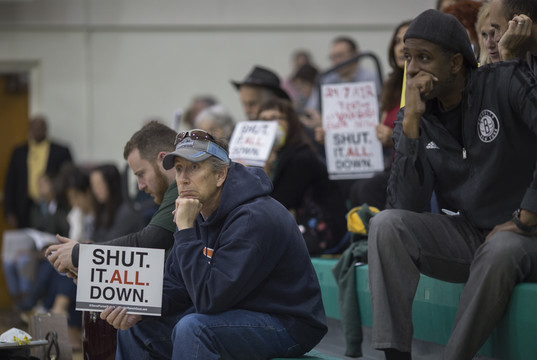
"caption": "In January, people attend a public hearing in Granada Hills, California after the Aliso Canyon natural gas storage facility began spewing methane.",
"description": null,
"title": "RS18297_GettyImages-505256470-sfi",
"credit": "David McNew",
"status": "inherit",
"isLoading": false,
"fetchFailed": false
},
"science_556805": {
"type": "attachments",
"id": "science_556805",
"meta": {
"index": "attachments_1716263798",
"site": "science",
"id": "556805",
"found": true
},
"parent": 556802,
"imgSizes": {
"thumbnail": {
"file": "https://ww2.kqed.org/app/uploads/sites/35/2016/03/00_NewHorizonsPlutoCharonIllustration-400x225.jpg",
"width": 400,
"mimeType": "image/jpeg",
"height": 225
},
"post-thumbnail": {
"file": "https://ww2.kqed.org/app/uploads/sites/35/2016/03/00_NewHorizonsPlutoCharonIllustration-672x372.jpg",
"width": 672,
"mimeType": "image/jpeg",
"height": 372
},
"kqedFullSize": {
"file": "https://ww2.kqed.org/app/uploads/sites/35/2016/03/00_NewHorizonsPlutoCharonIllustration.jpg",
"width": 800,
"height": 450
},
"guest-author-96": {
"file": "https://ww2.kqed.org/app/uploads/sites/35/2016/03/00_NewHorizonsPlutoCharonIllustration-96x96.jpg",
"width": 96,
"mimeType": "image/jpeg",
"height": 96
},
"medium": {
"file": "https://ww2.kqed.org/app/uploads/sites/35/2016/03/00_NewHorizonsPlutoCharonIllustration-800x450.jpg",
"width": 800,
"mimeType": "image/jpeg",
"height": 450
},
"guest-author-64": {
"file": "https://ww2.kqed.org/app/uploads/sites/35/2016/03/00_NewHorizonsPlutoCharonIllustration-64x64.jpg",
"width": 64,
"mimeType": "image/jpeg",
"height": 64
},
"detail": {
"file": "https://ww2.kqed.org/app/uploads/sites/35/2016/03/00_NewHorizonsPlutoCharonIllustration-75x75.jpg",
"width": 75,
"mimeType": "image/jpeg",
"height": 75
},
"guest-author-32": {
"file": "https://ww2.kqed.org/app/uploads/sites/35/2016/03/00_NewHorizonsPlutoCharonIllustration-32x32.jpg",
"width": 32,
"mimeType": "image/jpeg",
"height": 32
},
"medium_large": {
"file": "https://ww2.kqed.org/app/uploads/sites/35/2016/03/00_NewHorizonsPlutoCharonIllustration-768x432.jpg",
"width": 768,
"mimeType": "image/jpeg",
"height": 432
},
"guest-author-128": {
"file": "https://ww2.kqed.org/app/uploads/sites/35/2016/03/00_NewHorizonsPlutoCharonIllustration-128x128.jpg",
"width": 128,
"mimeType": "image/jpeg",
"height": 128
}
},
"publishDate": 1456856046,
"modified": 1456856148,
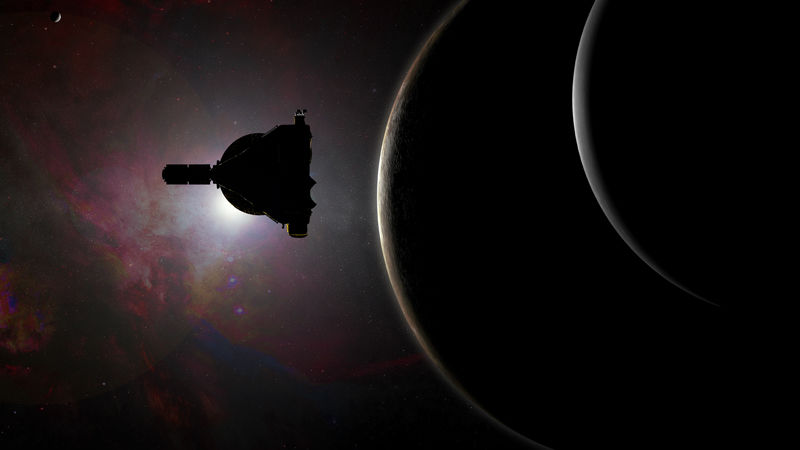
"caption": "Artist concept of NASA's New Horizons spacecraft silhouetted with Pluto and its large moon Charon. ",
"description": "Artist concept of NASA's New Horizons spacecraft silhouetted with Pluto and its large moon Charon. ",
"title": "00_NewHorizonsPlutoCharonIllustration",
"credit": "NASA/Johns Hopkins University Applied Physics Laboratory/Southwest Research Institute/Steve Gribben/Alex Parker",
"status": "inherit",
"isLoading": false,
"fetchFailed": false
},
"science_445518": {
"type": "attachments",
"id": "science_445518",
"meta": {
"index": "attachments_1716263798",
"site": "science",
"id": "445518",
"found": true
},
"parent": 407801,
"imgSizes": {
"twentyfourteen-full-width": {
"file": "https://ww2.kqed.org/app/uploads/sites/35/2015/12/Aliso-featured-better-1038x436.jpg",
"width": 1038,
"mimeType": "image/jpeg",
"height": 436
},
"thumbnail": {
"file": "https://ww2.kqed.org/app/uploads/sites/35/2015/12/Aliso-featured-better-400x138.jpg",
"width": 400,
"mimeType": "image/jpeg",
"height": 138
},
"fd-sm": {
"file": "https://ww2.kqed.org/app/uploads/sites/35/2015/12/Aliso-featured-better-960x331.jpg",
"width": 960,
"mimeType": "image/jpeg",
"height": 331
},
"post-thumbnail": {
"file": "https://ww2.kqed.org/app/uploads/sites/35/2015/12/Aliso-featured-better-672x372.jpg",
"width": 672,
"mimeType": "image/jpeg",
"height": 372
},
"kqedFullSize": {
"file": "https://ww2.kqed.org/app/uploads/sites/35/2015/12/Aliso-featured-better.jpg",
"width": 1264,
"height": 436
},
"guest-author-96": {
"file": "https://ww2.kqed.org/app/uploads/sites/35/2015/12/Aliso-featured-better-96x96.jpg",
"width": 96,
"mimeType": "image/jpeg",
"height": 96
},
"medium": {
"file": "https://ww2.kqed.org/app/uploads/sites/35/2015/12/Aliso-featured-better-800x276.jpg",
"width": 800,
"mimeType": "image/jpeg",
"height": 276
},
"guest-author-64": {
"file": "https://ww2.kqed.org/app/uploads/sites/35/2015/12/Aliso-featured-better-64x64.jpg",
"width": 64,
"mimeType": "image/jpeg",
"height": 64
},
"guest-author-32": {
"file": "https://ww2.kqed.org/app/uploads/sites/35/2015/12/Aliso-featured-better-32x32.jpg",
"width": 32,
"mimeType": "image/jpeg",
"height": 32
},
"fd-med": {
"file": "https://ww2.kqed.org/app/uploads/sites/35/2015/12/Aliso-featured-better-1180x407.jpg",
"width": 1180,
"mimeType": "image/jpeg",
"height": 407
},
"detail": {
"file": "https://ww2.kqed.org/app/uploads/sites/35/2015/12/Aliso-featured-better-75x75.jpg",
"width": 75,
"mimeType": "image/jpeg",
"height": 75
},
"medium_large": {
"file": "https://ww2.kqed.org/app/uploads/sites/35/2015/12/Aliso-featured-better-768x265.jpg",
"width": 768,
"mimeType": "image/jpeg",
"height": 265
},
"guest-author-128": {
"file": "https://ww2.kqed.org/app/uploads/sites/35/2015/12/Aliso-featured-better-128x128.jpg",
"width": 128,
"mimeType": "image/jpeg",
"height": 128
}
},
"publishDate": 1451597770,
"modified": 1451597804,
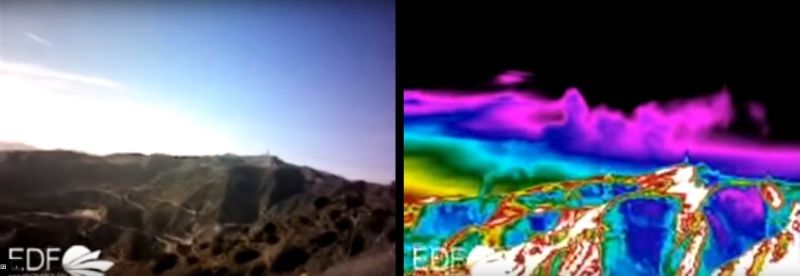
"caption": "The methane pouring from the leak at the Aliso Canyon natural gas storage facility isn't visible to the naked eye (Left), but is seen here in an infrared photo (Right) as the green plume coming up from the hillside. ",
"description": "The methane pouring from the leak at the Aliso Canyon natural gas storage facility isn't visible to the naked eye (Left), but is seen here in an infrared photo (Right) as the green plume coming up from the hillside. ",
"title": "Aliso Canyon",
"credit": "\u003ca href=\"https://www.youtube.com/watch?v=aO8HraNes9w\" target=\"_blank\">Environmental Defense Fund\u003c/a>",
"status": "inherit",
"isLoading": false,
"fetchFailed": false
},
"science_22170": {
"type": "attachments",
"id": "science_22170",
"meta": {
"index": "attachments_1716263798",
"site": "science",
"id": "22170",
"found": true
},
"parent": 22164,
"imgSizes": {
"kqedFullSize": {
"file": "https://ww2.kqed.org/app/uploads/sites/35/2014/10/PGEMarsTech3.jpg",
"width": 1014,
"height": 600
}
},
"publishDate": 1412205652,
"modified": 1412205652,
"caption": "An artist's rendering of the methane gas detector at work on Mars. (NASA/JPL-Caltech)",
"description": "An artist's rendering of the methane gas detector at work on Mars. (NASA/JPL-Caltech)",
"title": "PGEMarsTech3",
"credit": null,
"status": "inherit",
"isLoading": false,
"fetchFailed": false
},
"science_21989": {
"type": "attachments",
"id": "science_21989",
"meta": {
"index": "attachments_1716263798",
"site": "science",
"id": "21989",
"found": true
},
"parent": 21988,
"imgSizes": {
"kqedFullSize": {
"file": "https://ww2.kqed.org/app/uploads/sites/35/2014/09/unhelpfulgas.png",
"width": 800,
"height": 450
}
},
"publishDate": 1411670787,
"modified": 1411670787,
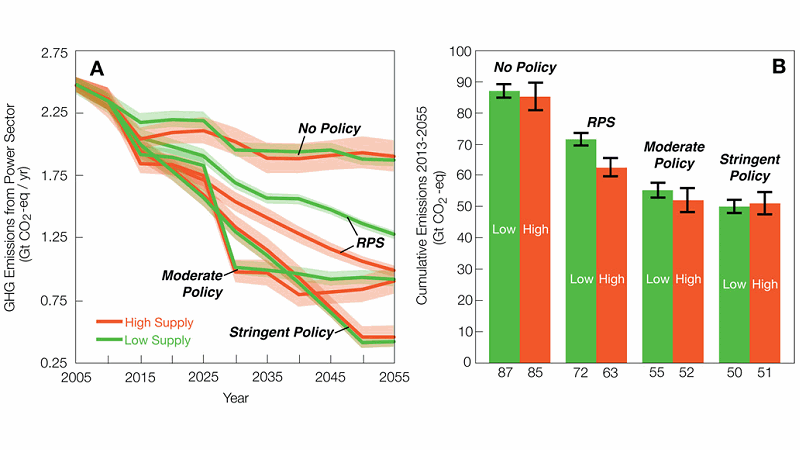
"caption": "The red and green lines in graph A show that gas supply, whether high (red) or low(green), does not appreciably affect carbon emissions under any given policy. \"RPS\" is \"renewable portfolio standard,\" a policy like the state of California's that requires a percentage of renewable energy. An RPS forces gas to compete with coal. Graph B shows total carbon emissions over the next 40 years under different policies; the RPS option makes gas most effective as a bridge fuel by replacing coal. Figure 4 of Shearer et al., \"The effect of natural gas supplies on US renewable energy and CO\u003csub>2\u003c/sub> emissions\" (\u003ca href=\"http://iopscience.iop.org/1748-9326/9/9/094008/article\">open access\u003c/a>), Environmental Research Letters (Christine Shearer/UC Irvine)",
"description": null,
"title": "unhelpfulgas",
"credit": null,
"status": "inherit",
"isLoading": false,
"fetchFailed": false
},
"science_14303": {
"type": "attachments",
"id": "science_14303",
"meta": {
"index": "attachments_1716263798",
"site": "science",
"id": "14303",
"found": true
},
"parent": 14277,
"imgSizes": {
"kqedFullSize": {
"file": "https://ww2.kqed.org/app/uploads/sites/35/2014/02/11441208065_1856cda974_h-e1392331837420.jpg",
"width": 638,
"height": 359
}
},
"publishDate": 1392331672,
"modified": 1392331672,
"caption": "The H. F. Lee natural gas plant in Goldsboro, North Carolina. (Photo: Duke Energy)",
"description": "The H. F. Lee natural gas plant in Goldsboro, North Carolina. (Photo: Duke Energy)",
"title": "Natural gas plant",
"credit": null,
"status": "inherit",
"isLoading": false,
"fetchFailed": false
},
"science_12231": {
"type": "attachments",
"id": "science_12231",
"meta": {
"index": "attachments_1716263798",
"site": "science",
"id": "12231",
"found": true
},
"parent": 12230,
"imgSizes": {
"kqedFullSize": {
"file": "https://ww2.kqed.org/app/uploads/sites/35/2013/12/REEbugs.jpg",
"width": 640,
"height": 360
}
},
"publishDate": 1387478933,
"modified": 1387478933,
"caption": "This mudpot in Italy's Campi Flegrei volcanic field showed us a new trick that living things can do. Courtesy Radboud University Nijmegen",
"description": null,
"title": "REEbugs",
"credit": null,
"status": "inherit",
"isLoading": false,
"fetchFailed": false
},
"science_9619": {
"type": "attachments",
"id": "science_9619",
"meta": {
"index": "attachments_1716263798",
"site": "science",
"id": "9619",
"found": true
},
"parent": 9618,
"imgSizes": {
"kqedFullSize": {
"file": "https://ww2.kqed.org/app/uploads/sites/35/2013/10/CuriositySniffingForClues.jpg",
"width": 630,
"height": 360
}
},
"publishDate": 1380843553,
"modified": 1380843553,
"caption": "NASA's rover Curiosity in Gale Crater on Mars",
"description": "NASA's rover Curiosity in Gale Crater on Mars",
"title": "Curiosity sniffing for clues",
"credit": null,
"status": "inherit",
"isLoading": false,
"fetchFailed": false
}
},
"audioPlayerReducer": {
"postId": "stream_live",
"isPaused": true,
"isPlaying": false,
"pfsActive": false,
"pledgeModalIsOpen": true,
"playerDrawerIsOpen": false,
"liveAudioPlayStartedAt": 0,
"liveAudioPlayContext": ""
},
"authorsReducer": {
"byline_science_606852": {
"type": "authors",
"id": "byline_science_606852",
"meta": {
"override": true
},
"slug": "byline_science_606852",
"name": "\u003ca href=\"http://bigstory.ap.org/content/michael-biesecker\">Michael Biesecker\u003c/a>\u003cbr> Associated Press",
"isLoading": false
},
"byline_science_407801": {
"type": "authors",
"id": "byline_science_407801",
"meta": {
"override": true
},
"slug": "byline_science_407801",
"name": "Rebecca Bowe",
"isLoading": false
},
"mollysamuel": {
"type": "authors",
"id": "200",
"meta": {
"index": "authors_1716337520",
"id": "200",
"found": true
},
"name": "Molly Samuel",
"firstName": "Molly",
"lastName": "Samuel",
"slug": "mollysamuel",
"email": "msamuel@kqed.org",
"display_author_email": false,
"staff_mastheads": [],
"title": null,
"bio": "Molly Samuel joined KQED as an intern in 2007, and since then has worked here as a reporter, producer, director and blogger. Before becoming KQED Science’s Multimedia Producer, she was a producer for Climate Watch. Molly has also reported for NPR, KALW and High Country News, and has produced audio stories for The Encyclopedia of Life and the Oakland Museum of California. She was a fellow with the Middlebury Fellowships in Environmental Journalism and a journalist-in-residence at the National Evolutionary Synthesis Center. Molly has a degree in Ancient Greek from Oberlin College and is a co-founder of the record label True Panther Sounds.",
"avatar": "https://secure.gravatar.com/avatar/a6abd3b949a89fe5109fa9917631d0b6?s=600&d=blank&r=g",
"twitter": null,
"facebook": null,
"instagram": null,
"linkedin": null,
"sites": [
{
"site": "news",
"roles": [
"subscriber"
]
},
{
"site": "stateofhealth",
"roles": [
"subscriber"
]
},
{
"site": "science",
"roles": [
"subscriber"
]
},
{
"site": "quest",
"roles": [
"edit_users",
"subscriber"
]
}
],
"headData": {
"title": "Molly Samuel | KQED",
"description": null,
"ogImgSrc": "https://secure.gravatar.com/avatar/a6abd3b949a89fe5109fa9917631d0b6?s=600&d=blank&r=g",
"twImgSrc": "https://secure.gravatar.com/avatar/a6abd3b949a89fe5109fa9917631d0b6?s=600&d=blank&r=g"
},
"isLoading": false,
"link": "/author/mollysamuel"
},
"amystanden": {
"type": "authors",
"id": "210",
"meta": {
"index": "authors_1716337520",
"id": "210",
"found": true
},
"name": "Amy Standen",
"firstName": "Amy",
"lastName": "Standen",
"slug": "amystanden",
"email": "astanden@kqed.org",
"display_author_email": false,
"staff_mastheads": [],
"title": "KQED Contributor",
"bio": "Amy Standen (@amystanden) is co-host of #\u003ca href=\"https://ww2.kqed.org/news/programs/the-leap\">TheLeapPodcast\u003c/a> (subscribe on iTunes or Stitcher!) and host of KQED and PBSDigital Studios' science video series, \u003ca href=\"https://www.youtube.com/user/KQEDDeepLook\">Deep Look\u003c/a>. Her science radio stories appear on KQED and NPR.\r\n\r\nEmail her at astanden@kqed.org",
"avatar": "https://secure.gravatar.com/avatar/3d021b72de685a788b0487b059d0a6a1?s=600&d=blank&r=g",
"twitter": null,
"facebook": null,
"instagram": null,
"linkedin": null,
"sites": [
{
"site": "news",
"roles": [
"subscriber"
]
},
{
"site": "futureofyou",
"roles": [
"subscriber"
]
},
{
"site": "stateofhealth",
"roles": [
"subscriber"
]
},
{
"site": "science",
"roles": []
},
{
"site": "quest",
"roles": [
"subscriber"
]
}
],
"headData": {
"title": "Amy Standen | KQED",
"description": "KQED Contributor",
"ogImgSrc": "https://secure.gravatar.com/avatar/3d021b72de685a788b0487b059d0a6a1?s=600&d=blank&r=g",
"twImgSrc": "https://secure.gravatar.com/avatar/3d021b72de685a788b0487b059d0a6a1?s=600&d=blank&r=g"
},
"isLoading": false,
"link": "/author/amystanden"
},
"ben-burress": {
"type": "authors",
"id": "6180",
"meta": {
"index": "authors_1716337520",
"id": "6180",
"found": true
},
"name": "Ben Burress",
"firstName": "Ben",
"lastName": "Burress",
"slug": "ben-burress",
"email": "bburress@chabotspace.org",
"display_author_email": false,
"staff_mastheads": [],
"title": null,
"bio": "\u003cstrong>Benjamin Burress\u003c/strong> has been a staff astronomer at Chabot Space & Science Center since July 1999. He graduated from Sonoma State University in 1985 with a bachelor’s degree in physics (and minor in astronomy), after which he signed on for a two-year stint in the Peace Corps, where he taught physics and mathematics in the African nation of Cameroon. From 1989-96 he served on the crew of NASA’s Kuiper Airborne Observatory at Ames Research Center in Mountain View, CA. From 1996-99, he was Head Observer at the Naval Prototype Optical Interferometer program at Lowell Observatory in Flagstaff, AZ.\r\n\r\nRead his \u003ca href=\"http://science.kqed.org/quest/author/ben-burress/\">previous contributions\u003c/a> to \u003ca href=\"http://science.kqed.org/quest/\">QUEST\u003c/a>, a project dedicated to exploring the Science of Sustainability.",
"avatar": "https://secure.gravatar.com/avatar/8263bffa345b7e4923a0b8b9f0f6a161?s=600&d=blank&r=g",
"twitter": null,
"facebook": null,
"instagram": null,
"linkedin": null,
"sites": [
{
"site": "science",
"roles": [
"editor"
]
},
{
"site": "quest",
"roles": [
"subscriber"
]
}
],
"headData": {
"title": "Ben Burress | KQED",
"description": null,
"ogImgSrc": "https://secure.gravatar.com/avatar/8263bffa345b7e4923a0b8b9f0f6a161?s=600&d=blank&r=g",
"twImgSrc": "https://secure.gravatar.com/avatar/8263bffa345b7e4923a0b8b9f0f6a161?s=600&d=blank&r=g"
},
"isLoading": false,
"link": "/author/ben-burress"
},
"andrew-alden": {
"type": "authors",
"id": "6228",
"meta": {
"index": "authors_1716337520",
"id": "6228",
"found": true
},
"name": "Andrew Alden",
"firstName": "Andrew",
"lastName": "Alden",
"slug": "andrew-alden",
"email": "alden@andrew-alden.com",
"display_author_email": false,
"staff_mastheads": [],
"title": null,
"bio": "Andrew Alden earned his geology degree at the University of New Hampshire and moved back to the Bay Area to work at the U.S. Geological Survey for six years. He has \u003ca href=\"http://geology.about.com/\">written on geology for About.com\u003c/a> since its founding in 1997. In 2007, he started the Oakland Geology blog, which won recognition as \"Best of the East Bay\" from the \u003ci>East Bay Express\u003c/i> in 2010. In writing about geology in the Bay Area and surroundings, he hopes to share some of the useful and pleasurable insights that geologists give us—not just facts about the deep past, but an attitude that might be called the \u003ci>deep present\u003c/i>.\r\n\r\nRead his \u003ca href=\"http://science.kqed.org/quest/author/andrew-alden/\">previous contributions\u003c/a> to \u003ca href=\"http://http://science.kqed.org/quest/\">QUEST\u003c/a>, a project dedicated to exploring the Science of Sustainability.",
"avatar": "https://secure.gravatar.com/avatar/9eaa0afc32f98c5fc7ce634437334a64?s=600&d=blank&r=g",
"twitter": null,
"facebook": null,
"instagram": null,
"linkedin": null,
"sites": [
{
"site": "science",
"roles": [
"author"
]
},
{
"site": "quest",
"roles": [
"subscriber"
]
}
],
"headData": {
"title": "Andrew Alden | KQED",
"description": null,
"ogImgSrc": "https://secure.gravatar.com/avatar/9eaa0afc32f98c5fc7ce634437334a64?s=600&d=blank&r=g",
"twImgSrc": "https://secure.gravatar.com/avatar/9eaa0afc32f98c5fc7ce634437334a64?s=600&d=blank&r=g"
},
"isLoading": false,
"link": "/author/andrew-alden"
}
},
"pagesReducer": {
"science_tag_methane": {
"type": "terms",
"id": "science_784",
"meta": {
"index": "terms_1716263798",
"site": "science",
"id": "784",
"score": 9.305894
},
"featImg": null,
"name": "methane",
"description": null,
"taxonomy": "tag",
"headData": {
"twImgId": null,
"twTitle": null,
"ogTitle": null,
"ogImgId": null,
"twDescription": null,
"description": null,
"title": "methane Archives | KQED Science",
"ogDescription": null
},
"ttid": 791,
"slug": "methane",
"isLoading": false,
"title": "methane",
"pageMeta": {
"site": "science",
"WpPageTemplate": "page-topic-editorial",
"currentPage": 2
},
"blocks": [
{
"blockName": "kqed/post-list",
"attrs": {
"layout": "cardArticle2",
"query": "posts/science?tag=methane",
"seeMore": false,
"paginated": true,
"page": 2
}
},
{
"blockName": "kqed/ad"
}
]
}
},
"pfsSessionReducer": {},
"postsReducer": {
"stream_live": {
"type": "live",
"id": "stream_live",
"audioUrl": "https://streams.kqed.org/kqedradio",
"title": "Live Stream",
"excerpt": "Live Stream information currently unavailable.",
"link": "/radio",
"featImg": "",
"label": {
"name": "KQED Live",
"link": "/"
}
},
"stream_kqedNewscast": {
"type": "posts",
"id": "stream_kqedNewscast",
"audioUrl": "https://www.kqed.org/.stream/anon/radio/RDnews/newscast.mp3?_=1",
"title": "KQED Newscast",
"featImg": "",
"label": {
"name": "88.5 FM",
"link": "/"
}
},
"science_606852": {
"type": "posts",
"id": "science_606852",
"meta": {
"index": "posts_1716263798",
"site": "science",
"id": "606852",
"score": null,
"sort": [
1459353624000
]
},
"parent": 0,
"labelTerm": {},
"blocks": [],
"publishDate": 1459353624,
"format": "standard",
"title": "EPA Aims to Cut Methane Leaks From Natural Gas Companies",
"headTitle": "EPA Aims to Cut Methane Leaks From Natural Gas Companies | KQED",
"content": "\u003cp>The Obama administration on Wednesday announced a new partnership with 41 energy companies that have agreed to voluntarily reduce methane emissions from natural gas operations to help combat climate change.[contextly_sidebar id=”ZDIdOu7d1PC70kD2JpUdRtF4n11ZtRkq”]\u003c/p>\n\u003cp>The \u003ca href=\"https://www3.epa.gov/\" target=\"_blank\" rel=\"noopener\">Environmental Protection Agency\u003c/a> unveiled the \u003ca href=\"https://www3.epa.gov/gasstar/methanechallenge/\" target=\"_blank\" rel=\"noopener\">Natural Gas STAR Methane Challenge Program\u003c/a> at this week’s Global Methane Forum held in Washington. Methane is a potent greenhouse gas, capable of trapping 25 times more heat in the atmosphere than an equivalent amount of carbon dioxide.\u003c/p>\n\u003cp>EPA Administrator Gina McCarthy said the voluntary program is meant to protect public health and combat climate change while providing a platform for companies to report actions taken to reduce methane emissions.\u003c/p>\n\u003cp>The announcement comes after the worst methane leak in the nation’s history was finally plugged last month at an underground storage facility owned by Southern California Gas Co. The months-long disaster required the evacuation of 6,400 families and released the climate-warming equivalent of the annual pollution from more than a half million cars.\u003c/p>\n\u003cp>While the massive California leak focused public attention of the issue, much smaller and more mundane leaks from natural gas operations in the United States have an even larger cumulative impact as a man-made cause of warming the planet.\u003c/p>\n\u003cp>[ad fullwidth]\u003c/p>\n\u003cp>SoCal Gas is among those who’ve signed onto the voluntary emissions reduction program, along with major gas pipeline and distribution providers Duke Energy, Exelon, TransCanada, Xcel Energy and MidAmerican Energy Co.\u003c/p>\n\u003cp>President Barack Obama and Canadian Prime Minister Justin Trudeau \u003ca href=\"http://www.latimes.com/world/mexico-americas/la-fg-sej-canada-arctic-climate-20160310-story.html\">committed earlier this month\u003c/a> to reducing methane emissions from the oil and gas sectors by at least 40 percent over the next decade, compared to 2012 levels. Such reductions are seen as essential to achieving national targets for greenhouse gas reductions agreed to in December as part of the landmark climate accord reached in Paris.\u003c/p>\n\u003cp>\u003c/p>\n\u003cp>Republicans in Congress have opposed such measures, saying they will cost the U.S. economy jobs while doing little to reduce climate change.\u003c/p>\n\n",
"stats": {
"hasVideo": false,
"hasChartOrMap": false,
"hasAudio": false,
"hasPolis": false,
"wordCount": 333,
"hasGoogleForm": false,
"hasGallery": false,
"hasHearkenModule": false,
"iframeSrcs": [],
"paragraphCount": 10
},
"modified": 1704930421,
"excerpt": "After the worst methane leak in the nation's history, energy companies have agreed to voluntarily reduce emissions from natural gas operations.",
"headData": {
"twImgId": "",
"twTitle": "",
"ogTitle": "",
"ogImgId": "",
"twDescription": "",
"description": "After the worst methane leak in the nation's history, energy companies have agreed to voluntarily reduce emissions from natural gas operations.",
"title": "EPA Aims to Cut Methane Leaks From Natural Gas Companies | KQED",
"ogDescription": "",
"schema": {
"@context": "https://schema.org",
"@type": "Article",
"headline": "EPA Aims to Cut Methane Leaks From Natural Gas Companies",
"datePublished": "2016-03-30T09:00:24-07:00",
"dateModified": "2024-01-10T15:47:01-08:00",
"image": "https://cdn.kqed.org/wp-content/uploads/2020/02/KQED-OG-Image@1x.png"
}
},
"guestAuthors": [],
"slug": "epa-aims-to-cut-methane-leaks-from-natural-gas-companies",
"status": "publish",
"nprByline": "\u003ca href=\"http://bigstory.ap.org/content/michael-biesecker\">Michael Biesecker\u003c/a>\u003cbr> Associated Press",
"sticky": false,
"source": "\u003ca href=\"http://hosted.ap.org/dynamic/fronts/HOME?SITE=AP&SECTION=HOME\">Associated Press\u003c/a>",
"path": "/science/606852/epa-aims-to-cut-methane-leaks-from-natural-gas-companies",
"audioTrackLength": null,
"parsedContent": [
{
"type": "contentString",
"content": "\u003cdiv class=\"post-body\">\u003cp>\u003cp>The Obama administration on Wednesday announced a new partnership with 41 energy companies that have agreed to voluntarily reduce methane emissions from natural gas operations to help combat climate change.\u003c/p>\u003cp>\u003c/p>\u003cp>\u003c/p>\n\u003cp>The \u003ca href=\"https://www3.epa.gov/\" target=\"_blank\" rel=\"noopener\">Environmental Protection Agency\u003c/a> unveiled the \u003ca href=\"https://www3.epa.gov/gasstar/methanechallenge/\" target=\"_blank\" rel=\"noopener\">Natural Gas STAR Methane Challenge Program\u003c/a> at this week’s Global Methane Forum held in Washington. Methane is a potent greenhouse gas, capable of trapping 25 times more heat in the atmosphere than an equivalent amount of carbon dioxide.\u003c/p>\n\u003cp>EPA Administrator Gina McCarthy said the voluntary program is meant to protect public health and combat climate change while providing a platform for companies to report actions taken to reduce methane emissions.\u003c/p>\n\u003cp>The announcement comes after the worst methane leak in the nation’s history was finally plugged last month at an underground storage facility owned by Southern California Gas Co. The months-long disaster required the evacuation of 6,400 families and released the climate-warming equivalent of the annual pollution from more than a half million cars.\u003c/p>\n\u003cp>While the massive California leak focused public attention of the issue, much smaller and more mundane leaks from natural gas operations in the United States have an even larger cumulative impact as a man-made cause of warming the planet.\u003c/p>\n\u003cp>\u003c/p>\u003c/div>",
"attributes": {
"named": {},
"numeric": []
}
},
{
"type": "component",
"content": "",
"name": "ad",
"attributes": {
"named": {
"label": "fullwidth"
},
"numeric": [
"fullwidth"
]
}
},
{
"type": "contentString",
"content": "\u003cdiv class=\"post-body\">\u003cp>\u003c/p>\n\u003cp>SoCal Gas is among those who’ve signed onto the voluntary emissions reduction program, along with major gas pipeline and distribution providers Duke Energy, Exelon, TransCanada, Xcel Energy and MidAmerican Energy Co.\u003c/p>\n\u003cp>President Barack Obama and Canadian Prime Minister Justin Trudeau \u003ca href=\"http://www.latimes.com/world/mexico-americas/la-fg-sej-canada-arctic-climate-20160310-story.html\">committed earlier this month\u003c/a> to reducing methane emissions from the oil and gas sectors by at least 40 percent over the next decade, compared to 2012 levels. Such reductions are seen as essential to achieving national targets for greenhouse gas reductions agreed to in December as part of the landmark climate accord reached in Paris.\u003c/p>\n\u003cp>\u003c/p>\n\u003cp>Republicans in Congress have opposed such measures, saying they will cost the U.S. economy jobs while doing little to reduce climate change.\u003c/p>\n\n\u003c/div>\u003c/p>",
"attributes": {
"named": {},
"numeric": []
}
}
],
"link": "/science/606852/epa-aims-to-cut-methane-leaks-from-natural-gas-companies",
"authors": [
"byline_science_606852"
],
"categories": [
"science_31",
"science_33",
"science_35",
"science_40"
],
"tags": [
"science_784",
"science_1041"
],
"featImg": "science_606858",
"label": "source_science_606852"
},
"science_556802": {
"type": "posts",
"id": "science_556802",
"meta": {
"index": "posts_1716263798",
"site": "science",
"id": "556802",
"score": null,
"sort": [
1457103657000
]
},
"parent": 0,
"labelTerm": {
"site": "science"
},
"blocks": [],
"publishDate": 1457103657,
"format": "standard",
"title": "Months After its Pluto Encounter, NASA Spacecraft Still Surprises and Delights",
"headTitle": "Months After its Pluto Encounter, NASA Spacecraft Still Surprises and Delights | KQED",
"content": "\u003cp>Seven months after its historic encounter with Pluto, NASA’s New Horizons mission is still dazzling us with discoveries: ancient frozen canyons, chains of icebergs floating in rivers of exotic slush, signs of paleo-oceans, and more.\u003c/p>\n\u003cp>For a quick flyby mission that lasted mere hours, New Horizons is the gift-giver that keeps on giving as its Pluto data trickles back to Earth.\u003c/p>\n\u003cp>\u003cstrong>Icebergs Floating in Nitrogen Slush?\u003c/strong>\u003c/p>\n\u003cp>You may have heard of Pluto’s 10,000-foot-high mountain ranges of water ice, possible cryovolcanoes, and nitrogen-ice glaciers pouring through canyons and spilling out into wide flat milky plains. What you may not know is that Pluto has \u003ca href=\"http://pluto.jhuapl.edu/Multimedia/Science-Photos/image.php?page=1&gallery_id=2&image_id=408\" target=\"_blank\" rel=\"noopener\">floating islands\u003c/a>—yes, islands. Or, maybe more correctly, icebergs, of a sort.\u003c/p>\n\u003cfigure id=\"attachment_556873\" class=\"wp-caption aligncenter\" style=\"max-width: 800px\">\u003cimg loading=\"lazy\" decoding=\"async\" class=\"size-medium wp-image-556873\" src=\"http://ww2.kqed.org/science/wp-content/uploads/sites/35/2016/03/00_PlutosFloatingHills-Context-lables_V3-sml-02-04-16-800x480.jpg\" alt=\"Pluto's "floating ice islands" in the plains of Sputnik Planum. \" width=\"800\" height=\"480\" srcset=\"https://cdn.kqed.org/wp-content/uploads/sites/35/2016/03/00_PlutosFloatingHills-Context-lables_V3-sml-02-04-16-800x480.jpg 800w, https://cdn.kqed.org/wp-content/uploads/sites/35/2016/03/00_PlutosFloatingHills-Context-lables_V3-sml-02-04-16-400x240.jpg 400w, https://cdn.kqed.org/wp-content/uploads/sites/35/2016/03/00_PlutosFloatingHills-Context-lables_V3-sml-02-04-16-768x461.jpg 768w, https://cdn.kqed.org/wp-content/uploads/sites/35/2016/03/00_PlutosFloatingHills-Context-lables_V3-sml-02-04-16-1180x708.jpg 1180w, https://cdn.kqed.org/wp-content/uploads/sites/35/2016/03/00_PlutosFloatingHills-Context-lables_V3-sml-02-04-16-960x576.jpg 960w, https://cdn.kqed.org/wp-content/uploads/sites/35/2016/03/00_PlutosFloatingHills-Context-lables_V3-sml-02-04-16.jpg 1200w\" sizes=\"(max-width: 800px) 100vw, 800px\">\u003cfigcaption class=\"wp-caption-text\">Pluto’s “floating ice islands” in the plains of Sputnik Planum. \u003ccite>(NASA/Johns Hopkins University Applied Physics Laboratory/Southwest Research Institute)\u003c/cite>\u003c/figcaption>\u003c/figure>\n\u003cp>In the smooth white plains of\u003ca href=\"http://www.nasa.gov/image-feature/image-of-plutos-vast-icy-plain-informally-called-sputnik-planum\" target=\"_blank\" rel=\"noopener\"> Sputnik Planum\u003c/a>, out among the flat expanses of frosty nitrogen and methane, protrude hills of water ice clustered in chains that almost look like flotsam washed up along the banks of a river.\u003c/p>\n\u003cp>[ad fullwidth]\u003c/p>\n\u003cp>The water-ice islands, or bergs, range in size from a mile to several miles across. At first glance they appear as hills dotting the flat plain, or possibly the tops of taller formations poking above the frigid flows that surround them.\u003c/p>\n\u003cp>But the clustering pattern, along with the directional flow of the slushy glacial sheets, suggest that they are large chunks of material that have broken off nearby highlands of water ice and were carried along with the flow.\u003c/p>\n\u003cp>The clustering in chains may be due to the floating bergs running aground in shallower areas and accumulating—so the impression of riverbank flotsam may be accurate!\u003c/p>\n\u003cp>In fact, it helps to think of the nitrogen glaciers as rivers and the plains they flood into as seas—seas in a much more literal sense than the “mare” (seas) of Earth’s Moon, which are flat plains of solid basalt.\u003c/p>\n\u003cp>On Pluto, exotic ices of nitrogen, methane, and ammonia (all of which have been detected in Sputnik Planum) are not rock-solid like their water-ice counterpart, but flow somewhat like glaciers do in Earth’s warmer climate. Glaciers on Earth are even known to carry chunks of rock and transport them from one place to another—although these usually sink to the bottom of the glacier, rock being denser than water ice.\u003c/p>\n\u003cp>On Pluto, water ice is less dense than the nitrogen glaciers and so would “float” in the slush—not unlike how icebergs float in Earth’s oceans.\u003c/p>\n\u003cp>\u003cstrong>Frozen Polar Canyons\u003c/strong>\u003c/p>\n\u003cp>Another news flash came in more recently: “frozen” canyons exist in Pluto’s North Pole region—face it, a lot of things are frozen on Pluto. You may think, so what? Isn’t every canyon on Pluto technically frozen? What’s the fuss about?\u003c/p>\n\u003cfigure id=\"attachment_556874\" class=\"wp-caption aligncenter\" style=\"max-width: 800px\">\u003cimg loading=\"lazy\" decoding=\"async\" class=\"size-medium wp-image-556874\" src=\"http://ww2.kqed.org/science/wp-content/uploads/sites/35/2016/03/00_NorthPoleRotatedContrastUnannotated_CLEAN-copy-800x986.jpg\" alt=\"Pluto's ancient frozen canyons of its North Polar region. \" width=\"800\" height=\"986\" srcset=\"https://cdn.kqed.org/wp-content/uploads/sites/35/2016/03/00_NorthPoleRotatedContrastUnannotated_CLEAN-copy-800x986.jpg 800w, https://cdn.kqed.org/wp-content/uploads/sites/35/2016/03/00_NorthPoleRotatedContrastUnannotated_CLEAN-copy-400x493.jpg 400w, https://cdn.kqed.org/wp-content/uploads/sites/35/2016/03/00_NorthPoleRotatedContrastUnannotated_CLEAN-copy-768x947.jpg 768w, https://cdn.kqed.org/wp-content/uploads/sites/35/2016/03/00_NorthPoleRotatedContrastUnannotated_CLEAN-copy-1180x1454.jpg 1180w, https://cdn.kqed.org/wp-content/uploads/sites/35/2016/03/00_NorthPoleRotatedContrastUnannotated_CLEAN-copy-960x1183.jpg 960w, https://cdn.kqed.org/wp-content/uploads/sites/35/2016/03/00_NorthPoleRotatedContrastUnannotated_CLEAN-copy.jpg 1200w\" sizes=\"(max-width: 800px) 100vw, 800px\">\u003cfigcaption class=\"wp-caption-text\">Pluto’s ancient frozen canyons of its North Polar region. \u003ccite>(NASA/Johns Hopkins University Applied Physics Laboratory/Southwest Research Institute)\u003c/cite>\u003c/figcaption>\u003c/figure>\n\u003cp>The \u003ca href=\"http://pluto.jhuapl.edu/Multimedia/Science-Photos/image.php?page=1&gallery_id=2&image_id=412\" target=\"_blank\" rel=\"noopener\">canyons in question\u003c/a> are a series of long, parallel furrows, the largest of them gaping 45 miles across, bracketing Pluto’s geographic North Pole. These canyons, unlike many others found elsewhere on Pluto, appear to be quite old, crumbling and degraded with age, and are possibly made of weaker material.\u003c/p>\n\u003cp>They may be old enough to have formed when Pluto was still tectonically active, when the dwarf planet and its large moon Charon rotated relative to each other and mutually generated a lot of tidal-stress heat.\u003c/p>\n\u003cp>Today, Pluto and Charon are tidally locked, each keeping the same side aimed at the other—like the faces of a figure-skating couple with gazes locked on one another.\u003c/p>\n\u003cp>In the tethered grip the pair have on each other today, there is no longer any significant gravitational flexing or stretching between them to generate heat and drive tectonic activity—the figure skaters are not flexing their muscles to perform spins and throws, but simply clasp hands and no longer generate as much body heat.\u003c/p>\n\u003cp>By studying these polar canyons, scientists may gain insight into conditions in Pluto’s and Charon’s past, when the couple did work up more of a tectonic sweat than today.\u003c/p>\n\u003cp>\u003cstrong>Ancient Ocean on Charon?\u003c/strong>\u003c/p>\n\u003cp>Finally, turning our attention to Charon (Pluto’s big moon) there appears to be evidence of what may have been an \u003ca href=\"http://pluto.jhuapl.edu/Multimedia/Science-Photos/image.php?page=1&gallery_id=2&image_id=411\" target=\"_blank\" rel=\"noopener\">ancient ocean\u003c/a> long ago.\u003c/p>\n\u003cp>The evidence comes in the form of a series of long, deep chasms that give the appearance that Charon’s water ice surface has cracked. One of these “cracks” is 1,100 miles long and up to 4.5 miles deep!\u003c/p>\n\u003cp>One hypothesis about these epic canyons is that long ago, Charon was warmer, with heat from radioactive decay as well as its initial formation melting at least some of the water ice to form subsurface oceans.\u003c/p>\n\u003cfigure id=\"attachment_556875\" class=\"wp-caption aligncenter\" style=\"max-width: 800px\">\u003cimg loading=\"lazy\" decoding=\"async\" class=\"size-medium wp-image-556875\" src=\"http://ww2.kqed.org/science/wp-content/uploads/sites/35/2016/03/00_Charon_SerenityChasma_Context_02182016_Melded-800x433.jpg\" alt=\"The "cracks" in the icy crust of Pluto's moon Charon that may be evidence of a past subsurface ocean of liquid water\" width=\"800\" height=\"433\" srcset=\"https://cdn.kqed.org/wp-content/uploads/sites/35/2016/03/00_Charon_SerenityChasma_Context_02182016_Melded-800x433.jpg 800w, https://cdn.kqed.org/wp-content/uploads/sites/35/2016/03/00_Charon_SerenityChasma_Context_02182016_Melded-400x217.jpg 400w, https://cdn.kqed.org/wp-content/uploads/sites/35/2016/03/00_Charon_SerenityChasma_Context_02182016_Melded-768x416.jpg 768w, https://cdn.kqed.org/wp-content/uploads/sites/35/2016/03/00_Charon_SerenityChasma_Context_02182016_Melded-1180x639.jpg 1180w, https://cdn.kqed.org/wp-content/uploads/sites/35/2016/03/00_Charon_SerenityChasma_Context_02182016_Melded-960x520.jpg 960w, https://cdn.kqed.org/wp-content/uploads/sites/35/2016/03/00_Charon_SerenityChasma_Context_02182016_Melded.jpg 1200w\" sizes=\"(max-width: 800px) 100vw, 800px\">\u003cfigcaption class=\"wp-caption-text\">The “cracks” in the icy crust of Pluto’s moon Charon that may be evidence of a past subsurface ocean of liquid water \u003ccite>(NASA/Johns Hopkins University Applied Physics Laboratory/Southwest Research Institute)\u003c/cite>\u003c/figcaption>\u003c/figure>\n\u003cp>As Charon cooled over time, the oceans would have frozen and expanded, pushing the crust outward and forming giant stress fractures—ostensibly the chasms New Horizons captured images of when it flew by last July.\u003c/p>\n\u003cp>\u003cstrong>The Adventure Continues\u003c/strong>\u003c/p>\n\u003cp>We can enjoy the fruits of New Horizons’ expedition for months to come. Due to the spacecraft’s great distance (\u003ca href=\"http://pluto.jhuapl.edu/Mission/Where-is-New-Horizons/index.php\" target=\"_blank\" rel=\"noopener\">presently\u003c/a> over 3.2 billion miles from Earth), a limited amount of electrical power, and the fact that it collected many gigabytes of data, it will take upwards of \u003ca href=\"http://gizmodo.com/why-itll-take-new-horizons-16-months-to-send-us-this-we-1717769317\" target=\"_blank\" rel=\"noopener\">16 months to transmit\u003c/a> it all back to Earth—so the rewards should keep rolling in through the end of this year.\u003c/p>\n\u003cp>And, there’s a fresh adventure on the horizon, as the tiny nuclear robot coasts toward a 2019 encounter with the Kuiper Belt Object 2014 MU69. If the encounter goes as planned, it will be our first up-close look at a small, icy object in the Kuiper Belt, those vast rings of material that encircle the sun beyond the orbit of Neptune.\u003c/p>\n\u003cp>\u003c/p>\n\u003cp>Stay tuned…\u003c/p>\n\n",
"stats": {
"hasVideo": false,
"hasChartOrMap": false,
"hasAudio": false,
"hasPolis": false,
"wordCount": 1067,
"hasGoogleForm": false,
"hasGallery": false,
"hasHearkenModule": false,
"iframeSrcs": [],
"paragraphCount": 29
},
"modified": 1704930529,
"excerpt": "Seven months after its historic encounter with Pluto, NASA's New Horizons mission is still dazzling us with discoveries: ancient frozen canyons, chains of icebergs floating in rivers of exotic slush, signs of paleo-oceans, and more. ",
"headData": {
"twImgId": "",
"twTitle": "",
"ogTitle": "",
"ogImgId": "",
"twDescription": "",
"description": "Seven months after its historic encounter with Pluto, NASA's New Horizons mission is still dazzling us with discoveries: ancient frozen canyons, chains of icebergs floating in rivers of exotic slush, signs of paleo-oceans, and more. ",
"title": "Months After its Pluto Encounter, NASA Spacecraft Still Surprises and Delights | KQED",
"ogDescription": "",
"schema": {
"@context": "https://schema.org",
"@type": "Article",
"headline": "Months After its Pluto Encounter, NASA Spacecraft Still Surprises and Delights",
"datePublished": "2016-03-04T07:00:57-08:00",
"dateModified": "2024-01-10T15:48:49-08:00",
"image": "https://cdn.kqed.org/wp-content/uploads/2020/02/KQED-OG-Image@1x.png"
}
},
"guestAuthors": [],
"slug": "months-after-its-pluto-encounter-nasa-spacecraft-still-surprises-and-delights",
"status": "publish",
"sticky": false,
"path": "/science/556802/months-after-its-pluto-encounter-nasa-spacecraft-still-surprises-and-delights",
"audioTrackLength": null,
"parsedContent": [
{
"type": "contentString",
"content": "\u003cdiv class=\"post-body\">\u003cp>\u003cp>Seven months after its historic encounter with Pluto, NASA’s New Horizons mission is still dazzling us with discoveries: ancient frozen canyons, chains of icebergs floating in rivers of exotic slush, signs of paleo-oceans, and more.\u003c/p>\n\u003cp>For a quick flyby mission that lasted mere hours, New Horizons is the gift-giver that keeps on giving as its Pluto data trickles back to Earth.\u003c/p>\n\u003cp>\u003cstrong>Icebergs Floating in Nitrogen Slush?\u003c/strong>\u003c/p>\n\u003cp>You may have heard of Pluto’s 10,000-foot-high mountain ranges of water ice, possible cryovolcanoes, and nitrogen-ice glaciers pouring through canyons and spilling out into wide flat milky plains. What you may not know is that Pluto has \u003ca href=\"http://pluto.jhuapl.edu/Multimedia/Science-Photos/image.php?page=1&gallery_id=2&image_id=408\" target=\"_blank\" rel=\"noopener\">floating islands\u003c/a>—yes, islands. Or, maybe more correctly, icebergs, of a sort.\u003c/p>\n\u003cfigure id=\"attachment_556873\" class=\"wp-caption aligncenter\" style=\"max-width: 800px\">\u003cimg loading=\"lazy\" decoding=\"async\" class=\"size-medium wp-image-556873\" src=\"http://ww2.kqed.org/science/wp-content/uploads/sites/35/2016/03/00_PlutosFloatingHills-Context-lables_V3-sml-02-04-16-800x480.jpg\" alt=\"Pluto's "floating ice islands" in the plains of Sputnik Planum. \" width=\"800\" height=\"480\" srcset=\"https://cdn.kqed.org/wp-content/uploads/sites/35/2016/03/00_PlutosFloatingHills-Context-lables_V3-sml-02-04-16-800x480.jpg 800w, https://cdn.kqed.org/wp-content/uploads/sites/35/2016/03/00_PlutosFloatingHills-Context-lables_V3-sml-02-04-16-400x240.jpg 400w, https://cdn.kqed.org/wp-content/uploads/sites/35/2016/03/00_PlutosFloatingHills-Context-lables_V3-sml-02-04-16-768x461.jpg 768w, https://cdn.kqed.org/wp-content/uploads/sites/35/2016/03/00_PlutosFloatingHills-Context-lables_V3-sml-02-04-16-1180x708.jpg 1180w, https://cdn.kqed.org/wp-content/uploads/sites/35/2016/03/00_PlutosFloatingHills-Context-lables_V3-sml-02-04-16-960x576.jpg 960w, https://cdn.kqed.org/wp-content/uploads/sites/35/2016/03/00_PlutosFloatingHills-Context-lables_V3-sml-02-04-16.jpg 1200w\" sizes=\"(max-width: 800px) 100vw, 800px\">\u003cfigcaption class=\"wp-caption-text\">Pluto’s “floating ice islands” in the plains of Sputnik Planum. \u003ccite>(NASA/Johns Hopkins University Applied Physics Laboratory/Southwest Research Institute)\u003c/cite>\u003c/figcaption>\u003c/figure>\n\u003cp>In the smooth white plains of\u003ca href=\"http://www.nasa.gov/image-feature/image-of-plutos-vast-icy-plain-informally-called-sputnik-planum\" target=\"_blank\" rel=\"noopener\"> Sputnik Planum\u003c/a>, out among the flat expanses of frosty nitrogen and methane, protrude hills of water ice clustered in chains that almost look like flotsam washed up along the banks of a river.\u003c/p>\n\u003cp>\u003c/p>\u003c/div>",
"attributes": {
"named": {},
"numeric": []
}
},
{
"type": "component",
"content": "",
"name": "ad",
"attributes": {
"named": {
"label": "fullwidth"
},
"numeric": [
"fullwidth"
]
}
},
{
"type": "contentString",
"content": "\u003cdiv class=\"post-body\">\u003cp>\u003c/p>\n\u003cp>The water-ice islands, or bergs, range in size from a mile to several miles across. At first glance they appear as hills dotting the flat plain, or possibly the tops of taller formations poking above the frigid flows that surround them.\u003c/p>\n\u003cp>But the clustering pattern, along with the directional flow of the slushy glacial sheets, suggest that they are large chunks of material that have broken off nearby highlands of water ice and were carried along with the flow.\u003c/p>\n\u003cp>The clustering in chains may be due to the floating bergs running aground in shallower areas and accumulating—so the impression of riverbank flotsam may be accurate!\u003c/p>\n\u003cp>In fact, it helps to think of the nitrogen glaciers as rivers and the plains they flood into as seas—seas in a much more literal sense than the “mare” (seas) of Earth’s Moon, which are flat plains of solid basalt.\u003c/p>\n\u003cp>On Pluto, exotic ices of nitrogen, methane, and ammonia (all of which have been detected in Sputnik Planum) are not rock-solid like their water-ice counterpart, but flow somewhat like glaciers do in Earth’s warmer climate. Glaciers on Earth are even known to carry chunks of rock and transport them from one place to another—although these usually sink to the bottom of the glacier, rock being denser than water ice.\u003c/p>\n\u003cp>On Pluto, water ice is less dense than the nitrogen glaciers and so would “float” in the slush—not unlike how icebergs float in Earth’s oceans.\u003c/p>\n\u003cp>\u003cstrong>Frozen Polar Canyons\u003c/strong>\u003c/p>\n\u003cp>Another news flash came in more recently: “frozen” canyons exist in Pluto’s North Pole region—face it, a lot of things are frozen on Pluto. You may think, so what? Isn’t every canyon on Pluto technically frozen? What’s the fuss about?\u003c/p>\n\u003cfigure id=\"attachment_556874\" class=\"wp-caption aligncenter\" style=\"max-width: 800px\">\u003cimg loading=\"lazy\" decoding=\"async\" class=\"size-medium wp-image-556874\" src=\"http://ww2.kqed.org/science/wp-content/uploads/sites/35/2016/03/00_NorthPoleRotatedContrastUnannotated_CLEAN-copy-800x986.jpg\" alt=\"Pluto's ancient frozen canyons of its North Polar region. \" width=\"800\" height=\"986\" srcset=\"https://cdn.kqed.org/wp-content/uploads/sites/35/2016/03/00_NorthPoleRotatedContrastUnannotated_CLEAN-copy-800x986.jpg 800w, https://cdn.kqed.org/wp-content/uploads/sites/35/2016/03/00_NorthPoleRotatedContrastUnannotated_CLEAN-copy-400x493.jpg 400w, https://cdn.kqed.org/wp-content/uploads/sites/35/2016/03/00_NorthPoleRotatedContrastUnannotated_CLEAN-copy-768x947.jpg 768w, https://cdn.kqed.org/wp-content/uploads/sites/35/2016/03/00_NorthPoleRotatedContrastUnannotated_CLEAN-copy-1180x1454.jpg 1180w, https://cdn.kqed.org/wp-content/uploads/sites/35/2016/03/00_NorthPoleRotatedContrastUnannotated_CLEAN-copy-960x1183.jpg 960w, https://cdn.kqed.org/wp-content/uploads/sites/35/2016/03/00_NorthPoleRotatedContrastUnannotated_CLEAN-copy.jpg 1200w\" sizes=\"(max-width: 800px) 100vw, 800px\">\u003cfigcaption class=\"wp-caption-text\">Pluto’s ancient frozen canyons of its North Polar region. \u003ccite>(NASA/Johns Hopkins University Applied Physics Laboratory/Southwest Research Institute)\u003c/cite>\u003c/figcaption>\u003c/figure>\n\u003cp>The \u003ca href=\"http://pluto.jhuapl.edu/Multimedia/Science-Photos/image.php?page=1&gallery_id=2&image_id=412\" target=\"_blank\" rel=\"noopener\">canyons in question\u003c/a> are a series of long, parallel furrows, the largest of them gaping 45 miles across, bracketing Pluto’s geographic North Pole. These canyons, unlike many others found elsewhere on Pluto, appear to be quite old, crumbling and degraded with age, and are possibly made of weaker material.\u003c/p>\n\u003cp>They may be old enough to have formed when Pluto was still tectonically active, when the dwarf planet and its large moon Charon rotated relative to each other and mutually generated a lot of tidal-stress heat.\u003c/p>\n\u003cp>Today, Pluto and Charon are tidally locked, each keeping the same side aimed at the other—like the faces of a figure-skating couple with gazes locked on one another.\u003c/p>\n\u003cp>In the tethered grip the pair have on each other today, there is no longer any significant gravitational flexing or stretching between them to generate heat and drive tectonic activity—the figure skaters are not flexing their muscles to perform spins and throws, but simply clasp hands and no longer generate as much body heat.\u003c/p>\n\u003cp>By studying these polar canyons, scientists may gain insight into conditions in Pluto’s and Charon’s past, when the couple did work up more of a tectonic sweat than today.\u003c/p>\n\u003cp>\u003cstrong>Ancient Ocean on Charon?\u003c/strong>\u003c/p>\n\u003cp>Finally, turning our attention to Charon (Pluto’s big moon) there appears to be evidence of what may have been an \u003ca href=\"http://pluto.jhuapl.edu/Multimedia/Science-Photos/image.php?page=1&gallery_id=2&image_id=411\" target=\"_blank\" rel=\"noopener\">ancient ocean\u003c/a> long ago.\u003c/p>\n\u003cp>The evidence comes in the form of a series of long, deep chasms that give the appearance that Charon’s water ice surface has cracked. One of these “cracks” is 1,100 miles long and up to 4.5 miles deep!\u003c/p>\n\u003cp>One hypothesis about these epic canyons is that long ago, Charon was warmer, with heat from radioactive decay as well as its initial formation melting at least some of the water ice to form subsurface oceans.\u003c/p>\n\u003cfigure id=\"attachment_556875\" class=\"wp-caption aligncenter\" style=\"max-width: 800px\">\u003cimg loading=\"lazy\" decoding=\"async\" class=\"size-medium wp-image-556875\" src=\"http://ww2.kqed.org/science/wp-content/uploads/sites/35/2016/03/00_Charon_SerenityChasma_Context_02182016_Melded-800x433.jpg\" alt=\"The "cracks" in the icy crust of Pluto's moon Charon that may be evidence of a past subsurface ocean of liquid water\" width=\"800\" height=\"433\" srcset=\"https://cdn.kqed.org/wp-content/uploads/sites/35/2016/03/00_Charon_SerenityChasma_Context_02182016_Melded-800x433.jpg 800w, https://cdn.kqed.org/wp-content/uploads/sites/35/2016/03/00_Charon_SerenityChasma_Context_02182016_Melded-400x217.jpg 400w, https://cdn.kqed.org/wp-content/uploads/sites/35/2016/03/00_Charon_SerenityChasma_Context_02182016_Melded-768x416.jpg 768w, https://cdn.kqed.org/wp-content/uploads/sites/35/2016/03/00_Charon_SerenityChasma_Context_02182016_Melded-1180x639.jpg 1180w, https://cdn.kqed.org/wp-content/uploads/sites/35/2016/03/00_Charon_SerenityChasma_Context_02182016_Melded-960x520.jpg 960w, https://cdn.kqed.org/wp-content/uploads/sites/35/2016/03/00_Charon_SerenityChasma_Context_02182016_Melded.jpg 1200w\" sizes=\"(max-width: 800px) 100vw, 800px\">\u003cfigcaption class=\"wp-caption-text\">The “cracks” in the icy crust of Pluto’s moon Charon that may be evidence of a past subsurface ocean of liquid water \u003ccite>(NASA/Johns Hopkins University Applied Physics Laboratory/Southwest Research Institute)\u003c/cite>\u003c/figcaption>\u003c/figure>\n\u003cp>As Charon cooled over time, the oceans would have frozen and expanded, pushing the crust outward and forming giant stress fractures—ostensibly the chasms New Horizons captured images of when it flew by last July.\u003c/p>\n\u003cp>\u003cstrong>The Adventure Continues\u003c/strong>\u003c/p>\n\u003cp>We can enjoy the fruits of New Horizons’ expedition for months to come. Due to the spacecraft’s great distance (\u003ca href=\"http://pluto.jhuapl.edu/Mission/Where-is-New-Horizons/index.php\" target=\"_blank\" rel=\"noopener\">presently\u003c/a> over 3.2 billion miles from Earth), a limited amount of electrical power, and the fact that it collected many gigabytes of data, it will take upwards of \u003ca href=\"http://gizmodo.com/why-itll-take-new-horizons-16-months-to-send-us-this-we-1717769317\" target=\"_blank\" rel=\"noopener\">16 months to transmit\u003c/a> it all back to Earth—so the rewards should keep rolling in through the end of this year.\u003c/p>\n\u003cp>And, there’s a fresh adventure on the horizon, as the tiny nuclear robot coasts toward a 2019 encounter with the Kuiper Belt Object 2014 MU69. If the encounter goes as planned, it will be our first up-close look at a small, icy object in the Kuiper Belt, those vast rings of material that encircle the sun beyond the orbit of Neptune.\u003c/p>\n\u003cp>\u003c/p>\n\u003cp>Stay tuned…\u003c/p>\n\n\u003c/div>\u003c/p>",
"attributes": {
"named": {},
"numeric": []
}
}
],
"link": "/science/556802/months-after-its-pluto-encounter-nasa-spacecraft-still-surprises-and-delights",
"authors": [
"6180"
],
"categories": [
"science_28",
"science_40"
],
"tags": [
"science_784",
"science_2172",
"science_843",
"science_5191"
],
"featImg": "science_556805",
"label": "science"
},
"science_407801": {
"type": "posts",
"id": "science_407801",
"meta": {
"index": "posts_1716263798",
"site": "science",
"id": "407801",
"score": null,
"sort": [
1450080111000
]
},
"parent": 0,
"labelTerm": {
"site": "science"
},
"blocks": [],
"publishDate": 1450080111,
"format": "image",
"title": "Methane Leaks: A Visible 'Environmental Disaster' and Hidden Threat",
"headTitle": "Methane Leaks: A Visible ‘Environmental Disaster’ and Hidden Threat | KQED",
"content": "\u003cp>\u003cem>Update: 7 January 2016, 12:20 p.m.\u003c/em>\u003c/p>\n\u003cp>Today, UC Davis released the first estimates of methane emissions from an underground gas storage field north of Los Angeles. Owned by Southern California Gas Company, the gas has been leaking since October.\u003c/p>\n\u003cp>UC Davis pilot and scientist Stephen Conley measured the plume and estimates nearly 80,000 tons of methane have been released, or about 1,000 tons per day.\u003c/p>\n\u003cp>“To put this into perspective, the leak effectively doubles the emission rate for the entire Los Angeles Basin,” says Conley.\u003c/p>\n\u003cp>The methane has traveled and affected nearby Los Angeles suburb Porter Ranch, displacing thousands of residents.\u003c/p>\n\u003cp>[ad fullwidth]\u003c/p>\n\u003cp>Yesterday, California Governor Jerry Brown declared a state of emergency over the leak and its impact on the Porter Ranch community.\u003c/p>\n\u003cp>\u003cem>Update: 31 December 2015, 1:45 p.m.\u003c/em>\u003c/p>\n\u003cp>Utility officials in Southern California say they have determined the underground location of a pipe leak that has spewed natural gas into the air since late October, but it could be months before they’re able to fix the rupture that has driven up the state’s methane emissions and chased thousands of families from their homes.\u003c/p>\n\u003cp>Los Angeles Mayor Eric Garcetti has called the leak an “environmental disaster,” and the Los Angeles Unified School District shuttered two area schools for the rest of the year.\u003c/p>\n\u003cp>Meanwhile, the leak at Southern California Gas Company’s Aliso Canyon storage facility is pouring methane into the air at a rate equal to putting an additional 7 million cars on the road daily. The Environmental Defense Fund created this real-time counter showing how many metric tons of methane are estimated to have escaped from the Aliso Canyon facility since Oct. 23:\u003cbr>\n\u003c!-- iframe plugin v.4.3 wordpress.org/plugins/iframe/ -->\u003cbr>\n\u003ciframe loading=\"lazy\" src=\"https://www.edf.org/embed/methane-counters\" width=\"100%\" height=\"515\" style=\"width: 100%; border: none; height: 515px;\" scrolling=\"yes\" class=\"iframe-class\" frameborder=\"0\">\u003c/iframe>\u003cbr>\n\u003cem>Original Story:\u003c/em>\u003c/p>\n\u003cp>World leaders left Paris over the weekend with an aggressive agreement to cut methane emissions and other so-called short-lived climate pollutants. Methane doesn’t last as long in the atmosphere as carbon dioxide, but it’s much more potent. That’s one reason the city of Los Angeles is suing over the methane leak from a natural gas well north of L.A., and it’s why state leaders are concerned about a long-hidden source of methane emissions: leaking natural gas pipelines.\u003c/p>\n\u003cp>For decades, utilities in California have logged, but not repaired, thousands of pinprick leaks in pipelines criss-crossing the state. These leaks are considered non-hazardous because they don’t pose a health or safety risk. But they do pose an environmental risk. Tim O’Connor, an attorney with the Environmental Defense Fund (EDF), says not many people, from utilities to state leaders, have been thinking about it.\u003c/p>\n\u003cp>“It is this hidden environmental issue which is quite significant,” O’Connor says.\u003c/p>\n\u003caside class=\"pullquote alignright\">‘Certain situations—not all, I want to be very clear on this—you’d find some leaks that would go unrepaired for literally years.’\u003ccite>Eric Hofmann,\u003cbr>\nUtility Workers Union of America\u003c/cite>\u003c/aside>\n\u003cp>If you add up the greenhouse gas emissions coming from all pipeline leaks statewide, he says, it’s as if we’re putting 700,000 more cars on the roads.\u003c/p>\n\u003cp>\u003cstrong>Methane is a Potent Greenhouse Gas\u003c/strong>\u003c/p>\n\u003cp>Most Californians who care about climate change understand that carbon dioxide emissions are a key part of the problem, but methane – which can seep from landfills, oil and gas infrastructure, wastewater ponds or agricultural facilities – is an important piece of the puzzle when it comes to combating climate change.\u003c/p>\n\u003cp>“It has a stronger global warming potential,” explains Riley Duren, a climate scientist who has been tracking atmospheric methane with NASA’s Jet Propulsion Laboratory. “On a 20-year timeline, methane is about 80 times more efficient at trapping heat than an equivalent amount of carbon dioxide.”\u003c/p>\n\u003cp>Right now, the biggest single source of methane emissions in the state is in a hilly territory north of Los Angeles, where a massive natural gas leak from Southern California Gas Company’s underground Aliso Canyon storage field has permeated the nearby community of Porter Ranch with a foul smell, sickening some residents and prompting hundreds to relocate.\u003c/p>\n\u003cp>“When I moved here, I didn’t know about the gas facility,” said Matt Pakucko, who lives near the leaking gas well and started a grassroots organization called Save Porter Ranch. Even before the leak started, he said, he’d notice the smell of gas sometimes. “Late night or early morning, it smells like natural gas, like my stove is on,” he explained. “I’d call the gas company, they would come out, and nothing in my house was leaking.”\u003c/p>\n\u003cp>https://www.youtube.com/watch?v=aO8HraNes9w\u003c/p>\n\u003cp>But when the leak started Oct. 23, he said the fumes grew to an extreme level – and started to affect residents’ health. “It was hard to breathe,” he said. “It’s the kind of thing where you call the emergency number. It’s that strong all over the neighborhood.”\u003c/p>\n\u003cp>Three weeks after the rupture began, the Los Angeles Department of Public Health issued \u003ca href=\"http://publichealth.lacounty.gov/eh/docs/AlisoCanyonFactSheet.pdf\" target=\"_blank\" rel=\"noopener\">a fact sheet\u003c/a> noting that exposure to the methane gas wasn’t expected to cause long-term health impacts, but an additive called mercaptans is known to cause dizziness, respiratory issues, headaches and other short-term health issues. SoCalGas made several unsuccessful attempts to plug the leak, and it’s now \u003ca href=\"https://www.alisoupdates.com/main\" target=\"_blank\" rel=\"noopener\">drilling a relief well\u003c/a> to contain it—a process that could take up to four months.\u003c/p>\n\u003cp>SoCalGas now faces a class-action lawsuit from residents of Porter Ranch, charging the company showed a “willful disregard for public health,” and a lawsuit from the city of Los Angeles charging that the utility failed to notify residents of the health hazard in a timely manner and didn’t have a sufficient plan in place to repair the breach. The company has also drawn heat from environmentalists.\u003c/p>\n\u003cp>[contextly_sidebar id=”j8ZKAhTyX6vUmZUPJsNS6vYz2BUiiQ2Q”]\u003c/p>\n\u003cp>“At a calculated rate per hour of about 50,000 kilograms of methane emissions, this single leak is likely responsible for over 25 percent of the state’s daily total methane emissions from all sources, including landfills and agriculture,” O’Connor wrote in a recent blog post. “Depending on when it is fixed, this one leak is also likely to single-handedly double the methane emissions associated with natural gas use in California this year.”\u003c/p>\n\u003cp>While the Aliso Canyon leak has released a staggering amount of heat-trapping gases, leaking natural gas pipelines are a more insidious problem that has persisted for years.\u003c/p>\n\u003cp>\u003cstrong>Hidden Source of Climate Change\u003c/strong>\u003c/p>\n\u003cp>Non-hazardous pipeline leaks are graded differently from ruptures that cause gas explosions – under state law, utilities must respond immediately if a detected leak is deemed hazardous. But leaks that vent outdoors, or emit only a small amount of gas, are classified as Grade 3 and have historically ranked as utilities’ lowest priority for repair. Usually the amount of gas they leak is so minuscule you can’t smell it, and if they’re venting outdoors, there’s no danger of a gas build-up that could lead to explosion.\u003c/p>\n\u003cp>\u003cstrong>Listen to the Story:\u003c/strong>\u003cbr>\nhttp://www.kqed.org/.stream/anon/radio//2015/12/WEBLeakyPipelinesBowe151214.mp3\u003c/p>\n\u003cp>“If there are really high levels that could be dangerous, flammable, [utilities] come out immediately,” explains Francesca Hopkins, who works with Duren on the NASA carbon monitoring team. “What we’re talking about is worrying about methane leaks because of their impact on climate, not finding leaks because they’re a public safety hazard. We care because it’s those smaller, long-term leaks that affect global warming.”\u003c/p>\n\u003cp>The California Air Resources Board estimates gas pipeline leaks will account for 12 percent of the state’s methane emissions by 2030—a problem that will translate to higher utility bills in the long run, since customers pay for that wasted fuel. Policymakers have only recently started taking action to require utilities to fix them.\u003c/p>\n\u003cp>In 2014, Governor Jerry Brown signed legislation requiring utilities to seal non-hazardous pipeline leaks that don’t pose a threat to public safety. Before this policy, it was common practice to simply allow them to vent.\u003c/p>\n\u003cfigure id=\"attachment_408396\" class=\"wp-caption alignleft\" style=\"max-width: 497px\">\u003cimg loading=\"lazy\" decoding=\"async\" class=\" wp-image-408396\" src=\"http://ww2.kqed.org/science/wp-content/uploads/sites/35/2015/12/armato-800x600.jpg\" alt=\"A PG&E crew member uses soap to identify the exact location of a gas pipeline leak.\" width=\"497\" height=\"373\">\u003cfigcaption class=\"wp-caption-text\">A PG&E crew member uses soap to identify the exact location of a gas pipeline leak. \u003ccite>(Rebecca Bowe/KQED)\u003c/cite>\u003c/figcaption>\u003c/figure>\n\u003cp>“Certain situations — not all, I want to be very clear on this — you’d find some leaks that would go unrepaired for literally years,” said Eric Hofmann, business agent with the SoCalGas utility workers’ union. He said leaks from plastic pipes were more likely to be repaired, but leaks from steel pipes could persist for years.\u003c/p>\n\u003cp>Partly because the deadly 2010 explosion in San Bruno drew attention to leaky pipelines, and partly because of the new state law, utilities are paying more attention to these small, non-hazardous leaks.\u003c/p>\n\u003cp>Across the industry, Hofmann said, “there’s definitely been a sense of a more aggressive approach.”\u003c/p>\n\u003cp>Utilities are currently working with state regulators to formulate long-term plans for complying with the new legislation. In the meantime, Hofmann and others say the gas companies have started adopting new practices, with the recognition that addressing environmentally hazardous leaks is now mandated under state law.\u003cstrong>\u003cbr>\n\u003c/strong>\u003cbr>\nAround the time of this paradigm shift, PG&E adopted new air-monitoring technology that’s 1,000 times more sensitive than the devices it used to rely on. Now they’re finding leaks they couldn’t detect before. In 2014, PG&E reported to regulators that crews found more than 18,800 new, non-hazardous pipeline leaks.\u003c/p>\n\u003cp>Methane has drawn a lot of attention from policymakers lately. Speaking at a press conference in Paris, Democratic Senator Ricardo Lara of Los Angeles County issued a proposal to slash methane emissions in California to 40 percent below current rates by 2030.\u003c/p>\n\u003cp>[ad floatright]\u003c/p>\n\u003cp>“The scientific evidence is really quite clear,” O’Connor said. “Methane, actual methane into the air, is responsible for 20 to 30 percent of the temperature increases we’re feeling today.”\u003c/p>\n\n",
"stats": {
"hasVideo": true,
"hasChartOrMap": true,
"hasAudio": true,
"hasPolis": false,
"wordCount": 1738,
"hasGoogleForm": false,
"hasGallery": false,
"hasHearkenModule": false,
"iframeSrcs": [
"https://www.edf.org/embed/methane-counters"
],
"paragraphCount": 39
},
"modified": 1704930940,
"excerpt": "For decades, California utilities have logged, but not repaired, thousands of pinprick leaks in pipelines criss-crossing the state. ",
"headData": {
"twImgId": "",
"twTitle": "",
"ogTitle": "",
"ogImgId": "",
"twDescription": "",
"description": "For decades, California utilities have logged, but not repaired, thousands of pinprick leaks in pipelines criss-crossing the state. ",
"title": "Methane Leaks: A Visible 'Environmental Disaster' and Hidden Threat | KQED",
"ogDescription": "",
"schema": {
"@context": "https://schema.org",
"@type": "Article",
"headline": "Methane Leaks: A Visible 'Environmental Disaster' and Hidden Threat",
"datePublished": "2015-12-14T00:01:51-08:00",
"dateModified": "2024-01-10T15:55:40-08:00",
"image": "https://cdn.kqed.org/wp-content/uploads/2020/02/KQED-OG-Image@1x.png"
}
},
"guestAuthors": [],
"slug": "the-hidden-climate-threat-that-gas-companies-noticed-but-rarely-fixed",
"status": "publish",
"nprByline": "Rebecca Bowe",
"sticky": false,
"path": "/science/407801/the-hidden-climate-threat-that-gas-companies-noticed-but-rarely-fixed",
"audioUrl": "http://www.kqed.org/.stream/anon/radio//2015/12/WEBLeakyPipelinesBowe151214.mp3",
"audioDuration": null,
"audioTrackLength": null,
"parsedContent": [
{
"type": "contentString",
"content": "\u003cdiv class=\"post-body\">\u003cp>\u003cp>\u003cem>Update: 7 January 2016, 12:20 p.m.\u003c/em>\u003c/p>\n\u003cp>Today, UC Davis released the first estimates of methane emissions from an underground gas storage field north of Los Angeles. Owned by Southern California Gas Company, the gas has been leaking since October.\u003c/p>\n\u003cp>UC Davis pilot and scientist Stephen Conley measured the plume and estimates nearly 80,000 tons of methane have been released, or about 1,000 tons per day.\u003c/p>\n\u003cp>“To put this into perspective, the leak effectively doubles the emission rate for the entire Los Angeles Basin,” says Conley.\u003c/p>\n\u003cp>The methane has traveled and affected nearby Los Angeles suburb Porter Ranch, displacing thousands of residents.\u003c/p>\n\u003cp>\u003c/p>\u003c/div>",
"attributes": {
"named": {},
"numeric": []
}
},
{
"type": "component",
"content": "",
"name": "ad",
"attributes": {
"named": {
"label": "fullwidth"
},
"numeric": [
"fullwidth"
]
}
},
{
"type": "contentString",
"content": "\u003cdiv class=\"post-body\">\u003cp>\u003c/p>\n\u003cp>Yesterday, California Governor Jerry Brown declared a state of emergency over the leak and its impact on the Porter Ranch community.\u003c/p>\n\u003cp>\u003cem>Update: 31 December 2015, 1:45 p.m.\u003c/em>\u003c/p>\n\u003cp>Utility officials in Southern California say they have determined the underground location of a pipe leak that has spewed natural gas into the air since late October, but it could be months before they’re able to fix the rupture that has driven up the state’s methane emissions and chased thousands of families from their homes.\u003c/p>\n\u003cp>Los Angeles Mayor Eric Garcetti has called the leak an “environmental disaster,” and the Los Angeles Unified School District shuttered two area schools for the rest of the year.\u003c/p>\n\u003cp>Meanwhile, the leak at Southern California Gas Company’s Aliso Canyon storage facility is pouring methane into the air at a rate equal to putting an additional 7 million cars on the road daily. The Environmental Defense Fund created this real-time counter showing how many metric tons of methane are estimated to have escaped from the Aliso Canyon facility since Oct. 23:\u003cbr>\n\u003c!-- iframe plugin v.4.3 wordpress.org/plugins/iframe/ -->\u003cbr>\n\u003ciframe loading=\"lazy\" src=\"https://www.edf.org/embed/methane-counters\" width=\"100%\" height=\"515\" style=\"width: 100%; border: none; height: 515px;\" scrolling=\"yes\" class=\"iframe-class\" frameborder=\"0\">\u003c/iframe>\u003cbr>\n\u003cem>Original Story:\u003c/em>\u003c/p>\n\u003cp>World leaders left Paris over the weekend with an aggressive agreement to cut methane emissions and other so-called short-lived climate pollutants. Methane doesn’t last as long in the atmosphere as carbon dioxide, but it’s much more potent. That’s one reason the city of Los Angeles is suing over the methane leak from a natural gas well north of L.A., and it’s why state leaders are concerned about a long-hidden source of methane emissions: leaking natural gas pipelines.\u003c/p>\n\u003cp>For decades, utilities in California have logged, but not repaired, thousands of pinprick leaks in pipelines criss-crossing the state. These leaks are considered non-hazardous because they don’t pose a health or safety risk. But they do pose an environmental risk. Tim O’Connor, an attorney with the Environmental Defense Fund (EDF), says not many people, from utilities to state leaders, have been thinking about it.\u003c/p>\n\u003cp>“It is this hidden environmental issue which is quite significant,” O’Connor says.\u003c/p>\n\u003caside class=\"pullquote alignright\">‘Certain situations—not all, I want to be very clear on this—you’d find some leaks that would go unrepaired for literally years.’\u003ccite>Eric Hofmann,\u003cbr>\nUtility Workers Union of America\u003c/cite>\u003c/aside>\n\u003cp>If you add up the greenhouse gas emissions coming from all pipeline leaks statewide, he says, it’s as if we’re putting 700,000 more cars on the roads.\u003c/p>\n\u003cp>\u003cstrong>Methane is a Potent Greenhouse Gas\u003c/strong>\u003c/p>\n\u003cp>Most Californians who care about climate change understand that carbon dioxide emissions are a key part of the problem, but methane – which can seep from landfills, oil and gas infrastructure, wastewater ponds or agricultural facilities – is an important piece of the puzzle when it comes to combating climate change.\u003c/p>\n\u003cp>“It has a stronger global warming potential,” explains Riley Duren, a climate scientist who has been tracking atmospheric methane with NASA’s Jet Propulsion Laboratory. “On a 20-year timeline, methane is about 80 times more efficient at trapping heat than an equivalent amount of carbon dioxide.”\u003c/p>\n\u003cp>Right now, the biggest single source of methane emissions in the state is in a hilly territory north of Los Angeles, where a massive natural gas leak from Southern California Gas Company’s underground Aliso Canyon storage field has permeated the nearby community of Porter Ranch with a foul smell, sickening some residents and prompting hundreds to relocate.\u003c/p>\n\u003cp>“When I moved here, I didn’t know about the gas facility,” said Matt Pakucko, who lives near the leaking gas well and started a grassroots organization called Save Porter Ranch. Even before the leak started, he said, he’d notice the smell of gas sometimes. “Late night or early morning, it smells like natural gas, like my stove is on,” he explained. “I’d call the gas company, they would come out, and nothing in my house was leaking.”\u003c/p>\u003c/p>\u003cp>\u003cspan class='utils-parseShortcode-shortcodes-__youtubeShortcode__embedYoutube'>\n \u003cspan class='utils-parseShortcode-shortcodes-__youtubeShortcode__embedYoutubeInside'>\n \u003ciframe\n loading='lazy'\n class='utils-parseShortcode-shortcodes-__youtubeShortcode__youtubePlayer'\n type='text/html'\n src='//www.youtube.com/embed/aO8HraNes9w'\n title='//www.youtube.com/embed/aO8HraNes9w'\n allowfullscreen='true'\n style='border:0;'>\u003c/iframe>\n \u003c/span>\n \u003c/span>\u003c/p>\u003cp>\u003cp>But when the leak started Oct. 23, he said the fumes grew to an extreme level – and started to affect residents’ health. “It was hard to breathe,” he said. “It’s the kind of thing where you call the emergency number. It’s that strong all over the neighborhood.”\u003c/p>\n\u003cp>Three weeks after the rupture began, the Los Angeles Department of Public Health issued \u003ca href=\"http://publichealth.lacounty.gov/eh/docs/AlisoCanyonFactSheet.pdf\" target=\"_blank\" rel=\"noopener\">a fact sheet\u003c/a> noting that exposure to the methane gas wasn’t expected to cause long-term health impacts, but an additive called mercaptans is known to cause dizziness, respiratory issues, headaches and other short-term health issues. SoCalGas made several unsuccessful attempts to plug the leak, and it’s now \u003ca href=\"https://www.alisoupdates.com/main\" target=\"_blank\" rel=\"noopener\">drilling a relief well\u003c/a> to contain it—a process that could take up to four months.\u003c/p>\n\u003cp>SoCalGas now faces a class-action lawsuit from residents of Porter Ranch, charging the company showed a “willful disregard for public health,” and a lawsuit from the city of Los Angeles charging that the utility failed to notify residents of the health hazard in a timely manner and didn’t have a sufficient plan in place to repair the breach. The company has also drawn heat from environmentalists.\u003c/p>\n\u003cp>\u003c/p>\u003cp>\u003c/p>\u003cp>\u003c/p>\n\u003cp>“At a calculated rate per hour of about 50,000 kilograms of methane emissions, this single leak is likely responsible for over 25 percent of the state’s daily total methane emissions from all sources, including landfills and agriculture,” O’Connor wrote in a recent blog post. “Depending on when it is fixed, this one leak is also likely to single-handedly double the methane emissions associated with natural gas use in California this year.”\u003c/p>\n\u003cp>While the Aliso Canyon leak has released a staggering amount of heat-trapping gases, leaking natural gas pipelines are a more insidious problem that has persisted for years.\u003c/p>\n\u003cp>\u003cstrong>Hidden Source of Climate Change\u003c/strong>\u003c/p>\n\u003cp>Non-hazardous pipeline leaks are graded differently from ruptures that cause gas explosions – under state law, utilities must respond immediately if a detected leak is deemed hazardous. But leaks that vent outdoors, or emit only a small amount of gas, are classified as Grade 3 and have historically ranked as utilities’ lowest priority for repair. Usually the amount of gas they leak is so minuscule you can’t smell it, and if they’re venting outdoors, there’s no danger of a gas build-up that could lead to explosion.\u003c/p>\n\u003cp>\u003cstrong>Listen to the Story:\u003c/strong>\u003cbr>\u003c/p>\u003c/div>",
"attributes": {
"named": {},
"numeric": []
}
},
{
"type": "component",
"content": "",
"name": "audioLink",
"attributes": {
"named": {
"src": "http://www.kqed.org/.stream/anon/radio//2015/12/WEBLeakyPipelinesBowe151214.mp3"
},
"numeric": []
}
},
{
"type": "contentString",
"content": "\u003cdiv class=\"post-body\">\u003cp>\u003cp>“If there are really high levels that could be dangerous, flammable, [utilities] come out immediately,” explains Francesca Hopkins, who works with Duren on the NASA carbon monitoring team. “What we’re talking about is worrying about methane leaks because of their impact on climate, not finding leaks because they’re a public safety hazard. We care because it’s those smaller, long-term leaks that affect global warming.”\u003c/p>\n\u003cp>The California Air Resources Board estimates gas pipeline leaks will account for 12 percent of the state’s methane emissions by 2030—a problem that will translate to higher utility bills in the long run, since customers pay for that wasted fuel. Policymakers have only recently started taking action to require utilities to fix them.\u003c/p>\n\u003cp>In 2014, Governor Jerry Brown signed legislation requiring utilities to seal non-hazardous pipeline leaks that don’t pose a threat to public safety. Before this policy, it was common practice to simply allow them to vent.\u003c/p>\n\u003cfigure id=\"attachment_408396\" class=\"wp-caption alignleft\" style=\"max-width: 497px\">\u003cimg loading=\"lazy\" decoding=\"async\" class=\" wp-image-408396\" src=\"http://ww2.kqed.org/science/wp-content/uploads/sites/35/2015/12/armato-800x600.jpg\" alt=\"A PG&E crew member uses soap to identify the exact location of a gas pipeline leak.\" width=\"497\" height=\"373\">\u003cfigcaption class=\"wp-caption-text\">A PG&E crew member uses soap to identify the exact location of a gas pipeline leak. \u003ccite>(Rebecca Bowe/KQED)\u003c/cite>\u003c/figcaption>\u003c/figure>\n\u003cp>“Certain situations — not all, I want to be very clear on this — you’d find some leaks that would go unrepaired for literally years,” said Eric Hofmann, business agent with the SoCalGas utility workers’ union. He said leaks from plastic pipes were more likely to be repaired, but leaks from steel pipes could persist for years.\u003c/p>\n\u003cp>Partly because the deadly 2010 explosion in San Bruno drew attention to leaky pipelines, and partly because of the new state law, utilities are paying more attention to these small, non-hazardous leaks.\u003c/p>\n\u003cp>Across the industry, Hofmann said, “there’s definitely been a sense of a more aggressive approach.”\u003c/p>\n\u003cp>Utilities are currently working with state regulators to formulate long-term plans for complying with the new legislation. In the meantime, Hofmann and others say the gas companies have started adopting new practices, with the recognition that addressing environmentally hazardous leaks is now mandated under state law.\u003cstrong>\u003cbr>\n\u003c/strong>\u003cbr>\nAround the time of this paradigm shift, PG&E adopted new air-monitoring technology that’s 1,000 times more sensitive than the devices it used to rely on. Now they’re finding leaks they couldn’t detect before. In 2014, PG&E reported to regulators that crews found more than 18,800 new, non-hazardous pipeline leaks.\u003c/p>\n\u003cp>Methane has drawn a lot of attention from policymakers lately. Speaking at a press conference in Paris, Democratic Senator Ricardo Lara of Los Angeles County issued a proposal to slash methane emissions in California to 40 percent below current rates by 2030.\u003c/p>\n\u003cp>\u003c/p>\u003c/div>",
"attributes": {
"named": {},
"numeric": []
}
},
{
"type": "component",
"content": "",
"name": "ad",
"attributes": {
"named": {
"label": "floatright"
},
"numeric": [
"floatright"
]
}
},
{
"type": "contentString",
"content": "\u003cdiv class=\"post-body\">\u003cp>\u003c/p>\n\u003cp>“The scientific evidence is really quite clear,” O’Connor said. “Methane, actual methane into the air, is responsible for 20 to 30 percent of the temperature increases we’re feeling today.”\u003c/p>\n\n\u003c/div>\u003c/p>",
"attributes": {
"named": {},
"numeric": []
}
}
],
"link": "/science/407801/the-hidden-climate-threat-that-gas-companies-noticed-but-rarely-fixed",
"authors": [
"byline_science_407801"
],
"categories": [
"science_31",
"science_33",
"science_35",
"science_40",
"science_43"
],
"tags": [
"science_194",
"science_784"
],
"featImg": "science_445518",
"label": "science"
},
"science_22164": {
"type": "posts",
"id": "science_22164",
"meta": {
"index": "posts_1716263798",
"site": "science",
"id": "22164",
"score": null,
"sort": [
1412255827000
]
},
"parent": 0,
"labelTerm": {
"site": "science"
},
"blocks": [],
"publishDate": 1412255827,
"format": "aside",
"title": "PG&E Tests Tech Adapted From NASA's Mars Rover",
"headTitle": "PG&E Tests Tech Adapted From NASA’s Mars Rover | KQED",
"content": "\u003cfigure id=\"attachment_22168\" class=\"wp-caption alignleft\" style=\"max-width: 300px\">\u003ca href=\"http://ww2.kqed.org/science/wp-content/uploads/sites/35/2014/10/PGEMarsTech2-768x1024.jpg\">\u003cimg loading=\"lazy\" decoding=\"async\" class=\"wp-image-22168\" src=\"http://ww2.kqed.org/science/wp-content/uploads/sites/35/2014/10/PGEMarsTech2-768x1024.jpg\" alt=\"Lance Christensen of NASA's Jet Propulsion Laboratory tests the methane sensor he invented. (Courtesy of PG&E)\" width=\"300\" height=\"400\">\u003c/a>\u003cfigcaption class=\"wp-caption-text\">Lance Christensen of NASA’s Jet Propulsion Laboratory tests the methane sensor he invented. (Courtesy of PG&E)\u003c/figcaption>\u003c/figure>\n\u003cp>Pacific Gas and Electric is testing a new device for detecting methane leaks. The sensor is based on a tool that’s mounted on NASA’s Mars Curiosity rover. NASA designed PG&E’s new gadget, too, which the utility says is 1,000 times more sensitive than the hand-held equipment it’s been using to track down leaks.\u003c/p>\n\u003cp>The sensor is a small, ultra-sensitive device, mounted on the end of a pole, so that it looks a little like a golf club, explains Hailey Wilson, a PG&E spokeswoman. Inspectors can walk around with it, and it will notify them of leaks in real-time. Methane is the main ingredient in natural gas.\u003c/p>\n\u003cp>“It helps us localize the leaks quicker,” Wilson says. “So it’s not like it’s picking up leaks that we wouldn’t find eventually, but it enables us to find it much more quickly and fix it much more quickly.”\u003c/p>\n\u003cp>In 2010, a PG&E pipeline exploded in San Bruno, killing eight people. The utility faces a \u003ca href=\"http://www.mercurynews.com/business/ci_26635239/judge-denies-pg-e-request-remove-san-bruno\">federal criminal trial\u003c/a> for violating pipeline safety regulations, and is being \u003ca href=\"http://ww2.kqed.org/news/09/02/2014/pge-fine-san-bruno-huge-but-less-than-expected/\">fined by the California Public Utilities Commission\u003c/a>. The explosion occurred when an old gas pipeline ruptured. \u003c/p>\n\u003cp>PG&E currently monitors for natural gas leaks by helicopter, boat, car and foot along its nearly \u003ca href=\"http://www.pge.com/en/safety/systemworks/gas/overview/index.page?\">48,000 miles of pipelines\u003c/a>. The utility has begun using another ultra-sensitive methane detector, which is \u003ca href=\"http://www.mercurynews.com/ci_19855174\">mounted on cars\u003c/a>. While the Picarro car can sweep neighborhoods for leaks, Wilson says, hand-held devices are vital for pinpointing the sources. \u003c/p>\n\u003cp>[ad fullwidth]\u003c/p>\n\u003cp>“There’s a safety component, it makes sure that our system is even safer,” Wilson says. “But there’s actually that green component as well, with making sure that we eliminate as much methane emissions — which is a greenhouse gas — as possible.”\u003c/p>\n\u003cp>On Mars, the Curiosity rover is using the tool, called the \u003ca href=\"http://www.nasa.gov/mission_pages/msl/multimedia/webster1.html\">tunable laser spectrometer\u003c/a>, to search for traces of methane in the atmosphere. There, though, the methane wouldn’t signal a leak, but would instead, perhaps, be a sign of life.\u003c/p>\n\u003cfigure id=\"attachment_22170\" class=\"wp-caption aligncenter\" style=\"max-width: 1014px\">\u003ca href=\"http://ww2.kqed.org/science/wp-content/uploads/sites/35/2014/10/PGEMarsTech3.jpg\">\u003cimg loading=\"lazy\" decoding=\"async\" src=\"http://ww2.kqed.org/science/wp-content/uploads/sites/35/2014/10/PGEMarsTech3.jpg\" alt=\"An artist's rendering of the methane gas detector at work on Mars. (NASA/JPL-Caltech)\" width=\"1014\" height=\"600\" class=\"size-full wp-image-22170\">\u003c/a>\u003cfigcaption class=\"wp-caption-text\">An artist’s rendering of the methane gas detector at work on Mars. (NASA/JPL-Caltech)\u003c/figcaption>\u003c/figure>\n\u003cp>“Anytime we can go out and find an application that addresses real world problems — in this case one that relates very closely to global climate change and greenhouse gas concentrations — NASA is very supportive,” says Andrew Aubrey of NASA’s Jet Propulsion Lab in Pasadena. “So in this particular instance, it’s a Mars technology that we are translating to the needs of the oil and gas industry.”\u003c/p>\n\u003cp>\u003c/p>\n\u003cp>Right now, PG&E is testing a prototype of the sensor. The company is planning to deploy more of them in the field in 2015.\u003c/p>\n\n",
"stats": {
"hasVideo": false,
"hasChartOrMap": false,
"hasAudio": false,
"hasPolis": false,
"wordCount": 506,
"hasGoogleForm": false,
"hasGallery": false,
"hasHearkenModule": false,
"iframeSrcs": [],
"paragraphCount": 11
},
"modified": 1704932846,
"excerpt": "The sensor is based on a tool that's mounted on NASA's Mars Curiosity rover. ",
"headData": {
"twImgId": "",
"twTitle": "",
"ogTitle": "",
"ogImgId": "",
"twDescription": "",
"description": "The sensor is based on a tool that's mounted on NASA's Mars Curiosity rover. ",
"title": "PG&E Tests Tech Adapted From NASA's Mars Rover | KQED",
"ogDescription": "",
"schema": {
"@context": "https://schema.org",
"@type": "Article",
"headline": "PG&E Tests Tech Adapted From NASA's Mars Rover",
"datePublished": "2014-10-02T06:17:07-07:00",
"dateModified": "2024-01-10T16:27:26-08:00",
"image": "https://cdn.kqed.org/wp-content/uploads/2020/02/KQED-OG-Image@1x.png"
}
},
"guestAuthors": [],
"slug": "pge-tests-tech-adapted-from-nasas-mars-rover",
"status": "publish",
"sticky": false,
"path": "/science/22164/pge-tests-tech-adapted-from-nasas-mars-rover",
"audioTrackLength": null,
"parsedContent": [
{
"type": "contentString",
"content": "\u003cdiv class=\"post-body\">\u003cp>\u003cfigure id=\"attachment_22168\" class=\"wp-caption alignleft\" style=\"max-width: 300px\">\u003ca href=\"http://ww2.kqed.org/science/wp-content/uploads/sites/35/2014/10/PGEMarsTech2-768x1024.jpg\">\u003cimg loading=\"lazy\" decoding=\"async\" class=\"wp-image-22168\" src=\"http://ww2.kqed.org/science/wp-content/uploads/sites/35/2014/10/PGEMarsTech2-768x1024.jpg\" alt=\"Lance Christensen of NASA's Jet Propulsion Laboratory tests the methane sensor he invented. (Courtesy of PG&E)\" width=\"300\" height=\"400\">\u003c/a>\u003cfigcaption class=\"wp-caption-text\">Lance Christensen of NASA’s Jet Propulsion Laboratory tests the methane sensor he invented. (Courtesy of PG&E)\u003c/figcaption>\u003c/figure>\n\u003cp>Pacific Gas and Electric is testing a new device for detecting methane leaks. The sensor is based on a tool that’s mounted on NASA’s Mars Curiosity rover. NASA designed PG&E’s new gadget, too, which the utility says is 1,000 times more sensitive than the hand-held equipment it’s been using to track down leaks.\u003c/p>\n\u003cp>The sensor is a small, ultra-sensitive device, mounted on the end of a pole, so that it looks a little like a golf club, explains Hailey Wilson, a PG&E spokeswoman. Inspectors can walk around with it, and it will notify them of leaks in real-time. Methane is the main ingredient in natural gas.\u003c/p>\n\u003cp>“It helps us localize the leaks quicker,” Wilson says. “So it’s not like it’s picking up leaks that we wouldn’t find eventually, but it enables us to find it much more quickly and fix it much more quickly.”\u003c/p>\n\u003cp>In 2010, a PG&E pipeline exploded in San Bruno, killing eight people. The utility faces a \u003ca href=\"http://www.mercurynews.com/business/ci_26635239/judge-denies-pg-e-request-remove-san-bruno\">federal criminal trial\u003c/a> for violating pipeline safety regulations, and is being \u003ca href=\"http://ww2.kqed.org/news/09/02/2014/pge-fine-san-bruno-huge-but-less-than-expected/\">fined by the California Public Utilities Commission\u003c/a>. The explosion occurred when an old gas pipeline ruptured. \u003c/p>\n\u003cp>PG&E currently monitors for natural gas leaks by helicopter, boat, car and foot along its nearly \u003ca href=\"http://www.pge.com/en/safety/systemworks/gas/overview/index.page?\">48,000 miles of pipelines\u003c/a>. The utility has begun using another ultra-sensitive methane detector, which is \u003ca href=\"http://www.mercurynews.com/ci_19855174\">mounted on cars\u003c/a>. While the Picarro car can sweep neighborhoods for leaks, Wilson says, hand-held devices are vital for pinpointing the sources. \u003c/p>\n\u003cp>\u003c/p>\u003c/div>",
"attributes": {
"named": {},
"numeric": []
}
},
{
"type": "component",
"content": "",
"name": "ad",
"attributes": {
"named": {
"label": "fullwidth"
},
"numeric": [
"fullwidth"
]
}
},
{
"type": "contentString",
"content": "\u003cdiv class=\"post-body\">\u003cp>\u003c/p>\n\u003cp>“There’s a safety component, it makes sure that our system is even safer,” Wilson says. “But there’s actually that green component as well, with making sure that we eliminate as much methane emissions — which is a greenhouse gas — as possible.”\u003c/p>\n\u003cp>On Mars, the Curiosity rover is using the tool, called the \u003ca href=\"http://www.nasa.gov/mission_pages/msl/multimedia/webster1.html\">tunable laser spectrometer\u003c/a>, to search for traces of methane in the atmosphere. There, though, the methane wouldn’t signal a leak, but would instead, perhaps, be a sign of life.\u003c/p>\n\u003cfigure id=\"attachment_22170\" class=\"wp-caption aligncenter\" style=\"max-width: 1014px\">\u003ca href=\"http://ww2.kqed.org/science/wp-content/uploads/sites/35/2014/10/PGEMarsTech3.jpg\">\u003cimg loading=\"lazy\" decoding=\"async\" src=\"http://ww2.kqed.org/science/wp-content/uploads/sites/35/2014/10/PGEMarsTech3.jpg\" alt=\"An artist's rendering of the methane gas detector at work on Mars. (NASA/JPL-Caltech)\" width=\"1014\" height=\"600\" class=\"size-full wp-image-22170\">\u003c/a>\u003cfigcaption class=\"wp-caption-text\">An artist’s rendering of the methane gas detector at work on Mars. (NASA/JPL-Caltech)\u003c/figcaption>\u003c/figure>\n\u003cp>“Anytime we can go out and find an application that addresses real world problems — in this case one that relates very closely to global climate change and greenhouse gas concentrations — NASA is very supportive,” says Andrew Aubrey of NASA’s Jet Propulsion Lab in Pasadena. “So in this particular instance, it’s a Mars technology that we are translating to the needs of the oil and gas industry.”\u003c/p>\n\u003cp>\u003c/p>\n\u003cp>Right now, PG&E is testing a prototype of the sensor. The company is planning to deploy more of them in the field in 2015.\u003c/p>\n\n\u003c/div>\u003c/p>",
"attributes": {
"named": {},
"numeric": []
}
}
],
"link": "/science/22164/pge-tests-tech-adapted-from-nasas-mars-rover",
"authors": [
"200"
],
"categories": [
"science_31",
"science_89",
"science_40"
],
"tags": [
"science_330",
"science_452",
"science_784",
"science_309"
],
"featImg": "science_22170",
"label": "science"
},
"science_21988": {
"type": "posts",
"id": "science_21988",
"meta": {
"index": "posts_1716263798",
"site": "science",
"id": "21988",
"score": null,
"sort": [
1411672484000
]
},
"parent": 0,
"labelTerm": {
"site": "science"
},
"blocks": [],
"publishDate": 1411672484,
"format": "aside",
"title": "Two New Studies Underline How Methane Matters to Global Carbon Cycle",
"headTitle": "Two New Studies Underline How Methane Matters to Global Carbon Cycle | KQED",
"content": "\u003cfigure id=\"attachment_21989\" class=\"wp-caption aligncenter\" style=\"max-width: 800px\">\u003ca href=\"http://ww2.kqed.org/science/wp-content/uploads/sites/35/2014/09/unhelpfulgas.png\">\u003cimg loading=\"lazy\" decoding=\"async\" class=\"size-full wp-image-21989\" src=\"http://ww2.kqed.org/science/wp-content/uploads/sites/35/2014/09/unhelpfulgas.png\" alt=\"Gas is unhelpful in weaning us from carbon\" width=\"800\" height=\"450\">\u003c/a>\u003cfigcaption class=\"wp-caption-text\">The red and green lines in graph A show that gas supply, whether high (red) or low (green), does not appreciably affect carbon emissions under any given policy. “RPS” is “renewable portfolio standard,” a policy like the state of California’s that requires a percentage of renewable energy. An RPS forces gas to compete directly with coal. Graph B shows total carbon emissions over the next 40 years under different policies; the RPS option makes gas most effective as a bridge fuel by replacing coal. Figure 4 of Shearer et al., “The effect of natural gas supplies on US renewable energy and CO\u003csub>2\u003c/sub> emissions” (\u003ca href=\"http://iopscience.iop.org/1748-9326/9/9/094008/article\">open access\u003c/a>), \u003ci>Environmental Research Letters\u003c/i> (Christine Shearer/UC Irvine)\u003c/figcaption>\u003c/figure>\n\u003cp>Stanford geoscientist Ken Caldeira often says that the fossil-fuel energy system “uses the sky as a waste dump.” Carbon dioxide (CO\u003csub>2\u003c/sub>), the waste created by burning fossil fuels, has been building up in the atmosphere for centuries. CO\u003csub>2\u003c/sub> emissions are setting new records every year, according to the \u003ca href=\"http://www.globalcarbonproject.org/\">Global Carbon Project\u003c/a>, and 2014’s emissions of this greenhouse gas will exceed the 40 billion ton level. The world’s nations are meeting in New York to start hammering out goals and strategies to reduce carbon consumption.\u003c/p>\n\u003cp>Natural gas—methane or CH\u003csub>4\u003c/sub>—is often called a “bridge fuel” that will help us move away from the carbon-based energy system. As its chemical formula suggests, it relies on burning hydrogen, which yields harmless water as its waste product, more than burning carbon. And methane is abundant in the ground, and the industry is mature. There’s a lot to like about methane, and the arguments are strong. By economics and government policy, methane is already replacing coal as America’s preferred fuel for power generation.\u003c/p>\n\u003cp>Two major problems with methane are that it still burns carbon (although less than half as much as coal) and that the gas itself is a potent greenhouse gas. Wherever it leaks into the air, methane does harm. Two new studies shed light on each of these problems.\u003c/p>\n\u003cp>In the first \u003ca href=\"http://iopscience.iop.org/1748-9326/9/9/094008/article\" target=\"_blank\" rel=\"noopener\">paper\u003c/a>, published this week in the journal Environmental Research Letters, lead author Christine Shearer of UC Irvine argues that moving to methane might not yield us any gain in the fight against carbon. Her research team started with forecasts of the natural-gas supply from 23 different experts. This “expert elicitation” approach doesn’t nail down a precise estimate, but it does a good job of defining the range of plausible possibilities.\u003c/p>\n\u003cp>They then used an energy model named MARKAL to see how those forecasts would change the mix of energy-producing technology, and the CO\u003csub>2\u003c/sub> emissions that result, between 2015 and 2055. No matter how much methane is available, the results are pretty much the same: methane competes with coal, in line with the “bridge fuel” scenario, but it also competes with renewable fuels (solar, wind, hydro, geothermal, biomass, tidal, etc.). Total carbon emissions differ by less than 10 percent under the whole range of gas supplies. The way to make the biggest change in emissions, the study suggests, is climate policy. Without a policy that requires movement toward renewable energy and away from fossil fuels, natural gas will still leave the sky as a waste dump.\u003c/p>\n\u003cp>[ad fullwidth]\u003c/p>\n\u003cp>Shearer’s study assumes that natural gas production has little or no methane leakage. But \u003ca href=\"http://onlinelibrary.wiley.com/doi/10.1002/2014GL061503/abstract\">a study in this month’s Geophysical Research Letters\u003c/a> led by Eric Kort, of the University of Michigan, used seven years of satellite observations to look at the large gas fields of the Four Corners region in the Southwest. It found that the area emitted nearly 600,000 tons of methane per year, or 1.8 times as much methane as the best “bottom-up” inventory suggested. That is, when a satellite looks down at the actual atmosphere, it finds twice as much methane as we estimate from surveying known methane sources on the ground. Probably it’s a combination of emissions going undetected and emissions going unreported.\u003c/p>\n\u003cp>\u003c/p>\n\u003cp>If we end up needing a world carbon monitoring network, along the lines of our current nuclear bomb testing network, this is probably how it will be done.\u003c/p>\n\n",
"stats": {
"hasVideo": false,
"hasChartOrMap": false,
"hasAudio": false,
"hasPolis": false,
"wordCount": 717,
"hasGoogleForm": false,
"hasGallery": false,
"hasHearkenModule": false,
"iframeSrcs": [],
"paragraphCount": 9
},
"modified": 1704932881,
"excerpt": "Natural gas is often called a \"bridge fuel\" that will help ease us off of carbon-based energy. But a study suggests that without policies to push us toward renewables and away from fossil fuels, natural gas will still leave the sky as a waste dump.",
"headData": {
"twImgId": "",
"twTitle": "",
"ogTitle": "",
"ogImgId": "",
"twDescription": "",
"description": "Natural gas is often called a "bridge fuel" that will help ease us off of carbon-based energy. But a study suggests that without policies to push us toward renewables and away from fossil fuels, natural gas will still leave the sky as a waste dump.",
"title": "Two New Studies Underline How Methane Matters to Global Carbon Cycle | KQED",
"ogDescription": "",
"schema": {
"@context": "https://schema.org",
"@type": "Article",
"headline": "Two New Studies Underline How Methane Matters to Global Carbon Cycle",
"datePublished": "2014-09-25T12:14:44-07:00",
"dateModified": "2024-01-10T16:28:01-08:00",
"image": "https://cdn.kqed.org/wp-content/uploads/2020/02/KQED-OG-Image@1x.png"
}
},
"guestAuthors": [],
"slug": "two-new-studies-underline-how-methane-matters-to-global-carbon-cycle",
"status": "publish",
"sticky": false,
"path": "/science/21988/two-new-studies-underline-how-methane-matters-to-global-carbon-cycle",
"audioTrackLength": null,
"parsedContent": [
{
"type": "contentString",
"content": "\u003cdiv class=\"post-body\">\u003cp>\u003cfigure id=\"attachment_21989\" class=\"wp-caption aligncenter\" style=\"max-width: 800px\">\u003ca href=\"http://ww2.kqed.org/science/wp-content/uploads/sites/35/2014/09/unhelpfulgas.png\">\u003cimg loading=\"lazy\" decoding=\"async\" class=\"size-full wp-image-21989\" src=\"http://ww2.kqed.org/science/wp-content/uploads/sites/35/2014/09/unhelpfulgas.png\" alt=\"Gas is unhelpful in weaning us from carbon\" width=\"800\" height=\"450\">\u003c/a>\u003cfigcaption class=\"wp-caption-text\">The red and green lines in graph A show that gas supply, whether high (red) or low (green), does not appreciably affect carbon emissions under any given policy. “RPS” is “renewable portfolio standard,” a policy like the state of California’s that requires a percentage of renewable energy. An RPS forces gas to compete directly with coal. Graph B shows total carbon emissions over the next 40 years under different policies; the RPS option makes gas most effective as a bridge fuel by replacing coal. Figure 4 of Shearer et al., “The effect of natural gas supplies on US renewable energy and CO\u003csub>2\u003c/sub> emissions” (\u003ca href=\"http://iopscience.iop.org/1748-9326/9/9/094008/article\">open access\u003c/a>), \u003ci>Environmental Research Letters\u003c/i> (Christine Shearer/UC Irvine)\u003c/figcaption>\u003c/figure>\n\u003cp>Stanford geoscientist Ken Caldeira often says that the fossil-fuel energy system “uses the sky as a waste dump.” Carbon dioxide (CO\u003csub>2\u003c/sub>), the waste created by burning fossil fuels, has been building up in the atmosphere for centuries. CO\u003csub>2\u003c/sub> emissions are setting new records every year, according to the \u003ca href=\"http://www.globalcarbonproject.org/\">Global Carbon Project\u003c/a>, and 2014’s emissions of this greenhouse gas will exceed the 40 billion ton level. The world’s nations are meeting in New York to start hammering out goals and strategies to reduce carbon consumption.\u003c/p>\n\u003cp>Natural gas—methane or CH\u003csub>4\u003c/sub>—is often called a “bridge fuel” that will help us move away from the carbon-based energy system. As its chemical formula suggests, it relies on burning hydrogen, which yields harmless water as its waste product, more than burning carbon. And methane is abundant in the ground, and the industry is mature. There’s a lot to like about methane, and the arguments are strong. By economics and government policy, methane is already replacing coal as America’s preferred fuel for power generation.\u003c/p>\n\u003cp>Two major problems with methane are that it still burns carbon (although less than half as much as coal) and that the gas itself is a potent greenhouse gas. Wherever it leaks into the air, methane does harm. Two new studies shed light on each of these problems.\u003c/p>\n\u003cp>In the first \u003ca href=\"http://iopscience.iop.org/1748-9326/9/9/094008/article\" target=\"_blank\" rel=\"noopener\">paper\u003c/a>, published this week in the journal Environmental Research Letters, lead author Christine Shearer of UC Irvine argues that moving to methane might not yield us any gain in the fight against carbon. Her research team started with forecasts of the natural-gas supply from 23 different experts. This “expert elicitation” approach doesn’t nail down a precise estimate, but it does a good job of defining the range of plausible possibilities.\u003c/p>\n\u003cp>They then used an energy model named MARKAL to see how those forecasts would change the mix of energy-producing technology, and the CO\u003csub>2\u003c/sub> emissions that result, between 2015 and 2055. No matter how much methane is available, the results are pretty much the same: methane competes with coal, in line with the “bridge fuel” scenario, but it also competes with renewable fuels (solar, wind, hydro, geothermal, biomass, tidal, etc.). Total carbon emissions differ by less than 10 percent under the whole range of gas supplies. The way to make the biggest change in emissions, the study suggests, is climate policy. Without a policy that requires movement toward renewable energy and away from fossil fuels, natural gas will still leave the sky as a waste dump.\u003c/p>\n\u003cp>\u003c/p>\u003c/div>",
"attributes": {
"named": {},
"numeric": []
}
},
{
"type": "component",
"content": "",
"name": "ad",
"attributes": {
"named": {
"label": "fullwidth"
},
"numeric": [
"fullwidth"
]
}
},
{
"type": "contentString",
"content": "\u003cdiv class=\"post-body\">\u003cp>\u003c/p>\n\u003cp>Shearer’s study assumes that natural gas production has little or no methane leakage. But \u003ca href=\"http://onlinelibrary.wiley.com/doi/10.1002/2014GL061503/abstract\">a study in this month’s Geophysical Research Letters\u003c/a> led by Eric Kort, of the University of Michigan, used seven years of satellite observations to look at the large gas fields of the Four Corners region in the Southwest. It found that the area emitted nearly 600,000 tons of methane per year, or 1.8 times as much methane as the best “bottom-up” inventory suggested. That is, when a satellite looks down at the actual atmosphere, it finds twice as much methane as we estimate from surveying known methane sources on the ground. Probably it’s a combination of emissions going undetected and emissions going unreported.\u003c/p>\n\u003cp>\u003c/p>\n\u003cp>If we end up needing a world carbon monitoring network, along the lines of our current nuclear bomb testing network, this is probably how it will be done.\u003c/p>\n\n\u003c/div>\u003c/p>",
"attributes": {
"named": {},
"numeric": []
}
}
],
"link": "/science/21988/two-new-studies-underline-how-methane-matters-to-global-carbon-cycle",
"authors": [
"6228"
],
"categories": [
"science_33",
"science_38"
],
"tags": [
"science_1627",
"science_1000",
"science_1916",
"science_784",
"science_1041",
"science_140"
],
"featImg": "science_21989",
"label": "science"
},
"science_14277": {
"type": "posts",
"id": "science_14277",
"meta": {
"index": "posts_1716263798",
"site": "science",
"id": "14277",
"score": null,
"sort": [
1392332820000
]
},
"parent": 0,
"labelTerm": {
"site": "science"
},
"blocks": [],
"publishDate": 1392332820,
"format": "aside",
"title": "Leaky Natural Gas Pipes Are a Bigger Problem Than Previously Thought",
"headTitle": "Leaky Natural Gas Pipes Are a Bigger Problem Than Previously Thought | KQED",
"content": "\u003cfigure id=\"attachment_14303\" class=\"wp-caption aligncenter\" style=\"max-width: 1024px\">\u003cimg loading=\"lazy\" decoding=\"async\" class=\"size-large wp-image-14303\" src=\"http://ww2.kqed.org/science/wp-content/uploads/sites/35/2014/02/11441208065_1856cda974_h-1024x545.jpg\" alt=\"The H. F. Lee natural gas plant in Goldsboro, North Carolina. (Photo: Duke Energy)\" width=\"1024\" height=\"545\">\u003cfigcaption class=\"wp-caption-text\">The H. F. Lee natural gas plant in Goldsboro, North Carolina. (Photo: Duke Energy)\u003c/figcaption>\u003c/figure>\n\u003cp style=\"text-align: left\">America’s vast network of natural gas lines is leaking more than federal environmental officials had previously thought, according to an analysis out today from Stanford University and published in the journal \u003ca href=\"http://news.sciencemag.org/earth/2014/02/natural-gas-coal-good-climate-trade-despite-leaks-researchers-argue?rss=1\">Science\u003c/a>.\u003c/p>\n\u003cp>According to estimates from the Environmental Protection Agency, 1.5 percent of the natural gas produced in the United States is wasted, thanks to leaky pipes, valves and other parts along the country’s vast transmission system.\u003c/p>\n\u003cp>The new study says the actual amount lost is much higher, although lead author Peter Brandt, an assistant professor of energy resources engineering at Stanford, says it wasn’t possible to calculate a new figure.\u003c/p>\n\u003cp>Since these leaks are predominantly of methane, a potent greenhouse gas, they contribute disproportionately to climate change.\u003c/p>\n\u003cp>The good news, says Brandt, is that “a large fraction of the leakage can come from a small fraction of the sources.” A few fixes at natural gas plants across the country, he says, would go a long way.\u003c/p>\n\u003cp>[ad fullwidth]\u003c/p>\n\u003cp>Brandt cites two obstacles to making those fixes.\u003c/p>\n\u003cp>One, plant operators have not always cooperated with efforts to detect leaks. In one study Brandt reviewed, EPA inspectors asked operators at 30 gas processing plants for permission to come onsite and look for leaks. Only six operators agreed.\u003c/p>\n\u003cp>Another problem: Current technologies for spotting leaks are expensive and labor-intensive. Brandt says researchers at Stanford and elsewhere are busily looking for alternatives. Those might include airplane-mounted methane detectors that could survey large swaths of pipes and plants, and cheap on-site methane sensors– much like smoke detectors — that could be mounted to pipes and sound an alarm when escaped gas is detected.\u003c/p>\n\u003cp>\u003c/p>\n\u003cp>Here’s Andy Revkin’s write up on Dot Earth.\u003c/p>\n\u003cdiv>\n\u003cdiv class=\"embedly\">\n\u003cp>\u003cimg decoding=\"async\" class=\"thumb embedly-thumbnail-small\" src=\"http://graphics8.nytimes.com/images/blogs_v5/../icons/t_logo_291_black.png\" alt=\"\">\u003ca class=\"embedly-title\" href=\"http://dotearth.blogs.nytimes.com/2014/02/13/study-sees-path-to-cutting-substantial-american-natural-gas-leaks/?_php=true&_type=blogs&_r=0\" target=\"_blank\" rel=\"noopener\">Study Sees Path to Cutting Substantial American Natural Gas Leaks\u003c/a>A policy analysis published in Science today examines 20 years of research on leakage from natural gas production and distribution systems in North America, including hydraulic fracturing, or fracking, and finds big opportunities to cut the worst leaks and a substantial climate benefit from a coal-to-gas switch, even accounting for higher leak rates.\u003c/p>\n\u003cdiv class=\"embedly-clear\">\u003c/div>\n\u003cp>\u003cspan class=\"embedly-powered\" style=\"float: right\">\u003ca title=\"Powered by Embedly\" href=\"http://embed.ly/code?url=http%3A%2F%2Fdotearth.blogs.nytimes.com%2F2014%2F02%2F13%2Fstudy-sees-path-to-cutting-substantial-american-natural-gas-leaks%2F%3F_php%3Dtrue%26_type%3Dblogs%26_r%3D0\" target=\"_blank\" rel=\"noopener\">\u003cimg decoding=\"async\" src=\"http://static.embed.ly/images/logos/embedly-powered-small-light.png\" alt=\"Embedly Powered\">\u003c/a>\u003c/span>\u003c/p>\n\u003cdiv class=\"media-attribution\">via \u003ca class=\"media-attribution-link\" href=\"http://dotearth.blogs.nytimes.com\" target=\"_blank\" rel=\"noopener\">Nytimes\u003c/a>\u003c/div>\n\u003cdiv class=\"embedly-clear\">\u003c/div>\n\u003c/div>\n\u003c/div>\n\n",
"stats": {
"hasVideo": false,
"hasChartOrMap": false,
"hasAudio": false,
"hasPolis": false,
"wordCount": 378,
"hasGoogleForm": false,
"hasGallery": false,
"hasHearkenModule": false,
"iframeSrcs": [],
"paragraphCount": 12
},
"modified": 1704934180,
"excerpt": "U.S. could make substantial reductions in greenhouse gas emissions by stopping methane leaks from natural gas pipelines, says a new Stanford study.",
"headData": {
"twImgId": "",
"twTitle": "",
"ogTitle": "",
"ogImgId": "",
"twDescription": "",
"description": "U.S. could make substantial reductions in greenhouse gas emissions by stopping methane leaks from natural gas pipelines, says a new Stanford study.",
"title": "Leaky Natural Gas Pipes Are a Bigger Problem Than Previously Thought | KQED",
"ogDescription": "",
"schema": {
"@context": "https://schema.org",
"@type": "Article",
"headline": "Leaky Natural Gas Pipes Are a Bigger Problem Than Previously Thought",
"datePublished": "2014-02-13T15:07:00-08:00",
"dateModified": "2024-01-10T16:49:40-08:00",
"image": "https://cdn.kqed.org/wp-content/uploads/2020/02/KQED-OG-Image@1x.png"
}
},
"guestAuthors": [],
"slug": "leaky-natural-gas-pipes-are-a-bigger-problem-than-previously-thought",
"status": "publish",
"sticky": false,
"path": "/science/14277/leaky-natural-gas-pipes-are-a-bigger-problem-than-previously-thought",
"audioTrackLength": null,
"parsedContent": [
{
"type": "contentString",
"content": "\u003cdiv class=\"post-body\">\u003cp>\u003cfigure id=\"attachment_14303\" class=\"wp-caption aligncenter\" style=\"max-width: 1024px\">\u003cimg loading=\"lazy\" decoding=\"async\" class=\"size-large wp-image-14303\" src=\"http://ww2.kqed.org/science/wp-content/uploads/sites/35/2014/02/11441208065_1856cda974_h-1024x545.jpg\" alt=\"The H. F. Lee natural gas plant in Goldsboro, North Carolina. (Photo: Duke Energy)\" width=\"1024\" height=\"545\">\u003cfigcaption class=\"wp-caption-text\">The H. F. Lee natural gas plant in Goldsboro, North Carolina. (Photo: Duke Energy)\u003c/figcaption>\u003c/figure>\n\u003cp style=\"text-align: left\">America’s vast network of natural gas lines is leaking more than federal environmental officials had previously thought, according to an analysis out today from Stanford University and published in the journal \u003ca href=\"http://news.sciencemag.org/earth/2014/02/natural-gas-coal-good-climate-trade-despite-leaks-researchers-argue?rss=1\">Science\u003c/a>.\u003c/p>\n\u003cp>According to estimates from the Environmental Protection Agency, 1.5 percent of the natural gas produced in the United States is wasted, thanks to leaky pipes, valves and other parts along the country’s vast transmission system.\u003c/p>\n\u003cp>The new study says the actual amount lost is much higher, although lead author Peter Brandt, an assistant professor of energy resources engineering at Stanford, says it wasn’t possible to calculate a new figure.\u003c/p>\n\u003cp>Since these leaks are predominantly of methane, a potent greenhouse gas, they contribute disproportionately to climate change.\u003c/p>\n\u003cp>The good news, says Brandt, is that “a large fraction of the leakage can come from a small fraction of the sources.” A few fixes at natural gas plants across the country, he says, would go a long way.\u003c/p>\n\u003cp>\u003c/p>\u003c/div>",
"attributes": {
"named": {},
"numeric": []
}
},
{
"type": "component",
"content": "",
"name": "ad",
"attributes": {
"named": {
"label": "fullwidth"
},
"numeric": [
"fullwidth"
]
}
},
{
"type": "contentString",
"content": "\u003cdiv class=\"post-body\">\u003cp>\u003c/p>\n\u003cp>Brandt cites two obstacles to making those fixes.\u003c/p>\n\u003cp>One, plant operators have not always cooperated with efforts to detect leaks. In one study Brandt reviewed, EPA inspectors asked operators at 30 gas processing plants for permission to come onsite and look for leaks. Only six operators agreed.\u003c/p>\n\u003cp>Another problem: Current technologies for spotting leaks are expensive and labor-intensive. Brandt says researchers at Stanford and elsewhere are busily looking for alternatives. Those might include airplane-mounted methane detectors that could survey large swaths of pipes and plants, and cheap on-site methane sensors– much like smoke detectors — that could be mounted to pipes and sound an alarm when escaped gas is detected.\u003c/p>\n\u003cp>\u003c/p>\n\u003cp>Here’s Andy Revkin’s write up on Dot Earth.\u003c/p>\n\u003cdiv>\n\u003cdiv class=\"embedly\">\n\u003cp>\u003cimg decoding=\"async\" class=\"thumb embedly-thumbnail-small\" src=\"http://graphics8.nytimes.com/images/blogs_v5/../icons/t_logo_291_black.png\" alt=\"\">\u003ca class=\"embedly-title\" href=\"http://dotearth.blogs.nytimes.com/2014/02/13/study-sees-path-to-cutting-substantial-american-natural-gas-leaks/?_php=true&_type=blogs&_r=0\" target=\"_blank\" rel=\"noopener\">Study Sees Path to Cutting Substantial American Natural Gas Leaks\u003c/a>A policy analysis published in Science today examines 20 years of research on leakage from natural gas production and distribution systems in North America, including hydraulic fracturing, or fracking, and finds big opportunities to cut the worst leaks and a substantial climate benefit from a coal-to-gas switch, even accounting for higher leak rates.\u003c/p>\n\u003cdiv class=\"embedly-clear\">\u003c/div>\n\u003cp>\u003cspan class=\"embedly-powered\" style=\"float: right\">\u003ca title=\"Powered by Embedly\" href=\"http://embed.ly/code?url=http%3A%2F%2Fdotearth.blogs.nytimes.com%2F2014%2F02%2F13%2Fstudy-sees-path-to-cutting-substantial-american-natural-gas-leaks%2F%3F_php%3Dtrue%26_type%3Dblogs%26_r%3D0\" target=\"_blank\" rel=\"noopener\">\u003cimg decoding=\"async\" src=\"http://static.embed.ly/images/logos/embedly-powered-small-light.png\" alt=\"Embedly Powered\">\u003c/a>\u003c/span>\u003c/p>\n\u003cdiv class=\"media-attribution\">via \u003ca class=\"media-attribution-link\" href=\"http://dotearth.blogs.nytimes.com\" target=\"_blank\" rel=\"noopener\">Nytimes\u003c/a>\u003c/div>\n\u003cdiv class=\"embedly-clear\">\u003c/div>\n\u003c/div>\n\u003c/div>\n\n\u003c/div>\u003c/p>",
"attributes": {
"named": {},
"numeric": []
}
}
],
"link": "/science/14277/leaky-natural-gas-pipes-are-a-bigger-problem-than-previously-thought",
"authors": [
"210"
],
"categories": [
"science_29",
"science_31",
"science_89",
"science_35",
"science_40"
],
"tags": [
"science_556",
"science_784",
"science_1041",
"science_813",
"science_5187"
],
"featImg": "science_14303",
"label": "science"
},
"science_12230": {
"type": "posts",
"id": "science_12230",
"meta": {
"index": "posts_1716263798",
"site": "science",
"id": "12230",
"score": null,
"sort": [
1387484067000
]
},
"parent": 0,
"labelTerm": {
"site": "science"
},
"blocks": [],
"publishDate": 1387484067,
"format": "aside",
"title": "Geological BFF's: Mud Microbes Require Rare Earth Metals to Thrive",
"headTitle": "Geological BFF’s: Mud Microbes Require Rare Earth Metals to Thrive | KQED",
"content": "\u003cfigure id=\"attachment_12231\" class=\"wp-caption aligncenter\" style=\"max-width: 640px\">\u003ca href=\"http://ww2.kqed.org/science/wp-content/uploads/sites/35/2013/12/REEbugs.jpg\" rel=\"attachment wp-att-12231\">\u003cimg loading=\"lazy\" decoding=\"async\" class=\"size-full wp-image-12231\" src=\"http://ww2.kqed.org/science/wp-content/uploads/sites/35/2013/12/REEbugs.jpg\" alt=\"volcanic mudpot\" width=\"640\" height=\"360\">\u003c/a>\u003cfigcaption class=\"wp-caption-text\">This mudpot in Italy’s Campi Flegrei volcanic field showed us a new trick that living things can do. Courtesy Radboud University Nijmegen\u003c/figcaption>\u003c/figure>\n\u003cp>The more we study living things, the more interesting things we find they can do. Case in point, \u003ca href=\"http://onlinelibrary.wiley.com/doi/10.1111/1462-2920.12249/abstract\">a recent research paper in the journal \u003cem>Environmental Microbiology\u003c/em>\u003c/a> showing that a group of microbes have turned rare-earth metals to their advantage—not just tolerating them, but staking their lifestyle on them.\u003c/p>\n\u003cp>The rare earth elements (REEs) are a group of a dozen or so elements, called the lanthanides, that take up \u003ca href=\"http://umbbd.ethz.ch/periodic/index.html\">a whole bottom row of the periodic table\u003c/a>. The REEs are chemically so similar to each other that some of them couldn’t be separated for commercial production until just a few decades ago. Today we prize them in high-tech magnets and electronics, and REE ores are strategic commodities, currently monopolized by sources in China.\u003c/p>\n\u003cp>The paper, by a Dutch-German group, reported on a study of a methane-eating microbe from a pool of scalding acid mud in the Solfatara volcanic crater near Naples, Italy. The researchers, led by Huud Op den Camp of Radboud University in the Netherlands, couldn’t make \u003cem>Methylacidiphilum fumariolicum\u003c/em> thrive in the lab without mud from the Solfatara mudpot. Even in its preferred setting of pH around 3 and 60°C, without its hometown mud the bacterium just sat there. The missing nutrient wasn’t calcium, which other methane-eaters use in a key methane-digesting enzyme. Using x-ray crystallography, the team determined that \u003cem>M. fumariolicum\u003c/em>‘s enzyme had a structure requiring some metal atom that was slightly larger than calcium.\u003c/p>\n\u003cp>For six years, the team tried one trace element after another; Op den Camp was even bringing in vitamins and other stuff from home. The microbes finally lit up when REEs were added to their feed. \u003cem>M. fumariolicum\u003c/em> loved cerium most of all, but lanthanum, praseodymium and neodymium did the job too. Given rare earths, it could grow in tap water and didn’t need the rest of the mud. All of this—REEs, in effect, being vitamins—was unheard-of. But it fits with some other things we know about life and about the lanthanides.\u003c/p>\n\u003cp>About life, we know that it is not designed perfectly, but evolves under pressure to work well enough to survive. Microbes that eat methane rely on the enzyme methanol dehydrogenase, which includes a well-placed atom of calcium. But life is flexible. We know that amylase, another calcium-dependent enzyme used to break down starches, can work at partial efficiency with rare-earth atoms, like a diesel engine that can run on vegetable oil if it has to. If calcium is absent for some reason, amylase can stagger along on rare earths. If methanol dehydrogenase works similarly it’s easy to postulate \u003cem>M. fumariolicum\u003c/em>, in the extreme setting of its lanthanide-rich volcanic mudpot, evolving an enzyme better tuned for the substitute metals and gaining enough of an edge for the adaptation to stick.\u003c/p>\n\u003cp>[ad fullwidth]\u003c/p>\n\u003cp>\u003ca href=\"http://geology.about.com/od/petrology_geochemistry/a/Rare-Earth-Elements-In-Geology.htm\">About the rare earths\u003c/a>, we know that they got the name “rare,” despite being more abundant than copper and zinc in the continental crust, because they tend not to form their own special minerals. Instead, REEs occur tucked into phosphate minerals and titanium minerals as well as clays. They’re widespread in trace amounts, but almost never found in high concentrations. Some nitrogen-fixing bacteria benefit from them. Adding them to deficient soils has been shown to help plants acquire nutrients like phosphorus, and some soil bacteria collect them—indeed, these microbes can be used for “green refining” of rare earths.\u003c/p>\n\u003cp>Clearly lanthanides and life have a subtle ongoing relationship. The mudpot microbes are our first example of a species that’s best-friends-forever with rare earths and can’t live without them. The same gene behind \u003cem>M. fumariolicum\u003c/em>‘s enzyme occurs in many other bacteria. Once we start routinely adding “vitamin REE” to our microbial lab cultures, we’ll find more examples we’ve been missing this whole time.\u003c/p>\n\u003cp>\u003c/p>\n\u003cp>\u003cstrong>Next Thursday: The 2013 Holiday Geology Quiz\u003c/strong>\u003c/p>\n\n",
"stats": {
"hasVideo": false,
"hasChartOrMap": false,
"hasAudio": false,
"hasPolis": false,
"wordCount": 707,
"hasGoogleForm": false,
"hasGallery": false,
"hasHearkenModule": false,
"iframeSrcs": [],
"paragraphCount": 10
},
"modified": 1704934517,
"excerpt": "The obscure rare-earth metals turn out to be unexpectedly essential to life in hot volcanic mud--and probably elsewhere.",
"headData": {
"twImgId": "",
"twTitle": "",
"ogTitle": "",
"ogImgId": "",
"twDescription": "",
"description": "The obscure rare-earth metals turn out to be unexpectedly essential to life in hot volcanic mud--and probably elsewhere.",
"title": "Geological BFF's: Mud Microbes Require Rare Earth Metals to Thrive | KQED",
"ogDescription": "",
"schema": {
"@context": "https://schema.org",
"@type": "Article",
"headline": "Geological BFF's: Mud Microbes Require Rare Earth Metals to Thrive",
"datePublished": "2013-12-19T12:14:27-08:00",
"dateModified": "2024-01-10T16:55:17-08:00",
"image": "https://cdn.kqed.org/wp-content/uploads/2020/02/KQED-OG-Image@1x.png"
}
},
"guestAuthors": [],
"slug": "geological-bffs-mud-microbes-require-rare-earth-metals-to-thrive",
"status": "publish",
"sticky": false,
"path": "/science/12230/geological-bffs-mud-microbes-require-rare-earth-metals-to-thrive",
"audioTrackLength": null,
"parsedContent": [
{
"type": "contentString",
"content": "\u003cdiv class=\"post-body\">\u003cp>\u003cfigure id=\"attachment_12231\" class=\"wp-caption aligncenter\" style=\"max-width: 640px\">\u003ca href=\"http://ww2.kqed.org/science/wp-content/uploads/sites/35/2013/12/REEbugs.jpg\" rel=\"attachment wp-att-12231\">\u003cimg loading=\"lazy\" decoding=\"async\" class=\"size-full wp-image-12231\" src=\"http://ww2.kqed.org/science/wp-content/uploads/sites/35/2013/12/REEbugs.jpg\" alt=\"volcanic mudpot\" width=\"640\" height=\"360\">\u003c/a>\u003cfigcaption class=\"wp-caption-text\">This mudpot in Italy’s Campi Flegrei volcanic field showed us a new trick that living things can do. Courtesy Radboud University Nijmegen\u003c/figcaption>\u003c/figure>\n\u003cp>The more we study living things, the more interesting things we find they can do. Case in point, \u003ca href=\"http://onlinelibrary.wiley.com/doi/10.1111/1462-2920.12249/abstract\">a recent research paper in the journal \u003cem>Environmental Microbiology\u003c/em>\u003c/a> showing that a group of microbes have turned rare-earth metals to their advantage—not just tolerating them, but staking their lifestyle on them.\u003c/p>\n\u003cp>The rare earth elements (REEs) are a group of a dozen or so elements, called the lanthanides, that take up \u003ca href=\"http://umbbd.ethz.ch/periodic/index.html\">a whole bottom row of the periodic table\u003c/a>. The REEs are chemically so similar to each other that some of them couldn’t be separated for commercial production until just a few decades ago. Today we prize them in high-tech magnets and electronics, and REE ores are strategic commodities, currently monopolized by sources in China.\u003c/p>\n\u003cp>The paper, by a Dutch-German group, reported on a study of a methane-eating microbe from a pool of scalding acid mud in the Solfatara volcanic crater near Naples, Italy. The researchers, led by Huud Op den Camp of Radboud University in the Netherlands, couldn’t make \u003cem>Methylacidiphilum fumariolicum\u003c/em> thrive in the lab without mud from the Solfatara mudpot. Even in its preferred setting of pH around 3 and 60°C, without its hometown mud the bacterium just sat there. The missing nutrient wasn’t calcium, which other methane-eaters use in a key methane-digesting enzyme. Using x-ray crystallography, the team determined that \u003cem>M. fumariolicum\u003c/em>‘s enzyme had a structure requiring some metal atom that was slightly larger than calcium.\u003c/p>\n\u003cp>For six years, the team tried one trace element after another; Op den Camp was even bringing in vitamins and other stuff from home. The microbes finally lit up when REEs were added to their feed. \u003cem>M. fumariolicum\u003c/em> loved cerium most of all, but lanthanum, praseodymium and neodymium did the job too. Given rare earths, it could grow in tap water and didn’t need the rest of the mud. All of this—REEs, in effect, being vitamins—was unheard-of. But it fits with some other things we know about life and about the lanthanides.\u003c/p>\n\u003cp>About life, we know that it is not designed perfectly, but evolves under pressure to work well enough to survive. Microbes that eat methane rely on the enzyme methanol dehydrogenase, which includes a well-placed atom of calcium. But life is flexible. We know that amylase, another calcium-dependent enzyme used to break down starches, can work at partial efficiency with rare-earth atoms, like a diesel engine that can run on vegetable oil if it has to. If calcium is absent for some reason, amylase can stagger along on rare earths. If methanol dehydrogenase works similarly it’s easy to postulate \u003cem>M. fumariolicum\u003c/em>, in the extreme setting of its lanthanide-rich volcanic mudpot, evolving an enzyme better tuned for the substitute metals and gaining enough of an edge for the adaptation to stick.\u003c/p>\n\u003cp>\u003c/p>\u003c/div>",
"attributes": {
"named": {},
"numeric": []
}
},
{
"type": "component",
"content": "",
"name": "ad",
"attributes": {
"named": {
"label": "fullwidth"
},
"numeric": [
"fullwidth"
]
}
},
{
"type": "contentString",
"content": "\u003cdiv class=\"post-body\">\u003cp>\u003c/p>\n\u003cp>\u003ca href=\"http://geology.about.com/od/petrology_geochemistry/a/Rare-Earth-Elements-In-Geology.htm\">About the rare earths\u003c/a>, we know that they got the name “rare,” despite being more abundant than copper and zinc in the continental crust, because they tend not to form their own special minerals. Instead, REEs occur tucked into phosphate minerals and titanium minerals as well as clays. They’re widespread in trace amounts, but almost never found in high concentrations. Some nitrogen-fixing bacteria benefit from them. Adding them to deficient soils has been shown to help plants acquire nutrients like phosphorus, and some soil bacteria collect them—indeed, these microbes can be used for “green refining” of rare earths.\u003c/p>\n\u003cp>Clearly lanthanides and life have a subtle ongoing relationship. The mudpot microbes are our first example of a species that’s best-friends-forever with rare earths and can’t live without them. The same gene behind \u003cem>M. fumariolicum\u003c/em>‘s enzyme occurs in many other bacteria. Once we start routinely adding “vitamin REE” to our microbial lab cultures, we’ll find more examples we’ve been missing this whole time.\u003c/p>\n\u003cp>\u003c/p>\n\u003cp>\u003cstrong>Next Thursday: The 2013 Holiday Geology Quiz\u003c/strong>\u003c/p>\n\n\u003c/div>\u003c/p>",
"attributes": {
"named": {},
"numeric": []
}
}
],
"link": "/science/12230/geological-bffs-mud-microbes-require-rare-earth-metals-to-thrive",
"authors": [
"6228"
],
"categories": [
"science_30",
"science_38"
],
"tags": [
"science_784",
"science_944"
],
"featImg": "science_12231",
"label": "science"
},
"science_9618": {
"type": "posts",
"id": "science_9618",
"meta": {
"index": "posts_1716263798",
"site": "science",
"id": "9618",
"score": null,
"sort": [
1380898843000
]
},
"parent": 0,
"labelTerm": {
"site": "science"
},
"blocks": [],
"publishDate": 1380898843,
"format": "aside",
"title": "NASA Robots Are Sniffing For Clues on Mars and Titan",
"headTitle": "NASA Robots Are Sniffing For Clues on Mars and Titan | KQED",
"content": "\u003cfigure id=\"attachment_9619\" class=\"wp-caption alignnone\" style=\"max-width: 630px\">\u003ca href=\"http://ww2.kqed.org/science/wp-content/uploads/sites/35/2013/10/CuriositySniffingForClues.jpg\" rel=\"attachment wp-att-9619\">\u003cimg loading=\"lazy\" decoding=\"async\" class=\"size-full wp-image-9619\" src=\"http://ww2.kqed.org/science/wp-content/uploads/sites/35/2013/10/CuriositySniffingForClues.jpg\" alt=\"NASA's rover Curiosity in Gale Crater on Mars\" width=\"630\" height=\"360\">\u003c/a>\u003cfigcaption class=\"wp-caption-text\">NASA’s rover Curiosity in Gale Crater on Mars\u003c/figcaption>\u003c/figure>\n\u003cp>While you are sleeping, robots work tirelessly on other planets, digging, probing, analyzing, searching; painting an ever more detailed picture of worlds beyond our own that have intrigued us for centuries.\u003c/p>\n\u003cp>Recent findings by two of these robots have turned up some surprises:\u003c/p>\n\u003cp>Close to home, NASA’s Curiosity rover on Mars, sniffing the cold, thin air as it crawls ever closer to the foot of \u003ca title=\"Mount Sharp\" href=\"http://www.universetoday.com/104012/curiosity-conducts-science-on-the-go-and-zooms-to-stunning-mount-sharp/\" target=\"_blank\" rel=\"noopener\">Mount Sharp\u003c/a>, has raised eyebrows by something it has \u003cem>not \u003c/em>detected: methane. And much farther out the Cassini spacecraft has made a positive detection … of \u003cem>plastic\u003c/em>, in the atmosphere of Saturn’s moon Titan.\u003c/p>\n\u003cp>Why is finding a lack of methane on Mars surprising? Because previously we thought we had detected it.\u003c/p>\n\u003cp>Earlier observations made from Earth and from spacecraft orbiting Mars indicated the possible presence of this hydrocarbon. That was an exciting result, since methane, which most of us are familiar with as the gas that flows out of gas stoves, is formed in large quantities on Earth by living organisms, from microbes all the way up to large animals, like cows.\u003c/p>\n\u003cp>[ad fullwidth]\u003c/p>\n\u003cp>Might methane in Mars’ atmosphere mean there is life on Mars, today? Most of our missions to Mars have focused on the question of whether the environment on Mars in the past was suitable to support life, so the detection of a possible indicator of life there today created quite a buzz.\u003c/p>\n\u003cp>But Curiosity, a complex and self-contained roving chemistry and geology laboratory, \u003ca title=\"Curiosity finds now methane on Mars\" href=\"http://www.jpl.nasa.gov/news/news.php?release=2013-285\" target=\"_blank\" rel=\"noopener\">has ground-truthed\u003c/a> that rumor, telling us that if there is methane on Mars, its abundance falls below Curiosity’s considerable ability to detect it.\u003c/p>\n\u003cp>This does not kill off the possibility of life existing on Mars today. There are plenty of examples of life forms on Earth whose metabolic processes do not produce methane. It does, however, move the subject back into the camp of “no evidence yet found.”\u003c/p>\n\u003cp>Shifting to the Cassini spacecraft in the Saturn system, what does the \u003ca title=\"Cassini detects constituent of plastic in the atmosphere of Titan\" href=\"http://www.nbcnews.com/science/plastic-stuff-space-cassini-probe-finds-propylene-titan-8C11299554\" target=\"_blank\" rel=\"noopener\">detection of plastic\u003c/a>—or a constituent thereof, propylene—say about the moon Titan? Propylene is the building block molecule of polypropylene, a plastic that surrounds us (for better or for worse) in our daily lives. This, along with the hydrocarbon “smog” that Titan’s thick, hazy atmosphere has become famous for, might conjure up images of a world inundated with the pollution of an industrial society that never got its recycling and clean energy programs up to speed—completely unlike our civilization, of course.\u003c/p>\n\u003cp>\u003ca title=\"Titan's atmosphere\" href=\"http://www.esa.int/Our_Activities/Space_Science/Cassini-Huygens/Titan_s_atmosphere\" target=\"_blank\" rel=\"noopener\">Titan’s atmosphere\u003c/a>, which is considerably thicker than Earth’s, is mostly nitrogen, but loaded heavily with hydrocarbons like methane, ethane, propane—and now propylene. It’s a brew of organic compounds, complete with global wind circulation and a liquid cycle that resembles the water cycle on Earth, including precipitation, river networks, and large surface lakes—although of liquid hydrocarbons like methane and ethane, not water.\u003c/p>\n\u003cp>Though the environment on Titan is cold in the extreme, these weather cycles and the rich broth of hydrocarbon molecules churning within them raises the exciting possibility of even more complex organic chemistry taking place there. Add to all of this the likely existence of a deep, subsurface ocean of liquid water far below Titan’s surface, and one’s imagination can really start getting out of control.\u003c/p>\n\u003cp>Life on Mars or on Titan? We don’t know. Organic molecules and chemistry don’t mean life, just the chemical foundations of life as we know it on Earth. Nor does the apparent lack of an indicator like methane mean an absence of life.\u003c/p>\n\u003cp>\u003c/p>\n\u003cp>What it all means, on Mars, Titan, and other worlds out there, is that we have a lot more sniffing to do.\u003c/p>\n\n",
"stats": {
"hasVideo": false,
"hasChartOrMap": false,
"hasAudio": false,
"hasPolis": false,
"wordCount": 644,
"hasGoogleForm": false,
"hasGallery": false,
"hasHearkenModule": false,
"iframeSrcs": [],
"paragraphCount": 15
},
"modified": 1704934934,
"excerpt": "NASA's Curiosity rover on Mars has raised some eyebrows by something it has not detected: methane. And, much farther out, the Cassini spacecraft has made a positive detection of plastic in the atmosphere of Saturn's moon Titan. ",
"headData": {
"twImgId": "",
"twTitle": "",
"ogTitle": "",
"ogImgId": "",
"twDescription": "",
"description": "NASA's Curiosity rover on Mars has raised some eyebrows by something it has not detected: methane. And, much farther out, the Cassini spacecraft has made a positive detection of plastic in the atmosphere of Saturn's moon Titan. ",
"title": "NASA Robots Are Sniffing For Clues on Mars and Titan | KQED",
"ogDescription": "",
"schema": {
"@context": "https://schema.org",
"@type": "Article",
"headline": "NASA Robots Are Sniffing For Clues on Mars and Titan",
"datePublished": "2013-10-04T08:00:43-07:00",
"dateModified": "2024-01-10T17:02:14-08:00",
"image": "https://cdn.kqed.org/wp-content/uploads/2020/02/KQED-OG-Image@1x.png"
}
},
"guestAuthors": [],
"slug": "nasas-rover-curiosity-is-sniffing-for-clues-on-mars-and-titan",
"status": "publish",
"sticky": false,
"path": "/science/9618/nasas-rover-curiosity-is-sniffing-for-clues-on-mars-and-titan",
"audioTrackLength": null,
"parsedContent": [
{
"type": "contentString",
"content": "\u003cdiv class=\"post-body\">\u003cp>\u003cfigure id=\"attachment_9619\" class=\"wp-caption alignnone\" style=\"max-width: 630px\">\u003ca href=\"http://ww2.kqed.org/science/wp-content/uploads/sites/35/2013/10/CuriositySniffingForClues.jpg\" rel=\"attachment wp-att-9619\">\u003cimg loading=\"lazy\" decoding=\"async\" class=\"size-full wp-image-9619\" src=\"http://ww2.kqed.org/science/wp-content/uploads/sites/35/2013/10/CuriositySniffingForClues.jpg\" alt=\"NASA's rover Curiosity in Gale Crater on Mars\" width=\"630\" height=\"360\">\u003c/a>\u003cfigcaption class=\"wp-caption-text\">NASA’s rover Curiosity in Gale Crater on Mars\u003c/figcaption>\u003c/figure>\n\u003cp>While you are sleeping, robots work tirelessly on other planets, digging, probing, analyzing, searching; painting an ever more detailed picture of worlds beyond our own that have intrigued us for centuries.\u003c/p>\n\u003cp>Recent findings by two of these robots have turned up some surprises:\u003c/p>\n\u003cp>Close to home, NASA’s Curiosity rover on Mars, sniffing the cold, thin air as it crawls ever closer to the foot of \u003ca title=\"Mount Sharp\" href=\"http://www.universetoday.com/104012/curiosity-conducts-science-on-the-go-and-zooms-to-stunning-mount-sharp/\" target=\"_blank\" rel=\"noopener\">Mount Sharp\u003c/a>, has raised eyebrows by something it has \u003cem>not \u003c/em>detected: methane. And much farther out the Cassini spacecraft has made a positive detection … of \u003cem>plastic\u003c/em>, in the atmosphere of Saturn’s moon Titan.\u003c/p>\n\u003cp>Why is finding a lack of methane on Mars surprising? Because previously we thought we had detected it.\u003c/p>\n\u003cp>Earlier observations made from Earth and from spacecraft orbiting Mars indicated the possible presence of this hydrocarbon. That was an exciting result, since methane, which most of us are familiar with as the gas that flows out of gas stoves, is formed in large quantities on Earth by living organisms, from microbes all the way up to large animals, like cows.\u003c/p>\n\u003cp>\u003c/p>\u003c/div>",
"attributes": {
"named": {},
"numeric": []
}
},
{
"type": "component",
"content": "",
"name": "ad",
"attributes": {
"named": {
"label": "fullwidth"
},
"numeric": [
"fullwidth"
]
}
},
{
"type": "contentString",
"content": "\u003cdiv class=\"post-body\">\u003cp>\u003c/p>\n\u003cp>Might methane in Mars’ atmosphere mean there is life on Mars, today? Most of our missions to Mars have focused on the question of whether the environment on Mars in the past was suitable to support life, so the detection of a possible indicator of life there today created quite a buzz.\u003c/p>\n\u003cp>But Curiosity, a complex and self-contained roving chemistry and geology laboratory, \u003ca title=\"Curiosity finds now methane on Mars\" href=\"http://www.jpl.nasa.gov/news/news.php?release=2013-285\" target=\"_blank\" rel=\"noopener\">has ground-truthed\u003c/a> that rumor, telling us that if there is methane on Mars, its abundance falls below Curiosity’s considerable ability to detect it.\u003c/p>\n\u003cp>This does not kill off the possibility of life existing on Mars today. There are plenty of examples of life forms on Earth whose metabolic processes do not produce methane. It does, however, move the subject back into the camp of “no evidence yet found.”\u003c/p>\n\u003cp>Shifting to the Cassini spacecraft in the Saturn system, what does the \u003ca title=\"Cassini detects constituent of plastic in the atmosphere of Titan\" href=\"http://www.nbcnews.com/science/plastic-stuff-space-cassini-probe-finds-propylene-titan-8C11299554\" target=\"_blank\" rel=\"noopener\">detection of plastic\u003c/a>—or a constituent thereof, propylene—say about the moon Titan? Propylene is the building block molecule of polypropylene, a plastic that surrounds us (for better or for worse) in our daily lives. This, along with the hydrocarbon “smog” that Titan’s thick, hazy atmosphere has become famous for, might conjure up images of a world inundated with the pollution of an industrial society that never got its recycling and clean energy programs up to speed—completely unlike our civilization, of course.\u003c/p>\n\u003cp>\u003ca title=\"Titan's atmosphere\" href=\"http://www.esa.int/Our_Activities/Space_Science/Cassini-Huygens/Titan_s_atmosphere\" target=\"_blank\" rel=\"noopener\">Titan’s atmosphere\u003c/a>, which is considerably thicker than Earth’s, is mostly nitrogen, but loaded heavily with hydrocarbons like methane, ethane, propane—and now propylene. It’s a brew of organic compounds, complete with global wind circulation and a liquid cycle that resembles the water cycle on Earth, including precipitation, river networks, and large surface lakes—although of liquid hydrocarbons like methane and ethane, not water.\u003c/p>\n\u003cp>Though the environment on Titan is cold in the extreme, these weather cycles and the rich broth of hydrocarbon molecules churning within them raises the exciting possibility of even more complex organic chemistry taking place there. Add to all of this the likely existence of a deep, subsurface ocean of liquid water far below Titan’s surface, and one’s imagination can really start getting out of control.\u003c/p>\n\u003cp>Life on Mars or on Titan? We don’t know. Organic molecules and chemistry don’t mean life, just the chemical foundations of life as we know it on Earth. Nor does the apparent lack of an indicator like methane mean an absence of life.\u003c/p>\n\u003cp>\u003c/p>\n\u003cp>What it all means, on Mars, Titan, and other worlds out there, is that we have a lot more sniffing to do.\u003c/p>\n\n\u003c/div>\u003c/p>",
"attributes": {
"named": {},
"numeric": []
}
}
],
"link": "/science/9618/nasas-rover-curiosity-is-sniffing-for-clues-on-mars-and-titan",
"authors": [
"6180"
],
"categories": [
"science_28"
],
"tags": [
"science_498",
"science_330",
"science_5179",
"science_784",
"science_5175",
"science_420",
"science_501",
"science_502"
],
"featImg": "science_9619",
"label": "science"
}
},
"podcastsReducer": {
"isFetching": false,
"fetchFailed": false,
"hasFetched": false,
"podcasts": {}
},
"radioProgramsReducer": {
"isFetching": false,
"fetchFailed": false,
"hasFetched": false,
"radioPrograms": {}
},
"radioSearchSegmentsReducer": {},
"programsReducer": {
"all-things-considered": {
"id": "all-things-considered",
"title": "All Things Considered",
"info": "Every weekday, \u003cem>All Things Considered\u003c/em> hosts Robert Siegel, Audie Cornish, Ari Shapiro, and Kelly McEvers present the program's trademark mix of news, interviews, commentaries, reviews, and offbeat features. Michel Martin hosts on the weekends.",
"airtime": "MON-FRI 1pm-2pm, 4:30pm-6:30pm\u003cbr />SAT-SUN 5pm-6pm",
"imageSrc": "https://cdn.kqed.org/wp-content/uploads/2024/04/All-Things-Considered-Podcast-Tile-360x360-1.jpg",
"officialWebsiteLink": "https://www.npr.org/programs/all-things-considered/",
"meta": {
"site": "news",
"source": "npr"
},
"link": "/radio/program/all-things-considered"
},
"american-suburb-podcast": {
"id": "american-suburb-podcast",
"title": "American Suburb: The Podcast",
"tagline": "The flip side of gentrification, told through one town",
"info": "Gentrification is changing cities across America, forcing people from neighborhoods they have long called home. Call them the displaced. Now those priced out of the Bay Area are looking for a better life in an unlikely place. American Suburb follows this migration to one California town along the Delta, 45 miles from San Francisco. But is this once sleepy suburb ready for them?",
"imageSrc": "https://cdn.kqed.org/wp-content/uploads/2024/04/American-Suburb-Podcast-Tile-703x703-1.jpg",
"officialWebsiteLink": "/news/series/american-suburb-podcast",
"meta": {
"site": "news",
"source": "kqed",
"order": 19
},
"link": "/news/series/american-suburb-podcast/",
"subscribe": {
"npr": "https://rpb3r.app.goo.gl/RBrW",
"apple": "https://itunes.apple.com/WebObjects/MZStore.woa/wa/viewPodcast?mt=2&id=1287748328",
"tuneIn": "https://tunein.com/radio/American-Suburb-p1086805/",
"rss": "https://ww2.kqed.org/news/series/american-suburb-podcast/feed/podcast",
"google": "https://podcasts.google.com/feed/aHR0cHM6Ly9mZWVkcy5tZWdhcGhvbmUuZm0vS1FJTkMzMDExODgxNjA5"
}
},
"baycurious": {
"id": "baycurious",
"title": "Bay Curious",
"tagline": "Exploring the Bay Area, one question at a time",
"info": "KQED’s new podcast, Bay Curious, gets to the bottom of the mysteries — both profound and peculiar — that give the Bay Area its unique identity. And we’ll do it with your help! You ask the questions. You decide what Bay Curious investigates. And you join us on the journey to find the answers.",
"imageSrc": "https://cdn.kqed.org/wp-content/uploads/2024/04/Bay-Curious-Podcast-Tile-703x703-1.jpg",
"imageAlt": "KQED Bay Curious",
"officialWebsiteLink": "/news/series/baycurious",
"meta": {
"site": "news",
"source": "kqed",
"order": 3
},
"link": "/podcasts/baycurious",
"subscribe": {
"apple": "https://podcasts.apple.com/us/podcast/bay-curious/id1172473406",
"npr": "https://www.npr.org/podcasts/500557090/bay-curious",
"rss": "https://ww2.kqed.org/news/category/bay-curious-podcast/feed/podcast",
"amazon": "https://music.amazon.com/podcasts/9a90d476-aa04-455d-9a4c-0871ed6216d4/bay-curious",
"stitcher": "https://www.stitcher.com/podcast/kqed/bay-curious",
"spotify": "https://open.spotify.com/show/6O76IdmhixfijmhTZLIJ8k"
}
},
"bbc-world-service": {
"id": "bbc-world-service",
"title": "BBC World Service",
"info": "The day's top stories from BBC News compiled twice daily in the week, once at weekends.",
"airtime": "MON-FRI 9pm-10pm, TUE-FRI 1am-2am",
"imageSrc": "https://cdn.kqed.org/wp-content/uploads/2024/04/BBC-World-Service-Podcast-Tile-360x360-1.jpg",
"officialWebsiteLink": "https://www.bbc.co.uk/sounds/play/live:bbc_world_service",
"meta": {
"site": "news",
"source": "BBC World Service"
},
"link": "/radio/program/bbc-world-service",
"subscribe": {
"apple": "https://itunes.apple.com/us/podcast/global-news-podcast/id135067274?mt=2",
"tuneIn": "https://tunein.com/radio/BBC-World-Service-p455581/",
"rss": "https://podcasts.files.bbci.co.uk/p02nq0gn.rss"
}
},
"californiareport": {
"id": "californiareport",
"title": "The California Report",
"tagline": "California, day by day",
"info": "KQED’s statewide radio news program providing daily coverage of issues, trends and public policy decisions.",
"imageSrc": "https://cdn.kqed.org/wp-content/uploads/2024/04/The-California-Report-Podcast-Tile-703x703-1.jpg",
"imageAlt": "KQED The California Report",
"officialWebsiteLink": "/californiareport",
"meta": {
"site": "news",
"source": "kqed",
"order": 8
},
"link": "/californiareport",
"subscribe": {
"apple": "https://podcasts.apple.com/us/podcast/kqeds-the-california-report/id79681292",
"amazon": "https://music.amazon.com/podcasts/26099305-72af-4542-9dde-ac1807fe36d5/kqed-s-the-california-report",
"npr": "https://www.npr.org/podcasts/432285393/the-california-report",
"stitcher": "https://www.stitcher.com/podcast/kqedfm-kqeds-the-california-report-podcast-8838",
"rss": "https://ww2.kqed.org/news/tag/tcram/feed/podcast"
}
},
"californiareportmagazine": {
"id": "californiareportmagazine",
"title": "The California Report Magazine",
"tagline": "Your state, your stories",
"info": "Every week, The California Report Magazine takes you on a road trip for the ears: to visit the places and meet the people who make California unique. The in-depth storytelling podcast from the California Report.",
"airtime": "FRI 4:30pm-5pm, 6:30pm-7pm, 11pm-11:30pm",
"imageSrc": "https://cdn.kqed.org/wp-content/uploads/2024/04/The-California-Report-Magazine-Podcast-Tile-703x703-1.jpg",
"imageAlt": "KQED The California Report Magazine",
"officialWebsiteLink": "/californiareportmagazine",
"meta": {
"site": "news",
"source": "kqed",
"order": 10
},
"link": "/californiareportmagazine",
"subscribe": {
"apple": "https://podcasts.apple.com/us/podcast/the-california-report-magazine/id1314750545",
"google": "https://podcasts.google.com/feed/aHR0cHM6Ly9mZWVkcy5tZWdhcGhvbmUuZm0vS1FJTkM3NjkwNjk1OTAz",
"npr": "https://www.npr.org/podcasts/564733126/the-california-report-magazine",
"stitcher": "https://www.stitcher.com/podcast/kqed/the-california-report-magazine",
"rss": "https://ww2.kqed.org/news/tag/tcrmag/feed/podcast"
}
},
"city-arts": {
"id": "city-arts",
"title": "City Arts & Lectures",
"info": "A one-hour radio program to hear celebrated writers, artists and thinkers address contemporary ideas and values, often discussing the creative process. Please note: tapes or transcripts are not available",
"imageSrc": "https://ww2.kqed.org/radio/wp-content/uploads/sites/50/2018/05/cityartsandlecture-300x300.jpg",
"officialWebsiteLink": "https://www.cityarts.net/",
"airtime": "SUN 1pm-2pm, TUE 10pm, WED 1am",
"meta": {
"site": "news",
"source": "City Arts & Lectures"
},
"link": "https://www.cityarts.net",
"subscribe": {
"tuneIn": "https://tunein.com/radio/City-Arts-and-Lectures-p692/",
"rss": "https://www.cityarts.net/feed/"
}
},
"closealltabs": {
"id": "closealltabs",
"title": "Close All Tabs",
"tagline": "Your irreverent guide to the trends redefining our world",
"info": "Close All Tabs breaks down how digital culture shapes our world through thoughtful insights and irreverent humor.",
"imageSrc": "https://cdn.kqed.org/wp-content/uploads/2025/02/CAT_2_Tile-scaled.jpg",
"imageAlt": "KQED Close All Tabs",
"officialWebsiteLink": "/podcasts/closealltabs",
"meta": {
"site": "news",
"source": "kqed",
"order": 1
},
"link": "/podcasts/closealltabs",
"subscribe": {
"apple": "https://podcasts.apple.com/us/podcast/close-all-tabs/id214663465",
"rss": "https://feeds.megaphone.fm/KQINC6993880386",
"amazon": "https://music.amazon.com/podcasts/92d9d4ac-67a3-4eed-b10a-fb45d45b1ef2/close-all-tabs",
"spotify": "https://open.spotify.com/show/6LAJFHnGK1pYXYzv6SIol6?si=deb0cae19813417c"
}
},
"code-switch-life-kit": {
"id": "code-switch-life-kit",
"title": "Code Switch / Life Kit",
"info": "\u003cem>Code Switch\u003c/em>, which listeners will hear in the first part of the hour, has fearless and much-needed conversations about race. Hosted by journalists of color, the show tackles the subject of race head-on, exploring how it impacts every part of society — from politics and pop culture to history, sports and more.\u003cbr />\u003cbr />\u003cem>Life Kit\u003c/em>, which will be in the second part of the hour, guides you through spaces and feelings no one prepares you for — from finances to mental health, from workplace microaggressions to imposter syndrome, from relationships to parenting. The show features experts with real world experience and shares their knowledge. Because everyone needs a little help being human.\u003cbr />\u003cbr />\u003ca href=\"https://www.npr.org/podcasts/510312/codeswitch\">\u003cem>Code Switch\u003c/em> offical site and podcast\u003c/a>\u003cbr />\u003ca href=\"https://www.npr.org/lifekit\">\u003cem>Life Kit\u003c/em> offical site and podcast\u003c/a>\u003cbr />",
"airtime": "SUN 9pm-10pm",
"imageSrc": "https://cdn.kqed.org/wp-content/uploads/2024/04/Code-Switch-Life-Kit-Podcast-Tile-360x360-1.jpg",
"meta": {
"site": "radio",
"source": "npr"
},
"link": "/radio/program/code-switch-life-kit",
"subscribe": {
"apple": "https://podcasts.apple.com/podcast/1112190608?mt=2&at=11l79Y&ct=nprdirectory",
"google": "https://podcasts.google.com/feed/aHR0cHM6Ly93d3cubnByLm9yZy9yc3MvcG9kY2FzdC5waHA_aWQ9NTEwMzEy",
"spotify": "https://open.spotify.com/show/3bExJ9JQpkwNhoHvaIIuyV",
"rss": "https://feeds.npr.org/510312/podcast.xml"
}
},
"commonwealth-club": {
"id": "commonwealth-club",
"title": "Commonwealth Club of California Podcast",
"info": "The Commonwealth Club of California is the nation's oldest and largest public affairs forum. As a non-partisan forum, The Club brings to the public airwaves diverse viewpoints on important topics. The Club's weekly radio broadcast - the oldest in the U.S., dating back to 1924 - is carried across the nation on public radio stations and is now podcasting. Our website archive features audio of our recent programs, as well as selected speeches from our long and distinguished history. This podcast feed is usually updated twice a week and is always un-edited.",
"airtime": "THU 10pm, FRI 1am",
"imageSrc": "https://cdn.kqed.org/wp-content/uploads/2024/04/Commonwealth-Club-Podcast-Tile-360x360-1.jpg",
"officialWebsiteLink": "https://www.commonwealthclub.org/podcasts",
"meta": {
"site": "news",
"source": "Commonwealth Club of California"
},
"link": "/radio/program/commonwealth-club",
"subscribe": {
"apple": "https://itunes.apple.com/us/podcast/commonwealth-club-of-california-podcast/id976334034?mt=2",
"google": "https://podcasts.google.com/feed/aHR0cDovL3d3dy5jb21tb253ZWFsdGhjbHViLm9yZy9hdWRpby9wb2RjYXN0L3dlZWtseS54bWw",
"tuneIn": "https://tunein.com/radio/Commonwealth-Club-of-California-p1060/"
}
},
"forum": {
"id": "forum",
"title": "Forum",
"tagline": "The conversation starts here",
"info": "KQED’s live call-in program discussing local, state, national and international issues, as well as in-depth interviews.",
"airtime": "MON-FRI 9am-11am, 10pm-11pm",
"imageSrc": "https://cdn.kqed.org/wp-content/uploads/2024/04/Forum-Podcast-Tile-703x703-1.jpg",
"imageAlt": "KQED Forum with Mina Kim and Alexis Madrigal",
"officialWebsiteLink": "/forum",
"meta": {
"site": "news",
"source": "kqed",
"order": 9
},
"link": "/forum",
"subscribe": {
"apple": "https://podcasts.apple.com/us/podcast/kqeds-forum/id73329719",
"google": "https://podcasts.google.com/feed/aHR0cHM6Ly9mZWVkcy5tZWdhcGhvbmUuZm0vS1FJTkM5NTU3MzgxNjMz",
"npr": "https://www.npr.org/podcasts/432307980/forum",
"stitcher": "https://www.stitcher.com/podcast/kqedfm-kqeds-forum-podcast",
"rss": "https://feeds.megaphone.fm/KQINC9557381633"
}
},
"freakonomics-radio": {
"id": "freakonomics-radio",
"title": "Freakonomics Radio",
"info": "Freakonomics Radio is a one-hour award-winning podcast and public-radio project hosted by Stephen Dubner, with co-author Steve Levitt as a regular guest. It is produced in partnership with WNYC.",
"imageSrc": "https://ww2.kqed.org/news/wp-content/uploads/sites/10/2018/05/freakonomicsRadio.png",
"officialWebsiteLink": "http://freakonomics.com/",
"airtime": "SUN 1am-2am, SAT 3pm-4pm",
"meta": {
"site": "radio",
"source": "WNYC"
},
"link": "/radio/program/freakonomics-radio",
"subscribe": {
"npr": "https://rpb3r.app.goo.gl/4s8b",
"apple": "https://itunes.apple.com/us/podcast/freakonomics-radio/id354668519",
"tuneIn": "https://tunein.com/podcasts/WNYC-Podcasts/Freakonomics-Radio-p272293/",
"rss": "https://feeds.feedburner.com/freakonomicsradio"
}
},
"fresh-air": {
"id": "fresh-air",
"title": "Fresh Air",
"info": "Hosted by Terry Gross, \u003cem>Fresh Air from WHYY\u003c/em> is the Peabody Award-winning weekday magazine of contemporary arts and issues. One of public radio's most popular programs, Fresh Air features intimate conversations with today's biggest luminaries.",
"airtime": "MON-FRI 7pm-8pm",
"imageSrc": "https://cdn.kqed.org/wp-content/uploads/2024/04/Fresh-Air-Podcast-Tile-360x360-1.jpg",
"officialWebsiteLink": "https://www.npr.org/programs/fresh-air/",
"meta": {
"site": "radio",
"source": "npr"
},
"link": "/radio/program/fresh-air",
"subscribe": {
"npr": "https://rpb3r.app.goo.gl/4s8b",
"apple": "https://itunes.apple.com/WebObjects/MZStore.woa/wa/viewPodcast?s=143441&mt=2&id=214089682&at=11l79Y&ct=nprdirectory",
"tuneIn": "https://tunein.com/radio/Fresh-Air-p17/",
"rss": "https://feeds.npr.org/381444908/podcast.xml"
}
},
"here-and-now": {
"id": "here-and-now",
"title": "Here & Now",
"info": "A live production of NPR and WBUR Boston, in collaboration with stations across the country, Here & Now reflects the fluid world of news as it's happening in the middle of the day, with timely, in-depth news, interviews and conversation. Hosted by Robin Young, Jeremy Hobson and Tonya Mosley.",
"airtime": "MON-THU 11am-12pm",
"imageSrc": "https://cdn.kqed.org/wp-content/uploads/2024/04/Here-And-Now-Podcast-Tile-360x360-1.jpg",
"officialWebsiteLink": "http://www.wbur.org/hereandnow",
"meta": {
"site": "news",
"source": "npr"
},
"link": "/radio/program/here-and-now",
"subsdcribe": {
"apple": "https://itunes.apple.com/WebObjects/MZStore.woa/wa/viewPodcast?mt=2&id=426698661",
"tuneIn": "https://tunein.com/radio/Here--Now-p211/",
"rss": "https://feeds.npr.org/510051/podcast.xml"
}
},
"hidden-brain": {
"id": "hidden-brain",
"title": "Hidden Brain",
"info": "Shankar Vedantam uses science and storytelling to reveal the unconscious patterns that drive human behavior, shape our choices and direct our relationships.",
"imageSrc": "https://ww2.kqed.org/radio/wp-content/uploads/sites/50/2018/05/hiddenbrain.jpg",
"officialWebsiteLink": "https://www.npr.org/series/423302056/hidden-brain",
"airtime": "SUN 7pm-8pm",
"meta": {
"site": "news",
"source": "NPR"
},
"link": "/radio/program/hidden-brain",
"subscribe": {
"apple": "https://itunes.apple.com/us/podcast/hidden-brain/id1028908750?mt=2",
"tuneIn": "https://tunein.com/podcasts/Science-Podcasts/Hidden-Brain-p787503/",
"rss": "https://feeds.npr.org/510308/podcast.xml"
}
},
"how-i-built-this": {
"id": "how-i-built-this",
"title": "How I Built This with Guy Raz",
"info": "Guy Raz dives into the stories behind some of the world's best known companies. How I Built This weaves a narrative journey about innovators, entrepreneurs and idealists—and the movements they built.",
"imageSrc": "https://ww2.kqed.org/news/wp-content/uploads/sites/10/2018/05/howIBuiltThis.png",
"officialWebsiteLink": "https://www.npr.org/podcasts/510313/how-i-built-this",
"airtime": "SUN 7:30pm-8pm",
"meta": {
"site": "news",
"source": "npr"
},
"link": "/radio/program/how-i-built-this",
"subscribe": {
"npr": "https://rpb3r.app.goo.gl/3zxy",
"apple": "https://itunes.apple.com/us/podcast/how-i-built-this-with-guy-raz/id1150510297?mt=2",
"tuneIn": "https://tunein.com/podcasts/Arts--Culture-Podcasts/How-I-Built-This-p910896/",
"rss": "https://feeds.npr.org/510313/podcast.xml"
}
},
"hyphenacion": {
"id": "hyphenacion",
"title": "Hyphenación",
"tagline": "Where conversation and cultura meet",
"info": "What kind of no sabo word is Hyphenación? For us, it’s about living within a hyphenation. Like being a third-gen Mexican-American from the Texas border now living that Bay Area Chicano life. Like Xorje! Each week we bring together a couple of hyphenated Latinos to talk all about personal life choices: family, careers, relationships, belonging … everything is on the table. ",
"imageSrc": "https://cdn.kqed.org/wp-content/uploads/2025/03/Hyphenacion_FinalAssets_PodcastTile.png",
"imageAlt": "KQED Hyphenación",
"officialWebsiteLink": "/podcasts/hyphenacion",
"meta": {
"site": "news",
"source": "kqed",
"order": 15
},
"link": "/podcasts/hyphenacion",
"subscribe": {
"apple": "https://podcasts.apple.com/us/podcast/hyphenaci%C3%B3n/id1191591838",
"spotify": "https://open.spotify.com/show/2p3Fifq96nw9BPcmFdIq0o?si=39209f7b25774f38",
"youtube": "https://www.youtube.com/c/kqedarts",
"amazon": "https://music.amazon.com/podcasts/6c3dd23c-93fb-4aab-97ba-1725fa6315f1/hyphenaci%C3%B3n",
"rss": "https://feeds.megaphone.fm/KQINC2275451163"
}
},
"jerrybrown": {
"id": "jerrybrown",
"title": "The Political Mind of Jerry Brown",
"tagline": "Lessons from a lifetime in politics",
"info": "The Political Mind of Jerry Brown brings listeners the wisdom of the former Governor, Mayor, and presidential candidate. Scott Shafer interviewed Brown for more than 40 hours, covering the former governor's life and half-century in the political game – and Brown has some lessons he'd like to share. ",
"imageSrc": "https://cdn.kqed.org/wp-content/uploads/2024/04/The-Political-Mind-of-Jerry-Brown-Podcast-Tile-703x703-1.jpg",
"imageAlt": "KQED The Political Mind of Jerry Brown",
"officialWebsiteLink": "/podcasts/jerrybrown",
"meta": {
"site": "news",
"source": "kqed",
"order": 18
},
"link": "/podcasts/jerrybrown",
"subscribe": {
"npr": "https://www.npr.org/podcasts/790253322/the-political-mind-of-jerry-brown",
"apple": "https://itunes.apple.com/us/podcast/id1492194549",
"rss": "https://ww2.kqed.org/news/series/jerrybrown/feed/podcast/",
"tuneIn": "http://tun.in/pjGcK",
"stitcher": "https://www.stitcher.com/podcast/kqed/the-political-mind-of-jerry-brown",
"spotify": "https://open.spotify.com/show/54C1dmuyFyKMFttY6X2j6r?si=K8SgRCoISNK6ZbjpXrX5-w",
"amazon": "https://music.amazon.com/podcasts/44420f75-3b0e-4301-ab3b-16da6b09e543/the-political-mind-of-jerry-brown"
}
},
"latino-usa": {
"id": "latino-usa",
"title": "Latino USA",
"airtime": "MON 1am-2am, SUN 6pm-7pm",
"info": "Latino USA, the radio journal of news and culture, is the only national, English-language radio program produced from a Latino perspective.",
"imageSrc": "https://ww2.kqed.org/radio/wp-content/uploads/sites/50/2018/04/latinoUsa.jpg",
"officialWebsiteLink": "http://latinousa.org/",
"meta": {
"site": "news",
"source": "npr"
},
"link": "/radio/program/latino-usa",
"subscribe": {
"npr": "https://rpb3r.app.goo.gl/xtTd",
"apple": "https://itunes.apple.com/WebObjects/MZStore.woa/wa/viewPodcast?s=143441&mt=2&id=79681317&at=11l79Y&ct=nprdirectory",
"tuneIn": "https://tunein.com/radio/Latino-USA-p621/",
"rss": "https://feeds.npr.org/510016/podcast.xml"
}
},
"marketplace": {
"id": "marketplace",
"title": "Marketplace",
"info": "Our flagship program, helmed by Kai Ryssdal, examines what the day in money delivered, through stories, conversations, newsworthy numbers and more. Updated Monday through Friday at about 3:30 p.m. PT.",
"airtime": "MON-FRI 4pm-4:30pm, MON-WED 6:30pm-7pm",
"imageSrc": "https://cdn.kqed.org/wp-content/uploads/2024/04/Marketplace-Podcast-Tile-360x360-1.jpg",
"officialWebsiteLink": "https://www.marketplace.org/",
"meta": {
"site": "news",
"source": "American Public Media"
},
"link": "/radio/program/marketplace",
"subscribe": {
"apple": "https://itunes.apple.com/WebObjects/MZStore.woa/wa/viewPodcast?s=143441&mt=2&id=201853034&at=11l79Y&ct=nprdirectory",
"tuneIn": "https://tunein.com/radio/APM-Marketplace-p88/",
"rss": "https://feeds.publicradio.org/public_feeds/marketplace-pm/rss/rss"
}
},
"masters-of-scale": {
"id": "masters-of-scale",
"title": "Masters of Scale",
"info": "Masters of Scale is an original podcast in which LinkedIn co-founder and Greylock Partner Reid Hoffman sets out to describe and prove theories that explain how great entrepreneurs take their companies from zero to a gazillion in ingenious fashion.",
"airtime": "Every other Wednesday June 12 through October 16 at 8pm (repeats Thursdays at 2am)",
"imageSrc": "https://cdn.kqed.org/wp-content/uploads/2024/04/Masters-of-Scale-Podcast-Tile-360x360-1.jpg",
"officialWebsiteLink": "https://mastersofscale.com/",
"meta": {
"site": "radio",
"source": "WaitWhat"
},
"link": "/radio/program/masters-of-scale",
"subscribe": {
"apple": "http://mastersofscale.app.link/",
"rss": "https://rss.art19.com/masters-of-scale"
}
},
"mindshift": {
"id": "mindshift",
"title": "MindShift",
"tagline": "A podcast about the future of learning and how we raise our kids",
"info": "The MindShift podcast explores the innovations in education that are shaping how kids learn. Hosts Ki Sung and Katrina Schwartz introduce listeners to educators, researchers, parents and students who are developing effective ways to improve how kids learn. We cover topics like how fed-up administrators are developing surprising tactics to deal with classroom disruptions; how listening to podcasts are helping kids develop reading skills; the consequences of overparenting; and why interdisciplinary learning can engage students on all ends of the traditional achievement spectrum. This podcast is part of the MindShift education site, a division of KQED News. KQED is an NPR/PBS member station based in San Francisco. You can also visit the MindShift website for episodes and supplemental blog posts or tweet us \u003ca href=\"https://twitter.com/MindShiftKQED\">@MindShiftKQED\u003c/a> or visit us at \u003ca href=\"/mindshift\">MindShift.KQED.org\u003c/a>",
"imageSrc": "https://cdn.kqed.org/wp-content/uploads/2024/04/Mindshift-Podcast-Tile-703x703-1.jpg",
"imageAlt": "KQED MindShift: How We Will Learn",
"officialWebsiteLink": "/mindshift/",
"meta": {
"site": "news",
"source": "kqed",
"order": 12
},
"link": "/podcasts/mindshift",
"subscribe": {
"apple": "https://podcasts.apple.com/us/podcast/mindshift-podcast/id1078765985",
"google": "https://podcasts.google.com/feed/aHR0cHM6Ly9mZWVkcy5tZWdhcGhvbmUuZm0vS1FJTkM1NzY0NjAwNDI5",
"npr": "https://www.npr.org/podcasts/464615685/mind-shift-podcast",
"stitcher": "https://www.stitcher.com/podcast/kqed/stories-teachers-share",
"spotify": "https://open.spotify.com/show/0MxSpNYZKNprFLCl7eEtyx"
}
},
"morning-edition": {
"id": "morning-edition",
"title": "Morning Edition",
"info": "\u003cem>Morning Edition\u003c/em> takes listeners around the country and the world with multi-faceted stories and commentaries every weekday. Hosts Steve Inskeep, David Greene and Rachel Martin bring you the latest breaking news and features to prepare you for the day.",
"airtime": "MON-FRI 3am-9am",
"imageSrc": "https://cdn.kqed.org/wp-content/uploads/2024/04/Morning-Edition-Podcast-Tile-360x360-1.jpg",
"officialWebsiteLink": "https://www.npr.org/programs/morning-edition/",
"meta": {
"site": "news",
"source": "npr"
},
"link": "/radio/program/morning-edition"
},
"onourwatch": {
"id": "onourwatch",
"title": "On Our Watch",
"tagline": "Deeply-reported investigative journalism",
"info": "For decades, the process for how police police themselves has been inconsistent – if not opaque. In some states, like California, these proceedings were completely hidden. After a new police transparency law unsealed scores of internal affairs files, our reporters set out to examine these cases and the shadow world of police discipline. On Our Watch brings listeners into the rooms where officers are questioned and witnesses are interrogated to find out who this system is really protecting. Is it the officers, or the public they've sworn to serve?",
"imageSrc": "https://cdn.kqed.org/wp-content/uploads/2024/04/On-Our-Watch-Podcast-Tile-703x703-1.jpg",
"imageAlt": "On Our Watch from NPR and KQED",
"officialWebsiteLink": "/podcasts/onourwatch",
"meta": {
"site": "news",
"source": "kqed",
"order": 11
},
"link": "/podcasts/onourwatch",
"subscribe": {
"apple": "https://podcasts.apple.com/podcast/id1567098962",
"google": "https://podcasts.google.com/feed/aHR0cHM6Ly9mZWVkcy5ucHIub3JnLzUxMDM2MC9wb2RjYXN0LnhtbD9zYz1nb29nbGVwb2RjYXN0cw",
"npr": "https://rpb3r.app.goo.gl/onourwatch",
"spotify": "https://open.spotify.com/show/0OLWoyizopu6tY1XiuX70x",
"tuneIn": "https://tunein.com/radio/On-Our-Watch-p1436229/",
"stitcher": "https://www.stitcher.com/show/on-our-watch",
"rss": "https://feeds.npr.org/510360/podcast.xml"
}
},
"on-the-media": {
"id": "on-the-media",
"title": "On The Media",
"info": "Our weekly podcast explores how the media 'sausage' is made, casts an incisive eye on fluctuations in the marketplace of ideas, and examines threats to the freedom of information and expression in America and abroad. For one hour a week, the show tries to lift the veil from the process of \"making media,\" especially news media, because it's through that lens that we see the world and the world sees us",
"airtime": "SUN 2pm-3pm, MON 12am-1am",
"imageSrc": "https://ww2.kqed.org/radio/wp-content/uploads/sites/50/2018/04/onTheMedia.png",
"officialWebsiteLink": "https://www.wnycstudios.org/shows/otm",
"meta": {
"site": "news",
"source": "wnyc"
},
"link": "/radio/program/on-the-media",
"subscribe": {
"apple": "https://itunes.apple.com/us/podcast/on-the-media/id73330715?mt=2",
"tuneIn": "https://tunein.com/radio/On-the-Media-p69/",
"rss": "http://feeds.wnyc.org/onthemedia"
}
},
"pbs-newshour": {
"id": "pbs-newshour",
"title": "PBS NewsHour",
"info": "Analysis, background reports and updates from the PBS NewsHour putting today's news in context.",
"airtime": "MON-FRI 3pm-4pm",
"imageSrc": "https://cdn.kqed.org/wp-content/uploads/2024/04/PBS-News-Hour-Podcast-Tile-360x360-1.jpg",
"officialWebsiteLink": "https://www.pbs.org/newshour/",
"meta": {
"site": "news",
"source": "pbs"
},
"link": "/radio/program/pbs-newshour",
"subscribe": {
"apple": "https://itunes.apple.com/us/podcast/pbs-newshour-full-show/id394432287?mt=2",
"tuneIn": "https://tunein.com/radio/PBS-NewsHour---Full-Show-p425698/",
"rss": "https://www.pbs.org/newshour/feeds/rss/podcasts/show"
}
},
"perspectives": {
"id": "perspectives",
"title": "Perspectives",
"tagline": "KQED's series of daily listener commentaries since 1991",
"info": "KQED's series of daily listener commentaries since 1991.",
"imageSrc": "https://cdn.kqed.org/wp-content/uploads/2025/01/Perspectives_Tile_Final.jpg",
"imageAlt": "KQED Perspectives",
"officialWebsiteLink": "/perspectives/",
"meta": {
"site": "radio",
"source": "kqed",
"order": 14
},
"link": "/perspectives",
"subscribe": {
"apple": "https://podcasts.apple.com/us/podcast/id73801135",
"npr": "https://www.npr.org/podcasts/432309616/perspectives",
"rss": "https://ww2.kqed.org/perspectives/category/perspectives/feed/",
"google": "https://podcasts.google.com/feed/aHR0cHM6Ly93dzIua3FlZC5vcmcvcGVyc3BlY3RpdmVzL2NhdGVnb3J5L3BlcnNwZWN0aXZlcy9mZWVkLw"
}
},
"planet-money": {
"id": "planet-money",
"title": "Planet Money",
"info": "The economy explained. Imagine you could call up a friend and say, Meet me at the bar and tell me what's going on with the economy. Now imagine that's actually a fun evening.",
"airtime": "SUN 3pm-4pm",
"imageSrc": "https://ww2.kqed.org/radio/wp-content/uploads/sites/50/2018/04/planetmoney.jpg",
"officialWebsiteLink": "https://www.npr.org/sections/money/",
"meta": {
"site": "news",
"source": "npr"
},
"link": "/radio/program/planet-money",
"subscribe": {
"npr": "https://rpb3r.app.goo.gl/M4f5",
"apple": "https://itunes.apple.com/us/podcast/planet-money/id290783428?mt=2",
"tuneIn": "https://tunein.com/podcasts/Business--Economics-Podcasts/Planet-Money-p164680/",
"rss": "https://feeds.npr.org/510289/podcast.xml"
}
},
"politicalbreakdown": {
"id": "politicalbreakdown",
"title": "Political Breakdown",
"tagline": "Politics from a personal perspective",
"info": "Political Breakdown is a new series that explores the political intersection of California and the nation. Each week hosts Scott Shafer and Marisa Lagos are joined with a new special guest to unpack politics -- with personality — and offer an insider’s glimpse at how politics happens.",
"airtime": "THU 6:30pm-7pm",
"imageSrc": "https://cdn.kqed.org/wp-content/uploads/2024/04/Political-Breakdown-2024-Podcast-Tile-703x703-1.jpg",
"imageAlt": "KQED Political Breakdown",
"officialWebsiteLink": "/podcasts/politicalbreakdown",
"meta": {
"site": "radio",
"source": "kqed",
"order": 5
},
"link": "/podcasts/politicalbreakdown",
"subscribe": {
"apple": "https://podcasts.apple.com/us/podcast/political-breakdown/id1327641087",
"amazon": "https://music.amazon.com/podcasts/e0c2d153-ad36-4c8d-901d-f1da6a724824/political-breakdown",
"npr": "https://www.npr.org/podcasts/572155894/political-breakdown",
"stitcher": "https://www.stitcher.com/podcast/kqed/political-breakdown",
"spotify": "https://open.spotify.com/show/07RVyIjIdk2WDuVehvBMoN",
"rss": "https://ww2.kqed.org/news/tag/political-breakdown/feed/podcast"
}
},
"possible": {
"id": "possible",
"title": "Possible",
"info": "Possible is hosted by entrepreneur Reid Hoffman and writer Aria Finger. Together in Possible, Hoffman and Finger lead enlightening discussions about building a brighter collective future. The show features interviews with visionary guests like Trevor Noah, Sam Altman and Janette Sadik-Khan. Possible paints an optimistic portrait of the world we can create through science, policy, business, art and our shared humanity. It asks: What if everything goes right for once? How can we get there? Each episode also includes a short fiction story generated by advanced AI GPT-4, serving as a thought-provoking springboard to speculate how humanity could leverage technology for good.",
"airtime": "SUN 2pm",
"imageSrc": "https://cdn.kqed.org/wp-content/uploads/2024/04/Possible-Podcast-Tile-360x360-1.jpg",
"officialWebsiteLink": "https://www.possible.fm/",
"meta": {
"site": "news",
"source": "Possible"
},
"link": "/radio/program/possible",
"subscribe": {
"apple": "https://podcasts.apple.com/us/podcast/possible/id1677184070",
"spotify": "https://open.spotify.com/show/730YpdUSNlMyPQwNnyjp4k"
}
},
"pri-the-world": {
"id": "pri-the-world",
"title": "PRI's The World: Latest Edition",
"info": "Each weekday, host Marco Werman and his team of producers bring you the world's most interesting stories in an hour of radio that reminds us just how small our planet really is.",
"airtime": "MON-FRI 2pm-3pm",
"imageSrc": "https://cdn.kqed.org/wp-content/uploads/2024/04/The-World-Podcast-Tile-360x360-1.jpg",
"officialWebsiteLink": "https://www.pri.org/programs/the-world",
"meta": {
"site": "news",
"source": "PRI"
},
"link": "/radio/program/pri-the-world",
"subscribe": {
"apple": "https://itunes.apple.com/us/podcast/pris-the-world-latest-edition/id278196007?mt=2",
"tuneIn": "https://tunein.com/podcasts/News--Politics-Podcasts/PRIs-The-World-p24/",
"rss": "http://feeds.feedburner.com/pri/theworld"
}
},
"radiolab": {
"id": "radiolab",
"title": "Radiolab",
"info": "A two-time Peabody Award-winner, Radiolab is an investigation told through sounds and stories, and centered around one big idea. In the Radiolab world, information sounds like music and science and culture collide. Hosted by Jad Abumrad and Robert Krulwich, the show is designed for listeners who demand skepticism, but appreciate wonder. WNYC Studios is the producer of other leading podcasts including Freakonomics Radio, Death, Sex & Money, On the Media and many more.",
"airtime": "SUN 12am-1am, SAT 2pm-3pm",
"imageSrc": "https://ww2.kqed.org/radio/wp-content/uploads/sites/50/2018/04/radiolab1400.png",
"officialWebsiteLink": "https://www.wnycstudios.org/shows/radiolab/",
"meta": {
"site": "science",
"source": "WNYC"
},
"link": "/radio/program/radiolab",
"subscribe": {
"apple": "https://itunes.apple.com/us/podcast/radiolab/id152249110?mt=2",
"tuneIn": "https://tunein.com/radio/RadioLab-p68032/",
"rss": "https://feeds.wnyc.org/radiolab"
}
},
"reveal": {
"id": "reveal",
"title": "Reveal",
"info": "Created by The Center for Investigative Reporting and PRX, Reveal is public radios first one-hour weekly radio show and podcast dedicated to investigative reporting. Credible, fact based and without a partisan agenda, Reveal combines the power and artistry of driveway moment storytelling with data-rich reporting on critically important issues. The result is stories that inform and inspire, arming our listeners with information to right injustices, hold the powerful accountable and improve lives.Reveal is hosted by Al Letson and showcases the award-winning work of CIR and newsrooms large and small across the nation. In a radio and podcast market crowded with choices, Reveal focuses on important and often surprising stories that illuminate the world for our listeners.",
"airtime": "SAT 4pm-5pm",
"imageSrc": "https://ww2.kqed.org/radio/wp-content/uploads/sites/50/2018/04/reveal300px.png",
"officialWebsiteLink": "https://www.revealnews.org/episodes/",
"meta": {
"site": "news",
"source": "npr"
},
"link": "/radio/program/reveal",
"subscribe": {
"apple": "https://itunes.apple.com/us/podcast/reveal/id886009669",
"tuneIn": "https://tunein.com/radio/Reveal-p679597/",
"rss": "http://feeds.revealradio.org/revealpodcast"
}
},
"rightnowish": {
"id": "rightnowish",
"title": "Rightnowish",
"tagline": "Art is where you find it",
"info": "Rightnowish digs into life in the Bay Area right now… ish. Journalist Pendarvis Harshaw takes us to galleries painted on the sides of liquor stores in West Oakland. We'll dance in warehouses in the Bayview, make smoothies with kids in South Berkeley, and listen to classical music in a 1984 Cutlass Supreme in Richmond. Every week, Pen talks to movers and shakers about how the Bay Area shapes what they create, and how they shape the place we call home.",
"imageSrc": "https://cdn.kqed.org/wp-content/uploads/2024/04/Rightnowish-Podcast-Tile-500x500-1.jpg",
"imageAlt": "KQED Rightnowish with Pendarvis Harshaw",
"officialWebsiteLink": "/podcasts/rightnowish",
"meta": {
"site": "arts",
"source": "kqed",
"order": 16
},
"link": "/podcasts/rightnowish",
"subscribe": {
"npr": "https://www.npr.org/podcasts/721590300/rightnowish",
"rss": "https://ww2.kqed.org/arts/programs/rightnowish/feed/podcast",
"apple": "https://podcasts.apple.com/us/podcast/rightnowish/id1482187648",
"stitcher": "https://www.stitcher.com/podcast/kqed/rightnowish",
"google": "https://podcasts.google.com/feed/aHR0cHM6Ly9mZWVkcy5tZWdhcGhvbmUuZm0vS1FJTkMxMjU5MTY3NDc4",
"spotify": "https://open.spotify.com/show/7kEJuafTzTVan7B78ttz1I"
}
},
"science-friday": {
"id": "science-friday",
"title": "Science Friday",
"info": "Science Friday is a weekly science talk show, broadcast live over public radio stations nationwide. Each week, the show focuses on science topics that are in the news and tries to bring an educated, balanced discussion to bear on the scientific issues at hand. Panels of expert guests join host Ira Flatow, a veteran science journalist, to discuss science and to take questions from listeners during the call-in portion of the program.",
"airtime": "FRI 11am-1pm",
"imageSrc": "https://cdn.kqed.org/wp-content/uploads/2024/04/Science-Friday-Podcast-Tile-360x360-1.jpg",
"officialWebsiteLink": "https://www.wnycstudios.org/shows/science-friday",
"meta": {
"site": "news",
"source": "npr"
},
"link": "/radio/program/science-friday",
"subscribe": {
"apple": "https://itunes.apple.com/WebObjects/MZStore.woa/wa/viewPodcast?s=143441&mt=2&id=73329284&at=11l79Y&ct=nprdirectory",
"tuneIn": "https://tunein.com/radio/Science-Friday-p394/",
"rss": "http://feeds.wnyc.org/science-friday"
}
},
"snap-judgment": {
"id": "snap-judgment",
"title": "Snap Judgment",
"tagline": "Real stories with killer beats",
"info": "The Snap Judgment radio show and podcast mixes real stories with killer beats to produce cinematic, dramatic radio. Snap's musical brand of storytelling dares listeners to see the world through the eyes of another. This is storytelling... with a BEAT!! Snap first aired on public radio stations nationwide in July 2010. Today, Snap Judgment airs on over 450 public radio stations and is brought to the airwaves by KQED & PRX.",
"airtime": "SAT 1pm-2pm, 9pm-10pm",
"imageSrc": "https://cdn.kqed.org/wp-content/uploads/2024/05/Snap-Judgment-Podcast-Tile-703x703-1.jpg",
"imageAlt": "KQED Snap Judgment",
"officialWebsiteLink": "https://snapjudgment.org",
"meta": {
"site": "arts",
"source": "kqed",
"order": 4
},
"link": "https://snapjudgment.org",
"subscribe": {
"apple": "https://podcasts.apple.com/us/podcast/snap-judgment/id283657561",
"npr": "https://www.npr.org/podcasts/449018144/snap-judgment",
"stitcher": "https://www.pandora.com/podcast/snap-judgment/PC:241?source=stitcher-sunset",
"spotify": "https://open.spotify.com/show/3Cct7ZWmxHNAtLgBTqjC5v",
"rss": "https://snap.feed.snapjudgment.org/"
}
},
"soldout": {
"id": "soldout",
"title": "SOLD OUT: Rethinking Housing in America",
"tagline": "A new future for housing",
"info": "Sold Out: Rethinking Housing in America",
"imageSrc": "https://cdn.kqed.org/wp-content/uploads/2024/04/Sold-Out-Podcast-Tile-703x703-1.jpg",
"imageAlt": "KQED Sold Out: Rethinking Housing in America",
"officialWebsiteLink": "/podcasts/soldout",
"meta": {
"site": "news",
"source": "kqed",
"order": 13
},
"link": "/podcasts/soldout",
"subscribe": {
"npr": "https://www.npr.org/podcasts/911586047/s-o-l-d-o-u-t-a-new-future-for-housing",
"apple": "https://podcasts.apple.com/us/podcast/introducing-sold-out-rethinking-housing-in-america/id1531354937",
"rss": "https://feeds.megaphone.fm/soldout",
"spotify": "https://open.spotify.com/show/38dTBSk2ISFoPiyYNoKn1X",
"stitcher": "https://www.stitcher.com/podcast/kqed/sold-out-rethinking-housing-in-america",
"tunein": "https://tunein.com/radio/SOLD-OUT-Rethinking-Housing-in-America-p1365871/"
}
},
"spooked": {
"id": "spooked",
"title": "Spooked",
"tagline": "True-life supernatural stories",
"info": "",
"imageSrc": "https://cdn.kqed.org/wp-content/uploads/2024/10/Spooked-Podcast-Tile-703x703-1.jpg",
"imageAlt": "KQED Spooked",
"officialWebsiteLink": "https://spookedpodcast.org/",
"meta": {
"site": "news",
"source": "kqed",
"order": 7
},
"link": "https://spookedpodcast.org/",
"subscribe": {
"apple": "https://podcasts.apple.com/us/podcast/spooked/id1279361017",
"npr": "https://www.npr.org/podcasts/549547848/snap-judgment-presents-spooked",
"spotify": "https://open.spotify.com/show/76571Rfl3m7PLJQZKQIGCT",
"rss": "https://feeds.simplecast.com/TBotaapn"
}
},
"tech-nation": {
"id": "tech-nation",
"title": "Tech Nation Radio Podcast",
"info": "Tech Nation is a weekly public radio program, hosted by Dr. Moira Gunn. Founded in 1993, it has grown from a simple interview show to a multi-faceted production, featuring conversations with noted technology and science leaders, and a weekly science and technology-related commentary.",
"airtime": "FRI 10pm",
"imageSrc": "https://cdn.kqed.org/wp-content/uploads/2024/04/Tech-Nation-Radio-Podcast-Tile-360x360-1.jpg",
"officialWebsiteLink": "http://technation.podomatic.com/",
"meta": {
"site": "science",
"source": "Tech Nation Media"
},
"link": "/radio/program/tech-nation",
"subscribe": {
"rss": "https://technation.podomatic.com/rss2.xml"
}
},
"ted-radio-hour": {
"id": "ted-radio-hour",
"title": "TED Radio Hour",
"info": "The TED Radio Hour is a journey through fascinating ideas, astonishing inventions, fresh approaches to old problems, and new ways to think and create.",
"airtime": "SUN 3pm-4pm, SAT 10pm-11pm",
"imageSrc": "https://ww2.kqed.org/radio/wp-content/uploads/sites/50/2018/04/tedRadioHour.jpg",
"officialWebsiteLink": "https://www.npr.org/programs/ted-radio-hour/?showDate=2018-06-22",
"meta": {
"site": "news",
"source": "npr"
},
"link": "/radio/program/ted-radio-hour",
"subscribe": {
"npr": "https://rpb3r.app.goo.gl/8vsS",
"apple": "https://itunes.apple.com/WebObjects/MZStore.woa/wa/viewPodcast?s=143441&mt=2&id=523121474&at=11l79Y&ct=nprdirectory",
"tuneIn": "https://tunein.com/radio/TED-Radio-Hour-p418021/",
"rss": "https://feeds.npr.org/510298/podcast.xml"
}
},
"thebay": {
"id": "thebay",
"title": "The Bay",
"tagline": "Local news to keep you rooted",
"info": "Host Devin Katayama walks you through the biggest story of the day with reporters and newsmakers.",
"imageSrc": "https://cdn.kqed.org/wp-content/uploads/2024/04/The-Bay-Podcast-Tile-703x703-1.jpg",
"imageAlt": "KQED The Bay",
"officialWebsiteLink": "/podcasts/thebay",
"meta": {
"site": "radio",
"source": "kqed",
"order": 2
},
"link": "/podcasts/thebay",
"subscribe": {
"apple": "https://podcasts.apple.com/us/podcast/the-bay/id1350043452",
"amazon": "https://music.amazon.com/podcasts/d800ea4c-7a2c-42f2-b861-edaf78a5db0b/the-bay",
"npr": "https://www.npr.org/podcasts/586725995/the-bay",
"stitcher": "https://www.stitcher.com/podcast/kqed/the-bay",
"spotify": "https://open.spotify.com/show/4BIKBKIujizLHlIlBNaAqQ",
"rss": "https://feeds.megaphone.fm/KQINC8259786327"
}
},
"thelatest": {
"id": "thelatest",
"title": "The Latest",
"tagline": "Trusted local news in real time",
"info": "",
"imageSrc": "https://cdn.kqed.org/wp-content/uploads/2025/05/The-Latest-2025-Podcast-Tile-703x703-1.jpg",
"imageAlt": "KQED The Latest",
"officialWebsiteLink": "/thelatest",
"meta": {
"site": "news",
"source": "kqed",
"order": 6
},
"link": "/thelatest",
"subscribe": {
"apple": "https://podcasts.apple.com/us/podcast/the-latest-from-kqed/id1197721799",
"npr": "https://www.npr.org/podcasts/1257949365/the-latest-from-k-q-e-d",
"spotify": "https://open.spotify.com/show/5KIIXMgM9GTi5AepwOYvIZ?si=bd3053fec7244dba",
"rss": "https://feeds.megaphone.fm/KQINC9137121918"
}
},
"theleap": {
"id": "theleap",
"title": "The Leap",
"tagline": "What if you closed your eyes, and jumped?",
"info": "Stories about people making dramatic, risky changes, told by award-winning public radio reporter Judy Campbell.",
"imageSrc": "https://cdn.kqed.org/wp-content/uploads/2024/04/The-Leap-Podcast-Tile-703x703-1.jpg",
"imageAlt": "KQED The Leap",
"officialWebsiteLink": "/podcasts/theleap",
"meta": {
"site": "news",
"source": "kqed",
"order": 17
},
"link": "/podcasts/theleap",
"subscribe": {
"apple": "https://podcasts.apple.com/us/podcast/the-leap/id1046668171",
"npr": "https://www.npr.org/podcasts/447248267/the-leap",
"stitcher": "https://www.stitcher.com/podcast/kqed/the-leap",
"spotify": "https://open.spotify.com/show/3sSlVHHzU0ytLwuGs1SD1U",
"rss": "https://ww2.kqed.org/news/programs/the-leap/feed/podcast"
}
},
"the-moth-radio-hour": {
"id": "the-moth-radio-hour",
"title": "The Moth Radio Hour",
"info": "Since its launch in 1997, The Moth has presented thousands of true stories, told live and without notes, to standing-room-only crowds worldwide. Moth storytellers stand alone, under a spotlight, with only a microphone and a roomful of strangers. The storyteller and the audience embark on a high-wire act of shared experience which is both terrifying and exhilarating. Since 2008, The Moth podcast has featured many of our favorite stories told live on Moth stages around the country. For information on all of our programs and live events, visit themoth.org.",
"airtime": "SAT 8pm-9pm and SUN 11am-12pm",
"imageSrc": "https://ww2.kqed.org/radio/wp-content/uploads/sites/50/2018/04/theMoth.jpg",
"officialWebsiteLink": "https://themoth.org/",
"meta": {
"site": "arts",
"source": "prx"
},
"link": "/radio/program/the-moth-radio-hour",
"subscribe": {
"apple": "https://itunes.apple.com/us/podcast/the-moth-podcast/id275699983?mt=2",
"tuneIn": "https://tunein.com/radio/The-Moth-p273888/",
"rss": "http://feeds.themoth.org/themothpodcast"
}
},
"the-new-yorker-radio-hour": {
"id": "the-new-yorker-radio-hour",
"title": "The New Yorker Radio Hour",
"info": "The New Yorker Radio Hour is a weekly program presented by the magazine's editor, David Remnick, and produced by WNYC Studios and The New Yorker. Each episode features a diverse mix of interviews, profiles, storytelling, and an occasional burst of humor inspired by the magazine, and shaped by its writers, artists, and editors. This isn't a radio version of a magazine, but something all its own, reflecting the rich possibilities of audio storytelling and conversation. Theme music for the show was composed and performed by Merrill Garbus of tUnE-YArDs.",
"airtime": "SAT 10am-11am",
"imageSrc": "https://cdn.kqed.org/wp-content/uploads/2024/04/The-New-Yorker-Podcast-Tile-360x360-1.jpg",
"officialWebsiteLink": "https://www.wnycstudios.org/shows/tnyradiohour",
"meta": {
"site": "arts",
"source": "WNYC"
},
"link": "/radio/program/the-new-yorker-radio-hour",
"subscribe": {
"apple": "https://itunes.apple.com/us/podcast/id1050430296",
"tuneIn": "https://tunein.com/podcasts/WNYC-Podcasts/New-Yorker-Radio-Hour-p803804/",
"rss": "https://feeds.feedburner.com/newyorkerradiohour"
}
},
"the-sam-sanders-show": {
"id": "the-sam-sanders-show",
"title": "The Sam Sanders Show",
"info": "One of public radio's most dynamic voices, Sam Sanders helped launch The NPR Politics Podcast and hosted NPR's hit show It's Been A Minute. Now, the award-winning host returns with something brand new, The Sam Sanders Show. Every week, Sam Sanders and friends dig into the culture that shapes our lives: what's driving the biggest trends, how artists really think, and even the memes you can't stop scrolling past. Sam is beloved for his way of unpacking the world and bringing you up close to fresh currents and engaging conversations. The Sam Sanders Show is smart, funny and always a good time.",
"airtime": "FRI 12-1pm AND SAT 11am-12pm",
"imageSrc": "https://cdn.kqed.org/wp-content/uploads/2025/11/The-Sam-Sanders-Show-Podcast-Tile-400x400-1.jpg",
"officialWebsiteLink": "https://www.kcrw.com/shows/the-sam-sanders-show/latest",
"meta": {
"site": "arts",
"source": "KCRW"
},
"link": "https://www.kcrw.com/shows/the-sam-sanders-show/latest",
"subscribe": {
"rss": "https://feed.cdnstream1.com/zjb/feed/download/ac/28/59/ac28594c-e1d0-4231-8728-61865cdc80e8.xml"
}
},
"the-splendid-table": {
"id": "the-splendid-table",
"title": "The Splendid Table",
"info": "\u003cem>The Splendid Table\u003c/em> hosts our nation's conversations about cooking, sustainability and food culture.",
"imageSrc": "https://cdn.kqed.org/wp-content/uploads/2024/04/The-Splendid-Table-Podcast-Tile-360x360-1.jpg",
"officialWebsiteLink": "https://www.splendidtable.org/",
"airtime": "SUN 10-11 pm",
"meta": {
"site": "radio",
"source": "npr"
},
"link": "/radio/program/the-splendid-table"
},
"this-american-life": {
"id": "this-american-life",
"title": "This American Life",
"info": "This American Life is a weekly public radio show, heard by 2.2 million people on more than 500 stations. Another 2.5 million people download the weekly podcast. It is hosted by Ira Glass, produced in collaboration with Chicago Public Media, delivered to stations by PRX The Public Radio Exchange, and has won all of the major broadcasting awards.",
"airtime": "SAT 12pm-1pm, 7pm-8pm",
"imageSrc": "https://ww2.kqed.org/radio/wp-content/uploads/sites/50/2018/04/thisAmericanLife.png",
"officialWebsiteLink": "https://www.thisamericanlife.org/",
"meta": {
"site": "news",
"source": "wbez"
},
"link": "/radio/program/this-american-life",
"subscribe": {
"apple": "https://itunes.apple.com/WebObjects/MZStore.woa/wa/viewPodcast?s=143441&mt=2&id=201671138&at=11l79Y&ct=nprdirectory",
"rss": "https://www.thisamericanlife.org/podcast/rss.xml"
}
},
"tinydeskradio": {
"id": "tinydeskradio",
"title": "Tiny Desk Radio",
"info": "We're bringing the best of Tiny Desk to the airwaves, only on public radio.",
"airtime": "SUN 8pm and SAT 9pm",
"imageSrc": "https://cdn.kqed.org/wp-content/uploads/2025/04/300x300-For-Member-Station-Logo-Tiny-Desk-Radio-@2x.png",
"officialWebsiteLink": "https://www.npr.org/series/g-s1-52030/tiny-desk-radio",
"meta": {
"site": "news",
"source": "npr"
},
"link": "/radio/program/tinydeskradio",
"subscribe": {
"rss": "https://feeds.npr.org/g-s1-52030/rss.xml"
}
},
"wait-wait-dont-tell-me": {
"id": "wait-wait-dont-tell-me",
"title": "Wait Wait... Don't Tell Me!",
"info": "Peter Sagal and Bill Kurtis host the weekly NPR News quiz show alongside some of the best and brightest news and entertainment personalities.",
"airtime": "SUN 10am-11am, SAT 11am-12pm, SAT 6pm-7pm",
"imageSrc": "https://cdn.kqed.org/wp-content/uploads/2024/04/Wait-Wait-Podcast-Tile-300x300-1.jpg",
"officialWebsiteLink": "https://www.npr.org/programs/wait-wait-dont-tell-me/",
"meta": {
"site": "news",
"source": "npr"
},
"link": "/radio/program/wait-wait-dont-tell-me",
"subscribe": {
"npr": "https://rpb3r.app.goo.gl/Xogv",
"apple": "https://itunes.apple.com/WebObjects/MZStore.woa/wa/viewPodcast?s=143441&mt=2&id=121493804&at=11l79Y&ct=nprdirectory",
"tuneIn": "https://tunein.com/radio/Wait-Wait-Dont-Tell-Me-p46/",
"rss": "https://feeds.npr.org/344098539/podcast.xml"
}
},
"weekend-edition-saturday": {
"id": "weekend-edition-saturday",
"title": "Weekend Edition Saturday",
"info": "Weekend Edition Saturday wraps up the week's news and offers a mix of analysis and features on a wide range of topics, including arts, sports, entertainment, and human interest stories. The two-hour program is hosted by NPR's Peabody Award-winning Scott Simon.",
"airtime": "SAT 5am-10am",
"imageSrc": "https://cdn.kqed.org/wp-content/uploads/2024/04/Weekend-Edition-Podcast-Tile-360x360-1.jpg",
"officialWebsiteLink": "https://www.npr.org/programs/weekend-edition-saturday/",
"meta": {
"site": "news",
"source": "npr"
},
"link": "/radio/program/weekend-edition-saturday"
},
"weekend-edition-sunday": {
"id": "weekend-edition-sunday",
"title": "Weekend Edition Sunday",
"info": "Weekend Edition Sunday features interviews with newsmakers, artists, scientists, politicians, musicians, writers, theologians and historians. The program has covered news events from Nelson Mandela's 1990 release from a South African prison to the capture of Saddam Hussein.",
"airtime": "SUN 5am-10am",
"imageSrc": "https://cdn.kqed.org/wp-content/uploads/2024/04/Weekend-Edition-Podcast-Tile-360x360-1.jpg",
"officialWebsiteLink": "https://www.npr.org/programs/weekend-edition-sunday/",
"meta": {
"site": "news",
"source": "npr"
},
"link": "/radio/program/weekend-edition-sunday"
}
},
"racesReducer": {},
"racesGenElectionReducer": {},
"racesGenElection2026Reducer": {},
"racesGenElection2026PresidentialReducer": {},
"radioSchedulesReducer": {},
"listsReducer": {
"posts/science?tag=methane": {
"isFetching": false,
"latestQuery": {
"from": 12,
"size": 12
},
"vitalsOnly": false,
"totalRequested": 8,
"isLoading": false,
"isLoadingMore": true,
"total": {
"value": 20,
"relation": "eq"
},
"items": [
"science_606852",
"science_556802",
"science_407801",
"science_22164",
"science_21988",
"science_14277",
"science_12230",
"science_9618"
],
"complete": true
}
},
"recallGuideReducer": {
"intros": {},
"policy": {},
"candidates": {}
},
"savedArticleReducer": {
"articles": [],
"status": {}
},
"newslettersReducer": {
"isFetching": false,
"fetchFailed": false,
"hasFetched": false,
"newsletters": {},
"isSubscribing": false,
"isUnsubscribing": false,
"subscribedNewsletters": {}
},
"termsReducer": {
"about": {
"name": "About",
"type": "terms",
"id": "about",
"slug": "about",
"link": "/about",
"taxonomy": "site"
},
"arts": {
"name": "Arts & Culture",
"grouping": [
"arts",
"pop",
"trulyca"
],
"description": "KQED Arts provides daily in-depth coverage of the Bay Area's music, art, film, performing arts, literature and arts news, as well as cultural commentary and criticism.",
"type": "terms",
"id": "arts",
"slug": "arts",
"link": "/arts",
"taxonomy": "site"
},
"artschool": {
"name": "Art School",
"parent": "arts",
"type": "terms",
"id": "artschool",
"slug": "artschool",
"link": "/artschool",
"taxonomy": "site"
},
"bayareabites": {
"name": "KQED food",
"grouping": [
"food",
"bayareabites",
"checkplease"
],
"parent": "food",
"type": "terms",
"id": "bayareabites",
"slug": "bayareabites",
"link": "/food",
"taxonomy": "site"
},
"bayareahiphop": {
"name": "Bay Area Hiphop",
"type": "terms",
"id": "bayareahiphop",
"slug": "bayareahiphop",
"link": "/bayareahiphop",
"taxonomy": "site"
},
"campaign21": {
"name": "Campaign 21",
"type": "terms",
"id": "campaign21",
"slug": "campaign21",
"link": "/campaign21",
"taxonomy": "site"
},
"careers": {
"name": "Careers",
"type": "terms",
"id": "careers",
"slug": "careers",
"link": "/careers",
"taxonomy": "site"
},
"checkplease": {
"name": "KQED food",
"grouping": [
"food",
"bayareabites",
"checkplease"
],
"parent": "food",
"type": "terms",
"id": "checkplease",
"slug": "checkplease",
"link": "/food",
"taxonomy": "site"
},
"education": {
"name": "Education",
"grouping": [
"education"
],
"type": "terms",
"id": "education",
"slug": "education",
"link": "/education",
"taxonomy": "site"
},
"elections": {
"name": "Elections",
"type": "terms",
"id": "elections",
"slug": "elections",
"link": "/elections",
"taxonomy": "site"
},
"events": {
"name": "Events",
"type": "terms",
"id": "events",
"slug": "events",
"link": "/events",
"taxonomy": "site"
},
"event": {
"name": "Event",
"alias": "events",
"type": "terms",
"id": "event",
"slug": "event",
"link": "/event",
"taxonomy": "site"
},
"filmschoolshorts": {
"name": "Film School Shorts",
"type": "terms",
"id": "filmschoolshorts",
"slug": "filmschoolshorts",
"link": "/filmschoolshorts",
"taxonomy": "site"
},
"food": {
"name": "KQED food",
"grouping": [
"food",
"bayareabites",
"checkplease"
],
"type": "terms",
"id": "food",
"slug": "food",
"link": "/food",
"taxonomy": "site"
},
"forum": {
"name": "Forum",
"relatedContentQuery": "posts/forum?",
"parent": "news",
"type": "terms",
"id": "forum",
"slug": "forum",
"link": "/forum",
"taxonomy": "site"
},
"futureofyou": {
"name": "Future of You",
"grouping": [
"science",
"futureofyou"
],
"parent": "science",
"type": "terms",
"id": "futureofyou",
"slug": "futureofyou",
"link": "/futureofyou",
"taxonomy": "site"
},
"jpepinheart": {
"name": "KQED food",
"relatedContentQuery": "posts/food,bayareabites,checkplease",
"parent": "food",
"type": "terms",
"id": "jpepinheart",
"slug": "jpepinheart",
"link": "/food",
"taxonomy": "site"
},
"liveblog": {
"name": "Live Blog",
"type": "terms",
"id": "liveblog",
"slug": "liveblog",
"link": "/liveblog",
"taxonomy": "site"
},
"livetv": {
"name": "Live TV",
"parent": "tv",
"type": "terms",
"id": "livetv",
"slug": "livetv",
"link": "/livetv",
"taxonomy": "site"
},
"lowdown": {
"name": "The Lowdown",
"relatedContentQuery": "posts/lowdown?",
"parent": "news",
"type": "terms",
"id": "lowdown",
"slug": "lowdown",
"link": "/lowdown",
"taxonomy": "site"
},
"mindshift": {
"name": "Mindshift",
"parent": "news",
"description": "MindShift explores the future of education by highlighting the innovative – and sometimes counterintuitive – ways educators and parents are helping all children succeed.",
"type": "terms",
"id": "mindshift",
"slug": "mindshift",
"link": "/mindshift",
"taxonomy": "site"
},
"news": {
"name": "News",
"grouping": [
"news",
"forum"
],
"type": "terms",
"id": "news",
"slug": "news",
"link": "/news",
"taxonomy": "site"
},
"newsletters": {
"name": "newsletters",
"type": "terms",
"id": "newsletters",
"slug": "newsletters",
"link": "/newsletters",
"taxonomy": "site"
},
"perspectives": {
"name": "Perspectives",
"parent": "radio",
"type": "terms",
"id": "perspectives",
"slug": "perspectives",
"link": "/perspectives",
"taxonomy": "site"
},
"podcasts": {
"name": "Podcasts",
"type": "terms",
"id": "podcasts",
"slug": "podcasts",
"link": "/podcasts",
"taxonomy": "site"
},
"pop": {
"name": "Pop",
"parent": "arts",
"type": "terms",
"id": "pop",
"slug": "pop",
"link": "/pop",
"taxonomy": "site"
},
"pressroom": {
"name": "Pressroom",
"type": "terms",
"id": "pressroom",
"slug": "pressroom",
"link": "/pressroom",
"taxonomy": "site"
},
"quest": {
"name": "Quest",
"parent": "science",
"type": "terms",
"id": "quest",
"slug": "quest",
"link": "/quest",
"taxonomy": "site"
},
"radio": {
"name": "Radio",
"grouping": [
"forum",
"perspectives"
],
"description": "Listen to KQED Public Radio – home of Forum and The California Report – on 88.5 FM in San Francisco, 89.3 FM in Sacramento, 88.3 FM in Santa Rosa and 88.1 FM in Martinez.",
"type": "terms",
"id": "radio",
"slug": "radio",
"link": "/radio",
"taxonomy": "site"
},
"root": {
"name": "KQED",
"image": "https://ww2.kqed.org/app/uploads/2020/02/KQED-OG-Image@1x.png",
"imageWidth": 1200,
"imageHeight": 630,
"headData": {
"title": "KQED | News, Radio, Podcasts, TV | Public Media for Northern California",
"description": "KQED provides public radio, television, and independent reporting on issues that matter to the Bay Area. We’re the NPR and PBS member station for Northern California."
},
"type": "terms",
"id": "root",
"slug": "root",
"link": "/root",
"taxonomy": "site"
},
"science": {
"name": "Science",
"grouping": [
"science",
"futureofyou"
],
"description": "KQED Science brings you award-winning science and environment coverage from the Bay Area and beyond.",
"type": "terms",
"id": "science",
"slug": "science",
"link": "/science",
"taxonomy": "site"
},
"stateofhealth": {
"name": "State of Health",
"parent": "science",
"type": "terms",
"id": "stateofhealth",
"slug": "stateofhealth",
"link": "/stateofhealth",
"taxonomy": "site"
},
"support": {
"name": "Support",
"type": "terms",
"id": "support",
"slug": "support",
"link": "/support",
"taxonomy": "site"
},
"thedolist": {
"name": "The Do List",
"parent": "arts",
"type": "terms",
"id": "thedolist",
"slug": "thedolist",
"link": "/thedolist",
"taxonomy": "site"
},
"trulyca": {
"name": "Truly CA",
"grouping": [
"arts",
"pop",
"trulyca"
],
"parent": "arts",
"type": "terms",
"id": "trulyca",
"slug": "trulyca",
"link": "/trulyca",
"taxonomy": "site"
},
"tv": {
"name": "TV",
"type": "terms",
"id": "tv",
"slug": "tv",
"link": "/tv",
"taxonomy": "site"
},
"voterguide": {
"name": "Voter Guide",
"parent": "elections",
"alias": "elections",
"type": "terms",
"id": "voterguide",
"slug": "voterguide",
"link": "/voterguide",
"taxonomy": "site"
},
"guiaelectoral": {
"name": "Guia Electoral",
"parent": "elections",
"alias": "elections",
"type": "terms",
"id": "guiaelectoral",
"slug": "guiaelectoral",
"link": "/guiaelectoral",
"taxonomy": "site"
},
"science_tag_methane": {
"isLoading": true
},
"science_784": {
"type": "terms",
"id": "science_784",
"meta": {
"index": "terms_1716263798",
"site": "science",
"id": "784",
"found": true
},
"relationships": {},
"featImg": null,
"name": "methane",
"description": null,
"taxonomy": "tag",
"headData": {
"twImgId": null,
"twTitle": null,
"ogTitle": null,
"ogImgId": null,
"twDescription": null,
"description": null,
"title": "methane Archives | KQED Science",
"ogDescription": null
},
"ttid": 791,
"slug": "methane",
"isLoading": false,
"link": "/science/tag/methane"
},
"source_science_606852": {
"type": "terms",
"id": "source_science_606852",
"meta": {
"override": true
},
"name": "\u003ca href=\"http://hosted.ap.org/dynamic/fronts/HOME?SITE=AP&SECTION=HOME\">Associated Press\u003c/a>",
"isLoading": false
},
"science_31": {
"type": "terms",
"id": "science_31",
"meta": {
"index": "terms_1716263798",
"site": "science",
"id": "31",
"found": true
},
"relationships": {},
"featImg": null,
"name": "Climate",
"description": null,
"taxonomy": "category",
"headData": {
"twImgId": null,
"twTitle": null,
"ogTitle": null,
"ogImgId": null,
"twDescription": null,
"description": null,
"title": "Climate Archives | KQED Science",
"ogDescription": null
},
"ttid": 33,
"slug": "climate",
"isLoading": false,
"link": "/science/category/climate"
},
"science_33": {
"type": "terms",
"id": "science_33",
"meta": {
"index": "terms_1716263798",
"site": "science",
"id": "33",
"found": true
},
"relationships": {},
"featImg": null,
"name": "Energy",
"description": null,
"taxonomy": "category",
"headData": {
"twImgId": null,
"twTitle": null,
"ogTitle": null,
"ogImgId": null,
"twDescription": null,
"description": null,
"title": "Energy Archives | KQED Science",
"ogDescription": null
},
"ttid": 35,
"slug": "energy",
"isLoading": false,
"link": "/science/category/energy"
},
"science_35": {
"type": "terms",
"id": "science_35",
"meta": {
"index": "terms_1716263798",
"site": "science",
"id": "35",
"found": true
},
"relationships": {},
"featImg": null,
"name": "Environment",
"description": null,
"taxonomy": "category",
"headData": {
"twImgId": null,
"twTitle": null,
"ogTitle": null,
"ogImgId": null,
"twDescription": null,
"description": null,
"title": "Environment Archives | KQED Science",
"ogDescription": null
},
"ttid": 37,
"slug": "environment",
"isLoading": false,
"link": "/science/category/environment"
},
"science_40": {
"type": "terms",
"id": "science_40",
"meta": {
"index": "terms_1716263798",
"site": "science",
"id": "40",
"found": true
},
"relationships": {},
"featImg": null,
"name": "News",
"description": null,
"taxonomy": "category",
"headData": {
"twImgId": null,
"twTitle": null,
"ogTitle": null,
"ogImgId": null,
"twDescription": null,
"description": null,
"title": "News Archives | KQED Science",
"ogDescription": null
},
"ttid": 42,
"slug": "news",
"isLoading": false,
"link": "/science/category/news"
},
"science_1041": {
"type": "terms",
"id": "science_1041",
"meta": {
"index": "terms_1716263798",
"site": "science",
"id": "1041",
"found": true
},
"relationships": {},
"featImg": null,
"name": "natural gas",
"description": null,
"taxonomy": "tag",
"headData": {
"twImgId": null,
"twTitle": null,
"ogTitle": null,
"ogImgId": null,
"twDescription": null,
"description": null,
"title": "natural gas Archives | KQED Science",
"ogDescription": null
},
"ttid": 1049,
"slug": "natural-gas",
"isLoading": false,
"link": "/science/tag/natural-gas"
},
"science_28": {
"type": "terms",
"id": "science_28",
"meta": {
"index": "terms_1716263798",
"site": "science",
"id": "28",
"found": true
},
"relationships": {},
"featImg": null,
"name": "Astronomy",
"description": "Explore the universe with KQED Science! Dive into the latest astronomy news, discover celestial events, and unravel the mysteries of outer space.",
"taxonomy": "category",
"headData": {
"twImgId": null,
"twTitle": null,
"ogTitle": null,
"ogImgId": null,
"twDescription": null,
"description": "Explore the universe with KQED Science! Dive into the latest astronomy news, discover celestial events, and unravel the mysteries of outer space.",
"title": "Astronomy Articles | KQED Science",
"ogDescription": null
},
"ttid": 30,
"slug": "astronomy",
"isLoading": false,
"link": "/science/category/astronomy"
},
"science_2172": {
"type": "terms",
"id": "science_2172",
"meta": {
"index": "terms_1716263798",
"site": "science",
"id": "2172",
"found": true
},
"relationships": {},
"featImg": null,
"name": "new horizons",
"description": null,
"taxonomy": "tag",
"headData": {
"twImgId": null,
"twTitle": null,
"ogTitle": null,
"ogImgId": null,
"twDescription": null,
"description": null,
"title": "new horizons Archives | KQED Science",
"ogDescription": null
},
"ttid": 2183,
"slug": "new-horizons",
"isLoading": false,
"link": "/science/tag/new-horizons"
},
"science_843": {
"type": "terms",
"id": "science_843",
"meta": {
"index": "terms_1716263798",
"site": "science",
"id": "843",
"found": true
},
"relationships": {},
"featImg": null,
"name": "ocean",
"description": null,
"taxonomy": "tag",
"headData": {
"twImgId": null,
"twTitle": null,
"ogTitle": null,
"ogImgId": null,
"twDescription": null,
"description": null,
"title": "ocean Archives | KQED Science",
"ogDescription": null
},
"ttid": 849,
"slug": "ocean",
"isLoading": false,
"link": "/science/tag/ocean"
},
"science_5191": {
"type": "terms",
"id": "science_5191",
"meta": {
"index": "terms_1716263798",
"site": "science",
"id": "5191",
"found": true
},
"relationships": {},
"featImg": null,
"name": "Pluto",
"description": null,
"taxonomy": "tag",
"headData": {
"twImgId": null,
"twTitle": null,
"ogTitle": null,
"ogImgId": null,
"twDescription": null,
"description": null,
"title": "Pluto Archives | KQED Science",
"ogDescription": null
},
"ttid": 5191,
"slug": "pluto",
"isLoading": false,
"link": "/science/tag/pluto"
},
"science_43": {
"type": "terms",
"id": "science_43",
"meta": {
"index": "terms_1716263798",
"site": "science",
"id": "43",
"found": true
},
"relationships": {},
"featImg": null,
"name": "Radio",
"description": null,
"taxonomy": "category",
"headData": {
"twImgId": null,
"twTitle": null,
"ogTitle": null,
"ogImgId": null,
"twDescription": null,
"description": null,
"title": "Radio Archives | KQED Science",
"ogDescription": null
},
"ttid": 45,
"slug": "radio",
"isLoading": false,
"link": "/science/category/radio"
},
"science_194": {
"type": "terms",
"id": "science_194",
"meta": {
"index": "terms_1716263798",
"site": "science",
"id": "194",
"found": true
},
"relationships": {},
"featImg": null,
"name": "climate change",
"description": null,
"taxonomy": "tag",
"headData": {
"twImgId": null,
"twTitle": null,
"ogTitle": null,
"ogImgId": null,
"twDescription": null,
"description": null,
"title": "climate change Archives | KQED Science",
"ogDescription": null
},
"ttid": 198,
"slug": "climate-change",
"isLoading": false,
"link": "/science/tag/climate-change"
},
"science_89": {
"type": "terms",
"id": "science_89",
"meta": {
"index": "terms_1716263798",
"site": "science",
"id": "89",
"found": true
},
"relationships": {},
"featImg": null,
"name": "Engineering",
"description": null,
"taxonomy": "category",
"headData": {
"twImgId": null,
"twTitle": null,
"ogTitle": null,
"ogImgId": null,
"twDescription": null,
"description": null,
"title": "Engineering Archives | KQED Science",
"ogDescription": null
},
"ttid": 92,
"slug": "engineering",
"isLoading": false,
"link": "/science/category/engineering"
},
"science_330": {
"type": "terms",
"id": "science_330",
"meta": {
"index": "terms_1716263798",
"site": "science",
"id": "330",
"found": true
},
"relationships": {},
"featImg": null,
"name": "curiosity",
"description": null,
"taxonomy": "tag",
"headData": {
"twImgId": null,
"twTitle": null,
"ogTitle": null,
"ogImgId": null,
"twDescription": null,
"description": null,
"title": "curiosity Archives | KQED Science",
"ogDescription": null
},
"ttid": 336,
"slug": "curiosity",
"isLoading": false,
"link": "/science/tag/curiosity"
},
"science_452": {
"type": "terms",
"id": "science_452",
"meta": {
"index": "terms_1716263798",
"site": "science",
"id": "452",
"found": true
},
"relationships": {},
"featImg": null,
"name": "greenhouse gas",
"description": null,
"taxonomy": "tag",
"headData": {
"twImgId": null,
"twTitle": null,
"ogTitle": null,
"ogImgId": null,
"twDescription": null,
"description": null,
"title": "greenhouse gas Archives | KQED Science",
"ogDescription": null
},
"ttid": 458,
"slug": "greenhouse-gas",
"isLoading": false,
"link": "/science/tag/greenhouse-gas"
},
"science_309": {
"type": "terms",
"id": "science_309",
"meta": {
"index": "terms_1716263798",
"site": "science",
"id": "309",
"found": true
},
"relationships": {},
"featImg": null,
"name": "science",
"description": null,
"taxonomy": "tag",
"headData": {
"twImgId": null,
"twTitle": null,
"ogTitle": null,
"ogImgId": null,
"twDescription": null,
"description": null,
"title": "science Archives | KQED Science",
"ogDescription": null
},
"ttid": 314,
"slug": "science",
"isLoading": false,
"link": "/science/tag/science"
},
"science_38": {
"type": "terms",
"id": "science_38",
"meta": {
"index": "terms_1716263798",
"site": "science",
"id": "38",
"found": true
},
"relationships": {},
"featImg": null,
"name": "Geology",
"description": null,
"taxonomy": "category",
"headData": {
"twImgId": null,
"twTitle": null,
"ogTitle": null,
"ogImgId": null,
"twDescription": null,
"description": null,
"title": "Geology Archives | KQED Science",
"ogDescription": null
},
"ttid": 40,
"slug": "geology",
"isLoading": false,
"link": "/science/category/geology"
},
"science_1627": {
"type": "terms",
"id": "science_1627",
"meta": {
"index": "terms_1716263798",
"site": "science",
"id": "1627",
"found": true
},
"relationships": {},
"featImg": null,
"name": "carbon emissions",
"description": null,
"taxonomy": "tag",
"headData": {
"twImgId": null,
"twTitle": null,
"ogTitle": null,
"ogImgId": null,
"twDescription": null,
"description": null,
"title": "carbon emissions Archives | KQED Science",
"ogDescription": null
},
"ttid": 1636,
"slug": "carbon-emissions",
"isLoading": false,
"link": "/science/tag/carbon-emissions"
},
"science_1000": {
"type": "terms",
"id": "science_1000",
"meta": {
"index": "terms_1716263798",
"site": "science",
"id": "1000",
"found": true
},
"relationships": {},
"featImg": null,
"name": "climate modeling",
"description": null,
"taxonomy": "tag",
"headData": {
"twImgId": null,
"twTitle": null,
"ogTitle": null,
"ogImgId": null,
"twDescription": null,
"description": null,
"title": "climate modeling Archives | KQED Science",
"ogDescription": null
},
"ttid": 1008,
"slug": "climate-modeling",
"isLoading": false,
"link": "/science/tag/climate-modeling"
},
"science_1916": {
"type": "terms",
"id": "science_1916",
"meta": {
"index": "terms_1716263798",
"site": "science",
"id": "1916",
"found": true
},
"relationships": {},
"featImg": null,
"name": "coal",
"description": null,
"taxonomy": "tag",
"headData": {
"twImgId": null,
"twTitle": null,
"ogTitle": null,
"ogImgId": null,
"twDescription": null,
"description": null,
"title": "coal Archives | KQED Science",
"ogDescription": null
},
"ttid": 1927,
"slug": "coal",
"isLoading": false,
"link": "/science/tag/coal"
},
"science_140": {
"type": "terms",
"id": "science_140",
"meta": {
"index": "terms_1716263798",
"site": "science",
"id": "140",
"found": true
},
"relationships": {},
"featImg": null,
"name": "renewable energy",
"description": null,
"taxonomy": "tag",
"headData": {
"twImgId": null,
"twTitle": null,
"ogTitle": null,
"ogImgId": null,
"twDescription": null,
"description": null,
"title": "renewable energy Archives | KQED Science",
"ogDescription": null
},
"ttid": 144,
"slug": "renewable-energy",
"isLoading": false,
"link": "/science/tag/renewable-energy"
},
"science_29": {
"type": "terms",
"id": "science_29",
"meta": {
"index": "terms_1716263798",
"site": "science",
"id": "29",
"found": true
},
"relationships": {},
"featImg": null,
"name": "Chemistry",
"description": null,
"taxonomy": "category",
"headData": {
"twImgId": null,
"twTitle": null,
"ogTitle": null,
"ogImgId": null,
"twDescription": null,
"description": null,
"title": "Chemistry Archives | KQED Science",
"ogDescription": null
},
"ttid": 31,
"slug": "chemistry",
"isLoading": false,
"link": "/science/category/chemistry"
},
"science_556": {
"type": "terms",
"id": "science_556",
"meta": {
"index": "terms_1716263798",
"site": "science",
"id": "556",
"found": true
},
"relationships": {},
"featImg": null,
"name": "global warming",
"description": null,
"taxonomy": "tag",
"headData": {
"twImgId": null,
"twTitle": null,
"ogTitle": null,
"ogImgId": null,
"twDescription": null,
"description": null,
"title": "global warming Archives | KQED Science",
"ogDescription": null
},
"ttid": 562,
"slug": "global-warming",
"isLoading": false,
"link": "/science/tag/global-warming"
},
"science_813": {
"type": "terms",
"id": "science_813",
"meta": {
"index": "terms_1716263798",
"site": "science",
"id": "813",
"found": true
},
"relationships": {},
"featImg": null,
"name": "news",
"description": null,
"taxonomy": "tag",
"headData": {
"twImgId": null,
"twTitle": null,
"ogTitle": null,
"ogImgId": null,
"twDescription": null,
"description": null,
"title": "news Archives | KQED Science",
"ogDescription": null
},
"ttid": 820,
"slug": "news-2",
"isLoading": false,
"link": "/science/tag/news-2"
},
"science_5187": {
"type": "terms",
"id": "science_5187",
"meta": {
"index": "terms_1716263798",
"site": "science",
"id": "5187",
"found": true
},
"relationships": {},
"featImg": null,
"name": "Stanford University",
"description": null,
"taxonomy": "tag",
"headData": {
"twImgId": null,
"twTitle": null,
"ogTitle": null,
"ogImgId": null,
"twDescription": null,
"description": null,
"title": "Stanford University Archives | KQED Science",
"ogDescription": null
},
"ttid": 5187,
"slug": "stanford-university",
"isLoading": false,
"link": "/science/tag/stanford-university"
},
"science_30": {
"type": "terms",
"id": "science_30",
"meta": {
"index": "terms_1716263798",
"site": "science",
"id": "30",
"found": true
},
"relationships": {},
"featImg": null,
"name": "Biology",
"description": null,
"taxonomy": "category",
"headData": {
"twImgId": null,
"twTitle": null,
"ogTitle": null,
"ogImgId": null,
"twDescription": null,
"description": null,
"title": "Biology Archives | KQED Science",
"ogDescription": null
},
"ttid": 32,
"slug": "biology",
"isLoading": false,
"link": "/science/category/biology"
},
"science_944": {
"type": "terms",
"id": "science_944",
"meta": {
"index": "terms_1716263798",
"site": "science",
"id": "944",
"found": true
},
"relationships": {},
"featImg": null,
"name": "volcanoes",
"description": null,
"taxonomy": "tag",
"headData": {
"twImgId": null,
"twTitle": null,
"ogTitle": null,
"ogImgId": null,
"twDescription": null,
"description": null,
"title": "volcanoes Archives | KQED Science",
"ogDescription": null
},
"ttid": 951,
"slug": "volcanoes",
"isLoading": false,
"link": "/science/tag/volcanoes"
},
"science_498": {
"type": "terms",
"id": "science_498",
"meta": {
"index": "terms_1716263798",
"site": "science",
"id": "498",
"found": true
},
"relationships": {},
"featImg": null,
"name": "cassini",
"description": null,
"taxonomy": "tag",
"headData": {
"twImgId": null,
"twTitle": null,
"ogTitle": null,
"ogImgId": null,
"twDescription": null,
"description": null,
"title": "cassini Archives | KQED Science",
"ogDescription": null
},
"ttid": 504,
"slug": "cassini",
"isLoading": false,
"link": "/science/tag/cassini"
},
"science_5179": {
"type": "terms",
"id": "science_5179",
"meta": {
"index": "terms_1716263798",
"site": "science",
"id": "5179",
"found": true
},
"relationships": {},
"featImg": null,
"name": "Mars",
"description": null,
"taxonomy": "tag",
"headData": {
"twImgId": null,
"twTitle": null,
"ogTitle": null,
"ogImgId": null,
"twDescription": null,
"description": null,
"title": "Mars Archives | KQED Science",
"ogDescription": null
},
"ttid": 5179,
"slug": "mars",
"isLoading": false,
"link": "/science/tag/mars"
},
"science_5175": {
"type": "terms",
"id": "science_5175",
"meta": {
"index": "terms_1716263798",
"site": "science",
"id": "5175",
"found": true
},
"relationships": {},
"featImg": null,
"name": "NASA",
"description": null,
"taxonomy": "tag",
"headData": {
"twImgId": null,
"twTitle": null,
"ogTitle": null,
"ogImgId": null,
"twDescription": null,
"description": null,
"title": "NASA Archives | KQED Science",
"ogDescription": null
},
"ttid": 5175,
"slug": "nasa",
"isLoading": false,
"link": "/science/tag/nasa"
},
"science_420": {
"type": "terms",
"id": "science_420",
"meta": {
"index": "terms_1716263798",
"site": "science",
"id": "420",
"found": true
},
"relationships": {},
"featImg": null,
"name": "rover",
"description": null,
"taxonomy": "tag",
"headData": {
"twImgId": null,
"twTitle": null,
"ogTitle": null,
"ogImgId": null,
"twDescription": null,
"description": null,
"title": "rover Archives | KQED Science",
"ogDescription": null
},
"ttid": 426,
"slug": "rover",
"isLoading": false,
"link": "/science/tag/rover"
},
"science_501": {
"type": "terms",
"id": "science_501",
"meta": {
"index": "terms_1716263798",
"site": "science",
"id": "501",
"found": true
},
"relationships": {},
"featImg": null,
"name": "saturn",
"description": null,
"taxonomy": "tag",
"headData": {
"twImgId": null,
"twTitle": null,
"ogTitle": null,
"ogImgId": null,
"twDescription": null,
"description": null,
"title": "saturn Archives | KQED Science",
"ogDescription": null
},
"ttid": 507,
"slug": "saturn",
"isLoading": false,
"link": "/science/tag/saturn"
},
"science_502": {
"type": "terms",
"id": "science_502",
"meta": {
"index": "terms_1716263798",
"site": "science",
"id": "502",
"found": true
},
"relationships": {},
"featImg": null,
"name": "titan",
"description": null,
"taxonomy": "tag",
"headData": {
"twImgId": null,
"twTitle": null,
"ogTitle": null,
"ogImgId": null,
"twDescription": null,
"description": null,
"title": "titan Archives | KQED Science",
"ogDescription": null
},
"ttid": 508,
"slug": "titan",
"isLoading": false,
"link": "/science/tag/titan"
}
},
"userPermissionsReducer": {
"wpLoggedIn": false
},
"eventsReducer": {},
"fssReducer": {},
"tvDailyScheduleReducer": {},
"tvWeeklyScheduleReducer": {},
"tvPrimetimeScheduleReducer": {},
"tvMonthlyScheduleReducer": {},
"userAccountReducer": {
"user": {
"email": null,
"emailStatus": "EMAIL_UNVALIDATED",
"loggedStatus": "LOGGED_OUT",
"loggingChecked": false,
"articles": [],
"firstName": null,
"lastName": null,
"phoneNumber": null,
"fetchingMembership": false,
"membershipError": false,
"memberships": [
{
"id": null,
"startDate": null,
"firstName": null,
"lastName": null,
"familyNumber": null,
"memberNumber": null,
"memberSince": null,
"expirationDate": null,
"pfsEligible": false,
"isSustaining": false,
"membershipLevel": "Prospect",
"membershipStatus": "Non Member",
"lastGiftDate": null,
"renewalDate": null,
"lastDonationAmount": null
}
]
},
"authModal": {
"isOpen": false,
"view": "LANDING_VIEW"
},
"error": null
},
"youthMediaReducer": {},
"checkPleaseReducer": {
"filterData": {
"region": {
"key": "Restaurant Region",
"filters": [
"Any Region"
]
},
"cuisine": {
"key": "Restaurant Cuisine",
"filters": [
"Any Cuisine"
]
}
},
"restaurantDataById": {},
"restaurantIdsSorted": [],
"error": null
},
"userAgentReducer": {
"userAgent": "Mozilla/5.0 AppleWebKit/537.36 (KHTML, like Gecko; compatible; ClaudeBot/1.0; +claudebot@anthropic.com)",
"isBot": true
},
"requestOutcomesReducer": {
"notFound": []
}
}