window.__IS_SSR__=true
window.__INITIAL_STATE__={
"attachmentsReducer": {
"audio_0": {
"type": "attachments",
"id": "audio_0",
"imgSizes": {
"kqedFullSize": {
"file": "https://ww2.kqed.org/news/wp-content/themes/KQED-unified/img/audio_bgs/background0.jpg"
}
}
},
"audio_1": {
"type": "attachments",
"id": "audio_1",
"imgSizes": {
"kqedFullSize": {
"file": "https://ww2.kqed.org/news/wp-content/themes/KQED-unified/img/audio_bgs/background1.jpg"
}
}
},
"audio_2": {
"type": "attachments",
"id": "audio_2",
"imgSizes": {
"kqedFullSize": {
"file": "https://ww2.kqed.org/news/wp-content/themes/KQED-unified/img/audio_bgs/background2.jpg"
}
}
},
"audio_3": {
"type": "attachments",
"id": "audio_3",
"imgSizes": {
"kqedFullSize": {
"file": "https://ww2.kqed.org/news/wp-content/themes/KQED-unified/img/audio_bgs/background3.jpg"
}
}
},
"audio_4": {
"type": "attachments",
"id": "audio_4",
"imgSizes": {
"kqedFullSize": {
"file": "https://ww2.kqed.org/news/wp-content/themes/KQED-unified/img/audio_bgs/background4.jpg"
}
}
},
"placeholder": {
"type": "attachments",
"id": "placeholder",
"imgSizes": {
"thumbnail": {
"file": "https://cdn.kqed.org/wp-content/uploads/2024/12/KQED-Default-Image-816638274-2000x1333-1-160x107.jpg",
"width": 160,
"height": 107,
"mimeType": "image/jpeg"
},
"medium": {
"file": "https://cdn.kqed.org/wp-content/uploads/2024/12/KQED-Default-Image-816638274-2000x1333-1-800x533.jpg",
"width": 800,
"height": 533,
"mimeType": "image/jpeg"
},
"medium_large": {
"file": "https://cdn.kqed.org/wp-content/uploads/2024/12/KQED-Default-Image-816638274-2000x1333-1-768x512.jpg",
"width": 768,
"height": 512,
"mimeType": "image/jpeg"
},
"large": {
"file": "https://cdn.kqed.org/wp-content/uploads/2024/12/KQED-Default-Image-816638274-2000x1333-1-1020x680.jpg",
"width": 1020,
"height": 680,
"mimeType": "image/jpeg"
},
"1536x1536": {
"file": "https://cdn.kqed.org/wp-content/uploads/2024/12/KQED-Default-Image-816638274-2000x1333-1-1536x1024.jpg",
"width": 1536,
"height": 1024,
"mimeType": "image/jpeg"
},
"fd-lrg": {
"file": "https://cdn.kqed.org/wp-content/uploads/2024/12/KQED-Default-Image-816638274-2000x1333-1-1536x1024.jpg",
"width": 1536,
"height": 1024,
"mimeType": "image/jpeg"
},
"fd-med": {
"file": "https://cdn.kqed.org/wp-content/uploads/2024/12/KQED-Default-Image-816638274-2000x1333-1-1020x680.jpg",
"width": 1020,
"height": 680,
"mimeType": "image/jpeg"
},
"fd-sm": {
"file": "https://cdn.kqed.org/wp-content/uploads/2024/12/KQED-Default-Image-816638274-2000x1333-1-800x533.jpg",
"width": 800,
"height": 533,
"mimeType": "image/jpeg"
},
"post-thumbnail": {
"file": "https://cdn.kqed.org/wp-content/uploads/2024/12/KQED-Default-Image-816638274-2000x1333-1-672x372.jpg",
"width": 672,
"height": 372,
"mimeType": "image/jpeg"
},
"twentyfourteen-full-width": {
"file": "https://cdn.kqed.org/wp-content/uploads/2024/12/KQED-Default-Image-816638274-2000x1333-1-1038x576.jpg",
"width": 1038,
"height": 576,
"mimeType": "image/jpeg"
},
"xxsmall": {
"file": "https://cdn.kqed.org/wp-content/uploads/2024/12/KQED-Default-Image-816638274-2000x1333-1-160x107.jpg",
"width": 160,
"height": 107,
"mimeType": "image/jpeg"
},
"xsmall": {
"file": "https://cdn.kqed.org/wp-content/uploads/2024/12/KQED-Default-Image-816638274-2000x1333-1-672x372.jpg",
"width": 672,
"height": 372,
"mimeType": "image/jpeg"
},
"small": {
"file": "https://cdn.kqed.org/wp-content/uploads/2024/12/KQED-Default-Image-816638274-2000x1333-1-672x372.jpg",
"width": 672,
"height": 372,
"mimeType": "image/jpeg"
},
"xlarge": {
"file": "https://cdn.kqed.org/wp-content/uploads/2024/12/KQED-Default-Image-816638274-2000x1333-1-1020x680.jpg",
"width": 1020,
"height": 680,
"mimeType": "image/jpeg"
},
"full-width": {
"file": "https://cdn.kqed.org/wp-content/uploads/2024/12/KQED-Default-Image-816638274-2000x1333-1-1920x1280.jpg",
"width": 1920,
"height": 1280,
"mimeType": "image/jpeg"
},
"guest-author-32": {
"file": "https://cdn.kqed.org/wp-content/uploads/2025/01/KQED-Default-Image-816638274-1333x1333-1-160x160.jpg",
"width": 32,
"height": 32,
"mimeType": "image/jpeg"
},
"guest-author-50": {
"file": "https://cdn.kqed.org/wp-content/uploads/2025/01/KQED-Default-Image-816638274-1333x1333-1-160x160.jpg",
"width": 50,
"height": 50,
"mimeType": "image/jpeg"
},
"guest-author-64": {
"file": "https://cdn.kqed.org/wp-content/uploads/2025/01/KQED-Default-Image-816638274-1333x1333-1-160x160.jpg",
"width": 64,
"height": 64,
"mimeType": "image/jpeg"
},
"guest-author-96": {
"file": "https://cdn.kqed.org/wp-content/uploads/2025/01/KQED-Default-Image-816638274-1333x1333-1-160x160.jpg",
"width": 96,
"height": 96,
"mimeType": "image/jpeg"
},
"guest-author-128": {
"file": "https://cdn.kqed.org/wp-content/uploads/2025/01/KQED-Default-Image-816638274-1333x1333-1-160x160.jpg",
"width": 128,
"height": 128,
"mimeType": "image/jpeg"
},
"detail": {
"file": "https://cdn.kqed.org/wp-content/uploads/2025/01/KQED-Default-Image-816638274-1333x1333-1-160x160.jpg",
"width": 160,
"height": 160,
"mimeType": "image/jpeg"
},
"kqedFullSize": {
"file": "https://cdn.kqed.org/wp-content/uploads/2024/12/KQED-Default-Image-816638274-2000x1333-1.jpg",
"width": 2000,
"height": 1333
}
}
},
"science_2000929": {
"type": "attachments",
"id": "science_2000929",
"meta": {
"index": "attachments_1716263798",
"site": "science",
"id": "2000929",
"found": true
},
"title": "250403-BlueJellies-05-BL_qed",
"publishDate": 1777582774,
"status": "inherit",
"parent": 2000924,
"modified": 1777582782,
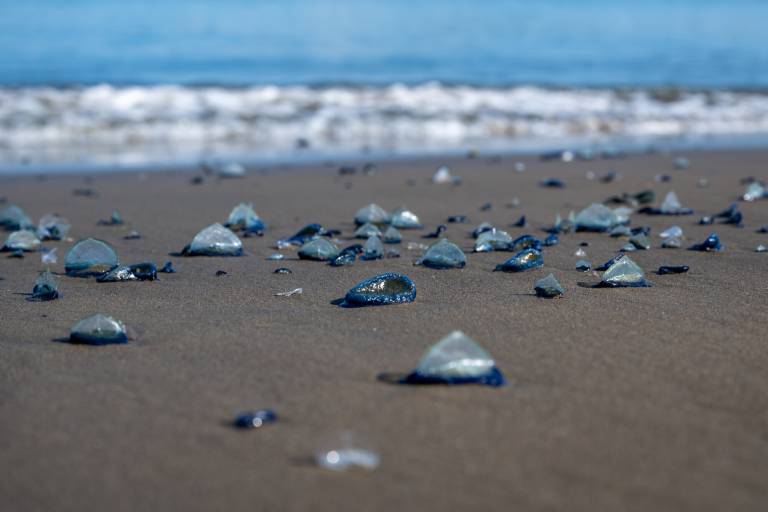
"caption": "Thousands of Velella velella, blue jellyfish-like creatures, are scattered along the beach at Aquatic Park in San Francisco on April 3, 2025, after washing up on shore. ",
"credit": "Beth LaBerge/KQED",
"altTag": null,
"description": null,
"imgSizes": {
"thumbnail": {
"file": "https://cdn.kqed.org/wp-content/uploads/sites/35/2026/04/250403-BlueJellies-05-BL_qed-160x107.jpg",
"width": 160,
"height": 107,
"mimeType": "image/jpeg"
},
"medium_large": {
"file": "https://cdn.kqed.org/wp-content/uploads/sites/35/2026/04/250403-BlueJellies-05-BL_qed-768x512.jpg",
"width": 768,
"height": 512,
"mimeType": "image/jpeg"
},
"1536x1536": {
"file": "https://cdn.kqed.org/wp-content/uploads/sites/35/2026/04/250403-BlueJellies-05-BL_qed-1536x1024.jpg",
"width": 1536,
"height": 1024,
"mimeType": "image/jpeg"
},
"post-thumbnail": {
"file": "https://cdn.kqed.org/wp-content/uploads/sites/35/2026/04/250403-BlueJellies-05-BL_qed-672x372.jpg",
"width": 672,
"height": 372,
"mimeType": "image/jpeg"
},
"twentyfourteen-full-width": {
"file": "https://cdn.kqed.org/wp-content/uploads/sites/35/2026/04/250403-BlueJellies-05-BL_qed-1038x576.jpg",
"width": 1038,
"height": 576,
"mimeType": "image/jpeg"
},
"npr-cds-wide": {
"file": "https://cdn.kqed.org/wp-content/uploads/sites/35/2026/04/250403-BlueJellies-05-BL_qed-1200x675.jpg",
"width": 1200,
"height": 675,
"mimeType": "image/jpeg"
},
"npr-cds-square": {
"file": "https://cdn.kqed.org/wp-content/uploads/sites/35/2026/04/250403-BlueJellies-05-BL_qed-600x600.jpg",
"width": 600,
"height": 600,
"mimeType": "image/jpeg"
},
"kqedFullSize": {
"file": "https://cdn.kqed.org/wp-content/uploads/sites/35/2026/04/250403-BlueJellies-05-BL_qed.jpg",
"width": 1999,
"height": 1333
}
},
"isLoading": false,
"fetchFailed": false
},
"science_2000876": {
"type": "attachments",
"id": "science_2000876",
"meta": {
"index": "attachments_1716263798",
"site": "science",
"id": "2000876",
"found": true
},
"title": "The waterfront in Benicia on April 24, 2026.",
"publishDate": 1777482621,
"status": "inherit",
"parent": 0,
"modified": 1777482739,
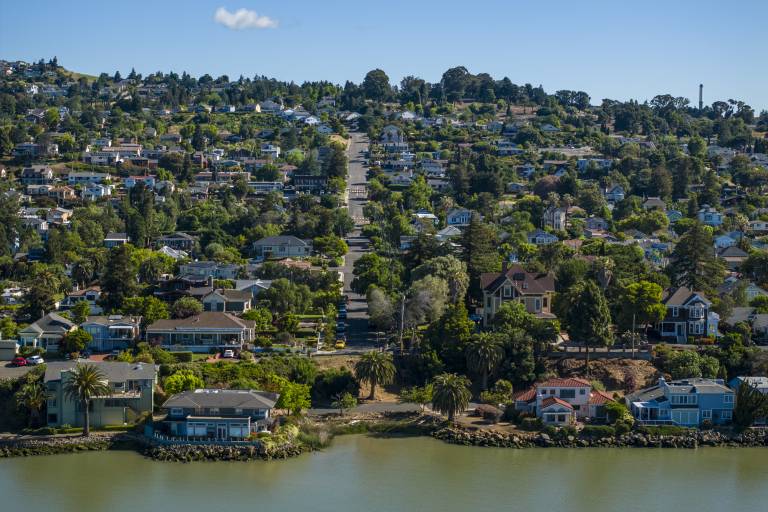
"caption": "The waterfront in Benicia on April 24, 2026.",
"credit": "Martin do Nascimento/KQED",
"altTag": null,
"description": null,
"imgSizes": {
"thumbnail": {
"file": "https://cdn.kqed.org/wp-content/uploads/sites/35/2026/04/260424-BENICIA-DRONE-MD-03-KQED-160x107.jpg",
"width": 160,
"height": 107,
"mimeType": "image/jpeg"
},
"medium_large": {
"file": "https://cdn.kqed.org/wp-content/uploads/sites/35/2026/04/260424-BENICIA-DRONE-MD-03-KQED-768x512.jpg",
"width": 768,
"height": 512,
"mimeType": "image/jpeg"
},
"1536x1536": {
"file": "https://cdn.kqed.org/wp-content/uploads/sites/35/2026/04/260424-BENICIA-DRONE-MD-03-KQED-1536x1024.jpg",
"width": 1536,
"height": 1024,
"mimeType": "image/jpeg"
},
"post-thumbnail": {
"file": "https://cdn.kqed.org/wp-content/uploads/sites/35/2026/04/260424-BENICIA-DRONE-MD-03-KQED-672x372.jpg",
"width": 672,
"height": 372,
"mimeType": "image/jpeg"
},
"twentyfourteen-full-width": {
"file": "https://cdn.kqed.org/wp-content/uploads/sites/35/2026/04/260424-BENICIA-DRONE-MD-03-KQED-1038x576.jpg",
"width": 1038,
"height": 576,
"mimeType": "image/jpeg"
},
"npr-cds-wide": {
"file": "https://cdn.kqed.org/wp-content/uploads/sites/35/2026/04/260424-BENICIA-DRONE-MD-03-KQED-1200x675.jpg",
"width": 1200,
"height": 675,
"mimeType": "image/jpeg"
},
"npr-cds-square": {
"file": "https://cdn.kqed.org/wp-content/uploads/sites/35/2026/04/260424-BENICIA-DRONE-MD-03-KQED-600x600.jpg",
"width": 600,
"height": 600,
"mimeType": "image/jpeg"
},
"kqedFullSize": {
"file": "https://cdn.kqed.org/wp-content/uploads/sites/35/2026/04/260424-BENICIA-DRONE-MD-03-KQED.jpg",
"width": 2000,
"height": 1333
}
},
"isLoading": false,
"fetchFailed": false
},
"science_2000701": {
"type": "attachments",
"id": "science_2000701",
"meta": {
"index": "attachments_1716263798",
"site": "science",
"id": "2000701",
"found": true
},
"title": "260417-ICEANXIETY-04-BL-KQED",
"publishDate": 1776703937,
"status": "inherit",
"parent": 0,
"modified": 1776703965,
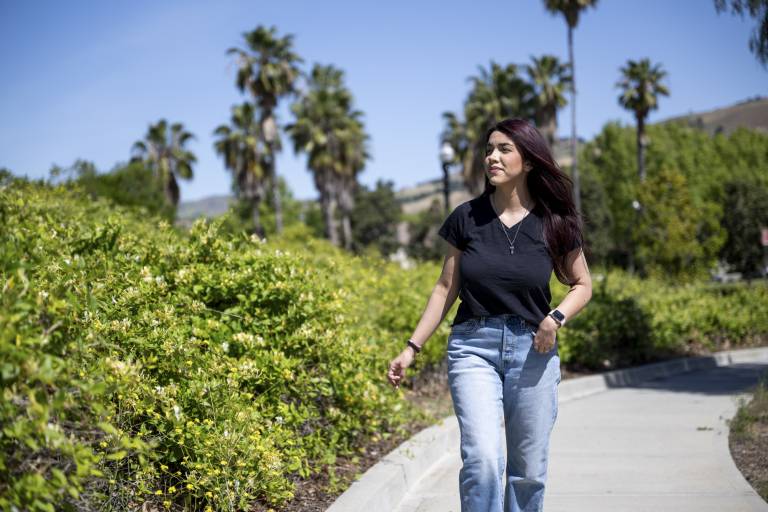
"caption": "Ruby Lopez-Flores walks through Fowler Creek Park in San José on April 17, 2026.",
"credit": "Beth LaBerge/KQED",
"altTag": null,
"description": null,
"imgSizes": {
"thumbnail": {
"file": "https://cdn.kqed.org/wp-content/uploads/sites/35/2026/04/260417-ICEANXIETY-04-BL-KQED-160x107.jpg",
"width": 160,
"height": 107,
"mimeType": "image/jpeg"
},
"medium_large": {
"file": "https://cdn.kqed.org/wp-content/uploads/sites/35/2026/04/260417-ICEANXIETY-04-BL-KQED-768x512.jpg",
"width": 768,
"height": 512,
"mimeType": "image/jpeg"
},
"1536x1536": {
"file": "https://cdn.kqed.org/wp-content/uploads/sites/35/2026/04/260417-ICEANXIETY-04-BL-KQED-1536x1024.jpg",
"width": 1536,
"height": 1024,
"mimeType": "image/jpeg"
},
"post-thumbnail": {
"file": "https://cdn.kqed.org/wp-content/uploads/sites/35/2026/04/260417-ICEANXIETY-04-BL-KQED-672x372.jpg",
"width": 672,
"height": 372,
"mimeType": "image/jpeg"
},
"twentyfourteen-full-width": {
"file": "https://cdn.kqed.org/wp-content/uploads/sites/35/2026/04/260417-ICEANXIETY-04-BL-KQED-1038x576.jpg",
"width": 1038,
"height": 576,
"mimeType": "image/jpeg"
},
"npr-cds-wide": {
"file": "https://cdn.kqed.org/wp-content/uploads/sites/35/2026/04/260417-ICEANXIETY-04-BL-KQED-1200x675.jpg",
"width": 1200,
"height": 675,
"mimeType": "image/jpeg"
},
"npr-cds-square": {
"file": "https://cdn.kqed.org/wp-content/uploads/sites/35/2026/04/260417-ICEANXIETY-04-BL-KQED-600x600.jpg",
"width": 600,
"height": 600,
"mimeType": "image/jpeg"
},
"kqedFullSize": {
"file": "https://cdn.kqed.org/wp-content/uploads/sites/35/2026/04/260417-ICEANXIETY-04-BL-KQED.jpg",
"width": 2000,
"height": 1333
}
},
"isLoading": false,
"fetchFailed": false
},
"science_1998054": {
"type": "attachments",
"id": "science_1998054",
"meta": {
"index": "attachments_1716263798",
"site": "science",
"id": "1998054",
"found": true
},
"title": "_P7A0782",
"publishDate": 1754085198,
"status": "inherit",
"parent": 1998038,
"modified": 1776814224,
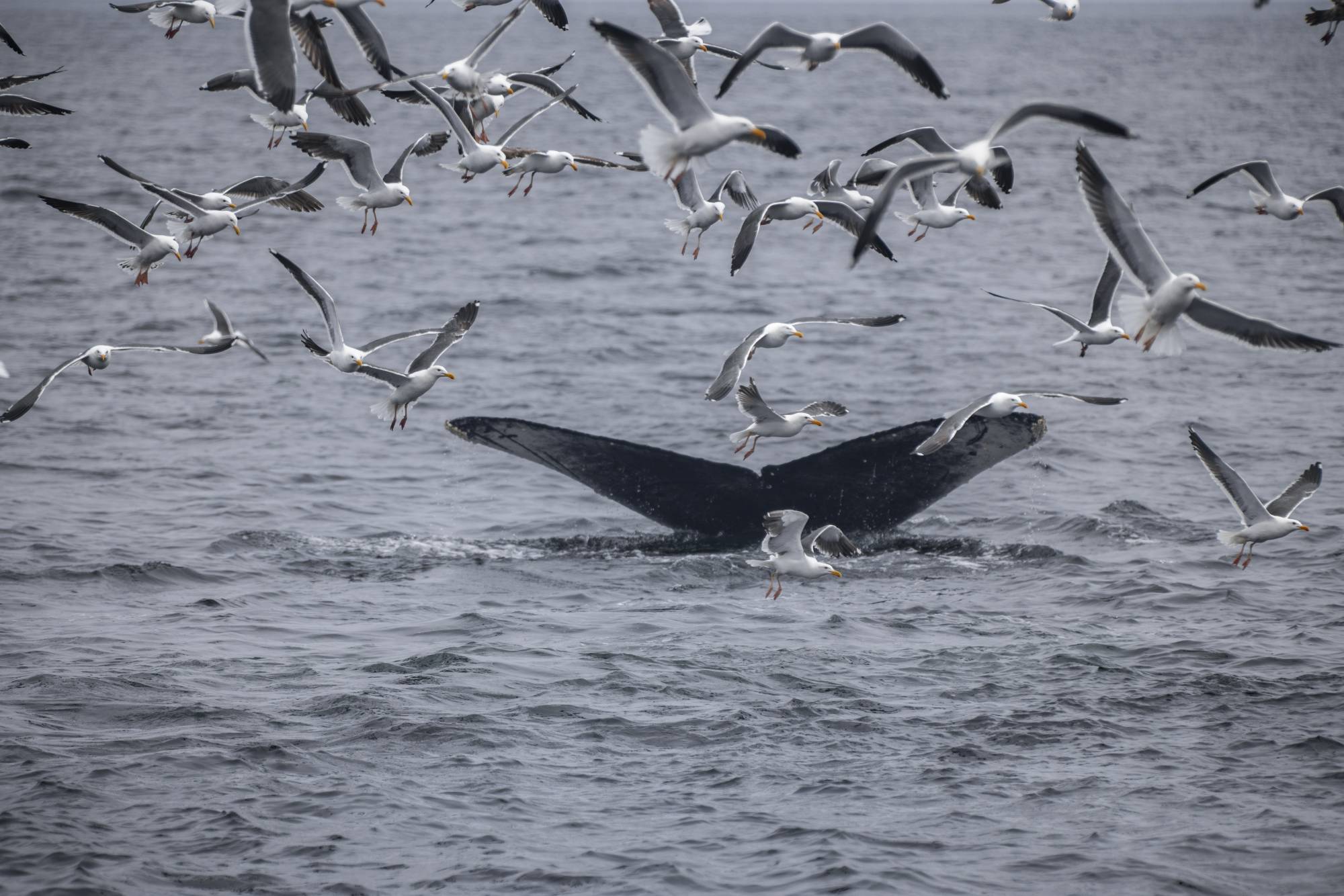
"caption": "A whale tale rising out of the water in the Santa Barbara Channel on May 1, 2025. The Blue Whales Blue Skies program incentivizes shipping companies to reduce speeds along California's coasts, an initiative that the state's lawmakers may soon adopt for all of its waters. ",
"credit": "Courtesy of Adam Ernster",
"altTag": null,
"description": null,
"imgSizes": {
"medium": {
"file": "https://cdn.kqed.org/wp-content/uploads/sites/35/2025/08/P7A0782-2000x1334.jpg",
"width": 2000,
"height": 1334,
"mimeType": "image/jpeg"
},
"large": {
"file": "https://cdn.kqed.org/wp-content/uploads/sites/35/2025/08/P7A0782-2000x1334.jpg",
"width": 2000,
"height": 1334,
"mimeType": "image/jpeg"
},
"thumbnail": {
"file": "https://cdn.kqed.org/wp-content/uploads/sites/35/2025/08/P7A0782-160x107.jpg",
"width": 160,
"height": 107,
"mimeType": "image/jpeg"
},
"medium_large": {
"file": "https://cdn.kqed.org/wp-content/uploads/sites/35/2025/08/P7A0782-768x512.jpg",
"width": 768,
"height": 512,
"mimeType": "image/jpeg"
},
"1536x1536": {
"file": "https://cdn.kqed.org/wp-content/uploads/sites/35/2025/08/P7A0782-1536x1025.jpg",
"width": 1536,
"height": 1025,
"mimeType": "image/jpeg"
},
"2048x2048": {
"file": "https://cdn.kqed.org/wp-content/uploads/sites/35/2025/08/P7A0782-2048x1366.jpg",
"width": 2048,
"height": 1366,
"mimeType": "image/jpeg"
},
"post-thumbnail": {
"file": "https://cdn.kqed.org/wp-content/uploads/sites/35/2025/08/P7A0782-672x372.jpg",
"width": 672,
"height": 372,
"mimeType": "image/jpeg"
},
"twentyfourteen-full-width": {
"file": "https://cdn.kqed.org/wp-content/uploads/sites/35/2025/08/P7A0782-1038x576.jpg",
"width": 1038,
"height": 576,
"mimeType": "image/jpeg"
},
"full-width": {
"file": "https://cdn.kqed.org/wp-content/uploads/sites/35/2025/08/P7A0782-2000x1334.jpg",
"width": 2000,
"height": 1334,
"mimeType": "image/jpeg"
},
"kqedFullSize": {
"file": "https://cdn.kqed.org/wp-content/uploads/sites/35/2025/08/P7A0782-scaled-e1754085326224.jpg",
"width": 2000,
"height": 1334
}
},
"isLoading": false,
"fetchFailed": false
},
"science_2000745": {
"type": "attachments",
"id": "science_2000745",
"meta": {
"index": "attachments_1716263798",
"site": "science",
"id": "2000745",
"found": true
},
"title": "Corn dough nixtamalized in a clay pot to prepare tamales. Typical Mexican food.",
"publishDate": 1776724841,
"status": "inherit",
"parent": 0,
"modified": 1776725646,
"caption": "Corn dough nixtamalized in a clay pot.",
"credit": "Sandor Mejias Brito/Getty Images",
"altTag": null,
"description": null,
"imgSizes": {
"thumbnail": {
"file": "https://cdn.kqed.org/wp-content/uploads/sites/35/2026/04/GETTYIMAGES-1853307842-KQED-160x107.jpg",
"width": 160,
"height": 107,
"mimeType": "image/jpeg"
},
"medium_large": {
"file": "https://cdn.kqed.org/wp-content/uploads/sites/35/2026/04/GETTYIMAGES-1853307842-KQED-768x513.jpg",
"width": 768,
"height": 513,
"mimeType": "image/jpeg"
},
"1536x1536": {
"file": "https://cdn.kqed.org/wp-content/uploads/sites/35/2026/04/GETTYIMAGES-1853307842-KQED-1536x1025.jpg",
"width": 1536,
"height": 1025,
"mimeType": "image/jpeg"
},
"post-thumbnail": {
"file": "https://cdn.kqed.org/wp-content/uploads/sites/35/2026/04/GETTYIMAGES-1853307842-KQED-672x372.jpg",
"width": 672,
"height": 372,
"mimeType": "image/jpeg"
},
"twentyfourteen-full-width": {
"file": "https://cdn.kqed.org/wp-content/uploads/sites/35/2026/04/GETTYIMAGES-1853307842-KQED-1038x576.jpg",
"width": 1038,
"height": 576,
"mimeType": "image/jpeg"
},
"npr-cds-wide": {
"file": "https://cdn.kqed.org/wp-content/uploads/sites/35/2026/04/GETTYIMAGES-1853307842-KQED-1200x675.jpg",
"width": 1200,
"height": 675,
"mimeType": "image/jpeg"
},
"npr-cds-square": {
"file": "https://cdn.kqed.org/wp-content/uploads/sites/35/2026/04/GETTYIMAGES-1853307842-KQED-600x600.jpg",
"width": 600,
"height": 600,
"mimeType": "image/jpeg"
},
"kqedFullSize": {
"file": "https://cdn.kqed.org/wp-content/uploads/sites/35/2026/04/GETTYIMAGES-1853307842-KQED.jpg",
"width": 2000,
"height": 1335
}
},
"isLoading": false,
"fetchFailed": false
},
"science_1997028": {
"type": "attachments",
"id": "science_1997028",
"meta": {
"index": "attachments_1716263798",
"site": "science",
"id": "1997028",
"found": true
},
"title": "250523-SOLAR BALCONY-MD-08-KQED",
"publishDate": 1748034660,
"status": "inherit",
"parent": 0,
"modified": 1767909040,
"caption": "Rupert Mayer tests the newly installed solar panels at Matthew Milner's home in Kensington on May 23, 2025.",
"credit": "Martin do Nascimento/KQED",
"altTag": null,
"description": null,
"imgSizes": {
"medium": {
"file": "https://cdn.kqed.org/wp-content/uploads/sites/35/2025/05/250523-SOLAR-BALCONY-MD-08-KQED-800x534.jpg",
"width": 800,
"height": 534,
"mimeType": "image/jpeg"
},
"large": {
"file": "https://cdn.kqed.org/wp-content/uploads/sites/35/2025/05/250523-SOLAR-BALCONY-MD-08-KQED-1020x680.jpg",
"width": 1020,
"height": 680,
"mimeType": "image/jpeg"
},
"thumbnail": {
"file": "https://cdn.kqed.org/wp-content/uploads/sites/35/2025/05/250523-SOLAR-BALCONY-MD-08-KQED-160x107.jpg",
"width": 160,
"height": 107,
"mimeType": "image/jpeg"
},
"medium_large": {
"file": "https://cdn.kqed.org/wp-content/uploads/sites/35/2025/05/250523-SOLAR-BALCONY-MD-08-KQED-768x512.jpg",
"width": 768,
"height": 512,
"mimeType": "image/jpeg"
},
"1536x1536": {
"file": "https://cdn.kqed.org/wp-content/uploads/sites/35/2025/05/250523-SOLAR-BALCONY-MD-08-KQED-1536x1025.jpg",
"width": 1536,
"height": 1025,
"mimeType": "image/jpeg"
},
"post-thumbnail": {
"file": "https://cdn.kqed.org/wp-content/uploads/sites/35/2025/05/250523-SOLAR-BALCONY-MD-08-KQED-672x372.jpg",
"width": 672,
"height": 372,
"mimeType": "image/jpeg"
},
"twentyfourteen-full-width": {
"file": "https://cdn.kqed.org/wp-content/uploads/sites/35/2025/05/250523-SOLAR-BALCONY-MD-08-KQED-1038x576.jpg",
"width": 1038,
"height": 576,
"mimeType": "image/jpeg"
},
"full-width": {
"file": "https://cdn.kqed.org/wp-content/uploads/sites/35/2025/05/250523-SOLAR-BALCONY-MD-08-KQED-1920x1281.jpg",
"width": 1920,
"height": 1281,
"mimeType": "image/jpeg"
},
"kqedFullSize": {
"file": "https://cdn.kqed.org/wp-content/uploads/sites/35/2025/05/250523-SOLAR-BALCONY-MD-08-KQED.jpg",
"width": 2000,
"height": 1334
}
},
"isLoading": false,
"fetchFailed": false
},
"science_1995289": {
"type": "attachments",
"id": "science_1995289",
"meta": {
"index": "attachments_1716263798",
"site": "science",
"id": "1995289",
"found": true
},
"title": "Fracking In California Under Spotlight As Some Local Municipalities Issue Bans",
"publishDate": 1733854740,
"status": "inherit",
"parent": 0,
"modified": 1776294293,
"caption": "Pump jacks and wells are seen in an oil field on the Monterey Shale formation where gas and oil extraction using hydraulic fracturing, or fracking, is on the verge of a boom on March 23, 2014, near McKittrick, California.",
"credit": "David McNew/Getty Images",
"altTag": null,
"description": null,
"imgSizes": {
"medium": {
"file": "https://cdn.kqed.org/wp-content/uploads/sites/35/2024/12/480270735_qed-800x533.jpg",
"width": 800,
"height": 533,
"mimeType": "image/jpeg"
},
"large": {
"file": "https://cdn.kqed.org/wp-content/uploads/sites/35/2024/12/480270735_qed-1020x680.jpg",
"width": 1020,
"height": 680,
"mimeType": "image/jpeg"
},
"thumbnail": {
"file": "https://cdn.kqed.org/wp-content/uploads/sites/35/2024/12/480270735_qed-160x107.jpg",
"width": 160,
"height": 107,
"mimeType": "image/jpeg"
},
"medium_large": {
"file": "https://cdn.kqed.org/wp-content/uploads/sites/35/2024/12/480270735_qed-768x512.jpg",
"width": 768,
"height": 512,
"mimeType": "image/jpeg"
},
"1536x1536": {
"file": "https://cdn.kqed.org/wp-content/uploads/sites/35/2024/12/480270735_qed-1536x1024.jpg",
"width": 1536,
"height": 1024,
"mimeType": "image/jpeg"
},
"post-thumbnail": {
"file": "https://cdn.kqed.org/wp-content/uploads/sites/35/2024/12/480270735_qed-672x372.jpg",
"width": 672,
"height": 372,
"mimeType": "image/jpeg"
},
"twentyfourteen-full-width": {
"file": "https://cdn.kqed.org/wp-content/uploads/sites/35/2024/12/480270735_qed-1038x576.jpg",
"width": 1038,
"height": 576,
"mimeType": "image/jpeg"
},
"full-width": {
"file": "https://cdn.kqed.org/wp-content/uploads/sites/35/2024/12/480270735_qed-1920x1280.jpg",
"width": 1920,
"height": 1280,
"mimeType": "image/jpeg"
},
"kqedFullSize": {
"file": "https://cdn.kqed.org/wp-content/uploads/sites/35/2024/12/480270735_qed.jpg",
"width": 2000,
"height": 1333
}
},
"isLoading": false,
"fetchFailed": false
},
"science_2000650": {
"type": "attachments",
"id": "science_2000650",
"meta": {
"index": "attachments_1716263798",
"site": "science",
"id": "2000650",
"found": true
},
"title": "260409-InsuranceCandidateForum-25-BL_qed",
"publishDate": 1775849254,
"status": "inherit",
"parent": 2000611,
"modified": 1775849281,
"caption": "Jane Kim, former San Francisco supervisor, speaks during a forum for candidates for California insurance commissioner at the San Francisco Bay Area Planning and Urban Research Association (SPUR) in San Francisco on April 9, 2026. The event brought together candidates to discuss the state’s insurance market, including affordability and coverage challenges facing homeowners.",
"credit": "Beth LaBerge/KQED",
"altTag": null,
"description": null,
"imgSizes": {
"thumbnail": {
"file": "https://cdn.kqed.org/wp-content/uploads/sites/35/2026/04/260409-InsuranceCandidateForum-25-BL_qed-160x107.jpg",
"width": 160,
"height": 107,
"mimeType": "image/jpeg"
},
"medium_large": {
"file": "https://cdn.kqed.org/wp-content/uploads/sites/35/2026/04/260409-InsuranceCandidateForum-25-BL_qed-768x512.jpg",
"width": 768,
"height": 512,
"mimeType": "image/jpeg"
},
"1536x1536": {
"file": "https://cdn.kqed.org/wp-content/uploads/sites/35/2026/04/260409-InsuranceCandidateForum-25-BL_qed-1536x1024.jpg",
"width": 1536,
"height": 1024,
"mimeType": "image/jpeg"
},
"post-thumbnail": {
"file": "https://cdn.kqed.org/wp-content/uploads/sites/35/2026/04/260409-InsuranceCandidateForum-25-BL_qed-672x372.jpg",
"width": 672,
"height": 372,
"mimeType": "image/jpeg"
},
"twentyfourteen-full-width": {
"file": "https://cdn.kqed.org/wp-content/uploads/sites/35/2026/04/260409-InsuranceCandidateForum-25-BL_qed-1038x576.jpg",
"width": 1038,
"height": 576,
"mimeType": "image/jpeg"
},
"npr-cds-wide": {
"file": "https://cdn.kqed.org/wp-content/uploads/sites/35/2026/04/260409-InsuranceCandidateForum-25-BL_qed-1200x675.jpg",
"width": 1200,
"height": 675,
"mimeType": "image/jpeg"
},
"npr-cds-square": {
"file": "https://cdn.kqed.org/wp-content/uploads/sites/35/2026/04/260409-InsuranceCandidateForum-25-BL_qed-600x600.jpg",
"width": 600,
"height": 600,
"mimeType": "image/jpeg"
},
"kqedFullSize": {
"file": "https://cdn.kqed.org/wp-content/uploads/sites/35/2026/04/260409-InsuranceCandidateForum-25-BL_qed.jpg",
"width": 1999,
"height": 1333
}
},
"isLoading": false,
"fetchFailed": false
},
"science_2000150": {
"type": "attachments",
"id": "science_2000150",
"meta": {
"index": "attachments_1716263798",
"site": "science",
"id": "2000150",
"found": true
},
"title": "260213-DIABLOCANYONNUCLEARPOWERPLANT-09-BL-KQED",
"publishDate": 1771869723,
"status": "inherit",
"parent": 0,
"modified": 1775758001,
"caption": "The Diablo Canyon Power Plant in San Luis Obispo on Feb. 13, 2026, is the state’s only active nuclear power plant.",
"credit": "Beth LaBerge/KQED",
"altTag": null,
"description": null,
"imgSizes": {
"thumbnail": {
"file": "https://cdn.kqed.org/wp-content/uploads/sites/35/2026/02/260213-DIABLOCANYONNUCLEARPOWERPLANT-09-BL-KQED-160x107.jpg",
"width": 160,
"height": 107,
"mimeType": "image/jpeg"
},
"medium_large": {
"file": "https://cdn.kqed.org/wp-content/uploads/sites/35/2026/02/260213-DIABLOCANYONNUCLEARPOWERPLANT-09-BL-KQED-768x512.jpg",
"width": 768,
"height": 512,
"mimeType": "image/jpeg"
},
"1536x1536": {
"file": "https://cdn.kqed.org/wp-content/uploads/sites/35/2026/02/260213-DIABLOCANYONNUCLEARPOWERPLANT-09-BL-KQED-1536x1024.jpg",
"width": 1536,
"height": 1024,
"mimeType": "image/jpeg"
},
"post-thumbnail": {
"file": "https://cdn.kqed.org/wp-content/uploads/sites/35/2026/02/260213-DIABLOCANYONNUCLEARPOWERPLANT-09-BL-KQED-672x372.jpg",
"width": 672,
"height": 372,
"mimeType": "image/jpeg"
},
"twentyfourteen-full-width": {
"file": "https://cdn.kqed.org/wp-content/uploads/sites/35/2026/02/260213-DIABLOCANYONNUCLEARPOWERPLANT-09-BL-KQED-1038x576.jpg",
"width": 1038,
"height": 576,
"mimeType": "image/jpeg"
},
"npr-cds-wide": {
"file": "https://cdn.kqed.org/wp-content/uploads/sites/35/2026/02/260213-DIABLOCANYONNUCLEARPOWERPLANT-09-BL-KQED-1200x675.jpg",
"width": 1200,
"height": 675,
"mimeType": "image/jpeg"
},
"kqedFullSize": {
"file": "https://cdn.kqed.org/wp-content/uploads/sites/35/2026/02/260213-DIABLOCANYONNUCLEARPOWERPLANT-09-BL-KQED.jpg",
"width": 2000,
"height": 1333
}
},
"isLoading": false,
"fetchFailed": false
},
"science_2000626": {
"type": "attachments",
"id": "science_2000626",
"meta": {
"index": "attachments_1716263798",
"site": "science",
"id": "2000626",
"found": true
},
"title": "Rain Drenches The Bay Area",
"publishDate": 1775690223,
"status": "inherit",
"parent": 2000619,
"modified": 1775690247,
"caption": "Visitors take in city views at Hyde and Lombard streets as rain begins to soak the Bay Area in San Francisco on Sunday, Feb. 15, 2026. ",
"credit": "Brontë Wittpenn/San Francisco Chronicle via Getty Images",
"altTag": null,
"description": null,
"imgSizes": {
"thumbnail": {
"file": "https://cdn.kqed.org/wp-content/uploads/sites/35/2026/04/RainSFGetty-160x107.jpg",
"width": 160,
"height": 107,
"mimeType": "image/jpeg"
},
"medium_large": {
"file": "https://cdn.kqed.org/wp-content/uploads/sites/35/2026/04/RainSFGetty-768x512.jpg",
"width": 768,
"height": 512,
"mimeType": "image/jpeg"
},
"1536x1536": {
"file": "https://cdn.kqed.org/wp-content/uploads/sites/35/2026/04/RainSFGetty-1536x1024.jpg",
"width": 1536,
"height": 1024,
"mimeType": "image/jpeg"
},
"post-thumbnail": {
"file": "https://cdn.kqed.org/wp-content/uploads/sites/35/2026/04/RainSFGetty-672x372.jpg",
"width": 672,
"height": 372,
"mimeType": "image/jpeg"
},
"twentyfourteen-full-width": {
"file": "https://cdn.kqed.org/wp-content/uploads/sites/35/2026/04/RainSFGetty-1038x576.jpg",
"width": 1038,
"height": 576,
"mimeType": "image/jpeg"
},
"npr-cds-wide": {
"file": "https://cdn.kqed.org/wp-content/uploads/sites/35/2026/04/RainSFGetty-1200x675.jpg",
"width": 1200,
"height": 675,
"mimeType": "image/jpeg"
},
"npr-cds-square": {
"file": "https://cdn.kqed.org/wp-content/uploads/sites/35/2026/04/RainSFGetty-600x600.jpg",
"width": 600,
"height": 600,
"mimeType": "image/jpeg"
},
"kqedFullSize": {
"file": "https://cdn.kqed.org/wp-content/uploads/sites/35/2026/04/RainSFGetty.jpg",
"width": 2000,
"height": 1333
}
},
"isLoading": false,
"fetchFailed": false
},
"science_2000598": {
"type": "attachments",
"id": "science_2000598",
"meta": {
"index": "attachments_1716263798",
"site": "science",
"id": "2000598",
"found": true
},
"title": "weather0216",
"publishDate": 1775504577,
"status": "inherit",
"parent": 2000594,
"modified": 1775504603,
"caption": "Tourist observe the Golden Gate Bridge in San Francisco on Feb. 16, 2026. ",
"credit": "Giselle Garza Lerma/San Francisco Chronicle via Getty Images",
"altTag": null,
"description": null,
"imgSizes": {
"thumbnail": {
"file": "https://cdn.kqed.org/wp-content/uploads/sites/35/2026/04/AprilWeatherShiftGetty-160x107.jpg",
"width": 160,
"height": 107,
"mimeType": "image/jpeg"
},
"medium_large": {
"file": "https://cdn.kqed.org/wp-content/uploads/sites/35/2026/04/AprilWeatherShiftGetty-768x512.jpg",
"width": 768,
"height": 512,
"mimeType": "image/jpeg"
},
"1536x1536": {
"file": "https://cdn.kqed.org/wp-content/uploads/sites/35/2026/04/AprilWeatherShiftGetty-1536x1024.jpg",
"width": 1536,
"height": 1024,
"mimeType": "image/jpeg"
},
"post-thumbnail": {
"file": "https://cdn.kqed.org/wp-content/uploads/sites/35/2026/04/AprilWeatherShiftGetty-672x372.jpg",
"width": 672,
"height": 372,
"mimeType": "image/jpeg"
},
"twentyfourteen-full-width": {
"file": "https://cdn.kqed.org/wp-content/uploads/sites/35/2026/04/AprilWeatherShiftGetty-1038x576.jpg",
"width": 1038,
"height": 576,
"mimeType": "image/jpeg"
},
"npr-cds-wide": {
"file": "https://cdn.kqed.org/wp-content/uploads/sites/35/2026/04/AprilWeatherShiftGetty-1200x675.jpg",
"width": 1200,
"height": 675,
"mimeType": "image/jpeg"
},
"npr-cds-square": {
"file": "https://cdn.kqed.org/wp-content/uploads/sites/35/2026/04/AprilWeatherShiftGetty-600x600.jpg",
"width": 600,
"height": 600,
"mimeType": "image/jpeg"
},
"kqedFullSize": {
"file": "https://cdn.kqed.org/wp-content/uploads/sites/35/2026/04/AprilWeatherShiftGetty.jpg",
"width": 2000,
"height": 1333
}
},
"isLoading": false,
"fetchFailed": false
},
"science_1994778": {
"type": "attachments",
"id": "science_1994778",
"meta": {
"index": "attachments_1716263798",
"site": "science",
"id": "1994778",
"found": true
},
"title": "I'm typing something important",
"publishDate": 1729028765,
"status": "inherit",
"parent": 1994754,
"modified": 1729029363,
"caption": "If you have the MyShake earthquake warning app installed on your phone, you'll get an emergency alert test on Thursday morning.",
"credit": "Getty Images",
"altTag": null,
"description": null,
"imgSizes": {
"medium": {
"file": "https://cdn.kqed.org/wp-content/uploads/sites/35/2024/10/GettyImages-1391696700-800x533.jpg",
"width": 800,
"height": 533,
"mimeType": "image/jpeg"
},
"large": {
"file": "https://cdn.kqed.org/wp-content/uploads/sites/35/2024/10/GettyImages-1391696700-1020x680.jpg",
"width": 1020,
"height": 680,
"mimeType": "image/jpeg"
},
"thumbnail": {
"file": "https://cdn.kqed.org/wp-content/uploads/sites/35/2024/10/GettyImages-1391696700-160x107.jpg",
"width": 160,
"height": 107,
"mimeType": "image/jpeg"
},
"medium_large": {
"file": "https://cdn.kqed.org/wp-content/uploads/sites/35/2024/10/GettyImages-1391696700-768x512.jpg",
"width": 768,
"height": 512,
"mimeType": "image/jpeg"
},
"1536x1536": {
"file": "https://cdn.kqed.org/wp-content/uploads/sites/35/2024/10/GettyImages-1391696700-1536x1024.jpg",
"width": 1536,
"height": 1024,
"mimeType": "image/jpeg"
},
"2048x2048": {
"file": "https://cdn.kqed.org/wp-content/uploads/sites/35/2024/10/GettyImages-1391696700-2048x1365.jpg",
"width": 2048,
"height": 1365,
"mimeType": "image/jpeg"
},
"post-thumbnail": {
"file": "https://cdn.kqed.org/wp-content/uploads/sites/35/2024/10/GettyImages-1391696700-672x372.jpg",
"width": 672,
"height": 372,
"mimeType": "image/jpeg"
},
"twentyfourteen-full-width": {
"file": "https://cdn.kqed.org/wp-content/uploads/sites/35/2024/10/GettyImages-1391696700-1038x576.jpg",
"width": 1038,
"height": 576,
"mimeType": "image/jpeg"
},
"full-width": {
"file": "https://cdn.kqed.org/wp-content/uploads/sites/35/2024/10/GettyImages-1391696700-1920x1280.jpg",
"width": 1920,
"height": 1280,
"mimeType": "image/jpeg"
},
"kqedFullSize": {
"file": "https://cdn.kqed.org/wp-content/uploads/sites/35/2024/10/GettyImages-1391696700-scaled-e1775153140799.jpg",
"width": 2000,
"height": 1334
}
},
"isLoading": false,
"fetchFailed": false
}
},
"audioPlayerReducer": {
"postId": "stream_live",
"isPaused": true,
"isPlaying": false,
"pfsActive": false,
"pledgeModalIsOpen": true,
"playerDrawerIsOpen": false,
"liveAudioPlayStartedAt": 0,
"liveAudioPlayContext": ""
},
"authorsReducer": {
"byline_science_2000751": {
"type": "authors",
"id": "byline_science_2000751",
"meta": {
"override": true
},
"slug": "byline_science_2000751",
"name": "Alonso Daboub",
"isLoading": false
},
"jsmall": {
"type": "authors",
"id": "6625",
"meta": {
"index": "authors_1716337520",
"id": "6625",
"found": true
},
"name": "Julie Small",
"firstName": "Julie",
"lastName": "Small",
"slug": "jsmall",
"email": "jsmall@kqed.org",
"display_author_email": true,
"staff_mastheads": [
"news"
],
"title": "KQED Contributor",
"bio": "Julie Small reports on criminal justice and immigration.\r\n\r\nShe was part of a team at KQED awarded a regional 2019 Edward R. Murrow award for continuing coverage of the Trump Administration's family separation policy.\r\n\r\nThe Society for Professional Journalists recognized Julie's 2018 \u003ca href=\"https://www.kqed.org/news/11636262/the-officer-tased-him-31-times-the-sheriff-called-his-death-an-accident\">reporting\u003c/a> on the San Joaquin County Sheriff's \u003ca href=\"https://www.kqed.org/news/11634689/autopsy-doctors-sheriff-overrode-death-findings-to-protect-law-enforcement\">interference\u003c/a> in death investigations with an Excellence in Journalism Award for Ongoing Coverage.\r\n\r\nJulie's\u003ca href=\"https://www.kqed.org/news/11039666/two-mentally-ill-inmates-died-one-month-in-santa-clara\"> reporting\u003c/a> with Lisa Pickoff-White on the treatment of mentally ill offenders in California jails earned a 2017 regional Edward R. Murrow Award for news reporting and an investigative reporting award from the SPJ of Northern California.\r\n\r\nBefore joining KQED, Julie covered government and politics in Sacramento for Southern California Public Radio (SCPR). Her 2010 \u003ca href=\"https://www.scpr.org/specials/prisonmedical/\">series\u003c/a> on lapses in California’s prison medical care also won a regional Edward R. Murrow Award for investigative reporting and a Golden Mic Award from the RTNDA of Southern California.\r\n\r\nJulie began her career in journalism in 2000 as the deputy foreign editor for public radio's \u003cem>Marketplace, \u003c/em>while earning her master's degree in journalism from USC’s Annenberg School of Communication.",
"avatar": "https://secure.gravatar.com/avatar/4baedf201468df97be97c2a9dd7585d0?s=600&d=blank&r=g",
"twitter": "@SmallRadio2",
"facebook": null,
"instagram": null,
"linkedin": null,
"sites": [
{
"site": "news",
"roles": [
"editor"
]
},
{
"site": "stateofhealth",
"roles": [
"author"
]
},
{
"site": "science",
"roles": [
"author"
]
}
],
"headData": {
"title": "Julie Small | KQED",
"description": "KQED Contributor",
"ogImgSrc": "https://secure.gravatar.com/avatar/4baedf201468df97be97c2a9dd7585d0?s=600&d=blank&r=g",
"twImgSrc": "https://secure.gravatar.com/avatar/4baedf201468df97be97c2a9dd7585d0?s=600&d=blank&r=g"
},
"isLoading": false,
"link": "/author/jsmall"
},
"lklivans": {
"type": "authors",
"id": "8648",
"meta": {
"index": "authors_1716337520",
"id": "8648",
"found": true
},
"name": "Laura Klivans",
"firstName": "Laura",
"lastName": "Klivans",
"slug": "lklivans",
"email": "lklivans@kqed.org",
"display_author_email": true,
"staff_mastheads": [
"news",
"science"
],
"title": "Reporter",
"bio": "Laura Klivans is an award-winning science reporter for KQED News, where she covers climate change with an eye on both groundbreaking progress and gaps in action. She is the former host of KQED's blockbuster video series about tiny, amazing animals, \u003cem>Deep Look\u003c/em>. Her work reaches national audiences through NPR, \u003cem>Here & Now, \u003c/em>PRI, and other major outlets. \r\n\r\nLaura’s won five Northern California Area Emmy Awards for Deep Look and First Place in the Greater Bay Area Journalism Awards for a podcast exploring how one Oakland neighborhood teamed up to reduce planet-heating pollution.\r\n\r\nBeyond her reporting, she hosts and moderates events. In the past, she taught audio storytelling at the UC Berkeley Graduate School of Journalism, led international education programs, worked with immigrants and refugees along the Thai-Burmese border, taught high schoolers sex ed, and was an actress. \r\n\r\nShe's a former UC Berkeley Human Rights Fellow, USC Center for Health Journalism's California Fellow and Coro Fellow in Public Affairs. Laura has a master’s in journalism from UC Berkeley, a master’s in education from Harvard, and an undergraduate degree from Northwestern University.\r\n\r\nShe loves trying to riddle the meaning out of vanity license plates.",
"avatar": "https://secure.gravatar.com/avatar/2d2ecd1550a494cc10ad4a503406965585902124739e775a9b3817eebf1d88be?s=600&d=blank&r=g",
"twitter": "lauraklivans",
"bluesky": null,
"facebook": null,
"instagram": null,
"linkedin": null,
"sites": [
{
"site": "news",
"roles": [
"editor"
]
},
{
"site": "stateofhealth",
"roles": [
"contributor",
"editor"
]
},
{
"site": "science",
"roles": [
"editor"
]
},
{
"site": "forum",
"roles": [
"editor"
]
}
],
"headData": {
"title": "Laura Klivans | KQED",
"description": "Reporter",
"ogImgSrc": "https://secure.gravatar.com/avatar/2d2ecd1550a494cc10ad4a503406965585902124739e775a9b3817eebf1d88be?s=600&d=blank&r=g",
"twImgSrc": "https://secure.gravatar.com/avatar/2d2ecd1550a494cc10ad4a503406965585902124739e775a9b3817eebf1d88be?s=600&d=blank&r=g"
},
"isLoading": false,
"link": "/author/lklivans"
},
"dventon": {
"type": "authors",
"id": "11088",
"meta": {
"index": "authors_1716337520",
"id": "11088",
"found": true
},
"name": "Danielle Venton",
"firstName": "Danielle",
"lastName": "Venton",
"slug": "dventon",
"email": "dventon@kqed.org",
"display_author_email": true,
"staff_mastheads": [
"science"
],
"title": "Science reporter",
"bio": "Danielle Venton is a reporter for KQED Science. She covers wildfires, space and oceans (though she is prone to sea sickness).\r\n\r\nBefore joining KQED in 2015, Danielle was a staff reporter at KRCB in Sonoma County and a freelancer. She studied science communication at UC Santa Cruz and formerly worked at CERN in Geneva, Switzerland where she wrote about computing. She lives in Sonoma County and enjoys backpacking.",
"avatar": "https://secure.gravatar.com/avatar/37b292b5c40c8d93959c4f48d73b5286f41b7abd8588277e941905a3ed4c801c?s=600&d=blank&r=g",
"twitter": "DanielleVenton",
"bluesky": null,
"facebook": null,
"instagram": null,
"linkedin": null,
"sites": [
{
"site": "arts",
"roles": [
"contributor"
]
},
{
"site": "news",
"roles": [
"editor"
]
},
{
"site": "futureofyou",
"roles": [
"editor"
]
},
{
"site": "science",
"roles": [
"editor"
]
},
{
"site": "liveblog",
"roles": [
"contributor"
]
}
],
"headData": {
"title": "Danielle Venton | KQED",
"description": "Science reporter",
"ogImgSrc": "https://secure.gravatar.com/avatar/37b292b5c40c8d93959c4f48d73b5286f41b7abd8588277e941905a3ed4c801c?s=600&d=blank&r=g",
"twImgSrc": "https://secure.gravatar.com/avatar/37b292b5c40c8d93959c4f48d73b5286f41b7abd8588277e941905a3ed4c801c?s=600&d=blank&r=g"
},
"isLoading": false,
"link": "/author/dventon"
},
"lesleymcclurg": {
"type": "authors",
"id": "11229",
"meta": {
"index": "authors_1716337520",
"id": "11229",
"found": true
},
"name": "Lesley McClurg",
"firstName": "Lesley",
"lastName": "McClurg",
"slug": "lesleymcclurg",
"email": "lmcclurg@KQED.org",
"display_author_email": false,
"staff_mastheads": [
"news",
"science"
],
"title": "KQED Health Correspondent",
"bio": "Lesley McClurg is a health correspondent and fill-in host whose work is regularly rebroadcast on NPR and PBS programs. She’s earned multiple regional Emmy awards, a national and a regional Edward R. Murrow award, and was named Best Beat Reporter by the Association of Health Care Journalists. The Society of Professional Journalists has recognized her work several times, and the Society of Environmental Journalists spotlighted her coverage of California’s historic drought.\r\n\r\nBefore joining KQED in 2016, Lesley covered food and sustainability for Capital Public Radio, environmental issues for Colorado Public Radio, and reported for KUOW and KCTS 9 in Seattle. Away from the newsroom, she loves skiing with her daughter, mountain biking with her partner, and playing with Ollie, the family’s goldendoodle. On deadline, she runs almost entirely on chocolate chips.\r\n\r\n ",
"avatar": "https://secure.gravatar.com/avatar/bab49e972ea10c774fe0f5e29dba1722b158f7c0d58a360923d1389d380b2978?s=600&d=blank&r=g",
"twitter": "lesleywmcclurg",
"bluesky": null,
"facebook": null,
"instagram": null,
"linkedin": null,
"sites": [
{
"site": "arts",
"roles": [
"author"
]
},
{
"site": "news",
"roles": [
"editor"
]
},
{
"site": "futureofyou",
"roles": [
"editor"
]
},
{
"site": "stateofhealth",
"roles": [
"author"
]
},
{
"site": "science",
"roles": [
"editor"
]
},
{
"site": "quest",
"roles": [
"subscriber"
]
},
{
"site": "forum",
"roles": [
"administrator"
]
},
{
"site": "liveblog",
"roles": [
"author"
]
}
],
"headData": {
"title": "Lesley McClurg | KQED",
"description": "KQED Health Correspondent",
"ogImgSrc": "https://secure.gravatar.com/avatar/bab49e972ea10c774fe0f5e29dba1722b158f7c0d58a360923d1389d380b2978?s=600&d=blank&r=g",
"twImgSrc": "https://secure.gravatar.com/avatar/bab49e972ea10c774fe0f5e29dba1722b158f7c0d58a360923d1389d380b2978?s=600&d=blank&r=g"
},
"isLoading": false,
"link": "/author/lesleymcclurg"
},
"eromero": {
"type": "authors",
"id": "11746",
"meta": {
"index": "authors_1716337520",
"id": "11746",
"found": true
},
"name": "Ezra David Romero",
"firstName": "Ezra David",
"lastName": "Romero",
"slug": "eromero",
"email": "eromero@kqed.org",
"display_author_email": true,
"staff_mastheads": [
"news",
"science"
],
"title": "Climate Reporter",
"bio": "Ezra David Romero is a climate reporter for KQED News. He covers the absence and excess of water in the Bay Area — think sea level rise, flooding and drought. For nearly a decade he’s covered how warming temperatures are altering the lives of Californians. He’s reported on farmers worried their pistachio trees aren’t getting enough sleep, families desperate for water, scientists studying dying giant sequoias, and alongside firefighters containing wildfires. His work has appeared on local stations across California and nationally on public radio shows like Morning Edition, Here and Now, All Things Considered and Science Friday. ",
"avatar": "https://secure.gravatar.com/avatar/c76404d287c10ed40224227551ac36e24352c7306f106632caf6fead76f8801f?s=600&d=blank&r=g",
"twitter": "ezraromero",
"bluesky": null,
"facebook": null,
"instagram": null,
"linkedin": null,
"sites": [
{
"site": "arts",
"roles": [
"editor"
]
},
{
"site": "news",
"roles": [
"editor"
]
},
{
"site": "science",
"roles": [
"editor"
]
},
{
"site": "liveblog",
"roles": [
"author"
]
}
],
"headData": {
"title": "Ezra David Romero | KQED",
"description": "Climate Reporter",
"ogImgSrc": "https://secure.gravatar.com/avatar/c76404d287c10ed40224227551ac36e24352c7306f106632caf6fead76f8801f?s=600&d=blank&r=g",
"twImgSrc": "https://secure.gravatar.com/avatar/c76404d287c10ed40224227551ac36e24352c7306f106632caf6fead76f8801f?s=600&d=blank&r=g"
},
"isLoading": false,
"link": "/author/eromero"
}
},
"pagesReducer": {
"science_tag_california": {
"type": "terms",
"id": "science_5178",
"meta": {
"index": "terms_1716263798",
"site": "science",
"id": "5178",
"score": 6.849279
},
"featImg": null,
"name": "California",
"description": null,
"taxonomy": "tag",
"headData": {
"twImgId": null,
"twTitle": null,
"ogTitle": null,
"ogImgId": null,
"twDescription": null,
"description": null,
"title": "California Archives | KQED Science",
"ogDescription": null
},
"ttid": 5178,
"slug": "california",
"isLoading": false,
"title": "California",
"pageMeta": {
"site": "science",
"WpPageTemplate": "page-topic-editorial",
"currentPage": 3
},
"blocks": [
{
"blockName": "kqed/post-list",
"attrs": {
"layout": "cardArticle2",
"query": "posts/science?tag=california",
"seeMore": false,
"paginated": true,
"page": 3
}
},
{
"blockName": "kqed/ad"
}
]
}
},
"pfsSessionReducer": {},
"postsReducer": {
"stream_live": {
"type": "live",
"id": "stream_live",
"audioUrl": "https://streams.kqed.org/kqedradio",
"title": "Live Stream",
"excerpt": "Live Stream information currently unavailable.",
"link": "/radio",
"featImg": "",
"label": {
"name": "KQED Live",
"link": "/"
}
},
"stream_kqedNewscast": {
"type": "posts",
"id": "stream_kqedNewscast",
"audioUrl": "https://www.kqed.org/.stream/anon/radio/RDnews/newscast.mp3?_=1",
"title": "KQED Newscast",
"featImg": "",
"label": {
"name": "88.5 FM",
"link": "/"
}
},
"science_2000924": {
"type": "posts",
"id": "science_2000924",
"meta": {
"index": "posts_1716263798",
"site": "science",
"id": "2000924",
"score": null,
"sort": [
1777583281000
]
},
"guestAuthors": [],
"slug": "velella-velella-san-francisco-bay-area-beaches-2026-where-to-see-by-the-wind-sailors-blue-jellyfish-like-creatures",
"title": "Bay Area Beaches Are Chock-Full of Mysterious Blue Creatures Again. Here’s How to See Them",
"publishDate": 1777583281,
"format": "standard",
"headTitle": "Bay Area Beaches Are Chock-Full of Mysterious Blue Creatures Again. Here’s How to See Them | KQED",
"labelTerm": {},
"content": "\u003cp>They’re an otherworldly sight: blue and iridescent. They have no clear eyes, mouths or body parts analogous to our own.\u003c/p>\n\u003cp>And rising from one side — is it their back; hard to tell — is a transparent sail, which these little seafarers use to catch the wind.\u003c/p>\n\u003cp>Sightings of \u003cem>Velella velella\u003c/em>, also known as “by-the-wind sailors,” have proliferated along the Bay Area coastline this week, captivating beachgoers and drawing the attention of the climate- and ocean-curious.\u003c/p>\n\u003cp>\u003ca href=\"https://www.kqed.org/science/1996552/thousands-mysterious-blue-creatures-bay-area-beaches-san-francisco\">These compelling creatures visited our shores last year, too\u003c/a>. But this year they seem especially abundant — to the extent that “beaches in this area appear blue from a distance because of the numbers of \u003cem>Velella \u003c/em>right now,” according to Jackie Sones, research coordinator at the UC Davis Bodega Marine Reserve in Bodega Bay.\u003c/p>\n\u003cp>[ad fullwidth]\u003c/p>\n\u003ch2>What \u003cem>are \u003c/em>these things?\u003cstrong>\u003cbr>\n\u003c/strong>\u003c/h2>\n\u003cp>\u003cem>Velella velella\u003c/em> are best described as colonies of cells, living and working together. They’re classified as hydrozoans, related to jellyfish and sea anemones.\u003c/p>\n\u003cp>Every specimen has a gas-filled “float” or raft, with a mantle surrounding it, tentacles dangling below to catch prey and a mouth at the center of its underside.\u003c/p>\n\u003cp>https://twitter.com/hinzebruce/status/2048962245716251125?s=46&t=PMxn5DJx4Cr-fWgaQBUvVA\u003c/p>\n\u003cp>They also have reproductive structures that bud off tiny, jellyfish-like offspring and a sail that rises from the top of the raft to catch the prevailing wind.\u003c/p>\n\u003cp>These sailors eat plankton and are eaten by larger animals, including ocean sunfish (aka \u003ca href=\"https://www.kqed.org/science/1938601/strangest-fish-ive-ever-seen-scientists-shocked-by-rare-giant-sunfish-in-california\">\u003cem>Mola mola\u003c/em>\u003c/a>) — itself one of evolution’s strangest and most delightful concoctions.\u003c/p>\n\u003ch2>Where can I see \u003cem>Velella velella\u003c/em> in the Bay Area?\u003c/h2>\n\u003cp>They’ve been reported in San Francisco — at Baker Beach, Crissy Field and Ocean Beach — as well as along Santa Cruz, Pescadero and in Bodega Bay.\u003c/p>\n\u003cp>Head to your local stretch of coast, and there’s a chance you’ll spot them.\u003c/p>\n\u003ch2>For how much longer will I be able to see them?\u003c/h2>\n\u003cp>How long they’ll stick around depends on the wind. Velella velella often appear in spring or early summer in Northern California, when upwelling and winds align to help them proliferate and be pushed ashore. The good news, though: Sightings tend to last days to weeks.\u003c/p>\n\u003cp>That’s because of springtime \u003ca href=\"https://oceanservice.noaa.gov/facts/upwelling.html\">“upwelling” \u003c/a>in the ocean: When deep and cold water rises toward the surface. “Upwelling brings lots of nutrients, and lots of nutrients bring phytoplankton and zooplankton,” Raphael Kudela, professor of ocean science at UC Santa Cruz, told KQED in 2025.\u003c/p>\n\u003cfigure id=\"attachment_2000932\" class=\"wp-caption aligncenter\" style=\"max-width: 1999px\">\u003cimg loading=\"lazy\" decoding=\"async\" class=\"size-full wp-image-2000932\" src=\"https://cdn.kqed.org/wp-content/uploads/sites/35/2026/04/250403-BlueJellies-08-BL_qed.jpg\" alt=\"\" width=\"1999\" height=\"1333\" srcset=\"https://cdn.kqed.org/wp-content/uploads/sites/35/2026/04/250403-BlueJellies-08-BL_qed.jpg 1999w, https://cdn.kqed.org/wp-content/uploads/sites/35/2026/04/250403-BlueJellies-08-BL_qed-160x107.jpg 160w, https://cdn.kqed.org/wp-content/uploads/sites/35/2026/04/250403-BlueJellies-08-BL_qed-768x512.jpg 768w, https://cdn.kqed.org/wp-content/uploads/sites/35/2026/04/250403-BlueJellies-08-BL_qed-1536x1024.jpg 1536w\" sizes=\"auto, (max-width: 1999px) 100vw, 1999px\">\u003cfigcaption class=\"wp-caption-text\">Thousands of Velella velella, blue jellyfish-like creatures, are scattered along the beach at Aquatic Park in San Francisco on April 3, 2025, after washing up on shore. \u003ccite>(Beth LaBerge/KQED)\u003c/cite>\u003c/figcaption>\u003c/figure>\n\u003cp>This year, they could persist longer. Velella numbers are linked to warm water, and the Pacific Ocean is experiencing a marine heat wave, with the possibility of a strong El Niño system developing. If that happens — and if prevailing winds keep pushing them onshore — we could continue to see by-the-wind sailors through the summer.\u003c/p>\n\u003ch2>Can I touch \u003cem>Velella velella\u003c/em>?\u003c/h2>\n\u003cp>Yes, cautiously. Handling \u003cem>Velella velella\u003c/em> doesn’t pose much risk, especially if they’re dead and dried out.\u003c/p>\n\u003cp>Be warned, though: Living Velella do have stinging tentacles, like their Portuguese man o’ war cousins. A child or dog putting one in their mouth could get hurt.\u003c/p>\n\u003cfigure id=\"attachment_1996556\" class=\"wp-caption aligncenter\" style=\"max-width: 2000px\">\u003cimg loading=\"lazy\" decoding=\"async\" class=\"size-full wp-image-1996556\" src=\"https://cdn.kqed.org/wp-content/uploads/sites/35/2025/04/250403-BLUEJELLIES-16-BL-KQED.jpg\" alt=\"\" width=\"2000\" height=\"1333\" srcset=\"https://cdn.kqed.org/wp-content/uploads/sites/35/2025/04/250403-BLUEJELLIES-16-BL-KQED.jpg 2000w, https://cdn.kqed.org/wp-content/uploads/sites/35/2025/04/250403-BLUEJELLIES-16-BL-KQED-800x533.jpg 800w, https://cdn.kqed.org/wp-content/uploads/sites/35/2025/04/250403-BLUEJELLIES-16-BL-KQED-1020x680.jpg 1020w, https://cdn.kqed.org/wp-content/uploads/sites/35/2025/04/250403-BLUEJELLIES-16-BL-KQED-160x107.jpg 160w, https://cdn.kqed.org/wp-content/uploads/sites/35/2025/04/250403-BLUEJELLIES-16-BL-KQED-768x512.jpg 768w, https://cdn.kqed.org/wp-content/uploads/sites/35/2025/04/250403-BLUEJELLIES-16-BL-KQED-1536x1024.jpg 1536w, https://cdn.kqed.org/wp-content/uploads/sites/35/2025/04/250403-BLUEJELLIES-16-BL-KQED-1920x1280.jpg 1920w\" sizes=\"auto, (max-width: 2000px) 100vw, 2000px\">\u003cfigcaption class=\"wp-caption-text\">Thousands of Velella velella are scattered along the beach at Aquatic Park in San Francisco on April 3, 2025. \u003ccite>(Beth LaBerge/KQED)\u003c/cite>\u003c/figcaption>\u003c/figure>\n\u003ch2>Are they here because of global warming?\u003c/h2>\n\u003cp>Maybe — but not necessarily.\u003c/p>\n\u003cp>While their appearance is fairly typical this time of year, climate change is nonetheless expected to \u003ca href=\"https://www.kqed.org/science/1982750/blue-jellyfish-like-creatures-ride-california-waves-a-climate-change-indicator\">increase the frequency and intensity of marine heat waves\u003c/a>, likely leading to more abundant and frequent sightings of \u003cem>Velella velella\u003c/em>.\u003c/p>\n\u003cp>\u003cem>KQED’s \u003c/em>\u003ca href=\"https://www.kqed.org/author/smohamad\">\u003cem>Sarah Mohamad\u003c/em>\u003c/a>\u003cem> contributed reporting to this story.\u003c/em>\u003c/p>\n\u003cp>\u003c/p>\n",
"blocks": [],
"excerpt": "Why are all those Velella velella — also known as “by-the-wind sailors” — washing up in the Bay Area right now, and where to spot them.",
"status": "publish",
"parent": 0,
"modified": 1777584463,
"stats": {
"hasAudio": false,
"hasVideo": false,
"hasChartOrMap": false,
"iframeSrcs": [],
"hasGoogleForm": false,
"hasGallery": false,
"hasHearkenModule": false,
"hasPolis": false,
"paragraphCount": 20,
"wordCount": 659
},
"headData": {
"title": "Bay Area Beaches Are Chock-Full of Mysterious Blue Creatures Again. Here’s How to See Them | KQED",
"description": "Why are all those Velella velella — also known as “by-the-wind sailors” — washing up in the Bay Area right now, and where to spot them.",
"ogTitle": "",
"ogDescription": "",
"ogImgId": "",
"twTitle": "",
"twDescription": "",
"twImgId": "",
"schema": {
"@context": "https://schema.org",
"@type": "Article",
"headline": "Bay Area Beaches Are Chock-Full of Mysterious Blue Creatures Again. Here’s How to See Them",
"datePublished": "2026-04-30T14:08:01-07:00",
"dateModified": "2026-04-30T14:27:43-07:00",
"image": "https://cdn.kqed.org/wp-content/uploads/2020/02/KQED-OG-Image@1x.png"
}
},
"primaryCategory": {
"termId": 4550,
"slug": "local",
"name": "Local"
},
"source": "News",
"sticky": false,
"nprStoryId": "kqed-2000924",
"templateType": "standard",
"featuredImageType": "standard",
"excludeFromSiteSearch": "Include",
"articleAge": "0",
"path": "/science/2000924/velella-velella-san-francisco-bay-area-beaches-2026-where-to-see-by-the-wind-sailors-blue-jellyfish-like-creatures",
"audioTrackLength": null,
"parsedContent": [
{
"type": "contentString",
"content": "\u003cdiv class=\"post-body\">\u003cp>\u003cp>They’re an otherworldly sight: blue and iridescent. They have no clear eyes, mouths or body parts analogous to our own.\u003c/p>\n\u003cp>And rising from one side — is it their back; hard to tell — is a transparent sail, which these little seafarers use to catch the wind.\u003c/p>\n\u003cp>Sightings of \u003cem>Velella velella\u003c/em>, also known as “by-the-wind sailors,” have proliferated along the Bay Area coastline this week, captivating beachgoers and drawing the attention of the climate- and ocean-curious.\u003c/p>\n\u003cp>\u003ca href=\"https://www.kqed.org/science/1996552/thousands-mysterious-blue-creatures-bay-area-beaches-san-francisco\">These compelling creatures visited our shores last year, too\u003c/a>. But this year they seem especially abundant — to the extent that “beaches in this area appear blue from a distance because of the numbers of \u003cem>Velella \u003c/em>right now,” according to Jackie Sones, research coordinator at the UC Davis Bodega Marine Reserve in Bodega Bay.\u003c/p>\n\u003cp>\u003c/p>\u003c/div>",
"attributes": {
"named": {},
"numeric": []
}
},
{
"type": "component",
"content": "",
"name": "ad",
"attributes": {
"named": {
"label": "fullwidth"
},
"numeric": [
"fullwidth"
]
}
},
{
"type": "contentString",
"content": "\u003cdiv class=\"post-body\">\u003cp>\u003c/p>\n\u003ch2>What \u003cem>are \u003c/em>these things?\u003cstrong>\u003cbr>\n\u003c/strong>\u003c/h2>\n\u003cp>\u003cem>Velella velella\u003c/em> are best described as colonies of cells, living and working together. They’re classified as hydrozoans, related to jellyfish and sea anemones.\u003c/p>\n\u003cp>Every specimen has a gas-filled “float” or raft, with a mantle surrounding it, tentacles dangling below to catch prey and a mouth at the center of its underside.\u003c/p>\u003c/p>\u003c/div>",
"attributes": {
"named": {},
"numeric": []
}
},
{
"type": "component",
"content": "",
"name": "singleTwitterStatus",
"attributes": {
"named": {
"id": "2048962245716251125"
},
"numeric": []
}
},
{
"type": "contentString",
"content": "\u003cdiv class=\"post-body\">\u003cp>\n\u003cp>They also have reproductive structures that bud off tiny, jellyfish-like offspring and a sail that rises from the top of the raft to catch the prevailing wind.\u003c/p>\n\u003cp>These sailors eat plankton and are eaten by larger animals, including ocean sunfish (aka \u003ca href=\"https://www.kqed.org/science/1938601/strangest-fish-ive-ever-seen-scientists-shocked-by-rare-giant-sunfish-in-california\">\u003cem>Mola mola\u003c/em>\u003c/a>) — itself one of evolution’s strangest and most delightful concoctions.\u003c/p>\n\u003ch2>Where can I see \u003cem>Velella velella\u003c/em> in the Bay Area?\u003c/h2>\n\u003cp>They’ve been reported in San Francisco — at Baker Beach, Crissy Field and Ocean Beach — as well as along Santa Cruz, Pescadero and in Bodega Bay.\u003c/p>\n\u003cp>Head to your local stretch of coast, and there’s a chance you’ll spot them.\u003c/p>\n\u003ch2>For how much longer will I be able to see them?\u003c/h2>\n\u003cp>How long they’ll stick around depends on the wind. Velella velella often appear in spring or early summer in Northern California, when upwelling and winds align to help them proliferate and be pushed ashore. The good news, though: Sightings tend to last days to weeks.\u003c/p>\n\u003cp>That’s because of springtime \u003ca href=\"https://oceanservice.noaa.gov/facts/upwelling.html\">“upwelling” \u003c/a>in the ocean: When deep and cold water rises toward the surface. “Upwelling brings lots of nutrients, and lots of nutrients bring phytoplankton and zooplankton,” Raphael Kudela, professor of ocean science at UC Santa Cruz, told KQED in 2025.\u003c/p>\n\u003cfigure id=\"attachment_2000932\" class=\"wp-caption aligncenter\" style=\"max-width: 1999px\">\u003cimg loading=\"lazy\" decoding=\"async\" class=\"size-full wp-image-2000932\" src=\"https://cdn.kqed.org/wp-content/uploads/sites/35/2026/04/250403-BlueJellies-08-BL_qed.jpg\" alt=\"\" width=\"1999\" height=\"1333\" srcset=\"https://cdn.kqed.org/wp-content/uploads/sites/35/2026/04/250403-BlueJellies-08-BL_qed.jpg 1999w, https://cdn.kqed.org/wp-content/uploads/sites/35/2026/04/250403-BlueJellies-08-BL_qed-160x107.jpg 160w, https://cdn.kqed.org/wp-content/uploads/sites/35/2026/04/250403-BlueJellies-08-BL_qed-768x512.jpg 768w, https://cdn.kqed.org/wp-content/uploads/sites/35/2026/04/250403-BlueJellies-08-BL_qed-1536x1024.jpg 1536w\" sizes=\"auto, (max-width: 1999px) 100vw, 1999px\">\u003cfigcaption class=\"wp-caption-text\">Thousands of Velella velella, blue jellyfish-like creatures, are scattered along the beach at Aquatic Park in San Francisco on April 3, 2025, after washing up on shore. \u003ccite>(Beth LaBerge/KQED)\u003c/cite>\u003c/figcaption>\u003c/figure>\n\u003cp>This year, they could persist longer. Velella numbers are linked to warm water, and the Pacific Ocean is experiencing a marine heat wave, with the possibility of a strong El Niño system developing. If that happens — and if prevailing winds keep pushing them onshore — we could continue to see by-the-wind sailors through the summer.\u003c/p>\n\u003ch2>Can I touch \u003cem>Velella velella\u003c/em>?\u003c/h2>\n\u003cp>Yes, cautiously. Handling \u003cem>Velella velella\u003c/em> doesn’t pose much risk, especially if they’re dead and dried out.\u003c/p>\n\u003cp>Be warned, though: Living Velella do have stinging tentacles, like their Portuguese man o’ war cousins. A child or dog putting one in their mouth could get hurt.\u003c/p>\n\u003cfigure id=\"attachment_1996556\" class=\"wp-caption aligncenter\" style=\"max-width: 2000px\">\u003cimg loading=\"lazy\" decoding=\"async\" class=\"size-full wp-image-1996556\" src=\"https://cdn.kqed.org/wp-content/uploads/sites/35/2025/04/250403-BLUEJELLIES-16-BL-KQED.jpg\" alt=\"\" width=\"2000\" height=\"1333\" srcset=\"https://cdn.kqed.org/wp-content/uploads/sites/35/2025/04/250403-BLUEJELLIES-16-BL-KQED.jpg 2000w, https://cdn.kqed.org/wp-content/uploads/sites/35/2025/04/250403-BLUEJELLIES-16-BL-KQED-800x533.jpg 800w, https://cdn.kqed.org/wp-content/uploads/sites/35/2025/04/250403-BLUEJELLIES-16-BL-KQED-1020x680.jpg 1020w, https://cdn.kqed.org/wp-content/uploads/sites/35/2025/04/250403-BLUEJELLIES-16-BL-KQED-160x107.jpg 160w, https://cdn.kqed.org/wp-content/uploads/sites/35/2025/04/250403-BLUEJELLIES-16-BL-KQED-768x512.jpg 768w, https://cdn.kqed.org/wp-content/uploads/sites/35/2025/04/250403-BLUEJELLIES-16-BL-KQED-1536x1024.jpg 1536w, https://cdn.kqed.org/wp-content/uploads/sites/35/2025/04/250403-BLUEJELLIES-16-BL-KQED-1920x1280.jpg 1920w\" sizes=\"auto, (max-width: 2000px) 100vw, 2000px\">\u003cfigcaption class=\"wp-caption-text\">Thousands of Velella velella are scattered along the beach at Aquatic Park in San Francisco on April 3, 2025. \u003ccite>(Beth LaBerge/KQED)\u003c/cite>\u003c/figcaption>\u003c/figure>\n\u003ch2>Are they here because of global warming?\u003c/h2>\n\u003cp>Maybe — but not necessarily.\u003c/p>\n\u003cp>While their appearance is fairly typical this time of year, climate change is nonetheless expected to \u003ca href=\"https://www.kqed.org/science/1982750/blue-jellyfish-like-creatures-ride-california-waves-a-climate-change-indicator\">increase the frequency and intensity of marine heat waves\u003c/a>, likely leading to more abundant and frequent sightings of \u003cem>Velella velella\u003c/em>.\u003c/p>\n\u003cp>\u003cem>KQED’s \u003c/em>\u003ca href=\"https://www.kqed.org/author/smohamad\">\u003cem>Sarah Mohamad\u003c/em>\u003c/a>\u003cem> contributed reporting to this story.\u003c/em>\u003c/p>\n\u003cp>\u003c/p>\n\u003c/div>\u003c/p>",
"attributes": {
"named": {},
"numeric": []
}
}
],
"link": "/science/2000924/velella-velella-san-francisco-bay-area-beaches-2026-where-to-see-by-the-wind-sailors-blue-jellyfish-like-creatures",
"authors": [
"11088"
],
"categories": [
"science_4550",
"science_40",
"science_2873",
"science_4450"
],
"tags": [
"science_4992",
"science_856",
"science_1602",
"science_5178",
"science_5468",
"science_4414",
"science_2688",
"science_324",
"science_5183",
"science_309"
],
"featImg": "science_2000929",
"label": "source_science_2000924"
},
"science_2000877": {
"type": "posts",
"id": "science_2000877",
"meta": {
"index": "posts_1716263798",
"site": "science",
"id": "2000877",
"score": null,
"sort": [
1777546848000
]
},
"guestAuthors": [],
"slug": "californias-fuel-fears-threaten-benicias-just-transition-to-green-economy",
"title": "California’s Fuel Fears Threaten Benicia’s ‘Just Transition’ to Green Economy",
"publishDate": 1777546848,
"format": "standard",
"headTitle": "California’s Fuel Fears Threaten Benicia’s ‘Just Transition’ to Green Economy | KQED",
"labelTerm": {},
"content": "\u003cp>In the city of Benicia on the bank of the Carquinez Strait, the view has fundamentally changed: smoke, steam, and black soot no longer spiral from the stacks of the Valero refinery, which stopped refining crude oil in April. So why are residents holding their breath?\u003c/p>\n\u003cp>With the shuttering of the refinery, Benicia became the latest test case for California’s promise of a “just transition” from fossil fuels to renewable energy that protects workers’wages and livelihoods, invests in economically disadvantaged communities and reduces pollution impacts on the most vulnerable communities. Many Benicians are optimistic they have the assets and the know-how to succeed. But in a politically charged environment where gasoline prices are spiraling higher, California’s shifting interests threaten to delay any rebirth of the city.\u003c/p>\n\u003cp>State leaders negotiated an agreement with Valero this year to use its idled Benicia facility to store and transport imported fuel, which brings little economic activity while freezing redevelopment plans.\u003c/p>\n\u003cp>[ad fullwidth]\u003c/p>\n\u003cp>For more than half a century, Benicia’s economy and identity have depended on oil production. Valero’s 400-plus employees, a quarter of whom lived in town, spent some of their paychecks at First Street’s bars and restaurants, which also served hundreds more workers contracted for maintenance each year. Local businesses provided equipment, parts and services to Valero and must find a new market — or pivot to make a new product. Benicia businesses expect the ripple effects of the refinery closure to devastate livelihoods.\u003c/p>\n\u003cp>The closure was expected. California established its goal to completely phase out fossil fuels to combat global warming more than a decade ago. But Benicia is losing its largest taxpayer much sooner than the city can afford.\u003c/p>\n\u003cp>Valero’s refinery shutdown will cost Benicia an estimated $10.8 million annually in tax revenues, about 13% of the city’s general fund budget. The city manager reassured residents at a packed February town hall that they could still count on city services funded by $3 million in cash reserves. The city planned to sell water that Valero used, half the city’s supply, to other businesses, and applied for millions of dollars worth of community grants from the Bay Area Air District to sustain staff.\u003c/p>\n\u003cfigure id=\"attachment_2000867\" class=\"wp-caption aligncenter\" style=\"max-width: 2000px\">\u003cimg loading=\"lazy\" decoding=\"async\" class=\"size-full wp-image-2000867\" src=\"https://cdn.kqed.org/wp-content/uploads/sites/35/2026/04/041326BENICIAVALERO_GH_007-KQED.jpg\" alt=\"\" width=\"2000\" height=\"1333\" srcset=\"https://cdn.kqed.org/wp-content/uploads/sites/35/2026/04/041326BENICIAVALERO_GH_007-KQED.jpg 2000w, https://cdn.kqed.org/wp-content/uploads/sites/35/2026/04/041326BENICIAVALERO_GH_007-KQED-160x107.jpg 160w, https://cdn.kqed.org/wp-content/uploads/sites/35/2026/04/041326BENICIAVALERO_GH_007-KQED-768x512.jpg 768w, https://cdn.kqed.org/wp-content/uploads/sites/35/2026/04/041326BENICIAVALERO_GH_007-KQED-1536x1024.jpg 1536w\" sizes=\"auto, (max-width: 2000px) 100vw, 2000px\">\u003cfigcaption class=\"wp-caption-text\">The Martinez Refining Company is seen across the Carquinez Strait from Benicia, on April 13, 2026, as regional refining operations face uncertainty amid California’s transition away from fossil fuels. \u003ccite>(Gustavo Hernandez/KQED)\u003c/cite>\u003c/figcaption>\u003c/figure>\n\u003cp>In the long term, Benecia’s leaders are banking on redevelopment of Valero’s 900 acres to bring new tax revenue and vitalize the local economy.\u003c/p>\n\u003cp>Nearly 500 of those acres were a buffer to mitigate risks of explosions, fires, emissions and other pollution. The land could be developed sooner than the land under the refinery itself, which state regulators expect could take ten years to clean up.\u003c/p>\n\u003cp>“I wanna see dismantling and movement into our future,” said Kari Birdseye, a Benicia city council member, “I’m not sure that’s the vision that the state has right now because of the precarious nature of our petroleum situation.”\u003c/p>\n\u003cp>California state leaders have primarily focused on stabilizing fuel supply and keeping gas prices from spiraling out of control.[aside postID=news_12036695 hero='https://cdn.kqed.org/wp-content/uploads/sites/10/2025/03/230921-VALERO-BENICIA-REFINERY-MD-01_qed-1020x680.jpg']On April 16, 2025, Valero announced it planned to idle, restructure, or cease refining operations in Benicia. This came six months after Phillips 66 declared its plans to stop refining in Wilmington, Los Angeles, by the year’s end.\u003c/p>\n\u003cp>At the time, these facilities comprised nearly 20% of California’s refining capacity. The closures threatened to push oil prices higher — a political and economic disaster in a state where gasoline historically costs $0.90 more per gallon than the national average, according to the \u003ca href=\"https://www.eia.gov/todayinenergy/detail.php?id=65184#:~:text=Data%20source:%20AAA,all%20states%20is%20%240.28/gal.\">U.S. Energy and Information Administration\u003c/a>.\u003c/p>\n\u003cp>Gov. Gavin Newsom responded to Valero’s announcement with a letter dated April 21 to the California Energy Commission, directing the state agency responsible for sustaining fuel supply to “redouble its efforts” with “high-level immediate engagement, to help ensure that Californians continue to have access to a safe, affordable, and reliable supply of transportation fuels.”\u003c/p>\n\u003cp>A month later, Siva Gunda, vice chair of the energy commission, recommended easing regulations to increase fuel imports and local production. Many of the suggestions were enacted with the passage of SB 237 in September.\u003c/p>\n\u003cp>Environmentalists criticized the legislative changes as an oil industry wish list. They waived California’s requirement to switch to a lower emission fuel in summer months, exempted some oil and gas well permits from final environmental review, and paused penalties on excessive oil profits that lawmakers created to prevent price gouging.\u003c/p>\n\u003cp>None of the changes persuaded Valero to keep refining in Benicia. However, in January, the company agreed to import gasoline to meet its obligations to the state.\u003c/p>\n\u003cfigure id=\"attachment_2000874\" class=\"wp-caption aligncenter\" style=\"max-width: 2000px\">\u003cimg loading=\"lazy\" decoding=\"async\" class=\"size-full wp-image-2000874\" src=\"https://cdn.kqed.org/wp-content/uploads/sites/35/2026/04/230921-VALERO-BENICIA-REFINERY-MD-02-KQED.jpg\" alt=\"\" width=\"2000\" height=\"1333\" srcset=\"https://cdn.kqed.org/wp-content/uploads/sites/35/2026/04/230921-VALERO-BENICIA-REFINERY-MD-02-KQED.jpg 2000w, https://cdn.kqed.org/wp-content/uploads/sites/35/2026/04/230921-VALERO-BENICIA-REFINERY-MD-02-KQED-160x107.jpg 160w, https://cdn.kqed.org/wp-content/uploads/sites/35/2026/04/230921-VALERO-BENICIA-REFINERY-MD-02-KQED-768x512.jpg 768w, https://cdn.kqed.org/wp-content/uploads/sites/35/2026/04/230921-VALERO-BENICIA-REFINERY-MD-02-KQED-1536x1024.jpg 1536w\" sizes=\"auto, (max-width: 2000px) 100vw, 2000px\">\u003cfigcaption class=\"wp-caption-text\">The Valero refinery in Benicia on Sept. 21, 2023. \u003ccite>(Martin do Nascimento/KQED)\u003c/cite>\u003c/figcaption>\u003c/figure>\n\u003cp>Benicia officials said they have not been in negotiations between the state and Valero. But Lauren Bird, the facilities general manager, told the Citizens’ Advisory Panel on April 17 that the refinery will import, store and transport gas and diesel for about two years, though it will no longer import jet fuel.\u003c/p>\n\u003cp>Using Valero’s facility for imports provides little economic benefit to Benicia and delays redevelopment of 900 acres of prime real estate.\u003c/p>\n\u003cp>“It basically eliminates our ability to have any new development on the property,” said Christina Gilpin-Hayes, a resident who serves on with the city’s planning commission. “Nobody’s gonna want it. Even the land that’s the buffer acres, nobody’s gonna want to develop there if [Valero] is still using it.”\u003c/p>\n\u003cp>An energy commission spokesperson could not discuss the talks due to industry confidentiality rules, but said in an email that the agency is working with Benicia and stakeholders on alternatives for the facility.\u003c/p>\n\u003cfigure id=\"attachment_2000871\" class=\"wp-caption aligncenter\" style=\"max-width: 2000px\">\u003cimg loading=\"lazy\" decoding=\"async\" class=\"size-full wp-image-2000871\" src=\"https://cdn.kqed.org/wp-content/uploads/sites/35/2026/04/042806BENICIA-AFTER-VALERO-PT.-2_GH_009-KQED.jpg\" alt=\"\" width=\"2000\" height=\"1333\" srcset=\"https://cdn.kqed.org/wp-content/uploads/sites/35/2026/04/042806BENICIA-AFTER-VALERO-PT.-2_GH_009-KQED.jpg 2000w, https://cdn.kqed.org/wp-content/uploads/sites/35/2026/04/042806BENICIA-AFTER-VALERO-PT.-2_GH_009-KQED-160x107.jpg 160w, https://cdn.kqed.org/wp-content/uploads/sites/35/2026/04/042806BENICIA-AFTER-VALERO-PT.-2_GH_009-KQED-768x512.jpg 768w, https://cdn.kqed.org/wp-content/uploads/sites/35/2026/04/042806BENICIA-AFTER-VALERO-PT.-2_GH_009-KQED-1536x1024.jpg 1536w\" sizes=\"auto, (max-width: 2000px) 100vw, 2000px\">\u003cfigcaption class=\"wp-caption-text\">A mural depicting historic downtown Benicia is seen along First Street on April 28, 2026, in Benicia. \u003ccite>(Gustavo Hernandez/KQED)\u003c/cite>\u003c/figcaption>\u003c/figure>\n\u003cp>Some residents have called it a back-door deal and said they worry imported gasoline is a fire safety risk.\u003c/p>\n\u003cp>“What is the state gonna do for us given that they’re imposing this?” said Marilyn Bardet, a member of the community advisory panel, at the February town hall.\u003c/p>\n\u003cp>Gunda declined KQED’s request for an interview. But said at a state Senate committee hearing on Feb. 18 that much of the energy commission’s work in the last year was aimed at keeping gasoline costs from rising above $5 a gallon, which worked until the U.S. war with Iran pushed up prices globally.\u003c/p>\n\u003cp>Gunda urged lawmakers to turn to mitigating the economic impacts of refinery closures.[aside postID=news_12059271 hero='https://cdn.kqed.org/wp-content/uploads/sites/10/2025/09/250509-BeniciaRefinery-32-BL_qed-1.jpg']“These unplanned, disruptive closures could have incredible impacts on the workers and the communities,” Gunda said. “It’s really important … to make sure we have the policies in place to support the transition in a way that we protect Californians.”\u003c/p>\n\u003cp>“ I’d like to think that some of these strategies are forthcoming,” said \u003ca href=\"https://laborcenter.berkeley.edu/people/josh-sonnenfeld/\">Josh Sonnenfeld\u003c/a>, a senior researcher at UC Berkeley Labor Center. “Given this is the sixth refinery closure or conversion [in six years], I think we need to pick up our pace here.”\u003c/p>\n\u003cp>Sonnenfeld previously worked for the Blue Green Alliance, which helped Contra Costa County mitigate the 2020 conversion of the Marathon Refinery to renewable diesel. That change cost 700 refinery workers well-paid union jobs. In response, state lawmakers established the Displaced Oil and Gas Workers Fund to help pay for training and job searches.\u003c/p>\n\u003cp>The Workforce Development Board of Solano County received $3 million from the fund last year to help laid-off Valero workers, and is offering up to $25,000 in \u003ca href=\"https://solanoemployment.org/funding/\">grants\u003c/a> to small businesses affected by the closure. Advocates have lobbied to extend and expand the fund, as its authorization sunsets in 2027.\u003c/p>\n\u003cp>Sonnefeld thinks California leaders should look to other states as examples. For instance, New York created a tax stabilization fund for refinery towns and cities to make up for the sudden loss of refinery dollars, while \u003ca href=\"https://www.michigan.gov/leo/bureaus-agencies/economic-transition\">Michigan \u003c/a>and \u003ca href=\"https://mn.gov/deed/programs-services/energy-transition/\">Minnesota\u003c/a> each established a community transition office.\u003c/p>\n\u003cp>“We haven’t set up that infrastructure yet in California around whose job is it to make sure that workers and communities are successfully transitioning,” Sonnenfeld said. “In California, we don’t want to acknowledge that they’re actually folks that are being hurt by the energy transition.”\u003c/p>\n\u003cfigure id=\"attachment_2000872\" class=\"wp-caption aligncenter\" style=\"max-width: 2000px\">\u003cimg loading=\"lazy\" decoding=\"async\" class=\"wp-image-2000872 size-full\" src=\"https://cdn.kqed.org/wp-content/uploads/sites/35/2026/04/042806BENICIA-AFTER-VALERO-PT.-2_GH_018-KQED.jpg\" alt=\"\" width=\"2000\" height=\"1333\" srcset=\"https://cdn.kqed.org/wp-content/uploads/sites/35/2026/04/042806BENICIA-AFTER-VALERO-PT.-2_GH_018-KQED.jpg 2000w, https://cdn.kqed.org/wp-content/uploads/sites/35/2026/04/042806BENICIA-AFTER-VALERO-PT.-2_GH_018-KQED-160x107.jpg 160w, https://cdn.kqed.org/wp-content/uploads/sites/35/2026/04/042806BENICIA-AFTER-VALERO-PT.-2_GH_018-KQED-768x512.jpg 768w, https://cdn.kqed.org/wp-content/uploads/sites/35/2026/04/042806BENICIA-AFTER-VALERO-PT.-2_GH_018-KQED-1536x1024.jpg 1536w\" sizes=\"auto, (max-width: 2000px) 100vw, 2000px\">\u003cfigcaption class=\"wp-caption-text\">A visitor walks along First Street near the waterfront on April 28, 2026, in Benicia. \u003ccite>(Gustavo Hernandez/KQED)\u003c/cite>\u003c/figcaption>\u003c/figure>\n\u003cp>Sonnenfeld said regional governments have shouldered more of the responsibility for mitigating the impact of refinery closures.\u003c/p>\n\u003cp>The Bay Area Air District launched a first-of-a-kind program this year where regulatory fines against polluters will be passed on to affected communities in the form of grants.\u003c/p>\n\u003cp>The air regulator issued $82 million in fines against Valero in 2024 for over a decade of excess emissions at the Benicia refinery, which will provide some $60 million in funding.\u003c/p>\n\u003cp>Benicia plans to seek up to $43 million of the grants, which are also open to local businesses. \u003ca href=\"https://www.baaqmd.gov/en/community-health/community-investments-office\">Applications are due in May\u003c/a>, and the awards are expected to be announced in September. That’s the same month that Signature Development, the company Valero hired to manage the sale of refinery land, is expected to present plans to repurpose the property to the city council for approval.\u003c/p>\n\u003cfigure id=\"attachment_2000875\" class=\"wp-caption aligncenter\" style=\"max-width: 2000px\">\u003cimg loading=\"lazy\" decoding=\"async\" class=\"size-full wp-image-2000875\" src=\"https://cdn.kqed.org/wp-content/uploads/sites/35/2026/04/260424-BENICIA-DRONE-MD-02-KQED.jpg\" alt=\"\" width=\"2000\" height=\"1333\" srcset=\"https://cdn.kqed.org/wp-content/uploads/sites/35/2026/04/260424-BENICIA-DRONE-MD-02-KQED.jpg 2000w, https://cdn.kqed.org/wp-content/uploads/sites/35/2026/04/260424-BENICIA-DRONE-MD-02-KQED-160x107.jpg 160w, https://cdn.kqed.org/wp-content/uploads/sites/35/2026/04/260424-BENICIA-DRONE-MD-02-KQED-768x512.jpg 768w, https://cdn.kqed.org/wp-content/uploads/sites/35/2026/04/260424-BENICIA-DRONE-MD-02-KQED-1536x1024.jpg 1536w\" sizes=\"auto, (max-width: 2000px) 100vw, 2000px\">\u003cfigcaption class=\"wp-caption-text\">The waterfront in Benicia on April 24, 2026. \u003ccite>(Martin do Nascimento/KQED)\u003c/cite>\u003c/figcaption>\u003c/figure>\n\u003cp>Until then, Benicia is on a white-knuckle transition trying to jumpstart a new, green economy without knowing when Valero will leave, or how long it will take to decontaminate and repurpose the refinery site.\u003c/p>\n\u003cp>The state legislature is considering a bill to help California’s eight remaining refinery towns plan better. \u003ca href=\"https://calmatters.digitaldemocracy.org/bills/ca_202520260sb1259\">SB 1259\u003c/a> would require refineries to plan for decommissioning and estimate the costs and timeline for cleaning up after a closure.\u003c/p>\n\u003cp>Birdseye said the legislation wouldn’t benefit Benicia.\u003c/p>\n\u003cp>“We’re in a very precarious moment,” Birdseye said. “ But I’m filled with hope because of what we have here.”\u003c/p>\n\u003cfigure id=\"attachment_2000866\" class=\"wp-caption aligncenter\" style=\"max-width: 2000px\">\u003cimg loading=\"lazy\" decoding=\"async\" class=\"size-full wp-image-2000866\" src=\"https://cdn.kqed.org/wp-content/uploads/sites/35/2026/04/041326BENICIAVALERO_GH_001-KQED.jpg\" alt=\"\" width=\"2000\" height=\"1333\" srcset=\"https://cdn.kqed.org/wp-content/uploads/sites/35/2026/04/041326BENICIAVALERO_GH_001-KQED.jpg 2000w, https://cdn.kqed.org/wp-content/uploads/sites/35/2026/04/041326BENICIAVALERO_GH_001-KQED-160x107.jpg 160w, https://cdn.kqed.org/wp-content/uploads/sites/35/2026/04/041326BENICIAVALERO_GH_001-KQED-768x512.jpg 768w, https://cdn.kqed.org/wp-content/uploads/sites/35/2026/04/041326BENICIAVALERO_GH_001-KQED-1536x1024.jpg 1536w\" sizes=\"auto, (max-width: 2000px) 100vw, 2000px\">\u003cfigcaption class=\"wp-caption-text\">Kari Birdseye, a Benicia City Council member, stands overlooking Benicia’s marine oil terminal near the site of the Benicia Clocktower, on April 13, 2026, in Benicia, as the city prepares for the closure of the Valero refinery and the loss of roughly 10 percent of its annual tax revenue. \u003ccite>(Gustavo Hernandez/KQED)\u003c/cite>\u003c/figcaption>\u003c/figure>\n\u003cp>Birdseye said businesses have inquired about moving to Benicia for its central location between two interstate highways, with a rail line and port.\u003c/p>\n\u003cp>From the city’s old clock tower, Birdseye gestured to a berth below, where Valero had exported petroleum coke, a black dust that’s a refining byproduct and a health hazard. She said a federal agency, the Bureau of Ocean Energy Management, has identified the port as a possible supply chain and manufacturing site for the nascent offshore wind industry in California.\u003c/p>\n\u003cp>“We can put these large pieces of equipment on ships that go out the Golden Gate and either go down to the Port of Long Beach, Morro Bay or up to Humboldt, where they can be assembled into wind turbines,” Birdseye said. “That’s the perfect scenario for a just transition away from fossil fuels.”\u003c/p>\n\u003cp>On a recent afternoon at Benicia’s waterfront, resident Stephen Golub said one thing lost in the economic discussions about Valero’s departure is the gains in environmental and public health.\u003c/p>\n\u003cfigure id=\"attachment_2000868\" class=\"wp-caption aligncenter\" style=\"max-width: 2000px\">\u003cimg loading=\"lazy\" decoding=\"async\" class=\"size-full wp-image-2000868\" src=\"https://cdn.kqed.org/wp-content/uploads/sites/35/2026/04/042806BENICIA-AFTER-VALERO-PT.-2_GH_003-KQED.jpg\" alt=\"\" width=\"2000\" height=\"1333\" srcset=\"https://cdn.kqed.org/wp-content/uploads/sites/35/2026/04/042806BENICIA-AFTER-VALERO-PT.-2_GH_003-KQED.jpg 2000w, https://cdn.kqed.org/wp-content/uploads/sites/35/2026/04/042806BENICIA-AFTER-VALERO-PT.-2_GH_003-KQED-160x107.jpg 160w, https://cdn.kqed.org/wp-content/uploads/sites/35/2026/04/042806BENICIA-AFTER-VALERO-PT.-2_GH_003-KQED-768x512.jpg 768w, https://cdn.kqed.org/wp-content/uploads/sites/35/2026/04/042806BENICIA-AFTER-VALERO-PT.-2_GH_003-KQED-1536x1024.jpg 1536w\" sizes=\"auto, (max-width: 2000px) 100vw, 2000px\">\u003cfigcaption class=\"wp-caption-text\">Stephen Golub, a Benicia resident, poses for a portrait along the waterfront on April 28, 2026, in Benicia. \u003ccite>(Gustavo Hernandez/KQED)\u003c/cite>\u003c/figcaption>\u003c/figure>\n\u003cp>“They were polluting our air again and again, sometimes secretly, sometimes more openly,” Golub said. “They were poisoning our politics by pouring massive funds into political campaigns.”\u003c/p>\n\u003cp>Golub said without a refinery, it’s easier to enjoy all that Benicia has to offer, including 28 public parks, stable political leadership, a vibrant art scene, good schools and safe streets.\u003c/p>\n\u003cp>“Down the line, maybe 10 or 20 years, people will talk about this thriving community with all it has to offer, and they’ll say, ‘Hey, did you know that there was once a refinery here?’” Golub said.“I really think that’s what’s in the city’s future.”\u003c/p>\n\u003cp>[ad floatright]\u003c/p>\n",
"blocks": [],
"excerpt": "State leaders negotiated an agreement with Valero this year to use its idled Benicia facility to store and transport imported fuel, which brings little economic activity while freezing redevelopment plans.",
"status": "publish",
"parent": 0,
"modified": 1777574803,
"stats": {
"hasAudio": false,
"hasVideo": false,
"hasChartOrMap": false,
"iframeSrcs": [],
"hasGoogleForm": false,
"hasGallery": false,
"hasHearkenModule": false,
"hasPolis": false,
"paragraphCount": 45,
"wordCount": 2163
},
"headData": {
"title": "California’s Fuel Fears Threaten Benicia’s ‘Just Transition’ to Green Economy | KQED",
"description": "State leaders negotiated an agreement with Valero this year to use its idled Benicia facility to store and transport imported fuel, which brings little economic activity while freezing redevelopment plans.",
"ogTitle": "",
"ogDescription": "",
"ogImgId": "",
"twTitle": "",
"twDescription": "",
"twImgId": "",
"schema": {
"@context": "https://schema.org",
"@type": "Article",
"headline": "California’s Fuel Fears Threaten Benicia’s ‘Just Transition’ to Green Economy",
"datePublished": "2026-04-30T04:00:48-07:00",
"dateModified": "2026-04-30T11:46:43-07:00",
"image": "https://cdn.kqed.org/wp-content/uploads/2020/02/KQED-OG-Image@1x.png"
}
},
"primaryCategory": {
"termId": 33,
"slug": "energy",
"name": "Energy"
},
"source": "News",
"audioUrl": "https://traffic.omny.fm/d/clips/0af137ef-751e-4b19-a055-aaef00d2d578/ffca7e9f-6831-41c5-bcaf-aaef00f5a073/efcb9ae4-dce8-45e0-87bc-b43c011b77a6/audio.mp3",
"sticky": false,
"nprStoryId": "kqed-2000877",
"templateType": "standard",
"featuredImageType": "standard",
"excludeFromSiteSearch": "Include",
"articleAge": "0",
"path": "/science/2000877/californias-fuel-fears-threaten-benicias-just-transition-to-green-economy",
"audioTrackLength": null,
"parsedContent": [
{
"type": "contentString",
"content": "\u003cdiv class=\"post-body\">\u003cp>\u003cp>In the city of Benicia on the bank of the Carquinez Strait, the view has fundamentally changed: smoke, steam, and black soot no longer spiral from the stacks of the Valero refinery, which stopped refining crude oil in April. So why are residents holding their breath?\u003c/p>\n\u003cp>With the shuttering of the refinery, Benicia became the latest test case for California’s promise of a “just transition” from fossil fuels to renewable energy that protects workers’wages and livelihoods, invests in economically disadvantaged communities and reduces pollution impacts on the most vulnerable communities. Many Benicians are optimistic they have the assets and the know-how to succeed. But in a politically charged environment where gasoline prices are spiraling higher, California’s shifting interests threaten to delay any rebirth of the city.\u003c/p>\n\u003cp>State leaders negotiated an agreement with Valero this year to use its idled Benicia facility to store and transport imported fuel, which brings little economic activity while freezing redevelopment plans.\u003c/p>\n\u003cp>\u003c/p>\u003c/div>",
"attributes": {
"named": {},
"numeric": []
}
},
{
"type": "component",
"content": "",
"name": "ad",
"attributes": {
"named": {
"label": "fullwidth"
},
"numeric": [
"fullwidth"
]
}
},
{
"type": "contentString",
"content": "\u003cdiv class=\"post-body\">\u003cp>\u003c/p>\n\u003cp>For more than half a century, Benicia’s economy and identity have depended on oil production. Valero’s 400-plus employees, a quarter of whom lived in town, spent some of their paychecks at First Street’s bars and restaurants, which also served hundreds more workers contracted for maintenance each year. Local businesses provided equipment, parts and services to Valero and must find a new market — or pivot to make a new product. Benicia businesses expect the ripple effects of the refinery closure to devastate livelihoods.\u003c/p>\n\u003cp>The closure was expected. California established its goal to completely phase out fossil fuels to combat global warming more than a decade ago. But Benicia is losing its largest taxpayer much sooner than the city can afford.\u003c/p>\n\u003cp>Valero’s refinery shutdown will cost Benicia an estimated $10.8 million annually in tax revenues, about 13% of the city’s general fund budget. The city manager reassured residents at a packed February town hall that they could still count on city services funded by $3 million in cash reserves. The city planned to sell water that Valero used, half the city’s supply, to other businesses, and applied for millions of dollars worth of community grants from the Bay Area Air District to sustain staff.\u003c/p>\n\u003cfigure id=\"attachment_2000867\" class=\"wp-caption aligncenter\" style=\"max-width: 2000px\">\u003cimg loading=\"lazy\" decoding=\"async\" class=\"size-full wp-image-2000867\" src=\"https://cdn.kqed.org/wp-content/uploads/sites/35/2026/04/041326BENICIAVALERO_GH_007-KQED.jpg\" alt=\"\" width=\"2000\" height=\"1333\" srcset=\"https://cdn.kqed.org/wp-content/uploads/sites/35/2026/04/041326BENICIAVALERO_GH_007-KQED.jpg 2000w, https://cdn.kqed.org/wp-content/uploads/sites/35/2026/04/041326BENICIAVALERO_GH_007-KQED-160x107.jpg 160w, https://cdn.kqed.org/wp-content/uploads/sites/35/2026/04/041326BENICIAVALERO_GH_007-KQED-768x512.jpg 768w, https://cdn.kqed.org/wp-content/uploads/sites/35/2026/04/041326BENICIAVALERO_GH_007-KQED-1536x1024.jpg 1536w\" sizes=\"auto, (max-width: 2000px) 100vw, 2000px\">\u003cfigcaption class=\"wp-caption-text\">The Martinez Refining Company is seen across the Carquinez Strait from Benicia, on April 13, 2026, as regional refining operations face uncertainty amid California’s transition away from fossil fuels. \u003ccite>(Gustavo Hernandez/KQED)\u003c/cite>\u003c/figcaption>\u003c/figure>\n\u003cp>In the long term, Benecia’s leaders are banking on redevelopment of Valero’s 900 acres to bring new tax revenue and vitalize the local economy.\u003c/p>\n\u003cp>Nearly 500 of those acres were a buffer to mitigate risks of explosions, fires, emissions and other pollution. The land could be developed sooner than the land under the refinery itself, which state regulators expect could take ten years to clean up.\u003c/p>\n\u003cp>“I wanna see dismantling and movement into our future,” said Kari Birdseye, a Benicia city council member, “I’m not sure that’s the vision that the state has right now because of the precarious nature of our petroleum situation.”\u003c/p>\n\u003cp>California state leaders have primarily focused on stabilizing fuel supply and keeping gas prices from spiraling out of control.\u003c/p>\u003c/div>",
"attributes": {
"named": {},
"numeric": []
}
},
{
"type": "component",
"content": "",
"name": "aside",
"attributes": {
"named": {
"postid": "news_12036695",
"hero": "https://cdn.kqed.org/wp-content/uploads/sites/10/2025/03/230921-VALERO-BENICIA-REFINERY-MD-01_qed-1020x680.jpg",
"label": ""
},
"numeric": []
}
},
{
"type": "contentString",
"content": "\u003cdiv class=\"post-body\">\u003cp>On April 16, 2025, Valero announced it planned to idle, restructure, or cease refining operations in Benicia. This came six months after Phillips 66 declared its plans to stop refining in Wilmington, Los Angeles, by the year’s end.\u003c/p>\n\u003cp>At the time, these facilities comprised nearly 20% of California’s refining capacity. The closures threatened to push oil prices higher — a political and economic disaster in a state where gasoline historically costs $0.90 more per gallon than the national average, according to the \u003ca href=\"https://www.eia.gov/todayinenergy/detail.php?id=65184#:~:text=Data%20source:%20AAA,all%20states%20is%20%240.28/gal.\">U.S. Energy and Information Administration\u003c/a>.\u003c/p>\n\u003cp>Gov. Gavin Newsom responded to Valero’s announcement with a letter dated April 21 to the California Energy Commission, directing the state agency responsible for sustaining fuel supply to “redouble its efforts” with “high-level immediate engagement, to help ensure that Californians continue to have access to a safe, affordable, and reliable supply of transportation fuels.”\u003c/p>\n\u003cp>A month later, Siva Gunda, vice chair of the energy commission, recommended easing regulations to increase fuel imports and local production. Many of the suggestions were enacted with the passage of SB 237 in September.\u003c/p>\n\u003cp>Environmentalists criticized the legislative changes as an oil industry wish list. They waived California’s requirement to switch to a lower emission fuel in summer months, exempted some oil and gas well permits from final environmental review, and paused penalties on excessive oil profits that lawmakers created to prevent price gouging.\u003c/p>\n\u003cp>None of the changes persuaded Valero to keep refining in Benicia. However, in January, the company agreed to import gasoline to meet its obligations to the state.\u003c/p>\n\u003cfigure id=\"attachment_2000874\" class=\"wp-caption aligncenter\" style=\"max-width: 2000px\">\u003cimg loading=\"lazy\" decoding=\"async\" class=\"size-full wp-image-2000874\" src=\"https://cdn.kqed.org/wp-content/uploads/sites/35/2026/04/230921-VALERO-BENICIA-REFINERY-MD-02-KQED.jpg\" alt=\"\" width=\"2000\" height=\"1333\" srcset=\"https://cdn.kqed.org/wp-content/uploads/sites/35/2026/04/230921-VALERO-BENICIA-REFINERY-MD-02-KQED.jpg 2000w, https://cdn.kqed.org/wp-content/uploads/sites/35/2026/04/230921-VALERO-BENICIA-REFINERY-MD-02-KQED-160x107.jpg 160w, https://cdn.kqed.org/wp-content/uploads/sites/35/2026/04/230921-VALERO-BENICIA-REFINERY-MD-02-KQED-768x512.jpg 768w, https://cdn.kqed.org/wp-content/uploads/sites/35/2026/04/230921-VALERO-BENICIA-REFINERY-MD-02-KQED-1536x1024.jpg 1536w\" sizes=\"auto, (max-width: 2000px) 100vw, 2000px\">\u003cfigcaption class=\"wp-caption-text\">The Valero refinery in Benicia on Sept. 21, 2023. \u003ccite>(Martin do Nascimento/KQED)\u003c/cite>\u003c/figcaption>\u003c/figure>\n\u003cp>Benicia officials said they have not been in negotiations between the state and Valero. But Lauren Bird, the facilities general manager, told the Citizens’ Advisory Panel on April 17 that the refinery will import, store and transport gas and diesel for about two years, though it will no longer import jet fuel.\u003c/p>\n\u003cp>Using Valero’s facility for imports provides little economic benefit to Benicia and delays redevelopment of 900 acres of prime real estate.\u003c/p>\n\u003cp>“It basically eliminates our ability to have any new development on the property,” said Christina Gilpin-Hayes, a resident who serves on with the city’s planning commission. “Nobody’s gonna want it. Even the land that’s the buffer acres, nobody’s gonna want to develop there if [Valero] is still using it.”\u003c/p>\n\u003cp>An energy commission spokesperson could not discuss the talks due to industry confidentiality rules, but said in an email that the agency is working with Benicia and stakeholders on alternatives for the facility.\u003c/p>\n\u003cfigure id=\"attachment_2000871\" class=\"wp-caption aligncenter\" style=\"max-width: 2000px\">\u003cimg loading=\"lazy\" decoding=\"async\" class=\"size-full wp-image-2000871\" src=\"https://cdn.kqed.org/wp-content/uploads/sites/35/2026/04/042806BENICIA-AFTER-VALERO-PT.-2_GH_009-KQED.jpg\" alt=\"\" width=\"2000\" height=\"1333\" srcset=\"https://cdn.kqed.org/wp-content/uploads/sites/35/2026/04/042806BENICIA-AFTER-VALERO-PT.-2_GH_009-KQED.jpg 2000w, https://cdn.kqed.org/wp-content/uploads/sites/35/2026/04/042806BENICIA-AFTER-VALERO-PT.-2_GH_009-KQED-160x107.jpg 160w, https://cdn.kqed.org/wp-content/uploads/sites/35/2026/04/042806BENICIA-AFTER-VALERO-PT.-2_GH_009-KQED-768x512.jpg 768w, https://cdn.kqed.org/wp-content/uploads/sites/35/2026/04/042806BENICIA-AFTER-VALERO-PT.-2_GH_009-KQED-1536x1024.jpg 1536w\" sizes=\"auto, (max-width: 2000px) 100vw, 2000px\">\u003cfigcaption class=\"wp-caption-text\">A mural depicting historic downtown Benicia is seen along First Street on April 28, 2026, in Benicia. \u003ccite>(Gustavo Hernandez/KQED)\u003c/cite>\u003c/figcaption>\u003c/figure>\n\u003cp>Some residents have called it a back-door deal and said they worry imported gasoline is a fire safety risk.\u003c/p>\n\u003cp>“What is the state gonna do for us given that they’re imposing this?” said Marilyn Bardet, a member of the community advisory panel, at the February town hall.\u003c/p>\n\u003cp>Gunda declined KQED’s request for an interview. But said at a state Senate committee hearing on Feb. 18 that much of the energy commission’s work in the last year was aimed at keeping gasoline costs from rising above $5 a gallon, which worked until the U.S. war with Iran pushed up prices globally.\u003c/p>\n\u003cp>Gunda urged lawmakers to turn to mitigating the economic impacts of refinery closures.\u003c/p>\u003c/div>",
"attributes": {
"named": {},
"numeric": []
}
},
{
"type": "component",
"content": "",
"name": "aside",
"attributes": {
"named": {
"postid": "news_12059271",
"hero": "https://cdn.kqed.org/wp-content/uploads/sites/10/2025/09/250509-BeniciaRefinery-32-BL_qed-1.jpg",
"label": ""
},
"numeric": []
}
},
{
"type": "contentString",
"content": "\u003cdiv class=\"post-body\">\u003cp>“These unplanned, disruptive closures could have incredible impacts on the workers and the communities,” Gunda said. “It’s really important … to make sure we have the policies in place to support the transition in a way that we protect Californians.”\u003c/p>\n\u003cp>“ I’d like to think that some of these strategies are forthcoming,” said \u003ca href=\"https://laborcenter.berkeley.edu/people/josh-sonnenfeld/\">Josh Sonnenfeld\u003c/a>, a senior researcher at UC Berkeley Labor Center. “Given this is the sixth refinery closure or conversion [in six years], I think we need to pick up our pace here.”\u003c/p>\n\u003cp>Sonnenfeld previously worked for the Blue Green Alliance, which helped Contra Costa County mitigate the 2020 conversion of the Marathon Refinery to renewable diesel. That change cost 700 refinery workers well-paid union jobs. In response, state lawmakers established the Displaced Oil and Gas Workers Fund to help pay for training and job searches.\u003c/p>\n\u003cp>The Workforce Development Board of Solano County received $3 million from the fund last year to help laid-off Valero workers, and is offering up to $25,000 in \u003ca href=\"https://solanoemployment.org/funding/\">grants\u003c/a> to small businesses affected by the closure. Advocates have lobbied to extend and expand the fund, as its authorization sunsets in 2027.\u003c/p>\n\u003cp>Sonnefeld thinks California leaders should look to other states as examples. For instance, New York created a tax stabilization fund for refinery towns and cities to make up for the sudden loss of refinery dollars, while \u003ca href=\"https://www.michigan.gov/leo/bureaus-agencies/economic-transition\">Michigan \u003c/a>and \u003ca href=\"https://mn.gov/deed/programs-services/energy-transition/\">Minnesota\u003c/a> each established a community transition office.\u003c/p>\n\u003cp>“We haven’t set up that infrastructure yet in California around whose job is it to make sure that workers and communities are successfully transitioning,” Sonnenfeld said. “In California, we don’t want to acknowledge that they’re actually folks that are being hurt by the energy transition.”\u003c/p>\n\u003cfigure id=\"attachment_2000872\" class=\"wp-caption aligncenter\" style=\"max-width: 2000px\">\u003cimg loading=\"lazy\" decoding=\"async\" class=\"wp-image-2000872 size-full\" src=\"https://cdn.kqed.org/wp-content/uploads/sites/35/2026/04/042806BENICIA-AFTER-VALERO-PT.-2_GH_018-KQED.jpg\" alt=\"\" width=\"2000\" height=\"1333\" srcset=\"https://cdn.kqed.org/wp-content/uploads/sites/35/2026/04/042806BENICIA-AFTER-VALERO-PT.-2_GH_018-KQED.jpg 2000w, https://cdn.kqed.org/wp-content/uploads/sites/35/2026/04/042806BENICIA-AFTER-VALERO-PT.-2_GH_018-KQED-160x107.jpg 160w, https://cdn.kqed.org/wp-content/uploads/sites/35/2026/04/042806BENICIA-AFTER-VALERO-PT.-2_GH_018-KQED-768x512.jpg 768w, https://cdn.kqed.org/wp-content/uploads/sites/35/2026/04/042806BENICIA-AFTER-VALERO-PT.-2_GH_018-KQED-1536x1024.jpg 1536w\" sizes=\"auto, (max-width: 2000px) 100vw, 2000px\">\u003cfigcaption class=\"wp-caption-text\">A visitor walks along First Street near the waterfront on April 28, 2026, in Benicia. \u003ccite>(Gustavo Hernandez/KQED)\u003c/cite>\u003c/figcaption>\u003c/figure>\n\u003cp>Sonnenfeld said regional governments have shouldered more of the responsibility for mitigating the impact of refinery closures.\u003c/p>\n\u003cp>The Bay Area Air District launched a first-of-a-kind program this year where regulatory fines against polluters will be passed on to affected communities in the form of grants.\u003c/p>\n\u003cp>The air regulator issued $82 million in fines against Valero in 2024 for over a decade of excess emissions at the Benicia refinery, which will provide some $60 million in funding.\u003c/p>\n\u003cp>Benicia plans to seek up to $43 million of the grants, which are also open to local businesses. \u003ca href=\"https://www.baaqmd.gov/en/community-health/community-investments-office\">Applications are due in May\u003c/a>, and the awards are expected to be announced in September. That’s the same month that Signature Development, the company Valero hired to manage the sale of refinery land, is expected to present plans to repurpose the property to the city council for approval.\u003c/p>\n\u003cfigure id=\"attachment_2000875\" class=\"wp-caption aligncenter\" style=\"max-width: 2000px\">\u003cimg loading=\"lazy\" decoding=\"async\" class=\"size-full wp-image-2000875\" src=\"https://cdn.kqed.org/wp-content/uploads/sites/35/2026/04/260424-BENICIA-DRONE-MD-02-KQED.jpg\" alt=\"\" width=\"2000\" height=\"1333\" srcset=\"https://cdn.kqed.org/wp-content/uploads/sites/35/2026/04/260424-BENICIA-DRONE-MD-02-KQED.jpg 2000w, https://cdn.kqed.org/wp-content/uploads/sites/35/2026/04/260424-BENICIA-DRONE-MD-02-KQED-160x107.jpg 160w, https://cdn.kqed.org/wp-content/uploads/sites/35/2026/04/260424-BENICIA-DRONE-MD-02-KQED-768x512.jpg 768w, https://cdn.kqed.org/wp-content/uploads/sites/35/2026/04/260424-BENICIA-DRONE-MD-02-KQED-1536x1024.jpg 1536w\" sizes=\"auto, (max-width: 2000px) 100vw, 2000px\">\u003cfigcaption class=\"wp-caption-text\">The waterfront in Benicia on April 24, 2026. \u003ccite>(Martin do Nascimento/KQED)\u003c/cite>\u003c/figcaption>\u003c/figure>\n\u003cp>Until then, Benicia is on a white-knuckle transition trying to jumpstart a new, green economy without knowing when Valero will leave, or how long it will take to decontaminate and repurpose the refinery site.\u003c/p>\n\u003cp>The state legislature is considering a bill to help California’s eight remaining refinery towns plan better. \u003ca href=\"https://calmatters.digitaldemocracy.org/bills/ca_202520260sb1259\">SB 1259\u003c/a> would require refineries to plan for decommissioning and estimate the costs and timeline for cleaning up after a closure.\u003c/p>\n\u003cp>Birdseye said the legislation wouldn’t benefit Benicia.\u003c/p>\n\u003cp>“We’re in a very precarious moment,” Birdseye said. “ But I’m filled with hope because of what we have here.”\u003c/p>\n\u003cfigure id=\"attachment_2000866\" class=\"wp-caption aligncenter\" style=\"max-width: 2000px\">\u003cimg loading=\"lazy\" decoding=\"async\" class=\"size-full wp-image-2000866\" src=\"https://cdn.kqed.org/wp-content/uploads/sites/35/2026/04/041326BENICIAVALERO_GH_001-KQED.jpg\" alt=\"\" width=\"2000\" height=\"1333\" srcset=\"https://cdn.kqed.org/wp-content/uploads/sites/35/2026/04/041326BENICIAVALERO_GH_001-KQED.jpg 2000w, https://cdn.kqed.org/wp-content/uploads/sites/35/2026/04/041326BENICIAVALERO_GH_001-KQED-160x107.jpg 160w, https://cdn.kqed.org/wp-content/uploads/sites/35/2026/04/041326BENICIAVALERO_GH_001-KQED-768x512.jpg 768w, https://cdn.kqed.org/wp-content/uploads/sites/35/2026/04/041326BENICIAVALERO_GH_001-KQED-1536x1024.jpg 1536w\" sizes=\"auto, (max-width: 2000px) 100vw, 2000px\">\u003cfigcaption class=\"wp-caption-text\">Kari Birdseye, a Benicia City Council member, stands overlooking Benicia’s marine oil terminal near the site of the Benicia Clocktower, on April 13, 2026, in Benicia, as the city prepares for the closure of the Valero refinery and the loss of roughly 10 percent of its annual tax revenue. \u003ccite>(Gustavo Hernandez/KQED)\u003c/cite>\u003c/figcaption>\u003c/figure>\n\u003cp>Birdseye said businesses have inquired about moving to Benicia for its central location between two interstate highways, with a rail line and port.\u003c/p>\n\u003cp>From the city’s old clock tower, Birdseye gestured to a berth below, where Valero had exported petroleum coke, a black dust that’s a refining byproduct and a health hazard. She said a federal agency, the Bureau of Ocean Energy Management, has identified the port as a possible supply chain and manufacturing site for the nascent offshore wind industry in California.\u003c/p>\n\u003cp>“We can put these large pieces of equipment on ships that go out the Golden Gate and either go down to the Port of Long Beach, Morro Bay or up to Humboldt, where they can be assembled into wind turbines,” Birdseye said. “That’s the perfect scenario for a just transition away from fossil fuels.”\u003c/p>\n\u003cp>On a recent afternoon at Benicia’s waterfront, resident Stephen Golub said one thing lost in the economic discussions about Valero’s departure is the gains in environmental and public health.\u003c/p>\n\u003cfigure id=\"attachment_2000868\" class=\"wp-caption aligncenter\" style=\"max-width: 2000px\">\u003cimg loading=\"lazy\" decoding=\"async\" class=\"size-full wp-image-2000868\" src=\"https://cdn.kqed.org/wp-content/uploads/sites/35/2026/04/042806BENICIA-AFTER-VALERO-PT.-2_GH_003-KQED.jpg\" alt=\"\" width=\"2000\" height=\"1333\" srcset=\"https://cdn.kqed.org/wp-content/uploads/sites/35/2026/04/042806BENICIA-AFTER-VALERO-PT.-2_GH_003-KQED.jpg 2000w, https://cdn.kqed.org/wp-content/uploads/sites/35/2026/04/042806BENICIA-AFTER-VALERO-PT.-2_GH_003-KQED-160x107.jpg 160w, https://cdn.kqed.org/wp-content/uploads/sites/35/2026/04/042806BENICIA-AFTER-VALERO-PT.-2_GH_003-KQED-768x512.jpg 768w, https://cdn.kqed.org/wp-content/uploads/sites/35/2026/04/042806BENICIA-AFTER-VALERO-PT.-2_GH_003-KQED-1536x1024.jpg 1536w\" sizes=\"auto, (max-width: 2000px) 100vw, 2000px\">\u003cfigcaption class=\"wp-caption-text\">Stephen Golub, a Benicia resident, poses for a portrait along the waterfront on April 28, 2026, in Benicia. \u003ccite>(Gustavo Hernandez/KQED)\u003c/cite>\u003c/figcaption>\u003c/figure>\n\u003cp>“They were polluting our air again and again, sometimes secretly, sometimes more openly,” Golub said. “They were poisoning our politics by pouring massive funds into political campaigns.”\u003c/p>\n\u003cp>Golub said without a refinery, it’s easier to enjoy all that Benicia has to offer, including 28 public parks, stable political leadership, a vibrant art scene, good schools and safe streets.\u003c/p>\n\u003cp>“Down the line, maybe 10 or 20 years, people will talk about this thriving community with all it has to offer, and they’ll say, ‘Hey, did you know that there was once a refinery here?’” Golub said.“I really think that’s what’s in the city’s future.”\u003c/p>\n\u003cp>\u003c/p>\u003c/div>",
"attributes": {
"named": {},
"numeric": []
}
},
{
"type": "component",
"content": "",
"name": "ad",
"attributes": {
"named": {
"label": "floatright"
},
"numeric": [
"floatright"
]
}
},
{
"type": "contentString",
"content": "\u003cdiv class=\"post-body\">\u003cp>\u003c/p>\n\u003c/div>\u003c/p>",
"attributes": {
"named": {},
"numeric": []
}
}
],
"link": "/science/2000877/californias-fuel-fears-threaten-benicias-just-transition-to-green-economy",
"authors": [
"6625"
],
"categories": [
"science_31",
"science_33",
"science_35",
"science_40"
],
"tags": [
"science_856",
"science_5178",
"science_182",
"science_4417",
"science_4414",
"science_3301",
"science_553"
],
"featImg": "science_2000876",
"label": "source_science_2000877"
},
"science_2000751": {
"type": "posts",
"id": "science_2000751",
"meta": {
"index": "posts_1716263798",
"site": "science",
"id": "2000751",
"score": null,
"sort": [
1776956424000
]
},
"guestAuthors": [],
"slug": "amid-ice-fears-mental-health-workers-report-drop-in-immigrants-seeking-treatment",
"title": "Amid ICE Fears, Mental Health Workers Report Drop in Immigrants Seeking Treatment",
"publishDate": 1776956424,
"format": "standard",
"headTitle": "Amid ICE Fears, Mental Health Workers Report Drop in Immigrants Seeking Treatment | KQED",
"labelTerm": {},
"content": "\u003cp>On the outskirts of \u003ca href=\"https://www.kqed.org/news/tag/san-jose\">San José\u003c/a> at Fowler Creek Park, rolling grassy hillsides stretch out towards the east, dotted with leafy shrubs and grazing cows. It’s a peaceful spot, where social worker Ruby Lopez-Flores used to love taking her clients to get fresh air, many of them the children of immigrant families.\u003c/p>\n\u003cp>“They sometimes don’t have the best home environment, and they just need to get out of the house for a second,” she said.\u003c/p>\n\u003cp>But in recent months, Lopez-Flores has been unable to hold her sessions at the park, as many of her clients have started avoiding public spaces out of fear of being detained by U.S. Immigration and Customs Enforcement.\u003c/p>\n\u003cp>[ad fullwidth]\u003c/p>\n\u003cp>Social workers in the Bay Area and Central Coast told KQED they’ve seen a drop in people accessing mental health support as the Trump administration has ramped up its deportation agenda.\u003c/p>\n\u003cp>For Lopez-Flores, a member of SEIU 521, which represents thousands of public and nonprofit workers, this has meant making more home visits and even holding sessions in her car to accommodate her clients’ growing fear of the Trump administration’s immigration crackdown.\u003c/p>\n\u003cp>“A lot of them fear coming home, and their parents won’t be there,” she said. “I do have clients that have already had encounters with ICE.”\u003c/p>\n\u003cfigure id=\"attachment_2000703\" class=\"wp-caption aligncenter\" style=\"max-width: 2000px\">\u003cimg loading=\"lazy\" decoding=\"async\" class=\"size-full wp-image-2000703\" src=\"https://cdn.kqed.org/wp-content/uploads/sites/35/2026/04/260417-ICEANXIETY-08-BL-KQED.jpg\" alt=\"\" width=\"2000\" height=\"1333\" srcset=\"https://cdn.kqed.org/wp-content/uploads/sites/35/2026/04/260417-ICEANXIETY-08-BL-KQED.jpg 2000w, https://cdn.kqed.org/wp-content/uploads/sites/35/2026/04/260417-ICEANXIETY-08-BL-KQED-160x107.jpg 160w, https://cdn.kqed.org/wp-content/uploads/sites/35/2026/04/260417-ICEANXIETY-08-BL-KQED-768x512.jpg 768w, https://cdn.kqed.org/wp-content/uploads/sites/35/2026/04/260417-ICEANXIETY-08-BL-KQED-1536x1024.jpg 1536w\" sizes=\"auto, (max-width: 2000px) 100vw, 2000px\">\u003cfigcaption class=\"wp-caption-text\">Fowler Creek Park in San José on April 17, 2026. \u003ccite>(Beth LaBerge/KQED)\u003c/cite>\u003c/figcaption>\u003c/figure>\n\u003cp>The mounting anxiety comes as President Donald Trump has made immigration enforcement a key priority in his second term, taking actions like \u003ca href=\"https://www.propublica.org/article/trump-mass-deportation-campaign-first-year\">ramping up mass deportations\u003c/a>, \u003ca href=\"https://www.reuters.com/world/ice-arrested-more-than-800-people-after-tips-us-airport-security-agency-2026-04-07/\">deploying ICE at airports throughout the country\u003c/a>, and even \u003ca href=\"https://www.npr.org/2026/04/01/nx-s1-5732437/supreme-court-birthright-citizenship-trump\">challenging birthright citizenship\u003c/a>.\u003c/p>\n\u003cp>It also comes as the agency has been the subject of intense criticism following violent encounters between its officers and protesters, including \u003ca href=\"https://www.pbs.org/newshour/nation/a-second-u-s-citizen-was-killed-by-federal-forces-in-minneapolis-heres-what-we-know\">the fatal shooting of two U.S. citizens in Minneapolis\u003c/a>.\u003c/p>\n\u003cp>As a result, immigrant communities around the Bay and Central Coast have stopped reaching out to mental health services out of fear of detainment.[aside postID=news_12079829 hero='https://cdn.kqed.org/wp-content/uploads/sites/10/2026/04/ImmigrantTaxes-GilsTaxServices.jpg']“They’re scared to come into our building,” said Yvette Carreon, who chairs the SEIU 521 Monterey County Committee on Political Education. “They’re scared to leave their houses. Children are not going to school.”\u003c/p>\n\u003cp>For communities like Salinas and Pajaro, \u003ca href=\"https://www.salinas.gov/files/sharedassets/city/v/2/community-development/housing-documents/2018-regional-farm-worker-study.pdf\">collectively home to an estimated 91,000 farmworkers\u003c/a>, Carreon said the fear of encountering immigration agents has led to missed work and lost wages for a population that already \u003ca href=\"https://transform.ucsc.edu/publication/dignity-in-the-fields/\">faces severe housing insecurity and high rent\u003c/a>.\u003c/p>\n\u003cp>“When they’re not working, they’re now starving,” she said.\u003c/p>\n\u003cp>One \u003ca href=\"https://arxiv.org/abs/2508.03787\">study that looked at the impact of ICE raids\u003c/a> in the Southern California community of Oxnard last summer estimated the city’s agricultural workforce had shrunk by 20 to 40% in the aftermath of the raids.\u003c/p>\n\u003cp>The impact of increased immigration enforcement on mental health is studied by researchers, who warn that the effects are likely to be the most pronounced in children.\u003c/p>\n\u003cp>A \u003ca href=\"https://tom-dee.github.io/files/dee-2025-immigration-PNAS.pdf\">Stanford study\u003c/a> published in October found that immigration raids in the Central Valley early on in Trump’s second term coincided with a 22% increase in daily student absences. Researchers said that the absenteeism could indicate developmentally harmful stress, potentially setting students back in their education.\u003c/p>\n\u003cfigure id=\"attachment_2000760\" class=\"wp-caption aligncenter\" style=\"max-width: 2000px\">\u003cimg loading=\"lazy\" decoding=\"async\" class=\"wp-image-2000760 size-full\" src=\"https://cdn.kqed.org/wp-content/uploads/sites/35/2026/04/051_qed.jpg\" alt=\"\" width=\"2000\" height=\"1333\" srcset=\"https://cdn.kqed.org/wp-content/uploads/sites/35/2026/04/051_qed.jpg 2000w, https://cdn.kqed.org/wp-content/uploads/sites/35/2026/04/051_qed-160x107.jpg 160w, https://cdn.kqed.org/wp-content/uploads/sites/35/2026/04/051_qed-768x512.jpg 768w, https://cdn.kqed.org/wp-content/uploads/sites/35/2026/04/051_qed-1536x1024.jpg 1536w\" sizes=\"auto, (max-width: 2000px) 100vw, 2000px\">\u003cfigcaption class=\"wp-caption-text\">Fields in Salinas, California, on April 13, 2011. \u003ccite>(Deborah Svoboda/KQED)\u003c/cite>\u003c/figcaption>\u003c/figure>\n\u003cp>Dr. Kathleen Roche, a George Washington University professor who researches the effect of immigration policies on Latino families, said that negative effects on youth are long-lasting.\u003c/p>\n\u003cp>She and a team of researchers \u003ca href=\"https://jamanetwork.com/journals/jamapediatrics/fullarticle/2818679\">studied a group of more than 500 Latino adolescents over four years\u003c/a>. They looked at the effects of immigration related stressors, like a parent’s worries about work issues or avoiding medical care, on their child’s mental health. Families with someone who was detained or deported were more likely to experience heightened anxiety over separation and negative mental states.\u003c/p>\n\u003cp>“It certainly takes a tremendous amount of mental health intervention to help mitigate some of those harms,” Roche said, adding that there are likely to be long-term economic effects from the increased stress, as affected children are less likely to be prepared for school and jobs.\u003c/p>\n\u003cfigure id=\"attachment_2000769\" class=\"wp-caption aligncenter\" style=\"max-width: 2000px\">\u003cimg loading=\"lazy\" decoding=\"async\" class=\"size-full wp-image-2000769\" src=\"https://cdn.kqed.org/wp-content/uploads/sites/35/2026/04/02172023_ksuzuki_tkprogress-010_qed-2.jpg\" alt=\"\" width=\"2000\" height=\"1331\" srcset=\"https://cdn.kqed.org/wp-content/uploads/sites/35/2026/04/02172023_ksuzuki_tkprogress-010_qed-2.jpg 2000w, https://cdn.kqed.org/wp-content/uploads/sites/35/2026/04/02172023_ksuzuki_tkprogress-010_qed-2-160x106.jpg 160w, https://cdn.kqed.org/wp-content/uploads/sites/35/2026/04/02172023_ksuzuki_tkprogress-010_qed-2-768x511.jpg 768w, https://cdn.kqed.org/wp-content/uploads/sites/35/2026/04/02172023_ksuzuki_tkprogress-010_qed-2-1536x1022.jpg 1536w\" sizes=\"auto, (max-width: 2000px) 100vw, 2000px\">\u003cfigcaption class=\"wp-caption-text\">A walkway at Cesar Chavez Elementary School in East San José on Feb. 17, 2023. \u003ccite>(Kori Suzuki/KQED)\u003c/cite>\u003c/figcaption>\u003c/figure>\n\u003cp>For Carreon and Lopez-Flores, those are the kinds of outcomes they want to prevent. Both reported that the children they work with are missing class and dealing with heightened, ongoing stress.\u003c/p>\n\u003cp>And, Carreon said, the stakes are high any time there are barriers to care.\u003c/p>\n\u003cp>“What happens when [our clients] crash, when they hit that rock bottom,” she asked. “Then sometimes it’s too late to intervene.”\u003c/p>\n\u003cp>\u003c/p>\n",
"blocks": [],
"excerpt": "In parts of the Bay Area and Central Coast, some practitioners are increasing home visits, and even meeting clients in their cars, to ease fears of a run-in with ICE.",
"status": "publish",
"parent": 0,
"modified": 1776965983,
"stats": {
"hasAudio": false,
"hasVideo": false,
"hasChartOrMap": false,
"iframeSrcs": [],
"hasGoogleForm": false,
"hasGallery": false,
"hasHearkenModule": false,
"hasPolis": false,
"paragraphCount": 22,
"wordCount": 818
},
"headData": {
"title": "Amid ICE Fears, Mental Health Workers Report Drop in Immigrants Seeking Treatment | KQED",
"description": "In parts of the Bay Area and Central Coast, some practitioners are increasing home visits, and even meeting clients in their cars, to ease fears of a run-in with ICE.",
"ogTitle": "",
"ogDescription": "",
"ogImgId": "",
"twTitle": "",
"twDescription": "",
"twImgId": "",
"schema": {
"@context": "https://schema.org",
"@type": "Article",
"headline": "Amid ICE Fears, Mental Health Workers Report Drop in Immigrants Seeking Treatment",
"datePublished": "2026-04-23T08:00:24-07:00",
"dateModified": "2026-04-23T10:39:43-07:00",
"image": "https://cdn.kqed.org/wp-content/uploads/2020/02/KQED-OG-Image@1x.png"
}
},
"primaryCategory": {
"termId": 5334,
"slug": "immigration",
"name": "Immigration"
},
"source": "News",
"audioUrl": "https://traffic.omny.fm/d/clips/0af137ef-751e-4b19-a055-aaef00d2d578/ffca7e9f-6831-41c5-bcaf-aaef00f5a073/fa21196e-24d4-48e0-9695-b40f01133625/audio.mp3",
"sticky": false,
"nprByline": "Alonso Daboub",
"nprStoryId": "kqed-2000751",
"templateType": "standard",
"featuredImageType": "standard",
"excludeFromSiteSearch": "Include",
"showOnAuthorArchivePages": "No",
"articleAge": "0",
"path": "/science/2000751/amid-ice-fears-mental-health-workers-report-drop-in-immigrants-seeking-treatment",
"audioTrackLength": null,
"parsedContent": [
{
"type": "contentString",
"content": "\u003cdiv class=\"post-body\">\u003cp>\u003cp>On the outskirts of \u003ca href=\"https://www.kqed.org/news/tag/san-jose\">San José\u003c/a> at Fowler Creek Park, rolling grassy hillsides stretch out towards the east, dotted with leafy shrubs and grazing cows. It’s a peaceful spot, where social worker Ruby Lopez-Flores used to love taking her clients to get fresh air, many of them the children of immigrant families.\u003c/p>\n\u003cp>“They sometimes don’t have the best home environment, and they just need to get out of the house for a second,” she said.\u003c/p>\n\u003cp>But in recent months, Lopez-Flores has been unable to hold her sessions at the park, as many of her clients have started avoiding public spaces out of fear of being detained by U.S. Immigration and Customs Enforcement.\u003c/p>\n\u003cp>\u003c/p>\u003c/div>",
"attributes": {
"named": {},
"numeric": []
}
},
{
"type": "component",
"content": "",
"name": "ad",
"attributes": {
"named": {
"label": "fullwidth"
},
"numeric": [
"fullwidth"
]
}
},
{
"type": "contentString",
"content": "\u003cdiv class=\"post-body\">\u003cp>\u003c/p>\n\u003cp>Social workers in the Bay Area and Central Coast told KQED they’ve seen a drop in people accessing mental health support as the Trump administration has ramped up its deportation agenda.\u003c/p>\n\u003cp>For Lopez-Flores, a member of SEIU 521, which represents thousands of public and nonprofit workers, this has meant making more home visits and even holding sessions in her car to accommodate her clients’ growing fear of the Trump administration’s immigration crackdown.\u003c/p>\n\u003cp>“A lot of them fear coming home, and their parents won’t be there,” she said. “I do have clients that have already had encounters with ICE.”\u003c/p>\n\u003cfigure id=\"attachment_2000703\" class=\"wp-caption aligncenter\" style=\"max-width: 2000px\">\u003cimg loading=\"lazy\" decoding=\"async\" class=\"size-full wp-image-2000703\" src=\"https://cdn.kqed.org/wp-content/uploads/sites/35/2026/04/260417-ICEANXIETY-08-BL-KQED.jpg\" alt=\"\" width=\"2000\" height=\"1333\" srcset=\"https://cdn.kqed.org/wp-content/uploads/sites/35/2026/04/260417-ICEANXIETY-08-BL-KQED.jpg 2000w, https://cdn.kqed.org/wp-content/uploads/sites/35/2026/04/260417-ICEANXIETY-08-BL-KQED-160x107.jpg 160w, https://cdn.kqed.org/wp-content/uploads/sites/35/2026/04/260417-ICEANXIETY-08-BL-KQED-768x512.jpg 768w, https://cdn.kqed.org/wp-content/uploads/sites/35/2026/04/260417-ICEANXIETY-08-BL-KQED-1536x1024.jpg 1536w\" sizes=\"auto, (max-width: 2000px) 100vw, 2000px\">\u003cfigcaption class=\"wp-caption-text\">Fowler Creek Park in San José on April 17, 2026. \u003ccite>(Beth LaBerge/KQED)\u003c/cite>\u003c/figcaption>\u003c/figure>\n\u003cp>The mounting anxiety comes as President Donald Trump has made immigration enforcement a key priority in his second term, taking actions like \u003ca href=\"https://www.propublica.org/article/trump-mass-deportation-campaign-first-year\">ramping up mass deportations\u003c/a>, \u003ca href=\"https://www.reuters.com/world/ice-arrested-more-than-800-people-after-tips-us-airport-security-agency-2026-04-07/\">deploying ICE at airports throughout the country\u003c/a>, and even \u003ca href=\"https://www.npr.org/2026/04/01/nx-s1-5732437/supreme-court-birthright-citizenship-trump\">challenging birthright citizenship\u003c/a>.\u003c/p>\n\u003cp>It also comes as the agency has been the subject of intense criticism following violent encounters between its officers and protesters, including \u003ca href=\"https://www.pbs.org/newshour/nation/a-second-u-s-citizen-was-killed-by-federal-forces-in-minneapolis-heres-what-we-know\">the fatal shooting of two U.S. citizens in Minneapolis\u003c/a>.\u003c/p>\n\u003cp>As a result, immigrant communities around the Bay and Central Coast have stopped reaching out to mental health services out of fear of detainment.\u003c/p>\u003c/div>",
"attributes": {
"named": {},
"numeric": []
}
},
{
"type": "component",
"content": "",
"name": "aside",
"attributes": {
"named": {
"postid": "news_12079829",
"hero": "https://cdn.kqed.org/wp-content/uploads/sites/10/2026/04/ImmigrantTaxes-GilsTaxServices.jpg",
"label": ""
},
"numeric": []
}
},
{
"type": "contentString",
"content": "\u003cdiv class=\"post-body\">\u003cp>“They’re scared to come into our building,” said Yvette Carreon, who chairs the SEIU 521 Monterey County Committee on Political Education. “They’re scared to leave their houses. Children are not going to school.”\u003c/p>\n\u003cp>For communities like Salinas and Pajaro, \u003ca href=\"https://www.salinas.gov/files/sharedassets/city/v/2/community-development/housing-documents/2018-regional-farm-worker-study.pdf\">collectively home to an estimated 91,000 farmworkers\u003c/a>, Carreon said the fear of encountering immigration agents has led to missed work and lost wages for a population that already \u003ca href=\"https://transform.ucsc.edu/publication/dignity-in-the-fields/\">faces severe housing insecurity and high rent\u003c/a>.\u003c/p>\n\u003cp>“When they’re not working, they’re now starving,” she said.\u003c/p>\n\u003cp>One \u003ca href=\"https://arxiv.org/abs/2508.03787\">study that looked at the impact of ICE raids\u003c/a> in the Southern California community of Oxnard last summer estimated the city’s agricultural workforce had shrunk by 20 to 40% in the aftermath of the raids.\u003c/p>\n\u003cp>The impact of increased immigration enforcement on mental health is studied by researchers, who warn that the effects are likely to be the most pronounced in children.\u003c/p>\n\u003cp>A \u003ca href=\"https://tom-dee.github.io/files/dee-2025-immigration-PNAS.pdf\">Stanford study\u003c/a> published in October found that immigration raids in the Central Valley early on in Trump’s second term coincided with a 22% increase in daily student absences. Researchers said that the absenteeism could indicate developmentally harmful stress, potentially setting students back in their education.\u003c/p>\n\u003cfigure id=\"attachment_2000760\" class=\"wp-caption aligncenter\" style=\"max-width: 2000px\">\u003cimg loading=\"lazy\" decoding=\"async\" class=\"wp-image-2000760 size-full\" src=\"https://cdn.kqed.org/wp-content/uploads/sites/35/2026/04/051_qed.jpg\" alt=\"\" width=\"2000\" height=\"1333\" srcset=\"https://cdn.kqed.org/wp-content/uploads/sites/35/2026/04/051_qed.jpg 2000w, https://cdn.kqed.org/wp-content/uploads/sites/35/2026/04/051_qed-160x107.jpg 160w, https://cdn.kqed.org/wp-content/uploads/sites/35/2026/04/051_qed-768x512.jpg 768w, https://cdn.kqed.org/wp-content/uploads/sites/35/2026/04/051_qed-1536x1024.jpg 1536w\" sizes=\"auto, (max-width: 2000px) 100vw, 2000px\">\u003cfigcaption class=\"wp-caption-text\">Fields in Salinas, California, on April 13, 2011. \u003ccite>(Deborah Svoboda/KQED)\u003c/cite>\u003c/figcaption>\u003c/figure>\n\u003cp>Dr. Kathleen Roche, a George Washington University professor who researches the effect of immigration policies on Latino families, said that negative effects on youth are long-lasting.\u003c/p>\n\u003cp>She and a team of researchers \u003ca href=\"https://jamanetwork.com/journals/jamapediatrics/fullarticle/2818679\">studied a group of more than 500 Latino adolescents over four years\u003c/a>. They looked at the effects of immigration related stressors, like a parent’s worries about work issues or avoiding medical care, on their child’s mental health. Families with someone who was detained or deported were more likely to experience heightened anxiety over separation and negative mental states.\u003c/p>\n\u003cp>“It certainly takes a tremendous amount of mental health intervention to help mitigate some of those harms,” Roche said, adding that there are likely to be long-term economic effects from the increased stress, as affected children are less likely to be prepared for school and jobs.\u003c/p>\n\u003cfigure id=\"attachment_2000769\" class=\"wp-caption aligncenter\" style=\"max-width: 2000px\">\u003cimg loading=\"lazy\" decoding=\"async\" class=\"size-full wp-image-2000769\" src=\"https://cdn.kqed.org/wp-content/uploads/sites/35/2026/04/02172023_ksuzuki_tkprogress-010_qed-2.jpg\" alt=\"\" width=\"2000\" height=\"1331\" srcset=\"https://cdn.kqed.org/wp-content/uploads/sites/35/2026/04/02172023_ksuzuki_tkprogress-010_qed-2.jpg 2000w, https://cdn.kqed.org/wp-content/uploads/sites/35/2026/04/02172023_ksuzuki_tkprogress-010_qed-2-160x106.jpg 160w, https://cdn.kqed.org/wp-content/uploads/sites/35/2026/04/02172023_ksuzuki_tkprogress-010_qed-2-768x511.jpg 768w, https://cdn.kqed.org/wp-content/uploads/sites/35/2026/04/02172023_ksuzuki_tkprogress-010_qed-2-1536x1022.jpg 1536w\" sizes=\"auto, (max-width: 2000px) 100vw, 2000px\">\u003cfigcaption class=\"wp-caption-text\">A walkway at Cesar Chavez Elementary School in East San José on Feb. 17, 2023. \u003ccite>(Kori Suzuki/KQED)\u003c/cite>\u003c/figcaption>\u003c/figure>\n\u003cp>For Carreon and Lopez-Flores, those are the kinds of outcomes they want to prevent. Both reported that the children they work with are missing class and dealing with heightened, ongoing stress.\u003c/p>\n\u003cp>And, Carreon said, the stakes are high any time there are barriers to care.\u003c/p>\n\u003cp>“What happens when [our clients] crash, when they hit that rock bottom,” she asked. “Then sometimes it’s too late to intervene.”\u003c/p>\n\u003cp>\u003c/p>\n\u003c/div>\u003c/p>",
"attributes": {
"named": {},
"numeric": []
}
}
],
"link": "/science/2000751/amid-ice-fears-mental-health-workers-report-drop-in-immigrants-seeking-treatment",
"authors": [
"byline_science_2000751"
],
"categories": [
"science_39",
"science_5334",
"science_40"
],
"tags": [
"science_856",
"science_5178",
"science_5181",
"science_5494",
"science_249"
],
"featImg": "science_2000701",
"label": "source_science_2000751"
},
"science_2000810": {
"type": "posts",
"id": "science_2000810",
"meta": {
"index": "posts_1716263798",
"site": "science",
"id": "2000810",
"score": null,
"sort": [
1776873645000
]
},
"guestAuthors": [],
"slug": "california-asks-ships-to-hit-the-brakes-for-whales",
"title": "California Asks Ships to Hit the Brakes for Whales",
"publishDate": 1776873645,
"format": "audio",
"headTitle": "California Asks Ships to Hit the Brakes for Whales | KQED",
"labelTerm": {},
"content": "\u003cp>Whales traveling along the coast of \u003ca href=\"https://www.kqed.org/news/tag/california\">California\u003c/a> are about to get a break. Or, more literally, the ships sharing space with whales will be asked to put on the brakes.\u003c/p>\n\u003cp>On Wednesday, \u003ca href=\"https://www.kqed.org/science/1998038/in-a-deadly-year-for-whales-ca-considers-statewide-program-to-slow-ships\">a long-awaited program\u003c/a> to incentivize large ships to slow to 10 knots or less — a whale-safe speed — goes into effect all along the state’s coastline.\u003ca href=\"https://leginfo.legislature.ca.gov/faces/billTextClient.xhtml?bill_id=202520260AB14\"> \u003c/a>\u003c/p>\n\u003cp>Meanwhile, South Bay Rep. Sam Liccardo is also introducing federal legislation on Wednesday with parallel goals. His Save Willy Act would establish a “whale desk” at San Francisco’s Coast Guard station, creating a centralized place for whale sightings to be reported and mariners to be alerted, helping large ships avoid collisions.\u003c/p>\n\u003cp>Ship strikes are a leading cause of death for whales. Last year was especially deadly for whales in and around the San Francisco Bay, with more ship-killed whales than usual being found. Also, last year, U.S. government scientists reported gray whale numbers were \u003ca href=\"https://www.fisheries.noaa.gov/feature-story/eastern-north-pacific-gray-whales-continue-decline-after-downturn-during-unusual\">not bouncing back\u003c/a> from recent die-offs, and fewer calves were born than typical.\u003c/p>\n\u003cp>[ad fullwidth]\u003c/p>\n\u003cp>California’s statewide rollout of the Blue Whales Blue Skies program has been more than a decade in the making, culminating in October’s signing of \u003ca href=\"https://leginfo.legislature.ca.gov/faces/billTextClient.xhtml?bill_id=202520260AB14\">AB 14\u003c/a>, a bill authored by Assemblymember Gregg Hart, D-Santa Barbara.\u003c/p>\n\u003cp>“It’s a really big and positive step forward in maximizing whale protection in California,” said Jessica Morten, director of marine resource protection at the California Marine Sanctuary Foundation, who has worked on the program for the last 10 years.\u003c/p>\n\u003cp>It started in 2014 as a voluntary trial for vessels to reduce their speed in the Santa Barbara Channel off Southern California. It has grown to encompass more areas that are hot spots for both ship traffic and whales, including the San Francisco Bay region. Researchers estimate it has reduced the risk of death by ship strike for whales in the area by 40%.\u003c/p>\n\u003cfigure id=\"attachment_2000813\" class=\"wp-caption aligncenter\" style=\"max-width: 2000px\">\u003cimg loading=\"lazy\" decoding=\"async\" class=\"size-full wp-image-2000813\" src=\"https://cdn.kqed.org/wp-content/uploads/sites/35/2026/04/004_KQED_CargoShipSFBay_03082022_qed.jpg\" alt=\"\" width=\"2000\" height=\"1331\" srcset=\"https://cdn.kqed.org/wp-content/uploads/sites/35/2026/04/004_KQED_CargoShipSFBay_03082022_qed.jpg 2000w, https://cdn.kqed.org/wp-content/uploads/sites/35/2026/04/004_KQED_CargoShipSFBay_03082022_qed-160x106.jpg 160w, https://cdn.kqed.org/wp-content/uploads/sites/35/2026/04/004_KQED_CargoShipSFBay_03082022_qed-768x511.jpg 768w, https://cdn.kqed.org/wp-content/uploads/sites/35/2026/04/004_KQED_CargoShipSFBay_03082022_qed-1536x1022.jpg 1536w\" sizes=\"auto, (max-width: 2000px) 100vw, 2000px\">\u003cfigcaption class=\"wp-caption-text\">A Maersk Line cargo ship sits idle in the San Francisco Bay on March 8, 2022. \u003ccite>(Beth LaBerge/KQED)\u003c/cite>\u003c/figcaption>\u003c/figure>\n\u003cp>“It’s been really exciting to see the conservation wins we’ve been able to achieve in specific areas,” Morten said\u003c/p>\n\u003cp>But, Morten said, studying the problem of whale-ship collisions also highlighted that “the way we had the zones implemented in the past, we’re not covering all of the important whale habitat that exists off of California.”\u003c/p>\n\u003cp>That, she said, is why Wednesday’s expansion of the program is so important.\u003c/p>\n\u003cp>Much like school zones, where cars must slow down to protect children, slowing a ship down can make high-traffic areas safer for whales. It’s easier for a whale to move out of the way and avoid slower-traveling ships, or for a ship’s captain to avoid a whale. And whales have a better chance of surviving a slower-moving crash.[aside postID=news_12044187 hero='https://ww2.kqed.org/app/uploads/sites/10/2019/05/A.-Grey-whale_necropsy-at-Angel-Island-State-Park_Credit-Cara-Field-%C2%A9-The-Marine-Mammal-Center-1020x765.jpg']A less speedy boat is also a cleaner-burning boat — a parallel goal of the program is to get ships to produce less pollution. Dirty air created by burning fuel on the water can blow onshore. In some areas of California, marine shipping is the biggest source of nitrogen oxides, such as in Santa Barbara County (73%) and Ventura County (54%). Nitrogen oxides are a precursor to smog.\u003c/p>\n\u003cp>Morten describes industry reaction to the statewide expansion of Blue Whales Blue Skies as “mixed.” While some shipping lines have expressed concern about being able to achieve high compliance, more lines have signed up for the program this year — 52, compared to 44 last year. She’s seen compliance grow over time as well.\u003c/p>\n\u003cp>Back in 2015, the program had about a 20% cooperation level. Last year, it was about 70%. Shipping lines that are good at complying receive honors in a yearly awards program, and an additional ambassador program allows brands and cargo owners to sign on to motivate shipping lines to prioritize whale safety and air quality. Current ambassadors include Patagonia, Sonos and the makers of Uggs, Hokas and Tevas.\u003c/p>\n\u003cp>California has both some of the best whale-watching opportunities in the world and some critically endangered populations.\u003c/p>\n\u003cp>“There’s basically nowhere else on Earth where you can almost guarantee that if you’re out on a boat regularly during certain times of the year, you can actually see a large aggregation of [blue whales] — incredibly large, amazing animals,” Morten said. “We have that right off of our coastline, right in our ocean backyard.”\u003c/p>\n\u003cp>But blue whales are also critically endangered, and they rely on the California coast as their main foraging habitat.\u003c/p>\n\u003cfigure id=\"attachment_2000825\" class=\"wp-caption aligncenter\" style=\"max-width: 2000px\">\u003cimg loading=\"lazy\" decoding=\"async\" class=\"size-full wp-image-2000825\" src=\"https://cdn.kqed.org/wp-content/uploads/sites/35/2026/04/Gray-Whale-Getty.jpg\" alt=\"\" width=\"2000\" height=\"1333\" srcset=\"https://cdn.kqed.org/wp-content/uploads/sites/35/2026/04/Gray-Whale-Getty.jpg 2000w, https://cdn.kqed.org/wp-content/uploads/sites/35/2026/04/Gray-Whale-Getty-160x107.jpg 160w, https://cdn.kqed.org/wp-content/uploads/sites/35/2026/04/Gray-Whale-Getty-768x512.jpg 768w, https://cdn.kqed.org/wp-content/uploads/sites/35/2026/04/Gray-Whale-Getty-1536x1024.jpg 1536w\" sizes=\"auto, (max-width: 2000px) 100vw, 2000px\">\u003cfigcaption class=\"wp-caption-text\">A gray whale in Magdalena Bay, in Baja California. \u003ccite>(Mark Conlin/VW PICS/UIG via Getty Image)\u003c/cite>\u003c/figcaption>\u003c/figure>\n\u003cp>Gray whales are also experiencing extreme difficulties. \u003ca href=\"https://www.frontiersin.org/journals/marine-science/articles/10.3389/fmars.2026.1775666/full\">Recent research\u003c/a> out of Sonoma State University and the Marine Mammal Center in Sausalito estimates that 1 in 5 gray whales entering the San Francisco Bay dies there.\u003c/p>\n\u003cp>Federal scientists at the National Oceanic and Atmospheric Administration believe changes in gray whale feeding grounds in the Arctic — accelerated by climate change — are changing whale behavior, driving them into San Francisco Bay as they search for food.\u003c/p>\n\u003cp>The legislation introduced Wednesday by Sam Liccardo would seek to help whales by directing the Coast Guard to collect reports about their locations and alert vessel operators to their presence.\u003c/p>\n\u003cp>“Researchers track these whales daily, but we can scale their impact by crowd-sourcing data from the many more numerous commercial and recreational boats, and building a centralized alert system,” Liccardo said in a statement. “A whale desk will protect these magnificent creatures and help mariners avoid costly, harrowing collisions.”\u003c/p>\n\u003cp>\u003c/p>\n",
"blocks": [],
"excerpt": "The statewide expansion of a voluntary speed reduction program aims to prevent dangerous ship strikes — and also cut the amount of marine shipping pollution that drifts ashore.",
"status": "publish",
"parent": 0,
"modified": 1776952313,
"stats": {
"hasAudio": false,
"hasVideo": false,
"hasChartOrMap": false,
"iframeSrcs": [],
"hasGoogleForm": false,
"hasGallery": false,
"hasHearkenModule": false,
"hasPolis": false,
"paragraphCount": 22,
"wordCount": 995
},
"headData": {
"title": "California Asks Ships to Hit the Brakes for Whales | KQED",
"description": "The statewide expansion of a voluntary speed reduction program aims to prevent dangerous ship strikes — and also cut the amount of marine shipping pollution that drifts ashore.",
"ogTitle": "",
"ogDescription": "",
"ogImgId": "",
"twTitle": "",
"twDescription": "",
"twImgId": "",
"schema": {
"@context": "https://schema.org",
"@type": "Article",
"headline": "California Asks Ships to Hit the Brakes for Whales",
"datePublished": "2026-04-22T09:00:45-07:00",
"dateModified": "2026-04-23T06:51:53-07:00",
"image": "https://cdn.kqed.org/wp-content/uploads/2020/02/KQED-OG-Image@1x.png"
}
},
"primaryCategory": {
"termId": 40,
"slug": "news",
"name": "News"
},
"source": "News",
"audioUrl": "https://traffic.omny.fm/d/clips/0af137ef-751e-4b19-a055-aaef00d2d578/ffca7e9f-6831-41c5-bcaf-aaef00f5a073/97fa4393-2825-429b-a384-b434011a195d/audio.mp3",
"sticky": false,
"nprStoryId": "kqed-2000810",
"templateType": "standard",
"featuredImageType": "standard",
"excludeFromSiteSearch": "Include",
"articleAge": "0",
"path": "/science/2000810/california-asks-ships-to-hit-the-brakes-for-whales",
"audioTrackLength": null,
"parsedContent": [
{
"type": "contentString",
"content": "\u003cdiv class=\"post-body\">\u003cp>\u003cp>Whales traveling along the coast of \u003ca href=\"https://www.kqed.org/news/tag/california\">California\u003c/a> are about to get a break. Or, more literally, the ships sharing space with whales will be asked to put on the brakes.\u003c/p>\n\u003cp>On Wednesday, \u003ca href=\"https://www.kqed.org/science/1998038/in-a-deadly-year-for-whales-ca-considers-statewide-program-to-slow-ships\">a long-awaited program\u003c/a> to incentivize large ships to slow to 10 knots or less — a whale-safe speed — goes into effect all along the state’s coastline.\u003ca href=\"https://leginfo.legislature.ca.gov/faces/billTextClient.xhtml?bill_id=202520260AB14\"> \u003c/a>\u003c/p>\n\u003cp>Meanwhile, South Bay Rep. Sam Liccardo is also introducing federal legislation on Wednesday with parallel goals. His Save Willy Act would establish a “whale desk” at San Francisco’s Coast Guard station, creating a centralized place for whale sightings to be reported and mariners to be alerted, helping large ships avoid collisions.\u003c/p>\n\u003cp>Ship strikes are a leading cause of death for whales. Last year was especially deadly for whales in and around the San Francisco Bay, with more ship-killed whales than usual being found. Also, last year, U.S. government scientists reported gray whale numbers were \u003ca href=\"https://www.fisheries.noaa.gov/feature-story/eastern-north-pacific-gray-whales-continue-decline-after-downturn-during-unusual\">not bouncing back\u003c/a> from recent die-offs, and fewer calves were born than typical.\u003c/p>\n\u003cp>\u003c/p>\u003c/div>",
"attributes": {
"named": {},
"numeric": []
}
},
{
"type": "component",
"content": "",
"name": "ad",
"attributes": {
"named": {
"label": "fullwidth"
},
"numeric": [
"fullwidth"
]
}
},
{
"type": "contentString",
"content": "\u003cdiv class=\"post-body\">\u003cp>\u003c/p>\n\u003cp>California’s statewide rollout of the Blue Whales Blue Skies program has been more than a decade in the making, culminating in October’s signing of \u003ca href=\"https://leginfo.legislature.ca.gov/faces/billTextClient.xhtml?bill_id=202520260AB14\">AB 14\u003c/a>, a bill authored by Assemblymember Gregg Hart, D-Santa Barbara.\u003c/p>\n\u003cp>“It’s a really big and positive step forward in maximizing whale protection in California,” said Jessica Morten, director of marine resource protection at the California Marine Sanctuary Foundation, who has worked on the program for the last 10 years.\u003c/p>\n\u003cp>It started in 2014 as a voluntary trial for vessels to reduce their speed in the Santa Barbara Channel off Southern California. It has grown to encompass more areas that are hot spots for both ship traffic and whales, including the San Francisco Bay region. Researchers estimate it has reduced the risk of death by ship strike for whales in the area by 40%.\u003c/p>\n\u003cfigure id=\"attachment_2000813\" class=\"wp-caption aligncenter\" style=\"max-width: 2000px\">\u003cimg loading=\"lazy\" decoding=\"async\" class=\"size-full wp-image-2000813\" src=\"https://cdn.kqed.org/wp-content/uploads/sites/35/2026/04/004_KQED_CargoShipSFBay_03082022_qed.jpg\" alt=\"\" width=\"2000\" height=\"1331\" srcset=\"https://cdn.kqed.org/wp-content/uploads/sites/35/2026/04/004_KQED_CargoShipSFBay_03082022_qed.jpg 2000w, https://cdn.kqed.org/wp-content/uploads/sites/35/2026/04/004_KQED_CargoShipSFBay_03082022_qed-160x106.jpg 160w, https://cdn.kqed.org/wp-content/uploads/sites/35/2026/04/004_KQED_CargoShipSFBay_03082022_qed-768x511.jpg 768w, https://cdn.kqed.org/wp-content/uploads/sites/35/2026/04/004_KQED_CargoShipSFBay_03082022_qed-1536x1022.jpg 1536w\" sizes=\"auto, (max-width: 2000px) 100vw, 2000px\">\u003cfigcaption class=\"wp-caption-text\">A Maersk Line cargo ship sits idle in the San Francisco Bay on March 8, 2022. \u003ccite>(Beth LaBerge/KQED)\u003c/cite>\u003c/figcaption>\u003c/figure>\n\u003cp>“It’s been really exciting to see the conservation wins we’ve been able to achieve in specific areas,” Morten said\u003c/p>\n\u003cp>But, Morten said, studying the problem of whale-ship collisions also highlighted that “the way we had the zones implemented in the past, we’re not covering all of the important whale habitat that exists off of California.”\u003c/p>\n\u003cp>That, she said, is why Wednesday’s expansion of the program is so important.\u003c/p>\n\u003cp>Much like school zones, where cars must slow down to protect children, slowing a ship down can make high-traffic areas safer for whales. It’s easier for a whale to move out of the way and avoid slower-traveling ships, or for a ship’s captain to avoid a whale. And whales have a better chance of surviving a slower-moving crash.\u003c/p>\u003c/div>",
"attributes": {
"named": {},
"numeric": []
}
},
{
"type": "component",
"content": "",
"name": "aside",
"attributes": {
"named": {
"postid": "news_12044187",
"hero": "https://ww2.kqed.org/app/uploads/sites/10/2019/05/A.-Grey-whale_necropsy-at-Angel-Island-State-Park_Credit-Cara-Field-%C2%A9-The-Marine-Mammal-Center-1020x765.jpg",
"label": ""
},
"numeric": []
}
},
{
"type": "contentString",
"content": "\u003cdiv class=\"post-body\">\u003cp>A less speedy boat is also a cleaner-burning boat — a parallel goal of the program is to get ships to produce less pollution. Dirty air created by burning fuel on the water can blow onshore. In some areas of California, marine shipping is the biggest source of nitrogen oxides, such as in Santa Barbara County (73%) and Ventura County (54%). Nitrogen oxides are a precursor to smog.\u003c/p>\n\u003cp>Morten describes industry reaction to the statewide expansion of Blue Whales Blue Skies as “mixed.” While some shipping lines have expressed concern about being able to achieve high compliance, more lines have signed up for the program this year — 52, compared to 44 last year. She’s seen compliance grow over time as well.\u003c/p>\n\u003cp>Back in 2015, the program had about a 20% cooperation level. Last year, it was about 70%. Shipping lines that are good at complying receive honors in a yearly awards program, and an additional ambassador program allows brands and cargo owners to sign on to motivate shipping lines to prioritize whale safety and air quality. Current ambassadors include Patagonia, Sonos and the makers of Uggs, Hokas and Tevas.\u003c/p>\n\u003cp>California has both some of the best whale-watching opportunities in the world and some critically endangered populations.\u003c/p>\n\u003cp>“There’s basically nowhere else on Earth where you can almost guarantee that if you’re out on a boat regularly during certain times of the year, you can actually see a large aggregation of [blue whales] — incredibly large, amazing animals,” Morten said. “We have that right off of our coastline, right in our ocean backyard.”\u003c/p>\n\u003cp>But blue whales are also critically endangered, and they rely on the California coast as their main foraging habitat.\u003c/p>\n\u003cfigure id=\"attachment_2000825\" class=\"wp-caption aligncenter\" style=\"max-width: 2000px\">\u003cimg loading=\"lazy\" decoding=\"async\" class=\"size-full wp-image-2000825\" src=\"https://cdn.kqed.org/wp-content/uploads/sites/35/2026/04/Gray-Whale-Getty.jpg\" alt=\"\" width=\"2000\" height=\"1333\" srcset=\"https://cdn.kqed.org/wp-content/uploads/sites/35/2026/04/Gray-Whale-Getty.jpg 2000w, https://cdn.kqed.org/wp-content/uploads/sites/35/2026/04/Gray-Whale-Getty-160x107.jpg 160w, https://cdn.kqed.org/wp-content/uploads/sites/35/2026/04/Gray-Whale-Getty-768x512.jpg 768w, https://cdn.kqed.org/wp-content/uploads/sites/35/2026/04/Gray-Whale-Getty-1536x1024.jpg 1536w\" sizes=\"auto, (max-width: 2000px) 100vw, 2000px\">\u003cfigcaption class=\"wp-caption-text\">A gray whale in Magdalena Bay, in Baja California. \u003ccite>(Mark Conlin/VW PICS/UIG via Getty Image)\u003c/cite>\u003c/figcaption>\u003c/figure>\n\u003cp>Gray whales are also experiencing extreme difficulties. \u003ca href=\"https://www.frontiersin.org/journals/marine-science/articles/10.3389/fmars.2026.1775666/full\">Recent research\u003c/a> out of Sonoma State University and the Marine Mammal Center in Sausalito estimates that 1 in 5 gray whales entering the San Francisco Bay dies there.\u003c/p>\n\u003cp>Federal scientists at the National Oceanic and Atmospheric Administration believe changes in gray whale feeding grounds in the Arctic — accelerated by climate change — are changing whale behavior, driving them into San Francisco Bay as they search for food.\u003c/p>\n\u003cp>The legislation introduced Wednesday by Sam Liccardo would seek to help whales by directing the Coast Guard to collect reports about their locations and alert vessel operators to their presence.\u003c/p>\n\u003cp>“Researchers track these whales daily, but we can scale their impact by crowd-sourcing data from the many more numerous commercial and recreational boats, and building a centralized alert system,” Liccardo said in a statement. “A whale desk will protect these magnificent creatures and help mariners avoid costly, harrowing collisions.”\u003c/p>\n\u003cp>\u003c/p>\n\u003c/div>\u003c/p>",
"attributes": {
"named": {},
"numeric": []
}
}
],
"link": "/science/2000810/california-asks-ships-to-hit-the-brakes-for-whales",
"authors": [
"11088"
],
"categories": [
"science_4550",
"science_40",
"science_4450"
],
"tags": [
"science_856",
"science_5178",
"science_4414",
"science_2549",
"science_2688",
"science_1396",
"science_554",
"science_208",
"science_309",
"science_255"
],
"featImg": "science_1998054",
"label": "source_science_2000810"
},
"science_2000716": {
"type": "posts",
"id": "science_2000716",
"meta": {
"index": "posts_1716263798",
"site": "science",
"id": "2000716",
"score": null,
"sort": [
1776855618000
]
},
"guestAuthors": [],
"slug": "californias-tortilla-law-targets-birth-defects-other-states-may-follow",
"title": "California’s Tortilla Law Targets Birth Defects. Other States May Follow",
"publishDate": 1776855618,
"format": "standard",
"headTitle": "California’s Tortilla Law Targets Birth Defects. Other States May Follow | KQED",
"labelTerm": {},
"content": "\u003cp>AlmaRosa Alarcon expected a routine delivery. She was 27 years old, healthy, and determined to give birth without an epidural. But when the doctor held up her daughter, Caterina, moments after she was born, he revealed tiny twisted feet, a condition known as clubfoot. Paramedics airlifted the newborn to a larger hospital, while Alarcon stayed behind, stunned.\u003c/p>\n\u003cp>“I didn’t think it was real,” she said. “I was in shock. I only spent like 20 minutes with her. It was one of the roughest days of my life.”\u003c/p>\n\u003cp>Doctors diagnosed the baby with a birth defect known as “spina bifida” that can cause lifelong complications, including nerve damage, mobility challenges and hydrocephalus — a buildup of fluid in the brain.\u003c/p>\n\u003cp>“I was living in darkness,” Alarcon said. “It was so horrible.”\u003c/p>\n\u003cp>[ad fullwidth]\u003c/p>\n\u003cp>Caterina spent her first weeks in the hospital. Medical appointments defined the years that followed — sometimes three a week, more than an hour from home. Alarcon, a single mother, had to leave her factory job to care for her daughter full time.\u003c/p>\n\u003cp>\u003ca href=\"https://www.cdc.gov/birth-defects/about/neural-tube-defects.html\">Research\u003c/a> has linked spina bifida and other neural tube defects — serious conditions affecting the brain and spine — to women with low levels of folic acid during their pregnancy, Alarcon learned later.\u003c/p>\n\u003cp>Earlier this year, California became the first state in the country to require folic acid in corn masa flour — the base for tortillas, tamales and other staples in many Latino households. Public health experts said the \u003ca href=\"https://www.cdph.ca.gov/Programs/CEH/DFDCS/Pages/FDBPrograms/FoodSafetyProgram/AB1830FAQ.aspx\">new law\u003c/a> could help prevent serious birth defects, which occur at \u003ca href=\"https://pmc.ncbi.nlm.nih.gov/articles/PMC4515959/\">higher rates\u003c/a> among Hispanic families. Other states are considering similar laws. But the move has also drawn pushback from Health Secretary Robert F. Kennedy Jr. and others, who argue that adding vitamins to food, what’s known as fortification, is government overreach.\u003c/p>\n\u003cfigure id=\"attachment_2000744\" class=\"wp-caption aligncenter\" style=\"max-width: 1600px\">\u003cimg loading=\"lazy\" decoding=\"async\" class=\"size-full wp-image-2000744\" src=\"https://cdn.kqed.org/wp-content/uploads/sites/35/2026/04/260416-FOLIC-ACID-04-KQED.jpg\" alt=\"\" width=\"1600\" height=\"1200\" srcset=\"https://cdn.kqed.org/wp-content/uploads/sites/35/2026/04/260416-FOLIC-ACID-04-KQED.jpg 1600w, https://cdn.kqed.org/wp-content/uploads/sites/35/2026/04/260416-FOLIC-ACID-04-KQED-160x120.jpg 160w, https://cdn.kqed.org/wp-content/uploads/sites/35/2026/04/260416-FOLIC-ACID-04-KQED-768x576.jpg 768w, https://cdn.kqed.org/wp-content/uploads/sites/35/2026/04/260416-FOLIC-ACID-04-KQED-1536x1152.jpg 1536w\" sizes=\"auto, (max-width: 1600px) 100vw, 1600px\">\u003cfigcaption class=\"wp-caption-text\">Caterina Alarcon’s hand and footprints at 1 month old on Dec. 28 2013. \u003ccite>(Courtesy of AlmaRosa Alarcon)\u003c/cite>\u003c/figcaption>\u003c/figure>\n\u003cp>“Globally, there’s a massive amount of evidence that mandatory fortification of commonly consumed foods reduces neural tube defects,” said Sharon Bustrak with Food Fortification Initiative, a global nonprofit that advocates for adding vitamins and minerals to staple foods. “That evidence is very, very clear. There’s been some modeling to suggest that if nationally we fortified corn masa products, we could probably reduce between 100 and 200 birth defects per year.”\u003c/p>\n\u003cp>That need is especially visible at Marian Regional Medical Center in Santa Maria, down California’s Central Coast, where many patients are farmworkers and immigrants from Mexico, or Indigenous communities from Oaxaca and Guerrero.\u003c/p>\n\u003cp>As many as 80%-90% are Spanish-speaking. And in that population, neural tube defects show up more often than in the general population. Some years, Dr. Daniele Feldman, a maternal-fetal medicine specialist, treats as many as eight cases a year at the hospital.[aside postID=news_12079852 hero='https://cdn.kqed.org/wp-content/uploads/sites/10/2026/04/IMG_1441-1-2000x1500.jpg']“It can be really devastating,” she said. “And it’s always a really difficult conversation, because patients will inevitably ask … what could I have done differently?”\u003c/p>\n\u003cp>Neural tube defects develop very early in pregnancy — often before someone even knows they’re pregnant. The neural tube, which becomes the brain and spinal cord, is supposed to close within the first few weeks. Without enough folic acid, a B vitamin, that process can fail.\u003c/p>\n\u003cp>“Folic acid is really important in DNA synthesis and cell division,” said Dr. Shilpa Mathew, an obstetrician-gynecologist in Sacramento. “It’s really important to have that vitamin right at the beginning of pregnancy, when there’s tissue formation.”\u003c/p>\n\u003cp>In 1998, \u003ca href=\"https://www.federalregister.gov/documents/2016/04/15/2016-08792/food-additives-permitted-for-direct-\">the federal government required folic acid\u003c/a> in enriched grains like bread, cereal and pasta. Public health experts say the policy was a success, reducing neural tube defects in the United States by \u003ca href=\"https://pubmed.ncbi.nlm.nih.gov/12115778/\">more than 30%\u003c/a>.\u003c/p>\n\u003cp>But the benefits were not evenly distributed.\u003c/p>\n\u003cp>The rule did not include corn masa flour. Over time, a persistent disparity remained: Hispanic families continued to experience \u003ca href=\"https://pmc.ncbi.nlm.nih.gov/articles/PMC4151938/\">higher rates of birth defects\u003c/a>. In California, those rates are roughly double that of white or Black women, according to \u003ca href=\"https://www.cdph.ca.gov/Programs/CFH/DGDS/Pages/cbdmp/Neural-Tube-Defects.aspx\">state data\u003c/a>.\u003c/p>\n\u003cfigure id=\"attachment_2000743\" class=\"wp-caption alignleft\" style=\"max-width: 900px\">\u003cimg loading=\"lazy\" decoding=\"async\" class=\"size-full wp-image-2000743\" src=\"https://cdn.kqed.org/wp-content/uploads/sites/35/2026/04/260416-FOLIC-ACID-03-KQED.jpg\" alt=\"\" width=\"900\" height=\"1600\" srcset=\"https://cdn.kqed.org/wp-content/uploads/sites/35/2026/04/260416-FOLIC-ACID-03-KQED.jpg 900w, https://cdn.kqed.org/wp-content/uploads/sites/35/2026/04/260416-FOLIC-ACID-03-KQED-160x284.jpg 160w, https://cdn.kqed.org/wp-content/uploads/sites/35/2026/04/260416-FOLIC-ACID-03-KQED-768x1365.jpg 768w, https://cdn.kqed.org/wp-content/uploads/sites/35/2026/04/260416-FOLIC-ACID-03-KQED-864x1536.jpg 864w\" sizes=\"auto, (max-width: 900px) 100vw, 900px\">\u003cfigcaption class=\"wp-caption-text\">Caterina Alarcon (L), AlmaRosa Alarcon (M), and Anne Marie Alarcon (R) on Easter Sunday at their home in Albertville, Alabama, on April 5, 2026. \u003ccite>(Courtesy of AlmaRosa Alarcon)\u003c/cite>\u003c/figcaption>\u003c/figure>\n\u003cp>“There are lots of reasons someone might not be taking folic acid,” Feldman said. Some people don’t know they should. Others aren’t planning to get pregnant. Cost can be a barrier. And for some, diet alone doesn’t provide enough.\u003c/p>\n\u003cp>Under the new law, manufacturers must add a small, standardized amount of folic acid, about 0.7 milligrams per pound, to corn masa flour, and disclose it on nutrition labels.\u003c/p>\n\u003cp>“California is once again leading the nation in protecting mothers and infants from preterm birth defects,” said Assemblymember Joaquin Arambula, the bill’s sponsor, in a statement. “I’m grateful that this legislation will provide a culturally appropriate way to address disparities to help prevent birth defects across our state.”\u003c/p>\n\u003cp>Critics argue that large-scale fortification is unnecessary for most people and could limit their choices. Some also argue that adding folic acid to foods like tortillas and tamales changes traditional recipes.\u003c/p>\n\u003cp>Social media is also rife with people who claim certain gene variants can’t properly process the vitamin, although medical experts said the \u003ca href=\"https://www.cdc.gov/folic-acid/data-research/mthfr/index.html\">science doesn’t back that up\u003c/a>. Kennedy criticized California’s new law in a \u003ca href=\"https://x.com/RobertKennedyJr/status/2004972985246212176\">post on the social media platform X,\u003c/a> calling it “insanity.”\u003c/p>\n\u003cp>The final version includes exemptions for small-scale producers and snack foods like tortilla chips, amendments that came after industry pushback.\u003c/p>\n\u003cp>2,000 miles away, Alarcon is watching closely as Alabama prepares to follow California’s lead this summer. She and Caterina, now 12, live in the city of Albertville.\u003c/p>\n\u003cp>After years of surgeries and treatment, Caterina’s condition is stable, but she has to wear leg braces and sometimes relies on a wheelchair. She struggles with migraines and incontinence. But Caterina is also a strong student who loves reading and anime — and is already imagining her future.\u003c/p>\n\u003cp>“I’m actually becoming a public speaker,” she said, lighting up as she described a podcast project. She plans to become a media consultant focused on making sure people with disabilities are represented accurately.\u003c/p>\n\u003cp>“I deeply support these new laws,” she said. “I wouldn’t wish my body on my worst enemy.”\u003c/p>\n\u003cp>[ad floatright]\u003c/p>\n",
"blocks": [],
"excerpt": "California now requires folic acid in corn masa flour — a staple in many Latino households — in an effort to close a long-standing public health gap.",
"status": "publish",
"parent": 0,
"modified": 1776727920,
"stats": {
"hasAudio": false,
"hasVideo": false,
"hasChartOrMap": false,
"iframeSrcs": [],
"hasGoogleForm": false,
"hasGallery": false,
"hasHearkenModule": false,
"hasPolis": false,
"paragraphCount": 27,
"wordCount": 1124
},
"headData": {
"title": "California’s Tortilla Law Targets Birth Defects. Other States May Follow | KQED",
"description": "California now requires folic acid in corn masa flour — a staple in many Latino households — in an effort to close a long-standing public health gap.",
"ogTitle": "",
"ogDescription": "",
"ogImgId": "",
"twTitle": "",
"twDescription": "",
"twImgId": "",
"schema": {
"@context": "https://schema.org",
"@type": "Article",
"headline": "California’s Tortilla Law Targets Birth Defects. Other States May Follow",
"datePublished": "2026-04-22T04:00:18-07:00",
"dateModified": "2026-04-20T16:32:00-07:00",
"image": "https://cdn.kqed.org/wp-content/uploads/2020/02/KQED-OG-Image@1x.png"
}
},
"primaryCategory": {
"termId": 39,
"slug": "health",
"name": "Health"
},
"source": "News",
"audioUrl": "https://traffic.omny.fm/d/clips/0af137ef-751e-4b19-a055-aaef00d2d578/ffca7e9f-6831-41c5-bcaf-aaef00f5a073/46f72a82-7ac6-4f37-b39e-b42f01160610/audio.mp3",
"sticky": false,
"templateType": "standard",
"featuredImageType": "standard",
"excludeFromSiteSearch": "Include",
"articleAge": "0",
"path": "/science/2000716/californias-tortilla-law-targets-birth-defects-other-states-may-follow",
"audioTrackLength": null,
"parsedContent": [
{
"type": "contentString",
"content": "\u003cdiv class=\"post-body\">\u003cp>\u003cp>AlmaRosa Alarcon expected a routine delivery. She was 27 years old, healthy, and determined to give birth without an epidural. But when the doctor held up her daughter, Caterina, moments after she was born, he revealed tiny twisted feet, a condition known as clubfoot. Paramedics airlifted the newborn to a larger hospital, while Alarcon stayed behind, stunned.\u003c/p>\n\u003cp>“I didn’t think it was real,” she said. “I was in shock. I only spent like 20 minutes with her. It was one of the roughest days of my life.”\u003c/p>\n\u003cp>Doctors diagnosed the baby with a birth defect known as “spina bifida” that can cause lifelong complications, including nerve damage, mobility challenges and hydrocephalus — a buildup of fluid in the brain.\u003c/p>\n\u003cp>“I was living in darkness,” Alarcon said. “It was so horrible.”\u003c/p>\n\u003cp>\u003c/p>\u003c/div>",
"attributes": {
"named": {},
"numeric": []
}
},
{
"type": "component",
"content": "",
"name": "ad",
"attributes": {
"named": {
"label": "fullwidth"
},
"numeric": [
"fullwidth"
]
}
},
{
"type": "contentString",
"content": "\u003cdiv class=\"post-body\">\u003cp>\u003c/p>\n\u003cp>Caterina spent her first weeks in the hospital. Medical appointments defined the years that followed — sometimes three a week, more than an hour from home. Alarcon, a single mother, had to leave her factory job to care for her daughter full time.\u003c/p>\n\u003cp>\u003ca href=\"https://www.cdc.gov/birth-defects/about/neural-tube-defects.html\">Research\u003c/a> has linked spina bifida and other neural tube defects — serious conditions affecting the brain and spine — to women with low levels of folic acid during their pregnancy, Alarcon learned later.\u003c/p>\n\u003cp>Earlier this year, California became the first state in the country to require folic acid in corn masa flour — the base for tortillas, tamales and other staples in many Latino households. Public health experts said the \u003ca href=\"https://www.cdph.ca.gov/Programs/CEH/DFDCS/Pages/FDBPrograms/FoodSafetyProgram/AB1830FAQ.aspx\">new law\u003c/a> could help prevent serious birth defects, which occur at \u003ca href=\"https://pmc.ncbi.nlm.nih.gov/articles/PMC4515959/\">higher rates\u003c/a> among Hispanic families. Other states are considering similar laws. But the move has also drawn pushback from Health Secretary Robert F. Kennedy Jr. and others, who argue that adding vitamins to food, what’s known as fortification, is government overreach.\u003c/p>\n\u003cfigure id=\"attachment_2000744\" class=\"wp-caption aligncenter\" style=\"max-width: 1600px\">\u003cimg loading=\"lazy\" decoding=\"async\" class=\"size-full wp-image-2000744\" src=\"https://cdn.kqed.org/wp-content/uploads/sites/35/2026/04/260416-FOLIC-ACID-04-KQED.jpg\" alt=\"\" width=\"1600\" height=\"1200\" srcset=\"https://cdn.kqed.org/wp-content/uploads/sites/35/2026/04/260416-FOLIC-ACID-04-KQED.jpg 1600w, https://cdn.kqed.org/wp-content/uploads/sites/35/2026/04/260416-FOLIC-ACID-04-KQED-160x120.jpg 160w, https://cdn.kqed.org/wp-content/uploads/sites/35/2026/04/260416-FOLIC-ACID-04-KQED-768x576.jpg 768w, https://cdn.kqed.org/wp-content/uploads/sites/35/2026/04/260416-FOLIC-ACID-04-KQED-1536x1152.jpg 1536w\" sizes=\"auto, (max-width: 1600px) 100vw, 1600px\">\u003cfigcaption class=\"wp-caption-text\">Caterina Alarcon’s hand and footprints at 1 month old on Dec. 28 2013. \u003ccite>(Courtesy of AlmaRosa Alarcon)\u003c/cite>\u003c/figcaption>\u003c/figure>\n\u003cp>“Globally, there’s a massive amount of evidence that mandatory fortification of commonly consumed foods reduces neural tube defects,” said Sharon Bustrak with Food Fortification Initiative, a global nonprofit that advocates for adding vitamins and minerals to staple foods. “That evidence is very, very clear. There’s been some modeling to suggest that if nationally we fortified corn masa products, we could probably reduce between 100 and 200 birth defects per year.”\u003c/p>\n\u003cp>That need is especially visible at Marian Regional Medical Center in Santa Maria, down California’s Central Coast, where many patients are farmworkers and immigrants from Mexico, or Indigenous communities from Oaxaca and Guerrero.\u003c/p>\n\u003cp>As many as 80%-90% are Spanish-speaking. And in that population, neural tube defects show up more often than in the general population. Some years, Dr. Daniele Feldman, a maternal-fetal medicine specialist, treats as many as eight cases a year at the hospital.\u003c/p>\u003c/div>",
"attributes": {
"named": {},
"numeric": []
}
},
{
"type": "component",
"content": "",
"name": "aside",
"attributes": {
"named": {
"postid": "news_12079852",
"hero": "https://cdn.kqed.org/wp-content/uploads/sites/10/2026/04/IMG_1441-1-2000x1500.jpg",
"label": ""
},
"numeric": []
}
},
{
"type": "contentString",
"content": "\u003cdiv class=\"post-body\">\u003cp>“It can be really devastating,” she said. “And it’s always a really difficult conversation, because patients will inevitably ask … what could I have done differently?”\u003c/p>\n\u003cp>Neural tube defects develop very early in pregnancy — often before someone even knows they’re pregnant. The neural tube, which becomes the brain and spinal cord, is supposed to close within the first few weeks. Without enough folic acid, a B vitamin, that process can fail.\u003c/p>\n\u003cp>“Folic acid is really important in DNA synthesis and cell division,” said Dr. Shilpa Mathew, an obstetrician-gynecologist in Sacramento. “It’s really important to have that vitamin right at the beginning of pregnancy, when there’s tissue formation.”\u003c/p>\n\u003cp>In 1998, \u003ca href=\"https://www.federalregister.gov/documents/2016/04/15/2016-08792/food-additives-permitted-for-direct-\">the federal government required folic acid\u003c/a> in enriched grains like bread, cereal and pasta. Public health experts say the policy was a success, reducing neural tube defects in the United States by \u003ca href=\"https://pubmed.ncbi.nlm.nih.gov/12115778/\">more than 30%\u003c/a>.\u003c/p>\n\u003cp>But the benefits were not evenly distributed.\u003c/p>\n\u003cp>The rule did not include corn masa flour. Over time, a persistent disparity remained: Hispanic families continued to experience \u003ca href=\"https://pmc.ncbi.nlm.nih.gov/articles/PMC4151938/\">higher rates of birth defects\u003c/a>. In California, those rates are roughly double that of white or Black women, according to \u003ca href=\"https://www.cdph.ca.gov/Programs/CFH/DGDS/Pages/cbdmp/Neural-Tube-Defects.aspx\">state data\u003c/a>.\u003c/p>\n\u003cfigure id=\"attachment_2000743\" class=\"wp-caption alignleft\" style=\"max-width: 900px\">\u003cimg loading=\"lazy\" decoding=\"async\" class=\"size-full wp-image-2000743\" src=\"https://cdn.kqed.org/wp-content/uploads/sites/35/2026/04/260416-FOLIC-ACID-03-KQED.jpg\" alt=\"\" width=\"900\" height=\"1600\" srcset=\"https://cdn.kqed.org/wp-content/uploads/sites/35/2026/04/260416-FOLIC-ACID-03-KQED.jpg 900w, https://cdn.kqed.org/wp-content/uploads/sites/35/2026/04/260416-FOLIC-ACID-03-KQED-160x284.jpg 160w, https://cdn.kqed.org/wp-content/uploads/sites/35/2026/04/260416-FOLIC-ACID-03-KQED-768x1365.jpg 768w, https://cdn.kqed.org/wp-content/uploads/sites/35/2026/04/260416-FOLIC-ACID-03-KQED-864x1536.jpg 864w\" sizes=\"auto, (max-width: 900px) 100vw, 900px\">\u003cfigcaption class=\"wp-caption-text\">Caterina Alarcon (L), AlmaRosa Alarcon (M), and Anne Marie Alarcon (R) on Easter Sunday at their home in Albertville, Alabama, on April 5, 2026. \u003ccite>(Courtesy of AlmaRosa Alarcon)\u003c/cite>\u003c/figcaption>\u003c/figure>\n\u003cp>“There are lots of reasons someone might not be taking folic acid,” Feldman said. Some people don’t know they should. Others aren’t planning to get pregnant. Cost can be a barrier. And for some, diet alone doesn’t provide enough.\u003c/p>\n\u003cp>Under the new law, manufacturers must add a small, standardized amount of folic acid, about 0.7 milligrams per pound, to corn masa flour, and disclose it on nutrition labels.\u003c/p>\n\u003cp>“California is once again leading the nation in protecting mothers and infants from preterm birth defects,” said Assemblymember Joaquin Arambula, the bill’s sponsor, in a statement. “I’m grateful that this legislation will provide a culturally appropriate way to address disparities to help prevent birth defects across our state.”\u003c/p>\n\u003cp>Critics argue that large-scale fortification is unnecessary for most people and could limit their choices. Some also argue that adding folic acid to foods like tortillas and tamales changes traditional recipes.\u003c/p>\n\u003cp>Social media is also rife with people who claim certain gene variants can’t properly process the vitamin, although medical experts said the \u003ca href=\"https://www.cdc.gov/folic-acid/data-research/mthfr/index.html\">science doesn’t back that up\u003c/a>. Kennedy criticized California’s new law in a \u003ca href=\"https://x.com/RobertKennedyJr/status/2004972985246212176\">post on the social media platform X,\u003c/a> calling it “insanity.”\u003c/p>\n\u003cp>The final version includes exemptions for small-scale producers and snack foods like tortilla chips, amendments that came after industry pushback.\u003c/p>\n\u003cp>2,000 miles away, Alarcon is watching closely as Alabama prepares to follow California’s lead this summer. She and Caterina, now 12, live in the city of Albertville.\u003c/p>\n\u003cp>After years of surgeries and treatment, Caterina’s condition is stable, but she has to wear leg braces and sometimes relies on a wheelchair. She struggles with migraines and incontinence. But Caterina is also a strong student who loves reading and anime — and is already imagining her future.\u003c/p>\n\u003cp>“I’m actually becoming a public speaker,” she said, lighting up as she described a podcast project. She plans to become a media consultant focused on making sure people with disabilities are represented accurately.\u003c/p>\n\u003cp>“I deeply support these new laws,” she said. “I wouldn’t wish my body on my worst enemy.”\u003c/p>\n\u003cp>\u003c/p>\u003c/div>",
"attributes": {
"named": {},
"numeric": []
}
},
{
"type": "component",
"content": "",
"name": "ad",
"attributes": {
"named": {
"label": "floatright"
},
"numeric": [
"floatright"
]
}
},
{
"type": "contentString",
"content": "\u003cdiv class=\"post-body\">\u003cp>\u003c/p>\n\u003c/div>\u003c/p>",
"attributes": {
"named": {},
"numeric": []
}
}
],
"link": "/science/2000716/californias-tortilla-law-targets-birth-defects-other-states-may-follow",
"authors": [
"11229"
],
"categories": [
"science_39",
"science_40",
"science_4450"
],
"tags": [
"science_5178",
"science_4417",
"science_4414",
"science_507",
"science_5181",
"science_4277",
"science_309"
],
"featImg": "science_2000745",
"label": "source_science_2000716"
},
"science_2000695": {
"type": "posts",
"id": "science_2000695",
"meta": {
"index": "posts_1716263798",
"site": "science",
"id": "2000695",
"score": null,
"sort": [
1776780058000
]
},
"guestAuthors": [],
"slug": "california-is-transitioning-from-fossil-fuels-to-electric-power-its-going-to-get-messy",
"title": "California Is Transitioning From Fossil Fuels to Electric Power. It’s Going to Get Messy",
"publishDate": 1776780058,
"format": "standard",
"headTitle": "California Is Transitioning From Fossil Fuels to Electric Power. It’s Going to Get Messy | KQED",
"labelTerm": {},
"content": "\u003cp>\u003cem>California is transitioning to clean energy. KQED is reporting on what that means for you. \u003c/em>\u003cem>What works? What doesn’t? How much does it cost? Help us find these answers and more by \u003c/em>\u003ca href=\"http://donate.kqed.org/sojo?ms=W2510EANXXXX22\">\u003cem>donating today\u003c/em>\u003c/a>\u003cem>.\u003c/em>\u003c/p>\n\u003cp>\u003ca href=\"https://www.kqed.org/californiareport-podcasts\">California\u003c/a> is in a state of transition.\u003c/p>\n\u003cp>The Golden State’s 20th-century success was built on a foundation of fossil fuels: the car allowed the population to skyrocket and suburbs and freeways to proliferate, homegrown oil production generated major capital, and \u003ca href=\"https://cupblog.org/2025/04/02/hollywoods-climate-crisis-a-very-short-history-brian-jacobson/\">Hollywood\u003c/a> illuminated soundstages with lights powered by coal and oil.\u003c/p>\n\u003cp>California is now banking on a different future, one built on renewable and carbon-free electricity. Lawmakers passed a 2018 \u003ca href=\"https://leginfo.legislature.ca.gov/faces/billTextClient.xhtml?bill_id=201720180SB100\">mandate\u003c/a> requiring that utilities source 100% of their electricity from renewable and zero-carbon sources by the end of 2045. “It will not be easy. It will not be immediate. But it must be done,” then-Gov. Jerry Brown said.\u003c/p>\n\u003cp>[ad fullwidth]\u003c/p>\n\u003cp>Adding to the challenge is a steep increase in electricity costs, reflected in the \u003ca href=\"https://www.kqed.org/science/1999400/bay-area-electricity-bills-are-some-of-the-highest-where-does-your-money-go\">monthly utility bills\u003c/a> Californians must pay each month. Costs have \u003ca href=\"https://www.publicadvocates.cpuc.ca.gov/press-room/reports-and-analyses/2025-q4-electric-rates-report\">nearly doubled\u003c/a> in the last decade, largely driven by investments to shore up the grid against climate-fueled wildfires. The high price of power makes a key component of the transition, the switch from gas to electricity, daunting.\u003c/p>\n\u003cp>Despite this, the state is making major progress, but there’s still a long way to go. And like any adolescence, things are prone to get awkward.\u003c/p>\n\u003cp>The state of limbo has a name: “\u003ca href=\"https://emilygrubert.org/wp-content/uploads/2022/10/Grubert-and-Hastings-Simon-2022-Designing-the-mid-transition-A-review-of-medium-t.pdf\">mid-transition\u003c/a>,” coined by Emily Grubert, a sustainable energy researcher at the University of Notre Dame. California is among the first places “actually dealing with many of these questions of managed transition” away from fossil fuels, Grubert said.\u003c/p>\n\u003cfigure id=\"attachment_1997021\" class=\"wp-caption aligncenter\" style=\"max-width: 2000px\">\u003cimg loading=\"lazy\" decoding=\"async\" class=\"size-full wp-image-1997021\" src=\"https://cdn.kqed.org/wp-content/uploads/sites/35/2025/05/250523-SOLAR-BALCONY-MD-01-KQED.jpg\" alt=\"\" width=\"2000\" height=\"1334\" srcset=\"https://cdn.kqed.org/wp-content/uploads/sites/35/2025/05/250523-SOLAR-BALCONY-MD-01-KQED.jpg 2000w, https://cdn.kqed.org/wp-content/uploads/sites/35/2025/05/250523-SOLAR-BALCONY-MD-01-KQED-800x534.jpg 800w, https://cdn.kqed.org/wp-content/uploads/sites/35/2025/05/250523-SOLAR-BALCONY-MD-01-KQED-1020x680.jpg 1020w, https://cdn.kqed.org/wp-content/uploads/sites/35/2025/05/250523-SOLAR-BALCONY-MD-01-KQED-160x107.jpg 160w, https://cdn.kqed.org/wp-content/uploads/sites/35/2025/05/250523-SOLAR-BALCONY-MD-01-KQED-768x512.jpg 768w, https://cdn.kqed.org/wp-content/uploads/sites/35/2025/05/250523-SOLAR-BALCONY-MD-01-KQED-1536x1025.jpg 1536w, https://cdn.kqed.org/wp-content/uploads/sites/35/2025/05/250523-SOLAR-BALCONY-MD-01-KQED-1920x1281.jpg 1920w\" sizes=\"auto, (max-width: 2000px) 100vw, 2000px\" />\u003cfigcaption class=\"wp-caption-text\">Matthew Milner (left) and Rupert Mayer work to install solar panels in Milner’s backyard in Kensington on May 23, 2025. \u003ccite>(Martin do Nascimento/KQED)\u003c/cite>\u003c/figcaption>\u003c/figure>\n\u003cp>The progress and targets California has yet to achieve are visible in the charts below.\u003c/p>\n\u003cp>California’s use of renewable and zero-carbon sources to generate electricity grew from 41% in 2013 to about \u003ca href=\"https://www.energy.ca.gov/data-reports/energy-almanac/california-electricity-data/2024-total-system-electric-generation\">67%\u003c/a> in 2023. That includes renewables like solar, wind, and geothermal energy and zero-carbon sources like nuclear and large hydroelectric projects.\u003c/p>\n\u003cp>State officials often trot out the fact that California’s economy has “decoupled” its economic growth from planet-warming pollution. “In California, we know that a healthy, clean climate and thriving economy aren’t zero-sum games. We can excel at both,” Gov. Gavin Newsom said in 2025.\u003c/p>\n\u003cfigure id=\"attachment_2000730\" class=\"wp-caption aligncenter\" style=\"max-width: 1631px\">\u003cimg loading=\"lazy\" decoding=\"async\" class=\"size-full wp-image-2000730\" src=\"https://cdn.kqed.org/wp-content/uploads/sites/35/2026/04/Estimated-Annual-Clean-Energy.jpg\" alt=\"\" width=\"1631\" height=\"1160\" srcset=\"https://cdn.kqed.org/wp-content/uploads/sites/35/2026/04/Estimated-Annual-Clean-Energy.jpg 1631w, https://cdn.kqed.org/wp-content/uploads/sites/35/2026/04/Estimated-Annual-Clean-Energy-160x114.jpg 160w, https://cdn.kqed.org/wp-content/uploads/sites/35/2026/04/Estimated-Annual-Clean-Energy-768x546.jpg 768w, https://cdn.kqed.org/wp-content/uploads/sites/35/2026/04/Estimated-Annual-Clean-Energy-1536x1092.jpg 1536w\" sizes=\"auto, (max-width: 1631px) 100vw, 1631px\" />\u003cfigcaption class=\"wp-caption-text\">California has increasingly built out and deployed renewable energy in recent years. Renewable and carbon-free sources like solar, wind, hydroelectric and nuclear power comprise the majority of our power now. \u003ccite>(\u003ca href=\"https://www.energy.ca.gov/data-reports/clean-energy-serving-california/estimated-annual-clean-energy\" target=\"_blank\" rel=\"noopener noreferrer\"> California Energy Commission \u003c/a>)\u003c/cite>\u003c/figcaption>\u003c/figure>\n\u003cp>California’s GDP more than \u003ca href=\"https://www.ppic.org/publication/californias-economy/\">doubled\u003c/a> from 2000 to 2023, even as overall greenhouse gas emissions fell by \u003ca href=\"https://ww2.arb.ca.gov/sites/default/files/2025-11/nc-2000-2023_ghg_inventory_trends_figures.xlsx\">21%\u003c/a>.\u003c/p>\n\u003cp>California has successfully built out battery storage, reaching 16,942 megawatts (MW) of capacity, enough to power roughly \u003ca href=\"https://www.gov.ca.gov/2023/07/12/icymi-california-grid-reaches-5600-mw-of-battery-storage-capacity-a-1020-increase-since-2020/\">13\u003c/a> million homes for 4 hours. That represents a \u003ca href=\"https://www.energy.ca.gov/news/2025-11/californias-battery-storage-fleet-continues-record-growth-strengthening-grid\">2100%\u003c/a> increase since 2019. The batteries hold excess solar and wind energy, which is deployed when the sun sets or the wind stops blowing.\u003c/p>\n\u003cp>California’s clean energy transition will be challenging and expensive, but Grubert said, sticking to the current approach is enormously costly as well, and simply not an option on a dangerously warming planet.\u003c/p>\n\u003cfigure id=\"attachment_2000733\" class=\"wp-caption aligncenter\" style=\"max-width: 2000px\">\u003cimg loading=\"lazy\" decoding=\"async\" class=\"size-full wp-image-2000733\" src=\"https://cdn.kqed.org/wp-content/uploads/sites/35/2026/04/SecondGraphClimate.jpg\" alt=\"\" width=\"2000\" height=\"1123\" srcset=\"https://cdn.kqed.org/wp-content/uploads/sites/35/2026/04/SecondGraphClimate.jpg 2000w, https://cdn.kqed.org/wp-content/uploads/sites/35/2026/04/SecondGraphClimate-160x90.jpg 160w, https://cdn.kqed.org/wp-content/uploads/sites/35/2026/04/SecondGraphClimate-768x431.jpg 768w, https://cdn.kqed.org/wp-content/uploads/sites/35/2026/04/SecondGraphClimate-1536x862.jpg 1536w, https://cdn.kqed.org/wp-content/uploads/sites/35/2026/04/SecondGraphClimate-1200x675.jpg 1200w\" sizes=\"auto, (max-width: 2000px) 100vw, 2000px\" />\u003cfigcaption class=\"wp-caption-text\">California officials said they have “decoupled” economic growth from overall greenhouse gas emissions. \u003ccite>(\u003ca href=\"https://ww2.arb.ca.gov/news/california-greenhouse-gas-emissions-decline-across-most-sectors\" target=\"_blank\" rel=\"noopener noreferrer\"> California Air Resources Board \u003c/a>)\u003c/cite>\u003c/figcaption>\u003c/figure>\n\u003cp>Among the challenges will be expanding and strengthening the electricity grid to feed more energy-hungry \u003ca href=\"https://www.energy.ca.gov/filebrowser/download/9328?fid=9328\">data centers, electric vehicles and appliances\u003c/a>, while safeguarding utility poles and wires against wildfires and extreme weather.\u003c/p>\n\u003cp>The state will also need to maintain both aging fossil fuel infrastructure and an expanding electric system in a way that won’t put further strain on Californians struggling with high utility costs.\u003c/p>\n\u003cp>How can California achieve its energy future without breaking the bank? Over the coming months, KQED will tell the stories of a California in mid-transition: the challenges and potential solutions.\u003c/p>\n\u003cfigure id=\"attachment_2000735\" class=\"wp-caption alignleft\" style=\"max-width: 800px\">\u003cimg loading=\"lazy\" decoding=\"async\" class=\"size-full wp-image-2000735\" src=\"https://cdn.kqed.org/wp-content/uploads/sites/35/2026/04/Clean-Energy-Milestone_Nov-2025-1920x1080-1.jpg\" alt=\"\" width=\"800\" height=\"450\" srcset=\"https://cdn.kqed.org/wp-content/uploads/sites/35/2026/04/Clean-Energy-Milestone_Nov-2025-1920x1080-1.jpg 800w, https://cdn.kqed.org/wp-content/uploads/sites/35/2026/04/Clean-Energy-Milestone_Nov-2025-1920x1080-1-160x90.jpg 160w, https://cdn.kqed.org/wp-content/uploads/sites/35/2026/04/Clean-Energy-Milestone_Nov-2025-1920x1080-1-768x432.jpg 768w\" sizes=\"auto, (max-width: 800px) 100vw, 800px\" />\u003cfigcaption class=\"wp-caption-text\">California’s battery storage capacity has exploded in recent years, providing a major asset to the grid during extreme heat. \u003ccite>(\u003ca href=\"https://www.energy.ca.gov/news/2025-11/californias-battery-storage-fleet-continues-record-growth-strengthening-grid\" target=\"_blank\" rel=\"noopener noreferrer\">California Energy Commission\u003c/a>)\u003c/cite>\u003c/figcaption>\u003c/figure>\n\u003cp>The stories will examine how this enormous shift is unfolding at the state, community and individual levels.\u003c/p>\n\u003cp>We’ll look at the power sources available to the state — including nuclear, solar, wind — the challenges that come with them, and the costs of building out new sources of power or keeping older ones online.\u003c/p>\n\u003cp>We’ll report on community efforts to swap gas appliances for electric ones, including how low- and middle-income families are making this switch.\u003c/p>\n\u003cp>And we’ll cover how individuals, even in this murky middle ground, are taking action: renters investing in portable heat pumps and solar panels, libraries loaning out induction cooktops, electric vehicle owners trying to turn their cars into a backup battery.\u003c/p>\n\u003cp>Follow along as we chronicle the messy, erratic and exciting birth of a new California energy system.\u003c/p>\n",
"blocks": [],
"excerpt": "KQED’s new series \"Flipping the Switch\" will explore the costs, challenges and potential fixes as the most populous U.S. state attempts to ditch planet-warming pollution. ",
"status": "publish",
"parent": 0,
"modified": 1787939346,
"stats": {
"hasAudio": false,
"hasVideo": false,
"hasChartOrMap": false,
"iframeSrcs": [],
"hasGoogleForm": false,
"hasGallery": false,
"hasHearkenModule": false,
"hasPolis": false,
"paragraphCount": 22,
"wordCount": 822
},
"headData": {
"title": "California Is Transitioning From Fossil Fuels to Electric Power. It’s Going to Get Messy | KQED",
"description": "KQED’s new series "Flipping the Switch" will explore the costs, challenges and potential fixes as the most populous U.S. state attempts to ditch planet-warming pollution. ",
"ogTitle": "",
"ogDescription": "",
"ogImgId": "",
"twTitle": "",
"twDescription": "",
"twImgId": "",
"schema": {
"@context": "https://schema.org",
"@type": "Article",
"headline": "California Is Transitioning From Fossil Fuels to Electric Power. It’s Going to Get Messy",
"datePublished": "2026-04-21T07:00:58-07:00",
"dateModified": "2026-08-28T10:49:06-07:00",
"image": "https://cdn.kqed.org/wp-content/uploads/2020/02/KQED-OG-Image@1x.png"
}
},
"primaryCategory": {
"termId": 31,
"slug": "climate",
"name": "Climate"
},
"source": "News",
"audioUrl": "https://traffic.omny.fm/d/clips/0af137ef-751e-4b19-a055-aaef00d2d578/ffca7e9f-6831-41c5-bcaf-aaef00f5a073/32d4c935-a074-4543-bf9d-b482011550e0/audio.mp3",
"sticky": false,
"nprStoryId": "kqed-2000695",
"templateType": "standard",
"featuredImageType": "standard",
"excludeFromSiteSearch": "Include",
"articleAge": "0",
"path": "/science/2000695/california-is-transitioning-from-fossil-fuels-to-electric-power-its-going-to-get-messy",
"audioTrackLength": null,
"parsedContent": [
{
"type": "contentString",
"content": "\u003cdiv class=\"post-body\">\u003cp>\u003cp>\u003cem>California is transitioning to clean energy. KQED is reporting on what that means for you. \u003c/em>\u003cem>What works? What doesn’t? How much does it cost? Help us find these answers and more by \u003c/em>\u003ca href=\"http://donate.kqed.org/sojo?ms=W2510EANXXXX22\">\u003cem>donating today\u003c/em>\u003c/a>\u003cem>.\u003c/em>\u003c/p>\n\u003cp>\u003ca href=\"https://www.kqed.org/californiareport-podcasts\">California\u003c/a> is in a state of transition.\u003c/p>\n\u003cp>The Golden State’s 20th-century success was built on a foundation of fossil fuels: the car allowed the population to skyrocket and suburbs and freeways to proliferate, homegrown oil production generated major capital, and \u003ca href=\"https://cupblog.org/2025/04/02/hollywoods-climate-crisis-a-very-short-history-brian-jacobson/\">Hollywood\u003c/a> illuminated soundstages with lights powered by coal and oil.\u003c/p>\n\u003cp>California is now banking on a different future, one built on renewable and carbon-free electricity. Lawmakers passed a 2018 \u003ca href=\"https://leginfo.legislature.ca.gov/faces/billTextClient.xhtml?bill_id=201720180SB100\">mandate\u003c/a> requiring that utilities source 100% of their electricity from renewable and zero-carbon sources by the end of 2045. “It will not be easy. It will not be immediate. But it must be done,” then-Gov. Jerry Brown said.\u003c/p>\n\u003cp>\u003c/p>\u003c/div>",
"attributes": {
"named": {},
"numeric": []
}
},
{
"type": "component",
"content": "",
"name": "ad",
"attributes": {
"named": {
"label": "fullwidth"
},
"numeric": [
"fullwidth"
]
}
},
{
"type": "contentString",
"content": "\u003cdiv class=\"post-body\">\u003cp>\u003c/p>\n\u003cp>Adding to the challenge is a steep increase in electricity costs, reflected in the \u003ca href=\"https://www.kqed.org/science/1999400/bay-area-electricity-bills-are-some-of-the-highest-where-does-your-money-go\">monthly utility bills\u003c/a> Californians must pay each month. Costs have \u003ca href=\"https://www.publicadvocates.cpuc.ca.gov/press-room/reports-and-analyses/2025-q4-electric-rates-report\">nearly doubled\u003c/a> in the last decade, largely driven by investments to shore up the grid against climate-fueled wildfires. The high price of power makes a key component of the transition, the switch from gas to electricity, daunting.\u003c/p>\n\u003cp>Despite this, the state is making major progress, but there’s still a long way to go. And like any adolescence, things are prone to get awkward.\u003c/p>\n\u003cp>The state of limbo has a name: “\u003ca href=\"https://emilygrubert.org/wp-content/uploads/2022/10/Grubert-and-Hastings-Simon-2022-Designing-the-mid-transition-A-review-of-medium-t.pdf\">mid-transition\u003c/a>,” coined by Emily Grubert, a sustainable energy researcher at the University of Notre Dame. California is among the first places “actually dealing with many of these questions of managed transition” away from fossil fuels, Grubert said.\u003c/p>\n\u003cfigure id=\"attachment_1997021\" class=\"wp-caption aligncenter\" style=\"max-width: 2000px\">\u003cimg loading=\"lazy\" decoding=\"async\" class=\"size-full wp-image-1997021\" src=\"https://cdn.kqed.org/wp-content/uploads/sites/35/2025/05/250523-SOLAR-BALCONY-MD-01-KQED.jpg\" alt=\"\" width=\"2000\" height=\"1334\" srcset=\"https://cdn.kqed.org/wp-content/uploads/sites/35/2025/05/250523-SOLAR-BALCONY-MD-01-KQED.jpg 2000w, https://cdn.kqed.org/wp-content/uploads/sites/35/2025/05/250523-SOLAR-BALCONY-MD-01-KQED-800x534.jpg 800w, https://cdn.kqed.org/wp-content/uploads/sites/35/2025/05/250523-SOLAR-BALCONY-MD-01-KQED-1020x680.jpg 1020w, https://cdn.kqed.org/wp-content/uploads/sites/35/2025/05/250523-SOLAR-BALCONY-MD-01-KQED-160x107.jpg 160w, https://cdn.kqed.org/wp-content/uploads/sites/35/2025/05/250523-SOLAR-BALCONY-MD-01-KQED-768x512.jpg 768w, https://cdn.kqed.org/wp-content/uploads/sites/35/2025/05/250523-SOLAR-BALCONY-MD-01-KQED-1536x1025.jpg 1536w, https://cdn.kqed.org/wp-content/uploads/sites/35/2025/05/250523-SOLAR-BALCONY-MD-01-KQED-1920x1281.jpg 1920w\" sizes=\"auto, (max-width: 2000px) 100vw, 2000px\" />\u003cfigcaption class=\"wp-caption-text\">Matthew Milner (left) and Rupert Mayer work to install solar panels in Milner’s backyard in Kensington on May 23, 2025. \u003ccite>(Martin do Nascimento/KQED)\u003c/cite>\u003c/figcaption>\u003c/figure>\n\u003cp>The progress and targets California has yet to achieve are visible in the charts below.\u003c/p>\n\u003cp>California’s use of renewable and zero-carbon sources to generate electricity grew from 41% in 2013 to about \u003ca href=\"https://www.energy.ca.gov/data-reports/energy-almanac/california-electricity-data/2024-total-system-electric-generation\">67%\u003c/a> in 2023. That includes renewables like solar, wind, and geothermal energy and zero-carbon sources like nuclear and large hydroelectric projects.\u003c/p>\n\u003cp>State officials often trot out the fact that California’s economy has “decoupled” its economic growth from planet-warming pollution. “In California, we know that a healthy, clean climate and thriving economy aren’t zero-sum games. We can excel at both,” Gov. Gavin Newsom said in 2025.\u003c/p>\n\u003cfigure id=\"attachment_2000730\" class=\"wp-caption aligncenter\" style=\"max-width: 1631px\">\u003cimg loading=\"lazy\" decoding=\"async\" class=\"size-full wp-image-2000730\" src=\"https://cdn.kqed.org/wp-content/uploads/sites/35/2026/04/Estimated-Annual-Clean-Energy.jpg\" alt=\"\" width=\"1631\" height=\"1160\" srcset=\"https://cdn.kqed.org/wp-content/uploads/sites/35/2026/04/Estimated-Annual-Clean-Energy.jpg 1631w, https://cdn.kqed.org/wp-content/uploads/sites/35/2026/04/Estimated-Annual-Clean-Energy-160x114.jpg 160w, https://cdn.kqed.org/wp-content/uploads/sites/35/2026/04/Estimated-Annual-Clean-Energy-768x546.jpg 768w, https://cdn.kqed.org/wp-content/uploads/sites/35/2026/04/Estimated-Annual-Clean-Energy-1536x1092.jpg 1536w\" sizes=\"auto, (max-width: 1631px) 100vw, 1631px\" />\u003cfigcaption class=\"wp-caption-text\">California has increasingly built out and deployed renewable energy in recent years. Renewable and carbon-free sources like solar, wind, hydroelectric and nuclear power comprise the majority of our power now. \u003ccite>(\u003ca href=\"https://www.energy.ca.gov/data-reports/clean-energy-serving-california/estimated-annual-clean-energy\" target=\"_blank\" rel=\"noopener noreferrer\"> California Energy Commission \u003c/a>)\u003c/cite>\u003c/figcaption>\u003c/figure>\n\u003cp>California’s GDP more than \u003ca href=\"https://www.ppic.org/publication/californias-economy/\">doubled\u003c/a> from 2000 to 2023, even as overall greenhouse gas emissions fell by \u003ca href=\"https://ww2.arb.ca.gov/sites/default/files/2025-11/nc-2000-2023_ghg_inventory_trends_figures.xlsx\">21%\u003c/a>.\u003c/p>\n\u003cp>California has successfully built out battery storage, reaching 16,942 megawatts (MW) of capacity, enough to power roughly \u003ca href=\"https://www.gov.ca.gov/2023/07/12/icymi-california-grid-reaches-5600-mw-of-battery-storage-capacity-a-1020-increase-since-2020/\">13\u003c/a> million homes for 4 hours. That represents a \u003ca href=\"https://www.energy.ca.gov/news/2025-11/californias-battery-storage-fleet-continues-record-growth-strengthening-grid\">2100%\u003c/a> increase since 2019. The batteries hold excess solar and wind energy, which is deployed when the sun sets or the wind stops blowing.\u003c/p>\n\u003cp>California’s clean energy transition will be challenging and expensive, but Grubert said, sticking to the current approach is enormously costly as well, and simply not an option on a dangerously warming planet.\u003c/p>\n\u003cfigure id=\"attachment_2000733\" class=\"wp-caption aligncenter\" style=\"max-width: 2000px\">\u003cimg loading=\"lazy\" decoding=\"async\" class=\"size-full wp-image-2000733\" src=\"https://cdn.kqed.org/wp-content/uploads/sites/35/2026/04/SecondGraphClimate.jpg\" alt=\"\" width=\"2000\" height=\"1123\" srcset=\"https://cdn.kqed.org/wp-content/uploads/sites/35/2026/04/SecondGraphClimate.jpg 2000w, https://cdn.kqed.org/wp-content/uploads/sites/35/2026/04/SecondGraphClimate-160x90.jpg 160w, https://cdn.kqed.org/wp-content/uploads/sites/35/2026/04/SecondGraphClimate-768x431.jpg 768w, https://cdn.kqed.org/wp-content/uploads/sites/35/2026/04/SecondGraphClimate-1536x862.jpg 1536w, https://cdn.kqed.org/wp-content/uploads/sites/35/2026/04/SecondGraphClimate-1200x675.jpg 1200w\" sizes=\"auto, (max-width: 2000px) 100vw, 2000px\" />\u003cfigcaption class=\"wp-caption-text\">California officials said they have “decoupled” economic growth from overall greenhouse gas emissions. \u003ccite>(\u003ca href=\"https://ww2.arb.ca.gov/news/california-greenhouse-gas-emissions-decline-across-most-sectors\" target=\"_blank\" rel=\"noopener noreferrer\"> California Air Resources Board \u003c/a>)\u003c/cite>\u003c/figcaption>\u003c/figure>\n\u003cp>Among the challenges will be expanding and strengthening the electricity grid to feed more energy-hungry \u003ca href=\"https://www.energy.ca.gov/filebrowser/download/9328?fid=9328\">data centers, electric vehicles and appliances\u003c/a>, while safeguarding utility poles and wires against wildfires and extreme weather.\u003c/p>\n\u003cp>The state will also need to maintain both aging fossil fuel infrastructure and an expanding electric system in a way that won’t put further strain on Californians struggling with high utility costs.\u003c/p>\n\u003cp>How can California achieve its energy future without breaking the bank? Over the coming months, KQED will tell the stories of a California in mid-transition: the challenges and potential solutions.\u003c/p>\n\u003cfigure id=\"attachment_2000735\" class=\"wp-caption alignleft\" style=\"max-width: 800px\">\u003cimg loading=\"lazy\" decoding=\"async\" class=\"size-full wp-image-2000735\" src=\"https://cdn.kqed.org/wp-content/uploads/sites/35/2026/04/Clean-Energy-Milestone_Nov-2025-1920x1080-1.jpg\" alt=\"\" width=\"800\" height=\"450\" srcset=\"https://cdn.kqed.org/wp-content/uploads/sites/35/2026/04/Clean-Energy-Milestone_Nov-2025-1920x1080-1.jpg 800w, https://cdn.kqed.org/wp-content/uploads/sites/35/2026/04/Clean-Energy-Milestone_Nov-2025-1920x1080-1-160x90.jpg 160w, https://cdn.kqed.org/wp-content/uploads/sites/35/2026/04/Clean-Energy-Milestone_Nov-2025-1920x1080-1-768x432.jpg 768w\" sizes=\"auto, (max-width: 800px) 100vw, 800px\" />\u003cfigcaption class=\"wp-caption-text\">California’s battery storage capacity has exploded in recent years, providing a major asset to the grid during extreme heat. \u003ccite>(\u003ca href=\"https://www.energy.ca.gov/news/2025-11/californias-battery-storage-fleet-continues-record-growth-strengthening-grid\" target=\"_blank\" rel=\"noopener noreferrer\">California Energy Commission\u003c/a>)\u003c/cite>\u003c/figcaption>\u003c/figure>\n\u003cp>The stories will examine how this enormous shift is unfolding at the state, community and individual levels.\u003c/p>\n\u003cp>We’ll look at the power sources available to the state — including nuclear, solar, wind — the challenges that come with them, and the costs of building out new sources of power or keeping older ones online.\u003c/p>\n\u003cp>We’ll report on community efforts to swap gas appliances for electric ones, including how low- and middle-income families are making this switch.\u003c/p>\n\u003cp>And we’ll cover how individuals, even in this murky middle ground, are taking action: renters investing in portable heat pumps and solar panels, libraries loaning out induction cooktops, electric vehicle owners trying to turn their cars into a backup battery.\u003c/p>\n\u003cp>Follow along as we chronicle the messy, erratic and exciting birth of a new California energy system.\u003c/p>\n\u003c/div>\u003c/p>",
"attributes": {
"named": {},
"numeric": []
}
}
],
"link": "/science/2000695/california-is-transitioning-from-fossil-fuels-to-electric-power-its-going-to-get-messy",
"authors": [
"8648"
],
"categories": [
"science_31",
"science_40",
"science_4450"
],
"tags": [
"science_505",
"science_5178",
"science_2889",
"science_182",
"science_134",
"science_5542",
"science_556",
"science_554",
"science_309"
],
"featImg": "science_1997028",
"label": "source_science_2000695"
},
"science_2000680": {
"type": "posts",
"id": "science_2000680",
"meta": {
"index": "posts_1716263798",
"site": "science",
"id": "2000680",
"score": null,
"sort": [
1776293953000
]
},
"guestAuthors": [],
"slug": "whos-not-paying-fire-survivors-back-california-bill-to-hold-big-oil-accountable",
"title": "‘Who’s Not Paying?’: Fire Survivors Back California Bill to Hold Big Oil Accountable",
"publishDate": 1776293953,
"format": "standard",
"headTitle": "‘Who’s Not Paying?’: Fire Survivors Back California Bill to Hold Big Oil Accountable | KQED",
"labelTerm": {},
"content": "\u003cp>As worsening \u003ca href=\"https://www.kqed.org/climate\">climate\u003c/a>-related disasters like fires and floods drive up insurance costs in California, state Sen. Scott Wiener and fire survivors are pushing for a bill that could give the state a way to force oil companies to pay for their role.\u003c/p>\n\u003cp>SB 982, a streamlined \u003ca href=\"https://www.kqed.org/news/12024206/fire-survivors-insurers-could-sue-big-oil-climate-disasters-under-california-bill\">version of a bill\u003c/a> that did not pass last year in the wake of the devastating Los Angeles-area fires, aims to blunt rising insurance costs by allowing the state attorney general to sue fossil fuel companies for damages connected to a climate disaster such as a wildfire, heat wave, drought or storm.\u003c/p>\n\u003cp>In a hearing at the Senate Judiciary Committee on Tuesday, supporters and opponents shared their thoughts on the bill with lawmakers.\u003c/p>\n\u003cp>[ad fullwidth]\u003c/p>\n\u003cp>Gayle Ali and her husband, Rasheed, said they were celebrating their 43rd wedding anniversary when the Eaton Fire destroyed their house in Altadena, where they have lived for 30 years. The fire took her photo studio, her husband’s music studio, furniture, cars and family photos.\u003c/p>\n\u003cp>“A life erased,” she said.\u003c/p>\n\u003cp>They’re rebuilding with the help of their community and crowdfunding grants, but they don’t know if insurance will be available or how much it will cost in the future.\u003c/p>\n\u003cfigure id=\"attachment_1999799\" class=\"wp-caption aligncenter\" style=\"max-width: 2000px\">\u003cimg loading=\"lazy\" decoding=\"async\" class=\"size-full wp-image-1999799\" src=\"https://cdn.kqed.org/wp-content/uploads/sites/35/2026/01/240109-CAWindStorm-055_qed-1.jpg\" alt=\"\" width=\"2000\" height=\"1333\" srcset=\"https://cdn.kqed.org/wp-content/uploads/sites/35/2026/01/240109-CAWindStorm-055_qed-1.jpg 2000w, https://cdn.kqed.org/wp-content/uploads/sites/35/2026/01/240109-CAWindStorm-055_qed-1-160x107.jpg 160w, https://cdn.kqed.org/wp-content/uploads/sites/35/2026/01/240109-CAWindStorm-055_qed-1-768x512.jpg 768w, https://cdn.kqed.org/wp-content/uploads/sites/35/2026/01/240109-CAWindStorm-055_qed-1-1536x1024.jpg 1536w\" sizes=\"auto, (max-width: 2000px) 100vw, 2000px\">\u003cfigcaption class=\"wp-caption-text\">The remains of a house in Altadena, California, after the Eaton Fire swept through the area northeast of Los Angeles, California, on Jan. 9, 2025. \u003ccite>(Beth LaBerge/KQED)\u003c/cite>\u003c/figcaption>\u003c/figure>\n\u003cp>“What truly angers me is knowing that this wasn’t just bad luck,” Ali said. “I’ve since learned that back in the ’80s, years before we bought our home, Exxon’s own scientists warned the effects of their products would be catastrophic. They chose to hide the truth and spend millions on PR campaigns that are still running today. They keep profiting while putting our communities in danger.”\u003c/p>\n\u003cp>Oil companies such as ExxonMobil had their own internal research \u003ca href=\"https://insideclimatenews.org/project/exxon-the-road-not-taken/\">decades ago\u003c/a> showing that burning fossil fuel would contribute to global warming, which intensifies extreme disasters like fires and floods. Publicly, however, they sought to undermine the science and cast doubt on the effects of human-caused climate change. Meanwhile, they have continued to \u003ca href=\"https://www.nypirg.org/pubs/202603/Big_Oil_Profits_Release_Draft_3.15.26.pdf\">rake in large profits\u003c/a> year after year.\u003c/p>\n\u003cp>“While so much of our community has lost everything — I mean everything — and so many families can barely afford food, let alone rebuild, the five largest oil corporations made nearly $400 billion in profit over the last three years,” Ali said.\u003c/p>\n\u003cp>Yet right now, taxpayers and disaster survivors are the only ones paying for climate change, she said.[aside postID=science_2000611 hero='https://cdn.kqed.org/wp-content/uploads/sites/35/2026/04/260409-InsuranceCandidateForum-25-BL_qed.jpg']“We have to ask, who’s not paying?” Wiener said while speaking in support of his bill. “We know that the victims, the survivors, are paying in profound ways. Taxpayers are paying. And of course, policyholders are paying with much higher premiums. Who’s not paying? The answer is the fossil fuel industry, the corporations whose products fueled this crisis by fueling climate change.”\u003c/p>\n\u003cp>The bill’s \u003ca href=\"https://leginfo.legislature.ca.gov/faces/billCompareClient.xhtml?bill_id=202520260SB982&showamends=false\">current version\u003c/a> is simplified from the proposal that Wiener and a colleague introduced last year, which would have allowed disaster survivors or insurance companies themselves to sue for damages.\u003c/p>\n\u003cp>“We heard the feedback [from last year],” Wiener said. “This bill is profoundly narrower.”\u003c/p>\n\u003cp>In the bill’s current version, the amount of damages sought in a civil action filed by the attorney general would be in proportion to a company’s market share. Any payouts would go to a newly created Attorney General Climate Disaster Fund and be distributed to policyholders; the California FAIR plan, which is the state’s insurer of last resort; the California Safe Homes grant program, which provides funding for fire-hardening work in high-risk areas; and to cover litigation costs.\u003c/p>\n\u003cp>Industry opponents say the bill would raise gas prices and kill jobs. A \u003ca href=\"https://centerforjobs.org/wp-content/uploads/SB-982-Consumer-and-Economic-Impacts-Report.pdf\">report released\u003c/a> this month by the California Center for Jobs and the Economy details concerns ranging from higher premiums to less tax revenue.\u003c/p>\n\u003cp>Wiener rebutted these concerns, saying that gas is a global commodity, with prices set by worldwide market forces and not “the threat of hypothetical litigation,” and that the analyses ignore the benefits of payments to disaster survivors.\u003c/p>\n\u003cp>Louise Bedsworth, executive director of UC Berkeley’s Center for Law, Energy, and the Environment, spoke in support of the bill and pointed out that by the end of the century, the average area burned by wildfire in the state is projected to \u003ca href=\"https://www.scientificamerican.com/article/californias-mega-fires-have-arrived-30-years-early/\">increase by 77%\u003c/a> if emissions continue to rise.\u003c/p>\n\u003cp>\u003c/p>\n",
"blocks": [],
"excerpt": "Legislation introduced by state Sen. Scott Wiener would allow California’s attorney general to sue fossil fuel companies for climate disaster damages.",
"status": "publish",
"parent": 0,
"modified": 1776295190,
"stats": {
"hasAudio": false,
"hasVideo": false,
"hasChartOrMap": false,
"iframeSrcs": [],
"hasGoogleForm": false,
"hasGallery": false,
"hasHearkenModule": false,
"hasPolis": false,
"paragraphCount": 18,
"wordCount": 792
},
"headData": {
"title": "‘Who’s Not Paying?’: Fire Survivors Back California Bill to Hold Big Oil Accountable | KQED",
"description": "Legislation introduced by state Sen. Scott Wiener would allow California’s attorney general to sue fossil fuel companies for climate disaster damages.",
"ogTitle": "",
"ogDescription": "",
"ogImgId": "",
"twTitle": "",
"twDescription": "",
"twImgId": "",
"schema": {
"@context": "https://schema.org",
"@type": "Article",
"headline": "‘Who’s Not Paying?’: Fire Survivors Back California Bill to Hold Big Oil Accountable",
"datePublished": "2026-04-15T15:59:13-07:00",
"dateModified": "2026-04-15T16:19:50-07:00",
"image": "https://cdn.kqed.org/wp-content/uploads/2020/02/KQED-OG-Image@1x.png"
}
},
"primaryCategory": {
"termId": 31,
"slug": "climate",
"name": "Climate"
},
"source": "News",
"sticky": false,
"nprStoryId": "kqed-2000680",
"templateType": "standard",
"featuredImageType": "standard",
"excludeFromSiteSearch": "Include",
"articleAge": "0",
"path": "/science/2000680/whos-not-paying-fire-survivors-back-california-bill-to-hold-big-oil-accountable",
"audioTrackLength": null,
"parsedContent": [
{
"type": "contentString",
"content": "\u003cdiv class=\"post-body\">\u003cp>\u003cp>As worsening \u003ca href=\"https://www.kqed.org/climate\">climate\u003c/a>-related disasters like fires and floods drive up insurance costs in California, state Sen. Scott Wiener and fire survivors are pushing for a bill that could give the state a way to force oil companies to pay for their role.\u003c/p>\n\u003cp>SB 982, a streamlined \u003ca href=\"https://www.kqed.org/news/12024206/fire-survivors-insurers-could-sue-big-oil-climate-disasters-under-california-bill\">version of a bill\u003c/a> that did not pass last year in the wake of the devastating Los Angeles-area fires, aims to blunt rising insurance costs by allowing the state attorney general to sue fossil fuel companies for damages connected to a climate disaster such as a wildfire, heat wave, drought or storm.\u003c/p>\n\u003cp>In a hearing at the Senate Judiciary Committee on Tuesday, supporters and opponents shared their thoughts on the bill with lawmakers.\u003c/p>\n\u003cp>\u003c/p>\u003c/div>",
"attributes": {
"named": {},
"numeric": []
}
},
{
"type": "component",
"content": "",
"name": "ad",
"attributes": {
"named": {
"label": "fullwidth"
},
"numeric": [
"fullwidth"
]
}
},
{
"type": "contentString",
"content": "\u003cdiv class=\"post-body\">\u003cp>\u003c/p>\n\u003cp>Gayle Ali and her husband, Rasheed, said they were celebrating their 43rd wedding anniversary when the Eaton Fire destroyed their house in Altadena, where they have lived for 30 years. The fire took her photo studio, her husband’s music studio, furniture, cars and family photos.\u003c/p>\n\u003cp>“A life erased,” she said.\u003c/p>\n\u003cp>They’re rebuilding with the help of their community and crowdfunding grants, but they don’t know if insurance will be available or how much it will cost in the future.\u003c/p>\n\u003cfigure id=\"attachment_1999799\" class=\"wp-caption aligncenter\" style=\"max-width: 2000px\">\u003cimg loading=\"lazy\" decoding=\"async\" class=\"size-full wp-image-1999799\" src=\"https://cdn.kqed.org/wp-content/uploads/sites/35/2026/01/240109-CAWindStorm-055_qed-1.jpg\" alt=\"\" width=\"2000\" height=\"1333\" srcset=\"https://cdn.kqed.org/wp-content/uploads/sites/35/2026/01/240109-CAWindStorm-055_qed-1.jpg 2000w, https://cdn.kqed.org/wp-content/uploads/sites/35/2026/01/240109-CAWindStorm-055_qed-1-160x107.jpg 160w, https://cdn.kqed.org/wp-content/uploads/sites/35/2026/01/240109-CAWindStorm-055_qed-1-768x512.jpg 768w, https://cdn.kqed.org/wp-content/uploads/sites/35/2026/01/240109-CAWindStorm-055_qed-1-1536x1024.jpg 1536w\" sizes=\"auto, (max-width: 2000px) 100vw, 2000px\">\u003cfigcaption class=\"wp-caption-text\">The remains of a house in Altadena, California, after the Eaton Fire swept through the area northeast of Los Angeles, California, on Jan. 9, 2025. \u003ccite>(Beth LaBerge/KQED)\u003c/cite>\u003c/figcaption>\u003c/figure>\n\u003cp>“What truly angers me is knowing that this wasn’t just bad luck,” Ali said. “I’ve since learned that back in the ’80s, years before we bought our home, Exxon’s own scientists warned the effects of their products would be catastrophic. They chose to hide the truth and spend millions on PR campaigns that are still running today. They keep profiting while putting our communities in danger.”\u003c/p>\n\u003cp>Oil companies such as ExxonMobil had their own internal research \u003ca href=\"https://insideclimatenews.org/project/exxon-the-road-not-taken/\">decades ago\u003c/a> showing that burning fossil fuel would contribute to global warming, which intensifies extreme disasters like fires and floods. Publicly, however, they sought to undermine the science and cast doubt on the effects of human-caused climate change. Meanwhile, they have continued to \u003ca href=\"https://www.nypirg.org/pubs/202603/Big_Oil_Profits_Release_Draft_3.15.26.pdf\">rake in large profits\u003c/a> year after year.\u003c/p>\n\u003cp>“While so much of our community has lost everything — I mean everything — and so many families can barely afford food, let alone rebuild, the five largest oil corporations made nearly $400 billion in profit over the last three years,” Ali said.\u003c/p>\n\u003cp>Yet right now, taxpayers and disaster survivors are the only ones paying for climate change, she said.\u003c/p>\u003c/div>",
"attributes": {
"named": {},
"numeric": []
}
},
{
"type": "component",
"content": "",
"name": "aside",
"attributes": {
"named": {
"postid": "science_2000611",
"hero": "https://cdn.kqed.org/wp-content/uploads/sites/35/2026/04/260409-InsuranceCandidateForum-25-BL_qed.jpg",
"label": ""
},
"numeric": []
}
},
{
"type": "contentString",
"content": "\u003cdiv class=\"post-body\">\u003cp>“We have to ask, who’s not paying?” Wiener said while speaking in support of his bill. “We know that the victims, the survivors, are paying in profound ways. Taxpayers are paying. And of course, policyholders are paying with much higher premiums. Who’s not paying? The answer is the fossil fuel industry, the corporations whose products fueled this crisis by fueling climate change.”\u003c/p>\n\u003cp>The bill’s \u003ca href=\"https://leginfo.legislature.ca.gov/faces/billCompareClient.xhtml?bill_id=202520260SB982&showamends=false\">current version\u003c/a> is simplified from the proposal that Wiener and a colleague introduced last year, which would have allowed disaster survivors or insurance companies themselves to sue for damages.\u003c/p>\n\u003cp>“We heard the feedback [from last year],” Wiener said. “This bill is profoundly narrower.”\u003c/p>\n\u003cp>In the bill’s current version, the amount of damages sought in a civil action filed by the attorney general would be in proportion to a company’s market share. Any payouts would go to a newly created Attorney General Climate Disaster Fund and be distributed to policyholders; the California FAIR plan, which is the state’s insurer of last resort; the California Safe Homes grant program, which provides funding for fire-hardening work in high-risk areas; and to cover litigation costs.\u003c/p>\n\u003cp>Industry opponents say the bill would raise gas prices and kill jobs. A \u003ca href=\"https://centerforjobs.org/wp-content/uploads/SB-982-Consumer-and-Economic-Impacts-Report.pdf\">report released\u003c/a> this month by the California Center for Jobs and the Economy details concerns ranging from higher premiums to less tax revenue.\u003c/p>\n\u003cp>Wiener rebutted these concerns, saying that gas is a global commodity, with prices set by worldwide market forces and not “the threat of hypothetical litigation,” and that the analyses ignore the benefits of payments to disaster survivors.\u003c/p>\n\u003cp>Louise Bedsworth, executive director of UC Berkeley’s Center for Law, Energy, and the Environment, spoke in support of the bill and pointed out that by the end of the century, the average area burned by wildfire in the state is projected to \u003ca href=\"https://www.scientificamerican.com/article/californias-mega-fires-have-arrived-30-years-early/\">increase by 77%\u003c/a> if emissions continue to rise.\u003c/p>\n\u003cp>\u003c/p>\n\u003c/div>\u003c/p>",
"attributes": {
"named": {},
"numeric": []
}
}
],
"link": "/science/2000680/whos-not-paying-fire-survivors-back-california-bill-to-hold-big-oil-accountable",
"authors": [
"11088"
],
"categories": [
"science_31",
"science_40"
],
"tags": [
"science_5178",
"science_182",
"science_3221",
"science_4414",
"science_309"
],
"featImg": "science_1995289",
"label": "source_science_2000680"
},
"science_2000611": {
"type": "posts",
"id": "science_2000611",
"meta": {
"index": "posts_1716263798",
"site": "science",
"id": "2000611",
"score": null,
"sort": [
1775845482000
]
},
"guestAuthors": [],
"slug": "california-insurance-commissioner-candidates-debate-solutions-to-wildfire-driven-crisis",
"title": "California Insurance Commissioner Candidates Debate Solutions to Wildfire-Driven Crisis",
"publishDate": 1775845482,
"format": "standard",
"headTitle": "California Insurance Commissioner Candidates Debate Solutions to Wildfire-Driven Crisis | KQED",
"labelTerm": {},
"content": "\u003cp>Candidates vying for the position of state insurance commissioner in the \u003ca href=\"https://www.kqed.org/politics\">June primary election\u003c/a> met at a forum in downtown San Francisco on Thursday to make the case for why they’re right for the job.\u003c/p>\n\u003cp>The normally sleepy race is attracting a lot of attention as \u003ca href=\"https://www.kqed.org/wildfires\">wildfires\u003c/a> and inflation have caused a crisis in the state’s home insurance market — where coverage can be both difficult to obtain and costly.\u003c/p>\n\u003cp>The state’s insurance commissioner has the primary job of setting the rules insurance companies need to follow in the state. It’s a role currently held by Ricardo Lara, who is termed out in November.\u003c/p>\n\u003cp>[ad fullwidth]\u003c/p>\n\u003cp>Asked about what would be considered a benchmark for success, state Sen. Ben Allen said with a laugh, “One real benchmark would be that there would be less interest in the insurance commissioners’ position. Because it’s always been kind of under-the-radar. It’s become so high-profile because of all the problems that we have.”\u003c/p>\n\u003cp>The future commissioner will need to balance requirements for insurance companies with being business-friendly enough that companies still want to sell policies in California.\u003c/p>\n\u003cfigure id=\"attachment_2000651\" class=\"wp-caption aligncenter\" style=\"max-width: 2000px\">\u003cimg loading=\"lazy\" decoding=\"async\" class=\"size-full wp-image-2000651\" src=\"https://cdn.kqed.org/wp-content/uploads/sites/35/2026/04/260409-InsuranceCandidateForum-30-BL_qed.jpg\" alt=\"\" width=\"2000\" height=\"1333\" srcset=\"https://cdn.kqed.org/wp-content/uploads/sites/35/2026/04/260409-InsuranceCandidateForum-30-BL_qed.jpg 2000w, https://cdn.kqed.org/wp-content/uploads/sites/35/2026/04/260409-InsuranceCandidateForum-30-BL_qed-160x107.jpg 160w, https://cdn.kqed.org/wp-content/uploads/sites/35/2026/04/260409-InsuranceCandidateForum-30-BL_qed-768x512.jpg 768w, https://cdn.kqed.org/wp-content/uploads/sites/35/2026/04/260409-InsuranceCandidateForum-30-BL_qed-1536x1024.jpg 1536w\" sizes=\"auto, (max-width: 2000px) 100vw, 2000px\">\u003cfigcaption class=\"wp-caption-text\">Steven Bradford (center), a former California state assemblymember and state senator, speaks during a forum for candidates for California insurance commissioner at the San Francisco Bay Area Planning and Urban Research Association (SPUR) in San Francisco on April 9, 2026. The event brought together candidates to discuss the state’s insurance market, including affordability and coverage challenges facing homeowners. \u003ccite>(Beth LaBerge/KQED)\u003c/cite>\u003c/figcaption>\u003c/figure>\n\u003cp>They will also face widespread problems with the FAIR Plan, the state’s insurer of last resort, and concerns about how to keep a healthy insurance market amid the acceleration of climate-fueled disasters.\u003c/p>\n\u003cp>“I think everyone wants the insurance Commissioner’s position to go back to just doing work as opposed to this existential crisis that we’re in right now,” Allen said.\u003c/p>\n\u003cp>Most candidates expressed similar aims, with varying plans for how to achieve them. Ideas ranged from creating a public disaster insurance program to securing more money to help neighborhoods harden homes against fires.[aside postID=news_12068943 hero='https://cdn.kqed.org/wp-content/uploads/sites/10/2026/01/gettyimages-2192342554-2000x1333.jpeg']Eight candidates will be on the ballot for the June primary, with the top two advancing to the November general election. Five of those were in attendance at the Thursday forum hosted by SPUR, the San Francisco Bay Area Planning and Urban Research Association — a nonprofit public policy organization.\u003c/p>\n\u003cp>Allen represents portions of Los Angeles that were affected by last year’s fires. He spoke of bills he’d authored to improve consumer and environmental protections, including Proposition 4, a $10 billion bond passed in 2024 that provides money for climate resilience, including wildfire prevention.\u003c/p>\n\u003cp>He spoke of the need to focus on community-wide fire risk reduction and push insurance companies to better support customers.\u003c/p>\n\u003cp>Steven Bradford, former State Assemblymember and Senator, highlighted the need to give the Department of Insurance more resources and more modern tools. He also spoke of wanting to have the department approve rate adjustments more quickly and for insurance companies to be more transparent in their rate-making.\u003c/p>\n\u003cfigure id=\"attachment_2000652\" class=\"wp-caption aligncenter\" style=\"max-width: 1999px\">\u003cimg loading=\"lazy\" decoding=\"async\" class=\"size-full wp-image-2000652\" src=\"https://cdn.kqed.org/wp-content/uploads/sites/35/2026/04/260409-InsuranceCandidateForum-20-BL_qed.jpg\" alt=\"\" width=\"1999\" height=\"1333\" srcset=\"https://cdn.kqed.org/wp-content/uploads/sites/35/2026/04/260409-InsuranceCandidateForum-20-BL_qed.jpg 1999w, https://cdn.kqed.org/wp-content/uploads/sites/35/2026/04/260409-InsuranceCandidateForum-20-BL_qed-160x107.jpg 160w, https://cdn.kqed.org/wp-content/uploads/sites/35/2026/04/260409-InsuranceCandidateForum-20-BL_qed-768x512.jpg 768w, https://cdn.kqed.org/wp-content/uploads/sites/35/2026/04/260409-InsuranceCandidateForum-20-BL_qed-1536x1024.jpg 1536w\" sizes=\"auto, (max-width: 1999px) 100vw, 1999px\">\u003cfigcaption class=\"wp-caption-text\">Merritt Farren, an attorney and tech executive, speaks during a forum for candidates for California insurance commissioner at the San Francisco Bay Area Planning and Urban Research Association (SPUR) in San Francisco on April 9, 2026. The event brought together candidates to discuss the state’s insurance market, including affordability and coverage challenges facing homeowners. \u003ccite>(Beth LaBerge/KQED)\u003c/cite>\u003c/figcaption>\u003c/figure>\n\u003cp>Merritt Farren, a media and technology executive, lost his home in LA during the fires and was part of fighting State Farm’s recent rate hikes in court.\u003c/p>\n\u003cp>He spoke of his experience working for Disney and Amazon, saying these companies could provide inspiration for simplifying the process of regulating and buying insurance and creating new tech jobs.\u003c/p>\n\u003cp>He also proposed a public reinsurance program, modeled after Florida’s catastrophe fund for hurricanes and the U.K.’s public–private reinsurance program for floods.\u003c/p>\n\u003cp>Jane Kim, a former San Francisco supervisor, perhaps had the most concrete suggestions for radical change.\u003c/p>\n\u003cp>She proposed creating a single-payer public disaster insurance program run by the state, which would guarantee coverage and be modeled on programs in France, Spain and New Zealand.\u003c/p>\n\u003cfigure id=\"attachment_2000653\" class=\"wp-caption aligncenter\" style=\"max-width: 1999px\">\u003cimg loading=\"lazy\" decoding=\"async\" class=\"size-full wp-image-2000653\" src=\"https://cdn.kqed.org/wp-content/uploads/sites/35/2026/04/260409-InsuranceCandidateForum-04-BL_qed.jpg\" alt=\"\" width=\"1999\" height=\"1333\" srcset=\"https://cdn.kqed.org/wp-content/uploads/sites/35/2026/04/260409-InsuranceCandidateForum-04-BL_qed.jpg 1999w, https://cdn.kqed.org/wp-content/uploads/sites/35/2026/04/260409-InsuranceCandidateForum-04-BL_qed-160x107.jpg 160w, https://cdn.kqed.org/wp-content/uploads/sites/35/2026/04/260409-InsuranceCandidateForum-04-BL_qed-768x512.jpg 768w, https://cdn.kqed.org/wp-content/uploads/sites/35/2026/04/260409-InsuranceCandidateForum-04-BL_qed-1536x1024.jpg 1536w\" sizes=\"auto, (max-width: 1999px) 100vw, 1999px\">\u003cfigcaption class=\"wp-caption-text\">Patrick Wolff, a financial analyst, speaks during a forum for candidates for California insurance commissioner at the San Francisco Bay Area Planning and Urban Research Association (SPUR) in San Francisco on April 9, 2026. The event brought together candidates to discuss the state’s insurance market, including affordability and coverage challenges facing homeowners. \u003ccite>(Beth LaBerge/KQED)\u003c/cite>\u003c/figcaption>\u003c/figure>\n\u003cp>Beyond home insurance, she suggested expanding the low-cost nonprofit auto insurance program created by the legislature in 1999 and guaranteeing healthcare for every child in California. “I think California can do it,” she said.\u003c/p>\n\u003cp>Patrick Wolff, a financial analyst, worked in the 2000s building an insurance brokerage for a bank, which, he said, gave him insights into how the industry operates.\u003c/p>\n\u003cp>He suggested the FAIR Plan should have broader coverage and said the state was starting to make progress in allowing companies “to operate more economically and effectively, but there’s a lot more that needs to be done.”\u003c/p>\n\u003cp>\u003c/p>\n",
"blocks": [],
"excerpt": "In a charged race, candidates make their case for soothing a shaky market.",
"status": "publish",
"parent": 0,
"modified": 1775850578,
"stats": {
"hasAudio": false,
"hasVideo": false,
"hasChartOrMap": false,
"iframeSrcs": [],
"hasGoogleForm": false,
"hasGallery": false,
"hasHearkenModule": false,
"hasPolis": false,
"paragraphCount": 21,
"wordCount": 907
},
"headData": {
"title": "California Insurance Commissioner Candidates Debate Solutions to Wildfire-Driven Crisis | KQED",
"description": "In a charged race, candidates make their case for soothing a shaky market.",
"ogTitle": "",
"ogDescription": "",
"ogImgId": "",
"twTitle": "",
"twDescription": "",
"twImgId": "",
"schema": {
"@context": "https://schema.org",
"@type": "Article",
"headline": "California Insurance Commissioner Candidates Debate Solutions to Wildfire-Driven Crisis",
"datePublished": "2026-04-10T11:24:42-07:00",
"dateModified": "2026-04-10T12:49:38-07:00",
"image": "https://cdn.kqed.org/wp-content/uploads/2020/02/KQED-OG-Image@1x.png"
}
},
"primaryCategory": {
"termId": 31,
"slug": "climate",
"name": "Climate"
},
"source": "News",
"sticky": false,
"nprStoryId": "kqed-2000611",
"templateType": "standard",
"featuredImageType": "standard",
"excludeFromSiteSearch": "Include",
"articleAge": "0",
"path": "/science/2000611/california-insurance-commissioner-candidates-debate-solutions-to-wildfire-driven-crisis",
"audioTrackLength": null,
"parsedContent": [
{
"type": "contentString",
"content": "\u003cdiv class=\"post-body\">\u003cp>\u003cp>Candidates vying for the position of state insurance commissioner in the \u003ca href=\"https://www.kqed.org/politics\">June primary election\u003c/a> met at a forum in downtown San Francisco on Thursday to make the case for why they’re right for the job.\u003c/p>\n\u003cp>The normally sleepy race is attracting a lot of attention as \u003ca href=\"https://www.kqed.org/wildfires\">wildfires\u003c/a> and inflation have caused a crisis in the state’s home insurance market — where coverage can be both difficult to obtain and costly.\u003c/p>\n\u003cp>The state’s insurance commissioner has the primary job of setting the rules insurance companies need to follow in the state. It’s a role currently held by Ricardo Lara, who is termed out in November.\u003c/p>\n\u003cp>\u003c/p>\u003c/div>",
"attributes": {
"named": {},
"numeric": []
}
},
{
"type": "component",
"content": "",
"name": "ad",
"attributes": {
"named": {
"label": "fullwidth"
},
"numeric": [
"fullwidth"
]
}
},
{
"type": "contentString",
"content": "\u003cdiv class=\"post-body\">\u003cp>\u003c/p>\n\u003cp>Asked about what would be considered a benchmark for success, state Sen. Ben Allen said with a laugh, “One real benchmark would be that there would be less interest in the insurance commissioners’ position. Because it’s always been kind of under-the-radar. It’s become so high-profile because of all the problems that we have.”\u003c/p>\n\u003cp>The future commissioner will need to balance requirements for insurance companies with being business-friendly enough that companies still want to sell policies in California.\u003c/p>\n\u003cfigure id=\"attachment_2000651\" class=\"wp-caption aligncenter\" style=\"max-width: 2000px\">\u003cimg loading=\"lazy\" decoding=\"async\" class=\"size-full wp-image-2000651\" src=\"https://cdn.kqed.org/wp-content/uploads/sites/35/2026/04/260409-InsuranceCandidateForum-30-BL_qed.jpg\" alt=\"\" width=\"2000\" height=\"1333\" srcset=\"https://cdn.kqed.org/wp-content/uploads/sites/35/2026/04/260409-InsuranceCandidateForum-30-BL_qed.jpg 2000w, https://cdn.kqed.org/wp-content/uploads/sites/35/2026/04/260409-InsuranceCandidateForum-30-BL_qed-160x107.jpg 160w, https://cdn.kqed.org/wp-content/uploads/sites/35/2026/04/260409-InsuranceCandidateForum-30-BL_qed-768x512.jpg 768w, https://cdn.kqed.org/wp-content/uploads/sites/35/2026/04/260409-InsuranceCandidateForum-30-BL_qed-1536x1024.jpg 1536w\" sizes=\"auto, (max-width: 2000px) 100vw, 2000px\">\u003cfigcaption class=\"wp-caption-text\">Steven Bradford (center), a former California state assemblymember and state senator, speaks during a forum for candidates for California insurance commissioner at the San Francisco Bay Area Planning and Urban Research Association (SPUR) in San Francisco on April 9, 2026. The event brought together candidates to discuss the state’s insurance market, including affordability and coverage challenges facing homeowners. \u003ccite>(Beth LaBerge/KQED)\u003c/cite>\u003c/figcaption>\u003c/figure>\n\u003cp>They will also face widespread problems with the FAIR Plan, the state’s insurer of last resort, and concerns about how to keep a healthy insurance market amid the acceleration of climate-fueled disasters.\u003c/p>\n\u003cp>“I think everyone wants the insurance Commissioner’s position to go back to just doing work as opposed to this existential crisis that we’re in right now,” Allen said.\u003c/p>\n\u003cp>Most candidates expressed similar aims, with varying plans for how to achieve them. Ideas ranged from creating a public disaster insurance program to securing more money to help neighborhoods harden homes against fires.\u003c/p>\u003c/div>",
"attributes": {
"named": {},
"numeric": []
}
},
{
"type": "component",
"content": "",
"name": "aside",
"attributes": {
"named": {
"postid": "news_12068943",
"hero": "https://cdn.kqed.org/wp-content/uploads/sites/10/2026/01/gettyimages-2192342554-2000x1333.jpeg",
"label": ""
},
"numeric": []
}
},
{
"type": "contentString",
"content": "\u003cdiv class=\"post-body\">\u003cp>Eight candidates will be on the ballot for the June primary, with the top two advancing to the November general election. Five of those were in attendance at the Thursday forum hosted by SPUR, the San Francisco Bay Area Planning and Urban Research Association — a nonprofit public policy organization.\u003c/p>\n\u003cp>Allen represents portions of Los Angeles that were affected by last year’s fires. He spoke of bills he’d authored to improve consumer and environmental protections, including Proposition 4, a $10 billion bond passed in 2024 that provides money for climate resilience, including wildfire prevention.\u003c/p>\n\u003cp>He spoke of the need to focus on community-wide fire risk reduction and push insurance companies to better support customers.\u003c/p>\n\u003cp>Steven Bradford, former State Assemblymember and Senator, highlighted the need to give the Department of Insurance more resources and more modern tools. He also spoke of wanting to have the department approve rate adjustments more quickly and for insurance companies to be more transparent in their rate-making.\u003c/p>\n\u003cfigure id=\"attachment_2000652\" class=\"wp-caption aligncenter\" style=\"max-width: 1999px\">\u003cimg loading=\"lazy\" decoding=\"async\" class=\"size-full wp-image-2000652\" src=\"https://cdn.kqed.org/wp-content/uploads/sites/35/2026/04/260409-InsuranceCandidateForum-20-BL_qed.jpg\" alt=\"\" width=\"1999\" height=\"1333\" srcset=\"https://cdn.kqed.org/wp-content/uploads/sites/35/2026/04/260409-InsuranceCandidateForum-20-BL_qed.jpg 1999w, https://cdn.kqed.org/wp-content/uploads/sites/35/2026/04/260409-InsuranceCandidateForum-20-BL_qed-160x107.jpg 160w, https://cdn.kqed.org/wp-content/uploads/sites/35/2026/04/260409-InsuranceCandidateForum-20-BL_qed-768x512.jpg 768w, https://cdn.kqed.org/wp-content/uploads/sites/35/2026/04/260409-InsuranceCandidateForum-20-BL_qed-1536x1024.jpg 1536w\" sizes=\"auto, (max-width: 1999px) 100vw, 1999px\">\u003cfigcaption class=\"wp-caption-text\">Merritt Farren, an attorney and tech executive, speaks during a forum for candidates for California insurance commissioner at the San Francisco Bay Area Planning and Urban Research Association (SPUR) in San Francisco on April 9, 2026. The event brought together candidates to discuss the state’s insurance market, including affordability and coverage challenges facing homeowners. \u003ccite>(Beth LaBerge/KQED)\u003c/cite>\u003c/figcaption>\u003c/figure>\n\u003cp>Merritt Farren, a media and technology executive, lost his home in LA during the fires and was part of fighting State Farm’s recent rate hikes in court.\u003c/p>\n\u003cp>He spoke of his experience working for Disney and Amazon, saying these companies could provide inspiration for simplifying the process of regulating and buying insurance and creating new tech jobs.\u003c/p>\n\u003cp>He also proposed a public reinsurance program, modeled after Florida’s catastrophe fund for hurricanes and the U.K.’s public–private reinsurance program for floods.\u003c/p>\n\u003cp>Jane Kim, a former San Francisco supervisor, perhaps had the most concrete suggestions for radical change.\u003c/p>\n\u003cp>She proposed creating a single-payer public disaster insurance program run by the state, which would guarantee coverage and be modeled on programs in France, Spain and New Zealand.\u003c/p>\n\u003cfigure id=\"attachment_2000653\" class=\"wp-caption aligncenter\" style=\"max-width: 1999px\">\u003cimg loading=\"lazy\" decoding=\"async\" class=\"size-full wp-image-2000653\" src=\"https://cdn.kqed.org/wp-content/uploads/sites/35/2026/04/260409-InsuranceCandidateForum-04-BL_qed.jpg\" alt=\"\" width=\"1999\" height=\"1333\" srcset=\"https://cdn.kqed.org/wp-content/uploads/sites/35/2026/04/260409-InsuranceCandidateForum-04-BL_qed.jpg 1999w, https://cdn.kqed.org/wp-content/uploads/sites/35/2026/04/260409-InsuranceCandidateForum-04-BL_qed-160x107.jpg 160w, https://cdn.kqed.org/wp-content/uploads/sites/35/2026/04/260409-InsuranceCandidateForum-04-BL_qed-768x512.jpg 768w, https://cdn.kqed.org/wp-content/uploads/sites/35/2026/04/260409-InsuranceCandidateForum-04-BL_qed-1536x1024.jpg 1536w\" sizes=\"auto, (max-width: 1999px) 100vw, 1999px\">\u003cfigcaption class=\"wp-caption-text\">Patrick Wolff, a financial analyst, speaks during a forum for candidates for California insurance commissioner at the San Francisco Bay Area Planning and Urban Research Association (SPUR) in San Francisco on April 9, 2026. The event brought together candidates to discuss the state’s insurance market, including affordability and coverage challenges facing homeowners. \u003ccite>(Beth LaBerge/KQED)\u003c/cite>\u003c/figcaption>\u003c/figure>\n\u003cp>Beyond home insurance, she suggested expanding the low-cost nonprofit auto insurance program created by the legislature in 1999 and guaranteeing healthcare for every child in California. “I think California can do it,” she said.\u003c/p>\n\u003cp>Patrick Wolff, a financial analyst, worked in the 2000s building an insurance brokerage for a bank, which, he said, gave him insights into how the industry operates.\u003c/p>\n\u003cp>He suggested the FAIR Plan should have broader coverage and said the state was starting to make progress in allowing companies “to operate more economically and effectively, but there’s a lot more that needs to be done.”\u003c/p>\n\u003cp>\u003c/p>\n\u003c/div>\u003c/p>",
"attributes": {
"named": {},
"numeric": []
}
}
],
"link": "/science/2000611/california-insurance-commissioner-candidates-debate-solutions-to-wildfire-driven-crisis",
"authors": [
"11088"
],
"categories": [
"science_31",
"science_40",
"science_4450"
],
"tags": [
"science_5178",
"science_182",
"science_113"
],
"featImg": "science_2000650",
"label": "source_science_2000611"
},
"science_2000605": {
"type": "posts",
"id": "science_2000605",
"meta": {
"index": "posts_1716263798",
"site": "science",
"id": "2000605",
"score": null,
"sort": [
1775756264000
]
},
"guestAuthors": [],
"slug": "the-debate-for-keeping-diablo-canyon-open-past-2030-is-on-what-could-it-mean-for-your-bills",
"title": "The Debate for Keeping Diablo Canyon Open Past 2030 Is On. What Could It Mean for Your Bills?",
"publishDate": 1775756264,
"format": "standard",
"headTitle": "The Debate for Keeping Diablo Canyon Open Past 2030 Is On. What Could It Mean for Your Bills? | KQED",
"labelTerm": {},
"content": "\u003cp>\u003cem>California is transitioning to clean energy. KQED is reporting on what that means for you. \u003c/em>\u003cem>What works? What doesn’t? How much does it cost? Help us find these answers and more by \u003c/em>\u003ca href=\"http://donate.kqed.org/sojo?ms=W2510EANXXXX22\">\u003cem>donating today\u003c/em>\u003c/a>\u003cem>.\u003c/em>\u003c/p>\n\u003cp>\u003ca href=\"https://www.kqed.org/news/tag/california\">California\u003c/a>’s last working nuclear power plant cleared the final hurdle this month to keep producing energy. The U.S. Nuclear Regulatory Commission deemed the plant safe and environmentally sound to operate until 2045.\u003c/p>\n\u003cp>But under current California law, the plant only has until 2030, unless the state legislature takes action, a conversation that is gaining momentum in Sacramento.\u003c/p>\n\u003cp>Diablo Canyon’s proponents argue it could be a crucial piece of California’s effort to transition away from fossil fuels, as electricity bills continue to surge and electricity demand is forecast to rise. Research shows it will cost less money to keep the plant open than to close it and build out alternatives or purchase additional power.\u003c/p>\n\u003cp>[ad fullwidth]\u003c/p>\n\u003cp>But critics argue that Californians are paying PG&E more than necessary to keep Diablo Canyon running, because of an agreement negotiated with the state, which they say was rushed through with little scrutiny.\u003c/p>\n\u003cp>A \u003ca href=\"http://2035initiative.com/the-economics-of-diablo-canyon\">new report\u003c/a> by researchers at UC Santa Barbara found the utility inflated the costs of Diablo Canyon, and running it would still be profitable without certain fees imposed on ratepayers.\u003c/p>\n\u003cfigure id=\"attachment_2000153\" class=\"wp-caption aligncenter\" style=\"max-width: 2000px\">\u003cimg loading=\"lazy\" decoding=\"async\" class=\"size-full wp-image-2000153\" src=\"https://cdn.kqed.org/wp-content/uploads/sites/35/2026/02/260213-DIABLOCANYONNUCLEARPOWERPLANT-35-BL-KQED.jpg\" alt=\"\" width=\"2000\" height=\"1333\" srcset=\"https://cdn.kqed.org/wp-content/uploads/sites/35/2026/02/260213-DIABLOCANYONNUCLEARPOWERPLANT-35-BL-KQED.jpg 2000w, https://cdn.kqed.org/wp-content/uploads/sites/35/2026/02/260213-DIABLOCANYONNUCLEARPOWERPLANT-35-BL-KQED-160x107.jpg 160w, https://cdn.kqed.org/wp-content/uploads/sites/35/2026/02/260213-DIABLOCANYONNUCLEARPOWERPLANT-35-BL-KQED-768x512.jpg 768w, https://cdn.kqed.org/wp-content/uploads/sites/35/2026/02/260213-DIABLOCANYONNUCLEARPOWERPLANT-35-BL-KQED-1536x1024.jpg 1536w\" sizes=\"auto, (max-width: 2000px) 100vw, 2000px\" />\u003cfigcaption class=\"wp-caption-text\">The turbine deck at the Diablo Canyon Power Plant in San Luis Obispo on Feb. 13, 2026, the state’s only active nuclear power plant. \u003ccite>(Beth LaBerge/KQED)\u003c/cite>\u003c/figcaption>\u003c/figure>\n\u003cp>Extending the life of Diablo Canyon could keep energy costs down for Californians, critics said, but only if the agreement were restructured.\u003c/p>\n\u003cp>“It’s just kind of shocking how bad the deal was for ratepayers,” said Matthew Freedman, an attorney with The Utility Reform Network, who was consulted by the authors of the UC Santa Barbara Report, and has been raising the same concerns for years.\u003c/p>\n\u003cp>PG&E said the report ignored the facts and that the findings were false.\u003c/p>\n\u003ch2>Diablo Canyon could save Californians money\u003c/h2>\n\u003cp>Keeping Diablo Canyon open has the potential to save everyday Californians money on their electricity bills, according to multiple studies.\u003c/p>\n\u003cp>An analysis by the California Public Utilities Commission, the state agency that regulates utilities like PG&E, found that operating Diablo Canyon beyond 2030 would save anywhere from \u003ca href=\"https://www.cpuc.ca.gov/-/media/cpuc-website/divisions/energy-division/documents/integrated-resource-plan-and-long-term-procurement-plan-irp-ltpp/2024-2026-irp-cycle-events-and-materials/assumptions-for-the-2026-2027-tpp/ruling_26-27_tpp_results.pdf\">$600 million to $3.7 billion\u003c/a> annually; largely because the state would have to build out less battery storage and offshore wind than if Diablo Canyon went offline.\u003c/p>\n\u003cp>An \u003ca href=\"https://www.researchgate.net/publication/361073961_An_Assessment_of_the_diablo_Canyon_Nuclear_Plant_for_Zero-Carbon_Electricity_Desalination_and_Hydrogen_Production\">independent analysis\u003c/a> conducted in 2021 by researchers at MIT and Stanford agreed that California would see significant savings by keeping Diablo Canyon open, though their calculations showed a lower number, roughly $2.6 billion between 2025 and 2035.\u003c/p>\n\u003cfigure id=\"attachment_2000156\" class=\"wp-caption aligncenter\" style=\"max-width: 2000px\">\u003cimg loading=\"lazy\" decoding=\"async\" class=\"size-full wp-image-2000156\" src=\"https://cdn.kqed.org/wp-content/uploads/sites/35/2026/02/260213-DIABLOCANYONNUCLEARPOWERPLANT-52-BL-KQED.jpg\" alt=\"\" width=\"2000\" height=\"1333\" srcset=\"https://cdn.kqed.org/wp-content/uploads/sites/35/2026/02/260213-DIABLOCANYONNUCLEARPOWERPLANT-52-BL-KQED.jpg 2000w, https://cdn.kqed.org/wp-content/uploads/sites/35/2026/02/260213-DIABLOCANYONNUCLEARPOWERPLANT-52-BL-KQED-160x107.jpg 160w, https://cdn.kqed.org/wp-content/uploads/sites/35/2026/02/260213-DIABLOCANYONNUCLEARPOWERPLANT-52-BL-KQED-768x512.jpg 768w, https://cdn.kqed.org/wp-content/uploads/sites/35/2026/02/260213-DIABLOCANYONNUCLEARPOWERPLANT-52-BL-KQED-1536x1024.jpg 1536w\" sizes=\"auto, (max-width: 2000px) 100vw, 2000px\" />\u003cfigcaption class=\"wp-caption-text\">A training facility at the Diablo Canyon Power Plant in San Luis Obispo on Feb. 13, 2026, the state’s only active nuclear power plant. \u003ccite>(Beth LaBerge/KQED)\u003c/cite>\u003c/figcaption>\u003c/figure>\n\u003cp>Jacopo Buongiorno, an MIT professor of nuclear science and engineering, who conducted that study, said while the research is now five years old, “the case remains absolutely compelling,” and costs for generating electricity at Diablo Canyon remain low.\u003c/p>\n\u003cp>Diablo Canyon’s proponents argue that its value includes health and climate benefits, because nuclear power doesn’t produce carbon dioxide, one of the primary drivers of climate change.\u003c/p>\n\u003cp>Maureen Zawalick, a PG&E senior vice president and chief risk officer, said that running Diablo Canyon in place of gas-powered plants leads to $450 million in savings annually, because of fewer health and climate impacts due to pollution.\u003c/p>\n\u003cfigure id=\"attachment_2000155\" class=\"wp-caption aligncenter\" style=\"max-width: 2000px\">\u003cimg loading=\"lazy\" decoding=\"async\" class=\"size-full wp-image-2000155\" src=\"https://cdn.kqed.org/wp-content/uploads/sites/35/2026/02/260213-DIABLOCANYONNUCLEARPOWERPLANT-49-BL-KQED.jpg\" alt=\"\" width=\"2000\" height=\"1333\" srcset=\"https://cdn.kqed.org/wp-content/uploads/sites/35/2026/02/260213-DIABLOCANYONNUCLEARPOWERPLANT-49-BL-KQED.jpg 2000w, https://cdn.kqed.org/wp-content/uploads/sites/35/2026/02/260213-DIABLOCANYONNUCLEARPOWERPLANT-49-BL-KQED-160x107.jpg 160w, https://cdn.kqed.org/wp-content/uploads/sites/35/2026/02/260213-DIABLOCANYONNUCLEARPOWERPLANT-49-BL-KQED-768x512.jpg 768w, https://cdn.kqed.org/wp-content/uploads/sites/35/2026/02/260213-DIABLOCANYONNUCLEARPOWERPLANT-49-BL-KQED-1536x1024.jpg 1536w\" sizes=\"auto, (max-width: 2000px) 100vw, 2000px\" />\u003cfigcaption class=\"wp-caption-text\">Maureen Zawalick, vice president of business and technical services at PG&E, poses for a portrait at the Diablo Canyon Power Plant in San Luis Obispo on Feb. 13, 2026, the state’s only active nuclear power plant. \u003ccite>(Beth LaBerge/KQED)\u003c/cite>\u003c/figcaption>\u003c/figure>\n\u003cp>“If Diablo Canyon is taken offline, what’s going to quickly replace that is gas,” said Nikhil Kumar, program director at the clean energy nonprofit GridLab, adding that it would create more planet-warming emissions and expose Californians to more price volatility. Eventually, that would change, Kumar said, as more renewable energy sources are built, but not in the immediate future.\u003c/p>\n\u003cp>Nuclear power runs 24/7, unlike renewables like wind and solar. That’s part of Diablo Canyon’s “clean energy value” for California, said Mohit Chhabra, a senior analyst at the Natural Resources Defense Council.\u003c/p>\n\u003cp>“We do have climate carbon goals, and if Diablo isn’t online, then the cost of complying with our carbon reduction policies changes because you have to buy more of other resources,” he said.\u003c/p>\n\u003ch2>Critics say ratepayers and taxpayers aren’t seeing the savings\u003c/h2>\n\u003cp>Diablo Canyon was set to close in 2025 under \u003ca href=\"https://investor.pgecorp.com/news-events/press-releases/press-release-details/2016/PGE-Responds-to-Public-Comments-on-Diablo-Canyon-Joint-Proposal/\">an agreement crafted a decade ago\u003c/a> between state leaders, labor unions, environmental groups and PG&E. At the time, PG&E said it made financial sense to wind down operations, rather than relicense the plant, as the cost of renewables was falling and the state’s demand for energy was flat.\u003c/p>\n\u003cp>The decision was celebrated by those who’ve spent decades pushing to close the power plant, concerned by its location near seismic faultlines, the unsolved question of what to do with nuclear waste, and a cooling system that uses billions of gallons of ocean water each day, killing larvae and microorganisms in the process.\u003c/p>\n\u003cp>But after heat waves strained California’s power grid and caused rolling blackouts across the state in 2020, state lawmakers — pushed by Newsom — \u003ca href=\"https://leginfo.legislature.ca.gov/faces/billTextClient.xhtml?bill_id=202120220SB846\">voted\u003c/a> to extend the plant’s operations through 2030, in large part to give the state time to build more renewable energy sources.\u003c/p>\n\u003cfigure id=\"attachment_2000152\" class=\"wp-caption aligncenter\" style=\"max-width: 2000px\">\u003cimg loading=\"lazy\" decoding=\"async\" class=\"size-full wp-image-2000152\" src=\"https://cdn.kqed.org/wp-content/uploads/sites/35/2026/02/260213-DIABLOCANYONNUCLEARPOWERPLANT-25-BL-KQED.jpg\" alt=\"\" width=\"2000\" height=\"1333\" srcset=\"https://cdn.kqed.org/wp-content/uploads/sites/35/2026/02/260213-DIABLOCANYONNUCLEARPOWERPLANT-25-BL-KQED.jpg 2000w, https://cdn.kqed.org/wp-content/uploads/sites/35/2026/02/260213-DIABLOCANYONNUCLEARPOWERPLANT-25-BL-KQED-160x107.jpg 160w, https://cdn.kqed.org/wp-content/uploads/sites/35/2026/02/260213-DIABLOCANYONNUCLEARPOWERPLANT-25-BL-KQED-768x512.jpg 768w, https://cdn.kqed.org/wp-content/uploads/sites/35/2026/02/260213-DIABLOCANYONNUCLEARPOWERPLANT-25-BL-KQED-1536x1024.jpg 1536w\" sizes=\"auto, (max-width: 2000px) 100vw, 2000px\" />\u003cfigcaption class=\"wp-caption-text\">Tom Jones, a regulatory and environmental senior director at PG&E, pilots a boat near the Diablo Canyon Power Plant in San Luis Obispo on Feb. 13, 2026. \u003ccite>(Beth LaBerge/KQED)\u003c/cite>\u003c/figcaption>\u003c/figure>\n\u003cp>While experts agree that keeping the plant going makes economic sense, many say the details of how to do that, written into 2022 legislation, are a bad deal for California ratepayers and taxpayers.\u003c/p>\n\u003cp>Critics also take issue with who pays for Diablo Canyon, as customers of PG&E, San Diego Gas & Electric, Southern California Edison, and local, nonprofit public agencies all pay for an asset owned and operated by PG&E. This new payment structure, ushered in by the 2022 legislation, differs from how other power plants in the state collect fees.\u003c/p>\n\u003cp>The law also authorized a $1.4 billion state loan to PG&E to continue operating Diablo Canyon, which Gov. Newsom’s administration said it believed would be \u003ca href=\"https://calmatters.org/economy/2025/08/diablo-canyon-loan/\">paid back through\u003c/a> federal funding or net revenues, revenues the utility does not forecast making.\u003c/p>\n\u003cp>On the same day the 2022 bill was signed into law, PG&E only applied for a $1.1 billion federal loan, however. The Department of Energy granted the loan, which has a base award of $741.4 million, and might go as high as the full amount if certain conditions are met.[aside postID=science_2000619 hero='https://cdn.kqed.org/wp-content/uploads/sites/35/2026/04/RainSFGetty.jpg']If not, that will leave a gap of $658.6 million, which would be forgivable according to state law. Those costs could fall on an already strained state budget and taxpayers.\u003c/p>\n\u003cp>The new report by the UC Santa Barbara 2035 Initiative, a climate research and policy collaborative, said PG&E inflated the costs of operating Diablo Canyon when negotiating the plant’s extension, and is charging utility customers more than necessary, while PG&E generated record profits in the past three years.\u003c/p>\n\u003cp>PG&E recovers costs to operate Diablo Canyon through fees written into the 2022 legislation, which the report authors allege are excessive and unrelated to running the power plant.\u003c/p>\n\u003cp>“It’s not like this is a company in a financially tough place and it can’t keep this power plant open unless we give it some extra money,” said co-author Leah Stokes, a UC Santa Barbara associate professor who specializes in energy and environmental policy. “We’re talking about record profits year after year after year for a corporation that’s a monopoly, that’s providing an essential service to everyday people.”\u003c/p>\n\u003cp>Stokes and her co-authors wrote that if the fees in Diablo Canyon’s extension deal were eliminated, the plant would remain profitable while ratepayers would save an estimated $1.84 billion — or $250 for the average PG&E ratepayer — from next year through 2030.\u003c/p>\n\u003cp>“Diablo Canyon as a plant could operate quite economically efficiently,” Stokes said.\u003c/p>\n\u003cp>PG&E adamantly opposes the new report’s assertions, and spokesperson Lynsey Paulo wrote in a statement that the $1.4 billion loan “was necessary to provide funding for projects and activities necessary to transition the plant from the decommissioning path to extended operations, because PG&E did not have the funding necessary to transition the plant in the short period of time required.”\u003c/p>\n\u003cfigure id=\"attachment_2000158\" class=\"wp-caption aligncenter\" style=\"max-width: 1999px\">\u003cimg loading=\"lazy\" decoding=\"async\" class=\"size-full wp-image-2000158\" src=\"https://cdn.kqed.org/wp-content/uploads/sites/35/2026/02/260213-DiabloCanyonNuclearPowerPlant-24-BL_qed.jpg\" alt=\"\" width=\"1999\" height=\"1333\" srcset=\"https://cdn.kqed.org/wp-content/uploads/sites/35/2026/02/260213-DiabloCanyonNuclearPowerPlant-24-BL_qed.jpg 1999w, https://cdn.kqed.org/wp-content/uploads/sites/35/2026/02/260213-DiabloCanyonNuclearPowerPlant-24-BL_qed-160x107.jpg 160w, https://cdn.kqed.org/wp-content/uploads/sites/35/2026/02/260213-DiabloCanyonNuclearPowerPlant-24-BL_qed-768x512.jpg 768w, https://cdn.kqed.org/wp-content/uploads/sites/35/2026/02/260213-DiabloCanyonNuclearPowerPlant-24-BL_qed-1536x1024.jpg 1536w\" sizes=\"auto, (max-width: 1999px) 100vw, 1999px\" />\u003cfigcaption class=\"wp-caption-text\">The Diablo Canyon Power Plant in San Luis Obispo on Feb. 13, 2026, the state’s only active nuclear power plant. \u003ccite>(Beth LaBerge/KQED)\u003c/cite>\u003c/figcaption>\u003c/figure>\n\u003cp>The utility said the Department of Water Resources, which manages the loan, audits PG&E’s expenditures every six months and has found them to be sound.\u003c/p>\n\u003cp>PG&E representatives said it costs each customer roughly \u003ca href=\"https://www.pge.com/en/newsroom/currents/energy-savings/pg-e-customers-will-pay-less-for-power-from-diablo-canyon-power-0.html\">$2.23 per month to operate the plant\u003c/a>, and that amount is down about a dollar from last year.\u003c/p>\n\u003cp>TURN’s Freedman said that while that number may seem low, the plant has the potential to run so efficiently that customers should actually be getting a credit on their bills.\u003c/p>\n\u003cp>Freedman is not opposed to another extension of Diablo Canyon, but said the deal “needs to be reformed and revised if the plant is going to continue operating after 2030.”\u003c/p>\n\u003cfigure id=\"attachment_2000154\" class=\"wp-caption aligncenter\" style=\"max-width: 2000px\">\u003cimg loading=\"lazy\" decoding=\"async\" class=\"size-full wp-image-2000154\" src=\"https://cdn.kqed.org/wp-content/uploads/sites/35/2026/02/260213-DIABLOCANYONNUCLEARPOWERPLANT-40-BL-KQED.jpg\" alt=\"\" width=\"2000\" height=\"1333\" srcset=\"https://cdn.kqed.org/wp-content/uploads/sites/35/2026/02/260213-DIABLOCANYONNUCLEARPOWERPLANT-40-BL-KQED.jpg 2000w, https://cdn.kqed.org/wp-content/uploads/sites/35/2026/02/260213-DIABLOCANYONNUCLEARPOWERPLANT-40-BL-KQED-160x107.jpg 160w, https://cdn.kqed.org/wp-content/uploads/sites/35/2026/02/260213-DIABLOCANYONNUCLEARPOWERPLANT-40-BL-KQED-768x512.jpg 768w, https://cdn.kqed.org/wp-content/uploads/sites/35/2026/02/260213-DIABLOCANYONNUCLEARPOWERPLANT-40-BL-KQED-1536x1024.jpg 1536w\" sizes=\"auto, (max-width: 2000px) 100vw, 2000px\" />\u003cfigcaption class=\"wp-caption-text\">A view of a reactor containment building from the turbine building at the Diablo Canyon Power Plant in San Luis Obispo on Feb. 13, 2026, the state’s only active nuclear power plant. \u003ccite>(Beth LaBerge/KQED)\u003c/cite>\u003c/figcaption>\u003c/figure>\n\u003cp>Lawmakers are talking about it too. Assemblymember Buffy Wicks, chair of the committee on appropriations, “is part of ongoing conversations exploring whether the Diablo Canyon Power Plant’s operating authority should be extended beyond 2030,” according to her office.\u003c/p>\n\u003cp>While no decision has been made to pursue legislation, Wicks’ office said, powerful groups like the Bay Area Council are already actively lobbying in \u003ca href=\"https://www.sfchronicle.com/opinion/openforum/article/diablo-canyon-nuclear-power-california-22092613.php\">support\u003c/a>.\u003c/p>\n\u003cp>State Sen. Ben Allen, who chairs the committee on energy, utilities and communications, said “if there is a need to keep Diablo online, I want to have real frank conversations about what we’re doing to improve clean energy build out so that we won’t be so reliant on this money pit that requires subsidies by ratepayers statewide, not just PG&E customers.”\u003c/p>\n",
"blocks": [],
"excerpt": "While research shows that keeping the state’s last nuclear power plant running makes economic sense, critics argue Californians are paying PG&E too much to operate it. ",
"status": "publish",
"parent": 0,
"modified": 1787939276,
"stats": {
"hasAudio": false,
"hasVideo": false,
"hasChartOrMap": false,
"iframeSrcs": [],
"hasGoogleForm": false,
"hasGallery": false,
"hasHearkenModule": false,
"hasPolis": false,
"paragraphCount": 39,
"wordCount": 1798
},
"headData": {
"title": "The Debate for Keeping Diablo Canyon Open Past 2030 Is On. What Could It Mean for Your Bills? | KQED",
"description": "While research shows that keeping the state’s last nuclear power plant running makes economic sense, critics argue Californians are paying PG&E too much to operate it. ",
"ogTitle": "",
"ogDescription": "",
"ogImgId": "",
"twTitle": "",
"twDescription": "",
"twImgId": "",
"schema": {
"@context": "https://schema.org",
"@type": "Article",
"headline": "The Debate for Keeping Diablo Canyon Open Past 2030 Is On. What Could It Mean for Your Bills?",
"datePublished": "2026-04-09T10:37:44-07:00",
"dateModified": "2026-08-28T10:47:56-07:00",
"image": "https://cdn.kqed.org/wp-content/uploads/2020/02/KQED-OG-Image@1x.png"
}
},
"primaryCategory": {
"termId": 33,
"slug": "energy",
"name": "Energy"
},
"source": "News",
"sticky": false,
"nprStoryId": "kqed-2000605",
"templateType": "standard",
"featuredImageType": "standard",
"excludeFromSiteSearch": "Include",
"articleAge": "0",
"path": "/science/2000605/the-debate-for-keeping-diablo-canyon-open-past-2030-is-on-what-could-it-mean-for-your-bills",
"audioTrackLength": null,
"parsedContent": [
{
"type": "contentString",
"content": "\u003cdiv class=\"post-body\">\u003cp>\u003cp>\u003cem>California is transitioning to clean energy. KQED is reporting on what that means for you. \u003c/em>\u003cem>What works? What doesn’t? How much does it cost? Help us find these answers and more by \u003c/em>\u003ca href=\"http://donate.kqed.org/sojo?ms=W2510EANXXXX22\">\u003cem>donating today\u003c/em>\u003c/a>\u003cem>.\u003c/em>\u003c/p>\n\u003cp>\u003ca href=\"https://www.kqed.org/news/tag/california\">California\u003c/a>’s last working nuclear power plant cleared the final hurdle this month to keep producing energy. The U.S. Nuclear Regulatory Commission deemed the plant safe and environmentally sound to operate until 2045.\u003c/p>\n\u003cp>But under current California law, the plant only has until 2030, unless the state legislature takes action, a conversation that is gaining momentum in Sacramento.\u003c/p>\n\u003cp>Diablo Canyon’s proponents argue it could be a crucial piece of California’s effort to transition away from fossil fuels, as electricity bills continue to surge and electricity demand is forecast to rise. Research shows it will cost less money to keep the plant open than to close it and build out alternatives or purchase additional power.\u003c/p>\n\u003cp>\u003c/p>\u003c/div>",
"attributes": {
"named": {},
"numeric": []
}
},
{
"type": "component",
"content": "",
"name": "ad",
"attributes": {
"named": {
"label": "fullwidth"
},
"numeric": [
"fullwidth"
]
}
},
{
"type": "contentString",
"content": "\u003cdiv class=\"post-body\">\u003cp>\u003c/p>\n\u003cp>But critics argue that Californians are paying PG&E more than necessary to keep Diablo Canyon running, because of an agreement negotiated with the state, which they say was rushed through with little scrutiny.\u003c/p>\n\u003cp>A \u003ca href=\"http://2035initiative.com/the-economics-of-diablo-canyon\">new report\u003c/a> by researchers at UC Santa Barbara found the utility inflated the costs of Diablo Canyon, and running it would still be profitable without certain fees imposed on ratepayers.\u003c/p>\n\u003cfigure id=\"attachment_2000153\" class=\"wp-caption aligncenter\" style=\"max-width: 2000px\">\u003cimg loading=\"lazy\" decoding=\"async\" class=\"size-full wp-image-2000153\" src=\"https://cdn.kqed.org/wp-content/uploads/sites/35/2026/02/260213-DIABLOCANYONNUCLEARPOWERPLANT-35-BL-KQED.jpg\" alt=\"\" width=\"2000\" height=\"1333\" srcset=\"https://cdn.kqed.org/wp-content/uploads/sites/35/2026/02/260213-DIABLOCANYONNUCLEARPOWERPLANT-35-BL-KQED.jpg 2000w, https://cdn.kqed.org/wp-content/uploads/sites/35/2026/02/260213-DIABLOCANYONNUCLEARPOWERPLANT-35-BL-KQED-160x107.jpg 160w, https://cdn.kqed.org/wp-content/uploads/sites/35/2026/02/260213-DIABLOCANYONNUCLEARPOWERPLANT-35-BL-KQED-768x512.jpg 768w, https://cdn.kqed.org/wp-content/uploads/sites/35/2026/02/260213-DIABLOCANYONNUCLEARPOWERPLANT-35-BL-KQED-1536x1024.jpg 1536w\" sizes=\"auto, (max-width: 2000px) 100vw, 2000px\" />\u003cfigcaption class=\"wp-caption-text\">The turbine deck at the Diablo Canyon Power Plant in San Luis Obispo on Feb. 13, 2026, the state’s only active nuclear power plant. \u003ccite>(Beth LaBerge/KQED)\u003c/cite>\u003c/figcaption>\u003c/figure>\n\u003cp>Extending the life of Diablo Canyon could keep energy costs down for Californians, critics said, but only if the agreement were restructured.\u003c/p>\n\u003cp>“It’s just kind of shocking how bad the deal was for ratepayers,” said Matthew Freedman, an attorney with The Utility Reform Network, who was consulted by the authors of the UC Santa Barbara Report, and has been raising the same concerns for years.\u003c/p>\n\u003cp>PG&E said the report ignored the facts and that the findings were false.\u003c/p>\n\u003ch2>Diablo Canyon could save Californians money\u003c/h2>\n\u003cp>Keeping Diablo Canyon open has the potential to save everyday Californians money on their electricity bills, according to multiple studies.\u003c/p>\n\u003cp>An analysis by the California Public Utilities Commission, the state agency that regulates utilities like PG&E, found that operating Diablo Canyon beyond 2030 would save anywhere from \u003ca href=\"https://www.cpuc.ca.gov/-/media/cpuc-website/divisions/energy-division/documents/integrated-resource-plan-and-long-term-procurement-plan-irp-ltpp/2024-2026-irp-cycle-events-and-materials/assumptions-for-the-2026-2027-tpp/ruling_26-27_tpp_results.pdf\">$600 million to $3.7 billion\u003c/a> annually; largely because the state would have to build out less battery storage and offshore wind than if Diablo Canyon went offline.\u003c/p>\n\u003cp>An \u003ca href=\"https://www.researchgate.net/publication/361073961_An_Assessment_of_the_diablo_Canyon_Nuclear_Plant_for_Zero-Carbon_Electricity_Desalination_and_Hydrogen_Production\">independent analysis\u003c/a> conducted in 2021 by researchers at MIT and Stanford agreed that California would see significant savings by keeping Diablo Canyon open, though their calculations showed a lower number, roughly $2.6 billion between 2025 and 2035.\u003c/p>\n\u003cfigure id=\"attachment_2000156\" class=\"wp-caption aligncenter\" style=\"max-width: 2000px\">\u003cimg loading=\"lazy\" decoding=\"async\" class=\"size-full wp-image-2000156\" src=\"https://cdn.kqed.org/wp-content/uploads/sites/35/2026/02/260213-DIABLOCANYONNUCLEARPOWERPLANT-52-BL-KQED.jpg\" alt=\"\" width=\"2000\" height=\"1333\" srcset=\"https://cdn.kqed.org/wp-content/uploads/sites/35/2026/02/260213-DIABLOCANYONNUCLEARPOWERPLANT-52-BL-KQED.jpg 2000w, https://cdn.kqed.org/wp-content/uploads/sites/35/2026/02/260213-DIABLOCANYONNUCLEARPOWERPLANT-52-BL-KQED-160x107.jpg 160w, https://cdn.kqed.org/wp-content/uploads/sites/35/2026/02/260213-DIABLOCANYONNUCLEARPOWERPLANT-52-BL-KQED-768x512.jpg 768w, https://cdn.kqed.org/wp-content/uploads/sites/35/2026/02/260213-DIABLOCANYONNUCLEARPOWERPLANT-52-BL-KQED-1536x1024.jpg 1536w\" sizes=\"auto, (max-width: 2000px) 100vw, 2000px\" />\u003cfigcaption class=\"wp-caption-text\">A training facility at the Diablo Canyon Power Plant in San Luis Obispo on Feb. 13, 2026, the state’s only active nuclear power plant. \u003ccite>(Beth LaBerge/KQED)\u003c/cite>\u003c/figcaption>\u003c/figure>\n\u003cp>Jacopo Buongiorno, an MIT professor of nuclear science and engineering, who conducted that study, said while the research is now five years old, “the case remains absolutely compelling,” and costs for generating electricity at Diablo Canyon remain low.\u003c/p>\n\u003cp>Diablo Canyon’s proponents argue that its value includes health and climate benefits, because nuclear power doesn’t produce carbon dioxide, one of the primary drivers of climate change.\u003c/p>\n\u003cp>Maureen Zawalick, a PG&E senior vice president and chief risk officer, said that running Diablo Canyon in place of gas-powered plants leads to $450 million in savings annually, because of fewer health and climate impacts due to pollution.\u003c/p>\n\u003cfigure id=\"attachment_2000155\" class=\"wp-caption aligncenter\" style=\"max-width: 2000px\">\u003cimg loading=\"lazy\" decoding=\"async\" class=\"size-full wp-image-2000155\" src=\"https://cdn.kqed.org/wp-content/uploads/sites/35/2026/02/260213-DIABLOCANYONNUCLEARPOWERPLANT-49-BL-KQED.jpg\" alt=\"\" width=\"2000\" height=\"1333\" srcset=\"https://cdn.kqed.org/wp-content/uploads/sites/35/2026/02/260213-DIABLOCANYONNUCLEARPOWERPLANT-49-BL-KQED.jpg 2000w, https://cdn.kqed.org/wp-content/uploads/sites/35/2026/02/260213-DIABLOCANYONNUCLEARPOWERPLANT-49-BL-KQED-160x107.jpg 160w, https://cdn.kqed.org/wp-content/uploads/sites/35/2026/02/260213-DIABLOCANYONNUCLEARPOWERPLANT-49-BL-KQED-768x512.jpg 768w, https://cdn.kqed.org/wp-content/uploads/sites/35/2026/02/260213-DIABLOCANYONNUCLEARPOWERPLANT-49-BL-KQED-1536x1024.jpg 1536w\" sizes=\"auto, (max-width: 2000px) 100vw, 2000px\" />\u003cfigcaption class=\"wp-caption-text\">Maureen Zawalick, vice president of business and technical services at PG&E, poses for a portrait at the Diablo Canyon Power Plant in San Luis Obispo on Feb. 13, 2026, the state’s only active nuclear power plant. \u003ccite>(Beth LaBerge/KQED)\u003c/cite>\u003c/figcaption>\u003c/figure>\n\u003cp>“If Diablo Canyon is taken offline, what’s going to quickly replace that is gas,” said Nikhil Kumar, program director at the clean energy nonprofit GridLab, adding that it would create more planet-warming emissions and expose Californians to more price volatility. Eventually, that would change, Kumar said, as more renewable energy sources are built, but not in the immediate future.\u003c/p>\n\u003cp>Nuclear power runs 24/7, unlike renewables like wind and solar. That’s part of Diablo Canyon’s “clean energy value” for California, said Mohit Chhabra, a senior analyst at the Natural Resources Defense Council.\u003c/p>\n\u003cp>“We do have climate carbon goals, and if Diablo isn’t online, then the cost of complying with our carbon reduction policies changes because you have to buy more of other resources,” he said.\u003c/p>\n\u003ch2>Critics say ratepayers and taxpayers aren’t seeing the savings\u003c/h2>\n\u003cp>Diablo Canyon was set to close in 2025 under \u003ca href=\"https://investor.pgecorp.com/news-events/press-releases/press-release-details/2016/PGE-Responds-to-Public-Comments-on-Diablo-Canyon-Joint-Proposal/\">an agreement crafted a decade ago\u003c/a> between state leaders, labor unions, environmental groups and PG&E. At the time, PG&E said it made financial sense to wind down operations, rather than relicense the plant, as the cost of renewables was falling and the state’s demand for energy was flat.\u003c/p>\n\u003cp>The decision was celebrated by those who’ve spent decades pushing to close the power plant, concerned by its location near seismic faultlines, the unsolved question of what to do with nuclear waste, and a cooling system that uses billions of gallons of ocean water each day, killing larvae and microorganisms in the process.\u003c/p>\n\u003cp>But after heat waves strained California’s power grid and caused rolling blackouts across the state in 2020, state lawmakers — pushed by Newsom — \u003ca href=\"https://leginfo.legislature.ca.gov/faces/billTextClient.xhtml?bill_id=202120220SB846\">voted\u003c/a> to extend the plant’s operations through 2030, in large part to give the state time to build more renewable energy sources.\u003c/p>\n\u003cfigure id=\"attachment_2000152\" class=\"wp-caption aligncenter\" style=\"max-width: 2000px\">\u003cimg loading=\"lazy\" decoding=\"async\" class=\"size-full wp-image-2000152\" src=\"https://cdn.kqed.org/wp-content/uploads/sites/35/2026/02/260213-DIABLOCANYONNUCLEARPOWERPLANT-25-BL-KQED.jpg\" alt=\"\" width=\"2000\" height=\"1333\" srcset=\"https://cdn.kqed.org/wp-content/uploads/sites/35/2026/02/260213-DIABLOCANYONNUCLEARPOWERPLANT-25-BL-KQED.jpg 2000w, https://cdn.kqed.org/wp-content/uploads/sites/35/2026/02/260213-DIABLOCANYONNUCLEARPOWERPLANT-25-BL-KQED-160x107.jpg 160w, https://cdn.kqed.org/wp-content/uploads/sites/35/2026/02/260213-DIABLOCANYONNUCLEARPOWERPLANT-25-BL-KQED-768x512.jpg 768w, https://cdn.kqed.org/wp-content/uploads/sites/35/2026/02/260213-DIABLOCANYONNUCLEARPOWERPLANT-25-BL-KQED-1536x1024.jpg 1536w\" sizes=\"auto, (max-width: 2000px) 100vw, 2000px\" />\u003cfigcaption class=\"wp-caption-text\">Tom Jones, a regulatory and environmental senior director at PG&E, pilots a boat near the Diablo Canyon Power Plant in San Luis Obispo on Feb. 13, 2026. \u003ccite>(Beth LaBerge/KQED)\u003c/cite>\u003c/figcaption>\u003c/figure>\n\u003cp>While experts agree that keeping the plant going makes economic sense, many say the details of how to do that, written into 2022 legislation, are a bad deal for California ratepayers and taxpayers.\u003c/p>\n\u003cp>Critics also take issue with who pays for Diablo Canyon, as customers of PG&E, San Diego Gas & Electric, Southern California Edison, and local, nonprofit public agencies all pay for an asset owned and operated by PG&E. This new payment structure, ushered in by the 2022 legislation, differs from how other power plants in the state collect fees.\u003c/p>\n\u003cp>The law also authorized a $1.4 billion state loan to PG&E to continue operating Diablo Canyon, which Gov. Newsom’s administration said it believed would be \u003ca href=\"https://calmatters.org/economy/2025/08/diablo-canyon-loan/\">paid back through\u003c/a> federal funding or net revenues, revenues the utility does not forecast making.\u003c/p>\n\u003cp>On the same day the 2022 bill was signed into law, PG&E only applied for a $1.1 billion federal loan, however. The Department of Energy granted the loan, which has a base award of $741.4 million, and might go as high as the full amount if certain conditions are met.\u003c/p>\u003c/div>",
"attributes": {
"named": {},
"numeric": []
}
},
{
"type": "component",
"content": "",
"name": "aside",
"attributes": {
"named": {
"postid": "science_2000619",
"hero": "https://cdn.kqed.org/wp-content/uploads/sites/35/2026/04/RainSFGetty.jpg",
"label": ""
},
"numeric": []
}
},
{
"type": "contentString",
"content": "\u003cdiv class=\"post-body\">\u003cp>If not, that will leave a gap of $658.6 million, which would be forgivable according to state law. Those costs could fall on an already strained state budget and taxpayers.\u003c/p>\n\u003cp>The new report by the UC Santa Barbara 2035 Initiative, a climate research and policy collaborative, said PG&E inflated the costs of operating Diablo Canyon when negotiating the plant’s extension, and is charging utility customers more than necessary, while PG&E generated record profits in the past three years.\u003c/p>\n\u003cp>PG&E recovers costs to operate Diablo Canyon through fees written into the 2022 legislation, which the report authors allege are excessive and unrelated to running the power plant.\u003c/p>\n\u003cp>“It’s not like this is a company in a financially tough place and it can’t keep this power plant open unless we give it some extra money,” said co-author Leah Stokes, a UC Santa Barbara associate professor who specializes in energy and environmental policy. “We’re talking about record profits year after year after year for a corporation that’s a monopoly, that’s providing an essential service to everyday people.”\u003c/p>\n\u003cp>Stokes and her co-authors wrote that if the fees in Diablo Canyon’s extension deal were eliminated, the plant would remain profitable while ratepayers would save an estimated $1.84 billion — or $250 for the average PG&E ratepayer — from next year through 2030.\u003c/p>\n\u003cp>“Diablo Canyon as a plant could operate quite economically efficiently,” Stokes said.\u003c/p>\n\u003cp>PG&E adamantly opposes the new report’s assertions, and spokesperson Lynsey Paulo wrote in a statement that the $1.4 billion loan “was necessary to provide funding for projects and activities necessary to transition the plant from the decommissioning path to extended operations, because PG&E did not have the funding necessary to transition the plant in the short period of time required.”\u003c/p>\n\u003cfigure id=\"attachment_2000158\" class=\"wp-caption aligncenter\" style=\"max-width: 1999px\">\u003cimg loading=\"lazy\" decoding=\"async\" class=\"size-full wp-image-2000158\" src=\"https://cdn.kqed.org/wp-content/uploads/sites/35/2026/02/260213-DiabloCanyonNuclearPowerPlant-24-BL_qed.jpg\" alt=\"\" width=\"1999\" height=\"1333\" srcset=\"https://cdn.kqed.org/wp-content/uploads/sites/35/2026/02/260213-DiabloCanyonNuclearPowerPlant-24-BL_qed.jpg 1999w, https://cdn.kqed.org/wp-content/uploads/sites/35/2026/02/260213-DiabloCanyonNuclearPowerPlant-24-BL_qed-160x107.jpg 160w, https://cdn.kqed.org/wp-content/uploads/sites/35/2026/02/260213-DiabloCanyonNuclearPowerPlant-24-BL_qed-768x512.jpg 768w, https://cdn.kqed.org/wp-content/uploads/sites/35/2026/02/260213-DiabloCanyonNuclearPowerPlant-24-BL_qed-1536x1024.jpg 1536w\" sizes=\"auto, (max-width: 1999px) 100vw, 1999px\" />\u003cfigcaption class=\"wp-caption-text\">The Diablo Canyon Power Plant in San Luis Obispo on Feb. 13, 2026, the state’s only active nuclear power plant. \u003ccite>(Beth LaBerge/KQED)\u003c/cite>\u003c/figcaption>\u003c/figure>\n\u003cp>The utility said the Department of Water Resources, which manages the loan, audits PG&E’s expenditures every six months and has found them to be sound.\u003c/p>\n\u003cp>PG&E representatives said it costs each customer roughly \u003ca href=\"https://www.pge.com/en/newsroom/currents/energy-savings/pg-e-customers-will-pay-less-for-power-from-diablo-canyon-power-0.html\">$2.23 per month to operate the plant\u003c/a>, and that amount is down about a dollar from last year.\u003c/p>\n\u003cp>TURN’s Freedman said that while that number may seem low, the plant has the potential to run so efficiently that customers should actually be getting a credit on their bills.\u003c/p>\n\u003cp>Freedman is not opposed to another extension of Diablo Canyon, but said the deal “needs to be reformed and revised if the plant is going to continue operating after 2030.”\u003c/p>\n\u003cfigure id=\"attachment_2000154\" class=\"wp-caption aligncenter\" style=\"max-width: 2000px\">\u003cimg loading=\"lazy\" decoding=\"async\" class=\"size-full wp-image-2000154\" src=\"https://cdn.kqed.org/wp-content/uploads/sites/35/2026/02/260213-DIABLOCANYONNUCLEARPOWERPLANT-40-BL-KQED.jpg\" alt=\"\" width=\"2000\" height=\"1333\" srcset=\"https://cdn.kqed.org/wp-content/uploads/sites/35/2026/02/260213-DIABLOCANYONNUCLEARPOWERPLANT-40-BL-KQED.jpg 2000w, https://cdn.kqed.org/wp-content/uploads/sites/35/2026/02/260213-DIABLOCANYONNUCLEARPOWERPLANT-40-BL-KQED-160x107.jpg 160w, https://cdn.kqed.org/wp-content/uploads/sites/35/2026/02/260213-DIABLOCANYONNUCLEARPOWERPLANT-40-BL-KQED-768x512.jpg 768w, https://cdn.kqed.org/wp-content/uploads/sites/35/2026/02/260213-DIABLOCANYONNUCLEARPOWERPLANT-40-BL-KQED-1536x1024.jpg 1536w\" sizes=\"auto, (max-width: 2000px) 100vw, 2000px\" />\u003cfigcaption class=\"wp-caption-text\">A view of a reactor containment building from the turbine building at the Diablo Canyon Power Plant in San Luis Obispo on Feb. 13, 2026, the state’s only active nuclear power plant. \u003ccite>(Beth LaBerge/KQED)\u003c/cite>\u003c/figcaption>\u003c/figure>\n\u003cp>Lawmakers are talking about it too. Assemblymember Buffy Wicks, chair of the committee on appropriations, “is part of ongoing conversations exploring whether the Diablo Canyon Power Plant’s operating authority should be extended beyond 2030,” according to her office.\u003c/p>\n\u003cp>While no decision has been made to pursue legislation, Wicks’ office said, powerful groups like the Bay Area Council are already actively lobbying in \u003ca href=\"https://www.sfchronicle.com/opinion/openforum/article/diablo-canyon-nuclear-power-california-22092613.php\">support\u003c/a>.\u003c/p>\n\u003cp>State Sen. Ben Allen, who chairs the committee on energy, utilities and communications, said “if there is a need to keep Diablo online, I want to have real frank conversations about what we’re doing to improve clean energy build out so that we won’t be so reliant on this money pit that requires subsidies by ratepayers statewide, not just PG&E customers.”\u003c/p>\n\u003c/div>\u003c/p>",
"attributes": {
"named": {},
"numeric": []
}
}
],
"link": "/science/2000605/the-debate-for-keeping-diablo-canyon-open-past-2030-is-on-what-could-it-mean-for-your-bills",
"authors": [
"8648"
],
"categories": [
"science_33",
"science_40",
"science_4450"
],
"tags": [
"science_5178",
"science_5492",
"science_134",
"science_5542",
"science_309"
],
"featImg": "science_2000150",
"label": "source_science_2000605"
},
"science_2000619": {
"type": "posts",
"id": "science_2000619",
"meta": {
"index": "posts_1716263798",
"site": "science",
"id": "2000619",
"score": null,
"sort": [
1775739611000
]
},
"guestAuthors": [],
"slug": "storms-sweeping-bay-area-this-week-to-bring-rain-and-thunderstorms",
"title": "Storms Sweeping Bay Area This Week to Bring Rain and Thunderstorms",
"publishDate": 1775739611,
"format": "standard",
"headTitle": "Storms Sweeping Bay Area This Week to Bring Rain and Thunderstorms | KQED",
"labelTerm": {},
"content": "\u003cp>After a streak of sunshine, forecasters said storms are likely to bring rain, potential thunderstorms, lightning and hail to \u003ca href=\"https://www.kqed.org/science/2000594/cold-front-brings-bay-area-rain-sierra-nevada-snow\">the Bay Area\u003c/a> this week, with some snowfall in the Sierra Nevada.\u003c/p>\n\u003cp>Thursday will remain mostly dry, but overcast with “a little more shower activity” across the North Bay, which indicates a low-pressure system is brewing, said Dylan Flynn, a meteorologist with the National Weather Service’s Bay Area office.\u003c/p>\n\u003cp>Friday is when the potential for rain and thunderstorms kicks up across the Bay Area, as the storm drifts over the Pacific Ocean toward the state. Flynn said the slow, erratic storm will hit the coast Friday, but it’s hard to say exactly where it will make landfall.\u003c/p>\n\u003cp>[ad fullwidth]\u003c/p>\n\u003cp>“It could be in San Luis Obispo, or it could be in downtown San Francisco, but someone’s going to be in the center of it. I just can’t say who,” Flynn said.\u003c/p>\n\u003cp>He said to expect widespread showers across the region “before the sun comes up” on Friday, with a 20%-30% chance of thunderstorms throughout the day. Flynn said to expect more rain and thunderstorms on Saturday, as the jet stream delivers a storm from the Gulf of Alaska into the region, colliding with Friday’s rain.\u003c/p>\n\u003cp>“It’s going to be heavy at times, but you might only get rain for 15 minutes and then three hours of dry conditions,” Flynn said. “Know how to protect yourself. When thunder roars, go indoors.”[aside postID=science_2000594 hero='https://cdn.kqed.org/wp-content/uploads/sites/35/2026/04/AprilWeatherShiftGetty.jpg']Depending on where the storms make landfall, Nicole Sarment wrote in the region’s daily forecast discussion that thunderstorm hazards could include “lightning, locally heavy rainfall, erratic/gusty winds, and small hail.” She also wrote that localized flooding is possible.\u003c/p>\n\u003cp>“Even if we don’t get thunderstorms, we’re going to have widespread rain showers through most of the day, again, peaking in the afternoon,” Flynn said.\u003c/p>\n\u003cp>The first storm will be too warm to accumulate any new snow in the Sierras, but the second storm could drop some powder later this weekend, said Daniel Swain, a climate scientist with UC Agriculture and Natural Resources.\u003c/p>\n\u003cp>“We will continue to see snow melt over the next three days before potentially seeing some snow accumulation later on Saturday into Sunday,” Swain said during his YouTube office hours on Wednesday.\u003c/p>\n\u003cp>He said snow levels will likely “fall down to at least 5,000 feet,” which could include all of the passes and Lake Tahoe. The National Weather Service’s Sacramento office wrote in its daily forecast discussion on Wednesday that up to 2 feet of snow could fall above 4,500 feet, with up to 4 feet over the highest peaks. The service issued a winter storm watch for the southern Cascades and Northern Sierra above 4,500 feet from 5 p.m. Friday through 11 p.m. Sunday.\u003c/p>\n\u003cp>Flynn said Sunday looks like it’ll be a transition day with scattered showers before returning to normal springtime weather by Monday. Next week’s weather, Flynn said, is a little up in the air, and there’s a nearly even chance for potential sunshine or rain.\u003c/p>\n\u003cp>\u003c/p>\n",
"blocks": [],
"excerpt": "Northern California could see an unsettled pattern, with possible lightning, hail and a few feet of snow in the Sierra Nevada mountains.",
"status": "publish",
"parent": 0,
"modified": 1775691376,
"stats": {
"hasAudio": false,
"hasVideo": false,
"hasChartOrMap": false,
"iframeSrcs": [],
"hasGoogleForm": false,
"hasGallery": false,
"hasHearkenModule": false,
"hasPolis": false,
"paragraphCount": 13,
"wordCount": 568
},
"headData": {
"title": "Storms Sweeping Bay Area This Week to Bring Rain and Thunderstorms | KQED",
"description": "Northern California could see an unsettled pattern, with possible lightning, hail and a few feet of snow in the Sierra Nevada mountains.",
"ogTitle": "",
"ogDescription": "",
"ogImgId": "",
"twTitle": "",
"twDescription": "",
"twImgId": "",
"schema": {
"@context": "https://schema.org",
"@type": "Article",
"headline": "Storms Sweeping Bay Area This Week to Bring Rain and Thunderstorms",
"datePublished": "2026-04-09T06:00:11-07:00",
"dateModified": "2026-04-08T16:36:16-07:00",
"image": "https://cdn.kqed.org/wp-content/uploads/2020/02/KQED-OG-Image@1x.png"
}
},
"primaryCategory": {
"termId": 31,
"slug": "climate",
"name": "Climate"
},
"source": "News",
"sticky": false,
"templateType": "standard",
"featuredImageType": "standard",
"excludeFromSiteSearch": "Include",
"articleAge": "0",
"path": "/science/2000619/storms-sweeping-bay-area-this-week-to-bring-rain-and-thunderstorms",
"audioTrackLength": null,
"parsedContent": [
{
"type": "contentString",
"content": "\u003cdiv class=\"post-body\">\u003cp>\u003cp>After a streak of sunshine, forecasters said storms are likely to bring rain, potential thunderstorms, lightning and hail to \u003ca href=\"https://www.kqed.org/science/2000594/cold-front-brings-bay-area-rain-sierra-nevada-snow\">the Bay Area\u003c/a> this week, with some snowfall in the Sierra Nevada.\u003c/p>\n\u003cp>Thursday will remain mostly dry, but overcast with “a little more shower activity” across the North Bay, which indicates a low-pressure system is brewing, said Dylan Flynn, a meteorologist with the National Weather Service’s Bay Area office.\u003c/p>\n\u003cp>Friday is when the potential for rain and thunderstorms kicks up across the Bay Area, as the storm drifts over the Pacific Ocean toward the state. Flynn said the slow, erratic storm will hit the coast Friday, but it’s hard to say exactly where it will make landfall.\u003c/p>\n\u003cp>\u003c/p>\u003c/div>",
"attributes": {
"named": {},
"numeric": []
}
},
{
"type": "component",
"content": "",
"name": "ad",
"attributes": {
"named": {
"label": "fullwidth"
},
"numeric": [
"fullwidth"
]
}
},
{
"type": "contentString",
"content": "\u003cdiv class=\"post-body\">\u003cp>\u003c/p>\n\u003cp>“It could be in San Luis Obispo, or it could be in downtown San Francisco, but someone’s going to be in the center of it. I just can’t say who,” Flynn said.\u003c/p>\n\u003cp>He said to expect widespread showers across the region “before the sun comes up” on Friday, with a 20%-30% chance of thunderstorms throughout the day. Flynn said to expect more rain and thunderstorms on Saturday, as the jet stream delivers a storm from the Gulf of Alaska into the region, colliding with Friday’s rain.\u003c/p>\n\u003cp>“It’s going to be heavy at times, but you might only get rain for 15 minutes and then three hours of dry conditions,” Flynn said. “Know how to protect yourself. When thunder roars, go indoors.”\u003c/p>\u003c/div>",
"attributes": {
"named": {},
"numeric": []
}
},
{
"type": "component",
"content": "",
"name": "aside",
"attributes": {
"named": {
"postid": "science_2000594",
"hero": "https://cdn.kqed.org/wp-content/uploads/sites/35/2026/04/AprilWeatherShiftGetty.jpg",
"label": ""
},
"numeric": []
}
},
{
"type": "contentString",
"content": "\u003cdiv class=\"post-body\">\u003cp>Depending on where the storms make landfall, Nicole Sarment wrote in the region’s daily forecast discussion that thunderstorm hazards could include “lightning, locally heavy rainfall, erratic/gusty winds, and small hail.” She also wrote that localized flooding is possible.\u003c/p>\n\u003cp>“Even if we don’t get thunderstorms, we’re going to have widespread rain showers through most of the day, again, peaking in the afternoon,” Flynn said.\u003c/p>\n\u003cp>The first storm will be too warm to accumulate any new snow in the Sierras, but the second storm could drop some powder later this weekend, said Daniel Swain, a climate scientist with UC Agriculture and Natural Resources.\u003c/p>\n\u003cp>“We will continue to see snow melt over the next three days before potentially seeing some snow accumulation later on Saturday into Sunday,” Swain said during his YouTube office hours on Wednesday.\u003c/p>\n\u003cp>He said snow levels will likely “fall down to at least 5,000 feet,” which could include all of the passes and Lake Tahoe. The National Weather Service’s Sacramento office wrote in its daily forecast discussion on Wednesday that up to 2 feet of snow could fall above 4,500 feet, with up to 4 feet over the highest peaks. The service issued a winter storm watch for the southern Cascades and Northern Sierra above 4,500 feet from 5 p.m. Friday through 11 p.m. Sunday.\u003c/p>\n\u003cp>Flynn said Sunday looks like it’ll be a transition day with scattered showers before returning to normal springtime weather by Monday. Next week’s weather, Flynn said, is a little up in the air, and there’s a nearly even chance for potential sunshine or rain.\u003c/p>\n\u003cp>\u003c/p>\n\u003c/div>\u003c/p>",
"attributes": {
"named": {},
"numeric": []
}
}
],
"link": "/science/2000619/storms-sweeping-bay-area-this-week-to-bring-rain-and-thunderstorms",
"authors": [
"11746"
],
"categories": [
"science_31",
"science_4550",
"science_40",
"science_4450"
],
"tags": [
"science_856",
"science_2924",
"science_5178",
"science_182",
"science_4417",
"science_4414",
"science_1213",
"science_1126",
"science_309",
"science_107",
"science_365"
],
"featImg": "science_2000626",
"label": "source_science_2000619"
},
"science_2000594": {
"type": "posts",
"id": "science_2000594",
"meta": {
"index": "posts_1716263798",
"site": "science",
"id": "2000594",
"score": null,
"sort": [
1775505399000
]
},
"guestAuthors": [],
"slug": "cold-front-brings-bay-area-rain-sierra-nevada-snow",
"title": "Cold Front Brings Bay Area Rain, Sierra Nevada Snow",
"publishDate": 1775505399,
"format": "standard",
"headTitle": "Cold Front Brings Bay Area Rain, Sierra Nevada Snow | KQED",
"labelTerm": {},
"content": "\u003cp>The warm weather that \u003ca href=\"https://www.kqed.org/news/12078524/hunky-jesus-contest-2026-foxy-mary-dolores-park-sisters-of-perpetual-indulgence-san-francisco-history-easter-in-the-park-what-time-how-to-enter\">lit up Dolores Park\u003c/a> this weekend, where thousands celebrated the Hunky Jesus and Foxy Mary contest, is about to take a turn.\u003c/p>\n\u003cp>National Weather Service forecasters expect a cold front to move over the region, bringing cooler temperatures and rain across the Bay Area, with potential snow in the Sierra Nevada.\u003c/p>\n\u003cp>By Wednesday, temperatures will drop to normal springtime averages. Temperatures along the coast will be in the 60s and 70s inland, said Rachel Kennedy, a meteorologist with the weather service’s Bay Area office.\u003c/p>\n\u003cp>[ad fullwidth]\u003c/p>\n\u003cp>“It’s just not going to be as warm as it’s been recently,” Kennedy said.\u003c/p>\n\u003cp>The cold storm building from the Gulf of Alaska could also deliver about a quarter inch of rain in low-lying areas and up to three-quarters of an inch at higher elevations on Thursday and Friday, Kennedy said.\u003c/p>\n\u003cp>“It looks like we’re going to have a couple of rainy days in store for us at the end of this week and into the start of next week,” Kennedy said. “If you’re a rain lover, like me, then you’re happy about it.”\u003c/p>\n\u003cfigure id=\"attachment_2000538\" class=\"wp-caption aligncenter\" style=\"max-width: 2000px\">\u003cimg loading=\"lazy\" decoding=\"async\" class=\"size-full wp-image-2000538\" src=\"https://cdn.kqed.org/wp-content/uploads/sites/35/2026/04/SnowSurveyApril1_3.jpg\" alt=\"\" width=\"2000\" height=\"1333\" srcset=\"https://cdn.kqed.org/wp-content/uploads/sites/35/2026/04/SnowSurveyApril1_3.jpg 2000w, https://cdn.kqed.org/wp-content/uploads/sites/35/2026/04/SnowSurveyApril1_3-160x107.jpg 160w, https://cdn.kqed.org/wp-content/uploads/sites/35/2026/04/SnowSurveyApril1_3-768x512.jpg 768w, https://cdn.kqed.org/wp-content/uploads/sites/35/2026/04/SnowSurveyApril1_3-1536x1024.jpg 1536w\" sizes=\"auto, (max-width: 2000px) 100vw, 2000px\">\u003cfigcaption class=\"wp-caption-text\">Light snow is seen on the meadow where the California Department of Water Resources prepares to conduct the fourth media snow survey of the 2026 season at Phillips Station in the Sierra Nevada on April 1, 2026. \u003ccite>(Andrew Nixon/California Department of Water Resources)\u003c/cite>\u003c/figcaption>\u003c/figure>\n\u003cp>The frigid storm may add much-needed snow to the state’s meager snowpack, sitting at \u003ca href=\"https://www.kqed.org/science/2000531/as-sierra-snowpack-dwindles-concern-mounts-over-fire-risk-and-water-management\">18% of normal\u003c/a> for this time of year. Dakari Anderson, a meteorologist with the weather service’s Sacramento office, said up to 10 inches of snow could fall on the highest peaks.\u003c/p>\n\u003cp>But he notes, “we’re expecting a lesser amount than we saw with this last wave during a storm about a week ago.”\u003c/p>\n\u003cp>Anderson said it’s hard to say if the cooldown will last beyond the weekend. But when looking at the eight-to-10-day outlook, he expects above-average temperatures to return to the area.\u003c/p>\n\u003cp>“We’re forecasting warmer temperatures,” Anderson said, “but exactly how warm? It would be a little bit hard to say right now.”\u003c/p>\n\u003cp>\u003c/p>\n",
"blocks": [],
"excerpt": "Warm weather in the Bay Area gives way to cooler temperatures and rain, along with snow in the Sierra Nevada, as a cold front moves over Northern California. \r\n",
"status": "publish",
"parent": 0,
"modified": 1775505399,
"stats": {
"hasAudio": false,
"hasVideo": false,
"hasChartOrMap": false,
"iframeSrcs": [],
"hasGoogleForm": false,
"hasGallery": false,
"hasHearkenModule": false,
"hasPolis": false,
"paragraphCount": 12,
"wordCount": 387
},
"headData": {
"title": "Cold Front Brings Bay Area Rain, Sierra Nevada Snow | KQED",
"description": "Warm weather in the Bay Area gives way to cooler temperatures and rain, along with snow in the Sierra Nevada, as a cold front moves over Northern California. \r\n",
"ogTitle": "",
"ogDescription": "",
"ogImgId": "",
"twTitle": "",
"twDescription": "",
"twImgId": "",
"schema": {
"@context": "https://schema.org",
"@type": "Article",
"headline": "Cold Front Brings Bay Area Rain, Sierra Nevada Snow",
"datePublished": "2026-04-06T12:56:39-07:00",
"dateModified": "2026-04-06T12:56:39-07:00",
"image": "https://cdn.kqed.org/wp-content/uploads/2020/02/KQED-OG-Image@1x.png"
}
},
"primaryCategory": {
"termId": 31,
"slug": "climate",
"name": "Climate"
},
"source": "News",
"sticky": false,
"nprStoryId": "kqed-2000594",
"templateType": "standard",
"featuredImageType": "standard",
"excludeFromSiteSearch": "Include",
"articleAge": "0",
"path": "/science/2000594/cold-front-brings-bay-area-rain-sierra-nevada-snow",
"audioTrackLength": null,
"parsedContent": [
{
"type": "contentString",
"content": "\u003cdiv class=\"post-body\">\u003cp>\u003cp>The warm weather that \u003ca href=\"https://www.kqed.org/news/12078524/hunky-jesus-contest-2026-foxy-mary-dolores-park-sisters-of-perpetual-indulgence-san-francisco-history-easter-in-the-park-what-time-how-to-enter\">lit up Dolores Park\u003c/a> this weekend, where thousands celebrated the Hunky Jesus and Foxy Mary contest, is about to take a turn.\u003c/p>\n\u003cp>National Weather Service forecasters expect a cold front to move over the region, bringing cooler temperatures and rain across the Bay Area, with potential snow in the Sierra Nevada.\u003c/p>\n\u003cp>By Wednesday, temperatures will drop to normal springtime averages. Temperatures along the coast will be in the 60s and 70s inland, said Rachel Kennedy, a meteorologist with the weather service’s Bay Area office.\u003c/p>\n\u003cp>\u003c/p>\u003c/div>",
"attributes": {
"named": {},
"numeric": []
}
},
{
"type": "component",
"content": "",
"name": "ad",
"attributes": {
"named": {
"label": "fullwidth"
},
"numeric": [
"fullwidth"
]
}
},
{
"type": "contentString",
"content": "\u003cdiv class=\"post-body\">\u003cp>\u003c/p>\n\u003cp>“It’s just not going to be as warm as it’s been recently,” Kennedy said.\u003c/p>\n\u003cp>The cold storm building from the Gulf of Alaska could also deliver about a quarter inch of rain in low-lying areas and up to three-quarters of an inch at higher elevations on Thursday and Friday, Kennedy said.\u003c/p>\n\u003cp>“It looks like we’re going to have a couple of rainy days in store for us at the end of this week and into the start of next week,” Kennedy said. “If you’re a rain lover, like me, then you’re happy about it.”\u003c/p>\n\u003cfigure id=\"attachment_2000538\" class=\"wp-caption aligncenter\" style=\"max-width: 2000px\">\u003cimg loading=\"lazy\" decoding=\"async\" class=\"size-full wp-image-2000538\" src=\"https://cdn.kqed.org/wp-content/uploads/sites/35/2026/04/SnowSurveyApril1_3.jpg\" alt=\"\" width=\"2000\" height=\"1333\" srcset=\"https://cdn.kqed.org/wp-content/uploads/sites/35/2026/04/SnowSurveyApril1_3.jpg 2000w, https://cdn.kqed.org/wp-content/uploads/sites/35/2026/04/SnowSurveyApril1_3-160x107.jpg 160w, https://cdn.kqed.org/wp-content/uploads/sites/35/2026/04/SnowSurveyApril1_3-768x512.jpg 768w, https://cdn.kqed.org/wp-content/uploads/sites/35/2026/04/SnowSurveyApril1_3-1536x1024.jpg 1536w\" sizes=\"auto, (max-width: 2000px) 100vw, 2000px\">\u003cfigcaption class=\"wp-caption-text\">Light snow is seen on the meadow where the California Department of Water Resources prepares to conduct the fourth media snow survey of the 2026 season at Phillips Station in the Sierra Nevada on April 1, 2026. \u003ccite>(Andrew Nixon/California Department of Water Resources)\u003c/cite>\u003c/figcaption>\u003c/figure>\n\u003cp>The frigid storm may add much-needed snow to the state’s meager snowpack, sitting at \u003ca href=\"https://www.kqed.org/science/2000531/as-sierra-snowpack-dwindles-concern-mounts-over-fire-risk-and-water-management\">18% of normal\u003c/a> for this time of year. Dakari Anderson, a meteorologist with the weather service’s Sacramento office, said up to 10 inches of snow could fall on the highest peaks.\u003c/p>\n\u003cp>But he notes, “we’re expecting a lesser amount than we saw with this last wave during a storm about a week ago.”\u003c/p>\n\u003cp>Anderson said it’s hard to say if the cooldown will last beyond the weekend. But when looking at the eight-to-10-day outlook, he expects above-average temperatures to return to the area.\u003c/p>\n\u003cp>“We’re forecasting warmer temperatures,” Anderson said, “but exactly how warm? It would be a little bit hard to say right now.”\u003c/p>\n\u003cp>\u003c/p>\n\u003c/div>\u003c/p>",
"attributes": {
"named": {},
"numeric": []
}
}
],
"link": "/science/2000594/cold-front-brings-bay-area-rain-sierra-nevada-snow",
"authors": [
"11746"
],
"categories": [
"science_31",
"science_40",
"science_4450"
],
"tags": [
"science_856",
"science_2924",
"science_5178",
"science_182",
"science_4414",
"science_383",
"science_1213",
"science_1126",
"science_309",
"science_109",
"science_1462",
"science_107",
"science_365"
],
"featImg": "science_2000598",
"label": "source_science_2000594"
},
"science_2000568": {
"type": "posts",
"id": "science_2000568",
"meta": {
"index": "posts_1716263798",
"site": "science",
"id": "2000568",
"score": null,
"sort": [
1775170472000
]
},
"guestAuthors": [],
"slug": "after-4-6-earthquake-jolts-santa-cruz-seismologists-double-down-on-myshake-alerts",
"title": "After 4.6 Earthquake Jolts Santa Cruz, Seismologists Double Down on MyShake Alerts",
"publishDate": 1775170472,
"format": "standard",
"headTitle": "After 4.6 Earthquake Jolts Santa Cruz, Seismologists Double Down on MyShake Alerts | KQED",
"labelTerm": {},
"content": "\u003cp>A blaring alarm woke Cian Dawson early Thursday morning. It was the MyShake phone app, alerting him to a 5.1 magnitude \u003ca href=\"https://www.kqed.org/news/12078438/4-6-magnitude-earthquake-in-santa-cruz-mountains-shakes-bay-area-awake\">earthquake\u003c/a> about to rock the region.\u003c/p>\n\u003cp>Dawson stayed in bed, thinking he wouldn’t have enough time to get under a table.\u003c/p>\n\u003cp>A few seconds later, the Berkeley resident’s room began to shake. “It made more sense to me to stay where I was,” Dawson told KQED.\u003c/p>\n\u003cp>The tremor \u003ca href=\"https://earthquake.usgs.gov/earthquakes/eventpage/nc75337442/dyfi/responses\">near Boulder Creek\u003c/a> prompted the \u003ca href=\"https://myshake.berkeley.edu/\">MyShake phone app\u003c/a> and local agencies to alert hundreds of thousands of residents across the greater Bay Area and Central Coast. The USGS later downgraded the quake to a 4.6. More than 10,000 people reported the quake in the app, saying they felt light to moderate shaking, and there were two reports of destroyed buildings.\u003c/p>\n\u003cp>[ad fullwidth]\u003c/p>\n\u003cp>In light of the relatively moderate-sized quake and a \u003ca href=\"https://www.kqed.org/news/12066087/the-m5-9-earthquake-alert-that-startled-the-bay-area-this-morning-was-a-false-alarm\">false alarm issued by the app\u003c/a> last year, some Bay Area residents have questioned whether agencies issue too many warnings and whether these alerts really make us safer. But seismologists argue they are important for protecting the public in the long run.\u003c/p>\n\u003cp>Dawson said there needs to be more outreach about how seriously to take the messaging, because people are beginning to train themselves to ignore the alerts.\u003c/p>\n\u003cp>“The ‘boy who cries wolf’ is a great way to describe people’s response when they don’t understand what the alert actually means,” Dawson said.\u003c/p>\n\u003cfigure id=\"attachment_2000581\" class=\"wp-caption aligncenter\" style=\"max-width: 2000px\">\u003cimg loading=\"lazy\" decoding=\"async\" class=\"wp-image-2000581 size-full\" src=\"https://cdn.kqed.org/wp-content/uploads/sites/35/2026/04/BoulderCreekSantaCruzGetty.jpg\" alt=\"\" width=\"2000\" height=\"1333\" srcset=\"https://cdn.kqed.org/wp-content/uploads/sites/35/2026/04/BoulderCreekSantaCruzGetty.jpg 2000w, https://cdn.kqed.org/wp-content/uploads/sites/35/2026/04/BoulderCreekSantaCruzGetty-160x107.jpg 160w, https://cdn.kqed.org/wp-content/uploads/sites/35/2026/04/BoulderCreekSantaCruzGetty-768x512.jpg 768w, https://cdn.kqed.org/wp-content/uploads/sites/35/2026/04/BoulderCreekSantaCruzGetty-1536x1024.jpg 1536w\" sizes=\"auto, (max-width: 2000px) 100vw, 2000px\">\u003cfigcaption class=\"wp-caption-text\">Big Basin Redwoods State Park on Nov. 5, 2020. \u003ccite>(Carolyn Cole/Los Angeles Times via Getty Images)\u003c/cite>\u003c/figcaption>\u003c/figure>\n\u003cp>Angie Lux, a scientist specializing in earthquake early warnings at the UC Berkeley Seismological Laboratory, said she thought the alert worked well, as it reached its ultimate goal of protecting lives and reducing injuries. Lux said the alert is sent to everyone at once, and the further you are away from the epicenter, the longer you will have to act.\u003c/p>\n\u003cp>“For the people that are right next to the epicenter, they’re not going to receive much warning,” Lux said.\u003c/p>\n\u003cp>Evan Hirakawa lives in Scott’s Valley, just a few miles away from the source of Thursday’s quake. The USGS research geophysicist said he felt the quake first, then his phone pinged.[aside postID=news_11999982 hero='https://cdn.kqed.org/wp-content/uploads/sites/10/2024/08/MyShakeUCBerkeley-1020x679.jpg']“It was pretty intense at my house,” Hirakawa said. “The shake alert kind of worked, but it was too close for it to really benefit me.”\u003c/p>\n\u003cp>Hirakawa said there’s evidence that indicates the earthquake likely took place on a fault that hasn’t ruptured in a long time — the Zayante Fault in Santa Cruz County, which sits roughly between two major fault systems: the San Andreas and the San Gregorio.\u003c/p>\n\u003cp>“We have [Zayante] labeled in our databases as maybe it’s inactive now,” Hirakawa said. “It was active thousands of years ago, but we haven’t seen a lot of historical earthquakes on it.\u003cem>”\u003c/em>\u003c/p>\n\u003cp>While this shaking may seem like an outlier, Hirakawa said he doesn’t think Thursday’s quake “is a foreshock to something bigger.” But, he said, it’s still worth paying attention to early warning messages, because doing so might just be “life-saving.”\u003c/p>\n\u003cp>“The fact that so many people who felt the earthquake got the alert this morning is a good sign that the early warning stuff is at least working,” Hirakwa said. “It will be unfortunate when it happens, but the system will only be tested when there’s a large, destructive earthquake. That’s when it’s going to matter.”\u003c/p>\n\u003cp>San Francisco resident Anthony Costello slept through the alert but woke to the jostling.\u003c/p>\n\u003cp>“I was just like, ‘Oh, girl, shut up, and just rolled over,’” Costello said, who has lived in the region for eight years. “I think my sensitivity to quakes is starting to increase a little bit and also my general anxiety with quakes.”\u003c/p>\n\u003cfigure id=\"attachment_524199\" class=\"wp-caption aligncenter\" style=\"max-width: 1373px\">\u003cimg loading=\"lazy\" decoding=\"async\" class=\"wp-image-524199 size-full\" src=\"https://cdn.kqed.org/wp-content/uploads/sites/35/2016/02/MyShake_scrgrab_featured.png\" alt=\"U.C. Berkeley's MyShake app could be the first step toward earthquake warnings on your phone.\" width=\"1373\" height=\"795\" srcset=\"https://cdn.kqed.org/wp-content/uploads/sites/35/2016/02/MyShake_scrgrab_featured.png 1373w, https://cdn.kqed.org/wp-content/uploads/sites/35/2016/02/MyShake_scrgrab_featured-400x232.png 400w, https://cdn.kqed.org/wp-content/uploads/sites/35/2016/02/MyShake_scrgrab_featured-800x463.png 800w, https://cdn.kqed.org/wp-content/uploads/sites/35/2016/02/MyShake_scrgrab_featured-768x445.png 768w, https://cdn.kqed.org/wp-content/uploads/sites/35/2016/02/MyShake_scrgrab_featured-1180x683.png 1180w, https://cdn.kqed.org/wp-content/uploads/sites/35/2016/02/MyShake_scrgrab_featured-960x556.png 960w\" sizes=\"auto, (max-width: 1373px) 100vw, 1373px\">\u003cfigcaption class=\"wp-caption-text\">MyShake alerts users to earthquakes of magnitude 4.5 or higher, though residents in places like San Ramon have reported feeling smaller quakes during a swarm that has persisted for months. \u003ccite>(Berkeley Seismological Laboratory)\u003c/cite>\u003c/figcaption>\u003c/figure>\n\u003cp>Even still, Costello said early warnings are so important because the larger the quake, the more time you’re going to need to make sure you’re safe.\u003c/p>\n\u003cp>Menlo Park resident Stephanie Lucianovic also went back to sleep after a local warning prompted her phone to go off. In the morning, she discussed the quakes with her kids. She’s considering downloading the MyShake app, she said.\u003c/p>\n\u003cp>“I’m interested in knowing all the information, but I don’t think I’d want to have it be a loud warning every time there was some minor earthquake,” Lucianovic said.\u003c/p>\n\u003cp>Luckily, MyShake alerts users when there’s a 4.5-magnitude earthquake or higher, which doesn’t discount the experience of people who feel smaller quakes, like in \u003ca href=\"https://www.kqed.org/science/2000505/new-web-of-sensors-aims-to-pinpoint-san-ramon-earthquake-source\">San Ramon\u003c/a>, where a swarm of smaller quakes has been occurring for months.\u003c/p>\n\u003cp>“We can’t make everybody happy,” Lux said. “Some people are going to feel it, some people may not, but we’re there to help.”\u003c/p>\n\u003cp>https://docs.google.com/forms/d/e/1FAIpQLSeeeKhyuk-_odJH80iw5eAlpLBF-YWJnOi_Yqs4BEN9fY1YJA/viewform?usp=publish-editor\u003c/p>\n\u003cp>\u003c/p>\n",
"blocks": [],
"excerpt": "A 4.6 magnitude earthquake near Boulder Creek prompted alerts across Northern California, but mixed reactions reveal skepticism about early warning systems.\r\n",
"status": "publish",
"parent": 0,
"modified": 1775599840,
"stats": {
"hasAudio": false,
"hasVideo": false,
"hasChartOrMap": false,
"iframeSrcs": [],
"hasGoogleForm": true,
"hasGallery": false,
"hasHearkenModule": false,
"hasPolis": false,
"paragraphCount": 23,
"wordCount": 930
},
"headData": {
"title": "After 4.6 Earthquake Jolts Santa Cruz, Seismologists Double Down on MyShake Alerts | KQED",
"description": "A 4.6 magnitude earthquake near Boulder Creek prompted alerts across Northern California, but mixed reactions reveal skepticism about early warning systems.\r\n",
"ogTitle": "",
"ogDescription": "",
"ogImgId": "",
"twTitle": "",
"twDescription": "",
"twImgId": "",
"schema": {
"@context": "https://schema.org",
"@type": "Article",
"headline": "After 4.6 Earthquake Jolts Santa Cruz, Seismologists Double Down on MyShake Alerts",
"datePublished": "2026-04-02T15:54:32-07:00",
"dateModified": "2026-04-07T15:10:40-07:00",
"image": "https://cdn.kqed.org/wp-content/uploads/2020/02/KQED-OG-Image@1x.png"
}
},
"primaryCategory": {
"termId": 35,
"slug": "environment",
"name": "Environment"
},
"source": "News",
"sticky": false,
"nprStoryId": "kqed-2000568",
"templateType": "standard",
"featuredImageType": "standard",
"excludeFromSiteSearch": "Include",
"articleAge": "0",
"path": "/science/2000568/after-4-6-earthquake-jolts-santa-cruz-seismologists-double-down-on-myshake-alerts",
"audioTrackLength": null,
"parsedContent": [
{
"type": "contentString",
"content": "\u003cdiv class=\"post-body\">\u003cp>\u003cp>A blaring alarm woke Cian Dawson early Thursday morning. It was the MyShake phone app, alerting him to a 5.1 magnitude \u003ca href=\"https://www.kqed.org/news/12078438/4-6-magnitude-earthquake-in-santa-cruz-mountains-shakes-bay-area-awake\">earthquake\u003c/a> about to rock the region.\u003c/p>\n\u003cp>Dawson stayed in bed, thinking he wouldn’t have enough time to get under a table.\u003c/p>\n\u003cp>A few seconds later, the Berkeley resident’s room began to shake. “It made more sense to me to stay where I was,” Dawson told KQED.\u003c/p>\n\u003cp>The tremor \u003ca href=\"https://earthquake.usgs.gov/earthquakes/eventpage/nc75337442/dyfi/responses\">near Boulder Creek\u003c/a> prompted the \u003ca href=\"https://myshake.berkeley.edu/\">MyShake phone app\u003c/a> and local agencies to alert hundreds of thousands of residents across the greater Bay Area and Central Coast. The USGS later downgraded the quake to a 4.6. More than 10,000 people reported the quake in the app, saying they felt light to moderate shaking, and there were two reports of destroyed buildings.\u003c/p>\n\u003cp>\u003c/p>\u003c/div>",
"attributes": {
"named": {},
"numeric": []
}
},
{
"type": "component",
"content": "",
"name": "ad",
"attributes": {
"named": {
"label": "fullwidth"
},
"numeric": [
"fullwidth"
]
}
},
{
"type": "contentString",
"content": "\u003cdiv class=\"post-body\">\u003cp>\u003c/p>\n\u003cp>In light of the relatively moderate-sized quake and a \u003ca href=\"https://www.kqed.org/news/12066087/the-m5-9-earthquake-alert-that-startled-the-bay-area-this-morning-was-a-false-alarm\">false alarm issued by the app\u003c/a> last year, some Bay Area residents have questioned whether agencies issue too many warnings and whether these alerts really make us safer. But seismologists argue they are important for protecting the public in the long run.\u003c/p>\n\u003cp>Dawson said there needs to be more outreach about how seriously to take the messaging, because people are beginning to train themselves to ignore the alerts.\u003c/p>\n\u003cp>“The ‘boy who cries wolf’ is a great way to describe people’s response when they don’t understand what the alert actually means,” Dawson said.\u003c/p>\n\u003cfigure id=\"attachment_2000581\" class=\"wp-caption aligncenter\" style=\"max-width: 2000px\">\u003cimg loading=\"lazy\" decoding=\"async\" class=\"wp-image-2000581 size-full\" src=\"https://cdn.kqed.org/wp-content/uploads/sites/35/2026/04/BoulderCreekSantaCruzGetty.jpg\" alt=\"\" width=\"2000\" height=\"1333\" srcset=\"https://cdn.kqed.org/wp-content/uploads/sites/35/2026/04/BoulderCreekSantaCruzGetty.jpg 2000w, https://cdn.kqed.org/wp-content/uploads/sites/35/2026/04/BoulderCreekSantaCruzGetty-160x107.jpg 160w, https://cdn.kqed.org/wp-content/uploads/sites/35/2026/04/BoulderCreekSantaCruzGetty-768x512.jpg 768w, https://cdn.kqed.org/wp-content/uploads/sites/35/2026/04/BoulderCreekSantaCruzGetty-1536x1024.jpg 1536w\" sizes=\"auto, (max-width: 2000px) 100vw, 2000px\">\u003cfigcaption class=\"wp-caption-text\">Big Basin Redwoods State Park on Nov. 5, 2020. \u003ccite>(Carolyn Cole/Los Angeles Times via Getty Images)\u003c/cite>\u003c/figcaption>\u003c/figure>\n\u003cp>Angie Lux, a scientist specializing in earthquake early warnings at the UC Berkeley Seismological Laboratory, said she thought the alert worked well, as it reached its ultimate goal of protecting lives and reducing injuries. Lux said the alert is sent to everyone at once, and the further you are away from the epicenter, the longer you will have to act.\u003c/p>\n\u003cp>“For the people that are right next to the epicenter, they’re not going to receive much warning,” Lux said.\u003c/p>\n\u003cp>Evan Hirakawa lives in Scott’s Valley, just a few miles away from the source of Thursday’s quake. The USGS research geophysicist said he felt the quake first, then his phone pinged.\u003c/p>\u003c/div>",
"attributes": {
"named": {},
"numeric": []
}
},
{
"type": "component",
"content": "",
"name": "aside",
"attributes": {
"named": {
"postid": "news_11999982",
"hero": "https://cdn.kqed.org/wp-content/uploads/sites/10/2024/08/MyShakeUCBerkeley-1020x679.jpg",
"label": ""
},
"numeric": []
}
},
{
"type": "contentString",
"content": "\u003cdiv class=\"post-body\">\u003cp>“It was pretty intense at my house,” Hirakawa said. “The shake alert kind of worked, but it was too close for it to really benefit me.”\u003c/p>\n\u003cp>Hirakawa said there’s evidence that indicates the earthquake likely took place on a fault that hasn’t ruptured in a long time — the Zayante Fault in Santa Cruz County, which sits roughly between two major fault systems: the San Andreas and the San Gregorio.\u003c/p>\n\u003cp>“We have [Zayante] labeled in our databases as maybe it’s inactive now,” Hirakawa said. “It was active thousands of years ago, but we haven’t seen a lot of historical earthquakes on it.\u003cem>”\u003c/em>\u003c/p>\n\u003cp>While this shaking may seem like an outlier, Hirakawa said he doesn’t think Thursday’s quake “is a foreshock to something bigger.” But, he said, it’s still worth paying attention to early warning messages, because doing so might just be “life-saving.”\u003c/p>\n\u003cp>“The fact that so many people who felt the earthquake got the alert this morning is a good sign that the early warning stuff is at least working,” Hirakwa said. “It will be unfortunate when it happens, but the system will only be tested when there’s a large, destructive earthquake. That’s when it’s going to matter.”\u003c/p>\n\u003cp>San Francisco resident Anthony Costello slept through the alert but woke to the jostling.\u003c/p>\n\u003cp>“I was just like, ‘Oh, girl, shut up, and just rolled over,’” Costello said, who has lived in the region for eight years. “I think my sensitivity to quakes is starting to increase a little bit and also my general anxiety with quakes.”\u003c/p>\n\u003cfigure id=\"attachment_524199\" class=\"wp-caption aligncenter\" style=\"max-width: 1373px\">\u003cimg loading=\"lazy\" decoding=\"async\" class=\"wp-image-524199 size-full\" src=\"https://cdn.kqed.org/wp-content/uploads/sites/35/2016/02/MyShake_scrgrab_featured.png\" alt=\"U.C. Berkeley's MyShake app could be the first step toward earthquake warnings on your phone.\" width=\"1373\" height=\"795\" srcset=\"https://cdn.kqed.org/wp-content/uploads/sites/35/2016/02/MyShake_scrgrab_featured.png 1373w, https://cdn.kqed.org/wp-content/uploads/sites/35/2016/02/MyShake_scrgrab_featured-400x232.png 400w, https://cdn.kqed.org/wp-content/uploads/sites/35/2016/02/MyShake_scrgrab_featured-800x463.png 800w, https://cdn.kqed.org/wp-content/uploads/sites/35/2016/02/MyShake_scrgrab_featured-768x445.png 768w, https://cdn.kqed.org/wp-content/uploads/sites/35/2016/02/MyShake_scrgrab_featured-1180x683.png 1180w, https://cdn.kqed.org/wp-content/uploads/sites/35/2016/02/MyShake_scrgrab_featured-960x556.png 960w\" sizes=\"auto, (max-width: 1373px) 100vw, 1373px\">\u003cfigcaption class=\"wp-caption-text\">MyShake alerts users to earthquakes of magnitude 4.5 or higher, though residents in places like San Ramon have reported feeling smaller quakes during a swarm that has persisted for months. \u003ccite>(Berkeley Seismological Laboratory)\u003c/cite>\u003c/figcaption>\u003c/figure>\n\u003cp>Even still, Costello said early warnings are so important because the larger the quake, the more time you’re going to need to make sure you’re safe.\u003c/p>\n\u003cp>Menlo Park resident Stephanie Lucianovic also went back to sleep after a local warning prompted her phone to go off. In the morning, she discussed the quakes with her kids. She’s considering downloading the MyShake app, she said.\u003c/p>\n\u003cp>“I’m interested in knowing all the information, but I don’t think I’d want to have it be a loud warning every time there was some minor earthquake,” Lucianovic said.\u003c/p>\n\u003cp>Luckily, MyShake alerts users when there’s a 4.5-magnitude earthquake or higher, which doesn’t discount the experience of people who feel smaller quakes, like in \u003ca href=\"https://www.kqed.org/science/2000505/new-web-of-sensors-aims-to-pinpoint-san-ramon-earthquake-source\">San Ramon\u003c/a>, where a swarm of smaller quakes has been occurring for months.\u003c/p>\n\u003cp>“We can’t make everybody happy,” Lux said. “Some people are going to feel it, some people may not, but we’re there to help.”\u003c/p>\u003c/p>\u003cp>\u003cdiv class='utils-parseShortcode-shortcodes-__shortcodes__shortcodeWrapper'>\n \u003ciframe\n src='https://docs.google.com/forms/d/e/1FAIpQLSeeeKhyuk-_odJH80iw5eAlpLBF-YWJnOi_Yqs4BEN9fY1YJA/viewform?usp=publish-editor?embedded=true'\n title='https://docs.google.com/forms/d/e/1FAIpQLSeeeKhyuk-_odJH80iw5eAlpLBF-YWJnOi_Yqs4BEN9fY1YJA/viewform?usp=publish-editor'\n width='760' height='500'\n frameborder='0'\n marginheight='0' marginwidth='0'>\u003c/iframe>\u003c/div>\u003c/p>\u003cp>\u003cp>\u003c/p>\n\u003c/div>\u003c/p>",
"attributes": {
"named": {},
"numeric": []
}
}
],
"link": "/science/2000568/after-4-6-earthquake-jolts-santa-cruz-seismologists-double-down-on-myshake-alerts",
"authors": [
"11746"
],
"categories": [
"science_31",
"science_35",
"science_4550",
"science_40",
"science_4450"
],
"tags": [
"science_856",
"science_5178",
"science_182",
"science_2254",
"science_427",
"science_192",
"science_4417",
"science_4414",
"science_218",
"science_309",
"science_461"
],
"featImg": "science_1994778",
"label": "source_science_2000568"
}
},
"podcastsReducer": {
"isFetching": false,
"fetchFailed": false,
"hasFetched": false,
"podcasts": {}
},
"radioProgramsReducer": {
"isFetching": false,
"fetchFailed": false,
"hasFetched": false,
"radioPrograms": {}
},
"radioSearchSegmentsReducer": {},
"programsReducer": {
"all-things-considered": {
"id": "all-things-considered",
"title": "All Things Considered",
"info": "Every weekday, \u003cem>All Things Considered\u003c/em> hosts Robert Siegel, Audie Cornish, Ari Shapiro, and Kelly McEvers present the program's trademark mix of news, interviews, commentaries, reviews, and offbeat features. Michel Martin hosts on the weekends.",
"airtime": "MON-FRI 1pm-2pm, 4:30pm-6:30pm\u003cbr />SAT-SUN 5pm-6pm",
"imageSrc": "https://cdn.kqed.org/wp-content/uploads/2024/04/All-Things-Considered-Podcast-Tile-360x360-1.jpg",
"officialWebsiteLink": "https://www.npr.org/programs/all-things-considered/",
"meta": {
"site": "news",
"source": "npr"
},
"link": "/radio/program/all-things-considered"
},
"american-suburb-podcast": {
"id": "american-suburb-podcast",
"title": "American Suburb: The Podcast",
"tagline": "The flip side of gentrification, told through one town",
"info": "Gentrification is changing cities across America, forcing people from neighborhoods they have long called home. Call them the displaced. Now those priced out of the Bay Area are looking for a better life in an unlikely place. American Suburb follows this migration to one California town along the Delta, 45 miles from San Francisco. But is this once sleepy suburb ready for them?",
"imageSrc": "https://cdn.kqed.org/wp-content/uploads/2024/04/American-Suburb-Podcast-Tile-703x703-1.jpg",
"officialWebsiteLink": "/news/series/american-suburb-podcast",
"meta": {
"site": "news",
"source": "kqed",
"order": 19
},
"link": "/news/series/american-suburb-podcast/",
"subscribe": {
"npr": "https://rpb3r.app.goo.gl/RBrW",
"apple": "https://itunes.apple.com/WebObjects/MZStore.woa/wa/viewPodcast?mt=2&id=1287748328",
"tuneIn": "https://tunein.com/radio/American-Suburb-p1086805/",
"rss": "https://ww2.kqed.org/news/series/american-suburb-podcast/feed/podcast",
"google": "https://podcasts.google.com/feed/aHR0cHM6Ly9mZWVkcy5tZWdhcGhvbmUuZm0vS1FJTkMzMDExODgxNjA5"
}
},
"baycurious": {
"id": "baycurious",
"title": "Bay Curious",
"tagline": "Exploring the Bay Area, one question at a time",
"info": "KQED’s new podcast, Bay Curious, gets to the bottom of the mysteries — both profound and peculiar — that give the Bay Area its unique identity. And we’ll do it with your help! You ask the questions. You decide what Bay Curious investigates. And you join us on the journey to find the answers.",
"imageSrc": "https://cdn.kqed.org/wp-content/uploads/2024/04/Bay-Curious-Podcast-Tile-703x703-1.jpg",
"imageAlt": "KQED Bay Curious",
"officialWebsiteLink": "/news/series/baycurious",
"meta": {
"site": "news",
"source": "kqed",
"order": 3
},
"link": "/podcasts/baycurious",
"subscribe": {
"apple": "https://podcasts.apple.com/us/podcast/bay-curious/id1172473406",
"npr": "https://www.npr.org/podcasts/500557090/bay-curious",
"rss": "https://ww2.kqed.org/news/category/bay-curious-podcast/feed/podcast",
"amazon": "https://music.amazon.com/podcasts/9a90d476-aa04-455d-9a4c-0871ed6216d4/bay-curious",
"stitcher": "https://www.stitcher.com/podcast/kqed/bay-curious",
"spotify": "https://open.spotify.com/show/6O76IdmhixfijmhTZLIJ8k"
}
},
"bbc-world-service": {
"id": "bbc-world-service",
"title": "BBC World Service",
"info": "The day's top stories from BBC News compiled twice daily in the week, once at weekends.",
"airtime": "MON-FRI 9pm-10pm, TUE-FRI 1am-2am",
"imageSrc": "https://cdn.kqed.org/wp-content/uploads/2024/04/BBC-World-Service-Podcast-Tile-360x360-1.jpg",
"officialWebsiteLink": "https://www.bbc.co.uk/sounds/play/live:bbc_world_service",
"meta": {
"site": "news",
"source": "BBC World Service"
},
"link": "/radio/program/bbc-world-service",
"subscribe": {
"apple": "https://itunes.apple.com/us/podcast/global-news-podcast/id135067274?mt=2",
"tuneIn": "https://tunein.com/radio/BBC-World-Service-p455581/",
"rss": "https://podcasts.files.bbci.co.uk/p02nq0gn.rss"
}
},
"californiareport": {
"id": "californiareport",
"title": "The California Report",
"tagline": "California, day by day",
"info": "KQED’s statewide radio news program providing daily coverage of issues, trends and public policy decisions.",
"imageSrc": "https://cdn.kqed.org/wp-content/uploads/2024/04/The-California-Report-Podcast-Tile-703x703-1.jpg",
"imageAlt": "KQED The California Report",
"officialWebsiteLink": "/californiareport",
"meta": {
"site": "news",
"source": "kqed",
"order": 8
},
"link": "/californiareport",
"subscribe": {
"apple": "https://podcasts.apple.com/us/podcast/kqeds-the-california-report/id79681292",
"amazon": "https://music.amazon.com/podcasts/26099305-72af-4542-9dde-ac1807fe36d5/kqed-s-the-california-report",
"npr": "https://www.npr.org/podcasts/432285393/the-california-report",
"stitcher": "https://www.stitcher.com/podcast/kqedfm-kqeds-the-california-report-podcast-8838",
"rss": "https://ww2.kqed.org/news/tag/tcram/feed/podcast"
}
},
"californiareportmagazine": {
"id": "californiareportmagazine",
"title": "The California Report Magazine",
"tagline": "Your state, your stories",
"info": "Every week, The California Report Magazine takes you on a road trip for the ears: to visit the places and meet the people who make California unique. The in-depth storytelling podcast from the California Report.",
"airtime": "FRI 4:30pm-5pm, 6:30pm-7pm, 11pm-11:30pm",
"imageSrc": "https://cdn.kqed.org/wp-content/uploads/2024/04/The-California-Report-Magazine-Podcast-Tile-703x703-1.jpg",
"imageAlt": "KQED The California Report Magazine",
"officialWebsiteLink": "/californiareportmagazine",
"meta": {
"site": "news",
"source": "kqed",
"order": 10
},
"link": "/californiareportmagazine",
"subscribe": {
"apple": "https://podcasts.apple.com/us/podcast/the-california-report-magazine/id1314750545",
"google": "https://podcasts.google.com/feed/aHR0cHM6Ly9mZWVkcy5tZWdhcGhvbmUuZm0vS1FJTkM3NjkwNjk1OTAz",
"npr": "https://www.npr.org/podcasts/564733126/the-california-report-magazine",
"stitcher": "https://www.stitcher.com/podcast/kqed/the-california-report-magazine",
"rss": "https://ww2.kqed.org/news/tag/tcrmag/feed/podcast"
}
},
"city-arts": {
"id": "city-arts",
"title": "City Arts & Lectures",
"info": "A one-hour radio program to hear celebrated writers, artists and thinkers address contemporary ideas and values, often discussing the creative process. Please note: tapes or transcripts are not available",
"imageSrc": "https://ww2.kqed.org/radio/wp-content/uploads/sites/50/2018/05/cityartsandlecture-300x300.jpg",
"officialWebsiteLink": "https://www.cityarts.net/",
"airtime": "SUN 1pm-2pm, TUE 10pm, WED 1am",
"meta": {
"site": "news",
"source": "City Arts & Lectures"
},
"link": "https://www.cityarts.net",
"subscribe": {
"tuneIn": "https://tunein.com/radio/City-Arts-and-Lectures-p692/",
"rss": "https://www.cityarts.net/feed/"
}
},
"closealltabs": {
"id": "closealltabs",
"title": "Close All Tabs",
"tagline": "Your irreverent guide to the trends redefining our world",
"info": "Close All Tabs breaks down how digital culture shapes our world through thoughtful insights and irreverent humor.",
"imageSrc": "https://cdn.kqed.org/wp-content/uploads/2025/02/CAT_2_Tile-scaled.jpg",
"imageAlt": "KQED Close All Tabs",
"officialWebsiteLink": "/podcasts/closealltabs",
"meta": {
"site": "news",
"source": "kqed",
"order": 1
},
"link": "/podcasts/closealltabs",
"subscribe": {
"apple": "https://podcasts.apple.com/us/podcast/close-all-tabs/id214663465",
"rss": "https://feeds.megaphone.fm/KQINC6993880386",
"amazon": "https://music.amazon.com/podcasts/92d9d4ac-67a3-4eed-b10a-fb45d45b1ef2/close-all-tabs",
"spotify": "https://open.spotify.com/show/6LAJFHnGK1pYXYzv6SIol6?si=deb0cae19813417c"
}
},
"code-switch-life-kit": {
"id": "code-switch-life-kit",
"title": "Code Switch / Life Kit",
"info": "\u003cem>Code Switch\u003c/em>, which listeners will hear in the first part of the hour, has fearless and much-needed conversations about race. Hosted by journalists of color, the show tackles the subject of race head-on, exploring how it impacts every part of society — from politics and pop culture to history, sports and more.\u003cbr />\u003cbr />\u003cem>Life Kit\u003c/em>, which will be in the second part of the hour, guides you through spaces and feelings no one prepares you for — from finances to mental health, from workplace microaggressions to imposter syndrome, from relationships to parenting. The show features experts with real world experience and shares their knowledge. Because everyone needs a little help being human.\u003cbr />\u003cbr />\u003ca href=\"https://www.npr.org/podcasts/510312/codeswitch\">\u003cem>Code Switch\u003c/em> offical site and podcast\u003c/a>\u003cbr />\u003ca href=\"https://www.npr.org/lifekit\">\u003cem>Life Kit\u003c/em> offical site and podcast\u003c/a>\u003cbr />",
"airtime": "SUN 9pm-10pm",
"imageSrc": "https://cdn.kqed.org/wp-content/uploads/2024/04/Code-Switch-Life-Kit-Podcast-Tile-360x360-1.jpg",
"meta": {
"site": "radio",
"source": "npr"
},
"link": "/radio/program/code-switch-life-kit",
"subscribe": {
"apple": "https://podcasts.apple.com/podcast/1112190608?mt=2&at=11l79Y&ct=nprdirectory",
"google": "https://podcasts.google.com/feed/aHR0cHM6Ly93d3cubnByLm9yZy9yc3MvcG9kY2FzdC5waHA_aWQ9NTEwMzEy",
"spotify": "https://open.spotify.com/show/3bExJ9JQpkwNhoHvaIIuyV",
"rss": "https://feeds.npr.org/510312/podcast.xml"
}
},
"commonwealth-club": {
"id": "commonwealth-club",
"title": "Commonwealth Club of California Podcast",
"info": "The Commonwealth Club of California is the nation's oldest and largest public affairs forum. As a non-partisan forum, The Club brings to the public airwaves diverse viewpoints on important topics. The Club's weekly radio broadcast - the oldest in the U.S., dating back to 1924 - is carried across the nation on public radio stations and is now podcasting. Our website archive features audio of our recent programs, as well as selected speeches from our long and distinguished history. This podcast feed is usually updated twice a week and is always un-edited.",
"airtime": "THU 10pm, FRI 1am",
"imageSrc": "https://cdn.kqed.org/wp-content/uploads/2024/04/Commonwealth-Club-Podcast-Tile-360x360-1.jpg",
"officialWebsiteLink": "https://www.commonwealthclub.org/podcasts",
"meta": {
"site": "news",
"source": "Commonwealth Club of California"
},
"link": "/radio/program/commonwealth-club",
"subscribe": {
"apple": "https://itunes.apple.com/us/podcast/commonwealth-club-of-california-podcast/id976334034?mt=2",
"google": "https://podcasts.google.com/feed/aHR0cDovL3d3dy5jb21tb253ZWFsdGhjbHViLm9yZy9hdWRpby9wb2RjYXN0L3dlZWtseS54bWw",
"tuneIn": "https://tunein.com/radio/Commonwealth-Club-of-California-p1060/"
}
},
"forum": {
"id": "forum",
"title": "Forum",
"tagline": "The conversation starts here",
"info": "KQED’s live call-in program discussing local, state, national and international issues, as well as in-depth interviews.",
"airtime": "MON-FRI 9am-11am, 10pm-11pm",
"imageSrc": "https://cdn.kqed.org/wp-content/uploads/2024/04/Forum-Podcast-Tile-703x703-1.jpg",
"imageAlt": "KQED Forum with Mina Kim and Alexis Madrigal",
"officialWebsiteLink": "/forum",
"meta": {
"site": "news",
"source": "kqed",
"order": 9
},
"link": "/forum",
"subscribe": {
"apple": "https://podcasts.apple.com/us/podcast/kqeds-forum/id73329719",
"google": "https://podcasts.google.com/feed/aHR0cHM6Ly9mZWVkcy5tZWdhcGhvbmUuZm0vS1FJTkM5NTU3MzgxNjMz",
"npr": "https://www.npr.org/podcasts/432307980/forum",
"stitcher": "https://www.stitcher.com/podcast/kqedfm-kqeds-forum-podcast",
"rss": "https://feeds.megaphone.fm/KQINC9557381633"
}
},
"freakonomics-radio": {
"id": "freakonomics-radio",
"title": "Freakonomics Radio",
"info": "Freakonomics Radio is a one-hour award-winning podcast and public-radio project hosted by Stephen Dubner, with co-author Steve Levitt as a regular guest. It is produced in partnership with WNYC.",
"imageSrc": "https://ww2.kqed.org/news/wp-content/uploads/sites/10/2018/05/freakonomicsRadio.png",
"officialWebsiteLink": "http://freakonomics.com/",
"airtime": "SUN 1am-2am, SAT 3pm-4pm",
"meta": {
"site": "radio",
"source": "WNYC"
},
"link": "/radio/program/freakonomics-radio",
"subscribe": {
"npr": "https://rpb3r.app.goo.gl/4s8b",
"apple": "https://itunes.apple.com/us/podcast/freakonomics-radio/id354668519",
"tuneIn": "https://tunein.com/podcasts/WNYC-Podcasts/Freakonomics-Radio-p272293/",
"rss": "https://feeds.feedburner.com/freakonomicsradio"
}
},
"fresh-air": {
"id": "fresh-air",
"title": "Fresh Air",
"info": "Hosted by Terry Gross, \u003cem>Fresh Air from WHYY\u003c/em> is the Peabody Award-winning weekday magazine of contemporary arts and issues. One of public radio's most popular programs, Fresh Air features intimate conversations with today's biggest luminaries.",
"airtime": "MON-FRI 7pm-8pm",
"imageSrc": "https://cdn.kqed.org/wp-content/uploads/2024/04/Fresh-Air-Podcast-Tile-360x360-1.jpg",
"officialWebsiteLink": "https://www.npr.org/programs/fresh-air/",
"meta": {
"site": "radio",
"source": "npr"
},
"link": "/radio/program/fresh-air",
"subscribe": {
"npr": "https://rpb3r.app.goo.gl/4s8b",
"apple": "https://itunes.apple.com/WebObjects/MZStore.woa/wa/viewPodcast?s=143441&mt=2&id=214089682&at=11l79Y&ct=nprdirectory",
"tuneIn": "https://tunein.com/radio/Fresh-Air-p17/",
"rss": "https://feeds.npr.org/381444908/podcast.xml"
}
},
"here-and-now": {
"id": "here-and-now",
"title": "Here & Now",
"info": "A live production of NPR and WBUR Boston, in collaboration with stations across the country, Here & Now reflects the fluid world of news as it's happening in the middle of the day, with timely, in-depth news, interviews and conversation. Hosted by Robin Young, Jeremy Hobson and Tonya Mosley.",
"airtime": "MON-THU 11am-12pm",
"imageSrc": "https://cdn.kqed.org/wp-content/uploads/2024/04/Here-And-Now-Podcast-Tile-360x360-1.jpg",
"officialWebsiteLink": "http://www.wbur.org/hereandnow",
"meta": {
"site": "news",
"source": "npr"
},
"link": "/radio/program/here-and-now",
"subsdcribe": {
"apple": "https://itunes.apple.com/WebObjects/MZStore.woa/wa/viewPodcast?mt=2&id=426698661",
"tuneIn": "https://tunein.com/radio/Here--Now-p211/",
"rss": "https://feeds.npr.org/510051/podcast.xml"
}
},
"hidden-brain": {
"id": "hidden-brain",
"title": "Hidden Brain",
"info": "Shankar Vedantam uses science and storytelling to reveal the unconscious patterns that drive human behavior, shape our choices and direct our relationships.",
"imageSrc": "https://ww2.kqed.org/radio/wp-content/uploads/sites/50/2018/05/hiddenbrain.jpg",
"officialWebsiteLink": "https://www.npr.org/series/423302056/hidden-brain",
"airtime": "SUN 7pm-8pm",
"meta": {
"site": "news",
"source": "NPR"
},
"link": "/radio/program/hidden-brain",
"subscribe": {
"apple": "https://itunes.apple.com/us/podcast/hidden-brain/id1028908750?mt=2",
"tuneIn": "https://tunein.com/podcasts/Science-Podcasts/Hidden-Brain-p787503/",
"rss": "https://feeds.npr.org/510308/podcast.xml"
}
},
"how-i-built-this": {
"id": "how-i-built-this",
"title": "How I Built This with Guy Raz",
"info": "Guy Raz dives into the stories behind some of the world's best known companies. How I Built This weaves a narrative journey about innovators, entrepreneurs and idealists—and the movements they built.",
"imageSrc": "https://ww2.kqed.org/news/wp-content/uploads/sites/10/2018/05/howIBuiltThis.png",
"officialWebsiteLink": "https://www.npr.org/podcasts/510313/how-i-built-this",
"airtime": "SUN 7:30pm-8pm",
"meta": {
"site": "news",
"source": "npr"
},
"link": "/radio/program/how-i-built-this",
"subscribe": {
"npr": "https://rpb3r.app.goo.gl/3zxy",
"apple": "https://itunes.apple.com/us/podcast/how-i-built-this-with-guy-raz/id1150510297?mt=2",
"tuneIn": "https://tunein.com/podcasts/Arts--Culture-Podcasts/How-I-Built-This-p910896/",
"rss": "https://feeds.npr.org/510313/podcast.xml"
}
},
"hyphenacion": {
"id": "hyphenacion",
"title": "Hyphenación",
"tagline": "Where conversation and cultura meet",
"info": "What kind of no sabo word is Hyphenación? For us, it’s about living within a hyphenation. Like being a third-gen Mexican-American from the Texas border now living that Bay Area Chicano life. Like Xorje! Each week we bring together a couple of hyphenated Latinos to talk all about personal life choices: family, careers, relationships, belonging … everything is on the table. ",
"imageSrc": "https://cdn.kqed.org/wp-content/uploads/2025/03/Hyphenacion_FinalAssets_PodcastTile.png",
"imageAlt": "KQED Hyphenación",
"officialWebsiteLink": "/podcasts/hyphenacion",
"meta": {
"site": "news",
"source": "kqed",
"order": 15
},
"link": "/podcasts/hyphenacion",
"subscribe": {
"apple": "https://podcasts.apple.com/us/podcast/hyphenaci%C3%B3n/id1191591838",
"spotify": "https://open.spotify.com/show/2p3Fifq96nw9BPcmFdIq0o?si=39209f7b25774f38",
"youtube": "https://www.youtube.com/c/kqedarts",
"amazon": "https://music.amazon.com/podcasts/6c3dd23c-93fb-4aab-97ba-1725fa6315f1/hyphenaci%C3%B3n",
"rss": "https://feeds.megaphone.fm/KQINC2275451163"
}
},
"jerrybrown": {
"id": "jerrybrown",
"title": "The Political Mind of Jerry Brown",
"tagline": "Lessons from a lifetime in politics",
"info": "The Political Mind of Jerry Brown brings listeners the wisdom of the former Governor, Mayor, and presidential candidate. Scott Shafer interviewed Brown for more than 40 hours, covering the former governor's life and half-century in the political game – and Brown has some lessons he'd like to share. ",
"imageSrc": "https://cdn.kqed.org/wp-content/uploads/2024/04/The-Political-Mind-of-Jerry-Brown-Podcast-Tile-703x703-1.jpg",
"imageAlt": "KQED The Political Mind of Jerry Brown",
"officialWebsiteLink": "/podcasts/jerrybrown",
"meta": {
"site": "news",
"source": "kqed",
"order": 18
},
"link": "/podcasts/jerrybrown",
"subscribe": {
"npr": "https://www.npr.org/podcasts/790253322/the-political-mind-of-jerry-brown",
"apple": "https://itunes.apple.com/us/podcast/id1492194549",
"rss": "https://ww2.kqed.org/news/series/jerrybrown/feed/podcast/",
"tuneIn": "http://tun.in/pjGcK",
"stitcher": "https://www.stitcher.com/podcast/kqed/the-political-mind-of-jerry-brown",
"spotify": "https://open.spotify.com/show/54C1dmuyFyKMFttY6X2j6r?si=K8SgRCoISNK6ZbjpXrX5-w",
"amazon": "https://music.amazon.com/podcasts/44420f75-3b0e-4301-ab3b-16da6b09e543/the-political-mind-of-jerry-brown"
}
},
"latino-usa": {
"id": "latino-usa",
"title": "Latino USA",
"airtime": "MON 1am-2am, SUN 6pm-7pm",
"info": "Latino USA, the radio journal of news and culture, is the only national, English-language radio program produced from a Latino perspective.",
"imageSrc": "https://ww2.kqed.org/radio/wp-content/uploads/sites/50/2018/04/latinoUsa.jpg",
"officialWebsiteLink": "http://latinousa.org/",
"meta": {
"site": "news",
"source": "npr"
},
"link": "/radio/program/latino-usa",
"subscribe": {
"npr": "https://rpb3r.app.goo.gl/xtTd",
"apple": "https://itunes.apple.com/WebObjects/MZStore.woa/wa/viewPodcast?s=143441&mt=2&id=79681317&at=11l79Y&ct=nprdirectory",
"tuneIn": "https://tunein.com/radio/Latino-USA-p621/",
"rss": "https://feeds.npr.org/510016/podcast.xml"
}
},
"marketplace": {
"id": "marketplace",
"title": "Marketplace",
"info": "Our flagship program, helmed by Kai Ryssdal, examines what the day in money delivered, through stories, conversations, newsworthy numbers and more. Updated Monday through Friday at about 3:30 p.m. PT.",
"airtime": "MON-FRI 4pm-4:30pm, MON-WED 6:30pm-7pm",
"imageSrc": "https://cdn.kqed.org/wp-content/uploads/2024/04/Marketplace-Podcast-Tile-360x360-1.jpg",
"officialWebsiteLink": "https://www.marketplace.org/",
"meta": {
"site": "news",
"source": "American Public Media"
},
"link": "/radio/program/marketplace",
"subscribe": {
"apple": "https://itunes.apple.com/WebObjects/MZStore.woa/wa/viewPodcast?s=143441&mt=2&id=201853034&at=11l79Y&ct=nprdirectory",
"tuneIn": "https://tunein.com/radio/APM-Marketplace-p88/",
"rss": "https://feeds.publicradio.org/public_feeds/marketplace-pm/rss/rss"
}
},
"masters-of-scale": {
"id": "masters-of-scale",
"title": "Masters of Scale",
"info": "Masters of Scale is an original podcast in which LinkedIn co-founder and Greylock Partner Reid Hoffman sets out to describe and prove theories that explain how great entrepreneurs take their companies from zero to a gazillion in ingenious fashion.",
"airtime": "Every other Wednesday June 12 through October 16 at 8pm (repeats Thursdays at 2am)",
"imageSrc": "https://cdn.kqed.org/wp-content/uploads/2024/04/Masters-of-Scale-Podcast-Tile-360x360-1.jpg",
"officialWebsiteLink": "https://mastersofscale.com/",
"meta": {
"site": "radio",
"source": "WaitWhat"
},
"link": "/radio/program/masters-of-scale",
"subscribe": {
"apple": "http://mastersofscale.app.link/",
"rss": "https://rss.art19.com/masters-of-scale"
}
},
"mindshift": {
"id": "mindshift",
"title": "MindShift",
"tagline": "A podcast about the future of learning and how we raise our kids",
"info": "The MindShift podcast explores the innovations in education that are shaping how kids learn. Hosts Ki Sung and Katrina Schwartz introduce listeners to educators, researchers, parents and students who are developing effective ways to improve how kids learn. We cover topics like how fed-up administrators are developing surprising tactics to deal with classroom disruptions; how listening to podcasts are helping kids develop reading skills; the consequences of overparenting; and why interdisciplinary learning can engage students on all ends of the traditional achievement spectrum. This podcast is part of the MindShift education site, a division of KQED News. KQED is an NPR/PBS member station based in San Francisco. You can also visit the MindShift website for episodes and supplemental blog posts or tweet us \u003ca href=\"https://twitter.com/MindShiftKQED\">@MindShiftKQED\u003c/a> or visit us at \u003ca href=\"/mindshift\">MindShift.KQED.org\u003c/a>",
"imageSrc": "https://cdn.kqed.org/wp-content/uploads/2024/04/Mindshift-Podcast-Tile-703x703-1.jpg",
"imageAlt": "KQED MindShift: How We Will Learn",
"officialWebsiteLink": "/mindshift/",
"meta": {
"site": "news",
"source": "kqed",
"order": 12
},
"link": "/podcasts/mindshift",
"subscribe": {
"apple": "https://podcasts.apple.com/us/podcast/mindshift-podcast/id1078765985",
"google": "https://podcasts.google.com/feed/aHR0cHM6Ly9mZWVkcy5tZWdhcGhvbmUuZm0vS1FJTkM1NzY0NjAwNDI5",
"npr": "https://www.npr.org/podcasts/464615685/mind-shift-podcast",
"stitcher": "https://www.stitcher.com/podcast/kqed/stories-teachers-share",
"spotify": "https://open.spotify.com/show/0MxSpNYZKNprFLCl7eEtyx"
}
},
"morning-edition": {
"id": "morning-edition",
"title": "Morning Edition",
"info": "\u003cem>Morning Edition\u003c/em> takes listeners around the country and the world with multi-faceted stories and commentaries every weekday. Hosts Steve Inskeep, David Greene and Rachel Martin bring you the latest breaking news and features to prepare you for the day.",
"airtime": "MON-FRI 3am-9am",
"imageSrc": "https://cdn.kqed.org/wp-content/uploads/2024/04/Morning-Edition-Podcast-Tile-360x360-1.jpg",
"officialWebsiteLink": "https://www.npr.org/programs/morning-edition/",
"meta": {
"site": "news",
"source": "npr"
},
"link": "/radio/program/morning-edition"
},
"onourwatch": {
"id": "onourwatch",
"title": "On Our Watch",
"tagline": "Deeply-reported investigative journalism",
"info": "For decades, the process for how police police themselves has been inconsistent – if not opaque. In some states, like California, these proceedings were completely hidden. After a new police transparency law unsealed scores of internal affairs files, our reporters set out to examine these cases and the shadow world of police discipline. On Our Watch brings listeners into the rooms where officers are questioned and witnesses are interrogated to find out who this system is really protecting. Is it the officers, or the public they've sworn to serve?",
"imageSrc": "https://cdn.kqed.org/wp-content/uploads/2024/04/On-Our-Watch-Podcast-Tile-703x703-1.jpg",
"imageAlt": "On Our Watch from NPR and KQED",
"officialWebsiteLink": "/podcasts/onourwatch",
"meta": {
"site": "news",
"source": "kqed",
"order": 11
},
"link": "/podcasts/onourwatch",
"subscribe": {
"apple": "https://podcasts.apple.com/podcast/id1567098962",
"google": "https://podcasts.google.com/feed/aHR0cHM6Ly9mZWVkcy5ucHIub3JnLzUxMDM2MC9wb2RjYXN0LnhtbD9zYz1nb29nbGVwb2RjYXN0cw",
"npr": "https://rpb3r.app.goo.gl/onourwatch",
"spotify": "https://open.spotify.com/show/0OLWoyizopu6tY1XiuX70x",
"tuneIn": "https://tunein.com/radio/On-Our-Watch-p1436229/",
"stitcher": "https://www.stitcher.com/show/on-our-watch",
"rss": "https://feeds.npr.org/510360/podcast.xml"
}
},
"on-the-media": {
"id": "on-the-media",
"title": "On The Media",
"info": "Our weekly podcast explores how the media 'sausage' is made, casts an incisive eye on fluctuations in the marketplace of ideas, and examines threats to the freedom of information and expression in America and abroad. For one hour a week, the show tries to lift the veil from the process of \"making media,\" especially news media, because it's through that lens that we see the world and the world sees us",
"airtime": "SUN 2pm-3pm, MON 12am-1am",
"imageSrc": "https://ww2.kqed.org/radio/wp-content/uploads/sites/50/2018/04/onTheMedia.png",
"officialWebsiteLink": "https://www.wnycstudios.org/shows/otm",
"meta": {
"site": "news",
"source": "wnyc"
},
"link": "/radio/program/on-the-media",
"subscribe": {
"apple": "https://itunes.apple.com/us/podcast/on-the-media/id73330715?mt=2",
"tuneIn": "https://tunein.com/radio/On-the-Media-p69/",
"rss": "http://feeds.wnyc.org/onthemedia"
}
},
"pbs-newshour": {
"id": "pbs-newshour",
"title": "PBS NewsHour",
"info": "Analysis, background reports and updates from the PBS NewsHour putting today's news in context.",
"airtime": "MON-FRI 3pm-4pm",
"imageSrc": "https://cdn.kqed.org/wp-content/uploads/2024/04/PBS-News-Hour-Podcast-Tile-360x360-1.jpg",
"officialWebsiteLink": "https://www.pbs.org/newshour/",
"meta": {
"site": "news",
"source": "pbs"
},
"link": "/radio/program/pbs-newshour",
"subscribe": {
"apple": "https://itunes.apple.com/us/podcast/pbs-newshour-full-show/id394432287?mt=2",
"tuneIn": "https://tunein.com/radio/PBS-NewsHour---Full-Show-p425698/",
"rss": "https://www.pbs.org/newshour/feeds/rss/podcasts/show"
}
},
"perspectives": {
"id": "perspectives",
"title": "Perspectives",
"tagline": "KQED's series of daily listener commentaries since 1991",
"info": "KQED's series of daily listener commentaries since 1991.",
"imageSrc": "https://cdn.kqed.org/wp-content/uploads/2025/01/Perspectives_Tile_Final.jpg",
"imageAlt": "KQED Perspectives",
"officialWebsiteLink": "/perspectives/",
"meta": {
"site": "radio",
"source": "kqed",
"order": 14
},
"link": "/perspectives",
"subscribe": {
"apple": "https://podcasts.apple.com/us/podcast/id73801135",
"npr": "https://www.npr.org/podcasts/432309616/perspectives",
"rss": "https://ww2.kqed.org/perspectives/category/perspectives/feed/",
"google": "https://podcasts.google.com/feed/aHR0cHM6Ly93dzIua3FlZC5vcmcvcGVyc3BlY3RpdmVzL2NhdGVnb3J5L3BlcnNwZWN0aXZlcy9mZWVkLw"
}
},
"planet-money": {
"id": "planet-money",
"title": "Planet Money",
"info": "The economy explained. Imagine you could call up a friend and say, Meet me at the bar and tell me what's going on with the economy. Now imagine that's actually a fun evening.",
"airtime": "SUN 3pm-4pm",
"imageSrc": "https://ww2.kqed.org/radio/wp-content/uploads/sites/50/2018/04/planetmoney.jpg",
"officialWebsiteLink": "https://www.npr.org/sections/money/",
"meta": {
"site": "news",
"source": "npr"
},
"link": "/radio/program/planet-money",
"subscribe": {
"npr": "https://rpb3r.app.goo.gl/M4f5",
"apple": "https://itunes.apple.com/us/podcast/planet-money/id290783428?mt=2",
"tuneIn": "https://tunein.com/podcasts/Business--Economics-Podcasts/Planet-Money-p164680/",
"rss": "https://feeds.npr.org/510289/podcast.xml"
}
},
"politicalbreakdown": {
"id": "politicalbreakdown",
"title": "Political Breakdown",
"tagline": "Politics from a personal perspective",
"info": "Political Breakdown is a new series that explores the political intersection of California and the nation. Each week hosts Scott Shafer and Marisa Lagos are joined with a new special guest to unpack politics -- with personality — and offer an insider’s glimpse at how politics happens.",
"airtime": "THU 6:30pm-7pm",
"imageSrc": "https://cdn.kqed.org/wp-content/uploads/2024/04/Political-Breakdown-2024-Podcast-Tile-703x703-1.jpg",
"imageAlt": "KQED Political Breakdown",
"officialWebsiteLink": "/podcasts/politicalbreakdown",
"meta": {
"site": "radio",
"source": "kqed",
"order": 5
},
"link": "/podcasts/politicalbreakdown",
"subscribe": {
"apple": "https://podcasts.apple.com/us/podcast/political-breakdown/id1327641087",
"amazon": "https://music.amazon.com/podcasts/e0c2d153-ad36-4c8d-901d-f1da6a724824/political-breakdown",
"npr": "https://www.npr.org/podcasts/572155894/political-breakdown",
"stitcher": "https://www.stitcher.com/podcast/kqed/political-breakdown",
"spotify": "https://open.spotify.com/show/07RVyIjIdk2WDuVehvBMoN",
"rss": "https://ww2.kqed.org/news/tag/political-breakdown/feed/podcast"
}
},
"possible": {
"id": "possible",
"title": "Possible",
"info": "Possible is hosted by entrepreneur Reid Hoffman and writer Aria Finger. Together in Possible, Hoffman and Finger lead enlightening discussions about building a brighter collective future. The show features interviews with visionary guests like Trevor Noah, Sam Altman and Janette Sadik-Khan. Possible paints an optimistic portrait of the world we can create through science, policy, business, art and our shared humanity. It asks: What if everything goes right for once? How can we get there? Each episode also includes a short fiction story generated by advanced AI GPT-4, serving as a thought-provoking springboard to speculate how humanity could leverage technology for good.",
"airtime": "SUN 2pm",
"imageSrc": "https://cdn.kqed.org/wp-content/uploads/2024/04/Possible-Podcast-Tile-360x360-1.jpg",
"officialWebsiteLink": "https://www.possible.fm/",
"meta": {
"site": "news",
"source": "Possible"
},
"link": "/radio/program/possible",
"subscribe": {
"apple": "https://podcasts.apple.com/us/podcast/possible/id1677184070",
"spotify": "https://open.spotify.com/show/730YpdUSNlMyPQwNnyjp4k"
}
},
"pri-the-world": {
"id": "pri-the-world",
"title": "PRI's The World: Latest Edition",
"info": "Each weekday, host Marco Werman and his team of producers bring you the world's most interesting stories in an hour of radio that reminds us just how small our planet really is.",
"airtime": "MON-FRI 2pm-3pm",
"imageSrc": "https://cdn.kqed.org/wp-content/uploads/2024/04/The-World-Podcast-Tile-360x360-1.jpg",
"officialWebsiteLink": "https://www.pri.org/programs/the-world",
"meta": {
"site": "news",
"source": "PRI"
},
"link": "/radio/program/pri-the-world",
"subscribe": {
"apple": "https://itunes.apple.com/us/podcast/pris-the-world-latest-edition/id278196007?mt=2",
"tuneIn": "https://tunein.com/podcasts/News--Politics-Podcasts/PRIs-The-World-p24/",
"rss": "http://feeds.feedburner.com/pri/theworld"
}
},
"radiolab": {
"id": "radiolab",
"title": "Radiolab",
"info": "A two-time Peabody Award-winner, Radiolab is an investigation told through sounds and stories, and centered around one big idea. In the Radiolab world, information sounds like music and science and culture collide. Hosted by Jad Abumrad and Robert Krulwich, the show is designed for listeners who demand skepticism, but appreciate wonder. WNYC Studios is the producer of other leading podcasts including Freakonomics Radio, Death, Sex & Money, On the Media and many more.",
"airtime": "SUN 12am-1am, SAT 2pm-3pm",
"imageSrc": "https://ww2.kqed.org/radio/wp-content/uploads/sites/50/2018/04/radiolab1400.png",
"officialWebsiteLink": "https://www.wnycstudios.org/shows/radiolab/",
"meta": {
"site": "science",
"source": "WNYC"
},
"link": "/radio/program/radiolab",
"subscribe": {
"apple": "https://itunes.apple.com/us/podcast/radiolab/id152249110?mt=2",
"tuneIn": "https://tunein.com/radio/RadioLab-p68032/",
"rss": "https://feeds.wnyc.org/radiolab"
}
},
"reveal": {
"id": "reveal",
"title": "Reveal",
"info": "Created by The Center for Investigative Reporting and PRX, Reveal is public radios first one-hour weekly radio show and podcast dedicated to investigative reporting. Credible, fact based and without a partisan agenda, Reveal combines the power and artistry of driveway moment storytelling with data-rich reporting on critically important issues. The result is stories that inform and inspire, arming our listeners with information to right injustices, hold the powerful accountable and improve lives.Reveal is hosted by Al Letson and showcases the award-winning work of CIR and newsrooms large and small across the nation. In a radio and podcast market crowded with choices, Reveal focuses on important and often surprising stories that illuminate the world for our listeners.",
"airtime": "SAT 4pm-5pm",
"imageSrc": "https://ww2.kqed.org/radio/wp-content/uploads/sites/50/2018/04/reveal300px.png",
"officialWebsiteLink": "https://www.revealnews.org/episodes/",
"meta": {
"site": "news",
"source": "npr"
},
"link": "/radio/program/reveal",
"subscribe": {
"apple": "https://itunes.apple.com/us/podcast/reveal/id886009669",
"tuneIn": "https://tunein.com/radio/Reveal-p679597/",
"rss": "http://feeds.revealradio.org/revealpodcast"
}
},
"rightnowish": {
"id": "rightnowish",
"title": "Rightnowish",
"tagline": "Art is where you find it",
"info": "Rightnowish digs into life in the Bay Area right now… ish. Journalist Pendarvis Harshaw takes us to galleries painted on the sides of liquor stores in West Oakland. We'll dance in warehouses in the Bayview, make smoothies with kids in South Berkeley, and listen to classical music in a 1984 Cutlass Supreme in Richmond. Every week, Pen talks to movers and shakers about how the Bay Area shapes what they create, and how they shape the place we call home.",
"imageSrc": "https://cdn.kqed.org/wp-content/uploads/2024/04/Rightnowish-Podcast-Tile-500x500-1.jpg",
"imageAlt": "KQED Rightnowish with Pendarvis Harshaw",
"officialWebsiteLink": "/podcasts/rightnowish",
"meta": {
"site": "arts",
"source": "kqed",
"order": 16
},
"link": "/podcasts/rightnowish",
"subscribe": {
"npr": "https://www.npr.org/podcasts/721590300/rightnowish",
"rss": "https://ww2.kqed.org/arts/programs/rightnowish/feed/podcast",
"apple": "https://podcasts.apple.com/us/podcast/rightnowish/id1482187648",
"stitcher": "https://www.stitcher.com/podcast/kqed/rightnowish",
"google": "https://podcasts.google.com/feed/aHR0cHM6Ly9mZWVkcy5tZWdhcGhvbmUuZm0vS1FJTkMxMjU5MTY3NDc4",
"spotify": "https://open.spotify.com/show/7kEJuafTzTVan7B78ttz1I"
}
},
"science-friday": {
"id": "science-friday",
"title": "Science Friday",
"info": "Science Friday is a weekly science talk show, broadcast live over public radio stations nationwide. Each week, the show focuses on science topics that are in the news and tries to bring an educated, balanced discussion to bear on the scientific issues at hand. Panels of expert guests join host Ira Flatow, a veteran science journalist, to discuss science and to take questions from listeners during the call-in portion of the program.",
"airtime": "FRI 11am-1pm",
"imageSrc": "https://cdn.kqed.org/wp-content/uploads/2024/04/Science-Friday-Podcast-Tile-360x360-1.jpg",
"officialWebsiteLink": "https://www.wnycstudios.org/shows/science-friday",
"meta": {
"site": "news",
"source": "npr"
},
"link": "/radio/program/science-friday",
"subscribe": {
"apple": "https://itunes.apple.com/WebObjects/MZStore.woa/wa/viewPodcast?s=143441&mt=2&id=73329284&at=11l79Y&ct=nprdirectory",
"tuneIn": "https://tunein.com/radio/Science-Friday-p394/",
"rss": "http://feeds.wnyc.org/science-friday"
}
},
"snap-judgment": {
"id": "snap-judgment",
"title": "Snap Judgment",
"tagline": "Real stories with killer beats",
"info": "The Snap Judgment radio show and podcast mixes real stories with killer beats to produce cinematic, dramatic radio. Snap's musical brand of storytelling dares listeners to see the world through the eyes of another. This is storytelling... with a BEAT!! Snap first aired on public radio stations nationwide in July 2010. Today, Snap Judgment airs on over 450 public radio stations and is brought to the airwaves by KQED & PRX.",
"airtime": "SAT 1pm-2pm, 9pm-10pm",
"imageSrc": "https://cdn.kqed.org/wp-content/uploads/2024/05/Snap-Judgment-Podcast-Tile-703x703-1.jpg",
"imageAlt": "KQED Snap Judgment",
"officialWebsiteLink": "https://snapjudgment.org",
"meta": {
"site": "arts",
"source": "kqed",
"order": 4
},
"link": "https://snapjudgment.org",
"subscribe": {
"apple": "https://podcasts.apple.com/us/podcast/snap-judgment/id283657561",
"npr": "https://www.npr.org/podcasts/449018144/snap-judgment",
"stitcher": "https://www.pandora.com/podcast/snap-judgment/PC:241?source=stitcher-sunset",
"spotify": "https://open.spotify.com/show/3Cct7ZWmxHNAtLgBTqjC5v",
"rss": "https://snap.feed.snapjudgment.org/"
}
},
"soldout": {
"id": "soldout",
"title": "SOLD OUT: Rethinking Housing in America",
"tagline": "A new future for housing",
"info": "Sold Out: Rethinking Housing in America",
"imageSrc": "https://cdn.kqed.org/wp-content/uploads/2024/04/Sold-Out-Podcast-Tile-703x703-1.jpg",
"imageAlt": "KQED Sold Out: Rethinking Housing in America",
"officialWebsiteLink": "/podcasts/soldout",
"meta": {
"site": "news",
"source": "kqed",
"order": 13
},
"link": "/podcasts/soldout",
"subscribe": {
"npr": "https://www.npr.org/podcasts/911586047/s-o-l-d-o-u-t-a-new-future-for-housing",
"apple": "https://podcasts.apple.com/us/podcast/introducing-sold-out-rethinking-housing-in-america/id1531354937",
"rss": "https://feeds.megaphone.fm/soldout",
"spotify": "https://open.spotify.com/show/38dTBSk2ISFoPiyYNoKn1X",
"stitcher": "https://www.stitcher.com/podcast/kqed/sold-out-rethinking-housing-in-america",
"tunein": "https://tunein.com/radio/SOLD-OUT-Rethinking-Housing-in-America-p1365871/"
}
},
"spooked": {
"id": "spooked",
"title": "Spooked",
"tagline": "True-life supernatural stories",
"info": "",
"imageSrc": "https://cdn.kqed.org/wp-content/uploads/2024/10/Spooked-Podcast-Tile-703x703-1.jpg",
"imageAlt": "KQED Spooked",
"officialWebsiteLink": "https://spookedpodcast.org/",
"meta": {
"site": "news",
"source": "kqed",
"order": 7
},
"link": "https://spookedpodcast.org/",
"subscribe": {
"apple": "https://podcasts.apple.com/us/podcast/spooked/id1279361017",
"npr": "https://www.npr.org/podcasts/549547848/snap-judgment-presents-spooked",
"spotify": "https://open.spotify.com/show/76571Rfl3m7PLJQZKQIGCT",
"rss": "https://feeds.simplecast.com/TBotaapn"
}
},
"tech-nation": {
"id": "tech-nation",
"title": "Tech Nation Radio Podcast",
"info": "Tech Nation is a weekly public radio program, hosted by Dr. Moira Gunn. Founded in 1993, it has grown from a simple interview show to a multi-faceted production, featuring conversations with noted technology and science leaders, and a weekly science and technology-related commentary.",
"airtime": "FRI 10pm",
"imageSrc": "https://cdn.kqed.org/wp-content/uploads/2024/04/Tech-Nation-Radio-Podcast-Tile-360x360-1.jpg",
"officialWebsiteLink": "http://technation.podomatic.com/",
"meta": {
"site": "science",
"source": "Tech Nation Media"
},
"link": "/radio/program/tech-nation",
"subscribe": {
"rss": "https://technation.podomatic.com/rss2.xml"
}
},
"ted-radio-hour": {
"id": "ted-radio-hour",
"title": "TED Radio Hour",
"info": "The TED Radio Hour is a journey through fascinating ideas, astonishing inventions, fresh approaches to old problems, and new ways to think and create.",
"airtime": "SUN 3pm-4pm, SAT 10pm-11pm",
"imageSrc": "https://ww2.kqed.org/radio/wp-content/uploads/sites/50/2018/04/tedRadioHour.jpg",
"officialWebsiteLink": "https://www.npr.org/programs/ted-radio-hour/?showDate=2018-06-22",
"meta": {
"site": "news",
"source": "npr"
},
"link": "/radio/program/ted-radio-hour",
"subscribe": {
"npr": "https://rpb3r.app.goo.gl/8vsS",
"apple": "https://itunes.apple.com/WebObjects/MZStore.woa/wa/viewPodcast?s=143441&mt=2&id=523121474&at=11l79Y&ct=nprdirectory",
"tuneIn": "https://tunein.com/radio/TED-Radio-Hour-p418021/",
"rss": "https://feeds.npr.org/510298/podcast.xml"
}
},
"thebay": {
"id": "thebay",
"title": "The Bay",
"tagline": "Local news to keep you rooted",
"info": "Host Devin Katayama walks you through the biggest story of the day with reporters and newsmakers.",
"imageSrc": "https://cdn.kqed.org/wp-content/uploads/2024/04/The-Bay-Podcast-Tile-703x703-1.jpg",
"imageAlt": "KQED The Bay",
"officialWebsiteLink": "/podcasts/thebay",
"meta": {
"site": "radio",
"source": "kqed",
"order": 2
},
"link": "/podcasts/thebay",
"subscribe": {
"apple": "https://podcasts.apple.com/us/podcast/the-bay/id1350043452",
"amazon": "https://music.amazon.com/podcasts/d800ea4c-7a2c-42f2-b861-edaf78a5db0b/the-bay",
"npr": "https://www.npr.org/podcasts/586725995/the-bay",
"stitcher": "https://www.stitcher.com/podcast/kqed/the-bay",
"spotify": "https://open.spotify.com/show/4BIKBKIujizLHlIlBNaAqQ",
"rss": "https://feeds.megaphone.fm/KQINC8259786327"
}
},
"thelatest": {
"id": "thelatest",
"title": "The Latest",
"tagline": "Trusted local news in real time",
"info": "",
"imageSrc": "https://cdn.kqed.org/wp-content/uploads/2025/05/The-Latest-2025-Podcast-Tile-703x703-1.jpg",
"imageAlt": "KQED The Latest",
"officialWebsiteLink": "/thelatest",
"meta": {
"site": "news",
"source": "kqed",
"order": 6
},
"link": "/thelatest",
"subscribe": {
"apple": "https://podcasts.apple.com/us/podcast/the-latest-from-kqed/id1197721799",
"npr": "https://www.npr.org/podcasts/1257949365/the-latest-from-k-q-e-d",
"spotify": "https://open.spotify.com/show/5KIIXMgM9GTi5AepwOYvIZ?si=bd3053fec7244dba",
"rss": "https://feeds.megaphone.fm/KQINC9137121918"
}
},
"theleap": {
"id": "theleap",
"title": "The Leap",
"tagline": "What if you closed your eyes, and jumped?",
"info": "Stories about people making dramatic, risky changes, told by award-winning public radio reporter Judy Campbell.",
"imageSrc": "https://cdn.kqed.org/wp-content/uploads/2024/04/The-Leap-Podcast-Tile-703x703-1.jpg",
"imageAlt": "KQED The Leap",
"officialWebsiteLink": "/podcasts/theleap",
"meta": {
"site": "news",
"source": "kqed",
"order": 17
},
"link": "/podcasts/theleap",
"subscribe": {
"apple": "https://podcasts.apple.com/us/podcast/the-leap/id1046668171",
"npr": "https://www.npr.org/podcasts/447248267/the-leap",
"stitcher": "https://www.stitcher.com/podcast/kqed/the-leap",
"spotify": "https://open.spotify.com/show/3sSlVHHzU0ytLwuGs1SD1U",
"rss": "https://ww2.kqed.org/news/programs/the-leap/feed/podcast"
}
},
"the-moth-radio-hour": {
"id": "the-moth-radio-hour",
"title": "The Moth Radio Hour",
"info": "Since its launch in 1997, The Moth has presented thousands of true stories, told live and without notes, to standing-room-only crowds worldwide. Moth storytellers stand alone, under a spotlight, with only a microphone and a roomful of strangers. The storyteller and the audience embark on a high-wire act of shared experience which is both terrifying and exhilarating. Since 2008, The Moth podcast has featured many of our favorite stories told live on Moth stages around the country. For information on all of our programs and live events, visit themoth.org.",
"airtime": "SAT 8pm-9pm and SUN 11am-12pm",
"imageSrc": "https://ww2.kqed.org/radio/wp-content/uploads/sites/50/2018/04/theMoth.jpg",
"officialWebsiteLink": "https://themoth.org/",
"meta": {
"site": "arts",
"source": "prx"
},
"link": "/radio/program/the-moth-radio-hour",
"subscribe": {
"apple": "https://itunes.apple.com/us/podcast/the-moth-podcast/id275699983?mt=2",
"tuneIn": "https://tunein.com/radio/The-Moth-p273888/",
"rss": "http://feeds.themoth.org/themothpodcast"
}
},
"the-new-yorker-radio-hour": {
"id": "the-new-yorker-radio-hour",
"title": "The New Yorker Radio Hour",
"info": "The New Yorker Radio Hour is a weekly program presented by the magazine's editor, David Remnick, and produced by WNYC Studios and The New Yorker. Each episode features a diverse mix of interviews, profiles, storytelling, and an occasional burst of humor inspired by the magazine, and shaped by its writers, artists, and editors. This isn't a radio version of a magazine, but something all its own, reflecting the rich possibilities of audio storytelling and conversation. Theme music for the show was composed and performed by Merrill Garbus of tUnE-YArDs.",
"airtime": "SAT 10am-11am",
"imageSrc": "https://cdn.kqed.org/wp-content/uploads/2024/04/The-New-Yorker-Podcast-Tile-360x360-1.jpg",
"officialWebsiteLink": "https://www.wnycstudios.org/shows/tnyradiohour",
"meta": {
"site": "arts",
"source": "WNYC"
},
"link": "/radio/program/the-new-yorker-radio-hour",
"subscribe": {
"apple": "https://itunes.apple.com/us/podcast/id1050430296",
"tuneIn": "https://tunein.com/podcasts/WNYC-Podcasts/New-Yorker-Radio-Hour-p803804/",
"rss": "https://feeds.feedburner.com/newyorkerradiohour"
}
},
"the-sam-sanders-show": {
"id": "the-sam-sanders-show",
"title": "The Sam Sanders Show",
"info": "One of public radio's most dynamic voices, Sam Sanders helped launch The NPR Politics Podcast and hosted NPR's hit show It's Been A Minute. Now, the award-winning host returns with something brand new, The Sam Sanders Show. Every week, Sam Sanders and friends dig into the culture that shapes our lives: what's driving the biggest trends, how artists really think, and even the memes you can't stop scrolling past. Sam is beloved for his way of unpacking the world and bringing you up close to fresh currents and engaging conversations. The Sam Sanders Show is smart, funny and always a good time.",
"airtime": "FRI 12-1pm AND SAT 11am-12pm",
"imageSrc": "https://cdn.kqed.org/wp-content/uploads/2025/11/The-Sam-Sanders-Show-Podcast-Tile-400x400-1.jpg",
"officialWebsiteLink": "https://www.kcrw.com/shows/the-sam-sanders-show/latest",
"meta": {
"site": "arts",
"source": "KCRW"
},
"link": "https://www.kcrw.com/shows/the-sam-sanders-show/latest",
"subscribe": {
"rss": "https://feed.cdnstream1.com/zjb/feed/download/ac/28/59/ac28594c-e1d0-4231-8728-61865cdc80e8.xml"
}
},
"the-splendid-table": {
"id": "the-splendid-table",
"title": "The Splendid Table",
"info": "\u003cem>The Splendid Table\u003c/em> hosts our nation's conversations about cooking, sustainability and food culture.",
"imageSrc": "https://cdn.kqed.org/wp-content/uploads/2024/04/The-Splendid-Table-Podcast-Tile-360x360-1.jpg",
"officialWebsiteLink": "https://www.splendidtable.org/",
"airtime": "SUN 10-11 pm",
"meta": {
"site": "radio",
"source": "npr"
},
"link": "/radio/program/the-splendid-table"
},
"this-american-life": {
"id": "this-american-life",
"title": "This American Life",
"info": "This American Life is a weekly public radio show, heard by 2.2 million people on more than 500 stations. Another 2.5 million people download the weekly podcast. It is hosted by Ira Glass, produced in collaboration with Chicago Public Media, delivered to stations by PRX The Public Radio Exchange, and has won all of the major broadcasting awards.",
"airtime": "SAT 12pm-1pm, 7pm-8pm",
"imageSrc": "https://ww2.kqed.org/radio/wp-content/uploads/sites/50/2018/04/thisAmericanLife.png",
"officialWebsiteLink": "https://www.thisamericanlife.org/",
"meta": {
"site": "news",
"source": "wbez"
},
"link": "/radio/program/this-american-life",
"subscribe": {
"apple": "https://itunes.apple.com/WebObjects/MZStore.woa/wa/viewPodcast?s=143441&mt=2&id=201671138&at=11l79Y&ct=nprdirectory",
"rss": "https://www.thisamericanlife.org/podcast/rss.xml"
}
},
"tinydeskradio": {
"id": "tinydeskradio",
"title": "Tiny Desk Radio",
"info": "We're bringing the best of Tiny Desk to the airwaves, only on public radio.",
"airtime": "SUN 8pm and SAT 9pm",
"imageSrc": "https://cdn.kqed.org/wp-content/uploads/2025/04/300x300-For-Member-Station-Logo-Tiny-Desk-Radio-@2x.png",
"officialWebsiteLink": "https://www.npr.org/series/g-s1-52030/tiny-desk-radio",
"meta": {
"site": "news",
"source": "npr"
},
"link": "/radio/program/tinydeskradio",
"subscribe": {
"rss": "https://feeds.npr.org/g-s1-52030/rss.xml"
}
},
"wait-wait-dont-tell-me": {
"id": "wait-wait-dont-tell-me",
"title": "Wait Wait... Don't Tell Me!",
"info": "Peter Sagal and Bill Kurtis host the weekly NPR News quiz show alongside some of the best and brightest news and entertainment personalities.",
"airtime": "SUN 10am-11am, SAT 11am-12pm, SAT 6pm-7pm",
"imageSrc": "https://cdn.kqed.org/wp-content/uploads/2024/04/Wait-Wait-Podcast-Tile-300x300-1.jpg",
"officialWebsiteLink": "https://www.npr.org/programs/wait-wait-dont-tell-me/",
"meta": {
"site": "news",
"source": "npr"
},
"link": "/radio/program/wait-wait-dont-tell-me",
"subscribe": {
"npr": "https://rpb3r.app.goo.gl/Xogv",
"apple": "https://itunes.apple.com/WebObjects/MZStore.woa/wa/viewPodcast?s=143441&mt=2&id=121493804&at=11l79Y&ct=nprdirectory",
"tuneIn": "https://tunein.com/radio/Wait-Wait-Dont-Tell-Me-p46/",
"rss": "https://feeds.npr.org/344098539/podcast.xml"
}
},
"weekend-edition-saturday": {
"id": "weekend-edition-saturday",
"title": "Weekend Edition Saturday",
"info": "Weekend Edition Saturday wraps up the week's news and offers a mix of analysis and features on a wide range of topics, including arts, sports, entertainment, and human interest stories. The two-hour program is hosted by NPR's Peabody Award-winning Scott Simon.",
"airtime": "SAT 5am-10am",
"imageSrc": "https://cdn.kqed.org/wp-content/uploads/2024/04/Weekend-Edition-Podcast-Tile-360x360-1.jpg",
"officialWebsiteLink": "https://www.npr.org/programs/weekend-edition-saturday/",
"meta": {
"site": "news",
"source": "npr"
},
"link": "/radio/program/weekend-edition-saturday"
},
"weekend-edition-sunday": {
"id": "weekend-edition-sunday",
"title": "Weekend Edition Sunday",
"info": "Weekend Edition Sunday features interviews with newsmakers, artists, scientists, politicians, musicians, writers, theologians and historians. The program has covered news events from Nelson Mandela's 1990 release from a South African prison to the capture of Saddam Hussein.",
"airtime": "SUN 5am-10am",
"imageSrc": "https://cdn.kqed.org/wp-content/uploads/2024/04/Weekend-Edition-Podcast-Tile-360x360-1.jpg",
"officialWebsiteLink": "https://www.npr.org/programs/weekend-edition-sunday/",
"meta": {
"site": "news",
"source": "npr"
},
"link": "/radio/program/weekend-edition-sunday"
}
},
"racesReducer": {},
"racesGenElectionReducer": {},
"racesGenElection2026Reducer": {},
"racesGenElection2026PresidentialReducer": {},
"radioSchedulesReducer": {},
"listsReducer": {
"posts/science?tag=california": {
"isFetching": false,
"latestQuery": {
"from": 24,
"size": 12
},
"vitalsOnly": false,
"totalRequested": 12,
"isLoading": false,
"isLoadingMore": true,
"total": {
"value": 251,
"relation": "eq"
},
"items": [
"science_2000924",
"science_2000877",
"science_2000751",
"science_2000810",
"science_2000716",
"science_2000695",
"science_2000680",
"science_2000611",
"science_2000605",
"science_2000619",
"science_2000594",
"science_2000568"
],
"complete": true
}
},
"recallGuideReducer": {
"intros": {},
"policy": {},
"candidates": {}
},
"savedArticleReducer": {
"articles": [],
"status": {}
},
"newslettersReducer": {
"isFetching": false,
"fetchFailed": false,
"hasFetched": false,
"newsletters": {},
"isSubscribing": false,
"isUnsubscribing": false,
"subscribedNewsletters": {}
},
"termsReducer": {
"about": {
"name": "About",
"type": "terms",
"id": "about",
"slug": "about",
"link": "/about",
"taxonomy": "site"
},
"arts": {
"name": "Arts & Culture",
"grouping": [
"arts",
"pop",
"trulyca"
],
"description": "KQED Arts provides daily in-depth coverage of the Bay Area's music, art, film, performing arts, literature and arts news, as well as cultural commentary and criticism.",
"type": "terms",
"id": "arts",
"slug": "arts",
"link": "/arts",
"taxonomy": "site"
},
"artschool": {
"name": "Art School",
"parent": "arts",
"type": "terms",
"id": "artschool",
"slug": "artschool",
"link": "/artschool",
"taxonomy": "site"
},
"bayareabites": {
"name": "KQED food",
"grouping": [
"food",
"bayareabites",
"checkplease"
],
"parent": "food",
"type": "terms",
"id": "bayareabites",
"slug": "bayareabites",
"link": "/food",
"taxonomy": "site"
},
"bayareahiphop": {
"name": "Bay Area Hiphop",
"type": "terms",
"id": "bayareahiphop",
"slug": "bayareahiphop",
"link": "/bayareahiphop",
"taxonomy": "site"
},
"campaign21": {
"name": "Campaign 21",
"type": "terms",
"id": "campaign21",
"slug": "campaign21",
"link": "/campaign21",
"taxonomy": "site"
},
"careers": {
"name": "Careers",
"type": "terms",
"id": "careers",
"slug": "careers",
"link": "/careers",
"taxonomy": "site"
},
"checkplease": {
"name": "KQED food",
"grouping": [
"food",
"bayareabites",
"checkplease"
],
"parent": "food",
"type": "terms",
"id": "checkplease",
"slug": "checkplease",
"link": "/food",
"taxonomy": "site"
},
"education": {
"name": "Education",
"grouping": [
"education"
],
"type": "terms",
"id": "education",
"slug": "education",
"link": "/education",
"taxonomy": "site"
},
"elections": {
"name": "Elections",
"type": "terms",
"id": "elections",
"slug": "elections",
"link": "/elections",
"taxonomy": "site"
},
"events": {
"name": "Events",
"type": "terms",
"id": "events",
"slug": "events",
"link": "/events",
"taxonomy": "site"
},
"event": {
"name": "Event",
"alias": "events",
"type": "terms",
"id": "event",
"slug": "event",
"link": "/event",
"taxonomy": "site"
},
"filmschoolshorts": {
"name": "Film School Shorts",
"type": "terms",
"id": "filmschoolshorts",
"slug": "filmschoolshorts",
"link": "/filmschoolshorts",
"taxonomy": "site"
},
"food": {
"name": "KQED food",
"grouping": [
"food",
"bayareabites",
"checkplease"
],
"type": "terms",
"id": "food",
"slug": "food",
"link": "/food",
"taxonomy": "site"
},
"forum": {
"name": "Forum",
"relatedContentQuery": "posts/forum?",
"parent": "news",
"type": "terms",
"id": "forum",
"slug": "forum",
"link": "/forum",
"taxonomy": "site"
},
"futureofyou": {
"name": "Future of You",
"grouping": [
"science",
"futureofyou"
],
"parent": "science",
"type": "terms",
"id": "futureofyou",
"slug": "futureofyou",
"link": "/futureofyou",
"taxonomy": "site"
},
"jpepinheart": {
"name": "KQED food",
"relatedContentQuery": "posts/food,bayareabites,checkplease",
"parent": "food",
"type": "terms",
"id": "jpepinheart",
"slug": "jpepinheart",
"link": "/food",
"taxonomy": "site"
},
"liveblog": {
"name": "Live Blog",
"type": "terms",
"id": "liveblog",
"slug": "liveblog",
"link": "/liveblog",
"taxonomy": "site"
},
"livetv": {
"name": "Live TV",
"parent": "tv",
"type": "terms",
"id": "livetv",
"slug": "livetv",
"link": "/livetv",
"taxonomy": "site"
},
"lowdown": {
"name": "The Lowdown",
"relatedContentQuery": "posts/lowdown?",
"parent": "news",
"type": "terms",
"id": "lowdown",
"slug": "lowdown",
"link": "/lowdown",
"taxonomy": "site"
},
"mindshift": {
"name": "Mindshift",
"parent": "news",
"description": "MindShift explores the future of education by highlighting the innovative – and sometimes counterintuitive – ways educators and parents are helping all children succeed.",
"type": "terms",
"id": "mindshift",
"slug": "mindshift",
"link": "/mindshift",
"taxonomy": "site"
},
"news": {
"name": "News",
"grouping": [
"news",
"forum"
],
"type": "terms",
"id": "news",
"slug": "news",
"link": "/news",
"taxonomy": "site"
},
"newsletters": {
"name": "newsletters",
"type": "terms",
"id": "newsletters",
"slug": "newsletters",
"link": "/newsletters",
"taxonomy": "site"
},
"perspectives": {
"name": "Perspectives",
"parent": "radio",
"type": "terms",
"id": "perspectives",
"slug": "perspectives",
"link": "/perspectives",
"taxonomy": "site"
},
"podcasts": {
"name": "Podcasts",
"type": "terms",
"id": "podcasts",
"slug": "podcasts",
"link": "/podcasts",
"taxonomy": "site"
},
"pop": {
"name": "Pop",
"parent": "arts",
"type": "terms",
"id": "pop",
"slug": "pop",
"link": "/pop",
"taxonomy": "site"
},
"pressroom": {
"name": "Pressroom",
"type": "terms",
"id": "pressroom",
"slug": "pressroom",
"link": "/pressroom",
"taxonomy": "site"
},
"quest": {
"name": "Quest",
"parent": "science",
"type": "terms",
"id": "quest",
"slug": "quest",
"link": "/quest",
"taxonomy": "site"
},
"radio": {
"name": "Radio",
"grouping": [
"forum",
"perspectives"
],
"description": "Listen to KQED Public Radio – home of Forum and The California Report – on 88.5 FM in San Francisco, 89.3 FM in Sacramento, 88.3 FM in Santa Rosa and 88.1 FM in Martinez.",
"type": "terms",
"id": "radio",
"slug": "radio",
"link": "/radio",
"taxonomy": "site"
},
"root": {
"name": "KQED",
"image": "https://ww2.kqed.org/app/uploads/2020/02/KQED-OG-Image@1x.png",
"imageWidth": 1200,
"imageHeight": 630,
"headData": {
"title": "KQED | News, Radio, Podcasts, TV | Public Media for Northern California",
"description": "KQED provides public radio, television, and independent reporting on issues that matter to the Bay Area. We’re the NPR and PBS member station for Northern California."
},
"type": "terms",
"id": "root",
"slug": "root",
"link": "/root",
"taxonomy": "site"
},
"science": {
"name": "Science",
"grouping": [
"science",
"futureofyou"
],
"description": "KQED Science brings you award-winning science and environment coverage from the Bay Area and beyond.",
"type": "terms",
"id": "science",
"slug": "science",
"link": "/science",
"taxonomy": "site"
},
"stateofhealth": {
"name": "State of Health",
"parent": "science",
"type": "terms",
"id": "stateofhealth",
"slug": "stateofhealth",
"link": "/stateofhealth",
"taxonomy": "site"
},
"support": {
"name": "Support",
"type": "terms",
"id": "support",
"slug": "support",
"link": "/support",
"taxonomy": "site"
},
"thedolist": {
"name": "The Do List",
"parent": "arts",
"type": "terms",
"id": "thedolist",
"slug": "thedolist",
"link": "/thedolist",
"taxonomy": "site"
},
"trulyca": {
"name": "Truly CA",
"grouping": [
"arts",
"pop",
"trulyca"
],
"parent": "arts",
"type": "terms",
"id": "trulyca",
"slug": "trulyca",
"link": "/trulyca",
"taxonomy": "site"
},
"tv": {
"name": "TV",
"type": "terms",
"id": "tv",
"slug": "tv",
"link": "/tv",
"taxonomy": "site"
},
"voterguide": {
"name": "Voter Guide",
"parent": "elections",
"alias": "elections",
"type": "terms",
"id": "voterguide",
"slug": "voterguide",
"link": "/voterguide",
"taxonomy": "site"
},
"guiaelectoral": {
"name": "Guia Electoral",
"parent": "elections",
"alias": "elections",
"type": "terms",
"id": "guiaelectoral",
"slug": "guiaelectoral",
"link": "/guiaelectoral",
"taxonomy": "site"
},
"science_tag_california": {
"isLoading": true
},
"science_5178": {
"type": "terms",
"id": "science_5178",
"meta": {
"index": "terms_1716263798",
"site": "science",
"id": "5178",
"found": true
},
"relationships": {},
"featImg": null,
"name": "California",
"description": null,
"taxonomy": "tag",
"headData": {
"twImgId": null,
"twTitle": null,
"ogTitle": null,
"ogImgId": null,
"twDescription": null,
"description": null,
"title": "California Archives | KQED Science",
"ogDescription": null
},
"ttid": 5178,
"slug": "california",
"isLoading": false,
"link": "/science/tag/california"
},
"source_science_2000924": {
"type": "terms",
"id": "source_science_2000924",
"meta": {
"override": true
},
"name": "News",
"isLoading": false
},
"source_science_2000877": {
"type": "terms",
"id": "source_science_2000877",
"meta": {
"override": true
},
"name": "News",
"isLoading": false
},
"source_science_2000751": {
"type": "terms",
"id": "source_science_2000751",
"meta": {
"override": true
},
"name": "News",
"isLoading": false
},
"source_science_2000810": {
"type": "terms",
"id": "source_science_2000810",
"meta": {
"override": true
},
"name": "News",
"isLoading": false
},
"source_science_2000716": {
"type": "terms",
"id": "source_science_2000716",
"meta": {
"override": true
},
"name": "News",
"isLoading": false
},
"source_science_2000695": {
"type": "terms",
"id": "source_science_2000695",
"meta": {
"override": true
},
"name": "News",
"isLoading": false
},
"source_science_2000680": {
"type": "terms",
"id": "source_science_2000680",
"meta": {
"override": true
},
"name": "News",
"isLoading": false
},
"source_science_2000611": {
"type": "terms",
"id": "source_science_2000611",
"meta": {
"override": true
},
"name": "News",
"isLoading": false
},
"source_science_2000605": {
"type": "terms",
"id": "source_science_2000605",
"meta": {
"override": true
},
"name": "News",
"isLoading": false
},
"source_science_2000619": {
"type": "terms",
"id": "source_science_2000619",
"meta": {
"override": true
},
"name": "News",
"isLoading": false
},
"source_science_2000594": {
"type": "terms",
"id": "source_science_2000594",
"meta": {
"override": true
},
"name": "News",
"isLoading": false
},
"source_science_2000568": {
"type": "terms",
"id": "source_science_2000568",
"meta": {
"override": true
},
"name": "News",
"isLoading": false
},
"science_4550": {
"type": "terms",
"id": "science_4550",
"meta": {
"index": "terms_1716263798",
"site": "science",
"id": "4550",
"found": true
},
"relationships": {},
"featImg": null,
"name": "Local",
"description": null,
"taxonomy": "category",
"headData": {
"twImgId": null,
"twTitle": null,
"ogTitle": null,
"ogImgId": null,
"twDescription": null,
"description": null,
"title": "Local Archives | KQED Science",
"ogDescription": null
},
"ttid": 4550,
"slug": "local",
"isLoading": false,
"link": "/science/category/local"
},
"science_40": {
"type": "terms",
"id": "science_40",
"meta": {
"index": "terms_1716263798",
"site": "science",
"id": "40",
"found": true
},
"relationships": {},
"featImg": null,
"name": "News",
"description": null,
"taxonomy": "category",
"headData": {
"twImgId": null,
"twTitle": null,
"ogTitle": null,
"ogImgId": null,
"twDescription": null,
"description": null,
"title": "News Archives | KQED Science",
"ogDescription": null
},
"ttid": 42,
"slug": "news",
"isLoading": false,
"link": "/science/category/news"
},
"science_2873": {
"type": "terms",
"id": "science_2873",
"meta": {
"index": "terms_1716263798",
"site": "science",
"id": "2873",
"found": true
},
"relationships": {},
"featImg": null,
"name": "Oceans",
"description": null,
"taxonomy": "category",
"headData": {
"twImgId": null,
"twTitle": null,
"ogTitle": null,
"ogImgId": null,
"twDescription": null,
"description": null,
"title": "Oceans Archives | KQED Science",
"ogDescription": null
},
"ttid": 2873,
"slug": "oceans",
"isLoading": false,
"link": "/science/category/oceans"
},
"science_4450": {
"type": "terms",
"id": "science_4450",
"meta": {
"index": "terms_1716263798",
"site": "science",
"id": "4450",
"found": true
},
"relationships": {},
"featImg": null,
"name": "Science",
"description": null,
"taxonomy": "category",
"headData": {
"twImgId": null,
"twTitle": null,
"ogTitle": null,
"ogImgId": null,
"twDescription": null,
"description": null,
"title": "Science Archives | KQED Science",
"ogDescription": null
},
"ttid": 4450,
"slug": "science",
"isLoading": false,
"link": "/science/category/science"
},
"science_4992": {
"type": "terms",
"id": "science_4992",
"meta": {
"index": "terms_1716263798",
"site": "science",
"id": "4992",
"found": true
},
"relationships": {},
"featImg": null,
"name": "audience-news",
"description": null,
"taxonomy": "tag",
"headData": {
"twImgId": null,
"twTitle": null,
"ogTitle": null,
"ogImgId": null,
"twDescription": null,
"description": null,
"title": "audience-news Archives | KQED Science",
"ogDescription": null
},
"ttid": 4992,
"slug": "audience-news",
"isLoading": false,
"link": "/science/tag/audience-news"
},
"science_856": {
"type": "terms",
"id": "science_856",
"meta": {
"index": "terms_1716263798",
"site": "science",
"id": "856",
"found": true
},
"relationships": {},
"featImg": null,
"name": "bay area",
"description": null,
"taxonomy": "tag",
"headData": {
"twImgId": null,
"twTitle": null,
"ogTitle": null,
"ogImgId": null,
"twDescription": null,
"description": null,
"title": "bay area Archives | KQED Science",
"ogDescription": null
},
"ttid": 862,
"slug": "bay-area",
"isLoading": false,
"link": "/science/tag/bay-area"
},
"science_1602": {
"type": "terms",
"id": "science_1602",
"meta": {
"index": "terms_1716263798",
"site": "science",
"id": "1602",
"found": true
},
"relationships": {},
"featImg": null,
"name": "beach",
"description": null,
"taxonomy": "tag",
"headData": {
"twImgId": null,
"twTitle": null,
"ogTitle": null,
"ogImgId": null,
"twDescription": null,
"description": null,
"title": "beach Archives | KQED Science",
"ogDescription": null
},
"ttid": 1611,
"slug": "beach",
"isLoading": false,
"link": "/science/tag/beach"
},
"science_5468": {
"type": "terms",
"id": "science_5468",
"meta": {
"index": "terms_1716263798",
"site": "science",
"id": "5468",
"found": true
},
"relationships": {},
"name": "featured-audience-news",
"slug": "featured-audience-news",
"taxonomy": "tag",
"description": null,
"featImg": null,
"headData": {
"title": "featured-audience-news | KQED Science",
"description": null,
"ogTitle": null,
"ogDescription": null,
"ogImgId": null,
"twTitle": null,
"twDescription": null,
"twImgId": null
},
"ttid": 5468,
"isLoading": false,
"link": "/science/tag/featured-audience-news"
},
"science_4414": {
"type": "terms",
"id": "science_4414",
"meta": {
"index": "terms_1716263798",
"site": "science",
"id": "4414",
"found": true
},
"relationships": {},
"featImg": null,
"name": "featured-science",
"description": null,
"taxonomy": "tag",
"headData": {
"twImgId": null,
"twTitle": null,
"ogTitle": null,
"ogImgId": null,
"twDescription": null,
"description": null,
"title": "featured-science Archives | KQED Science",
"ogDescription": null
},
"ttid": 4414,
"slug": "featured-science",
"isLoading": false,
"link": "/science/tag/featured-science"
},
"science_2688": {
"type": "terms",
"id": "science_2688",
"meta": {
"index": "terms_1716263798",
"site": "science",
"id": "2688",
"found": true
},
"relationships": {},
"featImg": null,
"name": "marine life",
"description": null,
"taxonomy": "tag",
"headData": {
"twImgId": null,
"twTitle": null,
"ogTitle": null,
"ogImgId": null,
"twDescription": null,
"description": null,
"title": "marine life Archives | KQED Science",
"ogDescription": null
},
"ttid": 2700,
"slug": "marine-life",
"isLoading": false,
"link": "/science/tag/marine-life"
},
"science_324": {
"type": "terms",
"id": "science_324",
"meta": {
"index": "terms_1716263798",
"site": "science",
"id": "324",
"found": true
},
"relationships": {},
"featImg": null,
"name": "oceans",
"description": null,
"taxonomy": "tag",
"headData": {
"twImgId": null,
"twTitle": null,
"ogTitle": null,
"ogImgId": null,
"twDescription": null,
"description": null,
"title": "oceans Archives | KQED Science",
"ogDescription": null
},
"ttid": 330,
"slug": "oceans",
"isLoading": false,
"link": "/science/tag/oceans"
},
"science_5183": {
"type": "terms",
"id": "science_5183",
"meta": {
"index": "terms_1716263798",
"site": "science",
"id": "5183",
"found": true
},
"relationships": {},
"featImg": null,
"name": "San Francisco",
"description": null,
"taxonomy": "tag",
"headData": {
"twImgId": null,
"twTitle": null,
"ogTitle": null,
"ogImgId": null,
"twDescription": null,
"description": null,
"title": "San Francisco Archives | KQED Science",
"ogDescription": null
},
"ttid": 5183,
"slug": "san-francisco",
"isLoading": false,
"link": "/science/tag/san-francisco"
},
"science_309": {
"type": "terms",
"id": "science_309",
"meta": {
"index": "terms_1716263798",
"site": "science",
"id": "309",
"found": true
},
"relationships": {},
"featImg": null,
"name": "science",
"description": null,
"taxonomy": "tag",
"headData": {
"twImgId": null,
"twTitle": null,
"ogTitle": null,
"ogImgId": null,
"twDescription": null,
"description": null,
"title": "science Archives | KQED Science",
"ogDescription": null
},
"ttid": 314,
"slug": "science",
"isLoading": false,
"link": "/science/tag/science"
},
"science_5217": {
"type": "terms",
"id": "science_5217",
"meta": {
"index": "terms_1716263798",
"site": "science",
"id": "5217",
"found": true
},
"relationships": {},
"featImg": null,
"name": "California",
"description": null,
"taxonomy": "interest",
"headData": {
"twImgId": null,
"twTitle": null,
"ogTitle": null,
"ogImgId": null,
"twDescription": null,
"description": null,
"title": "California Archives | KQED Science",
"ogDescription": null
},
"ttid": 5217,
"slug": "california",
"isLoading": false,
"link": "/science/interest/california"
},
"science_5212": {
"type": "terms",
"id": "science_5212",
"meta": {
"index": "terms_1716263798",
"site": "science",
"id": "5212",
"found": true
},
"relationships": {},
"featImg": null,
"name": "News",
"description": null,
"taxonomy": "interest",
"headData": {
"twImgId": null,
"twTitle": null,
"ogTitle": null,
"ogImgId": null,
"twDescription": null,
"description": null,
"title": "News Archives | KQED Science",
"ogDescription": null
},
"ttid": 5212,
"slug": "news",
"isLoading": false,
"link": "/science/interest/news"
},
"science_5216": {
"type": "terms",
"id": "science_5216",
"meta": {
"index": "terms_1716263798",
"site": "science",
"id": "5216",
"found": true
},
"relationships": {},
"featImg": null,
"name": "Science",
"description": null,
"taxonomy": "interest",
"headData": {
"twImgId": null,
"twTitle": null,
"ogTitle": null,
"ogImgId": null,
"twDescription": null,
"description": null,
"title": "Science Archives | KQED Science",
"ogDescription": null
},
"ttid": 5216,
"slug": "science",
"isLoading": false,
"link": "/science/interest/science"
},
"science_31": {
"type": "terms",
"id": "science_31",
"meta": {
"index": "terms_1716263798",
"site": "science",
"id": "31",
"found": true
},
"relationships": {},
"featImg": null,
"name": "Climate",
"description": null,
"taxonomy": "category",
"headData": {
"twImgId": null,
"twTitle": null,
"ogTitle": null,
"ogImgId": null,
"twDescription": null,
"description": null,
"title": "Climate Archives | KQED Science",
"ogDescription": null
},
"ttid": 33,
"slug": "climate",
"isLoading": false,
"link": "/science/category/climate"
},
"science_33": {
"type": "terms",
"id": "science_33",
"meta": {
"index": "terms_1716263798",
"site": "science",
"id": "33",
"found": true
},
"relationships": {},
"featImg": null,
"name": "Energy",
"description": null,
"taxonomy": "category",
"headData": {
"twImgId": null,
"twTitle": null,
"ogTitle": null,
"ogImgId": null,
"twDescription": null,
"description": null,
"title": "Energy Archives | KQED Science",
"ogDescription": null
},
"ttid": 35,
"slug": "energy",
"isLoading": false,
"link": "/science/category/energy"
},
"science_35": {
"type": "terms",
"id": "science_35",
"meta": {
"index": "terms_1716263798",
"site": "science",
"id": "35",
"found": true
},
"relationships": {},
"featImg": null,
"name": "Environment",
"description": null,
"taxonomy": "category",
"headData": {
"twImgId": null,
"twTitle": null,
"ogTitle": null,
"ogImgId": null,
"twDescription": null,
"description": null,
"title": "Environment Archives | KQED Science",
"ogDescription": null
},
"ttid": 37,
"slug": "environment",
"isLoading": false,
"link": "/science/category/environment"
},
"science_182": {
"type": "terms",
"id": "science_182",
"meta": {
"index": "terms_1716263798",
"site": "science",
"id": "182",
"found": true
},
"relationships": {},
"featImg": null,
"name": "climate",
"description": null,
"taxonomy": "tag",
"headData": {
"twImgId": null,
"twTitle": null,
"ogTitle": null,
"ogImgId": null,
"twDescription": null,
"description": null,
"title": "climate Archives | KQED Science",
"ogDescription": null
},
"ttid": 186,
"slug": "climate-2",
"isLoading": false,
"link": "/science/tag/climate-2"
},
"science_4417": {
"type": "terms",
"id": "science_4417",
"meta": {
"index": "terms_1716263798",
"site": "science",
"id": "4417",
"found": true
},
"relationships": {},
"featImg": null,
"name": "featured-news",
"description": null,
"taxonomy": "tag",
"headData": {
"twImgId": null,
"twTitle": null,
"ogTitle": null,
"ogImgId": null,
"twDescription": null,
"description": null,
"title": "featured-news Archives | KQED Science",
"ogDescription": null
},
"ttid": 4417,
"slug": "featured-news",
"isLoading": false,
"link": "/science/tag/featured-news"
},
"science_3301": {
"type": "terms",
"id": "science_3301",
"meta": {
"index": "terms_1716263798",
"site": "science",
"id": "3301",
"found": true
},
"relationships": {},
"featImg": null,
"name": "fossil fuels",
"description": null,
"taxonomy": "tag",
"headData": {
"twImgId": null,
"twTitle": null,
"ogTitle": null,
"ogImgId": null,
"twDescription": null,
"description": null,
"title": "fossil fuels Archives | KQED Science",
"ogDescription": null
},
"ttid": 3301,
"slug": "fossil-fuels",
"isLoading": false,
"link": "/science/tag/fossil-fuels"
},
"science_553": {
"type": "terms",
"id": "science_553",
"meta": {
"index": "terms_1716263798",
"site": "science",
"id": "553",
"found": true
},
"relationships": {},
"featImg": null,
"name": "refinery",
"description": null,
"taxonomy": "tag",
"headData": {
"twImgId": null,
"twTitle": null,
"ogTitle": null,
"ogImgId": null,
"twDescription": null,
"description": null,
"title": "refinery Archives | KQED Science",
"ogDescription": null
},
"ttid": 559,
"slug": "refinery",
"isLoading": false,
"link": "/science/tag/refinery"
},
"science_5229": {
"type": "terms",
"id": "science_5229",
"meta": {
"index": "terms_1716263798",
"site": "science",
"id": "5229",
"found": true
},
"relationships": {},
"featImg": null,
"name": "Climate",
"description": null,
"taxonomy": "interest",
"headData": {
"twImgId": null,
"twTitle": null,
"ogTitle": null,
"ogImgId": null,
"twDescription": null,
"description": null,
"title": "Climate Archives | KQED Science",
"ogDescription": null
},
"ttid": 5229,
"slug": "climate",
"isLoading": false,
"link": "/science/interest/climate"
},
"science_39": {
"type": "terms",
"id": "science_39",
"meta": {
"index": "terms_1716263798",
"site": "science",
"id": "39",
"found": true
},
"relationships": {},
"featImg": null,
"name": "Health",
"description": null,
"taxonomy": "category",
"headData": {
"twImgId": null,
"twTitle": null,
"ogTitle": null,
"ogImgId": null,
"twDescription": null,
"description": null,
"title": "Health Archives | KQED Science",
"ogDescription": null
},
"ttid": 41,
"slug": "health",
"isLoading": false,
"link": "/science/category/health"
},
"science_5334": {
"type": "terms",
"id": "science_5334",
"meta": {
"index": "terms_1716263798",
"site": "science",
"id": "5334",
"found": true
},
"relationships": {},
"name": "Immigration",
"slug": "immigration",
"taxonomy": "category",
"description": null,
"featImg": null,
"headData": {
"title": "Immigration Archives | KQED Science",
"description": null,
"ogTitle": null,
"ogDescription": null,
"ogImgId": null,
"twTitle": null,
"twDescription": null,
"twImgId": null
},
"ttid": 5334,
"isLoading": false,
"link": "/science/category/immigration"
},
"science_5181": {
"type": "terms",
"id": "science_5181",
"meta": {
"index": "terms_1716263798",
"site": "science",
"id": "5181",
"found": true
},
"relationships": {},
"featImg": null,
"name": "health",
"description": null,
"taxonomy": "tag",
"headData": {
"twImgId": null,
"twTitle": null,
"ogTitle": null,
"ogImgId": null,
"twDescription": null,
"description": null,
"title": "health Archives | KQED Science",
"ogDescription": null
},
"ttid": 5181,
"slug": "health",
"isLoading": false,
"link": "/science/tag/health"
},
"science_5494": {
"type": "terms",
"id": "science_5494",
"meta": {
"index": "terms_1716263798",
"site": "science",
"id": "5494",
"found": true
},
"relationships": {},
"name": "immigration",
"slug": "immigration",
"taxonomy": "tag",
"description": null,
"featImg": null,
"headData": {
"title": "immigration | KQED Science",
"description": null,
"ogTitle": null,
"ogDescription": null,
"ogImgId": null,
"twTitle": null,
"twDescription": null,
"twImgId": null
},
"ttid": 5494,
"isLoading": false,
"link": "/science/tag/immigration"
},
"science_249": {
"type": "terms",
"id": "science_249",
"meta": {
"index": "terms_1716263798",
"site": "science",
"id": "249",
"found": true
},
"relationships": {},
"featImg": null,
"name": "mental health",
"description": null,
"taxonomy": "tag",
"headData": {
"twImgId": null,
"twTitle": null,
"ogTitle": null,
"ogImgId": null,
"twDescription": null,
"description": null,
"title": "mental health Archives | KQED Science",
"ogDescription": null
},
"ttid": 253,
"slug": "mental-health",
"isLoading": false,
"link": "/science/tag/mental-health"
},
"science_5226": {
"type": "terms",
"id": "science_5226",
"meta": {
"index": "terms_1716263798",
"site": "science",
"id": "5226",
"found": true
},
"relationships": {},
"featImg": null,
"name": "Health",
"description": null,
"taxonomy": "interest",
"headData": {
"twImgId": null,
"twTitle": null,
"ogTitle": null,
"ogImgId": null,
"twDescription": null,
"description": null,
"title": "Health Archives | KQED Science",
"ogDescription": null
},
"ttid": 5226,
"slug": "health",
"isLoading": false,
"link": "/science/interest/health"
},
"science_5227": {
"type": "terms",
"id": "science_5227",
"meta": {
"index": "terms_1716263798",
"site": "science",
"id": "5227",
"found": true
},
"relationships": {},
"featImg": null,
"name": "Immigration",
"description": null,
"taxonomy": "interest",
"headData": {
"twImgId": null,
"twTitle": null,
"ogTitle": null,
"ogImgId": null,
"twDescription": null,
"description": null,
"title": "Immigration Archives | KQED Science",
"ogDescription": null
},
"ttid": 5227,
"slug": "immigration",
"isLoading": false,
"link": "/science/interest/immigration"
},
"science_2549": {
"type": "terms",
"id": "science_2549",
"meta": {
"index": "terms_1716263798",
"site": "science",
"id": "2549",
"found": true
},
"relationships": {},
"featImg": null,
"name": "marine animals",
"description": null,
"taxonomy": "tag",
"headData": {
"twImgId": null,
"twTitle": null,
"ogTitle": null,
"ogImgId": null,
"twDescription": null,
"description": null,
"title": "marine animals Archives | KQED Science",
"ogDescription": null
},
"ttid": 2561,
"slug": "marine-animals",
"isLoading": false,
"link": "/science/tag/marine-animals"
},
"science_1396": {
"type": "terms",
"id": "science_1396",
"meta": {
"index": "terms_1716263798",
"site": "science",
"id": "1396",
"found": true
},
"relationships": {},
"featImg": null,
"name": "marine mammals",
"description": null,
"taxonomy": "tag",
"headData": {
"twImgId": null,
"twTitle": null,
"ogTitle": null,
"ogImgId": null,
"twDescription": null,
"description": null,
"title": "marine mammals Archives | KQED Science",
"ogDescription": null
},
"ttid": 1405,
"slug": "marine-mammals",
"isLoading": false,
"link": "/science/tag/marine-mammals"
},
"science_554": {
"type": "terms",
"id": "science_554",
"meta": {
"index": "terms_1716263798",
"site": "science",
"id": "554",
"found": true
},
"relationships": {},
"featImg": null,
"name": "pollution",
"description": null,
"taxonomy": "tag",
"headData": {
"twImgId": null,
"twTitle": null,
"ogTitle": null,
"ogImgId": null,
"twDescription": null,
"description": null,
"title": "pollution Archives | KQED Science",
"ogDescription": null
},
"ttid": 560,
"slug": "pollution",
"isLoading": false,
"link": "/science/tag/pollution"
},
"science_208": {
"type": "terms",
"id": "science_208",
"meta": {
"index": "terms_1716263798",
"site": "science",
"id": "208",
"found": true
},
"relationships": {},
"featImg": null,
"name": "San Francisco Bay",
"description": null,
"taxonomy": "tag",
"headData": {
"twImgId": null,
"twTitle": null,
"ogTitle": null,
"ogImgId": null,
"twDescription": null,
"description": null,
"title": "San Francisco Bay Archives | KQED Science",
"ogDescription": null
},
"ttid": 212,
"slug": "san-francisco-bay",
"isLoading": false,
"link": "/science/tag/san-francisco-bay"
},
"science_255": {
"type": "terms",
"id": "science_255",
"meta": {
"index": "terms_1716263798",
"site": "science",
"id": "255",
"found": true
},
"relationships": {},
"featImg": null,
"name": "whales",
"description": null,
"taxonomy": "tag",
"headData": {
"twImgId": null,
"twTitle": null,
"ogTitle": null,
"ogImgId": null,
"twDescription": null,
"description": null,
"title": "whales Archives | KQED Science",
"ogDescription": null
},
"ttid": 259,
"slug": "whales",
"isLoading": false,
"link": "/science/tag/whales"
},
"science_507": {
"type": "terms",
"id": "science_507",
"meta": {
"index": "terms_1716263798",
"site": "science",
"id": "507",
"found": true
},
"relationships": {},
"featImg": null,
"name": "food",
"description": null,
"taxonomy": "tag",
"headData": {
"twImgId": null,
"twTitle": null,
"ogTitle": null,
"ogImgId": null,
"twDescription": null,
"description": null,
"title": "food Archives | KQED Science",
"ogDescription": null
},
"ttid": 513,
"slug": "food-2",
"isLoading": false,
"link": "/science/tag/food-2"
},
"science_4277": {
"type": "terms",
"id": "science_4277",
"meta": {
"index": "terms_1716263798",
"site": "science",
"id": "4277",
"found": true
},
"relationships": {},
"featImg": null,
"name": "Public health",
"description": null,
"taxonomy": "tag",
"headData": {
"twImgId": null,
"twTitle": null,
"ogTitle": null,
"ogImgId": null,
"twDescription": null,
"description": null,
"title": "Public health Archives | KQED Science",
"ogDescription": null
},
"ttid": 4277,
"slug": "public-health",
"isLoading": false,
"link": "/science/tag/public-health"
},
"science_505": {
"type": "terms",
"id": "science_505",
"meta": {
"index": "terms_1716263798",
"site": "science",
"id": "505",
"found": true
},
"relationships": {},
"featImg": null,
"name": "air pollution",
"description": null,
"taxonomy": "tag",
"headData": {
"twImgId": null,
"twTitle": null,
"ogTitle": null,
"ogImgId": null,
"twDescription": null,
"description": null,
"title": "air pollution Archives | KQED Science",
"ogDescription": null
},
"ttid": 511,
"slug": "air-pollution",
"isLoading": false,
"link": "/science/tag/air-pollution"
},
"science_2889": {
"type": "terms",
"id": "science_2889",
"meta": {
"index": "terms_1716263798",
"site": "science",
"id": "2889",
"found": true
},
"relationships": {},
"featImg": null,
"name": "clean energy",
"description": null,
"taxonomy": "tag",
"headData": {
"twImgId": null,
"twTitle": null,
"ogTitle": null,
"ogImgId": null,
"twDescription": null,
"description": null,
"title": "clean energy Archives | KQED Science",
"ogDescription": null
},
"ttid": 2889,
"slug": "clean-energy",
"isLoading": false,
"link": "/science/tag/clean-energy"
},
"science_134": {
"type": "terms",
"id": "science_134",
"meta": {
"index": "terms_1716263798",
"site": "science",
"id": "134",
"found": true
},
"relationships": {},
"featImg": null,
"name": "energy",
"description": null,
"taxonomy": "tag",
"headData": {
"twImgId": null,
"twTitle": null,
"ogTitle": null,
"ogImgId": null,
"twDescription": null,
"description": null,
"title": "energy Archives | KQED Science",
"ogDescription": null
},
"ttid": 138,
"slug": "energy-2",
"isLoading": false,
"link": "/science/tag/energy-2"
},
"science_5542": {
"type": "terms",
"id": "science_5542",
"meta": {
"index": "terms_1716263798",
"site": "science",
"id": "5542",
"found": true
},
"relationships": {},
"name": "flipping-the-switch",
"slug": "flipping-the-switch",
"taxonomy": "tag",
"description": null,
"featImg": null,
"headData": {
"title": "flipping-the-switch | KQED Science",
"description": null,
"ogTitle": null,
"ogDescription": null,
"ogImgId": null,
"twTitle": null,
"twDescription": null,
"twImgId": null
},
"ttid": 5542,
"isLoading": false,
"link": "/science/tag/flipping-the-switch"
},
"science_556": {
"type": "terms",
"id": "science_556",
"meta": {
"index": "terms_1716263798",
"site": "science",
"id": "556",
"found": true
},
"relationships": {},
"featImg": null,
"name": "global warming",
"description": null,
"taxonomy": "tag",
"headData": {
"twImgId": null,
"twTitle": null,
"ogTitle": null,
"ogImgId": null,
"twDescription": null,
"description": null,
"title": "global warming Archives | KQED Science",
"ogDescription": null
},
"ttid": 562,
"slug": "global-warming",
"isLoading": false,
"link": "/science/tag/global-warming"
},
"science_3221": {
"type": "terms",
"id": "science_3221",
"meta": {
"index": "terms_1716263798",
"site": "science",
"id": "3221",
"found": true
},
"relationships": {},
"featImg": null,
"name": "Donald Trump",
"description": null,
"taxonomy": "tag",
"headData": {
"twImgId": null,
"twTitle": null,
"ogTitle": null,
"ogImgId": null,
"twDescription": null,
"description": null,
"title": "Donald Trump Archives | KQED Science",
"ogDescription": null
},
"ttid": 3221,
"slug": "donald-trump",
"isLoading": false,
"link": "/science/tag/donald-trump"
},
"science_113": {
"type": "terms",
"id": "science_113",
"meta": {
"index": "terms_1716263798",
"site": "science",
"id": "113",
"found": true
},
"relationships": {},
"featImg": null,
"name": "wildfire",
"description": null,
"taxonomy": "tag",
"headData": {
"twImgId": null,
"twTitle": null,
"ogTitle": null,
"ogImgId": null,
"twDescription": null,
"description": null,
"title": "wildfire Archives | KQED Science",
"ogDescription": null
},
"ttid": 117,
"slug": "wildfire",
"isLoading": false,
"link": "/science/tag/wildfire"
},
"science_5492": {
"type": "terms",
"id": "science_5492",
"meta": {
"index": "terms_1716263798",
"site": "science",
"id": "5492",
"found": true
},
"relationships": {},
"name": "climate solutions",
"slug": "climate-solutions",
"taxonomy": "tag",
"description": null,
"featImg": null,
"headData": {
"title": "climate solutions | KQED Science",
"description": null,
"ogTitle": null,
"ogDescription": null,
"ogImgId": null,
"twTitle": null,
"twDescription": null,
"twImgId": null
},
"ttid": 5492,
"isLoading": false,
"link": "/science/tag/climate-solutions"
},
"science_2924": {
"type": "terms",
"id": "science_2924",
"meta": {
"index": "terms_1716263798",
"site": "science",
"id": "2924",
"found": true
},
"relationships": {},
"featImg": null,
"name": "Bay Area weather",
"description": null,
"taxonomy": "tag",
"headData": {
"twImgId": null,
"twTitle": null,
"ogTitle": null,
"ogImgId": null,
"twDescription": null,
"description": null,
"title": "Bay Area weather Archives | KQED Science",
"ogDescription": null
},
"ttid": 2924,
"slug": "bay-area-weather",
"isLoading": false,
"link": "/science/tag/bay-area-weather"
},
"science_1213": {
"type": "terms",
"id": "science_1213",
"meta": {
"index": "terms_1716263798",
"site": "science",
"id": "1213",
"found": true
},
"relationships": {},
"featImg": null,
"name": "rain",
"description": null,
"taxonomy": "tag",
"headData": {
"twImgId": null,
"twTitle": null,
"ogTitle": null,
"ogImgId": null,
"twDescription": null,
"description": null,
"title": "rain Archives | KQED Science",
"ogDescription": null
},
"ttid": 1222,
"slug": "rain",
"isLoading": false,
"link": "/science/tag/rain"
},
"science_1126": {
"type": "terms",
"id": "science_1126",
"meta": {
"index": "terms_1716263798",
"site": "science",
"id": "1126",
"found": true
},
"relationships": {},
"featImg": null,
"name": "rainfall",
"description": null,
"taxonomy": "tag",
"headData": {
"twImgId": null,
"twTitle": null,
"ogTitle": null,
"ogImgId": null,
"twDescription": null,
"description": null,
"title": "rainfall Archives | KQED Science",
"ogDescription": null
},
"ttid": 1134,
"slug": "rainfall",
"isLoading": false,
"link": "/science/tag/rainfall"
},
"science_107": {
"type": "terms",
"id": "science_107",
"meta": {
"index": "terms_1716263798",
"site": "science",
"id": "107",
"found": true
},
"relationships": {},
"featImg": null,
"name": "snow",
"description": null,
"taxonomy": "tag",
"headData": {
"twImgId": null,
"twTitle": null,
"ogTitle": null,
"ogImgId": null,
"twDescription": null,
"description": null,
"title": "snow Archives | KQED Science",
"ogDescription": null
},
"ttid": 111,
"slug": "snow",
"isLoading": false,
"link": "/science/tag/snow"
},
"science_365": {
"type": "terms",
"id": "science_365",
"meta": {
"index": "terms_1716263798",
"site": "science",
"id": "365",
"found": true
},
"relationships": {},
"featImg": null,
"name": "weather",
"description": null,
"taxonomy": "tag",
"headData": {
"twImgId": null,
"twTitle": null,
"ogTitle": null,
"ogImgId": null,
"twDescription": null,
"description": null,
"title": "weather Archives | KQED Science",
"ogDescription": null
},
"ttid": 371,
"slug": "weather",
"isLoading": false,
"link": "/science/tag/weather"
},
"science_383": {
"type": "terms",
"id": "science_383",
"meta": {
"index": "terms_1716263798",
"site": "science",
"id": "383",
"found": true
},
"relationships": {},
"featImg": null,
"name": "heat wave",
"description": null,
"taxonomy": "tag",
"headData": {
"twImgId": null,
"twTitle": null,
"ogTitle": null,
"ogImgId": null,
"twDescription": null,
"description": null,
"title": "heat wave Archives | KQED Science",
"ogDescription": null
},
"ttid": 389,
"slug": "heat-wave",
"isLoading": false,
"link": "/science/tag/heat-wave"
},
"science_109": {
"type": "terms",
"id": "science_109",
"meta": {
"index": "terms_1716263798",
"site": "science",
"id": "109",
"found": true
},
"relationships": {},
"featImg": null,
"name": "sierra nevada",
"description": null,
"taxonomy": "tag",
"headData": {
"twImgId": null,
"twTitle": null,
"ogTitle": null,
"ogImgId": null,
"twDescription": null,
"description": null,
"title": "sierra nevada Archives | KQED Science",
"ogDescription": null
},
"ttid": 113,
"slug": "sierra-nevada",
"isLoading": false,
"link": "/science/tag/sierra-nevada"
},
"science_1462": {
"type": "terms",
"id": "science_1462",
"meta": {
"index": "terms_1716263798",
"site": "science",
"id": "1462",
"found": true
},
"relationships": {},
"featImg": null,
"name": "Sierra snowpack",
"description": null,
"taxonomy": "tag",
"headData": {
"twImgId": null,
"twTitle": null,
"ogTitle": null,
"ogImgId": null,
"twDescription": null,
"description": null,
"title": "Sierra snowpack Archives | KQED Science",
"ogDescription": null
},
"ttid": 1471,
"slug": "sierra-snowpack",
"isLoading": false,
"link": "/science/tag/sierra-snowpack"
},
"science_2254": {
"type": "terms",
"id": "science_2254",
"meta": {
"index": "terms_1716263798",
"site": "science",
"id": "2254",
"found": true
},
"relationships": {},
"featImg": null,
"name": "digital technology",
"description": null,
"taxonomy": "tag",
"headData": {
"twImgId": null,
"twTitle": null,
"ogTitle": null,
"ogImgId": null,
"twDescription": null,
"description": null,
"title": "digital technology Archives | KQED Science",
"ogDescription": null
},
"ttid": 2266,
"slug": "digital-technology",
"isLoading": false,
"link": "/science/tag/digital-technology"
},
"science_427": {
"type": "terms",
"id": "science_427",
"meta": {
"index": "terms_1716263798",
"site": "science",
"id": "427",
"found": true
},
"relationships": {},
"featImg": null,
"name": "earthquakes",
"description": null,
"taxonomy": "tag",
"headData": {
"twImgId": null,
"twTitle": null,
"ogTitle": null,
"ogImgId": null,
"twDescription": null,
"description": null,
"title": "earthquakes Archives | KQED Science",
"ogDescription": null
},
"ttid": 433,
"slug": "earthquakes",
"isLoading": false,
"link": "/science/tag/earthquakes"
},
"science_192": {
"type": "terms",
"id": "science_192",
"meta": {
"index": "terms_1716263798",
"site": "science",
"id": "192",
"found": true
},
"relationships": {},
"featImg": null,
"name": "environment",
"description": null,
"taxonomy": "tag",
"headData": {
"twImgId": null,
"twTitle": null,
"ogTitle": null,
"ogImgId": null,
"twDescription": null,
"description": null,
"title": "environment Archives | KQED Science",
"ogDescription": null
},
"ttid": 196,
"slug": "environment-2",
"isLoading": false,
"link": "/science/tag/environment-2"
},
"science_218": {
"type": "terms",
"id": "science_218",
"meta": {
"index": "terms_1716263798",
"site": "science",
"id": "218",
"found": true
},
"relationships": {},
"featImg": null,
"name": "geology",
"description": null,
"taxonomy": "tag",
"headData": {
"twImgId": null,
"twTitle": null,
"ogTitle": null,
"ogImgId": null,
"twDescription": null,
"description": null,
"title": "geology Archives | KQED Science",
"ogDescription": null
},
"ttid": 222,
"slug": "geology-2",
"isLoading": false,
"link": "/science/tag/geology-2"
},
"science_461": {
"type": "terms",
"id": "science_461",
"meta": {
"index": "terms_1716263798",
"site": "science",
"id": "461",
"found": true
},
"relationships": {},
"featImg": null,
"name": "technology",
"description": null,
"taxonomy": "tag",
"headData": {
"twImgId": null,
"twTitle": null,
"ogTitle": null,
"ogImgId": null,
"twDescription": null,
"description": null,
"title": "technology Archives | KQED Science",
"ogDescription": null
},
"ttid": 467,
"slug": "technology",
"isLoading": false,
"link": "/science/tag/technology"
},
"science_5211": {
"type": "terms",
"id": "science_5211",
"meta": {
"index": "terms_1716263798",
"site": "science",
"id": "5211",
"found": true
},
"relationships": {},
"featImg": null,
"name": "Technology",
"description": null,
"taxonomy": "interest",
"headData": {
"twImgId": null,
"twTitle": null,
"ogTitle": null,
"ogImgId": null,
"twDescription": null,
"description": null,
"title": "Technology Archives | KQED Science",
"ogDescription": null
},
"ttid": 5211,
"slug": "technology",
"isLoading": false,
"link": "/science/interest/technology"
}
},
"userPermissionsReducer": {
"wpLoggedIn": false
},
"eventsReducer": {},
"fssReducer": {},
"tvDailyScheduleReducer": {},
"tvWeeklyScheduleReducer": {},
"tvPrimetimeScheduleReducer": {},
"tvMonthlyScheduleReducer": {},
"userAccountReducer": {
"user": {
"email": null,
"emailStatus": "EMAIL_UNVALIDATED",
"loggedStatus": "LOGGED_OUT",
"loggingChecked": false,
"articles": [],
"firstName": null,
"lastName": null,
"phoneNumber": null,
"fetchingMembership": false,
"membershipError": false,
"memberships": [
{
"id": null,
"startDate": null,
"firstName": null,
"lastName": null,
"familyNumber": null,
"memberNumber": null,
"memberSince": null,
"expirationDate": null,
"pfsEligible": false,
"isSustaining": false,
"membershipLevel": "Prospect",
"membershipStatus": "Non Member",
"lastGiftDate": null,
"renewalDate": null,
"lastDonationAmount": null
}
]
},
"authModal": {
"isOpen": false,
"view": "LANDING_VIEW"
},
"error": null
},
"youthMediaReducer": {},
"checkPleaseReducer": {
"filterData": {
"region": {
"key": "Restaurant Region",
"filters": [
"Any Region"
]
},
"cuisine": {
"key": "Restaurant Cuisine",
"filters": [
"Any Cuisine"
]
}
},
"restaurantDataById": {},
"restaurantIdsSorted": [],
"error": null
},
"userAgentReducer": {
"userAgent": "Mozilla/5.0 AppleWebKit/537.36 (KHTML, like Gecko; compatible; ClaudeBot/1.0; +claudebot@anthropic.com)",
"isBot": true
},
"requestOutcomesReducer": {
"notFound": []
}
}