window.__IS_SSR__=true
window.__INITIAL_STATE__={
"attachmentsReducer": {
"audio_0": {
"type": "attachments",
"id": "audio_0",
"imgSizes": {
"kqedFullSize": {
"file": "https://ww2.kqed.org/news/wp-content/themes/KQED-unified/img/audio_bgs/background0.jpg"
}
}
},
"audio_1": {
"type": "attachments",
"id": "audio_1",
"imgSizes": {
"kqedFullSize": {
"file": "https://ww2.kqed.org/news/wp-content/themes/KQED-unified/img/audio_bgs/background1.jpg"
}
}
},
"audio_2": {
"type": "attachments",
"id": "audio_2",
"imgSizes": {
"kqedFullSize": {
"file": "https://ww2.kqed.org/news/wp-content/themes/KQED-unified/img/audio_bgs/background2.jpg"
}
}
},
"audio_3": {
"type": "attachments",
"id": "audio_3",
"imgSizes": {
"kqedFullSize": {
"file": "https://ww2.kqed.org/news/wp-content/themes/KQED-unified/img/audio_bgs/background3.jpg"
}
}
},
"audio_4": {
"type": "attachments",
"id": "audio_4",
"imgSizes": {
"kqedFullSize": {
"file": "https://ww2.kqed.org/news/wp-content/themes/KQED-unified/img/audio_bgs/background4.jpg"
}
}
},
"placeholder": {
"type": "attachments",
"id": "placeholder",
"imgSizes": {
"thumbnail": {
"file": "https://cdn.kqed.org/wp-content/uploads/2024/12/KQED-Default-Image-816638274-2000x1333-1-160x107.jpg",
"width": 160,
"height": 107,
"mimeType": "image/jpeg"
},
"medium": {
"file": "https://cdn.kqed.org/wp-content/uploads/2024/12/KQED-Default-Image-816638274-2000x1333-1-800x533.jpg",
"width": 800,
"height": 533,
"mimeType": "image/jpeg"
},
"medium_large": {
"file": "https://cdn.kqed.org/wp-content/uploads/2024/12/KQED-Default-Image-816638274-2000x1333-1-768x512.jpg",
"width": 768,
"height": 512,
"mimeType": "image/jpeg"
},
"large": {
"file": "https://cdn.kqed.org/wp-content/uploads/2024/12/KQED-Default-Image-816638274-2000x1333-1-1020x680.jpg",
"width": 1020,
"height": 680,
"mimeType": "image/jpeg"
},
"1536x1536": {
"file": "https://cdn.kqed.org/wp-content/uploads/2024/12/KQED-Default-Image-816638274-2000x1333-1-1536x1024.jpg",
"width": 1536,
"height": 1024,
"mimeType": "image/jpeg"
},
"fd-lrg": {
"file": "https://cdn.kqed.org/wp-content/uploads/2024/12/KQED-Default-Image-816638274-2000x1333-1-1536x1024.jpg",
"width": 1536,
"height": 1024,
"mimeType": "image/jpeg"
},
"fd-med": {
"file": "https://cdn.kqed.org/wp-content/uploads/2024/12/KQED-Default-Image-816638274-2000x1333-1-1020x680.jpg",
"width": 1020,
"height": 680,
"mimeType": "image/jpeg"
},
"fd-sm": {
"file": "https://cdn.kqed.org/wp-content/uploads/2024/12/KQED-Default-Image-816638274-2000x1333-1-800x533.jpg",
"width": 800,
"height": 533,
"mimeType": "image/jpeg"
},
"post-thumbnail": {
"file": "https://cdn.kqed.org/wp-content/uploads/2024/12/KQED-Default-Image-816638274-2000x1333-1-672x372.jpg",
"width": 672,
"height": 372,
"mimeType": "image/jpeg"
},
"twentyfourteen-full-width": {
"file": "https://cdn.kqed.org/wp-content/uploads/2024/12/KQED-Default-Image-816638274-2000x1333-1-1038x576.jpg",
"width": 1038,
"height": 576,
"mimeType": "image/jpeg"
},
"xxsmall": {
"file": "https://cdn.kqed.org/wp-content/uploads/2024/12/KQED-Default-Image-816638274-2000x1333-1-160x107.jpg",
"width": 160,
"height": 107,
"mimeType": "image/jpeg"
},
"xsmall": {
"file": "https://cdn.kqed.org/wp-content/uploads/2024/12/KQED-Default-Image-816638274-2000x1333-1-672x372.jpg",
"width": 672,
"height": 372,
"mimeType": "image/jpeg"
},
"small": {
"file": "https://cdn.kqed.org/wp-content/uploads/2024/12/KQED-Default-Image-816638274-2000x1333-1-672x372.jpg",
"width": 672,
"height": 372,
"mimeType": "image/jpeg"
},
"xlarge": {
"file": "https://cdn.kqed.org/wp-content/uploads/2024/12/KQED-Default-Image-816638274-2000x1333-1-1020x680.jpg",
"width": 1020,
"height": 680,
"mimeType": "image/jpeg"
},
"full-width": {
"file": "https://cdn.kqed.org/wp-content/uploads/2024/12/KQED-Default-Image-816638274-2000x1333-1-1920x1280.jpg",
"width": 1920,
"height": 1280,
"mimeType": "image/jpeg"
},
"guest-author-32": {
"file": "https://cdn.kqed.org/wp-content/uploads/2025/01/KQED-Default-Image-816638274-1333x1333-1-160x160.jpg",
"width": 32,
"height": 32,
"mimeType": "image/jpeg"
},
"guest-author-50": {
"file": "https://cdn.kqed.org/wp-content/uploads/2025/01/KQED-Default-Image-816638274-1333x1333-1-160x160.jpg",
"width": 50,
"height": 50,
"mimeType": "image/jpeg"
},
"guest-author-64": {
"file": "https://cdn.kqed.org/wp-content/uploads/2025/01/KQED-Default-Image-816638274-1333x1333-1-160x160.jpg",
"width": 64,
"height": 64,
"mimeType": "image/jpeg"
},
"guest-author-96": {
"file": "https://cdn.kqed.org/wp-content/uploads/2025/01/KQED-Default-Image-816638274-1333x1333-1-160x160.jpg",
"width": 96,
"height": 96,
"mimeType": "image/jpeg"
},
"guest-author-128": {
"file": "https://cdn.kqed.org/wp-content/uploads/2025/01/KQED-Default-Image-816638274-1333x1333-1-160x160.jpg",
"width": 128,
"height": 128,
"mimeType": "image/jpeg"
},
"detail": {
"file": "https://cdn.kqed.org/wp-content/uploads/2025/01/KQED-Default-Image-816638274-1333x1333-1-160x160.jpg",
"width": 160,
"height": 160,
"mimeType": "image/jpeg"
},
"kqedFullSize": {
"file": "https://cdn.kqed.org/wp-content/uploads/2024/12/KQED-Default-Image-816638274-2000x1333-1.jpg",
"width": 2000,
"height": 1333
}
}
},
"science_1966835": {
"type": "attachments",
"id": "science_1966835",
"meta": {
"index": "attachments_1716263798",
"site": "science",
"id": "1966835",
"found": true
},
"parent": 1966832,
"imgSizes": {
"twentyfourteen-full-width": {
"file": "https://ww2.kqed.org/app/uploads/sites/35/2020/07/RS43864_james-edward-mills-by-anna-belle-peevey-924x576.png",
"width": 924,
"mimeType": "image/png",
"height": 576
},
"thumbnail": {
"file": "https://ww2.kqed.org/app/uploads/sites/35/2020/07/RS43864_james-edward-mills-by-anna-belle-peevey-160x100.png",
"width": 160,
"mimeType": "image/png",
"height": 100
},
"post-thumbnail": {
"file": "https://ww2.kqed.org/app/uploads/sites/35/2020/07/RS43864_james-edward-mills-by-anna-belle-peevey-672x372.png",
"width": 672,
"mimeType": "image/png",
"height": 372
},
"kqedFullSize": {
"file": "https://ww2.kqed.org/app/uploads/sites/35/2020/07/RS43864_james-edward-mills-by-anna-belle-peevey.png",
"width": 924,
"height": 579
},
"medium": {
"file": "https://ww2.kqed.org/app/uploads/sites/35/2020/07/RS43864_james-edward-mills-by-anna-belle-peevey-800x501.png",
"width": 800,
"mimeType": "image/png",
"height": 501
},
"medium_large": {
"file": "https://ww2.kqed.org/app/uploads/sites/35/2020/07/RS43864_james-edward-mills-by-anna-belle-peevey-768x481.png",
"width": 768,
"mimeType": "image/png",
"height": 481
}
},
"publishDate": 1594051455,
"modified": 1594053473,
"caption": "James Edward Mills, a Black freelance journalist in Madison, Wisconsin, is the author of “\u003ca href=\"https://www.amazon.com/Adventure-Gap-Changing-Face-Outdoors/dp/1594858683\" target=\"_blank\" rel=\"noopener noreferrer\">The Adventure Gap: Changing the Face of the Outdoors\u003c/a>” ",
"description": null,
"title": "RS43864_james-edward-mills-by-anna-belle-peevey",
"credit": "Anna Belle Peevey/InsideClimate News",
"status": "inherit",
"isLoading": false,
"fetchFailed": false
},
"science_1966212": {
"type": "attachments",
"id": "science_1966212",
"meta": {
"index": "attachments_1716263798",
"site": "science",
"id": "1966212",
"found": true
},
"parent": 1966211,
"imgSizes": {
"twentyfourteen-full-width": {
"file": "https://ww2.kqed.org/app/uploads/sites/35/2020/06/DEEP_712_TN_These_Sneaky_Ensatina_Salamanders_Are_Heading_For_a_Family_Split_shield-1038x576.jpg",
"width": 1038,
"mimeType": "image/jpeg",
"height": 576
},
"thumbnail": {
"file": "https://ww2.kqed.org/app/uploads/sites/35/2020/06/DEEP_712_TN_These_Sneaky_Ensatina_Salamanders_Are_Heading_For_a_Family_Split_shield-160x90.jpg",
"width": 160,
"mimeType": "image/jpeg",
"height": 90
},
"post-thumbnail": {
"file": "https://ww2.kqed.org/app/uploads/sites/35/2020/06/DEEP_712_TN_These_Sneaky_Ensatina_Salamanders_Are_Heading_For_a_Family_Split_shield-672x372.jpg",
"width": 672,
"mimeType": "image/jpeg",
"height": 372
},
"kqedFullSize": {
"file": "https://ww2.kqed.org/app/uploads/sites/35/2020/06/DEEP_712_TN_These_Sneaky_Ensatina_Salamanders_Are_Heading_For_a_Family_Split_shield.jpg",
"width": 3841,
"height": 2161
},
"large": {
"file": "https://ww2.kqed.org/app/uploads/sites/35/2020/06/DEEP_712_TN_These_Sneaky_Ensatina_Salamanders_Are_Heading_For_a_Family_Split_shield-1020x574.jpg",
"width": 1020,
"mimeType": "image/jpeg",
"height": 574
},
"full-width": {
"file": "https://ww2.kqed.org/app/uploads/sites/35/2020/06/DEEP_712_TN_These_Sneaky_Ensatina_Salamanders_Are_Heading_For_a_Family_Split_shield-1920x1080.jpg",
"width": 1920,
"mimeType": "image/jpeg",
"height": 1080
},
"medium": {
"file": "https://ww2.kqed.org/app/uploads/sites/35/2020/06/DEEP_712_TN_These_Sneaky_Ensatina_Salamanders_Are_Heading_For_a_Family_Split_shield-800x450.jpg",
"width": 800,
"mimeType": "image/jpeg",
"height": 450
},
"medium_large": {
"file": "https://ww2.kqed.org/app/uploads/sites/35/2020/06/DEEP_712_TN_These_Sneaky_Ensatina_Salamanders_Are_Heading_For_a_Family_Split_shield-768x432.jpg",
"width": 768,
"mimeType": "image/jpeg",
"height": 432
}
},
"publishDate": 1592600702,
"modified": 1592600868,
"caption": "A yellow-eyed ensatina salamander (Ensatina eschscholtzii xanthoptica).",
"description": "A yellow-eyed ensatina salamander (Ensatina eschscholtzii xanthoptica).",
"title": "DEEP_712_TN_These_Sneaky_Ensatina_Salamanders_Are_Heading_For_a_Family_Split_shield",
"credit": "Mike Seely/KQED",
"status": "inherit",
"isLoading": false,
"fetchFailed": false
},
"science_1965155": {
"type": "attachments",
"id": "science_1965155",
"meta": {
"index": "attachments_1716263798",
"site": "science",
"id": "1965155",
"found": true
},
"parent": 1964775,
"imgSizes": {
"twentyfourteen-full-width": {
"file": "https://ww2.kqed.org/app/uploads/sites/35/2020/06/DEEP_710_TN_Glasswing_Butterflies_Want_To_Make_Something_Perfectly_Clear_shield-1038x576.jpg",
"width": 1038,
"mimeType": "image/jpeg",
"height": 576
},
"thumbnail": {
"file": "https://ww2.kqed.org/app/uploads/sites/35/2020/06/DEEP_710_TN_Glasswing_Butterflies_Want_To_Make_Something_Perfectly_Clear_shield-160x90.jpg",
"width": 160,
"mimeType": "image/jpeg",
"height": 90
},
"post-thumbnail": {
"file": "https://ww2.kqed.org/app/uploads/sites/35/2020/06/DEEP_710_TN_Glasswing_Butterflies_Want_To_Make_Something_Perfectly_Clear_shield-672x372.jpg",
"width": 672,
"mimeType": "image/jpeg",
"height": 372
},
"kqedFullSize": {
"file": "https://ww2.kqed.org/app/uploads/sites/35/2020/06/DEEP_710_TN_Glasswing_Butterflies_Want_To_Make_Something_Perfectly_Clear_shield.jpg",
"width": 3841,
"height": 2161
},
"large": {
"file": "https://ww2.kqed.org/app/uploads/sites/35/2020/06/DEEP_710_TN_Glasswing_Butterflies_Want_To_Make_Something_Perfectly_Clear_shield-1020x574.jpg",
"width": 1020,
"mimeType": "image/jpeg",
"height": 574
},
"full-width": {
"file": "https://ww2.kqed.org/app/uploads/sites/35/2020/06/DEEP_710_TN_Glasswing_Butterflies_Want_To_Make_Something_Perfectly_Clear_shield-1920x1080.jpg",
"width": 1920,
"mimeType": "image/jpeg",
"height": 1080
},
"medium": {
"file": "https://ww2.kqed.org/app/uploads/sites/35/2020/06/DEEP_710_TN_Glasswing_Butterflies_Want_To_Make_Something_Perfectly_Clear_shield-800x450.jpg",
"width": 800,
"mimeType": "image/jpeg",
"height": 450
},
"medium_large": {
"file": "https://ww2.kqed.org/app/uploads/sites/35/2020/06/DEEP_710_TN_Glasswing_Butterflies_Want_To_Make_Something_Perfectly_Clear_shield-768x432.jpg",
"width": 768,
"mimeType": "image/jpeg",
"height": 432
}
},
"publishDate": 1590734400,
"modified": 1590773187,
"caption": "Aaron Pomerantz studies how glasswing butterflies develop their transparent wings as a Ph.D. candidate in the Patel Lab at UC Berkeley and the Marine Biological Laboratory in Woods Hole, Massachusetts.",
"description": null,
"title": "DEEP_710_TN_Glasswing_Butterflies_Want_To_Make_Something_Perfectly_Clear_shield",
"credit": "Brianna Cuozzo, KQED",
"status": "inherit",
"isLoading": false,
"fetchFailed": false
},
"science_1964455": {
"type": "attachments",
"id": "science_1964455",
"meta": {
"index": "attachments_1716263798",
"site": "science",
"id": "1964455",
"found": true
},
"parent": 1964051,
"imgSizes": {
"twentyfourteen-full-width": {
"file": "https://ww2.kqed.org/app/uploads/sites/35/2020/05/DEEP_709_KQED_marquee-1038x576.jpg",
"width": 1038,
"mimeType": "image/jpeg",
"height": 576
},
"thumbnail": {
"file": "https://ww2.kqed.org/app/uploads/sites/35/2020/05/DEEP_709_KQED_marquee-160x90.jpg",
"width": 160,
"mimeType": "image/jpeg",
"height": 90
},
"post-thumbnail": {
"file": "https://ww2.kqed.org/app/uploads/sites/35/2020/05/DEEP_709_KQED_marquee-672x372.jpg",
"width": 672,
"mimeType": "image/jpeg",
"height": 372
},
"kqedFullSize": {
"file": "https://ww2.kqed.org/app/uploads/sites/35/2020/05/DEEP_709_KQED_marquee.jpg",
"width": 1921,
"height": 1081
},
"large": {
"file": "https://ww2.kqed.org/app/uploads/sites/35/2020/05/DEEP_709_KQED_marquee-1020x574.jpg",
"width": 1020,
"mimeType": "image/jpeg",
"height": 574
},
"full-width": {
"file": "https://ww2.kqed.org/app/uploads/sites/35/2020/05/DEEP_709_KQED_marquee-1920x1080.jpg",
"width": 1920,
"mimeType": "image/jpeg",
"height": 1080
},
"medium": {
"file": "https://ww2.kqed.org/app/uploads/sites/35/2020/05/DEEP_709_KQED_marquee-800x450.jpg",
"width": 800,
"mimeType": "image/jpeg",
"height": 450
},
"medium_large": {
"file": "https://ww2.kqed.org/app/uploads/sites/35/2020/05/DEEP_709_KQED_marquee-768x432.jpg",
"width": 768,
"mimeType": "image/jpeg",
"height": 432
}
},
"publishDate": 1589586935,
"modified": 1589586984,
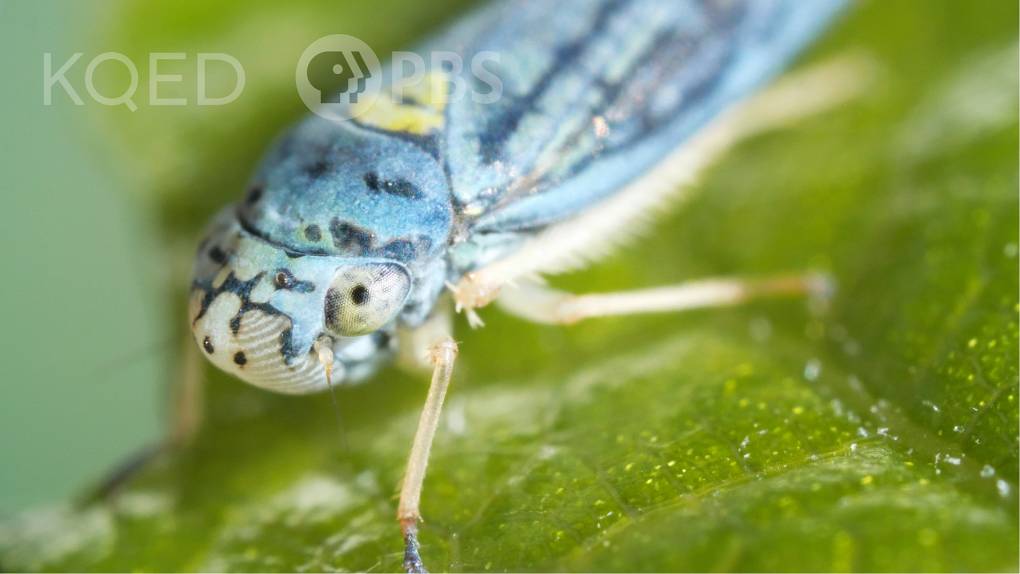
"caption": "A blue-green sharpshooter on a grapevine. The insects transmit Pierce's disease, which kills grapevines.",
"description": null,
"title": "DEEP_709_KQED_marquee",
"credit": "Josh Cassidy/KQED",
"status": "inherit",
"isLoading": false,
"fetchFailed": false
},
"science_1963348": {
"type": "attachments",
"id": "science_1963348",
"meta": {
"index": "attachments_1716263798",
"site": "science",
"id": "1963348",
"found": true
},
"parent": 1963200,
"imgSizes": {
"twentyfourteen-full-width": {
"file": "https://ww2.kqed.org/app/uploads/sites/35/2020/04/YT_Thumb_711_ALT2-1038x576.jpg",
"width": 1038,
"mimeType": "image/jpeg",
"height": 576
},
"thumbnail": {
"file": "https://ww2.kqed.org/app/uploads/sites/35/2020/04/YT_Thumb_711_ALT2-160x90.jpg",
"width": 160,
"mimeType": "image/jpeg",
"height": 90
},
"post-thumbnail": {
"file": "https://ww2.kqed.org/app/uploads/sites/35/2020/04/YT_Thumb_711_ALT2-672x372.jpg",
"width": 672,
"mimeType": "image/jpeg",
"height": 372
},
"kqedFullSize": {
"file": "https://ww2.kqed.org/app/uploads/sites/35/2020/04/YT_Thumb_711_ALT2.jpg",
"width": 3841,
"height": 2161
},
"large": {
"file": "https://ww2.kqed.org/app/uploads/sites/35/2020/04/YT_Thumb_711_ALT2-1020x574.jpg",
"width": 1020,
"mimeType": "image/jpeg",
"height": 574
},
"full-width": {
"file": "https://ww2.kqed.org/app/uploads/sites/35/2020/04/YT_Thumb_711_ALT2-1920x1080.jpg",
"width": 1920,
"mimeType": "image/jpeg",
"height": 1080
},
"medium": {
"file": "https://ww2.kqed.org/app/uploads/sites/35/2020/04/YT_Thumb_711_ALT2-800x450.jpg",
"width": 800,
"mimeType": "image/jpeg",
"height": 450
},
"medium_large": {
"file": "https://ww2.kqed.org/app/uploads/sites/35/2020/04/YT_Thumb_711_ALT2-768x432.jpg",
"width": 768,
"mimeType": "image/jpeg",
"height": 432
}
},
"publishDate": 1588284707,
"modified": 1588284739,
"caption": "The coronavirus",
"description": "The coronavirus",
"title": "YT_Thumb_711_ALT2",
"credit": "Teodros Hailye/KQED",
"status": "inherit",
"isLoading": false,
"fetchFailed": false
},
"science_1962412": {
"type": "attachments",
"id": "science_1962412",
"meta": {
"index": "attachments_1716263798",
"site": "science",
"id": "1962412",
"found": true
},
"parent": 1961648,
"imgSizes": {
"twentyfourteen-full-width": {
"file": "https://ww2.kqed.org/app/uploads/sites/35/2020/04/DEEP_708_TN_California-Floater-Mussels-Take-Fish-For-An-Epic-Joyride_shield-1038x576.jpg",
"width": 1038,
"mimeType": "image/jpeg",
"height": 576
},
"thumbnail": {
"file": "https://ww2.kqed.org/app/uploads/sites/35/2020/04/DEEP_708_TN_California-Floater-Mussels-Take-Fish-For-An-Epic-Joyride_shield-160x90.jpg",
"width": 160,
"mimeType": "image/jpeg",
"height": 90
},
"post-thumbnail": {
"file": "https://ww2.kqed.org/app/uploads/sites/35/2020/04/DEEP_708_TN_California-Floater-Mussels-Take-Fish-For-An-Epic-Joyride_shield-672x372.jpg",
"width": 672,
"mimeType": "image/jpeg",
"height": 372
},
"kqedFullSize": {
"file": "https://ww2.kqed.org/app/uploads/sites/35/2020/04/DEEP_708_TN_California-Floater-Mussels-Take-Fish-For-An-Epic-Joyride_shield-e1587413627273.jpg",
"width": 1920,
"height": 1080
},
"large": {
"file": "https://ww2.kqed.org/app/uploads/sites/35/2020/04/DEEP_708_TN_California-Floater-Mussels-Take-Fish-For-An-Epic-Joyride_shield-1020x574.jpg",
"width": 1020,
"mimeType": "image/jpeg",
"height": 574
},
"full-width": {
"file": "https://ww2.kqed.org/app/uploads/sites/35/2020/04/DEEP_708_TN_California-Floater-Mussels-Take-Fish-For-An-Epic-Joyride_shield-1920x1080.jpg",
"width": 1920,
"mimeType": "image/jpeg",
"height": 1080
},
"medium": {
"file": "https://ww2.kqed.org/app/uploads/sites/35/2020/04/DEEP_708_TN_California-Floater-Mussels-Take-Fish-For-An-Epic-Joyride_shield-800x450.jpg",
"width": 800,
"mimeType": "image/jpeg",
"height": 450
},
"medium_large": {
"file": "https://ww2.kqed.org/app/uploads/sites/35/2020/04/DEEP_708_TN_California-Floater-Mussels-Take-Fish-For-An-Epic-Joyride_shield-768x432.jpg",
"width": 768,
"mimeType": "image/jpeg",
"height": 432
}
},
"publishDate": 1587279497,
"modified": 1587279602,
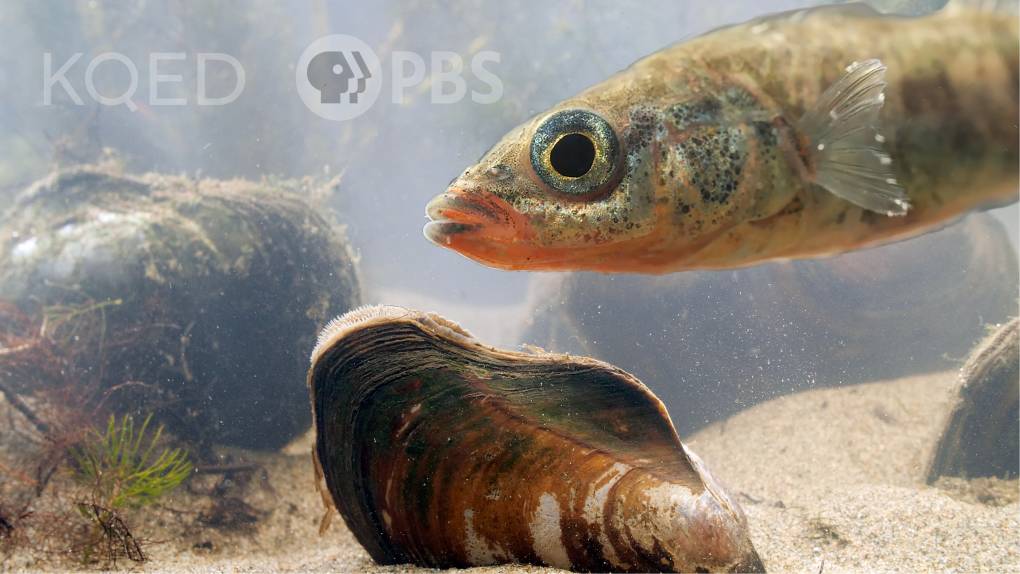
"caption": "The California floater mussel (Anodonta californiensis) plays a key role in maintaining water quality for all the life that depends on it.",
"description": "The California floater mussel (Anodonta californiensis) plays a key role in maintaining water quality for all the life that depends on it.",
"title": "DEEP_708_TN_California-Floater-Mussels-Take-Fish-For-An-Epic-Joyride_shield",
"credit": "Josh Cassidy/KQED",
"status": "inherit",
"isLoading": false,
"fetchFailed": false
},
"science_1961003": {
"type": "attachments",
"id": "science_1961003",
"meta": {
"index": "attachments_1716263798",
"site": "science",
"id": "1961003",
"found": true
},
"parent": 1960549,
"imgSizes": {
"twentyfourteen-full-width": {
"file": "https://ww2.kqed.org/app/uploads/sites/35/2020/04/DL706_marquee_for_KQED-1038x576.jpg",
"width": 1038,
"mimeType": "image/jpeg",
"height": 576
},
"thumbnail": {
"file": "https://ww2.kqed.org/app/uploads/sites/35/2020/04/DL706_marquee_for_KQED-160x90.jpg",
"width": 160,
"mimeType": "image/jpeg",
"height": 90
},
"post-thumbnail": {
"file": "https://ww2.kqed.org/app/uploads/sites/35/2020/04/DL706_marquee_for_KQED-672x372.jpg",
"width": 672,
"mimeType": "image/jpeg",
"height": 372
},
"kqedFullSize": {
"file": "https://ww2.kqed.org/app/uploads/sites/35/2020/04/DL706_marquee_for_KQED.jpg",
"width": 1921,
"height": 1081
},
"large": {
"file": "https://ww2.kqed.org/app/uploads/sites/35/2020/04/DL706_marquee_for_KQED-1020x574.jpg",
"width": 1020,
"mimeType": "image/jpeg",
"height": 574
},
"full-width": {
"file": "https://ww2.kqed.org/app/uploads/sites/35/2020/04/DL706_marquee_for_KQED-1920x1080.jpg",
"width": 1920,
"mimeType": "image/jpeg",
"height": 1080
},
"medium": {
"file": "https://ww2.kqed.org/app/uploads/sites/35/2020/04/DL706_marquee_for_KQED-800x450.jpg",
"width": 800,
"mimeType": "image/jpeg",
"height": 450
},
"medium_large": {
"file": "https://ww2.kqed.org/app/uploads/sites/35/2020/04/DL706_marquee_for_KQED-768x432.jpg",
"width": 768,
"mimeType": "image/jpeg",
"height": 432
}
},
"publishDate": 1586050167,
"modified": 1586071469,
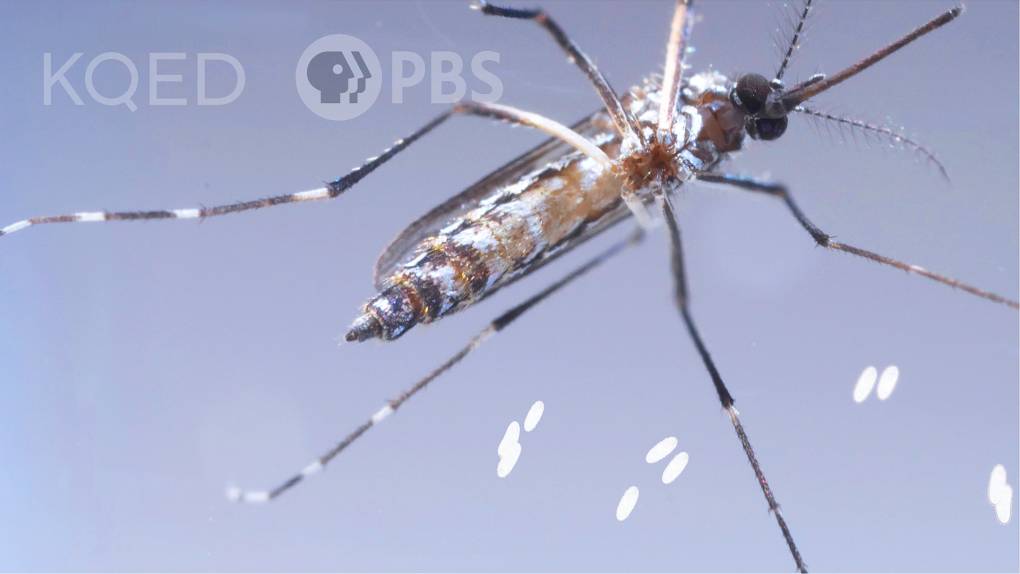
"caption": "An Aedes aegypti mosquito lays eggs on a glass surface at UC Davis.",
"description": null,
"title": "DL706_marquee_for_KQED",
"credit": "Josh Cassidy/KQED",
"status": "inherit",
"isLoading": false,
"fetchFailed": false
},
"science_1994158": {
"type": "attachments",
"id": "science_1994158",
"meta": {
"index": "attachments_1716263798",
"site": "science",
"id": "1994158",
"found": true
},
"title": "YoutTube Thumbnail2",
"publishDate": 1725556113,
"status": "inherit",
"parent": 1958912,
"modified": 1725556113,
"caption": null,
"credit": null,
"altTag": null,
"description": null,
"imgSizes": {
"medium": {
"file": "https://cdn.kqed.org/wp-content/uploads/sites/35/2020/03/DEEP_707_TN_Walking-Sticks-Stop-Drop-And-Clone-To-Survive_shield_updated-800x450.jpg",
"width": 800,
"height": 450,
"mimeType": "image/jpeg"
},
"large": {
"file": "https://cdn.kqed.org/wp-content/uploads/sites/35/2020/03/DEEP_707_TN_Walking-Sticks-Stop-Drop-And-Clone-To-Survive_shield_updated-1020x574.jpg",
"width": 1020,
"height": 574,
"mimeType": "image/jpeg"
},
"thumbnail": {
"file": "https://cdn.kqed.org/wp-content/uploads/sites/35/2020/03/DEEP_707_TN_Walking-Sticks-Stop-Drop-And-Clone-To-Survive_shield_updated-160x90.jpg",
"width": 160,
"height": 90,
"mimeType": "image/jpeg"
},
"medium_large": {
"file": "https://cdn.kqed.org/wp-content/uploads/sites/35/2020/03/DEEP_707_TN_Walking-Sticks-Stop-Drop-And-Clone-To-Survive_shield_updated-768x432.jpg",
"width": 768,
"height": 432,
"mimeType": "image/jpeg"
},
"1536x1536": {
"file": "https://cdn.kqed.org/wp-content/uploads/sites/35/2020/03/DEEP_707_TN_Walking-Sticks-Stop-Drop-And-Clone-To-Survive_shield_updated-1536x864.jpg",
"width": 1536,
"height": 864,
"mimeType": "image/jpeg"
},
"2048x2048": {
"file": "https://cdn.kqed.org/wp-content/uploads/sites/35/2020/03/DEEP_707_TN_Walking-Sticks-Stop-Drop-And-Clone-To-Survive_shield_updated-2048x1152.jpg",
"width": 2048,
"height": 1152,
"mimeType": "image/jpeg"
},
"post-thumbnail": {
"file": "https://cdn.kqed.org/wp-content/uploads/sites/35/2020/03/DEEP_707_TN_Walking-Sticks-Stop-Drop-And-Clone-To-Survive_shield_updated-672x372.jpg",
"width": 672,
"height": 372,
"mimeType": "image/jpeg"
},
"twentyfourteen-full-width": {
"file": "https://cdn.kqed.org/wp-content/uploads/sites/35/2020/03/DEEP_707_TN_Walking-Sticks-Stop-Drop-And-Clone-To-Survive_shield_updated-1038x576.jpg",
"width": 1038,
"height": 576,
"mimeType": "image/jpeg"
},
"full-width": {
"file": "https://cdn.kqed.org/wp-content/uploads/sites/35/2020/03/DEEP_707_TN_Walking-Sticks-Stop-Drop-And-Clone-To-Survive_shield_updated-1920x1080.jpg",
"width": 1920,
"height": 1080,
"mimeType": "image/jpeg"
},
"kqedFullSize": {
"file": "https://cdn.kqed.org/wp-content/uploads/sites/35/2020/03/DEEP_707_TN_Walking-Sticks-Stop-Drop-And-Clone-To-Survive_shield_updated-scaled.jpg",
"width": 2560,
"height": 1440
}
},
"isLoading": false,
"fetchFailed": false
},
"science_1958470": {
"type": "attachments",
"id": "science_1958470",
"meta": {
"index": "attachments_1716263798",
"site": "science",
"id": "1958470",
"found": true
},
"parent": 1957872,
"imgSizes": {
"twentyfourteen-full-width": {
"file": "https://ww2.kqed.org/app/uploads/sites/35/2020/03/DEEP_705_A_Fleas_Fantastic_Jump_Takes_More_Than_Muscle_shield-1038x576.jpg",
"width": 1038,
"mimeType": "image/jpeg",
"height": 576
},
"thumbnail": {
"file": "https://ww2.kqed.org/app/uploads/sites/35/2020/03/DEEP_705_A_Fleas_Fantastic_Jump_Takes_More_Than_Muscle_shield-160x90.jpg",
"width": 160,
"mimeType": "image/jpeg",
"height": 90
},
"post-thumbnail": {
"file": "https://ww2.kqed.org/app/uploads/sites/35/2020/03/DEEP_705_A_Fleas_Fantastic_Jump_Takes_More_Than_Muscle_shield-672x372.jpg",
"width": 672,
"mimeType": "image/jpeg",
"height": 372
},
"kqedFullSize": {
"file": "https://ww2.kqed.org/app/uploads/sites/35/2020/03/DEEP_705_A_Fleas_Fantastic_Jump_Takes_More_Than_Muscle_shield.jpg",
"width": 3841,
"height": 2161
},
"large": {
"file": "https://ww2.kqed.org/app/uploads/sites/35/2020/03/DEEP_705_A_Fleas_Fantastic_Jump_Takes_More_Than_Muscle_shield-1020x574.jpg",
"width": 1020,
"mimeType": "image/jpeg",
"height": 574
},
"full-width": {
"file": "https://ww2.kqed.org/app/uploads/sites/35/2020/03/DEEP_705_A_Fleas_Fantastic_Jump_Takes_More_Than_Muscle_shield-1920x1080.jpg",
"width": 1920,
"mimeType": "image/jpeg",
"height": 1080
},
"medium": {
"file": "https://ww2.kqed.org/app/uploads/sites/35/2020/03/DEEP_705_A_Fleas_Fantastic_Jump_Takes_More_Than_Muscle_shield-800x450.jpg",
"width": 800,
"mimeType": "image/jpeg",
"height": 450
},
"medium_large": {
"file": "https://ww2.kqed.org/app/uploads/sites/35/2020/03/DEEP_705_A_Fleas_Fantastic_Jump_Takes_More_Than_Muscle_shield-768x432.jpg",
"width": 768,
"mimeType": "image/jpeg",
"height": 432
}
},
"publishDate": 1583801949,
"modified": 1583801949,
"caption": null,
"description": null,
"title": "DEEP_705_A_Fleas_Fantastic_Jump_Takes_More_Than_Muscle_shield",
"credit": null,
"status": "inherit",
"isLoading": false,
"fetchFailed": false
},
"science_1957347": {
"type": "attachments",
"id": "science_1957347",
"meta": {
"index": "attachments_1716263798",
"site": "science",
"id": "1957347",
"found": true
},
"parent": 1957226,
"imgSizes": {
"twentyfourteen-full-width": {
"file": "https://ww2.kqed.org/app/uploads/sites/35/2020/02/DEEP_704_Kangaroo-Rats-Are-Furry-Spring-Loaded-Ninjas_shield-1038x576.jpg",
"width": 1038,
"mimeType": "image/jpeg",
"height": 576
},
"thumbnail": {
"file": "https://ww2.kqed.org/app/uploads/sites/35/2020/02/DEEP_704_Kangaroo-Rats-Are-Furry-Spring-Loaded-Ninjas_shield-160x90.jpg",
"width": 160,
"mimeType": "image/jpeg",
"height": 90
},
"post-thumbnail": {
"file": "https://ww2.kqed.org/app/uploads/sites/35/2020/02/DEEP_704_Kangaroo-Rats-Are-Furry-Spring-Loaded-Ninjas_shield-672x372.jpg",
"width": 672,
"mimeType": "image/jpeg",
"height": 372
},
"kqedFullSize": {
"file": "https://ww2.kqed.org/app/uploads/sites/35/2020/02/DEEP_704_Kangaroo-Rats-Are-Furry-Spring-Loaded-Ninjas_shield.jpg",
"width": 3841,
"height": 2161
},
"large": {
"file": "https://ww2.kqed.org/app/uploads/sites/35/2020/02/DEEP_704_Kangaroo-Rats-Are-Furry-Spring-Loaded-Ninjas_shield-1020x574.jpg",
"width": 1020,
"mimeType": "image/jpeg",
"height": 574
},
"full-width": {
"file": "https://ww2.kqed.org/app/uploads/sites/35/2020/02/DEEP_704_Kangaroo-Rats-Are-Furry-Spring-Loaded-Ninjas_shield-1920x1080.jpg",
"width": 1920,
"mimeType": "image/jpeg",
"height": 1080
},
"medium": {
"file": "https://ww2.kqed.org/app/uploads/sites/35/2020/02/DEEP_704_Kangaroo-Rats-Are-Furry-Spring-Loaded-Ninjas_shield-800x450.jpg",
"width": 800,
"mimeType": "image/jpeg",
"height": 450
},
"medium_large": {
"file": "https://ww2.kqed.org/app/uploads/sites/35/2020/02/DEEP_704_Kangaroo-Rats-Are-Furry-Spring-Loaded-Ninjas_shield-768x432.jpg",
"width": 768,
"mimeType": "image/jpeg",
"height": 432
}
},
"publishDate": 1582249928,
"modified": 1582250104,
"caption": "The Merriam's kangaroo rat has formidable rattlesnake defense behaviors.",
"description": "The kangaroo rat has formidable rattlesnake defense behaviors.",
"title": "DEEP_704_Kangaroo-Rats-Are-Furry-Spring-Loaded-Ninjas_shield",
"credit": "Josh Cassidy/KQED",
"status": "inherit",
"isLoading": false,
"fetchFailed": false
},
"science_1956374": {
"type": "attachments",
"id": "science_1956374",
"meta": {
"index": "attachments_1716263798",
"site": "science",
"id": "1956374",
"found": true
},
"parent": 1955611,
"imgSizes": {
"twentyfourteen-full-width": {
"file": "https://ww2.kqed.org/app/uploads/sites/35/2020/01/DEEP_703_You-Wish-You-Had-Mites-Like-This-Hissing-Cockroach_shield-1038x576.jpg",
"width": 1038,
"mimeType": "image/jpeg",
"height": 576
},
"thumbnail": {
"file": "https://ww2.kqed.org/app/uploads/sites/35/2020/01/DEEP_703_You-Wish-You-Had-Mites-Like-This-Hissing-Cockroach_shield-160x90.jpg",
"width": 160,
"mimeType": "image/jpeg",
"height": 90
},
"post-thumbnail": {
"file": "https://ww2.kqed.org/app/uploads/sites/35/2020/01/DEEP_703_You-Wish-You-Had-Mites-Like-This-Hissing-Cockroach_shield-672x372.jpg",
"width": 672,
"mimeType": "image/jpeg",
"height": 372
},
"kqedFullSize": {
"file": "https://ww2.kqed.org/app/uploads/sites/35/2020/01/DEEP_703_You-Wish-You-Had-Mites-Like-This-Hissing-Cockroach_shield.jpg",
"width": 3841,
"height": 2161
},
"large": {
"file": "https://ww2.kqed.org/app/uploads/sites/35/2020/01/DEEP_703_You-Wish-You-Had-Mites-Like-This-Hissing-Cockroach_shield-1020x574.jpg",
"width": 1020,
"mimeType": "image/jpeg",
"height": 574
},
"full-width": {
"file": "https://ww2.kqed.org/app/uploads/sites/35/2020/01/DEEP_703_You-Wish-You-Had-Mites-Like-This-Hissing-Cockroach_shield-1920x1080.jpg",
"width": 1920,
"mimeType": "image/jpeg",
"height": 1080
},
"medium": {
"file": "https://ww2.kqed.org/app/uploads/sites/35/2020/01/DEEP_703_You-Wish-You-Had-Mites-Like-This-Hissing-Cockroach_shield-800x450.jpg",
"width": 800,
"mimeType": "image/jpeg",
"height": 450
},
"medium_large": {
"file": "https://ww2.kqed.org/app/uploads/sites/35/2020/01/DEEP_703_You-Wish-You-Had-Mites-Like-This-Hissing-Cockroach_shield-768x432.jpg",
"width": 768,
"mimeType": "image/jpeg",
"height": 432
}
},
"publishDate": 1580507669,
"modified": 1580507724,
"caption": "A Madagascar hissing cockroach with mites on its face nibbles on a leaf.",
"description": "A Madagascar hissing cockroach with mites on its face nibbles on a leaf.",
"title": "DEEP_703_You-Wish-You-Had-Mites-Like-This-Hissing-Cockroach_shield",
"credit": "Josh Cassidy/KQED",
"status": "inherit",
"isLoading": false,
"fetchFailed": false
},
"science_1958240": {
"type": "attachments",
"id": "science_1958240",
"meta": {
"index": "attachments_1716263798",
"site": "science",
"id": "1958240",
"found": true
},
"parent": 1956004,
"imgSizes": {
"twentyfourteen-full-width": {
"file": "https://ww2.kqed.org/app/uploads/sites/35/2020/01/DEEP_702_A-Tsetse-Fly-Births-One-Enormous-Milk-Fed-Baby_shield-1038x576.jpg",
"width": 1038,
"mimeType": "image/jpeg",
"height": 576
},
"thumbnail": {
"file": "https://ww2.kqed.org/app/uploads/sites/35/2020/01/DEEP_702_A-Tsetse-Fly-Births-One-Enormous-Milk-Fed-Baby_shield-160x90.jpg",
"width": 160,
"mimeType": "image/jpeg",
"height": 90
},
"post-thumbnail": {
"file": "https://ww2.kqed.org/app/uploads/sites/35/2020/01/DEEP_702_A-Tsetse-Fly-Births-One-Enormous-Milk-Fed-Baby_shield-672x372.jpg",
"width": 672,
"mimeType": "image/jpeg",
"height": 372
},
"kqedFullSize": {
"file": "https://ww2.kqed.org/app/uploads/sites/35/2020/01/DEEP_702_A-Tsetse-Fly-Births-One-Enormous-Milk-Fed-Baby_shield.jpg",
"width": 3841,
"height": 2161
},
"large": {
"file": "https://ww2.kqed.org/app/uploads/sites/35/2020/01/DEEP_702_A-Tsetse-Fly-Births-One-Enormous-Milk-Fed-Baby_shield-1020x574.jpg",
"width": 1020,
"mimeType": "image/jpeg",
"height": 574
},
"full-width": {
"file": "https://ww2.kqed.org/app/uploads/sites/35/2020/01/DEEP_702_A-Tsetse-Fly-Births-One-Enormous-Milk-Fed-Baby_shield-1920x1080.jpg",
"width": 1920,
"mimeType": "image/jpeg",
"height": 1080
},
"medium": {
"file": "https://ww2.kqed.org/app/uploads/sites/35/2020/01/DEEP_702_A-Tsetse-Fly-Births-One-Enormous-Milk-Fed-Baby_shield-800x450.jpg",
"width": 800,
"mimeType": "image/jpeg",
"height": 450
},
"medium_large": {
"file": "https://ww2.kqed.org/app/uploads/sites/35/2020/01/DEEP_702_A-Tsetse-Fly-Births-One-Enormous-Milk-Fed-Baby_shield-768x432.jpg",
"width": 768,
"mimeType": "image/jpeg",
"height": 432
}
},
"publishDate": 1583526417,
"modified": 1583526417,
"caption": null,
"description": null,
"title": "DEEP_702_A-Tsetse-Fly-Births-One-Enormous-Milk-Fed-Baby_shield",
"credit": null,
"status": "inherit",
"isLoading": false,
"fetchFailed": false
}
},
"audioPlayerReducer": {
"postId": "stream_live",
"isPaused": true,
"isPlaying": false,
"pfsActive": false,
"pledgeModalIsOpen": true,
"playerDrawerIsOpen": false,
"liveAudioPlayStartedAt": 0,
"liveAudioPlayContext": ""
},
"authorsReducer": {
"byline_science_1966832": {
"type": "authors",
"id": "byline_science_1966832",
"meta": {
"override": true
},
"slug": "byline_science_1966832",
"name": "Anna Belle Peevey, InsideClimate News",
"isLoading": false
},
"jennyoh": {
"type": "authors",
"id": "2100",
"meta": {
"index": "authors_1716337520",
"id": "2100",
"found": true
},
"name": "Jenny Oh",
"firstName": "Jenny",
"lastName": "Oh",
"slug": "jennyoh",
"email": "joh@kqed.org",
"display_author_email": false,
"staff_mastheads": [],
"title": "Audience Engagement Producer, Deep Look",
"bio": "Jenny is an Emmy Award-winning producer and is currently the Audience Engagement Producer for KQED Science's \u003cem>Deep Look\u003c/em> online video series. She was also a long-time contributor to Bay Area Bites, KQED's popular food blog. Jenny graduated with honors from New York University’s Tisch School of the Arts Film and Television program and has worked for WNET/PBS, The Learning Channel, Sundance Channel, HBO and the University of California.",
"avatar": "https://secure.gravatar.com/avatar/7ddda0ed657e46dbe66083f569967752?s=600&d=mm&r=g",
"twitter": null,
"facebook": null,
"instagram": null,
"linkedin": null,
"sites": [
{
"site": "arts",
"roles": []
},
{
"site": "pop",
"roles": []
},
{
"site": "about",
"roles": []
},
{
"site": "bayareabites",
"roles": []
},
{
"site": "science",
"roles": []
},
{
"site": "education",
"roles": []
},
{
"site": "quest",
"roles": []
},
{
"site": "food",
"roles": []
}
],
"headData": {
"title": "Jenny Oh | KQED",
"description": "Audience Engagement Producer, Deep Look",
"ogImgSrc": "https://secure.gravatar.com/avatar/7ddda0ed657e46dbe66083f569967752?s=600&d=mm&r=g",
"twImgSrc": "https://secure.gravatar.com/avatar/7ddda0ed657e46dbe66083f569967752?s=600&d=mm&r=g"
},
"isLoading": false,
"link": "/author/jennyoh"
},
"gabriela-quiros": {
"type": "authors",
"id": "6186",
"meta": {
"index": "authors_1716337520",
"id": "6186",
"found": true
},
"name": "Gabriela Quirós",
"firstName": "Gabriela",
"lastName": "Quirós",
"slug": "gabriela-quiros",
"email": "gquiros@kqed.org",
"display_author_email": false,
"staff_mastheads": [],
"title": "Supervising Producer",
"bio": "Gabriela Quirós is the \u003cstrong>supervising producer for KQED's web science video series \u003ca href=\"https://www.kqed.org/deeplook\">Deep Look\u003c/a>\u003c/strong>. She joined KQED as a TV producer when its science series QUEST started in 2006 and has covered everything from Alzheimer’s to bee die-offs to dark energy.\r\n\r\nShe won a 2022 AAAS Kavli Science Journalism Award with a team of her Deep Look colleagues. She has won six regional Emmys as a video producer and has shared eight more as the coordinating producer of Deep Look. The episode she produced about \u003ca href=\"https://www.kqed.org/science/728086/how-mosquitoes-use-six-needles-to-suck-your-blood\">How Mosquitoes Use Six Needles to Suck Your Blood\u003c/a> won a Webby \"People's Voice\" award. She has also earned awards from the Jackson Hole Wildlife Film Festival, the Society of Professional Journalists and the Society of Environmental Journalists.\r\n\r\nHer videos for KQED have also aired on NOVA scienceNOW and the PBS NewsHour, and appeared on NPR.org.\r\n\r\nAs an independent filmmaker, she produced and directed the hour-long documentary \u003ca href=\"http://lpbp.org/beautiful-sin-qa-with-producer-gabriela-quiros/\">\u003cem>Beautiful Sin\u003c/em>\u003c/a>, about the surprising story of how Costa Rica became the only country in the world to outlaw in vitro fertilization. The film aired in 2015 on public television stations throughout the U.S., and in Costa Rica.\r\n\r\nShe started her journalism career as a newspaper reporter in Costa Rica, where she grew up. She won the National Science Journalism Award there for a series of articles about organic agriculture, and developed a life-long interest in health reporting. She moved to the Bay Area in 1996 to study documentary filmmaking at the University of California, Berkeley, where she received master’s degrees in journalism and Latin American studies.",
"avatar": "https://secure.gravatar.com/avatar/6d82c20152affd1b434c31a904c40809?s=600&d=blank&r=g",
"twitter": "gabrielaquirosr",
"facebook": null,
"instagram": null,
"linkedin": null,
"sites": [
{
"site": "science",
"roles": []
},
{
"site": "quest",
"roles": [
"ef_view_calendar",
"ef_view_story_budget"
]
}
],
"headData": {
"title": "Gabriela Quirós | KQED",
"description": "Supervising Producer",
"ogImgSrc": "https://secure.gravatar.com/avatar/6d82c20152affd1b434c31a904c40809?s=600&d=blank&r=g",
"twImgSrc": "https://secure.gravatar.com/avatar/6d82c20152affd1b434c31a904c40809?s=600&d=blank&r=g"
},
"isLoading": false,
"link": "/author/gabriela-quiros"
},
"joshua-cassidy": {
"type": "authors",
"id": "6219",
"meta": {
"index": "authors_1716337520",
"id": "6219",
"found": true
},
"name": "Josh Cassidy",
"firstName": "Josh",
"lastName": "Cassidy",
"slug": "joshua-cassidy",
"email": "jcassidy@kqed.org",
"display_author_email": false,
"staff_mastheads": [
"science"
],
"title": "Digital Video Producer",
"bio": "Josh is a Senior Video Producer for KQED Science, and the Lead Producer and Cinematographer for Deep Look. After receiving his BS in Wildlife Biology from Ohio University, he went on to participate in marine mammal research for NOAA, USGS and the Intersea Foundation. He also served as the president of The Pacific Cetacean Group, a nonprofit organization dedicated to teaching students K-6 about whales. Josh studied science and natural history filmmaking at San Francisco State University and Montana State University.",
"avatar": "https://secure.gravatar.com/avatar/f2582a0801a35af53b734d56bcac2bbe?s=600&d=blank&r=g",
"twitter": null,
"facebook": null,
"instagram": null,
"linkedin": null,
"sites": [
{
"site": "science",
"roles": [
"editor"
]
},
{
"site": "quest",
"roles": [
"author",
"edit_others_posts"
]
}
],
"headData": {
"title": "Josh Cassidy | KQED",
"description": "Digital Video Producer",
"ogImgSrc": "https://secure.gravatar.com/avatar/f2582a0801a35af53b734d56bcac2bbe?s=600&d=blank&r=g",
"twImgSrc": "https://secure.gravatar.com/avatar/f2582a0801a35af53b734d56bcac2bbe?s=600&d=blank&r=g"
},
"isLoading": false,
"link": "/author/joshua-cassidy"
},
"lklivans": {
"type": "authors",
"id": "8648",
"meta": {
"index": "authors_1716337520",
"id": "8648",
"found": true
},
"name": "Laura Klivans",
"firstName": "Laura",
"lastName": "Klivans",
"slug": "lklivans",
"email": "lklivans@kqed.org",
"display_author_email": true,
"staff_mastheads": [
"news",
"science"
],
"title": "Reporter",
"bio": "Laura Klivans is an award-winning science reporter for KQED News, where she covers climate change with an eye on both groundbreaking progress and gaps in action. She is the former host of KQED's blockbuster video series about tiny, amazing animals, \u003cem>Deep Look\u003c/em>. Her work reaches national audiences through NPR, \u003cem>Here & Now, \u003c/em>PRI, and other major outlets. \r\n\r\nLaura’s won five Northern California Area Emmy Awards for Deep Look and First Place in the Greater Bay Area Journalism Awards for a podcast exploring how one Oakland neighborhood teamed up to reduce planet-heating pollution.\r\n\r\nBeyond her reporting, she hosts and moderates events. In the past, she taught audio storytelling at the UC Berkeley Graduate School of Journalism, led international education programs, worked with immigrants and refugees along the Thai-Burmese border, taught high schoolers sex ed, and was an actress. \r\n\r\nShe's a former UC Berkeley Human Rights Fellow, USC Center for Health Journalism's California Fellow and Coro Fellow in Public Affairs. Laura has a master’s in journalism from UC Berkeley, a master’s in education from Harvard, and an undergraduate degree from Northwestern University.\r\n\r\nShe loves trying to riddle the meaning out of vanity license plates.",
"avatar": "https://secure.gravatar.com/avatar/2d2ecd1550a494cc10ad4a503406965585902124739e775a9b3817eebf1d88be?s=600&d=blank&r=g",
"twitter": "lauraklivans",
"bluesky": null,
"facebook": null,
"instagram": null,
"linkedin": null,
"sites": [
{
"site": "news",
"roles": [
"editor"
]
},
{
"site": "stateofhealth",
"roles": [
"contributor",
"editor"
]
},
{
"site": "science",
"roles": [
"editor"
]
},
{
"site": "forum",
"roles": [
"editor"
]
}
],
"headData": {
"title": "Laura Klivans | KQED",
"description": "Reporter",
"ogImgSrc": "https://secure.gravatar.com/avatar/2d2ecd1550a494cc10ad4a503406965585902124739e775a9b3817eebf1d88be?s=600&d=blank&r=g",
"twImgSrc": "https://secure.gravatar.com/avatar/2d2ecd1550a494cc10ad4a503406965585902124739e775a9b3817eebf1d88be?s=600&d=blank&r=g"
},
"isLoading": false,
"link": "/author/lklivans"
},
"mseely": {
"type": "authors",
"id": "11095",
"meta": {
"index": "authors_1716337520",
"id": "11095",
"found": true
},
"name": "Mike Seely",
"firstName": "Mike",
"lastName": "Seely",
"slug": "mseely",
"email": "mseely@kqed.org",
"display_author_email": false,
"staff_mastheads": [
"science"
],
"title": "Producer",
"bio": "Mike is a Digital Media Producer for KQED Science and Post Production Coordinator for \u003ca href=\"https://www.youtube.com/user/KQEDDeepLook\" target=\"_blank\" rel=\"noopener noreferrer\">Deep Look\u003c/a>. Prior to his work at KQED, he worked independently for 15 years as a director, producer and cinematographer of documentary films about art, science, and social issues, collaborating with independent directors, corporate clients, non-profits, digital and broadcast networks. Previous to filmmaking life, he majored in biology as an undergrad at Oberlin College, and worked as a wildlife biologist on bird and seal population studies in California. He also holds an M.A. in Documentary Film Production from Stanford University.",
"avatar": "https://secure.gravatar.com/avatar/f9c5c6f7135a7c3fc0ce85114f7b05dd18e0b71af78a2d6770a1b09a921d8425?s=600&d=blank&r=g",
"twitter": null,
"bluesky": null,
"facebook": null,
"instagram": null,
"linkedin": null,
"sites": [
{
"site": "arts",
"roles": [
"subscriber"
]
},
{
"site": "science",
"roles": [
"author"
]
}
],
"headData": {
"title": "Mike Seely | KQED",
"description": "Producer",
"ogImgSrc": "https://secure.gravatar.com/avatar/f9c5c6f7135a7c3fc0ce85114f7b05dd18e0b71af78a2d6770a1b09a921d8425?s=600&d=blank&r=g",
"twImgSrc": "https://secure.gravatar.com/avatar/f9c5c6f7135a7c3fc0ce85114f7b05dd18e0b71af78a2d6770a1b09a921d8425?s=600&d=blank&r=g"
},
"isLoading": false,
"link": "/author/mseely"
}
},
"pagesReducer": {
"science_category_video": {
"type": "terms",
"id": "science_86",
"meta": {
"index": "terms_1716263798",
"site": "science",
"id": "86",
"score": 12.138525
},
"featImg": null,
"name": "Video",
"description": null,
"taxonomy": "category",
"headData": {
"twImgId": null,
"twTitle": null,
"ogTitle": null,
"ogImgId": null,
"twDescription": null,
"description": null,
"title": "Video Archives | KQED Science",
"ogDescription": null
},
"ttid": 89,
"slug": "video",
"isLoading": false,
"title": "Video",
"pageMeta": {
"site": "science",
"WpPageTemplate": "page-topic-editorial",
"currentPage": 10
},
"blocks": [
{
"blockName": "kqed/post-list",
"attrs": {
"layout": "cardArticle2",
"query": "posts/science?category=video",
"seeMore": false,
"paginated": true,
"page": 10
}
},
{
"blockName": "kqed/ad"
}
]
}
},
"pfsSessionReducer": {},
"postsReducer": {
"stream_live": {
"type": "live",
"id": "stream_live",
"audioUrl": "https://streams.kqed.org/kqedradio",
"title": "Live Stream",
"excerpt": "Live Stream information currently unavailable.",
"link": "/radio",
"featImg": "",
"label": {
"name": "KQED Live",
"link": "/"
}
},
"stream_kqedNewscast": {
"type": "posts",
"id": "stream_kqedNewscast",
"audioUrl": "https://www.kqed.org/.stream/anon/radio/RDnews/newscast.mp3?_=1",
"title": "KQED Newscast",
"featImg": "",
"label": {
"name": "88.5 FM",
"link": "/"
}
},
"science_1966832": {
"type": "posts",
"id": "science_1966832",
"meta": {
"index": "posts_1716263798",
"site": "science",
"id": "1966832",
"score": null,
"sort": [
1594087241000
]
},
"parent": 0,
"labelTerm": {},
"blocks": [],
"publishDate": 1594087241,
"format": "standard",
"title": "VIDEO: Access to Nature Is About Environmental Justice",
"headTitle": "VIDEO: Access to Nature Is About Environmental Justice | KQED",
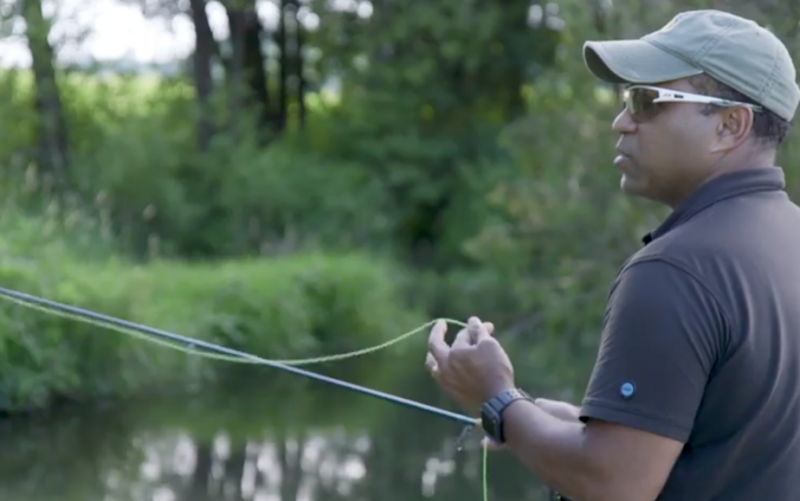
"content": "\u003cp style=\"font-weight: 400\">\u003cem>\u003ca href=\"https://protect-us.mimecast.com/s/Neq_CwpkPvsGmMG7hVOy7A?domain=insideclimatenews.org\" target=\"_blank\" rel=\"noopener noreferrer\">InsideClimate News\u003c/a> is a nonprofit, independent news organization that covers climate, energy and the environment. Sign up for the ICN newsletter \u003ca href=\"https://protect-us.mimecast.com/s/pD-rCxklQwf1V61yTviMEq?domain=insideclimatenews.org\" target=\"_blank\" rel=\"noopener noreferrer\">here\u003c/a>.\u003c/em>\u003c/p>\n\u003cp style=\"font-weight: 400\">When a viral video showed a white woman calling the police on Christian Cooper, a Black man, as he was birding in New York City’s Central Park this past Memorial Day, it highlighted yet another danger facing African Americans: the notion that people of color don’t belong in the great outdoors.\u003c/p>\n\u003cp>\u003cspan style=\"font-weight: 400\">[aside postID='science_877072,news_10481490' label='National Parks Have Some Work To Do To Become Parks for All'\u003c/span>\u003cspan style=\"font-weight: 400\">]\u003c/span>\u003c/p>\n\u003cp style=\"font-weight: 400\">It’s a perception that James Edward Mills has been fighting for years. Mills, a Black freelance journalist in Madison, Wisconsin, is the author of “The Adventure Gap: Changing The Face of the Outdoors.” The book is an account of the first-ever all African-American summit attempt on Denali in 2013, but also looks deep into the challenges Black people have faced in America’s wide-open spaces. Outdoor recreation, according to Mills “is one more of the many things that people of color in this country are underrepresented in.”\u003c/p>\n\u003cp>\u003c!-- iframe plugin v.4.3 wordpress.org/plugins/iframe/ -->\u003cbr>\n\u003ciframe loading=\"lazy\" width=\"560\" height=\"315\" src=\"https://www.youtube.com/embed/jl0El0iruOY\" frameborder=\"0\" allow=\"accelerometer; autoplay; encrypted-media; gyroscope; picture-in-picture\" scrolling=\"yes\" class=\"iframe-class\">\u003c/iframe>\u003c/p>\n\u003cp style=\"font-weight: 400\">That could trickle down into weaker protections for the nation’s climate and environment.\u003c/p>\n\u003cp style=\"font-weight: 400\">People of color, in general, are more supportive of environmental protections than the U.S. population at large, and a higher percentage of them believe in human-driven climate change than the nation’s white population. According to a \u003cb>\u003ca href=\"https://climatecommunication.yale.edu/publications/race-and-climate-change/\">recent study\u003c/a>\u003c/b> put out by the Yale Program on Climate Change Communication, people of color are more concerned about climate change than their white counterparts, with 57 percent of African Americans being “alarmed” or “concerned” about global warming compared to 49 percent of whites. And Black communities are \u003cb>\u003ca href=\"https://thehill.com/opinion/energy-environment/405753-young-voters-and-voters-of-color-are-key-to-halting-climate-change\">big voting blocs\u003c/a>\u003c/b> when it comes to environmental issues. With 2010 census data estimating that the U.S. will be a “majority minority” \u003cb>\u003ca href=\"https://www.brookings.edu/blog/the-avenue/2018/03/14/the-us-will-become-minority-white-in-2045-census-projects/\">population by 2045\u003c/a>\u003c/b>, Mills argues the need to have people of color involved in the outdoors is not only a justice issue, but critical to the nation’s environmental protections.\u003c/p>\n\u003cp style=\"font-weight: 400\">“What happens if a majority of our nation has no affinity for nature?” he asks. “How long will Yosemite last?”\u003c/p>\n\u003cp style=\"font-weight: 400\">[pullquote citation='James Edward Mills, Black journalist and author']I think that in many ways, spending time in the outdoors — going camping, going climbing, going skiing — is a profound act of defiance.’[/pullquote]Misperceptions that Black people don’t appreciate the outdoors or care about environmental protections is a reflection of the nation’s racist past, he says.\u003c/p>\n\u003cp style=\"font-weight: 400\">“The conceit is that people of color don’t like spending time in nature,” Mills said, but that notion is “culturally designed.” For much of the 20th century, racist housing policies such as \u003cb>\u003ca href=\"https://www.washingtonpost.com/news/wonk/wp/2018/03/28/redlining-was-banned-50-years-ago-its-still-hurting-minorities-today/\">redlining\u003c/a>\u003c/b> denied people of color mortgages and the opportunity to own their homes, and cut off African Americans from housing in desirable neighborhoods near open spaces. In fact, the deeds for many suburban homes across the U.S. specified that the residences couldn’t be sold to Black people.\u003c/p>\n\u003cp style=\"font-weight: 400\">“There were people … literally forced to live in cities because they couldn’t live anyplace else,” Mills said. Although outlawed 50 years ago, the policies’ ramifications persist today.\u003c/p>\n\u003cp>[ad fullwidth]\u003c/p>\n\u003cp style=\"font-weight: 400\">“You can’t create the intergenerational wealth that the baby boomers used to put their kids through college,” Mills said. “The notion of going outside, in its inception, is incredibly privileged. So much so that up until the ’50s, really only middle-class white people could go into the outdoors.”\u003c/p>\n\u003cp style=\"font-weight: 400\">Traditionally, the outdoor industry has long favored white people. Before Mills turned to journalism, he worked for outdoor brands like North Face and REI. “Through the course of my professional career,” he said, “there weren’t very many people who look like me.”\u003c/p>\n\u003cp style=\"font-weight: 400\">Carolyn Finney, cultural geographer and author of “Black Faces, White Spaces,” \u003cb>\u003ca href=\"https://uncpress.org/book/9781469614489/black-faces-white-spaces/\">studied\u003c/a>\u003c/b> issues of Outside magazine over the 10 years from 1991 to 2001 and found that out of 4,600 faces, only 103 were non-white.\u003c/p>\n\u003cp style=\"font-weight: 400\">Outdoor spaces, including national parks, were segregated up until the 1950s, alongside restaurants and public transportation. Half a century later, the legacy of such exclusion persists. A \u003cb>\u003ca href=\"https://irma.nps.gov/DataStore/DownloadFile/495294\">2014 report\u003c/a>\u003c/b> released by the National Park Service estimated that white people accounted for an overwhelming 95 percent of its visitors. Mills notes that, to some degree, low visitation numbers to national parks reflect the fact that African Americans sometimes don’t feel safe in them. Another \u003cb>\u003ca href=\"https://mylearning.nps.gov/wp-content/uploads/2016/08/Racial-and-Ethnic-Diversity-of-National-Park-System-Visitors-and-Non-Visitors-2008-2009.pdf\">NPS report from 2011\u003c/a>\u003c/b> found that Black people were more than three times more likely to find parks unsafe than were white visitors.\u003c/p>\n\u003cp style=\"font-weight: 400\">While people of color have largely been excluded from the mainstream veneer of outdoor recreation, they have a long history in environmental protection, exploration and adventure sports. There are countless stories of Black people in the outdoors, and Mills maintains that it is these stories that can help change the narrative. The \u003cb>\u003ca href=\"https://www.nps.gov/yose/learn/historyculture/buffalo-soldiers.htm\">Buffalo Soldiers\u003c/a>\u003c/b>, originally members of the 101st Cavalry Regiment of the U.S. Army after the Civil War, went on to become some of the nation’s first park rangers. \u003cb>\u003ca href=\"https://joytripproject.com/in-memory-of-charles-m-crenchaw/\">Charles Crenchaw\u003c/a>\u003c/b>, one of the original Tuskegee Airmen, became the first Black man to summit Denali (then Mount McKinley) in 1964. \u003cb>\u003ca href=\"https://www.nationalgeographic.com/adventure/adventure-blog/2014/02/28/the-legacy-of-arctic-explorer-matthew-henson/\">Matthew Henson\u003c/a>\u003c/b> is credited by many as the first person to reach the North Pole in 1909. \u003cb>\u003ca href=\"https://barbarahillary.com/\">Barbara Hillary\u003c/a>\u003c/b> became the first Black woman to reach the North Pole at age 75, and the South Pole at age 79.\u003c/p>\n\u003cp style=\"font-weight: 400\">“The stories of people doing these things are not in the magazines, they’re not on television, they’re not in the movies,” Mills said. “It’s really not until you deliberately dismantle the image by creating a new one, by creating a new set of role models, by creating a new narrative based on authentic, genuine characters having real experiences in real environments.”\u003c/p>\n\u003cp style=\"font-weight: 400\">In the wake of the Christian Cooper’s harassment in Central Park, new groups have formed to do just that, Black Birder Week and Black AF in STEM among them. They join an already active network of groups aimed at engaging people of color in the outdoors, including Oakland-based \u003cb>\u003ca href=\"https://outdoorafro.com/\">Outdoor Afro\u003c/a>\u003c/b>, the \u003cb>\u003ca href=\"http://www.nbs.org/\">National Brotherhood of Skiers\u003c/a>\u003c/b> and \u003cb>\u003ca href=\"https://www.melaninbasecamp.com/\">Melanin Base Camp, which \u003c/a>\u003c/b>have been reaching out and organizing outdoor adventures for people of color for years.\u003c/p>\n\u003cp style=\"font-weight: 400\">For Mills, being a person of color in the outdoors can also be symbolic. “I think that in many ways, spending time in the outdoors — going camping, going climbing, going skiing — is a profound act of defiance,” he said. “You are basically telling them that ‘I know, you think that I don’t belong here, but I’m telling you that I do. And I’m going to be here anyway.'”\u003c/p>\n\u003cp>[ad floatright]\u003c/p>\n",
"stats": {
"hasVideo": true,
"hasChartOrMap": false,
"hasAudio": false,
"hasPolis": false,
"wordCount": 1207,
"hasGoogleForm": false,
"hasGallery": false,
"hasHearkenModule": false,
"iframeSrcs": [],
"paragraphCount": 4
},
"modified": 1704847205,
"excerpt": "Misperceptions that Black people don't appreciate the outdoors or care about environmental protections are reflections of the nation's racist past, says book author James Edward Mills.",
"headData": {
"twImgId": "",
"twTitle": "",
"ogTitle": "",
"ogImgId": "",
"twDescription": "",
"description": "Misperceptions that Black people don't appreciate the outdoors or care about environmental protections are reflections of the nation's racist past, says book author James Edward Mills.",
"title": "VIDEO: Access to Nature Is About Environmental Justice | KQED",
"ogDescription": "",
"schema": {
"@context": "https://schema.org",
"@type": "Article",
"headline": "VIDEO: Access to Nature Is About Environmental Justice",
"datePublished": "2020-07-06T19:00:41-07:00",
"dateModified": "2024-01-09T16:40:05-08:00",
"image": "https://cdn.kqed.org/wp-content/uploads/2020/02/KQED-OG-Image@1x.png"
}
},
"guestAuthors": [],
"slug": "video-access-to-nature-is-about-environmental-justice",
"status": "publish",
"templateType": "standard",
"nprByline": "Anna Belle Peevey, InsideClimate News",
"featuredImageType": "standard",
"sticky": false,
"source": "InsideClimate News",
"path": "/science/1966832/video-access-to-nature-is-about-environmental-justice",
"audioTrackLength": null,
"parsedContent": [
{
"type": "contentString",
"content": "\u003cdiv class=\"post-body\">\u003cp>\u003cp style=\"font-weight: 400\">\u003cem>\u003ca href=\"https://protect-us.mimecast.com/s/Neq_CwpkPvsGmMG7hVOy7A?domain=insideclimatenews.org\" target=\"_blank\" rel=\"noopener noreferrer\">InsideClimate News\u003c/a> is a nonprofit, independent news organization that covers climate, energy and the environment. Sign up for the ICN newsletter \u003ca href=\"https://protect-us.mimecast.com/s/pD-rCxklQwf1V61yTviMEq?domain=insideclimatenews.org\" target=\"_blank\" rel=\"noopener noreferrer\">here\u003c/a>.\u003c/em>\u003c/p>\n\u003cp style=\"font-weight: 400\">When a viral video showed a white woman calling the police on Christian Cooper, a Black man, as he was birding in New York City’s Central Park this past Memorial Day, it highlighted yet another danger facing African Americans: the notion that people of color don’t belong in the great outdoors.\u003c/p>\n\u003cp>\u003cspan style=\"font-weight: 400\">\u003c/p>\u003c/div>",
"attributes": {
"named": {},
"numeric": []
}
},
{
"type": "component",
"content": "",
"name": "aside",
"attributes": {
"named": {
"postid": "science_877072,news_10481490",
"label": "label='National Parks Have Some Work To Do To Become Parks for All'\u003c/span>\u003cspan style=\"font-weight: 400\">"
},
"numeric": [
"label='National",
"Parks",
"Have",
"Some",
"Work",
"To",
"Do",
"To",
"Become",
"Parks",
"for",
"All'\u003c/span>\u003cspan",
"style=\"font-weight:",
"400\">"
]
}
},
{
"type": "contentString",
"content": "\u003cdiv class=\"post-body\">\u003cp>\u003c/span>\u003c/p>\n\u003cp style=\"font-weight: 400\">It’s a perception that James Edward Mills has been fighting for years. Mills, a Black freelance journalist in Madison, Wisconsin, is the author of “The Adventure Gap: Changing The Face of the Outdoors.” The book is an account of the first-ever all African-American summit attempt on Denali in 2013, but also looks deep into the challenges Black people have faced in America’s wide-open spaces. Outdoor recreation, according to Mills “is one more of the many things that people of color in this country are underrepresented in.”\u003c/p>\n\u003cp>\u003c!-- iframe plugin v.4.3 wordpress.org/plugins/iframe/ -->\u003cbr>\n\u003ciframe loading=\"lazy\" width=\"560\" height=\"315\" src=\"https://www.youtube.com/embed/jl0El0iruOY\" frameborder=\"0\" allow=\"accelerometer; autoplay; encrypted-media; gyroscope; picture-in-picture\" scrolling=\"yes\" class=\"iframe-class\">\u003c/iframe>\u003c/p>\n\u003cp style=\"font-weight: 400\">That could trickle down into weaker protections for the nation’s climate and environment.\u003c/p>\n\u003cp style=\"font-weight: 400\">People of color, in general, are more supportive of environmental protections than the U.S. population at large, and a higher percentage of them believe in human-driven climate change than the nation’s white population. According to a \u003cb>\u003ca href=\"https://climatecommunication.yale.edu/publications/race-and-climate-change/\">recent study\u003c/a>\u003c/b> put out by the Yale Program on Climate Change Communication, people of color are more concerned about climate change than their white counterparts, with 57 percent of African Americans being “alarmed” or “concerned” about global warming compared to 49 percent of whites. And Black communities are \u003cb>\u003ca href=\"https://thehill.com/opinion/energy-environment/405753-young-voters-and-voters-of-color-are-key-to-halting-climate-change\">big voting blocs\u003c/a>\u003c/b> when it comes to environmental issues. With 2010 census data estimating that the U.S. will be a “majority minority” \u003cb>\u003ca href=\"https://www.brookings.edu/blog/the-avenue/2018/03/14/the-us-will-become-minority-white-in-2045-census-projects/\">population by 2045\u003c/a>\u003c/b>, Mills argues the need to have people of color involved in the outdoors is not only a justice issue, but critical to the nation’s environmental protections.\u003c/p>\n\u003cp style=\"font-weight: 400\">“What happens if a majority of our nation has no affinity for nature?” he asks. “How long will Yosemite last?”\u003c/p>\n\u003cp style=\"font-weight: 400\">\u003c/p>\u003c/div>",
"attributes": {
"named": {},
"numeric": []
}
},
{
"type": "component",
"content": "I think that in many ways, spending time in the outdoors — going camping, going climbing, going skiing — is a profound act of defiance.’",
"name": "pullquote",
"attributes": {
"named": {
"citation": "James Edward Mills, Black journalist and author",
"label": ""
},
"numeric": []
}
},
{
"type": "contentString",
"content": "\u003cdiv class=\"post-body\">\u003cp>Misperceptions that Black people don’t appreciate the outdoors or care about environmental protections is a reflection of the nation’s racist past, he says.\u003c/p>\n\u003cp style=\"font-weight: 400\">“The conceit is that people of color don’t like spending time in nature,” Mills said, but that notion is “culturally designed.” For much of the 20th century, racist housing policies such as \u003cb>\u003ca href=\"https://www.washingtonpost.com/news/wonk/wp/2018/03/28/redlining-was-banned-50-years-ago-its-still-hurting-minorities-today/\">redlining\u003c/a>\u003c/b> denied people of color mortgages and the opportunity to own their homes, and cut off African Americans from housing in desirable neighborhoods near open spaces. In fact, the deeds for many suburban homes across the U.S. specified that the residences couldn’t be sold to Black people.\u003c/p>\n\u003cp style=\"font-weight: 400\">“There were people … literally forced to live in cities because they couldn’t live anyplace else,” Mills said. Although outlawed 50 years ago, the policies’ ramifications persist today.\u003c/p>\n\u003cp>\u003c/p>\u003c/div>",
"attributes": {
"named": {},
"numeric": []
}
},
{
"type": "component",
"content": "",
"name": "ad",
"attributes": {
"named": {
"label": "fullwidth"
},
"numeric": [
"fullwidth"
]
}
},
{
"type": "contentString",
"content": "\u003cdiv class=\"post-body\">\u003cp>\u003c/p>\n\u003cp style=\"font-weight: 400\">“You can’t create the intergenerational wealth that the baby boomers used to put their kids through college,” Mills said. “The notion of going outside, in its inception, is incredibly privileged. So much so that up until the ’50s, really only middle-class white people could go into the outdoors.”\u003c/p>\n\u003cp style=\"font-weight: 400\">Traditionally, the outdoor industry has long favored white people. Before Mills turned to journalism, he worked for outdoor brands like North Face and REI. “Through the course of my professional career,” he said, “there weren’t very many people who look like me.”\u003c/p>\n\u003cp style=\"font-weight: 400\">Carolyn Finney, cultural geographer and author of “Black Faces, White Spaces,” \u003cb>\u003ca href=\"https://uncpress.org/book/9781469614489/black-faces-white-spaces/\">studied\u003c/a>\u003c/b> issues of Outside magazine over the 10 years from 1991 to 2001 and found that out of 4,600 faces, only 103 were non-white.\u003c/p>\n\u003cp style=\"font-weight: 400\">Outdoor spaces, including national parks, were segregated up until the 1950s, alongside restaurants and public transportation. Half a century later, the legacy of such exclusion persists. A \u003cb>\u003ca href=\"https://irma.nps.gov/DataStore/DownloadFile/495294\">2014 report\u003c/a>\u003c/b> released by the National Park Service estimated that white people accounted for an overwhelming 95 percent of its visitors. Mills notes that, to some degree, low visitation numbers to national parks reflect the fact that African Americans sometimes don’t feel safe in them. Another \u003cb>\u003ca href=\"https://mylearning.nps.gov/wp-content/uploads/2016/08/Racial-and-Ethnic-Diversity-of-National-Park-System-Visitors-and-Non-Visitors-2008-2009.pdf\">NPS report from 2011\u003c/a>\u003c/b> found that Black people were more than three times more likely to find parks unsafe than were white visitors.\u003c/p>\n\u003cp style=\"font-weight: 400\">While people of color have largely been excluded from the mainstream veneer of outdoor recreation, they have a long history in environmental protection, exploration and adventure sports. There are countless stories of Black people in the outdoors, and Mills maintains that it is these stories that can help change the narrative. The \u003cb>\u003ca href=\"https://www.nps.gov/yose/learn/historyculture/buffalo-soldiers.htm\">Buffalo Soldiers\u003c/a>\u003c/b>, originally members of the 101st Cavalry Regiment of the U.S. Army after the Civil War, went on to become some of the nation’s first park rangers. \u003cb>\u003ca href=\"https://joytripproject.com/in-memory-of-charles-m-crenchaw/\">Charles Crenchaw\u003c/a>\u003c/b>, one of the original Tuskegee Airmen, became the first Black man to summit Denali (then Mount McKinley) in 1964. \u003cb>\u003ca href=\"https://www.nationalgeographic.com/adventure/adventure-blog/2014/02/28/the-legacy-of-arctic-explorer-matthew-henson/\">Matthew Henson\u003c/a>\u003c/b> is credited by many as the first person to reach the North Pole in 1909. \u003cb>\u003ca href=\"https://barbarahillary.com/\">Barbara Hillary\u003c/a>\u003c/b> became the first Black woman to reach the North Pole at age 75, and the South Pole at age 79.\u003c/p>\n\u003cp style=\"font-weight: 400\">“The stories of people doing these things are not in the magazines, they’re not on television, they’re not in the movies,” Mills said. “It’s really not until you deliberately dismantle the image by creating a new one, by creating a new set of role models, by creating a new narrative based on authentic, genuine characters having real experiences in real environments.”\u003c/p>\n\u003cp style=\"font-weight: 400\">In the wake of the Christian Cooper’s harassment in Central Park, new groups have formed to do just that, Black Birder Week and Black AF in STEM among them. They join an already active network of groups aimed at engaging people of color in the outdoors, including Oakland-based \u003cb>\u003ca href=\"https://outdoorafro.com/\">Outdoor Afro\u003c/a>\u003c/b>, the \u003cb>\u003ca href=\"http://www.nbs.org/\">National Brotherhood of Skiers\u003c/a>\u003c/b> and \u003cb>\u003ca href=\"https://www.melaninbasecamp.com/\">Melanin Base Camp, which \u003c/a>\u003c/b>have been reaching out and organizing outdoor adventures for people of color for years.\u003c/p>\n\u003cp style=\"font-weight: 400\">For Mills, being a person of color in the outdoors can also be symbolic. “I think that in many ways, spending time in the outdoors — going camping, going climbing, going skiing — is a profound act of defiance,” he said. “You are basically telling them that ‘I know, you think that I don’t belong here, but I’m telling you that I do. And I’m going to be here anyway.'”\u003c/p>\n\u003cp>\u003c/p>\u003c/div>",
"attributes": {
"named": {},
"numeric": []
}
},
{
"type": "component",
"content": "",
"name": "ad",
"attributes": {
"named": {
"label": "floatright"
},
"numeric": [
"floatright"
]
}
},
{
"type": "contentString",
"content": "\u003cdiv class=\"post-body\">\u003cp>\u003c/p>\n\u003c/div>\u003c/p>",
"attributes": {
"named": {},
"numeric": []
}
}
],
"link": "/science/1966832/video-access-to-nature-is-about-environmental-justice",
"authors": [
"byline_science_1966832"
],
"categories": [
"science_35",
"science_39",
"science_40",
"science_4450",
"science_86"
],
"tags": [
"science_192",
"science_4414",
"science_4122"
],
"featImg": "science_1966835",
"label": "source_science_1966832"
},
"science_1966227": {
"type": "posts",
"id": "science_1966227",
"meta": {
"index": "posts_1716263798",
"site": "science",
"id": "1966227",
"score": null,
"sort": [
1593522036000
]
},
"guestAuthors": [],
"slug": "these-sneaky-ensatina-salamanders-are-heading-for-a-family-split",
"title": "Ensatina Salamanders Are Heading For a Family Split",
"publishDate": 1593522036,
"format": "video",
"headTitle": "Ensatina Salamanders Are Heading For a Family Split | KQED",
"labelTerm": {
"term": 1935,
"site": "science"
},
"content": "\u003cp>[dl_subscribe]Graduate student Regina Spranger walked just off the path on the UC Santa Cruz campus and flipped a log over to reveal a reddish-brown salamander.\u003c/p>\n\u003cp>She picked up the squirmy amphibian, about as long as her hand, and revealed a translucent orange underbelly.\u003c/p>\n\u003cp>“There’s an egg right there, see it?” Spranger said.\u003c/p>\n\u003cp>The startled critter, a yellow-eyed ensatina, is more than a colorful campus local. It is also an example of what researchers say is “evolution in real time” — not something that happened millions of years ago and recorded in a dusty textbook, but instead a living, breathing demonstration of how species change to adapt and prosper in their surroundings.\u003c/p>\n\u003cp>The little yellow-eyed salamander is one subspecies of a sprawling clan of highly variable ensatina salamanders that have evolved an extraordinary range of strategies for avoiding predators.\u003c/p>\n\u003cfigure id=\"attachment_1966475\" class=\"wp-caption alignleft\" style=\"max-width: 800px\">\u003cimg loading=\"lazy\" decoding=\"async\" class=\"wp-image-1966475 size-medium\" src=\"https://ww2.kqed.org/app/uploads/sites/35/2025/06/DL712_Ensatina_Salamanders_newt_comparison-800x450.jpg\" alt=\"\" width=\"800\" height=\"450\" srcset=\"https://cdn.kqed.org/wp-content/uploads/sites/35/2025/06/DL712_Ensatina_Salamanders_newt_comparison-800x450.jpg 800w, https://cdn.kqed.org/wp-content/uploads/sites/35/2025/06/DL712_Ensatina_Salamanders_newt_comparison-1020x574.jpg 1020w, https://cdn.kqed.org/wp-content/uploads/sites/35/2025/06/DL712_Ensatina_Salamanders_newt_comparison-160x90.jpg 160w, https://cdn.kqed.org/wp-content/uploads/sites/35/2025/06/DL712_Ensatina_Salamanders_newt_comparison-768x432.jpg 768w, https://cdn.kqed.org/wp-content/uploads/sites/35/2025/06/DL712_Ensatina_Salamanders_newt_comparison-1536x864.jpg 1536w, https://cdn.kqed.org/wp-content/uploads/sites/35/2025/06/DL712_Ensatina_Salamanders_newt_comparison.jpg 1920w\" sizes=\"auto, (max-width: 800px) 100vw, 800px\">\u003cfigcaption class=\"wp-caption-text\">The markings of the harmless yellow-eyed ensatina salamander (bottom) mimic those of its Northern California neighbor – the extremely toxic California newt (top). Researchers think this disguise has helped this type of ensatinas avoid predators. \u003ccite>(Josh Cassidy, Mike Seely/KQED)\u003c/cite>\u003c/figcaption>\u003c/figure>\n\u003cp>This type evolved its yellow eyes and brightly colored belly to look very much like the California newt — its extremely toxic neighbor in these Northern California forests. Amazingly, when threatened by a predator, the yellow-eyed subspecies even mimics the anti-predator behavior of the newts — arching its back, and walking slowly — as if to say “eat me at your own risk.” But if a scrub jay or a garter snake were to actually test their luck and swallow an ensatina, these phonies might be a sticky mouthful, but harmless to the predator.\u003c/p>\n\u003cp>[ad fullwidth]\u003c/p>\n\u003cp>It turns out that the trick of mimicking its toxic neighbor is only one anti-predator strategy they have evolved over the millennia. Some varieties of ensatinas along the California coast developed convincing camouflage to seamlessly blend in with their surroundings, while others in the Sierra Nevada mountain range adopted disruptive patterning — displaying high-contrast splotches of color to break up the outlines of their bodies against the forest floor.\u003c/p>\n\u003cp>Spranger is collecting individuals like this one and housing them temporarily (before rereleasing them) at UC Santa Cruz’s Coastal Science Campus. During COVID-19 times, the “army of undergraduates” that usually help out are not on campus, so she has been the only one caring for the animals, heading to the lab daily, dutifully tracking their complicated feeding and watering charts pasted to the doors of the climate-controlled rooms.\u003c/p>\n\u003cp>Spranger, and her adviser, ecologist Barry Sinervo at UC Santa Cruz, are studying the effects of climate change on ensatina behavior. The species is a favorite for scientists studying how animals adapt and evolve for good reason.\u003c/p>\n\u003cfigure id=\"attachment_1966477\" class=\"wp-caption alignright\" style=\"max-width: 800px\">\u003cimg loading=\"lazy\" decoding=\"async\" class=\"wp-image-1966477 size-medium\" src=\"https://ww2.kqed.org/app/uploads/sites/35/2025/06/DL712_Ensatina_Salamanders_ring_species-800x450.jpg\" alt=\"\" width=\"800\" height=\"450\" srcset=\"https://cdn.kqed.org/wp-content/uploads/sites/35/2025/06/DL712_Ensatina_Salamanders_ring_species-800x450.jpg 800w, https://cdn.kqed.org/wp-content/uploads/sites/35/2025/06/DL712_Ensatina_Salamanders_ring_species-1020x574.jpg 1020w, https://cdn.kqed.org/wp-content/uploads/sites/35/2025/06/DL712_Ensatina_Salamanders_ring_species-160x90.jpg 160w, https://cdn.kqed.org/wp-content/uploads/sites/35/2025/06/DL712_Ensatina_Salamanders_ring_species-768x432.jpg 768w, https://cdn.kqed.org/wp-content/uploads/sites/35/2025/06/DL712_Ensatina_Salamanders_ring_species-1536x864.jpg 1536w, https://cdn.kqed.org/wp-content/uploads/sites/35/2025/06/DL712_Ensatina_Salamanders_ring_species.jpg 1920w\" sizes=\"auto, (max-width: 800px) 100vw, 800px\">\u003cfigcaption class=\"wp-caption-text\">Ensatina salamanders are considered a “ring species” – an animal that spreads and adapts around a geographic barrier – in this case the dry California Central Valley. \u003ccite>(Graphic by Kia Simon/KQED)\u003c/cite>\u003c/figcaption>\u003c/figure>\n\u003cp>Though they form a motley crew spread out across the Western coastal states and sporting different colors and behaviors, they are still considered one species. That is because all types of ensatinas are able to mate and have offspring with each of their neighbors.\u003c/p>\n\u003cp>But when researchers look more closely, the two types of ensatinas at the southern tips of their range — the Monterey ensatina and the large-blotched ensatina — only rarely mate and have offspring where their populations overlap. Some combination of genetic differences, habitat preference and behavior are keeping the lineages separate.\u003c/p>\n\u003cp>This makes ensatina salamanders a rare example of a “ring species” — an animal that spread and adapted around a geographic barrier — in this case, California’s dry Central Valley — only to come back together millions of years later as near strangers.\u003c/p>\n\u003cp>A ring species like the ensatina is unique in that it neatly illustrates the rich story of evolution — an idea that English biologist Charles Darwin and others have supported with countless studies over the past 161 years, since Darwin published his landmark book “On the Origin of Species.”\u003c/p>\n\u003cp>Typically, the in-between versions of species die out long before we can observe them. Although most species only provide pieces of the story, a ring species reveals more of the steps it has taken along the evolutionary path. “Extinction has not done it’s dirty deed on the ensatina yet, so that we see a lineage in full bloom,” said biologist David Wake, of UC Berkeley, who has studied ensatinas for over 50 years.\u003c/p>\n\u003cp>“If extinction had come along for them, we’d argue about who was the closest relative of whom and who has evolved from what. But here we see they’re all part of the same fabric — that’s what’s so unusual about a ring species.”\u003c/p>\n\u003cfigure id=\"attachment_1966522\" class=\"wp-caption alignleft\" style=\"max-width: 589px\">\u003cimg loading=\"lazy\" decoding=\"async\" class=\"wp-image-1966522 size-full\" src=\"https://ww2.kqed.org/app/uploads/sites/35/2025/06/DL712_Sierra_Nevada_Ensatina_MS_walking.gif\" alt=\"\" width=\"589\" height=\"331\">\u003cfigcaption class=\"wp-caption-text\">The Sierra Nevada ensatina salamander (E. eschscholtzii platensis) is just one variety of ensatina, a sprawling group of colorful salamanders, each one with different strategies for avoiding predators. \u003ccite>(Mike Seely/KQED)\u003c/cite>\u003c/figcaption>\u003c/figure>\n\u003cp>It is rare to find a real-time glimpse of how one species becomes many, so evolutionary scientists like Wake and Sinervo are looking at ensatinas to build on Darwin’s original ideas about how species form; and as a way to help understand biodiversity all across the planet.\u003c/p>\n\u003cp>Wake encourages his students not to get stuck on the concept that species are fixed entities that suddenly spring into existence. “There’s almost an element of magic in the way some people think about species,” he said. When looking at a species, Wake sees “a continuum of change” — a kind of collage of ancestral lineages, flowing in a river of time.\u003c/p>\n\u003cp>The eclectic family tree of the ensatina also provides an insight into our own recent evolution.\u003c/p>\n\u003cp>“I think humans are really a wonderful example of long-term changes in species through time and across space,” Wake said. “As the lineage has evolved, we’ve picked up useful genes from Neanderthals, from Denisovans and probably from other groups we have yet to learn about.”\u003c/p>\n\u003cp>Six million years ago, around the time the human lineage (Homo sapiens) split from chimpanzees, ensatinas had already been developing variations within their own species, adapting to their habitats and predators.\u003c/p>\n\u003cfigure id=\"attachment_1966528\" class=\"wp-caption alignright\" style=\"max-width: 800px\">\u003cimg loading=\"lazy\" decoding=\"async\" class=\"wp-image-1966528 size-medium\" src=\"https://ww2.kqed.org/app/uploads/sites/35/2025/06/DL712_Ensatina_Salamanders_SierraNevada_offspring1_crop-800x450.jpg\" alt=\"\" width=\"800\" height=\"450\" srcset=\"https://cdn.kqed.org/wp-content/uploads/sites/35/2025/06/DL712_Ensatina_Salamanders_SierraNevada_offspring1_crop-800x450.jpg 800w, https://cdn.kqed.org/wp-content/uploads/sites/35/2025/06/DL712_Ensatina_Salamanders_SierraNevada_offspring1_crop-1020x574.jpg 1020w, https://cdn.kqed.org/wp-content/uploads/sites/35/2025/06/DL712_Ensatina_Salamanders_SierraNevada_offspring1_crop-160x90.jpg 160w, https://cdn.kqed.org/wp-content/uploads/sites/35/2025/06/DL712_Ensatina_Salamanders_SierraNevada_offspring1_crop-768x432.jpg 768w, https://cdn.kqed.org/wp-content/uploads/sites/35/2025/06/DL712_Ensatina_Salamanders_SierraNevada_offspring1_crop.jpg 1280w\" sizes=\"auto, (max-width: 800px) 100vw, 800px\">\u003cfigcaption class=\"wp-caption-text\">A Sierra Nevada ensatina salamander and its offspring. \u003ccite>(Mike Seely/KQED)\u003c/cite>\u003c/figcaption>\u003c/figure>\n\u003cp>Since 1859, when Darwin published “On the Origin of Species,” his ideas of natural selection and how species form have stood the test of time. Darwin had a broad understanding of species formation: that they form gradually over time.\u003c/p>\n\u003cp>“We think that Darwin’s way of looking at things was really pretty much spot on,” Wake said, “and we don’t see any reason to question that.”\u003c/p>\n\u003cp>But today, because of generations of research into animal behavior, ecology and genetics, scientists have a much more complete picture of the complex forces at play in evolution, and how it relates to biodiversity — the incredible variability of life on Earth.\u003c/p>\n\u003cp>Darwin introduced the idea that some species survive and some would go extinct through a process of competition among individuals in the environment, but he had not tackled the question of why our planet is home to such an astonishing array of life-forms.\u003c/p>\n\u003cp>“He knew he had only a partial view,” Wake said. “You never get just two individuals sort of competing head-to-head with each other. You have to think about all of the other things they’re doing and all the other organisms they’re interacting with.”\u003c/p>\n\u003cp>For Sinervo, the story of the ensatina embodies the complex forces that give us biodiversity on Earth.\u003c/p>\n\u003cp>Over millions of years, the yellow-eyed ensatinas interacted with California newts, which they mimic. At the same time, the newts were also co-evolving with garter snakes and birds, predators that learned newts are toxic, which in turn reinforces the success of the yellow-eyed ensatina’s disguise.\u003c/p>\n\u003cp>Other types of local ensatinas (like the more cryptic Monterey ensatina) co-evolved with birds and snakes as well, but using a different strategy — stealth. All of these forces are continuously at play, balancing against each other as the species’ branch and evolve over time.\u003c/p>\n\u003cfigure id=\"attachment_1966533\" class=\"wp-caption alignleft\" style=\"max-width: 800px\">\u003cimg loading=\"lazy\" decoding=\"async\" class=\"wp-image-1966533 size-medium\" src=\"https://ww2.kqed.org/app/uploads/sites/35/2025/06/DL712_Ensatina_Salamanders_yellow-eyed_MW1-800x450.jpg\" alt=\"\" width=\"800\" height=\"450\" srcset=\"https://cdn.kqed.org/wp-content/uploads/sites/35/2025/06/DL712_Ensatina_Salamanders_yellow-eyed_MW1-800x450.jpg 800w, https://cdn.kqed.org/wp-content/uploads/sites/35/2025/06/DL712_Ensatina_Salamanders_yellow-eyed_MW1-1020x574.jpg 1020w, https://cdn.kqed.org/wp-content/uploads/sites/35/2025/06/DL712_Ensatina_Salamanders_yellow-eyed_MW1-160x90.jpg 160w, https://cdn.kqed.org/wp-content/uploads/sites/35/2025/06/DL712_Ensatina_Salamanders_yellow-eyed_MW1-768x432.jpg 768w, https://cdn.kqed.org/wp-content/uploads/sites/35/2025/06/DL712_Ensatina_Salamanders_yellow-eyed_MW1-1536x864.jpg 1536w, https://cdn.kqed.org/wp-content/uploads/sites/35/2025/06/DL712_Ensatina_Salamanders_yellow-eyed_MW1.jpg 1920w\" sizes=\"auto, (max-width: 800px) 100vw, 800px\">\u003cfigcaption class=\"wp-caption-text\">The yellow-eyed ensatina salamander evolved mimicry as an anti-predator strategy. \u003ccite>(Mike Seely/KQED)\u003c/cite>\u003c/figcaption>\u003c/figure>\n\u003cp>“We need historical perspective. You wouldn’t understand anything about ensatinas unless you understood the 15 million years of evolution and co-evolution with newts.”\u003c/p>\n\u003cp>It’s less a one-on-one competition, and more like the dynamic of the game “rock, paper, scissors” where more players have a chance to win, resulting in a more diverse system. “That game stabilizes the whole ecosystem,” Sinervo said.\u003c/p>\n\u003cp>The big mystery of ensatinas, evolution and biodiversity is only partially solved. But one issue researchers tend to agree on is that change is inevitable. “Change itself is a constant,” Wake said. The big challenge for scientists, is that “when you look at a species, the minute you take your attention away from it, it’s changed a little bit.” Like the ensatina, you just can’t pin a species down. They are as squirmy with their identity as they are in person.\u003c/p>\n\u003cp>There is still so much more to discover, he adds, even after devoting half a century of research to the ensatina. For example, there is a lot that scientists do not know about how and why the ensatina developed their varied mimicry system, and they only have a basic understanding of what is keeping the two southern-most ensatina types apart in the places they overlap. Also, a Mexican biologist recently found the salamanders in coastal lava tubes at the southern-most tip of the ensatina range in Baja California, despite them being mostly “a mountain animal that is supposed to be adaptively colored. What’s it doing at sea level where it gets maybe six, seven inches of rain a year? That’s absolutely crazy.”\u003c/p>\n\u003cp>But instead of keeping him up at night, these unanswered questions are why he stays fascinated by his work.\u003c/p>\n\u003cp>“I despise textbooks because instead of saying what’s not known, they always say, ‘This is it,’” Wake said. “I want to know the real stuff, I want surprises.”\u003c/p>\n\u003cp>Further viewing:\u003c/p>\n\u003cp>[ad floatright]\u003c/p>\n\u003cp>To learn more about Barry Sinervo’s work, check out Deep Look’s episode from a few years back: “\u003ca href=\"https://www.youtube.com/watch?v=rafdHxBwIbQ\">These Lizards Have Been Playing Rock-Paper-Scissors for 15 Million Years\u003c/a>”\u003c/p>\n\u003cfigure id=\"attachment_1966536\" class=\"wp-caption alignright\" style=\"max-width: 800px\">\u003cimg loading=\"lazy\" decoding=\"async\" class=\"wp-image-1966536 size-medium\" src=\"https://ww2.kqed.org/app/uploads/sites/35/2025/06/DL712_Ensatina_Salamanders_SierraNevada_MW1-800x450.jpg\" alt=\"\" width=\"800\" height=\"450\" srcset=\"https://cdn.kqed.org/wp-content/uploads/sites/35/2025/06/DL712_Ensatina_Salamanders_SierraNevada_MW1-800x450.jpg 800w, https://cdn.kqed.org/wp-content/uploads/sites/35/2025/06/DL712_Ensatina_Salamanders_SierraNevada_MW1-1020x574.jpg 1020w, https://cdn.kqed.org/wp-content/uploads/sites/35/2025/06/DL712_Ensatina_Salamanders_SierraNevada_MW1-160x90.jpg 160w, https://cdn.kqed.org/wp-content/uploads/sites/35/2025/06/DL712_Ensatina_Salamanders_SierraNevada_MW1-768x432.jpg 768w, https://cdn.kqed.org/wp-content/uploads/sites/35/2025/06/DL712_Ensatina_Salamanders_SierraNevada_MW1-1536x864.jpg 1536w, https://cdn.kqed.org/wp-content/uploads/sites/35/2025/06/DL712_Ensatina_Salamanders_SierraNevada_MW1-2048x1152.jpg 2048w, https://cdn.kqed.org/wp-content/uploads/sites/35/2025/06/DL712_Ensatina_Salamanders_SierraNevada_MW1-1920x1080.jpg 1920w\" sizes=\"auto, (max-width: 800px) 100vw, 800px\">\u003cfigcaption class=\"wp-caption-text\">The Sierra Nevada ensatina salamander (E. eschscholtzii platensis). \u003ccite>(Mike Seely/KQED)\u003c/cite>\u003c/figcaption>\u003c/figure>\n\n",
"blocks": [],
"excerpt": null,
"status": "publish",
"parent": 0,
"modified": 1738908542,
"stats": {
"hasAudio": false,
"hasVideo": false,
"hasChartOrMap": false,
"iframeSrcs": [],
"hasGoogleForm": false,
"hasGallery": false,
"hasHearkenModule": false,
"hasPolis": false,
"paragraphCount": 38,
"wordCount": 1842
},
"headData": {
"title": "Ensatina Salamanders Are Heading For a Family Split | KQED",
"description": "Ensatinas are a sprawling group of colorful salamanders, each one with different strategies for avoiding predators, from bold warning colors to confusing camouflage. Their diverse family tree offers us a rare snapshot of millions of years of evolution – how one species becomes many.",
"ogTitle": "",
"ogDescription": "",
"ogImgId": "",
"twTitle": "",
"twDescription": "",
"twImgId": "",
"socialDescription": "Ensatinas are a sprawling group of colorful salamanders, each one with different strategies for avoiding predators, from bold warning colors to confusing camouflage. Their diverse family tree offers us a rare snapshot of millions of years of evolution – how one species becomes many.",
"schema": {
"@context": "https://schema.org",
"@type": "Article",
"headline": "Ensatina Salamanders Are Heading For a Family Split",
"datePublished": "2020-06-30T06:00:36-07:00",
"dateModified": "2025-02-06T22:09:02-08:00",
"image": "https://cdn.kqed.org/wp-content/uploads/2020/02/KQED-OG-Image@1x.png"
}
},
"videoEmbed": "https://www.youtube.com/watch?v=GppCj4Al7Rg",
"pbsMediaId": "3045531497",
"sticky": false,
"excludeFromSiteSearch": "Include",
"articleAge": "0",
"path": "/science/1966227/these-sneaky-ensatina-salamanders-are-heading-for-a-family-split",
"audioTrackLength": null,
"parsedContent": [
{
"type": "contentString",
"content": "\u003cdiv class=\"post-body\">\u003cp>\u003cp>\u003c/p>\u003c/div>",
"attributes": {
"named": {},
"numeric": []
}
},
{
"type": "component",
"content": "",
"name": "dl_subscribe",
"attributes": {
"named": {
"label": ""
},
"numeric": []
}
},
{
"type": "contentString",
"content": "\u003cdiv class=\"post-body\">\u003cp>Graduate student Regina Spranger walked just off the path on the UC Santa Cruz campus and flipped a log over to reveal a reddish-brown salamander.\u003c/p>\n\u003cp>She picked up the squirmy amphibian, about as long as her hand, and revealed a translucent orange underbelly.\u003c/p>\n\u003cp>“There’s an egg right there, see it?” Spranger said.\u003c/p>\n\u003cp>The startled critter, a yellow-eyed ensatina, is more than a colorful campus local. It is also an example of what researchers say is “evolution in real time” — not something that happened millions of years ago and recorded in a dusty textbook, but instead a living, breathing demonstration of how species change to adapt and prosper in their surroundings.\u003c/p>\n\u003cp>The little yellow-eyed salamander is one subspecies of a sprawling clan of highly variable ensatina salamanders that have evolved an extraordinary range of strategies for avoiding predators.\u003c/p>\n\u003cfigure id=\"attachment_1966475\" class=\"wp-caption alignleft\" style=\"max-width: 800px\">\u003cimg loading=\"lazy\" decoding=\"async\" class=\"wp-image-1966475 size-medium\" src=\"https://ww2.kqed.org/app/uploads/sites/35/2025/06/DL712_Ensatina_Salamanders_newt_comparison-800x450.jpg\" alt=\"\" width=\"800\" height=\"450\" srcset=\"https://cdn.kqed.org/wp-content/uploads/sites/35/2025/06/DL712_Ensatina_Salamanders_newt_comparison-800x450.jpg 800w, https://cdn.kqed.org/wp-content/uploads/sites/35/2025/06/DL712_Ensatina_Salamanders_newt_comparison-1020x574.jpg 1020w, https://cdn.kqed.org/wp-content/uploads/sites/35/2025/06/DL712_Ensatina_Salamanders_newt_comparison-160x90.jpg 160w, https://cdn.kqed.org/wp-content/uploads/sites/35/2025/06/DL712_Ensatina_Salamanders_newt_comparison-768x432.jpg 768w, https://cdn.kqed.org/wp-content/uploads/sites/35/2025/06/DL712_Ensatina_Salamanders_newt_comparison-1536x864.jpg 1536w, https://cdn.kqed.org/wp-content/uploads/sites/35/2025/06/DL712_Ensatina_Salamanders_newt_comparison.jpg 1920w\" sizes=\"auto, (max-width: 800px) 100vw, 800px\">\u003cfigcaption class=\"wp-caption-text\">The markings of the harmless yellow-eyed ensatina salamander (bottom) mimic those of its Northern California neighbor – the extremely toxic California newt (top). Researchers think this disguise has helped this type of ensatinas avoid predators. \u003ccite>(Josh Cassidy, Mike Seely/KQED)\u003c/cite>\u003c/figcaption>\u003c/figure>\n\u003cp>This type evolved its yellow eyes and brightly colored belly to look very much like the California newt — its extremely toxic neighbor in these Northern California forests. Amazingly, when threatened by a predator, the yellow-eyed subspecies even mimics the anti-predator behavior of the newts — arching its back, and walking slowly — as if to say “eat me at your own risk.” But if a scrub jay or a garter snake were to actually test their luck and swallow an ensatina, these phonies might be a sticky mouthful, but harmless to the predator.\u003c/p>\n\u003cp>\u003c/p>\u003c/div>",
"attributes": {
"named": {},
"numeric": []
}
},
{
"type": "component",
"content": "",
"name": "ad",
"attributes": {
"named": {
"label": "fullwidth"
},
"numeric": [
"fullwidth"
]
}
},
{
"type": "contentString",
"content": "\u003cdiv class=\"post-body\">\u003cp>\u003c/p>\n\u003cp>It turns out that the trick of mimicking its toxic neighbor is only one anti-predator strategy they have evolved over the millennia. Some varieties of ensatinas along the California coast developed convincing camouflage to seamlessly blend in with their surroundings, while others in the Sierra Nevada mountain range adopted disruptive patterning — displaying high-contrast splotches of color to break up the outlines of their bodies against the forest floor.\u003c/p>\n\u003cp>Spranger is collecting individuals like this one and housing them temporarily (before rereleasing them) at UC Santa Cruz’s Coastal Science Campus. During COVID-19 times, the “army of undergraduates” that usually help out are not on campus, so she has been the only one caring for the animals, heading to the lab daily, dutifully tracking their complicated feeding and watering charts pasted to the doors of the climate-controlled rooms.\u003c/p>\n\u003cp>Spranger, and her adviser, ecologist Barry Sinervo at UC Santa Cruz, are studying the effects of climate change on ensatina behavior. The species is a favorite for scientists studying how animals adapt and evolve for good reason.\u003c/p>\n\u003cfigure id=\"attachment_1966477\" class=\"wp-caption alignright\" style=\"max-width: 800px\">\u003cimg loading=\"lazy\" decoding=\"async\" class=\"wp-image-1966477 size-medium\" src=\"https://ww2.kqed.org/app/uploads/sites/35/2025/06/DL712_Ensatina_Salamanders_ring_species-800x450.jpg\" alt=\"\" width=\"800\" height=\"450\" srcset=\"https://cdn.kqed.org/wp-content/uploads/sites/35/2025/06/DL712_Ensatina_Salamanders_ring_species-800x450.jpg 800w, https://cdn.kqed.org/wp-content/uploads/sites/35/2025/06/DL712_Ensatina_Salamanders_ring_species-1020x574.jpg 1020w, https://cdn.kqed.org/wp-content/uploads/sites/35/2025/06/DL712_Ensatina_Salamanders_ring_species-160x90.jpg 160w, https://cdn.kqed.org/wp-content/uploads/sites/35/2025/06/DL712_Ensatina_Salamanders_ring_species-768x432.jpg 768w, https://cdn.kqed.org/wp-content/uploads/sites/35/2025/06/DL712_Ensatina_Salamanders_ring_species-1536x864.jpg 1536w, https://cdn.kqed.org/wp-content/uploads/sites/35/2025/06/DL712_Ensatina_Salamanders_ring_species.jpg 1920w\" sizes=\"auto, (max-width: 800px) 100vw, 800px\">\u003cfigcaption class=\"wp-caption-text\">Ensatina salamanders are considered a “ring species” – an animal that spreads and adapts around a geographic barrier – in this case the dry California Central Valley. \u003ccite>(Graphic by Kia Simon/KQED)\u003c/cite>\u003c/figcaption>\u003c/figure>\n\u003cp>Though they form a motley crew spread out across the Western coastal states and sporting different colors and behaviors, they are still considered one species. That is because all types of ensatinas are able to mate and have offspring with each of their neighbors.\u003c/p>\n\u003cp>But when researchers look more closely, the two types of ensatinas at the southern tips of their range — the Monterey ensatina and the large-blotched ensatina — only rarely mate and have offspring where their populations overlap. Some combination of genetic differences, habitat preference and behavior are keeping the lineages separate.\u003c/p>\n\u003cp>This makes ensatina salamanders a rare example of a “ring species” — an animal that spread and adapted around a geographic barrier — in this case, California’s dry Central Valley — only to come back together millions of years later as near strangers.\u003c/p>\n\u003cp>A ring species like the ensatina is unique in that it neatly illustrates the rich story of evolution — an idea that English biologist Charles Darwin and others have supported with countless studies over the past 161 years, since Darwin published his landmark book “On the Origin of Species.”\u003c/p>\n\u003cp>Typically, the in-between versions of species die out long before we can observe them. Although most species only provide pieces of the story, a ring species reveals more of the steps it has taken along the evolutionary path. “Extinction has not done it’s dirty deed on the ensatina yet, so that we see a lineage in full bloom,” said biologist David Wake, of UC Berkeley, who has studied ensatinas for over 50 years.\u003c/p>\n\u003cp>“If extinction had come along for them, we’d argue about who was the closest relative of whom and who has evolved from what. But here we see they’re all part of the same fabric — that’s what’s so unusual about a ring species.”\u003c/p>\n\u003cfigure id=\"attachment_1966522\" class=\"wp-caption alignleft\" style=\"max-width: 589px\">\u003cimg loading=\"lazy\" decoding=\"async\" class=\"wp-image-1966522 size-full\" src=\"https://ww2.kqed.org/app/uploads/sites/35/2025/06/DL712_Sierra_Nevada_Ensatina_MS_walking.gif\" alt=\"\" width=\"589\" height=\"331\">\u003cfigcaption class=\"wp-caption-text\">The Sierra Nevada ensatina salamander (E. eschscholtzii platensis) is just one variety of ensatina, a sprawling group of colorful salamanders, each one with different strategies for avoiding predators. \u003ccite>(Mike Seely/KQED)\u003c/cite>\u003c/figcaption>\u003c/figure>\n\u003cp>It is rare to find a real-time glimpse of how one species becomes many, so evolutionary scientists like Wake and Sinervo are looking at ensatinas to build on Darwin’s original ideas about how species form; and as a way to help understand biodiversity all across the planet.\u003c/p>\n\u003cp>Wake encourages his students not to get stuck on the concept that species are fixed entities that suddenly spring into existence. “There’s almost an element of magic in the way some people think about species,” he said. When looking at a species, Wake sees “a continuum of change” — a kind of collage of ancestral lineages, flowing in a river of time.\u003c/p>\n\u003cp>The eclectic family tree of the ensatina also provides an insight into our own recent evolution.\u003c/p>\n\u003cp>“I think humans are really a wonderful example of long-term changes in species through time and across space,” Wake said. “As the lineage has evolved, we’ve picked up useful genes from Neanderthals, from Denisovans and probably from other groups we have yet to learn about.”\u003c/p>\n\u003cp>Six million years ago, around the time the human lineage (Homo sapiens) split from chimpanzees, ensatinas had already been developing variations within their own species, adapting to their habitats and predators.\u003c/p>\n\u003cfigure id=\"attachment_1966528\" class=\"wp-caption alignright\" style=\"max-width: 800px\">\u003cimg loading=\"lazy\" decoding=\"async\" class=\"wp-image-1966528 size-medium\" src=\"https://ww2.kqed.org/app/uploads/sites/35/2025/06/DL712_Ensatina_Salamanders_SierraNevada_offspring1_crop-800x450.jpg\" alt=\"\" width=\"800\" height=\"450\" srcset=\"https://cdn.kqed.org/wp-content/uploads/sites/35/2025/06/DL712_Ensatina_Salamanders_SierraNevada_offspring1_crop-800x450.jpg 800w, https://cdn.kqed.org/wp-content/uploads/sites/35/2025/06/DL712_Ensatina_Salamanders_SierraNevada_offspring1_crop-1020x574.jpg 1020w, https://cdn.kqed.org/wp-content/uploads/sites/35/2025/06/DL712_Ensatina_Salamanders_SierraNevada_offspring1_crop-160x90.jpg 160w, https://cdn.kqed.org/wp-content/uploads/sites/35/2025/06/DL712_Ensatina_Salamanders_SierraNevada_offspring1_crop-768x432.jpg 768w, https://cdn.kqed.org/wp-content/uploads/sites/35/2025/06/DL712_Ensatina_Salamanders_SierraNevada_offspring1_crop.jpg 1280w\" sizes=\"auto, (max-width: 800px) 100vw, 800px\">\u003cfigcaption class=\"wp-caption-text\">A Sierra Nevada ensatina salamander and its offspring. \u003ccite>(Mike Seely/KQED)\u003c/cite>\u003c/figcaption>\u003c/figure>\n\u003cp>Since 1859, when Darwin published “On the Origin of Species,” his ideas of natural selection and how species form have stood the test of time. Darwin had a broad understanding of species formation: that they form gradually over time.\u003c/p>\n\u003cp>“We think that Darwin’s way of looking at things was really pretty much spot on,” Wake said, “and we don’t see any reason to question that.”\u003c/p>\n\u003cp>But today, because of generations of research into animal behavior, ecology and genetics, scientists have a much more complete picture of the complex forces at play in evolution, and how it relates to biodiversity — the incredible variability of life on Earth.\u003c/p>\n\u003cp>Darwin introduced the idea that some species survive and some would go extinct through a process of competition among individuals in the environment, but he had not tackled the question of why our planet is home to such an astonishing array of life-forms.\u003c/p>\n\u003cp>“He knew he had only a partial view,” Wake said. “You never get just two individuals sort of competing head-to-head with each other. You have to think about all of the other things they’re doing and all the other organisms they’re interacting with.”\u003c/p>\n\u003cp>For Sinervo, the story of the ensatina embodies the complex forces that give us biodiversity on Earth.\u003c/p>\n\u003cp>Over millions of years, the yellow-eyed ensatinas interacted with California newts, which they mimic. At the same time, the newts were also co-evolving with garter snakes and birds, predators that learned newts are toxic, which in turn reinforces the success of the yellow-eyed ensatina’s disguise.\u003c/p>\n\u003cp>Other types of local ensatinas (like the more cryptic Monterey ensatina) co-evolved with birds and snakes as well, but using a different strategy — stealth. All of these forces are continuously at play, balancing against each other as the species’ branch and evolve over time.\u003c/p>\n\u003cfigure id=\"attachment_1966533\" class=\"wp-caption alignleft\" style=\"max-width: 800px\">\u003cimg loading=\"lazy\" decoding=\"async\" class=\"wp-image-1966533 size-medium\" src=\"https://ww2.kqed.org/app/uploads/sites/35/2025/06/DL712_Ensatina_Salamanders_yellow-eyed_MW1-800x450.jpg\" alt=\"\" width=\"800\" height=\"450\" srcset=\"https://cdn.kqed.org/wp-content/uploads/sites/35/2025/06/DL712_Ensatina_Salamanders_yellow-eyed_MW1-800x450.jpg 800w, https://cdn.kqed.org/wp-content/uploads/sites/35/2025/06/DL712_Ensatina_Salamanders_yellow-eyed_MW1-1020x574.jpg 1020w, https://cdn.kqed.org/wp-content/uploads/sites/35/2025/06/DL712_Ensatina_Salamanders_yellow-eyed_MW1-160x90.jpg 160w, https://cdn.kqed.org/wp-content/uploads/sites/35/2025/06/DL712_Ensatina_Salamanders_yellow-eyed_MW1-768x432.jpg 768w, https://cdn.kqed.org/wp-content/uploads/sites/35/2025/06/DL712_Ensatina_Salamanders_yellow-eyed_MW1-1536x864.jpg 1536w, https://cdn.kqed.org/wp-content/uploads/sites/35/2025/06/DL712_Ensatina_Salamanders_yellow-eyed_MW1.jpg 1920w\" sizes=\"auto, (max-width: 800px) 100vw, 800px\">\u003cfigcaption class=\"wp-caption-text\">The yellow-eyed ensatina salamander evolved mimicry as an anti-predator strategy. \u003ccite>(Mike Seely/KQED)\u003c/cite>\u003c/figcaption>\u003c/figure>\n\u003cp>“We need historical perspective. You wouldn’t understand anything about ensatinas unless you understood the 15 million years of evolution and co-evolution with newts.”\u003c/p>\n\u003cp>It’s less a one-on-one competition, and more like the dynamic of the game “rock, paper, scissors” where more players have a chance to win, resulting in a more diverse system. “That game stabilizes the whole ecosystem,” Sinervo said.\u003c/p>\n\u003cp>The big mystery of ensatinas, evolution and biodiversity is only partially solved. But one issue researchers tend to agree on is that change is inevitable. “Change itself is a constant,” Wake said. The big challenge for scientists, is that “when you look at a species, the minute you take your attention away from it, it’s changed a little bit.” Like the ensatina, you just can’t pin a species down. They are as squirmy with their identity as they are in person.\u003c/p>\n\u003cp>There is still so much more to discover, he adds, even after devoting half a century of research to the ensatina. For example, there is a lot that scientists do not know about how and why the ensatina developed their varied mimicry system, and they only have a basic understanding of what is keeping the two southern-most ensatina types apart in the places they overlap. Also, a Mexican biologist recently found the salamanders in coastal lava tubes at the southern-most tip of the ensatina range in Baja California, despite them being mostly “a mountain animal that is supposed to be adaptively colored. What’s it doing at sea level where it gets maybe six, seven inches of rain a year? That’s absolutely crazy.”\u003c/p>\n\u003cp>But instead of keeping him up at night, these unanswered questions are why he stays fascinated by his work.\u003c/p>\n\u003cp>“I despise textbooks because instead of saying what’s not known, they always say, ‘This is it,’” Wake said. “I want to know the real stuff, I want surprises.”\u003c/p>\n\u003cp>Further viewing:\u003c/p>\n\u003cp>\u003c/p>\u003c/div>",
"attributes": {
"named": {},
"numeric": []
}
},
{
"type": "component",
"content": "",
"name": "ad",
"attributes": {
"named": {
"label": "floatright"
},
"numeric": [
"floatright"
]
}
},
{
"type": "contentString",
"content": "\u003cdiv class=\"post-body\">\u003cp>\u003c/p>\n\u003cp>To learn more about Barry Sinervo’s work, check out Deep Look’s episode from a few years back: “\u003ca href=\"https://www.youtube.com/watch?v=rafdHxBwIbQ\">These Lizards Have Been Playing Rock-Paper-Scissors for 15 Million Years\u003c/a>”\u003c/p>\n\u003cfigure id=\"attachment_1966536\" class=\"wp-caption alignright\" style=\"max-width: 800px\">\u003cimg loading=\"lazy\" decoding=\"async\" class=\"wp-image-1966536 size-medium\" src=\"https://ww2.kqed.org/app/uploads/sites/35/2025/06/DL712_Ensatina_Salamanders_SierraNevada_MW1-800x450.jpg\" alt=\"\" width=\"800\" height=\"450\" srcset=\"https://cdn.kqed.org/wp-content/uploads/sites/35/2025/06/DL712_Ensatina_Salamanders_SierraNevada_MW1-800x450.jpg 800w, https://cdn.kqed.org/wp-content/uploads/sites/35/2025/06/DL712_Ensatina_Salamanders_SierraNevada_MW1-1020x574.jpg 1020w, https://cdn.kqed.org/wp-content/uploads/sites/35/2025/06/DL712_Ensatina_Salamanders_SierraNevada_MW1-160x90.jpg 160w, https://cdn.kqed.org/wp-content/uploads/sites/35/2025/06/DL712_Ensatina_Salamanders_SierraNevada_MW1-768x432.jpg 768w, https://cdn.kqed.org/wp-content/uploads/sites/35/2025/06/DL712_Ensatina_Salamanders_SierraNevada_MW1-1536x864.jpg 1536w, https://cdn.kqed.org/wp-content/uploads/sites/35/2025/06/DL712_Ensatina_Salamanders_SierraNevada_MW1-2048x1152.jpg 2048w, https://cdn.kqed.org/wp-content/uploads/sites/35/2025/06/DL712_Ensatina_Salamanders_SierraNevada_MW1-1920x1080.jpg 1920w\" sizes=\"auto, (max-width: 800px) 100vw, 800px\">\u003cfigcaption class=\"wp-caption-text\">The Sierra Nevada ensatina salamander (E. eschscholtzii platensis). \u003ccite>(Mike Seely/KQED)\u003c/cite>\u003c/figcaption>\u003c/figure>\n\n\u003c/div>\u003c/p>",
"attributes": {
"named": {},
"numeric": []
}
}
],
"link": "/science/1966227/these-sneaky-ensatina-salamanders-are-heading-for-a-family-split",
"authors": [
"11095"
],
"series": [
"science_1935"
],
"categories": [
"science_2874",
"science_30",
"science_40",
"science_4450",
"science_86"
],
"featImg": "science_1966212",
"label": "science_1935"
},
"science_1964775": {
"type": "posts",
"id": "science_1964775",
"meta": {
"index": "posts_1716263798",
"site": "science",
"id": "1964775",
"score": null,
"sort": [
1591103425000
]
},
"guestAuthors": [],
"slug": "glasswing-butterflies-want-to-make-something-perfectly-clear",
"title": "Glasswing Butterflies Want To Make Something Perfectly Clear",
"publishDate": 1591103425,
"format": "video",
"headTitle": "Glasswing Butterflies Want To Make Something Perfectly Clear | KQED",
"labelTerm": {
"term": 1935,
"site": "science"
},
"content": "\u003cp>[dl_subscribe]Bay Area biologists are studying a beautiful and exotic butterfly with the hope that their findings may one day improve technologies from eyeglasses to solar panels.\u003c/p>\n\u003cp>Named for their transparent wings, glasswing butterflies have evolved a clever disappearing act to avoid their many predators in the rainforests of South and Central America.\u003c/p>\n\u003cp>“Most things in the rainforest are either bright and flashy or they’re trying their best to hide,” said Aaron Pomerantz, a doctoral candidate in the \u003ca href=\"http://www.patellab.net/\">Nipam Patel Lab\u003c/a> at UC Berkeley and the Marine Biological Laboratory. “There aren’t a lot of things that are just trying to be invisible like the glasswings.”\u003c/p>\n\u003cfigure id=\"attachment_1965156\" class=\"wp-caption aligncenter\" style=\"max-width: 500px\">\u003ca href=\"https://ww2.kqed.org/app/uploads/sites/35/2020/06/DL710_GlasswingButterfly_FlapsWingsOnPlant.gif\">\u003cimg loading=\"lazy\" decoding=\"async\" class=\"size-full wp-image-1965156\" src=\"https://ww2.kqed.org/app/uploads/sites/35/2020/06/DL710_GlasswingButterfly_FlapsWingsOnPlant.gif\" alt=\"\" width=\"500\" height=\"281\">\u003c/a>\u003cfigcaption class=\"wp-caption-text\">Glasswing butterflies’ transparent wings allow them to blend in with different backgrounds. \u003ccite>(Aaron Pomerantz/KQED)\u003c/cite>\u003c/figcaption>\u003c/figure>\n\u003cp>Many butterflies hide by blending in with their surroundings. This strategy can be effective, but only when the butterfly stays on a matching background.\u003c/p>\n\u003cp>Others try to stand out by using bright colors and clashing patterns that serve as a warning to predators. They typically eat plants rich in chemicals that make them poisonous or distasteful.\u003c/p>\n\u003cp>[ad fullwidth]\u003c/p>\n\u003cp>Glasswings are different. Their transparent wings allow them to hide against any background — even while flying.\u003c/p>\n\u003cp>So how do they do it?\u003c/p>\n\u003cp>Most butterflies are covered with row after row of tiny colorful scales, each about the size of a grain of salt. The flat scales protect the butterfly — similar to the scales on a fish or the shingles on a roof. The butterfly’s scales also keep rain from sticking to its wings, weighing it down.\u003c/p>\n\u003cp>Glasswing butterflies do have scales on their bodies and on the edges of their wings. But scales on the transparent sections of their wings look completely different — more like tiny hairs barely visible to the eye.\u003c/p>\n\u003cfigure id=\"attachment_1965158\" class=\"wp-caption aligncenter\" style=\"max-width: 500px\">\u003ca href=\"https://ww2.kqed.org/app/uploads/sites/35/2020/06/DL710_GlasswingButterfly_AaronPomerantzMicroscope.gif\">\u003cimg loading=\"lazy\" decoding=\"async\" class=\"size-full wp-image-1965158\" src=\"https://ww2.kqed.org/app/uploads/sites/35/2020/06/DL710_GlasswingButterfly_AaronPomerantzMicroscope.gif\" alt=\"\" width=\"500\" height=\"281\">\u003c/a>\u003cfigcaption class=\"wp-caption-text\">The transparent sections of the glasswing butterfly’s wing is protected by modified scales that resemble tiny hairs. \u003ccite>(Aaron Pomerantz/KQED)\u003c/cite>\u003c/figcaption>\u003c/figure>\n\u003cp>The hairs help protect the surface of the wing and repel water, but they are thin and spaced apart from each other, so they don’t block light from hitting the surface of the wing.\u003c/p>\n\u003cp>A butterfly’s wings, like the rest of its exoskeleton, is made out of a tough material called chitin. Pure chitin is actually clear, but in most insects the chitin also contains pigments that absorb light and make the chitin opaque.\u003c/p>\n\u003cp>“What the pigments don’t absorb, they reflect back,” Pomerantz said. “And that’s the color that you see.”\u003c/p>\n\u003cp>Some parts of the glasswings’ chitin lacks pigments. And since the butterfly’s wings are paper-thin, you can see right through them to the other side.\u003c/p>\n\u003cfigure id=\"attachment_1965160\" class=\"wp-caption aligncenter\" style=\"max-width: 500px\">\u003ca href=\"https://ww2.kqed.org/app/uploads/sites/35/2020/06/DL710_GlasswingButterfly_WingsHairs.gif\">\u003cimg loading=\"lazy\" decoding=\"async\" class=\"size-full wp-image-1965160\" src=\"https://ww2.kqed.org/app/uploads/sites/35/2020/06/DL710_GlasswingButterfly_WingsHairs.gif\" alt=\"\" width=\"500\" height=\"281\">\u003c/a>\u003cfigcaption class=\"wp-caption-text\">The transparent sections of the glasswing butterfly’s wing lack the colorful scales found on the body and outlines of the wing. \u003ccite>(Josh Cassidy/KQED)\u003c/cite>\u003c/figcaption>\u003c/figure>\n\u003cp>By itself, the chitin that makes up the glasswing’s wings is shiny. And being shiny could spell disaster if you’re a butterfly trying to hide in a rainforest.\u003c/p>\n\u003cp>And that is what makes glasswings extra special. Their wings are transparent without being shiny.\u003c/p>\n\u003cp>The secret is a layer of waxy structures on the surface of the wing called nanopillars.\u003c/p>\n\u003cp>The nanopillars are incredibly small. They’re so small that researchers need a special type of scanning electron microscope to even see them.\u003c/p>\n\u003cfigure id=\"attachment_1965161\" class=\"wp-caption aligncenter\" style=\"max-width: 500px\">\u003ca href=\"https://ww2.kqed.org/app/uploads/sites/35/2020/06/DL710_GlasswingButterfly_NanopillarsZoomIn.gif\">\u003cimg loading=\"lazy\" decoding=\"async\" class=\"size-full wp-image-1965161\" src=\"https://ww2.kqed.org/app/uploads/sites/35/2020/06/DL710_GlasswingButterfly_NanopillarsZoomIn.gif\" alt=\"\" width=\"500\" height=\"281\">\u003c/a>\u003cfigcaption class=\"wp-caption-text\">Much smaller than the hair-like scale, the nanopillars on the surface of the wing give it a rough texture and act as an anti-reflective coating. \u003ccite>(Aaron Pomerantz/KQED)\u003c/cite>\u003c/figcaption>\u003c/figure>\n\u003cp>The nanopillars look like miniature pointed towers made of clear wax sticking up from the surface of the wing.\u003c/p>\n\u003cp>“These structures are so small that they’re smaller than a wavelength of light. They’re just really, really, really tiny,” Pomerantz said.\u003c/p>\n\u003cp>Instead of having the wing’s surface be a flat, smooth, shiny surface, the nanopillars give it a rough texture.\u003c/p>\n\u003cfigure id=\"attachment_1965162\" class=\"wp-caption aligncenter\" style=\"max-width: 640px\">\u003ca href=\"https://ww2.kqed.org/app/uploads/sites/35/2020/06/DL710_GlasswingButterfly_Nanopillars_Comparison.jpg\">\u003cimg loading=\"lazy\" decoding=\"async\" class=\"wp-image-1965162 size-large\" src=\"https://ww2.kqed.org/app/uploads/sites/35/2020/06/DL710_GlasswingButterfly_Nanopillars_Comparison-1020x574.jpg\" alt=\"\" width=\"640\" height=\"360\" srcset=\"https://cdn.kqed.org/wp-content/uploads/sites/35/2020/06/DL710_GlasswingButterfly_Nanopillars_Comparison-1020x574.jpg 1020w, https://cdn.kqed.org/wp-content/uploads/sites/35/2020/06/DL710_GlasswingButterfly_Nanopillars_Comparison-160x90.jpg 160w, https://cdn.kqed.org/wp-content/uploads/sites/35/2020/06/DL710_GlasswingButterfly_Nanopillars_Comparison-800x450.jpg 800w, https://cdn.kqed.org/wp-content/uploads/sites/35/2020/06/DL710_GlasswingButterfly_Nanopillars_Comparison-768x432.jpg 768w, https://cdn.kqed.org/wp-content/uploads/sites/35/2020/06/DL710_GlasswingButterfly_Nanopillars_Comparison-1920x1080.jpg 1920w\" sizes=\"auto, (max-width: 640px) 100vw, 640px\">\u003c/a>\u003cfigcaption class=\"wp-caption-text\">The glasswing butterfly wing on the right has had its waxy nanopillars removed. As a result it reflects much more light that the wing on the left, which still has its nanopillar coating. \u003ccite>(Aaron Pomerantz/University of California, Berkeley)\u003c/cite>\u003c/figcaption>\u003c/figure>\n\u003cp>To show how effective the nanopillars are at reducing reflections, Pomerantz used chemicals to remove the waxy structures from a glasswing butterfly’s wing. The wing without nanopillars was much shinier than the one with the nanopillars left intact.\u003c/p>\n\u003cp>Pomerantz and the other researchers hope that what they learn about the glasswings might inspire new artificial anti-glare coatings.\u003c/p>\n\u003cp>“I think everyone can relate to light bouncing off their glasses or their phone screens and things like that,” he said. “We’re interested in bioinspiration — things that we’ve learned from nature, and applying it to our technologies and our products.”\u003c/p>\n\u003cfigure id=\"attachment_1965163\" class=\"wp-caption aligncenter\" style=\"max-width: 500px\">\u003ca href=\"https://ww2.kqed.org/app/uploads/sites/35/2020/06/DL710_GlasswingButterfly_OnWrittenNotes.gif\">\u003cimg loading=\"lazy\" decoding=\"async\" class=\"size-full wp-image-1965163\" src=\"https://ww2.kqed.org/app/uploads/sites/35/2020/06/DL710_GlasswingButterfly_OnWrittenNotes.gif\" alt=\"\" width=\"500\" height=\"281\">\u003c/a>\u003cfigcaption class=\"wp-caption-text\">Transparent wings allow glasswing butterflies to blend in with any background. \u003ccite>(Aaron Pomerantz/KQED)\u003c/cite>\u003c/figcaption>\u003c/figure>\n\u003cp>By better understanding how these butterflies reduce glare, Pomerantz and the other researchers hope that technologies might arise to increase the efficiency of solar panels by reducing the amount of light that bounces off the surface of the panel before it can be turned into electricity.\u003c/p>\n\u003cp>\u003c/p>\n\u003cp>“Nature’s already figured out solutions to many of the problems that we have today,” he said.\u003c/p>\n\n",
"blocks": [],
"excerpt": "Ever wanted to be invisible? The elusive glasswing butterfly knows just how to do it. Its transparent wings, covered in an anti-glare nano-coating, help it hide from its predators in the rainforest. ",
"status": "publish",
"parent": 0,
"modified": 1738908814,
"stats": {
"hasAudio": false,
"hasVideo": false,
"hasChartOrMap": false,
"iframeSrcs": [],
"hasGoogleForm": false,
"hasGallery": false,
"hasHearkenModule": false,
"hasPolis": false,
"paragraphCount": 27,
"wordCount": 896
},
"headData": {
"title": "Glasswing Butterflies Want To Make Something Perfectly Clear | KQED",
"description": "Ever wanted to be invisible? The elusive glasswing butterfly knows just how to do it. Its transparent wings, covered in an anti-glare nano-coating, help it hide from its predators in the rainforest.",
"ogTitle": "",
"ogDescription": "",
"ogImgId": "",
"twTitle": "",
"twDescription": "",
"twImgId": "",
"socialDescription": "Ever wanted to be invisible? The elusive glasswing butterfly knows just how to do it. Its transparent wings, covered in an anti-glare nano-coating, help it hide from its predators in the rainforest.",
"schema": {
"@context": "https://schema.org",
"@type": "Article",
"headline": "Glasswing Butterflies Want To Make Something Perfectly Clear",
"datePublished": "2020-06-02T06:10:25-07:00",
"dateModified": "2025-02-06T22:13:34-08:00",
"image": "https://cdn.kqed.org/wp-content/uploads/2020/02/KQED-OG-Image@1x.png"
}
},
"videoEmbed": "https://www.youtube.com/watch?v=LYxTyMF9k_4",
"pbsMediaId": "3045529824",
"sticky": false,
"excludeFromSiteSearch": "Include",
"articleAge": "0",
"path": "/science/1964775/glasswing-butterflies-want-to-make-something-perfectly-clear",
"audioTrackLength": null,
"parsedContent": [
{
"type": "contentString",
"content": "\u003cdiv class=\"post-body\">\u003cp>\u003cp>\u003c/p>\u003c/div>",
"attributes": {
"named": {},
"numeric": []
}
},
{
"type": "component",
"content": "",
"name": "dl_subscribe",
"attributes": {
"named": {
"label": ""
},
"numeric": []
}
},
{
"type": "contentString",
"content": "\u003cdiv class=\"post-body\">\u003cp>Bay Area biologists are studying a beautiful and exotic butterfly with the hope that their findings may one day improve technologies from eyeglasses to solar panels.\u003c/p>\n\u003cp>Named for their transparent wings, glasswing butterflies have evolved a clever disappearing act to avoid their many predators in the rainforests of South and Central America.\u003c/p>\n\u003cp>“Most things in the rainforest are either bright and flashy or they’re trying their best to hide,” said Aaron Pomerantz, a doctoral candidate in the \u003ca href=\"http://www.patellab.net/\">Nipam Patel Lab\u003c/a> at UC Berkeley and the Marine Biological Laboratory. “There aren’t a lot of things that are just trying to be invisible like the glasswings.”\u003c/p>\n\u003cfigure id=\"attachment_1965156\" class=\"wp-caption aligncenter\" style=\"max-width: 500px\">\u003ca href=\"https://ww2.kqed.org/app/uploads/sites/35/2020/06/DL710_GlasswingButterfly_FlapsWingsOnPlant.gif\">\u003cimg loading=\"lazy\" decoding=\"async\" class=\"size-full wp-image-1965156\" src=\"https://ww2.kqed.org/app/uploads/sites/35/2020/06/DL710_GlasswingButterfly_FlapsWingsOnPlant.gif\" alt=\"\" width=\"500\" height=\"281\">\u003c/a>\u003cfigcaption class=\"wp-caption-text\">Glasswing butterflies’ transparent wings allow them to blend in with different backgrounds. \u003ccite>(Aaron Pomerantz/KQED)\u003c/cite>\u003c/figcaption>\u003c/figure>\n\u003cp>Many butterflies hide by blending in with their surroundings. This strategy can be effective, but only when the butterfly stays on a matching background.\u003c/p>\n\u003cp>Others try to stand out by using bright colors and clashing patterns that serve as a warning to predators. They typically eat plants rich in chemicals that make them poisonous or distasteful.\u003c/p>\n\u003cp>\u003c/p>\u003c/div>",
"attributes": {
"named": {},
"numeric": []
}
},
{
"type": "component",
"content": "",
"name": "ad",
"attributes": {
"named": {
"label": "fullwidth"
},
"numeric": [
"fullwidth"
]
}
},
{
"type": "contentString",
"content": "\u003cdiv class=\"post-body\">\u003cp>\u003c/p>\n\u003cp>Glasswings are different. Their transparent wings allow them to hide against any background — even while flying.\u003c/p>\n\u003cp>So how do they do it?\u003c/p>\n\u003cp>Most butterflies are covered with row after row of tiny colorful scales, each about the size of a grain of salt. The flat scales protect the butterfly — similar to the scales on a fish or the shingles on a roof. The butterfly’s scales also keep rain from sticking to its wings, weighing it down.\u003c/p>\n\u003cp>Glasswing butterflies do have scales on their bodies and on the edges of their wings. But scales on the transparent sections of their wings look completely different — more like tiny hairs barely visible to the eye.\u003c/p>\n\u003cfigure id=\"attachment_1965158\" class=\"wp-caption aligncenter\" style=\"max-width: 500px\">\u003ca href=\"https://ww2.kqed.org/app/uploads/sites/35/2020/06/DL710_GlasswingButterfly_AaronPomerantzMicroscope.gif\">\u003cimg loading=\"lazy\" decoding=\"async\" class=\"size-full wp-image-1965158\" src=\"https://ww2.kqed.org/app/uploads/sites/35/2020/06/DL710_GlasswingButterfly_AaronPomerantzMicroscope.gif\" alt=\"\" width=\"500\" height=\"281\">\u003c/a>\u003cfigcaption class=\"wp-caption-text\">The transparent sections of the glasswing butterfly’s wing is protected by modified scales that resemble tiny hairs. \u003ccite>(Aaron Pomerantz/KQED)\u003c/cite>\u003c/figcaption>\u003c/figure>\n\u003cp>The hairs help protect the surface of the wing and repel water, but they are thin and spaced apart from each other, so they don’t block light from hitting the surface of the wing.\u003c/p>\n\u003cp>A butterfly’s wings, like the rest of its exoskeleton, is made out of a tough material called chitin. Pure chitin is actually clear, but in most insects the chitin also contains pigments that absorb light and make the chitin opaque.\u003c/p>\n\u003cp>“What the pigments don’t absorb, they reflect back,” Pomerantz said. “And that’s the color that you see.”\u003c/p>\n\u003cp>Some parts of the glasswings’ chitin lacks pigments. And since the butterfly’s wings are paper-thin, you can see right through them to the other side.\u003c/p>\n\u003cfigure id=\"attachment_1965160\" class=\"wp-caption aligncenter\" style=\"max-width: 500px\">\u003ca href=\"https://ww2.kqed.org/app/uploads/sites/35/2020/06/DL710_GlasswingButterfly_WingsHairs.gif\">\u003cimg loading=\"lazy\" decoding=\"async\" class=\"size-full wp-image-1965160\" src=\"https://ww2.kqed.org/app/uploads/sites/35/2020/06/DL710_GlasswingButterfly_WingsHairs.gif\" alt=\"\" width=\"500\" height=\"281\">\u003c/a>\u003cfigcaption class=\"wp-caption-text\">The transparent sections of the glasswing butterfly’s wing lack the colorful scales found on the body and outlines of the wing. \u003ccite>(Josh Cassidy/KQED)\u003c/cite>\u003c/figcaption>\u003c/figure>\n\u003cp>By itself, the chitin that makes up the glasswing’s wings is shiny. And being shiny could spell disaster if you’re a butterfly trying to hide in a rainforest.\u003c/p>\n\u003cp>And that is what makes glasswings extra special. Their wings are transparent without being shiny.\u003c/p>\n\u003cp>The secret is a layer of waxy structures on the surface of the wing called nanopillars.\u003c/p>\n\u003cp>The nanopillars are incredibly small. They’re so small that researchers need a special type of scanning electron microscope to even see them.\u003c/p>\n\u003cfigure id=\"attachment_1965161\" class=\"wp-caption aligncenter\" style=\"max-width: 500px\">\u003ca href=\"https://ww2.kqed.org/app/uploads/sites/35/2020/06/DL710_GlasswingButterfly_NanopillarsZoomIn.gif\">\u003cimg loading=\"lazy\" decoding=\"async\" class=\"size-full wp-image-1965161\" src=\"https://ww2.kqed.org/app/uploads/sites/35/2020/06/DL710_GlasswingButterfly_NanopillarsZoomIn.gif\" alt=\"\" width=\"500\" height=\"281\">\u003c/a>\u003cfigcaption class=\"wp-caption-text\">Much smaller than the hair-like scale, the nanopillars on the surface of the wing give it a rough texture and act as an anti-reflective coating. \u003ccite>(Aaron Pomerantz/KQED)\u003c/cite>\u003c/figcaption>\u003c/figure>\n\u003cp>The nanopillars look like miniature pointed towers made of clear wax sticking up from the surface of the wing.\u003c/p>\n\u003cp>“These structures are so small that they’re smaller than a wavelength of light. They’re just really, really, really tiny,” Pomerantz said.\u003c/p>\n\u003cp>Instead of having the wing’s surface be a flat, smooth, shiny surface, the nanopillars give it a rough texture.\u003c/p>\n\u003cfigure id=\"attachment_1965162\" class=\"wp-caption aligncenter\" style=\"max-width: 640px\">\u003ca href=\"https://ww2.kqed.org/app/uploads/sites/35/2020/06/DL710_GlasswingButterfly_Nanopillars_Comparison.jpg\">\u003cimg loading=\"lazy\" decoding=\"async\" class=\"wp-image-1965162 size-large\" src=\"https://ww2.kqed.org/app/uploads/sites/35/2020/06/DL710_GlasswingButterfly_Nanopillars_Comparison-1020x574.jpg\" alt=\"\" width=\"640\" height=\"360\" srcset=\"https://cdn.kqed.org/wp-content/uploads/sites/35/2020/06/DL710_GlasswingButterfly_Nanopillars_Comparison-1020x574.jpg 1020w, https://cdn.kqed.org/wp-content/uploads/sites/35/2020/06/DL710_GlasswingButterfly_Nanopillars_Comparison-160x90.jpg 160w, https://cdn.kqed.org/wp-content/uploads/sites/35/2020/06/DL710_GlasswingButterfly_Nanopillars_Comparison-800x450.jpg 800w, https://cdn.kqed.org/wp-content/uploads/sites/35/2020/06/DL710_GlasswingButterfly_Nanopillars_Comparison-768x432.jpg 768w, https://cdn.kqed.org/wp-content/uploads/sites/35/2020/06/DL710_GlasswingButterfly_Nanopillars_Comparison-1920x1080.jpg 1920w\" sizes=\"auto, (max-width: 640px) 100vw, 640px\">\u003c/a>\u003cfigcaption class=\"wp-caption-text\">The glasswing butterfly wing on the right has had its waxy nanopillars removed. As a result it reflects much more light that the wing on the left, which still has its nanopillar coating. \u003ccite>(Aaron Pomerantz/University of California, Berkeley)\u003c/cite>\u003c/figcaption>\u003c/figure>\n\u003cp>To show how effective the nanopillars are at reducing reflections, Pomerantz used chemicals to remove the waxy structures from a glasswing butterfly’s wing. The wing without nanopillars was much shinier than the one with the nanopillars left intact.\u003c/p>\n\u003cp>Pomerantz and the other researchers hope that what they learn about the glasswings might inspire new artificial anti-glare coatings.\u003c/p>\n\u003cp>“I think everyone can relate to light bouncing off their glasses or their phone screens and things like that,” he said. “We’re interested in bioinspiration — things that we’ve learned from nature, and applying it to our technologies and our products.”\u003c/p>\n\u003cfigure id=\"attachment_1965163\" class=\"wp-caption aligncenter\" style=\"max-width: 500px\">\u003ca href=\"https://ww2.kqed.org/app/uploads/sites/35/2020/06/DL710_GlasswingButterfly_OnWrittenNotes.gif\">\u003cimg loading=\"lazy\" decoding=\"async\" class=\"size-full wp-image-1965163\" src=\"https://ww2.kqed.org/app/uploads/sites/35/2020/06/DL710_GlasswingButterfly_OnWrittenNotes.gif\" alt=\"\" width=\"500\" height=\"281\">\u003c/a>\u003cfigcaption class=\"wp-caption-text\">Transparent wings allow glasswing butterflies to blend in with any background. \u003ccite>(Aaron Pomerantz/KQED)\u003c/cite>\u003c/figcaption>\u003c/figure>\n\u003cp>By better understanding how these butterflies reduce glare, Pomerantz and the other researchers hope that technologies might arise to increase the efficiency of solar panels by reducing the amount of light that bounces off the surface of the panel before it can be turned into electricity.\u003c/p>\n\u003cp>\u003c/p>\n\u003cp>“Nature’s already figured out solutions to many of the problems that we have today,” he said.\u003c/p>\n\n\u003c/div>\u003c/p>",
"attributes": {
"named": {},
"numeric": []
}
}
],
"link": "/science/1964775/glasswing-butterflies-want-to-make-something-perfectly-clear",
"authors": [
"6219"
],
"series": [
"science_1935"
],
"categories": [
"science_30",
"science_40",
"science_4450",
"science_86"
],
"tags": [
"science_4414"
],
"featImg": "science_1965155",
"label": "science_1935"
},
"science_1964051": {
"type": "posts",
"id": "science_1964051",
"meta": {
"index": "posts_1716263798",
"site": "science",
"id": "1964051",
"score": null,
"sort": [
1589893202000
]
},
"guestAuthors": [],
"slug": "sharpshooter-insects-sexy-vibrations-spell-trouble-in-the-vineyard",
"title": "Sharpshooter Insects’ Sexy Vibrations Spell Trouble in the Vineyard",
"publishDate": 1589893202,
"format": "video",
"headTitle": "Sharpshooter Insects’ Sexy Vibrations Spell Trouble in the Vineyard | KQED",
"labelTerm": {},
"content": "\u003cp>[dl_subscribe]Entomologist \u003ca href=\"https://www.ars.usda.gov/people-locations/person/?person-id=41697\">Rodrigo Krugner\u003c/a> has spent days on end listening to insects’ intimate conversations. This esoteric and painstaking bit of spy work is for a good cause: protecting your glass of California wine and bunch of table grapes.\u003c/p>\n\u003cp>Krugner studies the mating calls of sap-sucking insects called sharpshooters at the U.S. Department of Agriculture’s research facility in Parlier, near Fresno. As it turns out, the insects’ pillow talk is pretty entertaining.\u003c/p>\n\u003cp>“They have harmonics and some are beautiful,” Krugner said. “Some sound like a baby crying, some sound like a motorcycle.”\u003c/p>\n\u003cfigure id=\"attachment_1964445\" class=\"wp-caption aligncenter\" style=\"max-width: 500px\">\u003ca href=\"https://ww2.kqed.org/app/uploads/sites/35/2020/05/DL709_Glassy-winged_sharpshooter_male_vibrates_abdomen.gif\">\u003cimg loading=\"lazy\" decoding=\"async\" class=\"size-full wp-image-1964445\" src=\"https://ww2.kqed.org/app/uploads/sites/35/2020/05/DL709_Glassy-winged_sharpshooter_male_vibrates_abdomen.gif\" alt=\"\" width=\"500\" height=\"281\">\u003c/a>\u003cfigcaption class=\"wp-caption-text\">A male glassy-winged sharpshooter vibrates its abdomen to call a potential mate. The insect slams its wings against its body to add some energy to its call. To hear this call – which sounds like a revving engine – click on the video above. \u003ccite>(Josh Cassidy/KQED)\u003c/cite>\u003c/figcaption>\u003c/figure>\n\u003cp>Sharpshooters make a living hopping around plants like grapevines and feeding on their sap. They dig their mouthpart into a grapevine’s xylem, the tissue that carries up water and small amounts of sugars and minerals from the roots and distributes this sap throughout the plant. To get enough of the nutritious stuff, some sharpshooters drink up to 300 times their bodyweight each day. They shoot out the excess liquid, known as “insect honeydew,” from their rear ends — folks standing near a grapevine might feel a refreshing mist.\u003c/p>\n\u003cfigure id=\"attachment_1964458\" class=\"wp-caption aligncenter\" style=\"max-width: 1920px\">\u003ca href=\"https://ww2.kqed.org/app/uploads/sites/35/2020/05/DL709_Glassy-winged_sharpshooter_stylet_1920.jpg\">\u003cimg loading=\"lazy\" decoding=\"async\" class=\"size-full wp-image-1964458\" src=\"https://ww2.kqed.org/app/uploads/sites/35/2020/05/DL709_Glassy-winged_sharpshooter_stylet_1920.jpg\" alt=\"\" width=\"1920\" height=\"1080\" srcset=\"https://cdn.kqed.org/wp-content/uploads/sites/35/2020/05/DL709_Glassy-winged_sharpshooter_stylet_1920.jpg 1920w, https://cdn.kqed.org/wp-content/uploads/sites/35/2020/05/DL709_Glassy-winged_sharpshooter_stylet_1920-160x90.jpg 160w, https://cdn.kqed.org/wp-content/uploads/sites/35/2020/05/DL709_Glassy-winged_sharpshooter_stylet_1920-800x450.jpg 800w, https://cdn.kqed.org/wp-content/uploads/sites/35/2020/05/DL709_Glassy-winged_sharpshooter_stylet_1920-768x432.jpg 768w, https://cdn.kqed.org/wp-content/uploads/sites/35/2020/05/DL709_Glassy-winged_sharpshooter_stylet_1920-1020x574.jpg 1020w\" sizes=\"auto, (max-width: 1920px) 100vw, 1920px\">\u003c/a>\u003cfigcaption class=\"wp-caption-text\">A female glassy-winged sharpshooter has inserted its mouthpart – called a stylet – into a grapevine stem to drink the plant’s sap. The white dot on its wing is protein that the insect will rub onto its eggs after laying them. \u003ccite>(Josh Cassidy/KQED)\u003c/cite>\u003c/figcaption>\u003c/figure>\n\u003cp>The problem for grape growers is that while sharpshooters stuff themselves, they inject a bacterium called \u003cem>Xylella fastidiosa\u003c/em> into grapevines, which makes their leaves turn yellow and eventually kills them.\u003c/p>\n\u003cp>[ad fullwidth]\u003c/p>\n\u003cp>“The complete details aren’t sorted out,” said UC Berkeley plant pathologist \u003ca href=\"https://nature.berkeley.edu/almeidalab/members/rodrigo-almeida/\">Rodrigo Almeida\u003c/a>, “but it kills the plant sort of by dehydration.”\u003c/p>\n\u003cp>Known as Pierce’s disease, this infection costs California more than $100 million each year in lost grapevines and efforts to combat it, according to \u003ca href=\"http://calag.ucanr.edu/archive/?type=pdf&article=ca.v068n01p20\">a 2014 report\u003c/a>. In Napa and Sonoma valleys and along the coast, the most recent outbreak of Pierce’s disease — which started in 2013 and is just starting to wane — caused some vineyards to lose 50% to 60% of their grapevines, said \u003ca href=\"http://cenapa.ucanr.edu/about/contact/?facultyid=4979\">Monica Cooper\u003c/a>, a University of California farm adviser based in Napa.\u003c/p>\n\u003cfigure id=\"attachment_1964459\" class=\"wp-caption aligncenter\" style=\"max-width: 1920px\">\u003ca href=\"https://ww2.kqed.org/app/uploads/sites/35/2020/05/DL709_Grapevines_damaged_by_Pierces_disease_USDA_1920.jpg\">\u003cimg loading=\"lazy\" decoding=\"async\" class=\"wp-image-1964459 size-full\" src=\"https://ww2.kqed.org/app/uploads/sites/35/2020/05/DL709_Grapevines_damaged_by_Pierces_disease_USDA_1920.jpg\" alt=\"\" width=\"1920\" height=\"1080\" srcset=\"https://cdn.kqed.org/wp-content/uploads/sites/35/2020/05/DL709_Grapevines_damaged_by_Pierces_disease_USDA_1920.jpg 1920w, https://cdn.kqed.org/wp-content/uploads/sites/35/2020/05/DL709_Grapevines_damaged_by_Pierces_disease_USDA_1920-160x90.jpg 160w, https://cdn.kqed.org/wp-content/uploads/sites/35/2020/05/DL709_Grapevines_damaged_by_Pierces_disease_USDA_1920-800x450.jpg 800w, https://cdn.kqed.org/wp-content/uploads/sites/35/2020/05/DL709_Grapevines_damaged_by_Pierces_disease_USDA_1920-768x432.jpg 768w, https://cdn.kqed.org/wp-content/uploads/sites/35/2020/05/DL709_Grapevines_damaged_by_Pierces_disease_USDA_1920-1020x574.jpg 1020w\" sizes=\"auto, (max-width: 1920px) 100vw, 1920px\">\u003c/a>\u003cfigcaption class=\"wp-caption-text\">While they feed on grapevines, sharpshooters unwillingly inject a bacterium into the plants that causes Pierce’s disease. The pathogen makes the vines dry out and eventually kills them. \u003ccite>(Lindsey Burbank/USDA)\u003c/cite>\u003c/figcaption>\u003c/figure>\n\u003cp>Different types of sharpshooters transmit Pierce’s disease in different parts of the state. In Napa and Sonoma and on the coast, the native blue-green sharpshooter is the main culprit. In Southern California and the San Joaquin Valley, the invasive glassy-winged sharpshooter — a larger red and brown insect — spreads the disease.\u003c/p>\n\u003cfigure id=\"attachment_1964444\" class=\"wp-caption aligncenter\" style=\"max-width: 500px\">\u003ca href=\"https://ww2.kqed.org/app/uploads/sites/35/2020/05/DL709_Blue-green_sharpshooter_male_jumps.gif\">\u003cimg loading=\"lazy\" decoding=\"async\" class=\"size-full wp-image-1964444\" src=\"https://ww2.kqed.org/app/uploads/sites/35/2020/05/DL709_Blue-green_sharpshooter_male_jumps.gif\" alt=\"\" width=\"500\" height=\"281\">\u003c/a>\u003cfigcaption class=\"wp-caption-text\">A blue-green sharpshooter jumps on a grapevine in a U.S. Department of Agriculture research facility in Parlier, near Fresno. Blue-green sharpshooters transmit a bacterium that kills grapevines in the Napa and Sonoma valleys and along the coast. \u003ccite>(Josh Cassidy/KQED)\u003c/cite>\u003c/figcaption>\u003c/figure>\n\u003cp>To keep down sharpshooter populations, growers spray vines with pesticides or with a clay that discourages the insects from feeding and laying eggs. When spraying insecticides isn’t possible, such as in residential areas and on organic farms, a tiny insect is released that lays its eggs inside the sharpshooters’ eggs and kills them. And because blue-green sharpshooters spend the winter feeding on vegetation along rivers and creeks, pulling out invasive plants like the Himalayan blackberry along the Napa River has also helped keep their populations down, Cooper said.\u003c/p>\n\u003cp>Krugner has been researching a different approach. He has found a way to turn sharpshooters’ sexual habits against them to dissuade them from reproducing.\u003c/p>\n\u003cp>Sharpshooters vibrate their abdominal muscles to call out to potential mates on grapevines.\u003c/p>\n\u003cfigure id=\"attachment_1964471\" class=\"wp-caption aligncenter\" style=\"max-width: 500px\">\u003ca href=\"https://ww2.kqed.org/app/uploads/sites/35/2020/05/DL709_Blue-green_sharpshooter_calls.gif\">\u003cimg loading=\"lazy\" decoding=\"async\" class=\"wp-image-1964471 size-full\" src=\"https://ww2.kqed.org/app/uploads/sites/35/2020/05/DL709_Blue-green_sharpshooter_calls.gif\" alt=\"\" width=\"500\" height=\"281\">\u003c/a>\u003cfigcaption class=\"wp-caption-text\">A blue-green sharpshooter climbs a grapevine and calls out to a potential mate that’s standing under a grape leaf. The red dot on the leaf is a laser that USDA entomologist Rodrigo Krugner uses to hear the insects calling each other. To hear what this sounds like click on the video above. \u003ccite>(Josh Cassidy/KQED)\u003c/cite>\u003c/figcaption>\u003c/figure>\n\u003cp>While other insects, such as cicadas, have air sacs that help them communicate, sharpshooters use their entire bodies as noisemakers.\u003c/p>\n\u003cp>“Insects aren’t one solid piece,” Krugner said. “The source of the signal is the muscles. Once they vibrate the muscles, the exoskeleton moves. Every tiny bit moves.”\u003c/p>\n\u003cp>The sharpshooters’ vibrations travel down to the roots and from one vine to another.\u003c/p>\n\u003cp>Normally, humans can’t hear any of these shenanigans. But Krugner can point a laser beam at a grapevine where sharpshooters are calling out and amplify their vibrations using a computer.\u003c/p>\n\u003cfigure id=\"attachment_1964476\" class=\"wp-caption aligncenter\" style=\"max-width: 1920px\">\u003ca href=\"https://ww2.kqed.org/app/uploads/sites/35/2020/05/DL709_Rodrigo_Krugner_1920.jpg\">\u003cimg loading=\"lazy\" decoding=\"async\" class=\"size-full wp-image-1964476\" src=\"https://ww2.kqed.org/app/uploads/sites/35/2020/05/DL709_Rodrigo_Krugner_1920.jpg\" alt=\"\" width=\"1920\" height=\"1080\" srcset=\"https://cdn.kqed.org/wp-content/uploads/sites/35/2020/05/DL709_Rodrigo_Krugner_1920.jpg 1920w, https://cdn.kqed.org/wp-content/uploads/sites/35/2020/05/DL709_Rodrigo_Krugner_1920-160x90.jpg 160w, https://cdn.kqed.org/wp-content/uploads/sites/35/2020/05/DL709_Rodrigo_Krugner_1920-800x450.jpg 800w, https://cdn.kqed.org/wp-content/uploads/sites/35/2020/05/DL709_Rodrigo_Krugner_1920-768x432.jpg 768w, https://cdn.kqed.org/wp-content/uploads/sites/35/2020/05/DL709_Rodrigo_Krugner_1920-1020x574.jpg 1020w\" sizes=\"auto, (max-width: 1920px) 100vw, 1920px\">\u003c/a>\u003cfigcaption class=\"wp-caption-text\">USDA entomologist Rodrigo Krugner points a laser at a grapevine to listen in on the mating calls of sharpshooter insects. \u003ccite>(Josh Cassidy/KQED)\u003c/cite>\u003c/figcaption>\u003c/figure>\n\u003cp>When he plays back the vibrations as sound waves, a raucous concert comes alive. Blue-green sharpshooters’ calls sound like howling monkeys or clucking chickens. Glassy-winged sharpshooters make a sound more like revving engines.\u003c/p>\n\u003cp>Male and female sharpshooters first call out to identify a potential mate of their same species. Once a related male and female are on the same plant, they play a version of the Marco Polo game to find each other — that’s how they make up for the fact that they don’t see very well. When they’re finally near each other, they perform a courtship call, then join their rear ends and copulate for two to four hours, depending on the species.\u003c/p>\n\u003cp>Krugner observed that if several female sharpshooters were seeking a mate, one of them would sing longer and stronger and establish herself as the dominant female. All the other females quieted down and only the dominant one mated with the male. He saw the potential to use this information to halt reproduction in the grapevine by confusing insects out searching for action. He played back a recording of a dominant female’s call throughout vineyard rows by vibrating a metallic electromagnetic shaker he hung from a trellis. This made the grapevines vibrate and broadcast the fake female’s call to the insects.\u003c/p>\n\u003cp>“I thought ‘I’m going to be the dominant female out there. That way I can just shut up all the real ones on the vine,’” Krugner said. “And sure enough, that’s what happened.”\u003c/p>\n\u003cp>The males ignored the real female sharpshooters on the grapevine and ended up not mating at all.\u003c/p>\n\u003cfigure id=\"attachment_1964477\" class=\"wp-caption aligncenter\" style=\"max-width: 1920px\">\u003ca href=\"https://ww2.kqed.org/app/uploads/sites/35/2020/05/DL709_Electromagnetic_shaker_1920.jpg\">\u003cimg loading=\"lazy\" decoding=\"async\" class=\"size-full wp-image-1964477\" src=\"https://ww2.kqed.org/app/uploads/sites/35/2020/05/DL709_Electromagnetic_shaker_1920.jpg\" alt=\"\" width=\"1920\" height=\"1080\" srcset=\"https://cdn.kqed.org/wp-content/uploads/sites/35/2020/05/DL709_Electromagnetic_shaker_1920.jpg 1920w, https://cdn.kqed.org/wp-content/uploads/sites/35/2020/05/DL709_Electromagnetic_shaker_1920-160x90.jpg 160w, https://cdn.kqed.org/wp-content/uploads/sites/35/2020/05/DL709_Electromagnetic_shaker_1920-800x450.jpg 800w, https://cdn.kqed.org/wp-content/uploads/sites/35/2020/05/DL709_Electromagnetic_shaker_1920-768x432.jpg 768w, https://cdn.kqed.org/wp-content/uploads/sites/35/2020/05/DL709_Electromagnetic_shaker_1920-1020x574.jpg 1020w\" sizes=\"auto, (max-width: 1920px) 100vw, 1920px\">\u003c/a>\u003cfigcaption class=\"wp-caption-text\">Krugner got sharpshooters to stop mating by playing back a recording of a dominant female’s call using metallic electromagnetic shakers hanging on a trellis. He played the call back by vibrating the shakers. This made the grapevines vibrate and broadcast the fake female’s call to the insects. The males ignored the real female sharpshooters on the grapevine and ended up not mating at all. \u003ccite>(Josh Cassidy/KQED)\u003c/cite>\u003c/figcaption>\u003c/figure>\n\u003cp>Krugner’s mating-disruption electromagnetic shaker, which he developed using glassy-winged sharpshooters as his model, is still in the prototype phase and hasn’t been adopted by growers yet. But he sees a lot of potential. His idea is to make it possible for a grower to play back the calls of several different pests they want to control.\u003c/p>\n\u003cp>“It would be like iTunes,” he said.\u003c/p>\n\u003cp>In addition to studying sharpshooters and a related pest, the variegated leafhopper, Krugner is also investigating the vibrations that black widow spiders make on their spider webs to keep other black widows away. These arachnids can live on table grapes and be mistakenly packed in with the fruit when it’s harvested into plastic bags.\u003c/p>\n\u003cp>“There’s a number of other pests of grapevines that use vibrational communication, and if I’m using my shakers out there, why not hit them all?” Krugner said. “But to hit them, you need to know what they’re saying to each other.”\u003c/p>\n\u003cp>[ad floatright]\u003c/p>\n\u003cp>And so his spying continues.\u003c/p>\n\n",
"blocks": [],
"excerpt": "When it’s time to mate, these pests of grapevines shake their abdomens to make strange calls that sound like a clucking chicken, a howling monkey or a revving engine. Now scientists have found a way to use the insects’ songs against them. ",
"status": "publish",
"parent": 0,
"modified": 1738909013,
"stats": {
"hasAudio": false,
"hasVideo": false,
"hasChartOrMap": false,
"iframeSrcs": [],
"hasGoogleForm": false,
"hasGallery": false,
"hasHearkenModule": false,
"hasPolis": false,
"paragraphCount": 27,
"wordCount": 1417
},
"headData": {
"title": "Sharpshooter Insects’ Sexy Vibrations Spell Trouble in the Vineyard | KQED",
"description": "When it’s time to mate, these pests of grapevines shake their abdomens to make strange calls that sound like a clucking chicken, a howling monkey or a revving engine. Now scientists have found a way to use the insects’ songs against them. ",
"ogTitle": "",
"ogDescription": "",
"ogImgId": "",
"twTitle": "",
"twDescription": "",
"twImgId": "",
"schema": {
"@context": "https://schema.org",
"@type": "Article",
"headline": "Sharpshooter Insects’ Sexy Vibrations Spell Trouble in the Vineyard",
"datePublished": "2020-05-19T06:00:02-07:00",
"dateModified": "2025-02-06T22:16:53-08:00",
"image": "https://cdn.kqed.org/wp-content/uploads/2020/02/KQED-OG-Image@1x.png"
}
},
"videoEmbed": "https://youtu.be/uFA614SEDMQ",
"pbsMediaId": "3045528560",
"source": "Food",
"sticky": false,
"excludeFromSiteSearch": "Include",
"articleAge": "0",
"path": "/science/1964051/sharpshooter-insects-sexy-vibrations-spell-trouble-in-the-vineyard",
"audioTrackLength": null,
"parsedContent": [
{
"type": "contentString",
"content": "\u003cdiv class=\"post-body\">\u003cp>\u003cp>\u003c/p>\u003c/div>",
"attributes": {
"named": {},
"numeric": []
}
},
{
"type": "component",
"content": "",
"name": "dl_subscribe",
"attributes": {
"named": {
"label": ""
},
"numeric": []
}
},
{
"type": "contentString",
"content": "\u003cdiv class=\"post-body\">\u003cp>Entomologist \u003ca href=\"https://www.ars.usda.gov/people-locations/person/?person-id=41697\">Rodrigo Krugner\u003c/a> has spent days on end listening to insects’ intimate conversations. This esoteric and painstaking bit of spy work is for a good cause: protecting your glass of California wine and bunch of table grapes.\u003c/p>\n\u003cp>Krugner studies the mating calls of sap-sucking insects called sharpshooters at the U.S. Department of Agriculture’s research facility in Parlier, near Fresno. As it turns out, the insects’ pillow talk is pretty entertaining.\u003c/p>\n\u003cp>“They have harmonics and some are beautiful,” Krugner said. “Some sound like a baby crying, some sound like a motorcycle.”\u003c/p>\n\u003cfigure id=\"attachment_1964445\" class=\"wp-caption aligncenter\" style=\"max-width: 500px\">\u003ca href=\"https://ww2.kqed.org/app/uploads/sites/35/2020/05/DL709_Glassy-winged_sharpshooter_male_vibrates_abdomen.gif\">\u003cimg loading=\"lazy\" decoding=\"async\" class=\"size-full wp-image-1964445\" src=\"https://ww2.kqed.org/app/uploads/sites/35/2020/05/DL709_Glassy-winged_sharpshooter_male_vibrates_abdomen.gif\" alt=\"\" width=\"500\" height=\"281\">\u003c/a>\u003cfigcaption class=\"wp-caption-text\">A male glassy-winged sharpshooter vibrates its abdomen to call a potential mate. The insect slams its wings against its body to add some energy to its call. To hear this call – which sounds like a revving engine – click on the video above. \u003ccite>(Josh Cassidy/KQED)\u003c/cite>\u003c/figcaption>\u003c/figure>\n\u003cp>Sharpshooters make a living hopping around plants like grapevines and feeding on their sap. They dig their mouthpart into a grapevine’s xylem, the tissue that carries up water and small amounts of sugars and minerals from the roots and distributes this sap throughout the plant. To get enough of the nutritious stuff, some sharpshooters drink up to 300 times their bodyweight each day. They shoot out the excess liquid, known as “insect honeydew,” from their rear ends — folks standing near a grapevine might feel a refreshing mist.\u003c/p>\n\u003cfigure id=\"attachment_1964458\" class=\"wp-caption aligncenter\" style=\"max-width: 1920px\">\u003ca href=\"https://ww2.kqed.org/app/uploads/sites/35/2020/05/DL709_Glassy-winged_sharpshooter_stylet_1920.jpg\">\u003cimg loading=\"lazy\" decoding=\"async\" class=\"size-full wp-image-1964458\" src=\"https://ww2.kqed.org/app/uploads/sites/35/2020/05/DL709_Glassy-winged_sharpshooter_stylet_1920.jpg\" alt=\"\" width=\"1920\" height=\"1080\" srcset=\"https://cdn.kqed.org/wp-content/uploads/sites/35/2020/05/DL709_Glassy-winged_sharpshooter_stylet_1920.jpg 1920w, https://cdn.kqed.org/wp-content/uploads/sites/35/2020/05/DL709_Glassy-winged_sharpshooter_stylet_1920-160x90.jpg 160w, https://cdn.kqed.org/wp-content/uploads/sites/35/2020/05/DL709_Glassy-winged_sharpshooter_stylet_1920-800x450.jpg 800w, https://cdn.kqed.org/wp-content/uploads/sites/35/2020/05/DL709_Glassy-winged_sharpshooter_stylet_1920-768x432.jpg 768w, https://cdn.kqed.org/wp-content/uploads/sites/35/2020/05/DL709_Glassy-winged_sharpshooter_stylet_1920-1020x574.jpg 1020w\" sizes=\"auto, (max-width: 1920px) 100vw, 1920px\">\u003c/a>\u003cfigcaption class=\"wp-caption-text\">A female glassy-winged sharpshooter has inserted its mouthpart – called a stylet – into a grapevine stem to drink the plant’s sap. The white dot on its wing is protein that the insect will rub onto its eggs after laying them. \u003ccite>(Josh Cassidy/KQED)\u003c/cite>\u003c/figcaption>\u003c/figure>\n\u003cp>The problem for grape growers is that while sharpshooters stuff themselves, they inject a bacterium called \u003cem>Xylella fastidiosa\u003c/em> into grapevines, which makes their leaves turn yellow and eventually kills them.\u003c/p>\n\u003cp>\u003c/p>\u003c/div>",
"attributes": {
"named": {},
"numeric": []
}
},
{
"type": "component",
"content": "",
"name": "ad",
"attributes": {
"named": {
"label": "fullwidth"
},
"numeric": [
"fullwidth"
]
}
},
{
"type": "contentString",
"content": "\u003cdiv class=\"post-body\">\u003cp>\u003c/p>\n\u003cp>“The complete details aren’t sorted out,” said UC Berkeley plant pathologist \u003ca href=\"https://nature.berkeley.edu/almeidalab/members/rodrigo-almeida/\">Rodrigo Almeida\u003c/a>, “but it kills the plant sort of by dehydration.”\u003c/p>\n\u003cp>Known as Pierce’s disease, this infection costs California more than $100 million each year in lost grapevines and efforts to combat it, according to \u003ca href=\"http://calag.ucanr.edu/archive/?type=pdf&article=ca.v068n01p20\">a 2014 report\u003c/a>. In Napa and Sonoma valleys and along the coast, the most recent outbreak of Pierce’s disease — which started in 2013 and is just starting to wane — caused some vineyards to lose 50% to 60% of their grapevines, said \u003ca href=\"http://cenapa.ucanr.edu/about/contact/?facultyid=4979\">Monica Cooper\u003c/a>, a University of California farm adviser based in Napa.\u003c/p>\n\u003cfigure id=\"attachment_1964459\" class=\"wp-caption aligncenter\" style=\"max-width: 1920px\">\u003ca href=\"https://ww2.kqed.org/app/uploads/sites/35/2020/05/DL709_Grapevines_damaged_by_Pierces_disease_USDA_1920.jpg\">\u003cimg loading=\"lazy\" decoding=\"async\" class=\"wp-image-1964459 size-full\" src=\"https://ww2.kqed.org/app/uploads/sites/35/2020/05/DL709_Grapevines_damaged_by_Pierces_disease_USDA_1920.jpg\" alt=\"\" width=\"1920\" height=\"1080\" srcset=\"https://cdn.kqed.org/wp-content/uploads/sites/35/2020/05/DL709_Grapevines_damaged_by_Pierces_disease_USDA_1920.jpg 1920w, https://cdn.kqed.org/wp-content/uploads/sites/35/2020/05/DL709_Grapevines_damaged_by_Pierces_disease_USDA_1920-160x90.jpg 160w, https://cdn.kqed.org/wp-content/uploads/sites/35/2020/05/DL709_Grapevines_damaged_by_Pierces_disease_USDA_1920-800x450.jpg 800w, https://cdn.kqed.org/wp-content/uploads/sites/35/2020/05/DL709_Grapevines_damaged_by_Pierces_disease_USDA_1920-768x432.jpg 768w, https://cdn.kqed.org/wp-content/uploads/sites/35/2020/05/DL709_Grapevines_damaged_by_Pierces_disease_USDA_1920-1020x574.jpg 1020w\" sizes=\"auto, (max-width: 1920px) 100vw, 1920px\">\u003c/a>\u003cfigcaption class=\"wp-caption-text\">While they feed on grapevines, sharpshooters unwillingly inject a bacterium into the plants that causes Pierce’s disease. The pathogen makes the vines dry out and eventually kills them. \u003ccite>(Lindsey Burbank/USDA)\u003c/cite>\u003c/figcaption>\u003c/figure>\n\u003cp>Different types of sharpshooters transmit Pierce’s disease in different parts of the state. In Napa and Sonoma and on the coast, the native blue-green sharpshooter is the main culprit. In Southern California and the San Joaquin Valley, the invasive glassy-winged sharpshooter — a larger red and brown insect — spreads the disease.\u003c/p>\n\u003cfigure id=\"attachment_1964444\" class=\"wp-caption aligncenter\" style=\"max-width: 500px\">\u003ca href=\"https://ww2.kqed.org/app/uploads/sites/35/2020/05/DL709_Blue-green_sharpshooter_male_jumps.gif\">\u003cimg loading=\"lazy\" decoding=\"async\" class=\"size-full wp-image-1964444\" src=\"https://ww2.kqed.org/app/uploads/sites/35/2020/05/DL709_Blue-green_sharpshooter_male_jumps.gif\" alt=\"\" width=\"500\" height=\"281\">\u003c/a>\u003cfigcaption class=\"wp-caption-text\">A blue-green sharpshooter jumps on a grapevine in a U.S. Department of Agriculture research facility in Parlier, near Fresno. Blue-green sharpshooters transmit a bacterium that kills grapevines in the Napa and Sonoma valleys and along the coast. \u003ccite>(Josh Cassidy/KQED)\u003c/cite>\u003c/figcaption>\u003c/figure>\n\u003cp>To keep down sharpshooter populations, growers spray vines with pesticides or with a clay that discourages the insects from feeding and laying eggs. When spraying insecticides isn’t possible, such as in residential areas and on organic farms, a tiny insect is released that lays its eggs inside the sharpshooters’ eggs and kills them. And because blue-green sharpshooters spend the winter feeding on vegetation along rivers and creeks, pulling out invasive plants like the Himalayan blackberry along the Napa River has also helped keep their populations down, Cooper said.\u003c/p>\n\u003cp>Krugner has been researching a different approach. He has found a way to turn sharpshooters’ sexual habits against them to dissuade them from reproducing.\u003c/p>\n\u003cp>Sharpshooters vibrate their abdominal muscles to call out to potential mates on grapevines.\u003c/p>\n\u003cfigure id=\"attachment_1964471\" class=\"wp-caption aligncenter\" style=\"max-width: 500px\">\u003ca href=\"https://ww2.kqed.org/app/uploads/sites/35/2020/05/DL709_Blue-green_sharpshooter_calls.gif\">\u003cimg loading=\"lazy\" decoding=\"async\" class=\"wp-image-1964471 size-full\" src=\"https://ww2.kqed.org/app/uploads/sites/35/2020/05/DL709_Blue-green_sharpshooter_calls.gif\" alt=\"\" width=\"500\" height=\"281\">\u003c/a>\u003cfigcaption class=\"wp-caption-text\">A blue-green sharpshooter climbs a grapevine and calls out to a potential mate that’s standing under a grape leaf. The red dot on the leaf is a laser that USDA entomologist Rodrigo Krugner uses to hear the insects calling each other. To hear what this sounds like click on the video above. \u003ccite>(Josh Cassidy/KQED)\u003c/cite>\u003c/figcaption>\u003c/figure>\n\u003cp>While other insects, such as cicadas, have air sacs that help them communicate, sharpshooters use their entire bodies as noisemakers.\u003c/p>\n\u003cp>“Insects aren’t one solid piece,” Krugner said. “The source of the signal is the muscles. Once they vibrate the muscles, the exoskeleton moves. Every tiny bit moves.”\u003c/p>\n\u003cp>The sharpshooters’ vibrations travel down to the roots and from one vine to another.\u003c/p>\n\u003cp>Normally, humans can’t hear any of these shenanigans. But Krugner can point a laser beam at a grapevine where sharpshooters are calling out and amplify their vibrations using a computer.\u003c/p>\n\u003cfigure id=\"attachment_1964476\" class=\"wp-caption aligncenter\" style=\"max-width: 1920px\">\u003ca href=\"https://ww2.kqed.org/app/uploads/sites/35/2020/05/DL709_Rodrigo_Krugner_1920.jpg\">\u003cimg loading=\"lazy\" decoding=\"async\" class=\"size-full wp-image-1964476\" src=\"https://ww2.kqed.org/app/uploads/sites/35/2020/05/DL709_Rodrigo_Krugner_1920.jpg\" alt=\"\" width=\"1920\" height=\"1080\" srcset=\"https://cdn.kqed.org/wp-content/uploads/sites/35/2020/05/DL709_Rodrigo_Krugner_1920.jpg 1920w, https://cdn.kqed.org/wp-content/uploads/sites/35/2020/05/DL709_Rodrigo_Krugner_1920-160x90.jpg 160w, https://cdn.kqed.org/wp-content/uploads/sites/35/2020/05/DL709_Rodrigo_Krugner_1920-800x450.jpg 800w, https://cdn.kqed.org/wp-content/uploads/sites/35/2020/05/DL709_Rodrigo_Krugner_1920-768x432.jpg 768w, https://cdn.kqed.org/wp-content/uploads/sites/35/2020/05/DL709_Rodrigo_Krugner_1920-1020x574.jpg 1020w\" sizes=\"auto, (max-width: 1920px) 100vw, 1920px\">\u003c/a>\u003cfigcaption class=\"wp-caption-text\">USDA entomologist Rodrigo Krugner points a laser at a grapevine to listen in on the mating calls of sharpshooter insects. \u003ccite>(Josh Cassidy/KQED)\u003c/cite>\u003c/figcaption>\u003c/figure>\n\u003cp>When he plays back the vibrations as sound waves, a raucous concert comes alive. Blue-green sharpshooters’ calls sound like howling monkeys or clucking chickens. Glassy-winged sharpshooters make a sound more like revving engines.\u003c/p>\n\u003cp>Male and female sharpshooters first call out to identify a potential mate of their same species. Once a related male and female are on the same plant, they play a version of the Marco Polo game to find each other — that’s how they make up for the fact that they don’t see very well. When they’re finally near each other, they perform a courtship call, then join their rear ends and copulate for two to four hours, depending on the species.\u003c/p>\n\u003cp>Krugner observed that if several female sharpshooters were seeking a mate, one of them would sing longer and stronger and establish herself as the dominant female. All the other females quieted down and only the dominant one mated with the male. He saw the potential to use this information to halt reproduction in the grapevine by confusing insects out searching for action. He played back a recording of a dominant female’s call throughout vineyard rows by vibrating a metallic electromagnetic shaker he hung from a trellis. This made the grapevines vibrate and broadcast the fake female’s call to the insects.\u003c/p>\n\u003cp>“I thought ‘I’m going to be the dominant female out there. That way I can just shut up all the real ones on the vine,’” Krugner said. “And sure enough, that’s what happened.”\u003c/p>\n\u003cp>The males ignored the real female sharpshooters on the grapevine and ended up not mating at all.\u003c/p>\n\u003cfigure id=\"attachment_1964477\" class=\"wp-caption aligncenter\" style=\"max-width: 1920px\">\u003ca href=\"https://ww2.kqed.org/app/uploads/sites/35/2020/05/DL709_Electromagnetic_shaker_1920.jpg\">\u003cimg loading=\"lazy\" decoding=\"async\" class=\"size-full wp-image-1964477\" src=\"https://ww2.kqed.org/app/uploads/sites/35/2020/05/DL709_Electromagnetic_shaker_1920.jpg\" alt=\"\" width=\"1920\" height=\"1080\" srcset=\"https://cdn.kqed.org/wp-content/uploads/sites/35/2020/05/DL709_Electromagnetic_shaker_1920.jpg 1920w, https://cdn.kqed.org/wp-content/uploads/sites/35/2020/05/DL709_Electromagnetic_shaker_1920-160x90.jpg 160w, https://cdn.kqed.org/wp-content/uploads/sites/35/2020/05/DL709_Electromagnetic_shaker_1920-800x450.jpg 800w, https://cdn.kqed.org/wp-content/uploads/sites/35/2020/05/DL709_Electromagnetic_shaker_1920-768x432.jpg 768w, https://cdn.kqed.org/wp-content/uploads/sites/35/2020/05/DL709_Electromagnetic_shaker_1920-1020x574.jpg 1020w\" sizes=\"auto, (max-width: 1920px) 100vw, 1920px\">\u003c/a>\u003cfigcaption class=\"wp-caption-text\">Krugner got sharpshooters to stop mating by playing back a recording of a dominant female’s call using metallic electromagnetic shakers hanging on a trellis. He played the call back by vibrating the shakers. This made the grapevines vibrate and broadcast the fake female’s call to the insects. The males ignored the real female sharpshooters on the grapevine and ended up not mating at all. \u003ccite>(Josh Cassidy/KQED)\u003c/cite>\u003c/figcaption>\u003c/figure>\n\u003cp>Krugner’s mating-disruption electromagnetic shaker, which he developed using glassy-winged sharpshooters as his model, is still in the prototype phase and hasn’t been adopted by growers yet. But he sees a lot of potential. His idea is to make it possible for a grower to play back the calls of several different pests they want to control.\u003c/p>\n\u003cp>“It would be like iTunes,” he said.\u003c/p>\n\u003cp>In addition to studying sharpshooters and a related pest, the variegated leafhopper, Krugner is also investigating the vibrations that black widow spiders make on their spider webs to keep other black widows away. These arachnids can live on table grapes and be mistakenly packed in with the fruit when it’s harvested into plastic bags.\u003c/p>\n\u003cp>“There’s a number of other pests of grapevines that use vibrational communication, and if I’m using my shakers out there, why not hit them all?” Krugner said. “But to hit them, you need to know what they’re saying to each other.”\u003c/p>\n\u003cp>\u003c/p>\u003c/div>",
"attributes": {
"named": {},
"numeric": []
}
},
{
"type": "component",
"content": "",
"name": "ad",
"attributes": {
"named": {
"label": "floatright"
},
"numeric": [
"floatright"
]
}
},
{
"type": "contentString",
"content": "\u003cdiv class=\"post-body\">\u003cp>\u003c/p>\n\u003cp>And so his spying continues.\u003c/p>\n\n\u003c/div>\u003c/p>",
"attributes": {
"named": {},
"numeric": []
}
}
],
"link": "/science/1964051/sharpshooter-insects-sexy-vibrations-spell-trouble-in-the-vineyard",
"authors": [
"6186"
],
"series": [
"science_1935"
],
"categories": [
"science_2874",
"science_30",
"science_36",
"science_40",
"science_4450",
"science_86"
],
"tags": [
"science_4414",
"science_393"
],
"featImg": "science_1964455",
"label": "source_science_1964051"
},
"science_1963200": {
"type": "posts",
"id": "science_1963200",
"meta": {
"index": "posts_1716263798",
"site": "science",
"id": "1963200",
"score": null,
"sort": [
1588683643000
]
},
"guestAuthors": [],
"slug": "how-covid-19-attacks-your-lungs",
"title": "How the Coronavirus Attacks Your Lungs",
"publishDate": 1588683643,
"format": "video",
"headTitle": "How the Coronavirus Attacks Your Lungs | KQED",
"labelTerm": {
"term": 1935,
"site": "science"
},
"content": "\u003cp>[dl_subscribe][aside postID='science_1963442,science_1962726,arts_13876619,science_1962524,news_11811205,arts_13877094,science_1962970' label='COVID-19 resources for Deep Look Fans']The coronavirus has had an enormous impact on our lives: how we work, communicate and congregate. At this point, we’re familiar with \u003ca href=\"https://www.who.int/news-room/q-a-detail/q-a-coronaviruses\">how to protect ourselves from the virus\u003c/a> – and the disease it causes, COVID-19 – \u003ca href=\"https://www.cdc.gov/healthyschools/bam/child-development/how-to-wash-hands.htm\">by washing our hands thoroughly\u003c/a>, \u003ca href=\"https://www.who.int/news-room/q-a-detail/q-a-on-covid-19-and-masks\">wearing masks\u003c/a> and \u003ca href=\"https://youtu.be/86kywRzPIpk?feature=shared\">social distancing\u003c/a>.\u003c/p>\n\u003cdiv id=\"dlresources\">\u003c/div>\n\u003cp>Most people who get the virus are \u003ca href=\"https://www.cdc.gov/coronavirus/2019-ncov/cases-updates/summary.html\">mildly sick and will recover at home\u003c/a>. For others, the virus can be severe, even fatal.\u003c/p>\n\u003cp>One significant way the virus attacks is deep in our lungs. Here’s how.\u003c/p>\n\u003cp>Viruses are simply genetic material wrapped in a layer of protein and fat. They exist in a gray zone between life and death: They’re active inside a living thing, powerless out in the open, yet rise again in another host.\u003c/p>\n\u003cp>“Outside the cell, the virus is basically waiting to attach to another cell,” said \u003ca href=\"https://gladstone.org/people/melanie-ott\">Dr. Melanie Ott\u003c/a>, virologist at the \u003ca href=\"https://gladstone.org/\">Gladstone Institutes\u003c/a> in San Francisco.\u003c/p>\n\u003cfigure id=\"attachment_1963341\" class=\"wp-caption alignleft\" style=\"max-width: 590px\">\u003cimg loading=\"lazy\" decoding=\"async\" class=\"size-full wp-image-1963341\" src=\"https://ww2.kqed.org/app/uploads/sites/35/2020/04/DL711_virus_label.gif\" alt=\"coronavirus\" width=\"590\" height=\"332\">\u003cfigcaption class=\"wp-caption-text\">Multiple virions of the coronavirus (SARS-CoV-2), which causes the COVID-19 disease. \u003ccite>(Teodros Hailye/KQED)\u003c/cite>\u003c/figcaption>\u003c/figure>\n\u003cp>“The purpose of a virus is to persist,” Ott said. Viruses do this by infecting human cells and using them for the virus’ own purposes, basically making their host into a “little mini virus-producing machine,” Ott said. From there, new virus particles spread.\u003c/p>\n\u003cp>[ad fullwidth]\u003c/p>\n\u003cp>Ott said the coronavirus has found a particularly good home in humans because the virus can cause less severe symptoms in many people, sometimes even being spread by people who are unaware they are carrying it.\u003c/p>\n\u003cfigure id=\"attachment_1963338\" class=\"wp-caption alignright\" style=\"max-width: 590px\">\u003cimg loading=\"lazy\" decoding=\"async\" class=\"size-full wp-image-1963338\" src=\"https://ww2.kqed.org/app/uploads/sites/35/2020/04/DL711_breeathing.gif\" alt=\"respiratory system\" width=\"590\" height=\"332\">\u003cfigcaption class=\"wp-caption-text\">The coronavirus (SARS-CoV-2) can infect an individual’s entire respiratory system. \u003ccite>(Josh Cassidy/KQED and Teodros Hailye/KQED )\u003c/cite>\u003c/figcaption>\u003c/figure>\n\u003cp>“It’s actually one step ahead of us, in the way that it spreads relatively undetected in some people,” she said. That allows this virus to “multiply and persist much longer than other deadly viruses.”\u003c/p>\n\u003cp>An individual virus particle, called a virion, is invisible to the naked eye. It would take roughly 1,000 coronavirus particles to span the width of a human hair.\u003c/p>\n\u003cp>The virus spreads on moisture droplets through the air or on surfaces, eventually finding its way inside our bodies – typically through the \u003ca href=\"https://www.cdc.gov/coronavirus/2019-ncov/prevent-getting-sick/prevention-H.pdf\">eyes, nose and mouth\u003c/a>.\u003c/p>\n\u003cp>Inside the body, the coronavirus attacks the cells in the back of the infected person’s nose, replicating and spreading downward, and infecting healthy cells along the way.\u003c/p>\n\u003cp>Some viruses, like those that cause the common cold, infect upper airways, including the nose and throat. Others can cause viral pneumonia that usually infects smaller areas of just one lung.\u003c/p>\n\u003cp>The coronavirus packs a vicious double punch: It can infect the entire respiratory system, all the way down to millions of tiny air sacs in the lungs called alveoli.\u003c/p>\n\u003cfigure id=\"attachment_1963342\" class=\"wp-caption alignright\" style=\"max-width: 590px\">\u003cimg loading=\"lazy\" decoding=\"async\" class=\"size-full wp-image-1963342\" src=\"https://ww2.kqed.org/app/uploads/sites/35/2020/04/DL711_alveoli_2.gif\" alt=\"\" width=\"590\" height=\"332\">\u003cfigcaption class=\"wp-caption-text\">An example of alveoli, a cluster of tiny air sacs located in the lungs that help humans breathe. \u003ccite>(Teodros Hailye/KQED)\u003c/cite>\u003c/figcaption>\u003c/figure>\n\u003cp>“There aren’t a lot of respiratory viruses that go both upper and lower, and this is one of them,” said \u003ca href=\"https://health.ucdavis.edu/team/internalmedicine/1563/michael-schivo---internal-medicine---pulmonary-and-critical-care-sacramento\">Dr. Michael Schivo\u003c/a>, a pulmonologist at \u003ca href=\"https://health.ucdavis.edu/welcome/index.html\">UC Davis Health\u003c/a>. “Number one, [the coronavirus] can make us sicker. And number two, it can cause low oxygen. Those are probably the two biggest problems with it.”\u003c/p>\n\u003cp>Alveoli make up 99% of the surface area of the lung.\u003c/p>\n\u003cp>“The airways are equal to a tennis racket laid on the doubles tennis court,” said \u003ca href=\"https://medicine.ucsf.edu/people/michael-matthay\">Dr. Michael Matthay\u003c/a>, a professor of medicine at \u003ca href=\"https://www.ucsf.edu/\">UCSF\u003c/a>. “The rest of the tennis court are the alveoli.”\u003c/p>\n\u003cfigure id=\"attachment_1963344\" class=\"wp-caption alignleft\" style=\"max-width: 590px\">\u003cimg loading=\"lazy\" decoding=\"async\" class=\"size-full wp-image-1963344\" src=\"https://ww2.kqed.org/app/uploads/sites/35/2020/04/DL711_macrophage_2.gif\" alt=\"macrophage\" width=\"590\" height=\"332\">\u003cfigcaption class=\"wp-caption-text\">A macrophage, an immune cell located inside of an alveolus, attacks a particle of the coronavirus. \u003ccite>(Teodros Hailye/KQED)\u003c/cite>\u003c/figcaption>\u003c/figure>\n\u003cp>The alveoli literally keep people alive by bringing oxygen into the bloodstream and excreting carbon dioxide.\u003c/p>\n\u003cp>But the coronavirus disrupts this process.\u003c/p>\n\u003cp>When the virus particles enter the alveoli, they continue to replicate, injuring the lungs.\u003c/p>\n\u003cp>Inside the alveoli are immune cells called macrophages, which act as sentinels for the lungs. They’re “waiting to fight off the cigarette smoke, or pollution or anything else,” Matthay said.\u003c/p>\n\u003cfigure id=\"attachment_1963343\" class=\"wp-caption alignright\" style=\"max-width: 590px\">\u003cimg loading=\"lazy\" decoding=\"async\" class=\"size-full wp-image-1963343\" src=\"https://ww2.kqed.org/app/uploads/sites/35/2020/04/DL711_neutrophils_2.gif\" alt=\"neutrophils\" width=\"590\" height=\"332\">\u003cfigcaption class=\"wp-caption-text\">Multiple neutrophils and a macrophage, immune cells located inside of an alveolus, attack the coronavirus inside of an alveolus. \u003ccite>(Teodros Hailye/KQED)\u003c/cite>\u003c/figcaption>\u003c/figure>\n\u003cp>These macrophages attack the virus, a battle that the immune system sometimes wins.\u003c/p>\n\u003cp>“They’re what we call the first responders,” Schivo said. “They recognize danger, and they try to get rid of it.”\u003c/p>\n\u003cp>If our body needs more help, it recruits more immune cells, called neutrophils. Sometimes, however, during the battle, the immune system goes haywire. It throws relentless resources at this unrecognizable virus, and that can wreak more havoc than repair. This immune system overreaction is called a cytokine storm.\u003c/p>\n\u003cp>This two-pronged attack – from the virus and from our immune system’s explosive response – makes the coronavirus so deadly.\u003c/p>\n\u003cfigure id=\"attachment_1963340\" class=\"wp-caption alignleft\" style=\"max-width: 590px\">\u003cimg loading=\"lazy\" decoding=\"async\" class=\"size-full wp-image-1963340\" src=\"https://ww2.kqed.org/app/uploads/sites/35/2020/04/DL711_unhealthy_alveolus.gif\" alt=\"unhealthy alveolus\" width=\"590\" height=\"332\">\u003cfigcaption class=\"wp-caption-text\">Fluid enters an infected alveolus, the tiny air sac that helps humans breathe, from the capillary. \u003ccite>(Teodros Hailye/KQED)\u003c/cite>\u003c/figcaption>\u003c/figure>\n\u003cp>In the worst-case scenario, the walls of the alveoli begin to break down.\u003c/p>\n\u003cp>Fluid rushes from the blood vessels into the alveoli, filling them up and blocking the exchange of gases. When this happens, we can’t excrete enough carbon dioxide, nor absorb enough oxygen. It becomes much more difficult to breathe.\u003c/p>\n\u003cp>These lung injuries can lead to acute respiratory distress syndrome (ARDS), a condition when fluid fills many alveoli on both sides of the lungs. ARDS is what most people with COVID-19 die from.\u003c/p>\n\u003cp>“When someone develops ARDS and if it’s severe, their mortality is 40%,” Schivo said.\u003c/p>\n\u003cp>[aside label='For Educators: Discussion and Viewing Guide for this episode' link1='https://learn.kqed.org/discussions/68,Engage your students in an NGSS-aligned discussion about this video on KQED Learn.' hero='https://ww2.kqed.org/app/uploads/sites/35/2020/05/KL340students_illustration.png' ]\u003c/p>\n\u003cp>To ultimately beat this coronavirus, humanity will need a very effective antiviral medication or, better yet, immunity through a vaccine.\u003c/p>\n\u003cp>While the impact from this pandemic has been devastating, we can learn from it, scientists say, so we can stay a step ahead of the next one.\u003c/p>\n\u003cfigure id=\"attachment_1963345\" class=\"wp-caption alignright\" style=\"max-width: 590px\">\u003cimg loading=\"lazy\" decoding=\"async\" class=\"size-full wp-image-1963345\" src=\"https://ww2.kqed.org/app/uploads/sites/35/2020/04/DL711_lung_damage_2.gif\" alt=\"lung damage\" width=\"590\" height=\"332\">\u003cfigcaption class=\"wp-caption-text\">The yellow clusters represent lung damage inflicted by the disease COVID-19. \u003ccite>(Teodros Hailye/KQED)\u003c/cite>\u003c/figcaption>\u003c/figure>\n\u003cp>“There’s no reason to think we can’t generate a vaccine,” said \u003ca href=\"https://www.faculty.uci.edu/profile.cfm?faculty_id=2705\">Luis P. Villarreal\u003c/a>, professor emeritus at the School of Biological Sciences at \u003ca href=\"https://uci.edu/\">UC Irvine\u003c/a>. “Then it will be controlled just like measles was and it can be eradicated if you choose to really implement it on a large scale. It would be difficult, but it could be eradicated.”\u003c/p>\n\u003cp>[ad floatright]\u003c/p>\n\u003cp>\u003cem>Reporting contributed by Gabriela Quirós, Deep Look coordinating producer, and Annie Roth, Deep Look intern.\u003c/em>\u003c/p>\n\n",
"blocks": [],
"excerpt": "The new coronavirus packs a devastating punch. It penetrates deep into our lungs, causing our immune cells to go haywire and damage tiny air sacs –– the alveoli – where oxygen normally flows into your blood. ",
"status": "publish",
"parent": 0,
"modified": 1738909246,
"stats": {
"hasAudio": false,
"hasVideo": false,
"hasChartOrMap": false,
"iframeSrcs": [],
"hasGoogleForm": false,
"hasGallery": false,
"hasHearkenModule": false,
"hasPolis": false,
"paragraphCount": 35,
"wordCount": 1153
},
"headData": {
"title": "How the Coronavirus Attacks Your Lungs | KQED",
"description": "The new coronavirus packs a devastating punch. It penetrates deep into our lungs, causing our immune cells to go haywire and damage tiny air sacs –– the alveoli – where oxygen normally flows into our blood.",
"ogTitle": "",
"ogDescription": "",
"ogImgId": "",
"twTitle": "",
"twDescription": "",
"twImgId": "",
"socialDescription": "The new coronavirus packs a devastating punch. It penetrates deep into our lungs, causing our immune cells to go haywire and damage tiny air sacs –– the alveoli – where oxygen normally flows into our blood.",
"schema": {
"@context": "https://schema.org",
"@type": "Article",
"headline": "How the Coronavirus Attacks Your Lungs",
"datePublished": "2020-05-05T06:00:43-07:00",
"dateModified": "2025-02-06T22:20:46-08:00",
"image": "https://cdn.kqed.org/wp-content/uploads/2020/02/KQED-OG-Image@1x.png"
}
},
"videoEmbed": "https://youtu.be/aWw_6NyKTVw",
"pbsMediaId": "3042154483",
"sticky": false,
"excludeFromSiteSearch": "Include",
"articleAge": "0",
"path": "/science/1963200/how-covid-19-attacks-your-lungs",
"audioTrackLength": null,
"parsedContent": [
{
"type": "contentString",
"content": "\u003cdiv class=\"post-body\">\u003cp>\u003cp>\u003c/p>\u003c/div>",
"attributes": {
"named": {},
"numeric": []
}
},
{
"type": "component",
"content": "",
"name": "dl_subscribe",
"attributes": {
"named": {
"label": ""
},
"numeric": []
}
},
{
"type": "contentString",
"content": "\u003cdiv class=\"post-body\">\u003cp>\u003c/p>\u003c/div>",
"attributes": {
"named": {},
"numeric": []
}
},
{
"type": "component",
"content": "",
"name": "aside",
"attributes": {
"named": {
"postid": "science_1963442,science_1962726,arts_13876619,science_1962524,news_11811205,arts_13877094,science_1962970",
"label": "COVID-19 resources for Deep Look Fans "
},
"numeric": []
}
},
{
"type": "contentString",
"content": "\u003cdiv class=\"post-body\">\u003cp>The coronavirus has had an enormous impact on our lives: how we work, communicate and congregate. At this point, we’re familiar with \u003ca href=\"https://www.who.int/news-room/q-a-detail/q-a-coronaviruses\">how to protect ourselves from the virus\u003c/a> – and the disease it causes, COVID-19 – \u003ca href=\"https://www.cdc.gov/healthyschools/bam/child-development/how-to-wash-hands.htm\">by washing our hands thoroughly\u003c/a>, \u003ca href=\"https://www.who.int/news-room/q-a-detail/q-a-on-covid-19-and-masks\">wearing masks\u003c/a> and \u003ca href=\"https://youtu.be/86kywRzPIpk?feature=shared\">social distancing\u003c/a>.\u003c/p>\n\u003cdiv id=\"dlresources\">\u003c/div>\n\u003cp>Most people who get the virus are \u003ca href=\"https://www.cdc.gov/coronavirus/2019-ncov/cases-updates/summary.html\">mildly sick and will recover at home\u003c/a>. For others, the virus can be severe, even fatal.\u003c/p>\n\u003cp>One significant way the virus attacks is deep in our lungs. Here’s how.\u003c/p>\n\u003cp>Viruses are simply genetic material wrapped in a layer of protein and fat. They exist in a gray zone between life and death: They’re active inside a living thing, powerless out in the open, yet rise again in another host.\u003c/p>\n\u003cp>“Outside the cell, the virus is basically waiting to attach to another cell,” said \u003ca href=\"https://gladstone.org/people/melanie-ott\">Dr. Melanie Ott\u003c/a>, virologist at the \u003ca href=\"https://gladstone.org/\">Gladstone Institutes\u003c/a> in San Francisco.\u003c/p>\n\u003cfigure id=\"attachment_1963341\" class=\"wp-caption alignleft\" style=\"max-width: 590px\">\u003cimg loading=\"lazy\" decoding=\"async\" class=\"size-full wp-image-1963341\" src=\"https://ww2.kqed.org/app/uploads/sites/35/2020/04/DL711_virus_label.gif\" alt=\"coronavirus\" width=\"590\" height=\"332\">\u003cfigcaption class=\"wp-caption-text\">Multiple virions of the coronavirus (SARS-CoV-2), which causes the COVID-19 disease. \u003ccite>(Teodros Hailye/KQED)\u003c/cite>\u003c/figcaption>\u003c/figure>\n\u003cp>“The purpose of a virus is to persist,” Ott said. Viruses do this by infecting human cells and using them for the virus’ own purposes, basically making their host into a “little mini virus-producing machine,” Ott said. From there, new virus particles spread.\u003c/p>\n\u003cp>\u003c/p>\u003c/div>",
"attributes": {
"named": {},
"numeric": []
}
},
{
"type": "component",
"content": "",
"name": "ad",
"attributes": {
"named": {
"label": "fullwidth"
},
"numeric": [
"fullwidth"
]
}
},
{
"type": "contentString",
"content": "\u003cdiv class=\"post-body\">\u003cp>\u003c/p>\n\u003cp>Ott said the coronavirus has found a particularly good home in humans because the virus can cause less severe symptoms in many people, sometimes even being spread by people who are unaware they are carrying it.\u003c/p>\n\u003cfigure id=\"attachment_1963338\" class=\"wp-caption alignright\" style=\"max-width: 590px\">\u003cimg loading=\"lazy\" decoding=\"async\" class=\"size-full wp-image-1963338\" src=\"https://ww2.kqed.org/app/uploads/sites/35/2020/04/DL711_breeathing.gif\" alt=\"respiratory system\" width=\"590\" height=\"332\">\u003cfigcaption class=\"wp-caption-text\">The coronavirus (SARS-CoV-2) can infect an individual’s entire respiratory system. \u003ccite>(Josh Cassidy/KQED and Teodros Hailye/KQED )\u003c/cite>\u003c/figcaption>\u003c/figure>\n\u003cp>“It’s actually one step ahead of us, in the way that it spreads relatively undetected in some people,” she said. That allows this virus to “multiply and persist much longer than other deadly viruses.”\u003c/p>\n\u003cp>An individual virus particle, called a virion, is invisible to the naked eye. It would take roughly 1,000 coronavirus particles to span the width of a human hair.\u003c/p>\n\u003cp>The virus spreads on moisture droplets through the air or on surfaces, eventually finding its way inside our bodies – typically through the \u003ca href=\"https://www.cdc.gov/coronavirus/2019-ncov/prevent-getting-sick/prevention-H.pdf\">eyes, nose and mouth\u003c/a>.\u003c/p>\n\u003cp>Inside the body, the coronavirus attacks the cells in the back of the infected person’s nose, replicating and spreading downward, and infecting healthy cells along the way.\u003c/p>\n\u003cp>Some viruses, like those that cause the common cold, infect upper airways, including the nose and throat. Others can cause viral pneumonia that usually infects smaller areas of just one lung.\u003c/p>\n\u003cp>The coronavirus packs a vicious double punch: It can infect the entire respiratory system, all the way down to millions of tiny air sacs in the lungs called alveoli.\u003c/p>\n\u003cfigure id=\"attachment_1963342\" class=\"wp-caption alignright\" style=\"max-width: 590px\">\u003cimg loading=\"lazy\" decoding=\"async\" class=\"size-full wp-image-1963342\" src=\"https://ww2.kqed.org/app/uploads/sites/35/2020/04/DL711_alveoli_2.gif\" alt=\"\" width=\"590\" height=\"332\">\u003cfigcaption class=\"wp-caption-text\">An example of alveoli, a cluster of tiny air sacs located in the lungs that help humans breathe. \u003ccite>(Teodros Hailye/KQED)\u003c/cite>\u003c/figcaption>\u003c/figure>\n\u003cp>“There aren’t a lot of respiratory viruses that go both upper and lower, and this is one of them,” said \u003ca href=\"https://health.ucdavis.edu/team/internalmedicine/1563/michael-schivo---internal-medicine---pulmonary-and-critical-care-sacramento\">Dr. Michael Schivo\u003c/a>, a pulmonologist at \u003ca href=\"https://health.ucdavis.edu/welcome/index.html\">UC Davis Health\u003c/a>. “Number one, [the coronavirus] can make us sicker. And number two, it can cause low oxygen. Those are probably the two biggest problems with it.”\u003c/p>\n\u003cp>Alveoli make up 99% of the surface area of the lung.\u003c/p>\n\u003cp>“The airways are equal to a tennis racket laid on the doubles tennis court,” said \u003ca href=\"https://medicine.ucsf.edu/people/michael-matthay\">Dr. Michael Matthay\u003c/a>, a professor of medicine at \u003ca href=\"https://www.ucsf.edu/\">UCSF\u003c/a>. “The rest of the tennis court are the alveoli.”\u003c/p>\n\u003cfigure id=\"attachment_1963344\" class=\"wp-caption alignleft\" style=\"max-width: 590px\">\u003cimg loading=\"lazy\" decoding=\"async\" class=\"size-full wp-image-1963344\" src=\"https://ww2.kqed.org/app/uploads/sites/35/2020/04/DL711_macrophage_2.gif\" alt=\"macrophage\" width=\"590\" height=\"332\">\u003cfigcaption class=\"wp-caption-text\">A macrophage, an immune cell located inside of an alveolus, attacks a particle of the coronavirus. \u003ccite>(Teodros Hailye/KQED)\u003c/cite>\u003c/figcaption>\u003c/figure>\n\u003cp>The alveoli literally keep people alive by bringing oxygen into the bloodstream and excreting carbon dioxide.\u003c/p>\n\u003cp>But the coronavirus disrupts this process.\u003c/p>\n\u003cp>When the virus particles enter the alveoli, they continue to replicate, injuring the lungs.\u003c/p>\n\u003cp>Inside the alveoli are immune cells called macrophages, which act as sentinels for the lungs. They’re “waiting to fight off the cigarette smoke, or pollution or anything else,” Matthay said.\u003c/p>\n\u003cfigure id=\"attachment_1963343\" class=\"wp-caption alignright\" style=\"max-width: 590px\">\u003cimg loading=\"lazy\" decoding=\"async\" class=\"size-full wp-image-1963343\" src=\"https://ww2.kqed.org/app/uploads/sites/35/2020/04/DL711_neutrophils_2.gif\" alt=\"neutrophils\" width=\"590\" height=\"332\">\u003cfigcaption class=\"wp-caption-text\">Multiple neutrophils and a macrophage, immune cells located inside of an alveolus, attack the coronavirus inside of an alveolus. \u003ccite>(Teodros Hailye/KQED)\u003c/cite>\u003c/figcaption>\u003c/figure>\n\u003cp>These macrophages attack the virus, a battle that the immune system sometimes wins.\u003c/p>\n\u003cp>“They’re what we call the first responders,” Schivo said. “They recognize danger, and they try to get rid of it.”\u003c/p>\n\u003cp>If our body needs more help, it recruits more immune cells, called neutrophils. Sometimes, however, during the battle, the immune system goes haywire. It throws relentless resources at this unrecognizable virus, and that can wreak more havoc than repair. This immune system overreaction is called a cytokine storm.\u003c/p>\n\u003cp>This two-pronged attack – from the virus and from our immune system’s explosive response – makes the coronavirus so deadly.\u003c/p>\n\u003cfigure id=\"attachment_1963340\" class=\"wp-caption alignleft\" style=\"max-width: 590px\">\u003cimg loading=\"lazy\" decoding=\"async\" class=\"size-full wp-image-1963340\" src=\"https://ww2.kqed.org/app/uploads/sites/35/2020/04/DL711_unhealthy_alveolus.gif\" alt=\"unhealthy alveolus\" width=\"590\" height=\"332\">\u003cfigcaption class=\"wp-caption-text\">Fluid enters an infected alveolus, the tiny air sac that helps humans breathe, from the capillary. \u003ccite>(Teodros Hailye/KQED)\u003c/cite>\u003c/figcaption>\u003c/figure>\n\u003cp>In the worst-case scenario, the walls of the alveoli begin to break down.\u003c/p>\n\u003cp>Fluid rushes from the blood vessels into the alveoli, filling them up and blocking the exchange of gases. When this happens, we can’t excrete enough carbon dioxide, nor absorb enough oxygen. It becomes much more difficult to breathe.\u003c/p>\n\u003cp>These lung injuries can lead to acute respiratory distress syndrome (ARDS), a condition when fluid fills many alveoli on both sides of the lungs. ARDS is what most people with COVID-19 die from.\u003c/p>\n\u003cp>“When someone develops ARDS and if it’s severe, their mortality is 40%,” Schivo said.\u003c/p>\n\u003cp>\u003c/p>\u003c/div>",
"attributes": {
"named": {},
"numeric": []
}
},
{
"type": "component",
"content": "",
"name": "aside",
"attributes": {
"named": {
"label": "For Educators: Discussion and Viewing Guide for this episode ",
"link1": "https://learn.kqed.org/discussions/68,Engage your students in an NGSS-aligned discussion about this video on KQED Learn.",
"hero": "https://ww2.kqed.org/app/uploads/sites/35/2020/05/KL340students_illustration.png"
},
"numeric": []
}
},
{
"type": "contentString",
"content": "\u003cdiv class=\"post-body\">\u003cp>\u003c/p>\n\u003cp>To ultimately beat this coronavirus, humanity will need a very effective antiviral medication or, better yet, immunity through a vaccine.\u003c/p>\n\u003cp>While the impact from this pandemic has been devastating, we can learn from it, scientists say, so we can stay a step ahead of the next one.\u003c/p>\n\u003cfigure id=\"attachment_1963345\" class=\"wp-caption alignright\" style=\"max-width: 590px\">\u003cimg loading=\"lazy\" decoding=\"async\" class=\"size-full wp-image-1963345\" src=\"https://ww2.kqed.org/app/uploads/sites/35/2020/04/DL711_lung_damage_2.gif\" alt=\"lung damage\" width=\"590\" height=\"332\">\u003cfigcaption class=\"wp-caption-text\">The yellow clusters represent lung damage inflicted by the disease COVID-19. \u003ccite>(Teodros Hailye/KQED)\u003c/cite>\u003c/figcaption>\u003c/figure>\n\u003cp>“There’s no reason to think we can’t generate a vaccine,” said \u003ca href=\"https://www.faculty.uci.edu/profile.cfm?faculty_id=2705\">Luis P. Villarreal\u003c/a>, professor emeritus at the School of Biological Sciences at \u003ca href=\"https://uci.edu/\">UC Irvine\u003c/a>. “Then it will be controlled just like measles was and it can be eradicated if you choose to really implement it on a large scale. It would be difficult, but it could be eradicated.”\u003c/p>\n\u003cp>\u003c/p>\u003c/div>",
"attributes": {
"named": {},
"numeric": []
}
},
{
"type": "component",
"content": "",
"name": "ad",
"attributes": {
"named": {
"label": "floatright"
},
"numeric": [
"floatright"
]
}
},
{
"type": "contentString",
"content": "\u003cdiv class=\"post-body\">\u003cp>\u003c/p>\n\u003cp>\u003cem>Reporting contributed by Gabriela Quirós, Deep Look coordinating producer, and Annie Roth, Deep Look intern.\u003c/em>\u003c/p>\n\n\u003c/div>\u003c/p>",
"attributes": {
"named": {},
"numeric": []
}
}
],
"link": "/science/1963200/how-covid-19-attacks-your-lungs",
"authors": [
"2100",
"8648"
],
"series": [
"science_1935"
],
"categories": [
"science_30",
"science_39",
"science_40",
"science_4450",
"science_86"
],
"tags": [
"science_4329",
"science_4368",
"science_664",
"science_1520",
"science_2926"
],
"featImg": "science_1963348",
"label": "science_1935"
},
"science_1961648": {
"type": "posts",
"id": "science_1961648",
"meta": {
"index": "posts_1716263798",
"site": "science",
"id": "1961648",
"score": null,
"sort": [
1587474055000
]
},
"guestAuthors": [],
"slug": "california-floater-mussels-take-fish-for-an-epic-joyride",
"title": "California Floater Mussels Take Fish for an Epic Joyride",
"publishDate": 1587474055,
"format": "video",
"headTitle": "California Floater Mussels Take Fish for an Epic Joyride | KQED",
"labelTerm": {
"term": 1935,
"site": "science"
},
"content": "\u003cp>[dl_subscribe]Ecologist Jonathan Young steered his rowboat alongside a rectangular container that was floating between two bright orange buoys. He reached under a plastic mesh covering and pulled out a large black and brown object the size of his fist that looked a lot like a clam.\u003c/p>\n\u003cp>“These are the underdogs of water quality,” he said. “And also, unfortunately, on their way to extinction.”\u003c/p>\n\u003cp>Young is part of a team that is reintroducing the California floater mussel, a native freshwater mussel, and other native plants and animals, to Mountain Lake — a tiny 2,000-year-old natural lake located on the southern edges of San Francisco’s Presidio, nestled between the Presidio Golf Course, the Lake Street neighborhood and Park Presidio Boulevard.\u003c/p>\n\u003cfigure id=\"attachment_1962410\" class=\"wp-caption alignleft\" style=\"max-width: 800px\">\u003cimg loading=\"lazy\" decoding=\"async\" class=\"wp-image-1962410 size-medium\" src=\"https://ww2.kqed.org/app/uploads/sites/35/2020/04/DL708_Floater_Mussel_wide-800x450.jpg\" alt=\"\" width=\"800\" height=\"450\" srcset=\"https://cdn.kqed.org/wp-content/uploads/sites/35/2020/04/DL708_Floater_Mussel_wide-800x450.jpg 800w, https://cdn.kqed.org/wp-content/uploads/sites/35/2020/04/DL708_Floater_Mussel_wide-160x90.jpg 160w, https://cdn.kqed.org/wp-content/uploads/sites/35/2020/04/DL708_Floater_Mussel_wide-768x432.jpg 768w, https://cdn.kqed.org/wp-content/uploads/sites/35/2020/04/DL708_Floater_Mussel_wide-1020x574.jpg 1020w, https://cdn.kqed.org/wp-content/uploads/sites/35/2020/04/DL708_Floater_Mussel_wide.jpg 1800w\" sizes=\"auto, (max-width: 800px) 100vw, 800px\">\u003cfigcaption class=\"wp-caption-text\">The California floater mussel (Anodonta californiensis) with other freshwater native species that are a part of the Mountain Lake restoration project. \u003ccite>(Josh Cassidy/KQED)\u003c/cite>\u003c/figcaption>\u003c/figure>\n\u003cp>The mussels, which naturally filter water and clean it, are a key part of an ambitious restoration project run by the Presidio Trust, a federal agency set up by Congress to help oversee the former military base with the National Park Service.\u003c/p>\n\u003cp>The California floater is just one of about 300 species of native freshwater mussels in North America, approximately two-thirds of which are threatened, endangered or species of special concern. One thing that often distinguishes them from their saltwater cousins is that most species need a host fish to live off of before they develop fully. It is a fascinatingly clever survival method, but also one of the main reasons their existence is threatened now. In lakes and waterways where the fish populations have disappeared, the mussels have no way to grow in number.\u003c/p>\n\u003cp>[ad fullwidth]\u003c/p>\n\u003cp>Before European settlers arrived in the late 18\u003csup>th\u003c/sup> century, California floater mussels were likely one of several species found in Mountain Lake, where native Ohlone people would gather food. Things began to change drastically when Spain, and then Mexico, established military bases in the Presidio. The U.S. Army took over in 1848 and maintained a military presence until 1994 when the site transferred to the National Park Service.\u003c/p>\n\u003cp>In 1938, when the Golden Gate Bridge was completed, the military only allowed the connecting highway to go under its golf course, and over a section of Mountain Lake. So highway engineers built a tunnel next door, filling in almost half of the lake to build the access roadway from the bridge to the city.\u003c/p>\n\u003cp>Over the years, the water quality and ecological balance of the lake has been significantly altered by urban activities. Millions of pounds of fertilizer used on the golf course introduced an imbalance of nutrients. For decades, toxic lead and other automobile contaminants drained directly from the roadway into the lake. Most likely due to the resulting filthy water and imbalance in the habitat, the sensitive native mussels have not naturally been found in the lake for quite some time, scientists say.\u003c/p>\n\u003cfigure id=\"attachment_1962408\" class=\"wp-caption alignright\" style=\"max-width: 800px\">\u003cimg loading=\"lazy\" decoding=\"async\" class=\"wp-image-1962408 size-medium\" src=\"https://ww2.kqed.org/app/uploads/sites/35/2020/04/MTL-aerial-towards-GGate_arrows-800x465.jpg\" alt=\"\" width=\"800\" height=\"465\" srcset=\"https://cdn.kqed.org/wp-content/uploads/sites/35/2020/04/MTL-aerial-towards-GGate_arrows-800x465.jpg 800w, https://cdn.kqed.org/wp-content/uploads/sites/35/2020/04/MTL-aerial-towards-GGate_arrows-160x93.jpg 160w, https://cdn.kqed.org/wp-content/uploads/sites/35/2020/04/MTL-aerial-towards-GGate_arrows-768x446.jpg 768w, https://cdn.kqed.org/wp-content/uploads/sites/35/2020/04/MTL-aerial-towards-GGate_arrows-1020x592.jpg 1020w, https://cdn.kqed.org/wp-content/uploads/sites/35/2020/04/MTL-aerial-towards-GGate_arrows.jpg 1500w\" sizes=\"auto, (max-width: 800px) 100vw, 800px\">\u003cfigcaption class=\"wp-caption-text\">Aerial view of Mountain Lake (indicated by the white arrows lower right) in San Francisco’s Presidio. \u003ccite>(Photo courtesy Presidio Trust)\u003c/cite>\u003c/figcaption>\u003c/figure>\n\u003cp>It wasn’t until 2011, when the federal government ordered Caltrans to pay $13.5 million to clean up the lake, that the possibility of restoring the mussels’ home could begin in earnest. In 2013, 17,500 cubic yards of contaminated sediment — enough to fill 1,750 dump trucks — was removed from the 4-acre lake, and the Presidio Trust put together a comprehensive plan to resurrect it.\u003c/p>\n\u003cp>Since 2014, Mountain Lake, its surrounding wetland and coastal scrub habitats have been the site of a large-scale ecological restoration project of native plants and animals. The goals are to improve water quality, increase biodiversity and promote public awareness in San Francisco and beyond.\u003c/p>\n\u003cp>In addition to the California floaters, the list of reintroduced native animal species now includes Three-spined stickleback fish, Western pond turtles, Pacific chorus frogs, California red-legged frogs and the San Francisco forktail damselfly. Reintroduced native plants include Common mare’s tail, Floating pond weed, Sago pond weed and Coon’s tail.\u003c/p>\n\u003cp>The small, sparkly three-spined stickleback fish in the lake were relocated from nearby Lobos Creek. They happen to play a critical role in the mussel’s life cycle. The mussels have evolved an ingenious method of launching their larvae, or \u003cem>glochidia\u003c/em>, into the water, where they clamp onto a fish gill or fin. The larvae hitch a ride on the fish for a few weeks, absorbing nutrients from their hosts, until they are ready to drop off and begin life as a young mussel on the lake bed.\u003c/p>\n\u003cp>With the guidance of biologist Chris Barnhart of Missouri State University, Young and his team have developed a system to help grow the mussel population in the lake and for successfully raising juvenile mussels in the lab. The biologists borrow adult mussels for a few days at a time and bring them back to a lab where they put them in small tanks with the stickleback fish. Once enough of the stickleback carry glochidia on their gills and fins, Young puts them and the mussels back into the lake.\u003c/p>\n\u003cp>If they’re lucky, the larvae on the fish will make it to the juvenile stage and grow up to be hardworking living water filters.\u003c/p>\n\u003cfigure id=\"attachment_1962405\" class=\"wp-caption alignleft\" style=\"max-width: 580px\">\u003cimg loading=\"lazy\" decoding=\"async\" class=\"size-full wp-image-1962405\" src=\"https://ww2.kqed.org/app/uploads/sites/35/2020/04/DL708_Floater_Mussel_glochidia1.gif\" alt=\"\" width=\"580\" height=\"326\">\u003cfigcaption class=\"wp-caption-text\">Brooding female freshwater California floater mussels release tens of thousands of larvae, called glochidia, to seek out fish hosts. Roughly the size of a grain of sand, they look like tiny versions of their parents. \u003ccite>(Josh Cassidy/KQED)\u003c/cite>\u003c/figcaption>\u003c/figure>\n\u003cp>Adult mussels can live 10 years. They can filter up to 38 gallons of water each per day. This sounds like a lot — and it is. But the juvenile mussels can filter at a much higher rate relative to their body size.\u003c/p>\n\u003cp>“If you were to scale them up directly, they’d be four or five times a fire hose in terms of the volume they’re putting out,” Barnhart said.\u003c/p>\n\u003cp>The mussels each have two openings to take in and expel water. Inside them, water passes through their gills, which are lined with thousands of cilia, tiny arms that filter out the nutrients and particles.\u003c/p>\n\u003cp>Thousands of mussels in a small lake or waterway can have a big effect on overall water health and clarity, Barnhart said. Also, their industrious filtration and sensitivity to pollutants makes them reliable indicators of freshwater quality. The sensitivity of mussels to ammonia led the U.S. Environmental Protection Agency to cut the allowable limit for ammonia content in half, in 2013.\u003c/p>\n\u003cp>Mussels share their watery homes with a world-class array of freshwater fish, snails, crayfish and insects.\u003c/p>\n\u003cp>“When you add it all up, freshwater holds a big chunk of the biodiversity of North America,” Barnhart said. “Mussel habitat is everybody’s habitat. The fact that so many of them are endangered, sadly, is one of the best reasons to be interested in them.”\u003c/p>\n\u003cp>Their endangered status sets a legal reason for preserving rivers, he noted, which helps protect all life they share habitats with.\u003c/p>\n\u003cp>One specific goal at Mountain Lake is to establish a self-sustaining population of mussels, the researchers said. The water quality has been monitored once a month for 20 years, so Young and his team have a good idea of the health of the lake. But knowing how the reintroduced mussels are doing is a crucial next step. Barnhart said he has plans to send a graduate student from Missouri State University to do the first extensive survey of mussels in the lake since the reintroduction project began.\u003c/p>\n\u003cp>To get a sense of how established the mussels are, the student will dive in the lake and survey uniform square sections of the lake bed for mussels. The researcher also will look for free-swimming stickleback fish that already have the glochidia on them, showing that the fish are getting connected with the mussels in the wild. If the project is successful, Young said, it can be replicated in other watersheds in California. Not only would this introduce a native species back into other local streams and rivers, but it could improve water quality naturally.\u003c/p>\n\u003cp>“These animals need our help elsewhere, not just in this lake,” he said.\u003c/p>\n\u003cfigure id=\"attachment_1962407\" class=\"wp-caption alignright\" style=\"max-width: 800px\">\u003cimg loading=\"lazy\" decoding=\"async\" class=\"wp-image-1962407 size-medium\" src=\"https://ww2.kqed.org/app/uploads/sites/35/2020/04/DL708_Floater_Mussel_glochidia_fins-800x450.jpg\" alt=\"\" width=\"800\" height=\"450\" srcset=\"https://cdn.kqed.org/wp-content/uploads/sites/35/2020/04/DL708_Floater_Mussel_glochidia_fins-800x450.jpg 800w, https://cdn.kqed.org/wp-content/uploads/sites/35/2020/04/DL708_Floater_Mussel_glochidia_fins-160x90.jpg 160w, https://cdn.kqed.org/wp-content/uploads/sites/35/2020/04/DL708_Floater_Mussel_glochidia_fins-768x432.jpg 768w, https://cdn.kqed.org/wp-content/uploads/sites/35/2020/04/DL708_Floater_Mussel_glochidia_fins-1020x574.jpg 1020w, https://cdn.kqed.org/wp-content/uploads/sites/35/2020/04/DL708_Floater_Mussel_glochidia_fins.jpg 1440w\" sizes=\"auto, (max-width: 800px) 100vw, 800px\">\u003cfigcaption class=\"wp-caption-text\">The fin of a three-spined stickleback fish displaying small white parasitic glochidia, the larvae of the California floater mussel that require a fish host before they develop into juveniles. \u003ccite>(Josh Cassidy/KQED)\u003c/cite>\u003c/figcaption>\u003c/figure>\n\u003cp>There are significant challenges, however. Before the reintroduction process, Young and his team worked hard to remove a majority of the fish, turtles and other non-native animals in the lake that could eat the mussels and other native animals. But invasive species like crayfish are still difficult to control.\u003c/p>\n\u003cp>An exploding population of crayfish on a small lake can have a disastrous effect on the fledgling population of mussels. Young estimated that the researchers have removed roughly 100 pounds of crayfish from the lake over the past six years.\u003c/p>\n\u003cp>Although not a problem so far in Mountain Lake, the Asian clam, quagga mussel and zebra mussel are invasive species of freshwater mussels (originating in Europe and Asia). The zebra and quagga attach to surfaces and inside pipes with sticky threads, wreaking havoc on boats, docks, water treatment plants and power plant cooling systems across the Great Lakes. The prolific Asian clam threatens to outcompete native species for precious resources in places like Lake Tahoe.\u003c/p>\n\u003cp>North American freshwater mussels live unattached, and also differ from the invasive species in that their life spans are much longer – some species live as long as 30 years. By contrast, zebra and quagga have one-to-three-year lifespans and don’t need a host fish to parasitize as one of their stages of development. This shortened life span and direct development enable the invasive mussels to adjust more easily to climate change and pollution.\u003c/p>\n\u003cp>“The complex life cycle of the native mussels just doesn’t hold up well under modern circumstances,” Barnhart said. “They need stable habitat that lasts for decades, and that is in short supply now.”\u003c/p>\n\u003cp>Although not commonly known, freshwater mussels have a colorful history. Most “pearl” buttons before World War II in the U.S. were made from the shells of freshwater mussels harvested in the wild. After the war, manufacturers switched to plastic buttons. Freshwater mussel shells were also used as seeds to cultivate pearls in oysters raised on commercial pearl farms in Japan.\u003c/p>\n\u003cp>“The shell harvest was almost like a mining industry. It’s hard to imagine how abundant these animals were,” Barnhart said. “You could not walk across rivers without stepping on them.”\u003c/p>\n\u003cp>The commercial harvest contributed to the decline of freshwater mussels, but it was the environmental effects of dams, industrialization and habitat loss that led more directly to extinction of many native species, Barnhart added. As of 2019, 34 species are believed to be extinct, and 91 are listed as threatened or endangered species.\u003c/p>\n\u003cfigure id=\"attachment_1962409\" class=\"wp-caption alignleft\" style=\"max-width: 800px\">\u003cimg loading=\"lazy\" decoding=\"async\" class=\"wp-image-1962409 size-medium\" src=\"https://ww2.kqed.org/app/uploads/sites/35/2020/04/DL708_Floater_Mussel_w_stickleback2-800x450.jpg\" alt=\"\" width=\"800\" height=\"450\" srcset=\"https://cdn.kqed.org/wp-content/uploads/sites/35/2020/04/DL708_Floater_Mussel_w_stickleback2-800x450.jpg 800w, https://cdn.kqed.org/wp-content/uploads/sites/35/2020/04/DL708_Floater_Mussel_w_stickleback2-160x90.jpg 160w, https://cdn.kqed.org/wp-content/uploads/sites/35/2020/04/DL708_Floater_Mussel_w_stickleback2-768x432.jpg 768w, https://cdn.kqed.org/wp-content/uploads/sites/35/2020/04/DL708_Floater_Mussel_w_stickleback2-1020x574.jpg 1020w, https://cdn.kqed.org/wp-content/uploads/sites/35/2020/04/DL708_Floater_Mussel_w_stickleback2.jpg 1800w\" sizes=\"auto, (max-width: 800px) 100vw, 800px\">\u003cfigcaption class=\"wp-caption-text\">In order to develop into juveniles, the California floater mussel larvae, called glochidia, require a fish host, like these three-spined stickleback fish. The mussels play a key role in maintaining water quality for all the life that depends on it. \u003ccite>(Josh Cassidy/KQED)\u003c/cite>\u003c/figcaption>\u003c/figure>\n\u003cp>Barnhart likens the ambitious Mountain Lake project to the restoration of a museum piece. It’s a complex system of native plants and animals, managed by humans in an urban environment. Completely restoring the lake to its pre-European settler state is a difficult goal, he said. But the process is an excellent opportunity and valuable learning resource for the researchers and the general public.\u003c/p>\n\u003cp>The project already has made huge strides in improving the water quality and native species living in the lake, but there’s still a way to go before it’s a pristine environment, the researchers say. Over the past three years, they have successfully inoculated over 1,000 stickleback fish with mussel larvae, and the harmful algae blooms in the lake have reduced significantly, but it is still unclear as to how long it will take to fully establish a self-sustaining population of mussels.\u003c/p>\n\u003cp>“I still wouldn’t really want to eat anything coming out of Mountain Lake,” Young said, citing the history of lead pollution and other contamination.\u003c/p>\n\u003cp>Ultimately, the scientists understand the complexity and imperfect nature of the work they are doing. Young said real ecosystem change at the lake could take decades.\u003c/p>\n\u003cp>[ad floatright]\u003c/p>\n\u003cp>“Right now it’s in its infancy,” Young said. “There’s always going to be ecosystem management, especially in urban areas. There is never going to be a time when you can just walk away from it.”\u003c/p>\n\n",
"blocks": [],
"excerpt": "The mussels, which naturally filter water and clean it, are a key part of an ambitious restoration project run by the Presidio Trust, a federal agency set up by Congress to help oversee the former military base with the National Park Service.",
"status": "publish",
"parent": 0,
"modified": 1738909535,
"stats": {
"hasAudio": false,
"hasVideo": false,
"hasChartOrMap": false,
"iframeSrcs": [],
"hasGoogleForm": false,
"hasGallery": false,
"hasHearkenModule": false,
"hasPolis": false,
"paragraphCount": 39,
"wordCount": 2170
},
"headData": {
"title": "California Floater Mussels Take Fish for an Epic Joyride | KQED",
"description": "The California floater mussel does a surprising amount of travel - for a bivalve. First it gets ejected from its parent's shell into the wide watery wilderness. Then it leads a nomad's life clamped on the fins or gills of a fish. Once it's all grown up, the mussel goes to work filtering the water, keeping it clean for all the life that depends on it.",
"ogTitle": "",
"ogDescription": "",
"ogImgId": "",
"twTitle": "",
"twDescription": "",
"twImgId": "",
"socialDescription": "The California floater mussel does a surprising amount of travel - for a bivalve. First it gets ejected from its parent's shell into the wide watery wilderness. Then it leads a nomad's life clamped on the fins or gills of a fish. Once it's all grown up, the mussel goes to work filtering the water, keeping it clean for all the life that depends on it.",
"schema": {
"@context": "https://schema.org",
"@type": "Article",
"headline": "California Floater Mussels Take Fish for an Epic Joyride",
"datePublished": "2020-04-21T06:00:55-07:00",
"dateModified": "2025-02-06T22:25:35-08:00",
"image": "https://cdn.kqed.org/wp-content/uploads/2020/02/KQED-OG-Image@1x.png"
}
},
"videoEmbed": "https://www.youtube.com/watch?v=m7p_w4zE3s4",
"pbsMediaId": "3045526589",
"sticky": false,
"excludeFromSiteSearch": "Include",
"articleAge": "0",
"path": "/science/1961648/california-floater-mussels-take-fish-for-an-epic-joyride",
"audioTrackLength": null,
"parsedContent": [
{
"type": "contentString",
"content": "\u003cdiv class=\"post-body\">\u003cp>\u003cp>\u003c/p>\u003c/div>",
"attributes": {
"named": {},
"numeric": []
}
},
{
"type": "component",
"content": "",
"name": "dl_subscribe",
"attributes": {
"named": {
"label": ""
},
"numeric": []
}
},
{
"type": "contentString",
"content": "\u003cdiv class=\"post-body\">\u003cp>Ecologist Jonathan Young steered his rowboat alongside a rectangular container that was floating between two bright orange buoys. He reached under a plastic mesh covering and pulled out a large black and brown object the size of his fist that looked a lot like a clam.\u003c/p>\n\u003cp>“These are the underdogs of water quality,” he said. “And also, unfortunately, on their way to extinction.”\u003c/p>\n\u003cp>Young is part of a team that is reintroducing the California floater mussel, a native freshwater mussel, and other native plants and animals, to Mountain Lake — a tiny 2,000-year-old natural lake located on the southern edges of San Francisco’s Presidio, nestled between the Presidio Golf Course, the Lake Street neighborhood and Park Presidio Boulevard.\u003c/p>\n\u003cfigure id=\"attachment_1962410\" class=\"wp-caption alignleft\" style=\"max-width: 800px\">\u003cimg loading=\"lazy\" decoding=\"async\" class=\"wp-image-1962410 size-medium\" src=\"https://ww2.kqed.org/app/uploads/sites/35/2020/04/DL708_Floater_Mussel_wide-800x450.jpg\" alt=\"\" width=\"800\" height=\"450\" srcset=\"https://cdn.kqed.org/wp-content/uploads/sites/35/2020/04/DL708_Floater_Mussel_wide-800x450.jpg 800w, https://cdn.kqed.org/wp-content/uploads/sites/35/2020/04/DL708_Floater_Mussel_wide-160x90.jpg 160w, https://cdn.kqed.org/wp-content/uploads/sites/35/2020/04/DL708_Floater_Mussel_wide-768x432.jpg 768w, https://cdn.kqed.org/wp-content/uploads/sites/35/2020/04/DL708_Floater_Mussel_wide-1020x574.jpg 1020w, https://cdn.kqed.org/wp-content/uploads/sites/35/2020/04/DL708_Floater_Mussel_wide.jpg 1800w\" sizes=\"auto, (max-width: 800px) 100vw, 800px\">\u003cfigcaption class=\"wp-caption-text\">The California floater mussel (Anodonta californiensis) with other freshwater native species that are a part of the Mountain Lake restoration project. \u003ccite>(Josh Cassidy/KQED)\u003c/cite>\u003c/figcaption>\u003c/figure>\n\u003cp>The mussels, which naturally filter water and clean it, are a key part of an ambitious restoration project run by the Presidio Trust, a federal agency set up by Congress to help oversee the former military base with the National Park Service.\u003c/p>\n\u003cp>The California floater is just one of about 300 species of native freshwater mussels in North America, approximately two-thirds of which are threatened, endangered or species of special concern. One thing that often distinguishes them from their saltwater cousins is that most species need a host fish to live off of before they develop fully. It is a fascinatingly clever survival method, but also one of the main reasons their existence is threatened now. In lakes and waterways where the fish populations have disappeared, the mussels have no way to grow in number.\u003c/p>\n\u003cp>\u003c/p>\u003c/div>",
"attributes": {
"named": {},
"numeric": []
}
},
{
"type": "component",
"content": "",
"name": "ad",
"attributes": {
"named": {
"label": "fullwidth"
},
"numeric": [
"fullwidth"
]
}
},
{
"type": "contentString",
"content": "\u003cdiv class=\"post-body\">\u003cp>\u003c/p>\n\u003cp>Before European settlers arrived in the late 18\u003csup>th\u003c/sup> century, California floater mussels were likely one of several species found in Mountain Lake, where native Ohlone people would gather food. Things began to change drastically when Spain, and then Mexico, established military bases in the Presidio. The U.S. Army took over in 1848 and maintained a military presence until 1994 when the site transferred to the National Park Service.\u003c/p>\n\u003cp>In 1938, when the Golden Gate Bridge was completed, the military only allowed the connecting highway to go under its golf course, and over a section of Mountain Lake. So highway engineers built a tunnel next door, filling in almost half of the lake to build the access roadway from the bridge to the city.\u003c/p>\n\u003cp>Over the years, the water quality and ecological balance of the lake has been significantly altered by urban activities. Millions of pounds of fertilizer used on the golf course introduced an imbalance of nutrients. For decades, toxic lead and other automobile contaminants drained directly from the roadway into the lake. Most likely due to the resulting filthy water and imbalance in the habitat, the sensitive native mussels have not naturally been found in the lake for quite some time, scientists say.\u003c/p>\n\u003cfigure id=\"attachment_1962408\" class=\"wp-caption alignright\" style=\"max-width: 800px\">\u003cimg loading=\"lazy\" decoding=\"async\" class=\"wp-image-1962408 size-medium\" src=\"https://ww2.kqed.org/app/uploads/sites/35/2020/04/MTL-aerial-towards-GGate_arrows-800x465.jpg\" alt=\"\" width=\"800\" height=\"465\" srcset=\"https://cdn.kqed.org/wp-content/uploads/sites/35/2020/04/MTL-aerial-towards-GGate_arrows-800x465.jpg 800w, https://cdn.kqed.org/wp-content/uploads/sites/35/2020/04/MTL-aerial-towards-GGate_arrows-160x93.jpg 160w, https://cdn.kqed.org/wp-content/uploads/sites/35/2020/04/MTL-aerial-towards-GGate_arrows-768x446.jpg 768w, https://cdn.kqed.org/wp-content/uploads/sites/35/2020/04/MTL-aerial-towards-GGate_arrows-1020x592.jpg 1020w, https://cdn.kqed.org/wp-content/uploads/sites/35/2020/04/MTL-aerial-towards-GGate_arrows.jpg 1500w\" sizes=\"auto, (max-width: 800px) 100vw, 800px\">\u003cfigcaption class=\"wp-caption-text\">Aerial view of Mountain Lake (indicated by the white arrows lower right) in San Francisco’s Presidio. \u003ccite>(Photo courtesy Presidio Trust)\u003c/cite>\u003c/figcaption>\u003c/figure>\n\u003cp>It wasn’t until 2011, when the federal government ordered Caltrans to pay $13.5 million to clean up the lake, that the possibility of restoring the mussels’ home could begin in earnest. In 2013, 17,500 cubic yards of contaminated sediment — enough to fill 1,750 dump trucks — was removed from the 4-acre lake, and the Presidio Trust put together a comprehensive plan to resurrect it.\u003c/p>\n\u003cp>Since 2014, Mountain Lake, its surrounding wetland and coastal scrub habitats have been the site of a large-scale ecological restoration project of native plants and animals. The goals are to improve water quality, increase biodiversity and promote public awareness in San Francisco and beyond.\u003c/p>\n\u003cp>In addition to the California floaters, the list of reintroduced native animal species now includes Three-spined stickleback fish, Western pond turtles, Pacific chorus frogs, California red-legged frogs and the San Francisco forktail damselfly. Reintroduced native plants include Common mare’s tail, Floating pond weed, Sago pond weed and Coon’s tail.\u003c/p>\n\u003cp>The small, sparkly three-spined stickleback fish in the lake were relocated from nearby Lobos Creek. They happen to play a critical role in the mussel’s life cycle. The mussels have evolved an ingenious method of launching their larvae, or \u003cem>glochidia\u003c/em>, into the water, where they clamp onto a fish gill or fin. The larvae hitch a ride on the fish for a few weeks, absorbing nutrients from their hosts, until they are ready to drop off and begin life as a young mussel on the lake bed.\u003c/p>\n\u003cp>With the guidance of biologist Chris Barnhart of Missouri State University, Young and his team have developed a system to help grow the mussel population in the lake and for successfully raising juvenile mussels in the lab. The biologists borrow adult mussels for a few days at a time and bring them back to a lab where they put them in small tanks with the stickleback fish. Once enough of the stickleback carry glochidia on their gills and fins, Young puts them and the mussels back into the lake.\u003c/p>\n\u003cp>If they’re lucky, the larvae on the fish will make it to the juvenile stage and grow up to be hardworking living water filters.\u003c/p>\n\u003cfigure id=\"attachment_1962405\" class=\"wp-caption alignleft\" style=\"max-width: 580px\">\u003cimg loading=\"lazy\" decoding=\"async\" class=\"size-full wp-image-1962405\" src=\"https://ww2.kqed.org/app/uploads/sites/35/2020/04/DL708_Floater_Mussel_glochidia1.gif\" alt=\"\" width=\"580\" height=\"326\">\u003cfigcaption class=\"wp-caption-text\">Brooding female freshwater California floater mussels release tens of thousands of larvae, called glochidia, to seek out fish hosts. Roughly the size of a grain of sand, they look like tiny versions of their parents. \u003ccite>(Josh Cassidy/KQED)\u003c/cite>\u003c/figcaption>\u003c/figure>\n\u003cp>Adult mussels can live 10 years. They can filter up to 38 gallons of water each per day. This sounds like a lot — and it is. But the juvenile mussels can filter at a much higher rate relative to their body size.\u003c/p>\n\u003cp>“If you were to scale them up directly, they’d be four or five times a fire hose in terms of the volume they’re putting out,” Barnhart said.\u003c/p>\n\u003cp>The mussels each have two openings to take in and expel water. Inside them, water passes through their gills, which are lined with thousands of cilia, tiny arms that filter out the nutrients and particles.\u003c/p>\n\u003cp>Thousands of mussels in a small lake or waterway can have a big effect on overall water health and clarity, Barnhart said. Also, their industrious filtration and sensitivity to pollutants makes them reliable indicators of freshwater quality. The sensitivity of mussels to ammonia led the U.S. Environmental Protection Agency to cut the allowable limit for ammonia content in half, in 2013.\u003c/p>\n\u003cp>Mussels share their watery homes with a world-class array of freshwater fish, snails, crayfish and insects.\u003c/p>\n\u003cp>“When you add it all up, freshwater holds a big chunk of the biodiversity of North America,” Barnhart said. “Mussel habitat is everybody’s habitat. The fact that so many of them are endangered, sadly, is one of the best reasons to be interested in them.”\u003c/p>\n\u003cp>Their endangered status sets a legal reason for preserving rivers, he noted, which helps protect all life they share habitats with.\u003c/p>\n\u003cp>One specific goal at Mountain Lake is to establish a self-sustaining population of mussels, the researchers said. The water quality has been monitored once a month for 20 years, so Young and his team have a good idea of the health of the lake. But knowing how the reintroduced mussels are doing is a crucial next step. Barnhart said he has plans to send a graduate student from Missouri State University to do the first extensive survey of mussels in the lake since the reintroduction project began.\u003c/p>\n\u003cp>To get a sense of how established the mussels are, the student will dive in the lake and survey uniform square sections of the lake bed for mussels. The researcher also will look for free-swimming stickleback fish that already have the glochidia on them, showing that the fish are getting connected with the mussels in the wild. If the project is successful, Young said, it can be replicated in other watersheds in California. Not only would this introduce a native species back into other local streams and rivers, but it could improve water quality naturally.\u003c/p>\n\u003cp>“These animals need our help elsewhere, not just in this lake,” he said.\u003c/p>\n\u003cfigure id=\"attachment_1962407\" class=\"wp-caption alignright\" style=\"max-width: 800px\">\u003cimg loading=\"lazy\" decoding=\"async\" class=\"wp-image-1962407 size-medium\" src=\"https://ww2.kqed.org/app/uploads/sites/35/2020/04/DL708_Floater_Mussel_glochidia_fins-800x450.jpg\" alt=\"\" width=\"800\" height=\"450\" srcset=\"https://cdn.kqed.org/wp-content/uploads/sites/35/2020/04/DL708_Floater_Mussel_glochidia_fins-800x450.jpg 800w, https://cdn.kqed.org/wp-content/uploads/sites/35/2020/04/DL708_Floater_Mussel_glochidia_fins-160x90.jpg 160w, https://cdn.kqed.org/wp-content/uploads/sites/35/2020/04/DL708_Floater_Mussel_glochidia_fins-768x432.jpg 768w, https://cdn.kqed.org/wp-content/uploads/sites/35/2020/04/DL708_Floater_Mussel_glochidia_fins-1020x574.jpg 1020w, https://cdn.kqed.org/wp-content/uploads/sites/35/2020/04/DL708_Floater_Mussel_glochidia_fins.jpg 1440w\" sizes=\"auto, (max-width: 800px) 100vw, 800px\">\u003cfigcaption class=\"wp-caption-text\">The fin of a three-spined stickleback fish displaying small white parasitic glochidia, the larvae of the California floater mussel that require a fish host before they develop into juveniles. \u003ccite>(Josh Cassidy/KQED)\u003c/cite>\u003c/figcaption>\u003c/figure>\n\u003cp>There are significant challenges, however. Before the reintroduction process, Young and his team worked hard to remove a majority of the fish, turtles and other non-native animals in the lake that could eat the mussels and other native animals. But invasive species like crayfish are still difficult to control.\u003c/p>\n\u003cp>An exploding population of crayfish on a small lake can have a disastrous effect on the fledgling population of mussels. Young estimated that the researchers have removed roughly 100 pounds of crayfish from the lake over the past six years.\u003c/p>\n\u003cp>Although not a problem so far in Mountain Lake, the Asian clam, quagga mussel and zebra mussel are invasive species of freshwater mussels (originating in Europe and Asia). The zebra and quagga attach to surfaces and inside pipes with sticky threads, wreaking havoc on boats, docks, water treatment plants and power plant cooling systems across the Great Lakes. The prolific Asian clam threatens to outcompete native species for precious resources in places like Lake Tahoe.\u003c/p>\n\u003cp>North American freshwater mussels live unattached, and also differ from the invasive species in that their life spans are much longer – some species live as long as 30 years. By contrast, zebra and quagga have one-to-three-year lifespans and don’t need a host fish to parasitize as one of their stages of development. This shortened life span and direct development enable the invasive mussels to adjust more easily to climate change and pollution.\u003c/p>\n\u003cp>“The complex life cycle of the native mussels just doesn’t hold up well under modern circumstances,” Barnhart said. “They need stable habitat that lasts for decades, and that is in short supply now.”\u003c/p>\n\u003cp>Although not commonly known, freshwater mussels have a colorful history. Most “pearl” buttons before World War II in the U.S. were made from the shells of freshwater mussels harvested in the wild. After the war, manufacturers switched to plastic buttons. Freshwater mussel shells were also used as seeds to cultivate pearls in oysters raised on commercial pearl farms in Japan.\u003c/p>\n\u003cp>“The shell harvest was almost like a mining industry. It’s hard to imagine how abundant these animals were,” Barnhart said. “You could not walk across rivers without stepping on them.”\u003c/p>\n\u003cp>The commercial harvest contributed to the decline of freshwater mussels, but it was the environmental effects of dams, industrialization and habitat loss that led more directly to extinction of many native species, Barnhart added. As of 2019, 34 species are believed to be extinct, and 91 are listed as threatened or endangered species.\u003c/p>\n\u003cfigure id=\"attachment_1962409\" class=\"wp-caption alignleft\" style=\"max-width: 800px\">\u003cimg loading=\"lazy\" decoding=\"async\" class=\"wp-image-1962409 size-medium\" src=\"https://ww2.kqed.org/app/uploads/sites/35/2020/04/DL708_Floater_Mussel_w_stickleback2-800x450.jpg\" alt=\"\" width=\"800\" height=\"450\" srcset=\"https://cdn.kqed.org/wp-content/uploads/sites/35/2020/04/DL708_Floater_Mussel_w_stickleback2-800x450.jpg 800w, https://cdn.kqed.org/wp-content/uploads/sites/35/2020/04/DL708_Floater_Mussel_w_stickleback2-160x90.jpg 160w, https://cdn.kqed.org/wp-content/uploads/sites/35/2020/04/DL708_Floater_Mussel_w_stickleback2-768x432.jpg 768w, https://cdn.kqed.org/wp-content/uploads/sites/35/2020/04/DL708_Floater_Mussel_w_stickleback2-1020x574.jpg 1020w, https://cdn.kqed.org/wp-content/uploads/sites/35/2020/04/DL708_Floater_Mussel_w_stickleback2.jpg 1800w\" sizes=\"auto, (max-width: 800px) 100vw, 800px\">\u003cfigcaption class=\"wp-caption-text\">In order to develop into juveniles, the California floater mussel larvae, called glochidia, require a fish host, like these three-spined stickleback fish. The mussels play a key role in maintaining water quality for all the life that depends on it. \u003ccite>(Josh Cassidy/KQED)\u003c/cite>\u003c/figcaption>\u003c/figure>\n\u003cp>Barnhart likens the ambitious Mountain Lake project to the restoration of a museum piece. It’s a complex system of native plants and animals, managed by humans in an urban environment. Completely restoring the lake to its pre-European settler state is a difficult goal, he said. But the process is an excellent opportunity and valuable learning resource for the researchers and the general public.\u003c/p>\n\u003cp>The project already has made huge strides in improving the water quality and native species living in the lake, but there’s still a way to go before it’s a pristine environment, the researchers say. Over the past three years, they have successfully inoculated over 1,000 stickleback fish with mussel larvae, and the harmful algae blooms in the lake have reduced significantly, but it is still unclear as to how long it will take to fully establish a self-sustaining population of mussels.\u003c/p>\n\u003cp>“I still wouldn’t really want to eat anything coming out of Mountain Lake,” Young said, citing the history of lead pollution and other contamination.\u003c/p>\n\u003cp>Ultimately, the scientists understand the complexity and imperfect nature of the work they are doing. Young said real ecosystem change at the lake could take decades.\u003c/p>\n\u003cp>\u003c/p>\u003c/div>",
"attributes": {
"named": {},
"numeric": []
}
},
{
"type": "component",
"content": "",
"name": "ad",
"attributes": {
"named": {
"label": "floatright"
},
"numeric": [
"floatright"
]
}
},
{
"type": "contentString",
"content": "\u003cdiv class=\"post-body\">\u003cp>\u003c/p>\n\u003cp>“Right now it’s in its infancy,” Young said. “There’s always going to be ecosystem management, especially in urban areas. There is never going to be a time when you can just walk away from it.”\u003c/p>\n\n\u003c/div>\u003c/p>",
"attributes": {
"named": {},
"numeric": []
}
}
],
"link": "/science/1961648/california-floater-mussels-take-fish-for-an-epic-joyride",
"authors": [
"11095"
],
"series": [
"science_1935"
],
"categories": [
"science_2874",
"science_30",
"science_40",
"science_4450",
"science_86",
"science_98"
],
"tags": [
"science_248"
],
"featImg": "science_1962412",
"label": "science_1935"
},
"science_1960549": {
"type": "posts",
"id": "science_1960549",
"meta": {
"index": "posts_1716263798",
"site": "science",
"id": "1960549",
"score": null,
"sort": [
1586264435000
]
},
"guestAuthors": [],
"slug": "this-dangerous-mosquito-lays-her-armored-eggs-in-your-house",
"title": "This Dangerous Mosquito Lays Her Armored Eggs – in Your House",
"publishDate": 1586264435,
"format": "video",
"headTitle": "This Dangerous Mosquito Lays Her Armored Eggs – in Your House | KQED",
"labelTerm": {
"term": 1935,
"site": "science"
},
"content": "\u003cp>[dl_subscribe]Here’s something easy you can do to fight disease this spring. While the efforts to end COVID-19 have upended daily life, it may only take a few simple steps to stop the carriers of other dangerous diseases — mosquitoes.\u003c/p>\n\u003cp>As the weather starts to warm up in April and May, mosquito control districts across California are urging people to go through their yards and eliminate breeding places for mosquitoes that can transmit dengue fever, a painful and sometimes deadly disease that has exploded worldwide.\u003c/p>\n\u003cp>“Make sure you don’t have things that can hold water,” said Gary Goodman, manager of the \u003ca href=\"https://www.fightthebite.net/\">Sacramento-Yolo Mosquito and Vector Control District\u003c/a>. “Small children’s toys, small buckets.”\u003c/p>\n\u003cfigure id=\"attachment_1961006\" class=\"wp-caption aligncenter\" style=\"max-width: 1920px\">\u003ca href=\"https://ww2.kqed.org/app/uploads/sites/35/2020/04/DL706_Aedes_aegypti_mosquito_bites_1_1920.jpg\">\u003cimg loading=\"lazy\" decoding=\"async\" class=\"size-full wp-image-1961006\" src=\"https://ww2.kqed.org/app/uploads/sites/35/2020/04/DL706_Aedes_aegypti_mosquito_bites_1_1920.jpg\" alt=\"\" width=\"1920\" height=\"1080\" srcset=\"https://cdn.kqed.org/wp-content/uploads/sites/35/2020/04/DL706_Aedes_aegypti_mosquito_bites_1_1920.jpg 1920w, https://cdn.kqed.org/wp-content/uploads/sites/35/2020/04/DL706_Aedes_aegypti_mosquito_bites_1_1920-160x90.jpg 160w, https://cdn.kqed.org/wp-content/uploads/sites/35/2020/04/DL706_Aedes_aegypti_mosquito_bites_1_1920-800x450.jpg 800w, https://cdn.kqed.org/wp-content/uploads/sites/35/2020/04/DL706_Aedes_aegypti_mosquito_bites_1_1920-768x432.jpg 768w, https://cdn.kqed.org/wp-content/uploads/sites/35/2020/04/DL706_Aedes_aegypti_mosquito_bites_1_1920-1020x574.jpg 1020w\" sizes=\"auto, (max-width: 1920px) 100vw, 1920px\">\u003c/a>\u003cfigcaption class=\"wp-caption-text\">Mosquito control districts across California are urging residents to get rid of breeding places in and around their homes for the \u003cem>Aedes aegypti\u003c/em> mosquito, which can transmit dengue, Zika and Chikungunya. \u003ccite>(Josh Cassidy/KQED)\u003c/cite>\u003c/figcaption>\u003c/figure>\n\u003cp>The \u003cem>Aedes aegypti\u003c/em> (AY-dees ee-GYP-tie) mosquito was first reported in California in 2013. It is \u003ca href=\"https://www.cdph.ca.gov/Programs/CID/DCDC/CDPH%20Document%20Library/AedesDistributionMap.pdf\" target=\"_blank\" rel=\"noopener noreferrer\">now established in Southern California and the Central Valley\u003c/a>, with temperatures commonly in the 80 F to 82 F range that the mosquitoes need to reproduce.\u003c/p>\n\u003cp>“The Bay Area isn’t warm enough,” said UC Davis entomologist Chris Barker, who studies the mosquito, “although there are parts of Santa Clara that get hotter and might be suitable.”\u003c/p>\n\u003cp>[ad fullwidth]\u003c/p>\n\u003cp>The white-striped mosquito worries public health officials because its bite can transmit the four viruses that cause dengue, a flu-like illness known as “breakbone fever” for the severe pain in the joints that patients often feel. If a person gets infected a second time with a different dengue virus, the disease can be deadly.\u003c/p>\n\u003cp>The mosquito can also pass on the viruses that cause Zika, which can lead to birth defects, and Chikungunya, another painful joint disease.\u003c/p>\n\u003cfigure id=\"attachment_1961020\" class=\"wp-caption aligncenter\" style=\"max-width: 500px\">\u003ca href=\"https://ww2.kqed.org/app/uploads/sites/35/2020/04/DL706_Aedes_aegypti_mosquito_feeds.gif\">\u003cimg loading=\"lazy\" decoding=\"async\" class=\"size-full wp-image-1961020\" src=\"https://ww2.kqed.org/app/uploads/sites/35/2020/04/DL706_Aedes_aegypti_mosquito_feeds.gif\" alt=\"\" width=\"500\" height=\"281\">\u003c/a>\u003cfigcaption class=\"wp-caption-text\">\u003cem>Aedes aegypti\u003c/em> mosquitoes are found in Southern California and the Central Valley. \u003ccite>(Josh Cassidy/KQED)\u003c/cite>\u003c/figcaption>\u003c/figure>\n\u003cp>Though none of these diseases is being transmitted locally in California, every year travelers return to the state with infections they caught elsewhere. Last year \u003ca href=\"https://www.cdph.ca.gov/Programs/CID/DCDC/CDPH%20Document%20Library/TravelAssociatedCasesofDengueVirusinCA.pdf\" target=\"_blank\" rel=\"noopener noreferrer\">263 California residents\u003c/a> came back home infected with dengue from other countries.\u003c/p>\n\u003cp>All it would take would be for a returning infected person to land in a neighborhood where the mosquito is abundant, during the warmest part of the summer, for \u003cem>A. aegypti\u003c/em> mosquitoes to bite them and spread the disease locally, Barker said.\u003c/p>\n\u003cp>“L.A. is the number one place where it could happen,” he said. “It’s warm, it has lots of people, it has \u003cem>Aedes aegypti\u003c/em> and people who travel back and forth to Asia and Central America who have meaningful connections there.” In other words, people who might hang out in their family’s backyard.\u003c/p>\n\u003cfigure id=\"attachment_1961010\" class=\"wp-caption aligncenter\" style=\"max-width: 1920px\">\u003ca href=\"https://ww2.kqed.org/app/uploads/sites/35/2020/04/DL706_Aedes_aegypti_world_map_1920.jpg\">\u003cimg loading=\"lazy\" decoding=\"async\" class=\"size-full wp-image-1961010\" src=\"https://ww2.kqed.org/app/uploads/sites/35/2020/04/DL706_Aedes_aegypti_world_map_1920.jpg\" alt=\"\" width=\"1920\" height=\"1080\" srcset=\"https://cdn.kqed.org/wp-content/uploads/sites/35/2020/04/DL706_Aedes_aegypti_world_map_1920.jpg 1920w, https://cdn.kqed.org/wp-content/uploads/sites/35/2020/04/DL706_Aedes_aegypti_world_map_1920-160x90.jpg 160w, https://cdn.kqed.org/wp-content/uploads/sites/35/2020/04/DL706_Aedes_aegypti_world_map_1920-800x450.jpg 800w, https://cdn.kqed.org/wp-content/uploads/sites/35/2020/04/DL706_Aedes_aegypti_world_map_1920-768x432.jpg 768w, https://cdn.kqed.org/wp-content/uploads/sites/35/2020/04/DL706_Aedes_aegypti_world_map_1920-1020x574.jpg 1020w\" sizes=\"auto, (max-width: 1920px) 100vw, 1920px\">\u003c/a>\u003cfigcaption class=\"wp-caption-text\">This map shows in yellow the places where \u003cem>Aedes aegypti\u003c/em> mosquitoes are most likely to be found around the world. \u003ccite>(Map created by Chris Barker, UC Davis, with data from Moritz Kraemer and others.)\u003c/cite>\u003c/figcaption>\u003c/figure>\n\u003cp>Brought on by the spread of \u003cem>A. aegypti\u003c/em>, dengue cases have increased dramatically worldwide in the past 20 years, with one study estimating that close to 100 million people end up sick each year, according to the World Health Organization. Dengue is common in Puerto Rico, the U.S. Virgin Islands and American Samoa. And local outbreaks have occurred in the past seven years in Hawaii, Florida and Texas, according to the Centers for Disease Control and Prevention. In addition to California, the mosquitoes are likely to be found \u003ca href=\"https://www.cdc.gov/zika/vector/range.html\">in a vast swath that goes from Texas to Virginia.\u003c/a>\u003c/p>\n\u003cp>\u003cem>A. aegypti\u003c/em> mosquitoes don’t fly far – maybe a couple of city blocks. They lay their eggs in and around our homes and feed mainly on humans; they’re especially attracted to ankles and the lower body.\u003c/p>\n\u003cfigure id=\"attachment_1961007\" class=\"wp-caption aligncenter\" style=\"max-width: 1920px\">\u003ca href=\"https://ww2.kqed.org/app/uploads/sites/35/2020/04/DL706_Aedes_aegypti_mosquito_bites_ankle_1_1920.jpg\">\u003cimg loading=\"lazy\" decoding=\"async\" class=\"size-full wp-image-1961007\" src=\"https://ww2.kqed.org/app/uploads/sites/35/2020/04/DL706_Aedes_aegypti_mosquito_bites_ankle_1_1920.jpg\" alt=\"\" width=\"1920\" height=\"1080\" srcset=\"https://cdn.kqed.org/wp-content/uploads/sites/35/2020/04/DL706_Aedes_aegypti_mosquito_bites_ankle_1_1920.jpg 1920w, https://cdn.kqed.org/wp-content/uploads/sites/35/2020/04/DL706_Aedes_aegypti_mosquito_bites_ankle_1_1920-160x90.jpg 160w, https://cdn.kqed.org/wp-content/uploads/sites/35/2020/04/DL706_Aedes_aegypti_mosquito_bites_ankle_1_1920-800x450.jpg 800w, https://cdn.kqed.org/wp-content/uploads/sites/35/2020/04/DL706_Aedes_aegypti_mosquito_bites_ankle_1_1920-768x432.jpg 768w, https://cdn.kqed.org/wp-content/uploads/sites/35/2020/04/DL706_Aedes_aegypti_mosquito_bites_ankle_1_1920-1020x574.jpg 1020w\" sizes=\"auto, (max-width: 1920px) 100vw, 1920px\">\u003c/a>\u003cfigcaption class=\"wp-caption-text\">\u003cem>Aedes aegypti\u003c/em> mosquitoes have white markings on their legs and body, and a white lyre shape on their backs. This one just finished biting into an ankle. \u003ccite>(Josh Cassidy/KQED)\u003c/cite>\u003c/figcaption>\u003c/figure>\n\u003cp>Their ancestor mosquito, which still exists today, lays eggs in tree holes in the rainforests of West Africa and feeds on mammals other than humans. Researchers believe that 4,000 to 6,000 years ago a drought emptied out the tree holes and pushed the mosquito into villages, where they started laying eggs in water containers and feeding on humans.\u003c/p>\n\u003cp>“They went from being a wild species in the tropical rainforest biting nonhumans to being what I call domesticated, living closely with humans,” said Jeffrey Powell, who has studied the mosquito’s genetics at Yale.\u003c/p>\n\u003cp>Humans move these mosquitoes around the world by unwittingly transporting their eggs, which are drought-tolerant and travel well. While other mosquitoes — such as the common house mosquito that transmits West Nile virus in California — lay clumps of eggs on the water’s surface that need to remain wet in order to survive, \u003cem>A. aegypti\u003c/em> females lay individual eggs above the water line that can stay viable for up to six months after drying out.\u003c/p>\n\u003cfigure id=\"attachment_1961012\" class=\"wp-caption aligncenter\" style=\"max-width: 500px\">\u003ca href=\"https://ww2.kqed.org/app/uploads/sites/35/2020/04/DL706_Aedes_aegypti_mosquito_lays_eggs1.gif\">\u003cimg loading=\"lazy\" decoding=\"async\" class=\"size-full wp-image-1961012\" src=\"https://ww2.kqed.org/app/uploads/sites/35/2020/04/DL706_Aedes_aegypti_mosquito_lays_eggs1.gif\" alt=\"\" width=\"500\" height=\"281\">\u003c/a>\u003cfigcaption class=\"wp-caption-text\">A female \u003cem>Aedes aegypti\u003c/em> mosquito lays eggs on a glass surface at UC Davis. \u003cem>A. aegypti\u003c/em> lay their eggs above the water line, rather than directly on the water’s surface, as other mosquitoes do. \u003ccite>(Josh Cassidy/KQED)\u003c/cite>\u003c/figcaption>\u003c/figure>\n\u003cp>Sitting above the water line, the eggs absorb a little bit of moisture that the larvae inside need to develop. At the same time, the eggs darken and their outside layer turns into a thick protective shell. After three days, the eggs can dry out safely and still remain viable. The next time the eggs come in contact with water — whether from a tropical rainfall or a sprinkler in California’s Central Valley — a wriggly whitish larva will hatch from each one and grow into a winged adult mosquito.\u003c/p>\n\u003cp>The eggs might look like a fine line of dirt. But they’re small and hard to spot, especially if the mosquito lays them in a dark container like a discarded tire. So experts recommend dumping the water out of containers once a week, to get rid of any larvae that might have hatched. It takes larvae 10 to 14 days to grow into adult mosquitoes, so emptying containers once a week prevents them from reaching that milestone.\u003c/p>\n\u003cfigure id=\"attachment_1961004\" class=\"wp-caption aligncenter\" style=\"max-width: 1920px\">\u003ca href=\"https://ww2.kqed.org/app/uploads/sites/35/2020/04/DL706_Aedes_aegypti_eggs_on_pot_1_1920.jpg\">\u003cimg loading=\"lazy\" decoding=\"async\" class=\"size-full wp-image-1961004\" src=\"https://ww2.kqed.org/app/uploads/sites/35/2020/04/DL706_Aedes_aegypti_eggs_on_pot_1_1920.jpg\" alt=\"\" width=\"1920\" height=\"1080\" srcset=\"https://cdn.kqed.org/wp-content/uploads/sites/35/2020/04/DL706_Aedes_aegypti_eggs_on_pot_1_1920.jpg 1920w, https://cdn.kqed.org/wp-content/uploads/sites/35/2020/04/DL706_Aedes_aegypti_eggs_on_pot_1_1920-160x90.jpg 160w, https://cdn.kqed.org/wp-content/uploads/sites/35/2020/04/DL706_Aedes_aegypti_eggs_on_pot_1_1920-800x450.jpg 800w, https://cdn.kqed.org/wp-content/uploads/sites/35/2020/04/DL706_Aedes_aegypti_eggs_on_pot_1_1920-768x432.jpg 768w, https://cdn.kqed.org/wp-content/uploads/sites/35/2020/04/DL706_Aedes_aegypti_eggs_on_pot_1_1920-1020x574.jpg 1020w\" sizes=\"auto, (max-width: 1920px) 100vw, 1920px\">\u003c/a>\u003cfigcaption class=\"wp-caption-text\">\u003cem>Aedes aegypti\u003c/em> mosquito eggs look a lot like dirt on the outside of this clay pot. The mosquitoes lay eggs above the water line. This saucer holding excess water that seeped out of the pot created a perfect location for \u003cem>A. aegypti\u003c/em> to lay its eggs. \u003ccite>(Josh Cassidy/KQED)\u003c/cite>\u003c/figcaption>\u003c/figure>\n\u003cp>“No standing water,” Powell said. “Birdbaths, discarded tires, tin cans, anything, even a flowerpot. If you have a flowerpot and you have a tray underneath and you overwater and water collects in the tray underneath the flowerpot, that’s a good place for \u003cem>Aedes aegypti\u003c/em> to breed.”\u003c/p>\n\u003cp>Because the mosquitoes make their home inside and around people’s houses, they present a special challenge to mosquito control districts. Last summer, at the end of August, the Sacramento-Yolo Mosquito and Vector Control District found the first \u003cem>A. aegypti\u003c/em> mosquitoes reported in the area.\u003c/p>\n\u003cfigure id=\"attachment_1961021\" class=\"wp-caption aligncenter\" style=\"max-width: 500px\">\u003ca href=\"https://ww2.kqed.org/app/uploads/sites/35/2020/04/DL706_Aedes_aegypti_mosquito_larvae_breathe.gif\">\u003cimg loading=\"lazy\" decoding=\"async\" class=\"size-full wp-image-1961021\" src=\"https://ww2.kqed.org/app/uploads/sites/35/2020/04/DL706_Aedes_aegypti_mosquito_larvae_breathe.gif\" alt=\"\" width=\"500\" height=\"281\">\u003c/a>\u003cfigcaption class=\"wp-caption-text\">Experts recommend emptying water from containers in and around the house once a week to eliminate any larvae that may have hatched from eggs. \u003ccite>(Josh Cassidy/KQED)\u003c/cite>\u003c/figcaption>\u003c/figure>\n\u003cp>After they collected mosquitoes in four traps in the city of Citrus Heights, technicians fanned out to try to find where they were breeding. The mosquitoes that transmit West Nile virus are found in rice fields and catch basins, while \u003cem>A. aegypti\u003c/em>’s breeding places are harder to locate because they’re varied and smaller.\u003c/p>\n\u003cp>“One of our technicians was going up to a door. They looked down and on the porch the resident had a watering can for their flowers,” said Goodman, the district’s manager. “They noticed in that watering can an adult mosquito that was flying. And that’s where we found one of the breeding sites for the \u003cem>Aedes aegypti\u003c/em>.”\u003c/p>\n\u003cp>In October, the district traced another small outbreak of the mosquito to an ornamental plant known as a lucky bamboo — which isn’t really bamboo, and in this case, wasn’t lucky either. A resident of the Sacramento neighborhood of Pocket-Greenhaven had received the plant as a housewarming gift from someone who bought it in Ontario, in San Bernardino County, an area known to have the mosquitoes. When technicians took the plant back to the district’s lab, they discovered larvae floating in the water in the pot. The mosquito had laid eggs on the inside of the pot and on the gray rocks the plant was wedged in.\u003c/p>\n\u003cp>No mosquitoes have been found in the neighborhood since the plant was removed. But the finding is an example of how the mosquitoes get around and breed in places where they go unnoticed. Goodman said it’s especially important to pay attention that the water from sprinklers isn’t collecting in places like drainage pipes. If you notice adult mosquitoes buzzing around, give your district a call.\u003c/p>\n\u003cp>[ad floatright]\u003c/p>\n\u003cp>And one more thing. “Use a good repellent,” he said. “Because if you’re not bitten by a mosquito, then the risk of transmission of disease is eliminated.”\u003c/p>\n\n",
"blocks": [],
"excerpt": "An easy thing to do to fight disease and mosquitoes this spring: Eliminate breeding places in and around your home.",
"status": "publish",
"parent": 0,
"modified": 1738909717,
"stats": {
"hasAudio": false,
"hasVideo": false,
"hasChartOrMap": false,
"iframeSrcs": [],
"hasGoogleForm": false,
"hasGallery": false,
"hasHearkenModule": false,
"hasPolis": false,
"paragraphCount": 26,
"wordCount": 1580
},
"headData": {
"title": "This Dangerous Mosquito Lays Her Armored Eggs – in Your House | KQED",
"description": "An easy thing to do to fight disease and mosquitoes this spring: Eliminate breeding places in and around your home.",
"ogTitle": "",
"ogDescription": "",
"ogImgId": "",
"twTitle": "",
"twDescription": "",
"twImgId": "",
"schema": {
"@context": "https://schema.org",
"@type": "Article",
"headline": "This Dangerous Mosquito Lays Her Armored Eggs – in Your House",
"datePublished": "2020-04-07T06:00:35-07:00",
"dateModified": "2025-02-06T22:28:37-08:00",
"image": "https://cdn.kqed.org/wp-content/uploads/2020/02/KQED-OG-Image@1x.png"
}
},
"videoEmbed": "https://youtu.be/1T9jgBnXXvw",
"pbsMediaId": "3045526230",
"sticky": false,
"excludeFromSiteSearch": "Include",
"articleAge": "0",
"path": "/science/1960549/this-dangerous-mosquito-lays-her-armored-eggs-in-your-house",
"audioTrackLength": null,
"parsedContent": [
{
"type": "contentString",
"content": "\u003cdiv class=\"post-body\">\u003cp>\u003cp>\u003c/p>\u003c/div>",
"attributes": {
"named": {},
"numeric": []
}
},
{
"type": "component",
"content": "",
"name": "dl_subscribe",
"attributes": {
"named": {
"label": ""
},
"numeric": []
}
},
{
"type": "contentString",
"content": "\u003cdiv class=\"post-body\">\u003cp>Here’s something easy you can do to fight disease this spring. While the efforts to end COVID-19 have upended daily life, it may only take a few simple steps to stop the carriers of other dangerous diseases — mosquitoes.\u003c/p>\n\u003cp>As the weather starts to warm up in April and May, mosquito control districts across California are urging people to go through their yards and eliminate breeding places for mosquitoes that can transmit dengue fever, a painful and sometimes deadly disease that has exploded worldwide.\u003c/p>\n\u003cp>“Make sure you don’t have things that can hold water,” said Gary Goodman, manager of the \u003ca href=\"https://www.fightthebite.net/\">Sacramento-Yolo Mosquito and Vector Control District\u003c/a>. “Small children’s toys, small buckets.”\u003c/p>\n\u003cfigure id=\"attachment_1961006\" class=\"wp-caption aligncenter\" style=\"max-width: 1920px\">\u003ca href=\"https://ww2.kqed.org/app/uploads/sites/35/2020/04/DL706_Aedes_aegypti_mosquito_bites_1_1920.jpg\">\u003cimg loading=\"lazy\" decoding=\"async\" class=\"size-full wp-image-1961006\" src=\"https://ww2.kqed.org/app/uploads/sites/35/2020/04/DL706_Aedes_aegypti_mosquito_bites_1_1920.jpg\" alt=\"\" width=\"1920\" height=\"1080\" srcset=\"https://cdn.kqed.org/wp-content/uploads/sites/35/2020/04/DL706_Aedes_aegypti_mosquito_bites_1_1920.jpg 1920w, https://cdn.kqed.org/wp-content/uploads/sites/35/2020/04/DL706_Aedes_aegypti_mosquito_bites_1_1920-160x90.jpg 160w, https://cdn.kqed.org/wp-content/uploads/sites/35/2020/04/DL706_Aedes_aegypti_mosquito_bites_1_1920-800x450.jpg 800w, https://cdn.kqed.org/wp-content/uploads/sites/35/2020/04/DL706_Aedes_aegypti_mosquito_bites_1_1920-768x432.jpg 768w, https://cdn.kqed.org/wp-content/uploads/sites/35/2020/04/DL706_Aedes_aegypti_mosquito_bites_1_1920-1020x574.jpg 1020w\" sizes=\"auto, (max-width: 1920px) 100vw, 1920px\">\u003c/a>\u003cfigcaption class=\"wp-caption-text\">Mosquito control districts across California are urging residents to get rid of breeding places in and around their homes for the \u003cem>Aedes aegypti\u003c/em> mosquito, which can transmit dengue, Zika and Chikungunya. \u003ccite>(Josh Cassidy/KQED)\u003c/cite>\u003c/figcaption>\u003c/figure>\n\u003cp>The \u003cem>Aedes aegypti\u003c/em> (AY-dees ee-GYP-tie) mosquito was first reported in California in 2013. It is \u003ca href=\"https://www.cdph.ca.gov/Programs/CID/DCDC/CDPH%20Document%20Library/AedesDistributionMap.pdf\" target=\"_blank\" rel=\"noopener noreferrer\">now established in Southern California and the Central Valley\u003c/a>, with temperatures commonly in the 80 F to 82 F range that the mosquitoes need to reproduce.\u003c/p>\n\u003cp>“The Bay Area isn’t warm enough,” said UC Davis entomologist Chris Barker, who studies the mosquito, “although there are parts of Santa Clara that get hotter and might be suitable.”\u003c/p>\n\u003cp>\u003c/p>\u003c/div>",
"attributes": {
"named": {},
"numeric": []
}
},
{
"type": "component",
"content": "",
"name": "ad",
"attributes": {
"named": {
"label": "fullwidth"
},
"numeric": [
"fullwidth"
]
}
},
{
"type": "contentString",
"content": "\u003cdiv class=\"post-body\">\u003cp>\u003c/p>\n\u003cp>The white-striped mosquito worries public health officials because its bite can transmit the four viruses that cause dengue, a flu-like illness known as “breakbone fever” for the severe pain in the joints that patients often feel. If a person gets infected a second time with a different dengue virus, the disease can be deadly.\u003c/p>\n\u003cp>The mosquito can also pass on the viruses that cause Zika, which can lead to birth defects, and Chikungunya, another painful joint disease.\u003c/p>\n\u003cfigure id=\"attachment_1961020\" class=\"wp-caption aligncenter\" style=\"max-width: 500px\">\u003ca href=\"https://ww2.kqed.org/app/uploads/sites/35/2020/04/DL706_Aedes_aegypti_mosquito_feeds.gif\">\u003cimg loading=\"lazy\" decoding=\"async\" class=\"size-full wp-image-1961020\" src=\"https://ww2.kqed.org/app/uploads/sites/35/2020/04/DL706_Aedes_aegypti_mosquito_feeds.gif\" alt=\"\" width=\"500\" height=\"281\">\u003c/a>\u003cfigcaption class=\"wp-caption-text\">\u003cem>Aedes aegypti\u003c/em> mosquitoes are found in Southern California and the Central Valley. \u003ccite>(Josh Cassidy/KQED)\u003c/cite>\u003c/figcaption>\u003c/figure>\n\u003cp>Though none of these diseases is being transmitted locally in California, every year travelers return to the state with infections they caught elsewhere. Last year \u003ca href=\"https://www.cdph.ca.gov/Programs/CID/DCDC/CDPH%20Document%20Library/TravelAssociatedCasesofDengueVirusinCA.pdf\" target=\"_blank\" rel=\"noopener noreferrer\">263 California residents\u003c/a> came back home infected with dengue from other countries.\u003c/p>\n\u003cp>All it would take would be for a returning infected person to land in a neighborhood where the mosquito is abundant, during the warmest part of the summer, for \u003cem>A. aegypti\u003c/em> mosquitoes to bite them and spread the disease locally, Barker said.\u003c/p>\n\u003cp>“L.A. is the number one place where it could happen,” he said. “It’s warm, it has lots of people, it has \u003cem>Aedes aegypti\u003c/em> and people who travel back and forth to Asia and Central America who have meaningful connections there.” In other words, people who might hang out in their family’s backyard.\u003c/p>\n\u003cfigure id=\"attachment_1961010\" class=\"wp-caption aligncenter\" style=\"max-width: 1920px\">\u003ca href=\"https://ww2.kqed.org/app/uploads/sites/35/2020/04/DL706_Aedes_aegypti_world_map_1920.jpg\">\u003cimg loading=\"lazy\" decoding=\"async\" class=\"size-full wp-image-1961010\" src=\"https://ww2.kqed.org/app/uploads/sites/35/2020/04/DL706_Aedes_aegypti_world_map_1920.jpg\" alt=\"\" width=\"1920\" height=\"1080\" srcset=\"https://cdn.kqed.org/wp-content/uploads/sites/35/2020/04/DL706_Aedes_aegypti_world_map_1920.jpg 1920w, https://cdn.kqed.org/wp-content/uploads/sites/35/2020/04/DL706_Aedes_aegypti_world_map_1920-160x90.jpg 160w, https://cdn.kqed.org/wp-content/uploads/sites/35/2020/04/DL706_Aedes_aegypti_world_map_1920-800x450.jpg 800w, https://cdn.kqed.org/wp-content/uploads/sites/35/2020/04/DL706_Aedes_aegypti_world_map_1920-768x432.jpg 768w, https://cdn.kqed.org/wp-content/uploads/sites/35/2020/04/DL706_Aedes_aegypti_world_map_1920-1020x574.jpg 1020w\" sizes=\"auto, (max-width: 1920px) 100vw, 1920px\">\u003c/a>\u003cfigcaption class=\"wp-caption-text\">This map shows in yellow the places where \u003cem>Aedes aegypti\u003c/em> mosquitoes are most likely to be found around the world. \u003ccite>(Map created by Chris Barker, UC Davis, with data from Moritz Kraemer and others.)\u003c/cite>\u003c/figcaption>\u003c/figure>\n\u003cp>Brought on by the spread of \u003cem>A. aegypti\u003c/em>, dengue cases have increased dramatically worldwide in the past 20 years, with one study estimating that close to 100 million people end up sick each year, according to the World Health Organization. Dengue is common in Puerto Rico, the U.S. Virgin Islands and American Samoa. And local outbreaks have occurred in the past seven years in Hawaii, Florida and Texas, according to the Centers for Disease Control and Prevention. In addition to California, the mosquitoes are likely to be found \u003ca href=\"https://www.cdc.gov/zika/vector/range.html\">in a vast swath that goes from Texas to Virginia.\u003c/a>\u003c/p>\n\u003cp>\u003cem>A. aegypti\u003c/em> mosquitoes don’t fly far – maybe a couple of city blocks. They lay their eggs in and around our homes and feed mainly on humans; they’re especially attracted to ankles and the lower body.\u003c/p>\n\u003cfigure id=\"attachment_1961007\" class=\"wp-caption aligncenter\" style=\"max-width: 1920px\">\u003ca href=\"https://ww2.kqed.org/app/uploads/sites/35/2020/04/DL706_Aedes_aegypti_mosquito_bites_ankle_1_1920.jpg\">\u003cimg loading=\"lazy\" decoding=\"async\" class=\"size-full wp-image-1961007\" src=\"https://ww2.kqed.org/app/uploads/sites/35/2020/04/DL706_Aedes_aegypti_mosquito_bites_ankle_1_1920.jpg\" alt=\"\" width=\"1920\" height=\"1080\" srcset=\"https://cdn.kqed.org/wp-content/uploads/sites/35/2020/04/DL706_Aedes_aegypti_mosquito_bites_ankle_1_1920.jpg 1920w, https://cdn.kqed.org/wp-content/uploads/sites/35/2020/04/DL706_Aedes_aegypti_mosquito_bites_ankle_1_1920-160x90.jpg 160w, https://cdn.kqed.org/wp-content/uploads/sites/35/2020/04/DL706_Aedes_aegypti_mosquito_bites_ankle_1_1920-800x450.jpg 800w, https://cdn.kqed.org/wp-content/uploads/sites/35/2020/04/DL706_Aedes_aegypti_mosquito_bites_ankle_1_1920-768x432.jpg 768w, https://cdn.kqed.org/wp-content/uploads/sites/35/2020/04/DL706_Aedes_aegypti_mosquito_bites_ankle_1_1920-1020x574.jpg 1020w\" sizes=\"auto, (max-width: 1920px) 100vw, 1920px\">\u003c/a>\u003cfigcaption class=\"wp-caption-text\">\u003cem>Aedes aegypti\u003c/em> mosquitoes have white markings on their legs and body, and a white lyre shape on their backs. This one just finished biting into an ankle. \u003ccite>(Josh Cassidy/KQED)\u003c/cite>\u003c/figcaption>\u003c/figure>\n\u003cp>Their ancestor mosquito, which still exists today, lays eggs in tree holes in the rainforests of West Africa and feeds on mammals other than humans. Researchers believe that 4,000 to 6,000 years ago a drought emptied out the tree holes and pushed the mosquito into villages, where they started laying eggs in water containers and feeding on humans.\u003c/p>\n\u003cp>“They went from being a wild species in the tropical rainforest biting nonhumans to being what I call domesticated, living closely with humans,” said Jeffrey Powell, who has studied the mosquito’s genetics at Yale.\u003c/p>\n\u003cp>Humans move these mosquitoes around the world by unwittingly transporting their eggs, which are drought-tolerant and travel well. While other mosquitoes — such as the common house mosquito that transmits West Nile virus in California — lay clumps of eggs on the water’s surface that need to remain wet in order to survive, \u003cem>A. aegypti\u003c/em> females lay individual eggs above the water line that can stay viable for up to six months after drying out.\u003c/p>\n\u003cfigure id=\"attachment_1961012\" class=\"wp-caption aligncenter\" style=\"max-width: 500px\">\u003ca href=\"https://ww2.kqed.org/app/uploads/sites/35/2020/04/DL706_Aedes_aegypti_mosquito_lays_eggs1.gif\">\u003cimg loading=\"lazy\" decoding=\"async\" class=\"size-full wp-image-1961012\" src=\"https://ww2.kqed.org/app/uploads/sites/35/2020/04/DL706_Aedes_aegypti_mosquito_lays_eggs1.gif\" alt=\"\" width=\"500\" height=\"281\">\u003c/a>\u003cfigcaption class=\"wp-caption-text\">A female \u003cem>Aedes aegypti\u003c/em> mosquito lays eggs on a glass surface at UC Davis. \u003cem>A. aegypti\u003c/em> lay their eggs above the water line, rather than directly on the water’s surface, as other mosquitoes do. \u003ccite>(Josh Cassidy/KQED)\u003c/cite>\u003c/figcaption>\u003c/figure>\n\u003cp>Sitting above the water line, the eggs absorb a little bit of moisture that the larvae inside need to develop. At the same time, the eggs darken and their outside layer turns into a thick protective shell. After three days, the eggs can dry out safely and still remain viable. The next time the eggs come in contact with water — whether from a tropical rainfall or a sprinkler in California’s Central Valley — a wriggly whitish larva will hatch from each one and grow into a winged adult mosquito.\u003c/p>\n\u003cp>The eggs might look like a fine line of dirt. But they’re small and hard to spot, especially if the mosquito lays them in a dark container like a discarded tire. So experts recommend dumping the water out of containers once a week, to get rid of any larvae that might have hatched. It takes larvae 10 to 14 days to grow into adult mosquitoes, so emptying containers once a week prevents them from reaching that milestone.\u003c/p>\n\u003cfigure id=\"attachment_1961004\" class=\"wp-caption aligncenter\" style=\"max-width: 1920px\">\u003ca href=\"https://ww2.kqed.org/app/uploads/sites/35/2020/04/DL706_Aedes_aegypti_eggs_on_pot_1_1920.jpg\">\u003cimg loading=\"lazy\" decoding=\"async\" class=\"size-full wp-image-1961004\" src=\"https://ww2.kqed.org/app/uploads/sites/35/2020/04/DL706_Aedes_aegypti_eggs_on_pot_1_1920.jpg\" alt=\"\" width=\"1920\" height=\"1080\" srcset=\"https://cdn.kqed.org/wp-content/uploads/sites/35/2020/04/DL706_Aedes_aegypti_eggs_on_pot_1_1920.jpg 1920w, https://cdn.kqed.org/wp-content/uploads/sites/35/2020/04/DL706_Aedes_aegypti_eggs_on_pot_1_1920-160x90.jpg 160w, https://cdn.kqed.org/wp-content/uploads/sites/35/2020/04/DL706_Aedes_aegypti_eggs_on_pot_1_1920-800x450.jpg 800w, https://cdn.kqed.org/wp-content/uploads/sites/35/2020/04/DL706_Aedes_aegypti_eggs_on_pot_1_1920-768x432.jpg 768w, https://cdn.kqed.org/wp-content/uploads/sites/35/2020/04/DL706_Aedes_aegypti_eggs_on_pot_1_1920-1020x574.jpg 1020w\" sizes=\"auto, (max-width: 1920px) 100vw, 1920px\">\u003c/a>\u003cfigcaption class=\"wp-caption-text\">\u003cem>Aedes aegypti\u003c/em> mosquito eggs look a lot like dirt on the outside of this clay pot. The mosquitoes lay eggs above the water line. This saucer holding excess water that seeped out of the pot created a perfect location for \u003cem>A. aegypti\u003c/em> to lay its eggs. \u003ccite>(Josh Cassidy/KQED)\u003c/cite>\u003c/figcaption>\u003c/figure>\n\u003cp>“No standing water,” Powell said. “Birdbaths, discarded tires, tin cans, anything, even a flowerpot. If you have a flowerpot and you have a tray underneath and you overwater and water collects in the tray underneath the flowerpot, that’s a good place for \u003cem>Aedes aegypti\u003c/em> to breed.”\u003c/p>\n\u003cp>Because the mosquitoes make their home inside and around people’s houses, they present a special challenge to mosquito control districts. Last summer, at the end of August, the Sacramento-Yolo Mosquito and Vector Control District found the first \u003cem>A. aegypti\u003c/em> mosquitoes reported in the area.\u003c/p>\n\u003cfigure id=\"attachment_1961021\" class=\"wp-caption aligncenter\" style=\"max-width: 500px\">\u003ca href=\"https://ww2.kqed.org/app/uploads/sites/35/2020/04/DL706_Aedes_aegypti_mosquito_larvae_breathe.gif\">\u003cimg loading=\"lazy\" decoding=\"async\" class=\"size-full wp-image-1961021\" src=\"https://ww2.kqed.org/app/uploads/sites/35/2020/04/DL706_Aedes_aegypti_mosquito_larvae_breathe.gif\" alt=\"\" width=\"500\" height=\"281\">\u003c/a>\u003cfigcaption class=\"wp-caption-text\">Experts recommend emptying water from containers in and around the house once a week to eliminate any larvae that may have hatched from eggs. \u003ccite>(Josh Cassidy/KQED)\u003c/cite>\u003c/figcaption>\u003c/figure>\n\u003cp>After they collected mosquitoes in four traps in the city of Citrus Heights, technicians fanned out to try to find where they were breeding. The mosquitoes that transmit West Nile virus are found in rice fields and catch basins, while \u003cem>A. aegypti\u003c/em>’s breeding places are harder to locate because they’re varied and smaller.\u003c/p>\n\u003cp>“One of our technicians was going up to a door. They looked down and on the porch the resident had a watering can for their flowers,” said Goodman, the district’s manager. “They noticed in that watering can an adult mosquito that was flying. And that’s where we found one of the breeding sites for the \u003cem>Aedes aegypti\u003c/em>.”\u003c/p>\n\u003cp>In October, the district traced another small outbreak of the mosquito to an ornamental plant known as a lucky bamboo — which isn’t really bamboo, and in this case, wasn’t lucky either. A resident of the Sacramento neighborhood of Pocket-Greenhaven had received the plant as a housewarming gift from someone who bought it in Ontario, in San Bernardino County, an area known to have the mosquitoes. When technicians took the plant back to the district’s lab, they discovered larvae floating in the water in the pot. The mosquito had laid eggs on the inside of the pot and on the gray rocks the plant was wedged in.\u003c/p>\n\u003cp>No mosquitoes have been found in the neighborhood since the plant was removed. But the finding is an example of how the mosquitoes get around and breed in places where they go unnoticed. Goodman said it’s especially important to pay attention that the water from sprinklers isn’t collecting in places like drainage pipes. If you notice adult mosquitoes buzzing around, give your district a call.\u003c/p>\n\u003cp>\u003c/p>\u003c/div>",
"attributes": {
"named": {},
"numeric": []
}
},
{
"type": "component",
"content": "",
"name": "ad",
"attributes": {
"named": {
"label": "floatright"
},
"numeric": [
"floatright"
]
}
},
{
"type": "contentString",
"content": "\u003cdiv class=\"post-body\">\u003cp>\u003c/p>\n\u003cp>And one more thing. “Use a good repellent,” he said. “Because if you’re not bitten by a mosquito, then the risk of transmission of disease is eliminated.”\u003c/p>\n\n\u003c/div>\u003c/p>",
"attributes": {
"named": {},
"numeric": []
}
}
],
"link": "/science/1960549/this-dangerous-mosquito-lays-her-armored-eggs-in-your-house",
"authors": [
"6186"
],
"series": [
"science_1935"
],
"categories": [
"science_30",
"science_39",
"science_40",
"science_86"
],
"tags": [
"science_1970",
"science_1759",
"science_309"
],
"featImg": "science_1961003",
"label": "science_1935"
},
"science_1958912": {
"type": "posts",
"id": "science_1958912",
"meta": {
"index": "posts_1716263798",
"site": "science",
"id": "1958912",
"score": null,
"sort": [
1585054845000
]
},
"guestAuthors": [],
"slug": "walking-sticks-stop-drop-and-clone-to-survive",
"title": "Walking Sticks Stop, Drop and Clone to Survive",
"publishDate": 1585054845,
"format": "video",
"headTitle": "Walking Sticks Stop, Drop and Clone to Survive | KQED",
"labelTerm": {
"term": 1935,
"site": "science"
},
"content": "\u003cp>[dl_subscribe]There’s that old cheesy joke: What’s brown and sticky? A stick.\u003c/p>\n\u003cp>But sometimes it’s not just a stick — but a walking stick. This non-native insect, originally from India, relies on clever camouflage to hide from predators. They’re so skilled at remaining undercover, you may not have noticed that they’ve made themselves right at home in your local park.\u003c/p>\n\u003cfigure id=\"attachment_1959196\" class=\"wp-caption alignright\" style=\"max-width: 640px\">\u003cimg loading=\"lazy\" decoding=\"async\" class=\"wp-image-1959196 size-large\" src=\"https://ww2.kqed.org/app/uploads/sites/35/2020/03/nymph-1020x568.jpg\" alt=\"walking stick nymph\" width=\"640\" height=\"356\" srcset=\"https://cdn.kqed.org/wp-content/uploads/sites/35/2020/03/nymph-1020x568.jpg 1020w, https://cdn.kqed.org/wp-content/uploads/sites/35/2020/03/nymph-160x89.jpg 160w, https://cdn.kqed.org/wp-content/uploads/sites/35/2020/03/nymph-800x446.jpg 800w, https://cdn.kqed.org/wp-content/uploads/sites/35/2020/03/nymph-768x428.jpg 768w, https://cdn.kqed.org/wp-content/uploads/sites/35/2020/03/nymph-1038x576.jpg 1038w, https://cdn.kqed.org/wp-content/uploads/sites/35/2020/03/nymph-1920x1069.jpg 1920w\" sizes=\"auto, (max-width: 640px) 100vw, 640px\">\u003cfigcaption class=\"wp-caption-text\">An Indian walking stick nymph as seen on the University of California Berkeley campus. \u003ccite>(Josh Cassidy/KQED)\u003c/cite>\u003c/figcaption>\u003c/figure>\n\u003cp>Some Bay Area researchers are studying the insects’ genetics to learn more about how they are such masters of camouflage.\u003c/p>\n\u003cp>“I can’t think of any other insect as effective as they are in remaining hidden in plain sight,” said Edward Ramirez, an undergraduate researcher at the University of California, Berkeley who is currently studying the genetics of Indian walking sticks.\u003c/p>\n\u003cp>“‘How is this possible?’ was always the question that came to mind, so I wanted to search for a more clear answer.”\u003c/p>\n\u003cp>[ad fullwidth]\u003c/p>\n\u003cp>Fortunately, the unusual insects, who live on every continent except Antarctica, are readily available as subjects.\u003c/p>\n\u003cfigure id=\"attachment_1958917\" class=\"wp-caption alignleft\" style=\"max-width: 640px\">\u003cimg loading=\"lazy\" decoding=\"async\" class=\"size-large wp-image-1958917\" src=\"https://ww2.kqed.org/app/uploads/sites/35/2020/03/Edwardlab-1020x650.jpg\" alt=\"Edward Ramirez\" width=\"640\" height=\"408\" srcset=\"https://cdn.kqed.org/wp-content/uploads/sites/35/2020/03/Edwardlab-1020x650.jpg 1020w, https://cdn.kqed.org/wp-content/uploads/sites/35/2020/03/Edwardlab-160x102.jpg 160w, https://cdn.kqed.org/wp-content/uploads/sites/35/2020/03/Edwardlab-800x510.jpg 800w, https://cdn.kqed.org/wp-content/uploads/sites/35/2020/03/Edwardlab-768x490.jpg 768w, https://cdn.kqed.org/wp-content/uploads/sites/35/2020/03/Edwardlab-1920x1224.jpg 1920w\" sizes=\"auto, (max-width: 640px) 100vw, 640px\">\u003cfigcaption class=\"wp-caption-text\">Edward Ramirez, an undergraduate researcher at the University of California, Berkeley is currently studying the genetics of Indian walking sticks. \u003ccite>(Josh Cassidy/KQED)\u003c/cite>\u003c/figcaption>\u003c/figure>\n\u003cp>“It’s a very prevalent invasive species that can be found all throughout California, including right here on campus,” Ramirez said. “All of our specimens we study were collected when they’re out and about at night around the nearby creek, since they’re nocturnal.”\u003c/p>\n\u003cp>Colors are an important part of a stick insect’s camouflage defense. When these stick insects first hatch, they’re brown. As they mature and go through successive molts, they may change to an array of vibrant colors – from light green to a much darker brown.\u003c/p>\n\u003cfigure id=\"attachment_1958918\" class=\"wp-caption alignright\" style=\"max-width: 640px\">\u003cimg loading=\"lazy\" decoding=\"async\" class=\"size-large wp-image-1958918\" src=\"https://ww2.kqed.org/app/uploads/sites/35/2020/03/colors_walking_stick-1020x560.jpg\" alt=\"walking sticks\" width=\"640\" height=\"351\" srcset=\"https://cdn.kqed.org/wp-content/uploads/sites/35/2020/03/colors_walking_stick-1020x560.jpg 1020w, https://cdn.kqed.org/wp-content/uploads/sites/35/2020/03/colors_walking_stick-160x88.jpg 160w, https://cdn.kqed.org/wp-content/uploads/sites/35/2020/03/colors_walking_stick-800x440.jpg 800w, https://cdn.kqed.org/wp-content/uploads/sites/35/2020/03/colors_walking_stick-768x422.jpg 768w, https://cdn.kqed.org/wp-content/uploads/sites/35/2020/03/colors_walking_stick.jpg 1691w\" sizes=\"auto, (max-width: 640px) 100vw, 640px\">\u003cfigcaption class=\"wp-caption-text\">The wide variety of colors found in Indian walking sticks remains a mystery to researchers. \u003ccite>(Aaron Pomerantz/KQED)\u003c/cite>\u003c/figcaption>\u003c/figure>\n\u003cp>“Having adults in a variety of colors allows them to occupy and better survive in different parts of a plant,” Ramirez said. “Having a darker stick insect may allow it to blend in more with the trunk of a tree or the darker stems of ivy and blackberry. On the other hand, lighter green stick insects have an advantage on greener surfaces such as the bottom of leaves or greener stems of plants.”\u003c/p>\n\u003cp>These differences in color also affect how well they can escape predators. A darker stick insect can use another means of defense — behavioral mimicry — if it feels threatened. Once it tucks in its limbs, it’ll fall down to the ground and “look like a dead twig,” Ramirez said.\u003c/p>\n\u003cp>One puzzle Ramirez is trying to solve is why there’s such a colorful palette of Indian walking sticks. They’re parthenogenic, which means the females don’t need males to reproduce. They can actually clone themselves.\u003c/p>\n\u003cfigure id=\"attachment_1958921\" class=\"wp-caption alignleft\" style=\"max-width: 640px\">\u003cimg loading=\"lazy\" decoding=\"async\" class=\"size-large wp-image-1958921\" src=\"https://ww2.kqed.org/app/uploads/sites/35/2020/03/DL707_resting_walking_stick-1020x574.jpg\" alt=\"green walking stick\" width=\"640\" height=\"360\" srcset=\"https://cdn.kqed.org/wp-content/uploads/sites/35/2020/03/DL707_resting_walking_stick-1020x574.jpg 1020w, https://cdn.kqed.org/wp-content/uploads/sites/35/2020/03/DL707_resting_walking_stick-160x90.jpg 160w, https://cdn.kqed.org/wp-content/uploads/sites/35/2020/03/DL707_resting_walking_stick-800x450.jpg 800w, https://cdn.kqed.org/wp-content/uploads/sites/35/2020/03/DL707_resting_walking_stick-768x432.jpg 768w, https://cdn.kqed.org/wp-content/uploads/sites/35/2020/03/DL707_resting_walking_stick-1920x1080.jpg 1920w\" sizes=\"auto, (max-width: 640px) 100vw, 640px\">\u003cfigcaption class=\"wp-caption-text\">A green Indian walking stick blends in with its leafy green background. \u003ccite>(Josh Cassidy/KQED)\u003c/cite>\u003c/figcaption>\u003c/figure>\n\u003cp>“So to see a wide variety of different colors in the stick insects is very interesting because if they’re clones of the mother they should all be the same exact thing, but they’re not,” he said.\u003c/p>\n\u003cp>“That’s something that’s really interesting to explore and would definitely require more genetic analysis, which we haven’t gotten to quite yet. But hopefully someday that’ll be possible in the future,” he added.\u003c/p>\n\u003cp>One reason could be due to genetic mutations.\u003c/p>\n\u003cp>“There are plenty of other species that undergo parthenogenesis such as aphids, species of bees, ants, wasps, flies, and others which all go through similar asexual cloning mechanisms and can have mutations,” Ramirez said. “However, these insects contain very little or do not have any noticeable color variation compared to the Indian stick insects.”\u003c/p>\n\u003cp>Ramirez said he hopes to use the \u003ca href=\"https://www.kqed.org/futureofyou/436872/explainer-the-new-gene-editing-tool-significantly-more-precise-than-crispr\" target=\"_blank\" rel=\"noopener noreferrer\">CRISPR/Cas9 gene editing tool\u003c/a> to try and unlock the mysteries behind the Indian walking stick.\u003c/p>\n\u003cp>He’s also planning to apply to dental school after he graduates later this year, with the goal of using what he’s learned studying walking sticks. His background in genetics and gene editing will help him in emerging fields of research, such as bioengineering human teeth using stem cells.\u003c/p>\n\u003cp>\u003c/p>\n\u003cp>“This would be revolutionary for dentistry as patients who have lost their permanent teeth could have them replaced,” Ramirez said.\u003c/p>\n\n",
"blocks": [],
"excerpt": "Indian walking sticks are more than just twig impersonators. They even clone themselves into a surprising variety of colors to stay hidden in plain sight from predators.",
"status": "publish",
"parent": 0,
"modified": 1738909879,
"stats": {
"hasAudio": false,
"hasVideo": false,
"hasChartOrMap": false,
"iframeSrcs": [],
"hasGoogleForm": false,
"hasGallery": false,
"hasHearkenModule": false,
"hasPolis": false,
"paragraphCount": 20,
"wordCount": 772
},
"headData": {
"title": "Walking Sticks Stop, Drop and Clone to Survive | KQED",
"description": "Indian walking sticks are more than just twig impersonators. They even clone themselves into a surprising variety of colors to stay hidden in plain sight from predators.",
"ogTitle": "",
"ogDescription": "",
"ogImgId": "",
"twTitle": "",
"twDescription": "",
"twImgId": "",
"socialDescription": "Indian walking sticks are more than just twig impersonators. They even clone themselves into a surprising variety of colors to stay hidden in plain sight from predators.",
"schema": {
"@context": "https://schema.org",
"@type": "Article",
"headline": "Walking Sticks Stop, Drop and Clone to Survive",
"datePublished": "2020-03-24T06:00:45-07:00",
"dateModified": "2025-02-06T22:31:19-08:00",
"image": "https://cdn.kqed.org/wp-content/uploads/2020/02/KQED-OG-Image@1x.png"
}
},
"videoEmbed": "https://youtu.be/Nxs0Q7ktaKU",
"pbsMediaId": "3045525782",
"sticky": false,
"excludeFromSiteSearch": "Include",
"articleAge": "0",
"path": "/science/1958912/walking-sticks-stop-drop-and-clone-to-survive",
"audioTrackLength": null,
"parsedContent": [
{
"type": "contentString",
"content": "\u003cdiv class=\"post-body\">\u003cp>\u003cp>\u003c/p>\u003c/div>",
"attributes": {
"named": {},
"numeric": []
}
},
{
"type": "component",
"content": "",
"name": "dl_subscribe",
"attributes": {
"named": {
"label": ""
},
"numeric": []
}
},
{
"type": "contentString",
"content": "\u003cdiv class=\"post-body\">\u003cp>There’s that old cheesy joke: What’s brown and sticky? A stick.\u003c/p>\n\u003cp>But sometimes it’s not just a stick — but a walking stick. This non-native insect, originally from India, relies on clever camouflage to hide from predators. They’re so skilled at remaining undercover, you may not have noticed that they’ve made themselves right at home in your local park.\u003c/p>\n\u003cfigure id=\"attachment_1959196\" class=\"wp-caption alignright\" style=\"max-width: 640px\">\u003cimg loading=\"lazy\" decoding=\"async\" class=\"wp-image-1959196 size-large\" src=\"https://ww2.kqed.org/app/uploads/sites/35/2020/03/nymph-1020x568.jpg\" alt=\"walking stick nymph\" width=\"640\" height=\"356\" srcset=\"https://cdn.kqed.org/wp-content/uploads/sites/35/2020/03/nymph-1020x568.jpg 1020w, https://cdn.kqed.org/wp-content/uploads/sites/35/2020/03/nymph-160x89.jpg 160w, https://cdn.kqed.org/wp-content/uploads/sites/35/2020/03/nymph-800x446.jpg 800w, https://cdn.kqed.org/wp-content/uploads/sites/35/2020/03/nymph-768x428.jpg 768w, https://cdn.kqed.org/wp-content/uploads/sites/35/2020/03/nymph-1038x576.jpg 1038w, https://cdn.kqed.org/wp-content/uploads/sites/35/2020/03/nymph-1920x1069.jpg 1920w\" sizes=\"auto, (max-width: 640px) 100vw, 640px\">\u003cfigcaption class=\"wp-caption-text\">An Indian walking stick nymph as seen on the University of California Berkeley campus. \u003ccite>(Josh Cassidy/KQED)\u003c/cite>\u003c/figcaption>\u003c/figure>\n\u003cp>Some Bay Area researchers are studying the insects’ genetics to learn more about how they are such masters of camouflage.\u003c/p>\n\u003cp>“I can’t think of any other insect as effective as they are in remaining hidden in plain sight,” said Edward Ramirez, an undergraduate researcher at the University of California, Berkeley who is currently studying the genetics of Indian walking sticks.\u003c/p>\n\u003cp>“‘How is this possible?’ was always the question that came to mind, so I wanted to search for a more clear answer.”\u003c/p>\n\u003cp>\u003c/p>\u003c/div>",
"attributes": {
"named": {},
"numeric": []
}
},
{
"type": "component",
"content": "",
"name": "ad",
"attributes": {
"named": {
"label": "fullwidth"
},
"numeric": [
"fullwidth"
]
}
},
{
"type": "contentString",
"content": "\u003cdiv class=\"post-body\">\u003cp>\u003c/p>\n\u003cp>Fortunately, the unusual insects, who live on every continent except Antarctica, are readily available as subjects.\u003c/p>\n\u003cfigure id=\"attachment_1958917\" class=\"wp-caption alignleft\" style=\"max-width: 640px\">\u003cimg loading=\"lazy\" decoding=\"async\" class=\"size-large wp-image-1958917\" src=\"https://ww2.kqed.org/app/uploads/sites/35/2020/03/Edwardlab-1020x650.jpg\" alt=\"Edward Ramirez\" width=\"640\" height=\"408\" srcset=\"https://cdn.kqed.org/wp-content/uploads/sites/35/2020/03/Edwardlab-1020x650.jpg 1020w, https://cdn.kqed.org/wp-content/uploads/sites/35/2020/03/Edwardlab-160x102.jpg 160w, https://cdn.kqed.org/wp-content/uploads/sites/35/2020/03/Edwardlab-800x510.jpg 800w, https://cdn.kqed.org/wp-content/uploads/sites/35/2020/03/Edwardlab-768x490.jpg 768w, https://cdn.kqed.org/wp-content/uploads/sites/35/2020/03/Edwardlab-1920x1224.jpg 1920w\" sizes=\"auto, (max-width: 640px) 100vw, 640px\">\u003cfigcaption class=\"wp-caption-text\">Edward Ramirez, an undergraduate researcher at the University of California, Berkeley is currently studying the genetics of Indian walking sticks. \u003ccite>(Josh Cassidy/KQED)\u003c/cite>\u003c/figcaption>\u003c/figure>\n\u003cp>“It’s a very prevalent invasive species that can be found all throughout California, including right here on campus,” Ramirez said. “All of our specimens we study were collected when they’re out and about at night around the nearby creek, since they’re nocturnal.”\u003c/p>\n\u003cp>Colors are an important part of a stick insect’s camouflage defense. When these stick insects first hatch, they’re brown. As they mature and go through successive molts, they may change to an array of vibrant colors – from light green to a much darker brown.\u003c/p>\n\u003cfigure id=\"attachment_1958918\" class=\"wp-caption alignright\" style=\"max-width: 640px\">\u003cimg loading=\"lazy\" decoding=\"async\" class=\"size-large wp-image-1958918\" src=\"https://ww2.kqed.org/app/uploads/sites/35/2020/03/colors_walking_stick-1020x560.jpg\" alt=\"walking sticks\" width=\"640\" height=\"351\" srcset=\"https://cdn.kqed.org/wp-content/uploads/sites/35/2020/03/colors_walking_stick-1020x560.jpg 1020w, https://cdn.kqed.org/wp-content/uploads/sites/35/2020/03/colors_walking_stick-160x88.jpg 160w, https://cdn.kqed.org/wp-content/uploads/sites/35/2020/03/colors_walking_stick-800x440.jpg 800w, https://cdn.kqed.org/wp-content/uploads/sites/35/2020/03/colors_walking_stick-768x422.jpg 768w, https://cdn.kqed.org/wp-content/uploads/sites/35/2020/03/colors_walking_stick.jpg 1691w\" sizes=\"auto, (max-width: 640px) 100vw, 640px\">\u003cfigcaption class=\"wp-caption-text\">The wide variety of colors found in Indian walking sticks remains a mystery to researchers. \u003ccite>(Aaron Pomerantz/KQED)\u003c/cite>\u003c/figcaption>\u003c/figure>\n\u003cp>“Having adults in a variety of colors allows them to occupy and better survive in different parts of a plant,” Ramirez said. “Having a darker stick insect may allow it to blend in more with the trunk of a tree or the darker stems of ivy and blackberry. On the other hand, lighter green stick insects have an advantage on greener surfaces such as the bottom of leaves or greener stems of plants.”\u003c/p>\n\u003cp>These differences in color also affect how well they can escape predators. A darker stick insect can use another means of defense — behavioral mimicry — if it feels threatened. Once it tucks in its limbs, it’ll fall down to the ground and “look like a dead twig,” Ramirez said.\u003c/p>\n\u003cp>One puzzle Ramirez is trying to solve is why there’s such a colorful palette of Indian walking sticks. They’re parthenogenic, which means the females don’t need males to reproduce. They can actually clone themselves.\u003c/p>\n\u003cfigure id=\"attachment_1958921\" class=\"wp-caption alignleft\" style=\"max-width: 640px\">\u003cimg loading=\"lazy\" decoding=\"async\" class=\"size-large wp-image-1958921\" src=\"https://ww2.kqed.org/app/uploads/sites/35/2020/03/DL707_resting_walking_stick-1020x574.jpg\" alt=\"green walking stick\" width=\"640\" height=\"360\" srcset=\"https://cdn.kqed.org/wp-content/uploads/sites/35/2020/03/DL707_resting_walking_stick-1020x574.jpg 1020w, https://cdn.kqed.org/wp-content/uploads/sites/35/2020/03/DL707_resting_walking_stick-160x90.jpg 160w, https://cdn.kqed.org/wp-content/uploads/sites/35/2020/03/DL707_resting_walking_stick-800x450.jpg 800w, https://cdn.kqed.org/wp-content/uploads/sites/35/2020/03/DL707_resting_walking_stick-768x432.jpg 768w, https://cdn.kqed.org/wp-content/uploads/sites/35/2020/03/DL707_resting_walking_stick-1920x1080.jpg 1920w\" sizes=\"auto, (max-width: 640px) 100vw, 640px\">\u003cfigcaption class=\"wp-caption-text\">A green Indian walking stick blends in with its leafy green background. \u003ccite>(Josh Cassidy/KQED)\u003c/cite>\u003c/figcaption>\u003c/figure>\n\u003cp>“So to see a wide variety of different colors in the stick insects is very interesting because if they’re clones of the mother they should all be the same exact thing, but they’re not,” he said.\u003c/p>\n\u003cp>“That’s something that’s really interesting to explore and would definitely require more genetic analysis, which we haven’t gotten to quite yet. But hopefully someday that’ll be possible in the future,” he added.\u003c/p>\n\u003cp>One reason could be due to genetic mutations.\u003c/p>\n\u003cp>“There are plenty of other species that undergo parthenogenesis such as aphids, species of bees, ants, wasps, flies, and others which all go through similar asexual cloning mechanisms and can have mutations,” Ramirez said. “However, these insects contain very little or do not have any noticeable color variation compared to the Indian stick insects.”\u003c/p>\n\u003cp>Ramirez said he hopes to use the \u003ca href=\"https://www.kqed.org/futureofyou/436872/explainer-the-new-gene-editing-tool-significantly-more-precise-than-crispr\" target=\"_blank\" rel=\"noopener noreferrer\">CRISPR/Cas9 gene editing tool\u003c/a> to try and unlock the mysteries behind the Indian walking stick.\u003c/p>\n\u003cp>He’s also planning to apply to dental school after he graduates later this year, with the goal of using what he’s learned studying walking sticks. His background in genetics and gene editing will help him in emerging fields of research, such as bioengineering human teeth using stem cells.\u003c/p>\n\u003cp>\u003c/p>\n\u003cp>“This would be revolutionary for dentistry as patients who have lost their permanent teeth could have them replaced,” Ramirez said.\u003c/p>\n\n\u003c/div>\u003c/p>",
"attributes": {
"named": {},
"numeric": []
}
}
],
"link": "/science/1958912/walking-sticks-stop-drop-and-clone-to-survive",
"authors": [
"2100"
],
"series": [
"science_1935"
],
"categories": [
"science_2874",
"science_30",
"science_40",
"science_86"
],
"tags": [
"science_57",
"science_327",
"science_83"
],
"featImg": "science_1994158",
"label": "science_1935"
},
"science_1957872": {
"type": "posts",
"id": "science_1957872",
"meta": {
"index": "posts_1716263798",
"site": "science",
"id": "1957872",
"score": null,
"sort": [
1583845254000
]
},
"guestAuthors": [],
"slug": "a-fleas-fantastic-jump-takes-more-than-muscle",
"title": "A Flea's Fantastic Jump Takes More Than Muscle",
"publishDate": 1583845254,
"format": "video",
"headTitle": "A Flea’s Fantastic Jump Takes More Than Muscle | KQED",
"labelTerm": {
"term": 1935,
"site": "science"
},
"content": "\u003cp>[dl_subscribe]Spring is here, and with it, the start of flea season. With the warming weather, people and their pets are spending more time outside — which increases the chances of bringing home a hungry “itch hiker.”\u003c/p>\n\u003cp>While pet owners curse the tiny insects and look for a way to rid them from their homes, it turns out fleas actually perform some remarkable athletic feats, like jumping 50 times their height — the equivalent of a human jumping 300 feet — or leaping so fast that they take off 100 times faster than the blink of an eye.\u003c/p>\n\u003cp>No larger than a sesame seed and flattened side to side, fleas can slip through fur with ease. But what makes them really elusive is their jump. It’s so fast they seem to simply vanish and reappear somewhere else.\u003c/p>\n\u003cp>“It’s there and then it’s gone,” said Gregory Sutton, a professor of biomechanics at the University of Lincoln in the United Kingdom.\u003c/p>\n\u003cfigure id=\"attachment_1957981\" class=\"wp-caption aligncenter\" style=\"max-width: 500px\">\u003ca href=\"https://ww2.kqed.org/app/uploads/sites/35/2020/03/DL705_FleaJump_CatFleaJumpOutside.gif\">\u003cimg loading=\"lazy\" decoding=\"async\" class=\"wp-image-1957981 size-full\" src=\"https://ww2.kqed.org/app/uploads/sites/35/2020/03/DL705_FleaJump_CatFleaJumpOutside.gif\" alt=\"\" width=\"500\" height=\"281\">\u003c/a>\u003cfigcaption class=\"wp-caption-text\">An adult cat flea needs to get onto its host in order to feed and find a mate. \u003ccite>(Josh Cassidy/KQED)\u003c/cite>\u003c/figcaption>\u003c/figure>\n\u003cp>Sutton uses high-speed cameras and magnifying lenses to research how fleas are able to do their age-old disappearing tricks.\u003c/p>\n\u003cp>[ad fullwidth]\u003c/p>\n\u003cp>\u003ca href=\"https://academic.oup.com/icb/article/59/6/1609/5545545\" target=\"_blank\" rel=\"noopener noreferrer\">In one recent study\u003c/a>, Sutton found that the way different animals jump is apparently not one size fits all.\u003c/p>\n\u003cp>Fleas are ridiculously fast jumpers. Sutton found that a flea could complete its takeoff in as little as one millisecond.\u003c/p>\n\u003cp>Adult fleas use that fast jump to get away from danger, but also to leap onto their furry or feathered hosts. Once they’re aboard, fleas use their sharp tube-shaped proboscis, called a stylet, to pierce the skin and suck the host’s blood.\u003c/p>\n\u003cfigure id=\"attachment_1957982\" class=\"wp-caption aligncenter\" style=\"max-width: 500px\">\u003ca href=\"https://ww2.kqed.org/app/uploads/sites/35/2020/03/DL705_FleaJump_CatFleaBiteHuman.gif\">\u003cimg loading=\"lazy\" decoding=\"async\" class=\"size-full wp-image-1957982\" src=\"https://ww2.kqed.org/app/uploads/sites/35/2020/03/DL705_FleaJump_CatFleaBiteHuman.gif\" alt=\"\" width=\"500\" height=\"281\">\u003c/a>\u003cfigcaption class=\"wp-caption-text\">Fleas filter out and excrete water from the blood as they are feeding to make more space in their digestive tract for more blood. \u003ccite>(Josh Cassidy/KQED)\u003c/cite>\u003c/figcaption>\u003c/figure>\n\u003cp>Once both males and female fleas feed, they mate and the females lay eggs. Unlike with other pests like lice, flea eggs don’t stick to fur. Instead, they fall from the host’s fur, typically into its bedding.\u003c/p>\n\u003cp>But eggs aren’t the only things adult fleas create. They’re also prodigious poopers.\u003c/p>\n\u003cp>The eggs and flea poop combination are found deep in the pet’s fur, or on its bedding. It’s easy to find with a flea comb.\u003c/p>\n\u003cfigure id=\"attachment_1957985\" class=\"wp-caption aligncenter\" style=\"max-width: 500px\">\u003ca href=\"https://ww2.kqed.org/app/uploads/sites/35/2020/03/DL705_FleaJump_CatFleaComb.gif\">\u003cimg loading=\"lazy\" decoding=\"async\" class=\"size-full wp-image-1957985\" src=\"https://ww2.kqed.org/app/uploads/sites/35/2020/03/DL705_FleaJump_CatFleaComb.gif\" alt=\"\" width=\"500\" height=\"281\">\u003c/a>\u003cfigcaption class=\"wp-caption-text\">Cat fleas like this one caught in a flea comb, are the most common type of flea to find on pets in the U.S. \u003ccite>(Josh Cassidy/KQED)\u003c/cite>\u003c/figcaption>\u003c/figure>\n\u003cp>“People call it salt and pepper,” said William Donahue, an entomologist, and owner of \u003ca href=\"http://www.sierraresearchlaboratories.com/\" target=\"_blank\" rel=\"noopener noreferrer\">Sierra Research Laboratories\u003c/a> in Modesto, where he evaluates treatments against fleas and other pests. “It will be the dark black fecal spots, plus the white pearlescent eggs.”\u003c/p>\n\u003cp>The eggs and poop fall out of the host’s fur when it moves. It’s especially common to find them in the pet’s bedding.\u003c/p>\n\u003cfigure id=\"attachment_1957986\" class=\"wp-caption aligncenter\" style=\"max-width: 500px\">\u003ca href=\"https://ww2.kqed.org/app/uploads/sites/35/2020/03/DL705_FleaJump_DogFleaHatch.gif\">\u003cimg loading=\"lazy\" decoding=\"async\" class=\"size-full wp-image-1957986\" src=\"https://ww2.kqed.org/app/uploads/sites/35/2020/03/DL705_FleaJump_DogFleaHatch.gif\" alt=\"\" width=\"500\" height=\"281\">\u003c/a>\u003cfigcaption class=\"wp-caption-text\">Larval fleas may wait to hatch until they sense the arrival of a potential host animal. \u003ccite>(Bayer Animal Health; SungShik Shin, Chonnam National University)\u003c/cite>\u003c/figcaption>\u003c/figure>\n\u003cp>“They’re not on the surface of hardwood floors or tiles or anything like that,” Sutton said. “They fall into the pet’s bedding, and there’s usually a microclimate in there with higher humidity, which is conducive to them surviving.”\u003c/p>\n\u003cp>After a few days, the eggs hatch and the nearly microscopic larvae wiggle out. They look like hairy white worms the size of a piece of dust. The larvae spend weeks crawling around the bedding, or nest in the case of many birds.\u003c/p>\n\u003cp>The larvae feed on whatever organic matter they can find. But their favorite food comes from their parents. Adult flea poop is just semi-digested blood and it tends to fall in the same places as the eggs.\u003c/p>\n\u003cfigure id=\"attachment_1957987\" class=\"wp-caption aligncenter\" style=\"max-width: 500px\">\u003ca href=\"https://ww2.kqed.org/app/uploads/sites/35/2020/03/DL705_FleaJump_CatFleaEatPoop.gif\">\u003cimg loading=\"lazy\" decoding=\"async\" class=\"size-full wp-image-1957987\" src=\"https://ww2.kqed.org/app/uploads/sites/35/2020/03/DL705_FleaJump_CatFleaEatPoop.gif\" alt=\"\" width=\"500\" height=\"281\">\u003c/a>\u003cfigcaption class=\"wp-caption-text\">A flea larva feeds on the dark-colored feces of an adult flea. \u003ccite>(Josh Cassidy/KQED)\u003c/cite>\u003c/figcaption>\u003c/figure>\n\u003cp>After a lot of gorging and growing, the wiggling larva encases itself in a cocoon. A couple of days later, the adult flea emerges.\u003c/p>\n\u003cp>The first thing it needs to do is find a host to hitch a ride on. That’s where the flea’s spectacular jump comes in.\u003c/p>\n\u003cp>Fleas can jump over fifty times their own height. They need to accelerate very quickly to launch themselves.\u003c/p>\n\u003cp>“But they’ve got short little legs,” Sutton said. “So the fleas don’t have a lot of time to accelerate before they leave the ground.”\u003c/p>\n\u003cp>You might think fleas have special muscles in their legs that allow them to jump extra fast. Not so.\u003c/p>\n\u003cp>“When you look at the muscles in these guys,” Sutton said, “it just looks like normal muscles, and muscles can only move so quickly. So they need something to amplify the power output.”\u003c/p>\n\u003cp>What they have is a spring. But it’s not like the coiled metal spring that might first come to mind.\u003c/p>\n\u003cp>“When I say spring, I mean something that is storing and releasing mechanical energy in a recoil,” Sutton said.\u003c/p>\n\u003cfigure id=\"attachment_1957988\" class=\"wp-caption aligncenter\" style=\"max-width: 500px\">\u003ca href=\"https://ww2.kqed.org/app/uploads/sites/35/2020/03/DL705_FleaJump_Sutton_JumpMontage.gif\">\u003cimg loading=\"lazy\" decoding=\"async\" class=\"size-full wp-image-1957988\" src=\"https://ww2.kqed.org/app/uploads/sites/35/2020/03/DL705_FleaJump_Sutton_JumpMontage.gif\" alt=\"\" width=\"500\" height=\"281\">\u003c/a>\u003cfigcaption class=\"wp-caption-text\">Sutton chose to work with hedgehog fleas because they don’t bite people. \u003ccite>(Gregory Sutton, University of Lincoln, UK)\u003c/cite>\u003c/figcaption>\u003c/figure>\n\u003cp>Adult fleas use their muscles to store energy by bending a part of their exoskeleton called the pleural arch.\u003c/p>\n\u003cp>“Basically, it’s their metaphorical rib cage,” Sutton said. “It’s the part of the flea’s body that would be closest to the human rib cage.”\u003c/p>\n\u003cp>When the flea releases the bending, its exoskeleton snaps back into its original shape extremely quickly. The energy from that recoil gets transmitted through the flea’s tiny body into its oversized rear legs which push off the ground, sending the flea soaring into the air. Larger animals like dogs and cats have longer legs, and they power their jumps with muscles alone.\u003c/p>\n\u003cp>Sutton likened the flea’s jump to firing a bow. An archer uses the muscles in his or her arm to load energy into a bow, which is released very suddenly, and transferred into the lightweight arrow very quickly.\u003c/p>\n\u003cp>But for something heavier like a spear, humans wouldn’t use a bow, and instead would use muscles in their arm and shoulder to heave the heavier object directly.\u003c/p>\n\u003cp>The two different systems seem to meet in animals around the size of a frog, with some smaller, quicker-jumping frogs using the spring system like the flea, and larger frogs, like bullfrogs, using muscles like a cat or dog.\u003c/p>\n\u003cp>Sutton studies animal jumps in the hope that his findings will help the development of jumping robots.\u003c/p>\n\u003cp>“One of the things that the insects do better now than robots is generating jumps,” he said. “The jumps of small insects are much faster and more controlled than the jumps of equivalently sized robots. And insects can jump in preparation for flight. That’s incredibly useful as well, that we’re trying to figure out how to get robots to do that.”\u003c/p>\n\u003cp>But just to keep the record straight, while they are among the fastest animal jumpers, fleas did not top Sutton’s list. Froghoppers, also called spittlebugs, took the top spot.\u003c/p>\n\u003cp>“Froghoppers are the fastest of the insect jumpers, but they live on plants and they’re actually spectacularly terrified of us so we don’t see them very often and don’t notice them,” said Sutton.\u003c/p>\n\u003cp>[ad floatright]\u003c/p>\n\u003cp>“We usually don’t think about things in nature moving that quickly. So that’s why I love them, said Sutton. “They just go fast.”\u003c/p>\n\n",
"blocks": [],
"excerpt": "Before they can bite your cat or dog, these little \"itch hikers\" make an amazing leap 100 times faster than the blink of an eye.",
"status": "publish",
"parent": 0,
"modified": 1738910088,
"stats": {
"hasAudio": false,
"hasVideo": false,
"hasChartOrMap": false,
"iframeSrcs": [],
"hasGoogleForm": false,
"hasGallery": false,
"hasHearkenModule": false,
"hasPolis": false,
"paragraphCount": 37,
"wordCount": 1322
},
"headData": {
"title": "A Flea's Fantastic Jump Takes More Than Muscle | KQED",
"description": "Before they can bite your cat or dog, these little "itch hikers" make an amazing leap 100 times faster than the blink of an eye. So how do they do it?",
"ogTitle": "",
"ogDescription": "",
"ogImgId": "",
"twTitle": "",
"twDescription": "",
"twImgId": "",
"socialDescription": "Before they can bite your cat or dog, these little "itch hikers" make an amazing leap 100 times faster than the blink of an eye. So how do they do it?",
"schema": {
"@context": "https://schema.org",
"@type": "Article",
"headline": "A Flea's Fantastic Jump Takes More Than Muscle",
"datePublished": "2020-03-10T06:00:54-07:00",
"dateModified": "2025-02-06T22:34:48-08:00",
"image": "https://cdn.kqed.org/wp-content/uploads/2020/02/KQED-OG-Image@1x.png"
}
},
"videoEmbed": "https://youtu.be/A5KvNcNz9aQ",
"pbsMediaId": "3045525309",
"sticky": false,
"excludeFromSiteSearch": "Include",
"articleAge": "0",
"path": "/science/1957872/a-fleas-fantastic-jump-takes-more-than-muscle",
"audioTrackLength": null,
"parsedContent": [
{
"type": "contentString",
"content": "\u003cdiv class=\"post-body\">\u003cp>\u003cp>\u003c/p>\u003c/div>",
"attributes": {
"named": {},
"numeric": []
}
},
{
"type": "component",
"content": "",
"name": "dl_subscribe",
"attributes": {
"named": {
"label": ""
},
"numeric": []
}
},
{
"type": "contentString",
"content": "\u003cdiv class=\"post-body\">\u003cp>Spring is here, and with it, the start of flea season. With the warming weather, people and their pets are spending more time outside — which increases the chances of bringing home a hungry “itch hiker.”\u003c/p>\n\u003cp>While pet owners curse the tiny insects and look for a way to rid them from their homes, it turns out fleas actually perform some remarkable athletic feats, like jumping 50 times their height — the equivalent of a human jumping 300 feet — or leaping so fast that they take off 100 times faster than the blink of an eye.\u003c/p>\n\u003cp>No larger than a sesame seed and flattened side to side, fleas can slip through fur with ease. But what makes them really elusive is their jump. It’s so fast they seem to simply vanish and reappear somewhere else.\u003c/p>\n\u003cp>“It’s there and then it’s gone,” said Gregory Sutton, a professor of biomechanics at the University of Lincoln in the United Kingdom.\u003c/p>\n\u003cfigure id=\"attachment_1957981\" class=\"wp-caption aligncenter\" style=\"max-width: 500px\">\u003ca href=\"https://ww2.kqed.org/app/uploads/sites/35/2020/03/DL705_FleaJump_CatFleaJumpOutside.gif\">\u003cimg loading=\"lazy\" decoding=\"async\" class=\"wp-image-1957981 size-full\" src=\"https://ww2.kqed.org/app/uploads/sites/35/2020/03/DL705_FleaJump_CatFleaJumpOutside.gif\" alt=\"\" width=\"500\" height=\"281\">\u003c/a>\u003cfigcaption class=\"wp-caption-text\">An adult cat flea needs to get onto its host in order to feed and find a mate. \u003ccite>(Josh Cassidy/KQED)\u003c/cite>\u003c/figcaption>\u003c/figure>\n\u003cp>Sutton uses high-speed cameras and magnifying lenses to research how fleas are able to do their age-old disappearing tricks.\u003c/p>\n\u003cp>\u003c/p>\u003c/div>",
"attributes": {
"named": {},
"numeric": []
}
},
{
"type": "component",
"content": "",
"name": "ad",
"attributes": {
"named": {
"label": "fullwidth"
},
"numeric": [
"fullwidth"
]
}
},
{
"type": "contentString",
"content": "\u003cdiv class=\"post-body\">\u003cp>\u003c/p>\n\u003cp>\u003ca href=\"https://academic.oup.com/icb/article/59/6/1609/5545545\" target=\"_blank\" rel=\"noopener noreferrer\">In one recent study\u003c/a>, Sutton found that the way different animals jump is apparently not one size fits all.\u003c/p>\n\u003cp>Fleas are ridiculously fast jumpers. Sutton found that a flea could complete its takeoff in as little as one millisecond.\u003c/p>\n\u003cp>Adult fleas use that fast jump to get away from danger, but also to leap onto their furry or feathered hosts. Once they’re aboard, fleas use their sharp tube-shaped proboscis, called a stylet, to pierce the skin and suck the host’s blood.\u003c/p>\n\u003cfigure id=\"attachment_1957982\" class=\"wp-caption aligncenter\" style=\"max-width: 500px\">\u003ca href=\"https://ww2.kqed.org/app/uploads/sites/35/2020/03/DL705_FleaJump_CatFleaBiteHuman.gif\">\u003cimg loading=\"lazy\" decoding=\"async\" class=\"size-full wp-image-1957982\" src=\"https://ww2.kqed.org/app/uploads/sites/35/2020/03/DL705_FleaJump_CatFleaBiteHuman.gif\" alt=\"\" width=\"500\" height=\"281\">\u003c/a>\u003cfigcaption class=\"wp-caption-text\">Fleas filter out and excrete water from the blood as they are feeding to make more space in their digestive tract for more blood. \u003ccite>(Josh Cassidy/KQED)\u003c/cite>\u003c/figcaption>\u003c/figure>\n\u003cp>Once both males and female fleas feed, they mate and the females lay eggs. Unlike with other pests like lice, flea eggs don’t stick to fur. Instead, they fall from the host’s fur, typically into its bedding.\u003c/p>\n\u003cp>But eggs aren’t the only things adult fleas create. They’re also prodigious poopers.\u003c/p>\n\u003cp>The eggs and flea poop combination are found deep in the pet’s fur, or on its bedding. It’s easy to find with a flea comb.\u003c/p>\n\u003cfigure id=\"attachment_1957985\" class=\"wp-caption aligncenter\" style=\"max-width: 500px\">\u003ca href=\"https://ww2.kqed.org/app/uploads/sites/35/2020/03/DL705_FleaJump_CatFleaComb.gif\">\u003cimg loading=\"lazy\" decoding=\"async\" class=\"size-full wp-image-1957985\" src=\"https://ww2.kqed.org/app/uploads/sites/35/2020/03/DL705_FleaJump_CatFleaComb.gif\" alt=\"\" width=\"500\" height=\"281\">\u003c/a>\u003cfigcaption class=\"wp-caption-text\">Cat fleas like this one caught in a flea comb, are the most common type of flea to find on pets in the U.S. \u003ccite>(Josh Cassidy/KQED)\u003c/cite>\u003c/figcaption>\u003c/figure>\n\u003cp>“People call it salt and pepper,” said William Donahue, an entomologist, and owner of \u003ca href=\"http://www.sierraresearchlaboratories.com/\" target=\"_blank\" rel=\"noopener noreferrer\">Sierra Research Laboratories\u003c/a> in Modesto, where he evaluates treatments against fleas and other pests. “It will be the dark black fecal spots, plus the white pearlescent eggs.”\u003c/p>\n\u003cp>The eggs and poop fall out of the host’s fur when it moves. It’s especially common to find them in the pet’s bedding.\u003c/p>\n\u003cfigure id=\"attachment_1957986\" class=\"wp-caption aligncenter\" style=\"max-width: 500px\">\u003ca href=\"https://ww2.kqed.org/app/uploads/sites/35/2020/03/DL705_FleaJump_DogFleaHatch.gif\">\u003cimg loading=\"lazy\" decoding=\"async\" class=\"size-full wp-image-1957986\" src=\"https://ww2.kqed.org/app/uploads/sites/35/2020/03/DL705_FleaJump_DogFleaHatch.gif\" alt=\"\" width=\"500\" height=\"281\">\u003c/a>\u003cfigcaption class=\"wp-caption-text\">Larval fleas may wait to hatch until they sense the arrival of a potential host animal. \u003ccite>(Bayer Animal Health; SungShik Shin, Chonnam National University)\u003c/cite>\u003c/figcaption>\u003c/figure>\n\u003cp>“They’re not on the surface of hardwood floors or tiles or anything like that,” Sutton said. “They fall into the pet’s bedding, and there’s usually a microclimate in there with higher humidity, which is conducive to them surviving.”\u003c/p>\n\u003cp>After a few days, the eggs hatch and the nearly microscopic larvae wiggle out. They look like hairy white worms the size of a piece of dust. The larvae spend weeks crawling around the bedding, or nest in the case of many birds.\u003c/p>\n\u003cp>The larvae feed on whatever organic matter they can find. But their favorite food comes from their parents. Adult flea poop is just semi-digested blood and it tends to fall in the same places as the eggs.\u003c/p>\n\u003cfigure id=\"attachment_1957987\" class=\"wp-caption aligncenter\" style=\"max-width: 500px\">\u003ca href=\"https://ww2.kqed.org/app/uploads/sites/35/2020/03/DL705_FleaJump_CatFleaEatPoop.gif\">\u003cimg loading=\"lazy\" decoding=\"async\" class=\"size-full wp-image-1957987\" src=\"https://ww2.kqed.org/app/uploads/sites/35/2020/03/DL705_FleaJump_CatFleaEatPoop.gif\" alt=\"\" width=\"500\" height=\"281\">\u003c/a>\u003cfigcaption class=\"wp-caption-text\">A flea larva feeds on the dark-colored feces of an adult flea. \u003ccite>(Josh Cassidy/KQED)\u003c/cite>\u003c/figcaption>\u003c/figure>\n\u003cp>After a lot of gorging and growing, the wiggling larva encases itself in a cocoon. A couple of days later, the adult flea emerges.\u003c/p>\n\u003cp>The first thing it needs to do is find a host to hitch a ride on. That’s where the flea’s spectacular jump comes in.\u003c/p>\n\u003cp>Fleas can jump over fifty times their own height. They need to accelerate very quickly to launch themselves.\u003c/p>\n\u003cp>“But they’ve got short little legs,” Sutton said. “So the fleas don’t have a lot of time to accelerate before they leave the ground.”\u003c/p>\n\u003cp>You might think fleas have special muscles in their legs that allow them to jump extra fast. Not so.\u003c/p>\n\u003cp>“When you look at the muscles in these guys,” Sutton said, “it just looks like normal muscles, and muscles can only move so quickly. So they need something to amplify the power output.”\u003c/p>\n\u003cp>What they have is a spring. But it’s not like the coiled metal spring that might first come to mind.\u003c/p>\n\u003cp>“When I say spring, I mean something that is storing and releasing mechanical energy in a recoil,” Sutton said.\u003c/p>\n\u003cfigure id=\"attachment_1957988\" class=\"wp-caption aligncenter\" style=\"max-width: 500px\">\u003ca href=\"https://ww2.kqed.org/app/uploads/sites/35/2020/03/DL705_FleaJump_Sutton_JumpMontage.gif\">\u003cimg loading=\"lazy\" decoding=\"async\" class=\"size-full wp-image-1957988\" src=\"https://ww2.kqed.org/app/uploads/sites/35/2020/03/DL705_FleaJump_Sutton_JumpMontage.gif\" alt=\"\" width=\"500\" height=\"281\">\u003c/a>\u003cfigcaption class=\"wp-caption-text\">Sutton chose to work with hedgehog fleas because they don’t bite people. \u003ccite>(Gregory Sutton, University of Lincoln, UK)\u003c/cite>\u003c/figcaption>\u003c/figure>\n\u003cp>Adult fleas use their muscles to store energy by bending a part of their exoskeleton called the pleural arch.\u003c/p>\n\u003cp>“Basically, it’s their metaphorical rib cage,” Sutton said. “It’s the part of the flea’s body that would be closest to the human rib cage.”\u003c/p>\n\u003cp>When the flea releases the bending, its exoskeleton snaps back into its original shape extremely quickly. The energy from that recoil gets transmitted through the flea’s tiny body into its oversized rear legs which push off the ground, sending the flea soaring into the air. Larger animals like dogs and cats have longer legs, and they power their jumps with muscles alone.\u003c/p>\n\u003cp>Sutton likened the flea’s jump to firing a bow. An archer uses the muscles in his or her arm to load energy into a bow, which is released very suddenly, and transferred into the lightweight arrow very quickly.\u003c/p>\n\u003cp>But for something heavier like a spear, humans wouldn’t use a bow, and instead would use muscles in their arm and shoulder to heave the heavier object directly.\u003c/p>\n\u003cp>The two different systems seem to meet in animals around the size of a frog, with some smaller, quicker-jumping frogs using the spring system like the flea, and larger frogs, like bullfrogs, using muscles like a cat or dog.\u003c/p>\n\u003cp>Sutton studies animal jumps in the hope that his findings will help the development of jumping robots.\u003c/p>\n\u003cp>“One of the things that the insects do better now than robots is generating jumps,” he said. “The jumps of small insects are much faster and more controlled than the jumps of equivalently sized robots. And insects can jump in preparation for flight. That’s incredibly useful as well, that we’re trying to figure out how to get robots to do that.”\u003c/p>\n\u003cp>But just to keep the record straight, while they are among the fastest animal jumpers, fleas did not top Sutton’s list. Froghoppers, also called spittlebugs, took the top spot.\u003c/p>\n\u003cp>“Froghoppers are the fastest of the insect jumpers, but they live on plants and they’re actually spectacularly terrified of us so we don’t see them very often and don’t notice them,” said Sutton.\u003c/p>\n\u003cp>\u003c/p>\u003c/div>",
"attributes": {
"named": {},
"numeric": []
}
},
{
"type": "component",
"content": "",
"name": "ad",
"attributes": {
"named": {
"label": "floatright"
},
"numeric": [
"floatright"
]
}
},
{
"type": "contentString",
"content": "\u003cdiv class=\"post-body\">\u003cp>\u003c/p>\n\u003cp>“We usually don’t think about things in nature moving that quickly. So that’s why I love them, said Sutton. “They just go fast.”\u003c/p>\n\n\u003c/div>\u003c/p>",
"attributes": {
"named": {},
"numeric": []
}
}
],
"link": "/science/1957872/a-fleas-fantastic-jump-takes-more-than-muscle",
"authors": [
"6219"
],
"series": [
"science_1935"
],
"categories": [
"science_2874",
"science_30",
"science_40",
"science_86"
],
"tags": [
"science_309"
],
"featImg": "science_1958470",
"label": "science_1935"
},
"science_1957226": {
"type": "posts",
"id": "science_1957226",
"meta": {
"index": "posts_1716263798",
"site": "science",
"id": "1957226",
"score": null,
"sort": [
1582639239000
]
},
"guestAuthors": [],
"slug": "kangaroo-rats-are-furry-spring-loaded-ninjas",
"title": "Kangaroo Rats Are Furry, Spring-Loaded Ninjas",
"publishDate": 1582639239,
"format": "video",
"headTitle": "Kangaroo Rats Are Furry, Spring-Loaded Ninjas | KQED",
"labelTerm": {
"term": 1935,
"site": "science"
},
"content": "\u003cp>[dl_subscribe]Rulon Clark had a problem.\u003c/p>\n\u003cp>He had studied rattlesnakes for years, but he wanted to learn more about the kangaroo rat, a diminutive animal that venomous snakes try to eat in deserts of the American West.\u003c/p>\n\u003cp>When Clark, an associate professor of biology at San Diego State University, and his team set up cameras to attempt to film interactions between predator and prey in the deserts of Southern California and Arizona, they came up empty.\u003c/p>\n\u003cp>Whenever they were lucky enough to actually record a rattlesnake attacking the rats, the footage only captured a blur.\u003c/p>\n\u003cp>“You can’t really tell what’s going on,” said Malachi Whitford, a doctoral student working with Clark at San Diego State. “We couldn’t even tell that the kangaroo rat got bit, or if it did get bit, what happens. It’s usually about 200 milliseconds. This is about the same speed that you blink an eye.”\u003c/p>\n\u003cp>Clark, Whitford and the other researchers persisted, using high-speed cameras to capture the video at a much higher quality. To their surprise, they discovered the humble kangaroo rats are actually like tiny ninjas, able to execute jaw-dropping feats of agility and defensive maneuvers — leaping as high as nine feet in the air in a split second to evade snake attacks in pitch darkness.\u003c/p>\n\u003cp>“They have this incredible athleticism — this combination of speed, power, agility and jumping,” Clark said.\u003c/p>\n\u003cfigure id=\"attachment_1957338\" class=\"wp-caption alignleft\" style=\"max-width: 500px\">\u003cimg loading=\"lazy\" decoding=\"async\" class=\"wp-image-1957338 size-full\" src=\"https://ww2.kqed.org/app/uploads/sites/35/2020/02/DL704_k-rat_escape1.gif\" alt=\"Kangaroo rat escapes!\" width=\"500\" height=\"281\">\u003cfigcaption class=\"wp-caption-text\">A Merriam’s kangaroo rat (Dipodomys merriami) survives an ambush by a Mojave rattlesnake (Crotalus scutulatus), with an incredibly fast reaction time. \u003ccite>(ninjarat.org)\u003c/cite>\u003c/figcaption>\u003c/figure>\n\u003cp>As the team painstakingly gathered more examples of extreme slow-motion video of rattlesnakes ambushing kangaroo rats, the scientists discovered an astonishing array of acrobatic skills that these fuzzy seed-foragers use to survive. The slow-motion nighttime videos revealed a range of behaviors that weren’t previously observed.\u003c/p>\n\u003cp>Even more fascinating, Clark said, was that the rats often got away.\u003c/p>\n\u003cp>In the 32 interactions filmed by the researchers, they found that half of the time the snakes did manage to actually bite a kangaroo rat, but the rodent was able to kick the snake, or roll its body away in time, so that the snake was not able to inject its venom, and the rat usually survived.\u003c/p>\n\u003cp>“Prior to seeing this slowed way down,” Clark said, “we kind of just thought, well, once the fangs are in, it squeezes the glands, venom’s in, and the whole thing’s done. But it turns out there’s this whole kind of second high-speed battle that happens.”\u003c/p>\n\u003cp>The team published some of its findings last year in Functional Ecology, a scientific journal.\u003c/p>\n\u003cp>To capture the intense high-speed battles in extreme slow-motion took a lot of trial and error, and highly specialized equipment. Clark, Whitford, and San Diego State University graduate student Grace Freymiller worked with Tim Higham, an associate professor of biology at UC Riverside who specializes in scientific imaging techniques, to set up high-speed cameras with infrared sensors, enabling them to essentially see in the dark.\u003c/p>\n\u003cp>Using a special tracking method developed to study rattlesnake ecology (implanting tiny transmitters in the snakes), the team could locate the sidewinder and Mojave rattlesnakes as they made their nighttime feeding rounds. Once they found the snakes, often curled up, lying in wait to ambush unsuspecting passersby, the scientists delicately went about setting up their infrared floodlights and remote camera setups.\u003c/p>\n\u003cp>They used infrared light because it didn’t bother the kangaroo rats or the snakes, so the cameras they were using had sensors that were specifically tuned to record infrared images. Whenever they used their normal headlamps, it would spook the kangaroo rats.\u003c/p>\n\u003cp>The team hiked the cameras and infrared lights, along with the heavy 12-volt car batteries that power them, into far corners of the deserts near Mojave, California and Yuma, Arizona. Once set up, they waited — often for hours without luck. But when they were lucky enough to film a snake attempting to ambush a kangaroo rat, the results were frequently fascinating.\u003c/p>\n\u003cfigure id=\"attachment_1957342\" class=\"wp-caption alignright\" style=\"max-width: 500px\">\u003cimg loading=\"lazy\" decoding=\"async\" class=\"wp-image-1957342 size-full\" src=\"https://ww2.kqed.org/app/uploads/sites/35/2020/02/DL704_kangaroo_rat_tail.gif\" alt=\"Kangaroo rat grooming its tail.\" width=\"500\" height=\"281\">\u003cfigcaption class=\"wp-caption-text\">A Merriam’s kangaroo rat grooming its lengthy tail. They use their powerful tails to maintain their balance during their acrobatic leaps away from predators. \u003ccite>(Josh Cassidy/KQED)\u003c/cite>\u003c/figcaption>\u003c/figure>\n\u003cp>The two species the researchers recorded are the desert kangaroo rat and Merriam’s kangaroo rat, both of which are commonly found in the deserts of southern California and Arizona. Most of the snakes in the study were the sidewinder rattlesnake, but the team also recorded strikes by the Mojave rattlesnake.\u003c/p>\n\u003cp>Kangaroo rats are considered by ecologists to be critical for dispersing seeds and aerating the desert soil with their extensive networks of burrows, spending most of their outdoor time foraging.\u003c/p>\n\u003cp>They pull, husk and stuff the seeds into their fur-lined cheek pouches with their tiny hands, which are tucked below their chin. The seeds provide their primary sources of food and water in the harsh deserts, and they consume so little liquid that they rarely ever pee.\u003c/p>\n\u003cp>As they forage, kangaroo rats need to continually scan the surrounding sandy environment for any predators — foxes, owls, and snakes — that could be anywhere. Once a well-camouflaged sidewinder rattlesnake strikes, aiming its venomous fangs at the furry seed-harvester, the kangaroo rat springs up, and away from the snake’s deadly bite, kicking its powerful hind legs at the snake’s face, and using its long tail to twist itself in mid-air, away from the snake to safety.\u003c/p>\n\u003cp>It’s not only the kangaroo rat’s ability to jump high and perform incredible acrobatics that protects it from snakes. It’s the ability to jump high at just the right moment. Biologists believe that this skill most likely comes from its keen hearing, which is 90 times more sensitive than human ears, allowing the rats to react in as little as 50 milliseconds.\u003c/p>\n\u003cp>Kangaroo rats have evolved so that the bone structure around their ears, called the tympanic bullae, act as natural amplifiers for the smallest of sounds, kind of like built-in radar dish receivers on either side of their tiny skulls.\u003c/p>\n\u003cp>Overall, their ear structure-to-body ratio is far higher than most other animals.\u003c/p>\n\u003cfigure id=\"attachment_1957343\" class=\"wp-caption alignleft\" style=\"max-width: 640px\">\u003cimg loading=\"lazy\" decoding=\"async\" class=\"wp-image-1957343 size-large\" src=\"https://ww2.kqed.org/app/uploads/sites/35/2020/02/DL704_kangaroo_rat_ear1-1020x574.jpg\" alt=\"Kangaroo rat hearing is ninety times more sensitive than human hearing.\" width=\"640\" height=\"360\" srcset=\"https://cdn.kqed.org/wp-content/uploads/sites/35/2020/02/DL704_kangaroo_rat_ear1-1020x574.jpg 1020w, https://cdn.kqed.org/wp-content/uploads/sites/35/2020/02/DL704_kangaroo_rat_ear1-160x90.jpg 160w, https://cdn.kqed.org/wp-content/uploads/sites/35/2020/02/DL704_kangaroo_rat_ear1-800x450.jpg 800w, https://cdn.kqed.org/wp-content/uploads/sites/35/2020/02/DL704_kangaroo_rat_ear1-768x432.jpg 768w, https://cdn.kqed.org/wp-content/uploads/sites/35/2020/02/DL704_kangaroo_rat_ear1.jpg 1920w\" sizes=\"auto, (max-width: 640px) 100vw, 640px\">\u003cfigcaption class=\"wp-caption-text\">Kangaroo rat hearing is ninety times more sensitive than human hearing. Scientists think that they can hear the slightest low frequency sounds, like the flutter of an owl wing, or the air disturbed by a lunging snake. \u003ccite>(Josh Cassidy/KQED)\u003c/cite>\u003c/figcaption>\u003c/figure>\n\u003cp>“Relative to the size of their head they blow all the other animals out of the water,” said biologist Clint Collins at Sacramento State University.\u003c/p>\n\u003cp>In addition to their finely-tuned ears, the desert kangaroo rats’ highly-evolved musculature generates lots of force very quickly, resulting in jumps almost ten times their body height. It’s not the highest jump in nature, but it’s fast enough to avoid the lunging jaws of the rattlesnake.\u003c/p>\n\u003cp>“They seem to be kind of little balls of fast-twitch muscle fibers,” Clark said.\u003c/p>\n\u003cp>The rats have evolved as specialists in power over endurance in their legs, similar to the difference between the muscles in a human weight-lifter and the legs of a long-distance runner.\u003c/p>\n\u003cp>Kangaroo rats have a thick tendon, surrounded by large muscles, which translates directly to more power and a faster reaction time. With its powerful hind limbs, the kangaroo rat is also able to deliver a strong kick to the jaw of the rattlesnake, sending the rattlesnake crashing to the ground, before landing away from the snake — all in fractions of a second.\u003c/p>\n\u003cp>The behaviors that had initially piqued Clark’s curiosity turned out to be only part of a wide range of highly evolved and effective anti-predator behaviors aimed specifically at rattlesnakes. In his earlier research Clark found that once a kangaroo rat avoids a snake strike, it appears to hang around to almost tease the foiled predator.\u003c/p>\n\u003cp>“It will come back and kind of harass the snake,” he said. “It’ll foot drum, and sand kick, and bound around. I think they have all these harassment displays as a means to kind of drive the snake out of their territory, and get the snake to move on.”\u003c/p>\n\u003cfigure id=\"attachment_1957339\" class=\"wp-caption alignright\" style=\"max-width: 500px\">\u003cimg loading=\"lazy\" decoding=\"async\" class=\"wp-image-1957339 size-full\" src=\"https://ww2.kqed.org/app/uploads/sites/35/2020/02/DL704_k-rat_escape2.gif\" alt=\"The super quick reaction time of the kangaroo rat.\" width=\"500\" height=\"281\">\u003cfigcaption class=\"wp-caption-text\">A desert kangaroo rat (Dipodomys deserti) narrowly avoids being eaten by a Sonoran sidewinder rattlesnake (Crotalus cerastes). \u003ccite>(ninjarat.org)\u003c/cite>\u003c/figcaption>\u003c/figure>\n\u003cp>These behaviors also help alert other members of their species of the presence of a predator, he added.\u003c/p>\n\u003cp>Even though kangaroo rats have developed such impressive defenses against rattlesnakes, they occasionally lose the battle.\u003c/p>\n\u003cp>Of the 32 strikes the team recorded, the rats were bitten 15 times, and of those, they were eaten by the snake seven times.\u003c/p>\n\u003cp>Although it’s easy to paint the rattlesnakes as a kind of villain, all of Clark’s years studying wild rattlesnake predatory behavior gives him a special snake’s eye view on things, and he wants people to keep things in perspective.\u003c/p>\n\u003cp>“They’re not out to get you,” he said. “This is a predator that kills and consumes other animals. That’s how it makes its living.”\u003c/p>\n\u003cp>\u003cem>Reporting contributed by Jazmine Mejia-Muñoz, KQED Science Fuhs Fellow, Summer 2019.\u003c/em>\u003c/p>\n\u003cp>\u003cspan style=\"font-weight: 400\">[ad fullwidth]\u003c/span>\u003c/p>\n\u003cp>[ad floatright]\u003c/p>\n",
"blocks": [],
"excerpt": "Kangaroo rats use their exceptional hearing and powerful hind legs to jump clear of rattlesnakes –– or even deliver a stunning kick in the face.",
"status": "publish",
"parent": 0,
"modified": 1738910383,
"stats": {
"hasAudio": false,
"hasVideo": false,
"hasChartOrMap": false,
"iframeSrcs": [],
"hasGoogleForm": false,
"hasGallery": false,
"hasHearkenModule": false,
"hasPolis": false,
"paragraphCount": 38,
"wordCount": 1579
},
"headData": {
"title": "Kangaroo Rats Are Furry, Spring-Loaded Ninjas | KQED",
"description": "Kangaroo rats use their exceptional hearing and powerful hind legs to jump clear of rattlesnakes –– or even deliver a stunning kick in the face.",
"ogTitle": "",
"ogDescription": "",
"ogImgId": "",
"twTitle": "",
"twDescription": "",
"twImgId": "",
"socialDescription": "Kangaroo rats use their exceptional hearing and powerful hind legs to jump clear of rattlesnakes –– or even deliver a stunning kick in the face.",
"schema": {
"@context": "https://schema.org",
"@type": "Article",
"headline": "Kangaroo Rats Are Furry, Spring-Loaded Ninjas",
"datePublished": "2020-02-25T06:00:39-08:00",
"dateModified": "2025-02-06T22:39:43-08:00",
"image": "https://cdn.kqed.org/wp-content/uploads/2020/02/KQED-OG-Image@1x.png"
}
},
"videoEmbed": "https://www.youtube.com/watch?v=-hyKWwiefF8",
"pbsMediaId": "3045524369",
"sticky": false,
"excludeFromSiteSearch": "Include",
"articleAge": "0",
"path": "/science/1957226/kangaroo-rats-are-furry-spring-loaded-ninjas",
"audioTrackLength": null,
"parsedContent": [
{
"type": "contentString",
"content": "\u003cdiv class=\"post-body\">\u003cp>\u003cp>\u003c/p>\u003c/div>",
"attributes": {
"named": {},
"numeric": []
}
},
{
"type": "component",
"content": "",
"name": "dl_subscribe",
"attributes": {
"named": {
"label": ""
},
"numeric": []
}
},
{
"type": "contentString",
"content": "\u003cdiv class=\"post-body\">\u003cp>Rulon Clark had a problem.\u003c/p>\n\u003cp>He had studied rattlesnakes for years, but he wanted to learn more about the kangaroo rat, a diminutive animal that venomous snakes try to eat in deserts of the American West.\u003c/p>\n\u003cp>When Clark, an associate professor of biology at San Diego State University, and his team set up cameras to attempt to film interactions between predator and prey in the deserts of Southern California and Arizona, they came up empty.\u003c/p>\n\u003cp>Whenever they were lucky enough to actually record a rattlesnake attacking the rats, the footage only captured a blur.\u003c/p>\n\u003cp>“You can’t really tell what’s going on,” said Malachi Whitford, a doctoral student working with Clark at San Diego State. “We couldn’t even tell that the kangaroo rat got bit, or if it did get bit, what happens. It’s usually about 200 milliseconds. This is about the same speed that you blink an eye.”\u003c/p>\n\u003cp>Clark, Whitford and the other researchers persisted, using high-speed cameras to capture the video at a much higher quality. To their surprise, they discovered the humble kangaroo rats are actually like tiny ninjas, able to execute jaw-dropping feats of agility and defensive maneuvers — leaping as high as nine feet in the air in a split second to evade snake attacks in pitch darkness.\u003c/p>\n\u003cp>“They have this incredible athleticism — this combination of speed, power, agility and jumping,” Clark said.\u003c/p>\n\u003cfigure id=\"attachment_1957338\" class=\"wp-caption alignleft\" style=\"max-width: 500px\">\u003cimg loading=\"lazy\" decoding=\"async\" class=\"wp-image-1957338 size-full\" src=\"https://ww2.kqed.org/app/uploads/sites/35/2020/02/DL704_k-rat_escape1.gif\" alt=\"Kangaroo rat escapes!\" width=\"500\" height=\"281\">\u003cfigcaption class=\"wp-caption-text\">A Merriam’s kangaroo rat (Dipodomys merriami) survives an ambush by a Mojave rattlesnake (Crotalus scutulatus), with an incredibly fast reaction time. \u003ccite>(ninjarat.org)\u003c/cite>\u003c/figcaption>\u003c/figure>\n\u003cp>As the team painstakingly gathered more examples of extreme slow-motion video of rattlesnakes ambushing kangaroo rats, the scientists discovered an astonishing array of acrobatic skills that these fuzzy seed-foragers use to survive. The slow-motion nighttime videos revealed a range of behaviors that weren’t previously observed.\u003c/p>\n\u003cp>Even more fascinating, Clark said, was that the rats often got away.\u003c/p>\n\u003cp>In the 32 interactions filmed by the researchers, they found that half of the time the snakes did manage to actually bite a kangaroo rat, but the rodent was able to kick the snake, or roll its body away in time, so that the snake was not able to inject its venom, and the rat usually survived.\u003c/p>\n\u003cp>“Prior to seeing this slowed way down,” Clark said, “we kind of just thought, well, once the fangs are in, it squeezes the glands, venom’s in, and the whole thing’s done. But it turns out there’s this whole kind of second high-speed battle that happens.”\u003c/p>\n\u003cp>The team published some of its findings last year in Functional Ecology, a scientific journal.\u003c/p>\n\u003cp>To capture the intense high-speed battles in extreme slow-motion took a lot of trial and error, and highly specialized equipment. Clark, Whitford, and San Diego State University graduate student Grace Freymiller worked with Tim Higham, an associate professor of biology at UC Riverside who specializes in scientific imaging techniques, to set up high-speed cameras with infrared sensors, enabling them to essentially see in the dark.\u003c/p>\n\u003cp>Using a special tracking method developed to study rattlesnake ecology (implanting tiny transmitters in the snakes), the team could locate the sidewinder and Mojave rattlesnakes as they made their nighttime feeding rounds. Once they found the snakes, often curled up, lying in wait to ambush unsuspecting passersby, the scientists delicately went about setting up their infrared floodlights and remote camera setups.\u003c/p>\n\u003cp>They used infrared light because it didn’t bother the kangaroo rats or the snakes, so the cameras they were using had sensors that were specifically tuned to record infrared images. Whenever they used their normal headlamps, it would spook the kangaroo rats.\u003c/p>\n\u003cp>The team hiked the cameras and infrared lights, along with the heavy 12-volt car batteries that power them, into far corners of the deserts near Mojave, California and Yuma, Arizona. Once set up, they waited — often for hours without luck. But when they were lucky enough to film a snake attempting to ambush a kangaroo rat, the results were frequently fascinating.\u003c/p>\n\u003cfigure id=\"attachment_1957342\" class=\"wp-caption alignright\" style=\"max-width: 500px\">\u003cimg loading=\"lazy\" decoding=\"async\" class=\"wp-image-1957342 size-full\" src=\"https://ww2.kqed.org/app/uploads/sites/35/2020/02/DL704_kangaroo_rat_tail.gif\" alt=\"Kangaroo rat grooming its tail.\" width=\"500\" height=\"281\">\u003cfigcaption class=\"wp-caption-text\">A Merriam’s kangaroo rat grooming its lengthy tail. They use their powerful tails to maintain their balance during their acrobatic leaps away from predators. \u003ccite>(Josh Cassidy/KQED)\u003c/cite>\u003c/figcaption>\u003c/figure>\n\u003cp>The two species the researchers recorded are the desert kangaroo rat and Merriam’s kangaroo rat, both of which are commonly found in the deserts of southern California and Arizona. Most of the snakes in the study were the sidewinder rattlesnake, but the team also recorded strikes by the Mojave rattlesnake.\u003c/p>\n\u003cp>Kangaroo rats are considered by ecologists to be critical for dispersing seeds and aerating the desert soil with their extensive networks of burrows, spending most of their outdoor time foraging.\u003c/p>\n\u003cp>They pull, husk and stuff the seeds into their fur-lined cheek pouches with their tiny hands, which are tucked below their chin. The seeds provide their primary sources of food and water in the harsh deserts, and they consume so little liquid that they rarely ever pee.\u003c/p>\n\u003cp>As they forage, kangaroo rats need to continually scan the surrounding sandy environment for any predators — foxes, owls, and snakes — that could be anywhere. Once a well-camouflaged sidewinder rattlesnake strikes, aiming its venomous fangs at the furry seed-harvester, the kangaroo rat springs up, and away from the snake’s deadly bite, kicking its powerful hind legs at the snake’s face, and using its long tail to twist itself in mid-air, away from the snake to safety.\u003c/p>\n\u003cp>It’s not only the kangaroo rat’s ability to jump high and perform incredible acrobatics that protects it from snakes. It’s the ability to jump high at just the right moment. Biologists believe that this skill most likely comes from its keen hearing, which is 90 times more sensitive than human ears, allowing the rats to react in as little as 50 milliseconds.\u003c/p>\n\u003cp>Kangaroo rats have evolved so that the bone structure around their ears, called the tympanic bullae, act as natural amplifiers for the smallest of sounds, kind of like built-in radar dish receivers on either side of their tiny skulls.\u003c/p>\n\u003cp>Overall, their ear structure-to-body ratio is far higher than most other animals.\u003c/p>\n\u003cfigure id=\"attachment_1957343\" class=\"wp-caption alignleft\" style=\"max-width: 640px\">\u003cimg loading=\"lazy\" decoding=\"async\" class=\"wp-image-1957343 size-large\" src=\"https://ww2.kqed.org/app/uploads/sites/35/2020/02/DL704_kangaroo_rat_ear1-1020x574.jpg\" alt=\"Kangaroo rat hearing is ninety times more sensitive than human hearing.\" width=\"640\" height=\"360\" srcset=\"https://cdn.kqed.org/wp-content/uploads/sites/35/2020/02/DL704_kangaroo_rat_ear1-1020x574.jpg 1020w, https://cdn.kqed.org/wp-content/uploads/sites/35/2020/02/DL704_kangaroo_rat_ear1-160x90.jpg 160w, https://cdn.kqed.org/wp-content/uploads/sites/35/2020/02/DL704_kangaroo_rat_ear1-800x450.jpg 800w, https://cdn.kqed.org/wp-content/uploads/sites/35/2020/02/DL704_kangaroo_rat_ear1-768x432.jpg 768w, https://cdn.kqed.org/wp-content/uploads/sites/35/2020/02/DL704_kangaroo_rat_ear1.jpg 1920w\" sizes=\"auto, (max-width: 640px) 100vw, 640px\">\u003cfigcaption class=\"wp-caption-text\">Kangaroo rat hearing is ninety times more sensitive than human hearing. Scientists think that they can hear the slightest low frequency sounds, like the flutter of an owl wing, or the air disturbed by a lunging snake. \u003ccite>(Josh Cassidy/KQED)\u003c/cite>\u003c/figcaption>\u003c/figure>\n\u003cp>“Relative to the size of their head they blow all the other animals out of the water,” said biologist Clint Collins at Sacramento State University.\u003c/p>\n\u003cp>In addition to their finely-tuned ears, the desert kangaroo rats’ highly-evolved musculature generates lots of force very quickly, resulting in jumps almost ten times their body height. It’s not the highest jump in nature, but it’s fast enough to avoid the lunging jaws of the rattlesnake.\u003c/p>\n\u003cp>“They seem to be kind of little balls of fast-twitch muscle fibers,” Clark said.\u003c/p>\n\u003cp>The rats have evolved as specialists in power over endurance in their legs, similar to the difference between the muscles in a human weight-lifter and the legs of a long-distance runner.\u003c/p>\n\u003cp>Kangaroo rats have a thick tendon, surrounded by large muscles, which translates directly to more power and a faster reaction time. With its powerful hind limbs, the kangaroo rat is also able to deliver a strong kick to the jaw of the rattlesnake, sending the rattlesnake crashing to the ground, before landing away from the snake — all in fractions of a second.\u003c/p>\n\u003cp>The behaviors that had initially piqued Clark’s curiosity turned out to be only part of a wide range of highly evolved and effective anti-predator behaviors aimed specifically at rattlesnakes. In his earlier research Clark found that once a kangaroo rat avoids a snake strike, it appears to hang around to almost tease the foiled predator.\u003c/p>\n\u003cp>“It will come back and kind of harass the snake,” he said. “It’ll foot drum, and sand kick, and bound around. I think they have all these harassment displays as a means to kind of drive the snake out of their territory, and get the snake to move on.”\u003c/p>\n\u003cfigure id=\"attachment_1957339\" class=\"wp-caption alignright\" style=\"max-width: 500px\">\u003cimg loading=\"lazy\" decoding=\"async\" class=\"wp-image-1957339 size-full\" src=\"https://ww2.kqed.org/app/uploads/sites/35/2020/02/DL704_k-rat_escape2.gif\" alt=\"The super quick reaction time of the kangaroo rat.\" width=\"500\" height=\"281\">\u003cfigcaption class=\"wp-caption-text\">A desert kangaroo rat (Dipodomys deserti) narrowly avoids being eaten by a Sonoran sidewinder rattlesnake (Crotalus cerastes). \u003ccite>(ninjarat.org)\u003c/cite>\u003c/figcaption>\u003c/figure>\n\u003cp>These behaviors also help alert other members of their species of the presence of a predator, he added.\u003c/p>\n\u003cp>Even though kangaroo rats have developed such impressive defenses against rattlesnakes, they occasionally lose the battle.\u003c/p>\n\u003cp>Of the 32 strikes the team recorded, the rats were bitten 15 times, and of those, they were eaten by the snake seven times.\u003c/p>\n\u003cp>Although it’s easy to paint the rattlesnakes as a kind of villain, all of Clark’s years studying wild rattlesnake predatory behavior gives him a special snake’s eye view on things, and he wants people to keep things in perspective.\u003c/p>\n\u003cp>“They’re not out to get you,” he said. “This is a predator that kills and consumes other animals. That’s how it makes its living.”\u003c/p>\n\u003cp>\u003cem>Reporting contributed by Jazmine Mejia-Muñoz, KQED Science Fuhs Fellow, Summer 2019.\u003c/em>\u003c/p>\n\u003cp>\u003cspan style=\"font-weight: 400\">\u003c/p>\u003c/div>",
"attributes": {
"named": {},
"numeric": []
}
},
{
"type": "component",
"content": "",
"name": "ad",
"attributes": {
"named": {
"label": "fullwidth"
},
"numeric": [
"fullwidth"
]
}
},
{
"type": "contentString",
"content": "\u003cdiv class=\"post-body\">\u003cp>\u003c/span>\u003c/p>\n\u003cp>\u003c/p>\u003c/div>",
"attributes": {
"named": {},
"numeric": []
}
},
{
"type": "component",
"content": "",
"name": "ad",
"attributes": {
"named": {
"label": "floatright"
},
"numeric": [
"floatright"
]
}
},
{
"type": "contentString",
"content": "\u003cdiv class=\"post-body\">\u003cp>\u003c/p>\n\u003c/div>\u003c/p>",
"attributes": {
"named": {},
"numeric": []
}
}
],
"link": "/science/1957226/kangaroo-rats-are-furry-spring-loaded-ninjas",
"authors": [
"11095"
],
"series": [
"science_1935"
],
"categories": [
"science_2874",
"science_30",
"science_40",
"science_86"
],
"featImg": "science_1957347",
"label": "science_1935"
},
"science_1955611": {
"type": "posts",
"id": "science_1955611",
"meta": {
"index": "posts_1716263798",
"site": "science",
"id": "1955611",
"score": null,
"sort": [
1581429600000
]
},
"guestAuthors": [],
"slug": "you-wish-you-had-mites-like-this-hissing-cockroach",
"title": "You Wish You Had Mites Like This Hissing Cockroach",
"publishDate": 1581429600,
"format": "video",
"headTitle": "You Wish You Had Mites Like This Hissing Cockroach | KQED",
"labelTerm": {
"term": 1935,
"site": "science"
},
"content": "\u003cp>[dl_subscribe]As the weather starts to warm and cold days give way to balmier, sunny days, one rite of spring returns every year, just like spring flowers: cockroaches.\u003c/p>\n\u003cfigure id=\"attachment_1955645\" class=\"wp-caption alignleft\" style=\"max-width: 640px\">\u003cimg loading=\"lazy\" decoding=\"async\" src=\"https://ww2.kqed.org/app/uploads/sites/35/2020/01/DL703_cockroach_bark-1020x574.jpg\" alt=\"Madagascar hissing cockroach\" width=\"640\" height=\"360\" class=\"size-large wp-image-1955645\" srcset=\"https://cdn.kqed.org/wp-content/uploads/sites/35/2020/01/DL703_cockroach_bark-1020x574.jpg 1020w, https://cdn.kqed.org/wp-content/uploads/sites/35/2020/01/DL703_cockroach_bark-160x90.jpg 160w, https://cdn.kqed.org/wp-content/uploads/sites/35/2020/01/DL703_cockroach_bark-800x450.jpg 800w, https://cdn.kqed.org/wp-content/uploads/sites/35/2020/01/DL703_cockroach_bark-768x432.jpg 768w, https://cdn.kqed.org/wp-content/uploads/sites/35/2020/01/DL703_cockroach_bark-1200x675.jpg 1200w, https://cdn.kqed.org/wp-content/uploads/sites/35/2020/01/DL703_cockroach_bark-1920x1080.jpg 1920w\" sizes=\"auto, (max-width: 640px) 100vw, 640px\">\u003cfigcaption class=\"wp-caption-text\">A Madagascar hissing cockroach (Gromphadorhina portentosa) perches on the edge of a log. \u003ccite>(Josh Cassidy/KQED)\u003c/cite>\u003c/figcaption>\u003c/figure>\n\u003cp>Most people run to buy a can of bug spray or to call the exterminator when they see the scurrying little insects in their kitchens or outside their homes.\u003c/p>\n\u003cp>But not all roaches are pests. Some are pets – like the Madagascar hissing cockroach.\u003c/p>\n\u003cp>They can be \u003ca href=\"https://www.eastbayvivarium.com/invert\">bought at pet stores\u003c/a> or online for $5 or less. They don’t bite and don’t carry diseases. They are also much larger than the run-of-the-mill roach, with adults averaging about 3 inches long. They live up to five years. They are slow-moving and mellow – kind of like an old tabby cat. But with antennae. And an appetite for fresh vegetables.\u003c/p>\n\u003cp>“I think it’s just a combination of size, cheapness, and they’re usually docile,” said Joshua Benoit, an \u003ca href=\"http://insectphysiology.uc.edu/\">assistant professor of biological sciences at the University of Cincinnati\u003c/a>. “They’re not aggressive, they don’t move fast. A combination of all those factors probably makes them pretty popular.”\u003c/p>\n\u003cp>[ad fullwidth]\u003c/p>\n\u003cp>Native to the remote island off the Eastern coast of Africa, they’re famous for a cool sound. They hiss.\u003c/p>\n\u003cfigure id=\"attachment_1955639\" class=\"wp-caption alignright\" style=\"max-width: 640px\">\u003cimg loading=\"lazy\" decoding=\"async\" src=\"https://ww2.kqed.org/app/uploads/sites/35/2020/01/DL703_cockroaches_eat-1020x574.jpg\" alt=\"Madagascar hissing cockroaches\" width=\"640\" height=\"360\" class=\"size-large wp-image-1955639\" srcset=\"https://cdn.kqed.org/wp-content/uploads/sites/35/2020/01/DL703_cockroaches_eat-1020x574.jpg 1020w, https://cdn.kqed.org/wp-content/uploads/sites/35/2020/01/DL703_cockroaches_eat-160x90.jpg 160w, https://cdn.kqed.org/wp-content/uploads/sites/35/2020/01/DL703_cockroaches_eat-800x450.jpg 800w, https://cdn.kqed.org/wp-content/uploads/sites/35/2020/01/DL703_cockroaches_eat-768x432.jpg 768w, https://cdn.kqed.org/wp-content/uploads/sites/35/2020/01/DL703_cockroaches_eat-1200x675.jpg 1200w, https://cdn.kqed.org/wp-content/uploads/sites/35/2020/01/DL703_cockroaches_eat-1920x1080.jpg 1920w\" sizes=\"auto, (max-width: 640px) 100vw, 640px\">\u003cfigcaption class=\"wp-caption-text\">A group of Madagascar hissing cockroaches (Gromphadorhina portentosa) eat leaves. \u003ccite>(Josh Cassidy/KQED)\u003c/cite>\u003c/figcaption>\u003c/figure>\n\u003cp>Most other insects, like crickets and some beetles, make noises by rubbing body parts together, known as stridulation. Insects breathe using internal air sacs and tubes that take oxygen to all over their bodies. On the outside of their bodies, they have openings called spiracles. If a hissing cockroach force air through these spiracles rapidly, then it makes that signature sound.\u003c/p>\n\u003cp>“As far as hissing, I can’t think of any other kinds of insect that hisses. I think you have to be kind of large to do that, and maybe a small bug couldn’t do it,” said Steve Heydon, senior museum scientist at the \u003ca href=\"http://bohart.ucdavis.edu/\">Bohart Museum of Entomology at UC Davis\u003c/a>.\u003c/p>\n\u003cp>The huge roaches are a big hit at the museum, especially with kids. It has dozens on hand.\u003c/p>\n\u003cp>“The males are territorial, so they’ll set up little territories,” Heydon said. “If another male comes along, then they’ll hiss and they’ll kind of ram into each other. Kind of like little deer fighting, you know?”\u003c/p>\n\u003cp>Then the males also court the females with another hiss. Kind of a softer, gentler hiss. And then there’s also an alarm hiss.\u003c/p>\n\u003cp>“If you pick them up, they’ll hiss like crazy,” Heydon said. “Just to do something unexpected in the hopes that they can get dropped and they’ll have another chance to get away.”\u003c/p>\n\u003cp>Madagascar hissing cockroaches don’t pose a health risk because they’re cleaner than pest cockroaches, like the German or brown-banded variety.\u003c/p>\n\u003cfigure id=\"attachment_1955637\" class=\"wp-caption alignleft\" style=\"max-width: 640px\">\u003cimg loading=\"lazy\" decoding=\"async\" src=\"https://ww2.kqed.org/app/uploads/sites/35/2020/01/DL703_cockroach_knife-1020x574.jpg\" alt=\"cockroach sits on spoon\" width=\"640\" height=\"360\" class=\"size-large wp-image-1955637\" srcset=\"https://cdn.kqed.org/wp-content/uploads/sites/35/2020/01/DL703_cockroach_knife-1020x574.jpg 1020w, https://cdn.kqed.org/wp-content/uploads/sites/35/2020/01/DL703_cockroach_knife-160x90.jpg 160w, https://cdn.kqed.org/wp-content/uploads/sites/35/2020/01/DL703_cockroach_knife-800x450.jpg 800w, https://cdn.kqed.org/wp-content/uploads/sites/35/2020/01/DL703_cockroach_knife-768x432.jpg 768w, https://cdn.kqed.org/wp-content/uploads/sites/35/2020/01/DL703_cockroach_knife-1200x675.jpg 1200w, https://cdn.kqed.org/wp-content/uploads/sites/35/2020/01/DL703_cockroach_knife-1920x1080.jpg 1920w\" sizes=\"auto, (max-width: 640px) 100vw, 640px\">\u003cfigcaption class=\"wp-caption-text\">A brown-banded cockroach sits on a dirty spoon. \u003ccite>(Josh Cassidy/KQED)\u003c/cite>\u003c/figcaption>\u003c/figure>\n\u003cp>Nocturnal scavengers, the pest cockroaches rummage for food during the witching hours in your kitchen, bathrooms, trash and drains. They’re not that discriminating when it comes to what they eat. A \u003ca href=\"https://www.who.int/water_sanitation_health/resources/vector288to301.pdf\">World Health Organization report\u003c/a> noted that they’ll feed on just about anything, in addition to human food: “their own cast-off skins, dead and crippled cockroaches, fresh and dried blood, excrement, sputum, and the fingernails and toenails of babies and sleeping or sick persons.”\u003c/p>\n\u003cp>One reason their big exotic hissing cousins are cleaner? They’ve got special mites that live on them their entire lives. These tiny cleanup artists keep them tidier than other cockroaches.\u003c/p>\n\u003cp>“Most people assume that they’re bad, because people assume you don’t want to get mites,” Benoit said.\u003c/p>\n\u003cp>“But they’re actually symbiotic. They keep the surface of the cockroaches clean. They live about twice as long. And the mites are obligate, so they can’t live anywhere else, at least as far as we know, except on the surface of the cockroach.”\u003c/p>\n\u003cfigure id=\"attachment_1955641\" class=\"wp-caption alignright\" style=\"max-width: 640px\">\u003cimg loading=\"lazy\" decoding=\"async\" src=\"https://ww2.kqed.org/app/uploads/sites/35/2020/01/DL703_cockroach_mites-1020x574.jpg\" alt=\"cockroach mites\" width=\"640\" height=\"360\" class=\"size-large wp-image-1955641\" srcset=\"https://cdn.kqed.org/wp-content/uploads/sites/35/2020/01/DL703_cockroach_mites-1020x574.jpg 1020w, https://cdn.kqed.org/wp-content/uploads/sites/35/2020/01/DL703_cockroach_mites-160x90.jpg 160w, https://cdn.kqed.org/wp-content/uploads/sites/35/2020/01/DL703_cockroach_mites-800x450.jpg 800w, https://cdn.kqed.org/wp-content/uploads/sites/35/2020/01/DL703_cockroach_mites-768x432.jpg 768w, https://cdn.kqed.org/wp-content/uploads/sites/35/2020/01/DL703_cockroach_mites-1200x675.jpg 1200w, https://cdn.kqed.org/wp-content/uploads/sites/35/2020/01/DL703_cockroach_mites-1920x1080.jpg 1920w\" sizes=\"auto, (max-width: 640px) 100vw, 640px\">\u003cfigcaption class=\"wp-caption-text\">A Madagascar hissing cockroach (Gromphadorhina portentosa) with mites (Gromphadorholaelaps schaeferi) on its face clings to the edge of a log. \u003ccite>(Josh Cassidy/KQED)\u003c/cite>\u003c/figcaption>\u003c/figure>\n\u003cp>\u003ca href=\"https://news.osu.edu/mites-on-hissing-coackroach-may-benefit-humans-with-allergies/\">Benoit co-authored a study\u003c/a> several years ago that showed these tiny mites eat the saliva and organic debris that fosters mold growth on the cockroaches’ bodies – thus potentially reducing allergic responses among humans who handle them.\u003c/p>\n\u003cp>So don’t be shy about picking up a Madagascar hissing cockroach. You’ll often find them at museums and zoos for interactive educational activities. The Bohart Museum of Entomology shows off its collection regularly during educational days that are open to the public, like its upcoming \u003ca href=\"http://biodiversitymuseumday.ucdavis.edu/\">Biodiversity Museum Day\u003c/a> on Feb. 15. Or stop by your local pet shop if you’re looking for a more hypoallergenic, low-maintenance critter than Fido or Fifi.\u003c/p>\n\u003cp>\u003c/p>\n\u003cp>“If someone accidentally kills one, you could probably replace it for the kids,” Benoit joked. “They would never know.”\u003c/p>\n\n",
"blocks": [],
"excerpt": "Not all roaches are filthy. The Madagascar hissing cockroach actually makes a pretty sweet pet, thanks to the hungry mites that serve as its cleaning crew.",
"status": "publish",
"parent": 0,
"modified": 1738910580,
"stats": {
"hasAudio": false,
"hasVideo": false,
"hasChartOrMap": false,
"iframeSrcs": [],
"hasGoogleForm": false,
"hasGallery": false,
"hasHearkenModule": false,
"hasPolis": false,
"paragraphCount": 22,
"wordCount": 884
},
"headData": {
"title": "You Wish You Had Mites Like This Hissing Cockroach | KQED",
"description": "Not all roaches are filthy. The Madagascar hissing cockroach actually makes a pretty sweet pet, thanks to the hungry mites that serve as its cleaning crew.",
"ogTitle": "",
"ogDescription": "",
"ogImgId": "",
"twTitle": "",
"twDescription": "",
"twImgId": "",
"socialDescription": "Not all roaches are filthy. The Madagascar hissing cockroach actually makes a pretty sweet pet, thanks to the hungry mites that serve as its cleaning crew.",
"schema": {
"@context": "https://schema.org",
"@type": "Article",
"headline": "You Wish You Had Mites Like This Hissing Cockroach",
"datePublished": "2020-02-11T06:00:00-08:00",
"dateModified": "2025-02-06T22:43:00-08:00",
"image": "https://cdn.kqed.org/wp-content/uploads/2020/02/KQED-OG-Image@1x.png"
}
},
"videoEmbed": "https://www.youtube.com/watch?v=t3gvx8UQiZA",
"pbsMediaId": "3045524268",
"sticky": false,
"excludeFromSiteSearch": "Include",
"articleAge": "0",
"path": "/science/1955611/you-wish-you-had-mites-like-this-hissing-cockroach",
"audioTrackLength": null,
"parsedContent": [
{
"type": "contentString",
"content": "\u003cdiv class=\"post-body\">\u003cp>\u003cp>\u003c/p>\u003c/div>",
"attributes": {
"named": {},
"numeric": []
}
},
{
"type": "component",
"content": "",
"name": "dl_subscribe",
"attributes": {
"named": {
"label": ""
},
"numeric": []
}
},
{
"type": "contentString",
"content": "\u003cdiv class=\"post-body\">\u003cp>As the weather starts to warm and cold days give way to balmier, sunny days, one rite of spring returns every year, just like spring flowers: cockroaches.\u003c/p>\n\u003cfigure id=\"attachment_1955645\" class=\"wp-caption alignleft\" style=\"max-width: 640px\">\u003cimg loading=\"lazy\" decoding=\"async\" src=\"https://ww2.kqed.org/app/uploads/sites/35/2020/01/DL703_cockroach_bark-1020x574.jpg\" alt=\"Madagascar hissing cockroach\" width=\"640\" height=\"360\" class=\"size-large wp-image-1955645\" srcset=\"https://cdn.kqed.org/wp-content/uploads/sites/35/2020/01/DL703_cockroach_bark-1020x574.jpg 1020w, https://cdn.kqed.org/wp-content/uploads/sites/35/2020/01/DL703_cockroach_bark-160x90.jpg 160w, https://cdn.kqed.org/wp-content/uploads/sites/35/2020/01/DL703_cockroach_bark-800x450.jpg 800w, https://cdn.kqed.org/wp-content/uploads/sites/35/2020/01/DL703_cockroach_bark-768x432.jpg 768w, https://cdn.kqed.org/wp-content/uploads/sites/35/2020/01/DL703_cockroach_bark-1200x675.jpg 1200w, https://cdn.kqed.org/wp-content/uploads/sites/35/2020/01/DL703_cockroach_bark-1920x1080.jpg 1920w\" sizes=\"auto, (max-width: 640px) 100vw, 640px\">\u003cfigcaption class=\"wp-caption-text\">A Madagascar hissing cockroach (Gromphadorhina portentosa) perches on the edge of a log. \u003ccite>(Josh Cassidy/KQED)\u003c/cite>\u003c/figcaption>\u003c/figure>\n\u003cp>Most people run to buy a can of bug spray or to call the exterminator when they see the scurrying little insects in their kitchens or outside their homes.\u003c/p>\n\u003cp>But not all roaches are pests. Some are pets – like the Madagascar hissing cockroach.\u003c/p>\n\u003cp>They can be \u003ca href=\"https://www.eastbayvivarium.com/invert\">bought at pet stores\u003c/a> or online for $5 or less. They don’t bite and don’t carry diseases. They are also much larger than the run-of-the-mill roach, with adults averaging about 3 inches long. They live up to five years. They are slow-moving and mellow – kind of like an old tabby cat. But with antennae. And an appetite for fresh vegetables.\u003c/p>\n\u003cp>“I think it’s just a combination of size, cheapness, and they’re usually docile,” said Joshua Benoit, an \u003ca href=\"http://insectphysiology.uc.edu/\">assistant professor of biological sciences at the University of Cincinnati\u003c/a>. “They’re not aggressive, they don’t move fast. A combination of all those factors probably makes them pretty popular.”\u003c/p>\n\u003cp>\u003c/p>\u003c/div>",
"attributes": {
"named": {},
"numeric": []
}
},
{
"type": "component",
"content": "",
"name": "ad",
"attributes": {
"named": {
"label": "fullwidth"
},
"numeric": [
"fullwidth"
]
}
},
{
"type": "contentString",
"content": "\u003cdiv class=\"post-body\">\u003cp>\u003c/p>\n\u003cp>Native to the remote island off the Eastern coast of Africa, they’re famous for a cool sound. They hiss.\u003c/p>\n\u003cfigure id=\"attachment_1955639\" class=\"wp-caption alignright\" style=\"max-width: 640px\">\u003cimg loading=\"lazy\" decoding=\"async\" src=\"https://ww2.kqed.org/app/uploads/sites/35/2020/01/DL703_cockroaches_eat-1020x574.jpg\" alt=\"Madagascar hissing cockroaches\" width=\"640\" height=\"360\" class=\"size-large wp-image-1955639\" srcset=\"https://cdn.kqed.org/wp-content/uploads/sites/35/2020/01/DL703_cockroaches_eat-1020x574.jpg 1020w, https://cdn.kqed.org/wp-content/uploads/sites/35/2020/01/DL703_cockroaches_eat-160x90.jpg 160w, https://cdn.kqed.org/wp-content/uploads/sites/35/2020/01/DL703_cockroaches_eat-800x450.jpg 800w, https://cdn.kqed.org/wp-content/uploads/sites/35/2020/01/DL703_cockroaches_eat-768x432.jpg 768w, https://cdn.kqed.org/wp-content/uploads/sites/35/2020/01/DL703_cockroaches_eat-1200x675.jpg 1200w, https://cdn.kqed.org/wp-content/uploads/sites/35/2020/01/DL703_cockroaches_eat-1920x1080.jpg 1920w\" sizes=\"auto, (max-width: 640px) 100vw, 640px\">\u003cfigcaption class=\"wp-caption-text\">A group of Madagascar hissing cockroaches (Gromphadorhina portentosa) eat leaves. \u003ccite>(Josh Cassidy/KQED)\u003c/cite>\u003c/figcaption>\u003c/figure>\n\u003cp>Most other insects, like crickets and some beetles, make noises by rubbing body parts together, known as stridulation. Insects breathe using internal air sacs and tubes that take oxygen to all over their bodies. On the outside of their bodies, they have openings called spiracles. If a hissing cockroach force air through these spiracles rapidly, then it makes that signature sound.\u003c/p>\n\u003cp>“As far as hissing, I can’t think of any other kinds of insect that hisses. I think you have to be kind of large to do that, and maybe a small bug couldn’t do it,” said Steve Heydon, senior museum scientist at the \u003ca href=\"http://bohart.ucdavis.edu/\">Bohart Museum of Entomology at UC Davis\u003c/a>.\u003c/p>\n\u003cp>The huge roaches are a big hit at the museum, especially with kids. It has dozens on hand.\u003c/p>\n\u003cp>“The males are territorial, so they’ll set up little territories,” Heydon said. “If another male comes along, then they’ll hiss and they’ll kind of ram into each other. Kind of like little deer fighting, you know?”\u003c/p>\n\u003cp>Then the males also court the females with another hiss. Kind of a softer, gentler hiss. And then there’s also an alarm hiss.\u003c/p>\n\u003cp>“If you pick them up, they’ll hiss like crazy,” Heydon said. “Just to do something unexpected in the hopes that they can get dropped and they’ll have another chance to get away.”\u003c/p>\n\u003cp>Madagascar hissing cockroaches don’t pose a health risk because they’re cleaner than pest cockroaches, like the German or brown-banded variety.\u003c/p>\n\u003cfigure id=\"attachment_1955637\" class=\"wp-caption alignleft\" style=\"max-width: 640px\">\u003cimg loading=\"lazy\" decoding=\"async\" src=\"https://ww2.kqed.org/app/uploads/sites/35/2020/01/DL703_cockroach_knife-1020x574.jpg\" alt=\"cockroach sits on spoon\" width=\"640\" height=\"360\" class=\"size-large wp-image-1955637\" srcset=\"https://cdn.kqed.org/wp-content/uploads/sites/35/2020/01/DL703_cockroach_knife-1020x574.jpg 1020w, https://cdn.kqed.org/wp-content/uploads/sites/35/2020/01/DL703_cockroach_knife-160x90.jpg 160w, https://cdn.kqed.org/wp-content/uploads/sites/35/2020/01/DL703_cockroach_knife-800x450.jpg 800w, https://cdn.kqed.org/wp-content/uploads/sites/35/2020/01/DL703_cockroach_knife-768x432.jpg 768w, https://cdn.kqed.org/wp-content/uploads/sites/35/2020/01/DL703_cockroach_knife-1200x675.jpg 1200w, https://cdn.kqed.org/wp-content/uploads/sites/35/2020/01/DL703_cockroach_knife-1920x1080.jpg 1920w\" sizes=\"auto, (max-width: 640px) 100vw, 640px\">\u003cfigcaption class=\"wp-caption-text\">A brown-banded cockroach sits on a dirty spoon. \u003ccite>(Josh Cassidy/KQED)\u003c/cite>\u003c/figcaption>\u003c/figure>\n\u003cp>Nocturnal scavengers, the pest cockroaches rummage for food during the witching hours in your kitchen, bathrooms, trash and drains. They’re not that discriminating when it comes to what they eat. A \u003ca href=\"https://www.who.int/water_sanitation_health/resources/vector288to301.pdf\">World Health Organization report\u003c/a> noted that they’ll feed on just about anything, in addition to human food: “their own cast-off skins, dead and crippled cockroaches, fresh and dried blood, excrement, sputum, and the fingernails and toenails of babies and sleeping or sick persons.”\u003c/p>\n\u003cp>One reason their big exotic hissing cousins are cleaner? They’ve got special mites that live on them their entire lives. These tiny cleanup artists keep them tidier than other cockroaches.\u003c/p>\n\u003cp>“Most people assume that they’re bad, because people assume you don’t want to get mites,” Benoit said.\u003c/p>\n\u003cp>“But they’re actually symbiotic. They keep the surface of the cockroaches clean. They live about twice as long. And the mites are obligate, so they can’t live anywhere else, at least as far as we know, except on the surface of the cockroach.”\u003c/p>\n\u003cfigure id=\"attachment_1955641\" class=\"wp-caption alignright\" style=\"max-width: 640px\">\u003cimg loading=\"lazy\" decoding=\"async\" src=\"https://ww2.kqed.org/app/uploads/sites/35/2020/01/DL703_cockroach_mites-1020x574.jpg\" alt=\"cockroach mites\" width=\"640\" height=\"360\" class=\"size-large wp-image-1955641\" srcset=\"https://cdn.kqed.org/wp-content/uploads/sites/35/2020/01/DL703_cockroach_mites-1020x574.jpg 1020w, https://cdn.kqed.org/wp-content/uploads/sites/35/2020/01/DL703_cockroach_mites-160x90.jpg 160w, https://cdn.kqed.org/wp-content/uploads/sites/35/2020/01/DL703_cockroach_mites-800x450.jpg 800w, https://cdn.kqed.org/wp-content/uploads/sites/35/2020/01/DL703_cockroach_mites-768x432.jpg 768w, https://cdn.kqed.org/wp-content/uploads/sites/35/2020/01/DL703_cockroach_mites-1200x675.jpg 1200w, https://cdn.kqed.org/wp-content/uploads/sites/35/2020/01/DL703_cockroach_mites-1920x1080.jpg 1920w\" sizes=\"auto, (max-width: 640px) 100vw, 640px\">\u003cfigcaption class=\"wp-caption-text\">A Madagascar hissing cockroach (Gromphadorhina portentosa) with mites (Gromphadorholaelaps schaeferi) on its face clings to the edge of a log. \u003ccite>(Josh Cassidy/KQED)\u003c/cite>\u003c/figcaption>\u003c/figure>\n\u003cp>\u003ca href=\"https://news.osu.edu/mites-on-hissing-coackroach-may-benefit-humans-with-allergies/\">Benoit co-authored a study\u003c/a> several years ago that showed these tiny mites eat the saliva and organic debris that fosters mold growth on the cockroaches’ bodies – thus potentially reducing allergic responses among humans who handle them.\u003c/p>\n\u003cp>So don’t be shy about picking up a Madagascar hissing cockroach. You’ll often find them at museums and zoos for interactive educational activities. The Bohart Museum of Entomology shows off its collection regularly during educational days that are open to the public, like its upcoming \u003ca href=\"http://biodiversitymuseumday.ucdavis.edu/\">Biodiversity Museum Day\u003c/a> on Feb. 15. Or stop by your local pet shop if you’re looking for a more hypoallergenic, low-maintenance critter than Fido or Fifi.\u003c/p>\n\u003cp>\u003c/p>\n\u003cp>“If someone accidentally kills one, you could probably replace it for the kids,” Benoit joked. “They would never know.”\u003c/p>\n\n\u003c/div>\u003c/p>",
"attributes": {
"named": {},
"numeric": []
}
}
],
"link": "/science/1955611/you-wish-you-had-mites-like-this-hissing-cockroach",
"authors": [
"2100"
],
"series": [
"science_1935"
],
"categories": [
"science_2874",
"science_30",
"science_40",
"science_86"
],
"tags": [
"science_57",
"science_83"
],
"featImg": "science_1956374",
"label": "science_1935"
},
"science_1956004": {
"type": "posts",
"id": "science_1956004",
"meta": {
"index": "posts_1716263798",
"site": "science",
"id": "1956004",
"score": null,
"sort": [
1580220031000
]
},
"guestAuthors": [],
"slug": "a-tsetse-fly-births-one-enormous-milk-fed-baby",
"title": "A Tsetse Fly Births One Enormous Milk-Fed Baby",
"publishDate": 1580220031,
"format": "video",
"headTitle": "A Tsetse Fly Births One Enormous Milk-Fed Baby | KQED",
"labelTerm": {
"term": 1935,
"site": "science"
},
"content": "\u003cp>[dl_subscribe]Mammalian moms aren’t the only ones to deliver babies and feed them milk. Tsetse flies, the insects best known for transmitting sleeping sickness, do it too.\u003c/p>\n\u003cp>A researcher at the University of California, Davis is trying to understand in detail the unusual way in which these flies reproduce in order to find new ways to combat the disease, which has a crippling effect on a huge swath of Africa.\u003c/p>\n\u003cp>When it’s time to give birth, a female tsetse fly takes less than a minute to push out a squiggly yellowish larva almost as big as itself. The first time he watched a larva emerge from its mother, UC Davis medical entomologist \u003ca href=\"http://attardo-lab.com/\">Geoff Attardo\u003c/a> was reminded of a clown car.\u003c/p>\n\u003cfigure id=\"attachment_1956183\" class=\"wp-caption aligncenter\" style=\"max-width: 500px\">\u003ca href=\"https://ww2.kqed.org/app/uploads/sites/35/2020/01/DL702_tsetse_fly_birth.gif\">\u003cimg loading=\"lazy\" decoding=\"async\" src=\"https://ww2.kqed.org/app/uploads/sites/35/2020/01/DL702_tsetse_fly_birth.gif\" alt=\"\" width=\"500\" height=\"281\" class=\"size-full wp-image-1956183\">\u003c/a>\u003cfigcaption class=\"wp-caption-text\">A tsetse fly gives birth to a larva at the University of California, Davis. \u003ccite>(Josh Cassidy/KQED)\u003c/cite>\u003c/figcaption>\u003c/figure>\n\u003cp>“There’s too much coming out of it to be able to fit inside,” he recalled thinking. “The fact that they can do it eight times in their lifetime is kind of amazing to me.”\u003c/p>\n\u003cp>Tsetse flies can live four to five months in a lab and they deliver those eight offspring one at a time. While the larva is growing inside them, they feed it milk. This reproductive strategy is extremely rare in the insect world, where survival usually depends on laying hundreds or thousands of eggs. Only a few other insects – deer keds, sheep keds and bat flies – are known to grow larvae that they feed with milk.\u003c/p>\n\u003cfigure id=\"attachment_1956209\" class=\"wp-caption aligncenter\" style=\"max-width: 1920px\">\u003ca href=\"https://ww2.kqed.org/app/uploads/sites/35/2020/01/DL702_tsetse_fly_larva_3_1920.jpg\">\u003cimg loading=\"lazy\" decoding=\"async\" src=\"https://ww2.kqed.org/app/uploads/sites/35/2020/01/DL702_tsetse_fly_larva_3_1920.jpg\" alt=\"\" width=\"1920\" height=\"1080\" class=\"size-full wp-image-1956209\" srcset=\"https://cdn.kqed.org/wp-content/uploads/sites/35/2020/01/DL702_tsetse_fly_larva_3_1920.jpg 1920w, https://cdn.kqed.org/wp-content/uploads/sites/35/2020/01/DL702_tsetse_fly_larva_3_1920-160x90.jpg 160w, https://cdn.kqed.org/wp-content/uploads/sites/35/2020/01/DL702_tsetse_fly_larva_3_1920-800x450.jpg 800w, https://cdn.kqed.org/wp-content/uploads/sites/35/2020/01/DL702_tsetse_fly_larva_3_1920-768x432.jpg 768w, https://cdn.kqed.org/wp-content/uploads/sites/35/2020/01/DL702_tsetse_fly_larva_3_1920-1020x574.jpg 1020w\" sizes=\"auto, (max-width: 1920px) 100vw, 1920px\">\u003c/a>\u003cfigcaption class=\"wp-caption-text\">A tsetse fly larva right after being born. \u003ccite>(Josh Cassidy/KQED)\u003c/cite>\u003c/figcaption>\u003c/figure>\n\u003cp>Attardo said he believes that tsetses’ rare reproductive strategy might have started with the threat that parasites posed to them millions of years ago.\u003c/p>\n\u003cp>[ad fullwidth]\u003c/p>\n\u003cp>“Either the larvae or the adults were under very heavy parasitoid pressure,” he said. “Maybe by keeping the larva with the mother longer, it reduced the chances of the offspring being parasitized.”\u003c/p>\n\u003cfigure id=\"attachment_1956185\" class=\"wp-caption aligncenter\" style=\"max-width: 500px\">\u003ca href=\"https://ww2.kqed.org/app/uploads/sites/35/2020/01/DL702_tsetse_larva_burrows_2.gif\">\u003cimg loading=\"lazy\" decoding=\"async\" src=\"https://ww2.kqed.org/app/uploads/sites/35/2020/01/DL702_tsetse_larva_burrows_2.gif\" alt=\"\" width=\"500\" height=\"281\" class=\"size-full wp-image-1956185\">\u003c/a>\u003cfigcaption class=\"wp-caption-text\">Tsetse larvae burrow under the ground immediately after coming out of their mothers to hide from predators. \u003ccite>(Josh Cassidy/KQED)\u003c/cite>\u003c/figcaption>\u003c/figure>\n\u003cp>Tsetse flies, which are only found in Africa, feed exclusively on the blood of humans and other domestic and wild animals. As they feed, they can transmit microscopic parasites called trypanosomes, which cause sleeping sickness in humans and a version of the disease known as nagana in cattle and other livestock. \u003c/p>\n\u003cfigure id=\"attachment_1956184\" class=\"wp-caption aligncenter\" style=\"max-width: 500px\">\u003ca href=\"https://ww2.kqed.org/app/uploads/sites/35/2020/01/DL702_tsetse_fly_feeds.gif\">\u003cimg loading=\"lazy\" decoding=\"async\" src=\"https://ww2.kqed.org/app/uploads/sites/35/2020/01/DL702_tsetse_fly_feeds.gif\" alt=\"\" width=\"500\" height=\"281\" class=\"size-full wp-image-1956184\">\u003c/a>\u003cfigcaption class=\"wp-caption-text\">A tsetse fly pulls out its mouthpart after drinking blood from a human arm. \u003ccite>(Josh Cassidy/KQED)\u003c/cite>\u003c/figcaption>\u003c/figure>\n\u003cp>Nagana makes it so that cattle can’t be raised efficiently in a region across the middle of Africa that’s about the size of the United States. It means less meat and milk is available to feed the population and fewer animals to help farmers plow their fields. According to the World Health Organization (WHO), the disease in cattle is “a major obstacle to the economic development of affected rural areas.” The losses are estimated to be between $1 billion and $5 billion per year.\u003c/p>\n\u003cfigure id=\"attachment_1956178\" class=\"wp-caption aligncenter\" style=\"max-width: 1920px\">\u003ca href=\"https://ww2.kqed.org/app/uploads/sites/35/2020/01/DL702_tsetse_fly_map_1920.jpg\">\u003cimg loading=\"lazy\" decoding=\"async\" src=\"https://ww2.kqed.org/app/uploads/sites/35/2020/01/DL702_tsetse_fly_map_1920.jpg\" alt=\"\" width=\"1920\" height=\"1080\" class=\"size-full wp-image-1956178\" srcset=\"https://cdn.kqed.org/wp-content/uploads/sites/35/2020/01/DL702_tsetse_fly_map_1920.jpg 1920w, https://cdn.kqed.org/wp-content/uploads/sites/35/2020/01/DL702_tsetse_fly_map_1920-160x90.jpg 160w, https://cdn.kqed.org/wp-content/uploads/sites/35/2020/01/DL702_tsetse_fly_map_1920-800x450.jpg 800w, https://cdn.kqed.org/wp-content/uploads/sites/35/2020/01/DL702_tsetse_fly_map_1920-768x432.jpg 768w, https://cdn.kqed.org/wp-content/uploads/sites/35/2020/01/DL702_tsetse_fly_map_1920-1020x574.jpg 1020w\" sizes=\"auto, (max-width: 1920px) 100vw, 1920px\">\u003c/a>\u003cfigcaption class=\"wp-caption-text\">Tsetse flies live in the area colored green, where they can transmit a type of sleeping sickness to livestock that makes it difficult to raise cattle in this huge swath of Africa. \u003ccite>(Kia Simon/KQED and Peter Hermes Furian/Shutterstock.com. Tsetse distribution information from “Training Manual for Tsetse Control Personnel, volume 1,” edited by J.N. Pollock, reprinted in 1992.)\u003c/cite>\u003c/figcaption>\u003c/figure>\n\u003cp>In humans the disease starts with fatigue, anemia and headaches. It is treatable with medication, but if trypanosomes invade the central nervous system they can cause sleep disruptions and hallucinations and eventually make patients fall into a coma and die. \u003c/p>\n\u003cp>Spraying insecticides and setting traps to kill the flies has helped reduce the number of people who develop sleeping sickness. While 40,000 cases were reported in 1998, fewer than 1,000 cases were recorded in 2018, according to the WHO.\u003c/p>\n\u003cp>Countries have also experimented with air-dropping male tsetse flies that have been irradiated to make them sterile. That way, when they breed with females, no new flies are born. But even more tools are needed, Attardo said, and he would like to figure out a way to make female flies unable to reproduce also.\u003c/p>\n\u003cp>To do this, he is investigating the intricacies of tsetse fly reproduction.\u003c/p>\n\u003cfigure id=\"attachment_1956180\" class=\"wp-caption aligncenter\" style=\"max-width: 1920px\">\u003ca href=\"https://ww2.kqed.org/app/uploads/sites/35/2020/01/DL702_tsetse_fly_pregnant_1_1920.jpg\">\u003cimg loading=\"lazy\" decoding=\"async\" src=\"https://ww2.kqed.org/app/uploads/sites/35/2020/01/DL702_tsetse_fly_pregnant_1_1920.jpg\" alt=\"\" width=\"1920\" height=\"1080\" class=\"size-full wp-image-1956180\" srcset=\"https://cdn.kqed.org/wp-content/uploads/sites/35/2020/01/DL702_tsetse_fly_pregnant_1_1920.jpg 1920w, https://cdn.kqed.org/wp-content/uploads/sites/35/2020/01/DL702_tsetse_fly_pregnant_1_1920-160x90.jpg 160w, https://cdn.kqed.org/wp-content/uploads/sites/35/2020/01/DL702_tsetse_fly_pregnant_1_1920-800x450.jpg 800w, https://cdn.kqed.org/wp-content/uploads/sites/35/2020/01/DL702_tsetse_fly_pregnant_1_1920-768x432.jpg 768w, https://cdn.kqed.org/wp-content/uploads/sites/35/2020/01/DL702_tsetse_fly_pregnant_1_1920-1020x574.jpg 1020w\" sizes=\"auto, (max-width: 1920px) 100vw, 1920px\">\u003c/a>\u003cfigcaption class=\"wp-caption-text\">A pregnant tsetse fly is ready to give birth to its larva. \u003ccite>(Josh Cassidy/KQED)\u003c/cite>\u003c/figcaption>\u003c/figure>\n\u003cp>At UC Davis he studies one of 35 species of tsetses, a fly called \u003cem>Glossina morsitans morsitans\u003c/em> that can feed on humans but prefers cattle. In the lab, he feeds them warmed cow’s blood that they sip through a silicone membrane with their mouthpart. \u003c/p>\n\u003cp>“They’re designed for puncturing cattle hide,” he said. “They’re pretty tough.”\u003c/p>\n\u003cp>A female tsetse fly eats the most right after she mates. During the hour-long encounter, she receives and stores inside her all the sperm she needs to make all the offspring she’ll birth in her lifetime. She never needs to mate again, and the male makes sure she doesn’t by also delivering a substance that makes her lose interest in sex.\u003c/p>\n\u003cfigure id=\"attachment_1956182\" class=\"wp-caption aligncenter\" style=\"max-width: 500px\">\u003ca href=\"https://ww2.kqed.org/app/uploads/sites/35/2020/01/DL702_tsetse_flies_mate_3.gif\">\u003cimg loading=\"lazy\" decoding=\"async\" src=\"https://ww2.kqed.org/app/uploads/sites/35/2020/01/DL702_tsetse_flies_mate_3.gif\" alt=\"\" width=\"500\" height=\"281\" class=\"size-full wp-image-1956182\">\u003c/a>\u003cfigcaption class=\"wp-caption-text\">Tsetse flies can mate for as long as an hour. \u003ccite>(Josh Cassidy/KQED)\u003c/cite>\u003c/figcaption>\u003c/figure>\n\u003cp>If he can figure out what that substance is, Attardo could see bottling it and spraying it on flies. This could be a successful control strategy because females are known to be able to prevent males from mating with them.\u003c/p>\n\u003cp>“The females definitely are making the decisions,” said Attardo. “She’ll sort of tuck her abdomen underneath her body to prevent him from gaining access, and buzz her wings and knock him off.” \u003c/p>\n\u003cp>If females could be made to permanently lose interest in mating, they’d become what Attardo calls “a reproductive dead end.” \u003c/p>\n\u003cp>Researchers are also investigating exactly what happens to a female when she does mate and grow a larva inside her. \u003c/p>\n\u003cp>Tsetses don’t use breasts to lactate, though an illustration of the inside of a pregnant tsetse created by Attardo looks curiously similar to a cross section of the inside of a human breast. Tiny tubes wind around, carrying milk to the developing larva, which sucks it up with two straw-like tubes on its head. Tsetse milk has proteins and fats with the same functions as proteins and fats in human breast milk.\u003c/p>\n\u003cfigure id=\"attachment_1956177\" class=\"wp-caption aligncenter\" style=\"max-width: 1920px\">\u003ca href=\"https://ww2.kqed.org/app/uploads/sites/35/2020/01/DL702_tsetse_fly_illustration_1920.jpg\">\u003cimg loading=\"lazy\" decoding=\"async\" src=\"https://ww2.kqed.org/app/uploads/sites/35/2020/01/DL702_tsetse_fly_illustration_1920.jpg\" alt=\"\" width=\"1920\" height=\"1080\" class=\"size-full wp-image-1956177\" srcset=\"https://cdn.kqed.org/wp-content/uploads/sites/35/2020/01/DL702_tsetse_fly_illustration_1920.jpg 1920w, https://cdn.kqed.org/wp-content/uploads/sites/35/2020/01/DL702_tsetse_fly_illustration_1920-160x90.jpg 160w, https://cdn.kqed.org/wp-content/uploads/sites/35/2020/01/DL702_tsetse_fly_illustration_1920-800x450.jpg 800w, https://cdn.kqed.org/wp-content/uploads/sites/35/2020/01/DL702_tsetse_fly_illustration_1920-768x432.jpg 768w, https://cdn.kqed.org/wp-content/uploads/sites/35/2020/01/DL702_tsetse_fly_illustration_1920-1020x574.jpg 1020w\" sizes=\"auto, (max-width: 1920px) 100vw, 1920px\">\u003c/a>\u003cfigcaption class=\"wp-caption-text\">An illustration of a cross section of the inside of a pregnant tsetse fly shows tubes carrying milk to the larva. \u003ccite>(Geoff Attardo/University of California, Davis)\u003c/cite>\u003c/figcaption>\u003c/figure>\n\u003cp>Milk production is taxing for fly mothers.\u003c/p>\n\u003cp>“They have to produce more than their body weight in milk,” he said. “To do that they need really large amounts of protein, so they blood-feed very frequently, and that requirement to do all that blood feeding makes them a good vector.”\u003c/p>\n\u003cfigure id=\"attachment_1956175\" class=\"wp-caption aligncenter\" style=\"max-width: 1920px\">\u003ca href=\"https://ww2.kqed.org/app/uploads/sites/35/2020/01/DL702_tsetse_fly_1_1920.jpg\">\u003cimg loading=\"lazy\" decoding=\"async\" src=\"https://ww2.kqed.org/app/uploads/sites/35/2020/01/DL702_tsetse_fly_1_1920.jpg\" alt=\"\" width=\"1920\" height=\"1080\" class=\"size-full wp-image-1956175\" srcset=\"https://cdn.kqed.org/wp-content/uploads/sites/35/2020/01/DL702_tsetse_fly_1_1920.jpg 1920w, https://cdn.kqed.org/wp-content/uploads/sites/35/2020/01/DL702_tsetse_fly_1_1920-160x90.jpg 160w, https://cdn.kqed.org/wp-content/uploads/sites/35/2020/01/DL702_tsetse_fly_1_1920-800x450.jpg 800w, https://cdn.kqed.org/wp-content/uploads/sites/35/2020/01/DL702_tsetse_fly_1_1920-768x432.jpg 768w, https://cdn.kqed.org/wp-content/uploads/sites/35/2020/01/DL702_tsetse_fly_1_1920-1020x574.jpg 1020w\" sizes=\"auto, (max-width: 1920px) 100vw, 1920px\">\u003c/a>\u003cfigcaption class=\"wp-caption-text\">A female tsetse fly feeds on a human arm. \u003ccite>(Josh Cassidy/KQED)\u003c/cite>\u003c/figcaption>\u003c/figure>\n\u003cp>Researchers have found that tsetse females have a bacterium called \u003cem>Wigglesworthia glossinidia\u003c/em> growing inside them. When they kill the bacteria with antibiotics, female flies are no longer able to grow a larva. Young larvae stop growing inside their mothers and are aborted. The results of an experiment by Attardo, which he hasn’t published yet, suggest that this happens because flies without the bacteria have trouble making milk.\u003c/p>\n\u003cp>“These flies, they become almost obese,” he said. “So their fat storage organs are just filled with fat, but they don’t seem to be able to actually move it from the storage organ into the milk glands where it needs to go to make the milk.” \u003c/p>\n\u003cp>Translating that finding into a treatment could be tricky, however.\u003c/p>\n\u003cfigure id=\"attachment_1956174\" class=\"wp-caption aligncenter\" style=\"max-width: 1920px\">\u003ca href=\"https://ww2.kqed.org/app/uploads/sites/35/2020/01/DL702_Geoff_Attardo_1920.jpg\">\u003cimg loading=\"lazy\" decoding=\"async\" src=\"https://ww2.kqed.org/app/uploads/sites/35/2020/01/DL702_Geoff_Attardo_1920.jpg\" alt=\"\" width=\"1920\" height=\"1080\" class=\"size-full wp-image-1956174\" srcset=\"https://cdn.kqed.org/wp-content/uploads/sites/35/2020/01/DL702_Geoff_Attardo_1920.jpg 1920w, https://cdn.kqed.org/wp-content/uploads/sites/35/2020/01/DL702_Geoff_Attardo_1920-160x90.jpg 160w, https://cdn.kqed.org/wp-content/uploads/sites/35/2020/01/DL702_Geoff_Attardo_1920-800x450.jpg 800w, https://cdn.kqed.org/wp-content/uploads/sites/35/2020/01/DL702_Geoff_Attardo_1920-768x432.jpg 768w, https://cdn.kqed.org/wp-content/uploads/sites/35/2020/01/DL702_Geoff_Attardo_1920-1020x574.jpg 1020w\" sizes=\"auto, (max-width: 1920px) 100vw, 1920px\">\u003c/a>\u003cfigcaption class=\"wp-caption-text\">Geoff Attardo examines a cage full of tsetse flies at the University of California, Davis, where he researches their reproduction. \u003ccite>(Josh Cassidy/KQED)\u003c/cite>\u003c/figcaption>\u003c/figure>\n\u003cp>“You could probably pump livestock full of antibiotics,” he said. “But it’s not a good idea to be just throwing antibiotics out around the environment, because that tends to generate antibiotic-resistant microbes.”\u003c/p>\n\u003cp>A tsetse fly’s reproductive system seems “like the kind of process where there are lots of places you could throw a wrench in and disrupt it,” said Attardo. \u003c/p>\n\u003cp>[ad floatright]\u003c/p>\n\u003cp>And so his search for a wrench continues.\u003c/p>\n\n",
"blocks": [],
"excerpt": "A researcher at the University of California, Davis is studying the unique way in which these flies reproduce to find new ways to combat sleeping sickness.",
"status": "publish",
"parent": 0,
"modified": 1738910760,
"stats": {
"hasAudio": false,
"hasVideo": false,
"hasChartOrMap": false,
"iframeSrcs": [],
"hasGoogleForm": false,
"hasGallery": false,
"hasHearkenModule": false,
"hasPolis": false,
"paragraphCount": 31,
"wordCount": 1405
},
"headData": {
"title": "A Tsetse Fly Births One Enormous Milk-Fed Baby | KQED",
"description": "A researcher at the University of California, Davis is studying the unique way in which these flies reproduce to find new ways to combat sleeping sickness.",
"ogTitle": "",
"ogDescription": "",
"ogImgId": "",
"twTitle": "",
"twDescription": "",
"twImgId": "",
"schema": {
"@context": "https://schema.org",
"@type": "Article",
"headline": "A Tsetse Fly Births One Enormous Milk-Fed Baby",
"datePublished": "2020-01-28T06:00:31-08:00",
"dateModified": "2025-02-06T22:46:00-08:00",
"image": "https://cdn.kqed.org/wp-content/uploads/2020/02/KQED-OG-Image@1x.png"
}
},
"videoEmbed": "https://www.youtube.com/watch?v=odCtCote9U0",
"pbsMediaId": "3045523996",
"sticky": false,
"excludeFromSiteSearch": "Include",
"articleAge": "0",
"path": "/science/1956004/a-tsetse-fly-births-one-enormous-milk-fed-baby",
"audioTrackLength": null,
"parsedContent": [
{
"type": "contentString",
"content": "\u003cdiv class=\"post-body\">\u003cp>\u003cp>\u003c/p>\u003c/div>",
"attributes": {
"named": {},
"numeric": []
}
},
{
"type": "component",
"content": "",
"name": "dl_subscribe",
"attributes": {
"named": {
"label": ""
},
"numeric": []
}
},
{
"type": "contentString",
"content": "\u003cdiv class=\"post-body\">\u003cp>Mammalian moms aren’t the only ones to deliver babies and feed them milk. Tsetse flies, the insects best known for transmitting sleeping sickness, do it too.\u003c/p>\n\u003cp>A researcher at the University of California, Davis is trying to understand in detail the unusual way in which these flies reproduce in order to find new ways to combat the disease, which has a crippling effect on a huge swath of Africa.\u003c/p>\n\u003cp>When it’s time to give birth, a female tsetse fly takes less than a minute to push out a squiggly yellowish larva almost as big as itself. The first time he watched a larva emerge from its mother, UC Davis medical entomologist \u003ca href=\"http://attardo-lab.com/\">Geoff Attardo\u003c/a> was reminded of a clown car.\u003c/p>\n\u003cfigure id=\"attachment_1956183\" class=\"wp-caption aligncenter\" style=\"max-width: 500px\">\u003ca href=\"https://ww2.kqed.org/app/uploads/sites/35/2020/01/DL702_tsetse_fly_birth.gif\">\u003cimg loading=\"lazy\" decoding=\"async\" src=\"https://ww2.kqed.org/app/uploads/sites/35/2020/01/DL702_tsetse_fly_birth.gif\" alt=\"\" width=\"500\" height=\"281\" class=\"size-full wp-image-1956183\">\u003c/a>\u003cfigcaption class=\"wp-caption-text\">A tsetse fly gives birth to a larva at the University of California, Davis. \u003ccite>(Josh Cassidy/KQED)\u003c/cite>\u003c/figcaption>\u003c/figure>\n\u003cp>“There’s too much coming out of it to be able to fit inside,” he recalled thinking. “The fact that they can do it eight times in their lifetime is kind of amazing to me.”\u003c/p>\n\u003cp>Tsetse flies can live four to five months in a lab and they deliver those eight offspring one at a time. While the larva is growing inside them, they feed it milk. This reproductive strategy is extremely rare in the insect world, where survival usually depends on laying hundreds or thousands of eggs. Only a few other insects – deer keds, sheep keds and bat flies – are known to grow larvae that they feed with milk.\u003c/p>\n\u003cfigure id=\"attachment_1956209\" class=\"wp-caption aligncenter\" style=\"max-width: 1920px\">\u003ca href=\"https://ww2.kqed.org/app/uploads/sites/35/2020/01/DL702_tsetse_fly_larva_3_1920.jpg\">\u003cimg loading=\"lazy\" decoding=\"async\" src=\"https://ww2.kqed.org/app/uploads/sites/35/2020/01/DL702_tsetse_fly_larva_3_1920.jpg\" alt=\"\" width=\"1920\" height=\"1080\" class=\"size-full wp-image-1956209\" srcset=\"https://cdn.kqed.org/wp-content/uploads/sites/35/2020/01/DL702_tsetse_fly_larva_3_1920.jpg 1920w, https://cdn.kqed.org/wp-content/uploads/sites/35/2020/01/DL702_tsetse_fly_larva_3_1920-160x90.jpg 160w, https://cdn.kqed.org/wp-content/uploads/sites/35/2020/01/DL702_tsetse_fly_larva_3_1920-800x450.jpg 800w, https://cdn.kqed.org/wp-content/uploads/sites/35/2020/01/DL702_tsetse_fly_larva_3_1920-768x432.jpg 768w, https://cdn.kqed.org/wp-content/uploads/sites/35/2020/01/DL702_tsetse_fly_larva_3_1920-1020x574.jpg 1020w\" sizes=\"auto, (max-width: 1920px) 100vw, 1920px\">\u003c/a>\u003cfigcaption class=\"wp-caption-text\">A tsetse fly larva right after being born. \u003ccite>(Josh Cassidy/KQED)\u003c/cite>\u003c/figcaption>\u003c/figure>\n\u003cp>Attardo said he believes that tsetses’ rare reproductive strategy might have started with the threat that parasites posed to them millions of years ago.\u003c/p>\n\u003cp>\u003c/p>\u003c/div>",
"attributes": {
"named": {},
"numeric": []
}
},
{
"type": "component",
"content": "",
"name": "ad",
"attributes": {
"named": {
"label": "fullwidth"
},
"numeric": [
"fullwidth"
]
}
},
{
"type": "contentString",
"content": "\u003cdiv class=\"post-body\">\u003cp>\u003c/p>\n\u003cp>“Either the larvae or the adults were under very heavy parasitoid pressure,” he said. “Maybe by keeping the larva with the mother longer, it reduced the chances of the offspring being parasitized.”\u003c/p>\n\u003cfigure id=\"attachment_1956185\" class=\"wp-caption aligncenter\" style=\"max-width: 500px\">\u003ca href=\"https://ww2.kqed.org/app/uploads/sites/35/2020/01/DL702_tsetse_larva_burrows_2.gif\">\u003cimg loading=\"lazy\" decoding=\"async\" src=\"https://ww2.kqed.org/app/uploads/sites/35/2020/01/DL702_tsetse_larva_burrows_2.gif\" alt=\"\" width=\"500\" height=\"281\" class=\"size-full wp-image-1956185\">\u003c/a>\u003cfigcaption class=\"wp-caption-text\">Tsetse larvae burrow under the ground immediately after coming out of their mothers to hide from predators. \u003ccite>(Josh Cassidy/KQED)\u003c/cite>\u003c/figcaption>\u003c/figure>\n\u003cp>Tsetse flies, which are only found in Africa, feed exclusively on the blood of humans and other domestic and wild animals. As they feed, they can transmit microscopic parasites called trypanosomes, which cause sleeping sickness in humans and a version of the disease known as nagana in cattle and other livestock. \u003c/p>\n\u003cfigure id=\"attachment_1956184\" class=\"wp-caption aligncenter\" style=\"max-width: 500px\">\u003ca href=\"https://ww2.kqed.org/app/uploads/sites/35/2020/01/DL702_tsetse_fly_feeds.gif\">\u003cimg loading=\"lazy\" decoding=\"async\" src=\"https://ww2.kqed.org/app/uploads/sites/35/2020/01/DL702_tsetse_fly_feeds.gif\" alt=\"\" width=\"500\" height=\"281\" class=\"size-full wp-image-1956184\">\u003c/a>\u003cfigcaption class=\"wp-caption-text\">A tsetse fly pulls out its mouthpart after drinking blood from a human arm. \u003ccite>(Josh Cassidy/KQED)\u003c/cite>\u003c/figcaption>\u003c/figure>\n\u003cp>Nagana makes it so that cattle can’t be raised efficiently in a region across the middle of Africa that’s about the size of the United States. It means less meat and milk is available to feed the population and fewer animals to help farmers plow their fields. According to the World Health Organization (WHO), the disease in cattle is “a major obstacle to the economic development of affected rural areas.” The losses are estimated to be between $1 billion and $5 billion per year.\u003c/p>\n\u003cfigure id=\"attachment_1956178\" class=\"wp-caption aligncenter\" style=\"max-width: 1920px\">\u003ca href=\"https://ww2.kqed.org/app/uploads/sites/35/2020/01/DL702_tsetse_fly_map_1920.jpg\">\u003cimg loading=\"lazy\" decoding=\"async\" src=\"https://ww2.kqed.org/app/uploads/sites/35/2020/01/DL702_tsetse_fly_map_1920.jpg\" alt=\"\" width=\"1920\" height=\"1080\" class=\"size-full wp-image-1956178\" srcset=\"https://cdn.kqed.org/wp-content/uploads/sites/35/2020/01/DL702_tsetse_fly_map_1920.jpg 1920w, https://cdn.kqed.org/wp-content/uploads/sites/35/2020/01/DL702_tsetse_fly_map_1920-160x90.jpg 160w, https://cdn.kqed.org/wp-content/uploads/sites/35/2020/01/DL702_tsetse_fly_map_1920-800x450.jpg 800w, https://cdn.kqed.org/wp-content/uploads/sites/35/2020/01/DL702_tsetse_fly_map_1920-768x432.jpg 768w, https://cdn.kqed.org/wp-content/uploads/sites/35/2020/01/DL702_tsetse_fly_map_1920-1020x574.jpg 1020w\" sizes=\"auto, (max-width: 1920px) 100vw, 1920px\">\u003c/a>\u003cfigcaption class=\"wp-caption-text\">Tsetse flies live in the area colored green, where they can transmit a type of sleeping sickness to livestock that makes it difficult to raise cattle in this huge swath of Africa. \u003ccite>(Kia Simon/KQED and Peter Hermes Furian/Shutterstock.com. Tsetse distribution information from “Training Manual for Tsetse Control Personnel, volume 1,” edited by J.N. Pollock, reprinted in 1992.)\u003c/cite>\u003c/figcaption>\u003c/figure>\n\u003cp>In humans the disease starts with fatigue, anemia and headaches. It is treatable with medication, but if trypanosomes invade the central nervous system they can cause sleep disruptions and hallucinations and eventually make patients fall into a coma and die. \u003c/p>\n\u003cp>Spraying insecticides and setting traps to kill the flies has helped reduce the number of people who develop sleeping sickness. While 40,000 cases were reported in 1998, fewer than 1,000 cases were recorded in 2018, according to the WHO.\u003c/p>\n\u003cp>Countries have also experimented with air-dropping male tsetse flies that have been irradiated to make them sterile. That way, when they breed with females, no new flies are born. But even more tools are needed, Attardo said, and he would like to figure out a way to make female flies unable to reproduce also.\u003c/p>\n\u003cp>To do this, he is investigating the intricacies of tsetse fly reproduction.\u003c/p>\n\u003cfigure id=\"attachment_1956180\" class=\"wp-caption aligncenter\" style=\"max-width: 1920px\">\u003ca href=\"https://ww2.kqed.org/app/uploads/sites/35/2020/01/DL702_tsetse_fly_pregnant_1_1920.jpg\">\u003cimg loading=\"lazy\" decoding=\"async\" src=\"https://ww2.kqed.org/app/uploads/sites/35/2020/01/DL702_tsetse_fly_pregnant_1_1920.jpg\" alt=\"\" width=\"1920\" height=\"1080\" class=\"size-full wp-image-1956180\" srcset=\"https://cdn.kqed.org/wp-content/uploads/sites/35/2020/01/DL702_tsetse_fly_pregnant_1_1920.jpg 1920w, https://cdn.kqed.org/wp-content/uploads/sites/35/2020/01/DL702_tsetse_fly_pregnant_1_1920-160x90.jpg 160w, https://cdn.kqed.org/wp-content/uploads/sites/35/2020/01/DL702_tsetse_fly_pregnant_1_1920-800x450.jpg 800w, https://cdn.kqed.org/wp-content/uploads/sites/35/2020/01/DL702_tsetse_fly_pregnant_1_1920-768x432.jpg 768w, https://cdn.kqed.org/wp-content/uploads/sites/35/2020/01/DL702_tsetse_fly_pregnant_1_1920-1020x574.jpg 1020w\" sizes=\"auto, (max-width: 1920px) 100vw, 1920px\">\u003c/a>\u003cfigcaption class=\"wp-caption-text\">A pregnant tsetse fly is ready to give birth to its larva. \u003ccite>(Josh Cassidy/KQED)\u003c/cite>\u003c/figcaption>\u003c/figure>\n\u003cp>At UC Davis he studies one of 35 species of tsetses, a fly called \u003cem>Glossina morsitans morsitans\u003c/em> that can feed on humans but prefers cattle. In the lab, he feeds them warmed cow’s blood that they sip through a silicone membrane with their mouthpart. \u003c/p>\n\u003cp>“They’re designed for puncturing cattle hide,” he said. “They’re pretty tough.”\u003c/p>\n\u003cp>A female tsetse fly eats the most right after she mates. During the hour-long encounter, she receives and stores inside her all the sperm she needs to make all the offspring she’ll birth in her lifetime. She never needs to mate again, and the male makes sure she doesn’t by also delivering a substance that makes her lose interest in sex.\u003c/p>\n\u003cfigure id=\"attachment_1956182\" class=\"wp-caption aligncenter\" style=\"max-width: 500px\">\u003ca href=\"https://ww2.kqed.org/app/uploads/sites/35/2020/01/DL702_tsetse_flies_mate_3.gif\">\u003cimg loading=\"lazy\" decoding=\"async\" src=\"https://ww2.kqed.org/app/uploads/sites/35/2020/01/DL702_tsetse_flies_mate_3.gif\" alt=\"\" width=\"500\" height=\"281\" class=\"size-full wp-image-1956182\">\u003c/a>\u003cfigcaption class=\"wp-caption-text\">Tsetse flies can mate for as long as an hour. \u003ccite>(Josh Cassidy/KQED)\u003c/cite>\u003c/figcaption>\u003c/figure>\n\u003cp>If he can figure out what that substance is, Attardo could see bottling it and spraying it on flies. This could be a successful control strategy because females are known to be able to prevent males from mating with them.\u003c/p>\n\u003cp>“The females definitely are making the decisions,” said Attardo. “She’ll sort of tuck her abdomen underneath her body to prevent him from gaining access, and buzz her wings and knock him off.” \u003c/p>\n\u003cp>If females could be made to permanently lose interest in mating, they’d become what Attardo calls “a reproductive dead end.” \u003c/p>\n\u003cp>Researchers are also investigating exactly what happens to a female when she does mate and grow a larva inside her. \u003c/p>\n\u003cp>Tsetses don’t use breasts to lactate, though an illustration of the inside of a pregnant tsetse created by Attardo looks curiously similar to a cross section of the inside of a human breast. Tiny tubes wind around, carrying milk to the developing larva, which sucks it up with two straw-like tubes on its head. Tsetse milk has proteins and fats with the same functions as proteins and fats in human breast milk.\u003c/p>\n\u003cfigure id=\"attachment_1956177\" class=\"wp-caption aligncenter\" style=\"max-width: 1920px\">\u003ca href=\"https://ww2.kqed.org/app/uploads/sites/35/2020/01/DL702_tsetse_fly_illustration_1920.jpg\">\u003cimg loading=\"lazy\" decoding=\"async\" src=\"https://ww2.kqed.org/app/uploads/sites/35/2020/01/DL702_tsetse_fly_illustration_1920.jpg\" alt=\"\" width=\"1920\" height=\"1080\" class=\"size-full wp-image-1956177\" srcset=\"https://cdn.kqed.org/wp-content/uploads/sites/35/2020/01/DL702_tsetse_fly_illustration_1920.jpg 1920w, https://cdn.kqed.org/wp-content/uploads/sites/35/2020/01/DL702_tsetse_fly_illustration_1920-160x90.jpg 160w, https://cdn.kqed.org/wp-content/uploads/sites/35/2020/01/DL702_tsetse_fly_illustration_1920-800x450.jpg 800w, https://cdn.kqed.org/wp-content/uploads/sites/35/2020/01/DL702_tsetse_fly_illustration_1920-768x432.jpg 768w, https://cdn.kqed.org/wp-content/uploads/sites/35/2020/01/DL702_tsetse_fly_illustration_1920-1020x574.jpg 1020w\" sizes=\"auto, (max-width: 1920px) 100vw, 1920px\">\u003c/a>\u003cfigcaption class=\"wp-caption-text\">An illustration of a cross section of the inside of a pregnant tsetse fly shows tubes carrying milk to the larva. \u003ccite>(Geoff Attardo/University of California, Davis)\u003c/cite>\u003c/figcaption>\u003c/figure>\n\u003cp>Milk production is taxing for fly mothers.\u003c/p>\n\u003cp>“They have to produce more than their body weight in milk,” he said. “To do that they need really large amounts of protein, so they blood-feed very frequently, and that requirement to do all that blood feeding makes them a good vector.”\u003c/p>\n\u003cfigure id=\"attachment_1956175\" class=\"wp-caption aligncenter\" style=\"max-width: 1920px\">\u003ca href=\"https://ww2.kqed.org/app/uploads/sites/35/2020/01/DL702_tsetse_fly_1_1920.jpg\">\u003cimg loading=\"lazy\" decoding=\"async\" src=\"https://ww2.kqed.org/app/uploads/sites/35/2020/01/DL702_tsetse_fly_1_1920.jpg\" alt=\"\" width=\"1920\" height=\"1080\" class=\"size-full wp-image-1956175\" srcset=\"https://cdn.kqed.org/wp-content/uploads/sites/35/2020/01/DL702_tsetse_fly_1_1920.jpg 1920w, https://cdn.kqed.org/wp-content/uploads/sites/35/2020/01/DL702_tsetse_fly_1_1920-160x90.jpg 160w, https://cdn.kqed.org/wp-content/uploads/sites/35/2020/01/DL702_tsetse_fly_1_1920-800x450.jpg 800w, https://cdn.kqed.org/wp-content/uploads/sites/35/2020/01/DL702_tsetse_fly_1_1920-768x432.jpg 768w, https://cdn.kqed.org/wp-content/uploads/sites/35/2020/01/DL702_tsetse_fly_1_1920-1020x574.jpg 1020w\" sizes=\"auto, (max-width: 1920px) 100vw, 1920px\">\u003c/a>\u003cfigcaption class=\"wp-caption-text\">A female tsetse fly feeds on a human arm. \u003ccite>(Josh Cassidy/KQED)\u003c/cite>\u003c/figcaption>\u003c/figure>\n\u003cp>Researchers have found that tsetse females have a bacterium called \u003cem>Wigglesworthia glossinidia\u003c/em> growing inside them. When they kill the bacteria with antibiotics, female flies are no longer able to grow a larva. Young larvae stop growing inside their mothers and are aborted. The results of an experiment by Attardo, which he hasn’t published yet, suggest that this happens because flies without the bacteria have trouble making milk.\u003c/p>\n\u003cp>“These flies, they become almost obese,” he said. “So their fat storage organs are just filled with fat, but they don’t seem to be able to actually move it from the storage organ into the milk glands where it needs to go to make the milk.” \u003c/p>\n\u003cp>Translating that finding into a treatment could be tricky, however.\u003c/p>\n\u003cfigure id=\"attachment_1956174\" class=\"wp-caption aligncenter\" style=\"max-width: 1920px\">\u003ca href=\"https://ww2.kqed.org/app/uploads/sites/35/2020/01/DL702_Geoff_Attardo_1920.jpg\">\u003cimg loading=\"lazy\" decoding=\"async\" src=\"https://ww2.kqed.org/app/uploads/sites/35/2020/01/DL702_Geoff_Attardo_1920.jpg\" alt=\"\" width=\"1920\" height=\"1080\" class=\"size-full wp-image-1956174\" srcset=\"https://cdn.kqed.org/wp-content/uploads/sites/35/2020/01/DL702_Geoff_Attardo_1920.jpg 1920w, https://cdn.kqed.org/wp-content/uploads/sites/35/2020/01/DL702_Geoff_Attardo_1920-160x90.jpg 160w, https://cdn.kqed.org/wp-content/uploads/sites/35/2020/01/DL702_Geoff_Attardo_1920-800x450.jpg 800w, https://cdn.kqed.org/wp-content/uploads/sites/35/2020/01/DL702_Geoff_Attardo_1920-768x432.jpg 768w, https://cdn.kqed.org/wp-content/uploads/sites/35/2020/01/DL702_Geoff_Attardo_1920-1020x574.jpg 1020w\" sizes=\"auto, (max-width: 1920px) 100vw, 1920px\">\u003c/a>\u003cfigcaption class=\"wp-caption-text\">Geoff Attardo examines a cage full of tsetse flies at the University of California, Davis, where he researches their reproduction. \u003ccite>(Josh Cassidy/KQED)\u003c/cite>\u003c/figcaption>\u003c/figure>\n\u003cp>“You could probably pump livestock full of antibiotics,” he said. “But it’s not a good idea to be just throwing antibiotics out around the environment, because that tends to generate antibiotic-resistant microbes.”\u003c/p>\n\u003cp>A tsetse fly’s reproductive system seems “like the kind of process where there are lots of places you could throw a wrench in and disrupt it,” said Attardo. \u003c/p>\n\u003cp>\u003c/p>\u003c/div>",
"attributes": {
"named": {},
"numeric": []
}
},
{
"type": "component",
"content": "",
"name": "ad",
"attributes": {
"named": {
"label": "floatright"
},
"numeric": [
"floatright"
]
}
},
{
"type": "contentString",
"content": "\u003cdiv class=\"post-body\">\u003cp>\u003c/p>\n\u003cp>And so his search for a wrench continues.\u003c/p>\n\n\u003c/div>\u003c/p>",
"attributes": {
"named": {},
"numeric": []
}
}
],
"link": "/science/1956004/a-tsetse-fly-births-one-enormous-milk-fed-baby",
"authors": [
"6186"
],
"series": [
"science_1935"
],
"categories": [
"science_30",
"science_39",
"science_40",
"science_86"
],
"tags": [
"science_1970"
],
"featImg": "science_1958240",
"label": "science_1935"
}
},
"podcastsReducer": {
"isFetching": false,
"fetchFailed": false,
"hasFetched": false,
"podcasts": {}
},
"radioProgramsReducer": {
"isFetching": false,
"fetchFailed": false,
"hasFetched": false,
"radioPrograms": {}
},
"radioSearchSegmentsReducer": {},
"programsReducer": {
"all-things-considered": {
"id": "all-things-considered",
"title": "All Things Considered",
"info": "Every weekday, \u003cem>All Things Considered\u003c/em> hosts Robert Siegel, Audie Cornish, Ari Shapiro, and Kelly McEvers present the program's trademark mix of news, interviews, commentaries, reviews, and offbeat features. Michel Martin hosts on the weekends.",
"airtime": "MON-FRI 1pm-2pm, 4:30pm-6:30pm\u003cbr />SAT-SUN 5pm-6pm",
"imageSrc": "https://cdn.kqed.org/wp-content/uploads/2024/04/All-Things-Considered-Podcast-Tile-360x360-1.jpg",
"officialWebsiteLink": "https://www.npr.org/programs/all-things-considered/",
"meta": {
"site": "news",
"source": "npr"
},
"link": "/radio/program/all-things-considered"
},
"american-suburb-podcast": {
"id": "american-suburb-podcast",
"title": "American Suburb: The Podcast",
"tagline": "The flip side of gentrification, told through one town",
"info": "Gentrification is changing cities across America, forcing people from neighborhoods they have long called home. Call them the displaced. Now those priced out of the Bay Area are looking for a better life in an unlikely place. American Suburb follows this migration to one California town along the Delta, 45 miles from San Francisco. But is this once sleepy suburb ready for them?",
"imageSrc": "https://cdn.kqed.org/wp-content/uploads/2024/04/American-Suburb-Podcast-Tile-703x703-1.jpg",
"officialWebsiteLink": "/news/series/american-suburb-podcast",
"meta": {
"site": "news",
"source": "kqed",
"order": 19
},
"link": "/news/series/american-suburb-podcast/",
"subscribe": {
"npr": "https://rpb3r.app.goo.gl/RBrW",
"apple": "https://itunes.apple.com/WebObjects/MZStore.woa/wa/viewPodcast?mt=2&id=1287748328",
"tuneIn": "https://tunein.com/radio/American-Suburb-p1086805/",
"rss": "https://ww2.kqed.org/news/series/american-suburb-podcast/feed/podcast",
"google": "https://podcasts.google.com/feed/aHR0cHM6Ly9mZWVkcy5tZWdhcGhvbmUuZm0vS1FJTkMzMDExODgxNjA5"
}
},
"baycurious": {
"id": "baycurious",
"title": "Bay Curious",
"tagline": "Exploring the Bay Area, one question at a time",
"info": "KQED’s new podcast, Bay Curious, gets to the bottom of the mysteries — both profound and peculiar — that give the Bay Area its unique identity. And we’ll do it with your help! You ask the questions. You decide what Bay Curious investigates. And you join us on the journey to find the answers.",
"imageSrc": "https://cdn.kqed.org/wp-content/uploads/2024/04/Bay-Curious-Podcast-Tile-703x703-1.jpg",
"imageAlt": "KQED Bay Curious",
"officialWebsiteLink": "/news/series/baycurious",
"meta": {
"site": "news",
"source": "kqed",
"order": 3
},
"link": "/podcasts/baycurious",
"subscribe": {
"apple": "https://podcasts.apple.com/us/podcast/bay-curious/id1172473406",
"npr": "https://www.npr.org/podcasts/500557090/bay-curious",
"rss": "https://ww2.kqed.org/news/category/bay-curious-podcast/feed/podcast",
"amazon": "https://music.amazon.com/podcasts/9a90d476-aa04-455d-9a4c-0871ed6216d4/bay-curious",
"stitcher": "https://www.stitcher.com/podcast/kqed/bay-curious",
"spotify": "https://open.spotify.com/show/6O76IdmhixfijmhTZLIJ8k"
}
},
"bbc-world-service": {
"id": "bbc-world-service",
"title": "BBC World Service",
"info": "The day's top stories from BBC News compiled twice daily in the week, once at weekends.",
"airtime": "MON-FRI 9pm-10pm, TUE-FRI 1am-2am",
"imageSrc": "https://cdn.kqed.org/wp-content/uploads/2024/04/BBC-World-Service-Podcast-Tile-360x360-1.jpg",
"officialWebsiteLink": "https://www.bbc.co.uk/sounds/play/live:bbc_world_service",
"meta": {
"site": "news",
"source": "BBC World Service"
},
"link": "/radio/program/bbc-world-service",
"subscribe": {
"apple": "https://itunes.apple.com/us/podcast/global-news-podcast/id135067274?mt=2",
"tuneIn": "https://tunein.com/radio/BBC-World-Service-p455581/",
"rss": "https://podcasts.files.bbci.co.uk/p02nq0gn.rss"
}
},
"californiareport": {
"id": "californiareport",
"title": "The California Report",
"tagline": "California, day by day",
"info": "KQED’s statewide radio news program providing daily coverage of issues, trends and public policy decisions.",
"imageSrc": "https://cdn.kqed.org/wp-content/uploads/2024/04/The-California-Report-Podcast-Tile-703x703-1.jpg",
"imageAlt": "KQED The California Report",
"officialWebsiteLink": "/californiareport",
"meta": {
"site": "news",
"source": "kqed",
"order": 8
},
"link": "/californiareport",
"subscribe": {
"apple": "https://podcasts.apple.com/us/podcast/kqeds-the-california-report/id79681292",
"amazon": "https://music.amazon.com/podcasts/26099305-72af-4542-9dde-ac1807fe36d5/kqed-s-the-california-report",
"npr": "https://www.npr.org/podcasts/432285393/the-california-report",
"stitcher": "https://www.stitcher.com/podcast/kqedfm-kqeds-the-california-report-podcast-8838",
"rss": "https://ww2.kqed.org/news/tag/tcram/feed/podcast"
}
},
"californiareportmagazine": {
"id": "californiareportmagazine",
"title": "The California Report Magazine",
"tagline": "Your state, your stories",
"info": "Every week, The California Report Magazine takes you on a road trip for the ears: to visit the places and meet the people who make California unique. The in-depth storytelling podcast from the California Report.",
"airtime": "FRI 4:30pm-5pm, 6:30pm-7pm, 11pm-11:30pm",
"imageSrc": "https://cdn.kqed.org/wp-content/uploads/2024/04/The-California-Report-Magazine-Podcast-Tile-703x703-1.jpg",
"imageAlt": "KQED The California Report Magazine",
"officialWebsiteLink": "/californiareportmagazine",
"meta": {
"site": "news",
"source": "kqed",
"order": 10
},
"link": "/californiareportmagazine",
"subscribe": {
"apple": "https://podcasts.apple.com/us/podcast/the-california-report-magazine/id1314750545",
"google": "https://podcasts.google.com/feed/aHR0cHM6Ly9mZWVkcy5tZWdhcGhvbmUuZm0vS1FJTkM3NjkwNjk1OTAz",
"npr": "https://www.npr.org/podcasts/564733126/the-california-report-magazine",
"stitcher": "https://www.stitcher.com/podcast/kqed/the-california-report-magazine",
"rss": "https://ww2.kqed.org/news/tag/tcrmag/feed/podcast"
}
},
"city-arts": {
"id": "city-arts",
"title": "City Arts & Lectures",
"info": "A one-hour radio program to hear celebrated writers, artists and thinkers address contemporary ideas and values, often discussing the creative process. Please note: tapes or transcripts are not available",
"imageSrc": "https://ww2.kqed.org/radio/wp-content/uploads/sites/50/2018/05/cityartsandlecture-300x300.jpg",
"officialWebsiteLink": "https://www.cityarts.net/",
"airtime": "SUN 1pm-2pm, TUE 10pm, WED 1am",
"meta": {
"site": "news",
"source": "City Arts & Lectures"
},
"link": "https://www.cityarts.net",
"subscribe": {
"tuneIn": "https://tunein.com/radio/City-Arts-and-Lectures-p692/",
"rss": "https://www.cityarts.net/feed/"
}
},
"closealltabs": {
"id": "closealltabs",
"title": "Close All Tabs",
"tagline": "Your irreverent guide to the trends redefining our world",
"info": "Close All Tabs breaks down how digital culture shapes our world through thoughtful insights and irreverent humor.",
"imageSrc": "https://cdn.kqed.org/wp-content/uploads/2025/02/CAT_2_Tile-scaled.jpg",
"imageAlt": "KQED Close All Tabs",
"officialWebsiteLink": "/podcasts/closealltabs",
"meta": {
"site": "news",
"source": "kqed",
"order": 1
},
"link": "/podcasts/closealltabs",
"subscribe": {
"apple": "https://podcasts.apple.com/us/podcast/close-all-tabs/id214663465",
"rss": "https://feeds.megaphone.fm/KQINC6993880386",
"amazon": "https://music.amazon.com/podcasts/92d9d4ac-67a3-4eed-b10a-fb45d45b1ef2/close-all-tabs",
"spotify": "https://open.spotify.com/show/6LAJFHnGK1pYXYzv6SIol6?si=deb0cae19813417c"
}
},
"code-switch-life-kit": {
"id": "code-switch-life-kit",
"title": "Code Switch / Life Kit",
"info": "\u003cem>Code Switch\u003c/em>, which listeners will hear in the first part of the hour, has fearless and much-needed conversations about race. Hosted by journalists of color, the show tackles the subject of race head-on, exploring how it impacts every part of society — from politics and pop culture to history, sports and more.\u003cbr />\u003cbr />\u003cem>Life Kit\u003c/em>, which will be in the second part of the hour, guides you through spaces and feelings no one prepares you for — from finances to mental health, from workplace microaggressions to imposter syndrome, from relationships to parenting. The show features experts with real world experience and shares their knowledge. Because everyone needs a little help being human.\u003cbr />\u003cbr />\u003ca href=\"https://www.npr.org/podcasts/510312/codeswitch\">\u003cem>Code Switch\u003c/em> offical site and podcast\u003c/a>\u003cbr />\u003ca href=\"https://www.npr.org/lifekit\">\u003cem>Life Kit\u003c/em> offical site and podcast\u003c/a>\u003cbr />",
"airtime": "SUN 9pm-10pm",
"imageSrc": "https://cdn.kqed.org/wp-content/uploads/2024/04/Code-Switch-Life-Kit-Podcast-Tile-360x360-1.jpg",
"meta": {
"site": "radio",
"source": "npr"
},
"link": "/radio/program/code-switch-life-kit",
"subscribe": {
"apple": "https://podcasts.apple.com/podcast/1112190608?mt=2&at=11l79Y&ct=nprdirectory",
"google": "https://podcasts.google.com/feed/aHR0cHM6Ly93d3cubnByLm9yZy9yc3MvcG9kY2FzdC5waHA_aWQ9NTEwMzEy",
"spotify": "https://open.spotify.com/show/3bExJ9JQpkwNhoHvaIIuyV",
"rss": "https://feeds.npr.org/510312/podcast.xml"
}
},
"commonwealth-club": {
"id": "commonwealth-club",
"title": "Commonwealth Club of California Podcast",
"info": "The Commonwealth Club of California is the nation's oldest and largest public affairs forum. As a non-partisan forum, The Club brings to the public airwaves diverse viewpoints on important topics. The Club's weekly radio broadcast - the oldest in the U.S., dating back to 1924 - is carried across the nation on public radio stations and is now podcasting. Our website archive features audio of our recent programs, as well as selected speeches from our long and distinguished history. This podcast feed is usually updated twice a week and is always un-edited.",
"airtime": "THU 10pm, FRI 1am",
"imageSrc": "https://cdn.kqed.org/wp-content/uploads/2024/04/Commonwealth-Club-Podcast-Tile-360x360-1.jpg",
"officialWebsiteLink": "https://www.commonwealthclub.org/podcasts",
"meta": {
"site": "news",
"source": "Commonwealth Club of California"
},
"link": "/radio/program/commonwealth-club",
"subscribe": {
"apple": "https://itunes.apple.com/us/podcast/commonwealth-club-of-california-podcast/id976334034?mt=2",
"google": "https://podcasts.google.com/feed/aHR0cDovL3d3dy5jb21tb253ZWFsdGhjbHViLm9yZy9hdWRpby9wb2RjYXN0L3dlZWtseS54bWw",
"tuneIn": "https://tunein.com/radio/Commonwealth-Club-of-California-p1060/"
}
},
"forum": {
"id": "forum",
"title": "Forum",
"tagline": "The conversation starts here",
"info": "KQED’s live call-in program discussing local, state, national and international issues, as well as in-depth interviews.",
"airtime": "MON-FRI 9am-11am, 10pm-11pm",
"imageSrc": "https://cdn.kqed.org/wp-content/uploads/2024/04/Forum-Podcast-Tile-703x703-1.jpg",
"imageAlt": "KQED Forum with Mina Kim and Alexis Madrigal",
"officialWebsiteLink": "/forum",
"meta": {
"site": "news",
"source": "kqed",
"order": 9
},
"link": "/forum",
"subscribe": {
"apple": "https://podcasts.apple.com/us/podcast/kqeds-forum/id73329719",
"google": "https://podcasts.google.com/feed/aHR0cHM6Ly9mZWVkcy5tZWdhcGhvbmUuZm0vS1FJTkM5NTU3MzgxNjMz",
"npr": "https://www.npr.org/podcasts/432307980/forum",
"stitcher": "https://www.stitcher.com/podcast/kqedfm-kqeds-forum-podcast",
"rss": "https://feeds.megaphone.fm/KQINC9557381633"
}
},
"freakonomics-radio": {
"id": "freakonomics-radio",
"title": "Freakonomics Radio",
"info": "Freakonomics Radio is a one-hour award-winning podcast and public-radio project hosted by Stephen Dubner, with co-author Steve Levitt as a regular guest. It is produced in partnership with WNYC.",
"imageSrc": "https://ww2.kqed.org/news/wp-content/uploads/sites/10/2018/05/freakonomicsRadio.png",
"officialWebsiteLink": "http://freakonomics.com/",
"airtime": "SUN 1am-2am, SAT 3pm-4pm",
"meta": {
"site": "radio",
"source": "WNYC"
},
"link": "/radio/program/freakonomics-radio",
"subscribe": {
"npr": "https://rpb3r.app.goo.gl/4s8b",
"apple": "https://itunes.apple.com/us/podcast/freakonomics-radio/id354668519",
"tuneIn": "https://tunein.com/podcasts/WNYC-Podcasts/Freakonomics-Radio-p272293/",
"rss": "https://feeds.feedburner.com/freakonomicsradio"
}
},
"fresh-air": {
"id": "fresh-air",
"title": "Fresh Air",
"info": "Hosted by Terry Gross, \u003cem>Fresh Air from WHYY\u003c/em> is the Peabody Award-winning weekday magazine of contemporary arts and issues. One of public radio's most popular programs, Fresh Air features intimate conversations with today's biggest luminaries.",
"airtime": "MON-FRI 7pm-8pm",
"imageSrc": "https://cdn.kqed.org/wp-content/uploads/2024/04/Fresh-Air-Podcast-Tile-360x360-1.jpg",
"officialWebsiteLink": "https://www.npr.org/programs/fresh-air/",
"meta": {
"site": "radio",
"source": "npr"
},
"link": "/radio/program/fresh-air",
"subscribe": {
"npr": "https://rpb3r.app.goo.gl/4s8b",
"apple": "https://itunes.apple.com/WebObjects/MZStore.woa/wa/viewPodcast?s=143441&mt=2&id=214089682&at=11l79Y&ct=nprdirectory",
"tuneIn": "https://tunein.com/radio/Fresh-Air-p17/",
"rss": "https://feeds.npr.org/381444908/podcast.xml"
}
},
"here-and-now": {
"id": "here-and-now",
"title": "Here & Now",
"info": "A live production of NPR and WBUR Boston, in collaboration with stations across the country, Here & Now reflects the fluid world of news as it's happening in the middle of the day, with timely, in-depth news, interviews and conversation. Hosted by Robin Young, Jeremy Hobson and Tonya Mosley.",
"airtime": "MON-THU 11am-12pm",
"imageSrc": "https://cdn.kqed.org/wp-content/uploads/2024/04/Here-And-Now-Podcast-Tile-360x360-1.jpg",
"officialWebsiteLink": "http://www.wbur.org/hereandnow",
"meta": {
"site": "news",
"source": "npr"
},
"link": "/radio/program/here-and-now",
"subsdcribe": {
"apple": "https://itunes.apple.com/WebObjects/MZStore.woa/wa/viewPodcast?mt=2&id=426698661",
"tuneIn": "https://tunein.com/radio/Here--Now-p211/",
"rss": "https://feeds.npr.org/510051/podcast.xml"
}
},
"hidden-brain": {
"id": "hidden-brain",
"title": "Hidden Brain",
"info": "Shankar Vedantam uses science and storytelling to reveal the unconscious patterns that drive human behavior, shape our choices and direct our relationships.",
"imageSrc": "https://ww2.kqed.org/radio/wp-content/uploads/sites/50/2018/05/hiddenbrain.jpg",
"officialWebsiteLink": "https://www.npr.org/series/423302056/hidden-brain",
"airtime": "SUN 7pm-8pm",
"meta": {
"site": "news",
"source": "NPR"
},
"link": "/radio/program/hidden-brain",
"subscribe": {
"apple": "https://itunes.apple.com/us/podcast/hidden-brain/id1028908750?mt=2",
"tuneIn": "https://tunein.com/podcasts/Science-Podcasts/Hidden-Brain-p787503/",
"rss": "https://feeds.npr.org/510308/podcast.xml"
}
},
"how-i-built-this": {
"id": "how-i-built-this",
"title": "How I Built This with Guy Raz",
"info": "Guy Raz dives into the stories behind some of the world's best known companies. How I Built This weaves a narrative journey about innovators, entrepreneurs and idealists—and the movements they built.",
"imageSrc": "https://ww2.kqed.org/news/wp-content/uploads/sites/10/2018/05/howIBuiltThis.png",
"officialWebsiteLink": "https://www.npr.org/podcasts/510313/how-i-built-this",
"airtime": "SUN 7:30pm-8pm",
"meta": {
"site": "news",
"source": "npr"
},
"link": "/radio/program/how-i-built-this",
"subscribe": {
"npr": "https://rpb3r.app.goo.gl/3zxy",
"apple": "https://itunes.apple.com/us/podcast/how-i-built-this-with-guy-raz/id1150510297?mt=2",
"tuneIn": "https://tunein.com/podcasts/Arts--Culture-Podcasts/How-I-Built-This-p910896/",
"rss": "https://feeds.npr.org/510313/podcast.xml"
}
},
"hyphenacion": {
"id": "hyphenacion",
"title": "Hyphenación",
"tagline": "Where conversation and cultura meet",
"info": "What kind of no sabo word is Hyphenación? For us, it’s about living within a hyphenation. Like being a third-gen Mexican-American from the Texas border now living that Bay Area Chicano life. Like Xorje! Each week we bring together a couple of hyphenated Latinos to talk all about personal life choices: family, careers, relationships, belonging … everything is on the table. ",
"imageSrc": "https://cdn.kqed.org/wp-content/uploads/2025/03/Hyphenacion_FinalAssets_PodcastTile.png",
"imageAlt": "KQED Hyphenación",
"officialWebsiteLink": "/podcasts/hyphenacion",
"meta": {
"site": "news",
"source": "kqed",
"order": 15
},
"link": "/podcasts/hyphenacion",
"subscribe": {
"apple": "https://podcasts.apple.com/us/podcast/hyphenaci%C3%B3n/id1191591838",
"spotify": "https://open.spotify.com/show/2p3Fifq96nw9BPcmFdIq0o?si=39209f7b25774f38",
"youtube": "https://www.youtube.com/c/kqedarts",
"amazon": "https://music.amazon.com/podcasts/6c3dd23c-93fb-4aab-97ba-1725fa6315f1/hyphenaci%C3%B3n",
"rss": "https://feeds.megaphone.fm/KQINC2275451163"
}
},
"jerrybrown": {
"id": "jerrybrown",
"title": "The Political Mind of Jerry Brown",
"tagline": "Lessons from a lifetime in politics",
"info": "The Political Mind of Jerry Brown brings listeners the wisdom of the former Governor, Mayor, and presidential candidate. Scott Shafer interviewed Brown for more than 40 hours, covering the former governor's life and half-century in the political game – and Brown has some lessons he'd like to share. ",
"imageSrc": "https://cdn.kqed.org/wp-content/uploads/2024/04/The-Political-Mind-of-Jerry-Brown-Podcast-Tile-703x703-1.jpg",
"imageAlt": "KQED The Political Mind of Jerry Brown",
"officialWebsiteLink": "/podcasts/jerrybrown",
"meta": {
"site": "news",
"source": "kqed",
"order": 18
},
"link": "/podcasts/jerrybrown",
"subscribe": {
"npr": "https://www.npr.org/podcasts/790253322/the-political-mind-of-jerry-brown",
"apple": "https://itunes.apple.com/us/podcast/id1492194549",
"rss": "https://ww2.kqed.org/news/series/jerrybrown/feed/podcast/",
"tuneIn": "http://tun.in/pjGcK",
"stitcher": "https://www.stitcher.com/podcast/kqed/the-political-mind-of-jerry-brown",
"spotify": "https://open.spotify.com/show/54C1dmuyFyKMFttY6X2j6r?si=K8SgRCoISNK6ZbjpXrX5-w",
"amazon": "https://music.amazon.com/podcasts/44420f75-3b0e-4301-ab3b-16da6b09e543/the-political-mind-of-jerry-brown"
}
},
"latino-usa": {
"id": "latino-usa",
"title": "Latino USA",
"airtime": "MON 1am-2am, SUN 6pm-7pm",
"info": "Latino USA, the radio journal of news and culture, is the only national, English-language radio program produced from a Latino perspective.",
"imageSrc": "https://ww2.kqed.org/radio/wp-content/uploads/sites/50/2018/04/latinoUsa.jpg",
"officialWebsiteLink": "http://latinousa.org/",
"meta": {
"site": "news",
"source": "npr"
},
"link": "/radio/program/latino-usa",
"subscribe": {
"npr": "https://rpb3r.app.goo.gl/xtTd",
"apple": "https://itunes.apple.com/WebObjects/MZStore.woa/wa/viewPodcast?s=143441&mt=2&id=79681317&at=11l79Y&ct=nprdirectory",
"tuneIn": "https://tunein.com/radio/Latino-USA-p621/",
"rss": "https://feeds.npr.org/510016/podcast.xml"
}
},
"marketplace": {
"id": "marketplace",
"title": "Marketplace",
"info": "Our flagship program, helmed by Kai Ryssdal, examines what the day in money delivered, through stories, conversations, newsworthy numbers and more. Updated Monday through Friday at about 3:30 p.m. PT.",
"airtime": "MON-FRI 4pm-4:30pm, MON-WED 6:30pm-7pm",
"imageSrc": "https://cdn.kqed.org/wp-content/uploads/2024/04/Marketplace-Podcast-Tile-360x360-1.jpg",
"officialWebsiteLink": "https://www.marketplace.org/",
"meta": {
"site": "news",
"source": "American Public Media"
},
"link": "/radio/program/marketplace",
"subscribe": {
"apple": "https://itunes.apple.com/WebObjects/MZStore.woa/wa/viewPodcast?s=143441&mt=2&id=201853034&at=11l79Y&ct=nprdirectory",
"tuneIn": "https://tunein.com/radio/APM-Marketplace-p88/",
"rss": "https://feeds.publicradio.org/public_feeds/marketplace-pm/rss/rss"
}
},
"masters-of-scale": {
"id": "masters-of-scale",
"title": "Masters of Scale",
"info": "Masters of Scale is an original podcast in which LinkedIn co-founder and Greylock Partner Reid Hoffman sets out to describe and prove theories that explain how great entrepreneurs take their companies from zero to a gazillion in ingenious fashion.",
"airtime": "Every other Wednesday June 12 through October 16 at 8pm (repeats Thursdays at 2am)",
"imageSrc": "https://cdn.kqed.org/wp-content/uploads/2024/04/Masters-of-Scale-Podcast-Tile-360x360-1.jpg",
"officialWebsiteLink": "https://mastersofscale.com/",
"meta": {
"site": "radio",
"source": "WaitWhat"
},
"link": "/radio/program/masters-of-scale",
"subscribe": {
"apple": "http://mastersofscale.app.link/",
"rss": "https://rss.art19.com/masters-of-scale"
}
},
"mindshift": {
"id": "mindshift",
"title": "MindShift",
"tagline": "A podcast about the future of learning and how we raise our kids",
"info": "The MindShift podcast explores the innovations in education that are shaping how kids learn. Hosts Ki Sung and Katrina Schwartz introduce listeners to educators, researchers, parents and students who are developing effective ways to improve how kids learn. We cover topics like how fed-up administrators are developing surprising tactics to deal with classroom disruptions; how listening to podcasts are helping kids develop reading skills; the consequences of overparenting; and why interdisciplinary learning can engage students on all ends of the traditional achievement spectrum. This podcast is part of the MindShift education site, a division of KQED News. KQED is an NPR/PBS member station based in San Francisco. You can also visit the MindShift website for episodes and supplemental blog posts or tweet us \u003ca href=\"https://twitter.com/MindShiftKQED\">@MindShiftKQED\u003c/a> or visit us at \u003ca href=\"/mindshift\">MindShift.KQED.org\u003c/a>",
"imageSrc": "https://cdn.kqed.org/wp-content/uploads/2024/04/Mindshift-Podcast-Tile-703x703-1.jpg",
"imageAlt": "KQED MindShift: How We Will Learn",
"officialWebsiteLink": "/mindshift/",
"meta": {
"site": "news",
"source": "kqed",
"order": 12
},
"link": "/podcasts/mindshift",
"subscribe": {
"apple": "https://podcasts.apple.com/us/podcast/mindshift-podcast/id1078765985",
"google": "https://podcasts.google.com/feed/aHR0cHM6Ly9mZWVkcy5tZWdhcGhvbmUuZm0vS1FJTkM1NzY0NjAwNDI5",
"npr": "https://www.npr.org/podcasts/464615685/mind-shift-podcast",
"stitcher": "https://www.stitcher.com/podcast/kqed/stories-teachers-share",
"spotify": "https://open.spotify.com/show/0MxSpNYZKNprFLCl7eEtyx"
}
},
"morning-edition": {
"id": "morning-edition",
"title": "Morning Edition",
"info": "\u003cem>Morning Edition\u003c/em> takes listeners around the country and the world with multi-faceted stories and commentaries every weekday. Hosts Steve Inskeep, David Greene and Rachel Martin bring you the latest breaking news and features to prepare you for the day.",
"airtime": "MON-FRI 3am-9am",
"imageSrc": "https://cdn.kqed.org/wp-content/uploads/2024/04/Morning-Edition-Podcast-Tile-360x360-1.jpg",
"officialWebsiteLink": "https://www.npr.org/programs/morning-edition/",
"meta": {
"site": "news",
"source": "npr"
},
"link": "/radio/program/morning-edition"
},
"onourwatch": {
"id": "onourwatch",
"title": "On Our Watch",
"tagline": "Deeply-reported investigative journalism",
"info": "For decades, the process for how police police themselves has been inconsistent – if not opaque. In some states, like California, these proceedings were completely hidden. After a new police transparency law unsealed scores of internal affairs files, our reporters set out to examine these cases and the shadow world of police discipline. On Our Watch brings listeners into the rooms where officers are questioned and witnesses are interrogated to find out who this system is really protecting. Is it the officers, or the public they've sworn to serve?",
"imageSrc": "https://cdn.kqed.org/wp-content/uploads/2024/04/On-Our-Watch-Podcast-Tile-703x703-1.jpg",
"imageAlt": "On Our Watch from NPR and KQED",
"officialWebsiteLink": "/podcasts/onourwatch",
"meta": {
"site": "news",
"source": "kqed",
"order": 11
},
"link": "/podcasts/onourwatch",
"subscribe": {
"apple": "https://podcasts.apple.com/podcast/id1567098962",
"google": "https://podcasts.google.com/feed/aHR0cHM6Ly9mZWVkcy5ucHIub3JnLzUxMDM2MC9wb2RjYXN0LnhtbD9zYz1nb29nbGVwb2RjYXN0cw",
"npr": "https://rpb3r.app.goo.gl/onourwatch",
"spotify": "https://open.spotify.com/show/0OLWoyizopu6tY1XiuX70x",
"tuneIn": "https://tunein.com/radio/On-Our-Watch-p1436229/",
"stitcher": "https://www.stitcher.com/show/on-our-watch",
"rss": "https://feeds.npr.org/510360/podcast.xml"
}
},
"on-the-media": {
"id": "on-the-media",
"title": "On The Media",
"info": "Our weekly podcast explores how the media 'sausage' is made, casts an incisive eye on fluctuations in the marketplace of ideas, and examines threats to the freedom of information and expression in America and abroad. For one hour a week, the show tries to lift the veil from the process of \"making media,\" especially news media, because it's through that lens that we see the world and the world sees us",
"airtime": "SUN 2pm-3pm, MON 12am-1am",
"imageSrc": "https://ww2.kqed.org/radio/wp-content/uploads/sites/50/2018/04/onTheMedia.png",
"officialWebsiteLink": "https://www.wnycstudios.org/shows/otm",
"meta": {
"site": "news",
"source": "wnyc"
},
"link": "/radio/program/on-the-media",
"subscribe": {
"apple": "https://itunes.apple.com/us/podcast/on-the-media/id73330715?mt=2",
"tuneIn": "https://tunein.com/radio/On-the-Media-p69/",
"rss": "http://feeds.wnyc.org/onthemedia"
}
},
"pbs-newshour": {
"id": "pbs-newshour",
"title": "PBS NewsHour",
"info": "Analysis, background reports and updates from the PBS NewsHour putting today's news in context.",
"airtime": "MON-FRI 3pm-4pm",
"imageSrc": "https://cdn.kqed.org/wp-content/uploads/2024/04/PBS-News-Hour-Podcast-Tile-360x360-1.jpg",
"officialWebsiteLink": "https://www.pbs.org/newshour/",
"meta": {
"site": "news",
"source": "pbs"
},
"link": "/radio/program/pbs-newshour",
"subscribe": {
"apple": "https://itunes.apple.com/us/podcast/pbs-newshour-full-show/id394432287?mt=2",
"tuneIn": "https://tunein.com/radio/PBS-NewsHour---Full-Show-p425698/",
"rss": "https://www.pbs.org/newshour/feeds/rss/podcasts/show"
}
},
"perspectives": {
"id": "perspectives",
"title": "Perspectives",
"tagline": "KQED's series of daily listener commentaries since 1991",
"info": "KQED's series of daily listener commentaries since 1991.",
"imageSrc": "https://cdn.kqed.org/wp-content/uploads/2025/01/Perspectives_Tile_Final.jpg",
"imageAlt": "KQED Perspectives",
"officialWebsiteLink": "/perspectives/",
"meta": {
"site": "radio",
"source": "kqed",
"order": 14
},
"link": "/perspectives",
"subscribe": {
"apple": "https://podcasts.apple.com/us/podcast/id73801135",
"npr": "https://www.npr.org/podcasts/432309616/perspectives",
"rss": "https://ww2.kqed.org/perspectives/category/perspectives/feed/",
"google": "https://podcasts.google.com/feed/aHR0cHM6Ly93dzIua3FlZC5vcmcvcGVyc3BlY3RpdmVzL2NhdGVnb3J5L3BlcnNwZWN0aXZlcy9mZWVkLw"
}
},
"planet-money": {
"id": "planet-money",
"title": "Planet Money",
"info": "The economy explained. Imagine you could call up a friend and say, Meet me at the bar and tell me what's going on with the economy. Now imagine that's actually a fun evening.",
"airtime": "SUN 3pm-4pm",
"imageSrc": "https://ww2.kqed.org/radio/wp-content/uploads/sites/50/2018/04/planetmoney.jpg",
"officialWebsiteLink": "https://www.npr.org/sections/money/",
"meta": {
"site": "news",
"source": "npr"
},
"link": "/radio/program/planet-money",
"subscribe": {
"npr": "https://rpb3r.app.goo.gl/M4f5",
"apple": "https://itunes.apple.com/us/podcast/planet-money/id290783428?mt=2",
"tuneIn": "https://tunein.com/podcasts/Business--Economics-Podcasts/Planet-Money-p164680/",
"rss": "https://feeds.npr.org/510289/podcast.xml"
}
},
"politicalbreakdown": {
"id": "politicalbreakdown",
"title": "Political Breakdown",
"tagline": "Politics from a personal perspective",
"info": "Political Breakdown is a new series that explores the political intersection of California and the nation. Each week hosts Scott Shafer and Marisa Lagos are joined with a new special guest to unpack politics -- with personality — and offer an insider’s glimpse at how politics happens.",
"airtime": "THU 6:30pm-7pm",
"imageSrc": "https://cdn.kqed.org/wp-content/uploads/2024/04/Political-Breakdown-2024-Podcast-Tile-703x703-1.jpg",
"imageAlt": "KQED Political Breakdown",
"officialWebsiteLink": "/podcasts/politicalbreakdown",
"meta": {
"site": "radio",
"source": "kqed",
"order": 5
},
"link": "/podcasts/politicalbreakdown",
"subscribe": {
"apple": "https://podcasts.apple.com/us/podcast/political-breakdown/id1327641087",
"amazon": "https://music.amazon.com/podcasts/e0c2d153-ad36-4c8d-901d-f1da6a724824/political-breakdown",
"npr": "https://www.npr.org/podcasts/572155894/political-breakdown",
"stitcher": "https://www.stitcher.com/podcast/kqed/political-breakdown",
"spotify": "https://open.spotify.com/show/07RVyIjIdk2WDuVehvBMoN",
"rss": "https://ww2.kqed.org/news/tag/political-breakdown/feed/podcast"
}
},
"possible": {
"id": "possible",
"title": "Possible",
"info": "Possible is hosted by entrepreneur Reid Hoffman and writer Aria Finger. Together in Possible, Hoffman and Finger lead enlightening discussions about building a brighter collective future. The show features interviews with visionary guests like Trevor Noah, Sam Altman and Janette Sadik-Khan. Possible paints an optimistic portrait of the world we can create through science, policy, business, art and our shared humanity. It asks: What if everything goes right for once? How can we get there? Each episode also includes a short fiction story generated by advanced AI GPT-4, serving as a thought-provoking springboard to speculate how humanity could leverage technology for good.",
"airtime": "SUN 2pm",
"imageSrc": "https://cdn.kqed.org/wp-content/uploads/2024/04/Possible-Podcast-Tile-360x360-1.jpg",
"officialWebsiteLink": "https://www.possible.fm/",
"meta": {
"site": "news",
"source": "Possible"
},
"link": "/radio/program/possible",
"subscribe": {
"apple": "https://podcasts.apple.com/us/podcast/possible/id1677184070",
"spotify": "https://open.spotify.com/show/730YpdUSNlMyPQwNnyjp4k"
}
},
"pri-the-world": {
"id": "pri-the-world",
"title": "PRI's The World: Latest Edition",
"info": "Each weekday, host Marco Werman and his team of producers bring you the world's most interesting stories in an hour of radio that reminds us just how small our planet really is.",
"airtime": "MON-FRI 2pm-3pm",
"imageSrc": "https://cdn.kqed.org/wp-content/uploads/2024/04/The-World-Podcast-Tile-360x360-1.jpg",
"officialWebsiteLink": "https://www.pri.org/programs/the-world",
"meta": {
"site": "news",
"source": "PRI"
},
"link": "/radio/program/pri-the-world",
"subscribe": {
"apple": "https://itunes.apple.com/us/podcast/pris-the-world-latest-edition/id278196007?mt=2",
"tuneIn": "https://tunein.com/podcasts/News--Politics-Podcasts/PRIs-The-World-p24/",
"rss": "http://feeds.feedburner.com/pri/theworld"
}
},
"radiolab": {
"id": "radiolab",
"title": "Radiolab",
"info": "A two-time Peabody Award-winner, Radiolab is an investigation told through sounds and stories, and centered around one big idea. In the Radiolab world, information sounds like music and science and culture collide. Hosted by Jad Abumrad and Robert Krulwich, the show is designed for listeners who demand skepticism, but appreciate wonder. WNYC Studios is the producer of other leading podcasts including Freakonomics Radio, Death, Sex & Money, On the Media and many more.",
"airtime": "SUN 12am-1am, SAT 2pm-3pm",
"imageSrc": "https://ww2.kqed.org/radio/wp-content/uploads/sites/50/2018/04/radiolab1400.png",
"officialWebsiteLink": "https://www.wnycstudios.org/shows/radiolab/",
"meta": {
"site": "science",
"source": "WNYC"
},
"link": "/radio/program/radiolab",
"subscribe": {
"apple": "https://itunes.apple.com/us/podcast/radiolab/id152249110?mt=2",
"tuneIn": "https://tunein.com/radio/RadioLab-p68032/",
"rss": "https://feeds.wnyc.org/radiolab"
}
},
"reveal": {
"id": "reveal",
"title": "Reveal",
"info": "Created by The Center for Investigative Reporting and PRX, Reveal is public radios first one-hour weekly radio show and podcast dedicated to investigative reporting. Credible, fact based and without a partisan agenda, Reveal combines the power and artistry of driveway moment storytelling with data-rich reporting on critically important issues. The result is stories that inform and inspire, arming our listeners with information to right injustices, hold the powerful accountable and improve lives.Reveal is hosted by Al Letson and showcases the award-winning work of CIR and newsrooms large and small across the nation. In a radio and podcast market crowded with choices, Reveal focuses on important and often surprising stories that illuminate the world for our listeners.",
"airtime": "SAT 4pm-5pm",
"imageSrc": "https://ww2.kqed.org/radio/wp-content/uploads/sites/50/2018/04/reveal300px.png",
"officialWebsiteLink": "https://www.revealnews.org/episodes/",
"meta": {
"site": "news",
"source": "npr"
},
"link": "/radio/program/reveal",
"subscribe": {
"apple": "https://itunes.apple.com/us/podcast/reveal/id886009669",
"tuneIn": "https://tunein.com/radio/Reveal-p679597/",
"rss": "http://feeds.revealradio.org/revealpodcast"
}
},
"rightnowish": {
"id": "rightnowish",
"title": "Rightnowish",
"tagline": "Art is where you find it",
"info": "Rightnowish digs into life in the Bay Area right now… ish. Journalist Pendarvis Harshaw takes us to galleries painted on the sides of liquor stores in West Oakland. We'll dance in warehouses in the Bayview, make smoothies with kids in South Berkeley, and listen to classical music in a 1984 Cutlass Supreme in Richmond. Every week, Pen talks to movers and shakers about how the Bay Area shapes what they create, and how they shape the place we call home.",
"imageSrc": "https://cdn.kqed.org/wp-content/uploads/2024/04/Rightnowish-Podcast-Tile-500x500-1.jpg",
"imageAlt": "KQED Rightnowish with Pendarvis Harshaw",
"officialWebsiteLink": "/podcasts/rightnowish",
"meta": {
"site": "arts",
"source": "kqed",
"order": 16
},
"link": "/podcasts/rightnowish",
"subscribe": {
"npr": "https://www.npr.org/podcasts/721590300/rightnowish",
"rss": "https://ww2.kqed.org/arts/programs/rightnowish/feed/podcast",
"apple": "https://podcasts.apple.com/us/podcast/rightnowish/id1482187648",
"stitcher": "https://www.stitcher.com/podcast/kqed/rightnowish",
"google": "https://podcasts.google.com/feed/aHR0cHM6Ly9mZWVkcy5tZWdhcGhvbmUuZm0vS1FJTkMxMjU5MTY3NDc4",
"spotify": "https://open.spotify.com/show/7kEJuafTzTVan7B78ttz1I"
}
},
"science-friday": {
"id": "science-friday",
"title": "Science Friday",
"info": "Science Friday is a weekly science talk show, broadcast live over public radio stations nationwide. Each week, the show focuses on science topics that are in the news and tries to bring an educated, balanced discussion to bear on the scientific issues at hand. Panels of expert guests join host Ira Flatow, a veteran science journalist, to discuss science and to take questions from listeners during the call-in portion of the program.",
"airtime": "FRI 11am-1pm",
"imageSrc": "https://cdn.kqed.org/wp-content/uploads/2024/04/Science-Friday-Podcast-Tile-360x360-1.jpg",
"officialWebsiteLink": "https://www.wnycstudios.org/shows/science-friday",
"meta": {
"site": "news",
"source": "npr"
},
"link": "/radio/program/science-friday",
"subscribe": {
"apple": "https://itunes.apple.com/WebObjects/MZStore.woa/wa/viewPodcast?s=143441&mt=2&id=73329284&at=11l79Y&ct=nprdirectory",
"tuneIn": "https://tunein.com/radio/Science-Friday-p394/",
"rss": "http://feeds.wnyc.org/science-friday"
}
},
"snap-judgment": {
"id": "snap-judgment",
"title": "Snap Judgment",
"tagline": "Real stories with killer beats",
"info": "The Snap Judgment radio show and podcast mixes real stories with killer beats to produce cinematic, dramatic radio. Snap's musical brand of storytelling dares listeners to see the world through the eyes of another. This is storytelling... with a BEAT!! Snap first aired on public radio stations nationwide in July 2010. Today, Snap Judgment airs on over 450 public radio stations and is brought to the airwaves by KQED & PRX.",
"airtime": "SAT 1pm-2pm, 9pm-10pm",
"imageSrc": "https://cdn.kqed.org/wp-content/uploads/2024/05/Snap-Judgment-Podcast-Tile-703x703-1.jpg",
"imageAlt": "KQED Snap Judgment",
"officialWebsiteLink": "https://snapjudgment.org",
"meta": {
"site": "arts",
"source": "kqed",
"order": 4
},
"link": "https://snapjudgment.org",
"subscribe": {
"apple": "https://podcasts.apple.com/us/podcast/snap-judgment/id283657561",
"npr": "https://www.npr.org/podcasts/449018144/snap-judgment",
"stitcher": "https://www.pandora.com/podcast/snap-judgment/PC:241?source=stitcher-sunset",
"spotify": "https://open.spotify.com/show/3Cct7ZWmxHNAtLgBTqjC5v",
"rss": "https://snap.feed.snapjudgment.org/"
}
},
"soldout": {
"id": "soldout",
"title": "SOLD OUT: Rethinking Housing in America",
"tagline": "A new future for housing",
"info": "Sold Out: Rethinking Housing in America",
"imageSrc": "https://cdn.kqed.org/wp-content/uploads/2024/04/Sold-Out-Podcast-Tile-703x703-1.jpg",
"imageAlt": "KQED Sold Out: Rethinking Housing in America",
"officialWebsiteLink": "/podcasts/soldout",
"meta": {
"site": "news",
"source": "kqed",
"order": 13
},
"link": "/podcasts/soldout",
"subscribe": {
"npr": "https://www.npr.org/podcasts/911586047/s-o-l-d-o-u-t-a-new-future-for-housing",
"apple": "https://podcasts.apple.com/us/podcast/introducing-sold-out-rethinking-housing-in-america/id1531354937",
"rss": "https://feeds.megaphone.fm/soldout",
"spotify": "https://open.spotify.com/show/38dTBSk2ISFoPiyYNoKn1X",
"stitcher": "https://www.stitcher.com/podcast/kqed/sold-out-rethinking-housing-in-america",
"tunein": "https://tunein.com/radio/SOLD-OUT-Rethinking-Housing-in-America-p1365871/"
}
},
"spooked": {
"id": "spooked",
"title": "Spooked",
"tagline": "True-life supernatural stories",
"info": "",
"imageSrc": "https://cdn.kqed.org/wp-content/uploads/2024/10/Spooked-Podcast-Tile-703x703-1.jpg",
"imageAlt": "KQED Spooked",
"officialWebsiteLink": "https://spookedpodcast.org/",
"meta": {
"site": "news",
"source": "kqed",
"order": 7
},
"link": "https://spookedpodcast.org/",
"subscribe": {
"apple": "https://podcasts.apple.com/us/podcast/spooked/id1279361017",
"npr": "https://www.npr.org/podcasts/549547848/snap-judgment-presents-spooked",
"spotify": "https://open.spotify.com/show/76571Rfl3m7PLJQZKQIGCT",
"rss": "https://feeds.simplecast.com/TBotaapn"
}
},
"tech-nation": {
"id": "tech-nation",
"title": "Tech Nation Radio Podcast",
"info": "Tech Nation is a weekly public radio program, hosted by Dr. Moira Gunn. Founded in 1993, it has grown from a simple interview show to a multi-faceted production, featuring conversations with noted technology and science leaders, and a weekly science and technology-related commentary.",
"airtime": "FRI 10pm",
"imageSrc": "https://cdn.kqed.org/wp-content/uploads/2024/04/Tech-Nation-Radio-Podcast-Tile-360x360-1.jpg",
"officialWebsiteLink": "http://technation.podomatic.com/",
"meta": {
"site": "science",
"source": "Tech Nation Media"
},
"link": "/radio/program/tech-nation",
"subscribe": {
"rss": "https://technation.podomatic.com/rss2.xml"
}
},
"ted-radio-hour": {
"id": "ted-radio-hour",
"title": "TED Radio Hour",
"info": "The TED Radio Hour is a journey through fascinating ideas, astonishing inventions, fresh approaches to old problems, and new ways to think and create.",
"airtime": "SUN 3pm-4pm, SAT 10pm-11pm",
"imageSrc": "https://ww2.kqed.org/radio/wp-content/uploads/sites/50/2018/04/tedRadioHour.jpg",
"officialWebsiteLink": "https://www.npr.org/programs/ted-radio-hour/?showDate=2018-06-22",
"meta": {
"site": "news",
"source": "npr"
},
"link": "/radio/program/ted-radio-hour",
"subscribe": {
"npr": "https://rpb3r.app.goo.gl/8vsS",
"apple": "https://itunes.apple.com/WebObjects/MZStore.woa/wa/viewPodcast?s=143441&mt=2&id=523121474&at=11l79Y&ct=nprdirectory",
"tuneIn": "https://tunein.com/radio/TED-Radio-Hour-p418021/",
"rss": "https://feeds.npr.org/510298/podcast.xml"
}
},
"thebay": {
"id": "thebay",
"title": "The Bay",
"tagline": "Local news to keep you rooted",
"info": "Host Devin Katayama walks you through the biggest story of the day with reporters and newsmakers.",
"imageSrc": "https://cdn.kqed.org/wp-content/uploads/2024/04/The-Bay-Podcast-Tile-703x703-1.jpg",
"imageAlt": "KQED The Bay",
"officialWebsiteLink": "/podcasts/thebay",
"meta": {
"site": "radio",
"source": "kqed",
"order": 2
},
"link": "/podcasts/thebay",
"subscribe": {
"apple": "https://podcasts.apple.com/us/podcast/the-bay/id1350043452",
"amazon": "https://music.amazon.com/podcasts/d800ea4c-7a2c-42f2-b861-edaf78a5db0b/the-bay",
"npr": "https://www.npr.org/podcasts/586725995/the-bay",
"stitcher": "https://www.stitcher.com/podcast/kqed/the-bay",
"spotify": "https://open.spotify.com/show/4BIKBKIujizLHlIlBNaAqQ",
"rss": "https://feeds.megaphone.fm/KQINC8259786327"
}
},
"thelatest": {
"id": "thelatest",
"title": "The Latest",
"tagline": "Trusted local news in real time",
"info": "",
"imageSrc": "https://cdn.kqed.org/wp-content/uploads/2025/05/The-Latest-2025-Podcast-Tile-703x703-1.jpg",
"imageAlt": "KQED The Latest",
"officialWebsiteLink": "/thelatest",
"meta": {
"site": "news",
"source": "kqed",
"order": 6
},
"link": "/thelatest",
"subscribe": {
"apple": "https://podcasts.apple.com/us/podcast/the-latest-from-kqed/id1197721799",
"npr": "https://www.npr.org/podcasts/1257949365/the-latest-from-k-q-e-d",
"spotify": "https://open.spotify.com/show/5KIIXMgM9GTi5AepwOYvIZ?si=bd3053fec7244dba",
"rss": "https://feeds.megaphone.fm/KQINC9137121918"
}
},
"theleap": {
"id": "theleap",
"title": "The Leap",
"tagline": "What if you closed your eyes, and jumped?",
"info": "Stories about people making dramatic, risky changes, told by award-winning public radio reporter Judy Campbell.",
"imageSrc": "https://cdn.kqed.org/wp-content/uploads/2024/04/The-Leap-Podcast-Tile-703x703-1.jpg",
"imageAlt": "KQED The Leap",
"officialWebsiteLink": "/podcasts/theleap",
"meta": {
"site": "news",
"source": "kqed",
"order": 17
},
"link": "/podcasts/theleap",
"subscribe": {
"apple": "https://podcasts.apple.com/us/podcast/the-leap/id1046668171",
"npr": "https://www.npr.org/podcasts/447248267/the-leap",
"stitcher": "https://www.stitcher.com/podcast/kqed/the-leap",
"spotify": "https://open.spotify.com/show/3sSlVHHzU0ytLwuGs1SD1U",
"rss": "https://ww2.kqed.org/news/programs/the-leap/feed/podcast"
}
},
"the-moth-radio-hour": {
"id": "the-moth-radio-hour",
"title": "The Moth Radio Hour",
"info": "Since its launch in 1997, The Moth has presented thousands of true stories, told live and without notes, to standing-room-only crowds worldwide. Moth storytellers stand alone, under a spotlight, with only a microphone and a roomful of strangers. The storyteller and the audience embark on a high-wire act of shared experience which is both terrifying and exhilarating. Since 2008, The Moth podcast has featured many of our favorite stories told live on Moth stages around the country. For information on all of our programs and live events, visit themoth.org.",
"airtime": "SAT 8pm-9pm and SUN 11am-12pm",
"imageSrc": "https://ww2.kqed.org/radio/wp-content/uploads/sites/50/2018/04/theMoth.jpg",
"officialWebsiteLink": "https://themoth.org/",
"meta": {
"site": "arts",
"source": "prx"
},
"link": "/radio/program/the-moth-radio-hour",
"subscribe": {
"apple": "https://itunes.apple.com/us/podcast/the-moth-podcast/id275699983?mt=2",
"tuneIn": "https://tunein.com/radio/The-Moth-p273888/",
"rss": "http://feeds.themoth.org/themothpodcast"
}
},
"the-new-yorker-radio-hour": {
"id": "the-new-yorker-radio-hour",
"title": "The New Yorker Radio Hour",
"info": "The New Yorker Radio Hour is a weekly program presented by the magazine's editor, David Remnick, and produced by WNYC Studios and The New Yorker. Each episode features a diverse mix of interviews, profiles, storytelling, and an occasional burst of humor inspired by the magazine, and shaped by its writers, artists, and editors. This isn't a radio version of a magazine, but something all its own, reflecting the rich possibilities of audio storytelling and conversation. Theme music for the show was composed and performed by Merrill Garbus of tUnE-YArDs.",
"airtime": "SAT 10am-11am",
"imageSrc": "https://cdn.kqed.org/wp-content/uploads/2024/04/The-New-Yorker-Podcast-Tile-360x360-1.jpg",
"officialWebsiteLink": "https://www.wnycstudios.org/shows/tnyradiohour",
"meta": {
"site": "arts",
"source": "WNYC"
},
"link": "/radio/program/the-new-yorker-radio-hour",
"subscribe": {
"apple": "https://itunes.apple.com/us/podcast/id1050430296",
"tuneIn": "https://tunein.com/podcasts/WNYC-Podcasts/New-Yorker-Radio-Hour-p803804/",
"rss": "https://feeds.feedburner.com/newyorkerradiohour"
}
},
"the-sam-sanders-show": {
"id": "the-sam-sanders-show",
"title": "The Sam Sanders Show",
"info": "One of public radio's most dynamic voices, Sam Sanders helped launch The NPR Politics Podcast and hosted NPR's hit show It's Been A Minute. Now, the award-winning host returns with something brand new, The Sam Sanders Show. Every week, Sam Sanders and friends dig into the culture that shapes our lives: what's driving the biggest trends, how artists really think, and even the memes you can't stop scrolling past. Sam is beloved for his way of unpacking the world and bringing you up close to fresh currents and engaging conversations. The Sam Sanders Show is smart, funny and always a good time.",
"airtime": "FRI 12-1pm AND SAT 11am-12pm",
"imageSrc": "https://cdn.kqed.org/wp-content/uploads/2025/11/The-Sam-Sanders-Show-Podcast-Tile-400x400-1.jpg",
"officialWebsiteLink": "https://www.kcrw.com/shows/the-sam-sanders-show/latest",
"meta": {
"site": "arts",
"source": "KCRW"
},
"link": "https://www.kcrw.com/shows/the-sam-sanders-show/latest",
"subscribe": {
"rss": "https://feed.cdnstream1.com/zjb/feed/download/ac/28/59/ac28594c-e1d0-4231-8728-61865cdc80e8.xml"
}
},
"the-splendid-table": {
"id": "the-splendid-table",
"title": "The Splendid Table",
"info": "\u003cem>The Splendid Table\u003c/em> hosts our nation's conversations about cooking, sustainability and food culture.",
"imageSrc": "https://cdn.kqed.org/wp-content/uploads/2024/04/The-Splendid-Table-Podcast-Tile-360x360-1.jpg",
"officialWebsiteLink": "https://www.splendidtable.org/",
"airtime": "SUN 10-11 pm",
"meta": {
"site": "radio",
"source": "npr"
},
"link": "/radio/program/the-splendid-table"
},
"this-american-life": {
"id": "this-american-life",
"title": "This American Life",
"info": "This American Life is a weekly public radio show, heard by 2.2 million people on more than 500 stations. Another 2.5 million people download the weekly podcast. It is hosted by Ira Glass, produced in collaboration with Chicago Public Media, delivered to stations by PRX The Public Radio Exchange, and has won all of the major broadcasting awards.",
"airtime": "SAT 12pm-1pm, 7pm-8pm",
"imageSrc": "https://ww2.kqed.org/radio/wp-content/uploads/sites/50/2018/04/thisAmericanLife.png",
"officialWebsiteLink": "https://www.thisamericanlife.org/",
"meta": {
"site": "news",
"source": "wbez"
},
"link": "/radio/program/this-american-life",
"subscribe": {
"apple": "https://itunes.apple.com/WebObjects/MZStore.woa/wa/viewPodcast?s=143441&mt=2&id=201671138&at=11l79Y&ct=nprdirectory",
"rss": "https://www.thisamericanlife.org/podcast/rss.xml"
}
},
"tinydeskradio": {
"id": "tinydeskradio",
"title": "Tiny Desk Radio",
"info": "We're bringing the best of Tiny Desk to the airwaves, only on public radio.",
"airtime": "SUN 8pm and SAT 9pm",
"imageSrc": "https://cdn.kqed.org/wp-content/uploads/2025/04/300x300-For-Member-Station-Logo-Tiny-Desk-Radio-@2x.png",
"officialWebsiteLink": "https://www.npr.org/series/g-s1-52030/tiny-desk-radio",
"meta": {
"site": "news",
"source": "npr"
},
"link": "/radio/program/tinydeskradio",
"subscribe": {
"rss": "https://feeds.npr.org/g-s1-52030/rss.xml"
}
},
"wait-wait-dont-tell-me": {
"id": "wait-wait-dont-tell-me",
"title": "Wait Wait... Don't Tell Me!",
"info": "Peter Sagal and Bill Kurtis host the weekly NPR News quiz show alongside some of the best and brightest news and entertainment personalities.",
"airtime": "SUN 10am-11am, SAT 11am-12pm, SAT 6pm-7pm",
"imageSrc": "https://cdn.kqed.org/wp-content/uploads/2024/04/Wait-Wait-Podcast-Tile-300x300-1.jpg",
"officialWebsiteLink": "https://www.npr.org/programs/wait-wait-dont-tell-me/",
"meta": {
"site": "news",
"source": "npr"
},
"link": "/radio/program/wait-wait-dont-tell-me",
"subscribe": {
"npr": "https://rpb3r.app.goo.gl/Xogv",
"apple": "https://itunes.apple.com/WebObjects/MZStore.woa/wa/viewPodcast?s=143441&mt=2&id=121493804&at=11l79Y&ct=nprdirectory",
"tuneIn": "https://tunein.com/radio/Wait-Wait-Dont-Tell-Me-p46/",
"rss": "https://feeds.npr.org/344098539/podcast.xml"
}
},
"weekend-edition-saturday": {
"id": "weekend-edition-saturday",
"title": "Weekend Edition Saturday",
"info": "Weekend Edition Saturday wraps up the week's news and offers a mix of analysis and features on a wide range of topics, including arts, sports, entertainment, and human interest stories. The two-hour program is hosted by NPR's Peabody Award-winning Scott Simon.",
"airtime": "SAT 5am-10am",
"imageSrc": "https://cdn.kqed.org/wp-content/uploads/2024/04/Weekend-Edition-Podcast-Tile-360x360-1.jpg",
"officialWebsiteLink": "https://www.npr.org/programs/weekend-edition-saturday/",
"meta": {
"site": "news",
"source": "npr"
},
"link": "/radio/program/weekend-edition-saturday"
},
"weekend-edition-sunday": {
"id": "weekend-edition-sunday",
"title": "Weekend Edition Sunday",
"info": "Weekend Edition Sunday features interviews with newsmakers, artists, scientists, politicians, musicians, writers, theologians and historians. The program has covered news events from Nelson Mandela's 1990 release from a South African prison to the capture of Saddam Hussein.",
"airtime": "SUN 5am-10am",
"imageSrc": "https://cdn.kqed.org/wp-content/uploads/2024/04/Weekend-Edition-Podcast-Tile-360x360-1.jpg",
"officialWebsiteLink": "https://www.npr.org/programs/weekend-edition-sunday/",
"meta": {
"site": "news",
"source": "npr"
},
"link": "/radio/program/weekend-edition-sunday"
}
},
"racesReducer": {},
"racesGenElectionReducer": {},
"racesGenElection2026Reducer": {},
"racesGenElection2026PresidentialReducer": {},
"radioSchedulesReducer": {},
"listsReducer": {
"posts/science?category=video": {
"isFetching": false,
"latestQuery": {
"from": 108,
"size": 12
},
"vitalsOnly": false,
"totalRequested": 12,
"isLoading": false,
"isLoadingMore": true,
"total": {
"value": 293,
"relation": "eq"
},
"items": [
"science_1966832",
"science_1966227",
"science_1964775",
"science_1964051",
"science_1963200",
"science_1961648",
"science_1960549",
"science_1958912",
"science_1957872",
"science_1957226",
"science_1955611",
"science_1956004"
],
"complete": true
}
},
"recallGuideReducer": {
"intros": {},
"policy": {},
"candidates": {}
},
"savedArticleReducer": {
"articles": [],
"status": {}
},
"newslettersReducer": {
"isFetching": false,
"fetchFailed": false,
"hasFetched": false,
"newsletters": {},
"isSubscribing": false,
"isUnsubscribing": false,
"subscribedNewsletters": {}
},
"termsReducer": {
"about": {
"name": "About",
"type": "terms",
"id": "about",
"slug": "about",
"link": "/about",
"taxonomy": "site"
},
"arts": {
"name": "Arts & Culture",
"grouping": [
"arts",
"pop",
"trulyca"
],
"description": "KQED Arts provides daily in-depth coverage of the Bay Area's music, art, film, performing arts, literature and arts news, as well as cultural commentary and criticism.",
"type": "terms",
"id": "arts",
"slug": "arts",
"link": "/arts",
"taxonomy": "site"
},
"artschool": {
"name": "Art School",
"parent": "arts",
"type": "terms",
"id": "artschool",
"slug": "artschool",
"link": "/artschool",
"taxonomy": "site"
},
"bayareabites": {
"name": "KQED food",
"grouping": [
"food",
"bayareabites",
"checkplease"
],
"parent": "food",
"type": "terms",
"id": "bayareabites",
"slug": "bayareabites",
"link": "/food",
"taxonomy": "site"
},
"bayareahiphop": {
"name": "Bay Area Hiphop",
"type": "terms",
"id": "bayareahiphop",
"slug": "bayareahiphop",
"link": "/bayareahiphop",
"taxonomy": "site"
},
"campaign21": {
"name": "Campaign 21",
"type": "terms",
"id": "campaign21",
"slug": "campaign21",
"link": "/campaign21",
"taxonomy": "site"
},
"careers": {
"name": "Careers",
"type": "terms",
"id": "careers",
"slug": "careers",
"link": "/careers",
"taxonomy": "site"
},
"checkplease": {
"name": "KQED food",
"grouping": [
"food",
"bayareabites",
"checkplease"
],
"parent": "food",
"type": "terms",
"id": "checkplease",
"slug": "checkplease",
"link": "/food",
"taxonomy": "site"
},
"education": {
"name": "Education",
"grouping": [
"education"
],
"type": "terms",
"id": "education",
"slug": "education",
"link": "/education",
"taxonomy": "site"
},
"elections": {
"name": "Elections",
"type": "terms",
"id": "elections",
"slug": "elections",
"link": "/elections",
"taxonomy": "site"
},
"events": {
"name": "Events",
"type": "terms",
"id": "events",
"slug": "events",
"link": "/events",
"taxonomy": "site"
},
"event": {
"name": "Event",
"alias": "events",
"type": "terms",
"id": "event",
"slug": "event",
"link": "/event",
"taxonomy": "site"
},
"filmschoolshorts": {
"name": "Film School Shorts",
"type": "terms",
"id": "filmschoolshorts",
"slug": "filmschoolshorts",
"link": "/filmschoolshorts",
"taxonomy": "site"
},
"food": {
"name": "KQED food",
"grouping": [
"food",
"bayareabites",
"checkplease"
],
"type": "terms",
"id": "food",
"slug": "food",
"link": "/food",
"taxonomy": "site"
},
"forum": {
"name": "Forum",
"relatedContentQuery": "posts/forum?",
"parent": "news",
"type": "terms",
"id": "forum",
"slug": "forum",
"link": "/forum",
"taxonomy": "site"
},
"futureofyou": {
"name": "Future of You",
"grouping": [
"science",
"futureofyou"
],
"parent": "science",
"type": "terms",
"id": "futureofyou",
"slug": "futureofyou",
"link": "/futureofyou",
"taxonomy": "site"
},
"jpepinheart": {
"name": "KQED food",
"relatedContentQuery": "posts/food,bayareabites,checkplease",
"parent": "food",
"type": "terms",
"id": "jpepinheart",
"slug": "jpepinheart",
"link": "/food",
"taxonomy": "site"
},
"liveblog": {
"name": "Live Blog",
"type": "terms",
"id": "liveblog",
"slug": "liveblog",
"link": "/liveblog",
"taxonomy": "site"
},
"livetv": {
"name": "Live TV",
"parent": "tv",
"type": "terms",
"id": "livetv",
"slug": "livetv",
"link": "/livetv",
"taxonomy": "site"
},
"lowdown": {
"name": "The Lowdown",
"relatedContentQuery": "posts/lowdown?",
"parent": "news",
"type": "terms",
"id": "lowdown",
"slug": "lowdown",
"link": "/lowdown",
"taxonomy": "site"
},
"mindshift": {
"name": "Mindshift",
"parent": "news",
"description": "MindShift explores the future of education by highlighting the innovative – and sometimes counterintuitive – ways educators and parents are helping all children succeed.",
"type": "terms",
"id": "mindshift",
"slug": "mindshift",
"link": "/mindshift",
"taxonomy": "site"
},
"news": {
"name": "News",
"grouping": [
"news",
"forum"
],
"type": "terms",
"id": "news",
"slug": "news",
"link": "/news",
"taxonomy": "site"
},
"newsletters": {
"name": "newsletters",
"type": "terms",
"id": "newsletters",
"slug": "newsletters",
"link": "/newsletters",
"taxonomy": "site"
},
"perspectives": {
"name": "Perspectives",
"parent": "radio",
"type": "terms",
"id": "perspectives",
"slug": "perspectives",
"link": "/perspectives",
"taxonomy": "site"
},
"podcasts": {
"name": "Podcasts",
"type": "terms",
"id": "podcasts",
"slug": "podcasts",
"link": "/podcasts",
"taxonomy": "site"
},
"pop": {
"name": "Pop",
"parent": "arts",
"type": "terms",
"id": "pop",
"slug": "pop",
"link": "/pop",
"taxonomy": "site"
},
"pressroom": {
"name": "Pressroom",
"type": "terms",
"id": "pressroom",
"slug": "pressroom",
"link": "/pressroom",
"taxonomy": "site"
},
"quest": {
"name": "Quest",
"parent": "science",
"type": "terms",
"id": "quest",
"slug": "quest",
"link": "/quest",
"taxonomy": "site"
},
"radio": {
"name": "Radio",
"grouping": [
"forum",
"perspectives"
],
"description": "Listen to KQED Public Radio – home of Forum and The California Report – on 88.5 FM in San Francisco, 89.3 FM in Sacramento, 88.3 FM in Santa Rosa and 88.1 FM in Martinez.",
"type": "terms",
"id": "radio",
"slug": "radio",
"link": "/radio",
"taxonomy": "site"
},
"root": {
"name": "KQED",
"image": "https://ww2.kqed.org/app/uploads/2020/02/KQED-OG-Image@1x.png",
"imageWidth": 1200,
"imageHeight": 630,
"headData": {
"title": "KQED | News, Radio, Podcasts, TV | Public Media for Northern California",
"description": "KQED provides public radio, television, and independent reporting on issues that matter to the Bay Area. We’re the NPR and PBS member station for Northern California."
},
"type": "terms",
"id": "root",
"slug": "root",
"link": "/root",
"taxonomy": "site"
},
"science": {
"name": "Science",
"grouping": [
"science",
"futureofyou"
],
"description": "KQED Science brings you award-winning science and environment coverage from the Bay Area and beyond.",
"type": "terms",
"id": "science",
"slug": "science",
"link": "/science",
"taxonomy": "site"
},
"stateofhealth": {
"name": "State of Health",
"parent": "science",
"type": "terms",
"id": "stateofhealth",
"slug": "stateofhealth",
"link": "/stateofhealth",
"taxonomy": "site"
},
"support": {
"name": "Support",
"type": "terms",
"id": "support",
"slug": "support",
"link": "/support",
"taxonomy": "site"
},
"thedolist": {
"name": "The Do List",
"parent": "arts",
"type": "terms",
"id": "thedolist",
"slug": "thedolist",
"link": "/thedolist",
"taxonomy": "site"
},
"trulyca": {
"name": "Truly CA",
"grouping": [
"arts",
"pop",
"trulyca"
],
"parent": "arts",
"type": "terms",
"id": "trulyca",
"slug": "trulyca",
"link": "/trulyca",
"taxonomy": "site"
},
"tv": {
"name": "TV",
"type": "terms",
"id": "tv",
"slug": "tv",
"link": "/tv",
"taxonomy": "site"
},
"voterguide": {
"name": "Voter Guide",
"parent": "elections",
"alias": "elections",
"type": "terms",
"id": "voterguide",
"slug": "voterguide",
"link": "/voterguide",
"taxonomy": "site"
},
"guiaelectoral": {
"name": "Guia Electoral",
"parent": "elections",
"alias": "elections",
"type": "terms",
"id": "guiaelectoral",
"slug": "guiaelectoral",
"link": "/guiaelectoral",
"taxonomy": "site"
},
"science_category_video": {
"isLoading": true
},
"science_86": {
"type": "terms",
"id": "science_86",
"meta": {
"index": "terms_1716263798",
"site": "science",
"id": "86",
"found": true
},
"relationships": {},
"featImg": null,
"name": "Video",
"description": null,
"taxonomy": "category",
"headData": {
"twImgId": null,
"twTitle": null,
"ogTitle": null,
"ogImgId": null,
"twDescription": null,
"description": null,
"title": "Video Archives | KQED Science",
"ogDescription": null
},
"ttid": 89,
"slug": "video",
"isLoading": false,
"link": "/science/category/video"
},
"source_science_1966832": {
"type": "terms",
"id": "source_science_1966832",
"meta": {
"override": true
},
"name": "InsideClimate News",
"isLoading": false
},
"source_science_1964051": {
"type": "terms",
"id": "source_science_1964051",
"meta": {
"override": true
},
"name": "Food",
"isLoading": false
},
"science_35": {
"type": "terms",
"id": "science_35",
"meta": {
"index": "terms_1716263798",
"site": "science",
"id": "35",
"found": true
},
"relationships": {},
"featImg": null,
"name": "Environment",
"description": null,
"taxonomy": "category",
"headData": {
"twImgId": null,
"twTitle": null,
"ogTitle": null,
"ogImgId": null,
"twDescription": null,
"description": null,
"title": "Environment Archives | KQED Science",
"ogDescription": null
},
"ttid": 37,
"slug": "environment",
"isLoading": false,
"link": "/science/category/environment"
},
"science_39": {
"type": "terms",
"id": "science_39",
"meta": {
"index": "terms_1716263798",
"site": "science",
"id": "39",
"found": true
},
"relationships": {},
"featImg": null,
"name": "Health",
"description": null,
"taxonomy": "category",
"headData": {
"twImgId": null,
"twTitle": null,
"ogTitle": null,
"ogImgId": null,
"twDescription": null,
"description": null,
"title": "Health Archives | KQED Science",
"ogDescription": null
},
"ttid": 41,
"slug": "health",
"isLoading": false,
"link": "/science/category/health"
},
"science_40": {
"type": "terms",
"id": "science_40",
"meta": {
"index": "terms_1716263798",
"site": "science",
"id": "40",
"found": true
},
"relationships": {},
"featImg": null,
"name": "News",
"description": null,
"taxonomy": "category",
"headData": {
"twImgId": null,
"twTitle": null,
"ogTitle": null,
"ogImgId": null,
"twDescription": null,
"description": null,
"title": "News Archives | KQED Science",
"ogDescription": null
},
"ttid": 42,
"slug": "news",
"isLoading": false,
"link": "/science/category/news"
},
"science_4450": {
"type": "terms",
"id": "science_4450",
"meta": {
"index": "terms_1716263798",
"site": "science",
"id": "4450",
"found": true
},
"relationships": {},
"featImg": null,
"name": "Science",
"description": null,
"taxonomy": "category",
"headData": {
"twImgId": null,
"twTitle": null,
"ogTitle": null,
"ogImgId": null,
"twDescription": null,
"description": null,
"title": "Science Archives | KQED Science",
"ogDescription": null
},
"ttid": 4450,
"slug": "science",
"isLoading": false,
"link": "/science/category/science"
},
"science_192": {
"type": "terms",
"id": "science_192",
"meta": {
"index": "terms_1716263798",
"site": "science",
"id": "192",
"found": true
},
"relationships": {},
"featImg": null,
"name": "environment",
"description": null,
"taxonomy": "tag",
"headData": {
"twImgId": null,
"twTitle": null,
"ogTitle": null,
"ogImgId": null,
"twDescription": null,
"description": null,
"title": "environment Archives | KQED Science",
"ogDescription": null
},
"ttid": 196,
"slug": "environment-2",
"isLoading": false,
"link": "/science/tag/environment-2"
},
"science_4414": {
"type": "terms",
"id": "science_4414",
"meta": {
"index": "terms_1716263798",
"site": "science",
"id": "4414",
"found": true
},
"relationships": {},
"featImg": null,
"name": "featured-science",
"description": null,
"taxonomy": "tag",
"headData": {
"twImgId": null,
"twTitle": null,
"ogTitle": null,
"ogImgId": null,
"twDescription": null,
"description": null,
"title": "featured-science Archives | KQED Science",
"ogDescription": null
},
"ttid": 4414,
"slug": "featured-science",
"isLoading": false,
"link": "/science/tag/featured-science"
},
"science_4122": {
"type": "terms",
"id": "science_4122",
"meta": {
"index": "terms_1716263798",
"site": "science",
"id": "4122",
"found": true
},
"relationships": {},
"featImg": null,
"name": "InsideClimate News",
"description": null,
"taxonomy": "tag",
"headData": {
"twImgId": null,
"twTitle": null,
"ogTitle": null,
"ogImgId": null,
"twDescription": null,
"description": null,
"title": "InsideClimate News Archives | KQED Science",
"ogDescription": null
},
"ttid": 4122,
"slug": "insideclimate-news",
"isLoading": false,
"link": "/science/tag/insideclimate-news"
},
"science_1935": {
"type": "terms",
"id": "science_1935",
"meta": {
"index": "terms_1716263798",
"site": "science",
"id": "1935",
"found": true
},
"relationships": {},
"featImg": null,
"name": "Deep Look",
"description": "[youtube https://www.youtube.com/watch?v=mpAc7SyETD4?rel=0&w=640&h=360]\r\n\r\n\u003cbr/>\r\n\r\n\u003ch2>About Deep Look\u003c/h2>\r\n\r\n[dl_subscribe]\r\n\r\n\u003cp>See the unseen at the very edge of our visible world. Get a new perspective on our place in the universe and meet extraordinary new friends. Explore big scientific mysteries by going incredibly small with Deep Look, a new ultra-HD (4K) short video series created by KQED San Francisco and presented by PBS Digital Studios.\u003c/p>\r\n\r\n\u003cp>Don't miss an episode! \u003ca href=\"http://goo.gl/8NwXqt\">SUBSCRIBE to Deep Look on YouTube.\u003c/a>\u003c/p>\r\n",
"taxonomy": "series",
"headData": {
"twImgId": null,
"twTitle": null,
"ogTitle": null,
"ogImgId": null,
"twDescription": null,
"description": "[youtube https://www.youtube.com/watch?v=mpAc7SyETD4?rel=0&w=640&h=360] About Deep Look [dl_subscribe] See the unseen at the very edge of our visible world. Get a new perspective on our place in the universe and meet extraordinary new friends. Explore big scientific mysteries by going incredibly small with Deep Look, a new ultra-HD (4K) short video series created by KQED San Francisco and presented by PBS Digital Studios. Don't miss an episode! SUBSCRIBE to Deep Look on YouTube.",
"title": "Deep Look Archives | KQED Science",
"ogDescription": null
},
"ttid": 1946,
"slug": "deep-look",
"isLoading": false,
"link": "/science/series/deep-look"
},
"science_2874": {
"type": "terms",
"id": "science_2874",
"meta": {
"index": "terms_1716263798",
"site": "science",
"id": "2874",
"found": true
},
"relationships": {},
"featImg": null,
"name": "Animals",
"description": null,
"taxonomy": "category",
"headData": {
"twImgId": null,
"twTitle": null,
"ogTitle": null,
"ogImgId": null,
"twDescription": null,
"description": null,
"title": "Animals Archives | KQED Science",
"ogDescription": null
},
"ttid": 2874,
"slug": "animals",
"isLoading": false,
"link": "/science/category/animals"
},
"science_30": {
"type": "terms",
"id": "science_30",
"meta": {
"index": "terms_1716263798",
"site": "science",
"id": "30",
"found": true
},
"relationships": {},
"featImg": null,
"name": "Biology",
"description": null,
"taxonomy": "category",
"headData": {
"twImgId": null,
"twTitle": null,
"ogTitle": null,
"ogImgId": null,
"twDescription": null,
"description": null,
"title": "Biology Archives | KQED Science",
"ogDescription": null
},
"ttid": 32,
"slug": "biology",
"isLoading": false,
"link": "/science/category/biology"
},
"science_36": {
"type": "terms",
"id": "science_36",
"meta": {
"index": "terms_1716263798",
"site": "science",
"id": "36",
"found": true
},
"relationships": {},
"featImg": null,
"name": "Food",
"description": null,
"taxonomy": "category",
"headData": {
"twImgId": null,
"twTitle": null,
"ogTitle": null,
"ogImgId": null,
"twDescription": null,
"description": null,
"title": "Food Archives | KQED Science",
"ogDescription": null
},
"ttid": 38,
"slug": "food",
"isLoading": false,
"link": "/science/category/food"
},
"science_393": {
"type": "terms",
"id": "science_393",
"meta": {
"index": "terms_1716263798",
"site": "science",
"id": "393",
"found": true
},
"relationships": {},
"featImg": null,
"name": "wine",
"description": null,
"taxonomy": "tag",
"headData": {
"twImgId": null,
"twTitle": null,
"ogTitle": null,
"ogImgId": null,
"twDescription": null,
"description": null,
"title": "wine Archives | KQED Science",
"ogDescription": null
},
"ttid": 399,
"slug": "wine",
"isLoading": false,
"link": "/science/tag/wine"
},
"science_4329": {
"type": "terms",
"id": "science_4329",
"meta": {
"index": "terms_1716263798",
"site": "science",
"id": "4329",
"found": true
},
"relationships": {},
"featImg": null,
"name": "Coronavirus",
"description": null,
"taxonomy": "tag",
"headData": {
"twImgId": null,
"twTitle": null,
"ogTitle": null,
"ogImgId": null,
"twDescription": null,
"description": null,
"title": "Coronavirus Archives | KQED Science",
"ogDescription": null
},
"ttid": 4329,
"slug": "coronavirus",
"isLoading": false,
"link": "/science/tag/coronavirus"
},
"science_4368": {
"type": "terms",
"id": "science_4368",
"meta": {
"index": "terms_1716263798",
"site": "science",
"id": "4368",
"found": true
},
"relationships": {},
"featImg": null,
"name": "COVID-19",
"description": null,
"taxonomy": "tag",
"headData": {
"twImgId": null,
"twTitle": null,
"ogTitle": null,
"ogImgId": null,
"twDescription": null,
"description": null,
"title": "COVID-19 Archives | KQED Science",
"ogDescription": null
},
"ttid": 4368,
"slug": "covid-19",
"isLoading": false,
"link": "/science/tag/covid-19"
},
"science_664": {
"type": "terms",
"id": "science_664",
"meta": {
"index": "terms_1716263798",
"site": "science",
"id": "664",
"found": true
},
"relationships": {},
"featImg": null,
"name": "disease",
"description": null,
"taxonomy": "tag",
"headData": {
"twImgId": null,
"twTitle": null,
"ogTitle": null,
"ogImgId": null,
"twDescription": null,
"description": null,
"title": "disease Archives | KQED Science",
"ogDescription": null
},
"ttid": 670,
"slug": "disease",
"isLoading": false,
"link": "/science/tag/disease"
},
"science_1520": {
"type": "terms",
"id": "science_1520",
"meta": {
"index": "terms_1716263798",
"site": "science",
"id": "1520",
"found": true
},
"relationships": {},
"featImg": null,
"name": "pandemic",
"description": null,
"taxonomy": "tag",
"headData": {
"twImgId": null,
"twTitle": null,
"ogTitle": null,
"ogImgId": null,
"twDescription": null,
"description": null,
"title": "pandemic Archives | KQED Science",
"ogDescription": null
},
"ttid": 1529,
"slug": "pandemic",
"isLoading": false,
"link": "/science/tag/pandemic"
},
"science_2926": {
"type": "terms",
"id": "science_2926",
"meta": {
"index": "terms_1716263798",
"site": "science",
"id": "2926",
"found": true
},
"relationships": {},
"featImg": null,
"name": "virus",
"description": null,
"taxonomy": "tag",
"headData": {
"twImgId": null,
"twTitle": null,
"ogTitle": null,
"ogImgId": null,
"twDescription": null,
"description": null,
"title": "virus Archives | KQED Science",
"ogDescription": null
},
"ttid": 2926,
"slug": "virus",
"isLoading": false,
"link": "/science/tag/virus"
},
"science_98": {
"type": "terms",
"id": "science_98",
"meta": {
"index": "terms_1716263798",
"site": "science",
"id": "98",
"found": true
},
"relationships": {},
"featImg": null,
"name": "Water",
"description": null,
"taxonomy": "category",
"headData": {
"twImgId": null,
"twTitle": null,
"ogTitle": null,
"ogImgId": null,
"twDescription": null,
"description": null,
"title": "Water Archives | KQED Science",
"ogDescription": null
},
"ttid": 102,
"slug": "water",
"isLoading": false,
"link": "/science/category/water"
},
"science_248": {
"type": "terms",
"id": "science_248",
"meta": {
"index": "terms_1716263798",
"site": "science",
"id": "248",
"found": true
},
"relationships": {},
"featImg": null,
"name": "fish",
"description": null,
"taxonomy": "tag",
"headData": {
"twImgId": null,
"twTitle": null,
"ogTitle": null,
"ogImgId": null,
"twDescription": null,
"description": null,
"title": "fish Archives | KQED Science",
"ogDescription": null
},
"ttid": 252,
"slug": "fish",
"isLoading": false,
"link": "/science/tag/fish"
},
"science_1970": {
"type": "terms",
"id": "science_1970",
"meta": {
"index": "terms_1716263798",
"site": "science",
"id": "1970",
"found": true
},
"relationships": {},
"featImg": null,
"name": "deep look",
"description": null,
"taxonomy": "tag",
"headData": {
"twImgId": null,
"twTitle": null,
"ogTitle": null,
"ogImgId": null,
"twDescription": null,
"description": null,
"title": "deep look Archives | KQED Science",
"ogDescription": null
},
"ttid": 1981,
"slug": "deep-look-2",
"isLoading": false,
"link": "/science/tag/deep-look-2"
},
"science_1759": {
"type": "terms",
"id": "science_1759",
"meta": {
"index": "terms_1716263798",
"site": "science",
"id": "1759",
"found": true
},
"relationships": {},
"featImg": null,
"name": "mosquito",
"description": null,
"taxonomy": "tag",
"headData": {
"twImgId": null,
"twTitle": null,
"ogTitle": null,
"ogImgId": null,
"twDescription": null,
"description": null,
"title": "mosquito Archives | KQED Science",
"ogDescription": null
},
"ttid": 1769,
"slug": "mosquito",
"isLoading": false,
"link": "/science/tag/mosquito"
},
"science_309": {
"type": "terms",
"id": "science_309",
"meta": {
"index": "terms_1716263798",
"site": "science",
"id": "309",
"found": true
},
"relationships": {},
"featImg": null,
"name": "science",
"description": null,
"taxonomy": "tag",
"headData": {
"twImgId": null,
"twTitle": null,
"ogTitle": null,
"ogImgId": null,
"twDescription": null,
"description": null,
"title": "science Archives | KQED Science",
"ogDescription": null
},
"ttid": 314,
"slug": "science",
"isLoading": false,
"link": "/science/tag/science"
},
"science_57": {
"type": "terms",
"id": "science_57",
"meta": {
"index": "terms_1716263798",
"site": "science",
"id": "57",
"found": true
},
"relationships": {},
"featImg": null,
"name": "entomology",
"description": null,
"taxonomy": "tag",
"headData": {
"twImgId": null,
"twTitle": null,
"ogTitle": null,
"ogImgId": null,
"twDescription": null,
"description": null,
"title": "entomology Archives | KQED Science",
"ogDescription": null
},
"ttid": 60,
"slug": "entomology",
"isLoading": false,
"link": "/science/tag/entomology"
},
"science_327": {
"type": "terms",
"id": "science_327",
"meta": {
"index": "terms_1716263798",
"site": "science",
"id": "327",
"found": true
},
"relationships": {},
"featImg": null,
"name": "genetics",
"description": null,
"taxonomy": "tag",
"headData": {
"twImgId": null,
"twTitle": null,
"ogTitle": null,
"ogImgId": null,
"twDescription": null,
"description": null,
"title": "genetics Archives | KQED Science",
"ogDescription": null
},
"ttid": 333,
"slug": "genetics",
"isLoading": false,
"link": "/science/tag/genetics"
},
"science_83": {
"type": "terms",
"id": "science_83",
"meta": {
"index": "terms_1716263798",
"site": "science",
"id": "83",
"found": true
},
"relationships": {},
"featImg": null,
"name": "insect",
"description": null,
"taxonomy": "tag",
"headData": {
"twImgId": null,
"twTitle": null,
"ogTitle": null,
"ogImgId": null,
"twDescription": null,
"description": null,
"title": "insect Archives | KQED Science",
"ogDescription": null
},
"ttid": 86,
"slug": "insect",
"isLoading": false,
"link": "/science/tag/insect"
}
},
"userPermissionsReducer": {
"wpLoggedIn": false
},
"eventsReducer": {},
"fssReducer": {},
"tvDailyScheduleReducer": {},
"tvWeeklyScheduleReducer": {},
"tvPrimetimeScheduleReducer": {},
"tvMonthlyScheduleReducer": {},
"userAccountReducer": {
"user": {
"email": null,
"emailStatus": "EMAIL_UNVALIDATED",
"loggedStatus": "LOGGED_OUT",
"loggingChecked": false,
"articles": [],
"firstName": null,
"lastName": null,
"phoneNumber": null,
"fetchingMembership": false,
"membershipError": false,
"memberships": [
{
"id": null,
"startDate": null,
"firstName": null,
"lastName": null,
"familyNumber": null,
"memberNumber": null,
"memberSince": null,
"expirationDate": null,
"pfsEligible": false,
"isSustaining": false,
"membershipLevel": "Prospect",
"membershipStatus": "Non Member",
"lastGiftDate": null,
"renewalDate": null,
"lastDonationAmount": null
}
]
},
"authModal": {
"isOpen": false,
"view": "LANDING_VIEW"
},
"error": null
},
"youthMediaReducer": {},
"checkPleaseReducer": {
"filterData": {
"region": {
"key": "Restaurant Region",
"filters": [
"Any Region"
]
},
"cuisine": {
"key": "Restaurant Cuisine",
"filters": [
"Any Cuisine"
]
}
},
"restaurantDataById": {},
"restaurantIdsSorted": [],
"error": null
},
"userAgentReducer": {
"userAgent": "Mozilla/5.0 AppleWebKit/537.36 (KHTML, like Gecko; compatible; ClaudeBot/1.0; +claudebot@anthropic.com)",
"isBot": true
},
"requestOutcomesReducer": {
"notFound": []
}
}