window.__IS_SSR__=true
window.__INITIAL_STATE__={
"attachmentsReducer": {
"audio_0": {
"type": "attachments",
"id": "audio_0",
"imgSizes": {
"kqedFullSize": {
"file": "https://ww2.kqed.org/news/wp-content/themes/KQED-unified/img/audio_bgs/background0.jpg"
}
}
},
"audio_1": {
"type": "attachments",
"id": "audio_1",
"imgSizes": {
"kqedFullSize": {
"file": "https://ww2.kqed.org/news/wp-content/themes/KQED-unified/img/audio_bgs/background1.jpg"
}
}
},
"audio_2": {
"type": "attachments",
"id": "audio_2",
"imgSizes": {
"kqedFullSize": {
"file": "https://ww2.kqed.org/news/wp-content/themes/KQED-unified/img/audio_bgs/background2.jpg"
}
}
},
"audio_3": {
"type": "attachments",
"id": "audio_3",
"imgSizes": {
"kqedFullSize": {
"file": "https://ww2.kqed.org/news/wp-content/themes/KQED-unified/img/audio_bgs/background3.jpg"
}
}
},
"audio_4": {
"type": "attachments",
"id": "audio_4",
"imgSizes": {
"kqedFullSize": {
"file": "https://ww2.kqed.org/news/wp-content/themes/KQED-unified/img/audio_bgs/background4.jpg"
}
}
},
"placeholder": {
"type": "attachments",
"id": "placeholder",
"imgSizes": {
"thumbnail": {
"file": "https://cdn.kqed.org/wp-content/uploads/2024/12/KQED-Default-Image-816638274-2000x1333-1-160x107.jpg",
"width": 160,
"height": 107,
"mimeType": "image/jpeg"
},
"medium": {
"file": "https://cdn.kqed.org/wp-content/uploads/2024/12/KQED-Default-Image-816638274-2000x1333-1-800x533.jpg",
"width": 800,
"height": 533,
"mimeType": "image/jpeg"
},
"medium_large": {
"file": "https://cdn.kqed.org/wp-content/uploads/2024/12/KQED-Default-Image-816638274-2000x1333-1-768x512.jpg",
"width": 768,
"height": 512,
"mimeType": "image/jpeg"
},
"large": {
"file": "https://cdn.kqed.org/wp-content/uploads/2024/12/KQED-Default-Image-816638274-2000x1333-1-1020x680.jpg",
"width": 1020,
"height": 680,
"mimeType": "image/jpeg"
},
"1536x1536": {
"file": "https://cdn.kqed.org/wp-content/uploads/2024/12/KQED-Default-Image-816638274-2000x1333-1-1536x1024.jpg",
"width": 1536,
"height": 1024,
"mimeType": "image/jpeg"
},
"fd-lrg": {
"file": "https://cdn.kqed.org/wp-content/uploads/2024/12/KQED-Default-Image-816638274-2000x1333-1-1536x1024.jpg",
"width": 1536,
"height": 1024,
"mimeType": "image/jpeg"
},
"fd-med": {
"file": "https://cdn.kqed.org/wp-content/uploads/2024/12/KQED-Default-Image-816638274-2000x1333-1-1020x680.jpg",
"width": 1020,
"height": 680,
"mimeType": "image/jpeg"
},
"fd-sm": {
"file": "https://cdn.kqed.org/wp-content/uploads/2024/12/KQED-Default-Image-816638274-2000x1333-1-800x533.jpg",
"width": 800,
"height": 533,
"mimeType": "image/jpeg"
},
"post-thumbnail": {
"file": "https://cdn.kqed.org/wp-content/uploads/2024/12/KQED-Default-Image-816638274-2000x1333-1-672x372.jpg",
"width": 672,
"height": 372,
"mimeType": "image/jpeg"
},
"twentyfourteen-full-width": {
"file": "https://cdn.kqed.org/wp-content/uploads/2024/12/KQED-Default-Image-816638274-2000x1333-1-1038x576.jpg",
"width": 1038,
"height": 576,
"mimeType": "image/jpeg"
},
"xxsmall": {
"file": "https://cdn.kqed.org/wp-content/uploads/2024/12/KQED-Default-Image-816638274-2000x1333-1-160x107.jpg",
"width": 160,
"height": 107,
"mimeType": "image/jpeg"
},
"xsmall": {
"file": "https://cdn.kqed.org/wp-content/uploads/2024/12/KQED-Default-Image-816638274-2000x1333-1-672x372.jpg",
"width": 672,
"height": 372,
"mimeType": "image/jpeg"
},
"small": {
"file": "https://cdn.kqed.org/wp-content/uploads/2024/12/KQED-Default-Image-816638274-2000x1333-1-672x372.jpg",
"width": 672,
"height": 372,
"mimeType": "image/jpeg"
},
"xlarge": {
"file": "https://cdn.kqed.org/wp-content/uploads/2024/12/KQED-Default-Image-816638274-2000x1333-1-1020x680.jpg",
"width": 1020,
"height": 680,
"mimeType": "image/jpeg"
},
"full-width": {
"file": "https://cdn.kqed.org/wp-content/uploads/2024/12/KQED-Default-Image-816638274-2000x1333-1-1920x1280.jpg",
"width": 1920,
"height": 1280,
"mimeType": "image/jpeg"
},
"guest-author-32": {
"file": "https://cdn.kqed.org/wp-content/uploads/2025/01/KQED-Default-Image-816638274-1333x1333-1-160x160.jpg",
"width": 32,
"height": 32,
"mimeType": "image/jpeg"
},
"guest-author-50": {
"file": "https://cdn.kqed.org/wp-content/uploads/2025/01/KQED-Default-Image-816638274-1333x1333-1-160x160.jpg",
"width": 50,
"height": 50,
"mimeType": "image/jpeg"
},
"guest-author-64": {
"file": "https://cdn.kqed.org/wp-content/uploads/2025/01/KQED-Default-Image-816638274-1333x1333-1-160x160.jpg",
"width": 64,
"height": 64,
"mimeType": "image/jpeg"
},
"guest-author-96": {
"file": "https://cdn.kqed.org/wp-content/uploads/2025/01/KQED-Default-Image-816638274-1333x1333-1-160x160.jpg",
"width": 96,
"height": 96,
"mimeType": "image/jpeg"
},
"guest-author-128": {
"file": "https://cdn.kqed.org/wp-content/uploads/2025/01/KQED-Default-Image-816638274-1333x1333-1-160x160.jpg",
"width": 128,
"height": 128,
"mimeType": "image/jpeg"
},
"detail": {
"file": "https://cdn.kqed.org/wp-content/uploads/2025/01/KQED-Default-Image-816638274-1333x1333-1-160x160.jpg",
"width": 160,
"height": 160,
"mimeType": "image/jpeg"
},
"kqedFullSize": {
"file": "https://cdn.kqed.org/wp-content/uploads/2024/12/KQED-Default-Image-816638274-2000x1333-1.jpg",
"width": 2000,
"height": 1333
}
}
},
"science_2000322": {
"type": "attachments",
"id": "science_2000322",
"meta": {
"index": "attachments_1716263798",
"site": "science",
"id": "2000322",
"found": true
},
"title": "Bay Area Heat Wave",
"publishDate": 1773683352,
"status": "inherit",
"parent": 2000315,
"modified": 1773687308,
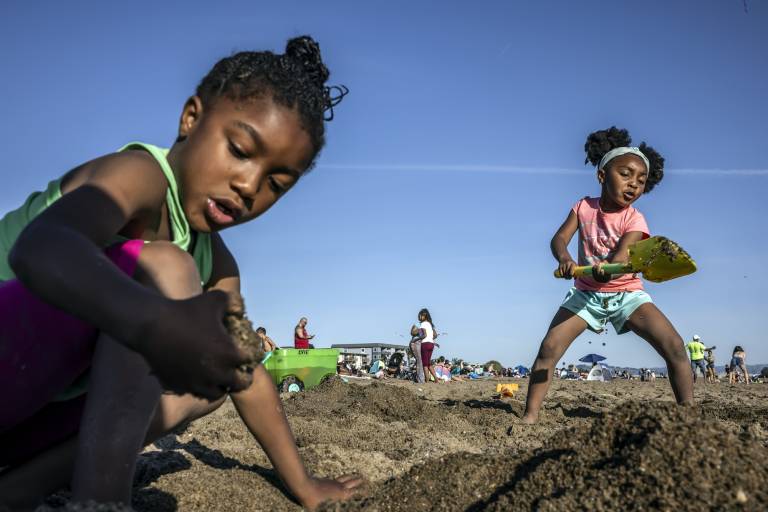
"caption": "Londyn, left, and Rae (no last names provided) dig in the sand at Alameda South Shore Beach as their family spent the day cooling off in Alameda, California, on Sunday, March 15, 2026. A rare early-season heat wave is bringing near-summer temperatures, record highs and elevated wildfire risk to much of California.",
"credit": "Carlos Avila Gonzalez/San Francisco Chronicle via Getty Images",
"altTag": null,
"description": null,
"imgSizes": {
"thumbnail": {
"file": "https://cdn.kqed.org/wp-content/uploads/sites/35/2026/03/BayAreaHeatWaveGetty2-160x107.jpg",
"width": 160,
"height": 107,
"mimeType": "image/jpeg"
},
"medium_large": {
"file": "https://cdn.kqed.org/wp-content/uploads/sites/35/2026/03/BayAreaHeatWaveGetty2-768x512.jpg",
"width": 768,
"height": 512,
"mimeType": "image/jpeg"
},
"1536x1536": {
"file": "https://cdn.kqed.org/wp-content/uploads/sites/35/2026/03/BayAreaHeatWaveGetty2-1536x1024.jpg",
"width": 1536,
"height": 1024,
"mimeType": "image/jpeg"
},
"post-thumbnail": {
"file": "https://cdn.kqed.org/wp-content/uploads/sites/35/2026/03/BayAreaHeatWaveGetty2-672x372.jpg",
"width": 672,
"height": 372,
"mimeType": "image/jpeg"
},
"twentyfourteen-full-width": {
"file": "https://cdn.kqed.org/wp-content/uploads/sites/35/2026/03/BayAreaHeatWaveGetty2-1038x576.jpg",
"width": 1038,
"height": 576,
"mimeType": "image/jpeg"
},
"npr-cds-wide": {
"file": "https://cdn.kqed.org/wp-content/uploads/sites/35/2026/03/BayAreaHeatWaveGetty2-1200x675.jpg",
"width": 1200,
"height": 675,
"mimeType": "image/jpeg"
},
"kqedFullSize": {
"file": "https://cdn.kqed.org/wp-content/uploads/sites/35/2026/03/BayAreaHeatWaveGetty2.jpg",
"width": 2000,
"height": 1333
}
},
"isLoading": false,
"fetchFailed": false
},
"science_1994646": {
"type": "attachments",
"id": "science_1994646",
"meta": {
"index": "attachments_1716263798",
"site": "science",
"id": "1994646",
"found": true
},
"title": "San Francisco Bay Area to get warmest temps of the year",
"publishDate": 1728065455,
"status": "inherit",
"parent": 1994643,
"modified": 1728065670,
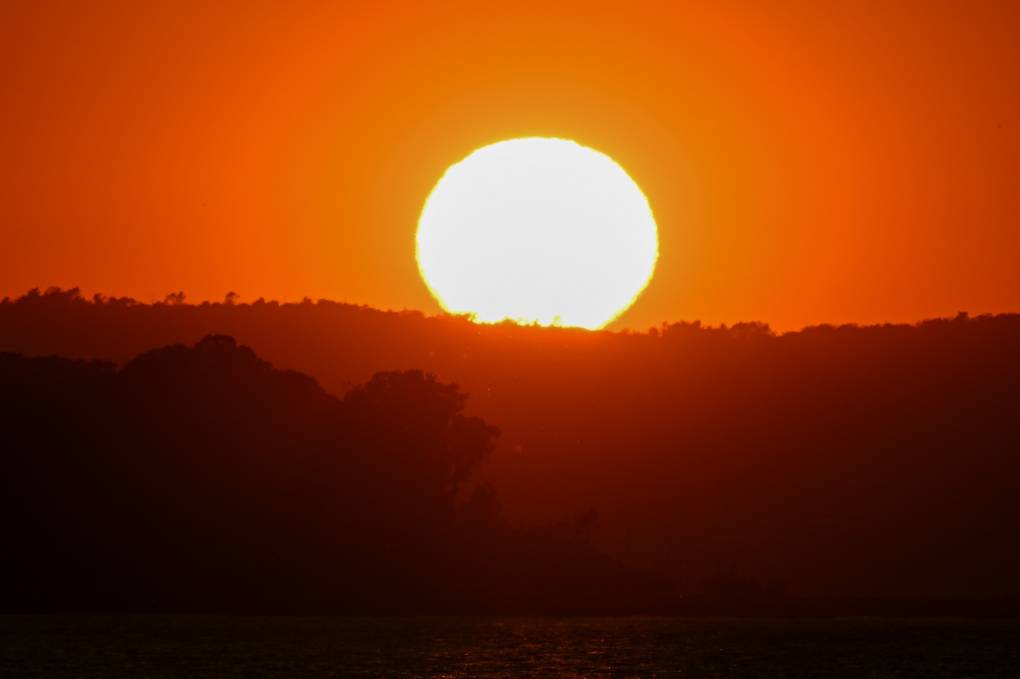
"caption": "The sun sets over San Francisco International Airport on May 8, 2024. The Bay Area experienced record-breaking heat waves this week, marking October as one of the hottest months of the year.",
"credit": "Tayfun Coskun/Anadolu via Getty Images",
"altTag": null,
"description": null,
"imgSizes": {
"medium": {
"file": "https://cdn.kqed.org/wp-content/uploads/sites/35/2024/10/SFHeatWaveGetty2-800x533.jpg",
"width": 800,
"height": 533,
"mimeType": "image/jpeg"
},
"large": {
"file": "https://cdn.kqed.org/wp-content/uploads/sites/35/2024/10/SFHeatWaveGetty2-1020x679.jpg",
"width": 1020,
"height": 679,
"mimeType": "image/jpeg"
},
"thumbnail": {
"file": "https://cdn.kqed.org/wp-content/uploads/sites/35/2024/10/SFHeatWaveGetty2-160x107.jpg",
"width": 160,
"height": 107,
"mimeType": "image/jpeg"
},
"medium_large": {
"file": "https://cdn.kqed.org/wp-content/uploads/sites/35/2024/10/SFHeatWaveGetty2-768x511.jpg",
"width": 768,
"height": 511,
"mimeType": "image/jpeg"
},
"1536x1536": {
"file": "https://cdn.kqed.org/wp-content/uploads/sites/35/2024/10/SFHeatWaveGetty2-1536x1023.jpg",
"width": 1536,
"height": 1023,
"mimeType": "image/jpeg"
},
"post-thumbnail": {
"file": "https://cdn.kqed.org/wp-content/uploads/sites/35/2024/10/SFHeatWaveGetty2-672x372.jpg",
"width": 672,
"height": 372,
"mimeType": "image/jpeg"
},
"twentyfourteen-full-width": {
"file": "https://cdn.kqed.org/wp-content/uploads/sites/35/2024/10/SFHeatWaveGetty2-1038x576.jpg",
"width": 1038,
"height": 576,
"mimeType": "image/jpeg"
},
"full-width": {
"file": "https://cdn.kqed.org/wp-content/uploads/sites/35/2024/10/SFHeatWaveGetty2-1920x1279.jpg",
"width": 1920,
"height": 1279,
"mimeType": "image/jpeg"
},
"kqedFullSize": {
"file": "https://cdn.kqed.org/wp-content/uploads/sites/35/2024/10/SFHeatWaveGetty2.jpg",
"width": 2000,
"height": 1332
}
},
"isLoading": false,
"fetchFailed": false
},
"science_1998076": {
"type": "attachments",
"id": "science_1998076",
"meta": {
"index": "attachments_1716263798",
"site": "science",
"id": "1998076",
"found": true
},
"title": "Warm weather in San Francisco",
"publishDate": 1754584292,
"status": "inherit",
"parent": 1998073,
"modified": 1773252256,
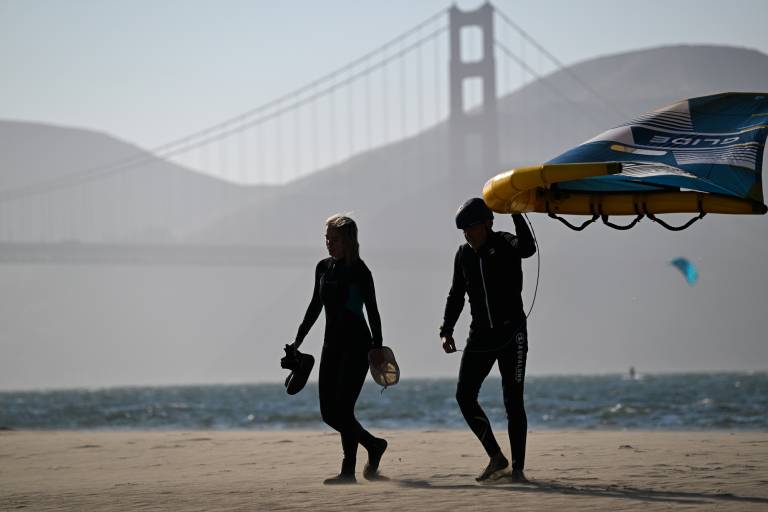
"caption": "People enjoy the warm weather at Crissy Field near the Golden Gate Bridge as a heat wave warning is issued in San Francisco, California, on July 11, 2024.",
"credit": "Tayfun Coskun/Anadolu via Getty Images",
"altTag": null,
"description": null,
"imgSizes": {
"thumbnail": {
"file": "https://cdn.kqed.org/wp-content/uploads/sites/35/2025/08/BayAreaHeatWaveGetty-160x107.jpg",
"width": 160,
"height": 107,
"mimeType": "image/jpeg"
},
"medium_large": {
"file": "https://cdn.kqed.org/wp-content/uploads/sites/35/2025/08/BayAreaHeatWaveGetty-768x512.jpg",
"width": 768,
"height": 512,
"mimeType": "image/jpeg"
},
"1536x1536": {
"file": "https://cdn.kqed.org/wp-content/uploads/sites/35/2025/08/BayAreaHeatWaveGetty-1536x1024.jpg",
"width": 1536,
"height": 1024,
"mimeType": "image/jpeg"
},
"post-thumbnail": {
"file": "https://cdn.kqed.org/wp-content/uploads/sites/35/2025/08/BayAreaHeatWaveGetty-672x372.jpg",
"width": 672,
"height": 372,
"mimeType": "image/jpeg"
},
"twentyfourteen-full-width": {
"file": "https://cdn.kqed.org/wp-content/uploads/sites/35/2025/08/BayAreaHeatWaveGetty-1038x576.jpg",
"width": 1038,
"height": 576,
"mimeType": "image/jpeg"
},
"kqedFullSize": {
"file": "https://cdn.kqed.org/wp-content/uploads/sites/35/2025/08/BayAreaHeatWaveGetty.jpg",
"width": 2000,
"height": 1333
}
},
"isLoading": false,
"fetchFailed": false
},
"science_2000222": {
"type": "attachments",
"id": "science_2000222",
"meta": {
"index": "attachments_1716263798",
"site": "science",
"id": "2000222",
"found": true
},
"title": "Sakura Blossoms",
"publishDate": 1772137339,
"status": "inherit",
"parent": 2000203,
"modified": 1772137397,
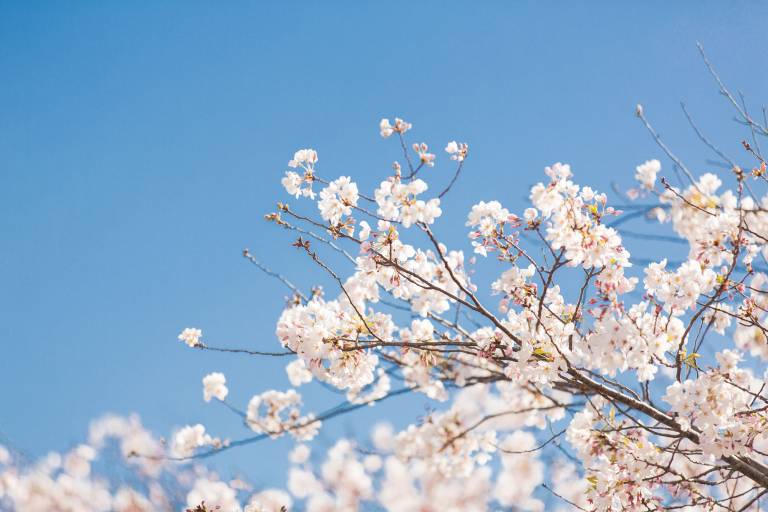
"caption": "Sakura blossoms in San Francisco's Japantown during the Cherry Blossom Festival.",
"credit": "AF Images/Getty Images",
"altTag": null,
"description": null,
"imgSizes": {
"thumbnail": {
"file": "https://cdn.kqed.org/wp-content/uploads/sites/35/2026/02/RESIZE-cherry-blossom-160x107.jpg",
"width": 160,
"height": 107,
"mimeType": "image/jpeg"
},
"medium_large": {
"file": "https://cdn.kqed.org/wp-content/uploads/sites/35/2026/02/RESIZE-cherry-blossom-768x512.jpg",
"width": 768,
"height": 512,
"mimeType": "image/jpeg"
},
"1536x1536": {
"file": "https://cdn.kqed.org/wp-content/uploads/sites/35/2026/02/RESIZE-cherry-blossom-1536x1025.jpg",
"width": 1536,
"height": 1025,
"mimeType": "image/jpeg"
},
"post-thumbnail": {
"file": "https://cdn.kqed.org/wp-content/uploads/sites/35/2026/02/RESIZE-cherry-blossom-672x372.jpg",
"width": 672,
"height": 372,
"mimeType": "image/jpeg"
},
"twentyfourteen-full-width": {
"file": "https://cdn.kqed.org/wp-content/uploads/sites/35/2026/02/RESIZE-cherry-blossom-1038x576.jpg",
"width": 1038,
"height": 576,
"mimeType": "image/jpeg"
},
"npr-cds-wide": {
"file": "https://cdn.kqed.org/wp-content/uploads/sites/35/2026/02/RESIZE-cherry-blossom-1200x675.jpg",
"width": 1200,
"height": 675,
"mimeType": "image/jpeg"
},
"kqedFullSize": {
"file": "https://cdn.kqed.org/wp-content/uploads/sites/35/2026/02/RESIZE-cherry-blossom.jpg",
"width": 2000,
"height": 1334
}
},
"isLoading": false,
"fetchFailed": false
},
"science_1994404": {
"type": "attachments",
"id": "science_1994404",
"meta": {
"index": "attachments_1716263798",
"site": "science",
"id": "1994404",
"found": true
},
"title": "how-to-see-blood-moon-2025",
"publishDate": 1726504065,
"status": "inherit",
"parent": 1994403,
"modified": 1741285874,
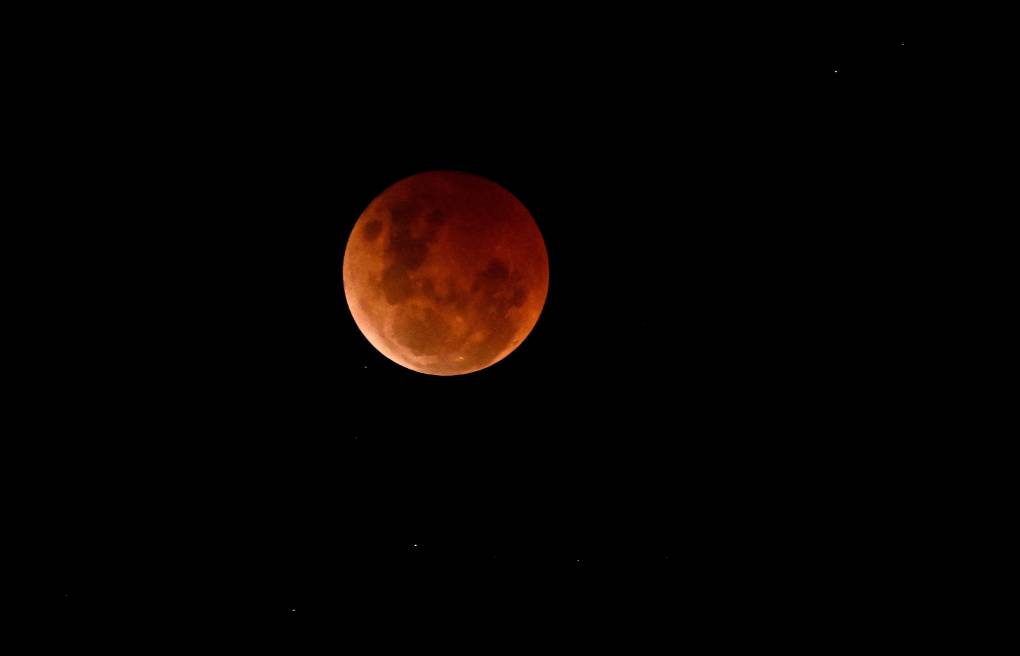
"caption": "A blood moon is seen during a lunar eclipse on Nov. 8, 2022, over Brisbane, Australia. ",
"credit": "Dan Peled/Getty Images",
"altTag": "An image of the moon with a reddish tint.",
"description": "BRISBANE, AUSTRALIA - NOVEMBER 08: A blood moon is seen during a lunar eclipse on November 08, 2022 over Brisbane, Australia. Australians will experience the first visible total lunar eclipse of the year on Tuesday, the ABC reported, with the eclipse also being visible from New Zealand. The \"Blood Moon\" is the first of its kind for the year, and the last time the region will see a full lunar eclipse until 2025. (Photo by Dan Peled/Getty Images)",
"imgSizes": {
"medium": {
"file": "https://cdn.kqed.org/wp-content/uploads/sites/35/2024/09/gettyimages-1439969828-800x515.jpeg",
"width": 800,
"height": 515,
"mimeType": "image/jpeg"
},
"large": {
"file": "https://cdn.kqed.org/wp-content/uploads/sites/35/2024/09/gettyimages-1439969828-1020x656.jpeg",
"width": 1020,
"height": 656,
"mimeType": "image/jpeg"
},
"thumbnail": {
"file": "https://cdn.kqed.org/wp-content/uploads/sites/35/2024/09/gettyimages-1439969828-160x103.jpeg",
"width": 160,
"height": 103,
"mimeType": "image/jpeg"
},
"medium_large": {
"file": "https://cdn.kqed.org/wp-content/uploads/sites/35/2024/09/gettyimages-1439969828-768x494.jpeg",
"width": 768,
"height": 494,
"mimeType": "image/jpeg"
},
"1536x1536": {
"file": "https://cdn.kqed.org/wp-content/uploads/sites/35/2024/09/gettyimages-1439969828-1536x988.jpeg",
"width": 1536,
"height": 988,
"mimeType": "image/jpeg"
},
"2048x2048": {
"file": "https://cdn.kqed.org/wp-content/uploads/sites/35/2024/09/gettyimages-1439969828-2048x1318.jpeg",
"width": 2048,
"height": 1318,
"mimeType": "image/jpeg"
},
"post-thumbnail": {
"file": "https://cdn.kqed.org/wp-content/uploads/sites/35/2024/09/gettyimages-1439969828-672x372.jpeg",
"width": 672,
"height": 372,
"mimeType": "image/jpeg"
},
"twentyfourteen-full-width": {
"file": "https://cdn.kqed.org/wp-content/uploads/sites/35/2024/09/gettyimages-1439969828-1038x576.jpeg",
"width": 1038,
"height": 576,
"mimeType": "image/jpeg"
},
"full-width": {
"file": "https://cdn.kqed.org/wp-content/uploads/sites/35/2024/09/gettyimages-1439969828-1920x1235.jpeg",
"width": 1920,
"height": 1235,
"mimeType": "image/jpeg"
},
"kqedFullSize": {
"file": "https://cdn.kqed.org/wp-content/uploads/sites/35/2024/09/gettyimages-1439969828-scaled-e1772044520737.jpeg",
"width": 2000,
"height": 1287
}
},
"isLoading": false,
"fetchFailed": false
},
"science_2000164": {
"type": "attachments",
"id": "science_2000164",
"meta": {
"index": "attachments_1716263798",
"site": "science",
"id": "2000164",
"found": true
},
"title": "20251113_RainFolo_GH-6_qed",
"publishDate": 1771881040,
"status": "inherit",
"parent": 2000160,
"modified": 1771881054,
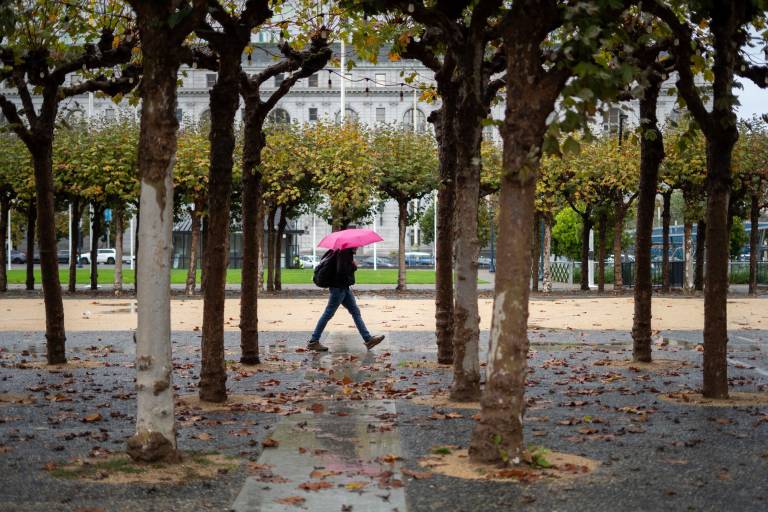
"caption": "A pedestrian carrying a pink umbrella walks through Civic Center Plaza in San Francisco on Nov. 13, 2025.",
"credit": "Gustavo Hernandez/KQED",
"altTag": null,
"description": null,
"imgSizes": {
"thumbnail": {
"file": "https://cdn.kqed.org/wp-content/uploads/sites/35/2026/02/20251113_RainFolo_GH-6_qed-160x107.jpg",
"width": 160,
"height": 107,
"mimeType": "image/jpeg"
},
"medium_large": {
"file": "https://cdn.kqed.org/wp-content/uploads/sites/35/2026/02/20251113_RainFolo_GH-6_qed-768x512.jpg",
"width": 768,
"height": 512,
"mimeType": "image/jpeg"
},
"1536x1536": {
"file": "https://cdn.kqed.org/wp-content/uploads/sites/35/2026/02/20251113_RainFolo_GH-6_qed-1536x1024.jpg",
"width": 1536,
"height": 1024,
"mimeType": "image/jpeg"
},
"post-thumbnail": {
"file": "https://cdn.kqed.org/wp-content/uploads/sites/35/2026/02/20251113_RainFolo_GH-6_qed-672x372.jpg",
"width": 672,
"height": 372,
"mimeType": "image/jpeg"
},
"twentyfourteen-full-width": {
"file": "https://cdn.kqed.org/wp-content/uploads/sites/35/2026/02/20251113_RainFolo_GH-6_qed-1038x576.jpg",
"width": 1038,
"height": 576,
"mimeType": "image/jpeg"
},
"npr-cds-wide": {
"file": "https://cdn.kqed.org/wp-content/uploads/sites/35/2026/02/20251113_RainFolo_GH-6_qed-1200x675.jpg",
"width": 1200,
"height": 675,
"mimeType": "image/jpeg"
},
"kqedFullSize": {
"file": "https://cdn.kqed.org/wp-content/uploads/sites/35/2026/02/20251113_RainFolo_GH-6_qed.jpg",
"width": 2000,
"height": 1333
}
},
"isLoading": false,
"fetchFailed": false
},
"science_1999934": {
"type": "attachments",
"id": "science_1999934",
"meta": {
"index": "attachments_1716263798",
"site": "science",
"id": "1999934",
"found": true
},
"title": "Our Climate Future: A Forum with California's Next Governor",
"publishDate": 1769706421,
"status": "inherit",
"parent": 0,
"modified": 1769706481,
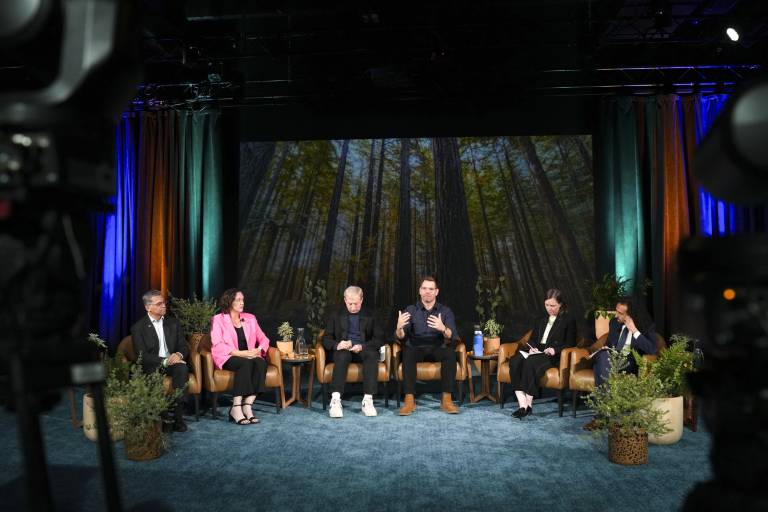
"caption": "Candidates for Governor of California attend the \"Our Climate Future: A Forum with California's Next Governor\" event in Pasadena on Jan. 28, 2026.",
"credit": "Matei Horvath/Getty Images for California Environmental Voters",
"altTag": null,
"description": null,
"imgSizes": {
"thumbnail": {
"file": "https://cdn.kqed.org/wp-content/uploads/sites/35/2026/01/GETTYIMAGES-2258202432-KQED-160x107.jpg",
"width": 160,
"height": 107,
"mimeType": "image/jpeg"
},
"medium_large": {
"file": "https://cdn.kqed.org/wp-content/uploads/sites/35/2026/01/GETTYIMAGES-2258202432-KQED-768x512.jpg",
"width": 768,
"height": 512,
"mimeType": "image/jpeg"
},
"1536x1536": {
"file": "https://cdn.kqed.org/wp-content/uploads/sites/35/2026/01/GETTYIMAGES-2258202432-KQED-1536x1024.jpg",
"width": 1536,
"height": 1024,
"mimeType": "image/jpeg"
},
"post-thumbnail": {
"file": "https://cdn.kqed.org/wp-content/uploads/sites/35/2026/01/GETTYIMAGES-2258202432-KQED-672x372.jpg",
"width": 672,
"height": 372,
"mimeType": "image/jpeg"
},
"twentyfourteen-full-width": {
"file": "https://cdn.kqed.org/wp-content/uploads/sites/35/2026/01/GETTYIMAGES-2258202432-KQED-1038x576.jpg",
"width": 1038,
"height": 576,
"mimeType": "image/jpeg"
},
"npr-cds-wide": {
"file": "https://cdn.kqed.org/wp-content/uploads/sites/35/2026/01/GETTYIMAGES-2258202432-KQED-1200x675.jpg",
"width": 1200,
"height": 675,
"mimeType": "image/jpeg"
},
"kqedFullSize": {
"file": "https://cdn.kqed.org/wp-content/uploads/sites/35/2026/01/GETTYIMAGES-2258202432-KQED.jpg",
"width": 2000,
"height": 1333
}
},
"isLoading": false,
"fetchFailed": false
},
"science_1999814": {
"type": "attachments",
"id": "science_1999814",
"meta": {
"index": "attachments_1716263798",
"site": "science",
"id": "1999814",
"found": true
},
"title": "260112-MARINFLOODING-02-BL-KQED",
"publishDate": 1768331655,
"status": "inherit",
"parent": 0,
"modified": 1768331832,
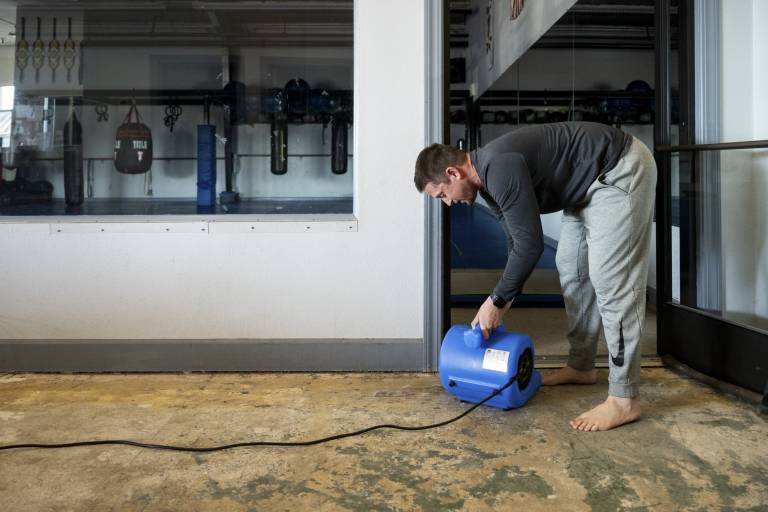
"caption": "Derek Bentley plugs in a fan at Taylor’s House of Karate in San Rafael on Jan. 12, 2026, after the karate studio and surrounding area experienced flooding during a series of king tides and winter storms earlier in the month.",
"credit": "Beth LaBerge/KQED",
"altTag": null,
"description": null,
"imgSizes": {
"thumbnail": {
"file": "https://cdn.kqed.org/wp-content/uploads/sites/35/2026/01/260112-MARINFLOODING-02-BL-KQED-160x107.jpg",
"width": 160,
"height": 107,
"mimeType": "image/jpeg"
},
"medium_large": {
"file": "https://cdn.kqed.org/wp-content/uploads/sites/35/2026/01/260112-MARINFLOODING-02-BL-KQED-768x512.jpg",
"width": 768,
"height": 512,
"mimeType": "image/jpeg"
},
"1536x1536": {
"file": "https://cdn.kqed.org/wp-content/uploads/sites/35/2026/01/260112-MARINFLOODING-02-BL-KQED-1536x1024.jpg",
"width": 1536,
"height": 1024,
"mimeType": "image/jpeg"
},
"post-thumbnail": {
"file": "https://cdn.kqed.org/wp-content/uploads/sites/35/2026/01/260112-MARINFLOODING-02-BL-KQED-672x372.jpg",
"width": 672,
"height": 372,
"mimeType": "image/jpeg"
},
"twentyfourteen-full-width": {
"file": "https://cdn.kqed.org/wp-content/uploads/sites/35/2026/01/260112-MARINFLOODING-02-BL-KQED-1038x576.jpg",
"width": 1038,
"height": 576,
"mimeType": "image/jpeg"
},
"npr-cds-wide": {
"file": "https://cdn.kqed.org/wp-content/uploads/sites/35/2026/01/260112-MARINFLOODING-02-BL-KQED-1200x675.jpg",
"width": 1200,
"height": 675,
"mimeType": "image/jpeg"
},
"kqedFullSize": {
"file": "https://cdn.kqed.org/wp-content/uploads/sites/35/2026/01/260112-MARINFLOODING-02-BL-KQED.jpg",
"width": 2000,
"height": 1333
}
},
"isLoading": false,
"fetchFailed": false
},
"science_1999850": {
"type": "attachments",
"id": "science_1999850",
"meta": {
"index": "attachments_1716263798",
"site": "science",
"id": "1999850",
"found": true
},
"title": "Alien-movie-1979-Twentieth-Century-Fox-Photofest-FINAL",
"publishDate": 1768509820,
"status": "inherit",
"parent": 1999821,
"modified": 1768509841,
"caption": "Ridley Scott’s 1979 classic ‘Alien’ joins his own ‘Blade Runner’ (1982) and Luc Besson’s ‘The Fifth Element’ in Chabot Space & Science Center’s Sci-Fi Nights movie series in their planetarium.",
"credit": "20th Century Fox",
"altTag": null,
"description": null,
"imgSizes": {
"thumbnail": {
"file": "https://cdn.kqed.org/wp-content/uploads/sites/35/2026/01/Alien-movie-1979-Twentieth-Century-Fox-Photofest-FINAL-160x90.jpg",
"width": 160,
"height": 90,
"mimeType": "image/jpeg"
},
"medium_large": {
"file": "https://cdn.kqed.org/wp-content/uploads/sites/35/2026/01/Alien-movie-1979-Twentieth-Century-Fox-Photofest-FINAL-768x432.jpg",
"width": 768,
"height": 432,
"mimeType": "image/jpeg"
},
"1536x1536": {
"file": "https://cdn.kqed.org/wp-content/uploads/sites/35/2026/01/Alien-movie-1979-Twentieth-Century-Fox-Photofest-FINAL-1536x865.jpg",
"width": 1536,
"height": 865,
"mimeType": "image/jpeg"
},
"post-thumbnail": {
"file": "https://cdn.kqed.org/wp-content/uploads/sites/35/2026/01/Alien-movie-1979-Twentieth-Century-Fox-Photofest-FINAL-672x372.jpg",
"width": 672,
"height": 372,
"mimeType": "image/jpeg"
},
"twentyfourteen-full-width": {
"file": "https://cdn.kqed.org/wp-content/uploads/sites/35/2026/01/Alien-movie-1979-Twentieth-Century-Fox-Photofest-FINAL-1038x576.jpg",
"width": 1038,
"height": 576,
"mimeType": "image/jpeg"
},
"npr-cds-wide": {
"file": "https://cdn.kqed.org/wp-content/uploads/sites/35/2026/01/Alien-movie-1979-Twentieth-Century-Fox-Photofest-FINAL-1200x675.jpg",
"width": 1200,
"height": 675,
"mimeType": "image/jpeg"
},
"kqedFullSize": {
"file": "https://cdn.kqed.org/wp-content/uploads/sites/35/2026/01/Alien-movie-1979-Twentieth-Century-Fox-Photofest-FINAL.jpg",
"width": 2000,
"height": 1126
}
},
"isLoading": false,
"fetchFailed": false
},
"science_1999676": {
"type": "attachments",
"id": "science_1999676",
"meta": {
"index": "attachments_1716263798",
"site": "science",
"id": "1999676",
"found": true
},
"title": "251211-DEATHCAPMUSHROOMS-03-BL-KQED",
"publishDate": 1765903938,
"status": "inherit",
"parent": 0,
"modified": 1768440050,
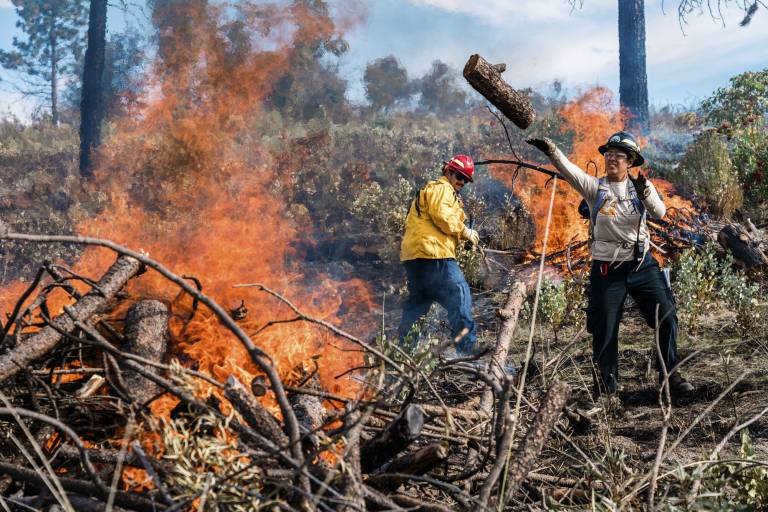
"caption": "Sita Davis points to a photo of death cap mushrooms in the book Mushrooms of the Redwood Coast during an educational mushroom walk at Anthony Chabot Regional Park in Oakland on Dec. 12, 2025. The top image shows an edible mushroom that resembles a death cap, from the book Diccionario Gastronómico de Hongos Mexicanos.",
"credit": "Beth LaBerge/KQED",
"altTag": null,
"description": null,
"imgSizes": {
"thumbnail": {
"file": "https://cdn.kqed.org/wp-content/uploads/sites/35/2025/12/251211-DEATHCAPMUSHROOMS-03-BL-KQED-160x107.jpg",
"width": 160,
"height": 107,
"mimeType": "image/jpeg"
},
"medium_large": {
"file": "https://cdn.kqed.org/wp-content/uploads/sites/35/2025/12/251211-DEATHCAPMUSHROOMS-03-BL-KQED-768x512.jpg",
"width": 768,
"height": 512,
"mimeType": "image/jpeg"
},
"1536x1536": {
"file": "https://cdn.kqed.org/wp-content/uploads/sites/35/2025/12/251211-DEATHCAPMUSHROOMS-03-BL-KQED-1536x1024.jpg",
"width": 1536,
"height": 1024,
"mimeType": "image/jpeg"
},
"post-thumbnail": {
"file": "https://cdn.kqed.org/wp-content/uploads/sites/35/2025/12/251211-DEATHCAPMUSHROOMS-03-BL-KQED-672x372.jpg",
"width": 672,
"height": 372,
"mimeType": "image/jpeg"
},
"twentyfourteen-full-width": {
"file": "https://cdn.kqed.org/wp-content/uploads/sites/35/2025/12/251211-DEATHCAPMUSHROOMS-03-BL-KQED-1038x576.jpg",
"width": 1038,
"height": 576,
"mimeType": "image/jpeg"
},
"npr-cds-wide": {
"file": "https://cdn.kqed.org/wp-content/uploads/sites/35/2025/12/251211-DEATHCAPMUSHROOMS-03-BL-KQED-1200x675.jpg",
"width": 1200,
"height": 675,
"mimeType": "image/jpeg"
},
"kqedFullSize": {
"file": "https://cdn.kqed.org/wp-content/uploads/sites/35/2025/12/251211-DEATHCAPMUSHROOMS-03-BL-KQED.jpg",
"width": 2000,
"height": 1333
}
},
"isLoading": false,
"fetchFailed": false
},
"science_1999165": {
"type": "attachments",
"id": "science_1999165",
"meta": {
"index": "attachments_1716263798",
"site": "science",
"id": "1999165",
"found": true
},
"title": "Maidu CAL-TREX 2025",
"publishDate": 1762461937,
"status": "inherit",
"parent": 2001297,
"modified": 1781131214,
"caption": "Participants in the prescribed burn add fuel to fires as part of a CAL-TREX prescribed burn in Berry Creek on Nov. 4, 2025.",
"credit": "Andri Tambunan for KQED",
"altTag": null,
"description": null,
"imgSizes": {
"thumbnail": {
"file": "https://cdn.kqed.org/wp-content/uploads/sites/35/2025/11/KQED_PRESCRIBED-BURN_AT_257_QED-KQED-160x107.jpg",
"width": 160,
"height": 107,
"mimeType": "image/jpeg"
},
"medium_large": {
"file": "https://cdn.kqed.org/wp-content/uploads/sites/35/2025/11/KQED_PRESCRIBED-BURN_AT_257_QED-KQED-768x512.jpg",
"width": 768,
"height": 512,
"mimeType": "image/jpeg"
},
"1536x1536": {
"file": "https://cdn.kqed.org/wp-content/uploads/sites/35/2025/11/KQED_PRESCRIBED-BURN_AT_257_QED-KQED-1536x1024.jpg",
"width": 1536,
"height": 1024,
"mimeType": "image/jpeg"
},
"post-thumbnail": {
"file": "https://cdn.kqed.org/wp-content/uploads/sites/35/2025/11/KQED_PRESCRIBED-BURN_AT_257_QED-KQED-672x372.jpg",
"width": 672,
"height": 372,
"mimeType": "image/jpeg"
},
"twentyfourteen-full-width": {
"file": "https://cdn.kqed.org/wp-content/uploads/sites/35/2025/11/KQED_PRESCRIBED-BURN_AT_257_QED-KQED-1038x576.jpg",
"width": 1038,
"height": 576,
"mimeType": "image/jpeg"
},
"npr-cds-wide": {
"file": "https://cdn.kqed.org/wp-content/uploads/sites/35/2025/11/KQED_PRESCRIBED-BURN_AT_257_QED-KQED-1200x675.jpg",
"width": 1200,
"height": 675,
"mimeType": "image/jpeg"
},
"kqedFullSize": {
"file": "https://cdn.kqed.org/wp-content/uploads/sites/35/2025/11/KQED_PRESCRIBED-BURN_AT_257_QED-KQED.jpg",
"width": 2000,
"height": 1333
}
},
"isLoading": false,
"fetchFailed": false
},
"science_1999677": {
"type": "attachments",
"id": "science_1999677",
"meta": {
"index": "attachments_1716263798",
"site": "science",
"id": "1999677",
"found": true
},
"title": "251211-DEATHCAPMUSHROOMS-10-BL-KQED",
"publishDate": 1765903941,
"status": "inherit",
"parent": 0,
"modified": 1768435095,
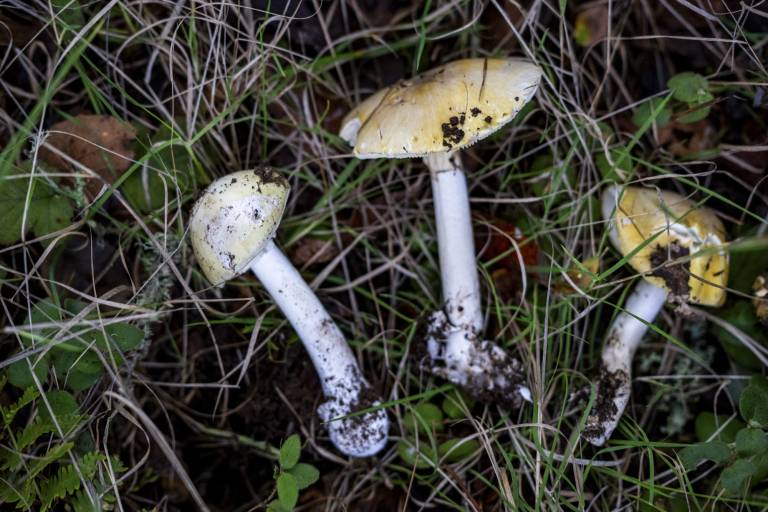
"caption": "Death cap mushrooms sit by the side of a trail during an educational mushroom walk at Anthony Chabot Regional Park in Oakland on Dec. 12, 2025. Mushroom foraging is not allowed in the park.",
"credit": "Beth LaBerge/KQED",
"altTag": null,
"description": null,
"imgSizes": {
"thumbnail": {
"file": "https://cdn.kqed.org/wp-content/uploads/sites/35/2025/12/251211-DEATHCAPMUSHROOMS-10-BL-KQED-160x107.jpg",
"width": 160,
"height": 107,
"mimeType": "image/jpeg"
},
"medium_large": {
"file": "https://cdn.kqed.org/wp-content/uploads/sites/35/2025/12/251211-DEATHCAPMUSHROOMS-10-BL-KQED-768x512.jpg",
"width": 768,
"height": 512,
"mimeType": "image/jpeg"
},
"1536x1536": {
"file": "https://cdn.kqed.org/wp-content/uploads/sites/35/2025/12/251211-DEATHCAPMUSHROOMS-10-BL-KQED-1536x1024.jpg",
"width": 1536,
"height": 1024,
"mimeType": "image/jpeg"
},
"post-thumbnail": {
"file": "https://cdn.kqed.org/wp-content/uploads/sites/35/2025/12/251211-DEATHCAPMUSHROOMS-10-BL-KQED-672x372.jpg",
"width": 672,
"height": 372,
"mimeType": "image/jpeg"
},
"twentyfourteen-full-width": {
"file": "https://cdn.kqed.org/wp-content/uploads/sites/35/2025/12/251211-DEATHCAPMUSHROOMS-10-BL-KQED-1038x576.jpg",
"width": 1038,
"height": 576,
"mimeType": "image/jpeg"
},
"npr-cds-wide": {
"file": "https://cdn.kqed.org/wp-content/uploads/sites/35/2025/12/251211-DEATHCAPMUSHROOMS-10-BL-KQED-1200x675.jpg",
"width": 1200,
"height": 675,
"mimeType": "image/jpeg"
},
"kqedFullSize": {
"file": "https://cdn.kqed.org/wp-content/uploads/sites/35/2025/12/251211-DEATHCAPMUSHROOMS-10-BL-KQED.jpg",
"width": 2000,
"height": 1333
}
},
"isLoading": false,
"fetchFailed": false
}
},
"audioPlayerReducer": {
"postId": "stream_live",
"isPaused": true,
"isPlaying": false,
"pfsActive": false,
"pledgeModalIsOpen": true,
"playerDrawerIsOpen": false,
"liveAudioPlayStartedAt": 0,
"liveAudioPlayContext": ""
},
"authorsReducer": {
"byline_science_2000160": {
"type": "authors",
"id": "byline_science_2000160",
"meta": {
"override": true
},
"slug": "byline_science_2000160",
"name": "Alonso Daboub",
"isLoading": false
},
"adembosky": {
"type": "authors",
"id": "3205",
"meta": {
"index": "authors_1716337520",
"id": "3205",
"found": true
},
"name": "April Dembosky",
"firstName": "April",
"lastName": "Dembosky",
"slug": "adembosky",
"email": "adembosky@kqed.org",
"display_author_email": false,
"staff_mastheads": [
"news",
"science"
],
"title": "KQED Health Correspondent",
"bio": "April Dembosky is the health correspondent for KQED News and a regular contributor to NPR. She specializes in covering altered states of mind, from postpartum depression to methamphetamine-induced psychosis to the insanity defense. Her investigative series on insurance companies sidestepping mental health laws won multiple awards, including first place in beat reporting from the national Association of Health Care Journalists. She is the recipient of numerous other prizes and fellowships, including a national Edward R. Murrow award for investigative reporting, a Society of Professional Journalists award for long-form storytelling, and a Carter Center Fellowship for Mental Health Journalism.\r\n\r\nDembosky reported and produced \u003cem>Soundtrack of Silence\u003c/em>, an audio documentary about music and memory that is currently being made into a feature film by Paramount Pictures.\r\n\r\nBefore joining KQED in 2013, Dembosky covered technology and Silicon Valley for \u003cem>The Financial Times of London,\u003c/em> and contributed business and arts stories to \u003cem>Marketplace \u003c/em>and \u003cem>The New York Times.\u003c/em> She got her undergraduate degree in philosophy from Smith College and her master's in journalism from the University of California, Berkeley. She is a classically trained violinist and proud alum of the first symphony orchestra at Burning Man.",
"avatar": "https://secure.gravatar.com/avatar/d6593cd737b732102fe0b6250b5351c2d3bc9b2987566514aa3c9a106494d684?s=600&d=blank&r=g",
"twitter": "adembosky",
"bluesky": null,
"facebook": null,
"instagram": null,
"linkedin": null,
"sites": [
{
"site": "arts",
"roles": [
"author"
]
},
{
"site": "news",
"roles": [
"editor"
]
},
{
"site": "futureofyou",
"roles": [
"author"
]
},
{
"site": "stateofhealth",
"roles": [
"editor"
]
},
{
"site": "science",
"roles": [
"editor"
]
},
{
"site": "forum",
"roles": [
"editor"
]
}
],
"headData": {
"title": "April Dembosky | KQED",
"description": "KQED Health Correspondent",
"ogImgSrc": "https://secure.gravatar.com/avatar/d6593cd737b732102fe0b6250b5351c2d3bc9b2987566514aa3c9a106494d684?s=600&d=blank&r=g",
"twImgSrc": "https://secure.gravatar.com/avatar/d6593cd737b732102fe0b6250b5351c2d3bc9b2987566514aa3c9a106494d684?s=600&d=blank&r=g"
},
"isLoading": false,
"link": "/author/adembosky"
},
"dventon": {
"type": "authors",
"id": "11088",
"meta": {
"index": "authors_1716337520",
"id": "11088",
"found": true
},
"name": "Danielle Venton",
"firstName": "Danielle",
"lastName": "Venton",
"slug": "dventon",
"email": "dventon@kqed.org",
"display_author_email": true,
"staff_mastheads": [
"science"
],
"title": "Science reporter",
"bio": "Danielle Venton is a reporter for KQED Science. She covers wildfires, space and oceans (though she is prone to sea sickness).\r\n\r\nBefore joining KQED in 2015, Danielle was a staff reporter at KRCB in Sonoma County and a freelancer. She studied science communication at UC Santa Cruz and formerly worked at CERN in Geneva, Switzerland where she wrote about computing. She lives in Sonoma County and enjoys backpacking.",
"avatar": "https://secure.gravatar.com/avatar/37b292b5c40c8d93959c4f48d73b5286f41b7abd8588277e941905a3ed4c801c?s=600&d=blank&r=g",
"twitter": "DanielleVenton",
"bluesky": null,
"facebook": null,
"instagram": null,
"linkedin": null,
"sites": [
{
"site": "arts",
"roles": [
"contributor"
]
},
{
"site": "news",
"roles": [
"editor"
]
},
{
"site": "futureofyou",
"roles": [
"editor"
]
},
{
"site": "science",
"roles": [
"editor"
]
},
{
"site": "liveblog",
"roles": [
"contributor"
]
}
],
"headData": {
"title": "Danielle Venton | KQED",
"description": "Science reporter",
"ogImgSrc": "https://secure.gravatar.com/avatar/37b292b5c40c8d93959c4f48d73b5286f41b7abd8588277e941905a3ed4c801c?s=600&d=blank&r=g",
"twImgSrc": "https://secure.gravatar.com/avatar/37b292b5c40c8d93959c4f48d73b5286f41b7abd8588277e941905a3ed4c801c?s=600&d=blank&r=g"
},
"isLoading": false,
"link": "/author/dventon"
},
"smohamad": {
"type": "authors",
"id": "11631",
"meta": {
"index": "authors_1716337520",
"id": "11631",
"found": true
},
"name": "Sarah Mohamad",
"firstName": "Sarah",
"lastName": "Mohamad",
"slug": "smohamad",
"email": "smohamad@KQED.org",
"display_author_email": true,
"staff_mastheads": [],
"title": "Engagement Producer and Reporter, KQED Science",
"bio": "Sarah Mohamad is an audience engagement reporter and producer for KQED Science. She reports on audience-focused science and environment stories and manages the team's social media, newsletter, and engagement efforts. Prior to this role, she played a key role as project manager for NSF's \u003ca href=\"https://www.kqed.org/crackingthecode\">\u003cem>Cracking the Code: Influencing Millennial Science Engagement\u003c/em> \u003c/a>audience research.",
"avatar": "https://secure.gravatar.com/avatar/e6224957cd82d015183756ddde1f928013a563d7ca2e4565f8c4de1ec64886c5?s=600&d=blank&r=g",
"twitter": "sarahkmohamad",
"bluesky": null,
"facebook": null,
"instagram": null,
"linkedin": null,
"sites": [
{
"site": "",
"roles": [
"editor"
]
},
{
"site": "arts",
"roles": [
"editor"
]
},
{
"site": "news",
"roles": [
"editor"
]
},
{
"site": "about",
"roles": [
"editor"
]
},
{
"site": "science",
"roles": [
"editor"
]
}
],
"headData": {
"title": "Sarah Mohamad | KQED",
"description": "Engagement Producer and Reporter, KQED Science",
"ogImgSrc": "https://secure.gravatar.com/avatar/e6224957cd82d015183756ddde1f928013a563d7ca2e4565f8c4de1ec64886c5?s=600&d=blank&r=g",
"twImgSrc": "https://secure.gravatar.com/avatar/e6224957cd82d015183756ddde1f928013a563d7ca2e4565f8c4de1ec64886c5?s=600&d=blank&r=g"
},
"isLoading": false,
"link": "/author/smohamad"
},
"eromero": {
"type": "authors",
"id": "11746",
"meta": {
"index": "authors_1716337520",
"id": "11746",
"found": true
},
"name": "Ezra David Romero",
"firstName": "Ezra David",
"lastName": "Romero",
"slug": "eromero",
"email": "eromero@kqed.org",
"display_author_email": true,
"staff_mastheads": [
"news",
"science"
],
"title": "Climate Reporter",
"bio": "Ezra David Romero is a climate reporter for KQED News. He covers the absence and excess of water in the Bay Area — think sea level rise, flooding and drought. For nearly a decade he’s covered how warming temperatures are altering the lives of Californians. He’s reported on farmers worried their pistachio trees aren’t getting enough sleep, families desperate for water, scientists studying dying giant sequoias, and alongside firefighters containing wildfires. His work has appeared on local stations across California and nationally on public radio shows like Morning Edition, Here and Now, All Things Considered and Science Friday. ",
"avatar": "https://secure.gravatar.com/avatar/c76404d287c10ed40224227551ac36e24352c7306f106632caf6fead76f8801f?s=600&d=blank&r=g",
"twitter": "ezraromero",
"bluesky": null,
"facebook": null,
"instagram": null,
"linkedin": null,
"sites": [
{
"site": "arts",
"roles": [
"editor"
]
},
{
"site": "news",
"roles": [
"editor"
]
},
{
"site": "science",
"roles": [
"editor"
]
},
{
"site": "liveblog",
"roles": [
"author"
]
}
],
"headData": {
"title": "Ezra David Romero | KQED",
"description": "Climate Reporter",
"ogImgSrc": "https://secure.gravatar.com/avatar/c76404d287c10ed40224227551ac36e24352c7306f106632caf6fead76f8801f?s=600&d=blank&r=g",
"twImgSrc": "https://secure.gravatar.com/avatar/c76404d287c10ed40224227551ac36e24352c7306f106632caf6fead76f8801f?s=600&d=blank&r=g"
},
"isLoading": false,
"link": "/author/eromero"
}
},
"pagesReducer": {
"science_category_local": {
"type": "terms",
"id": "science_4550",
"meta": {
"index": "terms_1716263798",
"site": "science",
"id": "4550",
"score": 12.941336
},
"featImg": null,
"name": "Local",
"description": null,
"taxonomy": "category",
"headData": {
"twImgId": null,
"twTitle": null,
"ogTitle": null,
"ogImgId": null,
"twDescription": null,
"description": null,
"title": "Local Archives | KQED Science",
"ogDescription": null
},
"ttid": 4550,
"slug": "local",
"isLoading": false,
"title": "Local",
"pageMeta": {
"site": "science",
"WpPageTemplate": "page-topic-editorial",
"currentPage": 3
},
"blocks": [
{
"blockName": "kqed/post-list",
"attrs": {
"layout": "cardArticle2",
"query": "posts/science?category=local",
"seeMore": false,
"paginated": true,
"page": 3
}
},
{
"blockName": "kqed/ad"
}
]
}
},
"pfsSessionReducer": {},
"postsReducer": {
"stream_live": {
"type": "live",
"id": "stream_live",
"audioUrl": "https://streams.kqed.org/kqedradio",
"title": "Live Stream",
"excerpt": "Live Stream information currently unavailable.",
"link": "/radio",
"featImg": "",
"label": {
"name": "KQED Live",
"link": "/"
}
},
"stream_kqedNewscast": {
"type": "posts",
"id": "stream_kqedNewscast",
"audioUrl": "https://www.kqed.org/.stream/anon/radio/RDnews/newscast.mp3?_=1",
"title": "KQED Newscast",
"featImg": "",
"label": {
"name": "88.5 FM",
"link": "/"
}
},
"science_2000315": {
"type": "posts",
"id": "science_2000315",
"meta": {
"index": "posts_1716263798",
"site": "science",
"id": "2000315",
"score": null,
"sort": [
1773683813000
]
},
"guestAuthors": [],
"slug": "record-breaking-heat-wave-bakes-the-bay-area-through-friday",
"title": "Record-Breaking Heat Wave Bakes the Bay Area Through Friday",
"publishDate": 1773683813,
"format": "standard",
"headTitle": "Record-Breaking Heat Wave Bakes the Bay Area Through Friday | KQED",
"labelTerm": {},
"content": "\u003cp>The early-season \u003ca href=\"https://www.kqed.org/science/2000299/a-delight-mare-bay-area-sizzles-march-heat-wave-could-shatter-records\">heat wave\u003c/a> engulfing much of California this week will \u003ca href=\"https://www.kqed.org/news/12076391/best-beaches-near-san-francisco-bay-area-weather-heat-wave-how-to-check-tides-wind\">push up temperatures\u003c/a> a “full 30 degrees warmer” than the typically cool early spring days the Bay Area is used to this time of year, National Weather Service meteorologists said Monday.\u003c/p>\n\u003cp>“That`s very unusual any time of year,” meteorologist Dylan Flynn wrote in the agency’s daily \u003ca href=\"https://forecast.weather.gov/product.php?site=mtr&issuedby=MTR&product=AFD\">forecast discussion\u003c/a> for the region. “We’ve seen much hotter days in the Summer and early Fall.”\u003c/p>\n\u003cp>Forecasters expect the heat wave, brought on by a “remarkably strong ridge” of high pressure building over the Pacific Ocean and meandering toward the coast, to break temperature records, bringing a moderate heat risk through Friday and elevating the chance of grass fires igniting.\u003c/p>\n\u003cp>[ad fullwidth]\u003c/p>\n\u003cp>The service issued its earliest heat advisory of the calendar year, in effect through Friday at 8 p.m., meaning it will be so hot that the risk of heat illness increases.\u003c/p>\n\u003cp>“We’ve never issued a heat advisory in March, and it just highlights how impressive this event will be,” said Joe Merchant, a meteorologist with the weather service’s Bay Area office.\u003c/p>\n\u003cp>Daniel Swain, a climate scientist with UC Agriculture and Natural Resources, \u003ca href=\"https://www.kqed.org/forum/2010101913281/were-in-for-a-major-heat-wave\">told KQED\u003c/a> that in a warming world — caused by the burning of fossil fuels — heat events will become more frequent and extreme in California. Longstanding temperature records, he added, could be broken by “enormous margins.”\u003c/p>\n\u003cfigure id=\"attachment_2000321\" class=\"wp-caption aligncenter\" style=\"max-width: 1949px\">\u003cimg loading=\"lazy\" decoding=\"async\" class=\"size-full wp-image-2000321\" src=\"https://cdn.kqed.org/wp-content/uploads/sites/35/2026/03/20240711_HeatFeatures-7_qed.jpg\" alt=\"\" width=\"1949\" height=\"1333\" srcset=\"https://cdn.kqed.org/wp-content/uploads/sites/35/2026/03/20240711_HeatFeatures-7_qed.jpg 1949w, https://cdn.kqed.org/wp-content/uploads/sites/35/2026/03/20240711_HeatFeatures-7_qed-160x109.jpg 160w, https://cdn.kqed.org/wp-content/uploads/sites/35/2026/03/20240711_HeatFeatures-7_qed-768x525.jpg 768w, https://cdn.kqed.org/wp-content/uploads/sites/35/2026/03/20240711_HeatFeatures-7_qed-1536x1051.jpg 1536w\" sizes=\"auto, (max-width: 1949px) 100vw, 1949px\">\u003cfigcaption class=\"wp-caption-text\">Siblings Mason, 7, and Jordan Dewitt, 8, enjoy the spray grounds at Prince Gateway Park in Santa Rosa as the temperature reached 100 degrees on July 11, 2024. \u003ccite>(Gina Castro/KQED)\u003c/cite>\u003c/figcaption>\u003c/figure>\n\u003cp>“This is going to be exactly that type of event, which will be, in a climatological and statistical sense, record-shattering,” Swain said. “It would be almost impossible to have heat waves of this kind of record-shattering magnitude were it not for the warming that’s already occurred.”\u003c/p>\n\u003cp>On Monday, temperatures could reach into the mid to upper 80s across inland areas such as Livermore, Napa, Santa Rosa, and San José. The ridge will reach its height on Tuesday, bringing temperatures in the interior Bay Area to the mid-90s, with 70- to 80-degree temperatures along the coast.\u003c/p>\n\u003cp>Forecasters said there’s a strong possibility that the heat wave will break “numerous” daily and even monthly records. This week, Pinnacles National Park could record its earliest 100-degree day of the year — 7 degrees warmer than its March record, Merchant said.\u003c/p>\n\u003cp>San Francisco could tie its all-time high March temperature on Tuesday at 87 degrees. Merchant also warned people \u003ca href=\"https://www.kqed.org/news/12076391/best-beaches-near-san-francisco-bay-area-weather-heat-wave-how-to-check-tides-wind\">flocking to the beach\u003c/a> to remember that while it may be hot outside, the ocean is still frigid.[aside postID=news_12076459 hero='https://cdn.kqed.org/wp-content/uploads/sites/10/2025/09/250912-TRUMPSSIGNAGEORDER-35-BL-KQED.jpg']“Just be careful near the water and know your risks,” Merchant said.\u003c/p>\n\u003cp>At least two Bay Area cities have already broken heat records. Reaching 85 degrees on Sunday, San Rafael topped its current daily record of 83, set in 1972. Redwood City also topped a daily record of 84 degrees, set in 2004.\u003c/p>\n\u003cp>Merchant said that day after day of high temperatures will boost the chance of grass fires across the region if a spark ignites.\u003c/p>\n\u003cp>“It’s been a while since we had widespread rain,” the forecaster said. “If a fire were to start, it’d be tough for the firefighters to fight it in this type of heat. And then, the smoke and haze from a large grass fire would also be impactful across the area because of the stagnant air mass.”\u003c/p>\n\u003cp>Merchant also encouraged residents to “check on your neighbors and friends” who might be vulnerable to the heat.\u003c/p>\n\u003cp>But how long will the heat wave last? Flynn wrote that the ridge appears like it will weaken this weekend, but “that doesn`t mean temperatures will drop all the way back to normal.”\u003c/p>\n\u003cp>As of now, Bay Area residents can expect temperatures to likely cool by about 5 degrees Saturday through Monday.\u003c/p>\n\u003cp>https://docs.google.com/forms/d/e/1FAIpQLSeeeKhyuk-_odJH80iw5eAlpLBF-YWJnOi_Yqs4BEN9fY1YJA/viewform?usp=publish-editor\u003c/p>\n\u003cp>\u003c/p>\n",
"blocks": [],
"excerpt": "A rare early-season heat wave is bringing near-summer temperatures, record highs and elevated wildfire risk to much of California.",
"status": "publish",
"parent": 0,
"modified": 1773701762,
"stats": {
"hasAudio": false,
"hasVideo": false,
"hasChartOrMap": false,
"iframeSrcs": [],
"hasGoogleForm": true,
"hasGallery": false,
"hasHearkenModule": false,
"hasPolis": false,
"paragraphCount": 18,
"wordCount": 724
},
"headData": {
"title": "Record-Breaking Heat Wave Bakes the Bay Area Through Friday | KQED",
"description": "A rare early-season heat wave is bringing near-summer temperatures, record highs and elevated wildfire risk to much of California.",
"ogTitle": "",
"ogDescription": "",
"ogImgId": "",
"twTitle": "",
"twDescription": "",
"twImgId": "",
"schema": {
"@context": "https://schema.org",
"@type": "Article",
"headline": "Record-Breaking Heat Wave Bakes the Bay Area Through Friday",
"datePublished": "2026-03-16T10:56:53-07:00",
"dateModified": "2026-03-16T15:56:02-07:00",
"image": "https://cdn.kqed.org/wp-content/uploads/2020/02/KQED-OG-Image@1x.png"
}
},
"primaryCategory": {
"termId": 31,
"slug": "climate",
"name": "Climate"
},
"source": "News",
"sticky": false,
"nprStoryId": "kqed-2000315",
"templateType": "standard",
"featuredImageType": "standard",
"excludeFromSiteSearch": "Include",
"articleAge": "0",
"path": "/science/2000315/record-breaking-heat-wave-bakes-the-bay-area-through-friday",
"audioTrackLength": null,
"parsedContent": [
{
"type": "contentString",
"content": "\u003cdiv class=\"post-body\">\u003cp>\u003cp>The early-season \u003ca href=\"https://www.kqed.org/science/2000299/a-delight-mare-bay-area-sizzles-march-heat-wave-could-shatter-records\">heat wave\u003c/a> engulfing much of California this week will \u003ca href=\"https://www.kqed.org/news/12076391/best-beaches-near-san-francisco-bay-area-weather-heat-wave-how-to-check-tides-wind\">push up temperatures\u003c/a> a “full 30 degrees warmer” than the typically cool early spring days the Bay Area is used to this time of year, National Weather Service meteorologists said Monday.\u003c/p>\n\u003cp>“That`s very unusual any time of year,” meteorologist Dylan Flynn wrote in the agency’s daily \u003ca href=\"https://forecast.weather.gov/product.php?site=mtr&issuedby=MTR&product=AFD\">forecast discussion\u003c/a> for the region. “We’ve seen much hotter days in the Summer and early Fall.”\u003c/p>\n\u003cp>Forecasters expect the heat wave, brought on by a “remarkably strong ridge” of high pressure building over the Pacific Ocean and meandering toward the coast, to break temperature records, bringing a moderate heat risk through Friday and elevating the chance of grass fires igniting.\u003c/p>\n\u003cp>\u003c/p>\u003c/div>",
"attributes": {
"named": {},
"numeric": []
}
},
{
"type": "component",
"content": "",
"name": "ad",
"attributes": {
"named": {
"label": "fullwidth"
},
"numeric": [
"fullwidth"
]
}
},
{
"type": "contentString",
"content": "\u003cdiv class=\"post-body\">\u003cp>\u003c/p>\n\u003cp>The service issued its earliest heat advisory of the calendar year, in effect through Friday at 8 p.m., meaning it will be so hot that the risk of heat illness increases.\u003c/p>\n\u003cp>“We’ve never issued a heat advisory in March, and it just highlights how impressive this event will be,” said Joe Merchant, a meteorologist with the weather service’s Bay Area office.\u003c/p>\n\u003cp>Daniel Swain, a climate scientist with UC Agriculture and Natural Resources, \u003ca href=\"https://www.kqed.org/forum/2010101913281/were-in-for-a-major-heat-wave\">told KQED\u003c/a> that in a warming world — caused by the burning of fossil fuels — heat events will become more frequent and extreme in California. Longstanding temperature records, he added, could be broken by “enormous margins.”\u003c/p>\n\u003cfigure id=\"attachment_2000321\" class=\"wp-caption aligncenter\" style=\"max-width: 1949px\">\u003cimg loading=\"lazy\" decoding=\"async\" class=\"size-full wp-image-2000321\" src=\"https://cdn.kqed.org/wp-content/uploads/sites/35/2026/03/20240711_HeatFeatures-7_qed.jpg\" alt=\"\" width=\"1949\" height=\"1333\" srcset=\"https://cdn.kqed.org/wp-content/uploads/sites/35/2026/03/20240711_HeatFeatures-7_qed.jpg 1949w, https://cdn.kqed.org/wp-content/uploads/sites/35/2026/03/20240711_HeatFeatures-7_qed-160x109.jpg 160w, https://cdn.kqed.org/wp-content/uploads/sites/35/2026/03/20240711_HeatFeatures-7_qed-768x525.jpg 768w, https://cdn.kqed.org/wp-content/uploads/sites/35/2026/03/20240711_HeatFeatures-7_qed-1536x1051.jpg 1536w\" sizes=\"auto, (max-width: 1949px) 100vw, 1949px\">\u003cfigcaption class=\"wp-caption-text\">Siblings Mason, 7, and Jordan Dewitt, 8, enjoy the spray grounds at Prince Gateway Park in Santa Rosa as the temperature reached 100 degrees on July 11, 2024. \u003ccite>(Gina Castro/KQED)\u003c/cite>\u003c/figcaption>\u003c/figure>\n\u003cp>“This is going to be exactly that type of event, which will be, in a climatological and statistical sense, record-shattering,” Swain said. “It would be almost impossible to have heat waves of this kind of record-shattering magnitude were it not for the warming that’s already occurred.”\u003c/p>\n\u003cp>On Monday, temperatures could reach into the mid to upper 80s across inland areas such as Livermore, Napa, Santa Rosa, and San José. The ridge will reach its height on Tuesday, bringing temperatures in the interior Bay Area to the mid-90s, with 70- to 80-degree temperatures along the coast.\u003c/p>\n\u003cp>Forecasters said there’s a strong possibility that the heat wave will break “numerous” daily and even monthly records. This week, Pinnacles National Park could record its earliest 100-degree day of the year — 7 degrees warmer than its March record, Merchant said.\u003c/p>\n\u003cp>San Francisco could tie its all-time high March temperature on Tuesday at 87 degrees. Merchant also warned people \u003ca href=\"https://www.kqed.org/news/12076391/best-beaches-near-san-francisco-bay-area-weather-heat-wave-how-to-check-tides-wind\">flocking to the beach\u003c/a> to remember that while it may be hot outside, the ocean is still frigid.\u003c/p>\u003c/div>",
"attributes": {
"named": {},
"numeric": []
}
},
{
"type": "component",
"content": "",
"name": "aside",
"attributes": {
"named": {
"postid": "news_12076459",
"hero": "https://cdn.kqed.org/wp-content/uploads/sites/10/2025/09/250912-TRUMPSSIGNAGEORDER-35-BL-KQED.jpg",
"label": ""
},
"numeric": []
}
},
{
"type": "contentString",
"content": "\u003cdiv class=\"post-body\">\u003cp>“Just be careful near the water and know your risks,” Merchant said.\u003c/p>\n\u003cp>At least two Bay Area cities have already broken heat records. Reaching 85 degrees on Sunday, San Rafael topped its current daily record of 83, set in 1972. Redwood City also topped a daily record of 84 degrees, set in 2004.\u003c/p>\n\u003cp>Merchant said that day after day of high temperatures will boost the chance of grass fires across the region if a spark ignites.\u003c/p>\n\u003cp>“It’s been a while since we had widespread rain,” the forecaster said. “If a fire were to start, it’d be tough for the firefighters to fight it in this type of heat. And then, the smoke and haze from a large grass fire would also be impactful across the area because of the stagnant air mass.”\u003c/p>\n\u003cp>Merchant also encouraged residents to “check on your neighbors and friends” who might be vulnerable to the heat.\u003c/p>\n\u003cp>But how long will the heat wave last? Flynn wrote that the ridge appears like it will weaken this weekend, but “that doesn`t mean temperatures will drop all the way back to normal.”\u003c/p>\n\u003cp>As of now, Bay Area residents can expect temperatures to likely cool by about 5 degrees Saturday through Monday.\u003c/p>\u003c/p>\u003cp>\u003cdiv class='utils-parseShortcode-shortcodes-__shortcodes__shortcodeWrapper'>\n \u003ciframe\n src='https://docs.google.com/forms/d/e/1FAIpQLSeeeKhyuk-_odJH80iw5eAlpLBF-YWJnOi_Yqs4BEN9fY1YJA/viewform?usp=publish-editor?embedded=true'\n title='https://docs.google.com/forms/d/e/1FAIpQLSeeeKhyuk-_odJH80iw5eAlpLBF-YWJnOi_Yqs4BEN9fY1YJA/viewform?usp=publish-editor'\n width='760' height='500'\n frameborder='0'\n marginheight='0' marginwidth='0'>\u003c/iframe>\u003c/div>\u003c/p>\u003cp>\u003cp>\u003c/p>\n\u003c/div>\u003c/p>",
"attributes": {
"named": {},
"numeric": []
}
}
],
"link": "/science/2000315/record-breaking-heat-wave-bakes-the-bay-area-through-friday",
"authors": [
"11746"
],
"categories": [
"science_31",
"science_4550",
"science_40",
"science_4450"
],
"tags": [
"science_856",
"science_2924",
"science_182",
"science_4417",
"science_4414",
"science_2184",
"science_383",
"science_1231",
"science_4277",
"science_5183",
"science_5177",
"science_309",
"science_934",
"science_3428",
"science_365"
],
"featImg": "science_2000322",
"label": "source_science_2000315"
},
"science_2000299": {
"type": "posts",
"id": "science_2000299",
"meta": {
"index": "posts_1716263798",
"site": "science",
"id": "2000299",
"score": null,
"sort": [
1773436151000
]
},
"guestAuthors": [],
"slug": "a-delight-mare-bay-area-sizzles-march-heat-wave-could-shatter-records",
"title": "‘A Delight-Mare’ — Bay Area Sizzles, March Heat Wave Could Shatter Records",
"publishDate": 1773436151,
"format": "standard",
"headTitle": "‘A Delight-Mare’ — Bay Area Sizzles, March Heat Wave Could Shatter Records | KQED",
"labelTerm": {},
"content": "\u003cp>The Bay Area is already baking under an early spring \u003ca href=\"https://www.kqed.org/science/2000276/hot-in-the-city-bay-area-sierra-nevada-brace-for-unusual-march-heat-wave\">heat wave\u003c/a>, as unseasonably hot temperatures throughout the region climb toward all-time March records — and climate change is part of the issue.\u003c/p>\n\u003cp>Forecasters at the National Weather Service said that San José, Santa Rosa, Redwood City, Livermore and Salinas might set all-time high temperature records — for any day ever in March over the next week. While daily high-temperature records could be threatened in San Francisco, San José, Oakland and Napa.\u003c/p>\n\u003cp>“We expect a slew of daily records to be broken, and several monthly records are likely to go down as well,” wrote NWS Bay Area meteorologist Dylan Flynn in the local office’s \u003ca href=\"https://forecast.weather.gov/product.php?format=ci&glossary=1&issuedby=mtr&product=afd&site=mtr&version=1\">daily forecast discussion\u003c/a>.\u003c/p>\n\u003cp>[ad fullwidth]\u003c/p>\n\u003cp>Scientists point out that human-caused climate change makes high temperatures more likely, and that in the coming days, Bay Area residents shouldn’t be surprised if the heat wave sets new records.\u003c/p>\n\u003cp>Cities across the region are skewing 20 to 30 degrees warmer than normal, said Rachel Kennedy, a meteorologist with the weather service’s Bay Area office.\u003c/p>\n\u003cfigure id=\"attachment_1998076\" class=\"wp-caption aligncenter\" style=\"max-width: 2000px\">\u003cimg loading=\"lazy\" decoding=\"async\" class=\"size-full wp-image-1998076\" src=\"https://cdn.kqed.org/wp-content/uploads/sites/35/2025/08/BayAreaHeatWaveGetty.jpg\" alt=\"\" width=\"2000\" height=\"1333\" srcset=\"https://cdn.kqed.org/wp-content/uploads/sites/35/2025/08/BayAreaHeatWaveGetty.jpg 2000w, https://cdn.kqed.org/wp-content/uploads/sites/35/2025/08/BayAreaHeatWaveGetty-160x107.jpg 160w, https://cdn.kqed.org/wp-content/uploads/sites/35/2025/08/BayAreaHeatWaveGetty-768x512.jpg 768w, https://cdn.kqed.org/wp-content/uploads/sites/35/2025/08/BayAreaHeatWaveGetty-1536x1024.jpg 1536w\" sizes=\"auto, (max-width: 2000px) 100vw, 2000px\">\u003cfigcaption class=\"wp-caption-text\">People enjoy the warm weather at Crissy Field near the Golden Gate Bridge as a heat wave warning is issued in San Francisco, California, on July 11, 2024. \u003ccite>(Tayfun Coskun/Anadolu via Getty Images)\u003c/cite>\u003c/figcaption>\u003c/figure>\n\u003cp>“These temperatures are usually what we would see in late July and August,” Kennedy said. “It’s almost like skipping spring and moving to summer.”\u003c/p>\n\u003cp>The Bay Area’s warm weather is caused by a ridge of high pressure from the subtropics building northward over the Pacific Ocean, creating a heat dome, or unusually warm conditions inland. By early next week, the ridge will sit right over Northern California.\u003c/p>\n\u003cp>Kennedy said that the heat wave will likely last through next Friday. She said that temperatures will remain in record territory until at least Thursday, and “Friday might be in record territory too.”\u003c/p>\n\u003cp>Back in 1996, Santa Rosa set a high-temperature record of 87 degrees for March.[aside postID=news_12071021 hero='https://cdn.kqed.org/wp-content/uploads/sites/10/2026/01/260126-AI-WEATHER-01-KQED.jpg']Livermore did the same back in 1972. Tuesday’s forecast has both cities reaching nearly 90 degrees. San Francisco, Napa, and Oakland could also break their temperature records set back in 2004 early next week.\u003c/p>\n\u003cp>Forecasters said San José is most likely to set a new all-time March heat record, with temperatures forecasted to hit 92 degrees on Tuesday. The city could also break a record for the hottest back-to-back days for March, set on Sunday in 2004 and Monday and Tuesday in 1914.\u003c/p>\n\u003cp>“There’s a pretty high confidence, actually, that we are going to end up challenging or breaking those records Monday or Tuesday,” Kennedy said. “Part of the reason why these records are on the lower side is that we don’t typically see temperatures this warm in March.”\u003c/p>\n\u003cp>Kennedy said San José is “the city to watch” for a new all-time March heat record. Tuesday’s forecasted temperature of 92 degrees would mark the hottest day ever recorded in March for the South Bay city.\u003c/p>\n\u003cp>The Bay Area experienced “a comparable heat wave” between March 24 and 26 last year, Kennedy said, with Bay Area temperatures in the 80s, and across the interior East Bay and Central Coast, temperatures hitting the 90s.\u003c/p>\n\u003cfigure id=\"attachment_2000292\" class=\"wp-caption aligncenter\" style=\"max-width: 2000px\">\u003cimg loading=\"lazy\" decoding=\"async\" class=\"size-full wp-image-2000292\" src=\"https://cdn.kqed.org/wp-content/uploads/sites/35/2026/03/250821-FRUITVALE-HEAT-MD-01_qed.jpg\" alt=\"\" width=\"2000\" height=\"1333\" srcset=\"https://cdn.kqed.org/wp-content/uploads/sites/35/2026/03/250821-FRUITVALE-HEAT-MD-01_qed.jpg 2000w, https://cdn.kqed.org/wp-content/uploads/sites/35/2026/03/250821-FRUITVALE-HEAT-MD-01_qed-160x107.jpg 160w, https://cdn.kqed.org/wp-content/uploads/sites/35/2026/03/250821-FRUITVALE-HEAT-MD-01_qed-768x512.jpg 768w, https://cdn.kqed.org/wp-content/uploads/sites/35/2026/03/250821-FRUITVALE-HEAT-MD-01_qed-1536x1024.jpg 1536w\" sizes=\"auto, (max-width: 2000px) 100vw, 2000px\">\u003cfigcaption class=\"wp-caption-text\">People walk down International Boulevard in Oakland during a heat wave on Aug. 21, 2025. \u003ccite>(Martin do Nascimento/KQED)\u003c/cite>\u003c/figcaption>\u003c/figure>\n\u003cp>Many of the current highest records date back to 2004, she said, which saw a semi-comparable, early to mid-March heat wave with temperatures in the mid to upper 80s.\u003c/p>\n\u003cp>“The 2004 heat wave was not as hot as this current heat wave looks,” Kennedy said. “But it set a number of records that we are challenging this week.”\u003c/p>\n\u003cp>\u003ca href=\"https://sustainability.stanford.edu/people/noah-diffenbaugh\">Noah Diffenbaugh\u003c/a>, a climate scientist and professor at Stanford University, said that in this current heat wave, it will take meticulous investigation to truly know the role of human-caused climate change.\u003c/p>\n\u003cp>What scientists do know, however, is that global warming increases the frequency and intensity of heat waves.\u003c/p>\n\u003cp>Diffenbaugh said that this next week’s temperatures offer “the clearest scientific evidence that global warming is playing a role.” He added that this early-season heat wave shouldn’t come as “a surprise” because climate scientists have long predicted the intensification of extreme weather events.\u003c/p>\n\u003cp>“We’re more likely to have really intense temperatures because global warming is acting on top of that baseline of Earth’s natural pro\u003cem>cesses\u003c/em>,” Diffenbaugh said. “This is the kind of event we should be expecting.”\u003c/p>\n\u003cp>Scientists at the nonprofit research group Climate Central created a \u003ca href=\"https://csi.climatecentral.org/climate-shift-index?cityId=94651&firstDate=2026-03-16&lat=37.77940&lng=-122.40967&mapType=anomalies&zoom=6&utm_campaign=csi-map-share\">Climate Shift Index\u003c/a> that estimates the extent to which anthropogenic warming affects temperatures on any given day. The group compares the world today with a world without carbon pollution from human activity.\u003c/p>\n\u003cfigure id=\"attachment_1994109\" class=\"wp-caption aligncenter\" style=\"max-width: 2000px\">\u003cimg loading=\"lazy\" decoding=\"async\" class=\"size-full wp-image-1994109\" src=\"https://cdn.kqed.org/wp-content/uploads/sites/35/2024/09/SFEnergyGridGetty1.jpg\" alt=\"\" width=\"2000\" height=\"1333\" srcset=\"https://cdn.kqed.org/wp-content/uploads/sites/35/2024/09/SFEnergyGridGetty1.jpg 2000w, https://cdn.kqed.org/wp-content/uploads/sites/35/2024/09/SFEnergyGridGetty1-800x533.jpg 800w, https://cdn.kqed.org/wp-content/uploads/sites/35/2024/09/SFEnergyGridGetty1-1020x680.jpg 1020w, https://cdn.kqed.org/wp-content/uploads/sites/35/2024/09/SFEnergyGridGetty1-160x107.jpg 160w, https://cdn.kqed.org/wp-content/uploads/sites/35/2024/09/SFEnergyGridGetty1-768x512.jpg 768w, https://cdn.kqed.org/wp-content/uploads/sites/35/2024/09/SFEnergyGridGetty1-1536x1024.jpg 1536w, https://cdn.kqed.org/wp-content/uploads/sites/35/2024/09/SFEnergyGridGetty1-1920x1280.jpg 1920w\" sizes=\"auto, (max-width: 2000px) 100vw, 2000px\">\u003cfigcaption class=\"wp-caption-text\">The sun shines over towers carrying electrical lines in South San Francisco. With a Bay Area heat wave starting this week, California’s grid operator has ordered providers to delay maintenance to handle the surge in electricity demand. \u003ccite>(Justin Sullivan/Getty Images)\u003c/cite>\u003c/figcaption>\u003c/figure>\n\u003cp>By comparing the two, according to Climate Central’s vice president for science, Kristina Dahl, “we can get these estimates of the fingerprint that climate change has on heat waves.”\u003c/p>\n\u003cp>Dahl said that due to global warming, the excessive heat across the Bay Area is two to three times more likely.\u003c/p>\n\u003cp>She called these days a “delight-mare.” Dahl added that although people might enjoy unusually warm weather, “there’s something really dark that’s driving these high temperatures, and that’s climate change.\u003c/p>\n\u003cp>“It’s hard for me to go out there and just fully enjoy the warm weather,” Dahl continued. “I look at our data and know that these kinds of temperatures really shouldn’t be happening at this time of year.”\u003c/p>\n\u003cp>https://docs.google.com/forms/d/e/1FAIpQLSeeeKhyuk-_odJH80iw5eAlpLBF-YWJnOi_Yqs4BEN9fY1YJA/viewform?usp=publish-editor\u003c/p>\n\u003cp>\u003c/p>\n",
"blocks": [],
"excerpt": "Bay Area cities could see long-standing March temperature records broken, as an early-season heat wave bakes Northern California.",
"status": "publish",
"parent": 0,
"modified": 1773438901,
"stats": {
"hasAudio": false,
"hasVideo": false,
"hasChartOrMap": false,
"iframeSrcs": [],
"hasGoogleForm": true,
"hasGallery": false,
"hasHearkenModule": false,
"hasPolis": false,
"paragraphCount": 26,
"wordCount": 1057
},
"headData": {
"title": "‘A Delight-Mare’ — Bay Area Sizzles, March Heat Wave Could Shatter Records | KQED",
"description": "Bay Area cities could see long-standing March temperature records broken, as an early-season heat wave bakes Northern California.",
"ogTitle": "",
"ogDescription": "",
"ogImgId": "",
"twTitle": "",
"twDescription": "",
"twImgId": "",
"schema": {
"@context": "https://schema.org",
"@type": "Article",
"headline": "‘A Delight-Mare’ — Bay Area Sizzles, March Heat Wave Could Shatter Records",
"datePublished": "2026-03-13T14:09:11-07:00",
"dateModified": "2026-03-13T14:55:01-07:00",
"image": "https://cdn.kqed.org/wp-content/uploads/2020/02/KQED-OG-Image@1x.png"
}
},
"primaryCategory": {
"termId": 31,
"slug": "climate",
"name": "Climate"
},
"source": "News",
"sticky": false,
"nprStoryId": "kqed-2000299",
"templateType": "standard",
"featuredImageType": "standard",
"excludeFromSiteSearch": "Include",
"articleAge": "0",
"path": "/science/2000299/a-delight-mare-bay-area-sizzles-march-heat-wave-could-shatter-records",
"audioTrackLength": null,
"parsedContent": [
{
"type": "contentString",
"content": "\u003cdiv class=\"post-body\">\u003cp>\u003cp>The Bay Area is already baking under an early spring \u003ca href=\"https://www.kqed.org/science/2000276/hot-in-the-city-bay-area-sierra-nevada-brace-for-unusual-march-heat-wave\">heat wave\u003c/a>, as unseasonably hot temperatures throughout the region climb toward all-time March records — and climate change is part of the issue.\u003c/p>\n\u003cp>Forecasters at the National Weather Service said that San José, Santa Rosa, Redwood City, Livermore and Salinas might set all-time high temperature records — for any day ever in March over the next week. While daily high-temperature records could be threatened in San Francisco, San José, Oakland and Napa.\u003c/p>\n\u003cp>“We expect a slew of daily records to be broken, and several monthly records are likely to go down as well,” wrote NWS Bay Area meteorologist Dylan Flynn in the local office’s \u003ca href=\"https://forecast.weather.gov/product.php?format=ci&glossary=1&issuedby=mtr&product=afd&site=mtr&version=1\">daily forecast discussion\u003c/a>.\u003c/p>\n\u003cp>\u003c/p>\u003c/div>",
"attributes": {
"named": {},
"numeric": []
}
},
{
"type": "component",
"content": "",
"name": "ad",
"attributes": {
"named": {
"label": "fullwidth"
},
"numeric": [
"fullwidth"
]
}
},
{
"type": "contentString",
"content": "\u003cdiv class=\"post-body\">\u003cp>\u003c/p>\n\u003cp>Scientists point out that human-caused climate change makes high temperatures more likely, and that in the coming days, Bay Area residents shouldn’t be surprised if the heat wave sets new records.\u003c/p>\n\u003cp>Cities across the region are skewing 20 to 30 degrees warmer than normal, said Rachel Kennedy, a meteorologist with the weather service’s Bay Area office.\u003c/p>\n\u003cfigure id=\"attachment_1998076\" class=\"wp-caption aligncenter\" style=\"max-width: 2000px\">\u003cimg loading=\"lazy\" decoding=\"async\" class=\"size-full wp-image-1998076\" src=\"https://cdn.kqed.org/wp-content/uploads/sites/35/2025/08/BayAreaHeatWaveGetty.jpg\" alt=\"\" width=\"2000\" height=\"1333\" srcset=\"https://cdn.kqed.org/wp-content/uploads/sites/35/2025/08/BayAreaHeatWaveGetty.jpg 2000w, https://cdn.kqed.org/wp-content/uploads/sites/35/2025/08/BayAreaHeatWaveGetty-160x107.jpg 160w, https://cdn.kqed.org/wp-content/uploads/sites/35/2025/08/BayAreaHeatWaveGetty-768x512.jpg 768w, https://cdn.kqed.org/wp-content/uploads/sites/35/2025/08/BayAreaHeatWaveGetty-1536x1024.jpg 1536w\" sizes=\"auto, (max-width: 2000px) 100vw, 2000px\">\u003cfigcaption class=\"wp-caption-text\">People enjoy the warm weather at Crissy Field near the Golden Gate Bridge as a heat wave warning is issued in San Francisco, California, on July 11, 2024. \u003ccite>(Tayfun Coskun/Anadolu via Getty Images)\u003c/cite>\u003c/figcaption>\u003c/figure>\n\u003cp>“These temperatures are usually what we would see in late July and August,” Kennedy said. “It’s almost like skipping spring and moving to summer.”\u003c/p>\n\u003cp>The Bay Area’s warm weather is caused by a ridge of high pressure from the subtropics building northward over the Pacific Ocean, creating a heat dome, or unusually warm conditions inland. By early next week, the ridge will sit right over Northern California.\u003c/p>\n\u003cp>Kennedy said that the heat wave will likely last through next Friday. She said that temperatures will remain in record territory until at least Thursday, and “Friday might be in record territory too.”\u003c/p>\n\u003cp>Back in 1996, Santa Rosa set a high-temperature record of 87 degrees for March.\u003c/p>\u003c/div>",
"attributes": {
"named": {},
"numeric": []
}
},
{
"type": "component",
"content": "",
"name": "aside",
"attributes": {
"named": {
"postid": "news_12071021",
"hero": "https://cdn.kqed.org/wp-content/uploads/sites/10/2026/01/260126-AI-WEATHER-01-KQED.jpg",
"label": ""
},
"numeric": []
}
},
{
"type": "contentString",
"content": "\u003cdiv class=\"post-body\">\u003cp>Livermore did the same back in 1972. Tuesday’s forecast has both cities reaching nearly 90 degrees. San Francisco, Napa, and Oakland could also break their temperature records set back in 2004 early next week.\u003c/p>\n\u003cp>Forecasters said San José is most likely to set a new all-time March heat record, with temperatures forecasted to hit 92 degrees on Tuesday. The city could also break a record for the hottest back-to-back days for March, set on Sunday in 2004 and Monday and Tuesday in 1914.\u003c/p>\n\u003cp>“There’s a pretty high confidence, actually, that we are going to end up challenging or breaking those records Monday or Tuesday,” Kennedy said. “Part of the reason why these records are on the lower side is that we don’t typically see temperatures this warm in March.”\u003c/p>\n\u003cp>Kennedy said San José is “the city to watch” for a new all-time March heat record. Tuesday’s forecasted temperature of 92 degrees would mark the hottest day ever recorded in March for the South Bay city.\u003c/p>\n\u003cp>The Bay Area experienced “a comparable heat wave” between March 24 and 26 last year, Kennedy said, with Bay Area temperatures in the 80s, and across the interior East Bay and Central Coast, temperatures hitting the 90s.\u003c/p>\n\u003cfigure id=\"attachment_2000292\" class=\"wp-caption aligncenter\" style=\"max-width: 2000px\">\u003cimg loading=\"lazy\" decoding=\"async\" class=\"size-full wp-image-2000292\" src=\"https://cdn.kqed.org/wp-content/uploads/sites/35/2026/03/250821-FRUITVALE-HEAT-MD-01_qed.jpg\" alt=\"\" width=\"2000\" height=\"1333\" srcset=\"https://cdn.kqed.org/wp-content/uploads/sites/35/2026/03/250821-FRUITVALE-HEAT-MD-01_qed.jpg 2000w, https://cdn.kqed.org/wp-content/uploads/sites/35/2026/03/250821-FRUITVALE-HEAT-MD-01_qed-160x107.jpg 160w, https://cdn.kqed.org/wp-content/uploads/sites/35/2026/03/250821-FRUITVALE-HEAT-MD-01_qed-768x512.jpg 768w, https://cdn.kqed.org/wp-content/uploads/sites/35/2026/03/250821-FRUITVALE-HEAT-MD-01_qed-1536x1024.jpg 1536w\" sizes=\"auto, (max-width: 2000px) 100vw, 2000px\">\u003cfigcaption class=\"wp-caption-text\">People walk down International Boulevard in Oakland during a heat wave on Aug. 21, 2025. \u003ccite>(Martin do Nascimento/KQED)\u003c/cite>\u003c/figcaption>\u003c/figure>\n\u003cp>Many of the current highest records date back to 2004, she said, which saw a semi-comparable, early to mid-March heat wave with temperatures in the mid to upper 80s.\u003c/p>\n\u003cp>“The 2004 heat wave was not as hot as this current heat wave looks,” Kennedy said. “But it set a number of records that we are challenging this week.”\u003c/p>\n\u003cp>\u003ca href=\"https://sustainability.stanford.edu/people/noah-diffenbaugh\">Noah Diffenbaugh\u003c/a>, a climate scientist and professor at Stanford University, said that in this current heat wave, it will take meticulous investigation to truly know the role of human-caused climate change.\u003c/p>\n\u003cp>What scientists do know, however, is that global warming increases the frequency and intensity of heat waves.\u003c/p>\n\u003cp>Diffenbaugh said that this next week’s temperatures offer “the clearest scientific evidence that global warming is playing a role.” He added that this early-season heat wave shouldn’t come as “a surprise” because climate scientists have long predicted the intensification of extreme weather events.\u003c/p>\n\u003cp>“We’re more likely to have really intense temperatures because global warming is acting on top of that baseline of Earth’s natural pro\u003cem>cesses\u003c/em>,” Diffenbaugh said. “This is the kind of event we should be expecting.”\u003c/p>\n\u003cp>Scientists at the nonprofit research group Climate Central created a \u003ca href=\"https://csi.climatecentral.org/climate-shift-index?cityId=94651&firstDate=2026-03-16&lat=37.77940&lng=-122.40967&mapType=anomalies&zoom=6&utm_campaign=csi-map-share\">Climate Shift Index\u003c/a> that estimates the extent to which anthropogenic warming affects temperatures on any given day. The group compares the world today with a world without carbon pollution from human activity.\u003c/p>\n\u003cfigure id=\"attachment_1994109\" class=\"wp-caption aligncenter\" style=\"max-width: 2000px\">\u003cimg loading=\"lazy\" decoding=\"async\" class=\"size-full wp-image-1994109\" src=\"https://cdn.kqed.org/wp-content/uploads/sites/35/2024/09/SFEnergyGridGetty1.jpg\" alt=\"\" width=\"2000\" height=\"1333\" srcset=\"https://cdn.kqed.org/wp-content/uploads/sites/35/2024/09/SFEnergyGridGetty1.jpg 2000w, https://cdn.kqed.org/wp-content/uploads/sites/35/2024/09/SFEnergyGridGetty1-800x533.jpg 800w, https://cdn.kqed.org/wp-content/uploads/sites/35/2024/09/SFEnergyGridGetty1-1020x680.jpg 1020w, https://cdn.kqed.org/wp-content/uploads/sites/35/2024/09/SFEnergyGridGetty1-160x107.jpg 160w, https://cdn.kqed.org/wp-content/uploads/sites/35/2024/09/SFEnergyGridGetty1-768x512.jpg 768w, https://cdn.kqed.org/wp-content/uploads/sites/35/2024/09/SFEnergyGridGetty1-1536x1024.jpg 1536w, https://cdn.kqed.org/wp-content/uploads/sites/35/2024/09/SFEnergyGridGetty1-1920x1280.jpg 1920w\" sizes=\"auto, (max-width: 2000px) 100vw, 2000px\">\u003cfigcaption class=\"wp-caption-text\">The sun shines over towers carrying electrical lines in South San Francisco. With a Bay Area heat wave starting this week, California’s grid operator has ordered providers to delay maintenance to handle the surge in electricity demand. \u003ccite>(Justin Sullivan/Getty Images)\u003c/cite>\u003c/figcaption>\u003c/figure>\n\u003cp>By comparing the two, according to Climate Central’s vice president for science, Kristina Dahl, “we can get these estimates of the fingerprint that climate change has on heat waves.”\u003c/p>\n\u003cp>Dahl said that due to global warming, the excessive heat across the Bay Area is two to three times more likely.\u003c/p>\n\u003cp>She called these days a “delight-mare.” Dahl added that although people might enjoy unusually warm weather, “there’s something really dark that’s driving these high temperatures, and that’s climate change.\u003c/p>\n\u003cp>“It’s hard for me to go out there and just fully enjoy the warm weather,” Dahl continued. “I look at our data and know that these kinds of temperatures really shouldn’t be happening at this time of year.”\u003c/p>\u003c/p>\u003cp>\u003cdiv class='utils-parseShortcode-shortcodes-__shortcodes__shortcodeWrapper'>\n \u003ciframe\n src='https://docs.google.com/forms/d/e/1FAIpQLSeeeKhyuk-_odJH80iw5eAlpLBF-YWJnOi_Yqs4BEN9fY1YJA/viewform?usp=publish-editor?embedded=true'\n title='https://docs.google.com/forms/d/e/1FAIpQLSeeeKhyuk-_odJH80iw5eAlpLBF-YWJnOi_Yqs4BEN9fY1YJA/viewform?usp=publish-editor'\n width='760' height='500'\n frameborder='0'\n marginheight='0' marginwidth='0'>\u003c/iframe>\u003c/div>\u003c/p>\u003cp>\u003cp>\u003c/p>\n\u003c/div>\u003c/p>",
"attributes": {
"named": {},
"numeric": []
}
}
],
"link": "/science/2000299/a-delight-mare-bay-area-sizzles-march-heat-wave-could-shatter-records",
"authors": [
"11746"
],
"categories": [
"science_31",
"science_4550",
"science_40",
"science_4450"
],
"tags": [
"science_856",
"science_182",
"science_194",
"science_383",
"science_309",
"science_5244",
"science_365"
],
"featImg": "science_1994646",
"label": "source_science_2000299"
},
"science_2000276": {
"type": "posts",
"id": "science_2000276",
"meta": {
"index": "posts_1716263798",
"site": "science",
"id": "2000276",
"score": null,
"sort": [
1773250592000
]
},
"guestAuthors": [],
"slug": "hot-in-the-city-bay-area-sierra-nevada-brace-for-unusual-march-heat-wave",
"title": "Hot in the City: Bay Area, Sierra Nevada Brace for Unusual March Heat Wave",
"publishDate": 1773250592,
"format": "standard",
"headTitle": "Hot in the City: Bay Area, Sierra Nevada Brace for Unusual March Heat Wave | KQED",
"labelTerm": {},
"content": "\u003cp>Break out fresh sunscreen, wide-brimmed hats and shorts because forecasters expect California to have its first \u003ca href=\"https://www.kqed.org/news/tag/heat-wave\">heat wave\u003c/a> of the year starting Wednesday, with well-above-normal temperatures through next week. The wave threatens to break some Bay Area cities’ high temperature records and rapidly melt the Sierra Nevada’s \u003ca href=\"https://www.kqed.org/science/2000245/lake-tahoe-is-there-snow-sierra-forecast-weather-2026-season-storms-report-snowpack\">snowpack\u003c/a>.\u003c/p>\n\u003cp>National Weather Service meteorologists said Bay Area cities can expect widespread temperatures in the 70s and some in the 80s this week, and even warmer temperatures on Sunday into next week.\u003c/p>\n\u003cp>Next Tuesday will likely be the hottest day of the heat wave, said meteorologist Brayden Murdock with the weather service’s Bay Area office. He said Oakland and San José are among cities that could surpass monthly high-temperature records, and San Francisco could sizzle into the 80s by Sunday.\u003c/p>\n\u003cp>[ad fullwidth]\u003c/p>\n\u003cp>“For us to see this heat wave early does make it a little bit more uncommon, and then the magnitude of some of the temperatures we’re going to be seeing makes it pretty rare,” Murdock said.\u003c/p>\n\u003cp>A ridge of high pressure from the subtropics is building northwards over the Pacific Ocean, which can create extra warm conditions across Northern California. By early next week, the ridge will sit right over Northern California. Murdock describes it as the jet stream forming an upside-down U-shape and trapping heat. Plus, he said, winds don’t usually blow strongly during a bout of high pressure.\u003c/p>\n\u003cp>“It’s kind of a one-two punch of us just not being able to really dissipate or transport that heat away from us,” Murdock said.\u003c/p>\n\u003cfigure id=\"attachment_2000292\" class=\"wp-caption aligncenter\" style=\"max-width: 2000px\">\u003cimg loading=\"lazy\" decoding=\"async\" class=\"size-full wp-image-2000292\" src=\"https://cdn.kqed.org/wp-content/uploads/sites/35/2026/03/250821-FRUITVALE-HEAT-MD-01_qed.jpg\" alt=\"\" width=\"2000\" height=\"1333\" srcset=\"https://cdn.kqed.org/wp-content/uploads/sites/35/2026/03/250821-FRUITVALE-HEAT-MD-01_qed.jpg 2000w, https://cdn.kqed.org/wp-content/uploads/sites/35/2026/03/250821-FRUITVALE-HEAT-MD-01_qed-160x107.jpg 160w, https://cdn.kqed.org/wp-content/uploads/sites/35/2026/03/250821-FRUITVALE-HEAT-MD-01_qed-768x512.jpg 768w, https://cdn.kqed.org/wp-content/uploads/sites/35/2026/03/250821-FRUITVALE-HEAT-MD-01_qed-1536x1024.jpg 1536w\" sizes=\"auto, (max-width: 2000px) 100vw, 2000px\">\u003cfigcaption class=\"wp-caption-text\">People walk down International Boulevard in Oakland during a heat wave on Aug. 21, 2025. \u003ccite>(Martin do Nascimento/KQED)\u003c/cite>\u003c/figcaption>\u003c/figure>\n\u003cp>The ridge of high pressure will cause temperatures to “quickly climb to late spring and early summer levels” in the Sierra Nevada, said Chris Johnston, a meteorologist with the weather service’s Reno office. Mountain communities could see highs in the low 70s by Monday.\u003c/p>\n\u003cp>Johnston said long-range forecasts suggest the ridge will push towards the eastern U.S. during the fourth week of March, which could shift the weather pattern towards cooler conditions. But the Climate Prediction Center’s six-to-10-day and three-month outlooks forecast warmer temperatures and below-average precipitation.\u003c/p>\n\u003cp>Dakari Anderson, a meteorologist with the weather service’s Sacramento office, said the Sierra Nevada will likely see temperatures 10 to 15 degrees above normal with the warmest temperatures early next week.\u003c/p>\n\u003cp>For example, in Blue Canyon, off Interstate 80 in Placer County, the normal temperature this time of year is 49 degrees. But Anderson said the service is “forecasting temperatures to be almost 75 degrees, so it’s an even bigger jump for them.”[aside postID=science_2000245 hero='https://cdn.kqed.org/wp-content/uploads/sites/35/2026/03/SierraNevadaGetty1.jpg']The warm-up is bad news for the state’s snowpack, sitting at just about \u003ca href=\"https://snow.water.ca.gov/\">53% of average\u003c/a> for this time of year — and melting daily. After an exceptionally warm winter, state officials said the rapidly melting snowpack is complicating efforts to preserve the state’s water supply, and climate experts claim the loss of snow early could increase wildfire risk in the northern part of the state.\u003c/p>\n\u003cp>Daniel Swain, a climate scientist with UC Agriculture and Natural Resources, said it’s clear from the warm forecast that “there will be no Miracle March,” or when a dry winter turns into a snowy one with late-season cold storms.\u003c/p>\n\u003cp>“We’re going to get to April 1, and we’re going to have some scary snowpack numbers, essentially everywhere,” Swain said in his latest \u003ca href=\"https://www.youtube.com/watch?v=Kww_WjCG-HI\">YouTube\u003c/a> office hours.\u003c/p>\n\u003cp>Swain said the above-average heat is “not going to be a short-duration heat wave” and could last two weeks, even though it “won’t be equally hot the whole time everywhere.”\u003c/p>\n\u003cp>A record warm winter and a record snowless winter are the “single most obvious” signals of the effects of human-caused climate change, he added.\u003c/p>\n\u003cp>“Winters like this one could very much be the norm in just a couple of decades,” Swain said. “They will, in fact, be close to average on our current trajectory. That is the sobering reality. Today’s extraordinary is tomorrow’s ordinary, and I think we’re already living that.”\u003c/p>\n\u003cp>\u003ca href=\"https://snow.water.ca.gov/\">Snow levels\u003c/a> aren’t ubiquitous across the range, varying from 31% in the northern part of the range, 55% around the center, and 73% of normal for this time of year in the southern part.\u003c/p>\n\u003cfigure id=\"attachment_2000249\" class=\"wp-caption aligncenter\" style=\"max-width: 2000px\">\u003cimg loading=\"lazy\" decoding=\"async\" class=\"wp-image-2000249 size-full\" src=\"https://cdn.kqed.org/wp-content/uploads/sites/35/2026/03/SierraNevadaGetty1.jpg\" alt=\"\" width=\"2000\" height=\"1333\" srcset=\"https://cdn.kqed.org/wp-content/uploads/sites/35/2026/03/SierraNevadaGetty1.jpg 2000w, https://cdn.kqed.org/wp-content/uploads/sites/35/2026/03/SierraNevadaGetty1-160x107.jpg 160w, https://cdn.kqed.org/wp-content/uploads/sites/35/2026/03/SierraNevadaGetty1-768x512.jpg 768w, https://cdn.kqed.org/wp-content/uploads/sites/35/2026/03/SierraNevadaGetty1-1536x1024.jpg 1536w\" sizes=\"auto, (max-width: 2000px) 100vw, 2000px\">\u003cfigcaption class=\"wp-caption-text\">A view of the Sierra Nevada mountains as covered with snow near Lake Tahoe in California, on Jan. 14, 2024. \u003ccite>(Tayfun Coskun/Anadolu via Getty Images)\u003c/cite>\u003c/figcaption>\u003c/figure>\n\u003cp>Swain said there is concern that the low snowpack in the north state is a “major early forest fire signal,” which could present itself later in the year, “unless something changes dramatically.”\u003c/p>\n\u003cp>He said for the rest of the Sierra Nevada wildfires could pop up early, “with the relatively poor end of the season in the cards.” But he said they could be “mitigated somewhat by the high soil moisture.”\u003c/p>\n\u003cp>When it comes to water supply, Karla Nemeth, director of the state’s Department of Water Resources, said in a \u003ca href=\"https://x.com/CA_DWR/status/2031147308130111883?s=20\">statement\u003c/a> that since mountain snow is melting rapidly and “the potential for new heat records next week,” the state will have to release much of the runoff to make room in reservoirs in case of flood conditions.\u003c/p>\n\u003cp>“That means we forgo having stored that water for release later in the summer, when rivers and streams run lower and warmer,” Nemeth said.\u003c/p>\n\u003cfigure id=\"attachment_458966\" class=\"wp-caption aligncenter\" style=\"max-width: 2000px\">\u003cimg loading=\"lazy\" decoding=\"async\" class=\"size-full wp-image-458966\" src=\"https://cdn.kqed.org/wp-content/uploads/sites/35/2016/01/Skier_Tahoe_OAP_1923.jpeg\" alt=\"A skier surveys the view of South Lake Tahoe from Heavenly ski resort.\" width=\"2000\" height=\"1500\" srcset=\"https://cdn.kqed.org/wp-content/uploads/sites/35/2016/01/Skier_Tahoe_OAP_1923.jpeg 2000w, https://cdn.kqed.org/wp-content/uploads/sites/35/2016/01/Skier_Tahoe_OAP_1923-400x300.jpeg 400w, https://cdn.kqed.org/wp-content/uploads/sites/35/2016/01/Skier_Tahoe_OAP_1923-800x600.jpeg 800w, https://cdn.kqed.org/wp-content/uploads/sites/35/2016/01/Skier_Tahoe_OAP_1923-768x576.jpeg 768w, https://cdn.kqed.org/wp-content/uploads/sites/35/2016/01/Skier_Tahoe_OAP_1923-1440x1080.jpeg 1440w, https://cdn.kqed.org/wp-content/uploads/sites/35/2016/01/Skier_Tahoe_OAP_1923-1920x1440.jpeg 1920w, https://cdn.kqed.org/wp-content/uploads/sites/35/2016/01/Skier_Tahoe_OAP_1923-1180x885.jpeg 1180w, https://cdn.kqed.org/wp-content/uploads/sites/35/2016/01/Skier_Tahoe_OAP_1923-960x720.jpeg 960w\" sizes=\"auto, (max-width: 2000px) 100vw, 2000px\">\u003cfigcaption class=\"wp-caption-text\">A skier surveys the view of South Lake Tahoe from Heavenly ski resort. \u003ccite>(Olivia Allen-Price/KQED)\u003c/cite>\u003c/figcaption>\u003c/figure>\n\u003cp>Ski resorts, like Sierra-at-Tahoe, are encouraging outdoor enthusiasts to visit the Sierra Nevada because spring-like conditions — where it freezes overnight and warms up through the day — make for good skiing.\u003c/p>\n\u003cp>“It’s firm and fast and smooth in the mornings, and it gets a little softer as the day goes on,” said Jake Stern, content and communications manager with the resort. “The beauty of skiing in California is that it can be 70 degrees and people will be skiing in swimsuits.”\u003c/p>\n\u003cp>The resort often makes snow when there are no storms in the forecast, but Stern said nighttime lows may not be cold enough to create snow. As of now, Stern said there is no final date for the ski season.\u003c/p>\n\u003cp>“We’re going to keep our skiing and riding open until the last possible day,” Stern said. “This weekend, we will have easy road conditions, and it’ll be fun, warm and slushy snow conditions.”\u003c/p>\n\u003cp>https://docs.google.com/forms/d/e/1FAIpQLSeeeKhyuk-_odJH80iw5eAlpLBF-YWJnOi_Yqs4BEN9fY1YJA/viewform?usp=publish-editor\u003c/p>\n\u003cp>[ad floatright]\u003c/p>\n",
"blocks": [],
"excerpt": "Forecasters said an early heat wave in California could break Bay Area records and threaten the state’s fragile snowpack.",
"status": "publish",
"parent": 0,
"modified": 1773252516,
"stats": {
"hasAudio": false,
"hasVideo": false,
"hasChartOrMap": false,
"iframeSrcs": [],
"hasGoogleForm": true,
"hasGallery": false,
"hasHearkenModule": false,
"hasPolis": false,
"paragraphCount": 26,
"wordCount": 1191
},
"headData": {
"title": "Hot in the City: Bay Area, Sierra Nevada Brace for Unusual March Heat Wave | KQED",
"description": "Forecasters said an early heat wave in California could break Bay Area records and threaten the state’s fragile snowpack.",
"ogTitle": "",
"ogDescription": "",
"ogImgId": "",
"twTitle": "",
"twDescription": "",
"twImgId": "",
"schema": {
"@context": "https://schema.org",
"@type": "Article",
"headline": "Hot in the City: Bay Area, Sierra Nevada Brace for Unusual March Heat Wave",
"datePublished": "2026-03-11T10:36:32-07:00",
"dateModified": "2026-03-11T11:08:36-07:00",
"image": "https://cdn.kqed.org/wp-content/uploads/2020/02/KQED-OG-Image@1x.png"
}
},
"primaryCategory": {
"termId": 31,
"slug": "climate",
"name": "Climate"
},
"source": "News",
"sticky": false,
"nprStoryId": "kqed-2000276",
"templateType": "standard",
"featuredImageType": "standard",
"excludeFromSiteSearch": "Include",
"articleAge": "0",
"path": "/science/2000276/hot-in-the-city-bay-area-sierra-nevada-brace-for-unusual-march-heat-wave",
"audioTrackLength": null,
"parsedContent": [
{
"type": "contentString",
"content": "\u003cdiv class=\"post-body\">\u003cp>\u003cp>Break out fresh sunscreen, wide-brimmed hats and shorts because forecasters expect California to have its first \u003ca href=\"https://www.kqed.org/news/tag/heat-wave\">heat wave\u003c/a> of the year starting Wednesday, with well-above-normal temperatures through next week. The wave threatens to break some Bay Area cities’ high temperature records and rapidly melt the Sierra Nevada’s \u003ca href=\"https://www.kqed.org/science/2000245/lake-tahoe-is-there-snow-sierra-forecast-weather-2026-season-storms-report-snowpack\">snowpack\u003c/a>.\u003c/p>\n\u003cp>National Weather Service meteorologists said Bay Area cities can expect widespread temperatures in the 70s and some in the 80s this week, and even warmer temperatures on Sunday into next week.\u003c/p>\n\u003cp>Next Tuesday will likely be the hottest day of the heat wave, said meteorologist Brayden Murdock with the weather service’s Bay Area office. He said Oakland and San José are among cities that could surpass monthly high-temperature records, and San Francisco could sizzle into the 80s by Sunday.\u003c/p>\n\u003cp>\u003c/p>\u003c/div>",
"attributes": {
"named": {},
"numeric": []
}
},
{
"type": "component",
"content": "",
"name": "ad",
"attributes": {
"named": {
"label": "fullwidth"
},
"numeric": [
"fullwidth"
]
}
},
{
"type": "contentString",
"content": "\u003cdiv class=\"post-body\">\u003cp>\u003c/p>\n\u003cp>“For us to see this heat wave early does make it a little bit more uncommon, and then the magnitude of some of the temperatures we’re going to be seeing makes it pretty rare,” Murdock said.\u003c/p>\n\u003cp>A ridge of high pressure from the subtropics is building northwards over the Pacific Ocean, which can create extra warm conditions across Northern California. By early next week, the ridge will sit right over Northern California. Murdock describes it as the jet stream forming an upside-down U-shape and trapping heat. Plus, he said, winds don’t usually blow strongly during a bout of high pressure.\u003c/p>\n\u003cp>“It’s kind of a one-two punch of us just not being able to really dissipate or transport that heat away from us,” Murdock said.\u003c/p>\n\u003cfigure id=\"attachment_2000292\" class=\"wp-caption aligncenter\" style=\"max-width: 2000px\">\u003cimg loading=\"lazy\" decoding=\"async\" class=\"size-full wp-image-2000292\" src=\"https://cdn.kqed.org/wp-content/uploads/sites/35/2026/03/250821-FRUITVALE-HEAT-MD-01_qed.jpg\" alt=\"\" width=\"2000\" height=\"1333\" srcset=\"https://cdn.kqed.org/wp-content/uploads/sites/35/2026/03/250821-FRUITVALE-HEAT-MD-01_qed.jpg 2000w, https://cdn.kqed.org/wp-content/uploads/sites/35/2026/03/250821-FRUITVALE-HEAT-MD-01_qed-160x107.jpg 160w, https://cdn.kqed.org/wp-content/uploads/sites/35/2026/03/250821-FRUITVALE-HEAT-MD-01_qed-768x512.jpg 768w, https://cdn.kqed.org/wp-content/uploads/sites/35/2026/03/250821-FRUITVALE-HEAT-MD-01_qed-1536x1024.jpg 1536w\" sizes=\"auto, (max-width: 2000px) 100vw, 2000px\">\u003cfigcaption class=\"wp-caption-text\">People walk down International Boulevard in Oakland during a heat wave on Aug. 21, 2025. \u003ccite>(Martin do Nascimento/KQED)\u003c/cite>\u003c/figcaption>\u003c/figure>\n\u003cp>The ridge of high pressure will cause temperatures to “quickly climb to late spring and early summer levels” in the Sierra Nevada, said Chris Johnston, a meteorologist with the weather service’s Reno office. Mountain communities could see highs in the low 70s by Monday.\u003c/p>\n\u003cp>Johnston said long-range forecasts suggest the ridge will push towards the eastern U.S. during the fourth week of March, which could shift the weather pattern towards cooler conditions. But the Climate Prediction Center’s six-to-10-day and three-month outlooks forecast warmer temperatures and below-average precipitation.\u003c/p>\n\u003cp>Dakari Anderson, a meteorologist with the weather service’s Sacramento office, said the Sierra Nevada will likely see temperatures 10 to 15 degrees above normal with the warmest temperatures early next week.\u003c/p>\n\u003cp>For example, in Blue Canyon, off Interstate 80 in Placer County, the normal temperature this time of year is 49 degrees. But Anderson said the service is “forecasting temperatures to be almost 75 degrees, so it’s an even bigger jump for them.”\u003c/p>\u003c/div>",
"attributes": {
"named": {},
"numeric": []
}
},
{
"type": "component",
"content": "",
"name": "aside",
"attributes": {
"named": {
"postid": "science_2000245",
"hero": "https://cdn.kqed.org/wp-content/uploads/sites/35/2026/03/SierraNevadaGetty1.jpg",
"label": ""
},
"numeric": []
}
},
{
"type": "contentString",
"content": "\u003cdiv class=\"post-body\">\u003cp>The warm-up is bad news for the state’s snowpack, sitting at just about \u003ca href=\"https://snow.water.ca.gov/\">53% of average\u003c/a> for this time of year — and melting daily. After an exceptionally warm winter, state officials said the rapidly melting snowpack is complicating efforts to preserve the state’s water supply, and climate experts claim the loss of snow early could increase wildfire risk in the northern part of the state.\u003c/p>\n\u003cp>Daniel Swain, a climate scientist with UC Agriculture and Natural Resources, said it’s clear from the warm forecast that “there will be no Miracle March,” or when a dry winter turns into a snowy one with late-season cold storms.\u003c/p>\n\u003cp>“We’re going to get to April 1, and we’re going to have some scary snowpack numbers, essentially everywhere,” Swain said in his latest \u003ca href=\"https://www.youtube.com/watch?v=Kww_WjCG-HI\">YouTube\u003c/a> office hours.\u003c/p>\n\u003cp>Swain said the above-average heat is “not going to be a short-duration heat wave” and could last two weeks, even though it “won’t be equally hot the whole time everywhere.”\u003c/p>\n\u003cp>A record warm winter and a record snowless winter are the “single most obvious” signals of the effects of human-caused climate change, he added.\u003c/p>\n\u003cp>“Winters like this one could very much be the norm in just a couple of decades,” Swain said. “They will, in fact, be close to average on our current trajectory. That is the sobering reality. Today’s extraordinary is tomorrow’s ordinary, and I think we’re already living that.”\u003c/p>\n\u003cp>\u003ca href=\"https://snow.water.ca.gov/\">Snow levels\u003c/a> aren’t ubiquitous across the range, varying from 31% in the northern part of the range, 55% around the center, and 73% of normal for this time of year in the southern part.\u003c/p>\n\u003cfigure id=\"attachment_2000249\" class=\"wp-caption aligncenter\" style=\"max-width: 2000px\">\u003cimg loading=\"lazy\" decoding=\"async\" class=\"wp-image-2000249 size-full\" src=\"https://cdn.kqed.org/wp-content/uploads/sites/35/2026/03/SierraNevadaGetty1.jpg\" alt=\"\" width=\"2000\" height=\"1333\" srcset=\"https://cdn.kqed.org/wp-content/uploads/sites/35/2026/03/SierraNevadaGetty1.jpg 2000w, https://cdn.kqed.org/wp-content/uploads/sites/35/2026/03/SierraNevadaGetty1-160x107.jpg 160w, https://cdn.kqed.org/wp-content/uploads/sites/35/2026/03/SierraNevadaGetty1-768x512.jpg 768w, https://cdn.kqed.org/wp-content/uploads/sites/35/2026/03/SierraNevadaGetty1-1536x1024.jpg 1536w\" sizes=\"auto, (max-width: 2000px) 100vw, 2000px\">\u003cfigcaption class=\"wp-caption-text\">A view of the Sierra Nevada mountains as covered with snow near Lake Tahoe in California, on Jan. 14, 2024. \u003ccite>(Tayfun Coskun/Anadolu via Getty Images)\u003c/cite>\u003c/figcaption>\u003c/figure>\n\u003cp>Swain said there is concern that the low snowpack in the north state is a “major early forest fire signal,” which could present itself later in the year, “unless something changes dramatically.”\u003c/p>\n\u003cp>He said for the rest of the Sierra Nevada wildfires could pop up early, “with the relatively poor end of the season in the cards.” But he said they could be “mitigated somewhat by the high soil moisture.”\u003c/p>\n\u003cp>When it comes to water supply, Karla Nemeth, director of the state’s Department of Water Resources, said in a \u003ca href=\"https://x.com/CA_DWR/status/2031147308130111883?s=20\">statement\u003c/a> that since mountain snow is melting rapidly and “the potential for new heat records next week,” the state will have to release much of the runoff to make room in reservoirs in case of flood conditions.\u003c/p>\n\u003cp>“That means we forgo having stored that water for release later in the summer, when rivers and streams run lower and warmer,” Nemeth said.\u003c/p>\n\u003cfigure id=\"attachment_458966\" class=\"wp-caption aligncenter\" style=\"max-width: 2000px\">\u003cimg loading=\"lazy\" decoding=\"async\" class=\"size-full wp-image-458966\" src=\"https://cdn.kqed.org/wp-content/uploads/sites/35/2016/01/Skier_Tahoe_OAP_1923.jpeg\" alt=\"A skier surveys the view of South Lake Tahoe from Heavenly ski resort.\" width=\"2000\" height=\"1500\" srcset=\"https://cdn.kqed.org/wp-content/uploads/sites/35/2016/01/Skier_Tahoe_OAP_1923.jpeg 2000w, https://cdn.kqed.org/wp-content/uploads/sites/35/2016/01/Skier_Tahoe_OAP_1923-400x300.jpeg 400w, https://cdn.kqed.org/wp-content/uploads/sites/35/2016/01/Skier_Tahoe_OAP_1923-800x600.jpeg 800w, https://cdn.kqed.org/wp-content/uploads/sites/35/2016/01/Skier_Tahoe_OAP_1923-768x576.jpeg 768w, https://cdn.kqed.org/wp-content/uploads/sites/35/2016/01/Skier_Tahoe_OAP_1923-1440x1080.jpeg 1440w, https://cdn.kqed.org/wp-content/uploads/sites/35/2016/01/Skier_Tahoe_OAP_1923-1920x1440.jpeg 1920w, https://cdn.kqed.org/wp-content/uploads/sites/35/2016/01/Skier_Tahoe_OAP_1923-1180x885.jpeg 1180w, https://cdn.kqed.org/wp-content/uploads/sites/35/2016/01/Skier_Tahoe_OAP_1923-960x720.jpeg 960w\" sizes=\"auto, (max-width: 2000px) 100vw, 2000px\">\u003cfigcaption class=\"wp-caption-text\">A skier surveys the view of South Lake Tahoe from Heavenly ski resort. \u003ccite>(Olivia Allen-Price/KQED)\u003c/cite>\u003c/figcaption>\u003c/figure>\n\u003cp>Ski resorts, like Sierra-at-Tahoe, are encouraging outdoor enthusiasts to visit the Sierra Nevada because spring-like conditions — where it freezes overnight and warms up through the day — make for good skiing.\u003c/p>\n\u003cp>“It’s firm and fast and smooth in the mornings, and it gets a little softer as the day goes on,” said Jake Stern, content and communications manager with the resort. “The beauty of skiing in California is that it can be 70 degrees and people will be skiing in swimsuits.”\u003c/p>\n\u003cp>The resort often makes snow when there are no storms in the forecast, but Stern said nighttime lows may not be cold enough to create snow. As of now, Stern said there is no final date for the ski season.\u003c/p>\n\u003cp>“We’re going to keep our skiing and riding open until the last possible day,” Stern said. “This weekend, we will have easy road conditions, and it’ll be fun, warm and slushy snow conditions.”\u003c/p>\u003c/p>\u003cp>\u003cdiv class='utils-parseShortcode-shortcodes-__shortcodes__shortcodeWrapper'>\n \u003ciframe\n src='https://docs.google.com/forms/d/e/1FAIpQLSeeeKhyuk-_odJH80iw5eAlpLBF-YWJnOi_Yqs4BEN9fY1YJA/viewform?usp=publish-editor?embedded=true'\n title='https://docs.google.com/forms/d/e/1FAIpQLSeeeKhyuk-_odJH80iw5eAlpLBF-YWJnOi_Yqs4BEN9fY1YJA/viewform?usp=publish-editor'\n width='760' height='500'\n frameborder='0'\n marginheight='0' marginwidth='0'>\u003c/iframe>\u003c/div>\u003c/p>\u003cp>\u003cp>\u003c/p>\u003c/div>",
"attributes": {
"named": {},
"numeric": []
}
},
{
"type": "component",
"content": "",
"name": "ad",
"attributes": {
"named": {
"label": "floatright"
},
"numeric": [
"floatright"
]
}
},
{
"type": "contentString",
"content": "\u003cdiv class=\"post-body\">\u003cp>\u003c/p>\n\u003c/div>\u003c/p>",
"attributes": {
"named": {},
"numeric": []
}
}
],
"link": "/science/2000276/hot-in-the-city-bay-area-sierra-nevada-brace-for-unusual-march-heat-wave",
"authors": [
"11746"
],
"categories": [
"science_31",
"science_4550",
"science_40",
"science_4450"
],
"tags": [
"science_856",
"science_2924",
"science_182",
"science_4414",
"science_383",
"science_309",
"science_3428",
"science_365"
],
"featImg": "science_1998076",
"label": "source_science_2000276"
},
"science_2000203": {
"type": "posts",
"id": "science_2000203",
"meta": {
"index": "posts_1716263798",
"site": "science",
"id": "2000203",
"score": null,
"sort": [
1772193623000
]
},
"guestAuthors": [],
"slug": "where-to-see-cherry-blossoms-2026-san-francisco-bay-area-map",
"title": "Where to See Cherry Blossoms in the Bay Area This Spring",
"publishDate": 1772193623,
"format": "standard",
"headTitle": "Where to See Cherry Blossoms in the Bay Area This Spring | KQED",
"labelTerm": {},
"content": "\u003cp>For a few fleeting weeks each year in March and April, pink blossoms gather along neighborhood sidewalks, frame the Peace Plaza in \u003ca href=\"https://www.kqed.org/news/tag/japantown\">Japantown\u003c/a> and dust park lawns like pastel snow.\u003c/p>\n\u003cp>In Japan, sakura — cherry blossoms — have been celebrated for more than a thousand years. \u003ca href=\"https://www.nps.gov/articles/hanami.htm\">Hanami, or flower-viewing celebrations, date back to the ninth century in Japan\u003c/a> and were made popular among the aristocracy.\u003c/p>\n\u003cp>Today, the arrival of cherry blossoms is celebrated not only in Japan but worldwide, including in U.S. cities like Washington, D.C., and San Francisco. And in the Bay Area, the City’s Japantown fills with pink petals and festivalgoers for the \u003ca href=\"https://sfcherryblossom.org/\">Northern California Cherry Blossom Festival\u003c/a> – now in its 59th year.\u003c/p>\n\u003cp>[ad fullwidth]\u003c/p>\n\u003cp>Keep reading for what to know about visiting the 2026 Cherry Blossom Festival, and other places to spot blossoms.\u003c/p>\n\u003cul>\n\u003cli>\u003cstrong>Ju\u003c/strong>\u003cstrong>mp straight to:\u003c/strong> \u003ca href=\"#WheretoseecherryblossomsaroundtheBayArea\">Where to see cherry blossoms around the Bay Area \u003c/a>\u003c/li>\n\u003c/ul>\n\u003ch2>When to see the 2026 Northern California Cherry Blossom Festival\u003c/h2>\n\u003cp>San Francisco’s \u003ca href=\"https://sfcherryblossom.org/cultural-programs-schedule/\">festival\u003c/a> is one of the largest of its kind on the West Coast and spans two weekends:\u003c/p>\n\u003cul>\n\u003cli>April 11-12, 2026: 11 a.m. to 6 p.m.\u003c/li>\n\u003cli>April 18-19, 2026: 11 a.m. to 6 p.m.\u003c/li>\n\u003c/ul>\n\u003cp>More than 250,000 people are expected to visit Japantown over these four days for cultural performances, arts and crafts vendors, nonprofit food booths and family-friendly activities.\u003c/p>\n\u003cp>This year, organizers are continuing their expansion onto Sutter Street, allowing for additional vendors and easier access to nearby cultural institutions like the Japanese Cultural and Community Center of Northern California and Nihonmachi Little Friends.\u003c/p>\n\u003cfigure id=\"attachment_2000226\" class=\"wp-caption aligncenter\" style=\"max-width: 2000px\">\u003cimg loading=\"lazy\" decoding=\"async\" class=\"size-full wp-image-2000226\" src=\"https://cdn.kqed.org/wp-content/uploads/sites/35/2026/02/CherryBlossomsGetty.jpg\" alt=\"\" width=\"2000\" height=\"1342\" srcset=\"https://cdn.kqed.org/wp-content/uploads/sites/35/2026/02/CherryBlossomsGetty.jpg 2000w, https://cdn.kqed.org/wp-content/uploads/sites/35/2026/02/CherryBlossomsGetty-160x107.jpg 160w, https://cdn.kqed.org/wp-content/uploads/sites/35/2026/02/CherryBlossomsGetty-768x515.jpg 768w, https://cdn.kqed.org/wp-content/uploads/sites/35/2026/02/CherryBlossomsGetty-1536x1031.jpg 1536w\" sizes=\"auto, (max-width: 2000px) 100vw, 2000px\">\u003cfigcaption class=\"wp-caption-text\">People visit the Japanese Tea Garden with blooming cherry blossoms in San Francisco, California, on April 9, 2021. \u003ccite>(Li Jianguo/Xinhua via Getty)\u003c/cite>\u003c/figcaption>\u003c/figure>\n\u003cp>One major highlight: the return of the Kanda Mikoshi, carried for the first time since the pandemic. The portable shrine was gifted by Kanda Myojin, a historic shrine in Tokyo, said Akiko Bates, a spokesperson for the festival. Festivalgoers can also expect to see the iconic Taru Mikoshi shrine during the Grand Parade finale.\u003c/p>\n\u003cp>Organizers encourage people to take public transportation, walk, bike or take an Uber or taxi to the event, as parking around Japantown will be extremely limited during those weekends. Festival organizers are also still \u003ca href=\"https://sfcherryblossom.org/volunteers/\">seeking volunteers\u003c/a>.\u003c/p>\n\u003cp>Beyond the festivities, Bates said the event serves a deeper purpose.\u003c/p>\n\u003cp>“We want to honor and celebrate the diversity of our Japanese and Japanese American communities and invite others to learn more about our culture,” she said. “Japanese and Japanese Americans have been vital to the Bay Area, and this festival is our way of bringing the community together.”\u003c/p>\n\u003ch2>\u003ca id=\"WheretoseecherryblossomsaroundtheBayArea\">\u003c/a>Where else can you see cherry blossoms in the Bay Area?\u003c/h2>\n\u003cp>Spring is the best time to admire the blushing pink flowers of cherry blossoms that adorn the Bay Area’s streets and parks.\u003c/p>\n\u003cp>As for timing, March and April are the best moments to go looking for cherry blossoms in the region, as they bloom for a limited time during these months.\u003c/p>\n\u003cp>Here are a few places to spot cherry blossoms around the Bay Area:\u003c/p>\n\u003cp>\u003cstrong>San Francisco cherry blossoms\u003c/strong>\u003c/p>\n\u003cul>\n\u003cli>\u003ca href=\"https://www.instagram.com/japaneseteagardensf/\">Japanese Tea Garden,\u003c/a> Golden Gate Park\u003c/li>\n\u003cli>\u003ca href=\"https://sfrecpark.org/927/GGP---Lindley-Meadow-Picnic-Area\">Lindley Meadow,\u003c/a> Golden Gate Park\u003c/li>\n\u003cli>\u003ca href=\"https://sfrecpark.org/881/Japantown-Peace-Plaza\">Japantown Peace Plaza\u003c/a>\u003c/li>\n\u003cli>\u003ca href=\"https://sfrecpark.org/Facilities/Facility/Details/Palace-of-Fine-Arts-423\">Palace of Fine Arts, \u003c/a>Presidio\u003c/li>\n\u003cli>\u003ca href=\"https://gggp.org/san-francisco-botanical-garden/\">San Francisco Botanical Gardens,\u003c/a> Golden Gate Park\u003c/li>\n\u003c/ul>\n\u003cp>\u003cstrong>South Bay cherry blossoms\u003c/strong>\u003c/p>\n\u003cul>\n\u003cli>\u003ca href=\"https://www.sanjoseca.gov/Home/Components/FacilityDirectory/FacilityDirectory/2835/2053\">Japanese Friendship Garden\u003c/a>, San José\u003c/li>\n\u003cli>\u003ca href=\"https://www.hakone.com/events\">Hanami at Hakone\u003c/a>, Saratoga (March)\u003c/li>\n\u003cli>\u003ca href=\"https://www.cupertinocherryblossomfestival.org/\">Cupertino Cherry Blossom Festival\u003c/a>, Cupertino (April 25 and 26)\u003c/li>\n\u003cli>\u003ca href=\"https://secretsanfrancisco.com/filoli-country-estate-gardens/\">Filoli Estate & Gardens,\u003c/a> Woodside\u003c/li>\n\u003cli>\u003ca href=\"https://www.gamblegarden.org/trees-of-gamble-garden/\">Gamble Garden,\u003c/a> Palo Alto\u003c/li>\n\u003c/ul>\n\u003cp>\u003cstrong>East Bay cherry blossoms\u003c/strong>\u003c/p>\n\u003cul>\n\u003cli>\u003ca href=\"https://www.sanramon.ca.gov/our_city/departments_and_divisions/parks_community_services/parks_facilities/parks/rancho_san_ramon_community_park\">Rancho San Ramon Community Park,\u003c/a> San Ramon\u003c/li>\n\u003cli>\u003ca href=\"https://www.eastbaytimes.com/2016/03/01/tri-valleys-blooms-breathtaking/\">Bollinger Canyon Road,\u003c/a> San Ramon\u003c/li>\n\u003cli>\u003ca href=\"https://ccclib.org/locations/60/\">Dougherty Station Library Parking Lot,\u003c/a> San Ramon\u003c/li>\n\u003cli>\u003ca href=\"https://secretsanfrancisco.com/berkeley-guide/\">UC Berkeley campus west entrance,\u003c/a> Berkeley\u003c/li>\n\u003cli>\u003ca href=\"https://www.haywardrec.org/facilities/facility/details/japanese-gardens-100\">Hayward Japanese Gardens,\u003c/a> Hayward\u003c/li>\n\u003cli>\u003ca href=\"https://maps.app.goo.gl/Juxc9i1ErhNGkBBo8\">Piedmont Park, \u003c/a>Piedmont\u003c/li>\n\u003cli>\u003ca href=\"https://www.fremont.gov/government/departments/parks-recreation/parks/central-park\">Central Park,\u003c/a> Fremont\u003c/li>\n\u003c/ul>\n\u003cp>\u003cstrong>North Bay cherry blossoms\u003c/strong>\u003c/p>\n\u003cul>\n\u003cli>\u003ca href=\"https://patch.com/california/petaluma/cherry-blossoms-bloom-srjc-petaluma-photos-week\">Santa Rosa Junior College, \u003c/a>Petaluma\u003c/li>\n\u003cli>\u003ca href=\"https://www.flickr.com/photos/goatlockerguns/25909840854/in/photostream/\">Fairfield, \u003c/a>Solano County\u003c/li>\n\u003c/ul>\n\u003ch2>How climate change is reshaping bloom times\u003c/h2>\n\u003cp>If you’ve noticed cherry blossoms beginning to bloom earlier than usual, you’re not alone.\u003c/p>\n\u003cp>Springtime temperature plays a big role in how early trees bloom, according to Patrick Gonzalez, climate change scientist and forest ecologist at UC Berkeley. “Climate change can disrupt cherry blossom timing in two ways — earlier due to spring heating and later due to winter heating,” he added.\u003c/p>\n\u003cp>Cherry trees blossom for a very short period, making the peak flowering stage a critical data point in understanding the physiological stage of the tree.[aside postID=news_12074021 hero='https://cdn.kqed.org/wp-content/uploads/sites/10/2025/02/250215-ChineseNewYear-04-BL-1020x680.jpg']It’s also the most well-documented data in phenology — the timing of life events in plants and animals — with more than a thousand years of measurements.\u003c/p>\n\u003cp>Studies have shown that cherry blossoms in both Washington, D.C., and Kyoto, Japan, have been blooming earlier than in previous years due to climate change. With increased global temperatures, “cherry trees blooming in the center of Washington, D.C. could advance by up to a month by 2100,” Gonzalez said, referring to \u003ca href=\"https://journals.plos.org/plosone/article?id=10.1371/journal.pone.0027439\">a study from 2011\u003c/a>. And with measurements dating back over a millennium, the data indicate that this will also be the case with \u003ca href=\"https://www.washingtonpost.com/news/capital-weather-gang/wp/2017/04/04/japans-cherry-blossoms-signal-warmest-climate-in-over-1000-years/\">peak blooms in Japan\u003c/a>, Gonzalez said.\u003c/p>\n\u003cp>But why might earlier blooms become an issue? Gonzalez said that rising global temperatures could inadvertently cause a “phenology mismatch” between when a tree blooms and when pollinators like bees and butterflies mature.\u003c/p>\n\u003cp>Many of the cherry trees we see in the Bay Area are more ornamental and therefore may not be a cause of concern with earlier blooms.\u003c/p>\n\u003cp>But elsewhere in California, “the phenology mismatch is important ecologically for food crops, especially like almonds and cherries that we eat here,” Gonzalez said.\u003c/p>\n\u003cp>\u003c/p>\n",
"blocks": [],
"excerpt": "March and April are prime times for cherry blossom viewing. Here’s where and when to see blossoms around the Bay Area.",
"status": "publish",
"parent": 0,
"modified": 1772218151,
"stats": {
"hasAudio": false,
"hasVideo": false,
"hasChartOrMap": false,
"iframeSrcs": [],
"hasGoogleForm": false,
"hasGallery": false,
"hasHearkenModule": false,
"hasPolis": false,
"paragraphCount": 27,
"wordCount": 959
},
"headData": {
"title": "Where to See Cherry Blossoms in the Bay Area This Spring | KQED",
"description": "March and April are prime times for cherry blossom viewing. Here’s where and when to see blossoms around the Bay Area.",
"ogTitle": "",
"ogDescription": "",
"ogImgId": "",
"twTitle": "",
"twDescription": "",
"twImgId": "",
"schema": {
"@context": "https://schema.org",
"@type": "Article",
"headline": "Where to See Cherry Blossoms in the Bay Area This Spring",
"datePublished": "2026-02-27T04:00:23-08:00",
"dateModified": "2026-02-27T10:49:11-08:00",
"image": "https://cdn.kqed.org/wp-content/uploads/2020/02/KQED-OG-Image@1x.png"
}
},
"primaryCategory": {
"termId": 4550,
"slug": "local",
"name": "Local"
},
"source": "News",
"sticky": false,
"nprStoryId": "kqed-2000203",
"templateType": "standard",
"featuredImageType": "standard",
"excludeFromSiteSearch": "Include",
"articleAge": "0",
"path": "/science/2000203/where-to-see-cherry-blossoms-2026-san-francisco-bay-area-map",
"audioTrackLength": null,
"parsedContent": [
{
"type": "contentString",
"content": "\u003cdiv class=\"post-body\">\u003cp>\u003cp>For a few fleeting weeks each year in March and April, pink blossoms gather along neighborhood sidewalks, frame the Peace Plaza in \u003ca href=\"https://www.kqed.org/news/tag/japantown\">Japantown\u003c/a> and dust park lawns like pastel snow.\u003c/p>\n\u003cp>In Japan, sakura — cherry blossoms — have been celebrated for more than a thousand years. \u003ca href=\"https://www.nps.gov/articles/hanami.htm\">Hanami, or flower-viewing celebrations, date back to the ninth century in Japan\u003c/a> and were made popular among the aristocracy.\u003c/p>\n\u003cp>Today, the arrival of cherry blossoms is celebrated not only in Japan but worldwide, including in U.S. cities like Washington, D.C., and San Francisco. And in the Bay Area, the City’s Japantown fills with pink petals and festivalgoers for the \u003ca href=\"https://sfcherryblossom.org/\">Northern California Cherry Blossom Festival\u003c/a> – now in its 59th year.\u003c/p>\n\u003cp>\u003c/p>\u003c/div>",
"attributes": {
"named": {},
"numeric": []
}
},
{
"type": "component",
"content": "",
"name": "ad",
"attributes": {
"named": {
"label": "fullwidth"
},
"numeric": [
"fullwidth"
]
}
},
{
"type": "contentString",
"content": "\u003cdiv class=\"post-body\">\u003cp>\u003c/p>\n\u003cp>Keep reading for what to know about visiting the 2026 Cherry Blossom Festival, and other places to spot blossoms.\u003c/p>\n\u003cul>\n\u003cli>\u003cstrong>Ju\u003c/strong>\u003cstrong>mp straight to:\u003c/strong> \u003ca href=\"#WheretoseecherryblossomsaroundtheBayArea\">Where to see cherry blossoms around the Bay Area \u003c/a>\u003c/li>\n\u003c/ul>\n\u003ch2>When to see the 2026 Northern California Cherry Blossom Festival\u003c/h2>\n\u003cp>San Francisco’s \u003ca href=\"https://sfcherryblossom.org/cultural-programs-schedule/\">festival\u003c/a> is one of the largest of its kind on the West Coast and spans two weekends:\u003c/p>\n\u003cul>\n\u003cli>April 11-12, 2026: 11 a.m. to 6 p.m.\u003c/li>\n\u003cli>April 18-19, 2026: 11 a.m. to 6 p.m.\u003c/li>\n\u003c/ul>\n\u003cp>More than 250,000 people are expected to visit Japantown over these four days for cultural performances, arts and crafts vendors, nonprofit food booths and family-friendly activities.\u003c/p>\n\u003cp>This year, organizers are continuing their expansion onto Sutter Street, allowing for additional vendors and easier access to nearby cultural institutions like the Japanese Cultural and Community Center of Northern California and Nihonmachi Little Friends.\u003c/p>\n\u003cfigure id=\"attachment_2000226\" class=\"wp-caption aligncenter\" style=\"max-width: 2000px\">\u003cimg loading=\"lazy\" decoding=\"async\" class=\"size-full wp-image-2000226\" src=\"https://cdn.kqed.org/wp-content/uploads/sites/35/2026/02/CherryBlossomsGetty.jpg\" alt=\"\" width=\"2000\" height=\"1342\" srcset=\"https://cdn.kqed.org/wp-content/uploads/sites/35/2026/02/CherryBlossomsGetty.jpg 2000w, https://cdn.kqed.org/wp-content/uploads/sites/35/2026/02/CherryBlossomsGetty-160x107.jpg 160w, https://cdn.kqed.org/wp-content/uploads/sites/35/2026/02/CherryBlossomsGetty-768x515.jpg 768w, https://cdn.kqed.org/wp-content/uploads/sites/35/2026/02/CherryBlossomsGetty-1536x1031.jpg 1536w\" sizes=\"auto, (max-width: 2000px) 100vw, 2000px\">\u003cfigcaption class=\"wp-caption-text\">People visit the Japanese Tea Garden with blooming cherry blossoms in San Francisco, California, on April 9, 2021. \u003ccite>(Li Jianguo/Xinhua via Getty)\u003c/cite>\u003c/figcaption>\u003c/figure>\n\u003cp>One major highlight: the return of the Kanda Mikoshi, carried for the first time since the pandemic. The portable shrine was gifted by Kanda Myojin, a historic shrine in Tokyo, said Akiko Bates, a spokesperson for the festival. Festivalgoers can also expect to see the iconic Taru Mikoshi shrine during the Grand Parade finale.\u003c/p>\n\u003cp>Organizers encourage people to take public transportation, walk, bike or take an Uber or taxi to the event, as parking around Japantown will be extremely limited during those weekends. Festival organizers are also still \u003ca href=\"https://sfcherryblossom.org/volunteers/\">seeking volunteers\u003c/a>.\u003c/p>\n\u003cp>Beyond the festivities, Bates said the event serves a deeper purpose.\u003c/p>\n\u003cp>“We want to honor and celebrate the diversity of our Japanese and Japanese American communities and invite others to learn more about our culture,” she said. “Japanese and Japanese Americans have been vital to the Bay Area, and this festival is our way of bringing the community together.”\u003c/p>\n\u003ch2>\u003ca id=\"WheretoseecherryblossomsaroundtheBayArea\">\u003c/a>Where else can you see cherry blossoms in the Bay Area?\u003c/h2>\n\u003cp>Spring is the best time to admire the blushing pink flowers of cherry blossoms that adorn the Bay Area’s streets and parks.\u003c/p>\n\u003cp>As for timing, March and April are the best moments to go looking for cherry blossoms in the region, as they bloom for a limited time during these months.\u003c/p>\n\u003cp>Here are a few places to spot cherry blossoms around the Bay Area:\u003c/p>\n\u003cp>\u003cstrong>San Francisco cherry blossoms\u003c/strong>\u003c/p>\n\u003cul>\n\u003cli>\u003ca href=\"https://www.instagram.com/japaneseteagardensf/\">Japanese Tea Garden,\u003c/a> Golden Gate Park\u003c/li>\n\u003cli>\u003ca href=\"https://sfrecpark.org/927/GGP---Lindley-Meadow-Picnic-Area\">Lindley Meadow,\u003c/a> Golden Gate Park\u003c/li>\n\u003cli>\u003ca href=\"https://sfrecpark.org/881/Japantown-Peace-Plaza\">Japantown Peace Plaza\u003c/a>\u003c/li>\n\u003cli>\u003ca href=\"https://sfrecpark.org/Facilities/Facility/Details/Palace-of-Fine-Arts-423\">Palace of Fine Arts, \u003c/a>Presidio\u003c/li>\n\u003cli>\u003ca href=\"https://gggp.org/san-francisco-botanical-garden/\">San Francisco Botanical Gardens,\u003c/a> Golden Gate Park\u003c/li>\n\u003c/ul>\n\u003cp>\u003cstrong>South Bay cherry blossoms\u003c/strong>\u003c/p>\n\u003cul>\n\u003cli>\u003ca href=\"https://www.sanjoseca.gov/Home/Components/FacilityDirectory/FacilityDirectory/2835/2053\">Japanese Friendship Garden\u003c/a>, San José\u003c/li>\n\u003cli>\u003ca href=\"https://www.hakone.com/events\">Hanami at Hakone\u003c/a>, Saratoga (March)\u003c/li>\n\u003cli>\u003ca href=\"https://www.cupertinocherryblossomfestival.org/\">Cupertino Cherry Blossom Festival\u003c/a>, Cupertino (April 25 and 26)\u003c/li>\n\u003cli>\u003ca href=\"https://secretsanfrancisco.com/filoli-country-estate-gardens/\">Filoli Estate & Gardens,\u003c/a> Woodside\u003c/li>\n\u003cli>\u003ca href=\"https://www.gamblegarden.org/trees-of-gamble-garden/\">Gamble Garden,\u003c/a> Palo Alto\u003c/li>\n\u003c/ul>\n\u003cp>\u003cstrong>East Bay cherry blossoms\u003c/strong>\u003c/p>\n\u003cul>\n\u003cli>\u003ca href=\"https://www.sanramon.ca.gov/our_city/departments_and_divisions/parks_community_services/parks_facilities/parks/rancho_san_ramon_community_park\">Rancho San Ramon Community Park,\u003c/a> San Ramon\u003c/li>\n\u003cli>\u003ca href=\"https://www.eastbaytimes.com/2016/03/01/tri-valleys-blooms-breathtaking/\">Bollinger Canyon Road,\u003c/a> San Ramon\u003c/li>\n\u003cli>\u003ca href=\"https://ccclib.org/locations/60/\">Dougherty Station Library Parking Lot,\u003c/a> San Ramon\u003c/li>\n\u003cli>\u003ca href=\"https://secretsanfrancisco.com/berkeley-guide/\">UC Berkeley campus west entrance,\u003c/a> Berkeley\u003c/li>\n\u003cli>\u003ca href=\"https://www.haywardrec.org/facilities/facility/details/japanese-gardens-100\">Hayward Japanese Gardens,\u003c/a> Hayward\u003c/li>\n\u003cli>\u003ca href=\"https://maps.app.goo.gl/Juxc9i1ErhNGkBBo8\">Piedmont Park, \u003c/a>Piedmont\u003c/li>\n\u003cli>\u003ca href=\"https://www.fremont.gov/government/departments/parks-recreation/parks/central-park\">Central Park,\u003c/a> Fremont\u003c/li>\n\u003c/ul>\n\u003cp>\u003cstrong>North Bay cherry blossoms\u003c/strong>\u003c/p>\n\u003cul>\n\u003cli>\u003ca href=\"https://patch.com/california/petaluma/cherry-blossoms-bloom-srjc-petaluma-photos-week\">Santa Rosa Junior College, \u003c/a>Petaluma\u003c/li>\n\u003cli>\u003ca href=\"https://www.flickr.com/photos/goatlockerguns/25909840854/in/photostream/\">Fairfield, \u003c/a>Solano County\u003c/li>\n\u003c/ul>\n\u003ch2>How climate change is reshaping bloom times\u003c/h2>\n\u003cp>If you’ve noticed cherry blossoms beginning to bloom earlier than usual, you’re not alone.\u003c/p>\n\u003cp>Springtime temperature plays a big role in how early trees bloom, according to Patrick Gonzalez, climate change scientist and forest ecologist at UC Berkeley. “Climate change can disrupt cherry blossom timing in two ways — earlier due to spring heating and later due to winter heating,” he added.\u003c/p>\n\u003cp>Cherry trees blossom for a very short period, making the peak flowering stage a critical data point in understanding the physiological stage of the tree.\u003c/p>\u003c/div>",
"attributes": {
"named": {},
"numeric": []
}
},
{
"type": "component",
"content": "",
"name": "aside",
"attributes": {
"named": {
"postid": "news_12074021",
"hero": "https://cdn.kqed.org/wp-content/uploads/sites/10/2025/02/250215-ChineseNewYear-04-BL-1020x680.jpg",
"label": ""
},
"numeric": []
}
},
{
"type": "contentString",
"content": "\u003cdiv class=\"post-body\">\u003cp>It’s also the most well-documented data in phenology — the timing of life events in plants and animals — with more than a thousand years of measurements.\u003c/p>\n\u003cp>Studies have shown that cherry blossoms in both Washington, D.C., and Kyoto, Japan, have been blooming earlier than in previous years due to climate change. With increased global temperatures, “cherry trees blooming in the center of Washington, D.C. could advance by up to a month by 2100,” Gonzalez said, referring to \u003ca href=\"https://journals.plos.org/plosone/article?id=10.1371/journal.pone.0027439\">a study from 2011\u003c/a>. And with measurements dating back over a millennium, the data indicate that this will also be the case with \u003ca href=\"https://www.washingtonpost.com/news/capital-weather-gang/wp/2017/04/04/japans-cherry-blossoms-signal-warmest-climate-in-over-1000-years/\">peak blooms in Japan\u003c/a>, Gonzalez said.\u003c/p>\n\u003cp>But why might earlier blooms become an issue? Gonzalez said that rising global temperatures could inadvertently cause a “phenology mismatch” between when a tree blooms and when pollinators like bees and butterflies mature.\u003c/p>\n\u003cp>Many of the cherry trees we see in the Bay Area are more ornamental and therefore may not be a cause of concern with earlier blooms.\u003c/p>\n\u003cp>But elsewhere in California, “the phenology mismatch is important ecologically for food crops, especially like almonds and cherries that we eat here,” Gonzalez said.\u003c/p>\n\u003cp>\u003c/p>\n\u003c/div>\u003c/p>",
"attributes": {
"named": {},
"numeric": []
}
}
],
"link": "/science/2000203/where-to-see-cherry-blossoms-2026-san-francisco-bay-area-map",
"authors": [
"11631"
],
"categories": [
"science_37",
"science_4550",
"science_4450"
],
"tags": [
"science_4992",
"science_856",
"science_855",
"science_5468",
"science_4417",
"science_4414",
"science_5183",
"science_309",
"science_5244"
],
"featImg": "science_2000222",
"label": "source_science_2000203"
},
"science_2000186": {
"type": "posts",
"id": "science_2000186",
"meta": {
"index": "posts_1716263798",
"site": "science",
"id": "2000186",
"score": null,
"sort": [
1772107244000
]
},
"guestAuthors": [],
"slug": "when-can-i-see-blood-moon-2026-total-lunar-eclipse-san-francisco-bay-area-march-3",
"title": "How to See Tuesday Morning’s ‘Blood Moon’ in the Bay Area",
"publishDate": 1772107244,
"format": "standard",
"headTitle": "How to See Tuesday Morning’s ‘Blood Moon’ in the Bay Area | KQED",
"labelTerm": {
"site": "science"
},
"content": "\u003cp>In the wee hours of Tuesday, residents in the \u003ca href=\"https://www.kqed.org/news/tag/bay-area\">Bay Area\u003c/a> will be able to witness a spectacular total lunar eclipse — often called a “\u003ca href=\"https://www.kqed.org/science/1979293/how-to-see-sundays-blood-moon-total-lunar-eclipse-in-the-bay-area\">blood moon\u003c/a>,” due to its deep red hue.\u003c/p>\n\u003cp>This celestial event happens when the Earth moves directly between the sun and the moon, casting a shadow that darkens the moon and turns it a striking shade of red during totality.\u003c/p>\n\u003cp>And unlike solar eclipses, you can enjoy the lunar eclipse with the naked eye: no protective viewing glasses required.\u003c/p>\n\u003cp>[ad fullwidth]\u003c/p>\n\u003cp>“Total eclipses of the moon are very democratic,” Andrew Fraknoi, astronomer and professor at the University of San Francisco’s Fromm Institute, told KQED by email — calling them “easy to spot, perfectly safe to look at, and not requiring any special equipment to see.”\u003c/p>\n\u003cp>A lunar eclipse is visible to anyone on the night side of Earth. In contrast, total solar eclipses are only visible along a narrow path of totality — sometimes just a few hundred miles wide.\u003c/p>\n\u003ch2>What time can I see the ‘blood moon’ eclipse in the Bay Area?\u003c/h2>\n\u003cp>As long as you’re somewhere where you have a clear view of the moon, the upcoming total lunar eclipse will be fully visible across the Bay Area.\u003c/p>\n\u003cfigure id=\"attachment_1974878\" class=\"wp-caption alignleft\" style=\"max-width: 800px\">\u003cimg loading=\"lazy\" decoding=\"async\" class=\"size-medium wp-image-1974878\" src=\"https://cdn.kqed.org/wp-content/uploads/sites/35/2021/05/lunar-eclipse-diagram_0-800x602.jpg\" alt=\"\" width=\"800\" height=\"602\" srcset=\"https://cdn.kqed.org/wp-content/uploads/sites/35/2021/05/lunar-eclipse-diagram_0-800x602.jpg 800w, https://cdn.kqed.org/wp-content/uploads/sites/35/2021/05/lunar-eclipse-diagram_0-1020x767.jpg 1020w, https://cdn.kqed.org/wp-content/uploads/sites/35/2021/05/lunar-eclipse-diagram_0-160x120.jpg 160w, https://cdn.kqed.org/wp-content/uploads/sites/35/2021/05/lunar-eclipse-diagram_0-768x578.jpg 768w, https://cdn.kqed.org/wp-content/uploads/sites/35/2021/05/lunar-eclipse-diagram_0.jpg 1041w\" sizes=\"auto, (max-width: 800px) 100vw, 800px\">\u003cfigcaption class=\"wp-caption-text\">A lunar eclipse occurs when the moon passes through Earth’s shadow, either partly (partial lunar eclipse) or completely (total lunar eclipse). \u003ccite>(NASA)\u003c/cite>\u003c/figcaption>\u003c/figure>\n\u003cp>It will begin at around 1:50 a.m. PST on March 3, and totality will occur at 3:04 a.m. The maximum eclipse — when the moon will be its reddest — will occur at 3:33 a.m. and last for about 30 minutes into the early hours.\u003c/p>\n\u003cp>“As the moon moves slowly through the Earth’s shadow, we first see only part of the moon darkening,” Fraknoi said of the partial eclipse. “But then, as the moon moves fully into the Earth’s shadow, we see its entire disk of the moon become dark and reddish.”\u003c/p>\n\u003cp>This means that the best blood moon views occur between 3:04 a.m. and 4 a.m. After that, the moon will wrap up shortly before 5 a.m., when it exits Earth’s shadow.\u003c/p>\n\u003cp>“The unfortunate thing is that all the time zones will see the eclipse in the ‘middle of the night,’ which might lead to some very tired coworkers or students coming in the next morning,” Fraknoi said.\u003c/p>\n\u003ch2>Why does the blood moon turn red?\u003c/h2>\n\u003cp>During totality, the moon glows red because of \u003ca href=\"https://www.britannica.com/science/Rayleigh-scattering\">Rayleigh scattering\u003c/a>: the same phenomenon that makes \u003ca href=\"https://www.kqed.org/news/11979339/bay-areas-best-sunset-hikes-now-that-your-days-are-longer\">sunsets appear orange and red\u003c/a>.\u003c/p>\n\u003cp>As sunlight passes through Earth’s atmosphere, it filters out blue light and bends red light toward the moon, giving it that signature “blood” color.\u003c/p>\n\u003cfigure id=\"attachment_1974930\" class=\"wp-caption aligncenter\" style=\"max-width: 2000px\">\u003cimg loading=\"lazy\" decoding=\"async\" class=\"wp-image-1974930 size-full\" src=\"https://cdn.kqed.org/wp-content/uploads/sites/35/2021/05/gettyimages-1320114503-edit_custom-63e217de7deac979bc52d395a91abf794642f9d6-1-scaled-e1772044944450.jpg\" alt=\"\" width=\"2000\" height=\"1332\">\u003cfigcaption class=\"wp-caption-text\">A surfer rides a wave as a super blood moon rises above the horizon at Manly Beach on May 26, 2021, in Sydney, Australia. \u003ccite>(Cameron Spencer/Getty Images)\u003c/cite>\u003c/figcaption>\u003c/figure>\n\u003cp>The exact shade of red depends on atmospheric conditions like dust, pollution and volcanic activity elsewhere, which can intensify the red hue, Fraknoi said.\u003c/p>\n\u003cp>Astronomers have been able to predict lunar eclipses centuries — even millennia — in advance using precise models of the Earth-moon system. Ancient skywatchers tracked repeating eclipse patterns known as the \u003ca href=\"https://eclipse.gsfc.nasa.gov/SEsaros/SEsaros.html\">Saros cycle\u003c/a>, which recurs roughly every 18 years.\u003c/p>\n\u003cp>Today, space agencies use detailed orbital calculations to forecast eclipses down to the minute.\u003c/p>\n\u003cp>\u003c/p>\n",
"blocks": [],
"excerpt": "During a total lunar eclipse, a blood moon is visible in our night sky. Here’s when to see it. ",
"status": "publish",
"parent": 0,
"modified": 1772052489,
"stats": {
"hasAudio": false,
"hasVideo": false,
"hasChartOrMap": false,
"iframeSrcs": [],
"hasGoogleForm": false,
"hasGallery": false,
"hasHearkenModule": false,
"hasPolis": false,
"paragraphCount": 17,
"wordCount": 585
},
"headData": {
"title": "How to See Tuesday Morning’s ‘Blood Moon’ in the Bay Area | KQED",
"description": "During a total lunar eclipse, a blood moon is visible in our night sky. Here’s when to see it. ",
"ogTitle": "",
"ogDescription": "",
"ogImgId": "",
"twTitle": "",
"twDescription": "",
"twImgId": "",
"schema": {
"@context": "https://schema.org",
"@type": "Article",
"headline": "How to See Tuesday Morning’s ‘Blood Moon’ in the Bay Area",
"datePublished": "2026-02-26T04:00:44-08:00",
"dateModified": "2026-02-25T12:48:09-08:00",
"image": "https://cdn.kqed.org/wp-content/uploads/2020/02/KQED-OG-Image@1x.png"
}
},
"primaryCategory": {
"termId": 3947,
"slug": "space",
"name": "Space"
},
"sticky": false,
"templateType": "standard",
"featuredImageType": "standard",
"excludeFromSiteSearch": "Include",
"articleAge": "0",
"path": "/science/2000186/when-can-i-see-blood-moon-2026-total-lunar-eclipse-san-francisco-bay-area-march-3",
"audioTrackLength": null,
"parsedContent": [
{
"type": "contentString",
"content": "\u003cdiv class=\"post-body\">\u003cp>\u003cp>In the wee hours of Tuesday, residents in the \u003ca href=\"https://www.kqed.org/news/tag/bay-area\">Bay Area\u003c/a> will be able to witness a spectacular total lunar eclipse — often called a “\u003ca href=\"https://www.kqed.org/science/1979293/how-to-see-sundays-blood-moon-total-lunar-eclipse-in-the-bay-area\">blood moon\u003c/a>,” due to its deep red hue.\u003c/p>\n\u003cp>This celestial event happens when the Earth moves directly between the sun and the moon, casting a shadow that darkens the moon and turns it a striking shade of red during totality.\u003c/p>\n\u003cp>And unlike solar eclipses, you can enjoy the lunar eclipse with the naked eye: no protective viewing glasses required.\u003c/p>\n\u003cp>\u003c/p>\u003c/div>",
"attributes": {
"named": {},
"numeric": []
}
},
{
"type": "component",
"content": "",
"name": "ad",
"attributes": {
"named": {
"label": "fullwidth"
},
"numeric": [
"fullwidth"
]
}
},
{
"type": "contentString",
"content": "\u003cdiv class=\"post-body\">\u003cp>\u003c/p>\n\u003cp>“Total eclipses of the moon are very democratic,” Andrew Fraknoi, astronomer and professor at the University of San Francisco’s Fromm Institute, told KQED by email — calling them “easy to spot, perfectly safe to look at, and not requiring any special equipment to see.”\u003c/p>\n\u003cp>A lunar eclipse is visible to anyone on the night side of Earth. In contrast, total solar eclipses are only visible along a narrow path of totality — sometimes just a few hundred miles wide.\u003c/p>\n\u003ch2>What time can I see the ‘blood moon’ eclipse in the Bay Area?\u003c/h2>\n\u003cp>As long as you’re somewhere where you have a clear view of the moon, the upcoming total lunar eclipse will be fully visible across the Bay Area.\u003c/p>\n\u003cfigure id=\"attachment_1974878\" class=\"wp-caption alignleft\" style=\"max-width: 800px\">\u003cimg loading=\"lazy\" decoding=\"async\" class=\"size-medium wp-image-1974878\" src=\"https://cdn.kqed.org/wp-content/uploads/sites/35/2021/05/lunar-eclipse-diagram_0-800x602.jpg\" alt=\"\" width=\"800\" height=\"602\" srcset=\"https://cdn.kqed.org/wp-content/uploads/sites/35/2021/05/lunar-eclipse-diagram_0-800x602.jpg 800w, https://cdn.kqed.org/wp-content/uploads/sites/35/2021/05/lunar-eclipse-diagram_0-1020x767.jpg 1020w, https://cdn.kqed.org/wp-content/uploads/sites/35/2021/05/lunar-eclipse-diagram_0-160x120.jpg 160w, https://cdn.kqed.org/wp-content/uploads/sites/35/2021/05/lunar-eclipse-diagram_0-768x578.jpg 768w, https://cdn.kqed.org/wp-content/uploads/sites/35/2021/05/lunar-eclipse-diagram_0.jpg 1041w\" sizes=\"auto, (max-width: 800px) 100vw, 800px\">\u003cfigcaption class=\"wp-caption-text\">A lunar eclipse occurs when the moon passes through Earth’s shadow, either partly (partial lunar eclipse) or completely (total lunar eclipse). \u003ccite>(NASA)\u003c/cite>\u003c/figcaption>\u003c/figure>\n\u003cp>It will begin at around 1:50 a.m. PST on March 3, and totality will occur at 3:04 a.m. The maximum eclipse — when the moon will be its reddest — will occur at 3:33 a.m. and last for about 30 minutes into the early hours.\u003c/p>\n\u003cp>“As the moon moves slowly through the Earth’s shadow, we first see only part of the moon darkening,” Fraknoi said of the partial eclipse. “But then, as the moon moves fully into the Earth’s shadow, we see its entire disk of the moon become dark and reddish.”\u003c/p>\n\u003cp>This means that the best blood moon views occur between 3:04 a.m. and 4 a.m. After that, the moon will wrap up shortly before 5 a.m., when it exits Earth’s shadow.\u003c/p>\n\u003cp>“The unfortunate thing is that all the time zones will see the eclipse in the ‘middle of the night,’ which might lead to some very tired coworkers or students coming in the next morning,” Fraknoi said.\u003c/p>\n\u003ch2>Why does the blood moon turn red?\u003c/h2>\n\u003cp>During totality, the moon glows red because of \u003ca href=\"https://www.britannica.com/science/Rayleigh-scattering\">Rayleigh scattering\u003c/a>: the same phenomenon that makes \u003ca href=\"https://www.kqed.org/news/11979339/bay-areas-best-sunset-hikes-now-that-your-days-are-longer\">sunsets appear orange and red\u003c/a>.\u003c/p>\n\u003cp>As sunlight passes through Earth’s atmosphere, it filters out blue light and bends red light toward the moon, giving it that signature “blood” color.\u003c/p>\n\u003cfigure id=\"attachment_1974930\" class=\"wp-caption aligncenter\" style=\"max-width: 2000px\">\u003cimg loading=\"lazy\" decoding=\"async\" class=\"wp-image-1974930 size-full\" src=\"https://cdn.kqed.org/wp-content/uploads/sites/35/2021/05/gettyimages-1320114503-edit_custom-63e217de7deac979bc52d395a91abf794642f9d6-1-scaled-e1772044944450.jpg\" alt=\"\" width=\"2000\" height=\"1332\">\u003cfigcaption class=\"wp-caption-text\">A surfer rides a wave as a super blood moon rises above the horizon at Manly Beach on May 26, 2021, in Sydney, Australia. \u003ccite>(Cameron Spencer/Getty Images)\u003c/cite>\u003c/figcaption>\u003c/figure>\n\u003cp>The exact shade of red depends on atmospheric conditions like dust, pollution and volcanic activity elsewhere, which can intensify the red hue, Fraknoi said.\u003c/p>\n\u003cp>Astronomers have been able to predict lunar eclipses centuries — even millennia — in advance using precise models of the Earth-moon system. Ancient skywatchers tracked repeating eclipse patterns known as the \u003ca href=\"https://eclipse.gsfc.nasa.gov/SEsaros/SEsaros.html\">Saros cycle\u003c/a>, which recurs roughly every 18 years.\u003c/p>\n\u003cp>Today, space agencies use detailed orbital calculations to forecast eclipses down to the minute.\u003c/p>\n\u003cp>\u003c/p>\n\u003c/div>\u003c/p>",
"attributes": {
"named": {},
"numeric": []
}
}
],
"link": "/science/2000186/when-can-i-see-blood-moon-2026-total-lunar-eclipse-san-francisco-bay-area-march-3",
"authors": [
"11631"
],
"categories": [
"science_28",
"science_4550",
"science_40",
"science_4450",
"science_3947"
],
"tags": [
"science_1073",
"science_4992",
"science_856",
"science_855",
"science_5468",
"science_4417",
"science_4414",
"science_351",
"science_309",
"science_577",
"science_5482"
],
"featImg": "science_1994404",
"label": "science"
},
"science_2000160": {
"type": "posts",
"id": "science_2000160",
"meta": {
"index": "posts_1716263798",
"site": "science",
"id": "2000160",
"score": null,
"sort": [
1771889458000
]
},
"guestAuthors": [],
"slug": "warm-storm-to-blanket-california-with-more-rain-this-week",
"title": "Warm Storm to Blanket California With More Rain This Week",
"publishDate": 1771889458,
"format": "standard",
"headTitle": "Warm Storm to Blanket California With More Rain This Week | KQED",
"labelTerm": {},
"content": "\u003cp>Rainy conditions will pick up again across \u003ca href=\"https://www.kqed.org/news/tag/northern-california\">Northern California\u003c/a> this week, starting Monday night and lasting through Wednesday morning.\u003c/p>\n\u003cp>The National Weather Service is forecasting solid precipitation in the North Bay, where rainfall of 1 to 3 inches is expected in Sonoma and Marin counties, with rates decreasing south of the Golden Gate. Ryan Walbrun, meteorologist with the Weather Service’s Bay Area office, said the rainfall will precede warmer, drier conditions later in the week.\u003c/p>\n\u003cp>“For the Bay Area, we do expect this to be a beneficial rain event,” he said. “We want to take the precipitation while we can here in the Bay Area.”\u003c/p>\n\u003cp>[ad fullwidth]\u003c/p>\n\u003cp>The rain comes amid paradoxical winter conditions: while this winter has been unusually warm, UC Berkeley’s Sierra Snow Lab recorded its third-highest accumulation of snow in a five-day period last week.\u003c/p>\n\u003cp>The incoming rain will fall from a large atmospheric river storm that will impact areas of Northern California, including high elevations in the Sierra Nevada, with its newly bolstered snowpack.\u003c/p>\n\u003cp>Heavy rainstorms over fresh powder can rapidly melt the snow. And that extra runoff into rivers can push water over the banks and flood. But Daniel Swain, a climate scientist with UC Agriculture and Natural Resources, said he does not yet see a cause for major concern, even though the storm will hit the mountains that received last week’s heavy snowfall.[aside postID=science_2000137 hero='https://cdn.kqed.org/wp-content/uploads/sites/35/2023/10/GettyImages-1482972333-1020x678.jpg']“Now that might set off some flood-related alarm bells for some folks, but there’s a couple of major mitigating factors that are very likely going to prevent serious flooding during this event,” Swain said.\u003c/p>\n\u003cp>The first of the mitigating factors, Swain said, is that while warm and moist, the storm isn’t accompanied by a strong low-pressure system. This means that the moisture will primarily come in as humid air rather than rain.\u003c/p>\n\u003cp>The Sierra snowpack has the capacity to soak up the rain that does fall, which means less risk of flooding. In areas where 2 to 4 feet of snow accumulated on the ground, water is expected to saturate it and then refreeze.\u003c/p>\n\u003cp>“This atmospheric river is fortunately one that probably has a lot more bark than bite,” Swain said. The areas most at risk for flooding are along the North Coast, where rainfall will be the heaviest, and towns in the Sierra.\u003c/p>\n\u003cp>Despite all the snow from last week, much of the Sierra snowpack is still lower than average. Swain said that while last week’s snowstorms helped, much of the Western U.S. is starved for snow.\u003c/p>\n\u003cp>Swain said he expects the rain-on-snow activity to greatly increase the risk of avalanche activity in the backcountry, as heavy rains can make snowpacks heavier and trigger wet slab avalanches.\u003c/p>\n\u003cp>\u003c/p>\n",
"blocks": [],
"excerpt": "A warm Pineapple Express atmospheric river storm will shower Northern California and its snowpack, but experts say it isn’t expected to bring too much flood risk with it.",
"status": "publish",
"parent": 0,
"modified": 1771958445,
"stats": {
"hasAudio": false,
"hasVideo": false,
"hasChartOrMap": false,
"iframeSrcs": [],
"hasGoogleForm": false,
"hasGallery": false,
"hasHearkenModule": false,
"hasPolis": false,
"paragraphCount": 13,
"wordCount": 493
},
"headData": {
"title": "Warm Storm to Blanket California With More Rain This Week | KQED",
"description": "A warm Pineapple Express atmospheric river storm will shower Northern California and its snowpack, but experts say it isn’t expected to bring too much flood risk with it.",
"ogTitle": "",
"ogDescription": "",
"ogImgId": "",
"twTitle": "",
"twDescription": "",
"twImgId": "",
"schema": {
"@context": "https://schema.org",
"@type": "Article",
"headline": "Warm Storm to Blanket California With More Rain This Week",
"datePublished": "2026-02-23T15:30:58-08:00",
"dateModified": "2026-02-24T10:40:45-08:00",
"image": "https://cdn.kqed.org/wp-content/uploads/2020/02/KQED-OG-Image@1x.png"
}
},
"primaryCategory": {
"termId": 31,
"slug": "climate",
"name": "Climate"
},
"source": "News",
"sticky": false,
"nprByline": "Alonso Daboub",
"nprStoryId": "kqed-2000160",
"templateType": "standard",
"featuredImageType": "standard",
"excludeFromSiteSearch": "Include",
"showOnAuthorArchivePages": "No",
"articleAge": "0",
"path": "/science/2000160/warm-storm-to-blanket-california-with-more-rain-this-week",
"audioTrackLength": null,
"parsedContent": [
{
"type": "contentString",
"content": "\u003cdiv class=\"post-body\">\u003cp>\u003cp>Rainy conditions will pick up again across \u003ca href=\"https://www.kqed.org/news/tag/northern-california\">Northern California\u003c/a> this week, starting Monday night and lasting through Wednesday morning.\u003c/p>\n\u003cp>The National Weather Service is forecasting solid precipitation in the North Bay, where rainfall of 1 to 3 inches is expected in Sonoma and Marin counties, with rates decreasing south of the Golden Gate. Ryan Walbrun, meteorologist with the Weather Service’s Bay Area office, said the rainfall will precede warmer, drier conditions later in the week.\u003c/p>\n\u003cp>“For the Bay Area, we do expect this to be a beneficial rain event,” he said. “We want to take the precipitation while we can here in the Bay Area.”\u003c/p>\n\u003cp>\u003c/p>\u003c/div>",
"attributes": {
"named": {},
"numeric": []
}
},
{
"type": "component",
"content": "",
"name": "ad",
"attributes": {
"named": {
"label": "fullwidth"
},
"numeric": [
"fullwidth"
]
}
},
{
"type": "contentString",
"content": "\u003cdiv class=\"post-body\">\u003cp>\u003c/p>\n\u003cp>The rain comes amid paradoxical winter conditions: while this winter has been unusually warm, UC Berkeley’s Sierra Snow Lab recorded its third-highest accumulation of snow in a five-day period last week.\u003c/p>\n\u003cp>The incoming rain will fall from a large atmospheric river storm that will impact areas of Northern California, including high elevations in the Sierra Nevada, with its newly bolstered snowpack.\u003c/p>\n\u003cp>Heavy rainstorms over fresh powder can rapidly melt the snow. And that extra runoff into rivers can push water over the banks and flood. But Daniel Swain, a climate scientist with UC Agriculture and Natural Resources, said he does not yet see a cause for major concern, even though the storm will hit the mountains that received last week’s heavy snowfall.\u003c/p>\u003c/div>",
"attributes": {
"named": {},
"numeric": []
}
},
{
"type": "component",
"content": "",
"name": "aside",
"attributes": {
"named": {
"postid": "science_2000137",
"hero": "https://cdn.kqed.org/wp-content/uploads/sites/35/2023/10/GettyImages-1482972333-1020x678.jpg",
"label": ""
},
"numeric": []
}
},
{
"type": "contentString",
"content": "\u003cdiv class=\"post-body\">\u003cp>“Now that might set off some flood-related alarm bells for some folks, but there’s a couple of major mitigating factors that are very likely going to prevent serious flooding during this event,” Swain said.\u003c/p>\n\u003cp>The first of the mitigating factors, Swain said, is that while warm and moist, the storm isn’t accompanied by a strong low-pressure system. This means that the moisture will primarily come in as humid air rather than rain.\u003c/p>\n\u003cp>The Sierra snowpack has the capacity to soak up the rain that does fall, which means less risk of flooding. In areas where 2 to 4 feet of snow accumulated on the ground, water is expected to saturate it and then refreeze.\u003c/p>\n\u003cp>“This atmospheric river is fortunately one that probably has a lot more bark than bite,” Swain said. The areas most at risk for flooding are along the North Coast, where rainfall will be the heaviest, and towns in the Sierra.\u003c/p>\n\u003cp>Despite all the snow from last week, much of the Sierra snowpack is still lower than average. Swain said that while last week’s snowstorms helped, much of the Western U.S. is starved for snow.\u003c/p>\n\u003cp>Swain said he expects the rain-on-snow activity to greatly increase the risk of avalanche activity in the backcountry, as heavy rains can make snowpacks heavier and trigger wet slab avalanches.\u003c/p>\n\u003cp>\u003c/p>\n\u003c/div>\u003c/p>",
"attributes": {
"named": {},
"numeric": []
}
}
],
"link": "/science/2000160/warm-storm-to-blanket-california-with-more-rain-this-week",
"authors": [
"byline_science_2000160"
],
"categories": [
"science_31",
"science_4550",
"science_40",
"science_4450"
],
"tags": [
"science_856",
"science_2924",
"science_5178",
"science_182",
"science_4414",
"science_1213",
"science_309",
"science_2878",
"science_365"
],
"featImg": "science_2000164",
"label": "source_science_2000160"
},
"science_1999931": {
"type": "posts",
"id": "science_1999931",
"meta": {
"index": "posts_1716263798",
"site": "science",
"id": "1999931",
"score": null,
"sort": [
1769716018000
]
},
"guestAuthors": [],
"slug": "californias-gubernatorial-candidates-focus-on-affordability-at-climate-focused-forum",
"title": "California’s Gubernatorial Candidates Focus on Affordability at Climate-Focused Forum",
"publishDate": 1769716018,
"format": "standard",
"headTitle": "California’s Gubernatorial Candidates Focus on Affordability at Climate-Focused Forum | KQED",
"labelTerm": {},
"content": "\u003cp>California is dealing with a lot \u003ca href=\"https://www.kqed.org/science/1999767/some-bay-area-climate-stories-were-watching-this-year\">climate-wise\u003c/a>. Wildfires destroyed\u003ca href=\"https://www.kqed.org/news/12027578/how-we-rebuild-what-comes-after-the-la-fires\"> thousands of homes in L.A.\u003c/a> last year. Floods from storms and king tides \u003ca href=\"https://www.kqed.org/science/1999871/after-king-tides-swamp-marin-san-rafael-weighs-billion-dollar-defenses-against-the-bay\">swamped communities\u003c/a> across the state this winter. The Trump administration is attacking California’s ambitious policies aimed at \u003ca href=\"https://www.kqed.org/news/12036063/california-doubles-down-key-emissions-program-after-trump-calls-radical\">limiting carbon pollution\u003c/a>.\u003c/p>\n\u003cp>The state’s next governor will have to deal with all of it. And the race to fill Gov. Gavin Newsom’s shoes is on. He positioned himself as a \u003ca href=\"https://www.kqed.org/science/1999192/california-moves-to-fill-the-void-left-by-the-federal-government-on-the-world-stag\">climate leader,\u003c/a> overseeing the build-out of battery storage and passing regulations to phase out gasoline-powered vehicles. However, advocates have \u003ca href=\"https://calmatters.org/commentary/2025/09/gavin-newsom-environmental-image/\">questioned that record\u003c/a> recently and criticized the administration for warming to the oil industry. There’s a whole field of candidates who want his job, including a new candidate who \u003ca href=\"https://www.kqed.org/news/12071306/san-jose-mayor-matt-mahan-announces-run-for-california-governor\">entered the race on Thursday\u003c/a>, San José Mayor Matt Mahan.\u003c/p>\n\u003cp>Four of the California gubernatorial hopefuls — former California Attorney General Xavier Becerra, former U.S. Rep. Katie Porter, billionaire climate activist and businessman Tom Steyer, and U.S. Rep. Eric Swalwell — debated their plans to address the impacts of climate change across the state during a \u003ca href=\"https://envirovoters.org/gubernatorial-forum/\">Tuesday evening forum\u003c/a> organized by California Environmental Voters, a nonprofit political advocacy organization.\u003c/p>\n\u003cp>[ad fullwidth]\u003c/p>\n\u003cp>They discussed reducing fossil fuel production and consumption and investing in green energy such as solar, wind and battery storage. The candidates agreed on many things, including the need to meet climate goals while also reducing the cost of energy to Californians’ wallets. They also discussed how to lower energy prices and to develop electric vehicles.\u003c/p>\n\u003cp>No one expressed outright support for Gov. Newsom’s proposal for a 45-mile tunnel under the Sacramento-San Joaquin River Delta as it is currently written, and some argued the state should consider ramping up other solutions like water recycling instead.\u003c/p>\n\u003cp>And they pulled no punches in their criticism of President Donald Trump, arguing that the federal government has doubled down on fossil fuels and rejected climate science.\u003c/p>\n\u003cfigure id=\"attachment_1999939\" class=\"wp-caption aligncenter\" style=\"max-width: 2000px\">\u003cimg loading=\"lazy\" decoding=\"async\" class=\"size-full wp-image-1999939\" src=\"https://cdn.kqed.org/wp-content/uploads/sites/35/2026/01/260226-GovRaceForum-24-BL_qed.jpg\" alt=\"\" width=\"2000\" height=\"1333\" srcset=\"https://cdn.kqed.org/wp-content/uploads/sites/35/2026/01/260226-GovRaceForum-24-BL_qed.jpg 2000w, https://cdn.kqed.org/wp-content/uploads/sites/35/2026/01/260226-GovRaceForum-24-BL_qed-160x107.jpg 160w, https://cdn.kqed.org/wp-content/uploads/sites/35/2026/01/260226-GovRaceForum-24-BL_qed-768x512.jpg 768w, https://cdn.kqed.org/wp-content/uploads/sites/35/2026/01/260226-GovRaceForum-24-BL_qed-1536x1024.jpg 1536w\" sizes=\"auto, (max-width: 2000px) 100vw, 2000px\">\u003cfigcaption class=\"wp-caption-text\">Former U.S. Secretary of Health and Human Services Xavier Becerra speaks during a gubernatorial candidate forum at the UCSF Mission Bay campus in San Francisco on Jan. 26, 2026. The Urban League of the Bay Area hosted the forum. \u003ccite>(Beth LaBerge/KQED)\u003c/cite>\u003c/figcaption>\u003c/figure>\n\u003cp>“The biggest challenge we have here is Donald Trump,” Becerra said. “[California pays] more taxes than any other state, yet the Trump administration is not sending it back to us in California. And so the first thing we have to do is fight like the dickens to make sure we’re getting our fair share.”\u003c/p>\n\u003cp>Swalwell, who represents parts of Alameda and Contra Costa counties, said he stands up to the Trump administration every day in Congress.\u003c/p>\n\u003cp>“The reason my three little kids can’t play in the front yard is because of the death threats that he inspires against me,” Swalwell said. “I do not hide under the bed, and the way that I have gone after him and been a fighter in Congress is what I will do as governor.”\u003c/p>\n\u003cp>California Environmental Voters invited the six top polling candidates, but only four agreed to participate.[aside postID=news_12071306 hero='https://cdn.kqed.org/wp-content/uploads/sites/10/2026/01/250312-MATT-MAHAN-ON-PB-MD-02-KQED-1.jpg']Paasha Mahdavi, a political science professor at UC Santa Barbara, said the candidate forum lacked bold ideas and proposals that voters, especially young people, are asking for to address climate change.\u003c/p>\n\u003cp>“If you’re not going to be bold in an EnviroVoters conversation, where are you gonna be bold?” Mahdavi said. “It’s not enough to be singing in the shower, get out on stage.”\u003c/p>\n\u003cp>Leah Stokes, a political science professor also at UC Santa Barbara, listened to the forum and said it was exciting to hear four democrats actually “prioritize climate.”\u003c/p>\n\u003cp>“Whether or not they do everything they say in this forum, if one of them becomes Governor, is an open question,” Stokes said.\u003c/p>\n\u003cp>Stokes said voters associate Newsom’s climate policies with the high cost of energy, and that’s one area where the candidates clearly tried to establish a contrast with their own ideas.\u003c/p>\n\u003cp>“The debate in many ways was less about the candidates debating each other and more about them debating Newsom’s record,” Stokes said. “He’s been a really big climate champion, and he certainly bills himself that way. But he’s also allowed electric utilities to consistently jack up rates, and that is creating an affordability crisis.”\u003c/p>\n\u003cp>She said Steyer — who ran for President on a climate-forward platform but has since leaned into an affordability message — was the boldest on climate action, but she did not think any of the candidates stole the limelight.\u003c/p>\n\u003cfigure id=\"attachment_1999622\" class=\"wp-caption aligncenter\" style=\"max-width: 2000px\">\u003cimg loading=\"lazy\" decoding=\"async\" class=\"size-full wp-image-1999622\" src=\"https://cdn.kqed.org/wp-content/uploads/sites/35/2025/12/251021-I-580-MD-03_qed.jpg\" alt=\"\" width=\"2000\" height=\"1333\" srcset=\"https://cdn.kqed.org/wp-content/uploads/sites/35/2025/12/251021-I-580-MD-03_qed.jpg 2000w, https://cdn.kqed.org/wp-content/uploads/sites/35/2025/12/251021-I-580-MD-03_qed-160x107.jpg 160w, https://cdn.kqed.org/wp-content/uploads/sites/35/2025/12/251021-I-580-MD-03_qed-768x512.jpg 768w, https://cdn.kqed.org/wp-content/uploads/sites/35/2025/12/251021-I-580-MD-03_qed-1536x1024.jpg 1536w\" sizes=\"auto, (max-width: 2000px) 100vw, 2000px\">\u003cfigcaption class=\"wp-caption-text\">The 580 freeway in Oakland on Oct. 21, 2025. \u003ccite>(Martin do Nascimento/KQED)\u003c/cite>\u003c/figcaption>\u003c/figure>\n\u003cp>“Newsom’s got real charisma, and I don’t know if any of these candidates have that as much, which isn’t a criticism of them, but I think that’s part of why we’re not seeing a clear frontrunner,” Stokes said.\u003c/p>\n\u003cp>California Environmental Voters, an event sponsor, released \u003ca href=\"https://envirovoters.org/new-polling-shows-californians-want-a-governor-who-tackles-affordability-by-leading-on-clean-energy-environmental-protection-and-corporate-accountability/\">new polling\u003c/a> this week that showed 65% of voters want the price of electric vehicles to become more affordable. The largest proportion of the state’s greenhouse gas emissions comes from transportation.\u003c/p>\n\u003cp>Porter acknowledged the Trump administration’s efforts to block California from requiring 100% of vehicles be zero-emission or electric by 2035, but said the state also has other issues when it comes to electric cars, like high monthly loan payments and a lack of charging infrastructure.\u003c/p>\n\u003cp>“California has built charging stations, but we are not anywhere near where we need to be, and those charging stations are not necessarily located in all of the communities they need to be in in order for us to make progress,” Porter said.\u003c/p>\n\u003cfigure id=\"attachment_1999943\" class=\"wp-caption aligncenter\" style=\"max-width: 1999px\">\u003cimg loading=\"lazy\" decoding=\"async\" class=\"size-full wp-image-1999943\" src=\"https://cdn.kqed.org/wp-content/uploads/sites/35/2026/01/260226-GovRaceForum-56-BL_qed.jpg\" alt=\"\" width=\"1999\" height=\"1333\" srcset=\"https://cdn.kqed.org/wp-content/uploads/sites/35/2026/01/260226-GovRaceForum-56-BL_qed.jpg 1999w, https://cdn.kqed.org/wp-content/uploads/sites/35/2026/01/260226-GovRaceForum-56-BL_qed-160x107.jpg 160w, https://cdn.kqed.org/wp-content/uploads/sites/35/2026/01/260226-GovRaceForum-56-BL_qed-768x512.jpg 768w, https://cdn.kqed.org/wp-content/uploads/sites/35/2026/01/260226-GovRaceForum-56-BL_qed-1536x1024.jpg 1536w\" sizes=\"auto, (max-width: 1999px) 100vw, 1999px\">\u003cfigcaption class=\"wp-caption-text\">Former U.S. Rep. Katie Porter speaks during a gubernatorial candidate forum at the UCSF Mission Bay campus in San Francisco on Jan. 26, 2026. \u003ccite>(Beth LaBerge/KQED)\u003c/cite>\u003c/figcaption>\u003c/figure>\n\u003cp>Steyer also hit on the affordability of electric vehicles, noting that “the job of the governor” is to make sure the price comes down by making affordable electric cars produced in places like China available to Californians.\u003c/p>\n\u003cp>“It may be complicated, but the facts are on the ground and by 2035, there’ll be $15,000 electric vehicles available,” Steyer said. “Mark my words.”\u003c/p>\n\u003cp>Steyer was initially the only candidate who said he would take steps to hold the oil industry accountable for the climate impacts on this state, saying he would have polluters pay “100%.”\u003c/p>\n\u003cp>But when moderator Sammy Roth, who writes the \u003ca href=\"https://www.climatecoloredgoggles.com/\">Climate-Colored Goggles\u003c/a> Substack, pressed the candidates, they all agreed they would support \u003ca href=\"https://www.kqed.org/science/1997275/california-lawmakers-divided-over-polluters-pay-plan-to-combat-climate-crisis\">legislation\u003c/a> — which has \u003ca href=\"https://www.kqed.org/science/1997654/as-fires-floods-rage-californias-push-to-make-big-oil-pay-stalls-for-now\">repeatedly failed\u003c/a> in California — to force oil companies to pay for damages from wildfires and severe storms.\u003c/p>\n\u003cfigure id=\"attachment_1956280\" class=\"wp-caption aligncenter\" style=\"max-width: 1920px\">\u003cimg loading=\"lazy\" decoding=\"async\" class=\"size-full wp-image-1956280\" src=\"https://cdn.kqed.org/wp-content/uploads/sites/35/2020/01/RS40976_GettyImages-91108734-qut-1.jpg\" alt=\"\" width=\"1920\" height=\"1280\" srcset=\"https://cdn.kqed.org/wp-content/uploads/sites/35/2020/01/RS40976_GettyImages-91108734-qut-1.jpg 1920w, https://cdn.kqed.org/wp-content/uploads/sites/35/2020/01/RS40976_GettyImages-91108734-qut-1-160x107.jpg 160w, https://cdn.kqed.org/wp-content/uploads/sites/35/2020/01/RS40976_GettyImages-91108734-qut-1-800x533.jpg 800w, https://cdn.kqed.org/wp-content/uploads/sites/35/2020/01/RS40976_GettyImages-91108734-qut-1-768x512.jpg 768w, https://cdn.kqed.org/wp-content/uploads/sites/35/2020/01/RS40976_GettyImages-91108734-qut-1-1020x680.jpg 1020w\" sizes=\"auto, (max-width: 1920px) 100vw, 1920px\">\u003cfigcaption class=\"wp-caption-text\">Smoke blows past oil wells at sunset on the eastern flank of the 16,000-plus-acre Guiberson fire, burning in southern California on Sept. 23, 2009, near Moorpark, California. \u003ccite>(David McNew/Getty Images)\u003c/cite>\u003c/figcaption>\u003c/figure>\n\u003cp>“Clearly the window has shifted since all four supported it,” Mahdavi said. “But it did seem like we’re not gonna see too far a break from the status quo. And right now, people are not happy, especially younger voters, with the status quo. We do need an expanded ambition, but nobody really captured that.”\u003c/p>\n\u003cp>Mahdavi also said none of the candidates addressed how to support workers with what he called a “just transition,” which would be needed if the California oil industry were phased out.\u003c/p>\n\u003cp>Swalwell told the story of visiting a business in Altadena and learning that a person’s home had burned down. If elected, he said he will hold utility companies accountable by making sure they invest in “disaster improvements that they have to make and that we socialize the idea of managed outages.”\u003c/p>\n\u003cp>“Fire victims know that their homes will never come back the way that they knew, but they want to know that the next governor gets it and will fight for them,” Swalwell said.\u003c/p>\n\u003cfigure id=\"attachment_1999945\" class=\"wp-caption aligncenter\" style=\"max-width: 1999px\">\u003cimg loading=\"lazy\" decoding=\"async\" class=\"size-full wp-image-1999945\" src=\"https://cdn.kqed.org/wp-content/uploads/sites/35/2026/01/251103-NewsomProp50Rally-70-BL_qed-1.jpg\" alt=\"\" width=\"1999\" height=\"1333\" srcset=\"https://cdn.kqed.org/wp-content/uploads/sites/35/2026/01/251103-NewsomProp50Rally-70-BL_qed-1.jpg 1999w, https://cdn.kqed.org/wp-content/uploads/sites/35/2026/01/251103-NewsomProp50Rally-70-BL_qed-1-160x107.jpg 160w, https://cdn.kqed.org/wp-content/uploads/sites/35/2026/01/251103-NewsomProp50Rally-70-BL_qed-1-768x512.jpg 768w, https://cdn.kqed.org/wp-content/uploads/sites/35/2026/01/251103-NewsomProp50Rally-70-BL_qed-1-1536x1024.jpg 1536w\" sizes=\"auto, (max-width: 1999px) 100vw, 1999px\">\u003cfigcaption class=\"wp-caption-text\">Rep. Eric Swalwell speaks during a press conference after a rally in support of Proposition 50 at IBEW Local 6 in San Francisco on Nov. 3, 2025. \u003ccite>(Beth LaBerge/KQED)\u003c/cite>\u003c/figcaption>\u003c/figure>\n\u003cp>The candidates didn’t quite agree on funding climate solutions, either, especially since the Trump administration cut millions of dollars for climate-related projects and programs.\u003c/p>\n\u003cp>Porter suggested taxing AI companies.\u003c/p>\n\u003cp>“AI has the potential to make society much more wealthy,” Porter said. “We need to capture that wealth to address not only the environmental consequences of data centers and of AI, but the longstanding environmental challenges that we face.”\u003c/p>\n\u003cp>Steyer, a billionaire himself, alluded to taxing billionaires and closing tax loopholes as a solution, as did Becerra.\u003c/p>\n\u003cp>“It was interesting to see a divide across the four,” Mahdavi said. “Then, when pushed directly on the idea of taxing billionaires, it was surprising to hear everybody agreed.”\u003c/p>\n\u003cp>[ad floatright]\u003c/p>\n",
"blocks": [],
"excerpt": "The candidates promised action as climate disasters mount across California, but were short on big ideas.",
"status": "publish",
"parent": 0,
"modified": 1770142395,
"stats": {
"hasAudio": false,
"hasVideo": false,
"hasChartOrMap": false,
"iframeSrcs": [],
"hasGoogleForm": false,
"hasGallery": false,
"hasHearkenModule": false,
"hasPolis": false,
"paragraphCount": 35,
"wordCount": 1566
},
"headData": {
"title": "California’s Gubernatorial Candidates Focus on Affordability at Climate-Focused Forum | KQED",
"description": "The candidates promised action as climate disasters mount across California, but were short on big ideas.",
"ogTitle": "",
"ogDescription": "",
"ogImgId": "",
"twTitle": "",
"twDescription": "",
"twImgId": "",
"schema": {
"@context": "https://schema.org",
"@type": "Article",
"headline": "California’s Gubernatorial Candidates Focus on Affordability at Climate-Focused Forum",
"datePublished": "2026-01-29T11:46:58-08:00",
"dateModified": "2026-02-03T10:13:15-08:00",
"image": "https://cdn.kqed.org/wp-content/uploads/2020/02/KQED-OG-Image@1x.png"
}
},
"primaryCategory": {
"termId": 31,
"slug": "climate",
"name": "Climate"
},
"source": "News",
"audioUrl": "https://traffic.omny.fm/d/clips/0af137ef-751e-4b19-a055-aaef00d2d578/ffca7e9f-6831-41c5-bcaf-aaef00f5a073/a46009fc-488c-4cbc-8b8d-b3e6011e0939/audio.mp3",
"sticky": false,
"nprStoryId": "kqed-1999931",
"templateType": "standard",
"featuredImageType": "standard",
"excludeFromSiteSearch": "Include",
"articleAge": "0",
"path": "/science/1999931/californias-gubernatorial-candidates-focus-on-affordability-at-climate-focused-forum",
"audioTrackLength": null,
"parsedContent": [
{
"type": "contentString",
"content": "\u003cdiv class=\"post-body\">\u003cp>\u003cp>California is dealing with a lot \u003ca href=\"https://www.kqed.org/science/1999767/some-bay-area-climate-stories-were-watching-this-year\">climate-wise\u003c/a>. Wildfires destroyed\u003ca href=\"https://www.kqed.org/news/12027578/how-we-rebuild-what-comes-after-the-la-fires\"> thousands of homes in L.A.\u003c/a> last year. Floods from storms and king tides \u003ca href=\"https://www.kqed.org/science/1999871/after-king-tides-swamp-marin-san-rafael-weighs-billion-dollar-defenses-against-the-bay\">swamped communities\u003c/a> across the state this winter. The Trump administration is attacking California’s ambitious policies aimed at \u003ca href=\"https://www.kqed.org/news/12036063/california-doubles-down-key-emissions-program-after-trump-calls-radical\">limiting carbon pollution\u003c/a>.\u003c/p>\n\u003cp>The state’s next governor will have to deal with all of it. And the race to fill Gov. Gavin Newsom’s shoes is on. He positioned himself as a \u003ca href=\"https://www.kqed.org/science/1999192/california-moves-to-fill-the-void-left-by-the-federal-government-on-the-world-stag\">climate leader,\u003c/a> overseeing the build-out of battery storage and passing regulations to phase out gasoline-powered vehicles. However, advocates have \u003ca href=\"https://calmatters.org/commentary/2025/09/gavin-newsom-environmental-image/\">questioned that record\u003c/a> recently and criticized the administration for warming to the oil industry. There’s a whole field of candidates who want his job, including a new candidate who \u003ca href=\"https://www.kqed.org/news/12071306/san-jose-mayor-matt-mahan-announces-run-for-california-governor\">entered the race on Thursday\u003c/a>, San José Mayor Matt Mahan.\u003c/p>\n\u003cp>Four of the California gubernatorial hopefuls — former California Attorney General Xavier Becerra, former U.S. Rep. Katie Porter, billionaire climate activist and businessman Tom Steyer, and U.S. Rep. Eric Swalwell — debated their plans to address the impacts of climate change across the state during a \u003ca href=\"https://envirovoters.org/gubernatorial-forum/\">Tuesday evening forum\u003c/a> organized by California Environmental Voters, a nonprofit political advocacy organization.\u003c/p>\n\u003cp>\u003c/p>\u003c/div>",
"attributes": {
"named": {},
"numeric": []
}
},
{
"type": "component",
"content": "",
"name": "ad",
"attributes": {
"named": {
"label": "fullwidth"
},
"numeric": [
"fullwidth"
]
}
},
{
"type": "contentString",
"content": "\u003cdiv class=\"post-body\">\u003cp>\u003c/p>\n\u003cp>They discussed reducing fossil fuel production and consumption and investing in green energy such as solar, wind and battery storage. The candidates agreed on many things, including the need to meet climate goals while also reducing the cost of energy to Californians’ wallets. They also discussed how to lower energy prices and to develop electric vehicles.\u003c/p>\n\u003cp>No one expressed outright support for Gov. Newsom’s proposal for a 45-mile tunnel under the Sacramento-San Joaquin River Delta as it is currently written, and some argued the state should consider ramping up other solutions like water recycling instead.\u003c/p>\n\u003cp>And they pulled no punches in their criticism of President Donald Trump, arguing that the federal government has doubled down on fossil fuels and rejected climate science.\u003c/p>\n\u003cfigure id=\"attachment_1999939\" class=\"wp-caption aligncenter\" style=\"max-width: 2000px\">\u003cimg loading=\"lazy\" decoding=\"async\" class=\"size-full wp-image-1999939\" src=\"https://cdn.kqed.org/wp-content/uploads/sites/35/2026/01/260226-GovRaceForum-24-BL_qed.jpg\" alt=\"\" width=\"2000\" height=\"1333\" srcset=\"https://cdn.kqed.org/wp-content/uploads/sites/35/2026/01/260226-GovRaceForum-24-BL_qed.jpg 2000w, https://cdn.kqed.org/wp-content/uploads/sites/35/2026/01/260226-GovRaceForum-24-BL_qed-160x107.jpg 160w, https://cdn.kqed.org/wp-content/uploads/sites/35/2026/01/260226-GovRaceForum-24-BL_qed-768x512.jpg 768w, https://cdn.kqed.org/wp-content/uploads/sites/35/2026/01/260226-GovRaceForum-24-BL_qed-1536x1024.jpg 1536w\" sizes=\"auto, (max-width: 2000px) 100vw, 2000px\">\u003cfigcaption class=\"wp-caption-text\">Former U.S. Secretary of Health and Human Services Xavier Becerra speaks during a gubernatorial candidate forum at the UCSF Mission Bay campus in San Francisco on Jan. 26, 2026. The Urban League of the Bay Area hosted the forum. \u003ccite>(Beth LaBerge/KQED)\u003c/cite>\u003c/figcaption>\u003c/figure>\n\u003cp>“The biggest challenge we have here is Donald Trump,” Becerra said. “[California pays] more taxes than any other state, yet the Trump administration is not sending it back to us in California. And so the first thing we have to do is fight like the dickens to make sure we’re getting our fair share.”\u003c/p>\n\u003cp>Swalwell, who represents parts of Alameda and Contra Costa counties, said he stands up to the Trump administration every day in Congress.\u003c/p>\n\u003cp>“The reason my three little kids can’t play in the front yard is because of the death threats that he inspires against me,” Swalwell said. “I do not hide under the bed, and the way that I have gone after him and been a fighter in Congress is what I will do as governor.”\u003c/p>\n\u003cp>California Environmental Voters invited the six top polling candidates, but only four agreed to participate.\u003c/p>\u003c/div>",
"attributes": {
"named": {},
"numeric": []
}
},
{
"type": "component",
"content": "",
"name": "aside",
"attributes": {
"named": {
"postid": "news_12071306",
"hero": "https://cdn.kqed.org/wp-content/uploads/sites/10/2026/01/250312-MATT-MAHAN-ON-PB-MD-02-KQED-1.jpg",
"label": ""
},
"numeric": []
}
},
{
"type": "contentString",
"content": "\u003cdiv class=\"post-body\">\u003cp>Paasha Mahdavi, a political science professor at UC Santa Barbara, said the candidate forum lacked bold ideas and proposals that voters, especially young people, are asking for to address climate change.\u003c/p>\n\u003cp>“If you’re not going to be bold in an EnviroVoters conversation, where are you gonna be bold?” Mahdavi said. “It’s not enough to be singing in the shower, get out on stage.”\u003c/p>\n\u003cp>Leah Stokes, a political science professor also at UC Santa Barbara, listened to the forum and said it was exciting to hear four democrats actually “prioritize climate.”\u003c/p>\n\u003cp>“Whether or not they do everything they say in this forum, if one of them becomes Governor, is an open question,” Stokes said.\u003c/p>\n\u003cp>Stokes said voters associate Newsom’s climate policies with the high cost of energy, and that’s one area where the candidates clearly tried to establish a contrast with their own ideas.\u003c/p>\n\u003cp>“The debate in many ways was less about the candidates debating each other and more about them debating Newsom’s record,” Stokes said. “He’s been a really big climate champion, and he certainly bills himself that way. But he’s also allowed electric utilities to consistently jack up rates, and that is creating an affordability crisis.”\u003c/p>\n\u003cp>She said Steyer — who ran for President on a climate-forward platform but has since leaned into an affordability message — was the boldest on climate action, but she did not think any of the candidates stole the limelight.\u003c/p>\n\u003cfigure id=\"attachment_1999622\" class=\"wp-caption aligncenter\" style=\"max-width: 2000px\">\u003cimg loading=\"lazy\" decoding=\"async\" class=\"size-full wp-image-1999622\" src=\"https://cdn.kqed.org/wp-content/uploads/sites/35/2025/12/251021-I-580-MD-03_qed.jpg\" alt=\"\" width=\"2000\" height=\"1333\" srcset=\"https://cdn.kqed.org/wp-content/uploads/sites/35/2025/12/251021-I-580-MD-03_qed.jpg 2000w, https://cdn.kqed.org/wp-content/uploads/sites/35/2025/12/251021-I-580-MD-03_qed-160x107.jpg 160w, https://cdn.kqed.org/wp-content/uploads/sites/35/2025/12/251021-I-580-MD-03_qed-768x512.jpg 768w, https://cdn.kqed.org/wp-content/uploads/sites/35/2025/12/251021-I-580-MD-03_qed-1536x1024.jpg 1536w\" sizes=\"auto, (max-width: 2000px) 100vw, 2000px\">\u003cfigcaption class=\"wp-caption-text\">The 580 freeway in Oakland on Oct. 21, 2025. \u003ccite>(Martin do Nascimento/KQED)\u003c/cite>\u003c/figcaption>\u003c/figure>\n\u003cp>“Newsom’s got real charisma, and I don’t know if any of these candidates have that as much, which isn’t a criticism of them, but I think that’s part of why we’re not seeing a clear frontrunner,” Stokes said.\u003c/p>\n\u003cp>California Environmental Voters, an event sponsor, released \u003ca href=\"https://envirovoters.org/new-polling-shows-californians-want-a-governor-who-tackles-affordability-by-leading-on-clean-energy-environmental-protection-and-corporate-accountability/\">new polling\u003c/a> this week that showed 65% of voters want the price of electric vehicles to become more affordable. The largest proportion of the state’s greenhouse gas emissions comes from transportation.\u003c/p>\n\u003cp>Porter acknowledged the Trump administration’s efforts to block California from requiring 100% of vehicles be zero-emission or electric by 2035, but said the state also has other issues when it comes to electric cars, like high monthly loan payments and a lack of charging infrastructure.\u003c/p>\n\u003cp>“California has built charging stations, but we are not anywhere near where we need to be, and those charging stations are not necessarily located in all of the communities they need to be in in order for us to make progress,” Porter said.\u003c/p>\n\u003cfigure id=\"attachment_1999943\" class=\"wp-caption aligncenter\" style=\"max-width: 1999px\">\u003cimg loading=\"lazy\" decoding=\"async\" class=\"size-full wp-image-1999943\" src=\"https://cdn.kqed.org/wp-content/uploads/sites/35/2026/01/260226-GovRaceForum-56-BL_qed.jpg\" alt=\"\" width=\"1999\" height=\"1333\" srcset=\"https://cdn.kqed.org/wp-content/uploads/sites/35/2026/01/260226-GovRaceForum-56-BL_qed.jpg 1999w, https://cdn.kqed.org/wp-content/uploads/sites/35/2026/01/260226-GovRaceForum-56-BL_qed-160x107.jpg 160w, https://cdn.kqed.org/wp-content/uploads/sites/35/2026/01/260226-GovRaceForum-56-BL_qed-768x512.jpg 768w, https://cdn.kqed.org/wp-content/uploads/sites/35/2026/01/260226-GovRaceForum-56-BL_qed-1536x1024.jpg 1536w\" sizes=\"auto, (max-width: 1999px) 100vw, 1999px\">\u003cfigcaption class=\"wp-caption-text\">Former U.S. Rep. Katie Porter speaks during a gubernatorial candidate forum at the UCSF Mission Bay campus in San Francisco on Jan. 26, 2026. \u003ccite>(Beth LaBerge/KQED)\u003c/cite>\u003c/figcaption>\u003c/figure>\n\u003cp>Steyer also hit on the affordability of electric vehicles, noting that “the job of the governor” is to make sure the price comes down by making affordable electric cars produced in places like China available to Californians.\u003c/p>\n\u003cp>“It may be complicated, but the facts are on the ground and by 2035, there’ll be $15,000 electric vehicles available,” Steyer said. “Mark my words.”\u003c/p>\n\u003cp>Steyer was initially the only candidate who said he would take steps to hold the oil industry accountable for the climate impacts on this state, saying he would have polluters pay “100%.”\u003c/p>\n\u003cp>But when moderator Sammy Roth, who writes the \u003ca href=\"https://www.climatecoloredgoggles.com/\">Climate-Colored Goggles\u003c/a> Substack, pressed the candidates, they all agreed they would support \u003ca href=\"https://www.kqed.org/science/1997275/california-lawmakers-divided-over-polluters-pay-plan-to-combat-climate-crisis\">legislation\u003c/a> — which has \u003ca href=\"https://www.kqed.org/science/1997654/as-fires-floods-rage-californias-push-to-make-big-oil-pay-stalls-for-now\">repeatedly failed\u003c/a> in California — to force oil companies to pay for damages from wildfires and severe storms.\u003c/p>\n\u003cfigure id=\"attachment_1956280\" class=\"wp-caption aligncenter\" style=\"max-width: 1920px\">\u003cimg loading=\"lazy\" decoding=\"async\" class=\"size-full wp-image-1956280\" src=\"https://cdn.kqed.org/wp-content/uploads/sites/35/2020/01/RS40976_GettyImages-91108734-qut-1.jpg\" alt=\"\" width=\"1920\" height=\"1280\" srcset=\"https://cdn.kqed.org/wp-content/uploads/sites/35/2020/01/RS40976_GettyImages-91108734-qut-1.jpg 1920w, https://cdn.kqed.org/wp-content/uploads/sites/35/2020/01/RS40976_GettyImages-91108734-qut-1-160x107.jpg 160w, https://cdn.kqed.org/wp-content/uploads/sites/35/2020/01/RS40976_GettyImages-91108734-qut-1-800x533.jpg 800w, https://cdn.kqed.org/wp-content/uploads/sites/35/2020/01/RS40976_GettyImages-91108734-qut-1-768x512.jpg 768w, https://cdn.kqed.org/wp-content/uploads/sites/35/2020/01/RS40976_GettyImages-91108734-qut-1-1020x680.jpg 1020w\" sizes=\"auto, (max-width: 1920px) 100vw, 1920px\">\u003cfigcaption class=\"wp-caption-text\">Smoke blows past oil wells at sunset on the eastern flank of the 16,000-plus-acre Guiberson fire, burning in southern California on Sept. 23, 2009, near Moorpark, California. \u003ccite>(David McNew/Getty Images)\u003c/cite>\u003c/figcaption>\u003c/figure>\n\u003cp>“Clearly the window has shifted since all four supported it,” Mahdavi said. “But it did seem like we’re not gonna see too far a break from the status quo. And right now, people are not happy, especially younger voters, with the status quo. We do need an expanded ambition, but nobody really captured that.”\u003c/p>\n\u003cp>Mahdavi also said none of the candidates addressed how to support workers with what he called a “just transition,” which would be needed if the California oil industry were phased out.\u003c/p>\n\u003cp>Swalwell told the story of visiting a business in Altadena and learning that a person’s home had burned down. If elected, he said he will hold utility companies accountable by making sure they invest in “disaster improvements that they have to make and that we socialize the idea of managed outages.”\u003c/p>\n\u003cp>“Fire victims know that their homes will never come back the way that they knew, but they want to know that the next governor gets it and will fight for them,” Swalwell said.\u003c/p>\n\u003cfigure id=\"attachment_1999945\" class=\"wp-caption aligncenter\" style=\"max-width: 1999px\">\u003cimg loading=\"lazy\" decoding=\"async\" class=\"size-full wp-image-1999945\" src=\"https://cdn.kqed.org/wp-content/uploads/sites/35/2026/01/251103-NewsomProp50Rally-70-BL_qed-1.jpg\" alt=\"\" width=\"1999\" height=\"1333\" srcset=\"https://cdn.kqed.org/wp-content/uploads/sites/35/2026/01/251103-NewsomProp50Rally-70-BL_qed-1.jpg 1999w, https://cdn.kqed.org/wp-content/uploads/sites/35/2026/01/251103-NewsomProp50Rally-70-BL_qed-1-160x107.jpg 160w, https://cdn.kqed.org/wp-content/uploads/sites/35/2026/01/251103-NewsomProp50Rally-70-BL_qed-1-768x512.jpg 768w, https://cdn.kqed.org/wp-content/uploads/sites/35/2026/01/251103-NewsomProp50Rally-70-BL_qed-1-1536x1024.jpg 1536w\" sizes=\"auto, (max-width: 1999px) 100vw, 1999px\">\u003cfigcaption class=\"wp-caption-text\">Rep. Eric Swalwell speaks during a press conference after a rally in support of Proposition 50 at IBEW Local 6 in San Francisco on Nov. 3, 2025. \u003ccite>(Beth LaBerge/KQED)\u003c/cite>\u003c/figcaption>\u003c/figure>\n\u003cp>The candidates didn’t quite agree on funding climate solutions, either, especially since the Trump administration cut millions of dollars for climate-related projects and programs.\u003c/p>\n\u003cp>Porter suggested taxing AI companies.\u003c/p>\n\u003cp>“AI has the potential to make society much more wealthy,” Porter said. “We need to capture that wealth to address not only the environmental consequences of data centers and of AI, but the longstanding environmental challenges that we face.”\u003c/p>\n\u003cp>Steyer, a billionaire himself, alluded to taxing billionaires and closing tax loopholes as a solution, as did Becerra.\u003c/p>\n\u003cp>“It was interesting to see a divide across the four,” Mahdavi said. “Then, when pushed directly on the idea of taxing billionaires, it was surprising to hear everybody agreed.”\u003c/p>\n\u003cp>\u003c/p>\u003c/div>",
"attributes": {
"named": {},
"numeric": []
}
},
{
"type": "component",
"content": "",
"name": "ad",
"attributes": {
"named": {
"label": "floatright"
},
"numeric": [
"floatright"
]
}
},
{
"type": "contentString",
"content": "\u003cdiv class=\"post-body\">\u003cp>\u003c/p>\n\u003c/div>\u003c/p>",
"attributes": {
"named": {},
"numeric": []
}
}
],
"link": "/science/1999931/californias-gubernatorial-candidates-focus-on-affordability-at-climate-focused-forum",
"authors": [
"11746"
],
"categories": [
"science_31",
"science_35",
"science_4550",
"science_40",
"science_4450"
],
"tags": [
"science_5178",
"science_182",
"science_4414",
"science_309",
"science_190"
],
"featImg": "science_1999934",
"label": "source_science_1999931"
},
"science_1999871": {
"type": "posts",
"id": "science_1999871",
"meta": {
"index": "posts_1716263798",
"site": "science",
"id": "1999871",
"score": null,
"sort": [
1769007641000
]
},
"guestAuthors": [],
"slug": "after-king-tides-swamp-marin-san-rafael-weighs-billion-dollar-defenses-against-the-bay",
"title": "After King Tides Swamp Marin, San Rafael Weighs Billion-Dollar Defenses Against the Bay",
"publishDate": 1769007641,
"format": "standard",
"headTitle": "After King Tides Swamp Marin, San Rafael Weighs Billion-Dollar Defenses Against the Bay | KQED",
"labelTerm": {},
"content": "\u003cp>The \u003ca href=\"https://www.kqed.org/news/12068644/marin-county-looked-like-a-lagoon-after-king-tides-heavy-rain\">first Saturday\u003c/a> of the year was Derek Bentley’s worst nightmare.\u003c/p>\n\u003cp>He was throwing a football in the backyard of his Sausalito home with his jersey-clad sons during a break in the morning’s light rain — mentally preparing to watch the San Francisco 49ers take on the Seattle Seahawks — when his phone buzzed.\u003c/p>\n\u003cp>It was a video from the landlord at his karate studio, and he watched in horror as water from San Francisco Bay poured through weak points in an asphalt levee and rushed into the studio.\u003c/p>\n\u003cp>[ad fullwidth]\u003c/p>\n\u003cp>“We were on that high for the big game, but then we were brought down,” Bentley said. “I immediately jumped in the car.”\u003c/p>\n\u003cp>But floodwaters had filled Highway 101, snarling traffic and blocking Bentley’s route. The karate master was gobsmacked. Over two decades as a teacher at Taylor’s House of Karate, a studio owned and operated by his family, he has witnessed countless storms more severe than that day.\u003c/p>\n\u003cfigure id=\"attachment_1999815\" class=\"wp-caption aligncenter\" style=\"max-width: 2000px\">\u003cimg loading=\"lazy\" decoding=\"async\" class=\"size-full wp-image-1999815\" src=\"https://cdn.kqed.org/wp-content/uploads/sites/35/2026/01/260112-MARINFLOODING-03-BL-KQED.jpg\" alt=\"\" width=\"2000\" height=\"1333\" srcset=\"https://cdn.kqed.org/wp-content/uploads/sites/35/2026/01/260112-MARINFLOODING-03-BL-KQED.jpg 2000w, https://cdn.kqed.org/wp-content/uploads/sites/35/2026/01/260112-MARINFLOODING-03-BL-KQED-160x107.jpg 160w, https://cdn.kqed.org/wp-content/uploads/sites/35/2026/01/260112-MARINFLOODING-03-BL-KQED-768x512.jpg 768w, https://cdn.kqed.org/wp-content/uploads/sites/35/2026/01/260112-MARINFLOODING-03-BL-KQED-1536x1024.jpg 1536w\" sizes=\"auto, (max-width: 2000px) 100vw, 2000px\">\u003cfigcaption class=\"wp-caption-text\">Derek Bentley walks through areas of Taylor’s House of Karate in San Rafael on Jan. 12, 2026, that had flooded along with the surrounding area during a series of king tides and winter storms earlier in the month. \u003ccite>(Beth LaBerge/KQED)\u003c/cite>\u003c/figcaption>\u003c/figure>\n\u003cp>Sometimes the road to his studio flooded, but it had been over a decade since water entered the building. This time, conditions aligned perfectly, catching residents and officials by surprise.\u003c/p>\n\u003cp>A king tide, already the highest of the year, rose higher than normal as it encountered soils saturated from earlier storms.\u003c/p>\n\u003cp>So when Saturday’s minor winter storm created a stronger-than-expected tidal surge, water overtopped levees, flooded city streets and surrounded hundreds of homes and businesses, like Bentley’s.\u003c/p>\n\u003cfigure id=\"attachment_1999878\" class=\"wp-caption aligncenter\" style=\"max-width: 1999px\">\u003cimg loading=\"lazy\" decoding=\"async\" class=\"size-full wp-image-1999878\" src=\"https://cdn.kqed.org/wp-content/uploads/sites/35/2026/01/251204-KingTide-30-BL_qed.jpg\" alt=\"\" width=\"1999\" height=\"1333\" srcset=\"https://cdn.kqed.org/wp-content/uploads/sites/35/2026/01/251204-KingTide-30-BL_qed.jpg 1999w, https://cdn.kqed.org/wp-content/uploads/sites/35/2026/01/251204-KingTide-30-BL_qed-160x107.jpg 160w, https://cdn.kqed.org/wp-content/uploads/sites/35/2026/01/251204-KingTide-30-BL_qed-768x512.jpg 768w, https://cdn.kqed.org/wp-content/uploads/sites/35/2026/01/251204-KingTide-30-BL_qed-1536x1024.jpg 1536w\" sizes=\"auto, (max-width: 1999px) 100vw, 1999px\">\u003cfigcaption class=\"wp-caption-text\">Flooding near the Highway 101 Sausalito/Mill Valley exit in Sausalito on Dec. 4, 2025, during a king tide event. \u003ccite>(Beth LaBerge/KQED)\u003c/cite>\u003c/figcaption>\u003c/figure>\n\u003cp>Climate scientists have long warned that when storms ride on top of high tides, bayside Marin County will flood and cause chaos, especially in low-lying areas like San Rafael. The city is situated along a narrow strip of land between the mountains and San Francisco Bay.\u003c/p>\n\u003cp>Flooding experts predict that the changing climate will turn today’s king tides into the everyday tides of the future. They want Marin County to learn from the recent disaster and to install better pumps, engineer new seawalls and even pilot out-of-the-box ideas like floating homes.\u003c/p>\n\u003cp>“I hope the flooding is a wake-up call because what’s at stake is people’s lives,” said Kristina Hill, a professor in the College of Environmental Design at UC Berkeley.\u003c/p>\n\u003cfigure id=\"attachment_1999816\" class=\"wp-caption aligncenter\" style=\"max-width: 2000px\">\u003cimg loading=\"lazy\" decoding=\"async\" class=\"size-full wp-image-1999816\" src=\"https://cdn.kqed.org/wp-content/uploads/sites/35/2026/01/260112-MARINFLOODING-08-BL-KQED.jpg\" alt=\"\" width=\"2000\" height=\"1333\" srcset=\"https://cdn.kqed.org/wp-content/uploads/sites/35/2026/01/260112-MARINFLOODING-08-BL-KQED.jpg 2000w, https://cdn.kqed.org/wp-content/uploads/sites/35/2026/01/260112-MARINFLOODING-08-BL-KQED-160x107.jpg 160w, https://cdn.kqed.org/wp-content/uploads/sites/35/2026/01/260112-MARINFLOODING-08-BL-KQED-768x512.jpg 768w, https://cdn.kqed.org/wp-content/uploads/sites/35/2026/01/260112-MARINFLOODING-08-BL-KQED-1536x1024.jpg 1536w\" sizes=\"auto, (max-width: 2000px) 100vw, 2000px\">\u003cfigcaption class=\"wp-caption-text\">Derek Bentley, head teacher, stands in Taylor’s House of Karate in San Rafael on Jan. 12, 2026. The karate studio and surrounding area experienced flooding during a series of king tides and winter storms earlier in the month. \u003ccite>(Beth LaBerge/KQED)\u003c/cite>\u003c/figcaption>\u003c/figure>\n\u003cp>A few hours later, Bentley surveyed the damage to his studio and said he felt “destroyed” by what he saw.\u003c/p>\n\u003cp>Brackish water had come up from the floor, pushing up the blue mats where students tumbled and refined their craft. The concrete floor was now exposed, where his landlord helped rip up the soaked carpet.\u003c/p>\n\u003cp>“I love the people I work with, but this is the first time that I’m now questioning, like, can we stay here?” Bentley said.\u003c/p>\n\u003cp>[ad fullwidth]\u003c/p>\n\u003ch2>San Rafael ‘can flood up to 4 feet’\u003c/h2>\n\u003cp>San Rafael’s Canal Neighborhood is one of Marin County’s and the Bay Area’s most flood-prone communities. San Rafael Creek originates in the hills and flows through the city, pouring into a tidal canal.\u003c/p>\n\u003cp>The city’s flatlands are shaped like a bowl, protected by makeshift levees — some constructed with plywood, cement or asphalt — and pumps that are already struggling.\u003c/p>\n\u003cp>This neighborhood, built primarily on wetlands and fill, regularly floods during king tides. Large parts of it are below sea level, and the community is sinking.\u003c/p>\n\u003cfigure id=\"attachment_1999819\" class=\"wp-caption aligncenter\" style=\"max-width: 2000px\">\u003cimg loading=\"lazy\" decoding=\"async\" class=\"size-full wp-image-1999819\" src=\"https://cdn.kqed.org/wp-content/uploads/sites/35/2026/01/260112-MARINFLOODING-25-BL-KQED.jpg\" alt=\"\" width=\"2000\" height=\"1333\" srcset=\"https://cdn.kqed.org/wp-content/uploads/sites/35/2026/01/260112-MARINFLOODING-25-BL-KQED.jpg 2000w, https://cdn.kqed.org/wp-content/uploads/sites/35/2026/01/260112-MARINFLOODING-25-BL-KQED-160x107.jpg 160w, https://cdn.kqed.org/wp-content/uploads/sites/35/2026/01/260112-MARINFLOODING-25-BL-KQED-768x512.jpg 768w, https://cdn.kqed.org/wp-content/uploads/sites/35/2026/01/260112-MARINFLOODING-25-BL-KQED-1536x1024.jpg 1536w\" sizes=\"auto, (max-width: 2000px) 100vw, 2000px\">\u003cfigcaption class=\"wp-caption-text\">The San Rafael Creek in San Rafael on Jan. 12, 2026. The area experienced flooding during a series of king tides and winter storms earlier in the month. \u003ccite>(Beth LaBerge/KQED)\u003c/cite>\u003c/figcaption>\u003c/figure>\n\u003cp>“The San Rafael canal district is the most at risk because once saltwater comes over that edge, it enters the bowl, and it can flood up to four feet,” Hill said.\u003c/p>\n\u003cp>California has experienced about 8 inches of sea level rise over the past century. The bay could rise by about a foot by midcentury and more than 6 feet by the end of the century — thanks mainly to human-caused climate change.\u003c/p>\n\u003cp>With a foot of sea level rise, tidal flooding will “become not just impacts that occur once or twice a year, but something that could be a more daily occurrence,” said Michelle Hummel, an assistant professor at the University of Texas at Arlington, who is working on a federal project examining San Rafael’s flood risk.\u003c/p>\n\u003cp>\u003ca href=\"https://www.kqed.org/science/1991936/marin-county-approves-contract-to-prepare-for-rising-seas-and-extreme-storms\">Marin County,\u003c/a> along with local cities and \u003ca href=\"http://kqed.org/science/1997869/the-bay-is-rising-and-marins-most-traveled-roads-are-in-its-way\">transportation agencies\u003c/a>, has extensively studied the high tide flood risk. But despite a California mandate that every jurisdiction on the bay and coast \u003ca href=\"https://www.kqed.org/science/1984830/california-mandates-coastal-cities-plan-for-future-sea-level-rise\">develop\u003c/a> plans to address sea level rise by 2034, none in Marin County has done so.\u003c/p>\n\u003cfigure id=\"attachment_1999817\" class=\"wp-caption aligncenter\" style=\"max-width: 2000px\">\u003cimg loading=\"lazy\" decoding=\"async\" class=\"wp-image-1999817 size-full\" src=\"https://cdn.kqed.org/wp-content/uploads/sites/35/2026/01/260112-MARINFLOODING-14-BL-KQED.jpg\" alt=\"\" width=\"2000\" height=\"1333\" srcset=\"https://cdn.kqed.org/wp-content/uploads/sites/35/2026/01/260112-MARINFLOODING-14-BL-KQED.jpg 2000w, https://cdn.kqed.org/wp-content/uploads/sites/35/2026/01/260112-MARINFLOODING-14-BL-KQED-160x107.jpg 160w, https://cdn.kqed.org/wp-content/uploads/sites/35/2026/01/260112-MARINFLOODING-14-BL-KQED-768x512.jpg 768w, https://cdn.kqed.org/wp-content/uploads/sites/35/2026/01/260112-MARINFLOODING-14-BL-KQED-1536x1024.jpg 1536w\" sizes=\"auto, (max-width: 2000px) 100vw, 2000px\">\u003cfigcaption class=\"wp-caption-text\">Sandbags sit in front of businesses near San Rafael Creek in San Rafael on Jan. 12, 2026. The surrounding area experienced flooding during a series of king tides and winter storms earlier in the month. \u003ccite>(Beth LaBerge/KQED)\u003c/cite>\u003c/figcaption>\u003c/figure>\n\u003cp>Kate Hagemann, a climate adaptation resilience planner with San Rafael, said the city is studying solutions and will eventually develop a formal plan.\u003c/p>\n\u003cp>The city published a \u003ca href=\"https://www.cityofsanrafael.org/documents/sea-level-rise-feasibility-study-2025/\">sea level rise feasibility study\u003c/a> in December that said land subsidence “will hasten the relative sea level rise felt locally” and that, in some areas, it is happening “several times faster than sea level rise.”\u003c/p>\n\u003cp>“This area will flood predictably in the next 25 years,” Hagemann said. “If you have more than 10,000 people living below the bay, there needs to be something really robust, strong, waterproof and professionally maintained to keep people safe.”\u003c/p>\n\u003cp>The city is hosting a \u003ca href=\"https://url.us.m.mimecastprotect.com/s/sGoNCxklQwfP1Xg2fvhAHyJ1PV?domain=cityofsanrafael.org\">public webinar\u003c/a> on its study on Jan. 26 so “the community can choose collectively how to respond,” Hagemann said.\u003c/p>\n\u003cp>[ad fullwidth]\u003c/p>\n\u003ch2>‘We should be ready to live in a bathtub’\u003c/h2>\n\u003cp>San Rafael is evaluating the feasibility of three potential fixes: installing a gate at the mouth of San Rafael Creek, building a sea wall along the canal, or redeveloping it. The city estimates that each solution could cost up to $2 billion.\u003c/p>\n\u003cp>“None of these options [are] a silver bullet, and they all have very real concerns that we need to address before moving forward,” Hagemann said.[aside postID=science_1999345 hero='https://cdn.kqed.org/wp-content/uploads/sites/35/2024/09/004_KQED_BayviewBloodTesting_02252022_qed-1020x680.jpg']Hill worries a gate would trap pollution in the creek and harm native plant and fish species. A sea wall would harden the canal, be complex to maintain and could be at risk of failure as seas rise, she said.\u003c/p>\n\u003cp>Redeveloping the canal would require the city, county or private developer to buy some or all of the 86 properties that border the canal, knock the buildings down, and have engineers build a taller barrier before rebuilding on top of it. Hill hopes it could be an earthen levee that future generations could transform for their own benefit.\u003c/p>\n\u003cp>Hill also proposed that San Rafael consider out-of-the-box ideas the Dutch have already “tested and proven,” such as floating homes. To float buildings, the city could dig large ponds and flood them. Developers could build multi-story complexes that float, like those in \u003ca href=\"https://www.bbc.com/future/article/20220202-floating-homes-the-benefits-of-living-on-water\">Amsterdam\u003c/a>, or are being planned in \u003ca href=\"https://www.dezeen.com/2025/05/23/largest-floating-housing-development-europe-rotterdam-mast/\">Rotterdam\u003c/a>.\u003c/p>\n\u003cp>“We should be ready to live in a bathtub,” Hill said. “Then I think we’re in business and will have a way to live for 100 years and preserve the city’s tax base.”\u003c/p>\n\u003ch2>‘We don’t know how to make that fear go away’\u003c/h2>\n\u003cp>During winter months, king tides often disrupt life for people who live and work in San Rafael’s Canal Neighborhood. At least five people reported to Canal Alliance, a nonprofit that advocates for residents, that floodwaters reached up to 10 inches deep in their apartments.\u003c/p>\n\u003cp>Omar Carrera, the group’s chief executive officer, said many people are nervous to report the damage because they’re undocumented. If landlords forced them to relocate, even temporarily, they’re unsure if they could find an affordable place to live in Marin.\u003c/p>\n\u003cfigure id=\"attachment_1999820\" class=\"wp-caption aligncenter\" style=\"max-width: 2000px\">\u003cimg loading=\"lazy\" decoding=\"async\" class=\"size-full wp-image-1999820\" src=\"https://cdn.kqed.org/wp-content/uploads/sites/35/2026/01/260112-MARINFLOODING-35-BL-KQED.jpg\" alt=\"\" width=\"2000\" height=\"1334\" srcset=\"https://cdn.kqed.org/wp-content/uploads/sites/35/2026/01/260112-MARINFLOODING-35-BL-KQED.jpg 2000w, https://cdn.kqed.org/wp-content/uploads/sites/35/2026/01/260112-MARINFLOODING-35-BL-KQED-160x107.jpg 160w, https://cdn.kqed.org/wp-content/uploads/sites/35/2026/01/260112-MARINFLOODING-35-BL-KQED-768x512.jpg 768w, https://cdn.kqed.org/wp-content/uploads/sites/35/2026/01/260112-MARINFLOODING-35-BL-KQED-1536x1025.jpg 1536w\" sizes=\"auto, (max-width: 2000px) 100vw, 2000px\">\u003cfigcaption class=\"wp-caption-text\">Businesses near San Rafael Creek in San Rafael on Jan. 12, 2026, after the area experienced flooding during a series of king tides and winter storms earlier in the month. \u003ccite>(Beth LaBerge/KQED)\u003c/cite>\u003c/figcaption>\u003c/figure>\n\u003cp>“They’re coming to us to see if we can help them with furniture, clothing, and cars that have been damaged, but they don’t want us to get involved with their property managers,” Carrera said.\u003c/p>\n\u003cp>Carrera moved to San Rafael more than two decades ago, and said this conversation about flood planning is getting old.\u003c/p>\n\u003cp>“Inaction is not acceptable anymore,” Carrera said. “It’s time for us to have the complicated conversation we have been ignoring for a long time, and to put humans at the center of it.”\u003c/p>\n\u003cp>Dan Herz lives on a San Rafael street with water on two sides. The flood turned his home into an island and spilled into his garage.\u003c/p>\n\u003cfigure id=\"attachment_1999818\" class=\"wp-caption aligncenter\" style=\"max-width: 2000px\">\u003cimg loading=\"lazy\" decoding=\"async\" class=\"size-full wp-image-1999818\" src=\"https://cdn.kqed.org/wp-content/uploads/sites/35/2026/01/260112-MARINFLOODING-18-BL-KQED.jpg\" alt=\"\" width=\"2000\" height=\"1333\" srcset=\"https://cdn.kqed.org/wp-content/uploads/sites/35/2026/01/260112-MARINFLOODING-18-BL-KQED.jpg 2000w, https://cdn.kqed.org/wp-content/uploads/sites/35/2026/01/260112-MARINFLOODING-18-BL-KQED-160x107.jpg 160w, https://cdn.kqed.org/wp-content/uploads/sites/35/2026/01/260112-MARINFLOODING-18-BL-KQED-768x512.jpg 768w, https://cdn.kqed.org/wp-content/uploads/sites/35/2026/01/260112-MARINFLOODING-18-BL-KQED-1536x1024.jpg 1536w\" sizes=\"auto, (max-width: 2000px) 100vw, 2000px\">\u003cfigcaption class=\"wp-caption-text\">Dan Herz sits near his home in San Rafael on Jan. 12, 2026. The area around his home experienced flooding during a series of king tides and winter storms earlier in the month. \u003ccite>(Beth LaBerge/KQED)\u003c/cite>\u003c/figcaption>\u003c/figure>\n\u003cp>“I was running from window to window, going: ‘Oh my god. Oh, my god. It’s still coming,’” Herz said.\u003c/p>\n\u003cp>The experience forced him to think about whether his blue-and-white two-story home next to a marina could be underwater in the coming decades.\u003c/p>\n\u003cp>“It was the first time I felt scared,” Herz said. “It’s not a good feeling to see water coming at your property and to know that you can’t do anything to stop it.”\u003c/p>\n\u003cp>But something good did come out of the flood. Herz and neighbors are banding together to ask the city for help.\u003c/p>\n\u003cp>“We’re all scared, and we don’t know how to make that fear go away,” Herz said. “What will make all of us feel better is to inform ourselves.”\u003c/p>\n\u003cp>[ad floatright]\u003c/p>\n",
"blocks": [],
"excerpt": "The severity of recent floods caught San Rafael by surprise, and scientists say the city must address sea level rise or it will be underwater in the coming decades. ",
"status": "publish",
"parent": 0,
"modified": 1769633120,
"stats": {
"hasAudio": false,
"hasVideo": false,
"hasChartOrMap": false,
"iframeSrcs": [],
"hasGoogleForm": false,
"hasGallery": false,
"hasHearkenModule": false,
"hasPolis": false,
"paragraphCount": 45,
"wordCount": 1822
},
"headData": {
"title": "After King Tides Swamp Marin, San Rafael Weighs Billion-Dollar Defenses Against the Bay | KQED",
"description": "The severity of recent floods caught San Rafael by surprise, and scientists say the city must address sea level rise or it will be underwater in the coming decades. ",
"ogTitle": "",
"ogDescription": "",
"ogImgId": "",
"twTitle": "",
"twDescription": "",
"twImgId": "",
"schema": {
"@context": "https://schema.org",
"@type": "Article",
"headline": "After King Tides Swamp Marin, San Rafael Weighs Billion-Dollar Defenses Against the Bay",
"datePublished": "2026-01-21T07:00:41-08:00",
"dateModified": "2026-01-28T12:45:20-08:00",
"image": "https://cdn.kqed.org/wp-content/uploads/2020/02/KQED-OG-Image@1x.png"
}
},
"primaryCategory": {
"termId": 31,
"slug": "climate",
"name": "Climate"
},
"source": "News",
"audioUrl": "https://traffic.omny.fm/d/clips/0af137ef-751e-4b19-a055-aaef00d2d578/ffca7e9f-6831-41c5-bcaf-aaef00f5a073/f4f1dfbe-499e-409a-9de9-b3de012167fd/audio.mp3",
"sticky": false,
"nprStoryId": "kqed-1999871",
"templateType": "standard",
"featuredImageType": "standard",
"excludeFromSiteSearch": "Include",
"articleAge": "0",
"path": "/science/1999871/after-king-tides-swamp-marin-san-rafael-weighs-billion-dollar-defenses-against-the-bay",
"audioTrackLength": null,
"parsedContent": [
{
"type": "contentString",
"content": "\u003cdiv class=\"post-body\">\u003cp>\u003cp>The \u003ca href=\"https://www.kqed.org/news/12068644/marin-county-looked-like-a-lagoon-after-king-tides-heavy-rain\">first Saturday\u003c/a> of the year was Derek Bentley’s worst nightmare.\u003c/p>\n\u003cp>He was throwing a football in the backyard of his Sausalito home with his jersey-clad sons during a break in the morning’s light rain — mentally preparing to watch the San Francisco 49ers take on the Seattle Seahawks — when his phone buzzed.\u003c/p>\n\u003cp>It was a video from the landlord at his karate studio, and he watched in horror as water from San Francisco Bay poured through weak points in an asphalt levee and rushed into the studio.\u003c/p>\n\u003cp>\u003c/p>\u003c/div>",
"attributes": {
"named": {},
"numeric": []
}
},
{
"type": "component",
"content": "",
"name": "ad",
"attributes": {
"named": {
"label": "fullwidth"
},
"numeric": [
"fullwidth"
]
}
},
{
"type": "contentString",
"content": "\u003cdiv class=\"post-body\">\u003cp>\u003c/p>\n\u003cp>“We were on that high for the big game, but then we were brought down,” Bentley said. “I immediately jumped in the car.”\u003c/p>\n\u003cp>But floodwaters had filled Highway 101, snarling traffic and blocking Bentley’s route. The karate master was gobsmacked. Over two decades as a teacher at Taylor’s House of Karate, a studio owned and operated by his family, he has witnessed countless storms more severe than that day.\u003c/p>\n\u003cfigure id=\"attachment_1999815\" class=\"wp-caption aligncenter\" style=\"max-width: 2000px\">\u003cimg loading=\"lazy\" decoding=\"async\" class=\"size-full wp-image-1999815\" src=\"https://cdn.kqed.org/wp-content/uploads/sites/35/2026/01/260112-MARINFLOODING-03-BL-KQED.jpg\" alt=\"\" width=\"2000\" height=\"1333\" srcset=\"https://cdn.kqed.org/wp-content/uploads/sites/35/2026/01/260112-MARINFLOODING-03-BL-KQED.jpg 2000w, https://cdn.kqed.org/wp-content/uploads/sites/35/2026/01/260112-MARINFLOODING-03-BL-KQED-160x107.jpg 160w, https://cdn.kqed.org/wp-content/uploads/sites/35/2026/01/260112-MARINFLOODING-03-BL-KQED-768x512.jpg 768w, https://cdn.kqed.org/wp-content/uploads/sites/35/2026/01/260112-MARINFLOODING-03-BL-KQED-1536x1024.jpg 1536w\" sizes=\"auto, (max-width: 2000px) 100vw, 2000px\">\u003cfigcaption class=\"wp-caption-text\">Derek Bentley walks through areas of Taylor’s House of Karate in San Rafael on Jan. 12, 2026, that had flooded along with the surrounding area during a series of king tides and winter storms earlier in the month. \u003ccite>(Beth LaBerge/KQED)\u003c/cite>\u003c/figcaption>\u003c/figure>\n\u003cp>Sometimes the road to his studio flooded, but it had been over a decade since water entered the building. This time, conditions aligned perfectly, catching residents and officials by surprise.\u003c/p>\n\u003cp>A king tide, already the highest of the year, rose higher than normal as it encountered soils saturated from earlier storms.\u003c/p>\n\u003cp>So when Saturday’s minor winter storm created a stronger-than-expected tidal surge, water overtopped levees, flooded city streets and surrounded hundreds of homes and businesses, like Bentley’s.\u003c/p>\n\u003cfigure id=\"attachment_1999878\" class=\"wp-caption aligncenter\" style=\"max-width: 1999px\">\u003cimg loading=\"lazy\" decoding=\"async\" class=\"size-full wp-image-1999878\" src=\"https://cdn.kqed.org/wp-content/uploads/sites/35/2026/01/251204-KingTide-30-BL_qed.jpg\" alt=\"\" width=\"1999\" height=\"1333\" srcset=\"https://cdn.kqed.org/wp-content/uploads/sites/35/2026/01/251204-KingTide-30-BL_qed.jpg 1999w, https://cdn.kqed.org/wp-content/uploads/sites/35/2026/01/251204-KingTide-30-BL_qed-160x107.jpg 160w, https://cdn.kqed.org/wp-content/uploads/sites/35/2026/01/251204-KingTide-30-BL_qed-768x512.jpg 768w, https://cdn.kqed.org/wp-content/uploads/sites/35/2026/01/251204-KingTide-30-BL_qed-1536x1024.jpg 1536w\" sizes=\"auto, (max-width: 1999px) 100vw, 1999px\">\u003cfigcaption class=\"wp-caption-text\">Flooding near the Highway 101 Sausalito/Mill Valley exit in Sausalito on Dec. 4, 2025, during a king tide event. \u003ccite>(Beth LaBerge/KQED)\u003c/cite>\u003c/figcaption>\u003c/figure>\n\u003cp>Climate scientists have long warned that when storms ride on top of high tides, bayside Marin County will flood and cause chaos, especially in low-lying areas like San Rafael. The city is situated along a narrow strip of land between the mountains and San Francisco Bay.\u003c/p>\n\u003cp>Flooding experts predict that the changing climate will turn today’s king tides into the everyday tides of the future. They want Marin County to learn from the recent disaster and to install better pumps, engineer new seawalls and even pilot out-of-the-box ideas like floating homes.\u003c/p>\n\u003cp>“I hope the flooding is a wake-up call because what’s at stake is people’s lives,” said Kristina Hill, a professor in the College of Environmental Design at UC Berkeley.\u003c/p>\n\u003cfigure id=\"attachment_1999816\" class=\"wp-caption aligncenter\" style=\"max-width: 2000px\">\u003cimg loading=\"lazy\" decoding=\"async\" class=\"size-full wp-image-1999816\" src=\"https://cdn.kqed.org/wp-content/uploads/sites/35/2026/01/260112-MARINFLOODING-08-BL-KQED.jpg\" alt=\"\" width=\"2000\" height=\"1333\" srcset=\"https://cdn.kqed.org/wp-content/uploads/sites/35/2026/01/260112-MARINFLOODING-08-BL-KQED.jpg 2000w, https://cdn.kqed.org/wp-content/uploads/sites/35/2026/01/260112-MARINFLOODING-08-BL-KQED-160x107.jpg 160w, https://cdn.kqed.org/wp-content/uploads/sites/35/2026/01/260112-MARINFLOODING-08-BL-KQED-768x512.jpg 768w, https://cdn.kqed.org/wp-content/uploads/sites/35/2026/01/260112-MARINFLOODING-08-BL-KQED-1536x1024.jpg 1536w\" sizes=\"auto, (max-width: 2000px) 100vw, 2000px\">\u003cfigcaption class=\"wp-caption-text\">Derek Bentley, head teacher, stands in Taylor’s House of Karate in San Rafael on Jan. 12, 2026. The karate studio and surrounding area experienced flooding during a series of king tides and winter storms earlier in the month. \u003ccite>(Beth LaBerge/KQED)\u003c/cite>\u003c/figcaption>\u003c/figure>\n\u003cp>A few hours later, Bentley surveyed the damage to his studio and said he felt “destroyed” by what he saw.\u003c/p>\n\u003cp>Brackish water had come up from the floor, pushing up the blue mats where students tumbled and refined their craft. The concrete floor was now exposed, where his landlord helped rip up the soaked carpet.\u003c/p>\n\u003cp>“I love the people I work with, but this is the first time that I’m now questioning, like, can we stay here?” Bentley said.\u003c/p>\n\u003cp>\u003c/p>\u003c/div>",
"attributes": {
"named": {},
"numeric": []
}
},
{
"type": "component",
"content": "",
"name": "ad",
"attributes": {
"named": {
"label": "fullwidth"
},
"numeric": [
"fullwidth"
]
}
},
{
"type": "contentString",
"content": "\u003cdiv class=\"post-body\">\u003cp>\u003c/p>\n\u003ch2>San Rafael ‘can flood up to 4 feet’\u003c/h2>\n\u003cp>San Rafael’s Canal Neighborhood is one of Marin County’s and the Bay Area’s most flood-prone communities. San Rafael Creek originates in the hills and flows through the city, pouring into a tidal canal.\u003c/p>\n\u003cp>The city’s flatlands are shaped like a bowl, protected by makeshift levees — some constructed with plywood, cement or asphalt — and pumps that are already struggling.\u003c/p>\n\u003cp>This neighborhood, built primarily on wetlands and fill, regularly floods during king tides. Large parts of it are below sea level, and the community is sinking.\u003c/p>\n\u003cfigure id=\"attachment_1999819\" class=\"wp-caption aligncenter\" style=\"max-width: 2000px\">\u003cimg loading=\"lazy\" decoding=\"async\" class=\"size-full wp-image-1999819\" src=\"https://cdn.kqed.org/wp-content/uploads/sites/35/2026/01/260112-MARINFLOODING-25-BL-KQED.jpg\" alt=\"\" width=\"2000\" height=\"1333\" srcset=\"https://cdn.kqed.org/wp-content/uploads/sites/35/2026/01/260112-MARINFLOODING-25-BL-KQED.jpg 2000w, https://cdn.kqed.org/wp-content/uploads/sites/35/2026/01/260112-MARINFLOODING-25-BL-KQED-160x107.jpg 160w, https://cdn.kqed.org/wp-content/uploads/sites/35/2026/01/260112-MARINFLOODING-25-BL-KQED-768x512.jpg 768w, https://cdn.kqed.org/wp-content/uploads/sites/35/2026/01/260112-MARINFLOODING-25-BL-KQED-1536x1024.jpg 1536w\" sizes=\"auto, (max-width: 2000px) 100vw, 2000px\">\u003cfigcaption class=\"wp-caption-text\">The San Rafael Creek in San Rafael on Jan. 12, 2026. The area experienced flooding during a series of king tides and winter storms earlier in the month. \u003ccite>(Beth LaBerge/KQED)\u003c/cite>\u003c/figcaption>\u003c/figure>\n\u003cp>“The San Rafael canal district is the most at risk because once saltwater comes over that edge, it enters the bowl, and it can flood up to four feet,” Hill said.\u003c/p>\n\u003cp>California has experienced about 8 inches of sea level rise over the past century. The bay could rise by about a foot by midcentury and more than 6 feet by the end of the century — thanks mainly to human-caused climate change.\u003c/p>\n\u003cp>With a foot of sea level rise, tidal flooding will “become not just impacts that occur once or twice a year, but something that could be a more daily occurrence,” said Michelle Hummel, an assistant professor at the University of Texas at Arlington, who is working on a federal project examining San Rafael’s flood risk.\u003c/p>\n\u003cp>\u003ca href=\"https://www.kqed.org/science/1991936/marin-county-approves-contract-to-prepare-for-rising-seas-and-extreme-storms\">Marin County,\u003c/a> along with local cities and \u003ca href=\"http://kqed.org/science/1997869/the-bay-is-rising-and-marins-most-traveled-roads-are-in-its-way\">transportation agencies\u003c/a>, has extensively studied the high tide flood risk. But despite a California mandate that every jurisdiction on the bay and coast \u003ca href=\"https://www.kqed.org/science/1984830/california-mandates-coastal-cities-plan-for-future-sea-level-rise\">develop\u003c/a> plans to address sea level rise by 2034, none in Marin County has done so.\u003c/p>\n\u003cfigure id=\"attachment_1999817\" class=\"wp-caption aligncenter\" style=\"max-width: 2000px\">\u003cimg loading=\"lazy\" decoding=\"async\" class=\"wp-image-1999817 size-full\" src=\"https://cdn.kqed.org/wp-content/uploads/sites/35/2026/01/260112-MARINFLOODING-14-BL-KQED.jpg\" alt=\"\" width=\"2000\" height=\"1333\" srcset=\"https://cdn.kqed.org/wp-content/uploads/sites/35/2026/01/260112-MARINFLOODING-14-BL-KQED.jpg 2000w, https://cdn.kqed.org/wp-content/uploads/sites/35/2026/01/260112-MARINFLOODING-14-BL-KQED-160x107.jpg 160w, https://cdn.kqed.org/wp-content/uploads/sites/35/2026/01/260112-MARINFLOODING-14-BL-KQED-768x512.jpg 768w, https://cdn.kqed.org/wp-content/uploads/sites/35/2026/01/260112-MARINFLOODING-14-BL-KQED-1536x1024.jpg 1536w\" sizes=\"auto, (max-width: 2000px) 100vw, 2000px\">\u003cfigcaption class=\"wp-caption-text\">Sandbags sit in front of businesses near San Rafael Creek in San Rafael on Jan. 12, 2026. The surrounding area experienced flooding during a series of king tides and winter storms earlier in the month. \u003ccite>(Beth LaBerge/KQED)\u003c/cite>\u003c/figcaption>\u003c/figure>\n\u003cp>Kate Hagemann, a climate adaptation resilience planner with San Rafael, said the city is studying solutions and will eventually develop a formal plan.\u003c/p>\n\u003cp>The city published a \u003ca href=\"https://www.cityofsanrafael.org/documents/sea-level-rise-feasibility-study-2025/\">sea level rise feasibility study\u003c/a> in December that said land subsidence “will hasten the relative sea level rise felt locally” and that, in some areas, it is happening “several times faster than sea level rise.”\u003c/p>\n\u003cp>“This area will flood predictably in the next 25 years,” Hagemann said. “If you have more than 10,000 people living below the bay, there needs to be something really robust, strong, waterproof and professionally maintained to keep people safe.”\u003c/p>\n\u003cp>The city is hosting a \u003ca href=\"https://url.us.m.mimecastprotect.com/s/sGoNCxklQwfP1Xg2fvhAHyJ1PV?domain=cityofsanrafael.org\">public webinar\u003c/a> on its study on Jan. 26 so “the community can choose collectively how to respond,” Hagemann said.\u003c/p>\n\u003cp>\u003c/p>\u003c/div>",
"attributes": {
"named": {},
"numeric": []
}
},
{
"type": "component",
"content": "",
"name": "ad",
"attributes": {
"named": {
"label": "fullwidth"
},
"numeric": [
"fullwidth"
]
}
},
{
"type": "contentString",
"content": "\u003cdiv class=\"post-body\">\u003cp>\u003c/p>\n\u003ch2>‘We should be ready to live in a bathtub’\u003c/h2>\n\u003cp>San Rafael is evaluating the feasibility of three potential fixes: installing a gate at the mouth of San Rafael Creek, building a sea wall along the canal, or redeveloping it. The city estimates that each solution could cost up to $2 billion.\u003c/p>\n\u003cp>“None of these options [are] a silver bullet, and they all have very real concerns that we need to address before moving forward,” Hagemann said.\u003c/p>\u003c/div>",
"attributes": {
"named": {},
"numeric": []
}
},
{
"type": "component",
"content": "",
"name": "aside",
"attributes": {
"named": {
"postid": "science_1999345",
"hero": "https://cdn.kqed.org/wp-content/uploads/sites/35/2024/09/004_KQED_BayviewBloodTesting_02252022_qed-1020x680.jpg",
"label": ""
},
"numeric": []
}
},
{
"type": "contentString",
"content": "\u003cdiv class=\"post-body\">\u003cp>Hill worries a gate would trap pollution in the creek and harm native plant and fish species. A sea wall would harden the canal, be complex to maintain and could be at risk of failure as seas rise, she said.\u003c/p>\n\u003cp>Redeveloping the canal would require the city, county or private developer to buy some or all of the 86 properties that border the canal, knock the buildings down, and have engineers build a taller barrier before rebuilding on top of it. Hill hopes it could be an earthen levee that future generations could transform for their own benefit.\u003c/p>\n\u003cp>Hill also proposed that San Rafael consider out-of-the-box ideas the Dutch have already “tested and proven,” such as floating homes. To float buildings, the city could dig large ponds and flood them. Developers could build multi-story complexes that float, like those in \u003ca href=\"https://www.bbc.com/future/article/20220202-floating-homes-the-benefits-of-living-on-water\">Amsterdam\u003c/a>, or are being planned in \u003ca href=\"https://www.dezeen.com/2025/05/23/largest-floating-housing-development-europe-rotterdam-mast/\">Rotterdam\u003c/a>.\u003c/p>\n\u003cp>“We should be ready to live in a bathtub,” Hill said. “Then I think we’re in business and will have a way to live for 100 years and preserve the city’s tax base.”\u003c/p>\n\u003ch2>‘We don’t know how to make that fear go away’\u003c/h2>\n\u003cp>During winter months, king tides often disrupt life for people who live and work in San Rafael’s Canal Neighborhood. At least five people reported to Canal Alliance, a nonprofit that advocates for residents, that floodwaters reached up to 10 inches deep in their apartments.\u003c/p>\n\u003cp>Omar Carrera, the group’s chief executive officer, said many people are nervous to report the damage because they’re undocumented. If landlords forced them to relocate, even temporarily, they’re unsure if they could find an affordable place to live in Marin.\u003c/p>\n\u003cfigure id=\"attachment_1999820\" class=\"wp-caption aligncenter\" style=\"max-width: 2000px\">\u003cimg loading=\"lazy\" decoding=\"async\" class=\"size-full wp-image-1999820\" src=\"https://cdn.kqed.org/wp-content/uploads/sites/35/2026/01/260112-MARINFLOODING-35-BL-KQED.jpg\" alt=\"\" width=\"2000\" height=\"1334\" srcset=\"https://cdn.kqed.org/wp-content/uploads/sites/35/2026/01/260112-MARINFLOODING-35-BL-KQED.jpg 2000w, https://cdn.kqed.org/wp-content/uploads/sites/35/2026/01/260112-MARINFLOODING-35-BL-KQED-160x107.jpg 160w, https://cdn.kqed.org/wp-content/uploads/sites/35/2026/01/260112-MARINFLOODING-35-BL-KQED-768x512.jpg 768w, https://cdn.kqed.org/wp-content/uploads/sites/35/2026/01/260112-MARINFLOODING-35-BL-KQED-1536x1025.jpg 1536w\" sizes=\"auto, (max-width: 2000px) 100vw, 2000px\">\u003cfigcaption class=\"wp-caption-text\">Businesses near San Rafael Creek in San Rafael on Jan. 12, 2026, after the area experienced flooding during a series of king tides and winter storms earlier in the month. \u003ccite>(Beth LaBerge/KQED)\u003c/cite>\u003c/figcaption>\u003c/figure>\n\u003cp>“They’re coming to us to see if we can help them with furniture, clothing, and cars that have been damaged, but they don’t want us to get involved with their property managers,” Carrera said.\u003c/p>\n\u003cp>Carrera moved to San Rafael more than two decades ago, and said this conversation about flood planning is getting old.\u003c/p>\n\u003cp>“Inaction is not acceptable anymore,” Carrera said. “It’s time for us to have the complicated conversation we have been ignoring for a long time, and to put humans at the center of it.”\u003c/p>\n\u003cp>Dan Herz lives on a San Rafael street with water on two sides. The flood turned his home into an island and spilled into his garage.\u003c/p>\n\u003cfigure id=\"attachment_1999818\" class=\"wp-caption aligncenter\" style=\"max-width: 2000px\">\u003cimg loading=\"lazy\" decoding=\"async\" class=\"size-full wp-image-1999818\" src=\"https://cdn.kqed.org/wp-content/uploads/sites/35/2026/01/260112-MARINFLOODING-18-BL-KQED.jpg\" alt=\"\" width=\"2000\" height=\"1333\" srcset=\"https://cdn.kqed.org/wp-content/uploads/sites/35/2026/01/260112-MARINFLOODING-18-BL-KQED.jpg 2000w, https://cdn.kqed.org/wp-content/uploads/sites/35/2026/01/260112-MARINFLOODING-18-BL-KQED-160x107.jpg 160w, https://cdn.kqed.org/wp-content/uploads/sites/35/2026/01/260112-MARINFLOODING-18-BL-KQED-768x512.jpg 768w, https://cdn.kqed.org/wp-content/uploads/sites/35/2026/01/260112-MARINFLOODING-18-BL-KQED-1536x1024.jpg 1536w\" sizes=\"auto, (max-width: 2000px) 100vw, 2000px\">\u003cfigcaption class=\"wp-caption-text\">Dan Herz sits near his home in San Rafael on Jan. 12, 2026. The area around his home experienced flooding during a series of king tides and winter storms earlier in the month. \u003ccite>(Beth LaBerge/KQED)\u003c/cite>\u003c/figcaption>\u003c/figure>\n\u003cp>“I was running from window to window, going: ‘Oh my god. Oh, my god. It’s still coming,’” Herz said.\u003c/p>\n\u003cp>The experience forced him to think about whether his blue-and-white two-story home next to a marina could be underwater in the coming decades.\u003c/p>\n\u003cp>“It was the first time I felt scared,” Herz said. “It’s not a good feeling to see water coming at your property and to know that you can’t do anything to stop it.”\u003c/p>\n\u003cp>But something good did come out of the flood. Herz and neighbors are banding together to ask the city for help.\u003c/p>\n\u003cp>“We’re all scared, and we don’t know how to make that fear go away,” Herz said. “What will make all of us feel better is to inform ourselves.”\u003c/p>\n\u003cp>\u003c/p>\u003c/div>",
"attributes": {
"named": {},
"numeric": []
}
},
{
"type": "component",
"content": "",
"name": "ad",
"attributes": {
"named": {
"label": "floatright"
},
"numeric": [
"floatright"
]
}
},
{
"type": "contentString",
"content": "\u003cdiv class=\"post-body\">\u003cp>\u003c/p>\n\u003c/div>\u003c/p>",
"attributes": {
"named": {},
"numeric": []
}
}
],
"link": "/science/1999871/after-king-tides-swamp-marin-san-rafael-weighs-billion-dollar-defenses-against-the-bay",
"authors": [
"11746"
],
"categories": [
"science_31",
"science_4550",
"science_40",
"science_4450"
],
"tags": [
"science_5178",
"science_182",
"science_4414",
"science_2114",
"science_2878",
"science_5243"
],
"featImg": "science_1999814",
"label": "source_science_1999871"
},
"science_1999821": {
"type": "posts",
"id": "science_1999821",
"meta": {
"index": "posts_1716263798",
"site": "science",
"id": "1999821",
"score": null,
"sort": [
1768579241000
]
},
"guestAuthors": [],
"slug": "movies-san-francisco-bay-area-valentines-day-idea-chabot-space-science-center-planetarium-blade-runner-fifth-element-alien",
"title": "Winter Night Out Idea: See Classic Sci-Fi Films in a Planetarium",
"publishDate": 1768579241,
"format": "standard",
"headTitle": "Winter Night Out Idea: See Classic Sci-Fi Films in a Planetarium | KQED",
"labelTerm": {},
"content": "\u003cp>This winter, Oakland’s Chabot Space & Science Center is screening three iconic science fiction movies — projected in their 70-foot hilltop planetarium.\u003c/p>\n\u003cp>Sci-Fi Nights, Chabot’s 18+ film series, will present cult classics \u003ca href=\"https://chabotspace.org/calendar/sci-fi-night-blade-runner/\">\u003cem>Blade Runner\u003c/em>\u003c/a> (Jan. 23), \u003ca href=\"https://chabotspace.org/calendar/sci-fi-night-the-fifth-element/\">\u003cem>The Fifth Element\u003c/em>\u003c/a> (Feb. 14) and \u003ca href=\"https://chabotspace.org/calendar/sci-fi-night-alien/\">\u003cem>Alien\u003c/em>\u003c/a> (March 19) alongside themed cocktails and a nightly raffle.\u003c/p>\n\u003cp>Chabot’s Valentine’s Day planetarium screening of \u003cem>The Fifth Element\u003c/em> will also, apparently, feature a pre-show performance by opera singer Olivia Genevieve in character as “Diva Plavalaguna.”\u003c/p>\n\u003cp>[ad fullwidth]\u003c/p>\n\u003cp>Chabot’s Observation Deck will be open and accessible each of these nights from 7:30 p.m.-10:30 p.m. for the center’s\u003ca href=\"https://chabotspace.org/programs/free-telescope-viewings/\"> Free Public Telescope Viewings\u003c/a>.\u003c/p>\n\u003cp>\u003ca href=\"https://chabotspace.org/visit/exhibits/the-nasa-experience/\">The NASA Ames Visitor Center\u003c/a> here — the East Bay outpost of Mountain View’s \u003ca href=\"https://www.nasa.gov/ames/\">NASA Ames Research Center \u003c/a>— will also stay open late for movie attendees to explore.\u003c/p>\n\u003cp>https://www.youtube.com/watch?v=XnTE2h0ZY74\u003c/p>\n\u003cp>The 18+ movie program “was born from a desire to offer something fun just for our adult audiences,” said Lillith Era, Chabot’s Lead Public Programs Developer.\u003c/p>\n\u003cp>Whether you’re on a date night or out with friends, it’s a unique way to experience these films in our state-of-the-art planetarium.”\u003c/p>\n\u003cp>Chabot’s \u003ca href=\"https://chabotspace.org/programs/events-listing/\">winter and spring calendar\u003c/a> features more programs for younger visitors, though, from night-sky viewing events and celestial watch parties to photography workshops with guidance on capturing the stars and a rotating schedule of all-ages planetarium shows.\u003c/p>\n\u003cp>\u003cstrong>Sci-Fi Nights at Chabot Space & Science Center\u003c/strong>\u003c/p>\n\u003cp>\u003cem>\u003ca href=\"https://chabotspace.org/calendar/sci-fi-night-blade-runner/\">Blade Runner\u003c/a>\u003c/em> (1982)\u003cbr>\n7 p.m. on Friday, Jan. 23\u003c/p>\n\u003cp>\u003ca href=\"https://chabotspace.org/calendar/sci-fi-night-the-fifth-element/\">\u003cem>The Fifth Element\u003c/em>\u003c/a> (1997)\u003cbr>\n7:30 p.m. on Saturday, Feb. 14\u003c/p>\n\u003cp>\u003cem>\u003ca href=\"https://chabotspace.org/calendar/sci-fi-night-alien/\">Alien\u003c/a>\u003c/em> (1979)\u003cbr>\n7 p.m. on Thursday, March 19\u003c/p>\n\u003cp>Tickets to all screenings are $15 ($5 for Chabot members). \u003ca href=\"https://chabotspace.org/programs/events-listing/\">More details about Chabot’s winter and spring programs can be found on their site. \u003c/a>\u003c/p>\n\u003cp>\u003cem>KQED’s \u003ca href=\"https://www.kqed.org/author/carlysevern\">Carly Severn\u003c/a> contributed reporting to this story.\u003c/em>\u003c/p>\n\u003cp>\u003c/p>\n",
"blocks": [],
"excerpt": "Oakland’s Chabot Space & Science Center is screening three cult classics in its immersive planetarium — including an unconventional idea for a Valentine’s Day date night.",
"status": "publish",
"parent": 0,
"modified": 1768944265,
"stats": {
"hasAudio": false,
"hasVideo": true,
"hasChartOrMap": false,
"iframeSrcs": [],
"hasGoogleForm": false,
"hasGallery": false,
"hasHearkenModule": false,
"hasPolis": false,
"paragraphCount": 16,
"wordCount": 341
},
"headData": {
"title": "Winter Night Out Idea: See Classic Sci-Fi Films in a Planetarium | KQED",
"description": "Oakland’s Chabot Space & Science Center is screening three cult classics in its immersive planetarium — including an unconventional idea for a Valentine’s Day date night.",
"ogTitle": "",
"ogDescription": "",
"ogImgId": "",
"twTitle": "",
"twDescription": "",
"twImgId": "",
"schema": {
"@context": "https://schema.org",
"@type": "Article",
"headline": "Winter Night Out Idea: See Classic Sci-Fi Films in a Planetarium",
"datePublished": "2026-01-16T08:00:41-08:00",
"dateModified": "2026-01-20T13:24:25-08:00",
"image": "https://cdn.kqed.org/wp-content/uploads/2020/02/KQED-OG-Image@1x.png"
}
},
"primaryCategory": {
"termId": 3947,
"slug": "space",
"name": "Space"
},
"source": "News",
"sticky": false,
"nprStoryId": "kqed-1999821",
"templateType": "standard",
"featuredImageType": "standard",
"excludeFromSiteSearch": "Include",
"articleAge": "0",
"path": "/science/1999821/movies-san-francisco-bay-area-valentines-day-idea-chabot-space-science-center-planetarium-blade-runner-fifth-element-alien",
"audioTrackLength": null,
"parsedContent": [
{
"type": "contentString",
"content": "\u003cdiv class=\"post-body\">\u003cp>\u003cp>This winter, Oakland’s Chabot Space & Science Center is screening three iconic science fiction movies — projected in their 70-foot hilltop planetarium.\u003c/p>\n\u003cp>Sci-Fi Nights, Chabot’s 18+ film series, will present cult classics \u003ca href=\"https://chabotspace.org/calendar/sci-fi-night-blade-runner/\">\u003cem>Blade Runner\u003c/em>\u003c/a> (Jan. 23), \u003ca href=\"https://chabotspace.org/calendar/sci-fi-night-the-fifth-element/\">\u003cem>The Fifth Element\u003c/em>\u003c/a> (Feb. 14) and \u003ca href=\"https://chabotspace.org/calendar/sci-fi-night-alien/\">\u003cem>Alien\u003c/em>\u003c/a> (March 19) alongside themed cocktails and a nightly raffle.\u003c/p>\n\u003cp>Chabot’s Valentine’s Day planetarium screening of \u003cem>The Fifth Element\u003c/em> will also, apparently, feature a pre-show performance by opera singer Olivia Genevieve in character as “Diva Plavalaguna.”\u003c/p>\n\u003cp>\u003c/p>\u003c/div>",
"attributes": {
"named": {},
"numeric": []
}
},
{
"type": "component",
"content": "",
"name": "ad",
"attributes": {
"named": {
"label": "fullwidth"
},
"numeric": [
"fullwidth"
]
}
},
{
"type": "contentString",
"content": "\u003cdiv class=\"post-body\">\u003cp>\u003c/p>\n\u003cp>Chabot’s Observation Deck will be open and accessible each of these nights from 7:30 p.m.-10:30 p.m. for the center’s\u003ca href=\"https://chabotspace.org/programs/free-telescope-viewings/\"> Free Public Telescope Viewings\u003c/a>.\u003c/p>\n\u003cp>\u003ca href=\"https://chabotspace.org/visit/exhibits/the-nasa-experience/\">The NASA Ames Visitor Center\u003c/a> here — the East Bay outpost of Mountain View’s \u003ca href=\"https://www.nasa.gov/ames/\">NASA Ames Research Center \u003c/a>— will also stay open late for movie attendees to explore.\u003c/p>\u003c/p>\u003cp>\u003cspan class='utils-parseShortcode-shortcodes-__youtubeShortcode__embedYoutube'>\n \u003cspan class='utils-parseShortcode-shortcodes-__youtubeShortcode__embedYoutubeInside'>\n \u003ciframe\n loading='lazy'\n class='utils-parseShortcode-shortcodes-__youtubeShortcode__youtubePlayer'\n type='text/html'\n src='//www.youtube.com/embed/XnTE2h0ZY74'\n title='//www.youtube.com/embed/XnTE2h0ZY74'\n allowfullscreen='true'\n style='border:0;'>\u003c/iframe>\n \u003c/span>\n \u003c/span>\u003c/p>\u003cp>\u003cp>The 18+ movie program “was born from a desire to offer something fun just for our adult audiences,” said Lillith Era, Chabot’s Lead Public Programs Developer.\u003c/p>\n\u003cp>Whether you’re on a date night or out with friends, it’s a unique way to experience these films in our state-of-the-art planetarium.”\u003c/p>\n\u003cp>Chabot’s \u003ca href=\"https://chabotspace.org/programs/events-listing/\">winter and spring calendar\u003c/a> features more programs for younger visitors, though, from night-sky viewing events and celestial watch parties to photography workshops with guidance on capturing the stars and a rotating schedule of all-ages planetarium shows.\u003c/p>\n\u003cp>\u003cstrong>Sci-Fi Nights at Chabot Space & Science Center\u003c/strong>\u003c/p>\n\u003cp>\u003cem>\u003ca href=\"https://chabotspace.org/calendar/sci-fi-night-blade-runner/\">Blade Runner\u003c/a>\u003c/em> (1982)\u003cbr>\n7 p.m. on Friday, Jan. 23\u003c/p>\n\u003cp>\u003ca href=\"https://chabotspace.org/calendar/sci-fi-night-the-fifth-element/\">\u003cem>The Fifth Element\u003c/em>\u003c/a> (1997)\u003cbr>\n7:30 p.m. on Saturday, Feb. 14\u003c/p>\n\u003cp>\u003cem>\u003ca href=\"https://chabotspace.org/calendar/sci-fi-night-alien/\">Alien\u003c/a>\u003c/em> (1979)\u003cbr>\n7 p.m. on Thursday, March 19\u003c/p>\n\u003cp>Tickets to all screenings are $15 ($5 for Chabot members). \u003ca href=\"https://chabotspace.org/programs/events-listing/\">More details about Chabot’s winter and spring programs can be found on their site. \u003c/a>\u003c/p>\n\u003cp>\u003cem>KQED’s \u003ca href=\"https://www.kqed.org/author/carlysevern\">Carly Severn\u003c/a> contributed reporting to this story.\u003c/em>\u003c/p>\n\u003cp>\u003c/p>\n\u003c/div>\u003c/p>",
"attributes": {
"named": {},
"numeric": []
}
}
],
"link": "/science/1999821/movies-san-francisco-bay-area-valentines-day-idea-chabot-space-science-center-planetarium-blade-runner-fifth-element-alien",
"authors": [
"11631"
],
"categories": [
"science_28",
"science_37",
"science_4550",
"science_40",
"science_3947"
],
"tags": [
"science_1073",
"science_4992",
"science_856",
"science_5178",
"science_855",
"science_5468",
"science_4414",
"science_1272",
"science_577"
],
"featImg": "science_1999850",
"label": "source_science_1999821"
},
"science_1999828": {
"type": "posts",
"id": "science_1999828",
"meta": {
"index": "posts_1716263798",
"site": "science",
"id": "1999828",
"score": null,
"sort": [
1768435208000
]
},
"guestAuthors": [],
"slug": "california-combats-largest-mushroom-poisoning-outbreak-in-the-country",
"title": "California Combats Largest Mushroom Poisoning Outbreak in the Country",
"publishDate": 1768435208,
"format": "standard",
"headTitle": "California Combats Largest Mushroom Poisoning Outbreak in the Country | KQED",
"labelTerm": {},
"content": "\u003cp>State health officials on Wednesday issued their\u003ca href=\"https://www.kqed.org/science/1999700/super-bloom-of-death-caps-sparks-largest-outbreak-of-mushroom-poisonings-in-decades\"> second warning this season\u003c/a> to avoid mushroom foraging as illness and deaths from eating wild mushrooms known as death caps rise to unprecedented highs.\u003c/p>\n\u003cp>Thirty-five people have gotten sick so far this season, three needed liver transplants, and three died, compared to a typical year that sees only three to five cases. Doctors worry more cases are coming amid a “super bloom” of death caps, sparked by early rains and warm temperatures in the fall.\u003c/p>\n\u003cp>“We anticipate that these mushrooms could continue to be fruiting in abundance throughout the rainy season in California,” said Dr. Craig Smollin, medical director of the San Francisco division of the California Poison Control System.\u003c/p>\n\u003cp>[ad fullwidth]\u003c/p>\n\u003cp>Immigrants from Mexico and China make up a disproportionate number of the cases, as death caps, or \u003cem>Amanita phalloides\u003c/em>, look very similar to edible mushrooms that grow in those countries. The California Department of Public Health released a\u003ca href=\"https://flow.page/poisonousmushroomsafety\"> series of fact sheets and videos\u003c/a> on Wednesday in multiple languages,\u003ca href=\"https://www.youtube.com/watch?v=UtmNeRXD3Cg\"> including Mixteco\u003c/a>, an indigenous language of Mexico spoken by communities in Monterey County, where the first poisonings emerged in November.\u003c/p>\n\u003cp>Since then, people have been treated in hospitals throughout the Bay Area after eating mushrooms found in the Oakland Hills, Stinson Beach and Pinnacles National Park, among other sites, though Smollin said that they grow along the West Coast and that no part of California is a death cap-free zone. Some dogs have also died.\u003c/p>\n\u003cfigure id=\"attachment_1999677\" class=\"wp-caption aligncenter\" style=\"max-width: 2000px\">\u003cimg loading=\"lazy\" decoding=\"async\" class=\"size-full wp-image-1999677\" src=\"https://cdn.kqed.org/wp-content/uploads/sites/35/2025/12/251211-DEATHCAPMUSHROOMS-10-BL-KQED.jpg\" alt=\"\" width=\"2000\" height=\"1333\" srcset=\"https://cdn.kqed.org/wp-content/uploads/sites/35/2025/12/251211-DEATHCAPMUSHROOMS-10-BL-KQED.jpg 2000w, https://cdn.kqed.org/wp-content/uploads/sites/35/2025/12/251211-DEATHCAPMUSHROOMS-10-BL-KQED-160x107.jpg 160w, https://cdn.kqed.org/wp-content/uploads/sites/35/2025/12/251211-DEATHCAPMUSHROOMS-10-BL-KQED-768x512.jpg 768w, https://cdn.kqed.org/wp-content/uploads/sites/35/2025/12/251211-DEATHCAPMUSHROOMS-10-BL-KQED-1536x1024.jpg 1536w\" sizes=\"auto, (max-width: 2000px) 100vw, 2000px\">\u003cfigcaption class=\"wp-caption-text\">Death cap mushrooms sit by the side of a trail during an educational mushroom walk at Anthony Chabot Regional Park in Oakland on Dec. 12, 2025. Mushroom foraging is not allowed in the park. \u003ccite>(Beth LaBerge/KQED)\u003c/cite>\u003c/figcaption>\u003c/figure>\n\u003cp>\u003cstrong>“\u003c/strong>It’s a really dangerous time to be mushroom hunting and foraging right now,” said Dr. Rita Nguyen, assistant state public health director. “It can be very hard, even for experts, to identify the difference between edible mushrooms and not.”\u003c/p>\n\u003cp>Symptoms of death cap poisoning include nausea, vomiting and diarrhea, and can occur 6 to 24 hours after ingestion. Extreme cases can lead to liver failure, necessitating an urgent liver transplant or death. Cooking, boiling or freezing the mushrooms does not inactivate the toxin.\u003c/p>\n\u003cp>“A single bite of the mushroom could cause significant toxicity,” Smollin said.[aside postID=news_12069232 hero='https://cdn.kqed.org/wp-content/uploads/sites/10/2025/12/3-Agaricus-californicus-LA-2016-1.jpg']Local mushroom experts and enthusiasts have bemoaned the state’s messaging around the poisonings as narrow and fear-based. Many would prefer to see an emphasis on education, rather than a prohibition on all foraging, and point out that touching, smelling and looking at mushrooms is safe.\u003c/p>\n\u003cp>“There’s a lot more nuance,” said Debbie Viess, co-founder of the Bay Area Mycological Society. “It’s much more important to steer people to places where they can educate themselves about the safety and the dangers of eating wild mushrooms.”\u003c/p>\n\u003cp>Viess said field reports coming into her organization suggest the growth of death caps may be slowing in the Bay Area, while another kind of poisonous mushroom known as the destroying angel, or \u003cem>Amanita ocreata\u003c/em>, is starting to pop up.\u003c/p>\n\u003cp>People who believe they or a family member may have ingested a toxic mushroom — or health care providers who have a patient showing signs of mushroom toxicity — can call the state’s toll-free poison control hotline 24/7, free of charge for advice: 1-800-222-1222.\u003c/p>\n\u003cp>Translation services are available in any language, and all personal information is kept confidential, said Dr. Cyrus Rangan, a pediatrician and toxicologist with poison control.\u003c/p>\n\u003cp>\u003cstrong>“\u003c/strong>We can then determine whether you need to go into the emergency department or whether we, as poison experts, can help you treat the situation at home,” he said.\u003c/p>\n\u003cp>\u003c/p>\n",
"blocks": [],
"excerpt": "State health officials again warned against foraging as illness and deaths from eating the wild mushrooms known as death caps rise to new highs.",
"status": "publish",
"parent": 0,
"modified": 1768441260,
"stats": {
"hasAudio": false,
"hasVideo": false,
"hasChartOrMap": false,
"iframeSrcs": [],
"hasGoogleForm": false,
"hasGallery": false,
"hasHearkenModule": false,
"hasPolis": false,
"paragraphCount": 15,
"wordCount": 654
},
"headData": {
"title": "California Combats Largest Mushroom Poisoning Outbreak in the Country | KQED",
"description": "State health officials again warned against foraging as illness and deaths from eating the wild mushrooms known as death caps rise to new highs.",
"ogTitle": "",
"ogDescription": "",
"ogImgId": "",
"twTitle": "",
"twDescription": "",
"twImgId": "",
"schema": {
"@context": "https://schema.org",
"@type": "Article",
"headline": "California Combats Largest Mushroom Poisoning Outbreak in the Country",
"datePublished": "2026-01-14T16:00:08-08:00",
"dateModified": "2026-01-14T17:41:00-08:00",
"image": "https://cdn.kqed.org/wp-content/uploads/2020/02/KQED-OG-Image@1x.png"
}
},
"primaryCategory": {
"termId": 39,
"slug": "health",
"name": "Health"
},
"source": "News",
"sticky": false,
"nprStoryId": "kqed-1999828",
"templateType": "standard",
"featuredImageType": "standard",
"excludeFromSiteSearch": "Include",
"articleAge": "0",
"path": "/science/1999828/california-combats-largest-mushroom-poisoning-outbreak-in-the-country",
"audioTrackLength": null,
"parsedContent": [
{
"type": "contentString",
"content": "\u003cdiv class=\"post-body\">\u003cp>\u003cp>State health officials on Wednesday issued their\u003ca href=\"https://www.kqed.org/science/1999700/super-bloom-of-death-caps-sparks-largest-outbreak-of-mushroom-poisonings-in-decades\"> second warning this season\u003c/a> to avoid mushroom foraging as illness and deaths from eating wild mushrooms known as death caps rise to unprecedented highs.\u003c/p>\n\u003cp>Thirty-five people have gotten sick so far this season, three needed liver transplants, and three died, compared to a typical year that sees only three to five cases. Doctors worry more cases are coming amid a “super bloom” of death caps, sparked by early rains and warm temperatures in the fall.\u003c/p>\n\u003cp>“We anticipate that these mushrooms could continue to be fruiting in abundance throughout the rainy season in California,” said Dr. Craig Smollin, medical director of the San Francisco division of the California Poison Control System.\u003c/p>\n\u003cp>\u003c/p>\u003c/div>",
"attributes": {
"named": {},
"numeric": []
}
},
{
"type": "component",
"content": "",
"name": "ad",
"attributes": {
"named": {
"label": "fullwidth"
},
"numeric": [
"fullwidth"
]
}
},
{
"type": "contentString",
"content": "\u003cdiv class=\"post-body\">\u003cp>\u003c/p>\n\u003cp>Immigrants from Mexico and China make up a disproportionate number of the cases, as death caps, or \u003cem>Amanita phalloides\u003c/em>, look very similar to edible mushrooms that grow in those countries. The California Department of Public Health released a\u003ca href=\"https://flow.page/poisonousmushroomsafety\"> series of fact sheets and videos\u003c/a> on Wednesday in multiple languages,\u003ca href=\"https://www.youtube.com/watch?v=UtmNeRXD3Cg\"> including Mixteco\u003c/a>, an indigenous language of Mexico spoken by communities in Monterey County, where the first poisonings emerged in November.\u003c/p>\n\u003cp>Since then, people have been treated in hospitals throughout the Bay Area after eating mushrooms found in the Oakland Hills, Stinson Beach and Pinnacles National Park, among other sites, though Smollin said that they grow along the West Coast and that no part of California is a death cap-free zone. Some dogs have also died.\u003c/p>\n\u003cfigure id=\"attachment_1999677\" class=\"wp-caption aligncenter\" style=\"max-width: 2000px\">\u003cimg loading=\"lazy\" decoding=\"async\" class=\"size-full wp-image-1999677\" src=\"https://cdn.kqed.org/wp-content/uploads/sites/35/2025/12/251211-DEATHCAPMUSHROOMS-10-BL-KQED.jpg\" alt=\"\" width=\"2000\" height=\"1333\" srcset=\"https://cdn.kqed.org/wp-content/uploads/sites/35/2025/12/251211-DEATHCAPMUSHROOMS-10-BL-KQED.jpg 2000w, https://cdn.kqed.org/wp-content/uploads/sites/35/2025/12/251211-DEATHCAPMUSHROOMS-10-BL-KQED-160x107.jpg 160w, https://cdn.kqed.org/wp-content/uploads/sites/35/2025/12/251211-DEATHCAPMUSHROOMS-10-BL-KQED-768x512.jpg 768w, https://cdn.kqed.org/wp-content/uploads/sites/35/2025/12/251211-DEATHCAPMUSHROOMS-10-BL-KQED-1536x1024.jpg 1536w\" sizes=\"auto, (max-width: 2000px) 100vw, 2000px\">\u003cfigcaption class=\"wp-caption-text\">Death cap mushrooms sit by the side of a trail during an educational mushroom walk at Anthony Chabot Regional Park in Oakland on Dec. 12, 2025. Mushroom foraging is not allowed in the park. \u003ccite>(Beth LaBerge/KQED)\u003c/cite>\u003c/figcaption>\u003c/figure>\n\u003cp>\u003cstrong>“\u003c/strong>It’s a really dangerous time to be mushroom hunting and foraging right now,” said Dr. Rita Nguyen, assistant state public health director. “It can be very hard, even for experts, to identify the difference between edible mushrooms and not.”\u003c/p>\n\u003cp>Symptoms of death cap poisoning include nausea, vomiting and diarrhea, and can occur 6 to 24 hours after ingestion. Extreme cases can lead to liver failure, necessitating an urgent liver transplant or death. Cooking, boiling or freezing the mushrooms does not inactivate the toxin.\u003c/p>\n\u003cp>“A single bite of the mushroom could cause significant toxicity,” Smollin said.\u003c/p>\u003c/div>",
"attributes": {
"named": {},
"numeric": []
}
},
{
"type": "component",
"content": "",
"name": "aside",
"attributes": {
"named": {
"postid": "news_12069232",
"hero": "https://cdn.kqed.org/wp-content/uploads/sites/10/2025/12/3-Agaricus-californicus-LA-2016-1.jpg",
"label": ""
},
"numeric": []
}
},
{
"type": "contentString",
"content": "\u003cdiv class=\"post-body\">\u003cp>Local mushroom experts and enthusiasts have bemoaned the state’s messaging around the poisonings as narrow and fear-based. Many would prefer to see an emphasis on education, rather than a prohibition on all foraging, and point out that touching, smelling and looking at mushrooms is safe.\u003c/p>\n\u003cp>“There’s a lot more nuance,” said Debbie Viess, co-founder of the Bay Area Mycological Society. “It’s much more important to steer people to places where they can educate themselves about the safety and the dangers of eating wild mushrooms.”\u003c/p>\n\u003cp>Viess said field reports coming into her organization suggest the growth of death caps may be slowing in the Bay Area, while another kind of poisonous mushroom known as the destroying angel, or \u003cem>Amanita ocreata\u003c/em>, is starting to pop up.\u003c/p>\n\u003cp>People who believe they or a family member may have ingested a toxic mushroom — or health care providers who have a patient showing signs of mushroom toxicity — can call the state’s toll-free poison control hotline 24/7, free of charge for advice: 1-800-222-1222.\u003c/p>\n\u003cp>Translation services are available in any language, and all personal information is kept confidential, said Dr. Cyrus Rangan, a pediatrician and toxicologist with poison control.\u003c/p>\n\u003cp>\u003cstrong>“\u003c/strong>We can then determine whether you need to go into the emergency department or whether we, as poison experts, can help you treat the situation at home,” he said.\u003c/p>\n\u003cp>\u003c/p>\n\u003c/div>\u003c/p>",
"attributes": {
"named": {},
"numeric": []
}
}
],
"link": "/science/1999828/california-combats-largest-mushroom-poisoning-outbreak-in-the-country",
"authors": [
"3205"
],
"categories": [
"science_39",
"science_4550",
"science_40",
"science_4450"
],
"tags": [
"science_4414",
"science_5181",
"science_4729",
"science_4277",
"science_309"
],
"featImg": "science_1999676",
"label": "source_science_1999828"
},
"science_1999301": {
"type": "posts",
"id": "science_1999301",
"meta": {
"index": "posts_1716263798",
"site": "science",
"id": "1999301",
"score": null,
"sort": [
1768230021000
]
},
"guestAuthors": [],
"slug": "maidu-tribes-reignite-ancestral-fire-stewardship-in-the-sierra-foothills",
"title": "Maidu Tribes Reignite Ancestral Fire Stewardship in the Sierra Foothills",
"publishDate": 1768230021,
"format": "audio",
"headTitle": "Maidu Tribes Reignite Ancestral Fire Stewardship in the Sierra Foothills | KQED",
"labelTerm": {},
"content": "\u003cp>Magan Herrera stood in the middle of a sloping meadow this fall, wearing a hard hat, sturdy boots, and a yellow fire-resistant jacket framing her pregnant belly. The meadow, in the midst of the \u003ca href=\"https://www.kqed.org/news/tag/sierra-nevada\">Sierra\u003c/a> foothills, may once have been a Maidu basket weaver’s garden.\u003c/p>\n\u003cp>Deer grass juts from the ground in bunches — good habitat for grazing animals and material for the tribe’s baskets. The meadow also holds yerba santa, an evergreen shrub used to treat colds, and manzanita, with its brilliant green leaves identical on both sides.\u003c/p>\n\u003cp>For thousands of years, \u003ca href=\"https://www.kqed.org/science/1973196/the-karuk-used-fire-to-manage-the-forest-for-centuries-now-they-want-to-do-that-again\">native people used fire\u003c/a> to tend this land in the \u003ca href=\"https://www.kqed.org/news/11933052/the-burn-scars-of-the-sierra-foothills-tell-a-story-and-offer-lessons\">Sierra foothills\u003c/a>, in what is now known as Butte County, spurring growth of the plants they wanted, knocking back the ones they didn’t and constraining the lightning-ignited wildfires that burned the area every few years.\u003c/p>\n\u003cp>[ad fullwidth]\u003c/p>\n\u003cp>Then came Western settlement, firefighters suppressing the flames, and conifers tangling thickly together. Eventually, the \u003ca href=\"https://www.kqed.org/news/11887158/in-california-restoring-our-relationship-with-fire-is-possible\">conditions grew ripe\u003c/a> for the ferocious, wind-driven flames of the \u003ca href=\"https://www.kqed.org/science/1998245/the-summer-that-changed-california-forever\">North Complex Fire and Bear Fire\u003c/a>, which consumed nearly everything along nearby Berry Creek and killed 11 people in 2020.\u003c/p>\n\u003cp>As Herrera, who is part of the Maidu tribe, surveyed the meadow, she saw the promise of a place her people could, once again, rely on for generations to come.\u003c/p>\n\u003cfigure id=\"attachment_1999159\" class=\"wp-caption aligncenter\" style=\"max-width: 2000px\">\u003cimg loading=\"lazy\" decoding=\"async\" class=\"size-full wp-image-1999159\" src=\"https://cdn.kqed.org/wp-content/uploads/sites/35/2025/11/KQED_PRESCRIBED-BURN_AT_91_QED-KQED.jpg\" alt=\"\" width=\"2000\" height=\"1333\" srcset=\"https://cdn.kqed.org/wp-content/uploads/sites/35/2025/11/KQED_PRESCRIBED-BURN_AT_91_QED-KQED.jpg 2000w, https://cdn.kqed.org/wp-content/uploads/sites/35/2025/11/KQED_PRESCRIBED-BURN_AT_91_QED-KQED-160x107.jpg 160w, https://cdn.kqed.org/wp-content/uploads/sites/35/2025/11/KQED_PRESCRIBED-BURN_AT_91_QED-KQED-768x512.jpg 768w, https://cdn.kqed.org/wp-content/uploads/sites/35/2025/11/KQED_PRESCRIBED-BURN_AT_91_QED-KQED-1536x1024.jpg 1536w\" sizes=\"auto, (max-width: 2000px) 100vw, 2000px\">\u003cfigcaption class=\"wp-caption-text\">Magan Herrera of the Berry Creek Rancheria of Tyme Maidu in Berry Creek on Nov. 4, 2025. \u003ccite>(Andri Tambunan for KQED)\u003c/cite>\u003c/figcaption>\u003c/figure>\n\u003cp>“My hope is for our people to use this land so that everybody will have everything that they need,” she said.\u003c/p>\n\u003cp>To steward the land, she was helping to lead a planned burn. Maidu people from five local tribal groups participated: Berry Creek Rancheria, Mechoopa, Mooretown, Enterprise and Konkow Valley. It’s the first time in living memory that they’ve come together to burn, Herrera said.\u003c/p>\n\u003cp>The loss of indigenous fire stewardship and the corresponding Western settler obsession with suppressing all fire have fueled our current era of devastating megafires. Returning fire stewardship to indigenous communities helps restore the land and people’s souls. This is the spirit embodied in the November meadow burn. The land will be safer from future wildfires and tended according to the traditions of the Maidu ancestors who lived here for generations.[aside postID=science_1998787 hero='https://cdn.kqed.org/wp-content/uploads/sites/35/2025/10/240110-CAWindStorm-007_qed.jpg']Fire, in this region of Northern California between Interstate 5 and the Sierra Nevada, is a defining problem of life. For native people like the Maidu, it is also a solution.\u003c/p>\n\u003cp>The burn was formally a training, with the goal of enabling the Berry Creek Maidu to reestablish their traditional relationship with fire. But it was more than that. Jedediah Brown, the tribe’s historic preservation officer, described it as “a homecoming, a return of fire to the land and the people. […] Through the continuation of this work, the relationship between fire, people, and place is renewed in the way our ancestors intended.”\u003c/p>\n\u003cp>Before burning the meadow, Herrera urged everyone to think about those who would gather materials in the coming months.\u003c/p>\n\u003cp>“It’s going to be a place where our people can gather food, fibers and medicines,” she said. “We want to make sure all of that stuff stays really clean.”\u003c/p>\n\u003cp>Basket weavers often hold materials in their mouths, and it’s long been a challenge to find plants free of fuel or herbicides. Here, the tribe can tend its garden as it chooses.\u003c/p>\n\u003cp>Burners didn’t use drip torches, which plop lit gasoline on the ground.\u003c/p>\n\u003cfigure id=\"attachment_1999164\" class=\"wp-caption aligncenter\" style=\"max-width: 2000px\">\u003cimg loading=\"lazy\" decoding=\"async\" class=\"size-full wp-image-1999164\" src=\"https://cdn.kqed.org/wp-content/uploads/sites/35/2025/11/KQED_PRESCRIBED-BURN_AT_203_QED-KQED.jpg\" alt=\"\" width=\"2000\" height=\"1333\" srcset=\"https://cdn.kqed.org/wp-content/uploads/sites/35/2025/11/KQED_PRESCRIBED-BURN_AT_203_QED-KQED.jpg 2000w, https://cdn.kqed.org/wp-content/uploads/sites/35/2025/11/KQED_PRESCRIBED-BURN_AT_203_QED-KQED-160x107.jpg 160w, https://cdn.kqed.org/wp-content/uploads/sites/35/2025/11/KQED_PRESCRIBED-BURN_AT_203_QED-KQED-768x512.jpg 768w, https://cdn.kqed.org/wp-content/uploads/sites/35/2025/11/KQED_PRESCRIBED-BURN_AT_203_QED-KQED-1536x1024.jpg 1536w\" sizes=\"auto, (max-width: 2000px) 100vw, 2000px\">\u003cfigcaption class=\"wp-caption-text\">Fires burn as part of a CAL-TREX prescribed burn in Berry Creek on Nov. 4, 2025. \u003ccite>(Andri Tambunan for KQED)\u003c/cite>\u003c/figcaption>\u003c/figure>\n\u003cp>Instead, in the months prior to the burn, Herrera trained a crew of Maidu women in traditional ecological knowledge — “my girls,” she calls them.\u003c/p>\n\u003cp>“My girls harvested a lot of sticks,” she said, picking up one of the many bundles set aside for the burn. She held a lighter to the long twigs. “You light the stick, and the leaves start falling exactly like a drip torch.”\u003c/p>\n\u003cp>About 90 people came to the burn from all over Northern California. More than a dozen agencies and organizations — including resource conservation districts, prescribed burn associations and fire safe councils — partnered to make the training possible.\u003c/p>\n\u003cp>While some tribes, like the Karuk and Yurok along the Klamath River, have robust fire programs built over decades of working to reclaim intentional fire from agencies such as the U.S. Forest Service and Cal Fire, the reclamation in Berry Creek — formally the Berry Creek Rancheria of Tyme Maidu Indians of California — is in early stages.\u003c/p>\n\u003cfigure id=\"attachment_1999161\" class=\"wp-caption aligncenter\" style=\"max-width: 2000px\">\u003cimg loading=\"lazy\" decoding=\"async\" class=\"size-full wp-image-1999161\" src=\"https://cdn.kqed.org/wp-content/uploads/sites/35/2025/11/KQED_PRESCRIBED-BURN_AT_177_QED-KQED.jpg\" alt=\"\" width=\"2000\" height=\"1333\" srcset=\"https://cdn.kqed.org/wp-content/uploads/sites/35/2025/11/KQED_PRESCRIBED-BURN_AT_177_QED-KQED.jpg 2000w, https://cdn.kqed.org/wp-content/uploads/sites/35/2025/11/KQED_PRESCRIBED-BURN_AT_177_QED-KQED-160x107.jpg 160w, https://cdn.kqed.org/wp-content/uploads/sites/35/2025/11/KQED_PRESCRIBED-BURN_AT_177_QED-KQED-768x512.jpg 768w, https://cdn.kqed.org/wp-content/uploads/sites/35/2025/11/KQED_PRESCRIBED-BURN_AT_177_QED-KQED-1536x1024.jpg 1536w\" sizes=\"auto, (max-width: 2000px) 100vw, 2000px\">\u003cfigcaption class=\"wp-caption-text\">Members of the Maidu tribe of Butte County-Berry Creek, Mechoopda, Mooretown, Enterprise and Konkow Valley set out to begin a CAL-TREX prescribed burn in Berry Creek on Nov. 4, 2025. \u003ccite>(Andri Tambunan for KQED)\u003c/cite>\u003c/figcaption>\u003c/figure>\n\u003cp>The ability to practice their culture and revitalize traditions will provide the Berry Creek Maidu “a strong connection with their land in a way that helps to overcome the past traumas, including the traumas of the North Complex fire,” said Don Hankins, an indigenous fire expert and professor at California State University, Chico, who did not attend the Berry Creek burn but knows others who did.\u003c/p>\n\u003cp>The restoration, he said, can help the tribe feel ownership and responsibility “to shape their future with fire so that they don’t have to go through that again.”\u003c/p>\n\u003cp>Hankins, who is a California Plains Miwok traditional cultural practitioner, writes about the stories that indigenous people tell of devastating “first fires.”\u003c/p>\n\u003cp>“And the fires we’re experiencing today are no different,” Hankins said. “Those stories tell us, after that happened, people learned to take care of the land. And so we’re at that time, this is the opportunity when there’s a fire footprint, even though there’s been devastation, the only good choice, I think, is to step back in and learn to steward [with fire] again.”\u003c/p>\n\u003cfigure id=\"attachment_1999162\" class=\"wp-caption aligncenter\" style=\"max-width: 2000px\">\u003cimg loading=\"lazy\" decoding=\"async\" class=\"size-full wp-image-1999162\" src=\"https://cdn.kqed.org/wp-content/uploads/sites/35/2025/11/KQED_PRESCRIBED-BURN_AT_190_QED-KQED.jpg\" alt=\"\" width=\"2000\" height=\"1333\" srcset=\"https://cdn.kqed.org/wp-content/uploads/sites/35/2025/11/KQED_PRESCRIBED-BURN_AT_190_QED-KQED.jpg 2000w, https://cdn.kqed.org/wp-content/uploads/sites/35/2025/11/KQED_PRESCRIBED-BURN_AT_190_QED-KQED-160x107.jpg 160w, https://cdn.kqed.org/wp-content/uploads/sites/35/2025/11/KQED_PRESCRIBED-BURN_AT_190_QED-KQED-768x512.jpg 768w, https://cdn.kqed.org/wp-content/uploads/sites/35/2025/11/KQED_PRESCRIBED-BURN_AT_190_QED-KQED-1536x1024.jpg 1536w\" sizes=\"auto, (max-width: 2000px) 100vw, 2000px\">\u003cfigcaption class=\"wp-caption-text\">Participants in the CAL-TREX prescribed burn bundle fuels and set them alight in Berry Creek on Nov. 4, 2025. \u003ccite>(Andri Tambunan for KQED)\u003c/cite>\u003c/figcaption>\u003c/figure>\n\u003cp>The intense 2020 fires burned through thick forests and uncovered Berry Creek Maidu ancestral village sites and gathering grounds, allowing the tribe to care for those places again.\u003c/p>\n\u003cp>“It looked to [our cultural monitors] like everything was laid where our ancestors had left it,” Herrera said. “Just like if you walked into an abandoned house and there’s a pair of glasses and a newspaper and half a cup of tea. Like somebody just got up and left.”\u003c/p>\n\u003cp>This 60-acre parcel, which used to host village sites, is part of that story. It was home to their ancestors for many thousands of years. But the land had been held privately for generations, and the tribes accessed it only recently, when it came up for sale and they collectively purchased it.\u003c/p>\n\u003cp>The morning after the meadow burn, Brown, the cultural preservation officer, walked a short distance away. Leaves, acorns and pebbles crunched under his feet. He stopped at a small rise.\u003c/p>\n\u003cfigure id=\"attachment_1999158\" class=\"wp-caption aligncenter\" style=\"max-width: 2000px\">\u003cimg loading=\"lazy\" decoding=\"async\" class=\"size-full wp-image-1999158\" src=\"https://cdn.kqed.org/wp-content/uploads/sites/35/2025/11/KQED_PRESCRIBED-BURN_AT_68_QED-KQED.jpg\" alt=\"\" width=\"2000\" height=\"1333\" srcset=\"https://cdn.kqed.org/wp-content/uploads/sites/35/2025/11/KQED_PRESCRIBED-BURN_AT_68_QED-KQED.jpg 2000w, https://cdn.kqed.org/wp-content/uploads/sites/35/2025/11/KQED_PRESCRIBED-BURN_AT_68_QED-KQED-160x107.jpg 160w, https://cdn.kqed.org/wp-content/uploads/sites/35/2025/11/KQED_PRESCRIBED-BURN_AT_68_QED-KQED-768x512.jpg 768w, https://cdn.kqed.org/wp-content/uploads/sites/35/2025/11/KQED_PRESCRIBED-BURN_AT_68_QED-KQED-1536x1024.jpg 1536w\" sizes=\"auto, (max-width: 2000px) 100vw, 2000px\">\u003cfigcaption class=\"wp-caption-text\">Jedediah Brown of the Berry Creek Rancheria of Tyme Maidu in Berry Creek on Nov. 4, 2025. \u003ccite>(Andri Tambunan for KQED)\u003c/cite>\u003c/figcaption>\u003c/figure>\n\u003cp>“This is a village site. The old name for it is Piube. It means ‘rooted food,’” Brown said. “We now call it Hyhcetim kumbali, ‘the place to know’ or ‘the learning place.’ Because it’s like our school now, our classroom. We learn every day.”\u003c/p>\n\u003cp>Following the North Complex fire, Brown and other volunteers cleaned up the burned land, tending to it on the weekends over the course of three years. In that time, many acquired first aid and chainsaw certification, allowing them to safely remove burned trees at risk of falling on people — a big but necessary task to make events like this training day possible.\u003c/p>\n\u003cp>They uncovered a broad, flat rock with about 60 circular cups carved into the surface, each roughly the diameter of a coffee mug. Brown’s ancestors processed acorns for food in this bedrock mortar.\u003c/p>\n\u003cp>The tribe still uses acorns heavily. The day of the meadow burn, tribal members served acorn soup to all participants. Its pleasant, mild flavor was so popular that their entire batch disappeared, to their own surprise. Volunteers helped gather acorns underneath black oak trees — it was only fair to help replenish the stock.\u003c/p>\n\u003cfigure id=\"attachment_1999157\" class=\"wp-caption aligncenter\" style=\"max-width: 2000px\">\u003cimg loading=\"lazy\" decoding=\"async\" class=\"size-full wp-image-1999157\" src=\"https://cdn.kqed.org/wp-content/uploads/sites/35/2025/11/KQED_PRESCRIBED-BURN_AT_01_QED-KQED.jpg\" alt=\"\" width=\"2000\" height=\"1333\" srcset=\"https://cdn.kqed.org/wp-content/uploads/sites/35/2025/11/KQED_PRESCRIBED-BURN_AT_01_QED-KQED.jpg 2000w, https://cdn.kqed.org/wp-content/uploads/sites/35/2025/11/KQED_PRESCRIBED-BURN_AT_01_QED-KQED-160x107.jpg 160w, https://cdn.kqed.org/wp-content/uploads/sites/35/2025/11/KQED_PRESCRIBED-BURN_AT_01_QED-KQED-768x512.jpg 768w, https://cdn.kqed.org/wp-content/uploads/sites/35/2025/11/KQED_PRESCRIBED-BURN_AT_01_QED-KQED-1536x1024.jpg 1536w\" sizes=\"auto, (max-width: 2000px) 100vw, 2000px\">\u003cfigcaption class=\"wp-caption-text\">Participants in the prescribed burn listen to a weather and safety briefing in Berry Creek on Nov. 4, 2025. \u003ccite>(Andri Tambunan for KQED)\u003c/cite>\u003c/figcaption>\u003c/figure>\n\u003cp>After a full day of burning and a dinner of venison, corn and mashed potatoes hosted by tribal members in an indoor gym, Herrera reflected on the progress and her hopes for the future.\u003c/p>\n\u003cp>“I can’t even believe that today happened,” she said. Herrera organized the volunteers into groups with tribal names and became emotional listening to volunteers calling “out their squads in Maidu because the land here recognizes the language, it’s been spoken to it since time immemorial. I think that put a lot of intention down.”\u003c/p>\n\u003cp>“When we were lighting the fires, every bunch of deer grass got hit with just the right gust of wind [to light it], every single time,” she continued.\u003c/p>\n\u003cp>It was a good day’s work. She looked down at her abundant belly. Herrera expects her second child, a son, in February. She will develop her weaving skills as she waits, crafting both a new life and a basket to hold him, made of willow, oak and wild roses.\u003c/p>\n\u003cp>The basket’s backboard will grow from the land she burned.\u003c/p>\n\u003cp>[ad floatright]\u003c/p>\n",
"blocks": [],
"excerpt": "Amongst the ponderosa pines in California’s Butte County, Maidu women light fires not to destroy but to heal — restoring an ancient garden, and themselves. ",
"status": "publish",
"parent": 0,
"modified": 1770920360,
"stats": {
"hasAudio": false,
"hasVideo": false,
"hasChartOrMap": false,
"iframeSrcs": [],
"hasGoogleForm": false,
"hasGallery": false,
"hasHearkenModule": false,
"hasPolis": false,
"paragraphCount": 36,
"wordCount": 1677
},
"headData": {
"title": "Maidu Tribes Reignite Ancestral Fire Stewardship in the Sierra Foothills | KQED",
"description": "Amongst the ponderosa pines in California’s Butte County, Maidu women light fires not to destroy but to heal — restoring an ancient garden, and themselves. ",
"ogTitle": "",
"ogDescription": "",
"ogImgId": "",
"twTitle": "",
"twDescription": "",
"twImgId": "",
"schema": {
"@context": "https://schema.org",
"@type": "Article",
"headline": "Maidu Tribes Reignite Ancestral Fire Stewardship in the Sierra Foothills",
"datePublished": "2026-01-12T07:00:21-08:00",
"dateModified": "2026-02-12T10:19:20-08:00",
"image": "https://cdn.kqed.org/wp-content/uploads/2020/02/KQED-OG-Image@1x.png"
}
},
"primaryCategory": {
"termId": 31,
"slug": "climate",
"name": "Climate"
},
"source": "News",
"audioUrl": "https://traffic.omny.fm/d/clips/0af137ef-751e-4b19-a055-aaef00d2d578/ffca7e9f-6831-41c5-bcaf-aaef00f5a073/73dd898d-5df9-4e1d-aa10-b3ef011f6dbd/audio.mp3",
"sticky": false,
"nprStoryId": "kqed-1999301",
"templateType": "standard",
"featuredImageType": "standard",
"excludeFromSiteSearch": "Include",
"articleAge": "0",
"path": "/science/1999301/maidu-tribes-reignite-ancestral-fire-stewardship-in-the-sierra-foothills",
"audioTrackLength": null,
"parsedContent": [
{
"type": "contentString",
"content": "\u003cdiv class=\"post-body\">\u003cp>\u003cp>Magan Herrera stood in the middle of a sloping meadow this fall, wearing a hard hat, sturdy boots, and a yellow fire-resistant jacket framing her pregnant belly. The meadow, in the midst of the \u003ca href=\"https://www.kqed.org/news/tag/sierra-nevada\">Sierra\u003c/a> foothills, may once have been a Maidu basket weaver’s garden.\u003c/p>\n\u003cp>Deer grass juts from the ground in bunches — good habitat for grazing animals and material for the tribe’s baskets. The meadow also holds yerba santa, an evergreen shrub used to treat colds, and manzanita, with its brilliant green leaves identical on both sides.\u003c/p>\n\u003cp>For thousands of years, \u003ca href=\"https://www.kqed.org/science/1973196/the-karuk-used-fire-to-manage-the-forest-for-centuries-now-they-want-to-do-that-again\">native people used fire\u003c/a> to tend this land in the \u003ca href=\"https://www.kqed.org/news/11933052/the-burn-scars-of-the-sierra-foothills-tell-a-story-and-offer-lessons\">Sierra foothills\u003c/a>, in what is now known as Butte County, spurring growth of the plants they wanted, knocking back the ones they didn’t and constraining the lightning-ignited wildfires that burned the area every few years.\u003c/p>\n\u003cp>\u003c/p>\u003c/div>",
"attributes": {
"named": {},
"numeric": []
}
},
{
"type": "component",
"content": "",
"name": "ad",
"attributes": {
"named": {
"label": "fullwidth"
},
"numeric": [
"fullwidth"
]
}
},
{
"type": "contentString",
"content": "\u003cdiv class=\"post-body\">\u003cp>\u003c/p>\n\u003cp>Then came Western settlement, firefighters suppressing the flames, and conifers tangling thickly together. Eventually, the \u003ca href=\"https://www.kqed.org/news/11887158/in-california-restoring-our-relationship-with-fire-is-possible\">conditions grew ripe\u003c/a> for the ferocious, wind-driven flames of the \u003ca href=\"https://www.kqed.org/science/1998245/the-summer-that-changed-california-forever\">North Complex Fire and Bear Fire\u003c/a>, which consumed nearly everything along nearby Berry Creek and killed 11 people in 2020.\u003c/p>\n\u003cp>As Herrera, who is part of the Maidu tribe, surveyed the meadow, she saw the promise of a place her people could, once again, rely on for generations to come.\u003c/p>\n\u003cfigure id=\"attachment_1999159\" class=\"wp-caption aligncenter\" style=\"max-width: 2000px\">\u003cimg loading=\"lazy\" decoding=\"async\" class=\"size-full wp-image-1999159\" src=\"https://cdn.kqed.org/wp-content/uploads/sites/35/2025/11/KQED_PRESCRIBED-BURN_AT_91_QED-KQED.jpg\" alt=\"\" width=\"2000\" height=\"1333\" srcset=\"https://cdn.kqed.org/wp-content/uploads/sites/35/2025/11/KQED_PRESCRIBED-BURN_AT_91_QED-KQED.jpg 2000w, https://cdn.kqed.org/wp-content/uploads/sites/35/2025/11/KQED_PRESCRIBED-BURN_AT_91_QED-KQED-160x107.jpg 160w, https://cdn.kqed.org/wp-content/uploads/sites/35/2025/11/KQED_PRESCRIBED-BURN_AT_91_QED-KQED-768x512.jpg 768w, https://cdn.kqed.org/wp-content/uploads/sites/35/2025/11/KQED_PRESCRIBED-BURN_AT_91_QED-KQED-1536x1024.jpg 1536w\" sizes=\"auto, (max-width: 2000px) 100vw, 2000px\">\u003cfigcaption class=\"wp-caption-text\">Magan Herrera of the Berry Creek Rancheria of Tyme Maidu in Berry Creek on Nov. 4, 2025. \u003ccite>(Andri Tambunan for KQED)\u003c/cite>\u003c/figcaption>\u003c/figure>\n\u003cp>“My hope is for our people to use this land so that everybody will have everything that they need,” she said.\u003c/p>\n\u003cp>To steward the land, she was helping to lead a planned burn. Maidu people from five local tribal groups participated: Berry Creek Rancheria, Mechoopa, Mooretown, Enterprise and Konkow Valley. It’s the first time in living memory that they’ve come together to burn, Herrera said.\u003c/p>\n\u003cp>The loss of indigenous fire stewardship and the corresponding Western settler obsession with suppressing all fire have fueled our current era of devastating megafires. Returning fire stewardship to indigenous communities helps restore the land and people’s souls. This is the spirit embodied in the November meadow burn. The land will be safer from future wildfires and tended according to the traditions of the Maidu ancestors who lived here for generations.\u003c/p>\u003c/div>",
"attributes": {
"named": {},
"numeric": []
}
},
{
"type": "component",
"content": "",
"name": "aside",
"attributes": {
"named": {
"postid": "science_1998787",
"hero": "https://cdn.kqed.org/wp-content/uploads/sites/35/2025/10/240110-CAWindStorm-007_qed.jpg",
"label": ""
},
"numeric": []
}
},
{
"type": "contentString",
"content": "\u003cdiv class=\"post-body\">\u003cp>Fire, in this region of Northern California between Interstate 5 and the Sierra Nevada, is a defining problem of life. For native people like the Maidu, it is also a solution.\u003c/p>\n\u003cp>The burn was formally a training, with the goal of enabling the Berry Creek Maidu to reestablish their traditional relationship with fire. But it was more than that. Jedediah Brown, the tribe’s historic preservation officer, described it as “a homecoming, a return of fire to the land and the people. […] Through the continuation of this work, the relationship between fire, people, and place is renewed in the way our ancestors intended.”\u003c/p>\n\u003cp>Before burning the meadow, Herrera urged everyone to think about those who would gather materials in the coming months.\u003c/p>\n\u003cp>“It’s going to be a place where our people can gather food, fibers and medicines,” she said. “We want to make sure all of that stuff stays really clean.”\u003c/p>\n\u003cp>Basket weavers often hold materials in their mouths, and it’s long been a challenge to find plants free of fuel or herbicides. Here, the tribe can tend its garden as it chooses.\u003c/p>\n\u003cp>Burners didn’t use drip torches, which plop lit gasoline on the ground.\u003c/p>\n\u003cfigure id=\"attachment_1999164\" class=\"wp-caption aligncenter\" style=\"max-width: 2000px\">\u003cimg loading=\"lazy\" decoding=\"async\" class=\"size-full wp-image-1999164\" src=\"https://cdn.kqed.org/wp-content/uploads/sites/35/2025/11/KQED_PRESCRIBED-BURN_AT_203_QED-KQED.jpg\" alt=\"\" width=\"2000\" height=\"1333\" srcset=\"https://cdn.kqed.org/wp-content/uploads/sites/35/2025/11/KQED_PRESCRIBED-BURN_AT_203_QED-KQED.jpg 2000w, https://cdn.kqed.org/wp-content/uploads/sites/35/2025/11/KQED_PRESCRIBED-BURN_AT_203_QED-KQED-160x107.jpg 160w, https://cdn.kqed.org/wp-content/uploads/sites/35/2025/11/KQED_PRESCRIBED-BURN_AT_203_QED-KQED-768x512.jpg 768w, https://cdn.kqed.org/wp-content/uploads/sites/35/2025/11/KQED_PRESCRIBED-BURN_AT_203_QED-KQED-1536x1024.jpg 1536w\" sizes=\"auto, (max-width: 2000px) 100vw, 2000px\">\u003cfigcaption class=\"wp-caption-text\">Fires burn as part of a CAL-TREX prescribed burn in Berry Creek on Nov. 4, 2025. \u003ccite>(Andri Tambunan for KQED)\u003c/cite>\u003c/figcaption>\u003c/figure>\n\u003cp>Instead, in the months prior to the burn, Herrera trained a crew of Maidu women in traditional ecological knowledge — “my girls,” she calls them.\u003c/p>\n\u003cp>“My girls harvested a lot of sticks,” she said, picking up one of the many bundles set aside for the burn. She held a lighter to the long twigs. “You light the stick, and the leaves start falling exactly like a drip torch.”\u003c/p>\n\u003cp>About 90 people came to the burn from all over Northern California. More than a dozen agencies and organizations — including resource conservation districts, prescribed burn associations and fire safe councils — partnered to make the training possible.\u003c/p>\n\u003cp>While some tribes, like the Karuk and Yurok along the Klamath River, have robust fire programs built over decades of working to reclaim intentional fire from agencies such as the U.S. Forest Service and Cal Fire, the reclamation in Berry Creek — formally the Berry Creek Rancheria of Tyme Maidu Indians of California — is in early stages.\u003c/p>\n\u003cfigure id=\"attachment_1999161\" class=\"wp-caption aligncenter\" style=\"max-width: 2000px\">\u003cimg loading=\"lazy\" decoding=\"async\" class=\"size-full wp-image-1999161\" src=\"https://cdn.kqed.org/wp-content/uploads/sites/35/2025/11/KQED_PRESCRIBED-BURN_AT_177_QED-KQED.jpg\" alt=\"\" width=\"2000\" height=\"1333\" srcset=\"https://cdn.kqed.org/wp-content/uploads/sites/35/2025/11/KQED_PRESCRIBED-BURN_AT_177_QED-KQED.jpg 2000w, https://cdn.kqed.org/wp-content/uploads/sites/35/2025/11/KQED_PRESCRIBED-BURN_AT_177_QED-KQED-160x107.jpg 160w, https://cdn.kqed.org/wp-content/uploads/sites/35/2025/11/KQED_PRESCRIBED-BURN_AT_177_QED-KQED-768x512.jpg 768w, https://cdn.kqed.org/wp-content/uploads/sites/35/2025/11/KQED_PRESCRIBED-BURN_AT_177_QED-KQED-1536x1024.jpg 1536w\" sizes=\"auto, (max-width: 2000px) 100vw, 2000px\">\u003cfigcaption class=\"wp-caption-text\">Members of the Maidu tribe of Butte County-Berry Creek, Mechoopda, Mooretown, Enterprise and Konkow Valley set out to begin a CAL-TREX prescribed burn in Berry Creek on Nov. 4, 2025. \u003ccite>(Andri Tambunan for KQED)\u003c/cite>\u003c/figcaption>\u003c/figure>\n\u003cp>The ability to practice their culture and revitalize traditions will provide the Berry Creek Maidu “a strong connection with their land in a way that helps to overcome the past traumas, including the traumas of the North Complex fire,” said Don Hankins, an indigenous fire expert and professor at California State University, Chico, who did not attend the Berry Creek burn but knows others who did.\u003c/p>\n\u003cp>The restoration, he said, can help the tribe feel ownership and responsibility “to shape their future with fire so that they don’t have to go through that again.”\u003c/p>\n\u003cp>Hankins, who is a California Plains Miwok traditional cultural practitioner, writes about the stories that indigenous people tell of devastating “first fires.”\u003c/p>\n\u003cp>“And the fires we’re experiencing today are no different,” Hankins said. “Those stories tell us, after that happened, people learned to take care of the land. And so we’re at that time, this is the opportunity when there’s a fire footprint, even though there’s been devastation, the only good choice, I think, is to step back in and learn to steward [with fire] again.”\u003c/p>\n\u003cfigure id=\"attachment_1999162\" class=\"wp-caption aligncenter\" style=\"max-width: 2000px\">\u003cimg loading=\"lazy\" decoding=\"async\" class=\"size-full wp-image-1999162\" src=\"https://cdn.kqed.org/wp-content/uploads/sites/35/2025/11/KQED_PRESCRIBED-BURN_AT_190_QED-KQED.jpg\" alt=\"\" width=\"2000\" height=\"1333\" srcset=\"https://cdn.kqed.org/wp-content/uploads/sites/35/2025/11/KQED_PRESCRIBED-BURN_AT_190_QED-KQED.jpg 2000w, https://cdn.kqed.org/wp-content/uploads/sites/35/2025/11/KQED_PRESCRIBED-BURN_AT_190_QED-KQED-160x107.jpg 160w, https://cdn.kqed.org/wp-content/uploads/sites/35/2025/11/KQED_PRESCRIBED-BURN_AT_190_QED-KQED-768x512.jpg 768w, https://cdn.kqed.org/wp-content/uploads/sites/35/2025/11/KQED_PRESCRIBED-BURN_AT_190_QED-KQED-1536x1024.jpg 1536w\" sizes=\"auto, (max-width: 2000px) 100vw, 2000px\">\u003cfigcaption class=\"wp-caption-text\">Participants in the CAL-TREX prescribed burn bundle fuels and set them alight in Berry Creek on Nov. 4, 2025. \u003ccite>(Andri Tambunan for KQED)\u003c/cite>\u003c/figcaption>\u003c/figure>\n\u003cp>The intense 2020 fires burned through thick forests and uncovered Berry Creek Maidu ancestral village sites and gathering grounds, allowing the tribe to care for those places again.\u003c/p>\n\u003cp>“It looked to [our cultural monitors] like everything was laid where our ancestors had left it,” Herrera said. “Just like if you walked into an abandoned house and there’s a pair of glasses and a newspaper and half a cup of tea. Like somebody just got up and left.”\u003c/p>\n\u003cp>This 60-acre parcel, which used to host village sites, is part of that story. It was home to their ancestors for many thousands of years. But the land had been held privately for generations, and the tribes accessed it only recently, when it came up for sale and they collectively purchased it.\u003c/p>\n\u003cp>The morning after the meadow burn, Brown, the cultural preservation officer, walked a short distance away. Leaves, acorns and pebbles crunched under his feet. He stopped at a small rise.\u003c/p>\n\u003cfigure id=\"attachment_1999158\" class=\"wp-caption aligncenter\" style=\"max-width: 2000px\">\u003cimg loading=\"lazy\" decoding=\"async\" class=\"size-full wp-image-1999158\" src=\"https://cdn.kqed.org/wp-content/uploads/sites/35/2025/11/KQED_PRESCRIBED-BURN_AT_68_QED-KQED.jpg\" alt=\"\" width=\"2000\" height=\"1333\" srcset=\"https://cdn.kqed.org/wp-content/uploads/sites/35/2025/11/KQED_PRESCRIBED-BURN_AT_68_QED-KQED.jpg 2000w, https://cdn.kqed.org/wp-content/uploads/sites/35/2025/11/KQED_PRESCRIBED-BURN_AT_68_QED-KQED-160x107.jpg 160w, https://cdn.kqed.org/wp-content/uploads/sites/35/2025/11/KQED_PRESCRIBED-BURN_AT_68_QED-KQED-768x512.jpg 768w, https://cdn.kqed.org/wp-content/uploads/sites/35/2025/11/KQED_PRESCRIBED-BURN_AT_68_QED-KQED-1536x1024.jpg 1536w\" sizes=\"auto, (max-width: 2000px) 100vw, 2000px\">\u003cfigcaption class=\"wp-caption-text\">Jedediah Brown of the Berry Creek Rancheria of Tyme Maidu in Berry Creek on Nov. 4, 2025. \u003ccite>(Andri Tambunan for KQED)\u003c/cite>\u003c/figcaption>\u003c/figure>\n\u003cp>“This is a village site. The old name for it is Piube. It means ‘rooted food,’” Brown said. “We now call it Hyhcetim kumbali, ‘the place to know’ or ‘the learning place.’ Because it’s like our school now, our classroom. We learn every day.”\u003c/p>\n\u003cp>Following the North Complex fire, Brown and other volunteers cleaned up the burned land, tending to it on the weekends over the course of three years. In that time, many acquired first aid and chainsaw certification, allowing them to safely remove burned trees at risk of falling on people — a big but necessary task to make events like this training day possible.\u003c/p>\n\u003cp>They uncovered a broad, flat rock with about 60 circular cups carved into the surface, each roughly the diameter of a coffee mug. Brown’s ancestors processed acorns for food in this bedrock mortar.\u003c/p>\n\u003cp>The tribe still uses acorns heavily. The day of the meadow burn, tribal members served acorn soup to all participants. Its pleasant, mild flavor was so popular that their entire batch disappeared, to their own surprise. Volunteers helped gather acorns underneath black oak trees — it was only fair to help replenish the stock.\u003c/p>\n\u003cfigure id=\"attachment_1999157\" class=\"wp-caption aligncenter\" style=\"max-width: 2000px\">\u003cimg loading=\"lazy\" decoding=\"async\" class=\"size-full wp-image-1999157\" src=\"https://cdn.kqed.org/wp-content/uploads/sites/35/2025/11/KQED_PRESCRIBED-BURN_AT_01_QED-KQED.jpg\" alt=\"\" width=\"2000\" height=\"1333\" srcset=\"https://cdn.kqed.org/wp-content/uploads/sites/35/2025/11/KQED_PRESCRIBED-BURN_AT_01_QED-KQED.jpg 2000w, https://cdn.kqed.org/wp-content/uploads/sites/35/2025/11/KQED_PRESCRIBED-BURN_AT_01_QED-KQED-160x107.jpg 160w, https://cdn.kqed.org/wp-content/uploads/sites/35/2025/11/KQED_PRESCRIBED-BURN_AT_01_QED-KQED-768x512.jpg 768w, https://cdn.kqed.org/wp-content/uploads/sites/35/2025/11/KQED_PRESCRIBED-BURN_AT_01_QED-KQED-1536x1024.jpg 1536w\" sizes=\"auto, (max-width: 2000px) 100vw, 2000px\">\u003cfigcaption class=\"wp-caption-text\">Participants in the prescribed burn listen to a weather and safety briefing in Berry Creek on Nov. 4, 2025. \u003ccite>(Andri Tambunan for KQED)\u003c/cite>\u003c/figcaption>\u003c/figure>\n\u003cp>After a full day of burning and a dinner of venison, corn and mashed potatoes hosted by tribal members in an indoor gym, Herrera reflected on the progress and her hopes for the future.\u003c/p>\n\u003cp>“I can’t even believe that today happened,” she said. Herrera organized the volunteers into groups with tribal names and became emotional listening to volunteers calling “out their squads in Maidu because the land here recognizes the language, it’s been spoken to it since time immemorial. I think that put a lot of intention down.”\u003c/p>\n\u003cp>“When we were lighting the fires, every bunch of deer grass got hit with just the right gust of wind [to light it], every single time,” she continued.\u003c/p>\n\u003cp>It was a good day’s work. She looked down at her abundant belly. Herrera expects her second child, a son, in February. She will develop her weaving skills as she waits, crafting both a new life and a basket to hold him, made of willow, oak and wild roses.\u003c/p>\n\u003cp>The basket’s backboard will grow from the land she burned.\u003c/p>\n\u003cp>\u003c/p>\u003c/div>",
"attributes": {
"named": {},
"numeric": []
}
},
{
"type": "component",
"content": "",
"name": "ad",
"attributes": {
"named": {
"label": "floatright"
},
"numeric": [
"floatright"
]
}
},
{
"type": "contentString",
"content": "\u003cdiv class=\"post-body\">\u003cp>\u003c/p>\n\u003c/div>\u003c/p>",
"attributes": {
"named": {},
"numeric": []
}
}
],
"link": "/science/1999301/maidu-tribes-reignite-ancestral-fire-stewardship-in-the-sierra-foothills",
"authors": [
"11088"
],
"categories": [
"science_31",
"science_4550",
"science_40",
"science_3730"
],
"tags": [
"science_5178",
"science_4417",
"science_4414",
"science_633",
"science_5347"
],
"featImg": "science_1999165",
"label": "source_science_1999301"
},
"science_1999700": {
"type": "posts",
"id": "science_1999700",
"meta": {
"index": "posts_1716263798",
"site": "science",
"id": "1999700",
"score": null,
"sort": [
1766235643000
]
},
"guestAuthors": [],
"slug": "super-bloom-of-death-caps-sparks-largest-outbreak-of-mushroom-poisonings-in-decades",
"title": "Super Bloom of Death Caps Sparks Largest Outbreak of Mushroom Poisonings in Decades",
"publishDate": 1766235643,
"format": "standard",
"headTitle": "Super Bloom of Death Caps Sparks Largest Outbreak of Mushroom Poisonings in Decades | KQED",
"labelTerm": {},
"content": "\u003cp>\u003ca href=\"http://kqed.org/news/12070341/setas-venenosas-california\">\u003cem>Leer en español\u003c/em>\u003c/a>\u003c/p>\n\u003cp>After the first rains of the year, two Decembers ago, Noe and his brothers went hiking in the hills of Santa Rosa and\u003ca href=\"https://www.kqed.org/news/12066441/california-mushroom-poisoning-symptoms-death-cap-identification-toxic-foraging\"> found some mushrooms\u003c/a>. They fried them up that evening and kicked back a few beers.\u003c/p>\n\u003cp>Instead of sleeping, the men spent the night dizzy, vomiting, battling diarrhea. Cramps twisted Noe’s stomach like a wet rag. At the hospital the next day, doctors told him he needed a liver transplant, and fast. If they couldn’t find a donor within a week, he would die. He was 36.\u003c/p>\n\u003cp>“I got scared thinking I might not see my family again,” Noe said in Spanish. He and his clinicians asked KQED not to use his last name out of concern for his health and safety. “The mushrooms here look just like the ones we used to eat in Mexico, but they just weren’t the same.”\u003c/p>\n\u003cp>[ad fullwidth]\u003c/p>\n\u003cp>This fall, warm temperatures and early rains fueled what fungi experts are calling a “super bloom” of poisonous mushrooms known as death caps in California. Already, 24 people have been sickened, the largest outbreak of mushroom poisonings in at least three decades. Of those who fell ill so far, 18 were hospitalized for more than a week, two needed liver transplants, and one died, prompting state health officials to take the rare step of warning the public to stop all foraging for the rest of the rainy season.\u003c/p>\n\u003cp>“These cases often occur in communities that may be immigrant, may not speak English, and have experience foraging for mushrooms in another country,” said Craig Smollin, UCSF emergency physician and medical director of the San Francisco division of the California Poison Control System, adding that patients from this outbreak are from Mexico, Guatemala, and China. “It’s very easy to confuse a poisonous mushroom for an edible mushroom. That’s a very easy mistake to make.”\u003c/p>\n\u003cfigure id=\"attachment_1999537\" class=\"wp-caption aligncenter\" style=\"max-width: 2000px\">\u003cimg loading=\"lazy\" decoding=\"async\" class=\"size-full wp-image-1999537\" src=\"https://cdn.kqed.org/wp-content/uploads/sites/35/2025/12/251209-DEATHCAPMUSHROOMS-10-BL-KQED.jpg\" alt=\"\" width=\"2000\" height=\"1333\" srcset=\"https://cdn.kqed.org/wp-content/uploads/sites/35/2025/12/251209-DEATHCAPMUSHROOMS-10-BL-KQED.jpg 2000w, https://cdn.kqed.org/wp-content/uploads/sites/35/2025/12/251209-DEATHCAPMUSHROOMS-10-BL-KQED-160x107.jpg 160w, https://cdn.kqed.org/wp-content/uploads/sites/35/2025/12/251209-DEATHCAPMUSHROOMS-10-BL-KQED-768x512.jpg 768w, https://cdn.kqed.org/wp-content/uploads/sites/35/2025/12/251209-DEATHCAPMUSHROOMS-10-BL-KQED-1536x1024.jpg 1536w\" sizes=\"auto, (max-width: 2000px) 100vw, 2000px\">\u003cfigcaption class=\"wp-caption-text\">Craig Smollin, professor of emergency medicine at UCSF Medical Center and medical director of the California Poison Control System’s San Francisco division, at Zuckerberg San Francisco General Hospital in San Francisco on Dec. 9, 2025. \u003ccite>(Beth La Berge/KQED)\u003c/cite>\u003c/figcaption>\u003c/figure>\n\u003cp>But local mushroom experts and enthusiasts complained the state’s blanket guidance to stop foraging was overly broad and could lead to mycophobia, an irrational fear of fungi. When\u003ca href=\"https://www.cdc.gov/mmwr/volumes/66/wr/mm6621a1.htm\"> 14 people got sick\u003c/a> during the last death cap super bloom in 2016, California health officials advised the public to “use caution” when foraging for wild mushrooms.\u003c/p>\n\u003cp>They told people to “be careful” \u003ca href=\"https://www.fox8live.com/story/20076860/two-residents-in-elder-home-renew-mushroom-warnings/\">in 2012\u003c/a>, after a caretaker at a residential facility for the elderly in Loomis served soup made from mushrooms she picked in the backyard, accidentally killing \u003ca href=\"https://abcnews.go.com/Health/mushrooms-kill-fourth-california-senior-us-cases-rise/story?id=17826740\">four seniors.\u003c/a>[aside postID=news_12066441 hero='https://cdn.kqed.org/wp-content/uploads/sites/10/2025/12/LEDE-Amanita-phalloides-Bay-Area-2016-1.jpg']“We really think that it’s a better idea to get educated about the miraculous, amazing beings these mushrooms are,” said Sita Davis, who leads foraging trips during the winter rainy season in Northern California, then spends the summer rainy season living and foraging in Mexico.\u003c/p>\n\u003cp>For Davis, mushroom foraging is a kind of spiritual practice, a way to commune with nature and revel in the generosity of the earth. She recommends learning about one mushroom at a time, slowly “building a relationship” with it.\u003c/p>\n\u003cp>One December afternoon, on a hiking trail in Oakland, she turned over logs covered in turkey tail mushrooms, clambered up side paths to stroke a cluster of oyster mushrooms, sniff the stem of an agaricus, and scrape the spongy underside of a bolete, all to demonstrate the basics of identifying mushrooms, including poisonous ones.\u003c/p>\n\u003cp>“What tree is it growing under? How does it smell? What’s its texture? What color is it?” she asked. “All these wonderful questions to find out if a mushroom is one that you want to bring home with you or not.”\u003c/p>\n\u003cp>At the top of the hill, underneath a sprawling live oak tree, Davis pawed through a mound of leaves to uncover a mushroom with a slender white stem and drooping greenish-yellow cap. There was a whole cluster of them nearby.\u003c/p>\n\u003cp>“We found some death caps,” she announced, aka, \u003cem>amanita phalloides\u003c/em>.\u003c/p>\n\u003cfigure id=\"attachment_1999539\" class=\"wp-caption aligncenter\" style=\"max-width: 2000px\">\u003cimg loading=\"lazy\" decoding=\"async\" class=\"size-full wp-image-1999539\" src=\"https://cdn.kqed.org/wp-content/uploads/sites/35/2025/12/251209-DEATHCAPMUSHROOMS-12-BL-KQED.jpg\" alt=\"\" width=\"2000\" height=\"1333\" srcset=\"https://cdn.kqed.org/wp-content/uploads/sites/35/2025/12/251209-DEATHCAPMUSHROOMS-12-BL-KQED.jpg 2000w, https://cdn.kqed.org/wp-content/uploads/sites/35/2025/12/251209-DEATHCAPMUSHROOMS-12-BL-KQED-160x107.jpg 160w, https://cdn.kqed.org/wp-content/uploads/sites/35/2025/12/251209-DEATHCAPMUSHROOMS-12-BL-KQED-768x512.jpg 768w, https://cdn.kqed.org/wp-content/uploads/sites/35/2025/12/251209-DEATHCAPMUSHROOMS-12-BL-KQED-1536x1024.jpg 1536w\" sizes=\"auto, (max-width: 2000px) 100vw, 2000px\">\u003cfigcaption class=\"wp-caption-text\">Information hangs on the wall at the California Poison Control System offices at Zuckerberg San Francisco General Hospital in San Francisco on Dec. 9, 2025. \u003ccite>(Beth La Berge/KQED)\u003c/cite>\u003c/figcaption>\u003c/figure>\n\u003cp>They look very similar to Caesars, edible kinds of amanitas that grow in Mexico, where there is a deep cultural and culinary tradition of foraging for mushrooms, Davis said, especially among indigenous communities. One cluster of cases this fall was concentrated among Mixtec immigrants from southern Mexico now living in the Salinas Valley.\u003c/p>\n\u003cp>“They may be an expert in Mexico, but the knowledge doesn’t travel well because the species are different,” said Debbie Viess, co-founder of the\u003ca href=\"https://www.bayareamushrooms.org/\"> Bay Area Mycological Society\u003c/a>.\u003c/p>\n\u003cp>Bottom line, experts said, never ever eat a mushroom that you can’t identify with 100% certainty.\u003c/p>\n\u003cp>“That can be a deadly, deadly mistake,” Davis said.\u003c/p>\n\u003cfigure id=\"attachment_1999732\" class=\"wp-caption aligncenter\" style=\"max-width: 1999px\">\u003cimg loading=\"lazy\" decoding=\"async\" class=\"size-full wp-image-1999732\" src=\"https://cdn.kqed.org/wp-content/uploads/sites/35/2025/12/251211-DeathCapMushrooms-04-BL_qed.jpg\" alt=\"\" width=\"1999\" height=\"1333\" srcset=\"https://cdn.kqed.org/wp-content/uploads/sites/35/2025/12/251211-DeathCapMushrooms-04-BL_qed.jpg 1999w, https://cdn.kqed.org/wp-content/uploads/sites/35/2025/12/251211-DeathCapMushrooms-04-BL_qed-160x107.jpg 160w, https://cdn.kqed.org/wp-content/uploads/sites/35/2025/12/251211-DeathCapMushrooms-04-BL_qed-768x512.jpg 768w, https://cdn.kqed.org/wp-content/uploads/sites/35/2025/12/251211-DeathCapMushrooms-04-BL_qed-1536x1024.jpg 1536w\" sizes=\"auto, (max-width: 1999px) 100vw, 1999px\">\u003cfigcaption class=\"wp-caption-text\">Sita Davis holds a mushroom during an educational mushroom walk at Anthony Chabot Regional Park in Oakland on Dec. 12, 2025. Mushroom foraging is not allowed in the park. \u003ccite>(Beth LaBerge/KQED)\u003c/cite>\u003c/figcaption>\u003c/figure>\n\u003cp>A mistake health officials like Dr. Smollin don’t want on their hands, especially because mushroom poisoning is easily misdiagnosed — many ER doctors often confuse it with typical gastroenteritis, sending patients home prematurely and missing the chance to stem the progression of serious liver damage. Among those sickened this fall was a family of seven, including a toddler. Smollin stands by his blanket warning.\u003c/p>\n\u003cp>“I’d rather have the mycology community up in arms at me for coming down too hard and saying that you shouldn’t forage than have a 19-month-old who’s listed for transplant,” he said.\u003c/p>\n\u003cp>After his liver transplant, Noe said the same. He doesn’t eat wild mushrooms anymore, or any kind of mushroom, really.\u003c/p>\n\u003cp>“Just the smell of them makes me dizzy,” he said.\u003c/p>\n\u003cp>\u003c/p>\n",
"blocks": [],
"excerpt": "California health officials warned people to stop foraging after 24 people were sickened. Two needed liver transplants and one died.",
"status": "publish",
"parent": 0,
"modified": 1769547153,
"stats": {
"hasAudio": false,
"hasVideo": false,
"hasChartOrMap": false,
"iframeSrcs": [],
"hasGoogleForm": false,
"hasGallery": false,
"hasHearkenModule": false,
"hasPolis": false,
"paragraphCount": 23,
"wordCount": 1054
},
"headData": {
"title": "Super Bloom of Death Caps Sparks Largest Outbreak of Mushroom Poisonings in Decades | KQED",
"description": "California health officials warned people to stop foraging after 24 people were sickened. Two needed liver transplants and one died.",
"ogTitle": "",
"ogDescription": "",
"ogImgId": "",
"twTitle": "",
"twDescription": "",
"twImgId": "",
"translatedArticles": [
{
"path": "/science/1999700/super-bloom-of-death-caps-sparks-largest-outbreak-of-mushroom-poisonings-in-decades",
"lang": "en"
},
{
"path": "/news/12070341/setas-venenosas-california",
"lang": "es"
}
],
"schema": {
"@context": "https://schema.org",
"@type": "Article",
"headline": "Super Bloom of Death Caps Sparks Largest Outbreak of Mushroom Poisonings in Decades",
"datePublished": "2025-12-20T05:00:43-08:00",
"dateModified": "2026-01-27T12:52:33-08:00",
"image": "https://cdn.kqed.org/wp-content/uploads/2020/02/KQED-OG-Image@1x.png"
}
},
"primaryCategory": {
"termId": 39,
"slug": "health",
"name": "Health"
},
"source": "News",
"audioUrl": "https://traffic.omny.fm/d/clips/0af137ef-751e-4b19-a055-aaef00d2d578/ffca7e9f-6831-41c5-bcaf-aaef00f5a073/50997fc2-8332-48fc-8baa-b3b801195c10/audio.mp3",
"sticky": false,
"nprStoryId": "kqed-1999700",
"templateType": "standard",
"featuredImageType": "standard",
"excludeFromSiteSearch": "Include",
"articleAge": "0",
"path": "/science/1999700/super-bloom-of-death-caps-sparks-largest-outbreak-of-mushroom-poisonings-in-decades",
"audioTrackLength": null,
"parsedContent": [
{
"type": "contentString",
"content": "\u003cdiv class=\"post-body\">\u003cp>\u003cp>\u003ca href=\"http://kqed.org/news/12070341/setas-venenosas-california\">\u003cem>Leer en español\u003c/em>\u003c/a>\u003c/p>\n\u003cp>After the first rains of the year, two Decembers ago, Noe and his brothers went hiking in the hills of Santa Rosa and\u003ca href=\"https://www.kqed.org/news/12066441/california-mushroom-poisoning-symptoms-death-cap-identification-toxic-foraging\"> found some mushrooms\u003c/a>. They fried them up that evening and kicked back a few beers.\u003c/p>\n\u003cp>Instead of sleeping, the men spent the night dizzy, vomiting, battling diarrhea. Cramps twisted Noe’s stomach like a wet rag. At the hospital the next day, doctors told him he needed a liver transplant, and fast. If they couldn’t find a donor within a week, he would die. He was 36.\u003c/p>\n\u003cp>“I got scared thinking I might not see my family again,” Noe said in Spanish. He and his clinicians asked KQED not to use his last name out of concern for his health and safety. “The mushrooms here look just like the ones we used to eat in Mexico, but they just weren’t the same.”\u003c/p>\n\u003cp>\u003c/p>\u003c/div>",
"attributes": {
"named": {},
"numeric": []
}
},
{
"type": "component",
"content": "",
"name": "ad",
"attributes": {
"named": {
"label": "fullwidth"
},
"numeric": [
"fullwidth"
]
}
},
{
"type": "contentString",
"content": "\u003cdiv class=\"post-body\">\u003cp>\u003c/p>\n\u003cp>This fall, warm temperatures and early rains fueled what fungi experts are calling a “super bloom” of poisonous mushrooms known as death caps in California. Already, 24 people have been sickened, the largest outbreak of mushroom poisonings in at least three decades. Of those who fell ill so far, 18 were hospitalized for more than a week, two needed liver transplants, and one died, prompting state health officials to take the rare step of warning the public to stop all foraging for the rest of the rainy season.\u003c/p>\n\u003cp>“These cases often occur in communities that may be immigrant, may not speak English, and have experience foraging for mushrooms in another country,” said Craig Smollin, UCSF emergency physician and medical director of the San Francisco division of the California Poison Control System, adding that patients from this outbreak are from Mexico, Guatemala, and China. “It’s very easy to confuse a poisonous mushroom for an edible mushroom. That’s a very easy mistake to make.”\u003c/p>\n\u003cfigure id=\"attachment_1999537\" class=\"wp-caption aligncenter\" style=\"max-width: 2000px\">\u003cimg loading=\"lazy\" decoding=\"async\" class=\"size-full wp-image-1999537\" src=\"https://cdn.kqed.org/wp-content/uploads/sites/35/2025/12/251209-DEATHCAPMUSHROOMS-10-BL-KQED.jpg\" alt=\"\" width=\"2000\" height=\"1333\" srcset=\"https://cdn.kqed.org/wp-content/uploads/sites/35/2025/12/251209-DEATHCAPMUSHROOMS-10-BL-KQED.jpg 2000w, https://cdn.kqed.org/wp-content/uploads/sites/35/2025/12/251209-DEATHCAPMUSHROOMS-10-BL-KQED-160x107.jpg 160w, https://cdn.kqed.org/wp-content/uploads/sites/35/2025/12/251209-DEATHCAPMUSHROOMS-10-BL-KQED-768x512.jpg 768w, https://cdn.kqed.org/wp-content/uploads/sites/35/2025/12/251209-DEATHCAPMUSHROOMS-10-BL-KQED-1536x1024.jpg 1536w\" sizes=\"auto, (max-width: 2000px) 100vw, 2000px\">\u003cfigcaption class=\"wp-caption-text\">Craig Smollin, professor of emergency medicine at UCSF Medical Center and medical director of the California Poison Control System’s San Francisco division, at Zuckerberg San Francisco General Hospital in San Francisco on Dec. 9, 2025. \u003ccite>(Beth La Berge/KQED)\u003c/cite>\u003c/figcaption>\u003c/figure>\n\u003cp>But local mushroom experts and enthusiasts complained the state’s blanket guidance to stop foraging was overly broad and could lead to mycophobia, an irrational fear of fungi. When\u003ca href=\"https://www.cdc.gov/mmwr/volumes/66/wr/mm6621a1.htm\"> 14 people got sick\u003c/a> during the last death cap super bloom in 2016, California health officials advised the public to “use caution” when foraging for wild mushrooms.\u003c/p>\n\u003cp>They told people to “be careful” \u003ca href=\"https://www.fox8live.com/story/20076860/two-residents-in-elder-home-renew-mushroom-warnings/\">in 2012\u003c/a>, after a caretaker at a residential facility for the elderly in Loomis served soup made from mushrooms she picked in the backyard, accidentally killing \u003ca href=\"https://abcnews.go.com/Health/mushrooms-kill-fourth-california-senior-us-cases-rise/story?id=17826740\">four seniors.\u003c/a>\u003c/p>\u003c/div>",
"attributes": {
"named": {},
"numeric": []
}
},
{
"type": "component",
"content": "",
"name": "aside",
"attributes": {
"named": {
"postid": "news_12066441",
"hero": "https://cdn.kqed.org/wp-content/uploads/sites/10/2025/12/LEDE-Amanita-phalloides-Bay-Area-2016-1.jpg",
"label": ""
},
"numeric": []
}
},
{
"type": "contentString",
"content": "\u003cdiv class=\"post-body\">\u003cp>“We really think that it’s a better idea to get educated about the miraculous, amazing beings these mushrooms are,” said Sita Davis, who leads foraging trips during the winter rainy season in Northern California, then spends the summer rainy season living and foraging in Mexico.\u003c/p>\n\u003cp>For Davis, mushroom foraging is a kind of spiritual practice, a way to commune with nature and revel in the generosity of the earth. She recommends learning about one mushroom at a time, slowly “building a relationship” with it.\u003c/p>\n\u003cp>One December afternoon, on a hiking trail in Oakland, she turned over logs covered in turkey tail mushrooms, clambered up side paths to stroke a cluster of oyster mushrooms, sniff the stem of an agaricus, and scrape the spongy underside of a bolete, all to demonstrate the basics of identifying mushrooms, including poisonous ones.\u003c/p>\n\u003cp>“What tree is it growing under? How does it smell? What’s its texture? What color is it?” she asked. “All these wonderful questions to find out if a mushroom is one that you want to bring home with you or not.”\u003c/p>\n\u003cp>At the top of the hill, underneath a sprawling live oak tree, Davis pawed through a mound of leaves to uncover a mushroom with a slender white stem and drooping greenish-yellow cap. There was a whole cluster of them nearby.\u003c/p>\n\u003cp>“We found some death caps,” she announced, aka, \u003cem>amanita phalloides\u003c/em>.\u003c/p>\n\u003cfigure id=\"attachment_1999539\" class=\"wp-caption aligncenter\" style=\"max-width: 2000px\">\u003cimg loading=\"lazy\" decoding=\"async\" class=\"size-full wp-image-1999539\" src=\"https://cdn.kqed.org/wp-content/uploads/sites/35/2025/12/251209-DEATHCAPMUSHROOMS-12-BL-KQED.jpg\" alt=\"\" width=\"2000\" height=\"1333\" srcset=\"https://cdn.kqed.org/wp-content/uploads/sites/35/2025/12/251209-DEATHCAPMUSHROOMS-12-BL-KQED.jpg 2000w, https://cdn.kqed.org/wp-content/uploads/sites/35/2025/12/251209-DEATHCAPMUSHROOMS-12-BL-KQED-160x107.jpg 160w, https://cdn.kqed.org/wp-content/uploads/sites/35/2025/12/251209-DEATHCAPMUSHROOMS-12-BL-KQED-768x512.jpg 768w, https://cdn.kqed.org/wp-content/uploads/sites/35/2025/12/251209-DEATHCAPMUSHROOMS-12-BL-KQED-1536x1024.jpg 1536w\" sizes=\"auto, (max-width: 2000px) 100vw, 2000px\">\u003cfigcaption class=\"wp-caption-text\">Information hangs on the wall at the California Poison Control System offices at Zuckerberg San Francisco General Hospital in San Francisco on Dec. 9, 2025. \u003ccite>(Beth La Berge/KQED)\u003c/cite>\u003c/figcaption>\u003c/figure>\n\u003cp>They look very similar to Caesars, edible kinds of amanitas that grow in Mexico, where there is a deep cultural and culinary tradition of foraging for mushrooms, Davis said, especially among indigenous communities. One cluster of cases this fall was concentrated among Mixtec immigrants from southern Mexico now living in the Salinas Valley.\u003c/p>\n\u003cp>“They may be an expert in Mexico, but the knowledge doesn’t travel well because the species are different,” said Debbie Viess, co-founder of the\u003ca href=\"https://www.bayareamushrooms.org/\"> Bay Area Mycological Society\u003c/a>.\u003c/p>\n\u003cp>Bottom line, experts said, never ever eat a mushroom that you can’t identify with 100% certainty.\u003c/p>\n\u003cp>“That can be a deadly, deadly mistake,” Davis said.\u003c/p>\n\u003cfigure id=\"attachment_1999732\" class=\"wp-caption aligncenter\" style=\"max-width: 1999px\">\u003cimg loading=\"lazy\" decoding=\"async\" class=\"size-full wp-image-1999732\" src=\"https://cdn.kqed.org/wp-content/uploads/sites/35/2025/12/251211-DeathCapMushrooms-04-BL_qed.jpg\" alt=\"\" width=\"1999\" height=\"1333\" srcset=\"https://cdn.kqed.org/wp-content/uploads/sites/35/2025/12/251211-DeathCapMushrooms-04-BL_qed.jpg 1999w, https://cdn.kqed.org/wp-content/uploads/sites/35/2025/12/251211-DeathCapMushrooms-04-BL_qed-160x107.jpg 160w, https://cdn.kqed.org/wp-content/uploads/sites/35/2025/12/251211-DeathCapMushrooms-04-BL_qed-768x512.jpg 768w, https://cdn.kqed.org/wp-content/uploads/sites/35/2025/12/251211-DeathCapMushrooms-04-BL_qed-1536x1024.jpg 1536w\" sizes=\"auto, (max-width: 1999px) 100vw, 1999px\">\u003cfigcaption class=\"wp-caption-text\">Sita Davis holds a mushroom during an educational mushroom walk at Anthony Chabot Regional Park in Oakland on Dec. 12, 2025. Mushroom foraging is not allowed in the park. \u003ccite>(Beth LaBerge/KQED)\u003c/cite>\u003c/figcaption>\u003c/figure>\n\u003cp>A mistake health officials like Dr. Smollin don’t want on their hands, especially because mushroom poisoning is easily misdiagnosed — many ER doctors often confuse it with typical gastroenteritis, sending patients home prematurely and missing the chance to stem the progression of serious liver damage. Among those sickened this fall was a family of seven, including a toddler. Smollin stands by his blanket warning.\u003c/p>\n\u003cp>“I’d rather have the mycology community up in arms at me for coming down too hard and saying that you shouldn’t forage than have a 19-month-old who’s listed for transplant,” he said.\u003c/p>\n\u003cp>After his liver transplant, Noe said the same. He doesn’t eat wild mushrooms anymore, or any kind of mushroom, really.\u003c/p>\n\u003cp>“Just the smell of them makes me dizzy,” he said.\u003c/p>\n\u003cp>\u003c/p>\n\u003c/div>\u003c/p>",
"attributes": {
"named": {},
"numeric": []
}
}
],
"link": "/science/1999700/super-bloom-of-death-caps-sparks-largest-outbreak-of-mushroom-poisonings-in-decades",
"authors": [
"3205"
],
"categories": [
"science_39",
"science_4550",
"science_40"
],
"tags": [
"science_856",
"science_5178",
"science_4417",
"science_4414",
"science_5181",
"science_4729",
"science_4277"
],
"featImg": "science_1999677",
"label": "source_science_1999700"
}
},
"podcastsReducer": {
"isFetching": false,
"fetchFailed": false,
"hasFetched": false,
"podcasts": {}
},
"radioProgramsReducer": {
"isFetching": false,
"fetchFailed": false,
"hasFetched": false,
"radioPrograms": {}
},
"radioSearchSegmentsReducer": {},
"programsReducer": {
"all-things-considered": {
"id": "all-things-considered",
"title": "All Things Considered",
"info": "Every weekday, \u003cem>All Things Considered\u003c/em> hosts Robert Siegel, Audie Cornish, Ari Shapiro, and Kelly McEvers present the program's trademark mix of news, interviews, commentaries, reviews, and offbeat features. Michel Martin hosts on the weekends.",
"airtime": "MON-FRI 1pm-2pm, 4:30pm-6:30pm\u003cbr />SAT-SUN 5pm-6pm",
"imageSrc": "https://cdn.kqed.org/wp-content/uploads/2024/04/All-Things-Considered-Podcast-Tile-360x360-1.jpg",
"officialWebsiteLink": "https://www.npr.org/programs/all-things-considered/",
"meta": {
"site": "news",
"source": "npr"
},
"link": "/radio/program/all-things-considered"
},
"american-suburb-podcast": {
"id": "american-suburb-podcast",
"title": "American Suburb: The Podcast",
"tagline": "The flip side of gentrification, told through one town",
"info": "Gentrification is changing cities across America, forcing people from neighborhoods they have long called home. Call them the displaced. Now those priced out of the Bay Area are looking for a better life in an unlikely place. American Suburb follows this migration to one California town along the Delta, 45 miles from San Francisco. But is this once sleepy suburb ready for them?",
"imageSrc": "https://cdn.kqed.org/wp-content/uploads/2024/04/American-Suburb-Podcast-Tile-703x703-1.jpg",
"officialWebsiteLink": "/news/series/american-suburb-podcast",
"meta": {
"site": "news",
"source": "kqed",
"order": 19
},
"link": "/news/series/american-suburb-podcast/",
"subscribe": {
"npr": "https://rpb3r.app.goo.gl/RBrW",
"apple": "https://itunes.apple.com/WebObjects/MZStore.woa/wa/viewPodcast?mt=2&id=1287748328",
"tuneIn": "https://tunein.com/radio/American-Suburb-p1086805/",
"rss": "https://ww2.kqed.org/news/series/american-suburb-podcast/feed/podcast",
"google": "https://podcasts.google.com/feed/aHR0cHM6Ly9mZWVkcy5tZWdhcGhvbmUuZm0vS1FJTkMzMDExODgxNjA5"
}
},
"baycurious": {
"id": "baycurious",
"title": "Bay Curious",
"tagline": "Exploring the Bay Area, one question at a time",
"info": "KQED’s new podcast, Bay Curious, gets to the bottom of the mysteries — both profound and peculiar — that give the Bay Area its unique identity. And we’ll do it with your help! You ask the questions. You decide what Bay Curious investigates. And you join us on the journey to find the answers.",
"imageSrc": "https://cdn.kqed.org/wp-content/uploads/2024/04/Bay-Curious-Podcast-Tile-703x703-1.jpg",
"imageAlt": "KQED Bay Curious",
"officialWebsiteLink": "/news/series/baycurious",
"meta": {
"site": "news",
"source": "kqed",
"order": 3
},
"link": "/podcasts/baycurious",
"subscribe": {
"apple": "https://podcasts.apple.com/us/podcast/bay-curious/id1172473406",
"npr": "https://www.npr.org/podcasts/500557090/bay-curious",
"rss": "https://ww2.kqed.org/news/category/bay-curious-podcast/feed/podcast",
"amazon": "https://music.amazon.com/podcasts/9a90d476-aa04-455d-9a4c-0871ed6216d4/bay-curious",
"stitcher": "https://www.stitcher.com/podcast/kqed/bay-curious",
"spotify": "https://open.spotify.com/show/6O76IdmhixfijmhTZLIJ8k"
}
},
"bbc-world-service": {
"id": "bbc-world-service",
"title": "BBC World Service",
"info": "The day's top stories from BBC News compiled twice daily in the week, once at weekends.",
"airtime": "MON-FRI 9pm-10pm, TUE-FRI 1am-2am",
"imageSrc": "https://cdn.kqed.org/wp-content/uploads/2024/04/BBC-World-Service-Podcast-Tile-360x360-1.jpg",
"officialWebsiteLink": "https://www.bbc.co.uk/sounds/play/live:bbc_world_service",
"meta": {
"site": "news",
"source": "BBC World Service"
},
"link": "/radio/program/bbc-world-service",
"subscribe": {
"apple": "https://itunes.apple.com/us/podcast/global-news-podcast/id135067274?mt=2",
"tuneIn": "https://tunein.com/radio/BBC-World-Service-p455581/",
"rss": "https://podcasts.files.bbci.co.uk/p02nq0gn.rss"
}
},
"californiareport": {
"id": "californiareport",
"title": "The California Report",
"tagline": "California, day by day",
"info": "KQED’s statewide radio news program providing daily coverage of issues, trends and public policy decisions.",
"imageSrc": "https://cdn.kqed.org/wp-content/uploads/2024/04/The-California-Report-Podcast-Tile-703x703-1.jpg",
"imageAlt": "KQED The California Report",
"officialWebsiteLink": "/californiareport",
"meta": {
"site": "news",
"source": "kqed",
"order": 8
},
"link": "/californiareport",
"subscribe": {
"apple": "https://podcasts.apple.com/us/podcast/kqeds-the-california-report/id79681292",
"amazon": "https://music.amazon.com/podcasts/26099305-72af-4542-9dde-ac1807fe36d5/kqed-s-the-california-report",
"npr": "https://www.npr.org/podcasts/432285393/the-california-report",
"stitcher": "https://www.stitcher.com/podcast/kqedfm-kqeds-the-california-report-podcast-8838",
"rss": "https://ww2.kqed.org/news/tag/tcram/feed/podcast"
}
},
"californiareportmagazine": {
"id": "californiareportmagazine",
"title": "The California Report Magazine",
"tagline": "Your state, your stories",
"info": "Every week, The California Report Magazine takes you on a road trip for the ears: to visit the places and meet the people who make California unique. The in-depth storytelling podcast from the California Report.",
"airtime": "FRI 4:30pm-5pm, 6:30pm-7pm, 11pm-11:30pm",
"imageSrc": "https://cdn.kqed.org/wp-content/uploads/2024/04/The-California-Report-Magazine-Podcast-Tile-703x703-1.jpg",
"imageAlt": "KQED The California Report Magazine",
"officialWebsiteLink": "/californiareportmagazine",
"meta": {
"site": "news",
"source": "kqed",
"order": 10
},
"link": "/californiareportmagazine",
"subscribe": {
"apple": "https://podcasts.apple.com/us/podcast/the-california-report-magazine/id1314750545",
"google": "https://podcasts.google.com/feed/aHR0cHM6Ly9mZWVkcy5tZWdhcGhvbmUuZm0vS1FJTkM3NjkwNjk1OTAz",
"npr": "https://www.npr.org/podcasts/564733126/the-california-report-magazine",
"stitcher": "https://www.stitcher.com/podcast/kqed/the-california-report-magazine",
"rss": "https://ww2.kqed.org/news/tag/tcrmag/feed/podcast"
}
},
"city-arts": {
"id": "city-arts",
"title": "City Arts & Lectures",
"info": "A one-hour radio program to hear celebrated writers, artists and thinkers address contemporary ideas and values, often discussing the creative process. Please note: tapes or transcripts are not available",
"imageSrc": "https://ww2.kqed.org/radio/wp-content/uploads/sites/50/2018/05/cityartsandlecture-300x300.jpg",
"officialWebsiteLink": "https://www.cityarts.net/",
"airtime": "SUN 1pm-2pm, TUE 10pm, WED 1am",
"meta": {
"site": "news",
"source": "City Arts & Lectures"
},
"link": "https://www.cityarts.net",
"subscribe": {
"tuneIn": "https://tunein.com/radio/City-Arts-and-Lectures-p692/",
"rss": "https://www.cityarts.net/feed/"
}
},
"closealltabs": {
"id": "closealltabs",
"title": "Close All Tabs",
"tagline": "Your irreverent guide to the trends redefining our world",
"info": "Close All Tabs breaks down how digital culture shapes our world through thoughtful insights and irreverent humor.",
"imageSrc": "https://cdn.kqed.org/wp-content/uploads/2025/02/CAT_2_Tile-scaled.jpg",
"imageAlt": "KQED Close All Tabs",
"officialWebsiteLink": "/podcasts/closealltabs",
"meta": {
"site": "news",
"source": "kqed",
"order": 1
},
"link": "/podcasts/closealltabs",
"subscribe": {
"apple": "https://podcasts.apple.com/us/podcast/close-all-tabs/id214663465",
"rss": "https://feeds.megaphone.fm/KQINC6993880386",
"amazon": "https://music.amazon.com/podcasts/92d9d4ac-67a3-4eed-b10a-fb45d45b1ef2/close-all-tabs",
"spotify": "https://open.spotify.com/show/6LAJFHnGK1pYXYzv6SIol6?si=deb0cae19813417c"
}
},
"code-switch-life-kit": {
"id": "code-switch-life-kit",
"title": "Code Switch / Life Kit",
"info": "\u003cem>Code Switch\u003c/em>, which listeners will hear in the first part of the hour, has fearless and much-needed conversations about race. Hosted by journalists of color, the show tackles the subject of race head-on, exploring how it impacts every part of society — from politics and pop culture to history, sports and more.\u003cbr />\u003cbr />\u003cem>Life Kit\u003c/em>, which will be in the second part of the hour, guides you through spaces and feelings no one prepares you for — from finances to mental health, from workplace microaggressions to imposter syndrome, from relationships to parenting. The show features experts with real world experience and shares their knowledge. Because everyone needs a little help being human.\u003cbr />\u003cbr />\u003ca href=\"https://www.npr.org/podcasts/510312/codeswitch\">\u003cem>Code Switch\u003c/em> offical site and podcast\u003c/a>\u003cbr />\u003ca href=\"https://www.npr.org/lifekit\">\u003cem>Life Kit\u003c/em> offical site and podcast\u003c/a>\u003cbr />",
"airtime": "SUN 9pm-10pm",
"imageSrc": "https://cdn.kqed.org/wp-content/uploads/2024/04/Code-Switch-Life-Kit-Podcast-Tile-360x360-1.jpg",
"meta": {
"site": "radio",
"source": "npr"
},
"link": "/radio/program/code-switch-life-kit",
"subscribe": {
"apple": "https://podcasts.apple.com/podcast/1112190608?mt=2&at=11l79Y&ct=nprdirectory",
"google": "https://podcasts.google.com/feed/aHR0cHM6Ly93d3cubnByLm9yZy9yc3MvcG9kY2FzdC5waHA_aWQ9NTEwMzEy",
"spotify": "https://open.spotify.com/show/3bExJ9JQpkwNhoHvaIIuyV",
"rss": "https://feeds.npr.org/510312/podcast.xml"
}
},
"commonwealth-club": {
"id": "commonwealth-club",
"title": "Commonwealth Club of California Podcast",
"info": "The Commonwealth Club of California is the nation's oldest and largest public affairs forum. As a non-partisan forum, The Club brings to the public airwaves diverse viewpoints on important topics. The Club's weekly radio broadcast - the oldest in the U.S., dating back to 1924 - is carried across the nation on public radio stations and is now podcasting. Our website archive features audio of our recent programs, as well as selected speeches from our long and distinguished history. This podcast feed is usually updated twice a week and is always un-edited.",
"airtime": "THU 10pm, FRI 1am",
"imageSrc": "https://cdn.kqed.org/wp-content/uploads/2024/04/Commonwealth-Club-Podcast-Tile-360x360-1.jpg",
"officialWebsiteLink": "https://www.commonwealthclub.org/podcasts",
"meta": {
"site": "news",
"source": "Commonwealth Club of California"
},
"link": "/radio/program/commonwealth-club",
"subscribe": {
"apple": "https://itunes.apple.com/us/podcast/commonwealth-club-of-california-podcast/id976334034?mt=2",
"google": "https://podcasts.google.com/feed/aHR0cDovL3d3dy5jb21tb253ZWFsdGhjbHViLm9yZy9hdWRpby9wb2RjYXN0L3dlZWtseS54bWw",
"tuneIn": "https://tunein.com/radio/Commonwealth-Club-of-California-p1060/"
}
},
"forum": {
"id": "forum",
"title": "Forum",
"tagline": "The conversation starts here",
"info": "KQED’s live call-in program discussing local, state, national and international issues, as well as in-depth interviews.",
"airtime": "MON-FRI 9am-11am, 10pm-11pm",
"imageSrc": "https://cdn.kqed.org/wp-content/uploads/2024/04/Forum-Podcast-Tile-703x703-1.jpg",
"imageAlt": "KQED Forum with Mina Kim and Alexis Madrigal",
"officialWebsiteLink": "/forum",
"meta": {
"site": "news",
"source": "kqed",
"order": 9
},
"link": "/forum",
"subscribe": {
"apple": "https://podcasts.apple.com/us/podcast/kqeds-forum/id73329719",
"google": "https://podcasts.google.com/feed/aHR0cHM6Ly9mZWVkcy5tZWdhcGhvbmUuZm0vS1FJTkM5NTU3MzgxNjMz",
"npr": "https://www.npr.org/podcasts/432307980/forum",
"stitcher": "https://www.stitcher.com/podcast/kqedfm-kqeds-forum-podcast",
"rss": "https://feeds.megaphone.fm/KQINC9557381633"
}
},
"freakonomics-radio": {
"id": "freakonomics-radio",
"title": "Freakonomics Radio",
"info": "Freakonomics Radio is a one-hour award-winning podcast and public-radio project hosted by Stephen Dubner, with co-author Steve Levitt as a regular guest. It is produced in partnership with WNYC.",
"imageSrc": "https://ww2.kqed.org/news/wp-content/uploads/sites/10/2018/05/freakonomicsRadio.png",
"officialWebsiteLink": "http://freakonomics.com/",
"airtime": "SUN 1am-2am, SAT 3pm-4pm",
"meta": {
"site": "radio",
"source": "WNYC"
},
"link": "/radio/program/freakonomics-radio",
"subscribe": {
"npr": "https://rpb3r.app.goo.gl/4s8b",
"apple": "https://itunes.apple.com/us/podcast/freakonomics-radio/id354668519",
"tuneIn": "https://tunein.com/podcasts/WNYC-Podcasts/Freakonomics-Radio-p272293/",
"rss": "https://feeds.feedburner.com/freakonomicsradio"
}
},
"fresh-air": {
"id": "fresh-air",
"title": "Fresh Air",
"info": "Hosted by Terry Gross, \u003cem>Fresh Air from WHYY\u003c/em> is the Peabody Award-winning weekday magazine of contemporary arts and issues. One of public radio's most popular programs, Fresh Air features intimate conversations with today's biggest luminaries.",
"airtime": "MON-FRI 7pm-8pm",
"imageSrc": "https://cdn.kqed.org/wp-content/uploads/2024/04/Fresh-Air-Podcast-Tile-360x360-1.jpg",
"officialWebsiteLink": "https://www.npr.org/programs/fresh-air/",
"meta": {
"site": "radio",
"source": "npr"
},
"link": "/radio/program/fresh-air",
"subscribe": {
"npr": "https://rpb3r.app.goo.gl/4s8b",
"apple": "https://itunes.apple.com/WebObjects/MZStore.woa/wa/viewPodcast?s=143441&mt=2&id=214089682&at=11l79Y&ct=nprdirectory",
"tuneIn": "https://tunein.com/radio/Fresh-Air-p17/",
"rss": "https://feeds.npr.org/381444908/podcast.xml"
}
},
"here-and-now": {
"id": "here-and-now",
"title": "Here & Now",
"info": "A live production of NPR and WBUR Boston, in collaboration with stations across the country, Here & Now reflects the fluid world of news as it's happening in the middle of the day, with timely, in-depth news, interviews and conversation. Hosted by Robin Young, Jeremy Hobson and Tonya Mosley.",
"airtime": "MON-THU 11am-12pm",
"imageSrc": "https://cdn.kqed.org/wp-content/uploads/2024/04/Here-And-Now-Podcast-Tile-360x360-1.jpg",
"officialWebsiteLink": "http://www.wbur.org/hereandnow",
"meta": {
"site": "news",
"source": "npr"
},
"link": "/radio/program/here-and-now",
"subsdcribe": {
"apple": "https://itunes.apple.com/WebObjects/MZStore.woa/wa/viewPodcast?mt=2&id=426698661",
"tuneIn": "https://tunein.com/radio/Here--Now-p211/",
"rss": "https://feeds.npr.org/510051/podcast.xml"
}
},
"hidden-brain": {
"id": "hidden-brain",
"title": "Hidden Brain",
"info": "Shankar Vedantam uses science and storytelling to reveal the unconscious patterns that drive human behavior, shape our choices and direct our relationships.",
"imageSrc": "https://ww2.kqed.org/radio/wp-content/uploads/sites/50/2018/05/hiddenbrain.jpg",
"officialWebsiteLink": "https://www.npr.org/series/423302056/hidden-brain",
"airtime": "SUN 7pm-8pm",
"meta": {
"site": "news",
"source": "NPR"
},
"link": "/radio/program/hidden-brain",
"subscribe": {
"apple": "https://itunes.apple.com/us/podcast/hidden-brain/id1028908750?mt=2",
"tuneIn": "https://tunein.com/podcasts/Science-Podcasts/Hidden-Brain-p787503/",
"rss": "https://feeds.npr.org/510308/podcast.xml"
}
},
"how-i-built-this": {
"id": "how-i-built-this",
"title": "How I Built This with Guy Raz",
"info": "Guy Raz dives into the stories behind some of the world's best known companies. How I Built This weaves a narrative journey about innovators, entrepreneurs and idealists—and the movements they built.",
"imageSrc": "https://ww2.kqed.org/news/wp-content/uploads/sites/10/2018/05/howIBuiltThis.png",
"officialWebsiteLink": "https://www.npr.org/podcasts/510313/how-i-built-this",
"airtime": "SUN 7:30pm-8pm",
"meta": {
"site": "news",
"source": "npr"
},
"link": "/radio/program/how-i-built-this",
"subscribe": {
"npr": "https://rpb3r.app.goo.gl/3zxy",
"apple": "https://itunes.apple.com/us/podcast/how-i-built-this-with-guy-raz/id1150510297?mt=2",
"tuneIn": "https://tunein.com/podcasts/Arts--Culture-Podcasts/How-I-Built-This-p910896/",
"rss": "https://feeds.npr.org/510313/podcast.xml"
}
},
"hyphenacion": {
"id": "hyphenacion",
"title": "Hyphenación",
"tagline": "Where conversation and cultura meet",
"info": "What kind of no sabo word is Hyphenación? For us, it’s about living within a hyphenation. Like being a third-gen Mexican-American from the Texas border now living that Bay Area Chicano life. Like Xorje! Each week we bring together a couple of hyphenated Latinos to talk all about personal life choices: family, careers, relationships, belonging … everything is on the table. ",
"imageSrc": "https://cdn.kqed.org/wp-content/uploads/2025/03/Hyphenacion_FinalAssets_PodcastTile.png",
"imageAlt": "KQED Hyphenación",
"officialWebsiteLink": "/podcasts/hyphenacion",
"meta": {
"site": "news",
"source": "kqed",
"order": 15
},
"link": "/podcasts/hyphenacion",
"subscribe": {
"apple": "https://podcasts.apple.com/us/podcast/hyphenaci%C3%B3n/id1191591838",
"spotify": "https://open.spotify.com/show/2p3Fifq96nw9BPcmFdIq0o?si=39209f7b25774f38",
"youtube": "https://www.youtube.com/c/kqedarts",
"amazon": "https://music.amazon.com/podcasts/6c3dd23c-93fb-4aab-97ba-1725fa6315f1/hyphenaci%C3%B3n",
"rss": "https://feeds.megaphone.fm/KQINC2275451163"
}
},
"jerrybrown": {
"id": "jerrybrown",
"title": "The Political Mind of Jerry Brown",
"tagline": "Lessons from a lifetime in politics",
"info": "The Political Mind of Jerry Brown brings listeners the wisdom of the former Governor, Mayor, and presidential candidate. Scott Shafer interviewed Brown for more than 40 hours, covering the former governor's life and half-century in the political game – and Brown has some lessons he'd like to share. ",
"imageSrc": "https://cdn.kqed.org/wp-content/uploads/2024/04/The-Political-Mind-of-Jerry-Brown-Podcast-Tile-703x703-1.jpg",
"imageAlt": "KQED The Political Mind of Jerry Brown",
"officialWebsiteLink": "/podcasts/jerrybrown",
"meta": {
"site": "news",
"source": "kqed",
"order": 18
},
"link": "/podcasts/jerrybrown",
"subscribe": {
"npr": "https://www.npr.org/podcasts/790253322/the-political-mind-of-jerry-brown",
"apple": "https://itunes.apple.com/us/podcast/id1492194549",
"rss": "https://ww2.kqed.org/news/series/jerrybrown/feed/podcast/",
"tuneIn": "http://tun.in/pjGcK",
"stitcher": "https://www.stitcher.com/podcast/kqed/the-political-mind-of-jerry-brown",
"spotify": "https://open.spotify.com/show/54C1dmuyFyKMFttY6X2j6r?si=K8SgRCoISNK6ZbjpXrX5-w",
"amazon": "https://music.amazon.com/podcasts/44420f75-3b0e-4301-ab3b-16da6b09e543/the-political-mind-of-jerry-brown"
}
},
"latino-usa": {
"id": "latino-usa",
"title": "Latino USA",
"airtime": "MON 1am-2am, SUN 6pm-7pm",
"info": "Latino USA, the radio journal of news and culture, is the only national, English-language radio program produced from a Latino perspective.",
"imageSrc": "https://ww2.kqed.org/radio/wp-content/uploads/sites/50/2018/04/latinoUsa.jpg",
"officialWebsiteLink": "http://latinousa.org/",
"meta": {
"site": "news",
"source": "npr"
},
"link": "/radio/program/latino-usa",
"subscribe": {
"npr": "https://rpb3r.app.goo.gl/xtTd",
"apple": "https://itunes.apple.com/WebObjects/MZStore.woa/wa/viewPodcast?s=143441&mt=2&id=79681317&at=11l79Y&ct=nprdirectory",
"tuneIn": "https://tunein.com/radio/Latino-USA-p621/",
"rss": "https://feeds.npr.org/510016/podcast.xml"
}
},
"marketplace": {
"id": "marketplace",
"title": "Marketplace",
"info": "Our flagship program, helmed by Kai Ryssdal, examines what the day in money delivered, through stories, conversations, newsworthy numbers and more. Updated Monday through Friday at about 3:30 p.m. PT.",
"airtime": "MON-FRI 4pm-4:30pm, MON-WED 6:30pm-7pm",
"imageSrc": "https://cdn.kqed.org/wp-content/uploads/2024/04/Marketplace-Podcast-Tile-360x360-1.jpg",
"officialWebsiteLink": "https://www.marketplace.org/",
"meta": {
"site": "news",
"source": "American Public Media"
},
"link": "/radio/program/marketplace",
"subscribe": {
"apple": "https://itunes.apple.com/WebObjects/MZStore.woa/wa/viewPodcast?s=143441&mt=2&id=201853034&at=11l79Y&ct=nprdirectory",
"tuneIn": "https://tunein.com/radio/APM-Marketplace-p88/",
"rss": "https://feeds.publicradio.org/public_feeds/marketplace-pm/rss/rss"
}
},
"masters-of-scale": {
"id": "masters-of-scale",
"title": "Masters of Scale",
"info": "Masters of Scale is an original podcast in which LinkedIn co-founder and Greylock Partner Reid Hoffman sets out to describe and prove theories that explain how great entrepreneurs take their companies from zero to a gazillion in ingenious fashion.",
"airtime": "Every other Wednesday June 12 through October 16 at 8pm (repeats Thursdays at 2am)",
"imageSrc": "https://cdn.kqed.org/wp-content/uploads/2024/04/Masters-of-Scale-Podcast-Tile-360x360-1.jpg",
"officialWebsiteLink": "https://mastersofscale.com/",
"meta": {
"site": "radio",
"source": "WaitWhat"
},
"link": "/radio/program/masters-of-scale",
"subscribe": {
"apple": "http://mastersofscale.app.link/",
"rss": "https://rss.art19.com/masters-of-scale"
}
},
"mindshift": {
"id": "mindshift",
"title": "MindShift",
"tagline": "A podcast about the future of learning and how we raise our kids",
"info": "The MindShift podcast explores the innovations in education that are shaping how kids learn. Hosts Ki Sung and Katrina Schwartz introduce listeners to educators, researchers, parents and students who are developing effective ways to improve how kids learn. We cover topics like how fed-up administrators are developing surprising tactics to deal with classroom disruptions; how listening to podcasts are helping kids develop reading skills; the consequences of overparenting; and why interdisciplinary learning can engage students on all ends of the traditional achievement spectrum. This podcast is part of the MindShift education site, a division of KQED News. KQED is an NPR/PBS member station based in San Francisco. You can also visit the MindShift website for episodes and supplemental blog posts or tweet us \u003ca href=\"https://twitter.com/MindShiftKQED\">@MindShiftKQED\u003c/a> or visit us at \u003ca href=\"/mindshift\">MindShift.KQED.org\u003c/a>",
"imageSrc": "https://cdn.kqed.org/wp-content/uploads/2024/04/Mindshift-Podcast-Tile-703x703-1.jpg",
"imageAlt": "KQED MindShift: How We Will Learn",
"officialWebsiteLink": "/mindshift/",
"meta": {
"site": "news",
"source": "kqed",
"order": 12
},
"link": "/podcasts/mindshift",
"subscribe": {
"apple": "https://podcasts.apple.com/us/podcast/mindshift-podcast/id1078765985",
"google": "https://podcasts.google.com/feed/aHR0cHM6Ly9mZWVkcy5tZWdhcGhvbmUuZm0vS1FJTkM1NzY0NjAwNDI5",
"npr": "https://www.npr.org/podcasts/464615685/mind-shift-podcast",
"stitcher": "https://www.stitcher.com/podcast/kqed/stories-teachers-share",
"spotify": "https://open.spotify.com/show/0MxSpNYZKNprFLCl7eEtyx"
}
},
"morning-edition": {
"id": "morning-edition",
"title": "Morning Edition",
"info": "\u003cem>Morning Edition\u003c/em> takes listeners around the country and the world with multi-faceted stories and commentaries every weekday. Hosts Steve Inskeep, David Greene and Rachel Martin bring you the latest breaking news and features to prepare you for the day.",
"airtime": "MON-FRI 3am-9am",
"imageSrc": "https://cdn.kqed.org/wp-content/uploads/2024/04/Morning-Edition-Podcast-Tile-360x360-1.jpg",
"officialWebsiteLink": "https://www.npr.org/programs/morning-edition/",
"meta": {
"site": "news",
"source": "npr"
},
"link": "/radio/program/morning-edition"
},
"onourwatch": {
"id": "onourwatch",
"title": "On Our Watch",
"tagline": "Deeply-reported investigative journalism",
"info": "For decades, the process for how police police themselves has been inconsistent – if not opaque. In some states, like California, these proceedings were completely hidden. After a new police transparency law unsealed scores of internal affairs files, our reporters set out to examine these cases and the shadow world of police discipline. On Our Watch brings listeners into the rooms where officers are questioned and witnesses are interrogated to find out who this system is really protecting. Is it the officers, or the public they've sworn to serve?",
"imageSrc": "https://cdn.kqed.org/wp-content/uploads/2024/04/On-Our-Watch-Podcast-Tile-703x703-1.jpg",
"imageAlt": "On Our Watch from NPR and KQED",
"officialWebsiteLink": "/podcasts/onourwatch",
"meta": {
"site": "news",
"source": "kqed",
"order": 11
},
"link": "/podcasts/onourwatch",
"subscribe": {
"apple": "https://podcasts.apple.com/podcast/id1567098962",
"google": "https://podcasts.google.com/feed/aHR0cHM6Ly9mZWVkcy5ucHIub3JnLzUxMDM2MC9wb2RjYXN0LnhtbD9zYz1nb29nbGVwb2RjYXN0cw",
"npr": "https://rpb3r.app.goo.gl/onourwatch",
"spotify": "https://open.spotify.com/show/0OLWoyizopu6tY1XiuX70x",
"tuneIn": "https://tunein.com/radio/On-Our-Watch-p1436229/",
"stitcher": "https://www.stitcher.com/show/on-our-watch",
"rss": "https://feeds.npr.org/510360/podcast.xml"
}
},
"on-the-media": {
"id": "on-the-media",
"title": "On The Media",
"info": "Our weekly podcast explores how the media 'sausage' is made, casts an incisive eye on fluctuations in the marketplace of ideas, and examines threats to the freedom of information and expression in America and abroad. For one hour a week, the show tries to lift the veil from the process of \"making media,\" especially news media, because it's through that lens that we see the world and the world sees us",
"airtime": "SUN 2pm-3pm, MON 12am-1am",
"imageSrc": "https://ww2.kqed.org/radio/wp-content/uploads/sites/50/2018/04/onTheMedia.png",
"officialWebsiteLink": "https://www.wnycstudios.org/shows/otm",
"meta": {
"site": "news",
"source": "wnyc"
},
"link": "/radio/program/on-the-media",
"subscribe": {
"apple": "https://itunes.apple.com/us/podcast/on-the-media/id73330715?mt=2",
"tuneIn": "https://tunein.com/radio/On-the-Media-p69/",
"rss": "http://feeds.wnyc.org/onthemedia"
}
},
"pbs-newshour": {
"id": "pbs-newshour",
"title": "PBS NewsHour",
"info": "Analysis, background reports and updates from the PBS NewsHour putting today's news in context.",
"airtime": "MON-FRI 3pm-4pm",
"imageSrc": "https://cdn.kqed.org/wp-content/uploads/2024/04/PBS-News-Hour-Podcast-Tile-360x360-1.jpg",
"officialWebsiteLink": "https://www.pbs.org/newshour/",
"meta": {
"site": "news",
"source": "pbs"
},
"link": "/radio/program/pbs-newshour",
"subscribe": {
"apple": "https://itunes.apple.com/us/podcast/pbs-newshour-full-show/id394432287?mt=2",
"tuneIn": "https://tunein.com/radio/PBS-NewsHour---Full-Show-p425698/",
"rss": "https://www.pbs.org/newshour/feeds/rss/podcasts/show"
}
},
"perspectives": {
"id": "perspectives",
"title": "Perspectives",
"tagline": "KQED's series of daily listener commentaries since 1991",
"info": "KQED's series of daily listener commentaries since 1991.",
"imageSrc": "https://cdn.kqed.org/wp-content/uploads/2025/01/Perspectives_Tile_Final.jpg",
"imageAlt": "KQED Perspectives",
"officialWebsiteLink": "/perspectives/",
"meta": {
"site": "radio",
"source": "kqed",
"order": 14
},
"link": "/perspectives",
"subscribe": {
"apple": "https://podcasts.apple.com/us/podcast/id73801135",
"npr": "https://www.npr.org/podcasts/432309616/perspectives",
"rss": "https://ww2.kqed.org/perspectives/category/perspectives/feed/",
"google": "https://podcasts.google.com/feed/aHR0cHM6Ly93dzIua3FlZC5vcmcvcGVyc3BlY3RpdmVzL2NhdGVnb3J5L3BlcnNwZWN0aXZlcy9mZWVkLw"
}
},
"planet-money": {
"id": "planet-money",
"title": "Planet Money",
"info": "The economy explained. Imagine you could call up a friend and say, Meet me at the bar and tell me what's going on with the economy. Now imagine that's actually a fun evening.",
"airtime": "SUN 3pm-4pm",
"imageSrc": "https://ww2.kqed.org/radio/wp-content/uploads/sites/50/2018/04/planetmoney.jpg",
"officialWebsiteLink": "https://www.npr.org/sections/money/",
"meta": {
"site": "news",
"source": "npr"
},
"link": "/radio/program/planet-money",
"subscribe": {
"npr": "https://rpb3r.app.goo.gl/M4f5",
"apple": "https://itunes.apple.com/us/podcast/planet-money/id290783428?mt=2",
"tuneIn": "https://tunein.com/podcasts/Business--Economics-Podcasts/Planet-Money-p164680/",
"rss": "https://feeds.npr.org/510289/podcast.xml"
}
},
"politicalbreakdown": {
"id": "politicalbreakdown",
"title": "Political Breakdown",
"tagline": "Politics from a personal perspective",
"info": "Political Breakdown is a new series that explores the political intersection of California and the nation. Each week hosts Scott Shafer and Marisa Lagos are joined with a new special guest to unpack politics -- with personality — and offer an insider’s glimpse at how politics happens.",
"airtime": "THU 6:30pm-7pm",
"imageSrc": "https://cdn.kqed.org/wp-content/uploads/2024/04/Political-Breakdown-2024-Podcast-Tile-703x703-1.jpg",
"imageAlt": "KQED Political Breakdown",
"officialWebsiteLink": "/podcasts/politicalbreakdown",
"meta": {
"site": "radio",
"source": "kqed",
"order": 5
},
"link": "/podcasts/politicalbreakdown",
"subscribe": {
"apple": "https://podcasts.apple.com/us/podcast/political-breakdown/id1327641087",
"amazon": "https://music.amazon.com/podcasts/e0c2d153-ad36-4c8d-901d-f1da6a724824/political-breakdown",
"npr": "https://www.npr.org/podcasts/572155894/political-breakdown",
"stitcher": "https://www.stitcher.com/podcast/kqed/political-breakdown",
"spotify": "https://open.spotify.com/show/07RVyIjIdk2WDuVehvBMoN",
"rss": "https://ww2.kqed.org/news/tag/political-breakdown/feed/podcast"
}
},
"possible": {
"id": "possible",
"title": "Possible",
"info": "Possible is hosted by entrepreneur Reid Hoffman and writer Aria Finger. Together in Possible, Hoffman and Finger lead enlightening discussions about building a brighter collective future. The show features interviews with visionary guests like Trevor Noah, Sam Altman and Janette Sadik-Khan. Possible paints an optimistic portrait of the world we can create through science, policy, business, art and our shared humanity. It asks: What if everything goes right for once? How can we get there? Each episode also includes a short fiction story generated by advanced AI GPT-4, serving as a thought-provoking springboard to speculate how humanity could leverage technology for good.",
"airtime": "SUN 2pm",
"imageSrc": "https://cdn.kqed.org/wp-content/uploads/2024/04/Possible-Podcast-Tile-360x360-1.jpg",
"officialWebsiteLink": "https://www.possible.fm/",
"meta": {
"site": "news",
"source": "Possible"
},
"link": "/radio/program/possible",
"subscribe": {
"apple": "https://podcasts.apple.com/us/podcast/possible/id1677184070",
"spotify": "https://open.spotify.com/show/730YpdUSNlMyPQwNnyjp4k"
}
},
"pri-the-world": {
"id": "pri-the-world",
"title": "PRI's The World: Latest Edition",
"info": "Each weekday, host Marco Werman and his team of producers bring you the world's most interesting stories in an hour of radio that reminds us just how small our planet really is.",
"airtime": "MON-FRI 2pm-3pm",
"imageSrc": "https://cdn.kqed.org/wp-content/uploads/2024/04/The-World-Podcast-Tile-360x360-1.jpg",
"officialWebsiteLink": "https://www.pri.org/programs/the-world",
"meta": {
"site": "news",
"source": "PRI"
},
"link": "/radio/program/pri-the-world",
"subscribe": {
"apple": "https://itunes.apple.com/us/podcast/pris-the-world-latest-edition/id278196007?mt=2",
"tuneIn": "https://tunein.com/podcasts/News--Politics-Podcasts/PRIs-The-World-p24/",
"rss": "http://feeds.feedburner.com/pri/theworld"
}
},
"radiolab": {
"id": "radiolab",
"title": "Radiolab",
"info": "A two-time Peabody Award-winner, Radiolab is an investigation told through sounds and stories, and centered around one big idea. In the Radiolab world, information sounds like music and science and culture collide. Hosted by Jad Abumrad and Robert Krulwich, the show is designed for listeners who demand skepticism, but appreciate wonder. WNYC Studios is the producer of other leading podcasts including Freakonomics Radio, Death, Sex & Money, On the Media and many more.",
"airtime": "SUN 12am-1am, SAT 2pm-3pm",
"imageSrc": "https://ww2.kqed.org/radio/wp-content/uploads/sites/50/2018/04/radiolab1400.png",
"officialWebsiteLink": "https://www.wnycstudios.org/shows/radiolab/",
"meta": {
"site": "science",
"source": "WNYC"
},
"link": "/radio/program/radiolab",
"subscribe": {
"apple": "https://itunes.apple.com/us/podcast/radiolab/id152249110?mt=2",
"tuneIn": "https://tunein.com/radio/RadioLab-p68032/",
"rss": "https://feeds.wnyc.org/radiolab"
}
},
"reveal": {
"id": "reveal",
"title": "Reveal",
"info": "Created by The Center for Investigative Reporting and PRX, Reveal is public radios first one-hour weekly radio show and podcast dedicated to investigative reporting. Credible, fact based and without a partisan agenda, Reveal combines the power and artistry of driveway moment storytelling with data-rich reporting on critically important issues. The result is stories that inform and inspire, arming our listeners with information to right injustices, hold the powerful accountable and improve lives.Reveal is hosted by Al Letson and showcases the award-winning work of CIR and newsrooms large and small across the nation. In a radio and podcast market crowded with choices, Reveal focuses on important and often surprising stories that illuminate the world for our listeners.",
"airtime": "SAT 4pm-5pm",
"imageSrc": "https://ww2.kqed.org/radio/wp-content/uploads/sites/50/2018/04/reveal300px.png",
"officialWebsiteLink": "https://www.revealnews.org/episodes/",
"meta": {
"site": "news",
"source": "npr"
},
"link": "/radio/program/reveal",
"subscribe": {
"apple": "https://itunes.apple.com/us/podcast/reveal/id886009669",
"tuneIn": "https://tunein.com/radio/Reveal-p679597/",
"rss": "http://feeds.revealradio.org/revealpodcast"
}
},
"rightnowish": {
"id": "rightnowish",
"title": "Rightnowish",
"tagline": "Art is where you find it",
"info": "Rightnowish digs into life in the Bay Area right now… ish. Journalist Pendarvis Harshaw takes us to galleries painted on the sides of liquor stores in West Oakland. We'll dance in warehouses in the Bayview, make smoothies with kids in South Berkeley, and listen to classical music in a 1984 Cutlass Supreme in Richmond. Every week, Pen talks to movers and shakers about how the Bay Area shapes what they create, and how they shape the place we call home.",
"imageSrc": "https://cdn.kqed.org/wp-content/uploads/2024/04/Rightnowish-Podcast-Tile-500x500-1.jpg",
"imageAlt": "KQED Rightnowish with Pendarvis Harshaw",
"officialWebsiteLink": "/podcasts/rightnowish",
"meta": {
"site": "arts",
"source": "kqed",
"order": 16
},
"link": "/podcasts/rightnowish",
"subscribe": {
"npr": "https://www.npr.org/podcasts/721590300/rightnowish",
"rss": "https://ww2.kqed.org/arts/programs/rightnowish/feed/podcast",
"apple": "https://podcasts.apple.com/us/podcast/rightnowish/id1482187648",
"stitcher": "https://www.stitcher.com/podcast/kqed/rightnowish",
"google": "https://podcasts.google.com/feed/aHR0cHM6Ly9mZWVkcy5tZWdhcGhvbmUuZm0vS1FJTkMxMjU5MTY3NDc4",
"spotify": "https://open.spotify.com/show/7kEJuafTzTVan7B78ttz1I"
}
},
"science-friday": {
"id": "science-friday",
"title": "Science Friday",
"info": "Science Friday is a weekly science talk show, broadcast live over public radio stations nationwide. Each week, the show focuses on science topics that are in the news and tries to bring an educated, balanced discussion to bear on the scientific issues at hand. Panels of expert guests join host Ira Flatow, a veteran science journalist, to discuss science and to take questions from listeners during the call-in portion of the program.",
"airtime": "FRI 11am-1pm",
"imageSrc": "https://cdn.kqed.org/wp-content/uploads/2024/04/Science-Friday-Podcast-Tile-360x360-1.jpg",
"officialWebsiteLink": "https://www.wnycstudios.org/shows/science-friday",
"meta": {
"site": "news",
"source": "npr"
},
"link": "/radio/program/science-friday",
"subscribe": {
"apple": "https://itunes.apple.com/WebObjects/MZStore.woa/wa/viewPodcast?s=143441&mt=2&id=73329284&at=11l79Y&ct=nprdirectory",
"tuneIn": "https://tunein.com/radio/Science-Friday-p394/",
"rss": "http://feeds.wnyc.org/science-friday"
}
},
"snap-judgment": {
"id": "snap-judgment",
"title": "Snap Judgment",
"tagline": "Real stories with killer beats",
"info": "The Snap Judgment radio show and podcast mixes real stories with killer beats to produce cinematic, dramatic radio. Snap's musical brand of storytelling dares listeners to see the world through the eyes of another. This is storytelling... with a BEAT!! Snap first aired on public radio stations nationwide in July 2010. Today, Snap Judgment airs on over 450 public radio stations and is brought to the airwaves by KQED & PRX.",
"airtime": "SAT 1pm-2pm, 9pm-10pm",
"imageSrc": "https://cdn.kqed.org/wp-content/uploads/2024/05/Snap-Judgment-Podcast-Tile-703x703-1.jpg",
"imageAlt": "KQED Snap Judgment",
"officialWebsiteLink": "https://snapjudgment.org",
"meta": {
"site": "arts",
"source": "kqed",
"order": 4
},
"link": "https://snapjudgment.org",
"subscribe": {
"apple": "https://podcasts.apple.com/us/podcast/snap-judgment/id283657561",
"npr": "https://www.npr.org/podcasts/449018144/snap-judgment",
"stitcher": "https://www.pandora.com/podcast/snap-judgment/PC:241?source=stitcher-sunset",
"spotify": "https://open.spotify.com/show/3Cct7ZWmxHNAtLgBTqjC5v",
"rss": "https://snap.feed.snapjudgment.org/"
}
},
"soldout": {
"id": "soldout",
"title": "SOLD OUT: Rethinking Housing in America",
"tagline": "A new future for housing",
"info": "Sold Out: Rethinking Housing in America",
"imageSrc": "https://cdn.kqed.org/wp-content/uploads/2024/04/Sold-Out-Podcast-Tile-703x703-1.jpg",
"imageAlt": "KQED Sold Out: Rethinking Housing in America",
"officialWebsiteLink": "/podcasts/soldout",
"meta": {
"site": "news",
"source": "kqed",
"order": 13
},
"link": "/podcasts/soldout",
"subscribe": {
"npr": "https://www.npr.org/podcasts/911586047/s-o-l-d-o-u-t-a-new-future-for-housing",
"apple": "https://podcasts.apple.com/us/podcast/introducing-sold-out-rethinking-housing-in-america/id1531354937",
"rss": "https://feeds.megaphone.fm/soldout",
"spotify": "https://open.spotify.com/show/38dTBSk2ISFoPiyYNoKn1X",
"stitcher": "https://www.stitcher.com/podcast/kqed/sold-out-rethinking-housing-in-america",
"tunein": "https://tunein.com/radio/SOLD-OUT-Rethinking-Housing-in-America-p1365871/"
}
},
"spooked": {
"id": "spooked",
"title": "Spooked",
"tagline": "True-life supernatural stories",
"info": "",
"imageSrc": "https://cdn.kqed.org/wp-content/uploads/2024/10/Spooked-Podcast-Tile-703x703-1.jpg",
"imageAlt": "KQED Spooked",
"officialWebsiteLink": "https://spookedpodcast.org/",
"meta": {
"site": "news",
"source": "kqed",
"order": 7
},
"link": "https://spookedpodcast.org/",
"subscribe": {
"apple": "https://podcasts.apple.com/us/podcast/spooked/id1279361017",
"npr": "https://www.npr.org/podcasts/549547848/snap-judgment-presents-spooked",
"spotify": "https://open.spotify.com/show/76571Rfl3m7PLJQZKQIGCT",
"rss": "https://feeds.simplecast.com/TBotaapn"
}
},
"tech-nation": {
"id": "tech-nation",
"title": "Tech Nation Radio Podcast",
"info": "Tech Nation is a weekly public radio program, hosted by Dr. Moira Gunn. Founded in 1993, it has grown from a simple interview show to a multi-faceted production, featuring conversations with noted technology and science leaders, and a weekly science and technology-related commentary.",
"airtime": "FRI 10pm",
"imageSrc": "https://cdn.kqed.org/wp-content/uploads/2024/04/Tech-Nation-Radio-Podcast-Tile-360x360-1.jpg",
"officialWebsiteLink": "http://technation.podomatic.com/",
"meta": {
"site": "science",
"source": "Tech Nation Media"
},
"link": "/radio/program/tech-nation",
"subscribe": {
"rss": "https://technation.podomatic.com/rss2.xml"
}
},
"ted-radio-hour": {
"id": "ted-radio-hour",
"title": "TED Radio Hour",
"info": "The TED Radio Hour is a journey through fascinating ideas, astonishing inventions, fresh approaches to old problems, and new ways to think and create.",
"airtime": "SUN 3pm-4pm, SAT 10pm-11pm",
"imageSrc": "https://ww2.kqed.org/radio/wp-content/uploads/sites/50/2018/04/tedRadioHour.jpg",
"officialWebsiteLink": "https://www.npr.org/programs/ted-radio-hour/?showDate=2018-06-22",
"meta": {
"site": "news",
"source": "npr"
},
"link": "/radio/program/ted-radio-hour",
"subscribe": {
"npr": "https://rpb3r.app.goo.gl/8vsS",
"apple": "https://itunes.apple.com/WebObjects/MZStore.woa/wa/viewPodcast?s=143441&mt=2&id=523121474&at=11l79Y&ct=nprdirectory",
"tuneIn": "https://tunein.com/radio/TED-Radio-Hour-p418021/",
"rss": "https://feeds.npr.org/510298/podcast.xml"
}
},
"thebay": {
"id": "thebay",
"title": "The Bay",
"tagline": "Local news to keep you rooted",
"info": "Host Devin Katayama walks you through the biggest story of the day with reporters and newsmakers.",
"imageSrc": "https://cdn.kqed.org/wp-content/uploads/2024/04/The-Bay-Podcast-Tile-703x703-1.jpg",
"imageAlt": "KQED The Bay",
"officialWebsiteLink": "/podcasts/thebay",
"meta": {
"site": "radio",
"source": "kqed",
"order": 2
},
"link": "/podcasts/thebay",
"subscribe": {
"apple": "https://podcasts.apple.com/us/podcast/the-bay/id1350043452",
"amazon": "https://music.amazon.com/podcasts/d800ea4c-7a2c-42f2-b861-edaf78a5db0b/the-bay",
"npr": "https://www.npr.org/podcasts/586725995/the-bay",
"stitcher": "https://www.stitcher.com/podcast/kqed/the-bay",
"spotify": "https://open.spotify.com/show/4BIKBKIujizLHlIlBNaAqQ",
"rss": "https://feeds.megaphone.fm/KQINC8259786327"
}
},
"thelatest": {
"id": "thelatest",
"title": "The Latest",
"tagline": "Trusted local news in real time",
"info": "",
"imageSrc": "https://cdn.kqed.org/wp-content/uploads/2025/05/The-Latest-2025-Podcast-Tile-703x703-1.jpg",
"imageAlt": "KQED The Latest",
"officialWebsiteLink": "/thelatest",
"meta": {
"site": "news",
"source": "kqed",
"order": 6
},
"link": "/thelatest",
"subscribe": {
"apple": "https://podcasts.apple.com/us/podcast/the-latest-from-kqed/id1197721799",
"npr": "https://www.npr.org/podcasts/1257949365/the-latest-from-k-q-e-d",
"spotify": "https://open.spotify.com/show/5KIIXMgM9GTi5AepwOYvIZ?si=bd3053fec7244dba",
"rss": "https://feeds.megaphone.fm/KQINC9137121918"
}
},
"theleap": {
"id": "theleap",
"title": "The Leap",
"tagline": "What if you closed your eyes, and jumped?",
"info": "Stories about people making dramatic, risky changes, told by award-winning public radio reporter Judy Campbell.",
"imageSrc": "https://cdn.kqed.org/wp-content/uploads/2024/04/The-Leap-Podcast-Tile-703x703-1.jpg",
"imageAlt": "KQED The Leap",
"officialWebsiteLink": "/podcasts/theleap",
"meta": {
"site": "news",
"source": "kqed",
"order": 17
},
"link": "/podcasts/theleap",
"subscribe": {
"apple": "https://podcasts.apple.com/us/podcast/the-leap/id1046668171",
"npr": "https://www.npr.org/podcasts/447248267/the-leap",
"stitcher": "https://www.stitcher.com/podcast/kqed/the-leap",
"spotify": "https://open.spotify.com/show/3sSlVHHzU0ytLwuGs1SD1U",
"rss": "https://ww2.kqed.org/news/programs/the-leap/feed/podcast"
}
},
"the-moth-radio-hour": {
"id": "the-moth-radio-hour",
"title": "The Moth Radio Hour",
"info": "Since its launch in 1997, The Moth has presented thousands of true stories, told live and without notes, to standing-room-only crowds worldwide. Moth storytellers stand alone, under a spotlight, with only a microphone and a roomful of strangers. The storyteller and the audience embark on a high-wire act of shared experience which is both terrifying and exhilarating. Since 2008, The Moth podcast has featured many of our favorite stories told live on Moth stages around the country. For information on all of our programs and live events, visit themoth.org.",
"airtime": "SAT 8pm-9pm and SUN 11am-12pm",
"imageSrc": "https://ww2.kqed.org/radio/wp-content/uploads/sites/50/2018/04/theMoth.jpg",
"officialWebsiteLink": "https://themoth.org/",
"meta": {
"site": "arts",
"source": "prx"
},
"link": "/radio/program/the-moth-radio-hour",
"subscribe": {
"apple": "https://itunes.apple.com/us/podcast/the-moth-podcast/id275699983?mt=2",
"tuneIn": "https://tunein.com/radio/The-Moth-p273888/",
"rss": "http://feeds.themoth.org/themothpodcast"
}
},
"the-new-yorker-radio-hour": {
"id": "the-new-yorker-radio-hour",
"title": "The New Yorker Radio Hour",
"info": "The New Yorker Radio Hour is a weekly program presented by the magazine's editor, David Remnick, and produced by WNYC Studios and The New Yorker. Each episode features a diverse mix of interviews, profiles, storytelling, and an occasional burst of humor inspired by the magazine, and shaped by its writers, artists, and editors. This isn't a radio version of a magazine, but something all its own, reflecting the rich possibilities of audio storytelling and conversation. Theme music for the show was composed and performed by Merrill Garbus of tUnE-YArDs.",
"airtime": "SAT 10am-11am",
"imageSrc": "https://cdn.kqed.org/wp-content/uploads/2024/04/The-New-Yorker-Podcast-Tile-360x360-1.jpg",
"officialWebsiteLink": "https://www.wnycstudios.org/shows/tnyradiohour",
"meta": {
"site": "arts",
"source": "WNYC"
},
"link": "/radio/program/the-new-yorker-radio-hour",
"subscribe": {
"apple": "https://itunes.apple.com/us/podcast/id1050430296",
"tuneIn": "https://tunein.com/podcasts/WNYC-Podcasts/New-Yorker-Radio-Hour-p803804/",
"rss": "https://feeds.feedburner.com/newyorkerradiohour"
}
},
"the-sam-sanders-show": {
"id": "the-sam-sanders-show",
"title": "The Sam Sanders Show",
"info": "One of public radio's most dynamic voices, Sam Sanders helped launch The NPR Politics Podcast and hosted NPR's hit show It's Been A Minute. Now, the award-winning host returns with something brand new, The Sam Sanders Show. Every week, Sam Sanders and friends dig into the culture that shapes our lives: what's driving the biggest trends, how artists really think, and even the memes you can't stop scrolling past. Sam is beloved for his way of unpacking the world and bringing you up close to fresh currents and engaging conversations. The Sam Sanders Show is smart, funny and always a good time.",
"airtime": "FRI 12-1pm AND SAT 11am-12pm",
"imageSrc": "https://cdn.kqed.org/wp-content/uploads/2025/11/The-Sam-Sanders-Show-Podcast-Tile-400x400-1.jpg",
"officialWebsiteLink": "https://www.kcrw.com/shows/the-sam-sanders-show/latest",
"meta": {
"site": "arts",
"source": "KCRW"
},
"link": "https://www.kcrw.com/shows/the-sam-sanders-show/latest",
"subscribe": {
"rss": "https://feed.cdnstream1.com/zjb/feed/download/ac/28/59/ac28594c-e1d0-4231-8728-61865cdc80e8.xml"
}
},
"the-splendid-table": {
"id": "the-splendid-table",
"title": "The Splendid Table",
"info": "\u003cem>The Splendid Table\u003c/em> hosts our nation's conversations about cooking, sustainability and food culture.",
"imageSrc": "https://cdn.kqed.org/wp-content/uploads/2024/04/The-Splendid-Table-Podcast-Tile-360x360-1.jpg",
"officialWebsiteLink": "https://www.splendidtable.org/",
"airtime": "SUN 10-11 pm",
"meta": {
"site": "radio",
"source": "npr"
},
"link": "/radio/program/the-splendid-table"
},
"this-american-life": {
"id": "this-american-life",
"title": "This American Life",
"info": "This American Life is a weekly public radio show, heard by 2.2 million people on more than 500 stations. Another 2.5 million people download the weekly podcast. It is hosted by Ira Glass, produced in collaboration with Chicago Public Media, delivered to stations by PRX The Public Radio Exchange, and has won all of the major broadcasting awards.",
"airtime": "SAT 12pm-1pm, 7pm-8pm",
"imageSrc": "https://ww2.kqed.org/radio/wp-content/uploads/sites/50/2018/04/thisAmericanLife.png",
"officialWebsiteLink": "https://www.thisamericanlife.org/",
"meta": {
"site": "news",
"source": "wbez"
},
"link": "/radio/program/this-american-life",
"subscribe": {
"apple": "https://itunes.apple.com/WebObjects/MZStore.woa/wa/viewPodcast?s=143441&mt=2&id=201671138&at=11l79Y&ct=nprdirectory",
"rss": "https://www.thisamericanlife.org/podcast/rss.xml"
}
},
"tinydeskradio": {
"id": "tinydeskradio",
"title": "Tiny Desk Radio",
"info": "We're bringing the best of Tiny Desk to the airwaves, only on public radio.",
"airtime": "SUN 8pm and SAT 9pm",
"imageSrc": "https://cdn.kqed.org/wp-content/uploads/2025/04/300x300-For-Member-Station-Logo-Tiny-Desk-Radio-@2x.png",
"officialWebsiteLink": "https://www.npr.org/series/g-s1-52030/tiny-desk-radio",
"meta": {
"site": "news",
"source": "npr"
},
"link": "/radio/program/tinydeskradio",
"subscribe": {
"rss": "https://feeds.npr.org/g-s1-52030/rss.xml"
}
},
"wait-wait-dont-tell-me": {
"id": "wait-wait-dont-tell-me",
"title": "Wait Wait... Don't Tell Me!",
"info": "Peter Sagal and Bill Kurtis host the weekly NPR News quiz show alongside some of the best and brightest news and entertainment personalities.",
"airtime": "SUN 10am-11am, SAT 11am-12pm, SAT 6pm-7pm",
"imageSrc": "https://cdn.kqed.org/wp-content/uploads/2024/04/Wait-Wait-Podcast-Tile-300x300-1.jpg",
"officialWebsiteLink": "https://www.npr.org/programs/wait-wait-dont-tell-me/",
"meta": {
"site": "news",
"source": "npr"
},
"link": "/radio/program/wait-wait-dont-tell-me",
"subscribe": {
"npr": "https://rpb3r.app.goo.gl/Xogv",
"apple": "https://itunes.apple.com/WebObjects/MZStore.woa/wa/viewPodcast?s=143441&mt=2&id=121493804&at=11l79Y&ct=nprdirectory",
"tuneIn": "https://tunein.com/radio/Wait-Wait-Dont-Tell-Me-p46/",
"rss": "https://feeds.npr.org/344098539/podcast.xml"
}
},
"weekend-edition-saturday": {
"id": "weekend-edition-saturday",
"title": "Weekend Edition Saturday",
"info": "Weekend Edition Saturday wraps up the week's news and offers a mix of analysis and features on a wide range of topics, including arts, sports, entertainment, and human interest stories. The two-hour program is hosted by NPR's Peabody Award-winning Scott Simon.",
"airtime": "SAT 5am-10am",
"imageSrc": "https://cdn.kqed.org/wp-content/uploads/2024/04/Weekend-Edition-Podcast-Tile-360x360-1.jpg",
"officialWebsiteLink": "https://www.npr.org/programs/weekend-edition-saturday/",
"meta": {
"site": "news",
"source": "npr"
},
"link": "/radio/program/weekend-edition-saturday"
},
"weekend-edition-sunday": {
"id": "weekend-edition-sunday",
"title": "Weekend Edition Sunday",
"info": "Weekend Edition Sunday features interviews with newsmakers, artists, scientists, politicians, musicians, writers, theologians and historians. The program has covered news events from Nelson Mandela's 1990 release from a South African prison to the capture of Saddam Hussein.",
"airtime": "SUN 5am-10am",
"imageSrc": "https://cdn.kqed.org/wp-content/uploads/2024/04/Weekend-Edition-Podcast-Tile-360x360-1.jpg",
"officialWebsiteLink": "https://www.npr.org/programs/weekend-edition-sunday/",
"meta": {
"site": "news",
"source": "npr"
},
"link": "/radio/program/weekend-edition-sunday"
}
},
"racesReducer": {},
"racesGenElectionReducer": {},
"racesGenElection2026Reducer": {},
"racesGenElection2026PresidentialReducer": {},
"radioSchedulesReducer": {},
"listsReducer": {
"posts/science?category=local": {
"isFetching": false,
"latestQuery": {
"from": 24,
"size": 12
},
"vitalsOnly": false,
"totalRequested": 12,
"isLoading": false,
"isLoadingMore": true,
"total": {
"value": 132,
"relation": "eq"
},
"items": [
"science_2000315",
"science_2000299",
"science_2000276",
"science_2000203",
"science_2000186",
"science_2000160",
"science_1999931",
"science_1999871",
"science_1999821",
"science_1999828",
"science_1999301",
"science_1999700"
],
"complete": true
}
},
"recallGuideReducer": {
"intros": {},
"policy": {},
"candidates": {}
},
"savedArticleReducer": {
"articles": [],
"status": {}
},
"newslettersReducer": {
"isFetching": false,
"fetchFailed": false,
"hasFetched": false,
"newsletters": {},
"isSubscribing": false,
"isUnsubscribing": false,
"subscribedNewsletters": {}
},
"termsReducer": {
"about": {
"name": "About",
"type": "terms",
"id": "about",
"slug": "about",
"link": "/about",
"taxonomy": "site"
},
"arts": {
"name": "Arts & Culture",
"grouping": [
"arts",
"pop",
"trulyca"
],
"description": "KQED Arts provides daily in-depth coverage of the Bay Area's music, art, film, performing arts, literature and arts news, as well as cultural commentary and criticism.",
"type": "terms",
"id": "arts",
"slug": "arts",
"link": "/arts",
"taxonomy": "site"
},
"artschool": {
"name": "Art School",
"parent": "arts",
"type": "terms",
"id": "artschool",
"slug": "artschool",
"link": "/artschool",
"taxonomy": "site"
},
"bayareabites": {
"name": "KQED food",
"grouping": [
"food",
"bayareabites",
"checkplease"
],
"parent": "food",
"type": "terms",
"id": "bayareabites",
"slug": "bayareabites",
"link": "/food",
"taxonomy": "site"
},
"bayareahiphop": {
"name": "Bay Area Hiphop",
"type": "terms",
"id": "bayareahiphop",
"slug": "bayareahiphop",
"link": "/bayareahiphop",
"taxonomy": "site"
},
"campaign21": {
"name": "Campaign 21",
"type": "terms",
"id": "campaign21",
"slug": "campaign21",
"link": "/campaign21",
"taxonomy": "site"
},
"careers": {
"name": "Careers",
"type": "terms",
"id": "careers",
"slug": "careers",
"link": "/careers",
"taxonomy": "site"
},
"checkplease": {
"name": "KQED food",
"grouping": [
"food",
"bayareabites",
"checkplease"
],
"parent": "food",
"type": "terms",
"id": "checkplease",
"slug": "checkplease",
"link": "/food",
"taxonomy": "site"
},
"education": {
"name": "Education",
"grouping": [
"education"
],
"type": "terms",
"id": "education",
"slug": "education",
"link": "/education",
"taxonomy": "site"
},
"elections": {
"name": "Elections",
"type": "terms",
"id": "elections",
"slug": "elections",
"link": "/elections",
"taxonomy": "site"
},
"events": {
"name": "Events",
"type": "terms",
"id": "events",
"slug": "events",
"link": "/events",
"taxonomy": "site"
},
"event": {
"name": "Event",
"alias": "events",
"type": "terms",
"id": "event",
"slug": "event",
"link": "/event",
"taxonomy": "site"
},
"filmschoolshorts": {
"name": "Film School Shorts",
"type": "terms",
"id": "filmschoolshorts",
"slug": "filmschoolshorts",
"link": "/filmschoolshorts",
"taxonomy": "site"
},
"food": {
"name": "KQED food",
"grouping": [
"food",
"bayareabites",
"checkplease"
],
"type": "terms",
"id": "food",
"slug": "food",
"link": "/food",
"taxonomy": "site"
},
"forum": {
"name": "Forum",
"relatedContentQuery": "posts/forum?",
"parent": "news",
"type": "terms",
"id": "forum",
"slug": "forum",
"link": "/forum",
"taxonomy": "site"
},
"futureofyou": {
"name": "Future of You",
"grouping": [
"science",
"futureofyou"
],
"parent": "science",
"type": "terms",
"id": "futureofyou",
"slug": "futureofyou",
"link": "/futureofyou",
"taxonomy": "site"
},
"jpepinheart": {
"name": "KQED food",
"relatedContentQuery": "posts/food,bayareabites,checkplease",
"parent": "food",
"type": "terms",
"id": "jpepinheart",
"slug": "jpepinheart",
"link": "/food",
"taxonomy": "site"
},
"liveblog": {
"name": "Live Blog",
"type": "terms",
"id": "liveblog",
"slug": "liveblog",
"link": "/liveblog",
"taxonomy": "site"
},
"livetv": {
"name": "Live TV",
"parent": "tv",
"type": "terms",
"id": "livetv",
"slug": "livetv",
"link": "/livetv",
"taxonomy": "site"
},
"lowdown": {
"name": "The Lowdown",
"relatedContentQuery": "posts/lowdown?",
"parent": "news",
"type": "terms",
"id": "lowdown",
"slug": "lowdown",
"link": "/lowdown",
"taxonomy": "site"
},
"mindshift": {
"name": "Mindshift",
"parent": "news",
"description": "MindShift explores the future of education by highlighting the innovative – and sometimes counterintuitive – ways educators and parents are helping all children succeed.",
"type": "terms",
"id": "mindshift",
"slug": "mindshift",
"link": "/mindshift",
"taxonomy": "site"
},
"news": {
"name": "News",
"grouping": [
"news",
"forum"
],
"type": "terms",
"id": "news",
"slug": "news",
"link": "/news",
"taxonomy": "site"
},
"newsletters": {
"name": "newsletters",
"type": "terms",
"id": "newsletters",
"slug": "newsletters",
"link": "/newsletters",
"taxonomy": "site"
},
"perspectives": {
"name": "Perspectives",
"parent": "radio",
"type": "terms",
"id": "perspectives",
"slug": "perspectives",
"link": "/perspectives",
"taxonomy": "site"
},
"podcasts": {
"name": "Podcasts",
"type": "terms",
"id": "podcasts",
"slug": "podcasts",
"link": "/podcasts",
"taxonomy": "site"
},
"pop": {
"name": "Pop",
"parent": "arts",
"type": "terms",
"id": "pop",
"slug": "pop",
"link": "/pop",
"taxonomy": "site"
},
"pressroom": {
"name": "Pressroom",
"type": "terms",
"id": "pressroom",
"slug": "pressroom",
"link": "/pressroom",
"taxonomy": "site"
},
"quest": {
"name": "Quest",
"parent": "science",
"type": "terms",
"id": "quest",
"slug": "quest",
"link": "/quest",
"taxonomy": "site"
},
"radio": {
"name": "Radio",
"grouping": [
"forum",
"perspectives"
],
"description": "Listen to KQED Public Radio – home of Forum and The California Report – on 88.5 FM in San Francisco, 89.3 FM in Sacramento, 88.3 FM in Santa Rosa and 88.1 FM in Martinez.",
"type": "terms",
"id": "radio",
"slug": "radio",
"link": "/radio",
"taxonomy": "site"
},
"root": {
"name": "KQED",
"image": "https://ww2.kqed.org/app/uploads/2020/02/KQED-OG-Image@1x.png",
"imageWidth": 1200,
"imageHeight": 630,
"headData": {
"title": "KQED | News, Radio, Podcasts, TV | Public Media for Northern California",
"description": "KQED provides public radio, television, and independent reporting on issues that matter to the Bay Area. We’re the NPR and PBS member station for Northern California."
},
"type": "terms",
"id": "root",
"slug": "root",
"link": "/root",
"taxonomy": "site"
},
"science": {
"name": "Science",
"grouping": [
"science",
"futureofyou"
],
"description": "KQED Science brings you award-winning science and environment coverage from the Bay Area and beyond.",
"type": "terms",
"id": "science",
"slug": "science",
"link": "/science",
"taxonomy": "site"
},
"stateofhealth": {
"name": "State of Health",
"parent": "science",
"type": "terms",
"id": "stateofhealth",
"slug": "stateofhealth",
"link": "/stateofhealth",
"taxonomy": "site"
},
"support": {
"name": "Support",
"type": "terms",
"id": "support",
"slug": "support",
"link": "/support",
"taxonomy": "site"
},
"thedolist": {
"name": "The Do List",
"parent": "arts",
"type": "terms",
"id": "thedolist",
"slug": "thedolist",
"link": "/thedolist",
"taxonomy": "site"
},
"trulyca": {
"name": "Truly CA",
"grouping": [
"arts",
"pop",
"trulyca"
],
"parent": "arts",
"type": "terms",
"id": "trulyca",
"slug": "trulyca",
"link": "/trulyca",
"taxonomy": "site"
},
"tv": {
"name": "TV",
"type": "terms",
"id": "tv",
"slug": "tv",
"link": "/tv",
"taxonomy": "site"
},
"voterguide": {
"name": "Voter Guide",
"parent": "elections",
"alias": "elections",
"type": "terms",
"id": "voterguide",
"slug": "voterguide",
"link": "/voterguide",
"taxonomy": "site"
},
"guiaelectoral": {
"name": "Guia Electoral",
"parent": "elections",
"alias": "elections",
"type": "terms",
"id": "guiaelectoral",
"slug": "guiaelectoral",
"link": "/guiaelectoral",
"taxonomy": "site"
},
"science_category_local": {
"isLoading": true
},
"science_4550": {
"type": "terms",
"id": "science_4550",
"meta": {
"index": "terms_1716263798",
"site": "science",
"id": "4550",
"found": true
},
"relationships": {},
"featImg": null,
"name": "Local",
"description": null,
"taxonomy": "category",
"headData": {
"twImgId": null,
"twTitle": null,
"ogTitle": null,
"ogImgId": null,
"twDescription": null,
"description": null,
"title": "Local Archives | KQED Science",
"ogDescription": null
},
"ttid": 4550,
"slug": "local",
"isLoading": false,
"link": "/science/category/local"
},
"source_science_2000315": {
"type": "terms",
"id": "source_science_2000315",
"meta": {
"override": true
},
"name": "News",
"isLoading": false
},
"source_science_2000299": {
"type": "terms",
"id": "source_science_2000299",
"meta": {
"override": true
},
"name": "News",
"isLoading": false
},
"source_science_2000276": {
"type": "terms",
"id": "source_science_2000276",
"meta": {
"override": true
},
"name": "News",
"isLoading": false
},
"source_science_2000203": {
"type": "terms",
"id": "source_science_2000203",
"meta": {
"override": true
},
"name": "News",
"isLoading": false
},
"source_science_2000160": {
"type": "terms",
"id": "source_science_2000160",
"meta": {
"override": true
},
"name": "News",
"isLoading": false
},
"source_science_1999931": {
"type": "terms",
"id": "source_science_1999931",
"meta": {
"override": true
},
"name": "News",
"isLoading": false
},
"source_science_1999871": {
"type": "terms",
"id": "source_science_1999871",
"meta": {
"override": true
},
"name": "News",
"isLoading": false
},
"source_science_1999821": {
"type": "terms",
"id": "source_science_1999821",
"meta": {
"override": true
},
"name": "News",
"isLoading": false
},
"source_science_1999828": {
"type": "terms",
"id": "source_science_1999828",
"meta": {
"override": true
},
"name": "News",
"isLoading": false
},
"source_science_1999301": {
"type": "terms",
"id": "source_science_1999301",
"meta": {
"override": true
},
"name": "News",
"isLoading": false
},
"source_science_1999700": {
"type": "terms",
"id": "source_science_1999700",
"meta": {
"override": true
},
"name": "News",
"isLoading": false
},
"science_31": {
"type": "terms",
"id": "science_31",
"meta": {
"index": "terms_1716263798",
"site": "science",
"id": "31",
"found": true
},
"relationships": {},
"featImg": null,
"name": "Climate",
"description": null,
"taxonomy": "category",
"headData": {
"twImgId": null,
"twTitle": null,
"ogTitle": null,
"ogImgId": null,
"twDescription": null,
"description": null,
"title": "Climate Archives | KQED Science",
"ogDescription": null
},
"ttid": 33,
"slug": "climate",
"isLoading": false,
"link": "/science/category/climate"
},
"science_40": {
"type": "terms",
"id": "science_40",
"meta": {
"index": "terms_1716263798",
"site": "science",
"id": "40",
"found": true
},
"relationships": {},
"featImg": null,
"name": "News",
"description": null,
"taxonomy": "category",
"headData": {
"twImgId": null,
"twTitle": null,
"ogTitle": null,
"ogImgId": null,
"twDescription": null,
"description": null,
"title": "News Archives | KQED Science",
"ogDescription": null
},
"ttid": 42,
"slug": "news",
"isLoading": false,
"link": "/science/category/news"
},
"science_4450": {
"type": "terms",
"id": "science_4450",
"meta": {
"index": "terms_1716263798",
"site": "science",
"id": "4450",
"found": true
},
"relationships": {},
"featImg": null,
"name": "Science",
"description": null,
"taxonomy": "category",
"headData": {
"twImgId": null,
"twTitle": null,
"ogTitle": null,
"ogImgId": null,
"twDescription": null,
"description": null,
"title": "Science Archives | KQED Science",
"ogDescription": null
},
"ttid": 4450,
"slug": "science",
"isLoading": false,
"link": "/science/category/science"
},
"science_856": {
"type": "terms",
"id": "science_856",
"meta": {
"index": "terms_1716263798",
"site": "science",
"id": "856",
"found": true
},
"relationships": {},
"featImg": null,
"name": "bay area",
"description": null,
"taxonomy": "tag",
"headData": {
"twImgId": null,
"twTitle": null,
"ogTitle": null,
"ogImgId": null,
"twDescription": null,
"description": null,
"title": "bay area Archives | KQED Science",
"ogDescription": null
},
"ttid": 862,
"slug": "bay-area",
"isLoading": false,
"link": "/science/tag/bay-area"
},
"science_2924": {
"type": "terms",
"id": "science_2924",
"meta": {
"index": "terms_1716263798",
"site": "science",
"id": "2924",
"found": true
},
"relationships": {},
"featImg": null,
"name": "Bay Area weather",
"description": null,
"taxonomy": "tag",
"headData": {
"twImgId": null,
"twTitle": null,
"ogTitle": null,
"ogImgId": null,
"twDescription": null,
"description": null,
"title": "Bay Area weather Archives | KQED Science",
"ogDescription": null
},
"ttid": 2924,
"slug": "bay-area-weather",
"isLoading": false,
"link": "/science/tag/bay-area-weather"
},
"science_182": {
"type": "terms",
"id": "science_182",
"meta": {
"index": "terms_1716263798",
"site": "science",
"id": "182",
"found": true
},
"relationships": {},
"featImg": null,
"name": "climate",
"description": null,
"taxonomy": "tag",
"headData": {
"twImgId": null,
"twTitle": null,
"ogTitle": null,
"ogImgId": null,
"twDescription": null,
"description": null,
"title": "climate Archives | KQED Science",
"ogDescription": null
},
"ttid": 186,
"slug": "climate-2",
"isLoading": false,
"link": "/science/tag/climate-2"
},
"science_4417": {
"type": "terms",
"id": "science_4417",
"meta": {
"index": "terms_1716263798",
"site": "science",
"id": "4417",
"found": true
},
"relationships": {},
"featImg": null,
"name": "featured-news",
"description": null,
"taxonomy": "tag",
"headData": {
"twImgId": null,
"twTitle": null,
"ogTitle": null,
"ogImgId": null,
"twDescription": null,
"description": null,
"title": "featured-news Archives | KQED Science",
"ogDescription": null
},
"ttid": 4417,
"slug": "featured-news",
"isLoading": false,
"link": "/science/tag/featured-news"
},
"science_4414": {
"type": "terms",
"id": "science_4414",
"meta": {
"index": "terms_1716263798",
"site": "science",
"id": "4414",
"found": true
},
"relationships": {},
"featImg": null,
"name": "featured-science",
"description": null,
"taxonomy": "tag",
"headData": {
"twImgId": null,
"twTitle": null,
"ogTitle": null,
"ogImgId": null,
"twDescription": null,
"description": null,
"title": "featured-science Archives | KQED Science",
"ogDescription": null
},
"ttid": 4414,
"slug": "featured-science",
"isLoading": false,
"link": "/science/tag/featured-science"
},
"science_2184": {
"type": "terms",
"id": "science_2184",
"meta": {
"index": "terms_1716263798",
"site": "science",
"id": "2184",
"found": true
},
"relationships": {},
"featImg": null,
"name": "heat",
"description": null,
"taxonomy": "tag",
"headData": {
"twImgId": null,
"twTitle": null,
"ogTitle": null,
"ogImgId": null,
"twDescription": null,
"description": null,
"title": "heat Archives | KQED Science",
"ogDescription": null
},
"ttid": 2196,
"slug": "heat",
"isLoading": false,
"link": "/science/tag/heat"
},
"science_383": {
"type": "terms",
"id": "science_383",
"meta": {
"index": "terms_1716263798",
"site": "science",
"id": "383",
"found": true
},
"relationships": {},
"featImg": null,
"name": "heat wave",
"description": null,
"taxonomy": "tag",
"headData": {
"twImgId": null,
"twTitle": null,
"ogTitle": null,
"ogImgId": null,
"twDescription": null,
"description": null,
"title": "heat wave Archives | KQED Science",
"ogDescription": null
},
"ttid": 389,
"slug": "heat-wave",
"isLoading": false,
"link": "/science/tag/heat-wave"
},
"science_1231": {
"type": "terms",
"id": "science_1231",
"meta": {
"index": "terms_1716263798",
"site": "science",
"id": "1231",
"found": true
},
"relationships": {},
"featImg": null,
"name": "napa valley",
"description": null,
"taxonomy": "tag",
"headData": {
"twImgId": null,
"twTitle": null,
"ogTitle": null,
"ogImgId": null,
"twDescription": null,
"description": null,
"title": "napa valley Archives | KQED Science",
"ogDescription": null
},
"ttid": 1240,
"slug": "napa-valley",
"isLoading": false,
"link": "/science/tag/napa-valley"
},
"science_4277": {
"type": "terms",
"id": "science_4277",
"meta": {
"index": "terms_1716263798",
"site": "science",
"id": "4277",
"found": true
},
"relationships": {},
"featImg": null,
"name": "Public health",
"description": null,
"taxonomy": "tag",
"headData": {
"twImgId": null,
"twTitle": null,
"ogTitle": null,
"ogImgId": null,
"twDescription": null,
"description": null,
"title": "Public health Archives | KQED Science",
"ogDescription": null
},
"ttid": 4277,
"slug": "public-health",
"isLoading": false,
"link": "/science/tag/public-health"
},
"science_5183": {
"type": "terms",
"id": "science_5183",
"meta": {
"index": "terms_1716263798",
"site": "science",
"id": "5183",
"found": true
},
"relationships": {},
"featImg": null,
"name": "San Francisco",
"description": null,
"taxonomy": "tag",
"headData": {
"twImgId": null,
"twTitle": null,
"ogTitle": null,
"ogImgId": null,
"twDescription": null,
"description": null,
"title": "San Francisco Archives | KQED Science",
"ogDescription": null
},
"ttid": 5183,
"slug": "san-francisco",
"isLoading": false,
"link": "/science/tag/san-francisco"
},
"science_5177": {
"type": "terms",
"id": "science_5177",
"meta": {
"index": "terms_1716263798",
"site": "science",
"id": "5177",
"found": true
},
"relationships": {},
"featImg": null,
"name": "San Jose",
"description": null,
"taxonomy": "tag",
"headData": {
"twImgId": null,
"twTitle": null,
"ogTitle": null,
"ogImgId": null,
"twDescription": null,
"description": null,
"title": "San Jose Archives | KQED Science",
"ogDescription": null
},
"ttid": 5177,
"slug": "san-jose",
"isLoading": false,
"link": "/science/tag/san-jose"
},
"science_309": {
"type": "terms",
"id": "science_309",
"meta": {
"index": "terms_1716263798",
"site": "science",
"id": "309",
"found": true
},
"relationships": {},
"featImg": null,
"name": "science",
"description": null,
"taxonomy": "tag",
"headData": {
"twImgId": null,
"twTitle": null,
"ogTitle": null,
"ogImgId": null,
"twDescription": null,
"description": null,
"title": "science Archives | KQED Science",
"ogDescription": null
},
"ttid": 314,
"slug": "science",
"isLoading": false,
"link": "/science/tag/science"
},
"science_934": {
"type": "terms",
"id": "science_934",
"meta": {
"index": "terms_1716263798",
"site": "science",
"id": "934",
"found": true
},
"relationships": {},
"featImg": null,
"name": "sun",
"description": null,
"taxonomy": "tag",
"headData": {
"twImgId": null,
"twTitle": null,
"ogTitle": null,
"ogImgId": null,
"twDescription": null,
"description": null,
"title": "sun Archives | KQED Science",
"ogDescription": null
},
"ttid": 941,
"slug": "sun",
"isLoading": false,
"link": "/science/tag/sun"
},
"science_3428": {
"type": "terms",
"id": "science_3428",
"meta": {
"index": "terms_1716263798",
"site": "science",
"id": "3428",
"found": true
},
"relationships": {},
"featImg": null,
"name": "temperature",
"description": null,
"taxonomy": "tag",
"headData": {
"twImgId": null,
"twTitle": null,
"ogTitle": null,
"ogImgId": null,
"twDescription": null,
"description": null,
"title": "temperature Archives | KQED Science",
"ogDescription": null
},
"ttid": 3428,
"slug": "temperature",
"isLoading": false,
"link": "/science/tag/temperature"
},
"science_365": {
"type": "terms",
"id": "science_365",
"meta": {
"index": "terms_1716263798",
"site": "science",
"id": "365",
"found": true
},
"relationships": {},
"featImg": null,
"name": "weather",
"description": null,
"taxonomy": "tag",
"headData": {
"twImgId": null,
"twTitle": null,
"ogTitle": null,
"ogImgId": null,
"twDescription": null,
"description": null,
"title": "weather Archives | KQED Science",
"ogDescription": null
},
"ttid": 371,
"slug": "weather",
"isLoading": false,
"link": "/science/tag/weather"
},
"science_5229": {
"type": "terms",
"id": "science_5229",
"meta": {
"index": "terms_1716263798",
"site": "science",
"id": "5229",
"found": true
},
"relationships": {},
"featImg": null,
"name": "Climate",
"description": null,
"taxonomy": "interest",
"headData": {
"twImgId": null,
"twTitle": null,
"ogTitle": null,
"ogImgId": null,
"twDescription": null,
"description": null,
"title": "Climate Archives | KQED Science",
"ogDescription": null
},
"ttid": 5229,
"slug": "climate",
"isLoading": false,
"link": "/science/interest/climate"
},
"science_5212": {
"type": "terms",
"id": "science_5212",
"meta": {
"index": "terms_1716263798",
"site": "science",
"id": "5212",
"found": true
},
"relationships": {},
"featImg": null,
"name": "News",
"description": null,
"taxonomy": "interest",
"headData": {
"twImgId": null,
"twTitle": null,
"ogTitle": null,
"ogImgId": null,
"twDescription": null,
"description": null,
"title": "News Archives | KQED Science",
"ogDescription": null
},
"ttid": 5212,
"slug": "news",
"isLoading": false,
"link": "/science/interest/news"
},
"science_194": {
"type": "terms",
"id": "science_194",
"meta": {
"index": "terms_1716263798",
"site": "science",
"id": "194",
"found": true
},
"relationships": {},
"featImg": null,
"name": "climate change",
"description": null,
"taxonomy": "tag",
"headData": {
"twImgId": null,
"twTitle": null,
"ogTitle": null,
"ogImgId": null,
"twDescription": null,
"description": null,
"title": "climate change Archives | KQED Science",
"ogDescription": null
},
"ttid": 198,
"slug": "climate-change",
"isLoading": false,
"link": "/science/tag/climate-change"
},
"science_5244": {
"type": "terms",
"id": "science_5244",
"meta": {
"index": "terms_1716263798",
"site": "science",
"id": "5244",
"found": true
},
"relationships": {},
"featImg": null,
"name": "spring",
"description": null,
"taxonomy": "tag",
"headData": {
"twImgId": null,
"twTitle": null,
"ogTitle": null,
"ogImgId": null,
"twDescription": null,
"description": null,
"title": "spring Archives | KQED Science",
"ogDescription": null
},
"ttid": 5244,
"slug": "spring",
"isLoading": false,
"link": "/science/tag/spring"
},
"science_5217": {
"type": "terms",
"id": "science_5217",
"meta": {
"index": "terms_1716263798",
"site": "science",
"id": "5217",
"found": true
},
"relationships": {},
"featImg": null,
"name": "California",
"description": null,
"taxonomy": "interest",
"headData": {
"twImgId": null,
"twTitle": null,
"ogTitle": null,
"ogImgId": null,
"twDescription": null,
"description": null,
"title": "California Archives | KQED Science",
"ogDescription": null
},
"ttid": 5217,
"slug": "california",
"isLoading": false,
"link": "/science/interest/california"
},
"science_5216": {
"type": "terms",
"id": "science_5216",
"meta": {
"index": "terms_1716263798",
"site": "science",
"id": "5216",
"found": true
},
"relationships": {},
"featImg": null,
"name": "Science",
"description": null,
"taxonomy": "interest",
"headData": {
"twImgId": null,
"twTitle": null,
"ogTitle": null,
"ogImgId": null,
"twDescription": null,
"description": null,
"title": "Science Archives | KQED Science",
"ogDescription": null
},
"ttid": 5216,
"slug": "science",
"isLoading": false,
"link": "/science/interest/science"
},
"science_37": {
"type": "terms",
"id": "science_37",
"meta": {
"index": "terms_1716263798",
"site": "science",
"id": "37",
"found": true
},
"relationships": {},
"featImg": null,
"name": "Events",
"description": null,
"taxonomy": "category",
"headData": {
"twImgId": null,
"twTitle": null,
"ogTitle": null,
"ogImgId": null,
"twDescription": null,
"description": null,
"title": "Events Archives | KQED Science",
"ogDescription": null
},
"ttid": 39,
"slug": "events",
"isLoading": false,
"link": "/science/category/events"
},
"science_4992": {
"type": "terms",
"id": "science_4992",
"meta": {
"index": "terms_1716263798",
"site": "science",
"id": "4992",
"found": true
},
"relationships": {},
"featImg": null,
"name": "audience-news",
"description": null,
"taxonomy": "tag",
"headData": {
"twImgId": null,
"twTitle": null,
"ogTitle": null,
"ogImgId": null,
"twDescription": null,
"description": null,
"title": "audience-news Archives | KQED Science",
"ogDescription": null
},
"ttid": 4992,
"slug": "audience-news",
"isLoading": false,
"link": "/science/tag/audience-news"
},
"science_855": {
"type": "terms",
"id": "science_855",
"meta": {
"index": "terms_1716263798",
"site": "science",
"id": "855",
"found": true
},
"relationships": {},
"featImg": null,
"name": "events",
"description": null,
"taxonomy": "tag",
"headData": {
"twImgId": null,
"twTitle": null,
"ogTitle": null,
"ogImgId": null,
"twDescription": null,
"description": null,
"title": "events Archives | KQED Science",
"ogDescription": null
},
"ttid": 861,
"slug": "events-2",
"isLoading": false,
"link": "/science/tag/events-2"
},
"science_5468": {
"type": "terms",
"id": "science_5468",
"meta": {
"index": "terms_1716263798",
"site": "science",
"id": "5468",
"found": true
},
"relationships": {},
"name": "featured-audience-news",
"slug": "featured-audience-news",
"taxonomy": "tag",
"description": null,
"featImg": null,
"headData": {
"title": "featured-audience-news | KQED Science",
"description": null,
"ogTitle": null,
"ogDescription": null,
"ogImgId": null,
"twTitle": null,
"twDescription": null,
"twImgId": null
},
"ttid": 5468,
"isLoading": false,
"link": "/science/tag/featured-audience-news"
},
"science_5219": {
"type": "terms",
"id": "science_5219",
"meta": {
"index": "terms_1716263798",
"site": "science",
"id": "5219",
"found": true
},
"relationships": {},
"featImg": null,
"name": "Events",
"description": null,
"taxonomy": "interest",
"headData": {
"twImgId": null,
"twTitle": null,
"ogTitle": null,
"ogImgId": null,
"twDescription": null,
"description": null,
"title": "Events Archives | KQED Science",
"ogDescription": null
},
"ttid": 5219,
"slug": "events",
"isLoading": false,
"link": "/science/interest/events"
},
"science_28": {
"type": "terms",
"id": "science_28",
"meta": {
"index": "terms_1716263798",
"site": "science",
"id": "28",
"found": true
},
"relationships": {},
"featImg": null,
"name": "Astronomy",
"description": "Explore the universe with KQED Science! Dive into the latest astronomy news, discover celestial events, and unravel the mysteries of outer space.",
"taxonomy": "category",
"headData": {
"twImgId": null,
"twTitle": null,
"ogTitle": null,
"ogImgId": null,
"twDescription": null,
"description": "Explore the universe with KQED Science! Dive into the latest astronomy news, discover celestial events, and unravel the mysteries of outer space.",
"title": "Astronomy Articles | KQED Science",
"ogDescription": null
},
"ttid": 30,
"slug": "astronomy",
"isLoading": false,
"link": "/science/category/astronomy"
},
"science_3947": {
"type": "terms",
"id": "science_3947",
"meta": {
"index": "terms_1716263798",
"site": "science",
"id": "3947",
"found": true
},
"relationships": {},
"featImg": null,
"name": "Space",
"description": null,
"taxonomy": "category",
"headData": {
"twImgId": null,
"twTitle": null,
"ogTitle": null,
"ogImgId": null,
"twDescription": null,
"description": null,
"title": "Space Archives | KQED Science",
"ogDescription": null
},
"ttid": 3947,
"slug": "space",
"isLoading": false,
"link": "/science/category/space"
},
"science_1073": {
"type": "terms",
"id": "science_1073",
"meta": {
"index": "terms_1716263798",
"site": "science",
"id": "1073",
"found": true
},
"relationships": {},
"featImg": null,
"name": "astronomy",
"description": null,
"taxonomy": "tag",
"headData": {
"twImgId": null,
"twTitle": null,
"ogTitle": null,
"ogImgId": null,
"twDescription": null,
"description": null,
"title": "astronomy Archives | KQED Science",
"ogDescription": null
},
"ttid": 1081,
"slug": "astronomy-2",
"isLoading": false,
"link": "/science/tag/astronomy-2"
},
"science_351": {
"type": "terms",
"id": "science_351",
"meta": {
"index": "terms_1716263798",
"site": "science",
"id": "351",
"found": true
},
"relationships": {},
"featImg": null,
"name": "moon",
"description": null,
"taxonomy": "tag",
"headData": {
"twImgId": null,
"twTitle": null,
"ogTitle": null,
"ogImgId": null,
"twDescription": null,
"description": null,
"title": "moon Archives | KQED Science",
"ogDescription": null
},
"ttid": 357,
"slug": "moon",
"isLoading": false,
"link": "/science/tag/moon"
},
"science_577": {
"type": "terms",
"id": "science_577",
"meta": {
"index": "terms_1716263798",
"site": "science",
"id": "577",
"found": true
},
"relationships": {},
"featImg": null,
"name": "space",
"description": null,
"taxonomy": "tag",
"headData": {
"twImgId": null,
"twTitle": null,
"ogTitle": null,
"ogImgId": null,
"twDescription": null,
"description": null,
"title": "space Archives | KQED Science",
"ogDescription": null
},
"ttid": 583,
"slug": "space",
"isLoading": false,
"link": "/science/tag/space"
},
"science_5482": {
"type": "terms",
"id": "science_5482",
"meta": {
"index": "terms_1716263798",
"site": "science",
"id": "5482",
"found": true
},
"relationships": {},
"name": "travel",
"slug": "travel",
"taxonomy": "tag",
"description": null,
"featImg": null,
"headData": {
"title": "travel | KQED Science",
"description": null,
"ogTitle": null,
"ogDescription": null,
"ogImgId": null,
"twTitle": null,
"twDescription": null,
"twImgId": null
},
"ttid": 5482,
"isLoading": false,
"link": "/science/tag/travel"
},
"science_5228": {
"type": "terms",
"id": "science_5228",
"meta": {
"index": "terms_1716263798",
"site": "science",
"id": "5228",
"found": true
},
"relationships": {},
"featImg": null,
"name": "Entertainment",
"description": null,
"taxonomy": "interest",
"headData": {
"twImgId": null,
"twTitle": null,
"ogTitle": null,
"ogImgId": null,
"twDescription": null,
"description": null,
"title": "Entertainment Archives | KQED Science",
"ogDescription": null
},
"ttid": 5228,
"slug": "entertainment",
"isLoading": false,
"link": "/science/interest/entertainment"
},
"science_5178": {
"type": "terms",
"id": "science_5178",
"meta": {
"index": "terms_1716263798",
"site": "science",
"id": "5178",
"found": true
},
"relationships": {},
"featImg": null,
"name": "California",
"description": null,
"taxonomy": "tag",
"headData": {
"twImgId": null,
"twTitle": null,
"ogTitle": null,
"ogImgId": null,
"twDescription": null,
"description": null,
"title": "California Archives | KQED Science",
"ogDescription": null
},
"ttid": 5178,
"slug": "california",
"isLoading": false,
"link": "/science/tag/california"
},
"science_1213": {
"type": "terms",
"id": "science_1213",
"meta": {
"index": "terms_1716263798",
"site": "science",
"id": "1213",
"found": true
},
"relationships": {},
"featImg": null,
"name": "rain",
"description": null,
"taxonomy": "tag",
"headData": {
"twImgId": null,
"twTitle": null,
"ogTitle": null,
"ogImgId": null,
"twDescription": null,
"description": null,
"title": "rain Archives | KQED Science",
"ogDescription": null
},
"ttid": 1222,
"slug": "rain",
"isLoading": false,
"link": "/science/tag/rain"
},
"science_2878": {
"type": "terms",
"id": "science_2878",
"meta": {
"index": "terms_1716263798",
"site": "science",
"id": "2878",
"found": true
},
"relationships": {},
"featImg": null,
"name": "storms",
"description": null,
"taxonomy": "tag",
"headData": {
"twImgId": null,
"twTitle": null,
"ogTitle": null,
"ogImgId": null,
"twDescription": null,
"description": null,
"title": "storms Archives | KQED Science",
"ogDescription": null
},
"ttid": 2878,
"slug": "storms",
"isLoading": false,
"link": "/science/tag/storms"
},
"science_35": {
"type": "terms",
"id": "science_35",
"meta": {
"index": "terms_1716263798",
"site": "science",
"id": "35",
"found": true
},
"relationships": {},
"featImg": null,
"name": "Environment",
"description": null,
"taxonomy": "category",
"headData": {
"twImgId": null,
"twTitle": null,
"ogTitle": null,
"ogImgId": null,
"twDescription": null,
"description": null,
"title": "Environment Archives | KQED Science",
"ogDescription": null
},
"ttid": 37,
"slug": "environment",
"isLoading": false,
"link": "/science/category/environment"
},
"science_190": {
"type": "terms",
"id": "science_190",
"meta": {
"index": "terms_1716263798",
"site": "science",
"id": "190",
"found": true
},
"relationships": {},
"featImg": null,
"name": "UC Berkeley",
"description": null,
"taxonomy": "tag",
"headData": {
"twImgId": null,
"twTitle": null,
"ogTitle": null,
"ogImgId": null,
"twDescription": null,
"description": null,
"title": "UC Berkeley Archives | KQED Science",
"ogDescription": null
},
"ttid": 194,
"slug": "uc-berkeley",
"isLoading": false,
"link": "/science/tag/uc-berkeley"
},
"science_5213": {
"type": "terms",
"id": "science_5213",
"meta": {
"index": "terms_1716263798",
"site": "science",
"id": "5213",
"found": true
},
"relationships": {},
"featImg": null,
"name": "Local Politics",
"description": null,
"taxonomy": "interest",
"headData": {
"twImgId": null,
"twTitle": null,
"ogTitle": null,
"ogImgId": null,
"twDescription": null,
"description": null,
"title": "Local Politics Archives | KQED Science",
"ogDescription": null
},
"ttid": 5213,
"slug": "local-politics",
"isLoading": false,
"link": "/science/interest/local-politics"
},
"science_2114": {
"type": "terms",
"id": "science_2114",
"meta": {
"index": "terms_1716263798",
"site": "science",
"id": "2114",
"found": true
},
"relationships": {},
"featImg": null,
"name": "flooding",
"description": null,
"taxonomy": "tag",
"headData": {
"twImgId": null,
"twTitle": null,
"ogTitle": null,
"ogImgId": null,
"twDescription": null,
"description": null,
"title": "flooding Archives | KQED Science",
"ogDescription": null
},
"ttid": 2125,
"slug": "flooding",
"isLoading": false,
"link": "/science/tag/flooding"
},
"science_5243": {
"type": "terms",
"id": "science_5243",
"meta": {
"index": "terms_1716263798",
"site": "science",
"id": "5243",
"found": true
},
"relationships": {},
"featImg": null,
"name": "winter",
"description": null,
"taxonomy": "tag",
"headData": {
"twImgId": null,
"twTitle": null,
"ogTitle": null,
"ogImgId": null,
"twDescription": null,
"description": null,
"title": "winter Archives | KQED Science",
"ogDescription": null
},
"ttid": 5243,
"slug": "winter",
"isLoading": false,
"link": "/science/tag/winter"
},
"science_1272": {
"type": "terms",
"id": "science_1272",
"meta": {
"index": "terms_1716263798",
"site": "science",
"id": "1272",
"found": true
},
"relationships": {},
"featImg": null,
"name": "planets",
"description": null,
"taxonomy": "tag",
"headData": {
"twImgId": null,
"twTitle": null,
"ogTitle": null,
"ogImgId": null,
"twDescription": null,
"description": null,
"title": "planets Archives | KQED Science",
"ogDescription": null
},
"ttid": 1281,
"slug": "planets",
"isLoading": false,
"link": "/science/tag/planets"
},
"science_5209": {
"type": "terms",
"id": "science_5209",
"meta": {
"index": "terms_1716263798",
"site": "science",
"id": "5209",
"found": true
},
"relationships": {},
"featImg": null,
"name": "Oakland",
"description": null,
"taxonomy": "interest",
"headData": {
"twImgId": null,
"twTitle": null,
"ogTitle": null,
"ogImgId": null,
"twDescription": null,
"description": null,
"title": "Oakland Archives | KQED Science",
"ogDescription": null
},
"ttid": 5209,
"slug": "oakland",
"isLoading": false,
"link": "/science/interest/oakland"
},
"science_39": {
"type": "terms",
"id": "science_39",
"meta": {
"index": "terms_1716263798",
"site": "science",
"id": "39",
"found": true
},
"relationships": {},
"featImg": null,
"name": "Health",
"description": null,
"taxonomy": "category",
"headData": {
"twImgId": null,
"twTitle": null,
"ogTitle": null,
"ogImgId": null,
"twDescription": null,
"description": null,
"title": "Health Archives | KQED Science",
"ogDescription": null
},
"ttid": 41,
"slug": "health",
"isLoading": false,
"link": "/science/category/health"
},
"science_5181": {
"type": "terms",
"id": "science_5181",
"meta": {
"index": "terms_1716263798",
"site": "science",
"id": "5181",
"found": true
},
"relationships": {},
"featImg": null,
"name": "health",
"description": null,
"taxonomy": "tag",
"headData": {
"twImgId": null,
"twTitle": null,
"ogTitle": null,
"ogImgId": null,
"twDescription": null,
"description": null,
"title": "health Archives | KQED Science",
"ogDescription": null
},
"ttid": 5181,
"slug": "health",
"isLoading": false,
"link": "/science/tag/health"
},
"science_4729": {
"type": "terms",
"id": "science_4729",
"meta": {
"index": "terms_1716263798",
"site": "science",
"id": "4729",
"found": true
},
"relationships": {},
"featImg": null,
"name": "outdoors",
"description": null,
"taxonomy": "tag",
"headData": {
"twImgId": null,
"twTitle": null,
"ogTitle": null,
"ogImgId": null,
"twDescription": null,
"description": null,
"title": "outdoors Archives | KQED Science",
"ogDescription": null
},
"ttid": 4729,
"slug": "outdoors",
"isLoading": false,
"link": "/science/tag/outdoors"
},
"science_5226": {
"type": "terms",
"id": "science_5226",
"meta": {
"index": "terms_1716263798",
"site": "science",
"id": "5226",
"found": true
},
"relationships": {},
"featImg": null,
"name": "Health",
"description": null,
"taxonomy": "interest",
"headData": {
"twImgId": null,
"twTitle": null,
"ogTitle": null,
"ogImgId": null,
"twDescription": null,
"description": null,
"title": "Health Archives | KQED Science",
"ogDescription": null
},
"ttid": 5226,
"slug": "health",
"isLoading": false,
"link": "/science/interest/health"
},
"science_3730": {
"type": "terms",
"id": "science_3730",
"meta": {
"index": "terms_1716263798",
"site": "science",
"id": "3730",
"found": true
},
"relationships": {},
"featImg": null,
"name": "Wildfires",
"description": null,
"taxonomy": "category",
"headData": {
"twImgId": null,
"twTitle": null,
"ogTitle": null,
"ogImgId": null,
"twDescription": null,
"description": null,
"title": "Wildfires Archives | KQED Science",
"ogDescription": null
},
"ttid": 3730,
"slug": "wildfires",
"isLoading": false,
"link": "/science/category/wildfires"
},
"science_633": {
"type": "terms",
"id": "science_633",
"meta": {
"index": "terms_1716263798",
"site": "science",
"id": "633",
"found": true
},
"relationships": {},
"featImg": null,
"name": "photography",
"description": null,
"taxonomy": "tag",
"headData": {
"twImgId": null,
"twTitle": null,
"ogTitle": null,
"ogImgId": null,
"twDescription": null,
"description": null,
"title": "photography Archives | KQED Science",
"ogDescription": null
},
"ttid": 639,
"slug": "photography",
"isLoading": false,
"link": "/science/tag/photography"
},
"science_5347": {
"type": "terms",
"id": "science_5347",
"meta": {
"index": "terms_1716263798",
"site": "science",
"id": "5347",
"found": true
},
"relationships": {},
"name": "wildfires",
"slug": "wildfires",
"taxonomy": "tag",
"description": null,
"featImg": null,
"headData": {
"title": "wildfires Archives | KQED Science",
"description": null,
"ogTitle": null,
"ogDescription": null,
"ogImgId": null,
"twTitle": null,
"twDescription": null,
"twImgId": null
},
"ttid": 5347,
"isLoading": false,
"link": "/science/tag/wildfires"
}
},
"userPermissionsReducer": {
"wpLoggedIn": false
},
"eventsReducer": {},
"fssReducer": {},
"tvDailyScheduleReducer": {},
"tvWeeklyScheduleReducer": {},
"tvPrimetimeScheduleReducer": {},
"tvMonthlyScheduleReducer": {},
"userAccountReducer": {
"user": {
"email": null,
"emailStatus": "EMAIL_UNVALIDATED",
"loggedStatus": "LOGGED_OUT",
"loggingChecked": false,
"articles": [],
"firstName": null,
"lastName": null,
"phoneNumber": null,
"fetchingMembership": false,
"membershipError": false,
"memberships": [
{
"id": null,
"startDate": null,
"firstName": null,
"lastName": null,
"familyNumber": null,
"memberNumber": null,
"memberSince": null,
"expirationDate": null,
"pfsEligible": false,
"isSustaining": false,
"membershipLevel": "Prospect",
"membershipStatus": "Non Member",
"lastGiftDate": null,
"renewalDate": null,
"lastDonationAmount": null
}
]
},
"authModal": {
"isOpen": false,
"view": "LANDING_VIEW"
},
"error": null
},
"youthMediaReducer": {},
"checkPleaseReducer": {
"filterData": {
"region": {
"key": "Restaurant Region",
"filters": [
"Any Region"
]
},
"cuisine": {
"key": "Restaurant Cuisine",
"filters": [
"Any Cuisine"
]
}
},
"restaurantDataById": {},
"restaurantIdsSorted": [],
"error": null
},
"userAgentReducer": {
"userAgent": "Mozilla/5.0 AppleWebKit/537.36 (KHTML, like Gecko; compatible; ClaudeBot/1.0; +claudebot@anthropic.com)",
"isBot": true
},
"requestOutcomesReducer": {
"notFound": []
}
}