window.__IS_SSR__=true
window.__INITIAL_STATE__={
"attachmentsReducer": {
"audio_0": {
"type": "attachments",
"id": "audio_0",
"imgSizes": {
"kqedFullSize": {
"file": "https://ww2.kqed.org/news/wp-content/themes/KQED-unified/img/audio_bgs/background0.jpg"
}
}
},
"audio_1": {
"type": "attachments",
"id": "audio_1",
"imgSizes": {
"kqedFullSize": {
"file": "https://ww2.kqed.org/news/wp-content/themes/KQED-unified/img/audio_bgs/background1.jpg"
}
}
},
"audio_2": {
"type": "attachments",
"id": "audio_2",
"imgSizes": {
"kqedFullSize": {
"file": "https://ww2.kqed.org/news/wp-content/themes/KQED-unified/img/audio_bgs/background2.jpg"
}
}
},
"audio_3": {
"type": "attachments",
"id": "audio_3",
"imgSizes": {
"kqedFullSize": {
"file": "https://ww2.kqed.org/news/wp-content/themes/KQED-unified/img/audio_bgs/background3.jpg"
}
}
},
"audio_4": {
"type": "attachments",
"id": "audio_4",
"imgSizes": {
"kqedFullSize": {
"file": "https://ww2.kqed.org/news/wp-content/themes/KQED-unified/img/audio_bgs/background4.jpg"
}
}
},
"placeholder": {
"type": "attachments",
"id": "placeholder",
"imgSizes": {
"thumbnail": {
"file": "https://cdn.kqed.org/wp-content/uploads/2024/12/KQED-Default-Image-816638274-2000x1333-1-160x107.jpg",
"width": 160,
"height": 107,
"mimeType": "image/jpeg"
},
"medium": {
"file": "https://cdn.kqed.org/wp-content/uploads/2024/12/KQED-Default-Image-816638274-2000x1333-1-800x533.jpg",
"width": 800,
"height": 533,
"mimeType": "image/jpeg"
},
"medium_large": {
"file": "https://cdn.kqed.org/wp-content/uploads/2024/12/KQED-Default-Image-816638274-2000x1333-1-768x512.jpg",
"width": 768,
"height": 512,
"mimeType": "image/jpeg"
},
"large": {
"file": "https://cdn.kqed.org/wp-content/uploads/2024/12/KQED-Default-Image-816638274-2000x1333-1-1020x680.jpg",
"width": 1020,
"height": 680,
"mimeType": "image/jpeg"
},
"1536x1536": {
"file": "https://cdn.kqed.org/wp-content/uploads/2024/12/KQED-Default-Image-816638274-2000x1333-1-1536x1024.jpg",
"width": 1536,
"height": 1024,
"mimeType": "image/jpeg"
},
"fd-lrg": {
"file": "https://cdn.kqed.org/wp-content/uploads/2024/12/KQED-Default-Image-816638274-2000x1333-1-1536x1024.jpg",
"width": 1536,
"height": 1024,
"mimeType": "image/jpeg"
},
"fd-med": {
"file": "https://cdn.kqed.org/wp-content/uploads/2024/12/KQED-Default-Image-816638274-2000x1333-1-1020x680.jpg",
"width": 1020,
"height": 680,
"mimeType": "image/jpeg"
},
"fd-sm": {
"file": "https://cdn.kqed.org/wp-content/uploads/2024/12/KQED-Default-Image-816638274-2000x1333-1-800x533.jpg",
"width": 800,
"height": 533,
"mimeType": "image/jpeg"
},
"post-thumbnail": {
"file": "https://cdn.kqed.org/wp-content/uploads/2024/12/KQED-Default-Image-816638274-2000x1333-1-672x372.jpg",
"width": 672,
"height": 372,
"mimeType": "image/jpeg"
},
"twentyfourteen-full-width": {
"file": "https://cdn.kqed.org/wp-content/uploads/2024/12/KQED-Default-Image-816638274-2000x1333-1-1038x576.jpg",
"width": 1038,
"height": 576,
"mimeType": "image/jpeg"
},
"xxsmall": {
"file": "https://cdn.kqed.org/wp-content/uploads/2024/12/KQED-Default-Image-816638274-2000x1333-1-160x107.jpg",
"width": 160,
"height": 107,
"mimeType": "image/jpeg"
},
"xsmall": {
"file": "https://cdn.kqed.org/wp-content/uploads/2024/12/KQED-Default-Image-816638274-2000x1333-1-672x372.jpg",
"width": 672,
"height": 372,
"mimeType": "image/jpeg"
},
"small": {
"file": "https://cdn.kqed.org/wp-content/uploads/2024/12/KQED-Default-Image-816638274-2000x1333-1-672x372.jpg",
"width": 672,
"height": 372,
"mimeType": "image/jpeg"
},
"xlarge": {
"file": "https://cdn.kqed.org/wp-content/uploads/2024/12/KQED-Default-Image-816638274-2000x1333-1-1020x680.jpg",
"width": 1020,
"height": 680,
"mimeType": "image/jpeg"
},
"full-width": {
"file": "https://cdn.kqed.org/wp-content/uploads/2024/12/KQED-Default-Image-816638274-2000x1333-1-1920x1280.jpg",
"width": 1920,
"height": 1280,
"mimeType": "image/jpeg"
},
"guest-author-32": {
"file": "https://cdn.kqed.org/wp-content/uploads/2025/01/KQED-Default-Image-816638274-1333x1333-1-160x160.jpg",
"width": 32,
"height": 32,
"mimeType": "image/jpeg"
},
"guest-author-50": {
"file": "https://cdn.kqed.org/wp-content/uploads/2025/01/KQED-Default-Image-816638274-1333x1333-1-160x160.jpg",
"width": 50,
"height": 50,
"mimeType": "image/jpeg"
},
"guest-author-64": {
"file": "https://cdn.kqed.org/wp-content/uploads/2025/01/KQED-Default-Image-816638274-1333x1333-1-160x160.jpg",
"width": 64,
"height": 64,
"mimeType": "image/jpeg"
},
"guest-author-96": {
"file": "https://cdn.kqed.org/wp-content/uploads/2025/01/KQED-Default-Image-816638274-1333x1333-1-160x160.jpg",
"width": 96,
"height": 96,
"mimeType": "image/jpeg"
},
"guest-author-128": {
"file": "https://cdn.kqed.org/wp-content/uploads/2025/01/KQED-Default-Image-816638274-1333x1333-1-160x160.jpg",
"width": 128,
"height": 128,
"mimeType": "image/jpeg"
},
"detail": {
"file": "https://cdn.kqed.org/wp-content/uploads/2025/01/KQED-Default-Image-816638274-1333x1333-1-160x160.jpg",
"width": 160,
"height": 160,
"mimeType": "image/jpeg"
},
"kqedFullSize": {
"file": "https://cdn.kqed.org/wp-content/uploads/2024/12/KQED-Default-Image-816638274-2000x1333-1.jpg",
"width": 2000,
"height": 1333
}
}
},
"science_1934953": {
"type": "attachments",
"id": "science_1934953",
"meta": {
"index": "attachments_1716263798",
"site": "science",
"id": "1934953",
"found": true
},
"parent": 1934926,
"imgSizes": {
"small": {
"file": "https://ww2.kqed.org/app/uploads/sites/35/2018/11/NHGRIcrispr-1180x787-520x347.jpg",
"width": 520,
"mimeType": "image/jpeg",
"height": 347
},
"twentyfourteen-full-width": {
"file": "https://ww2.kqed.org/app/uploads/sites/35/2018/11/NHGRIcrispr-1180x787-1038x576.jpg",
"width": 1038,
"mimeType": "image/jpeg",
"height": 576
},
"thumbnail": {
"file": "https://ww2.kqed.org/app/uploads/sites/35/2018/11/NHGRIcrispr-1180x787-160x107.jpg",
"width": 160,
"mimeType": "image/jpeg",
"height": 107
},
"fd-sm": {
"file": "https://ww2.kqed.org/app/uploads/sites/35/2018/11/NHGRIcrispr-1180x787-960x640.jpg",
"width": 960,
"mimeType": "image/jpeg",
"height": 640
},
"post-thumbnail": {
"file": "https://ww2.kqed.org/app/uploads/sites/35/2018/11/NHGRIcrispr-1180x787-672x372.jpg",
"width": 672,
"mimeType": "image/jpeg",
"height": 372
},
"xsmall": {
"file": "https://ww2.kqed.org/app/uploads/sites/35/2018/11/NHGRIcrispr-1180x787-375x250.jpg",
"width": 375,
"mimeType": "image/jpeg",
"height": 250
},
"kqedFullSize": {
"file": "https://ww2.kqed.org/app/uploads/sites/35/2018/11/NHGRIcrispr-1180x787.jpg",
"width": 1180,
"height": 787
},
"large": {
"file": "https://ww2.kqed.org/app/uploads/sites/35/2018/11/NHGRIcrispr-1180x787-1020x680.jpg",
"width": 1020,
"mimeType": "image/jpeg",
"height": 680
},
"xlarge": {
"file": "https://ww2.kqed.org/app/uploads/sites/35/2018/11/NHGRIcrispr-1180x787-1180x787.jpg",
"width": 1180,
"mimeType": "image/jpeg",
"height": 787
},
"guest-author-50": {
"file": "https://ww2.kqed.org/app/uploads/sites/35/2018/11/NHGRIcrispr-1180x787-50x50.jpg",
"width": 50,
"mimeType": "image/jpeg",
"height": 50
},
"guest-author-96": {
"file": "https://ww2.kqed.org/app/uploads/sites/35/2018/11/NHGRIcrispr-1180x787-96x96.jpg",
"width": 96,
"mimeType": "image/jpeg",
"height": 96
},
"medium": {
"file": "https://ww2.kqed.org/app/uploads/sites/35/2018/11/NHGRIcrispr-1180x787-800x534.jpg",
"width": 800,
"mimeType": "image/jpeg",
"height": 534
},
"guest-author-64": {
"file": "https://ww2.kqed.org/app/uploads/sites/35/2018/11/NHGRIcrispr-1180x787-64x64.jpg",
"width": 64,
"mimeType": "image/jpeg",
"height": 64
},
"guest-author-32": {
"file": "https://ww2.kqed.org/app/uploads/sites/35/2018/11/NHGRIcrispr-1180x787-32x32.jpg",
"width": 32,
"mimeType": "image/jpeg",
"height": 32
},
"fd-med": {
"file": "https://ww2.kqed.org/app/uploads/sites/35/2018/11/NHGRIcrispr-1180x787-1180x787.jpg",
"width": 1180,
"mimeType": "image/jpeg",
"height": 787
},
"detail": {
"file": "https://ww2.kqed.org/app/uploads/sites/35/2018/11/NHGRIcrispr-1180x787-150x150.jpg",
"width": 150,
"mimeType": "image/jpeg",
"height": 150
},
"medium_large": {
"file": "https://ww2.kqed.org/app/uploads/sites/35/2018/11/NHGRIcrispr-1180x787-768x512.jpg",
"width": 768,
"mimeType": "image/jpeg",
"height": 512
},
"guest-author-128": {
"file": "https://ww2.kqed.org/app/uploads/sites/35/2018/11/NHGRIcrispr-1180x787-128x128.jpg",
"width": 128,
"mimeType": "image/jpeg",
"height": 128
},
"xxsmall": {
"file": "https://ww2.kqed.org/app/uploads/sites/35/2018/11/NHGRIcrispr-1180x787-240x160.jpg",
"width": 240,
"mimeType": "image/jpeg",
"height": 160
}
},
"publishDate": 1543361094,
"modified": 1543361138,
"caption": "The gene editing tool CRISPR allows scientists to remove a damaged part of DNA and replace it with a healthy one.",
"description": "The gene editing tool CRISPR allows scientists to remove a damaged part of DNA and replace it with a healthy one.",
"title": "NHGRIcrispr-1180x787",
"credit": "(Ernesto del Aguila III/NHGRI",
"status": "inherit",
"isLoading": false,
"fetchFailed": false
},
"science_1935025": {
"type": "attachments",
"id": "science_1935025",
"meta": {
"index": "attachments_1716263798",
"site": "science",
"id": "1935025",
"found": true
},
"parent": 1934916,
"imgSizes": {
"small": {
"file": "https://ww2.kqed.org/app/uploads/sites/35/2018/11/GettyImages-1066011760-520x347.jpg",
"width": 520,
"mimeType": "image/jpeg",
"height": 347
},
"twentyfourteen-full-width": {
"file": "https://ww2.kqed.org/app/uploads/sites/35/2018/11/GettyImages-1066011760-1038x576.jpg",
"width": 1038,
"mimeType": "image/jpeg",
"height": 576
},
"thumbnail": {
"file": "https://ww2.kqed.org/app/uploads/sites/35/2018/11/GettyImages-1066011760-160x107.jpg",
"width": 160,
"mimeType": "image/jpeg",
"height": 107
},
"fd-sm": {
"file": "https://ww2.kqed.org/app/uploads/sites/35/2018/11/GettyImages-1066011760-960x640.jpg",
"width": 960,
"mimeType": "image/jpeg",
"height": 640
},
"post-thumbnail": {
"file": "https://ww2.kqed.org/app/uploads/sites/35/2018/11/GettyImages-1066011760-672x372.jpg",
"width": 672,
"mimeType": "image/jpeg",
"height": 372
},
"xsmall": {
"file": "https://ww2.kqed.org/app/uploads/sites/35/2018/11/GettyImages-1066011760-375x250.jpg",
"width": 375,
"mimeType": "image/jpeg",
"height": 250
},
"kqedFullSize": {
"file": "https://ww2.kqed.org/app/uploads/sites/35/2018/11/GettyImages-1066011760.jpg",
"width": 4720,
"height": 3147
},
"large": {
"file": "https://ww2.kqed.org/app/uploads/sites/35/2018/11/GettyImages-1066011760-1020x680.jpg",
"width": 1020,
"mimeType": "image/jpeg",
"height": 680
},
"xlarge": {
"file": "https://ww2.kqed.org/app/uploads/sites/35/2018/11/GettyImages-1066011760-1180x787.jpg",
"width": 1180,
"mimeType": "image/jpeg",
"height": 787
},
"complete_open_graph": {
"file": "https://ww2.kqed.org/app/uploads/sites/35/2018/11/GettyImages-1066011760-1200x800.jpg",
"width": 1200,
"mimeType": "image/jpeg",
"height": 800
},
"guest-author-50": {
"file": "https://ww2.kqed.org/app/uploads/sites/35/2018/11/GettyImages-1066011760-50x50.jpg",
"width": 50,
"mimeType": "image/jpeg",
"height": 50
},
"guest-author-96": {
"file": "https://ww2.kqed.org/app/uploads/sites/35/2018/11/GettyImages-1066011760-96x96.jpg",
"width": 96,
"mimeType": "image/jpeg",
"height": 96
},
"medium": {
"file": "https://ww2.kqed.org/app/uploads/sites/35/2018/11/GettyImages-1066011760-800x533.jpg",
"width": 800,
"mimeType": "image/jpeg",
"height": 533
},
"guest-author-64": {
"file": "https://ww2.kqed.org/app/uploads/sites/35/2018/11/GettyImages-1066011760-64x64.jpg",
"width": 64,
"mimeType": "image/jpeg",
"height": 64
},
"guest-author-32": {
"file": "https://ww2.kqed.org/app/uploads/sites/35/2018/11/GettyImages-1066011760-32x32.jpg",
"width": 32,
"mimeType": "image/jpeg",
"height": 32
},
"fd-lrg": {
"file": "https://ww2.kqed.org/app/uploads/sites/35/2018/11/GettyImages-1066011760-1920x1280.jpg",
"width": 1920,
"mimeType": "image/jpeg",
"height": 1280
},
"fd-med": {
"file": "https://ww2.kqed.org/app/uploads/sites/35/2018/11/GettyImages-1066011760-1180x787.jpg",
"width": 1180,
"mimeType": "image/jpeg",
"height": 787
},
"full-width": {
"file": "https://ww2.kqed.org/app/uploads/sites/35/2018/11/GettyImages-1066011760-1920x1280.jpg",
"width": 1920,
"mimeType": "image/jpeg",
"height": 1280
},
"detail": {
"file": "https://ww2.kqed.org/app/uploads/sites/35/2018/11/GettyImages-1066011760-150x150.jpg",
"width": 150,
"mimeType": "image/jpeg",
"height": 150
},
"medium_large": {
"file": "https://ww2.kqed.org/app/uploads/sites/35/2018/11/GettyImages-1066011760-768x512.jpg",
"width": 768,
"mimeType": "image/jpeg",
"height": 512
},
"guest-author-128": {
"file": "https://ww2.kqed.org/app/uploads/sites/35/2018/11/GettyImages-1066011760-128x128.jpg",
"width": 128,
"mimeType": "image/jpeg",
"height": 128
},
"xxsmall": {
"file": "https://ww2.kqed.org/app/uploads/sites/35/2018/11/GettyImages-1066011760-240x160.jpg",
"width": 240,
"mimeType": "image/jpeg",
"height": 160
}
},
"publishDate": 1543528095,
"modified": 1543528157,
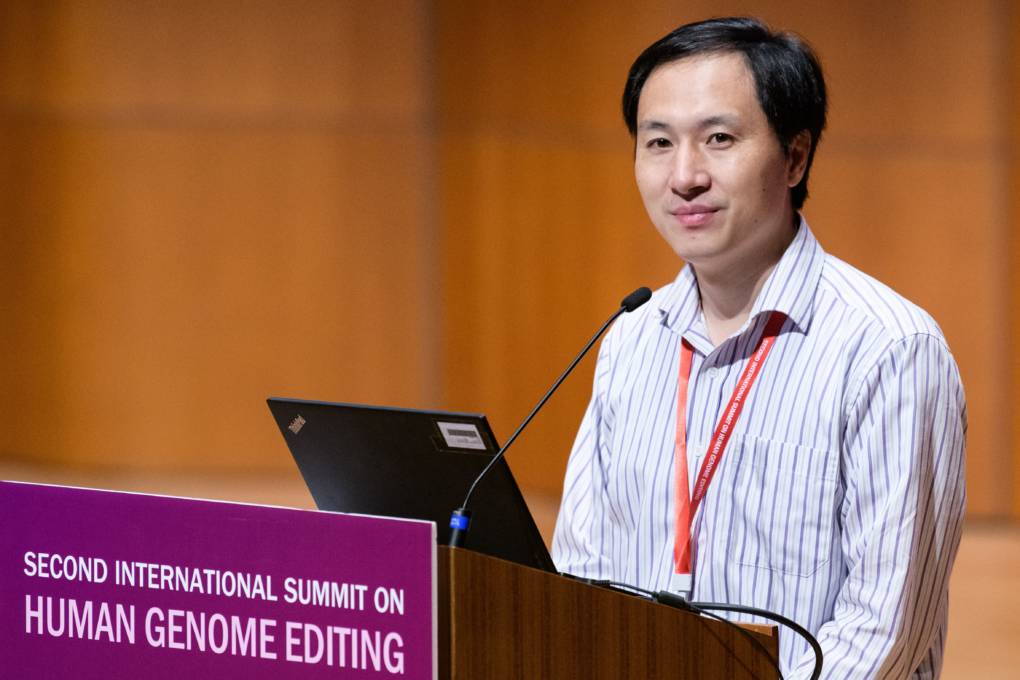
"caption": "Chinese scientist He Jiankui speaks at the Second International Summit on Human Genome Editing in Hong Kong on November 28, 2018. ",
"description": "(Photo by Anthony WALLACE / AFP) ",
"title": "HONG KONG-CHINA-SCIENCE-GENETICS-RESEARCH-ETHICS",
"credit": "ANTHONY WALLACE/AFP/Getty Images",
"status": "inherit",
"isLoading": false,
"fetchFailed": false
},
"science_1934885": {
"type": "attachments",
"id": "science_1934885",
"meta": {
"index": "attachments_1716263798",
"site": "science",
"id": "1934885",
"found": true
},
"parent": 1934884,
"imgSizes": {
"thumbnail": {
"file": "https://ww2.kqed.org/app/uploads/sites/35/2018/11/j.-park-_-stephanie-b.-mitchell-607e0cc321f0e55b9f8e5e590271d34adde9120d-160x120.jpg",
"width": 160,
"mimeType": "image/jpeg",
"height": 120
},
"post-thumbnail": {
"file": "https://ww2.kqed.org/app/uploads/sites/35/2018/11/j.-park-_-stephanie-b.-mitchell-607e0cc321f0e55b9f8e5e590271d34adde9120d-500x372.jpg",
"width": 500,
"mimeType": "image/jpeg",
"height": 372
},
"xsmall": {
"file": "https://ww2.kqed.org/app/uploads/sites/35/2018/11/j.-park-_-stephanie-b.-mitchell-607e0cc321f0e55b9f8e5e590271d34adde9120d-375x281.jpg",
"width": 375,
"mimeType": "image/jpeg",
"height": 281
},
"kqedFullSize": {
"file": "https://ww2.kqed.org/app/uploads/sites/35/2018/11/j.-park-_-stephanie-b.-mitchell-607e0cc321f0e55b9f8e5e590271d34adde9120d.jpg",
"width": 500,
"height": 375
},
"guest-author-50": {
"file": "https://ww2.kqed.org/app/uploads/sites/35/2018/11/j.-park-_-stephanie-b.-mitchell-607e0cc321f0e55b9f8e5e590271d34adde9120d-50x50.jpg",
"width": 50,
"mimeType": "image/jpeg",
"height": 50
},
"guest-author-96": {
"file": "https://ww2.kqed.org/app/uploads/sites/35/2018/11/j.-park-_-stephanie-b.-mitchell-607e0cc321f0e55b9f8e5e590271d34adde9120d-96x96.jpg",
"width": 96,
"mimeType": "image/jpeg",
"height": 96
},
"guest-author-64": {
"file": "https://ww2.kqed.org/app/uploads/sites/35/2018/11/j.-park-_-stephanie-b.-mitchell-607e0cc321f0e55b9f8e5e590271d34adde9120d-64x64.jpg",
"width": 64,
"mimeType": "image/jpeg",
"height": 64
},
"detail": {
"file": "https://ww2.kqed.org/app/uploads/sites/35/2018/11/j.-park-_-stephanie-b.-mitchell-607e0cc321f0e55b9f8e5e590271d34adde9120d-150x150.jpg",
"width": 150,
"mimeType": "image/jpeg",
"height": 150
},
"guest-author-32": {
"file": "https://ww2.kqed.org/app/uploads/sites/35/2018/11/j.-park-_-stephanie-b.-mitchell-607e0cc321f0e55b9f8e5e590271d34adde9120d-32x32.jpg",
"width": 32,
"mimeType": "image/jpeg",
"height": 32
},
"guest-author-128": {
"file": "https://ww2.kqed.org/app/uploads/sites/35/2018/11/j.-park-_-stephanie-b.-mitchell-607e0cc321f0e55b9f8e5e590271d34adde9120d-128x128.jpg",
"width": 128,
"mimeType": "image/jpeg",
"height": 128
},
"xxsmall": {
"file": "https://ww2.kqed.org/app/uploads/sites/35/2018/11/j.-park-_-stephanie-b.-mitchell-607e0cc321f0e55b9f8e5e590271d34adde9120d-240x180.jpg",
"width": 240,
"mimeType": "image/jpeg",
"height": 180
}
},
"publishDate": 1543280232,
"modified": 1543280232,
"caption": null,
"description": "\"I think it's important to really understand where you're coming from, understand who your peers are, who your community is,\" DACA recipient and future Rhodes Scholar Jin Park says.",
"title": "\"I think it's important to really understand where you're coming from, understand who your peers are, who your community is,\" DACA recipient and future Rhodes Scholar Jin Park says.",
"credit": null,
"status": "inherit",
"isLoading": false,
"fetchFailed": false
},
"science_1934694": {
"type": "attachments",
"id": "science_1934694",
"meta": {
"index": "attachments_1716263798",
"site": "science",
"id": "1934694",
"found": true
},
"parent": 1934691,
"imgSizes": {
"small": {
"file": "https://ww2.kqed.org/app/uploads/sites/35/2018/11/GettyImages-1063410332-520x347.jpg",
"width": 520,
"mimeType": "image/jpeg",
"height": 347
},
"twentyfourteen-full-width": {
"file": "https://ww2.kqed.org/app/uploads/sites/35/2018/11/GettyImages-1063410332-1038x576.jpg",
"width": 1038,
"mimeType": "image/jpeg",
"height": 576
},
"thumbnail": {
"file": "https://ww2.kqed.org/app/uploads/sites/35/2018/11/GettyImages-1063410332-160x107.jpg",
"width": 160,
"mimeType": "image/jpeg",
"height": 107
},
"fd-sm": {
"file": "https://ww2.kqed.org/app/uploads/sites/35/2018/11/GettyImages-1063410332-960x640.jpg",
"width": 960,
"mimeType": "image/jpeg",
"height": 640
},
"post-thumbnail": {
"file": "https://ww2.kqed.org/app/uploads/sites/35/2018/11/GettyImages-1063410332-672x372.jpg",
"width": 672,
"mimeType": "image/jpeg",
"height": 372
},
"xsmall": {
"file": "https://ww2.kqed.org/app/uploads/sites/35/2018/11/GettyImages-1063410332-375x250.jpg",
"width": 375,
"mimeType": "image/jpeg",
"height": 250
},
"kqedFullSize": {
"file": "https://ww2.kqed.org/app/uploads/sites/35/2018/11/GettyImages-1063410332.jpg",
"width": 5568,
"height": 3712
},
"large": {
"file": "https://ww2.kqed.org/app/uploads/sites/35/2018/11/GettyImages-1063410332-1020x680.jpg",
"width": 1020,
"mimeType": "image/jpeg",
"height": 680
},
"xlarge": {
"file": "https://ww2.kqed.org/app/uploads/sites/35/2018/11/GettyImages-1063410332-1180x787.jpg",
"width": 1180,
"mimeType": "image/jpeg",
"height": 787
},
"complete_open_graph": {
"file": "https://ww2.kqed.org/app/uploads/sites/35/2018/11/GettyImages-1063410332-1200x800.jpg",
"width": 1200,
"mimeType": "image/jpeg",
"height": 800
},
"guest-author-50": {
"file": "https://ww2.kqed.org/app/uploads/sites/35/2018/11/GettyImages-1063410332-50x50.jpg",
"width": 50,
"mimeType": "image/jpeg",
"height": 50
},
"guest-author-96": {
"file": "https://ww2.kqed.org/app/uploads/sites/35/2018/11/GettyImages-1063410332-96x96.jpg",
"width": 96,
"mimeType": "image/jpeg",
"height": 96
},
"medium": {
"file": "https://ww2.kqed.org/app/uploads/sites/35/2018/11/GettyImages-1063410332-800x533.jpg",
"width": 800,
"mimeType": "image/jpeg",
"height": 533
},
"guest-author-64": {
"file": "https://ww2.kqed.org/app/uploads/sites/35/2018/11/GettyImages-1063410332-64x64.jpg",
"width": 64,
"mimeType": "image/jpeg",
"height": 64
},
"guest-author-32": {
"file": "https://ww2.kqed.org/app/uploads/sites/35/2018/11/GettyImages-1063410332-32x32.jpg",
"width": 32,
"mimeType": "image/jpeg",
"height": 32
},
"fd-lrg": {
"file": "https://ww2.kqed.org/app/uploads/sites/35/2018/11/GettyImages-1063410332-1920x1280.jpg",
"width": 1920,
"mimeType": "image/jpeg",
"height": 1280
},
"fd-med": {
"file": "https://ww2.kqed.org/app/uploads/sites/35/2018/11/GettyImages-1063410332-1180x787.jpg",
"width": 1180,
"mimeType": "image/jpeg",
"height": 787
},
"full-width": {
"file": "https://ww2.kqed.org/app/uploads/sites/35/2018/11/GettyImages-1063410332-1920x1280.jpg",
"width": 1920,
"mimeType": "image/jpeg",
"height": 1280
},
"detail": {
"file": "https://ww2.kqed.org/app/uploads/sites/35/2018/11/GettyImages-1063410332-150x150.jpg",
"width": 150,
"mimeType": "image/jpeg",
"height": 150
},
"medium_large": {
"file": "https://ww2.kqed.org/app/uploads/sites/35/2018/11/GettyImages-1063410332-768x512.jpg",
"width": 768,
"mimeType": "image/jpeg",
"height": 512
},
"guest-author-128": {
"file": "https://ww2.kqed.org/app/uploads/sites/35/2018/11/GettyImages-1063410332-128x128.jpg",
"width": 128,
"mimeType": "image/jpeg",
"height": 128
},
"xxsmall": {
"file": "https://ww2.kqed.org/app/uploads/sites/35/2018/11/GettyImages-1063410332-240x160.jpg",
"width": 240,
"mimeType": "image/jpeg",
"height": 160
}
},
"publishDate": 1542756335,
"modified": 1542756386,
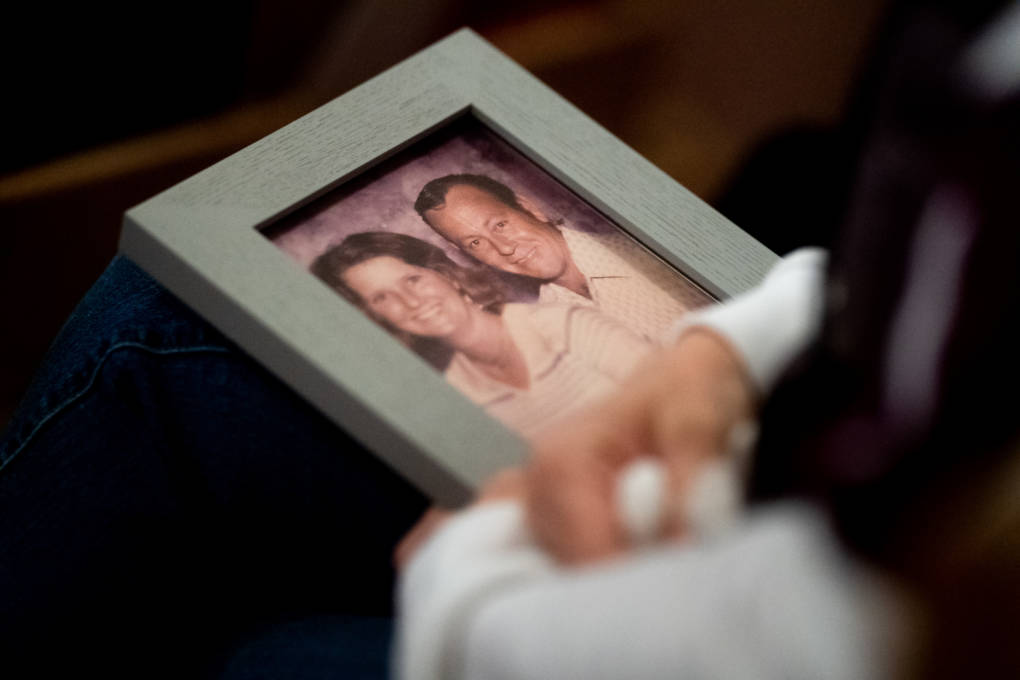
"caption": "During a vigil for Camp Fire victims, Laura Martin holds holds a picture of TK Huff, her father who died in the blaze, at the First Christian Church of Chico on November 18, 2018 in Chico, California. The blaze has killed at least 76 people and destroyed more than 10,000 structures according to Cal Fire.",
"description": "A framed picture of a couple.",
"title": "California Church Holds Vigil For Victims Of Deadly Camp Fire",
"credit": "Noah Berger-Pool/Getty Images",
"status": "inherit",
"isLoading": false,
"fetchFailed": false
},
"science_1922646": {
"type": "attachments",
"id": "science_1922646",
"meta": {
"index": "attachments_1716263798",
"site": "science",
"id": "1922646",
"found": true
},
"parent": 1922227,
"imgSizes": {
"small": {
"file": "https://ww2.kqed.org/app/uploads/sites/35/2018/04/iStock-490934736-520x347.jpg",
"width": 520,
"mimeType": "image/jpeg",
"height": 347
},
"twentyfourteen-full-width": {
"file": "https://ww2.kqed.org/app/uploads/sites/35/2018/04/iStock-490934736-1038x576.jpg",
"width": 1038,
"mimeType": "image/jpeg",
"height": 576
},
"thumbnail": {
"file": "https://ww2.kqed.org/app/uploads/sites/35/2018/04/iStock-490934736-160x107.jpg",
"width": 160,
"mimeType": "image/jpeg",
"height": 107
},
"fd-sm": {
"file": "https://ww2.kqed.org/app/uploads/sites/35/2018/04/iStock-490934736-960x640.jpg",
"width": 960,
"mimeType": "image/jpeg",
"height": 640
},
"post-thumbnail": {
"file": "https://ww2.kqed.org/app/uploads/sites/35/2018/04/iStock-490934736-672x372.jpg",
"width": 672,
"mimeType": "image/jpeg",
"height": 372
},
"xsmall": {
"file": "https://ww2.kqed.org/app/uploads/sites/35/2018/04/iStock-490934736-375x250.jpg",
"width": 375,
"mimeType": "image/jpeg",
"height": 250
},
"kqedFullSize": {
"file": "https://ww2.kqed.org/app/uploads/sites/35/2018/04/iStock-490934736-e1542831747334.jpg",
"width": 1920,
"height": 1280
},
"large": {
"file": "https://ww2.kqed.org/app/uploads/sites/35/2018/04/iStock-490934736-1020x680.jpg",
"width": 1020,
"mimeType": "image/jpeg",
"height": 680
},
"xlarge": {
"file": "https://ww2.kqed.org/app/uploads/sites/35/2018/04/iStock-490934736-1180x787.jpg",
"width": 1180,
"mimeType": "image/jpeg",
"height": 787
},
"complete_open_graph": {
"file": "https://ww2.kqed.org/app/uploads/sites/35/2018/04/iStock-490934736-1200x800.jpg",
"width": 1200,
"mimeType": "image/jpeg",
"height": 800
},
"guest-author-50": {
"file": "https://ww2.kqed.org/app/uploads/sites/35/2018/04/iStock-490934736-50x50.jpg",
"width": 50,
"mimeType": "image/jpeg",
"height": 50
},
"guest-author-96": {
"file": "https://ww2.kqed.org/app/uploads/sites/35/2018/04/iStock-490934736-96x96.jpg",
"width": 96,
"mimeType": "image/jpeg",
"height": 96
},
"medium": {
"file": "https://ww2.kqed.org/app/uploads/sites/35/2018/04/iStock-490934736-800x533.jpg",
"width": 800,
"mimeType": "image/jpeg",
"height": 533
},
"guest-author-64": {
"file": "https://ww2.kqed.org/app/uploads/sites/35/2018/04/iStock-490934736-64x64.jpg",
"width": 64,
"mimeType": "image/jpeg",
"height": 64
},
"guest-author-32": {
"file": "https://ww2.kqed.org/app/uploads/sites/35/2018/04/iStock-490934736-32x32.jpg",
"width": 32,
"mimeType": "image/jpeg",
"height": 32
},
"fd-lrg": {
"file": "https://ww2.kqed.org/app/uploads/sites/35/2018/04/iStock-490934736-1920x1280.jpg",
"width": 1920,
"mimeType": "image/jpeg",
"height": 1280
},
"fd-med": {
"file": "https://ww2.kqed.org/app/uploads/sites/35/2018/04/iStock-490934736-1180x787.jpg",
"width": 1180,
"mimeType": "image/jpeg",
"height": 787
},
"full-width": {
"file": "https://ww2.kqed.org/app/uploads/sites/35/2018/04/iStock-490934736-1920x1280.jpg",
"width": 1920,
"mimeType": "image/jpeg",
"height": 1280
},
"detail": {
"file": "https://ww2.kqed.org/app/uploads/sites/35/2018/04/iStock-490934736-150x150.jpg",
"width": 150,
"mimeType": "image/jpeg",
"height": 150
},
"medium_large": {
"file": "https://ww2.kqed.org/app/uploads/sites/35/2018/04/iStock-490934736-768x512.jpg",
"width": 768,
"mimeType": "image/jpeg",
"height": 512
},
"guest-author-128": {
"file": "https://ww2.kqed.org/app/uploads/sites/35/2018/04/iStock-490934736-128x128.jpg",
"width": 128,
"mimeType": "image/jpeg",
"height": 128
},
"xxsmall": {
"file": "https://ww2.kqed.org/app/uploads/sites/35/2018/04/iStock-490934736-240x160.jpg",
"width": 240,
"mimeType": "image/jpeg",
"height": 160
}
},
"publishDate": 1523830306,
"modified": 1523830356,
"caption": null,
"description": null,
"title": "raindrops rippling background",
"credit": "iStock",
"status": "inherit",
"isLoading": false,
"fetchFailed": false
},
"science_1934501": {
"type": "attachments",
"id": "science_1934501",
"meta": {
"index": "attachments_1716263798",
"site": "science",
"id": "1934501",
"found": true
},
"parent": 1934487,
"imgSizes": {
"small": {
"file": "https://ww2.kqed.org/app/uploads/sites/35/2018/11/Image-from-iOS-520x390.jpg",
"width": 520,
"mimeType": "image/jpeg",
"height": 390
},
"twentyfourteen-full-width": {
"file": "https://ww2.kqed.org/app/uploads/sites/35/2018/11/Image-from-iOS-1038x576.jpg",
"width": 1038,
"mimeType": "image/jpeg",
"height": 576
},
"thumbnail": {
"file": "https://ww2.kqed.org/app/uploads/sites/35/2018/11/Image-from-iOS-160x120.jpg",
"width": 160,
"mimeType": "image/jpeg",
"height": 120
},
"fd-sm": {
"file": "https://ww2.kqed.org/app/uploads/sites/35/2018/11/Image-from-iOS-960x720.jpg",
"width": 960,
"mimeType": "image/jpeg",
"height": 720
},
"post-thumbnail": {
"file": "https://ww2.kqed.org/app/uploads/sites/35/2018/11/Image-from-iOS-672x372.jpg",
"width": 672,
"mimeType": "image/jpeg",
"height": 372
},
"xsmall": {
"file": "https://ww2.kqed.org/app/uploads/sites/35/2018/11/Image-from-iOS-375x281.jpg",
"width": 375,
"mimeType": "image/jpeg",
"height": 281
},
"kqedFullSize": {
"file": "https://ww2.kqed.org/app/uploads/sites/35/2018/11/Image-from-iOS-e1556145524872.jpg",
"width": 1920,
"height": 1440
},
"large": {
"file": "https://ww2.kqed.org/app/uploads/sites/35/2018/11/Image-from-iOS-1020x765.jpg",
"width": 1020,
"mimeType": "image/jpeg",
"height": 765
},
"xlarge": {
"file": "https://ww2.kqed.org/app/uploads/sites/35/2018/11/Image-from-iOS-1180x885.jpg",
"width": 1180,
"mimeType": "image/jpeg",
"height": 885
},
"complete_open_graph": {
"file": "https://ww2.kqed.org/app/uploads/sites/35/2018/11/Image-from-iOS-1200x900.jpg",
"width": 1200,
"mimeType": "image/jpeg",
"height": 900
},
"guest-author-50": {
"file": "https://ww2.kqed.org/app/uploads/sites/35/2018/11/Image-from-iOS-50x50.jpg",
"width": 50,
"mimeType": "image/jpeg",
"height": 50
},
"guest-author-96": {
"file": "https://ww2.kqed.org/app/uploads/sites/35/2018/11/Image-from-iOS-96x96.jpg",
"width": 96,
"mimeType": "image/jpeg",
"height": 96
},
"medium": {
"file": "https://ww2.kqed.org/app/uploads/sites/35/2018/11/Image-from-iOS-800x600.jpg",
"width": 800,
"mimeType": "image/jpeg",
"height": 600
},
"guest-author-64": {
"file": "https://ww2.kqed.org/app/uploads/sites/35/2018/11/Image-from-iOS-64x64.jpg",
"width": 64,
"mimeType": "image/jpeg",
"height": 64
},
"guest-author-32": {
"file": "https://ww2.kqed.org/app/uploads/sites/35/2018/11/Image-from-iOS-32x32.jpg",
"width": 32,
"mimeType": "image/jpeg",
"height": 32
},
"fd-lrg": {
"file": "https://ww2.kqed.org/app/uploads/sites/35/2018/11/Image-from-iOS-1920x1440.jpg",
"width": 1920,
"mimeType": "image/jpeg",
"height": 1440
},
"fd-med": {
"file": "https://ww2.kqed.org/app/uploads/sites/35/2018/11/Image-from-iOS-1180x885.jpg",
"width": 1180,
"mimeType": "image/jpeg",
"height": 885
},
"full-width": {
"file": "https://ww2.kqed.org/app/uploads/sites/35/2018/11/Image-from-iOS-1920x1440.jpg",
"width": 1920,
"mimeType": "image/jpeg",
"height": 1440
},
"detail": {
"file": "https://ww2.kqed.org/app/uploads/sites/35/2018/11/Image-from-iOS-150x150.jpg",
"width": 150,
"mimeType": "image/jpeg",
"height": 150
},
"medium_large": {
"file": "https://ww2.kqed.org/app/uploads/sites/35/2018/11/Image-from-iOS-768x576.jpg",
"width": 768,
"mimeType": "image/jpeg",
"height": 576
},
"guest-author-128": {
"file": "https://ww2.kqed.org/app/uploads/sites/35/2018/11/Image-from-iOS-128x128.jpg",
"width": 128,
"mimeType": "image/jpeg",
"height": 128
},
"xxsmall": {
"file": "https://ww2.kqed.org/app/uploads/sites/35/2018/11/Image-from-iOS-240x180.jpg",
"width": 240,
"mimeType": "image/jpeg",
"height": 180
}
},
"publishDate": 1542410927,
"modified": 1556128779,
"caption": "Smoke from the Carr Fire obscures the view of the Golden Gate Bridge, November, 2018. ",
"description": "Smoke obscures the view of the Golden Gate Bridge. Air quality is so bad in the Bay Area this week it's attracted international attention.",
"title": "Image from iOS",
"credit": "Olivia Allen-Price/KQED",
"status": "inherit",
"isLoading": false,
"fetchFailed": false
},
"science_1933881": {
"type": "attachments",
"id": "science_1933881",
"meta": {
"index": "attachments_1716263798",
"site": "science",
"id": "1933881",
"found": true
},
"parent": 1933876,
"imgSizes": {
"small": {
"file": "https://ww2.kqed.org/app/uploads/sites/35/2018/10/GettyImages-809250144-520x311.jpg",
"width": 520,
"mimeType": "image/jpeg",
"height": 311
},
"twentyfourteen-full-width": {
"file": "https://ww2.kqed.org/app/uploads/sites/35/2018/10/GettyImages-809250144-1038x576.jpg",
"width": 1038,
"mimeType": "image/jpeg",
"height": 576
},
"thumbnail": {
"file": "https://ww2.kqed.org/app/uploads/sites/35/2018/10/GettyImages-809250144-160x96.jpg",
"width": 160,
"mimeType": "image/jpeg",
"height": 96
},
"fd-sm": {
"file": "https://ww2.kqed.org/app/uploads/sites/35/2018/10/GettyImages-809250144-960x574.jpg",
"width": 960,
"mimeType": "image/jpeg",
"height": 574
},
"post-thumbnail": {
"file": "https://ww2.kqed.org/app/uploads/sites/35/2018/10/GettyImages-809250144-672x372.jpg",
"width": 672,
"mimeType": "image/jpeg",
"height": 372
},
"xsmall": {
"file": "https://ww2.kqed.org/app/uploads/sites/35/2018/10/GettyImages-809250144-375x224.jpg",
"width": 375,
"mimeType": "image/jpeg",
"height": 224
},
"kqedFullSize": {
"file": "https://ww2.kqed.org/app/uploads/sites/35/2018/10/GettyImages-809250144.jpg",
"width": 5338,
"height": 3192
},
"large": {
"file": "https://ww2.kqed.org/app/uploads/sites/35/2018/10/GettyImages-809250144-1020x610.jpg",
"width": 1020,
"mimeType": "image/jpeg",
"height": 610
},
"xlarge": {
"file": "https://ww2.kqed.org/app/uploads/sites/35/2018/10/GettyImages-809250144-1180x706.jpg",
"width": 1180,
"mimeType": "image/jpeg",
"height": 706
},
"complete_open_graph": {
"file": "https://ww2.kqed.org/app/uploads/sites/35/2018/10/GettyImages-809250144-1200x718.jpg",
"width": 1200,
"mimeType": "image/jpeg",
"height": 718
},
"guest-author-50": {
"file": "https://ww2.kqed.org/app/uploads/sites/35/2018/10/GettyImages-809250144-50x50.jpg",
"width": 50,
"mimeType": "image/jpeg",
"height": 50
},
"guest-author-96": {
"file": "https://ww2.kqed.org/app/uploads/sites/35/2018/10/GettyImages-809250144-96x96.jpg",
"width": 96,
"mimeType": "image/jpeg",
"height": 96
},
"medium": {
"file": "https://ww2.kqed.org/app/uploads/sites/35/2018/10/GettyImages-809250144-800x478.jpg",
"width": 800,
"mimeType": "image/jpeg",
"height": 478
},
"guest-author-64": {
"file": "https://ww2.kqed.org/app/uploads/sites/35/2018/10/GettyImages-809250144-64x64.jpg",
"width": 64,
"mimeType": "image/jpeg",
"height": 64
},
"guest-author-32": {
"file": "https://ww2.kqed.org/app/uploads/sites/35/2018/10/GettyImages-809250144-32x32.jpg",
"width": 32,
"mimeType": "image/jpeg",
"height": 32
},
"fd-lrg": {
"file": "https://ww2.kqed.org/app/uploads/sites/35/2018/10/GettyImages-809250144-1920x1148.jpg",
"width": 1920,
"mimeType": "image/jpeg",
"height": 1148
},
"fd-med": {
"file": "https://ww2.kqed.org/app/uploads/sites/35/2018/10/GettyImages-809250144-1180x706.jpg",
"width": 1180,
"mimeType": "image/jpeg",
"height": 706
},
"full-width": {
"file": "https://ww2.kqed.org/app/uploads/sites/35/2018/10/GettyImages-809250144-1920x1148.jpg",
"width": 1920,
"mimeType": "image/jpeg",
"height": 1148
},
"detail": {
"file": "https://ww2.kqed.org/app/uploads/sites/35/2018/10/GettyImages-809250144-150x150.jpg",
"width": 150,
"mimeType": "image/jpeg",
"height": 150
},
"medium_large": {
"file": "https://ww2.kqed.org/app/uploads/sites/35/2018/10/GettyImages-809250144-768x459.jpg",
"width": 768,
"mimeType": "image/jpeg",
"height": 459
},
"guest-author-128": {
"file": "https://ww2.kqed.org/app/uploads/sites/35/2018/10/GettyImages-809250144-128x128.jpg",
"width": 128,
"mimeType": "image/jpeg",
"height": 128
},
"xxsmall": {
"file": "https://ww2.kqed.org/app/uploads/sites/35/2018/10/GettyImages-809250144-240x144.jpg",
"width": 240,
"mimeType": "image/jpeg",
"height": 144
}
},
"publishDate": 1541008514,
"modified": 1541008638,
"caption": "Protesters dressed-up in grey clothes like Zombies attend an arts performance on July 5, 2017 in Hamburg, northern Germany. ",
"description": null,
"title": "Performance Artists Hold Zombie G20 Protest",
"credit": "Friedemann Vogel-Pool/Getty Images",
"status": "inherit",
"isLoading": false,
"fetchFailed": false
},
"science_1933756": {
"type": "attachments",
"id": "science_1933756",
"meta": {
"index": "attachments_1716263798",
"site": "science",
"id": "1933756",
"found": true
},
"parent": 1933748,
"imgSizes": {
"small": {
"file": "https://ww2.kqed.org/app/uploads/sites/35/2018/10/GettyImages-1037385826-1-520x316.jpg",
"width": 520,
"mimeType": "image/jpeg",
"height": 316
},
"twentyfourteen-full-width": {
"file": "https://ww2.kqed.org/app/uploads/sites/35/2018/10/GettyImages-1037385826-1-1038x576.jpg",
"width": 1038,
"mimeType": "image/jpeg",
"height": 576
},
"thumbnail": {
"file": "https://ww2.kqed.org/app/uploads/sites/35/2018/10/GettyImages-1037385826-1-160x97.jpg",
"width": 160,
"mimeType": "image/jpeg",
"height": 97
},
"fd-sm": {
"file": "https://ww2.kqed.org/app/uploads/sites/35/2018/10/GettyImages-1037385826-1-960x584.jpg",
"width": 960,
"mimeType": "image/jpeg",
"height": 584
},
"post-thumbnail": {
"file": "https://ww2.kqed.org/app/uploads/sites/35/2018/10/GettyImages-1037385826-1-672x372.jpg",
"width": 672,
"mimeType": "image/jpeg",
"height": 372
},
"xsmall": {
"file": "https://ww2.kqed.org/app/uploads/sites/35/2018/10/GettyImages-1037385826-1-375x228.jpg",
"width": 375,
"mimeType": "image/jpeg",
"height": 228
},
"kqedFullSize": {
"file": "https://ww2.kqed.org/app/uploads/sites/35/2018/10/GettyImages-1037385826-1.jpg",
"width": 4800,
"height": 2921
},
"large": {
"file": "https://ww2.kqed.org/app/uploads/sites/35/2018/10/GettyImages-1037385826-1-1020x621.jpg",
"width": 1020,
"mimeType": "image/jpeg",
"height": 621
},
"xlarge": {
"file": "https://ww2.kqed.org/app/uploads/sites/35/2018/10/GettyImages-1037385826-1-1180x718.jpg",
"width": 1180,
"mimeType": "image/jpeg",
"height": 718
},
"complete_open_graph": {
"file": "https://ww2.kqed.org/app/uploads/sites/35/2018/10/GettyImages-1037385826-1-1200x730.jpg",
"width": 1200,
"mimeType": "image/jpeg",
"height": 730
},
"guest-author-50": {
"file": "https://ww2.kqed.org/app/uploads/sites/35/2018/10/GettyImages-1037385826-1-50x50.jpg",
"width": 50,
"mimeType": "image/jpeg",
"height": 50
},
"guest-author-96": {
"file": "https://ww2.kqed.org/app/uploads/sites/35/2018/10/GettyImages-1037385826-1-96x96.jpg",
"width": 96,
"mimeType": "image/jpeg",
"height": 96
},
"medium": {
"file": "https://ww2.kqed.org/app/uploads/sites/35/2018/10/GettyImages-1037385826-1-800x487.jpg",
"width": 800,
"mimeType": "image/jpeg",
"height": 487
},
"guest-author-64": {
"file": "https://ww2.kqed.org/app/uploads/sites/35/2018/10/GettyImages-1037385826-1-64x64.jpg",
"width": 64,
"mimeType": "image/jpeg",
"height": 64
},
"guest-author-32": {
"file": "https://ww2.kqed.org/app/uploads/sites/35/2018/10/GettyImages-1037385826-1-32x32.jpg",
"width": 32,
"mimeType": "image/jpeg",
"height": 32
},
"fd-lrg": {
"file": "https://ww2.kqed.org/app/uploads/sites/35/2018/10/GettyImages-1037385826-1-1920x1168.jpg",
"width": 1920,
"mimeType": "image/jpeg",
"height": 1168
},
"fd-med": {
"file": "https://ww2.kqed.org/app/uploads/sites/35/2018/10/GettyImages-1037385826-1-1180x718.jpg",
"width": 1180,
"mimeType": "image/jpeg",
"height": 718
},
"full-width": {
"file": "https://ww2.kqed.org/app/uploads/sites/35/2018/10/GettyImages-1037385826-1-1920x1168.jpg",
"width": 1920,
"mimeType": "image/jpeg",
"height": 1168
},
"detail": {
"file": "https://ww2.kqed.org/app/uploads/sites/35/2018/10/GettyImages-1037385826-1-150x150.jpg",
"width": 150,
"mimeType": "image/jpeg",
"height": 150
},
"medium_large": {
"file": "https://ww2.kqed.org/app/uploads/sites/35/2018/10/GettyImages-1037385826-1-768x467.jpg",
"width": 768,
"mimeType": "image/jpeg",
"height": 467
},
"guest-author-128": {
"file": "https://ww2.kqed.org/app/uploads/sites/35/2018/10/GettyImages-1037385826-1-128x128.jpg",
"width": 128,
"mimeType": "image/jpeg",
"height": 128
},
"xxsmall": {
"file": "https://ww2.kqed.org/app/uploads/sites/35/2018/10/GettyImages-1037385826-1-240x146.jpg",
"width": 240,
"mimeType": "image/jpeg",
"height": 146
}
},
"publishDate": 1540837959,
"modified": 1540848326,
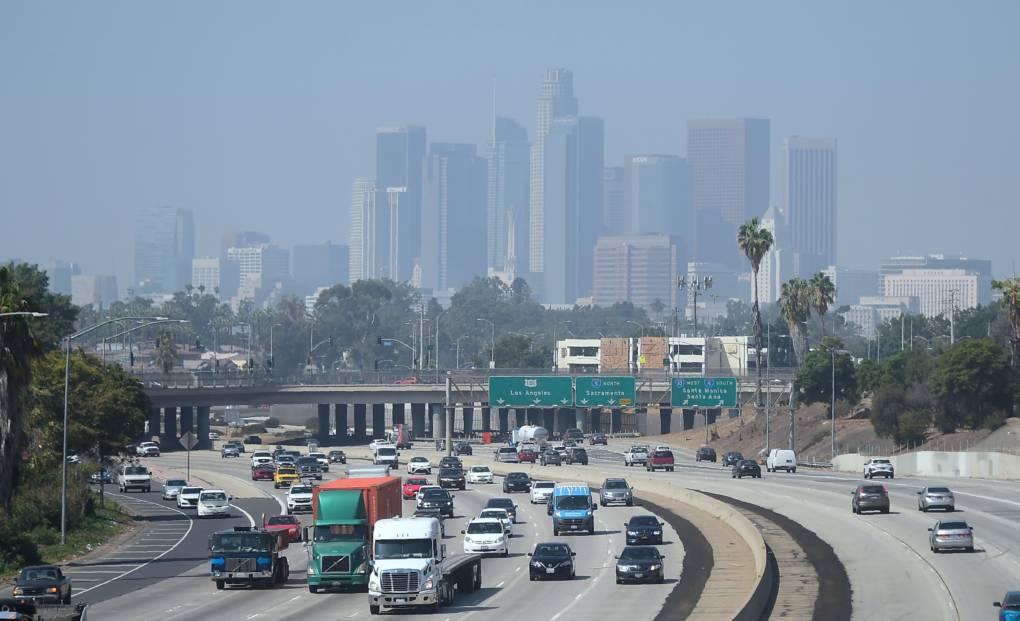
"caption": "The Los Angeles skyline, obscured on a hazy morning in September, 2018. Eighty-seven days of smog that summer made it the longest stretch of bad air in at least 20 years, according to state monitoring data.\n",
"description": "The Los Angeles skyline, obscured on a hazy morning in September, 2018. Eighty-seven days of smog that summer made it the longest stretch of bad air in at least 20 years, according to state monitoring data.\n",
"title": "US-ENVIRONMENT-POLLUTION",
"credit": "Frederic J. Brown/AFP/Getty Images",
"status": "inherit",
"isLoading": false,
"fetchFailed": false
},
"science_1935760": {
"type": "attachments",
"id": "science_1935760",
"meta": {
"index": "attachments_1716263798",
"site": "science",
"id": "1935760",
"found": true
},
"parent": 1933246,
"imgSizes": {
"small": {
"file": "https://ww2.kqed.org/app/uploads/sites/35/2018/10/DL519_Planarians_marquee_w_Phead-520x293.jpg",
"width": 520,
"mimeType": "image/jpeg",
"height": 293
},
"twentyfourteen-full-width": {
"file": "https://ww2.kqed.org/app/uploads/sites/35/2018/10/DL519_Planarians_marquee_w_Phead-1038x576.jpg",
"width": 1038,
"mimeType": "image/jpeg",
"height": 576
},
"thumbnail": {
"file": "https://ww2.kqed.org/app/uploads/sites/35/2018/10/DL519_Planarians_marquee_w_Phead-160x90.jpg",
"width": 160,
"mimeType": "image/jpeg",
"height": 90
},
"fd-sm": {
"file": "https://ww2.kqed.org/app/uploads/sites/35/2018/10/DL519_Planarians_marquee_w_Phead-960x540.jpg",
"width": 960,
"mimeType": "image/jpeg",
"height": 540
},
"post-thumbnail": {
"file": "https://ww2.kqed.org/app/uploads/sites/35/2018/10/DL519_Planarians_marquee_w_Phead-672x372.jpg",
"width": 672,
"mimeType": "image/jpeg",
"height": 372
},
"xsmall": {
"file": "https://ww2.kqed.org/app/uploads/sites/35/2018/10/DL519_Planarians_marquee_w_Phead-375x211.jpg",
"width": 375,
"mimeType": "image/jpeg",
"height": 211
},
"kqedFullSize": {
"file": "https://ww2.kqed.org/app/uploads/sites/35/2018/10/DL519_Planarians_marquee_w_Phead.jpg",
"width": 1920,
"height": 1080
},
"large": {
"file": "https://ww2.kqed.org/app/uploads/sites/35/2018/10/DL519_Planarians_marquee_w_Phead-1020x574.jpg",
"width": 1020,
"mimeType": "image/jpeg",
"height": 574
},
"xlarge": {
"file": "https://ww2.kqed.org/app/uploads/sites/35/2018/10/DL519_Planarians_marquee_w_Phead-1180x664.jpg",
"width": 1180,
"mimeType": "image/jpeg",
"height": 664
},
"complete_open_graph": {
"file": "https://ww2.kqed.org/app/uploads/sites/35/2018/10/DL519_Planarians_marquee_w_Phead-1200x675.jpg",
"width": 1200,
"mimeType": "image/jpeg",
"height": 675
},
"guest-author-50": {
"file": "https://ww2.kqed.org/app/uploads/sites/35/2018/10/DL519_Planarians_marquee_w_Phead-50x50.jpg",
"width": 50,
"mimeType": "image/jpeg",
"height": 50
},
"guest-author-96": {
"file": "https://ww2.kqed.org/app/uploads/sites/35/2018/10/DL519_Planarians_marquee_w_Phead-96x96.jpg",
"width": 96,
"mimeType": "image/jpeg",
"height": 96
},
"medium": {
"file": "https://ww2.kqed.org/app/uploads/sites/35/2018/10/DL519_Planarians_marquee_w_Phead-800x450.jpg",
"width": 800,
"mimeType": "image/jpeg",
"height": 450
},
"guest-author-64": {
"file": "https://ww2.kqed.org/app/uploads/sites/35/2018/10/DL519_Planarians_marquee_w_Phead-64x64.jpg",
"width": 64,
"mimeType": "image/jpeg",
"height": 64
},
"guest-author-32": {
"file": "https://ww2.kqed.org/app/uploads/sites/35/2018/10/DL519_Planarians_marquee_w_Phead-32x32.jpg",
"width": 32,
"mimeType": "image/jpeg",
"height": 32
},
"fd-lrg": {
"file": "https://ww2.kqed.org/app/uploads/sites/35/2018/10/DL519_Planarians_marquee_w_Phead-1920x1080.jpg",
"width": 1920,
"mimeType": "image/jpeg",
"height": 1080
},
"fd-med": {
"file": "https://ww2.kqed.org/app/uploads/sites/35/2018/10/DL519_Planarians_marquee_w_Phead-1180x664.jpg",
"width": 1180,
"mimeType": "image/jpeg",
"height": 664
},
"full-width": {
"file": "https://ww2.kqed.org/app/uploads/sites/35/2018/10/DL519_Planarians_marquee_w_Phead-1920x1080.jpg",
"width": 1920,
"mimeType": "image/jpeg",
"height": 1080
},
"detail": {
"file": "https://ww2.kqed.org/app/uploads/sites/35/2018/10/DL519_Planarians_marquee_w_Phead-150x150.jpg",
"width": 150,
"mimeType": "image/jpeg",
"height": 150
},
"medium_large": {
"file": "https://ww2.kqed.org/app/uploads/sites/35/2018/10/DL519_Planarians_marquee_w_Phead-768x432.jpg",
"width": 768,
"mimeType": "image/jpeg",
"height": 432
},
"guest-author-128": {
"file": "https://ww2.kqed.org/app/uploads/sites/35/2018/10/DL519_Planarians_marquee_w_Phead-128x128.jpg",
"width": 128,
"mimeType": "image/jpeg",
"height": 128
},
"xxsmall": {
"file": "https://ww2.kqed.org/app/uploads/sites/35/2018/10/DL519_Planarians_marquee_w_Phead-240x135.jpg",
"width": 240,
"mimeType": "image/jpeg",
"height": 135
}
},
"publishDate": 1544735625,
"modified": 1544735625,
"caption": null,
"description": null,
"title": "DL519_Planarians_marquee_w_Phead",
"credit": null,
"status": "inherit",
"isLoading": false,
"fetchFailed": false
},
"science_1927153": {
"type": "attachments",
"id": "science_1927153",
"meta": {
"index": "attachments_1716263798",
"site": "science",
"id": "1927153",
"found": true
},
"parent": 1927142,
"imgSizes": {
"small": {
"file": "https://ww2.kqed.org/app/uploads/sites/35/2018/07/GettyImages-994931004-520x363.jpg",
"width": 520,
"mimeType": "image/jpeg",
"height": 363
},
"twentyfourteen-full-width": {
"file": "https://ww2.kqed.org/app/uploads/sites/35/2018/07/GettyImages-994931004-1038x576.jpg",
"width": 1038,
"mimeType": "image/jpeg",
"height": 576
},
"thumbnail": {
"file": "https://ww2.kqed.org/app/uploads/sites/35/2018/07/GettyImages-994931004-160x112.jpg",
"width": 160,
"mimeType": "image/jpeg",
"height": 112
},
"fd-sm": {
"file": "https://ww2.kqed.org/app/uploads/sites/35/2018/07/GettyImages-994931004-960x670.jpg",
"width": 960,
"mimeType": "image/jpeg",
"height": 670
},
"post-thumbnail": {
"file": "https://ww2.kqed.org/app/uploads/sites/35/2018/07/GettyImages-994931004-672x372.jpg",
"width": 672,
"mimeType": "image/jpeg",
"height": 372
},
"xsmall": {
"file": "https://ww2.kqed.org/app/uploads/sites/35/2018/07/GettyImages-994931004-375x262.jpg",
"width": 375,
"mimeType": "image/jpeg",
"height": 262
},
"kqedFullSize": {
"file": "https://ww2.kqed.org/app/uploads/sites/35/2018/07/GettyImages-994931004-e1540254135420.jpg",
"width": 1920,
"height": 1341
},
"large": {
"file": "https://ww2.kqed.org/app/uploads/sites/35/2018/07/GettyImages-994931004-1020x712.jpg",
"width": 1020,
"mimeType": "image/jpeg",
"height": 712
},
"xlarge": {
"file": "https://ww2.kqed.org/app/uploads/sites/35/2018/07/GettyImages-994931004-1180x824.jpg",
"width": 1180,
"mimeType": "image/jpeg",
"height": 824
},
"complete_open_graph": {
"file": "https://ww2.kqed.org/app/uploads/sites/35/2018/07/GettyImages-994931004-1200x838.jpg",
"width": 1200,
"mimeType": "image/jpeg",
"height": 838
},
"guest-author-50": {
"file": "https://ww2.kqed.org/app/uploads/sites/35/2018/07/GettyImages-994931004-50x50.jpg",
"width": 50,
"mimeType": "image/jpeg",
"height": 50
},
"guest-author-96": {
"file": "https://ww2.kqed.org/app/uploads/sites/35/2018/07/GettyImages-994931004-96x96.jpg",
"width": 96,
"mimeType": "image/jpeg",
"height": 96
},
"medium": {
"file": "https://ww2.kqed.org/app/uploads/sites/35/2018/07/GettyImages-994931004-800x559.jpg",
"width": 800,
"mimeType": "image/jpeg",
"height": 559
},
"guest-author-64": {
"file": "https://ww2.kqed.org/app/uploads/sites/35/2018/07/GettyImages-994931004-64x64.jpg",
"width": 64,
"mimeType": "image/jpeg",
"height": 64
},
"guest-author-32": {
"file": "https://ww2.kqed.org/app/uploads/sites/35/2018/07/GettyImages-994931004-32x32.jpg",
"width": 32,
"mimeType": "image/jpeg",
"height": 32
},
"fd-lrg": {
"file": "https://ww2.kqed.org/app/uploads/sites/35/2018/07/GettyImages-994931004-1920x1341.jpg",
"width": 1920,
"mimeType": "image/jpeg",
"height": 1341
},
"fd-med": {
"file": "https://ww2.kqed.org/app/uploads/sites/35/2018/07/GettyImages-994931004-1180x824.jpg",
"width": 1180,
"mimeType": "image/jpeg",
"height": 824
},
"full-width": {
"file": "https://ww2.kqed.org/app/uploads/sites/35/2018/07/GettyImages-994931004-1920x1341.jpg",
"width": 1920,
"mimeType": "image/jpeg",
"height": 1341
},
"detail": {
"file": "https://ww2.kqed.org/app/uploads/sites/35/2018/07/GettyImages-994931004-150x150.jpg",
"width": 150,
"mimeType": "image/jpeg",
"height": 150
},
"medium_large": {
"file": "https://ww2.kqed.org/app/uploads/sites/35/2018/07/GettyImages-994931004-768x536.jpg",
"width": 768,
"mimeType": "image/jpeg",
"height": 536
},
"guest-author-128": {
"file": "https://ww2.kqed.org/app/uploads/sites/35/2018/07/GettyImages-994931004-128x128.jpg",
"width": 128,
"mimeType": "image/jpeg",
"height": 128
},
"xxsmall": {
"file": "https://ww2.kqed.org/app/uploads/sites/35/2018/07/GettyImages-994931004-240x168.jpg",
"width": 240,
"mimeType": "image/jpeg",
"height": 168
}
},
"publishDate": 1531252700,
"modified": 1554502993,
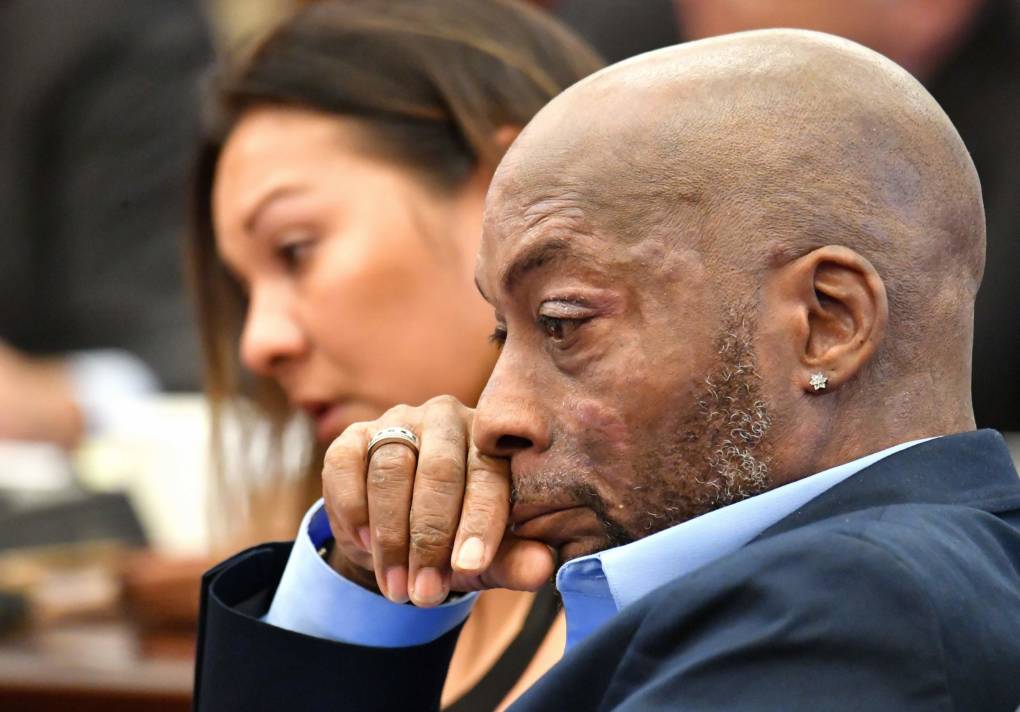
"caption": "Plaintiff Dewayne Johnson sits while his attorney speaks about his condition during the Monsanto trial in San Francisco in July 2018. ",
"description": null,
"title": "US-chemicals-environment-trial-health-cancer-illness",
"credit": "Josh Edelson/AFP/Getty Images",
"status": "inherit",
"isLoading": false,
"fetchFailed": false
},
"science_1933295": {
"type": "attachments",
"id": "science_1933295",
"meta": {
"index": "attachments_1716263798",
"site": "science",
"id": "1933295",
"found": true
},
"parent": 1933237,
"imgSizes": {
"small": {
"file": "https://ww2.kqed.org/app/uploads/sites/35/2018/10/Colleens-block-520x390.jpg",
"width": 520,
"mimeType": "image/jpeg",
"height": 390
},
"twentyfourteen-full-width": {
"file": "https://ww2.kqed.org/app/uploads/sites/35/2018/10/Colleens-block-1008x576.jpg",
"width": 1008,
"mimeType": "image/jpeg",
"height": 576
},
"thumbnail": {
"file": "https://ww2.kqed.org/app/uploads/sites/35/2018/10/Colleens-block-160x120.jpg",
"width": 160,
"mimeType": "image/jpeg",
"height": 120
},
"fd-sm": {
"file": "https://ww2.kqed.org/app/uploads/sites/35/2018/10/Colleens-block-960x720.jpg",
"width": 960,
"mimeType": "image/jpeg",
"height": 720
},
"post-thumbnail": {
"file": "https://ww2.kqed.org/app/uploads/sites/35/2018/10/Colleens-block-672x372.jpg",
"width": 672,
"mimeType": "image/jpeg",
"height": 372
},
"xsmall": {
"file": "https://ww2.kqed.org/app/uploads/sites/35/2018/10/Colleens-block-375x281.jpg",
"width": 375,
"mimeType": "image/jpeg",
"height": 281
},
"kqedFullSize": {
"file": "https://ww2.kqed.org/app/uploads/sites/35/2018/10/Colleens-block.jpg",
"width": 1008,
"height": 756
},
"guest-author-50": {
"file": "https://ww2.kqed.org/app/uploads/sites/35/2018/10/Colleens-block-50x50.jpg",
"width": 50,
"mimeType": "image/jpeg",
"height": 50
},
"guest-author-96": {
"file": "https://ww2.kqed.org/app/uploads/sites/35/2018/10/Colleens-block-96x96.jpg",
"width": 96,
"mimeType": "image/jpeg",
"height": 96
},
"medium": {
"file": "https://ww2.kqed.org/app/uploads/sites/35/2018/10/Colleens-block-800x600.jpg",
"width": 800,
"mimeType": "image/jpeg",
"height": 600
},
"guest-author-64": {
"file": "https://ww2.kqed.org/app/uploads/sites/35/2018/10/Colleens-block-64x64.jpg",
"width": 64,
"mimeType": "image/jpeg",
"height": 64
},
"guest-author-32": {
"file": "https://ww2.kqed.org/app/uploads/sites/35/2018/10/Colleens-block-32x32.jpg",
"width": 32,
"mimeType": "image/jpeg",
"height": 32
},
"detail": {
"file": "https://ww2.kqed.org/app/uploads/sites/35/2018/10/Colleens-block-150x150.jpg",
"width": 150,
"mimeType": "image/jpeg",
"height": 150
},
"medium_large": {
"file": "https://ww2.kqed.org/app/uploads/sites/35/2018/10/Colleens-block-768x576.jpg",
"width": 768,
"mimeType": "image/jpeg",
"height": 576
},
"guest-author-128": {
"file": "https://ww2.kqed.org/app/uploads/sites/35/2018/10/Colleens-block-128x128.jpg",
"width": 128,
"mimeType": "image/jpeg",
"height": 128
},
"xxsmall": {
"file": "https://ww2.kqed.org/app/uploads/sites/35/2018/10/Colleens-block-240x180.jpg",
"width": 240,
"mimeType": "image/jpeg",
"height": 180
}
},
"publishDate": 1539986969,
"modified": 1539992834,
"caption": "A woman died last year in a heat wave in this normally cool and foggy west side San Francisco neighborhood. But Parkside, like everywhere around the Bay Area, is changing as heat waves last longer and spike higher.",
"description": null,
"title": "Heat",
"credit": "Molly Peterson/KQED",
"status": "inherit",
"isLoading": false,
"fetchFailed": false
},
"science_1932919": {
"type": "attachments",
"id": "science_1932919",
"meta": {
"index": "attachments_1716263798",
"site": "science",
"id": "1932919",
"found": true
},
"parent": 1932903,
"imgSizes": {
"small": {
"file": "https://ww2.kqed.org/app/uploads/sites/35/2018/10/GettyImages-452576530-520x362.jpg",
"width": 520,
"mimeType": "image/jpeg",
"height": 362
},
"twentyfourteen-full-width": {
"file": "https://ww2.kqed.org/app/uploads/sites/35/2018/10/GettyImages-452576530-1038x576.jpg",
"width": 1038,
"mimeType": "image/jpeg",
"height": 576
},
"thumbnail": {
"file": "https://ww2.kqed.org/app/uploads/sites/35/2018/10/GettyImages-452576530-160x111.jpg",
"width": 160,
"mimeType": "image/jpeg",
"height": 111
},
"fd-sm": {
"file": "https://ww2.kqed.org/app/uploads/sites/35/2018/10/GettyImages-452576530-960x668.jpg",
"width": 960,
"mimeType": "image/jpeg",
"height": 668
},
"post-thumbnail": {
"file": "https://ww2.kqed.org/app/uploads/sites/35/2018/10/GettyImages-452576530-672x372.jpg",
"width": 672,
"mimeType": "image/jpeg",
"height": 372
},
"xsmall": {
"file": "https://ww2.kqed.org/app/uploads/sites/35/2018/10/GettyImages-452576530-375x261.jpg",
"width": 375,
"mimeType": "image/jpeg",
"height": 261
},
"kqedFullSize": {
"file": "https://ww2.kqed.org/app/uploads/sites/35/2018/10/GettyImages-452576530.jpg",
"width": 3000,
"height": 2088
},
"large": {
"file": "https://ww2.kqed.org/app/uploads/sites/35/2018/10/GettyImages-452576530-1020x710.jpg",
"width": 1020,
"mimeType": "image/jpeg",
"height": 710
},
"xlarge": {
"file": "https://ww2.kqed.org/app/uploads/sites/35/2018/10/GettyImages-452576530-1180x821.jpg",
"width": 1180,
"mimeType": "image/jpeg",
"height": 821
},
"complete_open_graph": {
"file": "https://ww2.kqed.org/app/uploads/sites/35/2018/10/GettyImages-452576530-1200x835.jpg",
"width": 1200,
"mimeType": "image/jpeg",
"height": 835
},
"guest-author-50": {
"file": "https://ww2.kqed.org/app/uploads/sites/35/2018/10/GettyImages-452576530-50x50.jpg",
"width": 50,
"mimeType": "image/jpeg",
"height": 50
},
"guest-author-96": {
"file": "https://ww2.kqed.org/app/uploads/sites/35/2018/10/GettyImages-452576530-96x96.jpg",
"width": 96,
"mimeType": "image/jpeg",
"height": 96
},
"medium": {
"file": "https://ww2.kqed.org/app/uploads/sites/35/2018/10/GettyImages-452576530-800x557.jpg",
"width": 800,
"mimeType": "image/jpeg",
"height": 557
},
"guest-author-64": {
"file": "https://ww2.kqed.org/app/uploads/sites/35/2018/10/GettyImages-452576530-64x64.jpg",
"width": 64,
"mimeType": "image/jpeg",
"height": 64
},
"guest-author-32": {
"file": "https://ww2.kqed.org/app/uploads/sites/35/2018/10/GettyImages-452576530-32x32.jpg",
"width": 32,
"mimeType": "image/jpeg",
"height": 32
},
"fd-lrg": {
"file": "https://ww2.kqed.org/app/uploads/sites/35/2018/10/GettyImages-452576530-1920x1336.jpg",
"width": 1920,
"mimeType": "image/jpeg",
"height": 1336
},
"fd-med": {
"file": "https://ww2.kqed.org/app/uploads/sites/35/2018/10/GettyImages-452576530-1180x821.jpg",
"width": 1180,
"mimeType": "image/jpeg",
"height": 821
},
"full-width": {
"file": "https://ww2.kqed.org/app/uploads/sites/35/2018/10/GettyImages-452576530-1920x1336.jpg",
"width": 1920,
"mimeType": "image/jpeg",
"height": 1336
},
"detail": {
"file": "https://ww2.kqed.org/app/uploads/sites/35/2018/10/GettyImages-452576530-150x150.jpg",
"width": 150,
"mimeType": "image/jpeg",
"height": 150
},
"medium_large": {
"file": "https://ww2.kqed.org/app/uploads/sites/35/2018/10/GettyImages-452576530-768x535.jpg",
"width": 768,
"mimeType": "image/jpeg",
"height": 535
},
"guest-author-128": {
"file": "https://ww2.kqed.org/app/uploads/sites/35/2018/10/GettyImages-452576530-128x128.jpg",
"width": 128,
"mimeType": "image/jpeg",
"height": 128
},
"xxsmall": {
"file": "https://ww2.kqed.org/app/uploads/sites/35/2018/10/GettyImages-452576530-240x167.jpg",
"width": 240,
"mimeType": "image/jpeg",
"height": 167
}
},
"publishDate": 1539715415,
"modified": 1539715797,
"caption": "The roadside attraction known as \"the world's largest thermometer\" lights up the road through Baker, in the California desert. On July 23, 2014, it was 113 degrees, a number that can make it dangerous to drive without air conditioning. But it doesn't have to be that hot in the Bay Area for heat to kill, or to send people to the hospital.",
"description": "The roadside attraction known as \"the world's largest thermometer\" lights up the road through Baker, in the California desert. On July 23, 2014, it was 113 degrees, a number that can make it dangerous to drive without air conditioning. But it doesn't have to be that hot in the Bay Area for heat to kill, or to send people to the hospital.",
"title": "134-Foot-High Thermometer Working Again After Renovation",
"credit": "Ethan Miller/Getty Images",
"status": "inherit",
"isLoading": false,
"fetchFailed": false
}
},
"audioPlayerReducer": {
"postId": "stream_live",
"isPaused": true,
"isPlaying": false,
"pfsActive": false,
"pledgeModalIsOpen": true,
"playerDrawerIsOpen": false,
"liveAudioPlayStartedAt": 0,
"liveAudioPlayContext": ""
},
"authorsReducer": {
"byline_science_1934916": {
"type": "authors",
"id": "byline_science_1934916",
"meta": {
"override": true
},
"slug": "byline_science_1934916",
"name": "Rob Stein\u003cbr>\u003cstrong>NPR\u003c/strong>",
"isLoading": false
},
"byline_science_1934884": {
"type": "authors",
"id": "byline_science_1934884",
"meta": {
"override": true
},
"slug": "byline_science_1934884",
"name": "Scott Simon, Sophia Boyd\u003cbr>NPR",
"isLoading": false
},
"byline_science_1934691": {
"type": "authors",
"id": "byline_science_1934691",
"meta": {
"override": true
},
"slug": "byline_science_1934691",
"name": "Kathleen Ronayne\u003cbr>Associated Press",
"isLoading": false
},
"byline_science_1933463": {
"type": "authors",
"id": "byline_science_1933463",
"meta": {
"override": true
},
"slug": "byline_science_1933463",
"name": "Paul Elias\u003cbr />Associated Press",
"isLoading": false
},
"kdomara": {
"type": "authors",
"id": "1459",
"meta": {
"index": "authors_1716337520",
"id": "1459",
"found": true
},
"name": "Kelly O'Mara",
"firstName": "Kelly",
"lastName": "O'Mara",
"slug": "kdomara",
"email": "komara@kqed.org",
"display_author_email": false,
"staff_mastheads": [
"news"
],
"title": "KQED Contributor",
"bio": "Kelly O'Mara is a writer and reporter in the San Francisco Bay Area. She writes about food, health, sports, travel, business and California news. Her work has appeared on KQED, online for Outside Magazine, epsnW, VICE and in Competitor Magazine, among others. Follow Kelly on Twitter \u003ca href=\"https://twitter.com/kellydomara\">@kellydomara\u003c/a>.",
"avatar": "https://secure.gravatar.com/avatar/768fec7412028b72f13bdd0f5f9d8186?s=600&d=blank&r=g",
"twitter": null,
"facebook": null,
"instagram": null,
"linkedin": null,
"sites": [
{
"site": "arts",
"roles": []
},
{
"site": "news",
"roles": []
},
{
"site": "bayareabites",
"roles": []
},
{
"site": "stateofhealth",
"roles": []
},
{
"site": "science",
"roles": []
},
{
"site": "checkplease",
"roles": [
"editor"
]
},
{
"site": "food",
"roles": []
},
{
"site": "forum",
"roles": [
"editor"
]
},
{
"site": "liveblog",
"roles": [
"editor"
]
}
],
"headData": {
"title": "Kelly O'Mara | KQED",
"description": "KQED Contributor",
"ogImgSrc": "https://secure.gravatar.com/avatar/768fec7412028b72f13bdd0f5f9d8186?s=600&d=blank&r=g",
"twImgSrc": "https://secure.gravatar.com/avatar/768fec7412028b72f13bdd0f5f9d8186?s=600&d=blank&r=g"
},
"isLoading": false,
"link": "/author/kdomara"
},
"gabriela-quiros": {
"type": "authors",
"id": "6186",
"meta": {
"index": "authors_1716337520",
"id": "6186",
"found": true
},
"name": "Gabriela Quirós",
"firstName": "Gabriela",
"lastName": "Quirós",
"slug": "gabriela-quiros",
"email": "gquiros@kqed.org",
"display_author_email": false,
"staff_mastheads": [],
"title": "Supervising Producer",
"bio": "Gabriela Quirós is the \u003cstrong>supervising producer for KQED's web science video series \u003ca href=\"https://www.kqed.org/deeplook\">Deep Look\u003c/a>\u003c/strong>. She joined KQED as a TV producer when its science series QUEST started in 2006 and has covered everything from Alzheimer’s to bee die-offs to dark energy.\r\n\r\nShe won a 2022 AAAS Kavli Science Journalism Award with a team of her Deep Look colleagues. She has won six regional Emmys as a video producer and has shared eight more as the coordinating producer of Deep Look. The episode she produced about \u003ca href=\"https://www.kqed.org/science/728086/how-mosquitoes-use-six-needles-to-suck-your-blood\">How Mosquitoes Use Six Needles to Suck Your Blood\u003c/a> won a Webby \"People's Voice\" award. She has also earned awards from the Jackson Hole Wildlife Film Festival, the Society of Professional Journalists and the Society of Environmental Journalists.\r\n\r\nHer videos for KQED have also aired on NOVA scienceNOW and the PBS NewsHour, and appeared on NPR.org.\r\n\r\nAs an independent filmmaker, she produced and directed the hour-long documentary \u003ca href=\"http://lpbp.org/beautiful-sin-qa-with-producer-gabriela-quiros/\">\u003cem>Beautiful Sin\u003c/em>\u003c/a>, about the surprising story of how Costa Rica became the only country in the world to outlaw in vitro fertilization. The film aired in 2015 on public television stations throughout the U.S., and in Costa Rica.\r\n\r\nShe started her journalism career as a newspaper reporter in Costa Rica, where she grew up. She won the National Science Journalism Award there for a series of articles about organic agriculture, and developed a life-long interest in health reporting. She moved to the Bay Area in 1996 to study documentary filmmaking at the University of California, Berkeley, where she received master’s degrees in journalism and Latin American studies.",
"avatar": "https://secure.gravatar.com/avatar/6d82c20152affd1b434c31a904c40809?s=600&d=blank&r=g",
"twitter": "gabrielaquirosr",
"facebook": null,
"instagram": null,
"linkedin": null,
"sites": [
{
"site": "science",
"roles": []
},
{
"site": "quest",
"roles": [
"ef_view_calendar",
"ef_view_story_budget"
]
}
],
"headData": {
"title": "Gabriela Quirós | KQED",
"description": "Supervising Producer",
"ogImgSrc": "https://secure.gravatar.com/avatar/6d82c20152affd1b434c31a904c40809?s=600&d=blank&r=g",
"twImgSrc": "https://secure.gravatar.com/avatar/6d82c20152affd1b434c31a904c40809?s=600&d=blank&r=g"
},
"isLoading": false,
"link": "/author/gabriela-quiros"
},
"mpeterson": {
"type": "authors",
"id": "11223",
"meta": {
"index": "authors_1716337520",
"id": "11223",
"found": true
},
"name": "Molly Peterson",
"firstName": "Molly",
"lastName": "Peterson",
"slug": "mpeterson",
"email": "mpeterson@kqed.org",
"display_author_email": false,
"staff_mastheads": [],
"title": null,
"bio": "Molly Peterson reports for KQED science and news on climate change, catastrophe and risk. Previously she was environment correspondent at Southern California Public Radio. Her work has also appeared at The New York Times, The Guardian, on NPR, at High Country News, on Code Switch, and other national outlets. She has been honored with awards from Public Radio News Directors Incorporated, Investigative Reporters and Editors, the Society for Professional Journalists, the Los Angeles Press Club, and RTNDA Edward R. Murrow awards, among others.",
"avatar": "https://secure.gravatar.com/avatar/7908e2807131f776cc8165c649530b05?s=600&d=blank&r=g",
"twitter": "Mollydacious",
"facebook": null,
"instagram": "https://www.instagram.com/radiomolly/",
"linkedin": null,
"sites": [
{
"site": "news",
"roles": [
"subscriber"
]
},
{
"site": "futureofyou",
"roles": [
"editor"
]
},
{
"site": "science",
"roles": [
"editor"
]
}
],
"headData": {
"title": "Molly Peterson | KQED",
"description": null,
"ogImgSrc": "https://secure.gravatar.com/avatar/7908e2807131f776cc8165c649530b05?s=600&d=blank&r=g",
"twImgSrc": "https://secure.gravatar.com/avatar/7908e2807131f776cc8165c649530b05?s=600&d=blank&r=g"
},
"isLoading": false,
"link": "/author/mpeterson"
},
"lesleymcclurg": {
"type": "authors",
"id": "11229",
"meta": {
"index": "authors_1716337520",
"id": "11229",
"found": true
},
"name": "Lesley McClurg",
"firstName": "Lesley",
"lastName": "McClurg",
"slug": "lesleymcclurg",
"email": "lmcclurg@KQED.org",
"display_author_email": false,
"staff_mastheads": [
"news",
"science"
],
"title": "KQED Health Correspondent",
"bio": "Lesley McClurg is a health correspondent and fill-in host whose work is regularly rebroadcast on NPR and PBS programs. She’s earned multiple regional Emmy awards, a national and a regional Edward R. Murrow award, and was named Best Beat Reporter by the Association of Health Care Journalists. The Society of Professional Journalists has recognized her work several times, and the Society of Environmental Journalists spotlighted her coverage of California’s historic drought.\r\n\r\nBefore joining KQED in 2016, Lesley covered food and sustainability for Capital Public Radio, environmental issues for Colorado Public Radio, and reported for KUOW and KCTS 9 in Seattle. Away from the newsroom, she loves skiing with her daughter, mountain biking with her partner, and playing with Ollie, the family’s goldendoodle. On deadline, she runs almost entirely on chocolate chips.\r\n\r\n ",
"avatar": "https://secure.gravatar.com/avatar/bab49e972ea10c774fe0f5e29dba1722b158f7c0d58a360923d1389d380b2978?s=600&d=blank&r=g",
"twitter": "lesleywmcclurg",
"bluesky": null,
"facebook": null,
"instagram": null,
"linkedin": null,
"sites": [
{
"site": "arts",
"roles": [
"author"
]
},
{
"site": "news",
"roles": [
"editor"
]
},
{
"site": "futureofyou",
"roles": [
"editor"
]
},
{
"site": "stateofhealth",
"roles": [
"author"
]
},
{
"site": "science",
"roles": [
"editor"
]
},
{
"site": "quest",
"roles": [
"subscriber"
]
},
{
"site": "forum",
"roles": [
"administrator"
]
},
{
"site": "liveblog",
"roles": [
"author"
]
}
],
"headData": {
"title": "Lesley McClurg | KQED",
"description": "KQED Health Correspondent",
"ogImgSrc": "https://secure.gravatar.com/avatar/bab49e972ea10c774fe0f5e29dba1722b158f7c0d58a360923d1389d380b2978?s=600&d=blank&r=g",
"twImgSrc": "https://secure.gravatar.com/avatar/bab49e972ea10c774fe0f5e29dba1722b158f7c0d58a360923d1389d380b2978?s=600&d=blank&r=g"
},
"isLoading": false,
"link": "/author/lesleymcclurg"
},
"aahmed": {
"type": "authors",
"id": "11428",
"meta": {
"index": "authors_1716337520",
"id": "11428",
"found": true
},
"name": "Amel Ahmed",
"firstName": "Amel",
"lastName": "Ahmed",
"slug": "aahmed",
"email": "aahmed@kqed.org",
"display_author_email": false,
"staff_mastheads": [],
"title": "KQED Contributor",
"bio": "Amel Ahmed is a reporter for KQED. Prior to joining KQED, Amel worked at Al Jazeera America, Al Jazeera English, Democracy Now! and Punched Productions. She also helped produce \u003cem>Changing Face of Harlem\u003c/em>, a documentary that tracked gentrification in Harlem over a period of ten years. She is a 2013 graduate of Brooklyn Law School and is currently researching war on terror prosecutions for an upcoming book.",
"avatar": "https://secure.gravatar.com/avatar/c8b48ebc98e770640f3013c470d23f3e?s=600&d=blank&r=g",
"twitter": "amelscript",
"facebook": null,
"instagram": null,
"linkedin": null,
"sites": [
{
"site": "futureofyou",
"roles": []
},
{
"site": "science",
"roles": []
}
],
"headData": {
"title": "Amel Ahmed | KQED",
"description": "KQED Contributor",
"ogImgSrc": "https://secure.gravatar.com/avatar/c8b48ebc98e770640f3013c470d23f3e?s=600&d=blank&r=g",
"twImgSrc": "https://secure.gravatar.com/avatar/c8b48ebc98e770640f3013c470d23f3e?s=600&d=blank&r=g"
},
"isLoading": false,
"link": "/author/aahmed"
}
},
"pagesReducer": {
"science_category_health": {
"type": "terms",
"id": "science_39",
"meta": {
"index": "terms_1716263798",
"site": "science",
"id": "39",
"score": 10.889519
},
"featImg": null,
"name": "Health",
"description": null,
"taxonomy": "category",
"headData": {
"twImgId": null,
"twTitle": null,
"ogTitle": null,
"ogImgId": null,
"twDescription": null,
"description": null,
"title": "Health Archives | KQED Science",
"ogDescription": null
},
"ttid": 41,
"slug": "health",
"isLoading": false,
"title": "Health",
"pageMeta": {
"site": "science",
"WpPageTemplate": "page-topic-editorial",
"currentPage": 44
},
"blocks": [
{
"blockName": "kqed/post-list",
"attrs": {
"layout": "cardArticle2",
"query": "posts/science?category=health",
"seeMore": false,
"paginated": true,
"page": 44
}
},
{
"blockName": "kqed/ad"
}
]
}
},
"pfsSessionReducer": {},
"postsReducer": {
"stream_live": {
"type": "live",
"id": "stream_live",
"audioUrl": "https://streams.kqed.org/kqedradio",
"title": "Live Stream",
"excerpt": "Live Stream information currently unavailable.",
"link": "/radio",
"featImg": "",
"label": {
"name": "KQED Live",
"link": "/"
}
},
"stream_kqedNewscast": {
"type": "posts",
"id": "stream_kqedNewscast",
"audioUrl": "https://www.kqed.org/.stream/anon/radio/RDnews/newscast.mp3?_=1",
"title": "KQED Newscast",
"featImg": "",
"label": {
"name": "88.5 FM",
"link": "/"
}
},
"science_1934926": {
"type": "posts",
"id": "science_1934926",
"meta": {
"index": "posts_1716263798",
"site": "science",
"id": "1934926",
"score": null,
"sort": [
1543365421000
]
},
"parent": 0,
"labelTerm": {
"site": "science"
},
"blocks": [],
"publishDate": 1543365421,
"format": "standard",
"title": "Trying to Understand the CRISPR Baby? Five Things to Read",
"headTitle": "Trying to Understand the CRISPR Baby? Five Things to Read | KQED",
"content": "\u003cp>On Monday, Chinese scientist He Jiankui announced in \u003ca href=\"https://www.youtube.com/watch?v=th0vnOmFltc\" target=\"_blank\" rel=\"noopener\">a YouTube video\u003c/a> and via \u003ca href=\"https://www.apnews.com/4997bb7aa36c45449b488e19ac83e86d\" target=\"_blank\" rel=\"noopener\">an interview\u003c/a> with the Associated Press that he had successfully used the pioneering gene-editing technique \u003ca href=\"https://www.kqed.org/futureofyou/tag/crispr\">CRISPR\u003c/a> to genetically modify twin girls.\u003c/p>\n\u003cp>Skepticism and criticism quickly followed. Here’s what you need to know.\u003c/p>\n\u003cp>\u003ca href=\"https://ww2.kqed.org/science/wp-content/uploads/sites/35/2018/11/DESKTOP_CRISPR_171115-768x510.jpg\">\u003cimg loading=\"lazy\" decoding=\"async\" class=\"aligncenter size-full wp-image-1934954\" src=\"https://ww2.kqed.org/science/wp-content/uploads/sites/35/2018/11/DESKTOP_CRISPR_171115-768x510.jpg\" alt=\"\" width=\"768\" height=\"510\" srcset=\"https://cdn.kqed.org/wp-content/uploads/sites/35/2018/11/DESKTOP_CRISPR_171115-768x510.jpg 768w, https://cdn.kqed.org/wp-content/uploads/sites/35/2018/11/DESKTOP_CRISPR_171115-768x510-160x106.jpg 160w, https://cdn.kqed.org/wp-content/uploads/sites/35/2018/11/DESKTOP_CRISPR_171115-768x510-240x159.jpg 240w, https://cdn.kqed.org/wp-content/uploads/sites/35/2018/11/DESKTOP_CRISPR_171115-768x510-375x249.jpg 375w, https://cdn.kqed.org/wp-content/uploads/sites/35/2018/11/DESKTOP_CRISPR_171115-768x510-520x345.jpg 520w\" sizes=\"(max-width: 768px) 100vw, 768px\">\u003c/a>\u003c/p>\n\u003cp>[contextly_sidebar id=”CoIB3PmcN4ORRNheyYhk3WSf0CYYBhtO”]The researcher, He, claims to have altered a gene in the embryos, before implanting them in the mother’s womb, which made the twin babies resistant to infection from HIV. The father is HIV positive, and the girls were reportedly born at the beginning of November with no ill side effects. However, some scientists \u003ca href=\"https://www.washingtonpost.com/science/2018/11/26/scientists-claim-gene-edited-babies-creates-uproar/\" target=\"_blank\" rel=\"noopener\">have pointed out there are numerous existing interventions \u003c/a>to prevent HIV transmission to babies in the womb and it’s the mother’s HIV status that ultimately impacts transmission to the fetus (not the father’s) — which would make this gene modification unnecessary.\u003c/p>\n\u003cp>He has not published the research in any scientific journal and has not provided evidence of his work, outside of documents provided to the Associated Press. The family’s names are not being released. Though He is capable of the work, other genetic researchers are more advanced in the technique and have not moved forward with human gene editing because of ethical concerns.\u003c/p>\n\u003cp>[ad fullwidth]\u003c/p>\n\u003cp>[contextly_sidebar id=”hCd7B3qPXpvknbs0hH0h6QqtWg6K0W0B”]The announcement came the day before the start of the\u003ca href=\"http://www.nationalacademies.org/gene-editing/2nd_summit/index.htm\" target=\"_blank\" rel=\"noopener\"> Second International Summit on Human Genome Editing in Hong Kong\u003c/a>, where these ethical concerns were set to be discussed and where He is scheduled to speak on Wednesday.\u003c/p>\n\u003cp>A graduate of Rice University and Stanford, He returned to China as part of a program to encourage the best and brightest scientists to come back to China. He is currently affiliated with the Southern University of Science and Technology in Shenzhen, though the university issued a statement saying he’s been on leave and this experiment was not conducted with their approval. The hospital cited on paperwork filed with Chinese authorities is now also disavowing any knowledge of the project.\u003c/p>\n\u003cp>If you’re looking for more context, here’s what to read:\u003c/p>\n\u003cp>\u003cstrong>\u003cem>YouTube and Associated Press: Straight from the source\u003c/em>\u003c/strong>\u003cbr>\nA good place to start is with He’s own words. In conjunction with the announcement, He published a series of promotional \u003ca href=\"https://www.youtube.com/channel/UCn_Elifynj3LrubPKHXecwQ\" target=\"_blank\" rel=\"noopener\">YouTube videos\u003c/a> explaining his claims in English and why he did what he says he did. He also gave \u003ca href=\"https://www.apnews.com/4997bb7aa36c45449b488e19ac83e86d\" target=\"_blank\" rel=\"noopener\">an exclusive interview with the Associated Press\u003c/a> that offers some insight into his experiment and background. While the Associated Press raises questions about whether or not the experiment’s subjects knew what they were agreeing to, the story also quotes a hospital official as saying the research was ethical and cites a professor at Rice University as being involved in and supportive of the work. (That professor is \u003ca href=\"https://www.cnn.com/2018/11/27/health/gene-edited-babies-rice-investigates-professor/index.html\" target=\"_blank\" rel=\"noopener\">now under investigation by the university\u003c/a>.)\u003c/p>\n\u003cp>[contextly_sidebar id=”x6QyidWM1qDfRB5NmoCDvP6j7ITidPkK”]\u003cstrong>\u003cem>MIT Technology Review: An advance investigation \u003c/em>\u003c/strong>\u003cbr>\nAlthough He unveiled his claims in dramatic fashion, it can be illuminating to read \u003ca href=\"https://www.technologyreview.com/s/612458/exclusive-chinese-scientists-are-creating-crispr-babies/\" target=\"_blank\" rel=\"noopener\">the MIT Technology Review investigation\u003c/a> that ran the day before He’s announcement. Reporters there had unearthed, on their own, the Chinese documents He filed in early November notifying authorities that a clinical trial was underway — though some documents were dated as early as March. The Review reporters also did background research into He and on recent scientific talks he’s given on the subject of gene editing. They noted he returned to China to found a DNA sequencing company called Direct Genomics, and had recently commissioned an opinion poll on the topic and had hired an American PR firm.\u003c/p>\n\u003cp>\u003cstrong>\u003cem>Response and statements from other scientists \u003c/em>\u003c/strong>\u003cbr>\nThere has been a fairly critical outcry from scientists and the community involved in gene-editing research. An international conference on human genome editing in Hong Kong, which started the day after He’s announcement and at which he was scheduled to speak at a smaller talk, has been \u003ca href=\"https://www.genengnews.com/insights/crispr-baby-talk-shrouds-human-genome-editing-summit/\" target=\"_blank\" rel=\"noopener\">overshadowed by concerns he jumped the ethical gun\u003c/a>. You can read \u003ca href=\"https://news.berkeley.edu/2018/11/26/doudna-responds-to-claim-of-first-crispr-edited-babies/\" target=\"_blank\" rel=\"noopener\">the statement from Dr. Jennifer Doudna\u003c/a>, the UC Berkeley professor who co-invented the technique. While response from the public within China has been more laudatory, 122 scientists issued \u003ca href=\"https://news.berkeley.edu/2018/11/26/doudna-responds-to-claim-of-first-crispr-edited-babies/\" target=\"_blank\" rel=\"noopener\">a joint statement on Weibo\u003c/a> (the Chinese social media platform). HarMoniCare Shenzhen Women and Children’s Hospital has also released \u003ca href=\"https://www.technologyreview.com/s/612466/the-chinese-scientist-who-claims-he-made-crispr-babies-has-been-suspended-without-pay/\" target=\"_blank\" rel=\"noopener\">a statement\u003c/a> that they do not believe they approved the procedure, despite records stating otherwise. It’s currently unclear where he carried out the research and who paid for it.\u003c/p>\n\u003cp>\u003cem>\u003cstrong>A blogger raises questions\u003cbr>\n\u003c/strong>\u003c/em>It can be difficult to get a sense of what’s being said in off-line conversations and behind the firewall in China. The blog, For Better Science, has \u003ca href=\"https://forbetterscience.com/2018/11/27/crispred-babies-in-china-a-growing-scandal/#comments\" target=\"_blank\" rel=\"noopener\">aggregated international (including Chinese) comments and criticisms\u003c/a>, with translations. They also published a guest post that went through a number of original sources to point out inconsistencies and questions about the announcement. (Keep in mind, though, this is still a blog and not a formal publication.)\u003c/p>\n\u003cp>\u003c/p>\n\u003cp>\u003cem>\u003cstrong>Comprehensive criticism from STAT\u003cbr>\n\u003c/strong>\u003c/em>The most comprehensive overview of He’s background, statements, experiment, and the various criticisms of all of the above has come from \u003ca href=\"https://www.statnews.com/2018/11/26/he-jiankui-gene-edited-babies-china/\" target=\"_blank\" rel=\"noopener\">STAT\u003c/a>. The publication, which also has reporters at the conference in Hong Kong and has long followed the progress of CRISPR, published \u003ca href=\"https://www.statnews.com/2018/11/26/he-jiankui-gene-edited-babies-china/\" target=\"_blank\" rel=\"noopener\">a fairly in-depth look\u003c/a> into some of his previous speeches and work on the subject. That includes He’s urging for others to move slowly and patiently with gene-editing, and a call for “an open dialogue” when it comes to ethical concerns.\u003c/p>\n\n",
"stats": {
"hasVideo": false,
"hasChartOrMap": false,
"hasAudio": false,
"hasPolis": false,
"wordCount": 947,
"hasGoogleForm": false,
"hasGallery": false,
"hasHearkenModule": false,
"iframeSrcs": [],
"paragraphCount": 15
},
"modified": 1704927286,
"excerpt": "The announcement of the first genetically modified baby using CRISPR shocked scientists Monday. Here's what you need to know.",
"headData": {
"twImgId": "",
"twTitle": "",
"ogTitle": "",
"ogImgId": "",
"twDescription": "",
"description": "The announcement of the first genetically modified baby using CRISPR shocked scientists Monday. Here's what you need to know.",
"title": "Trying to Understand the CRISPR Baby? Five Things to Read | KQED",
"ogDescription": "",
"schema": {
"@context": "https://schema.org",
"@type": "Article",
"headline": "Trying to Understand the CRISPR Baby? Five Things to Read",
"datePublished": "2018-11-27T16:37:01-08:00",
"dateModified": "2024-01-10T14:54:46-08:00",
"image": "https://cdn.kqed.org/wp-content/uploads/2020/02/KQED-OG-Image@1x.png"
}
},
"guestAuthors": [],
"slug": "trying-to-understand-the-crispr-baby-five-things-to-read",
"status": "publish",
"sticky": false,
"path": "/science/1934926/trying-to-understand-the-crispr-baby-five-things-to-read",
"audioTrackLength": null,
"parsedContent": [
{
"type": "contentString",
"content": "\u003cdiv class=\"post-body\">\u003cp>\u003cp>On Monday, Chinese scientist He Jiankui announced in \u003ca href=\"https://www.youtube.com/watch?v=th0vnOmFltc\" target=\"_blank\" rel=\"noopener\">a YouTube video\u003c/a> and via \u003ca href=\"https://www.apnews.com/4997bb7aa36c45449b488e19ac83e86d\" target=\"_blank\" rel=\"noopener\">an interview\u003c/a> with the Associated Press that he had successfully used the pioneering gene-editing technique \u003ca href=\"https://www.kqed.org/futureofyou/tag/crispr\">CRISPR\u003c/a> to genetically modify twin girls.\u003c/p>\n\u003cp>Skepticism and criticism quickly followed. Here’s what you need to know.\u003c/p>\n\u003cp>\u003ca href=\"https://ww2.kqed.org/science/wp-content/uploads/sites/35/2018/11/DESKTOP_CRISPR_171115-768x510.jpg\">\u003cimg loading=\"lazy\" decoding=\"async\" class=\"aligncenter size-full wp-image-1934954\" src=\"https://ww2.kqed.org/science/wp-content/uploads/sites/35/2018/11/DESKTOP_CRISPR_171115-768x510.jpg\" alt=\"\" width=\"768\" height=\"510\" srcset=\"https://cdn.kqed.org/wp-content/uploads/sites/35/2018/11/DESKTOP_CRISPR_171115-768x510.jpg 768w, https://cdn.kqed.org/wp-content/uploads/sites/35/2018/11/DESKTOP_CRISPR_171115-768x510-160x106.jpg 160w, https://cdn.kqed.org/wp-content/uploads/sites/35/2018/11/DESKTOP_CRISPR_171115-768x510-240x159.jpg 240w, https://cdn.kqed.org/wp-content/uploads/sites/35/2018/11/DESKTOP_CRISPR_171115-768x510-375x249.jpg 375w, https://cdn.kqed.org/wp-content/uploads/sites/35/2018/11/DESKTOP_CRISPR_171115-768x510-520x345.jpg 520w\" sizes=\"(max-width: 768px) 100vw, 768px\">\u003c/a>\u003c/p>\n\u003cp>\u003c/p>\u003cp>\u003c/p>\u003cp>The researcher, He, claims to have altered a gene in the embryos, before implanting them in the mother’s womb, which made the twin babies resistant to infection from HIV. The father is HIV positive, and the girls were reportedly born at the beginning of November with no ill side effects. However, some scientists \u003ca href=\"https://www.washingtonpost.com/science/2018/11/26/scientists-claim-gene-edited-babies-creates-uproar/\" target=\"_blank\" rel=\"noopener\">have pointed out there are numerous existing interventions \u003c/a>to prevent HIV transmission to babies in the womb and it’s the mother’s HIV status that ultimately impacts transmission to the fetus (not the father’s) — which would make this gene modification unnecessary.\u003c/p>\n\u003cp>He has not published the research in any scientific journal and has not provided evidence of his work, outside of documents provided to the Associated Press. The family’s names are not being released. Though He is capable of the work, other genetic researchers are more advanced in the technique and have not moved forward with human gene editing because of ethical concerns.\u003c/p>\n\u003cp>\u003c/p>\u003c/div>",
"attributes": {
"named": {},
"numeric": []
}
},
{
"type": "component",
"content": "",
"name": "ad",
"attributes": {
"named": {
"label": "fullwidth"
},
"numeric": [
"fullwidth"
]
}
},
{
"type": "contentString",
"content": "\u003cdiv class=\"post-body\">\u003cp>\u003c/p>\n\u003cp>\u003c/p>\u003cp>\u003c/p>\u003cp>The announcement came the day before the start of the\u003ca href=\"http://www.nationalacademies.org/gene-editing/2nd_summit/index.htm\" target=\"_blank\" rel=\"noopener\"> Second International Summit on Human Genome Editing in Hong Kong\u003c/a>, where these ethical concerns were set to be discussed and where He is scheduled to speak on Wednesday.\u003c/p>\n\u003cp>A graduate of Rice University and Stanford, He returned to China as part of a program to encourage the best and brightest scientists to come back to China. He is currently affiliated with the Southern University of Science and Technology in Shenzhen, though the university issued a statement saying he’s been on leave and this experiment was not conducted with their approval. The hospital cited on paperwork filed with Chinese authorities is now also disavowing any knowledge of the project.\u003c/p>\n\u003cp>If you’re looking for more context, here’s what to read:\u003c/p>\n\u003cp>\u003cstrong>\u003cem>YouTube and Associated Press: Straight from the source\u003c/em>\u003c/strong>\u003cbr>\nA good place to start is with He’s own words. In conjunction with the announcement, He published a series of promotional \u003ca href=\"https://www.youtube.com/channel/UCn_Elifynj3LrubPKHXecwQ\" target=\"_blank\" rel=\"noopener\">YouTube videos\u003c/a> explaining his claims in English and why he did what he says he did. He also gave \u003ca href=\"https://www.apnews.com/4997bb7aa36c45449b488e19ac83e86d\" target=\"_blank\" rel=\"noopener\">an exclusive interview with the Associated Press\u003c/a> that offers some insight into his experiment and background. While the Associated Press raises questions about whether or not the experiment’s subjects knew what they were agreeing to, the story also quotes a hospital official as saying the research was ethical and cites a professor at Rice University as being involved in and supportive of the work. (That professor is \u003ca href=\"https://www.cnn.com/2018/11/27/health/gene-edited-babies-rice-investigates-professor/index.html\" target=\"_blank\" rel=\"noopener\">now under investigation by the university\u003c/a>.)\u003c/p>\n\u003cp>\u003c/p>\u003cp>\u003c/p>\u003cp>\u003cstrong>\u003cem>MIT Technology Review: An advance investigation \u003c/em>\u003c/strong>\u003cbr>\nAlthough He unveiled his claims in dramatic fashion, it can be illuminating to read \u003ca href=\"https://www.technologyreview.com/s/612458/exclusive-chinese-scientists-are-creating-crispr-babies/\" target=\"_blank\" rel=\"noopener\">the MIT Technology Review investigation\u003c/a> that ran the day before He’s announcement. Reporters there had unearthed, on their own, the Chinese documents He filed in early November notifying authorities that a clinical trial was underway — though some documents were dated as early as March. The Review reporters also did background research into He and on recent scientific talks he’s given on the subject of gene editing. They noted he returned to China to found a DNA sequencing company called Direct Genomics, and had recently commissioned an opinion poll on the topic and had hired an American PR firm.\u003c/p>\n\u003cp>\u003cstrong>\u003cem>Response and statements from other scientists \u003c/em>\u003c/strong>\u003cbr>\nThere has been a fairly critical outcry from scientists and the community involved in gene-editing research. An international conference on human genome editing in Hong Kong, which started the day after He’s announcement and at which he was scheduled to speak at a smaller talk, has been \u003ca href=\"https://www.genengnews.com/insights/crispr-baby-talk-shrouds-human-genome-editing-summit/\" target=\"_blank\" rel=\"noopener\">overshadowed by concerns he jumped the ethical gun\u003c/a>. You can read \u003ca href=\"https://news.berkeley.edu/2018/11/26/doudna-responds-to-claim-of-first-crispr-edited-babies/\" target=\"_blank\" rel=\"noopener\">the statement from Dr. Jennifer Doudna\u003c/a>, the UC Berkeley professor who co-invented the technique. While response from the public within China has been more laudatory, 122 scientists issued \u003ca href=\"https://news.berkeley.edu/2018/11/26/doudna-responds-to-claim-of-first-crispr-edited-babies/\" target=\"_blank\" rel=\"noopener\">a joint statement on Weibo\u003c/a> (the Chinese social media platform). HarMoniCare Shenzhen Women and Children’s Hospital has also released \u003ca href=\"https://www.technologyreview.com/s/612466/the-chinese-scientist-who-claims-he-made-crispr-babies-has-been-suspended-without-pay/\" target=\"_blank\" rel=\"noopener\">a statement\u003c/a> that they do not believe they approved the procedure, despite records stating otherwise. It’s currently unclear where he carried out the research and who paid for it.\u003c/p>\n\u003cp>\u003cem>\u003cstrong>A blogger raises questions\u003cbr>\n\u003c/strong>\u003c/em>It can be difficult to get a sense of what’s being said in off-line conversations and behind the firewall in China. The blog, For Better Science, has \u003ca href=\"https://forbetterscience.com/2018/11/27/crispred-babies-in-china-a-growing-scandal/#comments\" target=\"_blank\" rel=\"noopener\">aggregated international (including Chinese) comments and criticisms\u003c/a>, with translations. They also published a guest post that went through a number of original sources to point out inconsistencies and questions about the announcement. (Keep in mind, though, this is still a blog and not a formal publication.)\u003c/p>\n\u003cp>\u003c/p>\n\u003cp>\u003cem>\u003cstrong>Comprehensive criticism from STAT\u003cbr>\n\u003c/strong>\u003c/em>The most comprehensive overview of He’s background, statements, experiment, and the various criticisms of all of the above has come from \u003ca href=\"https://www.statnews.com/2018/11/26/he-jiankui-gene-edited-babies-china/\" target=\"_blank\" rel=\"noopener\">STAT\u003c/a>. The publication, which also has reporters at the conference in Hong Kong and has long followed the progress of CRISPR, published \u003ca href=\"https://www.statnews.com/2018/11/26/he-jiankui-gene-edited-babies-china/\" target=\"_blank\" rel=\"noopener\">a fairly in-depth look\u003c/a> into some of his previous speeches and work on the subject. That includes He’s urging for others to move slowly and patiently with gene-editing, and a call for “an open dialogue” when it comes to ethical concerns.\u003c/p>\n\n\u003c/div>\u003c/p>",
"attributes": {
"named": {},
"numeric": []
}
}
],
"link": "/science/1934926/trying-to-understand-the-crispr-baby-five-things-to-read",
"authors": [
"1459"
],
"categories": [
"science_3151",
"science_39",
"science_3424",
"science_40"
],
"tags": [
"science_1287"
],
"featImg": "science_1934953",
"label": "science"
},
"science_1934916": {
"type": "posts",
"id": "science_1934916",
"meta": {
"index": "posts_1716263798",
"site": "science",
"id": "1934916",
"score": null,
"sort": [
1543340457000
]
},
"parent": 0,
"labelTerm": {},
"blocks": [],
"publishDate": 1543340457,
"format": "standard",
"title": "Chinese Scientist Says He's First to Create Genetically Modified Babies Using CRISPR",
"headTitle": "Chinese Scientist Says He’s First to Create Genetically Modified Babies Using CRISPR | KQED",
"content": "\u003cp>\u003cem>Editor’s note: This story was updated at 11:52 a.m. to add information about an ethics committee investigation into the DNA-editing experiment.\u003c/em>\u003c/p>\n\u003cp>For the first time, a scientist claims to have used a powerful new gene-editing technique to create genetically modified human babies.\u003c/p>\n\u003cp>The scientist, \u003ca href=\"http://www.sustc-genome.org.cn/\">He Jiankui \u003c/a>of the Southern University of Science and Technology in Shenzhen, China, says he used human embryos modified with the gene-editing technique \u003ca href=\"https://www.kqed.org/futureofyou/tag/crispr\">CRISPR\u003c/a> to create twin girls.\u003c/p>\n\u003cp>[contextly_sidebar id=”Bg3RvL4c0cugPpkycfYJRPou7iSqojCI”]”Two beautiful little Chinese girls name Lulu and Nana came crying into the world as healthy as any other babies a few weeks ago,” He says in a \u003ca href=\"https://www.youtube.com/watch?v=th0vnOmFltc&app=desktop\">video \u003c/a>posted online. “The babies are home now with their mom Grace and their dad Mark.”\u003c/p>\n\u003cp>He says his team performed “gene surgery” on embryos created from their parents’ sperm and eggs to protect the children from the human immunodeficiency virus, \u003ca href=\"https://www.cdc.gov/hiv/basics/\">HIV\u003c/a>, which causes AIDS. The children’s father is HIV-positive.\u003c/p>\n\u003cp>[ad fullwidth]\u003c/p>\n\u003cp>https://www.youtube.com/watch?v=aezxaOn0efE\u003c/p>\n\u003cp>“When Lulu and Nana were just a single cell, this surgery removed a doorway through which HIV enter to infect people,” He says in the video, one of several \u003ca href=\"https://www.youtube.com/channel/UCn_Elifynj3LrubPKHXecwQ\">posted online\u003c/a> to justify and explain the work.\u003c/p>\n\u003cp>Because the research has not yet been published in a scientific journal or carefully vetted by other scientists, many researchers and bioethicists remain cautious about the claim.\u003c/p>\n\u003cp>But, if true, many said the move would be historic, comparing it to the birth of \u003ca href=\"https://www.louisejoybrown.com/\">Louise Brown\u003c/a>, the first baby created through in-vitro fertilization, IVF.\u003c/p>\n\u003cp>“This event might be analogous to Louise Brown in 1978,” wrote \u003ca href=\"http://arep.med.harvard.edu/gmc/\">George Church\u003c/a>, a prominent Harvard geneticist, in an email. “Both anecdotal — yet healthy baby girls can have an impact,” Church wrote.\u003c/p>\n\u003cp>Meanwhile, He is now facing \u003ca href=\"http://tech.sina.com.cn/d/f/2018-11-26/doc-ihmutuec3839378.shtml\">investigation\u003c/a> by a local medical ethics board to see whether his experiment broke Chinese laws or regulations.\u003c/p>\n\u003cp>The university where He worked issued a \u003ca href=\"http://sustc.edu.cn/en/info_focus/2871\">statement\u003c/a> that officials were “deeply shocked” by the experiment, which it stressed was conducted elsewhere. He, the statement says, has been on unpaid leave from the university.\u003c/p>\n\u003cp>Church and He are among hundreds of scientists gathering at the \u003ca href=\"http://www.nationalacademies.org/gene-editing/2nd_summit/index.htm\">Second International Summit on Human Gene Editing\u003c/a> in Hong Kong. The summit was organized try to reach a global consensus on whether and how it would be ethical to create genetically modified human beings with CRISPR.\u003c/p>\n\u003cp>The claims by He sparked immediate widespread criticism from attendees at the summit and elsewhere.\u003c/p>\n\u003cp>“This work is a break from the cautious and transparent approach of the global scientific community’s application of CRISPR-Cas9 for human germline editing,” \u003ca href=\"http://doudnalab.org/\">Jennifer Doudna\u003c/a>, a biochemist at the University of California, Berkeley, said in an interview. Doudna helped discover CRISPR and organize the summit.\u003c/p>\n\u003cp>[contextly_sidebar id=”lnQiNGycmxQjTqQV1wOUw35FnUBG9rgb”]”All of us that are here at this conference are struggling to figure out what was done and also whether the process was done properly. We just don’t know yet,” Doudna says.\u003c/p>\n\u003cp>But the claim “really reinforces the urgent need to confine the use of gene-editing in human embryos to settings where there’s a clear unmet medical need and where there’s no alternative viable approach,” says Doudna. She doesn’t think that is the case in this situation.\u003c/p>\n\u003cp>“If this was done to avoid HIV infection, there are alternative ways to prevent infection that are already effective,” Doudna says, such as “washing” the sperm of infected sperm donors to eliminate HIV. “Why would you use this instead of an already established approach?”\u003c/p>\n\u003cp>For their research, He and his colleagues say they used CRISPR to make changes in one-day old embryos in a gene called \u003ca href=\"https://ghr.nlm.nih.gov/gene/CCR5\">CCR5\u003c/a>. The CCR5 gene enables HIV to enter and infect immune system cells. Scientists have long searched for ways to block this pathway to protect people from HIV.\u003c/p>\n\u003cp>He and his team say they used CRISPR to edit 16 embryos, and implanted 11 edited embryos into the wombs of women to attempt to create a viable pregnancy before the twin pregnancy was achieved, according to the Associated Press, which first \u003ca href=\"https://www.apnews.com/4997bb7aa36c45449b488e19ac83e86d\">reported\u003c/a> He’s claims.\u003c/p>\n\u003cp>“No gene was changed except the one to prevent HIV infection,” He says. The twins appear to be healthy, and underwent detailed genetic analysis. “This verified the gene surgery worked safely,” He says.\u003c/p>\n\u003cp>[contextly_sidebar id=”urk3wEQvdunegrn3zKMTD314F18dp2fZ”]Nevertheless, other scientists questioned whether the editing really worked, and argue that it is far too soon for the team to try the experiment.\u003c/p>\n\u003cp>“It is premature at this stage of technology,” wrote \u003ca href=\"https://www.ohsu.edu/people/shoukhrat-mitalipov/2D760207FF014335B07EC30F3818652F\">Shoukhrat Mitalipov\u003c/a>, a scientist at the Oregon Health & Science University in Portland, Ore. Mitalipov was the first scientist to \u003ca href=\"https://www.npr.org/sections/health-shots/2017/08/18/543769759/a-first-look-inside-the-lab-where-scientists-are-editing-dna-in-human-embryos\">report\u003c/a> using CRISPR to successfully edit human embryos, but stopped far short of trying to use them to make babies.\u003c/p>\n\u003cp>Other experts agree.\u003c/p>\n\u003cp>“Although I appreciate the global threat posed by HIV, at this stage, the risks of editing embryos to knock out CCR5 seem to outweigh the potential benefits,” wrote \u003ca href=\"https://www.broadinstitute.org/bios/feng-zhang\">Feng Zhang\u003c/a>, a CRISPR pioneer at MIT. Zhang noted that knocking out the CCR5 gene “will likely render a person much more susceptible for West Nile Virus.”\u003c/p>\n\u003cp>CRISPR enables scientists to make very precise changes in DNA much more easily than ever before. As a result, it’s revolutionizing scientific research and raising high hopes for major breakthroughs, including preventing and treating many diseases.\u003c/p>\n\u003cp>But making changes in human DNA that could be passed down for generations has long been considered off-limits. One reason is that a mistake could introduce a new disease that could be passed down for generations. Another is that it could open the door to “designer babies” — children that are modified for nonmedical reasons, such as to be taller, stronger or smarter.\u003c/p>\n\u003cp>“If it’s true as reported, then it’s an extremely premature and questionable experiment in creating genetically modified children,” agrees \u003ca href=\"http://www.bioethicsinstitute.org/people/jeffrey-kahn-4\">Jeffrey Kahn\u003c/a>, a bioethicist at Johns Hopkins Berman Institute of Bioethics attending the Hong Kong summit.\u003c/p>\n\u003cp>But the development of CRISPR has prompted some scientists to rethink that prohibition for medical purposes. And researchers around the world have been racing to determine how it could be done safely. Many scientists believe it is inevitable, but should be restricted to situations where no alternative is available.\u003c/p>\n\u003cp>“If true, this amounts to unethical and reckless experimentation on human beings, and a grave abuse of human rights,” said \u003ca href=\"https://www.geneticsandsociety.org/user/25\">Marcy Darnovsky\u003c/a>, executive director of the Center for Genetics and Society, a genetic watchdog group.\u003c/p>\n\u003cp>“Throwing open the door to a society of genetic haves and have-nots undermines our chances for a fair and just future,” Darnovsky says.\u003c/p>\n\u003cp>Chinese researcher He acknowledges his work could spark criticism, but defends the step. “I understand my work will be controversial,” he says. “But I believe families need this technology. And I am willing to take the criticism for them.”\u003c/p>\n\u003cp>[ad floatright]\u003c/p>\n\u003cp>\u003cem>Copyright 2018 \u003ca href=\"https://www.npr.org\" target=\"_blank\" rel=\"noopener\">NPR\u003c/a>. \u003c/em>\u003c/p>\n\n",
"stats": {
"hasVideo": true,
"hasChartOrMap": false,
"hasAudio": false,
"hasPolis": false,
"wordCount": 1208,
"hasGoogleForm": false,
"hasGallery": false,
"hasHearkenModule": false,
"iframeSrcs": [],
"paragraphCount": 34
},
"modified": 1704927287,
"excerpt": "A scientist says he created the first genetically edited babies using CRISPR to protect them from HIV infection. The move has prompted immediate criticism as premature and reckless.",
"headData": {
"twImgId": "",
"twTitle": "",
"ogTitle": "",
"ogImgId": "",
"twDescription": "",
"description": "A scientist says he created the first genetically edited babies using CRISPR to protect them from HIV infection. The move has prompted immediate criticism as premature and reckless.",
"title": "Chinese Scientist Says He's First to Create Genetically Modified Babies Using CRISPR | KQED",
"ogDescription": "",
"schema": {
"@context": "https://schema.org",
"@type": "Article",
"headline": "Chinese Scientist Says He's First to Create Genetically Modified Babies Using CRISPR",
"datePublished": "2018-11-27T09:40:57-08:00",
"dateModified": "2024-01-10T14:54:47-08:00",
"image": "https://cdn.kqed.org/wp-content/uploads/2020/02/KQED-OG-Image@1x.png"
}
},
"guestAuthors": [],
"slug": "chinese-scientist-says-hes-first-to-create-genetically-modified-babies-using-crispr",
"status": "publish",
"nprApiLink": "http://api.npr.org/query?id=670752865&apiKey=MDAxOTAwOTE4MDEyMTkxMDAzNjczZDljZA004",
"nprStoryDate": "Mon, 26 Nov 2018 05:02:00 -0500",
"nprLastModifiedDate": "Mon, 26 Nov 2018 12:22:14 -0500",
"nprHtmlLink": "https://www.npr.org/sections/health-shots/2018/11/26/670752865/chinese-scientist-says-hes-first-to-genetically-edit-babies?ft=nprml&f=670752865",
"nprAudio": "https://ondemand.npr.org/anon.npr-mp3/npr/me/2018/11/20181126_me_scientist_from_china_says_hes_the_first_to_genetically_edit_babies.mp3?orgId=1&topicId=1128&d=222&p=3&story=670752865&ft=nprml&f=670752865",
"nprImageAgency": "AP",
"source": "NPR",
"nprAudioM3u": "http://api.npr.org/m3u/1670752866-9d5fbf.m3u?orgId=1&topicId=1128&d=222&p=3&story=670752865&ft=nprml&f=670752865",
"nprStoryId": "670752865",
"sourceUrl": "https://www.npr.org/sections/health-shots/2018/11/26/670752865/chinese-scientist-says-hes-first-to-genetically-edit-babies",
"nprByline": "Rob Stein\u003cbr>\u003cstrong>NPR\u003c/strong>",
"sticky": false,
"audioTrackLength": 222,
"nprImageCredit": "Mark Schiefelbein",
"nprRetrievedStory": "1",
"nprPubDate": "Mon, 26 Nov 2018 12:21:00 -0500",
"path": "/science/1934916/chinese-scientist-says-hes-first-to-create-genetically-modified-babies-using-crispr",
"audioUrl": "https://ondemand.npr.org/anon.npr-mp3/npr/me/2018/11/20181126_me_scientist_from_china_says_hes_the_first_to_genetically_edit_babies.mp3?orgId=1&topicId=1128&d=222&p=3&story=670752865&ft=nprml&f=670752865",
"parsedContent": [
{
"type": "contentString",
"content": "\u003cdiv class=\"post-body\">\u003cp>\u003cp>\u003cem>Editor’s note: This story was updated at 11:52 a.m. to add information about an ethics committee investigation into the DNA-editing experiment.\u003c/em>\u003c/p>\n\u003cp>For the first time, a scientist claims to have used a powerful new gene-editing technique to create genetically modified human babies.\u003c/p>\n\u003cp>The scientist, \u003ca href=\"http://www.sustc-genome.org.cn/\">He Jiankui \u003c/a>of the Southern University of Science and Technology in Shenzhen, China, says he used human embryos modified with the gene-editing technique \u003ca href=\"https://www.kqed.org/futureofyou/tag/crispr\">CRISPR\u003c/a> to create twin girls.\u003c/p>\n\u003cp>\u003c/p>\u003cp>\u003c/p>\u003cp>”Two beautiful little Chinese girls name Lulu and Nana came crying into the world as healthy as any other babies a few weeks ago,” He says in a \u003ca href=\"https://www.youtube.com/watch?v=th0vnOmFltc&app=desktop\">video \u003c/a>posted online. “The babies are home now with their mom Grace and their dad Mark.”\u003c/p>\n\u003cp>He says his team performed “gene surgery” on embryos created from their parents’ sperm and eggs to protect the children from the human immunodeficiency virus, \u003ca href=\"https://www.cdc.gov/hiv/basics/\">HIV\u003c/a>, which causes AIDS. The children’s father is HIV-positive.\u003c/p>\n\u003cp>\u003c/p>\u003c/div>",
"attributes": {
"named": {},
"numeric": []
}
},
{
"type": "component",
"content": "",
"name": "ad",
"attributes": {
"named": {
"label": "fullwidth"
},
"numeric": [
"fullwidth"
]
}
},
{
"type": "contentString",
"content": "\u003cdiv class=\"post-body\">\u003cp>\u003c/p>\u003c/p>\u003cp>\u003cspan class='utils-parseShortcode-shortcodes-__youtubeShortcode__embedYoutube'>\n \u003cspan class='utils-parseShortcode-shortcodes-__youtubeShortcode__embedYoutubeInside'>\n \u003ciframe\n loading='lazy'\n class='utils-parseShortcode-shortcodes-__youtubeShortcode__youtubePlayer'\n type='text/html'\n src='//www.youtube.com/embed/aezxaOn0efE'\n title='//www.youtube.com/embed/aezxaOn0efE'\n allowfullscreen='true'\n style='border:0;'>\u003c/iframe>\n \u003c/span>\n \u003c/span>\u003c/p>\u003cp>\u003cp>“When Lulu and Nana were just a single cell, this surgery removed a doorway through which HIV enter to infect people,” He says in the video, one of several \u003ca href=\"https://www.youtube.com/channel/UCn_Elifynj3LrubPKHXecwQ\">posted online\u003c/a> to justify and explain the work.\u003c/p>\n\u003cp>Because the research has not yet been published in a scientific journal or carefully vetted by other scientists, many researchers and bioethicists remain cautious about the claim.\u003c/p>\n\u003cp>But, if true, many said the move would be historic, comparing it to the birth of \u003ca href=\"https://www.louisejoybrown.com/\">Louise Brown\u003c/a>, the first baby created through in-vitro fertilization, IVF.\u003c/p>\n\u003cp>“This event might be analogous to Louise Brown in 1978,” wrote \u003ca href=\"http://arep.med.harvard.edu/gmc/\">George Church\u003c/a>, a prominent Harvard geneticist, in an email. “Both anecdotal — yet healthy baby girls can have an impact,” Church wrote.\u003c/p>\n\u003cp>Meanwhile, He is now facing \u003ca href=\"http://tech.sina.com.cn/d/f/2018-11-26/doc-ihmutuec3839378.shtml\">investigation\u003c/a> by a local medical ethics board to see whether his experiment broke Chinese laws or regulations.\u003c/p>\n\u003cp>The university where He worked issued a \u003ca href=\"http://sustc.edu.cn/en/info_focus/2871\">statement\u003c/a> that officials were “deeply shocked” by the experiment, which it stressed was conducted elsewhere. He, the statement says, has been on unpaid leave from the university.\u003c/p>\n\u003cp>Church and He are among hundreds of scientists gathering at the \u003ca href=\"http://www.nationalacademies.org/gene-editing/2nd_summit/index.htm\">Second International Summit on Human Gene Editing\u003c/a> in Hong Kong. The summit was organized try to reach a global consensus on whether and how it would be ethical to create genetically modified human beings with CRISPR.\u003c/p>\n\u003cp>The claims by He sparked immediate widespread criticism from attendees at the summit and elsewhere.\u003c/p>\n\u003cp>“This work is a break from the cautious and transparent approach of the global scientific community’s application of CRISPR-Cas9 for human germline editing,” \u003ca href=\"http://doudnalab.org/\">Jennifer Doudna\u003c/a>, a biochemist at the University of California, Berkeley, said in an interview. Doudna helped discover CRISPR and organize the summit.\u003c/p>\n\u003cp>\u003c/p>\u003cp>\u003c/p>\u003cp>”All of us that are here at this conference are struggling to figure out what was done and also whether the process was done properly. We just don’t know yet,” Doudna says.\u003c/p>\n\u003cp>But the claim “really reinforces the urgent need to confine the use of gene-editing in human embryos to settings where there’s a clear unmet medical need and where there’s no alternative viable approach,” says Doudna. She doesn’t think that is the case in this situation.\u003c/p>\n\u003cp>“If this was done to avoid HIV infection, there are alternative ways to prevent infection that are already effective,” Doudna says, such as “washing” the sperm of infected sperm donors to eliminate HIV. “Why would you use this instead of an already established approach?”\u003c/p>\n\u003cp>For their research, He and his colleagues say they used CRISPR to make changes in one-day old embryos in a gene called \u003ca href=\"https://ghr.nlm.nih.gov/gene/CCR5\">CCR5\u003c/a>. The CCR5 gene enables HIV to enter and infect immune system cells. Scientists have long searched for ways to block this pathway to protect people from HIV.\u003c/p>\n\u003cp>He and his team say they used CRISPR to edit 16 embryos, and implanted 11 edited embryos into the wombs of women to attempt to create a viable pregnancy before the twin pregnancy was achieved, according to the Associated Press, which first \u003ca href=\"https://www.apnews.com/4997bb7aa36c45449b488e19ac83e86d\">reported\u003c/a> He’s claims.\u003c/p>\n\u003cp>“No gene was changed except the one to prevent HIV infection,” He says. The twins appear to be healthy, and underwent detailed genetic analysis. “This verified the gene surgery worked safely,” He says.\u003c/p>\n\u003cp>\u003c/p>\u003cp>\u003c/p>\u003cp>Nevertheless, other scientists questioned whether the editing really worked, and argue that it is far too soon for the team to try the experiment.\u003c/p>\n\u003cp>“It is premature at this stage of technology,” wrote \u003ca href=\"https://www.ohsu.edu/people/shoukhrat-mitalipov/2D760207FF014335B07EC30F3818652F\">Shoukhrat Mitalipov\u003c/a>, a scientist at the Oregon Health & Science University in Portland, Ore. Mitalipov was the first scientist to \u003ca href=\"https://www.npr.org/sections/health-shots/2017/08/18/543769759/a-first-look-inside-the-lab-where-scientists-are-editing-dna-in-human-embryos\">report\u003c/a> using CRISPR to successfully edit human embryos, but stopped far short of trying to use them to make babies.\u003c/p>\n\u003cp>Other experts agree.\u003c/p>\n\u003cp>“Although I appreciate the global threat posed by HIV, at this stage, the risks of editing embryos to knock out CCR5 seem to outweigh the potential benefits,” wrote \u003ca href=\"https://www.broadinstitute.org/bios/feng-zhang\">Feng Zhang\u003c/a>, a CRISPR pioneer at MIT. Zhang noted that knocking out the CCR5 gene “will likely render a person much more susceptible for West Nile Virus.”\u003c/p>\n\u003cp>CRISPR enables scientists to make very precise changes in DNA much more easily than ever before. As a result, it’s revolutionizing scientific research and raising high hopes for major breakthroughs, including preventing and treating many diseases.\u003c/p>\n\u003cp>But making changes in human DNA that could be passed down for generations has long been considered off-limits. One reason is that a mistake could introduce a new disease that could be passed down for generations. Another is that it could open the door to “designer babies” — children that are modified for nonmedical reasons, such as to be taller, stronger or smarter.\u003c/p>\n\u003cp>“If it’s true as reported, then it’s an extremely premature and questionable experiment in creating genetically modified children,” agrees \u003ca href=\"http://www.bioethicsinstitute.org/people/jeffrey-kahn-4\">Jeffrey Kahn\u003c/a>, a bioethicist at Johns Hopkins Berman Institute of Bioethics attending the Hong Kong summit.\u003c/p>\n\u003cp>But the development of CRISPR has prompted some scientists to rethink that prohibition for medical purposes. And researchers around the world have been racing to determine how it could be done safely. Many scientists believe it is inevitable, but should be restricted to situations where no alternative is available.\u003c/p>\n\u003cp>“If true, this amounts to unethical and reckless experimentation on human beings, and a grave abuse of human rights,” said \u003ca href=\"https://www.geneticsandsociety.org/user/25\">Marcy Darnovsky\u003c/a>, executive director of the Center for Genetics and Society, a genetic watchdog group.\u003c/p>\n\u003cp>“Throwing open the door to a society of genetic haves and have-nots undermines our chances for a fair and just future,” Darnovsky says.\u003c/p>\n\u003cp>Chinese researcher He acknowledges his work could spark criticism, but defends the step. “I understand my work will be controversial,” he says. “But I believe families need this technology. And I am willing to take the criticism for them.”\u003c/p>\n\u003cp>\u003c/p>\u003c/div>",
"attributes": {
"named": {},
"numeric": []
}
},
{
"type": "component",
"content": "",
"name": "ad",
"attributes": {
"named": {
"label": "floatright"
},
"numeric": [
"floatright"
]
}
},
{
"type": "contentString",
"content": "\u003cdiv class=\"post-body\">\u003cp>\u003c/p>\n\u003cp>\u003cem>Copyright 2018 \u003ca href=\"https://www.npr.org\" target=\"_blank\" rel=\"noopener\">NPR\u003c/a>. \u003c/em>\u003c/p>\n\n\u003c/div>\u003c/p>",
"attributes": {
"named": {},
"numeric": []
}
}
],
"link": "/science/1934916/chinese-scientist-says-hes-first-to-create-genetically-modified-babies-using-crispr",
"authors": [
"byline_science_1934916"
],
"categories": [
"science_3151",
"science_39",
"science_3424",
"science_40"
],
"tags": [
"science_1287",
"science_660"
],
"featImg": "science_1935025",
"label": "source_science_1934916"
},
"science_1934884": {
"type": "posts",
"id": "science_1934884",
"meta": {
"index": "posts_1716263798",
"site": "science",
"id": "1934884",
"score": null,
"sort": [
1543330581000
]
},
"parent": 0,
"labelTerm": {},
"blocks": [],
"publishDate": 1543330581,
"format": "standard",
"title": "DACA Recipient Makes History With Rhodes Scholarship Award",
"headTitle": "DACA Recipient Makes History With Rhodes Scholarship Award | KQED",
"content": "\u003cp>This year’s list of \u003ca href=\"http://s3.amazonaws.com/rhodesscholars-fileshare/final_winners_bios_2018.pdf\">Rhodes Scholars\u003c/a> is remarkable for many reasons. Almost two-thirds of the recipients are women and nearly half are first-generation Americans or immigrants. But one scholarship winner in particular made history this year. Harvard University student Jin Park has become the first recipient of \u003ca href=\"https://www.npr.org/2017/09/05/548754723/5-things-you-should-know-about-daca\">Deferred Action for Childhood Arrivals\u003c/a> — DACA — to earn a prestigious Rhodes Scholarship.\u003c/p>\n\u003caside class=\"pullquote alignright\">‘It’s important to keep the focus on some of these bigger questions: Who belongs in America? Who is American?\u003ccite>Jin Park, Harvard\u003c/cite>\u003c/aside>\n\u003cp> Park, 22, arrived in New York City with his parents from South Korea when he was 7 years old and grew up in Queens, N.Y. Park is currently a senior at Harvard working toward a degree in molecular and cellular biology with a minor in ethnicity, migration and rights. Thanks to the Rhodes Scholarship, Park will continue his studies at the University of Oxford in Oxford, England next year.\u003c/p>\n\u003cp>“I’ve proposed two master’s degrees for my studies at Oxford: one in migration studies, the other in global health science and epidemiology,” Park says. “I want to do those two degrees and come back and hopefully work in the context of public health department … [to] implement evidence-based policies to improve and work on immigrant health.”\u003c/p>\n\u003cp>NPR’s Scott Simon spoke with Park about what the scholarship means to him and to other DACA recipients.\u003c/p>\n\u003chr>\n\u003ch3>Interview Highlights\u003c/h3>\n\u003cp>\u003cstrong>Scott Simon: What does this scholarship mean to you?\u003c/strong>\u003c/p>\n\u003cp>\u003cstrong>Jin Park:\u003c/strong> It means to me personally a lot because growing up as an undocumented person in New York City, I’ve had a lot of formative experiences around particularly how my parents were treated at the face of the law and how I personally experienced some of these social institutions. And so, these experiences as a childhood informed a lot of the ways that I wanted to use my talents for the world. And so having this opportunity for me is really meaningful.\u003c/p>\n\u003cp>\u003cstrong>You were a speaker at the 2018 Harvard Class Day. I want to read you your words as I read them: “If you’ve ever eaten at a Korean Restaurant or received a mani-pedi in New York City, congratulations. Like it or not, you may have partially subsidized the education of what Fox News would call an illegal alien.”\u003c/strong>\u003c/p>\n\u003cp>So, my dad works as a line cook and restaurant and my mom worked in beauty salons her entire life. So, kind of watching my parents do that combined with also seeing my parents get denied health care, access to health care, health insurance, those experiences have informed the fact that if you’re an undocumented person in America, you don’t really have a full shot at full opportunity. So that’s kind of what I wanted to impart to my classmates.\u003c/p>\n\u003cp>[ad fullwidth]\u003c/p>\n\u003cp>\u003cstrong>How do you feel about this country?\u003c/strong>\u003c/p>\n\u003cp>Strangely, I feel really optimistic. I think regardless of the occupant of the White House, it’s important to keep the focus on some of these bigger questions — who belongs in America? Who is American? And who are we going to provide the full benefits of membership in America?\u003c/p>\n\u003cp>These are really big, almost theoretical questions that are going to remain. The answers are going to be necessary even after the current occupant leaves the White House. So, I think the real implications of the answers to these questions are important. They have genuine real consequences for immigrants. So, I think that’s where we really have to to keep the focus.\u003c/p>\n\u003cp>\u003cstrong>You have words for other DACA recipients who might be anxious about what’s going on in this country now?\u003c/strong>\u003c/p>\n\u003cp>The biggest thing that I’d say is understand your roots, stay true to your roots. I think it’s real important to really understand where you’re coming from, understand who your peers are, who your community is, who you want to serve, because going forward I think that’s where you draw your strength.\u003c/p>\n\u003cp>I draw my strength, personally, from visiting my dad in the restaurant and kind of touching his hand and feeling the blisters and the roughness of his hands and that always reminds me that I have to keep the focus on our community. That’s where I have to always come back. So that’s the kind of advice that I’d give: Stay true to your roots.\u003c/p>\n\u003cdiv class=\"fullattribution\">Copyright 2018 NPR. To see more, visit https://www.npr.org.\u003cimg decoding=\"async\" src=\"https://www.google-analytics.com/__utm.gif?utmac=UA-5828686-4&utmdt=Meet+Jin+Park%2C+The+First+DACA+Recipient+Awarded+A+Rhodes+Scholarship&utme=8(APIKey)9(MDAxOTAwOTE4MDEyMTkxMDAzNjczZDljZA004)\">\u003c/div>\n\u003cp>\u003c/p>\n",
"stats": {
"hasVideo": false,
"hasChartOrMap": false,
"hasAudio": false,
"hasPolis": false,
"wordCount": 777,
"hasGoogleForm": false,
"hasGallery": false,
"hasHearkenModule": false,
"iframeSrcs": [],
"paragraphCount": 16
},
"modified": 1704927292,
"excerpt": "Park came to the U.S. with his family when he was 7 years old. He's a senior at Harvard working toward a degree in molecular and cellular biology with a minor in ethnicity, migration and rights. He'll attend Oxford University next year on the prestigious scholarship.",
"headData": {
"twImgId": "",
"twTitle": "",
"ogTitle": "",
"ogImgId": "",
"twDescription": "",
"description": "Park came to the U.S. with his family when he was 7 years old. He's a senior at Harvard working toward a degree in molecular and cellular biology with a minor in ethnicity, migration and rights. He'll attend Oxford University next year on the prestigious scholarship.",
"title": "DACA Recipient Makes History With Rhodes Scholarship Award | KQED",
"ogDescription": "",
"schema": {
"@context": "https://schema.org",
"@type": "Article",
"headline": "DACA Recipient Makes History With Rhodes Scholarship Award",
"datePublished": "2018-11-27T06:56:21-08:00",
"dateModified": "2024-01-10T14:54:52-08:00",
"image": "https://cdn.kqed.org/wp-content/uploads/2020/02/KQED-OG-Image@1x.png"
}
},
"guestAuthors": [],
"slug": "daca-recipient-makes-history-with-rhodes-scholarship-award",
"status": "publish",
"nprApiLink": "http://api.npr.org/query?id=670513643&apiKey=MDAxOTAwOTE4MDEyMTkxMDAzNjczZDljZA004",
"nprStoryDate": "Sat, 24 Nov 2018 07:52:00 -0500",
"nprLastModifiedDate": "Mon, 26 Nov 2018 06:45:28 -0500",
"nprHtmlLink": "https://www.npr.org/2018/11/24/670513643/first-daca-recipient-awarded-a-rhodes-scholarship?ft=nprml&f=670513643",
"nprAudio": "https://ondemand.npr.org/anon.npr-mp3/npr/wesat/2018/11/20181124_wesat_first_daca_recipient_rhodes_scholar.mp3?orgId=1&topicId=1013&d=266&p=7&story=670513643&ft=nprml&f=670513643",
"nprImageAgency": "Harvard University",
"source": "NPR",
"nprAudioM3u": "http://api.npr.org/m3u/1670513644-06d687.m3u?orgId=1&topicId=1013&d=266&p=7&story=670513643&ft=nprml&f=670513643",
"nprStoryId": "670513643",
"nprByline": "Scott Simon, Sophia Boyd\u003cbr>NPR",
"sticky": false,
"audioTrackLength": 266,
"nprImageCredit": "Stephanie B. Mitchell",
"nprRetrievedStory": "1",
"nprPubDate": "Sun, 25 Nov 2018 10:57:00 -0500",
"path": "/science/1934884/daca-recipient-makes-history-with-rhodes-scholarship-award",
"audioUrl": "https://ondemand.npr.org/anon.npr-mp3/npr/wesat/2018/11/20181124_wesat_first_daca_recipient_rhodes_scholar.mp3?orgId=1&topicId=1013&d=266&p=7&story=670513643&ft=nprml&f=670513643",
"parsedContent": [
{
"type": "contentString",
"content": "\u003cdiv class=\"post-body\">\u003cp>\u003cp>This year’s list of \u003ca href=\"http://s3.amazonaws.com/rhodesscholars-fileshare/final_winners_bios_2018.pdf\">Rhodes Scholars\u003c/a> is remarkable for many reasons. Almost two-thirds of the recipients are women and nearly half are first-generation Americans or immigrants. But one scholarship winner in particular made history this year. Harvard University student Jin Park has become the first recipient of \u003ca href=\"https://www.npr.org/2017/09/05/548754723/5-things-you-should-know-about-daca\">Deferred Action for Childhood Arrivals\u003c/a> — DACA — to earn a prestigious Rhodes Scholarship.\u003c/p>\n\u003caside class=\"pullquote alignright\">‘It’s important to keep the focus on some of these bigger questions: Who belongs in America? Who is American?\u003ccite>Jin Park, Harvard\u003c/cite>\u003c/aside>\n\u003cp> Park, 22, arrived in New York City with his parents from South Korea when he was 7 years old and grew up in Queens, N.Y. Park is currently a senior at Harvard working toward a degree in molecular and cellular biology with a minor in ethnicity, migration and rights. Thanks to the Rhodes Scholarship, Park will continue his studies at the University of Oxford in Oxford, England next year.\u003c/p>\n\u003cp>“I’ve proposed two master’s degrees for my studies at Oxford: one in migration studies, the other in global health science and epidemiology,” Park says. “I want to do those two degrees and come back and hopefully work in the context of public health department … [to] implement evidence-based policies to improve and work on immigrant health.”\u003c/p>\n\u003cp>NPR’s Scott Simon spoke with Park about what the scholarship means to him and to other DACA recipients.\u003c/p>\n\u003chr>\n\u003ch3>Interview Highlights\u003c/h3>\n\u003cp>\u003cstrong>Scott Simon: What does this scholarship mean to you?\u003c/strong>\u003c/p>\n\u003cp>\u003cstrong>Jin Park:\u003c/strong> It means to me personally a lot because growing up as an undocumented person in New York City, I’ve had a lot of formative experiences around particularly how my parents were treated at the face of the law and how I personally experienced some of these social institutions. And so, these experiences as a childhood informed a lot of the ways that I wanted to use my talents for the world. And so having this opportunity for me is really meaningful.\u003c/p>\n\u003cp>\u003cstrong>You were a speaker at the 2018 Harvard Class Day. I want to read you your words as I read them: “If you’ve ever eaten at a Korean Restaurant or received a mani-pedi in New York City, congratulations. Like it or not, you may have partially subsidized the education of what Fox News would call an illegal alien.”\u003c/strong>\u003c/p>\n\u003cp>So, my dad works as a line cook and restaurant and my mom worked in beauty salons her entire life. So, kind of watching my parents do that combined with also seeing my parents get denied health care, access to health care, health insurance, those experiences have informed the fact that if you’re an undocumented person in America, you don’t really have a full shot at full opportunity. So that’s kind of what I wanted to impart to my classmates.\u003c/p>\n\u003cp>\u003c/p>\u003c/div>",
"attributes": {
"named": {},
"numeric": []
}
},
{
"type": "component",
"content": "",
"name": "ad",
"attributes": {
"named": {
"label": "fullwidth"
},
"numeric": [
"fullwidth"
]
}
},
{
"type": "contentString",
"content": "\u003cdiv class=\"post-body\">\u003cp>\u003c/p>\n\u003cp>\u003cstrong>How do you feel about this country?\u003c/strong>\u003c/p>\n\u003cp>Strangely, I feel really optimistic. I think regardless of the occupant of the White House, it’s important to keep the focus on some of these bigger questions — who belongs in America? Who is American? And who are we going to provide the full benefits of membership in America?\u003c/p>\n\u003cp>These are really big, almost theoretical questions that are going to remain. The answers are going to be necessary even after the current occupant leaves the White House. So, I think the real implications of the answers to these questions are important. They have genuine real consequences for immigrants. So, I think that’s where we really have to to keep the focus.\u003c/p>\n\u003cp>\u003cstrong>You have words for other DACA recipients who might be anxious about what’s going on in this country now?\u003c/strong>\u003c/p>\n\u003cp>The biggest thing that I’d say is understand your roots, stay true to your roots. I think it’s real important to really understand where you’re coming from, understand who your peers are, who your community is, who you want to serve, because going forward I think that’s where you draw your strength.\u003c/p>\n\u003cp>I draw my strength, personally, from visiting my dad in the restaurant and kind of touching his hand and feeling the blisters and the roughness of his hands and that always reminds me that I have to keep the focus on our community. That’s where I have to always come back. So that’s the kind of advice that I’d give: Stay true to your roots.\u003c/p>\n\u003cdiv class=\"fullattribution\">Copyright 2018 NPR. To see more, visit https://www.npr.org.\u003cimg decoding=\"async\" src=\"https://www.google-analytics.com/__utm.gif?utmac=UA-5828686-4&utmdt=Meet+Jin+Park%2C+The+First+DACA+Recipient+Awarded+A+Rhodes+Scholarship&utme=8(APIKey)9(MDAxOTAwOTE4MDEyMTkxMDAzNjczZDljZA004)\">\u003c/div>\n\u003cp>\u003c/p>\n\u003c/div>\u003c/p>",
"attributes": {
"named": {},
"numeric": []
}
}
],
"link": "/science/1934884/daca-recipient-makes-history-with-rhodes-scholarship-award",
"authors": [
"byline_science_1934884"
],
"categories": [
"science_30",
"science_39",
"science_40"
],
"tags": [
"science_3370"
],
"featImg": "science_1934885",
"label": "source_science_1934884"
},
"science_1934691": {
"type": "posts",
"id": "science_1934691",
"meta": {
"index": "posts_1716263798",
"site": "science",
"id": "1934691",
"score": null,
"sort": [
1542756768000
]
},
"parent": 0,
"labelTerm": {
"site": "science"
},
"blocks": [],
"publishDate": 1542756768,
"format": "standard",
"title": "Rapid DNA Analysis Used to Help ID Camp Fire Victims",
"headTitle": "Rapid DNA Analysis Used to Help ID Camp Fire Victims | KQED",
"content": "\u003cp>SACRAMENTO, Calif. (AP) — Authorities are using a powerful tool in their effort to identify the scores of people killed by the wildfire that ripped through Northern California: rapid DNA testing that produces results in just two hours.\u003c/p>\n\u003cp>The system can analyze DNA from bone fragments or other remains, then match it to genetic material provided by relatives of the missing. But the technology depends on people coming forward to give a DNA sample via a cheek swab, and so far, there are not nearly as many volunteers as authorities had hoped for.\u003c/p>\n\u003caside class=\"pullquote alignright\">‘This is the one way I could contribute to helping find my uncle.’\u003c/aside>\n\u003cp>As of Tuesday, nearly two weeks after the inferno devastated the town of Paradise and surrounding areas, the number of confirmed dead stood at 79, and the sheriff’s list of those unaccounted for had about 700 names.\u003c/p>\n\u003cp>But only about 60 people had provided samples to pop-up labs at the Butte County Sheriff’s office in Oroville and an old Sears building in Chico, where the Federal Emergency Management Agency set up a disaster relief center, said Annette Mattern, a spokeswoman for ANDE, the Longmont, Colorado, company that is donating the technology.\u003c/p>\n\u003cp>“We need hundreds,” Mattern said. “We need a big enough sample for us to make a positive ID on these and to also give a better idea of how many losses there actually are.”\u003c/p>\n\u003cp>[ad fullwidth]\u003c/p>\n\u003cp>Confusion and conflicting information, the inability of relatives to travel to Northern California and mistrust of the government may be contributing to the low number.\u003c/p>\n\u003cp>Tara Quinones hadn’t heard anything from her uncle, David Marbury, for eight days before she drove north from the San Francisco Bay Area to give a sample Friday. A worker used a small tool to scrape her cheek, took three swabs of skin and asked her detailed questions about who she was looking for and their relationship.\u003c/p>\n\u003cp>The uncle’s landlord confirmed his house burned down with his vehicle still in the garage, but Quinones had no idea if any remains were found. Marbury’s name keeps going on and off the ever-changing list of the missing.\u003c/p>\n\u003cp>“I did it just to be proactive,” Quinones said Monday. “This is the one way I could contribute to helping find my uncle.”\u003c/p>\n\u003cp>Some of those who have given DNA came forward, like Quinones, after learning about the identification effort in their desperate search for a loved one, others after the sheriff’s office called to say that remains that probably belonged to a family member had been found.\u003c/p>\n\u003cp>Mattern declined to say Tuesday how many victims ANDE’s technology has helped identify. Sheriff Kory Honea’s office did not immediately respond to requests for comment.\u003c/p>\n\u003cp>The fire was 70 percent contained Tuesday. Rain in the forecast for Wednesday through Thanksgiving weekend could aid in fighting the fire but could also bring flash floods and complicate efforts to recover remains.\u003c/p>\n\u003cp>Once DNA is extracted from the remains, it is placed in a vial that goes into a black machine that looks like a bulky computer printer. It takes just two hours to process the material and get a DNA profile; traditional methods can take days or weeks. If a relative’s DNA is already in the system, a match will pop up right away.\u003c/p>\n\u003cp>Mattern said it has been surprisingly easy to get DNA from remains, despite the devastating damage done by the flames.\u003c/p>\n\u003cp>“We went in with pretty measured expectations, we didn’t know what we were walking into,” she said. “We have a tremendous database now of the victims of the fire.”\u003c/p>\n\u003cp>Ruth Dickover, director of the forensic science graduate program at the University of California-Davis, said that scientists have long been able to extract DNA from bone — a process that involves pulverizing the bone — but things can become more complicated if the remains of multiple people are mixed together.\u003c/p>\n\u003cp>“What’s left may not give you a nice beautiful profile,” she said.\u003cbr>\nANDE won a contract in 2009 to do research and development for federal agencies, and the company’s technology has been used in pilot programs for several years. Over the summer, it won FBI approval for use in accredited labs. Law enforcement agencies in Utah, New York and Miami have used the technology, as has the military.\u003c/p>\n\u003cp>This is the first time ANDE has helped identify victims after a natural disaster. The company has donated seven machines and about a dozen workers to the effort.\u003c/p>\n\u003cp>Sarah Warren drove an hour and a half from Redding on Monday to report her uncle, Devan Ruel, as missing. The sheriff’s office gave her a number to call about missing people, and when she called, she was told authorities would contact her if they needed her DNA, she said.\u003cbr>\nShe said no one told her about the collection desk at the old Sears, so she returned home without providing one.\u003c/p>\n\u003cp>“I could have done that so easily, just to be safe,” she said.\u003c/p>\n\u003cp>Warren hadn’t talked to Ruel in about eight years and said the family did not have an address for him.\u003c/p>\n\u003cp>“He was just an off-the-grid type of guy,” she said. “If he did perish that way it would be horrific. It deeply, deeply saddens me to even consider that being a possibility.”\u003c/p>\n\u003cp>Mattern said the sheriff’s office is looking for a way to make it easier for families who don’t live in Northern California to provide samples.\u003c/p>\n\u003cp>\u003c/p>\n\u003cp>And in hopes of easing fears that the DNA will be misused, the sheriff’s office and the company gave assurances it will be deleted once it is no longer needed.\u003c/p>\n\n",
"stats": {
"hasVideo": false,
"hasChartOrMap": false,
"hasAudio": false,
"hasPolis": false,
"wordCount": 990,
"hasGoogleForm": false,
"hasGallery": false,
"hasHearkenModule": false,
"iframeSrcs": [],
"paragraphCount": 26
},
"modified": 1704927300,
"excerpt": "With hundreds still missing, Butte County is searching for the quickest way to identify remains found in the devastating Camp Fire. Authorities hope more DNA volunteers will come forward.",
"headData": {
"twImgId": "",
"twTitle": "",
"ogTitle": "",
"ogImgId": "",
"twDescription": "",
"description": "With hundreds still missing, Butte County is searching for the quickest way to identify remains found in the devastating Camp Fire. Authorities hope more DNA volunteers will come forward.",
"title": "Rapid DNA Analysis Used to Help ID Camp Fire Victims | KQED",
"ogDescription": "",
"schema": {
"@context": "https://schema.org",
"@type": "Article",
"headline": "Rapid DNA Analysis Used to Help ID Camp Fire Victims",
"datePublished": "2018-11-20T15:32:48-08:00",
"dateModified": "2024-01-10T14:55:00-08:00",
"image": "https://cdn.kqed.org/wp-content/uploads/2020/02/KQED-OG-Image@1x.png"
}
},
"guestAuthors": [],
"slug": "rapid-dna-analysis-used-to-help-id-camp-fire-victims",
"status": "publish",
"nprByline": "Kathleen Ronayne\u003cbr>Associated Press",
"sticky": false,
"path": "/science/1934691/rapid-dna-analysis-used-to-help-id-camp-fire-victims",
"audioTrackLength": null,
"parsedContent": [
{
"type": "contentString",
"content": "\u003cdiv class=\"post-body\">\u003cp>\u003cp>SACRAMENTO, Calif. (AP) — Authorities are using a powerful tool in their effort to identify the scores of people killed by the wildfire that ripped through Northern California: rapid DNA testing that produces results in just two hours.\u003c/p>\n\u003cp>The system can analyze DNA from bone fragments or other remains, then match it to genetic material provided by relatives of the missing. But the technology depends on people coming forward to give a DNA sample via a cheek swab, and so far, there are not nearly as many volunteers as authorities had hoped for.\u003c/p>\n\u003caside class=\"pullquote alignright\">‘This is the one way I could contribute to helping find my uncle.’\u003c/aside>\n\u003cp>As of Tuesday, nearly two weeks after the inferno devastated the town of Paradise and surrounding areas, the number of confirmed dead stood at 79, and the sheriff’s list of those unaccounted for had about 700 names.\u003c/p>\n\u003cp>But only about 60 people had provided samples to pop-up labs at the Butte County Sheriff’s office in Oroville and an old Sears building in Chico, where the Federal Emergency Management Agency set up a disaster relief center, said Annette Mattern, a spokeswoman for ANDE, the Longmont, Colorado, company that is donating the technology.\u003c/p>\n\u003cp>“We need hundreds,” Mattern said. “We need a big enough sample for us to make a positive ID on these and to also give a better idea of how many losses there actually are.”\u003c/p>\n\u003cp>\u003c/p>\u003c/div>",
"attributes": {
"named": {},
"numeric": []
}
},
{
"type": "component",
"content": "",
"name": "ad",
"attributes": {
"named": {
"label": "fullwidth"
},
"numeric": [
"fullwidth"
]
}
},
{
"type": "contentString",
"content": "\u003cdiv class=\"post-body\">\u003cp>\u003c/p>\n\u003cp>Confusion and conflicting information, the inability of relatives to travel to Northern California and mistrust of the government may be contributing to the low number.\u003c/p>\n\u003cp>Tara Quinones hadn’t heard anything from her uncle, David Marbury, for eight days before she drove north from the San Francisco Bay Area to give a sample Friday. A worker used a small tool to scrape her cheek, took three swabs of skin and asked her detailed questions about who she was looking for and their relationship.\u003c/p>\n\u003cp>The uncle’s landlord confirmed his house burned down with his vehicle still in the garage, but Quinones had no idea if any remains were found. Marbury’s name keeps going on and off the ever-changing list of the missing.\u003c/p>\n\u003cp>“I did it just to be proactive,” Quinones said Monday. “This is the one way I could contribute to helping find my uncle.”\u003c/p>\n\u003cp>Some of those who have given DNA came forward, like Quinones, after learning about the identification effort in their desperate search for a loved one, others after the sheriff’s office called to say that remains that probably belonged to a family member had been found.\u003c/p>\n\u003cp>Mattern declined to say Tuesday how many victims ANDE’s technology has helped identify. Sheriff Kory Honea’s office did not immediately respond to requests for comment.\u003c/p>\n\u003cp>The fire was 70 percent contained Tuesday. Rain in the forecast for Wednesday through Thanksgiving weekend could aid in fighting the fire but could also bring flash floods and complicate efforts to recover remains.\u003c/p>\n\u003cp>Once DNA is extracted from the remains, it is placed in a vial that goes into a black machine that looks like a bulky computer printer. It takes just two hours to process the material and get a DNA profile; traditional methods can take days or weeks. If a relative’s DNA is already in the system, a match will pop up right away.\u003c/p>\n\u003cp>Mattern said it has been surprisingly easy to get DNA from remains, despite the devastating damage done by the flames.\u003c/p>\n\u003cp>“We went in with pretty measured expectations, we didn’t know what we were walking into,” she said. “We have a tremendous database now of the victims of the fire.”\u003c/p>\n\u003cp>Ruth Dickover, director of the forensic science graduate program at the University of California-Davis, said that scientists have long been able to extract DNA from bone — a process that involves pulverizing the bone — but things can become more complicated if the remains of multiple people are mixed together.\u003c/p>\n\u003cp>“What’s left may not give you a nice beautiful profile,” she said.\u003cbr>\nANDE won a contract in 2009 to do research and development for federal agencies, and the company’s technology has been used in pilot programs for several years. Over the summer, it won FBI approval for use in accredited labs. Law enforcement agencies in Utah, New York and Miami have used the technology, as has the military.\u003c/p>\n\u003cp>This is the first time ANDE has helped identify victims after a natural disaster. The company has donated seven machines and about a dozen workers to the effort.\u003c/p>\n\u003cp>Sarah Warren drove an hour and a half from Redding on Monday to report her uncle, Devan Ruel, as missing. The sheriff’s office gave her a number to call about missing people, and when she called, she was told authorities would contact her if they needed her DNA, she said.\u003cbr>\nShe said no one told her about the collection desk at the old Sears, so she returned home without providing one.\u003c/p>\n\u003cp>“I could have done that so easily, just to be safe,” she said.\u003c/p>\n\u003cp>Warren hadn’t talked to Ruel in about eight years and said the family did not have an address for him.\u003c/p>\n\u003cp>“He was just an off-the-grid type of guy,” she said. “If he did perish that way it would be horrific. It deeply, deeply saddens me to even consider that being a possibility.”\u003c/p>\n\u003cp>Mattern said the sheriff’s office is looking for a way to make it easier for families who don’t live in Northern California to provide samples.\u003c/p>\n\u003cp>\u003c/p>\n\u003cp>And in hopes of easing fears that the DNA will be misused, the sheriff’s office and the company gave assurances it will be deleted once it is no longer needed.\u003c/p>\n\n\u003c/div>\u003c/p>",
"attributes": {
"named": {},
"numeric": []
}
}
],
"link": "/science/1934691/rapid-dna-analysis-used-to-help-id-camp-fire-victims",
"authors": [
"byline_science_1934691"
],
"categories": [
"science_30",
"science_35",
"science_39"
],
"tags": [
"science_3820",
"science_305",
"science_3370"
],
"featImg": "science_1934694",
"label": "science"
},
"science_1934660": {
"type": "posts",
"id": "science_1934660",
"meta": {
"index": "posts_1716263798",
"site": "science",
"id": "1934660",
"score": null,
"sort": [
1542748970000
]
},
"parent": 0,
"labelTerm": {
"site": "science"
},
"blocks": [],
"publishDate": 1542748970,
"format": "standard",
"title": "No, The Rain Isn't 'Toxic.' But Here's What to Do When the Smoke Clears",
"headTitle": "No, The Rain Isn’t ‘Toxic.’ But Here’s What to Do When the Smoke Clears | KQED",
"content": "\u003cp>\u003cspan style=\"font-weight: 400\">Bay Area residents will soon breathe a healthy sigh of relief. Rain is forecast to start washing away the region’s toxic air as early as tonight. \u003c/span>\u003cspan style=\"font-weight: 400\">The National Weather Service predicts \u003c/span>\u003cspan style=\"font-weight: 400\">rain and southerly gusts for the Bay area through Friday evening. \u003c/span>\u003c/p>\n\u003cp>\u003cspan style=\"font-weight: 400\">Air quality experts are \u003cem>not\u003c/em> predicting a toxic deluge, as some have suggested on \u003ca href=\"https://twitter.com/search?q=%22toxic%20rain%22\" target=\"_blank\" rel=\"noopener\">social media\u003c/a>.\u003c/span>\u003c/p>\n\u003cp>\u003cspan style=\"font-weight: 400\">“Although Paradise experienced a large wildfire, that’s not enough smoke to cause acid rain,” says Dar Mims, meteorologist for the California Air Resources Board. \u003cstrong>“\u003c/strong>As the winds and rain start to arrive you’re going to wash out the pollution. We will end up with a clean environment after this storm.” \u003c/span>\u003c/p>\n\u003caside class=\"pullquote alignright\">‘We will end up with a clean environment after this storm.’\u003ccite>California Air Resources Board\u003c/cite>\u003c/aside>\n\u003cp>\u003cspan style=\"font-weight: 400\">Mims also says the Bay Area’s current haze is much less toxic than in previous days because the most hazardous material from homes and commercial landscapes burnt in the initial days of the Camp fire. The remaining smoke likely emanates from vegetative matter such as smoldering tree trunks, which Mims says is not as bad for human health. He does acknowledge, however, \u003c/span>\u003cspan style=\"font-weight: 400\">that\u003c/span>\u003cspan style=\"font-weight: 400\"> it’s difficult to assess exactly what kind of particles are carried in wildfire smoke.\u003c/span>\u003c/p>\n\u003cp>“We are all in unchartered territory,” says Mims. “\u003cspan style=\"font-weight: 400\">We have never had a smoke event like this. Usually, the rain would have arrived by this time of year\u003c/span>.”\u003c/p>\n\u003cp>[ad fullwidth]\u003c/p>\n\u003cp>\u003cspan style=\"font-weight: 400\">Gina Solomon, \u003c/span>\u003cspan style=\"font-weight: 400\">a physician and air quality expert at UC San Francisco, agrees that residents should not worry about a noxious torrent.\u003c/span>\u003c/p>\n\u003cp>\u003cspan style=\"font-weight: 400\">“The first rain will react with the acidic particles and create an acidic and slightly oily mixture on outdoor surfaces, which will be somewhat corrosive and irritating,” says Solomon. “I wouldn’t call the mixture terribly toxic to humans, but it’s best to avoid ingesting it or getting it on your skin until enough rain has fallen to dilute the mixture.” \u003c/span>\u003c/p>\n\u003cp>Solomon roughly estimates that a half-inch or more of local precipitation would likely be enough water to safely dilute the mixture.\u003c/p>\n\u003cp>\u003cstrong>Precautions to Take Once the Rain Arrives\u003c/strong>\u003c/p>\n\u003cp>\u003cspan style=\"font-weight: 400\">To err on the side of caution\u003c/span>,\u003cspan style=\"font-weight: 400\"> Solomon suggests \u003c/span>\u003cspan style=\"font-weight: 400\">washing out birdbaths and pet dishes thoroughly. If the rains are lighter than expected\u003c/span>,\u003cspan style=\"font-weight: 400\"> Solomon advises rinsing outdoor furniture with a little soap and water. This is likely not necessary if the storm is a soaker. Either way, it’s probably a good idea to wash cars to prevent potential corrosion. \u003c/span>\u003c/p>\n\u003cp>\u003cspan style=\"font-weight: 400\">If you have little ones\u003c/span>,\u003cspan style=\"font-weight: 400\"> Solomon says playgrounds and outdoor play is likely safe, but she does recommend washing children’s hands diligently after any time outside. \u003c/span>\u003c/p>\n\u003cp>\u003cspan style=\"font-weight: 400\">Inside the home, Solomon recommends vacuuming carpets, mopping floors, wiping down hard surfaces with a damp cloth, and then opening the windows to air out the house once it starts raining. \u003c/span>\u003c/p>\n\u003cp>\u003cspan style=\"font-weight: 400\">“Check and replace the filters in your central air system,” recommends Jeff Williams, an air pollution specialist for the California Air Resources Board. \u003c/span>\u003c/p>\n\u003cp>\u003cspan style=\"font-weight: 400\">Williams advises wearing respiratory protection like an \u003c/span>\u003cspan style=\"font-weight: 400\">\u003ca href=\"https://www.cdc.gov/niosh/npptl/topics/respirators/disp_part/n95list1.html\">N95 mask\u003c/a>\u003c/span>\u003cspan style=\"font-weight: 400\"> if you’re cleaning an area with a noticeable odor or an area that has visible ash, though he says the risk of toxic exposure is pretty minimal. \u003c/span>\u003c/p>\n\u003cp>\u003c/p>\n\u003cp>\u003cspan style=\"font-weight: 400\">Until the first drops arrive, Williams advises residents in the Bay Area continue to stay primarily inside and continue running indoor air filters. \u003c/span>\u003c/p>\n\n",
"stats": {
"hasVideo": false,
"hasChartOrMap": false,
"hasAudio": false,
"hasPolis": false,
"wordCount": 583,
"hasGoogleForm": false,
"hasGallery": false,
"hasHearkenModule": false,
"iframeSrcs": [],
"paragraphCount": 17
},
"modified": 1704927301,
"excerpt": "Air pollution experts say the thick wildfire smoke will not lead to toxic rain, as some on social media have suggested. But there are steps you can take when the air finally clears to protect your health. ",
"headData": {
"twImgId": "",
"twTitle": "",
"ogTitle": "",
"ogImgId": "",
"twDescription": "",
"description": "Air pollution experts say the thick wildfire smoke will not lead to toxic rain, as some on social media have suggested. But there are steps you can take when the air finally clears to protect your health. ",
"title": "No, The Rain Isn't 'Toxic.' But Here's What to Do When the Smoke Clears | KQED",
"ogDescription": "",
"schema": {
"@context": "https://schema.org",
"@type": "Article",
"headline": "No, The Rain Isn't 'Toxic.' But Here's What to Do When the Smoke Clears",
"datePublished": "2018-11-20T13:22:50-08:00",
"dateModified": "2024-01-10T14:55:01-08:00",
"image": "https://cdn.kqed.org/wp-content/uploads/2020/02/KQED-OG-Image@1x.png"
}
},
"guestAuthors": [],
"slug": "no-the-coming-rain-wont-be-toxic-heres-what-to-do-when-the-smoke-clears",
"status": "publish",
"sticky": false,
"path": "/science/1934660/no-the-coming-rain-wont-be-toxic-heres-what-to-do-when-the-smoke-clears",
"audioTrackLength": null,
"parsedContent": [
{
"type": "contentString",
"content": "\u003cdiv class=\"post-body\">\u003cp>\u003cp>\u003cspan style=\"font-weight: 400\">Bay Area residents will soon breathe a healthy sigh of relief. Rain is forecast to start washing away the region’s toxic air as early as tonight. \u003c/span>\u003cspan style=\"font-weight: 400\">The National Weather Service predicts \u003c/span>\u003cspan style=\"font-weight: 400\">rain and southerly gusts for the Bay area through Friday evening. \u003c/span>\u003c/p>\n\u003cp>\u003cspan style=\"font-weight: 400\">Air quality experts are \u003cem>not\u003c/em> predicting a toxic deluge, as some have suggested on \u003ca href=\"https://twitter.com/search?q=%22toxic%20rain%22\" target=\"_blank\" rel=\"noopener\">social media\u003c/a>.\u003c/span>\u003c/p>\n\u003cp>\u003cspan style=\"font-weight: 400\">“Although Paradise experienced a large wildfire, that’s not enough smoke to cause acid rain,” says Dar Mims, meteorologist for the California Air Resources Board. \u003cstrong>“\u003c/strong>As the winds and rain start to arrive you’re going to wash out the pollution. We will end up with a clean environment after this storm.” \u003c/span>\u003c/p>\n\u003caside class=\"pullquote alignright\">‘We will end up with a clean environment after this storm.’\u003ccite>California Air Resources Board\u003c/cite>\u003c/aside>\n\u003cp>\u003cspan style=\"font-weight: 400\">Mims also says the Bay Area’s current haze is much less toxic than in previous days because the most hazardous material from homes and commercial landscapes burnt in the initial days of the Camp fire. The remaining smoke likely emanates from vegetative matter such as smoldering tree trunks, which Mims says is not as bad for human health. He does acknowledge, however, \u003c/span>\u003cspan style=\"font-weight: 400\">that\u003c/span>\u003cspan style=\"font-weight: 400\"> it’s difficult to assess exactly what kind of particles are carried in wildfire smoke.\u003c/span>\u003c/p>\n\u003cp>“We are all in unchartered territory,” says Mims. “\u003cspan style=\"font-weight: 400\">We have never had a smoke event like this. Usually, the rain would have arrived by this time of year\u003c/span>.”\u003c/p>\n\u003cp>\u003c/p>\u003c/div>",
"attributes": {
"named": {},
"numeric": []
}
},
{
"type": "component",
"content": "",
"name": "ad",
"attributes": {
"named": {
"label": "fullwidth"
},
"numeric": [
"fullwidth"
]
}
},
{
"type": "contentString",
"content": "\u003cdiv class=\"post-body\">\u003cp>\u003c/p>\n\u003cp>\u003cspan style=\"font-weight: 400\">Gina Solomon, \u003c/span>\u003cspan style=\"font-weight: 400\">a physician and air quality expert at UC San Francisco, agrees that residents should not worry about a noxious torrent.\u003c/span>\u003c/p>\n\u003cp>\u003cspan style=\"font-weight: 400\">“The first rain will react with the acidic particles and create an acidic and slightly oily mixture on outdoor surfaces, which will be somewhat corrosive and irritating,” says Solomon. “I wouldn’t call the mixture terribly toxic to humans, but it’s best to avoid ingesting it or getting it on your skin until enough rain has fallen to dilute the mixture.” \u003c/span>\u003c/p>\n\u003cp>Solomon roughly estimates that a half-inch or more of local precipitation would likely be enough water to safely dilute the mixture.\u003c/p>\n\u003cp>\u003cstrong>Precautions to Take Once the Rain Arrives\u003c/strong>\u003c/p>\n\u003cp>\u003cspan style=\"font-weight: 400\">To err on the side of caution\u003c/span>,\u003cspan style=\"font-weight: 400\"> Solomon suggests \u003c/span>\u003cspan style=\"font-weight: 400\">washing out birdbaths and pet dishes thoroughly. If the rains are lighter than expected\u003c/span>,\u003cspan style=\"font-weight: 400\"> Solomon advises rinsing outdoor furniture with a little soap and water. This is likely not necessary if the storm is a soaker. Either way, it’s probably a good idea to wash cars to prevent potential corrosion. \u003c/span>\u003c/p>\n\u003cp>\u003cspan style=\"font-weight: 400\">If you have little ones\u003c/span>,\u003cspan style=\"font-weight: 400\"> Solomon says playgrounds and outdoor play is likely safe, but she does recommend washing children’s hands diligently after any time outside. \u003c/span>\u003c/p>\n\u003cp>\u003cspan style=\"font-weight: 400\">Inside the home, Solomon recommends vacuuming carpets, mopping floors, wiping down hard surfaces with a damp cloth, and then opening the windows to air out the house once it starts raining. \u003c/span>\u003c/p>\n\u003cp>\u003cspan style=\"font-weight: 400\">“Check and replace the filters in your central air system,” recommends Jeff Williams, an air pollution specialist for the California Air Resources Board. \u003c/span>\u003c/p>\n\u003cp>\u003cspan style=\"font-weight: 400\">Williams advises wearing respiratory protection like an \u003c/span>\u003cspan style=\"font-weight: 400\">\u003ca href=\"https://www.cdc.gov/niosh/npptl/topics/respirators/disp_part/n95list1.html\">N95 mask\u003c/a>\u003c/span>\u003cspan style=\"font-weight: 400\"> if you’re cleaning an area with a noticeable odor or an area that has visible ash, though he says the risk of toxic exposure is pretty minimal. \u003c/span>\u003c/p>\n\u003cp>\u003c/p>\n\u003cp>\u003cspan style=\"font-weight: 400\">Until the first drops arrive, Williams advises residents in the Bay Area continue to stay primarily inside and continue running indoor air filters. \u003c/span>\u003c/p>\n\n\u003c/div>\u003c/p>",
"attributes": {
"named": {},
"numeric": []
}
}
],
"link": "/science/1934660/no-the-coming-rain-wont-be-toxic-heres-what-to-do-when-the-smoke-clears",
"authors": [
"11229"
],
"categories": [
"science_35",
"science_39",
"science_40",
"science_98",
"science_3730"
],
"tags": [
"science_3820",
"science_3370",
"science_3463",
"science_113"
],
"featImg": "science_1922646",
"label": "science"
},
"science_1934487": {
"type": "posts",
"id": "science_1934487",
"meta": {
"index": "posts_1716263798",
"site": "science",
"id": "1934487",
"score": null,
"sort": [
1542416887000
]
},
"parent": 0,
"labelTerm": {
"site": "science"
},
"blocks": [],
"publishDate": 1542416887,
"format": "standard",
"title": "Why Air Quality Monitoring Sites Kept Crashing and Where to Find Info Now",
"headTitle": "Why Air Quality Monitoring Sites Kept Crashing and Where to Find Info Now | KQED",
"content": "\u003cp>Smoke from \u003ca href=\"https://www.kqed.org/news/11705243/california-wildfires-what-you-need-to-know\" target=\"_blank\" rel=\"noopener\">the Camp Fire\u003c/a> in Butte County has created \u003ca href=\"https://www.kqed.org/science/1934155/smoke-from-camp-fire-blankets-bay-area\" target=\"_blank\" rel=\"noopener\">“very unhealthy” and “hazardous” levels of air quality in the Bay Area\u003c/a>, per EPA standards, and it’s not expected to get much better until next week.\u003c/p>\n\u003caside class=\"alignright\">\n\u003ch3>Resources to Check Air Quality\u003c/h3>\n\u003cp> \u003c/p>\n\u003cul>\n\u003cli>\u003ca href=\"https://tools.airfire.org/monitoring/v4/#!/?category=PM2.5_nowcast¢erlat=42¢erlon=-95&zoom=4\" target=\"_blank\" rel=\"noopener\">U.S. Forest Service Air Monitoring Program\u003c/a>\u003c/li>\n\u003cli>\u003ca href=\"https://mobile.arb.ca.gov/breathewell/CityList.aspx\" target=\"_blank\" rel=\"noopener\">Air Resource Board Breathewell for Mobile\u003c/a>\u003c/li>\n\u003cli>\u003ca href=\"http://www.baaqmd.gov/about-air-quality/current-air-quality/air-monitoring-data?DataViewFormat=daily&DataView=aqi&ParameterId=316\" target=\"_blank\" rel=\"noopener\">BAAQMD AQI Stations\u003c/a>\u003c/li>\n\u003cli>\u003ca href=\"http://aqicn.org/city/california/san-francisco/san-francisco-arkansas-street/\" target=\"_blank\" rel=\"noopener\">World Air Quality Index\u003c/a>\u003c/li>\n\u003cli>\u003ca href=\"https://www.purpleair.com/map#1/25/-30\" target=\"_blank\" rel=\"noopener\">PurpleAir\u003c/a>\u003c/li>\n\u003cli>\u003ca href=\"https://airnow.gov/\" target=\"_blank\" rel=\"noopener\">AirNow\u003c/a>\u003c/li>\n\u003cli>\u003ca href=\"https://www.kqed.org/science/1930023/map-heres-your-daily-air-quality-report-for-the-bay-area\" target=\"_blank\" rel=\"noopener\">KQED’s Air Quality Map\u003c/a>\u003c/li>\n\u003c/ul>\n\u003c/aside>\n\u003cp>It’s no wonder, then, that residents around the Bay have been trying to access more information about their air. Most of us have been clicking on the EPA’s air quality website,\u003ca href=\"https://airnow.gov/\" target=\"_blank\" rel=\"noopener\"> AirNow,\u003c/a> which allows you to type in your zip code and see the Air Quality Index (AQI) for your area. AirNow hasn’t been able to handle the crush of traffic, and the site has been crashing intermittently since the smoke descended upon the Bay Area.\u003c/p>\n\u003cp>“The AirNow website is still experiencing very heavy traffic and may be slow,” the agency said on Facebook and \u003ca href=\"https://twitter.com/AIRNow/status/1061781457235075077\" target=\"_blank\" rel=\"noopener\">in a tweet\u003c/a>.\u003c/p>\n\u003cp>According to a spokesperson from the EPA, 3.2 million visitors hit the website from Nov. 9 to 15, with as many as 21,000 concurrent users. That’s 100 times more simultaneous users than usual, the EPA said.\u003c/p>\n\u003cp>The outages have prompted some very angry comments from the public.\u003c/p>\n\u003cp>[contextly_sidebar id=”1GthEx6ZkGk0ffVFzig56hRo2SDzVRWC”]”Your website is broken. We are kind of in a state of emergency right now,” wrote one user \u003ca href=\"https://www.facebook.com/airnow/posts/10157280698459769?comment_id=10157282509934769&comment_tracking=%7B%22tn%22%3A%22R0%22%7D\" target=\"_blank\" rel=\"noopener\">on Facebook\u003c/a>. Wrote \u003ca href=\"https://www.facebook.com/airnow/posts/10157280698459769?comment_id=10157281121744769&comment_tracking=%7B%22tn%22%3A%22R%2310%22%7D\" target=\"_blank\" rel=\"noopener\">another\u003c/a>: “Please fix it. You are depriving people from accessing crucial info that will affect their health. Hire adequate developers who would run it normally.\u003c/p>\n\u003cp>One of the factors affecting the site’s performance was that AirNow upgraded to a new interface in September, and the site’s expanded functionality required more server resources. When the site became overloaded this week, AirNow started redirecting users to parts of the old site to spread out the traffic. But some of the new links didn’t work on the old site and some of the old maps wouldn’t load. So AirNow decided to revert fully to the old site, which has made the service more stable.\u003c/p>\n\u003cp>It’s not just AirNow site that’s struggled to meet the demand. \u003ca href=\"http://www.baaqmd.gov/\" target=\"_blank\" rel=\"noopener\">The Bay Area Air Quality Management District’s website\u003c/a> has been getting 300,000 page views per day, according to a spokesperson, a 6,000 percent increase in traffic. The agency had to increase server and database capacity to handle the load.\u003c/p>\n\u003cp>\u003ca href=\"https://www.purpleair.com/\" target=\"_blank\" rel=\"noopener\">PurpleAir\u003c/a>, which is a small private company that creates portable personal air monitors and uses a wi-fi open source network to map the air quality via that equipment, also succumbed to traffic overload Thursday night.\u003c/p>\n\u003cp>[contextly_sidebar id=”Kkqn03fC9rIQWVIvaFgWfWSvg2bUAJP6″]”This is much bigger than expected. Through the fires this summer we did not experience this sort of traffic,” said Amanda Hawkins, one of the company’s founders.\u003c/p>\n\u003cp>The good news: Most of the sites have now upgraded their back-ends to handle the traffic. AirNow, for instance, is back to providing AQIs on a more granular geographical level.\u003c/p>\n\u003cp>The other good news: There are other places to get your air quality information, if one site isn’t loading.\u003c/p>\n\u003cp>Some options:\u003c/p>\n\u003cul>\n\u003cli>AirNow partnered with the\u003ca href=\"https://sites.google.com/firenet.gov/wfaqrp-external/home\" target=\"_blank\" rel=\"noopener\"> U.S. Forest Service’s Wildland Fire Air Quality Response Program\u003c/a> to send users to its site when necessary. The U.S. Forest Service increased their service capacity Thursday to take on some of the additional traffic. \u003ca href=\"https://tools.airfire.org/monitoring/v4/#!/?category=PM2.5_nowcast¢erlat=42¢erlon=-95&zoom=4\" target=\"_blank\" rel=\"noopener\">See the U.S. Forest Service’s Air Monitoring site here\u003c/a>.\u003c/li>\n\u003cli>The California Air Resources Board also runs a \u003ca href=\"https://mobile.arb.ca.gov/breathewell/CityList.aspx\" target=\"_blank\" rel=\"noopener\">Breathewell site\u003c/a> designed for mobile users.\u003c/li>\n\u003cli>\u003ca href=\"http://www.baaqmd.gov/\" target=\"_blank\" rel=\"noopener\">BAAQMD.gov\u003c/a> increased its server capacity and provides an air quality map, as well as pure data. The 31 actual air monitors around the Bay Area that feed the AirNow site come from BAAQMD.\u003c/li>\n\u003cli>The World Air Quality Index is a global project, based in Beijing, that provides AQI information for 1,000 cities around the world. You can view the\u003ca href=\"http://aqicn.org/city/california/san-francisco/san-francisco-arkansas-street/\" target=\"_blank\" rel=\"noopener\"> AQI at the nearest station to you\u003c/a>.\u003c/li>\n\u003cli>\u003ca href=\"https://www.purpleair.com/map#1/25/-30\" target=\"_blank\" rel=\"noopener\">PurpleAir\u003c/a> also provides a map made up of data from its own network of personal air monitors. The difference, though, is PurpleAir provides rolling updates—so the AQI is the most recent 80-second average—whereas the AQI on AirNow or BAAQMD is often a 24-hour average with an hourly estimate based on calculations. PurpleAir uses a different type of monitor, a cheaper and more portable laser particle counter, which can read slightly higher than sensors that measure particulate matter by mass concentration.\u003c/li>\n\u003cli>\u003ca href=\"https://www.kqed.org/science/1930023/map-heres-your-daily-air-quality-report-for-the-bay-area\" target=\"_blank\" rel=\"noopener\">KQED’s map\u003c/a> is updated hourly, based on the open data from AirNow, and includes info about the air quality categories.\u003c/li>\n\u003cli>You can also try \u003ca href=\"https://airnow.gov/index.cfm?action=airnow.local_city&zipcode=94102&submit=Go\" target=\"_blank\" rel=\"noopener\">the AirNow website\u003c/a> again. It appeared to be working more reliably throughout Friday.\u003c/li>\n\u003c/ul>\n\u003cp>[ad fullwidth]\u003cbr />\n[ad floatright]\u003c/p>\n",
"stats": {
"hasVideo": false,
"hasChartOrMap": false,
"hasAudio": false,
"hasPolis": false,
"wordCount": 828,
"hasGoogleForm": false,
"hasGallery": false,
"hasHearkenModule": false,
"iframeSrcs": [],
"paragraphCount": 14
},
"modified": 1704927310,
"excerpt": "With so many people looking for air quality data, websites can't handle the traffic. Here are some options.",
"headData": {
"twImgId": "",
"twTitle": "",
"ogTitle": "",
"ogImgId": "",
"twDescription": "",
"description": "With so many people looking for air quality data, websites can't handle the traffic. Here are some options.",
"title": "Why Air Quality Monitoring Sites Kept Crashing and Where to Find Info Now | KQED",
"ogDescription": "",
"schema": {
"@context": "https://schema.org",
"@type": "Article",
"headline": "Why Air Quality Monitoring Sites Kept Crashing and Where to Find Info Now",
"datePublished": "2018-11-16T17:08:07-08:00",
"dateModified": "2024-01-10T14:55:10-08:00",
"image": "https://cdn.kqed.org/wp-content/uploads/2020/02/KQED-OG-Image@1x.png"
}
},
"guestAuthors": [],
"slug": "why-air-quality-monitoring-sites-kept-crashing-and-where-to-find-info-now",
"status": "publish",
"sticky": false,
"path": "/science/1934487/why-air-quality-monitoring-sites-kept-crashing-and-where-to-find-info-now",
"audioTrackLength": null,
"parsedContent": [
{
"type": "contentString",
"content": "\u003cdiv class=\"post-body\">\u003cp>\u003cp>Smoke from \u003ca href=\"https://www.kqed.org/news/11705243/california-wildfires-what-you-need-to-know\" target=\"_blank\" rel=\"noopener\">the Camp Fire\u003c/a> in Butte County has created \u003ca href=\"https://www.kqed.org/science/1934155/smoke-from-camp-fire-blankets-bay-area\" target=\"_blank\" rel=\"noopener\">“very unhealthy” and “hazardous” levels of air quality in the Bay Area\u003c/a>, per EPA standards, and it’s not expected to get much better until next week.\u003c/p>\n\u003caside class=\"alignright\">\n\u003ch3>Resources to Check Air Quality\u003c/h3>\n\u003cp> \u003c/p>\n\u003cul>\n\u003cli>\u003ca href=\"https://tools.airfire.org/monitoring/v4/#!/?category=PM2.5_nowcast¢erlat=42¢erlon=-95&zoom=4\" target=\"_blank\" rel=\"noopener\">U.S. Forest Service Air Monitoring Program\u003c/a>\u003c/li>\n\u003cli>\u003ca href=\"https://mobile.arb.ca.gov/breathewell/CityList.aspx\" target=\"_blank\" rel=\"noopener\">Air Resource Board Breathewell for Mobile\u003c/a>\u003c/li>\n\u003cli>\u003ca href=\"http://www.baaqmd.gov/about-air-quality/current-air-quality/air-monitoring-data?DataViewFormat=daily&DataView=aqi&ParameterId=316\" target=\"_blank\" rel=\"noopener\">BAAQMD AQI Stations\u003c/a>\u003c/li>\n\u003cli>\u003ca href=\"http://aqicn.org/city/california/san-francisco/san-francisco-arkansas-street/\" target=\"_blank\" rel=\"noopener\">World Air Quality Index\u003c/a>\u003c/li>\n\u003cli>\u003ca href=\"https://www.purpleair.com/map#1/25/-30\" target=\"_blank\" rel=\"noopener\">PurpleAir\u003c/a>\u003c/li>\n\u003cli>\u003ca href=\"https://airnow.gov/\" target=\"_blank\" rel=\"noopener\">AirNow\u003c/a>\u003c/li>\n\u003cli>\u003ca href=\"https://www.kqed.org/science/1930023/map-heres-your-daily-air-quality-report-for-the-bay-area\" target=\"_blank\" rel=\"noopener\">KQED’s Air Quality Map\u003c/a>\u003c/li>\n\u003c/ul>\n\u003c/aside>\n\u003cp>It’s no wonder, then, that residents around the Bay have been trying to access more information about their air. Most of us have been clicking on the EPA’s air quality website,\u003ca href=\"https://airnow.gov/\" target=\"_blank\" rel=\"noopener\"> AirNow,\u003c/a> which allows you to type in your zip code and see the Air Quality Index (AQI) for your area. AirNow hasn’t been able to handle the crush of traffic, and the site has been crashing intermittently since the smoke descended upon the Bay Area.\u003c/p>\n\u003cp>“The AirNow website is still experiencing very heavy traffic and may be slow,” the agency said on Facebook and \u003ca href=\"https://twitter.com/AIRNow/status/1061781457235075077\" target=\"_blank\" rel=\"noopener\">in a tweet\u003c/a>.\u003c/p>\n\u003cp>According to a spokesperson from the EPA, 3.2 million visitors hit the website from Nov. 9 to 15, with as many as 21,000 concurrent users. That’s 100 times more simultaneous users than usual, the EPA said.\u003c/p>\n\u003cp>The outages have prompted some very angry comments from the public.\u003c/p>\n\u003cp>\u003c/p>\u003cp>\u003c/p>\u003cp>”Your website is broken. We are kind of in a state of emergency right now,” wrote one user \u003ca href=\"https://www.facebook.com/airnow/posts/10157280698459769?comment_id=10157282509934769&comment_tracking=%7B%22tn%22%3A%22R0%22%7D\" target=\"_blank\" rel=\"noopener\">on Facebook\u003c/a>. Wrote \u003ca href=\"https://www.facebook.com/airnow/posts/10157280698459769?comment_id=10157281121744769&comment_tracking=%7B%22tn%22%3A%22R%2310%22%7D\" target=\"_blank\" rel=\"noopener\">another\u003c/a>: “Please fix it. You are depriving people from accessing crucial info that will affect their health. Hire adequate developers who would run it normally.\u003c/p>\n\u003cp>One of the factors affecting the site’s performance was that AirNow upgraded to a new interface in September, and the site’s expanded functionality required more server resources. When the site became overloaded this week, AirNow started redirecting users to parts of the old site to spread out the traffic. But some of the new links didn’t work on the old site and some of the old maps wouldn’t load. So AirNow decided to revert fully to the old site, which has made the service more stable.\u003c/p>\n\u003cp>It’s not just AirNow site that’s struggled to meet the demand. \u003ca href=\"http://www.baaqmd.gov/\" target=\"_blank\" rel=\"noopener\">The Bay Area Air Quality Management District’s website\u003c/a> has been getting 300,000 page views per day, according to a spokesperson, a 6,000 percent increase in traffic. The agency had to increase server and database capacity to handle the load.\u003c/p>\n\u003cp>\u003ca href=\"https://www.purpleair.com/\" target=\"_blank\" rel=\"noopener\">PurpleAir\u003c/a>, which is a small private company that creates portable personal air monitors and uses a wi-fi open source network to map the air quality via that equipment, also succumbed to traffic overload Thursday night.\u003c/p>\n\u003cp>\u003c/p>\u003cp>\u003c/p>\u003cp>”This is much bigger than expected. Through the fires this summer we did not experience this sort of traffic,” said Amanda Hawkins, one of the company’s founders.\u003c/p>\n\u003cp>The good news: Most of the sites have now upgraded their back-ends to handle the traffic. AirNow, for instance, is back to providing AQIs on a more granular geographical level.\u003c/p>\n\u003cp>The other good news: There are other places to get your air quality information, if one site isn’t loading.\u003c/p>\n\u003cp>Some options:\u003c/p>\n\u003cul>\n\u003cli>AirNow partnered with the\u003ca href=\"https://sites.google.com/firenet.gov/wfaqrp-external/home\" target=\"_blank\" rel=\"noopener\"> U.S. Forest Service’s Wildland Fire Air Quality Response Program\u003c/a> to send users to its site when necessary. The U.S. Forest Service increased their service capacity Thursday to take on some of the additional traffic. \u003ca href=\"https://tools.airfire.org/monitoring/v4/#!/?category=PM2.5_nowcast¢erlat=42¢erlon=-95&zoom=4\" target=\"_blank\" rel=\"noopener\">See the U.S. Forest Service’s Air Monitoring site here\u003c/a>.\u003c/li>\n\u003cli>The California Air Resources Board also runs a \u003ca href=\"https://mobile.arb.ca.gov/breathewell/CityList.aspx\" target=\"_blank\" rel=\"noopener\">Breathewell site\u003c/a> designed for mobile users.\u003c/li>\n\u003cli>\u003ca href=\"http://www.baaqmd.gov/\" target=\"_blank\" rel=\"noopener\">BAAQMD.gov\u003c/a> increased its server capacity and provides an air quality map, as well as pure data. The 31 actual air monitors around the Bay Area that feed the AirNow site come from BAAQMD.\u003c/li>\n\u003cli>The World Air Quality Index is a global project, based in Beijing, that provides AQI information for 1,000 cities around the world. You can view the\u003ca href=\"http://aqicn.org/city/california/san-francisco/san-francisco-arkansas-street/\" target=\"_blank\" rel=\"noopener\"> AQI at the nearest station to you\u003c/a>.\u003c/li>\n\u003cli>\u003ca href=\"https://www.purpleair.com/map#1/25/-30\" target=\"_blank\" rel=\"noopener\">PurpleAir\u003c/a> also provides a map made up of data from its own network of personal air monitors. The difference, though, is PurpleAir provides rolling updates—so the AQI is the most recent 80-second average—whereas the AQI on AirNow or BAAQMD is often a 24-hour average with an hourly estimate based on calculations. PurpleAir uses a different type of monitor, a cheaper and more portable laser particle counter, which can read slightly higher than sensors that measure particulate matter by mass concentration.\u003c/li>\n\u003cli>\u003ca href=\"https://www.kqed.org/science/1930023/map-heres-your-daily-air-quality-report-for-the-bay-area\" target=\"_blank\" rel=\"noopener\">KQED’s map\u003c/a> is updated hourly, based on the open data from AirNow, and includes info about the air quality categories.\u003c/li>\n\u003cli>You can also try \u003ca href=\"https://airnow.gov/index.cfm?action=airnow.local_city&zipcode=94102&submit=Go\" target=\"_blank\" rel=\"noopener\">the AirNow website\u003c/a> again. It appeared to be working more reliably throughout Friday.\u003c/li>\n\u003c/ul>\n\u003cp>\u003c/p>\u003c/div>",
"attributes": {
"named": {},
"numeric": []
}
},
{
"type": "component",
"content": "",
"name": "ad",
"attributes": {
"named": {
"label": "fullwidth"
},
"numeric": [
"fullwidth"
]
}
},
{
"type": "contentString",
"content": "\u003cdiv class=\"post-body\">\u003cp>\u003cbr />\n\u003c/p>\u003c/div>",
"attributes": {
"named": {},
"numeric": []
}
},
{
"type": "component",
"content": "",
"name": "ad",
"attributes": {
"named": {
"label": "floatright"
},
"numeric": [
"floatright"
]
}
},
{
"type": "contentString",
"content": "\u003cdiv class=\"post-body\">\u003cp>\u003c/p>\n\u003c/div>\u003c/p>",
"attributes": {
"named": {},
"numeric": []
}
}
],
"link": "/science/1934487/why-air-quality-monitoring-sites-kept-crashing-and-where-to-find-info-now",
"authors": [
"1459"
],
"categories": [
"science_31",
"science_35",
"science_39",
"science_40",
"science_3730"
],
"tags": [
"science_524",
"science_3463",
"science_113"
],
"featImg": "science_1934501",
"label": "science"
},
"science_1933876": {
"type": "posts",
"id": "science_1933876",
"meta": {
"index": "posts_1716263798",
"site": "science",
"id": "1933876",
"score": null,
"sort": [
1541027739000
]
},
"parent": 0,
"labelTerm": {},
"blocks": [],
"publishDate": 1541027739,
"format": "aside",
"title": "Parasites Raise Unsettling Questions About Human Free Will",
"headTitle": "Parasites Raise Unsettling Questions About Human Free Will | KQED",
"content": "\u003cp>https://www.youtube.com/watch?v=ovo_T0KqdYg\u003c/p>\n\u003cp>When people think of zombies, it’s usually in a fictional context or in connection with Halloween. But science writer Matt Simon, whose spent an awful lot of time studying parasites, says that the concept of brain control is not entirely far-fetched.\u003c/p>\n\u003cp>Parasites are nature’s body snatchers. They latch on to their host and manipulate the organism’s behavior, according to Simon, author of “\u003ca href=\"https://www.penguinrandomhouse.com/books/553657/plight-of-the-living-dead-by-matt-simon/9780143131410/\" target=\"_blank\" rel=\"noopener\">Plight of the Living Dead: What Real-Life Zombies Reveal About Our World — and Ourselves\u003c/a>.”[contextly_sidebar id=”sySsxX0TNpCyTcjs0WjKuNkHvdAWB9pa”]\u003c/p>\n\u003cp>Take the example of the jewel wasp, who injects a mind-altering substance into a cockroach’s brain and then guides it into a burrow. Here, the roach allows itself to be used as shelter and food for the wasp’s larvae.\u003c/p>\n\u003cfigure id=\"attachment_1933916\" class=\"wp-caption aligncenter\" style=\"max-width: 640px\">\u003cimg loading=\"lazy\" decoding=\"async\" class=\"size-large wp-image-1933916\" src=\"https://ww2.kqed.org/science/wp-content/uploads/sites/35/2018/10/iStock-969381884-1020x680.jpg\" alt=\"\" width=\"640\" height=\"427\" srcset=\"https://cdn.kqed.org/wp-content/uploads/sites/35/2018/10/iStock-969381884-1020x680.jpg 1020w, https://cdn.kqed.org/wp-content/uploads/sites/35/2018/10/iStock-969381884-160x107.jpg 160w, https://cdn.kqed.org/wp-content/uploads/sites/35/2018/10/iStock-969381884-800x533.jpg 800w, https://cdn.kqed.org/wp-content/uploads/sites/35/2018/10/iStock-969381884-768x512.jpg 768w, https://cdn.kqed.org/wp-content/uploads/sites/35/2018/10/iStock-969381884-1200x800.jpg 1200w, https://cdn.kqed.org/wp-content/uploads/sites/35/2018/10/iStock-969381884-1920x1280.jpg 1920w, https://cdn.kqed.org/wp-content/uploads/sites/35/2018/10/iStock-969381884-1180x787.jpg 1180w, https://cdn.kqed.org/wp-content/uploads/sites/35/2018/10/iStock-969381884-960x640.jpg 960w, https://cdn.kqed.org/wp-content/uploads/sites/35/2018/10/iStock-969381884-240x160.jpg 240w, https://cdn.kqed.org/wp-content/uploads/sites/35/2018/10/iStock-969381884-375x250.jpg 375w, https://cdn.kqed.org/wp-content/uploads/sites/35/2018/10/iStock-969381884-520x347.jpg 520w\" sizes=\"(max-width: 640px) 100vw, 640px\">\u003cfigcaption class=\"wp-caption-text\">An image of the jewel wasp on a brown branch. \u003ccite>(iStock)\u003c/cite>\u003c/figcaption>\u003c/figure>\n\u003cp>Or consider the horsehair worm, which grows inside a cricket’s stomach, persuading it to hurl itself into a body of water, where the worm can find other parasites to mate with.\u003c/p>\n\u003cp>[ad fullwidth]\u003c/p>\n\u003cp>And there are humans, about a third of whom may carry a parasite known as Toxoplasma that’s been linked to risky behavior and schizophrenia. Pregnant women are typically told not to handle cat litter, where this parasite usually shows up.\u003c/p>\n\u003cp>Toxoplasma is actually meant to work on rodents, making them attracted to cat urine and thereby bringing them closer to their prey. The cat can then easily pounce on the infected rodent, which then ends up in the cat’s stomach, where the parasite can complete its life cycle.\u003c/p>\n\u003cp>Because our brain structure is similar to a rodent’s, the parasite can influence our behavior as well. And while those behaviors are not as pronounced as in infected rodents, Simon says some studies show that risk-taking behavior in men goes up, while in women, the parasite has been linked to suicide rates and schizophrenia.\u003c/p>\n\u003cp>There’s also the rabies virus.\u003c/p>\n\u003cp>“If you’ve ever seen videos of people in the throes of an infection, it’s really difficult to watch,” Simon said Wednesday on KQED’s program Forum. “Part of the manipulation of the parasite is to […] keep the host from washing out that virus. So the manipulation is don’t drink water. Not only that, be afraid of water.”\u003c/p>\n\u003cp>Simon says the virus essentially strips people of their humanity.\u003c/p>\n\u003cp>\u003cstrong>Human Free Will\u003c/strong>\u003c/p>\n\u003cp>Parasites take us into frightening realms of biology that raise intriguing questions about human free will and personal autonomy.\u003c/p>\n\u003cp>For Simon, it serves as a humbling reminder that we’re not all that different from simpler organisms that share our planet.[contextly_sidebar id=”nyNxzAGwHdPVtG5ZnMrI4yRUIjRMpB1C”]\u003c/p>\n\u003cp>“We’re made of meat, like every other organism,’ says Simon. “We think that we have these great big intellects, these wonderful egos, and consciousness and free will. But at the very base of it is this pure biology that these parasites are manipulating.”\u003c/p>\n\u003cp>How much of our behavior then can we chalk up to our brains and how much of it might be the manipulations of bad actors in our heads?\u003c/p>\n\u003cp>“Maybe we’re compelled by forces of nature as well as our own neural patterns, much more than we’d like to recognize or believe,” says Forum host Michael Krasny.\u003c/p>\n\u003cp>Simon points to the growing debate surrounding social media use and mind control. Former social media executives in recent months have said that \u003ca href=\"https://www.theguardian.com/technology/2017/nov/09/facebook-sean-parker-vulnerability-brain-psychology\" target=\"_blank\" rel=\"noopener\">they specifically designed \u003c/a>these platforms to be addictive.\u003c/p>\n\u003cp>“It comes down to the dopamine chemical, which makes us social. But these pathways are continuing to be exploited,” says Simon. “Is that something you’re really choosing to do or that dopamine ordering you around?”[contextly_sidebar id=”z74gNyv5Njdi4jnUM2vQbJxa2XHN1A1G”]\u003c/p>\n\u003cp>Simon says that, as humans, we need to believe in free will in order for society to function.\u003c/p>\n\u003cp>“You have to have society hold people responsible for their actions,” says Simon. “But it’s really interesting to think about these parasites that are manipulating behavior, how they might be turning us into not just humans but something kind of a hybrid in our behavior.”\u003c/p>\n\u003cp>And as much as we know about parasites, the ones we haven’t uncovered yet are just as unsettling.\u003c/p>\n\u003cp>\u003c/p>\n\u003cp>“There could be so many out there that we don’t know about because maybe the parasites are manipulating the smells of their host or the sounds that they make,” says Simon. “And we’re just not equipped as humans, as visual creatures, to understand it.”\u003c/p>\n\n",
"stats": {
"hasVideo": true,
"hasChartOrMap": false,
"hasAudio": false,
"hasPolis": false,
"wordCount": 806,
"hasGoogleForm": false,
"hasGallery": false,
"hasHearkenModule": false,
"iframeSrcs": [],
"paragraphCount": 24
},
"modified": 1704927333,
"excerpt": "An examination of parasites may cause you to question whether you really make your own decisions. ",
"headData": {
"twImgId": "",
"twTitle": "",
"ogTitle": "",
"ogImgId": "",
"twDescription": "",
"description": "An examination of parasites may cause you to question whether you really make your own decisions. ",
"title": "Parasites Raise Unsettling Questions About Human Free Will | KQED",
"ogDescription": "",
"schema": {
"@context": "https://schema.org",
"@type": "Article",
"headline": "Parasites Raise Unsettling Questions About Human Free Will",
"datePublished": "2018-10-31T16:15:39-07:00",
"dateModified": "2024-01-10T14:55:33-08:00",
"image": "https://cdn.kqed.org/wp-content/uploads/2020/02/KQED-OG-Image@1x.png"
}
},
"guestAuthors": [],
"slug": "parasites-raise-unsettling-questions-about-human-free-will",
"status": "publish",
"sticky": false,
"source": "Animals",
"path": "/science/1933876/parasites-raise-unsettling-questions-about-human-free-will",
"audioTrackLength": null,
"parsedContent": [
{
"type": "contentString",
"content": "\u003cdiv class=\"post-body\">\u003cp>\u003c/p>\u003cp>\u003cspan class='utils-parseShortcode-shortcodes-__youtubeShortcode__embedYoutube'>\n \u003cspan class='utils-parseShortcode-shortcodes-__youtubeShortcode__embedYoutubeInside'>\n \u003ciframe\n loading='lazy'\n class='utils-parseShortcode-shortcodes-__youtubeShortcode__youtubePlayer'\n type='text/html'\n src='//www.youtube.com/embed/ovo_T0KqdYg'\n title='//www.youtube.com/embed/ovo_T0KqdYg'\n allowfullscreen='true'\n style='border:0;'>\u003c/iframe>\n \u003c/span>\n \u003c/span>\u003c/p>\u003cp>\u003cp>When people think of zombies, it’s usually in a fictional context or in connection with Halloween. But science writer Matt Simon, whose spent an awful lot of time studying parasites, says that the concept of brain control is not entirely far-fetched.\u003c/p>\n\u003cp>Parasites are nature’s body snatchers. They latch on to their host and manipulate the organism’s behavior, according to Simon, author of “\u003ca href=\"https://www.penguinrandomhouse.com/books/553657/plight-of-the-living-dead-by-matt-simon/9780143131410/\" target=\"_blank\" rel=\"noopener\">Plight of the Living Dead: What Real-Life Zombies Reveal About Our World — and Ourselves\u003c/a>.”\u003c/p>\u003cp>\u003c/p>\u003cp>\u003c/p>\n\u003cp>Take the example of the jewel wasp, who injects a mind-altering substance into a cockroach’s brain and then guides it into a burrow. Here, the roach allows itself to be used as shelter and food for the wasp’s larvae.\u003c/p>\n\u003cfigure id=\"attachment_1933916\" class=\"wp-caption aligncenter\" style=\"max-width: 640px\">\u003cimg loading=\"lazy\" decoding=\"async\" class=\"size-large wp-image-1933916\" src=\"https://ww2.kqed.org/science/wp-content/uploads/sites/35/2018/10/iStock-969381884-1020x680.jpg\" alt=\"\" width=\"640\" height=\"427\" srcset=\"https://cdn.kqed.org/wp-content/uploads/sites/35/2018/10/iStock-969381884-1020x680.jpg 1020w, https://cdn.kqed.org/wp-content/uploads/sites/35/2018/10/iStock-969381884-160x107.jpg 160w, https://cdn.kqed.org/wp-content/uploads/sites/35/2018/10/iStock-969381884-800x533.jpg 800w, https://cdn.kqed.org/wp-content/uploads/sites/35/2018/10/iStock-969381884-768x512.jpg 768w, https://cdn.kqed.org/wp-content/uploads/sites/35/2018/10/iStock-969381884-1200x800.jpg 1200w, https://cdn.kqed.org/wp-content/uploads/sites/35/2018/10/iStock-969381884-1920x1280.jpg 1920w, https://cdn.kqed.org/wp-content/uploads/sites/35/2018/10/iStock-969381884-1180x787.jpg 1180w, https://cdn.kqed.org/wp-content/uploads/sites/35/2018/10/iStock-969381884-960x640.jpg 960w, https://cdn.kqed.org/wp-content/uploads/sites/35/2018/10/iStock-969381884-240x160.jpg 240w, https://cdn.kqed.org/wp-content/uploads/sites/35/2018/10/iStock-969381884-375x250.jpg 375w, https://cdn.kqed.org/wp-content/uploads/sites/35/2018/10/iStock-969381884-520x347.jpg 520w\" sizes=\"(max-width: 640px) 100vw, 640px\">\u003cfigcaption class=\"wp-caption-text\">An image of the jewel wasp on a brown branch. \u003ccite>(iStock)\u003c/cite>\u003c/figcaption>\u003c/figure>\n\u003cp>Or consider the horsehair worm, which grows inside a cricket’s stomach, persuading it to hurl itself into a body of water, where the worm can find other parasites to mate with.\u003c/p>\n\u003cp>\u003c/p>\u003c/div>",
"attributes": {
"named": {},
"numeric": []
}
},
{
"type": "component",
"content": "",
"name": "ad",
"attributes": {
"named": {
"label": "fullwidth"
},
"numeric": [
"fullwidth"
]
}
},
{
"type": "contentString",
"content": "\u003cdiv class=\"post-body\">\u003cp>\u003c/p>\n\u003cp>And there are humans, about a third of whom may carry a parasite known as Toxoplasma that’s been linked to risky behavior and schizophrenia. Pregnant women are typically told not to handle cat litter, where this parasite usually shows up.\u003c/p>\n\u003cp>Toxoplasma is actually meant to work on rodents, making them attracted to cat urine and thereby bringing them closer to their prey. The cat can then easily pounce on the infected rodent, which then ends up in the cat’s stomach, where the parasite can complete its life cycle.\u003c/p>\n\u003cp>Because our brain structure is similar to a rodent’s, the parasite can influence our behavior as well. And while those behaviors are not as pronounced as in infected rodents, Simon says some studies show that risk-taking behavior in men goes up, while in women, the parasite has been linked to suicide rates and schizophrenia.\u003c/p>\n\u003cp>There’s also the rabies virus.\u003c/p>\n\u003cp>“If you’ve ever seen videos of people in the throes of an infection, it’s really difficult to watch,” Simon said Wednesday on KQED’s program Forum. “Part of the manipulation of the parasite is to […] keep the host from washing out that virus. So the manipulation is don’t drink water. Not only that, be afraid of water.”\u003c/p>\n\u003cp>Simon says the virus essentially strips people of their humanity.\u003c/p>\n\u003cp>\u003cstrong>Human Free Will\u003c/strong>\u003c/p>\n\u003cp>Parasites take us into frightening realms of biology that raise intriguing questions about human free will and personal autonomy.\u003c/p>\n\u003cp>For Simon, it serves as a humbling reminder that we’re not all that different from simpler organisms that share our planet.\u003c/p>\u003cp>\u003c/p>\u003cp>\u003c/p>\n\u003cp>“We’re made of meat, like every other organism,’ says Simon. “We think that we have these great big intellects, these wonderful egos, and consciousness and free will. But at the very base of it is this pure biology that these parasites are manipulating.”\u003c/p>\n\u003cp>How much of our behavior then can we chalk up to our brains and how much of it might be the manipulations of bad actors in our heads?\u003c/p>\n\u003cp>“Maybe we’re compelled by forces of nature as well as our own neural patterns, much more than we’d like to recognize or believe,” says Forum host Michael Krasny.\u003c/p>\n\u003cp>Simon points to the growing debate surrounding social media use and mind control. Former social media executives in recent months have said that \u003ca href=\"https://www.theguardian.com/technology/2017/nov/09/facebook-sean-parker-vulnerability-brain-psychology\" target=\"_blank\" rel=\"noopener\">they specifically designed \u003c/a>these platforms to be addictive.\u003c/p>\n\u003cp>“It comes down to the dopamine chemical, which makes us social. But these pathways are continuing to be exploited,” says Simon. “Is that something you’re really choosing to do or that dopamine ordering you around?”\u003c/p>\u003cp>\u003c/p>\u003cp>\u003c/p>\n\u003cp>Simon says that, as humans, we need to believe in free will in order for society to function.\u003c/p>\n\u003cp>“You have to have society hold people responsible for their actions,” says Simon. “But it’s really interesting to think about these parasites that are manipulating behavior, how they might be turning us into not just humans but something kind of a hybrid in our behavior.”\u003c/p>\n\u003cp>And as much as we know about parasites, the ones we haven’t uncovered yet are just as unsettling.\u003c/p>\n\u003cp>\u003c/p>\n\u003cp>“There could be so many out there that we don’t know about because maybe the parasites are manipulating the smells of their host or the sounds that they make,” says Simon. “And we’re just not equipped as humans, as visual creatures, to understand it.”\u003c/p>\n\n\u003c/div>\u003c/p>",
"attributes": {
"named": {},
"numeric": []
}
}
],
"link": "/science/1933876/parasites-raise-unsettling-questions-about-human-free-will",
"authors": [
"11428"
],
"categories": [
"science_2874",
"science_30",
"science_35",
"science_39",
"science_40"
],
"tags": [
"science_3370",
"science_1342",
"science_309"
],
"featImg": "science_1933881",
"label": "source_science_1933876"
},
"science_1933748": {
"type": "posts",
"id": "science_1933748",
"meta": {
"index": "posts_1716263798",
"site": "science",
"id": "1933748",
"score": null,
"sort": [
1540848604000
]
},
"parent": 0,
"labelTerm": {},
"blocks": [],
"publishDate": 1540848604,
"format": "standard",
"title": "Air Pollution is 'The New Tobacco,' Warns World Health Organization",
"headTitle": "Air Pollution is ‘The New Tobacco,’ Warns World Health Organization | KQED",
"content": "\u003cp class=\"p1\">The vast majority of the world’s children under the age of 15 live in environments with poor air quality, fueling a global public health crisis, according to a \u003ca href=\"http://www.who.int/news-room/detail/29-10-2018-more-than-90-of-the-world%E2%80%99s-children-breathe-toxic-air-every-day\">\u003cspan class=\"s1\">new report\u003c/span>\u003c/a> released Monday by the World Health Organization (WHO).\u003c/p>\n\u003cp>About 1.8 billion children, or 93 percent of the age group, are exposed to air pollution levels that exceed WHO safety guidelines, according to the new report.[contextly_sidebar id=”hbedu4oUrO00I6sAXvfWSXYYhIgU5tIP”]\u003c/p>\n\u003cp>“Polluted air is poisoning millions of children and ruining their lives,” WHO Director-General Tedros Adhanom Ghebreyesus said in a statement. “This is inexcusable. Every child should be able to breathe clean air so they can grow and fulfill their full potential.”\u003c/p>\n\u003cp>Not surprisingly, 98 percent of children under the age of 5 who live in low- and middle-income countries are exposed to higher levels of dirty air.\u003c/p>\n\u003cp>By contrast, just over half of children in the same age group who live in high-income countries are exposed to levels that exceed WHO’s safety guidelines.\u003c/p>\n\u003cp>[ad fullwidth]\u003c/p>\n\u003cp>The striking new report warns that children who breathe polluted air face a greater risk of developing a host of health problems that can lead to early death, including impaired brain development,\u003cspan class=\"Apple-converted-space\"> \u003c/span>respiratory disease, childhood cancer, and cardiovascular disease later in life.\u003c/p>\n\u003cp>In 2016, poor air quality \u003ca href=\"http://www.who.int/ceh/publications/air-pollution-child-health/en/\" target=\"_blank\" rel=\"noopener\">contributed to\u003c/a> respiratory tract infections that led to the deaths of 543,000 children under the age of five, according to the same report\u003cstrong>.\u003c/strong>\u003c/p>\n\u003cp>The report arrives one week ahead of the first global conference on air pollution and health, organized by WHO.\u003c/p>\n\u003cp>At the\u003ca href=\"http://www.who.int/airpollution/events/conference/en/\" target=\"_blank\" rel=\"noopener\"> conference\u003c/a>, which opens in Geneva Oct. 29, participating nations are expected to pledge various initiatives for reducing air pollution.\u003c/p>\n\u003cp class=\"p1\">Children are particularly vulnerable to the effects of air pollution because their bodies are still developing and they breathe more rapidly than adults, causing them to absorb proportionately more pollutants, according to the report.\u003c/p>\n\u003cp class=\"p1\">Children also tend to breathe closer to the ground, where pollutants are concentrated at greater levels.\u003c/p>\n\u003cp class=\"p1\">The report’s authors say the damage may even begin before a child is born. Pregnant woman who breathe in dirty air are at a greater risk of giving birth to premature or underweight babies, conditions which can lead to chronic disease later on.\u003c/p>\n\u003cp>WHO director Ghebreyesus \u003ca href=\"https://www.theguardian.com/environment/2018/oct/27/air-pollution-is-the-new-tobacco-warns-who-head\" target=\"_blank\" rel=\"noopener\">calls air pollution\u003c/a> the “new tobacco” and blasts what he calls a “smog of complacency” that pervades the international community.\u003c/p>\n\u003cp>“The world has turned the corner on tobacco. Now it must do the same for the ‘new tobacco’ – the toxic air that billions breathe every day,” Ghebreyesus wrote in an opinion column for \u003ca href=\"https://www.theguardian.com/environment/2018/oct/27/air-pollution-is-the-new-tobacco-warns-who-head\" target=\"_blank\" rel=\"noopener\">The Guardian\u003c/a>. “No one, rich or poor, can escape air pollution. It is a silent public health emergency.”\u003c/p>\n\u003cp>WHO estimates that poor air quality kills 7 million people annually, \u003ca href=\"http://apps.who.int/iris/bitstream/handle/10665/255336/9789241565486-eng.pdf;jsessionid=1E5E1F65EE880B020CE71674203530EF?sequence=1\" target=\"_blank\" rel=\"nofollow noopener\">more than the \u003c/a>number of people killed by tobacco smoke per year.\u003c/p>\n\u003cp>In the U.S., about 77 percent of \u003ca href=\"https://gispub.epa.gov/neireport/2014/\" target=\"_blank\" rel=\"noopener\">air pollution\u003c/a> comes from power plants and other industrial processes, according to the latest available information. More than 16 percent comes from \u003ca href=\"http://www.ecowatch.com/tag/wildfires\" target=\"_blank\" rel=\"noopener\">wildfire\u003c/a> smoke.\u003c/p>\n\u003cp>\u003c/p>\n\u003cp>Under President Donald Trump, the Environmental Protection Agency has proposed rolling back several key standards that limit air pollution, including the \u003ca href=\"https://www.kqed.org/science/1920482/protesters-policymakers-and-a-polar-bear-try-to-protect-clean-power-plan\" target=\"_blank\" rel=\"noopener\">Clean Power Plan\u003c/a>, \u003ca href=\"https://www.kqed.org/science/1933612/california-escalates-battle-with-trump-epa-over-clean-car-rules\" target=\"_blank\" rel=\"noopener\">clean car rules\u003c/a>, and \u003ca href=\"https://www.kqed.org/science/1931545/trump-administration-eases-regulation-of-methane-leaks-on-public-lands\" target=\"_blank\" rel=\"noopener\">methane standards\u003c/a> for oil and gas operations.\u003c/p>\n\n",
"stats": {
"hasVideo": false,
"hasChartOrMap": false,
"hasAudio": false,
"hasPolis": false,
"wordCount": 573,
"hasGoogleForm": false,
"hasGallery": false,
"hasHearkenModule": false,
"iframeSrcs": [],
"paragraphCount": 15
},
"modified": 1704927339,
"excerpt": "More than 9 out of 10 children in the world are exposed to unsafe levels of air pollution, according to the World Health Organization, which calls it a 'silent public health emergency.'",
"headData": {
"twImgId": "",
"twTitle": "",
"ogTitle": "",
"ogImgId": "",
"twDescription": "",
"description": "More than 9 out of 10 children in the world are exposed to unsafe levels of air pollution, according to the World Health Organization, which calls it a 'silent public health emergency.'",
"title": "Air Pollution is 'The New Tobacco,' Warns World Health Organization | KQED",
"ogDescription": "",
"schema": {
"@context": "https://schema.org",
"@type": "Article",
"headline": "Air Pollution is 'The New Tobacco,' Warns World Health Organization",
"datePublished": "2018-10-29T14:30:04-07:00",
"dateModified": "2024-01-10T14:55:39-08:00",
"image": "https://cdn.kqed.org/wp-content/uploads/2020/02/KQED-OG-Image@1x.png"
}
},
"guestAuthors": [],
"slug": "air-pollution-is-the-new-tobacco-warns-world-health-organization",
"status": "publish",
"sticky": false,
"source": "Health",
"path": "/science/1933748/air-pollution-is-the-new-tobacco-warns-world-health-organization",
"audioTrackLength": null,
"parsedContent": [
{
"type": "contentString",
"content": "\u003cdiv class=\"post-body\">\u003cp>\u003cp class=\"p1\">The vast majority of the world’s children under the age of 15 live in environments with poor air quality, fueling a global public health crisis, according to a \u003ca href=\"http://www.who.int/news-room/detail/29-10-2018-more-than-90-of-the-world%E2%80%99s-children-breathe-toxic-air-every-day\">\u003cspan class=\"s1\">new report\u003c/span>\u003c/a> released Monday by the World Health Organization (WHO).\u003c/p>\n\u003cp>About 1.8 billion children, or 93 percent of the age group, are exposed to air pollution levels that exceed WHO safety guidelines, according to the new report.\u003c/p>\u003cp>\u003c/p>\u003cp>\u003c/p>\n\u003cp>“Polluted air is poisoning millions of children and ruining their lives,” WHO Director-General Tedros Adhanom Ghebreyesus said in a statement. “This is inexcusable. Every child should be able to breathe clean air so they can grow and fulfill their full potential.”\u003c/p>\n\u003cp>Not surprisingly, 98 percent of children under the age of 5 who live in low- and middle-income countries are exposed to higher levels of dirty air.\u003c/p>\n\u003cp>By contrast, just over half of children in the same age group who live in high-income countries are exposed to levels that exceed WHO’s safety guidelines.\u003c/p>\n\u003cp>\u003c/p>\u003c/div>",
"attributes": {
"named": {},
"numeric": []
}
},
{
"type": "component",
"content": "",
"name": "ad",
"attributes": {
"named": {
"label": "fullwidth"
},
"numeric": [
"fullwidth"
]
}
},
{
"type": "contentString",
"content": "\u003cdiv class=\"post-body\">\u003cp>\u003c/p>\n\u003cp>The striking new report warns that children who breathe polluted air face a greater risk of developing a host of health problems that can lead to early death, including impaired brain development,\u003cspan class=\"Apple-converted-space\"> \u003c/span>respiratory disease, childhood cancer, and cardiovascular disease later in life.\u003c/p>\n\u003cp>In 2016, poor air quality \u003ca href=\"http://www.who.int/ceh/publications/air-pollution-child-health/en/\" target=\"_blank\" rel=\"noopener\">contributed to\u003c/a> respiratory tract infections that led to the deaths of 543,000 children under the age of five, according to the same report\u003cstrong>.\u003c/strong>\u003c/p>\n\u003cp>The report arrives one week ahead of the first global conference on air pollution and health, organized by WHO.\u003c/p>\n\u003cp>At the\u003ca href=\"http://www.who.int/airpollution/events/conference/en/\" target=\"_blank\" rel=\"noopener\"> conference\u003c/a>, which opens in Geneva Oct. 29, participating nations are expected to pledge various initiatives for reducing air pollution.\u003c/p>\n\u003cp class=\"p1\">Children are particularly vulnerable to the effects of air pollution because their bodies are still developing and they breathe more rapidly than adults, causing them to absorb proportionately more pollutants, according to the report.\u003c/p>\n\u003cp class=\"p1\">Children also tend to breathe closer to the ground, where pollutants are concentrated at greater levels.\u003c/p>\n\u003cp class=\"p1\">The report’s authors say the damage may even begin before a child is born. Pregnant woman who breathe in dirty air are at a greater risk of giving birth to premature or underweight babies, conditions which can lead to chronic disease later on.\u003c/p>\n\u003cp>WHO director Ghebreyesus \u003ca href=\"https://www.theguardian.com/environment/2018/oct/27/air-pollution-is-the-new-tobacco-warns-who-head\" target=\"_blank\" rel=\"noopener\">calls air pollution\u003c/a> the “new tobacco” and blasts what he calls a “smog of complacency” that pervades the international community.\u003c/p>\n\u003cp>“The world has turned the corner on tobacco. Now it must do the same for the ‘new tobacco’ – the toxic air that billions breathe every day,” Ghebreyesus wrote in an opinion column for \u003ca href=\"https://www.theguardian.com/environment/2018/oct/27/air-pollution-is-the-new-tobacco-warns-who-head\" target=\"_blank\" rel=\"noopener\">The Guardian\u003c/a>. “No one, rich or poor, can escape air pollution. It is a silent public health emergency.”\u003c/p>\n\u003cp>WHO estimates that poor air quality kills 7 million people annually, \u003ca href=\"http://apps.who.int/iris/bitstream/handle/10665/255336/9789241565486-eng.pdf;jsessionid=1E5E1F65EE880B020CE71674203530EF?sequence=1\" target=\"_blank\" rel=\"nofollow noopener\">more than the \u003c/a>number of people killed by tobacco smoke per year.\u003c/p>\n\u003cp>In the U.S., about 77 percent of \u003ca href=\"https://gispub.epa.gov/neireport/2014/\" target=\"_blank\" rel=\"noopener\">air pollution\u003c/a> comes from power plants and other industrial processes, according to the latest available information. More than 16 percent comes from \u003ca href=\"http://www.ecowatch.com/tag/wildfires\" target=\"_blank\" rel=\"noopener\">wildfire\u003c/a> smoke.\u003c/p>\n\u003cp>\u003c/p>\n\u003cp>Under President Donald Trump, the Environmental Protection Agency has proposed rolling back several key standards that limit air pollution, including the \u003ca href=\"https://www.kqed.org/science/1920482/protesters-policymakers-and-a-polar-bear-try-to-protect-clean-power-plan\" target=\"_blank\" rel=\"noopener\">Clean Power Plan\u003c/a>, \u003ca href=\"https://www.kqed.org/science/1933612/california-escalates-battle-with-trump-epa-over-clean-car-rules\" target=\"_blank\" rel=\"noopener\">clean car rules\u003c/a>, and \u003ca href=\"https://www.kqed.org/science/1931545/trump-administration-eases-regulation-of-methane-leaks-on-public-lands\" target=\"_blank\" rel=\"noopener\">methane standards\u003c/a> for oil and gas operations.\u003c/p>\n\n\u003c/div>\u003c/p>",
"attributes": {
"named": {},
"numeric": []
}
}
],
"link": "/science/1933748/air-pollution-is-the-new-tobacco-warns-world-health-organization",
"authors": [
"11428"
],
"categories": [
"science_31",
"science_35",
"science_37",
"science_39",
"science_40",
"science_3730"
],
"tags": [
"science_505",
"science_194",
"science_664",
"science_192",
"science_2080",
"science_2164",
"science_1712",
"science_3514"
],
"featImg": "science_1933756",
"label": "source_science_1933748"
},
"science_1933246": {
"type": "posts",
"id": "science_1933246",
"meta": {
"index": "posts_1716263798",
"site": "science",
"id": "1933246",
"score": null,
"sort": [
1540299648000
]
},
"guestAuthors": [],
"slug": "want-a-whole-new-body-ask-this-flatworm-how",
"title": "Want a Whole New Body? Ask This Flatworm How",
"publishDate": 1540299648,
"format": "video",
"headTitle": "Want a Whole New Body? Ask This Flatworm How | KQED",
"labelTerm": {
"term": 1935,
"site": "science"
},
"content": "\u003cp>[dl_subscribe]Nelson Hall wants you to know that the googly-eyed flatworm he just sliced into four pieces is going to be OK. In fact, it’s going to be great.\u003c/p>\n\u003cp>Three of the flatworm’s four pieces have started to wriggle away from each other; its head is moving in circles under Hall’s microscope.\u003c/p>\n\u003cp>“The head will just go off and do its own thing,” said \u003ca href=\"https://wanglab.stanford.edu/members\">Hall\u003c/a>, a doctoral student of bioengineering at Stanford University. \u003c/p>\n\u003cfigure id=\"attachment_1933173\" class=\"wp-caption aligncenter\" style=\"max-width: 500px\">\u003ca href=\"https://ww2.kqed.org/science/wp-content/uploads/sites/35/2018/10/DL_519Planarians_PLANARIAN_PIECES_MOVE_AWAY_FM_EACH_OTHER.gif\">\u003cimg loading=\"lazy\" decoding=\"async\" class=\"size-full wp-image-1933173\" src=\"https://ww2.kqed.org/science/wp-content/uploads/sites/35/2018/10/DL_519Planarians_PLANARIAN_PIECES_MOVE_AWAY_FM_EACH_OTHER.gif\" alt=\"\" width=\"500\" height=\"281\">\u003c/a>\u003cfigcaption class=\"wp-caption-text\">A type of flatworm called a planarian has been sliced into four at Stanford University as part of research into its ability to regenerate its entire body. \u003ccite>(Josh Cassidy/KQED)\u003c/cite>\u003c/figcaption>\u003c/figure>\n\u003cp>But in three weeks, the head, as well as the other pieces, will each have grown into a complete flatworm just like the one Hall sliced up, dark brown and about a half-inch long.\u003c/p>\n\u003cp>Hall and \u003ca href=\"http://www.bio.sdsu.edu/faculty/zayas/links.html\">researchers around the world\u003c/a> are hard at work trying to understand how these flatworms, called planarians, use powerful stem cells to regenerate their entire bodies, an ability humans can only dream of. When we suffer a severe injury, the best we can hope for is that our wounds will heal. But our limbs don’t grow right back if they are cut off, the way that planarians do.\u003c/p>\n\u003cp>[ad fullwidth]\u003c/p>\n\u003cp>“Healing is more like closing the wound and cleaning debris. It’s too short of a process to have tissue replacement,” said Hall. “Regeneration is replacing the tissue that was lost.”\u003c/p>\n\u003cfigure id=\"attachment_1933175\" class=\"wp-caption aligncenter\" style=\"max-width: 1920px\">\u003ca href=\"https://ww2.kqed.org/science/wp-content/uploads/sites/35/2018/10/DL_519Planarians_SCHMIDTEA_MEDITERRANEA_1920.jpg\">\u003cimg loading=\"lazy\" decoding=\"async\" class=\"size-full wp-image-1933175\" src=\"https://ww2.kqed.org/science/wp-content/uploads/sites/35/2018/10/DL_519Planarians_SCHMIDTEA_MEDITERRANEA_1920.jpg\" alt=\"\" width=\"1920\" height=\"1081\">\u003c/a>\u003cfigcaption class=\"wp-caption-text\">Schmidtea mediterranea is one type of planarian that scientists are studying. It comes from Barcelona, Spain, and is commonly half an inch long. \u003ccite>(Josh Cassidy/KQED)\u003c/cite>\u003c/figcaption>\u003c/figure>\n\u003cp>Other animals like starfish, salamanders and crabs can regrow a tail or a leg. Planarians, on the other hand, can regrow their entire bodies — even their heads, which only a few animals can do.\u003c/p>\n\u003cfigure id=\"attachment_1933262\" class=\"wp-caption aligncenter\" style=\"max-width: 500px\">\u003ca href=\"https://ww2.kqed.org/science/wp-content/uploads/sites/35/2018/10/DL_519Planarians_GIRARDIA_DOROTOCEPHALA_PLANARIAN_SWIMS.gif\">\u003cimg loading=\"lazy\" decoding=\"async\" class=\"size-full wp-image-1933262\" src=\"https://ww2.kqed.org/science/wp-content/uploads/sites/35/2018/10/DL_519Planarians_GIRARDIA_DOROTOCEPHALA_PLANARIAN_SWIMS.gif\" alt=\"\" width=\"500\" height=\"281\">\u003c/a>\u003cfigcaption class=\"wp-caption-text\">This planarian called Girardia dorotocephala can be found in San Francisco’s Golden Gate Park. The two structures on its head aren’t ears; they’re called auricles and it uses them to feel around. \u003ccite>(Josh Cassidy/KQED)\u003c/cite>\u003c/figcaption>\u003c/figure>\n\u003cp>Key to planarians’ regenerative ability are powerful cells called pluripotent stem cells, which make up one-fifth of their bodies and can grow into every new body part. Humans have pluripotent stem cells only during the embryonic stage, before birth. After that, we mostly lose our ability to sprout new organs.\u003c/p>\n\u003cp>“We have a couple of tissues that can regenerate, like the liver, the outer layers of the skin and the inner layers of the intestine, and the bone marrow,” said \u003ca href=\"http://www.mirm.pitt.edu/badylak/\">Dr. Stephen Badylak\u003c/a>, deputy director of the McGowan Institute for Regenerative Medicine at the University of Pittsburgh. “But the way we heal most tissues is by forming scar tissue.”\u003c/p>\n\u003cp>Scientists hope that studying planarians could lead to treatments for humans in which our stem cells could be coaxed one day to regrow severed limbs or sick organs.\u003c/p>\n\u003cp>Doctors are limited in what they can currently do to help people who lose a limb or part of one. Badylak, who doesn’t study planarians, has developed a treatment at the University of Pittsburgh that helps patients regrow their fingertips after an accident.\u003c/p>\n\u003cfigure id=\"attachment_1933185\" class=\"wp-caption aligncenter\" style=\"max-width: 1920px\">\u003ca href=\"https://ww2.kqed.org/science/wp-content/uploads/sites/35/2018/10/DL_519Planarians_HUMAN_FINGERTIP_REGROWING_DEEPA_KULKARNI_1920.jpg\">\u003cimg loading=\"lazy\" decoding=\"async\" class=\"wp-image-1933185 size-full\" src=\"https://ww2.kqed.org/science/wp-content/uploads/sites/35/2018/10/DL_519Planarians_HUMAN_FINGERTIP_REGROWING_DEEPA_KULKARNI_1920.jpg\" alt=\"\" width=\"1920\" height=\"1080\">\u003c/a>\u003cfigcaption class=\"wp-caption-text\">Deepa Kulkarni, of Davis, California, regrew the tip of her pinky finger in 2010. Doctors can help patients regrow only a fingertip, not a whole finger, because the treatment relies on stem cells from the base of the nail. \u003ccite>(Deepa Kulkarni)\u003c/cite>\u003c/figcaption>\u003c/figure>\n\u003cp>He applies a powder made of animal collagen and substances that stimulate cells to grow, to help form a scaffold that attracts stem cells from the parts of the nail bed that weren’t cut off. The stem cells regrow the fingertip, which isn’t identical to the one that was cut off but is functional.\u003c/p>\n\u003cp>Dr. Badylak and his team also have been able to help patients regrow 30 to 40 percent of the muscle they lost after catastrophic injuries caused by roadside bombs or motorcycle accidents. He said much more could be done with increased knowledge about stem cells, and he’s excited by what scientists are learning about planarians.\u003c/p>\n\u003cp>“There’s a tremendous amount to be gained by comparing the genes of regenerative species and non-regenerative species and seeing where the similarities and the differences are,” Badylak said.\u003c/p>\n\u003cp>At Stanford University, Hall is working to make a green fluorescent planarian, one that would be genetically engineered with a protein to glow green under a certain type of light. This would allow researchers to insert different genes into planarians and study what the genes do.\u003c/p>\n\u003cfigure id=\"attachment_1933239\" class=\"wp-caption aligncenter\" style=\"max-width: 1920px\">\u003ca href=\"https://ww2.kqed.org/science/wp-content/uploads/sites/35/2018/10/DL_519Planarians_NELSON_HALL_AT_STANFORD_1920.jpg\">\u003cimg loading=\"lazy\" decoding=\"async\" class=\"size-full wp-image-1933239\" src=\"https://ww2.kqed.org/science/wp-content/uploads/sites/35/2018/10/DL_519Planarians_NELSON_HALL_AT_STANFORD_1920.jpg\" alt=\"\" width=\"1920\" height=\"1080\">\u003c/a>\u003cfigcaption class=\"wp-caption-text\">Nelson Hall examines a planarian under the microscope at Stanford University. \u003ccite>(Gabriela Quirós/KQED)\u003c/cite>\u003c/figcaption>\u003c/figure>\n\u003cp>“How do we genetically modify these worms so that we can put in our own genes,” asked Hall, “or remove existing genes to better understand how their regenerative programs function?”\u003c/p>\n\u003cp>A chunk of planarian with no tail and no head can regrow both in three weeks, and the process is astounding to watch.\u003c/p>\n\u003cp>In one week, two tiny little spots appear on the piece of planarian: new eyes grown from scratch. But the planarian, if you can call it that yet, still looks like a blob.\u003c/p>\n\u003cfigure id=\"attachment_1933191\" class=\"wp-caption aligncenter\" style=\"max-width: 1920px\">\u003ca href=\"https://ww2.kqed.org/science/wp-content/uploads/sites/35/2018/10/DL_519Planarians_REGENERATING_PLANARIAN_DAY7_HAS_EYES_1920.jpg\">\u003cimg loading=\"lazy\" decoding=\"async\" class=\"size-full wp-image-1933191\" src=\"https://ww2.kqed.org/science/wp-content/uploads/sites/35/2018/10/DL_519Planarians_REGENERATING_PLANARIAN_DAY7_HAS_EYES_1920.jpg\" alt=\"\" width=\"1920\" height=\"1080\">\u003c/a>\u003cfigcaption class=\"wp-caption-text\">After seven days, a chunk of planarian has started to regrow its eyes. \u003ccite>(Josh Cassidy/KQED)\u003c/cite>\u003c/figcaption>\u003c/figure>\n\u003cp>By Day 12, it has grown a new head and a new tail, both of them translucent — they’ll turn brown in another week. By now, it can eat, using a white, muscly tube called the pharynx, which operates something like a vacuum cleaner, extending out of the planarian’s body and sucking up bits of food.\u003c/p>\n\u003cfigure id=\"attachment_1933192\" class=\"wp-caption aligncenter\" style=\"max-width: 500px\">\u003ca href=\"https://ww2.kqed.org/science/wp-content/uploads/sites/35/2018/10/DL_519Planarians_REGENERATING_PLANARIAN_ON_DAY12.gif\">\u003cimg loading=\"lazy\" decoding=\"async\" class=\"size-full wp-image-1933192\" src=\"https://ww2.kqed.org/science/wp-content/uploads/sites/35/2018/10/DL_519Planarians_REGENERATING_PLANARIAN_ON_DAY12.gif\" alt=\"\" width=\"500\" height=\"281\">\u003c/a>\u003cfigcaption class=\"wp-caption-text\">What was once a chunk of planarian has a new head and tail by Day 12. \u003ccite>(Josh Cassidy/KQED)\u003c/cite>\u003c/figcaption>\u003c/figure>\n\u003cp>In the ponds and springs where they’re found, planarians feed on tiny animals and decomposing plants. But in the lab, they’re picky. Hall feeds them a beef liver paste, basically pate.\u003c/p>\n\u003cp>“It has to be organic, grass-fed calf liver,” Hall said.\u003c/p>\n\u003cfigure id=\"attachment_1933245\" class=\"wp-caption aligncenter\" style=\"max-width: 1920px\">\u003ca href=\"https://ww2.kqed.org/science/wp-content/uploads/sites/35/2018/10/DL_519Planarians_PHARYNX_SUCKS_UP_BEEF_LIVER_1920.jpg\">\u003cimg loading=\"lazy\" decoding=\"async\" class=\"size-full wp-image-1933245\" src=\"https://ww2.kqed.org/science/wp-content/uploads/sites/35/2018/10/DL_519Planarians_PHARYNX_SUCKS_UP_BEEF_LIVER_1920.jpg\" alt=\"\" width=\"1920\" height=\"1080\">\u003c/a>\u003cfigcaption class=\"wp-caption-text\">A planarian uses a white muscly tube called the pharynx to feed on beef liver at a lab at Stanford. \u003ccite>(Josh Cassidy/KQED)\u003c/cite>\u003c/figcaption>\u003c/figure>\n\u003cfigure id=\"attachment_1933268\" class=\"wp-caption aligncenter\" style=\"max-width: 500px\">\u003ca href=\"https://ww2.kqed.org/science/wp-content/uploads/sites/35/2018/10/DL_519Planarians_PLANARIAN_EATS_BEEF_LIVER_W_ITS_PHARYNX.gif\">\u003cimg loading=\"lazy\" decoding=\"async\" class=\"size-full wp-image-1933268\" src=\"https://ww2.kqed.org/science/wp-content/uploads/sites/35/2018/10/DL_519Planarians_PLANARIAN_EATS_BEEF_LIVER_W_ITS_PHARYNX.gif\" alt=\"\" width=\"500\" height=\"281\">\u003c/a>\u003cfigcaption class=\"wp-caption-text\">Once the meal is done, the pharynx retracts into the planarian’s body. \u003ccite>(Josh Cassidy/KQED)\u003c/cite>\u003c/figcaption>\u003c/figure>\n\u003cp>Some kinds of planarians can use regeneration to reproduce without having sex. These asexual planarians break their bodies in two and grow a new planarian from each half. Within the same species there are also planarians that reproduce sexually, by laying eggs after mating.\u003c/p>\n\u003cp>“It’s the same species that does both, which is kind of a weird thing,” said biologist \u003ca href=\"https://wanglab.stanford.edu/members\">Dania Nanes Sarfati\u003c/a>, a doctoral student at Stanford who is studying their sexual organs.\u003c/p>\n\u003cp>Researchers haven’t found much evidence that regeneration helps planarians regrow after an attack. Instead, they seem to dissuade predators with an uninviting slime that covers their bodies.\u003c/p>\n\u003cp>“In nature, they’re not being cut up into fragments,” said \u003ca href=\"http://www.bio.sdsu.edu/faculty/zayas/index.html\">Ricardo Zayas\u003c/a>, a neurobiologist who studies planarians at San Diego State University.\u003c/p>\n\u003cfigure id=\"attachment_1933260\" class=\"wp-caption aligncenter\" style=\"max-width: 500px\">\u003ca href=\"https://ww2.kqed.org/science/wp-content/uploads/sites/35/2018/10/DL_519Planarians_PLANARIAN_CU.gif\">\u003cimg loading=\"lazy\" decoding=\"async\" class=\"size-full wp-image-1933260\" src=\"https://ww2.kqed.org/science/wp-content/uploads/sites/35/2018/10/DL_519Planarians_PLANARIAN_CU.gif\" alt=\"\" width=\"500\" height=\"281\">\u003c/a>\u003cfigcaption class=\"wp-caption-text\">Planarians are covered in a slime that helps protect them from predators. \u003ccite>(Josh Cassidy/KQED)\u003c/cite>\u003c/figcaption>\u003c/figure>\n\u003cp>Zayas is studying how, after their heads are cut off in the lab, planarians are able to regrow dozens of types of neurons that help them detect their environment.\u003c/p>\n\u003cp>“How do they smell food, how do they feel touch?” Zayas said. “And the neurons that are responsible for doing that, how do they regenerate and how do they make them function?”\u003c/p>\n\u003cfigure id=\"attachment_1933174\" class=\"wp-caption aligncenter\" style=\"max-width: 500px\">\u003ca href=\"https://ww2.kqed.org/science/wp-content/uploads/sites/35/2018/10/DL_519Planarians_PLANARIAN_HEAD_SWIMS.gif\">\u003cimg loading=\"lazy\" decoding=\"async\" class=\"size-full wp-image-1933174\" src=\"https://ww2.kqed.org/science/wp-content/uploads/sites/35/2018/10/DL_519Planarians_PLANARIAN_HEAD_SWIMS.gif\" alt=\"\" width=\"500\" height=\"281\">\u003c/a>\u003cfigcaption class=\"wp-caption-text\">A planarian head swims in water, three days after it was separated from the rest of the animal’s body. \u003ccite>(Josh Cassidy/KQED)\u003c/cite>\u003c/figcaption>\u003c/figure>\n\u003cp>Scientists are trying to figure out exactly how planarians do it, and maybe one day these humble flatworms could inspire new ways to heal our injuries.\u003c/p>\n\u003cp>[ad floatright]\u003c/p>\n\u003cp>\u003cem>Allie Weill contributed reporting. \u003c/em>\u003c/p>\n\n",
"blocks": [],
"excerpt": "An injured planarian can regrow every body part — even a new head. Scientists want to know how.",
"status": "publish",
"parent": 0,
"modified": 1738968742,
"stats": {
"hasAudio": false,
"hasVideo": false,
"hasChartOrMap": false,
"iframeSrcs": [],
"hasGoogleForm": false,
"hasGallery": false,
"hasHearkenModule": false,
"hasPolis": false,
"paragraphCount": 31,
"wordCount": 1339
},
"headData": {
"title": "Want a Whole New Body? Ask This Flatworm How | KQED",
"description": "An injured planarian can regrow every body part — even a new head. Scientists want to know how.",
"ogTitle": "",
"ogDescription": "",
"ogImgId": "",
"twTitle": "",
"twDescription": "",
"twImgId": "",
"schema": {
"@context": "https://schema.org",
"@type": "Article",
"headline": "Want a Whole New Body? Ask This Flatworm How",
"datePublished": "2018-10-23T06:00:48-07:00",
"dateModified": "2025-02-07T14:52:22-08:00",
"image": "https://cdn.kqed.org/wp-content/uploads/2020/02/KQED-OG-Image@1x.png"
}
},
"primaryCategory": {
"termId": 2874,
"slug": "animals",
"name": "Animals"
},
"videoEmbed": "https://youtu.be/m12xsf5g3Bo",
"pbsMediaId": "3018196231",
"sticky": false,
"nprStoryId": "kqed-1933246",
"excludeFromSiteSearch": "Include",
"articleAge": "0",
"path": "/science/1933246/want-a-whole-new-body-ask-this-flatworm-how",
"audioTrackLength": null,
"parsedContent": [
{
"type": "contentString",
"content": "\u003cdiv class=\"post-body\">\u003cp>\u003cp>\u003c/p>\u003c/div>",
"attributes": {
"named": {},
"numeric": []
}
},
{
"type": "component",
"content": "",
"name": "dl_subscribe",
"attributes": {
"named": {
"label": ""
},
"numeric": []
}
},
{
"type": "contentString",
"content": "\u003cdiv class=\"post-body\">\u003cp>Nelson Hall wants you to know that the googly-eyed flatworm he just sliced into four pieces is going to be OK. In fact, it’s going to be great.\u003c/p>\n\u003cp>Three of the flatworm’s four pieces have started to wriggle away from each other; its head is moving in circles under Hall’s microscope.\u003c/p>\n\u003cp>“The head will just go off and do its own thing,” said \u003ca href=\"https://wanglab.stanford.edu/members\">Hall\u003c/a>, a doctoral student of bioengineering at Stanford University. \u003c/p>\n\u003cfigure id=\"attachment_1933173\" class=\"wp-caption aligncenter\" style=\"max-width: 500px\">\u003ca href=\"https://ww2.kqed.org/science/wp-content/uploads/sites/35/2018/10/DL_519Planarians_PLANARIAN_PIECES_MOVE_AWAY_FM_EACH_OTHER.gif\">\u003cimg loading=\"lazy\" decoding=\"async\" class=\"size-full wp-image-1933173\" src=\"https://ww2.kqed.org/science/wp-content/uploads/sites/35/2018/10/DL_519Planarians_PLANARIAN_PIECES_MOVE_AWAY_FM_EACH_OTHER.gif\" alt=\"\" width=\"500\" height=\"281\">\u003c/a>\u003cfigcaption class=\"wp-caption-text\">A type of flatworm called a planarian has been sliced into four at Stanford University as part of research into its ability to regenerate its entire body. \u003ccite>(Josh Cassidy/KQED)\u003c/cite>\u003c/figcaption>\u003c/figure>\n\u003cp>But in three weeks, the head, as well as the other pieces, will each have grown into a complete flatworm just like the one Hall sliced up, dark brown and about a half-inch long.\u003c/p>\n\u003cp>Hall and \u003ca href=\"http://www.bio.sdsu.edu/faculty/zayas/links.html\">researchers around the world\u003c/a> are hard at work trying to understand how these flatworms, called planarians, use powerful stem cells to regenerate their entire bodies, an ability humans can only dream of. When we suffer a severe injury, the best we can hope for is that our wounds will heal. But our limbs don’t grow right back if they are cut off, the way that planarians do.\u003c/p>\n\u003cp>\u003c/p>\u003c/div>",
"attributes": {
"named": {},
"numeric": []
}
},
{
"type": "component",
"content": "",
"name": "ad",
"attributes": {
"named": {
"label": "fullwidth"
},
"numeric": [
"fullwidth"
]
}
},
{
"type": "contentString",
"content": "\u003cdiv class=\"post-body\">\u003cp>\u003c/p>\n\u003cp>“Healing is more like closing the wound and cleaning debris. It’s too short of a process to have tissue replacement,” said Hall. “Regeneration is replacing the tissue that was lost.”\u003c/p>\n\u003cfigure id=\"attachment_1933175\" class=\"wp-caption aligncenter\" style=\"max-width: 1920px\">\u003ca href=\"https://ww2.kqed.org/science/wp-content/uploads/sites/35/2018/10/DL_519Planarians_SCHMIDTEA_MEDITERRANEA_1920.jpg\">\u003cimg loading=\"lazy\" decoding=\"async\" class=\"size-full wp-image-1933175\" src=\"https://ww2.kqed.org/science/wp-content/uploads/sites/35/2018/10/DL_519Planarians_SCHMIDTEA_MEDITERRANEA_1920.jpg\" alt=\"\" width=\"1920\" height=\"1081\">\u003c/a>\u003cfigcaption class=\"wp-caption-text\">Schmidtea mediterranea is one type of planarian that scientists are studying. It comes from Barcelona, Spain, and is commonly half an inch long. \u003ccite>(Josh Cassidy/KQED)\u003c/cite>\u003c/figcaption>\u003c/figure>\n\u003cp>Other animals like starfish, salamanders and crabs can regrow a tail or a leg. Planarians, on the other hand, can regrow their entire bodies — even their heads, which only a few animals can do.\u003c/p>\n\u003cfigure id=\"attachment_1933262\" class=\"wp-caption aligncenter\" style=\"max-width: 500px\">\u003ca href=\"https://ww2.kqed.org/science/wp-content/uploads/sites/35/2018/10/DL_519Planarians_GIRARDIA_DOROTOCEPHALA_PLANARIAN_SWIMS.gif\">\u003cimg loading=\"lazy\" decoding=\"async\" class=\"size-full wp-image-1933262\" src=\"https://ww2.kqed.org/science/wp-content/uploads/sites/35/2018/10/DL_519Planarians_GIRARDIA_DOROTOCEPHALA_PLANARIAN_SWIMS.gif\" alt=\"\" width=\"500\" height=\"281\">\u003c/a>\u003cfigcaption class=\"wp-caption-text\">This planarian called Girardia dorotocephala can be found in San Francisco’s Golden Gate Park. The two structures on its head aren’t ears; they’re called auricles and it uses them to feel around. \u003ccite>(Josh Cassidy/KQED)\u003c/cite>\u003c/figcaption>\u003c/figure>\n\u003cp>Key to planarians’ regenerative ability are powerful cells called pluripotent stem cells, which make up one-fifth of their bodies and can grow into every new body part. Humans have pluripotent stem cells only during the embryonic stage, before birth. After that, we mostly lose our ability to sprout new organs.\u003c/p>\n\u003cp>“We have a couple of tissues that can regenerate, like the liver, the outer layers of the skin and the inner layers of the intestine, and the bone marrow,” said \u003ca href=\"http://www.mirm.pitt.edu/badylak/\">Dr. Stephen Badylak\u003c/a>, deputy director of the McGowan Institute for Regenerative Medicine at the University of Pittsburgh. “But the way we heal most tissues is by forming scar tissue.”\u003c/p>\n\u003cp>Scientists hope that studying planarians could lead to treatments for humans in which our stem cells could be coaxed one day to regrow severed limbs or sick organs.\u003c/p>\n\u003cp>Doctors are limited in what they can currently do to help people who lose a limb or part of one. Badylak, who doesn’t study planarians, has developed a treatment at the University of Pittsburgh that helps patients regrow their fingertips after an accident.\u003c/p>\n\u003cfigure id=\"attachment_1933185\" class=\"wp-caption aligncenter\" style=\"max-width: 1920px\">\u003ca href=\"https://ww2.kqed.org/science/wp-content/uploads/sites/35/2018/10/DL_519Planarians_HUMAN_FINGERTIP_REGROWING_DEEPA_KULKARNI_1920.jpg\">\u003cimg loading=\"lazy\" decoding=\"async\" class=\"wp-image-1933185 size-full\" src=\"https://ww2.kqed.org/science/wp-content/uploads/sites/35/2018/10/DL_519Planarians_HUMAN_FINGERTIP_REGROWING_DEEPA_KULKARNI_1920.jpg\" alt=\"\" width=\"1920\" height=\"1080\">\u003c/a>\u003cfigcaption class=\"wp-caption-text\">Deepa Kulkarni, of Davis, California, regrew the tip of her pinky finger in 2010. Doctors can help patients regrow only a fingertip, not a whole finger, because the treatment relies on stem cells from the base of the nail. \u003ccite>(Deepa Kulkarni)\u003c/cite>\u003c/figcaption>\u003c/figure>\n\u003cp>He applies a powder made of animal collagen and substances that stimulate cells to grow, to help form a scaffold that attracts stem cells from the parts of the nail bed that weren’t cut off. The stem cells regrow the fingertip, which isn’t identical to the one that was cut off but is functional.\u003c/p>\n\u003cp>Dr. Badylak and his team also have been able to help patients regrow 30 to 40 percent of the muscle they lost after catastrophic injuries caused by roadside bombs or motorcycle accidents. He said much more could be done with increased knowledge about stem cells, and he’s excited by what scientists are learning about planarians.\u003c/p>\n\u003cp>“There’s a tremendous amount to be gained by comparing the genes of regenerative species and non-regenerative species and seeing where the similarities and the differences are,” Badylak said.\u003c/p>\n\u003cp>At Stanford University, Hall is working to make a green fluorescent planarian, one that would be genetically engineered with a protein to glow green under a certain type of light. This would allow researchers to insert different genes into planarians and study what the genes do.\u003c/p>\n\u003cfigure id=\"attachment_1933239\" class=\"wp-caption aligncenter\" style=\"max-width: 1920px\">\u003ca href=\"https://ww2.kqed.org/science/wp-content/uploads/sites/35/2018/10/DL_519Planarians_NELSON_HALL_AT_STANFORD_1920.jpg\">\u003cimg loading=\"lazy\" decoding=\"async\" class=\"size-full wp-image-1933239\" src=\"https://ww2.kqed.org/science/wp-content/uploads/sites/35/2018/10/DL_519Planarians_NELSON_HALL_AT_STANFORD_1920.jpg\" alt=\"\" width=\"1920\" height=\"1080\">\u003c/a>\u003cfigcaption class=\"wp-caption-text\">Nelson Hall examines a planarian under the microscope at Stanford University. \u003ccite>(Gabriela Quirós/KQED)\u003c/cite>\u003c/figcaption>\u003c/figure>\n\u003cp>“How do we genetically modify these worms so that we can put in our own genes,” asked Hall, “or remove existing genes to better understand how their regenerative programs function?”\u003c/p>\n\u003cp>A chunk of planarian with no tail and no head can regrow both in three weeks, and the process is astounding to watch.\u003c/p>\n\u003cp>In one week, two tiny little spots appear on the piece of planarian: new eyes grown from scratch. But the planarian, if you can call it that yet, still looks like a blob.\u003c/p>\n\u003cfigure id=\"attachment_1933191\" class=\"wp-caption aligncenter\" style=\"max-width: 1920px\">\u003ca href=\"https://ww2.kqed.org/science/wp-content/uploads/sites/35/2018/10/DL_519Planarians_REGENERATING_PLANARIAN_DAY7_HAS_EYES_1920.jpg\">\u003cimg loading=\"lazy\" decoding=\"async\" class=\"size-full wp-image-1933191\" src=\"https://ww2.kqed.org/science/wp-content/uploads/sites/35/2018/10/DL_519Planarians_REGENERATING_PLANARIAN_DAY7_HAS_EYES_1920.jpg\" alt=\"\" width=\"1920\" height=\"1080\">\u003c/a>\u003cfigcaption class=\"wp-caption-text\">After seven days, a chunk of planarian has started to regrow its eyes. \u003ccite>(Josh Cassidy/KQED)\u003c/cite>\u003c/figcaption>\u003c/figure>\n\u003cp>By Day 12, it has grown a new head and a new tail, both of them translucent — they’ll turn brown in another week. By now, it can eat, using a white, muscly tube called the pharynx, which operates something like a vacuum cleaner, extending out of the planarian’s body and sucking up bits of food.\u003c/p>\n\u003cfigure id=\"attachment_1933192\" class=\"wp-caption aligncenter\" style=\"max-width: 500px\">\u003ca href=\"https://ww2.kqed.org/science/wp-content/uploads/sites/35/2018/10/DL_519Planarians_REGENERATING_PLANARIAN_ON_DAY12.gif\">\u003cimg loading=\"lazy\" decoding=\"async\" class=\"size-full wp-image-1933192\" src=\"https://ww2.kqed.org/science/wp-content/uploads/sites/35/2018/10/DL_519Planarians_REGENERATING_PLANARIAN_ON_DAY12.gif\" alt=\"\" width=\"500\" height=\"281\">\u003c/a>\u003cfigcaption class=\"wp-caption-text\">What was once a chunk of planarian has a new head and tail by Day 12. \u003ccite>(Josh Cassidy/KQED)\u003c/cite>\u003c/figcaption>\u003c/figure>\n\u003cp>In the ponds and springs where they’re found, planarians feed on tiny animals and decomposing plants. But in the lab, they’re picky. Hall feeds them a beef liver paste, basically pate.\u003c/p>\n\u003cp>“It has to be organic, grass-fed calf liver,” Hall said.\u003c/p>\n\u003cfigure id=\"attachment_1933245\" class=\"wp-caption aligncenter\" style=\"max-width: 1920px\">\u003ca href=\"https://ww2.kqed.org/science/wp-content/uploads/sites/35/2018/10/DL_519Planarians_PHARYNX_SUCKS_UP_BEEF_LIVER_1920.jpg\">\u003cimg loading=\"lazy\" decoding=\"async\" class=\"size-full wp-image-1933245\" src=\"https://ww2.kqed.org/science/wp-content/uploads/sites/35/2018/10/DL_519Planarians_PHARYNX_SUCKS_UP_BEEF_LIVER_1920.jpg\" alt=\"\" width=\"1920\" height=\"1080\">\u003c/a>\u003cfigcaption class=\"wp-caption-text\">A planarian uses a white muscly tube called the pharynx to feed on beef liver at a lab at Stanford. \u003ccite>(Josh Cassidy/KQED)\u003c/cite>\u003c/figcaption>\u003c/figure>\n\u003cfigure id=\"attachment_1933268\" class=\"wp-caption aligncenter\" style=\"max-width: 500px\">\u003ca href=\"https://ww2.kqed.org/science/wp-content/uploads/sites/35/2018/10/DL_519Planarians_PLANARIAN_EATS_BEEF_LIVER_W_ITS_PHARYNX.gif\">\u003cimg loading=\"lazy\" decoding=\"async\" class=\"size-full wp-image-1933268\" src=\"https://ww2.kqed.org/science/wp-content/uploads/sites/35/2018/10/DL_519Planarians_PLANARIAN_EATS_BEEF_LIVER_W_ITS_PHARYNX.gif\" alt=\"\" width=\"500\" height=\"281\">\u003c/a>\u003cfigcaption class=\"wp-caption-text\">Once the meal is done, the pharynx retracts into the planarian’s body. \u003ccite>(Josh Cassidy/KQED)\u003c/cite>\u003c/figcaption>\u003c/figure>\n\u003cp>Some kinds of planarians can use regeneration to reproduce without having sex. These asexual planarians break their bodies in two and grow a new planarian from each half. Within the same species there are also planarians that reproduce sexually, by laying eggs after mating.\u003c/p>\n\u003cp>“It’s the same species that does both, which is kind of a weird thing,” said biologist \u003ca href=\"https://wanglab.stanford.edu/members\">Dania Nanes Sarfati\u003c/a>, a doctoral student at Stanford who is studying their sexual organs.\u003c/p>\n\u003cp>Researchers haven’t found much evidence that regeneration helps planarians regrow after an attack. Instead, they seem to dissuade predators with an uninviting slime that covers their bodies.\u003c/p>\n\u003cp>“In nature, they’re not being cut up into fragments,” said \u003ca href=\"http://www.bio.sdsu.edu/faculty/zayas/index.html\">Ricardo Zayas\u003c/a>, a neurobiologist who studies planarians at San Diego State University.\u003c/p>\n\u003cfigure id=\"attachment_1933260\" class=\"wp-caption aligncenter\" style=\"max-width: 500px\">\u003ca href=\"https://ww2.kqed.org/science/wp-content/uploads/sites/35/2018/10/DL_519Planarians_PLANARIAN_CU.gif\">\u003cimg loading=\"lazy\" decoding=\"async\" class=\"size-full wp-image-1933260\" src=\"https://ww2.kqed.org/science/wp-content/uploads/sites/35/2018/10/DL_519Planarians_PLANARIAN_CU.gif\" alt=\"\" width=\"500\" height=\"281\">\u003c/a>\u003cfigcaption class=\"wp-caption-text\">Planarians are covered in a slime that helps protect them from predators. \u003ccite>(Josh Cassidy/KQED)\u003c/cite>\u003c/figcaption>\u003c/figure>\n\u003cp>Zayas is studying how, after their heads are cut off in the lab, planarians are able to regrow dozens of types of neurons that help them detect their environment.\u003c/p>\n\u003cp>“How do they smell food, how do they feel touch?” Zayas said. “And the neurons that are responsible for doing that, how do they regenerate and how do they make them function?”\u003c/p>\n\u003cfigure id=\"attachment_1933174\" class=\"wp-caption aligncenter\" style=\"max-width: 500px\">\u003ca href=\"https://ww2.kqed.org/science/wp-content/uploads/sites/35/2018/10/DL_519Planarians_PLANARIAN_HEAD_SWIMS.gif\">\u003cimg loading=\"lazy\" decoding=\"async\" class=\"size-full wp-image-1933174\" src=\"https://ww2.kqed.org/science/wp-content/uploads/sites/35/2018/10/DL_519Planarians_PLANARIAN_HEAD_SWIMS.gif\" alt=\"\" width=\"500\" height=\"281\">\u003c/a>\u003cfigcaption class=\"wp-caption-text\">A planarian head swims in water, three days after it was separated from the rest of the animal’s body. \u003ccite>(Josh Cassidy/KQED)\u003c/cite>\u003c/figcaption>\u003c/figure>\n\u003cp>Scientists are trying to figure out exactly how planarians do it, and maybe one day these humble flatworms could inspire new ways to heal our injuries.\u003c/p>\n\u003cp>\u003c/p>\u003c/div>",
"attributes": {
"named": {},
"numeric": []
}
},
{
"type": "component",
"content": "",
"name": "ad",
"attributes": {
"named": {
"label": "floatright"
},
"numeric": [
"floatright"
]
}
},
{
"type": "contentString",
"content": "\u003cdiv class=\"post-body\">\u003cp>\u003c/p>\n\u003cp>\u003cem>Allie Weill contributed reporting. \u003c/em>\u003c/p>\n\n\u003c/div>\u003c/p>",
"attributes": {
"named": {},
"numeric": []
}
}
],
"link": "/science/1933246/want-a-whole-new-body-ask-this-flatworm-how",
"authors": [
"6186"
],
"series": [
"science_1935"
],
"categories": [
"science_2874",
"science_39",
"science_86"
],
"tags": [
"science_1970"
],
"featImg": "science_1935760",
"label": "science_1935"
},
"science_1933463": {
"type": "posts",
"id": "science_1933463",
"meta": {
"index": "posts_1716263798",
"site": "science",
"id": "1933463",
"score": null,
"sort": [
1540254268000
]
},
"parent": 0,
"labelTerm": {
"site": "science"
},
"blocks": [],
"publishDate": 1540254268,
"format": "standard",
"title": "Judge Upholds Monsanto Verdict, Reduces Damages to $78 Million",
"headTitle": "Judge Upholds Monsanto Verdict, Reduces Damages to $78 Million | KQED",
"content": "\u003cp>A Northern California judge on Monday upheld a jury’s verdict that found Monsanto’s weed killer caused a groundskeeper’s cancer, but she slashed the amount of money to be paid from $289 million to $78 million.\u003c/p>\n\u003caside class=\"alignright\">\u003ca href=\"https://usrtk.org/wp-content/uploads/2018/10/Johnson-vs.-Monsanto-10.22.18-Order-re-JNOV-and-New-Trial.pdf\" target=\"_blank\" rel=\"noopener\">Read the judge’s order\u003c/a>\u003c/aside>\n\u003cp>In denying Monsanto’s request for a new trial, San Francisco Superior Court Judge Suzanne Bolanos cut the jury’s punitive damage award from $250 million to $39 million. The judge had earlier said she had strong doubts about the jury’s entire punitive damage award.\u003c/p>\n\u003cp>Bolanos gave DeWayne Johnson until Dec. 7 to accept the reduced amount or demand a new trial.\u003c/p>\n\u003cp>Johnson’s spokeswoman Diana McKinley said he and his lawyers are reviewing the decision and haven’t decided the next step. “Although we believe a reduction in punitive damages was unwarranted and we are weighing the options, we are pleased the court did not disturb the verdict,” she said.\u003c/p>\n\u003cp>Monsanto spokeswoman Christi Dixon didn’t return phone and email inquiries placed late Monday.\u003c/p>\n\u003cp>[ad fullwidth]\u003c/p>\n\u003cp>The jury awarded punitive damages after it found that the St. Louis-based agribusiness had purposely ignored warnings and evidence that its popular Roundup product causes cancer, including Johnson’s lymphoma.\u003c/p>\n\u003cp>Punitive damages are designed to punish companies that juries determine have purposely misbehaved and to deter others from operating similarly.\u003c/p>\n\u003cp>In a tentative ruling on Oct. 11, Bolanos said it appeared the jurors overreached with their punitive damages award. She said then that she was considering wiping out the $250 million judgment after finding no compelling evidence presented at trial that Monsanto employees ignored evidence that the weed killer caused cancer.\u003c/p>\n\u003cp>The judge reversed course Monday and said she was compelled to honor the jurors’ conclusions after they listened to expert witnesses for both sides debate the merits of Johnson’s claim.\u003c/p>\n\u003cp>The judge said jurors are entitled to accept the conclusion of Johnson’s expert witness who said Roundup caused his cancer and reject the conclusions of Monsanto’s expert witnesses, who concluded there’s no proof the weed killer causes cancer.\u003c/p>\n\u003cp>“Thus, the jury could conclude that Monsanto acted with malice by consciously disregarding a probable safety risk,” Bolanos wrote in her ruling.\u003c/p>\n\u003cp>Some jurors were so upset by the prospect of having their verdict thrown out that they wrote to Bolanos, the San Francisco Chronicle reported.\u003c/p>\n\u003cp>“I urge you to respect and honor our verdict and the six weeks of our lives that we dedicated to this trial,” juror Gary Kitahata wrote. Juror Robert Howard said the jury paid “studious attention” to the evidence and any decision to overturn its verdict would shake his confidence in the judicial system.\u003c/p>\n\u003cp>The judge did slash the $250 million punitive damage to $39 million, the same amount the jury awarded Johnson for other damages.\u003c/p>\n\u003cp>Johnson’s lawsuit is among hundreds alleging Roundup caused cancer, but it was the first one to go to trial.\u003c/p>\n\u003cp>Johnson sprayed Roundup and a similar product, Ranger Pro, at his job as a pest control manager at a San Francisco Bay Area school district, according to his attorneys. He was diagnosed with non-Hodgkin’s lymphoma in 2014 at age 42.\u003c/p>\n\u003cp>\u003c/p>\n\u003cp>Many government regulators have rejected a link between the weed killer’s active chemical — glyphosate — and cancer. Monsanto has vehemently denied such a connection, saying hundreds of studies have established that glyphosate is safe.\u003c/p>\n\n",
"stats": {
"hasVideo": false,
"hasChartOrMap": false,
"hasAudio": false,
"hasPolis": false,
"wordCount": 591,
"hasGoogleForm": false,
"hasGallery": false,
"hasHearkenModule": false,
"iframeSrcs": [],
"paragraphCount": 19
},
"modified": 1704927362,
"excerpt": "A Northern California judge has upheld a jury's verdict finding Monsanto's weed killer caused a groundskeeper's cancer, but she slashed his $287 million award to $78 million.",
"headData": {
"twImgId": "",
"twTitle": "",
"ogTitle": "",
"ogImgId": "",
"twDescription": "",
"description": "A Northern California judge has upheld a jury's verdict finding Monsanto's weed killer caused a groundskeeper's cancer, but she slashed his $287 million award to $78 million.",
"title": "Judge Upholds Monsanto Verdict, Reduces Damages to $78 Million | KQED",
"ogDescription": "",
"schema": {
"@context": "https://schema.org",
"@type": "Article",
"headline": "Judge Upholds Monsanto Verdict, Reduces Damages to $78 Million",
"datePublished": "2018-10-22T17:24:28-07:00",
"dateModified": "2024-01-10T14:56:02-08:00",
"image": "https://cdn.kqed.org/wp-content/uploads/2020/02/KQED-OG-Image@1x.png"
}
},
"guestAuthors": [],
"slug": "monsanto-judge-upholds-verdict-but-cuts-damages-to-groundskeeper",
"status": "publish",
"nprByline": "Paul Elias\u003cbr />Associated Press",
"sticky": false,
"path": "/science/1933463/monsanto-judge-upholds-verdict-but-cuts-damages-to-groundskeeper",
"audioTrackLength": null,
"parsedContent": [
{
"type": "contentString",
"content": "\u003cdiv class=\"post-body\">\u003cp>\u003cp>A Northern California judge on Monday upheld a jury’s verdict that found Monsanto’s weed killer caused a groundskeeper’s cancer, but she slashed the amount of money to be paid from $289 million to $78 million.\u003c/p>\n\u003caside class=\"alignright\">\u003ca href=\"https://usrtk.org/wp-content/uploads/2018/10/Johnson-vs.-Monsanto-10.22.18-Order-re-JNOV-and-New-Trial.pdf\" target=\"_blank\" rel=\"noopener\">Read the judge’s order\u003c/a>\u003c/aside>\n\u003cp>In denying Monsanto’s request for a new trial, San Francisco Superior Court Judge Suzanne Bolanos cut the jury’s punitive damage award from $250 million to $39 million. The judge had earlier said she had strong doubts about the jury’s entire punitive damage award.\u003c/p>\n\u003cp>Bolanos gave DeWayne Johnson until Dec. 7 to accept the reduced amount or demand a new trial.\u003c/p>\n\u003cp>Johnson’s spokeswoman Diana McKinley said he and his lawyers are reviewing the decision and haven’t decided the next step. “Although we believe a reduction in punitive damages was unwarranted and we are weighing the options, we are pleased the court did not disturb the verdict,” she said.\u003c/p>\n\u003cp>Monsanto spokeswoman Christi Dixon didn’t return phone and email inquiries placed late Monday.\u003c/p>\n\u003cp>\u003c/p>\u003c/div>",
"attributes": {
"named": {},
"numeric": []
}
},
{
"type": "component",
"content": "",
"name": "ad",
"attributes": {
"named": {
"label": "fullwidth"
},
"numeric": [
"fullwidth"
]
}
},
{
"type": "contentString",
"content": "\u003cdiv class=\"post-body\">\u003cp>\u003c/p>\n\u003cp>The jury awarded punitive damages after it found that the St. Louis-based agribusiness had purposely ignored warnings and evidence that its popular Roundup product causes cancer, including Johnson’s lymphoma.\u003c/p>\n\u003cp>Punitive damages are designed to punish companies that juries determine have purposely misbehaved and to deter others from operating similarly.\u003c/p>\n\u003cp>In a tentative ruling on Oct. 11, Bolanos said it appeared the jurors overreached with their punitive damages award. She said then that she was considering wiping out the $250 million judgment after finding no compelling evidence presented at trial that Monsanto employees ignored evidence that the weed killer caused cancer.\u003c/p>\n\u003cp>The judge reversed course Monday and said she was compelled to honor the jurors’ conclusions after they listened to expert witnesses for both sides debate the merits of Johnson’s claim.\u003c/p>\n\u003cp>The judge said jurors are entitled to accept the conclusion of Johnson’s expert witness who said Roundup caused his cancer and reject the conclusions of Monsanto’s expert witnesses, who concluded there’s no proof the weed killer causes cancer.\u003c/p>\n\u003cp>“Thus, the jury could conclude that Monsanto acted with malice by consciously disregarding a probable safety risk,” Bolanos wrote in her ruling.\u003c/p>\n\u003cp>Some jurors were so upset by the prospect of having their verdict thrown out that they wrote to Bolanos, the San Francisco Chronicle reported.\u003c/p>\n\u003cp>“I urge you to respect and honor our verdict and the six weeks of our lives that we dedicated to this trial,” juror Gary Kitahata wrote. Juror Robert Howard said the jury paid “studious attention” to the evidence and any decision to overturn its verdict would shake his confidence in the judicial system.\u003c/p>\n\u003cp>The judge did slash the $250 million punitive damage to $39 million, the same amount the jury awarded Johnson for other damages.\u003c/p>\n\u003cp>Johnson’s lawsuit is among hundreds alleging Roundup caused cancer, but it was the first one to go to trial.\u003c/p>\n\u003cp>Johnson sprayed Roundup and a similar product, Ranger Pro, at his job as a pest control manager at a San Francisco Bay Area school district, according to his attorneys. He was diagnosed with non-Hodgkin’s lymphoma in 2014 at age 42.\u003c/p>\n\u003cp>\u003c/p>\n\u003cp>Many government regulators have rejected a link between the weed killer’s active chemical — glyphosate — and cancer. Monsanto has vehemently denied such a connection, saying hundreds of studies have established that glyphosate is safe.\u003c/p>\n\n\u003c/div>\u003c/p>",
"attributes": {
"named": {},
"numeric": []
}
}
],
"link": "/science/1933463/monsanto-judge-upholds-verdict-but-cuts-damages-to-groundskeeper",
"authors": [
"byline_science_1933463"
],
"categories": [
"science_35",
"science_39",
"science_40"
],
"tags": [
"science_5198"
],
"featImg": "science_1927153",
"label": "science"
},
"science_1933237": {
"type": "posts",
"id": "science_1933237",
"meta": {
"index": "posts_1716263798",
"site": "science",
"id": "1933237",
"score": null,
"sort": [
1540191959000
]
},
"guestAuthors": [],
"slug": "investigation-finds-home-can-be-the-most-dangerous-place-in-a-heat-wave",
"title": "Investigation Finds Home Can Be the Most Dangerous Place in a Heat Wave",
"publishDate": 1540191959,
"format": "audio",
"headTitle": "Investigation Finds Home Can Be the Most Dangerous Place in a Heat Wave | KQED",
"labelTerm": {},
"content": "\u003cp>\u003cspan style=\"font-size: 4.6875em;float: left;line-height: 0.733em;padding: 0.05em 0.1em 0 0;font-family: times, serif, georgia\">F\u003c/span>loyd Ware has survived a widow-maker heart attack, layoffs in the tech industry and living a few doors down from the Grateful Dead. But now he worries that heat—in San Francisco, of all places—is going to kill him.\u003c/p>\n\u003cp>“I don’t want to exaggerate, but at times it seems all-encompassing, you can’t get away from it,” he says.\u003c/p>\n\u003caside class=\"pullquote alignright\">‘I really do think that government potentially has a role in making sure buildings are safe. We make sure they’re not too cold. We ought to make sure they’re not too hot, too.’\u003ccite>Cyndy Comerford,\u003cbr>\nCity of San Jose\u003c/cite>\u003c/aside>\n\u003cp>Ware, 67, is a wiry man and, for the record, he doesn’t exaggerate. Even during a foggy August, his room at Bayanihan House, south of Market Street, is consistently hotter than outside. When it was 63 degrees at San Francisco’s weather station, it was 81 degrees in his spotless, small space.\u003c/p>\n\u003cp>Last Labor Day, San Francisco’s record-high temperatures drove him and other residents out onto the street and into the basement of Ware’s single room occupancy building, where large fans blow hot air around rather than cool it. Only leaving his room prevents him from falling seriously ill, he says.\u003c/p>\n\u003cp>This summer, we put small heat sensors in 31 homes in four counties: Contra Costa, Santa Clara, San Francisco, and Los Angeles. The homes had no air conditioning, and the sensors took temperature readings for three weeks in July, August, or September. In every home, heat was stubborn. It stuck around even as the sun dropped.\u003c/p>\n\u003cp>[contextly_sidebar id=”7Y5eRukY0fJ3RtoWZaUsxcPM1AIvSm0K”]And at night, when people’s bodies need to be able to cool off, all the homes we measured let go of heat slowly, staying hotter inside than it was outside—as much as 15 or 20 degrees hotter.\u003c/p>\n\u003cp>Heat is one of the top public health threats from climate change, according to the state of California. The illnesses and deaths that result from it are preventable. But where people spend the majority of their time, at home, no right to cooling is guaranteed. Public officials around the Bay Area are still figuring out how to warn people and how to respond to heat—both as an extreme event, and as an emerging health threat.\u003c/p>\n\u003cp>Until they do, a divide is deepening between the cool haves and the hot have-nots.\u003c/p>\n\u003ch2>\u003cstrong>It’s About Where You Live\u003c/strong>\u003c/h2>\n\u003cp>\u003cspan style=\"font-size: 4.6875em;float: left;line-height: 0.733em;padding: 0.05em 0.1em 0 0;font-family: times, serif, georgia\">H\u003c/span>ousing is a huge expense that influences people’s health. In a heat wave, the most dangerous places can be inside of homes and apartments.\u003c/p>\n\u003cp>In San Francisco, health officials have concluded that heat builds up significantly in some glassy high-rises and many older residential hotels. Our sensor measurements found that the single room occupancy buildings that once served gold prospectors and seamen stood out as consistently hotter than the weather outside.\u003c/p>\n\u003cp>Inside these buildings, climate-driven heat already threatens the health and finances of people most vulnerable to it: people like Floyd Ware. After three years in his one-room rental, Ware says his health has gotten worse. He keeps a plastic tub full of medications for his chronic lung disease on a shelf.\u003c/p>\n\u003cp>\u003c!-- iframe plugin v.4.3 wordpress.org/plugins/iframe/ -->\u003cbr>\n\u003ciframe loading=\"lazy\" src=\"https://datawrapper.dwcdn.net/lpCK4/4/\" width=\"100%\" height=\"500\" scrolling=\"yes\" class=\"iframe-class\" frameborder=\"0\">\u003c/iframe>\u003c/p>\n\u003cp>“The thing with emphysema is, you can’t get the air out. If you can’t get the air all the way out, you can’t get the air in,” Ware says. “And the problem with the heat is, it restricts the lungs. So it has an appreciable effect.”\u003c/p>\n\u003cp>Ware’s doctors advised him not to wait when a sudden emphysema attack comes. Three times in two years, he’s placed an emergency call for an ambulance to Zuckerberg San Francisco General hospital.\u003c/p>\n\u003cp>Medicare pays most of it, but each time, Ware owes out-of-pocket costs. His social security income pays for his stay in the residential hotel; what’s left over pays for his food and medicine. As a result, Ware says, he has racked up $2,000 in debt.\u003c/p>\n\u003cp>“I don’t know how I’m going to pay ‘em,” he says.\u003c/p>\n\u003cp>[audio /> program=\"KQED Science\" title=\"Heat - Preventing Illness and Death in the Home\" src=\"https://www.kqed.org/.stream/anon/radio/science/2018/10/PetersonHeatSolutions.mp3\" image=\"https://ww2.kqed.org/science/wp-content/uploads/sites/35/2018/10/GettyImages-452576530.jpg\"]\u003c/p>\n\u003ch2>\u003cstrong>There Is No Legal Right to Cooling\u003c/strong>\u003c/h2>\n\u003cp>In-home cooling can reduce the risk of heat illness, according to Linda Rudolph, an expert on health and climate change with the Oakland-based Public Health Institute (PHI). But just one out of every ten Bay Area homes has central air conditioning. Tenants we talked to said they either couldn’t afford to buy a portable AC or couldn’t afford to turn it on.\u003c/p>\n\u003cp>“Poor people are less likely to have air conditioning,” Rudolph says. “Or they may not have the money to get their air conditioner fixed, or they may live in a rental apartment where the landlord doesn’t want to get it fixed.”\u003c/p>\n\u003cp>Or it may be that window units only do so much.\u003c/p>\n\u003cp>At 5:30 p.m. one August evening, it’s still over 90 degrees in Mario Rodriguez’s San Jose apartment—the first floor of a complex with few trees and a scrabbly lawn, along busy North Main street.\u003c/p>\n\u003cp>Rodriguez has low blood pressure and is on constant oxygen, for lung trouble.\u003c/p>\n\u003cfigure id=\"attachment_1933397\" class=\"wp-caption alignright\" style=\"max-width: 800px\">\u003ca href=\"https://ww2.kqed.org/science/wp-content/uploads/sites/35/2018/10/Mario_CC.jpg\">\u003cimg loading=\"lazy\" decoding=\"async\" class=\"size-medium wp-image-1933397\" src=\"https://ww2.kqed.org/science/wp-content/uploads/sites/35/2018/10/Mario_CC-800x1067.jpg\" alt=\"One of the great regrets of working full time is not being able to do a committed series with you! \" width=\"800\" height=\"1067\" srcset=\"https://cdn.kqed.org/wp-content/uploads/sites/35/2018/10/Mario_CC-800x1067.jpg 800w, https://cdn.kqed.org/wp-content/uploads/sites/35/2018/10/Mario_CC-160x213.jpg 160w, https://cdn.kqed.org/wp-content/uploads/sites/35/2018/10/Mario_CC-768x1024.jpg 768w, https://cdn.kqed.org/wp-content/uploads/sites/35/2018/10/Mario_CC-1020x1360.jpg 1020w, https://cdn.kqed.org/wp-content/uploads/sites/35/2018/10/Mario_CC-900x1200.jpg 900w, https://cdn.kqed.org/wp-content/uploads/sites/35/2018/10/Mario_CC-1180x1573.jpg 1180w, https://cdn.kqed.org/wp-content/uploads/sites/35/2018/10/Mario_CC-960x1280.jpg 960w, https://cdn.kqed.org/wp-content/uploads/sites/35/2018/10/Mario_CC-240x320.jpg 240w, https://cdn.kqed.org/wp-content/uploads/sites/35/2018/10/Mario_CC-375x500.jpg 375w, https://cdn.kqed.org/wp-content/uploads/sites/35/2018/10/Mario_CC-520x693.jpg 520w, https://cdn.kqed.org/wp-content/uploads/sites/35/2018/10/Mario_CC.jpg 1440w\" sizes=\"(max-width: 800px) 100vw, 800px\">\u003c/a>\u003cfigcaption class=\"wp-caption-text\">Mario Rodriguez’ San Jose was 10 degrees hotter than outdoors, even when he turned on his window air conditioner. \u003ccite>(Molly Peterson/KQED)\u003c/cite>\u003c/figcaption>\u003c/figure>\n\u003cp>“When it gets hot I get kind of dizzy,” he says. “I get tired and I have to sit down for a few minutes. Or I start sweating and then I start fainting out.”\u003c/p>\n\u003cp>Rodriguez bought a window air conditioner from a friend for $75, even though he knew it would raise his electric bill. The unit cost him an additional $75 when his rental manager required him to install it with plexiglass around it, rather than plywood.\u003c/p>\n\u003cp>He added the air conditioner during the period when we were measuring heat in his apartment. But even on days when he ran the it, indoor temperatures peaked at 10 degrees hotter than outdoors.\u003c/p>\n\u003cp>Habitability, under federal and California law, requires only that water run freely, and that heating be available. New York and some Canadian cities have considered making in-home cooling a right. But in Sacramento, the idea of a tenant’s right to cooling has died a quick death.\u003c/p>\n\u003cp>Cyndy Comerford used to work for the San Francisco Department of Public Health, where she analyzed housing and heat. Now, she directs climate programs for the city of San Jose.\u003c/p>\n\u003cp>“I really do think that government potentially has a role in making sure buildings are safe,” Comerford says. “We do that structurally. We make sure they’re not too cold. We ought to make sure they’re not too hot, too.”\u003c/p>\n\u003cp>And keeping buildings cool isn’t only about air conditioning, as researchers and urban designers have concluded.\u003c/p>\n\u003ch2>\u003cstrong>How To Cool an Old Building\u003c/strong>\u003c/h2>\n\u003cp>\u003cspan style=\"font-size: 4.6875em;float: left;line-height: 0.733em;padding: 0.05em 0.1em 0 0;font-family: times, serif, georgia\">W\u003c/span>ell-designed neighborhoods once took the landscape into account, says Stephanie Pincetl, a sustainability researcher at UCLA. They had less concrete, and were cooled by breezes and natural shade, including from trees.\u003c/p>\n\u003cp>California has amnesia about how to combat heat in cities, Pincetl says, having forgotten resilient city design when development boomed and ushered in cheap housing.\u003c/p>\n\u003cp>“Older buildings are less well insulated,” she says. “Really, what we need to do is have much better buildings.”\u003c/p>\n\u003cp>Pincetl argues the state could adopt building codes that promote passive cooling, and provide incentives for owners to harden buildings against heat. Landlords could improve insulation, add vegetation, and plant climbing vines to cool off old apartments.\u003c/p>\n\u003cp>[ad fullwidth]Public health officials, epidemiologists and researchers like PHI’s Rudolph argue that health systems and environmental conditions are connected. They say California should plan not just for acute heat disaster, but for lasting change.\u003c/p>\n\u003cp>That means planting trees, promoting cool rooftops, and even investing in street surfaces that reflect heat away from the ground, Rudolph says, in order to reduce the maximum temperatures in neighborhoods.\u003c/p>\n\u003cp>“Because otherwise,” she says, “we essentially won’t be able to respond and adapt adequately.”\u003c/p>\n\u003cp>Any of those ideas demand coordination among multiple county and local departments. Few laws require this work, and little funding supports it.\u003c/p>\n\u003cp>“These climate-related health problems—really no one else is going to pay attention to them,” says Rudolph. “But the local health departments frankly need help.”\u003c/p>\n\u003ch2>\u003cstrong>‘A Double Whammy’\u003c/strong>\u003c/h2>\n\u003cp>\u003cspan style=\"font-size: 4.6875em;float: left;line-height: 0.733em;padding: 0.05em 0.1em 0 0;font-family: times, serif, georgia\">R\u003c/span>ose Basulto lives on a treeless street, a block from state Route 4. Almost every day during three weeks when we measured the temperature in her home, it was hotter inside than out. In her living room, the temperature peaked over 100 degrees, eight times in three weeks.\u003c/p>\n\u003cp>For the 37-year old Basulto, heat made it hard to think – and move. At night, when it could be almost 80 degrees inside, she found it nearly impossible to sleep.\u003c/p>\n\u003cp>“If it’s like that again, I don’t think I can make it through another summer.”\u003c/p>\n\u003cp>\u003c!-- iframe plugin v.4.3 wordpress.org/plugins/iframe/ -->\u003cbr>\n\u003ciframe loading=\"lazy\" src=\"https://datawrapper.dwcdn.net/gtr1h/2/\" width=\"100%\" height=\"500\" scrolling=\"yes\" class=\"iframe-class\" frameborder=\"0\">\u003c/iframe>\u003c/p>\n\u003cp>Heat made her asthma worse. It exacerbates cardiovascular, respiratory and renal conditions, and places stress on people with diabetes and obesity.\u003c/p>\n\u003cp>“When the nighttime temperatures don’t go down, which is what’s increasingly happening with climate change,” says Rudolph, “it’s harder for them to get that kind of physiological rest period.”\u003c/p>\n\u003cp>Basulto and other renters we talked with around the Bay Area say they’ve found few simple solutions to living in warm homes—other than to leave them. At least half a dozen people who described housing conditions they linked to health problems decided not to allow us to document heat in their homes, even anonymously, for fear of angering a landlord, or destabilizing a precarious housing situation.\u003c/p>\n\u003cp>Arizona heat scientist David Hondula has noticed the same thing in his research.\u003c/p>\n\u003cp>“There’s this undercurrent of a sense of being stuck with the conditions the way they are,” he says.\u003c/p>\n\u003cp>In a couple of years, PG&E will implement “time-of-use” pricing, charging for electricity based on when demand peaks—which is late afternoon, as people return home from work and school.\u003c/p>\n\u003cp>And according to our measurements inside homes, it’s exactly when indoor heat rises, soaring past outdoor temperatures.\u003c/p>\n\u003cp>Time-of-use pricing will make cooling older homes cost more for people who already can’t afford it, according to Pincetl.\u003c/p>\n\u003cp>“And so they’re going to get the double whammy,” she says.\u003c/p>\n\u003ch2>\u003cstrong>Warning People Is the First Step\u003c/strong>\u003c/h2>\n\u003cp>\u003cspan style=\"font-size: 4.6875em;float: left;line-height: 0.733em;padding: 0.05em 0.1em 0 0;font-family: times, serif, georgia\">A\u003c/span>cross the Bay Area, and across the state, the time and manner in which counties choose to warn people and respond to heat varies. Contra Costa County is working on an emergency response plan for heat. In 2015, its public health department concluded that excessive heat means temperatures above 85 degrees along the western bay side of the county, and above 96 on the east side. Last Labor Day, when heat killed 14 people around the bay, San Francisco declared a heat emergency; San Mateo County did not.\u003c/p>\n\u003cp>\u003ca href=\"https://ww2.kqed.org/science/wp-content/uploads/sites/35/2018/10/KQEDScience_Heat_181012B.jpg\">\u003cimg loading=\"lazy\" decoding=\"async\" class=\"aligncenter size-full wp-image-1932736\" src=\"https://ww2.kqed.org/science/wp-content/uploads/sites/35/2018/10/KQEDScience_Heat_181012B.jpg\" alt=\"\" width=\"750\" height=\"1335\" srcset=\"https://cdn.kqed.org/wp-content/uploads/sites/35/2018/10/KQEDScience_Heat_181012B.jpg 750w, https://cdn.kqed.org/wp-content/uploads/sites/35/2018/10/KQEDScience_Heat_181012B-160x285.jpg 160w, https://cdn.kqed.org/wp-content/uploads/sites/35/2018/10/KQEDScience_Heat_181012B-674x1200.jpg 674w, https://cdn.kqed.org/wp-content/uploads/sites/35/2018/10/KQEDScience_Heat_181012B-240x427.jpg 240w, https://cdn.kqed.org/wp-content/uploads/sites/35/2018/10/KQEDScience_Heat_181012B-375x668.jpg 375w, https://cdn.kqed.org/wp-content/uploads/sites/35/2018/10/KQEDScience_Heat_181012B-520x926.jpg 520w\" sizes=\"(max-width: 750px) 100vw, 750px\">\u003c/a>\u003c/p>\n\u003cp>San Francisco has studied its risk from warmer temperatures, and adopted an aggressive policy to send warning notices at 85 degrees. And the city is going even further, with hyperlocal training to help neighborhoods be ready for natural disasters. In a heat wave, the Neighborhood Empowerment Network would connect residents to each other, to prevent bad health outcomes.\u003c/p>\n\u003cp>The network’s director, Daniel Homsey, drives among the nook and cranny communities on the south and east side of the city, parking us in Dolores Heights, a patch on the eastern slope of Twin Peaks that gets plenty of sunshine.\u003c/p>\n\u003cp>San Francisco waives permit and street closure fees for 280 block parties, called Neighborfests, each year. Every Neighborfest spread, just like every city block of a city, has its own personality: in Dolores Heights, Beyonce and Madonna blare from speakers at one end of a block. At the other, kids play cornhole.\u003c/p>\n\u003cfigure id=\"attachment_1933400\" class=\"wp-caption alignright\" style=\"max-width: 800px\">\u003ca href=\"https://ww2.kqed.org/science/wp-content/uploads/sites/35/2018/10/RS33114_IMG_6218.jpg\">\u003cimg loading=\"lazy\" decoding=\"async\" class=\"size-medium wp-image-1933400\" src=\"https://ww2.kqed.org/science/wp-content/uploads/sites/35/2018/10/RS33114_IMG_6218-800x1067.jpg\" alt=\"Fran Link was holding a garage sale one recent day when Daniel Homsey drove by, looking for emergency supplies. Homsey helps San Francisco neighborhoods organize to be resilient in disasters such as heat waves. \" width=\"800\" height=\"1067\" srcset=\"https://cdn.kqed.org/wp-content/uploads/sites/35/2018/10/RS33114_IMG_6218-800x1067.jpg 800w, https://cdn.kqed.org/wp-content/uploads/sites/35/2018/10/RS33114_IMG_6218-160x213.jpg 160w, https://cdn.kqed.org/wp-content/uploads/sites/35/2018/10/RS33114_IMG_6218-768x1024.jpg 768w, https://cdn.kqed.org/wp-content/uploads/sites/35/2018/10/RS33114_IMG_6218-1020x1360.jpg 1020w, https://cdn.kqed.org/wp-content/uploads/sites/35/2018/10/RS33114_IMG_6218-900x1200.jpg 900w, https://cdn.kqed.org/wp-content/uploads/sites/35/2018/10/RS33114_IMG_6218-1920x2560.jpg 1920w, https://cdn.kqed.org/wp-content/uploads/sites/35/2018/10/RS33114_IMG_6218-1180x1573.jpg 1180w, https://cdn.kqed.org/wp-content/uploads/sites/35/2018/10/RS33114_IMG_6218-960x1280.jpg 960w, https://cdn.kqed.org/wp-content/uploads/sites/35/2018/10/RS33114_IMG_6218-240x320.jpg 240w, https://cdn.kqed.org/wp-content/uploads/sites/35/2018/10/RS33114_IMG_6218-375x500.jpg 375w, https://cdn.kqed.org/wp-content/uploads/sites/35/2018/10/RS33114_IMG_6218-520x693.jpg 520w\" sizes=\"(max-width: 800px) 100vw, 800px\">\u003c/a>\u003cfigcaption class=\"wp-caption-text\">Fran Link was holding a garage sale one recent day when Daniel Homsey drove by, looking for emergency supplies. Homsey helps San Francisco neighborhoods organize to be resilient in disasters such as heat waves. \u003ccite>(Molly Peterson/KQED)\u003c/cite>\u003c/figcaption>\u003c/figure>\n\u003cp>On tables next to several grills, an array of salads – Greek, quinoa, green, and fruit – stands sentinel alongside burgers and hot dogs. Homsey points out a barbecue buffet isn’t too different from how a neighborhood might set up a feeding station in a disaster.\u003c/p>\n\u003cp>The city’s secret mission with Neighborfest, isn’t just to get neighbors to swap salads; it’s to get people used to coming out of their homes to help each other. Neighborfest volunteers lead conversations that establish communal inventories—who’s got a cool basement or air conditioning, propane tanks or water supplies.\u003c/p>\n\u003cp>And neighbors themselves are building phone trees as a means to look out for each other, says Maria José González-Salido, a Dolores Heights block captain.\u003c/p>\n\u003cp>“Like, I know they have children, I know someone else has an elderly person, they know I have my mom,” she says, nodding at different homes. “It’s a good community thing to have these parties and get to know everybody, right?”\u003c/p>\n\u003cp>Making his way to another Neighborfest, Homsey pulls over to poke around a garage sale; he’s always on the lookout for disaster supplies, like coolers and chili pots, to donate to communities.\u003c/p>\n\u003cp>“I’m a hoarder in recovery,” he says, half-laughing, “and I’m using disaster preparedness to focus my investments better.”\u003c/p>\n\u003cp>In the 19th century, the nickname for this hilly patch of land on the southeastern side of San Francisco was Little Switzerland: it was a vacation spot, with plenty of cows, and little fog.\u003c/p>\n\u003caside class=\"pullquote alignright\">‘It’s about building on the traditional ethos of being a good neighbor, and caring for those around you.’\u003ccite>Daniel Homsey,\u003cbr>\nCity of San Francisco\u003c/cite>\u003c/aside>\n\u003cp>Now it’s Glen Park, and its homeowners, including Fran Link, suffered last year for days in a row from heat.\u003c/p>\n\u003cp>“We’re not used to that,” she says.\u003c/p>\n\u003cp>Homsey asks Link if her home gets hot. Yes, Link answers; the turreted house faces south, and west, with big bay windows and no air conditioning.\u003c/p>\n\u003cp>Homsey tells her his aunt didn’t have AC, either. She lived nearby, and died in her home twenty years ago, during a heat event. Homsey’s father found his sister, several days later, on her bed.\u003c/p>\n\u003cp>“Rather than make a decision that was rational, which is, ‘It’s really hot at my house, I’m going to downstairs where it’s cooler,'” Homsey says, “she’s like, ‘I’m really tired, I’m going to go lie in my bedroom.’ She lay down and she never got up.”\u003c/p>\n\u003cp>Homsey often thinks of his aunt as he does this work. He says San Francisco’s program is helping strangers become neighbors. After Link talks to him at her garage sale, she heads over to the block party to hear a live band; later in the month, she goes to a neighborhood training about how to respond in a bleeding emergency. Meanwhile, Homsey is spreading the gospel of grilling and readiness by working with Santa Rosa and Oakland. They want Neighborfests too.\u003c/p>\n\u003cp>That’s resilience, he says. “It’s about building on the traditional ethos of being a good neighbor, and caring for those around you, even if you don’t have an immediate relationship with them.”\u003c/p>\n\u003cp>Every heat death is preventable; it’s a core belief for Homsey and for public health experts.\u003c/p>\n\u003cp>But right now, few systems, laws, or policies require centralized preparedness against heat. Illness related to extreme high temperatures is poorly tracked and underreported. Cooling hot homes, and hot neighborhoods, isn’t easy. And little public funding helps pay for responding to climate-related health issues.\u003c/p>\n\u003cp>As the danger of heat grows, Californians are still pretty much on their own.\u003c/p>\n\u003cp>\u003cem>Editor’s Note: Amel Ahmed contributed to this story. \u003c/em>\u003cem>Miguel Hernandez and Osvaldo Pedroza dropped off and picked up sensors for houses in southern California, and \u003c/em>\u003cem>provided language translation in the field.\u003c/em>\u003c/p>\n\u003cp>\u003cem>This reporting is supported by a grant from the USC Annenberg Center for Health Journalism Impact Fund.\u003c/em>\u003c/p>\n\u003cp>[ad floatright]\u003c/p>\n",
"blocks": [],
"excerpt": "It doesn't have to be that way. Every heat death is preventable. It's just going to take time, money, and a strong standard for warning people of danger.",
"status": "publish",
"parent": 0,
"modified": 1727135615,
"stats": {
"hasAudio": true,
"hasVideo": false,
"hasChartOrMap": true,
"iframeSrcs": [
"https://datawrapper.dwcdn.net/lpCK4/4/",
"https://datawrapper.dwcdn.net/gtr1h/2/"
],
"hasGoogleForm": false,
"hasGallery": false,
"hasHearkenModule": false,
"hasPolis": false,
"paragraphCount": 75,
"wordCount": 2864
},
"headData": {
"title": "Investigation Finds Home Can Be the Most Dangerous Place in a Heat Wave | KQED",
"description": "It doesn't have to be that way. Every heat death is preventable. It's just going to take time, money, and a strong standard for warning people of danger.",
"ogTitle": "",
"ogDescription": "",
"ogImgId": "",
"twTitle": "",
"twDescription": "",
"twImgId": "",
"schema": {
"@context": "https://schema.org",
"@type": "Article",
"headline": "Investigation Finds Home Can Be the Most Dangerous Place in a Heat Wave",
"datePublished": "2018-10-22T00:05:59-07:00",
"dateModified": "2024-09-23T16:53:35-07:00",
"image": "https://cdn.kqed.org/wp-content/uploads/2020/02/KQED-OG-Image@1x.png"
}
},
"source": "Climate",
"audioUrl": "https://www.kqed.org/.stream/anon/radio/science/2018/10/PetersonHeatpart3.mp3",
"sticky": false,
"audioTrackLength": 426,
"path": "/science/1933237/investigation-finds-home-can-be-the-most-dangerous-place-in-a-heat-wave",
"audioDuration": 447000,
"parsedContent": [
{
"type": "contentString",
"content": "\u003cdiv class=\"post-body\">\u003cp>\u003cp>\u003cspan style=\"font-size: 4.6875em;float: left;line-height: 0.733em;padding: 0.05em 0.1em 0 0;font-family: times, serif, georgia\">F\u003c/span>loyd Ware has survived a widow-maker heart attack, layoffs in the tech industry and living a few doors down from the Grateful Dead. But now he worries that heat—in San Francisco, of all places—is going to kill him.\u003c/p>\n\u003cp>“I don’t want to exaggerate, but at times it seems all-encompassing, you can’t get away from it,” he says.\u003c/p>\n\u003caside class=\"pullquote alignright\">‘I really do think that government potentially has a role in making sure buildings are safe. We make sure they’re not too cold. We ought to make sure they’re not too hot, too.’\u003ccite>Cyndy Comerford,\u003cbr>\nCity of San Jose\u003c/cite>\u003c/aside>\n\u003cp>Ware, 67, is a wiry man and, for the record, he doesn’t exaggerate. Even during a foggy August, his room at Bayanihan House, south of Market Street, is consistently hotter than outside. When it was 63 degrees at San Francisco’s weather station, it was 81 degrees in his spotless, small space.\u003c/p>\n\u003cp>Last Labor Day, San Francisco’s record-high temperatures drove him and other residents out onto the street and into the basement of Ware’s single room occupancy building, where large fans blow hot air around rather than cool it. Only leaving his room prevents him from falling seriously ill, he says.\u003c/p>\n\u003cp>This summer, we put small heat sensors in 31 homes in four counties: Contra Costa, Santa Clara, San Francisco, and Los Angeles. The homes had no air conditioning, and the sensors took temperature readings for three weeks in July, August, or September. In every home, heat was stubborn. It stuck around even as the sun dropped.\u003c/p>\n\u003cp>\u003c/p>\u003cp>\u003c/p>\u003cp>And at night, when people’s bodies need to be able to cool off, all the homes we measured let go of heat slowly, staying hotter inside than it was outside—as much as 15 or 20 degrees hotter.\u003c/p>\n\u003cp>Heat is one of the top public health threats from climate change, according to the state of California. The illnesses and deaths that result from it are preventable. But where people spend the majority of their time, at home, no right to cooling is guaranteed. Public officials around the Bay Area are still figuring out how to warn people and how to respond to heat—both as an extreme event, and as an emerging health threat.\u003c/p>\n\u003cp>Until they do, a divide is deepening between the cool haves and the hot have-nots.\u003c/p>\n\u003ch2>\u003cstrong>It’s About Where You Live\u003c/strong>\u003c/h2>\n\u003cp>\u003cspan style=\"font-size: 4.6875em;float: left;line-height: 0.733em;padding: 0.05em 0.1em 0 0;font-family: times, serif, georgia\">H\u003c/span>ousing is a huge expense that influences people’s health. In a heat wave, the most dangerous places can be inside of homes and apartments.\u003c/p>\n\u003cp>In San Francisco, health officials have concluded that heat builds up significantly in some glassy high-rises and many older residential hotels. Our sensor measurements found that the single room occupancy buildings that once served gold prospectors and seamen stood out as consistently hotter than the weather outside.\u003c/p>\n\u003cp>Inside these buildings, climate-driven heat already threatens the health and finances of people most vulnerable to it: people like Floyd Ware. After three years in his one-room rental, Ware says his health has gotten worse. He keeps a plastic tub full of medications for his chronic lung disease on a shelf.\u003c/p>\n\u003cp>\u003c!-- iframe plugin v.4.3 wordpress.org/plugins/iframe/ -->\u003cbr>\n\u003ciframe loading=\"lazy\" src=\"https://datawrapper.dwcdn.net/lpCK4/4/\" width=\"100%\" height=\"500\" scrolling=\"yes\" class=\"iframe-class\" frameborder=\"0\">\u003c/iframe>\u003c/p>\n\u003cp>“The thing with emphysema is, you can’t get the air out. If you can’t get the air all the way out, you can’t get the air in,” Ware says. “And the problem with the heat is, it restricts the lungs. So it has an appreciable effect.”\u003c/p>\n\u003cp>Ware’s doctors advised him not to wait when a sudden emphysema attack comes. Three times in two years, he’s placed an emergency call for an ambulance to Zuckerberg San Francisco General hospital.\u003c/p>\n\u003cp>Medicare pays most of it, but each time, Ware owes out-of-pocket costs. His social security income pays for his stay in the residential hotel; what’s left over pays for his food and medicine. As a result, Ware says, he has racked up $2,000 in debt.\u003c/p>\n\u003cp>“I don’t know how I’m going to pay ‘em,” he says.\u003c/p>\n\u003cp>\u003c/p>\u003c/div>",
"attributes": {
"named": {},
"numeric": []
}
},
{
"type": "component",
"content": "",
"name": "audio",
"attributes": {
"named": {
"program": "KQED Science",
"title": "Heat - Preventing Illness and Death in the Home",
"src": "https://www.kqed.org/.stream/anon/radio/science/2018/10/PetersonHeatSolutions.mp3",
"image": "https://ww2.kqed.org/science/wp-content/uploads/sites/35/2018/10/GettyImages-452576530.jpg",
"label": "/>"
},
"numeric": [
"/>"
]
}
},
{
"type": "contentString",
"content": "\u003cdiv class=\"post-body\">\u003cp>\u003c/p>\n\u003ch2>\u003cstrong>There Is No Legal Right to Cooling\u003c/strong>\u003c/h2>\n\u003cp>In-home cooling can reduce the risk of heat illness, according to Linda Rudolph, an expert on health and climate change with the Oakland-based Public Health Institute (PHI). But just one out of every ten Bay Area homes has central air conditioning. Tenants we talked to said they either couldn’t afford to buy a portable AC or couldn’t afford to turn it on.\u003c/p>\n\u003cp>“Poor people are less likely to have air conditioning,” Rudolph says. “Or they may not have the money to get their air conditioner fixed, or they may live in a rental apartment where the landlord doesn’t want to get it fixed.”\u003c/p>\n\u003cp>Or it may be that window units only do so much.\u003c/p>\n\u003cp>At 5:30 p.m. one August evening, it’s still over 90 degrees in Mario Rodriguez’s San Jose apartment—the first floor of a complex with few trees and a scrabbly lawn, along busy North Main street.\u003c/p>\n\u003cp>Rodriguez has low blood pressure and is on constant oxygen, for lung trouble.\u003c/p>\n\u003cfigure id=\"attachment_1933397\" class=\"wp-caption alignright\" style=\"max-width: 800px\">\u003ca href=\"https://ww2.kqed.org/science/wp-content/uploads/sites/35/2018/10/Mario_CC.jpg\">\u003cimg loading=\"lazy\" decoding=\"async\" class=\"size-medium wp-image-1933397\" src=\"https://ww2.kqed.org/science/wp-content/uploads/sites/35/2018/10/Mario_CC-800x1067.jpg\" alt=\"One of the great regrets of working full time is not being able to do a committed series with you! \" width=\"800\" height=\"1067\" srcset=\"https://cdn.kqed.org/wp-content/uploads/sites/35/2018/10/Mario_CC-800x1067.jpg 800w, https://cdn.kqed.org/wp-content/uploads/sites/35/2018/10/Mario_CC-160x213.jpg 160w, https://cdn.kqed.org/wp-content/uploads/sites/35/2018/10/Mario_CC-768x1024.jpg 768w, https://cdn.kqed.org/wp-content/uploads/sites/35/2018/10/Mario_CC-1020x1360.jpg 1020w, https://cdn.kqed.org/wp-content/uploads/sites/35/2018/10/Mario_CC-900x1200.jpg 900w, https://cdn.kqed.org/wp-content/uploads/sites/35/2018/10/Mario_CC-1180x1573.jpg 1180w, https://cdn.kqed.org/wp-content/uploads/sites/35/2018/10/Mario_CC-960x1280.jpg 960w, https://cdn.kqed.org/wp-content/uploads/sites/35/2018/10/Mario_CC-240x320.jpg 240w, https://cdn.kqed.org/wp-content/uploads/sites/35/2018/10/Mario_CC-375x500.jpg 375w, https://cdn.kqed.org/wp-content/uploads/sites/35/2018/10/Mario_CC-520x693.jpg 520w, https://cdn.kqed.org/wp-content/uploads/sites/35/2018/10/Mario_CC.jpg 1440w\" sizes=\"(max-width: 800px) 100vw, 800px\">\u003c/a>\u003cfigcaption class=\"wp-caption-text\">Mario Rodriguez’ San Jose was 10 degrees hotter than outdoors, even when he turned on his window air conditioner. \u003ccite>(Molly Peterson/KQED)\u003c/cite>\u003c/figcaption>\u003c/figure>\n\u003cp>“When it gets hot I get kind of dizzy,” he says. “I get tired and I have to sit down for a few minutes. Or I start sweating and then I start fainting out.”\u003c/p>\n\u003cp>Rodriguez bought a window air conditioner from a friend for $75, even though he knew it would raise his electric bill. The unit cost him an additional $75 when his rental manager required him to install it with plexiglass around it, rather than plywood.\u003c/p>\n\u003cp>He added the air conditioner during the period when we were measuring heat in his apartment. But even on days when he ran the it, indoor temperatures peaked at 10 degrees hotter than outdoors.\u003c/p>\n\u003cp>Habitability, under federal and California law, requires only that water run freely, and that heating be available. New York and some Canadian cities have considered making in-home cooling a right. But in Sacramento, the idea of a tenant’s right to cooling has died a quick death.\u003c/p>\n\u003cp>Cyndy Comerford used to work for the San Francisco Department of Public Health, where she analyzed housing and heat. Now, she directs climate programs for the city of San Jose.\u003c/p>\n\u003cp>“I really do think that government potentially has a role in making sure buildings are safe,” Comerford says. “We do that structurally. We make sure they’re not too cold. We ought to make sure they’re not too hot, too.”\u003c/p>\n\u003cp>And keeping buildings cool isn’t only about air conditioning, as researchers and urban designers have concluded.\u003c/p>\n\u003ch2>\u003cstrong>How To Cool an Old Building\u003c/strong>\u003c/h2>\n\u003cp>\u003cspan style=\"font-size: 4.6875em;float: left;line-height: 0.733em;padding: 0.05em 0.1em 0 0;font-family: times, serif, georgia\">W\u003c/span>ell-designed neighborhoods once took the landscape into account, says Stephanie Pincetl, a sustainability researcher at UCLA. They had less concrete, and were cooled by breezes and natural shade, including from trees.\u003c/p>\n\u003cp>California has amnesia about how to combat heat in cities, Pincetl says, having forgotten resilient city design when development boomed and ushered in cheap housing.\u003c/p>\n\u003cp>“Older buildings are less well insulated,” she says. “Really, what we need to do is have much better buildings.”\u003c/p>\n\u003cp>Pincetl argues the state could adopt building codes that promote passive cooling, and provide incentives for owners to harden buildings against heat. Landlords could improve insulation, add vegetation, and plant climbing vines to cool off old apartments.\u003c/p>\n\u003cp>\u003c/p>\u003c/div>",
"attributes": {
"named": {},
"numeric": []
}
},
{
"type": "component",
"content": "",
"name": "ad",
"attributes": {
"named": {
"label": "fullwidth"
},
"numeric": [
"fullwidth"
]
}
},
{
"type": "contentString",
"content": "\u003cdiv class=\"post-body\">\u003cp>Public health officials, epidemiologists and researchers like PHI’s Rudolph argue that health systems and environmental conditions are connected. They say California should plan not just for acute heat disaster, but for lasting change.\u003c/p>\n\u003cp>That means planting trees, promoting cool rooftops, and even investing in street surfaces that reflect heat away from the ground, Rudolph says, in order to reduce the maximum temperatures in neighborhoods.\u003c/p>\n\u003cp>“Because otherwise,” she says, “we essentially won’t be able to respond and adapt adequately.”\u003c/p>\n\u003cp>Any of those ideas demand coordination among multiple county and local departments. Few laws require this work, and little funding supports it.\u003c/p>\n\u003cp>“These climate-related health problems—really no one else is going to pay attention to them,” says Rudolph. “But the local health departments frankly need help.”\u003c/p>\n\u003ch2>\u003cstrong>‘A Double Whammy’\u003c/strong>\u003c/h2>\n\u003cp>\u003cspan style=\"font-size: 4.6875em;float: left;line-height: 0.733em;padding: 0.05em 0.1em 0 0;font-family: times, serif, georgia\">R\u003c/span>ose Basulto lives on a treeless street, a block from state Route 4. Almost every day during three weeks when we measured the temperature in her home, it was hotter inside than out. In her living room, the temperature peaked over 100 degrees, eight times in three weeks.\u003c/p>\n\u003cp>For the 37-year old Basulto, heat made it hard to think – and move. At night, when it could be almost 80 degrees inside, she found it nearly impossible to sleep.\u003c/p>\n\u003cp>“If it’s like that again, I don’t think I can make it through another summer.”\u003c/p>\n\u003cp>\u003c!-- iframe plugin v.4.3 wordpress.org/plugins/iframe/ -->\u003cbr>\n\u003ciframe loading=\"lazy\" src=\"https://datawrapper.dwcdn.net/gtr1h/2/\" width=\"100%\" height=\"500\" scrolling=\"yes\" class=\"iframe-class\" frameborder=\"0\">\u003c/iframe>\u003c/p>\n\u003cp>Heat made her asthma worse. It exacerbates cardiovascular, respiratory and renal conditions, and places stress on people with diabetes and obesity.\u003c/p>\n\u003cp>“When the nighttime temperatures don’t go down, which is what’s increasingly happening with climate change,” says Rudolph, “it’s harder for them to get that kind of physiological rest period.”\u003c/p>\n\u003cp>Basulto and other renters we talked with around the Bay Area say they’ve found few simple solutions to living in warm homes—other than to leave them. At least half a dozen people who described housing conditions they linked to health problems decided not to allow us to document heat in their homes, even anonymously, for fear of angering a landlord, or destabilizing a precarious housing situation.\u003c/p>\n\u003cp>Arizona heat scientist David Hondula has noticed the same thing in his research.\u003c/p>\n\u003cp>“There’s this undercurrent of a sense of being stuck with the conditions the way they are,” he says.\u003c/p>\n\u003cp>In a couple of years, PG&E will implement “time-of-use” pricing, charging for electricity based on when demand peaks—which is late afternoon, as people return home from work and school.\u003c/p>\n\u003cp>And according to our measurements inside homes, it’s exactly when indoor heat rises, soaring past outdoor temperatures.\u003c/p>\n\u003cp>Time-of-use pricing will make cooling older homes cost more for people who already can’t afford it, according to Pincetl.\u003c/p>\n\u003cp>“And so they’re going to get the double whammy,” she says.\u003c/p>\n\u003ch2>\u003cstrong>Warning People Is the First Step\u003c/strong>\u003c/h2>\n\u003cp>\u003cspan style=\"font-size: 4.6875em;float: left;line-height: 0.733em;padding: 0.05em 0.1em 0 0;font-family: times, serif, georgia\">A\u003c/span>cross the Bay Area, and across the state, the time and manner in which counties choose to warn people and respond to heat varies. Contra Costa County is working on an emergency response plan for heat. In 2015, its public health department concluded that excessive heat means temperatures above 85 degrees along the western bay side of the county, and above 96 on the east side. Last Labor Day, when heat killed 14 people around the bay, San Francisco declared a heat emergency; San Mateo County did not.\u003c/p>\n\u003cp>\u003ca href=\"https://ww2.kqed.org/science/wp-content/uploads/sites/35/2018/10/KQEDScience_Heat_181012B.jpg\">\u003cimg loading=\"lazy\" decoding=\"async\" class=\"aligncenter size-full wp-image-1932736\" src=\"https://ww2.kqed.org/science/wp-content/uploads/sites/35/2018/10/KQEDScience_Heat_181012B.jpg\" alt=\"\" width=\"750\" height=\"1335\" srcset=\"https://cdn.kqed.org/wp-content/uploads/sites/35/2018/10/KQEDScience_Heat_181012B.jpg 750w, https://cdn.kqed.org/wp-content/uploads/sites/35/2018/10/KQEDScience_Heat_181012B-160x285.jpg 160w, https://cdn.kqed.org/wp-content/uploads/sites/35/2018/10/KQEDScience_Heat_181012B-674x1200.jpg 674w, https://cdn.kqed.org/wp-content/uploads/sites/35/2018/10/KQEDScience_Heat_181012B-240x427.jpg 240w, https://cdn.kqed.org/wp-content/uploads/sites/35/2018/10/KQEDScience_Heat_181012B-375x668.jpg 375w, https://cdn.kqed.org/wp-content/uploads/sites/35/2018/10/KQEDScience_Heat_181012B-520x926.jpg 520w\" sizes=\"(max-width: 750px) 100vw, 750px\">\u003c/a>\u003c/p>\n\u003cp>San Francisco has studied its risk from warmer temperatures, and adopted an aggressive policy to send warning notices at 85 degrees. And the city is going even further, with hyperlocal training to help neighborhoods be ready for natural disasters. In a heat wave, the Neighborhood Empowerment Network would connect residents to each other, to prevent bad health outcomes.\u003c/p>\n\u003cp>The network’s director, Daniel Homsey, drives among the nook and cranny communities on the south and east side of the city, parking us in Dolores Heights, a patch on the eastern slope of Twin Peaks that gets plenty of sunshine.\u003c/p>\n\u003cp>San Francisco waives permit and street closure fees for 280 block parties, called Neighborfests, each year. Every Neighborfest spread, just like every city block of a city, has its own personality: in Dolores Heights, Beyonce and Madonna blare from speakers at one end of a block. At the other, kids play cornhole.\u003c/p>\n\u003cfigure id=\"attachment_1933400\" class=\"wp-caption alignright\" style=\"max-width: 800px\">\u003ca href=\"https://ww2.kqed.org/science/wp-content/uploads/sites/35/2018/10/RS33114_IMG_6218.jpg\">\u003cimg loading=\"lazy\" decoding=\"async\" class=\"size-medium wp-image-1933400\" src=\"https://ww2.kqed.org/science/wp-content/uploads/sites/35/2018/10/RS33114_IMG_6218-800x1067.jpg\" alt=\"Fran Link was holding a garage sale one recent day when Daniel Homsey drove by, looking for emergency supplies. Homsey helps San Francisco neighborhoods organize to be resilient in disasters such as heat waves. \" width=\"800\" height=\"1067\" srcset=\"https://cdn.kqed.org/wp-content/uploads/sites/35/2018/10/RS33114_IMG_6218-800x1067.jpg 800w, https://cdn.kqed.org/wp-content/uploads/sites/35/2018/10/RS33114_IMG_6218-160x213.jpg 160w, https://cdn.kqed.org/wp-content/uploads/sites/35/2018/10/RS33114_IMG_6218-768x1024.jpg 768w, https://cdn.kqed.org/wp-content/uploads/sites/35/2018/10/RS33114_IMG_6218-1020x1360.jpg 1020w, https://cdn.kqed.org/wp-content/uploads/sites/35/2018/10/RS33114_IMG_6218-900x1200.jpg 900w, https://cdn.kqed.org/wp-content/uploads/sites/35/2018/10/RS33114_IMG_6218-1920x2560.jpg 1920w, https://cdn.kqed.org/wp-content/uploads/sites/35/2018/10/RS33114_IMG_6218-1180x1573.jpg 1180w, https://cdn.kqed.org/wp-content/uploads/sites/35/2018/10/RS33114_IMG_6218-960x1280.jpg 960w, https://cdn.kqed.org/wp-content/uploads/sites/35/2018/10/RS33114_IMG_6218-240x320.jpg 240w, https://cdn.kqed.org/wp-content/uploads/sites/35/2018/10/RS33114_IMG_6218-375x500.jpg 375w, https://cdn.kqed.org/wp-content/uploads/sites/35/2018/10/RS33114_IMG_6218-520x693.jpg 520w\" sizes=\"(max-width: 800px) 100vw, 800px\">\u003c/a>\u003cfigcaption class=\"wp-caption-text\">Fran Link was holding a garage sale one recent day when Daniel Homsey drove by, looking for emergency supplies. Homsey helps San Francisco neighborhoods organize to be resilient in disasters such as heat waves. \u003ccite>(Molly Peterson/KQED)\u003c/cite>\u003c/figcaption>\u003c/figure>\n\u003cp>On tables next to several grills, an array of salads – Greek, quinoa, green, and fruit – stands sentinel alongside burgers and hot dogs. Homsey points out a barbecue buffet isn’t too different from how a neighborhood might set up a feeding station in a disaster.\u003c/p>\n\u003cp>The city’s secret mission with Neighborfest, isn’t just to get neighbors to swap salads; it’s to get people used to coming out of their homes to help each other. Neighborfest volunteers lead conversations that establish communal inventories—who’s got a cool basement or air conditioning, propane tanks or water supplies.\u003c/p>\n\u003cp>And neighbors themselves are building phone trees as a means to look out for each other, says Maria José González-Salido, a Dolores Heights block captain.\u003c/p>\n\u003cp>“Like, I know they have children, I know someone else has an elderly person, they know I have my mom,” she says, nodding at different homes. “It’s a good community thing to have these parties and get to know everybody, right?”\u003c/p>\n\u003cp>Making his way to another Neighborfest, Homsey pulls over to poke around a garage sale; he’s always on the lookout for disaster supplies, like coolers and chili pots, to donate to communities.\u003c/p>\n\u003cp>“I’m a hoarder in recovery,” he says, half-laughing, “and I’m using disaster preparedness to focus my investments better.”\u003c/p>\n\u003cp>In the 19th century, the nickname for this hilly patch of land on the southeastern side of San Francisco was Little Switzerland: it was a vacation spot, with plenty of cows, and little fog.\u003c/p>\n\u003caside class=\"pullquote alignright\">‘It’s about building on the traditional ethos of being a good neighbor, and caring for those around you.’\u003ccite>Daniel Homsey,\u003cbr>\nCity of San Francisco\u003c/cite>\u003c/aside>\n\u003cp>Now it’s Glen Park, and its homeowners, including Fran Link, suffered last year for days in a row from heat.\u003c/p>\n\u003cp>“We’re not used to that,” she says.\u003c/p>\n\u003cp>Homsey asks Link if her home gets hot. Yes, Link answers; the turreted house faces south, and west, with big bay windows and no air conditioning.\u003c/p>\n\u003cp>Homsey tells her his aunt didn’t have AC, either. She lived nearby, and died in her home twenty years ago, during a heat event. Homsey’s father found his sister, several days later, on her bed.\u003c/p>\n\u003cp>“Rather than make a decision that was rational, which is, ‘It’s really hot at my house, I’m going to downstairs where it’s cooler,'” Homsey says, “she’s like, ‘I’m really tired, I’m going to go lie in my bedroom.’ She lay down and she never got up.”\u003c/p>\n\u003cp>Homsey often thinks of his aunt as he does this work. He says San Francisco’s program is helping strangers become neighbors. After Link talks to him at her garage sale, she heads over to the block party to hear a live band; later in the month, she goes to a neighborhood training about how to respond in a bleeding emergency. Meanwhile, Homsey is spreading the gospel of grilling and readiness by working with Santa Rosa and Oakland. They want Neighborfests too.\u003c/p>\n\u003cp>That’s resilience, he says. “It’s about building on the traditional ethos of being a good neighbor, and caring for those around you, even if you don’t have an immediate relationship with them.”\u003c/p>\n\u003cp>Every heat death is preventable; it’s a core belief for Homsey and for public health experts.\u003c/p>\n\u003cp>But right now, few systems, laws, or policies require centralized preparedness against heat. Illness related to extreme high temperatures is poorly tracked and underreported. Cooling hot homes, and hot neighborhoods, isn’t easy. And little public funding helps pay for responding to climate-related health issues.\u003c/p>\n\u003cp>As the danger of heat grows, Californians are still pretty much on their own.\u003c/p>\n\u003cp>\u003cem>Editor’s Note: Amel Ahmed contributed to this story. \u003c/em>\u003cem>Miguel Hernandez and Osvaldo Pedroza dropped off and picked up sensors for houses in southern California, and \u003c/em>\u003cem>provided language translation in the field.\u003c/em>\u003c/p>\n\u003cp>\u003cem>This reporting is supported by a grant from the USC Annenberg Center for Health Journalism Impact Fund.\u003c/em>\u003c/p>\n\u003cp>\u003c/p>\u003c/div>",
"attributes": {
"named": {},
"numeric": []
}
},
{
"type": "component",
"content": "",
"name": "ad",
"attributes": {
"named": {
"label": "floatright"
},
"numeric": [
"floatright"
]
}
},
{
"type": "contentString",
"content": "\u003cdiv class=\"post-body\">\u003cp>\u003c/p>\n\u003c/div>\u003c/p>",
"attributes": {
"named": {},
"numeric": []
}
}
],
"link": "/science/1933237/investigation-finds-home-can-be-the-most-dangerous-place-in-a-heat-wave",
"authors": [
"11223"
],
"programs": [
"science_5376"
],
"categories": [
"science_46",
"science_31",
"science_39",
"science_5141",
"science_43",
"science_3423"
],
"tags": [
"science_194",
"science_3370",
"science_2184"
],
"featImg": "science_1933295",
"label": "source_science_1933237"
},
"science_1932903": {
"type": "posts",
"id": "science_1932903",
"meta": {
"index": "posts_1716263798",
"site": "science",
"id": "1932903",
"score": null,
"sort": [
1539792301000
]
},
"guestAuthors": [],
"slug": "extreme-heat-killed-14-people-in-the-bay-area-last-year-10-takeaways-from-our-investigation",
"title": "Extreme Heat Killed 14 People in the Bay Area Last Year. 11 Takeaways From Our Investigation",
"publishDate": 1539792301,
"format": "standard",
"headTitle": "Extreme Heat Killed 14 People in the Bay Area Last Year. 11 Takeaways From Our Investigation | KQED",
"labelTerm": {},
"content": "\u003cp>Even in cool, coastal California, extreme heat sickens and kills people. In 2017, extreme heat killed 14 people in the Bay Area. Over Labor Day weekend, six alone died in San Francisco. The heat also sent hundreds more to the hospital.\u003c/p>\n\u003cp>In July, August, and September this summer, we measured heat in 31 homes, in four counties, across the state. We found that in every home, it was hotter inside than outside—even after the sun went down—depriving people of the ability to cool off at night. Within two decades, scientists predict extremely hot days in the Bay Area three to four times more often than in recent years.\u003c/p>\n\u003cp>[contextly_sidebar id=”oJAJo2PJKOeSiJfOGf8FqnAK2wJsJkZb”]Heat waves don’t have to end in death; heat illness is preventable. But no rules require doctors to track it. Nothing in landlord-tenant law establishes a broad right to cooling. No laws set standards for local responses when temperatures spike, even though climate change means warmer nights and more intense heat waves.\u003c/p>\n\u003cp>Climate-driven heat isn’t simply sending more people to hospitals. It’s changing our relationships to the built environment, through big decisions and little ones. And as systems evolve, Californians are mostly on their own as they try to cope with a familiar, but growing, danger.\u003c/p>\n\u003cp>\u003cstrong>1. Even 85 degrees can be dangerous for Bay Area residents.\u003c/strong>\u003cbr>\nPeople who live in cooler climates can get heat sick at lower temperatures, partly because they can’t adjust quickly. And nighttime temperatures are rising, depriving people of the ability to cool down.\u003c/p>\n\u003cp>\u003cstrong>2. ‘It takes almost two weeks for your body to acclimate to the heat.’\u003c/strong>\u003cbr>\nNaveena Bobba is the deputy director of public health for San Francisco. She says because heat waves tend to come and go in a matter of days in the Bay Area—far too quickly for the body to acclimatize—that means heat continues to build up in the body day after day.\u003c/p>\n\u003cp>\u003ca href=\"https://ww2.kqed.org/science/wp-content/uploads/sites/35/2018/10/KQEDScience_Heat_181012B.jpg\">\u003cimg loading=\"lazy\" decoding=\"async\" class=\"aligncenter size-full wp-image-1932736\" src=\"https://ww2.kqed.org/science/wp-content/uploads/sites/35/2018/10/KQEDScience_Heat_181012B.jpg\" alt=\"\" width=\"750\" height=\"1335\" srcset=\"https://cdn.kqed.org/wp-content/uploads/sites/35/2018/10/KQEDScience_Heat_181012B.jpg 750w, https://cdn.kqed.org/wp-content/uploads/sites/35/2018/10/KQEDScience_Heat_181012B-160x285.jpg 160w, https://cdn.kqed.org/wp-content/uploads/sites/35/2018/10/KQEDScience_Heat_181012B-674x1200.jpg 674w, https://cdn.kqed.org/wp-content/uploads/sites/35/2018/10/KQEDScience_Heat_181012B-240x427.jpg 240w, https://cdn.kqed.org/wp-content/uploads/sites/35/2018/10/KQEDScience_Heat_181012B-375x668.jpg 375w, https://cdn.kqed.org/wp-content/uploads/sites/35/2018/10/KQEDScience_Heat_181012B-520x926.jpg 520w\" sizes=\"(max-width: 750px) 100vw, 750px\">\u003c/a>\u003c/p>\n\u003cp>\u003cstrong>3. Cities and counties aren’t sure of the best actions to protect people.\u003c/strong>\u003cbr>\n“Right now, unfortunately, we don’t know” whether cooling centers, text alerts or targeted messaging works, says Arizona State University climatologist David Hondula. “We have hunches about what works, and those hunches are probably not totally wrong, but it would be really nice to validate those hunches with some some data.”\u003c/p>\n\u003cp>\u003cstrong>4. Heat illness itself is underdiagnosed, undertreated, and undertracked.\u003c/strong>\u003cbr>\nSymptoms get missed: at home, people may not associate symptoms with heat exhaustion; in emergency rooms, doctors unfamiliar with heat stroke may take time to diagnose it. Beyond that, asthma, lung trouble and heart disease worsen, and complications from diabetes and obesity are more frequent when temperatures rise.\u003c/p>\n\u003cp>\u003cstrong>5. Heat illness and death are preventable.\u003c/strong>\u003cbr>\nEven undercounted, heat kills more people each year than any other disaster. But unlike earthquakes or fast-moving fires, heat can be forecasted by weather experts. Public health officials can issue warnings, and communities can set up ways to check on vulnerable people and cool them down. Cities and counties can promote cool rooftops through ordinances, plant more trees, and work with building owners to seek retrofit funding for double-paned windows or insulation.\u003c/p>\n\u003cp>\u003cstrong>6. Despite an abundance of solutions, Californians are on their own.\u003c/strong>\u003cbr>\nMany of the ideas that could help reduce the health risk for Californians are not close to the top of the agenda for policymakers. Many Bay Area counties haven’t updated their emergency plans to account for the warming from climate change. Finally, health departments have little funding to address heat.\u003c/p>\n\u003cp>[ad fullwidth]\u003cstrong>7. Heat risk deepens the divide between the “cool haves” and the “hot have nots.”\u003c/strong>\u003cbr>\nVery old and very young people are the most vulnerable. So are people on certain medications, and who have pre-existing conditions. Environmental and social conditions also raise risks for poorer people, for people without air conditioning, among Latino and Black communities, and in segregated cities, which tend to have less in the way of tree canopy.\u003c/p>\n\u003cp>\u003cstrong>8. Of Bay Area residents who died in last year’s heat, 79 percent began to get sick at home.\u003c/strong>\u003cbr>\nOfficial statistics are at least a year from being public, so we asked counties for unofficial totals, pulled death certificates and requested coroner’s reports. Of 14 people who died in the heat waves last year, 11 began to have symptoms at home.\u003c/p>\n\u003cp>\u003cstrong>9. Homes where we placed sensors stayed too hot to allow people to recover from heat.\u003c/strong>\u003cbr>\nHomes we tested in Contra Costa and Santa Clara counties got hotter inside than out, and held onto heat longer. At night, houses might be 15-20 degrees warmer than outside. That’s a problem for people who can’t afford or don’t have air conditioning, says the Public Health Institute’s Linda Rudolph. “When the nighttime temperatures don’t go down, which is what’s increasingly happening with climate change, it’s harder for them to get that kind of physiological rest period.”\u003c/p>\n\u003cp>\u003c!-- iframe plugin v.4.3 wordpress.org/plugins/iframe/ -->\u003cbr>\n\u003ciframe loading=\"lazy\" src=\"https://datawrapper.dwcdn.net/lpCK4/4/\" width=\"100%\" height=\"500\" scrolling=\"yes\" class=\"iframe-class\" frameborder=\"0\">\u003c/iframe>\u003c/p>\n\u003cp>\u003cstrong>10. Air conditioning helps, but may be out of reach.\u003c/strong>\u003cbr>\nInvestor-owned utilities including PG&E are adopting “time-of-use” pricing, to charge for electricity based on when demand peaks, which is late afternoon. According to sensors we placed in homes, that’s exactly when homes start to overheat. UCLA sustainability researcher Stephanie Pincetl says this pricing plan will make cooling older residences more expensive for people who already can’t afford their bills. “Really what we need to do is have much better buildings,” she says.\u003c/p>\n\u003cp>\u003cstrong>11. Glassy new condo or beat-up hotel—neither are made for heat.\u003c/strong>\u003cbr>\nAccording to a San Francisco Department of Public Health analysis, expensive newer condos and older Single Room Occupancy high-rises around Market that once catered to seafarers and gold prospectors are both poorly-designed for a warming world. Our measurement of SROs found they were all significantly hotter than outside, all of the time. Residents told us heat left them few options: head to the basement, or leave the building.\u003c/p>\n\u003cp>\u003cem>Editor’s Note: Amel Ahmed contributed research and reporting to this story. This reporting is supported by a grant from the USC Annenberg Center for Health Journalism Impact Fund.\u003c/em>\u003c/p>\n\u003cp>[ad floatright]\u003c/p>\n",
"blocks": [],
"excerpt": "Heat kills more people each year than any other disaster. But heat deaths are preventable. Unlike earthquakes or fast-moving fires, heat is something we can predict.\r\n",
"status": "publish",
"parent": 0,
"modified": 1725578044,
"stats": {
"hasAudio": false,
"hasVideo": false,
"hasChartOrMap": true,
"iframeSrcs": [
"https://datawrapper.dwcdn.net/lpCK4/4/"
],
"hasGoogleForm": false,
"hasGallery": false,
"hasHearkenModule": false,
"hasPolis": false,
"paragraphCount": 19,
"wordCount": 1072
},
"headData": {
"title": "Extreme Heat Killed 14 People in the Bay Area Last Year. 11 Takeaways From Our Investigation | KQED",
"description": "Heat kills more people each year than any other disaster. But heat deaths are preventable. Unlike earthquakes or fast-moving fires, heat is something we can predict.\r\n",
"ogTitle": "",
"ogDescription": "",
"ogImgId": "",
"twTitle": "",
"twDescription": "",
"twImgId": "",
"schema": {
"@context": "https://schema.org",
"@type": "Article",
"headline": "Extreme Heat Killed 14 People in the Bay Area Last Year. 11 Takeaways From Our Investigation",
"datePublished": "2018-10-17T09:05:01-07:00",
"dateModified": "2024-09-05T16:14:04-07:00",
"image": "https://cdn.kqed.org/wp-content/uploads/2020/02/KQED-OG-Image@1x.png"
}
},
"source": "Climate",
"sticky": false,
"path": "/science/1932903/extreme-heat-killed-14-people-in-the-bay-area-last-year-10-takeaways-from-our-investigation",
"audioTrackLength": null,
"parsedContent": [
{
"type": "contentString",
"content": "\u003cdiv class=\"post-body\">\u003cp>\u003cp>Even in cool, coastal California, extreme heat sickens and kills people. In 2017, extreme heat killed 14 people in the Bay Area. Over Labor Day weekend, six alone died in San Francisco. The heat also sent hundreds more to the hospital.\u003c/p>\n\u003cp>In July, August, and September this summer, we measured heat in 31 homes, in four counties, across the state. We found that in every home, it was hotter inside than outside—even after the sun went down—depriving people of the ability to cool off at night. Within two decades, scientists predict extremely hot days in the Bay Area three to four times more often than in recent years.\u003c/p>\n\u003cp>\u003c/p>\u003cp>\u003c/p>\u003cp>Heat waves don’t have to end in death; heat illness is preventable. But no rules require doctors to track it. Nothing in landlord-tenant law establishes a broad right to cooling. No laws set standards for local responses when temperatures spike, even though climate change means warmer nights and more intense heat waves.\u003c/p>\n\u003cp>Climate-driven heat isn’t simply sending more people to hospitals. It’s changing our relationships to the built environment, through big decisions and little ones. And as systems evolve, Californians are mostly on their own as they try to cope with a familiar, but growing, danger.\u003c/p>\n\u003cp>\u003cstrong>1. Even 85 degrees can be dangerous for Bay Area residents.\u003c/strong>\u003cbr>\nPeople who live in cooler climates can get heat sick at lower temperatures, partly because they can’t adjust quickly. And nighttime temperatures are rising, depriving people of the ability to cool down.\u003c/p>\n\u003cp>\u003cstrong>2. ‘It takes almost two weeks for your body to acclimate to the heat.’\u003c/strong>\u003cbr>\nNaveena Bobba is the deputy director of public health for San Francisco. She says because heat waves tend to come and go in a matter of days in the Bay Area—far too quickly for the body to acclimatize—that means heat continues to build up in the body day after day.\u003c/p>\n\u003cp>\u003ca href=\"https://ww2.kqed.org/science/wp-content/uploads/sites/35/2018/10/KQEDScience_Heat_181012B.jpg\">\u003cimg loading=\"lazy\" decoding=\"async\" class=\"aligncenter size-full wp-image-1932736\" src=\"https://ww2.kqed.org/science/wp-content/uploads/sites/35/2018/10/KQEDScience_Heat_181012B.jpg\" alt=\"\" width=\"750\" height=\"1335\" srcset=\"https://cdn.kqed.org/wp-content/uploads/sites/35/2018/10/KQEDScience_Heat_181012B.jpg 750w, https://cdn.kqed.org/wp-content/uploads/sites/35/2018/10/KQEDScience_Heat_181012B-160x285.jpg 160w, https://cdn.kqed.org/wp-content/uploads/sites/35/2018/10/KQEDScience_Heat_181012B-674x1200.jpg 674w, https://cdn.kqed.org/wp-content/uploads/sites/35/2018/10/KQEDScience_Heat_181012B-240x427.jpg 240w, https://cdn.kqed.org/wp-content/uploads/sites/35/2018/10/KQEDScience_Heat_181012B-375x668.jpg 375w, https://cdn.kqed.org/wp-content/uploads/sites/35/2018/10/KQEDScience_Heat_181012B-520x926.jpg 520w\" sizes=\"(max-width: 750px) 100vw, 750px\">\u003c/a>\u003c/p>\n\u003cp>\u003cstrong>3. Cities and counties aren’t sure of the best actions to protect people.\u003c/strong>\u003cbr>\n“Right now, unfortunately, we don’t know” whether cooling centers, text alerts or targeted messaging works, says Arizona State University climatologist David Hondula. “We have hunches about what works, and those hunches are probably not totally wrong, but it would be really nice to validate those hunches with some some data.”\u003c/p>\n\u003cp>\u003cstrong>4. Heat illness itself is underdiagnosed, undertreated, and undertracked.\u003c/strong>\u003cbr>\nSymptoms get missed: at home, people may not associate symptoms with heat exhaustion; in emergency rooms, doctors unfamiliar with heat stroke may take time to diagnose it. Beyond that, asthma, lung trouble and heart disease worsen, and complications from diabetes and obesity are more frequent when temperatures rise.\u003c/p>\n\u003cp>\u003cstrong>5. Heat illness and death are preventable.\u003c/strong>\u003cbr>\nEven undercounted, heat kills more people each year than any other disaster. But unlike earthquakes or fast-moving fires, heat can be forecasted by weather experts. Public health officials can issue warnings, and communities can set up ways to check on vulnerable people and cool them down. Cities and counties can promote cool rooftops through ordinances, plant more trees, and work with building owners to seek retrofit funding for double-paned windows or insulation.\u003c/p>\n\u003cp>\u003cstrong>6. Despite an abundance of solutions, Californians are on their own.\u003c/strong>\u003cbr>\nMany of the ideas that could help reduce the health risk for Californians are not close to the top of the agenda for policymakers. Many Bay Area counties haven’t updated their emergency plans to account for the warming from climate change. Finally, health departments have little funding to address heat.\u003c/p>\n\u003cp>\u003c/p>\u003c/div>",
"attributes": {
"named": {},
"numeric": []
}
},
{
"type": "component",
"content": "",
"name": "ad",
"attributes": {
"named": {
"label": "fullwidth"
},
"numeric": [
"fullwidth"
]
}
},
{
"type": "contentString",
"content": "\u003cdiv class=\"post-body\">\u003cp>\u003cstrong>7. Heat risk deepens the divide between the “cool haves” and the “hot have nots.”\u003c/strong>\u003cbr>\nVery old and very young people are the most vulnerable. So are people on certain medications, and who have pre-existing conditions. Environmental and social conditions also raise risks for poorer people, for people without air conditioning, among Latino and Black communities, and in segregated cities, which tend to have less in the way of tree canopy.\u003c/p>\n\u003cp>\u003cstrong>8. Of Bay Area residents who died in last year’s heat, 79 percent began to get sick at home.\u003c/strong>\u003cbr>\nOfficial statistics are at least a year from being public, so we asked counties for unofficial totals, pulled death certificates and requested coroner’s reports. Of 14 people who died in the heat waves last year, 11 began to have symptoms at home.\u003c/p>\n\u003cp>\u003cstrong>9. Homes where we placed sensors stayed too hot to allow people to recover from heat.\u003c/strong>\u003cbr>\nHomes we tested in Contra Costa and Santa Clara counties got hotter inside than out, and held onto heat longer. At night, houses might be 15-20 degrees warmer than outside. That’s a problem for people who can’t afford or don’t have air conditioning, says the Public Health Institute’s Linda Rudolph. “When the nighttime temperatures don’t go down, which is what’s increasingly happening with climate change, it’s harder for them to get that kind of physiological rest period.”\u003c/p>\n\u003cp>\u003c!-- iframe plugin v.4.3 wordpress.org/plugins/iframe/ -->\u003cbr>\n\u003ciframe loading=\"lazy\" src=\"https://datawrapper.dwcdn.net/lpCK4/4/\" width=\"100%\" height=\"500\" scrolling=\"yes\" class=\"iframe-class\" frameborder=\"0\">\u003c/iframe>\u003c/p>\n\u003cp>\u003cstrong>10. Air conditioning helps, but may be out of reach.\u003c/strong>\u003cbr>\nInvestor-owned utilities including PG&E are adopting “time-of-use” pricing, to charge for electricity based on when demand peaks, which is late afternoon. According to sensors we placed in homes, that’s exactly when homes start to overheat. UCLA sustainability researcher Stephanie Pincetl says this pricing plan will make cooling older residences more expensive for people who already can’t afford their bills. “Really what we need to do is have much better buildings,” she says.\u003c/p>\n\u003cp>\u003cstrong>11. Glassy new condo or beat-up hotel—neither are made for heat.\u003c/strong>\u003cbr>\nAccording to a San Francisco Department of Public Health analysis, expensive newer condos and older Single Room Occupancy high-rises around Market that once catered to seafarers and gold prospectors are both poorly-designed for a warming world. Our measurement of SROs found they were all significantly hotter than outside, all of the time. Residents told us heat left them few options: head to the basement, or leave the building.\u003c/p>\n\u003cp>\u003cem>Editor’s Note: Amel Ahmed contributed research and reporting to this story. This reporting is supported by a grant from the USC Annenberg Center for Health Journalism Impact Fund.\u003c/em>\u003c/p>\n\u003cp>\u003c/p>\u003c/div>",
"attributes": {
"named": {},
"numeric": []
}
},
{
"type": "component",
"content": "",
"name": "ad",
"attributes": {
"named": {
"label": "floatright"
},
"numeric": [
"floatright"
]
}
},
{
"type": "contentString",
"content": "\u003cdiv class=\"post-body\">\u003cp>\u003c/p>\n\u003c/div>\u003c/p>",
"attributes": {
"named": {},
"numeric": []
}
}
],
"link": "/science/1932903/extreme-heat-killed-14-people-in-the-bay-area-last-year-10-takeaways-from-our-investigation",
"authors": [
"11223"
],
"categories": [
"science_31",
"science_39",
"science_40"
],
"tags": [
"science_194",
"science_3370",
"science_2184"
],
"featImg": "science_1932919",
"label": "source_science_1932903"
}
},
"podcastsReducer": {
"isFetching": false,
"fetchFailed": false,
"hasFetched": false,
"podcasts": {}
},
"radioProgramsReducer": {
"isFetching": false,
"fetchFailed": false,
"hasFetched": false,
"radioPrograms": {}
},
"radioSearchSegmentsReducer": {},
"programsReducer": {
"all-things-considered": {
"id": "all-things-considered",
"title": "All Things Considered",
"info": "Every weekday, \u003cem>All Things Considered\u003c/em> hosts Robert Siegel, Audie Cornish, Ari Shapiro, and Kelly McEvers present the program's trademark mix of news, interviews, commentaries, reviews, and offbeat features. Michel Martin hosts on the weekends.",
"airtime": "MON-FRI 1pm-2pm, 4:30pm-6:30pm\u003cbr />SAT-SUN 5pm-6pm",
"imageSrc": "https://cdn.kqed.org/wp-content/uploads/2024/04/All-Things-Considered-Podcast-Tile-360x360-1.jpg",
"officialWebsiteLink": "https://www.npr.org/programs/all-things-considered/",
"meta": {
"site": "news",
"source": "npr"
},
"link": "/radio/program/all-things-considered"
},
"american-suburb-podcast": {
"id": "american-suburb-podcast",
"title": "American Suburb: The Podcast",
"tagline": "The flip side of gentrification, told through one town",
"info": "Gentrification is changing cities across America, forcing people from neighborhoods they have long called home. Call them the displaced. Now those priced out of the Bay Area are looking for a better life in an unlikely place. American Suburb follows this migration to one California town along the Delta, 45 miles from San Francisco. But is this once sleepy suburb ready for them?",
"imageSrc": "https://cdn.kqed.org/wp-content/uploads/2024/04/American-Suburb-Podcast-Tile-703x703-1.jpg",
"officialWebsiteLink": "/news/series/american-suburb-podcast",
"meta": {
"site": "news",
"source": "kqed",
"order": 19
},
"link": "/news/series/american-suburb-podcast/",
"subscribe": {
"npr": "https://rpb3r.app.goo.gl/RBrW",
"apple": "https://itunes.apple.com/WebObjects/MZStore.woa/wa/viewPodcast?mt=2&id=1287748328",
"tuneIn": "https://tunein.com/radio/American-Suburb-p1086805/",
"rss": "https://ww2.kqed.org/news/series/american-suburb-podcast/feed/podcast",
"google": "https://podcasts.google.com/feed/aHR0cHM6Ly9mZWVkcy5tZWdhcGhvbmUuZm0vS1FJTkMzMDExODgxNjA5"
}
},
"baycurious": {
"id": "baycurious",
"title": "Bay Curious",
"tagline": "Exploring the Bay Area, one question at a time",
"info": "KQED’s new podcast, Bay Curious, gets to the bottom of the mysteries — both profound and peculiar — that give the Bay Area its unique identity. And we’ll do it with your help! You ask the questions. You decide what Bay Curious investigates. And you join us on the journey to find the answers.",
"imageSrc": "https://cdn.kqed.org/wp-content/uploads/2024/04/Bay-Curious-Podcast-Tile-703x703-1.jpg",
"imageAlt": "KQED Bay Curious",
"officialWebsiteLink": "/news/series/baycurious",
"meta": {
"site": "news",
"source": "kqed",
"order": 3
},
"link": "/podcasts/baycurious",
"subscribe": {
"apple": "https://podcasts.apple.com/us/podcast/bay-curious/id1172473406",
"npr": "https://www.npr.org/podcasts/500557090/bay-curious",
"rss": "https://ww2.kqed.org/news/category/bay-curious-podcast/feed/podcast",
"amazon": "https://music.amazon.com/podcasts/9a90d476-aa04-455d-9a4c-0871ed6216d4/bay-curious",
"stitcher": "https://www.stitcher.com/podcast/kqed/bay-curious",
"spotify": "https://open.spotify.com/show/6O76IdmhixfijmhTZLIJ8k"
}
},
"bbc-world-service": {
"id": "bbc-world-service",
"title": "BBC World Service",
"info": "The day's top stories from BBC News compiled twice daily in the week, once at weekends.",
"airtime": "MON-FRI 9pm-10pm, TUE-FRI 1am-2am",
"imageSrc": "https://cdn.kqed.org/wp-content/uploads/2024/04/BBC-World-Service-Podcast-Tile-360x360-1.jpg",
"officialWebsiteLink": "https://www.bbc.co.uk/sounds/play/live:bbc_world_service",
"meta": {
"site": "news",
"source": "BBC World Service"
},
"link": "/radio/program/bbc-world-service",
"subscribe": {
"apple": "https://itunes.apple.com/us/podcast/global-news-podcast/id135067274?mt=2",
"tuneIn": "https://tunein.com/radio/BBC-World-Service-p455581/",
"rss": "https://podcasts.files.bbci.co.uk/p02nq0gn.rss"
}
},
"californiareport": {
"id": "californiareport",
"title": "The California Report",
"tagline": "California, day by day",
"info": "KQED’s statewide radio news program providing daily coverage of issues, trends and public policy decisions.",
"imageSrc": "https://cdn.kqed.org/wp-content/uploads/2024/04/The-California-Report-Podcast-Tile-703x703-1.jpg",
"imageAlt": "KQED The California Report",
"officialWebsiteLink": "/californiareport",
"meta": {
"site": "news",
"source": "kqed",
"order": 8
},
"link": "/californiareport",
"subscribe": {
"apple": "https://podcasts.apple.com/us/podcast/kqeds-the-california-report/id79681292",
"amazon": "https://music.amazon.com/podcasts/26099305-72af-4542-9dde-ac1807fe36d5/kqed-s-the-california-report",
"npr": "https://www.npr.org/podcasts/432285393/the-california-report",
"stitcher": "https://www.stitcher.com/podcast/kqedfm-kqeds-the-california-report-podcast-8838",
"rss": "https://ww2.kqed.org/news/tag/tcram/feed/podcast"
}
},
"californiareportmagazine": {
"id": "californiareportmagazine",
"title": "The California Report Magazine",
"tagline": "Your state, your stories",
"info": "Every week, The California Report Magazine takes you on a road trip for the ears: to visit the places and meet the people who make California unique. The in-depth storytelling podcast from the California Report.",
"airtime": "FRI 4:30pm-5pm, 6:30pm-7pm, 11pm-11:30pm",
"imageSrc": "https://cdn.kqed.org/wp-content/uploads/2024/04/The-California-Report-Magazine-Podcast-Tile-703x703-1.jpg",
"imageAlt": "KQED The California Report Magazine",
"officialWebsiteLink": "/californiareportmagazine",
"meta": {
"site": "news",
"source": "kqed",
"order": 10
},
"link": "/californiareportmagazine",
"subscribe": {
"apple": "https://podcasts.apple.com/us/podcast/the-california-report-magazine/id1314750545",
"google": "https://podcasts.google.com/feed/aHR0cHM6Ly9mZWVkcy5tZWdhcGhvbmUuZm0vS1FJTkM3NjkwNjk1OTAz",
"npr": "https://www.npr.org/podcasts/564733126/the-california-report-magazine",
"stitcher": "https://www.stitcher.com/podcast/kqed/the-california-report-magazine",
"rss": "https://ww2.kqed.org/news/tag/tcrmag/feed/podcast"
}
},
"city-arts": {
"id": "city-arts",
"title": "City Arts & Lectures",
"info": "A one-hour radio program to hear celebrated writers, artists and thinkers address contemporary ideas and values, often discussing the creative process. Please note: tapes or transcripts are not available",
"imageSrc": "https://ww2.kqed.org/radio/wp-content/uploads/sites/50/2018/05/cityartsandlecture-300x300.jpg",
"officialWebsiteLink": "https://www.cityarts.net/",
"airtime": "SUN 1pm-2pm, TUE 10pm, WED 1am",
"meta": {
"site": "news",
"source": "City Arts & Lectures"
},
"link": "https://www.cityarts.net",
"subscribe": {
"tuneIn": "https://tunein.com/radio/City-Arts-and-Lectures-p692/",
"rss": "https://www.cityarts.net/feed/"
}
},
"closealltabs": {
"id": "closealltabs",
"title": "Close All Tabs",
"tagline": "Your irreverent guide to the trends redefining our world",
"info": "Close All Tabs breaks down how digital culture shapes our world through thoughtful insights and irreverent humor.",
"imageSrc": "https://cdn.kqed.org/wp-content/uploads/2025/02/CAT_2_Tile-scaled.jpg",
"imageAlt": "KQED Close All Tabs",
"officialWebsiteLink": "/podcasts/closealltabs",
"meta": {
"site": "news",
"source": "kqed",
"order": 1
},
"link": "/podcasts/closealltabs",
"subscribe": {
"apple": "https://podcasts.apple.com/us/podcast/close-all-tabs/id214663465",
"rss": "https://feeds.megaphone.fm/KQINC6993880386",
"amazon": "https://music.amazon.com/podcasts/92d9d4ac-67a3-4eed-b10a-fb45d45b1ef2/close-all-tabs",
"spotify": "https://open.spotify.com/show/6LAJFHnGK1pYXYzv6SIol6?si=deb0cae19813417c"
}
},
"code-switch-life-kit": {
"id": "code-switch-life-kit",
"title": "Code Switch / Life Kit",
"info": "\u003cem>Code Switch\u003c/em>, which listeners will hear in the first part of the hour, has fearless and much-needed conversations about race. Hosted by journalists of color, the show tackles the subject of race head-on, exploring how it impacts every part of society — from politics and pop culture to history, sports and more.\u003cbr />\u003cbr />\u003cem>Life Kit\u003c/em>, which will be in the second part of the hour, guides you through spaces and feelings no one prepares you for — from finances to mental health, from workplace microaggressions to imposter syndrome, from relationships to parenting. The show features experts with real world experience and shares their knowledge. Because everyone needs a little help being human.\u003cbr />\u003cbr />\u003ca href=\"https://www.npr.org/podcasts/510312/codeswitch\">\u003cem>Code Switch\u003c/em> offical site and podcast\u003c/a>\u003cbr />\u003ca href=\"https://www.npr.org/lifekit\">\u003cem>Life Kit\u003c/em> offical site and podcast\u003c/a>\u003cbr />",
"airtime": "SUN 9pm-10pm",
"imageSrc": "https://cdn.kqed.org/wp-content/uploads/2024/04/Code-Switch-Life-Kit-Podcast-Tile-360x360-1.jpg",
"meta": {
"site": "radio",
"source": "npr"
},
"link": "/radio/program/code-switch-life-kit",
"subscribe": {
"apple": "https://podcasts.apple.com/podcast/1112190608?mt=2&at=11l79Y&ct=nprdirectory",
"google": "https://podcasts.google.com/feed/aHR0cHM6Ly93d3cubnByLm9yZy9yc3MvcG9kY2FzdC5waHA_aWQ9NTEwMzEy",
"spotify": "https://open.spotify.com/show/3bExJ9JQpkwNhoHvaIIuyV",
"rss": "https://feeds.npr.org/510312/podcast.xml"
}
},
"commonwealth-club": {
"id": "commonwealth-club",
"title": "Commonwealth Club of California Podcast",
"info": "The Commonwealth Club of California is the nation's oldest and largest public affairs forum. As a non-partisan forum, The Club brings to the public airwaves diverse viewpoints on important topics. The Club's weekly radio broadcast - the oldest in the U.S., dating back to 1924 - is carried across the nation on public radio stations and is now podcasting. Our website archive features audio of our recent programs, as well as selected speeches from our long and distinguished history. This podcast feed is usually updated twice a week and is always un-edited.",
"airtime": "THU 10pm, FRI 1am",
"imageSrc": "https://cdn.kqed.org/wp-content/uploads/2024/04/Commonwealth-Club-Podcast-Tile-360x360-1.jpg",
"officialWebsiteLink": "https://www.commonwealthclub.org/podcasts",
"meta": {
"site": "news",
"source": "Commonwealth Club of California"
},
"link": "/radio/program/commonwealth-club",
"subscribe": {
"apple": "https://itunes.apple.com/us/podcast/commonwealth-club-of-california-podcast/id976334034?mt=2",
"google": "https://podcasts.google.com/feed/aHR0cDovL3d3dy5jb21tb253ZWFsdGhjbHViLm9yZy9hdWRpby9wb2RjYXN0L3dlZWtseS54bWw",
"tuneIn": "https://tunein.com/radio/Commonwealth-Club-of-California-p1060/"
}
},
"forum": {
"id": "forum",
"title": "Forum",
"tagline": "The conversation starts here",
"info": "KQED’s live call-in program discussing local, state, national and international issues, as well as in-depth interviews.",
"airtime": "MON-FRI 9am-11am, 10pm-11pm",
"imageSrc": "https://cdn.kqed.org/wp-content/uploads/2024/04/Forum-Podcast-Tile-703x703-1.jpg",
"imageAlt": "KQED Forum with Mina Kim and Alexis Madrigal",
"officialWebsiteLink": "/forum",
"meta": {
"site": "news",
"source": "kqed",
"order": 9
},
"link": "/forum",
"subscribe": {
"apple": "https://podcasts.apple.com/us/podcast/kqeds-forum/id73329719",
"google": "https://podcasts.google.com/feed/aHR0cHM6Ly9mZWVkcy5tZWdhcGhvbmUuZm0vS1FJTkM5NTU3MzgxNjMz",
"npr": "https://www.npr.org/podcasts/432307980/forum",
"stitcher": "https://www.stitcher.com/podcast/kqedfm-kqeds-forum-podcast",
"rss": "https://feeds.megaphone.fm/KQINC9557381633"
}
},
"freakonomics-radio": {
"id": "freakonomics-radio",
"title": "Freakonomics Radio",
"info": "Freakonomics Radio is a one-hour award-winning podcast and public-radio project hosted by Stephen Dubner, with co-author Steve Levitt as a regular guest. It is produced in partnership with WNYC.",
"imageSrc": "https://ww2.kqed.org/news/wp-content/uploads/sites/10/2018/05/freakonomicsRadio.png",
"officialWebsiteLink": "http://freakonomics.com/",
"airtime": "SUN 1am-2am, SAT 3pm-4pm",
"meta": {
"site": "radio",
"source": "WNYC"
},
"link": "/radio/program/freakonomics-radio",
"subscribe": {
"npr": "https://rpb3r.app.goo.gl/4s8b",
"apple": "https://itunes.apple.com/us/podcast/freakonomics-radio/id354668519",
"tuneIn": "https://tunein.com/podcasts/WNYC-Podcasts/Freakonomics-Radio-p272293/",
"rss": "https://feeds.feedburner.com/freakonomicsradio"
}
},
"fresh-air": {
"id": "fresh-air",
"title": "Fresh Air",
"info": "Hosted by Terry Gross, \u003cem>Fresh Air from WHYY\u003c/em> is the Peabody Award-winning weekday magazine of contemporary arts and issues. One of public radio's most popular programs, Fresh Air features intimate conversations with today's biggest luminaries.",
"airtime": "MON-FRI 7pm-8pm",
"imageSrc": "https://cdn.kqed.org/wp-content/uploads/2024/04/Fresh-Air-Podcast-Tile-360x360-1.jpg",
"officialWebsiteLink": "https://www.npr.org/programs/fresh-air/",
"meta": {
"site": "radio",
"source": "npr"
},
"link": "/radio/program/fresh-air",
"subscribe": {
"npr": "https://rpb3r.app.goo.gl/4s8b",
"apple": "https://itunes.apple.com/WebObjects/MZStore.woa/wa/viewPodcast?s=143441&mt=2&id=214089682&at=11l79Y&ct=nprdirectory",
"tuneIn": "https://tunein.com/radio/Fresh-Air-p17/",
"rss": "https://feeds.npr.org/381444908/podcast.xml"
}
},
"here-and-now": {
"id": "here-and-now",
"title": "Here & Now",
"info": "A live production of NPR and WBUR Boston, in collaboration with stations across the country, Here & Now reflects the fluid world of news as it's happening in the middle of the day, with timely, in-depth news, interviews and conversation. Hosted by Robin Young, Jeremy Hobson and Tonya Mosley.",
"airtime": "MON-THU 11am-12pm",
"imageSrc": "https://cdn.kqed.org/wp-content/uploads/2024/04/Here-And-Now-Podcast-Tile-360x360-1.jpg",
"officialWebsiteLink": "http://www.wbur.org/hereandnow",
"meta": {
"site": "news",
"source": "npr"
},
"link": "/radio/program/here-and-now",
"subsdcribe": {
"apple": "https://itunes.apple.com/WebObjects/MZStore.woa/wa/viewPodcast?mt=2&id=426698661",
"tuneIn": "https://tunein.com/radio/Here--Now-p211/",
"rss": "https://feeds.npr.org/510051/podcast.xml"
}
},
"hidden-brain": {
"id": "hidden-brain",
"title": "Hidden Brain",
"info": "Shankar Vedantam uses science and storytelling to reveal the unconscious patterns that drive human behavior, shape our choices and direct our relationships.",
"imageSrc": "https://ww2.kqed.org/radio/wp-content/uploads/sites/50/2018/05/hiddenbrain.jpg",
"officialWebsiteLink": "https://www.npr.org/series/423302056/hidden-brain",
"airtime": "SUN 7pm-8pm",
"meta": {
"site": "news",
"source": "NPR"
},
"link": "/radio/program/hidden-brain",
"subscribe": {
"apple": "https://itunes.apple.com/us/podcast/hidden-brain/id1028908750?mt=2",
"tuneIn": "https://tunein.com/podcasts/Science-Podcasts/Hidden-Brain-p787503/",
"rss": "https://feeds.npr.org/510308/podcast.xml"
}
},
"how-i-built-this": {
"id": "how-i-built-this",
"title": "How I Built This with Guy Raz",
"info": "Guy Raz dives into the stories behind some of the world's best known companies. How I Built This weaves a narrative journey about innovators, entrepreneurs and idealists—and the movements they built.",
"imageSrc": "https://ww2.kqed.org/news/wp-content/uploads/sites/10/2018/05/howIBuiltThis.png",
"officialWebsiteLink": "https://www.npr.org/podcasts/510313/how-i-built-this",
"airtime": "SUN 7:30pm-8pm",
"meta": {
"site": "news",
"source": "npr"
},
"link": "/radio/program/how-i-built-this",
"subscribe": {
"npr": "https://rpb3r.app.goo.gl/3zxy",
"apple": "https://itunes.apple.com/us/podcast/how-i-built-this-with-guy-raz/id1150510297?mt=2",
"tuneIn": "https://tunein.com/podcasts/Arts--Culture-Podcasts/How-I-Built-This-p910896/",
"rss": "https://feeds.npr.org/510313/podcast.xml"
}
},
"hyphenacion": {
"id": "hyphenacion",
"title": "Hyphenación",
"tagline": "Where conversation and cultura meet",
"info": "What kind of no sabo word is Hyphenación? For us, it’s about living within a hyphenation. Like being a third-gen Mexican-American from the Texas border now living that Bay Area Chicano life. Like Xorje! Each week we bring together a couple of hyphenated Latinos to talk all about personal life choices: family, careers, relationships, belonging … everything is on the table. ",
"imageSrc": "https://cdn.kqed.org/wp-content/uploads/2025/03/Hyphenacion_FinalAssets_PodcastTile.png",
"imageAlt": "KQED Hyphenación",
"officialWebsiteLink": "/podcasts/hyphenacion",
"meta": {
"site": "news",
"source": "kqed",
"order": 15
},
"link": "/podcasts/hyphenacion",
"subscribe": {
"apple": "https://podcasts.apple.com/us/podcast/hyphenaci%C3%B3n/id1191591838",
"spotify": "https://open.spotify.com/show/2p3Fifq96nw9BPcmFdIq0o?si=39209f7b25774f38",
"youtube": "https://www.youtube.com/c/kqedarts",
"amazon": "https://music.amazon.com/podcasts/6c3dd23c-93fb-4aab-97ba-1725fa6315f1/hyphenaci%C3%B3n",
"rss": "https://feeds.megaphone.fm/KQINC2275451163"
}
},
"jerrybrown": {
"id": "jerrybrown",
"title": "The Political Mind of Jerry Brown",
"tagline": "Lessons from a lifetime in politics",
"info": "The Political Mind of Jerry Brown brings listeners the wisdom of the former Governor, Mayor, and presidential candidate. Scott Shafer interviewed Brown for more than 40 hours, covering the former governor's life and half-century in the political game – and Brown has some lessons he'd like to share. ",
"imageSrc": "https://cdn.kqed.org/wp-content/uploads/2024/04/The-Political-Mind-of-Jerry-Brown-Podcast-Tile-703x703-1.jpg",
"imageAlt": "KQED The Political Mind of Jerry Brown",
"officialWebsiteLink": "/podcasts/jerrybrown",
"meta": {
"site": "news",
"source": "kqed",
"order": 18
},
"link": "/podcasts/jerrybrown",
"subscribe": {
"npr": "https://www.npr.org/podcasts/790253322/the-political-mind-of-jerry-brown",
"apple": "https://itunes.apple.com/us/podcast/id1492194549",
"rss": "https://ww2.kqed.org/news/series/jerrybrown/feed/podcast/",
"tuneIn": "http://tun.in/pjGcK",
"stitcher": "https://www.stitcher.com/podcast/kqed/the-political-mind-of-jerry-brown",
"spotify": "https://open.spotify.com/show/54C1dmuyFyKMFttY6X2j6r?si=K8SgRCoISNK6ZbjpXrX5-w",
"amazon": "https://music.amazon.com/podcasts/44420f75-3b0e-4301-ab3b-16da6b09e543/the-political-mind-of-jerry-brown"
}
},
"latino-usa": {
"id": "latino-usa",
"title": "Latino USA",
"airtime": "MON 1am-2am, SUN 6pm-7pm",
"info": "Latino USA, the radio journal of news and culture, is the only national, English-language radio program produced from a Latino perspective.",
"imageSrc": "https://ww2.kqed.org/radio/wp-content/uploads/sites/50/2018/04/latinoUsa.jpg",
"officialWebsiteLink": "http://latinousa.org/",
"meta": {
"site": "news",
"source": "npr"
},
"link": "/radio/program/latino-usa",
"subscribe": {
"npr": "https://rpb3r.app.goo.gl/xtTd",
"apple": "https://itunes.apple.com/WebObjects/MZStore.woa/wa/viewPodcast?s=143441&mt=2&id=79681317&at=11l79Y&ct=nprdirectory",
"tuneIn": "https://tunein.com/radio/Latino-USA-p621/",
"rss": "https://feeds.npr.org/510016/podcast.xml"
}
},
"marketplace": {
"id": "marketplace",
"title": "Marketplace",
"info": "Our flagship program, helmed by Kai Ryssdal, examines what the day in money delivered, through stories, conversations, newsworthy numbers and more. Updated Monday through Friday at about 3:30 p.m. PT.",
"airtime": "MON-FRI 4pm-4:30pm, MON-WED 6:30pm-7pm",
"imageSrc": "https://cdn.kqed.org/wp-content/uploads/2024/04/Marketplace-Podcast-Tile-360x360-1.jpg",
"officialWebsiteLink": "https://www.marketplace.org/",
"meta": {
"site": "news",
"source": "American Public Media"
},
"link": "/radio/program/marketplace",
"subscribe": {
"apple": "https://itunes.apple.com/WebObjects/MZStore.woa/wa/viewPodcast?s=143441&mt=2&id=201853034&at=11l79Y&ct=nprdirectory",
"tuneIn": "https://tunein.com/radio/APM-Marketplace-p88/",
"rss": "https://feeds.publicradio.org/public_feeds/marketplace-pm/rss/rss"
}
},
"masters-of-scale": {
"id": "masters-of-scale",
"title": "Masters of Scale",
"info": "Masters of Scale is an original podcast in which LinkedIn co-founder and Greylock Partner Reid Hoffman sets out to describe and prove theories that explain how great entrepreneurs take their companies from zero to a gazillion in ingenious fashion.",
"airtime": "Every other Wednesday June 12 through October 16 at 8pm (repeats Thursdays at 2am)",
"imageSrc": "https://cdn.kqed.org/wp-content/uploads/2024/04/Masters-of-Scale-Podcast-Tile-360x360-1.jpg",
"officialWebsiteLink": "https://mastersofscale.com/",
"meta": {
"site": "radio",
"source": "WaitWhat"
},
"link": "/radio/program/masters-of-scale",
"subscribe": {
"apple": "http://mastersofscale.app.link/",
"rss": "https://rss.art19.com/masters-of-scale"
}
},
"mindshift": {
"id": "mindshift",
"title": "MindShift",
"tagline": "A podcast about the future of learning and how we raise our kids",
"info": "The MindShift podcast explores the innovations in education that are shaping how kids learn. Hosts Ki Sung and Katrina Schwartz introduce listeners to educators, researchers, parents and students who are developing effective ways to improve how kids learn. We cover topics like how fed-up administrators are developing surprising tactics to deal with classroom disruptions; how listening to podcasts are helping kids develop reading skills; the consequences of overparenting; and why interdisciplinary learning can engage students on all ends of the traditional achievement spectrum. This podcast is part of the MindShift education site, a division of KQED News. KQED is an NPR/PBS member station based in San Francisco. You can also visit the MindShift website for episodes and supplemental blog posts or tweet us \u003ca href=\"https://twitter.com/MindShiftKQED\">@MindShiftKQED\u003c/a> or visit us at \u003ca href=\"/mindshift\">MindShift.KQED.org\u003c/a>",
"imageSrc": "https://cdn.kqed.org/wp-content/uploads/2024/04/Mindshift-Podcast-Tile-703x703-1.jpg",
"imageAlt": "KQED MindShift: How We Will Learn",
"officialWebsiteLink": "/mindshift/",
"meta": {
"site": "news",
"source": "kqed",
"order": 12
},
"link": "/podcasts/mindshift",
"subscribe": {
"apple": "https://podcasts.apple.com/us/podcast/mindshift-podcast/id1078765985",
"google": "https://podcasts.google.com/feed/aHR0cHM6Ly9mZWVkcy5tZWdhcGhvbmUuZm0vS1FJTkM1NzY0NjAwNDI5",
"npr": "https://www.npr.org/podcasts/464615685/mind-shift-podcast",
"stitcher": "https://www.stitcher.com/podcast/kqed/stories-teachers-share",
"spotify": "https://open.spotify.com/show/0MxSpNYZKNprFLCl7eEtyx"
}
},
"morning-edition": {
"id": "morning-edition",
"title": "Morning Edition",
"info": "\u003cem>Morning Edition\u003c/em> takes listeners around the country and the world with multi-faceted stories and commentaries every weekday. Hosts Steve Inskeep, David Greene and Rachel Martin bring you the latest breaking news and features to prepare you for the day.",
"airtime": "MON-FRI 3am-9am",
"imageSrc": "https://cdn.kqed.org/wp-content/uploads/2024/04/Morning-Edition-Podcast-Tile-360x360-1.jpg",
"officialWebsiteLink": "https://www.npr.org/programs/morning-edition/",
"meta": {
"site": "news",
"source": "npr"
},
"link": "/radio/program/morning-edition"
},
"onourwatch": {
"id": "onourwatch",
"title": "On Our Watch",
"tagline": "Deeply-reported investigative journalism",
"info": "For decades, the process for how police police themselves has been inconsistent – if not opaque. In some states, like California, these proceedings were completely hidden. After a new police transparency law unsealed scores of internal affairs files, our reporters set out to examine these cases and the shadow world of police discipline. On Our Watch brings listeners into the rooms where officers are questioned and witnesses are interrogated to find out who this system is really protecting. Is it the officers, or the public they've sworn to serve?",
"imageSrc": "https://cdn.kqed.org/wp-content/uploads/2024/04/On-Our-Watch-Podcast-Tile-703x703-1.jpg",
"imageAlt": "On Our Watch from NPR and KQED",
"officialWebsiteLink": "/podcasts/onourwatch",
"meta": {
"site": "news",
"source": "kqed",
"order": 11
},
"link": "/podcasts/onourwatch",
"subscribe": {
"apple": "https://podcasts.apple.com/podcast/id1567098962",
"google": "https://podcasts.google.com/feed/aHR0cHM6Ly9mZWVkcy5ucHIub3JnLzUxMDM2MC9wb2RjYXN0LnhtbD9zYz1nb29nbGVwb2RjYXN0cw",
"npr": "https://rpb3r.app.goo.gl/onourwatch",
"spotify": "https://open.spotify.com/show/0OLWoyizopu6tY1XiuX70x",
"tuneIn": "https://tunein.com/radio/On-Our-Watch-p1436229/",
"stitcher": "https://www.stitcher.com/show/on-our-watch",
"rss": "https://feeds.npr.org/510360/podcast.xml"
}
},
"on-the-media": {
"id": "on-the-media",
"title": "On The Media",
"info": "Our weekly podcast explores how the media 'sausage' is made, casts an incisive eye on fluctuations in the marketplace of ideas, and examines threats to the freedom of information and expression in America and abroad. For one hour a week, the show tries to lift the veil from the process of \"making media,\" especially news media, because it's through that lens that we see the world and the world sees us",
"airtime": "SUN 2pm-3pm, MON 12am-1am",
"imageSrc": "https://ww2.kqed.org/radio/wp-content/uploads/sites/50/2018/04/onTheMedia.png",
"officialWebsiteLink": "https://www.wnycstudios.org/shows/otm",
"meta": {
"site": "news",
"source": "wnyc"
},
"link": "/radio/program/on-the-media",
"subscribe": {
"apple": "https://itunes.apple.com/us/podcast/on-the-media/id73330715?mt=2",
"tuneIn": "https://tunein.com/radio/On-the-Media-p69/",
"rss": "http://feeds.wnyc.org/onthemedia"
}
},
"pbs-newshour": {
"id": "pbs-newshour",
"title": "PBS NewsHour",
"info": "Analysis, background reports and updates from the PBS NewsHour putting today's news in context.",
"airtime": "MON-FRI 3pm-4pm",
"imageSrc": "https://cdn.kqed.org/wp-content/uploads/2024/04/PBS-News-Hour-Podcast-Tile-360x360-1.jpg",
"officialWebsiteLink": "https://www.pbs.org/newshour/",
"meta": {
"site": "news",
"source": "pbs"
},
"link": "/radio/program/pbs-newshour",
"subscribe": {
"apple": "https://itunes.apple.com/us/podcast/pbs-newshour-full-show/id394432287?mt=2",
"tuneIn": "https://tunein.com/radio/PBS-NewsHour---Full-Show-p425698/",
"rss": "https://www.pbs.org/newshour/feeds/rss/podcasts/show"
}
},
"perspectives": {
"id": "perspectives",
"title": "Perspectives",
"tagline": "KQED's series of daily listener commentaries since 1991",
"info": "KQED's series of daily listener commentaries since 1991.",
"imageSrc": "https://cdn.kqed.org/wp-content/uploads/2025/01/Perspectives_Tile_Final.jpg",
"imageAlt": "KQED Perspectives",
"officialWebsiteLink": "/perspectives/",
"meta": {
"site": "radio",
"source": "kqed",
"order": 14
},
"link": "/perspectives",
"subscribe": {
"apple": "https://podcasts.apple.com/us/podcast/id73801135",
"npr": "https://www.npr.org/podcasts/432309616/perspectives",
"rss": "https://ww2.kqed.org/perspectives/category/perspectives/feed/",
"google": "https://podcasts.google.com/feed/aHR0cHM6Ly93dzIua3FlZC5vcmcvcGVyc3BlY3RpdmVzL2NhdGVnb3J5L3BlcnNwZWN0aXZlcy9mZWVkLw"
}
},
"planet-money": {
"id": "planet-money",
"title": "Planet Money",
"info": "The economy explained. Imagine you could call up a friend and say, Meet me at the bar and tell me what's going on with the economy. Now imagine that's actually a fun evening.",
"airtime": "SUN 3pm-4pm",
"imageSrc": "https://ww2.kqed.org/radio/wp-content/uploads/sites/50/2018/04/planetmoney.jpg",
"officialWebsiteLink": "https://www.npr.org/sections/money/",
"meta": {
"site": "news",
"source": "npr"
},
"link": "/radio/program/planet-money",
"subscribe": {
"npr": "https://rpb3r.app.goo.gl/M4f5",
"apple": "https://itunes.apple.com/us/podcast/planet-money/id290783428?mt=2",
"tuneIn": "https://tunein.com/podcasts/Business--Economics-Podcasts/Planet-Money-p164680/",
"rss": "https://feeds.npr.org/510289/podcast.xml"
}
},
"politicalbreakdown": {
"id": "politicalbreakdown",
"title": "Political Breakdown",
"tagline": "Politics from a personal perspective",
"info": "Political Breakdown is a new series that explores the political intersection of California and the nation. Each week hosts Scott Shafer and Marisa Lagos are joined with a new special guest to unpack politics -- with personality — and offer an insider’s glimpse at how politics happens.",
"airtime": "THU 6:30pm-7pm",
"imageSrc": "https://cdn.kqed.org/wp-content/uploads/2024/04/Political-Breakdown-2024-Podcast-Tile-703x703-1.jpg",
"imageAlt": "KQED Political Breakdown",
"officialWebsiteLink": "/podcasts/politicalbreakdown",
"meta": {
"site": "radio",
"source": "kqed",
"order": 5
},
"link": "/podcasts/politicalbreakdown",
"subscribe": {
"apple": "https://podcasts.apple.com/us/podcast/political-breakdown/id1327641087",
"amazon": "https://music.amazon.com/podcasts/e0c2d153-ad36-4c8d-901d-f1da6a724824/political-breakdown",
"npr": "https://www.npr.org/podcasts/572155894/political-breakdown",
"stitcher": "https://www.stitcher.com/podcast/kqed/political-breakdown",
"spotify": "https://open.spotify.com/show/07RVyIjIdk2WDuVehvBMoN",
"rss": "https://ww2.kqed.org/news/tag/political-breakdown/feed/podcast"
}
},
"possible": {
"id": "possible",
"title": "Possible",
"info": "Possible is hosted by entrepreneur Reid Hoffman and writer Aria Finger. Together in Possible, Hoffman and Finger lead enlightening discussions about building a brighter collective future. The show features interviews with visionary guests like Trevor Noah, Sam Altman and Janette Sadik-Khan. Possible paints an optimistic portrait of the world we can create through science, policy, business, art and our shared humanity. It asks: What if everything goes right for once? How can we get there? Each episode also includes a short fiction story generated by advanced AI GPT-4, serving as a thought-provoking springboard to speculate how humanity could leverage technology for good.",
"airtime": "SUN 2pm",
"imageSrc": "https://cdn.kqed.org/wp-content/uploads/2024/04/Possible-Podcast-Tile-360x360-1.jpg",
"officialWebsiteLink": "https://www.possible.fm/",
"meta": {
"site": "news",
"source": "Possible"
},
"link": "/radio/program/possible",
"subscribe": {
"apple": "https://podcasts.apple.com/us/podcast/possible/id1677184070",
"spotify": "https://open.spotify.com/show/730YpdUSNlMyPQwNnyjp4k"
}
},
"pri-the-world": {
"id": "pri-the-world",
"title": "PRI's The World: Latest Edition",
"info": "Each weekday, host Marco Werman and his team of producers bring you the world's most interesting stories in an hour of radio that reminds us just how small our planet really is.",
"airtime": "MON-FRI 2pm-3pm",
"imageSrc": "https://cdn.kqed.org/wp-content/uploads/2024/04/The-World-Podcast-Tile-360x360-1.jpg",
"officialWebsiteLink": "https://www.pri.org/programs/the-world",
"meta": {
"site": "news",
"source": "PRI"
},
"link": "/radio/program/pri-the-world",
"subscribe": {
"apple": "https://itunes.apple.com/us/podcast/pris-the-world-latest-edition/id278196007?mt=2",
"tuneIn": "https://tunein.com/podcasts/News--Politics-Podcasts/PRIs-The-World-p24/",
"rss": "http://feeds.feedburner.com/pri/theworld"
}
},
"radiolab": {
"id": "radiolab",
"title": "Radiolab",
"info": "A two-time Peabody Award-winner, Radiolab is an investigation told through sounds and stories, and centered around one big idea. In the Radiolab world, information sounds like music and science and culture collide. Hosted by Jad Abumrad and Robert Krulwich, the show is designed for listeners who demand skepticism, but appreciate wonder. WNYC Studios is the producer of other leading podcasts including Freakonomics Radio, Death, Sex & Money, On the Media and many more.",
"airtime": "SUN 12am-1am, SAT 2pm-3pm",
"imageSrc": "https://ww2.kqed.org/radio/wp-content/uploads/sites/50/2018/04/radiolab1400.png",
"officialWebsiteLink": "https://www.wnycstudios.org/shows/radiolab/",
"meta": {
"site": "science",
"source": "WNYC"
},
"link": "/radio/program/radiolab",
"subscribe": {
"apple": "https://itunes.apple.com/us/podcast/radiolab/id152249110?mt=2",
"tuneIn": "https://tunein.com/radio/RadioLab-p68032/",
"rss": "https://feeds.wnyc.org/radiolab"
}
},
"reveal": {
"id": "reveal",
"title": "Reveal",
"info": "Created by The Center for Investigative Reporting and PRX, Reveal is public radios first one-hour weekly radio show and podcast dedicated to investigative reporting. Credible, fact based and without a partisan agenda, Reveal combines the power and artistry of driveway moment storytelling with data-rich reporting on critically important issues. The result is stories that inform and inspire, arming our listeners with information to right injustices, hold the powerful accountable and improve lives.Reveal is hosted by Al Letson and showcases the award-winning work of CIR and newsrooms large and small across the nation. In a radio and podcast market crowded with choices, Reveal focuses on important and often surprising stories that illuminate the world for our listeners.",
"airtime": "SAT 4pm-5pm",
"imageSrc": "https://ww2.kqed.org/radio/wp-content/uploads/sites/50/2018/04/reveal300px.png",
"officialWebsiteLink": "https://www.revealnews.org/episodes/",
"meta": {
"site": "news",
"source": "npr"
},
"link": "/radio/program/reveal",
"subscribe": {
"apple": "https://itunes.apple.com/us/podcast/reveal/id886009669",
"tuneIn": "https://tunein.com/radio/Reveal-p679597/",
"rss": "http://feeds.revealradio.org/revealpodcast"
}
},
"rightnowish": {
"id": "rightnowish",
"title": "Rightnowish",
"tagline": "Art is where you find it",
"info": "Rightnowish digs into life in the Bay Area right now… ish. Journalist Pendarvis Harshaw takes us to galleries painted on the sides of liquor stores in West Oakland. We'll dance in warehouses in the Bayview, make smoothies with kids in South Berkeley, and listen to classical music in a 1984 Cutlass Supreme in Richmond. Every week, Pen talks to movers and shakers about how the Bay Area shapes what they create, and how they shape the place we call home.",
"imageSrc": "https://cdn.kqed.org/wp-content/uploads/2024/04/Rightnowish-Podcast-Tile-500x500-1.jpg",
"imageAlt": "KQED Rightnowish with Pendarvis Harshaw",
"officialWebsiteLink": "/podcasts/rightnowish",
"meta": {
"site": "arts",
"source": "kqed",
"order": 16
},
"link": "/podcasts/rightnowish",
"subscribe": {
"npr": "https://www.npr.org/podcasts/721590300/rightnowish",
"rss": "https://ww2.kqed.org/arts/programs/rightnowish/feed/podcast",
"apple": "https://podcasts.apple.com/us/podcast/rightnowish/id1482187648",
"stitcher": "https://www.stitcher.com/podcast/kqed/rightnowish",
"google": "https://podcasts.google.com/feed/aHR0cHM6Ly9mZWVkcy5tZWdhcGhvbmUuZm0vS1FJTkMxMjU5MTY3NDc4",
"spotify": "https://open.spotify.com/show/7kEJuafTzTVan7B78ttz1I"
}
},
"science-friday": {
"id": "science-friday",
"title": "Science Friday",
"info": "Science Friday is a weekly science talk show, broadcast live over public radio stations nationwide. Each week, the show focuses on science topics that are in the news and tries to bring an educated, balanced discussion to bear on the scientific issues at hand. Panels of expert guests join host Ira Flatow, a veteran science journalist, to discuss science and to take questions from listeners during the call-in portion of the program.",
"airtime": "FRI 11am-1pm",
"imageSrc": "https://cdn.kqed.org/wp-content/uploads/2024/04/Science-Friday-Podcast-Tile-360x360-1.jpg",
"officialWebsiteLink": "https://www.wnycstudios.org/shows/science-friday",
"meta": {
"site": "news",
"source": "npr"
},
"link": "/radio/program/science-friday",
"subscribe": {
"apple": "https://itunes.apple.com/WebObjects/MZStore.woa/wa/viewPodcast?s=143441&mt=2&id=73329284&at=11l79Y&ct=nprdirectory",
"tuneIn": "https://tunein.com/radio/Science-Friday-p394/",
"rss": "http://feeds.wnyc.org/science-friday"
}
},
"snap-judgment": {
"id": "snap-judgment",
"title": "Snap Judgment",
"tagline": "Real stories with killer beats",
"info": "The Snap Judgment radio show and podcast mixes real stories with killer beats to produce cinematic, dramatic radio. Snap's musical brand of storytelling dares listeners to see the world through the eyes of another. This is storytelling... with a BEAT!! Snap first aired on public radio stations nationwide in July 2010. Today, Snap Judgment airs on over 450 public radio stations and is brought to the airwaves by KQED & PRX.",
"airtime": "SAT 1pm-2pm, 9pm-10pm",
"imageSrc": "https://cdn.kqed.org/wp-content/uploads/2024/05/Snap-Judgment-Podcast-Tile-703x703-1.jpg",
"imageAlt": "KQED Snap Judgment",
"officialWebsiteLink": "https://snapjudgment.org",
"meta": {
"site": "arts",
"source": "kqed",
"order": 4
},
"link": "https://snapjudgment.org",
"subscribe": {
"apple": "https://podcasts.apple.com/us/podcast/snap-judgment/id283657561",
"npr": "https://www.npr.org/podcasts/449018144/snap-judgment",
"stitcher": "https://www.pandora.com/podcast/snap-judgment/PC:241?source=stitcher-sunset",
"spotify": "https://open.spotify.com/show/3Cct7ZWmxHNAtLgBTqjC5v",
"rss": "https://snap.feed.snapjudgment.org/"
}
},
"soldout": {
"id": "soldout",
"title": "SOLD OUT: Rethinking Housing in America",
"tagline": "A new future for housing",
"info": "Sold Out: Rethinking Housing in America",
"imageSrc": "https://cdn.kqed.org/wp-content/uploads/2024/04/Sold-Out-Podcast-Tile-703x703-1.jpg",
"imageAlt": "KQED Sold Out: Rethinking Housing in America",
"officialWebsiteLink": "/podcasts/soldout",
"meta": {
"site": "news",
"source": "kqed",
"order": 13
},
"link": "/podcasts/soldout",
"subscribe": {
"npr": "https://www.npr.org/podcasts/911586047/s-o-l-d-o-u-t-a-new-future-for-housing",
"apple": "https://podcasts.apple.com/us/podcast/introducing-sold-out-rethinking-housing-in-america/id1531354937",
"rss": "https://feeds.megaphone.fm/soldout",
"spotify": "https://open.spotify.com/show/38dTBSk2ISFoPiyYNoKn1X",
"stitcher": "https://www.stitcher.com/podcast/kqed/sold-out-rethinking-housing-in-america",
"tunein": "https://tunein.com/radio/SOLD-OUT-Rethinking-Housing-in-America-p1365871/"
}
},
"spooked": {
"id": "spooked",
"title": "Spooked",
"tagline": "True-life supernatural stories",
"info": "",
"imageSrc": "https://cdn.kqed.org/wp-content/uploads/2024/10/Spooked-Podcast-Tile-703x703-1.jpg",
"imageAlt": "KQED Spooked",
"officialWebsiteLink": "https://spookedpodcast.org/",
"meta": {
"site": "news",
"source": "kqed",
"order": 7
},
"link": "https://spookedpodcast.org/",
"subscribe": {
"apple": "https://podcasts.apple.com/us/podcast/spooked/id1279361017",
"npr": "https://www.npr.org/podcasts/549547848/snap-judgment-presents-spooked",
"spotify": "https://open.spotify.com/show/76571Rfl3m7PLJQZKQIGCT",
"rss": "https://feeds.simplecast.com/TBotaapn"
}
},
"tech-nation": {
"id": "tech-nation",
"title": "Tech Nation Radio Podcast",
"info": "Tech Nation is a weekly public radio program, hosted by Dr. Moira Gunn. Founded in 1993, it has grown from a simple interview show to a multi-faceted production, featuring conversations with noted technology and science leaders, and a weekly science and technology-related commentary.",
"airtime": "FRI 10pm",
"imageSrc": "https://cdn.kqed.org/wp-content/uploads/2024/04/Tech-Nation-Radio-Podcast-Tile-360x360-1.jpg",
"officialWebsiteLink": "http://technation.podomatic.com/",
"meta": {
"site": "science",
"source": "Tech Nation Media"
},
"link": "/radio/program/tech-nation",
"subscribe": {
"rss": "https://technation.podomatic.com/rss2.xml"
}
},
"ted-radio-hour": {
"id": "ted-radio-hour",
"title": "TED Radio Hour",
"info": "The TED Radio Hour is a journey through fascinating ideas, astonishing inventions, fresh approaches to old problems, and new ways to think and create.",
"airtime": "SUN 3pm-4pm, SAT 10pm-11pm",
"imageSrc": "https://ww2.kqed.org/radio/wp-content/uploads/sites/50/2018/04/tedRadioHour.jpg",
"officialWebsiteLink": "https://www.npr.org/programs/ted-radio-hour/?showDate=2018-06-22",
"meta": {
"site": "news",
"source": "npr"
},
"link": "/radio/program/ted-radio-hour",
"subscribe": {
"npr": "https://rpb3r.app.goo.gl/8vsS",
"apple": "https://itunes.apple.com/WebObjects/MZStore.woa/wa/viewPodcast?s=143441&mt=2&id=523121474&at=11l79Y&ct=nprdirectory",
"tuneIn": "https://tunein.com/radio/TED-Radio-Hour-p418021/",
"rss": "https://feeds.npr.org/510298/podcast.xml"
}
},
"thebay": {
"id": "thebay",
"title": "The Bay",
"tagline": "Local news to keep you rooted",
"info": "Host Devin Katayama walks you through the biggest story of the day with reporters and newsmakers.",
"imageSrc": "https://cdn.kqed.org/wp-content/uploads/2024/04/The-Bay-Podcast-Tile-703x703-1.jpg",
"imageAlt": "KQED The Bay",
"officialWebsiteLink": "/podcasts/thebay",
"meta": {
"site": "radio",
"source": "kqed",
"order": 2
},
"link": "/podcasts/thebay",
"subscribe": {
"apple": "https://podcasts.apple.com/us/podcast/the-bay/id1350043452",
"amazon": "https://music.amazon.com/podcasts/d800ea4c-7a2c-42f2-b861-edaf78a5db0b/the-bay",
"npr": "https://www.npr.org/podcasts/586725995/the-bay",
"stitcher": "https://www.stitcher.com/podcast/kqed/the-bay",
"spotify": "https://open.spotify.com/show/4BIKBKIujizLHlIlBNaAqQ",
"rss": "https://feeds.megaphone.fm/KQINC8259786327"
}
},
"thelatest": {
"id": "thelatest",
"title": "The Latest",
"tagline": "Trusted local news in real time",
"info": "",
"imageSrc": "https://cdn.kqed.org/wp-content/uploads/2025/05/The-Latest-2025-Podcast-Tile-703x703-1.jpg",
"imageAlt": "KQED The Latest",
"officialWebsiteLink": "/thelatest",
"meta": {
"site": "news",
"source": "kqed",
"order": 6
},
"link": "/thelatest",
"subscribe": {
"apple": "https://podcasts.apple.com/us/podcast/the-latest-from-kqed/id1197721799",
"npr": "https://www.npr.org/podcasts/1257949365/the-latest-from-k-q-e-d",
"spotify": "https://open.spotify.com/show/5KIIXMgM9GTi5AepwOYvIZ?si=bd3053fec7244dba",
"rss": "https://feeds.megaphone.fm/KQINC9137121918"
}
},
"theleap": {
"id": "theleap",
"title": "The Leap",
"tagline": "What if you closed your eyes, and jumped?",
"info": "Stories about people making dramatic, risky changes, told by award-winning public radio reporter Judy Campbell.",
"imageSrc": "https://cdn.kqed.org/wp-content/uploads/2024/04/The-Leap-Podcast-Tile-703x703-1.jpg",
"imageAlt": "KQED The Leap",
"officialWebsiteLink": "/podcasts/theleap",
"meta": {
"site": "news",
"source": "kqed",
"order": 17
},
"link": "/podcasts/theleap",
"subscribe": {
"apple": "https://podcasts.apple.com/us/podcast/the-leap/id1046668171",
"npr": "https://www.npr.org/podcasts/447248267/the-leap",
"stitcher": "https://www.stitcher.com/podcast/kqed/the-leap",
"spotify": "https://open.spotify.com/show/3sSlVHHzU0ytLwuGs1SD1U",
"rss": "https://ww2.kqed.org/news/programs/the-leap/feed/podcast"
}
},
"the-moth-radio-hour": {
"id": "the-moth-radio-hour",
"title": "The Moth Radio Hour",
"info": "Since its launch in 1997, The Moth has presented thousands of true stories, told live and without notes, to standing-room-only crowds worldwide. Moth storytellers stand alone, under a spotlight, with only a microphone and a roomful of strangers. The storyteller and the audience embark on a high-wire act of shared experience which is both terrifying and exhilarating. Since 2008, The Moth podcast has featured many of our favorite stories told live on Moth stages around the country. For information on all of our programs and live events, visit themoth.org.",
"airtime": "SAT 8pm-9pm and SUN 11am-12pm",
"imageSrc": "https://ww2.kqed.org/radio/wp-content/uploads/sites/50/2018/04/theMoth.jpg",
"officialWebsiteLink": "https://themoth.org/",
"meta": {
"site": "arts",
"source": "prx"
},
"link": "/radio/program/the-moth-radio-hour",
"subscribe": {
"apple": "https://itunes.apple.com/us/podcast/the-moth-podcast/id275699983?mt=2",
"tuneIn": "https://tunein.com/radio/The-Moth-p273888/",
"rss": "http://feeds.themoth.org/themothpodcast"
}
},
"the-new-yorker-radio-hour": {
"id": "the-new-yorker-radio-hour",
"title": "The New Yorker Radio Hour",
"info": "The New Yorker Radio Hour is a weekly program presented by the magazine's editor, David Remnick, and produced by WNYC Studios and The New Yorker. Each episode features a diverse mix of interviews, profiles, storytelling, and an occasional burst of humor inspired by the magazine, and shaped by its writers, artists, and editors. This isn't a radio version of a magazine, but something all its own, reflecting the rich possibilities of audio storytelling and conversation. Theme music for the show was composed and performed by Merrill Garbus of tUnE-YArDs.",
"airtime": "SAT 10am-11am",
"imageSrc": "https://cdn.kqed.org/wp-content/uploads/2024/04/The-New-Yorker-Podcast-Tile-360x360-1.jpg",
"officialWebsiteLink": "https://www.wnycstudios.org/shows/tnyradiohour",
"meta": {
"site": "arts",
"source": "WNYC"
},
"link": "/radio/program/the-new-yorker-radio-hour",
"subscribe": {
"apple": "https://itunes.apple.com/us/podcast/id1050430296",
"tuneIn": "https://tunein.com/podcasts/WNYC-Podcasts/New-Yorker-Radio-Hour-p803804/",
"rss": "https://feeds.feedburner.com/newyorkerradiohour"
}
},
"the-sam-sanders-show": {
"id": "the-sam-sanders-show",
"title": "The Sam Sanders Show",
"info": "One of public radio's most dynamic voices, Sam Sanders helped launch The NPR Politics Podcast and hosted NPR's hit show It's Been A Minute. Now, the award-winning host returns with something brand new, The Sam Sanders Show. Every week, Sam Sanders and friends dig into the culture that shapes our lives: what's driving the biggest trends, how artists really think, and even the memes you can't stop scrolling past. Sam is beloved for his way of unpacking the world and bringing you up close to fresh currents and engaging conversations. The Sam Sanders Show is smart, funny and always a good time.",
"airtime": "FRI 12-1pm AND SAT 11am-12pm",
"imageSrc": "https://cdn.kqed.org/wp-content/uploads/2025/11/The-Sam-Sanders-Show-Podcast-Tile-400x400-1.jpg",
"officialWebsiteLink": "https://www.kcrw.com/shows/the-sam-sanders-show/latest",
"meta": {
"site": "arts",
"source": "KCRW"
},
"link": "https://www.kcrw.com/shows/the-sam-sanders-show/latest",
"subscribe": {
"rss": "https://feed.cdnstream1.com/zjb/feed/download/ac/28/59/ac28594c-e1d0-4231-8728-61865cdc80e8.xml"
}
},
"the-splendid-table": {
"id": "the-splendid-table",
"title": "The Splendid Table",
"info": "\u003cem>The Splendid Table\u003c/em> hosts our nation's conversations about cooking, sustainability and food culture.",
"imageSrc": "https://cdn.kqed.org/wp-content/uploads/2024/04/The-Splendid-Table-Podcast-Tile-360x360-1.jpg",
"officialWebsiteLink": "https://www.splendidtable.org/",
"airtime": "SUN 10-11 pm",
"meta": {
"site": "radio",
"source": "npr"
},
"link": "/radio/program/the-splendid-table"
},
"this-american-life": {
"id": "this-american-life",
"title": "This American Life",
"info": "This American Life is a weekly public radio show, heard by 2.2 million people on more than 500 stations. Another 2.5 million people download the weekly podcast. It is hosted by Ira Glass, produced in collaboration with Chicago Public Media, delivered to stations by PRX The Public Radio Exchange, and has won all of the major broadcasting awards.",
"airtime": "SAT 12pm-1pm, 7pm-8pm",
"imageSrc": "https://ww2.kqed.org/radio/wp-content/uploads/sites/50/2018/04/thisAmericanLife.png",
"officialWebsiteLink": "https://www.thisamericanlife.org/",
"meta": {
"site": "news",
"source": "wbez"
},
"link": "/radio/program/this-american-life",
"subscribe": {
"apple": "https://itunes.apple.com/WebObjects/MZStore.woa/wa/viewPodcast?s=143441&mt=2&id=201671138&at=11l79Y&ct=nprdirectory",
"rss": "https://www.thisamericanlife.org/podcast/rss.xml"
}
},
"tinydeskradio": {
"id": "tinydeskradio",
"title": "Tiny Desk Radio",
"info": "We're bringing the best of Tiny Desk to the airwaves, only on public radio.",
"airtime": "SUN 8pm and SAT 9pm",
"imageSrc": "https://cdn.kqed.org/wp-content/uploads/2025/04/300x300-For-Member-Station-Logo-Tiny-Desk-Radio-@2x.png",
"officialWebsiteLink": "https://www.npr.org/series/g-s1-52030/tiny-desk-radio",
"meta": {
"site": "news",
"source": "npr"
},
"link": "/radio/program/tinydeskradio",
"subscribe": {
"rss": "https://feeds.npr.org/g-s1-52030/rss.xml"
}
},
"wait-wait-dont-tell-me": {
"id": "wait-wait-dont-tell-me",
"title": "Wait Wait... Don't Tell Me!",
"info": "Peter Sagal and Bill Kurtis host the weekly NPR News quiz show alongside some of the best and brightest news and entertainment personalities.",
"airtime": "SUN 10am-11am, SAT 11am-12pm, SAT 6pm-7pm",
"imageSrc": "https://cdn.kqed.org/wp-content/uploads/2024/04/Wait-Wait-Podcast-Tile-300x300-1.jpg",
"officialWebsiteLink": "https://www.npr.org/programs/wait-wait-dont-tell-me/",
"meta": {
"site": "news",
"source": "npr"
},
"link": "/radio/program/wait-wait-dont-tell-me",
"subscribe": {
"npr": "https://rpb3r.app.goo.gl/Xogv",
"apple": "https://itunes.apple.com/WebObjects/MZStore.woa/wa/viewPodcast?s=143441&mt=2&id=121493804&at=11l79Y&ct=nprdirectory",
"tuneIn": "https://tunein.com/radio/Wait-Wait-Dont-Tell-Me-p46/",
"rss": "https://feeds.npr.org/344098539/podcast.xml"
}
},
"weekend-edition-saturday": {
"id": "weekend-edition-saturday",
"title": "Weekend Edition Saturday",
"info": "Weekend Edition Saturday wraps up the week's news and offers a mix of analysis and features on a wide range of topics, including arts, sports, entertainment, and human interest stories. The two-hour program is hosted by NPR's Peabody Award-winning Scott Simon.",
"airtime": "SAT 5am-10am",
"imageSrc": "https://cdn.kqed.org/wp-content/uploads/2024/04/Weekend-Edition-Podcast-Tile-360x360-1.jpg",
"officialWebsiteLink": "https://www.npr.org/programs/weekend-edition-saturday/",
"meta": {
"site": "news",
"source": "npr"
},
"link": "/radio/program/weekend-edition-saturday"
},
"weekend-edition-sunday": {
"id": "weekend-edition-sunday",
"title": "Weekend Edition Sunday",
"info": "Weekend Edition Sunday features interviews with newsmakers, artists, scientists, politicians, musicians, writers, theologians and historians. The program has covered news events from Nelson Mandela's 1990 release from a South African prison to the capture of Saddam Hussein.",
"airtime": "SUN 5am-10am",
"imageSrc": "https://cdn.kqed.org/wp-content/uploads/2024/04/Weekend-Edition-Podcast-Tile-360x360-1.jpg",
"officialWebsiteLink": "https://www.npr.org/programs/weekend-edition-sunday/",
"meta": {
"site": "news",
"source": "npr"
},
"link": "/radio/program/weekend-edition-sunday"
}
},
"racesReducer": {},
"racesGenElectionReducer": {},
"racesGenElection2026Reducer": {},
"radioSchedulesReducer": {},
"listsReducer": {
"posts/science?category=health": {
"isFetching": false,
"latestQuery": {
"from": 516,
"size": 12
},
"vitalsOnly": false,
"totalRequested": 12,
"isLoading": false,
"isLoadingMore": true,
"total": {
"value": 1299,
"relation": "eq"
},
"items": [
"science_1934926",
"science_1934916",
"science_1934884",
"science_1934691",
"science_1934660",
"science_1934487",
"science_1933876",
"science_1933748",
"science_1933246",
"science_1933463",
"science_1933237",
"science_1932903"
],
"complete": true
}
},
"recallGuideReducer": {
"intros": {},
"policy": {},
"candidates": {}
},
"savedArticleReducer": {
"articles": [],
"status": {}
},
"newslettersReducer": {
"isFetching": false,
"fetchFailed": false,
"hasFetched": false,
"newsletters": {},
"isSubscribing": false,
"isUnsubscribing": false,
"subscribedNewsletters": {}
},
"termsReducer": {
"about": {
"name": "About",
"type": "terms",
"id": "about",
"slug": "about",
"link": "/about",
"taxonomy": "site"
},
"arts": {
"name": "Arts & Culture",
"grouping": [
"arts",
"pop",
"trulyca"
],
"description": "KQED Arts provides daily in-depth coverage of the Bay Area's music, art, film, performing arts, literature and arts news, as well as cultural commentary and criticism.",
"type": "terms",
"id": "arts",
"slug": "arts",
"link": "/arts",
"taxonomy": "site"
},
"artschool": {
"name": "Art School",
"parent": "arts",
"type": "terms",
"id": "artschool",
"slug": "artschool",
"link": "/artschool",
"taxonomy": "site"
},
"bayareabites": {
"name": "KQED food",
"grouping": [
"food",
"bayareabites",
"checkplease"
],
"parent": "food",
"type": "terms",
"id": "bayareabites",
"slug": "bayareabites",
"link": "/food",
"taxonomy": "site"
},
"bayareahiphop": {
"name": "Bay Area Hiphop",
"type": "terms",
"id": "bayareahiphop",
"slug": "bayareahiphop",
"link": "/bayareahiphop",
"taxonomy": "site"
},
"campaign21": {
"name": "Campaign 21",
"type": "terms",
"id": "campaign21",
"slug": "campaign21",
"link": "/campaign21",
"taxonomy": "site"
},
"careers": {
"name": "Careers",
"type": "terms",
"id": "careers",
"slug": "careers",
"link": "/careers",
"taxonomy": "site"
},
"checkplease": {
"name": "KQED food",
"grouping": [
"food",
"bayareabites",
"checkplease"
],
"parent": "food",
"type": "terms",
"id": "checkplease",
"slug": "checkplease",
"link": "/food",
"taxonomy": "site"
},
"education": {
"name": "Education",
"grouping": [
"education"
],
"type": "terms",
"id": "education",
"slug": "education",
"link": "/education",
"taxonomy": "site"
},
"elections": {
"name": "Elections",
"type": "terms",
"id": "elections",
"slug": "elections",
"link": "/elections",
"taxonomy": "site"
},
"events": {
"name": "Events",
"type": "terms",
"id": "events",
"slug": "events",
"link": "/events",
"taxonomy": "site"
},
"event": {
"name": "Event",
"alias": "events",
"type": "terms",
"id": "event",
"slug": "event",
"link": "/event",
"taxonomy": "site"
},
"filmschoolshorts": {
"name": "Film School Shorts",
"type": "terms",
"id": "filmschoolshorts",
"slug": "filmschoolshorts",
"link": "/filmschoolshorts",
"taxonomy": "site"
},
"food": {
"name": "KQED food",
"grouping": [
"food",
"bayareabites",
"checkplease"
],
"type": "terms",
"id": "food",
"slug": "food",
"link": "/food",
"taxonomy": "site"
},
"forum": {
"name": "Forum",
"relatedContentQuery": "posts/forum?",
"parent": "news",
"type": "terms",
"id": "forum",
"slug": "forum",
"link": "/forum",
"taxonomy": "site"
},
"futureofyou": {
"name": "Future of You",
"grouping": [
"science",
"futureofyou"
],
"parent": "science",
"type": "terms",
"id": "futureofyou",
"slug": "futureofyou",
"link": "/futureofyou",
"taxonomy": "site"
},
"jpepinheart": {
"name": "KQED food",
"relatedContentQuery": "posts/food,bayareabites,checkplease",
"parent": "food",
"type": "terms",
"id": "jpepinheart",
"slug": "jpepinheart",
"link": "/food",
"taxonomy": "site"
},
"liveblog": {
"name": "Live Blog",
"type": "terms",
"id": "liveblog",
"slug": "liveblog",
"link": "/liveblog",
"taxonomy": "site"
},
"livetv": {
"name": "Live TV",
"parent": "tv",
"type": "terms",
"id": "livetv",
"slug": "livetv",
"link": "/livetv",
"taxonomy": "site"
},
"lowdown": {
"name": "The Lowdown",
"relatedContentQuery": "posts/lowdown?",
"parent": "news",
"type": "terms",
"id": "lowdown",
"slug": "lowdown",
"link": "/lowdown",
"taxonomy": "site"
},
"mindshift": {
"name": "Mindshift",
"parent": "news",
"description": "MindShift explores the future of education by highlighting the innovative – and sometimes counterintuitive – ways educators and parents are helping all children succeed.",
"type": "terms",
"id": "mindshift",
"slug": "mindshift",
"link": "/mindshift",
"taxonomy": "site"
},
"news": {
"name": "News",
"grouping": [
"news",
"forum"
],
"type": "terms",
"id": "news",
"slug": "news",
"link": "/news",
"taxonomy": "site"
},
"newsletters": {
"name": "newsletters",
"type": "terms",
"id": "newsletters",
"slug": "newsletters",
"link": "/newsletters",
"taxonomy": "site"
},
"perspectives": {
"name": "Perspectives",
"parent": "radio",
"type": "terms",
"id": "perspectives",
"slug": "perspectives",
"link": "/perspectives",
"taxonomy": "site"
},
"podcasts": {
"name": "Podcasts",
"type": "terms",
"id": "podcasts",
"slug": "podcasts",
"link": "/podcasts",
"taxonomy": "site"
},
"pop": {
"name": "Pop",
"parent": "arts",
"type": "terms",
"id": "pop",
"slug": "pop",
"link": "/pop",
"taxonomy": "site"
},
"pressroom": {
"name": "Pressroom",
"type": "terms",
"id": "pressroom",
"slug": "pressroom",
"link": "/pressroom",
"taxonomy": "site"
},
"quest": {
"name": "Quest",
"parent": "science",
"type": "terms",
"id": "quest",
"slug": "quest",
"link": "/quest",
"taxonomy": "site"
},
"radio": {
"name": "Radio",
"grouping": [
"forum",
"perspectives"
],
"description": "Listen to KQED Public Radio – home of Forum and The California Report – on 88.5 FM in San Francisco, 89.3 FM in Sacramento, 88.3 FM in Santa Rosa and 88.1 FM in Martinez.",
"type": "terms",
"id": "radio",
"slug": "radio",
"link": "/radio",
"taxonomy": "site"
},
"root": {
"name": "KQED",
"image": "https://ww2.kqed.org/app/uploads/2020/02/KQED-OG-Image@1x.png",
"imageWidth": 1200,
"imageHeight": 630,
"headData": {
"title": "KQED | News, Radio, Podcasts, TV | Public Media for Northern California",
"description": "KQED provides public radio, television, and independent reporting on issues that matter to the Bay Area. We’re the NPR and PBS member station for Northern California."
},
"type": "terms",
"id": "root",
"slug": "root",
"link": "/root",
"taxonomy": "site"
},
"science": {
"name": "Science",
"grouping": [
"science",
"futureofyou"
],
"description": "KQED Science brings you award-winning science and environment coverage from the Bay Area and beyond.",
"type": "terms",
"id": "science",
"slug": "science",
"link": "/science",
"taxonomy": "site"
},
"stateofhealth": {
"name": "State of Health",
"parent": "science",
"type": "terms",
"id": "stateofhealth",
"slug": "stateofhealth",
"link": "/stateofhealth",
"taxonomy": "site"
},
"support": {
"name": "Support",
"type": "terms",
"id": "support",
"slug": "support",
"link": "/support",
"taxonomy": "site"
},
"thedolist": {
"name": "The Do List",
"parent": "arts",
"type": "terms",
"id": "thedolist",
"slug": "thedolist",
"link": "/thedolist",
"taxonomy": "site"
},
"trulyca": {
"name": "Truly CA",
"grouping": [
"arts",
"pop",
"trulyca"
],
"parent": "arts",
"type": "terms",
"id": "trulyca",
"slug": "trulyca",
"link": "/trulyca",
"taxonomy": "site"
},
"tv": {
"name": "TV",
"type": "terms",
"id": "tv",
"slug": "tv",
"link": "/tv",
"taxonomy": "site"
},
"voterguide": {
"name": "Voter Guide",
"parent": "elections",
"alias": "elections",
"type": "terms",
"id": "voterguide",
"slug": "voterguide",
"link": "/voterguide",
"taxonomy": "site"
},
"guiaelectoral": {
"name": "Guia Electoral",
"parent": "elections",
"alias": "elections",
"type": "terms",
"id": "guiaelectoral",
"slug": "guiaelectoral",
"link": "/guiaelectoral",
"taxonomy": "site"
},
"science_category_health": {
"isLoading": true
},
"science_39": {
"type": "terms",
"id": "science_39",
"meta": {
"index": "terms_1716263798",
"site": "science",
"id": "39",
"found": true
},
"relationships": {},
"featImg": null,
"name": "Health",
"description": null,
"taxonomy": "category",
"headData": {
"twImgId": null,
"twTitle": null,
"ogTitle": null,
"ogImgId": null,
"twDescription": null,
"description": null,
"title": "Health Archives | KQED Science",
"ogDescription": null
},
"ttid": 41,
"slug": "health",
"isLoading": false,
"link": "/science/category/health"
},
"source_science_1934916": {
"type": "terms",
"id": "source_science_1934916",
"meta": {
"override": true
},
"name": "NPR",
"link": "https://www.npr.org/sections/health-shots/2018/11/26/670752865/chinese-scientist-says-hes-first-to-genetically-edit-babies",
"isLoading": false
},
"source_science_1934884": {
"type": "terms",
"id": "source_science_1934884",
"meta": {
"override": true
},
"name": "NPR",
"isLoading": false
},
"source_science_1933876": {
"type": "terms",
"id": "source_science_1933876",
"meta": {
"override": true
},
"name": "Animals",
"isLoading": false
},
"source_science_1933748": {
"type": "terms",
"id": "source_science_1933748",
"meta": {
"override": true
},
"name": "Health",
"isLoading": false
},
"source_science_1933237": {
"type": "terms",
"id": "source_science_1933237",
"meta": {
"override": true
},
"name": "Climate",
"isLoading": false
},
"source_science_1932903": {
"type": "terms",
"id": "source_science_1932903",
"meta": {
"override": true
},
"name": "Climate",
"isLoading": false
},
"science_3151": {
"type": "terms",
"id": "science_3151",
"meta": {
"index": "terms_1716263798",
"site": "science",
"id": "3151",
"found": true
},
"relationships": {},
"featImg": null,
"name": "Future of You",
"description": null,
"taxonomy": "category",
"headData": {
"twImgId": null,
"twTitle": null,
"ogTitle": null,
"ogImgId": null,
"twDescription": null,
"description": null,
"title": "Future of You Archives | KQED Science",
"ogDescription": null
},
"ttid": 3151,
"slug": "future-of-you",
"isLoading": false,
"link": "/science/category/future-of-you"
},
"science_3424": {
"type": "terms",
"id": "science_3424",
"meta": {
"index": "terms_1716263798",
"site": "science",
"id": "3424",
"found": true
},
"relationships": {},
"featImg": null,
"name": "KQED Future of You",
"description": null,
"taxonomy": "category",
"headData": {
"twImgId": null,
"twTitle": null,
"ogTitle": null,
"ogImgId": null,
"twDescription": null,
"description": null,
"title": "KQED Future of You Archives | KQED Science",
"ogDescription": null
},
"ttid": 3424,
"slug": "kqed-future-of-you",
"isLoading": false,
"link": "/science/category/kqed-future-of-you"
},
"science_40": {
"type": "terms",
"id": "science_40",
"meta": {
"index": "terms_1716263798",
"site": "science",
"id": "40",
"found": true
},
"relationships": {},
"featImg": null,
"name": "News",
"description": null,
"taxonomy": "category",
"headData": {
"twImgId": null,
"twTitle": null,
"ogTitle": null,
"ogImgId": null,
"twDescription": null,
"description": null,
"title": "News Archives | KQED Science",
"ogDescription": null
},
"ttid": 42,
"slug": "news",
"isLoading": false,
"link": "/science/category/news"
},
"science_1287": {
"type": "terms",
"id": "science_1287",
"meta": {
"index": "terms_1716263798",
"site": "science",
"id": "1287",
"found": true
},
"relationships": {},
"featImg": null,
"name": "CRISPR",
"description": null,
"taxonomy": "tag",
"headData": {
"twImgId": null,
"twTitle": null,
"ogTitle": null,
"ogImgId": null,
"twDescription": null,
"description": null,
"title": "CRISPR Archives | KQED Science",
"ogDescription": null
},
"ttid": 1296,
"slug": "crispr",
"isLoading": false,
"link": "/science/tag/crispr"
},
"science_660": {
"type": "terms",
"id": "science_660",
"meta": {
"index": "terms_1716263798",
"site": "science",
"id": "660",
"found": true
},
"relationships": {},
"featImg": null,
"name": "HIV",
"description": null,
"taxonomy": "tag",
"headData": {
"twImgId": null,
"twTitle": null,
"ogTitle": null,
"ogImgId": null,
"twDescription": null,
"description": null,
"title": "HIV Archives | KQED Science",
"ogDescription": null
},
"ttid": 666,
"slug": "hiv",
"isLoading": false,
"link": "/science/tag/hiv"
},
"science_30": {
"type": "terms",
"id": "science_30",
"meta": {
"index": "terms_1716263798",
"site": "science",
"id": "30",
"found": true
},
"relationships": {},
"featImg": null,
"name": "Biology",
"description": null,
"taxonomy": "category",
"headData": {
"twImgId": null,
"twTitle": null,
"ogTitle": null,
"ogImgId": null,
"twDescription": null,
"description": null,
"title": "Biology Archives | KQED Science",
"ogDescription": null
},
"ttid": 32,
"slug": "biology",
"isLoading": false,
"link": "/science/category/biology"
},
"science_3370": {
"type": "terms",
"id": "science_3370",
"meta": {
"index": "terms_1716263798",
"site": "science",
"id": "3370",
"found": true
},
"relationships": {},
"featImg": null,
"name": "featured",
"description": null,
"taxonomy": "tag",
"headData": {
"twImgId": null,
"twTitle": null,
"ogTitle": null,
"ogImgId": null,
"twDescription": null,
"description": null,
"title": "featured Archives | KQED Science",
"ogDescription": null
},
"ttid": 3370,
"slug": "featured",
"isLoading": false,
"link": "/science/tag/featured"
},
"science_35": {
"type": "terms",
"id": "science_35",
"meta": {
"index": "terms_1716263798",
"site": "science",
"id": "35",
"found": true
},
"relationships": {},
"featImg": null,
"name": "Environment",
"description": null,
"taxonomy": "category",
"headData": {
"twImgId": null,
"twTitle": null,
"ogTitle": null,
"ogImgId": null,
"twDescription": null,
"description": null,
"title": "Environment Archives | KQED Science",
"ogDescription": null
},
"ttid": 37,
"slug": "environment",
"isLoading": false,
"link": "/science/category/environment"
},
"science_3820": {
"type": "terms",
"id": "science_3820",
"meta": {
"index": "terms_1716263798",
"site": "science",
"id": "3820",
"found": true
},
"relationships": {},
"featImg": null,
"name": "camp fire",
"description": null,
"taxonomy": "tag",
"headData": {
"twImgId": null,
"twTitle": null,
"ogTitle": null,
"ogImgId": null,
"twDescription": null,
"description": null,
"title": "camp fire Archives | KQED Science",
"ogDescription": null
},
"ttid": 3820,
"slug": "camp-fire",
"isLoading": false,
"link": "/science/tag/camp-fire"
},
"science_305": {
"type": "terms",
"id": "science_305",
"meta": {
"index": "terms_1716263798",
"site": "science",
"id": "305",
"found": true
},
"relationships": {},
"featImg": null,
"name": "DNA",
"description": null,
"taxonomy": "tag",
"headData": {
"twImgId": null,
"twTitle": null,
"ogTitle": null,
"ogImgId": null,
"twDescription": null,
"description": null,
"title": "DNA Archives | KQED Science",
"ogDescription": null
},
"ttid": 310,
"slug": "dna",
"isLoading": false,
"link": "/science/tag/dna"
},
"science_98": {
"type": "terms",
"id": "science_98",
"meta": {
"index": "terms_1716263798",
"site": "science",
"id": "98",
"found": true
},
"relationships": {},
"featImg": null,
"name": "Water",
"description": null,
"taxonomy": "category",
"headData": {
"twImgId": null,
"twTitle": null,
"ogTitle": null,
"ogImgId": null,
"twDescription": null,
"description": null,
"title": "Water Archives | KQED Science",
"ogDescription": null
},
"ttid": 102,
"slug": "water",
"isLoading": false,
"link": "/science/category/water"
},
"science_3730": {
"type": "terms",
"id": "science_3730",
"meta": {
"index": "terms_1716263798",
"site": "science",
"id": "3730",
"found": true
},
"relationships": {},
"featImg": null,
"name": "Wildfires",
"description": null,
"taxonomy": "category",
"headData": {
"twImgId": null,
"twTitle": null,
"ogTitle": null,
"ogImgId": null,
"twDescription": null,
"description": null,
"title": "Wildfires Archives | KQED Science",
"ogDescription": null
},
"ttid": 3730,
"slug": "wildfires",
"isLoading": false,
"link": "/science/category/wildfires"
},
"science_3463": {
"type": "terms",
"id": "science_3463",
"meta": {
"index": "terms_1716263798",
"site": "science",
"id": "3463",
"found": true
},
"relationships": {},
"featImg": null,
"name": "smoke",
"description": null,
"taxonomy": "tag",
"headData": {
"twImgId": null,
"twTitle": null,
"ogTitle": null,
"ogImgId": null,
"twDescription": null,
"description": null,
"title": "smoke Archives | KQED Science",
"ogDescription": null
},
"ttid": 3463,
"slug": "smoke",
"isLoading": false,
"link": "/science/tag/smoke"
},
"science_113": {
"type": "terms",
"id": "science_113",
"meta": {
"index": "terms_1716263798",
"site": "science",
"id": "113",
"found": true
},
"relationships": {},
"featImg": null,
"name": "wildfire",
"description": null,
"taxonomy": "tag",
"headData": {
"twImgId": null,
"twTitle": null,
"ogTitle": null,
"ogImgId": null,
"twDescription": null,
"description": null,
"title": "wildfire Archives | KQED Science",
"ogDescription": null
},
"ttid": 117,
"slug": "wildfire",
"isLoading": false,
"link": "/science/tag/wildfire"
},
"science_31": {
"type": "terms",
"id": "science_31",
"meta": {
"index": "terms_1716263798",
"site": "science",
"id": "31",
"found": true
},
"relationships": {},
"featImg": null,
"name": "Climate",
"description": null,
"taxonomy": "category",
"headData": {
"twImgId": null,
"twTitle": null,
"ogTitle": null,
"ogImgId": null,
"twDescription": null,
"description": null,
"title": "Climate Archives | KQED Science",
"ogDescription": null
},
"ttid": 33,
"slug": "climate",
"isLoading": false,
"link": "/science/category/climate"
},
"science_524": {
"type": "terms",
"id": "science_524",
"meta": {
"index": "terms_1716263798",
"site": "science",
"id": "524",
"found": true
},
"relationships": {},
"featImg": null,
"name": "air quality",
"description": null,
"taxonomy": "tag",
"headData": {
"twImgId": null,
"twTitle": null,
"ogTitle": null,
"ogImgId": null,
"twDescription": null,
"description": null,
"title": "air quality Archives | KQED Science",
"ogDescription": null
},
"ttid": 530,
"slug": "air-quality",
"isLoading": false,
"link": "/science/tag/air-quality"
},
"science_2874": {
"type": "terms",
"id": "science_2874",
"meta": {
"index": "terms_1716263798",
"site": "science",
"id": "2874",
"found": true
},
"relationships": {},
"featImg": null,
"name": "Animals",
"description": null,
"taxonomy": "category",
"headData": {
"twImgId": null,
"twTitle": null,
"ogTitle": null,
"ogImgId": null,
"twDescription": null,
"description": null,
"title": "Animals Archives | KQED Science",
"ogDescription": null
},
"ttid": 2874,
"slug": "animals",
"isLoading": false,
"link": "/science/category/animals"
},
"science_1342": {
"type": "terms",
"id": "science_1342",
"meta": {
"index": "terms_1716263798",
"site": "science",
"id": "1342",
"found": true
},
"relationships": {},
"featImg": null,
"name": "psychology",
"description": null,
"taxonomy": "tag",
"headData": {
"twImgId": null,
"twTitle": null,
"ogTitle": null,
"ogImgId": null,
"twDescription": null,
"description": null,
"title": "psychology Archives | KQED Science",
"ogDescription": null
},
"ttid": 1351,
"slug": "psychology",
"isLoading": false,
"link": "/science/tag/psychology"
},
"science_309": {
"type": "terms",
"id": "science_309",
"meta": {
"index": "terms_1716263798",
"site": "science",
"id": "309",
"found": true
},
"relationships": {},
"featImg": null,
"name": "science",
"description": null,
"taxonomy": "tag",
"headData": {
"twImgId": null,
"twTitle": null,
"ogTitle": null,
"ogImgId": null,
"twDescription": null,
"description": null,
"title": "science Archives | KQED Science",
"ogDescription": null
},
"ttid": 314,
"slug": "science",
"isLoading": false,
"link": "/science/tag/science"
},
"science_37": {
"type": "terms",
"id": "science_37",
"meta": {
"index": "terms_1716263798",
"site": "science",
"id": "37",
"found": true
},
"relationships": {},
"featImg": null,
"name": "Events",
"description": null,
"taxonomy": "category",
"headData": {
"twImgId": null,
"twTitle": null,
"ogTitle": null,
"ogImgId": null,
"twDescription": null,
"description": null,
"title": "Events Archives | KQED Science",
"ogDescription": null
},
"ttid": 39,
"slug": "events",
"isLoading": false,
"link": "/science/category/events"
},
"science_505": {
"type": "terms",
"id": "science_505",
"meta": {
"index": "terms_1716263798",
"site": "science",
"id": "505",
"found": true
},
"relationships": {},
"featImg": null,
"name": "air pollution",
"description": null,
"taxonomy": "tag",
"headData": {
"twImgId": null,
"twTitle": null,
"ogTitle": null,
"ogImgId": null,
"twDescription": null,
"description": null,
"title": "air pollution Archives | KQED Science",
"ogDescription": null
},
"ttid": 511,
"slug": "air-pollution",
"isLoading": false,
"link": "/science/tag/air-pollution"
},
"science_194": {
"type": "terms",
"id": "science_194",
"meta": {
"index": "terms_1716263798",
"site": "science",
"id": "194",
"found": true
},
"relationships": {},
"featImg": null,
"name": "climate change",
"description": null,
"taxonomy": "tag",
"headData": {
"twImgId": null,
"twTitle": null,
"ogTitle": null,
"ogImgId": null,
"twDescription": null,
"description": null,
"title": "climate change Archives | KQED Science",
"ogDescription": null
},
"ttid": 198,
"slug": "climate-change",
"isLoading": false,
"link": "/science/tag/climate-change"
},
"science_664": {
"type": "terms",
"id": "science_664",
"meta": {
"index": "terms_1716263798",
"site": "science",
"id": "664",
"found": true
},
"relationships": {},
"featImg": null,
"name": "disease",
"description": null,
"taxonomy": "tag",
"headData": {
"twImgId": null,
"twTitle": null,
"ogTitle": null,
"ogImgId": null,
"twDescription": null,
"description": null,
"title": "disease Archives | KQED Science",
"ogDescription": null
},
"ttid": 670,
"slug": "disease",
"isLoading": false,
"link": "/science/tag/disease"
},
"science_192": {
"type": "terms",
"id": "science_192",
"meta": {
"index": "terms_1716263798",
"site": "science",
"id": "192",
"found": true
},
"relationships": {},
"featImg": null,
"name": "environment",
"description": null,
"taxonomy": "tag",
"headData": {
"twImgId": null,
"twTitle": null,
"ogTitle": null,
"ogImgId": null,
"twDescription": null,
"description": null,
"title": "environment Archives | KQED Science",
"ogDescription": null
},
"ttid": 196,
"slug": "environment-2",
"isLoading": false,
"link": "/science/tag/environment-2"
},
"science_2080": {
"type": "terms",
"id": "science_2080",
"meta": {
"index": "terms_1716263798",
"site": "science",
"id": "2080",
"found": true
},
"relationships": {},
"featImg": null,
"name": "EPA",
"description": null,
"taxonomy": "tag",
"headData": {
"twImgId": null,
"twTitle": null,
"ogTitle": null,
"ogImgId": null,
"twDescription": null,
"description": null,
"title": "EPA Archives | KQED Science",
"ogDescription": null
},
"ttid": 2091,
"slug": "epa",
"isLoading": false,
"link": "/science/tag/epa"
},
"science_2164": {
"type": "terms",
"id": "science_2164",
"meta": {
"index": "terms_1716263798",
"site": "science",
"id": "2164",
"found": true
},
"relationships": {},
"featImg": null,
"name": "greenhouse gas emissions",
"description": null,
"taxonomy": "tag",
"headData": {
"twImgId": null,
"twTitle": null,
"ogTitle": null,
"ogImgId": null,
"twDescription": null,
"description": null,
"title": "greenhouse gas emissions Archives | KQED Science",
"ogDescription": null
},
"ttid": 2175,
"slug": "greenhouse-gas-emissions",
"isLoading": false,
"link": "/science/tag/greenhouse-gas-emissions"
},
"science_1712": {
"type": "terms",
"id": "science_1712",
"meta": {
"index": "terms_1716263798",
"site": "science",
"id": "1712",
"found": true
},
"relationships": {},
"featImg": null,
"name": "oil and gas production",
"description": null,
"taxonomy": "tag",
"headData": {
"twImgId": null,
"twTitle": null,
"ogTitle": null,
"ogImgId": null,
"twDescription": null,
"description": null,
"title": "oil and gas production Archives | KQED Science",
"ogDescription": null
},
"ttid": 1722,
"slug": "oil-and-gas-production",
"isLoading": false,
"link": "/science/tag/oil-and-gas-production"
},
"science_3514": {
"type": "terms",
"id": "science_3514",
"meta": {
"index": "terms_1716263798",
"site": "science",
"id": "3514",
"found": true
},
"relationships": {},
"featImg": null,
"name": "Trump Administration",
"description": null,
"taxonomy": "tag",
"headData": {
"twImgId": null,
"twTitle": null,
"ogTitle": null,
"ogImgId": null,
"twDescription": null,
"description": null,
"title": "Trump Administration Archives | KQED Science",
"ogDescription": null
},
"ttid": 3514,
"slug": "trump-administration",
"isLoading": false,
"link": "/science/tag/trump-administration"
},
"science_1935": {
"type": "terms",
"id": "science_1935",
"meta": {
"index": "terms_1716263798",
"site": "science",
"id": "1935",
"found": true
},
"relationships": {},
"featImg": null,
"name": "Deep Look",
"description": "[youtube https://www.youtube.com/watch?v=mpAc7SyETD4?rel=0&w=640&h=360]\r\n\r\n\u003cbr/>\r\n\r\n\u003ch2>About Deep Look\u003c/h2>\r\n\r\n[dl_subscribe]\r\n\r\n\u003cp>See the unseen at the very edge of our visible world. Get a new perspective on our place in the universe and meet extraordinary new friends. Explore big scientific mysteries by going incredibly small with Deep Look, a new ultra-HD (4K) short video series created by KQED San Francisco and presented by PBS Digital Studios.\u003c/p>\r\n\r\n\u003cp>Don't miss an episode! \u003ca href=\"http://goo.gl/8NwXqt\">SUBSCRIBE to Deep Look on YouTube.\u003c/a>\u003c/p>\r\n",
"taxonomy": "series",
"headData": {
"twImgId": null,
"twTitle": null,
"ogTitle": null,
"ogImgId": null,
"twDescription": null,
"description": "[youtube https://www.youtube.com/watch?v=mpAc7SyETD4?rel=0&w=640&h=360] About Deep Look [dl_subscribe] See the unseen at the very edge of our visible world. Get a new perspective on our place in the universe and meet extraordinary new friends. Explore big scientific mysteries by going incredibly small with Deep Look, a new ultra-HD (4K) short video series created by KQED San Francisco and presented by PBS Digital Studios. Don't miss an episode! SUBSCRIBE to Deep Look on YouTube.",
"title": "Deep Look Archives | KQED Science",
"ogDescription": null
},
"ttid": 1946,
"slug": "deep-look",
"isLoading": false,
"link": "/science/series/deep-look"
},
"science_86": {
"type": "terms",
"id": "science_86",
"meta": {
"index": "terms_1716263798",
"site": "science",
"id": "86",
"found": true
},
"relationships": {},
"featImg": null,
"name": "Video",
"description": null,
"taxonomy": "category",
"headData": {
"twImgId": null,
"twTitle": null,
"ogTitle": null,
"ogImgId": null,
"twDescription": null,
"description": null,
"title": "Video Archives | KQED Science",
"ogDescription": null
},
"ttid": 89,
"slug": "video",
"isLoading": false,
"link": "/science/category/video"
},
"science_1970": {
"type": "terms",
"id": "science_1970",
"meta": {
"index": "terms_1716263798",
"site": "science",
"id": "1970",
"found": true
},
"relationships": {},
"featImg": null,
"name": "deep look",
"description": null,
"taxonomy": "tag",
"headData": {
"twImgId": null,
"twTitle": null,
"ogTitle": null,
"ogImgId": null,
"twDescription": null,
"description": null,
"title": "deep look Archives | KQED Science",
"ogDescription": null
},
"ttid": 1981,
"slug": "deep-look-2",
"isLoading": false,
"link": "/science/tag/deep-look-2"
},
"science_5198": {
"type": "terms",
"id": "science_5198",
"meta": {
"index": "terms_1716263798",
"site": "science",
"id": "5198",
"found": true
},
"relationships": {},
"featImg": null,
"name": "Monsanto",
"description": null,
"taxonomy": "tag",
"headData": {
"twImgId": null,
"twTitle": null,
"ogTitle": null,
"ogImgId": null,
"twDescription": null,
"description": null,
"title": "Monsanto Archives | KQED Science",
"ogDescription": null
},
"ttid": 5198,
"slug": "monsanto",
"isLoading": false,
"link": "/science/tag/monsanto"
},
"science_5376": {
"type": "terms",
"id": "science_5376",
"meta": {
"index": "terms_1716263798",
"site": "science",
"id": "5376",
"found": true
},
"relationships": {},
"name": "Science Podcast",
"slug": "science-podcast",
"taxonomy": "program",
"description": null,
"featImg": null,
"headData": {
"title": "Science Podcast | KQED Science",
"description": null,
"ogTitle": null,
"ogDescription": null,
"ogImgId": null,
"twTitle": null,
"twDescription": null,
"twImgId": null
},
"ttid": 5376,
"isLoading": false,
"link": "/science/program/science-podcast"
},
"science_46": {
"type": "terms",
"id": "science_46",
"meta": {
"index": "terms_1716263798",
"site": "science",
"id": "46",
"found": true
},
"relationships": {},
"featImg": null,
"name": "Audio",
"description": null,
"taxonomy": "category",
"headData": {
"twImgId": null,
"twTitle": null,
"ogTitle": null,
"ogImgId": null,
"twDescription": null,
"description": null,
"title": "Audio Archives | KQED Science",
"ogDescription": null
},
"ttid": 48,
"slug": "audio",
"isLoading": false,
"link": "/science/category/audio"
},
"science_5141": {
"type": "terms",
"id": "science_5141",
"meta": {
"index": "terms_1716263798",
"site": "science",
"id": "5141",
"found": true
},
"relationships": {},
"featImg": null,
"name": "Podcast",
"description": null,
"taxonomy": "category",
"headData": {
"twImgId": null,
"twTitle": null,
"ogTitle": null,
"ogImgId": null,
"twDescription": null,
"description": null,
"title": "Podcast Archives | KQED Science",
"ogDescription": null
},
"ttid": 5141,
"slug": "podcast",
"isLoading": false,
"link": "/science/category/podcast"
},
"science_43": {
"type": "terms",
"id": "science_43",
"meta": {
"index": "terms_1716263798",
"site": "science",
"id": "43",
"found": true
},
"relationships": {},
"featImg": null,
"name": "Radio",
"description": null,
"taxonomy": "category",
"headData": {
"twImgId": null,
"twTitle": null,
"ogTitle": null,
"ogImgId": null,
"twDescription": null,
"description": null,
"title": "Radio Archives | KQED Science",
"ogDescription": null
},
"ttid": 45,
"slug": "radio",
"isLoading": false,
"link": "/science/category/radio"
},
"science_3423": {
"type": "terms",
"id": "science_3423",
"meta": {
"index": "terms_1716263798",
"site": "science",
"id": "3423",
"found": true
},
"relationships": {},
"featImg": null,
"name": "Science Podcast",
"description": null,
"taxonomy": "category",
"headData": {
"twImgId": null,
"twTitle": null,
"socialTitle": "Bay Area Science: Stories & Insights with KQED's Science Podcasts",
"ogTitle": null,
"ogImgId": null,
"twDescription": null,
"description": "Our captivating podcasts take you on a journey through the Bay Area's vibrant scientific landscape. Discover groundbreaking research & hear expert insights.",
"title": "Bay Area Science: Stories & Insights with KQED's Science Podcasts",
"ogDescription": null
},
"ttid": 3423,
"slug": "science-podcast",
"isLoading": false,
"link": "/science/category/science-podcast"
},
"science_2184": {
"type": "terms",
"id": "science_2184",
"meta": {
"index": "terms_1716263798",
"site": "science",
"id": "2184",
"found": true
},
"relationships": {},
"featImg": null,
"name": "heat",
"description": null,
"taxonomy": "tag",
"headData": {
"twImgId": null,
"twTitle": null,
"ogTitle": null,
"ogImgId": null,
"twDescription": null,
"description": null,
"title": "heat Archives | KQED Science",
"ogDescription": null
},
"ttid": 2196,
"slug": "heat",
"isLoading": false,
"link": "/science/tag/heat"
}
},
"userPermissionsReducer": {
"wpLoggedIn": false
},
"eventsReducer": {},
"fssReducer": {},
"tvDailyScheduleReducer": {},
"tvWeeklyScheduleReducer": {},
"tvPrimetimeScheduleReducer": {},
"tvMonthlyScheduleReducer": {},
"userAccountReducer": {
"user": {
"email": null,
"emailStatus": "EMAIL_UNVALIDATED",
"loggedStatus": "LOGGED_OUT",
"loggingChecked": false,
"articles": [],
"firstName": null,
"lastName": null,
"phoneNumber": null,
"fetchingMembership": false,
"membershipError": false,
"memberships": [
{
"id": null,
"startDate": null,
"firstName": null,
"lastName": null,
"familyNumber": null,
"memberNumber": null,
"memberSince": null,
"expirationDate": null,
"pfsEligible": false,
"isSustaining": false,
"membershipLevel": "Prospect",
"membershipStatus": "Non Member",
"lastGiftDate": null,
"renewalDate": null,
"lastDonationAmount": null
}
]
},
"authModal": {
"isOpen": false,
"view": "LANDING_VIEW"
},
"error": null
},
"youthMediaReducer": {},
"checkPleaseReducer": {
"filterData": {
"region": {
"key": "Restaurant Region",
"filters": [
"Any Region"
]
},
"cuisine": {
"key": "Restaurant Cuisine",
"filters": [
"Any Cuisine"
]
}
},
"restaurantDataById": {},
"restaurantIdsSorted": [],
"error": null
},
"userAgentReducer": {
"userAgent": "Mozilla/5.0 AppleWebKit/537.36 (KHTML, like Gecko; compatible; ClaudeBot/1.0; +claudebot@anthropic.com)",
"isBot": true
},
"requestOutcomesReducer": {
"notFound": []
}
}