window.__IS_SSR__=true
window.__INITIAL_STATE__={
"attachmentsReducer": {
"audio_0": {
"type": "attachments",
"id": "audio_0",
"imgSizes": {
"kqedFullSize": {
"file": "https://ww2.kqed.org/news/wp-content/themes/KQED-unified/img/audio_bgs/background0.jpg"
}
}
},
"audio_1": {
"type": "attachments",
"id": "audio_1",
"imgSizes": {
"kqedFullSize": {
"file": "https://ww2.kqed.org/news/wp-content/themes/KQED-unified/img/audio_bgs/background1.jpg"
}
}
},
"audio_2": {
"type": "attachments",
"id": "audio_2",
"imgSizes": {
"kqedFullSize": {
"file": "https://ww2.kqed.org/news/wp-content/themes/KQED-unified/img/audio_bgs/background2.jpg"
}
}
},
"audio_3": {
"type": "attachments",
"id": "audio_3",
"imgSizes": {
"kqedFullSize": {
"file": "https://ww2.kqed.org/news/wp-content/themes/KQED-unified/img/audio_bgs/background3.jpg"
}
}
},
"audio_4": {
"type": "attachments",
"id": "audio_4",
"imgSizes": {
"kqedFullSize": {
"file": "https://ww2.kqed.org/news/wp-content/themes/KQED-unified/img/audio_bgs/background4.jpg"
}
}
},
"placeholder": {
"type": "attachments",
"id": "placeholder",
"imgSizes": {
"thumbnail": {
"file": "https://cdn.kqed.org/wp-content/uploads/2024/12/KQED-Default-Image-816638274-2000x1333-1-160x107.jpg",
"width": 160,
"height": 107,
"mimeType": "image/jpeg"
},
"medium": {
"file": "https://cdn.kqed.org/wp-content/uploads/2024/12/KQED-Default-Image-816638274-2000x1333-1-800x533.jpg",
"width": 800,
"height": 533,
"mimeType": "image/jpeg"
},
"medium_large": {
"file": "https://cdn.kqed.org/wp-content/uploads/2024/12/KQED-Default-Image-816638274-2000x1333-1-768x512.jpg",
"width": 768,
"height": 512,
"mimeType": "image/jpeg"
},
"large": {
"file": "https://cdn.kqed.org/wp-content/uploads/2024/12/KQED-Default-Image-816638274-2000x1333-1-1020x680.jpg",
"width": 1020,
"height": 680,
"mimeType": "image/jpeg"
},
"1536x1536": {
"file": "https://cdn.kqed.org/wp-content/uploads/2024/12/KQED-Default-Image-816638274-2000x1333-1-1536x1024.jpg",
"width": 1536,
"height": 1024,
"mimeType": "image/jpeg"
},
"fd-lrg": {
"file": "https://cdn.kqed.org/wp-content/uploads/2024/12/KQED-Default-Image-816638274-2000x1333-1-1536x1024.jpg",
"width": 1536,
"height": 1024,
"mimeType": "image/jpeg"
},
"fd-med": {
"file": "https://cdn.kqed.org/wp-content/uploads/2024/12/KQED-Default-Image-816638274-2000x1333-1-1020x680.jpg",
"width": 1020,
"height": 680,
"mimeType": "image/jpeg"
},
"fd-sm": {
"file": "https://cdn.kqed.org/wp-content/uploads/2024/12/KQED-Default-Image-816638274-2000x1333-1-800x533.jpg",
"width": 800,
"height": 533,
"mimeType": "image/jpeg"
},
"post-thumbnail": {
"file": "https://cdn.kqed.org/wp-content/uploads/2024/12/KQED-Default-Image-816638274-2000x1333-1-672x372.jpg",
"width": 672,
"height": 372,
"mimeType": "image/jpeg"
},
"twentyfourteen-full-width": {
"file": "https://cdn.kqed.org/wp-content/uploads/2024/12/KQED-Default-Image-816638274-2000x1333-1-1038x576.jpg",
"width": 1038,
"height": 576,
"mimeType": "image/jpeg"
},
"xxsmall": {
"file": "https://cdn.kqed.org/wp-content/uploads/2024/12/KQED-Default-Image-816638274-2000x1333-1-160x107.jpg",
"width": 160,
"height": 107,
"mimeType": "image/jpeg"
},
"xsmall": {
"file": "https://cdn.kqed.org/wp-content/uploads/2024/12/KQED-Default-Image-816638274-2000x1333-1-672x372.jpg",
"width": 672,
"height": 372,
"mimeType": "image/jpeg"
},
"small": {
"file": "https://cdn.kqed.org/wp-content/uploads/2024/12/KQED-Default-Image-816638274-2000x1333-1-672x372.jpg",
"width": 672,
"height": 372,
"mimeType": "image/jpeg"
},
"xlarge": {
"file": "https://cdn.kqed.org/wp-content/uploads/2024/12/KQED-Default-Image-816638274-2000x1333-1-1020x680.jpg",
"width": 1020,
"height": 680,
"mimeType": "image/jpeg"
},
"full-width": {
"file": "https://cdn.kqed.org/wp-content/uploads/2024/12/KQED-Default-Image-816638274-2000x1333-1-1920x1280.jpg",
"width": 1920,
"height": 1280,
"mimeType": "image/jpeg"
},
"guest-author-32": {
"file": "https://cdn.kqed.org/wp-content/uploads/2025/01/KQED-Default-Image-816638274-1333x1333-1-160x160.jpg",
"width": 32,
"height": 32,
"mimeType": "image/jpeg"
},
"guest-author-50": {
"file": "https://cdn.kqed.org/wp-content/uploads/2025/01/KQED-Default-Image-816638274-1333x1333-1-160x160.jpg",
"width": 50,
"height": 50,
"mimeType": "image/jpeg"
},
"guest-author-64": {
"file": "https://cdn.kqed.org/wp-content/uploads/2025/01/KQED-Default-Image-816638274-1333x1333-1-160x160.jpg",
"width": 64,
"height": 64,
"mimeType": "image/jpeg"
},
"guest-author-96": {
"file": "https://cdn.kqed.org/wp-content/uploads/2025/01/KQED-Default-Image-816638274-1333x1333-1-160x160.jpg",
"width": 96,
"height": 96,
"mimeType": "image/jpeg"
},
"guest-author-128": {
"file": "https://cdn.kqed.org/wp-content/uploads/2025/01/KQED-Default-Image-816638274-1333x1333-1-160x160.jpg",
"width": 128,
"height": 128,
"mimeType": "image/jpeg"
},
"detail": {
"file": "https://cdn.kqed.org/wp-content/uploads/2025/01/KQED-Default-Image-816638274-1333x1333-1-160x160.jpg",
"width": 160,
"height": 160,
"mimeType": "image/jpeg"
},
"kqedFullSize": {
"file": "https://cdn.kqed.org/wp-content/uploads/2024/12/KQED-Default-Image-816638274-2000x1333-1.jpg",
"width": 2000,
"height": 1333
}
}
},
"science_11280": {
"type": "attachments",
"id": "science_11280",
"meta": {
"index": "attachments_1716263798",
"site": "science",
"id": "11280",
"found": true
},
"parent": 11257,
"imgSizes": {
"kqedFullSize": {
"file": "https://ww2.kqed.org/app/uploads/sites/35/2013/11/IMG_4397_web.jpg",
"width": 640,
"height": 360
}
},
"publishDate": 1384997741,
"modified": 1384997741,
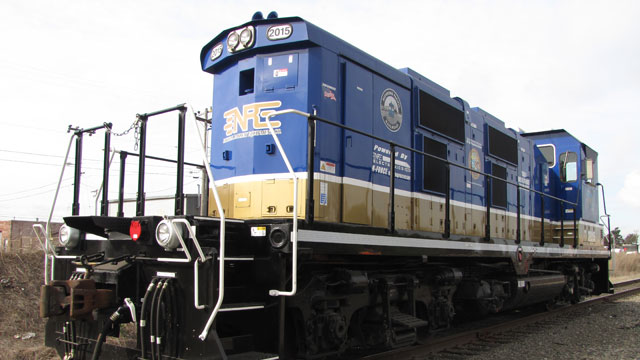
"caption": "Richmond Pacific Railroad's clean-diesel switch engine, the first of its kind in the U.S.",
"description": null,
"title": "IMG_4397_web",
"credit": null,
"status": "inherit",
"isLoading": false,
"fetchFailed": false
},
"science_11062": {
"type": "attachments",
"id": "science_11062",
"meta": {
"index": "attachments_1716263798",
"site": "science",
"id": "11062",
"found": true
},
"parent": 11045,
"imgSizes": {
"kqedFullSize": {
"file": "https://ww2.kqed.org/app/uploads/sites/35/2013/11/RS3844_OilPumps_20120711b-scr.jpg",
"width": 640,
"height": 360
}
},
"publishDate": 1384553992,
"modified": 1555541481,
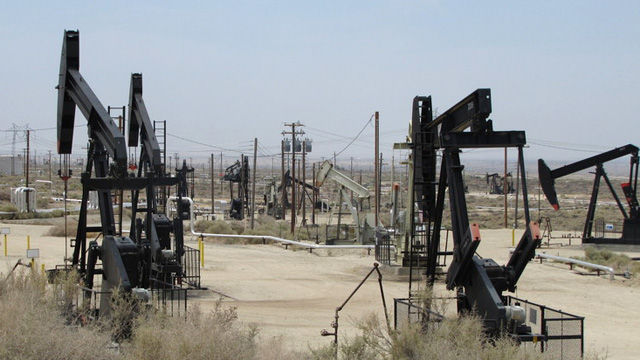
"caption": "Oil wells in Kern County, where much of California's fracking has taken place. ",
"description": null,
"title": "RS3844_OilPumps_20120711b-scr",
"credit": "Craig Miller/KQED",
"status": "inherit",
"isLoading": false,
"fetchFailed": false
},
"science_10591": {
"type": "attachments",
"id": "science_10591",
"meta": {
"index": "attachments_1716263798",
"site": "science",
"id": "10591",
"found": true
},
"parent": 10590,
"imgSizes": {
"kqedFullSize": {
"file": "https://ww2.kqed.org/app/uploads/sites/35/2013/10/imprint2.jpg",
"width": 640,
"height": 360
}
},
"publishDate": 1383264287,
"modified": 1383264287,
"caption": "Bay Area battery start-up Imprint Energy is developing flexible, thin batteries. (Photo: Imprint Energy)",
"description": null,
"title": "imprint2",
"credit": null,
"status": "inherit",
"isLoading": false,
"fetchFailed": false
},
"science_10385": {
"type": "attachments",
"id": "science_10385",
"meta": {
"index": "attachments_1716263798",
"site": "science",
"id": "10385",
"found": true
},
"parent": 10377,
"imgSizes": {
"kqedFullSize": {
"file": "https://ww2.kqed.org/app/uploads/sites/35/2013/10/IMG_3146.jpg",
"width": 640,
"height": 360
}
},
"publishDate": 1383004788,
"modified": 1383004788,
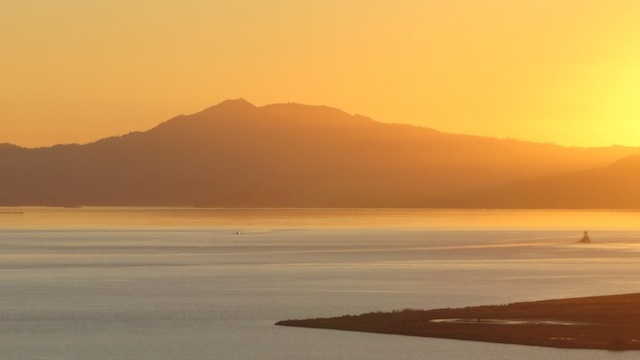
"caption": "Late-summer sunset over San Francisco Bay. (Craig Miller)",
"description": null,
"title": "IMG_3146",
"credit": null,
"status": "inherit",
"isLoading": false,
"fetchFailed": false
},
"science_10229": {
"type": "attachments",
"id": "science_10229",
"meta": {
"index": "attachments_1716263798",
"site": "science",
"id": "10229",
"found": true
},
"parent": 10224,
"imgSizes": {
"kqedFullSize": {
"file": "https://ww2.kqed.org/app/uploads/sites/35/2013/10/IMG_0012_crop.jpg",
"width": 640,
"height": 360
}
},
"publishDate": 1382578620,
"modified": 1382578620,
"caption": "An electric car \"fuels up\" at a public charger in Sacramento. (Craig Miller/KQED)",
"description": null,
"title": "IMG_0012_crop",
"credit": null,
"status": "inherit",
"isLoading": false,
"fetchFailed": false
},
"science_10038": {
"type": "attachments",
"id": "science_10038",
"meta": {
"index": "attachments_1716263798",
"site": "science",
"id": "10038",
"found": true
},
"parent": 9996,
"imgSizes": {
"kqedFullSize": {
"file": "https://ww2.kqed.org/app/uploads/sites/35/2013/10/frackingprotest.jpg",
"width": 640,
"height": 360
}
},
"publishDate": 1381799651,
"modified": 1381799651,
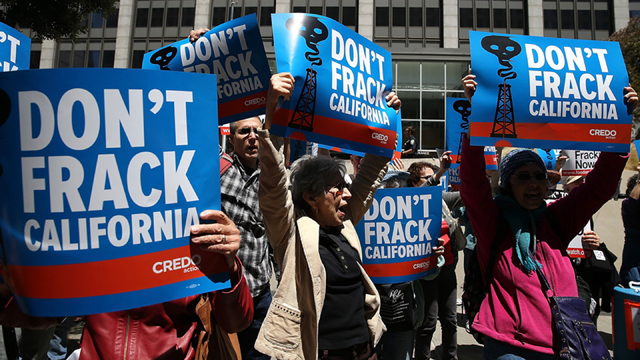
"caption": "The group Californians Against Fracking staged a protest outside of California Gov. Jerry Brown's San Francisco offices demanding that Gov. Brown ban fracking in the state. (Justin Sullivan/Getty Images)",
"description": "SAN FRANCISCO, CA - MAY 30: Protestors stage a demonstration against fracking in California outside of the Hiram W. Johnson State Office Building on May 30, 2013 in San Francisco, California. Dozens of protesters with the group Californians Against Fracking staged a protest outside of California Gov. Jerry Brown's San Francisco offices demanding that Gov. Brown ban fracking in the state. (Photo by Justin Sullivan/Getty Images)",
"title": "169770907JS001_ACTIVISTS_PR",
"credit": null,
"status": "inherit",
"isLoading": false,
"fetchFailed": false
},
"science_9429": {
"type": "attachments",
"id": "science_9429",
"meta": {
"index": "attachments_1716263798",
"site": "science",
"id": "9429",
"found": true
},
"parent": 9413,
"imgSizes": {
"kqedFullSize": {
"file": "https://ww2.kqed.org/app/uploads/sites/35/2013/09/DSC01010.jpg",
"width": 640,
"height": 360
}
},
"publishDate": 1380313340,
"modified": 1380313340,
"caption": "A hot spot smolders in the Rim Fire (Photo: Lauren Sommer/KQED)",
"description": null,
"title": "SONY DSC",
"credit": null,
"status": "inherit",
"isLoading": false,
"fetchFailed": false
},
"science_7251": {
"type": "attachments",
"id": "science_7251",
"meta": {
"index": "attachments_1716263798",
"site": "science",
"id": "7251",
"found": true
},
"parent": 7191,
"imgSizes": {
"kqedFullSize": {
"file": "https://ww2.kqed.org/app/uploads/sites/35/2013/08/shasta-640.jpg",
"width": 640,
"height": 360
}
},
"publishDate": 1376697098,
"modified": 1376697098,
"caption": null,
"description": null,
"title": "shasta-640",
"credit": null,
"status": "inherit",
"isLoading": false,
"fetchFailed": false
},
"science_6954": {
"type": "attachments",
"id": "science_6954",
"meta": {
"index": "attachments_1716263798",
"site": "science",
"id": "6954",
"found": true
},
"parent": 6835,
"imgSizes": {
"kqedFullSize": {
"file": "https://ww2.kqed.org/app/uploads/sites/35/2013/08/Marilyn-cropped1-e1376085246998.jpg",
"width": 640,
"height": 360
}
},
"publishDate": 1376085213,
"modified": 1376085213,
"caption": "Marilyn Bardet has pushed for a more thorough review of Valero’s crude-by-rail project. (Deborah Svoboda/KQED)",
"description": "Marilyn Bardet has pushed for a more thorough review of Valero’s crude-by-rail project. (Deborah Svoboda/KQED)",
"title": "Marilyn-featured",
"credit": null,
"status": "inherit",
"isLoading": false,
"fetchFailed": false
},
"science_6449": {
"type": "attachments",
"id": "science_6449",
"meta": {
"index": "attachments_1716263798",
"site": "science",
"id": "6449",
"found": true
},
"parent": 6401,
"imgSizes": {
"kqedFullSize": {
"file": "https://ww2.kqed.org/app/uploads/sites/35/2013/07/RS356_trafficsmog090211-scr-e1375322640810.jpg",
"width": 640,
"height": 360
}
},
"publishDate": 1375322581,
"modified": 1375322581,
"caption": "David McNew/Getty Images",
"description": null,
"title": "RS356_trafficsmog090211-scr",
"credit": null,
"status": "inherit",
"isLoading": false,
"fetchFailed": false
},
"science_6313": {
"type": "attachments",
"id": "science_6313",
"meta": {
"index": "attachments_1716263798",
"site": "science",
"id": "6313",
"found": true
},
"parent": 5980,
"imgSizes": {
"kqedFullSize": {
"file": "https://ww2.kqed.org/app/uploads/sites/35/2013/07/rangehood.jpg",
"width": 640,
"height": 424
}
},
"publishDate": 1375205613,
"modified": 1375205613,
"caption": "Range hood (j l t/Flickr)",
"description": "range hood",
"title": "rangehood",
"credit": null,
"status": "inherit",
"isLoading": false,
"fetchFailed": false
}
},
"audioPlayerReducer": {
"postId": "stream_live",
"isPaused": true,
"isPlaying": false,
"pfsActive": false,
"pledgeModalIsOpen": true,
"playerDrawerIsOpen": false,
"liveAudioPlayStartedAt": 0,
"liveAudioPlayContext": ""
},
"authorsReducer": {
"4400": {
"type": "authors",
"id": "4400",
"meta": {
"override": true
},
"slug": "4400",
"name": "Mike Osborne",
"firstName": "Mike",
"lastName": "Osborne",
"bio": "Mike Osborne is currently finishing his PhD at Stanford where he studies climate change in the tropical Pacific. In his research he uses coral-based records (similar to tree rings) to examine El Nino and La Nina cycles over the past few centuries. Mike also created and co-produces the \u003ca href=\"https://www.stanford.edu/group/anthropocene/cgi-bin/wordpress/\">Generation Anthropocene\u003c/a> podcast which features interviews and stories covering a wide range of 21st Century global change issues. He loves travel and is always looking for a reason to be outside.",
"email": "mosborne@kqed.org",
"isLoading": false
},
"mollysamuel": {
"type": "authors",
"id": "200",
"meta": {
"index": "authors_1716337520",
"id": "200",
"found": true
},
"name": "Molly Samuel",
"firstName": "Molly",
"lastName": "Samuel",
"slug": "mollysamuel",
"email": "msamuel@kqed.org",
"display_author_email": false,
"staff_mastheads": [],
"title": null,
"bio": "Molly Samuel joined KQED as an intern in 2007, and since then has worked here as a reporter, producer, director and blogger. Before becoming KQED Science’s Multimedia Producer, she was a producer for Climate Watch. Molly has also reported for NPR, KALW and High Country News, and has produced audio stories for The Encyclopedia of Life and the Oakland Museum of California. She was a fellow with the Middlebury Fellowships in Environmental Journalism and a journalist-in-residence at the National Evolutionary Synthesis Center. Molly has a degree in Ancient Greek from Oberlin College and is a co-founder of the record label True Panther Sounds.",
"avatar": "https://secure.gravatar.com/avatar/a6abd3b949a89fe5109fa9917631d0b6?s=600&d=blank&r=g",
"twitter": null,
"facebook": null,
"instagram": null,
"linkedin": null,
"sites": [
{
"site": "news",
"roles": [
"subscriber"
]
},
{
"site": "stateofhealth",
"roles": [
"subscriber"
]
},
{
"site": "science",
"roles": [
"subscriber"
]
},
{
"site": "quest",
"roles": [
"edit_users",
"subscriber"
]
}
],
"headData": {
"title": "Molly Samuel | KQED",
"description": null,
"ogImgSrc": "https://secure.gravatar.com/avatar/a6abd3b949a89fe5109fa9917631d0b6?s=600&d=blank&r=g",
"twImgSrc": "https://secure.gravatar.com/avatar/a6abd3b949a89fe5109fa9917631d0b6?s=600&d=blank&r=g"
},
"isLoading": false,
"link": "/author/mollysamuel"
},
"cmiller": {
"type": "authors",
"id": "221",
"meta": {
"index": "authors_1716337520",
"id": "221",
"found": true
},
"name": "Craig Miller",
"firstName": "Craig",
"lastName": "Miller",
"slug": "cmiller",
"email": "craig@voxterra.net",
"display_author_email": false,
"staff_mastheads": [
"science"
],
"title": "Editor Emeritus, Science",
"bio": "Craig is a former KQED Science editor, specializing in weather, climate, water & energy issues, with a little seismology thrown in just to shake things up. Prior to that, he launched and led the station's award-winning multimedia project, Climate Watch. Craig is also an accomplished writer/producer of television documentaries, with a focus on natural resource issues.",
"avatar": "https://secure.gravatar.com/avatar/b91661df645e001a9cafe0861fa685f9?s=600&d=blank&r=g",
"twitter": "voxterra",
"facebook": null,
"instagram": null,
"linkedin": null,
"sites": [
{
"site": "news",
"roles": [
"author"
]
},
{
"site": "futureofyou",
"roles": [
"editor"
]
},
{
"site": "stateofhealth",
"roles": [
"author"
]
},
{
"site": "science",
"roles": [
"editor"
]
},
{
"site": "quest",
"roles": [
"editor"
]
}
],
"headData": {
"title": "Craig Miller | KQED",
"description": "Editor Emeritus, Science",
"ogImgSrc": "https://secure.gravatar.com/avatar/b91661df645e001a9cafe0861fa685f9?s=600&d=blank&r=g",
"twImgSrc": "https://secure.gravatar.com/avatar/b91661df645e001a9cafe0861fa685f9?s=600&d=blank&r=g"
},
"isLoading": false,
"link": "/author/cmiller"
},
"laurensommer": {
"type": "authors",
"id": "239",
"meta": {
"index": "authors_1716337520",
"id": "239",
"found": true
},
"name": "Lauren Sommer",
"firstName": "Lauren",
"lastName": "Sommer",
"slug": "laurensommer",
"email": "lsommer@kqed.org",
"display_author_email": false,
"staff_mastheads": [],
"title": "KQED Contributor",
"bio": "Lauren is a radio reporter formerly covering environment, water, and energy for KQED Science. As part of her day job, she has scaled Sierra Nevada peaks, run from charging elephant seals, and desperately tried to get her sea legs - all in pursuit of good radio. Her work has appeared on Marketplace, Living on Earth, Science Friday and NPR's Morning Edition and All Things Considered. You can find her on Twitter at \u003ca href=\"https://twitter.com/lesommer\">@lesommer\u003c/a>.",
"avatar": "https://secure.gravatar.com/avatar/33aa3772bb86c6ad45b8aca6a238bbdf?s=600&d=blank&r=g",
"twitter": null,
"facebook": null,
"instagram": null,
"linkedin": null,
"sites": [
{
"site": "news",
"roles": [
"author"
]
},
{
"site": "science",
"roles": [
"editor",
"manage_content_types",
"manage_taxonomies"
]
},
{
"site": "quest",
"roles": [
"editor"
]
}
],
"headData": {
"title": "Lauren Sommer | KQED",
"description": "KQED Contributor",
"ogImgSrc": "https://secure.gravatar.com/avatar/33aa3772bb86c6ad45b8aca6a238bbdf?s=600&d=blank&r=g",
"twImgSrc": "https://secure.gravatar.com/avatar/33aa3772bb86c6ad45b8aca6a238bbdf?s=600&d=blank&r=g"
},
"isLoading": false,
"link": "/author/laurensommer"
},
"sasha-khokha": {
"type": "authors",
"id": "254",
"meta": {
"index": "authors_1716337520",
"id": "254",
"found": true
},
"name": "Sasha Khokha",
"firstName": "Sasha",
"lastName": "Khokha",
"slug": "sasha-khokha",
"email": "skhokha@kqed.org",
"display_author_email": true,
"staff_mastheads": [
"news"
],
"title": "Host, The California Report Magazine",
"bio": "Sasha Khokha is the host of \u003cem>The California Report's \u003c/em> weekly magazine program, which takes listeners on sound-rich excursions to meet the people that make the Golden State unique -- through audio documentaries and long-form stories. As \u003cem>The California Report's\u003c/em> Central Valley Bureau Chief based in Fresno for nearly a dozen years, Sasha brought the lives and concerns of rural Californians to listeners around the state. Her reporting helped expose the hidden price immigrant women janitors and farmworkers may pay to keep their jobs: sexual assault at work. It inspired two new California laws to protect them from sexual harassment. She was a key member of the reporting team for the Frontline film \u003cem>Rape on the Night Shift, \u003c/em>which was nominated for two national Emmys. Sasha has also won a national Edward R. Murrow and a national PRNDI award for investigative reporting, as well as multiple prizes from the Society for Professional Journalists. Sasha is a proud alum of the UC Berkeley Graduate School of Journalism and Brown University and a member of the South Asian Journalists Association.",
"avatar": "https://secure.gravatar.com/avatar/e4b5e1541aaeea2aa356aa1fb2a68950?s=600&d=blank&r=g",
"twitter": "KQEDSashaKhokha",
"facebook": null,
"instagram": null,
"linkedin": null,
"sites": [
{
"site": "news",
"roles": [
"editor"
]
},
{
"site": "stateofhealth",
"roles": [
"author"
]
},
{
"site": "science",
"roles": [
"author"
]
},
{
"site": "quest",
"roles": [
"subscriber"
]
}
],
"headData": {
"title": "Sasha Khokha | KQED",
"description": "Host, The California Report Magazine",
"ogImgSrc": "https://secure.gravatar.com/avatar/e4b5e1541aaeea2aa356aa1fb2a68950?s=600&d=blank&r=g",
"twImgSrc": "https://secure.gravatar.com/avatar/e4b5e1541aaeea2aa356aa1fb2a68950?s=600&d=blank&r=g"
},
"isLoading": false,
"link": "/author/sasha-khokha"
}
},
"pagesReducer": {
"science_category_energy": {
"type": "terms",
"id": "science_33",
"meta": {
"index": "terms_1716263798",
"site": "science",
"id": "33",
"score": 12.797518
},
"featImg": null,
"name": "Energy",
"description": null,
"taxonomy": "category",
"headData": {
"twImgId": null,
"twTitle": null,
"ogTitle": null,
"ogImgId": null,
"twDescription": null,
"description": null,
"title": "Energy Archives | KQED Science",
"ogDescription": null
},
"ttid": 35,
"slug": "energy",
"isLoading": false,
"title": "Energy",
"pageMeta": {
"site": "science",
"WpPageTemplate": "page-topic-editorial",
"currentPage": 31
},
"blocks": [
{
"blockName": "kqed/post-list",
"attrs": {
"layout": "cardArticle2",
"query": "posts/science?category=energy",
"seeMore": false,
"paginated": true,
"page": 31
}
},
{
"blockName": "kqed/ad"
}
]
}
},
"pfsSessionReducer": {},
"postsReducer": {
"stream_live": {
"type": "live",
"id": "stream_live",
"audioUrl": "https://streams.kqed.org/kqedradio",
"title": "Live Stream",
"excerpt": "Live Stream information currently unavailable.",
"link": "/radio",
"featImg": "",
"label": {
"name": "KQED Live",
"link": "/"
}
},
"stream_kqedNewscast": {
"type": "posts",
"id": "stream_kqedNewscast",
"audioUrl": "https://www.kqed.org/.stream/anon/radio/RDnews/newscast.mp3?_=1",
"title": "KQED Newscast",
"featImg": "",
"label": {
"name": "88.5 FM",
"link": "/"
}
},
"science_11715": {
"type": "posts",
"id": "science_11715",
"meta": {
"index": "posts_1716263798",
"site": "science",
"id": "11715",
"score": null,
"sort": [
1386117571000
]
},
"parent": 0,
"labelTerm": {
"site": "science",
"term": 1022
},
"blocks": [],
"publishDate": 1386117571,
"format": "aside",
"title": "Mad About Mud: Debate Heats up Over Waste From Oil & Gas Wells",
"headTitle": "Mad About Mud: Debate Heats up Over Waste From Oil & Gas Wells | KQED",
"content": "\u003cfigure id=\"attachment_11722\" class=\"wp-caption aligncenter\" style=\"max-width: 640px\">\u003ca href=\"http://ww2.kqed.org/science/wp-content/uploads/sites/35/2013/12/drilling.jpg\">\u003cimg loading=\"lazy\" decoding=\"async\" class=\"size-full wp-image-11722\" src=\"http://ww2.kqed.org/science/wp-content/uploads/sites/35/2013/12/drilling.jpg\" alt=\"Gas well being drilled outside Sacramento. (Lauren Sommer/KQED)\" width=\"640\" height=\"360\">\u003c/a>\u003cfigcaption class=\"wp-caption-text\">Gas well being drilled outside Sacramento. (Lauren Sommer/KQED)\u003c/figcaption>\u003c/figure>\n\u003cp>The debate over hydraulic fracturing, or fracking, to extract oil and gas has largely focused on the chemicals injected underground and their potential impact on public health. Now environmental groups are turning their attention to the waste produced by simply drilling a well in the first place. Water regulators in the Central Valley, home to most of the state’s oil production, will consider the issue at a \u003ca href=\"http://www.waterboards.ca.gov/centralvalley/board_decisions/tentative_orders/1312/10_low_threat_gen_waiv/1_general_waiver_buff.pdf\">meeting Thursday\u003c/a>.\u003c/p>\n\u003cp>Drilling mud is the slick concoction used to cool and lubricate a drill bit, and it’s used for all kinds of wells, not just oil and gas. After a well is drilled, the mud and other wastes from drilling the well are often stored aside in unlined pits near the drilling site.\u003c/p>\n\u003cp>Five years ago, the Central Valley Regional Water Board included drilling muds in a broad waiver that exempted drillers from having to report and monitor those muds, saying they posed little threat to water quality. \u003ca href=\"http://www.waterboards.ca.gov/centralvalley/board_decisions/tentative_orders/1312/10_low_threat_gen_waiv/2a_general_waiver_stfrpt_strike.pdf\">Other exemptions\u003c/a> included swimming pool discharge and water from air conditioners.[contextly_sidebar id=”9f3d8e70ddfe05096a04256919fbf9ad”]\u003c/p>\n\u003cp>That waiver is now up for renewal, and environmentalists say when it comes to drilling muds, oil and gas companies should not get a free pass. Especially since the last time the Regional Water Quality Control Board looked at the health effects of drilling muds was back in 1981, before the fracking boom.\u003c/p>\n\u003cp>“The most obvious step is to take a time out and really update our understanding of drilling muds and the risk they pose, especially with the spread of new techniques like fracking,” said Hollin Kretzman, a staff attorney with the \u003ca href=\"http://www.biologicaldiversity.org/\">Center for Biological Diversity\u003c/a>. Kretzman says the waste generated from oil wells could contain harmful chemicals and contaminate groundwater.\u003c/p>\n\u003cp>[ad fullwidth]\u003c/p>\n\u003cp>No one’s opposing a study, said Tupper Hull, of the \u003ca href=\"https://www.wspa.org/\">Western States Petroleum Association\u003c/a>. “We have no problem with that,” he said. “But imposing additional regulations that make drilling more costly, more time consuming, energy production more costly for consumers, without evidence of harm, just doesn’t make sense.”\u003c/p>\n\u003cp>But after reviewing\u003ca href=\"http://www.waterboards.ca.gov/centralvalley/board_decisions/tentative_orders/1312/10_low_threat_gen_waiv/5_general_waiver_all_com.pdf\"> comments from several environmental groups\u003c/a>, the Water Board’s staff is recommending that regulators revoke the waiver for drilling wastes while they study potential health effects.\u003c/p>\n\u003cp>\u003c/p>\n\u003cp>Meanwhile, proposed fracking regulations would require the State Water Quality Control Board to put together a regional groundwater monitoring program for areas where well stimulation, like fracking, takes place. But those rules are largely concerned with chemicals injected into the ground, not drilling muds or the waste from simply digging a well.\u003c/p>\n\n",
"stats": {
"hasVideo": false,
"hasChartOrMap": false,
"hasAudio": false,
"hasPolis": false,
"wordCount": 439,
"hasGoogleForm": false,
"hasGallery": false,
"hasHearkenModule": false,
"iframeSrcs": [],
"paragraphCount": 10
},
"modified": 1704934594,
"excerpt": "Drilling mud is the slick concoction used to cool and lubricate a drill bit, and it’s used for all kinds of wells, including oil and gas. Environmental groups are turning their attention to drilling mud, which is currently exempted from water monitoring. ",
"headData": {
"twImgId": "",
"twTitle": "",
"ogTitle": "",
"ogImgId": "",
"twDescription": "",
"description": "Drilling mud is the slick concoction used to cool and lubricate a drill bit, and it’s used for all kinds of wells, including oil and gas. Environmental groups are turning their attention to drilling mud, which is currently exempted from water monitoring. ",
"title": "Mad About Mud: Debate Heats up Over Waste From Oil & Gas Wells | KQED",
"ogDescription": "",
"schema": {
"@context": "https://schema.org",
"@type": "Article",
"headline": "Mad About Mud: Debate Heats up Over Waste From Oil & Gas Wells",
"datePublished": "2013-12-03T16:39:31-08:00",
"dateModified": "2024-01-10T16:56:34-08:00",
"image": "https://cdn.kqed.org/wp-content/uploads/2020/02/KQED-OG-Image@1x.png"
}
},
"guestAuthors": [],
"slug": "mad-about-mud-debate-heats-up-over-waste-from-oil-gas-wells",
"status": "publish",
"sticky": false,
"path": "/science/11715/mad-about-mud-debate-heats-up-over-waste-from-oil-gas-wells",
"audioTrackLength": null,
"parsedContent": [
{
"type": "contentString",
"content": "\u003cdiv class=\"post-body\">\u003cp>\u003cfigure id=\"attachment_11722\" class=\"wp-caption aligncenter\" style=\"max-width: 640px\">\u003ca href=\"http://ww2.kqed.org/science/wp-content/uploads/sites/35/2013/12/drilling.jpg\">\u003cimg loading=\"lazy\" decoding=\"async\" class=\"size-full wp-image-11722\" src=\"http://ww2.kqed.org/science/wp-content/uploads/sites/35/2013/12/drilling.jpg\" alt=\"Gas well being drilled outside Sacramento. (Lauren Sommer/KQED)\" width=\"640\" height=\"360\">\u003c/a>\u003cfigcaption class=\"wp-caption-text\">Gas well being drilled outside Sacramento. (Lauren Sommer/KQED)\u003c/figcaption>\u003c/figure>\n\u003cp>The debate over hydraulic fracturing, or fracking, to extract oil and gas has largely focused on the chemicals injected underground and their potential impact on public health. Now environmental groups are turning their attention to the waste produced by simply drilling a well in the first place. Water regulators in the Central Valley, home to most of the state’s oil production, will consider the issue at a \u003ca href=\"http://www.waterboards.ca.gov/centralvalley/board_decisions/tentative_orders/1312/10_low_threat_gen_waiv/1_general_waiver_buff.pdf\">meeting Thursday\u003c/a>.\u003c/p>\n\u003cp>Drilling mud is the slick concoction used to cool and lubricate a drill bit, and it’s used for all kinds of wells, not just oil and gas. After a well is drilled, the mud and other wastes from drilling the well are often stored aside in unlined pits near the drilling site.\u003c/p>\n\u003cp>Five years ago, the Central Valley Regional Water Board included drilling muds in a broad waiver that exempted drillers from having to report and monitor those muds, saying they posed little threat to water quality. \u003ca href=\"http://www.waterboards.ca.gov/centralvalley/board_decisions/tentative_orders/1312/10_low_threat_gen_waiv/2a_general_waiver_stfrpt_strike.pdf\">Other exemptions\u003c/a> included swimming pool discharge and water from air conditioners.\u003c/p>\u003cp>\u003c/p>\u003cp>\u003c/p>\n\u003cp>That waiver is now up for renewal, and environmentalists say when it comes to drilling muds, oil and gas companies should not get a free pass. Especially since the last time the Regional Water Quality Control Board looked at the health effects of drilling muds was back in 1981, before the fracking boom.\u003c/p>\n\u003cp>“The most obvious step is to take a time out and really update our understanding of drilling muds and the risk they pose, especially with the spread of new techniques like fracking,” said Hollin Kretzman, a staff attorney with the \u003ca href=\"http://www.biologicaldiversity.org/\">Center for Biological Diversity\u003c/a>. Kretzman says the waste generated from oil wells could contain harmful chemicals and contaminate groundwater.\u003c/p>\n\u003cp>\u003c/p>\u003c/div>",
"attributes": {
"named": {},
"numeric": []
}
},
{
"type": "component",
"content": "",
"name": "ad",
"attributes": {
"named": {
"label": "fullwidth"
},
"numeric": [
"fullwidth"
]
}
},
{
"type": "contentString",
"content": "\u003cdiv class=\"post-body\">\u003cp>\u003c/p>\n\u003cp>No one’s opposing a study, said Tupper Hull, of the \u003ca href=\"https://www.wspa.org/\">Western States Petroleum Association\u003c/a>. “We have no problem with that,” he said. “But imposing additional regulations that make drilling more costly, more time consuming, energy production more costly for consumers, without evidence of harm, just doesn’t make sense.”\u003c/p>\n\u003cp>But after reviewing\u003ca href=\"http://www.waterboards.ca.gov/centralvalley/board_decisions/tentative_orders/1312/10_low_threat_gen_waiv/5_general_waiver_all_com.pdf\"> comments from several environmental groups\u003c/a>, the Water Board’s staff is recommending that regulators revoke the waiver for drilling wastes while they study potential health effects.\u003c/p>\n\u003cp>\u003c/p>\n\u003cp>Meanwhile, proposed fracking regulations would require the State Water Quality Control Board to put together a regional groundwater monitoring program for areas where well stimulation, like fracking, takes place. But those rules are largely concerned with chemicals injected into the ground, not drilling muds or the waste from simply digging a well.\u003c/p>\n\n\u003c/div>\u003c/p>",
"attributes": {
"named": {},
"numeric": []
}
}
],
"link": "/science/11715/mad-about-mud-debate-heats-up-over-waste-from-oil-gas-wells",
"authors": [
"254"
],
"series": [
"science_1022"
],
"categories": [
"science_33",
"science_89",
"science_35",
"science_38",
"science_40",
"science_98"
],
"tags": [
"science_686",
"science_490",
"science_1041",
"science_952",
"science_997"
],
"label": "science_1022"
},
"science_11257": {
"type": "posts",
"id": "science_11257",
"meta": {
"index": "posts_1716263798",
"site": "science",
"id": "11257",
"score": null,
"sort": [
1385152779000
]
},
"parent": 0,
"labelTerm": {
"site": "science"
},
"blocks": [],
"publishDate": 1385152779,
"format": "aside",
"title": "Rolling Out a 'Clean Diesel' Locomotive",
"headTitle": "Rolling Out a ‘Clean Diesel’ Locomotive | KQED",
"content": "\u003cfigure id=\"attachment_11280\" class=\"wp-caption aligncenter\" style=\"max-width: 640px\">\u003ca href=\"http://ww2.kqed.org/science/wp-content/uploads/sites/35/2013/11/IMG_4397_web.jpg\" rel=\"attachment wp-att-11280\">\u003cimg loading=\"lazy\" decoding=\"async\" class=\"size-full wp-image-11280\" src=\"http://ww2.kqed.org/science/wp-content/uploads/sites/35/2013/11/IMG_4397_web.jpg\" alt=\"Richmond Pacific Railroad's clean-diesel switch engine, the first of its kind in the U.S.\" width=\"640\" height=\"360\">\u003c/a>\u003cfigcaption class=\"wp-caption-text\">Richmond Pacific Railroad’s clean-diesel switch engine, the first of its kind in the U.S.\u003c/figcaption>\u003c/figure>\n\u003cp>You gotta start somewhere. In this case, it’s the BNSF switchyard in Richmond, where the \u003ca title=\"RPR - main\" href=\"http://www.levinterminal.com/facilities-and-services/rail-services/\">Richmond Pacific Railroad\u003c/a> is testing the nation’s first “Tier 4” switch engine for certification. Tier 4 is a standard set by the federal Environmental Protection Agency for ultra-low emissions.\u003c/p>\n\u003cp>The location couldn’t be more appropriate, since Richmond is an industrial town with a major rail hub, a huge oil refinery and with housing right up against it all, a hotspot for air-quality-related health complaints such as asthma.\u003c/p>\n\u003cp>“Even one locomotive can make a big impact in terms of health,” says Damian Breen, who directs “strategic incentives” for the Bay Area Air Quality Management District. The District provided the railroad with a half-million-dollar grant to roll out and test the new switch engine, a smaller locomotive used to shuffle rail cars around in the yard or move them short distances. Breen says the new switcher will eliminate 6,000 tons of emissions per year.\u003c/p>\n\u003cp>Of course, “clean” is a relative term in the railroad biz. Most locomotives are belching volcanoes of black soot, partly because they’re typically powered by a single, huge diesel engine and spend a lot of their time idling. Instead, the new switcher has a series of smaller engines and generators, optimized by computer controls to call up only as much power as the moment demands.\u003c/p>\n\u003cp>“It’s really a new design concept,” says Steve Sonni, California rep for the locomotive builder, \u003ca title=\"NRE - main\" href=\"http://www.nationalrailway.com/\">NRE\u003c/a>. He says the combination reduces noise, fuel consumption and stack emissions. “You’re talking 30 to 40 percent for sure,” he says, and adds that it could be 90 percent cleaner than many “legacy” locomotives that have been on the rails for 40 years or more. “I can assure you that there’s hundreds and hundreds, if not thousands of old locomotives that were designed and built in the ’50s and ’60s operating all over the United States,” says Sonni, many without any restrictions on emissions.\u003c/p>\n\u003cfigure id=\"attachment_11281\" class=\"wp-caption alignright\" style=\"max-width: 400px\">\u003ca href=\"http://ww2.kqed.org/science/wp-content/uploads/sites/35/2013/11/IMG_4400_web.jpg\" rel=\"attachment wp-att-11281\">\u003cimg loading=\"lazy\" decoding=\"async\" class=\"size-full wp-image-11281\" src=\"http://ww2.kqed.org/science/wp-content/uploads/sites/35/2013/11/IMG_4400_web.jpg\" alt=\"Jeff...\" width=\"400\" height=\"300\">\u003c/a>\u003cfigcaption class=\"wp-caption-text\">Jeff Schwab starts up the new ultra-quiet, low-emissions switch locomotive.\u003c/figcaption>\u003c/figure>\n\u003cp>Nobody seems more enthused about the new switcher than the guy in the cab. For one thing, “It’s really quiet,” says Jeff Schwab, the railroad’s chief mechanic.\u003c/p>\n\u003cp>[ad fullwidth]\u003c/p>\n\u003cp>“You have a computer monitoring everything, helping the engineer make decisions,” he notes, such as a kind of traction control, where the computer will redistribute power to wheels to avoid wheels slipping, a common occurrence when switchers are hooked up to heavy loads. “It’s just incredible.”\u003c/p>\n\u003cp>Breen says he also expects to see climate benefits from the new engine, as a major component of diesel exhaust is black carbon, which Breen calls “a major forcer of climate.” Based on recent science, state regulators are recommending a stronger focus on black carbon as a greenhouse gas. Breen expects the switcher to save two metric tons of soot each year, reduce carbon dioxide emissions, and use less fuel overall. But with an estimated 550 switch engines operating in California, there would seem to be a long road ahead.\u003c/p>\n\u003cp>“We are looking to see more of these locomotives deployed by the major railroads,” says Breen, though he concedes that it’s up to them to decide whether to adopt the cleaner engines. The new locomotives will become more widely available in 2015. “We have talked to them quite a bit about reducing risk in these communities,” he added. “We know they are willing to work with us.” At a cost upwards of $1 million for a single locomotive, that can be a tough sell.\u003c/p>\n\u003cp>\u003c/p>\n\u003cp> \u003c/p>\n\n",
"stats": {
"hasVideo": false,
"hasChartOrMap": false,
"hasAudio": false,
"hasPolis": false,
"wordCount": 662,
"hasGoogleForm": false,
"hasGallery": false,
"hasHearkenModule": false,
"iframeSrcs": [],
"paragraphCount": 11
},
"modified": 1704934648,
"excerpt": "\"Clean diesel\" cars are now common on the highways. A new locomotive now takes that concept to the rails--with a few other bells and whistles.",
"headData": {
"twImgId": "",
"twTitle": "",
"ogTitle": "",
"ogImgId": "",
"twDescription": "",
"description": ""Clean diesel" cars are now common on the highways. A new locomotive now takes that concept to the rails--with a few other bells and whistles.",
"title": "Rolling Out a 'Clean Diesel' Locomotive | KQED",
"ogDescription": "",
"schema": {
"@context": "https://schema.org",
"@type": "Article",
"headline": "Rolling Out a 'Clean Diesel' Locomotive",
"datePublished": "2013-11-22T12:39:39-08:00",
"dateModified": "2024-01-10T16:57:28-08:00",
"image": "https://cdn.kqed.org/wp-content/uploads/2020/02/KQED-OG-Image@1x.png"
}
},
"guestAuthors": [],
"slug": "rolling-out-a-clean-diesel-locomotive",
"status": "publish",
"sticky": false,
"path": "/science/11257/rolling-out-a-clean-diesel-locomotive",
"audioTrackLength": null,
"parsedContent": [
{
"type": "contentString",
"content": "\u003cdiv class=\"post-body\">\u003cp>\u003cfigure id=\"attachment_11280\" class=\"wp-caption aligncenter\" style=\"max-width: 640px\">\u003ca href=\"http://ww2.kqed.org/science/wp-content/uploads/sites/35/2013/11/IMG_4397_web.jpg\" rel=\"attachment wp-att-11280\">\u003cimg loading=\"lazy\" decoding=\"async\" class=\"size-full wp-image-11280\" src=\"http://ww2.kqed.org/science/wp-content/uploads/sites/35/2013/11/IMG_4397_web.jpg\" alt=\"Richmond Pacific Railroad's clean-diesel switch engine, the first of its kind in the U.S.\" width=\"640\" height=\"360\">\u003c/a>\u003cfigcaption class=\"wp-caption-text\">Richmond Pacific Railroad’s clean-diesel switch engine, the first of its kind in the U.S.\u003c/figcaption>\u003c/figure>\n\u003cp>You gotta start somewhere. In this case, it’s the BNSF switchyard in Richmond, where the \u003ca title=\"RPR - main\" href=\"http://www.levinterminal.com/facilities-and-services/rail-services/\">Richmond Pacific Railroad\u003c/a> is testing the nation’s first “Tier 4” switch engine for certification. Tier 4 is a standard set by the federal Environmental Protection Agency for ultra-low emissions.\u003c/p>\n\u003cp>The location couldn’t be more appropriate, since Richmond is an industrial town with a major rail hub, a huge oil refinery and with housing right up against it all, a hotspot for air-quality-related health complaints such as asthma.\u003c/p>\n\u003cp>“Even one locomotive can make a big impact in terms of health,” says Damian Breen, who directs “strategic incentives” for the Bay Area Air Quality Management District. The District provided the railroad with a half-million-dollar grant to roll out and test the new switch engine, a smaller locomotive used to shuffle rail cars around in the yard or move them short distances. Breen says the new switcher will eliminate 6,000 tons of emissions per year.\u003c/p>\n\u003cp>Of course, “clean” is a relative term in the railroad biz. Most locomotives are belching volcanoes of black soot, partly because they’re typically powered by a single, huge diesel engine and spend a lot of their time idling. Instead, the new switcher has a series of smaller engines and generators, optimized by computer controls to call up only as much power as the moment demands.\u003c/p>\n\u003cp>“It’s really a new design concept,” says Steve Sonni, California rep for the locomotive builder, \u003ca title=\"NRE - main\" href=\"http://www.nationalrailway.com/\">NRE\u003c/a>. He says the combination reduces noise, fuel consumption and stack emissions. “You’re talking 30 to 40 percent for sure,” he says, and adds that it could be 90 percent cleaner than many “legacy” locomotives that have been on the rails for 40 years or more. “I can assure you that there’s hundreds and hundreds, if not thousands of old locomotives that were designed and built in the ’50s and ’60s operating all over the United States,” says Sonni, many without any restrictions on emissions.\u003c/p>\n\u003cfigure id=\"attachment_11281\" class=\"wp-caption alignright\" style=\"max-width: 400px\">\u003ca href=\"http://ww2.kqed.org/science/wp-content/uploads/sites/35/2013/11/IMG_4400_web.jpg\" rel=\"attachment wp-att-11281\">\u003cimg loading=\"lazy\" decoding=\"async\" class=\"size-full wp-image-11281\" src=\"http://ww2.kqed.org/science/wp-content/uploads/sites/35/2013/11/IMG_4400_web.jpg\" alt=\"Jeff...\" width=\"400\" height=\"300\">\u003c/a>\u003cfigcaption class=\"wp-caption-text\">Jeff Schwab starts up the new ultra-quiet, low-emissions switch locomotive.\u003c/figcaption>\u003c/figure>\n\u003cp>Nobody seems more enthused about the new switcher than the guy in the cab. For one thing, “It’s really quiet,” says Jeff Schwab, the railroad’s chief mechanic.\u003c/p>\n\u003cp>\u003c/p>\u003c/div>",
"attributes": {
"named": {},
"numeric": []
}
},
{
"type": "component",
"content": "",
"name": "ad",
"attributes": {
"named": {
"label": "fullwidth"
},
"numeric": [
"fullwidth"
]
}
},
{
"type": "contentString",
"content": "\u003cdiv class=\"post-body\">\u003cp>\u003c/p>\n\u003cp>“You have a computer monitoring everything, helping the engineer make decisions,” he notes, such as a kind of traction control, where the computer will redistribute power to wheels to avoid wheels slipping, a common occurrence when switchers are hooked up to heavy loads. “It’s just incredible.”\u003c/p>\n\u003cp>Breen says he also expects to see climate benefits from the new engine, as a major component of diesel exhaust is black carbon, which Breen calls “a major forcer of climate.” Based on recent science, state regulators are recommending a stronger focus on black carbon as a greenhouse gas. Breen expects the switcher to save two metric tons of soot each year, reduce carbon dioxide emissions, and use less fuel overall. But with an estimated 550 switch engines operating in California, there would seem to be a long road ahead.\u003c/p>\n\u003cp>“We are looking to see more of these locomotives deployed by the major railroads,” says Breen, though he concedes that it’s up to them to decide whether to adopt the cleaner engines. The new locomotives will become more widely available in 2015. “We have talked to them quite a bit about reducing risk in these communities,” he added. “We know they are willing to work with us.” At a cost upwards of $1 million for a single locomotive, that can be a tough sell.\u003c/p>\n\u003cp>\u003c/p>\n\u003cp> \u003c/p>\n\n\u003c/div>\u003c/p>",
"attributes": {
"named": {},
"numeric": []
}
}
],
"link": "/science/11257/rolling-out-a-clean-diesel-locomotive",
"authors": [
"221"
],
"categories": [
"science_31",
"science_33",
"science_89",
"science_35",
"science_39",
"science_40"
],
"tags": [
"science_524",
"science_354",
"science_450"
],
"featImg": "science_11280",
"label": "science"
},
"science_11045": {
"type": "posts",
"id": "science_11045",
"meta": {
"index": "posts_1716263798",
"site": "science",
"id": "11045",
"score": null,
"sort": [
1384556247000
]
},
"parent": 0,
"labelTerm": {
"site": "science",
"term": 1022
},
"blocks": [],
"publishDate": 1384556247,
"format": "aside",
"title": "What California's New Fracking Rules Would Do (And Not Do)",
"headTitle": "What California’s New Fracking Rules Would Do (And Not Do) | KQED",
"content": "\u003cfigure id=\"attachment_11062\" class=\"wp-caption alignleft\" style=\"max-width: 640px\">\u003ca href=\"http://ww2.kqed.org/science/wp-content/uploads/sites/35/2013/11/RS3844_OilPumps_20120711b-scr.jpg\">\u003cimg loading=\"lazy\" decoding=\"async\" class=\"size-full wp-image-11062\" src=\"http://ww2.kqed.org/science/wp-content/uploads/sites/35/2013/11/RS3844_OilPumps_20120711b-scr.jpg\" alt=\"Oil wells in Kern County, where much of California's fracking has taken place. (Craig Miller/KQED)\" width=\"640\" height=\"360\">\u003c/a>\u003cfigcaption class=\"wp-caption-text\">Oil wells in Kern County, where much of California’s fracking has taken place. (Craig Miller/KQED) \u003ccite>(Craig Miller/KQED)\u003c/cite>\u003c/figcaption>\u003c/figure>\n\u003cp>The debate over hydraulic fracturing is heating up in California, as the state \u003ca href=\"http://www.conservation.ca.gov/index/Documents/Text%20of%20Proposed%20Regulations%20-%20SB%204%20Well%20Stimulation%20Treatment%20Regulations.pdf\">released draft regulations\u003c/a> on Friday for the controversial oil extraction technique. This follows a \u003ca href=\"http://leginfo.legislature.ca.gov/faces/billNavClient.xhtml?bill_id=201320140SB4\">bill\u003c/a> signed by Governor Jerry Brown earlier this year that adds new requirements for oil companies to protect groundwater and disclose more public information.\u003c/p>\n\u003cp>“These regulations are the strongest and most comprehensive environmental public health protections of any oil and gas producing state,” said Mark Nechodom, director of the California Department of Conservation, which oversees the state’s oil and gas division.\u003c/p>\n\u003cp>“At the same time,” he said, “these regulations are designed to ensure that the oil and gas industry in California, which is a key element of the California economy, will remain productive and competitive.”\u003c/p>\n\u003cp>The technique by which water, sand and chemicals are injected underground at high pressure to release more oil has been used for decades in California. The long-awaited draft regulations represent the state’s first effort to address fracking, beyond the standards for oil well construction.\u003c/p>\n\u003cp>\u003cstrong>New requirements in proposed fracking rules:\u003c/strong>\u003c/p>\n\u003cul>\n\u003cli>Oil companies must apply for a permit before fracking and disclose where it will take place, how much water will be used, the source of that water and how it will be disposed of.\u003c/li>\n\u003c/ul>\n\u003cul>\n\u003cli> They must disclose what chemicals are used in fracking, but not the concentrations in cases where they claim a trade secret exemption.\u003c/li>\n\u003c/ul>\n\u003cul>\n\u003cli>Oil well operators must provide at least 30 days advance written notice before fracking, to landowners and neighbors within 1,500 feet of the well.\u003c/li>\n\u003c/ul>\n\u003cul>\n\u003cli>Property owners may request water quality testing of their own wells before and after fracking.\u003c/li>\n\u003c/ul>\n\u003cul>\n\u003cli>Well operators must review earthquake faults in the area to ensure that the fluids used fracking don’t migrate along faults.\u003c/li>\n\u003c/ul>\n\u003cul>\n\u003cli>An independent science panel will study the potential risks from hydraulic fracturing and other extraction techniques like acid well stimulation and report by January 1, 2015.\u003c/li>\n\u003c/ul>\n\u003cul>\n\u003cli>State oil and gas regulators will do an environmental impact review of the potential environmental risks of fracking in the state and report by July 1, 2015.\u003c/li>\n\u003c/ul>\n\u003cul>\n\u003cli> The state will also set up a website by January 2016 for public information about fracking.\u003c/li>\n\u003c/ul>\n\u003cul>\n\u003cli>The State Water Resources Control Board will create a program to monitor groundwater basins specifically to protect drinking water sources from fracking.\u003c/li>\n\u003c/ul>\n\u003cp>\u003cstrong>Call for a Moratorium\u003c/strong>\u003c/p>\n\u003cp>[ad fullwidth]\u003c/p>\n\u003cp>“I’m feeling mixed about the regulations,” says David Pettit, attorney with the Natural Resources Defense Council.\u003c/p>\n\u003cp>“I think that the best approach would be a straight up moratorium until fracking is proved safe,” he said. “But the regulations, particularly the scientific study and the statewide environmental impact report do give us a possibility of having a good analysis of the safety and public health issues that I hope the state can act on in a sensible way.”\u003c/p>\n\u003cp>[contextly_sidebar id=”586a7ee57327ff9ff49152618277d546”]\u003c/p>\n\u003cp>“We’ve been doing it for 60 years and there hasn’t been an incident anywhere in the state,” says Catherine Reheis-Boyd of the \u003ca href=\"https://www.wspa.org/\">Western States Petroleum Association\u003c/a>, an industry group. “To have a moratorium would make it even more difficult for California to supply the crude oil it needs.”\u003c/p>\n\u003cp>“We understand we have to do this right and if we don’t, we won’t be doing it the state of California,” she said.\u003c/p>\n\u003cp>\u003cstrong>Potential Oil Boom\u003c/strong>\u003c/p>\n\u003cp>California has a century-old oil industry, located mainly in Kern County. With much of the easily-accessed oil recovered, focus has shifted to the Monterey Shale, which holds an estimated 15 billion barrels of oil. Oil companies say recovering that oil is a challenge, given California’s complex underground geology.\u003c/p>\n\u003cp>“If it is developed to the extent we hope, it really will provide jobs and a valuable to resource to California,” said Reheis-Boyd.\u003c/p>\n\u003cp>Environmental groups say extracting and using that oil runs counter to the state’s aggressive climate change goals.\u003c/p>\n\u003cp>“We have to shift to renewables,” said Kathryn Phillips of \u003ca href=\"http://california2.sierraclub.org/\">Sierra Club California\u003c/a>. “California is doing a good job at that, but we need to accelerate. To get investment, you need to stop putting investment in false hope. Extracting more oil is false hope.”\u003c/p>\n\u003caside class=\"pullquote alignleft\">We want to make sure people have an opportunity to know what’s happening in their region.\u003c/aside>\n\u003cp>State regulators are required to look at the potential greenhouse gas emissions associated with fracking as part of the statewide environmental impact report.\u003c/p>\n\u003cp>\u003cstrong>What the Regulations Don’t Say\u003c/strong>\u003c/p>\n\u003cp>Questions remain about the environmental review of each oil and gas well, under \u003ca href=\"http://ceres.ca.gov/ceqa/\">California’s Environmental Quality Act\u003c/a> (CEQA). Under the new rules, oil well operators must get a permit for fracking. The permit triggers a review of the potential impacts on the local water, air and community. Officials haven’t yet specified how they’ll do this review. A comprehensive review could be done on a case-by-case basis for each individual well site, or regulators could rely on the statewide environmental review when granting fracking permits.\u003c/p>\n\u003cp>“We want to make sure people have an opportunity to know what’s happening in their region,” said Kathryn Phillips. “We think you can only have that if you have a well-by-well review.”\u003c/p>\n\u003cp>Questions also remain about whether several wells could be grouped together and approved with a single permit. In a signing statement, Governor Brown directed regulators “to develop an efficient permitting program for well-stimulation activities that groups permits together based on factors such as known geologic conditions and environmental impacts.” Oil and gas regulators say the conditions for grouping wells together will be developed in a separate rule-making process this spring.\u003c/p>\n\u003cp>The fracking regulations take effect on or before January 1, 2015. The division of oil and gas is developing a set of “emergency regulations” that will cover fracking until that time and the agency plans to release those in mid-December.\u003c/p>\n\u003cp>[ad floatright]\u003c/p>\n\u003cp>State regulators are expecting a deluge of public comments over the next 60 days. \u003cspan style=\"font-size: 13px;line-height: 19px\">\u003ca href=\"http://www.conservation.ca.gov/dog/Pages/Index.aspx\">Five public hearings\u003c/a> will also be held. Another public comment period will follow in the spring after the agency makes revisions to this draft of the regulations. \u003c/span>\u003c/p>\n\n",
"stats": {
"hasVideo": false,
"hasChartOrMap": false,
"hasAudio": false,
"hasPolis": false,
"wordCount": 1094,
"hasGoogleForm": false,
"hasGallery": false,
"hasHearkenModule": false,
"iframeSrcs": [],
"paragraphCount": 25
},
"modified": 1704934686,
"excerpt": "The debate over hydraulic fracturing in California is heating up as oil and gas regulators release draft rules for the controversial oil extraction technique.",
"headData": {
"twImgId": "",
"twTitle": "",
"ogTitle": "",
"ogImgId": "",
"twDescription": "",
"description": "The debate over hydraulic fracturing in California is heating up as oil and gas regulators release draft rules for the controversial oil extraction technique.",
"title": "What California's New Fracking Rules Would Do (And Not Do) | KQED",
"ogDescription": "",
"schema": {
"@context": "https://schema.org",
"@type": "Article",
"headline": "What California's New Fracking Rules Would Do (And Not Do)",
"datePublished": "2013-11-15T14:57:27-08:00",
"dateModified": "2024-01-10T16:58:06-08:00",
"image": "https://cdn.kqed.org/wp-content/uploads/2020/02/KQED-OG-Image@1x.png"
}
},
"guestAuthors": [],
"slug": "what-californias-new-fracking-rules-would-do-and-not-do",
"status": "publish",
"sticky": false,
"path": "/science/11045/what-californias-new-fracking-rules-would-do-and-not-do",
"audioTrackLength": null,
"parsedContent": [
{
"type": "contentString",
"content": "\u003cdiv class=\"post-body\">\u003cp>\u003cfigure id=\"attachment_11062\" class=\"wp-caption alignleft\" style=\"max-width: 640px\">\u003ca href=\"http://ww2.kqed.org/science/wp-content/uploads/sites/35/2013/11/RS3844_OilPumps_20120711b-scr.jpg\">\u003cimg loading=\"lazy\" decoding=\"async\" class=\"size-full wp-image-11062\" src=\"http://ww2.kqed.org/science/wp-content/uploads/sites/35/2013/11/RS3844_OilPumps_20120711b-scr.jpg\" alt=\"Oil wells in Kern County, where much of California's fracking has taken place. (Craig Miller/KQED)\" width=\"640\" height=\"360\">\u003c/a>\u003cfigcaption class=\"wp-caption-text\">Oil wells in Kern County, where much of California’s fracking has taken place. (Craig Miller/KQED) \u003ccite>(Craig Miller/KQED)\u003c/cite>\u003c/figcaption>\u003c/figure>\n\u003cp>The debate over hydraulic fracturing is heating up in California, as the state \u003ca href=\"http://www.conservation.ca.gov/index/Documents/Text%20of%20Proposed%20Regulations%20-%20SB%204%20Well%20Stimulation%20Treatment%20Regulations.pdf\">released draft regulations\u003c/a> on Friday for the controversial oil extraction technique. This follows a \u003ca href=\"http://leginfo.legislature.ca.gov/faces/billNavClient.xhtml?bill_id=201320140SB4\">bill\u003c/a> signed by Governor Jerry Brown earlier this year that adds new requirements for oil companies to protect groundwater and disclose more public information.\u003c/p>\n\u003cp>“These regulations are the strongest and most comprehensive environmental public health protections of any oil and gas producing state,” said Mark Nechodom, director of the California Department of Conservation, which oversees the state’s oil and gas division.\u003c/p>\n\u003cp>“At the same time,” he said, “these regulations are designed to ensure that the oil and gas industry in California, which is a key element of the California economy, will remain productive and competitive.”\u003c/p>\n\u003cp>The technique by which water, sand and chemicals are injected underground at high pressure to release more oil has been used for decades in California. The long-awaited draft regulations represent the state’s first effort to address fracking, beyond the standards for oil well construction.\u003c/p>\n\u003cp>\u003cstrong>New requirements in proposed fracking rules:\u003c/strong>\u003c/p>\n\u003cul>\n\u003cli>Oil companies must apply for a permit before fracking and disclose where it will take place, how much water will be used, the source of that water and how it will be disposed of.\u003c/li>\n\u003c/ul>\n\u003cul>\n\u003cli> They must disclose what chemicals are used in fracking, but not the concentrations in cases where they claim a trade secret exemption.\u003c/li>\n\u003c/ul>\n\u003cul>\n\u003cli>Oil well operators must provide at least 30 days advance written notice before fracking, to landowners and neighbors within 1,500 feet of the well.\u003c/li>\n\u003c/ul>\n\u003cul>\n\u003cli>Property owners may request water quality testing of their own wells before and after fracking.\u003c/li>\n\u003c/ul>\n\u003cul>\n\u003cli>Well operators must review earthquake faults in the area to ensure that the fluids used fracking don’t migrate along faults.\u003c/li>\n\u003c/ul>\n\u003cul>\n\u003cli>An independent science panel will study the potential risks from hydraulic fracturing and other extraction techniques like acid well stimulation and report by January 1, 2015.\u003c/li>\n\u003c/ul>\n\u003cul>\n\u003cli>State oil and gas regulators will do an environmental impact review of the potential environmental risks of fracking in the state and report by July 1, 2015.\u003c/li>\n\u003c/ul>\n\u003cul>\n\u003cli> The state will also set up a website by January 2016 for public information about fracking.\u003c/li>\n\u003c/ul>\n\u003cul>\n\u003cli>The State Water Resources Control Board will create a program to monitor groundwater basins specifically to protect drinking water sources from fracking.\u003c/li>\n\u003c/ul>\n\u003cp>\u003cstrong>Call for a Moratorium\u003c/strong>\u003c/p>\n\u003cp>\u003c/p>\u003c/div>",
"attributes": {
"named": {},
"numeric": []
}
},
{
"type": "component",
"content": "",
"name": "ad",
"attributes": {
"named": {
"label": "fullwidth"
},
"numeric": [
"fullwidth"
]
}
},
{
"type": "contentString",
"content": "\u003cdiv class=\"post-body\">\u003cp>\u003c/p>\n\u003cp>“I’m feeling mixed about the regulations,” says David Pettit, attorney with the Natural Resources Defense Council.\u003c/p>\n\u003cp>“I think that the best approach would be a straight up moratorium until fracking is proved safe,” he said. “But the regulations, particularly the scientific study and the statewide environmental impact report do give us a possibility of having a good analysis of the safety and public health issues that I hope the state can act on in a sensible way.”\u003c/p>\n\u003cp>\u003c/p>\u003cp>\u003c/p>\u003cp>\u003c/p>\n\u003cp>“We’ve been doing it for 60 years and there hasn’t been an incident anywhere in the state,” says Catherine Reheis-Boyd of the \u003ca href=\"https://www.wspa.org/\">Western States Petroleum Association\u003c/a>, an industry group. “To have a moratorium would make it even more difficult for California to supply the crude oil it needs.”\u003c/p>\n\u003cp>“We understand we have to do this right and if we don’t, we won’t be doing it the state of California,” she said.\u003c/p>\n\u003cp>\u003cstrong>Potential Oil Boom\u003c/strong>\u003c/p>\n\u003cp>California has a century-old oil industry, located mainly in Kern County. With much of the easily-accessed oil recovered, focus has shifted to the Monterey Shale, which holds an estimated 15 billion barrels of oil. Oil companies say recovering that oil is a challenge, given California’s complex underground geology.\u003c/p>\n\u003cp>“If it is developed to the extent we hope, it really will provide jobs and a valuable to resource to California,” said Reheis-Boyd.\u003c/p>\n\u003cp>Environmental groups say extracting and using that oil runs counter to the state’s aggressive climate change goals.\u003c/p>\n\u003cp>“We have to shift to renewables,” said Kathryn Phillips of \u003ca href=\"http://california2.sierraclub.org/\">Sierra Club California\u003c/a>. “California is doing a good job at that, but we need to accelerate. To get investment, you need to stop putting investment in false hope. Extracting more oil is false hope.”\u003c/p>\n\u003caside class=\"pullquote alignleft\">We want to make sure people have an opportunity to know what’s happening in their region.\u003c/aside>\n\u003cp>State regulators are required to look at the potential greenhouse gas emissions associated with fracking as part of the statewide environmental impact report.\u003c/p>\n\u003cp>\u003cstrong>What the Regulations Don’t Say\u003c/strong>\u003c/p>\n\u003cp>Questions remain about the environmental review of each oil and gas well, under \u003ca href=\"http://ceres.ca.gov/ceqa/\">California’s Environmental Quality Act\u003c/a> (CEQA). Under the new rules, oil well operators must get a permit for fracking. The permit triggers a review of the potential impacts on the local water, air and community. Officials haven’t yet specified how they’ll do this review. A comprehensive review could be done on a case-by-case basis for each individual well site, or regulators could rely on the statewide environmental review when granting fracking permits.\u003c/p>\n\u003cp>“We want to make sure people have an opportunity to know what’s happening in their region,” said Kathryn Phillips. “We think you can only have that if you have a well-by-well review.”\u003c/p>\n\u003cp>Questions also remain about whether several wells could be grouped together and approved with a single permit. In a signing statement, Governor Brown directed regulators “to develop an efficient permitting program for well-stimulation activities that groups permits together based on factors such as known geologic conditions and environmental impacts.” Oil and gas regulators say the conditions for grouping wells together will be developed in a separate rule-making process this spring.\u003c/p>\n\u003cp>The fracking regulations take effect on or before January 1, 2015. The division of oil and gas is developing a set of “emergency regulations” that will cover fracking until that time and the agency plans to release those in mid-December.\u003c/p>\n\u003cp>\u003c/p>\u003c/div>",
"attributes": {
"named": {},
"numeric": []
}
},
{
"type": "component",
"content": "",
"name": "ad",
"attributes": {
"named": {
"label": "floatright"
},
"numeric": [
"floatright"
]
}
},
{
"type": "contentString",
"content": "\u003cdiv class=\"post-body\">\u003cp>\u003c/p>\n\u003cp>State regulators are expecting a deluge of public comments over the next 60 days. \u003cspan style=\"font-size: 13px;line-height: 19px\">\u003ca href=\"http://www.conservation.ca.gov/dog/Pages/Index.aspx\">Five public hearings\u003c/a> will also be held. Another public comment period will follow in the spring after the agency makes revisions to this draft of the regulations. \u003c/span>\u003c/p>\n\n\u003c/div>\u003c/p>",
"attributes": {
"named": {},
"numeric": []
}
}
],
"link": "/science/11045/what-californias-new-fracking-rules-would-do-and-not-do",
"authors": [
"239"
],
"series": [
"science_1022"
],
"categories": [
"science_33",
"science_35",
"science_40"
],
"tags": [
"science_182",
"science_134",
"science_429",
"science_64",
"science_953",
"science_955",
"science_952",
"science_778",
"science_201"
],
"featImg": "science_11062",
"label": "science_1022"
},
"science_10590": {
"type": "posts",
"id": "science_10590",
"meta": {
"index": "posts_1716263798",
"site": "science",
"id": "10590",
"score": null,
"sort": [
1383343272000
]
},
"parent": 0,
"labelTerm": {
"site": "science"
},
"blocks": [],
"publishDate": 1383343272,
"format": "aside",
"title": "Silicon Valley in Race for Battery Breakthrough",
"headTitle": "Silicon Valley in Race for Battery Breakthrough | KQED",
"content": "\u003cdiv class=\"audio-wrap\">\n\u003ch2>Listen:\u003c/h2>\n\u003cp>http://www.kqed.org/.stream/anon/radio/science/2013/11/20131104science.mp3\u003c/p>\n\u003c/div>\n\u003cfigure id=\"attachment_10591\" class=\"wp-caption alignleft\" style=\"max-width: 640px\">\u003ca href=\"http://ww2.kqed.org/science/wp-content/uploads/sites/35/2013/10/imprint2.jpg\">\u003cimg loading=\"lazy\" decoding=\"async\" class=\"size-full wp-image-10591\" src=\"http://ww2.kqed.org/science/wp-content/uploads/sites/35/2013/10/imprint2.jpg\" alt=\"Bay Area battery start-up Imprint Energy is developing flexible, thin batteries. (Photo: Imprint Energy)\" width=\"640\" height=\"360\">\u003c/a>\u003cfigcaption class=\"wp-caption-text\">Bay Area start-up Imprint Energy is developing flexible, thin batteries. (Photo: Imprint Energy)\u003c/figcaption>\u003c/figure>\n\u003cp>When Apple released its newest computer operating system a few weeks ago, battery life was the big selling point: one hour more of web-browsing. Laptops, cellphones and electric cars are driving demand for cheaper and more powerful batteries, but battery technology has been slow to evolve.\u003c/p>\n\u003cp>The Bay Area is becoming a hub for start-ups and multinational corporations hoping to produce the next big battery breakthrough. Technology like electric cars could depend on it.\u003c/p>\n\u003cp>“I’m actually in the market for a new car and would love to buy an electric car,” says Venkat Srinivasan, who heads up battery research at \u003ca href=\"http://www.lbl.gov/\">Lawrence Berkeley National Lab\u003c/a>. “But there are practical problems.”\u003c/p>\n\u003cp>Currently, there aren’t many models that would work for Srinivasan’s daily 70-mile commute. The Nissan Leaf goes about 75 miles before it needs to be recharged. The top-of-the-line sedan from \u003ca href=\"http://www.teslamotors.com/\">Tesla\u003c/a> goes 300 miles, but it runs around $70,000.\u003c/p>\n\u003cp>“What we want to do is get cars that go 200 miles but you can buy them for the cost of say, a Toyota Corolla or Toyota Camry,” he says. “Where we are today in battery technology, we need a lot more work before we can get there.”\u003c/p>\n\u003caside class=\"pullquote alignleft\">I think we’re aiming for something very big. It’s like a moonshot.\u003c/aside>\n\u003cp>Lithium-ion batteries, found in today’s electric cars and cellphones, have improved in the last 20 years, packing twice as much energy in the same amount of space.\u003c/p>\n\u003cp>[ad fullwidth]\u003c/p>\n\u003cp>“That sounds like a big thing, except if you compare it to semiconductors,” says Srinivasan. “The evolution is very, very slow.”\u003c/p>\n\u003cp>Over the decades, computer chips have doubled in speed every 18 months. Srinivasan says today’s lithium-ion batteries have improved about as much as possible with the materials they’re made of. What’s needed is an entirely new battery.\u003c/p>\n\u003cp>\u003cstrong>Paper-Thin Batteries\u003c/strong>\u003c/p>\n\u003cp>“So here is our special printer,” says Christine Ho, co-founder of \u003ca href=\"http://www.imprintenergy.com/\">Imprint Energy\u003c/a>. “We actually call it Megatron.” The two-year-old company’s Alameda lab looks a lot like a screen-printing shop. The batteries are printed in layers, producing cells that are paper-thin and bendable.\u003c/p>\n\u003cp>“A lot of our customers and I think consumers in general, they just want things to be thinner,” she says. Lithium-ion batteries don’t perform well when they’re extremely thin, so Ho developed a new type of battery chemistry using zinc.\u003c/p>\n\u003cp>“I used to like to tell investors that the main components in our battery are also found in vitamins,” she says. “But then they used to challenge me to eat my battery.”\u003c/p>\n\u003cp>The company is aiming to put its battery in everything from laptops to electric cars, but the battery’s flexibility makes it attractive for wearable electronics, like a cellphone on your wrist.\u003c/p>\n\u003cp>Imprint Energy is just one of about 40 companies working on battery technology in the Bay Area. Many are start-ups that have tapped into millions of dollars of Silicon Valley venture capital. But Ho says building hardware takes longer than building software, and software is what Silicon Valley is accustomed to.\u003c/p>\n\u003cp>“What’s been difficult is the investment community has really had a challenge with how long it takes for these technologies to be mature enough that they’ll be accepted,” she says.\u003c/p>\n\u003cp>\u003cstrong>Big Players in the Market\u003c/strong>\u003c/p>\n\u003cp>Enticed by the potential payoff of a battery breakthrough, major corporations are also getting in the game.\u003c/p>\n\u003cfigure id=\"attachment_10592\" class=\"wp-caption alignright\" style=\"max-width: 350px\">\u003ca href=\"http://ww2.kqed.org/science/wp-content/uploads/sites/35/2013/10/IBM.jpg\">\u003cimg loading=\"lazy\" decoding=\"async\" class=\"size-full wp-image-10592\" src=\"http://ww2.kqed.org/science/wp-content/uploads/sites/35/2013/10/IBM.jpg\" alt=\"Researcher Bryan McCloskey holds a test lithium-air battery at IBM's San Jose lab. (Lauren Sommer/KQED)\" width=\"350\" height=\"313\">\u003c/a>\u003cfigcaption class=\"wp-caption-text\">Researcher Bryan McCloskey holds a test lithium-air battery at IBM’s San Jose lab. (Lauren Sommer/KQED)\u003c/figcaption>\u003c/figure>\n\u003cp>At \u003ca href=\"http://www.ibm.com/smarterplanet/us/en/smart_grid/article/battery500.html\">IBM’s Almaden Research Center\u003c/a> in San Jose, researcher Bryan McCloskey holds up a test battery cell. It uses lithium, but it has two little tubes sticking out of it.\u003c/p>\n\u003cp>“You’re feeding a gas into your battery on one side,” he says. “This gas just happens to be air, ambient air.”\u003c/p>\n\u003cp>Batteries are generally self-contained packets of chemistry. IBM is working on lithium-air batteries that use oxygen from the air to create chemical reactions. Getting a battery component from the outside means the battery can be smaller, lighter and more powerful, crucial for electric cars. McCloskey says it could take a decade to develop, but IBM is hoping the battery will take cars 500 miles on a single charge.\u003c/p>\n\u003cp>“If you could envision powering every single car in America with a battery that has IBM stamped on the side of it, that has a huge market,” he says. LG Chem, Bosch and major car companies are also working on batteries.\u003c/p>\n\u003cp>Berkeley Lab is also trying to jump start battery development through the \u003ca href=\"http://www.jcesr.org/\">Joint Center for Energy Storage Research\u003c/a>, a research hub organized by the US Department of Energy. Its goal: to make a battery that holds five times more energy at one-fifth of the cost in the next five years.\u003c/p>\n\u003cp>“This obviously is very, very challenging,” says Srinivasan. “But I think we’re aiming for something very big. It’s like a moonshot.”\u003c/p>\n\u003cp>Srinivasan says getting advanced battery research into the hands of companies quickly is key for reaching the goal.\u003c/p>\n\u003cp>“What we’re trying to do here in the long term is trying to find a way to create battery industry in the United States,” he says. “Today in the United States, we don’t do much battery manufacturing and so we’ve lost all those jobs.”\u003c/p>\n\u003cp>The Department of Energy has committed $2 billion in grants and funding for battery companies and research. But competition from well-established players in Asia has been tough and two US companies with federal support, Ener1 and A123, have already folded.\u003c/p>\n\u003cp>Some in the Bay Area are planning for the new jobs the fledgling industry could bring. San Jose State University is launching a new battery course to train workers, beginning this spring.\u003c/p>\n\u003cp>\u003c!-- iframe plugin v.4.3 wordpress.org/plugins/iframe/ -->\u003cbr>\n\u003ciframe loading=\"lazy\" style=\"border: 1px solid #aaa\" src=\"http://batchgeo.com/map/CalCharge\" frameborder=\"0\" width=\"100%\" height=\"550\" scrolling=\"yes\" class=\"iframe-class\">\u003c/iframe>\u003c/p>\n\u003cp>\u003c/p>\n\u003cp>\u003csmall>View \u003ca href=\"http://batchgeo.com/map/CalCharge\">California Battery Companies\u003c/a> in a full screen map\u003c/small>\u003c/p>\n\n",
"stats": {
"hasVideo": false,
"hasChartOrMap": true,
"hasAudio": true,
"hasPolis": false,
"wordCount": 1069,
"hasGoogleForm": false,
"hasGallery": false,
"hasHearkenModule": false,
"iframeSrcs": [
"http://batchgeo.com/map/CalCharge"
],
"paragraphCount": 31
},
"modified": 1704934768,
"excerpt": "The global battery race is on and the Bay Area is in it to win. ",
"headData": {
"twImgId": "",
"twTitle": "",
"ogTitle": "",
"ogImgId": "",
"twDescription": "",
"description": "The global battery race is on and the Bay Area is in it to win. ",
"title": "Silicon Valley in Race for Battery Breakthrough | KQED",
"ogDescription": "",
"schema": {
"@context": "https://schema.org",
"@type": "Article",
"headline": "Silicon Valley in Race for Battery Breakthrough",
"datePublished": "2013-11-01T15:01:12-07:00",
"dateModified": "2024-01-10T16:59:28-08:00",
"image": "https://cdn.kqed.org/wp-content/uploads/2020/02/KQED-OG-Image@1x.png"
}
},
"guestAuthors": [],
"slug": "silicon-valley-in-race-for-battery-breakthrough",
"status": "publish",
"audioUrl": "http://www.kqed.org/.stream/anon/radio/science/2013/11/20131104science.mp3",
"sticky": false,
"path": "/science/10590/silicon-valley-in-race-for-battery-breakthrough",
"audioTrackLength": null,
"parsedContent": [
{
"type": "contentString",
"content": "\u003cdiv class=\"post-body\">\u003cp>\u003cdiv class=\"audio-wrap\">\n\u003ch2>Listen:\u003c/h2>\u003c/p>\u003c/div>",
"attributes": {
"named": {},
"numeric": []
}
},
{
"type": "component",
"content": "",
"name": "audioLink",
"attributes": {
"named": {
"src": "http://www.kqed.org/.stream/anon/radio/science/2013/11/20131104science.mp3"
},
"numeric": []
}
},
{
"type": "contentString",
"content": "\u003cdiv class=\"post-body\">\u003cp>\u003c/div>\n\u003cfigure id=\"attachment_10591\" class=\"wp-caption alignleft\" style=\"max-width: 640px\">\u003ca href=\"http://ww2.kqed.org/science/wp-content/uploads/sites/35/2013/10/imprint2.jpg\">\u003cimg loading=\"lazy\" decoding=\"async\" class=\"size-full wp-image-10591\" src=\"http://ww2.kqed.org/science/wp-content/uploads/sites/35/2013/10/imprint2.jpg\" alt=\"Bay Area battery start-up Imprint Energy is developing flexible, thin batteries. (Photo: Imprint Energy)\" width=\"640\" height=\"360\">\u003c/a>\u003cfigcaption class=\"wp-caption-text\">Bay Area start-up Imprint Energy is developing flexible, thin batteries. (Photo: Imprint Energy)\u003c/figcaption>\u003c/figure>\n\u003cp>When Apple released its newest computer operating system a few weeks ago, battery life was the big selling point: one hour more of web-browsing. Laptops, cellphones and electric cars are driving demand for cheaper and more powerful batteries, but battery technology has been slow to evolve.\u003c/p>\n\u003cp>The Bay Area is becoming a hub for start-ups and multinational corporations hoping to produce the next big battery breakthrough. Technology like electric cars could depend on it.\u003c/p>\n\u003cp>“I’m actually in the market for a new car and would love to buy an electric car,” says Venkat Srinivasan, who heads up battery research at \u003ca href=\"http://www.lbl.gov/\">Lawrence Berkeley National Lab\u003c/a>. “But there are practical problems.”\u003c/p>\n\u003cp>Currently, there aren’t many models that would work for Srinivasan’s daily 70-mile commute. The Nissan Leaf goes about 75 miles before it needs to be recharged. The top-of-the-line sedan from \u003ca href=\"http://www.teslamotors.com/\">Tesla\u003c/a> goes 300 miles, but it runs around $70,000.\u003c/p>\n\u003cp>“What we want to do is get cars that go 200 miles but you can buy them for the cost of say, a Toyota Corolla or Toyota Camry,” he says. “Where we are today in battery technology, we need a lot more work before we can get there.”\u003c/p>\n\u003caside class=\"pullquote alignleft\">I think we’re aiming for something very big. It’s like a moonshot.\u003c/aside>\n\u003cp>Lithium-ion batteries, found in today’s electric cars and cellphones, have improved in the last 20 years, packing twice as much energy in the same amount of space.\u003c/p>\n\u003cp>\u003c/p>\u003c/div>",
"attributes": {
"named": {},
"numeric": []
}
},
{
"type": "component",
"content": "",
"name": "ad",
"attributes": {
"named": {
"label": "fullwidth"
},
"numeric": [
"fullwidth"
]
}
},
{
"type": "contentString",
"content": "\u003cdiv class=\"post-body\">\u003cp>\u003c/p>\n\u003cp>“That sounds like a big thing, except if you compare it to semiconductors,” says Srinivasan. “The evolution is very, very slow.”\u003c/p>\n\u003cp>Over the decades, computer chips have doubled in speed every 18 months. Srinivasan says today’s lithium-ion batteries have improved about as much as possible with the materials they’re made of. What’s needed is an entirely new battery.\u003c/p>\n\u003cp>\u003cstrong>Paper-Thin Batteries\u003c/strong>\u003c/p>\n\u003cp>“So here is our special printer,” says Christine Ho, co-founder of \u003ca href=\"http://www.imprintenergy.com/\">Imprint Energy\u003c/a>. “We actually call it Megatron.” The two-year-old company’s Alameda lab looks a lot like a screen-printing shop. The batteries are printed in layers, producing cells that are paper-thin and bendable.\u003c/p>\n\u003cp>“A lot of our customers and I think consumers in general, they just want things to be thinner,” she says. Lithium-ion batteries don’t perform well when they’re extremely thin, so Ho developed a new type of battery chemistry using zinc.\u003c/p>\n\u003cp>“I used to like to tell investors that the main components in our battery are also found in vitamins,” she says. “But then they used to challenge me to eat my battery.”\u003c/p>\n\u003cp>The company is aiming to put its battery in everything from laptops to electric cars, but the battery’s flexibility makes it attractive for wearable electronics, like a cellphone on your wrist.\u003c/p>\n\u003cp>Imprint Energy is just one of about 40 companies working on battery technology in the Bay Area. Many are start-ups that have tapped into millions of dollars of Silicon Valley venture capital. But Ho says building hardware takes longer than building software, and software is what Silicon Valley is accustomed to.\u003c/p>\n\u003cp>“What’s been difficult is the investment community has really had a challenge with how long it takes for these technologies to be mature enough that they’ll be accepted,” she says.\u003c/p>\n\u003cp>\u003cstrong>Big Players in the Market\u003c/strong>\u003c/p>\n\u003cp>Enticed by the potential payoff of a battery breakthrough, major corporations are also getting in the game.\u003c/p>\n\u003cfigure id=\"attachment_10592\" class=\"wp-caption alignright\" style=\"max-width: 350px\">\u003ca href=\"http://ww2.kqed.org/science/wp-content/uploads/sites/35/2013/10/IBM.jpg\">\u003cimg loading=\"lazy\" decoding=\"async\" class=\"size-full wp-image-10592\" src=\"http://ww2.kqed.org/science/wp-content/uploads/sites/35/2013/10/IBM.jpg\" alt=\"Researcher Bryan McCloskey holds a test lithium-air battery at IBM's San Jose lab. (Lauren Sommer/KQED)\" width=\"350\" height=\"313\">\u003c/a>\u003cfigcaption class=\"wp-caption-text\">Researcher Bryan McCloskey holds a test lithium-air battery at IBM’s San Jose lab. (Lauren Sommer/KQED)\u003c/figcaption>\u003c/figure>\n\u003cp>At \u003ca href=\"http://www.ibm.com/smarterplanet/us/en/smart_grid/article/battery500.html\">IBM’s Almaden Research Center\u003c/a> in San Jose, researcher Bryan McCloskey holds up a test battery cell. It uses lithium, but it has two little tubes sticking out of it.\u003c/p>\n\u003cp>“You’re feeding a gas into your battery on one side,” he says. “This gas just happens to be air, ambient air.”\u003c/p>\n\u003cp>Batteries are generally self-contained packets of chemistry. IBM is working on lithium-air batteries that use oxygen from the air to create chemical reactions. Getting a battery component from the outside means the battery can be smaller, lighter and more powerful, crucial for electric cars. McCloskey says it could take a decade to develop, but IBM is hoping the battery will take cars 500 miles on a single charge.\u003c/p>\n\u003cp>“If you could envision powering every single car in America with a battery that has IBM stamped on the side of it, that has a huge market,” he says. LG Chem, Bosch and major car companies are also working on batteries.\u003c/p>\n\u003cp>Berkeley Lab is also trying to jump start battery development through the \u003ca href=\"http://www.jcesr.org/\">Joint Center for Energy Storage Research\u003c/a>, a research hub organized by the US Department of Energy. Its goal: to make a battery that holds five times more energy at one-fifth of the cost in the next five years.\u003c/p>\n\u003cp>“This obviously is very, very challenging,” says Srinivasan. “But I think we’re aiming for something very big. It’s like a moonshot.”\u003c/p>\n\u003cp>Srinivasan says getting advanced battery research into the hands of companies quickly is key for reaching the goal.\u003c/p>\n\u003cp>“What we’re trying to do here in the long term is trying to find a way to create battery industry in the United States,” he says. “Today in the United States, we don’t do much battery manufacturing and so we’ve lost all those jobs.”\u003c/p>\n\u003cp>The Department of Energy has committed $2 billion in grants and funding for battery companies and research. But competition from well-established players in Asia has been tough and two US companies with federal support, Ener1 and A123, have already folded.\u003c/p>\n\u003cp>Some in the Bay Area are planning for the new jobs the fledgling industry could bring. San Jose State University is launching a new battery course to train workers, beginning this spring.\u003c/p>\n\u003cp>\u003c!-- iframe plugin v.4.3 wordpress.org/plugins/iframe/ -->\u003cbr>\n\u003ciframe loading=\"lazy\" style=\"border: 1px solid #aaa\" src=\"http://batchgeo.com/map/CalCharge\" frameborder=\"0\" width=\"100%\" height=\"550\" scrolling=\"yes\" class=\"iframe-class\">\u003c/iframe>\u003c/p>\n\u003cp>\u003c/p>\n\u003cp>\u003csmall>View \u003ca href=\"http://batchgeo.com/map/CalCharge\">California Battery Companies\u003c/a> in a full screen map\u003c/small>\u003c/p>\n\n\u003c/div>\u003c/p>",
"attributes": {
"named": {},
"numeric": []
}
}
],
"link": "/science/10590/silicon-valley-in-race-for-battery-breakthrough",
"authors": [
"239"
],
"categories": [
"science_46",
"science_29",
"science_33",
"science_89",
"science_35",
"science_40",
"science_43"
],
"tags": [
"science_845"
],
"featImg": "science_10591",
"label": "science"
},
"science_10377": {
"type": "posts",
"id": "science_10377",
"meta": {
"index": "posts_1716263798",
"site": "science",
"id": "10377",
"score": null,
"sort": [
1383005247000
]
},
"parent": 0,
"labelTerm": {
"site": "science"
},
"blocks": [],
"publishDate": 1383005247,
"format": "aside",
"title": "Climate Pact: West Coast States, BC Vow to Step up Attack on Warming",
"headTitle": "Climate Pact: West Coast States, BC Vow to Step up Attack on Warming | KQED",
"content": "\u003cfigure id=\"attachment_10385\" class=\"wp-caption aligncenter\" style=\"max-width: 640px\">\u003ca href=\"http://ww2.kqed.org/science/wp-content/uploads/sites/35/2013/10/IMG_3146.jpg\" rel=\"attachment wp-att-10385\">\u003cimg loading=\"lazy\" decoding=\"async\" class=\"size-full wp-image-10385\" src=\"http://ww2.kqed.org/science/wp-content/uploads/sites/35/2013/10/IMG_3146.jpg\" alt=\"Late-summer sunset over San Francisco Bay. (Craig Miller)\" width=\"640\" height=\"360\">\u003c/a>\u003cfigcaption class=\"wp-caption-text\">Late-summer sunset over San Francisco Bay. (Craig Miller)\u003c/figcaption>\u003c/figure>\n\u003cp>California has joined with Oregon, Washington and British Columbia in a \u003ca title=\"Gov Brown - release\" href=\"http://cert1.mail-west.com/jnX/rmaKy/mc7/1aKgtmyuzjan/avdg1/vnqaKrmp1rm819/teg11aKq/5pm2qq73alijo?_c=d%7Cze7pzanwmhlzgt%7C11trgyn37dd2zc5&_ce=1383006344.02379dfd281eefbdcb79ccc9e24c445a\">new multi-pronged attack\u003c/a> on climate change and its impacts. Describing it as a “small-but-powerful first step,” California Governor Jerry Brown conceded that the newly-minted Pacific Coast Action Plan on Climate and Energy won’t by itself reverse the current long-term warming trend. But, he promised, “this will spread.”\u003c/p>\n\u003cp>And while the pact has no binding legal authority on any of the parties, leaders of all four governments have agreed, in part, to:\u003c/p>\n\u003cp>– \u003cstrong>Put a price on carbon.\u003c/strong> California and BC have already done this, using a combination of carbon markets and taxes. California’s year-old \u003ca title=\"Q-Sci - post\" href=\"http://science.kqed.org/quest/audio/cap-and-trade-101-how-californias-carbon-market-works/\">cap-and-trade program\u003c/a> is part of a comprehensive plan set in motion by the state’s landmark \u003ca title=\"Wiki - AB 32\" href=\"http://en.wikipedia.org/wiki/Global_Warming_Solutions_Act_of_2006\">2006 climate law\u003c/a>.\u003c/p>\n\u003cp>– \u003cstrong>Synchronize their watches.\u003c/strong> The four will “harmonize 2050 targets for greenhouse gas reductions” and also seek a more definitive “mid-range” target for emissions cuts by 2030 or thereabout. California’s current 2050 target is backed only by an executive order issued during the Schwarzenegger administration, not by legislation.\u003c/p>\n\u003cp>– \u003cstrong>Attack ocean acidification.\u003c/strong> The states and province say they’ll “urge” their respective federal governments to “take action on ocean acidification,” which scientists say is a threat to the marine food web.\u003c/p>\n\u003cp>[ad fullwidth]\u003c/p>\n\u003cp>– \u003cstrong>Green up transportation.\u003c/strong> Among the more specific goals is one to “work together toward” \u003ca title=\"Q-Sci - post\" href=\"http://ww2.kqed.org/science/2013/10/24/california-joins-eight-state-roadmap-toward-more-electric-cars/\">juicing the market for electric cars\u003c/a> and other zero-emissions vehicles. In one of the few specific goals outlined by the basic agreement, the region is pledged to “take action” to transform the car market, so that by 2016, 10 percent of new car purchases are ZEVs (California’s current goal is 15% by 2025). All have committed to some form of low-carbon standard for transportation fuels. California has one, though it is being challenged in the courts. The parties also pledge to “continue deployment of high-speed rail across the region.”\u003c/p>\n\u003cp>The agreement also contains a five-point plan to boost renewable energy and modernize the electrical grid, along with the usual assertions to base policy on sound climate science and to continue the push toward a global climate agreement, something that the UN Framework has yet to achieve after two decades of talks.\u003c/p>\n\u003cp>Washington Governor Jay Inslee summed up the call to action succinctly, saying that, “While progress in Washington, DC is strangled by climate deniers, there is no denying the fact that the West Coast is rip-roarin’ and ready to go.” But that hasn’t always been the case. Take the case of the ill-fated Western Climate Initiative, in which several states and provinces were to launch a unified carbon market. So far, \u003ca title=\"CARB - release\" href=\"http://www.arb.ca.gov/newsrel/newsrelease.php?id=508\">only Quebec has committed\u003c/a> (starting next year). British Columbia forged ahead with a carbon tax of its own while Oregon and Washington adopted a wait-and-see stance.\u003c/p>\n\u003cp>\u003c/p>\n\u003cp> \u003c/p>\n\n",
"stats": {
"hasVideo": false,
"hasChartOrMap": false,
"hasAudio": false,
"hasPolis": false,
"wordCount": 519,
"hasGoogleForm": false,
"hasGallery": false,
"hasHearkenModule": false,
"iframeSrcs": [],
"paragraphCount": 10
},
"modified": 1704934798,
"excerpt": "California Governor Jerry Brown promises, \"this will spread,\" as three states and one province agree on climate goals -- but no mechanism to enforce them.",
"headData": {
"twImgId": "",
"twTitle": "",
"ogTitle": "",
"ogImgId": "",
"twDescription": "",
"description": "California Governor Jerry Brown promises, "this will spread," as three states and one province agree on climate goals -- but no mechanism to enforce them.",
"title": "Climate Pact: West Coast States, BC Vow to Step up Attack on Warming | KQED",
"ogDescription": "",
"schema": {
"@context": "https://schema.org",
"@type": "Article",
"headline": "Climate Pact: West Coast States, BC Vow to Step up Attack on Warming",
"datePublished": "2013-10-28T17:07:27-07:00",
"dateModified": "2024-01-10T16:59:58-08:00",
"image": "https://cdn.kqed.org/wp-content/uploads/2020/02/KQED-OG-Image@1x.png"
}
},
"guestAuthors": [],
"slug": "climate-pact-west-coast-states-bc-vow-to-step-up-attack-on-warming",
"status": "publish",
"sticky": false,
"path": "/science/10377/climate-pact-west-coast-states-bc-vow-to-step-up-attack-on-warming",
"audioTrackLength": null,
"parsedContent": [
{
"type": "contentString",
"content": "\u003cdiv class=\"post-body\">\u003cp>\u003cfigure id=\"attachment_10385\" class=\"wp-caption aligncenter\" style=\"max-width: 640px\">\u003ca href=\"http://ww2.kqed.org/science/wp-content/uploads/sites/35/2013/10/IMG_3146.jpg\" rel=\"attachment wp-att-10385\">\u003cimg loading=\"lazy\" decoding=\"async\" class=\"size-full wp-image-10385\" src=\"http://ww2.kqed.org/science/wp-content/uploads/sites/35/2013/10/IMG_3146.jpg\" alt=\"Late-summer sunset over San Francisco Bay. (Craig Miller)\" width=\"640\" height=\"360\">\u003c/a>\u003cfigcaption class=\"wp-caption-text\">Late-summer sunset over San Francisco Bay. (Craig Miller)\u003c/figcaption>\u003c/figure>\n\u003cp>California has joined with Oregon, Washington and British Columbia in a \u003ca title=\"Gov Brown - release\" href=\"http://cert1.mail-west.com/jnX/rmaKy/mc7/1aKgtmyuzjan/avdg1/vnqaKrmp1rm819/teg11aKq/5pm2qq73alijo?_c=d%7Cze7pzanwmhlzgt%7C11trgyn37dd2zc5&_ce=1383006344.02379dfd281eefbdcb79ccc9e24c445a\">new multi-pronged attack\u003c/a> on climate change and its impacts. Describing it as a “small-but-powerful first step,” California Governor Jerry Brown conceded that the newly-minted Pacific Coast Action Plan on Climate and Energy won’t by itself reverse the current long-term warming trend. But, he promised, “this will spread.”\u003c/p>\n\u003cp>And while the pact has no binding legal authority on any of the parties, leaders of all four governments have agreed, in part, to:\u003c/p>\n\u003cp>– \u003cstrong>Put a price on carbon.\u003c/strong> California and BC have already done this, using a combination of carbon markets and taxes. California’s year-old \u003ca title=\"Q-Sci - post\" href=\"http://science.kqed.org/quest/audio/cap-and-trade-101-how-californias-carbon-market-works/\">cap-and-trade program\u003c/a> is part of a comprehensive plan set in motion by the state’s landmark \u003ca title=\"Wiki - AB 32\" href=\"http://en.wikipedia.org/wiki/Global_Warming_Solutions_Act_of_2006\">2006 climate law\u003c/a>.\u003c/p>\n\u003cp>– \u003cstrong>Synchronize their watches.\u003c/strong> The four will “harmonize 2050 targets for greenhouse gas reductions” and also seek a more definitive “mid-range” target for emissions cuts by 2030 or thereabout. California’s current 2050 target is backed only by an executive order issued during the Schwarzenegger administration, not by legislation.\u003c/p>\n\u003cp>– \u003cstrong>Attack ocean acidification.\u003c/strong> The states and province say they’ll “urge” their respective federal governments to “take action on ocean acidification,” which scientists say is a threat to the marine food web.\u003c/p>\n\u003cp>\u003c/p>\u003c/div>",
"attributes": {
"named": {},
"numeric": []
}
},
{
"type": "component",
"content": "",
"name": "ad",
"attributes": {
"named": {
"label": "fullwidth"
},
"numeric": [
"fullwidth"
]
}
},
{
"type": "contentString",
"content": "\u003cdiv class=\"post-body\">\u003cp>\u003c/p>\n\u003cp>– \u003cstrong>Green up transportation.\u003c/strong> Among the more specific goals is one to “work together toward” \u003ca title=\"Q-Sci - post\" href=\"http://ww2.kqed.org/science/2013/10/24/california-joins-eight-state-roadmap-toward-more-electric-cars/\">juicing the market for electric cars\u003c/a> and other zero-emissions vehicles. In one of the few specific goals outlined by the basic agreement, the region is pledged to “take action” to transform the car market, so that by 2016, 10 percent of new car purchases are ZEVs (California’s current goal is 15% by 2025). All have committed to some form of low-carbon standard for transportation fuels. California has one, though it is being challenged in the courts. The parties also pledge to “continue deployment of high-speed rail across the region.”\u003c/p>\n\u003cp>The agreement also contains a five-point plan to boost renewable energy and modernize the electrical grid, along with the usual assertions to base policy on sound climate science and to continue the push toward a global climate agreement, something that the UN Framework has yet to achieve after two decades of talks.\u003c/p>\n\u003cp>Washington Governor Jay Inslee summed up the call to action succinctly, saying that, “While progress in Washington, DC is strangled by climate deniers, there is no denying the fact that the West Coast is rip-roarin’ and ready to go.” But that hasn’t always been the case. Take the case of the ill-fated Western Climate Initiative, in which several states and provinces were to launch a unified carbon market. So far, \u003ca title=\"CARB - release\" href=\"http://www.arb.ca.gov/newsrel/newsrelease.php?id=508\">only Quebec has committed\u003c/a> (starting next year). British Columbia forged ahead with a carbon tax of its own while Oregon and Washington adopted a wait-and-see stance.\u003c/p>\n\u003cp>\u003c/p>\n\u003cp> \u003c/p>\n\n\u003c/div>\u003c/p>",
"attributes": {
"named": {},
"numeric": []
}
}
],
"link": "/science/10377/climate-pact-west-coast-states-bc-vow-to-step-up-attack-on-warming",
"authors": [
"221"
],
"categories": [
"science_31",
"science_33",
"science_35",
"science_40"
],
"tags": [
"science_523",
"science_556"
],
"featImg": "science_10385",
"label": "science"
},
"science_10224": {
"type": "posts",
"id": "science_10224",
"meta": {
"index": "posts_1716263798",
"site": "science",
"id": "10224",
"score": null,
"sort": [
1382626803000
]
},
"parent": 0,
"labelTerm": {
"site": "science"
},
"blocks": [],
"publishDate": 1382626803,
"format": "aside",
"title": "California Joins Eight-State Roadmap To More Electric Cars",
"headTitle": "California Joins Eight-State Roadmap To More Electric Cars | KQED",
"content": "\u003cfigure id=\"attachment_10229\" class=\"wp-caption aligncenter\" style=\"max-width: 640px\">\u003ca href=\"http://ww2.kqed.org/science/wp-content/uploads/sites/35/2013/10/IMG_0012_crop.jpg\" rel=\"attachment wp-att-10229\">\u003cimg loading=\"lazy\" decoding=\"async\" class=\"size-full wp-image-10229\" src=\"http://ww2.kqed.org/science/wp-content/uploads/sites/35/2013/10/IMG_0012_crop.jpg\" alt='An electric car \"fuels up\" at a public charger in Sacramento. (Craig Miller/KQED)' width=\"640\" height=\"360\">\u003c/a>\u003cfigcaption class=\"wp-caption-text\">An electric car “fuels up” at a public charger in Sacramento. (Craig Miller/KQED)\u003c/figcaption>\u003c/figure>\n\u003cp>Transportation wonks prefer to call them ZEVs, or \u003ca title=\"OPR - ZEVs\" href=\"http://www.opr.ca.gov/s_zero-emissionvehicles.php\">zero-emission-vehicles\u003c/a>. Eight governors, including California Governor Jerry Brown want more of them on the road. So the group has signed a “memorandum” in which they pledge to “join forces to revolutionize the automobile market by promoting zero-emission vehicles.” In a joint statement, Brown called the move, “a serious and profoundly important commitment.”\u003c/p>\n\u003cdiv title=\"Page 1\">\n\u003cdiv>\n\u003cdiv>\n\u003cp>The goal is to get 3.3 million of them on the road by 2025 and along the way, “to help build a \u003ca title=\"Autoblog - post\" href=\"http://green.autoblog.com/2013/10/11/global-electric-vehicle-sales-will-jump-48-each-year-through-20/\">robust national market\u003c/a> for electric and hydrogen-powered cars,” according to the multi-state news release. Exactly how they’ll go about that will be mapped out over the next six months. Specific actions are likely to include revamping building codes to standardize vehicle charging stations, and “developing streamlined metering options for homes equipped with electric vehicle chargers.”\u003c/p>\n\u003cp>It could also mean more rebates or other perks for those who buy ZEVs, though it’s up to each state to:\u003c/p>\n\u003cblockquote>\u003cp>“…evaluate the need for, and effectiveness of, monetary incentives to reduce the upfront purchase price of ZEVs and non-monetary incentives, such as HOV lane access, reduced tolls and preferential parking, and to pursue such incentives as appropriate.”\u003c/p>\u003c/blockquote>\n\u003cp>California already has a rebate program in place, freshly re-funded by lawmakers. California also has the majority of ZEVs already on the road — about 50,000, compared to 15,000 for all of the other states in the pact combined. Most of the other states are back east — Connecticut, Maryland, Massachusetts, New York, Oregon, Rhode Island and Vermont. But combined, the eight states represent about a quarter of the US car market. All of them have adopted targets for 15% of new car sales to be ZEVs by 2025.\u003c/p>\n\u003cdiv title=\"Page 1\">\n\u003cdiv>\n\u003cdiv>\n\u003cp>Broadly defined, zero-emission vehicles can be battery-electric vehicles, plug-in hybrid-electrics, or hydrogen fuel-cell-electric vehicles. But hydrogen models and infrastructure are \u003ca title=\"Wired - post\" href=\"http://www.wired.com/autopia/2013/10/elon-musk-hydrogen/\">running far behind\u003c/a> electrics in ramping up.\u003c/p>\n\u003cp>The states argue that they’re not rushing the technology, citing the 16 zero-emission vehicle models currently available from eight manufacturers. They also point to recent sales figures showing that “U.S. electric car sales in 2012 more than tripled to about 52,000 from 17,000 in 2011,” and that 40,000 plug-ins were sold in the first half of this year.\u003c/p>\n\u003cp>“I know that electric cars are being sold at about three times the rate of where I understand the Prius was at this point in its rollout,” says Dave Clegern of the California Air Resources Board. “The market is definitely taking off. It’s just a question of getting it in place in a way that makes it easier for expansion.”\u003c/p>\n\u003c/div>\n\u003c/div>\n\u003c/div>\n\u003c/div>\n\u003c/div>\n\u003c/div>\n\u003cp>[ad fullwidth]\u003c/p>\u003cp>\u003c/p>\n",
"stats": {
"hasVideo": false,
"hasChartOrMap": false,
"hasAudio": false,
"hasPolis": false,
"wordCount": 496,
"hasGoogleForm": false,
"hasGallery": false,
"hasHearkenModule": false,
"iframeSrcs": [],
"paragraphCount": 10
},
"modified": 1704934828,
"excerpt": "The eight states that account for about a quarter of the U.S. car market band together to get more electric cars and other \"ZEVs\" on the road.",
"headData": {
"twImgId": "",
"twTitle": "",
"ogTitle": "",
"ogImgId": "",
"twDescription": "",
"description": "The eight states that account for about a quarter of the U.S. car market band together to get more electric cars and other "ZEVs" on the road.",
"title": "California Joins Eight-State Roadmap To More Electric Cars | KQED",
"ogDescription": "",
"schema": {
"@context": "https://schema.org",
"@type": "Article",
"headline": "California Joins Eight-State Roadmap To More Electric Cars",
"datePublished": "2013-10-24T08:00:03-07:00",
"dateModified": "2024-01-10T17:00:28-08:00",
"image": "https://cdn.kqed.org/wp-content/uploads/2020/02/KQED-OG-Image@1x.png"
}
},
"guestAuthors": [],
"slug": "california-joins-eight-state-roadmap-toward-more-electric-cars",
"status": "publish",
"sticky": false,
"path": "/science/10224/california-joins-eight-state-roadmap-toward-more-electric-cars",
"audioTrackLength": null,
"parsedContent": [
{
"type": "contentString",
"content": "\u003cdiv class=\"post-body\">\u003cp>\u003cfigure id=\"attachment_10229\" class=\"wp-caption aligncenter\" style=\"max-width: 640px\">\u003ca href=\"http://ww2.kqed.org/science/wp-content/uploads/sites/35/2013/10/IMG_0012_crop.jpg\" rel=\"attachment wp-att-10229\">\u003cimg loading=\"lazy\" decoding=\"async\" class=\"size-full wp-image-10229\" src=\"http://ww2.kqed.org/science/wp-content/uploads/sites/35/2013/10/IMG_0012_crop.jpg\" alt='An electric car \"fuels up\" at a public charger in Sacramento. (Craig Miller/KQED)' width=\"640\" height=\"360\">\u003c/a>\u003cfigcaption class=\"wp-caption-text\">An electric car “fuels up” at a public charger in Sacramento. (Craig Miller/KQED)\u003c/figcaption>\u003c/figure>\n\u003cp>Transportation wonks prefer to call them ZEVs, or \u003ca title=\"OPR - ZEVs\" href=\"http://www.opr.ca.gov/s_zero-emissionvehicles.php\">zero-emission-vehicles\u003c/a>. Eight governors, including California Governor Jerry Brown want more of them on the road. So the group has signed a “memorandum” in which they pledge to “join forces to revolutionize the automobile market by promoting zero-emission vehicles.” In a joint statement, Brown called the move, “a serious and profoundly important commitment.”\u003c/p>\n\u003cdiv title=\"Page 1\">\n\u003cdiv>\n\u003cdiv>\n\u003cp>The goal is to get 3.3 million of them on the road by 2025 and along the way, “to help build a \u003ca title=\"Autoblog - post\" href=\"http://green.autoblog.com/2013/10/11/global-electric-vehicle-sales-will-jump-48-each-year-through-20/\">robust national market\u003c/a> for electric and hydrogen-powered cars,” according to the multi-state news release. Exactly how they’ll go about that will be mapped out over the next six months. Specific actions are likely to include revamping building codes to standardize vehicle charging stations, and “developing streamlined metering options for homes equipped with electric vehicle chargers.”\u003c/p>\n\u003cp>It could also mean more rebates or other perks for those who buy ZEVs, though it’s up to each state to:\u003c/p>\n\u003cblockquote>\u003cp>“…evaluate the need for, and effectiveness of, monetary incentives to reduce the upfront purchase price of ZEVs and non-monetary incentives, such as HOV lane access, reduced tolls and preferential parking, and to pursue such incentives as appropriate.”\u003c/p>\u003c/blockquote>\n\u003cp>California already has a rebate program in place, freshly re-funded by lawmakers. California also has the majority of ZEVs already on the road — about 50,000, compared to 15,000 for all of the other states in the pact combined. Most of the other states are back east — Connecticut, Maryland, Massachusetts, New York, Oregon, Rhode Island and Vermont. But combined, the eight states represent about a quarter of the US car market. All of them have adopted targets for 15% of new car sales to be ZEVs by 2025.\u003c/p>\n\u003cdiv title=\"Page 1\">\n\u003cdiv>\n\u003cdiv>\n\u003cp>Broadly defined, zero-emission vehicles can be battery-electric vehicles, plug-in hybrid-electrics, or hydrogen fuel-cell-electric vehicles. But hydrogen models and infrastructure are \u003ca title=\"Wired - post\" href=\"http://www.wired.com/autopia/2013/10/elon-musk-hydrogen/\">running far behind\u003c/a> electrics in ramping up.\u003c/p>\n\u003cp>The states argue that they’re not rushing the technology, citing the 16 zero-emission vehicle models currently available from eight manufacturers. They also point to recent sales figures showing that “U.S. electric car sales in 2012 more than tripled to about 52,000 from 17,000 in 2011,” and that 40,000 plug-ins were sold in the first half of this year.\u003c/p>\n\u003cp>“I know that electric cars are being sold at about three times the rate of where I understand the Prius was at this point in its rollout,” says Dave Clegern of the California Air Resources Board. “The market is definitely taking off. It’s just a question of getting it in place in a way that makes it easier for expansion.”\u003c/p>\n\u003c/div>\n\u003c/div>\n\u003c/div>\n\u003c/div>\n\u003c/div>\n\u003c/div>\n\u003cp>\u003c/p>\u003c/div>",
"attributes": {
"named": {},
"numeric": []
}
},
{
"type": "component",
"content": "",
"name": "ad",
"attributes": {
"named": {
"label": "fullwidth"
},
"numeric": [
"fullwidth"
]
}
},
{
"type": "contentString",
"content": "\u003cdiv class=\"post-body\">\u003cp>\u003c/p>\u003cp>\u003c/p>\n\u003c/div>\u003c/p>",
"attributes": {
"named": {},
"numeric": []
}
}
],
"link": "/science/10224/california-joins-eight-state-roadmap-toward-more-electric-cars",
"authors": [
"221"
],
"categories": [
"science_31",
"science_33",
"science_89",
"science_35",
"science_40"
],
"tags": [
"science_845"
],
"featImg": "science_10229",
"label": "science"
},
"science_9996": {
"type": "posts",
"id": "science_9996",
"meta": {
"index": "posts_1716263798",
"site": "science",
"id": "9996",
"score": null,
"sort": [
1381799908000
]
},
"parent": 0,
"labelTerm": {
"site": "science",
"term": 1022
},
"blocks": [],
"publishDate": 1381799908,
"format": "aside",
"title": "New State Laws on Fracking and Toxics: A Mixed Bag for Environmentalists",
"headTitle": "New State Laws on Fracking and Toxics: A Mixed Bag for Environmentalists | KQED",
"content": "\u003cp>\u003cem>By Amy Standen and Molly Samuel\u003c/em>\u003c/p>\n\u003cfigure id=\"attachment_10027\" class=\"wp-caption alignleft\" style=\"max-width: 216px\">\u003ca href=\"http://ww2.kqed.org/science/wp-content/uploads/sites/35/2013/10/Brown-signature-216x162.jpg\">\u003cimg loading=\"lazy\" decoding=\"async\" class=\"size-medium wp-image-10027\" src=\"http://ww2.kqed.org/science/wp-content/uploads/sites/35/2013/10/Brown-signature-216x162.jpg\" alt=\"(Photo: Office of California Governor Jerry Brown)\" width=\"216\" height=\"162\">\u003c/a>\u003cfigcaption class=\"wp-caption-text\">(Photo: Office of California Governor Jerry Brown)\u003c/figcaption>\u003c/figure>\n\u003cp>Here at KQED, like a lot of news outfits, we tend to cover bills before they pass, during the often fiery debates over whether they deserve the Governor’s signature. On Sunday, those debates (at least some of them) came to an end with the winding down of the legislative season.\u003c/p>\n\u003cp>Much of the press went to the \u003ca href=\"http://ww2.kqed.org/news/2013/09/12/californias-minimum-wage/\">minimum wage boost\u003c/a> (raising workers’ hourly minimum from $8 to $10 an hour by January 2016) and a law granting \u003ca href=\"http://topics.sacbee.com/driver%27s+licenses/\">driver’s licenses\u003c/a> to undocumented immigrants. But there were a number of science and environment bills in the mix. Among California’s new environmental laws:\u003c/p>\n\u003cul>\n\u003cul>\n\u003cli>\u003cstrong>Hunters will be banned from using lead bullets. \u003c/strong>\u003ca href=\"http://ww2.kqed.org/science/2013/10/11/to-protect-wildlife-california-bans-hunting-with-lead-bullets/\">This law\u003c/a>, the first of its kind in the country, was inspired largely by efforts to protect the \u003ca href=\"http://science.kqed.org/quest/audio/with-condors-on-the-brink-california-considers-a-lead-bullet-ban-for-hunters/\">endangered California condor\u003c/a>. Scientists say condors suffer from lead poisoning when they eat carcasses left behind by hunters.\u003c/li>\n\u003c/ul>\n\u003c/ul>\n\u003cfigure id=\"attachment_9941\" class=\"wp-caption aligncenter\" style=\"max-width: 532px\">\u003ca href=\"http://ww2.kqed.org/science/wp-content/uploads/sites/35/2013/10/Condor-VWS.jpg\">\u003cimg loading=\"lazy\" decoding=\"async\" class=\" wp-image-9941 \" src=\"http://ww2.kqed.org/science/wp-content/uploads/sites/35/2013/10/Condor-VWS.jpg\" alt=\"Endangered California condors are among the wildlife at risk from eating lead bullets in carrion. (Tim Huntington, courtesy of the Ventana Wildlife Society)\" width=\"532\" height=\"297\">\u003c/a>\u003cfigcaption class=\"wp-caption-text\">Endangered California condors are among the wildlife at risk from eating lead bullets in carrion. (Tim Huntington, courtesy of the Ventana Wildlife Society) \u003ccite>(Tim Huntington, courtesy of the Ventana Wildlife Society)\u003c/cite>\u003c/figcaption>\u003c/figure>\n\u003cul>\n\u003cul>\n\u003cul>\n\u003cli>\u003cstrong>Renters will be able to choose to buy more renewable energy.\u003c/strong> \u003ca href=\"http://www.dailydemocrat.com/breakingnews/ci_24094654/wolks-community-green-energy-legislation-sent-governor\">The bill\u003c/a> makes it possible for customers of PG&E and the other big investor-owned utilities in California to buy up to 100% of their electricity from renewable sources. So if you’re a renter — or maybe your roof is just too shady for solar panels — you’ll have more access to solar and wind power.\u003c/li>\n\u003cli>\u003cstrong>Electricity rates will be overhauled. \u003c/strong>The law requires utilities to continue buying electricity generated by rooftop solar panels on people’s homes, an incentive known as \u003ca href=\"http://ww2.kqed.org/science/audio/could-rooftop-solar-kill-utilities-california-grapples-with-solars-success-2/\">net metering\u003c/a>. It also allows a fixed charge on some people’s bills to help maintain the grid, creates a\u003ca href=\"http://www.latimes.com/business/la-fi-brown-energy-bills-20131008,0,6466305.story\"> new formula\u003c/a> which is intended to lower rates for people in hotter parts of the state and allows regulators to require that utilities \u003ca href=\"http://www.sfgate.com/business/article/Law-to-change-energy-rates-aid-renewable-power-4876504.php\">generate more power from renewable sources\u003c/a>.\u003c/li>\n\u003cli>\u003cstrong>California and Nevada bury the hatchet over Tahoe. \u003c/strong>The bi-state Tahoe Regional Planning Agency was created by Congress in 1969 to end the rampant development that reduced the lake’s fabled clarity. Nevada threatened to leave the agency, but now \u003ca href=\"http://ww2.kqed.org/science/2013/10/14/new-rules-for-lake-tahoe-development-give-locals-more-leverage/\">both Brown\u003c/a> and \u003ca href=\"http://gov.nv.gov/News-and-Media/Press/2013/Sandoval-Signs-TRPA-Bill/\">Nevada Governor Brian Sandoval\u003c/a> have signed on to continue working together.\u003c/li>\n\u003c/ul>\n\u003c/ul>\n\u003c/ul>\n\u003cfigure id=\"attachment_10014\" class=\"wp-caption aligncenter\" style=\"max-width: 518px\">\u003ca href=\"http://ww2.kqed.org/science/wp-content/uploads/sites/35/2013/10/Tahoe_SandHarbor_7-11-13_0816_resized.jpg\">\u003cimg loading=\"lazy\" decoding=\"async\" class=\" wp-image-10014 \" src=\"http://ww2.kqed.org/science/wp-content/uploads/sites/35/2013/10/Tahoe_SandHarbor_7-11-13_0816_resized.jpg\" alt=\"Visitors like these in Sand Harbor, Nevada, are some of the 3 million yearly tourists that fuel Lake Tahoe’s economy. (Arwen Curry/KQED)\" width=\"518\" height=\"292\">\u003c/a>\u003cfigcaption class=\"wp-caption-text\">Visitors like these in Sand Harbor, Nevada, are some of the 3 million yearly tourists that fuel Lake Tahoe’s economy. (Arwen Curry/KQED)\u003c/figcaption>\u003c/figure>\n\u003cul>\n\u003cul>\n\u003cul>\n\u003cli>\u003cstrong>Pregnant women will be warned about toxic chemicals. \u003c/strong>Medical providers already give pregnant women a pamphlet on prenatal testing. Now they’ll also provide information about the dangers of chemical exposures.\u003c/li>\n\u003cli>\u003cstrong>Fire safety officials will weigh whether to use flame retardants in buildings. \u003c/strong>Previous laws required the use of chemical flame retardants in buildings but studies have shown that the \u003ca href=\"http://www.kqed.org/news/story/2013/03/28/118491/epa_asks_are_flame_retardants_safe?category=bay+area\">chemicals themselves could be dangerous\u003c/a>. This \u003ca href=\"http://www.sfgate.com/science/article/Law-may-cut-use-of-flame-retardants-in-buildings-4879854.php\">new law doesn’t ban their use\u003c/a>, but it does ask regulators to consider their options.\u003c/li>\n\u003c/ul>\n\u003c/ul>\n\u003c/ul>\n\u003cp>Environmentalists \u003ca href=\"http://ww2.kqed.org/news/2013/09/16/111444/environmental-bills-failing-california\">suffered some setbacks\u003c/a>, too:\u003c/p>\n\u003cul>\n\u003cul>\n\u003cul>\n\u003cul>\n\u003cli>\u003cstrong>A bill that regulates fracking in California passed, \u003c/strong>but \u003ca href=\"http://ww2.kqed.org/news/2013/09/11/110875/fracking-bill-caifornia-senate-vote\">environmentalists aren’t happy\u003c/a> about it — they say it’s a “half measure.” The law requires drillers to report what chemicals they’re using and how much water they withdraw, but it does not introduce a moratorium on fracking, which some environmental groups wanted to see until more research is done on the impacts.\u003c/li>\n\u003c/ul>\n\u003c/ul>\n\u003c/ul>\n\u003c/ul>\n\u003cfigure id=\"attachment_10038\" class=\"wp-caption aligncenter\" style=\"max-width: 512px\">\u003ca href=\"http://ww2.kqed.org/science/wp-content/uploads/sites/35/2013/10/frackingprotest.jpg\">\u003cimg loading=\"lazy\" decoding=\"async\" class=\" wp-image-10038 \" src=\"http://ww2.kqed.org/science/wp-content/uploads/sites/35/2013/10/frackingprotest.jpg\" alt=\"The group Californians Against Fracking staged a protest outside of California Gov. Jerry Brown's San Francisco offices demanding that Gov. Brown ban fracking in the state. (Justin Sullivan/Getty Images)\" width=\"512\" height=\"288\">\u003c/a>\u003cfigcaption class=\"wp-caption-text\">The group Californians Against Fracking staged a protest outside of California Gov. Jerry Brown’s San Francisco offices demanding that Gov. Brown ban fracking in the state. (Justin Sullivan/Getty Images)\u003c/figcaption>\u003c/figure>\n\u003cul>\n\u003cul>\n\u003cul>\n\u003cli>\u003cstrong>The California Coastal Commission will not be given the ability to issue fines.\u003c/strong> A bill would have \u003ca href=\"http://www.mercurynews.com/ci_23653226/california-coastal-commission-bill-could-give-commission-teeth\">allowed the Coastal Commission to issue fines\u003c/a> for building illegal structures, blocking beach access or damaging habitat (as it is now, the Commission can’t fine people for violating the law), but it \u003ca href=\"http://articles.latimes.com/2013/sep/10/local/la-me-coastal-bill-20130911\">didn’t make it past the State Assembly\u003c/a>.\u003c/li>\n\u003cli>\u003cstrong>A probe into whether California refineries are manipulating gas production and prices won’t happen. \u003c/strong>Gas prices in California are some of the highest in the country. That’s due at least in part to California’s strict \u003ca href=\"http://www.arb.ca.gov/fuels/lcfs/lcfs.htm\">air quality laws\u003c/a>. This bill would have assigned the California Energy Commission the task of tracking oil prices to find out if there is any price manipulation happening. Brown \u003ca href=\"http://gov.ca.gov/docs/SB_448_2013_Veto_Message.pdf\">vetoed the bill\u003c/a>.\u003c/li>\n\u003cli>\u003cstrong>Plastic bags won’t be banned statewide. \u003c/strong>California cities from \u003ca href=\"http://www.cawrecycles.org/issues/plastic_campaign/plastic_bags/local\">Ukiah to West Hollywood\u003c/a> have banned plastic bags, but an effort to introduce a statewide ban \u003ca href=\"http://articles.latimes.com/2013/may/30/local/la-me-pc-plastic-bag-ban-20130530\">died in the State Senate\u003c/a>.\u003c/li>\n\u003c/ul>\n\u003c/ul>\n\u003c/ul>\n\u003cp>And one new law that we don’t see landing squarely either in the environmentalists’ “wins” or “losses” list:\u003c/p>\n\u003cul>\n\u003cul>\n\u003cli>\u003cstrong>Prop. 65 will be slightly revised.\u003c/strong> The source of all those warning signs in businesses, Prop. 65 was passed by voters to reduce exposure to toxic chemicals, and it’s lead to a host of lawsuits — but \u003ca href=\"http://ww2.kqed.org/science/audio/who-profits-from-proposition-65-part-one/\">some say many of them are frivolous\u003c/a>. The \u003ca href=\"http://www.sfgate.com/business/networth/article/Prop-65-lawsuit-bill-helps-businesses-4876499.php\">new law\u003c/a> allows small businesses that are in violation of Prop. 65 to avoid an expensive lawsuit by putting up a sign and paying a fine.\u003c/li>\n\u003c/ul>\n\u003c/ul>\n\u003cp>[ad fullwidth]\u003c/p>\u003cp>\u003c/p>\n",
"stats": {
"hasVideo": false,
"hasChartOrMap": false,
"hasAudio": false,
"hasPolis": false,
"wordCount": 891,
"hasGoogleForm": false,
"hasGallery": false,
"hasHearkenModule": false,
"iframeSrcs": [],
"paragraphCount": 7
},
"modified": 1704934885,
"excerpt": "Now that California's legislative session is now over, here's a roundup of the environmental bills that passed -- and a review of some big ones that didn't.",
"headData": {
"twImgId": "",
"twTitle": "",
"ogTitle": "",
"ogImgId": "",
"twDescription": "",
"description": "Now that California's legislative session is now over, here's a roundup of the environmental bills that passed -- and a review of some big ones that didn't.",
"title": "New State Laws on Fracking and Toxics: A Mixed Bag for Environmentalists | KQED",
"ogDescription": "",
"schema": {
"@context": "https://schema.org",
"@type": "Article",
"headline": "New State Laws on Fracking and Toxics: A Mixed Bag for Environmentalists",
"datePublished": "2013-10-14T18:18:28-07:00",
"dateModified": "2024-01-10T17:01:25-08:00",
"image": "https://cdn.kqed.org/wp-content/uploads/2020/02/KQED-OG-Image@1x.png"
}
},
"guestAuthors": [],
"slug": "new-state-laws-on-fracking-and-toxics-a-mixed-bag-for-environmentalists",
"status": "publish",
"sticky": false,
"path": "/science/9996/new-state-laws-on-fracking-and-toxics-a-mixed-bag-for-environmentalists",
"audioTrackLength": null,
"parsedContent": [
{
"type": "contentString",
"content": "\u003cdiv class=\"post-body\">\u003cp>\u003cp>\u003cem>By Amy Standen and Molly Samuel\u003c/em>\u003c/p>\n\u003cfigure id=\"attachment_10027\" class=\"wp-caption alignleft\" style=\"max-width: 216px\">\u003ca href=\"http://ww2.kqed.org/science/wp-content/uploads/sites/35/2013/10/Brown-signature-216x162.jpg\">\u003cimg loading=\"lazy\" decoding=\"async\" class=\"size-medium wp-image-10027\" src=\"http://ww2.kqed.org/science/wp-content/uploads/sites/35/2013/10/Brown-signature-216x162.jpg\" alt=\"(Photo: Office of California Governor Jerry Brown)\" width=\"216\" height=\"162\">\u003c/a>\u003cfigcaption class=\"wp-caption-text\">(Photo: Office of California Governor Jerry Brown)\u003c/figcaption>\u003c/figure>\n\u003cp>Here at KQED, like a lot of news outfits, we tend to cover bills before they pass, during the often fiery debates over whether they deserve the Governor’s signature. On Sunday, those debates (at least some of them) came to an end with the winding down of the legislative season.\u003c/p>\n\u003cp>Much of the press went to the \u003ca href=\"http://ww2.kqed.org/news/2013/09/12/californias-minimum-wage/\">minimum wage boost\u003c/a> (raising workers’ hourly minimum from $8 to $10 an hour by January 2016) and a law granting \u003ca href=\"http://topics.sacbee.com/driver%27s+licenses/\">driver’s licenses\u003c/a> to undocumented immigrants. But there were a number of science and environment bills in the mix. Among California’s new environmental laws:\u003c/p>\n\u003cul>\n\u003cul>\n\u003cli>\u003cstrong>Hunters will be banned from using lead bullets. \u003c/strong>\u003ca href=\"http://ww2.kqed.org/science/2013/10/11/to-protect-wildlife-california-bans-hunting-with-lead-bullets/\">This law\u003c/a>, the first of its kind in the country, was inspired largely by efforts to protect the \u003ca href=\"http://science.kqed.org/quest/audio/with-condors-on-the-brink-california-considers-a-lead-bullet-ban-for-hunters/\">endangered California condor\u003c/a>. Scientists say condors suffer from lead poisoning when they eat carcasses left behind by hunters.\u003c/li>\n\u003c/ul>\n\u003c/ul>\n\u003cfigure id=\"attachment_9941\" class=\"wp-caption aligncenter\" style=\"max-width: 532px\">\u003ca href=\"http://ww2.kqed.org/science/wp-content/uploads/sites/35/2013/10/Condor-VWS.jpg\">\u003cimg loading=\"lazy\" decoding=\"async\" class=\" wp-image-9941 \" src=\"http://ww2.kqed.org/science/wp-content/uploads/sites/35/2013/10/Condor-VWS.jpg\" alt=\"Endangered California condors are among the wildlife at risk from eating lead bullets in carrion. (Tim Huntington, courtesy of the Ventana Wildlife Society)\" width=\"532\" height=\"297\">\u003c/a>\u003cfigcaption class=\"wp-caption-text\">Endangered California condors are among the wildlife at risk from eating lead bullets in carrion. (Tim Huntington, courtesy of the Ventana Wildlife Society) \u003ccite>(Tim Huntington, courtesy of the Ventana Wildlife Society)\u003c/cite>\u003c/figcaption>\u003c/figure>\n\u003cul>\n\u003cul>\n\u003cul>\n\u003cli>\u003cstrong>Renters will be able to choose to buy more renewable energy.\u003c/strong> \u003ca href=\"http://www.dailydemocrat.com/breakingnews/ci_24094654/wolks-community-green-energy-legislation-sent-governor\">The bill\u003c/a> makes it possible for customers of PG&E and the other big investor-owned utilities in California to buy up to 100% of their electricity from renewable sources. So if you’re a renter — or maybe your roof is just too shady for solar panels — you’ll have more access to solar and wind power.\u003c/li>\n\u003cli>\u003cstrong>Electricity rates will be overhauled. \u003c/strong>The law requires utilities to continue buying electricity generated by rooftop solar panels on people’s homes, an incentive known as \u003ca href=\"http://ww2.kqed.org/science/audio/could-rooftop-solar-kill-utilities-california-grapples-with-solars-success-2/\">net metering\u003c/a>. It also allows a fixed charge on some people’s bills to help maintain the grid, creates a\u003ca href=\"http://www.latimes.com/business/la-fi-brown-energy-bills-20131008,0,6466305.story\"> new formula\u003c/a> which is intended to lower rates for people in hotter parts of the state and allows regulators to require that utilities \u003ca href=\"http://www.sfgate.com/business/article/Law-to-change-energy-rates-aid-renewable-power-4876504.php\">generate more power from renewable sources\u003c/a>.\u003c/li>\n\u003cli>\u003cstrong>California and Nevada bury the hatchet over Tahoe. \u003c/strong>The bi-state Tahoe Regional Planning Agency was created by Congress in 1969 to end the rampant development that reduced the lake’s fabled clarity. Nevada threatened to leave the agency, but now \u003ca href=\"http://ww2.kqed.org/science/2013/10/14/new-rules-for-lake-tahoe-development-give-locals-more-leverage/\">both Brown\u003c/a> and \u003ca href=\"http://gov.nv.gov/News-and-Media/Press/2013/Sandoval-Signs-TRPA-Bill/\">Nevada Governor Brian Sandoval\u003c/a> have signed on to continue working together.\u003c/li>\n\u003c/ul>\n\u003c/ul>\n\u003c/ul>\n\u003cfigure id=\"attachment_10014\" class=\"wp-caption aligncenter\" style=\"max-width: 518px\">\u003ca href=\"http://ww2.kqed.org/science/wp-content/uploads/sites/35/2013/10/Tahoe_SandHarbor_7-11-13_0816_resized.jpg\">\u003cimg loading=\"lazy\" decoding=\"async\" class=\" wp-image-10014 \" src=\"http://ww2.kqed.org/science/wp-content/uploads/sites/35/2013/10/Tahoe_SandHarbor_7-11-13_0816_resized.jpg\" alt=\"Visitors like these in Sand Harbor, Nevada, are some of the 3 million yearly tourists that fuel Lake Tahoe’s economy. (Arwen Curry/KQED)\" width=\"518\" height=\"292\">\u003c/a>\u003cfigcaption class=\"wp-caption-text\">Visitors like these in Sand Harbor, Nevada, are some of the 3 million yearly tourists that fuel Lake Tahoe’s economy. (Arwen Curry/KQED)\u003c/figcaption>\u003c/figure>\n\u003cul>\n\u003cul>\n\u003cul>\n\u003cli>\u003cstrong>Pregnant women will be warned about toxic chemicals. \u003c/strong>Medical providers already give pregnant women a pamphlet on prenatal testing. Now they’ll also provide information about the dangers of chemical exposures.\u003c/li>\n\u003cli>\u003cstrong>Fire safety officials will weigh whether to use flame retardants in buildings. \u003c/strong>Previous laws required the use of chemical flame retardants in buildings but studies have shown that the \u003ca href=\"http://www.kqed.org/news/story/2013/03/28/118491/epa_asks_are_flame_retardants_safe?category=bay+area\">chemicals themselves could be dangerous\u003c/a>. This \u003ca href=\"http://www.sfgate.com/science/article/Law-may-cut-use-of-flame-retardants-in-buildings-4879854.php\">new law doesn’t ban their use\u003c/a>, but it does ask regulators to consider their options.\u003c/li>\n\u003c/ul>\n\u003c/ul>\n\u003c/ul>\n\u003cp>Environmentalists \u003ca href=\"http://ww2.kqed.org/news/2013/09/16/111444/environmental-bills-failing-california\">suffered some setbacks\u003c/a>, too:\u003c/p>\n\u003cul>\n\u003cul>\n\u003cul>\n\u003cul>\n\u003cli>\u003cstrong>A bill that regulates fracking in California passed, \u003c/strong>but \u003ca href=\"http://ww2.kqed.org/news/2013/09/11/110875/fracking-bill-caifornia-senate-vote\">environmentalists aren’t happy\u003c/a> about it — they say it’s a “half measure.” The law requires drillers to report what chemicals they’re using and how much water they withdraw, but it does not introduce a moratorium on fracking, which some environmental groups wanted to see until more research is done on the impacts.\u003c/li>\n\u003c/ul>\n\u003c/ul>\n\u003c/ul>\n\u003c/ul>\n\u003cfigure id=\"attachment_10038\" class=\"wp-caption aligncenter\" style=\"max-width: 512px\">\u003ca href=\"http://ww2.kqed.org/science/wp-content/uploads/sites/35/2013/10/frackingprotest.jpg\">\u003cimg loading=\"lazy\" decoding=\"async\" class=\" wp-image-10038 \" src=\"http://ww2.kqed.org/science/wp-content/uploads/sites/35/2013/10/frackingprotest.jpg\" alt=\"The group Californians Against Fracking staged a protest outside of California Gov. Jerry Brown's San Francisco offices demanding that Gov. Brown ban fracking in the state. (Justin Sullivan/Getty Images)\" width=\"512\" height=\"288\">\u003c/a>\u003cfigcaption class=\"wp-caption-text\">The group Californians Against Fracking staged a protest outside of California Gov. Jerry Brown’s San Francisco offices demanding that Gov. Brown ban fracking in the state. (Justin Sullivan/Getty Images)\u003c/figcaption>\u003c/figure>\n\u003cul>\n\u003cul>\n\u003cul>\n\u003cli>\u003cstrong>The California Coastal Commission will not be given the ability to issue fines.\u003c/strong> A bill would have \u003ca href=\"http://www.mercurynews.com/ci_23653226/california-coastal-commission-bill-could-give-commission-teeth\">allowed the Coastal Commission to issue fines\u003c/a> for building illegal structures, blocking beach access or damaging habitat (as it is now, the Commission can’t fine people for violating the law), but it \u003ca href=\"http://articles.latimes.com/2013/sep/10/local/la-me-coastal-bill-20130911\">didn’t make it past the State Assembly\u003c/a>.\u003c/li>\n\u003cli>\u003cstrong>A probe into whether California refineries are manipulating gas production and prices won’t happen. \u003c/strong>Gas prices in California are some of the highest in the country. That’s due at least in part to California’s strict \u003ca href=\"http://www.arb.ca.gov/fuels/lcfs/lcfs.htm\">air quality laws\u003c/a>. This bill would have assigned the California Energy Commission the task of tracking oil prices to find out if there is any price manipulation happening. Brown \u003ca href=\"http://gov.ca.gov/docs/SB_448_2013_Veto_Message.pdf\">vetoed the bill\u003c/a>.\u003c/li>\n\u003cli>\u003cstrong>Plastic bags won’t be banned statewide. \u003c/strong>California cities from \u003ca href=\"http://www.cawrecycles.org/issues/plastic_campaign/plastic_bags/local\">Ukiah to West Hollywood\u003c/a> have banned plastic bags, but an effort to introduce a statewide ban \u003ca href=\"http://articles.latimes.com/2013/may/30/local/la-me-pc-plastic-bag-ban-20130530\">died in the State Senate\u003c/a>.\u003c/li>\n\u003c/ul>\n\u003c/ul>\n\u003c/ul>\n\u003cp>And one new law that we don’t see landing squarely either in the environmentalists’ “wins” or “losses” list:\u003c/p>\n\u003cul>\n\u003cul>\n\u003cli>\u003cstrong>Prop. 65 will be slightly revised.\u003c/strong> The source of all those warning signs in businesses, Prop. 65 was passed by voters to reduce exposure to toxic chemicals, and it’s lead to a host of lawsuits — but \u003ca href=\"http://ww2.kqed.org/science/audio/who-profits-from-proposition-65-part-one/\">some say many of them are frivolous\u003c/a>. The \u003ca href=\"http://www.sfgate.com/business/networth/article/Prop-65-lawsuit-bill-helps-businesses-4876499.php\">new law\u003c/a> allows small businesses that are in violation of Prop. 65 to avoid an expensive lawsuit by putting up a sign and paying a fine.\u003c/li>\n\u003c/ul>\n\u003c/ul>\n\u003cp>\u003c/p>\u003c/div>",
"attributes": {
"named": {},
"numeric": []
}
},
{
"type": "component",
"content": "",
"name": "ad",
"attributes": {
"named": {
"label": "fullwidth"
},
"numeric": [
"fullwidth"
]
}
},
{
"type": "contentString",
"content": "\u003cdiv class=\"post-body\">\u003cp>\u003c/p>\u003cp>\u003c/p>\n\u003c/div>\u003c/p>",
"attributes": {
"named": {},
"numeric": []
}
}
],
"link": "/science/9996/new-state-laws-on-fracking-and-toxics-a-mixed-bag-for-environmentalists",
"authors": [
"200"
],
"series": [
"science_1022"
],
"categories": [
"science_29",
"science_31",
"science_33",
"science_35",
"science_40"
],
"tags": [
"science_101"
],
"featImg": "science_10038",
"label": "science_1022"
},
"science_9413": {
"type": "posts",
"id": "science_9413",
"meta": {
"index": "posts_1716263798",
"site": "science",
"id": "9413",
"score": null,
"sort": [
1380322274000
]
},
"parent": 0,
"labelTerm": {
"site": "science"
},
"blocks": [],
"publishDate": 1380322274,
"format": "aside",
"title": "Can Renewable Energy Reduce California's Fire Risk?",
"headTitle": "Can Renewable Energy Reduce California’s Fire Risk? | KQED",
"content": "\u003cdiv class=\"audio-wrap\">\n\u003ch2>Listen:\u003c/h2>\n\u003cp>http://kqed02.streamguys.us/anon.kqed/radio/science/2013/09/2013-09-30-science.mp3\u003c/p>\n\u003c/div>\n\u003cfigure id=\"attachment_9429\" class=\"wp-caption alignleft\" style=\"max-width: 640px\">\u003ca href=\"http://ww2.kqed.org/science/wp-content/uploads/sites/35/2013/09/DSC01010.jpg\">\u003cimg loading=\"lazy\" decoding=\"async\" class=\"size-full wp-image-9429\" src=\"http://ww2.kqed.org/science/wp-content/uploads/sites/35/2013/09/DSC01010.jpg\" alt=\"A hot spot smolders in the Rim Fire (Photo: Lauren Sommer/KQED)\" width=\"640\" height=\"360\">\u003c/a>\u003cfigcaption class=\"wp-caption-text\">A hotspot smolders in the burn area of the Rim Fire. (Photo: Lauren Sommer/KQED)\u003c/figcaption>\u003c/figure>\n\u003cp>The \u003ca href=\"http://www.inciweb.org/incident/3660/\">Rim Fire\u003c/a>, still smoldering in Yosemite National Park, is expected to be fully contained on Tuesday, six weeks after it started. The record-breaking blaze is calling attention to California’s overloaded forests, stocked with fuel after a century of aggressively snuffing out fires.\u003c/p>\n\u003cp>Reducing the fuel load acre-by-acre is costly and runs headlong into a decades-old environmental debate over forest management. Now, California is making a new push to use forest fuels in biomass energy power plants, part of the state’s ambitious renewable energy goals.\u003c/p>\n\u003cp>For U.S. Forest Service scientists assessing the Rim Fire damage on the ground, the case for tackling the fuel problem is becoming increasingly clear.\u003c/p>\n\u003cp>\u003cstrong>Forests Like a “Teenager’s Room”\u003c/strong>\u003c/p>\n\u003cfigure id=\"attachment_9425\" class=\"wp-caption alignright\" style=\"max-width: 350px\">\u003ca href=\"http://ww2.kqed.org/science/wp-content/uploads/sites/35/2013/09/rimfire-compare.jpg\">\u003cimg loading=\"lazy\" decoding=\"async\" class=\"size-full wp-image-9425\" src=\"http://ww2.kqed.org/science/wp-content/uploads/sites/35/2013/09/rimfire-compare.jpg\" alt=\"CAPTION\" width=\"350\" height=\"547\">\u003c/a>\u003cfigcaption class=\"wp-caption-text\">A dense tree stand \u003cstrong>(above)\u003c/strong> after the Rim Fire. A tree stand just across the road \u003cstrong>(below)\u003c/strong> was previously thinned out and still has green pine needles. (Photos: Lauren Sommer/KQED)\u003c/figcaption>\u003c/figure>\n\u003cp>“The trees we see here today aren’t going to make it,” says Forest Service Ecologist Carol Ewell, slogging through a foot of powdery, white ash amid seemingly endless stands of blackened tree trunks.\u003c/p>\n\u003cp>[ad fullwidth]\u003c/p>\n\u003cp>The trees in this part of the \u003ca href=\"http://www.fs.usda.gov/stanislaus/\">Stanislaus National Forest\u003c/a> are bare, with no pine needles and few branches remaining.\u003c/p>\n\u003cp>“We use the word, it was ‘torched,” Ewell says. “The fire went all the way up the crown.” About 40 percent of the vegetation in the fire burned at this kind of “high severity” and is unlikely to survive, according to Forest Service estimates.\u003c/p>\n\u003cp>Ewell and Stanislaus National Forest fire planner Shelly Crook are doing some “fire forensics,” cataloging the damage to assess how past fuel reduction projects fared in the blaze.\u003c/p>\n\u003cp>The dense trees in this stand, just three and four feet apart, remind Crook of a teenager’s bedroom.\u003c/p>\n\u003cp>“What happens if you let him go three years without cleaning their room,” she offers. “You know what the room is going to look like. So that’s what the forest is — and the vacuum cleaner out here is fire.”\u003c/p>\n\u003cp>Historically, the Sierra Nevada saw more low-intensity burns that cleared out the understory every 5-to-20 years. Ewell says that stopped nearly a century ago, when the Service instituted its legendary “10 ‘clock” policy, the goal of putting out any fire by 10 a.m. on the day after it was reported.\u003c/p>\n\u003cp>The Forest Service dropped that policy 30 years ago, but the legacy is still visible on the landscape. The Rim Fire used small trees like ladders, climbing upwards to create high-intensity crown fires that commonly leave just charred trunks behind.\u003c/p>\n\u003cp>And yet, right across the road, it’s an entirely different scene.\u003c/p>\n\u003caside class=\"pullquote alignleft\">All the climate change modeling, everything predicts this kind of stuff to happen, and we have to do something about it.\u003c/aside>\n\u003cp>“I can see some really bright green, healthy needles showing through this canopy,” Crook says, peering upward. The needles at the base of the trees are brown, but green becomes increasingly dense farther on.\u003c/p>\n\u003cp>The difference between two the plots, Crook says, is that one side of the road had been thinned out. The small trees were removed, leaving 10 to 20 feet of space between the larger trees.\u003c/p>\n\u003cp>“It’s painfully obvious to me when you look at this,” she says. “This makes sense; the fire didn’t do as much here. The forest is in better condition here and it might survive it.”\u003c/p>\n\u003cp>\u003cstrong>Bigger, Hotter Fires\u003c/strong>\u003c/p>\n\u003cp>“The Rim Fire is like a wake-up call,” says Hugh Safford, regional ecologist for the Forest Service.\u003c/p>\n\u003cp>“This is only the latest of a series of really big fires that we’ve been seeing, bigger and bigger and bigger over the last 25, 30 years,” he says. “All the climate change modeling, everything predicts this kind of stuff to happen, and we have to do something about it.”\u003c/p>\n\u003cp>Safford says the best way to reduce forest fuels is to restore fire as a natural process. Forest managers have the option to allow some naturally caused fires to burn in remote areas or if they pose little threat of spreading. Fire officials saw the benefit of so-called “wildland fire use” when the Rim Fire slowed down as it hit areas inside the park boundary that had recently burned.\u003c/p>\n\u003cfigure id=\"attachment_9418\" class=\"wp-caption alignright\" style=\"max-width: 324px\">\u003ca href=\"http://ww2.kqed.org/science/wp-content/uploads/sites/35/2013/09/RimFuels-1024x787.jpg\">\u003cimg loading=\"lazy\" decoding=\"async\" class=\"size-large wp-image-9418\" src=\"http://ww2.kqed.org/science/wp-content/uploads/sites/35/2013/09/RimFuels-1024x787.jpg\" alt=\"CAPTION\" width=\"324\" height=\"249\">\u003c/a>\u003cfigcaption class=\"wp-caption-text\">\u003cstrong>Click to Enlarge\u003c/strong> – Map showing previous fuel treatment projects around Rim Fire over past 12 years by the National Park Service and U.S. Forest Service. Includes prescribed fire, thinning (mechanical) and naturally caused fires allowed to burn (wildland fire use). (Source: Stanislaus National Forest)\u003c/figcaption>\u003c/figure>\n\u003cp>Making the decision to let it burn is often more challenging for the Forest Service than for the National Park Service. National forests are often closer to developed areas and the agency juggles a number of internal priorities, including recreation, timber sales and hunting.\u003c/p>\n\u003cp>“We have all the towns,” says Safford. “We have all the utility corridors. We have all the private inholdings. We’re a multiple-use agency.”\u003c/p>\n\u003cp>Closer to development, the Forest Service focuses on prescribed burns and forest thinning, where small trees are taken out with machinery. It’s expensive work, running in the hundreds to thousands of dollars per acre. Only about 8 percent of national forest land within the Rim Fire perimeter had been treated in some way over the last 12 years.\u003c/p>\n\u003cp>“It’s not just simply that the federal government dumps a whole bunch of money on a landscape and we do the work,” says Safford. “It’s done by private contractors almost always. They have to make some kind of a profit or the work doesn’t get done.”\u003c/p>\n\u003cp>Contractors make their profit on the few trees that are big enough to use for lumber. But most of the material is too small, so it’s usually piled up and burned.\u003c/p>\n\u003cp>\u003cstrong>Renewable Energy in the Forest\u003c/strong>\u003c/p>\n\u003cp>People like Brett Storey say there’s a better way to handle forest material.\u003c/p>\n\u003cp>“What you’re seeing right here, this is where the facility would be,” he says, pointing to a lot next to Placer County’s recycling facility, about ten miles northwest of Lake Tahoe. His hope is that next year, it will be the \u003ca href=\"http://www.placer.ca.gov/news/2012/july/cabin%20creek\">Cabin Creek Biomass Facility\u003c/a>.\u003c/p>\n\u003cp>“Whole towns get heated like this in Scandinavian counties,” he says. The power plant would be small compared to its fossil-fuel cousins, around 2 megawatts, enough electricity for about 1,500 homes.\u003c/p>\n\u003cp>The facility would run on wood and scrap that’s normally piled and burned during forest thinning operations in the area. Storey says the Forest Service produces a ready supply within 30 miles of where we stand.\u003c/p>\n\u003cfigure id=\"attachment_9440\" class=\"wp-caption alignleft\" style=\"max-width: 326px\">\u003ca href=\"http://ww2.kqed.org/science/wp-content/uploads/sites/35/2013/09/Mike-McMillan-USFS.jpg\">\u003cimg loading=\"lazy\" decoding=\"async\" class=\"size-full wp-image-9440\" src=\"http://ww2.kqed.org/science/wp-content/uploads/sites/35/2013/09/Mike-McMillan-USFS.jpg\" alt=\"(Photo: Mike McMillan, USFS)\" width=\"326\" height=\"253\">\u003c/a>\u003cfigcaption class=\"wp-caption-text\">At more than a quarter-million acres, the Rim Fire is the largest Sierra Nevada fire in recorded history. (Photo: Mike McMillan, USFS)\u003c/figcaption>\u003c/figure>\n\u003cp>“I kind of joke around – they have this ten-year plan and I call it my super-size menu because it shows what years, how much acreage and how much material they’re going to be taking out,” he says.\u003c/p>\n\u003cp>Storey calls it a win-win: the local utility gets renewable energy and the money helps the Forest Service reduce fuels on more land. “It has the potential to solve multiple issues,” he says. “It can help with the fire. It can help with renewable energy. It can help with the air emissions from burning.”\u003c/p>\n\u003cp>California is trying to jump-start the market for similar projects. Last year, the legislature passed \u003ca href=\"http://www.cpuc.ca.gov/PUC/energy/Renewables/hot/SB_1122_Bioenergy_Feed-in_Tariff.htm\">SB 1122\u003c/a>, a bill that requires the state’s largest electric utilities to purchase 50 megawatts of power from small biomass plants that run on forestry material.\u003c/p>\n\u003cp>That could add 15 to 20 new biomass projects in the state. The electricity is likely to be much more expensive than solar and wind power, but unlike those sources, provides a constant “baseload” supply. The California Public Utilities Commission is currently setting up conditions for the power contracts, which must be approved by the agency.\u003c/p>\n\u003cp>“It helps us do more with the same amount of money,” says Larry Swan, a biomass utilization specialist with the Forest Service.\u003c/p>\n\u003cp>Having a market for small forest materials could help the Forest Service treat 10-20 percent more acres, he says, if the power plant is within 30 miles. Beyond that radius, the cost of transporting and trucking materials often makes biomass projects uneconomical.\u003c/p>\n\u003cp>\u003cstrong>Biomass Opposition Emerges\u003c/strong>\u003c/p>\n\u003caside class=\"pullquote alignleft\">Because [biomass plants] are relatively new, people are a little afraid of them.\u003c/aside>\n\u003cp>“You know it’s funny, renewable energy – everyone says they like it,” Storey says. “But because [biomass plants] are relatively new, people are a little afraid of them.”\u003c/p>\n\u003cp>The Cabin Creek project was originally proposed for a site in Kings Beach, closer to Lake Tahoe, but the local community was fiercely opposed. Environmental groups also took a stand.\u003c/p>\n\u003cp>“You can call it thinning, but thinning is really logging,” says Kevin Bundy of the \u003ca href=\"http://www.biologicaldiversity.org/\">Center for Biological Diversity\u003c/a>.\u003c/p>\n\u003cp>“You have to build roads and skid trails and landings,” he says. “There can be a fair amount of environmental damage associated with thinning operations.”\u003c/p>\n\u003cp>Bundy says biomass power plants would only add pressure to thin, when fire should be used to reduce the fuel load instead. “When you install brand new energy infrastructure that requires a continuous 24/7 supply of fuel, that creates a demand,” he says. “That demand is going to affect the management of the forest in the immediately surrounding areas.”\u003c/p>\n\u003cfigure id=\"attachment_9441\" class=\"wp-caption alignleft\" style=\"max-width: 311px\">\u003ca href=\"http://ww2.kqed.org/science/wp-content/uploads/sites/35/2013/09/Ewell.jpg\">\u003cimg loading=\"lazy\" decoding=\"async\" class=\"size-full wp-image-9441\" src=\"http://ww2.kqed.org/science/wp-content/uploads/sites/35/2013/09/Ewell.jpg\" alt=\"Forest Service ecologist Carol Ewell surveys the Rim Fire damage. (Photo: Lauren Sommer/KQED)\" width=\"311\" height=\"353\">\u003c/a>\u003cfigcaption class=\"wp-caption-text\">Forest Service ecologist Carol Ewell surveys the Rim Fire damage. (Photo: Lauren Sommer/KQED)\u003c/figcaption>\u003c/figure>\n\u003cp>Then there’s question of climate change – whether the carbon currently stored in the forest goes into the atmosphere or stays in the trees.\u003c/p>\n\u003cp>“As they grow, they will continue to take carbon out of the atmosphere,” he says. “When you cut those trees down and burn them for bioenergy, you put all that carbon into the atmosphere where it warms the climate.”\u003c/p>\n\u003cp>New trees will eventually reabsorb that carbon, but Bundy says the climate can’t afford even a short-term increase in emissions. The Center for Biological Diversity opposed the Cabin Creek project, though the group entered into negotiations with Placer County. Bundy is currently opposing a similar project proposed for North Fork in Madera County.\u003c/p>\n\u003cp>Back at the remains of the Rim Fire, signs of life are appearing.\u003c/p>\n\u003cp>[ad floatright]\u003c/p>\n\u003cp>“Ants survive!” exclaims Shelly Crook, spotting an ant colony emerging through the layer of ash. Recovery will take decades, she says, but she’s hoping the lessons from the Rim Fire will be taken to heart long before then.\u003c/p>\n\n",
"stats": {
"hasVideo": false,
"hasChartOrMap": false,
"hasAudio": false,
"hasPolis": false,
"wordCount": 1889,
"hasGoogleForm": false,
"hasGallery": false,
"hasHearkenModule": false,
"iframeSrcs": [],
"paragraphCount": 49
},
"modified": 1704934958,
"excerpt": "The Rim Fire is calling attention to a big problem: California’s forests are overloaded with fuel after a century of putting out fires. There’s a new push to use that fuel to make renewable energy, but it's sparked a heated debate. ",
"headData": {
"twImgId": "",
"twTitle": "",
"ogTitle": "",
"ogImgId": "",
"twDescription": "",
"description": "The Rim Fire is calling attention to a big problem: California’s forests are overloaded with fuel after a century of putting out fires. There’s a new push to use that fuel to make renewable energy, but it's sparked a heated debate. ",
"title": "Can Renewable Energy Reduce California's Fire Risk? | KQED",
"ogDescription": "",
"schema": {
"@context": "https://schema.org",
"@type": "Article",
"headline": "Can Renewable Energy Reduce California's Fire Risk?",
"datePublished": "2013-09-27T15:51:14-07:00",
"dateModified": "2024-01-10T17:02:38-08:00",
"image": "https://cdn.kqed.org/wp-content/uploads/2020/02/KQED-OG-Image@1x.png"
}
},
"guestAuthors": [],
"slug": "can-renewable-energy-reduce-californias-fire-risk",
"status": "publish",
"audioUrl": "http://kqed02.streamguys.us/anon.kqed/radio/science/2013/09/2013-09-30-science.mp3",
"sticky": false,
"path": "/science/9413/can-renewable-energy-reduce-californias-fire-risk",
"audioTrackLength": null,
"parsedContent": [
{
"type": "contentString",
"content": "\u003cdiv class=\"post-body\">\u003cp>\u003cdiv class=\"audio-wrap\">\n\u003ch2>Listen:\u003c/h2>\n\u003cp>http://kqed02.streamguys.us/anon.kqed/radio/science/2013/09/2013-09-30-science.mp3\u003c/p>\n\u003c/div>\n\u003cfigure id=\"attachment_9429\" class=\"wp-caption alignleft\" style=\"max-width: 640px\">\u003ca href=\"http://ww2.kqed.org/science/wp-content/uploads/sites/35/2013/09/DSC01010.jpg\">\u003cimg loading=\"lazy\" decoding=\"async\" class=\"size-full wp-image-9429\" src=\"http://ww2.kqed.org/science/wp-content/uploads/sites/35/2013/09/DSC01010.jpg\" alt=\"A hot spot smolders in the Rim Fire (Photo: Lauren Sommer/KQED)\" width=\"640\" height=\"360\">\u003c/a>\u003cfigcaption class=\"wp-caption-text\">A hotspot smolders in the burn area of the Rim Fire. (Photo: Lauren Sommer/KQED)\u003c/figcaption>\u003c/figure>\n\u003cp>The \u003ca href=\"http://www.inciweb.org/incident/3660/\">Rim Fire\u003c/a>, still smoldering in Yosemite National Park, is expected to be fully contained on Tuesday, six weeks after it started. The record-breaking blaze is calling attention to California’s overloaded forests, stocked with fuel after a century of aggressively snuffing out fires.\u003c/p>\n\u003cp>Reducing the fuel load acre-by-acre is costly and runs headlong into a decades-old environmental debate over forest management. Now, California is making a new push to use forest fuels in biomass energy power plants, part of the state’s ambitious renewable energy goals.\u003c/p>\n\u003cp>For U.S. Forest Service scientists assessing the Rim Fire damage on the ground, the case for tackling the fuel problem is becoming increasingly clear.\u003c/p>\n\u003cp>\u003cstrong>Forests Like a “Teenager’s Room”\u003c/strong>\u003c/p>\n\u003cfigure id=\"attachment_9425\" class=\"wp-caption alignright\" style=\"max-width: 350px\">\u003ca href=\"http://ww2.kqed.org/science/wp-content/uploads/sites/35/2013/09/rimfire-compare.jpg\">\u003cimg loading=\"lazy\" decoding=\"async\" class=\"size-full wp-image-9425\" src=\"http://ww2.kqed.org/science/wp-content/uploads/sites/35/2013/09/rimfire-compare.jpg\" alt=\"CAPTION\" width=\"350\" height=\"547\">\u003c/a>\u003cfigcaption class=\"wp-caption-text\">A dense tree stand \u003cstrong>(above)\u003c/strong> after the Rim Fire. A tree stand just across the road \u003cstrong>(below)\u003c/strong> was previously thinned out and still has green pine needles. (Photos: Lauren Sommer/KQED)\u003c/figcaption>\u003c/figure>\n\u003cp>“The trees we see here today aren’t going to make it,” says Forest Service Ecologist Carol Ewell, slogging through a foot of powdery, white ash amid seemingly endless stands of blackened tree trunks.\u003c/p>\n\u003cp>\u003c/p>\u003c/div>",
"attributes": {
"named": {},
"numeric": []
}
},
{
"type": "component",
"content": "",
"name": "ad",
"attributes": {
"named": {
"label": "fullwidth"
},
"numeric": [
"fullwidth"
]
}
},
{
"type": "contentString",
"content": "\u003cdiv class=\"post-body\">\u003cp>\u003c/p>\n\u003cp>The trees in this part of the \u003ca href=\"http://www.fs.usda.gov/stanislaus/\">Stanislaus National Forest\u003c/a> are bare, with no pine needles and few branches remaining.\u003c/p>\n\u003cp>“We use the word, it was ‘torched,” Ewell says. “The fire went all the way up the crown.” About 40 percent of the vegetation in the fire burned at this kind of “high severity” and is unlikely to survive, according to Forest Service estimates.\u003c/p>\n\u003cp>Ewell and Stanislaus National Forest fire planner Shelly Crook are doing some “fire forensics,” cataloging the damage to assess how past fuel reduction projects fared in the blaze.\u003c/p>\n\u003cp>The dense trees in this stand, just three and four feet apart, remind Crook of a teenager’s bedroom.\u003c/p>\n\u003cp>“What happens if you let him go three years without cleaning their room,” she offers. “You know what the room is going to look like. So that’s what the forest is — and the vacuum cleaner out here is fire.”\u003c/p>\n\u003cp>Historically, the Sierra Nevada saw more low-intensity burns that cleared out the understory every 5-to-20 years. Ewell says that stopped nearly a century ago, when the Service instituted its legendary “10 ‘clock” policy, the goal of putting out any fire by 10 a.m. on the day after it was reported.\u003c/p>\n\u003cp>The Forest Service dropped that policy 30 years ago, but the legacy is still visible on the landscape. The Rim Fire used small trees like ladders, climbing upwards to create high-intensity crown fires that commonly leave just charred trunks behind.\u003c/p>\n\u003cp>And yet, right across the road, it’s an entirely different scene.\u003c/p>\n\u003caside class=\"pullquote alignleft\">All the climate change modeling, everything predicts this kind of stuff to happen, and we have to do something about it.\u003c/aside>\n\u003cp>“I can see some really bright green, healthy needles showing through this canopy,” Crook says, peering upward. The needles at the base of the trees are brown, but green becomes increasingly dense farther on.\u003c/p>\n\u003cp>The difference between two the plots, Crook says, is that one side of the road had been thinned out. The small trees were removed, leaving 10 to 20 feet of space between the larger trees.\u003c/p>\n\u003cp>“It’s painfully obvious to me when you look at this,” she says. “This makes sense; the fire didn’t do as much here. The forest is in better condition here and it might survive it.”\u003c/p>\n\u003cp>\u003cstrong>Bigger, Hotter Fires\u003c/strong>\u003c/p>\n\u003cp>“The Rim Fire is like a wake-up call,” says Hugh Safford, regional ecologist for the Forest Service.\u003c/p>\n\u003cp>“This is only the latest of a series of really big fires that we’ve been seeing, bigger and bigger and bigger over the last 25, 30 years,” he says. “All the climate change modeling, everything predicts this kind of stuff to happen, and we have to do something about it.”\u003c/p>\n\u003cp>Safford says the best way to reduce forest fuels is to restore fire as a natural process. Forest managers have the option to allow some naturally caused fires to burn in remote areas or if they pose little threat of spreading. Fire officials saw the benefit of so-called “wildland fire use” when the Rim Fire slowed down as it hit areas inside the park boundary that had recently burned.\u003c/p>\n\u003cfigure id=\"attachment_9418\" class=\"wp-caption alignright\" style=\"max-width: 324px\">\u003ca href=\"http://ww2.kqed.org/science/wp-content/uploads/sites/35/2013/09/RimFuels-1024x787.jpg\">\u003cimg loading=\"lazy\" decoding=\"async\" class=\"size-large wp-image-9418\" src=\"http://ww2.kqed.org/science/wp-content/uploads/sites/35/2013/09/RimFuels-1024x787.jpg\" alt=\"CAPTION\" width=\"324\" height=\"249\">\u003c/a>\u003cfigcaption class=\"wp-caption-text\">\u003cstrong>Click to Enlarge\u003c/strong> – Map showing previous fuel treatment projects around Rim Fire over past 12 years by the National Park Service and U.S. Forest Service. Includes prescribed fire, thinning (mechanical) and naturally caused fires allowed to burn (wildland fire use). (Source: Stanislaus National Forest)\u003c/figcaption>\u003c/figure>\n\u003cp>Making the decision to let it burn is often more challenging for the Forest Service than for the National Park Service. National forests are often closer to developed areas and the agency juggles a number of internal priorities, including recreation, timber sales and hunting.\u003c/p>\n\u003cp>“We have all the towns,” says Safford. “We have all the utility corridors. We have all the private inholdings. We’re a multiple-use agency.”\u003c/p>\n\u003cp>Closer to development, the Forest Service focuses on prescribed burns and forest thinning, where small trees are taken out with machinery. It’s expensive work, running in the hundreds to thousands of dollars per acre. Only about 8 percent of national forest land within the Rim Fire perimeter had been treated in some way over the last 12 years.\u003c/p>\n\u003cp>“It’s not just simply that the federal government dumps a whole bunch of money on a landscape and we do the work,” says Safford. “It’s done by private contractors almost always. They have to make some kind of a profit or the work doesn’t get done.”\u003c/p>\n\u003cp>Contractors make their profit on the few trees that are big enough to use for lumber. But most of the material is too small, so it’s usually piled up and burned.\u003c/p>\n\u003cp>\u003cstrong>Renewable Energy in the Forest\u003c/strong>\u003c/p>\n\u003cp>People like Brett Storey say there’s a better way to handle forest material.\u003c/p>\n\u003cp>“What you’re seeing right here, this is where the facility would be,” he says, pointing to a lot next to Placer County’s recycling facility, about ten miles northwest of Lake Tahoe. His hope is that next year, it will be the \u003ca href=\"http://www.placer.ca.gov/news/2012/july/cabin%20creek\">Cabin Creek Biomass Facility\u003c/a>.\u003c/p>\n\u003cp>“Whole towns get heated like this in Scandinavian counties,” he says. The power plant would be small compared to its fossil-fuel cousins, around 2 megawatts, enough electricity for about 1,500 homes.\u003c/p>\n\u003cp>The facility would run on wood and scrap that’s normally piled and burned during forest thinning operations in the area. Storey says the Forest Service produces a ready supply within 30 miles of where we stand.\u003c/p>\n\u003cfigure id=\"attachment_9440\" class=\"wp-caption alignleft\" style=\"max-width: 326px\">\u003ca href=\"http://ww2.kqed.org/science/wp-content/uploads/sites/35/2013/09/Mike-McMillan-USFS.jpg\">\u003cimg loading=\"lazy\" decoding=\"async\" class=\"size-full wp-image-9440\" src=\"http://ww2.kqed.org/science/wp-content/uploads/sites/35/2013/09/Mike-McMillan-USFS.jpg\" alt=\"(Photo: Mike McMillan, USFS)\" width=\"326\" height=\"253\">\u003c/a>\u003cfigcaption class=\"wp-caption-text\">At more than a quarter-million acres, the Rim Fire is the largest Sierra Nevada fire in recorded history. (Photo: Mike McMillan, USFS)\u003c/figcaption>\u003c/figure>\n\u003cp>“I kind of joke around – they have this ten-year plan and I call it my super-size menu because it shows what years, how much acreage and how much material they’re going to be taking out,” he says.\u003c/p>\n\u003cp>Storey calls it a win-win: the local utility gets renewable energy and the money helps the Forest Service reduce fuels on more land. “It has the potential to solve multiple issues,” he says. “It can help with the fire. It can help with renewable energy. It can help with the air emissions from burning.”\u003c/p>\n\u003cp>California is trying to jump-start the market for similar projects. Last year, the legislature passed \u003ca href=\"http://www.cpuc.ca.gov/PUC/energy/Renewables/hot/SB_1122_Bioenergy_Feed-in_Tariff.htm\">SB 1122\u003c/a>, a bill that requires the state’s largest electric utilities to purchase 50 megawatts of power from small biomass plants that run on forestry material.\u003c/p>\n\u003cp>That could add 15 to 20 new biomass projects in the state. The electricity is likely to be much more expensive than solar and wind power, but unlike those sources, provides a constant “baseload” supply. The California Public Utilities Commission is currently setting up conditions for the power contracts, which must be approved by the agency.\u003c/p>\n\u003cp>“It helps us do more with the same amount of money,” says Larry Swan, a biomass utilization specialist with the Forest Service.\u003c/p>\n\u003cp>Having a market for small forest materials could help the Forest Service treat 10-20 percent more acres, he says, if the power plant is within 30 miles. Beyond that radius, the cost of transporting and trucking materials often makes biomass projects uneconomical.\u003c/p>\n\u003cp>\u003cstrong>Biomass Opposition Emerges\u003c/strong>\u003c/p>\n\u003caside class=\"pullquote alignleft\">Because [biomass plants] are relatively new, people are a little afraid of them.\u003c/aside>\n\u003cp>“You know it’s funny, renewable energy – everyone says they like it,” Storey says. “But because [biomass plants] are relatively new, people are a little afraid of them.”\u003c/p>\n\u003cp>The Cabin Creek project was originally proposed for a site in Kings Beach, closer to Lake Tahoe, but the local community was fiercely opposed. Environmental groups also took a stand.\u003c/p>\n\u003cp>“You can call it thinning, but thinning is really logging,” says Kevin Bundy of the \u003ca href=\"http://www.biologicaldiversity.org/\">Center for Biological Diversity\u003c/a>.\u003c/p>\n\u003cp>“You have to build roads and skid trails and landings,” he says. “There can be a fair amount of environmental damage associated with thinning operations.”\u003c/p>\n\u003cp>Bundy says biomass power plants would only add pressure to thin, when fire should be used to reduce the fuel load instead. “When you install brand new energy infrastructure that requires a continuous 24/7 supply of fuel, that creates a demand,” he says. “That demand is going to affect the management of the forest in the immediately surrounding areas.”\u003c/p>\n\u003cfigure id=\"attachment_9441\" class=\"wp-caption alignleft\" style=\"max-width: 311px\">\u003ca href=\"http://ww2.kqed.org/science/wp-content/uploads/sites/35/2013/09/Ewell.jpg\">\u003cimg loading=\"lazy\" decoding=\"async\" class=\"size-full wp-image-9441\" src=\"http://ww2.kqed.org/science/wp-content/uploads/sites/35/2013/09/Ewell.jpg\" alt=\"Forest Service ecologist Carol Ewell surveys the Rim Fire damage. (Photo: Lauren Sommer/KQED)\" width=\"311\" height=\"353\">\u003c/a>\u003cfigcaption class=\"wp-caption-text\">Forest Service ecologist Carol Ewell surveys the Rim Fire damage. (Photo: Lauren Sommer/KQED)\u003c/figcaption>\u003c/figure>\n\u003cp>Then there’s question of climate change – whether the carbon currently stored in the forest goes into the atmosphere or stays in the trees.\u003c/p>\n\u003cp>“As they grow, they will continue to take carbon out of the atmosphere,” he says. “When you cut those trees down and burn them for bioenergy, you put all that carbon into the atmosphere where it warms the climate.”\u003c/p>\n\u003cp>New trees will eventually reabsorb that carbon, but Bundy says the climate can’t afford even a short-term increase in emissions. The Center for Biological Diversity opposed the Cabin Creek project, though the group entered into negotiations with Placer County. Bundy is currently opposing a similar project proposed for North Fork in Madera County.\u003c/p>\n\u003cp>Back at the remains of the Rim Fire, signs of life are appearing.\u003c/p>\n\u003cp>\u003c/p>\u003c/div>",
"attributes": {
"named": {},
"numeric": []
}
},
{
"type": "component",
"content": "",
"name": "ad",
"attributes": {
"named": {
"label": "floatright"
},
"numeric": [
"floatright"
]
}
},
{
"type": "contentString",
"content": "\u003cdiv class=\"post-body\">\u003cp>\u003c/p>\n\u003cp>“Ants survive!” exclaims Shelly Crook, spotting an ant colony emerging through the layer of ash. Recovery will take decades, she says, but she’s hoping the lessons from the Rim Fire will be taken to heart long before then.\u003c/p>\n\n\u003c/div>\u003c/p>",
"attributes": {
"named": {},
"numeric": []
}
}
],
"link": "/science/9413/can-renewable-energy-reduce-californias-fire-risk",
"authors": [
"239"
],
"categories": [
"science_46",
"science_30",
"science_33",
"science_35",
"science_40",
"science_43"
],
"tags": [
"science_765",
"science_112",
"science_762",
"science_763",
"science_64",
"science_140",
"science_607",
"science_159"
],
"featImg": "science_9429",
"label": "science"
},
"science_7191": {
"type": "posts",
"id": "science_7191",
"meta": {
"index": "posts_1716263798",
"site": "science",
"id": "7191",
"score": null,
"sort": [
1376697938000
]
},
"parent": 0,
"labelTerm": {
"site": "science"
},
"blocks": [],
"publishDate": 1376697938,
"format": "aside",
"title": "Is Raising Shasta Dam the Best Bet for California’s Water Supply?",
"headTitle": "Is Raising Shasta Dam the Best Bet for California’s Water Supply? | KQED",
"content": "\u003cdiv class=\"audio-wrap\">\n\u003ch2>Listen:\u003c/h2>\n\u003cp>http://www.kqed.org/.stream/anon/radio/science/2013/08/2013-08-19-science.mp3\u003c/p>\n\u003c/div>\n\u003cp>\u003cem>Audio report by KQED Science Editor Craig Miller\u003c/em>\u003c/p>\n\u003cfigure id=\"attachment_7208\" class=\"wp-caption alignleft\" style=\"max-width: 1280px\">\u003ca href=\"http://ww2.kqed.org/science/wp-content/uploads/sites/35/2013/08/shasta-featured-640x360.jpg\">\u003cimg loading=\"lazy\" decoding=\"async\" class=\"size-full wp-image-7208\" src=\"http://ww2.kqed.org/science/wp-content/uploads/sites/35/2013/08/shasta-featured-640x360.jpg\" alt=\"Lake Shasta is the largest reservoir in California (Craig Miller)\" width=\"1280\" height=\"720\">\u003c/a>\u003cfigcaption class=\"wp-caption-text\">Shasta Lake is the largest reservoir in California (Craig Miller)\u003c/figcaption>\u003c/figure>\n\u003cp>Just north of Redding sits the imposing Shasta Dam, and behind it, the largest single reservoir in California, accounting for about 17 percent of the state’s total water storage capacity. Government officials are now completing plans to make Shasta Lake even larger by raising the height of the dam. The proposed dam expansion is motivated by California’s projected population growth and increasingly limited water storage options. The estimated cost of adding 18 1/2 feet to the 600-foot edifice is over $1 billion.\u003c/p>\n\u003cp>Unsurprisingly, the expansion proposal has sparked intense debates among local residents, Central Valley farmers, environmentalists, tribal groups and developers.\u003c/p>\n\u003cp>\u003cstrong>Same War, New Battle\u003c/strong>\u003c/p>\n\u003cp>It’s tempting to say, “Welcome to the newest chapter in California’s never-ending battles over water” — though it’s not really new. The idea dates back at least a decade, to the \u003ca href=\"http://www.calwater.ca.gov/\">CALFED Bay-Delta water planning initiative\u003c/a>. But the proposal is getting fresh buzz now that the federal Bureau of Reclamation has issued a draft \u003ca title=\"USBOR - Shasta\" href=\"http://www.usbr.gov/mp/nepa/nepa_projdetails.cfm?Project_ID=1915\">environmental impact report\u003c/a> on the plan recommending the extra 18 1/2 feet, and political pressure for more water storage is mounting in California.\u003c/p>\n\u003cp>[ad fullwidth]\u003c/p>\n\u003cp>“Anytime you want to change anything in California water, it’s a big deal” said Jay Lund, who directs the \u003ca title=\"UCD - CWS\" href=\"https://watershed.ucdavis.edu/front?destination=node/116\">Center for Watershed Sciences\u003c/a> at the University of California Davis. “There’s always 500 different interests lined up on 500 different sides. There’s always going to be someone who’s unhappy, and they all have lawyers.”\u003c/p>\n\u003cp>\u003ca href=\"http://ww2.kqed.org/science/wp-content/uploads/sites/35/2013/08/shasta-map05.jpg\">\u003cimg loading=\"lazy\" decoding=\"async\" class=\"alignright size-full wp-image-7220\" src=\"http://ww2.kqed.org/science/wp-content/uploads/sites/35/2013/08/shasta-map05-640.jpg\" alt=\"shasta-map05\" width=\"1200\" height=\"868\">\u003c/a>\u003c/p>\n\u003cp>To understand the Shasta Dam proposal, a bit of historical perspective is helpful. When the dam was originally conceived in the 1930s, it was designed to be about 800 feet high. But the dam construction coincided with the outbreak of World War II, so limited manpower and scarce resources forced planners to scale back.\u003c/p>\n\u003cp>As a result, Shasta Dam currently stands at 602 feet, or about 200 feet lower than originally envisaged. So while it’s therefore possible (from a purely engineering standpoint) to raise the dam by an additional 200 feet, no one is seriously considering that. Federal engineers say the proposed 18 1/2 feet of additional concrete would add about 14 percent to the lake’s existing capacity.\u003c/p>\n\u003cp>The idea for adding capacity is to have a bigger bank for stockpiling water in wet years, which could then be tapped during dry years.\u003c/p>\n\u003cp>The obvious, immediate consequence of an 18 1/2 foot raise is that several homes and businesses along the shoreline would be inundated, forcing the government to compensate property owners.\u003c/p>\n\u003cp>“The water’s going to come up, so it’s going to take 11 of my 15 cabins out,” said Harold Jones, unrolling an aerial photo of his property. He and his wife have owned the \u003ca href=\"http://www.shasta-cabins.com/\">Sugarloaf Cottages\u003c/a> on the Sacramento River arm of Lake Shasta for 20 years. He said a government buyout of his property will push him into early retirement, with few alternate job prospects. “If they send us on our way and I lose my income, how am I going to support my family?”\u003c/p>\n\u003cfigure id=\"attachment_7238\" class=\"wp-caption alignright\" style=\"max-width: 640px\">\u003ca href=\"http://ww2.kqed.org/science/wp-content/uploads/sites/35/2013/08/Jones-640.jpg\">\u003cimg loading=\"lazy\" decoding=\"async\" class=\"size-full wp-image-7238\" src=\"http://ww2.kqed.org/science/wp-content/uploads/sites/35/2013/08/Jones-640.jpg\" alt=\"Jones\" width=\"640\" height=\"360\">\u003c/a>\u003cfigcaption class=\"wp-caption-text\">Harold Jones owns Sugarloaf Cottages, which would be inundated if the lake level rose. (Craig Miller/KQED)\u003c/figcaption>\u003c/figure>\n\u003cp>Jones and others believe that raising the lake will be the death knell for the resort town of Lakehead, which is a tiny town whose year-round population of about 500 balloons with the influx of boaters during the summer months.\u003c/p>\n\u003cp>For years, members of the \u003ca href=\"http://www.winnememwintu.us/\">Winnemem Wintu\u003c/a> tribe of Native Americans have been railing against the raise. When the dam was first constructed in 1945, they lost lands they claim as part of their heritage. They argue that the proposed expansion would lead to the further demise of their cultural legacy, including the inundation of 60-to-80 of their remaining sacred sites, many still used for tribal rituals.\u003c/p>\n\u003cp>On the other side of the debate is \u003ca href=\"http://www.westlandswater.org/wwd/default2.asp?cwide=1920\">Westlands Water District\u003c/a>, a politically powerful agency that supplies water mostly to farmers in the San Joaquin Valley. Westlands is a major beneficiary of Shasta water and would pay approximately 20 percent — or $200 million — of the estimated construction costs. Westlands general manager, Tom Birmingham, talks like it’s a bargain.\u003c/p>\n\u003cp>“If you’re talking about creating surface storage in the state of California, this is the best project in terms of bang for your buck from the perspective of providing water for fisheries, providing water for human uses and providing hydroelectric generation,” Birmingham told us in a recent interview.\u003c/p>\n\u003cp>http://www.youtube.com/watch?v=kl3e4__IIA4\u003c/p>\n\u003cp>\u003cstrong>Three Big Ideas\u003c/strong>\u003c/p>\n\u003cp>Other surface storage proposals of comparable cost and magnitude include \u003ca href=\"http://www.water.ca.gov/storage/docs/NODOS%20Project%20Docs/Sites_FAQ.pdf\">Sites Reservoir\u003c/a> and \u003ca href=\"http://www.water.ca.gov/storage/docs/USJ%20Project%20Docs/Temperance_FAQ.pdf\">Temperance Flat\u003c/a>. These projects have larger potential storage capacity, but also come with greater costs. Spokespeople for the Bureau of Reclamation expect draft environmental impact statements for both Sites Reservoir and Temperance Flat to be released in late-2013 or early-2014.\u003c/p>\n\u003cp>Birmingham and the Bureau of Reclamation claim that the deeper pool of water behind Shasta Dam would allow more frequent releases of cold water to benefit \u003ca title=\"NMFS - salmon - steelhead\" href=\"http://swr.nmfs.noaa.gov/recovery/Steelhead_NCS.htm\">threatened salmon and other fish\u003c/a> downstream. Several environmental and fish advocacy groups beg to differ, saying there are more effective and cost-efficient ways to protect Central Valley salmon than a billion-dollar dam project.\u003c/p>\n\u003cp>“Although theoretically there could be additional cold water — and there’s no doubt more of that is always better — it’s not guaranteed,” said John McManus, executive director of the \u003ca href=\"http://goldengatesalmonassociation.com/\">Golden Gate Salmon Association\u003c/a>. “Add to that the certainty that more water would be channeled north to south across the Delta, which will almost certainly entrain more salmon in the pumps or pull them off their natural migration path to their death in the interior delta, and this is a bad idea for salmon,” McManus wrote in an email to KQED.\u003c/p>\n\u003cp>A crucial point is that raising Shasta dam would not \u003cem>create\u003c/em> water, it would only add storage potential. All in all, Lund is skeptical that spending over $1 billion is the best strategy for ensuring a healthy water supply, let alone water for fish. “I think it depends on what you want to accomplish,” says Lund. “If you’re going to add a large amount of surface storage to the system, Shasta is probably one of the better places to put it. But it does cost you money, and my question is ‘Is that the best investment of that money?’”\u003c/p>\n\u003cp>\u003ca title=\"CA Water Blog - Lund\" href=\"http://californiawaterblog.com/2012/02/22/expanding-water-storage-capacity-in-california/\">Lund has argued for a more “holistic” approach\u003c/a> to California’s water conundrum, assessing the combined benefits of conservation and integrated management of surface and groundwater, rather than looking at big, individual engineering projects. “That’s the big fallacy around much of the discussion about storage in California,” says Lund. “We have a water shortage, not necessarily a storage shortage.”\u003c/p>\n\u003cp>The proposal to raise Shasta requires Congressional approval. The next step will be for the Bureau of Reclamation to submit a final recommendation to the Department of Interior. If Congress approves funding for raising Shasta, it’s expected that the issue will wind up before the courts. After all, this is California.\u003c/p>\n\u003cp>[ad floatright]\u003c/p>\n\u003cp>\u003cem>KQED Science Editor Craig Miller contributed to this story.\u003c/em>\u003c/p>\n\n",
"stats": {
"hasVideo": false,
"hasChartOrMap": false,
"hasAudio": true,
"hasPolis": false,
"wordCount": 1277,
"hasGoogleForm": false,
"hasGallery": false,
"hasHearkenModule": false,
"iframeSrcs": [],
"paragraphCount": 26
},
"modified": 1704935252,
"excerpt": "Shasta Lake is the largest reservoir in California, and government officials are completing plans to make it even larger by raising the height of the dam. But the expansion has sparked intense debates among local residents, Central Valley farmers, environmentalists, tribal groups and developers.",
"headData": {
"twImgId": "",
"twTitle": "",
"ogTitle": "",
"ogImgId": "",
"twDescription": "",
"description": "Shasta Lake is the largest reservoir in California, and government officials are completing plans to make it even larger by raising the height of the dam. But the expansion has sparked intense debates among local residents, Central Valley farmers, environmentalists, tribal groups and developers.",
"title": "Is Raising Shasta Dam the Best Bet for California’s Water Supply? | KQED",
"ogDescription": "",
"schema": {
"@context": "https://schema.org",
"@type": "Article",
"headline": "Is Raising Shasta Dam the Best Bet for California’s Water Supply?",
"datePublished": "2013-08-16T17:05:38-07:00",
"dateModified": "2024-01-10T17:07:32-08:00",
"image": "https://cdn.kqed.org/wp-content/uploads/2020/02/KQED-OG-Image@1x.png"
}
},
"guestAuthors": [
{
"userLogin": "mike-osborne",
"firstName": "Mike",
"lastName": "Osborne",
"website": "",
"displayName": "Mike Osborne",
"linkedAccount": "mosborne",
"nickname": "",
"description": "Mike Osborne is currently finishing his PhD at Stanford where he studies climate change in the tropical Pacific. In his research he uses coral-based records (similar to tree rings) to examine El Nino and La Nina cycles over the past few centuries. Mike also created and co-produces the \u003ca href=\"https://www.stanford.edu/group/anthropocene/cgi-bin/wordpress/\">Generation Anthropocene\u003c/a> podcast which features interviews and stories covering a wide range of 21st Century global change issues. He loves travel and is always looking for a reason to be outside.",
"userEmail": "mosborne@kqed.org",
"ID": "4400",
"type": "guest-author",
"userNicename": "mike-osborne"
}
],
"slug": "is-raising-shasta-dam-the-best-bet-for-californias-water-supply",
"status": "publish",
"audioUrl": "http://www.kqed.org/.stream/anon/radio/science/2013/08/2013-08-19-science.mp3",
"sticky": false,
"path": "/science/7191/is-raising-shasta-dam-the-best-bet-for-californias-water-supply",
"audioTrackLength": null,
"parsedContent": [
{
"type": "contentString",
"content": "\u003cdiv class=\"post-body\">\u003cp>\u003cdiv class=\"audio-wrap\">\n\u003ch2>Listen:\u003c/h2>\n\u003cp>http://www.kqed.org/.stream/anon/radio/science/2013/08/2013-08-19-science.mp3\u003c/p>\n\u003c/div>\n\u003cp>\u003cem>Audio report by KQED Science Editor Craig Miller\u003c/em>\u003c/p>\n\u003cfigure id=\"attachment_7208\" class=\"wp-caption alignleft\" style=\"max-width: 1280px\">\u003ca href=\"http://ww2.kqed.org/science/wp-content/uploads/sites/35/2013/08/shasta-featured-640x360.jpg\">\u003cimg loading=\"lazy\" decoding=\"async\" class=\"size-full wp-image-7208\" src=\"http://ww2.kqed.org/science/wp-content/uploads/sites/35/2013/08/shasta-featured-640x360.jpg\" alt=\"Lake Shasta is the largest reservoir in California (Craig Miller)\" width=\"1280\" height=\"720\">\u003c/a>\u003cfigcaption class=\"wp-caption-text\">Shasta Lake is the largest reservoir in California (Craig Miller)\u003c/figcaption>\u003c/figure>\n\u003cp>Just north of Redding sits the imposing Shasta Dam, and behind it, the largest single reservoir in California, accounting for about 17 percent of the state’s total water storage capacity. Government officials are now completing plans to make Shasta Lake even larger by raising the height of the dam. The proposed dam expansion is motivated by California’s projected population growth and increasingly limited water storage options. The estimated cost of adding 18 1/2 feet to the 600-foot edifice is over $1 billion.\u003c/p>\n\u003cp>Unsurprisingly, the expansion proposal has sparked intense debates among local residents, Central Valley farmers, environmentalists, tribal groups and developers.\u003c/p>\n\u003cp>\u003cstrong>Same War, New Battle\u003c/strong>\u003c/p>\n\u003cp>It’s tempting to say, “Welcome to the newest chapter in California’s never-ending battles over water” — though it’s not really new. The idea dates back at least a decade, to the \u003ca href=\"http://www.calwater.ca.gov/\">CALFED Bay-Delta water planning initiative\u003c/a>. But the proposal is getting fresh buzz now that the federal Bureau of Reclamation has issued a draft \u003ca title=\"USBOR - Shasta\" href=\"http://www.usbr.gov/mp/nepa/nepa_projdetails.cfm?Project_ID=1915\">environmental impact report\u003c/a> on the plan recommending the extra 18 1/2 feet, and political pressure for more water storage is mounting in California.\u003c/p>\n\u003cp>\u003c/p>\u003c/div>",
"attributes": {
"named": {},
"numeric": []
}
},
{
"type": "component",
"content": "",
"name": "ad",
"attributes": {
"named": {
"label": "fullwidth"
},
"numeric": [
"fullwidth"
]
}
},
{
"type": "contentString",
"content": "\u003cdiv class=\"post-body\">\u003cp>\u003c/p>\n\u003cp>“Anytime you want to change anything in California water, it’s a big deal” said Jay Lund, who directs the \u003ca title=\"UCD - CWS\" href=\"https://watershed.ucdavis.edu/front?destination=node/116\">Center for Watershed Sciences\u003c/a> at the University of California Davis. “There’s always 500 different interests lined up on 500 different sides. There’s always going to be someone who’s unhappy, and they all have lawyers.”\u003c/p>\n\u003cp>\u003ca href=\"http://ww2.kqed.org/science/wp-content/uploads/sites/35/2013/08/shasta-map05.jpg\">\u003cimg loading=\"lazy\" decoding=\"async\" class=\"alignright size-full wp-image-7220\" src=\"http://ww2.kqed.org/science/wp-content/uploads/sites/35/2013/08/shasta-map05-640.jpg\" alt=\"shasta-map05\" width=\"1200\" height=\"868\">\u003c/a>\u003c/p>\n\u003cp>To understand the Shasta Dam proposal, a bit of historical perspective is helpful. When the dam was originally conceived in the 1930s, it was designed to be about 800 feet high. But the dam construction coincided with the outbreak of World War II, so limited manpower and scarce resources forced planners to scale back.\u003c/p>\n\u003cp>As a result, Shasta Dam currently stands at 602 feet, or about 200 feet lower than originally envisaged. So while it’s therefore possible (from a purely engineering standpoint) to raise the dam by an additional 200 feet, no one is seriously considering that. Federal engineers say the proposed 18 1/2 feet of additional concrete would add about 14 percent to the lake’s existing capacity.\u003c/p>\n\u003cp>The idea for adding capacity is to have a bigger bank for stockpiling water in wet years, which could then be tapped during dry years.\u003c/p>\n\u003cp>The obvious, immediate consequence of an 18 1/2 foot raise is that several homes and businesses along the shoreline would be inundated, forcing the government to compensate property owners.\u003c/p>\n\u003cp>“The water’s going to come up, so it’s going to take 11 of my 15 cabins out,” said Harold Jones, unrolling an aerial photo of his property. He and his wife have owned the \u003ca href=\"http://www.shasta-cabins.com/\">Sugarloaf Cottages\u003c/a> on the Sacramento River arm of Lake Shasta for 20 years. He said a government buyout of his property will push him into early retirement, with few alternate job prospects. “If they send us on our way and I lose my income, how am I going to support my family?”\u003c/p>\n\u003cfigure id=\"attachment_7238\" class=\"wp-caption alignright\" style=\"max-width: 640px\">\u003ca href=\"http://ww2.kqed.org/science/wp-content/uploads/sites/35/2013/08/Jones-640.jpg\">\u003cimg loading=\"lazy\" decoding=\"async\" class=\"size-full wp-image-7238\" src=\"http://ww2.kqed.org/science/wp-content/uploads/sites/35/2013/08/Jones-640.jpg\" alt=\"Jones\" width=\"640\" height=\"360\">\u003c/a>\u003cfigcaption class=\"wp-caption-text\">Harold Jones owns Sugarloaf Cottages, which would be inundated if the lake level rose. (Craig Miller/KQED)\u003c/figcaption>\u003c/figure>\n\u003cp>Jones and others believe that raising the lake will be the death knell for the resort town of Lakehead, which is a tiny town whose year-round population of about 500 balloons with the influx of boaters during the summer months.\u003c/p>\n\u003cp>For years, members of the \u003ca href=\"http://www.winnememwintu.us/\">Winnemem Wintu\u003c/a> tribe of Native Americans have been railing against the raise. When the dam was first constructed in 1945, they lost lands they claim as part of their heritage. They argue that the proposed expansion would lead to the further demise of their cultural legacy, including the inundation of 60-to-80 of their remaining sacred sites, many still used for tribal rituals.\u003c/p>\n\u003cp>On the other side of the debate is \u003ca href=\"http://www.westlandswater.org/wwd/default2.asp?cwide=1920\">Westlands Water District\u003c/a>, a politically powerful agency that supplies water mostly to farmers in the San Joaquin Valley. Westlands is a major beneficiary of Shasta water and would pay approximately 20 percent — or $200 million — of the estimated construction costs. Westlands general manager, Tom Birmingham, talks like it’s a bargain.\u003c/p>\n\u003cp>“If you’re talking about creating surface storage in the state of California, this is the best project in terms of bang for your buck from the perspective of providing water for fisheries, providing water for human uses and providing hydroelectric generation,” Birmingham told us in a recent interview.\u003c/p>\u003c/p>\u003cp>\u003cspan class='utils-parseShortcode-shortcodes-__youtubeShortcode__embedYoutube'>\n \u003cspan class='utils-parseShortcode-shortcodes-__youtubeShortcode__embedYoutubeInside'>\n \u003ciframe\n loading='lazy'\n class='utils-parseShortcode-shortcodes-__youtubeShortcode__youtubePlayer'\n type='text/html'\n src='//www.youtube.com/embed/kl3e4__IIA4'\n title='//www.youtube.com/embed/kl3e4__IIA4'\n allowfullscreen='true'\n style='border:0;'>\u003c/iframe>\n \u003c/span>\n \u003c/span>\u003c/p>\u003cp>\u003cp>\u003cstrong>Three Big Ideas\u003c/strong>\u003c/p>\n\u003cp>Other surface storage proposals of comparable cost and magnitude include \u003ca href=\"http://www.water.ca.gov/storage/docs/NODOS%20Project%20Docs/Sites_FAQ.pdf\">Sites Reservoir\u003c/a> and \u003ca href=\"http://www.water.ca.gov/storage/docs/USJ%20Project%20Docs/Temperance_FAQ.pdf\">Temperance Flat\u003c/a>. These projects have larger potential storage capacity, but also come with greater costs. Spokespeople for the Bureau of Reclamation expect draft environmental impact statements for both Sites Reservoir and Temperance Flat to be released in late-2013 or early-2014.\u003c/p>\n\u003cp>Birmingham and the Bureau of Reclamation claim that the deeper pool of water behind Shasta Dam would allow more frequent releases of cold water to benefit \u003ca title=\"NMFS - salmon - steelhead\" href=\"http://swr.nmfs.noaa.gov/recovery/Steelhead_NCS.htm\">threatened salmon and other fish\u003c/a> downstream. Several environmental and fish advocacy groups beg to differ, saying there are more effective and cost-efficient ways to protect Central Valley salmon than a billion-dollar dam project.\u003c/p>\n\u003cp>“Although theoretically there could be additional cold water — and there’s no doubt more of that is always better — it’s not guaranteed,” said John McManus, executive director of the \u003ca href=\"http://goldengatesalmonassociation.com/\">Golden Gate Salmon Association\u003c/a>. “Add to that the certainty that more water would be channeled north to south across the Delta, which will almost certainly entrain more salmon in the pumps or pull them off their natural migration path to their death in the interior delta, and this is a bad idea for salmon,” McManus wrote in an email to KQED.\u003c/p>\n\u003cp>A crucial point is that raising Shasta dam would not \u003cem>create\u003c/em> water, it would only add storage potential. All in all, Lund is skeptical that spending over $1 billion is the best strategy for ensuring a healthy water supply, let alone water for fish. “I think it depends on what you want to accomplish,” says Lund. “If you’re going to add a large amount of surface storage to the system, Shasta is probably one of the better places to put it. But it does cost you money, and my question is ‘Is that the best investment of that money?’”\u003c/p>\n\u003cp>\u003ca title=\"CA Water Blog - Lund\" href=\"http://californiawaterblog.com/2012/02/22/expanding-water-storage-capacity-in-california/\">Lund has argued for a more “holistic” approach\u003c/a> to California’s water conundrum, assessing the combined benefits of conservation and integrated management of surface and groundwater, rather than looking at big, individual engineering projects. “That’s the big fallacy around much of the discussion about storage in California,” says Lund. “We have a water shortage, not necessarily a storage shortage.”\u003c/p>\n\u003cp>The proposal to raise Shasta requires Congressional approval. The next step will be for the Bureau of Reclamation to submit a final recommendation to the Department of Interior. If Congress approves funding for raising Shasta, it’s expected that the issue will wind up before the courts. After all, this is California.\u003c/p>\n\u003cp>\u003c/p>\u003c/div>",
"attributes": {
"named": {},
"numeric": []
}
},
{
"type": "component",
"content": "",
"name": "ad",
"attributes": {
"named": {
"label": "floatright"
},
"numeric": [
"floatright"
]
}
},
{
"type": "contentString",
"content": "\u003cdiv class=\"post-body\">\u003cp>\u003c/p>\n\u003cp>\u003cem>KQED Science Editor Craig Miller contributed to this story.\u003c/em>\u003c/p>\n\n\u003c/div>\u003c/p>",
"attributes": {
"named": {},
"numeric": []
}
}
],
"link": "/science/7191/is-raising-shasta-dam-the-best-bet-for-californias-water-supply",
"authors": [
"4400"
],
"categories": [
"science_46",
"science_31",
"science_33",
"science_89",
"science_35",
"science_40",
"science_43",
"science_98"
],
"tags": [
"science_572",
"science_463",
"science_110"
],
"featImg": "science_7251",
"label": "science"
},
"science_6835": {
"type": "posts",
"id": "science_6835",
"meta": {
"index": "posts_1716263798",
"site": "science",
"id": "6835",
"score": null,
"sort": [
1376085796000
]
},
"parent": 0,
"labelTerm": {
"site": "science",
"term": 1753
},
"blocks": [],
"publishDate": 1376085796,
"format": "aside",
"title": "Valero Rail Project Fuels Tar Sands Speculation in Bay Area",
"headTitle": "Valero Rail Project Fuels Tar Sands Speculation in Bay Area | KQED",
"content": "\u003cdiv class=\"audio-wrap\">\n\u003ch2>Listen:\u003c/h2>\n\u003cp>http://www.kqed.org/.stream/anon/radio/science/2013/08/2013-08-12-science.mp3\u003c/p>\n\u003c/div>\n\u003cp>Valero, the nation’s largest oil refiner, wants to start using trains to bring crude oil to its \u003ca href=\"http://www.valero.com/ourbusiness/ourlocations/refineries/pages/benicia.aspx\">Bay Area refinery\u003c/a>. But the project is raising concerns about congestion, safety and air pollution in the East Bay city of Benicia – and the connection it may have to Canada’s controversial tar sands.\u003c/p>\n\u003cfigure id=\"attachment_6923\" class=\"wp-caption alignleft\" style=\"max-width: 1280px\">\u003ca href=\"http://ww2.kqed.org/science/wp-content/uploads/sites/35/2013/08/Marilyn-cropped-640x360.jpg\">\u003cimg loading=\"lazy\" decoding=\"async\" class=\"size-full wp-image-6923\" title=\"Marilyn Bardet \" src=\"http://ww2.kqed.org/science/wp-content/uploads/sites/35/2013/08/Marilyn-cropped-640x360.jpg\" alt=\"Marilyn Bardet has pushed for a more thorough review of Valero's crude-by-rail project. (Deborah Svoboda/KQED)\" width=\"1280\" height=\"720\">\u003c/a>\u003cfigcaption class=\"wp-caption-text\">Marilyn Bardet has pushed for a more thorough review of Valero’s crude-by-rail project. (Deborah Svoboda/KQED)\u003c/figcaption>\u003c/figure>\n\u003cp>\u003cstrong>Small City, Big Industry\u003c/strong>\u003c/p>\n\u003cp>Benicia sits near the mouth of the Sacramento River, in the northeastern corner of San Francisco Bay. It has a small-town vibe: antique stores, a pretty marina, nice views of the water. But it’s no stranger to heavy industry. Freight trains rumble past on the outskirts, and there’s a big industrial park.\u003c/p>\n\u003cp>\u003ca href=\"http://www.ruszelwoodworks.com/\">Ruszel Woodworks\u003c/a> has been in the industrial park for more than 30 years. Brothers Ed and Jack Ruszel manage the company, which builds custom retail displays, among other specialty items. Their shop is just down the road from the refinery. They say Valero’s been a generally good neighbor, but they’re not happy with its latest proposed project.\u003c/p>\n\u003cp>Valero wants to \u003ca href=\"http://www.ci.benicia.ca.us/vertical/Sites/%7B3436CBED-6A58-4FEF-BFDF-5F9331215932%7D/uploads/Valero_CBR_Project_Description.pdf\">build a rail terminal\u003c/a> on its property — currently it gets crude oil from pipelines and tanker ships. The $70 million rail project would allow it to source crude from the Midwest and Canada. The plan includes equipment to unload up to 70,000 barrels of crude oil a day. That’s almost half the daily capacity of the refinery. Two 50-car trains a day would deliver the oil, which would replace some of the crude that currently arrives by ship.\u003c/p>\n\u003cp>[ad fullwidth]\u003c/p>\n\u003cp>Many Benicia residents support the project. Valero is a big employer. It gives to local charities, and its taxes represent a fifth of the city’s general fund.\u003c/p>\n\u003cp>But the Ruszels are concerned about the impacts on traffic, because the tracks are on either side of their building, and cross their driveway.\u003c/p>\n\u003cfigure id=\"attachment_6937\" class=\"wp-caption alignright\" style=\"max-width: 1280px\">\u003ca href=\"http://ww2.kqed.org/science/wp-content/uploads/sites/35/2013/08/ruszel-crop-640x360.jpg\">\u003cimg loading=\"lazy\" decoding=\"async\" class=\"size-full wp-image-6937\" src=\"http://ww2.kqed.org/science/wp-content/uploads/sites/35/2013/08/ruszel-crop-640x360.jpg\" alt=\"Ed Ruszel and his brother run Ruszel Woodworks, which is surrounded by the tracks Valero would be using to bring crude to the refinery. (Deborah Svoboda/KQED)\" width=\"1280\" height=\"720\">\u003c/a>\u003cfigcaption class=\"wp-caption-text\">Ed Ruszel and his brother run Ruszel Woodworks, which is surrounded by the tracks Valero would be using to bring crude to the refinery. (Deborah Svoboda/KQED)\u003c/figcaption>\u003c/figure>\n\u003cp>“And it doesn’t just affect me,” adds Jack. “It affects all the businesses up and down here, and all the people along the rail lines all the way back to the source.”\u003c/p>\n\u003cp>Another local business got a cease-and-desist order stalling upgrades to the nearby Union Pacific tracks, which would support the project. Caltrans has weighed in too, with fears that the long, slow-moving trains crossing near off-ramps could back traffic up onto Interstate-680.\u003c/p>\n\u003caside class=\"pullquote alignleft\">“For California, rail is the equivalent of the Keystone pipeline.”\u003c/aside>\n\u003cp>But traffic is just one of the issues locals have raised.\u003c/p>\n\u003cp>\u003cstrong>“Where does it begin, where does it end?”\u003c/strong>\u003c/p>\n\u003cp>Marilyn Bardet is the founder of the Good Neighbor Steering Committee, a Valero watchdog as she describes it. She sits on \u003ca href=\"http://www.ci.benicia.ca.us/index.asp?SEC=%7B77A312F2-B156-4443-98A9-3857BBF7BC47%7D&DE=%7B7432AB46-421A-4AB9-A22B-0DC25F451E77%7D\">Valero’s community advisory panel\u003c/a>. She’s among those who have been pushing for a more thorough review of the project.\u003c/p>\n\u003cp>“If you have an accident where you spill this stuff, how are you going to clean it up?” she asks. “Where does it begin, where does it end?”\u003c/p>\n\u003cp>The tracks go through \u003ca href=\"http://www.water.ca.gov/suisun/\">Suisun Marsh\u003c/a>, the largest brackish marsh on the West Coast, and a delicate wildlife habitat.\u003c/p>\n\u003cp>There are safety concerns. Last month in Quebec, a train carrying crude oil derailed and exploded, killing 47 people. The \u003ca href=\"http://www.bloomberg.com/news/2013-08-08/rail-agency-probes-possible-safety-flaws-in-crude-transit.html\">Federal Railroad Administration has set rules\u003c/a> to help prevent that type of accident from happening here, but Bardet says it’s been on her mind.\u003c/p>\n\u003cp>And there’s perhaps the biggest question of all: what kind of crude will be coming in?\u003c/p>\n\u003cfigure id=\"attachment_6951\" class=\"wp-caption alignright\" style=\"max-width: 1280px\">\u003ca href=\"http://ww2.kqed.org/science/wp-content/uploads/sites/35/2013/08/refinery-640x360.jpg\">\u003cimg loading=\"lazy\" decoding=\"async\" src=\"http://ww2.kqed.org/science/wp-content/uploads/sites/35/2013/08/refinery-640x360.jpg\" alt=\"The Valero refinery in Benicia refines about 165,000 barrels of oil a day. (Craig Miller/KQED)\" width=\"1280\" height=\"720\" class=\"size-full wp-image-6951\">\u003c/a>\u003cfigcaption class=\"wp-caption-text\">The Valero refinery in Benicia refines about 165,000 barrels of oil a day. (Craig Miller/KQED)\u003c/figcaption>\u003c/figure>\n\u003cp>\u003cstrong>Will Crude From the Tar Sands Come to the Bay Area?\u003c/strong>\u003c/p>\n\u003cp>“All crudes are not created equal,” claims Brant Olson, a campaigner with the \u003ca href=\"http://www.nrdc.org/\">Natural Resources Defense Council\u003c/a> in San Francisco. He says Valero has hinted to its investors that it wants to start bringing in crude from Canada’s tar sands, also known as oil sands. That oil is heavy, and environmentalists say, exceedingly “dirty” – it contains heavy metals, and the chemicals used to dilute it for shipment can be toxic, too.\u003c/p>\n\u003cp>“If you’re taking in dirty oil from Canada on the front end, you’re going to have more pollution in Benicia out the back end, and that’s really our concern.”\u003c/p>\n\u003cp>Olson says it also takes more energy to refine tar sands crude, which creates more greenhouse gas emissions. Environmentalists hope to stifle the refining opportunities for tar sands crude, because of the climate change implications. Groups including the NRDC have been fighting the extension of the Keystone pipeline, which would pump crude from the Alberta tar sands to refineries in Texas. (NRDC \u003ca href=\"http://www.ci.benicia.ca.us/vertical/sites/%7B3436CBED-6A58-4FEF-BFDF-5F9331215932%7D/uploads/Report_by_Dr._Phyllis_Fox.pdf\">commissioned a report\u003c/a> explaining why they think the crude could be coming from Canada, and what the air quality implications could be.)\u003c/p>\n\u003cp>“For California, rail is the equivalent of the Keystone pipeline,” Olson says.\u003c/p>\n\u003caside class=\"pullquote alignleft\">“There’s no such thing as dirty oil or clean oil.”\u003c/aside>\n\u003cp>Oil companies, on the other hand, are eager to find a way to get that low-cost crude to refineries in the United States, including here on the West Coast.\u003c/p>\n\u003cp>“Whether it’s in Texas, up in Canada, in the Northeast, in the Marcellus Shale, up in the Dakotas in the Bakken Shale, that’s where the new crude oil is coming from, and there are huge amounts of it,” says Bill Day, a spokesman for the San Antonio-based Valero. “There’s no such thing as dirty oil or clean oil, I want to be very clear about that.”\u003c/p>\n\u003cp>Day won’t get more specific than to say that the crude would be coming by rail from “North America.” He says that no oil from the tar sands is currently being processed at the Benicia refinery. The plant is however, designed to be able to process “a variety of crudes,” from heavy to light.\u003c/p>\n\u003cp>\u003cstrong>Concerns About Air Pollution\u003c/strong>\u003c/p>\n\u003cp>The Bay Area Air Quality Management District is reviewing Valero’s permit application for the project. Jim Karas, director of engineering for the Air District, says Valero is already close to the limit of what it can put in the air.\u003c/p>\n\u003cp>“On a conceptual basis, I don’t see how those emissions can possibly increase,” he says. “Our rules don’t allow it. Our conditions don’t allow it. Our monitoring will verify it. So I don’t see how that could happen.” And if it did happen? “We would absolutely catch it, and there would be significant consequences.”\u003c/p>\n\u003cp>The Air District has installed monitors in and around the refinery, Karas says, and inspectors go out and do tests. But Bardet is worried that the \u003ca href=\"http://www.kqed.org/news/story/2013/07/31/124051/a_year_after_richmond_refinery_fire_community_air_monitors?category=science\">coverage is spotty\u003c/a>.\u003c/p>\n\u003cp>“They do not have other monitors in town,” she says. “They have a monitor at Tuolumne Street in Vallejo and one in Concord, and that’s supposed to give us some sense, triangulated, what our ambient air is like.” \u003c/p>\n\u003caside class=\"pullquote alignleft\">“This is not just a California thing and it’s not just a Valero thing.”\u003c/aside>\n\u003cp>She also claims that the Air District measures pollution over time, focusing on averages and missing the impacts of emissions spikes or accidents. \u003c/p>\n\u003cp>\u003cstrong>Crude-by-Rail and the Future of Oil\u003c/strong>\u003c/p>\n\u003cp>This would be the first major crude-by-rail project in the Bay Area. Of the other four refineries here, Tesoro Corporation is the only one using rail to import crude, and on a scale far below what Valero would be capable of, should its rail expansion go through. Valero’s Day says, he wouldn’t be surprised if others are looking into it.\u003c/p>\n\u003cfigure id=\"attachment_6942\" class=\"wp-caption alignright\" style=\"max-width: 1280px\">\u003ca href=\"http://ww2.kqed.org/science/wp-content/uploads/sites/35/2013/08/train-640x360.jpg\">\u003cimg loading=\"lazy\" decoding=\"async\" class=\"size-full wp-image-6942\" src=\"http://ww2.kqed.org/science/wp-content/uploads/sites/35/2013/08/train-640x360.jpg\" alt=\"Union Pacific owns the tracks that serve the Valero refinery. (Deborah Svoboda/KQED)\" width=\"1280\" height=\"720\">\u003c/a>\u003cfigcaption class=\"wp-caption-text\">Union Pacific owns the tracks that serve the Valero refinery. (Deborah Svoboda/KQED)\u003c/figcaption>\u003c/figure>\n\u003cp>“This is not just a California thing and it’s not just a Valero thing,” he says. “This is a phenomenon that we’re seeing across the country.”\u003c/p>\n\u003cp>[ad floatright]\u003c/p>\n\u003cp>The \u003ca href=\"http://www.ci.benicia.ca.us/vertical/sites/%7B3436CBED-6A58-4FEF-BFDF-5F9331215932%7D/uploads/CBR_Notice_of_Preparation.pdf\">City of Benicia is studying\u003c/a> the impacts of the project. Its planning commission is expected to make a decision on it in December or January.\u003c/p>\n\n",
"stats": {
"hasVideo": false,
"hasChartOrMap": false,
"hasAudio": true,
"hasPolis": false,
"wordCount": 1462,
"hasGoogleForm": false,
"hasGallery": false,
"hasHearkenModule": false,
"iframeSrcs": [],
"paragraphCount": 36
},
"modified": 1704935297,
"excerpt": "Valero wants to start using trains to bring crude oil to its Bay Area refinery. But the project is raising concerns about congestion, safety and air pollution in the East Bay city of Benicia – and the connection it may have to Canada’s controversial tar sands.",
"headData": {
"twImgId": "",
"twTitle": "",
"ogTitle": "",
"ogImgId": "",
"twDescription": "",
"description": "Valero wants to start using trains to bring crude oil to its Bay Area refinery. But the project is raising concerns about congestion, safety and air pollution in the East Bay city of Benicia – and the connection it may have to Canada’s controversial tar sands.",
"title": "Valero Rail Project Fuels Tar Sands Speculation in Bay Area | KQED",
"ogDescription": "",
"schema": {
"@context": "https://schema.org",
"@type": "Article",
"headline": "Valero Rail Project Fuels Tar Sands Speculation in Bay Area",
"datePublished": "2013-08-09T15:03:16-07:00",
"dateModified": "2024-01-10T17:08:17-08:00",
"image": "https://cdn.kqed.org/wp-content/uploads/2020/02/KQED-OG-Image@1x.png"
}
},
"guestAuthors": [],
"slug": "valero-rail-project-fuels-tar-sands-speculation-in-bay-area",
"status": "publish",
"audioUrl": "http://www.kqed.org/.stream/anon/radio/science/2013/08/2013-08-12-science.mp3",
"sticky": false,
"path": "/science/6835/valero-rail-project-fuels-tar-sands-speculation-in-bay-area",
"audioTrackLength": null,
"parsedContent": [
{
"type": "contentString",
"content": "\u003cdiv class=\"post-body\">\u003cp>\u003cdiv class=\"audio-wrap\">\n\u003ch2>Listen:\u003c/h2>\n\u003cp>http://www.kqed.org/.stream/anon/radio/science/2013/08/2013-08-12-science.mp3\u003c/p>\n\u003c/div>\n\u003cp>Valero, the nation’s largest oil refiner, wants to start using trains to bring crude oil to its \u003ca href=\"http://www.valero.com/ourbusiness/ourlocations/refineries/pages/benicia.aspx\">Bay Area refinery\u003c/a>. But the project is raising concerns about congestion, safety and air pollution in the East Bay city of Benicia – and the connection it may have to Canada’s controversial tar sands.\u003c/p>\n\u003cfigure id=\"attachment_6923\" class=\"wp-caption alignleft\" style=\"max-width: 1280px\">\u003ca href=\"http://ww2.kqed.org/science/wp-content/uploads/sites/35/2013/08/Marilyn-cropped-640x360.jpg\">\u003cimg loading=\"lazy\" decoding=\"async\" class=\"size-full wp-image-6923\" title=\"Marilyn Bardet \" src=\"http://ww2.kqed.org/science/wp-content/uploads/sites/35/2013/08/Marilyn-cropped-640x360.jpg\" alt=\"Marilyn Bardet has pushed for a more thorough review of Valero's crude-by-rail project. (Deborah Svoboda/KQED)\" width=\"1280\" height=\"720\">\u003c/a>\u003cfigcaption class=\"wp-caption-text\">Marilyn Bardet has pushed for a more thorough review of Valero’s crude-by-rail project. (Deborah Svoboda/KQED)\u003c/figcaption>\u003c/figure>\n\u003cp>\u003cstrong>Small City, Big Industry\u003c/strong>\u003c/p>\n\u003cp>Benicia sits near the mouth of the Sacramento River, in the northeastern corner of San Francisco Bay. It has a small-town vibe: antique stores, a pretty marina, nice views of the water. But it’s no stranger to heavy industry. Freight trains rumble past on the outskirts, and there’s a big industrial park.\u003c/p>\n\u003cp>\u003ca href=\"http://www.ruszelwoodworks.com/\">Ruszel Woodworks\u003c/a> has been in the industrial park for more than 30 years. Brothers Ed and Jack Ruszel manage the company, which builds custom retail displays, among other specialty items. Their shop is just down the road from the refinery. They say Valero’s been a generally good neighbor, but they’re not happy with its latest proposed project.\u003c/p>\n\u003cp>Valero wants to \u003ca href=\"http://www.ci.benicia.ca.us/vertical/Sites/%7B3436CBED-6A58-4FEF-BFDF-5F9331215932%7D/uploads/Valero_CBR_Project_Description.pdf\">build a rail terminal\u003c/a> on its property — currently it gets crude oil from pipelines and tanker ships. The $70 million rail project would allow it to source crude from the Midwest and Canada. The plan includes equipment to unload up to 70,000 barrels of crude oil a day. That’s almost half the daily capacity of the refinery. Two 50-car trains a day would deliver the oil, which would replace some of the crude that currently arrives by ship.\u003c/p>\n\u003cp>\u003c/p>\u003c/div>",
"attributes": {
"named": {},
"numeric": []
}
},
{
"type": "component",
"content": "",
"name": "ad",
"attributes": {
"named": {
"label": "fullwidth"
},
"numeric": [
"fullwidth"
]
}
},
{
"type": "contentString",
"content": "\u003cdiv class=\"post-body\">\u003cp>\u003c/p>\n\u003cp>Many Benicia residents support the project. Valero is a big employer. It gives to local charities, and its taxes represent a fifth of the city’s general fund.\u003c/p>\n\u003cp>But the Ruszels are concerned about the impacts on traffic, because the tracks are on either side of their building, and cross their driveway.\u003c/p>\n\u003cfigure id=\"attachment_6937\" class=\"wp-caption alignright\" style=\"max-width: 1280px\">\u003ca href=\"http://ww2.kqed.org/science/wp-content/uploads/sites/35/2013/08/ruszel-crop-640x360.jpg\">\u003cimg loading=\"lazy\" decoding=\"async\" class=\"size-full wp-image-6937\" src=\"http://ww2.kqed.org/science/wp-content/uploads/sites/35/2013/08/ruszel-crop-640x360.jpg\" alt=\"Ed Ruszel and his brother run Ruszel Woodworks, which is surrounded by the tracks Valero would be using to bring crude to the refinery. (Deborah Svoboda/KQED)\" width=\"1280\" height=\"720\">\u003c/a>\u003cfigcaption class=\"wp-caption-text\">Ed Ruszel and his brother run Ruszel Woodworks, which is surrounded by the tracks Valero would be using to bring crude to the refinery. (Deborah Svoboda/KQED)\u003c/figcaption>\u003c/figure>\n\u003cp>“And it doesn’t just affect me,” adds Jack. “It affects all the businesses up and down here, and all the people along the rail lines all the way back to the source.”\u003c/p>\n\u003cp>Another local business got a cease-and-desist order stalling upgrades to the nearby Union Pacific tracks, which would support the project. Caltrans has weighed in too, with fears that the long, slow-moving trains crossing near off-ramps could back traffic up onto Interstate-680.\u003c/p>\n\u003caside class=\"pullquote alignleft\">“For California, rail is the equivalent of the Keystone pipeline.”\u003c/aside>\n\u003cp>But traffic is just one of the issues locals have raised.\u003c/p>\n\u003cp>\u003cstrong>“Where does it begin, where does it end?”\u003c/strong>\u003c/p>\n\u003cp>Marilyn Bardet is the founder of the Good Neighbor Steering Committee, a Valero watchdog as she describes it. She sits on \u003ca href=\"http://www.ci.benicia.ca.us/index.asp?SEC=%7B77A312F2-B156-4443-98A9-3857BBF7BC47%7D&DE=%7B7432AB46-421A-4AB9-A22B-0DC25F451E77%7D\">Valero’s community advisory panel\u003c/a>. She’s among those who have been pushing for a more thorough review of the project.\u003c/p>\n\u003cp>“If you have an accident where you spill this stuff, how are you going to clean it up?” she asks. “Where does it begin, where does it end?”\u003c/p>\n\u003cp>The tracks go through \u003ca href=\"http://www.water.ca.gov/suisun/\">Suisun Marsh\u003c/a>, the largest brackish marsh on the West Coast, and a delicate wildlife habitat.\u003c/p>\n\u003cp>There are safety concerns. Last month in Quebec, a train carrying crude oil derailed and exploded, killing 47 people. The \u003ca href=\"http://www.bloomberg.com/news/2013-08-08/rail-agency-probes-possible-safety-flaws-in-crude-transit.html\">Federal Railroad Administration has set rules\u003c/a> to help prevent that type of accident from happening here, but Bardet says it’s been on her mind.\u003c/p>\n\u003cp>And there’s perhaps the biggest question of all: what kind of crude will be coming in?\u003c/p>\n\u003cfigure id=\"attachment_6951\" class=\"wp-caption alignright\" style=\"max-width: 1280px\">\u003ca href=\"http://ww2.kqed.org/science/wp-content/uploads/sites/35/2013/08/refinery-640x360.jpg\">\u003cimg loading=\"lazy\" decoding=\"async\" src=\"http://ww2.kqed.org/science/wp-content/uploads/sites/35/2013/08/refinery-640x360.jpg\" alt=\"The Valero refinery in Benicia refines about 165,000 barrels of oil a day. (Craig Miller/KQED)\" width=\"1280\" height=\"720\" class=\"size-full wp-image-6951\">\u003c/a>\u003cfigcaption class=\"wp-caption-text\">The Valero refinery in Benicia refines about 165,000 barrels of oil a day. (Craig Miller/KQED)\u003c/figcaption>\u003c/figure>\n\u003cp>\u003cstrong>Will Crude From the Tar Sands Come to the Bay Area?\u003c/strong>\u003c/p>\n\u003cp>“All crudes are not created equal,” claims Brant Olson, a campaigner with the \u003ca href=\"http://www.nrdc.org/\">Natural Resources Defense Council\u003c/a> in San Francisco. He says Valero has hinted to its investors that it wants to start bringing in crude from Canada’s tar sands, also known as oil sands. That oil is heavy, and environmentalists say, exceedingly “dirty” – it contains heavy metals, and the chemicals used to dilute it for shipment can be toxic, too.\u003c/p>\n\u003cp>“If you’re taking in dirty oil from Canada on the front end, you’re going to have more pollution in Benicia out the back end, and that’s really our concern.”\u003c/p>\n\u003cp>Olson says it also takes more energy to refine tar sands crude, which creates more greenhouse gas emissions. Environmentalists hope to stifle the refining opportunities for tar sands crude, because of the climate change implications. Groups including the NRDC have been fighting the extension of the Keystone pipeline, which would pump crude from the Alberta tar sands to refineries in Texas. (NRDC \u003ca href=\"http://www.ci.benicia.ca.us/vertical/sites/%7B3436CBED-6A58-4FEF-BFDF-5F9331215932%7D/uploads/Report_by_Dr._Phyllis_Fox.pdf\">commissioned a report\u003c/a> explaining why they think the crude could be coming from Canada, and what the air quality implications could be.)\u003c/p>\n\u003cp>“For California, rail is the equivalent of the Keystone pipeline,” Olson says.\u003c/p>\n\u003caside class=\"pullquote alignleft\">“There’s no such thing as dirty oil or clean oil.”\u003c/aside>\n\u003cp>Oil companies, on the other hand, are eager to find a way to get that low-cost crude to refineries in the United States, including here on the West Coast.\u003c/p>\n\u003cp>“Whether it’s in Texas, up in Canada, in the Northeast, in the Marcellus Shale, up in the Dakotas in the Bakken Shale, that’s where the new crude oil is coming from, and there are huge amounts of it,” says Bill Day, a spokesman for the San Antonio-based Valero. “There’s no such thing as dirty oil or clean oil, I want to be very clear about that.”\u003c/p>\n\u003cp>Day won’t get more specific than to say that the crude would be coming by rail from “North America.” He says that no oil from the tar sands is currently being processed at the Benicia refinery. The plant is however, designed to be able to process “a variety of crudes,” from heavy to light.\u003c/p>\n\u003cp>\u003cstrong>Concerns About Air Pollution\u003c/strong>\u003c/p>\n\u003cp>The Bay Area Air Quality Management District is reviewing Valero’s permit application for the project. Jim Karas, director of engineering for the Air District, says Valero is already close to the limit of what it can put in the air.\u003c/p>\n\u003cp>“On a conceptual basis, I don’t see how those emissions can possibly increase,” he says. “Our rules don’t allow it. Our conditions don’t allow it. Our monitoring will verify it. So I don’t see how that could happen.” And if it did happen? “We would absolutely catch it, and there would be significant consequences.”\u003c/p>\n\u003cp>The Air District has installed monitors in and around the refinery, Karas says, and inspectors go out and do tests. But Bardet is worried that the \u003ca href=\"http://www.kqed.org/news/story/2013/07/31/124051/a_year_after_richmond_refinery_fire_community_air_monitors?category=science\">coverage is spotty\u003c/a>.\u003c/p>\n\u003cp>“They do not have other monitors in town,” she says. “They have a monitor at Tuolumne Street in Vallejo and one in Concord, and that’s supposed to give us some sense, triangulated, what our ambient air is like.” \u003c/p>\n\u003caside class=\"pullquote alignleft\">“This is not just a California thing and it’s not just a Valero thing.”\u003c/aside>\n\u003cp>She also claims that the Air District measures pollution over time, focusing on averages and missing the impacts of emissions spikes or accidents. \u003c/p>\n\u003cp>\u003cstrong>Crude-by-Rail and the Future of Oil\u003c/strong>\u003c/p>\n\u003cp>This would be the first major crude-by-rail project in the Bay Area. Of the other four refineries here, Tesoro Corporation is the only one using rail to import crude, and on a scale far below what Valero would be capable of, should its rail expansion go through. Valero’s Day says, he wouldn’t be surprised if others are looking into it.\u003c/p>\n\u003cfigure id=\"attachment_6942\" class=\"wp-caption alignright\" style=\"max-width: 1280px\">\u003ca href=\"http://ww2.kqed.org/science/wp-content/uploads/sites/35/2013/08/train-640x360.jpg\">\u003cimg loading=\"lazy\" decoding=\"async\" class=\"size-full wp-image-6942\" src=\"http://ww2.kqed.org/science/wp-content/uploads/sites/35/2013/08/train-640x360.jpg\" alt=\"Union Pacific owns the tracks that serve the Valero refinery. (Deborah Svoboda/KQED)\" width=\"1280\" height=\"720\">\u003c/a>\u003cfigcaption class=\"wp-caption-text\">Union Pacific owns the tracks that serve the Valero refinery. (Deborah Svoboda/KQED)\u003c/figcaption>\u003c/figure>\n\u003cp>“This is not just a California thing and it’s not just a Valero thing,” he says. “This is a phenomenon that we’re seeing across the country.”\u003c/p>\n\u003cp>\u003c/p>\u003c/div>",
"attributes": {
"named": {},
"numeric": []
}
},
{
"type": "component",
"content": "",
"name": "ad",
"attributes": {
"named": {
"label": "floatright"
},
"numeric": [
"floatright"
]
}
},
{
"type": "contentString",
"content": "\u003cdiv class=\"post-body\">\u003cp>\u003c/p>\n\u003cp>The \u003ca href=\"http://www.ci.benicia.ca.us/vertical/sites/%7B3436CBED-6A58-4FEF-BFDF-5F9331215932%7D/uploads/CBR_Notice_of_Preparation.pdf\">City of Benicia is studying\u003c/a> the impacts of the project. Its planning commission is expected to make a decision on it in December or January.\u003c/p>\n\n\u003c/div>\u003c/p>",
"attributes": {
"named": {},
"numeric": []
}
}
],
"link": "/science/6835/valero-rail-project-fuels-tar-sands-speculation-in-bay-area",
"authors": [
"200"
],
"series": [
"science_1753"
],
"categories": [
"science_46",
"science_31",
"science_33",
"science_35",
"science_40",
"science_43"
],
"tags": [
"science_524",
"science_194",
"science_552",
"science_554",
"science_553"
],
"featImg": "science_6954",
"label": "science_1753"
},
"science_6401": {
"type": "posts",
"id": "science_6401",
"meta": {
"index": "posts_1716263798",
"site": "science",
"id": "6401",
"score": null,
"sort": [
1375329658000
]
},
"parent": 0,
"labelTerm": {
"site": "science"
},
"blocks": [],
"publishDate": 1375329658,
"format": "aside",
"title": "Poll: Strongest Support Yet for Climate Action in California",
"headTitle": "Poll: Strongest Support Yet for Climate Action in California | KQED",
"content": "\u003cfigure id=\"attachment_6425\" class=\"wp-caption alignleft\" style=\"max-width: 350px\">\u003ca href=\"http://ww2.kqed.org/science/wp-content/uploads/sites/35/2013/07/IMG_0985-e1375304079662.jpg\" rel=\"attachment wp-att-6425\">\u003cimg loading=\"lazy\" decoding=\"async\" class=\"size-full wp-image-6425\" src=\"http://ww2.kqed.org/science/wp-content/uploads/sites/35/2013/07/IMG_0985-e1375304079662.jpg\" alt=\"Californians have generally led the nation in support for climate action. (Photo: Craig Miller)\" width=\"350\" height=\"263\">\u003c/a>\u003cfigcaption class=\"wp-caption-text\">Californians have generally led the nation in support for climate action. (Photo: Craig Miller)\u003c/figcaption>\u003c/figure>\n\u003cp>Californians have long been ahead of the pack in their support of climate policies, but in new polling, a “record-high majority” of California voters support immediate action by state and federal governments to arrest global warming and prepare for climate impacts.\u003c/p>\n\u003cp>\u003ca title=\"PPIC - poll\" href=\"http://www.ppic.org/main/publication.asp?i=1065\">According to the poll\u003c/a> by the Public Policy Institute of California, most respondents (63 percent) believe those impacts are already being felt, and three-in-four (75 percent) support taking “steps to counter the effects of global warming right away.” PPIC analysts say that represents a spike of nine percentage points since its 2012 survey. About the same proportion consider the threat of global warming to be at least “somewhat serious.” Support for immediate climate action continues to track significantly higher among Democrats than Republicans, though the gap may be narrowing.\u003c/p>\n\u003cfigure id=\"attachment_6423\" class=\"wp-caption aligncenter\" style=\"max-width: 480px\">\u003ca href=\"http://ww2.kqed.org/science/wp-content/uploads/sites/35/2013/07/GW_chart_1_PPIC.jpeg\" rel=\"attachment wp-att-6423\">\u003cimg loading=\"lazy\" decoding=\"async\" class=\"size-full wp-image-6423\" src=\"http://ww2.kqed.org/science/wp-content/uploads/sites/35/2013/07/GW_chart_1_PPIC.jpeg\" alt=\"Partisan differences over goverment climate action may be narrowing somewhat. (Graph: PPIC)\" width=\"480\" height=\"335\">\u003c/a>\u003cfigcaption class=\"wp-caption-text\">Partisan differences over government climate action may be narrowing somewhat but support among independent voters has tapered off. (Graph: PPIC Statewide Survey, July, 2013)\u003c/figcaption>\u003c/figure>\n\u003cp>California already has some of the nation’s most aggressive climate policies, with the legislated goal of cutting greenhouse gas emissions to 1990 levels by 2020, and a mandate that utilities draw one-third of their electrical power from renewable sources by the same year.\u003c/p>\n\u003cp>Though the rest of the nation has generally lagged behind California in its enthusiasm for climate action, most results from the PPIC poll would appear to reflect a general gathering of momentum toward policies to cope with climate change. President Obama, who had gone silent on climate for most of his first term, has vowed to sidestep Congress if that’s what it takes to tackle the climate problem. And this week, the new head of the Environmental Protection Agency \u003ca title=\"WaPo - post\" href=\"http://www.washingtonpost.com/politics/as-new-epa-head-gina-mccarthy-vows-to-act-on-climate-change/2013/07/30/dea868e0-f86b-11e2-8e84-c56731a202fb_story.html\">kicked off a road show\u003c/a> to stump for climate action, by saying that carbon-cutting policies will gun the nation’s economic engine, rather than stall it. Surprisingly, in the PPIC poll, less than half of Californians appear to agree (see “Economy,” below).\u003c/p>\n\u003cp>Among the perceived threats from climate change, some loom larger than others in the minds of Californians. According to the PPIC survey, 57 percent are “very concerned” about more voracious wildfires, and 78 percent are at least “somewhat concerned” that droughts will become more severe. There seemed to be more confusion over a changing climate’s effects on flooding and storms, where responses were more evenly distributed from “very concerned” to “not at all.”\u003c/p>\n\u003cp>[ad fullwidth]\u003c/p>\n\u003cp>While the poll shows support for California’s drive toward more renewable energy, that support drops from nearly 8-in-10, to about one-in-three (35 percent) if it would mean higher electric bills.\u003c/p>\n\u003cp>Some potential eyebrow-raisers:\u003c/p>\n\u003cp>\u003cstrong>Air pollution\u003c/strong>: Despite the Central Valley’s reputation for wretched air quality, much higher proportions of residents of Los Angeles and the Inland Empire describe air pollution as a big problem, 40 and 44 percent, respectively, versus 31 percent of Valley respondents.\u003c/p>\n\u003cp>\u003cstrong>Transit\u003c/strong>: Most (67 percent) still drive to work solo — but about half of Californians claim that they’re ready to look seriously at a hybrid or all-electric car. Latinos and Asians are most likely to lean this way.\u003c/p>\n\u003cp>\u003cstrong>Economy\u003c/strong>: Despite all of the hype about “clean tech” in California, fewer than half the respondents (45 percent) agreed that state’s actions to slow global warming would create more jobs. An equal number said it would mean fewer jobs or no change.\u003c/p>\n\u003cp>Surveys were conducted in mid-July and have a margin of error of plus-or-minus three percentage points.\u003c/p>\n\u003cp>\u003c/p>\n\u003cp> \u003c/p>\n\n",
"stats": {
"hasVideo": false,
"hasChartOrMap": false,
"hasAudio": false,
"hasPolis": false,
"wordCount": 625,
"hasGoogleForm": false,
"hasGallery": false,
"hasHearkenModule": false,
"iframeSrcs": [],
"paragraphCount": 13
},
"modified": 1704935376,
"excerpt": "Californians continue to favor strong, immediate action on climate, but not at any cost. And most of us still drive to work solo.",
"headData": {
"twImgId": "",
"twTitle": "",
"ogTitle": "",
"ogImgId": "",
"twDescription": "",
"description": "Californians continue to favor strong, immediate action on climate, but not at any cost. And most of us still drive to work solo.",
"title": "Poll: Strongest Support Yet for Climate Action in California | KQED",
"ogDescription": "",
"schema": {
"@context": "https://schema.org",
"@type": "Article",
"headline": "Poll: Strongest Support Yet for Climate Action in California",
"datePublished": "2013-07-31T21:00:58-07:00",
"dateModified": "2024-01-10T17:09:36-08:00",
"image": "https://cdn.kqed.org/wp-content/uploads/2020/02/KQED-OG-Image@1x.png"
}
},
"guestAuthors": [],
"slug": "poll-strongest-support-yet-for-climate-action-in-california",
"status": "publish",
"sticky": false,
"path": "/science/6401/poll-strongest-support-yet-for-climate-action-in-california",
"audioTrackLength": null,
"parsedContent": [
{
"type": "contentString",
"content": "\u003cdiv class=\"post-body\">\u003cp>\u003cfigure id=\"attachment_6425\" class=\"wp-caption alignleft\" style=\"max-width: 350px\">\u003ca href=\"http://ww2.kqed.org/science/wp-content/uploads/sites/35/2013/07/IMG_0985-e1375304079662.jpg\" rel=\"attachment wp-att-6425\">\u003cimg loading=\"lazy\" decoding=\"async\" class=\"size-full wp-image-6425\" src=\"http://ww2.kqed.org/science/wp-content/uploads/sites/35/2013/07/IMG_0985-e1375304079662.jpg\" alt=\"Californians have generally led the nation in support for climate action. (Photo: Craig Miller)\" width=\"350\" height=\"263\">\u003c/a>\u003cfigcaption class=\"wp-caption-text\">Californians have generally led the nation in support for climate action. (Photo: Craig Miller)\u003c/figcaption>\u003c/figure>\n\u003cp>Californians have long been ahead of the pack in their support of climate policies, but in new polling, a “record-high majority” of California voters support immediate action by state and federal governments to arrest global warming and prepare for climate impacts.\u003c/p>\n\u003cp>\u003ca title=\"PPIC - poll\" href=\"http://www.ppic.org/main/publication.asp?i=1065\">According to the poll\u003c/a> by the Public Policy Institute of California, most respondents (63 percent) believe those impacts are already being felt, and three-in-four (75 percent) support taking “steps to counter the effects of global warming right away.” PPIC analysts say that represents a spike of nine percentage points since its 2012 survey. About the same proportion consider the threat of global warming to be at least “somewhat serious.” Support for immediate climate action continues to track significantly higher among Democrats than Republicans, though the gap may be narrowing.\u003c/p>\n\u003cfigure id=\"attachment_6423\" class=\"wp-caption aligncenter\" style=\"max-width: 480px\">\u003ca href=\"http://ww2.kqed.org/science/wp-content/uploads/sites/35/2013/07/GW_chart_1_PPIC.jpeg\" rel=\"attachment wp-att-6423\">\u003cimg loading=\"lazy\" decoding=\"async\" class=\"size-full wp-image-6423\" src=\"http://ww2.kqed.org/science/wp-content/uploads/sites/35/2013/07/GW_chart_1_PPIC.jpeg\" alt=\"Partisan differences over goverment climate action may be narrowing somewhat. (Graph: PPIC)\" width=\"480\" height=\"335\">\u003c/a>\u003cfigcaption class=\"wp-caption-text\">Partisan differences over government climate action may be narrowing somewhat but support among independent voters has tapered off. (Graph: PPIC Statewide Survey, July, 2013)\u003c/figcaption>\u003c/figure>\n\u003cp>California already has some of the nation’s most aggressive climate policies, with the legislated goal of cutting greenhouse gas emissions to 1990 levels by 2020, and a mandate that utilities draw one-third of their electrical power from renewable sources by the same year.\u003c/p>\n\u003cp>Though the rest of the nation has generally lagged behind California in its enthusiasm for climate action, most results from the PPIC poll would appear to reflect a general gathering of momentum toward policies to cope with climate change. President Obama, who had gone silent on climate for most of his first term, has vowed to sidestep Congress if that’s what it takes to tackle the climate problem. And this week, the new head of the Environmental Protection Agency \u003ca title=\"WaPo - post\" href=\"http://www.washingtonpost.com/politics/as-new-epa-head-gina-mccarthy-vows-to-act-on-climate-change/2013/07/30/dea868e0-f86b-11e2-8e84-c56731a202fb_story.html\">kicked off a road show\u003c/a> to stump for climate action, by saying that carbon-cutting policies will gun the nation’s economic engine, rather than stall it. Surprisingly, in the PPIC poll, less than half of Californians appear to agree (see “Economy,” below).\u003c/p>\n\u003cp>Among the perceived threats from climate change, some loom larger than others in the minds of Californians. According to the PPIC survey, 57 percent are “very concerned” about more voracious wildfires, and 78 percent are at least “somewhat concerned” that droughts will become more severe. There seemed to be more confusion over a changing climate’s effects on flooding and storms, where responses were more evenly distributed from “very concerned” to “not at all.”\u003c/p>\n\u003cp>\u003c/p>\u003c/div>",
"attributes": {
"named": {},
"numeric": []
}
},
{
"type": "component",
"content": "",
"name": "ad",
"attributes": {
"named": {
"label": "fullwidth"
},
"numeric": [
"fullwidth"
]
}
},
{
"type": "contentString",
"content": "\u003cdiv class=\"post-body\">\u003cp>\u003c/p>\n\u003cp>While the poll shows support for California’s drive toward more renewable energy, that support drops from nearly 8-in-10, to about one-in-three (35 percent) if it would mean higher electric bills.\u003c/p>\n\u003cp>Some potential eyebrow-raisers:\u003c/p>\n\u003cp>\u003cstrong>Air pollution\u003c/strong>: Despite the Central Valley’s reputation for wretched air quality, much higher proportions of residents of Los Angeles and the Inland Empire describe air pollution as a big problem, 40 and 44 percent, respectively, versus 31 percent of Valley respondents.\u003c/p>\n\u003cp>\u003cstrong>Transit\u003c/strong>: Most (67 percent) still drive to work solo — but about half of Californians claim that they’re ready to look seriously at a hybrid or all-electric car. Latinos and Asians are most likely to lean this way.\u003c/p>\n\u003cp>\u003cstrong>Economy\u003c/strong>: Despite all of the hype about “clean tech” in California, fewer than half the respondents (45 percent) agreed that state’s actions to slow global warming would create more jobs. An equal number said it would mean fewer jobs or no change.\u003c/p>\n\u003cp>Surveys were conducted in mid-July and have a margin of error of plus-or-minus three percentage points.\u003c/p>\n\u003cp>\u003c/p>\n\u003cp> \u003c/p>\n\n\u003c/div>\u003c/p>",
"attributes": {
"named": {},
"numeric": []
}
}
],
"link": "/science/6401/poll-strongest-support-yet-for-climate-action-in-california",
"authors": [
"221"
],
"categories": [
"science_31",
"science_33",
"science_35",
"science_40"
],
"tags": [
"science_524",
"science_194",
"science_523"
],
"featImg": "science_6449",
"label": "science"
},
"science_5980": {
"type": "posts",
"id": "science_5980",
"meta": {
"index": "posts_1716263798",
"site": "science",
"id": "5980",
"score": null,
"sort": [
1374880916000
]
},
"parent": 0,
"labelTerm": {
"site": "science"
},
"blocks": [],
"publishDate": 1374880916,
"format": "aside",
"title": "Does Your Range Hood Suck? Cooking Spikes Indoor Air Pollution",
"headTitle": "Does Your Range Hood Suck? Cooking Spikes Indoor Air Pollution | KQED",
"content": "\u003cfigure id=\"attachment_6122\" class=\"wp-caption alignleft\" style=\"max-width: 259px\">\u003ca href=\"http://ww2.kqed.org/science/wp-content/uploads/sites/35/2013/07/hood-288x162.jpg\" rel=\"attachment wp-att-6122\">\u003cimg loading=\"lazy\" decoding=\"async\" class=\" wp-image-6122 \" src=\"http://ww2.kqed.org/science/wp-content/uploads/sites/35/2013/07/hood-288x162.jpg\" alt=\"(Photo: Shannon Rosa)\" width=\"259\" height=\"146\">\u003c/a>\u003cfigcaption class=\"wp-caption-text\">(Photo: Shannon Rosa)\u003c/figcaption>\u003c/figure>\n\u003cp>The summer season often brings outdoor air pollution alerts, but it turns out the air inside your kitchen can sometimes be just as harmful. Several of the same pollutants found in smog come from cooking dinner.\u003c/p>\n\u003cp>Range hoods are designed to capture these cooking fumes, but even some expensive models aren’t very effective. So researchers at Lawrence Berkeley National Lab are trying to fix that.\u003c/p>\n\u003cp>“I think we think of our home as safe,” said Jennifer Logue, research scientist at Lawrence Berkeley National Lab.\u003c/p>\n\u003cp>\u003cstrong>Cooking Tips\u003c/strong>\u003c/p>\n\u003cp>– Always turn your fan on\u003cbr>\n– Cook on the back burners\u003cbr>\n– Use highest fan setting\u003cbr>\n– Clean grease traps periodically\u003cbr>\n– If you don’t have a hood, open windows\u003c/p>\n\u003cp>[ad fullwidth]\u003c/p>\n\u003cp>“You spend 70 percent of your time in your home,” she said. “And what you do in your home has a huge impact on what you’re exposed to, which in turn has a huge impact on your health.”\u003c/p>\n\u003cp>In a study of Southern California homes where people cook at least once a week, more than half had air pollution levels worse than the outdoor health limit for nitrogen dioxide, a pollutant that can cause respiratory irritation.\u003c/p>\n\u003cp>“If you exceeded the standards outdoors, it would be a really big deal,” Logue said. “But if you exceed them in your house, nobody’s paying attention.”\u003c/p>\n\u003cp>Homes with electric stoves aren’t in the clear either, because cooking the food itself creates air pollution. Fats produce a lung irritant called acrolein. Cooking also puts off fine particle pollution, which is tied to long-term health problems, like respiratory and heart issues.\u003c/p>\n\u003cp>It sounds a little scary, but Logue says there’s a solution: a good range hood that vents to the outside. The only problem is that finding a good range hood isn’t simple.\u003c/p>\n\u003cp>\u003cstrong>Tips for Buying a New Hood\u003c/strong>\u003c/p>\n\u003cp>– Look for one that covers the entire cook top\u003cbr>\n– It should move 200 cubic feet of air per minute, certified by the Home Ventilating Institute\u003cbr>\n– Choose a noise rating of 3 sone or less\u003cbr>\n– Choose a hood shape with a hollow space underneath for collecting fumes\u003c/p>\n\u003cp>“Not all hoods work the same and currently, unfortunately, there’s no way for people to really know how effective their range hood is,” Logue said.\u003c/p>\n\u003cp>\u003cstrong>Testing Range Hoods\u003c/strong>\u003c/p>\n\u003cp>Inside Berkeley Lab’s test kitchen, Woody Delp and his team make a recipe they’ve made a hundred times exactly the same way: stir-fried green beans.\u003c/p>\n\u003cp>“We measure out the beans the same amount each time,” Delp said. “We want to make sure that everything tries to stay as constant as we can.”\u003c/p>\n\u003cp>The lab’s gas stove has a hood that’s rigged with air monitors. As the green beans sizzle away, particle counters around the room start to spike.\u003c/p>\n\u003cp>“This hood at this particular flow setting is probably capturing about half of what’s coming off,” Delp said. “Not quite.”\u003c/p>\n\u003cfigure id=\"attachment_6119\" class=\"wp-caption alignleft\" style=\"max-width: 245px\">\u003cimg loading=\"lazy\" decoding=\"async\" class=\" wp-image-6119 \" src=\"http://ww2.kqed.org/science/wp-content/uploads/sites/35/2013/07/Woody-greenbeans.jpg\" alt=\"Woody Delp measures green beans in the test kitchen. (Photo: Lawrence Berkeley National Lab)\" width=\"245\" height=\"320\">\u003cfigcaption class=\"wp-caption-text\">Woody Delp measures green beans in the test kitchen. (Photo: Lawrence Berkeley National Lab)\u003c/figcaption>\u003c/figure>\n\u003cp>Based on their testing, the hood is in the middle of the pack. Delp found hoods that were only 15 percent effective at capturing cooking emissions. Others did much better, but they weren’t necessarily the most expensive ones. And specific information about how well the hoods capture cooking emissions is not available to consumers.\u003c/p>\n\u003cp>“If you go down to your local big box retailer, they’ll have what the air flow rate is and maybe a sound rating on it,” Delp said.\u003c/p>\n\u003cp>Air flow – or how powerful the fan is – is only part of the puzzle. The shape of the hood and how far it extends over a stovetop makes a big difference.\u003c/p>\n\u003cp>The length of the ductwork also affects how the hood functions. “Oftentimes it has too many bends and too many elbows and a long run to get it outside,” Delp said, “and for some of the range hoods, that kills the air flow.”\u003c/p>\n\u003cp>Delp and his team are developing a standardized test to measure hood effectiveness, which is currently being reviewed by an international testing board. Delp says a lot of manufacturers are interested in using it.\u003c/p>\n\u003cp>\u003cstrong>Regulating Indoor Air\u003c/strong>\u003c/p>\n\u003cp>“Unfortunately there’s not really a state or federal agency that has comprehensive authority over indoor air pollution,” said Peggy Jenkins, who manages the indoor air quality program at the California Air Resources Board.\u003c/p>\n\u003cp>California has strict ventilation rules for other gas appliances in homes, including furnaces and hot water heaters. Stoves and range hoods have been largely overlooked.\u003c/p>\n\u003cp>“In a sense it’s low-hanging fruit but it’s not really simple,” Jenkins said. Regulatory efforts would require a number of state agencies to get involved. But Jenkins says there’s growing interest in changing the state’s building codes for range hoods. That could mean adding new requirements for the air flow or the hood’s shape, since those vary quite a bit.\u003c/p>\n\u003cp>“We all love to have our microwaves over the range,” Jenkins said, “but the ventilation that’s associated with those is not as strong – not as efficient or effective.”\u003c/p>\n\u003cp>Meanwhile, for home cooks, Jennifer Logue has a few tips as she finishes up her risotto. “I always, always, always use the range hood even though mine sounds like a jet engine, she said. “But I always use it because it think it’s really important.”\u003c/p>\n\u003cp>Use the highest fan setting and put pots and pans on the back burners, where hoods capture the most pollutants. They’re simple changes but effective ones, Logue says. The hard part is remembering them.\u003c/p>\n\u003cp>\u003c/p>\n\u003cp> \u003c/p>\n\n",
"stats": {
"hasVideo": false,
"hasChartOrMap": false,
"hasAudio": false,
"hasPolis": false,
"wordCount": 1004,
"hasGoogleForm": false,
"hasGallery": false,
"hasHearkenModule": false,
"iframeSrcs": [],
"paragraphCount": 32
},
"modified": 1704935406,
"excerpt": "When you're cooking dinner, the air inside your kitchen can sometimes be just as harmful as smog. Range hoods are designed to capture cooking fumes, but even some expensive models aren’t very effective. Researchers are trying to fix that.",
"headData": {
"twImgId": "",
"twTitle": "",
"ogTitle": "",
"ogImgId": "",
"twDescription": "",
"description": "When you're cooking dinner, the air inside your kitchen can sometimes be just as harmful as smog. Range hoods are designed to capture cooking fumes, but even some expensive models aren’t very effective. Researchers are trying to fix that.",
"title": "Does Your Range Hood Suck? Cooking Spikes Indoor Air Pollution | KQED",
"ogDescription": "",
"schema": {
"@context": "https://schema.org",
"@type": "Article",
"headline": "Does Your Range Hood Suck? Cooking Spikes Indoor Air Pollution",
"datePublished": "2013-07-26T16:21:56-07:00",
"dateModified": "2024-01-10T17:10:06-08:00",
"image": "https://cdn.kqed.org/wp-content/uploads/2020/02/KQED-OG-Image@1x.png"
}
},
"guestAuthors": [],
"slug": "does-your-range-hood-suck-cooking-spikes-indoor-air-pollution",
"status": "publish",
"audioUrl": "http://www.kqed.org/.stream/anon/radio/science/2013/07/2013-07-29-science.mp3",
"sticky": false,
"path": "/science/5980/does-your-range-hood-suck-cooking-spikes-indoor-air-pollution",
"audioTrackLength": null,
"parsedContent": [
{
"type": "contentString",
"content": "\u003cdiv class=\"post-body\">\u003cp>\u003cfigure id=\"attachment_6122\" class=\"wp-caption alignleft\" style=\"max-width: 259px\">\u003ca href=\"http://ww2.kqed.org/science/wp-content/uploads/sites/35/2013/07/hood-288x162.jpg\" rel=\"attachment wp-att-6122\">\u003cimg loading=\"lazy\" decoding=\"async\" class=\" wp-image-6122 \" src=\"http://ww2.kqed.org/science/wp-content/uploads/sites/35/2013/07/hood-288x162.jpg\" alt=\"(Photo: Shannon Rosa)\" width=\"259\" height=\"146\">\u003c/a>\u003cfigcaption class=\"wp-caption-text\">(Photo: Shannon Rosa)\u003c/figcaption>\u003c/figure>\n\u003cp>The summer season often brings outdoor air pollution alerts, but it turns out the air inside your kitchen can sometimes be just as harmful. Several of the same pollutants found in smog come from cooking dinner.\u003c/p>\n\u003cp>Range hoods are designed to capture these cooking fumes, but even some expensive models aren’t very effective. So researchers at Lawrence Berkeley National Lab are trying to fix that.\u003c/p>\n\u003cp>“I think we think of our home as safe,” said Jennifer Logue, research scientist at Lawrence Berkeley National Lab.\u003c/p>\n\u003cp>\u003cstrong>Cooking Tips\u003c/strong>\u003c/p>\n\u003cp>– Always turn your fan on\u003cbr>\n– Cook on the back burners\u003cbr>\n– Use highest fan setting\u003cbr>\n– Clean grease traps periodically\u003cbr>\n– If you don’t have a hood, open windows\u003c/p>\n\u003cp>\u003c/p>\u003c/div>",
"attributes": {
"named": {},
"numeric": []
}
},
{
"type": "component",
"content": "",
"name": "ad",
"attributes": {
"named": {
"label": "fullwidth"
},
"numeric": [
"fullwidth"
]
}
},
{
"type": "contentString",
"content": "\u003cdiv class=\"post-body\">\u003cp>\u003c/p>\n\u003cp>“You spend 70 percent of your time in your home,” she said. “And what you do in your home has a huge impact on what you’re exposed to, which in turn has a huge impact on your health.”\u003c/p>\n\u003cp>In a study of Southern California homes where people cook at least once a week, more than half had air pollution levels worse than the outdoor health limit for nitrogen dioxide, a pollutant that can cause respiratory irritation.\u003c/p>\n\u003cp>“If you exceeded the standards outdoors, it would be a really big deal,” Logue said. “But if you exceed them in your house, nobody’s paying attention.”\u003c/p>\n\u003cp>Homes with electric stoves aren’t in the clear either, because cooking the food itself creates air pollution. Fats produce a lung irritant called acrolein. Cooking also puts off fine particle pollution, which is tied to long-term health problems, like respiratory and heart issues.\u003c/p>\n\u003cp>It sounds a little scary, but Logue says there’s a solution: a good range hood that vents to the outside. The only problem is that finding a good range hood isn’t simple.\u003c/p>\n\u003cp>\u003cstrong>Tips for Buying a New Hood\u003c/strong>\u003c/p>\n\u003cp>– Look for one that covers the entire cook top\u003cbr>\n– It should move 200 cubic feet of air per minute, certified by the Home Ventilating Institute\u003cbr>\n– Choose a noise rating of 3 sone or less\u003cbr>\n– Choose a hood shape with a hollow space underneath for collecting fumes\u003c/p>\n\u003cp>“Not all hoods work the same and currently, unfortunately, there’s no way for people to really know how effective their range hood is,” Logue said.\u003c/p>\n\u003cp>\u003cstrong>Testing Range Hoods\u003c/strong>\u003c/p>\n\u003cp>Inside Berkeley Lab’s test kitchen, Woody Delp and his team make a recipe they’ve made a hundred times exactly the same way: stir-fried green beans.\u003c/p>\n\u003cp>“We measure out the beans the same amount each time,” Delp said. “We want to make sure that everything tries to stay as constant as we can.”\u003c/p>\n\u003cp>The lab’s gas stove has a hood that’s rigged with air monitors. As the green beans sizzle away, particle counters around the room start to spike.\u003c/p>\n\u003cp>“This hood at this particular flow setting is probably capturing about half of what’s coming off,” Delp said. “Not quite.”\u003c/p>\n\u003cfigure id=\"attachment_6119\" class=\"wp-caption alignleft\" style=\"max-width: 245px\">\u003cimg loading=\"lazy\" decoding=\"async\" class=\" wp-image-6119 \" src=\"http://ww2.kqed.org/science/wp-content/uploads/sites/35/2013/07/Woody-greenbeans.jpg\" alt=\"Woody Delp measures green beans in the test kitchen. (Photo: Lawrence Berkeley National Lab)\" width=\"245\" height=\"320\">\u003cfigcaption class=\"wp-caption-text\">Woody Delp measures green beans in the test kitchen. (Photo: Lawrence Berkeley National Lab)\u003c/figcaption>\u003c/figure>\n\u003cp>Based on their testing, the hood is in the middle of the pack. Delp found hoods that were only 15 percent effective at capturing cooking emissions. Others did much better, but they weren’t necessarily the most expensive ones. And specific information about how well the hoods capture cooking emissions is not available to consumers.\u003c/p>\n\u003cp>“If you go down to your local big box retailer, they’ll have what the air flow rate is and maybe a sound rating on it,” Delp said.\u003c/p>\n\u003cp>Air flow – or how powerful the fan is – is only part of the puzzle. The shape of the hood and how far it extends over a stovetop makes a big difference.\u003c/p>\n\u003cp>The length of the ductwork also affects how the hood functions. “Oftentimes it has too many bends and too many elbows and a long run to get it outside,” Delp said, “and for some of the range hoods, that kills the air flow.”\u003c/p>\n\u003cp>Delp and his team are developing a standardized test to measure hood effectiveness, which is currently being reviewed by an international testing board. Delp says a lot of manufacturers are interested in using it.\u003c/p>\n\u003cp>\u003cstrong>Regulating Indoor Air\u003c/strong>\u003c/p>\n\u003cp>“Unfortunately there’s not really a state or federal agency that has comprehensive authority over indoor air pollution,” said Peggy Jenkins, who manages the indoor air quality program at the California Air Resources Board.\u003c/p>\n\u003cp>California has strict ventilation rules for other gas appliances in homes, including furnaces and hot water heaters. Stoves and range hoods have been largely overlooked.\u003c/p>\n\u003cp>“In a sense it’s low-hanging fruit but it’s not really simple,” Jenkins said. Regulatory efforts would require a number of state agencies to get involved. But Jenkins says there’s growing interest in changing the state’s building codes for range hoods. That could mean adding new requirements for the air flow or the hood’s shape, since those vary quite a bit.\u003c/p>\n\u003cp>“We all love to have our microwaves over the range,” Jenkins said, “but the ventilation that’s associated with those is not as strong – not as efficient or effective.”\u003c/p>\n\u003cp>Meanwhile, for home cooks, Jennifer Logue has a few tips as she finishes up her risotto. “I always, always, always use the range hood even though mine sounds like a jet engine, she said. “But I always use it because it think it’s really important.”\u003c/p>\n\u003cp>Use the highest fan setting and put pots and pans on the back burners, where hoods capture the most pollutants. They’re simple changes but effective ones, Logue says. The hard part is remembering them.\u003c/p>\n\u003cp>\u003c/p>\n\u003cp> \u003c/p>\n\n\u003c/div>\u003c/p>",
"attributes": {
"named": {},
"numeric": []
}
}
],
"link": "/science/5980/does-your-range-hood-suck-cooking-spikes-indoor-air-pollution",
"authors": [
"239"
],
"categories": [
"science_46",
"science_33",
"science_89",
"science_35",
"science_40",
"science_43"
],
"tags": [
"science_505"
],
"featImg": "science_6313",
"label": "science"
}
},
"podcastsReducer": {
"isFetching": false,
"fetchFailed": false,
"hasFetched": false,
"podcasts": {}
},
"radioProgramsReducer": {
"isFetching": false,
"fetchFailed": false,
"hasFetched": false,
"radioPrograms": {}
},
"radioSearchSegmentsReducer": {},
"programsReducer": {
"all-things-considered": {
"id": "all-things-considered",
"title": "All Things Considered",
"info": "Every weekday, \u003cem>All Things Considered\u003c/em> hosts Robert Siegel, Audie Cornish, Ari Shapiro, and Kelly McEvers present the program's trademark mix of news, interviews, commentaries, reviews, and offbeat features. Michel Martin hosts on the weekends.",
"airtime": "MON-FRI 1pm-2pm, 4:30pm-6:30pm\u003cbr />SAT-SUN 5pm-6pm",
"imageSrc": "https://cdn.kqed.org/wp-content/uploads/2024/04/All-Things-Considered-Podcast-Tile-360x360-1.jpg",
"officialWebsiteLink": "https://www.npr.org/programs/all-things-considered/",
"meta": {
"site": "news",
"source": "npr"
},
"link": "/radio/program/all-things-considered"
},
"american-suburb-podcast": {
"id": "american-suburb-podcast",
"title": "American Suburb: The Podcast",
"tagline": "The flip side of gentrification, told through one town",
"info": "Gentrification is changing cities across America, forcing people from neighborhoods they have long called home. Call them the displaced. Now those priced out of the Bay Area are looking for a better life in an unlikely place. American Suburb follows this migration to one California town along the Delta, 45 miles from San Francisco. But is this once sleepy suburb ready for them?",
"imageSrc": "https://cdn.kqed.org/wp-content/uploads/2024/04/American-Suburb-Podcast-Tile-703x703-1.jpg",
"officialWebsiteLink": "/news/series/american-suburb-podcast",
"meta": {
"site": "news",
"source": "kqed",
"order": 19
},
"link": "/news/series/american-suburb-podcast/",
"subscribe": {
"npr": "https://rpb3r.app.goo.gl/RBrW",
"apple": "https://itunes.apple.com/WebObjects/MZStore.woa/wa/viewPodcast?mt=2&id=1287748328",
"tuneIn": "https://tunein.com/radio/American-Suburb-p1086805/",
"rss": "https://ww2.kqed.org/news/series/american-suburb-podcast/feed/podcast",
"google": "https://podcasts.google.com/feed/aHR0cHM6Ly9mZWVkcy5tZWdhcGhvbmUuZm0vS1FJTkMzMDExODgxNjA5"
}
},
"baycurious": {
"id": "baycurious",
"title": "Bay Curious",
"tagline": "Exploring the Bay Area, one question at a time",
"info": "KQED’s new podcast, Bay Curious, gets to the bottom of the mysteries — both profound and peculiar — that give the Bay Area its unique identity. And we’ll do it with your help! You ask the questions. You decide what Bay Curious investigates. And you join us on the journey to find the answers.",
"imageSrc": "https://cdn.kqed.org/wp-content/uploads/2024/04/Bay-Curious-Podcast-Tile-703x703-1.jpg",
"imageAlt": "KQED Bay Curious",
"officialWebsiteLink": "/news/series/baycurious",
"meta": {
"site": "news",
"source": "kqed",
"order": 3
},
"link": "/podcasts/baycurious",
"subscribe": {
"apple": "https://podcasts.apple.com/us/podcast/bay-curious/id1172473406",
"npr": "https://www.npr.org/podcasts/500557090/bay-curious",
"rss": "https://ww2.kqed.org/news/category/bay-curious-podcast/feed/podcast",
"amazon": "https://music.amazon.com/podcasts/9a90d476-aa04-455d-9a4c-0871ed6216d4/bay-curious",
"stitcher": "https://www.stitcher.com/podcast/kqed/bay-curious",
"spotify": "https://open.spotify.com/show/6O76IdmhixfijmhTZLIJ8k"
}
},
"bbc-world-service": {
"id": "bbc-world-service",
"title": "BBC World Service",
"info": "The day's top stories from BBC News compiled twice daily in the week, once at weekends.",
"airtime": "MON-FRI 9pm-10pm, TUE-FRI 1am-2am",
"imageSrc": "https://cdn.kqed.org/wp-content/uploads/2024/04/BBC-World-Service-Podcast-Tile-360x360-1.jpg",
"officialWebsiteLink": "https://www.bbc.co.uk/sounds/play/live:bbc_world_service",
"meta": {
"site": "news",
"source": "BBC World Service"
},
"link": "/radio/program/bbc-world-service",
"subscribe": {
"apple": "https://itunes.apple.com/us/podcast/global-news-podcast/id135067274?mt=2",
"tuneIn": "https://tunein.com/radio/BBC-World-Service-p455581/",
"rss": "https://podcasts.files.bbci.co.uk/p02nq0gn.rss"
}
},
"californiareport": {
"id": "californiareport",
"title": "The California Report",
"tagline": "California, day by day",
"info": "KQED’s statewide radio news program providing daily coverage of issues, trends and public policy decisions.",
"imageSrc": "https://cdn.kqed.org/wp-content/uploads/2024/04/The-California-Report-Podcast-Tile-703x703-1.jpg",
"imageAlt": "KQED The California Report",
"officialWebsiteLink": "/californiareport",
"meta": {
"site": "news",
"source": "kqed",
"order": 8
},
"link": "/californiareport",
"subscribe": {
"apple": "https://podcasts.apple.com/us/podcast/kqeds-the-california-report/id79681292",
"amazon": "https://music.amazon.com/podcasts/26099305-72af-4542-9dde-ac1807fe36d5/kqed-s-the-california-report",
"npr": "https://www.npr.org/podcasts/432285393/the-california-report",
"stitcher": "https://www.stitcher.com/podcast/kqedfm-kqeds-the-california-report-podcast-8838",
"rss": "https://ww2.kqed.org/news/tag/tcram/feed/podcast"
}
},
"californiareportmagazine": {
"id": "californiareportmagazine",
"title": "The California Report Magazine",
"tagline": "Your state, your stories",
"info": "Every week, The California Report Magazine takes you on a road trip for the ears: to visit the places and meet the people who make California unique. The in-depth storytelling podcast from the California Report.",
"airtime": "FRI 4:30pm-5pm, 6:30pm-7pm, 11pm-11:30pm",
"imageSrc": "https://cdn.kqed.org/wp-content/uploads/2024/04/The-California-Report-Magazine-Podcast-Tile-703x703-1.jpg",
"imageAlt": "KQED The California Report Magazine",
"officialWebsiteLink": "/californiareportmagazine",
"meta": {
"site": "news",
"source": "kqed",
"order": 10
},
"link": "/californiareportmagazine",
"subscribe": {
"apple": "https://podcasts.apple.com/us/podcast/the-california-report-magazine/id1314750545",
"google": "https://podcasts.google.com/feed/aHR0cHM6Ly9mZWVkcy5tZWdhcGhvbmUuZm0vS1FJTkM3NjkwNjk1OTAz",
"npr": "https://www.npr.org/podcasts/564733126/the-california-report-magazine",
"stitcher": "https://www.stitcher.com/podcast/kqed/the-california-report-magazine",
"rss": "https://ww2.kqed.org/news/tag/tcrmag/feed/podcast"
}
},
"city-arts": {
"id": "city-arts",
"title": "City Arts & Lectures",
"info": "A one-hour radio program to hear celebrated writers, artists and thinkers address contemporary ideas and values, often discussing the creative process. Please note: tapes or transcripts are not available",
"imageSrc": "https://ww2.kqed.org/radio/wp-content/uploads/sites/50/2018/05/cityartsandlecture-300x300.jpg",
"officialWebsiteLink": "https://www.cityarts.net/",
"airtime": "SUN 1pm-2pm, TUE 10pm, WED 1am",
"meta": {
"site": "news",
"source": "City Arts & Lectures"
},
"link": "https://www.cityarts.net",
"subscribe": {
"tuneIn": "https://tunein.com/radio/City-Arts-and-Lectures-p692/",
"rss": "https://www.cityarts.net/feed/"
}
},
"closealltabs": {
"id": "closealltabs",
"title": "Close All Tabs",
"tagline": "Your irreverent guide to the trends redefining our world",
"info": "Close All Tabs breaks down how digital culture shapes our world through thoughtful insights and irreverent humor.",
"imageSrc": "https://cdn.kqed.org/wp-content/uploads/2025/02/CAT_2_Tile-scaled.jpg",
"imageAlt": "KQED Close All Tabs",
"officialWebsiteLink": "/podcasts/closealltabs",
"meta": {
"site": "news",
"source": "kqed",
"order": 1
},
"link": "/podcasts/closealltabs",
"subscribe": {
"apple": "https://podcasts.apple.com/us/podcast/close-all-tabs/id214663465",
"rss": "https://feeds.megaphone.fm/KQINC6993880386",
"amazon": "https://music.amazon.com/podcasts/92d9d4ac-67a3-4eed-b10a-fb45d45b1ef2/close-all-tabs",
"spotify": "https://open.spotify.com/show/6LAJFHnGK1pYXYzv6SIol6?si=deb0cae19813417c"
}
},
"code-switch-life-kit": {
"id": "code-switch-life-kit",
"title": "Code Switch / Life Kit",
"info": "\u003cem>Code Switch\u003c/em>, which listeners will hear in the first part of the hour, has fearless and much-needed conversations about race. Hosted by journalists of color, the show tackles the subject of race head-on, exploring how it impacts every part of society — from politics and pop culture to history, sports and more.\u003cbr />\u003cbr />\u003cem>Life Kit\u003c/em>, which will be in the second part of the hour, guides you through spaces and feelings no one prepares you for — from finances to mental health, from workplace microaggressions to imposter syndrome, from relationships to parenting. The show features experts with real world experience and shares their knowledge. Because everyone needs a little help being human.\u003cbr />\u003cbr />\u003ca href=\"https://www.npr.org/podcasts/510312/codeswitch\">\u003cem>Code Switch\u003c/em> offical site and podcast\u003c/a>\u003cbr />\u003ca href=\"https://www.npr.org/lifekit\">\u003cem>Life Kit\u003c/em> offical site and podcast\u003c/a>\u003cbr />",
"airtime": "SUN 9pm-10pm",
"imageSrc": "https://cdn.kqed.org/wp-content/uploads/2024/04/Code-Switch-Life-Kit-Podcast-Tile-360x360-1.jpg",
"meta": {
"site": "radio",
"source": "npr"
},
"link": "/radio/program/code-switch-life-kit",
"subscribe": {
"apple": "https://podcasts.apple.com/podcast/1112190608?mt=2&at=11l79Y&ct=nprdirectory",
"google": "https://podcasts.google.com/feed/aHR0cHM6Ly93d3cubnByLm9yZy9yc3MvcG9kY2FzdC5waHA_aWQ9NTEwMzEy",
"spotify": "https://open.spotify.com/show/3bExJ9JQpkwNhoHvaIIuyV",
"rss": "https://feeds.npr.org/510312/podcast.xml"
}
},
"commonwealth-club": {
"id": "commonwealth-club",
"title": "Commonwealth Club of California Podcast",
"info": "The Commonwealth Club of California is the nation's oldest and largest public affairs forum. As a non-partisan forum, The Club brings to the public airwaves diverse viewpoints on important topics. The Club's weekly radio broadcast - the oldest in the U.S., dating back to 1924 - is carried across the nation on public radio stations and is now podcasting. Our website archive features audio of our recent programs, as well as selected speeches from our long and distinguished history. This podcast feed is usually updated twice a week and is always un-edited.",
"airtime": "THU 10pm, FRI 1am",
"imageSrc": "https://cdn.kqed.org/wp-content/uploads/2024/04/Commonwealth-Club-Podcast-Tile-360x360-1.jpg",
"officialWebsiteLink": "https://www.commonwealthclub.org/podcasts",
"meta": {
"site": "news",
"source": "Commonwealth Club of California"
},
"link": "/radio/program/commonwealth-club",
"subscribe": {
"apple": "https://itunes.apple.com/us/podcast/commonwealth-club-of-california-podcast/id976334034?mt=2",
"google": "https://podcasts.google.com/feed/aHR0cDovL3d3dy5jb21tb253ZWFsdGhjbHViLm9yZy9hdWRpby9wb2RjYXN0L3dlZWtseS54bWw",
"tuneIn": "https://tunein.com/radio/Commonwealth-Club-of-California-p1060/"
}
},
"forum": {
"id": "forum",
"title": "Forum",
"tagline": "The conversation starts here",
"info": "KQED’s live call-in program discussing local, state, national and international issues, as well as in-depth interviews.",
"airtime": "MON-FRI 9am-11am, 10pm-11pm",
"imageSrc": "https://cdn.kqed.org/wp-content/uploads/2024/04/Forum-Podcast-Tile-703x703-1.jpg",
"imageAlt": "KQED Forum with Mina Kim and Alexis Madrigal",
"officialWebsiteLink": "/forum",
"meta": {
"site": "news",
"source": "kqed",
"order": 9
},
"link": "/forum",
"subscribe": {
"apple": "https://podcasts.apple.com/us/podcast/kqeds-forum/id73329719",
"google": "https://podcasts.google.com/feed/aHR0cHM6Ly9mZWVkcy5tZWdhcGhvbmUuZm0vS1FJTkM5NTU3MzgxNjMz",
"npr": "https://www.npr.org/podcasts/432307980/forum",
"stitcher": "https://www.stitcher.com/podcast/kqedfm-kqeds-forum-podcast",
"rss": "https://feeds.megaphone.fm/KQINC9557381633"
}
},
"freakonomics-radio": {
"id": "freakonomics-radio",
"title": "Freakonomics Radio",
"info": "Freakonomics Radio is a one-hour award-winning podcast and public-radio project hosted by Stephen Dubner, with co-author Steve Levitt as a regular guest. It is produced in partnership with WNYC.",
"imageSrc": "https://ww2.kqed.org/news/wp-content/uploads/sites/10/2018/05/freakonomicsRadio.png",
"officialWebsiteLink": "http://freakonomics.com/",
"airtime": "SUN 1am-2am, SAT 3pm-4pm",
"meta": {
"site": "radio",
"source": "WNYC"
},
"link": "/radio/program/freakonomics-radio",
"subscribe": {
"npr": "https://rpb3r.app.goo.gl/4s8b",
"apple": "https://itunes.apple.com/us/podcast/freakonomics-radio/id354668519",
"tuneIn": "https://tunein.com/podcasts/WNYC-Podcasts/Freakonomics-Radio-p272293/",
"rss": "https://feeds.feedburner.com/freakonomicsradio"
}
},
"fresh-air": {
"id": "fresh-air",
"title": "Fresh Air",
"info": "Hosted by Terry Gross, \u003cem>Fresh Air from WHYY\u003c/em> is the Peabody Award-winning weekday magazine of contemporary arts and issues. One of public radio's most popular programs, Fresh Air features intimate conversations with today's biggest luminaries.",
"airtime": "MON-FRI 7pm-8pm",
"imageSrc": "https://cdn.kqed.org/wp-content/uploads/2024/04/Fresh-Air-Podcast-Tile-360x360-1.jpg",
"officialWebsiteLink": "https://www.npr.org/programs/fresh-air/",
"meta": {
"site": "radio",
"source": "npr"
},
"link": "/radio/program/fresh-air",
"subscribe": {
"npr": "https://rpb3r.app.goo.gl/4s8b",
"apple": "https://itunes.apple.com/WebObjects/MZStore.woa/wa/viewPodcast?s=143441&mt=2&id=214089682&at=11l79Y&ct=nprdirectory",
"tuneIn": "https://tunein.com/radio/Fresh-Air-p17/",
"rss": "https://feeds.npr.org/381444908/podcast.xml"
}
},
"here-and-now": {
"id": "here-and-now",
"title": "Here & Now",
"info": "A live production of NPR and WBUR Boston, in collaboration with stations across the country, Here & Now reflects the fluid world of news as it's happening in the middle of the day, with timely, in-depth news, interviews and conversation. Hosted by Robin Young, Jeremy Hobson and Tonya Mosley.",
"airtime": "MON-THU 11am-12pm",
"imageSrc": "https://cdn.kqed.org/wp-content/uploads/2024/04/Here-And-Now-Podcast-Tile-360x360-1.jpg",
"officialWebsiteLink": "http://www.wbur.org/hereandnow",
"meta": {
"site": "news",
"source": "npr"
},
"link": "/radio/program/here-and-now",
"subsdcribe": {
"apple": "https://itunes.apple.com/WebObjects/MZStore.woa/wa/viewPodcast?mt=2&id=426698661",
"tuneIn": "https://tunein.com/radio/Here--Now-p211/",
"rss": "https://feeds.npr.org/510051/podcast.xml"
}
},
"hidden-brain": {
"id": "hidden-brain",
"title": "Hidden Brain",
"info": "Shankar Vedantam uses science and storytelling to reveal the unconscious patterns that drive human behavior, shape our choices and direct our relationships.",
"imageSrc": "https://ww2.kqed.org/radio/wp-content/uploads/sites/50/2018/05/hiddenbrain.jpg",
"officialWebsiteLink": "https://www.npr.org/series/423302056/hidden-brain",
"airtime": "SUN 7pm-8pm",
"meta": {
"site": "news",
"source": "NPR"
},
"link": "/radio/program/hidden-brain",
"subscribe": {
"apple": "https://itunes.apple.com/us/podcast/hidden-brain/id1028908750?mt=2",
"tuneIn": "https://tunein.com/podcasts/Science-Podcasts/Hidden-Brain-p787503/",
"rss": "https://feeds.npr.org/510308/podcast.xml"
}
},
"how-i-built-this": {
"id": "how-i-built-this",
"title": "How I Built This with Guy Raz",
"info": "Guy Raz dives into the stories behind some of the world's best known companies. How I Built This weaves a narrative journey about innovators, entrepreneurs and idealists—and the movements they built.",
"imageSrc": "https://ww2.kqed.org/news/wp-content/uploads/sites/10/2018/05/howIBuiltThis.png",
"officialWebsiteLink": "https://www.npr.org/podcasts/510313/how-i-built-this",
"airtime": "SUN 7:30pm-8pm",
"meta": {
"site": "news",
"source": "npr"
},
"link": "/radio/program/how-i-built-this",
"subscribe": {
"npr": "https://rpb3r.app.goo.gl/3zxy",
"apple": "https://itunes.apple.com/us/podcast/how-i-built-this-with-guy-raz/id1150510297?mt=2",
"tuneIn": "https://tunein.com/podcasts/Arts--Culture-Podcasts/How-I-Built-This-p910896/",
"rss": "https://feeds.npr.org/510313/podcast.xml"
}
},
"hyphenacion": {
"id": "hyphenacion",
"title": "Hyphenación",
"tagline": "Where conversation and cultura meet",
"info": "What kind of no sabo word is Hyphenación? For us, it’s about living within a hyphenation. Like being a third-gen Mexican-American from the Texas border now living that Bay Area Chicano life. Like Xorje! Each week we bring together a couple of hyphenated Latinos to talk all about personal life choices: family, careers, relationships, belonging … everything is on the table. ",
"imageSrc": "https://cdn.kqed.org/wp-content/uploads/2025/03/Hyphenacion_FinalAssets_PodcastTile.png",
"imageAlt": "KQED Hyphenación",
"officialWebsiteLink": "/podcasts/hyphenacion",
"meta": {
"site": "news",
"source": "kqed",
"order": 15
},
"link": "/podcasts/hyphenacion",
"subscribe": {
"apple": "https://podcasts.apple.com/us/podcast/hyphenaci%C3%B3n/id1191591838",
"spotify": "https://open.spotify.com/show/2p3Fifq96nw9BPcmFdIq0o?si=39209f7b25774f38",
"youtube": "https://www.youtube.com/c/kqedarts",
"amazon": "https://music.amazon.com/podcasts/6c3dd23c-93fb-4aab-97ba-1725fa6315f1/hyphenaci%C3%B3n",
"rss": "https://feeds.megaphone.fm/KQINC2275451163"
}
},
"jerrybrown": {
"id": "jerrybrown",
"title": "The Political Mind of Jerry Brown",
"tagline": "Lessons from a lifetime in politics",
"info": "The Political Mind of Jerry Brown brings listeners the wisdom of the former Governor, Mayor, and presidential candidate. Scott Shafer interviewed Brown for more than 40 hours, covering the former governor's life and half-century in the political game – and Brown has some lessons he'd like to share. ",
"imageSrc": "https://cdn.kqed.org/wp-content/uploads/2024/04/The-Political-Mind-of-Jerry-Brown-Podcast-Tile-703x703-1.jpg",
"imageAlt": "KQED The Political Mind of Jerry Brown",
"officialWebsiteLink": "/podcasts/jerrybrown",
"meta": {
"site": "news",
"source": "kqed",
"order": 18
},
"link": "/podcasts/jerrybrown",
"subscribe": {
"npr": "https://www.npr.org/podcasts/790253322/the-political-mind-of-jerry-brown",
"apple": "https://itunes.apple.com/us/podcast/id1492194549",
"rss": "https://ww2.kqed.org/news/series/jerrybrown/feed/podcast/",
"tuneIn": "http://tun.in/pjGcK",
"stitcher": "https://www.stitcher.com/podcast/kqed/the-political-mind-of-jerry-brown",
"spotify": "https://open.spotify.com/show/54C1dmuyFyKMFttY6X2j6r?si=K8SgRCoISNK6ZbjpXrX5-w",
"amazon": "https://music.amazon.com/podcasts/44420f75-3b0e-4301-ab3b-16da6b09e543/the-political-mind-of-jerry-brown"
}
},
"latino-usa": {
"id": "latino-usa",
"title": "Latino USA",
"airtime": "MON 1am-2am, SUN 6pm-7pm",
"info": "Latino USA, the radio journal of news and culture, is the only national, English-language radio program produced from a Latino perspective.",
"imageSrc": "https://ww2.kqed.org/radio/wp-content/uploads/sites/50/2018/04/latinoUsa.jpg",
"officialWebsiteLink": "http://latinousa.org/",
"meta": {
"site": "news",
"source": "npr"
},
"link": "/radio/program/latino-usa",
"subscribe": {
"npr": "https://rpb3r.app.goo.gl/xtTd",
"apple": "https://itunes.apple.com/WebObjects/MZStore.woa/wa/viewPodcast?s=143441&mt=2&id=79681317&at=11l79Y&ct=nprdirectory",
"tuneIn": "https://tunein.com/radio/Latino-USA-p621/",
"rss": "https://feeds.npr.org/510016/podcast.xml"
}
},
"marketplace": {
"id": "marketplace",
"title": "Marketplace",
"info": "Our flagship program, helmed by Kai Ryssdal, examines what the day in money delivered, through stories, conversations, newsworthy numbers and more. Updated Monday through Friday at about 3:30 p.m. PT.",
"airtime": "MON-FRI 4pm-4:30pm, MON-WED 6:30pm-7pm",
"imageSrc": "https://cdn.kqed.org/wp-content/uploads/2024/04/Marketplace-Podcast-Tile-360x360-1.jpg",
"officialWebsiteLink": "https://www.marketplace.org/",
"meta": {
"site": "news",
"source": "American Public Media"
},
"link": "/radio/program/marketplace",
"subscribe": {
"apple": "https://itunes.apple.com/WebObjects/MZStore.woa/wa/viewPodcast?s=143441&mt=2&id=201853034&at=11l79Y&ct=nprdirectory",
"tuneIn": "https://tunein.com/radio/APM-Marketplace-p88/",
"rss": "https://feeds.publicradio.org/public_feeds/marketplace-pm/rss/rss"
}
},
"masters-of-scale": {
"id": "masters-of-scale",
"title": "Masters of Scale",
"info": "Masters of Scale is an original podcast in which LinkedIn co-founder and Greylock Partner Reid Hoffman sets out to describe and prove theories that explain how great entrepreneurs take their companies from zero to a gazillion in ingenious fashion.",
"airtime": "Every other Wednesday June 12 through October 16 at 8pm (repeats Thursdays at 2am)",
"imageSrc": "https://cdn.kqed.org/wp-content/uploads/2024/04/Masters-of-Scale-Podcast-Tile-360x360-1.jpg",
"officialWebsiteLink": "https://mastersofscale.com/",
"meta": {
"site": "radio",
"source": "WaitWhat"
},
"link": "/radio/program/masters-of-scale",
"subscribe": {
"apple": "http://mastersofscale.app.link/",
"rss": "https://rss.art19.com/masters-of-scale"
}
},
"mindshift": {
"id": "mindshift",
"title": "MindShift",
"tagline": "A podcast about the future of learning and how we raise our kids",
"info": "The MindShift podcast explores the innovations in education that are shaping how kids learn. Hosts Ki Sung and Katrina Schwartz introduce listeners to educators, researchers, parents and students who are developing effective ways to improve how kids learn. We cover topics like how fed-up administrators are developing surprising tactics to deal with classroom disruptions; how listening to podcasts are helping kids develop reading skills; the consequences of overparenting; and why interdisciplinary learning can engage students on all ends of the traditional achievement spectrum. This podcast is part of the MindShift education site, a division of KQED News. KQED is an NPR/PBS member station based in San Francisco. You can also visit the MindShift website for episodes and supplemental blog posts or tweet us \u003ca href=\"https://twitter.com/MindShiftKQED\">@MindShiftKQED\u003c/a> or visit us at \u003ca href=\"/mindshift\">MindShift.KQED.org\u003c/a>",
"imageSrc": "https://cdn.kqed.org/wp-content/uploads/2024/04/Mindshift-Podcast-Tile-703x703-1.jpg",
"imageAlt": "KQED MindShift: How We Will Learn",
"officialWebsiteLink": "/mindshift/",
"meta": {
"site": "news",
"source": "kqed",
"order": 12
},
"link": "/podcasts/mindshift",
"subscribe": {
"apple": "https://podcasts.apple.com/us/podcast/mindshift-podcast/id1078765985",
"google": "https://podcasts.google.com/feed/aHR0cHM6Ly9mZWVkcy5tZWdhcGhvbmUuZm0vS1FJTkM1NzY0NjAwNDI5",
"npr": "https://www.npr.org/podcasts/464615685/mind-shift-podcast",
"stitcher": "https://www.stitcher.com/podcast/kqed/stories-teachers-share",
"spotify": "https://open.spotify.com/show/0MxSpNYZKNprFLCl7eEtyx"
}
},
"morning-edition": {
"id": "morning-edition",
"title": "Morning Edition",
"info": "\u003cem>Morning Edition\u003c/em> takes listeners around the country and the world with multi-faceted stories and commentaries every weekday. Hosts Steve Inskeep, David Greene and Rachel Martin bring you the latest breaking news and features to prepare you for the day.",
"airtime": "MON-FRI 3am-9am",
"imageSrc": "https://cdn.kqed.org/wp-content/uploads/2024/04/Morning-Edition-Podcast-Tile-360x360-1.jpg",
"officialWebsiteLink": "https://www.npr.org/programs/morning-edition/",
"meta": {
"site": "news",
"source": "npr"
},
"link": "/radio/program/morning-edition"
},
"onourwatch": {
"id": "onourwatch",
"title": "On Our Watch",
"tagline": "Deeply-reported investigative journalism",
"info": "For decades, the process for how police police themselves has been inconsistent – if not opaque. In some states, like California, these proceedings were completely hidden. After a new police transparency law unsealed scores of internal affairs files, our reporters set out to examine these cases and the shadow world of police discipline. On Our Watch brings listeners into the rooms where officers are questioned and witnesses are interrogated to find out who this system is really protecting. Is it the officers, or the public they've sworn to serve?",
"imageSrc": "https://cdn.kqed.org/wp-content/uploads/2024/04/On-Our-Watch-Podcast-Tile-703x703-1.jpg",
"imageAlt": "On Our Watch from NPR and KQED",
"officialWebsiteLink": "/podcasts/onourwatch",
"meta": {
"site": "news",
"source": "kqed",
"order": 11
},
"link": "/podcasts/onourwatch",
"subscribe": {
"apple": "https://podcasts.apple.com/podcast/id1567098962",
"google": "https://podcasts.google.com/feed/aHR0cHM6Ly9mZWVkcy5ucHIub3JnLzUxMDM2MC9wb2RjYXN0LnhtbD9zYz1nb29nbGVwb2RjYXN0cw",
"npr": "https://rpb3r.app.goo.gl/onourwatch",
"spotify": "https://open.spotify.com/show/0OLWoyizopu6tY1XiuX70x",
"tuneIn": "https://tunein.com/radio/On-Our-Watch-p1436229/",
"stitcher": "https://www.stitcher.com/show/on-our-watch",
"rss": "https://feeds.npr.org/510360/podcast.xml"
}
},
"on-the-media": {
"id": "on-the-media",
"title": "On The Media",
"info": "Our weekly podcast explores how the media 'sausage' is made, casts an incisive eye on fluctuations in the marketplace of ideas, and examines threats to the freedom of information and expression in America and abroad. For one hour a week, the show tries to lift the veil from the process of \"making media,\" especially news media, because it's through that lens that we see the world and the world sees us",
"airtime": "SUN 2pm-3pm, MON 12am-1am",
"imageSrc": "https://ww2.kqed.org/radio/wp-content/uploads/sites/50/2018/04/onTheMedia.png",
"officialWebsiteLink": "https://www.wnycstudios.org/shows/otm",
"meta": {
"site": "news",
"source": "wnyc"
},
"link": "/radio/program/on-the-media",
"subscribe": {
"apple": "https://itunes.apple.com/us/podcast/on-the-media/id73330715?mt=2",
"tuneIn": "https://tunein.com/radio/On-the-Media-p69/",
"rss": "http://feeds.wnyc.org/onthemedia"
}
},
"pbs-newshour": {
"id": "pbs-newshour",
"title": "PBS NewsHour",
"info": "Analysis, background reports and updates from the PBS NewsHour putting today's news in context.",
"airtime": "MON-FRI 3pm-4pm",
"imageSrc": "https://cdn.kqed.org/wp-content/uploads/2024/04/PBS-News-Hour-Podcast-Tile-360x360-1.jpg",
"officialWebsiteLink": "https://www.pbs.org/newshour/",
"meta": {
"site": "news",
"source": "pbs"
},
"link": "/radio/program/pbs-newshour",
"subscribe": {
"apple": "https://itunes.apple.com/us/podcast/pbs-newshour-full-show/id394432287?mt=2",
"tuneIn": "https://tunein.com/radio/PBS-NewsHour---Full-Show-p425698/",
"rss": "https://www.pbs.org/newshour/feeds/rss/podcasts/show"
}
},
"perspectives": {
"id": "perspectives",
"title": "Perspectives",
"tagline": "KQED's series of daily listener commentaries since 1991",
"info": "KQED's series of daily listener commentaries since 1991.",
"imageSrc": "https://cdn.kqed.org/wp-content/uploads/2025/01/Perspectives_Tile_Final.jpg",
"imageAlt": "KQED Perspectives",
"officialWebsiteLink": "/perspectives/",
"meta": {
"site": "radio",
"source": "kqed",
"order": 14
},
"link": "/perspectives",
"subscribe": {
"apple": "https://podcasts.apple.com/us/podcast/id73801135",
"npr": "https://www.npr.org/podcasts/432309616/perspectives",
"rss": "https://ww2.kqed.org/perspectives/category/perspectives/feed/",
"google": "https://podcasts.google.com/feed/aHR0cHM6Ly93dzIua3FlZC5vcmcvcGVyc3BlY3RpdmVzL2NhdGVnb3J5L3BlcnNwZWN0aXZlcy9mZWVkLw"
}
},
"planet-money": {
"id": "planet-money",
"title": "Planet Money",
"info": "The economy explained. Imagine you could call up a friend and say, Meet me at the bar and tell me what's going on with the economy. Now imagine that's actually a fun evening.",
"airtime": "SUN 3pm-4pm",
"imageSrc": "https://ww2.kqed.org/radio/wp-content/uploads/sites/50/2018/04/planetmoney.jpg",
"officialWebsiteLink": "https://www.npr.org/sections/money/",
"meta": {
"site": "news",
"source": "npr"
},
"link": "/radio/program/planet-money",
"subscribe": {
"npr": "https://rpb3r.app.goo.gl/M4f5",
"apple": "https://itunes.apple.com/us/podcast/planet-money/id290783428?mt=2",
"tuneIn": "https://tunein.com/podcasts/Business--Economics-Podcasts/Planet-Money-p164680/",
"rss": "https://feeds.npr.org/510289/podcast.xml"
}
},
"politicalbreakdown": {
"id": "politicalbreakdown",
"title": "Political Breakdown",
"tagline": "Politics from a personal perspective",
"info": "Political Breakdown is a new series that explores the political intersection of California and the nation. Each week hosts Scott Shafer and Marisa Lagos are joined with a new special guest to unpack politics -- with personality — and offer an insider’s glimpse at how politics happens.",
"airtime": "THU 6:30pm-7pm",
"imageSrc": "https://cdn.kqed.org/wp-content/uploads/2024/04/Political-Breakdown-2024-Podcast-Tile-703x703-1.jpg",
"imageAlt": "KQED Political Breakdown",
"officialWebsiteLink": "/podcasts/politicalbreakdown",
"meta": {
"site": "radio",
"source": "kqed",
"order": 5
},
"link": "/podcasts/politicalbreakdown",
"subscribe": {
"apple": "https://podcasts.apple.com/us/podcast/political-breakdown/id1327641087",
"amazon": "https://music.amazon.com/podcasts/e0c2d153-ad36-4c8d-901d-f1da6a724824/political-breakdown",
"npr": "https://www.npr.org/podcasts/572155894/political-breakdown",
"stitcher": "https://www.stitcher.com/podcast/kqed/political-breakdown",
"spotify": "https://open.spotify.com/show/07RVyIjIdk2WDuVehvBMoN",
"rss": "https://ww2.kqed.org/news/tag/political-breakdown/feed/podcast"
}
},
"possible": {
"id": "possible",
"title": "Possible",
"info": "Possible is hosted by entrepreneur Reid Hoffman and writer Aria Finger. Together in Possible, Hoffman and Finger lead enlightening discussions about building a brighter collective future. The show features interviews with visionary guests like Trevor Noah, Sam Altman and Janette Sadik-Khan. Possible paints an optimistic portrait of the world we can create through science, policy, business, art and our shared humanity. It asks: What if everything goes right for once? How can we get there? Each episode also includes a short fiction story generated by advanced AI GPT-4, serving as a thought-provoking springboard to speculate how humanity could leverage technology for good.",
"airtime": "SUN 2pm",
"imageSrc": "https://cdn.kqed.org/wp-content/uploads/2024/04/Possible-Podcast-Tile-360x360-1.jpg",
"officialWebsiteLink": "https://www.possible.fm/",
"meta": {
"site": "news",
"source": "Possible"
},
"link": "/radio/program/possible",
"subscribe": {
"apple": "https://podcasts.apple.com/us/podcast/possible/id1677184070",
"spotify": "https://open.spotify.com/show/730YpdUSNlMyPQwNnyjp4k"
}
},
"pri-the-world": {
"id": "pri-the-world",
"title": "PRI's The World: Latest Edition",
"info": "Each weekday, host Marco Werman and his team of producers bring you the world's most interesting stories in an hour of radio that reminds us just how small our planet really is.",
"airtime": "MON-FRI 2pm-3pm",
"imageSrc": "https://cdn.kqed.org/wp-content/uploads/2024/04/The-World-Podcast-Tile-360x360-1.jpg",
"officialWebsiteLink": "https://www.pri.org/programs/the-world",
"meta": {
"site": "news",
"source": "PRI"
},
"link": "/radio/program/pri-the-world",
"subscribe": {
"apple": "https://itunes.apple.com/us/podcast/pris-the-world-latest-edition/id278196007?mt=2",
"tuneIn": "https://tunein.com/podcasts/News--Politics-Podcasts/PRIs-The-World-p24/",
"rss": "http://feeds.feedburner.com/pri/theworld"
}
},
"radiolab": {
"id": "radiolab",
"title": "Radiolab",
"info": "A two-time Peabody Award-winner, Radiolab is an investigation told through sounds and stories, and centered around one big idea. In the Radiolab world, information sounds like music and science and culture collide. Hosted by Jad Abumrad and Robert Krulwich, the show is designed for listeners who demand skepticism, but appreciate wonder. WNYC Studios is the producer of other leading podcasts including Freakonomics Radio, Death, Sex & Money, On the Media and many more.",
"airtime": "SUN 12am-1am, SAT 2pm-3pm",
"imageSrc": "https://ww2.kqed.org/radio/wp-content/uploads/sites/50/2018/04/radiolab1400.png",
"officialWebsiteLink": "https://www.wnycstudios.org/shows/radiolab/",
"meta": {
"site": "science",
"source": "WNYC"
},
"link": "/radio/program/radiolab",
"subscribe": {
"apple": "https://itunes.apple.com/us/podcast/radiolab/id152249110?mt=2",
"tuneIn": "https://tunein.com/radio/RadioLab-p68032/",
"rss": "https://feeds.wnyc.org/radiolab"
}
},
"reveal": {
"id": "reveal",
"title": "Reveal",
"info": "Created by The Center for Investigative Reporting and PRX, Reveal is public radios first one-hour weekly radio show and podcast dedicated to investigative reporting. Credible, fact based and without a partisan agenda, Reveal combines the power and artistry of driveway moment storytelling with data-rich reporting on critically important issues. The result is stories that inform and inspire, arming our listeners with information to right injustices, hold the powerful accountable and improve lives.Reveal is hosted by Al Letson and showcases the award-winning work of CIR and newsrooms large and small across the nation. In a radio and podcast market crowded with choices, Reveal focuses on important and often surprising stories that illuminate the world for our listeners.",
"airtime": "SAT 4pm-5pm",
"imageSrc": "https://ww2.kqed.org/radio/wp-content/uploads/sites/50/2018/04/reveal300px.png",
"officialWebsiteLink": "https://www.revealnews.org/episodes/",
"meta": {
"site": "news",
"source": "npr"
},
"link": "/radio/program/reveal",
"subscribe": {
"apple": "https://itunes.apple.com/us/podcast/reveal/id886009669",
"tuneIn": "https://tunein.com/radio/Reveal-p679597/",
"rss": "http://feeds.revealradio.org/revealpodcast"
}
},
"rightnowish": {
"id": "rightnowish",
"title": "Rightnowish",
"tagline": "Art is where you find it",
"info": "Rightnowish digs into life in the Bay Area right now… ish. Journalist Pendarvis Harshaw takes us to galleries painted on the sides of liquor stores in West Oakland. We'll dance in warehouses in the Bayview, make smoothies with kids in South Berkeley, and listen to classical music in a 1984 Cutlass Supreme in Richmond. Every week, Pen talks to movers and shakers about how the Bay Area shapes what they create, and how they shape the place we call home.",
"imageSrc": "https://cdn.kqed.org/wp-content/uploads/2024/04/Rightnowish-Podcast-Tile-500x500-1.jpg",
"imageAlt": "KQED Rightnowish with Pendarvis Harshaw",
"officialWebsiteLink": "/podcasts/rightnowish",
"meta": {
"site": "arts",
"source": "kqed",
"order": 16
},
"link": "/podcasts/rightnowish",
"subscribe": {
"npr": "https://www.npr.org/podcasts/721590300/rightnowish",
"rss": "https://ww2.kqed.org/arts/programs/rightnowish/feed/podcast",
"apple": "https://podcasts.apple.com/us/podcast/rightnowish/id1482187648",
"stitcher": "https://www.stitcher.com/podcast/kqed/rightnowish",
"google": "https://podcasts.google.com/feed/aHR0cHM6Ly9mZWVkcy5tZWdhcGhvbmUuZm0vS1FJTkMxMjU5MTY3NDc4",
"spotify": "https://open.spotify.com/show/7kEJuafTzTVan7B78ttz1I"
}
},
"science-friday": {
"id": "science-friday",
"title": "Science Friday",
"info": "Science Friday is a weekly science talk show, broadcast live over public radio stations nationwide. Each week, the show focuses on science topics that are in the news and tries to bring an educated, balanced discussion to bear on the scientific issues at hand. Panels of expert guests join host Ira Flatow, a veteran science journalist, to discuss science and to take questions from listeners during the call-in portion of the program.",
"airtime": "FRI 11am-1pm",
"imageSrc": "https://cdn.kqed.org/wp-content/uploads/2024/04/Science-Friday-Podcast-Tile-360x360-1.jpg",
"officialWebsiteLink": "https://www.wnycstudios.org/shows/science-friday",
"meta": {
"site": "news",
"source": "npr"
},
"link": "/radio/program/science-friday",
"subscribe": {
"apple": "https://itunes.apple.com/WebObjects/MZStore.woa/wa/viewPodcast?s=143441&mt=2&id=73329284&at=11l79Y&ct=nprdirectory",
"tuneIn": "https://tunein.com/radio/Science-Friday-p394/",
"rss": "http://feeds.wnyc.org/science-friday"
}
},
"snap-judgment": {
"id": "snap-judgment",
"title": "Snap Judgment",
"tagline": "Real stories with killer beats",
"info": "The Snap Judgment radio show and podcast mixes real stories with killer beats to produce cinematic, dramatic radio. Snap's musical brand of storytelling dares listeners to see the world through the eyes of another. This is storytelling... with a BEAT!! Snap first aired on public radio stations nationwide in July 2010. Today, Snap Judgment airs on over 450 public radio stations and is brought to the airwaves by KQED & PRX.",
"airtime": "SAT 1pm-2pm, 9pm-10pm",
"imageSrc": "https://cdn.kqed.org/wp-content/uploads/2024/05/Snap-Judgment-Podcast-Tile-703x703-1.jpg",
"imageAlt": "KQED Snap Judgment",
"officialWebsiteLink": "https://snapjudgment.org",
"meta": {
"site": "arts",
"source": "kqed",
"order": 4
},
"link": "https://snapjudgment.org",
"subscribe": {
"apple": "https://podcasts.apple.com/us/podcast/snap-judgment/id283657561",
"npr": "https://www.npr.org/podcasts/449018144/snap-judgment",
"stitcher": "https://www.pandora.com/podcast/snap-judgment/PC:241?source=stitcher-sunset",
"spotify": "https://open.spotify.com/show/3Cct7ZWmxHNAtLgBTqjC5v",
"rss": "https://snap.feed.snapjudgment.org/"
}
},
"soldout": {
"id": "soldout",
"title": "SOLD OUT: Rethinking Housing in America",
"tagline": "A new future for housing",
"info": "Sold Out: Rethinking Housing in America",
"imageSrc": "https://cdn.kqed.org/wp-content/uploads/2024/04/Sold-Out-Podcast-Tile-703x703-1.jpg",
"imageAlt": "KQED Sold Out: Rethinking Housing in America",
"officialWebsiteLink": "/podcasts/soldout",
"meta": {
"site": "news",
"source": "kqed",
"order": 13
},
"link": "/podcasts/soldout",
"subscribe": {
"npr": "https://www.npr.org/podcasts/911586047/s-o-l-d-o-u-t-a-new-future-for-housing",
"apple": "https://podcasts.apple.com/us/podcast/introducing-sold-out-rethinking-housing-in-america/id1531354937",
"rss": "https://feeds.megaphone.fm/soldout",
"spotify": "https://open.spotify.com/show/38dTBSk2ISFoPiyYNoKn1X",
"stitcher": "https://www.stitcher.com/podcast/kqed/sold-out-rethinking-housing-in-america",
"tunein": "https://tunein.com/radio/SOLD-OUT-Rethinking-Housing-in-America-p1365871/"
}
},
"spooked": {
"id": "spooked",
"title": "Spooked",
"tagline": "True-life supernatural stories",
"info": "",
"imageSrc": "https://cdn.kqed.org/wp-content/uploads/2024/10/Spooked-Podcast-Tile-703x703-1.jpg",
"imageAlt": "KQED Spooked",
"officialWebsiteLink": "https://spookedpodcast.org/",
"meta": {
"site": "news",
"source": "kqed",
"order": 7
},
"link": "https://spookedpodcast.org/",
"subscribe": {
"apple": "https://podcasts.apple.com/us/podcast/spooked/id1279361017",
"npr": "https://www.npr.org/podcasts/549547848/snap-judgment-presents-spooked",
"spotify": "https://open.spotify.com/show/76571Rfl3m7PLJQZKQIGCT",
"rss": "https://feeds.simplecast.com/TBotaapn"
}
},
"tech-nation": {
"id": "tech-nation",
"title": "Tech Nation Radio Podcast",
"info": "Tech Nation is a weekly public radio program, hosted by Dr. Moira Gunn. Founded in 1993, it has grown from a simple interview show to a multi-faceted production, featuring conversations with noted technology and science leaders, and a weekly science and technology-related commentary.",
"airtime": "FRI 10pm",
"imageSrc": "https://cdn.kqed.org/wp-content/uploads/2024/04/Tech-Nation-Radio-Podcast-Tile-360x360-1.jpg",
"officialWebsiteLink": "http://technation.podomatic.com/",
"meta": {
"site": "science",
"source": "Tech Nation Media"
},
"link": "/radio/program/tech-nation",
"subscribe": {
"rss": "https://technation.podomatic.com/rss2.xml"
}
},
"ted-radio-hour": {
"id": "ted-radio-hour",
"title": "TED Radio Hour",
"info": "The TED Radio Hour is a journey through fascinating ideas, astonishing inventions, fresh approaches to old problems, and new ways to think and create.",
"airtime": "SUN 3pm-4pm, SAT 10pm-11pm",
"imageSrc": "https://ww2.kqed.org/radio/wp-content/uploads/sites/50/2018/04/tedRadioHour.jpg",
"officialWebsiteLink": "https://www.npr.org/programs/ted-radio-hour/?showDate=2018-06-22",
"meta": {
"site": "news",
"source": "npr"
},
"link": "/radio/program/ted-radio-hour",
"subscribe": {
"npr": "https://rpb3r.app.goo.gl/8vsS",
"apple": "https://itunes.apple.com/WebObjects/MZStore.woa/wa/viewPodcast?s=143441&mt=2&id=523121474&at=11l79Y&ct=nprdirectory",
"tuneIn": "https://tunein.com/radio/TED-Radio-Hour-p418021/",
"rss": "https://feeds.npr.org/510298/podcast.xml"
}
},
"thebay": {
"id": "thebay",
"title": "The Bay",
"tagline": "Local news to keep you rooted",
"info": "Host Devin Katayama walks you through the biggest story of the day with reporters and newsmakers.",
"imageSrc": "https://cdn.kqed.org/wp-content/uploads/2024/04/The-Bay-Podcast-Tile-703x703-1.jpg",
"imageAlt": "KQED The Bay",
"officialWebsiteLink": "/podcasts/thebay",
"meta": {
"site": "radio",
"source": "kqed",
"order": 2
},
"link": "/podcasts/thebay",
"subscribe": {
"apple": "https://podcasts.apple.com/us/podcast/the-bay/id1350043452",
"amazon": "https://music.amazon.com/podcasts/d800ea4c-7a2c-42f2-b861-edaf78a5db0b/the-bay",
"npr": "https://www.npr.org/podcasts/586725995/the-bay",
"stitcher": "https://www.stitcher.com/podcast/kqed/the-bay",
"spotify": "https://open.spotify.com/show/4BIKBKIujizLHlIlBNaAqQ",
"rss": "https://feeds.megaphone.fm/KQINC8259786327"
}
},
"thelatest": {
"id": "thelatest",
"title": "The Latest",
"tagline": "Trusted local news in real time",
"info": "",
"imageSrc": "https://cdn.kqed.org/wp-content/uploads/2025/05/The-Latest-2025-Podcast-Tile-703x703-1.jpg",
"imageAlt": "KQED The Latest",
"officialWebsiteLink": "/thelatest",
"meta": {
"site": "news",
"source": "kqed",
"order": 6
},
"link": "/thelatest",
"subscribe": {
"apple": "https://podcasts.apple.com/us/podcast/the-latest-from-kqed/id1197721799",
"npr": "https://www.npr.org/podcasts/1257949365/the-latest-from-k-q-e-d",
"spotify": "https://open.spotify.com/show/5KIIXMgM9GTi5AepwOYvIZ?si=bd3053fec7244dba",
"rss": "https://feeds.megaphone.fm/KQINC9137121918"
}
},
"theleap": {
"id": "theleap",
"title": "The Leap",
"tagline": "What if you closed your eyes, and jumped?",
"info": "Stories about people making dramatic, risky changes, told by award-winning public radio reporter Judy Campbell.",
"imageSrc": "https://cdn.kqed.org/wp-content/uploads/2024/04/The-Leap-Podcast-Tile-703x703-1.jpg",
"imageAlt": "KQED The Leap",
"officialWebsiteLink": "/podcasts/theleap",
"meta": {
"site": "news",
"source": "kqed",
"order": 17
},
"link": "/podcasts/theleap",
"subscribe": {
"apple": "https://podcasts.apple.com/us/podcast/the-leap/id1046668171",
"npr": "https://www.npr.org/podcasts/447248267/the-leap",
"stitcher": "https://www.stitcher.com/podcast/kqed/the-leap",
"spotify": "https://open.spotify.com/show/3sSlVHHzU0ytLwuGs1SD1U",
"rss": "https://ww2.kqed.org/news/programs/the-leap/feed/podcast"
}
},
"the-moth-radio-hour": {
"id": "the-moth-radio-hour",
"title": "The Moth Radio Hour",
"info": "Since its launch in 1997, The Moth has presented thousands of true stories, told live and without notes, to standing-room-only crowds worldwide. Moth storytellers stand alone, under a spotlight, with only a microphone and a roomful of strangers. The storyteller and the audience embark on a high-wire act of shared experience which is both terrifying and exhilarating. Since 2008, The Moth podcast has featured many of our favorite stories told live on Moth stages around the country. For information on all of our programs and live events, visit themoth.org.",
"airtime": "SAT 8pm-9pm and SUN 11am-12pm",
"imageSrc": "https://ww2.kqed.org/radio/wp-content/uploads/sites/50/2018/04/theMoth.jpg",
"officialWebsiteLink": "https://themoth.org/",
"meta": {
"site": "arts",
"source": "prx"
},
"link": "/radio/program/the-moth-radio-hour",
"subscribe": {
"apple": "https://itunes.apple.com/us/podcast/the-moth-podcast/id275699983?mt=2",
"tuneIn": "https://tunein.com/radio/The-Moth-p273888/",
"rss": "http://feeds.themoth.org/themothpodcast"
}
},
"the-new-yorker-radio-hour": {
"id": "the-new-yorker-radio-hour",
"title": "The New Yorker Radio Hour",
"info": "The New Yorker Radio Hour is a weekly program presented by the magazine's editor, David Remnick, and produced by WNYC Studios and The New Yorker. Each episode features a diverse mix of interviews, profiles, storytelling, and an occasional burst of humor inspired by the magazine, and shaped by its writers, artists, and editors. This isn't a radio version of a magazine, but something all its own, reflecting the rich possibilities of audio storytelling and conversation. Theme music for the show was composed and performed by Merrill Garbus of tUnE-YArDs.",
"airtime": "SAT 10am-11am",
"imageSrc": "https://cdn.kqed.org/wp-content/uploads/2024/04/The-New-Yorker-Podcast-Tile-360x360-1.jpg",
"officialWebsiteLink": "https://www.wnycstudios.org/shows/tnyradiohour",
"meta": {
"site": "arts",
"source": "WNYC"
},
"link": "/radio/program/the-new-yorker-radio-hour",
"subscribe": {
"apple": "https://itunes.apple.com/us/podcast/id1050430296",
"tuneIn": "https://tunein.com/podcasts/WNYC-Podcasts/New-Yorker-Radio-Hour-p803804/",
"rss": "https://feeds.feedburner.com/newyorkerradiohour"
}
},
"the-sam-sanders-show": {
"id": "the-sam-sanders-show",
"title": "The Sam Sanders Show",
"info": "One of public radio's most dynamic voices, Sam Sanders helped launch The NPR Politics Podcast and hosted NPR's hit show It's Been A Minute. Now, the award-winning host returns with something brand new, The Sam Sanders Show. Every week, Sam Sanders and friends dig into the culture that shapes our lives: what's driving the biggest trends, how artists really think, and even the memes you can't stop scrolling past. Sam is beloved for his way of unpacking the world and bringing you up close to fresh currents and engaging conversations. The Sam Sanders Show is smart, funny and always a good time.",
"airtime": "FRI 12-1pm AND SAT 11am-12pm",
"imageSrc": "https://cdn.kqed.org/wp-content/uploads/2025/11/The-Sam-Sanders-Show-Podcast-Tile-400x400-1.jpg",
"officialWebsiteLink": "https://www.kcrw.com/shows/the-sam-sanders-show/latest",
"meta": {
"site": "arts",
"source": "KCRW"
},
"link": "https://www.kcrw.com/shows/the-sam-sanders-show/latest",
"subscribe": {
"rss": "https://feed.cdnstream1.com/zjb/feed/download/ac/28/59/ac28594c-e1d0-4231-8728-61865cdc80e8.xml"
}
},
"the-splendid-table": {
"id": "the-splendid-table",
"title": "The Splendid Table",
"info": "\u003cem>The Splendid Table\u003c/em> hosts our nation's conversations about cooking, sustainability and food culture.",
"imageSrc": "https://cdn.kqed.org/wp-content/uploads/2024/04/The-Splendid-Table-Podcast-Tile-360x360-1.jpg",
"officialWebsiteLink": "https://www.splendidtable.org/",
"airtime": "SUN 10-11 pm",
"meta": {
"site": "radio",
"source": "npr"
},
"link": "/radio/program/the-splendid-table"
},
"this-american-life": {
"id": "this-american-life",
"title": "This American Life",
"info": "This American Life is a weekly public radio show, heard by 2.2 million people on more than 500 stations. Another 2.5 million people download the weekly podcast. It is hosted by Ira Glass, produced in collaboration with Chicago Public Media, delivered to stations by PRX The Public Radio Exchange, and has won all of the major broadcasting awards.",
"airtime": "SAT 12pm-1pm, 7pm-8pm",
"imageSrc": "https://ww2.kqed.org/radio/wp-content/uploads/sites/50/2018/04/thisAmericanLife.png",
"officialWebsiteLink": "https://www.thisamericanlife.org/",
"meta": {
"site": "news",
"source": "wbez"
},
"link": "/radio/program/this-american-life",
"subscribe": {
"apple": "https://itunes.apple.com/WebObjects/MZStore.woa/wa/viewPodcast?s=143441&mt=2&id=201671138&at=11l79Y&ct=nprdirectory",
"rss": "https://www.thisamericanlife.org/podcast/rss.xml"
}
},
"tinydeskradio": {
"id": "tinydeskradio",
"title": "Tiny Desk Radio",
"info": "We're bringing the best of Tiny Desk to the airwaves, only on public radio.",
"airtime": "SUN 8pm and SAT 9pm",
"imageSrc": "https://cdn.kqed.org/wp-content/uploads/2025/04/300x300-For-Member-Station-Logo-Tiny-Desk-Radio-@2x.png",
"officialWebsiteLink": "https://www.npr.org/series/g-s1-52030/tiny-desk-radio",
"meta": {
"site": "news",
"source": "npr"
},
"link": "/radio/program/tinydeskradio",
"subscribe": {
"rss": "https://feeds.npr.org/g-s1-52030/rss.xml"
}
},
"wait-wait-dont-tell-me": {
"id": "wait-wait-dont-tell-me",
"title": "Wait Wait... Don't Tell Me!",
"info": "Peter Sagal and Bill Kurtis host the weekly NPR News quiz show alongside some of the best and brightest news and entertainment personalities.",
"airtime": "SUN 10am-11am, SAT 11am-12pm, SAT 6pm-7pm",
"imageSrc": "https://cdn.kqed.org/wp-content/uploads/2024/04/Wait-Wait-Podcast-Tile-300x300-1.jpg",
"officialWebsiteLink": "https://www.npr.org/programs/wait-wait-dont-tell-me/",
"meta": {
"site": "news",
"source": "npr"
},
"link": "/radio/program/wait-wait-dont-tell-me",
"subscribe": {
"npr": "https://rpb3r.app.goo.gl/Xogv",
"apple": "https://itunes.apple.com/WebObjects/MZStore.woa/wa/viewPodcast?s=143441&mt=2&id=121493804&at=11l79Y&ct=nprdirectory",
"tuneIn": "https://tunein.com/radio/Wait-Wait-Dont-Tell-Me-p46/",
"rss": "https://feeds.npr.org/344098539/podcast.xml"
}
},
"weekend-edition-saturday": {
"id": "weekend-edition-saturday",
"title": "Weekend Edition Saturday",
"info": "Weekend Edition Saturday wraps up the week's news and offers a mix of analysis and features on a wide range of topics, including arts, sports, entertainment, and human interest stories. The two-hour program is hosted by NPR's Peabody Award-winning Scott Simon.",
"airtime": "SAT 5am-10am",
"imageSrc": "https://cdn.kqed.org/wp-content/uploads/2024/04/Weekend-Edition-Podcast-Tile-360x360-1.jpg",
"officialWebsiteLink": "https://www.npr.org/programs/weekend-edition-saturday/",
"meta": {
"site": "news",
"source": "npr"
},
"link": "/radio/program/weekend-edition-saturday"
},
"weekend-edition-sunday": {
"id": "weekend-edition-sunday",
"title": "Weekend Edition Sunday",
"info": "Weekend Edition Sunday features interviews with newsmakers, artists, scientists, politicians, musicians, writers, theologians and historians. The program has covered news events from Nelson Mandela's 1990 release from a South African prison to the capture of Saddam Hussein.",
"airtime": "SUN 5am-10am",
"imageSrc": "https://cdn.kqed.org/wp-content/uploads/2024/04/Weekend-Edition-Podcast-Tile-360x360-1.jpg",
"officialWebsiteLink": "https://www.npr.org/programs/weekend-edition-sunday/",
"meta": {
"site": "news",
"source": "npr"
},
"link": "/radio/program/weekend-edition-sunday"
}
},
"racesReducer": {},
"racesGenElectionReducer": {},
"racesGenElection2026Reducer": {},
"racesGenElection2026PresidentialReducer": {},
"radioSchedulesReducer": {},
"listsReducer": {
"posts/science?category=energy": {
"isFetching": false,
"latestQuery": {
"from": 360,
"size": 12
},
"vitalsOnly": false,
"totalRequested": 12,
"isLoading": false,
"isLoadingMore": true,
"total": {
"value": 409,
"relation": "eq"
},
"items": [
"science_11715",
"science_11257",
"science_11045",
"science_10590",
"science_10377",
"science_10224",
"science_9996",
"science_9413",
"science_7191",
"science_6835",
"science_6401",
"science_5980"
],
"complete": true
}
},
"recallGuideReducer": {
"intros": {},
"policy": {},
"candidates": {}
},
"savedArticleReducer": {
"articles": [],
"status": {}
},
"newslettersReducer": {
"isFetching": false,
"fetchFailed": false,
"hasFetched": false,
"newsletters": {},
"isSubscribing": false,
"isUnsubscribing": false,
"subscribedNewsletters": {}
},
"termsReducer": {
"about": {
"name": "About",
"type": "terms",
"id": "about",
"slug": "about",
"link": "/about",
"taxonomy": "site"
},
"arts": {
"name": "Arts & Culture",
"grouping": [
"arts",
"pop",
"trulyca"
],
"description": "KQED Arts provides daily in-depth coverage of the Bay Area's music, art, film, performing arts, literature and arts news, as well as cultural commentary and criticism.",
"type": "terms",
"id": "arts",
"slug": "arts",
"link": "/arts",
"taxonomy": "site"
},
"artschool": {
"name": "Art School",
"parent": "arts",
"type": "terms",
"id": "artschool",
"slug": "artschool",
"link": "/artschool",
"taxonomy": "site"
},
"bayareabites": {
"name": "KQED food",
"grouping": [
"food",
"bayareabites",
"checkplease"
],
"parent": "food",
"type": "terms",
"id": "bayareabites",
"slug": "bayareabites",
"link": "/food",
"taxonomy": "site"
},
"bayareahiphop": {
"name": "Bay Area Hiphop",
"type": "terms",
"id": "bayareahiphop",
"slug": "bayareahiphop",
"link": "/bayareahiphop",
"taxonomy": "site"
},
"campaign21": {
"name": "Campaign 21",
"type": "terms",
"id": "campaign21",
"slug": "campaign21",
"link": "/campaign21",
"taxonomy": "site"
},
"careers": {
"name": "Careers",
"type": "terms",
"id": "careers",
"slug": "careers",
"link": "/careers",
"taxonomy": "site"
},
"checkplease": {
"name": "KQED food",
"grouping": [
"food",
"bayareabites",
"checkplease"
],
"parent": "food",
"type": "terms",
"id": "checkplease",
"slug": "checkplease",
"link": "/food",
"taxonomy": "site"
},
"education": {
"name": "Education",
"grouping": [
"education"
],
"type": "terms",
"id": "education",
"slug": "education",
"link": "/education",
"taxonomy": "site"
},
"elections": {
"name": "Elections",
"type": "terms",
"id": "elections",
"slug": "elections",
"link": "/elections",
"taxonomy": "site"
},
"events": {
"name": "Events",
"type": "terms",
"id": "events",
"slug": "events",
"link": "/events",
"taxonomy": "site"
},
"event": {
"name": "Event",
"alias": "events",
"type": "terms",
"id": "event",
"slug": "event",
"link": "/event",
"taxonomy": "site"
},
"filmschoolshorts": {
"name": "Film School Shorts",
"type": "terms",
"id": "filmschoolshorts",
"slug": "filmschoolshorts",
"link": "/filmschoolshorts",
"taxonomy": "site"
},
"food": {
"name": "KQED food",
"grouping": [
"food",
"bayareabites",
"checkplease"
],
"type": "terms",
"id": "food",
"slug": "food",
"link": "/food",
"taxonomy": "site"
},
"forum": {
"name": "Forum",
"relatedContentQuery": "posts/forum?",
"parent": "news",
"type": "terms",
"id": "forum",
"slug": "forum",
"link": "/forum",
"taxonomy": "site"
},
"futureofyou": {
"name": "Future of You",
"grouping": [
"science",
"futureofyou"
],
"parent": "science",
"type": "terms",
"id": "futureofyou",
"slug": "futureofyou",
"link": "/futureofyou",
"taxonomy": "site"
},
"jpepinheart": {
"name": "KQED food",
"relatedContentQuery": "posts/food,bayareabites,checkplease",
"parent": "food",
"type": "terms",
"id": "jpepinheart",
"slug": "jpepinheart",
"link": "/food",
"taxonomy": "site"
},
"liveblog": {
"name": "Live Blog",
"type": "terms",
"id": "liveblog",
"slug": "liveblog",
"link": "/liveblog",
"taxonomy": "site"
},
"livetv": {
"name": "Live TV",
"parent": "tv",
"type": "terms",
"id": "livetv",
"slug": "livetv",
"link": "/livetv",
"taxonomy": "site"
},
"lowdown": {
"name": "The Lowdown",
"relatedContentQuery": "posts/lowdown?",
"parent": "news",
"type": "terms",
"id": "lowdown",
"slug": "lowdown",
"link": "/lowdown",
"taxonomy": "site"
},
"mindshift": {
"name": "Mindshift",
"parent": "news",
"description": "MindShift explores the future of education by highlighting the innovative – and sometimes counterintuitive – ways educators and parents are helping all children succeed.",
"type": "terms",
"id": "mindshift",
"slug": "mindshift",
"link": "/mindshift",
"taxonomy": "site"
},
"news": {
"name": "News",
"grouping": [
"news",
"forum"
],
"type": "terms",
"id": "news",
"slug": "news",
"link": "/news",
"taxonomy": "site"
},
"newsletters": {
"name": "newsletters",
"type": "terms",
"id": "newsletters",
"slug": "newsletters",
"link": "/newsletters",
"taxonomy": "site"
},
"perspectives": {
"name": "Perspectives",
"parent": "radio",
"type": "terms",
"id": "perspectives",
"slug": "perspectives",
"link": "/perspectives",
"taxonomy": "site"
},
"podcasts": {
"name": "Podcasts",
"type": "terms",
"id": "podcasts",
"slug": "podcasts",
"link": "/podcasts",
"taxonomy": "site"
},
"pop": {
"name": "Pop",
"parent": "arts",
"type": "terms",
"id": "pop",
"slug": "pop",
"link": "/pop",
"taxonomy": "site"
},
"pressroom": {
"name": "Pressroom",
"type": "terms",
"id": "pressroom",
"slug": "pressroom",
"link": "/pressroom",
"taxonomy": "site"
},
"quest": {
"name": "Quest",
"parent": "science",
"type": "terms",
"id": "quest",
"slug": "quest",
"link": "/quest",
"taxonomy": "site"
},
"radio": {
"name": "Radio",
"grouping": [
"forum",
"perspectives"
],
"description": "Listen to KQED Public Radio – home of Forum and The California Report – on 88.5 FM in San Francisco, 89.3 FM in Sacramento, 88.3 FM in Santa Rosa and 88.1 FM in Martinez.",
"type": "terms",
"id": "radio",
"slug": "radio",
"link": "/radio",
"taxonomy": "site"
},
"root": {
"name": "KQED",
"image": "https://ww2.kqed.org/app/uploads/2020/02/KQED-OG-Image@1x.png",
"imageWidth": 1200,
"imageHeight": 630,
"headData": {
"title": "KQED | News, Radio, Podcasts, TV | Public Media for Northern California",
"description": "KQED provides public radio, television, and independent reporting on issues that matter to the Bay Area. We’re the NPR and PBS member station for Northern California."
},
"type": "terms",
"id": "root",
"slug": "root",
"link": "/root",
"taxonomy": "site"
},
"science": {
"name": "Science",
"grouping": [
"science",
"futureofyou"
],
"description": "KQED Science brings you award-winning science and environment coverage from the Bay Area and beyond.",
"type": "terms",
"id": "science",
"slug": "science",
"link": "/science",
"taxonomy": "site"
},
"stateofhealth": {
"name": "State of Health",
"parent": "science",
"type": "terms",
"id": "stateofhealth",
"slug": "stateofhealth",
"link": "/stateofhealth",
"taxonomy": "site"
},
"support": {
"name": "Support",
"type": "terms",
"id": "support",
"slug": "support",
"link": "/support",
"taxonomy": "site"
},
"thedolist": {
"name": "The Do List",
"parent": "arts",
"type": "terms",
"id": "thedolist",
"slug": "thedolist",
"link": "/thedolist",
"taxonomy": "site"
},
"trulyca": {
"name": "Truly CA",
"grouping": [
"arts",
"pop",
"trulyca"
],
"parent": "arts",
"type": "terms",
"id": "trulyca",
"slug": "trulyca",
"link": "/trulyca",
"taxonomy": "site"
},
"tv": {
"name": "TV",
"type": "terms",
"id": "tv",
"slug": "tv",
"link": "/tv",
"taxonomy": "site"
},
"voterguide": {
"name": "Voter Guide",
"parent": "elections",
"alias": "elections",
"type": "terms",
"id": "voterguide",
"slug": "voterguide",
"link": "/voterguide",
"taxonomy": "site"
},
"guiaelectoral": {
"name": "Guia Electoral",
"parent": "elections",
"alias": "elections",
"type": "terms",
"id": "guiaelectoral",
"slug": "guiaelectoral",
"link": "/guiaelectoral",
"taxonomy": "site"
},
"science_category_energy": {
"isLoading": true
},
"science_33": {
"type": "terms",
"id": "science_33",
"meta": {
"index": "terms_1716263798",
"site": "science",
"id": "33",
"found": true
},
"relationships": {},
"featImg": null,
"name": "Energy",
"description": null,
"taxonomy": "category",
"headData": {
"twImgId": null,
"twTitle": null,
"ogTitle": null,
"ogImgId": null,
"twDescription": null,
"description": null,
"title": "Energy Archives | KQED Science",
"ogDescription": null
},
"ttid": 35,
"slug": "energy",
"isLoading": false,
"link": "/science/category/energy"
},
"science_1022": {
"type": "terms",
"id": "science_1022",
"meta": {
"index": "terms_1716263798",
"site": "science",
"id": "1022",
"found": true
},
"relationships": {},
"featImg": null,
"name": "Fracking in California",
"description": "[caption id=\"attachment_13657\" align=\"alignright\" width=\"351\"]\u003ca href=\"http://blogs.kqed.org/science/files/2014/01/Fracking-main.jpg\">\u003cimg class=\"size-full wp-image-13657\" src=\"https://ww2.kqed.org/science/files/2014/01/Fracking-main.jpg\" alt=\"Just over 2,000 wells have been fracked in California, according to industry data. (Craig Miller/KQED)\" width=\"351\" height=\"263\" />\u003c/a> Just over 2,000 wells have been fracked in California, according to industry data. (Craig Miller/KQED)[/caption]\r\n\r\nHydraulic fracturing, or fracking, has been used for more than 30 years in California, but it’s attracting attention and scrutiny because of renewed interest in the state’s large oil reserve, known as the \u003ca href=\"https://ww2.kqed.org/science/2014/05/21/californias-monterey-shale-bonanza-or-bust-nobody-really-knows/\">Monterey Shale\u003c/a>.\r\n\r\nIn California, fracking is done mainly for oil, while in other states with recent fracking booms, like Pennsylvania and Texas, it’s used largely for natural gas.\r\n\r\n\u003cstrong>What is it?\u003c/strong>\r\n\r\nFracking is just one phase of the process used to bring an oil or gas well into production. The technique is used to release oil from rocks deep underground. Water, mixed with sand and chemicals, is injected down the well bore at high pressure to create tiny fractures in the rock. \u003ca href=\"http://fracfocus.org/\">According to the oil industry\u003c/a>, more than 2,000 wells have been fracked in the state.\r\n\r\n\u003cstrong>Concerns\u003c/strong>\r\n\r\nEnvironmental groups have called for a moratorium on fracking until the state does a comprehensive review of potential impacts on both water and air quality. A chief concern is the chemicals used, some of which are carcinogens, and potential contamination of groundwater. Fracking also \u003ca href=\"http://blogs.kqed.org/science/audio/with-drought-new-scrutiny-over-frackings-water-use/\">uses large volumes of freshwater\u003c/a>. Industry sources say it uses less freshwater in California than is used in other states and no cases of groundwater contamination have been found.\r\n\r\n\u003cstrong>Where it Stands\r\n\u003c/strong>\r\n\r\nIn November 2013, state regulators \u003ca href=\"http://blogs.kqed.org/science/2013/11/15/what-californias-new-fracking-rules-would-do-and-not-do/\">released draft rules for fracking\u003c/a> that are now \u003ca href=\"http://blogs.kqed.org/science/2014/07/11/californias-new-fracking-regulations-delayed-half-a-year/\">expected to go into effect in July 2015\u003c/a>. They followed passage of \u003ca href=\"http://ww2.kqed.org/news/2013/09/11/110875/fracking-bill-caifornia-senate-vote\">SB 4\u003c/a>, a bill signed by Governor Jerry Brown, that spelled out what the regulations should cover.\r\n\r\nUnder the rules, oil and gas operators would be required to apply for a permit prior to fracking a well, and to provide written notice to nearby landowners. Operators would have to disclose what chemicals they use, but not the specific concentrations if they consider those a trade secret. State water regulators are also developing a groundwater monitoring program. The regulations are expected to be finalized by the end of 2014.",
"taxonomy": "series",
"headData": {
"twImgId": null,
"twTitle": null,
"ogTitle": null,
"ogImgId": null,
"twDescription": null,
"description": "[caption id=\"attachment_13657\" align=\"alignright\" width=\"351\"] Just over 2,000 wells have been fracked in California, according to industry data. (Craig Miller/KQED)[/caption] Hydraulic fracturing, or fracking, has been used for more than 30 years in California, but it’s attracting attention and scrutiny because of renewed interest in the state’s large oil reserve, known as the Monterey Shale. In California, fracking is done mainly for oil, while in other states with recent fracking booms, like Pennsylvania and Texas, it’s used largely for natural gas. What is it? Fracking is just one phase of the process used to bring an oil or gas well into production. The technique is used to release oil from rocks deep underground. Water, mixed with sand and chemicals, is injected down the well bore at high pressure to create tiny fractures in the rock. According to the oil industry, more than 2,000 wells have been fracked in the state. Concerns Environmental groups have called for a moratorium on fracking until the state does a comprehensive review of potential impacts on both water and air quality. A chief concern is the chemicals used, some of which are carcinogens, and potential contamination of groundwater. Fracking also uses large volumes of freshwater. Industry sources say it uses less freshwater in California than is used in other states and no cases of groundwater contamination have been found. Where it Stands In November 2013, state regulators released draft rules for fracking that are now expected to go into effect in July 2015. They followed passage of SB 4, a bill signed by Governor Jerry Brown, that spelled out what the regulations should cover. Under the rules, oil and gas operators would be required to apply for a permit prior to fracking a well, and to provide written notice to nearby landowners. Operators would have to disclose what chemicals they use, but not the specific concentrations if they consider those a trade secret. State water regulators are also developing a groundwater monitoring program. The regulations are expected to be finalized by the end of 2014.",
"title": "Fracking in California Archives | KQED Science",
"ogDescription": null
},
"ttid": 1030,
"slug": "fracking-california",
"isLoading": false,
"link": "/science/series/fracking-california"
},
"science_89": {
"type": "terms",
"id": "science_89",
"meta": {
"index": "terms_1716263798",
"site": "science",
"id": "89",
"found": true
},
"relationships": {},
"featImg": null,
"name": "Engineering",
"description": null,
"taxonomy": "category",
"headData": {
"twImgId": null,
"twTitle": null,
"ogTitle": null,
"ogImgId": null,
"twDescription": null,
"description": null,
"title": "Engineering Archives | KQED Science",
"ogDescription": null
},
"ttid": 92,
"slug": "engineering",
"isLoading": false,
"link": "/science/category/engineering"
},
"science_35": {
"type": "terms",
"id": "science_35",
"meta": {
"index": "terms_1716263798",
"site": "science",
"id": "35",
"found": true
},
"relationships": {},
"featImg": null,
"name": "Environment",
"description": null,
"taxonomy": "category",
"headData": {
"twImgId": null,
"twTitle": null,
"ogTitle": null,
"ogImgId": null,
"twDescription": null,
"description": null,
"title": "Environment Archives | KQED Science",
"ogDescription": null
},
"ttid": 37,
"slug": "environment",
"isLoading": false,
"link": "/science/category/environment"
},
"science_38": {
"type": "terms",
"id": "science_38",
"meta": {
"index": "terms_1716263798",
"site": "science",
"id": "38",
"found": true
},
"relationships": {},
"featImg": null,
"name": "Geology",
"description": null,
"taxonomy": "category",
"headData": {
"twImgId": null,
"twTitle": null,
"ogTitle": null,
"ogImgId": null,
"twDescription": null,
"description": null,
"title": "Geology Archives | KQED Science",
"ogDescription": null
},
"ttid": 40,
"slug": "geology",
"isLoading": false,
"link": "/science/category/geology"
},
"science_40": {
"type": "terms",
"id": "science_40",
"meta": {
"index": "terms_1716263798",
"site": "science",
"id": "40",
"found": true
},
"relationships": {},
"featImg": null,
"name": "News",
"description": null,
"taxonomy": "category",
"headData": {
"twImgId": null,
"twTitle": null,
"ogTitle": null,
"ogImgId": null,
"twDescription": null,
"description": null,
"title": "News Archives | KQED Science",
"ogDescription": null
},
"ttid": 42,
"slug": "news",
"isLoading": false,
"link": "/science/category/news"
},
"science_98": {
"type": "terms",
"id": "science_98",
"meta": {
"index": "terms_1716263798",
"site": "science",
"id": "98",
"found": true
},
"relationships": {},
"featImg": null,
"name": "Water",
"description": null,
"taxonomy": "category",
"headData": {
"twImgId": null,
"twTitle": null,
"ogTitle": null,
"ogImgId": null,
"twDescription": null,
"description": null,
"title": "Water Archives | KQED Science",
"ogDescription": null
},
"ttid": 102,
"slug": "water",
"isLoading": false,
"link": "/science/category/water"
},
"science_686": {
"type": "terms",
"id": "science_686",
"meta": {
"index": "terms_1716263798",
"site": "science",
"id": "686",
"found": true
},
"relationships": {},
"featImg": null,
"name": "central valley",
"description": null,
"taxonomy": "tag",
"headData": {
"twImgId": null,
"twTitle": null,
"ogTitle": null,
"ogImgId": null,
"twDescription": null,
"description": null,
"title": "central valley Archives | KQED Science",
"ogDescription": null
},
"ttid": 693,
"slug": "central-valley",
"isLoading": false,
"link": "/science/tag/central-valley"
},
"science_490": {
"type": "terms",
"id": "science_490",
"meta": {
"index": "terms_1716263798",
"site": "science",
"id": "490",
"found": true
},
"relationships": {},
"featImg": null,
"name": "groundwater",
"description": null,
"taxonomy": "tag",
"headData": {
"twImgId": null,
"twTitle": null,
"ogTitle": null,
"ogImgId": null,
"twDescription": null,
"description": null,
"title": "groundwater Archives | KQED Science",
"ogDescription": null
},
"ttid": 496,
"slug": "groundwater",
"isLoading": false,
"link": "/science/tag/groundwater"
},
"science_1041": {
"type": "terms",
"id": "science_1041",
"meta": {
"index": "terms_1716263798",
"site": "science",
"id": "1041",
"found": true
},
"relationships": {},
"featImg": null,
"name": "natural gas",
"description": null,
"taxonomy": "tag",
"headData": {
"twImgId": null,
"twTitle": null,
"ogTitle": null,
"ogImgId": null,
"twDescription": null,
"description": null,
"title": "natural gas Archives | KQED Science",
"ogDescription": null
},
"ttid": 1049,
"slug": "natural-gas",
"isLoading": false,
"link": "/science/tag/natural-gas"
},
"science_952": {
"type": "terms",
"id": "science_952",
"meta": {
"index": "terms_1716263798",
"site": "science",
"id": "952",
"found": true
},
"relationships": {},
"featImg": null,
"name": "oil",
"description": null,
"taxonomy": "tag",
"headData": {
"twImgId": null,
"twTitle": null,
"ogTitle": null,
"ogImgId": null,
"twDescription": null,
"description": null,
"title": "oil Archives | KQED Science",
"ogDescription": null
},
"ttid": 959,
"slug": "oil",
"isLoading": false,
"link": "/science/tag/oil"
},
"science_997": {
"type": "terms",
"id": "science_997",
"meta": {
"index": "terms_1716263798",
"site": "science",
"id": "997",
"found": true
},
"relationships": {},
"featImg": null,
"name": "water quality",
"description": null,
"taxonomy": "tag",
"headData": {
"twImgId": null,
"twTitle": null,
"ogTitle": null,
"ogImgId": null,
"twDescription": null,
"description": null,
"title": "water quality Archives | KQED Science",
"ogDescription": null
},
"ttid": 1005,
"slug": "water-quality",
"isLoading": false,
"link": "/science/tag/water-quality"
},
"science_31": {
"type": "terms",
"id": "science_31",
"meta": {
"index": "terms_1716263798",
"site": "science",
"id": "31",
"found": true
},
"relationships": {},
"featImg": null,
"name": "Climate",
"description": null,
"taxonomy": "category",
"headData": {
"twImgId": null,
"twTitle": null,
"ogTitle": null,
"ogImgId": null,
"twDescription": null,
"description": null,
"title": "Climate Archives | KQED Science",
"ogDescription": null
},
"ttid": 33,
"slug": "climate",
"isLoading": false,
"link": "/science/category/climate"
},
"science_39": {
"type": "terms",
"id": "science_39",
"meta": {
"index": "terms_1716263798",
"site": "science",
"id": "39",
"found": true
},
"relationships": {},
"featImg": null,
"name": "Health",
"description": null,
"taxonomy": "category",
"headData": {
"twImgId": null,
"twTitle": null,
"ogTitle": null,
"ogImgId": null,
"twDescription": null,
"description": null,
"title": "Health Archives | KQED Science",
"ogDescription": null
},
"ttid": 41,
"slug": "health",
"isLoading": false,
"link": "/science/category/health"
},
"science_524": {
"type": "terms",
"id": "science_524",
"meta": {
"index": "terms_1716263798",
"site": "science",
"id": "524",
"found": true
},
"relationships": {},
"featImg": null,
"name": "air quality",
"description": null,
"taxonomy": "tag",
"headData": {
"twImgId": null,
"twTitle": null,
"ogTitle": null,
"ogImgId": null,
"twDescription": null,
"description": null,
"title": "air quality Archives | KQED Science",
"ogDescription": null
},
"ttid": 530,
"slug": "air-quality",
"isLoading": false,
"link": "/science/tag/air-quality"
},
"science_354": {
"type": "terms",
"id": "science_354",
"meta": {
"index": "terms_1716263798",
"site": "science",
"id": "354",
"found": true
},
"relationships": {},
"featImg": null,
"name": "emissions",
"description": null,
"taxonomy": "tag",
"headData": {
"twImgId": null,
"twTitle": null,
"ogTitle": null,
"ogImgId": null,
"twDescription": null,
"description": null,
"title": "emissions Archives | KQED Science",
"ogDescription": null
},
"ttid": 360,
"slug": "emissions",
"isLoading": false,
"link": "/science/tag/emissions"
},
"science_450": {
"type": "terms",
"id": "science_450",
"meta": {
"index": "terms_1716263798",
"site": "science",
"id": "450",
"found": true
},
"relationships": {},
"featImg": null,
"name": "transportation",
"description": null,
"taxonomy": "tag",
"headData": {
"twImgId": null,
"twTitle": null,
"ogTitle": null,
"ogImgId": null,
"twDescription": null,
"description": null,
"title": "transportation Archives | KQED Science",
"ogDescription": null
},
"ttid": 456,
"slug": "transportation",
"isLoading": false,
"link": "/science/tag/transportation"
},
"science_182": {
"type": "terms",
"id": "science_182",
"meta": {
"index": "terms_1716263798",
"site": "science",
"id": "182",
"found": true
},
"relationships": {},
"featImg": null,
"name": "climate",
"description": null,
"taxonomy": "tag",
"headData": {
"twImgId": null,
"twTitle": null,
"ogTitle": null,
"ogImgId": null,
"twDescription": null,
"description": null,
"title": "climate Archives | KQED Science",
"ogDescription": null
},
"ttid": 186,
"slug": "climate-2",
"isLoading": false,
"link": "/science/tag/climate-2"
},
"science_134": {
"type": "terms",
"id": "science_134",
"meta": {
"index": "terms_1716263798",
"site": "science",
"id": "134",
"found": true
},
"relationships": {},
"featImg": null,
"name": "energy",
"description": null,
"taxonomy": "tag",
"headData": {
"twImgId": null,
"twTitle": null,
"ogTitle": null,
"ogImgId": null,
"twDescription": null,
"description": null,
"title": "energy Archives | KQED Science",
"ogDescription": null
},
"ttid": 138,
"slug": "energy-2",
"isLoading": false,
"link": "/science/tag/energy-2"
},
"science_429": {
"type": "terms",
"id": "science_429",
"meta": {
"index": "terms_1716263798",
"site": "science",
"id": "429",
"found": true
},
"relationships": {},
"featImg": null,
"name": "fracking",
"description": null,
"taxonomy": "tag",
"headData": {
"twImgId": null,
"twTitle": null,
"ogTitle": null,
"ogImgId": null,
"twDescription": null,
"description": null,
"title": "fracking Archives | KQED Science",
"ogDescription": null
},
"ttid": 435,
"slug": "fracking",
"isLoading": false,
"link": "/science/tag/fracking"
},
"science_64": {
"type": "terms",
"id": "science_64",
"meta": {
"index": "terms_1716263798",
"site": "science",
"id": "64",
"found": true
},
"relationships": {},
"featImg": null,
"name": "full-image",
"description": null,
"taxonomy": "tag",
"headData": {
"twImgId": null,
"twTitle": null,
"ogTitle": null,
"ogImgId": null,
"twDescription": null,
"description": null,
"title": "full-image Archives | KQED Science",
"ogDescription": null
},
"ttid": 67,
"slug": "full-image",
"isLoading": false,
"link": "/science/tag/full-image"
},
"science_953": {
"type": "terms",
"id": "science_953",
"meta": {
"index": "terms_1716263798",
"site": "science",
"id": "953",
"found": true
},
"relationships": {},
"featImg": null,
"name": "gas",
"description": null,
"taxonomy": "tag",
"headData": {
"twImgId": null,
"twTitle": null,
"ogTitle": null,
"ogImgId": null,
"twDescription": null,
"description": null,
"title": "gas Archives | KQED Science",
"ogDescription": null
},
"ttid": 960,
"slug": "gas",
"isLoading": false,
"link": "/science/tag/gas"
},
"science_955": {
"type": "terms",
"id": "science_955",
"meta": {
"index": "terms_1716263798",
"site": "science",
"id": "955",
"found": true
},
"relationships": {},
"featImg": null,
"name": "hydraulic fracturing",
"description": null,
"taxonomy": "tag",
"headData": {
"twImgId": null,
"twTitle": null,
"ogTitle": null,
"ogImgId": null,
"twDescription": null,
"description": null,
"title": "hydraulic fracturing Archives | KQED Science",
"ogDescription": null
},
"ttid": 962,
"slug": "hydraulic-fracturing",
"isLoading": false,
"link": "/science/tag/hydraulic-fracturing"
},
"science_778": {
"type": "terms",
"id": "science_778",
"meta": {
"index": "terms_1716263798",
"site": "science",
"id": "778",
"found": true
},
"relationships": {},
"featImg": null,
"name": "regulations",
"description": null,
"taxonomy": "tag",
"headData": {
"twImgId": null,
"twTitle": null,
"ogTitle": null,
"ogImgId": null,
"twDescription": null,
"description": null,
"title": "regulations Archives | KQED Science",
"ogDescription": null
},
"ttid": 785,
"slug": "regulations",
"isLoading": false,
"link": "/science/tag/regulations"
},
"science_201": {
"type": "terms",
"id": "science_201",
"meta": {
"index": "terms_1716263798",
"site": "science",
"id": "201",
"found": true
},
"relationships": {},
"featImg": null,
"name": "water",
"description": null,
"taxonomy": "tag",
"headData": {
"twImgId": null,
"twTitle": null,
"ogTitle": null,
"ogImgId": null,
"twDescription": null,
"description": null,
"title": "water Archives | KQED Science",
"ogDescription": null
},
"ttid": 205,
"slug": "water-2",
"isLoading": false,
"link": "/science/tag/water-2"
},
"science_46": {
"type": "terms",
"id": "science_46",
"meta": {
"index": "terms_1716263798",
"site": "science",
"id": "46",
"found": true
},
"relationships": {},
"featImg": null,
"name": "Audio",
"description": null,
"taxonomy": "category",
"headData": {
"twImgId": null,
"twTitle": null,
"ogTitle": null,
"ogImgId": null,
"twDescription": null,
"description": null,
"title": "Audio Archives | KQED Science",
"ogDescription": null
},
"ttid": 48,
"slug": "audio",
"isLoading": false,
"link": "/science/category/audio"
},
"science_29": {
"type": "terms",
"id": "science_29",
"meta": {
"index": "terms_1716263798",
"site": "science",
"id": "29",
"found": true
},
"relationships": {},
"featImg": null,
"name": "Chemistry",
"description": null,
"taxonomy": "category",
"headData": {
"twImgId": null,
"twTitle": null,
"ogTitle": null,
"ogImgId": null,
"twDescription": null,
"description": null,
"title": "Chemistry Archives | KQED Science",
"ogDescription": null
},
"ttid": 31,
"slug": "chemistry",
"isLoading": false,
"link": "/science/category/chemistry"
},
"science_43": {
"type": "terms",
"id": "science_43",
"meta": {
"index": "terms_1716263798",
"site": "science",
"id": "43",
"found": true
},
"relationships": {},
"featImg": null,
"name": "Radio",
"description": null,
"taxonomy": "category",
"headData": {
"twImgId": null,
"twTitle": null,
"ogTitle": null,
"ogImgId": null,
"twDescription": null,
"description": null,
"title": "Radio Archives | KQED Science",
"ogDescription": null
},
"ttid": 45,
"slug": "radio",
"isLoading": false,
"link": "/science/category/radio"
},
"science_845": {
"type": "terms",
"id": "science_845",
"meta": {
"index": "terms_1716263798",
"site": "science",
"id": "845",
"found": true
},
"relationships": {},
"featImg": null,
"name": "electric cars",
"description": null,
"taxonomy": "tag",
"headData": {
"twImgId": null,
"twTitle": null,
"ogTitle": null,
"ogImgId": null,
"twDescription": null,
"description": null,
"title": "electric cars Archives | KQED Science",
"ogDescription": null
},
"ttid": 851,
"slug": "electric-cars",
"isLoading": false,
"link": "/science/tag/electric-cars"
},
"science_523": {
"type": "terms",
"id": "science_523",
"meta": {
"index": "terms_1716263798",
"site": "science",
"id": "523",
"found": true
},
"relationships": {},
"featImg": null,
"name": "climate policy",
"description": null,
"taxonomy": "tag",
"headData": {
"twImgId": null,
"twTitle": null,
"ogTitle": null,
"ogImgId": null,
"twDescription": null,
"description": null,
"title": "climate policy Archives | KQED Science",
"ogDescription": null
},
"ttid": 529,
"slug": "climate-policy",
"isLoading": false,
"link": "/science/tag/climate-policy"
},
"science_556": {
"type": "terms",
"id": "science_556",
"meta": {
"index": "terms_1716263798",
"site": "science",
"id": "556",
"found": true
},
"relationships": {},
"featImg": null,
"name": "global warming",
"description": null,
"taxonomy": "tag",
"headData": {
"twImgId": null,
"twTitle": null,
"ogTitle": null,
"ogImgId": null,
"twDescription": null,
"description": null,
"title": "global warming Archives | KQED Science",
"ogDescription": null
},
"ttid": 562,
"slug": "global-warming",
"isLoading": false,
"link": "/science/tag/global-warming"
},
"science_101": {
"type": "terms",
"id": "science_101",
"meta": {
"index": "terms_1716263798",
"site": "science",
"id": "101",
"found": true
},
"relationships": {},
"featImg": null,
"name": "Jerry Brown",
"description": null,
"taxonomy": "tag",
"headData": {
"twImgId": null,
"twTitle": null,
"ogTitle": null,
"ogImgId": null,
"twDescription": null,
"description": null,
"title": "Jerry Brown Archives | KQED Science",
"ogDescription": null
},
"ttid": 105,
"slug": "jerry-brown",
"isLoading": false,
"link": "/science/tag/jerry-brown"
},
"science_30": {
"type": "terms",
"id": "science_30",
"meta": {
"index": "terms_1716263798",
"site": "science",
"id": "30",
"found": true
},
"relationships": {},
"featImg": null,
"name": "Biology",
"description": null,
"taxonomy": "category",
"headData": {
"twImgId": null,
"twTitle": null,
"ogTitle": null,
"ogImgId": null,
"twDescription": null,
"description": null,
"title": "Biology Archives | KQED Science",
"ogDescription": null
},
"ttid": 32,
"slug": "biology",
"isLoading": false,
"link": "/science/category/biology"
},
"science_765": {
"type": "terms",
"id": "science_765",
"meta": {
"index": "terms_1716263798",
"site": "science",
"id": "765",
"found": true
},
"relationships": {},
"featImg": null,
"name": "carbon",
"description": null,
"taxonomy": "tag",
"headData": {
"twImgId": null,
"twTitle": null,
"ogTitle": null,
"ogImgId": null,
"twDescription": null,
"description": null,
"title": "carbon Archives | KQED Science",
"ogDescription": null
},
"ttid": 772,
"slug": "carbon",
"isLoading": false,
"link": "/science/tag/carbon"
},
"science_112": {
"type": "terms",
"id": "science_112",
"meta": {
"index": "terms_1716263798",
"site": "science",
"id": "112",
"found": true
},
"relationships": {},
"featImg": null,
"name": "fire",
"description": null,
"taxonomy": "tag",
"headData": {
"twImgId": null,
"twTitle": null,
"ogTitle": null,
"ogImgId": null,
"twDescription": null,
"description": null,
"title": "fire Archives | KQED Science",
"ogDescription": null
},
"ttid": 116,
"slug": "fire",
"isLoading": false,
"link": "/science/tag/fire"
},
"science_762": {
"type": "terms",
"id": "science_762",
"meta": {
"index": "terms_1716263798",
"site": "science",
"id": "762",
"found": true
},
"relationships": {},
"featImg": null,
"name": "forest",
"description": null,
"taxonomy": "tag",
"headData": {
"twImgId": null,
"twTitle": null,
"ogTitle": null,
"ogImgId": null,
"twDescription": null,
"description": null,
"title": "forest Archives | KQED Science",
"ogDescription": null
},
"ttid": 769,
"slug": "forest",
"isLoading": false,
"link": "/science/tag/forest"
},
"science_763": {
"type": "terms",
"id": "science_763",
"meta": {
"index": "terms_1716263798",
"site": "science",
"id": "763",
"found": true
},
"relationships": {},
"featImg": null,
"name": "forest service",
"description": null,
"taxonomy": "tag",
"headData": {
"twImgId": null,
"twTitle": null,
"ogTitle": null,
"ogImgId": null,
"twDescription": null,
"description": null,
"title": "forest service Archives | KQED Science",
"ogDescription": null
},
"ttid": 770,
"slug": "forest-service",
"isLoading": false,
"link": "/science/tag/forest-service"
},
"science_140": {
"type": "terms",
"id": "science_140",
"meta": {
"index": "terms_1716263798",
"site": "science",
"id": "140",
"found": true
},
"relationships": {},
"featImg": null,
"name": "renewable energy",
"description": null,
"taxonomy": "tag",
"headData": {
"twImgId": null,
"twTitle": null,
"ogTitle": null,
"ogImgId": null,
"twDescription": null,
"description": null,
"title": "renewable energy Archives | KQED Science",
"ogDescription": null
},
"ttid": 144,
"slug": "renewable-energy",
"isLoading": false,
"link": "/science/tag/renewable-energy"
},
"science_607": {
"type": "terms",
"id": "science_607",
"meta": {
"index": "terms_1716263798",
"site": "science",
"id": "607",
"found": true
},
"relationships": {},
"featImg": null,
"name": "Rim Fire",
"description": null,
"taxonomy": "tag",
"headData": {
"twImgId": null,
"twTitle": null,
"ogTitle": null,
"ogImgId": null,
"twDescription": null,
"description": null,
"title": "Rim Fire Archives | KQED Science",
"ogDescription": null
},
"ttid": 613,
"slug": "rim-fire",
"isLoading": false,
"link": "/science/tag/rim-fire"
},
"science_159": {
"type": "terms",
"id": "science_159",
"meta": {
"index": "terms_1716263798",
"site": "science",
"id": "159",
"found": true
},
"relationships": {},
"featImg": null,
"name": "Yosemite",
"description": null,
"taxonomy": "tag",
"headData": {
"twImgId": null,
"twTitle": null,
"ogTitle": null,
"ogImgId": null,
"twDescription": null,
"description": null,
"title": "Yosemite Archives | KQED Science",
"ogDescription": null
},
"ttid": 163,
"slug": "yosemite",
"isLoading": false,
"link": "/science/tag/yosemite"
},
"science_572": {
"type": "terms",
"id": "science_572",
"meta": {
"index": "terms_1716263798",
"site": "science",
"id": "572",
"found": true
},
"relationships": {},
"featImg": null,
"name": "drought",
"description": null,
"taxonomy": "tag",
"headData": {
"twImgId": null,
"twTitle": null,
"ogTitle": null,
"ogImgId": null,
"twDescription": null,
"description": null,
"title": "drought Archives | KQED Science",
"ogDescription": null
},
"ttid": 578,
"slug": "drought",
"isLoading": false,
"link": "/science/tag/drought"
},
"science_463": {
"type": "terms",
"id": "science_463",
"meta": {
"index": "terms_1716263798",
"site": "science",
"id": "463",
"found": true
},
"relationships": {},
"featImg": null,
"name": "Shasta Dam",
"description": null,
"taxonomy": "tag",
"headData": {
"twImgId": null,
"twTitle": null,
"ogTitle": null,
"ogImgId": null,
"twDescription": null,
"description": null,
"title": "Shasta Dam Archives | KQED Science",
"ogDescription": null
},
"ttid": 469,
"slug": "shasta-dam",
"isLoading": false,
"link": "/science/tag/shasta-dam"
},
"science_110": {
"type": "terms",
"id": "science_110",
"meta": {
"index": "terms_1716263798",
"site": "science",
"id": "110",
"found": true
},
"relationships": {},
"featImg": null,
"name": "water supply",
"description": null,
"taxonomy": "tag",
"headData": {
"twImgId": null,
"twTitle": null,
"ogTitle": null,
"ogImgId": null,
"twDescription": null,
"description": null,
"title": "water supply Archives | KQED Science",
"ogDescription": null
},
"ttid": 114,
"slug": "water-supply",
"isLoading": false,
"link": "/science/tag/water-supply"
},
"science_1753": {
"type": "terms",
"id": "science_1753",
"meta": {
"index": "terms_1716263798",
"site": "science",
"id": "1753",
"found": true
},
"relationships": {},
"featImg": null,
"name": "Crude by Rail in California",
"description": null,
"taxonomy": "series",
"headData": {
"twImgId": null,
"twTitle": null,
"ogTitle": null,
"ogImgId": null,
"twDescription": null,
"description": null,
"title": "Crude by Rail in California Archives | KQED Science",
"ogDescription": null
},
"ttid": 1763,
"slug": "crude-by-rail-california",
"isLoading": false,
"link": "/science/series/crude-by-rail-california"
},
"science_194": {
"type": "terms",
"id": "science_194",
"meta": {
"index": "terms_1716263798",
"site": "science",
"id": "194",
"found": true
},
"relationships": {},
"featImg": null,
"name": "climate change",
"description": null,
"taxonomy": "tag",
"headData": {
"twImgId": null,
"twTitle": null,
"ogTitle": null,
"ogImgId": null,
"twDescription": null,
"description": null,
"title": "climate change Archives | KQED Science",
"ogDescription": null
},
"ttid": 198,
"slug": "climate-change",
"isLoading": false,
"link": "/science/tag/climate-change"
},
"science_552": {
"type": "terms",
"id": "science_552",
"meta": {
"index": "terms_1716263798",
"site": "science",
"id": "552",
"found": true
},
"relationships": {},
"featImg": null,
"name": "crude oil",
"description": null,
"taxonomy": "tag",
"headData": {
"twImgId": null,
"twTitle": null,
"ogTitle": null,
"ogImgId": null,
"twDescription": null,
"description": null,
"title": "crude oil Archives | KQED Science",
"ogDescription": null
},
"ttid": 558,
"slug": "crude-oil",
"isLoading": false,
"link": "/science/tag/crude-oil"
},
"science_554": {
"type": "terms",
"id": "science_554",
"meta": {
"index": "terms_1716263798",
"site": "science",
"id": "554",
"found": true
},
"relationships": {},
"featImg": null,
"name": "pollution",
"description": null,
"taxonomy": "tag",
"headData": {
"twImgId": null,
"twTitle": null,
"ogTitle": null,
"ogImgId": null,
"twDescription": null,
"description": null,
"title": "pollution Archives | KQED Science",
"ogDescription": null
},
"ttid": 560,
"slug": "pollution",
"isLoading": false,
"link": "/science/tag/pollution"
},
"science_553": {
"type": "terms",
"id": "science_553",
"meta": {
"index": "terms_1716263798",
"site": "science",
"id": "553",
"found": true
},
"relationships": {},
"featImg": null,
"name": "refinery",
"description": null,
"taxonomy": "tag",
"headData": {
"twImgId": null,
"twTitle": null,
"ogTitle": null,
"ogImgId": null,
"twDescription": null,
"description": null,
"title": "refinery Archives | KQED Science",
"ogDescription": null
},
"ttid": 559,
"slug": "refinery",
"isLoading": false,
"link": "/science/tag/refinery"
},
"science_505": {
"type": "terms",
"id": "science_505",
"meta": {
"index": "terms_1716263798",
"site": "science",
"id": "505",
"found": true
},
"relationships": {},
"featImg": null,
"name": "air pollution",
"description": null,
"taxonomy": "tag",
"headData": {
"twImgId": null,
"twTitle": null,
"ogTitle": null,
"ogImgId": null,
"twDescription": null,
"description": null,
"title": "air pollution Archives | KQED Science",
"ogDescription": null
},
"ttid": 511,
"slug": "air-pollution",
"isLoading": false,
"link": "/science/tag/air-pollution"
}
},
"userPermissionsReducer": {
"wpLoggedIn": false
},
"eventsReducer": {},
"fssReducer": {},
"tvDailyScheduleReducer": {},
"tvWeeklyScheduleReducer": {},
"tvPrimetimeScheduleReducer": {},
"tvMonthlyScheduleReducer": {},
"userAccountReducer": {
"user": {
"email": null,
"emailStatus": "EMAIL_UNVALIDATED",
"loggedStatus": "LOGGED_OUT",
"loggingChecked": false,
"articles": [],
"firstName": null,
"lastName": null,
"phoneNumber": null,
"fetchingMembership": false,
"membershipError": false,
"memberships": [
{
"id": null,
"startDate": null,
"firstName": null,
"lastName": null,
"familyNumber": null,
"memberNumber": null,
"memberSince": null,
"expirationDate": null,
"pfsEligible": false,
"isSustaining": false,
"membershipLevel": "Prospect",
"membershipStatus": "Non Member",
"lastGiftDate": null,
"renewalDate": null,
"lastDonationAmount": null
}
]
},
"authModal": {
"isOpen": false,
"view": "LANDING_VIEW"
},
"error": null
},
"youthMediaReducer": {},
"checkPleaseReducer": {
"filterData": {
"region": {
"key": "Restaurant Region",
"filters": [
"Any Region"
]
},
"cuisine": {
"key": "Restaurant Cuisine",
"filters": [
"Any Cuisine"
]
}
},
"restaurantDataById": {},
"restaurantIdsSorted": [],
"error": null
},
"userAgentReducer": {
"userAgent": "Mozilla/5.0 AppleWebKit/537.36 (KHTML, like Gecko; compatible; ClaudeBot/1.0; +claudebot@anthropic.com)",
"isBot": true
},
"requestOutcomesReducer": {
"notFound": []
}
}