window.__IS_SSR__=true
window.__INITIAL_STATE__={
"attachmentsReducer": {
"audio_0": {
"type": "attachments",
"id": "audio_0",
"imgSizes": {
"kqedFullSize": {
"file": "https://ww2.kqed.org/news/wp-content/themes/KQED-unified/img/audio_bgs/background0.jpg"
}
}
},
"audio_1": {
"type": "attachments",
"id": "audio_1",
"imgSizes": {
"kqedFullSize": {
"file": "https://ww2.kqed.org/news/wp-content/themes/KQED-unified/img/audio_bgs/background1.jpg"
}
}
},
"audio_2": {
"type": "attachments",
"id": "audio_2",
"imgSizes": {
"kqedFullSize": {
"file": "https://ww2.kqed.org/news/wp-content/themes/KQED-unified/img/audio_bgs/background2.jpg"
}
}
},
"audio_3": {
"type": "attachments",
"id": "audio_3",
"imgSizes": {
"kqedFullSize": {
"file": "https://ww2.kqed.org/news/wp-content/themes/KQED-unified/img/audio_bgs/background3.jpg"
}
}
},
"audio_4": {
"type": "attachments",
"id": "audio_4",
"imgSizes": {
"kqedFullSize": {
"file": "https://ww2.kqed.org/news/wp-content/themes/KQED-unified/img/audio_bgs/background4.jpg"
}
}
},
"placeholder": {
"type": "attachments",
"id": "placeholder",
"imgSizes": {
"thumbnail": {
"file": "https://cdn.kqed.org/wp-content/uploads/2024/12/KQED-Default-Image-816638274-2000x1333-1-160x107.jpg",
"width": 160,
"height": 107,
"mimeType": "image/jpeg"
},
"medium": {
"file": "https://cdn.kqed.org/wp-content/uploads/2024/12/KQED-Default-Image-816638274-2000x1333-1-800x533.jpg",
"width": 800,
"height": 533,
"mimeType": "image/jpeg"
},
"medium_large": {
"file": "https://cdn.kqed.org/wp-content/uploads/2024/12/KQED-Default-Image-816638274-2000x1333-1-768x512.jpg",
"width": 768,
"height": 512,
"mimeType": "image/jpeg"
},
"large": {
"file": "https://cdn.kqed.org/wp-content/uploads/2024/12/KQED-Default-Image-816638274-2000x1333-1-1020x680.jpg",
"width": 1020,
"height": 680,
"mimeType": "image/jpeg"
},
"1536x1536": {
"file": "https://cdn.kqed.org/wp-content/uploads/2024/12/KQED-Default-Image-816638274-2000x1333-1-1536x1024.jpg",
"width": 1536,
"height": 1024,
"mimeType": "image/jpeg"
},
"fd-lrg": {
"file": "https://cdn.kqed.org/wp-content/uploads/2024/12/KQED-Default-Image-816638274-2000x1333-1-1536x1024.jpg",
"width": 1536,
"height": 1024,
"mimeType": "image/jpeg"
},
"fd-med": {
"file": "https://cdn.kqed.org/wp-content/uploads/2024/12/KQED-Default-Image-816638274-2000x1333-1-1020x680.jpg",
"width": 1020,
"height": 680,
"mimeType": "image/jpeg"
},
"fd-sm": {
"file": "https://cdn.kqed.org/wp-content/uploads/2024/12/KQED-Default-Image-816638274-2000x1333-1-800x533.jpg",
"width": 800,
"height": 533,
"mimeType": "image/jpeg"
},
"post-thumbnail": {
"file": "https://cdn.kqed.org/wp-content/uploads/2024/12/KQED-Default-Image-816638274-2000x1333-1-672x372.jpg",
"width": 672,
"height": 372,
"mimeType": "image/jpeg"
},
"twentyfourteen-full-width": {
"file": "https://cdn.kqed.org/wp-content/uploads/2024/12/KQED-Default-Image-816638274-2000x1333-1-1038x576.jpg",
"width": 1038,
"height": 576,
"mimeType": "image/jpeg"
},
"xxsmall": {
"file": "https://cdn.kqed.org/wp-content/uploads/2024/12/KQED-Default-Image-816638274-2000x1333-1-160x107.jpg",
"width": 160,
"height": 107,
"mimeType": "image/jpeg"
},
"xsmall": {
"file": "https://cdn.kqed.org/wp-content/uploads/2024/12/KQED-Default-Image-816638274-2000x1333-1-672x372.jpg",
"width": 672,
"height": 372,
"mimeType": "image/jpeg"
},
"small": {
"file": "https://cdn.kqed.org/wp-content/uploads/2024/12/KQED-Default-Image-816638274-2000x1333-1-672x372.jpg",
"width": 672,
"height": 372,
"mimeType": "image/jpeg"
},
"xlarge": {
"file": "https://cdn.kqed.org/wp-content/uploads/2024/12/KQED-Default-Image-816638274-2000x1333-1-1020x680.jpg",
"width": 1020,
"height": 680,
"mimeType": "image/jpeg"
},
"full-width": {
"file": "https://cdn.kqed.org/wp-content/uploads/2024/12/KQED-Default-Image-816638274-2000x1333-1-1920x1280.jpg",
"width": 1920,
"height": 1280,
"mimeType": "image/jpeg"
},
"guest-author-32": {
"file": "https://cdn.kqed.org/wp-content/uploads/2025/01/KQED-Default-Image-816638274-1333x1333-1-160x160.jpg",
"width": 32,
"height": 32,
"mimeType": "image/jpeg"
},
"guest-author-50": {
"file": "https://cdn.kqed.org/wp-content/uploads/2025/01/KQED-Default-Image-816638274-1333x1333-1-160x160.jpg",
"width": 50,
"height": 50,
"mimeType": "image/jpeg"
},
"guest-author-64": {
"file": "https://cdn.kqed.org/wp-content/uploads/2025/01/KQED-Default-Image-816638274-1333x1333-1-160x160.jpg",
"width": 64,
"height": 64,
"mimeType": "image/jpeg"
},
"guest-author-96": {
"file": "https://cdn.kqed.org/wp-content/uploads/2025/01/KQED-Default-Image-816638274-1333x1333-1-160x160.jpg",
"width": 96,
"height": 96,
"mimeType": "image/jpeg"
},
"guest-author-128": {
"file": "https://cdn.kqed.org/wp-content/uploads/2025/01/KQED-Default-Image-816638274-1333x1333-1-160x160.jpg",
"width": 128,
"height": 128,
"mimeType": "image/jpeg"
},
"detail": {
"file": "https://cdn.kqed.org/wp-content/uploads/2025/01/KQED-Default-Image-816638274-1333x1333-1-160x160.jpg",
"width": 160,
"height": 160,
"mimeType": "image/jpeg"
},
"kqedFullSize": {
"file": "https://cdn.kqed.org/wp-content/uploads/2024/12/KQED-Default-Image-816638274-2000x1333-1.jpg",
"width": 2000,
"height": 1333
}
}
},
"science_1963880": {
"type": "attachments",
"id": "science_1963880",
"meta": {
"index": "attachments_1716263798",
"site": "science",
"id": "1963880",
"found": true
},
"parent": 1963860,
"imgSizes": {
"twentyfourteen-full-width": {
"file": "https://ww2.kqed.org/app/uploads/sites/35/2020/05/Heat-featured-1038x576.jpg",
"width": 1038,
"mimeType": "image/jpeg",
"height": 576
},
"thumbnail": {
"file": "https://ww2.kqed.org/app/uploads/sites/35/2020/05/Heat-featured-160x107.jpg",
"width": 160,
"mimeType": "image/jpeg",
"height": 107
},
"post-thumbnail": {
"file": "https://ww2.kqed.org/app/uploads/sites/35/2020/05/Heat-featured-672x372.jpg",
"width": 672,
"mimeType": "image/jpeg",
"height": 372
},
"kqedFullSize": {
"file": "https://ww2.kqed.org/app/uploads/sites/35/2020/05/Heat-featured.jpg",
"width": 1920,
"height": 1280
},
"large": {
"file": "https://ww2.kqed.org/app/uploads/sites/35/2020/05/Heat-featured-1020x680.jpg",
"width": 1020,
"mimeType": "image/jpeg",
"height": 680
},
"full-width": {
"file": "https://ww2.kqed.org/app/uploads/sites/35/2020/05/Heat-featured-1920x1280.jpg",
"width": 1920,
"mimeType": "image/jpeg",
"height": 1280
},
"medium": {
"file": "https://ww2.kqed.org/app/uploads/sites/35/2020/05/Heat-featured-800x533.jpg",
"width": 800,
"mimeType": "image/jpeg",
"height": 533
},
"medium_large": {
"file": "https://ww2.kqed.org/app/uploads/sites/35/2020/05/Heat-featured-768x512.jpg",
"width": 768,
"mimeType": "image/jpeg",
"height": 512
}
},
"publishDate": 1588969897,
"modified": 1588970147,
"caption": "Women wade through water with their horses to refresh them in a lake in Lamotte-Beuvron, south of Paris, central France in July 2019, as a new heatwave hit western Europe. The heat smashed all-time temperature records in Belgium, Germany and the Netherlands. ",
"description": null,
"title": "FRANCE-WEATHER-CLIMATE-HEAT-ANIMALS",
"credit": "Martin Bureau/AFP via Getty Images",
"status": "inherit",
"isLoading": false,
"fetchFailed": false
},
"science_1961843": {
"type": "attachments",
"id": "science_1961843",
"meta": {
"index": "attachments_1716263798",
"site": "science",
"id": "1961843",
"found": true
},
"parent": 1961488,
"imgSizes": {
"twentyfourteen-full-width": {
"file": "https://ww2.kqed.org/app/uploads/sites/35/2020/04/San-Francisco-Bay-Area-Traffic-coronavirus-1038x576.jpg",
"width": 1038,
"mimeType": "image/jpeg",
"height": 576
},
"thumbnail": {
"file": "https://ww2.kqed.org/app/uploads/sites/35/2020/04/San-Francisco-Bay-Area-Traffic-coronavirus-160x107.jpg",
"width": 160,
"mimeType": "image/jpeg",
"height": 107
},
"post-thumbnail": {
"file": "https://ww2.kqed.org/app/uploads/sites/35/2020/04/San-Francisco-Bay-Area-Traffic-coronavirus-672x372.jpg",
"width": 672,
"mimeType": "image/jpeg",
"height": 372
},
"kqedFullSize": {
"file": "https://ww2.kqed.org/app/uploads/sites/35/2020/04/San-Francisco-Bay-Area-Traffic-coronavirus.jpg",
"width": 1920,
"height": 1280
},
"large": {
"file": "https://ww2.kqed.org/app/uploads/sites/35/2020/04/San-Francisco-Bay-Area-Traffic-coronavirus-1020x680.jpg",
"width": 1020,
"mimeType": "image/jpeg",
"height": 680
},
"full-width": {
"file": "https://ww2.kqed.org/app/uploads/sites/35/2020/04/San-Francisco-Bay-Area-Traffic-coronavirus-1920x1280.jpg",
"width": 1920,
"mimeType": "image/jpeg",
"height": 1280
},
"medium": {
"file": "https://ww2.kqed.org/app/uploads/sites/35/2020/04/San-Francisco-Bay-Area-Traffic-coronavirus-800x533.jpg",
"width": 800,
"mimeType": "image/jpeg",
"height": 533
},
"medium_large": {
"file": "https://ww2.kqed.org/app/uploads/sites/35/2020/04/San-Francisco-Bay-Area-Traffic-coronavirus-768x512.jpg",
"width": 768,
"mimeType": "image/jpeg",
"height": 512
}
},
"publishDate": 1586802604,
"modified": 1588886091,
"caption": "Midday on Highway 101 in San Francisco on March 20 saw extremely light traffic.",
"description": null,
"title": "Coronavirus Pandemic Causes Climate Of Anxiety And Changing Routines In America",
"credit": "Justin Sullivan/Getty Images",
"status": "inherit",
"isLoading": false,
"fetchFailed": false
},
"science_1963012": {
"type": "attachments",
"id": "science_1963012",
"meta": {
"index": "attachments_1716263798",
"site": "science",
"id": "1963012",
"found": true
},
"parent": 1962832,
"imgSizes": {
"twentyfourteen-full-width": {
"file": "https://ww2.kqed.org/app/uploads/sites/35/2020/04/RS27160_GettyImages-463198440-qut-1020x701-1020x576.jpg",
"width": 1020,
"mimeType": "image/jpeg",
"height": 576
},
"thumbnail": {
"file": "https://ww2.kqed.org/app/uploads/sites/35/2020/04/RS27160_GettyImages-463198440-qut-1020x701-160x110.jpg",
"width": 160,
"mimeType": "image/jpeg",
"height": 110
},
"post-thumbnail": {
"file": "https://ww2.kqed.org/app/uploads/sites/35/2020/04/RS27160_GettyImages-463198440-qut-1020x701-672x372.jpg",
"width": 672,
"mimeType": "image/jpeg",
"height": 372
},
"kqedFullSize": {
"file": "https://ww2.kqed.org/app/uploads/sites/35/2020/04/RS27160_GettyImages-463198440-qut-1020x701.jpg",
"width": 1020,
"height": 701
},
"large": {
"file": "https://ww2.kqed.org/app/uploads/sites/35/2020/04/RS27160_GettyImages-463198440-qut-1020x701-1020x701.jpg",
"width": 1020,
"mimeType": "image/jpeg",
"height": 701
},
"medium": {
"file": "https://ww2.kqed.org/app/uploads/sites/35/2020/04/RS27160_GettyImages-463198440-qut-1020x701-800x550.jpg",
"width": 800,
"mimeType": "image/jpeg",
"height": 550
},
"medium_large": {
"file": "https://ww2.kqed.org/app/uploads/sites/35/2020/04/RS27160_GettyImages-463198440-qut-1020x701-768x528.jpg",
"width": 768,
"mimeType": "image/jpeg",
"height": 528
}
},
"publishDate": 1587773015,
"modified": 1609790693,
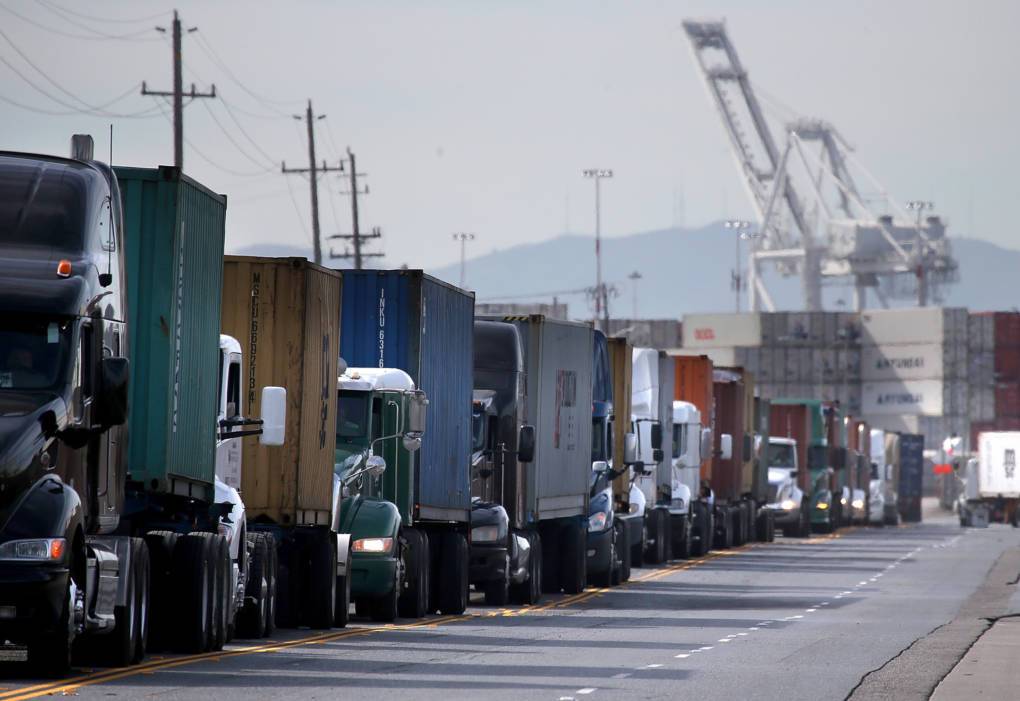
"caption": "Trucks line up to enter a berth at the Port of Oakland on Feb. 11, 2015, in West Oakland, California.",
"description": "Trucks line up to enter a berth at the Port of Oakland on February 11, 2015 in West Oakland, California.",
"title": "Labor Agreement Yet To Be Reached By West Coast Dock Workers And Employers",
"credit": "Justin Sullivan/Getty Images",
"status": "inherit",
"altTag": "Trucks line up to enter a berth at the Port of Oakland on February 11, 2015 in West Oakland, California.",
"isLoading": false,
"fetchFailed": false
},
"science_1962988": {
"type": "attachments",
"id": "science_1962988",
"meta": {
"index": "attachments_1716263798",
"site": "science",
"id": "1962988",
"found": true
},
"parent": 1962821,
"imgSizes": {
"twentyfourteen-full-width": {
"file": "https://ww2.kqed.org/app/uploads/sites/35/2020/04/Permafrost-featured-and-sized-1038x576.jpg",
"width": 1038,
"mimeType": "image/jpeg",
"height": 576
},
"thumbnail": {
"file": "https://ww2.kqed.org/app/uploads/sites/35/2020/04/Permafrost-featured-and-sized-160x107.jpg",
"width": 160,
"mimeType": "image/jpeg",
"height": 107
},
"post-thumbnail": {
"file": "https://ww2.kqed.org/app/uploads/sites/35/2020/04/Permafrost-featured-and-sized-672x372.jpg",
"width": 672,
"mimeType": "image/jpeg",
"height": 372
},
"kqedFullSize": {
"file": "https://ww2.kqed.org/app/uploads/sites/35/2020/04/Permafrost-featured-and-sized.jpg",
"width": 1920,
"height": 1280
},
"large": {
"file": "https://ww2.kqed.org/app/uploads/sites/35/2020/04/Permafrost-featured-and-sized-1020x680.jpg",
"width": 1020,
"mimeType": "image/jpeg",
"height": 680
},
"full-width": {
"file": "https://ww2.kqed.org/app/uploads/sites/35/2020/04/Permafrost-featured-and-sized-1920x1280.jpg",
"width": 1920,
"mimeType": "image/jpeg",
"height": 1280
},
"medium": {
"file": "https://ww2.kqed.org/app/uploads/sites/35/2020/04/Permafrost-featured-and-sized-800x533.jpg",
"width": 800,
"mimeType": "image/jpeg",
"height": 533
},
"medium_large": {
"file": "https://ww2.kqed.org/app/uploads/sites/35/2020/04/Permafrost-featured-and-sized-768x512.jpg",
"width": 768,
"mimeType": "image/jpeg",
"height": 512
}
},
"publishDate": 1587757628,
"modified": 1587757711,
"caption": "A vehicle drives beside the melting permafrost tundra on the edge of the Bering Sea at the town of Quinhagak on the Yukon Delta in Alaska on April 12, 2019. According to scientists, Alaska has been warming twice as fast as the global average, with temperatures in February and March shattering records. \"From 1901 to 2016, average temperatures in the mainland United States increased by 1.8 degrees Fahrenheit (one degree Celsius), whereas in Alaska they increased by 4.7 degrees,\" said Rick Thoman, a climate expert at the Alaska Center for Climate Assessment and Policy. ",
"description": null,
"title": "US-ALASKA-ENVIRONMENT-CLIMATE-EROSION",
"credit": "Mark Ralston/AFP via Getty Images",
"status": "inherit",
"isLoading": false,
"fetchFailed": false
},
"science_1962688": {
"type": "attachments",
"id": "science_1962688",
"meta": {
"index": "attachments_1716263798",
"site": "science",
"id": "1962688",
"found": true
},
"parent": 1962524,
"imgSizes": {
"twentyfourteen-full-width": {
"file": "https://ww2.kqed.org/app/uploads/sites/35/2024/04/coronavirus-climate-change-1038x576.jpg",
"width": 1038,
"mimeType": "image/jpeg",
"height": 576
},
"thumbnail": {
"file": "https://ww2.kqed.org/app/uploads/sites/35/2024/04/coronavirus-climate-change-160x107.jpg",
"width": 160,
"mimeType": "image/jpeg",
"height": 107
},
"post-thumbnail": {
"file": "https://ww2.kqed.org/app/uploads/sites/35/2024/04/coronavirus-climate-change-672x372.jpg",
"width": 672,
"mimeType": "image/jpeg",
"height": 372
},
"kqedFullSize": {
"file": "https://ww2.kqed.org/app/uploads/sites/35/2024/04/coronavirus-climate-change.jpg",
"width": 1920,
"height": 1280
},
"large": {
"file": "https://ww2.kqed.org/app/uploads/sites/35/2024/04/coronavirus-climate-change-1020x680.jpg",
"width": 1020,
"mimeType": "image/jpeg",
"height": 680
},
"full-width": {
"file": "https://ww2.kqed.org/app/uploads/sites/35/2024/04/coronavirus-climate-change-1920x1280.jpg",
"width": 1920,
"mimeType": "image/jpeg",
"height": 1280
},
"medium": {
"file": "https://ww2.kqed.org/app/uploads/sites/35/2024/04/coronavirus-climate-change-800x533.jpg",
"width": 800,
"mimeType": "image/jpeg",
"height": 533
},
"medium_large": {
"file": "https://ww2.kqed.org/app/uploads/sites/35/2024/04/coronavirus-climate-change-768x512.jpg",
"width": 768,
"mimeType": "image/jpeg",
"height": 512
}
},
"publishDate": 1587507867,
"modified": 1587507993,
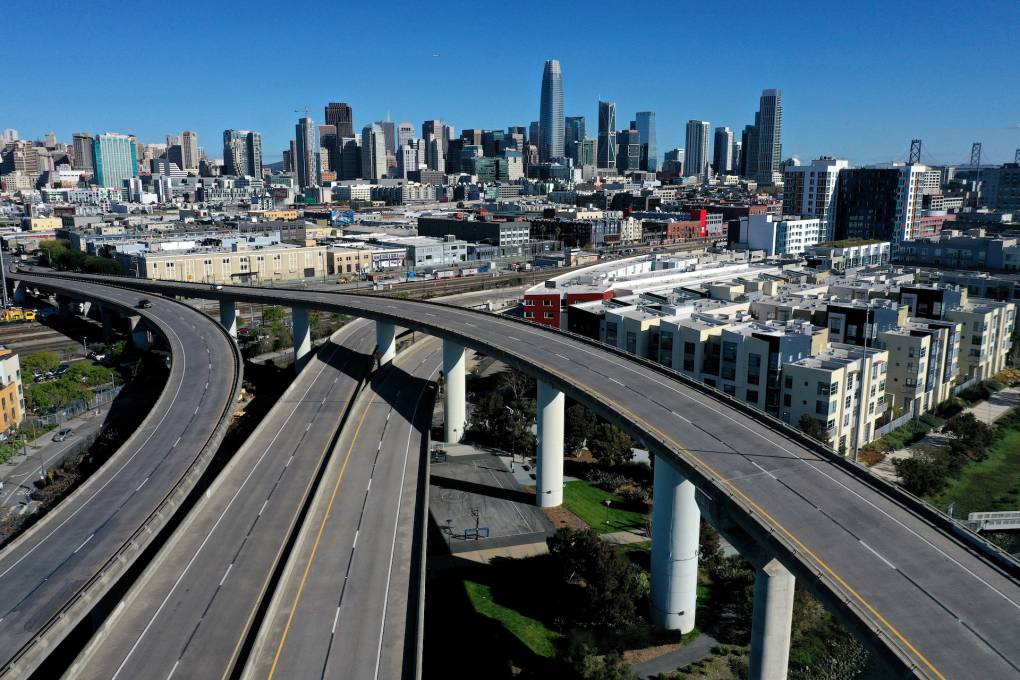
"caption": "An aerial view from a drone shows an empty Interstate 280 on March 26, 2020 leading into San Francisco. The entire state of California has been ordered to stay at home except to perform essential tasks. ",
"description": null,
"title": "Coronavirus Pandemic Causes Climate Of Anxiety And Changing Routines In America",
"credit": "Justin Sullivan/Getty Images",
"status": "inherit",
"isLoading": false,
"fetchFailed": false
},
"science_1962274": {
"type": "attachments",
"id": "science_1962274",
"meta": {
"index": "attachments_1716263798",
"site": "science",
"id": "1962274",
"found": true
},
"parent": 1962273,
"imgSizes": {
"twentyfourteen-full-width": {
"file": "https://ww2.kqed.org/app/uploads/sites/35/2020/04/RS42799_GettyImages-466858641-qut-1038x576.jpg",
"width": 1038,
"mimeType": "image/jpeg",
"height": 576
},
"thumbnail": {
"file": "https://ww2.kqed.org/app/uploads/sites/35/2020/04/RS42799_GettyImages-466858641-qut-160x97.jpg",
"width": 160,
"mimeType": "image/jpeg",
"height": 97
},
"post-thumbnail": {
"file": "https://ww2.kqed.org/app/uploads/sites/35/2020/04/RS42799_GettyImages-466858641-qut-672x372.jpg",
"width": 672,
"mimeType": "image/jpeg",
"height": 372
},
"kqedFullSize": {
"file": "https://ww2.kqed.org/app/uploads/sites/35/2020/04/RS42799_GettyImages-466858641-qut.jpg",
"width": 1920,
"height": 1159
},
"large": {
"file": "https://ww2.kqed.org/app/uploads/sites/35/2020/04/RS42799_GettyImages-466858641-qut-1020x616.jpg",
"width": 1020,
"mimeType": "image/jpeg",
"height": 616
},
"full-width": {
"file": "https://ww2.kqed.org/app/uploads/sites/35/2020/04/RS42799_GettyImages-466858641-qut-1920x1159.jpg",
"width": 1920,
"mimeType": "image/jpeg",
"height": 1159
},
"medium": {
"file": "https://ww2.kqed.org/app/uploads/sites/35/2020/04/RS42799_GettyImages-466858641-qut-800x483.jpg",
"width": 800,
"mimeType": "image/jpeg",
"height": 483
},
"medium_large": {
"file": "https://ww2.kqed.org/app/uploads/sites/35/2020/04/RS42799_GettyImages-466858641-qut-768x464.jpg",
"width": 768,
"mimeType": "image/jpeg",
"height": 464
}
},
"publishDate": 1587079117,
"modified": 1587079206,
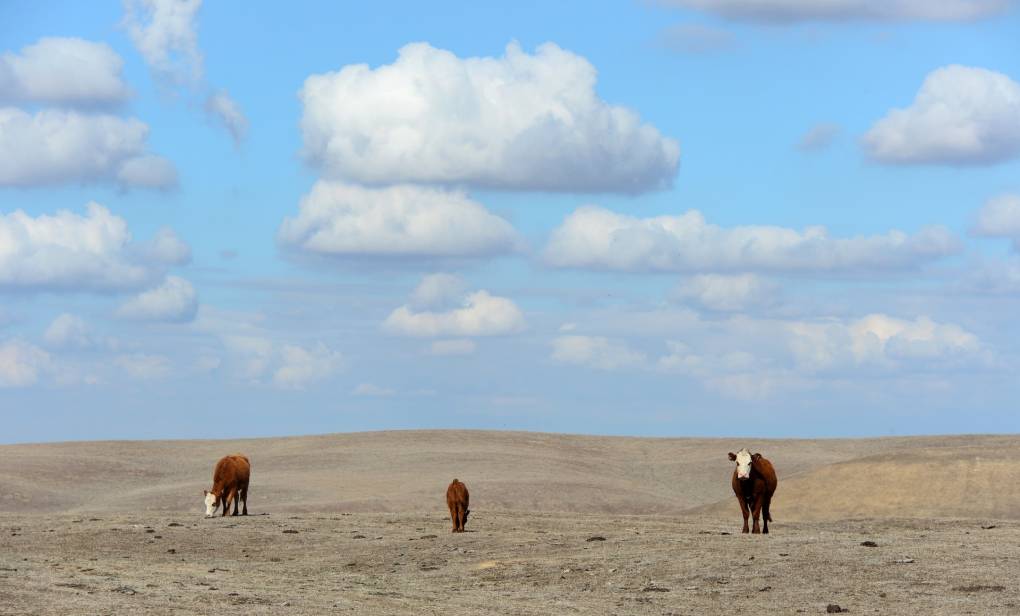
"caption": "Hereford cattle roam the dirt-brown fields of a ranch on the outskirts of Delano, in California's Central Valley, during a drought on February 3, 2014. ",
"description": null,
"title": "RS42799_GettyImages-466858641-qut",
"credit": "FREDERIC J. BROWN/AFP via Getty Images",
"status": "inherit",
"isLoading": false,
"fetchFailed": false
},
"science_1962085": {
"type": "attachments",
"id": "science_1962085",
"meta": {
"index": "attachments_1716263798",
"site": "science",
"id": "1962085",
"found": true
},
"parent": 1962084,
"imgSizes": {
"twentyfourteen-full-width": {
"file": "https://ww2.kqed.org/app/uploads/sites/35/2020/04/gettyimages-1208127177-41000a6d001c4bfcd4f41f7c96051a8ee9a6738e-1038x576.jpg",
"width": 1038,
"mimeType": "image/jpeg",
"height": 576
},
"thumbnail": {
"file": "https://ww2.kqed.org/app/uploads/sites/35/2020/04/gettyimages-1208127177-41000a6d001c4bfcd4f41f7c96051a8ee9a6738e-160x99.jpg",
"width": 160,
"mimeType": "image/jpeg",
"height": 99
},
"post-thumbnail": {
"file": "https://ww2.kqed.org/app/uploads/sites/35/2020/04/gettyimages-1208127177-41000a6d001c4bfcd4f41f7c96051a8ee9a6738e-672x372.jpg",
"width": 672,
"mimeType": "image/jpeg",
"height": 372
},
"kqedFullSize": {
"file": "https://ww2.kqed.org/app/uploads/sites/35/2020/04/gettyimages-1208127177-41000a6d001c4bfcd4f41f7c96051a8ee9a6738e.jpg",
"width": 4990,
"height": 3088
},
"large": {
"file": "https://ww2.kqed.org/app/uploads/sites/35/2020/04/gettyimages-1208127177-41000a6d001c4bfcd4f41f7c96051a8ee9a6738e-1020x631.jpg",
"width": 1020,
"mimeType": "image/jpeg",
"height": 631
},
"full-width": {
"file": "https://ww2.kqed.org/app/uploads/sites/35/2020/04/gettyimages-1208127177-41000a6d001c4bfcd4f41f7c96051a8ee9a6738e-1920x1188.jpg",
"width": 1920,
"mimeType": "image/jpeg",
"height": 1188
},
"medium": {
"file": "https://ww2.kqed.org/app/uploads/sites/35/2020/04/gettyimages-1208127177-41000a6d001c4bfcd4f41f7c96051a8ee9a6738e-800x495.jpg",
"width": 800,
"mimeType": "image/jpeg",
"height": 495
},
"medium_large": {
"file": "https://ww2.kqed.org/app/uploads/sites/35/2020/04/gettyimages-1208127177-41000a6d001c4bfcd4f41f7c96051a8ee9a6738e-768x475.jpg",
"width": 768,
"mimeType": "image/jpeg",
"height": 475
}
},
"publishDate": 1586975205,
"modified": 1586980089,
"caption": "Several countries around the world are emitting less carbon due to the pandemic slowdown, but the climate will continue to warm.",
"description": null,
"title": "gettyimages-1208127177-41000a6d001c4bfcd4f41f7c96051a8ee9a6738e",
"credit": "Andy Buchanan/AFP via Getty Images",
"status": "inherit",
"isLoading": false,
"fetchFailed": false
},
"science_1602282": {
"type": "attachments",
"id": "science_1602282",
"meta": {
"index": "attachments_1716263798",
"site": "science",
"id": "1602282",
"found": true
},
"parent": 1602278,
"imgSizes": {
"small": {
"file": "https://ww2.kqed.org/app/uploads/sites/35/2017/05/DK_snow_survey-5573_03_01_2017-1-520x316.jpg",
"width": 520,
"mimeType": "image/jpeg",
"height": 316
},
"twentyfourteen-full-width": {
"file": "https://ww2.kqed.org/app/uploads/sites/35/2017/05/DK_snow_survey-5573_03_01_2017-1-1038x576.jpg",
"width": 1038,
"mimeType": "image/jpeg",
"height": 576
},
"thumbnail": {
"file": "https://ww2.kqed.org/app/uploads/sites/35/2017/05/DK_snow_survey-5573_03_01_2017-1-160x97.jpg",
"width": 160,
"mimeType": "image/jpeg",
"height": 97
},
"fd-sm": {
"file": "https://ww2.kqed.org/app/uploads/sites/35/2017/05/DK_snow_survey-5573_03_01_2017-1-960x584.jpg",
"width": 960,
"mimeType": "image/jpeg",
"height": 584
},
"post-thumbnail": {
"file": "https://ww2.kqed.org/app/uploads/sites/35/2017/05/DK_snow_survey-5573_03_01_2017-1-672x372.jpg",
"width": 672,
"mimeType": "image/jpeg",
"height": 372
},
"xsmall": {
"file": "https://ww2.kqed.org/app/uploads/sites/35/2017/05/DK_snow_survey-5573_03_01_2017-1-375x228.jpg",
"width": 375,
"mimeType": "image/jpeg",
"height": 228
},
"kqedFullSize": {
"file": "https://ww2.kqed.org/app/uploads/sites/35/2017/05/DK_snow_survey-5573_03_01_2017-1.jpg",
"width": 2400,
"height": 1459
},
"large": {
"file": "https://ww2.kqed.org/app/uploads/sites/35/2017/05/DK_snow_survey-5573_03_01_2017-1-1020x620.jpg",
"width": 1020,
"mimeType": "image/jpeg",
"height": 620
},
"xlarge": {
"file": "https://ww2.kqed.org/app/uploads/sites/35/2017/05/DK_snow_survey-5573_03_01_2017-1-1180x717.jpg",
"width": 1180,
"mimeType": "image/jpeg",
"height": 717
},
"guest-author-50": {
"file": "https://ww2.kqed.org/app/uploads/sites/35/2017/05/DK_snow_survey-5573_03_01_2017-1-50x50.jpg",
"width": 50,
"mimeType": "image/jpeg",
"height": 50
},
"guest-author-96": {
"file": "https://ww2.kqed.org/app/uploads/sites/35/2017/05/DK_snow_survey-5573_03_01_2017-1-96x96.jpg",
"width": 96,
"mimeType": "image/jpeg",
"height": 96
},
"medium": {
"file": "https://ww2.kqed.org/app/uploads/sites/35/2017/05/DK_snow_survey-5573_03_01_2017-1-800x486.jpg",
"width": 800,
"mimeType": "image/jpeg",
"height": 486
},
"guest-author-64": {
"file": "https://ww2.kqed.org/app/uploads/sites/35/2017/05/DK_snow_survey-5573_03_01_2017-1-64x64.jpg",
"width": 64,
"mimeType": "image/jpeg",
"height": 64
},
"guest-author-32": {
"file": "https://ww2.kqed.org/app/uploads/sites/35/2017/05/DK_snow_survey-5573_03_01_2017-1-32x32.jpg",
"width": 32,
"mimeType": "image/jpeg",
"height": 32
},
"fd-lrg": {
"file": "https://ww2.kqed.org/app/uploads/sites/35/2017/05/DK_snow_survey-5573_03_01_2017-1-1920x1167.jpg",
"width": 1920,
"mimeType": "image/jpeg",
"height": 1167
},
"fd-med": {
"file": "https://ww2.kqed.org/app/uploads/sites/35/2017/05/DK_snow_survey-5573_03_01_2017-1-1180x717.jpg",
"width": 1180,
"mimeType": "image/jpeg",
"height": 717
},
"full-width": {
"file": "https://ww2.kqed.org/app/uploads/sites/35/2017/05/DK_snow_survey-5573_03_01_2017-1-1920x1167.jpg",
"width": 1920,
"mimeType": "image/jpeg",
"height": 1167
},
"detail": {
"file": "https://ww2.kqed.org/app/uploads/sites/35/2017/05/DK_snow_survey-5573_03_01_2017-1-150x150.jpg",
"width": 150,
"mimeType": "image/jpeg",
"height": 150
},
"medium_large": {
"file": "https://ww2.kqed.org/app/uploads/sites/35/2017/05/DK_snow_survey-5573_03_01_2017-1-768x467.jpg",
"width": 768,
"mimeType": "image/jpeg",
"height": 467
},
"guest-author-128": {
"file": "https://ww2.kqed.org/app/uploads/sites/35/2017/05/DK_snow_survey-5573_03_01_2017-1-128x128.jpg",
"width": 128,
"mimeType": "image/jpeg",
"height": 128
},
"xxsmall": {
"file": "https://ww2.kqed.org/app/uploads/sites/35/2017/05/DK_snow_survey-5573_03_01_2017-1-240x146.jpg",
"width": 240,
"mimeType": "image/jpeg",
"height": 146
}
},
"publishDate": 1493672372,
"modified": 1585785042,
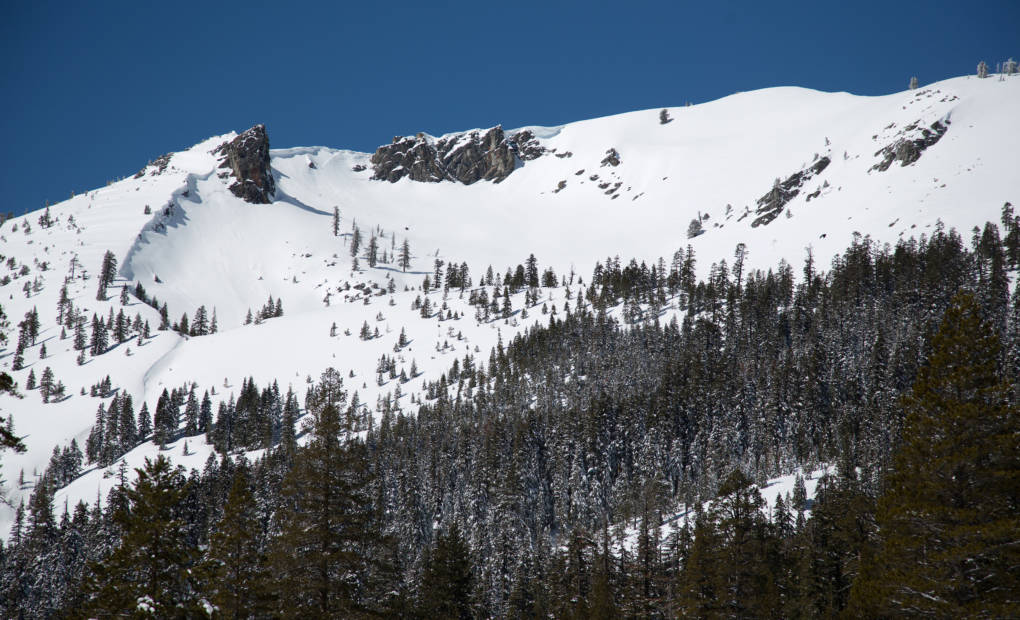
"caption": "A snow-covered Sierra Nevada mountain peak to the northwest of Phillips Station snow course near Lake Tahoe.",
"description": null,
"title": "DK_snow_survey-5573_03_01_2017 (1)",
"credit": "Dale Kolke/California Department of Water Resources",
"status": "inherit",
"isLoading": false,
"fetchFailed": false
},
"science_1960608": {
"type": "attachments",
"id": "science_1960608",
"meta": {
"index": "attachments_1716263798",
"site": "science",
"id": "1960608",
"found": true
},
"parent": 1960607,
"imgSizes": {
"twentyfourteen-full-width": {
"file": "https://ww2.kqed.org/app/uploads/sites/35/2020/03/RS42448_GettyImages-94155086-qut-1038x576.jpg",
"width": 1038,
"mimeType": "image/jpeg",
"height": 576
},
"thumbnail": {
"file": "https://ww2.kqed.org/app/uploads/sites/35/2020/03/RS42448_GettyImages-94155086-qut-160x107.jpg",
"width": 160,
"mimeType": "image/jpeg",
"height": 107
},
"post-thumbnail": {
"file": "https://ww2.kqed.org/app/uploads/sites/35/2020/03/RS42448_GettyImages-94155086-qut-672x372.jpg",
"width": 672,
"mimeType": "image/jpeg",
"height": 372
},
"kqedFullSize": {
"file": "https://ww2.kqed.org/app/uploads/sites/35/2020/03/RS42448_GettyImages-94155086-qut.jpg",
"width": 1920,
"height": 1280
},
"large": {
"file": "https://ww2.kqed.org/app/uploads/sites/35/2020/03/RS42448_GettyImages-94155086-qut-1020x680.jpg",
"width": 1020,
"mimeType": "image/jpeg",
"height": 680
},
"full-width": {
"file": "https://ww2.kqed.org/app/uploads/sites/35/2020/03/RS42448_GettyImages-94155086-qut-1920x1280.jpg",
"width": 1920,
"mimeType": "image/jpeg",
"height": 1280
},
"medium": {
"file": "https://ww2.kqed.org/app/uploads/sites/35/2020/03/RS42448_GettyImages-94155086-qut-800x533.jpg",
"width": 800,
"mimeType": "image/jpeg",
"height": 533
},
"medium_large": {
"file": "https://ww2.kqed.org/app/uploads/sites/35/2020/03/RS42448_GettyImages-94155086-qut-768x512.jpg",
"width": 768,
"mimeType": "image/jpeg",
"height": 512
}
},
"publishDate": 1585670011,
"modified": 1585670059,
"caption": "Emissions-producing diesel trucks and cars along the 10 freeway on December 8, 2009 near Banning, California. ",
"description": null,
"title": null,
"credit": "Photo by David McNew/Getty Images",
"status": "inherit",
"isLoading": false,
"fetchFailed": false
},
"science_1957121": {
"type": "attachments",
"id": "science_1957121",
"meta": {
"index": "attachments_1716263798",
"site": "science",
"id": "1957121",
"found": true
},
"parent": 1957119,
"imgSizes": {
"twentyfourteen-full-width": {
"file": "https://ww2.kqed.org/app/uploads/sites/35/2020/02/RS41338_GettyImages-1204735206-qut-1038x576.jpg",
"width": 1038,
"mimeType": "image/jpeg",
"height": 576
},
"thumbnail": {
"file": "https://ww2.kqed.org/app/uploads/sites/35/2020/02/RS41338_GettyImages-1204735206-qut-160x107.jpg",
"width": 160,
"mimeType": "image/jpeg",
"height": 107
},
"post-thumbnail": {
"file": "https://ww2.kqed.org/app/uploads/sites/35/2020/02/RS41338_GettyImages-1204735206-qut-672x372.jpg",
"width": 672,
"mimeType": "image/jpeg",
"height": 372
},
"kqedFullSize": {
"file": "https://ww2.kqed.org/app/uploads/sites/35/2020/02/RS41338_GettyImages-1204735206-qut.jpg",
"width": 1920,
"height": 1280
},
"large": {
"file": "https://ww2.kqed.org/app/uploads/sites/35/2020/02/RS41338_GettyImages-1204735206-qut-1020x680.jpg",
"width": 1020,
"mimeType": "image/jpeg",
"height": 680
},
"full-width": {
"file": "https://ww2.kqed.org/app/uploads/sites/35/2020/02/RS41338_GettyImages-1204735206-qut-1920x1280.jpg",
"width": 1920,
"mimeType": "image/jpeg",
"height": 1280
},
"medium": {
"file": "https://ww2.kqed.org/app/uploads/sites/35/2020/02/RS41338_GettyImages-1204735206-qut-800x533.jpg",
"width": 800,
"mimeType": "image/jpeg",
"height": 533
},
"medium_large": {
"file": "https://ww2.kqed.org/app/uploads/sites/35/2020/02/RS41338_GettyImages-1204735206-qut-768x512.jpg",
"width": 768,
"mimeType": "image/jpeg",
"height": 512
}
},
"publishDate": 1581728385,
"modified": 1581979805,
"caption": "(L-R) Democratic presidential candidates former South Bend, Indiana Mayor Pete Buttigieg, Sen. Elizabeth Warren, D-Mass., former Vice President Joe Biden and Sen. Bernie Sanders, Independent, Vt., participate in the Democratic presidential primary debate in the Sullivan Arena at St. Anselm College on Feb. 7, 2020 in Manchester, New Hampshire. ",
"description": null,
"title": "RS41338_GettyImages-1204735206-qut",
"credit": "Photo by Joe Raedle/Getty Images",
"status": "inherit",
"isLoading": false,
"fetchFailed": false
},
"science_1957566": {
"type": "attachments",
"id": "science_1957566",
"meta": {
"index": "attachments_1716263798",
"site": "science",
"id": "1957566",
"found": true
},
"parent": 1957560,
"imgSizes": {
"twentyfourteen-full-width": {
"file": "https://ww2.kqed.org/app/uploads/sites/35/2020/02/RS15592_GettyImages-467522442-qut-1038x576.jpg",
"width": 1038,
"mimeType": "image/jpeg",
"height": 576
},
"thumbnail": {
"file": "https://ww2.kqed.org/app/uploads/sites/35/2020/02/RS15592_GettyImages-467522442-qut-160x110.jpg",
"width": 160,
"mimeType": "image/jpeg",
"height": 110
},
"post-thumbnail": {
"file": "https://ww2.kqed.org/app/uploads/sites/35/2020/02/RS15592_GettyImages-467522442-qut-672x372.jpg",
"width": 672,
"mimeType": "image/jpeg",
"height": 372
},
"kqedFullSize": {
"file": "https://ww2.kqed.org/app/uploads/sites/35/2020/02/RS15592_GettyImages-467522442-qut.jpg",
"width": 1920,
"height": 1314
},
"large": {
"file": "https://ww2.kqed.org/app/uploads/sites/35/2020/02/RS15592_GettyImages-467522442-qut-1020x698.jpg",
"width": 1020,
"mimeType": "image/jpeg",
"height": 698
},
"full-width": {
"file": "https://ww2.kqed.org/app/uploads/sites/35/2020/02/RS15592_GettyImages-467522442-qut-1920x1314.jpg",
"width": 1920,
"mimeType": "image/jpeg",
"height": 1314
},
"medium": {
"file": "https://ww2.kqed.org/app/uploads/sites/35/2020/02/RS15592_GettyImages-467522442-qut-800x548.jpg",
"width": 800,
"mimeType": "image/jpeg",
"height": 548
},
"medium_large": {
"file": "https://ww2.kqed.org/app/uploads/sites/35/2020/02/RS15592_GettyImages-467522442-qut-768x526.jpg",
"width": 768,
"mimeType": "image/jpeg",
"height": 526
}
},
"publishDate": 1582746390,
"modified": 1582746481,
"caption": "An UBER application is shown as cars drive by in Washington, DC on March 25, 2015.",
"description": null,
"title": "RS15592_GettyImages-467522442-qut",
"credit": "Andrew Caballero-Reynolds/AFP/Getty Images",
"status": "inherit",
"isLoading": false,
"fetchFailed": false
},
"science_1957524": {
"type": "attachments",
"id": "science_1957524",
"meta": {
"index": "attachments_1716263798",
"site": "science",
"id": "1957524",
"found": true
},
"parent": 1957519,
"imgSizes": {
"twentyfourteen-full-width": {
"file": "https://ww2.kqed.org/app/uploads/sites/35/2020/02/GettyImages-1170487925-1038x576.jpg",
"width": 1038,
"mimeType": "image/jpeg",
"height": 576
},
"thumbnail": {
"file": "https://ww2.kqed.org/app/uploads/sites/35/2020/02/GettyImages-1170487925-160x105.jpg",
"width": 160,
"mimeType": "image/jpeg",
"height": 105
},
"post-thumbnail": {
"file": "https://ww2.kqed.org/app/uploads/sites/35/2020/02/GettyImages-1170487925-672x372.jpg",
"width": 672,
"mimeType": "image/jpeg",
"height": 372
},
"kqedFullSize": {
"file": "https://ww2.kqed.org/app/uploads/sites/35/2020/02/GettyImages-1170487925.jpg",
"width": 4500,
"height": 2962
},
"large": {
"file": "https://ww2.kqed.org/app/uploads/sites/35/2020/02/GettyImages-1170487925-1020x671.jpg",
"width": 1020,
"mimeType": "image/jpeg",
"height": 671
},
"full-width": {
"file": "https://ww2.kqed.org/app/uploads/sites/35/2020/02/GettyImages-1170487925-1920x1264.jpg",
"width": 1920,
"mimeType": "image/jpeg",
"height": 1264
},
"medium": {
"file": "https://ww2.kqed.org/app/uploads/sites/35/2020/02/GettyImages-1170487925-800x527.jpg",
"width": 800,
"mimeType": "image/jpeg",
"height": 527
},
"medium_large": {
"file": "https://ww2.kqed.org/app/uploads/sites/35/2020/02/GettyImages-1170487925-768x506.jpg",
"width": 768,
"mimeType": "image/jpeg",
"height": 506
}
},
"publishDate": 1582673178,
"modified": 1582673662,
"caption": "Activist hold a banner while blocking a major intersection during climate protests in Washington, DC on September 23, 2019.",
"description": null,
"title": null,
"credit": "MANDEL NGAN/AFP via Getty Images",
"status": "inherit",
"isLoading": false,
"fetchFailed": false
}
},
"audioPlayerReducer": {
"postId": "stream_live",
"isPaused": true,
"isPlaying": false,
"pfsActive": false,
"pledgeModalIsOpen": true,
"playerDrawerIsOpen": false,
"liveAudioPlayStartedAt": 0,
"liveAudioPlayContext": ""
},
"authorsReducer": {
"byline_science_1963860": {
"type": "authors",
"id": "byline_science_1963860",
"meta": {
"override": true
},
"slug": "byline_science_1963860",
"name": "Bob Berwyn, InsideClimate News",
"isLoading": false
},
"byline_science_1962821": {
"type": "authors",
"id": "byline_science_1962821",
"meta": {
"override": true
},
"slug": "byline_science_1962821",
"name": "\u003cstrong>Jeff Berardelli, CBS News\u003c/strong>",
"isLoading": false
},
"byline_science_1962084": {
"type": "authors",
"id": "byline_science_1962084",
"meta": {
"override": true
},
"slug": "byline_science_1962084",
"name": "Lauren Sommer \u003cbr />NPR\u003cbr>",
"isLoading": false
},
"byline_science_1957560": {
"type": "authors",
"id": "byline_science_1957560",
"meta": {
"override": true
},
"slug": "byline_science_1957560",
"name": "Phil McKenna \u003cbr />InsideClimate News\u003cbr>",
"isLoading": false
},
"astupi": {
"type": "authors",
"id": "70",
"meta": {
"index": "authors_1716337520",
"id": "70",
"found": true
},
"name": "Amanda Stupi",
"firstName": "Amanda",
"lastName": "Stupi",
"slug": "astupi",
"email": "astupi@kqed.org",
"display_author_email": false,
"staff_mastheads": [],
"title": "Senior Engagement Producer",
"bio": "Amanda joined KQED Science’s engagement team as a Senior Audience Engagement Strategist in the spring of 2019. She has helped craft messaging around wildfires, the coronavirus pandemic, climate change and many other stories. She has also brought KQED Science to new platforms such as Reddit’s Ask Me Anything series. Prior to joining KQED Science, Amanda spent seven years as an engagement producer with Forum, KQED’s daily live call-in show. She got her start in radio at KALW's weekly call in show, City Visions, before going on to an internship and stint at NPR's Talk of the Nation.\r\n\r\nPrior to journalism, Amanda taught English at Lowell High School. She's a native of Petaluma and currently lives under the \"South San Francisco the Industrial City\" sign in South City. She believes that engagement is vital to news’s future and that good journalism listens as much as it asks questions.",
"avatar": "https://secure.gravatar.com/avatar/e981c503e5c162da701dcaccfbf87e35?s=600&d=blank&r=g",
"twitter": null,
"facebook": null,
"instagram": null,
"linkedin": null,
"sites": [
{
"site": "arts",
"roles": [
"Contributor"
]
},
{
"site": "news",
"roles": [
"editor"
]
},
{
"site": "pop",
"roles": [
"contributor"
]
},
{
"site": "stateofhealth",
"roles": [
"editor"
]
},
{
"site": "science",
"roles": []
},
{
"site": "perspectives",
"roles": [
"editor"
]
}
],
"headData": {
"title": "Amanda Stupi | KQED",
"description": "Senior Engagement Producer",
"ogImgSrc": "https://secure.gravatar.com/avatar/e981c503e5c162da701dcaccfbf87e35?s=600&d=blank&r=g",
"twImgSrc": "https://secure.gravatar.com/avatar/e981c503e5c162da701dcaccfbf87e35?s=600&d=blank&r=g"
},
"isLoading": false,
"link": "/author/astupi"
},
"carlysevern": {
"type": "authors",
"id": "3243",
"meta": {
"index": "authors_1716337520",
"id": "3243",
"found": true
},
"name": "Carly Severn",
"firstName": "Carly",
"lastName": "Severn",
"slug": "carlysevern",
"email": "csevern@kqed.org",
"display_author_email": false,
"staff_mastheads": [
"news"
],
"title": "Senior Editor, Audience News ",
"bio": "Carly is KQED's Senior Editor of Audience News on the Digital News team, and has reported for the California Report Magazine, Bay Curious and KQED Arts. She's formerly the host of \u003ca href=\"http://ww2.kqed.org/pop/category/the-cooler/\" rel=\"noopener noreferrer\">The Cooler\u003c/a> podcast.",
"avatar": "https://secure.gravatar.com/avatar/54037bf5c128fe678f0ef26cec97a93f2e7f220a22d7285703328f12c42c1b1d?s=600&d=blank&r=g",
"twitter": "teacupinthebay",
"bluesky": null,
"facebook": null,
"instagram": null,
"linkedin": null,
"sites": [
{
"site": "",
"roles": [
"editor"
]
},
{
"site": "arts",
"roles": [
"editor"
]
},
{
"site": "news",
"roles": [
"administrator"
]
},
{
"site": "pop",
"roles": [
"editor"
]
},
{
"site": "futureofyou",
"roles": [
"editor"
]
},
{
"site": "about",
"roles": [
"administrator"
]
},
{
"site": "mindshift",
"roles": [
"editor"
]
},
{
"site": "bayareabites",
"roles": [
"editor"
]
},
{
"site": "stateofhealth",
"roles": [
"editor"
]
},
{
"site": "science",
"roles": [
"editor"
]
},
{
"site": "food",
"roles": [
"contributor"
]
},
{
"site": "forum",
"roles": [
"editor"
]
},
{
"site": "perspectives",
"roles": [
"administrator"
]
},
{
"site": "liveblog",
"roles": [
"editor"
]
}
],
"headData": {
"title": "Carly Severn | KQED",
"description": "Senior Editor, Audience News ",
"ogImgSrc": "https://secure.gravatar.com/avatar/54037bf5c128fe678f0ef26cec97a93f2e7f220a22d7285703328f12c42c1b1d?s=600&d=blank&r=g",
"twImgSrc": "https://secure.gravatar.com/avatar/54037bf5c128fe678f0ef26cec97a93f2e7f220a22d7285703328f12c42c1b1d?s=600&d=blank&r=g"
},
"isLoading": false,
"link": "/author/carlysevern"
},
"kqedscience": {
"type": "authors",
"id": "6387",
"meta": {
"index": "authors_1716337520",
"id": "6387",
"found": true
},
"name": "KQED Science",
"firstName": "KQED",
"lastName": "Science",
"slug": "kqedscience",
"email": "kqedscience@gmail.com",
"display_author_email": false,
"staff_mastheads": [],
"title": null,
"bio": "KQED Science brings you award-winning science and environment coverage from the Bay Area and beyond by the flagship Northern California PBS and NPR affiliate.",
"avatar": "https://secure.gravatar.com/avatar/5a295ff49cf82a8c0f30937d3f788b2f?s=600&d=blank&r=g",
"twitter": null,
"facebook": null,
"instagram": null,
"linkedin": null,
"sites": [
{
"site": "science",
"roles": [
"contributor"
]
},
{
"site": "quest",
"roles": [
"editor"
]
},
{
"site": "food",
"roles": [
"contributor"
]
}
],
"headData": {
"title": "KQED Science | KQED",
"description": null,
"ogImgSrc": "https://secure.gravatar.com/avatar/5a295ff49cf82a8c0f30937d3f788b2f?s=600&d=blank&r=g",
"twImgSrc": "https://secure.gravatar.com/avatar/5a295ff49cf82a8c0f30937d3f788b2f?s=600&d=blank&r=g"
},
"isLoading": false,
"link": "/author/kqedscience"
},
"lklivans": {
"type": "authors",
"id": "8648",
"meta": {
"index": "authors_1716337520",
"id": "8648",
"found": true
},
"name": "Laura Klivans",
"firstName": "Laura",
"lastName": "Klivans",
"slug": "lklivans",
"email": "lklivans@kqed.org",
"display_author_email": true,
"staff_mastheads": [
"news",
"science"
],
"title": "Reporter",
"bio": "Laura Klivans is an award-winning science reporter for KQED News, where she covers climate change with an eye on both groundbreaking progress and gaps in action. She is the former host of KQED's blockbuster video series about tiny, amazing animals, \u003cem>Deep Look\u003c/em>. Her work reaches national audiences through NPR, \u003cem>Here & Now, \u003c/em>PRI, and other major outlets. \r\n\r\nLaura’s won five Northern California Area Emmy Awards for Deep Look and First Place in the Greater Bay Area Journalism Awards for a podcast exploring how one Oakland neighborhood teamed up to reduce planet-heating pollution.\r\n\r\nBeyond her reporting, she hosts and moderates events. In the past, she taught audio storytelling at the UC Berkeley Graduate School of Journalism, led international education programs, worked with immigrants and refugees along the Thai-Burmese border, taught high schoolers sex ed, and was an actress. \r\n\r\nShe's a former UC Berkeley Human Rights Fellow, USC Center for Health Journalism's California Fellow and Coro Fellow in Public Affairs. Laura has a master’s in journalism from UC Berkeley, a master’s in education from Harvard, and an undergraduate degree from Northwestern University.\r\n\r\nShe loves trying to riddle the meaning out of vanity license plates.",
"avatar": "https://secure.gravatar.com/avatar/2d2ecd1550a494cc10ad4a503406965585902124739e775a9b3817eebf1d88be?s=600&d=blank&r=g",
"twitter": "lauraklivans",
"bluesky": null,
"facebook": null,
"instagram": null,
"linkedin": null,
"sites": [
{
"site": "news",
"roles": [
"editor"
]
},
{
"site": "stateofhealth",
"roles": [
"contributor",
"editor"
]
},
{
"site": "science",
"roles": [
"editor"
]
},
{
"site": "forum",
"roles": [
"editor"
]
}
],
"headData": {
"title": "Laura Klivans | KQED",
"description": "Reporter",
"ogImgSrc": "https://secure.gravatar.com/avatar/2d2ecd1550a494cc10ad4a503406965585902124739e775a9b3817eebf1d88be?s=600&d=blank&r=g",
"twImgSrc": "https://secure.gravatar.com/avatar/2d2ecd1550a494cc10ad4a503406965585902124739e775a9b3817eebf1d88be?s=600&d=blank&r=g"
},
"isLoading": false,
"link": "/author/lklivans"
},
"parcuni": {
"type": "authors",
"id": "11368",
"meta": {
"index": "authors_1716337520",
"id": "11368",
"found": true
},
"name": "Peter Arcuni",
"firstName": "Peter",
"lastName": "Arcuni",
"slug": "parcuni",
"email": "parcuni@KQED.org",
"display_author_email": false,
"staff_mastheads": [
"science"
],
"title": "Reporter",
"bio": "Peter reports radio and online stories for \u003cem>KQED Science\u003c/em>. His work has also appeared on the \u003cem>The California Report\u003c/em> morning show and \u003cem>KQED News\u003c/em>. His production credits include \u003cem>The California Report, The California Report Magazine\u003c/em> and KQED's local news podcast \u003cem>The Bay\u003c/em>. Other credits include NPR's \u003cem>All Things Considered\u003c/em>, WNYC's \u003cem>Science Friday\u003c/em>, WBUR's \u003cem>Here & Now\u003c/em>, WIRED and SFGate. Peter graduated from Brown University and earned a master's degree in journalism from Stanford. He's covered everything from homelessness to wildfires, health, the environment, arts and Thanksgiving in San Quentin prison. In other lives, he played rock n roll music and studied neuroscience. You can email him at: parcuni@kqed.org",
"avatar": "https://secure.gravatar.com/avatar/d5032f6f27199d478af34ad2e1d98732?s=600&d=blank&r=g",
"twitter": "peterarcuni",
"facebook": null,
"instagram": null,
"linkedin": null,
"sites": [
{
"site": "news",
"roles": [
"editor"
]
},
{
"site": "science",
"roles": [
"editor"
]
}
],
"headData": {
"title": "Peter Arcuni | KQED",
"description": "Reporter",
"ogImgSrc": "https://secure.gravatar.com/avatar/d5032f6f27199d478af34ad2e1d98732?s=600&d=blank&r=g",
"twImgSrc": "https://secure.gravatar.com/avatar/d5032f6f27199d478af34ad2e1d98732?s=600&d=blank&r=g"
},
"isLoading": false,
"link": "/author/parcuni"
},
"jasminegarnett": {
"type": "authors",
"id": "11530",
"meta": {
"index": "authors_1716337520",
"id": "11530",
"found": true
},
"name": "Jasmine Garnett",
"firstName": "Jasmine",
"lastName": "Garnett",
"slug": "jasminegarnett",
"email": "JGarnett@KQED.org",
"display_author_email": false,
"staff_mastheads": [
"news"
],
"title": "Senior Engagement Platforms Producer",
"bio": "Jasmine is a Senior Engagement Platforms Producer on the KQED News team. She is also a freelance writer, with work appearing in KQED, Bitch Media, and Kotaku among others. Jasmine graduated from UC Berkeley with a degree in Media Studies, where she was also an Arts and Entertainment reporter at the Daily Californian.",
"avatar": "https://secure.gravatar.com/avatar/a6ea8b0641874311533b7401bee15c8e?s=600&d=blank&r=g",
"twitter": "JFLGarnett",
"facebook": null,
"instagram": null,
"linkedin": null,
"sites": [
{
"site": "arts",
"roles": [
"author"
]
},
{
"site": "news",
"roles": [
"editor"
]
},
{
"site": "about",
"roles": [
"editor"
]
},
{
"site": "science",
"roles": [
"editor"
]
},
{
"site": "forum",
"roles": [
"editor"
]
},
{
"site": "pressroom",
"roles": [
"editor"
]
}
],
"headData": {
"title": "Jasmine Garnett | KQED",
"description": "Senior Engagement Platforms Producer",
"ogImgSrc": "https://secure.gravatar.com/avatar/a6ea8b0641874311533b7401bee15c8e?s=600&d=blank&r=g",
"twImgSrc": "https://secure.gravatar.com/avatar/a6ea8b0641874311533b7401bee15c8e?s=600&d=blank&r=g"
},
"isLoading": false,
"link": "/author/jasminegarnett"
},
"kevinstark": {
"type": "authors",
"id": "11608",
"meta": {
"index": "authors_1716337520",
"id": "11608",
"found": true
},
"name": "Kevin Stark",
"firstName": "Kevin",
"lastName": "Stark",
"slug": "kevinstark",
"email": "kstark@kqed.org",
"display_author_email": true,
"staff_mastheads": [
"science"
],
"title": "Senior Editor",
"bio": "Kevin is a senior editor for KQED Science, managing the station's health and climate desks. His journalism career began in the Pacific Northwest, and he later became a lead reporter for the San Francisco Public Press. His work has appeared in Pacific Standard magazine, the Energy News Network, the Center for Investigative Reporting's Reveal and WBEZ in Chicago. Kevin joined KQED in 2019, and has covered issues related to energy, wildfire, climate change and the environment.",
"avatar": "https://secure.gravatar.com/avatar/365aaa4b597d3a8374f67504ff0facd323d7906e8eb4be0a7efd2427408e802c?s=600&d=blank&r=g",
"twitter": "starkkev",
"bluesky": null,
"facebook": null,
"instagram": null,
"linkedin": null,
"sites": [
{
"site": "",
"roles": [
"editor"
]
},
{
"site": "news",
"roles": [
"editor"
]
},
{
"site": "science",
"roles": [
"administrator"
]
}
],
"headData": {
"title": "Kevin Stark | KQED",
"description": "Senior Editor",
"ogImgSrc": "https://secure.gravatar.com/avatar/365aaa4b597d3a8374f67504ff0facd323d7906e8eb4be0a7efd2427408e802c?s=600&d=blank&r=g",
"twImgSrc": "https://secure.gravatar.com/avatar/365aaa4b597d3a8374f67504ff0facd323d7906e8eb4be0a7efd2427408e802c?s=600&d=blank&r=g"
},
"isLoading": false,
"link": "/author/kevinstark"
}
},
"pagesReducer": {
"science_category_climate": {
"type": "terms",
"id": "science_31",
"meta": {
"index": "terms_1716263798",
"site": "science",
"id": "31",
"score": 11.061988
},
"featImg": null,
"name": "Climate",
"description": null,
"taxonomy": "category",
"headData": {
"twImgId": null,
"twTitle": null,
"ogTitle": null,
"ogImgId": null,
"twDescription": null,
"description": null,
"title": "Climate Archives | KQED Science",
"ogDescription": null
},
"ttid": 33,
"slug": "climate",
"isLoading": false,
"title": "Climate",
"pageMeta": {
"site": "science",
"WpPageTemplate": "page-topic-editorial",
"currentPage": 48
},
"blocks": [
{
"blockName": "kqed/post-list",
"attrs": {
"layout": "cardArticle2",
"query": "posts/science?category=climate",
"seeMore": false,
"paginated": true,
"page": 48
}
},
{
"blockName": "kqed/ad"
}
]
}
},
"pfsSessionReducer": {},
"postsReducer": {
"stream_live": {
"type": "live",
"id": "stream_live",
"audioUrl": "https://streams.kqed.org/kqedradio",
"title": "Live Stream",
"excerpt": "Live Stream information currently unavailable.",
"link": "/radio",
"featImg": "",
"label": {
"name": "KQED Live",
"link": "/"
}
},
"stream_kqedNewscast": {
"type": "posts",
"id": "stream_kqedNewscast",
"audioUrl": "https://www.kqed.org/.stream/anon/radio/RDnews/newscast.mp3?_=1",
"title": "KQED Newscast",
"featImg": "",
"label": {
"name": "88.5 FM",
"link": "/"
}
},
"science_1963860": {
"type": "posts",
"id": "science_1963860",
"meta": {
"index": "posts_1716263798",
"site": "science",
"id": "1963860",
"score": null,
"sort": [
1589040030000
]
},
"parent": 0,
"labelTerm": {
"site": "science"
},
"blocks": [],
"publishDate": 1589040030,
"format": "standard",
"title": "In Just 50 Years, Many Populated Parts of the World Could be Too Hot for Humans",
"headTitle": "In Just 50 Years, Many Populated Parts of the World Could be Too Hot for Humans | KQED",
"content": "\u003cp>By 2070, the world’s habitable climate zone will shift so much that billions of people will be pushed past human comfort levels.\u003c/p>\n\u003cp>[pullquote size='medium' citation='Tim Lenton, Global Systems Institute']‘We’re going back to temperatures that we haven’t seen for 5 million years, territory that predates the divergence of humans from apes.’[/pullquote]A new study published Monday in the Proceedings of the National Academy of Sciences shows a “surprisingly narrow” human climate niche—between 52 degrees Fahrenheit to 59 degrees Fahrenheit. And it will shift geographically more in the next 50 years than any time during the past 6,000 years. As a result, up to 3 billion people are “likely to live under climate conditions that are warmer than conditions deemed suitable for human life to flourish,” the international team of researchers wrote.\u003c/p>\n\u003cp>Los Angeles and Paris will bake in fiery desert temperatures, and the world’s most populous cities in Asia and Africa will have deadly heat waves every year.\u003c/p>\n\u003cp>“It looks unlivable for many,” said co-author Tim Lenton, director of the Global Systems Institute at the University of Exeter. “Where we are headed is a place we don’t want to go.”\u003c/p>\n\u003cp>Some cities in North America and Europe that are now in the sweet spot of the human climate zone, with mean annual temperatures from 64 degrees and 68 degrees Fahrenheit, will be as warm as the North African coast by late in the century, Lenton said.\u003c/p>\n\u003cp>[ad fullwidth]\u003c/p>\n\u003cp>“That’s quite a climate shock. We’re going back to temperatures that we haven’t seen for 5 million years, territory that predates the divergence of humans from apes,” he said.\u003c/p>\n\u003cp>[pullquote size='medium' citation='Michael Mann, Penn State']‘It is within our ability, given a very worst case scenario, to make this planet largely uninhabitable to us and other life forms. The good news is that it doesn’t appear we’re headed on that trajectory now.’[/pullquote]Compounding the climate problem for humans is that the greatest population growth is expected exactly in those zones most affected by human-caused warming. If the inhabitants do not migrate to more livable areas, the researchers projected, one-third of the global population will experience a mean annual temperature warmer than 84 degrees Fahrenheit—an average currently found only on 0.8 percent of the Earth’s land surface, mostly concentrated in the Sahara.\u003c/p>\n\u003cp>Land areas are warming faster than the oceans, which mean “human-experienced temperatures are projected to rise by about 13 degrees Fahrenheit, more than twice the mean global temperature rise,” said co-author Marten Scheffer, with Wageningen University and Research. The poorest, most densely populated parts of the world, with the lowest adaptive capacity, are potentially the most affected, he added.\u003c/p>\n\u003cp>The buildup of heat and population could make the human climate bubble burst.\u003c/p>\n\u003cp>“When you talk about the most extreme temperature end, put simply, one can adapt by having good air conditioning and importing your food. That is an unlikely option for the poorest portion of humanity who happen to be the ones most exposed to extreme conditions,” he said. Humans can survive and live under quite extreme conditions, but the “vast majority has always been concentrated in the places corresponding to conditions that we defined as the climate niche,” he added.\u003c/p>\n\u003cp>Penn State climate scientist Michael Mann, who was not involved in the research, said, “The study further reinforces an emerging body of research that suggests that it is within our ability, given a very worst case scenario, to make this planet largely uninhabitable to us and other life forms. The good news is that it doesn’t appear we’re headed on that trajectory now, given the progress already being made world-wide in transitioning away from fossil fuels.”\u003c/p>\n\u003cp>“But,” he added, ‘habitability of the planet’ is a very low bar indeed.”\u003c/p>\n\u003cp>\u003cstrong>Massive Migrations and Huge Adaptations\u003c/strong>\u003c/p>\n\u003cp>Scheffer said the study tallied population densities based on mean annual temperatures—how many people lived in places where that average reading was 50 degrees, 70 degrees or 90 degrees Fahrenheit. The researchers then identified the temperature niche that has attracted the most people going back 6,000 years. Climate and populations changed, but the bulk of the people were always concentrated under the same conditions.\u003c/p>\n\u003cfigure id=\"attachment_1963878\" class=\"wp-caption alignright\" style=\"max-width: 1920px\">\u003ca href=\"https://ww2.kqed.org/app/uploads/sites/35/2020/05/Heat-inline-image.jpg\">\u003cimg loading=\"lazy\" decoding=\"async\" class=\"size-full wp-image-1963878\" src=\"https://ww2.kqed.org/app/uploads/sites/35/2020/05/Heat-inline-image.jpg\" alt=\"People hold Hollywood tourist maps over their heads as makeshift sunshade in Griffith Park in March 2015 in Los Angeles, California. A record-breaking series of unusual heat waves made this the first March to have had six days with highs in the 90s or above in Los Angeles since at least 1877 when record-keeping began.\" width=\"1920\" height=\"1280\" srcset=\"https://cdn.kqed.org/wp-content/uploads/sites/35/2020/05/Heat-inline-image.jpg 1920w, https://cdn.kqed.org/wp-content/uploads/sites/35/2020/05/Heat-inline-image-160x107.jpg 160w, https://cdn.kqed.org/wp-content/uploads/sites/35/2020/05/Heat-inline-image-800x533.jpg 800w, https://cdn.kqed.org/wp-content/uploads/sites/35/2020/05/Heat-inline-image-768x512.jpg 768w, https://cdn.kqed.org/wp-content/uploads/sites/35/2020/05/Heat-inline-image-1020x680.jpg 1020w\" sizes=\"(max-width: 1920px) 100vw, 1920px\">\u003c/a>\u003cfigcaption class=\"wp-caption-text\">People use Hollywood tourist maps as makeshift sunshade in Griffith Park in March 2015 in Los Angeles, California. A record-breaking series of unusual heat waves made this the first March to have had six days with highs in the 90s or above in Los Angeles since at least 1877 when record-keeping began. \u003ccite>(David McNew/Getty Images)\u003c/cite>\u003c/figcaption>\u003c/figure>\n\u003cp>“Next we looked at the projected climate change using existing model predictions and asked: ‘Suppose that people would remain in the same climate preference as they have over the past 6,000 years, where would they have to be distributed over the globe in 50 years from now?'” Scheffer said.\u003c/p>\n\u003cp>The projections suggested that the shifting human climate niche would elicit both heroic adaptation measures, as well as massive migrations of people to more suitable climate regions.\u003c/p>\n\u003cp>“Humanity has responded quite markedly to climate changes in the past. However, none of those in the past 5,000 years have been as strong as the one we are likely facing over the coming 50 years,” he said.\u003c/p>\n\u003cp>Washington State University evolutionary anthropologist Tim Kohler, who studies how earlier societies adapted to climate change, said he was a little surprised at the relative narrowness of the climate niche.\u003c/p>\n\u003cp>“We archaeologists like to lecture about how our vaunted technology (clothes, fire, tools, boats…) and highly cooperative social organization have made it possible for us to colonize all habitats on Earth during the last 50,000 years or so,” Kohler said in an email. “That is still true of course, but what we show here is that despite the ability to live in many environments, we are densest within a small subset of those.”\u003c/p>\n\u003cp>He added that their choice to begin their comparisons 6,000 years ago, a relatively warm time within the Holocene, was “a very conservative choice from the perspective of the finding that the coming warming will be unprecedented.”\u003c/p>\n\u003cp>Lenton said he hopes the paper will resonate as a “humanized” way to see climate change, and he made comparisons to humanity’s response to the coronavirus pandemic. The massive impacts projected by the new paper will have an immense financial cost. The findings suggest that swallowing the financial pill now to pay for adaptation and planned migration would be less bitter than waiting and responding to events as they unfold.\u003c/p>\n\u003cp>In response to the pandemic, societies have been recalculating the cost-benefit equation, but for climate change, that reckoning has been on the back burner for too long, he said.\u003c/p>\n\u003cp>“By casting it in different terms, maybe we can trigger a much-needed change in our way of thinking,” he said. “Stepping out of making an economic judgment and starting to make a human judgment would be a powerful step to take.”\u003c/p>\n\u003cp>[ad floatright]\u003c/p>\n\u003cp>\u003cem>\u003ca href=\"https://insideclimatenews.org/\" target=\"_blank\" rel=\"noopener noreferrer\">InsideClimate News\u003c/a> is a nonprofit, independent news organization that covers climate, energy and the environment. Sign up for the ICN newsletter \u003ca href=\"https://insideclimatenews.org/newsletter/icn-weekly\" target=\"_blank\" rel=\"noopener noreferrer\">here\u003c/a>.\u003c/em>\u003c/p>\n\n",
"stats": {
"hasVideo": false,
"hasChartOrMap": false,
"hasAudio": false,
"hasPolis": false,
"wordCount": 1266,
"hasGoogleForm": false,
"hasGallery": false,
"hasHearkenModule": false,
"iframeSrcs": [],
"paragraphCount": 26
},
"modified": 1704847455,
"excerpt": "Unless steps are taken to check global warming, up to 3 billion people will find themselves in areas too warm for human comfort, a new study finds. ",
"headData": {
"twImgId": "",
"twTitle": "",
"ogTitle": "",
"ogImgId": "",
"twDescription": "",
"description": "Unless steps are taken to check global warming, up to 3 billion people will find themselves in areas too warm for human comfort, a new study finds. ",
"title": "In Just 50 Years, Many Populated Parts of the World Could be Too Hot for Humans | KQED",
"ogDescription": "",
"schema": {
"@context": "https://schema.org",
"@type": "Article",
"headline": "In Just 50 Years, Many Populated Parts of the World Could be Too Hot for Humans",
"datePublished": "2020-05-09T09:00:30-07:00",
"dateModified": "2024-01-09T16:44:15-08:00",
"image": "https://cdn.kqed.org/wp-content/uploads/2020/02/KQED-OG-Image@1x.png"
}
},
"guestAuthors": [],
"slug": "in-just-50-years-many-populated-parts-of-the-world-could-be-too-hot-for-humans",
"status": "publish",
"sourceUrl": "InsideClimate News",
"nprByline": "Bob Berwyn, InsideClimate News",
"sticky": false,
"path": "/science/1963860/in-just-50-years-many-populated-parts-of-the-world-could-be-too-hot-for-humans",
"audioTrackLength": null,
"parsedContent": [
{
"type": "contentString",
"content": "\u003cdiv class=\"post-body\">\u003cp>\u003cp>By 2070, the world’s habitable climate zone will shift so much that billions of people will be pushed past human comfort levels.\u003c/p>\n\u003cp>\u003c/p>\u003c/div>",
"attributes": {
"named": {},
"numeric": []
}
},
{
"type": "component",
"content": "‘We’re going back to temperatures that we haven’t seen for 5 million years, territory that predates the divergence of humans from apes.’",
"name": "pullquote",
"attributes": {
"named": {
"size": "medium",
"citation": "Tim Lenton, Global Systems Institute",
"label": ""
},
"numeric": []
}
},
{
"type": "contentString",
"content": "\u003cdiv class=\"post-body\">\u003cp>A new study published Monday in the Proceedings of the National Academy of Sciences shows a “surprisingly narrow” human climate niche—between 52 degrees Fahrenheit to 59 degrees Fahrenheit. And it will shift geographically more in the next 50 years than any time during the past 6,000 years. As a result, up to 3 billion people are “likely to live under climate conditions that are warmer than conditions deemed suitable for human life to flourish,” the international team of researchers wrote.\u003c/p>\n\u003cp>Los Angeles and Paris will bake in fiery desert temperatures, and the world’s most populous cities in Asia and Africa will have deadly heat waves every year.\u003c/p>\n\u003cp>“It looks unlivable for many,” said co-author Tim Lenton, director of the Global Systems Institute at the University of Exeter. “Where we are headed is a place we don’t want to go.”\u003c/p>\n\u003cp>Some cities in North America and Europe that are now in the sweet spot of the human climate zone, with mean annual temperatures from 64 degrees and 68 degrees Fahrenheit, will be as warm as the North African coast by late in the century, Lenton said.\u003c/p>\n\u003cp>\u003c/p>\u003c/div>",
"attributes": {
"named": {},
"numeric": []
}
},
{
"type": "component",
"content": "",
"name": "ad",
"attributes": {
"named": {
"label": "fullwidth"
},
"numeric": [
"fullwidth"
]
}
},
{
"type": "contentString",
"content": "\u003cdiv class=\"post-body\">\u003cp>\u003c/p>\n\u003cp>“That’s quite a climate shock. We’re going back to temperatures that we haven’t seen for 5 million years, territory that predates the divergence of humans from apes,” he said.\u003c/p>\n\u003cp>\u003c/p>\u003c/div>",
"attributes": {
"named": {},
"numeric": []
}
},
{
"type": "component",
"content": "‘It is within our ability, given a very worst case scenario, to make this planet largely uninhabitable to us and other life forms. The good news is that it doesn’t appear we’re headed on that trajectory now.’",
"name": "pullquote",
"attributes": {
"named": {
"size": "medium",
"citation": "Michael Mann, Penn State",
"label": ""
},
"numeric": []
}
},
{
"type": "contentString",
"content": "\u003cdiv class=\"post-body\">\u003cp>Compounding the climate problem for humans is that the greatest population growth is expected exactly in those zones most affected by human-caused warming. If the inhabitants do not migrate to more livable areas, the researchers projected, one-third of the global population will experience a mean annual temperature warmer than 84 degrees Fahrenheit—an average currently found only on 0.8 percent of the Earth’s land surface, mostly concentrated in the Sahara.\u003c/p>\n\u003cp>Land areas are warming faster than the oceans, which mean “human-experienced temperatures are projected to rise by about 13 degrees Fahrenheit, more than twice the mean global temperature rise,” said co-author Marten Scheffer, with Wageningen University and Research. The poorest, most densely populated parts of the world, with the lowest adaptive capacity, are potentially the most affected, he added.\u003c/p>\n\u003cp>The buildup of heat and population could make the human climate bubble burst.\u003c/p>\n\u003cp>“When you talk about the most extreme temperature end, put simply, one can adapt by having good air conditioning and importing your food. That is an unlikely option for the poorest portion of humanity who happen to be the ones most exposed to extreme conditions,” he said. Humans can survive and live under quite extreme conditions, but the “vast majority has always been concentrated in the places corresponding to conditions that we defined as the climate niche,” he added.\u003c/p>\n\u003cp>Penn State climate scientist Michael Mann, who was not involved in the research, said, “The study further reinforces an emerging body of research that suggests that it is within our ability, given a very worst case scenario, to make this planet largely uninhabitable to us and other life forms. The good news is that it doesn’t appear we’re headed on that trajectory now, given the progress already being made world-wide in transitioning away from fossil fuels.”\u003c/p>\n\u003cp>“But,” he added, ‘habitability of the planet’ is a very low bar indeed.”\u003c/p>\n\u003cp>\u003cstrong>Massive Migrations and Huge Adaptations\u003c/strong>\u003c/p>\n\u003cp>Scheffer said the study tallied population densities based on mean annual temperatures—how many people lived in places where that average reading was 50 degrees, 70 degrees or 90 degrees Fahrenheit. The researchers then identified the temperature niche that has attracted the most people going back 6,000 years. Climate and populations changed, but the bulk of the people were always concentrated under the same conditions.\u003c/p>\n\u003cfigure id=\"attachment_1963878\" class=\"wp-caption alignright\" style=\"max-width: 1920px\">\u003ca href=\"https://ww2.kqed.org/app/uploads/sites/35/2020/05/Heat-inline-image.jpg\">\u003cimg loading=\"lazy\" decoding=\"async\" class=\"size-full wp-image-1963878\" src=\"https://ww2.kqed.org/app/uploads/sites/35/2020/05/Heat-inline-image.jpg\" alt=\"People hold Hollywood tourist maps over their heads as makeshift sunshade in Griffith Park in March 2015 in Los Angeles, California. A record-breaking series of unusual heat waves made this the first March to have had six days with highs in the 90s or above in Los Angeles since at least 1877 when record-keeping began.\" width=\"1920\" height=\"1280\" srcset=\"https://cdn.kqed.org/wp-content/uploads/sites/35/2020/05/Heat-inline-image.jpg 1920w, https://cdn.kqed.org/wp-content/uploads/sites/35/2020/05/Heat-inline-image-160x107.jpg 160w, https://cdn.kqed.org/wp-content/uploads/sites/35/2020/05/Heat-inline-image-800x533.jpg 800w, https://cdn.kqed.org/wp-content/uploads/sites/35/2020/05/Heat-inline-image-768x512.jpg 768w, https://cdn.kqed.org/wp-content/uploads/sites/35/2020/05/Heat-inline-image-1020x680.jpg 1020w\" sizes=\"(max-width: 1920px) 100vw, 1920px\">\u003c/a>\u003cfigcaption class=\"wp-caption-text\">People use Hollywood tourist maps as makeshift sunshade in Griffith Park in March 2015 in Los Angeles, California. A record-breaking series of unusual heat waves made this the first March to have had six days with highs in the 90s or above in Los Angeles since at least 1877 when record-keeping began. \u003ccite>(David McNew/Getty Images)\u003c/cite>\u003c/figcaption>\u003c/figure>\n\u003cp>“Next we looked at the projected climate change using existing model predictions and asked: ‘Suppose that people would remain in the same climate preference as they have over the past 6,000 years, where would they have to be distributed over the globe in 50 years from now?'” Scheffer said.\u003c/p>\n\u003cp>The projections suggested that the shifting human climate niche would elicit both heroic adaptation measures, as well as massive migrations of people to more suitable climate regions.\u003c/p>\n\u003cp>“Humanity has responded quite markedly to climate changes in the past. However, none of those in the past 5,000 years have been as strong as the one we are likely facing over the coming 50 years,” he said.\u003c/p>\n\u003cp>Washington State University evolutionary anthropologist Tim Kohler, who studies how earlier societies adapted to climate change, said he was a little surprised at the relative narrowness of the climate niche.\u003c/p>\n\u003cp>“We archaeologists like to lecture about how our vaunted technology (clothes, fire, tools, boats…) and highly cooperative social organization have made it possible for us to colonize all habitats on Earth during the last 50,000 years or so,” Kohler said in an email. “That is still true of course, but what we show here is that despite the ability to live in many environments, we are densest within a small subset of those.”\u003c/p>\n\u003cp>He added that their choice to begin their comparisons 6,000 years ago, a relatively warm time within the Holocene, was “a very conservative choice from the perspective of the finding that the coming warming will be unprecedented.”\u003c/p>\n\u003cp>Lenton said he hopes the paper will resonate as a “humanized” way to see climate change, and he made comparisons to humanity’s response to the coronavirus pandemic. The massive impacts projected by the new paper will have an immense financial cost. The findings suggest that swallowing the financial pill now to pay for adaptation and planned migration would be less bitter than waiting and responding to events as they unfold.\u003c/p>\n\u003cp>In response to the pandemic, societies have been recalculating the cost-benefit equation, but for climate change, that reckoning has been on the back burner for too long, he said.\u003c/p>\n\u003cp>“By casting it in different terms, maybe we can trigger a much-needed change in our way of thinking,” he said. “Stepping out of making an economic judgment and starting to make a human judgment would be a powerful step to take.”\u003c/p>\n\u003cp>\u003c/p>\u003c/div>",
"attributes": {
"named": {},
"numeric": []
}
},
{
"type": "component",
"content": "",
"name": "ad",
"attributes": {
"named": {
"label": "floatright"
},
"numeric": [
"floatright"
]
}
},
{
"type": "contentString",
"content": "\u003cdiv class=\"post-body\">\u003cp>\u003c/p>\n\u003cp>\u003cem>\u003ca href=\"https://insideclimatenews.org/\" target=\"_blank\" rel=\"noopener noreferrer\">InsideClimate News\u003c/a> is a nonprofit, independent news organization that covers climate, energy and the environment. Sign up for the ICN newsletter \u003ca href=\"https://insideclimatenews.org/newsletter/icn-weekly\" target=\"_blank\" rel=\"noopener noreferrer\">here\u003c/a>.\u003c/em>\u003c/p>\n\n\u003c/div>\u003c/p>",
"attributes": {
"named": {},
"numeric": []
}
}
],
"link": "/science/1963860/in-just-50-years-many-populated-parts-of-the-world-could-be-too-hot-for-humans",
"authors": [
"byline_science_1963860"
],
"categories": [
"science_31",
"science_40",
"science_4450"
],
"tags": [
"science_182",
"science_4414"
],
"featImg": "science_1963880",
"label": "science"
},
"science_1963716": {
"type": "posts",
"id": "science_1963716",
"meta": {
"index": "posts_1716263798",
"site": "science",
"id": "1963716",
"score": null,
"sort": [
1588884016000
]
},
"guestAuthors": [],
"slug": "coronavirus-forces-huge-number-of-californians-off-road-as-tele-everything-becomes-new-climate-option",
"title": "Coronavirus Forces Huge Number of Californians Off Road, as Tele-Everything Becomes New Climate Option",
"publishDate": 1588884016,
"format": "standard",
"headTitle": "Coronavirus Forces Huge Number of Californians Off Road, as Tele-Everything Becomes New Climate Option | KQED",
"labelTerm": {},
"content": "\u003ch4>\u003cem>California’s stay-at-home order has provided a window into a world in which cars are off the road and California’s climate goals are more attainable. But how can the state retain some of these gains once the pandemic ends?\u003c/em>\u003c/h4>\n\u003cp>\u003c/p>\n\u003cp>\u003cspan style=\"font-size: 4.6875em; float: left; line-height: 0.733em; padding: 0.05em 0.1em 0 0; font-family: times, serif, georgia;\">L\u003c/span>ike many people, Hannah Gordon has been working from home, courtesy of the coronavirus.\u003c/p>\n\u003cp class=\"p1\">Some things haven’t changed all that much. She can access the same project management software from her duplex, and she uses Google’s video conferencing service to attend meetings.\u003c/p>\n\u003cp class=\"p1\">But there is one big difference: the lack of a commute.\u003c/p>\n\u003cp class=\"p1\">Gordon, 28, doesn’t miss it at all.\u003c/p>\n\u003cp class=\"p1\">Before the pandemic, she trekked every day from the East Bay to her office in the Dogpatch neighborhood of San Francisco.\u003c/p>\n\u003cp>[pullquote citation='Kate Gordon, director Governor’s Office of Planning and Research']“I think a lot of people go immediately to: ‘Oh, if we just had only electric cars, and everything would be fine. But what we’ve found in looking at the models is that you actually really do have to reduce the amount that people have to travel…”[/pullquote]Taking public transit ate up about an hour-and-a-half each way, including either a drive to the Rockridge BART station, where she had to pay for parking, or a long walk home alone, in the dark. So she started driving to the city instead. Traffic can be grueling and unpredictable, and she left early to give herself time.\u003c/p>\n\u003cp class=\"p1\">“For however long we’re going to be doing this, it is one thing I am grateful for,” Gordon said, about working from home.\u003c/p>\n\u003cp class=\"p1\">Another positive development: Because she’s not driving, you can subtract the carbon emissions she would have been adding to the already catastrophic global total.\u003c/p>\n\u003cp class=\"p1\">\u003cstrong>A Major Driving Decline\u003c/strong>\u003c/p>\n\u003cp class=\"p1\">California’s statewide stay-at-home order to slow the spread of the coronavirus is providing Californians with a window into a world in which the majority of cars are off the road. Environmentally, it’s been a boon.\u003c/p>\n\u003cp>Researchers at the UC Davis Road Ecology Center \u003ca href=\"https://roadecology.ucdavis.edu/files/content/projects/COVID_CHIPs_Impacts_updated_430.pdf\">\u003cspan class=\"s1\">found\u003c/span>\u003c/a> that after a statewide stay-at-home order in March and mid-April, the total vehicle miles traveled in the state declined by 75%, with a corresponding reduction in planet-warming gases and smog.\u003c/p>\n\u003cp>Across the U.S., the researchers \u003ca href=\"https://www.kqed.org/coronavirusliveupdates/news/11815709/reduced-travel-causing-big-drop-in-greenhouse-gas-emissions-study-shows\" target=\"_blank\" rel=\"noopener noreferrer\">\u003cspan class=\"s1\">found\u003c/span>\u003c/a> a 71% drop in car travel,\u003cspan class=\"Apple-converted-space\"> \u003c/span>which they estimate could amount to a 4% decrease in total greenhouse gas emissions for the country this year.\u003c/p>\n\u003cp class=\"p1\">Vehicle miles are considered by policymakers a key indicator of more than just how much people are driving, but also health and air quality.\u003c/p>\n\u003cp class=\"p1\">“That’s a great benefit,” said Fraser Shilling, co-director of the Road Ecology Center, about the plummeting time on the road. “Now, if it all rebounds, if we keep driving the way we used to, we’ll have had one good year, and then it’ll go back to what it was before.”\u003c/p>\n\u003cfigure id=\"attachment_1963717\" class=\"wp-caption alignright\" style=\"max-width: 500px\">\u003cimg loading=\"lazy\" decoding=\"async\" class=\"wp-image-1963717 size-full\" src=\"https://ww2.kqed.org/app/uploads/sites/35/2020/05/2020CO2Peak_Monthly_en_title_lg-e1588809409138.jpg\" alt=\"\" width=\"500\" height=\"281\">\u003cfigcaption class=\"wp-caption-text\">Climate Central\u003c/figcaption>\u003c/figure>\n\u003cp class=\"p1\">That would not solve anything. While emissions have dropped during the pandemic, they \u003ca href=\"https://medialibrary.climatecentral.org/resources/co2-and-the-climate-curve\" target=\"_blank\" rel=\"noopener noreferrer\">still added\u003c/a> to the overall concentration of carbon in the atmosphere.\u003c/p>\n\u003cp class=\"p1\">Shilling said the lessons to take out of the pandemic need to be applied to the climate crisis, including the reduction in driving.\u003c/p>\n\u003cp class=\"p1\">“I think we’re going to learn a lot during this intervening period. How do we telecommute? How do we arrange our work at home? Our shopping trips? All of our travel in a different way.”\u003c/p>\n\u003cp class=\"p1\">He likened mitigating the COVID-19 pandemic to reducing the harm from climate change in that they are both a “survival goal.”\u003c/p>\n\u003cp>[ad fullwidth]\u003c/p>\n\u003cp class=\"p1\">\u003cstrong>Global CO2 Drop\u003c/strong>\u003c/p>\n\u003cp class=\"p1\">The International Energy Agency \u003ca href=\"https://www.iea.org/reports/global-energy-review-2020/global-energy-and-co2-emissions-in-2020\" target=\"_blank\" rel=\"noopener noreferrer\">\u003cspan class=\"s1\">forecasts\u003c/span>\u003c/a> a whopping 8% global reduction in greenhouse gas emissions in 2020 compared to 2019, which would be an unprecedented drop since measurements have been taken.\u003c/p>\n\u003cp class=\"p1\">The rapid decline is “set to be almost twice as large as all previous declines since the end of World War II combined,” the agency wrote.\u003cspan class=\"Apple-converted-space\"> \u003c/span>\u003c/p>\n\u003cp>[pullquote citation='Fraser Shilling, co-director UC Davis Road Ecology Center ']‘That’s a great benefit. Now, if it all rebounds, if we keep driving the way we used to, we’ll have had one good year, and then it’ll go back to what it was before.’[/pullquote]The reduction in carbon emissions has put the world on an early track to meet a \u003ca href=\"https://unfccc.int/news/cut-global-emissions-by-76-percent-every-year-for-next-decade-to-meet-15degc-paris-target-un-report\" target=\"_blank\" rel=\"noopener noreferrer\">\u003cspan class=\"s1\">target\u003c/span>\u003c/a> outlined in the Paris climate agreement, which was designed to avoid a \u003ca href=\"https://www.ipcc.ch/sr15/\" target=\"_blank\" rel=\"noopener noreferrer\">1.5 C rise in global warming\u003c/a> and even more severe environmental consequences. In November, the United Nations said emissions had to drop at least 7.6% per year through 2030 if the world was to have a chance of meeting the goal.\u003c/p>\n\u003cp class=\"p1\">The burning of fossil fuels for heat and energy is the \u003ca href=\"https://www.c2es.org/content/international-emissions/\" target=\"_blank\" rel=\"noopener noreferrer\">\u003cspan class=\"s1\">main\u003c/span>\u003c/a> source of carbon dioxide, and the steep drop in demand for energy due to whole economies shutting down is the primary factor behind reduced emissions during the pandemic.\u003c/p>\n\u003cp class=\"p1\">Less impactful on a global basis is the sharp decline in driving and flying.\u003c/p>\n\u003cp>In California, however, the reduction in driving has a bigger impact because the state already requires its investor-owned utilities to use renewable energy, a mandate that led to a \u003ca href=\"https://apnews.com/942b5a251fac413a84fc4eb93a67c46c/California-meets-greenhouse-gas-reduction-goal-years-early\" target=\"_blank\" rel=\"noopener noreferrer\">\u003cspan class=\"s1\">reduction of its\u003c/span>\u003c/a> carbon emissions below the 1990 level two years ahead of schedule.\u003c/p>\n\u003cp class=\"p1\">California’s energy efficiency \u003ca href=\"https://www.energy.ca.gov/programs-and-topics/programs/building-energy-efficiency-standards/2019-building-energy-efficiency\" target=\"_blank\" rel=\"noopener noreferrer\">\u003cspan class=\"s1\">standards\u003c/span>\u003c/a> are among the strongest in the country, and its landmark cap-and-trade program requires companies to pay for the right to emit greenhouse gases while lowering the overall limits on emissions over time.\u003c/p>\n\u003cp class=\"p1\">\u003cstrong>An Intractable Problem\u003c/strong>\u003c/p>\n\u003cp class=\"p1\">Reducing the amount of time Californians have to spend driving is the state’s climate white whale.\u003c/p>\n\u003cp class=\"p1\">For three decades, California has tried and failed to significantly reduce transportation emissions with policies that require cleaner gasoline; promote public transit and dense urban development; restrict tailpipe pollution; and incentivize the use of electric vehicles. Transportation-related emissions still haven’t peaked, and they’re the leading source of greenhouse gases in the state.\u003c/p>\n\u003cp class=\"p1\">Mary Nichols, the state’s top air regulator, \u003ca href=\"https://www.reuters.com/article/us-usa-climatechange-california-insight-idUSKCN1PQ4MJ\" target=\"_blank\" rel=\"noopener noreferrer\">\u003cspan class=\"s1\">admitted\u003c/span>\u003c/a> the state’s failure on transportation emissions to Reuters last year. “The strategies that we’ve used up until now just haven’t been effective,” she said.\u003c/p>\n\u003cp>The seemingly intractable problem of vehicle emissions stems in part from decades-old urban planning decisions that allowed Los Angeles and other communities to build sprawling suburbs of single-family homes, one reason that so many workers are now forced to grin-and-bear hourslong commutes.\u003cspan class=\"Apple-converted-space\"> \u003c/span>\u003c/p>\n\u003cp>Before the pandemic, the state was falling behind on meeting its 2030 target of reducing carbon emissions by 40% from 1990 levels, according to a \u003ca href=\"https://www.kqed.org/science/1948712/your-suv-is-really-messing-with-the-states-climate-plans\" target=\"_blank\" rel=\"noopener noreferrer\">\u003cspan class=\"s1\">study\u003c/span>\u003c/a> by Beacon Economics commissioned by Next 10, a nonpartisan, nonprofit organization that works on economic and environmental issues.\u003c/p>\n\u003cp class=\"p1\">A key problem: more Californians driving more miles in less fuel-efficient trucks and SUVs.\u003c/p>\n\u003cp class=\"p1\">The UC Davis Road Ecology Center report found that the shutdown order has, at least temporarily, put the state on track to reach this target.\u003c/p>\n\u003cp>\u003cstrong>Tele-Everything\u003c/strong>\u003c/p>\n\u003cp class=\"p1\">During this stay-at-home period, it’s not just workers in offices and other places of business who have been subtracted from streets and highways.\u003c/p>\n\u003cp>Visits to medical offices are \u003ca href=\"https://www.kqed.org/science/1963133/telehealth-is-having-a-huge-moment-during-coronavirus-crisis\" target=\"_blank\" rel=\"noopener noreferrer\">\u003cspan class=\"s1\">way down\u003c/span>\u003c/a> as patients and doctors have been forced to make massive use of telehealth tools for diagnoses. Since schools are closed, no one is taking their car to drop off their kids, instead relying on whatever distance learning capability their districts are offering.\u003c/p>\n\u003cp class=\"p1\">Academic conferences have moved online, too, which some organizers\u003ca href=\"https://www.sciencemag.org/careers/2020/04/covid-19-forces-conferences-online-scientists-discover-upsides-virtual-format?utm_campaign=news_daily_2020-04-28&et_rid=566128243&et_cid=3306149\" target=\"_blank\" rel=\"noopener noreferrer\">\u003cspan class=\"s1\"> say \u003c/span>\u003c/a>could become the new normal as virtual meetings present an opportunity to reach a wider audience while reducing the carbon footprint of an event.\u003c/p>\n\u003cp class=\"p1\">Kate Gordon, director of the Governor’s Office of Planning and Research, says this mass, unintentional experiment in staying home has highlighted an argument climate advocates should pay attention to.\u003c/p>\n\u003cp>“For a long time, we have been saying, we need to think about broadband and telework as opportunities to reduce vehicle miles traveled,” she said. “And that connection has not been as clear in the mind of a lot of climate policy people.”\u003c/p>\n\u003cp class=\"p1\">Traditionally, Gordon says, it’s electrification that has been the solution of choice for decarbonizing the transportation sector.\u003c/p>\n\u003cp class=\"p1\">“I think a lot of people go immediately to: ‘Oh, if we just had only electric cars, and everything would be fine,’” she said. “But what we’ve found in looking at the models is that you actually really do have to reduce the amount that people have to travel around the state because it has all these other associated emissions impacts, as well as being high polluting.”\u003c/p>\n\u003cp class=\"p1\">Across the country, internet usage surged when states began ordering people to stay at home. Network providers reported a rise in usage of 20-35% in the end of March and early April, according to the Federal Communications Commission.\u003cspan class=\"Apple-converted-space\"> \u003c/span>Much of the spike stems from increased demand in suburban, exurban and residential areas during daytime hours, likely from people who can log in and work from home.\u003c/p>\n\u003cp class=\"p1\">Gordon says California can support telecommuting by increasing broadband access and making nuts-and-bolts administrative changes that allow people to attend parole hearings, visit the DMV or perform other government functions online.\u003c/p>\n\u003cp class=\"p1\">When the economy opens up again, she thinks, the state can sustain some of the emission reductions by investing in systems that promote telecommuting, teleconferencing, teletrips … basically, tele-everything.\u003c/p>\n\u003cp class=\"p1\">“The more options people have to not do their long commutes, the better for air quality and the better for our overall emissions profile,” she said. “Universal fast internet access is part of what makes teleworking even possible.”\u003c/p>\n\u003cp class=\"p1\">\u003cstrong>Digital Divide\u003c/strong>\u003c/p>\n\u003cp class=\"p1\">One roadblock to a tele-everything California is that it suffers from a vast digital divide, with high-speed internet access available in many of the state’s bustling urban centers, but not in remote areas in Northern California, the Central Valley and Inland Empire.\u003ca href=\"https://ww2.kqed.org/app/uploads/sites/35/2020/05/CA_BB_Fixed_Downstream_Consumer_2019.jpg\">\u003cimg loading=\"lazy\" decoding=\"async\" class=\"alignright wp-image-1963721\" src=\"https://ww2.kqed.org/app/uploads/sites/35/2020/05/CA_BB_Fixed_Downstream_Consumer_2019.jpg\" alt=\"\" width=\"372\" height=\"482\" srcset=\"https://cdn.kqed.org/wp-content/uploads/sites/35/2020/05/CA_BB_Fixed_Downstream_Consumer_2019.jpg 1275w, https://cdn.kqed.org/wp-content/uploads/sites/35/2020/05/CA_BB_Fixed_Downstream_Consumer_2019-160x207.jpg 160w, https://cdn.kqed.org/wp-content/uploads/sites/35/2020/05/CA_BB_Fixed_Downstream_Consumer_2019-800x1035.jpg 800w, https://cdn.kqed.org/wp-content/uploads/sites/35/2020/05/CA_BB_Fixed_Downstream_Consumer_2019-768x994.jpg 768w, https://cdn.kqed.org/wp-content/uploads/sites/35/2020/05/CA_BB_Fixed_Downstream_Consumer_2019-1020x1320.jpg 1020w\" sizes=\"(max-width: 372px) 100vw, 372px\">\u003c/a>\u003c/p>\n\u003cp>Before the pandemic, people who could telecommute tended to be \u003ca href=\"https://www.brookings.edu/blog/up-front/2020/04/06/telecommuting-will-likely-continue-long-after-the-pandemic/\" target=\"_blank\" rel=\"noopener noreferrer\">\u003cspan class=\"s1\">white-collar workers with higher incomes\u003c/span>\u003c/a>, and that has held true during the pandemic, according to a Brookings Institute \u003ca href=\"https://www.brookings.edu/blog/up-front/2020/04/06/telecommuting-will-likely-continue-long-after-the-pandemic/\" target=\"_blank\" rel=\"noopener noreferrer\">\u003cspan class=\"s1\">report\u003c/span>\u003c/a>.\u003c/p>\n\u003cp class=\"p1\">Nowhere is that divide felt more acutely than in the schools. For example, Oakland has been offering online classes for weeks, but many students there still \u003ca href=\"https://sanfrancisco.cbslocal.com/2020/04/28/oakland-parents-teachers-call-on-mayor-district-to-guarantee-internet-access-for-all-students/\" target=\"_blank\" rel=\"noopener noreferrer\">\u003cspan class=\"s1\">lack access\u003c/span>\u003c/a> to the internet.\u003c/p>\n\u003cp class=\"p1\">\u003cstrong>Businesses Adapt\u003c/strong>\u003c/p>\n\u003cp class=\"p1\">During the shutdown, businesses have found new ways to keep the economic train lurching forward, says Rufus Jeffris, senior vice president of communications for the \u003ca href=\"https://www.bayareacouncil.org/\" target=\"_blank\" rel=\"noopener noreferrer\">\u003cspan class=\"s1\">Bay Area Council\u003c/span>\u003c/a>, an advocacy group that has long pushed for policies to reduce solo commuters on roads and freeways.\u003c/p>\n\u003cp class=\"p1\">Those who have fast internet setups have been able to adapt to working from home, leaning on an \u003ca href=\"https://apnews.com/950cccc45ddddb919b3eaa629a3e6688\" target=\"_blank\" rel=\"noopener noreferrer\">\u003cspan class=\"s1\">ever-growing\u003c/span>\u003c/a> roster of video conferencing applications like Zoom, which has seen its stock price soar during the pandemic, from $68.72 a share on Jan. 2 to a peak\u003cspan class=\"Apple-converted-space\"> \u003c/span>of $181.50 on April 24.\u003c/p>\n\u003cp>He said although it will be “interesting to see whether this cements work-from-home practices more broadly,” he doesn’t think telecommuting can substitute for the office.\u003c/p>\n\u003cp class=\"p1\">“Business and the economy are taking a big hit right now,” he said. “We have to figure out how to save lives, but also save livelihoods. Businesses want to follow the public health and science behind this, but business leaders are eager to get to work and start figuring out safe ways to reopen as soon as possible.”\u003c/p>\n\u003cp class=\"p1\">Sunrun, a leading residential solar company, is one business that has been able to change its work protocols to stay operational.\u003c/p>\n\u003cp class=\"p1\">Getting a solar unit onto a customer’s house usually\u003cspan class=\"Apple-converted-space\"> \u003c/span>begins with an employee scouting a home to site solar panels. Now, it’s the customers who are snapping their own photos with smartphones, sending them in to the company in an effort to limit human contact, says Anne Hoskins, Sunrun’s chief policy officer.\u003c/p>\n\u003cp>Instead of submitting permitting documents to planning departments in person, company representatives send them electronically.\u003c/p>\n\u003cp>“We even went a step further with some of the permitting offices and said, ‘We think you could do the inspection remotely. We can do it by camera and with you on the other side.’ And some offices agreed to that, as well.”\u003c/p>\n\u003cp class=\"p1\">Hoskins thinks this remote work could speed up the process and improve government permitting even after the stay-at-home orders are lifted.\u003c/p>\n\u003cp class=\"p1\">\u003cstrong>What Happens After State Order Lifted?\u003c/strong>\u003c/p>\n\u003cp class=\"p1\">Which experiments in telecommuting will be maintained on a widespread basis after people eventually go back to some semblance of their pre-pandemic lives remains to be seen.\u003c/p>\n\u003cp class=\"p1\">In the back of the mind of UC Davis’ Shilling is a “nascent irritation” that California is “going to reverse path and take us right back to the place we were before and not learn these lessons,” he said.\u003c/p>\n\u003cp>He says his colleagues express this cynicism when he talks about the\u003cbr>\n“optimistic projection” that the state can use this moment to change driving behavior.\u003c/p>\n\u003cp>“They say: ‘Oh, no, we’re just going to go back to what we were doing before,’” Shilling said.\u003c/p>\n\u003cp class=\"p1\">But this is too fatalistic, he says.\u003c/p>\n\u003cp>“It’s kind of like running along the edge of a cliff,” he said. “Because that’s essentially what we’re doing as a species and as a society. And if you just have this idea, I’m going to fall off the cliff and die, then you may increase your chances of doing that.\u003c/p>\n\u003cp class=\"p1\">“But if you are more optimistic and say: ‘I’m not going to fall, I’m going to try really hard to not fall off the cliff, then maybe you’re more likely to succeed. To me, being optimistic is a better survival strategy.’”\u003c/p>\n\u003cp class=\"p1\">\n\u003c/p>\u003cp>[ad floatright]\u003c/p>\n",
"blocks": [],
"excerpt": "California’s stay-at-home order has provided a window into a world in which cars are off the road and the state's climate goals are more attainable. But how can the state retain some of these gains once the pandemic ends?",
"status": "publish",
"parent": 0,
"modified": 1725575946,
"stats": {
"hasAudio": false,
"hasVideo": false,
"hasChartOrMap": false,
"iframeSrcs": [],
"hasGoogleForm": false,
"hasGallery": false,
"hasHearkenModule": false,
"hasPolis": false,
"paragraphCount": 21,
"wordCount": 2385
},
"headData": {
"title": "Coronavirus Forces Huge Number of Californians Off Road, as Tele-Everything Becomes New Climate Option | KQED",
"description": "California’s stay-at-home order has provided a window into a world in which cars are off the road and the state's climate goals are more attainable. But how can the state retain some of these gains once the pandemic ends?",
"ogTitle": "",
"ogDescription": "",
"ogImgId": "",
"twTitle": "",
"twDescription": "",
"twImgId": "",
"schema": {
"@context": "https://schema.org",
"@type": "Article",
"headline": "Coronavirus Forces Huge Number of Californians Off Road, as Tele-Everything Becomes New Climate Option",
"datePublished": "2020-05-07T13:40:16-07:00",
"dateModified": "2024-09-05T15:39:06-07:00",
"image": "https://cdn.kqed.org/wp-content/uploads/2020/02/KQED-OG-Image@1x.png"
}
},
"source": "Climate",
"sticky": false,
"path": "/science/1963716/coronavirus-forces-huge-number-of-californians-off-road-as-tele-everything-becomes-new-climate-option",
"audioTrackLength": null,
"parsedContent": [
{
"type": "contentString",
"content": "\u003cdiv class=\"post-body\">\u003cp>\u003ch4>\u003cem>California’s stay-at-home order has provided a window into a world in which cars are off the road and California’s climate goals are more attainable. But how can the state retain some of these gains once the pandemic ends?\u003c/em>\u003c/h4>\n\u003cp>\u003c/p>\n\u003cp>\u003cspan style=\"font-size: 4.6875em; float: left; line-height: 0.733em; padding: 0.05em 0.1em 0 0; font-family: times, serif, georgia;\">L\u003c/span>ike many people, Hannah Gordon has been working from home, courtesy of the coronavirus.\u003c/p>\n\u003cp class=\"p1\">Some things haven’t changed all that much. She can access the same project management software from her duplex, and she uses Google’s video conferencing service to attend meetings.\u003c/p>\n\u003cp class=\"p1\">But there is one big difference: the lack of a commute.\u003c/p>\n\u003cp class=\"p1\">Gordon, 28, doesn’t miss it at all.\u003c/p>\n\u003cp class=\"p1\">Before the pandemic, she trekked every day from the East Bay to her office in the Dogpatch neighborhood of San Francisco.\u003c/p>\n\u003cp>\u003c/p>\u003c/div>",
"attributes": {
"named": {},
"numeric": []
}
},
{
"type": "component",
"content": "“I think a lot of people go immediately to: ‘Oh, if we just had only electric cars, and everything would be fine. But what we’ve found in looking at the models is that you actually really do have to reduce the amount that people have to travel…”",
"name": "pullquote",
"attributes": {
"named": {
"citation": "Kate Gordon, director Governor’s Office of Planning and Research",
"label": ""
},
"numeric": []
}
},
{
"type": "contentString",
"content": "\u003cdiv class=\"post-body\">\u003cp>Taking public transit ate up about an hour-and-a-half each way, including either a drive to the Rockridge BART station, where she had to pay for parking, or a long walk home alone, in the dark. So she started driving to the city instead. Traffic can be grueling and unpredictable, and she left early to give herself time.\u003c/p>\n\u003cp class=\"p1\">“For however long we’re going to be doing this, it is one thing I am grateful for,” Gordon said, about working from home.\u003c/p>\n\u003cp class=\"p1\">Another positive development: Because she’s not driving, you can subtract the carbon emissions she would have been adding to the already catastrophic global total.\u003c/p>\n\u003cp class=\"p1\">\u003cstrong>A Major Driving Decline\u003c/strong>\u003c/p>\n\u003cp class=\"p1\">California’s statewide stay-at-home order to slow the spread of the coronavirus is providing Californians with a window into a world in which the majority of cars are off the road. Environmentally, it’s been a boon.\u003c/p>\n\u003cp>Researchers at the UC Davis Road Ecology Center \u003ca href=\"https://roadecology.ucdavis.edu/files/content/projects/COVID_CHIPs_Impacts_updated_430.pdf\">\u003cspan class=\"s1\">found\u003c/span>\u003c/a> that after a statewide stay-at-home order in March and mid-April, the total vehicle miles traveled in the state declined by 75%, with a corresponding reduction in planet-warming gases and smog.\u003c/p>\n\u003cp>Across the U.S., the researchers \u003ca href=\"https://www.kqed.org/coronavirusliveupdates/news/11815709/reduced-travel-causing-big-drop-in-greenhouse-gas-emissions-study-shows\" target=\"_blank\" rel=\"noopener noreferrer\">\u003cspan class=\"s1\">found\u003c/span>\u003c/a> a 71% drop in car travel,\u003cspan class=\"Apple-converted-space\"> \u003c/span>which they estimate could amount to a 4% decrease in total greenhouse gas emissions for the country this year.\u003c/p>\n\u003cp class=\"p1\">Vehicle miles are considered by policymakers a key indicator of more than just how much people are driving, but also health and air quality.\u003c/p>\n\u003cp class=\"p1\">“That’s a great benefit,” said Fraser Shilling, co-director of the Road Ecology Center, about the plummeting time on the road. “Now, if it all rebounds, if we keep driving the way we used to, we’ll have had one good year, and then it’ll go back to what it was before.”\u003c/p>\n\u003cfigure id=\"attachment_1963717\" class=\"wp-caption alignright\" style=\"max-width: 500px\">\u003cimg loading=\"lazy\" decoding=\"async\" class=\"wp-image-1963717 size-full\" src=\"https://ww2.kqed.org/app/uploads/sites/35/2020/05/2020CO2Peak_Monthly_en_title_lg-e1588809409138.jpg\" alt=\"\" width=\"500\" height=\"281\">\u003cfigcaption class=\"wp-caption-text\">Climate Central\u003c/figcaption>\u003c/figure>\n\u003cp class=\"p1\">That would not solve anything. While emissions have dropped during the pandemic, they \u003ca href=\"https://medialibrary.climatecentral.org/resources/co2-and-the-climate-curve\" target=\"_blank\" rel=\"noopener noreferrer\">still added\u003c/a> to the overall concentration of carbon in the atmosphere.\u003c/p>\n\u003cp class=\"p1\">Shilling said the lessons to take out of the pandemic need to be applied to the climate crisis, including the reduction in driving.\u003c/p>\n\u003cp class=\"p1\">“I think we’re going to learn a lot during this intervening period. How do we telecommute? How do we arrange our work at home? Our shopping trips? All of our travel in a different way.”\u003c/p>\n\u003cp class=\"p1\">He likened mitigating the COVID-19 pandemic to reducing the harm from climate change in that they are both a “survival goal.”\u003c/p>\n\u003cp>\u003c/p>\u003c/div>",
"attributes": {
"named": {},
"numeric": []
}
},
{
"type": "component",
"content": "",
"name": "ad",
"attributes": {
"named": {
"label": "fullwidth"
},
"numeric": [
"fullwidth"
]
}
},
{
"type": "contentString",
"content": "\u003cdiv class=\"post-body\">\u003cp>\u003c/p>\n\u003cp class=\"p1\">\u003cstrong>Global CO2 Drop\u003c/strong>\u003c/p>\n\u003cp class=\"p1\">The International Energy Agency \u003ca href=\"https://www.iea.org/reports/global-energy-review-2020/global-energy-and-co2-emissions-in-2020\" target=\"_blank\" rel=\"noopener noreferrer\">\u003cspan class=\"s1\">forecasts\u003c/span>\u003c/a> a whopping 8% global reduction in greenhouse gas emissions in 2020 compared to 2019, which would be an unprecedented drop since measurements have been taken.\u003c/p>\n\u003cp class=\"p1\">The rapid decline is “set to be almost twice as large as all previous declines since the end of World War II combined,” the agency wrote.\u003cspan class=\"Apple-converted-space\"> \u003c/span>\u003c/p>\n\u003cp>\u003c/p>\u003c/div>",
"attributes": {
"named": {},
"numeric": []
}
},
{
"type": "component",
"content": "‘That’s a great benefit. Now, if it all rebounds, if we keep driving the way we used to, we’ll have had one good year, and then it’ll go back to what it was before.’",
"name": "pullquote",
"attributes": {
"named": {
"citation": "Fraser Shilling, co-director UC Davis Road Ecology Center ",
"label": ""
},
"numeric": []
}
},
{
"type": "contentString",
"content": "\u003cdiv class=\"post-body\">\u003cp>The reduction in carbon emissions has put the world on an early track to meet a \u003ca href=\"https://unfccc.int/news/cut-global-emissions-by-76-percent-every-year-for-next-decade-to-meet-15degc-paris-target-un-report\" target=\"_blank\" rel=\"noopener noreferrer\">\u003cspan class=\"s1\">target\u003c/span>\u003c/a> outlined in the Paris climate agreement, which was designed to avoid a \u003ca href=\"https://www.ipcc.ch/sr15/\" target=\"_blank\" rel=\"noopener noreferrer\">1.5 C rise in global warming\u003c/a> and even more severe environmental consequences. In November, the United Nations said emissions had to drop at least 7.6% per year through 2030 if the world was to have a chance of meeting the goal.\u003c/p>\n\u003cp class=\"p1\">The burning of fossil fuels for heat and energy is the \u003ca href=\"https://www.c2es.org/content/international-emissions/\" target=\"_blank\" rel=\"noopener noreferrer\">\u003cspan class=\"s1\">main\u003c/span>\u003c/a> source of carbon dioxide, and the steep drop in demand for energy due to whole economies shutting down is the primary factor behind reduced emissions during the pandemic.\u003c/p>\n\u003cp class=\"p1\">Less impactful on a global basis is the sharp decline in driving and flying.\u003c/p>\n\u003cp>In California, however, the reduction in driving has a bigger impact because the state already requires its investor-owned utilities to use renewable energy, a mandate that led to a \u003ca href=\"https://apnews.com/942b5a251fac413a84fc4eb93a67c46c/California-meets-greenhouse-gas-reduction-goal-years-early\" target=\"_blank\" rel=\"noopener noreferrer\">\u003cspan class=\"s1\">reduction of its\u003c/span>\u003c/a> carbon emissions below the 1990 level two years ahead of schedule.\u003c/p>\n\u003cp class=\"p1\">California’s energy efficiency \u003ca href=\"https://www.energy.ca.gov/programs-and-topics/programs/building-energy-efficiency-standards/2019-building-energy-efficiency\" target=\"_blank\" rel=\"noopener noreferrer\">\u003cspan class=\"s1\">standards\u003c/span>\u003c/a> are among the strongest in the country, and its landmark cap-and-trade program requires companies to pay for the right to emit greenhouse gases while lowering the overall limits on emissions over time.\u003c/p>\n\u003cp class=\"p1\">\u003cstrong>An Intractable Problem\u003c/strong>\u003c/p>\n\u003cp class=\"p1\">Reducing the amount of time Californians have to spend driving is the state’s climate white whale.\u003c/p>\n\u003cp class=\"p1\">For three decades, California has tried and failed to significantly reduce transportation emissions with policies that require cleaner gasoline; promote public transit and dense urban development; restrict tailpipe pollution; and incentivize the use of electric vehicles. Transportation-related emissions still haven’t peaked, and they’re the leading source of greenhouse gases in the state.\u003c/p>\n\u003cp class=\"p1\">Mary Nichols, the state’s top air regulator, \u003ca href=\"https://www.reuters.com/article/us-usa-climatechange-california-insight-idUSKCN1PQ4MJ\" target=\"_blank\" rel=\"noopener noreferrer\">\u003cspan class=\"s1\">admitted\u003c/span>\u003c/a> the state’s failure on transportation emissions to Reuters last year. “The strategies that we’ve used up until now just haven’t been effective,” she said.\u003c/p>\n\u003cp>The seemingly intractable problem of vehicle emissions stems in part from decades-old urban planning decisions that allowed Los Angeles and other communities to build sprawling suburbs of single-family homes, one reason that so many workers are now forced to grin-and-bear hourslong commutes.\u003cspan class=\"Apple-converted-space\"> \u003c/span>\u003c/p>\n\u003cp>Before the pandemic, the state was falling behind on meeting its 2030 target of reducing carbon emissions by 40% from 1990 levels, according to a \u003ca href=\"https://www.kqed.org/science/1948712/your-suv-is-really-messing-with-the-states-climate-plans\" target=\"_blank\" rel=\"noopener noreferrer\">\u003cspan class=\"s1\">study\u003c/span>\u003c/a> by Beacon Economics commissioned by Next 10, a nonpartisan, nonprofit organization that works on economic and environmental issues.\u003c/p>\n\u003cp class=\"p1\">A key problem: more Californians driving more miles in less fuel-efficient trucks and SUVs.\u003c/p>\n\u003cp class=\"p1\">The UC Davis Road Ecology Center report found that the shutdown order has, at least temporarily, put the state on track to reach this target.\u003c/p>\n\u003cp>\u003cstrong>Tele-Everything\u003c/strong>\u003c/p>\n\u003cp class=\"p1\">During this stay-at-home period, it’s not just workers in offices and other places of business who have been subtracted from streets and highways.\u003c/p>\n\u003cp>Visits to medical offices are \u003ca href=\"https://www.kqed.org/science/1963133/telehealth-is-having-a-huge-moment-during-coronavirus-crisis\" target=\"_blank\" rel=\"noopener noreferrer\">\u003cspan class=\"s1\">way down\u003c/span>\u003c/a> as patients and doctors have been forced to make massive use of telehealth tools for diagnoses. Since schools are closed, no one is taking their car to drop off their kids, instead relying on whatever distance learning capability their districts are offering.\u003c/p>\n\u003cp class=\"p1\">Academic conferences have moved online, too, which some organizers\u003ca href=\"https://www.sciencemag.org/careers/2020/04/covid-19-forces-conferences-online-scientists-discover-upsides-virtual-format?utm_campaign=news_daily_2020-04-28&et_rid=566128243&et_cid=3306149\" target=\"_blank\" rel=\"noopener noreferrer\">\u003cspan class=\"s1\"> say \u003c/span>\u003c/a>could become the new normal as virtual meetings present an opportunity to reach a wider audience while reducing the carbon footprint of an event.\u003c/p>\n\u003cp class=\"p1\">Kate Gordon, director of the Governor’s Office of Planning and Research, says this mass, unintentional experiment in staying home has highlighted an argument climate advocates should pay attention to.\u003c/p>\n\u003cp>“For a long time, we have been saying, we need to think about broadband and telework as opportunities to reduce vehicle miles traveled,” she said. “And that connection has not been as clear in the mind of a lot of climate policy people.”\u003c/p>\n\u003cp class=\"p1\">Traditionally, Gordon says, it’s electrification that has been the solution of choice for decarbonizing the transportation sector.\u003c/p>\n\u003cp class=\"p1\">“I think a lot of people go immediately to: ‘Oh, if we just had only electric cars, and everything would be fine,’” she said. “But what we’ve found in looking at the models is that you actually really do have to reduce the amount that people have to travel around the state because it has all these other associated emissions impacts, as well as being high polluting.”\u003c/p>\n\u003cp class=\"p1\">Across the country, internet usage surged when states began ordering people to stay at home. Network providers reported a rise in usage of 20-35% in the end of March and early April, according to the Federal Communications Commission.\u003cspan class=\"Apple-converted-space\"> \u003c/span>Much of the spike stems from increased demand in suburban, exurban and residential areas during daytime hours, likely from people who can log in and work from home.\u003c/p>\n\u003cp class=\"p1\">Gordon says California can support telecommuting by increasing broadband access and making nuts-and-bolts administrative changes that allow people to attend parole hearings, visit the DMV or perform other government functions online.\u003c/p>\n\u003cp class=\"p1\">When the economy opens up again, she thinks, the state can sustain some of the emission reductions by investing in systems that promote telecommuting, teleconferencing, teletrips … basically, tele-everything.\u003c/p>\n\u003cp class=\"p1\">“The more options people have to not do their long commutes, the better for air quality and the better for our overall emissions profile,” she said. “Universal fast internet access is part of what makes teleworking even possible.”\u003c/p>\n\u003cp class=\"p1\">\u003cstrong>Digital Divide\u003c/strong>\u003c/p>\n\u003cp class=\"p1\">One roadblock to a tele-everything California is that it suffers from a vast digital divide, with high-speed internet access available in many of the state’s bustling urban centers, but not in remote areas in Northern California, the Central Valley and Inland Empire.\u003ca href=\"https://ww2.kqed.org/app/uploads/sites/35/2020/05/CA_BB_Fixed_Downstream_Consumer_2019.jpg\">\u003cimg loading=\"lazy\" decoding=\"async\" class=\"alignright wp-image-1963721\" src=\"https://ww2.kqed.org/app/uploads/sites/35/2020/05/CA_BB_Fixed_Downstream_Consumer_2019.jpg\" alt=\"\" width=\"372\" height=\"482\" srcset=\"https://cdn.kqed.org/wp-content/uploads/sites/35/2020/05/CA_BB_Fixed_Downstream_Consumer_2019.jpg 1275w, https://cdn.kqed.org/wp-content/uploads/sites/35/2020/05/CA_BB_Fixed_Downstream_Consumer_2019-160x207.jpg 160w, https://cdn.kqed.org/wp-content/uploads/sites/35/2020/05/CA_BB_Fixed_Downstream_Consumer_2019-800x1035.jpg 800w, https://cdn.kqed.org/wp-content/uploads/sites/35/2020/05/CA_BB_Fixed_Downstream_Consumer_2019-768x994.jpg 768w, https://cdn.kqed.org/wp-content/uploads/sites/35/2020/05/CA_BB_Fixed_Downstream_Consumer_2019-1020x1320.jpg 1020w\" sizes=\"(max-width: 372px) 100vw, 372px\">\u003c/a>\u003c/p>\n\u003cp>Before the pandemic, people who could telecommute tended to be \u003ca href=\"https://www.brookings.edu/blog/up-front/2020/04/06/telecommuting-will-likely-continue-long-after-the-pandemic/\" target=\"_blank\" rel=\"noopener noreferrer\">\u003cspan class=\"s1\">white-collar workers with higher incomes\u003c/span>\u003c/a>, and that has held true during the pandemic, according to a Brookings Institute \u003ca href=\"https://www.brookings.edu/blog/up-front/2020/04/06/telecommuting-will-likely-continue-long-after-the-pandemic/\" target=\"_blank\" rel=\"noopener noreferrer\">\u003cspan class=\"s1\">report\u003c/span>\u003c/a>.\u003c/p>\n\u003cp class=\"p1\">Nowhere is that divide felt more acutely than in the schools. For example, Oakland has been offering online classes for weeks, but many students there still \u003ca href=\"https://sanfrancisco.cbslocal.com/2020/04/28/oakland-parents-teachers-call-on-mayor-district-to-guarantee-internet-access-for-all-students/\" target=\"_blank\" rel=\"noopener noreferrer\">\u003cspan class=\"s1\">lack access\u003c/span>\u003c/a> to the internet.\u003c/p>\n\u003cp class=\"p1\">\u003cstrong>Businesses Adapt\u003c/strong>\u003c/p>\n\u003cp class=\"p1\">During the shutdown, businesses have found new ways to keep the economic train lurching forward, says Rufus Jeffris, senior vice president of communications for the \u003ca href=\"https://www.bayareacouncil.org/\" target=\"_blank\" rel=\"noopener noreferrer\">\u003cspan class=\"s1\">Bay Area Council\u003c/span>\u003c/a>, an advocacy group that has long pushed for policies to reduce solo commuters on roads and freeways.\u003c/p>\n\u003cp class=\"p1\">Those who have fast internet setups have been able to adapt to working from home, leaning on an \u003ca href=\"https://apnews.com/950cccc45ddddb919b3eaa629a3e6688\" target=\"_blank\" rel=\"noopener noreferrer\">\u003cspan class=\"s1\">ever-growing\u003c/span>\u003c/a> roster of video conferencing applications like Zoom, which has seen its stock price soar during the pandemic, from $68.72 a share on Jan. 2 to a peak\u003cspan class=\"Apple-converted-space\"> \u003c/span>of $181.50 on April 24.\u003c/p>\n\u003cp>He said although it will be “interesting to see whether this cements work-from-home practices more broadly,” he doesn’t think telecommuting can substitute for the office.\u003c/p>\n\u003cp class=\"p1\">“Business and the economy are taking a big hit right now,” he said. “We have to figure out how to save lives, but also save livelihoods. Businesses want to follow the public health and science behind this, but business leaders are eager to get to work and start figuring out safe ways to reopen as soon as possible.”\u003c/p>\n\u003cp class=\"p1\">Sunrun, a leading residential solar company, is one business that has been able to change its work protocols to stay operational.\u003c/p>\n\u003cp class=\"p1\">Getting a solar unit onto a customer’s house usually\u003cspan class=\"Apple-converted-space\"> \u003c/span>begins with an employee scouting a home to site solar panels. Now, it’s the customers who are snapping their own photos with smartphones, sending them in to the company in an effort to limit human contact, says Anne Hoskins, Sunrun’s chief policy officer.\u003c/p>\n\u003cp>Instead of submitting permitting documents to planning departments in person, company representatives send them electronically.\u003c/p>\n\u003cp>“We even went a step further with some of the permitting offices and said, ‘We think you could do the inspection remotely. We can do it by camera and with you on the other side.’ And some offices agreed to that, as well.”\u003c/p>\n\u003cp class=\"p1\">Hoskins thinks this remote work could speed up the process and improve government permitting even after the stay-at-home orders are lifted.\u003c/p>\n\u003cp class=\"p1\">\u003cstrong>What Happens After State Order Lifted?\u003c/strong>\u003c/p>\n\u003cp class=\"p1\">Which experiments in telecommuting will be maintained on a widespread basis after people eventually go back to some semblance of their pre-pandemic lives remains to be seen.\u003c/p>\n\u003cp class=\"p1\">In the back of the mind of UC Davis’ Shilling is a “nascent irritation” that California is “going to reverse path and take us right back to the place we were before and not learn these lessons,” he said.\u003c/p>\n\u003cp>He says his colleagues express this cynicism when he talks about the\u003cbr>\n“optimistic projection” that the state can use this moment to change driving behavior.\u003c/p>\n\u003cp>“They say: ‘Oh, no, we’re just going to go back to what we were doing before,’” Shilling said.\u003c/p>\n\u003cp class=\"p1\">But this is too fatalistic, he says.\u003c/p>\n\u003cp>“It’s kind of like running along the edge of a cliff,” he said. “Because that’s essentially what we’re doing as a species and as a society. And if you just have this idea, I’m going to fall off the cliff and die, then you may increase your chances of doing that.\u003c/p>\n\u003cp class=\"p1\">“But if you are more optimistic and say: ‘I’m not going to fall, I’m going to try really hard to not fall off the cliff, then maybe you’re more likely to succeed. To me, being optimistic is a better survival strategy.’”\u003c/p>\n\u003cp class=\"p1\">\n\u003c/p>\u003cp>\u003c/p>\u003c/div>",
"attributes": {
"named": {},
"numeric": []
}
},
{
"type": "component",
"content": "",
"name": "ad",
"attributes": {
"named": {
"label": "floatright"
},
"numeric": [
"floatright"
]
}
},
{
"type": "contentString",
"content": "\u003cdiv class=\"post-body\">\u003cp>\u003c/p>\n\u003c/div>\u003c/p>",
"attributes": {
"named": {},
"numeric": []
}
}
],
"link": "/science/1963716/coronavirus-forces-huge-number-of-californians-off-road-as-tele-everything-becomes-new-climate-option",
"authors": [
"11608"
],
"categories": [
"science_31",
"science_35",
"science_39",
"science_40"
],
"tags": [
"science_2455",
"science_194",
"science_4329",
"science_4414",
"science_5181"
],
"featImg": "science_1961843",
"label": "source_science_1963716"
},
"science_1962832": {
"type": "posts",
"id": "science_1962832",
"meta": {
"index": "posts_1716263798",
"site": "science",
"id": "1962832",
"score": null,
"sort": [
1588114686000
]
},
"parent": 0,
"labelTerm": {
"site": "science"
},
"blocks": [],
"publishDate": 1588114686,
"format": "image",
"title": "West Oakland Environmental Justice Leaders on What's Changed, What Hasn't in the Neighborhood",
"headTitle": "West Oakland Environmental Justice Leaders on What’s Changed, What Hasn’t in the Neighborhood | KQED",
"content": "\u003cp>In the early 1990s, West Oakland resident Ms. Margaret Gordon, as she likes to be called, worked at the neighborhood elementary school.\u003c/p>\n\u003cp>When she was in the nurse’s office, something caught her attention.\u003c/p>\n\u003cp>“I used to see all these inhalers in shoeboxes and a basket with the kids’ names on it,” she said.\u003c/p>\n\u003cp>Many of the neighborhood children had asthma, the nurse told her. Ms. Gordon had also noticed that same health condition, for both children and adults, coming up in meeting after meeting in the community.\u003c/p>\n\u003cp>She wondered if these respiratory issues had to do with all the trucks rolling daily through the neighborhood, heading in and out of the Port of Oakland. They literally left their mark on the inside of her home, where she would see streaks of “black soot on my windowsill.”\u003c/p>\n\u003cp>[ad fullwidth]\u003c/p>\n\u003cp>That question prompted Gordon to embark on a decades-long effort to clean up the environmental toxins around her, co-founding an organization called the West Oakland Environmental Indicators Project.\u003c/p>\n\u003cp>For years, West Oakland has been the location of heavy industry and discriminatory policies such as \u003ca href=\"https://dsl.richmond.edu/panorama/redlining/#loc=12/37.811/-122.312\" target=\"_blank\" rel=\"noopener noreferrer\">redlining. \u003c/a>This history has resulted in West Oakland residents, primarily people of color, being exposed to more pollution than other neighborhoods in the Bay Area.\u003c/p>\n\u003cp>The air in West Oakland contains some of the highest levels of \u003ca href=\"https://oehha.ca.gov/calenviroscreen/report/calenviroscreen-30\" target=\"_blank\" rel=\"noopener noreferrer\">toxic diesel particulates\u003c/a> in the region. The California Environmental Protection Agency has designated the area as a “\u003ca href=\"https://calepa.ca.gov/wp-content/uploads/sites/6/2017/04/SB-535-Designation-Final.pdf\" target=\"_blank\" rel=\"noopener noreferrer\">disadvantaged community\u003c/a>,” meaning it’s disproportionately burdened by pollution that can lead to negative health impacts. West Oakland has \u003ca href=\"https://www.baaqmd.gov/~/media/files/ab617-community-health/west-oakland/100219-files/final-plan-vol-1-100219-pdf.pdf?la=en\" target=\"_blank\" rel=\"noopener noreferrer\">higher rates of asthma, cardiovascular disease and premature death\u003c/a> related to air pollution than other places in the Bay Area.\u003c/p>\n\u003cp>For the 50th anniversary of Earth Day last week, KQED asked Gordon and her colleagues in the environmental justice movement to reflect on the changes they’ve seen in their time fighting for a cleaner West Oakland.\u003c/p>\n\u003cp>Brian Beveridge, a colleague of Gordon’s, says the community has learned different political strategies over the years.\u003c/p>\n\u003cp>Before the 1989 Loma-Prieta earthquake, the Cypress Freeway bisected West Oakland, dividing the neighborhood and subjecting the community to the pollution that comes with a heavily used highway. When the freeway was damaged in the quake, the community lobbied to rebuild it in an area to the west, rejoining the divided streets. “Community members came in the room and fought for what they needed against the big agencies,” including Caltrans, Beveridge said.\u003c/p>\n\u003cp>Over the past several decades, the West Oakland Environmental Indicators Project and other grassroots efforts have threatened lawsuits and brought actions against the city and Port of Oakland, including a 2017 civil rights \u003ca href=\"https://earthjustice.org/sites/default/files/files/2017-04-04-TitleVI_Complaint.pdf\" target=\"_blank\" rel=\"noopener noreferrer\">complaint\u003c/a> about what activists called disregard for the health of West Oakland residents.\u003c/p>\n\u003cp>But Beveridge said that through the years the group “realized we can’t just sue all the time. We have to find a way to have a dialogue and change the dynamic of the conversation.”\u003c/p>\n\u003cp>He said his group now works more collaboratively with government and private groups, and that the attitude of these larger organizations toward West Oakland residents has changed.\u003c/p>\n\u003cp>“These institutions have begun to realize that the residents have an intrinsic knowledge of their own environment. We are now treated as peers by experts and Ph.D.s and scientists,” Beveridge said.\u003c/p>\n\u003cp>\u003cstrong>In the Beginning\u003c/strong>\u003c/p>\n\u003cp>Eric Arnold of Oakland nonprofit Urban Releaf says Gordon and others started engaging in environmental justice work in the 1990s, back before it was well-known.\u003c/p>\n\u003cp>Focusing environmental work on people and communities, instead of nature and conservation, “was kind of a radical idea,” Arnold said. “But now, thanks to the work of activists and advocates, there is substantial policy, substantial legislation.”\u003c/p>\n\u003cp>Arnold cited the passage of \u003ca href=\"https://ww3.arb.ca.gov/cc/ab32/ab32.htm\" target=\"_blank\" rel=\"noopener noreferrer\">Assembly Bill 32\u003c/a>, the California Global Warming Solutions Act of 2006, as a watershed moment. The bill, which requires the reduction of greenhouse gas emissions, called for an Environmental Justice Advisory Committee to advise the state in implementing the legislation.\u003c/p>\n\u003cp>Naming the movement like that “codified it” and “set a baseline for environmental justice,” Arnold said.\u003c/p>\n\u003cp>Another big development in the movement came in 2012, when Gov. Jerry Brown signed \u003ca href=\"https://leginfo.legislature.ca.gov/faces/billNavClient.xhtml?bill_id=201120120SB535\" target=\"_blank\" rel=\"noopener noreferrer\">Senate Bill 535\u003c/a> into law, requiring the investment of cap-and-trade revenues in disadvantaged communities.\u003c/p>\n\u003cp>Arnold said the activism in the Bay Area helped push some of these measures through. “West and East Oakland had been some of the meccas for the environmental justice movement, not just in California, but the entire country,” he said.\u003c/p>\n\u003cp>He also credited Gordon’s work for pushing the state to collect and share data on pollution.\u003c/p>\n\u003cp>The West Oakland Environmental Indicators Project has also participated in gathering data independently from the state, in \u003ca href=\"https://www.edf.org/airqualitymaps/oakland/pollution-and-health-concerns-west-oakland\" target=\"_blank\" rel=\"noopener noreferrer\">a partnership\u003c/a> with the advocacy group \u003ca href=\"https://www.edf.org/\" target=\"_blank\" rel=\"noopener noreferrer\">Environmental Defense Fund\u003c/a>, \u003ca href=\"https://www.google.com/maps\" target=\"_blank\" rel=\"noopener noreferrer\">Google Maps\u003c/a>, \u003ca href=\"https://aclima.io/\" target=\"_blank\" rel=\"noopener noreferrer\">Aclima\u003c/a> and the University of Texas at Austin. The project, which attached Aclima sensors to Google Street View cars, measured nitric oxide, nitrogen dioxide and black carbon — pollutants that come from car exhaust. In June 2017, the results were \u003ca href=\"https://pubs.acs.org/doi/pdf/10.1021/acs.est.7b00891\" target=\"_blank\" rel=\"noopener noreferrer\">published\u003c/a> in the journal \u003cem>Environmental Science & Technology. \u003c/em>The findings showed that air pollution varied widely within neighborhoods and individual blocks.\u003c/p>\n\u003cp>In 2018, the Port of Oakland reported that diesel particulate emissions were down 81% from 2005. But Ms. Margaret Gordon said health has not improved by a commensurate amount, and the gains have not been enough to combat decades of pollution in West Oakland’s air, soil and water.\u003c/p>\n\u003cp>\u003c/p>\n\u003cp>After all, Gordon got into this fight because of health. These days, she’d like to see some new data. “How many people still have ended up in the hospital?” she said.\u003c/p>\n\n",
"stats": {
"hasVideo": false,
"hasChartOrMap": false,
"hasAudio": false,
"hasPolis": false,
"wordCount": 965,
"hasGoogleForm": false,
"hasGallery": false,
"hasHearkenModule": false,
"iframeSrcs": [],
"paragraphCount": 28
},
"modified": 1704847511,
"excerpt": "While pollution in communities of color remains disproportionate, advocates say the way they fight has changed.",
"headData": {
"twImgId": "",
"twTitle": "",
"ogTitle": "",
"ogImgId": "",
"twDescription": "",
"description": "While pollution in communities of color remains disproportionate, advocates say the way they fight has changed.",
"title": "West Oakland Environmental Justice Leaders on What's Changed, What Hasn't in the Neighborhood | KQED",
"ogDescription": "",
"schema": {
"@context": "https://schema.org",
"@type": "Article",
"headline": "West Oakland Environmental Justice Leaders on What's Changed, What Hasn't in the Neighborhood",
"datePublished": "2020-04-28T15:58:06-07:00",
"dateModified": "2024-01-09T16:45:11-08:00",
"image": "https://cdn.kqed.org/wp-content/uploads/2020/02/KQED-OG-Image@1x.png"
}
},
"guestAuthors": [],
"slug": "west-oakland-environmental-justice-leaders-on-whats-changed-what-hasnt-in-the-neighborhood",
"status": "publish",
"audioUrl": "https://traffic.omny.fm/d/clips/0af137ef-751e-4b19-a055-aaef00d2d578/ffca7e9f-6831-41c5-bcaf-aaef00f5a073/122ea4b5-7dd4-4454-9bf9-abaa0121d5b9/audio.mp3",
"sticky": false,
"path": "/science/1962832/west-oakland-environmental-justice-leaders-on-whats-changed-what-hasnt-in-the-neighborhood",
"audioDuration": 184000,
"audioTrackLength": null,
"parsedContent": [
{
"type": "contentString",
"content": "\u003cdiv class=\"post-body\">\u003cp>\u003cp>In the early 1990s, West Oakland resident Ms. Margaret Gordon, as she likes to be called, worked at the neighborhood elementary school.\u003c/p>\n\u003cp>When she was in the nurse’s office, something caught her attention.\u003c/p>\n\u003cp>“I used to see all these inhalers in shoeboxes and a basket with the kids’ names on it,” she said.\u003c/p>\n\u003cp>Many of the neighborhood children had asthma, the nurse told her. Ms. Gordon had also noticed that same health condition, for both children and adults, coming up in meeting after meeting in the community.\u003c/p>\n\u003cp>She wondered if these respiratory issues had to do with all the trucks rolling daily through the neighborhood, heading in and out of the Port of Oakland. They literally left their mark on the inside of her home, where she would see streaks of “black soot on my windowsill.”\u003c/p>\n\u003cp>\u003c/p>\u003c/div>",
"attributes": {
"named": {},
"numeric": []
}
},
{
"type": "component",
"content": "",
"name": "ad",
"attributes": {
"named": {
"label": "fullwidth"
},
"numeric": [
"fullwidth"
]
}
},
{
"type": "contentString",
"content": "\u003cdiv class=\"post-body\">\u003cp>\u003c/p>\n\u003cp>That question prompted Gordon to embark on a decades-long effort to clean up the environmental toxins around her, co-founding an organization called the West Oakland Environmental Indicators Project.\u003c/p>\n\u003cp>For years, West Oakland has been the location of heavy industry and discriminatory policies such as \u003ca href=\"https://dsl.richmond.edu/panorama/redlining/#loc=12/37.811/-122.312\" target=\"_blank\" rel=\"noopener noreferrer\">redlining. \u003c/a>This history has resulted in West Oakland residents, primarily people of color, being exposed to more pollution than other neighborhoods in the Bay Area.\u003c/p>\n\u003cp>The air in West Oakland contains some of the highest levels of \u003ca href=\"https://oehha.ca.gov/calenviroscreen/report/calenviroscreen-30\" target=\"_blank\" rel=\"noopener noreferrer\">toxic diesel particulates\u003c/a> in the region. The California Environmental Protection Agency has designated the area as a “\u003ca href=\"https://calepa.ca.gov/wp-content/uploads/sites/6/2017/04/SB-535-Designation-Final.pdf\" target=\"_blank\" rel=\"noopener noreferrer\">disadvantaged community\u003c/a>,” meaning it’s disproportionately burdened by pollution that can lead to negative health impacts. West Oakland has \u003ca href=\"https://www.baaqmd.gov/~/media/files/ab617-community-health/west-oakland/100219-files/final-plan-vol-1-100219-pdf.pdf?la=en\" target=\"_blank\" rel=\"noopener noreferrer\">higher rates of asthma, cardiovascular disease and premature death\u003c/a> related to air pollution than other places in the Bay Area.\u003c/p>\n\u003cp>For the 50th anniversary of Earth Day last week, KQED asked Gordon and her colleagues in the environmental justice movement to reflect on the changes they’ve seen in their time fighting for a cleaner West Oakland.\u003c/p>\n\u003cp>Brian Beveridge, a colleague of Gordon’s, says the community has learned different political strategies over the years.\u003c/p>\n\u003cp>Before the 1989 Loma-Prieta earthquake, the Cypress Freeway bisected West Oakland, dividing the neighborhood and subjecting the community to the pollution that comes with a heavily used highway. When the freeway was damaged in the quake, the community lobbied to rebuild it in an area to the west, rejoining the divided streets. “Community members came in the room and fought for what they needed against the big agencies,” including Caltrans, Beveridge said.\u003c/p>\n\u003cp>Over the past several decades, the West Oakland Environmental Indicators Project and other grassroots efforts have threatened lawsuits and brought actions against the city and Port of Oakland, including a 2017 civil rights \u003ca href=\"https://earthjustice.org/sites/default/files/files/2017-04-04-TitleVI_Complaint.pdf\" target=\"_blank\" rel=\"noopener noreferrer\">complaint\u003c/a> about what activists called disregard for the health of West Oakland residents.\u003c/p>\n\u003cp>But Beveridge said that through the years the group “realized we can’t just sue all the time. We have to find a way to have a dialogue and change the dynamic of the conversation.”\u003c/p>\n\u003cp>He said his group now works more collaboratively with government and private groups, and that the attitude of these larger organizations toward West Oakland residents has changed.\u003c/p>\n\u003cp>“These institutions have begun to realize that the residents have an intrinsic knowledge of their own environment. We are now treated as peers by experts and Ph.D.s and scientists,” Beveridge said.\u003c/p>\n\u003cp>\u003cstrong>In the Beginning\u003c/strong>\u003c/p>\n\u003cp>Eric Arnold of Oakland nonprofit Urban Releaf says Gordon and others started engaging in environmental justice work in the 1990s, back before it was well-known.\u003c/p>\n\u003cp>Focusing environmental work on people and communities, instead of nature and conservation, “was kind of a radical idea,” Arnold said. “But now, thanks to the work of activists and advocates, there is substantial policy, substantial legislation.”\u003c/p>\n\u003cp>Arnold cited the passage of \u003ca href=\"https://ww3.arb.ca.gov/cc/ab32/ab32.htm\" target=\"_blank\" rel=\"noopener noreferrer\">Assembly Bill 32\u003c/a>, the California Global Warming Solutions Act of 2006, as a watershed moment. The bill, which requires the reduction of greenhouse gas emissions, called for an Environmental Justice Advisory Committee to advise the state in implementing the legislation.\u003c/p>\n\u003cp>Naming the movement like that “codified it” and “set a baseline for environmental justice,” Arnold said.\u003c/p>\n\u003cp>Another big development in the movement came in 2012, when Gov. Jerry Brown signed \u003ca href=\"https://leginfo.legislature.ca.gov/faces/billNavClient.xhtml?bill_id=201120120SB535\" target=\"_blank\" rel=\"noopener noreferrer\">Senate Bill 535\u003c/a> into law, requiring the investment of cap-and-trade revenues in disadvantaged communities.\u003c/p>\n\u003cp>Arnold said the activism in the Bay Area helped push some of these measures through. “West and East Oakland had been some of the meccas for the environmental justice movement, not just in California, but the entire country,” he said.\u003c/p>\n\u003cp>He also credited Gordon’s work for pushing the state to collect and share data on pollution.\u003c/p>\n\u003cp>The West Oakland Environmental Indicators Project has also participated in gathering data independently from the state, in \u003ca href=\"https://www.edf.org/airqualitymaps/oakland/pollution-and-health-concerns-west-oakland\" target=\"_blank\" rel=\"noopener noreferrer\">a partnership\u003c/a> with the advocacy group \u003ca href=\"https://www.edf.org/\" target=\"_blank\" rel=\"noopener noreferrer\">Environmental Defense Fund\u003c/a>, \u003ca href=\"https://www.google.com/maps\" target=\"_blank\" rel=\"noopener noreferrer\">Google Maps\u003c/a>, \u003ca href=\"https://aclima.io/\" target=\"_blank\" rel=\"noopener noreferrer\">Aclima\u003c/a> and the University of Texas at Austin. The project, which attached Aclima sensors to Google Street View cars, measured nitric oxide, nitrogen dioxide and black carbon — pollutants that come from car exhaust. In June 2017, the results were \u003ca href=\"https://pubs.acs.org/doi/pdf/10.1021/acs.est.7b00891\" target=\"_blank\" rel=\"noopener noreferrer\">published\u003c/a> in the journal \u003cem>Environmental Science & Technology. \u003c/em>The findings showed that air pollution varied widely within neighborhoods and individual blocks.\u003c/p>\n\u003cp>In 2018, the Port of Oakland reported that diesel particulate emissions were down 81% from 2005. But Ms. Margaret Gordon said health has not improved by a commensurate amount, and the gains have not been enough to combat decades of pollution in West Oakland’s air, soil and water.\u003c/p>\n\u003cp>\u003c/p>\n\u003cp>After all, Gordon got into this fight because of health. These days, she’d like to see some new data. “How many people still have ended up in the hospital?” she said.\u003c/p>\n\n\u003c/div>\u003c/p>",
"attributes": {
"named": {},
"numeric": []
}
}
],
"link": "/science/1962832/west-oakland-environmental-justice-leaders-on-whats-changed-what-hasnt-in-the-neighborhood",
"authors": [
"8648"
],
"categories": [
"science_31",
"science_39",
"science_40",
"science_4450"
],
"tags": [
"science_1754",
"science_3532"
],
"featImg": "science_1963012",
"label": "science"
},
"science_1962821": {
"type": "posts",
"id": "science_1962821",
"meta": {
"index": "posts_1716263798",
"site": "science",
"id": "1962821",
"score": null,
"sort": [
1587834020000
]
},
"parent": 0,
"labelTerm": {},
"blocks": [],
"publishDate": 1587834020,
"format": "standard",
"title": "Releasing Herds of Animals Into the Arctic Could Help Fight Climate Change, Study Finds",
"headTitle": "Releasing Herds of Animals Into the Arctic Could Help Fight Climate Change, Study Finds | KQED",
"content": "\u003cp>Herds of horses, bison and reindeer could play a significant part in saving the world from an acceleration in global heating. That is the conclusion of a recent study showing how grazing herbivores can slow down the pace of thawing permafrost in the Arctic.\u003c/p>\n\u003cp>[pullquote size='medium' citation='Christian Beer, University of Hamburg']‘It may be utopian to imaging resettling wild animal herds in all the permafrost regions of the Northern Hemisphere. But the results indicate that using fewer animals would still produce a cooling effect.’[/pullquote]The study — a computerized simulation based on real-life, on-the ground data — finds that with enough animals, 80% of all permafrost soils around the globe could be preserved through 2100.\u003c/p>\n\u003cp>The research was inspired by an experiment in the town of Chersky, Siberia featured on CBS News’ “60 Minutes.” The episode introduces viewers to an eccentric scientist named Sergey Zimov who resettled grazing animals to a piece of the Arctic tundra more than 20 years ago. \u003c/p>\n\u003cp>Zimov is unconventional, to say the least, even urging geneticists to work on resurrecting a version of the now-extinct woolly mammoth to aid in his quest. But through the years he and his son Nikita have observed positive impacts from adding grazing animals to the permafrost area he named Pleistocene Park, in a nod to the last Ice Age.\u003c/p>\n\u003cp>Permafrost is a thick layer of soil that remains frozen year-round. Because of the rapidly warming climate in Arctic regions, much of the permafrost is not permanently frozen anymore. Thawing permafrost releases heat-trapping greenhouse gases that have been buried in the frozen soil for tens of thousands of years, back into the atmosphere. \u003c/p>\n\u003cp>[ad fullwidth]\u003c/p>\n\u003cp>Scientists are concerned that this mechanism will act as a feedback loop, further warming the atmosphere, thawing more soil, releasing more greenhouse gases and warming the atmosphere even more, perpetuating a dangerous cycle.\u003c/p>\n\u003cp>Last year their fears were confirmed when a study led by scientists at Woods Hole Research Center revealed that the Arctic was no longer storing as much carbon as it was emitting back into the atmosphere. \u003c/p>\n\u003cp>In winter the permafrost in Chersky, Siberia stays at about 14 degrees Fahrenheit. But the air can be much colder, dropping down to 40 below zero Fahrenheit. Typically there is a thick blanket of snowfall in winter which insulates the soil, shielding it from the frigid air above and keeping it milder.\u003c/p>\n\u003cp>The idea behind Zimov’s on-the-ground Pleistocene Park experiment was to bring grazing animals with their stamping hooves back to the land to disperse the snow, compress the ground and chill the soil.\u003c/p>\n\u003cfigure id=\"attachment_1962826\" class=\"wp-caption alignright\" style=\"max-width: 1024px\">\u003ca href=\"https://ww2.kqed.org/app/uploads/sites/35/2020/04/reindeer.jpg\">\u003cimg loading=\"lazy\" decoding=\"async\" src=\"https://ww2.kqed.org/app/uploads/sites/35/2020/04/reindeer.jpg\" alt=\"\" width=\"1024\" height=\"682\" class=\"size-full wp-image-1962826\" srcset=\"https://cdn.kqed.org/wp-content/uploads/sites/35/2020/04/reindeer.jpg 1024w, https://cdn.kqed.org/wp-content/uploads/sites/35/2020/04/reindeer-160x107.jpg 160w, https://cdn.kqed.org/wp-content/uploads/sites/35/2020/04/reindeer-800x533.jpg 800w, https://cdn.kqed.org/wp-content/uploads/sites/35/2020/04/reindeer-768x512.jpg 768w, https://cdn.kqed.org/wp-content/uploads/sites/35/2020/04/reindeer-1020x679.jpg 1020w\" sizes=\"(max-width: 1024px) 100vw, 1024px\">\u003c/a>\u003cfigcaption class=\"wp-caption-text\">Reindeer walk on a snow-covered field in the remote Yamalo-Nenets region of northern Russia on March 8, 2018. Professor Christian Beer of the University of Hamburg says that, with three times the number of reindeer across the Arctic as live there now, 70 percent of permafrost could be saved. \u003ccite>(SERGEI GAPON/AFP via Getty Images)\u003c/cite>\u003c/figcaption>\u003c/figure>\n\u003cp>Turns out, it worked. The 100 resettled animals, across a one-square-kilometer area, cut the average snow cover height in half, dramatically reducing the insulating effect, exposing the soil to the overlying colder air and intensifying the freezing of permafrost.\u003c/p>\n\u003cp>In an effort to see what impact this method could have on a much larger scale, beyond the confines of Pleistocene Park, Professor Christian Beer of the University of Hamburg conducted a simulation experiment. His team used a special climate model to replicate the impact on the land surface throughout all of the Arctic permafrost soils in the Northern Hemisphere over the course of an entire year.\u003c/p>\n\u003cp>The results, published in the Nature journal Scientific Reports, show that if emissions continue to rise unchecked we can expect to see a 7-degree Fahrenheit increase in permafrost temperatures, which would cause half of all permafrost to thaw by 2100.\u003c/p>\n\u003cp>In contrast, with animal herds repopulating the tundra, the ground would only warm by 4 degrees Fahrenheit. That would be enough to preserve 80% of the current permafrost though the end of the century.\u003c/p>\n\u003cp>“This type of natural manipulation in ecosystems that are especially relevant for the climate system has barely been researched to date, but holds tremendous potential,” Beer said.\u003c/p>\n\u003cp>[pullquote size='medium' citation='Rick Thoman, International Arctic Research Center']‘Unless the plan is to cover millions of square kilometers with horses, bison and reindeer, how could this possibly have any significant impact?’[/pullquote]CBS News asked Beer how realistic it is to expect that the Arctic could be repopulated with enough animals to make a difference. “I am not sure,” he replied, adding that more research is needed but the results are promising. “Today we have an average of 5 reindeers per square kilometer across the Arctic. With 15 [reindeer] per square kilometer we could already save 70% permafrost according to our calculations.”\u003c/p>\n\u003cp>“It may be utopian to imaging resettling wild animal herds in all the permafrost regions of the Northern Hemisphere,” Beer concedes. “But the results indicate that using fewer animals would still produce a cooling effect.”\u003c/p>\n\u003cp>Rick Thoman, a climate specialist at the International Arctic Research Center in Alaska, agrees that snow disturbed and trampled by animal herds is a much less efficient insulator, but he has his doubts about implementing this idea. “Unless the plan is to cover millions of square kilometers with horses, bison and reindeer, how could this possibly have any significant impact? I certainly would not call it ‘utopian’ to destroy permafrost lands as we know them by having these animals in the distribution and numbers required.” \u003c/p>\n\u003cp>Beer and his team did consider some potential side effects of this approach. For example, in summer the animals would destroy the cooling moss layer on the ground, which would contribute to warming the soil. This was taken into account in the simulations, but the cooling impact of the compressed snow effect in winter is several times greater, they found.\u003c/p>\n\u003cp>“If theoretically we were able to maintain a high animal density like in Zimov’s Pleistocene Park, would that be good enough to save permafrost under the strongest warming scenario? Yes, it could work for 80% of the region” said Beer.\u003c/p>\n\u003cp>[ad floatright]\u003c/p>\n\u003cp>As a next step, Beer plans to collaborate with biologists in order to investigate how the animals would actually spread across the landscape.\u003c/p>\n\n",
"stats": {
"hasVideo": false,
"hasChartOrMap": false,
"hasAudio": false,
"hasPolis": false,
"wordCount": 1081,
"hasGoogleForm": false,
"hasGallery": false,
"hasHearkenModule": false,
"iframeSrcs": [],
"paragraphCount": 22
},
"modified": 1704847526,
"excerpt": "It would take a lot of animals. But the thawing of Arctic permafrost is a big problem for humans, because it releases trapped carbon dioxide into the atmosphere, speeding global warming.",
"headData": {
"twImgId": "",
"twTitle": "",
"ogTitle": "",
"ogImgId": "",
"twDescription": "",
"description": "It would take a lot of animals. But the thawing of Arctic permafrost is a big problem for humans, because it releases trapped carbon dioxide into the atmosphere, speeding global warming.",
"title": "Releasing Herds of Animals Into the Arctic Could Help Fight Climate Change, Study Finds | KQED",
"ogDescription": "",
"schema": {
"@context": "https://schema.org",
"@type": "Article",
"headline": "Releasing Herds of Animals Into the Arctic Could Help Fight Climate Change, Study Finds",
"datePublished": "2020-04-25T10:00:20-07:00",
"dateModified": "2024-01-09T16:45:26-08:00",
"image": "https://cdn.kqed.org/wp-content/uploads/2020/02/KQED-OG-Image@1x.png"
}
},
"guestAuthors": [],
"slug": "releasing-herds-of-animals-into-the-arctic-could-help-fight-climate-change-study-finds",
"status": "publish",
"nprByline": "\u003cstrong>Jeff Berardelli, CBS News\u003c/strong>",
"sticky": false,
"source": "Climate Change",
"path": "/science/1962821/releasing-herds-of-animals-into-the-arctic-could-help-fight-climate-change-study-finds",
"audioTrackLength": null,
"parsedContent": [
{
"type": "contentString",
"content": "\u003cdiv class=\"post-body\">\u003cp>\u003cp>Herds of horses, bison and reindeer could play a significant part in saving the world from an acceleration in global heating. That is the conclusion of a recent study showing how grazing herbivores can slow down the pace of thawing permafrost in the Arctic.\u003c/p>\n\u003cp>\u003c/p>\u003c/div>",
"attributes": {
"named": {},
"numeric": []
}
},
{
"type": "component",
"content": "‘It may be utopian to imaging resettling wild animal herds in all the permafrost regions of the Northern Hemisphere. But the results indicate that using fewer animals would still produce a cooling effect.’",
"name": "pullquote",
"attributes": {
"named": {
"size": "medium",
"citation": "Christian Beer, University of Hamburg",
"label": ""
},
"numeric": []
}
},
{
"type": "contentString",
"content": "\u003cdiv class=\"post-body\">\u003cp>The study — a computerized simulation based on real-life, on-the ground data — finds that with enough animals, 80% of all permafrost soils around the globe could be preserved through 2100.\u003c/p>\n\u003cp>The research was inspired by an experiment in the town of Chersky, Siberia featured on CBS News’ “60 Minutes.” The episode introduces viewers to an eccentric scientist named Sergey Zimov who resettled grazing animals to a piece of the Arctic tundra more than 20 years ago. \u003c/p>\n\u003cp>Zimov is unconventional, to say the least, even urging geneticists to work on resurrecting a version of the now-extinct woolly mammoth to aid in his quest. But through the years he and his son Nikita have observed positive impacts from adding grazing animals to the permafrost area he named Pleistocene Park, in a nod to the last Ice Age.\u003c/p>\n\u003cp>Permafrost is a thick layer of soil that remains frozen year-round. Because of the rapidly warming climate in Arctic regions, much of the permafrost is not permanently frozen anymore. Thawing permafrost releases heat-trapping greenhouse gases that have been buried in the frozen soil for tens of thousands of years, back into the atmosphere. \u003c/p>\n\u003cp>\u003c/p>\u003c/div>",
"attributes": {
"named": {},
"numeric": []
}
},
{
"type": "component",
"content": "",
"name": "ad",
"attributes": {
"named": {
"label": "fullwidth"
},
"numeric": [
"fullwidth"
]
}
},
{
"type": "contentString",
"content": "\u003cdiv class=\"post-body\">\u003cp>\u003c/p>\n\u003cp>Scientists are concerned that this mechanism will act as a feedback loop, further warming the atmosphere, thawing more soil, releasing more greenhouse gases and warming the atmosphere even more, perpetuating a dangerous cycle.\u003c/p>\n\u003cp>Last year their fears were confirmed when a study led by scientists at Woods Hole Research Center revealed that the Arctic was no longer storing as much carbon as it was emitting back into the atmosphere. \u003c/p>\n\u003cp>In winter the permafrost in Chersky, Siberia stays at about 14 degrees Fahrenheit. But the air can be much colder, dropping down to 40 below zero Fahrenheit. Typically there is a thick blanket of snowfall in winter which insulates the soil, shielding it from the frigid air above and keeping it milder.\u003c/p>\n\u003cp>The idea behind Zimov’s on-the-ground Pleistocene Park experiment was to bring grazing animals with their stamping hooves back to the land to disperse the snow, compress the ground and chill the soil.\u003c/p>\n\u003cfigure id=\"attachment_1962826\" class=\"wp-caption alignright\" style=\"max-width: 1024px\">\u003ca href=\"https://ww2.kqed.org/app/uploads/sites/35/2020/04/reindeer.jpg\">\u003cimg loading=\"lazy\" decoding=\"async\" src=\"https://ww2.kqed.org/app/uploads/sites/35/2020/04/reindeer.jpg\" alt=\"\" width=\"1024\" height=\"682\" class=\"size-full wp-image-1962826\" srcset=\"https://cdn.kqed.org/wp-content/uploads/sites/35/2020/04/reindeer.jpg 1024w, https://cdn.kqed.org/wp-content/uploads/sites/35/2020/04/reindeer-160x107.jpg 160w, https://cdn.kqed.org/wp-content/uploads/sites/35/2020/04/reindeer-800x533.jpg 800w, https://cdn.kqed.org/wp-content/uploads/sites/35/2020/04/reindeer-768x512.jpg 768w, https://cdn.kqed.org/wp-content/uploads/sites/35/2020/04/reindeer-1020x679.jpg 1020w\" sizes=\"(max-width: 1024px) 100vw, 1024px\">\u003c/a>\u003cfigcaption class=\"wp-caption-text\">Reindeer walk on a snow-covered field in the remote Yamalo-Nenets region of northern Russia on March 8, 2018. Professor Christian Beer of the University of Hamburg says that, with three times the number of reindeer across the Arctic as live there now, 70 percent of permafrost could be saved. \u003ccite>(SERGEI GAPON/AFP via Getty Images)\u003c/cite>\u003c/figcaption>\u003c/figure>\n\u003cp>Turns out, it worked. The 100 resettled animals, across a one-square-kilometer area, cut the average snow cover height in half, dramatically reducing the insulating effect, exposing the soil to the overlying colder air and intensifying the freezing of permafrost.\u003c/p>\n\u003cp>In an effort to see what impact this method could have on a much larger scale, beyond the confines of Pleistocene Park, Professor Christian Beer of the University of Hamburg conducted a simulation experiment. His team used a special climate model to replicate the impact on the land surface throughout all of the Arctic permafrost soils in the Northern Hemisphere over the course of an entire year.\u003c/p>\n\u003cp>The results, published in the Nature journal Scientific Reports, show that if emissions continue to rise unchecked we can expect to see a 7-degree Fahrenheit increase in permafrost temperatures, which would cause half of all permafrost to thaw by 2100.\u003c/p>\n\u003cp>In contrast, with animal herds repopulating the tundra, the ground would only warm by 4 degrees Fahrenheit. That would be enough to preserve 80% of the current permafrost though the end of the century.\u003c/p>\n\u003cp>“This type of natural manipulation in ecosystems that are especially relevant for the climate system has barely been researched to date, but holds tremendous potential,” Beer said.\u003c/p>\n\u003cp>\u003c/p>\u003c/div>",
"attributes": {
"named": {},
"numeric": []
}
},
{
"type": "component",
"content": "‘Unless the plan is to cover millions of square kilometers with horses, bison and reindeer, how could this possibly have any significant impact?’",
"name": "pullquote",
"attributes": {
"named": {
"size": "medium",
"citation": "Rick Thoman, International Arctic Research Center",
"label": ""
},
"numeric": []
}
},
{
"type": "contentString",
"content": "\u003cdiv class=\"post-body\">\u003cp>CBS News asked Beer how realistic it is to expect that the Arctic could be repopulated with enough animals to make a difference. “I am not sure,” he replied, adding that more research is needed but the results are promising. “Today we have an average of 5 reindeers per square kilometer across the Arctic. With 15 [reindeer] per square kilometer we could already save 70% permafrost according to our calculations.”\u003c/p>\n\u003cp>“It may be utopian to imaging resettling wild animal herds in all the permafrost regions of the Northern Hemisphere,” Beer concedes. “But the results indicate that using fewer animals would still produce a cooling effect.”\u003c/p>\n\u003cp>Rick Thoman, a climate specialist at the International Arctic Research Center in Alaska, agrees that snow disturbed and trampled by animal herds is a much less efficient insulator, but he has his doubts about implementing this idea. “Unless the plan is to cover millions of square kilometers with horses, bison and reindeer, how could this possibly have any significant impact? I certainly would not call it ‘utopian’ to destroy permafrost lands as we know them by having these animals in the distribution and numbers required.” \u003c/p>\n\u003cp>Beer and his team did consider some potential side effects of this approach. For example, in summer the animals would destroy the cooling moss layer on the ground, which would contribute to warming the soil. This was taken into account in the simulations, but the cooling impact of the compressed snow effect in winter is several times greater, they found.\u003c/p>\n\u003cp>“If theoretically we were able to maintain a high animal density like in Zimov’s Pleistocene Park, would that be good enough to save permafrost under the strongest warming scenario? Yes, it could work for 80% of the region” said Beer.\u003c/p>\n\u003cp>\u003c/p>\u003c/div>",
"attributes": {
"named": {},
"numeric": []
}
},
{
"type": "component",
"content": "",
"name": "ad",
"attributes": {
"named": {
"label": "floatright"
},
"numeric": [
"floatright"
]
}
},
{
"type": "contentString",
"content": "\u003cdiv class=\"post-body\">\u003cp>\u003c/p>\n\u003cp>As a next step, Beer plans to collaborate with biologists in order to investigate how the animals would actually spread across the landscape.\u003c/p>\n\n\u003c/div>\u003c/p>",
"attributes": {
"named": {},
"numeric": []
}
}
],
"link": "/science/1962821/releasing-herds-of-animals-into-the-arctic-could-help-fight-climate-change-study-finds",
"authors": [
"byline_science_1962821"
],
"categories": [
"science_31",
"science_40",
"science_4450"
],
"tags": [
"science_182",
"science_4414"
],
"featImg": "science_1962988",
"label": "source_science_1962821"
},
"science_1962524": {
"type": "posts",
"id": "science_1962524",
"meta": {
"index": "posts_1716263798",
"site": "science",
"id": "1962524",
"score": null,
"sort": [
1587538868000
]
},
"parent": 0,
"labelTerm": {},
"blocks": [],
"publishDate": 1587538868,
"format": "standard",
"title": "After the Coronavirus, the Climate Crisis Will Remain. What Have We Learned?",
"headTitle": "After the Coronavirus, the Climate Crisis Will Remain. What Have We Learned? | KQED",
"content": "\u003cp>Today is the 50th anniversary of Earth Day, but in an irony big enough to envelop the entire planet, many who want to celebrate will have to do it \u003ca href=\"https://www.kqed.org/science/1962429/earth-day-2020-is-live-and-online-and-in-your-backyard\" target=\"_blank\" rel=\"noopener noreferrer\">indoors\u003c/a>. That, of course, is due to the coronavirus, which has killed around 175,000 people and forced populations around the globe to live life almost exclusively sheltered at home.\u003c/p>\n\u003cp>[pullquote]What have we learned from the coronavirus pandemic that we can apply to the climate crisis?[/pullquote]The death and chaos surrounding COVID-19 has been a brutal reminder of nature’s ability to disrupt humanity’s best laid plans. Yet, the crisis is not without at least one positive development. By one \u003ca href=\"https://www.carbonbrief.org/analysis-coronavirus-set-to-cause-largest-ever-annual-fall-in-co2-emissions\" target=\"_blank\" rel=\"noopener noreferrer\">estimate\u003c/a>, the pandemic could this year result in a 5.5% drop in worldwide carbon emissions, which cause global warming. And the U.S. Energy Information Administration \u003ca href=\"https://www.eia.gov/outlooks/steo/\" target=\"_blank\" rel=\"noopener noreferrer\">projects\u003c/a> the country’s emissions from gas and energy could decrease by a startling 7%.\u003c/p>\n\u003cp>While this reduction in planet-warming emissions will likely \u003ca href=\"https://www.npr.org/sections/coronavirus-live-updates/2020/04/14/834295861/carbon-emissions-are-falling-but-still-not-enough-scientists-say\" target=\"_blank\" rel=\"noopener noreferrer\">fall short\u003c/a> of what scientists say is needed to avert the worst effects of climate change, we wondered:\u003c/p>\n\u003cp>\u003cstrong>Are there any lessons to be learned from coping with the current crisis that might be applied to the ongoing catastrophe of climate change?\u003c/strong>\u003c/p>\n\u003cp>Here are the answers to that question from seven climate and environmental experts and advocates, edited for length and clarity.\u003c/p>\n\u003cp>\u003cstrong>\u003ca href=\"https://histsci.fas.harvard.edu/people/naomi-oreskes\" target=\"_blank\" rel=\"noopener noreferrer\">Naomi Oreskes,\u003c/a>\u003c/strong> author ‘Merchants of Doubt: How a Handful of Scientists Obscured the Truth on Issues from Tobacco Smoke to Global Warming’\u003c/p>\n\u003cp>\u003cem>Why we need the federal government\u003c/em>\u003c/p>\n\u003cp>I think COVID-19 is a dress rehearsal for climate change because it involves many of the same elements but on a much faster timescale. One of the challenges of climate change is that it has been difficult to communicate to people exactly how severe it is, because its impacts appear to be far away, or because the causal chain that links driving a car to the death of people is slightly complex. With COVID-19, we see it’s acute because people become sick and die over the course of just a few weeks.\u003c/p>\n\u003cp>We saw great resistance on the part of the federal government, particularly conservatives, to take strong action. And the reason that many of them were reluctant was a sense that this really wasn’t the role of the federal government. This is exactly the ideology operating in climate change denial. But as we’ve seen in the case of COVID-19, this is not something that the private sector can address very effectively.\u003c/p>\n\u003cp>Why do we even have government? Well, to solve problems that we as individuals can’t solve on our own. It’s true, government is not the solution to all our problems. But it clearly is the solution to many of our biggest problems, like those in public health or environmental health. The best way to have that happen is for there to be leadership on the federal level.\u003c/p>\n\u003cp>\u003ca href=\"http://www.katharinehayhoe.com/wp2016/\" target=\"_blank\" rel=\"noopener noreferrer\">\u003cstrong>Katherine Hayhoe\u003c/strong>\u003c/a>, director, Climate Center, Texas Tech\u003c/p>\n\u003cp>\u003cem>Proof we can effect ‘incredible change’\u003c/em>\u003c/p>\n\u003cp>The encouraging thing we’re seeing is that when we recognize there is a challenge that threatens every single one of us, no matter where we live or what language we speak or where we fall on the political spectrum, the vast majority of us are willing to take action, because when it all comes down to it, what matters to all of us is the same. It’s our health and our safety and that of our family and our loved ones and community. I truly believe we all have the values we need to care about climate change already. We just haven’t connected the dots. My concern is: How long will it take us?\u003c/p>\n\u003cp>The pandemic has caused enormous drops in air pollution, which some estimate could save as many lives as were lost to the coronavirus pandemic in areas that are very highly polluted. We also know that our carbon emissions have dropped as the economy has been shuttered around the world. But we know that those reductions were achieved through unsustainable methods. We can’t have everybody staying in their homes. We can’t have people thrown out of work. But what it showed us is that we do have the power to act and we can effect incredible change when we do.\u003c/p>\n\u003cp>\u003ca href=\"http://opr.ca.gov/about/director-bio.html\" target=\"_blank\" rel=\"noopener noreferrer\">\u003cstrong>Kate Gordon\u003c/strong>\u003c/a>, director, California Governor’s Office of Planning and Research\u003c/p>\n\u003cp>\u003cem>Electrify Everything? How About Tele-Everything…\u003c/em>\u003c/p>\n\u003cp>One of the things the Air Resources Board has highlighted in the past is just how important reducing vehicle miles is in thinking about how we can lower transportation emissions. I think a lot of people have gone immediately to, ‘Oh, if we just had only electric cars, everything would be fine.’ But what we’ve found in looking at the models is that you actually really do have to reduce the amount that people have to travel around the state, because it has all these other associated emissions impacts, as well as being highly polluting. What we’re seeing right now is just this huge decline in vehicle miles traveled. There’ve been a bunch of different estimates out there \u003ci>—\u003c/i>if you just go on gasoline demand, it’s about 50 percent.\u003c/p>\n\u003cp>For a long time, we at the Office of Planning and Research and others have been saying we need to think about broadband and telework as opportunities to reduce vehicle miles traveled. And that connection has not been as clear, I think, in the mind of a lot of climate policy people. [The stay-at-home order] has really underscored that the more options people have to work remotely and not do their increasingly long commutes, the better for air quality and the better for our overall emissions profile. We can learn something about putting these remote work systems in place to really reduce that need to drive.\u003c/p>\n\u003cp>\u003ca href=\"https://rooseveltinstitute.org/author/rhianagunnwright/\" target=\"_blank\" rel=\"noopener noreferrer\">\u003cstrong>Rhiana Gunn-Wright\u003c/strong>\u003c/a>, director, climate policy, Roosevelt Institute\u003c/p>\n\u003cp>\u003cem>Racial disparities around the environment and COVID-19\u003c/em>\u003c/p>\n\u003cp>Climate is the background condition for the ways that we live, so it also affects so many things in our world, including disease transmission. We’re seeing right now that there are racial disparities in how COVID-19 affects people. Black people in particular are more likely to be hospitalized and die from it. And one of the reasons for that is structural racism and residential segregation.\u003c/p>\n\u003cp>If you are low-income and black and Latino, you are far more likely to live near toxic fumes and be exposed to higher levels of toxic pollution, which in turn creates a ton of background conditions: cancers, heart disease risk, respiratory issues, which in turn makes people more vulnerable to the coronavirus. So in very real ways we are poisoning people.\u003c/p>\n\u003cp>\u003ca href=\"https://rael.berkeley.edu/people/kammen-daniel/\" target=\"_blank\" rel=\"noopener noreferrer\">\u003cstrong>Dan Kammen, \u003c/strong>\u003c/a>director, Renewable and Appropriate Energy Laboratory, UC Berkeley\u003c/p>\n\u003cp>\u003cem>Like a ‘peeing section’ in a swimming pool\u003c/em>\u003c/p>\n\u003cp>The fact that emissions are down so quickly is important. Obviously, this is not the way we wanted to reduce emissions, but it shows how quickly the environment can recover. We’re seeing wild animals all over; there’s a report on the news every few minutes about seeing endangered cats in big cities, etc. So there’s definitely the upside story that if we were to invest in the least-cost energy today, which is renewables and not fossil fuels, we really could bend the curve on climate right away.\u003c/p>\n\u003cp>COVID-19 has also shown us how clearly we’re all in this together. Unfortunately, the rich and the affluent have ways to insulate themselves. But overall, it’s very clear that if you don’t treat this as a global issue, you’re not going to get anywhere. So it’s been described as a case of having a ‘peeing section’ in a swimming pool. That doesn’t work. A strategy that doesn’t tie us all together is not going to work. So global emissions have to go down, not just in California.\u003c/p>\n\u003cp>Environmental justice and reaching out to those least able to respond is not a luxury. We’re not going to solve COVID-19 if we don’t make social distancing, unemployment and testing available to everyone. And we won’t get anywhere in climate change unless we recognize that it’s really a social justice issue more than a technology issue.\u003c/p>\n\u003cp>\u003cstrong>\u003ca href=\"https://blogs.ei.columbia.edu/2016/08/26/mpa-esp-faculty-profile-a-park-williams-professor-of-climatology/\" target=\"_blank\" rel=\"noopener noreferrer\">Park Williams\u003c/a>, \u003c/strong>bioclimatologist, Lamont-Doherty Earth Observatory, Columbia University\u003c/p>\n\u003cp>\u003cem>People can handle a crisis\u003c/em>\u003c/p>\n\u003cp>People are proving that they can handle data, hard decisions and uncertainty. We have seen citizens proving they can handle model projections with an inherent uncertainty, and they still determine and make lifestyle choices based on those results. I wasn’t sure that was possible.\u003c/p>\n\u003cp>[Like climate change], the coronavirus is another situation where the writing was on the wall for a very long time, and experts have been warning about this as an inevitable result for a very long time. Policymakers have a really easy time kicking the can down the road that a crisis actually breaks.\u003c/p>\n\u003cp>\u003ca href=\"http://www.cbecal.org/andres-soto/\" target=\"_blank\" rel=\"noopener noreferrer\">\u003cstrong>Andres Soto\u003c/strong>\u003c/a>, organizer, Communities for a Better Environment, Richmond\u003c/p>\n\u003cp>\u003cem>Destabilized lives\u003c/em>\u003c/p>\n\u003cp>The air, we know, is clearer. There are less people driving, so less combustion is in the air. But we also see the refinery is still operating apparently at full capacity, despite what’s going on with the crude market on the global scale. And there has been absolutely no indication that Chevron is going to be cutting back on its pollution while everybody else has to shelter in place. \u003cem>Editor’s note: \u003ci data-stringify-type=\"italic\">According to federal data, production at West Coast refineries collectively is \u003c/i>\u003ci data-stringify-type=\"italic\">\u003ca class=\"c-link\" href=\"https://www.eia.gov/dnav/pet/pet_pnp_wiup_dcu_r50_4.htm\" target=\"_blank\" rel=\"noopener noreferrer\" aria-describedby=\"slack-kit-tooltip\">down\u003c/a>\u003c/i>\u003ci data-stringify-type=\"italic\"> by about a quarter since the shelter-at-home order began.\u003c/i>\u003c/em>\u003c/p>\n\u003cp>Historically, we’ve been about educating and mobilizing people to build their community power to address polluters in their community. Because of the lack of an efficient social safety net, we now find ourselves having to address people’s personal needs as their lives have become destabilized by the COVID-19 pandemic.\u003c/p>\n\u003cp>We’re seeing that the vulnerabilities of society through the pandemic are enhanced by nationalistic self-interest. We really do need to think like “Star Trek,” global government where we’re all working together, continent to continent in reshaping the future of the ecology of the planet and the economy — grassroots up.\u003c/p>\n\u003cp>\u003cem>Note: This post has been updated to include refinery production information. \u003c/em>\u003c/p>\n\u003cp>[ad fullwidth]\u003c/p>\n\u003cp>[ad floatright]\u003c/p>\n",
"stats": {
"hasVideo": false,
"hasChartOrMap": false,
"hasAudio": false,
"hasPolis": false,
"wordCount": 1787,
"hasGoogleForm": false,
"hasGallery": false,
"hasHearkenModule": false,
"iframeSrcs": [],
"paragraphCount": 39
},
"modified": 1704847547,
"excerpt": "For the 50th anniversary of Earth Day, climate and environment experts and advocates weigh in on lessons learned from the response to the coronavirus that might be applied to the climate crisis. ",
"headData": {
"twImgId": "",
"twTitle": "",
"ogTitle": "",
"ogImgId": "",
"twDescription": "",
"description": "For the 50th anniversary of Earth Day, climate and environment experts and advocates weigh in on lessons learned from the response to the coronavirus that might be applied to the climate crisis. ",
"title": "After the Coronavirus, the Climate Crisis Will Remain. What Have We Learned? | KQED",
"ogDescription": "",
"schema": {
"@context": "https://schema.org",
"@type": "Article",
"headline": "After the Coronavirus, the Climate Crisis Will Remain. What Have We Learned?",
"datePublished": "2020-04-22T00:01:08-07:00",
"dateModified": "2024-01-09T16:45:47-08:00",
"image": "https://cdn.kqed.org/wp-content/uploads/2020/02/KQED-OG-Image@1x.png"
}
},
"guestAuthors": [],
"slug": "coping-with-the-coronavirus-applying-it-to-climate-change",
"status": "publish",
"audioUrl": "https://traffic.omny.fm/d/clips/0af137ef-751e-4b19-a055-aaef00d2d578/ffca7e9f-6831-41c5-bcaf-aaef00f5a073/3fac9afd-fa10-43c8-8e81-aba5011e1d2a/audio.mp3",
"sticky": false,
"source": "Climate Change",
"path": "/science/1962524/coping-with-the-coronavirus-applying-it-to-climate-change",
"audioTrackLength": null,
"parsedContent": [
{
"type": "contentString",
"content": "\u003cdiv class=\"post-body\">\u003cp>\u003cp>Today is the 50th anniversary of Earth Day, but in an irony big enough to envelop the entire planet, many who want to celebrate will have to do it \u003ca href=\"https://www.kqed.org/science/1962429/earth-day-2020-is-live-and-online-and-in-your-backyard\" target=\"_blank\" rel=\"noopener noreferrer\">indoors\u003c/a>. That, of course, is due to the coronavirus, which has killed around 175,000 people and forced populations around the globe to live life almost exclusively sheltered at home.\u003c/p>\n\u003cp>\u003c/p>\u003c/div>",
"attributes": {
"named": {},
"numeric": []
}
},
{
"type": "component",
"content": "What have we learned from the coronavirus pandemic that we can apply to the climate crisis?",
"name": "pullquote",
"attributes": {
"named": {
"label": ""
},
"numeric": []
}
},
{
"type": "contentString",
"content": "\u003cdiv class=\"post-body\">\u003cp>The death and chaos surrounding COVID-19 has been a brutal reminder of nature’s ability to disrupt humanity’s best laid plans. Yet, the crisis is not without at least one positive development. By one \u003ca href=\"https://www.carbonbrief.org/analysis-coronavirus-set-to-cause-largest-ever-annual-fall-in-co2-emissions\" target=\"_blank\" rel=\"noopener noreferrer\">estimate\u003c/a>, the pandemic could this year result in a 5.5% drop in worldwide carbon emissions, which cause global warming. And the U.S. Energy Information Administration \u003ca href=\"https://www.eia.gov/outlooks/steo/\" target=\"_blank\" rel=\"noopener noreferrer\">projects\u003c/a> the country’s emissions from gas and energy could decrease by a startling 7%.\u003c/p>\n\u003cp>While this reduction in planet-warming emissions will likely \u003ca href=\"https://www.npr.org/sections/coronavirus-live-updates/2020/04/14/834295861/carbon-emissions-are-falling-but-still-not-enough-scientists-say\" target=\"_blank\" rel=\"noopener noreferrer\">fall short\u003c/a> of what scientists say is needed to avert the worst effects of climate change, we wondered:\u003c/p>\n\u003cp>\u003cstrong>Are there any lessons to be learned from coping with the current crisis that might be applied to the ongoing catastrophe of climate change?\u003c/strong>\u003c/p>\n\u003cp>Here are the answers to that question from seven climate and environmental experts and advocates, edited for length and clarity.\u003c/p>\n\u003cp>\u003cstrong>\u003ca href=\"https://histsci.fas.harvard.edu/people/naomi-oreskes\" target=\"_blank\" rel=\"noopener noreferrer\">Naomi Oreskes,\u003c/a>\u003c/strong> author ‘Merchants of Doubt: How a Handful of Scientists Obscured the Truth on Issues from Tobacco Smoke to Global Warming’\u003c/p>\n\u003cp>\u003cem>Why we need the federal government\u003c/em>\u003c/p>\n\u003cp>I think COVID-19 is a dress rehearsal for climate change because it involves many of the same elements but on a much faster timescale. One of the challenges of climate change is that it has been difficult to communicate to people exactly how severe it is, because its impacts appear to be far away, or because the causal chain that links driving a car to the death of people is slightly complex. With COVID-19, we see it’s acute because people become sick and die over the course of just a few weeks.\u003c/p>\n\u003cp>We saw great resistance on the part of the federal government, particularly conservatives, to take strong action. And the reason that many of them were reluctant was a sense that this really wasn’t the role of the federal government. This is exactly the ideology operating in climate change denial. But as we’ve seen in the case of COVID-19, this is not something that the private sector can address very effectively.\u003c/p>\n\u003cp>Why do we even have government? Well, to solve problems that we as individuals can’t solve on our own. It’s true, government is not the solution to all our problems. But it clearly is the solution to many of our biggest problems, like those in public health or environmental health. The best way to have that happen is for there to be leadership on the federal level.\u003c/p>\n\u003cp>\u003ca href=\"http://www.katharinehayhoe.com/wp2016/\" target=\"_blank\" rel=\"noopener noreferrer\">\u003cstrong>Katherine Hayhoe\u003c/strong>\u003c/a>, director, Climate Center, Texas Tech\u003c/p>\n\u003cp>\u003cem>Proof we can effect ‘incredible change’\u003c/em>\u003c/p>\n\u003cp>The encouraging thing we’re seeing is that when we recognize there is a challenge that threatens every single one of us, no matter where we live or what language we speak or where we fall on the political spectrum, the vast majority of us are willing to take action, because when it all comes down to it, what matters to all of us is the same. It’s our health and our safety and that of our family and our loved ones and community. I truly believe we all have the values we need to care about climate change already. We just haven’t connected the dots. My concern is: How long will it take us?\u003c/p>\n\u003cp>The pandemic has caused enormous drops in air pollution, which some estimate could save as many lives as were lost to the coronavirus pandemic in areas that are very highly polluted. We also know that our carbon emissions have dropped as the economy has been shuttered around the world. But we know that those reductions were achieved through unsustainable methods. We can’t have everybody staying in their homes. We can’t have people thrown out of work. But what it showed us is that we do have the power to act and we can effect incredible change when we do.\u003c/p>\n\u003cp>\u003ca href=\"http://opr.ca.gov/about/director-bio.html\" target=\"_blank\" rel=\"noopener noreferrer\">\u003cstrong>Kate Gordon\u003c/strong>\u003c/a>, director, California Governor’s Office of Planning and Research\u003c/p>\n\u003cp>\u003cem>Electrify Everything? How About Tele-Everything…\u003c/em>\u003c/p>\n\u003cp>One of the things the Air Resources Board has highlighted in the past is just how important reducing vehicle miles is in thinking about how we can lower transportation emissions. I think a lot of people have gone immediately to, ‘Oh, if we just had only electric cars, everything would be fine.’ But what we’ve found in looking at the models is that you actually really do have to reduce the amount that people have to travel around the state, because it has all these other associated emissions impacts, as well as being highly polluting. What we’re seeing right now is just this huge decline in vehicle miles traveled. There’ve been a bunch of different estimates out there \u003ci>—\u003c/i>if you just go on gasoline demand, it’s about 50 percent.\u003c/p>\n\u003cp>For a long time, we at the Office of Planning and Research and others have been saying we need to think about broadband and telework as opportunities to reduce vehicle miles traveled. And that connection has not been as clear, I think, in the mind of a lot of climate policy people. [The stay-at-home order] has really underscored that the more options people have to work remotely and not do their increasingly long commutes, the better for air quality and the better for our overall emissions profile. We can learn something about putting these remote work systems in place to really reduce that need to drive.\u003c/p>\n\u003cp>\u003ca href=\"https://rooseveltinstitute.org/author/rhianagunnwright/\" target=\"_blank\" rel=\"noopener noreferrer\">\u003cstrong>Rhiana Gunn-Wright\u003c/strong>\u003c/a>, director, climate policy, Roosevelt Institute\u003c/p>\n\u003cp>\u003cem>Racial disparities around the environment and COVID-19\u003c/em>\u003c/p>\n\u003cp>Climate is the background condition for the ways that we live, so it also affects so many things in our world, including disease transmission. We’re seeing right now that there are racial disparities in how COVID-19 affects people. Black people in particular are more likely to be hospitalized and die from it. And one of the reasons for that is structural racism and residential segregation.\u003c/p>\n\u003cp>If you are low-income and black and Latino, you are far more likely to live near toxic fumes and be exposed to higher levels of toxic pollution, which in turn creates a ton of background conditions: cancers, heart disease risk, respiratory issues, which in turn makes people more vulnerable to the coronavirus. So in very real ways we are poisoning people.\u003c/p>\n\u003cp>\u003ca href=\"https://rael.berkeley.edu/people/kammen-daniel/\" target=\"_blank\" rel=\"noopener noreferrer\">\u003cstrong>Dan Kammen, \u003c/strong>\u003c/a>director, Renewable and Appropriate Energy Laboratory, UC Berkeley\u003c/p>\n\u003cp>\u003cem>Like a ‘peeing section’ in a swimming pool\u003c/em>\u003c/p>\n\u003cp>The fact that emissions are down so quickly is important. Obviously, this is not the way we wanted to reduce emissions, but it shows how quickly the environment can recover. We’re seeing wild animals all over; there’s a report on the news every few minutes about seeing endangered cats in big cities, etc. So there’s definitely the upside story that if we were to invest in the least-cost energy today, which is renewables and not fossil fuels, we really could bend the curve on climate right away.\u003c/p>\n\u003cp>COVID-19 has also shown us how clearly we’re all in this together. Unfortunately, the rich and the affluent have ways to insulate themselves. But overall, it’s very clear that if you don’t treat this as a global issue, you’re not going to get anywhere. So it’s been described as a case of having a ‘peeing section’ in a swimming pool. That doesn’t work. A strategy that doesn’t tie us all together is not going to work. So global emissions have to go down, not just in California.\u003c/p>\n\u003cp>Environmental justice and reaching out to those least able to respond is not a luxury. We’re not going to solve COVID-19 if we don’t make social distancing, unemployment and testing available to everyone. And we won’t get anywhere in climate change unless we recognize that it’s really a social justice issue more than a technology issue.\u003c/p>\n\u003cp>\u003cstrong>\u003ca href=\"https://blogs.ei.columbia.edu/2016/08/26/mpa-esp-faculty-profile-a-park-williams-professor-of-climatology/\" target=\"_blank\" rel=\"noopener noreferrer\">Park Williams\u003c/a>, \u003c/strong>bioclimatologist, Lamont-Doherty Earth Observatory, Columbia University\u003c/p>\n\u003cp>\u003cem>People can handle a crisis\u003c/em>\u003c/p>\n\u003cp>People are proving that they can handle data, hard decisions and uncertainty. We have seen citizens proving they can handle model projections with an inherent uncertainty, and they still determine and make lifestyle choices based on those results. I wasn’t sure that was possible.\u003c/p>\n\u003cp>[Like climate change], the coronavirus is another situation where the writing was on the wall for a very long time, and experts have been warning about this as an inevitable result for a very long time. Policymakers have a really easy time kicking the can down the road that a crisis actually breaks.\u003c/p>\n\u003cp>\u003ca href=\"http://www.cbecal.org/andres-soto/\" target=\"_blank\" rel=\"noopener noreferrer\">\u003cstrong>Andres Soto\u003c/strong>\u003c/a>, organizer, Communities for a Better Environment, Richmond\u003c/p>\n\u003cp>\u003cem>Destabilized lives\u003c/em>\u003c/p>\n\u003cp>The air, we know, is clearer. There are less people driving, so less combustion is in the air. But we also see the refinery is still operating apparently at full capacity, despite what’s going on with the crude market on the global scale. And there has been absolutely no indication that Chevron is going to be cutting back on its pollution while everybody else has to shelter in place. \u003cem>Editor’s note: \u003ci data-stringify-type=\"italic\">According to federal data, production at West Coast refineries collectively is \u003c/i>\u003ci data-stringify-type=\"italic\">\u003ca class=\"c-link\" href=\"https://www.eia.gov/dnav/pet/pet_pnp_wiup_dcu_r50_4.htm\" target=\"_blank\" rel=\"noopener noreferrer\" aria-describedby=\"slack-kit-tooltip\">down\u003c/a>\u003c/i>\u003ci data-stringify-type=\"italic\"> by about a quarter since the shelter-at-home order began.\u003c/i>\u003c/em>\u003c/p>\n\u003cp>Historically, we’ve been about educating and mobilizing people to build their community power to address polluters in their community. Because of the lack of an efficient social safety net, we now find ourselves having to address people’s personal needs as their lives have become destabilized by the COVID-19 pandemic.\u003c/p>\n\u003cp>We’re seeing that the vulnerabilities of society through the pandemic are enhanced by nationalistic self-interest. We really do need to think like “Star Trek,” global government where we’re all working together, continent to continent in reshaping the future of the ecology of the planet and the economy — grassroots up.\u003c/p>\n\u003cp>\u003cem>Note: This post has been updated to include refinery production information. \u003c/em>\u003c/p>\n\u003cp>\u003c/p>\u003c/div>",
"attributes": {
"named": {},
"numeric": []
}
},
{
"type": "component",
"content": "",
"name": "ad",
"attributes": {
"named": {
"label": "fullwidth"
},
"numeric": [
"fullwidth"
]
}
},
{
"type": "contentString",
"content": "\u003cdiv class=\"post-body\">\u003cp>\u003c/p>\n\u003cp>\u003c/p>\u003c/div>",
"attributes": {
"named": {},
"numeric": []
}
},
{
"type": "component",
"content": "",
"name": "ad",
"attributes": {
"named": {
"label": "floatright"
},
"numeric": [
"floatright"
]
}
},
{
"type": "contentString",
"content": "\u003cdiv class=\"post-body\">\u003cp>\u003c/p>\n\u003c/div>\u003c/p>",
"attributes": {
"named": {},
"numeric": []
}
}
],
"link": "/science/1962524/coping-with-the-coronavirus-applying-it-to-climate-change",
"authors": [
"6387"
],
"categories": [
"science_31",
"science_39",
"science_40",
"science_4450"
],
"tags": [
"science_182",
"science_4329",
"science_5181"
],
"featImg": "science_1962688",
"label": "source_science_1962524"
},
"science_1962273": {
"type": "posts",
"id": "science_1962273",
"meta": {
"index": "posts_1716263798",
"site": "science",
"id": "1962273",
"score": null,
"sort": [
1587084631000
]
},
"parent": 0,
"labelTerm": {},
"blocks": [],
"publishDate": 1587084631,
"format": "standard",
"title": "Megadrought Conditions Not Seen for 400+ Years Have Returned to the West, Scientists Say",
"headTitle": "Megadrought Conditions Not Seen for 400+ Years Have Returned to the West, Scientists Say | KQED",
"content": "\u003cp>For two decades, dry conditions have cooked the West to a crisp. The nearly uninterrupted string of below-average rain years has been punctuated by punishing temperatures that basically go in one direction: up.\u003c/p>\n\u003cp>This warming, research \u003ca href=\"https://www.kqed.org/science/1944993/study-climate-change-a-leading-driver-of-californias-wildfires\" target=\"_blank\" rel=\"noopener noreferrer\">\u003cspan class=\"s1\">suggests\u003c/span>\u003c/a>, is a key driver of California’s wildfires, and it now appears to have thrust the entire region into an extended long-term “megadrought” worse than any experienced in recorded history, according to an analysis of 1,200 years of tree\u003cspan class=\"Apple-converted-space\"> \u003c/span>ring records, a century of weather observations and dozens of climate models.\u003c/p>\n\u003cp>[emailsignup newslettername='science' align='right']The conclusion of the \u003ca href=\"https://science.sciencemag.org/content/368/6488/314\" target=\"_blank\" rel=\"noopener noreferrer\">\u003cspan class=\"s1\">study\u003c/span>\u003c/a> published Thursday in the journal \u003ci>Science\u003c/i> corroborates what scientists \u003ca href=\"https://blogs.ei.columbia.edu/2019/07/24/medieval-megadroughts-climate-change/\" target=\"_blank\" rel=\"noopener noreferrer\">\u003cspan class=\"s1\">have long feared and warned policymakers\u003c/span>\u003c/a>: Extreme warming will exacerbate any dry spell making it longer, severer and more widespread, and this will bake states in the Western U.S. and areas of Mexico with a punishingly long drought.\u003c/p>\n\u003cp class=\"p1\">While the occasional wet period, like what California experience in the last water year, \u003ca href=\"https://www.ppic.org/publication/californias-latest-drought/\" target=\"_blank\" rel=\"noopener noreferrer\">\u003cspan class=\"s1\">punctuates\u003c/span>\u003c/a> a long run of below-average precipitation, for the past two decades the region has been consistently dry and hot. In response, thirsty farms and cities have drawn down the Colorado River, putting the water supply for 40 million people in the state at risk.\u003c/p>\n\u003cp>The last time the West experienced sustained arid conditions over decades was a 28-year dry spell that ended in the year 1603, researchers say.\u003c/p>\n\u003cp>[ad fullwidth]\u003c/p>\n\u003cp class=\"p1\">“We now have a full, uninterrupted record of soil moisture across western North America that extends from 800 A.D. all the way up to the near present,” said Park Williams, a bioclimatologist at Lamont-Doherty Earth Observatory at Columbia University, who led the study. “That allows us to compare for the first time this drought event to the big megadroughts. And the development of this prolonged drought that began in 2000 looks indistinguishable from those big megadroughts.”\u003c/p>\n\u003cp>\u003cspan style=\"font-weight: 400\">The study looked at California, eight other states and Northern Mexico. \u003c/span>\u003c/p>\n\u003cp class=\"p1\">\u003cb>A Worst-Case Scenarios for Water Managers\u003c/b>\u003c/p>\n\u003cp class=\"p1\">Scientists have long known that the West suffered in the distant past under anomalous dry periods that lasted for decades.\u003c/p>\n\u003cp class=\"p1\">The region returning to what researchers call a megadrought or a “paleo-drought” is considered to be a worst-case scenario for water managers.\u003c/p>\n\u003cp>Researchers say the region experienced megadroughts in the 9th, 12th, 13th and16th centuries, disrupting Native American cultures. For example, dry conditions are believed to have \u003ca href=\"https://www.smithsonianmag.com/science-nature/western-us-could-soon-face-worst-megadrought-millennium-180954238/\" target=\"_blank\" rel=\"noopener noreferrer\">\u003cspan class=\"s1\">driven\u003c/span>\u003c/a> the Anasazi from their pueblo settlements in Arizona, New Mexico, Colorado and Utah.\u003c/p>\n\u003cp>One key difference between past and present, Williams says, is that the ancient megadroughts all coincided with long periods of cool water on the ocean surface in the tropical west coast of South America, a natural climate pattern known as \u003ci>La Niña,\u003c/i> which contributes to North American droughts.\u003c/p>\n\u003cp>However,\u003cspan class=\"Apple-converted-space\"> \u003c/span>while a mild \u003ci>La Niña\u003c/i> and other natural conditions are playing a role in the current drought, Williams says, rising temperatures are responsible for half the severity.\u003c/p>\n\u003cp>Global warming has driven temperatures in the West up by 2.2 degrees Fahrenheit, he says, and hotter air holds more moisture, absorbing it like a sponge from shrubs, trees and the ground.\u003c/p>\n\u003cp>“With past megadroughts, we had these naturally occurring dry years, but those dry years were occurring under a completely different backdrop of temperatures,” Williams said. “Where the last 20 years have been substantially warmer than they would have been without global warming, and a warm atmosphere simply can hold more moisture.”\u003c/p>\n\u003cp>Angeline Pendergrass, a federal scientist with the National Center for Atmospheric Research, who was not involved in the study, agrees that climate change will make droughts worse, she cautions that it may be too soon to know if the region is entering a true megadrought.\u003c/p>\n\u003cp>But Jay Lund, a professor of civil and environmental engineering at UC Davis and an expert on California’s water supply, said he thinks it’s “quite likely” that warming temperatures could be pushing the region into a prolonged drought.\u003c/p>\n\u003cp>“If we are going into a megadrought, it would look a lot like this,” he said. “And it would be made even worse with higher temperatures.”\u003c/p>\n\u003cp class=\"p1\">Lund was also not involved in the research.\u003c/p>\n\u003cp class=\"p1\">\u003cb>Megadrought, Meet the Most Populous State in the Nation\u003c/b>\u003c/p>\n\u003cp>A megadrought would have huge and potentially catastrophic implications for California’s 40 million people, many of whom live in parched areas of the state. It would also require continuing ingenuity on the part of water managers who maintain substantial reservoirs at Lake Mead and Lake Powell along the Colorado River.\u003c/p>\n\u003cp>Under prolonged conditions of drought, populous cities in California would suffer but would\u003cspan class=\"Apple-converted-space\"> \u003c/span>likely be able to adapt, Lund says. while farmers and the state’s natural ecosystems would get the worst of it.\u003c/p>\n\u003cp>“When we do the modeling of these paleo-droughts for California, basically the cities get by okay. They don’t like it. It costs a lot and it hurts,” he said. “But the cities are not affected in their overall prosperity if they’re managed well. It’s agriculture that goes way down, by maybe half. And the ecosystems, they are just sort of in freefall.”\u003c/p>\n\u003cp class=\"p1\">The 20th century saw California grow to be the most populous state in the nation, says Scott Stine,\u003cspan class=\"Apple-converted-space\"> \u003c/span>a professor of geography and environmental studies at Cal State East Bay, and that coincided with an especially wet century.\u003c/p>\n\u003cp>“We built this phenomenal infrastructure, second to none in the world, here in California and in other parts of the West,” he said. “All of it based on the diversion of water and all of it based on the assumption that the 20th century was normal. And the 20th century is not normal.”\u003c/p>\n\u003cp class=\"p1\">“The problem of the present day and the coming droughts is that we are set up to need far more water than we should expect at any time in the coming decades and centuries,” he said. “Particularly with the higher temperatures. We’ve created a monster that we have to continue to feed with water, and the water is just not going to be there.”\u003c/p>\n\u003cp class=\"p1\">\u003cspan class=\"s3\">\u003cb>Tree Ring Data \u003c/b>\u003c/span>\u003cspan class=\"s2\">\u003cb>\u003cbr>\n\u003c/b>\u003c/span>\u003cbr>\nThe study is based on tree ring data that is painstakingly difficult to obtain, but exceptionally convincing.\u003c/p>\n\u003cp>To collect tree ring data, scientists first must trudge throughout undisturbed forests and lake beds in search of preserved stumps, which provide a window into soil-moisture levels of the distant past. Williams’ team used records from thousands of trees from across the region. Radiocarbon dating and other techniques on the stumps can determine the age of the tree’s annual growth rings.\u003c/p>\n\u003cp>In California’s moderate climate, trees grow a single ring each year. In the springtime, after winter rains and snow have soaked the state’s forests, the cells of a tree expand. During the hot summer, they contract.\u003c/p>\n\u003cp>The expanding and contracting of the cell size is visible in the tree\u003cspan class=\"Apple-converted-space\"> \u003c/span>rings. Wet years produce wide rings and dry years thin rings. Researchers can calculate the length of a dry spell by counting the thin rings of a stump.\u003c/p>\n\u003cp>[ad floatright]\u003c/p>\n\u003cp class=\"p1\">\u003cspan class=\"s4\">For example, Stine \u003ca href=\"https://www.nature.com/articles/369546a0\" target=\"_blank\" rel=\"noopener noreferrer\">\u003cspan class=\"s1\">found\u003c/span>\u003c/a> stumps underneath Mono Lake and other places in the Sierra Nevada and elsewhere suggesting \u003c/span>California over the last 1,200 years has\u003cspan class=\"Apple-converted-space\"> \u003c/span>weathered two sustained dry spells each lasting \u003ca href=\"http://archive.redding.com/news/past-droughts-in-calif-have-lasted-more-than-200-years-scientists-say-ep-299086669-353588471.html/\" target=\"_blank\" rel=\"noopener noreferrer\">\u003cspan class=\"s1\">more than a century.\u003c/span>\u003c/a> \u003cspan class=\"s5\">\u003cbr>\n\u003c/span>\u003cbr>\nIn comparison, dry spells that afflict modern California — as devastating as they can be — have lasted only a few years.\u003c/p>\n\n",
"stats": {
"hasVideo": false,
"hasChartOrMap": false,
"hasAudio": false,
"hasPolis": false,
"wordCount": 1291,
"hasGoogleForm": false,
"hasGallery": false,
"hasHearkenModule": false,
"iframeSrcs": [],
"paragraphCount": 22
},
"modified": 1704847561,
"excerpt": "A megadrought would have huge and potentially catastrophic implications for California’s 40 million people.",
"headData": {
"twImgId": "",
"twTitle": "",
"ogTitle": "",
"ogImgId": "",
"twDescription": "",
"description": "A megadrought would have huge and potentially catastrophic implications for California’s 40 million people.",
"title": "Megadrought Conditions Not Seen for 400+ Years Have Returned to the West, Scientists Say | KQED",
"ogDescription": "",
"schema": {
"@context": "https://schema.org",
"@type": "Article",
"headline": "Megadrought Conditions Not Seen for 400+ Years Have Returned to the West, Scientists Say",
"datePublished": "2020-04-16T17:50:31-07:00",
"dateModified": "2024-01-09T16:46:01-08:00",
"image": "https://cdn.kqed.org/wp-content/uploads/2020/02/KQED-OG-Image@1x.png"
}
},
"guestAuthors": [],
"slug": "megadrought-conditions-not-seen-for-400-years-have-returned-to-the-west-scientists-say",
"status": "publish",
"sticky": false,
"source": "Water",
"path": "/science/1962273/megadrought-conditions-not-seen-for-400-years-have-returned-to-the-west-scientists-say",
"audioTrackLength": null,
"parsedContent": [
{
"type": "contentString",
"content": "\u003cdiv class=\"post-body\">\u003cp>\u003cp>For two decades, dry conditions have cooked the West to a crisp. The nearly uninterrupted string of below-average rain years has been punctuated by punishing temperatures that basically go in one direction: up.\u003c/p>\n\u003cp>This warming, research \u003ca href=\"https://www.kqed.org/science/1944993/study-climate-change-a-leading-driver-of-californias-wildfires\" target=\"_blank\" rel=\"noopener noreferrer\">\u003cspan class=\"s1\">suggests\u003c/span>\u003c/a>, is a key driver of California’s wildfires, and it now appears to have thrust the entire region into an extended long-term “megadrought” worse than any experienced in recorded history, according to an analysis of 1,200 years of tree\u003cspan class=\"Apple-converted-space\"> \u003c/span>ring records, a century of weather observations and dozens of climate models.\u003c/p>\n\u003cp>\u003c/p>\u003c/div>",
"attributes": {
"named": {},
"numeric": []
}
},
{
"type": "component",
"content": "",
"name": "emailsignup",
"attributes": {
"named": {
"newslettername": "science",
"align": "right",
"label": ""
},
"numeric": []
}
},
{
"type": "contentString",
"content": "\u003cdiv class=\"post-body\">\u003cp>The conclusion of the \u003ca href=\"https://science.sciencemag.org/content/368/6488/314\" target=\"_blank\" rel=\"noopener noreferrer\">\u003cspan class=\"s1\">study\u003c/span>\u003c/a> published Thursday in the journal \u003ci>Science\u003c/i> corroborates what scientists \u003ca href=\"https://blogs.ei.columbia.edu/2019/07/24/medieval-megadroughts-climate-change/\" target=\"_blank\" rel=\"noopener noreferrer\">\u003cspan class=\"s1\">have long feared and warned policymakers\u003c/span>\u003c/a>: Extreme warming will exacerbate any dry spell making it longer, severer and more widespread, and this will bake states in the Western U.S. and areas of Mexico with a punishingly long drought.\u003c/p>\n\u003cp class=\"p1\">While the occasional wet period, like what California experience in the last water year, \u003ca href=\"https://www.ppic.org/publication/californias-latest-drought/\" target=\"_blank\" rel=\"noopener noreferrer\">\u003cspan class=\"s1\">punctuates\u003c/span>\u003c/a> a long run of below-average precipitation, for the past two decades the region has been consistently dry and hot. In response, thirsty farms and cities have drawn down the Colorado River, putting the water supply for 40 million people in the state at risk.\u003c/p>\n\u003cp>The last time the West experienced sustained arid conditions over decades was a 28-year dry spell that ended in the year 1603, researchers say.\u003c/p>\n\u003cp>\u003c/p>\u003c/div>",
"attributes": {
"named": {},
"numeric": []
}
},
{
"type": "component",
"content": "",
"name": "ad",
"attributes": {
"named": {
"label": "fullwidth"
},
"numeric": [
"fullwidth"
]
}
},
{
"type": "contentString",
"content": "\u003cdiv class=\"post-body\">\u003cp>\u003c/p>\n\u003cp class=\"p1\">“We now have a full, uninterrupted record of soil moisture across western North America that extends from 800 A.D. all the way up to the near present,” said Park Williams, a bioclimatologist at Lamont-Doherty Earth Observatory at Columbia University, who led the study. “That allows us to compare for the first time this drought event to the big megadroughts. And the development of this prolonged drought that began in 2000 looks indistinguishable from those big megadroughts.”\u003c/p>\n\u003cp>\u003cspan style=\"font-weight: 400\">The study looked at California, eight other states and Northern Mexico. \u003c/span>\u003c/p>\n\u003cp class=\"p1\">\u003cb>A Worst-Case Scenarios for Water Managers\u003c/b>\u003c/p>\n\u003cp class=\"p1\">Scientists have long known that the West suffered in the distant past under anomalous dry periods that lasted for decades.\u003c/p>\n\u003cp class=\"p1\">The region returning to what researchers call a megadrought or a “paleo-drought” is considered to be a worst-case scenario for water managers.\u003c/p>\n\u003cp>Researchers say the region experienced megadroughts in the 9th, 12th, 13th and16th centuries, disrupting Native American cultures. For example, dry conditions are believed to have \u003ca href=\"https://www.smithsonianmag.com/science-nature/western-us-could-soon-face-worst-megadrought-millennium-180954238/\" target=\"_blank\" rel=\"noopener noreferrer\">\u003cspan class=\"s1\">driven\u003c/span>\u003c/a> the Anasazi from their pueblo settlements in Arizona, New Mexico, Colorado and Utah.\u003c/p>\n\u003cp>One key difference between past and present, Williams says, is that the ancient megadroughts all coincided with long periods of cool water on the ocean surface in the tropical west coast of South America, a natural climate pattern known as \u003ci>La Niña,\u003c/i> which contributes to North American droughts.\u003c/p>\n\u003cp>However,\u003cspan class=\"Apple-converted-space\"> \u003c/span>while a mild \u003ci>La Niña\u003c/i> and other natural conditions are playing a role in the current drought, Williams says, rising temperatures are responsible for half the severity.\u003c/p>\n\u003cp>Global warming has driven temperatures in the West up by 2.2 degrees Fahrenheit, he says, and hotter air holds more moisture, absorbing it like a sponge from shrubs, trees and the ground.\u003c/p>\n\u003cp>“With past megadroughts, we had these naturally occurring dry years, but those dry years were occurring under a completely different backdrop of temperatures,” Williams said. “Where the last 20 years have been substantially warmer than they would have been without global warming, and a warm atmosphere simply can hold more moisture.”\u003c/p>\n\u003cp>Angeline Pendergrass, a federal scientist with the National Center for Atmospheric Research, who was not involved in the study, agrees that climate change will make droughts worse, she cautions that it may be too soon to know if the region is entering a true megadrought.\u003c/p>\n\u003cp>But Jay Lund, a professor of civil and environmental engineering at UC Davis and an expert on California’s water supply, said he thinks it’s “quite likely” that warming temperatures could be pushing the region into a prolonged drought.\u003c/p>\n\u003cp>“If we are going into a megadrought, it would look a lot like this,” he said. “And it would be made even worse with higher temperatures.”\u003c/p>\n\u003cp class=\"p1\">Lund was also not involved in the research.\u003c/p>\n\u003cp class=\"p1\">\u003cb>Megadrought, Meet the Most Populous State in the Nation\u003c/b>\u003c/p>\n\u003cp>A megadrought would have huge and potentially catastrophic implications for California’s 40 million people, many of whom live in parched areas of the state. It would also require continuing ingenuity on the part of water managers who maintain substantial reservoirs at Lake Mead and Lake Powell along the Colorado River.\u003c/p>\n\u003cp>Under prolonged conditions of drought, populous cities in California would suffer but would\u003cspan class=\"Apple-converted-space\"> \u003c/span>likely be able to adapt, Lund says. while farmers and the state’s natural ecosystems would get the worst of it.\u003c/p>\n\u003cp>“When we do the modeling of these paleo-droughts for California, basically the cities get by okay. They don’t like it. It costs a lot and it hurts,” he said. “But the cities are not affected in their overall prosperity if they’re managed well. It’s agriculture that goes way down, by maybe half. And the ecosystems, they are just sort of in freefall.”\u003c/p>\n\u003cp class=\"p1\">The 20th century saw California grow to be the most populous state in the nation, says Scott Stine,\u003cspan class=\"Apple-converted-space\"> \u003c/span>a professor of geography and environmental studies at Cal State East Bay, and that coincided with an especially wet century.\u003c/p>\n\u003cp>“We built this phenomenal infrastructure, second to none in the world, here in California and in other parts of the West,” he said. “All of it based on the diversion of water and all of it based on the assumption that the 20th century was normal. And the 20th century is not normal.”\u003c/p>\n\u003cp class=\"p1\">“The problem of the present day and the coming droughts is that we are set up to need far more water than we should expect at any time in the coming decades and centuries,” he said. “Particularly with the higher temperatures. We’ve created a monster that we have to continue to feed with water, and the water is just not going to be there.”\u003c/p>\n\u003cp class=\"p1\">\u003cspan class=\"s3\">\u003cb>Tree Ring Data \u003c/b>\u003c/span>\u003cspan class=\"s2\">\u003cb>\u003cbr>\n\u003c/b>\u003c/span>\u003cbr>\nThe study is based on tree ring data that is painstakingly difficult to obtain, but exceptionally convincing.\u003c/p>\n\u003cp>To collect tree ring data, scientists first must trudge throughout undisturbed forests and lake beds in search of preserved stumps, which provide a window into soil-moisture levels of the distant past. Williams’ team used records from thousands of trees from across the region. Radiocarbon dating and other techniques on the stumps can determine the age of the tree’s annual growth rings.\u003c/p>\n\u003cp>In California’s moderate climate, trees grow a single ring each year. In the springtime, after winter rains and snow have soaked the state’s forests, the cells of a tree expand. During the hot summer, they contract.\u003c/p>\n\u003cp>The expanding and contracting of the cell size is visible in the tree\u003cspan class=\"Apple-converted-space\"> \u003c/span>rings. Wet years produce wide rings and dry years thin rings. Researchers can calculate the length of a dry spell by counting the thin rings of a stump.\u003c/p>\n\u003cp>\u003c/p>\u003c/div>",
"attributes": {
"named": {},
"numeric": []
}
},
{
"type": "component",
"content": "",
"name": "ad",
"attributes": {
"named": {
"label": "floatright"
},
"numeric": [
"floatright"
]
}
},
{
"type": "contentString",
"content": "\u003cdiv class=\"post-body\">\u003cp>\u003c/p>\n\u003cp class=\"p1\">\u003cspan class=\"s4\">For example, Stine \u003ca href=\"https://www.nature.com/articles/369546a0\" target=\"_blank\" rel=\"noopener noreferrer\">\u003cspan class=\"s1\">found\u003c/span>\u003c/a> stumps underneath Mono Lake and other places in the Sierra Nevada and elsewhere suggesting \u003c/span>California over the last 1,200 years has\u003cspan class=\"Apple-converted-space\"> \u003c/span>weathered two sustained dry spells each lasting \u003ca href=\"http://archive.redding.com/news/past-droughts-in-calif-have-lasted-more-than-200-years-scientists-say-ep-299086669-353588471.html/\" target=\"_blank\" rel=\"noopener noreferrer\">\u003cspan class=\"s1\">more than a century.\u003c/span>\u003c/a> \u003cspan class=\"s5\">\u003cbr>\n\u003c/span>\u003cbr>\nIn comparison, dry spells that afflict modern California — as devastating as they can be — have lasted only a few years.\u003c/p>\n\n\u003c/div>\u003c/p>",
"attributes": {
"named": {},
"numeric": []
}
}
],
"link": "/science/1962273/megadrought-conditions-not-seen-for-400-years-have-returned-to-the-west-scientists-say",
"authors": [
"11608"
],
"categories": [
"science_31",
"science_35",
"science_40",
"science_4450",
"science_98"
],
"tags": [
"science_182"
],
"featImg": "science_1962274",
"label": "source_science_1962273"
},
"science_1962084": {
"type": "posts",
"id": "science_1962084",
"meta": {
"index": "posts_1716263798",
"site": "science",
"id": "1962084",
"score": null,
"sort": [
1586980095000
]
},
"parent": 0,
"labelTerm": {},
"blocks": [],
"publishDate": 1586980095,
"format": "standard",
"title": "Plummeting Carbon Emissions Are a Temporary Thing. Renewable Energy Could Make This the Future",
"headTitle": "Plummeting Carbon Emissions Are a Temporary Thing. Renewable Energy Could Make This the Future | KQED",
"content": "\u003cp>With the dramatic reduction in car traffic and commercial flights, carbon emissions have been falling around the globe. If the slowdown continues, \u003ca href=\"https://www.carbonbrief.org/analysis-coronavirus-set-to-cause-largest-ever-annual-fall-in-co2-emissions\">some are estimating\u003c/a> the world could see the largest drop in emissions in the last century.\u003c/p>\n\u003cp>Still, overall greenhouse gas emissions in the atmosphere are still going up and the decline will likely be smaller than what scientists say is necessary to avoid the worst impacts of climate change.\u003c/p>\n\u003cp>So far, the effects are just starting to appear. In China, the first country to lock down, greenhouse gas emissions \u003ca href=\"https://www.npr.org/sections/goatsandsoda/2020/03/04/811019032/why-chinas-air-has-been-cleaner-during-the-coronavirus-outbreak\">dropped an estimated 25%\u003c/a> in February as factories and industrial producers slowed output. That decreased coal burning, which has come back slowly since then.\u003c/p>\n\u003cp>“A month or two of shelter in place will drop carbon dioxide emissions a few percent here or there, but it won’t change the year substantially unless we stay like this for some time,” says Rob Jackson, environmental scientist at Stanford University.\u003c/p>\n\u003cp>The declines are still too small to be read by greenhouse gas observatories around the world, like the one \u003ca href=\"https://www.esrl.noaa.gov/gmd/obop/mlo/\">on top of the Mauna Loa volcano\u003c/a> in Hawaii, given the natural changes in atmosphere this time of year. Because much of the Earth’s land mass is in the northern hemisphere, plants and forests there cause carbon levels to fluctuate as they bloom in the spring, drawing carbon dioxide from the air.\u003c/p>\n\u003cp>[ad fullwidth]\u003c/p>\n\u003cp>If countries continue shelter-at-home orders, emissions declines could be greater. The U.S. Energy Information Administration \u003ca href=\"https://www.eia.gov/outlooks/steo/\">estimates U.S. emissions from gas and energy use could drop\u003c/a> more than 7% this year, similar to a 2009 decline during the financial crisis.\u003c/p>\n\u003cp>Worldwide, early estimates put global emissions \u003ca href=\"https://www.carbonbrief.org/analysis-coronavirus-set-to-cause-largest-ever-annual-fall-in-co2-emissions\">dropping around 4%.\u003c/a> Still, that’s less than the \u003ca href=\"https://www.unenvironment.org/news-and-stories/press-release/cut-global-emissions-76-percent-every-year-next-decade-meet-15degc\">7.6% the U.N. says is needed\u003c/a> to avoid the worst impacts of climate change by limiting warming to 1.5 degrees Celsius.\u003c/p>\n\u003cp>To achieve those cuts, scientists say more fundamental changes are needed, like switching to renewable energy.\u003c/p>\n\u003cp>“This isn’t the way we want to reduce our fossil fuel emissions,” says Jackson. “We don’t want tens of millions of people being out of work as a path to decarbonizing our economy. We need systemic change in our energy infrastructure and new green technologies.”\u003c/p>\n\u003cp>Still, Jackson says the recent changes are providing useful insights.\u003c/p>\n\u003cp>\u003c/p>\n\u003cp>“It’s as if a third of the cars on the road were suddenly electric, running on clean electricity and the air pollution is plummeting,” says Jackson. “It’s really a remarkable experiment and it shows the benefits of clean energy.”\u003c/p>\n\u003cdiv class=\"fullattribution\">Copyright 2020 NPR. To see more, visit https://www.npr.org.\u003cimg decoding=\"async\" src=\"https://www.google-analytics.com/__utm.gif?utmac=UA-5828686-4&utmdt=Carbon+Emissions+Are+Falling%2C+But+Still+Not+Enough%2C+Scientists+Say&utme=8(APIKey)9(MDAxOTAwOTE4MDEyMTkxMDAzNjczZDljZA004)\">\u003c/div>\n\n",
"stats": {
"hasVideo": false,
"hasChartOrMap": false,
"hasAudio": false,
"hasPolis": false,
"wordCount": 456,
"hasGoogleForm": false,
"hasGallery": false,
"hasHearkenModule": false,
"iframeSrcs": [],
"paragraphCount": 13
},
"modified": 1704847572,
"excerpt": "The global slowdown due to the coronavirus could create an historic drop in carbon emissions, but it won't mean much for climate change without strong, sustainable energy policies.",
"headData": {
"twImgId": "",
"twTitle": "",
"ogTitle": "",
"ogImgId": "",
"twDescription": "",
"description": "The global slowdown due to the coronavirus could create an historic drop in carbon emissions, but it won't mean much for climate change without strong, sustainable energy policies.",
"title": "Plummeting Carbon Emissions Are a Temporary Thing. Renewable Energy Could Make This the Future | KQED",
"ogDescription": "",
"schema": {
"@context": "https://schema.org",
"@type": "Article",
"headline": "Plummeting Carbon Emissions Are a Temporary Thing. Renewable Energy Could Make This the Future",
"datePublished": "2020-04-15T12:48:15-07:00",
"dateModified": "2024-01-09T16:46:12-08:00",
"image": "https://cdn.kqed.org/wp-content/uploads/2020/02/KQED-OG-Image@1x.png"
}
},
"guestAuthors": [],
"slug": "carbon-emissions-are-plummeting-but-researchers-say-its-still-not-enough",
"status": "publish",
"nprApiLink": "http://api.npr.org/query?id=834295861&apiKey=MDAxOTAwOTE4MDEyMTkxMDAzNjczZDljZA004",
"nprByline": "Lauren Sommer \u003cbr />NPR\u003cbr>",
"nprStoryDate": "Tue, 14 Apr 2020 15:10:40 -0400",
"nprLastModifiedDate": "Tue, 14 Apr 2020 15:10:40 -0400",
"sticky": false,
"nprHtmlLink": "https://www.npr.org/sections/coronavirus-live-updates/2020/04/14/834295861/carbon-emissions-are-falling-but-still-not-enough-scientists-say?ft=nprml&f=834295861",
"nprImageAgency": "AFP via Getty Images",
"nprImageCredit": "Andy Buchanan",
"source": "NPR",
"nprStoryId": "834295861",
"nprRetrievedStory": "1",
"nprPubDate": "Tue, 14 Apr 2020 15:10:00 -0400",
"path": "/science/1962084/carbon-emissions-are-plummeting-but-researchers-say-its-still-not-enough",
"audioTrackLength": null,
"parsedContent": [
{
"type": "contentString",
"content": "\u003cdiv class=\"post-body\">\u003cp>\u003cp>With the dramatic reduction in car traffic and commercial flights, carbon emissions have been falling around the globe. If the slowdown continues, \u003ca href=\"https://www.carbonbrief.org/analysis-coronavirus-set-to-cause-largest-ever-annual-fall-in-co2-emissions\">some are estimating\u003c/a> the world could see the largest drop in emissions in the last century.\u003c/p>\n\u003cp>Still, overall greenhouse gas emissions in the atmosphere are still going up and the decline will likely be smaller than what scientists say is necessary to avoid the worst impacts of climate change.\u003c/p>\n\u003cp>So far, the effects are just starting to appear. In China, the first country to lock down, greenhouse gas emissions \u003ca href=\"https://www.npr.org/sections/goatsandsoda/2020/03/04/811019032/why-chinas-air-has-been-cleaner-during-the-coronavirus-outbreak\">dropped an estimated 25%\u003c/a> in February as factories and industrial producers slowed output. That decreased coal burning, which has come back slowly since then.\u003c/p>\n\u003cp>“A month or two of shelter in place will drop carbon dioxide emissions a few percent here or there, but it won’t change the year substantially unless we stay like this for some time,” says Rob Jackson, environmental scientist at Stanford University.\u003c/p>\n\u003cp>The declines are still too small to be read by greenhouse gas observatories around the world, like the one \u003ca href=\"https://www.esrl.noaa.gov/gmd/obop/mlo/\">on top of the Mauna Loa volcano\u003c/a> in Hawaii, given the natural changes in atmosphere this time of year. Because much of the Earth’s land mass is in the northern hemisphere, plants and forests there cause carbon levels to fluctuate as they bloom in the spring, drawing carbon dioxide from the air.\u003c/p>\n\u003cp>\u003c/p>\u003c/div>",
"attributes": {
"named": {},
"numeric": []
}
},
{
"type": "component",
"content": "",
"name": "ad",
"attributes": {
"named": {
"label": "fullwidth"
},
"numeric": [
"fullwidth"
]
}
},
{
"type": "contentString",
"content": "\u003cdiv class=\"post-body\">\u003cp>\u003c/p>\n\u003cp>If countries continue shelter-at-home orders, emissions declines could be greater. The U.S. Energy Information Administration \u003ca href=\"https://www.eia.gov/outlooks/steo/\">estimates U.S. emissions from gas and energy use could drop\u003c/a> more than 7% this year, similar to a 2009 decline during the financial crisis.\u003c/p>\n\u003cp>Worldwide, early estimates put global emissions \u003ca href=\"https://www.carbonbrief.org/analysis-coronavirus-set-to-cause-largest-ever-annual-fall-in-co2-emissions\">dropping around 4%.\u003c/a> Still, that’s less than the \u003ca href=\"https://www.unenvironment.org/news-and-stories/press-release/cut-global-emissions-76-percent-every-year-next-decade-meet-15degc\">7.6% the U.N. says is needed\u003c/a> to avoid the worst impacts of climate change by limiting warming to 1.5 degrees Celsius.\u003c/p>\n\u003cp>To achieve those cuts, scientists say more fundamental changes are needed, like switching to renewable energy.\u003c/p>\n\u003cp>“This isn’t the way we want to reduce our fossil fuel emissions,” says Jackson. “We don’t want tens of millions of people being out of work as a path to decarbonizing our economy. We need systemic change in our energy infrastructure and new green technologies.”\u003c/p>\n\u003cp>Still, Jackson says the recent changes are providing useful insights.\u003c/p>\n\u003cp>\u003c/p>\n\u003cp>“It’s as if a third of the cars on the road were suddenly electric, running on clean electricity and the air pollution is plummeting,” says Jackson. “It’s really a remarkable experiment and it shows the benefits of clean energy.”\u003c/p>\n\u003cdiv class=\"fullattribution\">Copyright 2020 NPR. To see more, visit https://www.npr.org.\u003cimg decoding=\"async\" src=\"https://www.google-analytics.com/__utm.gif?utmac=UA-5828686-4&utmdt=Carbon+Emissions+Are+Falling%2C+But+Still+Not+Enough%2C+Scientists+Say&utme=8(APIKey)9(MDAxOTAwOTE4MDEyMTkxMDAzNjczZDljZA004)\">\u003c/div>\n\n\u003c/div>\u003c/p>",
"attributes": {
"named": {},
"numeric": []
}
}
],
"link": "/science/1962084/carbon-emissions-are-plummeting-but-researchers-say-its-still-not-enough",
"authors": [
"byline_science_1962084"
],
"categories": [
"science_31",
"science_33",
"science_35",
"science_4450"
],
"tags": [
"science_194",
"science_4329",
"science_3838"
],
"featImg": "science_1962085",
"label": "source_science_1962084"
},
"science_1960807": {
"type": "posts",
"id": "science_1960807",
"meta": {
"index": "posts_1716263798",
"site": "science",
"id": "1960807",
"score": null,
"sort": [
1585787629000
]
},
"parent": 0,
"labelTerm": {},
"blocks": [],
"publishDate": 1585787629,
"format": "standard",
"title": "As April Begins, California's Snowpack is About Half of Normal",
"headTitle": "As April Begins, California’s Snowpack is About Half of Normal | KQED",
"content": "\u003cp>California water officials announced Wednesday that snowpack across the Sierra Nevada is measuring \u003ca href=\"http://cdec.water.ca.gov/snowapp/sweq.action\">53 percent\u003c/a> of the historical average for the start of April.\u003c/p>\n\u003cp>The state’s \u003ca href=\"https://water.ca.gov/\">Department of Water Resources\u003c/a> (DWR) conducted the fourth monthly snow survey of the season today at Phillips Station snow course south of Lake Tahoe.\u003c/p>\n\u003cp>DWR spokesman Chris Orrock says the region experienced a handful of big snow storms in March, but they weren’t enough to make up for a dry January and one of the driest Februaries on record.\u003c/p>\n\u003cp>“This year we’re probably going to have one of the 10 worst snowpacks in California history,” says Orrock.\u003c/p>\n\u003cp>Scientists in California closely monitor Sierra snowpack leading up to April 1st, around the time when the spring runoff typically begins. The water that melts off the snowpack helps to replenish California’s reservoirs in dry months.\u003c/p>\n\u003cp>[ad fullwidth]\u003c/p>\n\u003cp>Water from melting Sierra snowpack accounts for about 30 percent of California’s annual water supply.\u003c/p>\n\u003cp>Orrock says the majority of that snowpack accumulates from December through the end of March.\u003c/p>\n\u003cp>“April 1st is kind of our benchmark. Typically that’s when we see the deepest snowpack with the most water,” says Orrock.\u003c/p>\n\u003cp>Over the past decade, Sierra snowpack totals have varied significantly from year to year.\u003c/p>\n\u003cp>“In the past 10 years, we’ve seen three of our smallest snowpacks on record, but we’ve also seen three of our largest snowpacks on record,” said Sean de Guzman, DWR’s chief of Snow Survey and Water Supply Forecast Section, in a statement.\u003c/p>\n\u003cp>While 2020 will go down as a dry year, Orrock says runoff from last year’s snowpack, which was was well above average, has left the state’s major reservoirs near — or above — average for this time of year.\u003c/p>\n\u003cp>Water officials say climate change has played a role in the variability observed in California’s snowpack.\u003c/p>\n\u003cp>“While today’s survey results show our snowpack is better off than it was just last month, they still underscore the need for widespread, wise use of our water supplies,” said DWR Director Karla Nemeth in a statement. “California’s climate continues to show extreme unpredictability, and February’s record dryness is a clear example of the extremes associated with climate change.”\u003c/p>\n\u003cp>\u003c/p>\n\u003cp>https://twitter.com/CA_DWR/status/1245483339470929920\u003c/p>\n\n",
"stats": {
"hasVideo": false,
"hasChartOrMap": false,
"hasAudio": false,
"hasPolis": false,
"wordCount": 408,
"hasGoogleForm": false,
"hasGallery": false,
"hasHearkenModule": false,
"iframeSrcs": [],
"paragraphCount": 15
},
"modified": 1704847603,
"excerpt": "As the wet season winds down, state water officials say snowpack across the Sierra Nevada is about half of what's normal.",
"headData": {
"twImgId": "",
"twTitle": "",
"ogTitle": "",
"ogImgId": "",
"twDescription": "",
"description": "As the wet season winds down, state water officials say snowpack across the Sierra Nevada is about half of what's normal.",
"title": "As April Begins, California's Snowpack is About Half of Normal | KQED",
"ogDescription": "",
"schema": {
"@context": "https://schema.org",
"@type": "Article",
"headline": "As April Begins, California's Snowpack is About Half of Normal",
"datePublished": "2020-04-01T17:33:49-07:00",
"dateModified": "2024-01-09T16:46:43-08:00",
"image": "https://cdn.kqed.org/wp-content/uploads/2020/02/KQED-OG-Image@1x.png"
}
},
"guestAuthors": [],
"slug": "as-april-begins-californias-snowpack-is-about-half-of-normal",
"status": "publish",
"sticky": false,
"source": "Water",
"path": "/science/1960807/as-april-begins-californias-snowpack-is-about-half-of-normal",
"audioTrackLength": null,
"parsedContent": [
{
"type": "contentString",
"content": "\u003cdiv class=\"post-body\">\u003cp>\u003cp>California water officials announced Wednesday that snowpack across the Sierra Nevada is measuring \u003ca href=\"http://cdec.water.ca.gov/snowapp/sweq.action\">53 percent\u003c/a> of the historical average for the start of April.\u003c/p>\n\u003cp>The state’s \u003ca href=\"https://water.ca.gov/\">Department of Water Resources\u003c/a> (DWR) conducted the fourth monthly snow survey of the season today at Phillips Station snow course south of Lake Tahoe.\u003c/p>\n\u003cp>DWR spokesman Chris Orrock says the region experienced a handful of big snow storms in March, but they weren’t enough to make up for a dry January and one of the driest Februaries on record.\u003c/p>\n\u003cp>“This year we’re probably going to have one of the 10 worst snowpacks in California history,” says Orrock.\u003c/p>\n\u003cp>Scientists in California closely monitor Sierra snowpack leading up to April 1st, around the time when the spring runoff typically begins. The water that melts off the snowpack helps to replenish California’s reservoirs in dry months.\u003c/p>\n\u003cp>\u003c/p>\u003c/div>",
"attributes": {
"named": {},
"numeric": []
}
},
{
"type": "component",
"content": "",
"name": "ad",
"attributes": {
"named": {
"label": "fullwidth"
},
"numeric": [
"fullwidth"
]
}
},
{
"type": "contentString",
"content": "\u003cdiv class=\"post-body\">\u003cp>\u003c/p>\n\u003cp>Water from melting Sierra snowpack accounts for about 30 percent of California’s annual water supply.\u003c/p>\n\u003cp>Orrock says the majority of that snowpack accumulates from December through the end of March.\u003c/p>\n\u003cp>“April 1st is kind of our benchmark. Typically that’s when we see the deepest snowpack with the most water,” says Orrock.\u003c/p>\n\u003cp>Over the past decade, Sierra snowpack totals have varied significantly from year to year.\u003c/p>\n\u003cp>“In the past 10 years, we’ve seen three of our smallest snowpacks on record, but we’ve also seen three of our largest snowpacks on record,” said Sean de Guzman, DWR’s chief of Snow Survey and Water Supply Forecast Section, in a statement.\u003c/p>\n\u003cp>While 2020 will go down as a dry year, Orrock says runoff from last year’s snowpack, which was was well above average, has left the state’s major reservoirs near — or above — average for this time of year.\u003c/p>\n\u003cp>Water officials say climate change has played a role in the variability observed in California’s snowpack.\u003c/p>\n\u003cp>“While today’s survey results show our snowpack is better off than it was just last month, they still underscore the need for widespread, wise use of our water supplies,” said DWR Director Karla Nemeth in a statement. “California’s climate continues to show extreme unpredictability, and February’s record dryness is a clear example of the extremes associated with climate change.”\u003c/p>\n\u003cp>\u003c/p>\u003c/p>\u003c/div>",
"attributes": {
"named": {},
"numeric": []
}
},
{
"type": "component",
"content": "",
"name": "singleTwitterStatus",
"attributes": {
"named": {
"id": "1245483339470929920"
},
"numeric": []
}
},
{
"type": "contentString",
"content": "\u003cdiv class=\"post-body\">\u003cp>\n\n\u003c/div>\u003c/p>",
"attributes": {
"named": {},
"numeric": []
}
}
],
"link": "/science/1960807/as-april-begins-californias-snowpack-is-about-half-of-normal",
"authors": [
"11368"
],
"categories": [
"science_31",
"science_35",
"science_40",
"science_98"
],
"tags": [
"science_2397",
"science_1462",
"science_1243",
"science_1127",
"science_110"
],
"featImg": "science_1602282",
"label": "source_science_1960807"
},
"science_1960607": {
"type": "posts",
"id": "science_1960607",
"meta": {
"index": "posts_1716263798",
"site": "science",
"id": "1960607",
"score": null,
"sort": [
1585673368000
]
},
"parent": 0,
"labelTerm": {},
"blocks": [],
"publishDate": 1585673368,
"format": "standard",
"title": "California Leaders Slam Trump Administration's New Car Rules as 'Deadly Regulatory Backsliding'",
"headTitle": "California Leaders Slam Trump Administration’s New Car Rules as ‘Deadly Regulatory Backsliding’ | KQED",
"content": "\u003cp class=\"p1\">It’s official. After years of blustery promises and draft proposals, the Trump administration Tuesday released final rules tossing out auto emissions standards and gutting one of the U.S.’s biggest efforts to fight climate change.\u003c/p>\n\u003cp>The rollback raises the ceiling on damaging fossil fuel emissions for years, ends ambitious Obama-era vehicle mileage standards and finalizes a plan to eliminate California’s right to enact stricter tailpipe emissions rules than the federal government–a right the state has had for more than a half a century.\u003c/p>\n\u003cp>The Trump administration’s \u003ca href=\"https://www.epa.gov/sites/production/files/2020-03/documents/final-fr-safe-preamble.pdf\" target=\"_blank\" rel=\"noopener noreferrer\">\u003cspan class=\"s1\">final rule\u003c/span>\u003c/a> sets mileage standards through 2026. They water down a tough mileage standard that would have encouraged automakers to ramp up production of electric vehicles and more \u003ca href=\"https://apnews.com/Fuelefficiency\" target=\"_blank\" rel=\"noopener noreferrer\">\u003cspan class=\"s1\">fuel-efficient gas and diesel vehicles\u003c/span>\u003c/a>.\u003c/p>\n\u003cp>California Attorney General Xavier Becerra slammed the Trump administration’s new rules saying they are in violation of the law and promised to challenge them in court. “We will do everything necessary to protect the interest of the people of California,” he said.\u003c/p>\n\u003cp>“We see with the move today the Trump administration is gutting the Clean Car Standard,” he said “We can expect the continued degradation of health and the environment.”\u003c/p>\n\u003cp>[ad fullwidth]\u003c/p>\n\u003cp>“Their move today won’t drive innovation,” he said. “We need to continue to move toward the cleanest, safest cars on our road as possible.”\u003c/p>\n\u003cp>\u003cspan class=\"s2\">“Rather than learn from its deadly regulatory backsliding, the Trump Administration instead weakens standards that protect our health and environment from polluting contaminants emitted by cars and trucks,” he said. “That’s unacceptable. And that’s not where California or America will go.”\u003c/span>\u003c/p>\n\u003cp>Ann Carlson, a law professor at UCLA, also questioned the legality of the Trump administration’s new rules. She says the policy does not fit “with their statutory obligations.” \u003ci>\u003c/i>\u003c/p>\n\u003cp>“The motivation here is to promote fossil fuels,” she said. “That’s been an underlying justification for a lot of the environmental rollbacks the Trump administration is engaged in.”\u003c/p>\n\u003cp>She says the administration has a legal obligation to protect public health and the environment and to maximize fuel economy. “When you take a look at the justifications, they’re really trying to fit a square peg into a round hole just doesn’t fit well,” she said. \u003ci>\u003cbr>\n\u003c/i>\u003c/p>\n\u003cp>California and about a dozen other states say they will continue resisting the Trump standards in court.\u003c/p>\n\u003cp>\u003cstrong>California’s Waiver\u003c/strong>\u003c/p>\n\u003cp>In September, the Trump administration announced its intention to withdraw California’s waiver that allowed it to set its own tougher smog rules.\u003c/p>\n\u003cp>California’s exemption was previously provided to the state under the Clean Air Act; state officials are \u003ca href=\"https://oag.ca.gov/cleancars\" target=\"_blank\" rel=\"noopener noreferrer\">\u003cspan class=\"s1\">suing\u003c/span>\u003c/a> to\u003cspan class=\"Apple-converted-space\"> keep the waiver\u003c/span>.\u003c/p>\n\u003cp>Mary Nichols, California’s top air regulator, has said the state’s ability to set its own car rules is necessary to protect public health in California and fight climate change. She’s called the dispute “the fight of a lifetime for us.”\u003c/p>\n\u003cp>Nichols said in a phone call with reporters that her office has been in touch with industry representatives and they are still planning to manufacture cars to California’s standard for tailpipe emissions and electric vehicles.\u003cspan class=\"Apple-converted-space\"> \u003c/span>\u003c/p>\n\u003cp>“They will meet the requirements of our rules,” she said. “That is what they have said.” \u003ci> \u003c/i>\u003c/p>\n\u003cp class=\"p1\">“The companies, based on their legal advice and on their desire not to be directly implicated in the ongoing litigation, are saying that they will meet fleet average basis in our state and other states that follow the California rules,” Nichols said. \u003ci>\u003c/i>\u003c/p>\n\u003cp>She also announced that Volvo is considering joining Ford, BMW, Honda and Volkswagen in a voluntary \u003ca href=\"https://www.kqed.org/science/1945609/california-and-carmakers-reach-clean-vehicle-agreement-rebuking-trump-administration\">\u003cspan class=\"s1\">deal\u003c/span>\u003c/a> to ramp up fuel efficiency standards over time and encourage investment in electric vehicles.\u003c/p>\n\u003cp class=\"p1\">\u003ci>\u003c/i>California Senator Dianne Feinstein criticized the Trump administration for relaxing pollution rules during a global pandemic. \u003ci>\u003c/i>\u003c/p>\n\u003cp>“I believe rolling back emissions standards for vehicles and relaxing important monitoring and reporting standards during this pandemic is a serious error,” she \u003ca href=\"https://www.feinstein.senate.gov/public/_cache/files/c/d/cdaf5996-be61-47bd-ae02-1d7679241b00/22E9943A30ABA0655E2C4E0435AA0458.2020.03.31-epa-cv-letter.pdf\">\u003cspan class=\"s1\">wrote\u003c/span>\u003c/a> in a letter. “Given the respiratory nature of COVID-19, I believe it is more important than ever to improve air quality, and I urge EPA to work in a collaborative fashion with state and local partners to do so.”\u003c/p>\n\u003cp class=\"p1\">She asked the Trump administration to allow California to continue to set its own tailpipe emissions standards.\u003c/p>\n\u003cp>\u003cstrong>Trump’s New Rules\u003c/strong>\u003c/p>\n\u003cp>The Trump administration’s final rules come after two years of the president \u003ca href=\"https://apnews.com/152b4466881646268a08a02bb1d5d8ef\" target=\"_blank\" rel=\"noopener noreferrer\">\u003cspan class=\"s1\">threatening and fighting states and automakers\u003c/span>\u003c/a> that opposed the move.\u003c/p>\n\u003cp class=\"p1\">“We are delivering on President Trump’s promise to correct the current fuel economy and greenhouse gas emissions standards,” Andrew Wheeler, head of the Environmental Protection Agency, said in a statement Tuesday marking the release.\u003c/p>\n\u003cp class=\"p1\">He said the final rule “puts in place a sensible” national program that “strikes the right regulatory balance that protects our environment, and sets reasonable targets for the auto industry. This rule supports our economy, and the safety of American families.”\u003c/p>\n\u003cp class=\"p1\">Opponents contend the change — gutting his predecessor’s legacy effort against climate-changing fossil fuel emissions — appears driven by Trump’s push to undo the regulatory initiatives of former President Barack Obama and say even the Trump administration itself has had difficulty pointing to the kinds of specific, demonstrable benefits to drivers, public health and safety or the economy that normally accompany standards changes.\u003c/p>\n\u003cp class=\"p1\">The Trump administration says the looser mileage standards will allow consumers to keep buying the less fuel-efficient SUVs that U.S. drivers have favored for years. Opponents say it will kill several hundred more Americans a year through dirtier air, compared to the Obama standards.\u003c/p>\n\u003cp class=\"p1\">Even “given the catastrophe they’re in with the coronavirus, they’re pursuing a policy that’s going to hurt public health and kill people,” said Chet France, a former 39-year veteran of the EPA who served as a senior official over emissions and mileage standards.\u003c/p>\n\u003cp class=\"p1\">“This is first time that an administration has pursued a policy that will net negative benefit for society and reduce fuel savings,” France said.\u003c/p>\n\u003cp class=\"p1\">Trump’s Cabinet has continued a \u003ca href=\"https://apnews.com/9bc2a961143dee11fcef847be3312bc0\">\u003cspan class=\"s1\">push to roll back\u003c/span>\u003c/a> public health and environment regulations despite \u003ca href=\"https://apnews.com/VirusOutbreak\">\u003cspan class=\"s1\">the coronavirus outbreak\u003c/span>\u003c/a> riveting the world’s attention. The administration — like others before it — is facing procedural rules that will make changes adopted before the last six months of Trump’s current term tougher to throw out, even if the White House changes occupants.\u003c/p>\n\u003cp>\u003cstrong>Business Uncertainty\u003c/strong>\u003c/p>\n\u003cp class=\"p1\">The standards have split the auto industry with Ford, BMW, Honda and Volkswagen siding with \u003ca href=\"https://apnews.com/9a50451d14c94a29a460df8ec2c0cef7\">\u003cspan class=\"s1\">California\u003c/span>\u003c/a> and agreeing to higher standards. Most other automakers contend the Obama-era standards were enacted hastily and will be impossible to meet because consumers have shifted dramatically away from efficient cars to SUVs and trucks.\u003c/p>\n\u003cp class=\"p1\">Last year, 72% of the new vehicles purchased by U.S. consumers were trucks or SUVS. It was 51% when the current standards went into effect in 2012.\u003c/p>\n\u003cp class=\"p1\">The Obama administration mandated 5% annual increases in fuel economy. The Trump administration standards call for a 1.5% annual increase, backing off from an initial proposal simply to stop mandating increases in fuel efficiency after 2020.\u003c/p>\n\u003cp class=\"p1\">The transportation sector is the nation’s largest source of climate-changing emissions.\u003c/p>\n\u003cp class=\"p1\">John Bozzella, CEO of the Alliance for Automotive Innovation, a trade group representing automakers, said the industry still wants middle ground between the two standards, and it supports year-over-year mileage increases. But he says the Obama-era standards are outdated due to the drastic shift to trucks and SUVs.\u003c/p>\n\u003cp class=\"p1\">The Trump administration standards are likely to cause havoc in the auto industry because, with legal challenges expected, automakers won’t know which standards they will have to obey.\u003c/p>\n\u003cp class=\"p1\">“It will be extraordinarily disruptive,” said Richard J. Pierce Jr., a law professor at the George Washington University who specializes in government regulations.\u003c/p>\n\u003cp class=\"p1\">States and environmental groups will challenge the Trump rules, and a U.S. District Court likely will issue a temporary order shelving them until it decides whether they are legal. The temporary order likely will be challenged with the Supreme Court, which in recent cases has voted 5-4 that a District judge can’t issue such a nationwide order, Pierce said. But the nation’s highest court could also keep the order in effect if it determines the groups challenging the Trump standards are likely to win.\u003c/p>\n\u003cp class=\"p1\">“We’re talking quite a long time, one to three years anyway, before we can expect to get a final decision on the merits,” Pierce said.\u003c/p>\n\u003cp>[ad floatright]\u003c/p>\n\u003cp>\u003ci>The Associated Press contributed to this report. \u003c/i>\u003c/p>\n\n",
"stats": {
"hasVideo": false,
"hasChartOrMap": false,
"hasAudio": false,
"hasPolis": false,
"wordCount": 1496,
"hasGoogleForm": false,
"hasGallery": false,
"hasHearkenModule": false,
"iframeSrcs": [],
"paragraphCount": 24
},
"modified": 1704847612,
"excerpt": "The roll back of vehicle mileage standards allows higher levels of damaging fossil fuel emissions for years and guts one of the U.S.’s biggest efforts to fight climate change.",
"headData": {
"twImgId": "",
"twTitle": "",
"ogTitle": "",
"ogImgId": "",
"twDescription": "",
"description": "The roll back of vehicle mileage standards allows higher levels of damaging fossil fuel emissions for years and guts one of the U.S.’s biggest efforts to fight climate change.",
"title": "California Leaders Slam Trump Administration's New Car Rules as 'Deadly Regulatory Backsliding' | KQED",
"ogDescription": "",
"schema": {
"@context": "https://schema.org",
"@type": "Article",
"headline": "California Leaders Slam Trump Administration's New Car Rules as 'Deadly Regulatory Backsliding'",
"datePublished": "2020-03-31T09:49:28-07:00",
"dateModified": "2024-01-09T16:46:52-08:00",
"image": "https://cdn.kqed.org/wp-content/uploads/2020/02/KQED-OG-Image@1x.png"
}
},
"guestAuthors": [],
"slug": "california-leaders-slam-trump-administrations-new-car-rules-as-deadly-regulatory-backsliding",
"status": "publish",
"audioUrl": "https:// https://traffic.omny.fm/d/clips/0af137ef-751e-4b19-a055-aaef00d2d578/ffca7e9f-6831-41c5-bcaf-aaef00f5a073/3dc221be-8b51-43e4-a3e1-ab90010febf3/audio.mp3",
"sticky": false,
"source": "Climate Change",
"path": "/science/1960607/california-leaders-slam-trump-administrations-new-car-rules-as-deadly-regulatory-backsliding",
"audioTrackLength": null,
"parsedContent": [
{
"type": "contentString",
"content": "\u003cdiv class=\"post-body\">\u003cp>\u003cp class=\"p1\">It’s official. After years of blustery promises and draft proposals, the Trump administration Tuesday released final rules tossing out auto emissions standards and gutting one of the U.S.’s biggest efforts to fight climate change.\u003c/p>\n\u003cp>The rollback raises the ceiling on damaging fossil fuel emissions for years, ends ambitious Obama-era vehicle mileage standards and finalizes a plan to eliminate California’s right to enact stricter tailpipe emissions rules than the federal government–a right the state has had for more than a half a century.\u003c/p>\n\u003cp>The Trump administration’s \u003ca href=\"https://www.epa.gov/sites/production/files/2020-03/documents/final-fr-safe-preamble.pdf\" target=\"_blank\" rel=\"noopener noreferrer\">\u003cspan class=\"s1\">final rule\u003c/span>\u003c/a> sets mileage standards through 2026. They water down a tough mileage standard that would have encouraged automakers to ramp up production of electric vehicles and more \u003ca href=\"https://apnews.com/Fuelefficiency\" target=\"_blank\" rel=\"noopener noreferrer\">\u003cspan class=\"s1\">fuel-efficient gas and diesel vehicles\u003c/span>\u003c/a>.\u003c/p>\n\u003cp>California Attorney General Xavier Becerra slammed the Trump administration’s new rules saying they are in violation of the law and promised to challenge them in court. “We will do everything necessary to protect the interest of the people of California,” he said.\u003c/p>\n\u003cp>“We see with the move today the Trump administration is gutting the Clean Car Standard,” he said “We can expect the continued degradation of health and the environment.”\u003c/p>\n\u003cp>\u003c/p>\u003c/div>",
"attributes": {
"named": {},
"numeric": []
}
},
{
"type": "component",
"content": "",
"name": "ad",
"attributes": {
"named": {
"label": "fullwidth"
},
"numeric": [
"fullwidth"
]
}
},
{
"type": "contentString",
"content": "\u003cdiv class=\"post-body\">\u003cp>\u003c/p>\n\u003cp>“Their move today won’t drive innovation,” he said. “We need to continue to move toward the cleanest, safest cars on our road as possible.”\u003c/p>\n\u003cp>\u003cspan class=\"s2\">“Rather than learn from its deadly regulatory backsliding, the Trump Administration instead weakens standards that protect our health and environment from polluting contaminants emitted by cars and trucks,” he said. “That’s unacceptable. And that’s not where California or America will go.”\u003c/span>\u003c/p>\n\u003cp>Ann Carlson, a law professor at UCLA, also questioned the legality of the Trump administration’s new rules. She says the policy does not fit “with their statutory obligations.” \u003ci>\u003c/i>\u003c/p>\n\u003cp>“The motivation here is to promote fossil fuels,” she said. “That’s been an underlying justification for a lot of the environmental rollbacks the Trump administration is engaged in.”\u003c/p>\n\u003cp>She says the administration has a legal obligation to protect public health and the environment and to maximize fuel economy. “When you take a look at the justifications, they’re really trying to fit a square peg into a round hole just doesn’t fit well,” she said. \u003ci>\u003cbr>\n\u003c/i>\u003c/p>\n\u003cp>California and about a dozen other states say they will continue resisting the Trump standards in court.\u003c/p>\n\u003cp>\u003cstrong>California’s Waiver\u003c/strong>\u003c/p>\n\u003cp>In September, the Trump administration announced its intention to withdraw California’s waiver that allowed it to set its own tougher smog rules.\u003c/p>\n\u003cp>California’s exemption was previously provided to the state under the Clean Air Act; state officials are \u003ca href=\"https://oag.ca.gov/cleancars\" target=\"_blank\" rel=\"noopener noreferrer\">\u003cspan class=\"s1\">suing\u003c/span>\u003c/a> to\u003cspan class=\"Apple-converted-space\"> keep the waiver\u003c/span>.\u003c/p>\n\u003cp>Mary Nichols, California’s top air regulator, has said the state’s ability to set its own car rules is necessary to protect public health in California and fight climate change. She’s called the dispute “the fight of a lifetime for us.”\u003c/p>\n\u003cp>Nichols said in a phone call with reporters that her office has been in touch with industry representatives and they are still planning to manufacture cars to California’s standard for tailpipe emissions and electric vehicles.\u003cspan class=\"Apple-converted-space\"> \u003c/span>\u003c/p>\n\u003cp>“They will meet the requirements of our rules,” she said. “That is what they have said.” \u003ci> \u003c/i>\u003c/p>\n\u003cp class=\"p1\">“The companies, based on their legal advice and on their desire not to be directly implicated in the ongoing litigation, are saying that they will meet fleet average basis in our state and other states that follow the California rules,” Nichols said. \u003ci>\u003c/i>\u003c/p>\n\u003cp>She also announced that Volvo is considering joining Ford, BMW, Honda and Volkswagen in a voluntary \u003ca href=\"https://www.kqed.org/science/1945609/california-and-carmakers-reach-clean-vehicle-agreement-rebuking-trump-administration\">\u003cspan class=\"s1\">deal\u003c/span>\u003c/a> to ramp up fuel efficiency standards over time and encourage investment in electric vehicles.\u003c/p>\n\u003cp class=\"p1\">\u003ci>\u003c/i>California Senator Dianne Feinstein criticized the Trump administration for relaxing pollution rules during a global pandemic. \u003ci>\u003c/i>\u003c/p>\n\u003cp>“I believe rolling back emissions standards for vehicles and relaxing important monitoring and reporting standards during this pandemic is a serious error,” she \u003ca href=\"https://www.feinstein.senate.gov/public/_cache/files/c/d/cdaf5996-be61-47bd-ae02-1d7679241b00/22E9943A30ABA0655E2C4E0435AA0458.2020.03.31-epa-cv-letter.pdf\">\u003cspan class=\"s1\">wrote\u003c/span>\u003c/a> in a letter. “Given the respiratory nature of COVID-19, I believe it is more important than ever to improve air quality, and I urge EPA to work in a collaborative fashion with state and local partners to do so.”\u003c/p>\n\u003cp class=\"p1\">She asked the Trump administration to allow California to continue to set its own tailpipe emissions standards.\u003c/p>\n\u003cp>\u003cstrong>Trump’s New Rules\u003c/strong>\u003c/p>\n\u003cp>The Trump administration’s final rules come after two years of the president \u003ca href=\"https://apnews.com/152b4466881646268a08a02bb1d5d8ef\" target=\"_blank\" rel=\"noopener noreferrer\">\u003cspan class=\"s1\">threatening and fighting states and automakers\u003c/span>\u003c/a> that opposed the move.\u003c/p>\n\u003cp class=\"p1\">“We are delivering on President Trump’s promise to correct the current fuel economy and greenhouse gas emissions standards,” Andrew Wheeler, head of the Environmental Protection Agency, said in a statement Tuesday marking the release.\u003c/p>\n\u003cp class=\"p1\">He said the final rule “puts in place a sensible” national program that “strikes the right regulatory balance that protects our environment, and sets reasonable targets for the auto industry. This rule supports our economy, and the safety of American families.”\u003c/p>\n\u003cp class=\"p1\">Opponents contend the change — gutting his predecessor’s legacy effort against climate-changing fossil fuel emissions — appears driven by Trump’s push to undo the regulatory initiatives of former President Barack Obama and say even the Trump administration itself has had difficulty pointing to the kinds of specific, demonstrable benefits to drivers, public health and safety or the economy that normally accompany standards changes.\u003c/p>\n\u003cp class=\"p1\">The Trump administration says the looser mileage standards will allow consumers to keep buying the less fuel-efficient SUVs that U.S. drivers have favored for years. Opponents say it will kill several hundred more Americans a year through dirtier air, compared to the Obama standards.\u003c/p>\n\u003cp class=\"p1\">Even “given the catastrophe they’re in with the coronavirus, they’re pursuing a policy that’s going to hurt public health and kill people,” said Chet France, a former 39-year veteran of the EPA who served as a senior official over emissions and mileage standards.\u003c/p>\n\u003cp class=\"p1\">“This is first time that an administration has pursued a policy that will net negative benefit for society and reduce fuel savings,” France said.\u003c/p>\n\u003cp class=\"p1\">Trump’s Cabinet has continued a \u003ca href=\"https://apnews.com/9bc2a961143dee11fcef847be3312bc0\">\u003cspan class=\"s1\">push to roll back\u003c/span>\u003c/a> public health and environment regulations despite \u003ca href=\"https://apnews.com/VirusOutbreak\">\u003cspan class=\"s1\">the coronavirus outbreak\u003c/span>\u003c/a> riveting the world’s attention. The administration — like others before it — is facing procedural rules that will make changes adopted before the last six months of Trump’s current term tougher to throw out, even if the White House changes occupants.\u003c/p>\n\u003cp>\u003cstrong>Business Uncertainty\u003c/strong>\u003c/p>\n\u003cp class=\"p1\">The standards have split the auto industry with Ford, BMW, Honda and Volkswagen siding with \u003ca href=\"https://apnews.com/9a50451d14c94a29a460df8ec2c0cef7\">\u003cspan class=\"s1\">California\u003c/span>\u003c/a> and agreeing to higher standards. Most other automakers contend the Obama-era standards were enacted hastily and will be impossible to meet because consumers have shifted dramatically away from efficient cars to SUVs and trucks.\u003c/p>\n\u003cp class=\"p1\">Last year, 72% of the new vehicles purchased by U.S. consumers were trucks or SUVS. It was 51% when the current standards went into effect in 2012.\u003c/p>\n\u003cp class=\"p1\">The Obama administration mandated 5% annual increases in fuel economy. The Trump administration standards call for a 1.5% annual increase, backing off from an initial proposal simply to stop mandating increases in fuel efficiency after 2020.\u003c/p>\n\u003cp class=\"p1\">The transportation sector is the nation’s largest source of climate-changing emissions.\u003c/p>\n\u003cp class=\"p1\">John Bozzella, CEO of the Alliance for Automotive Innovation, a trade group representing automakers, said the industry still wants middle ground between the two standards, and it supports year-over-year mileage increases. But he says the Obama-era standards are outdated due to the drastic shift to trucks and SUVs.\u003c/p>\n\u003cp class=\"p1\">The Trump administration standards are likely to cause havoc in the auto industry because, with legal challenges expected, automakers won’t know which standards they will have to obey.\u003c/p>\n\u003cp class=\"p1\">“It will be extraordinarily disruptive,” said Richard J. Pierce Jr., a law professor at the George Washington University who specializes in government regulations.\u003c/p>\n\u003cp class=\"p1\">States and environmental groups will challenge the Trump rules, and a U.S. District Court likely will issue a temporary order shelving them until it decides whether they are legal. The temporary order likely will be challenged with the Supreme Court, which in recent cases has voted 5-4 that a District judge can’t issue such a nationwide order, Pierce said. But the nation’s highest court could also keep the order in effect if it determines the groups challenging the Trump standards are likely to win.\u003c/p>\n\u003cp class=\"p1\">“We’re talking quite a long time, one to three years anyway, before we can expect to get a final decision on the merits,” Pierce said.\u003c/p>\n\u003cp>\u003c/p>\u003c/div>",
"attributes": {
"named": {},
"numeric": []
}
},
{
"type": "component",
"content": "",
"name": "ad",
"attributes": {
"named": {
"label": "floatright"
},
"numeric": [
"floatright"
]
}
},
{
"type": "contentString",
"content": "\u003cdiv class=\"post-body\">\u003cp>\u003c/p>\n\u003cp>\u003ci>The Associated Press contributed to this report. \u003c/i>\u003c/p>\n\n\u003c/div>\u003c/p>",
"attributes": {
"named": {},
"numeric": []
}
}
],
"link": "/science/1960607/california-leaders-slam-trump-administrations-new-car-rules-as-deadly-regulatory-backsliding",
"authors": [
"11608"
],
"categories": [
"science_31",
"science_33",
"science_40"
],
"tags": [
"science_194",
"science_3840",
"science_4414"
],
"featImg": "science_1960608",
"label": "source_science_1960607"
},
"science_1957119": {
"type": "posts",
"id": "science_1957119",
"meta": {
"index": "posts_1716263798",
"site": "science",
"id": "1957119",
"score": null,
"sort": [
1583222509000
]
},
"parent": 0,
"labelTerm": {},
"blocks": [],
"publishDate": 1583222509,
"format": "standard",
"title": "Here's Where Each of the Presidential Candidates Stands on Climate Change",
"headTitle": "Here’s Where Each of the Presidential Candidates Stands on Climate Change | KQED",
"content": "\u003cp>\u003cem>Originally published Feb. 18, 2020\u003c/em>\u003c/p>\n\u003cp>California Democrats will go to the polls on March 3 to select a candidate to be the party’s nominee against President Donald Trump in November.\u003c/p>\n\u003cp>[pullquote align=\"right\" size=\"medium\"]Analysis: The Candidates on Climate Change\u003c/p>\n\u003cul>\n\u003cli>\u003ca href=\"https://www.kqed.org/science/1956430/joe-biden-climate-profile-surprising-embrace-of-green-new-deal\" target=\"_blank\" rel=\"noopener noreferrer\">Joe Biden\u003c/a>\u003c/li>\n\u003cli>\u003ca href=\"https://www.kqed.org/science/1956501/michael-bloomberg-climate-profile-shutting-down-coal-modest-federal-spending%22\" target=\"_blank\" rel=\"noopener noreferrer\">Michael Bloomberg\u003c/a>\u003c/li>\n\u003cli>\u003ca href=\"https://www.kqed.org/science/1956421/bernie-sanders-climate-profile-16-trillion-in-spending-for-most-ambitious-plan-yet\" target=\"_blank\" rel=\"noopener noreferrer\">Bernie Sanders\u003c/a>\u003c/li>\n\u003cli>\u003ca href=\"https://www.kqed.org/science/1957088/donald-trump-climate-profile-this-president-is-all-about-fossil-fuels\" target=\"_blank\" rel=\"noopener noreferrer\">Donald Trump\u003c/a>\u003c/li>\n\u003cli>\u003ca href=\"https://www.kqed.org/science/1956437/elizabeth-warren-climate-profile-taking-up-mantle-of-former-climate-candidate-inslee\" target=\"_blank\" rel=\"noopener noreferrer\">Elizabeth Warren\u003c/a>\u003c/li>\n\u003c/ul>\n\u003cp>[/pullquote]Top of mind for many is our warming planet.\u003c/p>\n\u003cp>In a December 2019 Berkeley Institute of Governmental Studies \u003ca href=\"https://news.berkeley.edu/2019/12/09/warren-biden-slip-in-california-primary-race-says-new-berkeley-igs-poll/\" target=\"_blank\" rel=\"noopener noreferrer\">\u003cspan class=\"s1\">poll \u003c/span>\u003c/a>of likely Democratic voters, almost half named climate change as their highest priority for the next president, more than on any other issue.\u003c/p>\n\u003cp class=\"p1\">\u003cspan class=\"s2\">Last July, a Public Policy Institute of California\u003c/span> \u003ca href=\"https://www.kqed.org/science/1945845/californians-concerns-about-worsening-wildfires-at-record-high\" target=\"_blank\" rel=\"noopener noreferrer\">\u003cspan class=\"s1\">poll \u003c/span>\u003c/a>found a record number of Californians — 71% — “very concerned” about wildfires becoming more severe because of global warming.\u003c/p>\n\u003cp class=\"p1\">Climate change has “gone from being a nonissue for voters to being one of the top one or two issues,” said \u003cb>Marianne Lavelle\u003c/b>, a reporter with the Pulitzer Prize-winning site \u003ca href=\"https://insideclimatenews.org/?gclid=CjwKCAiAp5nyBRABEiwApTwjXgSNTyXGVfMUyBa56uXbjIzF3GfrEfjjlkCEDk7u3hPficaJCxlXXhoCR4IQAvD_BwE\" target=\"_blank\" rel=\"noopener noreferrer\">\u003cspan class=\"s1\">\u003cb>InsideClimate News\u003c/b>\u003c/span>\u003c/a>.\u003c/p>\n\u003cp>Lavelle and her colleagues spent months crafting detailed climate profiles of the leading contenders for the Democratic nomination. She also wrote an expansive analysis of President Donald Trump’s environmental record in office.\u003c/p>\n\u003cp>“Although Trump occasionally feigns concern about climate — ‘I think about it all the time,’ he once said — his policy has been an unmitigated and relentless drive toward fossil energy development,” Lavelle wrote.\u003c/p>\n\u003cp>KQED’s Raquel Maria Dillon interviewed Lavelle and ICN reporter \u003cb>Georgina Gustin \u003c/b>on where the candidates stand on climate policy. \u003cspan class=\"s2\">Below are excerpts from their answers, edited for length and clarity. Some key points …\u003c/span>\u003c/p>\n\u003cp class=\"p4\">\u003cspan class=\"s2\">\u003cb>Climate is a huge issue this election\u003c/b>\u003c/span>\u003c/p>\n\u003cp>Gustin:\u003cspan class=\"Apple-converted-space\"> \u003c/span>We know that, at least in Iowa and New Hampshire, climate change ranked second only to health care in surveys of likely voters. That is likely because people are seeing the impacts of climate change all around them — in California, obviously, the devastating wildfires these last couple of years, and the historic flooding across the Midwest this past year. In New England, wildlife levels are dropping. Everybody sees this in their backyards and in their lives.\u003c/p>\n\u003cp>\u003cb>Democratic candidates agree on key policies\u003c/b>\u003c/p>\n\u003cp class=\"p4\">Lavelle: All of the Democrats agree on getting to zero new greenhouse gas emissions by midcentury, and that’s very significant because it’s in line with the science. They all agree on getting back in the Paris Accord. They all say they won’t take money from the fossil fuel industry. And each of them has embraced elements of the Green New Deal.\u003c/p>\n\u003cp>\u003cb>Disagreements on fracking and continued use of fossil fuels\u003c/b>\u003c/p>\n\u003cp class=\"p4\">Gustin: Amy Klobuchar, Joe Biden and Pete Buttigieg have all said that they are open to fracking, and they have said that they would continue exporting fossil fuels. Mike Bloomberg hasn’t addressed fracking. We’re not really sure where he stands. Elizabeth Warren and Bernie Sanders are out in front from a climate hawk standpoint: They would ban fracking and, to varying degrees, continued use of fossil fuels.\u003c/p>\n\u003cp class=\"p4\">\u003cb>Candidates talking about their experience\u003c/b>\u003c/p>\n\u003cp class=\"p4\">Lavelle:\u003cspan class=\"Apple-converted-space\"> \u003c/span>Warren’s plan includes a fossil fuel industry disclosure of risks, and that makes it unique\u003ci>. \u003c/i>Bloomberg worked with the Sierra Club for years on the “\u003ca href=\"https://www.nytimes.com/2019/06/06/climate/bloomberg-climate-pledge-coal.html\" target=\"_blank\" rel=\"noopener noreferrer\">\u003cspan class=\"s1\">Beyond Coal\u003c/span>\u003c/a>” campaign to shut down coal-fired power plants. His plan is to do that on a federal level. He talks a lot about resilience, and, of course, as mayor of New York City, he had to deal with Superstorm Sandy and the after effects. Biden talks about his diplomatic experience, and how he was active in the Paris climate talks.\u003c/p>\n\u003cp class=\"p4\">\u003cb>Trump: All about fossil fuels\u003c/b>\u003c/p>\n\u003cp>Lavelle: Donald Trump is\u003ci> \u003c/i>ignoring climate change and doing all he can to promote fossil fuels, including \u003ca href=\"https://www.kqed.org/science/1951605/its-official-feds-open-up-central-california-to-more-drilling\" target=\"_blank\" rel=\"noopener noreferrer\">\u003cspan class=\"s1\">opening up fracking\u003c/span>\u003c/a> on a million acres in California.\u003c/p>\n\u003cp class=\"p4\">Gustin: This administration has tried to, or is in the process of dismantling, every major piece of climate legislation enacted by the Obama administration, including the Clean Power Plan and fuel economy standards, which were major accomplishments.\u003c/p>\n\u003cp class=\"p4\">\u003cb>The filibuster and its 60-vote requirement to pass legislation is a big stumbling block\u003ci>\u003c/i>\u003c/b>\u003c/p>\n\u003cp>Lavelle: Just this past year, Congress couldn’t even pass a very small investment in renewable energy. And no matter who wins the Senate, it’s going to be a closely divided Congress. The candidates will have to work with the other party.\u003c/p>\n\u003cp class=\"p4\">\u003cb>Different constituencies divided on approaches and emphasis\u003c/b>\u003c/p>\n\u003cp class=\"p4\">Lavelle: Young people look at someone like Biden, who stresses his experience, and they say, ‘So what?’ They don’t see that he accomplished anything with the Obama administration. They don’t see that a lot of work went into environmental policy that went even that far.\u003c/p>\n\u003cp>Gustin: Rural voters who are typically very conservative and support Trump appreciate that the candidates include agriculture in their climate and rural plans. All of the candidates have agriculture proposals. Four or eight years ago, climate wasn’t an issue at all. To have candidates get into the weeds on an issue like soil carbon —which Biden and Buttigieg are semi-conversant in — is a remarkable change in the political conversation.\u003c/p>\n\u003cp class=\"p4\">Lavelle: Voters are divided on the approach that they want. Buttigieg and Sanders are sucking all the oxygen out of the room. Sanders has taken the mantle of the Green New Deal. Buttigieg seems to be the choice of people who want something more pragmatic. He garnered the largest percentage of people who place climate as their number one issue in New Hampshire.\u003c/p>\n\u003cp>[ad fullwidth]\u003c/p>\n\u003cp>\u003c/p>\n",
"stats": {
"hasVideo": false,
"hasChartOrMap": false,
"hasAudio": false,
"hasPolis": false,
"wordCount": 933,
"hasGoogleForm": false,
"hasGallery": false,
"hasHearkenModule": false,
"iframeSrcs": [],
"paragraphCount": 16
},
"modified": 1704847702,
"excerpt": "In a poll of likely Democratic voters, almost half named climate change as their highest priority for the next president. Here's what reporters for InsideClimateNews found in their extensive analyses of all the candidates' climate plans. ",
"headData": {
"twImgId": "",
"twTitle": "",
"ogTitle": "",
"ogImgId": "",
"twDescription": "",
"description": "In a poll of likely Democratic voters, almost half named climate change as their highest priority for the next president. Here's what reporters for InsideClimateNews found in their extensive analyses of all the candidates' climate plans. ",
"title": "Here's Where Each of the Presidential Candidates Stands on Climate Change | KQED",
"ogDescription": "",
"schema": {
"@context": "https://schema.org",
"@type": "Article",
"headline": "Here's Where Each of the Presidential Candidates Stands on Climate Change",
"datePublished": "2020-03-03T00:01:49-08:00",
"dateModified": "2024-01-09T16:48:22-08:00",
"image": "https://cdn.kqed.org/wp-content/uploads/2020/02/KQED-OG-Image@1x.png"
}
},
"guestAuthors": [],
"slug": "climate-change-is-a-top-issue-for-californias-democrats-heres-where-the-candidates-stand",
"status": "publish",
"audioUrl": "https://www.kqed.org/.stream/anon/radio/science/2020/02/DillonCandidateClimateConversation.mp3",
"sticky": false,
"source": "Election 2020",
"path": "/science/1957119/climate-change-is-a-top-issue-for-californias-democrats-heres-where-the-candidates-stand",
"audioTrackLength": null,
"parsedContent": [
{
"type": "contentString",
"content": "\u003cdiv class=\"post-body\">\u003cp>\u003cp>\u003cem>Originally published Feb. 18, 2020\u003c/em>\u003c/p>\n\u003cp>California Democrats will go to the polls on March 3 to select a candidate to be the party’s nominee against President Donald Trump in November.\u003c/p>\n\u003cp>\u003c/p>\u003c/div>",
"attributes": {
"named": {},
"numeric": []
}
},
{
"type": "component",
"content": "Analysis: The Candidates on Climate Change\u003c/p>\n\u003cul>\n\u003cli>\u003ca href=\"https://www.kqed.org/science/1956430/joe-biden-climate-profile-surprising-embrace-of-green-new-deal\" target=\"_blank\" rel=\"noopener noreferrer\">Joe Biden\u003c/a>\u003c/li>\n\u003cli>\u003ca href=\"https://www.kqed.org/science/1956501/michael-bloomberg-climate-profile-shutting-down-coal-modest-federal-spending%22\" target=\"_blank\" rel=\"noopener noreferrer\">Michael Bloomberg\u003c/a>\u003c/li>\n\u003cli>\u003ca href=\"https://www.kqed.org/science/1956421/bernie-sanders-climate-profile-16-trillion-in-spending-for-most-ambitious-plan-yet\" target=\"_blank\" rel=\"noopener noreferrer\">Bernie Sanders\u003c/a>\u003c/li>\n\u003cli>\u003ca href=\"https://www.kqed.org/science/1957088/donald-trump-climate-profile-this-president-is-all-about-fossil-fuels\" target=\"_blank\" rel=\"noopener noreferrer\">Donald Trump\u003c/a>\u003c/li>\n\u003cli>\u003ca href=\"https://www.kqed.org/science/1956437/elizabeth-warren-climate-profile-taking-up-mantle-of-former-climate-candidate-inslee\" target=\"_blank\" rel=\"noopener noreferrer\">Elizabeth Warren\u003c/a>\u003c/li>\n\u003c/ul>\n\u003cp>",
"name": "pullquote",
"attributes": {
"named": {
"align": "right",
"size": "medium",
"label": ""
},
"numeric": []
}
},
{
"type": "contentString",
"content": "\u003cdiv class=\"post-body\">\u003cp>Top of mind for many is our warming planet.\u003c/p>\n\u003cp>In a December 2019 Berkeley Institute of Governmental Studies \u003ca href=\"https://news.berkeley.edu/2019/12/09/warren-biden-slip-in-california-primary-race-says-new-berkeley-igs-poll/\" target=\"_blank\" rel=\"noopener noreferrer\">\u003cspan class=\"s1\">poll \u003c/span>\u003c/a>of likely Democratic voters, almost half named climate change as their highest priority for the next president, more than on any other issue.\u003c/p>\n\u003cp class=\"p1\">\u003cspan class=\"s2\">Last July, a Public Policy Institute of California\u003c/span> \u003ca href=\"https://www.kqed.org/science/1945845/californians-concerns-about-worsening-wildfires-at-record-high\" target=\"_blank\" rel=\"noopener noreferrer\">\u003cspan class=\"s1\">poll \u003c/span>\u003c/a>found a record number of Californians — 71% — “very concerned” about wildfires becoming more severe because of global warming.\u003c/p>\n\u003cp class=\"p1\">Climate change has “gone from being a nonissue for voters to being one of the top one or two issues,” said \u003cb>Marianne Lavelle\u003c/b>, a reporter with the Pulitzer Prize-winning site \u003ca href=\"https://insideclimatenews.org/?gclid=CjwKCAiAp5nyBRABEiwApTwjXgSNTyXGVfMUyBa56uXbjIzF3GfrEfjjlkCEDk7u3hPficaJCxlXXhoCR4IQAvD_BwE\" target=\"_blank\" rel=\"noopener noreferrer\">\u003cspan class=\"s1\">\u003cb>InsideClimate News\u003c/b>\u003c/span>\u003c/a>.\u003c/p>\n\u003cp>Lavelle and her colleagues spent months crafting detailed climate profiles of the leading contenders for the Democratic nomination. She also wrote an expansive analysis of President Donald Trump’s environmental record in office.\u003c/p>\n\u003cp>“Although Trump occasionally feigns concern about climate — ‘I think about it all the time,’ he once said — his policy has been an unmitigated and relentless drive toward fossil energy development,” Lavelle wrote.\u003c/p>\n\u003cp>KQED’s Raquel Maria Dillon interviewed Lavelle and ICN reporter \u003cb>Georgina Gustin \u003c/b>on where the candidates stand on climate policy. \u003cspan class=\"s2\">Below are excerpts from their answers, edited for length and clarity. Some key points …\u003c/span>\u003c/p>\n\u003cp class=\"p4\">\u003cspan class=\"s2\">\u003cb>Climate is a huge issue this election\u003c/b>\u003c/span>\u003c/p>\n\u003cp>Gustin:\u003cspan class=\"Apple-converted-space\"> \u003c/span>We know that, at least in Iowa and New Hampshire, climate change ranked second only to health care in surveys of likely voters. That is likely because people are seeing the impacts of climate change all around them — in California, obviously, the devastating wildfires these last couple of years, and the historic flooding across the Midwest this past year. In New England, wildlife levels are dropping. Everybody sees this in their backyards and in their lives.\u003c/p>\n\u003cp>\u003cb>Democratic candidates agree on key policies\u003c/b>\u003c/p>\n\u003cp class=\"p4\">Lavelle: All of the Democrats agree on getting to zero new greenhouse gas emissions by midcentury, and that’s very significant because it’s in line with the science. They all agree on getting back in the Paris Accord. They all say they won’t take money from the fossil fuel industry. And each of them has embraced elements of the Green New Deal.\u003c/p>\n\u003cp>\u003cb>Disagreements on fracking and continued use of fossil fuels\u003c/b>\u003c/p>\n\u003cp class=\"p4\">Gustin: Amy Klobuchar, Joe Biden and Pete Buttigieg have all said that they are open to fracking, and they have said that they would continue exporting fossil fuels. Mike Bloomberg hasn’t addressed fracking. We’re not really sure where he stands. Elizabeth Warren and Bernie Sanders are out in front from a climate hawk standpoint: They would ban fracking and, to varying degrees, continued use of fossil fuels.\u003c/p>\n\u003cp class=\"p4\">\u003cb>Candidates talking about their experience\u003c/b>\u003c/p>\n\u003cp class=\"p4\">Lavelle:\u003cspan class=\"Apple-converted-space\"> \u003c/span>Warren’s plan includes a fossil fuel industry disclosure of risks, and that makes it unique\u003ci>. \u003c/i>Bloomberg worked with the Sierra Club for years on the “\u003ca href=\"https://www.nytimes.com/2019/06/06/climate/bloomberg-climate-pledge-coal.html\" target=\"_blank\" rel=\"noopener noreferrer\">\u003cspan class=\"s1\">Beyond Coal\u003c/span>\u003c/a>” campaign to shut down coal-fired power plants. His plan is to do that on a federal level. He talks a lot about resilience, and, of course, as mayor of New York City, he had to deal with Superstorm Sandy and the after effects. Biden talks about his diplomatic experience, and how he was active in the Paris climate talks.\u003c/p>\n\u003cp class=\"p4\">\u003cb>Trump: All about fossil fuels\u003c/b>\u003c/p>\n\u003cp>Lavelle: Donald Trump is\u003ci> \u003c/i>ignoring climate change and doing all he can to promote fossil fuels, including \u003ca href=\"https://www.kqed.org/science/1951605/its-official-feds-open-up-central-california-to-more-drilling\" target=\"_blank\" rel=\"noopener noreferrer\">\u003cspan class=\"s1\">opening up fracking\u003c/span>\u003c/a> on a million acres in California.\u003c/p>\n\u003cp class=\"p4\">Gustin: This administration has tried to, or is in the process of dismantling, every major piece of climate legislation enacted by the Obama administration, including the Clean Power Plan and fuel economy standards, which were major accomplishments.\u003c/p>\n\u003cp class=\"p4\">\u003cb>The filibuster and its 60-vote requirement to pass legislation is a big stumbling block\u003ci>\u003c/i>\u003c/b>\u003c/p>\n\u003cp>Lavelle: Just this past year, Congress couldn’t even pass a very small investment in renewable energy. And no matter who wins the Senate, it’s going to be a closely divided Congress. The candidates will have to work with the other party.\u003c/p>\n\u003cp class=\"p4\">\u003cb>Different constituencies divided on approaches and emphasis\u003c/b>\u003c/p>\n\u003cp class=\"p4\">Lavelle: Young people look at someone like Biden, who stresses his experience, and they say, ‘So what?’ They don’t see that he accomplished anything with the Obama administration. They don’t see that a lot of work went into environmental policy that went even that far.\u003c/p>\n\u003cp>Gustin: Rural voters who are typically very conservative and support Trump appreciate that the candidates include agriculture in their climate and rural plans. All of the candidates have agriculture proposals. Four or eight years ago, climate wasn’t an issue at all. To have candidates get into the weeds on an issue like soil carbon —which Biden and Buttigieg are semi-conversant in — is a remarkable change in the political conversation.\u003c/p>\n\u003cp class=\"p4\">Lavelle: Voters are divided on the approach that they want. Buttigieg and Sanders are sucking all the oxygen out of the room. Sanders has taken the mantle of the Green New Deal. Buttigieg seems to be the choice of people who want something more pragmatic. He garnered the largest percentage of people who place climate as their number one issue in New Hampshire.\u003c/p>\n\u003cp>\u003c/p>\u003c/div>",
"attributes": {
"named": {},
"numeric": []
}
},
{
"type": "component",
"content": "",
"name": "ad",
"attributes": {
"named": {
"label": "fullwidth"
},
"numeric": [
"fullwidth"
]
}
},
{
"type": "contentString",
"content": "\u003cdiv class=\"post-body\">\u003cp>\u003c/p>\n\u003cp>\u003c/p>\n\u003c/div>\u003c/p>",
"attributes": {
"named": {},
"numeric": []
}
}
],
"link": "/science/1957119/climate-change-is-a-top-issue-for-californias-democrats-heres-where-the-candidates-stand",
"authors": [
"6387"
],
"categories": [
"science_31",
"science_33",
"science_35",
"science_40"
],
"tags": [
"science_194",
"science_4193",
"science_3221",
"science_2006"
],
"featImg": "science_1957121",
"label": "source_science_1957119"
},
"science_1957560": {
"type": "posts",
"id": "science_1957560",
"meta": {
"index": "posts_1716263798",
"site": "science",
"id": "1957560",
"score": null,
"sort": [
1582760309000
]
},
"parent": 0,
"labelTerm": {},
"blocks": [],
"publishDate": 1582760309,
"format": "standard",
"title": "Add a Worsening Climate to Cost of Uber and Lyft, Says Report",
"headTitle": "Add a Worsening Climate to Cost of Uber and Lyft, Says Report | KQED",
"content": "\u003cp style=\"font-weight: 400\">Ride-hailing companies Uber and Lyft are transforming urban transportation and eclipsing competitors with convenient, on-demand service. But that convenience carries a distinct climate cost as ride-hailing vehicles emit nearly 70% more carbon dioxide on average than the other forms of transportation they displace, according to a new report by the Union of Concerned Scientists.\u003c/p>\n\u003cp style=\"font-weight: 400\">\u003ca href=\"https://www.ucsusa.org/resources/ride-hailing-climate-risks\" target=\"_blank\" rel=\"noopener noreferrer\">The report\u003c/a>, released Tuesday, zeroes in on a little-known aspect of ride hailing known as “deadheading”— the miles a vehicle travels without a passenger between hired rides — that is responsible for much of the emissions and increased congestion. It also highlights policies that could significantly reduce emissions from the rides.\u003c/p>\n\u003cp style=\"font-weight: 400\">“While ride-hailing trips today are higher emitting than other types of trips, we were encouraged by the fact that they can be significantly lower polluting with efforts to electrify and pool rides,” said Don Anair, research director of the Union of Concerned Scientists’ Clean Transportation Program and an author of the report. “The outlook could be positive with some concrete steps by the companies to move forward, as well as policymakers to support that.”\u003c/p>\n\u003cp style=\"font-weight: 400\">The report, an analysis of previously released data from ride-hailing companies and a synthesis of prior academic studies, first compared the average emissions per trip-mile of private passenger vehicles to those of ride sharing vehicles across seven major U.S. cities. While ride-hailing vehicles were typically newer and more efficient than the average private vehicle, they had significantly higher associated emissions due to deadheading. Approximately 42% of the miles driven by ride-hailing vehicles were miles traveled between hired rides with only the driver in the vehicle.\u003c/p>\n\u003cp style=\"font-weight: 400\">When ride-hailing trips are pooled, simultaneously transporting two or more unrelated passengers headed in the same direction, emissions from ride sharing were roughly equivalent to private vehicles. Electric ride-hailing vehicles had significantly lower emissions than the average private vehicle, emissions that dropped even further when rides were shared.\u003c/p>\n\u003cp>[ad fullwidth]\u003c/p>\n\u003cp style=\"font-weight: 400\">The report also compared ride sharing to other lower-carbon modes of transportation, including public transit, walking and biking. A prior survey of ride-hailing users across California asked what mode of transportation they would have used had they not used ride-hailing. Approximately 30% said they would have used mass transit, walked, biked or not taken the trip at all.\u003c/p>\n\u003cp style=\"font-weight: 400\">When compared to the average emissions of all other modes of transportation, including private cars, mass transit, human powered transit or simply staying put, emissions from the typical ride-hailing trip were an estimated 69% higher.\u003c/p>\n\u003cp>In an interview with the website \u003ca href=\"https://www.citylab.com/environment/2020/02/uber-lyft-pollution-data-carbon-emissions-ride-hailing-study/607063/\" target=\"_blank\" rel=\"noopener noreferrer\">City Lab\u003c/a>, a spokesperson for Lyft called the study “misleading” because ride-hailing makes up only a small portion of overall emissions from the transportation sector.\u003c/p>\n\u003cp>An Uber spokesman did not comment on the report directly, but the ride hailing company wants to be part of the solution to address climate change.\u003c/p>\n\u003cp>\u003cstrong>Ride Sharing Does Cut Emissions, But Not Everyone Wants to Share\u003c/strong>\u003c/p>\n\u003cp style=\"font-weight: 400\">Anair said ride-hailing companies can play a key role in incentivizing drivers to use electric vehicles and passengers to pool their rides.\u003c/p>\n\u003cp style=\"font-weight: 400\">In Colorado, for example, Lyft subsidized drivers’ leases on electric vehicles and their costs at charging stations. In London, Uber added a fee to all rides to help drivers buy electric vehicles.\u003c/p>\n\u003cp style=\"font-weight: 400\">Cities and states are also playing a role. In 2018, California \u003ca href=\"https://leginfo.legislature.ca.gov/faces/billTextClient.xhtml?bill_id=201720180SB1014\" target=\"_blank\" rel=\"noopener noreferrer\">passed legislation\u003c/a> that will require ride-hailing companies to cut emissions and transition their fleets to electric vehicles beginning in 2023.\u003c/p>\n\u003cp style=\"font-weight: 400\">Last month, Chicago began assessing new fees on ride-hailing services that charge more for single-person rides and rides in the city center where they compete with public transportation. The new fee system charges lower fees for pooled rides and rides in areas less well served by mass transit. Some of the money collected from the fees will be reinvested in the city’s public transportation.\u003c/p>\n\u003cp style=\"font-weight: 400\">Luís Bettencourt, director of the Mansueto Institute for Urban Innovation at the University of Chicago, said it remains unclear how successful these new approaches will be, particularly when it comes to encouraging ride sharing. Despite lower costs already encouraging pooling, only about 15% of all rides today are shared, according to the report.\u003c/p>\n\u003cp style=\"font-weight: 400\">The report notes how much emissions would decrease if half of all rides were shared, but Bettencourt said that level of ride sharing would be difficult to achieve.\u003c/p>\n\u003cp style=\"font-weight: 400\">“People want to go fast, they want to maybe have a private conversation, they may not be in a condition where they want to pool,” he said.\u003c/p>\n\u003cp style=\"font-weight: 400\">He said electrification could go a long way to solving ride sharing’s carbon emissions. But the desire for non-shared rides and the congestion caused by drivers circling cities waiting for their next ride will still pose significant problems, he said.\u003c/p>\n\u003cp style=\"font-weight: 400\">“You can imagine a world where all these vehicles are electric and get their power from renewables,” Bettencourt said. “Then you don’t have a carbon problem, but you still will have a congestion problem.”\u003c/p>\n\u003cp>\u003c/p>\n\u003cp>\u003cem>\u003ca href=\"https://protect-us.mimecast.com/s/Neq_CwpkPvsGmMG7hVOy7A?domain=insideclimatenews.org\" target=\"_blank\" rel=\"noopener noreferrer\">InsideClimate News\u003c/a> is a nonprofit, independent news organization that covers climate, energy and the environment. Sign up for the ICN newsletter \u003c/em>\u003cem>\u003ca href=\"https://protect-us.mimecast.com/s/pD-rCxklQwf1V61yTviMEq?domain=insideclimatenews.org\" target=\"_blank\" rel=\"noopener noreferrer\">here\u003c/a>.\u003c/em>\u003c/p>\n\n",
"stats": {
"hasVideo": false,
"hasChartOrMap": false,
"hasAudio": false,
"hasPolis": false,
"wordCount": 881,
"hasGoogleForm": false,
"hasGallery": false,
"hasHearkenModule": false,
"iframeSrcs": [],
"paragraphCount": 6
},
"modified": 1704847739,
"excerpt": "When compared to the average emissions of all other modes of transportation, emissions from the typical ride-hailing trip were an estimated 69% higher.",
"headData": {
"twImgId": "",
"twTitle": "",
"ogTitle": "",
"ogImgId": "",
"twDescription": "",
"description": "When compared to the average emissions of all other modes of transportation, emissions from the typical ride-hailing trip were an estimated 69% higher.",
"title": "Add a Worsening Climate to Cost of Uber and Lyft, Says Report | KQED",
"ogDescription": "",
"schema": {
"@context": "https://schema.org",
"@type": "Article",
"headline": "Add a Worsening Climate to Cost of Uber and Lyft, Says Report",
"datePublished": "2020-02-26T15:38:29-08:00",
"dateModified": "2024-01-09T16:48:59-08:00",
"image": "https://cdn.kqed.org/wp-content/uploads/2020/02/KQED-OG-Image@1x.png"
}
},
"guestAuthors": [],
"slug": "add-a-worsening-climate-to-cost-of-uber-and-lyft-says-report",
"status": "publish",
"nprByline": "Phil McKenna \u003cbr />InsideClimate News\u003cbr>",
"sticky": false,
"source": "Climate Change",
"path": "/science/1957560/add-a-worsening-climate-to-cost-of-uber-and-lyft-says-report",
"audioTrackLength": null,
"parsedContent": [
{
"type": "contentString",
"content": "\u003cdiv class=\"post-body\">\u003cp>\u003cp style=\"font-weight: 400\">Ride-hailing companies Uber and Lyft are transforming urban transportation and eclipsing competitors with convenient, on-demand service. But that convenience carries a distinct climate cost as ride-hailing vehicles emit nearly 70% more carbon dioxide on average than the other forms of transportation they displace, according to a new report by the Union of Concerned Scientists.\u003c/p>\n\u003cp style=\"font-weight: 400\">\u003ca href=\"https://www.ucsusa.org/resources/ride-hailing-climate-risks\" target=\"_blank\" rel=\"noopener noreferrer\">The report\u003c/a>, released Tuesday, zeroes in on a little-known aspect of ride hailing known as “deadheading”— the miles a vehicle travels without a passenger between hired rides — that is responsible for much of the emissions and increased congestion. It also highlights policies that could significantly reduce emissions from the rides.\u003c/p>\n\u003cp style=\"font-weight: 400\">“While ride-hailing trips today are higher emitting than other types of trips, we were encouraged by the fact that they can be significantly lower polluting with efforts to electrify and pool rides,” said Don Anair, research director of the Union of Concerned Scientists’ Clean Transportation Program and an author of the report. “The outlook could be positive with some concrete steps by the companies to move forward, as well as policymakers to support that.”\u003c/p>\n\u003cp style=\"font-weight: 400\">The report, an analysis of previously released data from ride-hailing companies and a synthesis of prior academic studies, first compared the average emissions per trip-mile of private passenger vehicles to those of ride sharing vehicles across seven major U.S. cities. While ride-hailing vehicles were typically newer and more efficient than the average private vehicle, they had significantly higher associated emissions due to deadheading. Approximately 42% of the miles driven by ride-hailing vehicles were miles traveled between hired rides with only the driver in the vehicle.\u003c/p>\n\u003cp style=\"font-weight: 400\">When ride-hailing trips are pooled, simultaneously transporting two or more unrelated passengers headed in the same direction, emissions from ride sharing were roughly equivalent to private vehicles. Electric ride-hailing vehicles had significantly lower emissions than the average private vehicle, emissions that dropped even further when rides were shared.\u003c/p>\n\u003cp>\u003c/p>\u003c/div>",
"attributes": {
"named": {},
"numeric": []
}
},
{
"type": "component",
"content": "",
"name": "ad",
"attributes": {
"named": {
"label": "fullwidth"
},
"numeric": [
"fullwidth"
]
}
},
{
"type": "contentString",
"content": "\u003cdiv class=\"post-body\">\u003cp>\u003c/p>\n\u003cp style=\"font-weight: 400\">The report also compared ride sharing to other lower-carbon modes of transportation, including public transit, walking and biking. A prior survey of ride-hailing users across California asked what mode of transportation they would have used had they not used ride-hailing. Approximately 30% said they would have used mass transit, walked, biked or not taken the trip at all.\u003c/p>\n\u003cp style=\"font-weight: 400\">When compared to the average emissions of all other modes of transportation, including private cars, mass transit, human powered transit or simply staying put, emissions from the typical ride-hailing trip were an estimated 69% higher.\u003c/p>\n\u003cp>In an interview with the website \u003ca href=\"https://www.citylab.com/environment/2020/02/uber-lyft-pollution-data-carbon-emissions-ride-hailing-study/607063/\" target=\"_blank\" rel=\"noopener noreferrer\">City Lab\u003c/a>, a spokesperson for Lyft called the study “misleading” because ride-hailing makes up only a small portion of overall emissions from the transportation sector.\u003c/p>\n\u003cp>An Uber spokesman did not comment on the report directly, but the ride hailing company wants to be part of the solution to address climate change.\u003c/p>\n\u003cp>\u003cstrong>Ride Sharing Does Cut Emissions, But Not Everyone Wants to Share\u003c/strong>\u003c/p>\n\u003cp style=\"font-weight: 400\">Anair said ride-hailing companies can play a key role in incentivizing drivers to use electric vehicles and passengers to pool their rides.\u003c/p>\n\u003cp style=\"font-weight: 400\">In Colorado, for example, Lyft subsidized drivers’ leases on electric vehicles and their costs at charging stations. In London, Uber added a fee to all rides to help drivers buy electric vehicles.\u003c/p>\n\u003cp style=\"font-weight: 400\">Cities and states are also playing a role. In 2018, California \u003ca href=\"https://leginfo.legislature.ca.gov/faces/billTextClient.xhtml?bill_id=201720180SB1014\" target=\"_blank\" rel=\"noopener noreferrer\">passed legislation\u003c/a> that will require ride-hailing companies to cut emissions and transition their fleets to electric vehicles beginning in 2023.\u003c/p>\n\u003cp style=\"font-weight: 400\">Last month, Chicago began assessing new fees on ride-hailing services that charge more for single-person rides and rides in the city center where they compete with public transportation. The new fee system charges lower fees for pooled rides and rides in areas less well served by mass transit. Some of the money collected from the fees will be reinvested in the city’s public transportation.\u003c/p>\n\u003cp style=\"font-weight: 400\">Luís Bettencourt, director of the Mansueto Institute for Urban Innovation at the University of Chicago, said it remains unclear how successful these new approaches will be, particularly when it comes to encouraging ride sharing. Despite lower costs already encouraging pooling, only about 15% of all rides today are shared, according to the report.\u003c/p>\n\u003cp style=\"font-weight: 400\">The report notes how much emissions would decrease if half of all rides were shared, but Bettencourt said that level of ride sharing would be difficult to achieve.\u003c/p>\n\u003cp style=\"font-weight: 400\">“People want to go fast, they want to maybe have a private conversation, they may not be in a condition where they want to pool,” he said.\u003c/p>\n\u003cp style=\"font-weight: 400\">He said electrification could go a long way to solving ride sharing’s carbon emissions. But the desire for non-shared rides and the congestion caused by drivers circling cities waiting for their next ride will still pose significant problems, he said.\u003c/p>\n\u003cp style=\"font-weight: 400\">“You can imagine a world where all these vehicles are electric and get their power from renewables,” Bettencourt said. “Then you don’t have a carbon problem, but you still will have a congestion problem.”\u003c/p>\n\u003cp>\u003c/p>\n\u003cp>\u003cem>\u003ca href=\"https://protect-us.mimecast.com/s/Neq_CwpkPvsGmMG7hVOy7A?domain=insideclimatenews.org\" target=\"_blank\" rel=\"noopener noreferrer\">InsideClimate News\u003c/a> is a nonprofit, independent news organization that covers climate, energy and the environment. Sign up for the ICN newsletter \u003c/em>\u003cem>\u003ca href=\"https://protect-us.mimecast.com/s/pD-rCxklQwf1V61yTviMEq?domain=insideclimatenews.org\" target=\"_blank\" rel=\"noopener noreferrer\">here\u003c/a>.\u003c/em>\u003c/p>\n\n\u003c/div>\u003c/p>",
"attributes": {
"named": {},
"numeric": []
}
}
],
"link": "/science/1957560/add-a-worsening-climate-to-cost-of-uber-and-lyft-says-report",
"authors": [
"byline_science_1957560"
],
"categories": [
"science_31",
"science_35",
"science_40"
],
"tags": [
"science_194"
],
"featImg": "science_1957566",
"label": "source_science_1957560"
},
"science_1957519": {
"type": "posts",
"id": "science_1957519",
"meta": {
"index": "posts_1716263798",
"site": "science",
"id": "1957519",
"score": null,
"sort": [
1582675099000
]
},
"parent": 0,
"labelTerm": {},
"blocks": [],
"publishDate": 1582675099,
"format": "standard",
"title": "QUIZ: On Climate, Where Do the Democratic Candidates Stand?",
"headTitle": "QUIZ: On Climate, Where Do the Democratic Candidates Stand? | KQED",
"content": "\u003cp>Climate change has proved to be a key issue in the 2020 presidential race for the Democratic candidates — but how much do you know about their policies? Take our speedy quiz and test your knowledge!\u003c/p>\n\u003cp>\u003c!-- iframe plugin v.4.3 wordpress.org/plugins/iframe/ -->\u003cbr>\n\u003ciframe loading=\"lazy\" id=\"quizWidget-474513\" width=\"100%\" height=\"900px\" frameborder=\"0\" border=\"none\" src=\"https://www.qzzr.com/widget/quiz/fi9xdWl6emVzLzQ3NTU1Mw\" scrolling=\"yes\" class=\"iframe-class\">\u003c/iframe>\u003c/p>\n\u003cp>[ad fullwidth]\u003c/p>\u003cp>\u003c/p>\n",
"stats": {
"hasVideo": false,
"hasChartOrMap": true,
"hasAudio": false,
"hasPolis": false,
"wordCount": 38,
"hasGoogleForm": false,
"hasGallery": false,
"hasHearkenModule": false,
"iframeSrcs": [
"https://www.qzzr.com/widget/quiz/fi9xdWl6emVzLzQ3NTU1Mw"
],
"paragraphCount": 4
},
"modified": 1704847742,
"excerpt": "Climate change has proved to be a key issue in the 2020 presidential race for the Democratic candidates -- but how much do you know about their policies? Take our speedy quiz and test your knowledge!",
"headData": {
"twImgId": "",
"twTitle": "",
"ogTitle": "",
"ogImgId": "",
"twDescription": "",
"description": "Climate change has proved to be a key issue in the 2020 presidential race for the Democratic candidates -- but how much do you know about their policies? Take our speedy quiz and test your knowledge!",
"title": "QUIZ: On Climate, Where Do the Democratic Candidates Stand? | KQED",
"ogDescription": "",
"schema": {
"@context": "https://schema.org",
"@type": "Article",
"headline": "QUIZ: On Climate, Where Do the Democratic Candidates Stand?",
"datePublished": "2020-02-25T15:58:19-08:00",
"dateModified": "2024-01-09T16:49:02-08:00",
"image": "https://cdn.kqed.org/wp-content/uploads/2020/02/KQED-OG-Image@1x.png"
}
},
"guestAuthors": [],
"slug": "quiz-on-climate-where-do-dem-candidates-stand",
"status": "publish",
"sticky": false,
"source": "Climate Change",
"path": "/science/1957519/quiz-on-climate-where-do-dem-candidates-stand",
"audioTrackLength": null,
"parsedContent": [
{
"type": "contentString",
"content": "\u003cdiv class=\"post-body\">\u003cp>\u003cp>Climate change has proved to be a key issue in the 2020 presidential race for the Democratic candidates — but how much do you know about their policies? Take our speedy quiz and test your knowledge!\u003c/p>\n\u003cp>\u003c!-- iframe plugin v.4.3 wordpress.org/plugins/iframe/ -->\u003cbr>\n\u003ciframe loading=\"lazy\" id=\"quizWidget-474513\" width=\"100%\" height=\"900px\" frameborder=\"0\" border=\"none\" src=\"https://www.qzzr.com/widget/quiz/fi9xdWl6emVzLzQ3NTU1Mw\" scrolling=\"yes\" class=\"iframe-class\">\u003c/iframe>\u003c/p>\n\u003cp>\u003c/p>\u003c/div>",
"attributes": {
"named": {},
"numeric": []
}
},
{
"type": "component",
"content": "",
"name": "ad",
"attributes": {
"named": {
"label": "fullwidth"
},
"numeric": [
"fullwidth"
]
}
},
{
"type": "contentString",
"content": "\u003cdiv class=\"post-body\">\u003cp>\u003c/p>\u003cp>\u003c/p>\n\u003c/div>\u003c/p>",
"attributes": {
"named": {},
"numeric": []
}
}
],
"link": "/science/1957519/quiz-on-climate-where-do-dem-candidates-stand",
"authors": [
"3243",
"11530",
"70"
],
"categories": [
"science_31",
"science_40"
],
"tags": [
"science_194",
"science_3840",
"science_2006"
],
"featImg": "science_1957524",
"label": "source_science_1957519"
}
},
"podcastsReducer": {
"isFetching": false,
"fetchFailed": false,
"hasFetched": false,
"podcasts": {}
},
"radioProgramsReducer": {
"isFetching": false,
"fetchFailed": false,
"hasFetched": false,
"radioPrograms": {}
},
"radioSearchSegmentsReducer": {},
"programsReducer": {
"all-things-considered": {
"id": "all-things-considered",
"title": "All Things Considered",
"info": "Every weekday, \u003cem>All Things Considered\u003c/em> hosts Robert Siegel, Audie Cornish, Ari Shapiro, and Kelly McEvers present the program's trademark mix of news, interviews, commentaries, reviews, and offbeat features. Michel Martin hosts on the weekends.",
"airtime": "MON-FRI 1pm-2pm, 4:30pm-6:30pm\u003cbr />SAT-SUN 5pm-6pm",
"imageSrc": "https://cdn.kqed.org/wp-content/uploads/2024/04/All-Things-Considered-Podcast-Tile-360x360-1.jpg",
"officialWebsiteLink": "https://www.npr.org/programs/all-things-considered/",
"meta": {
"site": "news",
"source": "npr"
},
"link": "/radio/program/all-things-considered"
},
"american-suburb-podcast": {
"id": "american-suburb-podcast",
"title": "American Suburb: The Podcast",
"tagline": "The flip side of gentrification, told through one town",
"info": "Gentrification is changing cities across America, forcing people from neighborhoods they have long called home. Call them the displaced. Now those priced out of the Bay Area are looking for a better life in an unlikely place. American Suburb follows this migration to one California town along the Delta, 45 miles from San Francisco. But is this once sleepy suburb ready for them?",
"imageSrc": "https://cdn.kqed.org/wp-content/uploads/2024/04/American-Suburb-Podcast-Tile-703x703-1.jpg",
"officialWebsiteLink": "/news/series/american-suburb-podcast",
"meta": {
"site": "news",
"source": "kqed",
"order": 19
},
"link": "/news/series/american-suburb-podcast/",
"subscribe": {
"npr": "https://rpb3r.app.goo.gl/RBrW",
"apple": "https://itunes.apple.com/WebObjects/MZStore.woa/wa/viewPodcast?mt=2&id=1287748328",
"tuneIn": "https://tunein.com/radio/American-Suburb-p1086805/",
"rss": "https://ww2.kqed.org/news/series/american-suburb-podcast/feed/podcast",
"google": "https://podcasts.google.com/feed/aHR0cHM6Ly9mZWVkcy5tZWdhcGhvbmUuZm0vS1FJTkMzMDExODgxNjA5"
}
},
"baycurious": {
"id": "baycurious",
"title": "Bay Curious",
"tagline": "Exploring the Bay Area, one question at a time",
"info": "KQED’s new podcast, Bay Curious, gets to the bottom of the mysteries — both profound and peculiar — that give the Bay Area its unique identity. And we’ll do it with your help! You ask the questions. You decide what Bay Curious investigates. And you join us on the journey to find the answers.",
"imageSrc": "https://cdn.kqed.org/wp-content/uploads/2024/04/Bay-Curious-Podcast-Tile-703x703-1.jpg",
"imageAlt": "KQED Bay Curious",
"officialWebsiteLink": "/news/series/baycurious",
"meta": {
"site": "news",
"source": "kqed",
"order": 3
},
"link": "/podcasts/baycurious",
"subscribe": {
"apple": "https://podcasts.apple.com/us/podcast/bay-curious/id1172473406",
"npr": "https://www.npr.org/podcasts/500557090/bay-curious",
"rss": "https://ww2.kqed.org/news/category/bay-curious-podcast/feed/podcast",
"amazon": "https://music.amazon.com/podcasts/9a90d476-aa04-455d-9a4c-0871ed6216d4/bay-curious",
"stitcher": "https://www.stitcher.com/podcast/kqed/bay-curious",
"spotify": "https://open.spotify.com/show/6O76IdmhixfijmhTZLIJ8k"
}
},
"bbc-world-service": {
"id": "bbc-world-service",
"title": "BBC World Service",
"info": "The day's top stories from BBC News compiled twice daily in the week, once at weekends.",
"airtime": "MON-FRI 9pm-10pm, TUE-FRI 1am-2am",
"imageSrc": "https://cdn.kqed.org/wp-content/uploads/2024/04/BBC-World-Service-Podcast-Tile-360x360-1.jpg",
"officialWebsiteLink": "https://www.bbc.co.uk/sounds/play/live:bbc_world_service",
"meta": {
"site": "news",
"source": "BBC World Service"
},
"link": "/radio/program/bbc-world-service",
"subscribe": {
"apple": "https://itunes.apple.com/us/podcast/global-news-podcast/id135067274?mt=2",
"tuneIn": "https://tunein.com/radio/BBC-World-Service-p455581/",
"rss": "https://podcasts.files.bbci.co.uk/p02nq0gn.rss"
}
},
"californiareport": {
"id": "californiareport",
"title": "The California Report",
"tagline": "California, day by day",
"info": "KQED’s statewide radio news program providing daily coverage of issues, trends and public policy decisions.",
"imageSrc": "https://cdn.kqed.org/wp-content/uploads/2024/04/The-California-Report-Podcast-Tile-703x703-1.jpg",
"imageAlt": "KQED The California Report",
"officialWebsiteLink": "/californiareport",
"meta": {
"site": "news",
"source": "kqed",
"order": 8
},
"link": "/californiareport",
"subscribe": {
"apple": "https://podcasts.apple.com/us/podcast/kqeds-the-california-report/id79681292",
"amazon": "https://music.amazon.com/podcasts/26099305-72af-4542-9dde-ac1807fe36d5/kqed-s-the-california-report",
"npr": "https://www.npr.org/podcasts/432285393/the-california-report",
"stitcher": "https://www.stitcher.com/podcast/kqedfm-kqeds-the-california-report-podcast-8838",
"rss": "https://ww2.kqed.org/news/tag/tcram/feed/podcast"
}
},
"californiareportmagazine": {
"id": "californiareportmagazine",
"title": "The California Report Magazine",
"tagline": "Your state, your stories",
"info": "Every week, The California Report Magazine takes you on a road trip for the ears: to visit the places and meet the people who make California unique. The in-depth storytelling podcast from the California Report.",
"airtime": "FRI 4:30pm-5pm, 6:30pm-7pm, 11pm-11:30pm",
"imageSrc": "https://cdn.kqed.org/wp-content/uploads/2024/04/The-California-Report-Magazine-Podcast-Tile-703x703-1.jpg",
"imageAlt": "KQED The California Report Magazine",
"officialWebsiteLink": "/californiareportmagazine",
"meta": {
"site": "news",
"source": "kqed",
"order": 10
},
"link": "/californiareportmagazine",
"subscribe": {
"apple": "https://podcasts.apple.com/us/podcast/the-california-report-magazine/id1314750545",
"google": "https://podcasts.google.com/feed/aHR0cHM6Ly9mZWVkcy5tZWdhcGhvbmUuZm0vS1FJTkM3NjkwNjk1OTAz",
"npr": "https://www.npr.org/podcasts/564733126/the-california-report-magazine",
"stitcher": "https://www.stitcher.com/podcast/kqed/the-california-report-magazine",
"rss": "https://ww2.kqed.org/news/tag/tcrmag/feed/podcast"
}
},
"city-arts": {
"id": "city-arts",
"title": "City Arts & Lectures",
"info": "A one-hour radio program to hear celebrated writers, artists and thinkers address contemporary ideas and values, often discussing the creative process. Please note: tapes or transcripts are not available",
"imageSrc": "https://ww2.kqed.org/radio/wp-content/uploads/sites/50/2018/05/cityartsandlecture-300x300.jpg",
"officialWebsiteLink": "https://www.cityarts.net/",
"airtime": "SUN 1pm-2pm, TUE 10pm, WED 1am",
"meta": {
"site": "news",
"source": "City Arts & Lectures"
},
"link": "https://www.cityarts.net",
"subscribe": {
"tuneIn": "https://tunein.com/radio/City-Arts-and-Lectures-p692/",
"rss": "https://www.cityarts.net/feed/"
}
},
"closealltabs": {
"id": "closealltabs",
"title": "Close All Tabs",
"tagline": "Your irreverent guide to the trends redefining our world",
"info": "Close All Tabs breaks down how digital culture shapes our world through thoughtful insights and irreverent humor.",
"imageSrc": "https://cdn.kqed.org/wp-content/uploads/2025/02/CAT_2_Tile-scaled.jpg",
"imageAlt": "KQED Close All Tabs",
"officialWebsiteLink": "/podcasts/closealltabs",
"meta": {
"site": "news",
"source": "kqed",
"order": 1
},
"link": "/podcasts/closealltabs",
"subscribe": {
"apple": "https://podcasts.apple.com/us/podcast/close-all-tabs/id214663465",
"rss": "https://feeds.megaphone.fm/KQINC6993880386",
"amazon": "https://music.amazon.com/podcasts/92d9d4ac-67a3-4eed-b10a-fb45d45b1ef2/close-all-tabs",
"spotify": "https://open.spotify.com/show/6LAJFHnGK1pYXYzv6SIol6?si=deb0cae19813417c"
}
},
"code-switch-life-kit": {
"id": "code-switch-life-kit",
"title": "Code Switch / Life Kit",
"info": "\u003cem>Code Switch\u003c/em>, which listeners will hear in the first part of the hour, has fearless and much-needed conversations about race. Hosted by journalists of color, the show tackles the subject of race head-on, exploring how it impacts every part of society — from politics and pop culture to history, sports and more.\u003cbr />\u003cbr />\u003cem>Life Kit\u003c/em>, which will be in the second part of the hour, guides you through spaces and feelings no one prepares you for — from finances to mental health, from workplace microaggressions to imposter syndrome, from relationships to parenting. The show features experts with real world experience and shares their knowledge. Because everyone needs a little help being human.\u003cbr />\u003cbr />\u003ca href=\"https://www.npr.org/podcasts/510312/codeswitch\">\u003cem>Code Switch\u003c/em> offical site and podcast\u003c/a>\u003cbr />\u003ca href=\"https://www.npr.org/lifekit\">\u003cem>Life Kit\u003c/em> offical site and podcast\u003c/a>\u003cbr />",
"airtime": "SUN 9pm-10pm",
"imageSrc": "https://cdn.kqed.org/wp-content/uploads/2024/04/Code-Switch-Life-Kit-Podcast-Tile-360x360-1.jpg",
"meta": {
"site": "radio",
"source": "npr"
},
"link": "/radio/program/code-switch-life-kit",
"subscribe": {
"apple": "https://podcasts.apple.com/podcast/1112190608?mt=2&at=11l79Y&ct=nprdirectory",
"google": "https://podcasts.google.com/feed/aHR0cHM6Ly93d3cubnByLm9yZy9yc3MvcG9kY2FzdC5waHA_aWQ9NTEwMzEy",
"spotify": "https://open.spotify.com/show/3bExJ9JQpkwNhoHvaIIuyV",
"rss": "https://feeds.npr.org/510312/podcast.xml"
}
},
"commonwealth-club": {
"id": "commonwealth-club",
"title": "Commonwealth Club of California Podcast",
"info": "The Commonwealth Club of California is the nation's oldest and largest public affairs forum. As a non-partisan forum, The Club brings to the public airwaves diverse viewpoints on important topics. The Club's weekly radio broadcast - the oldest in the U.S., dating back to 1924 - is carried across the nation on public radio stations and is now podcasting. Our website archive features audio of our recent programs, as well as selected speeches from our long and distinguished history. This podcast feed is usually updated twice a week and is always un-edited.",
"airtime": "THU 10pm, FRI 1am",
"imageSrc": "https://cdn.kqed.org/wp-content/uploads/2024/04/Commonwealth-Club-Podcast-Tile-360x360-1.jpg",
"officialWebsiteLink": "https://www.commonwealthclub.org/podcasts",
"meta": {
"site": "news",
"source": "Commonwealth Club of California"
},
"link": "/radio/program/commonwealth-club",
"subscribe": {
"apple": "https://itunes.apple.com/us/podcast/commonwealth-club-of-california-podcast/id976334034?mt=2",
"google": "https://podcasts.google.com/feed/aHR0cDovL3d3dy5jb21tb253ZWFsdGhjbHViLm9yZy9hdWRpby9wb2RjYXN0L3dlZWtseS54bWw",
"tuneIn": "https://tunein.com/radio/Commonwealth-Club-of-California-p1060/"
}
},
"forum": {
"id": "forum",
"title": "Forum",
"tagline": "The conversation starts here",
"info": "KQED’s live call-in program discussing local, state, national and international issues, as well as in-depth interviews.",
"airtime": "MON-FRI 9am-11am, 10pm-11pm",
"imageSrc": "https://cdn.kqed.org/wp-content/uploads/2024/04/Forum-Podcast-Tile-703x703-1.jpg",
"imageAlt": "KQED Forum with Mina Kim and Alexis Madrigal",
"officialWebsiteLink": "/forum",
"meta": {
"site": "news",
"source": "kqed",
"order": 9
},
"link": "/forum",
"subscribe": {
"apple": "https://podcasts.apple.com/us/podcast/kqeds-forum/id73329719",
"google": "https://podcasts.google.com/feed/aHR0cHM6Ly9mZWVkcy5tZWdhcGhvbmUuZm0vS1FJTkM5NTU3MzgxNjMz",
"npr": "https://www.npr.org/podcasts/432307980/forum",
"stitcher": "https://www.stitcher.com/podcast/kqedfm-kqeds-forum-podcast",
"rss": "https://feeds.megaphone.fm/KQINC9557381633"
}
},
"freakonomics-radio": {
"id": "freakonomics-radio",
"title": "Freakonomics Radio",
"info": "Freakonomics Radio is a one-hour award-winning podcast and public-radio project hosted by Stephen Dubner, with co-author Steve Levitt as a regular guest. It is produced in partnership with WNYC.",
"imageSrc": "https://ww2.kqed.org/news/wp-content/uploads/sites/10/2018/05/freakonomicsRadio.png",
"officialWebsiteLink": "http://freakonomics.com/",
"airtime": "SUN 1am-2am, SAT 3pm-4pm",
"meta": {
"site": "radio",
"source": "WNYC"
},
"link": "/radio/program/freakonomics-radio",
"subscribe": {
"npr": "https://rpb3r.app.goo.gl/4s8b",
"apple": "https://itunes.apple.com/us/podcast/freakonomics-radio/id354668519",
"tuneIn": "https://tunein.com/podcasts/WNYC-Podcasts/Freakonomics-Radio-p272293/",
"rss": "https://feeds.feedburner.com/freakonomicsradio"
}
},
"fresh-air": {
"id": "fresh-air",
"title": "Fresh Air",
"info": "Hosted by Terry Gross, \u003cem>Fresh Air from WHYY\u003c/em> is the Peabody Award-winning weekday magazine of contemporary arts and issues. One of public radio's most popular programs, Fresh Air features intimate conversations with today's biggest luminaries.",
"airtime": "MON-FRI 7pm-8pm",
"imageSrc": "https://cdn.kqed.org/wp-content/uploads/2024/04/Fresh-Air-Podcast-Tile-360x360-1.jpg",
"officialWebsiteLink": "https://www.npr.org/programs/fresh-air/",
"meta": {
"site": "radio",
"source": "npr"
},
"link": "/radio/program/fresh-air",
"subscribe": {
"npr": "https://rpb3r.app.goo.gl/4s8b",
"apple": "https://itunes.apple.com/WebObjects/MZStore.woa/wa/viewPodcast?s=143441&mt=2&id=214089682&at=11l79Y&ct=nprdirectory",
"tuneIn": "https://tunein.com/radio/Fresh-Air-p17/",
"rss": "https://feeds.npr.org/381444908/podcast.xml"
}
},
"here-and-now": {
"id": "here-and-now",
"title": "Here & Now",
"info": "A live production of NPR and WBUR Boston, in collaboration with stations across the country, Here & Now reflects the fluid world of news as it's happening in the middle of the day, with timely, in-depth news, interviews and conversation. Hosted by Robin Young, Jeremy Hobson and Tonya Mosley.",
"airtime": "MON-THU 11am-12pm",
"imageSrc": "https://cdn.kqed.org/wp-content/uploads/2024/04/Here-And-Now-Podcast-Tile-360x360-1.jpg",
"officialWebsiteLink": "http://www.wbur.org/hereandnow",
"meta": {
"site": "news",
"source": "npr"
},
"link": "/radio/program/here-and-now",
"subsdcribe": {
"apple": "https://itunes.apple.com/WebObjects/MZStore.woa/wa/viewPodcast?mt=2&id=426698661",
"tuneIn": "https://tunein.com/radio/Here--Now-p211/",
"rss": "https://feeds.npr.org/510051/podcast.xml"
}
},
"hidden-brain": {
"id": "hidden-brain",
"title": "Hidden Brain",
"info": "Shankar Vedantam uses science and storytelling to reveal the unconscious patterns that drive human behavior, shape our choices and direct our relationships.",
"imageSrc": "https://ww2.kqed.org/radio/wp-content/uploads/sites/50/2018/05/hiddenbrain.jpg",
"officialWebsiteLink": "https://www.npr.org/series/423302056/hidden-brain",
"airtime": "SUN 7pm-8pm",
"meta": {
"site": "news",
"source": "NPR"
},
"link": "/radio/program/hidden-brain",
"subscribe": {
"apple": "https://itunes.apple.com/us/podcast/hidden-brain/id1028908750?mt=2",
"tuneIn": "https://tunein.com/podcasts/Science-Podcasts/Hidden-Brain-p787503/",
"rss": "https://feeds.npr.org/510308/podcast.xml"
}
},
"how-i-built-this": {
"id": "how-i-built-this",
"title": "How I Built This with Guy Raz",
"info": "Guy Raz dives into the stories behind some of the world's best known companies. How I Built This weaves a narrative journey about innovators, entrepreneurs and idealists—and the movements they built.",
"imageSrc": "https://ww2.kqed.org/news/wp-content/uploads/sites/10/2018/05/howIBuiltThis.png",
"officialWebsiteLink": "https://www.npr.org/podcasts/510313/how-i-built-this",
"airtime": "SUN 7:30pm-8pm",
"meta": {
"site": "news",
"source": "npr"
},
"link": "/radio/program/how-i-built-this",
"subscribe": {
"npr": "https://rpb3r.app.goo.gl/3zxy",
"apple": "https://itunes.apple.com/us/podcast/how-i-built-this-with-guy-raz/id1150510297?mt=2",
"tuneIn": "https://tunein.com/podcasts/Arts--Culture-Podcasts/How-I-Built-This-p910896/",
"rss": "https://feeds.npr.org/510313/podcast.xml"
}
},
"hyphenacion": {
"id": "hyphenacion",
"title": "Hyphenación",
"tagline": "Where conversation and cultura meet",
"info": "What kind of no sabo word is Hyphenación? For us, it’s about living within a hyphenation. Like being a third-gen Mexican-American from the Texas border now living that Bay Area Chicano life. Like Xorje! Each week we bring together a couple of hyphenated Latinos to talk all about personal life choices: family, careers, relationships, belonging … everything is on the table. ",
"imageSrc": "https://cdn.kqed.org/wp-content/uploads/2025/03/Hyphenacion_FinalAssets_PodcastTile.png",
"imageAlt": "KQED Hyphenación",
"officialWebsiteLink": "/podcasts/hyphenacion",
"meta": {
"site": "news",
"source": "kqed",
"order": 15
},
"link": "/podcasts/hyphenacion",
"subscribe": {
"apple": "https://podcasts.apple.com/us/podcast/hyphenaci%C3%B3n/id1191591838",
"spotify": "https://open.spotify.com/show/2p3Fifq96nw9BPcmFdIq0o?si=39209f7b25774f38",
"youtube": "https://www.youtube.com/c/kqedarts",
"amazon": "https://music.amazon.com/podcasts/6c3dd23c-93fb-4aab-97ba-1725fa6315f1/hyphenaci%C3%B3n",
"rss": "https://feeds.megaphone.fm/KQINC2275451163"
}
},
"jerrybrown": {
"id": "jerrybrown",
"title": "The Political Mind of Jerry Brown",
"tagline": "Lessons from a lifetime in politics",
"info": "The Political Mind of Jerry Brown brings listeners the wisdom of the former Governor, Mayor, and presidential candidate. Scott Shafer interviewed Brown for more than 40 hours, covering the former governor's life and half-century in the political game – and Brown has some lessons he'd like to share. ",
"imageSrc": "https://cdn.kqed.org/wp-content/uploads/2024/04/The-Political-Mind-of-Jerry-Brown-Podcast-Tile-703x703-1.jpg",
"imageAlt": "KQED The Political Mind of Jerry Brown",
"officialWebsiteLink": "/podcasts/jerrybrown",
"meta": {
"site": "news",
"source": "kqed",
"order": 18
},
"link": "/podcasts/jerrybrown",
"subscribe": {
"npr": "https://www.npr.org/podcasts/790253322/the-political-mind-of-jerry-brown",
"apple": "https://itunes.apple.com/us/podcast/id1492194549",
"rss": "https://ww2.kqed.org/news/series/jerrybrown/feed/podcast/",
"tuneIn": "http://tun.in/pjGcK",
"stitcher": "https://www.stitcher.com/podcast/kqed/the-political-mind-of-jerry-brown",
"spotify": "https://open.spotify.com/show/54C1dmuyFyKMFttY6X2j6r?si=K8SgRCoISNK6ZbjpXrX5-w",
"amazon": "https://music.amazon.com/podcasts/44420f75-3b0e-4301-ab3b-16da6b09e543/the-political-mind-of-jerry-brown"
}
},
"latino-usa": {
"id": "latino-usa",
"title": "Latino USA",
"airtime": "MON 1am-2am, SUN 6pm-7pm",
"info": "Latino USA, the radio journal of news and culture, is the only national, English-language radio program produced from a Latino perspective.",
"imageSrc": "https://ww2.kqed.org/radio/wp-content/uploads/sites/50/2018/04/latinoUsa.jpg",
"officialWebsiteLink": "http://latinousa.org/",
"meta": {
"site": "news",
"source": "npr"
},
"link": "/radio/program/latino-usa",
"subscribe": {
"npr": "https://rpb3r.app.goo.gl/xtTd",
"apple": "https://itunes.apple.com/WebObjects/MZStore.woa/wa/viewPodcast?s=143441&mt=2&id=79681317&at=11l79Y&ct=nprdirectory",
"tuneIn": "https://tunein.com/radio/Latino-USA-p621/",
"rss": "https://feeds.npr.org/510016/podcast.xml"
}
},
"marketplace": {
"id": "marketplace",
"title": "Marketplace",
"info": "Our flagship program, helmed by Kai Ryssdal, examines what the day in money delivered, through stories, conversations, newsworthy numbers and more. Updated Monday through Friday at about 3:30 p.m. PT.",
"airtime": "MON-FRI 4pm-4:30pm, MON-WED 6:30pm-7pm",
"imageSrc": "https://cdn.kqed.org/wp-content/uploads/2024/04/Marketplace-Podcast-Tile-360x360-1.jpg",
"officialWebsiteLink": "https://www.marketplace.org/",
"meta": {
"site": "news",
"source": "American Public Media"
},
"link": "/radio/program/marketplace",
"subscribe": {
"apple": "https://itunes.apple.com/WebObjects/MZStore.woa/wa/viewPodcast?s=143441&mt=2&id=201853034&at=11l79Y&ct=nprdirectory",
"tuneIn": "https://tunein.com/radio/APM-Marketplace-p88/",
"rss": "https://feeds.publicradio.org/public_feeds/marketplace-pm/rss/rss"
}
},
"masters-of-scale": {
"id": "masters-of-scale",
"title": "Masters of Scale",
"info": "Masters of Scale is an original podcast in which LinkedIn co-founder and Greylock Partner Reid Hoffman sets out to describe and prove theories that explain how great entrepreneurs take their companies from zero to a gazillion in ingenious fashion.",
"airtime": "Every other Wednesday June 12 through October 16 at 8pm (repeats Thursdays at 2am)",
"imageSrc": "https://cdn.kqed.org/wp-content/uploads/2024/04/Masters-of-Scale-Podcast-Tile-360x360-1.jpg",
"officialWebsiteLink": "https://mastersofscale.com/",
"meta": {
"site": "radio",
"source": "WaitWhat"
},
"link": "/radio/program/masters-of-scale",
"subscribe": {
"apple": "http://mastersofscale.app.link/",
"rss": "https://rss.art19.com/masters-of-scale"
}
},
"mindshift": {
"id": "mindshift",
"title": "MindShift",
"tagline": "A podcast about the future of learning and how we raise our kids",
"info": "The MindShift podcast explores the innovations in education that are shaping how kids learn. Hosts Ki Sung and Katrina Schwartz introduce listeners to educators, researchers, parents and students who are developing effective ways to improve how kids learn. We cover topics like how fed-up administrators are developing surprising tactics to deal with classroom disruptions; how listening to podcasts are helping kids develop reading skills; the consequences of overparenting; and why interdisciplinary learning can engage students on all ends of the traditional achievement spectrum. This podcast is part of the MindShift education site, a division of KQED News. KQED is an NPR/PBS member station based in San Francisco. You can also visit the MindShift website for episodes and supplemental blog posts or tweet us \u003ca href=\"https://twitter.com/MindShiftKQED\">@MindShiftKQED\u003c/a> or visit us at \u003ca href=\"/mindshift\">MindShift.KQED.org\u003c/a>",
"imageSrc": "https://cdn.kqed.org/wp-content/uploads/2024/04/Mindshift-Podcast-Tile-703x703-1.jpg",
"imageAlt": "KQED MindShift: How We Will Learn",
"officialWebsiteLink": "/mindshift/",
"meta": {
"site": "news",
"source": "kqed",
"order": 12
},
"link": "/podcasts/mindshift",
"subscribe": {
"apple": "https://podcasts.apple.com/us/podcast/mindshift-podcast/id1078765985",
"google": "https://podcasts.google.com/feed/aHR0cHM6Ly9mZWVkcy5tZWdhcGhvbmUuZm0vS1FJTkM1NzY0NjAwNDI5",
"npr": "https://www.npr.org/podcasts/464615685/mind-shift-podcast",
"stitcher": "https://www.stitcher.com/podcast/kqed/stories-teachers-share",
"spotify": "https://open.spotify.com/show/0MxSpNYZKNprFLCl7eEtyx"
}
},
"morning-edition": {
"id": "morning-edition",
"title": "Morning Edition",
"info": "\u003cem>Morning Edition\u003c/em> takes listeners around the country and the world with multi-faceted stories and commentaries every weekday. Hosts Steve Inskeep, David Greene and Rachel Martin bring you the latest breaking news and features to prepare you for the day.",
"airtime": "MON-FRI 3am-9am",
"imageSrc": "https://cdn.kqed.org/wp-content/uploads/2024/04/Morning-Edition-Podcast-Tile-360x360-1.jpg",
"officialWebsiteLink": "https://www.npr.org/programs/morning-edition/",
"meta": {
"site": "news",
"source": "npr"
},
"link": "/radio/program/morning-edition"
},
"onourwatch": {
"id": "onourwatch",
"title": "On Our Watch",
"tagline": "Deeply-reported investigative journalism",
"info": "For decades, the process for how police police themselves has been inconsistent – if not opaque. In some states, like California, these proceedings were completely hidden. After a new police transparency law unsealed scores of internal affairs files, our reporters set out to examine these cases and the shadow world of police discipline. On Our Watch brings listeners into the rooms where officers are questioned and witnesses are interrogated to find out who this system is really protecting. Is it the officers, or the public they've sworn to serve?",
"imageSrc": "https://cdn.kqed.org/wp-content/uploads/2024/04/On-Our-Watch-Podcast-Tile-703x703-1.jpg",
"imageAlt": "On Our Watch from NPR and KQED",
"officialWebsiteLink": "/podcasts/onourwatch",
"meta": {
"site": "news",
"source": "kqed",
"order": 11
},
"link": "/podcasts/onourwatch",
"subscribe": {
"apple": "https://podcasts.apple.com/podcast/id1567098962",
"google": "https://podcasts.google.com/feed/aHR0cHM6Ly9mZWVkcy5ucHIub3JnLzUxMDM2MC9wb2RjYXN0LnhtbD9zYz1nb29nbGVwb2RjYXN0cw",
"npr": "https://rpb3r.app.goo.gl/onourwatch",
"spotify": "https://open.spotify.com/show/0OLWoyizopu6tY1XiuX70x",
"tuneIn": "https://tunein.com/radio/On-Our-Watch-p1436229/",
"stitcher": "https://www.stitcher.com/show/on-our-watch",
"rss": "https://feeds.npr.org/510360/podcast.xml"
}
},
"on-the-media": {
"id": "on-the-media",
"title": "On The Media",
"info": "Our weekly podcast explores how the media 'sausage' is made, casts an incisive eye on fluctuations in the marketplace of ideas, and examines threats to the freedom of information and expression in America and abroad. For one hour a week, the show tries to lift the veil from the process of \"making media,\" especially news media, because it's through that lens that we see the world and the world sees us",
"airtime": "SUN 2pm-3pm, MON 12am-1am",
"imageSrc": "https://ww2.kqed.org/radio/wp-content/uploads/sites/50/2018/04/onTheMedia.png",
"officialWebsiteLink": "https://www.wnycstudios.org/shows/otm",
"meta": {
"site": "news",
"source": "wnyc"
},
"link": "/radio/program/on-the-media",
"subscribe": {
"apple": "https://itunes.apple.com/us/podcast/on-the-media/id73330715?mt=2",
"tuneIn": "https://tunein.com/radio/On-the-Media-p69/",
"rss": "http://feeds.wnyc.org/onthemedia"
}
},
"pbs-newshour": {
"id": "pbs-newshour",
"title": "PBS NewsHour",
"info": "Analysis, background reports and updates from the PBS NewsHour putting today's news in context.",
"airtime": "MON-FRI 3pm-4pm",
"imageSrc": "https://cdn.kqed.org/wp-content/uploads/2024/04/PBS-News-Hour-Podcast-Tile-360x360-1.jpg",
"officialWebsiteLink": "https://www.pbs.org/newshour/",
"meta": {
"site": "news",
"source": "pbs"
},
"link": "/radio/program/pbs-newshour",
"subscribe": {
"apple": "https://itunes.apple.com/us/podcast/pbs-newshour-full-show/id394432287?mt=2",
"tuneIn": "https://tunein.com/radio/PBS-NewsHour---Full-Show-p425698/",
"rss": "https://www.pbs.org/newshour/feeds/rss/podcasts/show"
}
},
"perspectives": {
"id": "perspectives",
"title": "Perspectives",
"tagline": "KQED's series of daily listener commentaries since 1991",
"info": "KQED's series of daily listener commentaries since 1991.",
"imageSrc": "https://cdn.kqed.org/wp-content/uploads/2025/01/Perspectives_Tile_Final.jpg",
"imageAlt": "KQED Perspectives",
"officialWebsiteLink": "/perspectives/",
"meta": {
"site": "radio",
"source": "kqed",
"order": 14
},
"link": "/perspectives",
"subscribe": {
"apple": "https://podcasts.apple.com/us/podcast/id73801135",
"npr": "https://www.npr.org/podcasts/432309616/perspectives",
"rss": "https://ww2.kqed.org/perspectives/category/perspectives/feed/",
"google": "https://podcasts.google.com/feed/aHR0cHM6Ly93dzIua3FlZC5vcmcvcGVyc3BlY3RpdmVzL2NhdGVnb3J5L3BlcnNwZWN0aXZlcy9mZWVkLw"
}
},
"planet-money": {
"id": "planet-money",
"title": "Planet Money",
"info": "The economy explained. Imagine you could call up a friend and say, Meet me at the bar and tell me what's going on with the economy. Now imagine that's actually a fun evening.",
"airtime": "SUN 3pm-4pm",
"imageSrc": "https://ww2.kqed.org/radio/wp-content/uploads/sites/50/2018/04/planetmoney.jpg",
"officialWebsiteLink": "https://www.npr.org/sections/money/",
"meta": {
"site": "news",
"source": "npr"
},
"link": "/radio/program/planet-money",
"subscribe": {
"npr": "https://rpb3r.app.goo.gl/M4f5",
"apple": "https://itunes.apple.com/us/podcast/planet-money/id290783428?mt=2",
"tuneIn": "https://tunein.com/podcasts/Business--Economics-Podcasts/Planet-Money-p164680/",
"rss": "https://feeds.npr.org/510289/podcast.xml"
}
},
"politicalbreakdown": {
"id": "politicalbreakdown",
"title": "Political Breakdown",
"tagline": "Politics from a personal perspective",
"info": "Political Breakdown is a new series that explores the political intersection of California and the nation. Each week hosts Scott Shafer and Marisa Lagos are joined with a new special guest to unpack politics -- with personality — and offer an insider’s glimpse at how politics happens.",
"airtime": "THU 6:30pm-7pm",
"imageSrc": "https://cdn.kqed.org/wp-content/uploads/2024/04/Political-Breakdown-2024-Podcast-Tile-703x703-1.jpg",
"imageAlt": "KQED Political Breakdown",
"officialWebsiteLink": "/podcasts/politicalbreakdown",
"meta": {
"site": "radio",
"source": "kqed",
"order": 5
},
"link": "/podcasts/politicalbreakdown",
"subscribe": {
"apple": "https://podcasts.apple.com/us/podcast/political-breakdown/id1327641087",
"amazon": "https://music.amazon.com/podcasts/e0c2d153-ad36-4c8d-901d-f1da6a724824/political-breakdown",
"npr": "https://www.npr.org/podcasts/572155894/political-breakdown",
"stitcher": "https://www.stitcher.com/podcast/kqed/political-breakdown",
"spotify": "https://open.spotify.com/show/07RVyIjIdk2WDuVehvBMoN",
"rss": "https://ww2.kqed.org/news/tag/political-breakdown/feed/podcast"
}
},
"possible": {
"id": "possible",
"title": "Possible",
"info": "Possible is hosted by entrepreneur Reid Hoffman and writer Aria Finger. Together in Possible, Hoffman and Finger lead enlightening discussions about building a brighter collective future. The show features interviews with visionary guests like Trevor Noah, Sam Altman and Janette Sadik-Khan. Possible paints an optimistic portrait of the world we can create through science, policy, business, art and our shared humanity. It asks: What if everything goes right for once? How can we get there? Each episode also includes a short fiction story generated by advanced AI GPT-4, serving as a thought-provoking springboard to speculate how humanity could leverage technology for good.",
"airtime": "SUN 2pm",
"imageSrc": "https://cdn.kqed.org/wp-content/uploads/2024/04/Possible-Podcast-Tile-360x360-1.jpg",
"officialWebsiteLink": "https://www.possible.fm/",
"meta": {
"site": "news",
"source": "Possible"
},
"link": "/radio/program/possible",
"subscribe": {
"apple": "https://podcasts.apple.com/us/podcast/possible/id1677184070",
"spotify": "https://open.spotify.com/show/730YpdUSNlMyPQwNnyjp4k"
}
},
"pri-the-world": {
"id": "pri-the-world",
"title": "PRI's The World: Latest Edition",
"info": "Each weekday, host Marco Werman and his team of producers bring you the world's most interesting stories in an hour of radio that reminds us just how small our planet really is.",
"airtime": "MON-FRI 2pm-3pm",
"imageSrc": "https://cdn.kqed.org/wp-content/uploads/2024/04/The-World-Podcast-Tile-360x360-1.jpg",
"officialWebsiteLink": "https://www.pri.org/programs/the-world",
"meta": {
"site": "news",
"source": "PRI"
},
"link": "/radio/program/pri-the-world",
"subscribe": {
"apple": "https://itunes.apple.com/us/podcast/pris-the-world-latest-edition/id278196007?mt=2",
"tuneIn": "https://tunein.com/podcasts/News--Politics-Podcasts/PRIs-The-World-p24/",
"rss": "http://feeds.feedburner.com/pri/theworld"
}
},
"radiolab": {
"id": "radiolab",
"title": "Radiolab",
"info": "A two-time Peabody Award-winner, Radiolab is an investigation told through sounds and stories, and centered around one big idea. In the Radiolab world, information sounds like music and science and culture collide. Hosted by Jad Abumrad and Robert Krulwich, the show is designed for listeners who demand skepticism, but appreciate wonder. WNYC Studios is the producer of other leading podcasts including Freakonomics Radio, Death, Sex & Money, On the Media and many more.",
"airtime": "SUN 12am-1am, SAT 2pm-3pm",
"imageSrc": "https://ww2.kqed.org/radio/wp-content/uploads/sites/50/2018/04/radiolab1400.png",
"officialWebsiteLink": "https://www.wnycstudios.org/shows/radiolab/",
"meta": {
"site": "science",
"source": "WNYC"
},
"link": "/radio/program/radiolab",
"subscribe": {
"apple": "https://itunes.apple.com/us/podcast/radiolab/id152249110?mt=2",
"tuneIn": "https://tunein.com/radio/RadioLab-p68032/",
"rss": "https://feeds.wnyc.org/radiolab"
}
},
"reveal": {
"id": "reveal",
"title": "Reveal",
"info": "Created by The Center for Investigative Reporting and PRX, Reveal is public radios first one-hour weekly radio show and podcast dedicated to investigative reporting. Credible, fact based and without a partisan agenda, Reveal combines the power and artistry of driveway moment storytelling with data-rich reporting on critically important issues. The result is stories that inform and inspire, arming our listeners with information to right injustices, hold the powerful accountable and improve lives.Reveal is hosted by Al Letson and showcases the award-winning work of CIR and newsrooms large and small across the nation. In a radio and podcast market crowded with choices, Reveal focuses on important and often surprising stories that illuminate the world for our listeners.",
"airtime": "SAT 4pm-5pm",
"imageSrc": "https://ww2.kqed.org/radio/wp-content/uploads/sites/50/2018/04/reveal300px.png",
"officialWebsiteLink": "https://www.revealnews.org/episodes/",
"meta": {
"site": "news",
"source": "npr"
},
"link": "/radio/program/reveal",
"subscribe": {
"apple": "https://itunes.apple.com/us/podcast/reveal/id886009669",
"tuneIn": "https://tunein.com/radio/Reveal-p679597/",
"rss": "http://feeds.revealradio.org/revealpodcast"
}
},
"rightnowish": {
"id": "rightnowish",
"title": "Rightnowish",
"tagline": "Art is where you find it",
"info": "Rightnowish digs into life in the Bay Area right now… ish. Journalist Pendarvis Harshaw takes us to galleries painted on the sides of liquor stores in West Oakland. We'll dance in warehouses in the Bayview, make smoothies with kids in South Berkeley, and listen to classical music in a 1984 Cutlass Supreme in Richmond. Every week, Pen talks to movers and shakers about how the Bay Area shapes what they create, and how they shape the place we call home.",
"imageSrc": "https://cdn.kqed.org/wp-content/uploads/2024/04/Rightnowish-Podcast-Tile-500x500-1.jpg",
"imageAlt": "KQED Rightnowish with Pendarvis Harshaw",
"officialWebsiteLink": "/podcasts/rightnowish",
"meta": {
"site": "arts",
"source": "kqed",
"order": 16
},
"link": "/podcasts/rightnowish",
"subscribe": {
"npr": "https://www.npr.org/podcasts/721590300/rightnowish",
"rss": "https://ww2.kqed.org/arts/programs/rightnowish/feed/podcast",
"apple": "https://podcasts.apple.com/us/podcast/rightnowish/id1482187648",
"stitcher": "https://www.stitcher.com/podcast/kqed/rightnowish",
"google": "https://podcasts.google.com/feed/aHR0cHM6Ly9mZWVkcy5tZWdhcGhvbmUuZm0vS1FJTkMxMjU5MTY3NDc4",
"spotify": "https://open.spotify.com/show/7kEJuafTzTVan7B78ttz1I"
}
},
"science-friday": {
"id": "science-friday",
"title": "Science Friday",
"info": "Science Friday is a weekly science talk show, broadcast live over public radio stations nationwide. Each week, the show focuses on science topics that are in the news and tries to bring an educated, balanced discussion to bear on the scientific issues at hand. Panels of expert guests join host Ira Flatow, a veteran science journalist, to discuss science and to take questions from listeners during the call-in portion of the program.",
"airtime": "FRI 11am-1pm",
"imageSrc": "https://cdn.kqed.org/wp-content/uploads/2024/04/Science-Friday-Podcast-Tile-360x360-1.jpg",
"officialWebsiteLink": "https://www.wnycstudios.org/shows/science-friday",
"meta": {
"site": "news",
"source": "npr"
},
"link": "/radio/program/science-friday",
"subscribe": {
"apple": "https://itunes.apple.com/WebObjects/MZStore.woa/wa/viewPodcast?s=143441&mt=2&id=73329284&at=11l79Y&ct=nprdirectory",
"tuneIn": "https://tunein.com/radio/Science-Friday-p394/",
"rss": "http://feeds.wnyc.org/science-friday"
}
},
"snap-judgment": {
"id": "snap-judgment",
"title": "Snap Judgment",
"tagline": "Real stories with killer beats",
"info": "The Snap Judgment radio show and podcast mixes real stories with killer beats to produce cinematic, dramatic radio. Snap's musical brand of storytelling dares listeners to see the world through the eyes of another. This is storytelling... with a BEAT!! Snap first aired on public radio stations nationwide in July 2010. Today, Snap Judgment airs on over 450 public radio stations and is brought to the airwaves by KQED & PRX.",
"airtime": "SAT 1pm-2pm, 9pm-10pm",
"imageSrc": "https://cdn.kqed.org/wp-content/uploads/2024/05/Snap-Judgment-Podcast-Tile-703x703-1.jpg",
"imageAlt": "KQED Snap Judgment",
"officialWebsiteLink": "https://snapjudgment.org",
"meta": {
"site": "arts",
"source": "kqed",
"order": 4
},
"link": "https://snapjudgment.org",
"subscribe": {
"apple": "https://podcasts.apple.com/us/podcast/snap-judgment/id283657561",
"npr": "https://www.npr.org/podcasts/449018144/snap-judgment",
"stitcher": "https://www.pandora.com/podcast/snap-judgment/PC:241?source=stitcher-sunset",
"spotify": "https://open.spotify.com/show/3Cct7ZWmxHNAtLgBTqjC5v",
"rss": "https://snap.feed.snapjudgment.org/"
}
},
"soldout": {
"id": "soldout",
"title": "SOLD OUT: Rethinking Housing in America",
"tagline": "A new future for housing",
"info": "Sold Out: Rethinking Housing in America",
"imageSrc": "https://cdn.kqed.org/wp-content/uploads/2024/04/Sold-Out-Podcast-Tile-703x703-1.jpg",
"imageAlt": "KQED Sold Out: Rethinking Housing in America",
"officialWebsiteLink": "/podcasts/soldout",
"meta": {
"site": "news",
"source": "kqed",
"order": 13
},
"link": "/podcasts/soldout",
"subscribe": {
"npr": "https://www.npr.org/podcasts/911586047/s-o-l-d-o-u-t-a-new-future-for-housing",
"apple": "https://podcasts.apple.com/us/podcast/introducing-sold-out-rethinking-housing-in-america/id1531354937",
"rss": "https://feeds.megaphone.fm/soldout",
"spotify": "https://open.spotify.com/show/38dTBSk2ISFoPiyYNoKn1X",
"stitcher": "https://www.stitcher.com/podcast/kqed/sold-out-rethinking-housing-in-america",
"tunein": "https://tunein.com/radio/SOLD-OUT-Rethinking-Housing-in-America-p1365871/"
}
},
"spooked": {
"id": "spooked",
"title": "Spooked",
"tagline": "True-life supernatural stories",
"info": "",
"imageSrc": "https://cdn.kqed.org/wp-content/uploads/2024/10/Spooked-Podcast-Tile-703x703-1.jpg",
"imageAlt": "KQED Spooked",
"officialWebsiteLink": "https://spookedpodcast.org/",
"meta": {
"site": "news",
"source": "kqed",
"order": 7
},
"link": "https://spookedpodcast.org/",
"subscribe": {
"apple": "https://podcasts.apple.com/us/podcast/spooked/id1279361017",
"npr": "https://www.npr.org/podcasts/549547848/snap-judgment-presents-spooked",
"spotify": "https://open.spotify.com/show/76571Rfl3m7PLJQZKQIGCT",
"rss": "https://feeds.simplecast.com/TBotaapn"
}
},
"tech-nation": {
"id": "tech-nation",
"title": "Tech Nation Radio Podcast",
"info": "Tech Nation is a weekly public radio program, hosted by Dr. Moira Gunn. Founded in 1993, it has grown from a simple interview show to a multi-faceted production, featuring conversations with noted technology and science leaders, and a weekly science and technology-related commentary.",
"airtime": "FRI 10pm",
"imageSrc": "https://cdn.kqed.org/wp-content/uploads/2024/04/Tech-Nation-Radio-Podcast-Tile-360x360-1.jpg",
"officialWebsiteLink": "http://technation.podomatic.com/",
"meta": {
"site": "science",
"source": "Tech Nation Media"
},
"link": "/radio/program/tech-nation",
"subscribe": {
"rss": "https://technation.podomatic.com/rss2.xml"
}
},
"ted-radio-hour": {
"id": "ted-radio-hour",
"title": "TED Radio Hour",
"info": "The TED Radio Hour is a journey through fascinating ideas, astonishing inventions, fresh approaches to old problems, and new ways to think and create.",
"airtime": "SUN 3pm-4pm, SAT 10pm-11pm",
"imageSrc": "https://ww2.kqed.org/radio/wp-content/uploads/sites/50/2018/04/tedRadioHour.jpg",
"officialWebsiteLink": "https://www.npr.org/programs/ted-radio-hour/?showDate=2018-06-22",
"meta": {
"site": "news",
"source": "npr"
},
"link": "/radio/program/ted-radio-hour",
"subscribe": {
"npr": "https://rpb3r.app.goo.gl/8vsS",
"apple": "https://itunes.apple.com/WebObjects/MZStore.woa/wa/viewPodcast?s=143441&mt=2&id=523121474&at=11l79Y&ct=nprdirectory",
"tuneIn": "https://tunein.com/radio/TED-Radio-Hour-p418021/",
"rss": "https://feeds.npr.org/510298/podcast.xml"
}
},
"thebay": {
"id": "thebay",
"title": "The Bay",
"tagline": "Local news to keep you rooted",
"info": "Host Devin Katayama walks you through the biggest story of the day with reporters and newsmakers.",
"imageSrc": "https://cdn.kqed.org/wp-content/uploads/2024/04/The-Bay-Podcast-Tile-703x703-1.jpg",
"imageAlt": "KQED The Bay",
"officialWebsiteLink": "/podcasts/thebay",
"meta": {
"site": "radio",
"source": "kqed",
"order": 2
},
"link": "/podcasts/thebay",
"subscribe": {
"apple": "https://podcasts.apple.com/us/podcast/the-bay/id1350043452",
"amazon": "https://music.amazon.com/podcasts/d800ea4c-7a2c-42f2-b861-edaf78a5db0b/the-bay",
"npr": "https://www.npr.org/podcasts/586725995/the-bay",
"stitcher": "https://www.stitcher.com/podcast/kqed/the-bay",
"spotify": "https://open.spotify.com/show/4BIKBKIujizLHlIlBNaAqQ",
"rss": "https://feeds.megaphone.fm/KQINC8259786327"
}
},
"thelatest": {
"id": "thelatest",
"title": "The Latest",
"tagline": "Trusted local news in real time",
"info": "",
"imageSrc": "https://cdn.kqed.org/wp-content/uploads/2025/05/The-Latest-2025-Podcast-Tile-703x703-1.jpg",
"imageAlt": "KQED The Latest",
"officialWebsiteLink": "/thelatest",
"meta": {
"site": "news",
"source": "kqed",
"order": 6
},
"link": "/thelatest",
"subscribe": {
"apple": "https://podcasts.apple.com/us/podcast/the-latest-from-kqed/id1197721799",
"npr": "https://www.npr.org/podcasts/1257949365/the-latest-from-k-q-e-d",
"spotify": "https://open.spotify.com/show/5KIIXMgM9GTi5AepwOYvIZ?si=bd3053fec7244dba",
"rss": "https://feeds.megaphone.fm/KQINC9137121918"
}
},
"theleap": {
"id": "theleap",
"title": "The Leap",
"tagline": "What if you closed your eyes, and jumped?",
"info": "Stories about people making dramatic, risky changes, told by award-winning public radio reporter Judy Campbell.",
"imageSrc": "https://cdn.kqed.org/wp-content/uploads/2024/04/The-Leap-Podcast-Tile-703x703-1.jpg",
"imageAlt": "KQED The Leap",
"officialWebsiteLink": "/podcasts/theleap",
"meta": {
"site": "news",
"source": "kqed",
"order": 17
},
"link": "/podcasts/theleap",
"subscribe": {
"apple": "https://podcasts.apple.com/us/podcast/the-leap/id1046668171",
"npr": "https://www.npr.org/podcasts/447248267/the-leap",
"stitcher": "https://www.stitcher.com/podcast/kqed/the-leap",
"spotify": "https://open.spotify.com/show/3sSlVHHzU0ytLwuGs1SD1U",
"rss": "https://ww2.kqed.org/news/programs/the-leap/feed/podcast"
}
},
"the-moth-radio-hour": {
"id": "the-moth-radio-hour",
"title": "The Moth Radio Hour",
"info": "Since its launch in 1997, The Moth has presented thousands of true stories, told live and without notes, to standing-room-only crowds worldwide. Moth storytellers stand alone, under a spotlight, with only a microphone and a roomful of strangers. The storyteller and the audience embark on a high-wire act of shared experience which is both terrifying and exhilarating. Since 2008, The Moth podcast has featured many of our favorite stories told live on Moth stages around the country. For information on all of our programs and live events, visit themoth.org.",
"airtime": "SAT 8pm-9pm and SUN 11am-12pm",
"imageSrc": "https://ww2.kqed.org/radio/wp-content/uploads/sites/50/2018/04/theMoth.jpg",
"officialWebsiteLink": "https://themoth.org/",
"meta": {
"site": "arts",
"source": "prx"
},
"link": "/radio/program/the-moth-radio-hour",
"subscribe": {
"apple": "https://itunes.apple.com/us/podcast/the-moth-podcast/id275699983?mt=2",
"tuneIn": "https://tunein.com/radio/The-Moth-p273888/",
"rss": "http://feeds.themoth.org/themothpodcast"
}
},
"the-new-yorker-radio-hour": {
"id": "the-new-yorker-radio-hour",
"title": "The New Yorker Radio Hour",
"info": "The New Yorker Radio Hour is a weekly program presented by the magazine's editor, David Remnick, and produced by WNYC Studios and The New Yorker. Each episode features a diverse mix of interviews, profiles, storytelling, and an occasional burst of humor inspired by the magazine, and shaped by its writers, artists, and editors. This isn't a radio version of a magazine, but something all its own, reflecting the rich possibilities of audio storytelling and conversation. Theme music for the show was composed and performed by Merrill Garbus of tUnE-YArDs.",
"airtime": "SAT 10am-11am",
"imageSrc": "https://cdn.kqed.org/wp-content/uploads/2024/04/The-New-Yorker-Podcast-Tile-360x360-1.jpg",
"officialWebsiteLink": "https://www.wnycstudios.org/shows/tnyradiohour",
"meta": {
"site": "arts",
"source": "WNYC"
},
"link": "/radio/program/the-new-yorker-radio-hour",
"subscribe": {
"apple": "https://itunes.apple.com/us/podcast/id1050430296",
"tuneIn": "https://tunein.com/podcasts/WNYC-Podcasts/New-Yorker-Radio-Hour-p803804/",
"rss": "https://feeds.feedburner.com/newyorkerradiohour"
}
},
"the-sam-sanders-show": {
"id": "the-sam-sanders-show",
"title": "The Sam Sanders Show",
"info": "One of public radio's most dynamic voices, Sam Sanders helped launch The NPR Politics Podcast and hosted NPR's hit show It's Been A Minute. Now, the award-winning host returns with something brand new, The Sam Sanders Show. Every week, Sam Sanders and friends dig into the culture that shapes our lives: what's driving the biggest trends, how artists really think, and even the memes you can't stop scrolling past. Sam is beloved for his way of unpacking the world and bringing you up close to fresh currents and engaging conversations. The Sam Sanders Show is smart, funny and always a good time.",
"airtime": "FRI 12-1pm AND SAT 11am-12pm",
"imageSrc": "https://cdn.kqed.org/wp-content/uploads/2025/11/The-Sam-Sanders-Show-Podcast-Tile-400x400-1.jpg",
"officialWebsiteLink": "https://www.kcrw.com/shows/the-sam-sanders-show/latest",
"meta": {
"site": "arts",
"source": "KCRW"
},
"link": "https://www.kcrw.com/shows/the-sam-sanders-show/latest",
"subscribe": {
"rss": "https://feed.cdnstream1.com/zjb/feed/download/ac/28/59/ac28594c-e1d0-4231-8728-61865cdc80e8.xml"
}
},
"the-splendid-table": {
"id": "the-splendid-table",
"title": "The Splendid Table",
"info": "\u003cem>The Splendid Table\u003c/em> hosts our nation's conversations about cooking, sustainability and food culture.",
"imageSrc": "https://cdn.kqed.org/wp-content/uploads/2024/04/The-Splendid-Table-Podcast-Tile-360x360-1.jpg",
"officialWebsiteLink": "https://www.splendidtable.org/",
"airtime": "SUN 10-11 pm",
"meta": {
"site": "radio",
"source": "npr"
},
"link": "/radio/program/the-splendid-table"
},
"this-american-life": {
"id": "this-american-life",
"title": "This American Life",
"info": "This American Life is a weekly public radio show, heard by 2.2 million people on more than 500 stations. Another 2.5 million people download the weekly podcast. It is hosted by Ira Glass, produced in collaboration with Chicago Public Media, delivered to stations by PRX The Public Radio Exchange, and has won all of the major broadcasting awards.",
"airtime": "SAT 12pm-1pm, 7pm-8pm",
"imageSrc": "https://ww2.kqed.org/radio/wp-content/uploads/sites/50/2018/04/thisAmericanLife.png",
"officialWebsiteLink": "https://www.thisamericanlife.org/",
"meta": {
"site": "news",
"source": "wbez"
},
"link": "/radio/program/this-american-life",
"subscribe": {
"apple": "https://itunes.apple.com/WebObjects/MZStore.woa/wa/viewPodcast?s=143441&mt=2&id=201671138&at=11l79Y&ct=nprdirectory",
"rss": "https://www.thisamericanlife.org/podcast/rss.xml"
}
},
"tinydeskradio": {
"id": "tinydeskradio",
"title": "Tiny Desk Radio",
"info": "We're bringing the best of Tiny Desk to the airwaves, only on public radio.",
"airtime": "SUN 8pm and SAT 9pm",
"imageSrc": "https://cdn.kqed.org/wp-content/uploads/2025/04/300x300-For-Member-Station-Logo-Tiny-Desk-Radio-@2x.png",
"officialWebsiteLink": "https://www.npr.org/series/g-s1-52030/tiny-desk-radio",
"meta": {
"site": "news",
"source": "npr"
},
"link": "/radio/program/tinydeskradio",
"subscribe": {
"rss": "https://feeds.npr.org/g-s1-52030/rss.xml"
}
},
"wait-wait-dont-tell-me": {
"id": "wait-wait-dont-tell-me",
"title": "Wait Wait... Don't Tell Me!",
"info": "Peter Sagal and Bill Kurtis host the weekly NPR News quiz show alongside some of the best and brightest news and entertainment personalities.",
"airtime": "SUN 10am-11am, SAT 11am-12pm, SAT 6pm-7pm",
"imageSrc": "https://cdn.kqed.org/wp-content/uploads/2024/04/Wait-Wait-Podcast-Tile-300x300-1.jpg",
"officialWebsiteLink": "https://www.npr.org/programs/wait-wait-dont-tell-me/",
"meta": {
"site": "news",
"source": "npr"
},
"link": "/radio/program/wait-wait-dont-tell-me",
"subscribe": {
"npr": "https://rpb3r.app.goo.gl/Xogv",
"apple": "https://itunes.apple.com/WebObjects/MZStore.woa/wa/viewPodcast?s=143441&mt=2&id=121493804&at=11l79Y&ct=nprdirectory",
"tuneIn": "https://tunein.com/radio/Wait-Wait-Dont-Tell-Me-p46/",
"rss": "https://feeds.npr.org/344098539/podcast.xml"
}
},
"weekend-edition-saturday": {
"id": "weekend-edition-saturday",
"title": "Weekend Edition Saturday",
"info": "Weekend Edition Saturday wraps up the week's news and offers a mix of analysis and features on a wide range of topics, including arts, sports, entertainment, and human interest stories. The two-hour program is hosted by NPR's Peabody Award-winning Scott Simon.",
"airtime": "SAT 5am-10am",
"imageSrc": "https://cdn.kqed.org/wp-content/uploads/2024/04/Weekend-Edition-Podcast-Tile-360x360-1.jpg",
"officialWebsiteLink": "https://www.npr.org/programs/weekend-edition-saturday/",
"meta": {
"site": "news",
"source": "npr"
},
"link": "/radio/program/weekend-edition-saturday"
},
"weekend-edition-sunday": {
"id": "weekend-edition-sunday",
"title": "Weekend Edition Sunday",
"info": "Weekend Edition Sunday features interviews with newsmakers, artists, scientists, politicians, musicians, writers, theologians and historians. The program has covered news events from Nelson Mandela's 1990 release from a South African prison to the capture of Saddam Hussein.",
"airtime": "SUN 5am-10am",
"imageSrc": "https://cdn.kqed.org/wp-content/uploads/2024/04/Weekend-Edition-Podcast-Tile-360x360-1.jpg",
"officialWebsiteLink": "https://www.npr.org/programs/weekend-edition-sunday/",
"meta": {
"site": "news",
"source": "npr"
},
"link": "/radio/program/weekend-edition-sunday"
}
},
"racesReducer": {},
"racesGenElectionReducer": {},
"racesGenElection2026Reducer": {},
"radioSchedulesReducer": {},
"listsReducer": {
"posts/science?category=climate": {
"isFetching": false,
"latestQuery": {
"from": 564,
"size": 12
},
"vitalsOnly": false,
"totalRequested": 12,
"isLoading": false,
"isLoadingMore": true,
"total": {
"value": 1586,
"relation": "eq"
},
"items": [
"science_1963860",
"science_1963716",
"science_1962832",
"science_1962821",
"science_1962524",
"science_1962273",
"science_1962084",
"science_1960807",
"science_1960607",
"science_1957119",
"science_1957560",
"science_1957519"
],
"complete": true
}
},
"recallGuideReducer": {
"intros": {},
"policy": {},
"candidates": {}
},
"savedArticleReducer": {
"articles": [],
"status": {}
},
"newslettersReducer": {
"isFetching": false,
"fetchFailed": false,
"hasFetched": false,
"newsletters": {},
"isSubscribing": false,
"isUnsubscribing": false,
"subscribedNewsletters": {}
},
"termsReducer": {
"about": {
"name": "About",
"type": "terms",
"id": "about",
"slug": "about",
"link": "/about",
"taxonomy": "site"
},
"arts": {
"name": "Arts & Culture",
"grouping": [
"arts",
"pop",
"trulyca"
],
"description": "KQED Arts provides daily in-depth coverage of the Bay Area's music, art, film, performing arts, literature and arts news, as well as cultural commentary and criticism.",
"type": "terms",
"id": "arts",
"slug": "arts",
"link": "/arts",
"taxonomy": "site"
},
"artschool": {
"name": "Art School",
"parent": "arts",
"type": "terms",
"id": "artschool",
"slug": "artschool",
"link": "/artschool",
"taxonomy": "site"
},
"bayareabites": {
"name": "KQED food",
"grouping": [
"food",
"bayareabites",
"checkplease"
],
"parent": "food",
"type": "terms",
"id": "bayareabites",
"slug": "bayareabites",
"link": "/food",
"taxonomy": "site"
},
"bayareahiphop": {
"name": "Bay Area Hiphop",
"type": "terms",
"id": "bayareahiphop",
"slug": "bayareahiphop",
"link": "/bayareahiphop",
"taxonomy": "site"
},
"campaign21": {
"name": "Campaign 21",
"type": "terms",
"id": "campaign21",
"slug": "campaign21",
"link": "/campaign21",
"taxonomy": "site"
},
"careers": {
"name": "Careers",
"type": "terms",
"id": "careers",
"slug": "careers",
"link": "/careers",
"taxonomy": "site"
},
"checkplease": {
"name": "KQED food",
"grouping": [
"food",
"bayareabites",
"checkplease"
],
"parent": "food",
"type": "terms",
"id": "checkplease",
"slug": "checkplease",
"link": "/food",
"taxonomy": "site"
},
"education": {
"name": "Education",
"grouping": [
"education"
],
"type": "terms",
"id": "education",
"slug": "education",
"link": "/education",
"taxonomy": "site"
},
"elections": {
"name": "Elections",
"type": "terms",
"id": "elections",
"slug": "elections",
"link": "/elections",
"taxonomy": "site"
},
"events": {
"name": "Events",
"type": "terms",
"id": "events",
"slug": "events",
"link": "/events",
"taxonomy": "site"
},
"event": {
"name": "Event",
"alias": "events",
"type": "terms",
"id": "event",
"slug": "event",
"link": "/event",
"taxonomy": "site"
},
"filmschoolshorts": {
"name": "Film School Shorts",
"type": "terms",
"id": "filmschoolshorts",
"slug": "filmschoolshorts",
"link": "/filmschoolshorts",
"taxonomy": "site"
},
"food": {
"name": "KQED food",
"grouping": [
"food",
"bayareabites",
"checkplease"
],
"type": "terms",
"id": "food",
"slug": "food",
"link": "/food",
"taxonomy": "site"
},
"forum": {
"name": "Forum",
"relatedContentQuery": "posts/forum?",
"parent": "news",
"type": "terms",
"id": "forum",
"slug": "forum",
"link": "/forum",
"taxonomy": "site"
},
"futureofyou": {
"name": "Future of You",
"grouping": [
"science",
"futureofyou"
],
"parent": "science",
"type": "terms",
"id": "futureofyou",
"slug": "futureofyou",
"link": "/futureofyou",
"taxonomy": "site"
},
"jpepinheart": {
"name": "KQED food",
"relatedContentQuery": "posts/food,bayareabites,checkplease",
"parent": "food",
"type": "terms",
"id": "jpepinheart",
"slug": "jpepinheart",
"link": "/food",
"taxonomy": "site"
},
"liveblog": {
"name": "Live Blog",
"type": "terms",
"id": "liveblog",
"slug": "liveblog",
"link": "/liveblog",
"taxonomy": "site"
},
"livetv": {
"name": "Live TV",
"parent": "tv",
"type": "terms",
"id": "livetv",
"slug": "livetv",
"link": "/livetv",
"taxonomy": "site"
},
"lowdown": {
"name": "The Lowdown",
"relatedContentQuery": "posts/lowdown?",
"parent": "news",
"type": "terms",
"id": "lowdown",
"slug": "lowdown",
"link": "/lowdown",
"taxonomy": "site"
},
"mindshift": {
"name": "Mindshift",
"parent": "news",
"description": "MindShift explores the future of education by highlighting the innovative – and sometimes counterintuitive – ways educators and parents are helping all children succeed.",
"type": "terms",
"id": "mindshift",
"slug": "mindshift",
"link": "/mindshift",
"taxonomy": "site"
},
"news": {
"name": "News",
"grouping": [
"news",
"forum"
],
"type": "terms",
"id": "news",
"slug": "news",
"link": "/news",
"taxonomy": "site"
},
"newsletters": {
"name": "newsletters",
"type": "terms",
"id": "newsletters",
"slug": "newsletters",
"link": "/newsletters",
"taxonomy": "site"
},
"perspectives": {
"name": "Perspectives",
"parent": "radio",
"type": "terms",
"id": "perspectives",
"slug": "perspectives",
"link": "/perspectives",
"taxonomy": "site"
},
"podcasts": {
"name": "Podcasts",
"type": "terms",
"id": "podcasts",
"slug": "podcasts",
"link": "/podcasts",
"taxonomy": "site"
},
"pop": {
"name": "Pop",
"parent": "arts",
"type": "terms",
"id": "pop",
"slug": "pop",
"link": "/pop",
"taxonomy": "site"
},
"pressroom": {
"name": "Pressroom",
"type": "terms",
"id": "pressroom",
"slug": "pressroom",
"link": "/pressroom",
"taxonomy": "site"
},
"quest": {
"name": "Quest",
"parent": "science",
"type": "terms",
"id": "quest",
"slug": "quest",
"link": "/quest",
"taxonomy": "site"
},
"radio": {
"name": "Radio",
"grouping": [
"forum",
"perspectives"
],
"description": "Listen to KQED Public Radio – home of Forum and The California Report – on 88.5 FM in San Francisco, 89.3 FM in Sacramento, 88.3 FM in Santa Rosa and 88.1 FM in Martinez.",
"type": "terms",
"id": "radio",
"slug": "radio",
"link": "/radio",
"taxonomy": "site"
},
"root": {
"name": "KQED",
"image": "https://ww2.kqed.org/app/uploads/2020/02/KQED-OG-Image@1x.png",
"imageWidth": 1200,
"imageHeight": 630,
"headData": {
"title": "KQED | News, Radio, Podcasts, TV | Public Media for Northern California",
"description": "KQED provides public radio, television, and independent reporting on issues that matter to the Bay Area. We’re the NPR and PBS member station for Northern California."
},
"type": "terms",
"id": "root",
"slug": "root",
"link": "/root",
"taxonomy": "site"
},
"science": {
"name": "Science",
"grouping": [
"science",
"futureofyou"
],
"description": "KQED Science brings you award-winning science and environment coverage from the Bay Area and beyond.",
"type": "terms",
"id": "science",
"slug": "science",
"link": "/science",
"taxonomy": "site"
},
"stateofhealth": {
"name": "State of Health",
"parent": "science",
"type": "terms",
"id": "stateofhealth",
"slug": "stateofhealth",
"link": "/stateofhealth",
"taxonomy": "site"
},
"support": {
"name": "Support",
"type": "terms",
"id": "support",
"slug": "support",
"link": "/support",
"taxonomy": "site"
},
"thedolist": {
"name": "The Do List",
"parent": "arts",
"type": "terms",
"id": "thedolist",
"slug": "thedolist",
"link": "/thedolist",
"taxonomy": "site"
},
"trulyca": {
"name": "Truly CA",
"grouping": [
"arts",
"pop",
"trulyca"
],
"parent": "arts",
"type": "terms",
"id": "trulyca",
"slug": "trulyca",
"link": "/trulyca",
"taxonomy": "site"
},
"tv": {
"name": "TV",
"type": "terms",
"id": "tv",
"slug": "tv",
"link": "/tv",
"taxonomy": "site"
},
"voterguide": {
"name": "Voter Guide",
"parent": "elections",
"alias": "elections",
"type": "terms",
"id": "voterguide",
"slug": "voterguide",
"link": "/voterguide",
"taxonomy": "site"
},
"guiaelectoral": {
"name": "Guia Electoral",
"parent": "elections",
"alias": "elections",
"type": "terms",
"id": "guiaelectoral",
"slug": "guiaelectoral",
"link": "/guiaelectoral",
"taxonomy": "site"
},
"science_category_climate": {
"isLoading": true
},
"science_31": {
"type": "terms",
"id": "science_31",
"meta": {
"index": "terms_1716263798",
"site": "science",
"id": "31",
"found": true
},
"relationships": {},
"featImg": null,
"name": "Climate",
"description": null,
"taxonomy": "category",
"headData": {
"twImgId": null,
"twTitle": null,
"ogTitle": null,
"ogImgId": null,
"twDescription": null,
"description": null,
"title": "Climate Archives | KQED Science",
"ogDescription": null
},
"ttid": 33,
"slug": "climate",
"isLoading": false,
"link": "/science/category/climate"
},
"source_science_1963716": {
"type": "terms",
"id": "source_science_1963716",
"meta": {
"override": true
},
"name": "Climate",
"isLoading": false
},
"source_science_1962821": {
"type": "terms",
"id": "source_science_1962821",
"meta": {
"override": true
},
"name": "Climate Change",
"isLoading": false
},
"source_science_1962524": {
"type": "terms",
"id": "source_science_1962524",
"meta": {
"override": true
},
"name": "Climate Change",
"isLoading": false
},
"source_science_1962273": {
"type": "terms",
"id": "source_science_1962273",
"meta": {
"override": true
},
"name": "Water",
"isLoading": false
},
"source_science_1962084": {
"type": "terms",
"id": "source_science_1962084",
"meta": {
"override": true
},
"name": "NPR",
"isLoading": false
},
"source_science_1960807": {
"type": "terms",
"id": "source_science_1960807",
"meta": {
"override": true
},
"name": "Water",
"isLoading": false
},
"source_science_1960607": {
"type": "terms",
"id": "source_science_1960607",
"meta": {
"override": true
},
"name": "Climate Change",
"isLoading": false
},
"source_science_1957119": {
"type": "terms",
"id": "source_science_1957119",
"meta": {
"override": true
},
"name": "Election 2020",
"isLoading": false
},
"source_science_1957560": {
"type": "terms",
"id": "source_science_1957560",
"meta": {
"override": true
},
"name": "Climate Change",
"isLoading": false
},
"source_science_1957519": {
"type": "terms",
"id": "source_science_1957519",
"meta": {
"override": true
},
"name": "Climate Change",
"isLoading": false
},
"science_40": {
"type": "terms",
"id": "science_40",
"meta": {
"index": "terms_1716263798",
"site": "science",
"id": "40",
"found": true
},
"relationships": {},
"featImg": null,
"name": "News",
"description": null,
"taxonomy": "category",
"headData": {
"twImgId": null,
"twTitle": null,
"ogTitle": null,
"ogImgId": null,
"twDescription": null,
"description": null,
"title": "News Archives | KQED Science",
"ogDescription": null
},
"ttid": 42,
"slug": "news",
"isLoading": false,
"link": "/science/category/news"
},
"science_4450": {
"type": "terms",
"id": "science_4450",
"meta": {
"index": "terms_1716263798",
"site": "science",
"id": "4450",
"found": true
},
"relationships": {},
"featImg": null,
"name": "Science",
"description": null,
"taxonomy": "category",
"headData": {
"twImgId": null,
"twTitle": null,
"ogTitle": null,
"ogImgId": null,
"twDescription": null,
"description": null,
"title": "Science Archives | KQED Science",
"ogDescription": null
},
"ttid": 4450,
"slug": "science",
"isLoading": false,
"link": "/science/category/science"
},
"science_182": {
"type": "terms",
"id": "science_182",
"meta": {
"index": "terms_1716263798",
"site": "science",
"id": "182",
"found": true
},
"relationships": {},
"featImg": null,
"name": "climate",
"description": null,
"taxonomy": "tag",
"headData": {
"twImgId": null,
"twTitle": null,
"ogTitle": null,
"ogImgId": null,
"twDescription": null,
"description": null,
"title": "climate Archives | KQED Science",
"ogDescription": null
},
"ttid": 186,
"slug": "climate-2",
"isLoading": false,
"link": "/science/tag/climate-2"
},
"science_4414": {
"type": "terms",
"id": "science_4414",
"meta": {
"index": "terms_1716263798",
"site": "science",
"id": "4414",
"found": true
},
"relationships": {},
"featImg": null,
"name": "featured-science",
"description": null,
"taxonomy": "tag",
"headData": {
"twImgId": null,
"twTitle": null,
"ogTitle": null,
"ogImgId": null,
"twDescription": null,
"description": null,
"title": "featured-science Archives | KQED Science",
"ogDescription": null
},
"ttid": 4414,
"slug": "featured-science",
"isLoading": false,
"link": "/science/tag/featured-science"
},
"science_35": {
"type": "terms",
"id": "science_35",
"meta": {
"index": "terms_1716263798",
"site": "science",
"id": "35",
"found": true
},
"relationships": {},
"featImg": null,
"name": "Environment",
"description": null,
"taxonomy": "category",
"headData": {
"twImgId": null,
"twTitle": null,
"ogTitle": null,
"ogImgId": null,
"twDescription": null,
"description": null,
"title": "Environment Archives | KQED Science",
"ogDescription": null
},
"ttid": 37,
"slug": "environment",
"isLoading": false,
"link": "/science/category/environment"
},
"science_39": {
"type": "terms",
"id": "science_39",
"meta": {
"index": "terms_1716263798",
"site": "science",
"id": "39",
"found": true
},
"relationships": {},
"featImg": null,
"name": "Health",
"description": null,
"taxonomy": "category",
"headData": {
"twImgId": null,
"twTitle": null,
"ogTitle": null,
"ogImgId": null,
"twDescription": null,
"description": null,
"title": "Health Archives | KQED Science",
"ogDescription": null
},
"ttid": 41,
"slug": "health",
"isLoading": false,
"link": "/science/category/health"
},
"science_2455": {
"type": "terms",
"id": "science_2455",
"meta": {
"index": "terms_1716263798",
"site": "science",
"id": "2455",
"found": true
},
"relationships": {},
"featImg": null,
"name": "California climate",
"description": null,
"taxonomy": "tag",
"headData": {
"twImgId": null,
"twTitle": null,
"ogTitle": null,
"ogImgId": null,
"twDescription": null,
"description": null,
"title": "California climate Archives | KQED Science",
"ogDescription": null
},
"ttid": 2467,
"slug": "california-climate",
"isLoading": false,
"link": "/science/tag/california-climate"
},
"science_194": {
"type": "terms",
"id": "science_194",
"meta": {
"index": "terms_1716263798",
"site": "science",
"id": "194",
"found": true
},
"relationships": {},
"featImg": null,
"name": "climate change",
"description": null,
"taxonomy": "tag",
"headData": {
"twImgId": null,
"twTitle": null,
"ogTitle": null,
"ogImgId": null,
"twDescription": null,
"description": null,
"title": "climate change Archives | KQED Science",
"ogDescription": null
},
"ttid": 198,
"slug": "climate-change",
"isLoading": false,
"link": "/science/tag/climate-change"
},
"science_4329": {
"type": "terms",
"id": "science_4329",
"meta": {
"index": "terms_1716263798",
"site": "science",
"id": "4329",
"found": true
},
"relationships": {},
"featImg": null,
"name": "Coronavirus",
"description": null,
"taxonomy": "tag",
"headData": {
"twImgId": null,
"twTitle": null,
"ogTitle": null,
"ogImgId": null,
"twDescription": null,
"description": null,
"title": "Coronavirus Archives | KQED Science",
"ogDescription": null
},
"ttid": 4329,
"slug": "coronavirus",
"isLoading": false,
"link": "/science/tag/coronavirus"
},
"science_5181": {
"type": "terms",
"id": "science_5181",
"meta": {
"index": "terms_1716263798",
"site": "science",
"id": "5181",
"found": true
},
"relationships": {},
"featImg": null,
"name": "health",
"description": null,
"taxonomy": "tag",
"headData": {
"twImgId": null,
"twTitle": null,
"ogTitle": null,
"ogImgId": null,
"twDescription": null,
"description": null,
"title": "health Archives | KQED Science",
"ogDescription": null
},
"ttid": 5181,
"slug": "health",
"isLoading": false,
"link": "/science/tag/health"
},
"science_1754": {
"type": "terms",
"id": "science_1754",
"meta": {
"index": "terms_1716263798",
"site": "science",
"id": "1754",
"found": true
},
"relationships": {},
"featImg": null,
"name": "environmental justice",
"description": null,
"taxonomy": "tag",
"headData": {
"twImgId": null,
"twTitle": null,
"ogTitle": null,
"ogImgId": null,
"twDescription": null,
"description": null,
"title": "environmental justice Archives | KQED Science",
"ogDescription": null
},
"ttid": 1764,
"slug": "environmental-justice",
"isLoading": false,
"link": "/science/tag/environmental-justice"
},
"science_3532": {
"type": "terms",
"id": "science_3532",
"meta": {
"index": "terms_1716263798",
"site": "science",
"id": "3532",
"found": true
},
"relationships": {},
"featImg": null,
"name": "West Oakland",
"description": null,
"taxonomy": "tag",
"headData": {
"twImgId": null,
"twTitle": null,
"ogTitle": null,
"ogImgId": null,
"twDescription": null,
"description": null,
"title": "West Oakland Archives | KQED Science",
"ogDescription": null
},
"ttid": 3532,
"slug": "west-oakland",
"isLoading": false,
"link": "/science/tag/west-oakland"
},
"science_98": {
"type": "terms",
"id": "science_98",
"meta": {
"index": "terms_1716263798",
"site": "science",
"id": "98",
"found": true
},
"relationships": {},
"featImg": null,
"name": "Water",
"description": null,
"taxonomy": "category",
"headData": {
"twImgId": null,
"twTitle": null,
"ogTitle": null,
"ogImgId": null,
"twDescription": null,
"description": null,
"title": "Water Archives | KQED Science",
"ogDescription": null
},
"ttid": 102,
"slug": "water",
"isLoading": false,
"link": "/science/category/water"
},
"science_33": {
"type": "terms",
"id": "science_33",
"meta": {
"index": "terms_1716263798",
"site": "science",
"id": "33",
"found": true
},
"relationships": {},
"featImg": null,
"name": "Energy",
"description": null,
"taxonomy": "category",
"headData": {
"twImgId": null,
"twTitle": null,
"ogTitle": null,
"ogImgId": null,
"twDescription": null,
"description": null,
"title": "Energy Archives | KQED Science",
"ogDescription": null
},
"ttid": 35,
"slug": "energy",
"isLoading": false,
"link": "/science/category/energy"
},
"science_3838": {
"type": "terms",
"id": "science_3838",
"meta": {
"index": "terms_1716263798",
"site": "science",
"id": "3838",
"found": true
},
"relationships": {},
"featImg": null,
"name": "ingest",
"description": null,
"taxonomy": "tag",
"headData": {
"twImgId": null,
"twTitle": null,
"ogTitle": null,
"ogImgId": null,
"twDescription": null,
"description": null,
"title": "ingest Archives | KQED Science",
"ogDescription": null
},
"ttid": 3838,
"slug": "ingest",
"isLoading": false,
"link": "/science/tag/ingest"
},
"science_2397": {
"type": "terms",
"id": "science_2397",
"meta": {
"index": "terms_1716263798",
"site": "science",
"id": "2397",
"found": true
},
"relationships": {},
"featImg": null,
"name": "California Department of Water Resources",
"description": null,
"taxonomy": "tag",
"headData": {
"twImgId": null,
"twTitle": null,
"ogTitle": null,
"ogImgId": null,
"twDescription": null,
"description": null,
"title": "California Department of Water Resources Archives | KQED Science",
"ogDescription": null
},
"ttid": 2409,
"slug": "california-department-of-water-resources",
"isLoading": false,
"link": "/science/tag/california-department-of-water-resources"
},
"science_1462": {
"type": "terms",
"id": "science_1462",
"meta": {
"index": "terms_1716263798",
"site": "science",
"id": "1462",
"found": true
},
"relationships": {},
"featImg": null,
"name": "Sierra snowpack",
"description": null,
"taxonomy": "tag",
"headData": {
"twImgId": null,
"twTitle": null,
"ogTitle": null,
"ogImgId": null,
"twDescription": null,
"description": null,
"title": "Sierra snowpack Archives | KQED Science",
"ogDescription": null
},
"ttid": 1471,
"slug": "sierra-snowpack",
"isLoading": false,
"link": "/science/tag/sierra-snowpack"
},
"science_1243": {
"type": "terms",
"id": "science_1243",
"meta": {
"index": "terms_1716263798",
"site": "science",
"id": "1243",
"found": true
},
"relationships": {},
"featImg": null,
"name": "snow survey",
"description": null,
"taxonomy": "tag",
"headData": {
"twImgId": null,
"twTitle": null,
"ogTitle": null,
"ogImgId": null,
"twDescription": null,
"description": null,
"title": "snow survey Archives | KQED Science",
"ogDescription": null
},
"ttid": 1252,
"slug": "snow-survey",
"isLoading": false,
"link": "/science/tag/snow-survey"
},
"science_1127": {
"type": "terms",
"id": "science_1127",
"meta": {
"index": "terms_1716263798",
"site": "science",
"id": "1127",
"found": true
},
"relationships": {},
"featImg": null,
"name": "snowpack",
"description": null,
"taxonomy": "tag",
"headData": {
"twImgId": null,
"twTitle": null,
"ogTitle": null,
"ogImgId": null,
"twDescription": null,
"description": null,
"title": "snowpack Archives | KQED Science",
"ogDescription": null
},
"ttid": 1135,
"slug": "snowpack",
"isLoading": false,
"link": "/science/tag/snowpack"
},
"science_110": {
"type": "terms",
"id": "science_110",
"meta": {
"index": "terms_1716263798",
"site": "science",
"id": "110",
"found": true
},
"relationships": {},
"featImg": null,
"name": "water supply",
"description": null,
"taxonomy": "tag",
"headData": {
"twImgId": null,
"twTitle": null,
"ogTitle": null,
"ogImgId": null,
"twDescription": null,
"description": null,
"title": "water supply Archives | KQED Science",
"ogDescription": null
},
"ttid": 114,
"slug": "water-supply",
"isLoading": false,
"link": "/science/tag/water-supply"
},
"science_3840": {
"type": "terms",
"id": "science_3840",
"meta": {
"index": "terms_1716263798",
"site": "science",
"id": "3840",
"found": true
},
"relationships": {},
"featImg": null,
"name": "daily",
"description": null,
"taxonomy": "tag",
"headData": {
"twImgId": null,
"twTitle": null,
"ogTitle": null,
"ogImgId": null,
"twDescription": null,
"description": null,
"title": "daily Archives | KQED Science",
"ogDescription": null
},
"ttid": 3840,
"slug": "daily",
"isLoading": false,
"link": "/science/tag/daily"
},
"science_4193": {
"type": "terms",
"id": "science_4193",
"meta": {
"index": "terms_1716263798",
"site": "science",
"id": "4193",
"found": true
},
"relationships": {},
"featImg": null,
"name": "Covering Climate Now",
"description": "It's the defining question of our time—can humans live cooperatively with Earth? We're joining a global media collaboration called \u003ca href=\"https://www.cjr.org/covering_climate_now/covering-climate-partnerships.php\">Covering Climate Now\u003c/a> to tell stories of people breaking new ground through action, science, laws and innovation. Because climate change is everyone's story.",
"taxonomy": "tag",
"headData": {
"twImgId": null,
"twTitle": null,
"ogTitle": null,
"ogImgId": null,
"twDescription": null,
"description": "It's the defining question of our time—can humans live cooperatively with Earth? We're joining a global media collaboration called Covering Climate Now to tell stories of people breaking new ground through action, science, laws and innovation. Because climate change is everyone's story.",
"title": "Covering Climate Now Archives | KQED Science",
"ogDescription": null
},
"ttid": 4193,
"slug": "climatenow",
"isLoading": false,
"link": "/science/tag/climatenow"
},
"science_3221": {
"type": "terms",
"id": "science_3221",
"meta": {
"index": "terms_1716263798",
"site": "science",
"id": "3221",
"found": true
},
"relationships": {},
"featImg": null,
"name": "Donald Trump",
"description": null,
"taxonomy": "tag",
"headData": {
"twImgId": null,
"twTitle": null,
"ogTitle": null,
"ogImgId": null,
"twDescription": null,
"description": null,
"title": "Donald Trump Archives | KQED Science",
"ogDescription": null
},
"ttid": 3221,
"slug": "donald-trump",
"isLoading": false,
"link": "/science/tag/donald-trump"
},
"science_2006": {
"type": "terms",
"id": "science_2006",
"meta": {
"index": "terms_1716263798",
"site": "science",
"id": "2006",
"found": true
},
"relationships": {},
"featImg": null,
"name": "election",
"description": null,
"taxonomy": "tag",
"headData": {
"twImgId": null,
"twTitle": null,
"ogTitle": null,
"ogImgId": null,
"twDescription": null,
"description": null,
"title": "election Archives | KQED Science",
"ogDescription": null
},
"ttid": 2017,
"slug": "election",
"isLoading": false,
"link": "/science/tag/election"
}
},
"userPermissionsReducer": {
"wpLoggedIn": false
},
"eventsReducer": {},
"fssReducer": {},
"tvDailyScheduleReducer": {},
"tvWeeklyScheduleReducer": {},
"tvPrimetimeScheduleReducer": {},
"tvMonthlyScheduleReducer": {},
"userAccountReducer": {
"user": {
"email": null,
"emailStatus": "EMAIL_UNVALIDATED",
"loggedStatus": "LOGGED_OUT",
"loggingChecked": false,
"articles": [],
"firstName": null,
"lastName": null,
"phoneNumber": null,
"fetchingMembership": false,
"membershipError": false,
"memberships": [
{
"id": null,
"startDate": null,
"firstName": null,
"lastName": null,
"familyNumber": null,
"memberNumber": null,
"memberSince": null,
"expirationDate": null,
"pfsEligible": false,
"isSustaining": false,
"membershipLevel": "Prospect",
"membershipStatus": "Non Member",
"lastGiftDate": null,
"renewalDate": null,
"lastDonationAmount": null
}
]
},
"authModal": {
"isOpen": false,
"view": "LANDING_VIEW"
},
"error": null
},
"youthMediaReducer": {},
"checkPleaseReducer": {
"filterData": {
"region": {
"key": "Restaurant Region",
"filters": [
"Any Region"
]
},
"cuisine": {
"key": "Restaurant Cuisine",
"filters": [
"Any Cuisine"
]
}
},
"restaurantDataById": {},
"restaurantIdsSorted": [],
"error": null
},
"userAgentReducer": {
"userAgent": "Mozilla/5.0 AppleWebKit/537.36 (KHTML, like Gecko; compatible; ClaudeBot/1.0; +claudebot@anthropic.com)",
"isBot": true
},
"requestOutcomesReducer": {
"notFound": []
}
}