window.__IS_SSR__=true
window.__INITIAL_STATE__={
"attachmentsReducer": {
"audio_0": {
"type": "attachments",
"id": "audio_0",
"imgSizes": {
"kqedFullSize": {
"file": "https://ww2.kqed.org/news/wp-content/themes/KQED-unified/img/audio_bgs/background0.jpg"
}
}
},
"audio_1": {
"type": "attachments",
"id": "audio_1",
"imgSizes": {
"kqedFullSize": {
"file": "https://ww2.kqed.org/news/wp-content/themes/KQED-unified/img/audio_bgs/background1.jpg"
}
}
},
"audio_2": {
"type": "attachments",
"id": "audio_2",
"imgSizes": {
"kqedFullSize": {
"file": "https://ww2.kqed.org/news/wp-content/themes/KQED-unified/img/audio_bgs/background2.jpg"
}
}
},
"audio_3": {
"type": "attachments",
"id": "audio_3",
"imgSizes": {
"kqedFullSize": {
"file": "https://ww2.kqed.org/news/wp-content/themes/KQED-unified/img/audio_bgs/background3.jpg"
}
}
},
"audio_4": {
"type": "attachments",
"id": "audio_4",
"imgSizes": {
"kqedFullSize": {
"file": "https://ww2.kqed.org/news/wp-content/themes/KQED-unified/img/audio_bgs/background4.jpg"
}
}
},
"placeholder": {
"type": "attachments",
"id": "placeholder",
"imgSizes": {
"thumbnail": {
"file": "https://cdn.kqed.org/wp-content/uploads/2024/12/KQED-Default-Image-816638274-2000x1333-1-160x107.jpg",
"width": 160,
"height": 107,
"mimeType": "image/jpeg"
},
"medium": {
"file": "https://cdn.kqed.org/wp-content/uploads/2024/12/KQED-Default-Image-816638274-2000x1333-1-800x533.jpg",
"width": 800,
"height": 533,
"mimeType": "image/jpeg"
},
"medium_large": {
"file": "https://cdn.kqed.org/wp-content/uploads/2024/12/KQED-Default-Image-816638274-2000x1333-1-768x512.jpg",
"width": 768,
"height": 512,
"mimeType": "image/jpeg"
},
"large": {
"file": "https://cdn.kqed.org/wp-content/uploads/2024/12/KQED-Default-Image-816638274-2000x1333-1-1020x680.jpg",
"width": 1020,
"height": 680,
"mimeType": "image/jpeg"
},
"1536x1536": {
"file": "https://cdn.kqed.org/wp-content/uploads/2024/12/KQED-Default-Image-816638274-2000x1333-1-1536x1024.jpg",
"width": 1536,
"height": 1024,
"mimeType": "image/jpeg"
},
"fd-lrg": {
"file": "https://cdn.kqed.org/wp-content/uploads/2024/12/KQED-Default-Image-816638274-2000x1333-1-1536x1024.jpg",
"width": 1536,
"height": 1024,
"mimeType": "image/jpeg"
},
"fd-med": {
"file": "https://cdn.kqed.org/wp-content/uploads/2024/12/KQED-Default-Image-816638274-2000x1333-1-1020x680.jpg",
"width": 1020,
"height": 680,
"mimeType": "image/jpeg"
},
"fd-sm": {
"file": "https://cdn.kqed.org/wp-content/uploads/2024/12/KQED-Default-Image-816638274-2000x1333-1-800x533.jpg",
"width": 800,
"height": 533,
"mimeType": "image/jpeg"
},
"post-thumbnail": {
"file": "https://cdn.kqed.org/wp-content/uploads/2024/12/KQED-Default-Image-816638274-2000x1333-1-672x372.jpg",
"width": 672,
"height": 372,
"mimeType": "image/jpeg"
},
"twentyfourteen-full-width": {
"file": "https://cdn.kqed.org/wp-content/uploads/2024/12/KQED-Default-Image-816638274-2000x1333-1-1038x576.jpg",
"width": 1038,
"height": 576,
"mimeType": "image/jpeg"
},
"xxsmall": {
"file": "https://cdn.kqed.org/wp-content/uploads/2024/12/KQED-Default-Image-816638274-2000x1333-1-160x107.jpg",
"width": 160,
"height": 107,
"mimeType": "image/jpeg"
},
"xsmall": {
"file": "https://cdn.kqed.org/wp-content/uploads/2024/12/KQED-Default-Image-816638274-2000x1333-1-672x372.jpg",
"width": 672,
"height": 372,
"mimeType": "image/jpeg"
},
"small": {
"file": "https://cdn.kqed.org/wp-content/uploads/2024/12/KQED-Default-Image-816638274-2000x1333-1-672x372.jpg",
"width": 672,
"height": 372,
"mimeType": "image/jpeg"
},
"xlarge": {
"file": "https://cdn.kqed.org/wp-content/uploads/2024/12/KQED-Default-Image-816638274-2000x1333-1-1020x680.jpg",
"width": 1020,
"height": 680,
"mimeType": "image/jpeg"
},
"full-width": {
"file": "https://cdn.kqed.org/wp-content/uploads/2024/12/KQED-Default-Image-816638274-2000x1333-1-1920x1280.jpg",
"width": 1920,
"height": 1280,
"mimeType": "image/jpeg"
},
"guest-author-32": {
"file": "https://cdn.kqed.org/wp-content/uploads/2025/01/KQED-Default-Image-816638274-1333x1333-1-160x160.jpg",
"width": 32,
"height": 32,
"mimeType": "image/jpeg"
},
"guest-author-50": {
"file": "https://cdn.kqed.org/wp-content/uploads/2025/01/KQED-Default-Image-816638274-1333x1333-1-160x160.jpg",
"width": 50,
"height": 50,
"mimeType": "image/jpeg"
},
"guest-author-64": {
"file": "https://cdn.kqed.org/wp-content/uploads/2025/01/KQED-Default-Image-816638274-1333x1333-1-160x160.jpg",
"width": 64,
"height": 64,
"mimeType": "image/jpeg"
},
"guest-author-96": {
"file": "https://cdn.kqed.org/wp-content/uploads/2025/01/KQED-Default-Image-816638274-1333x1333-1-160x160.jpg",
"width": 96,
"height": 96,
"mimeType": "image/jpeg"
},
"guest-author-128": {
"file": "https://cdn.kqed.org/wp-content/uploads/2025/01/KQED-Default-Image-816638274-1333x1333-1-160x160.jpg",
"width": 128,
"height": 128,
"mimeType": "image/jpeg"
},
"detail": {
"file": "https://cdn.kqed.org/wp-content/uploads/2025/01/KQED-Default-Image-816638274-1333x1333-1-160x160.jpg",
"width": 160,
"height": 160,
"mimeType": "image/jpeg"
},
"kqedFullSize": {
"file": "https://cdn.kqed.org/wp-content/uploads/2024/12/KQED-Default-Image-816638274-2000x1333-1.jpg",
"width": 2000,
"height": 1333
}
}
},
"science_1985061": {
"type": "attachments",
"id": "science_1985061",
"meta": {
"index": "attachments_1716263798",
"site": "science",
"id": "1985061",
"found": true
},
"parent": 1985049,
"imgSizes": {
"twentyfourteen-full-width": {
"file": "https://ww2.kqed.org/app/uploads/sites/35/2023/11/GettyImages-460036505-1038x576.jpg",
"width": 1038,
"mimeType": "image/jpeg",
"height": 576
},
"thumbnail": {
"file": "https://ww2.kqed.org/app/uploads/sites/35/2023/11/GettyImages-460036505-160x107.jpg",
"width": 160,
"mimeType": "image/jpeg",
"height": 107
},
"post-thumbnail": {
"file": "https://ww2.kqed.org/app/uploads/sites/35/2023/11/GettyImages-460036505-672x372.jpg",
"width": 672,
"mimeType": "image/jpeg",
"height": 372
},
"kqedFullSize": {
"file": "https://ww2.kqed.org/app/uploads/sites/35/2023/11/GettyImages-460036505.jpg",
"width": 2121,
"height": 1414
},
"2048x2048": {
"file": "https://ww2.kqed.org/app/uploads/sites/35/2023/11/GettyImages-460036505-2048x1365.jpg",
"width": 2048,
"mimeType": "image/jpeg",
"height": 1365
},
"large": {
"file": "https://ww2.kqed.org/app/uploads/sites/35/2023/11/GettyImages-460036505-1020x680.jpg",
"width": 1020,
"mimeType": "image/jpeg",
"height": 680
},
"1536x1536": {
"file": "https://ww2.kqed.org/app/uploads/sites/35/2023/11/GettyImages-460036505-1536x1024.jpg",
"width": 1536,
"mimeType": "image/jpeg",
"height": 1024
},
"full-width": {
"file": "https://ww2.kqed.org/app/uploads/sites/35/2023/11/GettyImages-460036505-1920x1280.jpg",
"width": 1920,
"mimeType": "image/jpeg",
"height": 1280
},
"medium": {
"file": "https://ww2.kqed.org/app/uploads/sites/35/2023/11/GettyImages-460036505-800x533.jpg",
"width": 800,
"mimeType": "image/jpeg",
"height": 533
},
"medium_large": {
"file": "https://ww2.kqed.org/app/uploads/sites/35/2023/11/GettyImages-460036505-768x512.jpg",
"width": 768,
"mimeType": "image/jpeg",
"height": 512
}
},
"publishDate": 1698958930,
"modified": 1699031280,
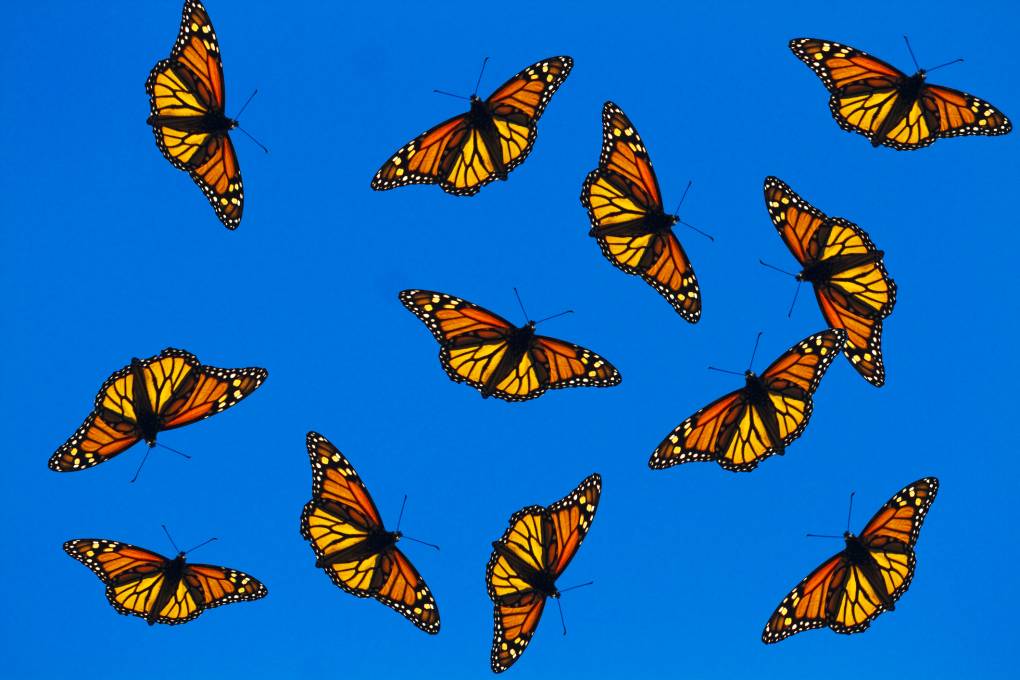
"caption": "Monarch butterfly photos flying in the sky near Santa Cruz, California, during migration.",
"description": null,
"title": "where-to-see-butterflies",
"credit": "Mark Miller Photos/Getty Images",
"status": "inherit",
"altTag": "A number of brightly colored monarch butterflies in hues of orange and yellow against a bright blue backdrop",
"isLoading": false,
"fetchFailed": false
},
"science_1985030": {
"type": "attachments",
"id": "science_1985030",
"meta": {
"index": "attachments_1716263798",
"site": "science",
"id": "1985030",
"found": true
},
"parent": 1985028,
"imgSizes": {
"twentyfourteen-full-width": {
"file": "https://ww2.kqed.org/app/uploads/sites/35/2023/11/GettyImages-1234219639-qut-1038x576.jpg",
"width": 1038,
"mimeType": "image/jpeg",
"height": 576
},
"thumbnail": {
"file": "https://ww2.kqed.org/app/uploads/sites/35/2023/11/GettyImages-1234219639-qut-160x105.jpg",
"width": 160,
"mimeType": "image/jpeg",
"height": 105
},
"post-thumbnail": {
"file": "https://ww2.kqed.org/app/uploads/sites/35/2023/11/GettyImages-1234219639-qut-672x372.jpg",
"width": 672,
"mimeType": "image/jpeg",
"height": 372
},
"kqedFullSize": {
"file": "https://ww2.kqed.org/app/uploads/sites/35/2023/11/GettyImages-1234219639-qut.jpg",
"width": 1920,
"height": 1258
},
"large": {
"file": "https://ww2.kqed.org/app/uploads/sites/35/2023/11/GettyImages-1234219639-qut-1020x668.jpg",
"width": 1020,
"mimeType": "image/jpeg",
"height": 668
},
"1536x1536": {
"file": "https://ww2.kqed.org/app/uploads/sites/35/2023/11/GettyImages-1234219639-qut-1536x1006.jpg",
"width": 1536,
"mimeType": "image/jpeg",
"height": 1006
},
"medium": {
"file": "https://ww2.kqed.org/app/uploads/sites/35/2023/11/GettyImages-1234219639-qut-800x524.jpg",
"width": 800,
"mimeType": "image/jpeg",
"height": 524
},
"medium_large": {
"file": "https://ww2.kqed.org/app/uploads/sites/35/2023/11/GettyImages-1234219639-qut-768x503.jpg",
"width": 768,
"mimeType": "image/jpeg",
"height": 503
}
},
"publishDate": 1698847115,
"modified": 1698879371,
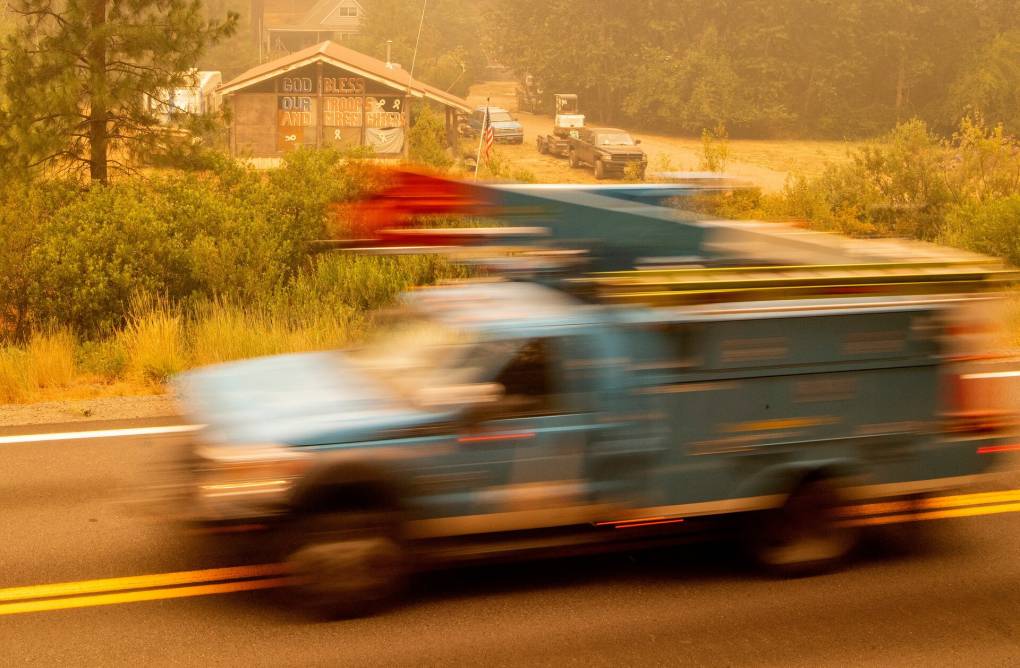
"caption": "A PG&E truck drives past a house in Quincy, California, near the massive Dixie Fire on July 26, 2021. ",
"description": null,
"title": "US-CLIMATE-CALIFORNIA-WILDFIRE",
"credit": null,
"status": "inherit",
"altTag": "A blurry utility truck drives through a wildfire zone.",
"isLoading": false,
"fetchFailed": false
},
"science_1984962": {
"type": "attachments",
"id": "science_1984962",
"meta": {
"index": "attachments_1716263798",
"site": "science",
"id": "1984962",
"found": true
},
"parent": 0,
"imgSizes": {
"twentyfourteen-full-width": {
"file": "https://ww2.kqed.org/app/uploads/sites/35/2023/10/102321-ELECTRIC-AVE-LEDE-2-KQED-1038x576.jpg",
"width": 1038,
"mimeType": "image/jpeg",
"height": 576
},
"thumbnail": {
"file": "https://ww2.kqed.org/app/uploads/sites/35/2023/10/102321-ELECTRIC-AVE-LEDE-2-KQED-160x107.jpg",
"width": 160,
"mimeType": "image/jpeg",
"height": 107
},
"post-thumbnail": {
"file": "https://ww2.kqed.org/app/uploads/sites/35/2023/10/102321-ELECTRIC-AVE-LEDE-2-KQED-672x372.jpg",
"width": 672,
"mimeType": "image/jpeg",
"height": 372
},
"kqedFullSize": {
"file": "https://ww2.kqed.org/app/uploads/sites/35/2023/10/102321-ELECTRIC-AVE-LEDE-2-KQED.jpg?ver=1698700626",
"width": 2000,
"height": 1333
},
"large": {
"file": "https://ww2.kqed.org/app/uploads/sites/35/2023/10/102321-ELECTRIC-AVE-LEDE-2-KQED-1020x680.jpg",
"width": 1020,
"mimeType": "image/jpeg",
"height": 680
},
"1536x1536": {
"file": "https://ww2.kqed.org/app/uploads/sites/35/2023/10/102321-ELECTRIC-AVE-LEDE-2-KQED-1536x1024.jpg",
"width": 1536,
"mimeType": "image/jpeg",
"height": 1024
},
"full-width": {
"file": "https://ww2.kqed.org/app/uploads/sites/35/2023/10/102321-ELECTRIC-AVE-LEDE-2-KQED-1920x1280.jpg",
"width": 1920,
"mimeType": "image/jpeg",
"height": 1280
},
"medium": {
"file": "https://ww2.kqed.org/app/uploads/sites/35/2023/10/102321-ELECTRIC-AVE-LEDE-2-KQED-800x533.jpg",
"width": 800,
"mimeType": "image/jpeg",
"height": 533
},
"medium_large": {
"file": "https://ww2.kqed.org/app/uploads/sites/35/2023/10/102321-ELECTRIC-AVE-LEDE-2-KQED-768x512.jpg",
"width": 768,
"mimeType": "image/jpeg",
"height": 512
}
},
"publishDate": 1698353619,
"modified": 1698700644,
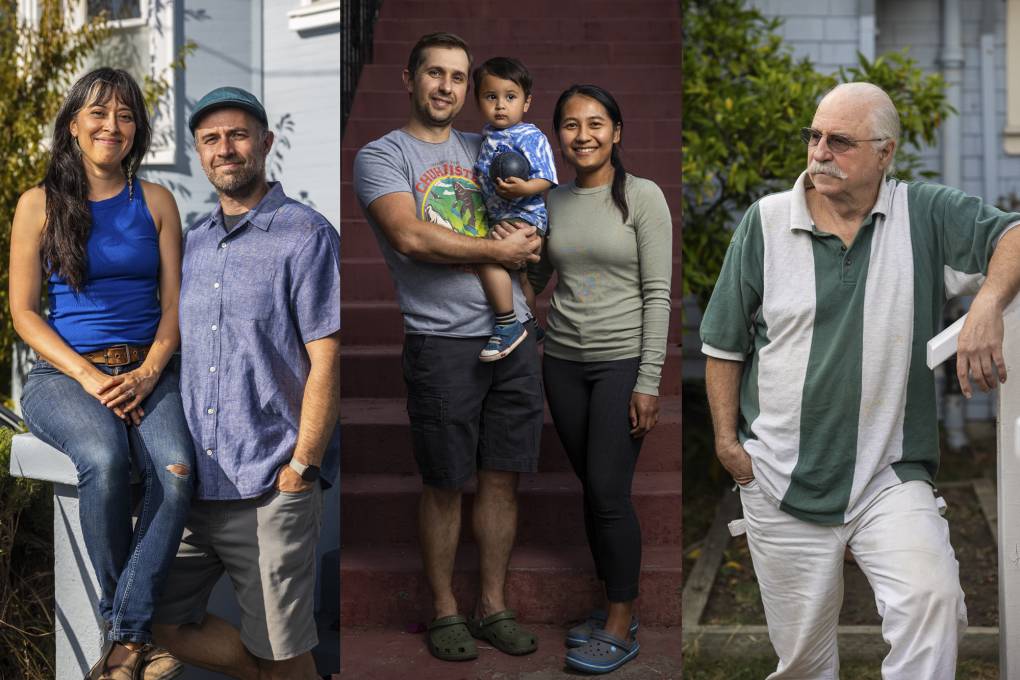
"caption": "(From left) Vivian Santana Pacheco, Isaac Zones, Ivan Sharamok, Gavin Sharamok (2), Jarinya Phansathin and Steven Johnson.",
"description": null,
"title": "102321-ELECTRIC AVE-LEDE-2-KQED",
"credit": "Martin do Nascimento/KQED",
"status": "inherit",
"altTag": "Three photos side-by-side of people standing in front of their homes.",
"isLoading": false,
"fetchFailed": false
},
"science_1984928": {
"type": "attachments",
"id": "science_1984928",
"meta": {
"index": "attachments_1716263798",
"site": "science",
"id": "1984928",
"found": true
},
"parent": 1984927,
"imgSizes": {
"twentyfourteen-full-width": {
"file": "https://ww2.kqed.org/app/uploads/sites/35/2023/10/GettyImages-1309301200-1038x576.jpg",
"width": 1038,
"mimeType": "image/jpeg",
"height": 576
},
"thumbnail": {
"file": "https://ww2.kqed.org/app/uploads/sites/35/2023/10/GettyImages-1309301200-160x104.jpg",
"width": 160,
"mimeType": "image/jpeg",
"height": 104
},
"post-thumbnail": {
"file": "https://ww2.kqed.org/app/uploads/sites/35/2023/10/GettyImages-1309301200-672x372.jpg",
"width": 672,
"mimeType": "image/jpeg",
"height": 372
},
"kqedFullSize": {
"file": "https://ww2.kqed.org/app/uploads/sites/35/2023/10/GettyImages-1309301200-scaled.jpg",
"width": 2560,
"height": 1664
},
"2048x2048": {
"file": "https://ww2.kqed.org/app/uploads/sites/35/2023/10/GettyImages-1309301200-2048x1331.jpg",
"width": 2048,
"mimeType": "image/jpeg",
"height": 1331
},
"large": {
"file": "https://ww2.kqed.org/app/uploads/sites/35/2023/10/GettyImages-1309301200-1020x663.jpg",
"width": 1020,
"mimeType": "image/jpeg",
"height": 663
},
"1536x1536": {
"file": "https://ww2.kqed.org/app/uploads/sites/35/2023/10/GettyImages-1309301200-1536x998.jpg",
"width": 1536,
"mimeType": "image/jpeg",
"height": 998
},
"full-width": {
"file": "https://ww2.kqed.org/app/uploads/sites/35/2023/10/GettyImages-1309301200-1920x1248.jpg",
"width": 1920,
"mimeType": "image/jpeg",
"height": 1248
},
"medium": {
"file": "https://ww2.kqed.org/app/uploads/sites/35/2023/10/GettyImages-1309301200-800x520.jpg",
"width": 800,
"mimeType": "image/jpeg",
"height": 520
},
"medium_large": {
"file": "https://ww2.kqed.org/app/uploads/sites/35/2023/10/GettyImages-1309301200-768x499.jpg",
"width": 768,
"mimeType": "image/jpeg",
"height": 499
}
},
"publishDate": 1698192828,
"modified": 1698258387,
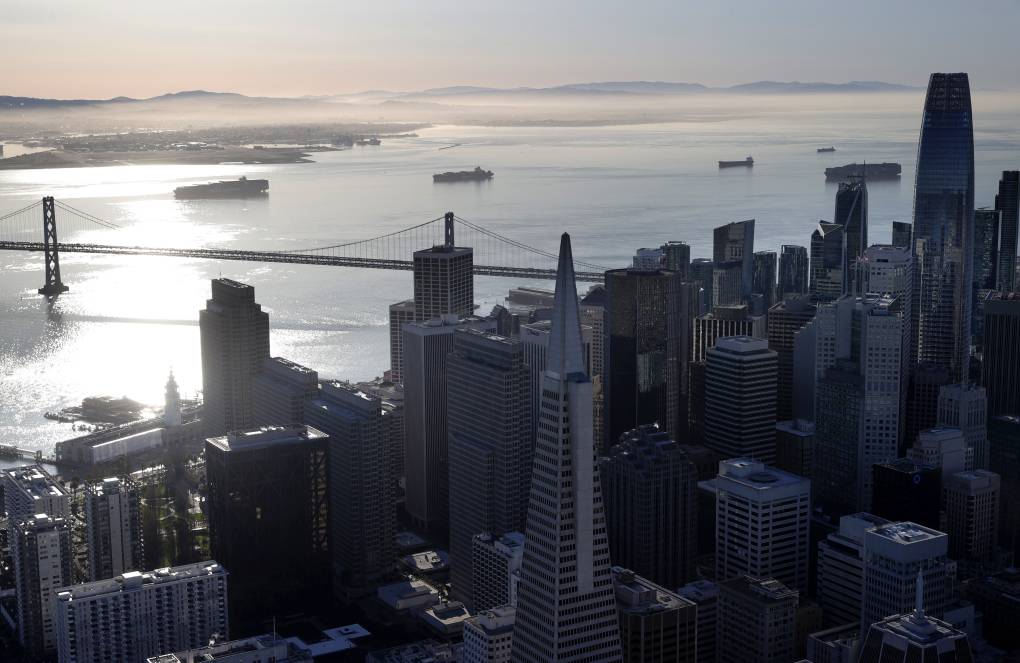
"caption": "Container ships sit idle in the San Francisco Bay just outside of the Port of Oakland on March 26, 2021, in San Francisco, California. ",
"description": null,
"title": "Convergence Of Events Wreaks Havoc On Global Shipping Industry",
"credit": "Photo by Justin Sullivan/Getty Images",
"status": "inherit",
"altTag": "A city skyline in shadows, a body of water shimmering silver, a dark bridge cuts across the water and a bright white sky above",
"isLoading": false,
"fetchFailed": false
},
"science_1984865": {
"type": "attachments",
"id": "science_1984865",
"meta": {
"index": "attachments_1716263798",
"site": "science",
"id": "1984865",
"found": true
},
"parent": 1984864,
"imgSizes": {
"twentyfourteen-full-width": {
"file": "https://ww2.kqed.org/app/uploads/sites/35/2023/10/GettyImages-1344976530-1038x576.jpg",
"width": 1038,
"mimeType": "image/jpeg",
"height": 576
},
"thumbnail": {
"file": "https://ww2.kqed.org/app/uploads/sites/35/2023/10/GettyImages-1344976530-160x107.jpg",
"width": 160,
"mimeType": "image/jpeg",
"height": 107
},
"post-thumbnail": {
"file": "https://ww2.kqed.org/app/uploads/sites/35/2023/10/GettyImages-1344976530-672x372.jpg",
"width": 672,
"mimeType": "image/jpeg",
"height": 372
},
"kqedFullSize": {
"file": "https://ww2.kqed.org/app/uploads/sites/35/2023/10/GettyImages-1344976530-scaled.jpg",
"width": 2560,
"height": 1714
},
"2048x2048": {
"file": "https://ww2.kqed.org/app/uploads/sites/35/2023/10/GettyImages-1344976530-2048x1371.jpg",
"width": 2048,
"mimeType": "image/jpeg",
"height": 1371
},
"large": {
"file": "https://ww2.kqed.org/app/uploads/sites/35/2023/10/GettyImages-1344976530-1020x683.jpg",
"width": 1020,
"mimeType": "image/jpeg",
"height": 683
},
"1536x1536": {
"file": "https://ww2.kqed.org/app/uploads/sites/35/2023/10/GettyImages-1344976530-1536x1028.jpg",
"width": 1536,
"mimeType": "image/jpeg",
"height": 1028
},
"full-width": {
"file": "https://ww2.kqed.org/app/uploads/sites/35/2023/10/GettyImages-1344976530-1920x1285.jpg",
"width": 1920,
"mimeType": "image/jpeg",
"height": 1285
},
"medium": {
"file": "https://ww2.kqed.org/app/uploads/sites/35/2023/10/GettyImages-1344976530-800x535.jpg",
"width": 800,
"mimeType": "image/jpeg",
"height": 535
},
"medium_large": {
"file": "https://ww2.kqed.org/app/uploads/sites/35/2023/10/GettyImages-1344976530-768x514.jpg",
"width": 768,
"mimeType": "image/jpeg",
"height": 514
}
},
"publishDate": 1697832733,
"modified": 1698096948,
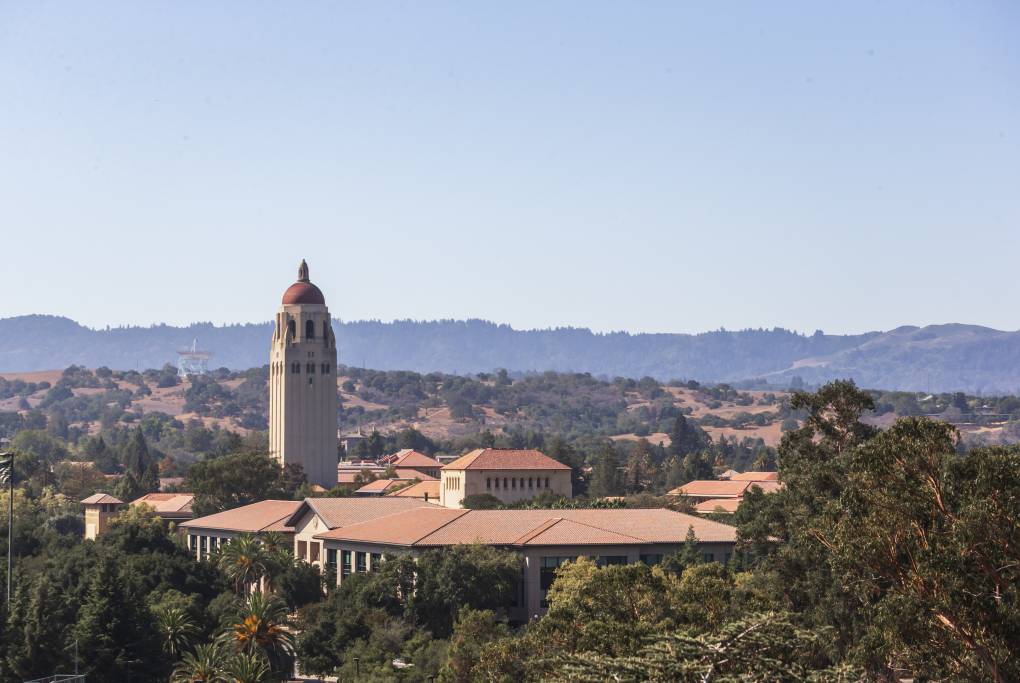
"caption": "A general view of the campus of Stanford University, including Hoover Tower, as seen from Stanford Stadium before a college football game on October 2, 2021, in Palo Alto, California. (Photo by David Madison/Getty Images)",
"description": null,
"title": "Stanford University",
"credit": null,
"status": "inherit",
"altTag": "A pillar stands in the middle of a college campus with terra cotta roofs. Dark green trees surround the buildings. A hazy blue sky above.",
"isLoading": false,
"fetchFailed": false
},
"science_1984831": {
"type": "attachments",
"id": "science_1984831",
"meta": {
"index": "attachments_1716263798",
"site": "science",
"id": "1984831",
"found": true
},
"parent": 1984830,
"imgSizes": {
"twentyfourteen-full-width": {
"file": "https://ww2.kqed.org/app/uploads/sites/35/2023/10/GettyImages-1488915159-1038x576.jpg",
"width": 1038,
"mimeType": "image/jpeg",
"height": 576
},
"thumbnail": {
"file": "https://ww2.kqed.org/app/uploads/sites/35/2023/10/GettyImages-1488915159-160x115.jpg",
"width": 160,
"mimeType": "image/jpeg",
"height": 115
},
"post-thumbnail": {
"file": "https://ww2.kqed.org/app/uploads/sites/35/2023/10/GettyImages-1488915159-672x372.jpg",
"width": 672,
"mimeType": "image/jpeg",
"height": 372
},
"kqedFullSize": {
"file": "https://ww2.kqed.org/app/uploads/sites/35/2023/10/GettyImages-1488915159-scaled.jpg",
"width": 2560,
"height": 1843
},
"2048x2048": {
"file": "https://ww2.kqed.org/app/uploads/sites/35/2023/10/GettyImages-1488915159-2048x1474.jpg",
"width": 2048,
"mimeType": "image/jpeg",
"height": 1474
},
"large": {
"file": "https://ww2.kqed.org/app/uploads/sites/35/2023/10/GettyImages-1488915159-1020x734.jpg",
"width": 1020,
"mimeType": "image/jpeg",
"height": 734
},
"1536x1536": {
"file": "https://ww2.kqed.org/app/uploads/sites/35/2023/10/GettyImages-1488915159-1536x1106.jpg",
"width": 1536,
"mimeType": "image/jpeg",
"height": 1106
},
"full-width": {
"file": "https://ww2.kqed.org/app/uploads/sites/35/2023/10/GettyImages-1488915159-1920x1382.jpg",
"width": 1920,
"mimeType": "image/jpeg",
"height": 1382
},
"medium": {
"file": "https://ww2.kqed.org/app/uploads/sites/35/2023/10/GettyImages-1488915159-800x576.jpg",
"width": 800,
"mimeType": "image/jpeg",
"height": 576
},
"medium_large": {
"file": "https://ww2.kqed.org/app/uploads/sites/35/2023/10/GettyImages-1488915159-768x553.jpg",
"width": 768,
"mimeType": "image/jpeg",
"height": 553
}
},
"publishDate": 1697650585,
"modified": 1697732713,
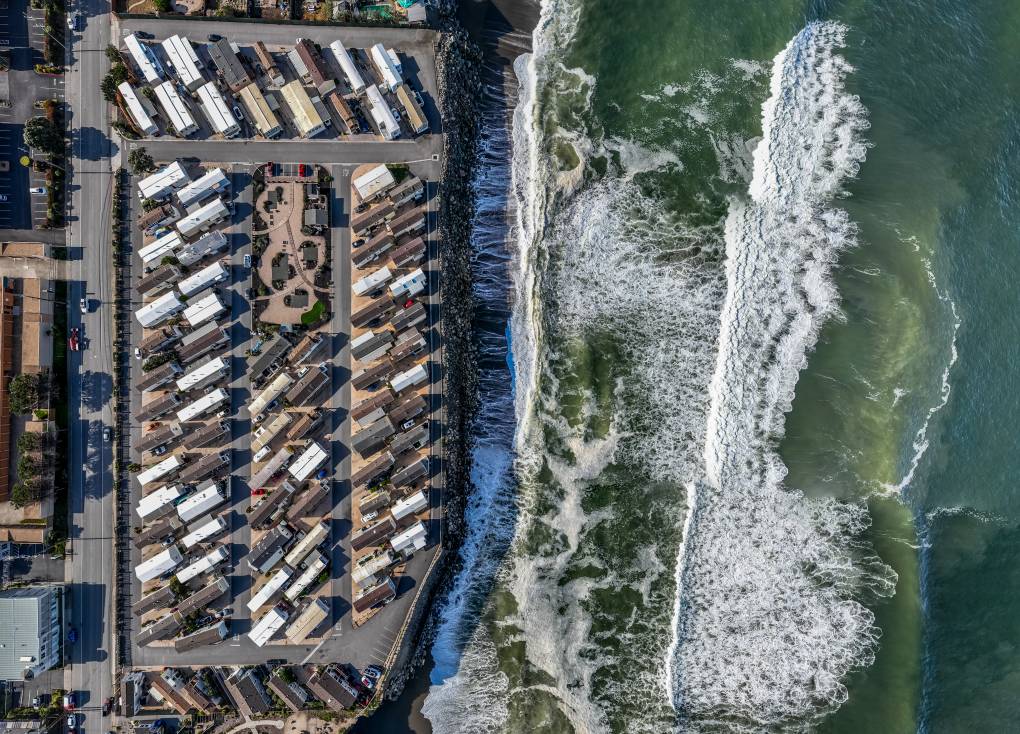
"caption": "A mobile home park in Northern California sits just feet from the Pacific Ocean.",
"description": null,
"title": "Coastline Aerial View of Mobile Home Park",
"credit": "Jason Doiy/Getty",
"status": "inherit",
"altTag": "Waves in a green ocean lap onto a rocky shore with a mobile home park on the edge of the coast.",
"isLoading": false,
"fetchFailed": false
},
"science_1984774": {
"type": "attachments",
"id": "science_1984774",
"meta": {
"index": "attachments_1716263798",
"site": "science",
"id": "1984774",
"found": true
},
"parent": 1984737,
"imgSizes": {
"twentyfourteen-full-width": {
"file": "https://ww2.kqed.org/app/uploads/sites/35/2023/10/020_KQED_StormSanFrancisco_01102023-qut-1038x576.jpg",
"width": 1038,
"mimeType": "image/jpeg",
"height": 576
},
"thumbnail": {
"file": "https://ww2.kqed.org/app/uploads/sites/35/2023/10/020_KQED_StormSanFrancisco_01102023-qut-160x107.jpg",
"width": 160,
"mimeType": "image/jpeg",
"height": 107
},
"post-thumbnail": {
"file": "https://ww2.kqed.org/app/uploads/sites/35/2023/10/020_KQED_StormSanFrancisco_01102023-qut-672x372.jpg",
"width": 672,
"mimeType": "image/jpeg",
"height": 372
},
"kqedFullSize": {
"file": "https://ww2.kqed.org/app/uploads/sites/35/2023/10/020_KQED_StormSanFrancisco_01102023-qut.jpg",
"width": 1920,
"height": 1280
},
"large": {
"file": "https://ww2.kqed.org/app/uploads/sites/35/2023/10/020_KQED_StormSanFrancisco_01102023-qut-1020x680.jpg",
"width": 1020,
"mimeType": "image/jpeg",
"height": 680
},
"1536x1536": {
"file": "https://ww2.kqed.org/app/uploads/sites/35/2023/10/020_KQED_StormSanFrancisco_01102023-qut-1536x1024.jpg",
"width": 1536,
"mimeType": "image/jpeg",
"height": 1024
},
"medium": {
"file": "https://ww2.kqed.org/app/uploads/sites/35/2023/10/020_KQED_StormSanFrancisco_01102023-qut-800x533.jpg",
"width": 800,
"mimeType": "image/jpeg",
"height": 533
},
"medium_large": {
"file": "https://ww2.kqed.org/app/uploads/sites/35/2023/10/020_KQED_StormSanFrancisco_01102023-qut-768x512.jpg",
"width": 768,
"mimeType": "image/jpeg",
"height": 512
}
},
"publishDate": 1697491496,
"modified": 1697494303,
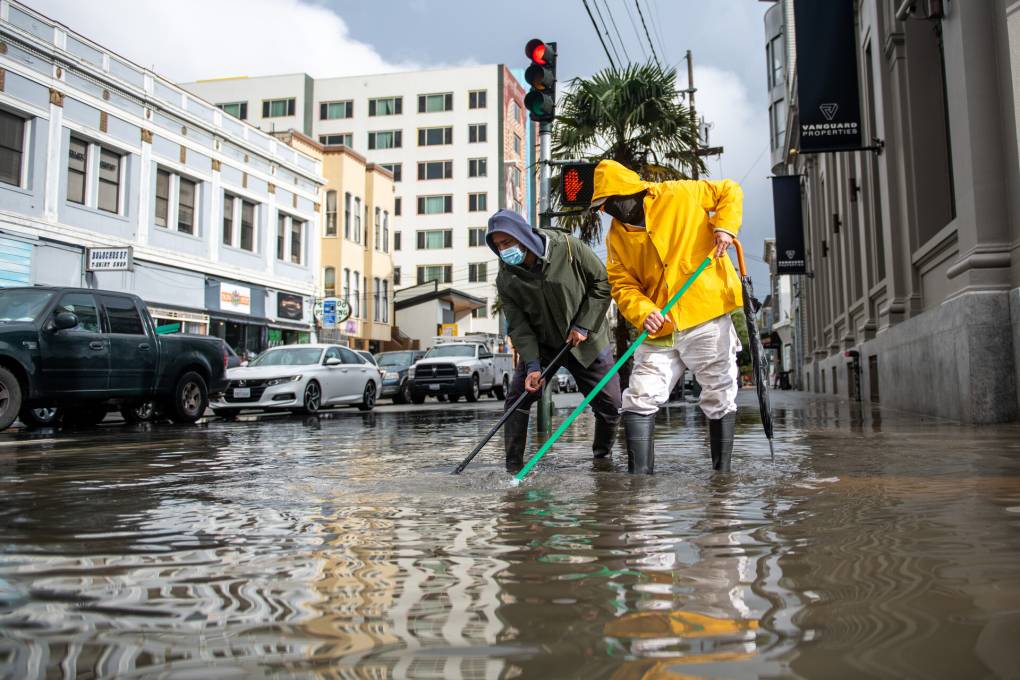
"caption": "Mission District residents work to open a clogged drain on Mission and 21st streets in San Francisco on Jan. 10, 2023.",
"description": null,
"title": "el-nino-snow-forecast-california-weather",
"credit": "Beth LaBerge/KQED",
"status": "inherit",
"altTag": "Two figures in rain gear -- one in bright yellow, one in dark green -- stand working in a flooded street.",
"isLoading": false,
"fetchFailed": false
},
"science_1984686": {
"type": "attachments",
"id": "science_1984686",
"meta": {
"index": "attachments_1716263798",
"site": "science",
"id": "1984686",
"found": true
},
"parent": 1984643,
"imgSizes": {
"twentyfourteen-full-width": {
"file": "https://ww2.kqed.org/app/uploads/sites/35/2023/10/03242023_kqed_pajaroreturning-1305-qut-1038x576.jpg",
"width": 1038,
"mimeType": "image/jpeg",
"height": 576
},
"thumbnail": {
"file": "https://ww2.kqed.org/app/uploads/sites/35/2023/10/03242023_kqed_pajaroreturning-1305-qut-160x106.jpg",
"width": 160,
"mimeType": "image/jpeg",
"height": 106
},
"post-thumbnail": {
"file": "https://ww2.kqed.org/app/uploads/sites/35/2023/10/03242023_kqed_pajaroreturning-1305-qut-672x372.jpg",
"width": 672,
"mimeType": "image/jpeg",
"height": 372
},
"kqedFullSize": {
"file": "https://ww2.kqed.org/app/uploads/sites/35/2023/10/03242023_kqed_pajaroreturning-1305-qut.jpg",
"width": 1920,
"height": 1277
},
"large": {
"file": "https://ww2.kqed.org/app/uploads/sites/35/2023/10/03242023_kqed_pajaroreturning-1305-qut-1020x678.jpg",
"width": 1020,
"mimeType": "image/jpeg",
"height": 678
},
"1536x1536": {
"file": "https://ww2.kqed.org/app/uploads/sites/35/2023/10/03242023_kqed_pajaroreturning-1305-qut-1536x1022.jpg",
"width": 1536,
"mimeType": "image/jpeg",
"height": 1022
},
"medium": {
"file": "https://ww2.kqed.org/app/uploads/sites/35/2023/10/03242023_kqed_pajaroreturning-1305-qut-800x532.jpg",
"width": 800,
"mimeType": "image/jpeg",
"height": 532
},
"medium_large": {
"file": "https://ww2.kqed.org/app/uploads/sites/35/2023/10/03242023_kqed_pajaroreturning-1305-qut-768x511.jpg",
"width": 768,
"mimeType": "image/jpeg",
"height": 511
}
},
"publishDate": 1697233467,
"modified": 1697485009,
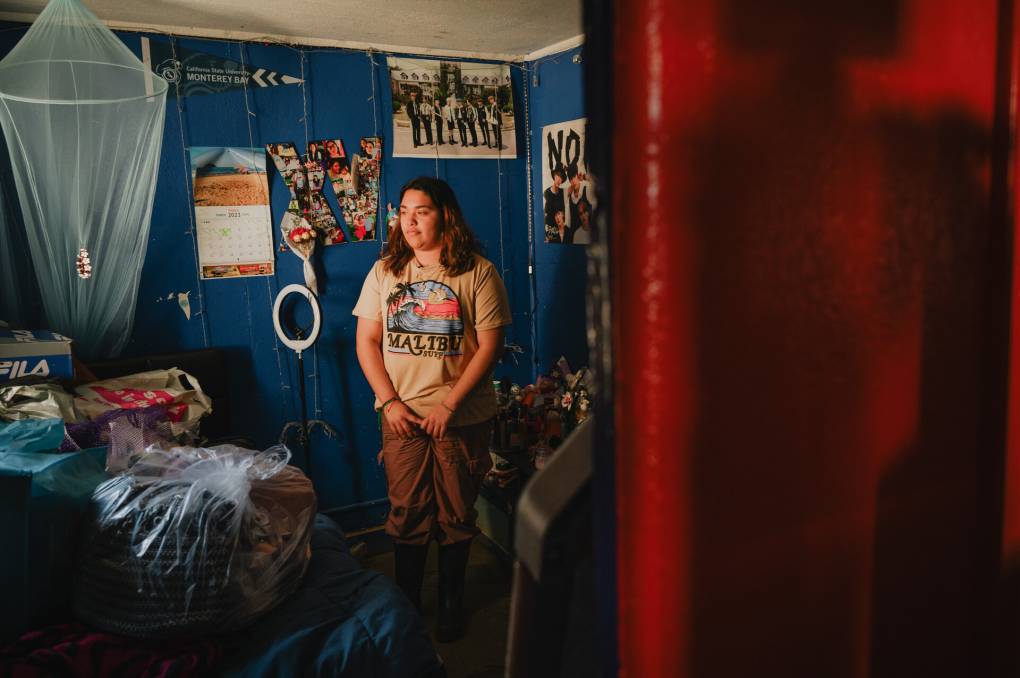
"caption": "Denia Escutia in her mud-coated bedroom in Pajaro, Monterey County, on March 24, 2023. ",
"description": null,
"title": "03242023_kqed_pajaroreturning 1305-qut",
"credit": "Kori Suzuki/KQED",
"status": "inherit",
"altTag": "A woman with brown, shoulder-length hair stands in a blue room.",
"isLoading": false,
"fetchFailed": false
},
"science_1984698": {
"type": "attachments",
"id": "science_1984698",
"meta": {
"index": "attachments_1716263798",
"site": "science",
"id": "1984698",
"found": true
},
"parent": 1984697,
"imgSizes": {
"twentyfourteen-full-width": {
"file": "https://ww2.kqed.org/app/uploads/sites/35/2023/10/horizontal-image-1038x576.png",
"width": 1038,
"mimeType": "image/png",
"height": 576
},
"thumbnail": {
"file": "https://ww2.kqed.org/app/uploads/sites/35/2023/10/horizontal-image-160x90.png",
"width": 160,
"mimeType": "image/png",
"height": 90
},
"post-thumbnail": {
"file": "https://ww2.kqed.org/app/uploads/sites/35/2023/10/horizontal-image-672x372.png",
"width": 672,
"mimeType": "image/png",
"height": 372
},
"kqedFullSize": {
"file": "https://ww2.kqed.org/app/uploads/sites/35/2023/10/horizontal-image.png",
"width": 1920,
"height": 1080
},
"large": {
"file": "https://ww2.kqed.org/app/uploads/sites/35/2023/10/horizontal-image-1020x574.png",
"width": 1020,
"mimeType": "image/png",
"height": 574
},
"1536x1536": {
"file": "https://ww2.kqed.org/app/uploads/sites/35/2023/10/horizontal-image-1536x864.png",
"width": 1536,
"mimeType": "image/png",
"height": 864
},
"medium": {
"file": "https://ww2.kqed.org/app/uploads/sites/35/2023/10/horizontal-image-800x450.png",
"width": 800,
"mimeType": "image/png",
"height": 450
},
"medium_large": {
"file": "https://ww2.kqed.org/app/uploads/sites/35/2023/10/horizontal-image-768x432.png",
"width": 768,
"mimeType": "image/png",
"height": 432
}
},
"publishDate": 1697238524,
"modified": 1697238524,
"caption": null,
"description": null,
"title": "horizontal image",
"credit": null,
"status": "inherit",
"altTag": null,
"isLoading": false,
"fetchFailed": false
},
"science_1984596": {
"type": "attachments",
"id": "science_1984596",
"meta": {
"index": "attachments_1716263798",
"site": "science",
"id": "1984596",
"found": true
},
"parent": 1984593,
"imgSizes": {
"twentyfourteen-full-width": {
"file": "https://ww2.kqed.org/app/uploads/sites/35/2023/10/GettyImages-1499051639-qut-1038x576.jpg",
"width": 1038,
"mimeType": "image/jpeg",
"height": 576
},
"thumbnail": {
"file": "https://ww2.kqed.org/app/uploads/sites/35/2023/10/GettyImages-1499051639-qut-160x108.jpg",
"width": 160,
"mimeType": "image/jpeg",
"height": 108
},
"post-thumbnail": {
"file": "https://ww2.kqed.org/app/uploads/sites/35/2023/10/GettyImages-1499051639-qut-672x372.jpg",
"width": 672,
"mimeType": "image/jpeg",
"height": 372
},
"kqedFullSize": {
"file": "https://ww2.kqed.org/app/uploads/sites/35/2023/10/GettyImages-1499051639-qut.jpg",
"width": 1920,
"height": 1290
},
"large": {
"file": "https://ww2.kqed.org/app/uploads/sites/35/2023/10/GettyImages-1499051639-qut-1020x685.jpg",
"width": 1020,
"mimeType": "image/jpeg",
"height": 685
},
"1536x1536": {
"file": "https://ww2.kqed.org/app/uploads/sites/35/2023/10/GettyImages-1499051639-qut-1536x1032.jpg",
"width": 1536,
"mimeType": "image/jpeg",
"height": 1032
},
"medium": {
"file": "https://ww2.kqed.org/app/uploads/sites/35/2023/10/GettyImages-1499051639-qut-800x538.jpg",
"width": 800,
"mimeType": "image/jpeg",
"height": 538
},
"medium_large": {
"file": "https://ww2.kqed.org/app/uploads/sites/35/2023/10/GettyImages-1499051639-qut-768x516.jpg",
"width": 768,
"mimeType": "image/jpeg",
"height": 516
}
},
"publishDate": 1696879875,
"modified": 1696963796,
"caption": "Marin County firefighters hike up a hill during a controlled burn training on June 16, 2023 in San Rafael. ",
"description": null,
"title": "California Firefighters Set Controlled Burns As Part Of Wildfire Training",
"credit": "Justin Sullivan/Getty Images",
"status": "inherit",
"altTag": "Firefighters in yellow jackets and helmets hike up a hill into a gray mist.",
"isLoading": false,
"fetchFailed": false
},
"science_1984516": {
"type": "attachments",
"id": "science_1984516",
"meta": {
"index": "attachments_1716263798",
"site": "science",
"id": "1984516",
"found": true
},
"parent": 1984507,
"imgSizes": {
"twentyfourteen-full-width": {
"file": "https://ww2.kqed.org/app/uploads/sites/35/2023/10/GettyImages-1465073112-1038x576.jpg",
"width": 1038,
"mimeType": "image/jpeg",
"height": 576
},
"thumbnail": {
"file": "https://ww2.kqed.org/app/uploads/sites/35/2023/10/GettyImages-1465073112-160x90.jpg",
"width": 160,
"mimeType": "image/jpeg",
"height": 90
},
"post-thumbnail": {
"file": "https://ww2.kqed.org/app/uploads/sites/35/2023/10/GettyImages-1465073112-672x372.jpg",
"width": 672,
"mimeType": "image/jpeg",
"height": 372
},
"kqedFullSize": {
"file": "https://ww2.kqed.org/app/uploads/sites/35/2023/10/GettyImages-1465073112.jpg",
"width": 2309,
"height": 1299
},
"2048x2048": {
"file": "https://ww2.kqed.org/app/uploads/sites/35/2023/10/GettyImages-1465073112-2048x1152.jpg",
"width": 2048,
"mimeType": "image/jpeg",
"height": 1152
},
"large": {
"file": "https://ww2.kqed.org/app/uploads/sites/35/2023/10/GettyImages-1465073112-1020x574.jpg",
"width": 1020,
"mimeType": "image/jpeg",
"height": 574
},
"1536x1536": {
"file": "https://ww2.kqed.org/app/uploads/sites/35/2023/10/GettyImages-1465073112-1536x864.jpg",
"width": 1536,
"mimeType": "image/jpeg",
"height": 864
},
"full-width": {
"file": "https://ww2.kqed.org/app/uploads/sites/35/2023/10/GettyImages-1465073112-1920x1080.jpg",
"width": 1920,
"mimeType": "image/jpeg",
"height": 1080
},
"medium": {
"file": "https://ww2.kqed.org/app/uploads/sites/35/2023/10/GettyImages-1465073112-800x450.jpg",
"width": 800,
"mimeType": "image/jpeg",
"height": 450
},
"medium_large": {
"file": "https://ww2.kqed.org/app/uploads/sites/35/2023/10/GettyImages-1465073112-768x432.jpg",
"width": 768,
"mimeType": "image/jpeg",
"height": 432
}
},
"publishDate": 1696533614,
"modified": 1696533735,
"caption": "Close-up shot of medical drug production line.",
"description": null,
"title": "Blue and white capsules on a conveyer belt",
"credit": "SweetBunFactory/Getty Images",
"status": "inherit",
"altTag": "Blue capsules on conveyor at a modern pharmaceutical factory.",
"isLoading": false,
"fetchFailed": false
},
"science_1984323": {
"type": "attachments",
"id": "science_1984323",
"meta": {
"index": "attachments_1716263798",
"site": "science",
"id": "1984323",
"found": true
},
"parent": 1984319,
"imgSizes": {
"twentyfourteen-full-width": {
"file": "https://ww2.kqed.org/app/uploads/sites/35/2023/09/meadows-6501b99c2e264-1020x765-2-1020x576.jpeg",
"width": 1020,
"mimeType": "image/jpeg",
"height": 576
},
"thumbnail": {
"file": "https://ww2.kqed.org/app/uploads/sites/35/2023/09/meadows-6501b99c2e264-1020x765-2-160x120.jpeg",
"width": 160,
"mimeType": "image/jpeg",
"height": 120
},
"post-thumbnail": {
"file": "https://ww2.kqed.org/app/uploads/sites/35/2023/09/meadows-6501b99c2e264-1020x765-2-672x372.jpeg",
"width": 672,
"mimeType": "image/jpeg",
"height": 372
},
"kqedFullSize": {
"file": "https://ww2.kqed.org/app/uploads/sites/35/2023/09/meadows-6501b99c2e264-1020x765-2.jpeg",
"width": 1020,
"height": 765
},
"medium": {
"file": "https://ww2.kqed.org/app/uploads/sites/35/2023/09/meadows-6501b99c2e264-1020x765-2-800x600.jpeg",
"width": 800,
"mimeType": "image/jpeg",
"height": 600
},
"medium_large": {
"file": "https://ww2.kqed.org/app/uploads/sites/35/2023/09/meadows-6501b99c2e264-1020x765-2-768x576.jpeg",
"width": 768,
"mimeType": "image/jpeg",
"height": 576
}
},
"publishDate": 1695332320,
"modified": 1695334195,
"caption": "US Forest Service research ecologist Karen Pope crouches in a stream in Lower Grouse Meadow to demonstrate how dams capture sediment. As channels fill with sediment, they become shallower, allowing water to spread through meadows and preventing buildup within reservoirs and other infrastructure further downstream.",
"description": null,
"title": "meadows-6501b99c2e264-1020x765",
"credit": "Kerry Klein/KVPR",
"status": "inherit",
"altTag": "a woman in jeans, a long sleeve shirt, and a hard hat, kneels in a puddle with trees in the background",
"isLoading": false,
"fetchFailed": false
}
},
"audioPlayerReducer": {
"postId": "stream_live",
"isPaused": true,
"isPlaying": false,
"pfsActive": false,
"pledgeModalIsOpen": true,
"playerDrawerIsOpen": false,
"liveAudioPlayStartedAt": 0,
"liveAudioPlayContext": ""
},
"authorsReducer": {
"byline_science_1984507": {
"type": "authors",
"id": "byline_science_1984507",
"meta": {
"override": true
},
"slug": "byline_science_1984507",
"name": "Betsy Ladyzhets",
"isLoading": false
},
"ekelly": {
"type": "authors",
"id": "3211",
"meta": {
"index": "authors_1716337520",
"id": "3211",
"found": true
},
"name": "Erika Kelly",
"firstName": "Erika",
"lastName": "Kelly",
"slug": "ekelly",
"email": "ekelly@KQED.org",
"display_author_email": true,
"staff_mastheads": [
"news"
],
"title": "Deputy Managing Editor",
"bio": "Erika Kelly is deputy managing editor of KQED's newsroom, working with teams covering housing, climate, health, labor and the arts. Previously, she was the senior editor of KQED’s housing affordability desk, leading the team that produced the award winning podcast Sold Out: Rethinking Housing in America. She is a graduate of the Medill School of Journalism and a native of the Greater Chicagoland Area.",
"avatar": "https://secure.gravatar.com/avatar/3653973f475e2af06d52444628a0023a48f83905a9d7ce3a4e45e5ecebcb4230?s=600&d=blank&r=g",
"twitter": null,
"bluesky": null,
"facebook": null,
"instagram": null,
"linkedin": null,
"sites": [
{
"site": "",
"roles": [
"editor"
]
},
{
"site": "arts",
"roles": [
"administrator"
]
},
{
"site": "news",
"roles": [
"administrator"
]
},
{
"site": "science",
"roles": [
"administrator"
]
},
{
"site": "liveblog",
"roles": [
"administrator"
]
}
],
"headData": {
"title": "Erika Kelly | KQED",
"description": "Deputy Managing Editor",
"ogImgSrc": "https://secure.gravatar.com/avatar/3653973f475e2af06d52444628a0023a48f83905a9d7ce3a4e45e5ecebcb4230?s=600&d=blank&r=g",
"twImgSrc": "https://secure.gravatar.com/avatar/3653973f475e2af06d52444628a0023a48f83905a9d7ce3a4e45e5ecebcb4230?s=600&d=blank&r=g"
},
"isLoading": false,
"link": "/author/ekelly"
},
"lklivans": {
"type": "authors",
"id": "8648",
"meta": {
"index": "authors_1716337520",
"id": "8648",
"found": true
},
"name": "Laura Klivans",
"firstName": "Laura",
"lastName": "Klivans",
"slug": "lklivans",
"email": "lklivans@kqed.org",
"display_author_email": true,
"staff_mastheads": [
"news",
"science"
],
"title": "Reporter",
"bio": "Laura Klivans is an award-winning science reporter for KQED News, where she covers climate change with an eye on both groundbreaking progress and gaps in action. She is the former host of KQED's blockbuster video series about tiny, amazing animals, \u003cem>Deep Look\u003c/em>. Her work reaches national audiences through NPR, \u003cem>Here & Now, \u003c/em>PRI, and other major outlets. \r\n\r\nLaura’s won five Northern California Area Emmy Awards for Deep Look and First Place in the Greater Bay Area Journalism Awards for a podcast exploring how one Oakland neighborhood teamed up to reduce planet-heating pollution.\r\n\r\nBeyond her reporting, she hosts and moderates events. In the past, she taught audio storytelling at the UC Berkeley Graduate School of Journalism, led international education programs, worked with immigrants and refugees along the Thai-Burmese border, taught high schoolers sex ed, and was an actress. \r\n\r\nShe's a former UC Berkeley Human Rights Fellow, USC Center for Health Journalism's California Fellow and Coro Fellow in Public Affairs. Laura has a master’s in journalism from UC Berkeley, a master’s in education from Harvard, and an undergraduate degree from Northwestern University.\r\n\r\nShe loves trying to riddle the meaning out of vanity license plates.",
"avatar": "https://secure.gravatar.com/avatar/2d2ecd1550a494cc10ad4a503406965585902124739e775a9b3817eebf1d88be?s=600&d=blank&r=g",
"twitter": "lauraklivans",
"bluesky": null,
"facebook": null,
"instagram": null,
"linkedin": null,
"sites": [
{
"site": "news",
"roles": [
"editor"
]
},
{
"site": "stateofhealth",
"roles": [
"contributor",
"editor"
]
},
{
"site": "science",
"roles": [
"editor"
]
},
{
"site": "forum",
"roles": [
"editor"
]
}
],
"headData": {
"title": "Laura Klivans | KQED",
"description": "Reporter",
"ogImgSrc": "https://secure.gravatar.com/avatar/2d2ecd1550a494cc10ad4a503406965585902124739e775a9b3817eebf1d88be?s=600&d=blank&r=g",
"twImgSrc": "https://secure.gravatar.com/avatar/2d2ecd1550a494cc10ad4a503406965585902124739e775a9b3817eebf1d88be?s=600&d=blank&r=g"
},
"isLoading": false,
"link": "/author/lklivans"
},
"dcronin": {
"type": "authors",
"id": "11362",
"meta": {
"index": "authors_1716337520",
"id": "11362",
"found": true
},
"name": "Dana Cronin",
"firstName": "Dana",
"lastName": "Cronin",
"slug": "dcronin",
"email": "dcronin@KQED.org",
"display_author_email": true,
"staff_mastheads": [],
"title": "KQED Contributor",
"bio": "Dana Cronin is a reporter for KQED News. She loves writing stories about climate change, environmental issues, food and agriculture. She's reported across the country, from Colorado to Washington D.C. to Illinois, and has won numerous awards for her coverage. Her work is regularly featured on national broadcasts, including NPR’s Morning Edition, All Things Considered, PBS Newshour and Science Friday. She lives in Oakland and has an avocado tree in her back yard.",
"avatar": "https://secure.gravatar.com/avatar/bcf89e3455ff7235f96ab6fa7258dd95?s=600&d=blank&r=g",
"twitter": "DanaHCronin",
"facebook": null,
"instagram": null,
"linkedin": null,
"sites": [
{
"site": "arts",
"roles": [
"author"
]
},
{
"site": "news",
"roles": [
"editor"
]
},
{
"site": "science",
"roles": [
"author"
]
},
{
"site": "liveblog",
"roles": [
"author"
]
}
],
"headData": {
"title": "Dana Cronin | KQED",
"description": "KQED Contributor",
"ogImgSrc": "https://secure.gravatar.com/avatar/bcf89e3455ff7235f96ab6fa7258dd95?s=600&d=blank&r=g",
"twImgSrc": "https://secure.gravatar.com/avatar/bcf89e3455ff7235f96ab6fa7258dd95?s=600&d=blank&r=g"
},
"isLoading": false,
"link": "/author/dcronin"
},
"kevinstark": {
"type": "authors",
"id": "11608",
"meta": {
"index": "authors_1716337520",
"id": "11608",
"found": true
},
"name": "Kevin Stark",
"firstName": "Kevin",
"lastName": "Stark",
"slug": "kevinstark",
"email": "kstark@kqed.org",
"display_author_email": true,
"staff_mastheads": [
"science"
],
"title": "Senior Editor",
"bio": "Kevin is a senior editor for KQED Science, managing the station's health and climate desks. His journalism career began in the Pacific Northwest, and he later became a lead reporter for the San Francisco Public Press. His work has appeared in Pacific Standard magazine, the Energy News Network, the Center for Investigative Reporting's Reveal and WBEZ in Chicago. Kevin joined KQED in 2019, and has covered issues related to energy, wildfire, climate change and the environment.",
"avatar": "https://secure.gravatar.com/avatar/365aaa4b597d3a8374f67504ff0facd323d7906e8eb4be0a7efd2427408e802c?s=600&d=blank&r=g",
"twitter": "starkkev",
"bluesky": null,
"facebook": null,
"instagram": null,
"linkedin": null,
"sites": [
{
"site": "",
"roles": [
"editor"
]
},
{
"site": "news",
"roles": [
"editor"
]
},
{
"site": "science",
"roles": [
"administrator"
]
}
],
"headData": {
"title": "Kevin Stark | KQED",
"description": "Senior Editor",
"ogImgSrc": "https://secure.gravatar.com/avatar/365aaa4b597d3a8374f67504ff0facd323d7906e8eb4be0a7efd2427408e802c?s=600&d=blank&r=g",
"twImgSrc": "https://secure.gravatar.com/avatar/365aaa4b597d3a8374f67504ff0facd323d7906e8eb4be0a7efd2427408e802c?s=600&d=blank&r=g"
},
"isLoading": false,
"link": "/author/kevinstark"
},
"smohamad": {
"type": "authors",
"id": "11631",
"meta": {
"index": "authors_1716337520",
"id": "11631",
"found": true
},
"name": "Sarah Mohamad",
"firstName": "Sarah",
"lastName": "Mohamad",
"slug": "smohamad",
"email": "smohamad@KQED.org",
"display_author_email": true,
"staff_mastheads": [],
"title": "Engagement Producer and Reporter, KQED Science",
"bio": "Sarah Mohamad is an audience engagement reporter and producer for KQED Science. She reports on audience-focused science and environment stories and manages the team's social media, newsletter, and engagement efforts. Prior to this role, she played a key role as project manager for NSF's \u003ca href=\"https://www.kqed.org/crackingthecode\">\u003cem>Cracking the Code: Influencing Millennial Science Engagement\u003c/em> \u003c/a>audience research.",
"avatar": "https://secure.gravatar.com/avatar/e6224957cd82d015183756ddde1f928013a563d7ca2e4565f8c4de1ec64886c5?s=600&d=blank&r=g",
"twitter": "sarahkmohamad",
"bluesky": null,
"facebook": null,
"instagram": null,
"linkedin": null,
"sites": [
{
"site": "",
"roles": [
"editor"
]
},
{
"site": "arts",
"roles": [
"editor"
]
},
{
"site": "news",
"roles": [
"editor"
]
},
{
"site": "about",
"roles": [
"editor"
]
},
{
"site": "science",
"roles": [
"editor"
]
}
],
"headData": {
"title": "Sarah Mohamad | KQED",
"description": "Engagement Producer and Reporter, KQED Science",
"ogImgSrc": "https://secure.gravatar.com/avatar/e6224957cd82d015183756ddde1f928013a563d7ca2e4565f8c4de1ec64886c5?s=600&d=blank&r=g",
"twImgSrc": "https://secure.gravatar.com/avatar/e6224957cd82d015183756ddde1f928013a563d7ca2e4565f8c4de1ec64886c5?s=600&d=blank&r=g"
},
"isLoading": false,
"link": "/author/smohamad"
},
"eromero": {
"type": "authors",
"id": "11746",
"meta": {
"index": "authors_1716337520",
"id": "11746",
"found": true
},
"name": "Ezra David Romero",
"firstName": "Ezra David",
"lastName": "Romero",
"slug": "eromero",
"email": "eromero@kqed.org",
"display_author_email": true,
"staff_mastheads": [
"news",
"science"
],
"title": "Climate Reporter",
"bio": "Ezra David Romero is a climate reporter for KQED News. He covers the absence and excess of water in the Bay Area — think sea level rise, flooding and drought. For nearly a decade he’s covered how warming temperatures are altering the lives of Californians. He’s reported on farmers worried their pistachio trees aren’t getting enough sleep, families desperate for water, scientists studying dying giant sequoias, and alongside firefighters containing wildfires. His work has appeared on local stations across California and nationally on public radio shows like Morning Edition, Here and Now, All Things Considered and Science Friday. ",
"avatar": "https://secure.gravatar.com/avatar/c76404d287c10ed40224227551ac36e24352c7306f106632caf6fead76f8801f?s=600&d=blank&r=g",
"twitter": "ezraromero",
"bluesky": null,
"facebook": null,
"instagram": null,
"linkedin": null,
"sites": [
{
"site": "arts",
"roles": [
"editor"
]
},
{
"site": "news",
"roles": [
"editor"
]
},
{
"site": "science",
"roles": [
"editor"
]
},
{
"site": "liveblog",
"roles": [
"author"
]
}
],
"headData": {
"title": "Ezra David Romero | KQED",
"description": "Climate Reporter",
"ogImgSrc": "https://secure.gravatar.com/avatar/c76404d287c10ed40224227551ac36e24352c7306f106632caf6fead76f8801f?s=600&d=blank&r=g",
"twImgSrc": "https://secure.gravatar.com/avatar/c76404d287c10ed40224227551ac36e24352c7306f106632caf6fead76f8801f?s=600&d=blank&r=g"
},
"isLoading": false,
"link": "/author/eromero"
}
},
"pagesReducer": {
"science_category_climate": {
"type": "terms",
"id": "science_31",
"meta": {
"index": "terms_1716263798",
"site": "science",
"id": "31",
"score": 11.06203
},
"featImg": null,
"name": "Climate",
"description": null,
"taxonomy": "category",
"headData": {
"twImgId": null,
"twTitle": null,
"ogTitle": null,
"ogImgId": null,
"twDescription": null,
"description": null,
"title": "Climate Archives | KQED Science",
"ogDescription": null
},
"ttid": 33,
"slug": "climate",
"isLoading": false,
"title": "Climate",
"pageMeta": {
"site": "science",
"WpPageTemplate": "page-topic-editorial",
"currentPage": 24
},
"blocks": [
{
"blockName": "kqed/post-list",
"attrs": {
"layout": "cardArticle2",
"query": "posts/science?category=climate",
"seeMore": false,
"paginated": true,
"page": 24
}
},
{
"blockName": "kqed/ad"
}
]
}
},
"pfsSessionReducer": {},
"postsReducer": {
"stream_live": {
"type": "live",
"id": "stream_live",
"audioUrl": "https://streams.kqed.org/kqedradio",
"title": "Live Stream",
"excerpt": "Live Stream information currently unavailable.",
"link": "/radio",
"featImg": "",
"label": {
"name": "KQED Live",
"link": "/"
}
},
"stream_kqedNewscast": {
"type": "posts",
"id": "stream_kqedNewscast",
"audioUrl": "https://www.kqed.org/.stream/anon/radio/RDnews/newscast.mp3?_=1",
"title": "KQED Newscast",
"featImg": "",
"label": {
"name": "88.5 FM",
"link": "/"
}
},
"science_1985049": {
"type": "posts",
"id": "science_1985049",
"meta": {
"index": "posts_1716263798",
"site": "science",
"id": "1985049",
"score": null,
"sort": [
1699032916000
]
},
"guestAuthors": [],
"slug": "how-to-see-monarch-butterflies-are-visiting-california",
"title": "Top Locations to See Monarch Butterflies in California",
"publishDate": 1699032916,
"format": "image",
"headTitle": "Top Locations to See Monarch Butterflies in California | KQED",
"labelTerm": {},
"content": "\u003cp>\u003cem>Update, 11:30 a.m., Jan. 31\u003c/em>\u003c/p>\n\u003cp>Citizen scientists and volunteers have counted over 233,300 monarch butterflies across the western United States as part of \u003ca href=\"https://westernmonarchcount.org/western-monarch-count-tallies-233394-butterflies/\">Xerces Society’s 27th annual count\u003c/a>.\u003c/p>\n\u003cp>This total, calculated from Nov. 11 through Dec. 3, 2023, is slightly lower than last year’s count — and remains at just 5% of their \u003ca href=\"https://www.xerces.org/blog/current-status-of-western-monarch-butterflies-by-numbers\">numbers from the 1980s when the monarch population was in the millions\u003c/a>. But it is far better than \u003ca href=\"https://www.kqed.org/science/1971791/only-2000-monarch-butterflies-remain-in-california-but-they-still-dont-have-protection\">2020’s record-low count of just 2,000 butterflies \u003c/a>or \u003ca href=\"https://www.kqed.org/science/1956190/just-29000-western-monarch-butterflies-are-left-in-california-thats-down-from-millions\">2021’s meager 29,000.\u003c/a>\u003c/p>\n\u003cp>Despite ongoing efforts to save the butterflies, western monarchs face a decades-long severe decline. “A lot of insect loss — not just for monarchs — is linked to habitat loss, and part of the solution is widespread rewilding and habitat restoration,” said Emma Pelton, a monarch conservation biologist with the Xerces Society.\u003c/p>\n\u003cp>The use of pesticides, disease and a changing climate may also have contributed to the decline in monarch butterflies, Pelton said.\u003c/p>\n\u003cp>Over 400 volunteers and partners participated in the annual Thanksgiving count coordinated by the Xerces Society. “Volunteers and partners are the heartbeat of the Western Monarch Count community science effort,” said Isis Howard, who coordinates the count for the Xerces Society. “They embody a collective commitment to the conservation of western monarch butterflies.”\u003c/p>\n\u003cp>\u003ca href=\"https://xerces.org/volunteer/wmc\">Read more about volunteering for the monarch butterfly count\u003c/a>.\u003c/p>\n\u003cp>\u003cem>Original story from Nov. 3, 2023, continues:\u003c/em>\u003c/p>\n\u003cp>Fall and winter are when western monarch butterflies get all the spotlight here in California.\u003c/p>\n\u003cp>In the fall, \u003ca href=\"https://www.kqed.org/news/11901374/how-you-can-help-save-the-monarch-butterfly-and-other-pollinators\">these brilliant fluttering insects in hues of orange and black\u003c/a> make their way from west of the Rocky Mountain Range to the many overwintering sites in coastal California. Our coastal forests provide a mild seaside climate and suitable microhabitat for them to cluster to stay warm before leaving again in early spring.\u003c/p>\n\u003cp>The annual monarch butterfly migration cycle is one of the most spectacular events in the insect world. Western monarchs usually start showing up here in coastal California right around mid-October. This year, some of the very first clusters were reported at the very beginning of October — which is a little earlier than in the past few years, according to Emma Pelton, a conservation biologist at Xerces Society, a wildlife organization.\u003c/p>\n\u003cp>“In really warm fall years, we see later aggregating and clustering,” Pelton said. But because the Pacific coast has had more “chaotic weather patterns” in recent years due to climate change, she noted, it’s not always easy to predict precisely when the monarch clustering will occur. And it’s local weather conditions that really drive a lot of these butterflies to cluster or then break up, Pelton said.\u003c/p>\n\u003cfigure id=\"attachment_1985064\" class=\"wp-caption alignnone\" style=\"max-width: 2124px\">\u003cimg loading=\"lazy\" decoding=\"async\" class=\"size-full wp-image-1985064\" src=\"https://ww2.kqed.org/app/uploads/sites/35/2023/11/GettyImages-184945669.jpg\" alt=\"\" width=\"2124\" height=\"1411\" srcset=\"https://cdn.kqed.org/wp-content/uploads/sites/35/2023/11/GettyImages-184945669.jpg 2124w, https://cdn.kqed.org/wp-content/uploads/sites/35/2023/11/GettyImages-184945669-800x531.jpg 800w, https://cdn.kqed.org/wp-content/uploads/sites/35/2023/11/GettyImages-184945669-1020x678.jpg 1020w, https://cdn.kqed.org/wp-content/uploads/sites/35/2023/11/GettyImages-184945669-160x106.jpg 160w, https://cdn.kqed.org/wp-content/uploads/sites/35/2023/11/GettyImages-184945669-768x510.jpg 768w, https://cdn.kqed.org/wp-content/uploads/sites/35/2023/11/GettyImages-184945669-1536x1020.jpg 1536w, https://cdn.kqed.org/wp-content/uploads/sites/35/2023/11/GettyImages-184945669-2048x1361.jpg 2048w, https://cdn.kqed.org/wp-content/uploads/sites/35/2023/11/GettyImages-184945669-1920x1275.jpg 1920w\" sizes=\"auto, (max-width: 2124px) 100vw, 2124px\">\u003cfigcaption class=\"wp-caption-text\">Monarch butterflies (Danaus plexippus) resting on a tree branch in their winter nesting area. Taken in Santa Cruz, California. \u003ccite>(GomezDavid/Getty Images)\u003c/cite>\u003c/figcaption>\u003c/figure>\n\u003ch2>Where to see monarchs near the Bay Area\u003c/h2>\n\u003cp>Coastal groves and eucalyptus trees provide a temperate and protected environment for the butterflies during their hibernation. So, if you want to see their bright colors, you’ll want to head south on Hwy 1 from the Bay Area.\u003c/p>\n\u003cp>A few places in California where monarchs frequently find refuge in colder winter months:\u003c/p>\n\u003cul>\n\u003cli>\u003ca href=\"https://www.pgmuseum.org/monarch-viewing/\">Pacific Grove’s butterfly grove\u003c/a> near Monterey\u003c/li>\n\u003cli>\u003ca href=\"https://www.parks.ca.gov/?page_id=541\">Natural Bridges State Beach\u003c/a> in Santa Cruz\u003c/li>\n\u003cli>\u003ca href=\"https://www.parks.ca.gov/?page_id=550\">Lighthouse Field State Beach\u003c/a> in Santa Cruz\u003c/li>\n\u003cli>\u003ca href=\"http://www.parks.ca.gov/?page_id=595\">Pismo State Beach\u003c/a> in San Luis Obispo\u003c/li>\n\u003c/ul>\n\u003cp>Some lesser-known sites in Alameda county in the Bay Area where monarchs have been seen in the past include:\u003c/p>\n\u003cul>\n\u003cli>\u003ca href=\"https://www.ebparks.org/parks/ardenwood\">The Ardenwood Historic Farm\u003c/a> in Fremont\u003c/li>\n\u003cli>\u003ca href=\"https://berkeleyca.gov/community-recreation/parks-recreation/parks/aquatic-park\">Berkeley Aquatic Park\u003c/a> in Berkeley\u003c/li>\n\u003cli>\u003ca href=\"https://www.albanyca.org/Home/Components/FacilityDirectory/FacilityDirectory/56/1670\">Albany Hill Park\u003c/a> in Albany\u003c/li>\n\u003c/ul>\n\u003cp>Xerces has a \u003ca href=\"https://westernmonarchcount.org/map-of-overwintering-sites/\">map of all the monarch butterfly overwintering sites in California\u003c/a>, but note that some of these locations might not be open to the public.\u003c/p>\n\u003cp>[ad fullwidth]\u003c/p>\n\u003ch2>Western monarch numbers over the years\u003c/h2>\n\u003cp>[aside postID='science_1980427,news_11901374,science_1956190' label='Related coverage']In the 1980s, \u003ca href=\"https://www.calparks.org/monarchs\">over 4 million western monarch butterflies migrated to the coast annually\u003c/a>. But by the mid-2010s, the population had declined to around 200,000 butterflies.\u003c/p>\n\u003cp>In both 2018 and 2019, volunteers counted under 30,000 monarchs. That downward pattern continued in 2020, when volunteers counted a record low of less than 2,000 monarchs, according to Xerces.\u003c/p>\n\u003cp>Some good news, however, has come in more recent years. In 2021 and 2022, the numbers went back up to around the 300,000 mark.\u003c/p>\n\u003cp>“I think this has inspired a lot more hope that the migration can be saved. And we need to double down on our conservation actions,” said Pelton, with the Xerces Society.\u003c/p>\n\u003cp>Reasons like \u003ca href=\"https://www.kqed.org/science/1956190/just-29000-western-monarch-butterflies-are-left-in-california-thats-down-from-millions\">habitat loss, use of pesticides, disease, and a changing climate\u003c/a> may have contributed to the decline in monarch butterflies.\u003c/p>\n\u003ch2>How can I help monarch butterflies?\u003c/h2>\n\u003cp>The easiest way to get involved is to log your monarch sightings.\u003c/p>\n\u003cp>When you see a monarch, Pelton encourages folks to record that on community science applications like \u003ca href=\"https://www.inaturalist.org/\">iNaturalist\u003c/a>. Not only that, you can also help by logging sightings of milkweed, \u003ca href=\"https://www.xerces.org/milkweed-faq\">the plant monarch butterfly’s need for their caterpillars\u003c/a>. The data from iNaturalist feeds into the \u003ca href=\"https://www.monarchmilkweedmapper.org/\">Western Monarch Milkweed Mapper\u003c/a>, which is used by researchers in the monarch world to “understand where and when butterflies are, where and when milkweed is,” Pelton said.\u003c/p>\n\u003cp>Another way people can help with monarch butterfly conservation is by planting more native milkweed in their home gardens or neighborhoods, like in community gardens, schools or at places of worship. “I think everyone has a role in planting nectar plants that support monarchs,” Pelton said. Through programs like the \u003ca href=\"https://xerces.org/pollinator-conservation/habitat-kits\">Xerces Habitat Kit\u003c/a>, folks can apply for free native milkweed and other host plants for other butterflies.\u003c/p>\n\u003cp>https://www.youtube.com/watch?v=3DC8INr7tvQ\u003c/p>\n\u003cp> \u003c/p>\n\u003cp>One thing to note: Pelton advises avoiding the tropical milkweed species Asclepias Curassavica. Tropical milkweed can potentially interrupt monarch migration and help spread disease caused by a parasite called Ophryocystis elektroscirrha, or OE.\u003c/p>\n\u003cp>There’s increasing evidence showing that pesticides may be contributing to the declining monarch populations, Pelton said. This means that thinking about ways to lower our reliance on pesticides in general, both in our agricultural and urban areas, can be a significant way to support the habitat for monarchs.\u003c/p>\n\u003cp>Pelton advocates for focusing on “the bigger picture issues like climate change policies, pesticide regulation and registration — things that support wildlife, native plants, and native habitats on our landscape.”\u003c/p>\n\u003cp>How can I take part in the annual Thanksgiving and New Year’s count of monarchs?[pullquote align=\"right\" size=\"medium\" citation=\"Emma Pelton, a conservation biologist at Xerces Society\"]“I like to think of monarchs as a little bit of a Trojan horse. We’re going to get people hooked, and then really we’re going to get them into all these other conservation [efforts].”[/pullquote]\u003c/p>\n\u003cp>Peak numbers for monarch butterflies begin in November — which is also the time when Xerces conducts their annual Thanksgiving monarch count.\u003c/p>\n\u003cp>This year will be the 27th annual \u003ca href=\"https://westernmonarchcount.org/\">Western Monarch Count\u003c/a>, and volunteers can take part between Nov. 11 and Dec. 3 during the Thanksgiving count and again between Dec. 23 and Jan. 7 during the New Year’s count.\u003c/p>\n\u003cp>You can \u003ca href=\"https://docs.google.com/forms/d/e/1FAIpQLSdILTQuNbV0SOT7IJ7MaGqHtTrBU8NlCCxeupxtmjtzb7xa9w/viewform\">sign up\u003c/a> to join a \u003ca href=\"https://www.eventbrite.com/e/sunrise-monarch-count-training-with-zach-zito-and-the-xerces-society-tickets-740309725317?utm_source=eventbrite&utm_medium=email&utm_content=follow_notification&utm_campaign=following_published_event&utm_term=Sunrise+Monarch+Count+Training+with+Zach+Zito+and+the+Xerces+Society&aff=ebemoffollowpublishemail\">free training on Nov. 4\u003c/a>. You’ll also have access to \u003ca href=\"https://www.westernmonarchcount.org/training-videos/\">online training videos\u003c/a>.\u003c/p>\n\u003ch2>Next step for conservation enthusiasts\u003c/h2>\n\u003cp>Pelton hopes that some of the excitement around western monarch conservation can spread to other insects that are maybe less beloved. “I like to think of monarchs as a little bit of a Trojan horse,” she said. “We’re going to get people hooked, and then really we’re going to get them into all these other conservation [efforts].”\u003c/p>\n\u003cp>Like the conservation of California’s beautiful black and yellow bumble bees, for example. The California Bumble Bee Atlas is a community science effort to track and conserve the species, which Pelton calls “big, fuzzy, beautiful.”\u003c/p>\n\u003cp>“They have very clear patterns on them,” she said — and it doesn’t take a ton of training or time to start to be able to identify individual species of the bumblebee.\u003c/p>\n\u003cp>The biodiversity crisis and how that intersects with the climate change crisis is something that we also all should be thinking about, Pelton said.\u003c/p>\n\u003cp>“Habitat is just one of those really great ways where we can tackle the problem — by creating refuges and creating a diversity of habitats [wildlife] can use, so they can adapt in a changing climate,” she said.\u003c/p>\n\u003cp>[ad floatright]\u003c/p>\n",
"blocks": [],
"excerpt": null,
"status": "publish",
"parent": 0,
"modified": 1749130973,
"stats": {
"hasAudio": false,
"hasVideo": true,
"hasChartOrMap": false,
"iframeSrcs": [],
"hasGoogleForm": false,
"hasGallery": false,
"hasHearkenModule": false,
"hasPolis": false,
"paragraphCount": 38,
"wordCount": 1446
},
"headData": {
"title": "Best Spots to See Monarch Butterflies in California | KQED",
"description": "Locate the best spots in California to see monarch butterflies during their migration. Plan your visit and enjoy this stunning natural spectacle.",
"ogTitle": "",
"ogDescription": "",
"ogImgId": "",
"twTitle": "",
"twDescription": "",
"twImgId": "",
"socialTitle": "Best Spots to See Monarch Butterflies in California | KQED",
"socialDescription": "Locate the best spots in California to see monarch butterflies during their migration. Plan your visit and enjoy this stunning natural spectacle.",
"schema": {
"@context": "https://schema.org",
"@type": "Article",
"headline": "Top Locations to See Monarch Butterflies in California",
"datePublished": "2023-11-03T10:35:16-07:00",
"dateModified": "2025-06-05T06:42:53-07:00",
"image": "https://cdn.kqed.org/wp-content/uploads/2020/02/KQED-OG-Image@1x.png"
}
},
"source": "Monarch Butterflies",
"sticky": false,
"templateType": "standard",
"featuredImageType": "standard",
"excludeFromSiteSearch": "Include",
"articleAge": "0",
"path": "/science/1985049/how-to-see-monarch-butterflies-are-visiting-california",
"audioTrackLength": null,
"parsedContent": [
{
"type": "contentString",
"content": "\u003cdiv class=\"post-body\">\u003cp>\u003cp>\u003cem>Update, 11:30 a.m., Jan. 31\u003c/em>\u003c/p>\n\u003cp>Citizen scientists and volunteers have counted over 233,300 monarch butterflies across the western United States as part of \u003ca href=\"https://westernmonarchcount.org/western-monarch-count-tallies-233394-butterflies/\">Xerces Society’s 27th annual count\u003c/a>.\u003c/p>\n\u003cp>This total, calculated from Nov. 11 through Dec. 3, 2023, is slightly lower than last year’s count — and remains at just 5% of their \u003ca href=\"https://www.xerces.org/blog/current-status-of-western-monarch-butterflies-by-numbers\">numbers from the 1980s when the monarch population was in the millions\u003c/a>. But it is far better than \u003ca href=\"https://www.kqed.org/science/1971791/only-2000-monarch-butterflies-remain-in-california-but-they-still-dont-have-protection\">2020’s record-low count of just 2,000 butterflies \u003c/a>or \u003ca href=\"https://www.kqed.org/science/1956190/just-29000-western-monarch-butterflies-are-left-in-california-thats-down-from-millions\">2021’s meager 29,000.\u003c/a>\u003c/p>\n\u003cp>Despite ongoing efforts to save the butterflies, western monarchs face a decades-long severe decline. “A lot of insect loss — not just for monarchs — is linked to habitat loss, and part of the solution is widespread rewilding and habitat restoration,” said Emma Pelton, a monarch conservation biologist with the Xerces Society.\u003c/p>\n\u003cp>The use of pesticides, disease and a changing climate may also have contributed to the decline in monarch butterflies, Pelton said.\u003c/p>\n\u003cp>Over 400 volunteers and partners participated in the annual Thanksgiving count coordinated by the Xerces Society. “Volunteers and partners are the heartbeat of the Western Monarch Count community science effort,” said Isis Howard, who coordinates the count for the Xerces Society. “They embody a collective commitment to the conservation of western monarch butterflies.”\u003c/p>\n\u003cp>\u003ca href=\"https://xerces.org/volunteer/wmc\">Read more about volunteering for the monarch butterfly count\u003c/a>.\u003c/p>\n\u003cp>\u003cem>Original story from Nov. 3, 2023, continues:\u003c/em>\u003c/p>\n\u003cp>Fall and winter are when western monarch butterflies get all the spotlight here in California.\u003c/p>\n\u003cp>In the fall, \u003ca href=\"https://www.kqed.org/news/11901374/how-you-can-help-save-the-monarch-butterfly-and-other-pollinators\">these brilliant fluttering insects in hues of orange and black\u003c/a> make their way from west of the Rocky Mountain Range to the many overwintering sites in coastal California. Our coastal forests provide a mild seaside climate and suitable microhabitat for them to cluster to stay warm before leaving again in early spring.\u003c/p>\n\u003cp>The annual monarch butterfly migration cycle is one of the most spectacular events in the insect world. Western monarchs usually start showing up here in coastal California right around mid-October. This year, some of the very first clusters were reported at the very beginning of October — which is a little earlier than in the past few years, according to Emma Pelton, a conservation biologist at Xerces Society, a wildlife organization.\u003c/p>\n\u003cp>“In really warm fall years, we see later aggregating and clustering,” Pelton said. But because the Pacific coast has had more “chaotic weather patterns” in recent years due to climate change, she noted, it’s not always easy to predict precisely when the monarch clustering will occur. And it’s local weather conditions that really drive a lot of these butterflies to cluster or then break up, Pelton said.\u003c/p>\n\u003cfigure id=\"attachment_1985064\" class=\"wp-caption alignnone\" style=\"max-width: 2124px\">\u003cimg loading=\"lazy\" decoding=\"async\" class=\"size-full wp-image-1985064\" src=\"https://ww2.kqed.org/app/uploads/sites/35/2023/11/GettyImages-184945669.jpg\" alt=\"\" width=\"2124\" height=\"1411\" srcset=\"https://cdn.kqed.org/wp-content/uploads/sites/35/2023/11/GettyImages-184945669.jpg 2124w, https://cdn.kqed.org/wp-content/uploads/sites/35/2023/11/GettyImages-184945669-800x531.jpg 800w, https://cdn.kqed.org/wp-content/uploads/sites/35/2023/11/GettyImages-184945669-1020x678.jpg 1020w, https://cdn.kqed.org/wp-content/uploads/sites/35/2023/11/GettyImages-184945669-160x106.jpg 160w, https://cdn.kqed.org/wp-content/uploads/sites/35/2023/11/GettyImages-184945669-768x510.jpg 768w, https://cdn.kqed.org/wp-content/uploads/sites/35/2023/11/GettyImages-184945669-1536x1020.jpg 1536w, https://cdn.kqed.org/wp-content/uploads/sites/35/2023/11/GettyImages-184945669-2048x1361.jpg 2048w, https://cdn.kqed.org/wp-content/uploads/sites/35/2023/11/GettyImages-184945669-1920x1275.jpg 1920w\" sizes=\"auto, (max-width: 2124px) 100vw, 2124px\">\u003cfigcaption class=\"wp-caption-text\">Monarch butterflies (Danaus plexippus) resting on a tree branch in their winter nesting area. Taken in Santa Cruz, California. \u003ccite>(GomezDavid/Getty Images)\u003c/cite>\u003c/figcaption>\u003c/figure>\n\u003ch2>Where to see monarchs near the Bay Area\u003c/h2>\n\u003cp>Coastal groves and eucalyptus trees provide a temperate and protected environment for the butterflies during their hibernation. So, if you want to see their bright colors, you’ll want to head south on Hwy 1 from the Bay Area.\u003c/p>\n\u003cp>A few places in California where monarchs frequently find refuge in colder winter months:\u003c/p>\n\u003cul>\n\u003cli>\u003ca href=\"https://www.pgmuseum.org/monarch-viewing/\">Pacific Grove’s butterfly grove\u003c/a> near Monterey\u003c/li>\n\u003cli>\u003ca href=\"https://www.parks.ca.gov/?page_id=541\">Natural Bridges State Beach\u003c/a> in Santa Cruz\u003c/li>\n\u003cli>\u003ca href=\"https://www.parks.ca.gov/?page_id=550\">Lighthouse Field State Beach\u003c/a> in Santa Cruz\u003c/li>\n\u003cli>\u003ca href=\"http://www.parks.ca.gov/?page_id=595\">Pismo State Beach\u003c/a> in San Luis Obispo\u003c/li>\n\u003c/ul>\n\u003cp>Some lesser-known sites in Alameda county in the Bay Area where monarchs have been seen in the past include:\u003c/p>\n\u003cul>\n\u003cli>\u003ca href=\"https://www.ebparks.org/parks/ardenwood\">The Ardenwood Historic Farm\u003c/a> in Fremont\u003c/li>\n\u003cli>\u003ca href=\"https://berkeleyca.gov/community-recreation/parks-recreation/parks/aquatic-park\">Berkeley Aquatic Park\u003c/a> in Berkeley\u003c/li>\n\u003cli>\u003ca href=\"https://www.albanyca.org/Home/Components/FacilityDirectory/FacilityDirectory/56/1670\">Albany Hill Park\u003c/a> in Albany\u003c/li>\n\u003c/ul>\n\u003cp>Xerces has a \u003ca href=\"https://westernmonarchcount.org/map-of-overwintering-sites/\">map of all the monarch butterfly overwintering sites in California\u003c/a>, but note that some of these locations might not be open to the public.\u003c/p>\n\u003cp>\u003c/p>\u003c/div>",
"attributes": {
"named": {},
"numeric": []
}
},
{
"type": "component",
"content": "",
"name": "ad",
"attributes": {
"named": {
"label": "fullwidth"
},
"numeric": [
"fullwidth"
]
}
},
{
"type": "contentString",
"content": "\u003cdiv class=\"post-body\">\u003cp>\u003c/p>\n\u003ch2>Western monarch numbers over the years\u003c/h2>\n\u003cp>\u003c/p>\u003c/div>",
"attributes": {
"named": {},
"numeric": []
}
},
{
"type": "component",
"content": "",
"name": "aside",
"attributes": {
"named": {
"postid": "science_1980427,news_11901374,science_1956190",
"label": "Related coverage "
},
"numeric": []
}
},
{
"type": "contentString",
"content": "\u003cdiv class=\"post-body\">\u003cp>In the 1980s, \u003ca href=\"https://www.calparks.org/monarchs\">over 4 million western monarch butterflies migrated to the coast annually\u003c/a>. But by the mid-2010s, the population had declined to around 200,000 butterflies.\u003c/p>\n\u003cp>In both 2018 and 2019, volunteers counted under 30,000 monarchs. That downward pattern continued in 2020, when volunteers counted a record low of less than 2,000 monarchs, according to Xerces.\u003c/p>\n\u003cp>Some good news, however, has come in more recent years. In 2021 and 2022, the numbers went back up to around the 300,000 mark.\u003c/p>\n\u003cp>“I think this has inspired a lot more hope that the migration can be saved. And we need to double down on our conservation actions,” said Pelton, with the Xerces Society.\u003c/p>\n\u003cp>Reasons like \u003ca href=\"https://www.kqed.org/science/1956190/just-29000-western-monarch-butterflies-are-left-in-california-thats-down-from-millions\">habitat loss, use of pesticides, disease, and a changing climate\u003c/a> may have contributed to the decline in monarch butterflies.\u003c/p>\n\u003ch2>How can I help monarch butterflies?\u003c/h2>\n\u003cp>The easiest way to get involved is to log your monarch sightings.\u003c/p>\n\u003cp>When you see a monarch, Pelton encourages folks to record that on community science applications like \u003ca href=\"https://www.inaturalist.org/\">iNaturalist\u003c/a>. Not only that, you can also help by logging sightings of milkweed, \u003ca href=\"https://www.xerces.org/milkweed-faq\">the plant monarch butterfly’s need for their caterpillars\u003c/a>. The data from iNaturalist feeds into the \u003ca href=\"https://www.monarchmilkweedmapper.org/\">Western Monarch Milkweed Mapper\u003c/a>, which is used by researchers in the monarch world to “understand where and when butterflies are, where and when milkweed is,” Pelton said.\u003c/p>\n\u003cp>Another way people can help with monarch butterfly conservation is by planting more native milkweed in their home gardens or neighborhoods, like in community gardens, schools or at places of worship. “I think everyone has a role in planting nectar plants that support monarchs,” Pelton said. Through programs like the \u003ca href=\"https://xerces.org/pollinator-conservation/habitat-kits\">Xerces Habitat Kit\u003c/a>, folks can apply for free native milkweed and other host plants for other butterflies.\u003c/p>\u003c/p>\u003cp>\u003cspan class='utils-parseShortcode-shortcodes-__youtubeShortcode__embedYoutube'>\n \u003cspan class='utils-parseShortcode-shortcodes-__youtubeShortcode__embedYoutubeInside'>\n \u003ciframe\n loading='lazy'\n class='utils-parseShortcode-shortcodes-__youtubeShortcode__youtubePlayer'\n type='text/html'\n src='//www.youtube.com/embed/3DC8INr7tvQ'\n title='//www.youtube.com/embed/3DC8INr7tvQ'\n allowfullscreen='true'\n style='border:0;'>\u003c/iframe>\n \u003c/span>\n \u003c/span>\u003c/p>\u003cp>\u003cp> \u003c/p>\n\u003cp>One thing to note: Pelton advises avoiding the tropical milkweed species Asclepias Curassavica. Tropical milkweed can potentially interrupt monarch migration and help spread disease caused by a parasite called Ophryocystis elektroscirrha, or OE.\u003c/p>\n\u003cp>There’s increasing evidence showing that pesticides may be contributing to the declining monarch populations, Pelton said. This means that thinking about ways to lower our reliance on pesticides in general, both in our agricultural and urban areas, can be a significant way to support the habitat for monarchs.\u003c/p>\n\u003cp>Pelton advocates for focusing on “the bigger picture issues like climate change policies, pesticide regulation and registration — things that support wildlife, native plants, and native habitats on our landscape.”\u003c/p>\n\u003cp>How can I take part in the annual Thanksgiving and New Year’s count of monarchs?\u003c/p>\u003c/div>",
"attributes": {
"named": {},
"numeric": []
}
},
{
"type": "component",
"content": "“I like to think of monarchs as a little bit of a Trojan horse. We’re going to get people hooked, and then really we’re going to get them into all these other conservation [efforts].”",
"name": "pullquote",
"attributes": {
"named": {
"align": "right",
"size": "medium",
"citation": "Emma Pelton, a conservation biologist at Xerces Society",
"label": ""
},
"numeric": []
}
},
{
"type": "contentString",
"content": "\u003cdiv class=\"post-body\">\u003cp>\u003c/p>\n\u003cp>Peak numbers for monarch butterflies begin in November — which is also the time when Xerces conducts their annual Thanksgiving monarch count.\u003c/p>\n\u003cp>This year will be the 27th annual \u003ca href=\"https://westernmonarchcount.org/\">Western Monarch Count\u003c/a>, and volunteers can take part between Nov. 11 and Dec. 3 during the Thanksgiving count and again between Dec. 23 and Jan. 7 during the New Year’s count.\u003c/p>\n\u003cp>You can \u003ca href=\"https://docs.google.com/forms/d/e/1FAIpQLSdILTQuNbV0SOT7IJ7MaGqHtTrBU8NlCCxeupxtmjtzb7xa9w/viewform\">sign up\u003c/a> to join a \u003ca href=\"https://www.eventbrite.com/e/sunrise-monarch-count-training-with-zach-zito-and-the-xerces-society-tickets-740309725317?utm_source=eventbrite&utm_medium=email&utm_content=follow_notification&utm_campaign=following_published_event&utm_term=Sunrise+Monarch+Count+Training+with+Zach+Zito+and+the+Xerces+Society&aff=ebemoffollowpublishemail\">free training on Nov. 4\u003c/a>. You’ll also have access to \u003ca href=\"https://www.westernmonarchcount.org/training-videos/\">online training videos\u003c/a>.\u003c/p>\n\u003ch2>Next step for conservation enthusiasts\u003c/h2>\n\u003cp>Pelton hopes that some of the excitement around western monarch conservation can spread to other insects that are maybe less beloved. “I like to think of monarchs as a little bit of a Trojan horse,” she said. “We’re going to get people hooked, and then really we’re going to get them into all these other conservation [efforts].”\u003c/p>\n\u003cp>Like the conservation of California’s beautiful black and yellow bumble bees, for example. The California Bumble Bee Atlas is a community science effort to track and conserve the species, which Pelton calls “big, fuzzy, beautiful.”\u003c/p>\n\u003cp>“They have very clear patterns on them,” she said — and it doesn’t take a ton of training or time to start to be able to identify individual species of the bumblebee.\u003c/p>\n\u003cp>The biodiversity crisis and how that intersects with the climate change crisis is something that we also all should be thinking about, Pelton said.\u003c/p>\n\u003cp>“Habitat is just one of those really great ways where we can tackle the problem — by creating refuges and creating a diversity of habitats [wildlife] can use, so they can adapt in a changing climate,” she said.\u003c/p>\n\u003cp>\u003c/p>\u003c/div>",
"attributes": {
"named": {},
"numeric": []
}
},
{
"type": "component",
"content": "",
"name": "ad",
"attributes": {
"named": {
"label": "floatright"
},
"numeric": [
"floatright"
]
}
},
{
"type": "contentString",
"content": "\u003cdiv class=\"post-body\">\u003cp>\u003c/p>\n\u003c/div>\u003c/p>",
"attributes": {
"named": {},
"numeric": []
}
}
],
"link": "/science/1985049/how-to-see-monarch-butterflies-are-visiting-california",
"authors": [
"11631"
],
"categories": [
"science_2874",
"science_31",
"science_35",
"science_40",
"science_4450"
],
"tags": [
"science_4992",
"science_259",
"science_5178",
"science_194",
"science_205",
"science_83",
"science_157",
"science_703",
"science_2053",
"science_804"
],
"featImg": "science_1985061",
"label": "source_science_1985049"
},
"science_1985028": {
"type": "posts",
"id": "science_1985028",
"meta": {
"index": "posts_1716263798",
"site": "science",
"id": "1985028",
"score": null,
"sort": [
1698879027000
]
},
"parent": 0,
"labelTerm": {
"site": "science"
},
"blocks": [],
"publishDate": 1698879027,
"format": "standard",
"title": "Skeptical State Regulators Delay Vote on PG&E’s $6 Billion Plan to Bury Power Lines",
"headTitle": "Skeptical State Regulators Delay Vote on PG&E’s $6 Billion Plan to Bury Power Lines | KQED",
"content": "\u003cp>California regulators have punted a vote on whether to approve PG&E’s ambitious proposal to bury 2,000 miles of its power lines by 2026, which the utility claims is necessary to prevent the next big California wildfire.\u003c/p>\n\u003cp>The commission intended to vote on the proposal this Thursday but will instead take up the issue at its next meeting on Nov. 16. It did not offer any explanation for the delay.\u003c/p>\n\u003cp>The utility needs state approval to raise customer rates to pay for the incredibly costly project.\u003c/p>\n\u003cp>Officials at the California Public Utilities Commission have balked at the utility’s plan with a nearly $6 billion estimated price tag — which would result in an estimated monthly average customer rate increase of about $40. The commission has also cast serious doubt on the company’s ability to complete the undergrounding work on time. PG&E says the plan would also fund investments in other wildfire mitigation work and the growth of clean energy.\u003c/p>\n\u003cp>Commissioner John Reynolds grilled PG&E executives in a testy exchange at a hearing last month.\u003c/p>\n\u003cp>[ad fullwidth]\u003c/p>\n\u003cp>“We are, again, in a circumstance where you’ve proposed a scale of this kind of work that you have no track record of delivering on,” he said. “The certainty around your ability to deliver is an important and large question mark surrounding your proposal as it stands.”\u003c/p>\n\u003cp>“It’s uncontroverted here that PG&E has never delivered the scale of undergrounding that you’ve proposed here,” Reynolds said. “I have concerns that any failure to meet the plans as you propose them will result in customers paying for work that doesn’t get done.”\u003c/p>\n\u003cp>Equipment from PG&E, California’s largest utility, is responsible for starting some of the state’s largest and most destructive megafires in recent years, including the 2021 Dixie Fire — California’s largest individual wildfire on record, which burned one million acres and crossed the Sierra Nevada — and the 2018 Camp Fire that killed 85 people and torched much of the town of Paradise, destroying more than 13,900 homes.\u003c/p>\n\u003cp>[aside label=\"related coverage\" tag=\"pge\"]Faced with paying tens of billions of dollars in damages to victims of wildfires that were started by its equipment, \u003ca href=\"https://www.kqed.org/news/11721763/pge-just-filed-for-bankruptcy-heres-what-happens-next\">PG&E filed for bankruptcy\u003c/a> in Jan. 2019. The following year, \u003ca href=\"https://www.latimes.com/california/story/2020-03-23/pge-pleads-guilty-to-84-counts-of-manslaughter-over-paradise-fire\">it pleaded guilty\u003c/a> to 84 counts of involuntary manslaughter for its role in sparking the Camp Fire.\u003c/p>\n\u003cp>\u003ca href=\"https://www.kqed.org/science/1950703/climate-change-is-driving-californias-wildfires-the-kincade-fire-not-so-much\">Climate change has greatly amplified\u003c/a> California’s wildfire risk. Meanwhile, the state’s longtime fire suppression policies of trying to stomp out every fire has helped load forests with fuel to burn, further exacerbating the problem.\u003c/p>\n\u003cp>PG&E’s power lines zigzag across these tinderbox forests, and the utility — as part of a last-ditch effort to prevent wildfires — has begun cutting power to communities in vulnerable areas for days at a time during strong wind storms, a policy it calls “public safety power shutoffs.”\u003c/p>\n\u003cp>The utility argues that burying the equipment underground is a safer alternative that would obviate the need for these planned outages.\u003c/p>\n\u003cp>At the commission hearing in October, PG&E Chief Operating Officer Sumeet Singh argued the company needs to underground its lines to ensure the safety and reliability of its energy services.\u003c/p>\n\u003cp>“It is critical that we have the needed funding to continue to make our systems safer for our customers and our hometowns that we have the privilege to serve,” Singh said.\u003c/p>\n\u003cp>“This is a shockingly expensive plan and it will have major impacts on retail rates,” said Severin Borenstein, a UC Berkeley energy economist. “And, of course, everyone is concerned about that.”\u003c/p>\n\u003cp>In asking ratepayers to foot the bill for this project, he added, PG&E has little incentive to try to minimize the costs.\u003c/p>\n\u003cp>“If they can do something that involves a lot of capital expenditures, they get to earn a rate of return on that,” Borenstein said. “And the rates of return that utilities have been earning are likely well above the real cost of raising funds. And so there’s profit in there and they have an incentive to over-invest.”\u003c/p>\n\u003cp>Utilities all over the country, particularly in fire-prone regions, face similar challenges, he noted.\u003c/p>\n\u003cp>“I think there’s a very valid question of what to do and whether doing this primarily through undergrounding lines is the right policy,” Borenstein said.\u003c/p>\n\u003cp>No matter what path utilities take, the larger debate is over who should bear the costs: company shareholders, ratepayers or the state. “The real question is, does society bear them through raising utility rates or does society bear them through paying for them through the state budget,” he said.\u003c/p>\n\u003cp>Regulators have also floated two less-costly, alternate plans — which they will also consider later this month — in which the company would keep more of its lines above ground but install protective covers to insulate them.\u003c/p>\n\u003cp>One plan would allow the company to bury just 200 miles of line and install 1,800 miles of insulation and other safety measures, while the second would let it put 1,230 miles underground — resulting in an estimated average monthly bill increase of just over $30, or about $10 less per month than PG&E’s plan, \u003ca href=\"https://www.cpuc.ca.gov/-/media/cpuc-website/industries-and-topics/documents/pge/grcs/updated_faq-pge-grc-103023.pdf\">according to a commission fact sheet\u003c/a>.\u003c/p>\n\u003cp>But Singh, at last month’s hearing, pushed back on the alternate proposals, contending that burying the lines would be significantly safer and that the company could drive down project costs by purchasing equipment in bulk and guaranteeing work for its contractors.\u003c/p>\n\u003cp>Consumer groups have also pushed back hard on PG&E’s plan, saying it would be too expensive for ratepayers.\u003c/p>\n\u003cp>“We are deeply concerned that double-digit rate increases will affect the financial security of older adults and their families,” said Michael Murray, director of business integration for AARP. “Particularly at a time when housing, food, health care prices are climbing. And if PG&E gets what it’s asking for, that’s what would happen.”\u003c/p>\n\u003cp>AARP members delivered 14,000 petitions to state regulators last spring voicing concerns about the potential rate increase.\u003c/p>\n\u003cp>[ad floatright]\u003c/p>\n\u003cp>“It’s PG&E’s responsibility to improve wildfire safety without placing an even heavier financial burden on its customers,” Murray said.\u003c/p>\n\n",
"stats": {
"hasVideo": false,
"hasChartOrMap": false,
"hasAudio": false,
"hasPolis": false,
"wordCount": 1104,
"hasGoogleForm": false,
"hasGallery": false,
"hasHearkenModule": false,
"iframeSrcs": [],
"paragraphCount": 29
},
"modified": 1704845844,
"excerpt": "The utility has proposed burying 2,000 miles of its power lines by 2026 — and raising customer rates to pay for it — in an effort to prevent its equipment from sparking the next big California fire.",
"headData": {
"twImgId": "",
"twTitle": "",
"ogTitle": "",
"ogImgId": "",
"twDescription": "",
"description": "The utility has proposed burying 2,000 miles of its power lines by 2026 — and raising customer rates to pay for it — in an effort to prevent its equipment from sparking the next big California fire.",
"title": "Skeptical State Regulators Delay Vote on PG&E’s $6 Billion Plan to Bury Power Lines | KQED",
"ogDescription": "",
"schema": {
"@context": "https://schema.org",
"@type": "Article",
"headline": "Skeptical State Regulators Delay Vote on PG&E’s $6 Billion Plan to Bury Power Lines",
"datePublished": "2023-11-01T15:50:27-07:00",
"dateModified": "2024-01-09T16:17:24-08:00",
"image": "https://cdn.kqed.org/wp-content/uploads/2020/02/KQED-OG-Image@1x.png"
}
},
"guestAuthors": [],
"slug": "pge-wants-to-bury-power-lines-to-prevent-wildfires-but-itll-cost",
"status": "publish",
"templateType": "standard",
"excludeFromSiteSearch": "Include",
"featuredImageType": "standard",
"sticky": false,
"articleAge": "0",
"path": "/science/1985028/pge-wants-to-bury-power-lines-to-prevent-wildfires-but-itll-cost",
"audioTrackLength": null,
"parsedContent": [
{
"type": "contentString",
"content": "\u003cdiv class=\"post-body\">\u003cp>\u003cp>California regulators have punted a vote on whether to approve PG&E’s ambitious proposal to bury 2,000 miles of its power lines by 2026, which the utility claims is necessary to prevent the next big California wildfire.\u003c/p>\n\u003cp>The commission intended to vote on the proposal this Thursday but will instead take up the issue at its next meeting on Nov. 16. It did not offer any explanation for the delay.\u003c/p>\n\u003cp>The utility needs state approval to raise customer rates to pay for the incredibly costly project.\u003c/p>\n\u003cp>Officials at the California Public Utilities Commission have balked at the utility’s plan with a nearly $6 billion estimated price tag — which would result in an estimated monthly average customer rate increase of about $40. The commission has also cast serious doubt on the company’s ability to complete the undergrounding work on time. PG&E says the plan would also fund investments in other wildfire mitigation work and the growth of clean energy.\u003c/p>\n\u003cp>Commissioner John Reynolds grilled PG&E executives in a testy exchange at a hearing last month.\u003c/p>\n\u003cp>\u003c/p>\u003c/div>",
"attributes": {
"named": {},
"numeric": []
}
},
{
"type": "component",
"content": "",
"name": "ad",
"attributes": {
"named": {
"label": "fullwidth"
},
"numeric": [
"fullwidth"
]
}
},
{
"type": "contentString",
"content": "\u003cdiv class=\"post-body\">\u003cp>\u003c/p>\n\u003cp>“We are, again, in a circumstance where you’ve proposed a scale of this kind of work that you have no track record of delivering on,” he said. “The certainty around your ability to deliver is an important and large question mark surrounding your proposal as it stands.”\u003c/p>\n\u003cp>“It’s uncontroverted here that PG&E has never delivered the scale of undergrounding that you’ve proposed here,” Reynolds said. “I have concerns that any failure to meet the plans as you propose them will result in customers paying for work that doesn’t get done.”\u003c/p>\n\u003cp>Equipment from PG&E, California’s largest utility, is responsible for starting some of the state’s largest and most destructive megafires in recent years, including the 2021 Dixie Fire — California’s largest individual wildfire on record, which burned one million acres and crossed the Sierra Nevada — and the 2018 Camp Fire that killed 85 people and torched much of the town of Paradise, destroying more than 13,900 homes.\u003c/p>\n\u003cp>\u003c/p>\u003c/div>",
"attributes": {
"named": {},
"numeric": []
}
},
{
"type": "component",
"content": "",
"name": "aside",
"attributes": {
"named": {
"label": "related coverage ",
"tag": "pge"
},
"numeric": []
}
},
{
"type": "contentString",
"content": "\u003cdiv class=\"post-body\">\u003cp>Faced with paying tens of billions of dollars in damages to victims of wildfires that were started by its equipment, \u003ca href=\"https://www.kqed.org/news/11721763/pge-just-filed-for-bankruptcy-heres-what-happens-next\">PG&E filed for bankruptcy\u003c/a> in Jan. 2019. The following year, \u003ca href=\"https://www.latimes.com/california/story/2020-03-23/pge-pleads-guilty-to-84-counts-of-manslaughter-over-paradise-fire\">it pleaded guilty\u003c/a> to 84 counts of involuntary manslaughter for its role in sparking the Camp Fire.\u003c/p>\n\u003cp>\u003ca href=\"https://www.kqed.org/science/1950703/climate-change-is-driving-californias-wildfires-the-kincade-fire-not-so-much\">Climate change has greatly amplified\u003c/a> California’s wildfire risk. Meanwhile, the state’s longtime fire suppression policies of trying to stomp out every fire has helped load forests with fuel to burn, further exacerbating the problem.\u003c/p>\n\u003cp>PG&E’s power lines zigzag across these tinderbox forests, and the utility — as part of a last-ditch effort to prevent wildfires — has begun cutting power to communities in vulnerable areas for days at a time during strong wind storms, a policy it calls “public safety power shutoffs.”\u003c/p>\n\u003cp>The utility argues that burying the equipment underground is a safer alternative that would obviate the need for these planned outages.\u003c/p>\n\u003cp>At the commission hearing in October, PG&E Chief Operating Officer Sumeet Singh argued the company needs to underground its lines to ensure the safety and reliability of its energy services.\u003c/p>\n\u003cp>“It is critical that we have the needed funding to continue to make our systems safer for our customers and our hometowns that we have the privilege to serve,” Singh said.\u003c/p>\n\u003cp>“This is a shockingly expensive plan and it will have major impacts on retail rates,” said Severin Borenstein, a UC Berkeley energy economist. “And, of course, everyone is concerned about that.”\u003c/p>\n\u003cp>In asking ratepayers to foot the bill for this project, he added, PG&E has little incentive to try to minimize the costs.\u003c/p>\n\u003cp>“If they can do something that involves a lot of capital expenditures, they get to earn a rate of return on that,” Borenstein said. “And the rates of return that utilities have been earning are likely well above the real cost of raising funds. And so there’s profit in there and they have an incentive to over-invest.”\u003c/p>\n\u003cp>Utilities all over the country, particularly in fire-prone regions, face similar challenges, he noted.\u003c/p>\n\u003cp>“I think there’s a very valid question of what to do and whether doing this primarily through undergrounding lines is the right policy,” Borenstein said.\u003c/p>\n\u003cp>No matter what path utilities take, the larger debate is over who should bear the costs: company shareholders, ratepayers or the state. “The real question is, does society bear them through raising utility rates or does society bear them through paying for them through the state budget,” he said.\u003c/p>\n\u003cp>Regulators have also floated two less-costly, alternate plans — which they will also consider later this month — in which the company would keep more of its lines above ground but install protective covers to insulate them.\u003c/p>\n\u003cp>One plan would allow the company to bury just 200 miles of line and install 1,800 miles of insulation and other safety measures, while the second would let it put 1,230 miles underground — resulting in an estimated average monthly bill increase of just over $30, or about $10 less per month than PG&E’s plan, \u003ca href=\"https://www.cpuc.ca.gov/-/media/cpuc-website/industries-and-topics/documents/pge/grcs/updated_faq-pge-grc-103023.pdf\">according to a commission fact sheet\u003c/a>.\u003c/p>\n\u003cp>But Singh, at last month’s hearing, pushed back on the alternate proposals, contending that burying the lines would be significantly safer and that the company could drive down project costs by purchasing equipment in bulk and guaranteeing work for its contractors.\u003c/p>\n\u003cp>Consumer groups have also pushed back hard on PG&E’s plan, saying it would be too expensive for ratepayers.\u003c/p>\n\u003cp>“We are deeply concerned that double-digit rate increases will affect the financial security of older adults and their families,” said Michael Murray, director of business integration for AARP. “Particularly at a time when housing, food, health care prices are climbing. And if PG&E gets what it’s asking for, that’s what would happen.”\u003c/p>\n\u003cp>AARP members delivered 14,000 petitions to state regulators last spring voicing concerns about the potential rate increase.\u003c/p>\n\u003cp>\u003c/p>\u003c/div>",
"attributes": {
"named": {},
"numeric": []
}
},
{
"type": "component",
"content": "",
"name": "ad",
"attributes": {
"named": {
"label": "floatright"
},
"numeric": [
"floatright"
]
}
},
{
"type": "contentString",
"content": "\u003cdiv class=\"post-body\">\u003cp>\u003c/p>\n\u003cp>“It’s PG&E’s responsibility to improve wildfire safety without placing an even heavier financial burden on its customers,” Murray said.\u003c/p>\n\n\u003c/div>\u003c/p>",
"attributes": {
"named": {},
"numeric": []
}
}
],
"link": "/science/1985028/pge-wants-to-bury-power-lines-to-prevent-wildfires-but-itll-cost",
"authors": [
"11608"
],
"categories": [
"science_31",
"science_35",
"science_40",
"science_4450"
],
"tags": [
"science_194",
"science_134",
"science_4417",
"science_136",
"science_113"
],
"featImg": "science_1985030",
"label": "science"
},
"science_1984963": {
"type": "posts",
"id": "science_1984963",
"meta": {
"index": "posts_1716263798",
"site": "science",
"id": "1984963",
"score": null,
"sort": [
1698663630000
]
},
"guestAuthors": [],
"slug": "electric-avenue-one-oakland-blocks-improbable-journey-to-ditch-gas",
"title": "Electric Avenue: One Oakland Block's Improbable Journey to Ditch Gas",
"publishDate": 1698663630,
"format": "standard",
"headTitle": "Electric Avenue: One Oakland Block’s Improbable Journey to Ditch Gas | KQED",
"labelTerm": {},
"content": "\u003cp>\u003cem>This story is part of the third season of KQED’s podcast Sold Out: Rethinking Housing in America. You can \u003ca href=\"https://www.kqed.org/podcasts/soldout\">find that series here\u003c/a> and read about why \u003ca href=\"https://www.kqed.org/science/1984697/why-kqed-focused-a-season-of-its-housing-podcast-on-climate-change#:~:text=Sold%20Out%20Is%20Back%20With%20Season%203&text=Host%20Erin%20Baldassari%20leads%20a,an%20affordable%20place%20to%20live.\">KQED chose to focus a season of its housing podcast on climate change\u003c/a>.\u003c/em>\u003c/p>\n\u003cp>The residents of one block in East Oakland have been quietly writing a rough draft of how to ditch natural gas on a neighborhood scale.\u003c/p>\n\u003cp>\u003ca href=\"https://ww2.arb.ca.gov/our-work/programs/building-decarbonization\">A quarter of California’s carbon emissions\u003c/a> come from homes, businesses and the energy used to power them. It’s a steady stream of planet-warming gasses pouring from our furnaces, water heaters, clothes dryers and ovens.\u003c/p>\n\u003cp>To slash those emissions and meet \u003ca href=\"https://www.gov.ca.gov/2022/11/16/california-releases-worlds-first-plan-to-achieve-net-zero-carbon-pollution/\">the state’s climate targets\u003c/a>, Californians need to replace fossil-fuel-powered appliances with electric ones.\u003c/p>\n\u003cp>The status quo for electrification is to replace those appliances home-by-home at the end of their useful life. The approach is expensive, excludes people who cannot afford these upgrades and will take decades.\u003c/p>\n\u003cp>So, there’s growing interest in a different option: neighborhood-scale electrification. It can drive down costs as neighbors purchase electric stoves, heat pumps and solar panels in bulk and guarantee work for contractors. That’s the idea, anyway.\u003c/p>\n\u003cp>What follows is the story of one group of neighbors in Oakland who spent the last four years trying to electrify their homes collectively as part of a research project.\u003c/p>\n\u003cp>Here is what they have learned.\u003c/p>\n\u003cp>\u003cstrong>Jump straight to:\u003c/strong>\u003c/p>\n\u003cul>\n\u003cli style=\"list-style-type: none\">\n\u003cul>\n\u003cli>\u003ca href=\"#thevision\">\u003cstrong>The vision\u003c/strong>\u003c/a>\u003c/li>\n\u003cli>\u003ca href=\"#theinitiators\">\u003cstrong>The initiators\u003c/strong>\u003c/a>\u003c/li>\n\u003cli>\u003ca href=\"#thehomeowners\">\u003cstrong>The homeowners\u003c/strong>\u003c/a>\u003c/li>\n\u003cli>\u003ca href=\"#therenters\">\u003cstrong>The renters\u003c/strong>\u003c/a>\u003c/li>\n\u003cli>\u003ca href=\"#theholdouts\">\u003cstrong>The holdouts\u003c/strong>\u003c/a>\u003c/li>\n\u003cli>\u003ca href=\"#theutility\">\u003cstrong>The utility\u003c/strong>\u003c/a>\u003c/li>\n\u003cli>\u003ca href=\"#theresearchers\">\u003cstrong>The researchers\u003c/strong>\u003c/a>\u003c/li>\n\u003cli>\u003ca href=\"#thetakeaways\">\u003cstrong>The takeaways\u003c/strong>\u003c/a>\u003c/li>\n\u003c/ul>\n\u003c/li>\n\u003c/ul>\n\u003cp>\u003c!-- iframe plugin v.4.3 wordpress.org/plugins/iframe/ -->\u003cbr>\n\u003ciframe loading=\"lazy\" frameborder=\"0\" height=\"200\" scrolling=\"no\" src=\"https://playlist.megaphone.fm/?e=KQINC5614009078&light=true\" width=\"100%\" class=\"iframe-class\">\u003c/iframe>\u003c/p>\n\u003ch3>\u003ca id=\"thevision\">\u003c/a>The vision\u003c/h3>\n\u003cp>The project is called \u003ca href=\"https://ecoblock.berkeley.edu/\">EcoBlock\u003c/a>, and it is a partnership between academics, professionals, government, utilities, private donors and residents. Its primary goal is to help an entire city block cut emissions through insulation upgrades, electric appliances and solar panels meant to “improve resilience, sustainability and quality of life.”\u003cbr>\n[ad fullwidth]\u003cbr>\nOriginally, project leaders even intended to transform the block into a microgrid — a self-contained electricity system that can run even if power from PG&E shuts off — although funding for that portion of the project remains uncertain.[pullquote align='right' citation='Therese Peffer, UC Berkeley']‘New construction is easy. It’s sexy, and it’s fun, but it’s not where the biggest problem is. If we’re going to try to really combat climate change, it is looking at the existing buildings in this country.’[/pullquote]All these perks are free to homeowners who sign up. In turn, researchers get to learn from the pilot.\u003c/p>\n\u003cp>The project is funded to the tune of $8 million — \u003ca href=\"https://ecoblock.berkeley.edu/about/frequently-asked-questions/\">five of which\u003c/a> come from the \u003ca href=\"https://www.energy.ca.gov/programs-and-topics/programs/electric-program-investment-charge-epic-program\">California Energy Commission\u003c/a>, the other three come from an anonymous donor.\u003c/p>\n\u003cp>The block in East Oakland is a cul-de-sac, with the busy thoroughfare of Fruitvale Avenue on one end and a peaceful creek on the other. There’s a mix of Victorian homes that date back more than 100 years and more recently built duplexes and apartment buildings.[pullquote align='right' citation='Vivian Santana Pacheco']‘All of this is helping us remember that we’re interconnected and that we can rely on each other. That’s the only way that we’re going to solve this climate crisis.’[/pullquote]KQED is not disclosing the name of the block to protect the privacy of the residents.\u003c/p>\n\u003cp>The people who live here are a mashup of homeowners and renters, socioeconomic classes, races, and ethnicities. Despite their differences, the residents come together annually for a block party, and have a WhatsApp group where topics range from safety to backyard fruit giveaways.\u003c/p>\n\u003cp>After navigating years of pandemic delays, inflation and onerous regulation, construction began this fall.\u003c/p>\n\u003cp>Residents hope to connect their new electric appliances to the larger grid this winter.\u003c/p>\n\u003cp>“We think that this is scalable,” said Therese Peffer, a researcher from UC Berkeley’s California Institute for Energy and Environment CITRIS Climate initiative, who heads EcoBlock. “We think addressing the urban residential [housing sector] is a huge, huge win because no one else is doing that.”\u003c/p>\n\u003cp>While the project may be cutting-edge, it hasn’t been without setbacks. EcoBlock managers had hoped to cap off the street’s gas line, which, based on how utilities interpret \u003ca href=\"https://leginfo.legislature.ca.gov/faces/codes_displaySection.xhtml?lawCode=PUC§ionNum=451.\">state energy code\u003c/a>, would require 100% of residents to agree to swap out their gas appliances for electric ones. Ten out of the 25 neighbors have not.\u003c/p>\n\u003cp>Building a new green home is fairly straightforward. In recent years, futuristic \u003ca href=\"https://www.kqed.org/science/1982984/californias-first-all-electric-neighborhood-may-be-future-of-green-living\">communities have popped up\u003c/a> with this as their express purpose. Instead of using natural gas to heat space and water, dry clothes and cook, these homes are going electric and pulling power from renewable sources like solar.\u003c/p>\n\u003cp>But what happens to the places already built? In California, that’s \u003ca href=\"https://ww2.arb.ca.gov/sites/default/files/2022-12/2022-sp.pdf\">14 million existing homes, three-quarters of which\u003c/a> were built before energy efficiency standards requiring things like insulation were developed in 1978.\u003c/p>\n\u003cp>“New construction is easy,” Peffer, EcoBlock’s principal investigator, said. “It’s sexy, and it’s fun, but it’s not where the biggest problem is. If we’re going to try to really combat climate change, it is looking at the existing buildings in this country.”\u003c/p>\n\u003cp>“Increasingly, it’s becoming clear that we need to be taking more of a utility-scale or a neighborhood-scale approach to building decarbonization instead of waiting for an individual appliance to break and then trying through education and bribery to cajole people to make the right choice,” said Panama Bartholomy, who heads the Building Decarbonization Coalition, a national nonprofit that advocates to remove fossil fuels from buildings.\u003c/p>\n\u003ch3>\u003ca id=\"theinitiators\">\u003c/a>The initiators\u003c/h3>\n\u003cfigure id=\"attachment_1984911\" class=\"wp-caption aligncenter\" style=\"max-width: 2400px\">\u003cimg loading=\"lazy\" decoding=\"async\" class=\"size-full wp-image-1984911\" src=\"https://ww2.kqed.org/app/uploads/sites/35/2023/10/102321-ELECTRIC-AVE-DIPTYCH-MD-03-KQED.jpg\" alt=\"Two photos side by side: one of two people and one of a blue house.\" width=\"2400\" height=\"1094\" srcset=\"https://cdn.kqed.org/wp-content/uploads/sites/35/2023/10/102321-ELECTRIC-AVE-DIPTYCH-MD-03-KQED.jpg 2400w, https://cdn.kqed.org/wp-content/uploads/sites/35/2023/10/102321-ELECTRIC-AVE-DIPTYCH-MD-03-KQED-800x365.jpg 800w, https://cdn.kqed.org/wp-content/uploads/sites/35/2023/10/102321-ELECTRIC-AVE-DIPTYCH-MD-03-KQED-1020x465.jpg 1020w, https://cdn.kqed.org/wp-content/uploads/sites/35/2023/10/102321-ELECTRIC-AVE-DIPTYCH-MD-03-KQED-160x73.jpg 160w, https://cdn.kqed.org/wp-content/uploads/sites/35/2023/10/102321-ELECTRIC-AVE-DIPTYCH-MD-03-KQED-768x350.jpg 768w, https://cdn.kqed.org/wp-content/uploads/sites/35/2023/10/102321-ELECTRIC-AVE-DIPTYCH-MD-03-KQED-1536x700.jpg 1536w, https://cdn.kqed.org/wp-content/uploads/sites/35/2023/10/102321-ELECTRIC-AVE-DIPTYCH-MD-03-KQED-2048x934.jpg 2048w, https://cdn.kqed.org/wp-content/uploads/sites/35/2023/10/102321-ELECTRIC-AVE-DIPTYCH-MD-03-KQED-1920x875.jpg 1920w\" sizes=\"auto, (max-width: 2400px) 100vw, 2400px\">\u003cfigcaption class=\"wp-caption-text\">Vivian Santana Pacheco and Isaac Zones and their home in Oakland on Oct. 19, 2023. \u003ccite>(Martin do Nascimento/KQED)\u003c/cite>\u003c/figcaption>\u003c/figure>\n\u003cp>\u003cb>Isaac Zones, 42, and Vivian Santana Pacheco, 39\u003cbr>\n\u003c/b>\u003cbr>\nIsaac Zones learned about the Oakland EcoBlock in 2019 from a friend, who’d sent along an email with the subject line, “This looks cool.” The email linked to \u003ca href=\"https://citris-uc.org/oakland-ecoblock-looking-for-interested-neighborhoods/\">a UC Berkeley EcoBlock project\u003c/a> page asked a question: “Do you and your neighbors want to save money on your energy bills, reduce carbon emissions, and survive the next power outage?”[pullquote align='right' citation='Vivian Santana Pacheco']‘Already I feel like we’re behind and that I’m not doing enough. Honestly, this feels more tangible than showing up to a protest.’[/pullquote]“Basically, I read it as like free solar for everybody on my block,” said Zones, a musician. “This sounds great.”\u003c/p>\n\u003cp>Zones applied and went door-to-door, reaching out to his neighbors to gauge interest.\u003c/p>\n\u003cp>Vivian Santana Pacheco, who is married to Zones, was also intrigued.\u003c/p>\n\u003cp>Santana Pacheco regularly thinks about the climate crisis. “Already I feel like we’re behind and that I’m not doing enough,” she said. “Honestly, this feels more tangible than showing up to a protest.”\u003c/p>\n\u003cp>In many ways, the two were an ideal pair to champion the project at its start. They’d spent the past several years building community on their block through the street’s annual party. Zones easily strikes up conversations with neighbors, and knocks on doors and calls them to check in. Santana Pacheco, a health educator, shares her own vegetable starts with neighbors who have garden boxes that lay fallow.\u003c/p>\n\u003cp>She’s also one of five neighbors on a steering committee for the newly formed homeowner’s association, created to manage the project’s shared assets, like an electric vehicle.\u003c/p>\n\u003cp>They are motivated by their 4-year-old son. “We want this world to be a habitable one for him, being able to say we did as much as we could to be part of that,” said Santana Pacheco.\u003c/p>\n\u003ch3>\u003ca id=\"thehomeowners\">\u003c/a>The homeowners\u003c/h3>\n\u003cfigure id=\"attachment_1984912\" class=\"wp-caption aligncenter\" style=\"max-width: 2400px\">\u003cimg loading=\"lazy\" decoding=\"async\" class=\"size-full wp-image-1984912\" src=\"https://ww2.kqed.org/app/uploads/sites/35/2023/10/102321-ELECTRIC-AVE-DIPTYCH-MD-04-KQED.jpg\" alt=\"Two photos side by side: One of two people and a child and one of a house.\" width=\"2400\" height=\"1094\" srcset=\"https://cdn.kqed.org/wp-content/uploads/sites/35/2023/10/102321-ELECTRIC-AVE-DIPTYCH-MD-04-KQED.jpg 2400w, https://cdn.kqed.org/wp-content/uploads/sites/35/2023/10/102321-ELECTRIC-AVE-DIPTYCH-MD-04-KQED-800x365.jpg 800w, https://cdn.kqed.org/wp-content/uploads/sites/35/2023/10/102321-ELECTRIC-AVE-DIPTYCH-MD-04-KQED-1020x465.jpg 1020w, https://cdn.kqed.org/wp-content/uploads/sites/35/2023/10/102321-ELECTRIC-AVE-DIPTYCH-MD-04-KQED-160x73.jpg 160w, https://cdn.kqed.org/wp-content/uploads/sites/35/2023/10/102321-ELECTRIC-AVE-DIPTYCH-MD-04-KQED-768x350.jpg 768w, https://cdn.kqed.org/wp-content/uploads/sites/35/2023/10/102321-ELECTRIC-AVE-DIPTYCH-MD-04-KQED-1536x700.jpg 1536w, https://cdn.kqed.org/wp-content/uploads/sites/35/2023/10/102321-ELECTRIC-AVE-DIPTYCH-MD-04-KQED-2048x934.jpg 2048w, https://cdn.kqed.org/wp-content/uploads/sites/35/2023/10/102321-ELECTRIC-AVE-DIPTYCH-MD-04-KQED-1920x875.jpg 1920w\" sizes=\"auto, (max-width: 2400px) 100vw, 2400px\">\u003cfigcaption class=\"wp-caption-text\">(From left) Ivan Sharamok, Gavin Sharamok (2) and Jarinya Phansathin and their home in Oakland on Oct. 19, 2023. \u003ccite>(Martin do Nascimento/KQED)\u003c/cite>\u003c/figcaption>\u003c/figure>\n\u003cp>\u003cb>Ivan Sharamok, 39; Jarinya Phansathin, 32; and Gavin Sharamok, 2\u003c/b>\u003c/p>\n\u003cp>Homeowner Ivan Sharamok, a solutions architect for an IT startup, jokes that he lives in a museum, given that his white Victorian was constructed in 1900. He’s curious how a team of EcoBlock researchers will bring it to the forefront of home electrification.\u003c/p>\n\u003cp>He also can’t wait to see how he’ll actually like living in a home warmed and cooled by a \u003ca href=\"https://www.kqed.org/science/1981511/how-the-unassuming-heat-pump-can-stave-off-warming\">heat pump\u003c/a> or how cooking on an induction stove will feel. Sharamok dove into research on the latest technologies, and while he’s excited, he’s also skeptical.\u003c/p>\n\u003cp>“It’s kind of like a game,” Sharamok said. “Once it gets installed and I try it, would it actually be to my satisfaction?”\u003c/p>\n\u003cp>Growing up in Ukraine, he recalls winters with tons of snow. But over his lifetime, the winters have gotten milder and milder, which he attributes to climate change.\u003c/p>\n\u003cp>“I’m very skeptical that, on a global scale, society can tackle this problem. But I’m hopeful that we can,” Sharamok said.\u003c/p>\n\u003cp>Sharamok has taken on a role in the steering committee for the EcoBlock homeowner’s association.\u003c/p>\n\u003cp>“It’s a super long process, but I also understand why,” Sharamok said. Just creating agreements for the homeowners association took time. “It’s pretty awesome to see what goes into the design, what you need to think about when you’re trying to do something like that.”\u003c/p>\n\u003cfigure id=\"attachment_1984910\" class=\"wp-caption aligncenter\" style=\"max-width: 2400px\">\u003cimg loading=\"lazy\" decoding=\"async\" class=\"size-full wp-image-1984910\" src=\"https://ww2.kqed.org/app/uploads/sites/35/2023/10/102321-ELECTRIC-AVE-DIPTYCH-MD-02-KQED.jpg\" alt=\"Two photos side by side: one of a person with glasses and one of a house.\" width=\"2400\" height=\"1094\" srcset=\"https://cdn.kqed.org/wp-content/uploads/sites/35/2023/10/102321-ELECTRIC-AVE-DIPTYCH-MD-02-KQED.jpg 2400w, https://cdn.kqed.org/wp-content/uploads/sites/35/2023/10/102321-ELECTRIC-AVE-DIPTYCH-MD-02-KQED-800x365.jpg 800w, https://cdn.kqed.org/wp-content/uploads/sites/35/2023/10/102321-ELECTRIC-AVE-DIPTYCH-MD-02-KQED-1020x465.jpg 1020w, https://cdn.kqed.org/wp-content/uploads/sites/35/2023/10/102321-ELECTRIC-AVE-DIPTYCH-MD-02-KQED-160x73.jpg 160w, https://cdn.kqed.org/wp-content/uploads/sites/35/2023/10/102321-ELECTRIC-AVE-DIPTYCH-MD-02-KQED-768x350.jpg 768w, https://cdn.kqed.org/wp-content/uploads/sites/35/2023/10/102321-ELECTRIC-AVE-DIPTYCH-MD-02-KQED-1536x700.jpg 1536w, https://cdn.kqed.org/wp-content/uploads/sites/35/2023/10/102321-ELECTRIC-AVE-DIPTYCH-MD-02-KQED-2048x934.jpg 2048w, https://cdn.kqed.org/wp-content/uploads/sites/35/2023/10/102321-ELECTRIC-AVE-DIPTYCH-MD-02-KQED-1920x875.jpg 1920w\" sizes=\"auto, (max-width: 2400px) 100vw, 2400px\">\u003cfigcaption class=\"wp-caption-text\">Nick Corlett and his home in Oakland on Oct. 12, 2023. \u003ccite>(Martin do Nascimento/KQED)\u003c/cite>\u003c/figcaption>\u003c/figure>\n\u003cp>\u003cb>Nick Corlett, 38\u003c/b>\u003cbr>\n“I love humanity with all our flaws and all our ugliness. We’ve pulled off some amazing things, and I hate to see us collectively failing to act [on climate change],” said Nick Corlett, a tutor for high school students.\u003c/p>\n\u003cp>Before EcoBlock came to his street, Corlett’s house was the only one with solar panels. Now, he’s gearing up for his roof to be covered with even more.[pullquote align='right' citation='Nick Corlett']‘If their power is out and ours is on, and they want to come over and microwave a burrito or something, they’re welcome to do it.’[/pullquote]He’s taken an active role in the homeowners association, and offered his backyard as a place for the back-up, shared battery, or what he calls the “the energy shack.” If it comes through, Corlett would get some financial compensation from the homeowners association.\u003c/p>\n\u003cp>He’s learned a lot about collaboration through the process.\u003c/p>\n\u003cp>“We had to design it so that anyone who’s joining couldn’t just get all the free stuff and back out immediately. We put together all the agreements to incentivize people to stay in the project,” Corlett said. “I think we’ve got something that hopefully everyone will be happy to be a part of.”\u003c/p>\n\u003cp>Corlett is excited about EcoBlock, and he’s happy to help neighbors who didn’t sign up. “If their power is out and ours is on, and they want to come over and microwave a burrito or something, they’re welcome to do it,” Corlett said.\u003c/p>\n\u003ch3>\u003ca id=\"therenters\">\u003c/a>The renters\u003c/h3>\n\u003cfigure id=\"attachment_1984913\" class=\"wp-caption aligncenter\" style=\"max-width: 2400px\">\u003cimg loading=\"lazy\" decoding=\"async\" class=\"size-full wp-image-1984913\" src=\"https://ww2.kqed.org/app/uploads/sites/35/2023/10/102321-ELECTRIC-AVE-DIPTYCH-MD-05-KQED.jpg\" alt=\"Two photos side by side: One of a family of four and one of a pink house.\" width=\"2400\" height=\"1094\" srcset=\"https://cdn.kqed.org/wp-content/uploads/sites/35/2023/10/102321-ELECTRIC-AVE-DIPTYCH-MD-05-KQED.jpg 2400w, https://cdn.kqed.org/wp-content/uploads/sites/35/2023/10/102321-ELECTRIC-AVE-DIPTYCH-MD-05-KQED-800x365.jpg 800w, https://cdn.kqed.org/wp-content/uploads/sites/35/2023/10/102321-ELECTRIC-AVE-DIPTYCH-MD-05-KQED-1020x465.jpg 1020w, https://cdn.kqed.org/wp-content/uploads/sites/35/2023/10/102321-ELECTRIC-AVE-DIPTYCH-MD-05-KQED-160x73.jpg 160w, https://cdn.kqed.org/wp-content/uploads/sites/35/2023/10/102321-ELECTRIC-AVE-DIPTYCH-MD-05-KQED-768x350.jpg 768w, https://cdn.kqed.org/wp-content/uploads/sites/35/2023/10/102321-ELECTRIC-AVE-DIPTYCH-MD-05-KQED-1536x700.jpg 1536w, https://cdn.kqed.org/wp-content/uploads/sites/35/2023/10/102321-ELECTRIC-AVE-DIPTYCH-MD-05-KQED-2048x934.jpg 2048w, https://cdn.kqed.org/wp-content/uploads/sites/35/2023/10/102321-ELECTRIC-AVE-DIPTYCH-MD-05-KQED-1920x875.jpg 1920w\" sizes=\"auto, (max-width: 2400px) 100vw, 2400px\">\u003cfigcaption class=\"wp-caption-text\">(From left) Cheryls Kleinsmith, Ismael Plasencia, Isla Rose Plasencia (9), and Ismal Plasencia Jr. (6) and their home in Oakland on Oct. 19, 2023. \u003ccite>(Martin do Nascimento/KQED)\u003c/cite>\u003c/figcaption>\u003c/figure>\n\u003cp>\u003cb>Cheryl Kleinsmith, 45; Ismael Plasencia, 49; Isla Rose Plasencia, 9; and Ismael Plasencia Jr., 6\u003c/b>\u003c/p>\n\u003cp>Cheryl Kleinsmith and Ismael Plasencia love all the natural light their apartment gets from all its windows. They do not love how vulnerable that makes them to the weather.\u003c/p>\n\u003cp>“When it’s hot, it’s hot. When it’s cold, it’s very cold,” said Kleinsmith. EcoBlock would insulate their home and provide heat pumps, electric appliances that can heat and cool space inside a home, and serve as a water heater.[pullquote align='right' citation='Ismael Plasencia']‘It presented this opportunity to transform Oakland in a way that I don’t think most folks would have prioritized.’[/pullquote]But Kleinsmith and Plasencia are renters. They had to convince their property owners to join, who thought it sounded too good to be true.\u003c/p>\n\u003cp>“I was like, it does kind of sound too good to be true,” Plasencia said. “I get that. But what do you have to lose? It’s going to increase your property value.”\u003c/p>\n\u003cp>The owners eventually agreed, as long as Kleinsmith and Plasencia would go to the meetings and share relevant information.\u003c/p>\n\u003cp>“I was super interested in the project,” Plasencia said. “Just for educational purposes, I’d love to just sit at all these meetings.”\u003c/p>\n\u003cp>Kleinsmith and Plasencia, who hope to buy their own home in the future, both grew up in Oakland. They both work here: she’s a scheduler in a surgeon’s office, and he runs community programs for an art school. Even as rents have increased, they’ve made it work to stay here and raise their kids here.\u003c/p>\n\u003cp>What they saw in EcoBlock was a commitment to all of Oakland, not just the wealthier parts of the city, where people could probably afford to upgrade their own homes.\u003c/p>\n\u003cp>“It presented this opportunity to transform Oakland in a way that I don’t think most folks would have prioritized,” Plasencia said. “But projects like this are inspiring to me: just to know that we can transform a neighborhood that could potentially transform a whole community.”\u003c/p>\n\u003ch3>\u003ca id=\"theholdouts\">\u003c/a>The holdouts\u003c/h3>\n\u003cfigure id=\"attachment_1984909\" class=\"wp-caption aligncenter\" style=\"max-width: 2400px\">\u003cimg loading=\"lazy\" decoding=\"async\" class=\"size-full wp-image-1984909\" src=\"https://ww2.kqed.org/app/uploads/sites/35/2023/10/102321-ELECTRIC-AVE-DIPTYCH-MD-01-KQED.jpg\" alt=\"Two photos side by side: one of a person leaning on a railing and one of a white house.\" width=\"2400\" height=\"1094\" srcset=\"https://cdn.kqed.org/wp-content/uploads/sites/35/2023/10/102321-ELECTRIC-AVE-DIPTYCH-MD-01-KQED.jpg 2400w, https://cdn.kqed.org/wp-content/uploads/sites/35/2023/10/102321-ELECTRIC-AVE-DIPTYCH-MD-01-KQED-800x365.jpg 800w, https://cdn.kqed.org/wp-content/uploads/sites/35/2023/10/102321-ELECTRIC-AVE-DIPTYCH-MD-01-KQED-1020x465.jpg 1020w, https://cdn.kqed.org/wp-content/uploads/sites/35/2023/10/102321-ELECTRIC-AVE-DIPTYCH-MD-01-KQED-160x73.jpg 160w, https://cdn.kqed.org/wp-content/uploads/sites/35/2023/10/102321-ELECTRIC-AVE-DIPTYCH-MD-01-KQED-768x350.jpg 768w, https://cdn.kqed.org/wp-content/uploads/sites/35/2023/10/102321-ELECTRIC-AVE-DIPTYCH-MD-01-KQED-1536x700.jpg 1536w, https://cdn.kqed.org/wp-content/uploads/sites/35/2023/10/102321-ELECTRIC-AVE-DIPTYCH-MD-01-KQED-2048x934.jpg 2048w, https://cdn.kqed.org/wp-content/uploads/sites/35/2023/10/102321-ELECTRIC-AVE-DIPTYCH-MD-01-KQED-1920x875.jpg 1920w\" sizes=\"auto, (max-width: 2400px) 100vw, 2400px\">\u003cfigcaption class=\"wp-caption-text\">Steven Johnson and his home in Oakland on Oct. 12, 2023. \u003ccite>(Martin do Nascimento/KQED)\u003c/cite>\u003c/figcaption>\u003c/figure>\n\u003cp>\u003cb>Steve Johnson, 70\u003c/b>\u003cbr>\nNot all neighbors are enthusiastic about EcoBlock.\u003c/p>\n\u003cp>Steve Johnson lives in a wooden home that’s been in his family for nearly a century. He’s reminded of them in every spot: the room where his mother was born on newspapers or the backyard tree that’s grown from the sapling his grandmother planted 90 years ago.[pullquote align='right' citation='Steve Johnson']‘It’s just they were overwhelmingly, sweepingly changing everything in my life that I wanted.’[/pullquote]Johnson, a retired contractor, bought the house from his grandmother in the 1970s, and has spent decades rebuilding it: he put in insulation, skylights and even a greywater system that runs water from his drain straight to his garden.\u003c/p>\n\u003cp>“I just finally got it completely remodeled and for my tastes,” Johnson said. The idea of outside contractors coming into his home felt overwhelming and unnecessary.\u003c/p>\n\u003cp>“I just didn’t want to go through a lot of new construction all over again because I really don’t need it,” Johnson said. He already uses very little energy, plus, he didn’t want to part with his gas stove.\u003c/p>\n\u003cp>“Any time we have a family party, I do all the cooking for everybody. I just can’t imagine not cooking on gas. And the whole EcoBlock wanted to take away the gas,” Johnson said.\u003c/p>\n\u003cp>Johnson cares about reducing carbon emissions. But he thinks society should tackle other sources of it before homes, like air travel or shipping. He also has concerns about the energy supply, the cost, and what would happen to an all-electric home during a power outage.\u003c/p>\n\u003cp>And Johnson has another feeling, too. “It’s just they were overwhelmingly, sweepingly changing everything in my life that I wanted.”\u003c/p>\n\u003ch3>\u003ca id=\"theutility\">\u003c/a>The utility\u003c/h3>\n\u003cp>\u003cb>Jeremy Donnell, 47\u003c/b>\u003c/p>\n\u003cp>PG&E provides the backbone for EcoBlock, as the project will use the utility’s electric grid to support upgraded appliances, solar panels and a potential backup storage battery.\u003c/p>\n\u003cp>Jeremy Donnell is a senior manager who works on microgrids for PG&E.\u003c/p>\n\u003cp>Donnell says the utility “fully supports” EcoBlock and is working with the UC Berkeley team to make it come to pass, but acknowledged that “it is a challenge on multiple levels to do a project of this size.”[pullquote align='right' citation='Jeremy Donnell']‘When you reach for the stars, sometimes you don’t make it all the way, but maybe you make it to the moon.’[/pullquote]Donnell said that because not all of the neighbors bought into the project, it creates challenges when designing a microgrid: it’s hard to exclude some customers. While he believes the state should be funding projects like this, he cautions that they are not free to implement.\u003c/p>\n\u003cp>There are always gaps when you move from theory to reality, he said.\u003c/p>\n\u003cp>“When you reach for the stars, sometimes you don’t make it all the way, but maybe you make it to the moon. And so that’s progress in and of itself,” Donnell said.\u003c/p>\n\u003cfigure id=\"attachment_1983907\" class=\"wp-caption alignright\" style=\"max-width: 2000px\">\u003cimg loading=\"lazy\" decoding=\"async\" class=\"wp-image-1983907 size-full\" src=\"https://ww2.kqed.org/app/uploads/sites/35/2023/08/RS67854_20230810-BlossomStreet-24-JY-KQED.jpg\" alt=\"A woman with red curly hair and a blue shirt stands in front of a tree. \" width=\"2000\" height=\"1333\" srcset=\"https://cdn.kqed.org/wp-content/uploads/sites/35/2023/08/RS67854_20230810-BlossomStreet-24-JY-KQED.jpg 2000w, https://cdn.kqed.org/wp-content/uploads/sites/35/2023/08/RS67854_20230810-BlossomStreet-24-JY-KQED-800x533.jpg 800w, https://cdn.kqed.org/wp-content/uploads/sites/35/2023/08/RS67854_20230810-BlossomStreet-24-JY-KQED-1020x680.jpg 1020w, https://cdn.kqed.org/wp-content/uploads/sites/35/2023/08/RS67854_20230810-BlossomStreet-24-JY-KQED-160x107.jpg 160w, https://cdn.kqed.org/wp-content/uploads/sites/35/2023/08/RS67854_20230810-BlossomStreet-24-JY-KQED-768x512.jpg 768w, https://cdn.kqed.org/wp-content/uploads/sites/35/2023/08/RS67854_20230810-BlossomStreet-24-JY-KQED-1536x1024.jpg 1536w, https://cdn.kqed.org/wp-content/uploads/sites/35/2023/08/RS67854_20230810-BlossomStreet-24-JY-KQED-1920x1280.jpg 1920w\" sizes=\"auto, (max-width: 2000px) 100vw, 2000px\">\u003cfigcaption class=\"wp-caption-text\">Associate Director of the California Institute for Energy and Environment at UC Berkeley Therese Peffer stands for a portrait in Oakland on Friday, Aug. 11, 2023. \u003ccite>(Juliana Yamada/KQED)\u003c/cite>\u003c/figcaption>\u003c/figure>\n\u003ch3>\u003ca id=\"theresearchers\">\u003c/a>The researchers\u003c/h3>\n\u003cp>\u003cstrong>Therese Peffer, 56\u003c/strong>\u003c/p>\n\u003cp>Researchers at UC Berkeley’s California Institute for Energy and Environment \u003ca href=\"https://citris-uc.org/research/climate/\">CITRIS\u003c/a> \u003ca href=\"https://citris-uc.org/research/climate/\">Climate\u003c/a> \u003ca href=\"https://citris-uc.org/research/climate/\">initiative\u003c/a> are studying the EcoBlock in real time.\u003c/p>\n\u003cp>Pulling off a project like EcoBlock is akin to directing a synchronized swim with several different marine animals. A lot of Peffer’s time is not spent on the grand ideas but on communicating them. Peffer is coordinating a team of dozens: contractors, architects, civil engineers, urban planners, experts in mobility, energy, and solar, and lawyers of all stripes.\u003c/p>\n\u003cp>“They don’t have the same language to talk to each other,” Peffer said. “It takes a lot of meetings to kind of figure that out.”\u003c/p>\n\u003cp>Peffer also spends her days working through minute details, like where to place a charger for a shared electric vehicle for the block. She’s well versed in the labyrinth of city and state code and requirements from a utility.\u003c/p>\n\u003cp>Peffer leans into this level of head-spinning detail. She feels she is trying to solve a real problem.\u003c/p>\n\u003cp>“I really do like the approach of targeting the hard-to-reach customers and low-to-middle income [people] because I feel like more wealthy neighborhoods, you’re going to figure it out,” Peffer said.\u003c/p>\n\u003ch3>\u003ca id=\"thetakeaways\">\u003c/a>The takeaways\u003c/h3>\n\u003cp>\u003cstrong>Initiative should come from residents\u003c/strong>\u003c/p>\n\u003cp>Choosing a place with strong social ties that volunteered itself for the project was “one of the smartest things we did because they were invested,” said Peffer. “That continues to be the biggest success story, that neighbor-to-neighbor, peer-to-peer communication and selling it.”\u003c/p>\n\u003cp>Peffer said it was far faster and more powerful when residents championed the idea.\u003c/p>\n\u003cp>Residents of a previous Oakland EcoBlock pilot on another street chosen by researchers \u003ca href=\"https://efiling.energy.ca.gov/GetDocument.aspx?tn=228742&DocumentContentId=59996\">never fully bought in\u003c/a>, and the project fell apart.\u003c/p>\n\u003cp>\u003cstrong>Timing is everything\u003c/strong>\u003c/p>\n\u003cp>Ecoblock has been hampered by pandemic-era supply chain shortages, which has slowed down construction.\u003c/p>\n\u003cp>Delays also stem from regulatory and technical hurdles from the city and PG&E. For example, the utility recently decided to upgrade the electric lines on the street to support a bigger load. While PG&E fast-tracked the process, it will still take six more months.\u003c/p>\n\u003cp>On top of that, the project has had to scale back its plans for a microgrid and other ambitions because of inflation.\u003c/p>\n\u003cp>\u003cstrong>Frustration can be good\u003c/strong>\u003c/p>\n\u003cp>Ram Rajagopal, an engineering professor at Stanford University who is not involved in EcoBlock but has worked on similar ones, views the setbacks EcoBlock has faced as positive. He argues that as a society, we’re past the first phase of electrification when it was a niche hobby, “the super-rich dude in Palo Alto,” he said.\u003c/p>\n\u003cp>“The fact that we are all frustrated now is a good sign because we’re frustrated by the right thing,” Rajagopal said. “We’re really trying to replace these things, and we are now seeing the roadblocks.”\u003c/p>\n\u003cp>“It would be a mistake to say, okay, we’re not going to support this EcoBlock project because things are too slow,” Rajagopal said. “Actually, I would say we now need to give them money to figure out how to make it go fast.”\u003c/p>\n\u003cp>\u003cstrong>A shared project leads to resilience\u003c/strong>\u003c/p>\n\u003cp>While the block is not a utopia, numerous residents said participating in EcoBlock brought them closer to their neighbors.\u003c/p>\n\u003cp>“We’ve struck a chord here, we just need to finish it,” Peffer said. “But I think there’s something exciting about working with your neighbors. You’re building those relationships and building that ‘social resilience’ I call it.”\u003c/p>\n\u003cp>\u003ca href=\"https://www.mdpi.com/1660-4601/16/9/1583\">Research shows\u003c/a> that communities with strong relationships and those that work on shared projects often fare better in the face of climate-related disasters than those that do not.\u003c/p>\n\u003cp>“All of this is helping us remember that we’re interconnected and that we can rely on each other,” said Vivian Santana Pacheco. “That’s the only way that we’re going to solve this climate crisis.”\u003c/p>\n\u003cp>[ad floatright]\u003c/p>\n",
"blocks": [],
"excerpt": "These Bay Area neighbors have written a rough draft of how to drop natural gas on a bigger scale. ",
"status": "publish",
"parent": 0,
"modified": 1776723893,
"stats": {
"hasAudio": true,
"hasVideo": false,
"hasChartOrMap": false,
"iframeSrcs": [],
"hasGoogleForm": false,
"hasGallery": false,
"hasHearkenModule": false,
"hasPolis": false,
"paragraphCount": 89,
"wordCount": 3611
},
"headData": {
"title": "Electric Avenue: One Oakland Block's Improbable Journey to Ditch Gas | KQED",
"description": "These Bay Area neighbors have written a rough draft of how to drop natural gas on a bigger scale. ",
"ogTitle": "",
"ogDescription": "",
"ogImgId": "",
"twTitle": "",
"twDescription": "",
"twImgId": "",
"schema": {
"@context": "https://schema.org",
"@type": "Article",
"headline": "Electric Avenue: One Oakland Block's Improbable Journey to Ditch Gas",
"datePublished": "2023-10-30T04:00:30-07:00",
"dateModified": "2026-04-20T15:24:53-07:00",
"image": "https://cdn.kqed.org/wp-content/uploads/2020/02/KQED-OG-Image@1x.png"
}
},
"primaryCategory": {
"termId": 40,
"slug": "news",
"name": "News"
},
"source": "Sold Out",
"sticky": false,
"WpOldSlug": "1984963",
"templateType": "standard",
"featuredImageType": "standard",
"excludeFromSiteSearch": "Include",
"articleAge": "0",
"path": "/science/1984963/electric-avenue-one-oakland-blocks-improbable-journey-to-ditch-gas",
"audioTrackLength": null,
"parsedContent": [
{
"type": "contentString",
"content": "\u003cdiv class=\"post-body\">\u003cp>\u003cp>\u003cem>This story is part of the third season of KQED’s podcast Sold Out: Rethinking Housing in America. You can \u003ca href=\"https://www.kqed.org/podcasts/soldout\">find that series here\u003c/a> and read about why \u003ca href=\"https://www.kqed.org/science/1984697/why-kqed-focused-a-season-of-its-housing-podcast-on-climate-change#:~:text=Sold%20Out%20Is%20Back%20With%20Season%203&text=Host%20Erin%20Baldassari%20leads%20a,an%20affordable%20place%20to%20live.\">KQED chose to focus a season of its housing podcast on climate change\u003c/a>.\u003c/em>\u003c/p>\n\u003cp>The residents of one block in East Oakland have been quietly writing a rough draft of how to ditch natural gas on a neighborhood scale.\u003c/p>\n\u003cp>\u003ca href=\"https://ww2.arb.ca.gov/our-work/programs/building-decarbonization\">A quarter of California’s carbon emissions\u003c/a> come from homes, businesses and the energy used to power them. It’s a steady stream of planet-warming gasses pouring from our furnaces, water heaters, clothes dryers and ovens.\u003c/p>\n\u003cp>To slash those emissions and meet \u003ca href=\"https://www.gov.ca.gov/2022/11/16/california-releases-worlds-first-plan-to-achieve-net-zero-carbon-pollution/\">the state’s climate targets\u003c/a>, Californians need to replace fossil-fuel-powered appliances with electric ones.\u003c/p>\n\u003cp>The status quo for electrification is to replace those appliances home-by-home at the end of their useful life. The approach is expensive, excludes people who cannot afford these upgrades and will take decades.\u003c/p>\n\u003cp>So, there’s growing interest in a different option: neighborhood-scale electrification. It can drive down costs as neighbors purchase electric stoves, heat pumps and solar panels in bulk and guarantee work for contractors. That’s the idea, anyway.\u003c/p>\n\u003cp>What follows is the story of one group of neighbors in Oakland who spent the last four years trying to electrify their homes collectively as part of a research project.\u003c/p>\n\u003cp>Here is what they have learned.\u003c/p>\n\u003cp>\u003cstrong>Jump straight to:\u003c/strong>\u003c/p>\n\u003cul>\n\u003cli style=\"list-style-type: none\">\n\u003cul>\n\u003cli>\u003ca href=\"#thevision\">\u003cstrong>The vision\u003c/strong>\u003c/a>\u003c/li>\n\u003cli>\u003ca href=\"#theinitiators\">\u003cstrong>The initiators\u003c/strong>\u003c/a>\u003c/li>\n\u003cli>\u003ca href=\"#thehomeowners\">\u003cstrong>The homeowners\u003c/strong>\u003c/a>\u003c/li>\n\u003cli>\u003ca href=\"#therenters\">\u003cstrong>The renters\u003c/strong>\u003c/a>\u003c/li>\n\u003cli>\u003ca href=\"#theholdouts\">\u003cstrong>The holdouts\u003c/strong>\u003c/a>\u003c/li>\n\u003cli>\u003ca href=\"#theutility\">\u003cstrong>The utility\u003c/strong>\u003c/a>\u003c/li>\n\u003cli>\u003ca href=\"#theresearchers\">\u003cstrong>The researchers\u003c/strong>\u003c/a>\u003c/li>\n\u003cli>\u003ca href=\"#thetakeaways\">\u003cstrong>The takeaways\u003c/strong>\u003c/a>\u003c/li>\n\u003c/ul>\n\u003c/li>\n\u003c/ul>\n\u003cp>\u003c!-- iframe plugin v.4.3 wordpress.org/plugins/iframe/ -->\u003cbr>\n\u003ciframe loading=\"lazy\" frameborder=\"0\" height=\"200\" scrolling=\"no\" src=\"https://playlist.megaphone.fm/?e=KQINC5614009078&light=true\" width=\"100%\" class=\"iframe-class\">\u003c/iframe>\u003c/p>\n\u003ch3>\u003ca id=\"thevision\">\u003c/a>The vision\u003c/h3>\n\u003cp>The project is called \u003ca href=\"https://ecoblock.berkeley.edu/\">EcoBlock\u003c/a>, and it is a partnership between academics, professionals, government, utilities, private donors and residents. Its primary goal is to help an entire city block cut emissions through insulation upgrades, electric appliances and solar panels meant to “improve resilience, sustainability and quality of life.”\u003cbr>\n\u003c/p>\u003c/div>",
"attributes": {
"named": {},
"numeric": []
}
},
{
"type": "component",
"content": "",
"name": "ad",
"attributes": {
"named": {
"label": "fullwidth"
},
"numeric": [
"fullwidth"
]
}
},
{
"type": "contentString",
"content": "\u003cdiv class=\"post-body\">\u003cp>\u003cbr>\nOriginally, project leaders even intended to transform the block into a microgrid — a self-contained electricity system that can run even if power from PG&E shuts off — although funding for that portion of the project remains uncertain.\u003c/p>\u003c/div>",
"attributes": {
"named": {},
"numeric": []
}
},
{
"type": "component",
"content": "‘New construction is easy. It’s sexy, and it’s fun, but it’s not where the biggest problem is. If we’re going to try to really combat climate change, it is looking at the existing buildings in this country.’",
"name": "pullquote",
"attributes": {
"named": {
"align": "right",
"citation": "Therese Peffer, UC Berkeley",
"label": ""
},
"numeric": []
}
},
{
"type": "contentString",
"content": "\u003cdiv class=\"post-body\">\u003cp>All these perks are free to homeowners who sign up. In turn, researchers get to learn from the pilot.\u003c/p>\n\u003cp>The project is funded to the tune of $8 million — \u003ca href=\"https://ecoblock.berkeley.edu/about/frequently-asked-questions/\">five of which\u003c/a> come from the \u003ca href=\"https://www.energy.ca.gov/programs-and-topics/programs/electric-program-investment-charge-epic-program\">California Energy Commission\u003c/a>, the other three come from an anonymous donor.\u003c/p>\n\u003cp>The block in East Oakland is a cul-de-sac, with the busy thoroughfare of Fruitvale Avenue on one end and a peaceful creek on the other. There’s a mix of Victorian homes that date back more than 100 years and more recently built duplexes and apartment buildings.\u003c/p>\u003c/div>",
"attributes": {
"named": {},
"numeric": []
}
},
{
"type": "component",
"content": "‘All of this is helping us remember that we’re interconnected and that we can rely on each other. That’s the only way that we’re going to solve this climate crisis.’",
"name": "pullquote",
"attributes": {
"named": {
"align": "right",
"citation": "Vivian Santana Pacheco",
"label": ""
},
"numeric": []
}
},
{
"type": "contentString",
"content": "\u003cdiv class=\"post-body\">\u003cp>KQED is not disclosing the name of the block to protect the privacy of the residents.\u003c/p>\n\u003cp>The people who live here are a mashup of homeowners and renters, socioeconomic classes, races, and ethnicities. Despite their differences, the residents come together annually for a block party, and have a WhatsApp group where topics range from safety to backyard fruit giveaways.\u003c/p>\n\u003cp>After navigating years of pandemic delays, inflation and onerous regulation, construction began this fall.\u003c/p>\n\u003cp>Residents hope to connect their new electric appliances to the larger grid this winter.\u003c/p>\n\u003cp>“We think that this is scalable,” said Therese Peffer, a researcher from UC Berkeley’s California Institute for Energy and Environment CITRIS Climate initiative, who heads EcoBlock. “We think addressing the urban residential [housing sector] is a huge, huge win because no one else is doing that.”\u003c/p>\n\u003cp>While the project may be cutting-edge, it hasn’t been without setbacks. EcoBlock managers had hoped to cap off the street’s gas line, which, based on how utilities interpret \u003ca href=\"https://leginfo.legislature.ca.gov/faces/codes_displaySection.xhtml?lawCode=PUC§ionNum=451.\">state energy code\u003c/a>, would require 100% of residents to agree to swap out their gas appliances for electric ones. Ten out of the 25 neighbors have not.\u003c/p>\n\u003cp>Building a new green home is fairly straightforward. In recent years, futuristic \u003ca href=\"https://www.kqed.org/science/1982984/californias-first-all-electric-neighborhood-may-be-future-of-green-living\">communities have popped up\u003c/a> with this as their express purpose. Instead of using natural gas to heat space and water, dry clothes and cook, these homes are going electric and pulling power from renewable sources like solar.\u003c/p>\n\u003cp>But what happens to the places already built? In California, that’s \u003ca href=\"https://ww2.arb.ca.gov/sites/default/files/2022-12/2022-sp.pdf\">14 million existing homes, three-quarters of which\u003c/a> were built before energy efficiency standards requiring things like insulation were developed in 1978.\u003c/p>\n\u003cp>“New construction is easy,” Peffer, EcoBlock’s principal investigator, said. “It’s sexy, and it’s fun, but it’s not where the biggest problem is. If we’re going to try to really combat climate change, it is looking at the existing buildings in this country.”\u003c/p>\n\u003cp>“Increasingly, it’s becoming clear that we need to be taking more of a utility-scale or a neighborhood-scale approach to building decarbonization instead of waiting for an individual appliance to break and then trying through education and bribery to cajole people to make the right choice,” said Panama Bartholomy, who heads the Building Decarbonization Coalition, a national nonprofit that advocates to remove fossil fuels from buildings.\u003c/p>\n\u003ch3>\u003ca id=\"theinitiators\">\u003c/a>The initiators\u003c/h3>\n\u003cfigure id=\"attachment_1984911\" class=\"wp-caption aligncenter\" style=\"max-width: 2400px\">\u003cimg loading=\"lazy\" decoding=\"async\" class=\"size-full wp-image-1984911\" src=\"https://ww2.kqed.org/app/uploads/sites/35/2023/10/102321-ELECTRIC-AVE-DIPTYCH-MD-03-KQED.jpg\" alt=\"Two photos side by side: one of two people and one of a blue house.\" width=\"2400\" height=\"1094\" srcset=\"https://cdn.kqed.org/wp-content/uploads/sites/35/2023/10/102321-ELECTRIC-AVE-DIPTYCH-MD-03-KQED.jpg 2400w, https://cdn.kqed.org/wp-content/uploads/sites/35/2023/10/102321-ELECTRIC-AVE-DIPTYCH-MD-03-KQED-800x365.jpg 800w, https://cdn.kqed.org/wp-content/uploads/sites/35/2023/10/102321-ELECTRIC-AVE-DIPTYCH-MD-03-KQED-1020x465.jpg 1020w, https://cdn.kqed.org/wp-content/uploads/sites/35/2023/10/102321-ELECTRIC-AVE-DIPTYCH-MD-03-KQED-160x73.jpg 160w, https://cdn.kqed.org/wp-content/uploads/sites/35/2023/10/102321-ELECTRIC-AVE-DIPTYCH-MD-03-KQED-768x350.jpg 768w, https://cdn.kqed.org/wp-content/uploads/sites/35/2023/10/102321-ELECTRIC-AVE-DIPTYCH-MD-03-KQED-1536x700.jpg 1536w, https://cdn.kqed.org/wp-content/uploads/sites/35/2023/10/102321-ELECTRIC-AVE-DIPTYCH-MD-03-KQED-2048x934.jpg 2048w, https://cdn.kqed.org/wp-content/uploads/sites/35/2023/10/102321-ELECTRIC-AVE-DIPTYCH-MD-03-KQED-1920x875.jpg 1920w\" sizes=\"auto, (max-width: 2400px) 100vw, 2400px\">\u003cfigcaption class=\"wp-caption-text\">Vivian Santana Pacheco and Isaac Zones and their home in Oakland on Oct. 19, 2023. \u003ccite>(Martin do Nascimento/KQED)\u003c/cite>\u003c/figcaption>\u003c/figure>\n\u003cp>\u003cb>Isaac Zones, 42, and Vivian Santana Pacheco, 39\u003cbr>\n\u003c/b>\u003cbr>\nIsaac Zones learned about the Oakland EcoBlock in 2019 from a friend, who’d sent along an email with the subject line, “This looks cool.” The email linked to \u003ca href=\"https://citris-uc.org/oakland-ecoblock-looking-for-interested-neighborhoods/\">a UC Berkeley EcoBlock project\u003c/a> page asked a question: “Do you and your neighbors want to save money on your energy bills, reduce carbon emissions, and survive the next power outage?”\u003c/p>\u003c/div>",
"attributes": {
"named": {},
"numeric": []
}
},
{
"type": "component",
"content": "‘Already I feel like we’re behind and that I’m not doing enough. Honestly, this feels more tangible than showing up to a protest.’",
"name": "pullquote",
"attributes": {
"named": {
"align": "right",
"citation": "Vivian Santana Pacheco",
"label": ""
},
"numeric": []
}
},
{
"type": "contentString",
"content": "\u003cdiv class=\"post-body\">\u003cp>“Basically, I read it as like free solar for everybody on my block,” said Zones, a musician. “This sounds great.”\u003c/p>\n\u003cp>Zones applied and went door-to-door, reaching out to his neighbors to gauge interest.\u003c/p>\n\u003cp>Vivian Santana Pacheco, who is married to Zones, was also intrigued.\u003c/p>\n\u003cp>Santana Pacheco regularly thinks about the climate crisis. “Already I feel like we’re behind and that I’m not doing enough,” she said. “Honestly, this feels more tangible than showing up to a protest.”\u003c/p>\n\u003cp>In many ways, the two were an ideal pair to champion the project at its start. They’d spent the past several years building community on their block through the street’s annual party. Zones easily strikes up conversations with neighbors, and knocks on doors and calls them to check in. Santana Pacheco, a health educator, shares her own vegetable starts with neighbors who have garden boxes that lay fallow.\u003c/p>\n\u003cp>She’s also one of five neighbors on a steering committee for the newly formed homeowner’s association, created to manage the project’s shared assets, like an electric vehicle.\u003c/p>\n\u003cp>They are motivated by their 4-year-old son. “We want this world to be a habitable one for him, being able to say we did as much as we could to be part of that,” said Santana Pacheco.\u003c/p>\n\u003ch3>\u003ca id=\"thehomeowners\">\u003c/a>The homeowners\u003c/h3>\n\u003cfigure id=\"attachment_1984912\" class=\"wp-caption aligncenter\" style=\"max-width: 2400px\">\u003cimg loading=\"lazy\" decoding=\"async\" class=\"size-full wp-image-1984912\" src=\"https://ww2.kqed.org/app/uploads/sites/35/2023/10/102321-ELECTRIC-AVE-DIPTYCH-MD-04-KQED.jpg\" alt=\"Two photos side by side: One of two people and a child and one of a house.\" width=\"2400\" height=\"1094\" srcset=\"https://cdn.kqed.org/wp-content/uploads/sites/35/2023/10/102321-ELECTRIC-AVE-DIPTYCH-MD-04-KQED.jpg 2400w, https://cdn.kqed.org/wp-content/uploads/sites/35/2023/10/102321-ELECTRIC-AVE-DIPTYCH-MD-04-KQED-800x365.jpg 800w, https://cdn.kqed.org/wp-content/uploads/sites/35/2023/10/102321-ELECTRIC-AVE-DIPTYCH-MD-04-KQED-1020x465.jpg 1020w, https://cdn.kqed.org/wp-content/uploads/sites/35/2023/10/102321-ELECTRIC-AVE-DIPTYCH-MD-04-KQED-160x73.jpg 160w, https://cdn.kqed.org/wp-content/uploads/sites/35/2023/10/102321-ELECTRIC-AVE-DIPTYCH-MD-04-KQED-768x350.jpg 768w, https://cdn.kqed.org/wp-content/uploads/sites/35/2023/10/102321-ELECTRIC-AVE-DIPTYCH-MD-04-KQED-1536x700.jpg 1536w, https://cdn.kqed.org/wp-content/uploads/sites/35/2023/10/102321-ELECTRIC-AVE-DIPTYCH-MD-04-KQED-2048x934.jpg 2048w, https://cdn.kqed.org/wp-content/uploads/sites/35/2023/10/102321-ELECTRIC-AVE-DIPTYCH-MD-04-KQED-1920x875.jpg 1920w\" sizes=\"auto, (max-width: 2400px) 100vw, 2400px\">\u003cfigcaption class=\"wp-caption-text\">(From left) Ivan Sharamok, Gavin Sharamok (2) and Jarinya Phansathin and their home in Oakland on Oct. 19, 2023. \u003ccite>(Martin do Nascimento/KQED)\u003c/cite>\u003c/figcaption>\u003c/figure>\n\u003cp>\u003cb>Ivan Sharamok, 39; Jarinya Phansathin, 32; and Gavin Sharamok, 2\u003c/b>\u003c/p>\n\u003cp>Homeowner Ivan Sharamok, a solutions architect for an IT startup, jokes that he lives in a museum, given that his white Victorian was constructed in 1900. He’s curious how a team of EcoBlock researchers will bring it to the forefront of home electrification.\u003c/p>\n\u003cp>He also can’t wait to see how he’ll actually like living in a home warmed and cooled by a \u003ca href=\"https://www.kqed.org/science/1981511/how-the-unassuming-heat-pump-can-stave-off-warming\">heat pump\u003c/a> or how cooking on an induction stove will feel. Sharamok dove into research on the latest technologies, and while he’s excited, he’s also skeptical.\u003c/p>\n\u003cp>“It’s kind of like a game,” Sharamok said. “Once it gets installed and I try it, would it actually be to my satisfaction?”\u003c/p>\n\u003cp>Growing up in Ukraine, he recalls winters with tons of snow. But over his lifetime, the winters have gotten milder and milder, which he attributes to climate change.\u003c/p>\n\u003cp>“I’m very skeptical that, on a global scale, society can tackle this problem. But I’m hopeful that we can,” Sharamok said.\u003c/p>\n\u003cp>Sharamok has taken on a role in the steering committee for the EcoBlock homeowner’s association.\u003c/p>\n\u003cp>“It’s a super long process, but I also understand why,” Sharamok said. Just creating agreements for the homeowners association took time. “It’s pretty awesome to see what goes into the design, what you need to think about when you’re trying to do something like that.”\u003c/p>\n\u003cfigure id=\"attachment_1984910\" class=\"wp-caption aligncenter\" style=\"max-width: 2400px\">\u003cimg loading=\"lazy\" decoding=\"async\" class=\"size-full wp-image-1984910\" src=\"https://ww2.kqed.org/app/uploads/sites/35/2023/10/102321-ELECTRIC-AVE-DIPTYCH-MD-02-KQED.jpg\" alt=\"Two photos side by side: one of a person with glasses and one of a house.\" width=\"2400\" height=\"1094\" srcset=\"https://cdn.kqed.org/wp-content/uploads/sites/35/2023/10/102321-ELECTRIC-AVE-DIPTYCH-MD-02-KQED.jpg 2400w, https://cdn.kqed.org/wp-content/uploads/sites/35/2023/10/102321-ELECTRIC-AVE-DIPTYCH-MD-02-KQED-800x365.jpg 800w, https://cdn.kqed.org/wp-content/uploads/sites/35/2023/10/102321-ELECTRIC-AVE-DIPTYCH-MD-02-KQED-1020x465.jpg 1020w, https://cdn.kqed.org/wp-content/uploads/sites/35/2023/10/102321-ELECTRIC-AVE-DIPTYCH-MD-02-KQED-160x73.jpg 160w, https://cdn.kqed.org/wp-content/uploads/sites/35/2023/10/102321-ELECTRIC-AVE-DIPTYCH-MD-02-KQED-768x350.jpg 768w, https://cdn.kqed.org/wp-content/uploads/sites/35/2023/10/102321-ELECTRIC-AVE-DIPTYCH-MD-02-KQED-1536x700.jpg 1536w, https://cdn.kqed.org/wp-content/uploads/sites/35/2023/10/102321-ELECTRIC-AVE-DIPTYCH-MD-02-KQED-2048x934.jpg 2048w, https://cdn.kqed.org/wp-content/uploads/sites/35/2023/10/102321-ELECTRIC-AVE-DIPTYCH-MD-02-KQED-1920x875.jpg 1920w\" sizes=\"auto, (max-width: 2400px) 100vw, 2400px\">\u003cfigcaption class=\"wp-caption-text\">Nick Corlett and his home in Oakland on Oct. 12, 2023. \u003ccite>(Martin do Nascimento/KQED)\u003c/cite>\u003c/figcaption>\u003c/figure>\n\u003cp>\u003cb>Nick Corlett, 38\u003c/b>\u003cbr>\n“I love humanity with all our flaws and all our ugliness. We’ve pulled off some amazing things, and I hate to see us collectively failing to act [on climate change],” said Nick Corlett, a tutor for high school students.\u003c/p>\n\u003cp>Before EcoBlock came to his street, Corlett’s house was the only one with solar panels. Now, he’s gearing up for his roof to be covered with even more.\u003c/p>\u003c/div>",
"attributes": {
"named": {},
"numeric": []
}
},
{
"type": "component",
"content": "‘If their power is out and ours is on, and they want to come over and microwave a burrito or something, they’re welcome to do it.’",
"name": "pullquote",
"attributes": {
"named": {
"align": "right",
"citation": "Nick Corlett",
"label": ""
},
"numeric": []
}
},
{
"type": "contentString",
"content": "\u003cdiv class=\"post-body\">\u003cp>He’s taken an active role in the homeowners association, and offered his backyard as a place for the back-up, shared battery, or what he calls the “the energy shack.” If it comes through, Corlett would get some financial compensation from the homeowners association.\u003c/p>\n\u003cp>He’s learned a lot about collaboration through the process.\u003c/p>\n\u003cp>“We had to design it so that anyone who’s joining couldn’t just get all the free stuff and back out immediately. We put together all the agreements to incentivize people to stay in the project,” Corlett said. “I think we’ve got something that hopefully everyone will be happy to be a part of.”\u003c/p>\n\u003cp>Corlett is excited about EcoBlock, and he’s happy to help neighbors who didn’t sign up. “If their power is out and ours is on, and they want to come over and microwave a burrito or something, they’re welcome to do it,” Corlett said.\u003c/p>\n\u003ch3>\u003ca id=\"therenters\">\u003c/a>The renters\u003c/h3>\n\u003cfigure id=\"attachment_1984913\" class=\"wp-caption aligncenter\" style=\"max-width: 2400px\">\u003cimg loading=\"lazy\" decoding=\"async\" class=\"size-full wp-image-1984913\" src=\"https://ww2.kqed.org/app/uploads/sites/35/2023/10/102321-ELECTRIC-AVE-DIPTYCH-MD-05-KQED.jpg\" alt=\"Two photos side by side: One of a family of four and one of a pink house.\" width=\"2400\" height=\"1094\" srcset=\"https://cdn.kqed.org/wp-content/uploads/sites/35/2023/10/102321-ELECTRIC-AVE-DIPTYCH-MD-05-KQED.jpg 2400w, https://cdn.kqed.org/wp-content/uploads/sites/35/2023/10/102321-ELECTRIC-AVE-DIPTYCH-MD-05-KQED-800x365.jpg 800w, https://cdn.kqed.org/wp-content/uploads/sites/35/2023/10/102321-ELECTRIC-AVE-DIPTYCH-MD-05-KQED-1020x465.jpg 1020w, https://cdn.kqed.org/wp-content/uploads/sites/35/2023/10/102321-ELECTRIC-AVE-DIPTYCH-MD-05-KQED-160x73.jpg 160w, https://cdn.kqed.org/wp-content/uploads/sites/35/2023/10/102321-ELECTRIC-AVE-DIPTYCH-MD-05-KQED-768x350.jpg 768w, https://cdn.kqed.org/wp-content/uploads/sites/35/2023/10/102321-ELECTRIC-AVE-DIPTYCH-MD-05-KQED-1536x700.jpg 1536w, https://cdn.kqed.org/wp-content/uploads/sites/35/2023/10/102321-ELECTRIC-AVE-DIPTYCH-MD-05-KQED-2048x934.jpg 2048w, https://cdn.kqed.org/wp-content/uploads/sites/35/2023/10/102321-ELECTRIC-AVE-DIPTYCH-MD-05-KQED-1920x875.jpg 1920w\" sizes=\"auto, (max-width: 2400px) 100vw, 2400px\">\u003cfigcaption class=\"wp-caption-text\">(From left) Cheryls Kleinsmith, Ismael Plasencia, Isla Rose Plasencia (9), and Ismal Plasencia Jr. (6) and their home in Oakland on Oct. 19, 2023. \u003ccite>(Martin do Nascimento/KQED)\u003c/cite>\u003c/figcaption>\u003c/figure>\n\u003cp>\u003cb>Cheryl Kleinsmith, 45; Ismael Plasencia, 49; Isla Rose Plasencia, 9; and Ismael Plasencia Jr., 6\u003c/b>\u003c/p>\n\u003cp>Cheryl Kleinsmith and Ismael Plasencia love all the natural light their apartment gets from all its windows. They do not love how vulnerable that makes them to the weather.\u003c/p>\n\u003cp>“When it’s hot, it’s hot. When it’s cold, it’s very cold,” said Kleinsmith. EcoBlock would insulate their home and provide heat pumps, electric appliances that can heat and cool space inside a home, and serve as a water heater.\u003c/p>\u003c/div>",
"attributes": {
"named": {},
"numeric": []
}
},
{
"type": "component",
"content": "‘It presented this opportunity to transform Oakland in a way that I don’t think most folks would have prioritized.’",
"name": "pullquote",
"attributes": {
"named": {
"align": "right",
"citation": "Ismael Plasencia",
"label": ""
},
"numeric": []
}
},
{
"type": "contentString",
"content": "\u003cdiv class=\"post-body\">\u003cp>But Kleinsmith and Plasencia are renters. They had to convince their property owners to join, who thought it sounded too good to be true.\u003c/p>\n\u003cp>“I was like, it does kind of sound too good to be true,” Plasencia said. “I get that. But what do you have to lose? It’s going to increase your property value.”\u003c/p>\n\u003cp>The owners eventually agreed, as long as Kleinsmith and Plasencia would go to the meetings and share relevant information.\u003c/p>\n\u003cp>“I was super interested in the project,” Plasencia said. “Just for educational purposes, I’d love to just sit at all these meetings.”\u003c/p>\n\u003cp>Kleinsmith and Plasencia, who hope to buy their own home in the future, both grew up in Oakland. They both work here: she’s a scheduler in a surgeon’s office, and he runs community programs for an art school. Even as rents have increased, they’ve made it work to stay here and raise their kids here.\u003c/p>\n\u003cp>What they saw in EcoBlock was a commitment to all of Oakland, not just the wealthier parts of the city, where people could probably afford to upgrade their own homes.\u003c/p>\n\u003cp>“It presented this opportunity to transform Oakland in a way that I don’t think most folks would have prioritized,” Plasencia said. “But projects like this are inspiring to me: just to know that we can transform a neighborhood that could potentially transform a whole community.”\u003c/p>\n\u003ch3>\u003ca id=\"theholdouts\">\u003c/a>The holdouts\u003c/h3>\n\u003cfigure id=\"attachment_1984909\" class=\"wp-caption aligncenter\" style=\"max-width: 2400px\">\u003cimg loading=\"lazy\" decoding=\"async\" class=\"size-full wp-image-1984909\" src=\"https://ww2.kqed.org/app/uploads/sites/35/2023/10/102321-ELECTRIC-AVE-DIPTYCH-MD-01-KQED.jpg\" alt=\"Two photos side by side: one of a person leaning on a railing and one of a white house.\" width=\"2400\" height=\"1094\" srcset=\"https://cdn.kqed.org/wp-content/uploads/sites/35/2023/10/102321-ELECTRIC-AVE-DIPTYCH-MD-01-KQED.jpg 2400w, https://cdn.kqed.org/wp-content/uploads/sites/35/2023/10/102321-ELECTRIC-AVE-DIPTYCH-MD-01-KQED-800x365.jpg 800w, https://cdn.kqed.org/wp-content/uploads/sites/35/2023/10/102321-ELECTRIC-AVE-DIPTYCH-MD-01-KQED-1020x465.jpg 1020w, https://cdn.kqed.org/wp-content/uploads/sites/35/2023/10/102321-ELECTRIC-AVE-DIPTYCH-MD-01-KQED-160x73.jpg 160w, https://cdn.kqed.org/wp-content/uploads/sites/35/2023/10/102321-ELECTRIC-AVE-DIPTYCH-MD-01-KQED-768x350.jpg 768w, https://cdn.kqed.org/wp-content/uploads/sites/35/2023/10/102321-ELECTRIC-AVE-DIPTYCH-MD-01-KQED-1536x700.jpg 1536w, https://cdn.kqed.org/wp-content/uploads/sites/35/2023/10/102321-ELECTRIC-AVE-DIPTYCH-MD-01-KQED-2048x934.jpg 2048w, https://cdn.kqed.org/wp-content/uploads/sites/35/2023/10/102321-ELECTRIC-AVE-DIPTYCH-MD-01-KQED-1920x875.jpg 1920w\" sizes=\"auto, (max-width: 2400px) 100vw, 2400px\">\u003cfigcaption class=\"wp-caption-text\">Steven Johnson and his home in Oakland on Oct. 12, 2023. \u003ccite>(Martin do Nascimento/KQED)\u003c/cite>\u003c/figcaption>\u003c/figure>\n\u003cp>\u003cb>Steve Johnson, 70\u003c/b>\u003cbr>\nNot all neighbors are enthusiastic about EcoBlock.\u003c/p>\n\u003cp>Steve Johnson lives in a wooden home that’s been in his family for nearly a century. He’s reminded of them in every spot: the room where his mother was born on newspapers or the backyard tree that’s grown from the sapling his grandmother planted 90 years ago.\u003c/p>\u003c/div>",
"attributes": {
"named": {},
"numeric": []
}
},
{
"type": "component",
"content": "‘It’s just they were overwhelmingly, sweepingly changing everything in my life that I wanted.’",
"name": "pullquote",
"attributes": {
"named": {
"align": "right",
"citation": "Steve Johnson",
"label": ""
},
"numeric": []
}
},
{
"type": "contentString",
"content": "\u003cdiv class=\"post-body\">\u003cp>Johnson, a retired contractor, bought the house from his grandmother in the 1970s, and has spent decades rebuilding it: he put in insulation, skylights and even a greywater system that runs water from his drain straight to his garden.\u003c/p>\n\u003cp>“I just finally got it completely remodeled and for my tastes,” Johnson said. The idea of outside contractors coming into his home felt overwhelming and unnecessary.\u003c/p>\n\u003cp>“I just didn’t want to go through a lot of new construction all over again because I really don’t need it,” Johnson said. He already uses very little energy, plus, he didn’t want to part with his gas stove.\u003c/p>\n\u003cp>“Any time we have a family party, I do all the cooking for everybody. I just can’t imagine not cooking on gas. And the whole EcoBlock wanted to take away the gas,” Johnson said.\u003c/p>\n\u003cp>Johnson cares about reducing carbon emissions. But he thinks society should tackle other sources of it before homes, like air travel or shipping. He also has concerns about the energy supply, the cost, and what would happen to an all-electric home during a power outage.\u003c/p>\n\u003cp>And Johnson has another feeling, too. “It’s just they were overwhelmingly, sweepingly changing everything in my life that I wanted.”\u003c/p>\n\u003ch3>\u003ca id=\"theutility\">\u003c/a>The utility\u003c/h3>\n\u003cp>\u003cb>Jeremy Donnell, 47\u003c/b>\u003c/p>\n\u003cp>PG&E provides the backbone for EcoBlock, as the project will use the utility’s electric grid to support upgraded appliances, solar panels and a potential backup storage battery.\u003c/p>\n\u003cp>Jeremy Donnell is a senior manager who works on microgrids for PG&E.\u003c/p>\n\u003cp>Donnell says the utility “fully supports” EcoBlock and is working with the UC Berkeley team to make it come to pass, but acknowledged that “it is a challenge on multiple levels to do a project of this size.”\u003c/p>\u003c/div>",
"attributes": {
"named": {},
"numeric": []
}
},
{
"type": "component",
"content": "‘When you reach for the stars, sometimes you don’t make it all the way, but maybe you make it to the moon.’",
"name": "pullquote",
"attributes": {
"named": {
"align": "right",
"citation": "Jeremy Donnell",
"label": ""
},
"numeric": []
}
},
{
"type": "contentString",
"content": "\u003cdiv class=\"post-body\">\u003cp>Donnell said that because not all of the neighbors bought into the project, it creates challenges when designing a microgrid: it’s hard to exclude some customers. While he believes the state should be funding projects like this, he cautions that they are not free to implement.\u003c/p>\n\u003cp>There are always gaps when you move from theory to reality, he said.\u003c/p>\n\u003cp>“When you reach for the stars, sometimes you don’t make it all the way, but maybe you make it to the moon. And so that’s progress in and of itself,” Donnell said.\u003c/p>\n\u003cfigure id=\"attachment_1983907\" class=\"wp-caption alignright\" style=\"max-width: 2000px\">\u003cimg loading=\"lazy\" decoding=\"async\" class=\"wp-image-1983907 size-full\" src=\"https://ww2.kqed.org/app/uploads/sites/35/2023/08/RS67854_20230810-BlossomStreet-24-JY-KQED.jpg\" alt=\"A woman with red curly hair and a blue shirt stands in front of a tree. \" width=\"2000\" height=\"1333\" srcset=\"https://cdn.kqed.org/wp-content/uploads/sites/35/2023/08/RS67854_20230810-BlossomStreet-24-JY-KQED.jpg 2000w, https://cdn.kqed.org/wp-content/uploads/sites/35/2023/08/RS67854_20230810-BlossomStreet-24-JY-KQED-800x533.jpg 800w, https://cdn.kqed.org/wp-content/uploads/sites/35/2023/08/RS67854_20230810-BlossomStreet-24-JY-KQED-1020x680.jpg 1020w, https://cdn.kqed.org/wp-content/uploads/sites/35/2023/08/RS67854_20230810-BlossomStreet-24-JY-KQED-160x107.jpg 160w, https://cdn.kqed.org/wp-content/uploads/sites/35/2023/08/RS67854_20230810-BlossomStreet-24-JY-KQED-768x512.jpg 768w, https://cdn.kqed.org/wp-content/uploads/sites/35/2023/08/RS67854_20230810-BlossomStreet-24-JY-KQED-1536x1024.jpg 1536w, https://cdn.kqed.org/wp-content/uploads/sites/35/2023/08/RS67854_20230810-BlossomStreet-24-JY-KQED-1920x1280.jpg 1920w\" sizes=\"auto, (max-width: 2000px) 100vw, 2000px\">\u003cfigcaption class=\"wp-caption-text\">Associate Director of the California Institute for Energy and Environment at UC Berkeley Therese Peffer stands for a portrait in Oakland on Friday, Aug. 11, 2023. \u003ccite>(Juliana Yamada/KQED)\u003c/cite>\u003c/figcaption>\u003c/figure>\n\u003ch3>\u003ca id=\"theresearchers\">\u003c/a>The researchers\u003c/h3>\n\u003cp>\u003cstrong>Therese Peffer, 56\u003c/strong>\u003c/p>\n\u003cp>Researchers at UC Berkeley’s California Institute for Energy and Environment \u003ca href=\"https://citris-uc.org/research/climate/\">CITRIS\u003c/a> \u003ca href=\"https://citris-uc.org/research/climate/\">Climate\u003c/a> \u003ca href=\"https://citris-uc.org/research/climate/\">initiative\u003c/a> are studying the EcoBlock in real time.\u003c/p>\n\u003cp>Pulling off a project like EcoBlock is akin to directing a synchronized swim with several different marine animals. A lot of Peffer’s time is not spent on the grand ideas but on communicating them. Peffer is coordinating a team of dozens: contractors, architects, civil engineers, urban planners, experts in mobility, energy, and solar, and lawyers of all stripes.\u003c/p>\n\u003cp>“They don’t have the same language to talk to each other,” Peffer said. “It takes a lot of meetings to kind of figure that out.”\u003c/p>\n\u003cp>Peffer also spends her days working through minute details, like where to place a charger for a shared electric vehicle for the block. She’s well versed in the labyrinth of city and state code and requirements from a utility.\u003c/p>\n\u003cp>Peffer leans into this level of head-spinning detail. She feels she is trying to solve a real problem.\u003c/p>\n\u003cp>“I really do like the approach of targeting the hard-to-reach customers and low-to-middle income [people] because I feel like more wealthy neighborhoods, you’re going to figure it out,” Peffer said.\u003c/p>\n\u003ch3>\u003ca id=\"thetakeaways\">\u003c/a>The takeaways\u003c/h3>\n\u003cp>\u003cstrong>Initiative should come from residents\u003c/strong>\u003c/p>\n\u003cp>Choosing a place with strong social ties that volunteered itself for the project was “one of the smartest things we did because they were invested,” said Peffer. “That continues to be the biggest success story, that neighbor-to-neighbor, peer-to-peer communication and selling it.”\u003c/p>\n\u003cp>Peffer said it was far faster and more powerful when residents championed the idea.\u003c/p>\n\u003cp>Residents of a previous Oakland EcoBlock pilot on another street chosen by researchers \u003ca href=\"https://efiling.energy.ca.gov/GetDocument.aspx?tn=228742&DocumentContentId=59996\">never fully bought in\u003c/a>, and the project fell apart.\u003c/p>\n\u003cp>\u003cstrong>Timing is everything\u003c/strong>\u003c/p>\n\u003cp>Ecoblock has been hampered by pandemic-era supply chain shortages, which has slowed down construction.\u003c/p>\n\u003cp>Delays also stem from regulatory and technical hurdles from the city and PG&E. For example, the utility recently decided to upgrade the electric lines on the street to support a bigger load. While PG&E fast-tracked the process, it will still take six more months.\u003c/p>\n\u003cp>On top of that, the project has had to scale back its plans for a microgrid and other ambitions because of inflation.\u003c/p>\n\u003cp>\u003cstrong>Frustration can be good\u003c/strong>\u003c/p>\n\u003cp>Ram Rajagopal, an engineering professor at Stanford University who is not involved in EcoBlock but has worked on similar ones, views the setbacks EcoBlock has faced as positive. He argues that as a society, we’re past the first phase of electrification when it was a niche hobby, “the super-rich dude in Palo Alto,” he said.\u003c/p>\n\u003cp>“The fact that we are all frustrated now is a good sign because we’re frustrated by the right thing,” Rajagopal said. “We’re really trying to replace these things, and we are now seeing the roadblocks.”\u003c/p>\n\u003cp>“It would be a mistake to say, okay, we’re not going to support this EcoBlock project because things are too slow,” Rajagopal said. “Actually, I would say we now need to give them money to figure out how to make it go fast.”\u003c/p>\n\u003cp>\u003cstrong>A shared project leads to resilience\u003c/strong>\u003c/p>\n\u003cp>While the block is not a utopia, numerous residents said participating in EcoBlock brought them closer to their neighbors.\u003c/p>\n\u003cp>“We’ve struck a chord here, we just need to finish it,” Peffer said. “But I think there’s something exciting about working with your neighbors. You’re building those relationships and building that ‘social resilience’ I call it.”\u003c/p>\n\u003cp>\u003ca href=\"https://www.mdpi.com/1660-4601/16/9/1583\">Research shows\u003c/a> that communities with strong relationships and those that work on shared projects often fare better in the face of climate-related disasters than those that do not.\u003c/p>\n\u003cp>“All of this is helping us remember that we’re interconnected and that we can rely on each other,” said Vivian Santana Pacheco. “That’s the only way that we’re going to solve this climate crisis.”\u003c/p>\n\u003cp>\u003c/p>\u003c/div>",
"attributes": {
"named": {},
"numeric": []
}
},
{
"type": "component",
"content": "",
"name": "ad",
"attributes": {
"named": {
"label": "floatright"
},
"numeric": [
"floatright"
]
}
},
{
"type": "contentString",
"content": "\u003cdiv class=\"post-body\">\u003cp>\u003c/p>\n\u003c/div>\u003c/p>",
"attributes": {
"named": {},
"numeric": []
}
}
],
"link": "/science/1984963/electric-avenue-one-oakland-blocks-improbable-journey-to-ditch-gas",
"authors": [
"8648"
],
"programs": [
"science_5140"
],
"categories": [
"science_31",
"science_35",
"science_40",
"science_5141",
"science_4450"
],
"tags": [
"science_2889",
"science_194",
"science_5492",
"science_134",
"science_4417",
"science_4414",
"science_953",
"science_5072",
"science_5094",
"science_5073"
],
"featImg": "science_1984962",
"label": "source_science_1984963"
},
"science_1984927": {
"type": "posts",
"id": "science_1984927",
"meta": {
"index": "posts_1716263798",
"site": "science",
"id": "1984927",
"score": null,
"sort": [
1698267636000
]
},
"parent": 0,
"labelTerm": {},
"blocks": [],
"publishDate": 1698267636,
"format": "standard",
"title": "What Does 'Unavoidable' West Antarctic Ice Shelf Melt Mean for the Bay Area?",
"headTitle": "What Does ‘Unavoidable’ West Antarctic Ice Shelf Melt Mean for the Bay Area? | KQED",
"content": "\u003cp>No matter how fast the world reduces carbon emissions, some amount of rapid ice melt from human-caused climate change in West Antarctica is inevitable by the end of the century, which could have enormous ramifications for \u003ca href=\"https://www.kqed.org/science/1982800/new-map-exposes-critical-gaps-in-bay-areas-readiness-for-sea-level-rise\">coastal regions like San Francisco Bay\u003c/a>, according to \u003ca href=\"https://www.nature.com/articles/s41558-023-01818-x#Sec6\">a new study published by researchers at the British Antarctic Survey\u003c/a>.\u003c/p>\n\u003cp>“It looks like we’ve lost control of melting of the West Antarctic Ice Sheet,” said study lead author Dr. Kaitlin Naughten \u003ca href=\"https://www.bas.ac.uk/media-post/increased-west-antarctic-ice-sheet-melting-unavoidable/\">in an online statement. \u003c/a>\u003c/p>\n\u003cp>Scientists have known that as oceans absorb heat, their temperature rises, and water expands, contributing to rising sea levels. But this study is one of the first to model exactly how ocean warming might cause the Antarctic ice shelves to melt, releasing much more water into the ocean and pushing them up further.\u003cspan style=\"font-weight: 400\">[pullquote align='right' citation='Mark Lubell, UC Davis']‘We can’t predict the future perfectly, but this puts more weight into the likelihood of more severe rapid sea-level rise, which means that we need to think more seriously about adaptation in the Bay Area.’[/pullquote]\u003c/span>If the West Antarctic ice sheet melts completely — which would only happen in the direst scenario — oceans around the globe could push up by more than 16 feet. The scientists found that over the 21st century, ocean warming will likely occur at triple the historical rate.\u003c/p>\n\u003cp>“These results suggest that mitigation of greenhouse gasses now has limited power to prevent ocean warming,” the authors noted.\u003c/p>\n\u003cp>The seas on the West Coast of California have risen by 8 inches since the 1880s.\u003c/p>\n\u003cp>[ad fullwidth]\u003c/p>\n\u003cp>Previous research has shown this extreme melting would take place over centuries. The new study found melting — in all plausible climate scenarios — is likely to be more severe and will continue this century, even if significant emissions cuts come in the coming decades.\u003c/p>\n\u003cp>However, the authors note they “cannot quantify the sea-level rise contribution implied by our findings.”\u003c/p>\n\u003cp>UC Davis professor Mark Lubell said the study is like “a time machine” for the impacts of sea-level rise, even if it doesn’t have granular estimates for exactly how much sea-level rise the Bay Area can expect in the coming decades.\u003c/p>\n\u003cp>“We can’t predict the future perfectly, but this puts more weight into the likelihood of more severe rapid sea-level rise, which means that we need to think more seriously about adaptation in the Bay Area,” said Lubell, who studies governance and sea-level rise.\u003c/p>\n\u003cp>When Violet Wulf-Saena read the news about the study, she wasn’t surprised. She directs Climate Resilient Communities, advocating for communities facing climate vulnerabilities in flood-prone areas like East Palo Alto.\u003c/p>\n\u003cp>She said the study shows it’s imperative to finish \u003ca href=\"https://www.kqed.org/science/1973805/climate-solutions-in-east-palo-alto\" target=\"_blank\" rel=\"noopener\">existing sea-level rise projects\u003c/a> early, not decades into the future.\u003c/p>\n\u003cp>“Communities want to see things happening now because even though the science and the data are showing us that sea-level rise will impact us, communities are already impacted,” she said, referring to flooding from recent storms.\u003c/p>\n\u003cp>The findings were not shocking for UC Berkeley’s Kristina Hill, who \u003ca href=\"https://www.kqed.org/science/1979603/california-overhauls-its-sea-level-rise-plan-as-climate-change-reshapes-coastal-life\">works on California’s updated sea level guidance.\u003c/a> Still, they should be considered a warning of what’s to come.\u003c/p>\n\u003cp>It’s not just the West Antarctic ice shelves that are melting. Ice in polar regions around the globe is thawing, and Hill said the findings “confirm” the state’s recent guidance of preparing for \u003ca href=\"https://www.opc.ca.gov/webmaster/_media_library/2022/08/SLR-Action-Plan-2022-508.pdf\">1 foot of sea-level rise by 2050 and 3.5 feet of sea-level rise by 2100\u003c/a>. And she added that the Bay Area needs to prepare for potentially even more water, two to three feet over the next three decades.\u003c/p>\n\u003cp>“It’s not like it’s all going to start in 2050; we’re going to see more flooding along the way from high groundwater and sea level events,” she said.\u003c/p>\n\u003cp>Hill is concerned that rising groundwater — shallow surface water pushed up by rising seas — will come in contact with \u003ca href=\"https://www.kqed.org/science/1983106/map-more-than-5000-toxic-sites-along-sf-bay-are-threatened-by-rising-groundwater-new-study-finds\">buried contaminants around the lip of the bay.\u003c/a>\u003c/p>\n\u003cp>“We’re going to be increasingly waking up to how rising groundwater could cause health risks for people in urban areas,” she said.\u003c/p>\n\u003cp>Mark Stacey, an environmental engineer at UC Berkeley, said while the findings are alarming, people should treat them cautiously.\u003c/p>\n\u003cp>“I don’t think it necessarily implies more or less sea-level rise than was anticipated, but it makes clear that for all but the highest of high emissions scenarios, sea-level rise will proceed pretty similarly through the end of the century,” he said in an email.\u003c/p>\n\u003cp>For state agencies, like the Bay Conservation and Development Commission, \u003ca href=\"https://www.kqed.org/science/1981687/the-bay-could-soon-have-its-first-region-wide-sea-level-rise-plan-but-no-one-to-enforce-it\">preparing a regional sea-level rise plan\u003c/a>, the study “amplifies a sense of urgency” behind completing their project as soon as possible, said Dana Brechwald, assistant planning director for climate adaptation with the group.\u003c/p>\n\u003cp>\u003c/p>\n\u003cp>“This study can light a fire under decision makers to maybe do something about it when they would have formerly waited,” she said.\u003c/p>\n\n",
"stats": {
"hasVideo": false,
"hasChartOrMap": false,
"hasAudio": false,
"hasPolis": false,
"wordCount": 877,
"hasGoogleForm": false,
"hasGallery": false,
"hasHearkenModule": false,
"iframeSrcs": [],
"paragraphCount": 23
},
"modified": 1704845852,
"excerpt": "The new study puts more weight on rapid sea-level rise for the Bay Area. ",
"headData": {
"twImgId": "",
"twTitle": "",
"ogTitle": "",
"ogImgId": "",
"twDescription": "",
"description": "The new study puts more weight on rapid sea-level rise for the Bay Area. ",
"title": "What Does 'Unavoidable' West Antarctic Ice Shelf Melt Mean for the Bay Area? | KQED",
"ogDescription": "",
"schema": {
"@context": "https://schema.org",
"@type": "Article",
"headline": "What Does 'Unavoidable' West Antarctic Ice Shelf Melt Mean for the Bay Area?",
"datePublished": "2023-10-25T14:00:36-07:00",
"dateModified": "2024-01-09T16:17:32-08:00",
"image": "https://cdn.kqed.org/wp-content/uploads/2020/02/KQED-OG-Image@1x.png"
}
},
"guestAuthors": [],
"slug": "what-does-unavoidable-west-antarctic-ice-shelf-melt-mean-for-the-bay-area",
"status": "publish",
"excludeFromSiteSearch": "Include",
"sticky": false,
"source": "Sea-Level Rise",
"articleAge": "0",
"path": "/science/1984927/what-does-unavoidable-west-antarctic-ice-shelf-melt-mean-for-the-bay-area",
"audioTrackLength": null,
"parsedContent": [
{
"type": "contentString",
"content": "\u003cdiv class=\"post-body\">\u003cp>\u003cp>No matter how fast the world reduces carbon emissions, some amount of rapid ice melt from human-caused climate change in West Antarctica is inevitable by the end of the century, which could have enormous ramifications for \u003ca href=\"https://www.kqed.org/science/1982800/new-map-exposes-critical-gaps-in-bay-areas-readiness-for-sea-level-rise\">coastal regions like San Francisco Bay\u003c/a>, according to \u003ca href=\"https://www.nature.com/articles/s41558-023-01818-x#Sec6\">a new study published by researchers at the British Antarctic Survey\u003c/a>.\u003c/p>\n\u003cp>“It looks like we’ve lost control of melting of the West Antarctic Ice Sheet,” said study lead author Dr. Kaitlin Naughten \u003ca href=\"https://www.bas.ac.uk/media-post/increased-west-antarctic-ice-sheet-melting-unavoidable/\">in an online statement. \u003c/a>\u003c/p>\n\u003cp>Scientists have known that as oceans absorb heat, their temperature rises, and water expands, contributing to rising sea levels. But this study is one of the first to model exactly how ocean warming might cause the Antarctic ice shelves to melt, releasing much more water into the ocean and pushing them up further.\u003cspan style=\"font-weight: 400\">\u003c/p>\u003c/div>",
"attributes": {
"named": {},
"numeric": []
}
},
{
"type": "component",
"content": "‘We can’t predict the future perfectly, but this puts more weight into the likelihood of more severe rapid sea-level rise, which means that we need to think more seriously about adaptation in the Bay Area.’",
"name": "pullquote",
"attributes": {
"named": {
"align": "right",
"citation": "Mark Lubell, UC Davis",
"label": ""
},
"numeric": []
}
},
{
"type": "contentString",
"content": "\u003cdiv class=\"post-body\">\u003cp>\u003c/span>If the West Antarctic ice sheet melts completely — which would only happen in the direst scenario — oceans around the globe could push up by more than 16 feet. The scientists found that over the 21st century, ocean warming will likely occur at triple the historical rate.\u003c/p>\n\u003cp>“These results suggest that mitigation of greenhouse gasses now has limited power to prevent ocean warming,” the authors noted.\u003c/p>\n\u003cp>The seas on the West Coast of California have risen by 8 inches since the 1880s.\u003c/p>\n\u003cp>\u003c/p>\u003c/div>",
"attributes": {
"named": {},
"numeric": []
}
},
{
"type": "component",
"content": "",
"name": "ad",
"attributes": {
"named": {
"label": "fullwidth"
},
"numeric": [
"fullwidth"
]
}
},
{
"type": "contentString",
"content": "\u003cdiv class=\"post-body\">\u003cp>\u003c/p>\n\u003cp>Previous research has shown this extreme melting would take place over centuries. The new study found melting — in all plausible climate scenarios — is likely to be more severe and will continue this century, even if significant emissions cuts come in the coming decades.\u003c/p>\n\u003cp>However, the authors note they “cannot quantify the sea-level rise contribution implied by our findings.”\u003c/p>\n\u003cp>UC Davis professor Mark Lubell said the study is like “a time machine” for the impacts of sea-level rise, even if it doesn’t have granular estimates for exactly how much sea-level rise the Bay Area can expect in the coming decades.\u003c/p>\n\u003cp>“We can’t predict the future perfectly, but this puts more weight into the likelihood of more severe rapid sea-level rise, which means that we need to think more seriously about adaptation in the Bay Area,” said Lubell, who studies governance and sea-level rise.\u003c/p>\n\u003cp>When Violet Wulf-Saena read the news about the study, she wasn’t surprised. She directs Climate Resilient Communities, advocating for communities facing climate vulnerabilities in flood-prone areas like East Palo Alto.\u003c/p>\n\u003cp>She said the study shows it’s imperative to finish \u003ca href=\"https://www.kqed.org/science/1973805/climate-solutions-in-east-palo-alto\" target=\"_blank\" rel=\"noopener\">existing sea-level rise projects\u003c/a> early, not decades into the future.\u003c/p>\n\u003cp>“Communities want to see things happening now because even though the science and the data are showing us that sea-level rise will impact us, communities are already impacted,” she said, referring to flooding from recent storms.\u003c/p>\n\u003cp>The findings were not shocking for UC Berkeley’s Kristina Hill, who \u003ca href=\"https://www.kqed.org/science/1979603/california-overhauls-its-sea-level-rise-plan-as-climate-change-reshapes-coastal-life\">works on California’s updated sea level guidance.\u003c/a> Still, they should be considered a warning of what’s to come.\u003c/p>\n\u003cp>It’s not just the West Antarctic ice shelves that are melting. Ice in polar regions around the globe is thawing, and Hill said the findings “confirm” the state’s recent guidance of preparing for \u003ca href=\"https://www.opc.ca.gov/webmaster/_media_library/2022/08/SLR-Action-Plan-2022-508.pdf\">1 foot of sea-level rise by 2050 and 3.5 feet of sea-level rise by 2100\u003c/a>. And she added that the Bay Area needs to prepare for potentially even more water, two to three feet over the next three decades.\u003c/p>\n\u003cp>“It’s not like it’s all going to start in 2050; we’re going to see more flooding along the way from high groundwater and sea level events,” she said.\u003c/p>\n\u003cp>Hill is concerned that rising groundwater — shallow surface water pushed up by rising seas — will come in contact with \u003ca href=\"https://www.kqed.org/science/1983106/map-more-than-5000-toxic-sites-along-sf-bay-are-threatened-by-rising-groundwater-new-study-finds\">buried contaminants around the lip of the bay.\u003c/a>\u003c/p>\n\u003cp>“We’re going to be increasingly waking up to how rising groundwater could cause health risks for people in urban areas,” she said.\u003c/p>\n\u003cp>Mark Stacey, an environmental engineer at UC Berkeley, said while the findings are alarming, people should treat them cautiously.\u003c/p>\n\u003cp>“I don’t think it necessarily implies more or less sea-level rise than was anticipated, but it makes clear that for all but the highest of high emissions scenarios, sea-level rise will proceed pretty similarly through the end of the century,” he said in an email.\u003c/p>\n\u003cp>For state agencies, like the Bay Conservation and Development Commission, \u003ca href=\"https://www.kqed.org/science/1981687/the-bay-could-soon-have-its-first-region-wide-sea-level-rise-plan-but-no-one-to-enforce-it\">preparing a regional sea-level rise plan\u003c/a>, the study “amplifies a sense of urgency” behind completing their project as soon as possible, said Dana Brechwald, assistant planning director for climate adaptation with the group.\u003c/p>\n\u003cp>\u003c/p>\n\u003cp>“This study can light a fire under decision makers to maybe do something about it when they would have formerly waited,” she said.\u003c/p>\n\n\u003c/div>\u003c/p>",
"attributes": {
"named": {},
"numeric": []
}
}
],
"link": "/science/1984927/what-does-unavoidable-west-antarctic-ice-shelf-melt-mean-for-the-bay-area",
"authors": [
"11746"
],
"categories": [
"science_31",
"science_32",
"science_35",
"science_40",
"science_2873",
"science_4450",
"science_98"
],
"tags": [
"science_856",
"science_182",
"science_4414",
"science_556",
"science_324",
"science_5183",
"science_206"
],
"featImg": "science_1984928",
"label": "source_science_1984927"
},
"science_1984864": {
"type": "posts",
"id": "science_1984864",
"meta": {
"index": "posts_1716263798",
"site": "science",
"id": "1984864",
"score": null,
"sort": [
1698145240000
]
},
"parent": 0,
"labelTerm": {},
"blocks": [],
"publishDate": 1698145240,
"format": "standard",
"title": "'Don't Look Up' Director’s Nonprofit Roasts Stanford for Fossil Fuel Funding",
"headTitle": "‘Don’t Look Up’ Director’s Nonprofit Roasts Stanford for Fossil Fuel Funding | KQED",
"content": "\u003cp>The nonprofit founded by Adam McKay — writer and director of the popular climate film “Don’t Look Up” — has released a video lambasting Stanford University’s new climate school for its stance on accepting money from the fossil fuel industry.\u003c/p>\n\u003cp>In the tongue-in-cheek short film, \u003ca href=\"https://yellowdotstudios.com/\" target=\"_blank\" rel=\"noopener\">Yellow Dot Studio\u003c/a> videographers, alongside students and staff, call out \u003ca href=\"https://twitter.com/weareyellowdot/status/1709607101646180592\">what they say is a point of hypocrisy\u003c/a> — officials with the Stanford Doerr School of Sustainability saying it would take funds from oil and gas companies like Chevron or Exxon to pay for research.\u003c/p>\n\u003cp>The video, which has been viewed more than 200,000 times online, starts with school back in session and a recognition that the new college was founded two summers ago with a promise to come up with ways to combat climate change. But then comes the irony.\u003c/p>\n\u003cp>“So, we’re calling on the help of all our friends at Big Oil,” the narrator said.\u003c/p>\n\u003cp>https://twitter.com/weareyellowdot/status/1709607101646180592\u003c/p>\n\u003cp>[ad fullwidth]\u003c/p>\n\u003cp>Since its inception in the summer of 2022, the sustainability school — launched with a $1.1 billion gift from John and Ann Doerr, the largest gift in university history — hasn’t been able to shake this kind of criticism.\u003c/p>\n\u003cp>The school’s then-incoming inaugural dean, Arun Majumdar,\u003ca href=\"https://www.nytimes.com/2022/05/04/climate/john-doerr-stanford-climate.html\"> told the New York Times that the school would accept funding and work with fossil fuel companies\u003c/a>. Later in the year, he clarified that the dollars would not be used for general operations.\u003c/p>\n\u003cp>“If there are companies that are making measurably meaningful efforts to be part of the solution, I feel it would be prudent to be open to engaging such companies while remaining vigilant that their values align with ours,” Majumdar \u003ca href=\"https://sustainability.stanford.edu/news/message-arun-majumdar-looking-forward\">said in a statement from 2022\u003c/a>.\u003c/p>\n\u003cp>The goal of the new college is \u003ca href=\"https://news.stanford.edu/2022/05/04/stanford-doerr-school-sustainability-universitys-first-new-school-70-years-will-accelerate-solutions-global-climate-crisis/\">to aid in coming up with climate solutions\u003c/a>.\u003c/p>\n\u003cp>Over the past year, Stanford researchers have \u003ca href=\"https://sustainability.stanford.edu/news/research\">released studies on everything from water vulnerability to solar power to wildfire prevention.\u003c/a>\u003c/p>\n\u003cp>However, some students and staff think accepting money from fossil fuel companies is a slippery slope that could shape research agendas. And argue that burning fossil fuels directly creates human-caused climate change.\u003c/p>\n\u003cp>On their website, the Coalition for a True School of Sustainability lists Stanford programs with past or current \u003ca href=\"https://www.truesustainabilityschool.com/big-oil-entanglements\">‘\u003c/a>\u003ca href=\"https://www.truesustainabilityschool.com/big-oil-entanglements\">Big Oil Entanglements.\u003c/a>’ The group represents a coalition of Stanford scientists who believe fossil fuel money invested for research undercuts swift climate action.\u003c/p>\n\u003cp>“The fossil fuel industry for decades has misled the public on the reality of climate change,” said Mallory Harris, a graduate student in biology at the university and a member of the coalition. “When they’re talking about bringing them into this research space, it undermines the quality and integrity of the research that we’re doing\u003cem>.”\u003c/em>\u003c/p>\n\u003cp>The advocates have pressed Stanford to be more transparent in disclosing the origins of their funding and to ensure that every corporate donor has a credible energy transition pathway. They also want to know if these companies are lobbying for or against climate legislation.\u003c/p>\n\u003cp>The group would like a third-party enforcement board to analyze funding from fossil fuel companies, especially for those who plan to continue expanding extraction.\u003c/p>\n\u003cp>“If by those criteria they find those companies are not trustworthy partners, then the university should dissociate from partnering with them,” said \u003ca href=\"https://stanforddaily.com/2022/06/02/from-the-community-should-any-fossil-fuel-company-qualify-for-funding-stanfords-school-of-sustainability-a-response-to-dean-majumdars-letter/\">Thom Hersbach\u003c/a>, a researcher at Stanford and member of the coalition.\u003c/p>\n\u003cp>The \u003ca href=\"https://news.stanford.edu/report/2023/02/24/members-named-committee-reviewing-fossil-fuel-funding-research/\">university created a working group in late 2022\u003c/a> \u003ca href=\"https://news.stanford.edu/report/2023/02/24/members-named-committee-reviewing-fossil-fuel-funding-research/\"> \u003c/a>to assess Stanford’s approach to funding research with money from fossil fuel companies. The committee’s job is to evaluate current funding, review the process of other universities and provide pros and cons of continuing accepting funds or different paths.\u003c/p>\n\u003cp>“We recognize this is an impassioned topic for members in our community, and the university is approaching this matter with the seriousness and rigor it deserves,” Amy Adams, associate dean of marketing and communications, told KQED in a statement.\u003c/p>\n\u003cp>“We look forward to the results from the thoughtful process being carried out by the committee,” she said.\u003c/p>\n\u003cp>Students and staff said they plan to continue to make a fuss over the issue because they want the college to succeed at reducing carbon emissions.\u003c/p>\n\u003cp>\u003c/p>\n\u003cp>“I’m doing this because this school can do so much good, and I want to ensure it does,” Hersbach said.\u003c/p>\n\n",
"stats": {
"hasVideo": false,
"hasChartOrMap": false,
"hasAudio": false,
"hasPolis": false,
"wordCount": 747,
"hasGoogleForm": false,
"hasGallery": false,
"hasHearkenModule": false,
"iframeSrcs": [],
"paragraphCount": 22
},
"modified": 1704845857,
"excerpt": "Since its inception, Stanford's sustainability school hasn’t been able to shake criticism for its willingness to accept industry gifts.",
"headData": {
"twImgId": "",
"twTitle": "",
"ogTitle": "",
"ogImgId": "",
"twDescription": "",
"description": "Since its inception, Stanford's sustainability school hasn’t been able to shake criticism for its willingness to accept industry gifts.",
"title": "'Don't Look Up' Director’s Nonprofit Roasts Stanford for Fossil Fuel Funding | KQED",
"ogDescription": "",
"schema": {
"@context": "https://schema.org",
"@type": "Article",
"headline": "'Don't Look Up' Director’s Nonprofit Roasts Stanford for Fossil Fuel Funding",
"datePublished": "2023-10-24T04:00:40-07:00",
"dateModified": "2024-01-09T16:17:37-08:00",
"image": "https://cdn.kqed.org/wp-content/uploads/2020/02/KQED-OG-Image@1x.png"
}
},
"guestAuthors": [],
"slug": "dont-look-up-writers-nonprofit-roasts-stanford-for-fossil-fuel-funding",
"status": "publish",
"excludeFromSiteSearch": "Include",
"sticky": false,
"subhead": "In the tongue-in-cheek short film, videographers, alongside students and staff, call out what they say is a point of hypocrisy — the university accepting funds from oil and gas companies.",
"source": "Climate Change",
"articleAge": "0",
"path": "/science/1984864/dont-look-up-writers-nonprofit-roasts-stanford-for-fossil-fuel-funding",
"audioTrackLength": null,
"parsedContent": [
{
"type": "contentString",
"content": "\u003cdiv class=\"post-body\">\u003cp>\u003cp>The nonprofit founded by Adam McKay — writer and director of the popular climate film “Don’t Look Up” — has released a video lambasting Stanford University’s new climate school for its stance on accepting money from the fossil fuel industry.\u003c/p>\n\u003cp>In the tongue-in-cheek short film, \u003ca href=\"https://yellowdotstudios.com/\" target=\"_blank\" rel=\"noopener\">Yellow Dot Studio\u003c/a> videographers, alongside students and staff, call out \u003ca href=\"https://twitter.com/weareyellowdot/status/1709607101646180592\">what they say is a point of hypocrisy\u003c/a> — officials with the Stanford Doerr School of Sustainability saying it would take funds from oil and gas companies like Chevron or Exxon to pay for research.\u003c/p>\n\u003cp>The video, which has been viewed more than 200,000 times online, starts with school back in session and a recognition that the new college was founded two summers ago with a promise to come up with ways to combat climate change. But then comes the irony.\u003c/p>\n\u003cp>“So, we’re calling on the help of all our friends at Big Oil,” the narrator said.\u003c/p>\u003c/p>\u003c/div>",
"attributes": {
"named": {},
"numeric": []
}
},
{
"type": "component",
"content": "",
"name": "singleTwitterStatus",
"attributes": {
"named": {
"id": "1709607101646180592"
},
"numeric": []
}
},
{
"type": "contentString",
"content": "\u003cdiv class=\"post-body\">\u003cp>\n\u003cp>\u003c/p>\u003c/div>",
"attributes": {
"named": {},
"numeric": []
}
},
{
"type": "component",
"content": "",
"name": "ad",
"attributes": {
"named": {
"label": "fullwidth"
},
"numeric": [
"fullwidth"
]
}
},
{
"type": "contentString",
"content": "\u003cdiv class=\"post-body\">\u003cp>\u003c/p>\n\u003cp>Since its inception in the summer of 2022, the sustainability school — launched with a $1.1 billion gift from John and Ann Doerr, the largest gift in university history — hasn’t been able to shake this kind of criticism.\u003c/p>\n\u003cp>The school’s then-incoming inaugural dean, Arun Majumdar,\u003ca href=\"https://www.nytimes.com/2022/05/04/climate/john-doerr-stanford-climate.html\"> told the New York Times that the school would accept funding and work with fossil fuel companies\u003c/a>. Later in the year, he clarified that the dollars would not be used for general operations.\u003c/p>\n\u003cp>“If there are companies that are making measurably meaningful efforts to be part of the solution, I feel it would be prudent to be open to engaging such companies while remaining vigilant that their values align with ours,” Majumdar \u003ca href=\"https://sustainability.stanford.edu/news/message-arun-majumdar-looking-forward\">said in a statement from 2022\u003c/a>.\u003c/p>\n\u003cp>The goal of the new college is \u003ca href=\"https://news.stanford.edu/2022/05/04/stanford-doerr-school-sustainability-universitys-first-new-school-70-years-will-accelerate-solutions-global-climate-crisis/\">to aid in coming up with climate solutions\u003c/a>.\u003c/p>\n\u003cp>Over the past year, Stanford researchers have \u003ca href=\"https://sustainability.stanford.edu/news/research\">released studies on everything from water vulnerability to solar power to wildfire prevention.\u003c/a>\u003c/p>\n\u003cp>However, some students and staff think accepting money from fossil fuel companies is a slippery slope that could shape research agendas. And argue that burning fossil fuels directly creates human-caused climate change.\u003c/p>\n\u003cp>On their website, the Coalition for a True School of Sustainability lists Stanford programs with past or current \u003ca href=\"https://www.truesustainabilityschool.com/big-oil-entanglements\">‘\u003c/a>\u003ca href=\"https://www.truesustainabilityschool.com/big-oil-entanglements\">Big Oil Entanglements.\u003c/a>’ The group represents a coalition of Stanford scientists who believe fossil fuel money invested for research undercuts swift climate action.\u003c/p>\n\u003cp>“The fossil fuel industry for decades has misled the public on the reality of climate change,” said Mallory Harris, a graduate student in biology at the university and a member of the coalition. “When they’re talking about bringing them into this research space, it undermines the quality and integrity of the research that we’re doing\u003cem>.”\u003c/em>\u003c/p>\n\u003cp>The advocates have pressed Stanford to be more transparent in disclosing the origins of their funding and to ensure that every corporate donor has a credible energy transition pathway. They also want to know if these companies are lobbying for or against climate legislation.\u003c/p>\n\u003cp>The group would like a third-party enforcement board to analyze funding from fossil fuel companies, especially for those who plan to continue expanding extraction.\u003c/p>\n\u003cp>“If by those criteria they find those companies are not trustworthy partners, then the university should dissociate from partnering with them,” said \u003ca href=\"https://stanforddaily.com/2022/06/02/from-the-community-should-any-fossil-fuel-company-qualify-for-funding-stanfords-school-of-sustainability-a-response-to-dean-majumdars-letter/\">Thom Hersbach\u003c/a>, a researcher at Stanford and member of the coalition.\u003c/p>\n\u003cp>The \u003ca href=\"https://news.stanford.edu/report/2023/02/24/members-named-committee-reviewing-fossil-fuel-funding-research/\">university created a working group in late 2022\u003c/a> \u003ca href=\"https://news.stanford.edu/report/2023/02/24/members-named-committee-reviewing-fossil-fuel-funding-research/\"> \u003c/a>to assess Stanford’s approach to funding research with money from fossil fuel companies. The committee’s job is to evaluate current funding, review the process of other universities and provide pros and cons of continuing accepting funds or different paths.\u003c/p>\n\u003cp>“We recognize this is an impassioned topic for members in our community, and the university is approaching this matter with the seriousness and rigor it deserves,” Amy Adams, associate dean of marketing and communications, told KQED in a statement.\u003c/p>\n\u003cp>“We look forward to the results from the thoughtful process being carried out by the committee,” she said.\u003c/p>\n\u003cp>Students and staff said they plan to continue to make a fuss over the issue because they want the college to succeed at reducing carbon emissions.\u003c/p>\n\u003cp>\u003c/p>\n\u003cp>“I’m doing this because this school can do so much good, and I want to ensure it does,” Hersbach said.\u003c/p>\n\n\u003c/div>\u003c/p>",
"attributes": {
"named": {},
"numeric": []
}
}
],
"link": "/science/1984864/dont-look-up-writers-nonprofit-roasts-stanford-for-fossil-fuel-funding",
"authors": [
"11746"
],
"categories": [
"science_31",
"science_32",
"science_35",
"science_4550",
"science_40",
"science_4450",
"science_86"
],
"tags": [
"science_182",
"science_194",
"science_3301",
"science_3543",
"science_2003",
"science_309",
"science_5187"
],
"featImg": "science_1984865",
"label": "source_science_1984864"
},
"science_1984830": {
"type": "posts",
"id": "science_1984830",
"meta": {
"index": "posts_1716263798",
"site": "science",
"id": "1984830",
"score": null,
"sort": [
1697667577000
]
},
"parent": 0,
"labelTerm": {
"site": "science"
},
"blocks": [],
"publishDate": 1697667577,
"format": "standard",
"title": "California Mandates Coastal Cities Plan for Future Sea-Level Rise",
"headTitle": "California Mandates Coastal Cities Plan for Future Sea-Level Rise | KQED",
"content": "\u003cp>For the first time in California history, all coastal cities, including those in the Bay Area, must plan for \u003ca href=\"https://www.kqed.org/science/1979603/california-overhauls-its-sea-level-rise-plan-as-climate-change-reshapes-coastal-life\">sea-level rise, a looming climate impact yet to be fully experienced\u003c/a>.\u003c/p>\n\u003cp>The new law — \u003ca href=\"https://leginfo.legislature.ca.gov/faces/billTextClient.xhtml?bill_id=202320240SB272\">SB\u003c/a>\u003ca href=\"https://leginfo.legislature.ca.gov/faces/billTextClient.xhtml?bill_id=202320240SB272\"> 272\u003c/a> — requires big cities like San Francisco and small towns like Strawberry along Richardson Bay to develop strategies and recommend projects to address future sea-level rise by 2034. While seas have risen only about 8 inches since the 1880s, the \u003ca href=\"https://www.kqed.org/science/1979603/california-overhauls-its-sea-level-rise-plan-as-climate-change-reshapes-coastal-life#:~:text=The%20draft%20report%2C%20set%20to,regardless%20of%20future%20emissions%20reductions.\">ocean and the bay could rise by about a foot by midcentury\u003c/a> — thanks mainly to human-caused climate change.\u003c/p>\n\u003cp>Sen. John Laird (D-Santa Cruz) authored the bill recently signed into law by Gov. Gavin Newsom. The governor vetoed a similar bill last fall, noting budget constraints. Laird said his team worked with Newsom’s office to ensure there are dollars in the budget for local planning on sea-level rise. California’s final budget included \u003ca href=\"https://ebudget.ca.gov/2023-24/pdf/Enacted/BudgetSummary/ClimateChange.pdf\">$1.1 billion in investments for coastal resilience programs\u003c/a> over multiple years.\u003c/p>\n\u003cp>“There are lots of discussions, and the hope is we have these discussions before it’s a crisis and before these big extreme events happen,” Laird said, referring to significant flooding from storms that sea-level rise could exacerbate.\u003c/p>\n\u003cp>“The storms that we just had [last winter] changed the equation for people who didn’t even realize they had some of the coming impacts,” he said.\u003c/p>\n\u003cp>[ad fullwidth]\u003c/p>\n\u003cp>The law requires local governments to create sea-level rise plans based on the best available science, conduct vulnerability assessments — including for at-risk communities — determine adaptation strategies and sketch out a list of recommended projects with timelines.\u003c/p>\n\u003cp>[aside postID=\"science_1982800,science_1982875,news_11961003\" label=\"Related Stories\"]Laird said the new law stops short of declaring exactly where state funding will come from for sea-level rise plans and adaptation projects. But the state will prioritize funding for cities and counties with plans in place, Laird said.\u003c/p>\n\u003cp>“I expect that there will be pushback in certain places because some people are going to have to come to grips with the reality of the challenge to their homes or businesses,” he said.\u003c/p>\n\u003cfigure id=\"attachment_1982816\" class=\"wp-caption aligncenter\" style=\"max-width: 1020px\">\u003ca href=\"https://ww2.kqed.org/science/gettyimages-1315066305-1020x573/\">\u003cimg loading=\"lazy\" decoding=\"async\" class=\"wp-image-1982816 size-full\" src=\"https://ww2.kqed.org/app/uploads/sites/35/2023/05/GettyImages-1315066305-1020x573-1.jpg\" alt=\"A shot of the coastline in California with houses and the bay.\" width=\"1020\" height=\"573\" srcset=\"https://cdn.kqed.org/wp-content/uploads/sites/35/2023/05/GettyImages-1315066305-1020x573-1.jpg 1020w, https://cdn.kqed.org/wp-content/uploads/sites/35/2023/05/GettyImages-1315066305-1020x573-1-800x449.jpg 800w, https://cdn.kqed.org/wp-content/uploads/sites/35/2023/05/GettyImages-1315066305-1020x573-1-160x90.jpg 160w, https://cdn.kqed.org/wp-content/uploads/sites/35/2023/05/GettyImages-1315066305-1020x573-1-768x431.jpg 768w\" sizes=\"(max-width: 1020px) 100vw, 1020px\">\u003c/a>\u003cfigcaption class=\"wp-caption-text\">Sea levels along coastlines in the U.S. will rise up to 1 foot by the year 2050, according to the National Oceanic and Atmospheric Administration (NOAA). \u003ccite>(Jason Doiy/Getty Images)\u003c/cite>\u003c/figcaption>\u003c/figure>\n\u003cp>\u003cstrong>Walking slowly and with too small a stick \u003c/strong>\u003c/p>\n\u003cp>The law does not lay out any punishment for cities that don’t comply.\u003c/p>\n\u003cp>[pullquote size=\"medium\" align=\"right\" citation=\"Larry Goldzband, executive director, BCDC\"]‘There’s going to be huge amounts of social and economic dislocation due to flooding if we don’t adapt.’[/pullquote]While the bill is an excellent starting point for sea-level rise planning, John Gioia, a supervisor from Contra Costa County, said the law should have come with more of a stick for local governments that don’t comply.\u003c/p>\n\u003cp>“A bill like this gets the ball rolling,” he said. “We’ll soon realize it’s not fast enough.”\u003c/p>\n\u003cp>He holds fast to his perspective that the region needs a stronger, central authority on sea-level rise to match the dire consequences of not adequately preparing for rising seas. Currently, the Bay Area is governed by a patchwork quilt of local and state authorities.\u003c/p>\n\u003cp>“Direct authority gets things done faster and more effectively than voluntary action,” he said. “Given the urgency of this issue in the Bay Area and the speed of development, we need to act now.”\u003c/p>\n\u003cp>Len Materman, CEO of OneShoreline, San Mateo County’s flood and sea-level rise resiliency district, applauds the bill’s passing but wishes the law went further to include specific requirements for places like airports, hospitals and harbors.\u003c/p>\n\u003cp>“No local government can address this or most other climate threats, so resilience activities should align protection across multiple jurisdictions,” he said.\u003c/p>\n\u003cp>The state expects local governments to cooperate. Coastal regulators with the California Coastal Commission and the Bay Conservation Development Commission, or BCDC, have the power to approve or deny plans for adaptation projects and development along the shoreline.\u003c/p>\n\u003cp>“Sea level is already rising on our shorelines and more is already ‘baked in,’” said Zachary Wasserman, chair of BCDC, in a letter of support for the bill. “The only questions are how fast the oceans will rise and whether or not California will be prepared.”\u003c/p>\n\u003cp>The agency is creating \u003ca href=\"https://www.kqed.org/science/1981687/the-bay-could-soon-have-its-first-region-wide-sea-level-rise-plan-but-no-one-to-enforce-it\">a regional sea-level rise plan\u003c/a>, with a first draft supposedly available by the end of 2024. Larry Goldzband, executive director of BCDC, said the plan is vital because it will cost at least \u003ca href=\"https://www.kqed.org/science/1982800/new-map-exposes-critical-gaps-in-bay-areas-readiness-for-sea-level-rise\">$110 billion for the Bay Area\u003c/a> to adapt to mid-century flooding caused by rising sea levels. But if leaders fail to act, the price could be much higher at around $230 billion.\u003c/p>\n\u003cp>Local governments have until January 2034 to develop sea-level rise plans.\u003c/p>\n\u003cp>“Everybody now sees that deadline ten years from now and recognizes that this is real,” Goldzband said. “There’s going to be huge amounts of social and economic dislocation due to flooding if we don’t adapt.”\u003c/p>\n\u003cp>His team plans to follow up with all local governments around the region to ensure they are on board so the Bay Area of tomorrow isn’t overwhelmed by water. The agency is holding community and government meetings across the area to get input on the plan, said Dana Brechwald, assistant planning director for climate adaptation with BCDC.\u003c/p>\n\u003cp>The new law comes at a perfect time, she said, as the state’s \u003ca href=\"https://www.kqed.org/science/1979603/california-overhauls-its-sea-level-rise-plan-as-climate-change-reshapes-coastal-life\">updated sea-level rise standards\u003c/a> could come out in the next few months.\u003c/p>\n\u003cp>\u003c/p>\n\u003cp>“This is a trifecta of initiatives we’ve never seen before,” she said. “I think it’s going to accelerate action throughout the state. We’re excited. This is what we live for.”\u003c/p>\n\n",
"stats": {
"hasVideo": false,
"hasChartOrMap": false,
"hasAudio": false,
"hasPolis": false,
"wordCount": 1012,
"hasGoogleForm": false,
"hasGallery": false,
"hasHearkenModule": false,
"iframeSrcs": [],
"paragraphCount": 26
},
"modified": 1704845861,
"excerpt": "California has a new law requiring cities to plan for rising sea levels. While seas have risen only about 8 inches since the 1880s, the ocean and the bay could rise by about a foot by midcentury.",
"headData": {
"twImgId": "",
"twTitle": "",
"ogTitle": "",
"ogImgId": "",
"twDescription": "",
"description": "California has a new law requiring cities to plan for rising sea levels. While seas have risen only about 8 inches since the 1880s, the ocean and the bay could rise by about a foot by midcentury.",
"title": "California Mandates Coastal Cities Plan for Future Sea-Level Rise | KQED",
"ogDescription": "",
"schema": {
"@context": "https://schema.org",
"@type": "Article",
"headline": "California Mandates Coastal Cities Plan for Future Sea-Level Rise",
"datePublished": "2023-10-18T15:19:37-07:00",
"dateModified": "2024-01-09T16:17:41-08:00",
"image": "https://cdn.kqed.org/wp-content/uploads/2020/02/KQED-OG-Image@1x.png"
}
},
"guestAuthors": [],
"slug": "california-mandates-coastal-cities-plan-for-future-sea-level-rise",
"status": "publish",
"excludeFromSiteSearch": "Include",
"sticky": false,
"subhead": "For the first time in California history, all coastal cities, including those in the Bay Area, must plan for sea-level rise.",
"articleAge": "0",
"path": "/science/1984830/california-mandates-coastal-cities-plan-for-future-sea-level-rise",
"audioTrackLength": null,
"parsedContent": [
{
"type": "contentString",
"content": "\u003cdiv class=\"post-body\">\u003cp>\u003cp>For the first time in California history, all coastal cities, including those in the Bay Area, must plan for \u003ca href=\"https://www.kqed.org/science/1979603/california-overhauls-its-sea-level-rise-plan-as-climate-change-reshapes-coastal-life\">sea-level rise, a looming climate impact yet to be fully experienced\u003c/a>.\u003c/p>\n\u003cp>The new law — \u003ca href=\"https://leginfo.legislature.ca.gov/faces/billTextClient.xhtml?bill_id=202320240SB272\">SB\u003c/a>\u003ca href=\"https://leginfo.legislature.ca.gov/faces/billTextClient.xhtml?bill_id=202320240SB272\"> 272\u003c/a> — requires big cities like San Francisco and small towns like Strawberry along Richardson Bay to develop strategies and recommend projects to address future sea-level rise by 2034. While seas have risen only about 8 inches since the 1880s, the \u003ca href=\"https://www.kqed.org/science/1979603/california-overhauls-its-sea-level-rise-plan-as-climate-change-reshapes-coastal-life#:~:text=The%20draft%20report%2C%20set%20to,regardless%20of%20future%20emissions%20reductions.\">ocean and the bay could rise by about a foot by midcentury\u003c/a> — thanks mainly to human-caused climate change.\u003c/p>\n\u003cp>Sen. John Laird (D-Santa Cruz) authored the bill recently signed into law by Gov. Gavin Newsom. The governor vetoed a similar bill last fall, noting budget constraints. Laird said his team worked with Newsom’s office to ensure there are dollars in the budget for local planning on sea-level rise. California’s final budget included \u003ca href=\"https://ebudget.ca.gov/2023-24/pdf/Enacted/BudgetSummary/ClimateChange.pdf\">$1.1 billion in investments for coastal resilience programs\u003c/a> over multiple years.\u003c/p>\n\u003cp>“There are lots of discussions, and the hope is we have these discussions before it’s a crisis and before these big extreme events happen,” Laird said, referring to significant flooding from storms that sea-level rise could exacerbate.\u003c/p>\n\u003cp>“The storms that we just had [last winter] changed the equation for people who didn’t even realize they had some of the coming impacts,” he said.\u003c/p>\n\u003cp>\u003c/p>\u003c/div>",
"attributes": {
"named": {},
"numeric": []
}
},
{
"type": "component",
"content": "",
"name": "ad",
"attributes": {
"named": {
"label": "fullwidth"
},
"numeric": [
"fullwidth"
]
}
},
{
"type": "contentString",
"content": "\u003cdiv class=\"post-body\">\u003cp>\u003c/p>\n\u003cp>The law requires local governments to create sea-level rise plans based on the best available science, conduct vulnerability assessments — including for at-risk communities — determine adaptation strategies and sketch out a list of recommended projects with timelines.\u003c/p>\n\u003cp>\u003c/p>\u003c/div>",
"attributes": {
"named": {},
"numeric": []
}
},
{
"type": "component",
"content": "",
"name": "aside",
"attributes": {
"named": {
"postid": "science_1982800,science_1982875,news_11961003",
"label": "Related Stories "
},
"numeric": []
}
},
{
"type": "contentString",
"content": "\u003cdiv class=\"post-body\">\u003cp>Laird said the new law stops short of declaring exactly where state funding will come from for sea-level rise plans and adaptation projects. But the state will prioritize funding for cities and counties with plans in place, Laird said.\u003c/p>\n\u003cp>“I expect that there will be pushback in certain places because some people are going to have to come to grips with the reality of the challenge to their homes or businesses,” he said.\u003c/p>\n\u003cfigure id=\"attachment_1982816\" class=\"wp-caption aligncenter\" style=\"max-width: 1020px\">\u003ca href=\"https://ww2.kqed.org/science/gettyimages-1315066305-1020x573/\">\u003cimg loading=\"lazy\" decoding=\"async\" class=\"wp-image-1982816 size-full\" src=\"https://ww2.kqed.org/app/uploads/sites/35/2023/05/GettyImages-1315066305-1020x573-1.jpg\" alt=\"A shot of the coastline in California with houses and the bay.\" width=\"1020\" height=\"573\" srcset=\"https://cdn.kqed.org/wp-content/uploads/sites/35/2023/05/GettyImages-1315066305-1020x573-1.jpg 1020w, https://cdn.kqed.org/wp-content/uploads/sites/35/2023/05/GettyImages-1315066305-1020x573-1-800x449.jpg 800w, https://cdn.kqed.org/wp-content/uploads/sites/35/2023/05/GettyImages-1315066305-1020x573-1-160x90.jpg 160w, https://cdn.kqed.org/wp-content/uploads/sites/35/2023/05/GettyImages-1315066305-1020x573-1-768x431.jpg 768w\" sizes=\"(max-width: 1020px) 100vw, 1020px\">\u003c/a>\u003cfigcaption class=\"wp-caption-text\">Sea levels along coastlines in the U.S. will rise up to 1 foot by the year 2050, according to the National Oceanic and Atmospheric Administration (NOAA). \u003ccite>(Jason Doiy/Getty Images)\u003c/cite>\u003c/figcaption>\u003c/figure>\n\u003cp>\u003cstrong>Walking slowly and with too small a stick \u003c/strong>\u003c/p>\n\u003cp>The law does not lay out any punishment for cities that don’t comply.\u003c/p>\n\u003cp>\u003c/p>\u003c/div>",
"attributes": {
"named": {},
"numeric": []
}
},
{
"type": "component",
"content": "‘There’s going to be huge amounts of social and economic dislocation due to flooding if we don’t adapt.’",
"name": "pullquote",
"attributes": {
"named": {
"size": "medium",
"align": "right",
"citation": "Larry Goldzband, executive director, BCDC",
"label": ""
},
"numeric": []
}
},
{
"type": "contentString",
"content": "\u003cdiv class=\"post-body\">\u003cp>While the bill is an excellent starting point for sea-level rise planning, John Gioia, a supervisor from Contra Costa County, said the law should have come with more of a stick for local governments that don’t comply.\u003c/p>\n\u003cp>“A bill like this gets the ball rolling,” he said. “We’ll soon realize it’s not fast enough.”\u003c/p>\n\u003cp>He holds fast to his perspective that the region needs a stronger, central authority on sea-level rise to match the dire consequences of not adequately preparing for rising seas. Currently, the Bay Area is governed by a patchwork quilt of local and state authorities.\u003c/p>\n\u003cp>“Direct authority gets things done faster and more effectively than voluntary action,” he said. “Given the urgency of this issue in the Bay Area and the speed of development, we need to act now.”\u003c/p>\n\u003cp>Len Materman, CEO of OneShoreline, San Mateo County’s flood and sea-level rise resiliency district, applauds the bill’s passing but wishes the law went further to include specific requirements for places like airports, hospitals and harbors.\u003c/p>\n\u003cp>“No local government can address this or most other climate threats, so resilience activities should align protection across multiple jurisdictions,” he said.\u003c/p>\n\u003cp>The state expects local governments to cooperate. Coastal regulators with the California Coastal Commission and the Bay Conservation Development Commission, or BCDC, have the power to approve or deny plans for adaptation projects and development along the shoreline.\u003c/p>\n\u003cp>“Sea level is already rising on our shorelines and more is already ‘baked in,’” said Zachary Wasserman, chair of BCDC, in a letter of support for the bill. “The only questions are how fast the oceans will rise and whether or not California will be prepared.”\u003c/p>\n\u003cp>The agency is creating \u003ca href=\"https://www.kqed.org/science/1981687/the-bay-could-soon-have-its-first-region-wide-sea-level-rise-plan-but-no-one-to-enforce-it\">a regional sea-level rise plan\u003c/a>, with a first draft supposedly available by the end of 2024. Larry Goldzband, executive director of BCDC, said the plan is vital because it will cost at least \u003ca href=\"https://www.kqed.org/science/1982800/new-map-exposes-critical-gaps-in-bay-areas-readiness-for-sea-level-rise\">$110 billion for the Bay Area\u003c/a> to adapt to mid-century flooding caused by rising sea levels. But if leaders fail to act, the price could be much higher at around $230 billion.\u003c/p>\n\u003cp>Local governments have until January 2034 to develop sea-level rise plans.\u003c/p>\n\u003cp>“Everybody now sees that deadline ten years from now and recognizes that this is real,” Goldzband said. “There’s going to be huge amounts of social and economic dislocation due to flooding if we don’t adapt.”\u003c/p>\n\u003cp>His team plans to follow up with all local governments around the region to ensure they are on board so the Bay Area of tomorrow isn’t overwhelmed by water. The agency is holding community and government meetings across the area to get input on the plan, said Dana Brechwald, assistant planning director for climate adaptation with BCDC.\u003c/p>\n\u003cp>The new law comes at a perfect time, she said, as the state’s \u003ca href=\"https://www.kqed.org/science/1979603/california-overhauls-its-sea-level-rise-plan-as-climate-change-reshapes-coastal-life\">updated sea-level rise standards\u003c/a> could come out in the next few months.\u003c/p>\n\u003cp>\u003c/p>\n\u003cp>“This is a trifecta of initiatives we’ve never seen before,” she said. “I think it’s going to accelerate action throughout the state. We’re excited. This is what we live for.”\u003c/p>\n\n\u003c/div>\u003c/p>",
"attributes": {
"named": {},
"numeric": []
}
}
],
"link": "/science/1984830/california-mandates-coastal-cities-plan-for-future-sea-level-rise",
"authors": [
"11746"
],
"categories": [
"science_31",
"science_35",
"science_4550",
"science_40",
"science_2873",
"science_4450",
"science_98"
],
"tags": [
"science_856",
"science_2455",
"science_194",
"science_843",
"science_309",
"science_206"
],
"featImg": "science_1984831",
"label": "science"
},
"science_1984737": {
"type": "posts",
"id": "science_1984737",
"meta": {
"index": "posts_1716263798",
"site": "science",
"id": "1984737",
"score": null,
"sort": [
1697626859000
]
},
"guestAuthors": [],
"slug": "el-nino-is-back-will-that-mean-rain-and-snow-for-californias-2023-winter",
"title": "El Niño’s Return: What It Means for California’s Winter Weather",
"publishDate": 1697626859,
"format": "standard",
"headTitle": "El Niño’s Return: What It Means for California’s Winter Weather | KQED",
"labelTerm": {
"site": "science"
},
"content": "\u003cp>Climate scientists and weather forecasters suspect \u003ca href=\"https://www.kqed.org/science/1982079/this-winters-floods-may-be-only-a-taste-of-the-megafloods-to-come-climate-scientists-warn\">this winter could be as wet or wetter\u003c/a> than last year’s torrential downpours. But just how wet will this winter become?\u003c/p>\n\u003cp>The answer isn’t quite as simple as forecasters pumping various inputs into computer models that then spit out what we can definitively expect. The Bay Area’s weather patterns are created by global patterns in the atmosphere, everything from interactions with the ocean, landscape and sun.\u003c/p>\n\u003cp>One of those natural factors is\u003ca href=\"https://www.kqed.org/science/1982822/6-common-misconceptions-about-el-nino-and-its-impact-on-california-weather\"> the climate pattern known as El Niño\u003c/a>, which has returned after a four-year hiatus, ushering in the possibility of yet another stormy winter. \u003ca href=\"https://oceanservice.noaa.gov/facts/ninonina.html\">This weather system\u003c/a> has a \u003ca href=\"https://www.cpc.ncep.noaa.gov/products/analysis_monitoring/enso_advisory/ensodisc.shtml\">75%–85% chance of becoming a strong system\u003c/a> from November to January, according to the National Oceanic and Atmospheric Administration.\u003c/p>\n\u003ch2>What is El Niño?\u003c/h2>\n\u003cp>El Niño — the opposite of La Niña, which recently ended a cycle — generally occurs every three to five years when ocean waters along the equator in the eastern Pacific warm by at least a half-degree Fahrenheit. That, in turn, can reposition the jet stream and funnel storms toward the West Coast of the U.S., often resulting in increased rainfall across thousands of miles.\u003c/p>\n\u003cp>[aside postID=science_1982822 hero='https://ww2.kqed.org/app/uploads/sites/35/2018/10/GettyImages-504730186-1180x849.jpg']Climate forecasters predict a range of strengths for the current El Niño — everything from a moderate to a super El Niño — which can often be characterized by intense warmer downpours.\u003c/p>\n\u003cp>“There is potential for a lot of strong storms with coastal issues, and we just do not have extensive flood systems on the coast of California,” said Gary Lippner, deputy director for flood management and dam safety with the California Department of Water Resources.\u003c/p>\n\u003cp>With winter just a few months away, climate and weather experts suggest preparing our homes and lives for the worst — major flooding. Keep reading for what to know about 2023’s El Niño, from its impact on California’s snow forecast to the timing of weather predictions.\u003c/p>\n\u003cp>\u003cstrong>Jump straight to:\u003c/strong>\u003c/p>\n\u003cul>\n\u003cli style=\"list-style-type: none;\">\n\u003cul>\n\u003cli>\u003cstrong>\u003ca href=\"#superelnino\">What are the chances of a super El Niño?\u003c/a>\u003c/strong>\u003c/li>\n\u003cli>\u003cstrong>\u003ca href=\"#elninosnowforecast\">Does a wet winter always mean snow in the forecast?\u003c/a>\u003c/strong>\u003c/li>\n\u003cli>\u003cstrong>\u003ca href=\"#climatechangeelnino\">Is climate change intensifying El Niño?\u003c/a>\u003c/strong>\u003c/li>\n\u003cli>\u003cstrong>\u003ca href=\"#homeflooding\">How can I prepare my home for potential storms?\u003c/a>\u003c/strong>\u003c/li>\n\u003c/ul>\n\u003c/li>\n\u003c/ul>\n\u003ch2>Is it possible to predict what winter 2023 will be like in California?\u003c/h2>\n\u003cp>Kind of. It’s not possible to predict the day-to-day weather this far in advance. However, meteorologists are able to forecast possible climate changes that might happen.\u003c/p>\n\u003cp>“Right now, it is still too far out and our seasonal forecasting capabilities are very limited,” said Michael Anderson, California’s state climatologist.\u003c/p>\n\u003cp>There’s a 30% chance of a “historically strong” El Niño event, which could rival the ferocity of the 1997–98 years, according to NOAA’s latest El Niño Advisory, which saw flooding rains across the state. The scientists note that while a stronger El Niño can increase the likelihood of weather anomalies, it does “not necessarily equate to strong impacts locally.”\u003c/p>\n\u003cp>That’s because it’s usually only in the worst El Niño years that the entire state gets soaked — Southern California, on the other hand, has a slight tendency toward wetter conditions even in moderate El Niño years. (More on this below.)\u003c/p>\n\u003cp>[aside postID=news_11936674 hero='https://ww2.kqed.org/app/uploads/sites/10/2023/03/RS63686_002_KQED_AtmosphericRiver_03142023-qut-1020x680.jpg']Jan Null, a meteorologist with Golden Gate Weather Services, said the relationship between El Niño and Bay Area impacts is not always clear and that the best thing to do as a California resident is to prepare for the worst outcome.\u003c/p>\n\u003cp>“Climate models are showing this ambivalent pattern for California this winter,” he said.\u003c/p>\n\u003cp>As for a timeline, researchers think that peak impacts — \u003ca href=\"https://www.kqed.org/science/1935067/rivers-in-the-sky-what-you-need-to-know-about-atmospheric-river-storms\">big atmospheric rivers that drop a ton of rain\u003c/a> — could arrive in the New Year through early spring.\u003c/p>\n\u003cp>“The closer we are to that winter rainy season forecast, obviously the better the prediction will be,” said John Chiang, a UC Berkeley climate scientist.\u003c/p>\n\u003ch2>\u003ca id=\"superelnino\">\u003c/a>What are the chances of a super El Niño?\u003c/h2>\n\u003cp>While most predictions of the intensity of El Niño range from moderate to strong this year, \u003ca href=\"https://news.ucar.edu/132912/ncar-experimental-prediction-system-calls-super-el-nino-winter\">one forecasting group is predicting what they classify as a super El Niño\u003c/a> on par with 1997–98. That winter saw a great deluge across the state, as rivers swelled, mudslides destroyed homes and roads filled with debris. At the end of it, 17 people had died and the state suffered nearly $1 billion in damage.\u003c/p>\n\u003cp>“It’s only been seen three times previously in the historical record,” said Stephen Yeager, project scientist with the National Center for Atmospheric Research. “We are looking at the potential of a major season-long event that could impact people and their livelihoods.”\u003c/p>\n\u003cp>For Yeager’s model, he and his team analyzed historical conditions from 1970 to 2019. They took atmospheric conditions into account — warmth, humidity and wind— as well as the state of oceans, ice and land. They then compared that historical data with computer model forecasts, which unveiled the potential for a super El Niño this winter.\u003c/p>\n\u003cp>“Our system is predicting a warmer event than many other [models],” Yeager said. “But it isn’t out of the realm of possibilities.”\u003c/p>\n\u003cfigure id=\"attachment_1984766\" class=\"wp-caption alignnone\" style=\"max-width: 1920px\">\u003cimg loading=\"lazy\" decoding=\"async\" class=\"size-full wp-image-1984766\" src=\"https://ww2.kqed.org/app/uploads/sites/35/2023/10/RS61930_GettyImages-1244621487-qut.jpg\" alt=\"A bright yellow snowplow drives on a snowy country road surrounded by pine trees.\" width=\"1920\" height=\"1280\" srcset=\"https://cdn.kqed.org/wp-content/uploads/sites/35/2023/10/RS61930_GettyImages-1244621487-qut.jpg 1920w, https://cdn.kqed.org/wp-content/uploads/sites/35/2023/10/RS61930_GettyImages-1244621487-qut-800x533.jpg 800w, https://cdn.kqed.org/wp-content/uploads/sites/35/2023/10/RS61930_GettyImages-1244621487-qut-1020x680.jpg 1020w, https://cdn.kqed.org/wp-content/uploads/sites/35/2023/10/RS61930_GettyImages-1244621487-qut-160x107.jpg 160w, https://cdn.kqed.org/wp-content/uploads/sites/35/2023/10/RS61930_GettyImages-1244621487-qut-768x512.jpg 768w, https://cdn.kqed.org/wp-content/uploads/sites/35/2023/10/RS61930_GettyImages-1244621487-qut-1536x1024.jpg 1536w\" sizes=\"auto, (max-width: 1920px) 100vw, 1920px\">\u003cfigcaption class=\"wp-caption-text\">A snowplow is seen as snow blankets Route 237 in Stateline, Nevada, on Nov. 8, 2022.\u003c/figcaption>\u003c/figure>\n\u003ch2>Does a strong El Niño prediction mean a wet winter?\u003c/h2>\n\u003cp>No, not all El Niños are the same. And even a strong system doesn’t mean California will get walloped by atmospheric rivers.\u003c/p>\n\u003cp>When looking at the historical record, Null said El Niño years have almost equally had above-average and below-average rainfall. For instance, the years of 2015–16 produced a very strong El Niño event but were relatively dry.\u003c/p>\n\u003cp>“Trying to say this is going to be a strong or very strong event doesn’t equate directly to ‘it’s going to be a wet year in California,’” he said.\u003c/p>\n\u003cp>He adds that an alphabet soup of other natural phenomena factor into the strength of El Niño and its potential effects, including the Madden-Julian Oscillation, the Pacific Decadal Oscillation and the North Atlantic Oscillation.\u003c/p>\n\u003ch2>\u003ca id=\"elninosnowforecast\">\u003c/a>Does a wet winter always bring snow to California?\u003c/h2>\n\u003cp>A wet winter does not always mean \u003ca href=\"https://www.kqed.org/news/11937204/lake-tahoe-weather-forecast-road-conditions-snow-chains\">ample snow\u003c/a>. Chiang, with UC Berkeley, said that El Niño tends to have warmer weather patterns, which can actually decrease snow amounts.\u003c/p>\n\u003cp>“That does play a role — but if you are high enough and cold enough, it will snow rather than rain,” he said.\u003c/p>\n\u003cp>Chiang adds that the effects of El Niño are not ubiquitous across the world, country or even one state. The climate system can mean wetter weather patterns in California and the Southwest and warmer weather in the Northwest.\u003c/p>\n\u003ch2>At what point in the year do we begin to get firmer predictions for winter?\u003c/h2>\n\u003cp>The only time we can really know what winter will be like is the moment that it ends, said Null, tongue in cheek.\u003c/p>\n\u003cp>Last year, the seasonal forecast for California’s winter was an even split for a wet or dry winter — and a few months later, torrential rain pounded the state for months.\u003c/p>\n\u003cp>[ad fullwidth]\u003c/p>\n\u003cp>Around mid-November, Yeager said the forecast will come into better clarity, when updates to weather predictions come out. Around that time, forecasters will outline the potential weather possibilities for the next few months.\u003c/p>\n\u003cp>But if last winter’s storms taught him anything, said Yeager, predictions can change rapidly, meaning storms could become more intense or back off in severity. Because of the varying predictions — and his super El Niño forecast — he thinks all Californians should prepare for a wet winter.\u003c/p>\n\u003cp>“If I were living in San Francisco and considering repairing my roof, I might do it based on this information,” he said.\u003c/p>\n\u003ch2>\u003ca id=\"climatechangeelnino\">\u003c/a>Is climate change intensifying El Niño?\u003c/h2>\n\u003cp>The impact of human-caused climate change on El Niño conditions is hard to pinpoint. Scientists hypothesize it is having an effect, making the impacts from it and La Niña more extreme.\u003c/p>\n\u003cp>Basically, the wets will become even wetter in California. But the science is still not settled on that, said Yeager.\u003c/p>\n\u003cp>With ocean temperatures soaring and record warmth this past summer, scientists like Null see a correlation with climate change — but say that it needs to be further proven and studied.\u003c/p>\n\u003cp>“Every weather event, whether during El Niño or La Niña, has some climate change DNA,” he said.\u003c/p>\n\u003cfigure id=\"attachment_1932772\" class=\"wp-caption alignnone\" style=\"max-width: 3623px\">\u003cimg loading=\"lazy\" decoding=\"async\" class=\"size-full wp-image-1932772\" src=\"https://ww2.kqed.org/app/uploads/sites/35/2018/10/GettyImages-504730186.jpg\" alt=\"A large wave crashes onto seaside houses.\" width=\"3623\" height=\"2606\" srcset=\"https://cdn.kqed.org/wp-content/uploads/sites/35/2018/10/GettyImages-504730186.jpg 3623w, https://cdn.kqed.org/wp-content/uploads/sites/35/2018/10/GettyImages-504730186-160x115.jpg 160w, https://cdn.kqed.org/wp-content/uploads/sites/35/2018/10/GettyImages-504730186-800x575.jpg 800w, https://cdn.kqed.org/wp-content/uploads/sites/35/2018/10/GettyImages-504730186-768x552.jpg 768w, https://cdn.kqed.org/wp-content/uploads/sites/35/2018/10/GettyImages-504730186-1020x734.jpg 1020w, https://cdn.kqed.org/wp-content/uploads/sites/35/2018/10/GettyImages-504730186-1200x863.jpg 1200w, https://cdn.kqed.org/wp-content/uploads/sites/35/2018/10/GettyImages-504730186-1920x1381.jpg 1920w, https://cdn.kqed.org/wp-content/uploads/sites/35/2018/10/GettyImages-504730186-1180x849.jpg 1180w, https://cdn.kqed.org/wp-content/uploads/sites/35/2018/10/GettyImages-504730186-960x691.jpg 960w, https://cdn.kqed.org/wp-content/uploads/sites/35/2018/10/GettyImages-504730186-240x173.jpg 240w, https://cdn.kqed.org/wp-content/uploads/sites/35/2018/10/GettyImages-504730186-375x270.jpg 375w, https://cdn.kqed.org/wp-content/uploads/sites/35/2018/10/GettyImages-504730186-520x374.jpg 520w\" sizes=\"auto, (max-width: 3623px) 100vw, 3623px\">\u003cfigcaption class=\"wp-caption-text\">El Niño-generated storm waves crash onto seaside houses at Mondos Beach, Ventura County, on Jan. 12, 2016. \u003ccite>(Mark Ralston/AFP/Getty Images)\u003c/cite>\u003c/figcaption>\u003c/figure>\n\u003ch2>\u003ca id=\"homeflooding\">\u003c/a>How should we prepare for a wet year?\u003c/h2>\n\u003cp>First up, understand just how much you — and your home — could be affected by \u003ca href=\"https://www.kqed.org/news/11936674/how-to-prepare-for-this-weeks-atmospheric-river-storm-sandbags-emergency-kits-and-more\">a winter storm of the magnitude we saw earlier this year\u003c/a>. Previous storms in the Bay Area have knocked down trees, flooded roads and cut power to tens of thousands of homes and businesses, and contributed to several deaths.\u003c/p>\n\u003cp>Flooding could mean you have to evacuate your home, or live without crucial services for an extended period. Besides flashlights, experts recommend having\u003ca href=\"https://www.ready.gov/floods#prepare\"> an emergency supply kit\u003c/a> ready in both your home and car, should you need to evacuate. Previous storms in the Bay Area have also resulted in \u003ca href=\"https://pgealerts.alerts.pge.com/outagecenter/\">power outages that affected over 100,000 PG&E customers\u003c/a>. \u003ca href=\"https://www.kqed.org/news/11936674/how-to-prepare-for-this-weeks-atmospheric-river-storm-sandbags-emergency-kits-and-more#poweroutages\">Read more about preparing your home for a potential power outage.\u003c/a>\u003c/p>\n\u003cp>UC Berkeley’s Chiang suggests California property owners should be especially prepared for potential torrential downpours, and consider preemptive measures like fixing leaky roofs, clearing drains and cleaning gutters. Last winter, parts of Chiang’s own Bay Area home flooded and his roof leaked. This year, he prepared by fixing drainage issues around his house and replacing the roof on his home. \u003ca href=\"https://www.kqed.org/news/11936674/how-to-prepare-for-this-weeks-atmospheric-river-storm-sandbags-emergency-kits-and-more#start\">Read more about preparing your home for potential flooding.\u003c/a>\u003c/p>\n\u003cp>If you are a homeowner, keep in mind that most home insurance plans do not cover damage caused by flooding. However, \u003ca href=\"https://floodsmart.gov/\">you can buy an additional policy with the National Flood Insurance Program\u003c/a> through your existing insurance provider. It’s important to mention that if you decide to buy a plan now, there is a 30-day wait period for the benefits to begin.\u003c/p>\n\u003cp>If your home experienced flooding during previous storms this year — or in storms from years past — officials recommend having sandbags, plastic sheeting and other flood control materials ready. Counties, public utilities and even community organizations across the Bay Area will often distribute \u003ca href=\"https://www.kqed.org/news/11936674/how-to-prepare-for-this-weeks-atmospheric-river-storm-sandbags-emergency-kits-and-more#sandbags\">free sandbags during the rainy season\u003c/a> or ahead of a big forecast storm.\u003c/p>\n\u003cp>Following the atmospheric river storms that hit Northern California over the 2022–2023 winter, officials around the Bay Area doubled down on efforts to keep waterways and storm drains clear to reduce the risk of flooding in residential areas. Both \u003ca href=\"https://www.oaklandca.gov/services/adopt-a-drain\">Oakland\u003c/a> and \u003ca href=\"https://sfpuc.org/learning/how-you-can-help/adopt-drain-sf\">San Francisco \u003c/a>have\u003ca href=\"https://www.kqed.org/arts/13923319/you-can-adopt-a-drain-in-san-francisco-with-naming-rights-included\"> programs where residents can “adopt” a storm drain\u003c/a> in their community and help remove leaves and other debris.\u003c/p>\n\u003cp>FEMA also has created a tool that tracks which parts of a city are under flood risk — and to what extent. You can \u003ca href=\"https://msc.fema.gov/portal/home\">input your address in the FEMA Flood Map Service Center\u003c/a>. Once the map tool locates your address, you can select the “Dynamic Map” option to see a more detailed map that may have certain neighborhoods or blocks color coded to represent flood risk.\u003c/p>\n\u003cp>\u003cem>Carlos Cabrera-Lomelí, Emma Silvers, Carly Severn, Daisy Nguyen and Erin Baldassari contributed \u003ca href=\"https://www.kqed.org/news/11936674/how-to-prepare-for-this-weeks-atmospheric-river-storm-sandbags-emergency-kits-and-more#start\">flood preparation reporting\u003c/a> to this story.\u003c/em>\u003c/p>\n\u003cp>[ad floatright]\u003c/p>\n",
"blocks": [],
"excerpt": "From snow forecasts to wet storms, how could El Niño impact California's weather in winter 2023? Climate experts weigh in on the predictability of El Niño.",
"status": "publish",
"parent": 0,
"modified": 1749129930,
"stats": {
"hasAudio": false,
"hasVideo": false,
"hasChartOrMap": false,
"iframeSrcs": [],
"hasGoogleForm": false,
"hasGallery": false,
"hasHearkenModule": false,
"hasPolis": false,
"paragraphCount": 46,
"wordCount": 2045
},
"headData": {
"title": "El Niño's Impact on California: Rain & Snow Ahead | KQED",
"description": "El Niño is back—find out how it may affect California's winter, bringing potential rain, snow, and changes in weather patterns across the state.",
"ogTitle": "",
"ogDescription": "",
"ogImgId": "",
"twTitle": "",
"twDescription": "",
"twImgId": "",
"socialTitle": "El Niño's Impact on California: Rain & Snow Ahead | KQED",
"socialDescription": "El Niño is back—find out how it may affect California's winter, bringing potential rain, snow, and changes in weather patterns across the state.",
"schema": {
"@context": "https://schema.org",
"@type": "Article",
"headline": "El Niño’s Return: What It Means for California’s Winter Weather",
"datePublished": "2023-10-18T04:00:59-07:00",
"dateModified": "2025-06-05T06:25:30-07:00",
"image": "https://cdn.kqed.org/wp-content/uploads/2020/02/KQED-OG-Image@1x.png"
}
},
"sticky": false,
"templateType": "standard",
"featuredImageType": "standard",
"excludeFromSiteSearch": "Include",
"articleAge": "0",
"path": "/science/1984737/el-nino-is-back-will-that-mean-rain-and-snow-for-californias-2023-winter",
"audioTrackLength": null,
"parsedContent": [
{
"type": "contentString",
"content": "\u003cdiv class=\"post-body\">\u003cp>\u003cp>Climate scientists and weather forecasters suspect \u003ca href=\"https://www.kqed.org/science/1982079/this-winters-floods-may-be-only-a-taste-of-the-megafloods-to-come-climate-scientists-warn\">this winter could be as wet or wetter\u003c/a> than last year’s torrential downpours. But just how wet will this winter become?\u003c/p>\n\u003cp>The answer isn’t quite as simple as forecasters pumping various inputs into computer models that then spit out what we can definitively expect. The Bay Area’s weather patterns are created by global patterns in the atmosphere, everything from interactions with the ocean, landscape and sun.\u003c/p>\n\u003cp>One of those natural factors is\u003ca href=\"https://www.kqed.org/science/1982822/6-common-misconceptions-about-el-nino-and-its-impact-on-california-weather\"> the climate pattern known as El Niño\u003c/a>, which has returned after a four-year hiatus, ushering in the possibility of yet another stormy winter. \u003ca href=\"https://oceanservice.noaa.gov/facts/ninonina.html\">This weather system\u003c/a> has a \u003ca href=\"https://www.cpc.ncep.noaa.gov/products/analysis_monitoring/enso_advisory/ensodisc.shtml\">75%–85% chance of becoming a strong system\u003c/a> from November to January, according to the National Oceanic and Atmospheric Administration.\u003c/p>\n\u003ch2>What is El Niño?\u003c/h2>\n\u003cp>El Niño — the opposite of La Niña, which recently ended a cycle — generally occurs every three to five years when ocean waters along the equator in the eastern Pacific warm by at least a half-degree Fahrenheit. That, in turn, can reposition the jet stream and funnel storms toward the West Coast of the U.S., often resulting in increased rainfall across thousands of miles.\u003c/p>\n\u003cp>\u003c/p>\u003c/div>",
"attributes": {
"named": {},
"numeric": []
}
},
{
"type": "component",
"content": "",
"name": "aside",
"attributes": {
"named": {
"postid": "science_1982822",
"hero": "https://ww2.kqed.org/app/uploads/sites/35/2018/10/GettyImages-504730186-1180x849.jpg",
"label": ""
},
"numeric": []
}
},
{
"type": "contentString",
"content": "\u003cdiv class=\"post-body\">\u003cp>Climate forecasters predict a range of strengths for the current El Niño — everything from a moderate to a super El Niño — which can often be characterized by intense warmer downpours.\u003c/p>\n\u003cp>“There is potential for a lot of strong storms with coastal issues, and we just do not have extensive flood systems on the coast of California,” said Gary Lippner, deputy director for flood management and dam safety with the California Department of Water Resources.\u003c/p>\n\u003cp>With winter just a few months away, climate and weather experts suggest preparing our homes and lives for the worst — major flooding. Keep reading for what to know about 2023’s El Niño, from its impact on California’s snow forecast to the timing of weather predictions.\u003c/p>\n\u003cp>\u003cstrong>Jump straight to:\u003c/strong>\u003c/p>\n\u003cul>\n\u003cli style=\"list-style-type: none;\">\n\u003cul>\n\u003cli>\u003cstrong>\u003ca href=\"#superelnino\">What are the chances of a super El Niño?\u003c/a>\u003c/strong>\u003c/li>\n\u003cli>\u003cstrong>\u003ca href=\"#elninosnowforecast\">Does a wet winter always mean snow in the forecast?\u003c/a>\u003c/strong>\u003c/li>\n\u003cli>\u003cstrong>\u003ca href=\"#climatechangeelnino\">Is climate change intensifying El Niño?\u003c/a>\u003c/strong>\u003c/li>\n\u003cli>\u003cstrong>\u003ca href=\"#homeflooding\">How can I prepare my home for potential storms?\u003c/a>\u003c/strong>\u003c/li>\n\u003c/ul>\n\u003c/li>\n\u003c/ul>\n\u003ch2>Is it possible to predict what winter 2023 will be like in California?\u003c/h2>\n\u003cp>Kind of. It’s not possible to predict the day-to-day weather this far in advance. However, meteorologists are able to forecast possible climate changes that might happen.\u003c/p>\n\u003cp>“Right now, it is still too far out and our seasonal forecasting capabilities are very limited,” said Michael Anderson, California’s state climatologist.\u003c/p>\n\u003cp>There’s a 30% chance of a “historically strong” El Niño event, which could rival the ferocity of the 1997–98 years, according to NOAA’s latest El Niño Advisory, which saw flooding rains across the state. The scientists note that while a stronger El Niño can increase the likelihood of weather anomalies, it does “not necessarily equate to strong impacts locally.”\u003c/p>\n\u003cp>That’s because it’s usually only in the worst El Niño years that the entire state gets soaked — Southern California, on the other hand, has a slight tendency toward wetter conditions even in moderate El Niño years. (More on this below.)\u003c/p>\n\u003cp>\u003c/p>\u003c/div>",
"attributes": {
"named": {},
"numeric": []
}
},
{
"type": "component",
"content": "",
"name": "aside",
"attributes": {
"named": {
"postid": "news_11936674",
"hero": "https://ww2.kqed.org/app/uploads/sites/10/2023/03/RS63686_002_KQED_AtmosphericRiver_03142023-qut-1020x680.jpg",
"label": ""
},
"numeric": []
}
},
{
"type": "contentString",
"content": "\u003cdiv class=\"post-body\">\u003cp>Jan Null, a meteorologist with Golden Gate Weather Services, said the relationship between El Niño and Bay Area impacts is not always clear and that the best thing to do as a California resident is to prepare for the worst outcome.\u003c/p>\n\u003cp>“Climate models are showing this ambivalent pattern for California this winter,” he said.\u003c/p>\n\u003cp>As for a timeline, researchers think that peak impacts — \u003ca href=\"https://www.kqed.org/science/1935067/rivers-in-the-sky-what-you-need-to-know-about-atmospheric-river-storms\">big atmospheric rivers that drop a ton of rain\u003c/a> — could arrive in the New Year through early spring.\u003c/p>\n\u003cp>“The closer we are to that winter rainy season forecast, obviously the better the prediction will be,” said John Chiang, a UC Berkeley climate scientist.\u003c/p>\n\u003ch2>\u003ca id=\"superelnino\">\u003c/a>What are the chances of a super El Niño?\u003c/h2>\n\u003cp>While most predictions of the intensity of El Niño range from moderate to strong this year, \u003ca href=\"https://news.ucar.edu/132912/ncar-experimental-prediction-system-calls-super-el-nino-winter\">one forecasting group is predicting what they classify as a super El Niño\u003c/a> on par with 1997–98. That winter saw a great deluge across the state, as rivers swelled, mudslides destroyed homes and roads filled with debris. At the end of it, 17 people had died and the state suffered nearly $1 billion in damage.\u003c/p>\n\u003cp>“It’s only been seen three times previously in the historical record,” said Stephen Yeager, project scientist with the National Center for Atmospheric Research. “We are looking at the potential of a major season-long event that could impact people and their livelihoods.”\u003c/p>\n\u003cp>For Yeager’s model, he and his team analyzed historical conditions from 1970 to 2019. They took atmospheric conditions into account — warmth, humidity and wind— as well as the state of oceans, ice and land. They then compared that historical data with computer model forecasts, which unveiled the potential for a super El Niño this winter.\u003c/p>\n\u003cp>“Our system is predicting a warmer event than many other [models],” Yeager said. “But it isn’t out of the realm of possibilities.”\u003c/p>\n\u003cfigure id=\"attachment_1984766\" class=\"wp-caption alignnone\" style=\"max-width: 1920px\">\u003cimg loading=\"lazy\" decoding=\"async\" class=\"size-full wp-image-1984766\" src=\"https://ww2.kqed.org/app/uploads/sites/35/2023/10/RS61930_GettyImages-1244621487-qut.jpg\" alt=\"A bright yellow snowplow drives on a snowy country road surrounded by pine trees.\" width=\"1920\" height=\"1280\" srcset=\"https://cdn.kqed.org/wp-content/uploads/sites/35/2023/10/RS61930_GettyImages-1244621487-qut.jpg 1920w, https://cdn.kqed.org/wp-content/uploads/sites/35/2023/10/RS61930_GettyImages-1244621487-qut-800x533.jpg 800w, https://cdn.kqed.org/wp-content/uploads/sites/35/2023/10/RS61930_GettyImages-1244621487-qut-1020x680.jpg 1020w, https://cdn.kqed.org/wp-content/uploads/sites/35/2023/10/RS61930_GettyImages-1244621487-qut-160x107.jpg 160w, https://cdn.kqed.org/wp-content/uploads/sites/35/2023/10/RS61930_GettyImages-1244621487-qut-768x512.jpg 768w, https://cdn.kqed.org/wp-content/uploads/sites/35/2023/10/RS61930_GettyImages-1244621487-qut-1536x1024.jpg 1536w\" sizes=\"auto, (max-width: 1920px) 100vw, 1920px\">\u003cfigcaption class=\"wp-caption-text\">A snowplow is seen as snow blankets Route 237 in Stateline, Nevada, on Nov. 8, 2022.\u003c/figcaption>\u003c/figure>\n\u003ch2>Does a strong El Niño prediction mean a wet winter?\u003c/h2>\n\u003cp>No, not all El Niños are the same. And even a strong system doesn’t mean California will get walloped by atmospheric rivers.\u003c/p>\n\u003cp>When looking at the historical record, Null said El Niño years have almost equally had above-average and below-average rainfall. For instance, the years of 2015–16 produced a very strong El Niño event but were relatively dry.\u003c/p>\n\u003cp>“Trying to say this is going to be a strong or very strong event doesn’t equate directly to ‘it’s going to be a wet year in California,’” he said.\u003c/p>\n\u003cp>He adds that an alphabet soup of other natural phenomena factor into the strength of El Niño and its potential effects, including the Madden-Julian Oscillation, the Pacific Decadal Oscillation and the North Atlantic Oscillation.\u003c/p>\n\u003ch2>\u003ca id=\"elninosnowforecast\">\u003c/a>Does a wet winter always bring snow to California?\u003c/h2>\n\u003cp>A wet winter does not always mean \u003ca href=\"https://www.kqed.org/news/11937204/lake-tahoe-weather-forecast-road-conditions-snow-chains\">ample snow\u003c/a>. Chiang, with UC Berkeley, said that El Niño tends to have warmer weather patterns, which can actually decrease snow amounts.\u003c/p>\n\u003cp>“That does play a role — but if you are high enough and cold enough, it will snow rather than rain,” he said.\u003c/p>\n\u003cp>Chiang adds that the effects of El Niño are not ubiquitous across the world, country or even one state. The climate system can mean wetter weather patterns in California and the Southwest and warmer weather in the Northwest.\u003c/p>\n\u003ch2>At what point in the year do we begin to get firmer predictions for winter?\u003c/h2>\n\u003cp>The only time we can really know what winter will be like is the moment that it ends, said Null, tongue in cheek.\u003c/p>\n\u003cp>Last year, the seasonal forecast for California’s winter was an even split for a wet or dry winter — and a few months later, torrential rain pounded the state for months.\u003c/p>\n\u003cp>\u003c/p>\u003c/div>",
"attributes": {
"named": {},
"numeric": []
}
},
{
"type": "component",
"content": "",
"name": "ad",
"attributes": {
"named": {
"label": "fullwidth"
},
"numeric": [
"fullwidth"
]
}
},
{
"type": "contentString",
"content": "\u003cdiv class=\"post-body\">\u003cp>\u003c/p>\n\u003cp>Around mid-November, Yeager said the forecast will come into better clarity, when updates to weather predictions come out. Around that time, forecasters will outline the potential weather possibilities for the next few months.\u003c/p>\n\u003cp>But if last winter’s storms taught him anything, said Yeager, predictions can change rapidly, meaning storms could become more intense or back off in severity. Because of the varying predictions — and his super El Niño forecast — he thinks all Californians should prepare for a wet winter.\u003c/p>\n\u003cp>“If I were living in San Francisco and considering repairing my roof, I might do it based on this information,” he said.\u003c/p>\n\u003ch2>\u003ca id=\"climatechangeelnino\">\u003c/a>Is climate change intensifying El Niño?\u003c/h2>\n\u003cp>The impact of human-caused climate change on El Niño conditions is hard to pinpoint. Scientists hypothesize it is having an effect, making the impacts from it and La Niña more extreme.\u003c/p>\n\u003cp>Basically, the wets will become even wetter in California. But the science is still not settled on that, said Yeager.\u003c/p>\n\u003cp>With ocean temperatures soaring and record warmth this past summer, scientists like Null see a correlation with climate change — but say that it needs to be further proven and studied.\u003c/p>\n\u003cp>“Every weather event, whether during El Niño or La Niña, has some climate change DNA,” he said.\u003c/p>\n\u003cfigure id=\"attachment_1932772\" class=\"wp-caption alignnone\" style=\"max-width: 3623px\">\u003cimg loading=\"lazy\" decoding=\"async\" class=\"size-full wp-image-1932772\" src=\"https://ww2.kqed.org/app/uploads/sites/35/2018/10/GettyImages-504730186.jpg\" alt=\"A large wave crashes onto seaside houses.\" width=\"3623\" height=\"2606\" srcset=\"https://cdn.kqed.org/wp-content/uploads/sites/35/2018/10/GettyImages-504730186.jpg 3623w, https://cdn.kqed.org/wp-content/uploads/sites/35/2018/10/GettyImages-504730186-160x115.jpg 160w, https://cdn.kqed.org/wp-content/uploads/sites/35/2018/10/GettyImages-504730186-800x575.jpg 800w, https://cdn.kqed.org/wp-content/uploads/sites/35/2018/10/GettyImages-504730186-768x552.jpg 768w, https://cdn.kqed.org/wp-content/uploads/sites/35/2018/10/GettyImages-504730186-1020x734.jpg 1020w, https://cdn.kqed.org/wp-content/uploads/sites/35/2018/10/GettyImages-504730186-1200x863.jpg 1200w, https://cdn.kqed.org/wp-content/uploads/sites/35/2018/10/GettyImages-504730186-1920x1381.jpg 1920w, https://cdn.kqed.org/wp-content/uploads/sites/35/2018/10/GettyImages-504730186-1180x849.jpg 1180w, https://cdn.kqed.org/wp-content/uploads/sites/35/2018/10/GettyImages-504730186-960x691.jpg 960w, https://cdn.kqed.org/wp-content/uploads/sites/35/2018/10/GettyImages-504730186-240x173.jpg 240w, https://cdn.kqed.org/wp-content/uploads/sites/35/2018/10/GettyImages-504730186-375x270.jpg 375w, https://cdn.kqed.org/wp-content/uploads/sites/35/2018/10/GettyImages-504730186-520x374.jpg 520w\" sizes=\"auto, (max-width: 3623px) 100vw, 3623px\">\u003cfigcaption class=\"wp-caption-text\">El Niño-generated storm waves crash onto seaside houses at Mondos Beach, Ventura County, on Jan. 12, 2016. \u003ccite>(Mark Ralston/AFP/Getty Images)\u003c/cite>\u003c/figcaption>\u003c/figure>\n\u003ch2>\u003ca id=\"homeflooding\">\u003c/a>How should we prepare for a wet year?\u003c/h2>\n\u003cp>First up, understand just how much you — and your home — could be affected by \u003ca href=\"https://www.kqed.org/news/11936674/how-to-prepare-for-this-weeks-atmospheric-river-storm-sandbags-emergency-kits-and-more\">a winter storm of the magnitude we saw earlier this year\u003c/a>. Previous storms in the Bay Area have knocked down trees, flooded roads and cut power to tens of thousands of homes and businesses, and contributed to several deaths.\u003c/p>\n\u003cp>Flooding could mean you have to evacuate your home, or live without crucial services for an extended period. Besides flashlights, experts recommend having\u003ca href=\"https://www.ready.gov/floods#prepare\"> an emergency supply kit\u003c/a> ready in both your home and car, should you need to evacuate. Previous storms in the Bay Area have also resulted in \u003ca href=\"https://pgealerts.alerts.pge.com/outagecenter/\">power outages that affected over 100,000 PG&E customers\u003c/a>. \u003ca href=\"https://www.kqed.org/news/11936674/how-to-prepare-for-this-weeks-atmospheric-river-storm-sandbags-emergency-kits-and-more#poweroutages\">Read more about preparing your home for a potential power outage.\u003c/a>\u003c/p>\n\u003cp>UC Berkeley’s Chiang suggests California property owners should be especially prepared for potential torrential downpours, and consider preemptive measures like fixing leaky roofs, clearing drains and cleaning gutters. Last winter, parts of Chiang’s own Bay Area home flooded and his roof leaked. This year, he prepared by fixing drainage issues around his house and replacing the roof on his home. \u003ca href=\"https://www.kqed.org/news/11936674/how-to-prepare-for-this-weeks-atmospheric-river-storm-sandbags-emergency-kits-and-more#start\">Read more about preparing your home for potential flooding.\u003c/a>\u003c/p>\n\u003cp>If you are a homeowner, keep in mind that most home insurance plans do not cover damage caused by flooding. However, \u003ca href=\"https://floodsmart.gov/\">you can buy an additional policy with the National Flood Insurance Program\u003c/a> through your existing insurance provider. It’s important to mention that if you decide to buy a plan now, there is a 30-day wait period for the benefits to begin.\u003c/p>\n\u003cp>If your home experienced flooding during previous storms this year — or in storms from years past — officials recommend having sandbags, plastic sheeting and other flood control materials ready. Counties, public utilities and even community organizations across the Bay Area will often distribute \u003ca href=\"https://www.kqed.org/news/11936674/how-to-prepare-for-this-weeks-atmospheric-river-storm-sandbags-emergency-kits-and-more#sandbags\">free sandbags during the rainy season\u003c/a> or ahead of a big forecast storm.\u003c/p>\n\u003cp>Following the atmospheric river storms that hit Northern California over the 2022–2023 winter, officials around the Bay Area doubled down on efforts to keep waterways and storm drains clear to reduce the risk of flooding in residential areas. Both \u003ca href=\"https://www.oaklandca.gov/services/adopt-a-drain\">Oakland\u003c/a> and \u003ca href=\"https://sfpuc.org/learning/how-you-can-help/adopt-drain-sf\">San Francisco \u003c/a>have\u003ca href=\"https://www.kqed.org/arts/13923319/you-can-adopt-a-drain-in-san-francisco-with-naming-rights-included\"> programs where residents can “adopt” a storm drain\u003c/a> in their community and help remove leaves and other debris.\u003c/p>\n\u003cp>FEMA also has created a tool that tracks which parts of a city are under flood risk — and to what extent. You can \u003ca href=\"https://msc.fema.gov/portal/home\">input your address in the FEMA Flood Map Service Center\u003c/a>. Once the map tool locates your address, you can select the “Dynamic Map” option to see a more detailed map that may have certain neighborhoods or blocks color coded to represent flood risk.\u003c/p>\n\u003cp>\u003cem>Carlos Cabrera-Lomelí, Emma Silvers, Carly Severn, Daisy Nguyen and Erin Baldassari contributed \u003ca href=\"https://www.kqed.org/news/11936674/how-to-prepare-for-this-weeks-atmospheric-river-storm-sandbags-emergency-kits-and-more#start\">flood preparation reporting\u003c/a> to this story.\u003c/em>\u003c/p>\n\u003cp>\u003c/p>\u003c/div>",
"attributes": {
"named": {},
"numeric": []
}
},
{
"type": "component",
"content": "",
"name": "ad",
"attributes": {
"named": {
"label": "floatright"
},
"numeric": [
"floatright"
]
}
},
{
"type": "contentString",
"content": "\u003cdiv class=\"post-body\">\u003cp>\u003c/p>\n\u003c/div>\u003c/p>",
"attributes": {
"named": {},
"numeric": []
}
}
],
"link": "/science/1984737/el-nino-is-back-will-that-mean-rain-and-snow-for-californias-2023-winter",
"authors": [
"11746"
],
"categories": [
"science_31",
"science_40",
"science_4450"
],
"tags": [
"science_4992",
"science_371",
"science_4414",
"science_1213",
"science_107",
"science_365"
],
"featImg": "science_1984774",
"label": "science"
},
"science_1984643": {
"type": "posts",
"id": "science_1984643",
"meta": {
"index": "posts_1716263798",
"site": "science",
"id": "1984643",
"score": null,
"sort": [
1697563519000
]
},
"guestAuthors": [],
"slug": "reluctant-retreat-one-familys-fight-against-climate-induced-flooding",
"title": "California Levee Disaster: One Family's Flight From Climate-Fueled Flooding",
"publishDate": 1697563519,
"format": "standard",
"headTitle": "California Levee Disaster: One Family’s Flight From Climate-Fueled Flooding | KQED",
"labelTerm": {},
"content": "\u003cp>\u003cem>This story is part of the third season of KQED’s podcast Sold Out: Rethinking Housing in America. You can \u003ca href=\"https://www.kqed.org/podcasts/soldout\">find that series here\u003c/a> and read about why \u003ca href=\"https://www.kqed.org/science/1984697/why-kqed-focused-a-season-of-its-housing-podcast-on-climate-change#:~:text=Sold%20Out%20Is%20Back%20With%20Season%203&text=Host%20Erin%20Baldassari%20leads%20a,an%20affordable%20place%20to%20live.\">KQED chose to focus a season of its housing podcast on climate change\u003c/a>.\u003c/em>\u003c/p>\n\u003cp>[dropcap]D[/dropcap]enia Escutia dreamed of moving to Southern California to learn how to care for sick kids at UCLA. But when a river swallowed her town and destroyed her home, she deferred those dreams to take care of her family instead.\u003c/p>\n\u003cp>It’s been seven months since a massive storm over California’s Central Coast dropped as much as 13 inches of rain in some places. Swollen with all that water, the Pajaro River ripped a 400-foot hole in the levee a few miles east of Escutia’s raised, one-story house where she lived with her mom, dad, brother and sister.\u003c/p>\n\u003cp>The emotional pain of that experience, she said quietly with tears in her eyes, has not waned.\u003c/p>\n\u003cp>“Often I feel like crying, but I don’t want to cry in front of my siblings, so I just do it on my own time,” she said.\u003c/p>\n\u003cp>[ad fullwidth]\u003c/p>\n\u003cp>Escutia is 18. The recent high school graduate with shoulder-length wavy brown hair describes herself as part tomboy, part girlie girl.\u003c/p>\n\u003cp>\u003c!-- iframe plugin v.4.3 wordpress.org/plugins/iframe/ -->\u003cbr>\n\u003ciframe loading=\"lazy\" frameborder=\"0\" height=\"200\" scrolling=\"no\" src=\"https://playlist.megaphone.fm/?e=KQINC1518433856&light=true\" width=\"100%\" class=\"iframe-class\">\u003c/iframe>\u003c/p>\n\u003cp>In late September, she visited the gutted house where the family still keeps some of their belongings. Lifting a loose floorboard, she examined the crawl space below the tan, two-bedroom home. Deep cracks cut through the soil where floodwaters washed into the dark space.\u003c/p>\n\u003cp>The teenager wiggled her nose at the smell of decay. Her family’s clothes and bags of canned goods lined the bedroom walls, which were once covered with posters of Disney princesses and K-pop stars.\u003c/p>\n\u003cp>Escutia said she has flashbacks several times a day of the early morning that her future was almost washed away — floodwaters the color of chocolate milk filling her room, the trash can floating across her yard.\u003c/p>\n\u003cp>“People are going to be like, it already happened, get over it,” she said. “But they wouldn’t get over it if they were in my shoes.”\u003c/p>\n\u003cp>Water breached the levee in March. The Monterey County Sheriff’s Office ordered Pajaro’s 3,000 residents to evacuate, before flooding swamped more than 200 homes, rendering Escutia’s unlivable. Her family worried the levee would fail again, so rather than stay and rebuild, they decided to abandon Pajaro in search of someplace safer.\u003c/p>\n\u003cp>The family’s choice — to make their future away from the floodplain — is one that other Californians will face.\u003c/p>\n\u003cp>Rivers and streams across the state are penned in by thousands of miles of levees. Much of that infrastructure is aging and is not built for future storms, which could cause major flooding in any given year. With a potentially wet winter ahead, the state’s top water officials are grasping for solutions. And they are quietly considering a blasphemous idea in California politics: moving whole communities away from dangerous waterways.\u003c/p>\n\u003cp>Leaving Pajaro thrust the family into a seemingly endless search for affordable housing. And it would have a profound effect on Escutia’s life.\u003c/p>\n\u003cp>“We left because we don’t want the same thing to happen again,” she said. “Having to see my family be sad about something they created just washed away in a matter of minutes was difficult.”\u003c/p>\n\u003cfigure id=\"attachment_1984657\" class=\"wp-caption aligncenter\" style=\"max-width: 1920px\">\u003cimg loading=\"lazy\" decoding=\"async\" class=\"wp-image-1984657 size-full\" src=\"https://ww2.kqed.org/app/uploads/sites/35/2023/10/GettyImages-1248040045-qut.jpg\" alt=\"A truck drives through chocolate milk-colored water. \" width=\"1920\" height=\"1118\" srcset=\"https://cdn.kqed.org/wp-content/uploads/sites/35/2023/10/GettyImages-1248040045-qut.jpg 1920w, https://cdn.kqed.org/wp-content/uploads/sites/35/2023/10/GettyImages-1248040045-qut-800x466.jpg 800w, https://cdn.kqed.org/wp-content/uploads/sites/35/2023/10/GettyImages-1248040045-qut-1020x594.jpg 1020w, https://cdn.kqed.org/wp-content/uploads/sites/35/2023/10/GettyImages-1248040045-qut-160x93.jpg 160w, https://cdn.kqed.org/wp-content/uploads/sites/35/2023/10/GettyImages-1248040045-qut-768x447.jpg 768w, https://cdn.kqed.org/wp-content/uploads/sites/35/2023/10/GettyImages-1248040045-qut-1536x894.jpg 1536w\" sizes=\"(max-width: 1920px) 100vw, 1920px\">\u003cfigcaption class=\"wp-caption-text\">An aerial view shows a truck making its way through a flooded neighborhood in the unincorporated community of Pajaro in Monterey County, on March 11, 2023. \u003ccite>(Josh Edelson/AFP via Getty Images)\u003c/cite>\u003c/figcaption>\u003c/figure>\n\u003ch2>‘We are going to tame nature’\u003c/h2>\n\u003cp>Rivers have long served as a meeting place for people on the land we now call California. Indigenous people lived for thousands of years following the ebb and flow of water as signals to move to higher ground.\u003c/p>\n\u003cp>Lush, sprawling river valleys captivated the intrigue of those colonizing California. In that land, they saw an opportunity.\u003c/p>\n\u003cp>They transformed rivers that once flowed freely to the sea into highly managed waterways, cut off from the people who relied on them. That hubris led to the state’s current flooding vulnerabilities, said Karla Nemeth, California’s top water official.\u003c/p>\n\u003cp>“A big part of how we got here was we had a mindset of ‘We are going to tame nature,’” she said.\u003c/p>\n\u003cp>As she sat next to a tall potted plant with frilly green leaves in her Sacramento office, she recited a passage by John McPhee, a Pulitzer Prize-winning creative nonfiction writer: “To the conventional wisdom that one ought never to build on a floodplain, California has responded with its capital city.”\u003c/p>\n\u003cp>McPhee wrote that when the state’s founding citizens \u003ca href=\"https://repository.uclawsf.edu/cgi/viewcontent.cgi?article=1454&context=hastings_environmental_law_journal\">built Sacramento alongside two roaring rivers, it exemplified the mindset that humans could control nature (CGI).\u003c/a> Nemeth said California could potentially recommend riverine residents leave the floodplain as storms get more intense.\u003c/p>\n\u003cp>[pullquote align='right' citation='Nancy Faulstich, director, Regeneración — Pájaro Valley Climate Action,']‘It feels like it’s exactly a case of environmental injustice.’[/pullquote]“Ultimately, what we are going to do is move a lot of people,” said Nemeth, who directs the California Department of Water Resources.\u003c/p>\n\u003cp>Moving people en masse away from rivers is a controversial practice called “managed retreat.” It is an idea that many officials are not willing to consider. But nature is forcing the conversation.\u003c/p>\n\u003cp>[pullquote align='right' citation='Stu Townsley, deputy district engineer for project management, US Army Corps of Engineers']‘There’s no way that you can build a levee system that will protect any community from the biggest of big storms in the future.’[/pullquote]By the end of the century, \u003ca href=\"https://www.sciencedirect.com/science/article/pii/S2212094722000275\">climate change may make these deluges up to 37% wetter\u003c/a>, according to a study from Bay Area researchers. UCLA climate scientist Daniel Swain recently found that \u003ca href=\"https://www.science.org/doi/10.1126/sciadv.abq0995\">the warming climate has already doubled the probability of a megaflood\u003c/a> — weather conditions that could unleash horrific statewide flooding.\u003c/p>\n\u003cp>“We’ve gotten a taste of widespread flooding this winter, but I think it’s only a taste,” said Swain.\u003c/p>\n\u003cfigure id=\"attachment_1984647\" class=\"wp-caption aligncenter\" style=\"max-width: 1920px\">\u003cimg loading=\"lazy\" decoding=\"async\" class=\"wp-image-1984647 size-full\" src=\"https://ww2.kqed.org/app/uploads/sites/35/2023/10/04282023_pajaroupdate-021-qut.jpg\" alt=\"A brightly-colored backpack hangs from a white wall. \" width=\"1920\" height=\"1277\" srcset=\"https://cdn.kqed.org/wp-content/uploads/sites/35/2023/10/04282023_pajaroupdate-021-qut.jpg 1920w, https://cdn.kqed.org/wp-content/uploads/sites/35/2023/10/04282023_pajaroupdate-021-qut-800x532.jpg 800w, https://cdn.kqed.org/wp-content/uploads/sites/35/2023/10/04282023_pajaroupdate-021-qut-1020x678.jpg 1020w, https://cdn.kqed.org/wp-content/uploads/sites/35/2023/10/04282023_pajaroupdate-021-qut-160x106.jpg 160w, https://cdn.kqed.org/wp-content/uploads/sites/35/2023/10/04282023_pajaroupdate-021-qut-768x511.jpg 768w, https://cdn.kqed.org/wp-content/uploads/sites/35/2023/10/04282023_pajaroupdate-021-qut-1536x1022.jpg 1536w\" sizes=\"(max-width: 1920px) 100vw, 1920px\">\u003cfigcaption class=\"wp-caption-text\">Some scattered boxes and chairs sit inside what remains of the Escutia’s living room in Pajaro, California on April 28, 2023. \u003ccite>(Kori Suzuki/KQED)\u003c/cite>\u003c/figcaption>\u003c/figure>\n\u003ch2>A burden overnight\u003c/h2>\n\u003cp>In the predawn hours of March 11, Escutia woke up to what she thought was her Pomeranian, Lucky, peeing on the bed. But she was wrong. Flood water trickled into her room and was ankle-deep in just a few minutes.\u003c/p>\n\u003cp>Escutia’s family, scared and panicked, unplugged appliances and threw anything they could onto tables, counters and beds. Another bad storm had pummeled the area just weeks before, but the levee held. Escutia’s family didn’t feel like they needed to leave.\u003c/p>\n\u003cp>Her mom was shocked by electrical currents in the water. That’s when her family decided to flee, escaping in waist-deep water to an upstairs apartment building across the street.\u003c/p>\n\u003cp>A few hours later, they caught a ride out of the town in military rescue vehicles. On the way to her grandmother’s, Escutia wondered if she would ever call Pajaro home again.\u003c/p>\n\u003cp>“My future, I feel like it will look like it is gone,” she said. “I don’t want to leave because I grew up here. But at the same time, I want to leave because I don’t want the same thing to happen again.”\u003c/p>\n\u003cp>She spent the next two weeks hopping between the homes of different relatives. When she returned to Pajaro in late March, her house was suffocatingly warm and the carpet slick with mud. A photo of her in a blue and black quinceanera dress still hung on the living room wall.\u003c/p>\n\u003cp>Escutia had just been accepted to UCLA. She had not yet shared the good news with her family. After the flood, her happy secret quickly transformed into a burden.\u003c/p>\n\u003cp>She couldn’t decide between pursuing her dream in Southern California or staying to help her family.\u003c/p>\n\u003cp>“I haven’t told my parents yet, but I was planning on telling them,” she said. “All I can think about is how I’m going to be able to help my parents through this, especially financially.”\u003c/p>\n\u003cfigure id=\"attachment_1984654\" class=\"wp-caption aligncenter\" style=\"max-width: 1920px\">\u003cimg loading=\"lazy\" decoding=\"async\" class=\"wp-image-1984654 size-full\" src=\"https://ww2.kqed.org/app/uploads/sites/35/2023/10/03242023_kqed_pajaroreturning-1362-qut.jpg\" alt=\"A man in a blue t-shirt stands in a dirt yard with a young woman in brown pants. \" width=\"1920\" height=\"1277\" srcset=\"https://cdn.kqed.org/wp-content/uploads/sites/35/2023/10/03242023_kqed_pajaroreturning-1362-qut.jpg 1920w, https://cdn.kqed.org/wp-content/uploads/sites/35/2023/10/03242023_kqed_pajaroreturning-1362-qut-800x532.jpg 800w, https://cdn.kqed.org/wp-content/uploads/sites/35/2023/10/03242023_kqed_pajaroreturning-1362-qut-1020x678.jpg 1020w, https://cdn.kqed.org/wp-content/uploads/sites/35/2023/10/03242023_kqed_pajaroreturning-1362-qut-160x106.jpg 160w, https://cdn.kqed.org/wp-content/uploads/sites/35/2023/10/03242023_kqed_pajaroreturning-1362-qut-768x511.jpg 768w, https://cdn.kqed.org/wp-content/uploads/sites/35/2023/10/03242023_kqed_pajaroreturning-1362-qut-1536x1022.jpg 1536w\" sizes=\"(max-width: 1920px) 100vw, 1920px\">\u003cfigcaption class=\"wp-caption-text\">Denia Escutia and her father Juan, talk outside their mud-coated home in Pajaro, Monterey County, on March 24, 2023. \u003ccite>(Kori Suzuki/KQED)\u003c/cite>\u003c/figcaption>\u003c/figure>\n\u003ch2>‘A case of environmental injustice’\u003c/h2>\n\u003cp>The U.S. Army Corps of Engineers had officially rated the levee along the Pajaro River a “moderate” risk of flooding. The truth is that for decades, officials knew they needed repair but didn’t act. The Corps determined that the town wasn’t worth protecting because property values were too low, according to levee records and interviews with several officials.\u003c/p>\n\u003cp>For Nancy Faulstich, executive director of Regeneración — Pájaro Valley Climate Action, this callousness created the tragedy in Monterey County.\u003c/p>\n\u003cp>“It feels like it’s exactly a case of environmental injustice,” she said.\u003c/p>\n\u003cp>Escutia agreed and said her old neighborhood deserves justice. Pajaro is home to many lower-income earners and farmworkers who work in the fields of Watsonville, Monterey County and elsewhere in this fertile region.\u003c/p>\n\u003cp>“It deserves climate justice because not everyone is financially well off,” she said. Many Pajaro residents “can’t afford housing. They help with the raspberries, strawberries and lettuce. That’s where everyone gets their food from.”\u003c/p>\n\u003cp>Other places around the state likely face a similar threat, but the reality is officials don’t even really know the extent of the problem. A KQED analysis of the greater San Francisco Bay Area levees found that \u003ca href=\"https://www.kqed.org/science/1981900/fewer-than-10-of-levees-in-the-greater-bay-area-have-a-federal-risk-rating\">just 10% have a federal risk rating\u003c/a>, and statewide levee safety varies wildly.\u003c/p>\n\u003cp>In Pajaro, agencies are working to strengthen the levee that failed earlier this year, a project that’s expected to cost half a billion dollars. Gov. Gavin Newsom \u003ca href=\"https://www.gov.ca.gov/wp-content/uploads/2023/08/8.4.23-Executive-Order-water.pdf\">signed an executive order in early August to streamline levee repairs across the state (PDF)\u003c/a>, and lawmakers introduced a bill \u003ca href=\"https://leginfo.legislature.ca.gov/faces/billTextClient.xhtml?bill_id=202320240AB876\">to accelerate flood control upgrades along the Pajaro River\u003c/a>.\u003c/p>\n\u003cp>The new levee will provide more protection to Pajaro, but there’s still no guarantee the town won’t flood again.\u003c/p>\n\u003cp>“There’s no way that you can build a levee system that will protect any community from the biggest of big storms in the future,” said Stu Townsley, deputy district engineer for project management for the San Francisco region of the Corps.\u003c/p>\n\u003cp>When crews finish building the Pajaro River levee in around a decade, it will have 1-in-100-year storm protection — half the protection some water experts believe is needed. That means a house has a 25% chance of flooding during a typical homeowner’s 30-year mortgage.\u003c/p>\n\u003cp>Jeffrey Mount, senior fellow at the Public Policy Institute of California, said the bare minimum standard for protection everywhere in the state should be based on the likelihood of a 1-in-200-year storm, which has around a 0.5% chance of happening in any given year.\u003c/p>\n\u003cp>State Sen. John Laird (D-Santa Cruz), who oversees the region, said he intellectually has “a total appetite” for that idea but said the price tag of doubling protection everywhere in California is in the billions of dollars.\u003c/p>\n\u003cp>“When you start to tell me how we’re going to pay for it, I want to jump off the top of the building,” he said. “I would not be surprised if it doesn’t take some crisis, just as New Orleans had theirs, to realize that we really have to up our game in California.”\u003c/p>\n\u003cfigure id=\"attachment_1984658\" class=\"wp-caption aligncenter\" style=\"max-width: 1920px\">\u003cimg loading=\"lazy\" decoding=\"async\" class=\"wp-image-1984658 size-full\" src=\"https://ww2.kqed.org/app/uploads/sites/35/2023/10/GettyImages-1250226412-qut.jpg\" alt=\"A overhead view of a mud-caked field. \" width=\"1920\" height=\"1079\" srcset=\"https://cdn.kqed.org/wp-content/uploads/sites/35/2023/10/GettyImages-1250226412-qut.jpg 1920w, https://cdn.kqed.org/wp-content/uploads/sites/35/2023/10/GettyImages-1250226412-qut-800x450.jpg 800w, https://cdn.kqed.org/wp-content/uploads/sites/35/2023/10/GettyImages-1250226412-qut-1020x573.jpg 1020w, https://cdn.kqed.org/wp-content/uploads/sites/35/2023/10/GettyImages-1250226412-qut-160x90.jpg 160w, https://cdn.kqed.org/wp-content/uploads/sites/35/2023/10/GettyImages-1250226412-qut-768x432.jpg 768w, https://cdn.kqed.org/wp-content/uploads/sites/35/2023/10/GettyImages-1250226412-qut-1536x863.jpg 1536w\" sizes=\"(max-width: 1920px) 100vw, 1920px\">\u003cfigcaption class=\"wp-caption-text\">The repaired Pajaro River levee looking towards Pajaro on March 26, 2023. \u003ccite>(Photo by Paul Kuroda for The Washington Post via Getty Images)\u003c/cite>\u003c/figcaption>\u003c/figure>\n\u003ch2>‘Failing as a mother’\u003c/h2>\n\u003cp>Denia’s mother Carla Escutia searched all over Monterey County to find a new home to rent. She didn’t find much in her price range.\u003c/p>\n\u003cp>A two-bedroom apartment can cost upwards of $3,000 a month in this part of Monterey County, according to \u003ca href=\"https://communityrentals.ucsc.edu/cost/index.html\">rental cost statistics from UC Santa Cruz\u003c/a>. She found one house on a hill in the woods about 10 miles outside Pajaro. The family loved that it was nowhere near a river, but the house fell through.\u003c/p>\n\u003cp>For a while, the Escutias lived in a small trailer just feet from their ruined house. Their landlord tore the mucky, brown carpet out of the house — no more quinceanera photo. The loss of her home and the stress of finding a new place has been too much for Carla Escutia at times.\u003c/p>\n\u003cp>“I feel like I have failed as a mother because we’re in a place I didn’t want my family,” she said, with her long brown hair covered by a black baseball cap. “I want to provide the best for them, but there’s nothing we can do right now but sit and wait.”\u003c/p>\n\u003cp>Carla Escutia moved to Pajaro from Michoacan, Mexico, over two decades ago. She works as a custodian at UC Santa Cruz.\u003c/p>\n\u003cp>But even with so much uncertainty around them, the mother and daughter often smile. Television is their main outlet.\u003c/p>\n\u003cp>“We have an antenna that does not require Wi-Fi, and all we do is just sit here eating chips and drinking sodas while watching Top Chef,” Escutia said, laughing.\u003c/p>\n\u003cp>She finally told her parents that she had been accepted to UCLA. They were supportive and encouraged her to pursue her dream.\u003c/p>\n\u003cp>“I want her to succeed and to be able to provide for herself so she can live somewhere else that is a bit better than what I have given her and her future children,” Carla Escutia said.\u003c/p>\n\u003cp>But ultimately, Escutia decided not to go so she could stay closer to home to help her family.\u003c/p>\n\u003cp>“I wanted to stay a little bit here longer with my mom,” she said. “I want to do community college and try to work. To help my mom with some rent and bills, so I can help provide for my siblings.”\u003c/p>\n\u003cfigure id=\"attachment_1984648\" class=\"wp-caption aligncenter\" style=\"max-width: 1920px\">\u003cimg loading=\"lazy\" decoding=\"async\" class=\"wp-image-1984648 size-full\" src=\"https://ww2.kqed.org/app/uploads/sites/35/2023/10/04282023_pajaroupdate-253-qut.jpg\" alt=\"A woman in a blue and white striped shirt embraces a younger woman with a black shirt. \" width=\"1920\" height=\"1277\" srcset=\"https://cdn.kqed.org/wp-content/uploads/sites/35/2023/10/04282023_pajaroupdate-253-qut.jpg 1920w, https://cdn.kqed.org/wp-content/uploads/sites/35/2023/10/04282023_pajaroupdate-253-qut-800x532.jpg 800w, https://cdn.kqed.org/wp-content/uploads/sites/35/2023/10/04282023_pajaroupdate-253-qut-1020x678.jpg 1020w, https://cdn.kqed.org/wp-content/uploads/sites/35/2023/10/04282023_pajaroupdate-253-qut-160x106.jpg 160w, https://cdn.kqed.org/wp-content/uploads/sites/35/2023/10/04282023_pajaroupdate-253-qut-768x511.jpg 768w, https://cdn.kqed.org/wp-content/uploads/sites/35/2023/10/04282023_pajaroupdate-253-qut-1536x1022.jpg 1536w\" sizes=\"(max-width: 1920px) 100vw, 1920px\">\u003cfigcaption class=\"wp-caption-text\">Denia Escutia and her mother, Carla, embrace in their now-empty home in Pajaro on April 28, 2023. \u003ccite>(Kori Suzuki/KQED)\u003c/cite>\u003c/figcaption>\u003c/figure>\n\u003ch2>Retreat is an opportunity not a loss\u003c/h2>\n\u003cp>Escutia’s family is fleeing the Pajaro River because of a natural disaster.\u003c/p>\n\u003cp>Maybe there’s another way. What if the state and communities could decide together to move away from rivers before the next disaster? But the concept of managed retreat has become a radioactive phrase in California politics while many residents refuse to move away from rivers that flood again and again.\u003c/p>\n\u003cp>The reluctance to consider the idea is not just an issue with Californians. Obstinance is an American trait.\u003c/p>\n\u003cp>“People don’t like the word ‘retreat’ because it sounds like we’ve lost,” said A.R. Siders, a climate scientist at the University of Delaware. “That can be a little frightening, but it can also be really exciting.”\u003c/p>\n\u003cp>For managed retreat to succeed, Siders said entire communities and all forms of government need to buy in. It is an opportunity for Californians to stop fighting nature.\u003c/p>\n\u003cp>California is not pursuing managed retreat right now along its rivers. Instead, the state is repairing levees and investing in climate modeling to better predict the intensity of storms.\u003c/p>\n\u003cp>Places like \u003ca href=\"https://www.latimes.com/california/story/2020-02-24/marina-sea-level-rise\">Marina, a small city in Monterey County\u003c/a>, have embraced the idea in response to sea level rise and erosion along the coast, although, as \u003cem>Los Angeles Times\u003c/em> reporter Rosanna Xia notes in her book, \u003cem>California Against the Sea: Visions for Our Vanishing Coastline\u003c/em>, the words managed retreat “have roiled the few cities and state agencies bold enough to utter them.”\u003c/p>\n\u003cp>Residents of Pacifica, a coastal city in San Mateo County, booted former-mayor John Keener for including the idea in the city’s sea level rise plan. His opponents sent out mailers ridiculing his policies and held a parade opposing any kind of managed retreat. Elsewhere, city leaders have stripped the term from climate plans.\u003c/p>\n\u003cp>Xia told KQED that Californians need to stop thinking they are at war with water. “Ultimately, it’s shifting the question from how can we fight the rising ocean to how can we work with it,” she said.\u003c/p>\n\u003cfigure id=\"attachment_1984676\" class=\"wp-caption aligncenter\" style=\"max-width: 2560px\">\u003cimg loading=\"lazy\" decoding=\"async\" class=\"wp-image-1984676 size-full\" src=\"https://ww2.kqed.org/app/uploads/sites/35/2023/10/Pajaro-Side-by-Side-scaled.jpg\" alt=\"Two photos next to each other of people standing in doors. On the left a person looks at flood damage. On the right they stand in a bare room as their mother looks on.\" width=\"2560\" height=\"833\" srcset=\"https://cdn.kqed.org/wp-content/uploads/sites/35/2023/10/Pajaro-Side-by-Side-scaled.jpg 2560w, https://cdn.kqed.org/wp-content/uploads/sites/35/2023/10/Pajaro-Side-by-Side-800x260.jpg 800w, https://cdn.kqed.org/wp-content/uploads/sites/35/2023/10/Pajaro-Side-by-Side-1020x332.jpg 1020w, https://cdn.kqed.org/wp-content/uploads/sites/35/2023/10/Pajaro-Side-by-Side-160x52.jpg 160w, https://cdn.kqed.org/wp-content/uploads/sites/35/2023/10/Pajaro-Side-by-Side-768x250.jpg 768w, https://cdn.kqed.org/wp-content/uploads/sites/35/2023/10/Pajaro-Side-by-Side-1536x500.jpg 1536w, https://cdn.kqed.org/wp-content/uploads/sites/35/2023/10/Pajaro-Side-by-Side-2048x667.jpg 2048w, https://cdn.kqed.org/wp-content/uploads/sites/35/2023/10/Pajaro-Side-by-Side-1920x625.jpg 1920w\" sizes=\"(max-width: 2560px) 100vw, 2560px\">\u003cfigcaption class=\"wp-caption-text\">Left: Denia Escutia outside her mud-coated bedroom in Pajaro on March 24, 2023. Right: Denia and her mother, Carla Escutia, in the same room on April 28, 2023. \u003ccite>(Kori Suzuki/KQED)\u003c/cite>\u003c/figcaption>\u003c/figure>\n\u003ch2>The impact of the flood doesn’t recede with the water\u003c/h2>\n\u003cp>A friend of one of Escutia’s teachers invited her family to live with them in a two-story house in Watsonville, just across the river from Pajaro.\u003c/p>\n\u003cp>“There is no other word to call them but our angels,” Carla Escutia said of their new housemates. “They told me to save money, take things slow and to find a home with dignity instead of begging for a good deal.”\u003c/p>\n\u003cp>Still, the family has yet to find permanent housing.\u003c/p>\n\u003cp>Standing in her old room in late September, Escutia reflected on how the flood forced her to grow up.\u003c/p>\n\u003cp>Twice a week, Escutia drives her friends to Cabrillo Community College in a used SUV that her dad bought to replace her car that was destroyed in the flood. The SUV reminds her of a “mom car.” They like to sip iced chai lattes as they talk about their futures and the boys they’re too nervous to talk to.\u003c/p>\n\u003cp>Escutia said she sometimes feels like the odd one out. Her new friends are not worried about where they will live permanently. Her dad told her she might have to give her dog up for adoption.\u003c/p>\n\u003cp>“My dad’s planning on giving it to a family friend since we don’t have anywhere to keep him,” she said. “I miss my dog a lot.”\u003c/p>\n\u003cp>She doesn’t regret her decision to stay to help with the family’s living expenses, but now she juggles college life along with babysitting her young sister. She recently applied to be a server at a local Applebees but didn’t land the job. She works part-time teaching for an after-school program.\u003c/p>\n\u003cp>“I’m busy with kids and making money,” she said. She’s able to buy things for herself, like a lime green frog phone case she’s particularly excited about. “It feels great to earn my own money instead of asking my parents for it.”\u003c/p>\n\u003cp>Leaving the house she grew up in, Escutia locked the door. Officials hung a yellow and black sign from the house that reads in capital letters: “Lawful only to enter for permitted cleanup purposes only.”\u003c/p>\n\u003cp>[ad floatright]\u003c/p>\n\u003cp>“Whoever decides to live in this house, I hope they rethink living here,” she said.\u003c/p>\n\n",
"blocks": [],
"excerpt": "KQED follows one family, starting on the night that a flood swallowed their hometown of Pajaro, and for months afterward, as they searched for an affordable home on higher ground.",
"status": "publish",
"parent": 0,
"modified": 1727134577,
"stats": {
"hasAudio": true,
"hasVideo": false,
"hasChartOrMap": false,
"iframeSrcs": [],
"hasGoogleForm": false,
"hasGallery": false,
"hasHearkenModule": false,
"hasPolis": false,
"paragraphCount": 81,
"wordCount": 3273
},
"headData": {
"title": "California Levee Disaster: One Family's Flight From Climate-Fueled Flooding | KQED",
"description": "KQED follows one family, starting on the night that a flood swallowed their hometown of Pajaro, and for months afterward, as they searched for an affordable home on higher ground.",
"ogTitle": "",
"ogDescription": "",
"ogImgId": "",
"twTitle": "",
"twDescription": "",
"twImgId": "",
"schema": {
"@context": "https://schema.org",
"@type": "Article",
"headline": "California Levee Disaster: One Family's Flight From Climate-Fueled Flooding",
"datePublished": "2023-10-17T10:25:19-07:00",
"dateModified": "2024-09-23T16:36:17-07:00",
"image": "https://cdn.kqed.org/wp-content/uploads/2020/02/KQED-OG-Image@1x.png"
}
},
"source": "Sold Out",
"sticky": false,
"excludeFromSiteSearch": "Include",
"articleAge": "0",
"path": "/science/1984643/reluctant-retreat-one-familys-fight-against-climate-induced-flooding",
"audioTrackLength": null,
"parsedContent": [
{
"type": "contentString",
"content": "\u003cdiv class=\"post-body\">\u003cp>\u003cp>\u003cem>This story is part of the third season of KQED’s podcast Sold Out: Rethinking Housing in America. You can \u003ca href=\"https://www.kqed.org/podcasts/soldout\">find that series here\u003c/a> and read about why \u003ca href=\"https://www.kqed.org/science/1984697/why-kqed-focused-a-season-of-its-housing-podcast-on-climate-change#:~:text=Sold%20Out%20Is%20Back%20With%20Season%203&text=Host%20Erin%20Baldassari%20leads%20a,an%20affordable%20place%20to%20live.\">KQED chose to focus a season of its housing podcast on climate change\u003c/a>.\u003c/em>\u003c/p>\n\u003cp>\u003c/p>\u003cp>\u003cspan class=\"utils-parseShortcode-shortcodes-__dropcapShortcode__dropcap\">D\u003c/span>\u003c/p>\u003cp>enia Escutia dreamed of moving to Southern California to learn how to care for sick kids at UCLA. But when a river swallowed her town and destroyed her home, she deferred those dreams to take care of her family instead.\u003c/p>\n\u003cp>It’s been seven months since a massive storm over California’s Central Coast dropped as much as 13 inches of rain in some places. Swollen with all that water, the Pajaro River ripped a 400-foot hole in the levee a few miles east of Escutia’s raised, one-story house where she lived with her mom, dad, brother and sister.\u003c/p>\n\u003cp>The emotional pain of that experience, she said quietly with tears in her eyes, has not waned.\u003c/p>\n\u003cp>“Often I feel like crying, but I don’t want to cry in front of my siblings, so I just do it on my own time,” she said.\u003c/p>\n\u003cp>\u003c/p>\u003c/div>",
"attributes": {
"named": {},
"numeric": []
}
},
{
"type": "component",
"content": "",
"name": "ad",
"attributes": {
"named": {
"label": "fullwidth"
},
"numeric": [
"fullwidth"
]
}
},
{
"type": "contentString",
"content": "\u003cdiv class=\"post-body\">\u003cp>\u003c/p>\n\u003cp>Escutia is 18. The recent high school graduate with shoulder-length wavy brown hair describes herself as part tomboy, part girlie girl.\u003c/p>\n\u003cp>\u003c!-- iframe plugin v.4.3 wordpress.org/plugins/iframe/ -->\u003cbr>\n\u003ciframe loading=\"lazy\" frameborder=\"0\" height=\"200\" scrolling=\"no\" src=\"https://playlist.megaphone.fm/?e=KQINC1518433856&light=true\" width=\"100%\" class=\"iframe-class\">\u003c/iframe>\u003c/p>\n\u003cp>In late September, she visited the gutted house where the family still keeps some of their belongings. Lifting a loose floorboard, she examined the crawl space below the tan, two-bedroom home. Deep cracks cut through the soil where floodwaters washed into the dark space.\u003c/p>\n\u003cp>The teenager wiggled her nose at the smell of decay. Her family’s clothes and bags of canned goods lined the bedroom walls, which were once covered with posters of Disney princesses and K-pop stars.\u003c/p>\n\u003cp>Escutia said she has flashbacks several times a day of the early morning that her future was almost washed away — floodwaters the color of chocolate milk filling her room, the trash can floating across her yard.\u003c/p>\n\u003cp>“People are going to be like, it already happened, get over it,” she said. “But they wouldn’t get over it if they were in my shoes.”\u003c/p>\n\u003cp>Water breached the levee in March. The Monterey County Sheriff’s Office ordered Pajaro’s 3,000 residents to evacuate, before flooding swamped more than 200 homes, rendering Escutia’s unlivable. Her family worried the levee would fail again, so rather than stay and rebuild, they decided to abandon Pajaro in search of someplace safer.\u003c/p>\n\u003cp>The family’s choice — to make their future away from the floodplain — is one that other Californians will face.\u003c/p>\n\u003cp>Rivers and streams across the state are penned in by thousands of miles of levees. Much of that infrastructure is aging and is not built for future storms, which could cause major flooding in any given year. With a potentially wet winter ahead, the state’s top water officials are grasping for solutions. And they are quietly considering a blasphemous idea in California politics: moving whole communities away from dangerous waterways.\u003c/p>\n\u003cp>Leaving Pajaro thrust the family into a seemingly endless search for affordable housing. And it would have a profound effect on Escutia’s life.\u003c/p>\n\u003cp>“We left because we don’t want the same thing to happen again,” she said. “Having to see my family be sad about something they created just washed away in a matter of minutes was difficult.”\u003c/p>\n\u003cfigure id=\"attachment_1984657\" class=\"wp-caption aligncenter\" style=\"max-width: 1920px\">\u003cimg loading=\"lazy\" decoding=\"async\" class=\"wp-image-1984657 size-full\" src=\"https://ww2.kqed.org/app/uploads/sites/35/2023/10/GettyImages-1248040045-qut.jpg\" alt=\"A truck drives through chocolate milk-colored water. \" width=\"1920\" height=\"1118\" srcset=\"https://cdn.kqed.org/wp-content/uploads/sites/35/2023/10/GettyImages-1248040045-qut.jpg 1920w, https://cdn.kqed.org/wp-content/uploads/sites/35/2023/10/GettyImages-1248040045-qut-800x466.jpg 800w, https://cdn.kqed.org/wp-content/uploads/sites/35/2023/10/GettyImages-1248040045-qut-1020x594.jpg 1020w, https://cdn.kqed.org/wp-content/uploads/sites/35/2023/10/GettyImages-1248040045-qut-160x93.jpg 160w, https://cdn.kqed.org/wp-content/uploads/sites/35/2023/10/GettyImages-1248040045-qut-768x447.jpg 768w, https://cdn.kqed.org/wp-content/uploads/sites/35/2023/10/GettyImages-1248040045-qut-1536x894.jpg 1536w\" sizes=\"(max-width: 1920px) 100vw, 1920px\">\u003cfigcaption class=\"wp-caption-text\">An aerial view shows a truck making its way through a flooded neighborhood in the unincorporated community of Pajaro in Monterey County, on March 11, 2023. \u003ccite>(Josh Edelson/AFP via Getty Images)\u003c/cite>\u003c/figcaption>\u003c/figure>\n\u003ch2>‘We are going to tame nature’\u003c/h2>\n\u003cp>Rivers have long served as a meeting place for people on the land we now call California. Indigenous people lived for thousands of years following the ebb and flow of water as signals to move to higher ground.\u003c/p>\n\u003cp>Lush, sprawling river valleys captivated the intrigue of those colonizing California. In that land, they saw an opportunity.\u003c/p>\n\u003cp>They transformed rivers that once flowed freely to the sea into highly managed waterways, cut off from the people who relied on them. That hubris led to the state’s current flooding vulnerabilities, said Karla Nemeth, California’s top water official.\u003c/p>\n\u003cp>“A big part of how we got here was we had a mindset of ‘We are going to tame nature,’” she said.\u003c/p>\n\u003cp>As she sat next to a tall potted plant with frilly green leaves in her Sacramento office, she recited a passage by John McPhee, a Pulitzer Prize-winning creative nonfiction writer: “To the conventional wisdom that one ought never to build on a floodplain, California has responded with its capital city.”\u003c/p>\n\u003cp>McPhee wrote that when the state’s founding citizens \u003ca href=\"https://repository.uclawsf.edu/cgi/viewcontent.cgi?article=1454&context=hastings_environmental_law_journal\">built Sacramento alongside two roaring rivers, it exemplified the mindset that humans could control nature (CGI).\u003c/a> Nemeth said California could potentially recommend riverine residents leave the floodplain as storms get more intense.\u003c/p>\n\u003cp>\u003c/p>\u003c/div>",
"attributes": {
"named": {},
"numeric": []
}
},
{
"type": "component",
"content": "‘It feels like it’s exactly a case of environmental injustice.’",
"name": "pullquote",
"attributes": {
"named": {
"align": "right",
"citation": "Nancy Faulstich, director, Regeneración — Pájaro Valley Climate Action,",
"label": ""
},
"numeric": []
}
},
{
"type": "contentString",
"content": "\u003cdiv class=\"post-body\">\u003cp>“Ultimately, what we are going to do is move a lot of people,” said Nemeth, who directs the California Department of Water Resources.\u003c/p>\n\u003cp>Moving people en masse away from rivers is a controversial practice called “managed retreat.” It is an idea that many officials are not willing to consider. But nature is forcing the conversation.\u003c/p>\n\u003cp>\u003c/p>\u003c/div>",
"attributes": {
"named": {},
"numeric": []
}
},
{
"type": "component",
"content": "‘There’s no way that you can build a levee system that will protect any community from the biggest of big storms in the future.’",
"name": "pullquote",
"attributes": {
"named": {
"align": "right",
"citation": "Stu Townsley, deputy district engineer for project management, US Army Corps of Engineers",
"label": ""
},
"numeric": []
}
},
{
"type": "contentString",
"content": "\u003cdiv class=\"post-body\">\u003cp>By the end of the century, \u003ca href=\"https://www.sciencedirect.com/science/article/pii/S2212094722000275\">climate change may make these deluges up to 37% wetter\u003c/a>, according to a study from Bay Area researchers. UCLA climate scientist Daniel Swain recently found that \u003ca href=\"https://www.science.org/doi/10.1126/sciadv.abq0995\">the warming climate has already doubled the probability of a megaflood\u003c/a> — weather conditions that could unleash horrific statewide flooding.\u003c/p>\n\u003cp>“We’ve gotten a taste of widespread flooding this winter, but I think it’s only a taste,” said Swain.\u003c/p>\n\u003cfigure id=\"attachment_1984647\" class=\"wp-caption aligncenter\" style=\"max-width: 1920px\">\u003cimg loading=\"lazy\" decoding=\"async\" class=\"wp-image-1984647 size-full\" src=\"https://ww2.kqed.org/app/uploads/sites/35/2023/10/04282023_pajaroupdate-021-qut.jpg\" alt=\"A brightly-colored backpack hangs from a white wall. \" width=\"1920\" height=\"1277\" srcset=\"https://cdn.kqed.org/wp-content/uploads/sites/35/2023/10/04282023_pajaroupdate-021-qut.jpg 1920w, https://cdn.kqed.org/wp-content/uploads/sites/35/2023/10/04282023_pajaroupdate-021-qut-800x532.jpg 800w, https://cdn.kqed.org/wp-content/uploads/sites/35/2023/10/04282023_pajaroupdate-021-qut-1020x678.jpg 1020w, https://cdn.kqed.org/wp-content/uploads/sites/35/2023/10/04282023_pajaroupdate-021-qut-160x106.jpg 160w, https://cdn.kqed.org/wp-content/uploads/sites/35/2023/10/04282023_pajaroupdate-021-qut-768x511.jpg 768w, https://cdn.kqed.org/wp-content/uploads/sites/35/2023/10/04282023_pajaroupdate-021-qut-1536x1022.jpg 1536w\" sizes=\"(max-width: 1920px) 100vw, 1920px\">\u003cfigcaption class=\"wp-caption-text\">Some scattered boxes and chairs sit inside what remains of the Escutia’s living room in Pajaro, California on April 28, 2023. \u003ccite>(Kori Suzuki/KQED)\u003c/cite>\u003c/figcaption>\u003c/figure>\n\u003ch2>A burden overnight\u003c/h2>\n\u003cp>In the predawn hours of March 11, Escutia woke up to what she thought was her Pomeranian, Lucky, peeing on the bed. But she was wrong. Flood water trickled into her room and was ankle-deep in just a few minutes.\u003c/p>\n\u003cp>Escutia’s family, scared and panicked, unplugged appliances and threw anything they could onto tables, counters and beds. Another bad storm had pummeled the area just weeks before, but the levee held. Escutia’s family didn’t feel like they needed to leave.\u003c/p>\n\u003cp>Her mom was shocked by electrical currents in the water. That’s when her family decided to flee, escaping in waist-deep water to an upstairs apartment building across the street.\u003c/p>\n\u003cp>A few hours later, they caught a ride out of the town in military rescue vehicles. On the way to her grandmother’s, Escutia wondered if she would ever call Pajaro home again.\u003c/p>\n\u003cp>“My future, I feel like it will look like it is gone,” she said. “I don’t want to leave because I grew up here. But at the same time, I want to leave because I don’t want the same thing to happen again.”\u003c/p>\n\u003cp>She spent the next two weeks hopping between the homes of different relatives. When she returned to Pajaro in late March, her house was suffocatingly warm and the carpet slick with mud. A photo of her in a blue and black quinceanera dress still hung on the living room wall.\u003c/p>\n\u003cp>Escutia had just been accepted to UCLA. She had not yet shared the good news with her family. After the flood, her happy secret quickly transformed into a burden.\u003c/p>\n\u003cp>She couldn’t decide between pursuing her dream in Southern California or staying to help her family.\u003c/p>\n\u003cp>“I haven’t told my parents yet, but I was planning on telling them,” she said. “All I can think about is how I’m going to be able to help my parents through this, especially financially.”\u003c/p>\n\u003cfigure id=\"attachment_1984654\" class=\"wp-caption aligncenter\" style=\"max-width: 1920px\">\u003cimg loading=\"lazy\" decoding=\"async\" class=\"wp-image-1984654 size-full\" src=\"https://ww2.kqed.org/app/uploads/sites/35/2023/10/03242023_kqed_pajaroreturning-1362-qut.jpg\" alt=\"A man in a blue t-shirt stands in a dirt yard with a young woman in brown pants. \" width=\"1920\" height=\"1277\" srcset=\"https://cdn.kqed.org/wp-content/uploads/sites/35/2023/10/03242023_kqed_pajaroreturning-1362-qut.jpg 1920w, https://cdn.kqed.org/wp-content/uploads/sites/35/2023/10/03242023_kqed_pajaroreturning-1362-qut-800x532.jpg 800w, https://cdn.kqed.org/wp-content/uploads/sites/35/2023/10/03242023_kqed_pajaroreturning-1362-qut-1020x678.jpg 1020w, https://cdn.kqed.org/wp-content/uploads/sites/35/2023/10/03242023_kqed_pajaroreturning-1362-qut-160x106.jpg 160w, https://cdn.kqed.org/wp-content/uploads/sites/35/2023/10/03242023_kqed_pajaroreturning-1362-qut-768x511.jpg 768w, https://cdn.kqed.org/wp-content/uploads/sites/35/2023/10/03242023_kqed_pajaroreturning-1362-qut-1536x1022.jpg 1536w\" sizes=\"(max-width: 1920px) 100vw, 1920px\">\u003cfigcaption class=\"wp-caption-text\">Denia Escutia and her father Juan, talk outside their mud-coated home in Pajaro, Monterey County, on March 24, 2023. \u003ccite>(Kori Suzuki/KQED)\u003c/cite>\u003c/figcaption>\u003c/figure>\n\u003ch2>‘A case of environmental injustice’\u003c/h2>\n\u003cp>The U.S. Army Corps of Engineers had officially rated the levee along the Pajaro River a “moderate” risk of flooding. The truth is that for decades, officials knew they needed repair but didn’t act. The Corps determined that the town wasn’t worth protecting because property values were too low, according to levee records and interviews with several officials.\u003c/p>\n\u003cp>For Nancy Faulstich, executive director of Regeneración — Pájaro Valley Climate Action, this callousness created the tragedy in Monterey County.\u003c/p>\n\u003cp>“It feels like it’s exactly a case of environmental injustice,” she said.\u003c/p>\n\u003cp>Escutia agreed and said her old neighborhood deserves justice. Pajaro is home to many lower-income earners and farmworkers who work in the fields of Watsonville, Monterey County and elsewhere in this fertile region.\u003c/p>\n\u003cp>“It deserves climate justice because not everyone is financially well off,” she said. Many Pajaro residents “can’t afford housing. They help with the raspberries, strawberries and lettuce. That’s where everyone gets their food from.”\u003c/p>\n\u003cp>Other places around the state likely face a similar threat, but the reality is officials don’t even really know the extent of the problem. A KQED analysis of the greater San Francisco Bay Area levees found that \u003ca href=\"https://www.kqed.org/science/1981900/fewer-than-10-of-levees-in-the-greater-bay-area-have-a-federal-risk-rating\">just 10% have a federal risk rating\u003c/a>, and statewide levee safety varies wildly.\u003c/p>\n\u003cp>In Pajaro, agencies are working to strengthen the levee that failed earlier this year, a project that’s expected to cost half a billion dollars. Gov. Gavin Newsom \u003ca href=\"https://www.gov.ca.gov/wp-content/uploads/2023/08/8.4.23-Executive-Order-water.pdf\">signed an executive order in early August to streamline levee repairs across the state (PDF)\u003c/a>, and lawmakers introduced a bill \u003ca href=\"https://leginfo.legislature.ca.gov/faces/billTextClient.xhtml?bill_id=202320240AB876\">to accelerate flood control upgrades along the Pajaro River\u003c/a>.\u003c/p>\n\u003cp>The new levee will provide more protection to Pajaro, but there’s still no guarantee the town won’t flood again.\u003c/p>\n\u003cp>“There’s no way that you can build a levee system that will protect any community from the biggest of big storms in the future,” said Stu Townsley, deputy district engineer for project management for the San Francisco region of the Corps.\u003c/p>\n\u003cp>When crews finish building the Pajaro River levee in around a decade, it will have 1-in-100-year storm protection — half the protection some water experts believe is needed. That means a house has a 25% chance of flooding during a typical homeowner’s 30-year mortgage.\u003c/p>\n\u003cp>Jeffrey Mount, senior fellow at the Public Policy Institute of California, said the bare minimum standard for protection everywhere in the state should be based on the likelihood of a 1-in-200-year storm, which has around a 0.5% chance of happening in any given year.\u003c/p>\n\u003cp>State Sen. John Laird (D-Santa Cruz), who oversees the region, said he intellectually has “a total appetite” for that idea but said the price tag of doubling protection everywhere in California is in the billions of dollars.\u003c/p>\n\u003cp>“When you start to tell me how we’re going to pay for it, I want to jump off the top of the building,” he said. “I would not be surprised if it doesn’t take some crisis, just as New Orleans had theirs, to realize that we really have to up our game in California.”\u003c/p>\n\u003cfigure id=\"attachment_1984658\" class=\"wp-caption aligncenter\" style=\"max-width: 1920px\">\u003cimg loading=\"lazy\" decoding=\"async\" class=\"wp-image-1984658 size-full\" src=\"https://ww2.kqed.org/app/uploads/sites/35/2023/10/GettyImages-1250226412-qut.jpg\" alt=\"A overhead view of a mud-caked field. \" width=\"1920\" height=\"1079\" srcset=\"https://cdn.kqed.org/wp-content/uploads/sites/35/2023/10/GettyImages-1250226412-qut.jpg 1920w, https://cdn.kqed.org/wp-content/uploads/sites/35/2023/10/GettyImages-1250226412-qut-800x450.jpg 800w, https://cdn.kqed.org/wp-content/uploads/sites/35/2023/10/GettyImages-1250226412-qut-1020x573.jpg 1020w, https://cdn.kqed.org/wp-content/uploads/sites/35/2023/10/GettyImages-1250226412-qut-160x90.jpg 160w, https://cdn.kqed.org/wp-content/uploads/sites/35/2023/10/GettyImages-1250226412-qut-768x432.jpg 768w, https://cdn.kqed.org/wp-content/uploads/sites/35/2023/10/GettyImages-1250226412-qut-1536x863.jpg 1536w\" sizes=\"(max-width: 1920px) 100vw, 1920px\">\u003cfigcaption class=\"wp-caption-text\">The repaired Pajaro River levee looking towards Pajaro on March 26, 2023. \u003ccite>(Photo by Paul Kuroda for The Washington Post via Getty Images)\u003c/cite>\u003c/figcaption>\u003c/figure>\n\u003ch2>‘Failing as a mother’\u003c/h2>\n\u003cp>Denia’s mother Carla Escutia searched all over Monterey County to find a new home to rent. She didn’t find much in her price range.\u003c/p>\n\u003cp>A two-bedroom apartment can cost upwards of $3,000 a month in this part of Monterey County, according to \u003ca href=\"https://communityrentals.ucsc.edu/cost/index.html\">rental cost statistics from UC Santa Cruz\u003c/a>. She found one house on a hill in the woods about 10 miles outside Pajaro. The family loved that it was nowhere near a river, but the house fell through.\u003c/p>\n\u003cp>For a while, the Escutias lived in a small trailer just feet from their ruined house. Their landlord tore the mucky, brown carpet out of the house — no more quinceanera photo. The loss of her home and the stress of finding a new place has been too much for Carla Escutia at times.\u003c/p>\n\u003cp>“I feel like I have failed as a mother because we’re in a place I didn’t want my family,” she said, with her long brown hair covered by a black baseball cap. “I want to provide the best for them, but there’s nothing we can do right now but sit and wait.”\u003c/p>\n\u003cp>Carla Escutia moved to Pajaro from Michoacan, Mexico, over two decades ago. She works as a custodian at UC Santa Cruz.\u003c/p>\n\u003cp>But even with so much uncertainty around them, the mother and daughter often smile. Television is their main outlet.\u003c/p>\n\u003cp>“We have an antenna that does not require Wi-Fi, and all we do is just sit here eating chips and drinking sodas while watching Top Chef,” Escutia said, laughing.\u003c/p>\n\u003cp>She finally told her parents that she had been accepted to UCLA. They were supportive and encouraged her to pursue her dream.\u003c/p>\n\u003cp>“I want her to succeed and to be able to provide for herself so she can live somewhere else that is a bit better than what I have given her and her future children,” Carla Escutia said.\u003c/p>\n\u003cp>But ultimately, Escutia decided not to go so she could stay closer to home to help her family.\u003c/p>\n\u003cp>“I wanted to stay a little bit here longer with my mom,” she said. “I want to do community college and try to work. To help my mom with some rent and bills, so I can help provide for my siblings.”\u003c/p>\n\u003cfigure id=\"attachment_1984648\" class=\"wp-caption aligncenter\" style=\"max-width: 1920px\">\u003cimg loading=\"lazy\" decoding=\"async\" class=\"wp-image-1984648 size-full\" src=\"https://ww2.kqed.org/app/uploads/sites/35/2023/10/04282023_pajaroupdate-253-qut.jpg\" alt=\"A woman in a blue and white striped shirt embraces a younger woman with a black shirt. \" width=\"1920\" height=\"1277\" srcset=\"https://cdn.kqed.org/wp-content/uploads/sites/35/2023/10/04282023_pajaroupdate-253-qut.jpg 1920w, https://cdn.kqed.org/wp-content/uploads/sites/35/2023/10/04282023_pajaroupdate-253-qut-800x532.jpg 800w, https://cdn.kqed.org/wp-content/uploads/sites/35/2023/10/04282023_pajaroupdate-253-qut-1020x678.jpg 1020w, https://cdn.kqed.org/wp-content/uploads/sites/35/2023/10/04282023_pajaroupdate-253-qut-160x106.jpg 160w, https://cdn.kqed.org/wp-content/uploads/sites/35/2023/10/04282023_pajaroupdate-253-qut-768x511.jpg 768w, https://cdn.kqed.org/wp-content/uploads/sites/35/2023/10/04282023_pajaroupdate-253-qut-1536x1022.jpg 1536w\" sizes=\"(max-width: 1920px) 100vw, 1920px\">\u003cfigcaption class=\"wp-caption-text\">Denia Escutia and her mother, Carla, embrace in their now-empty home in Pajaro on April 28, 2023. \u003ccite>(Kori Suzuki/KQED)\u003c/cite>\u003c/figcaption>\u003c/figure>\n\u003ch2>Retreat is an opportunity not a loss\u003c/h2>\n\u003cp>Escutia’s family is fleeing the Pajaro River because of a natural disaster.\u003c/p>\n\u003cp>Maybe there’s another way. What if the state and communities could decide together to move away from rivers before the next disaster? But the concept of managed retreat has become a radioactive phrase in California politics while many residents refuse to move away from rivers that flood again and again.\u003c/p>\n\u003cp>The reluctance to consider the idea is not just an issue with Californians. Obstinance is an American trait.\u003c/p>\n\u003cp>“People don’t like the word ‘retreat’ because it sounds like we’ve lost,” said A.R. Siders, a climate scientist at the University of Delaware. “That can be a little frightening, but it can also be really exciting.”\u003c/p>\n\u003cp>For managed retreat to succeed, Siders said entire communities and all forms of government need to buy in. It is an opportunity for Californians to stop fighting nature.\u003c/p>\n\u003cp>California is not pursuing managed retreat right now along its rivers. Instead, the state is repairing levees and investing in climate modeling to better predict the intensity of storms.\u003c/p>\n\u003cp>Places like \u003ca href=\"https://www.latimes.com/california/story/2020-02-24/marina-sea-level-rise\">Marina, a small city in Monterey County\u003c/a>, have embraced the idea in response to sea level rise and erosion along the coast, although, as \u003cem>Los Angeles Times\u003c/em> reporter Rosanna Xia notes in her book, \u003cem>California Against the Sea: Visions for Our Vanishing Coastline\u003c/em>, the words managed retreat “have roiled the few cities and state agencies bold enough to utter them.”\u003c/p>\n\u003cp>Residents of Pacifica, a coastal city in San Mateo County, booted former-mayor John Keener for including the idea in the city’s sea level rise plan. His opponents sent out mailers ridiculing his policies and held a parade opposing any kind of managed retreat. Elsewhere, city leaders have stripped the term from climate plans.\u003c/p>\n\u003cp>Xia told KQED that Californians need to stop thinking they are at war with water. “Ultimately, it’s shifting the question from how can we fight the rising ocean to how can we work with it,” she said.\u003c/p>\n\u003cfigure id=\"attachment_1984676\" class=\"wp-caption aligncenter\" style=\"max-width: 2560px\">\u003cimg loading=\"lazy\" decoding=\"async\" class=\"wp-image-1984676 size-full\" src=\"https://ww2.kqed.org/app/uploads/sites/35/2023/10/Pajaro-Side-by-Side-scaled.jpg\" alt=\"Two photos next to each other of people standing in doors. On the left a person looks at flood damage. On the right they stand in a bare room as their mother looks on.\" width=\"2560\" height=\"833\" srcset=\"https://cdn.kqed.org/wp-content/uploads/sites/35/2023/10/Pajaro-Side-by-Side-scaled.jpg 2560w, https://cdn.kqed.org/wp-content/uploads/sites/35/2023/10/Pajaro-Side-by-Side-800x260.jpg 800w, https://cdn.kqed.org/wp-content/uploads/sites/35/2023/10/Pajaro-Side-by-Side-1020x332.jpg 1020w, https://cdn.kqed.org/wp-content/uploads/sites/35/2023/10/Pajaro-Side-by-Side-160x52.jpg 160w, https://cdn.kqed.org/wp-content/uploads/sites/35/2023/10/Pajaro-Side-by-Side-768x250.jpg 768w, https://cdn.kqed.org/wp-content/uploads/sites/35/2023/10/Pajaro-Side-by-Side-1536x500.jpg 1536w, https://cdn.kqed.org/wp-content/uploads/sites/35/2023/10/Pajaro-Side-by-Side-2048x667.jpg 2048w, https://cdn.kqed.org/wp-content/uploads/sites/35/2023/10/Pajaro-Side-by-Side-1920x625.jpg 1920w\" sizes=\"(max-width: 2560px) 100vw, 2560px\">\u003cfigcaption class=\"wp-caption-text\">Left: Denia Escutia outside her mud-coated bedroom in Pajaro on March 24, 2023. Right: Denia and her mother, Carla Escutia, in the same room on April 28, 2023. \u003ccite>(Kori Suzuki/KQED)\u003c/cite>\u003c/figcaption>\u003c/figure>\n\u003ch2>The impact of the flood doesn’t recede with the water\u003c/h2>\n\u003cp>A friend of one of Escutia’s teachers invited her family to live with them in a two-story house in Watsonville, just across the river from Pajaro.\u003c/p>\n\u003cp>“There is no other word to call them but our angels,” Carla Escutia said of their new housemates. “They told me to save money, take things slow and to find a home with dignity instead of begging for a good deal.”\u003c/p>\n\u003cp>Still, the family has yet to find permanent housing.\u003c/p>\n\u003cp>Standing in her old room in late September, Escutia reflected on how the flood forced her to grow up.\u003c/p>\n\u003cp>Twice a week, Escutia drives her friends to Cabrillo Community College in a used SUV that her dad bought to replace her car that was destroyed in the flood. The SUV reminds her of a “mom car.” They like to sip iced chai lattes as they talk about their futures and the boys they’re too nervous to talk to.\u003c/p>\n\u003cp>Escutia said she sometimes feels like the odd one out. Her new friends are not worried about where they will live permanently. Her dad told her she might have to give her dog up for adoption.\u003c/p>\n\u003cp>“My dad’s planning on giving it to a family friend since we don’t have anywhere to keep him,” she said. “I miss my dog a lot.”\u003c/p>\n\u003cp>She doesn’t regret her decision to stay to help with the family’s living expenses, but now she juggles college life along with babysitting her young sister. She recently applied to be a server at a local Applebees but didn’t land the job. She works part-time teaching for an after-school program.\u003c/p>\n\u003cp>“I’m busy with kids and making money,” she said. She’s able to buy things for herself, like a lime green frog phone case she’s particularly excited about. “It feels great to earn my own money instead of asking my parents for it.”\u003c/p>\n\u003cp>Leaving the house she grew up in, Escutia locked the door. Officials hung a yellow and black sign from the house that reads in capital letters: “Lawful only to enter for permitted cleanup purposes only.”\u003c/p>\n\u003cp>\u003c/p>\u003c/div>",
"attributes": {
"named": {},
"numeric": []
}
},
{
"type": "component",
"content": "",
"name": "ad",
"attributes": {
"named": {
"label": "floatright"
},
"numeric": [
"floatright"
]
}
},
{
"type": "contentString",
"content": "\u003cdiv class=\"post-body\">\u003cp>\u003c/p>\n\u003cp>“Whoever decides to live in this house, I hope they rethink living here,” she said.\u003c/p>\n\n\u003c/div>\u003c/p>",
"attributes": {
"named": {},
"numeric": []
}
}
],
"link": "/science/1984643/reluctant-retreat-one-familys-fight-against-climate-induced-flooding",
"authors": [
"11746"
],
"programs": [
"science_5140"
],
"series": [
"science_5071"
],
"categories": [
"science_31",
"science_35",
"science_40",
"science_5141",
"science_4450"
],
"tags": [
"science_194",
"science_1754",
"science_4417",
"science_4414",
"science_2114",
"science_3779",
"science_5072",
"science_5094",
"science_5073"
],
"featImg": "science_1984686",
"label": "source_science_1984643"
},
"science_1984697": {
"type": "posts",
"id": "science_1984697",
"meta": {
"index": "posts_1716263798",
"site": "science",
"id": "1984697",
"score": null,
"sort": [
1697454016000
]
},
"guestAuthors": [],
"slug": "why-kqed-focused-a-season-of-its-housing-podcast-on-climate-change",
"title": "Why KQED Focused a Season of Its Housing Podcast on Climate Change",
"publishDate": 1697454016,
"format": "standard",
"headTitle": "Why KQED Focused a Season of Its Housing Podcast on Climate Change | KQED",
"labelTerm": {},
"content": "\u003cp>Both housing and climate change are huge problems that seem in many ways unsolvable. As a result, many of us feel so powerless or discouraged that we turn away. The third season of KQED’s podcast Sold Out: Rethinking Housing in America, tells the stories of people who cannot turn away.\u003c/p>\n\u003cp>Our reporters have traveled across the state, listening to stories of Californians who are fighting to make a home here.\u003c/p>\n\u003cp>\u003c!-- iframe plugin v.4.3 wordpress.org/plugins/iframe/ -->\u003cbr>\n\u003ciframe loading=\"lazy\" frameborder=\"0\" height=\"200\" scrolling=\"no\" src=\"https://playlist.megaphone.fm/?e=KQINC5961654916&light=true\" width=\"100%\" class=\"iframe-class\">\u003c/iframe>\u003c/p>\n\u003cp>You’ll hear from a teenager whose family fled Pajaro following ferocious winter flooding only to struggle to find an affordable place to live. You’ll hear from a mom living on the streets of Fresno, fighting to keep her son from baking during summer heat waves even as temperatures soared north of 110 degrees Fahrenheit. And there’s the story of a group of neighbors along one block in Oakland, who have banded together to try and ditch their gasoline appliances and electrify.\u003c/p>\n\u003cp>We look at efforts to lower risk for homeowners in wildfire country, where the widespread loss of home insurance is rattling communities at their foundations. We also examine how San Jose is trying to build more infill housing, and in the process atone for California’s total devotion to sprawling suburbs and single family homes.\u003c/p>\n\u003cp>[ad fullwidth]\u003c/p>\n\u003cp>The season is anchored by KQED Housing Correspondent Erin Baldassari, who brings us into her own story as she grapples with whether it’s safe to move her family back home to the fire-prone Sierra Nevada foothills where she grew up.\u003c/p>\n\u003cp>Here’s the thing about climate and housing: the two problems are thoroughly intertwined. It’s just that, individually, they are so big and unwieldy that we don’t often consider how they compound.\u003c/p>\n\u003cp>The soaring cost of living pushes Californians out of cities and into the path of floods and fires. It also forces millions to drive more and emit more carbon pollution, further warming the planet. When disaster does strike, and people must flee, there’s nowhere affordable left for them to go. For many, it’s a fast track to homelessness — a state that, as one homelessness expert told reporter Vanessa Rancaño, is “on the bleeding edge” of this climate emergency.\u003c/p>\n\u003cp>Let’s be clear about what this project is not: it’s not a postmortem on the California Dream, one of those California-Is-Burning-Up or I’m-Fleeing-California stories. This is our attempt to do the opposite.\u003c/p>\n\u003cp>\u003c/p>\n\u003cp>We stare straight into the headlights of two seemingly intractable problems, and shepherd out the solutions from the people who are actively working to protect their communities.\u003c/p>\n\n",
"blocks": [],
"excerpt": "The third season of KQED’s podcast Sold Out: Rethinking Housing in America, tells the stories of people who cannot turn away.",
"status": "publish",
"parent": 0,
"modified": 1727134579,
"stats": {
"hasAudio": true,
"hasVideo": false,
"hasChartOrMap": false,
"iframeSrcs": [],
"hasGoogleForm": false,
"hasGallery": false,
"hasHearkenModule": false,
"hasPolis": false,
"paragraphCount": 12,
"wordCount": 455
},
"headData": {
"title": "Why KQED Focused a Season of Its Housing Podcast on Climate Change | KQED",
"description": "The third season of KQED’s podcast Sold Out: Rethinking Housing in America, tells the stories of people who cannot turn away.",
"ogTitle": "",
"ogDescription": "",
"ogImgId": "",
"twTitle": "",
"twDescription": "",
"twImgId": "",
"schema": {
"@context": "https://schema.org",
"@type": "Article",
"headline": "Why KQED Focused a Season of Its Housing Podcast on Climate Change",
"datePublished": "2023-10-16T04:00:16-07:00",
"dateModified": "2024-09-23T16:36:19-07:00",
"image": "https://cdn.kqed.org/wp-content/uploads/2020/02/KQED-OG-Image@1x.png"
}
},
"source": "Sold Out",
"sticky": false,
"excludeFromSiteSearch": "Include",
"articleAge": "0",
"path": "/science/1984697/why-kqed-focused-a-season-of-its-housing-podcast-on-climate-change",
"audioTrackLength": null,
"parsedContent": [
{
"type": "contentString",
"content": "\u003cdiv class=\"post-body\">\u003cp>\u003cp>Both housing and climate change are huge problems that seem in many ways unsolvable. As a result, many of us feel so powerless or discouraged that we turn away. The third season of KQED’s podcast Sold Out: Rethinking Housing in America, tells the stories of people who cannot turn away.\u003c/p>\n\u003cp>Our reporters have traveled across the state, listening to stories of Californians who are fighting to make a home here.\u003c/p>\n\u003cp>\u003c!-- iframe plugin v.4.3 wordpress.org/plugins/iframe/ -->\u003cbr>\n\u003ciframe loading=\"lazy\" frameborder=\"0\" height=\"200\" scrolling=\"no\" src=\"https://playlist.megaphone.fm/?e=KQINC5961654916&light=true\" width=\"100%\" class=\"iframe-class\">\u003c/iframe>\u003c/p>\n\u003cp>You’ll hear from a teenager whose family fled Pajaro following ferocious winter flooding only to struggle to find an affordable place to live. You’ll hear from a mom living on the streets of Fresno, fighting to keep her son from baking during summer heat waves even as temperatures soared north of 110 degrees Fahrenheit. And there’s the story of a group of neighbors along one block in Oakland, who have banded together to try and ditch their gasoline appliances and electrify.\u003c/p>\n\u003cp>We look at efforts to lower risk for homeowners in wildfire country, where the widespread loss of home insurance is rattling communities at their foundations. We also examine how San Jose is trying to build more infill housing, and in the process atone for California’s total devotion to sprawling suburbs and single family homes.\u003c/p>\n\u003cp>\u003c/p>\u003c/div>",
"attributes": {
"named": {},
"numeric": []
}
},
{
"type": "component",
"content": "",
"name": "ad",
"attributes": {
"named": {
"label": "fullwidth"
},
"numeric": [
"fullwidth"
]
}
},
{
"type": "contentString",
"content": "\u003cdiv class=\"post-body\">\u003cp>\u003c/p>\n\u003cp>The season is anchored by KQED Housing Correspondent Erin Baldassari, who brings us into her own story as she grapples with whether it’s safe to move her family back home to the fire-prone Sierra Nevada foothills where she grew up.\u003c/p>\n\u003cp>Here’s the thing about climate and housing: the two problems are thoroughly intertwined. It’s just that, individually, they are so big and unwieldy that we don’t often consider how they compound.\u003c/p>\n\u003cp>The soaring cost of living pushes Californians out of cities and into the path of floods and fires. It also forces millions to drive more and emit more carbon pollution, further warming the planet. When disaster does strike, and people must flee, there’s nowhere affordable left for them to go. For many, it’s a fast track to homelessness — a state that, as one homelessness expert told reporter Vanessa Rancaño, is “on the bleeding edge” of this climate emergency.\u003c/p>\n\u003cp>Let’s be clear about what this project is not: it’s not a postmortem on the California Dream, one of those California-Is-Burning-Up or I’m-Fleeing-California stories. This is our attempt to do the opposite.\u003c/p>\n\u003cp>\u003c/p>\n\u003cp>We stare straight into the headlights of two seemingly intractable problems, and shepherd out the solutions from the people who are actively working to protect their communities.\u003c/p>\n\n\u003c/div>\u003c/p>",
"attributes": {
"named": {},
"numeric": []
}
}
],
"link": "/science/1984697/why-kqed-focused-a-season-of-its-housing-podcast-on-climate-change",
"authors": [
"11608",
"3211"
],
"programs": [
"science_5140"
],
"categories": [
"science_31",
"science_35",
"science_40",
"science_5141",
"science_4450"
],
"tags": [
"science_194",
"science_3448",
"science_2184",
"science_5072",
"science_5094",
"science_5073",
"science_113"
],
"featImg": "science_1984698",
"label": "source_science_1984697"
},
"science_1984593": {
"type": "posts",
"id": "science_1984593",
"meta": {
"index": "posts_1716263798",
"site": "science",
"id": "1984593",
"score": null,
"sort": [
1696935641000
]
},
"parent": 0,
"labelTerm": {},
"blocks": [],
"publishDate": 1696935641,
"format": "standard",
"title": "This Was a Good Year for Prescribed Burns. Why Didn't California Do More?",
"headTitle": "This Was a Good Year for Prescribed Burns. Why Didn’t California Do More? | KQED",
"content": "\u003cp>For forest managers to conduct prescribed burns, weather conditions have to be just right: not too hot or windy.\u003c/p>\n\u003cp>“Not too damp, but also not too dry. Just right, Goldilocks, in the middle,” said UCLA climate scientist Daniel Swain.\u003c/p>\n\u003cp>Overall, experts say more prescribed burning is needed across California to prevent out-of-control megafires. That fact is even more pronounced in cool, wet years like this one.\u003c/p>\n\u003cp>[ad fullwidth]\u003c/p>\n\u003cp>Mild weather conditions provided the perfect backdrop for fire agencies to conduct large-scale controlled burns, which \u003ca href=\"https://www.kqed.org/science/1973196/the-karuk-used-fire-to-manage-the-forest-for-centuries-now-they-want-to-do-that-again\" target=\"_blank\" rel=\"noopener\">help prevent\u003c/a> extreme wildfires.\u003c/p>\n\u003cp>“Most days this year that were favorable for it, there really wasn’t much-prescribed fire activity,” Swain said.\u003c/p>\n\u003cp>Prescribed burning is expected to get harder with climate change. \u003ca href=\"https://www.nature.com/articles/s43247-023-00993-1\" target=\"_blank\" rel=\"noopener\">New research\u003c/a> shows the number of safe burn days across the West is expected to drop by 17% by the year 2060. The Bay Area could lose as many as 30 ideal burn days each year.\u003c/p>\n\u003cp>“If we’re already not doing enough, and climate change is going to come along and make it significantly harder, then what hope do we have for really scaling this up in the way that many ecologists and fire scientists think we should be doing?” said Swain, who co-authored the research.\u003c/p>\n\u003cp>[pullquote size=\"medium\" align=\"right\" citation=\"Gregg Bratcher, division chief, Cal Fire\"]‘This year was rough. By the time we were getting windows to actually get some prescribed fire done, we were walking into fire season.’[/pullquote]For a century, California has suppressed wildfires. Today, the state’s forests are overgrown and littered with fuel — primed to burn. Ecologists and Indigenous tribal groups have long criticized forest managers for not using “good fire,” as it’s sometimes called, to help keep forests in check.\u003c/p>\n\u003cp>“The floors are littered with trees and brush and invasive species that have taken over,” said Yurok tribe member Elizabeth Azzuz. “When that happens, it kills all the native and indigenous plants in the understory.”\u003c/p>\n\u003cp>Azzuz directs Indigenous and family burning for the \u003ca href=\"https://www.culturalfire.org/\" target=\"_blank\" rel=\"noopener\">Cultural Fire Management Council\u003c/a> and facilitates controlled burns on Yurok tribal land located in far Northern California along the Klamath Basin. Typically, they can only conduct two burns per year. But this year, given the weather, they managed to squeeze in one additional burn in June.\u003c/p>\n\u003cp>“It’s rare that we get a June burn window, very rare,” she said.\u003c/p>\n\u003cp>The state’s fire agency did conduct prescribed burns this year — though fewer than normal, said Gregg Bratcher, who oversees Cal Fire’s prescribed fire program in Sacramento.\u003c/p>\n\u003cp>“This year was rough,” he said. “By the time we were getting windows to actually get some prescribed fire done, we were walking into fire season.”\u003c/p>\n\u003cp>[aside postID=arts_13925067 hero='https://ww2.kqed.org/app/uploads/sites/2/2023/02/DSC04885-1020x680.jpg']While the climate models may have shown wide open windows for controlled burns, Bratcher said the rainy, wet winter and spring months made it difficult to light fires.\u003c/p>\n\u003cp>“We lost a lot of burn days because it was just too wet,” he said.\u003c/p>\n\u003cp>All that rain did tamp down California’s wildfire season this year. The state experienced far fewer and less destructive fires. Lightning touched off some of the biggest ones that burned across remote areas in Northern California.\u003c/p>\n\u003cp>Due to safe weather conditions and their remoteness, forest managers and tribes allowed them to burn.\u003c/p>\n\u003cp>“These fires have been doing really important work,” said Tony Marks-Block, ecological anthropologist at CSU East Bay, adding that these types of ecologically beneficial fire have been largely eliminated by fire suppression since last century. “In future years when lightning strikes again, or there’s an accidental fire initiated by a person, that fire will not be as extreme because there’s less fuel to burn.”\u003c/p>\n\u003cp>Smoke from those fires did drift down and dirty the air across the Bay Area for several days in September. Marks-Block said these kinds of low severity fires can produce poor air quality but “they reduce the likelihood of future catastrophic fire events and longer periods of poor air quality.”\u003c/p>\n\u003cp>Californians might need to get used to shorter periods of semi-regular, smoky conditions to avoid weeks-long stretches of choking, hazardous air like the Bay Area lived through during the firestorms of 2020.\u003c/p>\n\u003cp>Going forward, Cal Fire’s Bratcher said the agency may have to rely more on managing the forest by hand during wet years like this one, using chainsaws and wood chippers.\u003c/p>\n\u003cp>“The landscape will dictate what tools in the toolbox we can use,” he said.\u003c/p>\n\u003cp>While prescribed burning is one of the best ways to manage the forests, they can’t rely on it exclusively.\u003c/p>\n\u003cp>\u003c/p>\n",
"stats": {
"hasVideo": false,
"hasChartOrMap": false,
"hasAudio": false,
"hasPolis": false,
"wordCount": 823,
"hasGoogleForm": false,
"hasGallery": false,
"hasHearkenModule": false,
"iframeSrcs": [],
"paragraphCount": 25
},
"modified": 1704845878,
"excerpt": "California needs way more prescribed burns to prevent out-of-control megafires.",
"headData": {
"twImgId": "",
"twTitle": "",
"ogTitle": "",
"ogImgId": "",
"twDescription": "",
"description": "California needs way more prescribed burns to prevent out-of-control megafires.",
"title": "This Was a Good Year for Prescribed Burns. Why Didn't California Do More? | KQED",
"ogDescription": "",
"schema": {
"@context": "https://schema.org",
"@type": "Article",
"headline": "This Was a Good Year for Prescribed Burns. Why Didn't California Do More?",
"datePublished": "2023-10-10T04:00:41-07:00",
"dateModified": "2024-01-09T16:17:58-08:00",
"image": "https://cdn.kqed.org/wp-content/uploads/2020/02/KQED-OG-Image@1x.png"
}
},
"guestAuthors": [],
"slug": "a-good-year-for-good-fire-california-didnt-take-avantage",
"status": "publish",
"excludeFromSiteSearch": "Include",
"sticky": false,
"source": "Wildfire",
"articleAge": "0",
"path": "/science/1984593/a-good-year-for-good-fire-california-didnt-take-avantage",
"audioTrackLength": null,
"parsedContent": [
{
"type": "contentString",
"content": "\u003cdiv class=\"post-body\">\u003cp>\u003cp>For forest managers to conduct prescribed burns, weather conditions have to be just right: not too hot or windy.\u003c/p>\n\u003cp>“Not too damp, but also not too dry. Just right, Goldilocks, in the middle,” said UCLA climate scientist Daniel Swain.\u003c/p>\n\u003cp>Overall, experts say more prescribed burning is needed across California to prevent out-of-control megafires. That fact is even more pronounced in cool, wet years like this one.\u003c/p>\n\u003cp>\u003c/p>\u003c/div>",
"attributes": {
"named": {},
"numeric": []
}
},
{
"type": "component",
"content": "",
"name": "ad",
"attributes": {
"named": {
"label": "fullwidth"
},
"numeric": [
"fullwidth"
]
}
},
{
"type": "contentString",
"content": "\u003cdiv class=\"post-body\">\u003cp>\u003c/p>\n\u003cp>Mild weather conditions provided the perfect backdrop for fire agencies to conduct large-scale controlled burns, which \u003ca href=\"https://www.kqed.org/science/1973196/the-karuk-used-fire-to-manage-the-forest-for-centuries-now-they-want-to-do-that-again\" target=\"_blank\" rel=\"noopener\">help prevent\u003c/a> extreme wildfires.\u003c/p>\n\u003cp>“Most days this year that were favorable for it, there really wasn’t much-prescribed fire activity,” Swain said.\u003c/p>\n\u003cp>Prescribed burning is expected to get harder with climate change. \u003ca href=\"https://www.nature.com/articles/s43247-023-00993-1\" target=\"_blank\" rel=\"noopener\">New research\u003c/a> shows the number of safe burn days across the West is expected to drop by 17% by the year 2060. The Bay Area could lose as many as 30 ideal burn days each year.\u003c/p>\n\u003cp>“If we’re already not doing enough, and climate change is going to come along and make it significantly harder, then what hope do we have for really scaling this up in the way that many ecologists and fire scientists think we should be doing?” said Swain, who co-authored the research.\u003c/p>\n\u003cp>\u003c/p>\u003c/div>",
"attributes": {
"named": {},
"numeric": []
}
},
{
"type": "component",
"content": "‘This year was rough. By the time we were getting windows to actually get some prescribed fire done, we were walking into fire season.’",
"name": "pullquote",
"attributes": {
"named": {
"size": "medium",
"align": "right",
"citation": "Gregg Bratcher, division chief, Cal Fire",
"label": ""
},
"numeric": []
}
},
{
"type": "contentString",
"content": "\u003cdiv class=\"post-body\">\u003cp>For a century, California has suppressed wildfires. Today, the state’s forests are overgrown and littered with fuel — primed to burn. Ecologists and Indigenous tribal groups have long criticized forest managers for not using “good fire,” as it’s sometimes called, to help keep forests in check.\u003c/p>\n\u003cp>“The floors are littered with trees and brush and invasive species that have taken over,” said Yurok tribe member Elizabeth Azzuz. “When that happens, it kills all the native and indigenous plants in the understory.”\u003c/p>\n\u003cp>Azzuz directs Indigenous and family burning for the \u003ca href=\"https://www.culturalfire.org/\" target=\"_blank\" rel=\"noopener\">Cultural Fire Management Council\u003c/a> and facilitates controlled burns on Yurok tribal land located in far Northern California along the Klamath Basin. Typically, they can only conduct two burns per year. But this year, given the weather, they managed to squeeze in one additional burn in June.\u003c/p>\n\u003cp>“It’s rare that we get a June burn window, very rare,” she said.\u003c/p>\n\u003cp>The state’s fire agency did conduct prescribed burns this year — though fewer than normal, said Gregg Bratcher, who oversees Cal Fire’s prescribed fire program in Sacramento.\u003c/p>\n\u003cp>“This year was rough,” he said. “By the time we were getting windows to actually get some prescribed fire done, we were walking into fire season.”\u003c/p>\n\u003cp>\u003c/p>\u003c/div>",
"attributes": {
"named": {},
"numeric": []
}
},
{
"type": "component",
"content": "",
"name": "aside",
"attributes": {
"named": {
"postid": "arts_13925067",
"hero": "https://ww2.kqed.org/app/uploads/sites/2/2023/02/DSC04885-1020x680.jpg",
"label": ""
},
"numeric": []
}
},
{
"type": "contentString",
"content": "\u003cdiv class=\"post-body\">\u003cp>While the climate models may have shown wide open windows for controlled burns, Bratcher said the rainy, wet winter and spring months made it difficult to light fires.\u003c/p>\n\u003cp>“We lost a lot of burn days because it was just too wet,” he said.\u003c/p>\n\u003cp>All that rain did tamp down California’s wildfire season this year. The state experienced far fewer and less destructive fires. Lightning touched off some of the biggest ones that burned across remote areas in Northern California.\u003c/p>\n\u003cp>Due to safe weather conditions and their remoteness, forest managers and tribes allowed them to burn.\u003c/p>\n\u003cp>“These fires have been doing really important work,” said Tony Marks-Block, ecological anthropologist at CSU East Bay, adding that these types of ecologically beneficial fire have been largely eliminated by fire suppression since last century. “In future years when lightning strikes again, or there’s an accidental fire initiated by a person, that fire will not be as extreme because there’s less fuel to burn.”\u003c/p>\n\u003cp>Smoke from those fires did drift down and dirty the air across the Bay Area for several days in September. Marks-Block said these kinds of low severity fires can produce poor air quality but “they reduce the likelihood of future catastrophic fire events and longer periods of poor air quality.”\u003c/p>\n\u003cp>Californians might need to get used to shorter periods of semi-regular, smoky conditions to avoid weeks-long stretches of choking, hazardous air like the Bay Area lived through during the firestorms of 2020.\u003c/p>\n\u003cp>Going forward, Cal Fire’s Bratcher said the agency may have to rely more on managing the forest by hand during wet years like this one, using chainsaws and wood chippers.\u003c/p>\n\u003cp>“The landscape will dictate what tools in the toolbox we can use,” he said.\u003c/p>\n\u003cp>While prescribed burning is one of the best ways to manage the forests, they can’t rely on it exclusively.\u003c/p>\n\u003cp>\u003c/p>\n\u003c/div>\u003c/p>",
"attributes": {
"named": {},
"numeric": []
}
}
],
"link": "/science/1984593/a-good-year-for-good-fire-california-didnt-take-avantage",
"authors": [
"11362"
],
"categories": [
"science_31",
"science_35",
"science_40",
"science_4450"
],
"tags": [
"science_5194",
"science_113"
],
"featImg": "science_1984596",
"label": "source_science_1984593"
},
"science_1984507": {
"type": "posts",
"id": "science_1984507",
"meta": {
"index": "posts_1716263798",
"site": "science",
"id": "1984507",
"score": null,
"sort": [
1696539614000
]
},
"parent": 0,
"labelTerm": {},
"blocks": [],
"publishDate": 1696539614,
"format": "standard",
"title": "Can Scientists Calculate a Carbon Footprint for Drugs?",
"headTitle": "Can Scientists Calculate a Carbon Footprint for Drugs? | KQED",
"content": "\u003cp>Anyone picking up a prescription from their pharmacy is used to the reams of paper that typically accompany it: information on safety, storing, and how to use the drug. What if that information also included your medicine’s carbon footprint?\u003c/p>\n\u003cp>Some scientists are trying to calculate those footprints, as part of a growing effort to understand biotech and pharmaceutical companies’ contributions to climate change. While overall estimates suggest this industry \u003ca href=\"https://www.mygreenlab.org/2022-carbon-impact-of-biotech--pharma-report.html\">emits millions of tons of carbon dioxide\u003c/a> each year, it’s often tough to pinpoint the exact sources of those emissions, presenting a challenge as companies seek to reduce their footprints and outside organizations seek to evaluate their efforts.\u003c/p>\n\u003cp>A \u003ca href=\"https://reports.statnews.com/products/climate-rankings?variant=40219209400423\">recent STAT report\u003c/a> found that the majority of large pharmaceutical and biotech companies aren’t publicly disclosing their emissions to a global organization that sets standards for climate transparency. One key reason, experts say, is that pharma and biotech emissions can be difficult to estimate, especially for midsize and smaller companies unable to devote teams of analysts to these calculations.\u003c/p>\n\u003cp>[ad fullwidth]\u003c/p>\n\u003cp>In other industries, most greenhouse gas emissions come from companies’ direct activities and energy use, referred to as Scope 1 and Scope 2 emissions, respectively. But for pharma and biotech, about 90% of emissions come from indirect sources, falling into the Scope 3 category. These sources include emissions from the raw materials that go into drugs and devices, chemical processes that turn those raw materials into products, transporting and storing the products, their use in medical settings, and disposal, often in a landfill.\u003c/p>\n\u003cp>Drugmakers, health care organizations, and outside research groups are increasingly focused on calculating carbon footprints for individual products. The analyses help to provide more accurate estimates of overall corporate emissions and show where there’s room for improving sustainability.\u003c/p>\n\u003cp>These calculations are “a priority for everyone,” said Nazneen Rahman, founder and CEO of \u003ca href=\"https://www.yewmaker.com/\">Yewmaker\u003c/a>, a startup that is working on medical carbon-footprint research. “It’s obviously a priority for the manufacturers, because they have to reduce their … emissions. And it is a real priority for health systems” because medicines make up a significant share of their own emissions, she said.\u003c/p>\n\u003cp>[pullquote align=\"right\" size=\"medium\" citation=\"Claire Lund, vice president for sustainability at GSK\"]‘Having product-specific footprints allows us to better understand the environmental impact of our products across their entire lifecycle.’[/pullquote]Some hospitals, for instance, want to use specific emissions data to inform which medical products they purchase, said \u003ca href=\"https://mse.vt.edu/faculty-staff/Faculty/mcginnis.html\">Sean McGinnis\u003c/a>, a professor in green engineering at Virginia Tech who specializes in these assessments. By buying more sustainable medicines, a hospital can reduce its own greenhouse gas emissions — responding to requests of administrators who are increasingly interested in “having a good carbon footprint,” he said.\u003c/p>\n\u003cp>In pharma, GSK aims to reduce the environmental impact of its products and packaging 25% by 2030, and footprint calculations help show opportunities to cut those emissions, said Claire Lund, an \u003ca href=\"https://www.sciencedirect.com/science/article/abs/pii/S2452223621001206\">author of research on this topic\u003c/a> and vice president for sustainability at GSK, one of the top-ranked firms in STAT’s recent report. “Having product-specific footprints allows us to better understand the environmental impact of our products across their entire lifecycle,” she said.\u003c/p>\n\u003cp>Global health agencies are also starting to ask for these data, said Neel Lakhani, senior director of strategy and innovation at the Clinton Health Access Initiative (CHAI), which has supported research into health care sustainability. For example, health organizations in Africa might want to know if manufacturing COVID-19 vaccines locally would reduce the carbon footprint of those products, compared to shipping them from elsewhere in the world, he said.\u003c/p>\n\u003cp>While the data requests are growing, calculating the carbon footprint of an individual medical product can be complex. Researchers like McGinnis face challenges with obtaining data on a drug’s composition, accounting for inconsistencies in how companies report emissions data, and understanding what happens to products after they leave the factory.\u003c/p>\n\u003cp>While precise numbers may be hard to find, the carbon footprint information that we have suggests health products continue to be major contributors to climate change. For example, \u003ca href=\"https://onlinelibrary.wiley.com/doi/abs/10.1111/jiec.13425\">one recent paper from Adam Cimprich\u003c/a>, a postdoctoral fellow at the University of Waterloo, and colleagues, found that the annual carbon emissions from treating the occupants of a single bed at a hospital in British Columbia, Canada is about the same as for five households. The medical products used to care for patients in that bed led to a significant share of emissions, Cimprich said.\u003c/p>\n\u003cp>Researchers interested in the carbon footprint of a medicine typically arrive at an estimate through a scientific process called life cycle assessment (or LCA). \u003ca href=\"https://seesustainability.co.uk/about-us\">Matt Sawyer\u003c/a>, a consultant specializing in environmental sustainability in health care, described the process as similar to a “cake recipe”: researchers add together many different ingredients and might arrive at an unexpected end result.\u003c/p>\n\u003cp>Each component in the recipe is a smaller-scale assessment in itself, answering questions such as: How much carbon dioxide is generated in collecting the raw materials for this medicine? How much carbon dioxide is generated from transporting those raw materials to a factory where they will be processed? How much carbon dioxide from the chemical procedures used to turn the raw materials into a medical product? How much carbon dioxide from packaging the resulting medicine, transporting it to a health care facility, storing it, giving it to a patient, discarding of the final product if some is left unused?\u003c/p>\n\u003cp>The list of questions can be endless, so one key step in the life cycle assessment process is setting boundaries. In a course he teaches on these assessments, McGinnis typically tells students, “Draw a box around what you consider your product.” Some assessments might go all the way from raw materials to disposal, while others could focus on the activities in a factory setting. There’s no standard procedure in the pharmaceutical industry for which activities are left in or out of the box, so these choices can vary widely from one research project to another.\u003c/p>\n\u003cp>[pullquote align=\"right\" size=\"medium\" citation=\"Amy Booth, doctoral candidate at Oxford University \"]‘You go through that whole chemical process with the manufacturing, and then there’s the packaging and distribution.’[/pullquote]For scientists analyzing medical products, one challenge can be the number of components and steps involved, said \u003ca href=\"https://www.phc.ox.ac.uk/team/amy-booth\">Amy Booth\u003c/a>, a doctoral candidate at Oxford University who studies environmental impacts of health care. For example, she said, compare the life cycle of a drug to that of a tomato. The \u003ca href=\"https://link.springer.com/article/10.1007/s11367-019-01688-6\">tomato’s life cycle\u003c/a> may include its growth on a farm or in a greenhouse (requiring water, maybe some pesticides, maybe heating), followed by packaging and distributing it for consumption, and typically ends in a human stomach. It’s a fairly straightforward, easy-to-measure process with readily available data, she said.\u003c/p>\n\u003cp>Drugs, on the other hand, require a variety of active pharmaceutical ingredients and other materials involved in their research, development, and manufacturing. “You go through that whole chemical process with the manufacturing, and then there’s the packaging and distribution,” Booth said. Drugs also may require different considerations for transportation and storage than food products, such as if they need to be stored in a special freezer. And drugs tend to create significant waste: All the pill bottles discarded, expired or simply unused add up.\u003c/p>\n\u003cp>Overall, “the more steps you have in that production process, the bigger [environmental] impact it’s going to have,” Booth said. Emissions can also vary widely depending on where a drug is made, which adds complexity. The carbon footprint of a medicine produced in a factory powered by coal would be significantly higher than the footprint of the same medicine produced in a factory powered by solar.\u003c/p>\n\u003cp>When adding up those production steps, there’s little public data describing how pharmaceutical processing leads to emissions. For life cycle assessments in other industries, researchers can rely on open databases that provide standard values, called conversion factors, translating from common materials to the greenhouse gases emitted in their production. These databases can be used to analyze medical devices and other products made of metal or plastic, such as masks and gowns, said \u003ca href=\"https://www.cheme.cornell.edu/research/grad-students/xiang-zhao\">Xiang Zhao\u003c/a>, a doctoral student at Cornell University who has worked on these assessments.\u003c/p>\n\u003cp>But there’s no database for the active pharmaceutical ingredients used in drugs, and pharma companies tend to keep that information secret. While proprietary data is an issue for life cycle assessments across industries, McGinnis said, the medical industry tends to be “less willing” to share. Any attempt to estimate emissions from a drug that uses proprietary chemicals is “where it really gets hard,” he said.\u003c/p>\n\u003cp>Some researchers try to ask companies for their data, with mixed results. Sawyer’s attempts typically lead to no reply, or a reply simply linking to the company’s public sustainability report (which usually has limited details), or — in the best case scenario — a total carbon footprint figure that fails to share any methodology behind the number.\u003c/p>\n\u003cp>Even pharma companies themselves are limited in their ability to calculate carbon footprints, because their internal data miss a key part of the life cycle: what happens to drugs after they enter the health care system. To capture those emissions, companies would need data from health providers; and those emissions, too, can vary by location. The same medicine might have a lower footprint in a big city, where patients have a short trip to their pharmacy, compared to rural areas where more driving is required.\u003c/p>\n\u003cp>Scientists still persist in this research because the results can be incredibly informative for health organizations. For example, \u003ca href=\"https://www.sciencedirect.com/science/article/abs/pii/S0959652622047278?via%3Dihub\">a paper by Zhao and colleagues\u003c/a> found that hospital gowns marketed as biodegradable are actually less environmentally friendly than their conventional counterparts, due to carbon dioxide and methane released after the biodegradable gowns are placed in landfills. \u003ca href=\"https://pubs.acs.org/doi/10.1021/acssuschemeng.2c06518#\">Another paper by the same group at Cornell\u003c/a> and Lakhani at CHAI identified major sources of emissions — and potential options for improving sustainability — in the production of a common HIV drug.\u003c/p>\n\u003cp>These assessments show the pros and cons of choosing one medical product over another, or adjusting aspects of the production process, Zhao said. Otherwise health organizations are kept guessing about which option is the most sustainable.\u003c/p>\n\u003cp>To better understand the carbon emissions generated by medical products, the pharma and biotech industry needs to develop more transparency around sharing their existing data and standards for calculating life cycle assessments, experts say.\u003c/p>\n\u003cp>In one step towards data transparency, several Canadian health institutions have supported \u003ca href=\"https://healthcarelca.com/\">HealthcareLCA\u003c/a>, an online library of academic papers estimating the environmental impacts of different health products and processes. This project is a helpful starting point, said \u003ca href=\"https://uwaterloo.ca/scholar/afpcimpr/home\">Cimprich\u003c/a>, the University of Waterloo researcher who studies health care life cycles. But different papers in the library use “different methods, assumptions, and qualities of data,” he added — there’s no standardization in the results.\u003c/p>\n\u003cp>“Health care is playing catch-up here with other sectors” when it comes to pooling data on products’ carbon emissions, Cimprich said. Other industries like food, construction, and different manufacturing sectors have more extensive data available.\u003c/p>\n\u003cp>Experts like Cimprich and Booth, at Oxford, would like to see leaders in health, pharma, and biotech companies \u003ca href=\"https://www.basf.com/global/en/who-we-are/sustainability/whats-new/sustainability-news/2022/Chemical-industry-agrees-on-global-standard-for-calculating-product-carbon-footprint.html\">look to these other industries\u003c/a> as models for building public databases that help researchers translate from chemical building blocks to emissions and other environmental impacts. Companies shouldn’t “reinvent the wheel,” but should rather “draw on other industries that have done product footprinting already,” Booth said.\u003c/p>\n\u003cp>Researchers can look forward to one such database later this year. Rahman and colleagues at Yewmaker are working on a scientific paper and open-access database that will provide carbon footprint estimates for medicines made with small molecules, a type of drug that accounts for about 90% of pharma products. The estimates are based on data science models, incorporating different chemicals’ molecular structures and standard manufacturing processes, Rahman said.\u003c/p>\n\u003cp>Yewmaker’s database is set to offer more comprehensive information than scientists could previously access about drugs’ emissions: It will have an “internal rigor and comparability” unlike prior papers that evaluate one drug at a time, Rahman said. But these estimates will still be less accurate than information that pharma companies might provide from internal research. Rahman hopes any companies that notice inaccuracies in Yewmaker’s data will be motivated to publicly correct the record.\u003c/p>\n\u003cp>Another potential source for standardized data might be the \u003ca href=\"https://www.sustainable-markets.org/taskforces/health-systems-taskforce/\">Sustainable Markets Initiative’s Health Systems Task Force\u003c/a>, a collaboration of executives from top pharma companies including AstraZeneca, GSK, Merck, Novo Nordisk, and others. By working together, top companies could develop emissions measurement standards for the rest of the industry. Such standards may be particularly helpful for smaller companies like those that produce generic medicines, Rahman said: these companies have fewer resources for internal measurement but still make a lot of drugs.\u003c/p>\n\u003cp>However, some scientists are critical of pharma companies’ ability to develop their own standards and regulations. Sawyer, the consultant, would prefer to see regulations come from government agencies, such as the U.K.’s National Health System — which is already \u003ca href=\"https://www.england.nhs.uk/greenernhs/get-involved/suppliers/\">ahead of U.S. agencies\u003c/a> on sustainability commitments. Governments may consider incorporating environmental assessments into their standards for approving new drugs, Sawyer said, perhaps on a parallel track to existing standards for safety and effectiveness in clinical trials.\u003c/p>\n\u003cp>At the same time, large health organizations are starting to put pressure on companies to share carbon footprint data. Lakhani at CHAI sees the increased pressure as a classic “carrot or the stick” situation: health organizations could offer a “carrot,” by telling companies that they’d be more likely to buy medicines that are more environmentally friendly; government agencies could offer a “stick,” by only allowing companies that disclose emissions data to sell their products. “Sometime, hopefully in the near future, [environmental disclosure] becomes the standard,” Lakhani said.\u003c/p>\n\u003cp>\u003cem>This story is part of coverage of climate change and health, supported by a grant from \u003ca href=\"https://www.commonwealthfund.org/\">The Commonwealth Fund\u003c/a>.\u003c/em>\u003c/p>\n\u003cp>\u003cem>This story was originally published by \u003ca href=\"https://www.statnews.com/\">STAT\u003c/a>, an online publication of Boston Globe Media that covers health, medicine, and scientific discovery.\u003c/em>\u003c/p>\n\u003cp>[ad floatright]\u003c/p>\n",
"stats": {
"hasVideo": false,
"hasChartOrMap": false,
"hasAudio": false,
"hasPolis": false,
"wordCount": 2419,
"hasGoogleForm": false,
"hasGallery": false,
"hasHearkenModule": false,
"iframeSrcs": [],
"paragraphCount": 36
},
"modified": 1704845882,
"excerpt": "Pinpointing the sources of carbon emissions for drugs is tough, presenting a challenge as companies seek to reduce their footprints.",
"headData": {
"twImgId": "",
"twTitle": "",
"ogTitle": "",
"ogImgId": "",
"twDescription": "",
"description": "Pinpointing the sources of carbon emissions for drugs is tough, presenting a challenge as companies seek to reduce their footprints.",
"title": "Can Scientists Calculate a Carbon Footprint for Drugs? | KQED",
"ogDescription": "",
"schema": {
"@context": "https://schema.org",
"@type": "Article",
"headline": "Can Scientists Calculate a Carbon Footprint for Drugs?",
"datePublished": "2023-10-05T14:00:14-07:00",
"dateModified": "2024-01-09T16:18:02-08:00",
"image": "https://cdn.kqed.org/wp-content/uploads/2020/02/KQED-OG-Image@1x.png"
}
},
"guestAuthors": [],
"slug": "scientists-want-to-put-carbon-footprints-on-drugs-but-its-hard-to-get-accurate-numbers",
"status": "publish",
"sourceUrl": "https://www.statnews.com/",
"nprByline": "Betsy Ladyzhets",
"excludeFromSiteSearch": "Include",
"sticky": false,
"source": "STAT",
"showOnAuthorArchivePages": "No",
"articleAge": "0",
"path": "/science/1984507/scientists-want-to-put-carbon-footprints-on-drugs-but-its-hard-to-get-accurate-numbers",
"audioTrackLength": null,
"parsedContent": [
{
"type": "contentString",
"content": "\u003cdiv class=\"post-body\">\u003cp>\u003cp>Anyone picking up a prescription from their pharmacy is used to the reams of paper that typically accompany it: information on safety, storing, and how to use the drug. What if that information also included your medicine’s carbon footprint?\u003c/p>\n\u003cp>Some scientists are trying to calculate those footprints, as part of a growing effort to understand biotech and pharmaceutical companies’ contributions to climate change. While overall estimates suggest this industry \u003ca href=\"https://www.mygreenlab.org/2022-carbon-impact-of-biotech--pharma-report.html\">emits millions of tons of carbon dioxide\u003c/a> each year, it’s often tough to pinpoint the exact sources of those emissions, presenting a challenge as companies seek to reduce their footprints and outside organizations seek to evaluate their efforts.\u003c/p>\n\u003cp>A \u003ca href=\"https://reports.statnews.com/products/climate-rankings?variant=40219209400423\">recent STAT report\u003c/a> found that the majority of large pharmaceutical and biotech companies aren’t publicly disclosing their emissions to a global organization that sets standards for climate transparency. One key reason, experts say, is that pharma and biotech emissions can be difficult to estimate, especially for midsize and smaller companies unable to devote teams of analysts to these calculations.\u003c/p>\n\u003cp>\u003c/p>\u003c/div>",
"attributes": {
"named": {},
"numeric": []
}
},
{
"type": "component",
"content": "",
"name": "ad",
"attributes": {
"named": {
"label": "fullwidth"
},
"numeric": [
"fullwidth"
]
}
},
{
"type": "contentString",
"content": "\u003cdiv class=\"post-body\">\u003cp>\u003c/p>\n\u003cp>In other industries, most greenhouse gas emissions come from companies’ direct activities and energy use, referred to as Scope 1 and Scope 2 emissions, respectively. But for pharma and biotech, about 90% of emissions come from indirect sources, falling into the Scope 3 category. These sources include emissions from the raw materials that go into drugs and devices, chemical processes that turn those raw materials into products, transporting and storing the products, their use in medical settings, and disposal, often in a landfill.\u003c/p>\n\u003cp>Drugmakers, health care organizations, and outside research groups are increasingly focused on calculating carbon footprints for individual products. The analyses help to provide more accurate estimates of overall corporate emissions and show where there’s room for improving sustainability.\u003c/p>\n\u003cp>These calculations are “a priority for everyone,” said Nazneen Rahman, founder and CEO of \u003ca href=\"https://www.yewmaker.com/\">Yewmaker\u003c/a>, a startup that is working on medical carbon-footprint research. “It’s obviously a priority for the manufacturers, because they have to reduce their … emissions. And it is a real priority for health systems” because medicines make up a significant share of their own emissions, she said.\u003c/p>\n\u003cp>\u003c/p>\u003c/div>",
"attributes": {
"named": {},
"numeric": []
}
},
{
"type": "component",
"content": "‘Having product-specific footprints allows us to better understand the environmental impact of our products across their entire lifecycle.’",
"name": "pullquote",
"attributes": {
"named": {
"align": "right",
"size": "medium",
"citation": "Claire Lund, vice president for sustainability at GSK",
"label": ""
},
"numeric": []
}
},
{
"type": "contentString",
"content": "\u003cdiv class=\"post-body\">\u003cp>Some hospitals, for instance, want to use specific emissions data to inform which medical products they purchase, said \u003ca href=\"https://mse.vt.edu/faculty-staff/Faculty/mcginnis.html\">Sean McGinnis\u003c/a>, a professor in green engineering at Virginia Tech who specializes in these assessments. By buying more sustainable medicines, a hospital can reduce its own greenhouse gas emissions — responding to requests of administrators who are increasingly interested in “having a good carbon footprint,” he said.\u003c/p>\n\u003cp>In pharma, GSK aims to reduce the environmental impact of its products and packaging 25% by 2030, and footprint calculations help show opportunities to cut those emissions, said Claire Lund, an \u003ca href=\"https://www.sciencedirect.com/science/article/abs/pii/S2452223621001206\">author of research on this topic\u003c/a> and vice president for sustainability at GSK, one of the top-ranked firms in STAT’s recent report. “Having product-specific footprints allows us to better understand the environmental impact of our products across their entire lifecycle,” she said.\u003c/p>\n\u003cp>Global health agencies are also starting to ask for these data, said Neel Lakhani, senior director of strategy and innovation at the Clinton Health Access Initiative (CHAI), which has supported research into health care sustainability. For example, health organizations in Africa might want to know if manufacturing COVID-19 vaccines locally would reduce the carbon footprint of those products, compared to shipping them from elsewhere in the world, he said.\u003c/p>\n\u003cp>While the data requests are growing, calculating the carbon footprint of an individual medical product can be complex. Researchers like McGinnis face challenges with obtaining data on a drug’s composition, accounting for inconsistencies in how companies report emissions data, and understanding what happens to products after they leave the factory.\u003c/p>\n\u003cp>While precise numbers may be hard to find, the carbon footprint information that we have suggests health products continue to be major contributors to climate change. For example, \u003ca href=\"https://onlinelibrary.wiley.com/doi/abs/10.1111/jiec.13425\">one recent paper from Adam Cimprich\u003c/a>, a postdoctoral fellow at the University of Waterloo, and colleagues, found that the annual carbon emissions from treating the occupants of a single bed at a hospital in British Columbia, Canada is about the same as for five households. The medical products used to care for patients in that bed led to a significant share of emissions, Cimprich said.\u003c/p>\n\u003cp>Researchers interested in the carbon footprint of a medicine typically arrive at an estimate through a scientific process called life cycle assessment (or LCA). \u003ca href=\"https://seesustainability.co.uk/about-us\">Matt Sawyer\u003c/a>, a consultant specializing in environmental sustainability in health care, described the process as similar to a “cake recipe”: researchers add together many different ingredients and might arrive at an unexpected end result.\u003c/p>\n\u003cp>Each component in the recipe is a smaller-scale assessment in itself, answering questions such as: How much carbon dioxide is generated in collecting the raw materials for this medicine? How much carbon dioxide is generated from transporting those raw materials to a factory where they will be processed? How much carbon dioxide from the chemical procedures used to turn the raw materials into a medical product? How much carbon dioxide from packaging the resulting medicine, transporting it to a health care facility, storing it, giving it to a patient, discarding of the final product if some is left unused?\u003c/p>\n\u003cp>The list of questions can be endless, so one key step in the life cycle assessment process is setting boundaries. In a course he teaches on these assessments, McGinnis typically tells students, “Draw a box around what you consider your product.” Some assessments might go all the way from raw materials to disposal, while others could focus on the activities in a factory setting. There’s no standard procedure in the pharmaceutical industry for which activities are left in or out of the box, so these choices can vary widely from one research project to another.\u003c/p>\n\u003cp>\u003c/p>\u003c/div>",
"attributes": {
"named": {},
"numeric": []
}
},
{
"type": "component",
"content": "‘You go through that whole chemical process with the manufacturing, and then there’s the packaging and distribution.’",
"name": "pullquote",
"attributes": {
"named": {
"align": "right",
"size": "medium",
"citation": "Amy Booth, doctoral candidate at Oxford University ",
"label": ""
},
"numeric": []
}
},
{
"type": "contentString",
"content": "\u003cdiv class=\"post-body\">\u003cp>For scientists analyzing medical products, one challenge can be the number of components and steps involved, said \u003ca href=\"https://www.phc.ox.ac.uk/team/amy-booth\">Amy Booth\u003c/a>, a doctoral candidate at Oxford University who studies environmental impacts of health care. For example, she said, compare the life cycle of a drug to that of a tomato. The \u003ca href=\"https://link.springer.com/article/10.1007/s11367-019-01688-6\">tomato’s life cycle\u003c/a> may include its growth on a farm or in a greenhouse (requiring water, maybe some pesticides, maybe heating), followed by packaging and distributing it for consumption, and typically ends in a human stomach. It’s a fairly straightforward, easy-to-measure process with readily available data, she said.\u003c/p>\n\u003cp>Drugs, on the other hand, require a variety of active pharmaceutical ingredients and other materials involved in their research, development, and manufacturing. “You go through that whole chemical process with the manufacturing, and then there’s the packaging and distribution,” Booth said. Drugs also may require different considerations for transportation and storage than food products, such as if they need to be stored in a special freezer. And drugs tend to create significant waste: All the pill bottles discarded, expired or simply unused add up.\u003c/p>\n\u003cp>Overall, “the more steps you have in that production process, the bigger [environmental] impact it’s going to have,” Booth said. Emissions can also vary widely depending on where a drug is made, which adds complexity. The carbon footprint of a medicine produced in a factory powered by coal would be significantly higher than the footprint of the same medicine produced in a factory powered by solar.\u003c/p>\n\u003cp>When adding up those production steps, there’s little public data describing how pharmaceutical processing leads to emissions. For life cycle assessments in other industries, researchers can rely on open databases that provide standard values, called conversion factors, translating from common materials to the greenhouse gases emitted in their production. These databases can be used to analyze medical devices and other products made of metal or plastic, such as masks and gowns, said \u003ca href=\"https://www.cheme.cornell.edu/research/grad-students/xiang-zhao\">Xiang Zhao\u003c/a>, a doctoral student at Cornell University who has worked on these assessments.\u003c/p>\n\u003cp>But there’s no database for the active pharmaceutical ingredients used in drugs, and pharma companies tend to keep that information secret. While proprietary data is an issue for life cycle assessments across industries, McGinnis said, the medical industry tends to be “less willing” to share. Any attempt to estimate emissions from a drug that uses proprietary chemicals is “where it really gets hard,” he said.\u003c/p>\n\u003cp>Some researchers try to ask companies for their data, with mixed results. Sawyer’s attempts typically lead to no reply, or a reply simply linking to the company’s public sustainability report (which usually has limited details), or — in the best case scenario — a total carbon footprint figure that fails to share any methodology behind the number.\u003c/p>\n\u003cp>Even pharma companies themselves are limited in their ability to calculate carbon footprints, because their internal data miss a key part of the life cycle: what happens to drugs after they enter the health care system. To capture those emissions, companies would need data from health providers; and those emissions, too, can vary by location. The same medicine might have a lower footprint in a big city, where patients have a short trip to their pharmacy, compared to rural areas where more driving is required.\u003c/p>\n\u003cp>Scientists still persist in this research because the results can be incredibly informative for health organizations. For example, \u003ca href=\"https://www.sciencedirect.com/science/article/abs/pii/S0959652622047278?via%3Dihub\">a paper by Zhao and colleagues\u003c/a> found that hospital gowns marketed as biodegradable are actually less environmentally friendly than their conventional counterparts, due to carbon dioxide and methane released after the biodegradable gowns are placed in landfills. \u003ca href=\"https://pubs.acs.org/doi/10.1021/acssuschemeng.2c06518#\">Another paper by the same group at Cornell\u003c/a> and Lakhani at CHAI identified major sources of emissions — and potential options for improving sustainability — in the production of a common HIV drug.\u003c/p>\n\u003cp>These assessments show the pros and cons of choosing one medical product over another, or adjusting aspects of the production process, Zhao said. Otherwise health organizations are kept guessing about which option is the most sustainable.\u003c/p>\n\u003cp>To better understand the carbon emissions generated by medical products, the pharma and biotech industry needs to develop more transparency around sharing their existing data and standards for calculating life cycle assessments, experts say.\u003c/p>\n\u003cp>In one step towards data transparency, several Canadian health institutions have supported \u003ca href=\"https://healthcarelca.com/\">HealthcareLCA\u003c/a>, an online library of academic papers estimating the environmental impacts of different health products and processes. This project is a helpful starting point, said \u003ca href=\"https://uwaterloo.ca/scholar/afpcimpr/home\">Cimprich\u003c/a>, the University of Waterloo researcher who studies health care life cycles. But different papers in the library use “different methods, assumptions, and qualities of data,” he added — there’s no standardization in the results.\u003c/p>\n\u003cp>“Health care is playing catch-up here with other sectors” when it comes to pooling data on products’ carbon emissions, Cimprich said. Other industries like food, construction, and different manufacturing sectors have more extensive data available.\u003c/p>\n\u003cp>Experts like Cimprich and Booth, at Oxford, would like to see leaders in health, pharma, and biotech companies \u003ca href=\"https://www.basf.com/global/en/who-we-are/sustainability/whats-new/sustainability-news/2022/Chemical-industry-agrees-on-global-standard-for-calculating-product-carbon-footprint.html\">look to these other industries\u003c/a> as models for building public databases that help researchers translate from chemical building blocks to emissions and other environmental impacts. Companies shouldn’t “reinvent the wheel,” but should rather “draw on other industries that have done product footprinting already,” Booth said.\u003c/p>\n\u003cp>Researchers can look forward to one such database later this year. Rahman and colleagues at Yewmaker are working on a scientific paper and open-access database that will provide carbon footprint estimates for medicines made with small molecules, a type of drug that accounts for about 90% of pharma products. The estimates are based on data science models, incorporating different chemicals’ molecular structures and standard manufacturing processes, Rahman said.\u003c/p>\n\u003cp>Yewmaker’s database is set to offer more comprehensive information than scientists could previously access about drugs’ emissions: It will have an “internal rigor and comparability” unlike prior papers that evaluate one drug at a time, Rahman said. But these estimates will still be less accurate than information that pharma companies might provide from internal research. Rahman hopes any companies that notice inaccuracies in Yewmaker’s data will be motivated to publicly correct the record.\u003c/p>\n\u003cp>Another potential source for standardized data might be the \u003ca href=\"https://www.sustainable-markets.org/taskforces/health-systems-taskforce/\">Sustainable Markets Initiative’s Health Systems Task Force\u003c/a>, a collaboration of executives from top pharma companies including AstraZeneca, GSK, Merck, Novo Nordisk, and others. By working together, top companies could develop emissions measurement standards for the rest of the industry. Such standards may be particularly helpful for smaller companies like those that produce generic medicines, Rahman said: these companies have fewer resources for internal measurement but still make a lot of drugs.\u003c/p>\n\u003cp>However, some scientists are critical of pharma companies’ ability to develop their own standards and regulations. Sawyer, the consultant, would prefer to see regulations come from government agencies, such as the U.K.’s National Health System — which is already \u003ca href=\"https://www.england.nhs.uk/greenernhs/get-involved/suppliers/\">ahead of U.S. agencies\u003c/a> on sustainability commitments. Governments may consider incorporating environmental assessments into their standards for approving new drugs, Sawyer said, perhaps on a parallel track to existing standards for safety and effectiveness in clinical trials.\u003c/p>\n\u003cp>At the same time, large health organizations are starting to put pressure on companies to share carbon footprint data. Lakhani at CHAI sees the increased pressure as a classic “carrot or the stick” situation: health organizations could offer a “carrot,” by telling companies that they’d be more likely to buy medicines that are more environmentally friendly; government agencies could offer a “stick,” by only allowing companies that disclose emissions data to sell their products. “Sometime, hopefully in the near future, [environmental disclosure] becomes the standard,” Lakhani said.\u003c/p>\n\u003cp>\u003cem>This story is part of coverage of climate change and health, supported by a grant from \u003ca href=\"https://www.commonwealthfund.org/\">The Commonwealth Fund\u003c/a>.\u003c/em>\u003c/p>\n\u003cp>\u003cem>This story was originally published by \u003ca href=\"https://www.statnews.com/\">STAT\u003c/a>, an online publication of Boston Globe Media that covers health, medicine, and scientific discovery.\u003c/em>\u003c/p>\n\u003cp>\u003c/p>\u003c/div>",
"attributes": {
"named": {},
"numeric": []
}
},
{
"type": "component",
"content": "",
"name": "ad",
"attributes": {
"named": {
"label": "floatright"
},
"numeric": [
"floatright"
]
}
},
{
"type": "contentString",
"content": "\u003cdiv class=\"post-body\">\u003cp>\u003c/p>\n\u003c/div>\u003c/p>",
"attributes": {
"named": {},
"numeric": []
}
}
],
"link": "/science/1984507/scientists-want-to-put-carbon-footprints-on-drugs-but-its-hard-to-get-accurate-numbers",
"authors": [
"byline_science_1984507"
],
"categories": [
"science_31",
"science_35",
"science_40",
"science_4450"
],
"tags": [
"science_1627",
"science_3541",
"science_354",
"science_4154",
"science_2918"
],
"featImg": "science_1984516",
"label": "source_science_1984507"
},
"science_1984319": {
"type": "posts",
"id": "science_1984319",
"meta": {
"index": "posts_1716263798",
"site": "science",
"id": "1984319",
"score": null,
"sort": [
1695380445000
]
},
"parent": 0,
"labelTerm": {
"site": "science"
},
"blocks": [],
"publishDate": 1695380445,
"format": "standard",
"title": "Why the Forest Service Is Working to Restore Meadows in the Sierra",
"headTitle": "Why the Forest Service Is Working to Restore Meadows in the Sierra | KQED",
"content": "\u003cp>\u003cem>This story aired \u003ca href=\"https://www.kqed.org/news/11960944/restoring-meadows-in-sierra-nevada-a-key-to-healthy-ecosystems\">on The California Report \u003c/a>— and \u003ca href=\"https://www.kvpr.org/local-news/2023-08-25/in-a-burn-scar-along-californias-sierra-nevada-green-glaciers-hold-a-key-to-forest-health\">originally aired on KVPR\u003c/a>.\u003c/em>\u003c/p>\n\u003cp>When you think of a meadow, you might picture a field of flowers straight out of a postcard, no trees in sight. But meadows are also key to forest health. And in the Sierra Nevada, most of the meadows that play this role have been degraded or lost.\u003c/p>\n\u003cp>In order to restore these ecosystems, some groups say we must adopt the mindset of small creatures, like rodents.\u003c/p>\n\u003cp>Kevin Swift, owner of Swift Water Design, has dedicated his career to restoring meadows in the Sierra Nevada — specifically one a few miles above Shaver Lake called the Lower Grouse Meadow, which was severely affected by \u003ca href=\"https://www.kqed.org/news/11836958/california-sets-record-with-2m-acres-burned-so-far-this-year\">the 2020 Creek Fire\u003c/a>. As a result of the fire, that area is surrounded by barren hillsides and blackened, charred pine trees.\u003c/p>\n\u003cp>[aside postID=news_11644304,news_11933052 label='Fire Restoration in the Sierras']But here, in this meadow just above Shaver Lake, gravel and desiccated tree bark give way to tall grasses, purple wildflowers and buzzing pollinators. Like a strip of black-and-white film that’s been colorized.\u003c/p>\n\u003cp>Swift and his team managed to restore this meadow by building small dams along a stream — replicating what animals would have done.\u003c/p>\n\u003cp>To make dams, he says, think: “dirt lasagna.”\u003c/p>\n\u003cp>It’s a straightforward process involving layers of branches and mud, compacted together, mimicking what beavers have been doing for millions of years, Swift says. It’s also what indigenous people had been doing for centuries as well.\u003c/p>\n\u003cp>Water is the beating heart of a meadow, and dams, whether built by beavers or humans, create mini wetlands. These wetlands slow erosion, support wildlife and serve as natural firebreaks.\u003c/p>\n\u003cp>“So we want groundwater to rise up, we want surface water to spread out and we want the whole water to be backed up to create, we like to call them, ‘green glaciers,’” said Karen Pope, a research ecologist with the U.S. Forest Service.\u003c/p>\n\u003cp>[ad fullwidth]\u003c/p>\n\u003cp>Pope was curious to know how many meadows there are in the Sierra. So she and other ecologists taught computers how to find them from satellite images. The algorithm uncovered thousands, \u003ca href=\"https://www.fs.usda.gov/research/psw/news/releases/machine-learning-promotes-meadow-restoration\">covering three times more land than previously known\u003c/a>.\u003c/p>\n\u003cp>But most are in bad shape — overgrown, obliterated by wildfire, or damaged due to mining and other industries.\u003c/p>\n\u003cp>“About 5% are actually functioning in any proper sustainable way, productive way. So clearly we have a large task ahead of us,” said Dean Gould, Sierra National Forest Supervisor.\u003c/p>\n\u003cp>Meadows, it turns out, have significant environmental value. They can help mitigate climate change, according to Pope.\u003c/p>\n\u003cp>“Recovering meadows sequester carbon, and they can sequester up to six times more than the surrounding forest,” she said.\u003c/p>\n\u003cp>Meadows in the midsummer are also a critical habitat for endangered animals, like the Great Gray Owl and the Greater Sandhill Cranes, according to \u003ca href=\"https://www.fs.usda.gov/Internet/FSE_DOCUMENTS/fseprd591300.pdf\">the U.S. Forest Service (PDF)\u003c/a>. In the summer, healthy meadows are like natural sponges that soak up spring snowmelt.\u003c/p>\n\u003cp>Further, meadows hold cultural importance to indigenous communities and have served as gathering sites for thousands of Native Americans.\u003c/p>\n\u003cp>[pullquote size=\"medium\" align=\"right\" citation=\"Karen Pope, US Forest Service\"]‘I have to admit that this is the most exciting work I’ve ever done.’[/pullquote]Pope is optimistic about the restoration of the Sierran meadows. She recently co-founded a group called the \u003ca href=\"http://www.slobeaverbrigade.com/2022/05/16/california-process-based-restoration-network/\">California Process-Based Restoration Network\u003c/a> to promote this work, and many individuals have joined the cause. She believes that the small pilot meadow off Highway 168, where Swift has been working, exemplifies what’s achievable and how restoring meadows can benefit the entire Sierra region.\u003c/p>\n\u003cp>“I have to admit that this is the most exciting work I’ve ever done. It absolutely makes me feel like I’m not just doing research but actually doing something to help,” she said.\u003c/p>\n\u003cp>Swift’s work to restore the Lower Grouse Meadow was contracted by the U.S. Forest Service, underscoring its importance.\u003c/p>\n\u003cp>He’s passionate about the work, even though witnessing so much degraded land can be emotionally taxing. “I tell everybody, if there’s another way you can make a living, do that, because this is hard on the soul,” he said.\u003c/p>\n\u003cp>Yet, as he watches a tiny frog disappear into the stream, he adds, “Or it is until you see a meadow like this recover. Then it’s easy again.”\u003c/p>\n\u003cp>\u003c/p>\n",
"stats": {
"hasVideo": false,
"hasChartOrMap": false,
"hasAudio": false,
"hasPolis": false,
"wordCount": 761,
"hasGoogleForm": false,
"hasGallery": false,
"hasHearkenModule": false,
"iframeSrcs": [],
"paragraphCount": 24
},
"modified": 1704845896,
"excerpt": "Meadows are more than just pretty places, they also contribute to the ecosystem — but many have been destroyed over the years.",
"headData": {
"twImgId": "",
"twTitle": "",
"ogTitle": "",
"ogImgId": "",
"twDescription": "",
"description": "Meadows are more than just pretty places, they also contribute to the ecosystem — but many have been destroyed over the years.",
"title": "Why the Forest Service Is Working to Restore Meadows in the Sierra | KQED",
"ogDescription": "",
"schema": {
"@context": "https://schema.org",
"@type": "Article",
"headline": "Why the Forest Service Is Working to Restore Meadows in the Sierra",
"datePublished": "2023-09-22T04:00:45-07:00",
"dateModified": "2024-01-09T16:18:16-08:00",
"image": "https://cdn.kqed.org/wp-content/uploads/2020/02/KQED-OG-Image@1x.png"
}
},
"guestAuthors": [],
"slug": "why-the-forest-service-is-working-to-restore-meadows-in-the-sierra",
"status": "publish",
"excludeFromSiteSearch": "Include",
"sticky": false,
"articleAge": "0",
"path": "/science/1984319/why-the-forest-service-is-working-to-restore-meadows-in-the-sierra",
"audioTrackLength": null,
"parsedContent": [
{
"type": "contentString",
"content": "\u003cdiv class=\"post-body\">\u003cp>\u003cp>\u003cem>This story aired \u003ca href=\"https://www.kqed.org/news/11960944/restoring-meadows-in-sierra-nevada-a-key-to-healthy-ecosystems\">on The California Report \u003c/a>— and \u003ca href=\"https://www.kvpr.org/local-news/2023-08-25/in-a-burn-scar-along-californias-sierra-nevada-green-glaciers-hold-a-key-to-forest-health\">originally aired on KVPR\u003c/a>.\u003c/em>\u003c/p>\n\u003cp>When you think of a meadow, you might picture a field of flowers straight out of a postcard, no trees in sight. But meadows are also key to forest health. And in the Sierra Nevada, most of the meadows that play this role have been degraded or lost.\u003c/p>\n\u003cp>In order to restore these ecosystems, some groups say we must adopt the mindset of small creatures, like rodents.\u003c/p>\n\u003cp>Kevin Swift, owner of Swift Water Design, has dedicated his career to restoring meadows in the Sierra Nevada — specifically one a few miles above Shaver Lake called the Lower Grouse Meadow, which was severely affected by \u003ca href=\"https://www.kqed.org/news/11836958/california-sets-record-with-2m-acres-burned-so-far-this-year\">the 2020 Creek Fire\u003c/a>. As a result of the fire, that area is surrounded by barren hillsides and blackened, charred pine trees.\u003c/p>\n\u003cp>\u003c/p>\u003c/div>",
"attributes": {
"named": {},
"numeric": []
}
},
{
"type": "component",
"content": "",
"name": "aside",
"attributes": {
"named": {
"postid": "news_11644304,news_11933052",
"label": "Fire Restoration in the Sierras "
},
"numeric": []
}
},
{
"type": "contentString",
"content": "\u003cdiv class=\"post-body\">\u003cp>But here, in this meadow just above Shaver Lake, gravel and desiccated tree bark give way to tall grasses, purple wildflowers and buzzing pollinators. Like a strip of black-and-white film that’s been colorized.\u003c/p>\n\u003cp>Swift and his team managed to restore this meadow by building small dams along a stream — replicating what animals would have done.\u003c/p>\n\u003cp>To make dams, he says, think: “dirt lasagna.”\u003c/p>\n\u003cp>It’s a straightforward process involving layers of branches and mud, compacted together, mimicking what beavers have been doing for millions of years, Swift says. It’s also what indigenous people had been doing for centuries as well.\u003c/p>\n\u003cp>Water is the beating heart of a meadow, and dams, whether built by beavers or humans, create mini wetlands. These wetlands slow erosion, support wildlife and serve as natural firebreaks.\u003c/p>\n\u003cp>“So we want groundwater to rise up, we want surface water to spread out and we want the whole water to be backed up to create, we like to call them, ‘green glaciers,’” said Karen Pope, a research ecologist with the U.S. Forest Service.\u003c/p>\n\u003cp>\u003c/p>\u003c/div>",
"attributes": {
"named": {},
"numeric": []
}
},
{
"type": "component",
"content": "",
"name": "ad",
"attributes": {
"named": {
"label": "fullwidth"
},
"numeric": [
"fullwidth"
]
}
},
{
"type": "contentString",
"content": "\u003cdiv class=\"post-body\">\u003cp>\u003c/p>\n\u003cp>Pope was curious to know how many meadows there are in the Sierra. So she and other ecologists taught computers how to find them from satellite images. The algorithm uncovered thousands, \u003ca href=\"https://www.fs.usda.gov/research/psw/news/releases/machine-learning-promotes-meadow-restoration\">covering three times more land than previously known\u003c/a>.\u003c/p>\n\u003cp>But most are in bad shape — overgrown, obliterated by wildfire, or damaged due to mining and other industries.\u003c/p>\n\u003cp>“About 5% are actually functioning in any proper sustainable way, productive way. So clearly we have a large task ahead of us,” said Dean Gould, Sierra National Forest Supervisor.\u003c/p>\n\u003cp>Meadows, it turns out, have significant environmental value. They can help mitigate climate change, according to Pope.\u003c/p>\n\u003cp>“Recovering meadows sequester carbon, and they can sequester up to six times more than the surrounding forest,” she said.\u003c/p>\n\u003cp>Meadows in the midsummer are also a critical habitat for endangered animals, like the Great Gray Owl and the Greater Sandhill Cranes, according to \u003ca href=\"https://www.fs.usda.gov/Internet/FSE_DOCUMENTS/fseprd591300.pdf\">the U.S. Forest Service (PDF)\u003c/a>. In the summer, healthy meadows are like natural sponges that soak up spring snowmelt.\u003c/p>\n\u003cp>Further, meadows hold cultural importance to indigenous communities and have served as gathering sites for thousands of Native Americans.\u003c/p>\n\u003cp>\u003c/p>\u003c/div>",
"attributes": {
"named": {},
"numeric": []
}
},
{
"type": "component",
"content": "‘I have to admit that this is the most exciting work I’ve ever done.’",
"name": "pullquote",
"attributes": {
"named": {
"size": "medium",
"align": "right",
"citation": "Karen Pope, US Forest Service",
"label": ""
},
"numeric": []
}
},
{
"type": "contentString",
"content": "\u003cdiv class=\"post-body\">\u003cp>Pope is optimistic about the restoration of the Sierran meadows. She recently co-founded a group called the \u003ca href=\"http://www.slobeaverbrigade.com/2022/05/16/california-process-based-restoration-network/\">California Process-Based Restoration Network\u003c/a> to promote this work, and many individuals have joined the cause. She believes that the small pilot meadow off Highway 168, where Swift has been working, exemplifies what’s achievable and how restoring meadows can benefit the entire Sierra region.\u003c/p>\n\u003cp>“I have to admit that this is the most exciting work I’ve ever done. It absolutely makes me feel like I’m not just doing research but actually doing something to help,” she said.\u003c/p>\n\u003cp>Swift’s work to restore the Lower Grouse Meadow was contracted by the U.S. Forest Service, underscoring its importance.\u003c/p>\n\u003cp>He’s passionate about the work, even though witnessing so much degraded land can be emotionally taxing. “I tell everybody, if there’s another way you can make a living, do that, because this is hard on the soul,” he said.\u003c/p>\n\u003cp>Yet, as he watches a tiny frog disappear into the stream, he adds, “Or it is until you see a meadow like this recover. Then it’s easy again.”\u003c/p>\n\u003cp>\u003c/p>\n\u003c/div>\u003c/p>",
"attributes": {
"named": {},
"numeric": []
}
}
],
"link": "/science/1984319/why-the-forest-service-is-working-to-restore-meadows-in-the-sierra",
"authors": [
"11631"
],
"categories": [
"science_31",
"science_35",
"science_40",
"science_4450"
],
"tags": [
"science_670",
"science_109"
],
"featImg": "science_1984323",
"label": "science"
}
},
"podcastsReducer": {
"isFetching": false,
"fetchFailed": false,
"hasFetched": false,
"podcasts": {}
},
"radioProgramsReducer": {
"isFetching": false,
"fetchFailed": false,
"hasFetched": false,
"radioPrograms": {}
},
"radioSearchSegmentsReducer": {},
"programsReducer": {
"all-things-considered": {
"id": "all-things-considered",
"title": "All Things Considered",
"info": "Every weekday, \u003cem>All Things Considered\u003c/em> hosts Robert Siegel, Audie Cornish, Ari Shapiro, and Kelly McEvers present the program's trademark mix of news, interviews, commentaries, reviews, and offbeat features. Michel Martin hosts on the weekends.",
"airtime": "MON-FRI 1pm-2pm, 4:30pm-6:30pm\u003cbr />SAT-SUN 5pm-6pm",
"imageSrc": "https://cdn.kqed.org/wp-content/uploads/2024/04/All-Things-Considered-Podcast-Tile-360x360-1.jpg",
"officialWebsiteLink": "https://www.npr.org/programs/all-things-considered/",
"meta": {
"site": "news",
"source": "npr"
},
"link": "/radio/program/all-things-considered"
},
"american-suburb-podcast": {
"id": "american-suburb-podcast",
"title": "American Suburb: The Podcast",
"tagline": "The flip side of gentrification, told through one town",
"info": "Gentrification is changing cities across America, forcing people from neighborhoods they have long called home. Call them the displaced. Now those priced out of the Bay Area are looking for a better life in an unlikely place. American Suburb follows this migration to one California town along the Delta, 45 miles from San Francisco. But is this once sleepy suburb ready for them?",
"imageSrc": "https://cdn.kqed.org/wp-content/uploads/2024/04/American-Suburb-Podcast-Tile-703x703-1.jpg",
"officialWebsiteLink": "/news/series/american-suburb-podcast",
"meta": {
"site": "news",
"source": "kqed",
"order": 19
},
"link": "/news/series/american-suburb-podcast/",
"subscribe": {
"npr": "https://rpb3r.app.goo.gl/RBrW",
"apple": "https://itunes.apple.com/WebObjects/MZStore.woa/wa/viewPodcast?mt=2&id=1287748328",
"tuneIn": "https://tunein.com/radio/American-Suburb-p1086805/",
"rss": "https://ww2.kqed.org/news/series/american-suburb-podcast/feed/podcast",
"google": "https://podcasts.google.com/feed/aHR0cHM6Ly9mZWVkcy5tZWdhcGhvbmUuZm0vS1FJTkMzMDExODgxNjA5"
}
},
"baycurious": {
"id": "baycurious",
"title": "Bay Curious",
"tagline": "Exploring the Bay Area, one question at a time",
"info": "KQED’s new podcast, Bay Curious, gets to the bottom of the mysteries — both profound and peculiar — that give the Bay Area its unique identity. And we’ll do it with your help! You ask the questions. You decide what Bay Curious investigates. And you join us on the journey to find the answers.",
"imageSrc": "https://cdn.kqed.org/wp-content/uploads/2024/04/Bay-Curious-Podcast-Tile-703x703-1.jpg",
"imageAlt": "KQED Bay Curious",
"officialWebsiteLink": "/news/series/baycurious",
"meta": {
"site": "news",
"source": "kqed",
"order": 3
},
"link": "/podcasts/baycurious",
"subscribe": {
"apple": "https://podcasts.apple.com/us/podcast/bay-curious/id1172473406",
"npr": "https://www.npr.org/podcasts/500557090/bay-curious",
"rss": "https://ww2.kqed.org/news/category/bay-curious-podcast/feed/podcast",
"amazon": "https://music.amazon.com/podcasts/9a90d476-aa04-455d-9a4c-0871ed6216d4/bay-curious",
"stitcher": "https://www.stitcher.com/podcast/kqed/bay-curious",
"spotify": "https://open.spotify.com/show/6O76IdmhixfijmhTZLIJ8k"
}
},
"bbc-world-service": {
"id": "bbc-world-service",
"title": "BBC World Service",
"info": "The day's top stories from BBC News compiled twice daily in the week, once at weekends.",
"airtime": "MON-FRI 9pm-10pm, TUE-FRI 1am-2am",
"imageSrc": "https://cdn.kqed.org/wp-content/uploads/2024/04/BBC-World-Service-Podcast-Tile-360x360-1.jpg",
"officialWebsiteLink": "https://www.bbc.co.uk/sounds/play/live:bbc_world_service",
"meta": {
"site": "news",
"source": "BBC World Service"
},
"link": "/radio/program/bbc-world-service",
"subscribe": {
"apple": "https://itunes.apple.com/us/podcast/global-news-podcast/id135067274?mt=2",
"tuneIn": "https://tunein.com/radio/BBC-World-Service-p455581/",
"rss": "https://podcasts.files.bbci.co.uk/p02nq0gn.rss"
}
},
"californiareport": {
"id": "californiareport",
"title": "The California Report",
"tagline": "California, day by day",
"info": "KQED’s statewide radio news program providing daily coverage of issues, trends and public policy decisions.",
"imageSrc": "https://cdn.kqed.org/wp-content/uploads/2024/04/The-California-Report-Podcast-Tile-703x703-1.jpg",
"imageAlt": "KQED The California Report",
"officialWebsiteLink": "/californiareport",
"meta": {
"site": "news",
"source": "kqed",
"order": 8
},
"link": "/californiareport",
"subscribe": {
"apple": "https://podcasts.apple.com/us/podcast/kqeds-the-california-report/id79681292",
"amazon": "https://music.amazon.com/podcasts/26099305-72af-4542-9dde-ac1807fe36d5/kqed-s-the-california-report",
"npr": "https://www.npr.org/podcasts/432285393/the-california-report",
"stitcher": "https://www.stitcher.com/podcast/kqedfm-kqeds-the-california-report-podcast-8838",
"rss": "https://ww2.kqed.org/news/tag/tcram/feed/podcast"
}
},
"californiareportmagazine": {
"id": "californiareportmagazine",
"title": "The California Report Magazine",
"tagline": "Your state, your stories",
"info": "Every week, The California Report Magazine takes you on a road trip for the ears: to visit the places and meet the people who make California unique. The in-depth storytelling podcast from the California Report.",
"airtime": "FRI 4:30pm-5pm, 6:30pm-7pm, 11pm-11:30pm",
"imageSrc": "https://cdn.kqed.org/wp-content/uploads/2024/04/The-California-Report-Magazine-Podcast-Tile-703x703-1.jpg",
"imageAlt": "KQED The California Report Magazine",
"officialWebsiteLink": "/californiareportmagazine",
"meta": {
"site": "news",
"source": "kqed",
"order": 10
},
"link": "/californiareportmagazine",
"subscribe": {
"apple": "https://podcasts.apple.com/us/podcast/the-california-report-magazine/id1314750545",
"google": "https://podcasts.google.com/feed/aHR0cHM6Ly9mZWVkcy5tZWdhcGhvbmUuZm0vS1FJTkM3NjkwNjk1OTAz",
"npr": "https://www.npr.org/podcasts/564733126/the-california-report-magazine",
"stitcher": "https://www.stitcher.com/podcast/kqed/the-california-report-magazine",
"rss": "https://ww2.kqed.org/news/tag/tcrmag/feed/podcast"
}
},
"city-arts": {
"id": "city-arts",
"title": "City Arts & Lectures",
"info": "A one-hour radio program to hear celebrated writers, artists and thinkers address contemporary ideas and values, often discussing the creative process. Please note: tapes or transcripts are not available",
"imageSrc": "https://ww2.kqed.org/radio/wp-content/uploads/sites/50/2018/05/cityartsandlecture-300x300.jpg",
"officialWebsiteLink": "https://www.cityarts.net/",
"airtime": "SUN 1pm-2pm, TUE 10pm, WED 1am",
"meta": {
"site": "news",
"source": "City Arts & Lectures"
},
"link": "https://www.cityarts.net",
"subscribe": {
"tuneIn": "https://tunein.com/radio/City-Arts-and-Lectures-p692/",
"rss": "https://www.cityarts.net/feed/"
}
},
"closealltabs": {
"id": "closealltabs",
"title": "Close All Tabs",
"tagline": "Your irreverent guide to the trends redefining our world",
"info": "Close All Tabs breaks down how digital culture shapes our world through thoughtful insights and irreverent humor.",
"imageSrc": "https://cdn.kqed.org/wp-content/uploads/2025/02/CAT_2_Tile-scaled.jpg",
"imageAlt": "KQED Close All Tabs",
"officialWebsiteLink": "/podcasts/closealltabs",
"meta": {
"site": "news",
"source": "kqed",
"order": 1
},
"link": "/podcasts/closealltabs",
"subscribe": {
"apple": "https://podcasts.apple.com/us/podcast/close-all-tabs/id214663465",
"rss": "https://feeds.megaphone.fm/KQINC6993880386",
"amazon": "https://music.amazon.com/podcasts/92d9d4ac-67a3-4eed-b10a-fb45d45b1ef2/close-all-tabs",
"spotify": "https://open.spotify.com/show/6LAJFHnGK1pYXYzv6SIol6?si=deb0cae19813417c"
}
},
"code-switch-life-kit": {
"id": "code-switch-life-kit",
"title": "Code Switch / Life Kit",
"info": "\u003cem>Code Switch\u003c/em>, which listeners will hear in the first part of the hour, has fearless and much-needed conversations about race. Hosted by journalists of color, the show tackles the subject of race head-on, exploring how it impacts every part of society — from politics and pop culture to history, sports and more.\u003cbr />\u003cbr />\u003cem>Life Kit\u003c/em>, which will be in the second part of the hour, guides you through spaces and feelings no one prepares you for — from finances to mental health, from workplace microaggressions to imposter syndrome, from relationships to parenting. The show features experts with real world experience and shares their knowledge. Because everyone needs a little help being human.\u003cbr />\u003cbr />\u003ca href=\"https://www.npr.org/podcasts/510312/codeswitch\">\u003cem>Code Switch\u003c/em> offical site and podcast\u003c/a>\u003cbr />\u003ca href=\"https://www.npr.org/lifekit\">\u003cem>Life Kit\u003c/em> offical site and podcast\u003c/a>\u003cbr />",
"airtime": "SUN 9pm-10pm",
"imageSrc": "https://cdn.kqed.org/wp-content/uploads/2024/04/Code-Switch-Life-Kit-Podcast-Tile-360x360-1.jpg",
"meta": {
"site": "radio",
"source": "npr"
},
"link": "/radio/program/code-switch-life-kit",
"subscribe": {
"apple": "https://podcasts.apple.com/podcast/1112190608?mt=2&at=11l79Y&ct=nprdirectory",
"google": "https://podcasts.google.com/feed/aHR0cHM6Ly93d3cubnByLm9yZy9yc3MvcG9kY2FzdC5waHA_aWQ9NTEwMzEy",
"spotify": "https://open.spotify.com/show/3bExJ9JQpkwNhoHvaIIuyV",
"rss": "https://feeds.npr.org/510312/podcast.xml"
}
},
"commonwealth-club": {
"id": "commonwealth-club",
"title": "Commonwealth Club of California Podcast",
"info": "The Commonwealth Club of California is the nation's oldest and largest public affairs forum. As a non-partisan forum, The Club brings to the public airwaves diverse viewpoints on important topics. The Club's weekly radio broadcast - the oldest in the U.S., dating back to 1924 - is carried across the nation on public radio stations and is now podcasting. Our website archive features audio of our recent programs, as well as selected speeches from our long and distinguished history. This podcast feed is usually updated twice a week and is always un-edited.",
"airtime": "THU 10pm, FRI 1am",
"imageSrc": "https://cdn.kqed.org/wp-content/uploads/2024/04/Commonwealth-Club-Podcast-Tile-360x360-1.jpg",
"officialWebsiteLink": "https://www.commonwealthclub.org/podcasts",
"meta": {
"site": "news",
"source": "Commonwealth Club of California"
},
"link": "/radio/program/commonwealth-club",
"subscribe": {
"apple": "https://itunes.apple.com/us/podcast/commonwealth-club-of-california-podcast/id976334034?mt=2",
"google": "https://podcasts.google.com/feed/aHR0cDovL3d3dy5jb21tb253ZWFsdGhjbHViLm9yZy9hdWRpby9wb2RjYXN0L3dlZWtseS54bWw",
"tuneIn": "https://tunein.com/radio/Commonwealth-Club-of-California-p1060/"
}
},
"forum": {
"id": "forum",
"title": "Forum",
"tagline": "The conversation starts here",
"info": "KQED’s live call-in program discussing local, state, national and international issues, as well as in-depth interviews.",
"airtime": "MON-FRI 9am-11am, 10pm-11pm",
"imageSrc": "https://cdn.kqed.org/wp-content/uploads/2024/04/Forum-Podcast-Tile-703x703-1.jpg",
"imageAlt": "KQED Forum with Mina Kim and Alexis Madrigal",
"officialWebsiteLink": "/forum",
"meta": {
"site": "news",
"source": "kqed",
"order": 9
},
"link": "/forum",
"subscribe": {
"apple": "https://podcasts.apple.com/us/podcast/kqeds-forum/id73329719",
"google": "https://podcasts.google.com/feed/aHR0cHM6Ly9mZWVkcy5tZWdhcGhvbmUuZm0vS1FJTkM5NTU3MzgxNjMz",
"npr": "https://www.npr.org/podcasts/432307980/forum",
"stitcher": "https://www.stitcher.com/podcast/kqedfm-kqeds-forum-podcast",
"rss": "https://feeds.megaphone.fm/KQINC9557381633"
}
},
"freakonomics-radio": {
"id": "freakonomics-radio",
"title": "Freakonomics Radio",
"info": "Freakonomics Radio is a one-hour award-winning podcast and public-radio project hosted by Stephen Dubner, with co-author Steve Levitt as a regular guest. It is produced in partnership with WNYC.",
"imageSrc": "https://ww2.kqed.org/news/wp-content/uploads/sites/10/2018/05/freakonomicsRadio.png",
"officialWebsiteLink": "http://freakonomics.com/",
"airtime": "SUN 1am-2am, SAT 3pm-4pm",
"meta": {
"site": "radio",
"source": "WNYC"
},
"link": "/radio/program/freakonomics-radio",
"subscribe": {
"npr": "https://rpb3r.app.goo.gl/4s8b",
"apple": "https://itunes.apple.com/us/podcast/freakonomics-radio/id354668519",
"tuneIn": "https://tunein.com/podcasts/WNYC-Podcasts/Freakonomics-Radio-p272293/",
"rss": "https://feeds.feedburner.com/freakonomicsradio"
}
},
"fresh-air": {
"id": "fresh-air",
"title": "Fresh Air",
"info": "Hosted by Terry Gross, \u003cem>Fresh Air from WHYY\u003c/em> is the Peabody Award-winning weekday magazine of contemporary arts and issues. One of public radio's most popular programs, Fresh Air features intimate conversations with today's biggest luminaries.",
"airtime": "MON-FRI 7pm-8pm",
"imageSrc": "https://cdn.kqed.org/wp-content/uploads/2024/04/Fresh-Air-Podcast-Tile-360x360-1.jpg",
"officialWebsiteLink": "https://www.npr.org/programs/fresh-air/",
"meta": {
"site": "radio",
"source": "npr"
},
"link": "/radio/program/fresh-air",
"subscribe": {
"npr": "https://rpb3r.app.goo.gl/4s8b",
"apple": "https://itunes.apple.com/WebObjects/MZStore.woa/wa/viewPodcast?s=143441&mt=2&id=214089682&at=11l79Y&ct=nprdirectory",
"tuneIn": "https://tunein.com/radio/Fresh-Air-p17/",
"rss": "https://feeds.npr.org/381444908/podcast.xml"
}
},
"here-and-now": {
"id": "here-and-now",
"title": "Here & Now",
"info": "A live production of NPR and WBUR Boston, in collaboration with stations across the country, Here & Now reflects the fluid world of news as it's happening in the middle of the day, with timely, in-depth news, interviews and conversation. Hosted by Robin Young, Jeremy Hobson and Tonya Mosley.",
"airtime": "MON-THU 11am-12pm",
"imageSrc": "https://cdn.kqed.org/wp-content/uploads/2024/04/Here-And-Now-Podcast-Tile-360x360-1.jpg",
"officialWebsiteLink": "http://www.wbur.org/hereandnow",
"meta": {
"site": "news",
"source": "npr"
},
"link": "/radio/program/here-and-now",
"subsdcribe": {
"apple": "https://itunes.apple.com/WebObjects/MZStore.woa/wa/viewPodcast?mt=2&id=426698661",
"tuneIn": "https://tunein.com/radio/Here--Now-p211/",
"rss": "https://feeds.npr.org/510051/podcast.xml"
}
},
"hidden-brain": {
"id": "hidden-brain",
"title": "Hidden Brain",
"info": "Shankar Vedantam uses science and storytelling to reveal the unconscious patterns that drive human behavior, shape our choices and direct our relationships.",
"imageSrc": "https://ww2.kqed.org/radio/wp-content/uploads/sites/50/2018/05/hiddenbrain.jpg",
"officialWebsiteLink": "https://www.npr.org/series/423302056/hidden-brain",
"airtime": "SUN 7pm-8pm",
"meta": {
"site": "news",
"source": "NPR"
},
"link": "/radio/program/hidden-brain",
"subscribe": {
"apple": "https://itunes.apple.com/us/podcast/hidden-brain/id1028908750?mt=2",
"tuneIn": "https://tunein.com/podcasts/Science-Podcasts/Hidden-Brain-p787503/",
"rss": "https://feeds.npr.org/510308/podcast.xml"
}
},
"how-i-built-this": {
"id": "how-i-built-this",
"title": "How I Built This with Guy Raz",
"info": "Guy Raz dives into the stories behind some of the world's best known companies. How I Built This weaves a narrative journey about innovators, entrepreneurs and idealists—and the movements they built.",
"imageSrc": "https://ww2.kqed.org/news/wp-content/uploads/sites/10/2018/05/howIBuiltThis.png",
"officialWebsiteLink": "https://www.npr.org/podcasts/510313/how-i-built-this",
"airtime": "SUN 7:30pm-8pm",
"meta": {
"site": "news",
"source": "npr"
},
"link": "/radio/program/how-i-built-this",
"subscribe": {
"npr": "https://rpb3r.app.goo.gl/3zxy",
"apple": "https://itunes.apple.com/us/podcast/how-i-built-this-with-guy-raz/id1150510297?mt=2",
"tuneIn": "https://tunein.com/podcasts/Arts--Culture-Podcasts/How-I-Built-This-p910896/",
"rss": "https://feeds.npr.org/510313/podcast.xml"
}
},
"hyphenacion": {
"id": "hyphenacion",
"title": "Hyphenación",
"tagline": "Where conversation and cultura meet",
"info": "What kind of no sabo word is Hyphenación? For us, it’s about living within a hyphenation. Like being a third-gen Mexican-American from the Texas border now living that Bay Area Chicano life. Like Xorje! Each week we bring together a couple of hyphenated Latinos to talk all about personal life choices: family, careers, relationships, belonging … everything is on the table. ",
"imageSrc": "https://cdn.kqed.org/wp-content/uploads/2025/03/Hyphenacion_FinalAssets_PodcastTile.png",
"imageAlt": "KQED Hyphenación",
"officialWebsiteLink": "/podcasts/hyphenacion",
"meta": {
"site": "news",
"source": "kqed",
"order": 15
},
"link": "/podcasts/hyphenacion",
"subscribe": {
"apple": "https://podcasts.apple.com/us/podcast/hyphenaci%C3%B3n/id1191591838",
"spotify": "https://open.spotify.com/show/2p3Fifq96nw9BPcmFdIq0o?si=39209f7b25774f38",
"youtube": "https://www.youtube.com/c/kqedarts",
"amazon": "https://music.amazon.com/podcasts/6c3dd23c-93fb-4aab-97ba-1725fa6315f1/hyphenaci%C3%B3n",
"rss": "https://feeds.megaphone.fm/KQINC2275451163"
}
},
"jerrybrown": {
"id": "jerrybrown",
"title": "The Political Mind of Jerry Brown",
"tagline": "Lessons from a lifetime in politics",
"info": "The Political Mind of Jerry Brown brings listeners the wisdom of the former Governor, Mayor, and presidential candidate. Scott Shafer interviewed Brown for more than 40 hours, covering the former governor's life and half-century in the political game – and Brown has some lessons he'd like to share. ",
"imageSrc": "https://cdn.kqed.org/wp-content/uploads/2024/04/The-Political-Mind-of-Jerry-Brown-Podcast-Tile-703x703-1.jpg",
"imageAlt": "KQED The Political Mind of Jerry Brown",
"officialWebsiteLink": "/podcasts/jerrybrown",
"meta": {
"site": "news",
"source": "kqed",
"order": 18
},
"link": "/podcasts/jerrybrown",
"subscribe": {
"npr": "https://www.npr.org/podcasts/790253322/the-political-mind-of-jerry-brown",
"apple": "https://itunes.apple.com/us/podcast/id1492194549",
"rss": "https://ww2.kqed.org/news/series/jerrybrown/feed/podcast/",
"tuneIn": "http://tun.in/pjGcK",
"stitcher": "https://www.stitcher.com/podcast/kqed/the-political-mind-of-jerry-brown",
"spotify": "https://open.spotify.com/show/54C1dmuyFyKMFttY6X2j6r?si=K8SgRCoISNK6ZbjpXrX5-w",
"amazon": "https://music.amazon.com/podcasts/44420f75-3b0e-4301-ab3b-16da6b09e543/the-political-mind-of-jerry-brown"
}
},
"latino-usa": {
"id": "latino-usa",
"title": "Latino USA",
"airtime": "MON 1am-2am, SUN 6pm-7pm",
"info": "Latino USA, the radio journal of news and culture, is the only national, English-language radio program produced from a Latino perspective.",
"imageSrc": "https://ww2.kqed.org/radio/wp-content/uploads/sites/50/2018/04/latinoUsa.jpg",
"officialWebsiteLink": "http://latinousa.org/",
"meta": {
"site": "news",
"source": "npr"
},
"link": "/radio/program/latino-usa",
"subscribe": {
"npr": "https://rpb3r.app.goo.gl/xtTd",
"apple": "https://itunes.apple.com/WebObjects/MZStore.woa/wa/viewPodcast?s=143441&mt=2&id=79681317&at=11l79Y&ct=nprdirectory",
"tuneIn": "https://tunein.com/radio/Latino-USA-p621/",
"rss": "https://feeds.npr.org/510016/podcast.xml"
}
},
"marketplace": {
"id": "marketplace",
"title": "Marketplace",
"info": "Our flagship program, helmed by Kai Ryssdal, examines what the day in money delivered, through stories, conversations, newsworthy numbers and more. Updated Monday through Friday at about 3:30 p.m. PT.",
"airtime": "MON-FRI 4pm-4:30pm, MON-WED 6:30pm-7pm",
"imageSrc": "https://cdn.kqed.org/wp-content/uploads/2024/04/Marketplace-Podcast-Tile-360x360-1.jpg",
"officialWebsiteLink": "https://www.marketplace.org/",
"meta": {
"site": "news",
"source": "American Public Media"
},
"link": "/radio/program/marketplace",
"subscribe": {
"apple": "https://itunes.apple.com/WebObjects/MZStore.woa/wa/viewPodcast?s=143441&mt=2&id=201853034&at=11l79Y&ct=nprdirectory",
"tuneIn": "https://tunein.com/radio/APM-Marketplace-p88/",
"rss": "https://feeds.publicradio.org/public_feeds/marketplace-pm/rss/rss"
}
},
"masters-of-scale": {
"id": "masters-of-scale",
"title": "Masters of Scale",
"info": "Masters of Scale is an original podcast in which LinkedIn co-founder and Greylock Partner Reid Hoffman sets out to describe and prove theories that explain how great entrepreneurs take their companies from zero to a gazillion in ingenious fashion.",
"airtime": "Every other Wednesday June 12 through October 16 at 8pm (repeats Thursdays at 2am)",
"imageSrc": "https://cdn.kqed.org/wp-content/uploads/2024/04/Masters-of-Scale-Podcast-Tile-360x360-1.jpg",
"officialWebsiteLink": "https://mastersofscale.com/",
"meta": {
"site": "radio",
"source": "WaitWhat"
},
"link": "/radio/program/masters-of-scale",
"subscribe": {
"apple": "http://mastersofscale.app.link/",
"rss": "https://rss.art19.com/masters-of-scale"
}
},
"mindshift": {
"id": "mindshift",
"title": "MindShift",
"tagline": "A podcast about the future of learning and how we raise our kids",
"info": "The MindShift podcast explores the innovations in education that are shaping how kids learn. Hosts Ki Sung and Katrina Schwartz introduce listeners to educators, researchers, parents and students who are developing effective ways to improve how kids learn. We cover topics like how fed-up administrators are developing surprising tactics to deal with classroom disruptions; how listening to podcasts are helping kids develop reading skills; the consequences of overparenting; and why interdisciplinary learning can engage students on all ends of the traditional achievement spectrum. This podcast is part of the MindShift education site, a division of KQED News. KQED is an NPR/PBS member station based in San Francisco. You can also visit the MindShift website for episodes and supplemental blog posts or tweet us \u003ca href=\"https://twitter.com/MindShiftKQED\">@MindShiftKQED\u003c/a> or visit us at \u003ca href=\"/mindshift\">MindShift.KQED.org\u003c/a>",
"imageSrc": "https://cdn.kqed.org/wp-content/uploads/2024/04/Mindshift-Podcast-Tile-703x703-1.jpg",
"imageAlt": "KQED MindShift: How We Will Learn",
"officialWebsiteLink": "/mindshift/",
"meta": {
"site": "news",
"source": "kqed",
"order": 12
},
"link": "/podcasts/mindshift",
"subscribe": {
"apple": "https://podcasts.apple.com/us/podcast/mindshift-podcast/id1078765985",
"google": "https://podcasts.google.com/feed/aHR0cHM6Ly9mZWVkcy5tZWdhcGhvbmUuZm0vS1FJTkM1NzY0NjAwNDI5",
"npr": "https://www.npr.org/podcasts/464615685/mind-shift-podcast",
"stitcher": "https://www.stitcher.com/podcast/kqed/stories-teachers-share",
"spotify": "https://open.spotify.com/show/0MxSpNYZKNprFLCl7eEtyx"
}
},
"morning-edition": {
"id": "morning-edition",
"title": "Morning Edition",
"info": "\u003cem>Morning Edition\u003c/em> takes listeners around the country and the world with multi-faceted stories and commentaries every weekday. Hosts Steve Inskeep, David Greene and Rachel Martin bring you the latest breaking news and features to prepare you for the day.",
"airtime": "MON-FRI 3am-9am",
"imageSrc": "https://cdn.kqed.org/wp-content/uploads/2024/04/Morning-Edition-Podcast-Tile-360x360-1.jpg",
"officialWebsiteLink": "https://www.npr.org/programs/morning-edition/",
"meta": {
"site": "news",
"source": "npr"
},
"link": "/radio/program/morning-edition"
},
"onourwatch": {
"id": "onourwatch",
"title": "On Our Watch",
"tagline": "Deeply-reported investigative journalism",
"info": "For decades, the process for how police police themselves has been inconsistent – if not opaque. In some states, like California, these proceedings were completely hidden. After a new police transparency law unsealed scores of internal affairs files, our reporters set out to examine these cases and the shadow world of police discipline. On Our Watch brings listeners into the rooms where officers are questioned and witnesses are interrogated to find out who this system is really protecting. Is it the officers, or the public they've sworn to serve?",
"imageSrc": "https://cdn.kqed.org/wp-content/uploads/2024/04/On-Our-Watch-Podcast-Tile-703x703-1.jpg",
"imageAlt": "On Our Watch from NPR and KQED",
"officialWebsiteLink": "/podcasts/onourwatch",
"meta": {
"site": "news",
"source": "kqed",
"order": 11
},
"link": "/podcasts/onourwatch",
"subscribe": {
"apple": "https://podcasts.apple.com/podcast/id1567098962",
"google": "https://podcasts.google.com/feed/aHR0cHM6Ly9mZWVkcy5ucHIub3JnLzUxMDM2MC9wb2RjYXN0LnhtbD9zYz1nb29nbGVwb2RjYXN0cw",
"npr": "https://rpb3r.app.goo.gl/onourwatch",
"spotify": "https://open.spotify.com/show/0OLWoyizopu6tY1XiuX70x",
"tuneIn": "https://tunein.com/radio/On-Our-Watch-p1436229/",
"stitcher": "https://www.stitcher.com/show/on-our-watch",
"rss": "https://feeds.npr.org/510360/podcast.xml"
}
},
"on-the-media": {
"id": "on-the-media",
"title": "On The Media",
"info": "Our weekly podcast explores how the media 'sausage' is made, casts an incisive eye on fluctuations in the marketplace of ideas, and examines threats to the freedom of information and expression in America and abroad. For one hour a week, the show tries to lift the veil from the process of \"making media,\" especially news media, because it's through that lens that we see the world and the world sees us",
"airtime": "SUN 2pm-3pm, MON 12am-1am",
"imageSrc": "https://ww2.kqed.org/radio/wp-content/uploads/sites/50/2018/04/onTheMedia.png",
"officialWebsiteLink": "https://www.wnycstudios.org/shows/otm",
"meta": {
"site": "news",
"source": "wnyc"
},
"link": "/radio/program/on-the-media",
"subscribe": {
"apple": "https://itunes.apple.com/us/podcast/on-the-media/id73330715?mt=2",
"tuneIn": "https://tunein.com/radio/On-the-Media-p69/",
"rss": "http://feeds.wnyc.org/onthemedia"
}
},
"pbs-newshour": {
"id": "pbs-newshour",
"title": "PBS NewsHour",
"info": "Analysis, background reports and updates from the PBS NewsHour putting today's news in context.",
"airtime": "MON-FRI 3pm-4pm",
"imageSrc": "https://cdn.kqed.org/wp-content/uploads/2024/04/PBS-News-Hour-Podcast-Tile-360x360-1.jpg",
"officialWebsiteLink": "https://www.pbs.org/newshour/",
"meta": {
"site": "news",
"source": "pbs"
},
"link": "/radio/program/pbs-newshour",
"subscribe": {
"apple": "https://itunes.apple.com/us/podcast/pbs-newshour-full-show/id394432287?mt=2",
"tuneIn": "https://tunein.com/radio/PBS-NewsHour---Full-Show-p425698/",
"rss": "https://www.pbs.org/newshour/feeds/rss/podcasts/show"
}
},
"perspectives": {
"id": "perspectives",
"title": "Perspectives",
"tagline": "KQED's series of daily listener commentaries since 1991",
"info": "KQED's series of daily listener commentaries since 1991.",
"imageSrc": "https://cdn.kqed.org/wp-content/uploads/2025/01/Perspectives_Tile_Final.jpg",
"imageAlt": "KQED Perspectives",
"officialWebsiteLink": "/perspectives/",
"meta": {
"site": "radio",
"source": "kqed",
"order": 14
},
"link": "/perspectives",
"subscribe": {
"apple": "https://podcasts.apple.com/us/podcast/id73801135",
"npr": "https://www.npr.org/podcasts/432309616/perspectives",
"rss": "https://ww2.kqed.org/perspectives/category/perspectives/feed/",
"google": "https://podcasts.google.com/feed/aHR0cHM6Ly93dzIua3FlZC5vcmcvcGVyc3BlY3RpdmVzL2NhdGVnb3J5L3BlcnNwZWN0aXZlcy9mZWVkLw"
}
},
"planet-money": {
"id": "planet-money",
"title": "Planet Money",
"info": "The economy explained. Imagine you could call up a friend and say, Meet me at the bar and tell me what's going on with the economy. Now imagine that's actually a fun evening.",
"airtime": "SUN 3pm-4pm",
"imageSrc": "https://ww2.kqed.org/radio/wp-content/uploads/sites/50/2018/04/planetmoney.jpg",
"officialWebsiteLink": "https://www.npr.org/sections/money/",
"meta": {
"site": "news",
"source": "npr"
},
"link": "/radio/program/planet-money",
"subscribe": {
"npr": "https://rpb3r.app.goo.gl/M4f5",
"apple": "https://itunes.apple.com/us/podcast/planet-money/id290783428?mt=2",
"tuneIn": "https://tunein.com/podcasts/Business--Economics-Podcasts/Planet-Money-p164680/",
"rss": "https://feeds.npr.org/510289/podcast.xml"
}
},
"politicalbreakdown": {
"id": "politicalbreakdown",
"title": "Political Breakdown",
"tagline": "Politics from a personal perspective",
"info": "Political Breakdown is a new series that explores the political intersection of California and the nation. Each week hosts Scott Shafer and Marisa Lagos are joined with a new special guest to unpack politics -- with personality — and offer an insider’s glimpse at how politics happens.",
"airtime": "THU 6:30pm-7pm",
"imageSrc": "https://cdn.kqed.org/wp-content/uploads/2024/04/Political-Breakdown-2024-Podcast-Tile-703x703-1.jpg",
"imageAlt": "KQED Political Breakdown",
"officialWebsiteLink": "/podcasts/politicalbreakdown",
"meta": {
"site": "radio",
"source": "kqed",
"order": 5
},
"link": "/podcasts/politicalbreakdown",
"subscribe": {
"apple": "https://podcasts.apple.com/us/podcast/political-breakdown/id1327641087",
"amazon": "https://music.amazon.com/podcasts/e0c2d153-ad36-4c8d-901d-f1da6a724824/political-breakdown",
"npr": "https://www.npr.org/podcasts/572155894/political-breakdown",
"stitcher": "https://www.stitcher.com/podcast/kqed/political-breakdown",
"spotify": "https://open.spotify.com/show/07RVyIjIdk2WDuVehvBMoN",
"rss": "https://ww2.kqed.org/news/tag/political-breakdown/feed/podcast"
}
},
"possible": {
"id": "possible",
"title": "Possible",
"info": "Possible is hosted by entrepreneur Reid Hoffman and writer Aria Finger. Together in Possible, Hoffman and Finger lead enlightening discussions about building a brighter collective future. The show features interviews with visionary guests like Trevor Noah, Sam Altman and Janette Sadik-Khan. Possible paints an optimistic portrait of the world we can create through science, policy, business, art and our shared humanity. It asks: What if everything goes right for once? How can we get there? Each episode also includes a short fiction story generated by advanced AI GPT-4, serving as a thought-provoking springboard to speculate how humanity could leverage technology for good.",
"airtime": "SUN 2pm",
"imageSrc": "https://cdn.kqed.org/wp-content/uploads/2024/04/Possible-Podcast-Tile-360x360-1.jpg",
"officialWebsiteLink": "https://www.possible.fm/",
"meta": {
"site": "news",
"source": "Possible"
},
"link": "/radio/program/possible",
"subscribe": {
"apple": "https://podcasts.apple.com/us/podcast/possible/id1677184070",
"spotify": "https://open.spotify.com/show/730YpdUSNlMyPQwNnyjp4k"
}
},
"pri-the-world": {
"id": "pri-the-world",
"title": "PRI's The World: Latest Edition",
"info": "Each weekday, host Marco Werman and his team of producers bring you the world's most interesting stories in an hour of radio that reminds us just how small our planet really is.",
"airtime": "MON-FRI 2pm-3pm",
"imageSrc": "https://cdn.kqed.org/wp-content/uploads/2024/04/The-World-Podcast-Tile-360x360-1.jpg",
"officialWebsiteLink": "https://www.pri.org/programs/the-world",
"meta": {
"site": "news",
"source": "PRI"
},
"link": "/radio/program/pri-the-world",
"subscribe": {
"apple": "https://itunes.apple.com/us/podcast/pris-the-world-latest-edition/id278196007?mt=2",
"tuneIn": "https://tunein.com/podcasts/News--Politics-Podcasts/PRIs-The-World-p24/",
"rss": "http://feeds.feedburner.com/pri/theworld"
}
},
"radiolab": {
"id": "radiolab",
"title": "Radiolab",
"info": "A two-time Peabody Award-winner, Radiolab is an investigation told through sounds and stories, and centered around one big idea. In the Radiolab world, information sounds like music and science and culture collide. Hosted by Jad Abumrad and Robert Krulwich, the show is designed for listeners who demand skepticism, but appreciate wonder. WNYC Studios is the producer of other leading podcasts including Freakonomics Radio, Death, Sex & Money, On the Media and many more.",
"airtime": "SUN 12am-1am, SAT 2pm-3pm",
"imageSrc": "https://ww2.kqed.org/radio/wp-content/uploads/sites/50/2018/04/radiolab1400.png",
"officialWebsiteLink": "https://www.wnycstudios.org/shows/radiolab/",
"meta": {
"site": "science",
"source": "WNYC"
},
"link": "/radio/program/radiolab",
"subscribe": {
"apple": "https://itunes.apple.com/us/podcast/radiolab/id152249110?mt=2",
"tuneIn": "https://tunein.com/radio/RadioLab-p68032/",
"rss": "https://feeds.wnyc.org/radiolab"
}
},
"reveal": {
"id": "reveal",
"title": "Reveal",
"info": "Created by The Center for Investigative Reporting and PRX, Reveal is public radios first one-hour weekly radio show and podcast dedicated to investigative reporting. Credible, fact based and without a partisan agenda, Reveal combines the power and artistry of driveway moment storytelling with data-rich reporting on critically important issues. The result is stories that inform and inspire, arming our listeners with information to right injustices, hold the powerful accountable and improve lives.Reveal is hosted by Al Letson and showcases the award-winning work of CIR and newsrooms large and small across the nation. In a radio and podcast market crowded with choices, Reveal focuses on important and often surprising stories that illuminate the world for our listeners.",
"airtime": "SAT 4pm-5pm",
"imageSrc": "https://ww2.kqed.org/radio/wp-content/uploads/sites/50/2018/04/reveal300px.png",
"officialWebsiteLink": "https://www.revealnews.org/episodes/",
"meta": {
"site": "news",
"source": "npr"
},
"link": "/radio/program/reveal",
"subscribe": {
"apple": "https://itunes.apple.com/us/podcast/reveal/id886009669",
"tuneIn": "https://tunein.com/radio/Reveal-p679597/",
"rss": "http://feeds.revealradio.org/revealpodcast"
}
},
"rightnowish": {
"id": "rightnowish",
"title": "Rightnowish",
"tagline": "Art is where you find it",
"info": "Rightnowish digs into life in the Bay Area right now… ish. Journalist Pendarvis Harshaw takes us to galleries painted on the sides of liquor stores in West Oakland. We'll dance in warehouses in the Bayview, make smoothies with kids in South Berkeley, and listen to classical music in a 1984 Cutlass Supreme in Richmond. Every week, Pen talks to movers and shakers about how the Bay Area shapes what they create, and how they shape the place we call home.",
"imageSrc": "https://cdn.kqed.org/wp-content/uploads/2024/04/Rightnowish-Podcast-Tile-500x500-1.jpg",
"imageAlt": "KQED Rightnowish with Pendarvis Harshaw",
"officialWebsiteLink": "/podcasts/rightnowish",
"meta": {
"site": "arts",
"source": "kqed",
"order": 16
},
"link": "/podcasts/rightnowish",
"subscribe": {
"npr": "https://www.npr.org/podcasts/721590300/rightnowish",
"rss": "https://ww2.kqed.org/arts/programs/rightnowish/feed/podcast",
"apple": "https://podcasts.apple.com/us/podcast/rightnowish/id1482187648",
"stitcher": "https://www.stitcher.com/podcast/kqed/rightnowish",
"google": "https://podcasts.google.com/feed/aHR0cHM6Ly9mZWVkcy5tZWdhcGhvbmUuZm0vS1FJTkMxMjU5MTY3NDc4",
"spotify": "https://open.spotify.com/show/7kEJuafTzTVan7B78ttz1I"
}
},
"science-friday": {
"id": "science-friday",
"title": "Science Friday",
"info": "Science Friday is a weekly science talk show, broadcast live over public radio stations nationwide. Each week, the show focuses on science topics that are in the news and tries to bring an educated, balanced discussion to bear on the scientific issues at hand. Panels of expert guests join host Ira Flatow, a veteran science journalist, to discuss science and to take questions from listeners during the call-in portion of the program.",
"airtime": "FRI 11am-1pm",
"imageSrc": "https://cdn.kqed.org/wp-content/uploads/2024/04/Science-Friday-Podcast-Tile-360x360-1.jpg",
"officialWebsiteLink": "https://www.wnycstudios.org/shows/science-friday",
"meta": {
"site": "news",
"source": "npr"
},
"link": "/radio/program/science-friday",
"subscribe": {
"apple": "https://itunes.apple.com/WebObjects/MZStore.woa/wa/viewPodcast?s=143441&mt=2&id=73329284&at=11l79Y&ct=nprdirectory",
"tuneIn": "https://tunein.com/radio/Science-Friday-p394/",
"rss": "http://feeds.wnyc.org/science-friday"
}
},
"snap-judgment": {
"id": "snap-judgment",
"title": "Snap Judgment",
"tagline": "Real stories with killer beats",
"info": "The Snap Judgment radio show and podcast mixes real stories with killer beats to produce cinematic, dramatic radio. Snap's musical brand of storytelling dares listeners to see the world through the eyes of another. This is storytelling... with a BEAT!! Snap first aired on public radio stations nationwide in July 2010. Today, Snap Judgment airs on over 450 public radio stations and is brought to the airwaves by KQED & PRX.",
"airtime": "SAT 1pm-2pm, 9pm-10pm",
"imageSrc": "https://cdn.kqed.org/wp-content/uploads/2024/05/Snap-Judgment-Podcast-Tile-703x703-1.jpg",
"imageAlt": "KQED Snap Judgment",
"officialWebsiteLink": "https://snapjudgment.org",
"meta": {
"site": "arts",
"source": "kqed",
"order": 4
},
"link": "https://snapjudgment.org",
"subscribe": {
"apple": "https://podcasts.apple.com/us/podcast/snap-judgment/id283657561",
"npr": "https://www.npr.org/podcasts/449018144/snap-judgment",
"stitcher": "https://www.pandora.com/podcast/snap-judgment/PC:241?source=stitcher-sunset",
"spotify": "https://open.spotify.com/show/3Cct7ZWmxHNAtLgBTqjC5v",
"rss": "https://snap.feed.snapjudgment.org/"
}
},
"soldout": {
"id": "soldout",
"title": "SOLD OUT: Rethinking Housing in America",
"tagline": "A new future for housing",
"info": "Sold Out: Rethinking Housing in America",
"imageSrc": "https://cdn.kqed.org/wp-content/uploads/2024/04/Sold-Out-Podcast-Tile-703x703-1.jpg",
"imageAlt": "KQED Sold Out: Rethinking Housing in America",
"officialWebsiteLink": "/podcasts/soldout",
"meta": {
"site": "news",
"source": "kqed",
"order": 13
},
"link": "/podcasts/soldout",
"subscribe": {
"npr": "https://www.npr.org/podcasts/911586047/s-o-l-d-o-u-t-a-new-future-for-housing",
"apple": "https://podcasts.apple.com/us/podcast/introducing-sold-out-rethinking-housing-in-america/id1531354937",
"rss": "https://feeds.megaphone.fm/soldout",
"spotify": "https://open.spotify.com/show/38dTBSk2ISFoPiyYNoKn1X",
"stitcher": "https://www.stitcher.com/podcast/kqed/sold-out-rethinking-housing-in-america",
"tunein": "https://tunein.com/radio/SOLD-OUT-Rethinking-Housing-in-America-p1365871/"
}
},
"spooked": {
"id": "spooked",
"title": "Spooked",
"tagline": "True-life supernatural stories",
"info": "",
"imageSrc": "https://cdn.kqed.org/wp-content/uploads/2024/10/Spooked-Podcast-Tile-703x703-1.jpg",
"imageAlt": "KQED Spooked",
"officialWebsiteLink": "https://spookedpodcast.org/",
"meta": {
"site": "news",
"source": "kqed",
"order": 7
},
"link": "https://spookedpodcast.org/",
"subscribe": {
"apple": "https://podcasts.apple.com/us/podcast/spooked/id1279361017",
"npr": "https://www.npr.org/podcasts/549547848/snap-judgment-presents-spooked",
"spotify": "https://open.spotify.com/show/76571Rfl3m7PLJQZKQIGCT",
"rss": "https://feeds.simplecast.com/TBotaapn"
}
},
"tech-nation": {
"id": "tech-nation",
"title": "Tech Nation Radio Podcast",
"info": "Tech Nation is a weekly public radio program, hosted by Dr. Moira Gunn. Founded in 1993, it has grown from a simple interview show to a multi-faceted production, featuring conversations with noted technology and science leaders, and a weekly science and technology-related commentary.",
"airtime": "FRI 10pm",
"imageSrc": "https://cdn.kqed.org/wp-content/uploads/2024/04/Tech-Nation-Radio-Podcast-Tile-360x360-1.jpg",
"officialWebsiteLink": "http://technation.podomatic.com/",
"meta": {
"site": "science",
"source": "Tech Nation Media"
},
"link": "/radio/program/tech-nation",
"subscribe": {
"rss": "https://technation.podomatic.com/rss2.xml"
}
},
"ted-radio-hour": {
"id": "ted-radio-hour",
"title": "TED Radio Hour",
"info": "The TED Radio Hour is a journey through fascinating ideas, astonishing inventions, fresh approaches to old problems, and new ways to think and create.",
"airtime": "SUN 3pm-4pm, SAT 10pm-11pm",
"imageSrc": "https://ww2.kqed.org/radio/wp-content/uploads/sites/50/2018/04/tedRadioHour.jpg",
"officialWebsiteLink": "https://www.npr.org/programs/ted-radio-hour/?showDate=2018-06-22",
"meta": {
"site": "news",
"source": "npr"
},
"link": "/radio/program/ted-radio-hour",
"subscribe": {
"npr": "https://rpb3r.app.goo.gl/8vsS",
"apple": "https://itunes.apple.com/WebObjects/MZStore.woa/wa/viewPodcast?s=143441&mt=2&id=523121474&at=11l79Y&ct=nprdirectory",
"tuneIn": "https://tunein.com/radio/TED-Radio-Hour-p418021/",
"rss": "https://feeds.npr.org/510298/podcast.xml"
}
},
"thebay": {
"id": "thebay",
"title": "The Bay",
"tagline": "Local news to keep you rooted",
"info": "Host Devin Katayama walks you through the biggest story of the day with reporters and newsmakers.",
"imageSrc": "https://cdn.kqed.org/wp-content/uploads/2024/04/The-Bay-Podcast-Tile-703x703-1.jpg",
"imageAlt": "KQED The Bay",
"officialWebsiteLink": "/podcasts/thebay",
"meta": {
"site": "radio",
"source": "kqed",
"order": 2
},
"link": "/podcasts/thebay",
"subscribe": {
"apple": "https://podcasts.apple.com/us/podcast/the-bay/id1350043452",
"amazon": "https://music.amazon.com/podcasts/d800ea4c-7a2c-42f2-b861-edaf78a5db0b/the-bay",
"npr": "https://www.npr.org/podcasts/586725995/the-bay",
"stitcher": "https://www.stitcher.com/podcast/kqed/the-bay",
"spotify": "https://open.spotify.com/show/4BIKBKIujizLHlIlBNaAqQ",
"rss": "https://feeds.megaphone.fm/KQINC8259786327"
}
},
"thelatest": {
"id": "thelatest",
"title": "The Latest",
"tagline": "Trusted local news in real time",
"info": "",
"imageSrc": "https://cdn.kqed.org/wp-content/uploads/2025/05/The-Latest-2025-Podcast-Tile-703x703-1.jpg",
"imageAlt": "KQED The Latest",
"officialWebsiteLink": "/thelatest",
"meta": {
"site": "news",
"source": "kqed",
"order": 6
},
"link": "/thelatest",
"subscribe": {
"apple": "https://podcasts.apple.com/us/podcast/the-latest-from-kqed/id1197721799",
"npr": "https://www.npr.org/podcasts/1257949365/the-latest-from-k-q-e-d",
"spotify": "https://open.spotify.com/show/5KIIXMgM9GTi5AepwOYvIZ?si=bd3053fec7244dba",
"rss": "https://feeds.megaphone.fm/KQINC9137121918"
}
},
"theleap": {
"id": "theleap",
"title": "The Leap",
"tagline": "What if you closed your eyes, and jumped?",
"info": "Stories about people making dramatic, risky changes, told by award-winning public radio reporter Judy Campbell.",
"imageSrc": "https://cdn.kqed.org/wp-content/uploads/2024/04/The-Leap-Podcast-Tile-703x703-1.jpg",
"imageAlt": "KQED The Leap",
"officialWebsiteLink": "/podcasts/theleap",
"meta": {
"site": "news",
"source": "kqed",
"order": 17
},
"link": "/podcasts/theleap",
"subscribe": {
"apple": "https://podcasts.apple.com/us/podcast/the-leap/id1046668171",
"npr": "https://www.npr.org/podcasts/447248267/the-leap",
"stitcher": "https://www.stitcher.com/podcast/kqed/the-leap",
"spotify": "https://open.spotify.com/show/3sSlVHHzU0ytLwuGs1SD1U",
"rss": "https://ww2.kqed.org/news/programs/the-leap/feed/podcast"
}
},
"the-moth-radio-hour": {
"id": "the-moth-radio-hour",
"title": "The Moth Radio Hour",
"info": "Since its launch in 1997, The Moth has presented thousands of true stories, told live and without notes, to standing-room-only crowds worldwide. Moth storytellers stand alone, under a spotlight, with only a microphone and a roomful of strangers. The storyteller and the audience embark on a high-wire act of shared experience which is both terrifying and exhilarating. Since 2008, The Moth podcast has featured many of our favorite stories told live on Moth stages around the country. For information on all of our programs and live events, visit themoth.org.",
"airtime": "SAT 8pm-9pm and SUN 11am-12pm",
"imageSrc": "https://ww2.kqed.org/radio/wp-content/uploads/sites/50/2018/04/theMoth.jpg",
"officialWebsiteLink": "https://themoth.org/",
"meta": {
"site": "arts",
"source": "prx"
},
"link": "/radio/program/the-moth-radio-hour",
"subscribe": {
"apple": "https://itunes.apple.com/us/podcast/the-moth-podcast/id275699983?mt=2",
"tuneIn": "https://tunein.com/radio/The-Moth-p273888/",
"rss": "http://feeds.themoth.org/themothpodcast"
}
},
"the-new-yorker-radio-hour": {
"id": "the-new-yorker-radio-hour",
"title": "The New Yorker Radio Hour",
"info": "The New Yorker Radio Hour is a weekly program presented by the magazine's editor, David Remnick, and produced by WNYC Studios and The New Yorker. Each episode features a diverse mix of interviews, profiles, storytelling, and an occasional burst of humor inspired by the magazine, and shaped by its writers, artists, and editors. This isn't a radio version of a magazine, but something all its own, reflecting the rich possibilities of audio storytelling and conversation. Theme music for the show was composed and performed by Merrill Garbus of tUnE-YArDs.",
"airtime": "SAT 10am-11am",
"imageSrc": "https://cdn.kqed.org/wp-content/uploads/2024/04/The-New-Yorker-Podcast-Tile-360x360-1.jpg",
"officialWebsiteLink": "https://www.wnycstudios.org/shows/tnyradiohour",
"meta": {
"site": "arts",
"source": "WNYC"
},
"link": "/radio/program/the-new-yorker-radio-hour",
"subscribe": {
"apple": "https://itunes.apple.com/us/podcast/id1050430296",
"tuneIn": "https://tunein.com/podcasts/WNYC-Podcasts/New-Yorker-Radio-Hour-p803804/",
"rss": "https://feeds.feedburner.com/newyorkerradiohour"
}
},
"the-sam-sanders-show": {
"id": "the-sam-sanders-show",
"title": "The Sam Sanders Show",
"info": "One of public radio's most dynamic voices, Sam Sanders helped launch The NPR Politics Podcast and hosted NPR's hit show It's Been A Minute. Now, the award-winning host returns with something brand new, The Sam Sanders Show. Every week, Sam Sanders and friends dig into the culture that shapes our lives: what's driving the biggest trends, how artists really think, and even the memes you can't stop scrolling past. Sam is beloved for his way of unpacking the world and bringing you up close to fresh currents and engaging conversations. The Sam Sanders Show is smart, funny and always a good time.",
"airtime": "FRI 12-1pm AND SAT 11am-12pm",
"imageSrc": "https://cdn.kqed.org/wp-content/uploads/2025/11/The-Sam-Sanders-Show-Podcast-Tile-400x400-1.jpg",
"officialWebsiteLink": "https://www.kcrw.com/shows/the-sam-sanders-show/latest",
"meta": {
"site": "arts",
"source": "KCRW"
},
"link": "https://www.kcrw.com/shows/the-sam-sanders-show/latest",
"subscribe": {
"rss": "https://feed.cdnstream1.com/zjb/feed/download/ac/28/59/ac28594c-e1d0-4231-8728-61865cdc80e8.xml"
}
},
"the-splendid-table": {
"id": "the-splendid-table",
"title": "The Splendid Table",
"info": "\u003cem>The Splendid Table\u003c/em> hosts our nation's conversations about cooking, sustainability and food culture.",
"imageSrc": "https://cdn.kqed.org/wp-content/uploads/2024/04/The-Splendid-Table-Podcast-Tile-360x360-1.jpg",
"officialWebsiteLink": "https://www.splendidtable.org/",
"airtime": "SUN 10-11 pm",
"meta": {
"site": "radio",
"source": "npr"
},
"link": "/radio/program/the-splendid-table"
},
"this-american-life": {
"id": "this-american-life",
"title": "This American Life",
"info": "This American Life is a weekly public radio show, heard by 2.2 million people on more than 500 stations. Another 2.5 million people download the weekly podcast. It is hosted by Ira Glass, produced in collaboration with Chicago Public Media, delivered to stations by PRX The Public Radio Exchange, and has won all of the major broadcasting awards.",
"airtime": "SAT 12pm-1pm, 7pm-8pm",
"imageSrc": "https://ww2.kqed.org/radio/wp-content/uploads/sites/50/2018/04/thisAmericanLife.png",
"officialWebsiteLink": "https://www.thisamericanlife.org/",
"meta": {
"site": "news",
"source": "wbez"
},
"link": "/radio/program/this-american-life",
"subscribe": {
"apple": "https://itunes.apple.com/WebObjects/MZStore.woa/wa/viewPodcast?s=143441&mt=2&id=201671138&at=11l79Y&ct=nprdirectory",
"rss": "https://www.thisamericanlife.org/podcast/rss.xml"
}
},
"tinydeskradio": {
"id": "tinydeskradio",
"title": "Tiny Desk Radio",
"info": "We're bringing the best of Tiny Desk to the airwaves, only on public radio.",
"airtime": "SUN 8pm and SAT 9pm",
"imageSrc": "https://cdn.kqed.org/wp-content/uploads/2025/04/300x300-For-Member-Station-Logo-Tiny-Desk-Radio-@2x.png",
"officialWebsiteLink": "https://www.npr.org/series/g-s1-52030/tiny-desk-radio",
"meta": {
"site": "news",
"source": "npr"
},
"link": "/radio/program/tinydeskradio",
"subscribe": {
"rss": "https://feeds.npr.org/g-s1-52030/rss.xml"
}
},
"wait-wait-dont-tell-me": {
"id": "wait-wait-dont-tell-me",
"title": "Wait Wait... Don't Tell Me!",
"info": "Peter Sagal and Bill Kurtis host the weekly NPR News quiz show alongside some of the best and brightest news and entertainment personalities.",
"airtime": "SUN 10am-11am, SAT 11am-12pm, SAT 6pm-7pm",
"imageSrc": "https://cdn.kqed.org/wp-content/uploads/2024/04/Wait-Wait-Podcast-Tile-300x300-1.jpg",
"officialWebsiteLink": "https://www.npr.org/programs/wait-wait-dont-tell-me/",
"meta": {
"site": "news",
"source": "npr"
},
"link": "/radio/program/wait-wait-dont-tell-me",
"subscribe": {
"npr": "https://rpb3r.app.goo.gl/Xogv",
"apple": "https://itunes.apple.com/WebObjects/MZStore.woa/wa/viewPodcast?s=143441&mt=2&id=121493804&at=11l79Y&ct=nprdirectory",
"tuneIn": "https://tunein.com/radio/Wait-Wait-Dont-Tell-Me-p46/",
"rss": "https://feeds.npr.org/344098539/podcast.xml"
}
},
"weekend-edition-saturday": {
"id": "weekend-edition-saturday",
"title": "Weekend Edition Saturday",
"info": "Weekend Edition Saturday wraps up the week's news and offers a mix of analysis and features on a wide range of topics, including arts, sports, entertainment, and human interest stories. The two-hour program is hosted by NPR's Peabody Award-winning Scott Simon.",
"airtime": "SAT 5am-10am",
"imageSrc": "https://cdn.kqed.org/wp-content/uploads/2024/04/Weekend-Edition-Podcast-Tile-360x360-1.jpg",
"officialWebsiteLink": "https://www.npr.org/programs/weekend-edition-saturday/",
"meta": {
"site": "news",
"source": "npr"
},
"link": "/radio/program/weekend-edition-saturday"
},
"weekend-edition-sunday": {
"id": "weekend-edition-sunday",
"title": "Weekend Edition Sunday",
"info": "Weekend Edition Sunday features interviews with newsmakers, artists, scientists, politicians, musicians, writers, theologians and historians. The program has covered news events from Nelson Mandela's 1990 release from a South African prison to the capture of Saddam Hussein.",
"airtime": "SUN 5am-10am",
"imageSrc": "https://cdn.kqed.org/wp-content/uploads/2024/04/Weekend-Edition-Podcast-Tile-360x360-1.jpg",
"officialWebsiteLink": "https://www.npr.org/programs/weekend-edition-sunday/",
"meta": {
"site": "news",
"source": "npr"
},
"link": "/radio/program/weekend-edition-sunday"
}
},
"racesReducer": {},
"racesGenElectionReducer": {},
"racesGenElection2026Reducer": {},
"radioSchedulesReducer": {},
"listsReducer": {
"posts/science?category=climate": {
"isFetching": false,
"latestQuery": {
"from": 276,
"size": 12
},
"vitalsOnly": false,
"totalRequested": 12,
"isLoading": false,
"isLoadingMore": true,
"total": {
"value": 1586,
"relation": "eq"
},
"items": [
"science_1985049",
"science_1985028",
"science_1984963",
"science_1984927",
"science_1984864",
"science_1984830",
"science_1984737",
"science_1984643",
"science_1984697",
"science_1984593",
"science_1984507",
"science_1984319"
],
"complete": true
}
},
"recallGuideReducer": {
"intros": {},
"policy": {},
"candidates": {}
},
"savedArticleReducer": {
"articles": [],
"status": {}
},
"newslettersReducer": {
"isFetching": false,
"fetchFailed": false,
"hasFetched": false,
"newsletters": {},
"isSubscribing": false,
"isUnsubscribing": false,
"subscribedNewsletters": {}
},
"termsReducer": {
"about": {
"name": "About",
"type": "terms",
"id": "about",
"slug": "about",
"link": "/about",
"taxonomy": "site"
},
"arts": {
"name": "Arts & Culture",
"grouping": [
"arts",
"pop",
"trulyca"
],
"description": "KQED Arts provides daily in-depth coverage of the Bay Area's music, art, film, performing arts, literature and arts news, as well as cultural commentary and criticism.",
"type": "terms",
"id": "arts",
"slug": "arts",
"link": "/arts",
"taxonomy": "site"
},
"artschool": {
"name": "Art School",
"parent": "arts",
"type": "terms",
"id": "artschool",
"slug": "artschool",
"link": "/artschool",
"taxonomy": "site"
},
"bayareabites": {
"name": "KQED food",
"grouping": [
"food",
"bayareabites",
"checkplease"
],
"parent": "food",
"type": "terms",
"id": "bayareabites",
"slug": "bayareabites",
"link": "/food",
"taxonomy": "site"
},
"bayareahiphop": {
"name": "Bay Area Hiphop",
"type": "terms",
"id": "bayareahiphop",
"slug": "bayareahiphop",
"link": "/bayareahiphop",
"taxonomy": "site"
},
"campaign21": {
"name": "Campaign 21",
"type": "terms",
"id": "campaign21",
"slug": "campaign21",
"link": "/campaign21",
"taxonomy": "site"
},
"careers": {
"name": "Careers",
"type": "terms",
"id": "careers",
"slug": "careers",
"link": "/careers",
"taxonomy": "site"
},
"checkplease": {
"name": "KQED food",
"grouping": [
"food",
"bayareabites",
"checkplease"
],
"parent": "food",
"type": "terms",
"id": "checkplease",
"slug": "checkplease",
"link": "/food",
"taxonomy": "site"
},
"education": {
"name": "Education",
"grouping": [
"education"
],
"type": "terms",
"id": "education",
"slug": "education",
"link": "/education",
"taxonomy": "site"
},
"elections": {
"name": "Elections",
"type": "terms",
"id": "elections",
"slug": "elections",
"link": "/elections",
"taxonomy": "site"
},
"events": {
"name": "Events",
"type": "terms",
"id": "events",
"slug": "events",
"link": "/events",
"taxonomy": "site"
},
"event": {
"name": "Event",
"alias": "events",
"type": "terms",
"id": "event",
"slug": "event",
"link": "/event",
"taxonomy": "site"
},
"filmschoolshorts": {
"name": "Film School Shorts",
"type": "terms",
"id": "filmschoolshorts",
"slug": "filmschoolshorts",
"link": "/filmschoolshorts",
"taxonomy": "site"
},
"food": {
"name": "KQED food",
"grouping": [
"food",
"bayareabites",
"checkplease"
],
"type": "terms",
"id": "food",
"slug": "food",
"link": "/food",
"taxonomy": "site"
},
"forum": {
"name": "Forum",
"relatedContentQuery": "posts/forum?",
"parent": "news",
"type": "terms",
"id": "forum",
"slug": "forum",
"link": "/forum",
"taxonomy": "site"
},
"futureofyou": {
"name": "Future of You",
"grouping": [
"science",
"futureofyou"
],
"parent": "science",
"type": "terms",
"id": "futureofyou",
"slug": "futureofyou",
"link": "/futureofyou",
"taxonomy": "site"
},
"jpepinheart": {
"name": "KQED food",
"relatedContentQuery": "posts/food,bayareabites,checkplease",
"parent": "food",
"type": "terms",
"id": "jpepinheart",
"slug": "jpepinheart",
"link": "/food",
"taxonomy": "site"
},
"liveblog": {
"name": "Live Blog",
"type": "terms",
"id": "liveblog",
"slug": "liveblog",
"link": "/liveblog",
"taxonomy": "site"
},
"livetv": {
"name": "Live TV",
"parent": "tv",
"type": "terms",
"id": "livetv",
"slug": "livetv",
"link": "/livetv",
"taxonomy": "site"
},
"lowdown": {
"name": "The Lowdown",
"relatedContentQuery": "posts/lowdown?",
"parent": "news",
"type": "terms",
"id": "lowdown",
"slug": "lowdown",
"link": "/lowdown",
"taxonomy": "site"
},
"mindshift": {
"name": "Mindshift",
"parent": "news",
"description": "MindShift explores the future of education by highlighting the innovative – and sometimes counterintuitive – ways educators and parents are helping all children succeed.",
"type": "terms",
"id": "mindshift",
"slug": "mindshift",
"link": "/mindshift",
"taxonomy": "site"
},
"news": {
"name": "News",
"grouping": [
"news",
"forum"
],
"type": "terms",
"id": "news",
"slug": "news",
"link": "/news",
"taxonomy": "site"
},
"newsletters": {
"name": "newsletters",
"type": "terms",
"id": "newsletters",
"slug": "newsletters",
"link": "/newsletters",
"taxonomy": "site"
},
"perspectives": {
"name": "Perspectives",
"parent": "radio",
"type": "terms",
"id": "perspectives",
"slug": "perspectives",
"link": "/perspectives",
"taxonomy": "site"
},
"podcasts": {
"name": "Podcasts",
"type": "terms",
"id": "podcasts",
"slug": "podcasts",
"link": "/podcasts",
"taxonomy": "site"
},
"pop": {
"name": "Pop",
"parent": "arts",
"type": "terms",
"id": "pop",
"slug": "pop",
"link": "/pop",
"taxonomy": "site"
},
"pressroom": {
"name": "Pressroom",
"type": "terms",
"id": "pressroom",
"slug": "pressroom",
"link": "/pressroom",
"taxonomy": "site"
},
"quest": {
"name": "Quest",
"parent": "science",
"type": "terms",
"id": "quest",
"slug": "quest",
"link": "/quest",
"taxonomy": "site"
},
"radio": {
"name": "Radio",
"grouping": [
"forum",
"perspectives"
],
"description": "Listen to KQED Public Radio – home of Forum and The California Report – on 88.5 FM in San Francisco, 89.3 FM in Sacramento, 88.3 FM in Santa Rosa and 88.1 FM in Martinez.",
"type": "terms",
"id": "radio",
"slug": "radio",
"link": "/radio",
"taxonomy": "site"
},
"root": {
"name": "KQED",
"image": "https://ww2.kqed.org/app/uploads/2020/02/KQED-OG-Image@1x.png",
"imageWidth": 1200,
"imageHeight": 630,
"headData": {
"title": "KQED | News, Radio, Podcasts, TV | Public Media for Northern California",
"description": "KQED provides public radio, television, and independent reporting on issues that matter to the Bay Area. We’re the NPR and PBS member station for Northern California."
},
"type": "terms",
"id": "root",
"slug": "root",
"link": "/root",
"taxonomy": "site"
},
"science": {
"name": "Science",
"grouping": [
"science",
"futureofyou"
],
"description": "KQED Science brings you award-winning science and environment coverage from the Bay Area and beyond.",
"type": "terms",
"id": "science",
"slug": "science",
"link": "/science",
"taxonomy": "site"
},
"stateofhealth": {
"name": "State of Health",
"parent": "science",
"type": "terms",
"id": "stateofhealth",
"slug": "stateofhealth",
"link": "/stateofhealth",
"taxonomy": "site"
},
"support": {
"name": "Support",
"type": "terms",
"id": "support",
"slug": "support",
"link": "/support",
"taxonomy": "site"
},
"thedolist": {
"name": "The Do List",
"parent": "arts",
"type": "terms",
"id": "thedolist",
"slug": "thedolist",
"link": "/thedolist",
"taxonomy": "site"
},
"trulyca": {
"name": "Truly CA",
"grouping": [
"arts",
"pop",
"trulyca"
],
"parent": "arts",
"type": "terms",
"id": "trulyca",
"slug": "trulyca",
"link": "/trulyca",
"taxonomy": "site"
},
"tv": {
"name": "TV",
"type": "terms",
"id": "tv",
"slug": "tv",
"link": "/tv",
"taxonomy": "site"
},
"voterguide": {
"name": "Voter Guide",
"parent": "elections",
"alias": "elections",
"type": "terms",
"id": "voterguide",
"slug": "voterguide",
"link": "/voterguide",
"taxonomy": "site"
},
"guiaelectoral": {
"name": "Guia Electoral",
"parent": "elections",
"alias": "elections",
"type": "terms",
"id": "guiaelectoral",
"slug": "guiaelectoral",
"link": "/guiaelectoral",
"taxonomy": "site"
},
"science_category_climate": {
"isLoading": true
},
"science_31": {
"type": "terms",
"id": "science_31",
"meta": {
"index": "terms_1716263798",
"site": "science",
"id": "31",
"found": true
},
"relationships": {},
"featImg": null,
"name": "Climate",
"description": null,
"taxonomy": "category",
"headData": {
"twImgId": null,
"twTitle": null,
"ogTitle": null,
"ogImgId": null,
"twDescription": null,
"description": null,
"title": "Climate Archives | KQED Science",
"ogDescription": null
},
"ttid": 33,
"slug": "climate",
"isLoading": false,
"link": "/science/category/climate"
},
"source_science_1985049": {
"type": "terms",
"id": "source_science_1985049",
"meta": {
"override": true
},
"name": "Monarch Butterflies",
"isLoading": false
},
"source_science_1984963": {
"type": "terms",
"id": "source_science_1984963",
"meta": {
"override": true
},
"name": "Sold Out",
"isLoading": false
},
"source_science_1984927": {
"type": "terms",
"id": "source_science_1984927",
"meta": {
"override": true
},
"name": "Sea-Level Rise",
"isLoading": false
},
"source_science_1984864": {
"type": "terms",
"id": "source_science_1984864",
"meta": {
"override": true
},
"name": "Climate Change",
"isLoading": false
},
"source_science_1984643": {
"type": "terms",
"id": "source_science_1984643",
"meta": {
"override": true
},
"name": "Sold Out",
"isLoading": false
},
"source_science_1984697": {
"type": "terms",
"id": "source_science_1984697",
"meta": {
"override": true
},
"name": "Sold Out",
"isLoading": false
},
"source_science_1984593": {
"type": "terms",
"id": "source_science_1984593",
"meta": {
"override": true
},
"name": "Wildfire",
"isLoading": false
},
"source_science_1984507": {
"type": "terms",
"id": "source_science_1984507",
"meta": {
"override": true
},
"name": "STAT",
"link": "https://www.statnews.com/",
"isLoading": false
},
"science_2874": {
"type": "terms",
"id": "science_2874",
"meta": {
"index": "terms_1716263798",
"site": "science",
"id": "2874",
"found": true
},
"relationships": {},
"featImg": null,
"name": "Animals",
"description": null,
"taxonomy": "category",
"headData": {
"twImgId": null,
"twTitle": null,
"ogTitle": null,
"ogImgId": null,
"twDescription": null,
"description": null,
"title": "Animals Archives | KQED Science",
"ogDescription": null
},
"ttid": 2874,
"slug": "animals",
"isLoading": false,
"link": "/science/category/animals"
},
"science_35": {
"type": "terms",
"id": "science_35",
"meta": {
"index": "terms_1716263798",
"site": "science",
"id": "35",
"found": true
},
"relationships": {},
"featImg": null,
"name": "Environment",
"description": null,
"taxonomy": "category",
"headData": {
"twImgId": null,
"twTitle": null,
"ogTitle": null,
"ogImgId": null,
"twDescription": null,
"description": null,
"title": "Environment Archives | KQED Science",
"ogDescription": null
},
"ttid": 37,
"slug": "environment",
"isLoading": false,
"link": "/science/category/environment"
},
"science_40": {
"type": "terms",
"id": "science_40",
"meta": {
"index": "terms_1716263798",
"site": "science",
"id": "40",
"found": true
},
"relationships": {},
"featImg": null,
"name": "News",
"description": null,
"taxonomy": "category",
"headData": {
"twImgId": null,
"twTitle": null,
"ogTitle": null,
"ogImgId": null,
"twDescription": null,
"description": null,
"title": "News Archives | KQED Science",
"ogDescription": null
},
"ttid": 42,
"slug": "news",
"isLoading": false,
"link": "/science/category/news"
},
"science_4450": {
"type": "terms",
"id": "science_4450",
"meta": {
"index": "terms_1716263798",
"site": "science",
"id": "4450",
"found": true
},
"relationships": {},
"featImg": null,
"name": "Science",
"description": null,
"taxonomy": "category",
"headData": {
"twImgId": null,
"twTitle": null,
"ogTitle": null,
"ogImgId": null,
"twDescription": null,
"description": null,
"title": "Science Archives | KQED Science",
"ogDescription": null
},
"ttid": 4450,
"slug": "science",
"isLoading": false,
"link": "/science/category/science"
},
"science_4992": {
"type": "terms",
"id": "science_4992",
"meta": {
"index": "terms_1716263798",
"site": "science",
"id": "4992",
"found": true
},
"relationships": {},
"featImg": null,
"name": "audience-news",
"description": null,
"taxonomy": "tag",
"headData": {
"twImgId": null,
"twTitle": null,
"ogTitle": null,
"ogImgId": null,
"twDescription": null,
"description": null,
"title": "audience-news Archives | KQED Science",
"ogDescription": null
},
"ttid": 4992,
"slug": "audience-news",
"isLoading": false,
"link": "/science/tag/audience-news"
},
"science_259": {
"type": "terms",
"id": "science_259",
"meta": {
"index": "terms_1716263798",
"site": "science",
"id": "259",
"found": true
},
"relationships": {},
"featImg": null,
"name": "biodiversity",
"description": null,
"taxonomy": "tag",
"headData": {
"twImgId": null,
"twTitle": null,
"ogTitle": null,
"ogImgId": null,
"twDescription": null,
"description": null,
"title": "biodiversity Archives | KQED Science",
"ogDescription": null
},
"ttid": 263,
"slug": "biodiversity",
"isLoading": false,
"link": "/science/tag/biodiversity"
},
"science_5178": {
"type": "terms",
"id": "science_5178",
"meta": {
"index": "terms_1716263798",
"site": "science",
"id": "5178",
"found": true
},
"relationships": {},
"featImg": null,
"name": "California",
"description": null,
"taxonomy": "tag",
"headData": {
"twImgId": null,
"twTitle": null,
"ogTitle": null,
"ogImgId": null,
"twDescription": null,
"description": null,
"title": "California Archives | KQED Science",
"ogDescription": null
},
"ttid": 5178,
"slug": "california",
"isLoading": false,
"link": "/science/tag/california"
},
"science_194": {
"type": "terms",
"id": "science_194",
"meta": {
"index": "terms_1716263798",
"site": "science",
"id": "194",
"found": true
},
"relationships": {},
"featImg": null,
"name": "climate change",
"description": null,
"taxonomy": "tag",
"headData": {
"twImgId": null,
"twTitle": null,
"ogTitle": null,
"ogImgId": null,
"twDescription": null,
"description": null,
"title": "climate change Archives | KQED Science",
"ogDescription": null
},
"ttid": 198,
"slug": "climate-change",
"isLoading": false,
"link": "/science/tag/climate-change"
},
"science_205": {
"type": "terms",
"id": "science_205",
"meta": {
"index": "terms_1716263798",
"site": "science",
"id": "205",
"found": true
},
"relationships": {},
"featImg": null,
"name": "conservation",
"description": null,
"taxonomy": "tag",
"headData": {
"twImgId": null,
"twTitle": null,
"ogTitle": null,
"ogImgId": null,
"twDescription": null,
"description": null,
"title": "conservation Archives | KQED Science",
"ogDescription": null
},
"ttid": 209,
"slug": "conservation",
"isLoading": false,
"link": "/science/tag/conservation"
},
"science_83": {
"type": "terms",
"id": "science_83",
"meta": {
"index": "terms_1716263798",
"site": "science",
"id": "83",
"found": true
},
"relationships": {},
"featImg": null,
"name": "insect",
"description": null,
"taxonomy": "tag",
"headData": {
"twImgId": null,
"twTitle": null,
"ogTitle": null,
"ogImgId": null,
"twDescription": null,
"description": null,
"title": "insect Archives | KQED Science",
"ogDescription": null
},
"ttid": 86,
"slug": "insect",
"isLoading": false,
"link": "/science/tag/insect"
},
"science_157": {
"type": "terms",
"id": "science_157",
"meta": {
"index": "terms_1716263798",
"site": "science",
"id": "157",
"found": true
},
"relationships": {},
"featImg": null,
"name": "insects",
"description": null,
"taxonomy": "tag",
"headData": {
"twImgId": null,
"twTitle": null,
"ogTitle": null,
"ogImgId": null,
"twDescription": null,
"description": null,
"title": "insects Archives | KQED Science",
"ogDescription": null
},
"ttid": 161,
"slug": "insects",
"isLoading": false,
"link": "/science/tag/insects"
},
"science_703": {
"type": "terms",
"id": "science_703",
"meta": {
"index": "terms_1716263798",
"site": "science",
"id": "703",
"found": true
},
"relationships": {},
"featImg": null,
"name": "migration",
"description": null,
"taxonomy": "tag",
"headData": {
"twImgId": null,
"twTitle": null,
"ogTitle": null,
"ogImgId": null,
"twDescription": null,
"description": null,
"title": "migration Archives | KQED Science",
"ogDescription": null
},
"ttid": 710,
"slug": "migration",
"isLoading": false,
"link": "/science/tag/migration"
},
"science_2053": {
"type": "terms",
"id": "science_2053",
"meta": {
"index": "terms_1716263798",
"site": "science",
"id": "2053",
"found": true
},
"relationships": {},
"featImg": null,
"name": "monarch butterflies",
"description": null,
"taxonomy": "tag",
"headData": {
"twImgId": null,
"twTitle": null,
"ogTitle": null,
"ogImgId": null,
"twDescription": null,
"description": null,
"title": "monarch butterflies Archives | KQED Science",
"ogDescription": null
},
"ttid": 2064,
"slug": "monarch-butterflies",
"isLoading": false,
"link": "/science/tag/monarch-butterflies"
},
"science_804": {
"type": "terms",
"id": "science_804",
"meta": {
"index": "terms_1716263798",
"site": "science",
"id": "804",
"found": true
},
"relationships": {},
"featImg": null,
"name": "wildlife",
"description": null,
"taxonomy": "tag",
"headData": {
"twImgId": null,
"twTitle": null,
"ogTitle": null,
"ogImgId": null,
"twDescription": null,
"description": null,
"title": "wildlife Archives | KQED Science",
"ogDescription": null
},
"ttid": 811,
"slug": "wildlife",
"isLoading": false,
"link": "/science/tag/wildlife"
},
"science_134": {
"type": "terms",
"id": "science_134",
"meta": {
"index": "terms_1716263798",
"site": "science",
"id": "134",
"found": true
},
"relationships": {},
"featImg": null,
"name": "energy",
"description": null,
"taxonomy": "tag",
"headData": {
"twImgId": null,
"twTitle": null,
"ogTitle": null,
"ogImgId": null,
"twDescription": null,
"description": null,
"title": "energy Archives | KQED Science",
"ogDescription": null
},
"ttid": 138,
"slug": "energy-2",
"isLoading": false,
"link": "/science/tag/energy-2"
},
"science_4417": {
"type": "terms",
"id": "science_4417",
"meta": {
"index": "terms_1716263798",
"site": "science",
"id": "4417",
"found": true
},
"relationships": {},
"featImg": null,
"name": "featured-news",
"description": null,
"taxonomy": "tag",
"headData": {
"twImgId": null,
"twTitle": null,
"ogTitle": null,
"ogImgId": null,
"twDescription": null,
"description": null,
"title": "featured-news Archives | KQED Science",
"ogDescription": null
},
"ttid": 4417,
"slug": "featured-news",
"isLoading": false,
"link": "/science/tag/featured-news"
},
"science_136": {
"type": "terms",
"id": "science_136",
"meta": {
"index": "terms_1716263798",
"site": "science",
"id": "136",
"found": true
},
"relationships": {},
"featImg": null,
"name": "PG&E",
"description": null,
"taxonomy": "tag",
"headData": {
"twImgId": null,
"twTitle": null,
"ogTitle": null,
"ogImgId": null,
"twDescription": null,
"description": null,
"title": "PG&E Archives | KQED Science",
"ogDescription": null
},
"ttid": 140,
"slug": "pge",
"isLoading": false,
"link": "/science/tag/pge"
},
"science_113": {
"type": "terms",
"id": "science_113",
"meta": {
"index": "terms_1716263798",
"site": "science",
"id": "113",
"found": true
},
"relationships": {},
"featImg": null,
"name": "wildfire",
"description": null,
"taxonomy": "tag",
"headData": {
"twImgId": null,
"twTitle": null,
"ogTitle": null,
"ogImgId": null,
"twDescription": null,
"description": null,
"title": "wildfire Archives | KQED Science",
"ogDescription": null
},
"ttid": 117,
"slug": "wildfire",
"isLoading": false,
"link": "/science/tag/wildfire"
},
"science_5140": {
"type": "terms",
"id": "science_5140",
"meta": {
"index": "terms_1716263798",
"site": "science",
"id": "5140",
"found": true
},
"relationships": {},
"featImg": null,
"name": "SOLD OUT",
"description": null,
"taxonomy": "program",
"headData": {
"twImgId": null,
"twTitle": null,
"ogTitle": null,
"ogImgId": null,
"twDescription": null,
"description": null,
"title": "SOLD OUT Archives | KQED Science",
"ogDescription": null
},
"ttid": 5140,
"slug": "sold-out",
"isLoading": false,
"link": "/science/program/sold-out"
},
"science_5141": {
"type": "terms",
"id": "science_5141",
"meta": {
"index": "terms_1716263798",
"site": "science",
"id": "5141",
"found": true
},
"relationships": {},
"featImg": null,
"name": "Podcast",
"description": null,
"taxonomy": "category",
"headData": {
"twImgId": null,
"twTitle": null,
"ogTitle": null,
"ogImgId": null,
"twDescription": null,
"description": null,
"title": "Podcast Archives | KQED Science",
"ogDescription": null
},
"ttid": 5141,
"slug": "podcast",
"isLoading": false,
"link": "/science/category/podcast"
},
"science_2889": {
"type": "terms",
"id": "science_2889",
"meta": {
"index": "terms_1716263798",
"site": "science",
"id": "2889",
"found": true
},
"relationships": {},
"featImg": null,
"name": "clean energy",
"description": null,
"taxonomy": "tag",
"headData": {
"twImgId": null,
"twTitle": null,
"ogTitle": null,
"ogImgId": null,
"twDescription": null,
"description": null,
"title": "clean energy Archives | KQED Science",
"ogDescription": null
},
"ttid": 2889,
"slug": "clean-energy",
"isLoading": false,
"link": "/science/tag/clean-energy"
},
"science_5492": {
"type": "terms",
"id": "science_5492",
"meta": {
"index": "terms_1716263798",
"site": "science",
"id": "5492",
"found": true
},
"relationships": {},
"name": "climate solutions",
"slug": "climate-solutions",
"taxonomy": "tag",
"description": null,
"featImg": null,
"headData": {
"title": "climate solutions | KQED Science",
"description": null,
"ogTitle": null,
"ogDescription": null,
"ogImgId": null,
"twTitle": null,
"twDescription": null,
"twImgId": null
},
"ttid": 5492,
"isLoading": false,
"link": "/science/tag/climate-solutions"
},
"science_4414": {
"type": "terms",
"id": "science_4414",
"meta": {
"index": "terms_1716263798",
"site": "science",
"id": "4414",
"found": true
},
"relationships": {},
"featImg": null,
"name": "featured-science",
"description": null,
"taxonomy": "tag",
"headData": {
"twImgId": null,
"twTitle": null,
"ogTitle": null,
"ogImgId": null,
"twDescription": null,
"description": null,
"title": "featured-science Archives | KQED Science",
"ogDescription": null
},
"ttid": 4414,
"slug": "featured-science",
"isLoading": false,
"link": "/science/tag/featured-science"
},
"science_953": {
"type": "terms",
"id": "science_953",
"meta": {
"index": "terms_1716263798",
"site": "science",
"id": "953",
"found": true
},
"relationships": {},
"featImg": null,
"name": "gas",
"description": null,
"taxonomy": "tag",
"headData": {
"twImgId": null,
"twTitle": null,
"ogTitle": null,
"ogImgId": null,
"twDescription": null,
"description": null,
"title": "gas Archives | KQED Science",
"ogDescription": null
},
"ttid": 960,
"slug": "gas",
"isLoading": false,
"link": "/science/tag/gas"
},
"science_5072": {
"type": "terms",
"id": "science_5072",
"meta": {
"index": "terms_1716263798",
"site": "science",
"id": "5072",
"found": true
},
"relationships": {},
"featImg": null,
"name": "Sold Out",
"description": null,
"taxonomy": "tag",
"headData": {
"twImgId": null,
"twTitle": null,
"ogTitle": null,
"ogImgId": null,
"twDescription": null,
"description": null,
"title": "Sold Out Archives | KQED Science",
"ogDescription": null
},
"ttid": 5072,
"slug": "sold-out",
"isLoading": false,
"link": "/science/tag/sold-out"
},
"science_5094": {
"type": "terms",
"id": "science_5094",
"meta": {
"index": "terms_1716263798",
"site": "science",
"id": "5094",
"found": true
},
"relationships": {},
"featImg": null,
"name": "sold out season 3",
"description": null,
"taxonomy": "tag",
"headData": {
"twImgId": null,
"twTitle": null,
"ogTitle": null,
"ogImgId": null,
"twDescription": null,
"description": null,
"title": "sold out season 3 Archives | KQED Science",
"ogDescription": null
},
"ttid": 5094,
"slug": "sold-out-season-3",
"isLoading": false,
"link": "/science/tag/sold-out-season-3"
},
"science_5073": {
"type": "terms",
"id": "science_5073",
"meta": {
"index": "terms_1716263798",
"site": "science",
"id": "5073",
"found": true
},
"relationships": {},
"featImg": null,
"name": "soldout",
"description": null,
"taxonomy": "tag",
"headData": {
"twImgId": null,
"twTitle": null,
"ogTitle": null,
"ogImgId": null,
"twDescription": null,
"description": null,
"title": "soldout Archives | KQED Science",
"ogDescription": null
},
"ttid": 5073,
"slug": "soldout",
"isLoading": false,
"link": "/science/tag/soldout"
},
"science_32": {
"type": "terms",
"id": "science_32",
"meta": {
"index": "terms_1716263798",
"site": "science",
"id": "32",
"found": true
},
"relationships": {},
"featImg": null,
"name": "Education",
"description": null,
"taxonomy": "category",
"headData": {
"twImgId": null,
"twTitle": null,
"ogTitle": null,
"ogImgId": null,
"twDescription": null,
"description": null,
"title": "Education Archives | KQED Science",
"ogDescription": null
},
"ttid": 34,
"slug": "education",
"isLoading": false,
"link": "/science/category/education"
},
"science_2873": {
"type": "terms",
"id": "science_2873",
"meta": {
"index": "terms_1716263798",
"site": "science",
"id": "2873",
"found": true
},
"relationships": {},
"featImg": null,
"name": "Oceans",
"description": null,
"taxonomy": "category",
"headData": {
"twImgId": null,
"twTitle": null,
"ogTitle": null,
"ogImgId": null,
"twDescription": null,
"description": null,
"title": "Oceans Archives | KQED Science",
"ogDescription": null
},
"ttid": 2873,
"slug": "oceans",
"isLoading": false,
"link": "/science/category/oceans"
},
"science_98": {
"type": "terms",
"id": "science_98",
"meta": {
"index": "terms_1716263798",
"site": "science",
"id": "98",
"found": true
},
"relationships": {},
"featImg": null,
"name": "Water",
"description": null,
"taxonomy": "category",
"headData": {
"twImgId": null,
"twTitle": null,
"ogTitle": null,
"ogImgId": null,
"twDescription": null,
"description": null,
"title": "Water Archives | KQED Science",
"ogDescription": null
},
"ttid": 102,
"slug": "water",
"isLoading": false,
"link": "/science/category/water"
},
"science_856": {
"type": "terms",
"id": "science_856",
"meta": {
"index": "terms_1716263798",
"site": "science",
"id": "856",
"found": true
},
"relationships": {},
"featImg": null,
"name": "bay area",
"description": null,
"taxonomy": "tag",
"headData": {
"twImgId": null,
"twTitle": null,
"ogTitle": null,
"ogImgId": null,
"twDescription": null,
"description": null,
"title": "bay area Archives | KQED Science",
"ogDescription": null
},
"ttid": 862,
"slug": "bay-area",
"isLoading": false,
"link": "/science/tag/bay-area"
},
"science_182": {
"type": "terms",
"id": "science_182",
"meta": {
"index": "terms_1716263798",
"site": "science",
"id": "182",
"found": true
},
"relationships": {},
"featImg": null,
"name": "climate",
"description": null,
"taxonomy": "tag",
"headData": {
"twImgId": null,
"twTitle": null,
"ogTitle": null,
"ogImgId": null,
"twDescription": null,
"description": null,
"title": "climate Archives | KQED Science",
"ogDescription": null
},
"ttid": 186,
"slug": "climate-2",
"isLoading": false,
"link": "/science/tag/climate-2"
},
"science_556": {
"type": "terms",
"id": "science_556",
"meta": {
"index": "terms_1716263798",
"site": "science",
"id": "556",
"found": true
},
"relationships": {},
"featImg": null,
"name": "global warming",
"description": null,
"taxonomy": "tag",
"headData": {
"twImgId": null,
"twTitle": null,
"ogTitle": null,
"ogImgId": null,
"twDescription": null,
"description": null,
"title": "global warming Archives | KQED Science",
"ogDescription": null
},
"ttid": 562,
"slug": "global-warming",
"isLoading": false,
"link": "/science/tag/global-warming"
},
"science_324": {
"type": "terms",
"id": "science_324",
"meta": {
"index": "terms_1716263798",
"site": "science",
"id": "324",
"found": true
},
"relationships": {},
"featImg": null,
"name": "oceans",
"description": null,
"taxonomy": "tag",
"headData": {
"twImgId": null,
"twTitle": null,
"ogTitle": null,
"ogImgId": null,
"twDescription": null,
"description": null,
"title": "oceans Archives | KQED Science",
"ogDescription": null
},
"ttid": 330,
"slug": "oceans",
"isLoading": false,
"link": "/science/tag/oceans"
},
"science_5183": {
"type": "terms",
"id": "science_5183",
"meta": {
"index": "terms_1716263798",
"site": "science",
"id": "5183",
"found": true
},
"relationships": {},
"featImg": null,
"name": "San Francisco",
"description": null,
"taxonomy": "tag",
"headData": {
"twImgId": null,
"twTitle": null,
"ogTitle": null,
"ogImgId": null,
"twDescription": null,
"description": null,
"title": "San Francisco Archives | KQED Science",
"ogDescription": null
},
"ttid": 5183,
"slug": "san-francisco",
"isLoading": false,
"link": "/science/tag/san-francisco"
},
"science_206": {
"type": "terms",
"id": "science_206",
"meta": {
"index": "terms_1716263798",
"site": "science",
"id": "206",
"found": true
},
"relationships": {},
"featImg": null,
"name": "sea level rise",
"description": null,
"taxonomy": "tag",
"headData": {
"twImgId": null,
"twTitle": null,
"ogTitle": null,
"ogImgId": null,
"twDescription": null,
"description": null,
"title": "sea level rise Archives | KQED Science",
"ogDescription": null
},
"ttid": 210,
"slug": "sea-level-rise",
"isLoading": false,
"link": "/science/tag/sea-level-rise"
},
"science_4550": {
"type": "terms",
"id": "science_4550",
"meta": {
"index": "terms_1716263798",
"site": "science",
"id": "4550",
"found": true
},
"relationships": {},
"featImg": null,
"name": "Local",
"description": null,
"taxonomy": "category",
"headData": {
"twImgId": null,
"twTitle": null,
"ogTitle": null,
"ogImgId": null,
"twDescription": null,
"description": null,
"title": "Local Archives | KQED Science",
"ogDescription": null
},
"ttid": 4550,
"slug": "local",
"isLoading": false,
"link": "/science/category/local"
},
"science_86": {
"type": "terms",
"id": "science_86",
"meta": {
"index": "terms_1716263798",
"site": "science",
"id": "86",
"found": true
},
"relationships": {},
"featImg": null,
"name": "Video",
"description": null,
"taxonomy": "category",
"headData": {
"twImgId": null,
"twTitle": null,
"ogTitle": null,
"ogImgId": null,
"twDescription": null,
"description": null,
"title": "Video Archives | KQED Science",
"ogDescription": null
},
"ttid": 89,
"slug": "video",
"isLoading": false,
"link": "/science/category/video"
},
"science_3301": {
"type": "terms",
"id": "science_3301",
"meta": {
"index": "terms_1716263798",
"site": "science",
"id": "3301",
"found": true
},
"relationships": {},
"featImg": null,
"name": "fossil fuels",
"description": null,
"taxonomy": "tag",
"headData": {
"twImgId": null,
"twTitle": null,
"ogTitle": null,
"ogImgId": null,
"twDescription": null,
"description": null,
"title": "fossil fuels Archives | KQED Science",
"ogDescription": null
},
"ttid": 3301,
"slug": "fossil-fuels",
"isLoading": false,
"link": "/science/tag/fossil-fuels"
},
"science_3543": {
"type": "terms",
"id": "science_3543",
"meta": {
"index": "terms_1716263798",
"site": "science",
"id": "3543",
"found": true
},
"relationships": {},
"featImg": null,
"name": "research",
"description": null,
"taxonomy": "tag",
"headData": {
"twImgId": null,
"twTitle": null,
"ogTitle": null,
"ogImgId": null,
"twDescription": null,
"description": null,
"title": "research Archives | KQED Science",
"ogDescription": null
},
"ttid": 3543,
"slug": "research",
"isLoading": false,
"link": "/science/tag/research"
},
"science_2003": {
"type": "terms",
"id": "science_2003",
"meta": {
"index": "terms_1716263798",
"site": "science",
"id": "2003",
"found": true
},
"relationships": {},
"featImg": null,
"name": "Santa Clara County",
"description": null,
"taxonomy": "tag",
"headData": {
"twImgId": null,
"twTitle": null,
"ogTitle": null,
"ogImgId": null,
"twDescription": null,
"description": null,
"title": "Santa Clara County Archives | KQED Science",
"ogDescription": null
},
"ttid": 2014,
"slug": "santa-clara-county",
"isLoading": false,
"link": "/science/tag/santa-clara-county"
},
"science_309": {
"type": "terms",
"id": "science_309",
"meta": {
"index": "terms_1716263798",
"site": "science",
"id": "309",
"found": true
},
"relationships": {},
"featImg": null,
"name": "science",
"description": null,
"taxonomy": "tag",
"headData": {
"twImgId": null,
"twTitle": null,
"ogTitle": null,
"ogImgId": null,
"twDescription": null,
"description": null,
"title": "science Archives | KQED Science",
"ogDescription": null
},
"ttid": 314,
"slug": "science",
"isLoading": false,
"link": "/science/tag/science"
},
"science_5187": {
"type": "terms",
"id": "science_5187",
"meta": {
"index": "terms_1716263798",
"site": "science",
"id": "5187",
"found": true
},
"relationships": {},
"featImg": null,
"name": "Stanford University",
"description": null,
"taxonomy": "tag",
"headData": {
"twImgId": null,
"twTitle": null,
"ogTitle": null,
"ogImgId": null,
"twDescription": null,
"description": null,
"title": "Stanford University Archives | KQED Science",
"ogDescription": null
},
"ttid": 5187,
"slug": "stanford-university",
"isLoading": false,
"link": "/science/tag/stanford-university"
},
"science_2455": {
"type": "terms",
"id": "science_2455",
"meta": {
"index": "terms_1716263798",
"site": "science",
"id": "2455",
"found": true
},
"relationships": {},
"featImg": null,
"name": "California climate",
"description": null,
"taxonomy": "tag",
"headData": {
"twImgId": null,
"twTitle": null,
"ogTitle": null,
"ogImgId": null,
"twDescription": null,
"description": null,
"title": "California climate Archives | KQED Science",
"ogDescription": null
},
"ttid": 2467,
"slug": "california-climate",
"isLoading": false,
"link": "/science/tag/california-climate"
},
"science_843": {
"type": "terms",
"id": "science_843",
"meta": {
"index": "terms_1716263798",
"site": "science",
"id": "843",
"found": true
},
"relationships": {},
"featImg": null,
"name": "ocean",
"description": null,
"taxonomy": "tag",
"headData": {
"twImgId": null,
"twTitle": null,
"ogTitle": null,
"ogImgId": null,
"twDescription": null,
"description": null,
"title": "ocean Archives | KQED Science",
"ogDescription": null
},
"ttid": 849,
"slug": "ocean",
"isLoading": false,
"link": "/science/tag/ocean"
},
"science_371": {
"type": "terms",
"id": "science_371",
"meta": {
"index": "terms_1716263798",
"site": "science",
"id": "371",
"found": true
},
"relationships": {},
"featImg": null,
"name": "el nino",
"description": null,
"taxonomy": "tag",
"headData": {
"twImgId": null,
"twTitle": null,
"ogTitle": null,
"ogImgId": null,
"twDescription": null,
"description": null,
"title": "el nino Archives | KQED Science",
"ogDescription": null
},
"ttid": 377,
"slug": "el-nino",
"isLoading": false,
"link": "/science/tag/el-nino"
},
"science_1213": {
"type": "terms",
"id": "science_1213",
"meta": {
"index": "terms_1716263798",
"site": "science",
"id": "1213",
"found": true
},
"relationships": {},
"featImg": null,
"name": "rain",
"description": null,
"taxonomy": "tag",
"headData": {
"twImgId": null,
"twTitle": null,
"ogTitle": null,
"ogImgId": null,
"twDescription": null,
"description": null,
"title": "rain Archives | KQED Science",
"ogDescription": null
},
"ttid": 1222,
"slug": "rain",
"isLoading": false,
"link": "/science/tag/rain"
},
"science_107": {
"type": "terms",
"id": "science_107",
"meta": {
"index": "terms_1716263798",
"site": "science",
"id": "107",
"found": true
},
"relationships": {},
"featImg": null,
"name": "snow",
"description": null,
"taxonomy": "tag",
"headData": {
"twImgId": null,
"twTitle": null,
"ogTitle": null,
"ogImgId": null,
"twDescription": null,
"description": null,
"title": "snow Archives | KQED Science",
"ogDescription": null
},
"ttid": 111,
"slug": "snow",
"isLoading": false,
"link": "/science/tag/snow"
},
"science_365": {
"type": "terms",
"id": "science_365",
"meta": {
"index": "terms_1716263798",
"site": "science",
"id": "365",
"found": true
},
"relationships": {},
"featImg": null,
"name": "weather",
"description": null,
"taxonomy": "tag",
"headData": {
"twImgId": null,
"twTitle": null,
"ogTitle": null,
"ogImgId": null,
"twDescription": null,
"description": null,
"title": "weather Archives | KQED Science",
"ogDescription": null
},
"ttid": 371,
"slug": "weather",
"isLoading": false,
"link": "/science/tag/weather"
},
"science_5071": {
"type": "terms",
"id": "science_5071",
"meta": {
"index": "terms_1716263798",
"site": "science",
"id": "5071",
"found": true
},
"relationships": {},
"featImg": null,
"name": "Sold Out",
"description": null,
"taxonomy": "series",
"headData": {
"twImgId": null,
"twTitle": null,
"ogTitle": null,
"ogImgId": null,
"twDescription": null,
"description": null,
"title": "Sold Out Archives | KQED Science",
"ogDescription": null
},
"ttid": 5071,
"slug": "sold-out",
"isLoading": false,
"link": "/science/series/sold-out"
},
"science_1754": {
"type": "terms",
"id": "science_1754",
"meta": {
"index": "terms_1716263798",
"site": "science",
"id": "1754",
"found": true
},
"relationships": {},
"featImg": null,
"name": "environmental justice",
"description": null,
"taxonomy": "tag",
"headData": {
"twImgId": null,
"twTitle": null,
"ogTitle": null,
"ogImgId": null,
"twDescription": null,
"description": null,
"title": "environmental justice Archives | KQED Science",
"ogDescription": null
},
"ttid": 1764,
"slug": "environmental-justice",
"isLoading": false,
"link": "/science/tag/environmental-justice"
},
"science_2114": {
"type": "terms",
"id": "science_2114",
"meta": {
"index": "terms_1716263798",
"site": "science",
"id": "2114",
"found": true
},
"relationships": {},
"featImg": null,
"name": "flooding",
"description": null,
"taxonomy": "tag",
"headData": {
"twImgId": null,
"twTitle": null,
"ogTitle": null,
"ogImgId": null,
"twDescription": null,
"description": null,
"title": "flooding Archives | KQED Science",
"ogDescription": null
},
"ttid": 2125,
"slug": "flooding",
"isLoading": false,
"link": "/science/tag/flooding"
},
"science_3779": {
"type": "terms",
"id": "science_3779",
"meta": {
"index": "terms_1716263798",
"site": "science",
"id": "3779",
"found": true
},
"relationships": {},
"featImg": null,
"name": "housing",
"description": null,
"taxonomy": "tag",
"headData": {
"twImgId": null,
"twTitle": null,
"ogTitle": null,
"ogImgId": null,
"twDescription": null,
"description": null,
"title": "housing Archives | KQED Science",
"ogDescription": null
},
"ttid": 3779,
"slug": "housing",
"isLoading": false,
"link": "/science/tag/housing"
},
"science_3448": {
"type": "terms",
"id": "science_3448",
"meta": {
"index": "terms_1716263798",
"site": "science",
"id": "3448",
"found": true
},
"relationships": {},
"featImg": null,
"name": "flood",
"description": null,
"taxonomy": "tag",
"headData": {
"twImgId": null,
"twTitle": null,
"ogTitle": null,
"ogImgId": null,
"twDescription": null,
"description": null,
"title": "flood Archives | KQED Science",
"ogDescription": null
},
"ttid": 3448,
"slug": "flood",
"isLoading": false,
"link": "/science/tag/flood"
},
"science_2184": {
"type": "terms",
"id": "science_2184",
"meta": {
"index": "terms_1716263798",
"site": "science",
"id": "2184",
"found": true
},
"relationships": {},
"featImg": null,
"name": "heat",
"description": null,
"taxonomy": "tag",
"headData": {
"twImgId": null,
"twTitle": null,
"ogTitle": null,
"ogImgId": null,
"twDescription": null,
"description": null,
"title": "heat Archives | KQED Science",
"ogDescription": null
},
"ttid": 2196,
"slug": "heat",
"isLoading": false,
"link": "/science/tag/heat"
},
"science_5194": {
"type": "terms",
"id": "science_5194",
"meta": {
"index": "terms_1716263798",
"site": "science",
"id": "5194",
"found": true
},
"relationships": {},
"featImg": null,
"name": "CAL FIRE",
"description": null,
"taxonomy": "tag",
"headData": {
"twImgId": null,
"twTitle": null,
"ogTitle": null,
"ogImgId": null,
"twDescription": null,
"description": null,
"title": "CAL FIRE Archives | KQED Science",
"ogDescription": null
},
"ttid": 5194,
"slug": "cal-fire",
"isLoading": false,
"link": "/science/tag/cal-fire"
},
"science_1627": {
"type": "terms",
"id": "science_1627",
"meta": {
"index": "terms_1716263798",
"site": "science",
"id": "1627",
"found": true
},
"relationships": {},
"featImg": null,
"name": "carbon emissions",
"description": null,
"taxonomy": "tag",
"headData": {
"twImgId": null,
"twTitle": null,
"ogTitle": null,
"ogImgId": null,
"twDescription": null,
"description": null,
"title": "carbon emissions Archives | KQED Science",
"ogDescription": null
},
"ttid": 1636,
"slug": "carbon-emissions",
"isLoading": false,
"link": "/science/tag/carbon-emissions"
},
"science_3541": {
"type": "terms",
"id": "science_3541",
"meta": {
"index": "terms_1716263798",
"site": "science",
"id": "3541",
"found": true
},
"relationships": {},
"featImg": null,
"name": "drugs",
"description": null,
"taxonomy": "tag",
"headData": {
"twImgId": null,
"twTitle": null,
"ogTitle": null,
"ogImgId": null,
"twDescription": null,
"description": null,
"title": "drugs Archives | KQED Science",
"ogDescription": null
},
"ttid": 3541,
"slug": "drugs",
"isLoading": false,
"link": "/science/tag/drugs"
},
"science_354": {
"type": "terms",
"id": "science_354",
"meta": {
"index": "terms_1716263798",
"site": "science",
"id": "354",
"found": true
},
"relationships": {},
"featImg": null,
"name": "emissions",
"description": null,
"taxonomy": "tag",
"headData": {
"twImgId": null,
"twTitle": null,
"ogTitle": null,
"ogImgId": null,
"twDescription": null,
"description": null,
"title": "emissions Archives | KQED Science",
"ogDescription": null
},
"ttid": 360,
"slug": "emissions",
"isLoading": false,
"link": "/science/tag/emissions"
},
"science_4154": {
"type": "terms",
"id": "science_4154",
"meta": {
"index": "terms_1716263798",
"site": "science",
"id": "4154",
"found": true
},
"relationships": {},
"featImg": null,
"name": "Medical science",
"description": null,
"taxonomy": "tag",
"headData": {
"twImgId": null,
"twTitle": null,
"ogTitle": null,
"ogImgId": null,
"twDescription": null,
"description": null,
"title": "Medical science Archives | KQED Science",
"ogDescription": null
},
"ttid": 4154,
"slug": "medical-science",
"isLoading": false,
"link": "/science/tag/medical-science"
},
"science_2918": {
"type": "terms",
"id": "science_2918",
"meta": {
"index": "terms_1716263798",
"site": "science",
"id": "2918",
"found": true
},
"relationships": {},
"featImg": null,
"name": "medicine",
"description": null,
"taxonomy": "tag",
"headData": {
"twImgId": null,
"twTitle": null,
"ogTitle": null,
"ogImgId": null,
"twDescription": null,
"description": null,
"title": "medicine Archives | KQED Science",
"ogDescription": null
},
"ttid": 2918,
"slug": "medicine",
"isLoading": false,
"link": "/science/tag/medicine"
},
"science_670": {
"type": "terms",
"id": "science_670",
"meta": {
"index": "terms_1716263798",
"site": "science",
"id": "670",
"found": true
},
"relationships": {},
"featImg": null,
"name": "restoration",
"description": null,
"taxonomy": "tag",
"headData": {
"twImgId": null,
"twTitle": null,
"ogTitle": null,
"ogImgId": null,
"twDescription": null,
"description": null,
"title": "restoration Archives | KQED Science",
"ogDescription": null
},
"ttid": 676,
"slug": "restoration",
"isLoading": false,
"link": "/science/tag/restoration"
},
"science_109": {
"type": "terms",
"id": "science_109",
"meta": {
"index": "terms_1716263798",
"site": "science",
"id": "109",
"found": true
},
"relationships": {},
"featImg": null,
"name": "sierra nevada",
"description": null,
"taxonomy": "tag",
"headData": {
"twImgId": null,
"twTitle": null,
"ogTitle": null,
"ogImgId": null,
"twDescription": null,
"description": null,
"title": "sierra nevada Archives | KQED Science",
"ogDescription": null
},
"ttid": 113,
"slug": "sierra-nevada",
"isLoading": false,
"link": "/science/tag/sierra-nevada"
}
},
"userPermissionsReducer": {
"wpLoggedIn": false
},
"eventsReducer": {},
"fssReducer": {},
"tvDailyScheduleReducer": {},
"tvWeeklyScheduleReducer": {},
"tvPrimetimeScheduleReducer": {},
"tvMonthlyScheduleReducer": {},
"userAccountReducer": {
"user": {
"email": null,
"emailStatus": "EMAIL_UNVALIDATED",
"loggedStatus": "LOGGED_OUT",
"loggingChecked": false,
"articles": [],
"firstName": null,
"lastName": null,
"phoneNumber": null,
"fetchingMembership": false,
"membershipError": false,
"memberships": [
{
"id": null,
"startDate": null,
"firstName": null,
"lastName": null,
"familyNumber": null,
"memberNumber": null,
"memberSince": null,
"expirationDate": null,
"pfsEligible": false,
"isSustaining": false,
"membershipLevel": "Prospect",
"membershipStatus": "Non Member",
"lastGiftDate": null,
"renewalDate": null,
"lastDonationAmount": null
}
]
},
"authModal": {
"isOpen": false,
"view": "LANDING_VIEW"
},
"error": null
},
"youthMediaReducer": {},
"checkPleaseReducer": {
"filterData": {
"region": {
"key": "Restaurant Region",
"filters": [
"Any Region"
]
},
"cuisine": {
"key": "Restaurant Cuisine",
"filters": [
"Any Cuisine"
]
}
},
"restaurantDataById": {},
"restaurantIdsSorted": [],
"error": null
},
"userAgentReducer": {
"userAgent": "Mozilla/5.0 AppleWebKit/537.36 (KHTML, like Gecko; compatible; ClaudeBot/1.0; +claudebot@anthropic.com)",
"isBot": true
},
"requestOutcomesReducer": {
"notFound": []
}
}