window.__IS_SSR__=true
window.__INITIAL_STATE__={
"attachmentsReducer": {
"audio_0": {
"type": "attachments",
"id": "audio_0",
"imgSizes": {
"kqedFullSize": {
"file": "https://ww2.kqed.org/news/wp-content/themes/KQED-unified/img/audio_bgs/background0.jpg"
}
}
},
"audio_1": {
"type": "attachments",
"id": "audio_1",
"imgSizes": {
"kqedFullSize": {
"file": "https://ww2.kqed.org/news/wp-content/themes/KQED-unified/img/audio_bgs/background1.jpg"
}
}
},
"audio_2": {
"type": "attachments",
"id": "audio_2",
"imgSizes": {
"kqedFullSize": {
"file": "https://ww2.kqed.org/news/wp-content/themes/KQED-unified/img/audio_bgs/background2.jpg"
}
}
},
"audio_3": {
"type": "attachments",
"id": "audio_3",
"imgSizes": {
"kqedFullSize": {
"file": "https://ww2.kqed.org/news/wp-content/themes/KQED-unified/img/audio_bgs/background3.jpg"
}
}
},
"audio_4": {
"type": "attachments",
"id": "audio_4",
"imgSizes": {
"kqedFullSize": {
"file": "https://ww2.kqed.org/news/wp-content/themes/KQED-unified/img/audio_bgs/background4.jpg"
}
}
},
"placeholder": {
"type": "attachments",
"id": "placeholder",
"imgSizes": {
"thumbnail": {
"file": "https://cdn.kqed.org/wp-content/uploads/2024/12/KQED-Default-Image-816638274-2000x1333-1-160x107.jpg",
"width": 160,
"height": 107,
"mimeType": "image/jpeg"
},
"medium": {
"file": "https://cdn.kqed.org/wp-content/uploads/2024/12/KQED-Default-Image-816638274-2000x1333-1-800x533.jpg",
"width": 800,
"height": 533,
"mimeType": "image/jpeg"
},
"medium_large": {
"file": "https://cdn.kqed.org/wp-content/uploads/2024/12/KQED-Default-Image-816638274-2000x1333-1-768x512.jpg",
"width": 768,
"height": 512,
"mimeType": "image/jpeg"
},
"large": {
"file": "https://cdn.kqed.org/wp-content/uploads/2024/12/KQED-Default-Image-816638274-2000x1333-1-1020x680.jpg",
"width": 1020,
"height": 680,
"mimeType": "image/jpeg"
},
"1536x1536": {
"file": "https://cdn.kqed.org/wp-content/uploads/2024/12/KQED-Default-Image-816638274-2000x1333-1-1536x1024.jpg",
"width": 1536,
"height": 1024,
"mimeType": "image/jpeg"
},
"fd-lrg": {
"file": "https://cdn.kqed.org/wp-content/uploads/2024/12/KQED-Default-Image-816638274-2000x1333-1-1536x1024.jpg",
"width": 1536,
"height": 1024,
"mimeType": "image/jpeg"
},
"fd-med": {
"file": "https://cdn.kqed.org/wp-content/uploads/2024/12/KQED-Default-Image-816638274-2000x1333-1-1020x680.jpg",
"width": 1020,
"height": 680,
"mimeType": "image/jpeg"
},
"fd-sm": {
"file": "https://cdn.kqed.org/wp-content/uploads/2024/12/KQED-Default-Image-816638274-2000x1333-1-800x533.jpg",
"width": 800,
"height": 533,
"mimeType": "image/jpeg"
},
"post-thumbnail": {
"file": "https://cdn.kqed.org/wp-content/uploads/2024/12/KQED-Default-Image-816638274-2000x1333-1-672x372.jpg",
"width": 672,
"height": 372,
"mimeType": "image/jpeg"
},
"twentyfourteen-full-width": {
"file": "https://cdn.kqed.org/wp-content/uploads/2024/12/KQED-Default-Image-816638274-2000x1333-1-1038x576.jpg",
"width": 1038,
"height": 576,
"mimeType": "image/jpeg"
},
"xxsmall": {
"file": "https://cdn.kqed.org/wp-content/uploads/2024/12/KQED-Default-Image-816638274-2000x1333-1-160x107.jpg",
"width": 160,
"height": 107,
"mimeType": "image/jpeg"
},
"xsmall": {
"file": "https://cdn.kqed.org/wp-content/uploads/2024/12/KQED-Default-Image-816638274-2000x1333-1-672x372.jpg",
"width": 672,
"height": 372,
"mimeType": "image/jpeg"
},
"small": {
"file": "https://cdn.kqed.org/wp-content/uploads/2024/12/KQED-Default-Image-816638274-2000x1333-1-672x372.jpg",
"width": 672,
"height": 372,
"mimeType": "image/jpeg"
},
"xlarge": {
"file": "https://cdn.kqed.org/wp-content/uploads/2024/12/KQED-Default-Image-816638274-2000x1333-1-1020x680.jpg",
"width": 1020,
"height": 680,
"mimeType": "image/jpeg"
},
"full-width": {
"file": "https://cdn.kqed.org/wp-content/uploads/2024/12/KQED-Default-Image-816638274-2000x1333-1-1920x1280.jpg",
"width": 1920,
"height": 1280,
"mimeType": "image/jpeg"
},
"guest-author-32": {
"file": "https://cdn.kqed.org/wp-content/uploads/2025/01/KQED-Default-Image-816638274-1333x1333-1-160x160.jpg",
"width": 32,
"height": 32,
"mimeType": "image/jpeg"
},
"guest-author-50": {
"file": "https://cdn.kqed.org/wp-content/uploads/2025/01/KQED-Default-Image-816638274-1333x1333-1-160x160.jpg",
"width": 50,
"height": 50,
"mimeType": "image/jpeg"
},
"guest-author-64": {
"file": "https://cdn.kqed.org/wp-content/uploads/2025/01/KQED-Default-Image-816638274-1333x1333-1-160x160.jpg",
"width": 64,
"height": 64,
"mimeType": "image/jpeg"
},
"guest-author-96": {
"file": "https://cdn.kqed.org/wp-content/uploads/2025/01/KQED-Default-Image-816638274-1333x1333-1-160x160.jpg",
"width": 96,
"height": 96,
"mimeType": "image/jpeg"
},
"guest-author-128": {
"file": "https://cdn.kqed.org/wp-content/uploads/2025/01/KQED-Default-Image-816638274-1333x1333-1-160x160.jpg",
"width": 128,
"height": 128,
"mimeType": "image/jpeg"
},
"detail": {
"file": "https://cdn.kqed.org/wp-content/uploads/2025/01/KQED-Default-Image-816638274-1333x1333-1-160x160.jpg",
"width": 160,
"height": 160,
"mimeType": "image/jpeg"
},
"kqedFullSize": {
"file": "https://cdn.kqed.org/wp-content/uploads/2024/12/KQED-Default-Image-816638274-2000x1333-1.jpg",
"width": 2000,
"height": 1333
}
}
},
"science_1994159": {
"type": "attachments",
"id": "science_1994159",
"meta": {
"index": "attachments_1716263798",
"site": "science",
"id": "1994159",
"found": true
},
"title": "DEEP_619_TN_Tarantulas-Take-Hooking-up-to-the-Next-Level_shield",
"publishDate": 1725556381,
"status": "inherit",
"parent": 1950117,
"modified": 1725556381,
"caption": null,
"credit": null,
"altTag": null,
"description": null,
"imgSizes": {
"medium": {
"file": "https://cdn.kqed.org/wp-content/uploads/sites/35/2019/11/DEEP_619_TN_Tarantulas-Take-Hooking-up-to-the-Next-Level_shield-800x450.jpg",
"width": 800,
"height": 450,
"mimeType": "image/jpeg"
},
"large": {
"file": "https://cdn.kqed.org/wp-content/uploads/sites/35/2019/11/DEEP_619_TN_Tarantulas-Take-Hooking-up-to-the-Next-Level_shield-1020x574.jpg",
"width": 1020,
"height": 574,
"mimeType": "image/jpeg"
},
"thumbnail": {
"file": "https://cdn.kqed.org/wp-content/uploads/sites/35/2019/11/DEEP_619_TN_Tarantulas-Take-Hooking-up-to-the-Next-Level_shield-160x90.jpg",
"width": 160,
"height": 90,
"mimeType": "image/jpeg"
},
"medium_large": {
"file": "https://cdn.kqed.org/wp-content/uploads/sites/35/2019/11/DEEP_619_TN_Tarantulas-Take-Hooking-up-to-the-Next-Level_shield-768x432.jpg",
"width": 768,
"height": 432,
"mimeType": "image/jpeg"
},
"1536x1536": {
"file": "https://cdn.kqed.org/wp-content/uploads/sites/35/2019/11/DEEP_619_TN_Tarantulas-Take-Hooking-up-to-the-Next-Level_shield-1536x864.jpg",
"width": 1536,
"height": 864,
"mimeType": "image/jpeg"
},
"2048x2048": {
"file": "https://cdn.kqed.org/wp-content/uploads/sites/35/2019/11/DEEP_619_TN_Tarantulas-Take-Hooking-up-to-the-Next-Level_shield-2048x1152.jpg",
"width": 2048,
"height": 1152,
"mimeType": "image/jpeg"
},
"post-thumbnail": {
"file": "https://cdn.kqed.org/wp-content/uploads/sites/35/2019/11/DEEP_619_TN_Tarantulas-Take-Hooking-up-to-the-Next-Level_shield-672x372.jpg",
"width": 672,
"height": 372,
"mimeType": "image/jpeg"
},
"twentyfourteen-full-width": {
"file": "https://cdn.kqed.org/wp-content/uploads/sites/35/2019/11/DEEP_619_TN_Tarantulas-Take-Hooking-up-to-the-Next-Level_shield-1038x576.jpg",
"width": 1038,
"height": 576,
"mimeType": "image/jpeg"
},
"full-width": {
"file": "https://cdn.kqed.org/wp-content/uploads/sites/35/2019/11/DEEP_619_TN_Tarantulas-Take-Hooking-up-to-the-Next-Level_shield-1920x1080.jpg",
"width": 1920,
"height": 1080,
"mimeType": "image/jpeg"
},
"kqedFullSize": {
"file": "https://cdn.kqed.org/wp-content/uploads/sites/35/2019/11/DEEP_619_TN_Tarantulas-Take-Hooking-up-to-the-Next-Level_shield-scaled.jpg",
"width": 2560,
"height": 1440
}
},
"isLoading": false,
"fetchFailed": false
},
"science_1950561": {
"type": "attachments",
"id": "science_1950561",
"meta": {
"index": "attachments_1716263798",
"site": "science",
"id": "1950561",
"found": true
},
"parent": 1950560,
"imgSizes": {
"twentyfourteen-full-width": {
"file": "https://ww2.kqed.org/app/uploads/sites/35/2019/11/gettyimages-1164973165-c427b7fe407175ed4fcda0119df64d1ab965e77a-902x576.jpg",
"width": 902,
"mimeType": "image/jpeg",
"height": 576
},
"thumbnail": {
"file": "https://ww2.kqed.org/app/uploads/sites/35/2019/11/gettyimages-1164973165-c427b7fe407175ed4fcda0119df64d1ab965e77a-160x120.jpg",
"width": 160,
"mimeType": "image/jpeg",
"height": 120
},
"post-thumbnail": {
"file": "https://ww2.kqed.org/app/uploads/sites/35/2019/11/gettyimages-1164973165-c427b7fe407175ed4fcda0119df64d1ab965e77a-672x372.jpg",
"width": 672,
"mimeType": "image/jpeg",
"height": 372
},
"kqedFullSize": {
"file": "https://ww2.kqed.org/app/uploads/sites/35/2019/11/gettyimages-1164973165-c427b7fe407175ed4fcda0119df64d1ab965e77a.jpg",
"width": 902,
"height": 676
},
"medium": {
"file": "https://ww2.kqed.org/app/uploads/sites/35/2019/11/gettyimages-1164973165-c427b7fe407175ed4fcda0119df64d1ab965e77a-800x600.jpg",
"width": 800,
"mimeType": "image/jpeg",
"height": 600
},
"medium_large": {
"file": "https://ww2.kqed.org/app/uploads/sites/35/2019/11/gettyimages-1164973165-c427b7fe407175ed4fcda0119df64d1ab965e77a-768x576.jpg",
"width": 768,
"mimeType": "image/jpeg",
"height": 576
}
},
"publishDate": 1572626769,
"modified": 1572626769,
"caption": null,
"description": "A giant tortoise on Santa Cruz Island in the Galapagos Islands.",
"title": "A giant tortoise on Santa Cruz Island in the Galapagos Islands.",
"credit": null,
"status": "inherit",
"isLoading": false,
"fetchFailed": false
},
"science_1949762": {
"type": "attachments",
"id": "science_1949762",
"meta": {
"index": "attachments_1716263798",
"site": "science",
"id": "1949762",
"found": true
},
"parent": 1949757,
"imgSizes": {
"twentyfourteen-full-width": {
"file": "https://ww2.kqed.org/app/uploads/sites/35/2019/10/Kevin-Joe-CDFW-Underwater-Bull-Kelp-Closeup-before-1038x576.jpg",
"width": 1038,
"mimeType": "image/jpeg",
"height": 576
},
"thumbnail": {
"file": "https://ww2.kqed.org/app/uploads/sites/35/2019/10/Kevin-Joe-CDFW-Underwater-Bull-Kelp-Closeup-before-160x120.jpg",
"width": 160,
"mimeType": "image/jpeg",
"height": 120
},
"post-thumbnail": {
"file": "https://ww2.kqed.org/app/uploads/sites/35/2019/10/Kevin-Joe-CDFW-Underwater-Bull-Kelp-Closeup-before-672x372.jpg",
"width": 672,
"mimeType": "image/jpeg",
"height": 372
},
"kqedFullSize": {
"file": "https://ww2.kqed.org/app/uploads/sites/35/2019/10/Kevin-Joe-CDFW-Underwater-Bull-Kelp-Closeup-before.jpg",
"width": 1247,
"height": 935
},
"large": {
"file": "https://ww2.kqed.org/app/uploads/sites/35/2019/10/Kevin-Joe-CDFW-Underwater-Bull-Kelp-Closeup-before-1020x765.jpg",
"width": 1020,
"mimeType": "image/jpeg",
"height": 765
},
"complete_open_graph": {
"file": "https://ww2.kqed.org/app/uploads/sites/35/2019/10/Kevin-Joe-CDFW-Underwater-Bull-Kelp-Closeup-before-1200x900.jpg",
"width": 1200,
"mimeType": "image/jpeg",
"height": 900
},
"medium": {
"file": "https://ww2.kqed.org/app/uploads/sites/35/2019/10/Kevin-Joe-CDFW-Underwater-Bull-Kelp-Closeup-before-800x600.jpg",
"width": 800,
"mimeType": "image/jpeg",
"height": 600
},
"medium_large": {
"file": "https://ww2.kqed.org/app/uploads/sites/35/2019/10/Kevin-Joe-CDFW-Underwater-Bull-Kelp-Closeup-before-768x576.jpg",
"width": 768,
"mimeType": "image/jpeg",
"height": 576
}
},
"publishDate": 1571778606,
"modified": 1571787852,
"caption": "Northern California's bull kelp forests have experienced massive declines since 2014.",
"description": null,
"title": "Kevin Joe (CDFW) Underwater Bull Kelp Closeup (before)",
"credit": "Kevin Joe/California Department of Fish and Wildlife",
"status": "inherit",
"isLoading": false,
"fetchFailed": false
},
"science_1949550": {
"type": "attachments",
"id": "science_1949550",
"meta": {
"index": "attachments_1716263798",
"site": "science",
"id": "1949550",
"found": true
},
"parent": 1949314,
"imgSizes": {
"twentyfourteen-full-width": {
"file": "https://ww2.kqed.org/app/uploads/sites/35/2019/10/DL_618ZombieFruitFlies_marquee-1038x576.jpg",
"width": 1038,
"mimeType": "image/jpeg",
"height": 576
},
"thumbnail": {
"file": "https://ww2.kqed.org/app/uploads/sites/35/2019/10/DL_618ZombieFruitFlies_marquee-160x90.jpg",
"width": 160,
"mimeType": "image/jpeg",
"height": 90
},
"post-thumbnail": {
"file": "https://ww2.kqed.org/app/uploads/sites/35/2019/10/DL_618ZombieFruitFlies_marquee-672x372.jpg",
"width": 672,
"mimeType": "image/jpeg",
"height": 372
},
"kqedFullSize": {
"file": "https://ww2.kqed.org/app/uploads/sites/35/2019/10/DL_618ZombieFruitFlies_marquee.jpg",
"width": 3840,
"height": 2160
},
"large": {
"file": "https://ww2.kqed.org/app/uploads/sites/35/2019/10/DL_618ZombieFruitFlies_marquee-1020x574.jpg",
"width": 1020,
"mimeType": "image/jpeg",
"height": 574
},
"complete_open_graph": {
"file": "https://ww2.kqed.org/app/uploads/sites/35/2019/10/DL_618ZombieFruitFlies_marquee-1200x675.jpg",
"width": 1200,
"mimeType": "image/jpeg",
"height": 675
},
"full-width": {
"file": "https://ww2.kqed.org/app/uploads/sites/35/2019/10/DL_618ZombieFruitFlies_marquee-1920x1080.jpg",
"width": 1920,
"mimeType": "image/jpeg",
"height": 1080
},
"medium": {
"file": "https://ww2.kqed.org/app/uploads/sites/35/2019/10/DL_618ZombieFruitFlies_marquee-800x450.jpg",
"width": 800,
"mimeType": "image/jpeg",
"height": 450
},
"medium_large": {
"file": "https://ww2.kqed.org/app/uploads/sites/35/2019/10/DL_618ZombieFruitFlies_marquee-768x432.jpg",
"width": 768,
"mimeType": "image/jpeg",
"height": 432
}
},
"publishDate": 1571442366,
"modified": 1571693748,
"caption": "White fungus has emerged from a dead fruit fly's abdomen, pushing through the soft cuticle in between its exoskeleton.",
"description": null,
"title": "DL_618ZombieFruitFlies_marquee",
"credit": "Josh Cassidy/KQED",
"status": "inherit",
"isLoading": false,
"fetchFailed": false
},
"science_1949620": {
"type": "attachments",
"id": "science_1949620",
"meta": {
"index": "attachments_1716263798",
"site": "science",
"id": "1949620",
"found": true
},
"parent": 1949619,
"imgSizes": {
"twentyfourteen-full-width": {
"file": "https://ww2.kqed.org/app/uploads/sites/35/2019/10/gettyimages-1176167717_custom-4f0fa198ada6b44448541b7d1b5dd6d7f4e041f9-1038x576.jpg",
"width": 1038,
"mimeType": "image/jpeg",
"height": 576
},
"thumbnail": {
"file": "https://ww2.kqed.org/app/uploads/sites/35/2019/10/gettyimages-1176167717_custom-4f0fa198ada6b44448541b7d1b5dd6d7f4e041f9-160x108.jpg",
"width": 160,
"mimeType": "image/jpeg",
"height": 108
},
"post-thumbnail": {
"file": "https://ww2.kqed.org/app/uploads/sites/35/2019/10/gettyimages-1176167717_custom-4f0fa198ada6b44448541b7d1b5dd6d7f4e041f9-672x372.jpg",
"width": 672,
"mimeType": "image/jpeg",
"height": 372
},
"kqedFullSize": {
"file": "https://ww2.kqed.org/app/uploads/sites/35/2019/10/gettyimages-1176167717_custom-4f0fa198ada6b44448541b7d1b5dd6d7f4e041f9-e1571689445759.jpg",
"width": 1920,
"height": 1291
},
"large": {
"file": "https://ww2.kqed.org/app/uploads/sites/35/2019/10/gettyimages-1176167717_custom-4f0fa198ada6b44448541b7d1b5dd6d7f4e041f9-1020x686.jpg",
"width": 1020,
"mimeType": "image/jpeg",
"height": 686
},
"complete_open_graph": {
"file": "https://ww2.kqed.org/app/uploads/sites/35/2019/10/gettyimages-1176167717_custom-4f0fa198ada6b44448541b7d1b5dd6d7f4e041f9-1200x807.jpg",
"width": 1200,
"mimeType": "image/jpeg",
"height": 807
},
"full-width": {
"file": "https://ww2.kqed.org/app/uploads/sites/35/2019/10/gettyimages-1176167717_custom-4f0fa198ada6b44448541b7d1b5dd6d7f4e041f9-1920x1291.jpg",
"width": 1920,
"mimeType": "image/jpeg",
"height": 1291
},
"medium": {
"file": "https://ww2.kqed.org/app/uploads/sites/35/2019/10/gettyimages-1176167717_custom-4f0fa198ada6b44448541b7d1b5dd6d7f4e041f9-800x538.jpg",
"width": 800,
"mimeType": "image/jpeg",
"height": 538
},
"medium_large": {
"file": "https://ww2.kqed.org/app/uploads/sites/35/2019/10/gettyimages-1176167717_custom-4f0fa198ada6b44448541b7d1b5dd6d7f4e041f9-768x517.jpg",
"width": 768,
"mimeType": "image/jpeg",
"height": 517
}
},
"publishDate": 1571681170,
"modified": 1571681414,
"caption": "The Paris Zoological Park is home to \u003cem>Physarum polycephalum,\u003c/em> better known as \"the blob,\" a unicellular organism capable of learning despite its lack of neurons.",
"description": "The Paris Zoological Park is home to \u003cem>Physarum polycephalum,\u003c/em> better known as \"the blob,\" a unicellular organism capable of learning despite its lack of neurons.",
"title": "The Paris Zoological Park is home to Physarum polycephalum, better known as \"the blob,\" a unicellular organism capable of learning despite its lack of neurons.",
"credit": "Stephane De Sakutin/AFP via Getty Images",
"status": "inherit",
"isLoading": false,
"fetchFailed": false
},
"science_1948998": {
"type": "attachments",
"id": "science_1948998",
"meta": {
"index": "attachments_1716263798",
"site": "science",
"id": "1948998",
"found": true
},
"parent": 1948994,
"imgSizes": {
"twentyfourteen-full-width": {
"file": "https://ww2.kqed.org/app/uploads/sites/35/2019/10/painted-ladies-3-1038x576.jpg",
"width": 1038,
"mimeType": "image/jpeg",
"height": 576
},
"thumbnail": {
"file": "https://ww2.kqed.org/app/uploads/sites/35/2019/10/painted-ladies-3-160x90.jpg",
"width": 160,
"mimeType": "image/jpeg",
"height": 90
},
"post-thumbnail": {
"file": "https://ww2.kqed.org/app/uploads/sites/35/2019/10/painted-ladies-3-672x372.jpg",
"width": 672,
"mimeType": "image/jpeg",
"height": 372
},
"kqedFullSize": {
"file": "https://ww2.kqed.org/app/uploads/sites/35/2019/10/painted-ladies-3.jpg",
"width": 1920,
"height": 1080
},
"large": {
"file": "https://ww2.kqed.org/app/uploads/sites/35/2019/10/painted-ladies-3-1020x574.jpg",
"width": 1020,
"mimeType": "image/jpeg",
"height": 574
},
"complete_open_graph": {
"file": "https://ww2.kqed.org/app/uploads/sites/35/2019/10/painted-ladies-3-1200x675.jpg",
"width": 1200,
"mimeType": "image/jpeg",
"height": 675
},
"full-width": {
"file": "https://ww2.kqed.org/app/uploads/sites/35/2019/10/painted-ladies-3-1920x1080.jpg",
"width": 1920,
"mimeType": "image/jpeg",
"height": 1080
},
"medium": {
"file": "https://ww2.kqed.org/app/uploads/sites/35/2019/10/painted-ladies-3-800x450.jpg",
"width": 800,
"mimeType": "image/jpeg",
"height": 450
},
"medium_large": {
"file": "https://ww2.kqed.org/app/uploads/sites/35/2019/10/painted-ladies-3-768x432.jpg",
"width": 768,
"mimeType": "image/jpeg",
"height": 432
}
},
"publishDate": 1570815302,
"modified": 1570816957,
"caption": "UC Berkeley grad student Aaron Pomerantz holds one of the caterpillars he needed to take into his home during the power outage.",
"description": null,
"title": "painted-ladies-3",
"credit": "Aaron Pomerantz",
"status": "inherit",
"isLoading": false,
"fetchFailed": false
},
"science_1948457": {
"type": "attachments",
"id": "science_1948457",
"meta": {
"index": "attachments_1716263798",
"site": "science",
"id": "1948457",
"found": true
},
"parent": 1948418,
"imgSizes": {
"twentyfourteen-full-width": {
"file": "https://ww2.kqed.org/app/uploads/sites/35/2019/10/48811431232_132a5e9a24_k-1038x576.jpg",
"width": 1038,
"mimeType": "image/jpeg",
"height": 576
},
"thumbnail": {
"file": "https://ww2.kqed.org/app/uploads/sites/35/2019/10/48811431232_132a5e9a24_k-160x120.jpg",
"width": 160,
"mimeType": "image/jpeg",
"height": 120
},
"post-thumbnail": {
"file": "https://ww2.kqed.org/app/uploads/sites/35/2019/10/48811431232_132a5e9a24_k-672x372.jpg",
"width": 672,
"mimeType": "image/jpeg",
"height": 372
},
"kqedFullSize": {
"file": "https://ww2.kqed.org/app/uploads/sites/35/2019/10/48811431232_132a5e9a24_k-e1570057725230.jpg",
"width": 1920,
"height": 1440
},
"large": {
"file": "https://ww2.kqed.org/app/uploads/sites/35/2019/10/48811431232_132a5e9a24_k-1020x765.jpg",
"width": 1020,
"mimeType": "image/jpeg",
"height": 765
},
"complete_open_graph": {
"file": "https://ww2.kqed.org/app/uploads/sites/35/2019/10/48811431232_132a5e9a24_k-1200x900.jpg",
"width": 1200,
"mimeType": "image/jpeg",
"height": 900
},
"full-width": {
"file": "https://ww2.kqed.org/app/uploads/sites/35/2019/10/48811431232_132a5e9a24_k-1920x1440.jpg",
"width": 1920,
"mimeType": "image/jpeg",
"height": 1440
},
"medium": {
"file": "https://ww2.kqed.org/app/uploads/sites/35/2019/10/48811431232_132a5e9a24_k-800x600.jpg",
"width": 800,
"mimeType": "image/jpeg",
"height": 600
},
"medium_large": {
"file": "https://ww2.kqed.org/app/uploads/sites/35/2019/10/48811431232_132a5e9a24_k-768x576.jpg",
"width": 768,
"mimeType": "image/jpeg",
"height": 576
}
},
"publishDate": 1570053107,
"modified": 1570053138,
"caption": "Bear 747 was runner up last year in the competition. ",
"description": null,
"title": "48811431232_132a5e9a24_k",
"credit": "Katmai National Park",
"status": "inherit",
"isLoading": false,
"fetchFailed": false
},
"science_1948780": {
"type": "attachments",
"id": "science_1948780",
"meta": {
"index": "attachments_1716263798",
"site": "science",
"id": "1948780",
"found": true
},
"parent": 1948767,
"imgSizes": {
"twentyfourteen-full-width": {
"file": "https://ww2.kqed.org/app/uploads/sites/35/2019/10/GettyImages-1320047-1038x576.jpg",
"width": 1038,
"mimeType": "image/jpeg",
"height": 576
},
"thumbnail": {
"file": "https://ww2.kqed.org/app/uploads/sites/35/2019/10/GettyImages-1320047-160x105.jpg",
"width": 160,
"mimeType": "image/jpeg",
"height": 105
},
"post-thumbnail": {
"file": "https://ww2.kqed.org/app/uploads/sites/35/2019/10/GettyImages-1320047-672x372.jpg",
"width": 672,
"mimeType": "image/jpeg",
"height": 372
},
"kqedFullSize": {
"file": "https://ww2.kqed.org/app/uploads/sites/35/2019/10/GettyImages-1320047.jpg",
"width": 2048,
"height": 1343
},
"large": {
"file": "https://ww2.kqed.org/app/uploads/sites/35/2019/10/GettyImages-1320047-1020x669.jpg",
"width": 1020,
"mimeType": "image/jpeg",
"height": 669
},
"complete_open_graph": {
"file": "https://ww2.kqed.org/app/uploads/sites/35/2019/10/GettyImages-1320047-1200x787.jpg",
"width": 1200,
"mimeType": "image/jpeg",
"height": 787
},
"full-width": {
"file": "https://ww2.kqed.org/app/uploads/sites/35/2019/10/GettyImages-1320047-1920x1260.jpg",
"width": 1920,
"mimeType": "image/jpeg",
"height": 1260
},
"medium": {
"file": "https://ww2.kqed.org/app/uploads/sites/35/2019/10/GettyImages-1320047-800x525.jpg",
"width": 800,
"mimeType": "image/jpeg",
"height": 525
},
"medium_large": {
"file": "https://ww2.kqed.org/app/uploads/sites/35/2019/10/GettyImages-1320047-768x504.jpg",
"width": 768,
"mimeType": "image/jpeg",
"height": 504
}
},
"publishDate": 1570570639,
"modified": 1570570731,
"caption": "Native fiddlenecks grow on the Elkhorn Hills in the Carrizo Plain National Monument, June 1, 2001.",
"description": null,
"title": "GettyImages-1320047",
"credit": "Photo by David McNew/Getty Images",
"status": "inherit",
"isLoading": false,
"fetchFailed": false
},
"science_1948421": {
"type": "attachments",
"id": "science_1948421",
"meta": {
"index": "attachments_1716263798",
"site": "science",
"id": "1948421",
"found": true
},
"parent": 1947830,
"imgSizes": {
"twentyfourteen-full-width": {
"file": "https://ww2.kqed.org/app/uploads/sites/35/2019/10/DL-YT-marquee-UHD-phead-giant_leaf_insect_5-1038x576.jpg",
"width": 1038,
"mimeType": "image/jpeg",
"height": 576
},
"thumbnail": {
"file": "https://ww2.kqed.org/app/uploads/sites/35/2019/10/DL-YT-marquee-UHD-phead-giant_leaf_insect_5-160x90.jpg",
"width": 160,
"mimeType": "image/jpeg",
"height": 90
},
"post-thumbnail": {
"file": "https://ww2.kqed.org/app/uploads/sites/35/2019/10/DL-YT-marquee-UHD-phead-giant_leaf_insect_5-672x372.jpg",
"width": 672,
"mimeType": "image/jpeg",
"height": 372
},
"kqedFullSize": {
"file": "https://ww2.kqed.org/app/uploads/sites/35/2019/10/DL-YT-marquee-UHD-phead-giant_leaf_insect_5.jpg",
"width": 2048,
"height": 1152
},
"large": {
"file": "https://ww2.kqed.org/app/uploads/sites/35/2019/10/DL-YT-marquee-UHD-phead-giant_leaf_insect_5-1020x574.jpg",
"width": 1020,
"mimeType": "image/jpeg",
"height": 574
},
"complete_open_graph": {
"file": "https://ww2.kqed.org/app/uploads/sites/35/2019/10/DL-YT-marquee-UHD-phead-giant_leaf_insect_5-1200x675.jpg",
"width": 1200,
"mimeType": "image/jpeg",
"height": 675
},
"full-width": {
"file": "https://ww2.kqed.org/app/uploads/sites/35/2019/10/DL-YT-marquee-UHD-phead-giant_leaf_insect_5-1920x1080.jpg",
"width": 1920,
"mimeType": "image/jpeg",
"height": 1080
},
"medium": {
"file": "https://ww2.kqed.org/app/uploads/sites/35/2019/10/DL-YT-marquee-UHD-phead-giant_leaf_insect_5-800x450.jpg",
"width": 800,
"mimeType": "image/jpeg",
"height": 450
},
"medium_large": {
"file": "https://ww2.kqed.org/app/uploads/sites/35/2019/10/DL-YT-marquee-UHD-phead-giant_leaf_insect_5-768x432.jpg",
"width": 768,
"mimeType": "image/jpeg",
"height": 432
}
},
"publishDate": 1570039980,
"modified": 1570040019,
"caption": "A giant Malaysian leaf insect.",
"description": "A giant Malaysian leaf insect.",
"title": "DL-YT-marquee-UHD-phead-giant_leaf_insect_5",
"credit": "Josh Cassidy/KQED",
"status": "inherit",
"isLoading": false,
"fetchFailed": false
},
"science_1948672": {
"type": "attachments",
"id": "science_1948672",
"meta": {
"index": "attachments_1716263798",
"site": "science",
"id": "1948672",
"found": true
},
"parent": 1948659,
"imgSizes": {
"twentyfourteen-full-width": {
"file": "https://ww2.kqed.org/app/uploads/sites/35/2019/10/GettyImages-1004100802-1038x576.jpg",
"width": 1038,
"mimeType": "image/jpeg",
"height": 576
},
"thumbnail": {
"file": "https://ww2.kqed.org/app/uploads/sites/35/2019/10/GettyImages-1004100802-160x107.jpg",
"width": 160,
"mimeType": "image/jpeg",
"height": 107
},
"post-thumbnail": {
"file": "https://ww2.kqed.org/app/uploads/sites/35/2019/10/GettyImages-1004100802-672x372.jpg",
"width": 672,
"mimeType": "image/jpeg",
"height": 372
},
"kqedFullSize": {
"file": "https://ww2.kqed.org/app/uploads/sites/35/2019/10/GettyImages-1004100802.jpg",
"width": 2048,
"height": 1365
},
"large": {
"file": "https://ww2.kqed.org/app/uploads/sites/35/2019/10/GettyImages-1004100802-1020x680.jpg",
"width": 1020,
"mimeType": "image/jpeg",
"height": 680
},
"complete_open_graph": {
"file": "https://ww2.kqed.org/app/uploads/sites/35/2019/10/GettyImages-1004100802-1200x800.jpg",
"width": 1200,
"mimeType": "image/jpeg",
"height": 800
},
"full-width": {
"file": "https://ww2.kqed.org/app/uploads/sites/35/2019/10/GettyImages-1004100802-1920x1280.jpg",
"width": 1920,
"mimeType": "image/jpeg",
"height": 1280
},
"medium": {
"file": "https://ww2.kqed.org/app/uploads/sites/35/2019/10/GettyImages-1004100802-800x533.jpg",
"width": 800,
"mimeType": "image/jpeg",
"height": 533
},
"medium_large": {
"file": "https://ww2.kqed.org/app/uploads/sites/35/2019/10/GettyImages-1004100802-768x512.jpg",
"width": 768,
"mimeType": "image/jpeg",
"height": 512
}
},
"publishDate": 1570470958,
"modified": 1594928229,
"caption": "Inmate firefighters battle the Ferguson fire in Jerseydale, California, on July 22, 2018. ",
"description": null,
"title": "GettyImages-1004100802",
"credit": "Noah Bergern/AFP/Getty Images",
"status": "inherit",
"isLoading": false,
"fetchFailed": false
},
"science_1948488": {
"type": "attachments",
"id": "science_1948488",
"meta": {
"index": "attachments_1716263798",
"site": "science",
"id": "1948488",
"found": true
},
"parent": 1948486,
"imgSizes": {
"twentyfourteen-full-width": {
"file": "https://ww2.kqed.org/app/uploads/sites/35/2019/10/IMG_1-1038x576.jpg",
"width": 1038,
"mimeType": "image/jpeg",
"height": 576
},
"thumbnail": {
"file": "https://ww2.kqed.org/app/uploads/sites/35/2019/10/IMG_1-160x120.jpg",
"width": 160,
"mimeType": "image/jpeg",
"height": 120
},
"post-thumbnail": {
"file": "https://ww2.kqed.org/app/uploads/sites/35/2019/10/IMG_1-672x372.jpg",
"width": 672,
"mimeType": "image/jpeg",
"height": 372
},
"kqedFullSize": {
"file": "https://ww2.kqed.org/app/uploads/sites/35/2019/10/IMG_1.jpg",
"width": 2048,
"height": 1536
},
"large": {
"file": "https://ww2.kqed.org/app/uploads/sites/35/2019/10/IMG_1-1020x765.jpg",
"width": 1020,
"mimeType": "image/jpeg",
"height": 765
},
"complete_open_graph": {
"file": "https://ww2.kqed.org/app/uploads/sites/35/2019/10/IMG_1-1200x900.jpg",
"width": 1200,
"mimeType": "image/jpeg",
"height": 900
},
"full-width": {
"file": "https://ww2.kqed.org/app/uploads/sites/35/2019/10/IMG_1-1920x1440.jpg",
"width": 1920,
"mimeType": "image/jpeg",
"height": 1440
},
"medium": {
"file": "https://ww2.kqed.org/app/uploads/sites/35/2019/10/IMG_1-800x600.jpg",
"width": 800,
"mimeType": "image/jpeg",
"height": 600
},
"medium_large": {
"file": "https://ww2.kqed.org/app/uploads/sites/35/2019/10/IMG_1-768x576.jpg",
"width": 768,
"mimeType": "image/jpeg",
"height": 576
}
},
"publishDate": 1570135024,
"modified": 1570205576,
"caption": "A sharp-shinned hawk, one of the birds of the Mojave Desert. ",
"description": null,
"title": "IMG_1",
"credit": "Courtesy of Sean Peterson",
"status": "inherit",
"isLoading": false,
"fetchFailed": false
},
"science_1948376": {
"type": "attachments",
"id": "science_1948376",
"meta": {
"index": "attachments_1716263798",
"site": "science",
"id": "1948376",
"found": true
},
"parent": 1948360,
"imgSizes": {
"twentyfourteen-full-width": {
"file": "https://ww2.kqed.org/app/uploads/sites/35/2019/10/68808685_2708452759185680_5212738361898303488_o-1038x576.jpg",
"width": 1038,
"mimeType": "image/jpeg",
"height": 576
},
"thumbnail": {
"file": "https://ww2.kqed.org/app/uploads/sites/35/2019/10/68808685_2708452759185680_5212738361898303488_o-160x117.jpg",
"width": 160,
"mimeType": "image/jpeg",
"height": 117
},
"post-thumbnail": {
"file": "https://ww2.kqed.org/app/uploads/sites/35/2019/10/68808685_2708452759185680_5212738361898303488_o-672x372.jpg",
"width": 672,
"mimeType": "image/jpeg",
"height": 372
},
"kqedFullSize": {
"file": "https://ww2.kqed.org/app/uploads/sites/35/2019/10/68808685_2708452759185680_5212738361898303488_o.jpg",
"width": 1752,
"height": 1276
},
"large": {
"file": "https://ww2.kqed.org/app/uploads/sites/35/2019/10/68808685_2708452759185680_5212738361898303488_o-1020x743.jpg",
"width": 1020,
"mimeType": "image/jpeg",
"height": 743
},
"complete_open_graph": {
"file": "https://ww2.kqed.org/app/uploads/sites/35/2019/10/68808685_2708452759185680_5212738361898303488_o-1200x874.jpg",
"width": 1200,
"mimeType": "image/jpeg",
"height": 874
},
"medium": {
"file": "https://ww2.kqed.org/app/uploads/sites/35/2019/10/68808685_2708452759185680_5212738361898303488_o-800x583.jpg",
"width": 800,
"mimeType": "image/jpeg",
"height": 583
},
"medium_large": {
"file": "https://ww2.kqed.org/app/uploads/sites/35/2019/10/68808685_2708452759185680_5212738361898303488_o-768x559.jpg",
"width": 768,
"mimeType": "image/jpeg",
"height": 559
}
},
"publishDate": 1569974045,
"modified": 1569974156,
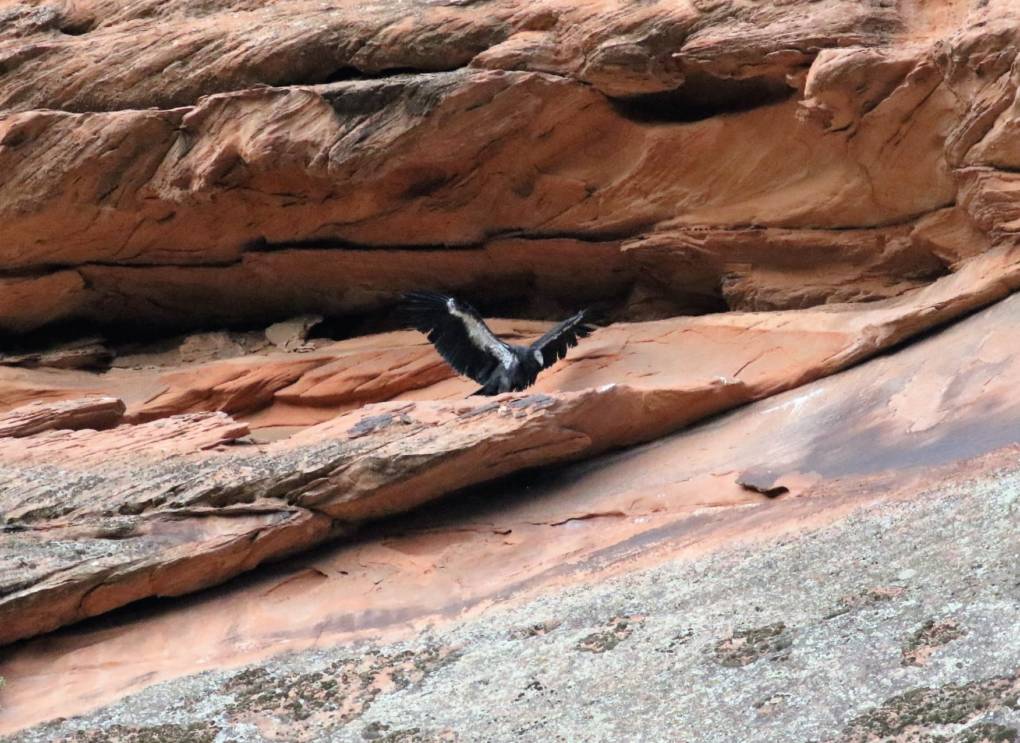
"caption": "The 4½-month-old Condor after leaving its nest cave at Zion National Park, Utah. ",
"description": null,
"title": "68808685_2708452759185680_5212738361898303488_o",
"credit": "National Park Service",
"status": "inherit",
"isLoading": false,
"fetchFailed": false
}
},
"audioPlayerReducer": {
"postId": "stream_live",
"isPaused": true,
"isPlaying": false,
"pfsActive": false,
"pledgeModalIsOpen": true,
"playerDrawerIsOpen": false,
"liveAudioPlayStartedAt": 0,
"liveAudioPlayContext": ""
},
"authorsReducer": {
"byline_science_1950560": {
"type": "authors",
"id": "byline_science_1950560",
"meta": {
"override": true
},
"slug": "byline_science_1950560",
"name": "Genevieve Valentine \u003c/br>NPR\u003cbr>",
"isLoading": false
},
"byline_science_1949619": {
"type": "authors",
"id": "byline_science_1949619",
"meta": {
"override": true
},
"slug": "byline_science_1949619",
"name": "Scott Simon\u003c/br>Emma Bowman\u003c/br>NPR",
"isLoading": false
},
"byline_science_1948418": {
"type": "authors",
"id": "byline_science_1948418",
"meta": {
"override": true
},
"slug": "byline_science_1948418",
"name": "Kevin Stark, Jon Brooks and a Bunch of People Who Need to Get Back to Work ",
"isLoading": false
},
"byline_science_1948767": {
"type": "authors",
"id": "byline_science_1948767",
"meta": {
"override": true
},
"slug": "byline_science_1948767",
"name": "Judy Fahys \u003c/br>InsideClimate News\u003cbr>",
"isLoading": false
},
"byline_science_1948659": {
"type": "authors",
"id": "byline_science_1948659",
"meta": {
"override": true
},
"slug": "byline_science_1948659",
"name": "Bob Berwyn \u003cbr/>InsideClimate News \u003cbr>",
"isLoading": false
},
"byline_science_1948360": {
"type": "authors",
"id": "byline_science_1948360",
"meta": {
"override": true
},
"slug": "byline_science_1948360",
"name": "Morgan Smith \u003cbr/>Associated Press\u003cbr>",
"isLoading": false
},
"laurensommer": {
"type": "authors",
"id": "239",
"meta": {
"index": "authors_1716337520",
"id": "239",
"found": true
},
"name": "Lauren Sommer",
"firstName": "Lauren",
"lastName": "Sommer",
"slug": "laurensommer",
"email": "lsommer@kqed.org",
"display_author_email": false,
"staff_mastheads": [],
"title": "KQED Contributor",
"bio": "Lauren is a radio reporter formerly covering environment, water, and energy for KQED Science. As part of her day job, she has scaled Sierra Nevada peaks, run from charging elephant seals, and desperately tried to get her sea legs - all in pursuit of good radio. Her work has appeared on Marketplace, Living on Earth, Science Friday and NPR's Morning Edition and All Things Considered. You can find her on Twitter at \u003ca href=\"https://twitter.com/lesommer\">@lesommer\u003c/a>.",
"avatar": "https://secure.gravatar.com/avatar/33aa3772bb86c6ad45b8aca6a238bbdf?s=600&d=blank&r=g",
"twitter": null,
"facebook": null,
"instagram": null,
"linkedin": null,
"sites": [
{
"site": "news",
"roles": [
"author"
]
},
{
"site": "science",
"roles": [
"editor",
"manage_content_types",
"manage_taxonomies"
]
},
{
"site": "quest",
"roles": [
"editor"
]
}
],
"headData": {
"title": "Lauren Sommer | KQED",
"description": "KQED Contributor",
"ogImgSrc": "https://secure.gravatar.com/avatar/33aa3772bb86c6ad45b8aca6a238bbdf?s=600&d=blank&r=g",
"twImgSrc": "https://secure.gravatar.com/avatar/33aa3772bb86c6ad45b8aca6a238bbdf?s=600&d=blank&r=g"
},
"isLoading": false,
"link": "/author/laurensommer"
},
"jennyoh": {
"type": "authors",
"id": "2100",
"meta": {
"index": "authors_1716337520",
"id": "2100",
"found": true
},
"name": "Jenny Oh",
"firstName": "Jenny",
"lastName": "Oh",
"slug": "jennyoh",
"email": "joh@kqed.org",
"display_author_email": false,
"staff_mastheads": [],
"title": "Audience Engagement Producer, Deep Look",
"bio": "Jenny is an Emmy Award-winning producer and is currently the Audience Engagement Producer for KQED Science's \u003cem>Deep Look\u003c/em> online video series. She was also a long-time contributor to Bay Area Bites, KQED's popular food blog. Jenny graduated with honors from New York University’s Tisch School of the Arts Film and Television program and has worked for WNET/PBS, The Learning Channel, Sundance Channel, HBO and the University of California.",
"avatar": "https://secure.gravatar.com/avatar/7ddda0ed657e46dbe66083f569967752?s=600&d=mm&r=g",
"twitter": null,
"facebook": null,
"instagram": null,
"linkedin": null,
"sites": [
{
"site": "arts",
"roles": []
},
{
"site": "pop",
"roles": []
},
{
"site": "about",
"roles": []
},
{
"site": "bayareabites",
"roles": []
},
{
"site": "science",
"roles": []
},
{
"site": "education",
"roles": []
},
{
"site": "quest",
"roles": []
},
{
"site": "food",
"roles": []
}
],
"headData": {
"title": "Jenny Oh | KQED",
"description": "Audience Engagement Producer, Deep Look",
"ogImgSrc": "https://secure.gravatar.com/avatar/7ddda0ed657e46dbe66083f569967752?s=600&d=mm&r=g",
"twImgSrc": "https://secure.gravatar.com/avatar/7ddda0ed657e46dbe66083f569967752?s=600&d=mm&r=g"
},
"isLoading": false,
"link": "/author/jennyoh"
},
"gabriela-quiros": {
"type": "authors",
"id": "6186",
"meta": {
"index": "authors_1716337520",
"id": "6186",
"found": true
},
"name": "Gabriela Quirós",
"firstName": "Gabriela",
"lastName": "Quirós",
"slug": "gabriela-quiros",
"email": "gquiros@kqed.org",
"display_author_email": false,
"staff_mastheads": [],
"title": "Supervising Producer",
"bio": "Gabriela Quirós is the \u003cstrong>supervising producer for KQED's web science video series \u003ca href=\"https://www.kqed.org/deeplook\">Deep Look\u003c/a>\u003c/strong>. She joined KQED as a TV producer when its science series QUEST started in 2006 and has covered everything from Alzheimer’s to bee die-offs to dark energy.\r\n\r\nShe won a 2022 AAAS Kavli Science Journalism Award with a team of her Deep Look colleagues. She has won six regional Emmys as a video producer and has shared eight more as the coordinating producer of Deep Look. The episode she produced about \u003ca href=\"https://www.kqed.org/science/728086/how-mosquitoes-use-six-needles-to-suck-your-blood\">How Mosquitoes Use Six Needles to Suck Your Blood\u003c/a> won a Webby \"People's Voice\" award. She has also earned awards from the Jackson Hole Wildlife Film Festival, the Society of Professional Journalists and the Society of Environmental Journalists.\r\n\r\nHer videos for KQED have also aired on NOVA scienceNOW and the PBS NewsHour, and appeared on NPR.org.\r\n\r\nAs an independent filmmaker, she produced and directed the hour-long documentary \u003ca href=\"http://lpbp.org/beautiful-sin-qa-with-producer-gabriela-quiros/\">\u003cem>Beautiful Sin\u003c/em>\u003c/a>, about the surprising story of how Costa Rica became the only country in the world to outlaw in vitro fertilization. The film aired in 2015 on public television stations throughout the U.S., and in Costa Rica.\r\n\r\nShe started her journalism career as a newspaper reporter in Costa Rica, where she grew up. She won the National Science Journalism Award there for a series of articles about organic agriculture, and developed a life-long interest in health reporting. She moved to the Bay Area in 1996 to study documentary filmmaking at the University of California, Berkeley, where she received master’s degrees in journalism and Latin American studies.",
"avatar": "https://secure.gravatar.com/avatar/6d82c20152affd1b434c31a904c40809?s=600&d=blank&r=g",
"twitter": "gabrielaquirosr",
"facebook": null,
"instagram": null,
"linkedin": null,
"sites": [
{
"site": "science",
"roles": []
},
{
"site": "quest",
"roles": [
"ef_view_calendar",
"ef_view_story_budget"
]
}
],
"headData": {
"title": "Gabriela Quirós | KQED",
"description": "Supervising Producer",
"ogImgSrc": "https://secure.gravatar.com/avatar/6d82c20152affd1b434c31a904c40809?s=600&d=blank&r=g",
"twImgSrc": "https://secure.gravatar.com/avatar/6d82c20152affd1b434c31a904c40809?s=600&d=blank&r=g"
},
"isLoading": false,
"link": "/author/gabriela-quiros"
},
"ekennerson": {
"type": "authors",
"id": "11090",
"meta": {
"index": "authors_1716337520",
"id": "11090",
"found": true
},
"name": "Elliott Kennerson",
"firstName": "Elliott",
"lastName": "Kennerson",
"slug": "ekennerson",
"email": "ekennerson@kqed.org",
"display_author_email": false,
"staff_mastheads": [],
"title": null,
"bio": "Elliott Kennerson joined KQED Science as a Digital Media Producer in 2015. Before joining KQED, he produced the Kickstarter-funded series “Animal R&R” for KPBS in San Diego. Elliott received his M.F.A. training in wildlife documentary at Montana State in Bozeman and holds a B.A. from Yale in archaeology. In his former life as an actor, he was an associate artist with LightBox Theater Company in New York. Elliott is the recipient of a 2017 Regional Emmy for his work as a producer on “Deep Look.\"",
"avatar": "https://secure.gravatar.com/avatar/90ebfa58055409e54c8f8a4c120ecf91?s=600&d=blank&r=g",
"twitter": "edorank",
"facebook": null,
"instagram": null,
"linkedin": null,
"sites": [
{
"site": "science",
"roles": [
"editor"
]
}
],
"headData": {
"title": "Elliott Kennerson | KQED",
"description": null,
"ogImgSrc": "https://secure.gravatar.com/avatar/90ebfa58055409e54c8f8a4c120ecf91?s=600&d=blank&r=g",
"twImgSrc": "https://secure.gravatar.com/avatar/90ebfa58055409e54c8f8a4c120ecf91?s=600&d=blank&r=g"
},
"isLoading": false,
"link": "/author/ekennerson"
},
"parcuni": {
"type": "authors",
"id": "11368",
"meta": {
"index": "authors_1716337520",
"id": "11368",
"found": true
},
"name": "Peter Arcuni",
"firstName": "Peter",
"lastName": "Arcuni",
"slug": "parcuni",
"email": "parcuni@KQED.org",
"display_author_email": false,
"staff_mastheads": [
"science"
],
"title": "Reporter",
"bio": "Peter reports radio and online stories for \u003cem>KQED Science\u003c/em>. His work has also appeared on the \u003cem>The California Report\u003c/em> morning show and \u003cem>KQED News\u003c/em>. His production credits include \u003cem>The California Report, The California Report Magazine\u003c/em> and KQED's local news podcast \u003cem>The Bay\u003c/em>. Other credits include NPR's \u003cem>All Things Considered\u003c/em>, WNYC's \u003cem>Science Friday\u003c/em>, WBUR's \u003cem>Here & Now\u003c/em>, WIRED and SFGate. Peter graduated from Brown University and earned a master's degree in journalism from Stanford. He's covered everything from homelessness to wildfires, health, the environment, arts and Thanksgiving in San Quentin prison. In other lives, he played rock n roll music and studied neuroscience. You can email him at: parcuni@kqed.org",
"avatar": "https://secure.gravatar.com/avatar/d5032f6f27199d478af34ad2e1d98732?s=600&d=blank&r=g",
"twitter": "peterarcuni",
"facebook": null,
"instagram": null,
"linkedin": null,
"sites": [
{
"site": "news",
"roles": [
"editor"
]
},
{
"site": "science",
"roles": [
"editor"
]
}
],
"headData": {
"title": "Peter Arcuni | KQED",
"description": "Reporter",
"ogImgSrc": "https://secure.gravatar.com/avatar/d5032f6f27199d478af34ad2e1d98732?s=600&d=blank&r=g",
"twImgSrc": "https://secure.gravatar.com/avatar/d5032f6f27199d478af34ad2e1d98732?s=600&d=blank&r=g"
},
"isLoading": false,
"link": "/author/parcuni"
}
},
"pagesReducer": {
"science_category_animals": {
"type": "terms",
"id": "science_2874",
"meta": {
"index": "terms_1716263798",
"site": "science",
"id": "2874",
"score": 12.286945
},
"featImg": null,
"name": "Animals",
"description": null,
"taxonomy": "category",
"headData": {
"twImgId": null,
"twTitle": null,
"ogTitle": null,
"ogImgId": null,
"twDescription": null,
"description": null,
"title": "Animals Archives | KQED Science",
"ogDescription": null
},
"ttid": 2874,
"slug": "animals",
"isLoading": false,
"title": "Animals",
"pageMeta": {
"site": "science",
"WpPageTemplate": "page-topic-editorial",
"currentPage": 17
},
"blocks": [
{
"blockName": "kqed/post-list",
"attrs": {
"layout": "cardArticle2",
"query": "posts/science?category=animals",
"seeMore": false,
"paginated": true,
"page": 17
}
},
{
"blockName": "kqed/ad"
}
]
}
},
"pfsSessionReducer": {},
"postsReducer": {
"stream_live": {
"type": "live",
"id": "stream_live",
"audioUrl": "https://streams.kqed.org/kqedradio",
"title": "Live Stream",
"excerpt": "Live Stream information currently unavailable.",
"link": "/radio",
"featImg": "",
"label": {
"name": "KQED Live",
"link": "/"
}
},
"stream_kqedNewscast": {
"type": "posts",
"id": "stream_kqedNewscast",
"audioUrl": "https://www.kqed.org/.stream/anon/radio/RDnews/newscast.mp3?_=1",
"title": "KQED Newscast",
"featImg": "",
"label": {
"name": "88.5 FM",
"link": "/"
}
},
"science_1950117": {
"type": "posts",
"id": "science_1950117",
"meta": {
"index": "posts_1716263798",
"site": "science",
"id": "1950117",
"score": null,
"sort": [
1572962753000
]
},
"guestAuthors": [],
"slug": "tarantulas-take-hooking-up-to-the-next-level",
"title": "Tarantulas Take Hooking Up to the Next Level",
"publishDate": 1572962753,
"format": "video",
"headTitle": "Tarantulas Take Hooking Up to the Next Level | KQED",
"labelTerm": {
"term": 1935,
"site": "science"
},
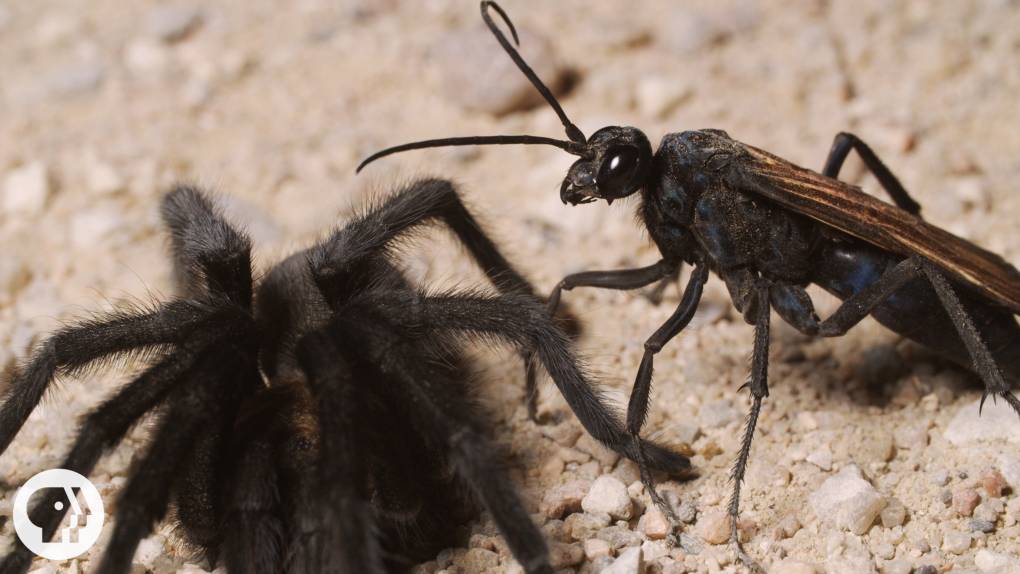
"content": "\u003cp>[dl_subscribe]Why did the tarantula cross the road? It may sound like the setup of a joke, but it’s a very real question to anyone hoping to catch a glimpse of the annual tarantula migration in southeastern Colorado. Every September, a generation of newly mature male tarantulas leave their underground homes to wander the landscape south of La Junta to look for mates.\u003c/p>\n\u003cp>The local roads, some paved and some dirt, traverse a wide expanse of undeveloped prairie, the ideal place for an unobstructed view of tarantulas on the march. Town residents have even coined the term “tarantula tourism” to describe the annual swarm – of visitors. This year, they came from as far away as Texas and Michigan.\u003c/p>\n\u003cp>The tarantulas, which usually fit in the palm of your hand, are not aggressive, and rarely bite unless provoked. The bite itself is no more painful than a papercut.\u003c/p>\n\u003cp>“A decade ago, I started making a dedicated trip,” said Whitney Cranshaw, an entomology professor at Colorado State in Fort Collins. Cranshaw collects a few of the spiders every year to\u003cbr>\nuse in his freshman classes. “It’s always a hit,” he added.\u003c/p>\n\u003cp>The lucky males will find females, who remain near their dens the whole lives, and possibly mate, fulfilling the evolutionary goal of passing on their genes. But this so‐called “migration” is\u003cbr>\na one‐way trip.\u003c/p>\n\u003cfigure id=\"attachment_1950589\" class=\"wp-caption alignnone\" style=\"max-width: 800px\">\u003cimg loading=\"lazy\" decoding=\"async\" class=\"size-medium wp-image-1950589\" src=\"https://ww2.kqed.org/science/wp-content/uploads/sites/35/2019/11/DL619_tibial_hook-800x450.jpg\" alt=\"Newly-mature Texas brown tarantulas (Aphonopelma hentzi) cross a rural road in southeastern Colorado, in search of potential mates.\" width=\"800\" height=\"450\" srcset=\"https://cdn.kqed.org/wp-content/uploads/sites/35/2019/11/DL619_tibial_hook-800x450.jpg 800w, https://cdn.kqed.org/wp-content/uploads/sites/35/2019/11/DL619_tibial_hook-160x90.jpg 160w, https://cdn.kqed.org/wp-content/uploads/sites/35/2019/11/DL619_tibial_hook-768x432.jpg 768w, https://cdn.kqed.org/wp-content/uploads/sites/35/2019/11/DL619_tibial_hook-1020x574.jpg 1020w, https://cdn.kqed.org/wp-content/uploads/sites/35/2019/11/DL619_tibial_hook-1200x675.jpg 1200w, https://cdn.kqed.org/wp-content/uploads/sites/35/2019/11/DL619_tibial_hook-1920x1080.jpg 1920w\" sizes=\"auto, (max-width: 800px) 100vw, 800px\">\u003cfigcaption class=\"wp-caption-text\">Newly-mature Texas brown tarantulas (Aphonopelma hentzi) cross a rural road in southeastern Colorado, in search of potential mates. \u003ccite>(Kevin Collins)\u003c/cite>\u003c/figcaption>\u003c/figure>\n\u003cp>“The lifespan of a male, once they reach adulthood, is pretty short,” said Brent Hendrixson, an arachnologist from Millsaps College in Jackson, Mississippi, who researches the spiders.\u003cbr>\nAlmost all will be dead by the end of November.\u003c/p>\n\u003cp>[ad fullwidth]\u003c/p>\n\u003cp>“They only have a few months left until it starts getting cold down there. Winter temperatures, exposure, or predators eventually wear them out,” he said.\u003c/p>\n\u003cp>Among the many risks for these itinerant tarantulas, besides running out of time and becoming roadkill, are the local tarantula hawks. The two‐inch long, blue‐and‐gold wasps pounce on the unsuspecting arachnid travelers, hit them with a paralyzing sting, then drag them off to their lairs. Once there, the female wasp lays an egg on the spider that eventually hatches into a larva.\u003c/p>\n\u003cfigure id=\"attachment_1950591\" class=\"wp-caption alignnone\" style=\"max-width: 800px\">\u003cimg loading=\"lazy\" decoding=\"async\" class=\"size-medium wp-image-1950591\" src=\"https://ww2.kqed.org/science/wp-content/uploads/sites/35/2019/11/DL619_tarantula_hawk-800x450.jpg\" alt=\"This tarantula has been stung and paralyzed by one of its natural predators - the Tarantula hawk wasp (Pepsis sp.).\" width=\"800\" height=\"450\" srcset=\"https://cdn.kqed.org/wp-content/uploads/sites/35/2019/11/DL619_tarantula_hawk-800x450.jpg 800w, https://cdn.kqed.org/wp-content/uploads/sites/35/2019/11/DL619_tarantula_hawk-160x90.jpg 160w, https://cdn.kqed.org/wp-content/uploads/sites/35/2019/11/DL619_tarantula_hawk-768x432.jpg 768w, https://cdn.kqed.org/wp-content/uploads/sites/35/2019/11/DL619_tarantula_hawk-1020x574.jpg 1020w, https://cdn.kqed.org/wp-content/uploads/sites/35/2019/11/DL619_tarantula_hawk-1200x675.jpg 1200w, https://cdn.kqed.org/wp-content/uploads/sites/35/2019/11/DL619_tarantula_hawk-1920x1080.jpg 1920w\" sizes=\"auto, (max-width: 800px) 100vw, 800px\">\u003cfigcaption class=\"wp-caption-text\">This tarantula has been stung and paralyzed by one of its natural predators – the Tarantula hawk wasp (Pepsis sp.). \u003ccite>(Kevin Collins)\u003c/cite>\u003c/figcaption>\u003c/figure>\n\u003cp>The larva burrows inside him to feast and grow before emerging from his body, Alien‐like, as an adult.\u003c/p>\n\u003cp>Even though the tarantulas seem to be going in a straight line, their actual path is not so linear. “There’s no rhyme or reason to the direction,” said Hendrixson, “They’re moving around randomly in their environment and coming across some sort of cue – probably silk – on the ground.” Though the final trigger is not entirely understood, males tend to court once they\u003cbr>\ncome within a few feet of a female’s den.\u003c/p>\n\u003cp>If a male does survive long enough to find a den, he courts the female singing‐telegram style, first “knocking” at the entrance by tapping the ground with his front mouth parts, called pedipalps. He must rely on vibration to communicate his intentions, since tarantulas are mostly blind. If the larger and more dangerous female comes out to investigate, they face off at the\u003cbr>\nden entrance. She may reply with drumming of her own to indicate that she’s receptive ‐‐ or she might try to eat him.\u003c/p>\n\u003cp>But he’s come prepared. When male tarantulas reach maturity, right before they set out on their quest, they develop a special set of clasps on their front legs called “tibial hooks.” Tibial hooks serve a single purpose: to fasten underneath the female’s fangs during courtship, allowing him to keep danger at arm’s length, so to speak.\u003c/p>\n\u003cfigure id=\"attachment_1950594\" class=\"wp-caption alignnone\" style=\"max-width: 800px\">\u003cimg loading=\"lazy\" decoding=\"async\" class=\"size-medium wp-image-1950594\" src=\"https://ww2.kqed.org/science/wp-content/uploads/sites/35/2019/11/DL619_tibial_hook_XCU-800x450.jpg\" alt=\"Mature male tarantulas develop a special set of clasps on their front legs called “tibial hooks.” Tibial hooks serve a single purpose: to fasten underneath the female’s fangs during courtship.\" width=\"800\" height=\"450\" srcset=\"https://cdn.kqed.org/wp-content/uploads/sites/35/2019/11/DL619_tibial_hook_XCU-800x450.jpg 800w, https://cdn.kqed.org/wp-content/uploads/sites/35/2019/11/DL619_tibial_hook_XCU-160x90.jpg 160w, https://cdn.kqed.org/wp-content/uploads/sites/35/2019/11/DL619_tibial_hook_XCU-768x432.jpg 768w, https://cdn.kqed.org/wp-content/uploads/sites/35/2019/11/DL619_tibial_hook_XCU-1020x574.jpg 1020w, https://cdn.kqed.org/wp-content/uploads/sites/35/2019/11/DL619_tibial_hook_XCU-1200x675.jpg 1200w, https://cdn.kqed.org/wp-content/uploads/sites/35/2019/11/DL619_tibial_hook_XCU-1920x1080.jpg 1920w\" sizes=\"auto, (max-width: 800px) 100vw, 800px\">\u003cfigcaption class=\"wp-caption-text\">Mature male tarantulas develop a special set of clasps on their front legs called “tibial hooks.” Tibial hooks serve a single purpose: to fasten underneath the female’s fangs during courtship. \u003ccite>(Kevin Collins)\u003c/cite>\u003c/figcaption>\u003c/figure>\n\u003cp>With the clasps locked in, he tips her body upright to expose her underbelly before he passes her his sperm. “It’s literally hooking up,” Hendrixson said.\u003c/p>\n\u003cp>Even when the deed is done, she may still think he’s prey, so he breaks the hook‐to‐fang contact and runs for his life.\u003c/p>\n\u003cp>The tarantula migration isn’t limited to this one area of Colorado. The species inhabits a swath of western territory that stretches all the way to Louisiana. In fact, the species is known colloquially as the “Texas brown tarantula,” though its common name varies from place to\u003cbr>\nplace.\u003c/p>\n\u003cp>Most males never even find a female den in the short time they have, according to Hendrixson. As the season draws to a close, the tarantulas run out of gas. “By early November, they’re pretty ratty looking,” said Hendrixson, who’s observed dozens of migrations in his career. “They literally wear themselves to pieces by the end of the breeding season.”\u003c/p>\n\u003cp>\u003c/p>\n\u003cp>The spiders Cranshaw collects fare slightly better. “The mature males I collect typically die by December, which is longer than they survive outdoors,” he said. He gives them to students to care for as pets. “It helps generate healthy discussions about spiders.”\u003cbr>\n.\u003c/p>\n\n",
"blocks": [],
"excerpt": "Every fall, male tarantulas leave home for good with one thing on their minds: sex. But before these spiders can make the ultimate connection, they have to survive the perils of the open road...which include their potential mates.",
"status": "publish",
"parent": 0,
"modified": 1738964966,
"stats": {
"hasAudio": false,
"hasVideo": false,
"hasChartOrMap": false,
"iframeSrcs": [],
"hasGoogleForm": false,
"hasGallery": false,
"hasHearkenModule": false,
"hasPolis": false,
"paragraphCount": 19,
"wordCount": 939
},
"headData": {
"title": "Tarantulas Take Hooking Up to the Next Level | KQED",
"description": "Every fall, male tarantulas leave home for good with one thing on their minds: sex. But before these spiders can make the ultimate connection, they have to survive the perils of the open road...which include their potential mates.",
"ogTitle": "",
"ogDescription": "",
"ogImgId": "",
"twTitle": "",
"twDescription": "",
"twImgId": "",
"schema": {
"@context": "https://schema.org",
"@type": "Article",
"headline": "Tarantulas Take Hooking Up to the Next Level",
"datePublished": "2019-11-05T06:05:53-08:00",
"dateModified": "2025-02-07T13:49:26-08:00",
"image": "https://cdn.kqed.org/wp-content/uploads/2020/02/KQED-OG-Image@1x.png"
}
},
"videoEmbed": "https://www.youtube.com/watch?v=5gOKd4cqFaY",
"pbsMediaId": "3051954882",
"sticky": false,
"excludeFromSiteSearch": "Include",
"articleAge": "0",
"path": "/science/1950117/tarantulas-take-hooking-up-to-the-next-level",
"audioTrackLength": null,
"parsedContent": [
{
"type": "contentString",
"content": "\u003cdiv class=\"post-body\">\u003cp>\u003cp>\u003c/p>\u003c/div>",
"attributes": {
"named": {},
"numeric": []
}
},
{
"type": "component",
"content": "",
"name": "dl_subscribe",
"attributes": {
"named": {
"label": ""
},
"numeric": []
}
},
{
"type": "contentString",
"content": "\u003cdiv class=\"post-body\">\u003cp>Why did the tarantula cross the road? It may sound like the setup of a joke, but it’s a very real question to anyone hoping to catch a glimpse of the annual tarantula migration in southeastern Colorado. Every September, a generation of newly mature male tarantulas leave their underground homes to wander the landscape south of La Junta to look for mates.\u003c/p>\n\u003cp>The local roads, some paved and some dirt, traverse a wide expanse of undeveloped prairie, the ideal place for an unobstructed view of tarantulas on the march. Town residents have even coined the term “tarantula tourism” to describe the annual swarm – of visitors. This year, they came from as far away as Texas and Michigan.\u003c/p>\n\u003cp>The tarantulas, which usually fit in the palm of your hand, are not aggressive, and rarely bite unless provoked. The bite itself is no more painful than a papercut.\u003c/p>\n\u003cp>“A decade ago, I started making a dedicated trip,” said Whitney Cranshaw, an entomology professor at Colorado State in Fort Collins. Cranshaw collects a few of the spiders every year to\u003cbr>\nuse in his freshman classes. “It’s always a hit,” he added.\u003c/p>\n\u003cp>The lucky males will find females, who remain near their dens the whole lives, and possibly mate, fulfilling the evolutionary goal of passing on their genes. But this so‐called “migration” is\u003cbr>\na one‐way trip.\u003c/p>\n\u003cfigure id=\"attachment_1950589\" class=\"wp-caption alignnone\" style=\"max-width: 800px\">\u003cimg loading=\"lazy\" decoding=\"async\" class=\"size-medium wp-image-1950589\" src=\"https://ww2.kqed.org/science/wp-content/uploads/sites/35/2019/11/DL619_tibial_hook-800x450.jpg\" alt=\"Newly-mature Texas brown tarantulas (Aphonopelma hentzi) cross a rural road in southeastern Colorado, in search of potential mates.\" width=\"800\" height=\"450\" srcset=\"https://cdn.kqed.org/wp-content/uploads/sites/35/2019/11/DL619_tibial_hook-800x450.jpg 800w, https://cdn.kqed.org/wp-content/uploads/sites/35/2019/11/DL619_tibial_hook-160x90.jpg 160w, https://cdn.kqed.org/wp-content/uploads/sites/35/2019/11/DL619_tibial_hook-768x432.jpg 768w, https://cdn.kqed.org/wp-content/uploads/sites/35/2019/11/DL619_tibial_hook-1020x574.jpg 1020w, https://cdn.kqed.org/wp-content/uploads/sites/35/2019/11/DL619_tibial_hook-1200x675.jpg 1200w, https://cdn.kqed.org/wp-content/uploads/sites/35/2019/11/DL619_tibial_hook-1920x1080.jpg 1920w\" sizes=\"auto, (max-width: 800px) 100vw, 800px\">\u003cfigcaption class=\"wp-caption-text\">Newly-mature Texas brown tarantulas (Aphonopelma hentzi) cross a rural road in southeastern Colorado, in search of potential mates. \u003ccite>(Kevin Collins)\u003c/cite>\u003c/figcaption>\u003c/figure>\n\u003cp>“The lifespan of a male, once they reach adulthood, is pretty short,” said Brent Hendrixson, an arachnologist from Millsaps College in Jackson, Mississippi, who researches the spiders.\u003cbr>\nAlmost all will be dead by the end of November.\u003c/p>\n\u003cp>\u003c/p>\u003c/div>",
"attributes": {
"named": {},
"numeric": []
}
},
{
"type": "component",
"content": "",
"name": "ad",
"attributes": {
"named": {
"label": "fullwidth"
},
"numeric": [
"fullwidth"
]
}
},
{
"type": "contentString",
"content": "\u003cdiv class=\"post-body\">\u003cp>\u003c/p>\n\u003cp>“They only have a few months left until it starts getting cold down there. Winter temperatures, exposure, or predators eventually wear them out,” he said.\u003c/p>\n\u003cp>Among the many risks for these itinerant tarantulas, besides running out of time and becoming roadkill, are the local tarantula hawks. The two‐inch long, blue‐and‐gold wasps pounce on the unsuspecting arachnid travelers, hit them with a paralyzing sting, then drag them off to their lairs. Once there, the female wasp lays an egg on the spider that eventually hatches into a larva.\u003c/p>\n\u003cfigure id=\"attachment_1950591\" class=\"wp-caption alignnone\" style=\"max-width: 800px\">\u003cimg loading=\"lazy\" decoding=\"async\" class=\"size-medium wp-image-1950591\" src=\"https://ww2.kqed.org/science/wp-content/uploads/sites/35/2019/11/DL619_tarantula_hawk-800x450.jpg\" alt=\"This tarantula has been stung and paralyzed by one of its natural predators - the Tarantula hawk wasp (Pepsis sp.).\" width=\"800\" height=\"450\" srcset=\"https://cdn.kqed.org/wp-content/uploads/sites/35/2019/11/DL619_tarantula_hawk-800x450.jpg 800w, https://cdn.kqed.org/wp-content/uploads/sites/35/2019/11/DL619_tarantula_hawk-160x90.jpg 160w, https://cdn.kqed.org/wp-content/uploads/sites/35/2019/11/DL619_tarantula_hawk-768x432.jpg 768w, https://cdn.kqed.org/wp-content/uploads/sites/35/2019/11/DL619_tarantula_hawk-1020x574.jpg 1020w, https://cdn.kqed.org/wp-content/uploads/sites/35/2019/11/DL619_tarantula_hawk-1200x675.jpg 1200w, https://cdn.kqed.org/wp-content/uploads/sites/35/2019/11/DL619_tarantula_hawk-1920x1080.jpg 1920w\" sizes=\"auto, (max-width: 800px) 100vw, 800px\">\u003cfigcaption class=\"wp-caption-text\">This tarantula has been stung and paralyzed by one of its natural predators – the Tarantula hawk wasp (Pepsis sp.). \u003ccite>(Kevin Collins)\u003c/cite>\u003c/figcaption>\u003c/figure>\n\u003cp>The larva burrows inside him to feast and grow before emerging from his body, Alien‐like, as an adult.\u003c/p>\n\u003cp>Even though the tarantulas seem to be going in a straight line, their actual path is not so linear. “There’s no rhyme or reason to the direction,” said Hendrixson, “They’re moving around randomly in their environment and coming across some sort of cue – probably silk – on the ground.” Though the final trigger is not entirely understood, males tend to court once they\u003cbr>\ncome within a few feet of a female’s den.\u003c/p>\n\u003cp>If a male does survive long enough to find a den, he courts the female singing‐telegram style, first “knocking” at the entrance by tapping the ground with his front mouth parts, called pedipalps. He must rely on vibration to communicate his intentions, since tarantulas are mostly blind. If the larger and more dangerous female comes out to investigate, they face off at the\u003cbr>\nden entrance. She may reply with drumming of her own to indicate that she’s receptive ‐‐ or she might try to eat him.\u003c/p>\n\u003cp>But he’s come prepared. When male tarantulas reach maturity, right before they set out on their quest, they develop a special set of clasps on their front legs called “tibial hooks.” Tibial hooks serve a single purpose: to fasten underneath the female’s fangs during courtship, allowing him to keep danger at arm’s length, so to speak.\u003c/p>\n\u003cfigure id=\"attachment_1950594\" class=\"wp-caption alignnone\" style=\"max-width: 800px\">\u003cimg loading=\"lazy\" decoding=\"async\" class=\"size-medium wp-image-1950594\" src=\"https://ww2.kqed.org/science/wp-content/uploads/sites/35/2019/11/DL619_tibial_hook_XCU-800x450.jpg\" alt=\"Mature male tarantulas develop a special set of clasps on their front legs called “tibial hooks.” Tibial hooks serve a single purpose: to fasten underneath the female’s fangs during courtship.\" width=\"800\" height=\"450\" srcset=\"https://cdn.kqed.org/wp-content/uploads/sites/35/2019/11/DL619_tibial_hook_XCU-800x450.jpg 800w, https://cdn.kqed.org/wp-content/uploads/sites/35/2019/11/DL619_tibial_hook_XCU-160x90.jpg 160w, https://cdn.kqed.org/wp-content/uploads/sites/35/2019/11/DL619_tibial_hook_XCU-768x432.jpg 768w, https://cdn.kqed.org/wp-content/uploads/sites/35/2019/11/DL619_tibial_hook_XCU-1020x574.jpg 1020w, https://cdn.kqed.org/wp-content/uploads/sites/35/2019/11/DL619_tibial_hook_XCU-1200x675.jpg 1200w, https://cdn.kqed.org/wp-content/uploads/sites/35/2019/11/DL619_tibial_hook_XCU-1920x1080.jpg 1920w\" sizes=\"auto, (max-width: 800px) 100vw, 800px\">\u003cfigcaption class=\"wp-caption-text\">Mature male tarantulas develop a special set of clasps on their front legs called “tibial hooks.” Tibial hooks serve a single purpose: to fasten underneath the female’s fangs during courtship. \u003ccite>(Kevin Collins)\u003c/cite>\u003c/figcaption>\u003c/figure>\n\u003cp>With the clasps locked in, he tips her body upright to expose her underbelly before he passes her his sperm. “It’s literally hooking up,” Hendrixson said.\u003c/p>\n\u003cp>Even when the deed is done, she may still think he’s prey, so he breaks the hook‐to‐fang contact and runs for his life.\u003c/p>\n\u003cp>The tarantula migration isn’t limited to this one area of Colorado. The species inhabits a swath of western territory that stretches all the way to Louisiana. In fact, the species is known colloquially as the “Texas brown tarantula,” though its common name varies from place to\u003cbr>\nplace.\u003c/p>\n\u003cp>Most males never even find a female den in the short time they have, according to Hendrixson. As the season draws to a close, the tarantulas run out of gas. “By early November, they’re pretty ratty looking,” said Hendrixson, who’s observed dozens of migrations in his career. “They literally wear themselves to pieces by the end of the breeding season.”\u003c/p>\n\u003cp>\u003c/p>\n\u003cp>The spiders Cranshaw collects fare slightly better. “The mature males I collect typically die by December, which is longer than they survive outdoors,” he said. He gives them to students to care for as pets. “It helps generate healthy discussions about spiders.”\u003cbr>\n.\u003c/p>\n\n\u003c/div>\u003c/p>",
"attributes": {
"named": {},
"numeric": []
}
}
],
"link": "/science/1950117/tarantulas-take-hooking-up-to-the-next-level",
"authors": [
"11090"
],
"series": [
"science_1935"
],
"categories": [
"science_2874",
"science_40",
"science_86"
],
"tags": [
"science_3370"
],
"featImg": "science_1994159",
"label": "science_1935"
},
"science_1950560": {
"type": "posts",
"id": "science_1950560",
"meta": {
"index": "posts_1716263798",
"site": "science",
"id": "1950560",
"score": null,
"sort": [
1572628032000
]
},
"parent": 0,
"labelTerm": {},
"blocks": [],
"publishDate": 1572628032,
"format": "standard",
"title": "‘On The Backs Of Tortoises’ Details the Challenge of Conservation Amid Ecological Crisis",
"headTitle": "‘On The Backs Of Tortoises’ Details the Challenge of Conservation Amid Ecological Crisis | KQED",
"content": "\u003cp>One of the longest-running jokes in \u003cem>The Good Place \u003c/em>is about almond milk.\u003c/p>\n\u003cp>After the big twist in the show’s first season, moral philosopher Chidi Anagonye agonized about being condemned to The Bad Place, and decided early on what had tipped the scales: “I used almond milk in my coffee, even though I knew about the negative environmental impact.” For ages, it’s a running joke that such a particular infraction could be the thing that condemned him. But eventually, they get a look at the judgment system and realize he was right all along: Every decision has consequences, and nothing is decided in a vacuum.\u003c/p>\n\u003cp>It’s impossible not to think of Chidi and his many philosophical thought-exercises-slash-inescapable-moral-quagmires while reading \u003cem>On the Backs of Tortoises.\u003c/em> Nominally an environmental and social history of the Galápagos Islands, Prof. Elizabeth Hennessy lays bare the many intertwined issues that confront us as we attempt conservation efforts in complex situations, while faced with a sweeping ecological crisis.\u003c/p>\n\u003cp>The tortoises of the Galápagos are “keystone species and ecosystem engineers,” and since sailors first began using the islands in 1535, they have been the most obvious barometer of the effect of people on an ecosystem. (Hennessy notes grimly that “three of the fifteen species” that originally populated the islands “exist only as historical records.”)\u003c/p>\n\u003cp>Using tortoises as a marker, Hennessy traces the various ways the islands — and nature itself — has been framed, both by opportunists and by conservationists. By turns, tortoises are food or natural treasure; they must be carefully sheltered or made celebrities for their own good. The islands spend time as a prison colony, promised frontier for settlers, American military base, and national park with a controversial tourist industry. The thread of natural conservation runs throughout, but even there, the meaning has changed. For Walter Rothschild a century ago, it was collection of specimens. Now, it is attempts to breed tortoises for release into a wilderness that’s being shaped by the introduction of foreign animals and plants. (In 1957, fishers left three goats on Pinta island for food. Their eradication has become a cottage industry, with thousands of kills a month that are left to rot; nothing is easily parsed.)\u003c/p>\n\u003cp>[ad fullwidth]\u003c/p>\n\u003cp>And much like poor Chidi getting frequent moral paralysis in the face of complexities or a looming crisis, moments in \u003cem>On the Backs of Tortoises\u003c/em> can be tough reading, with very few answers for some very pressing questions about culture, politics, and blackberries (an invasive species whose presence on the island is a growing problem).\u003c/p>\n\u003cp>Hennessy is clear about the futility in dreaming of a pristine pre-1535 Galápagos, unpopulated and untouched — “There is no return to Eden,” she says — but the current problems can feel extremely immediate, and the current solutions not particularly hopeful. The tortoises that do hatch at the tourist-friendly breeding center are springing from a very small pool, and are released into islands full of rats that prey on them, goats that eat their food, and people whose needs will only grow. Where do you begin?\u003c/p>\n\u003cp>But this book isn’t meant to offer easy answers. Early on, we read the old story about “turtles all the way down” — the concept that the world is balanced on the back of an ever-expanding stack of helpful \u003cem>Testudinidae\u003c/em>. But as Hennessy points out, such an idea doesn’t actually indicate that there’s a single answer to a difficult question; rather, that stack of tortoises suggests that, if we’re looking for balance, there’s always something more to learn beneath the things we think we know.\u003c/p>\n\u003cp>This book works the same way, beginning with a gripping history and then delving deeper — the world of the Galapagos becomes more complicated as we go, until we understand the underpinnings of any decision (almond milk or otherwise). It’s a book about the ways we need to understand how deeply everything is entangled, and just how far down it goes. The result is a well-researched and thought-provoking read — whether you’re well-versed in the intricacies of conservation or have only just begun to long for a look at the tortoises yourself. \u003cem>On the Backs of Tortoises\u003c/em> is a natural history that asks important questions, and challenges us to think about how best to answer them.\u003c/p>\n\u003cp>\u003c/p>\n\u003cp>\u003cem>Genevieve Valentine’s latest novel is \u003c/em>Icon.\u003c/p>\n\u003cdiv class=\"fullattribution\">Copyright 2019 NPR. To see more, visit https://www.npr.org.\u003cimg decoding=\"async\" src=\"https://www.google-analytics.com/__utm.gif?utmac=UA-5828686-4&utmdt=%27On+The+Backs+Of+Tortoises%27+Challenges+Us+To+Consider+How+Much+Of+Life+Is+Intertwined&utme=8(APIKey)9(MDAxOTAwOTE4MDEyMTkxMDAzNjczZDljZA004)\">\u003c/div>\n\n",
"stats": {
"hasVideo": false,
"hasChartOrMap": false,
"hasAudio": false,
"hasPolis": false,
"wordCount": 781,
"hasGoogleForm": false,
"hasGallery": false,
"hasHearkenModule": false,
"iframeSrcs": [],
"paragraphCount": 12
},
"modified": 1704848178,
"excerpt": "Nominally an environmental and social history of the Galápagos Islands, it lays bare the entangled issues confronting us as we attempt conservation efforts while facing a sweeping ecological crisis.",
"headData": {
"twImgId": "",
"twTitle": "",
"ogTitle": "",
"ogImgId": "",
"twDescription": "",
"description": "Nominally an environmental and social history of the Galápagos Islands, it lays bare the entangled issues confronting us as we attempt conservation efforts while facing a sweeping ecological crisis.",
"title": "‘On The Backs Of Tortoises’ Details the Challenge of Conservation Amid Ecological Crisis | KQED",
"ogDescription": "",
"schema": {
"@context": "https://schema.org",
"@type": "Article",
"headline": "‘On The Backs Of Tortoises’ Details the Challenge of Conservation Amid Ecological Crisis",
"datePublished": "2019-11-01T10:07:12-07:00",
"dateModified": "2024-01-09T16:56:18-08:00",
"image": "https://cdn.kqed.org/wp-content/uploads/2020/02/KQED-OG-Image@1x.png"
}
},
"guestAuthors": [],
"slug": "on-the-backs-of-tortoises-details-the-challenge-of-conservation-amid-ecological-crisis",
"status": "publish",
"nprApiLink": "http://api.npr.org/query?id=774366961&apiKey=MDAxOTAwOTE4MDEyMTkxMDAzNjczZDljZA004",
"nprByline": "Genevieve Valentine \u003c/br>NPR\u003cbr>",
"nprStoryDate": "Fri, 01 Nov 2019 10:47:00 -0400",
"nprLastModifiedDate": "Fri, 01 Nov 2019 10:48:46 -0400",
"sticky": false,
"nprHtmlLink": "https://www.npr.org/2019/11/01/774366961/on-the-backs-of-tortoises-challenges-us-to-consider-how-much-of-life-is-intertwi?ft=nprml&f=774366961",
"nprImageAgency": "Education Images/Universal Image",
"source": "NPR",
"nprStoryId": "774366961",
"nprRetrievedStory": "1",
"nprPubDate": "Fri, 01 Nov 2019 10:48:00 -0400",
"path": "/science/1950560/on-the-backs-of-tortoises-details-the-challenge-of-conservation-amid-ecological-crisis",
"audioTrackLength": null,
"parsedContent": [
{
"type": "contentString",
"content": "\u003cdiv class=\"post-body\">\u003cp>\u003cp>One of the longest-running jokes in \u003cem>The Good Place \u003c/em>is about almond milk.\u003c/p>\n\u003cp>After the big twist in the show’s first season, moral philosopher Chidi Anagonye agonized about being condemned to The Bad Place, and decided early on what had tipped the scales: “I used almond milk in my coffee, even though I knew about the negative environmental impact.” For ages, it’s a running joke that such a particular infraction could be the thing that condemned him. But eventually, they get a look at the judgment system and realize he was right all along: Every decision has consequences, and nothing is decided in a vacuum.\u003c/p>\n\u003cp>It’s impossible not to think of Chidi and his many philosophical thought-exercises-slash-inescapable-moral-quagmires while reading \u003cem>On the Backs of Tortoises.\u003c/em> Nominally an environmental and social history of the Galápagos Islands, Prof. Elizabeth Hennessy lays bare the many intertwined issues that confront us as we attempt conservation efforts in complex situations, while faced with a sweeping ecological crisis.\u003c/p>\n\u003cp>The tortoises of the Galápagos are “keystone species and ecosystem engineers,” and since sailors first began using the islands in 1535, they have been the most obvious barometer of the effect of people on an ecosystem. (Hennessy notes grimly that “three of the fifteen species” that originally populated the islands “exist only as historical records.”)\u003c/p>\n\u003cp>Using tortoises as a marker, Hennessy traces the various ways the islands — and nature itself — has been framed, both by opportunists and by conservationists. By turns, tortoises are food or natural treasure; they must be carefully sheltered or made celebrities for their own good. The islands spend time as a prison colony, promised frontier for settlers, American military base, and national park with a controversial tourist industry. The thread of natural conservation runs throughout, but even there, the meaning has changed. For Walter Rothschild a century ago, it was collection of specimens. Now, it is attempts to breed tortoises for release into a wilderness that’s being shaped by the introduction of foreign animals and plants. (In 1957, fishers left three goats on Pinta island for food. Their eradication has become a cottage industry, with thousands of kills a month that are left to rot; nothing is easily parsed.)\u003c/p>\n\u003cp>\u003c/p>\u003c/div>",
"attributes": {
"named": {},
"numeric": []
}
},
{
"type": "component",
"content": "",
"name": "ad",
"attributes": {
"named": {
"label": "fullwidth"
},
"numeric": [
"fullwidth"
]
}
},
{
"type": "contentString",
"content": "\u003cdiv class=\"post-body\">\u003cp>\u003c/p>\n\u003cp>And much like poor Chidi getting frequent moral paralysis in the face of complexities or a looming crisis, moments in \u003cem>On the Backs of Tortoises\u003c/em> can be tough reading, with very few answers for some very pressing questions about culture, politics, and blackberries (an invasive species whose presence on the island is a growing problem).\u003c/p>\n\u003cp>Hennessy is clear about the futility in dreaming of a pristine pre-1535 Galápagos, unpopulated and untouched — “There is no return to Eden,” she says — but the current problems can feel extremely immediate, and the current solutions not particularly hopeful. The tortoises that do hatch at the tourist-friendly breeding center are springing from a very small pool, and are released into islands full of rats that prey on them, goats that eat their food, and people whose needs will only grow. Where do you begin?\u003c/p>\n\u003cp>But this book isn’t meant to offer easy answers. Early on, we read the old story about “turtles all the way down” — the concept that the world is balanced on the back of an ever-expanding stack of helpful \u003cem>Testudinidae\u003c/em>. But as Hennessy points out, such an idea doesn’t actually indicate that there’s a single answer to a difficult question; rather, that stack of tortoises suggests that, if we’re looking for balance, there’s always something more to learn beneath the things we think we know.\u003c/p>\n\u003cp>This book works the same way, beginning with a gripping history and then delving deeper — the world of the Galapagos becomes more complicated as we go, until we understand the underpinnings of any decision (almond milk or otherwise). It’s a book about the ways we need to understand how deeply everything is entangled, and just how far down it goes. The result is a well-researched and thought-provoking read — whether you’re well-versed in the intricacies of conservation or have only just begun to long for a look at the tortoises yourself. \u003cem>On the Backs of Tortoises\u003c/em> is a natural history that asks important questions, and challenges us to think about how best to answer them.\u003c/p>\n\u003cp>\u003c/p>\n\u003cp>\u003cem>Genevieve Valentine’s latest novel is \u003c/em>Icon.\u003c/p>\n\u003cdiv class=\"fullattribution\">Copyright 2019 NPR. To see more, visit https://www.npr.org.\u003cimg decoding=\"async\" src=\"https://www.google-analytics.com/__utm.gif?utmac=UA-5828686-4&utmdt=%27On+The+Backs+Of+Tortoises%27+Challenges+Us+To+Consider+How+Much+Of+Life+Is+Intertwined&utme=8(APIKey)9(MDAxOTAwOTE4MDEyMTkxMDAzNjczZDljZA004)\">\u003c/div>\n\n\u003c/div>\u003c/p>",
"attributes": {
"named": {},
"numeric": []
}
}
],
"link": "/science/1950560/on-the-backs-of-tortoises-details-the-challenge-of-conservation-amid-ecological-crisis",
"authors": [
"byline_science_1950560"
],
"categories": [
"science_2874",
"science_31",
"science_35",
"science_40"
],
"featImg": "science_1950561",
"label": "source_science_1950560"
},
"science_1949757": {
"type": "posts",
"id": "science_1949757",
"meta": {
"index": "posts_1716263798",
"site": "science",
"id": "1949757",
"score": null,
"sort": [
1571787723000
]
},
"parent": 0,
"labelTerm": {},
"blocks": [],
"publishDate": 1571787723,
"format": "standard",
"title": "Massive California Kelp Decline Linked to Ocean Heat, Voracious Sea Urchins",
"headTitle": "Massive California Kelp Decline Linked to Ocean Heat, Voracious Sea Urchins | KQED",
"content": "\u003cp>Envision California’s lush forests from San Francisco to the Oregon border. Now imagine that 90 percent of those forests disappear within two years. Laura Rogers-Bennett, senior environmental scientist with the California Department of Fish and Wildlife, says that’s exactly what happened to underwater kelp forests off Northern California’s coastline from 2014-16.\u003c/p>\n\u003cp>An \u003ca href=\"https://www.nature.com/articles/s41598-019-51114-y\" target=\"_blank\" rel=\"noopener\">analysis published this week\u003c/a> in \u003cem>Scientific Reports\u003c/em> documents the rapid decline of California’s bull kelp. The study links the reduction in the seaweed’s population to a confluence of environmental and ecological stressors, including a marine heat wave, a sea star die-off and the emergence of an “urchin barrens,” large swaths of subtidal zones overtaken by kelp-hungry purple sea urchins.\u003c/p>\n\u003cfigure id=\"attachment_1949763\" class=\"wp-caption alignright\" style=\"max-width: 800px\">\u003cimg loading=\"lazy\" decoding=\"async\" class=\"size-medium wp-image-1949763\" src=\"https://ww2.kqed.org/science/wp-content/uploads/sites/35/2019/10/Katie-Sowul-CDFW-Urchin-Barren-surrounds-Red-Abalone-800x462.jpg\" alt=\"\" width=\"800\" height=\"462\">\u003cfigcaption class=\"wp-caption-text\">Purple sea urchins have overtaken California waters, grazing down forests of bull kelp. \u003ccite>(Katie Sowul/California Department of Fish and Wildlife)\u003c/cite>\u003c/figcaption>\u003c/figure>\n\u003cp>Rogers-Bennett, who monitors kelp forests in partnership with the UC Davis Bodega Marine Laboratory, says taken together, these strains on the kelp population threaten the greater coastal ecosystem.\u003c/p>\n\u003cp>“We are finding out,” she says, “that if we cross some of these thresholds, that the system will collapse.”\u003c/p>\n\u003cp>Observers are now noting kelp deforestation off the Oregon coast and in California south of San Francisco to Monterey Bay.\u003c/p>\n\u003cp>[ad fullwidth]\u003c/p>\n\u003cp>\u003cstrong>Ripple Effects \u003c/strong>\u003c/p>\n\u003cp>The paper, published Monday, points to \u003ca href=\"https://climatechange.ucdavis.edu/news/unprecedented-number-of-warm-water-species-moved-northward-during-marine-heatwave/\" target=\"_blank\" rel=\"noopener\">intense ocean warming\u003c/a> recorded in Northern California waters from 2014-17 as a major cause for the decline of the kelp forest. Kelp relies on nitrogen to thrive, but that element decreases as the ocean heats up.\u003c/p>\n\u003cp>Rogers-Bennett says as temperatures cooled back down, bull kelp, a resilient species, would normally have recovered. But warmer ocean temperatures created other conditions that accelerated the decline.\u003c/p>\n\u003cp>In 2013, an outbreak of \u003ca href=\"https://www.npr.org/2019/01/30/690003678/massive-starfish-die-off-is-tied-to-global-warming\" target=\"_blank\" rel=\"noopener\">sea star wasting disease\u003c/a> linked to the warm ocean “blob” led to the mass die-off of 20 starfish species along the West Coast. In California, the disease decimated sea stars from San Mateo to Mendocino counties.\u003c/p>\n\u003cp>A primary food source for sea stars is urchins, which in turn feed on kelp. Without starfish to keep urchin populations in check, the number of purple sea urchins swelled beginning in 2014. The following year, says the analysis in \u003cem>Scientific Reports\u003c/em>, “purple sea urchins shifted to a more aggressive feeding behavior,” devouring more layers of the kelp forest.\u003c/p>\n\u003cp>\u003cstrong>Other Species Affected\u003c/strong>\u003c/p>\n\u003cp>The deforestation of Northern California’s kelp affects other species that rely on it for sustenance.\u003c/p>\n\u003cp>For example, in 2017, abalone stocks in the region were down by 80 percent. That led the recreational red abalone fishery to shut down in 2018.\u003c/p>\n\u003cp>“If you envision the land … without the forest, there’d be many animals that would be starving, and that’s what we’re seeing,” Rogers-Bennett says.\u003c/p>\n\u003cp>“We are picking up and detecting what’s happening with the abalone, but they’re just an indicator species of that whole suite of organisms that depend on the kelp forest, that are all starving or have no homes.”\u003c/p>\n\u003cp>\u003cstrong>Restoring the Forest\u003c/strong>\u003c/p>\n\u003cp>One way to help restore the kelp forest, Rogers-Bennett says, is to harvest urchins for human consumption. Uni, or sea urchin gonads, is a premium menu item at many sushi restaurants.\u003c/p>\n\u003cp>Rogers-Bennett says that while the scarcity of kelp harms the health and harvestability of wild urchins, relocating them to designated urchin farms, where they could be fed algae and other nutrients, could be a solution.\u003c/p>\n\u003cp>This goes beyond sustainable farming, she says.\u003c/p>\n\u003cp>“You’re actually having a restorative seafood product because the more you eat of urchin, the better it is for the kelp forest,” she said. “So you’re restoring the kelp forest by eliminating that grazing pressure from those urchin that are just eating everything.”\u003c/p>\n\u003cp>\u003c/p>\n\u003cp>Rogers-Bennett and colleagues are in the process of \u003ca href=\"https://farallones.org/wp-content/uploads/2019/06/Bull-Kelp-Recovery-Plan-2019.pdf\" target=\"_blank\" rel=\"noopener\">identifying pockets of coastal waters\u003c/a> off Sonoma and Mendocino counties where harvesters could remove urchins to bolster the recovery of California’s kelp forests.\u003c/p>\n\n",
"stats": {
"hasVideo": false,
"hasChartOrMap": false,
"hasAudio": false,
"hasPolis": false,
"wordCount": 690,
"hasGoogleForm": false,
"hasGallery": false,
"hasHearkenModule": false,
"iframeSrcs": [],
"paragraphCount": 23
},
"modified": 1704848208,
"excerpt": "A new study link the underwater deforestation of Northern California's kelp canopy to a deadly combination of environmental factors, including an ocean heat wave and the swell of purple sea urchin populations.",
"headData": {
"twImgId": "",
"twTitle": "",
"ogTitle": "",
"ogImgId": "",
"twDescription": "",
"description": "A new study link the underwater deforestation of Northern California's kelp canopy to a deadly combination of environmental factors, including an ocean heat wave and the swell of purple sea urchin populations.",
"title": "Massive California Kelp Decline Linked to Ocean Heat, Voracious Sea Urchins | KQED",
"ogDescription": "",
"schema": {
"@context": "https://schema.org",
"@type": "Article",
"headline": "Massive California Kelp Decline Linked to Ocean Heat, Voracious Sea Urchins",
"datePublished": "2019-10-22T16:42:03-07:00",
"dateModified": "2024-01-09T16:56:48-08:00",
"image": "https://cdn.kqed.org/wp-content/uploads/2020/02/KQED-OG-Image@1x.png"
}
},
"guestAuthors": [],
"slug": "massive-california-kelp-decline-linked-to-ocean-heat-wave-voracious-sea-urchins",
"status": "publish",
"sticky": false,
"source": "Oceans",
"path": "/science/1949757/massive-california-kelp-decline-linked-to-ocean-heat-wave-voracious-sea-urchins",
"audioTrackLength": null,
"parsedContent": [
{
"type": "contentString",
"content": "\u003cdiv class=\"post-body\">\u003cp>\u003cp>Envision California’s lush forests from San Francisco to the Oregon border. Now imagine that 90 percent of those forests disappear within two years. Laura Rogers-Bennett, senior environmental scientist with the California Department of Fish and Wildlife, says that’s exactly what happened to underwater kelp forests off Northern California’s coastline from 2014-16.\u003c/p>\n\u003cp>An \u003ca href=\"https://www.nature.com/articles/s41598-019-51114-y\" target=\"_blank\" rel=\"noopener\">analysis published this week\u003c/a> in \u003cem>Scientific Reports\u003c/em> documents the rapid decline of California’s bull kelp. The study links the reduction in the seaweed’s population to a confluence of environmental and ecological stressors, including a marine heat wave, a sea star die-off and the emergence of an “urchin barrens,” large swaths of subtidal zones overtaken by kelp-hungry purple sea urchins.\u003c/p>\n\u003cfigure id=\"attachment_1949763\" class=\"wp-caption alignright\" style=\"max-width: 800px\">\u003cimg loading=\"lazy\" decoding=\"async\" class=\"size-medium wp-image-1949763\" src=\"https://ww2.kqed.org/science/wp-content/uploads/sites/35/2019/10/Katie-Sowul-CDFW-Urchin-Barren-surrounds-Red-Abalone-800x462.jpg\" alt=\"\" width=\"800\" height=\"462\">\u003cfigcaption class=\"wp-caption-text\">Purple sea urchins have overtaken California waters, grazing down forests of bull kelp. \u003ccite>(Katie Sowul/California Department of Fish and Wildlife)\u003c/cite>\u003c/figcaption>\u003c/figure>\n\u003cp>Rogers-Bennett, who monitors kelp forests in partnership with the UC Davis Bodega Marine Laboratory, says taken together, these strains on the kelp population threaten the greater coastal ecosystem.\u003c/p>\n\u003cp>“We are finding out,” she says, “that if we cross some of these thresholds, that the system will collapse.”\u003c/p>\n\u003cp>Observers are now noting kelp deforestation off the Oregon coast and in California south of San Francisco to Monterey Bay.\u003c/p>\n\u003cp>\u003c/p>\u003c/div>",
"attributes": {
"named": {},
"numeric": []
}
},
{
"type": "component",
"content": "",
"name": "ad",
"attributes": {
"named": {
"label": "fullwidth"
},
"numeric": [
"fullwidth"
]
}
},
{
"type": "contentString",
"content": "\u003cdiv class=\"post-body\">\u003cp>\u003c/p>\n\u003cp>\u003cstrong>Ripple Effects \u003c/strong>\u003c/p>\n\u003cp>The paper, published Monday, points to \u003ca href=\"https://climatechange.ucdavis.edu/news/unprecedented-number-of-warm-water-species-moved-northward-during-marine-heatwave/\" target=\"_blank\" rel=\"noopener\">intense ocean warming\u003c/a> recorded in Northern California waters from 2014-17 as a major cause for the decline of the kelp forest. Kelp relies on nitrogen to thrive, but that element decreases as the ocean heats up.\u003c/p>\n\u003cp>Rogers-Bennett says as temperatures cooled back down, bull kelp, a resilient species, would normally have recovered. But warmer ocean temperatures created other conditions that accelerated the decline.\u003c/p>\n\u003cp>In 2013, an outbreak of \u003ca href=\"https://www.npr.org/2019/01/30/690003678/massive-starfish-die-off-is-tied-to-global-warming\" target=\"_blank\" rel=\"noopener\">sea star wasting disease\u003c/a> linked to the warm ocean “blob” led to the mass die-off of 20 starfish species along the West Coast. In California, the disease decimated sea stars from San Mateo to Mendocino counties.\u003c/p>\n\u003cp>A primary food source for sea stars is urchins, which in turn feed on kelp. Without starfish to keep urchin populations in check, the number of purple sea urchins swelled beginning in 2014. The following year, says the analysis in \u003cem>Scientific Reports\u003c/em>, “purple sea urchins shifted to a more aggressive feeding behavior,” devouring more layers of the kelp forest.\u003c/p>\n\u003cp>\u003cstrong>Other Species Affected\u003c/strong>\u003c/p>\n\u003cp>The deforestation of Northern California’s kelp affects other species that rely on it for sustenance.\u003c/p>\n\u003cp>For example, in 2017, abalone stocks in the region were down by 80 percent. That led the recreational red abalone fishery to shut down in 2018.\u003c/p>\n\u003cp>“If you envision the land … without the forest, there’d be many animals that would be starving, and that’s what we’re seeing,” Rogers-Bennett says.\u003c/p>\n\u003cp>“We are picking up and detecting what’s happening with the abalone, but they’re just an indicator species of that whole suite of organisms that depend on the kelp forest, that are all starving or have no homes.”\u003c/p>\n\u003cp>\u003cstrong>Restoring the Forest\u003c/strong>\u003c/p>\n\u003cp>One way to help restore the kelp forest, Rogers-Bennett says, is to harvest urchins for human consumption. Uni, or sea urchin gonads, is a premium menu item at many sushi restaurants.\u003c/p>\n\u003cp>Rogers-Bennett says that while the scarcity of kelp harms the health and harvestability of wild urchins, relocating them to designated urchin farms, where they could be fed algae and other nutrients, could be a solution.\u003c/p>\n\u003cp>This goes beyond sustainable farming, she says.\u003c/p>\n\u003cp>“You’re actually having a restorative seafood product because the more you eat of urchin, the better it is for the kelp forest,” she said. “So you’re restoring the kelp forest by eliminating that grazing pressure from those urchin that are just eating everything.”\u003c/p>\n\u003cp>\u003c/p>\n\u003cp>Rogers-Bennett and colleagues are in the process of \u003ca href=\"https://farallones.org/wp-content/uploads/2019/06/Bull-Kelp-Recovery-Plan-2019.pdf\" target=\"_blank\" rel=\"noopener\">identifying pockets of coastal waters\u003c/a> off Sonoma and Mendocino counties where harvesters could remove urchins to bolster the recovery of California’s kelp forests.\u003c/p>\n\n\u003c/div>\u003c/p>",
"attributes": {
"named": {},
"numeric": []
}
}
],
"link": "/science/1949757/massive-california-kelp-decline-linked-to-ocean-heat-wave-voracious-sea-urchins",
"authors": [
"11368"
],
"categories": [
"science_2874",
"science_31",
"science_35",
"science_40",
"science_2873"
],
"tags": [
"science_3265",
"science_324",
"science_3266"
],
"featImg": "science_1949762",
"label": "source_science_1949757"
},
"science_1949314": {
"type": "posts",
"id": "science_1949314",
"meta": {
"index": "posts_1716263798",
"site": "science",
"id": "1949314",
"score": null,
"sort": [
1571749257000
]
},
"guestAuthors": [],
"slug": "this-killer-fungus-turns-flies-into-zombies",
"title": "This Killer Fungus Turns Flies into Zombies",
"publishDate": 1571749257,
"format": "video",
"headTitle": "This Killer Fungus Turns Flies into Zombies | KQED",
"labelTerm": {
"term": 1935,
"site": "science"
},
"content": "\u003cp>[dl_subscribe]Some of the scariest monsters are the ones that grow inside another being and take over its body. Think of the movie “Alien,” where the reptile-like space creature pulsates and grows inside its victim, then explodes out of his chest in a terrifying climax.\u003c/p>\n\u003cp>That monster might be fictional, but scientists are studying a fungus that’s horrifyingly real — at least for the flies it invades, turns into a zombie-like state and kills in order to reproduce.\u003c/p>\n\u003cp>“Oh, it’s a nightmare for the flies,” said entomologist \u003ca href=\"https://entomology.ucr.edu/people/bradley-mullens\">Brad Mullens\u003c/a>, who retired from UC Riverside after studying the fungus for 20 years. “If their little brains could comprehend it, they would live in fear.”\u003c/p>\n\u003cp>The fungus is known by its scientific name, \u003cem>Entomophthora muscae\u003c/em>, which means “fly destroyer.” It lives off houseflies and fruit flies, among others.\u003c/p>\n\u003cp>“It’s a crazy system,” said \u003ca href=\"https://oeb.harvard.edu/people/carolyn-elya\">Carolyn Elya\u003c/a>, a researcher at Harvard. While getting her Ph.D. at UC Berkeley, she described what a fungus infection looks like in fruit flies and she continues to study their interaction. “The fungus only kills at dusk,” she said.\u003c/p>\n\u003cfigure id=\"attachment_1949556\" class=\"wp-caption aligncenter\" style=\"max-width: 500px\">\u003ca href=\"https://ww2.kqed.org/science/wp-content/uploads/sites/35/2019/10/DL_618ZombieFruitFlies_FUNGUS_OOZES_FROM_DEAD_FRUIT_FLY_500.gif\">\u003cimg loading=\"lazy\" decoding=\"async\" class=\"size-full wp-image-1949556\" src=\"https://ww2.kqed.org/science/wp-content/uploads/sites/35/2019/10/DL_618ZombieFruitFlies_FUNGUS_OOZES_FROM_DEAD_FRUIT_FLY_500.gif\" alt=\"\" width=\"500\" height=\"281\">\u003c/a>\u003cfigcaption class=\"wp-caption-text\">White fungus emerges from a dead fruit fly’s abdomen. \u003ccite>(Josh Cassidy/KQED)\u003c/cite>\u003c/figcaption>\u003c/figure>\n\u003cp>Like a killer puppeteer, the fungus follows a precise clock.\u003c/p>\n\u003cp>[ad fullwidth]\u003c/p>\n\u003cp>For the first few days after picking up a fungal spore, an infected fruit fly seems normal. But inside its body, the fungus is growing, taking over the fly’s brain and central nervous system and feeding on its fat body, the tissue where insects store nutrients and energy.\u003c/p>\n\u003cp>At dusk on the fourth or fifth day, the fruit fly stops flying and starts behaving erratically, for example climbing up and down the toothpicks that Elya puts into the vials where she keeps the infected insects.\u003c/p>\n\u003cp>Then the fly climbs to the top of the toothpick, a behavior Elya and other scientists refer to as “summiting.”\u003c/p>\n\u003cfigure id=\"attachment_1949570\" class=\"wp-caption aligncenter\" style=\"max-width: 1920px\">\u003ca href=\"https://ww2.kqed.org/science/wp-content/uploads/sites/35/2019/10/DL_618ZombieFruitFlies_INFECTED_FRUIT_FLY_ON_TOP_OF_TOOTHPICK-e1571448549706.jpg\">\u003cimg loading=\"lazy\" decoding=\"async\" class=\"size-full wp-image-1949570\" src=\"https://ww2.kqed.org/science/wp-content/uploads/sites/35/2019/10/DL_618ZombieFruitFlies_INFECTED_FRUIT_FLY_ON_TOP_OF_TOOTHPICK-e1571448549706.jpg\" alt=\"\" width=\"1920\" height=\"1080\">\u003c/a>\u003cfigcaption class=\"wp-caption-text\">An infected fruit fly climbs to the top of a toothpick shortly before dying, a behavior scientists call “summiting.” \u003ccite>(Josh Cassidy/KQED)\u003c/cite>\u003c/figcaption>\u003c/figure>\n\u003cp>“Maybe the fungus is tapping into the flies’ gravitactic circuitry — neurons that make them climb,” Elya said.\u003c/p>\n\u003cp>In an unusual twist, the fly then extends its mouthpart down, and some liquid drips out and glues the fly to the surface it’s standing on. Researchers believe the droplets are made up of fungus, though Elya said it’s not clear whether the fungus is inherently adhesive or makes itself sticky so that the fly gets stuck.\u003c/p>\n\u003cfigure id=\"attachment_1949569\" class=\"wp-caption aligncenter\" style=\"max-width: 1920px\">\u003ca href=\"https://ww2.kqed.org/science/wp-content/uploads/sites/35/2019/10/DL_618ZombieFruitFlies_INFECTED_FLY_MOUTHPART_STUCK_TO_TOOTHPICK-e1571696818207.jpg\">\u003cimg loading=\"lazy\" decoding=\"async\" src=\"https://ww2.kqed.org/science/wp-content/uploads/sites/35/2019/10/DL_618ZombieFruitFlies_INFECTED_FLY_MOUTHPART_STUCK_TO_TOOTHPICK-e1571696818207.jpg\" alt=\"\" width=\"1920\" height=\"1080\" class=\"size-full wp-image-1949569\">\u003c/a>\u003cfigcaption class=\"wp-caption-text\">An infected fruit fly extends its mouthpart towards the tip of a toothpick it climbed up. Liquid on their mouthparts glues infected flies to the surface they’re standing on. \u003ccite>(Josh Cassidy/KQED)\u003c/cite>\u003c/figcaption>\u003c/figure>\n\u003cp>Over the next 10 or so minutes, the fly’s wings ascend in small bursts until they’re pointing straight up. Sometimes this happens more quickly. And then it dies frozen in this lifelike pose.\u003c/p>\n\u003cfigure id=\"attachment_1949558\" class=\"wp-caption aligncenter\" style=\"max-width: 500px\">\u003ca href=\"https://ww2.kqed.org/science/wp-content/uploads/sites/35/2019/10/DL_618ZombieFruitFlies_WINGS_SHOOT_UP_500.gif\">\u003cimg loading=\"lazy\" decoding=\"async\" class=\"size-full wp-image-1949558\" src=\"https://ww2.kqed.org/science/wp-content/uploads/sites/35/2019/10/DL_618ZombieFruitFlies_WINGS_SHOOT_UP_500.gif\" alt=\"\" width=\"500\" height=\"281\">\u003c/a>\u003cfigcaption class=\"wp-caption-text\">An infected fruit fly’s wings shoot up shortly before it dies. \u003ccite>(Josh Cassidy/KQED)\u003c/cite>\u003c/figcaption>\u003c/figure>\n\u003cp>Soon after, white spongy fungus oozes out of its abdomen. When the fungus has all come out, the fly looks as if a cotton ball had grown over its lower body. This white goo is made up of hundreds of tiny lollipop-shaped protrusions called conidiophores, which each launch a microscopic bell-shaped spore at high speed.\u003c/p>\n\u003cfigure id=\"attachment_1949571\" class=\"wp-caption aligncenter\" style=\"max-width: 1920px\">\u003ca href=\"https://ww2.kqed.org/science/wp-content/uploads/sites/35/2019/10/DL_618ZombieFruitFlies_FUNGUS_OOZES_FROM_DEAD_FRUIT_FLY_ECU-e1571448520928.jpg\">\u003cimg loading=\"lazy\" decoding=\"async\" src=\"https://ww2.kqed.org/science/wp-content/uploads/sites/35/2019/10/DL_618ZombieFruitFlies_FUNGUS_OOZES_FROM_DEAD_FRUIT_FLY_ECU-e1571448520928.jpg\" alt=\"\" width=\"1920\" height=\"1080\" class=\"size-full wp-image-1949571\">\u003c/a>\u003cfigcaption class=\"wp-caption-text\">The fungus pushes through the soft cuticle in between the fly’s exoskeleton to shoot out its reproductive spores. \u003ccite>(Josh Cassidy/KQED)\u003c/cite>\u003c/figcaption>\u003c/figure>\n\u003cp>These spores are the next generation of fungus. They need to get into another fly to grow. But why would a healthy fly hang out around a dead one? Mullens found that in dairy and poultry farms, infected houseflies died at dusk on the cool end of the barn — the fungus prefers lower temperatures.\u003c/p>\n\u003cp>In the morning, living flies would warm themselves in the first rays of sun, which fall right where the flies died the night before. The fungus had spent all night shooting out spores. Come morning, those spores started shooting out secondary spores that infected the living flies that had come to warm up.\u003c/p>\n\u003cp>The precision of the fungus’ clock was “very neat,” he said.\u003c/p>\n\u003cfigure id=\"attachment_1949555\" class=\"wp-caption aligncenter\" style=\"max-width: 500px\">\u003ca href=\"https://ww2.kqed.org/science/wp-content/uploads/sites/35/2019/10/DL_618ZombieFruitFlies_FLIES_RUN_NEAR_FUNGUS-INFECTED_FRUIT_FLY_500.gif\">\u003cimg loading=\"lazy\" decoding=\"async\" class=\"size-full wp-image-1949555\" src=\"https://ww2.kqed.org/science/wp-content/uploads/sites/35/2019/10/DL_618ZombieFruitFlies_FLIES_RUN_NEAR_FUNGUS-INFECTED_FRUIT_FLY_500.gif\" alt=\"\" width=\"500\" height=\"281\">\u003c/a>\u003cfigcaption class=\"wp-caption-text\">These flies are in the wrong place at the wrong time: They could get infected with spores shooting out from the infected dead fly. \u003ccite>(Josh Cassidy/KQED)\u003c/cite>\u003c/figcaption>\u003c/figure>\n\u003cp>Scientists believe that getting the fly to point its wings up helps the fungus spread its spores. If the fly climbed high enough, the spores might be dispersed by the wind. And there’s an added bonus for the fungus in keeping the fly’s wings up. In houseflies, scientists have observed males mating with infected female cadavers.\u003c/p>\n\u003cp>“I think the fat females are especially attractive for the males,” said Mullens. Those males carry off some spores and spread them around.\u003c/p>\n\u003cp>In nature, \u003cem>Entomophthora muscae\u003c/em> can be lethal to large groups of flies in the fall, when the cooler temperatures that the fungus prefers have started.\u003c/p>\n\u003cp>But don’t worry — the fungus doesn’t hurt humans.\u003c/p>\n\u003cp>“It’s very unlikely that a similar fungus could zombify people,” said Elya. “Not only do we run much warmer than an average fly, we can control our bodily temperature to kill invaders. We also have an adaptive immune system, which is good at amplifying responses to specific invaders.”\u003c/p>\n\u003cp>Mullens and other researchers tried to figure out how the fungus might be put to use as a biological control for flies in homes and farms. But the spores are short-lived, fragile and difficult to grow in the lab, which has made it impossible to bottle them up and use them as an insecticide. And a housefly lives about as long as it takes the fungus to incubate anyway.\u003c/p>\n\u003cfigure id=\"attachment_1949573\" class=\"wp-caption aligncenter\" style=\"max-width: 1920px\">\u003ca href=\"https://ww2.kqed.org/science/wp-content/uploads/sites/35/2019/10/DL_618ZombieFruitFlies_DEAD_FRUIT_FLIES_W_FUNGUS_OOZING-e1571448430693.jpg\">\u003cimg loading=\"lazy\" decoding=\"async\" class=\"size-full wp-image-1949573\" src=\"https://ww2.kqed.org/science/wp-content/uploads/sites/35/2019/10/DL_618ZombieFruitFlies_DEAD_FRUIT_FLIES_W_FUNGUS_OOZING-e1571448430693.jpg\" alt=\"\" width=\"1920\" height=\"1080\">\u003c/a>\u003cfigcaption class=\"wp-caption-text\">Could this fungus kill the pesky flies in your kitchen? Researchers have tried to harness the fungus as a biological control, but its spores — which have coated this petri dish in a lab at Harvard — are short-lived and fragile. \u003ccite>(Josh Cassidy/KQED)\u003c/cite>\u003c/figcaption>\u003c/figure>\n\u003cp>“There’s a lot more efficient ways to kill flies, and faster,” said Mullens.\u003c/p>\n\u003cp>Still, researchers are imagining ways to put this fly-killer to work for humans. One possible scenario would be to plant the cadavers of fungus-covered flies in a farm while they’re still spewing spores and attracting living flies to them with foul-smelling bait.\u003c/p>\n\u003cp>[ad floatright]\u003c/p>\n\u003cp>Now that’s a horror-movie plot if there ever was one.\u003c/p>\n\n",
"blocks": [],
"excerpt": "Something is growing inside that fly in your kitchen, and it kills only at dusk.",
"status": "publish",
"parent": 0,
"modified": 1738965045,
"stats": {
"hasAudio": false,
"hasVideo": false,
"hasChartOrMap": false,
"iframeSrcs": [],
"hasGoogleForm": false,
"hasGallery": false,
"hasHearkenModule": false,
"hasPolis": false,
"paragraphCount": 27,
"wordCount": 1129
},
"headData": {
"title": "This Killer Fungus Turns Flies into Zombies | KQED",
"description": "Something is growing inside that fly in your kitchen, and it kills only at dusk.",
"ogTitle": "",
"ogDescription": "",
"ogImgId": "",
"twTitle": "",
"twDescription": "",
"twImgId": "",
"schema": {
"@context": "https://schema.org",
"@type": "Article",
"headline": "This Killer Fungus Turns Flies into Zombies",
"datePublished": "2019-10-22T06:00:57-07:00",
"dateModified": "2025-02-07T13:50:45-08:00",
"image": "https://cdn.kqed.org/wp-content/uploads/2020/02/KQED-OG-Image@1x.png"
}
},
"videoEmbed": "https://youtu.be/C2Jw5ib-s_I",
"pbsMediaId": "3051953588",
"sticky": false,
"excludeFromSiteSearch": "Include",
"articleAge": "0",
"path": "/science/1949314/this-killer-fungus-turns-flies-into-zombies",
"audioTrackLength": null,
"parsedContent": [
{
"type": "contentString",
"content": "\u003cdiv class=\"post-body\">\u003cp>\u003cp>\u003c/p>\u003c/div>",
"attributes": {
"named": {},
"numeric": []
}
},
{
"type": "component",
"content": "",
"name": "dl_subscribe",
"attributes": {
"named": {
"label": ""
},
"numeric": []
}
},
{
"type": "contentString",
"content": "\u003cdiv class=\"post-body\">\u003cp>Some of the scariest monsters are the ones that grow inside another being and take over its body. Think of the movie “Alien,” where the reptile-like space creature pulsates and grows inside its victim, then explodes out of his chest in a terrifying climax.\u003c/p>\n\u003cp>That monster might be fictional, but scientists are studying a fungus that’s horrifyingly real — at least for the flies it invades, turns into a zombie-like state and kills in order to reproduce.\u003c/p>\n\u003cp>“Oh, it’s a nightmare for the flies,” said entomologist \u003ca href=\"https://entomology.ucr.edu/people/bradley-mullens\">Brad Mullens\u003c/a>, who retired from UC Riverside after studying the fungus for 20 years. “If their little brains could comprehend it, they would live in fear.”\u003c/p>\n\u003cp>The fungus is known by its scientific name, \u003cem>Entomophthora muscae\u003c/em>, which means “fly destroyer.” It lives off houseflies and fruit flies, among others.\u003c/p>\n\u003cp>“It’s a crazy system,” said \u003ca href=\"https://oeb.harvard.edu/people/carolyn-elya\">Carolyn Elya\u003c/a>, a researcher at Harvard. While getting her Ph.D. at UC Berkeley, she described what a fungus infection looks like in fruit flies and she continues to study their interaction. “The fungus only kills at dusk,” she said.\u003c/p>\n\u003cfigure id=\"attachment_1949556\" class=\"wp-caption aligncenter\" style=\"max-width: 500px\">\u003ca href=\"https://ww2.kqed.org/science/wp-content/uploads/sites/35/2019/10/DL_618ZombieFruitFlies_FUNGUS_OOZES_FROM_DEAD_FRUIT_FLY_500.gif\">\u003cimg loading=\"lazy\" decoding=\"async\" class=\"size-full wp-image-1949556\" src=\"https://ww2.kqed.org/science/wp-content/uploads/sites/35/2019/10/DL_618ZombieFruitFlies_FUNGUS_OOZES_FROM_DEAD_FRUIT_FLY_500.gif\" alt=\"\" width=\"500\" height=\"281\">\u003c/a>\u003cfigcaption class=\"wp-caption-text\">White fungus emerges from a dead fruit fly’s abdomen. \u003ccite>(Josh Cassidy/KQED)\u003c/cite>\u003c/figcaption>\u003c/figure>\n\u003cp>Like a killer puppeteer, the fungus follows a precise clock.\u003c/p>\n\u003cp>\u003c/p>\u003c/div>",
"attributes": {
"named": {},
"numeric": []
}
},
{
"type": "component",
"content": "",
"name": "ad",
"attributes": {
"named": {
"label": "fullwidth"
},
"numeric": [
"fullwidth"
]
}
},
{
"type": "contentString",
"content": "\u003cdiv class=\"post-body\">\u003cp>\u003c/p>\n\u003cp>For the first few days after picking up a fungal spore, an infected fruit fly seems normal. But inside its body, the fungus is growing, taking over the fly’s brain and central nervous system and feeding on its fat body, the tissue where insects store nutrients and energy.\u003c/p>\n\u003cp>At dusk on the fourth or fifth day, the fruit fly stops flying and starts behaving erratically, for example climbing up and down the toothpicks that Elya puts into the vials where she keeps the infected insects.\u003c/p>\n\u003cp>Then the fly climbs to the top of the toothpick, a behavior Elya and other scientists refer to as “summiting.”\u003c/p>\n\u003cfigure id=\"attachment_1949570\" class=\"wp-caption aligncenter\" style=\"max-width: 1920px\">\u003ca href=\"https://ww2.kqed.org/science/wp-content/uploads/sites/35/2019/10/DL_618ZombieFruitFlies_INFECTED_FRUIT_FLY_ON_TOP_OF_TOOTHPICK-e1571448549706.jpg\">\u003cimg loading=\"lazy\" decoding=\"async\" class=\"size-full wp-image-1949570\" src=\"https://ww2.kqed.org/science/wp-content/uploads/sites/35/2019/10/DL_618ZombieFruitFlies_INFECTED_FRUIT_FLY_ON_TOP_OF_TOOTHPICK-e1571448549706.jpg\" alt=\"\" width=\"1920\" height=\"1080\">\u003c/a>\u003cfigcaption class=\"wp-caption-text\">An infected fruit fly climbs to the top of a toothpick shortly before dying, a behavior scientists call “summiting.” \u003ccite>(Josh Cassidy/KQED)\u003c/cite>\u003c/figcaption>\u003c/figure>\n\u003cp>“Maybe the fungus is tapping into the flies’ gravitactic circuitry — neurons that make them climb,” Elya said.\u003c/p>\n\u003cp>In an unusual twist, the fly then extends its mouthpart down, and some liquid drips out and glues the fly to the surface it’s standing on. Researchers believe the droplets are made up of fungus, though Elya said it’s not clear whether the fungus is inherently adhesive or makes itself sticky so that the fly gets stuck.\u003c/p>\n\u003cfigure id=\"attachment_1949569\" class=\"wp-caption aligncenter\" style=\"max-width: 1920px\">\u003ca href=\"https://ww2.kqed.org/science/wp-content/uploads/sites/35/2019/10/DL_618ZombieFruitFlies_INFECTED_FLY_MOUTHPART_STUCK_TO_TOOTHPICK-e1571696818207.jpg\">\u003cimg loading=\"lazy\" decoding=\"async\" src=\"https://ww2.kqed.org/science/wp-content/uploads/sites/35/2019/10/DL_618ZombieFruitFlies_INFECTED_FLY_MOUTHPART_STUCK_TO_TOOTHPICK-e1571696818207.jpg\" alt=\"\" width=\"1920\" height=\"1080\" class=\"size-full wp-image-1949569\">\u003c/a>\u003cfigcaption class=\"wp-caption-text\">An infected fruit fly extends its mouthpart towards the tip of a toothpick it climbed up. Liquid on their mouthparts glues infected flies to the surface they’re standing on. \u003ccite>(Josh Cassidy/KQED)\u003c/cite>\u003c/figcaption>\u003c/figure>\n\u003cp>Over the next 10 or so minutes, the fly’s wings ascend in small bursts until they’re pointing straight up. Sometimes this happens more quickly. And then it dies frozen in this lifelike pose.\u003c/p>\n\u003cfigure id=\"attachment_1949558\" class=\"wp-caption aligncenter\" style=\"max-width: 500px\">\u003ca href=\"https://ww2.kqed.org/science/wp-content/uploads/sites/35/2019/10/DL_618ZombieFruitFlies_WINGS_SHOOT_UP_500.gif\">\u003cimg loading=\"lazy\" decoding=\"async\" class=\"size-full wp-image-1949558\" src=\"https://ww2.kqed.org/science/wp-content/uploads/sites/35/2019/10/DL_618ZombieFruitFlies_WINGS_SHOOT_UP_500.gif\" alt=\"\" width=\"500\" height=\"281\">\u003c/a>\u003cfigcaption class=\"wp-caption-text\">An infected fruit fly’s wings shoot up shortly before it dies. \u003ccite>(Josh Cassidy/KQED)\u003c/cite>\u003c/figcaption>\u003c/figure>\n\u003cp>Soon after, white spongy fungus oozes out of its abdomen. When the fungus has all come out, the fly looks as if a cotton ball had grown over its lower body. This white goo is made up of hundreds of tiny lollipop-shaped protrusions called conidiophores, which each launch a microscopic bell-shaped spore at high speed.\u003c/p>\n\u003cfigure id=\"attachment_1949571\" class=\"wp-caption aligncenter\" style=\"max-width: 1920px\">\u003ca href=\"https://ww2.kqed.org/science/wp-content/uploads/sites/35/2019/10/DL_618ZombieFruitFlies_FUNGUS_OOZES_FROM_DEAD_FRUIT_FLY_ECU-e1571448520928.jpg\">\u003cimg loading=\"lazy\" decoding=\"async\" src=\"https://ww2.kqed.org/science/wp-content/uploads/sites/35/2019/10/DL_618ZombieFruitFlies_FUNGUS_OOZES_FROM_DEAD_FRUIT_FLY_ECU-e1571448520928.jpg\" alt=\"\" width=\"1920\" height=\"1080\" class=\"size-full wp-image-1949571\">\u003c/a>\u003cfigcaption class=\"wp-caption-text\">The fungus pushes through the soft cuticle in between the fly’s exoskeleton to shoot out its reproductive spores. \u003ccite>(Josh Cassidy/KQED)\u003c/cite>\u003c/figcaption>\u003c/figure>\n\u003cp>These spores are the next generation of fungus. They need to get into another fly to grow. But why would a healthy fly hang out around a dead one? Mullens found that in dairy and poultry farms, infected houseflies died at dusk on the cool end of the barn — the fungus prefers lower temperatures.\u003c/p>\n\u003cp>In the morning, living flies would warm themselves in the first rays of sun, which fall right where the flies died the night before. The fungus had spent all night shooting out spores. Come morning, those spores started shooting out secondary spores that infected the living flies that had come to warm up.\u003c/p>\n\u003cp>The precision of the fungus’ clock was “very neat,” he said.\u003c/p>\n\u003cfigure id=\"attachment_1949555\" class=\"wp-caption aligncenter\" style=\"max-width: 500px\">\u003ca href=\"https://ww2.kqed.org/science/wp-content/uploads/sites/35/2019/10/DL_618ZombieFruitFlies_FLIES_RUN_NEAR_FUNGUS-INFECTED_FRUIT_FLY_500.gif\">\u003cimg loading=\"lazy\" decoding=\"async\" class=\"size-full wp-image-1949555\" src=\"https://ww2.kqed.org/science/wp-content/uploads/sites/35/2019/10/DL_618ZombieFruitFlies_FLIES_RUN_NEAR_FUNGUS-INFECTED_FRUIT_FLY_500.gif\" alt=\"\" width=\"500\" height=\"281\">\u003c/a>\u003cfigcaption class=\"wp-caption-text\">These flies are in the wrong place at the wrong time: They could get infected with spores shooting out from the infected dead fly. \u003ccite>(Josh Cassidy/KQED)\u003c/cite>\u003c/figcaption>\u003c/figure>\n\u003cp>Scientists believe that getting the fly to point its wings up helps the fungus spread its spores. If the fly climbed high enough, the spores might be dispersed by the wind. And there’s an added bonus for the fungus in keeping the fly’s wings up. In houseflies, scientists have observed males mating with infected female cadavers.\u003c/p>\n\u003cp>“I think the fat females are especially attractive for the males,” said Mullens. Those males carry off some spores and spread them around.\u003c/p>\n\u003cp>In nature, \u003cem>Entomophthora muscae\u003c/em> can be lethal to large groups of flies in the fall, when the cooler temperatures that the fungus prefers have started.\u003c/p>\n\u003cp>But don’t worry — the fungus doesn’t hurt humans.\u003c/p>\n\u003cp>“It’s very unlikely that a similar fungus could zombify people,” said Elya. “Not only do we run much warmer than an average fly, we can control our bodily temperature to kill invaders. We also have an adaptive immune system, which is good at amplifying responses to specific invaders.”\u003c/p>\n\u003cp>Mullens and other researchers tried to figure out how the fungus might be put to use as a biological control for flies in homes and farms. But the spores are short-lived, fragile and difficult to grow in the lab, which has made it impossible to bottle them up and use them as an insecticide. And a housefly lives about as long as it takes the fungus to incubate anyway.\u003c/p>\n\u003cfigure id=\"attachment_1949573\" class=\"wp-caption aligncenter\" style=\"max-width: 1920px\">\u003ca href=\"https://ww2.kqed.org/science/wp-content/uploads/sites/35/2019/10/DL_618ZombieFruitFlies_DEAD_FRUIT_FLIES_W_FUNGUS_OOZING-e1571448430693.jpg\">\u003cimg loading=\"lazy\" decoding=\"async\" class=\"size-full wp-image-1949573\" src=\"https://ww2.kqed.org/science/wp-content/uploads/sites/35/2019/10/DL_618ZombieFruitFlies_DEAD_FRUIT_FLIES_W_FUNGUS_OOZING-e1571448430693.jpg\" alt=\"\" width=\"1920\" height=\"1080\">\u003c/a>\u003cfigcaption class=\"wp-caption-text\">Could this fungus kill the pesky flies in your kitchen? Researchers have tried to harness the fungus as a biological control, but its spores — which have coated this petri dish in a lab at Harvard — are short-lived and fragile. \u003ccite>(Josh Cassidy/KQED)\u003c/cite>\u003c/figcaption>\u003c/figure>\n\u003cp>“There’s a lot more efficient ways to kill flies, and faster,” said Mullens.\u003c/p>\n\u003cp>Still, researchers are imagining ways to put this fly-killer to work for humans. One possible scenario would be to plant the cadavers of fungus-covered flies in a farm while they’re still spewing spores and attracting living flies to them with foul-smelling bait.\u003c/p>\n\u003cp>\u003c/p>\u003c/div>",
"attributes": {
"named": {},
"numeric": []
}
},
{
"type": "component",
"content": "",
"name": "ad",
"attributes": {
"named": {
"label": "floatright"
},
"numeric": [
"floatright"
]
}
},
{
"type": "contentString",
"content": "\u003cdiv class=\"post-body\">\u003cp>\u003c/p>\n\u003cp>Now that’s a horror-movie plot if there ever was one.\u003c/p>\n\n\u003c/div>\u003c/p>",
"attributes": {
"named": {},
"numeric": []
}
}
],
"link": "/science/1949314/this-killer-fungus-turns-flies-into-zombies",
"authors": [
"6186"
],
"series": [
"science_1935"
],
"categories": [
"science_2874",
"science_30",
"science_86"
],
"tags": [
"science_2544"
],
"featImg": "science_1949550",
"label": "science_1935"
},
"science_1949619": {
"type": "posts",
"id": "science_1949619",
"meta": {
"index": "posts_1716263798",
"site": "science",
"id": "1949619",
"score": null,
"sort": [
1571683799000
]
},
"parent": 0,
"labelTerm": {},
"blocks": [],
"publishDate": 1571683799,
"format": "standard",
"title": "'Many-Headed Slime' Gets Its Own Exhibit at Paris Zoo",
"headTitle": "‘Many-Headed Slime’ Gets Its Own Exhibit at Paris Zoo | KQED",
"content": "\u003cp>A brainless, bright-yellow organism that can solve mazes and heal itself is making its debut at a Paris zoo this weekend.\u003c/p>\n\u003cp>At least so far, “the blob” is more benevolent than the ravenous star of its 1950s sci-fi film classic namesake.\u003c/p>\n\u003cp>\u003ca href=\"https://www.parczoologiquedeparis.fr/en/media-video/4092\" target=\"_blank\" rel=\"noopener\">Time-lapsed videos\u003c/a> of the blob show a slimy organism rapidly multiplying in size. How fast exactly? The blob can sprint about \u003ca href=\"https://twitter.com/zoodeparis/status/1182661446750167041?s=20\" target=\"_blank\" rel=\"noopener\">four centimeters per hour\u003c/a>, according to the Paris Zoological Park\u003c/p>\n\u003cp>The blob is neither animal, nor plant. And although \u003cem>Physarum polycephalum\u003c/em> — Latin for “many-headed slime” — is classified as a type of slime mold, scientists now consider the creature unrelated to fungi.\u003c/p>\n\u003cp>This species has been around for as many as 1 billion years, but its mysterious nature has attracted new fame thanks to the unveiling on Saturday of an exhibit dedicated to the single-cell organism at the Paris zoo.\u003c/p>\n\u003cp>[ad fullwidth]\u003c/p>\n\u003cp>Despite having no mouth or stomach, the blob can detect and digest food. Oats, in particular, are a blob delicacy. It also boasts more than 700 different sexual types, a reproductive strategy to prevent the organisms from mating with each other.\u003c/p>\n\u003cp>The slime mold, which lacks a nervous system, is capable of advanced decision-making, learning and long-term memory storage, according to Audrey Dussutour, who studies unicellular organisms with the French National Center for Scientific Research.\u003c/p>\n\u003cp>“It can find its way through a maze, it can construct efficient transport networks, sometimes better than us, actually,” Dussutour said in an interview with NPR’s \u003cem>Weekend Edition\u003c/em>.\u003c/p>\n\u003cp>In \u003ca href=\"https://www.sciencemag.org/news/2010/01/ride-slime-mold-express\" target=\"_blank\" rel=\"noopener\">one remarkable experiment\u003c/a> published in \u003cem>Science\u003c/em>, researchers in Japan found that a slime mold managed to configure itself into a near-replica of the meticulously designed Tokyo rail system when introduced with an oat-flake model of Tokyo and its surrounding metropolis.\u003c/p>\n\u003cp>Cut the blob into two, and it can regenerate itself within two minutes,\u003ca href=\"https://twitter.com/zoodeparis/status/1183667598472466432?s=20\" target=\"_blank\" rel=\"noopener\"> according to the zoo\u003c/a>.\u003c/p>\n\u003cp>Through fusion, two blobs with the same genetic makeup can merge into one organism, and share their respective knowledge.\u003c/p>\n\u003cp>Its enemies include light, drought, salt and caffeine. But, Dussutour said, “If you train a slime mold to ignore caffeine for example, it can transfer this knowledge to another clone.”\u003c/p>\n\u003cp>\u003c/p>\n\u003cp>\u003cem>NPR’s Will Jarvis and Melissa Gray produced and edited the audio version of the story. \u003c/em>\u003c/p>\n\u003cdiv class=\"fullattribution\">\u003cem>Copyright 2019 \u003ca href=\"https://www.npr.org\">NPR\u003c/a>.\u003c/em>\u003c/div>\n\n",
"stats": {
"hasVideo": false,
"hasChartOrMap": false,
"hasAudio": false,
"hasPolis": false,
"wordCount": 394,
"hasGoogleForm": false,
"hasGallery": false,
"hasHearkenModule": false,
"iframeSrcs": [],
"paragraphCount": 15
},
"modified": 1704848218,
"excerpt": "Is it an animal? A type of fungi? No, it's \"the blob.\" The amorphous \"slime mold\" may not have a nervous system, but it's the star of a new exhibit at the Paris zoo.",
"headData": {
"twImgId": "",
"twTitle": "",
"ogTitle": "",
"ogImgId": "",
"twDescription": "",
"description": "Is it an animal? A type of fungi? No, it's "the blob." The amorphous "slime mold" may not have a nervous system, but it's the star of a new exhibit at the Paris zoo.",
"title": "'Many-Headed Slime' Gets Its Own Exhibit at Paris Zoo | KQED",
"ogDescription": "",
"schema": {
"@context": "https://schema.org",
"@type": "Article",
"headline": "'Many-Headed Slime' Gets Its Own Exhibit at Paris Zoo",
"datePublished": "2019-10-21T11:49:59-07:00",
"dateModified": "2024-01-09T16:56:58-08:00",
"image": "https://cdn.kqed.org/wp-content/uploads/2020/02/KQED-OG-Image@1x.png"
}
},
"guestAuthors": [],
"slug": "many-headed-slime-gets-its-own-exhibit-at-paris-zoo",
"status": "publish",
"nprApiLink": "http://api.npr.org/query?id=771285312&apiKey=MDAxOTAwOTE4MDEyMTkxMDAzNjczZDljZA004",
"nprByline": "Scott Simon\u003c/br>Emma Bowman\u003c/br>NPR",
"nprStoryDate": "Sun, 20 Oct 2019 08:00:18 -0400",
"nprLastModifiedDate": "Sun, 20 Oct 2019 10:57:01 -0400",
"sticky": false,
"nprHtmlLink": "https://www.npr.org/2019/10/20/771285312/the-blob-a-smart-yet-brainless-organism-fit-for-sci-fi-gets-its-own-exhibit?ft=nprml&f=771285312",
"nprImageAgency": "AFP via Getty Images",
"nprImageCredit": "Stephane De Sakutin",
"source": "animals",
"nprStoryId": "771285312",
"nprRetrievedStory": "1",
"nprPubDate": "Sun, 20 Oct 2019 10:57:00 -0400",
"path": "/science/1949619/many-headed-slime-gets-its-own-exhibit-at-paris-zoo",
"audioTrackLength": null,
"parsedContent": [
{
"type": "contentString",
"content": "\u003cdiv class=\"post-body\">\u003cp>\u003cp>A brainless, bright-yellow organism that can solve mazes and heal itself is making its debut at a Paris zoo this weekend.\u003c/p>\n\u003cp>At least so far, “the blob” is more benevolent than the ravenous star of its 1950s sci-fi film classic namesake.\u003c/p>\n\u003cp>\u003ca href=\"https://www.parczoologiquedeparis.fr/en/media-video/4092\" target=\"_blank\" rel=\"noopener\">Time-lapsed videos\u003c/a> of the blob show a slimy organism rapidly multiplying in size. How fast exactly? The blob can sprint about \u003ca href=\"https://twitter.com/zoodeparis/status/1182661446750167041?s=20\" target=\"_blank\" rel=\"noopener\">four centimeters per hour\u003c/a>, according to the Paris Zoological Park\u003c/p>\n\u003cp>The blob is neither animal, nor plant. And although \u003cem>Physarum polycephalum\u003c/em> — Latin for “many-headed slime” — is classified as a type of slime mold, scientists now consider the creature unrelated to fungi.\u003c/p>\n\u003cp>This species has been around for as many as 1 billion years, but its mysterious nature has attracted new fame thanks to the unveiling on Saturday of an exhibit dedicated to the single-cell organism at the Paris zoo.\u003c/p>\n\u003cp>\u003c/p>\u003c/div>",
"attributes": {
"named": {},
"numeric": []
}
},
{
"type": "component",
"content": "",
"name": "ad",
"attributes": {
"named": {
"label": "fullwidth"
},
"numeric": [
"fullwidth"
]
}
},
{
"type": "contentString",
"content": "\u003cdiv class=\"post-body\">\u003cp>\u003c/p>\n\u003cp>Despite having no mouth or stomach, the blob can detect and digest food. Oats, in particular, are a blob delicacy. It also boasts more than 700 different sexual types, a reproductive strategy to prevent the organisms from mating with each other.\u003c/p>\n\u003cp>The slime mold, which lacks a nervous system, is capable of advanced decision-making, learning and long-term memory storage, according to Audrey Dussutour, who studies unicellular organisms with the French National Center for Scientific Research.\u003c/p>\n\u003cp>“It can find its way through a maze, it can construct efficient transport networks, sometimes better than us, actually,” Dussutour said in an interview with NPR’s \u003cem>Weekend Edition\u003c/em>.\u003c/p>\n\u003cp>In \u003ca href=\"https://www.sciencemag.org/news/2010/01/ride-slime-mold-express\" target=\"_blank\" rel=\"noopener\">one remarkable experiment\u003c/a> published in \u003cem>Science\u003c/em>, researchers in Japan found that a slime mold managed to configure itself into a near-replica of the meticulously designed Tokyo rail system when introduced with an oat-flake model of Tokyo and its surrounding metropolis.\u003c/p>\n\u003cp>Cut the blob into two, and it can regenerate itself within two minutes,\u003ca href=\"https://twitter.com/zoodeparis/status/1183667598472466432?s=20\" target=\"_blank\" rel=\"noopener\"> according to the zoo\u003c/a>.\u003c/p>\n\u003cp>Through fusion, two blobs with the same genetic makeup can merge into one organism, and share their respective knowledge.\u003c/p>\n\u003cp>Its enemies include light, drought, salt and caffeine. But, Dussutour said, “If you train a slime mold to ignore caffeine for example, it can transfer this knowledge to another clone.”\u003c/p>\n\u003cp>\u003c/p>\n\u003cp>\u003cem>NPR’s Will Jarvis and Melissa Gray produced and edited the audio version of the story. \u003c/em>\u003c/p>\n\u003cdiv class=\"fullattribution\">\u003cem>Copyright 2019 \u003ca href=\"https://www.npr.org\">NPR\u003c/a>.\u003c/em>\u003c/div>\n\n\u003c/div>\u003c/p>",
"attributes": {
"named": {},
"numeric": []
}
}
],
"link": "/science/1949619/many-headed-slime-gets-its-own-exhibit-at-paris-zoo",
"authors": [
"byline_science_1949619"
],
"categories": [
"science_2874",
"science_30",
"science_32",
"science_35",
"science_37",
"science_16",
"science_40"
],
"tags": [
"science_2544",
"science_3838"
],
"featImg": "science_1949620",
"label": "source_science_1949619"
},
"science_1948994": {
"type": "posts",
"id": "science_1948994",
"meta": {
"index": "posts_1716263798",
"site": "science",
"id": "1948994",
"score": null,
"sort": [
1570816208000
]
},
"parent": 0,
"labelTerm": {},
"blocks": [],
"publishDate": 1570816208,
"format": "standard",
"title": "500 Caterpillars at Home? UC Berkeley Scientists Scramble to Save Research During Blackout",
"headTitle": "500 Caterpillars at Home? UC Berkeley Scientists Scramble to Save Research During Blackout | KQED",
"content": "\u003cp>While many Californians sat at home with flashlights and emergency radios during the power outages, Ph.D. student Aaron Pomerantz was home with 500 fuzzy caterpillars.\u003c/p>\n\u003cp>UC Berkeley was one of the nearly three-quarters of a million customers who lost power during the PG&E shutdown this week. Instead, the university relied on minimal emergency power. That sent researchers scrambling to save scientific specimens requiring temperature control to survive, and which represent millions of dollars in research.\u003c/p>\n\u003cp>Pomerantz got the word that his lab might go dark on Tuesday and immediately started considering what to do with the painted lady caterpillars he studies in his lab.\u003c/p>\n\u003cp>“The announcement was kind of abrupt and sudden, so I noticed people were cleaning out their cages and moving them to other areas,” he said. “There really wasn’t a plan for a lot of people to have everything on backup power.”\u003c/p>\n\u003cp>Some UC Berkeley buildings have backup generators, but many older buildings lack an emergency power supply. The campus has a small power plant that runs on natural gas, but it can’t supply the entire campus. Administrators have been carefully balancing power needs so demand doesn’t overtax the system.\u003c/p>\n\u003cp>[ad fullwidth]\u003c/p>\n\u003cp>Pomerantz says with only a few power outlets linked to emergency power, he and other grad students packed up their specimens.\u003c/p>\n\u003cp>https://twitter.com/OlzmannLab/status/1181984950947471361\u003c/p>\n\u003cp>“These are living animals that need constant care and they represent months and months’ worth of my work as a Ph.D. student,” he said.\u003c/p>\n\u003cp>Luckily, the caterpillars are fairly easy to care for.\u003c/p>\n\u003cp>“I have them laid out on my floor of the apartment,” he said. “They’re getting some natural sunlight, which I’m sure they’re enjoying. They’re just chilling.”\u003c/p>\n\u003cp>One of his colleagues brought home 10,000 tiny swimming \u003ca href=\"https://twitter.com/Mezarque/status/1181825083452485632?s=20\" target=\"_blank\" rel=\"noopener\">crustaceans\u003c/a>, which live in aquariums with running filtration.\u003c/p>\n\u003cp>The stakes are especially high for researchers with frozen specimens, like cells and bacteria, which require preservation at -80 degrees Celsius. Those freezers represent decades of work and a lot of money.\u003c/p>\n\u003cp>How much?\u003c/p>\n\u003cp>“They are priceless,” said Noah Whiteman, an associate professor of integrative biology. “A money amount cannot be put on them because they’re irreplaceable.”\u003c/p>\n\u003cfigure id=\"attachment_1948996\" class=\"wp-caption aligncenter\" style=\"max-width: 640px\">\u003cimg loading=\"lazy\" decoding=\"async\" class=\"wp-image-1948996 size-complete_open_graph\" src=\"https://ww2.kqed.org/science/wp-content/uploads/sites/35/2019/10/Caterpillars-1200x675.jpg\" alt=\"\" width=\"640\" height=\"360\" srcset=\"https://cdn.kqed.org/wp-content/uploads/sites/35/2019/10/Caterpillars-1200x675.jpg 1200w, https://cdn.kqed.org/wp-content/uploads/sites/35/2019/10/Caterpillars-160x90.jpg 160w, https://cdn.kqed.org/wp-content/uploads/sites/35/2019/10/Caterpillars-800x450.jpg 800w, https://cdn.kqed.org/wp-content/uploads/sites/35/2019/10/Caterpillars-768x432.jpg 768w, https://cdn.kqed.org/wp-content/uploads/sites/35/2019/10/Caterpillars-1020x573.jpg 1020w, https://cdn.kqed.org/wp-content/uploads/sites/35/2019/10/Caterpillars.jpg 1731w\" sizes=\"(max-width: 640px) 100vw, 640px\">\u003cfigcaption class=\"wp-caption-text\">Some of the 500 caterpillars in jars that UC Berkeley grad student Aaron Pomerantz brought home to protect during the power outage. \u003ccite>(Aaron Pomerantz)\u003c/cite>\u003c/figcaption>\u003c/figure>\n\u003cp>Seventeen freezers were put onto trucks and sent to UCSF for safekeeping. Other researchers scrambled to find extra freezer space or connect their freezers to outlets that would remain on emergency power.\u003c/p>\n\u003cp>“For our other freezers not on the backup outlets, we stockpiled them with ice packs, dry ice, and buckets of ice to help insulate the cold, so that they would last longer,” said Thomas Burke, a postdoctoral fellow who studies how bacteria and pathogens infect cells. His labmates dashed to the hardware store to buy 50-foot extension cords.\u003c/p>\n\u003cp>“Our lab alone has decades of cell lines and bacterial stocks in our freezers,” he said. “Our research and careers depends on the sanctity of those stocks.”\u003c/p>\n\u003cp>UC Berkeley astronomers also helped launch a NASA satellite Thursday evening, relying only on emergency power. Mission control for the \u003ca href=\"https://news.berkeley.edu/story_jump/icons-mission-to-the-ionosphere-begins-with-beautiful-fall-launch/\" rel=\"noopener\" target=\"_blank\">Ionospheric Connection\u003c/a>, or ICON, is based on campus at the Space Sciences Laboratory. It was able to track the satellite, thanks to power from the university’s power plant. The mission will explore how space weather interacts with the upper atmosphere. \u003c/p>\n\u003cp>“It was like watching a choreographed performance turn into a jazz improvisation as problems come up and the individual team members solved them in real time feeding off one another’s talent and energy,” said lab director Steve Beckwith in a release.\u003c/p>\n\u003cp>Many researchers were frustrated with the abrupt notice they got from PG&E, and the lack of backup power in older buildings.\u003c/p>\n\u003cp>“That’s why we were so concerned that we don’t have the infrastructure that we need from the state in order to protect those interests in the long term,” said Whiteman. “These short-term Band-Aids will probably work. But what happens if it goes seven days out? There are contingency plans, I’m sure, but faculty are not aware of these.”\u003c/p>\n\u003cp>In a statement, UC Berkeley’s Vice Chancellor for Research Randy Katz said the university is doing everything it can to protect its research specimens.\u003c/p>\n\u003cp>“We are assessing the cost of lost research time, as well as other costs associated with running independently from PG&E and any lost or damaged experimental materials,” said Katz. “We will seek compensation for those losses as appropriate.”\u003c/p>\n\u003cp>Some see it as a wake-up call for the next disaster, whether it’s an earthquake, wildfire or pre-emptive power shutoff.\u003c/p>\n\u003cp>“That’s why I believe it will be a blessing in disguise,” said Whiteman. “This is a great opportunity for the faculty to work with the administration to come up with clear guidelines and plans.”\u003c/p>\n\u003cp>\u003c/p>\n",
"stats": {
"hasVideo": false,
"hasChartOrMap": false,
"hasAudio": false,
"hasPolis": false,
"wordCount": 874,
"hasGoogleForm": false,
"hasGallery": false,
"hasHearkenModule": false,
"iframeSrcs": [],
"paragraphCount": 26
},
"modified": 1704848236,
"excerpt": "The power shutdown this week sent university researchers looking for ways to save scientific specimens representing millions of dollars in research. ",
"headData": {
"twImgId": "",
"twTitle": "",
"ogTitle": "",
"ogImgId": "",
"twDescription": "",
"description": "The power shutdown this week sent university researchers looking for ways to save scientific specimens representing millions of dollars in research. ",
"title": "500 Caterpillars at Home? UC Berkeley Scientists Scramble to Save Research During Blackout | KQED",
"ogDescription": "",
"schema": {
"@context": "https://schema.org",
"@type": "Article",
"headline": "500 Caterpillars at Home? UC Berkeley Scientists Scramble to Save Research During Blackout",
"datePublished": "2019-10-11T10:50:08-07:00",
"dateModified": "2024-01-09T16:57:16-08:00",
"image": "https://cdn.kqed.org/wp-content/uploads/2020/02/KQED-OG-Image@1x.png"
}
},
"guestAuthors": [],
"slug": "500-caterpillars-at-home-how-uc-berkeley-scientists-are-saving-research-during-blackout",
"status": "publish",
"sticky": false,
"source": "PG&E Power Outages",
"path": "/science/1948994/500-caterpillars-at-home-how-uc-berkeley-scientists-are-saving-research-during-blackout",
"audioTrackLength": null,
"parsedContent": [
{
"type": "contentString",
"content": "\u003cdiv class=\"post-body\">\u003cp>\u003cp>While many Californians sat at home with flashlights and emergency radios during the power outages, Ph.D. student Aaron Pomerantz was home with 500 fuzzy caterpillars.\u003c/p>\n\u003cp>UC Berkeley was one of the nearly three-quarters of a million customers who lost power during the PG&E shutdown this week. Instead, the university relied on minimal emergency power. That sent researchers scrambling to save scientific specimens requiring temperature control to survive, and which represent millions of dollars in research.\u003c/p>\n\u003cp>Pomerantz got the word that his lab might go dark on Tuesday and immediately started considering what to do with the painted lady caterpillars he studies in his lab.\u003c/p>\n\u003cp>“The announcement was kind of abrupt and sudden, so I noticed people were cleaning out their cages and moving them to other areas,” he said. “There really wasn’t a plan for a lot of people to have everything on backup power.”\u003c/p>\n\u003cp>Some UC Berkeley buildings have backup generators, but many older buildings lack an emergency power supply. The campus has a small power plant that runs on natural gas, but it can’t supply the entire campus. Administrators have been carefully balancing power needs so demand doesn’t overtax the system.\u003c/p>\n\u003cp>\u003c/p>\u003c/div>",
"attributes": {
"named": {},
"numeric": []
}
},
{
"type": "component",
"content": "",
"name": "ad",
"attributes": {
"named": {
"label": "fullwidth"
},
"numeric": [
"fullwidth"
]
}
},
{
"type": "contentString",
"content": "\u003cdiv class=\"post-body\">\u003cp>\u003c/p>\n\u003cp>Pomerantz says with only a few power outlets linked to emergency power, he and other grad students packed up their specimens.\u003c/p>\u003c/p>\u003c/div>",
"attributes": {
"named": {},
"numeric": []
}
},
{
"type": "component",
"content": "",
"name": "singleTwitterStatus",
"attributes": {
"named": {
"id": "1181984950947471361"
},
"numeric": []
}
},
{
"type": "contentString",
"content": "\u003cdiv class=\"post-body\">\u003cp>\n\u003cp>“These are living animals that need constant care and they represent months and months’ worth of my work as a Ph.D. student,” he said.\u003c/p>\n\u003cp>Luckily, the caterpillars are fairly easy to care for.\u003c/p>\n\u003cp>“I have them laid out on my floor of the apartment,” he said. “They’re getting some natural sunlight, which I’m sure they’re enjoying. They’re just chilling.”\u003c/p>\n\u003cp>One of his colleagues brought home 10,000 tiny swimming \u003ca href=\"https://twitter.com/Mezarque/status/1181825083452485632?s=20\" target=\"_blank\" rel=\"noopener\">crustaceans\u003c/a>, which live in aquariums with running filtration.\u003c/p>\n\u003cp>The stakes are especially high for researchers with frozen specimens, like cells and bacteria, which require preservation at -80 degrees Celsius. Those freezers represent decades of work and a lot of money.\u003c/p>\n\u003cp>How much?\u003c/p>\n\u003cp>“They are priceless,” said Noah Whiteman, an associate professor of integrative biology. “A money amount cannot be put on them because they’re irreplaceable.”\u003c/p>\n\u003cfigure id=\"attachment_1948996\" class=\"wp-caption aligncenter\" style=\"max-width: 640px\">\u003cimg loading=\"lazy\" decoding=\"async\" class=\"wp-image-1948996 size-complete_open_graph\" src=\"https://ww2.kqed.org/science/wp-content/uploads/sites/35/2019/10/Caterpillars-1200x675.jpg\" alt=\"\" width=\"640\" height=\"360\" srcset=\"https://cdn.kqed.org/wp-content/uploads/sites/35/2019/10/Caterpillars-1200x675.jpg 1200w, https://cdn.kqed.org/wp-content/uploads/sites/35/2019/10/Caterpillars-160x90.jpg 160w, https://cdn.kqed.org/wp-content/uploads/sites/35/2019/10/Caterpillars-800x450.jpg 800w, https://cdn.kqed.org/wp-content/uploads/sites/35/2019/10/Caterpillars-768x432.jpg 768w, https://cdn.kqed.org/wp-content/uploads/sites/35/2019/10/Caterpillars-1020x573.jpg 1020w, https://cdn.kqed.org/wp-content/uploads/sites/35/2019/10/Caterpillars.jpg 1731w\" sizes=\"(max-width: 640px) 100vw, 640px\">\u003cfigcaption class=\"wp-caption-text\">Some of the 500 caterpillars in jars that UC Berkeley grad student Aaron Pomerantz brought home to protect during the power outage. \u003ccite>(Aaron Pomerantz)\u003c/cite>\u003c/figcaption>\u003c/figure>\n\u003cp>Seventeen freezers were put onto trucks and sent to UCSF for safekeeping. Other researchers scrambled to find extra freezer space or connect their freezers to outlets that would remain on emergency power.\u003c/p>\n\u003cp>“For our other freezers not on the backup outlets, we stockpiled them with ice packs, dry ice, and buckets of ice to help insulate the cold, so that they would last longer,” said Thomas Burke, a postdoctoral fellow who studies how bacteria and pathogens infect cells. His labmates dashed to the hardware store to buy 50-foot extension cords.\u003c/p>\n\u003cp>“Our lab alone has decades of cell lines and bacterial stocks in our freezers,” he said. “Our research and careers depends on the sanctity of those stocks.”\u003c/p>\n\u003cp>UC Berkeley astronomers also helped launch a NASA satellite Thursday evening, relying only on emergency power. Mission control for the \u003ca href=\"https://news.berkeley.edu/story_jump/icons-mission-to-the-ionosphere-begins-with-beautiful-fall-launch/\" rel=\"noopener\" target=\"_blank\">Ionospheric Connection\u003c/a>, or ICON, is based on campus at the Space Sciences Laboratory. It was able to track the satellite, thanks to power from the university’s power plant. The mission will explore how space weather interacts with the upper atmosphere. \u003c/p>\n\u003cp>“It was like watching a choreographed performance turn into a jazz improvisation as problems come up and the individual team members solved them in real time feeding off one another’s talent and energy,” said lab director Steve Beckwith in a release.\u003c/p>\n\u003cp>Many researchers were frustrated with the abrupt notice they got from PG&E, and the lack of backup power in older buildings.\u003c/p>\n\u003cp>“That’s why we were so concerned that we don’t have the infrastructure that we need from the state in order to protect those interests in the long term,” said Whiteman. “These short-term Band-Aids will probably work. But what happens if it goes seven days out? There are contingency plans, I’m sure, but faculty are not aware of these.”\u003c/p>\n\u003cp>In a statement, UC Berkeley’s Vice Chancellor for Research Randy Katz said the university is doing everything it can to protect its research specimens.\u003c/p>\n\u003cp>“We are assessing the cost of lost research time, as well as other costs associated with running independently from PG&E and any lost or damaged experimental materials,” said Katz. “We will seek compensation for those losses as appropriate.”\u003c/p>\n\u003cp>Some see it as a wake-up call for the next disaster, whether it’s an earthquake, wildfire or pre-emptive power shutoff.\u003c/p>\n\u003cp>“That’s why I believe it will be a blessing in disguise,” said Whiteman. “This is a great opportunity for the faculty to work with the administration to come up with clear guidelines and plans.”\u003c/p>\n\u003cp>\u003c/p>\n\u003c/div>\u003c/p>",
"attributes": {
"named": {},
"numeric": []
}
}
],
"link": "/science/1948994/500-caterpillars-at-home-how-uc-berkeley-scientists-are-saving-research-during-blackout",
"authors": [
"239"
],
"categories": [
"science_2874",
"science_40"
],
"tags": [
"science_3370"
],
"featImg": "science_1948998",
"label": "source_science_1948994"
},
"science_1948418": {
"type": "posts",
"id": "science_1948418",
"meta": {
"index": "posts_1716263798",
"site": "science",
"id": "1948418",
"score": null,
"sort": [
1570633809000
]
},
"parent": 0,
"labelTerm": {},
"blocks": [],
"publishDate": 1570633809,
"format": "aside",
"title": "And the Fat Bear Week Champion Is ...",
"headTitle": "And the Fat Bear Week Champion Is … | KQED",
"content": "\u003cp>\u003cstrong>Update Wednesday, Oct 9\u003c/strong>\u003c/p>\n\u003cp>Do we even need to say it? Was it ever in doubt? \u003c/p>\n\u003cp>The winner of Fat Bear Week, a contest held by Katmai National Park in Alaska to find the fattest-looking brown bear on the Brooks River, is …\u003c/p>\n\u003cp>\u003ciframe loading=\"lazy\" src=\"https://www.facebook.com/plugins/post.php?href=https%3A%2F%2Fwww.facebook.com%2FKatmaiNPP%2Fphotos%2Fa.569562089735260%2F2750828098275304%2F%3Ftype%3D3&width=500\" width=\"500\" height=\"430\" style=\"border:none;overflow:hidden\" scrolling=\"no\" frameborder=\"0\" allowtransparency=\"true\" allow=\"encrypted-media\">\u003c/iframe>\u003c/p>\n\u003cp>Here’s Holly before the competition began, immersed in her rigorous training regime…\u003c/p>\n\u003cp>https://twitter.com/exploreorg/status/1178765565273559041?s=20\u003c/p>\n\u003cp>How did she do it? Well, in October, Brooks Falls acts as a temporary barrier for migrating sockeye salmon as they swim upstream to spawn. That means the river is like a veritable brown bear all-you-can-eat buffet of big, delicious fish, and Holly, apparently, went at it like the ursine glutton she is. \u003c/p>\n\u003cp>We’ll be back in October 2020 for another round of coverage, when Lefty, Grazer, Chunk and the gang will all be looking to supplant Holly as the salmon-chomping champion of Fat Bear Week. \u003c/p>\n\u003cp>See you then, everybody!\u003c/p>\n\u003cp>\u003cstrong>Update Tuesday, Oct 8\u003c/strong>\u003c/p>\n\u003cp>We are still waiting for a resolution to the one question that has riveted the nation over the last week:\u003c/p>\n\u003cp>Who is the fattest bear in Alaska’s Katmai National Park?\u003c/p>\n\u003cp>The finalists in the annual March Madness-style \u003ca href=\"https://www.facebook.com/KatmaiNPP/posts/2748312638526850?__xts__%5B0%5D=68.ARC_ECXhZDhm2OZXg5-nrubXF1Jzi8TRm8TSfBiIuvK0p5OrEkC57_wUXNugG6QmVscpRYs2Nlc3Oogpug5oQBVkGJyNfZ6H28h12BQfDJXrS6iuL92jTmfVPzGOjomAmHASoI6p8JUvCfbZ30T4_H99zorMwqmdaGaR-P2bv-ayzT7glkrjmP25IHQ-rnivWYOaRrE8bDVTs95JgBg5bd1bM2AHLIQaU6hSQ-r_eZtDho-9q1zN8QqZTarrvSZqfZToSXYOjw8Ng605libqorXQB7g3jsi6sqIwloO4dfUYoht4Agf0V52uPlpiTrVCQdfpv_xy55e9kmqboHOOJI71Mg&__tn__=-R\" rel=\"noopener noreferrer\" target=\"_blank\">competition\u003c/a> to find the fattest-looking brown bear on the Brooks River are Lefty and Holly. Peruse the paunchy pair’s before-and-after and decide for yourself …\u003c/p>\n\u003cp>\u003cimg loading=\"lazy\" decoding=\"async\" class=\"alignleft size-full wp-image-1948744\" src=\"https://ww2.kqed.org/science/wp-content/uploads/sites/35/2019/10/Fat-Bear-Lefty.jpg\" alt=\"\" width=\"960\" height=\"308\" srcset=\"https://cdn.kqed.org/wp-content/uploads/sites/35/2019/10/Fat-Bear-Lefty.jpg 960w, https://cdn.kqed.org/wp-content/uploads/sites/35/2019/10/Fat-Bear-Lefty-160x51.jpg 160w, https://cdn.kqed.org/wp-content/uploads/sites/35/2019/10/Fat-Bear-Lefty-800x257.jpg 800w, https://cdn.kqed.org/wp-content/uploads/sites/35/2019/10/Fat-Bear-Lefty-768x246.jpg 768w\" sizes=\"(max-width: 960px) 100vw, 960px\">\u003c/p>\n\u003cp>\u003cimg loading=\"lazy\" decoding=\"async\" class=\"alignleft size-full wp-image-1948742\" src=\"https://ww2.kqed.org/science/wp-content/uploads/sites/35/2019/10/Holly-Fat-Bear.jpg\" alt=\"\" width=\"960\" height=\"308\" srcset=\"https://cdn.kqed.org/wp-content/uploads/sites/35/2019/10/Holly-Fat-Bear.jpg 960w, https://cdn.kqed.org/wp-content/uploads/sites/35/2019/10/Holly-Fat-Bear-160x51.jpg 160w, https://cdn.kqed.org/wp-content/uploads/sites/35/2019/10/Holly-Fat-Bear-800x257.jpg 800w, https://cdn.kqed.org/wp-content/uploads/sites/35/2019/10/Holly-Fat-Bear-768x246.jpg 768w\" sizes=\"(max-width: 960px) 100vw, 960px\">\u003c/p>\n\u003cp>Underdog Lefty had to go through 32 Chunk and Bear 747 to win the right to face off against fan favorite Holly, who got a bye in the first round because she is “really fat,” according to the National Park Service. But Katmai has also assessed her opponent Lefty as “astonishingly obese,” so it’s going to be a barn-burner, folks.\u003c/p>\n\u003cp>How did the bears get so portly? Well, in October, Brooks Falls acts as a temporary barrier for migrating sockeye salmon as they swim upstream to spawn. That means the river is like a veritable brown bear all-you-can-eat buffet of big, delicious fish.\u003c/p>\n\u003cp>We have devoted the entire resources of the KQED Science unit to following the competition. Who will be this year’s top Alaskan ursine glutton? Stay tuned …\u003c/p>\n\u003cp>\u003cstrong>Original post:\u003c/strong>\u003c/p>\n\u003cp>https://www.youtube.com/watch?v=c4C1c4z8hTQ\u003c/p>\n\u003cp>The National Park Service on Wednesday began its annual March Madness-style competition to find the fattest-looking brown bear on the Brooks River in Alaska’s Katmai National Park.\u003c/p>\n\u003cp>While there are many worthy contenders, there can be only one.\u003c/p>\n\u003cp>Will it be Otis? Good technique, and a strong social media presence…\u003c/p>\n\u003cp>https://twitter.com/exploreorg/status/1179454843313934336?s=20\u003c/p>\n\u003cp>This is the fifth time the bear has competed, and the park describes him as a “zen-master” whose strategy is to “move less, eat more.” Yep, smart bear.\u003c/p>\n\u003cp>The Ursine Glutton, however, is facing massive competition. Katmai National Park has one of the largest concentrations of brown bears in the world. Adult male brown bears in the park routinely weigh more than 1,000 pounds.\u003c/p>\n\u003cp>Like, there’s Holly — she’s gonna be tough…\u003c/p>\n\u003cp>https://twitter.com/exploreorg/status/1178765565273559041?s=20\u003c/p>\n\u003cp>In October, Brooks Falls acts as a temporary barrier for migrating sockeye salmon as they swim upstream to spawn. That means the river is like a veritable brown bear all-you-can eat buffet of big, delicious fish.\u003c/p>\n\u003cp>Lucky for us — and if you’ve put money on the tourney, this goes double — the park also has sophisticated live streaming \u003ca href=\"https://explore.org/livecams/brown-bears/brooks-falls-brown-bears-low\" target=\"_blank\" rel=\"noopener noreferrer\">webcams\u003c/a> pointed at the river’s best fishing spots, where you’ll frequently see multiple bears wrestling, doing belly flops and gorging on sweet, sweet salmon.\u003c/p>\n\u003cp>They even have a camera underwater, so you can see the fish without whose participation “Fat Bear Week” would need a name change.\u003c/p>\n\u003cp>https://www.youtube.com/watch?v=d0aI0kMwZMs\u003c/p>\n\u003cp>Let’s go the highlight reel …\u003c/p>\n\u003cp>https://www.youtube.com/watch?v=3SC_htZ0afI\u003c/p>\n\u003cp>The competition’s first round pits 480 Otis against 775 Lefty. Meanwhile, 854 Divot goes up against Bear 402.\u003c/p>\n\u003cp>Bears that received byes into Friday’s second round are 32 Chunk, Bear 747, Bear 503 and Holly\u003cstrong>.\u003c/strong> (Some bears only get a number, apparently — that’s gotta be emotionally hurtful.)\u003c/p>\n\u003cp>But why do some bears get a bye?\u003c/p>\n\u003cp>“The bears got a bye into the second round because they are really fat,” said Naomi Boak, a spokeswoman for the park whose job seems really cool. “They worked hard for their fatness. Plus, they are fan favorites.”\u003c/p>\n\u003cp>Last year’s winning bear was 409 Beadnose, who “declined to participate by not showing up this year,” Boak said.\u003c/p>\n\u003cp>Pretty lame, 409 Beadnose. Pret-ty pret-ty, lame.\u003c/p>\n\u003cp>\u003c!-- iframe plugin v.4.3 wordpress.org/plugins/iframe/ -->\u003cbr>\n\u003ciframe loading=\"lazy\" src=\"https://www.facebook.com/plugins/post.php?href=https%3A%2F%2Fwww.facebook.com%2FKatmaiNPP%2Fposts%2F2733044030053711&\" width=\"100%\" height=\"500\" scrolling=\"yes\" class=\"iframe-class\" frameborder=\"0\">\u003c/iframe>\u003c/p>\n\u003cp>In its fifth year, the competition is decided by bearcam viewers who choose the bear that looks the heaviest, an indication of “good health and strong chances of survival,” according to a Park Service release.\u003c/p>\n\u003cp>“During winter hibernation, which can last for up to half of the year in their den, a bear could lose up to one third of its body mass,” the release said. “In preparation, the bears are entering hyperphagia this time of year, a state in which they eat nearly nonstop.”\u003c/p>\n\u003cp>You can — nay, should — cast your vote on the park’s Facebook \u003ca href=\"https://www.facebook.com/KatmaiNPP/\" target=\"_blank\" rel=\"noopener noreferrer\">page\u003c/a>.\u003c/p>\n\u003cp>The bear with the most likes advances to the next round, and the winner will be announced on Oct. 8, which the Park Service calls “Fat Bear Tuesday,” and we call “Check to See Who Won Fat Bear Tuesday Tuesday.”\u003c/p>\n\u003cp>Coverage to ensue …\u003c/p>\n\u003cp>\u003cimg loading=\"lazy\" decoding=\"async\" class=\"alignnone size-medium wp-image-1948442\" src=\"https://ww2.kqed.org/science/wp-content/uploads/sites/35/2019/10/2019-Fat-Bear-Bracket-6-960px-800x556.jpg\" alt=\"\" width=\"800\" height=\"556\" srcset=\"https://cdn.kqed.org/wp-content/uploads/sites/35/2019/10/2019-Fat-Bear-Bracket-6-960px-800x556.jpg 800w, https://cdn.kqed.org/wp-content/uploads/sites/35/2019/10/2019-Fat-Bear-Bracket-6-960px-160x111.jpg 160w, https://cdn.kqed.org/wp-content/uploads/sites/35/2019/10/2019-Fat-Bear-Bracket-6-960px-768x534.jpg 768w, https://cdn.kqed.org/wp-content/uploads/sites/35/2019/10/2019-Fat-Bear-Bracket-6-960px.jpg 960w\" sizes=\"(max-width: 800px) 100vw, 800px\">\u003c/p>\n\u003cp>[ad fullwidth]\u003c/p>\n\u003cp>\u003c/p>\n",
"stats": {
"hasVideo": true,
"hasChartOrMap": false,
"hasAudio": false,
"hasPolis": false,
"wordCount": 978,
"hasGoogleForm": false,
"hasGallery": false,
"hasHearkenModule": false,
"iframeSrcs": [],
"paragraphCount": 43
},
"modified": 1704848244,
"excerpt": "The winner of Katmai National Park's fattest bear contest has been announced. ",
"headData": {
"twImgId": "",
"twTitle": "",
"ogTitle": "",
"ogImgId": "",
"twDescription": "",
"description": "The winner of Katmai National Park's fattest bear contest has been announced. ",
"title": "And the Fat Bear Week Champion Is ... | KQED",
"ogDescription": "",
"schema": {
"@context": "https://schema.org",
"@type": "Article",
"headline": "And the Fat Bear Week Champion Is ...",
"datePublished": "2019-10-09T08:10:09-07:00",
"dateModified": "2024-01-09T16:57:24-08:00",
"image": "https://cdn.kqed.org/wp-content/uploads/2020/02/KQED-OG-Image@1x.png"
}
},
"guestAuthors": [],
"slug": "whos-the-fairest-fattest-bear-of-all-watch-via-webcam-and-vote",
"status": "publish",
"nprByline": "Kevin Stark, Jon Brooks and a Bunch of People Who Need to Get Back to Work ",
"sticky": false,
"source": "Animals",
"path": "/science/1948418/whos-the-fairest-fattest-bear-of-all-watch-via-webcam-and-vote",
"audioTrackLength": null,
"parsedContent": [
{
"type": "contentString",
"content": "\u003cdiv class=\"post-body\">\u003cp>\u003cp>\u003cstrong>Update Wednesday, Oct 9\u003c/strong>\u003c/p>\n\u003cp>Do we even need to say it? Was it ever in doubt? \u003c/p>\n\u003cp>The winner of Fat Bear Week, a contest held by Katmai National Park in Alaska to find the fattest-looking brown bear on the Brooks River, is …\u003c/p>\n\u003cp>\u003ciframe loading=\"lazy\" src=\"https://www.facebook.com/plugins/post.php?href=https%3A%2F%2Fwww.facebook.com%2FKatmaiNPP%2Fphotos%2Fa.569562089735260%2F2750828098275304%2F%3Ftype%3D3&width=500\" width=\"500\" height=\"430\" style=\"border:none;overflow:hidden\" scrolling=\"no\" frameborder=\"0\" allowtransparency=\"true\" allow=\"encrypted-media\">\u003c/iframe>\u003c/p>\n\u003cp>Here’s Holly before the competition began, immersed in her rigorous training regime…\u003c/p>\u003c/p>\u003c/div>",
"attributes": {
"named": {},
"numeric": []
}
},
{
"type": "component",
"content": "",
"name": "singleTwitterStatus",
"attributes": {
"named": {
"id": "1178765565273559041"
},
"numeric": []
}
},
{
"type": "contentString",
"content": "\u003cdiv class=\"post-body\">\u003cp>\n\u003cp>How did she do it? Well, in October, Brooks Falls acts as a temporary barrier for migrating sockeye salmon as they swim upstream to spawn. That means the river is like a veritable brown bear all-you-can-eat buffet of big, delicious fish, and Holly, apparently, went at it like the ursine glutton she is. \u003c/p>\n\u003cp>We’ll be back in October 2020 for another round of coverage, when Lefty, Grazer, Chunk and the gang will all be looking to supplant Holly as the salmon-chomping champion of Fat Bear Week. \u003c/p>\n\u003cp>See you then, everybody!\u003c/p>\n\u003cp>\u003cstrong>Update Tuesday, Oct 8\u003c/strong>\u003c/p>\n\u003cp>We are still waiting for a resolution to the one question that has riveted the nation over the last week:\u003c/p>\n\u003cp>Who is the fattest bear in Alaska’s Katmai National Park?\u003c/p>\n\u003cp>The finalists in the annual March Madness-style \u003ca href=\"https://www.facebook.com/KatmaiNPP/posts/2748312638526850?__xts__%5B0%5D=68.ARC_ECXhZDhm2OZXg5-nrubXF1Jzi8TRm8TSfBiIuvK0p5OrEkC57_wUXNugG6QmVscpRYs2Nlc3Oogpug5oQBVkGJyNfZ6H28h12BQfDJXrS6iuL92jTmfVPzGOjomAmHASoI6p8JUvCfbZ30T4_H99zorMwqmdaGaR-P2bv-ayzT7glkrjmP25IHQ-rnivWYOaRrE8bDVTs95JgBg5bd1bM2AHLIQaU6hSQ-r_eZtDho-9q1zN8QqZTarrvSZqfZToSXYOjw8Ng605libqorXQB7g3jsi6sqIwloO4dfUYoht4Agf0V52uPlpiTrVCQdfpv_xy55e9kmqboHOOJI71Mg&__tn__=-R\" rel=\"noopener noreferrer\" target=\"_blank\">competition\u003c/a> to find the fattest-looking brown bear on the Brooks River are Lefty and Holly. Peruse the paunchy pair’s before-and-after and decide for yourself …\u003c/p>\n\u003cp>\u003cimg loading=\"lazy\" decoding=\"async\" class=\"alignleft size-full wp-image-1948744\" src=\"https://ww2.kqed.org/science/wp-content/uploads/sites/35/2019/10/Fat-Bear-Lefty.jpg\" alt=\"\" width=\"960\" height=\"308\" srcset=\"https://cdn.kqed.org/wp-content/uploads/sites/35/2019/10/Fat-Bear-Lefty.jpg 960w, https://cdn.kqed.org/wp-content/uploads/sites/35/2019/10/Fat-Bear-Lefty-160x51.jpg 160w, https://cdn.kqed.org/wp-content/uploads/sites/35/2019/10/Fat-Bear-Lefty-800x257.jpg 800w, https://cdn.kqed.org/wp-content/uploads/sites/35/2019/10/Fat-Bear-Lefty-768x246.jpg 768w\" sizes=\"(max-width: 960px) 100vw, 960px\">\u003c/p>\n\u003cp>\u003cimg loading=\"lazy\" decoding=\"async\" class=\"alignleft size-full wp-image-1948742\" src=\"https://ww2.kqed.org/science/wp-content/uploads/sites/35/2019/10/Holly-Fat-Bear.jpg\" alt=\"\" width=\"960\" height=\"308\" srcset=\"https://cdn.kqed.org/wp-content/uploads/sites/35/2019/10/Holly-Fat-Bear.jpg 960w, https://cdn.kqed.org/wp-content/uploads/sites/35/2019/10/Holly-Fat-Bear-160x51.jpg 160w, https://cdn.kqed.org/wp-content/uploads/sites/35/2019/10/Holly-Fat-Bear-800x257.jpg 800w, https://cdn.kqed.org/wp-content/uploads/sites/35/2019/10/Holly-Fat-Bear-768x246.jpg 768w\" sizes=\"(max-width: 960px) 100vw, 960px\">\u003c/p>\n\u003cp>Underdog Lefty had to go through 32 Chunk and Bear 747 to win the right to face off against fan favorite Holly, who got a bye in the first round because she is “really fat,” according to the National Park Service. But Katmai has also assessed her opponent Lefty as “astonishingly obese,” so it’s going to be a barn-burner, folks.\u003c/p>\n\u003cp>How did the bears get so portly? Well, in October, Brooks Falls acts as a temporary barrier for migrating sockeye salmon as they swim upstream to spawn. That means the river is like a veritable brown bear all-you-can-eat buffet of big, delicious fish.\u003c/p>\n\u003cp>We have devoted the entire resources of the KQED Science unit to following the competition. Who will be this year’s top Alaskan ursine glutton? Stay tuned …\u003c/p>\n\u003cp>\u003cstrong>Original post:\u003c/strong>\u003c/p>\u003c/p>\u003cp>\u003cspan class='utils-parseShortcode-shortcodes-__youtubeShortcode__embedYoutube'>\n \u003cspan class='utils-parseShortcode-shortcodes-__youtubeShortcode__embedYoutubeInside'>\n \u003ciframe\n loading='lazy'\n class='utils-parseShortcode-shortcodes-__youtubeShortcode__youtubePlayer'\n type='text/html'\n src='//www.youtube.com/embed/c4C1c4z8hTQ'\n title='//www.youtube.com/embed/c4C1c4z8hTQ'\n allowfullscreen='true'\n style='border:0;'>\u003c/iframe>\n \u003c/span>\n \u003c/span>\u003c/p>\u003cp>\u003cp>The National Park Service on Wednesday began its annual March Madness-style competition to find the fattest-looking brown bear on the Brooks River in Alaska’s Katmai National Park.\u003c/p>\n\u003cp>While there are many worthy contenders, there can be only one.\u003c/p>\n\u003cp>Will it be Otis? Good technique, and a strong social media presence…\u003c/p>\u003c/p>\u003c/div>",
"attributes": {
"named": {},
"numeric": []
}
},
{
"type": "component",
"content": "",
"name": "singleTwitterStatus",
"attributes": {
"named": {
"id": "1179454843313934336"
},
"numeric": []
}
},
{
"type": "contentString",
"content": "\u003cdiv class=\"post-body\">\u003cp>\n\u003cp>This is the fifth time the bear has competed, and the park describes him as a “zen-master” whose strategy is to “move less, eat more.” Yep, smart bear.\u003c/p>\n\u003cp>The Ursine Glutton, however, is facing massive competition. Katmai National Park has one of the largest concentrations of brown bears in the world. Adult male brown bears in the park routinely weigh more than 1,000 pounds.\u003c/p>\n\u003cp>Like, there’s Holly — she’s gonna be tough…\u003c/p>\u003c/p>\u003c/div>",
"attributes": {
"named": {},
"numeric": []
}
},
{
"type": "component",
"content": "",
"name": "singleTwitterStatus",
"attributes": {
"named": {
"id": "1178765565273559041"
},
"numeric": []
}
},
{
"type": "contentString",
"content": "\u003cdiv class=\"post-body\">\u003cp>\n\u003cp>In October, Brooks Falls acts as a temporary barrier for migrating sockeye salmon as they swim upstream to spawn. That means the river is like a veritable brown bear all-you-can eat buffet of big, delicious fish.\u003c/p>\n\u003cp>Lucky for us — and if you’ve put money on the tourney, this goes double — the park also has sophisticated live streaming \u003ca href=\"https://explore.org/livecams/brown-bears/brooks-falls-brown-bears-low\" target=\"_blank\" rel=\"noopener noreferrer\">webcams\u003c/a> pointed at the river’s best fishing spots, where you’ll frequently see multiple bears wrestling, doing belly flops and gorging on sweet, sweet salmon.\u003c/p>\n\u003cp>They even have a camera underwater, so you can see the fish without whose participation “Fat Bear Week” would need a name change.\u003c/p>\u003c/p>\u003cp>\u003cspan class='utils-parseShortcode-shortcodes-__youtubeShortcode__embedYoutube'>\n \u003cspan class='utils-parseShortcode-shortcodes-__youtubeShortcode__embedYoutubeInside'>\n \u003ciframe\n loading='lazy'\n class='utils-parseShortcode-shortcodes-__youtubeShortcode__youtubePlayer'\n type='text/html'\n src='//www.youtube.com/embed/d0aI0kMwZMs'\n title='//www.youtube.com/embed/d0aI0kMwZMs'\n allowfullscreen='true'\n style='border:0;'>\u003c/iframe>\n \u003c/span>\n \u003c/span>\u003c/p>\u003cp>\u003cp>Let’s go the highlight reel …\u003c/p>\u003c/p>\u003cp>\u003cspan class='utils-parseShortcode-shortcodes-__youtubeShortcode__embedYoutube'>\n \u003cspan class='utils-parseShortcode-shortcodes-__youtubeShortcode__embedYoutubeInside'>\n \u003ciframe\n loading='lazy'\n class='utils-parseShortcode-shortcodes-__youtubeShortcode__youtubePlayer'\n type='text/html'\n src='//www.youtube.com/embed/3SC_htZ0afI'\n title='//www.youtube.com/embed/3SC_htZ0afI'\n allowfullscreen='true'\n style='border:0;'>\u003c/iframe>\n \u003c/span>\n \u003c/span>\u003c/p>\u003cp>\u003cp>The competition’s first round pits 480 Otis against 775 Lefty. Meanwhile, 854 Divot goes up against Bear 402.\u003c/p>\n\u003cp>Bears that received byes into Friday’s second round are 32 Chunk, Bear 747, Bear 503 and Holly\u003cstrong>.\u003c/strong> (Some bears only get a number, apparently — that’s gotta be emotionally hurtful.)\u003c/p>\n\u003cp>But why do some bears get a bye?\u003c/p>\n\u003cp>“The bears got a bye into the second round because they are really fat,” said Naomi Boak, a spokeswoman for the park whose job seems really cool. “They worked hard for their fatness. Plus, they are fan favorites.”\u003c/p>\n\u003cp>Last year’s winning bear was 409 Beadnose, who “declined to participate by not showing up this year,” Boak said.\u003c/p>\n\u003cp>Pretty lame, 409 Beadnose. Pret-ty pret-ty, lame.\u003c/p>\n\u003cp>\u003c!-- iframe plugin v.4.3 wordpress.org/plugins/iframe/ -->\u003cbr>\n\u003ciframe loading=\"lazy\" src=\"https://www.facebook.com/plugins/post.php?href=https%3A%2F%2Fwww.facebook.com%2FKatmaiNPP%2Fposts%2F2733044030053711&\" width=\"100%\" height=\"500\" scrolling=\"yes\" class=\"iframe-class\" frameborder=\"0\">\u003c/iframe>\u003c/p>\n\u003cp>In its fifth year, the competition is decided by bearcam viewers who choose the bear that looks the heaviest, an indication of “good health and strong chances of survival,” according to a Park Service release.\u003c/p>\n\u003cp>“During winter hibernation, which can last for up to half of the year in their den, a bear could lose up to one third of its body mass,” the release said. “In preparation, the bears are entering hyperphagia this time of year, a state in which they eat nearly nonstop.”\u003c/p>\n\u003cp>You can — nay, should — cast your vote on the park’s Facebook \u003ca href=\"https://www.facebook.com/KatmaiNPP/\" target=\"_blank\" rel=\"noopener noreferrer\">page\u003c/a>.\u003c/p>\n\u003cp>The bear with the most likes advances to the next round, and the winner will be announced on Oct. 8, which the Park Service calls “Fat Bear Tuesday,” and we call “Check to See Who Won Fat Bear Tuesday Tuesday.”\u003c/p>\n\u003cp>Coverage to ensue …\u003c/p>\n\u003cp>\u003cimg loading=\"lazy\" decoding=\"async\" class=\"alignnone size-medium wp-image-1948442\" src=\"https://ww2.kqed.org/science/wp-content/uploads/sites/35/2019/10/2019-Fat-Bear-Bracket-6-960px-800x556.jpg\" alt=\"\" width=\"800\" height=\"556\" srcset=\"https://cdn.kqed.org/wp-content/uploads/sites/35/2019/10/2019-Fat-Bear-Bracket-6-960px-800x556.jpg 800w, https://cdn.kqed.org/wp-content/uploads/sites/35/2019/10/2019-Fat-Bear-Bracket-6-960px-160x111.jpg 160w, https://cdn.kqed.org/wp-content/uploads/sites/35/2019/10/2019-Fat-Bear-Bracket-6-960px-768x534.jpg 768w, https://cdn.kqed.org/wp-content/uploads/sites/35/2019/10/2019-Fat-Bear-Bracket-6-960px.jpg 960w\" sizes=\"(max-width: 800px) 100vw, 800px\">\u003c/p>\n\u003cp>\u003c/p>\u003c/div>",
"attributes": {
"named": {},
"numeric": []
}
},
{
"type": "component",
"content": "",
"name": "ad",
"attributes": {
"named": {
"label": "fullwidth"
},
"numeric": [
"fullwidth"
]
}
},
{
"type": "contentString",
"content": "\u003cdiv class=\"post-body\">\u003cp>\u003c/p>\n\u003cp>\u003c/p>\n\u003c/div>\u003c/p>",
"attributes": {
"named": {},
"numeric": []
}
}
],
"link": "/science/1948418/whos-the-fairest-fattest-bear-of-all-watch-via-webcam-and-vote",
"authors": [
"byline_science_1948418"
],
"categories": [
"science_2874",
"science_35",
"science_4450"
],
"tags": [
"science_1120",
"science_3840",
"science_1349",
"science_3674"
],
"featImg": "science_1948457",
"label": "source_science_1948418"
},
"science_1948767": {
"type": "posts",
"id": "science_1948767",
"meta": {
"index": "posts_1716263798",
"site": "science",
"id": "1948767",
"score": null,
"sort": [
1570570791000
]
},
"parent": 0,
"labelTerm": {},
"blocks": [],
"publishDate": 1570570791,
"format": "standard",
"title": "Shake-up at BLM Could Lead to More Drilling, Deregulation",
"headTitle": "Shake-up at BLM Could Lead to More Drilling, Deregulation | KQED",
"content": "\u003cp>\u003cem>\u003ca href=\"https://protect-us.mimecast.com/s/Neq_CwpkPvsGmMG7hVOy7A?domain=insideclimatenews.org\" target=\"_blank\" rel=\"noopener\">InsideClimate News\u003c/a> is a nonprofit, independent news organization that covers climate, energy and the environment. Sign up for the ICN newsletter \u003c/em>\u003cem>\u003ca href=\"https://protect-us.mimecast.com/s/pD-rCxklQwf1V61yTviMEq?domain=insideclimatenews.org\" target=\"_blank\" rel=\"noopener\">here\u003c/a>.\u003cbr>\n\u003c/em>\u003cbr>\nThe changes underway at the U.S. Bureau of Land Management might not seem like much: A few hundred employees are being relocated from offices near the White House and dispersed throughout the West, while agency leaders move in next door to energy companies in newly leased headquarters in Grand Junction, Colorado.\u003c/p>\n\u003cp>But along with the appointment of a self-described \u003ca href=\"https://www.washingtontimes.com/news/2019/aug/8/william-perry-pendley-sagebrush-rebel-embraces-rol/\">Sagebrush Rebe\u003c/a>\u003ca href=\"https://www.washingtontimes.com/news/2019/aug/8/william-perry-pendley-sagebrush-rebel-embraces-rol/\">l\u003c/a> as acting director, the shuffling of staff could help position conservatives to accomplish substantial political goals: expanding fossil fuel development, easing national environmental protections, and shifting more power to state governments for managing federal forests and energy development.\u003c/p>\n\u003cp>Many environmental advocates are watching warily in light of what the changes could mean for environmental policy, including actions related to climate change.\u003c/p>\n\u003cp>“Their steps threaten to set back efforts to manage our public lands as part of a national climate solution,” said Chase Huntley of the Wilderness Society’s energy and climate program. The extraction and use of fossil fuels from public lands accounts for \u003ca href=\"https://pubs.usgs.gov/sir/2018/5131/sir20185131.pdf\">nearly a quarter \u003c/a>of the nation’s carbon dioxide emissions, and the BLM oversees more than 245 million acres of that land as well as 700 million acres of minerals underground.\u003c/p>\n\u003cp>Moving nearly 300 staff members from Washington to the West will give states’ rights advocates something they have been clamoring for: more state influence over day-to-day federal land decisions, as well as potential increases in revenue tied to fossil-fuel development. That’s already happening as the Trump administration grants western state and local leaders bigger roles in managing public lands.\u003c/p>\n\u003cp>[ad fullwidth]\u003c/p>\n\u003cp>The Trump administration and its supporters say reorganizing the BLM will improve the efficiency and effectiveness of natural resource programs, including grazing, logging and managing federal coal, oil and gas development.\u003c/p>\n\u003cp>The bureau is tasked under the Federal Land Planning and Management Act with balancing that resource extraction with recreational and environmental values, including wildlife conservation and cultural resource protection. The changes could tilt that balance further toward industry interests.\u003c/p>\n\u003cp>Jayson O’Neill, deputy director of the left-leaning public lands advocacy group the Western Values Project, described the BLM reorganization as “lands-transfer lite.” Some Westerners have demanded that the federal government hand over title to public land to the states. The Trump administration rejected that idea early on, but “transfer-lite” amounts to a compromise that gives states more control over natural resources on federal lands, he said.\u003c/p>\n\u003cp>The states’ mandate “is to generate revenue, which is a lot different than the mandate of the Bureau of Land Management … to balance uses,” O’Neill said. He sees the reorganization as an “attack on our public lands so that extractive resource industries and the oil and gas industry can control public lands without public input.”\u003cimg loading=\"lazy\" decoding=\"async\" class=\"size-full wp-image-1948771 aligncenter\" src=\"https://ww2.kqed.org/science/wp-content/uploads/sites/35/2019/10/BLM-Ownership700px.png\" alt=\"\" width=\"700\" height=\"578\" srcset=\"https://cdn.kqed.org/wp-content/uploads/sites/35/2019/10/BLM-Ownership700px.png 700w, https://cdn.kqed.org/wp-content/uploads/sites/35/2019/10/BLM-Ownership700px-160x132.png 160w\" sizes=\"(max-width: 700px) 100vw, 700px\">\u003c/p>\n\u003cp>The BLM did not respond to requests for comment. But Sen. Cory Gardner (R-Colo.) articulated the thinking behind the move in a video posted on\u003ca href=\"https://twitter.com/SenCoryGardner/status/1150866191604420608\"> Twitter \u003c/a>in July after the BLM announced its new Grand Junction headquarters.\u003c/p>\n\u003cp>“This means that people will be able to have greater say, greater impact on public lands decisions that affect their community,” he said.\u003c/p>\n\u003cp>The BLM had considered climate change impacts in its decisions until the Trump administration shifted its focus toward “energy dominance.”\u003c/p>\n\u003cp>“American energy production is soaring to new heights thanks to President Trump’s policies,” proclaimed a White House\u003ca href=\"https://www.whitehouse.gov/briefings-statements/president-donald-j-trump-unleashing-american-energy-dominance/\"> fact sheet\u003c/a> touting a record $1.1 billion in revenue from onshore oil and gas lease sales last year.\u003c/p>\n\u003cp>\u003cstrong>A ‘Sage Brush Rebel’ in Charge\u003c/strong>\u003c/p>\n\u003cp>Shifting more BLM resources to western states is a boon for states’ rights advocates.\u003c/p>\n\u003cp>So was the appointment of William Perry Pendley to lead the reorganization as acting director of BLM. Pendley, who calls himself @Sagebrush_Rebel on Twitter, has authored five books arguing for limiting federal control of public lands, including, most recently, Warriors for the West: Fighting Bureaucrats, Radical Groups and Liberal Judges on America’s Frontier.\u003c/p>\n\u003cp>In the Reagan Interior Department, Pendley was Secretary James Watt’s deputy. He later followed Watt as head of the Mountain States Legal Foundation. Under his leadership, MSLF became a staunch advocate for private-property rights, federal-lands transfer and the New Sagebrush Rebellion—ideas that resurfaced in the public consciousness in recent years by extremists in the \u003ca href=\"https://www.npr.org/2015/04/14/399397139/year-after-denying-federal-control-bundy-still-runs-his-bit-of-nevada\">Cliven Bundy armed standoff\u003c/a> with the BLM and the \u003ca href=\"https://www.nationalreview.com/2016/01/oregon-rancher-protest-federal-agencies-out-control/\">Malheur National Wildlife Refuge occupation\u003c/a>.\u003c/p>\n\u003cp>“I see the reorganization as an effort to get the land managers closer to the lands they’re managing,” said Jennifer Fielder, a GOP state senator in Montana and director of the conservative American Lands Council, a nonprofit that’s led the “lands transfer” movement to have states assume ownership of most federal lands. “It’s good to have somebody at the agency who’s looking out for the citizens.”\u003c/p>\n\u003cp>Jeff Ruch, western director for the nonprofit Public Employees for Environmental Responsibility, said having Pendley at the BLM “is all about an extractive agenda, an industry agenda.”\u003c/p>\n\u003cp>\u003cstrong>Isolated BLM Staff\u003c/strong>\u003c/p>\n\u003cp>Staff at BLM headquarters work closely with other federal agencies, and they are responsible for briefing Congress and the White House Office of Management and Budget (OMB). They also convey the policy goals of agency leaders at the \u003ca href=\"https://www.doi.gov/bureaus\">Interior Department\u003c/a>, which oversees BLM.\u003c/p>\n\u003cp>Most of the relocated headquarters staff is being dispersed to 11 state offices in the West that 97 percent of BLM’s approximately \u003ca href=\"https://www.blm.gov/careers/working-at-blm\">10,000\u003c/a> employees already report to. Just over two dozen will relocate to the new Colorado\u003ca href=\"https://www.washingtonpost.com/climate-environment/new-blm-headquarters-are-next-door-to-a-chevron-corporate-office/2019/09/20/a46a06d8-dbd7-11e9-bfb1-849887369476_story.html\"> headquarters,\u003c/a> where co-tenants include Chevron USA, an oil and gas company, and the local branch of an energy-industry trade group. The site is midway between Denver and Salt Lake City and a four hour drive to the nearest major airport.\u003c/p>\n\u003cp>That isolation is a concern, said Elaine Zielinski, a member of the Public Lands Foundation, a nonpartisan association of former BLM managers.\u003c/p>\n\u003cp>She worries that locating the agency so far from Washington will undermine BLM’s communications with national decision makers, including Congress, White House budget-makers and partner agencies like the Environmental Protection Agency and the Fish and Wildlife Service.\u003c/p>\n\u003cp>Many important conversations about policies, budget and congressional oversight are “on D.C. time,” said Zielinski, who led BLM’s Oregon and Arizona state offices and worked at Washington headquarters. Staffers were expected to brief national decision makers at a moment’s notice, and if knowledgeable staffers didn’t get there within an hour, she said, “Don’t bother. They’ve moved on.”\u003c/p>\n\u003cp>“With Congress, you have a short window to answer these questions, and also with OMB,” she said. With the reorganization, “all the people who have the answers are scattered all over the country.”\u003c/p>\n\u003cp>\u003cstrong>Getting Staff to Quit\u003c/strong>\u003c/p>\n\u003cp>Conservative groups like the Heritage Foundation and the American Legislative Exchange Council have been advocating for shifting power out of Washington and for shrinking the federal government, and the BLM reorganization can be seen as another move toward those goals.\u003c/p>\n\u003cp>BLM headquarters employees began receiving relocation notices a few weeks ago, and some are likely to decline new postings rather than uproot their families.\u003c/p>\n\u003cp>When two Agriculture Department agencies were reassigned from Washington to Kansas City, two-thirds of the staff \u003ca href=\"https://federalnewsnetwork.com/unions/2019/08/usda-afge-agree-to-terms-designed-to-make-upcoming-relocation-easier-on-employees/\">refused to relocate\u003c/a>.\u003c/p>\n\u003cp>Mick Mulvaney, acting chief of staff to the president, \u003ca href=\"https://www.c-span.org/video/?c4811601/mick-mulvaney-speech&start=2442\">described relocating staff\u003c/a> like that as “a wonderful way to sort of streamline government” by getting federal employees to quit.\u003cimg loading=\"lazy\" decoding=\"async\" class=\"size-full wp-image-1948772 alignright\" src=\"https://ww2.kqed.org/science/wp-content/uploads/sites/35/2019/10/BLMReshuffle529px.png\" alt=\"\" width=\"529\" height=\"897\" srcset=\"https://cdn.kqed.org/wp-content/uploads/sites/35/2019/10/BLMReshuffle529px.png 529w, https://cdn.kqed.org/wp-content/uploads/sites/35/2019/10/BLMReshuffle529px-160x271.png 160w\" sizes=\"(max-width: 529px) 100vw, 529px\">\u003c/p>\n\u003cp>Shifting power to the states is also a longtime goal of some conservative groups. The Trump administration has moved in that direction with the \u003ca href=\"https://www.fs.fed.us/managing-land/shared-stewardship\">Shared Stewardship \u003c/a>forest program, for instance, and beefing up the presence of local government on the Bears Ears National Monument management council. Recent proposals in Congress would also put state and local government in charge of energy management and law enforcement on federal lands.\u003c/p>\n\u003cp>Martin Nie, director of the University of Montana’s Bolle Center for People and Forests, said the BLM reorganization is the administration’s latest nod to Sagebrush Rebels and states’ rights conservatives.\u003c/p>\n\u003cp>“We have seen an unprecedented transfer of management authority from the federal government to the states,” he said, counting the BLM reorganization as the latest example.\u003c/p>\n\u003cp>\u003cstrong>Western Voters\u003c/strong>\u003c/p>\n\u003cp>Empowering states, reducing the role of the federal government, expanding public lands energy development—while those ideas resonate in western states, what might be even more important to conservatives is the role the BLM reorganization can play in shoring up the conservative vote in 2020.\u003c/p>\n\u003cp>\u003ca href=\"https://www.washingtonpost.com/politics/2019/07/12/senate-seats-most-likely-flip/\">Republicans\u003c/a> stand to lose Senate seats in Colorado and Arizona if their voters don’t turn out. In the U.S. House, the GOP sees winnable Democratic seats in Utah, New Mexico, Arizona and Nevada. Montana’s sole House seat, held by a Republican now, is considered a tossup. Meanwhile, Nevada and Arizona are both considered swing states in 2020 presidential race.\u003c/p>\n\u003cp>With the reorganization shifting BLM headquarters and staff to their states, it could appear to conservative voters that the Trump administration is listening to their pleas to give states more influence over federal land.\u003c/p>\n\u003cp>[ad floatright]\u003c/p>\n\u003cp> \u003c/p>\n\n",
"stats": {
"hasVideo": false,
"hasChartOrMap": false,
"hasAudio": false,
"hasPolis": false,
"wordCount": 1608,
"hasGoogleForm": false,
"hasGallery": false,
"hasHearkenModule": false,
"iframeSrcs": [],
"paragraphCount": 40
},
"modified": 1704848246,
"excerpt": "With a self-described Sagebrush Rebel in charge, moving nearly 300 Bureau of Land Management staff could give Western states more influence over federal land use.",
"headData": {
"twImgId": "",
"twTitle": "",
"ogTitle": "",
"ogImgId": "",
"twDescription": "",
"description": "With a self-described Sagebrush Rebel in charge, moving nearly 300 Bureau of Land Management staff could give Western states more influence over federal land use.",
"title": "Shake-up at BLM Could Lead to More Drilling, Deregulation | KQED",
"ogDescription": "",
"schema": {
"@context": "https://schema.org",
"@type": "Article",
"headline": "Shake-up at BLM Could Lead to More Drilling, Deregulation",
"datePublished": "2019-10-08T14:39:51-07:00",
"dateModified": "2024-01-09T16:57:26-08:00",
"image": "https://cdn.kqed.org/wp-content/uploads/2020/02/KQED-OG-Image@1x.png"
}
},
"guestAuthors": [],
"slug": "shake-up-at-blm-could-lead-to-more-drilling-deregulation",
"status": "publish",
"nprByline": "Judy Fahys \u003c/br>InsideClimate News\u003cbr>",
"sticky": false,
"source": "InsideClimate News",
"path": "/science/1948767/shake-up-at-blm-could-lead-to-more-drilling-deregulation",
"audioTrackLength": null,
"parsedContent": [
{
"type": "contentString",
"content": "\u003cdiv class=\"post-body\">\u003cp>\u003cp>\u003cem>\u003ca href=\"https://protect-us.mimecast.com/s/Neq_CwpkPvsGmMG7hVOy7A?domain=insideclimatenews.org\" target=\"_blank\" rel=\"noopener\">InsideClimate News\u003c/a> is a nonprofit, independent news organization that covers climate, energy and the environment. Sign up for the ICN newsletter \u003c/em>\u003cem>\u003ca href=\"https://protect-us.mimecast.com/s/pD-rCxklQwf1V61yTviMEq?domain=insideclimatenews.org\" target=\"_blank\" rel=\"noopener\">here\u003c/a>.\u003cbr>\n\u003c/em>\u003cbr>\nThe changes underway at the U.S. Bureau of Land Management might not seem like much: A few hundred employees are being relocated from offices near the White House and dispersed throughout the West, while agency leaders move in next door to energy companies in newly leased headquarters in Grand Junction, Colorado.\u003c/p>\n\u003cp>But along with the appointment of a self-described \u003ca href=\"https://www.washingtontimes.com/news/2019/aug/8/william-perry-pendley-sagebrush-rebel-embraces-rol/\">Sagebrush Rebe\u003c/a>\u003ca href=\"https://www.washingtontimes.com/news/2019/aug/8/william-perry-pendley-sagebrush-rebel-embraces-rol/\">l\u003c/a> as acting director, the shuffling of staff could help position conservatives to accomplish substantial political goals: expanding fossil fuel development, easing national environmental protections, and shifting more power to state governments for managing federal forests and energy development.\u003c/p>\n\u003cp>Many environmental advocates are watching warily in light of what the changes could mean for environmental policy, including actions related to climate change.\u003c/p>\n\u003cp>“Their steps threaten to set back efforts to manage our public lands as part of a national climate solution,” said Chase Huntley of the Wilderness Society’s energy and climate program. The extraction and use of fossil fuels from public lands accounts for \u003ca href=\"https://pubs.usgs.gov/sir/2018/5131/sir20185131.pdf\">nearly a quarter \u003c/a>of the nation’s carbon dioxide emissions, and the BLM oversees more than 245 million acres of that land as well as 700 million acres of minerals underground.\u003c/p>\n\u003cp>Moving nearly 300 staff members from Washington to the West will give states’ rights advocates something they have been clamoring for: more state influence over day-to-day federal land decisions, as well as potential increases in revenue tied to fossil-fuel development. That’s already happening as the Trump administration grants western state and local leaders bigger roles in managing public lands.\u003c/p>\n\u003cp>\u003c/p>\u003c/div>",
"attributes": {
"named": {},
"numeric": []
}
},
{
"type": "component",
"content": "",
"name": "ad",
"attributes": {
"named": {
"label": "fullwidth"
},
"numeric": [
"fullwidth"
]
}
},
{
"type": "contentString",
"content": "\u003cdiv class=\"post-body\">\u003cp>\u003c/p>\n\u003cp>The Trump administration and its supporters say reorganizing the BLM will improve the efficiency and effectiveness of natural resource programs, including grazing, logging and managing federal coal, oil and gas development.\u003c/p>\n\u003cp>The bureau is tasked under the Federal Land Planning and Management Act with balancing that resource extraction with recreational and environmental values, including wildlife conservation and cultural resource protection. The changes could tilt that balance further toward industry interests.\u003c/p>\n\u003cp>Jayson O’Neill, deputy director of the left-leaning public lands advocacy group the Western Values Project, described the BLM reorganization as “lands-transfer lite.” Some Westerners have demanded that the federal government hand over title to public land to the states. The Trump administration rejected that idea early on, but “transfer-lite” amounts to a compromise that gives states more control over natural resources on federal lands, he said.\u003c/p>\n\u003cp>The states’ mandate “is to generate revenue, which is a lot different than the mandate of the Bureau of Land Management … to balance uses,” O’Neill said. He sees the reorganization as an “attack on our public lands so that extractive resource industries and the oil and gas industry can control public lands without public input.”\u003cimg loading=\"lazy\" decoding=\"async\" class=\"size-full wp-image-1948771 aligncenter\" src=\"https://ww2.kqed.org/science/wp-content/uploads/sites/35/2019/10/BLM-Ownership700px.png\" alt=\"\" width=\"700\" height=\"578\" srcset=\"https://cdn.kqed.org/wp-content/uploads/sites/35/2019/10/BLM-Ownership700px.png 700w, https://cdn.kqed.org/wp-content/uploads/sites/35/2019/10/BLM-Ownership700px-160x132.png 160w\" sizes=\"(max-width: 700px) 100vw, 700px\">\u003c/p>\n\u003cp>The BLM did not respond to requests for comment. But Sen. Cory Gardner (R-Colo.) articulated the thinking behind the move in a video posted on\u003ca href=\"https://twitter.com/SenCoryGardner/status/1150866191604420608\"> Twitter \u003c/a>in July after the BLM announced its new Grand Junction headquarters.\u003c/p>\n\u003cp>“This means that people will be able to have greater say, greater impact on public lands decisions that affect their community,” he said.\u003c/p>\n\u003cp>The BLM had considered climate change impacts in its decisions until the Trump administration shifted its focus toward “energy dominance.”\u003c/p>\n\u003cp>“American energy production is soaring to new heights thanks to President Trump’s policies,” proclaimed a White House\u003ca href=\"https://www.whitehouse.gov/briefings-statements/president-donald-j-trump-unleashing-american-energy-dominance/\"> fact sheet\u003c/a> touting a record $1.1 billion in revenue from onshore oil and gas lease sales last year.\u003c/p>\n\u003cp>\u003cstrong>A ‘Sage Brush Rebel’ in Charge\u003c/strong>\u003c/p>\n\u003cp>Shifting more BLM resources to western states is a boon for states’ rights advocates.\u003c/p>\n\u003cp>So was the appointment of William Perry Pendley to lead the reorganization as acting director of BLM. Pendley, who calls himself @Sagebrush_Rebel on Twitter, has authored five books arguing for limiting federal control of public lands, including, most recently, Warriors for the West: Fighting Bureaucrats, Radical Groups and Liberal Judges on America’s Frontier.\u003c/p>\n\u003cp>In the Reagan Interior Department, Pendley was Secretary James Watt’s deputy. He later followed Watt as head of the Mountain States Legal Foundation. Under his leadership, MSLF became a staunch advocate for private-property rights, federal-lands transfer and the New Sagebrush Rebellion—ideas that resurfaced in the public consciousness in recent years by extremists in the \u003ca href=\"https://www.npr.org/2015/04/14/399397139/year-after-denying-federal-control-bundy-still-runs-his-bit-of-nevada\">Cliven Bundy armed standoff\u003c/a> with the BLM and the \u003ca href=\"https://www.nationalreview.com/2016/01/oregon-rancher-protest-federal-agencies-out-control/\">Malheur National Wildlife Refuge occupation\u003c/a>.\u003c/p>\n\u003cp>“I see the reorganization as an effort to get the land managers closer to the lands they’re managing,” said Jennifer Fielder, a GOP state senator in Montana and director of the conservative American Lands Council, a nonprofit that’s led the “lands transfer” movement to have states assume ownership of most federal lands. “It’s good to have somebody at the agency who’s looking out for the citizens.”\u003c/p>\n\u003cp>Jeff Ruch, western director for the nonprofit Public Employees for Environmental Responsibility, said having Pendley at the BLM “is all about an extractive agenda, an industry agenda.”\u003c/p>\n\u003cp>\u003cstrong>Isolated BLM Staff\u003c/strong>\u003c/p>\n\u003cp>Staff at BLM headquarters work closely with other federal agencies, and they are responsible for briefing Congress and the White House Office of Management and Budget (OMB). They also convey the policy goals of agency leaders at the \u003ca href=\"https://www.doi.gov/bureaus\">Interior Department\u003c/a>, which oversees BLM.\u003c/p>\n\u003cp>Most of the relocated headquarters staff is being dispersed to 11 state offices in the West that 97 percent of BLM’s approximately \u003ca href=\"https://www.blm.gov/careers/working-at-blm\">10,000\u003c/a> employees already report to. Just over two dozen will relocate to the new Colorado\u003ca href=\"https://www.washingtonpost.com/climate-environment/new-blm-headquarters-are-next-door-to-a-chevron-corporate-office/2019/09/20/a46a06d8-dbd7-11e9-bfb1-849887369476_story.html\"> headquarters,\u003c/a> where co-tenants include Chevron USA, an oil and gas company, and the local branch of an energy-industry trade group. The site is midway between Denver and Salt Lake City and a four hour drive to the nearest major airport.\u003c/p>\n\u003cp>That isolation is a concern, said Elaine Zielinski, a member of the Public Lands Foundation, a nonpartisan association of former BLM managers.\u003c/p>\n\u003cp>She worries that locating the agency so far from Washington will undermine BLM’s communications with national decision makers, including Congress, White House budget-makers and partner agencies like the Environmental Protection Agency and the Fish and Wildlife Service.\u003c/p>\n\u003cp>Many important conversations about policies, budget and congressional oversight are “on D.C. time,” said Zielinski, who led BLM’s Oregon and Arizona state offices and worked at Washington headquarters. Staffers were expected to brief national decision makers at a moment’s notice, and if knowledgeable staffers didn’t get there within an hour, she said, “Don’t bother. They’ve moved on.”\u003c/p>\n\u003cp>“With Congress, you have a short window to answer these questions, and also with OMB,” she said. With the reorganization, “all the people who have the answers are scattered all over the country.”\u003c/p>\n\u003cp>\u003cstrong>Getting Staff to Quit\u003c/strong>\u003c/p>\n\u003cp>Conservative groups like the Heritage Foundation and the American Legislative Exchange Council have been advocating for shifting power out of Washington and for shrinking the federal government, and the BLM reorganization can be seen as another move toward those goals.\u003c/p>\n\u003cp>BLM headquarters employees began receiving relocation notices a few weeks ago, and some are likely to decline new postings rather than uproot their families.\u003c/p>\n\u003cp>When two Agriculture Department agencies were reassigned from Washington to Kansas City, two-thirds of the staff \u003ca href=\"https://federalnewsnetwork.com/unions/2019/08/usda-afge-agree-to-terms-designed-to-make-upcoming-relocation-easier-on-employees/\">refused to relocate\u003c/a>.\u003c/p>\n\u003cp>Mick Mulvaney, acting chief of staff to the president, \u003ca href=\"https://www.c-span.org/video/?c4811601/mick-mulvaney-speech&start=2442\">described relocating staff\u003c/a> like that as “a wonderful way to sort of streamline government” by getting federal employees to quit.\u003cimg loading=\"lazy\" decoding=\"async\" class=\"size-full wp-image-1948772 alignright\" src=\"https://ww2.kqed.org/science/wp-content/uploads/sites/35/2019/10/BLMReshuffle529px.png\" alt=\"\" width=\"529\" height=\"897\" srcset=\"https://cdn.kqed.org/wp-content/uploads/sites/35/2019/10/BLMReshuffle529px.png 529w, https://cdn.kqed.org/wp-content/uploads/sites/35/2019/10/BLMReshuffle529px-160x271.png 160w\" sizes=\"(max-width: 529px) 100vw, 529px\">\u003c/p>\n\u003cp>Shifting power to the states is also a longtime goal of some conservative groups. The Trump administration has moved in that direction with the \u003ca href=\"https://www.fs.fed.us/managing-land/shared-stewardship\">Shared Stewardship \u003c/a>forest program, for instance, and beefing up the presence of local government on the Bears Ears National Monument management council. Recent proposals in Congress would also put state and local government in charge of energy management and law enforcement on federal lands.\u003c/p>\n\u003cp>Martin Nie, director of the University of Montana’s Bolle Center for People and Forests, said the BLM reorganization is the administration’s latest nod to Sagebrush Rebels and states’ rights conservatives.\u003c/p>\n\u003cp>“We have seen an unprecedented transfer of management authority from the federal government to the states,” he said, counting the BLM reorganization as the latest example.\u003c/p>\n\u003cp>\u003cstrong>Western Voters\u003c/strong>\u003c/p>\n\u003cp>Empowering states, reducing the role of the federal government, expanding public lands energy development—while those ideas resonate in western states, what might be even more important to conservatives is the role the BLM reorganization can play in shoring up the conservative vote in 2020.\u003c/p>\n\u003cp>\u003ca href=\"https://www.washingtonpost.com/politics/2019/07/12/senate-seats-most-likely-flip/\">Republicans\u003c/a> stand to lose Senate seats in Colorado and Arizona if their voters don’t turn out. In the U.S. House, the GOP sees winnable Democratic seats in Utah, New Mexico, Arizona and Nevada. Montana’s sole House seat, held by a Republican now, is considered a tossup. Meanwhile, Nevada and Arizona are both considered swing states in 2020 presidential race.\u003c/p>\n\u003cp>With the reorganization shifting BLM headquarters and staff to their states, it could appear to conservative voters that the Trump administration is listening to their pleas to give states more influence over federal land.\u003c/p>\n\u003cp>\u003c/p>\u003c/div>",
"attributes": {
"named": {},
"numeric": []
}
},
{
"type": "component",
"content": "",
"name": "ad",
"attributes": {
"named": {
"label": "floatright"
},
"numeric": [
"floatright"
]
}
},
{
"type": "contentString",
"content": "\u003cdiv class=\"post-body\">\u003cp>\u003c/p>\n\u003cp> \u003c/p>\n\n\u003c/div>\u003c/p>",
"attributes": {
"named": {},
"numeric": []
}
}
],
"link": "/science/1948767/shake-up-at-blm-could-lead-to-more-drilling-deregulation",
"authors": [
"byline_science_1948767"
],
"categories": [
"science_2874",
"science_35",
"science_40"
],
"tags": [
"science_4203",
"science_3838",
"science_4122"
],
"featImg": "science_1948780",
"label": "source_science_1948767"
},
"science_1947830": {
"type": "posts",
"id": "science_1947830",
"meta": {
"index": "posts_1716263798",
"site": "science",
"id": "1947830",
"score": null,
"sort": [
1570539911000
]
},
"guestAuthors": [],
"slug": "these-giant-leaf-insects-will-sway-your-heart",
"title": "These Giant Leaf Insects Will Sway Your Heart",
"publishDate": 1570539911,
"format": "video",
"headTitle": "These Giant Leaf Insects Will Sway Your Heart | KQED",
"labelTerm": {
"term": 1935,
"site": "science"
},
"content": "\u003cp>[dl_subscribe]You’ll have to look closely to spot a giant Malaysian leaf insect when it’s nibbling on the leaves of a guava or mango tree. These herbivores blend in seamlessly with their surroundings because they look exactly like their favorite food: fruit leaves. \u003c/p>\n\u003cfigure id=\"attachment_1948422\" class=\"wp-caption alignleft\" style=\"max-width: 800px\">\u003cimg loading=\"lazy\" decoding=\"async\" class=\"wp-image-1948422 size-medium\" src=\"https://ww2.kqed.org/science/wp-content/uploads/sites/35/2019/10/IMG_4398-e1570041089663-800x914.jpg\" alt=\"A giant Malaysian leaf insect\" width=\"800\" height=\"914\" srcset=\"https://cdn.kqed.org/wp-content/uploads/sites/35/2019/10/IMG_4398-e1570041089663-800x914.jpg 800w, https://cdn.kqed.org/wp-content/uploads/sites/35/2019/10/IMG_4398-e1570041089663-160x183.jpg 160w, https://cdn.kqed.org/wp-content/uploads/sites/35/2019/10/IMG_4398-e1570041089663-768x877.jpg 768w, https://cdn.kqed.org/wp-content/uploads/sites/35/2019/10/IMG_4398-e1570041089663-1020x1165.jpg 1020w, https://cdn.kqed.org/wp-content/uploads/sites/35/2019/10/IMG_4398-e1570041089663-1051x1200.jpg 1051w, https://cdn.kqed.org/wp-content/uploads/sites/35/2019/10/IMG_4398-e1570041089663.jpg 1367w\" sizes=\"auto, (max-width: 800px) 100vw, 800px\">\u003cfigcaption class=\"wp-caption-text\">A giant Malaysian leaf insect at the California Academy of Sciences in San Francisco, California. \u003ccite>(Jenny Oh/KQED)\u003c/cite>\u003c/figcaption>\u003c/figure>\n\u003cp>But you can definitely see these fascinating creatures at the\u003ca href=\"https://www.calacademy.org\"> California Academy of Sciences\u003c/a>, located in the heart of San Francisco’s Golden Gate Park, through the spring of 2022. \u003c/p>\n\u003cp>An ongoing interactive exhibit,”\u003ca href=\"https://www.calacademy.org/exhibits/color-of-life\">Color of Life,\u003c/a>“explores the role of color in the natural world. It’s filled with a variety of critters, including \u003ca href=\"https://www.calacademy.org/explore-science/gouldian-finch\">Gouldian finches\u003c/a>,\u003ca href=\"https://www.instagram.com/p/Bk6XgVVnDED/\"> green tree pythons\u003c/a>, \u003ca href=\"https://amphibiaweb.org/cgi/amphib_query?where-genus=Hyperolius&where-species=riggenbachi\">Riggenbach’s reed frogs\u003c/a> and, of course,\u003ca href=\"https://www.instagram.com/p/BV8jrHSlKVx/\"> giant leaf insects.\u003c/a>\u003c/p>\n\u003cp>“Evolution is really amazing,” said Patrick Lee, one of the museum’s animal care managers who oversees the care and feeding of 38,000 live animals.”It’s allowed this species to use \u003ca href=\"https://en.wikipedia.org/wiki/Crypsis\">cryptic mimicry\u003c/a> as their anti-predation strategy.”\u003c/p>\n\u003cp>“Cryptic mimicry” might sound like a magic trick. But it’s the ability of animals to conceal themselves. Also known as camouflage, the feature allows the leaf insects to use two different techniques: crypsis and protective resemblance. \u003c/p>\n\u003cp>[ad fullwidth]\u003c/p>\n\u003cp>Crypsis refers to an insect’s color and how much it looks like its habitat, while protective resemblance describes insects that resemble a natural object such as a stick, stone or, in this case, a large leaf.\u003c/p>\n\u003cp>Like large leaves, the leaf insects usually stay very, very still to avoid attracting any predators’ attention. Moving can be the most critical mistake this insect can make. But if they must move, they move very slowly — or use a clever strategy.\u003c/p>\n\u003cfigure id=\"attachment_1948438\" class=\"wp-caption alignright\" style=\"max-width: 590px\">\u003cimg loading=\"lazy\" decoding=\"async\" src=\"https://ww2.kqed.org/science/wp-content/uploads/sites/35/2019/10/DL617_nymph.gif\" alt=\"young giant Malaysian leaf insect nymph\" width=\"590\" height=\"331\" class=\"size-full wp-image-1948438\">\u003cfigcaption class=\"wp-caption-text\">A young giant Malaysian leaf insect nymph swaying back and forth like a leaf blowing in the wind. \u003ccite>(Josh Cassidy/KQED)\u003c/cite>\u003c/figcaption>\u003c/figure>\n\u003cp>“If these insects are caught in a breeze, they’ll even sway back and forth along with the surrounding foliage to enhance their disguise,” Lee said.\u003c/p>\n\u003cp>But giant leaf insects don’t start off looking like fresh green leaves. Their appearance adapts over time to match their surroundings, so their camouflage is ever-evolving, like their living natural habitat. \u003c/p>\n\u003cp>Females remain hidden in the trees and drop eggs to the forest floor. The eggs look like small brown seeds that blend in well with the decaying leaf litter. After the nymphs emerge within two or three weeks, they remain brown and scurry around, perhaps mimicking tropical ants.\u003c/p>\n\u003cp>While some amateur entomologists try to raise them privately, you can’t buy them commercially in the United States.\u003c/p>\n\u003cp>“They’re not available as pets and are regulated by the \u003ca href=\"https://www.aphis.usda.gov/aphis/home/\">USDA\u003c/a>,” Lee said. “You must have a permit in order to display and house this species.”\u003c/p>\n\u003cfigure id=\"attachment_1948431\" class=\"wp-caption alignleft\" style=\"max-width: 640px\">\u003cimg loading=\"lazy\" decoding=\"async\" src=\"https://ww2.kqed.org/science/wp-content/uploads/sites/35/2019/10/IMG_0962-1020x765.jpeg\" alt=\"giant leaf insect nymph\" width=\"640\" height=\"480\" class=\"size-large wp-image-1948431\" srcset=\"https://cdn.kqed.org/wp-content/uploads/sites/35/2019/10/IMG_0962-1020x765.jpeg 1020w, https://cdn.kqed.org/wp-content/uploads/sites/35/2019/10/IMG_0962-160x120.jpeg 160w, https://cdn.kqed.org/wp-content/uploads/sites/35/2019/10/IMG_0962-800x600.jpeg 800w, https://cdn.kqed.org/wp-content/uploads/sites/35/2019/10/IMG_0962-768x576.jpeg 768w, https://cdn.kqed.org/wp-content/uploads/sites/35/2019/10/IMG_0962-1200x900.jpeg 1200w, https://cdn.kqed.org/wp-content/uploads/sites/35/2019/10/IMG_0962-1920x1440.jpeg 1920w, https://cdn.kqed.org/wp-content/uploads/sites/35/2019/10/IMG_0962.jpeg 2048w\" sizes=\"auto, (max-width: 640px) 100vw, 640px\">\u003cfigcaption class=\"wp-caption-text\">A newly hatched young giant leaf insect nymph at the California Academy of Sciences in San Francisco, CA. \u003ccite>(Patrick Lee/California Academy of Sciences)\u003c/cite>\u003c/figcaption>\u003c/figure>\n\u003cp>Lee breeds them. About two dozen eggs hatch every four to five months. The young insects live in the museum’s special USDA insect-rearing room. This ensures the museum has a healthy community of insects to display to the public and to keep a backup population on hand. In the past, if the museum has had extra eggs or young nymphs, staff members have sent them to other zoos and aquariums throughout the country. \u003c/p>\n\u003cp>The main challenge in keeping them alive is having a steady supply of good blackberry leaves readily available to eat, Lee said. Otherwise, “they may nibble on their roommate – which incidentally resembles a leaf,” he said.\u003c/p>\n\u003cp>In order to prevent “accidental cannibalism,” only a few are kept together at one time. Nymphs are raised individually in small plastic containers, while the adults are housed together in tall terrariums. \u003c/p>\n\u003cp>While most of the time there are plenty of local blackberry leaves available for meals, it becomes more challenging in warmer months.\u003c/p>\n\u003cp>“During the summer, when blackberry bushes die due to the heat, it becomes a bit more difficult to gather fresh leaves in Golden Gate Park,” Lee said. \u003c/p>\n\u003cp>He also keeps the insects’ habitats at a high humidity, so that they’ll successfully molt, or shed their exoskeletons, as they mature.\u003c/p>\n\u003cp>Once they’ve turned green — which usually takes a week from the point they’ve hatched from the eggs — they ascend into the trees to match their leafy environment. They simulate the leaves’ appearance with their wide, flat bodies and specific traits like their texture, spots and “veins.” And as they grow older, they get bigger and even develop frayed brown edges to resemble damaged leaves.\u003c/p>\n\u003cfigure id=\"attachment_1947838\" class=\"wp-caption alignright\" style=\"max-width: 640px\">\u003cimg loading=\"lazy\" decoding=\"async\" class=\"wp-image-1947838 size-large\" src=\"https://ww2.kqed.org/science/wp-content/uploads/sites/35/2019/09/PAT_LEE-1020x765.jpg\" alt=\"Patrick Lee, an Animal Care Manager at the California Academy of Sciences, smiles in front of the green tree python featured in the museum's "Color of Life" exhibit.\" width=\"640\" height=\"480\" srcset=\"https://cdn.kqed.org/wp-content/uploads/sites/35/2019/09/PAT_LEE-1020x765.jpg 1020w, https://cdn.kqed.org/wp-content/uploads/sites/35/2019/09/PAT_LEE-160x120.jpg 160w, https://cdn.kqed.org/wp-content/uploads/sites/35/2019/09/PAT_LEE-800x600.jpg 800w, https://cdn.kqed.org/wp-content/uploads/sites/35/2019/09/PAT_LEE-768x576.jpg 768w, https://cdn.kqed.org/wp-content/uploads/sites/35/2019/09/PAT_LEE-1200x900.jpg 1200w, https://cdn.kqed.org/wp-content/uploads/sites/35/2019/09/PAT_LEE-1920x1440.jpg 1920w, https://cdn.kqed.org/wp-content/uploads/sites/35/2019/09/PAT_LEE.jpg 2048w\" sizes=\"auto, (max-width: 640px) 100vw, 640px\">\u003cfigcaption class=\"wp-caption-text\">Patrick Lee, an animal care manager at the California Academy of Sciences, smiles in front of the green tree python featured in the museum’s “Color of Life” exhibit. \u003ccite>(Courtesy of Patrick Lee/California Academy of Sciences)\u003c/cite>\u003c/figcaption>\u003c/figure>\n\u003cp>Lee maintains a busy schedule. Along with checking in with all of the animals that are a part of the “Color of Life” exhibit, he’s also in charge of the museum’s large freshwater fish habitats and “ambassador animals,” or education animals, that are a part of the museum’s interpretive programs.\u003c/p>\n\u003cp>But even with this heavy workload, Lee said he finds his job incredibly rewarding.\u003c/p>\n\u003cp>\u003c/p>\n\u003cp>“There’s nothing like coming to work every day,” he said, “to a facility and a collection of live animals that you truly love.”\u003c/p>\n\n",
"blocks": [],
"excerpt": "Giant Malaysian leaf insects stay still — very still — on their host plants to avoid hungry predators. But as they grow up, they can't get lazy with their camouflage. They change — and even dance — to blend in with the ever-shifting foliage.",
"status": "publish",
"parent": 0,
"modified": 1738965139,
"stats": {
"hasAudio": false,
"hasVideo": false,
"hasChartOrMap": false,
"iframeSrcs": [],
"hasGoogleForm": false,
"hasGallery": false,
"hasHearkenModule": false,
"hasPolis": false,
"paragraphCount": 24,
"wordCount": 972
},
"headData": {
"title": "These Giant Leaf Insects Will Sway Your Heart | KQED",
"description": "Giant Malaysian leaf insects stay still — very still — on their host plants to avoid hungry predators. But as they grow up, they can't get lazy with their camouflage. They change — and even dance — to blend in with the ever-shifting foliage.",
"ogTitle": "",
"ogDescription": "",
"ogImgId": "",
"twTitle": "",
"twDescription": "",
"twImgId": "",
"schema": {
"@context": "https://schema.org",
"@type": "Article",
"headline": "These Giant Leaf Insects Will Sway Your Heart",
"datePublished": "2019-10-08T06:05:11-07:00",
"dateModified": "2025-02-07T13:52:19-08:00",
"image": "https://cdn.kqed.org/wp-content/uploads/2020/02/KQED-OG-Image@1x.png"
}
},
"videoEmbed": "https://youtu.be/QjPInsEYDLs",
"pbsMediaId": "3051953313/",
"sticky": false,
"excludeFromSiteSearch": "Include",
"articleAge": "0",
"path": "/science/1947830/these-giant-leaf-insects-will-sway-your-heart",
"audioTrackLength": null,
"parsedContent": [
{
"type": "contentString",
"content": "\u003cdiv class=\"post-body\">\u003cp>\u003cp>\u003c/p>\u003c/div>",
"attributes": {
"named": {},
"numeric": []
}
},
{
"type": "component",
"content": "",
"name": "dl_subscribe",
"attributes": {
"named": {
"label": ""
},
"numeric": []
}
},
{
"type": "contentString",
"content": "\u003cdiv class=\"post-body\">\u003cp>You’ll have to look closely to spot a giant Malaysian leaf insect when it’s nibbling on the leaves of a guava or mango tree. These herbivores blend in seamlessly with their surroundings because they look exactly like their favorite food: fruit leaves. \u003c/p>\n\u003cfigure id=\"attachment_1948422\" class=\"wp-caption alignleft\" style=\"max-width: 800px\">\u003cimg loading=\"lazy\" decoding=\"async\" class=\"wp-image-1948422 size-medium\" src=\"https://ww2.kqed.org/science/wp-content/uploads/sites/35/2019/10/IMG_4398-e1570041089663-800x914.jpg\" alt=\"A giant Malaysian leaf insect\" width=\"800\" height=\"914\" srcset=\"https://cdn.kqed.org/wp-content/uploads/sites/35/2019/10/IMG_4398-e1570041089663-800x914.jpg 800w, https://cdn.kqed.org/wp-content/uploads/sites/35/2019/10/IMG_4398-e1570041089663-160x183.jpg 160w, https://cdn.kqed.org/wp-content/uploads/sites/35/2019/10/IMG_4398-e1570041089663-768x877.jpg 768w, https://cdn.kqed.org/wp-content/uploads/sites/35/2019/10/IMG_4398-e1570041089663-1020x1165.jpg 1020w, https://cdn.kqed.org/wp-content/uploads/sites/35/2019/10/IMG_4398-e1570041089663-1051x1200.jpg 1051w, https://cdn.kqed.org/wp-content/uploads/sites/35/2019/10/IMG_4398-e1570041089663.jpg 1367w\" sizes=\"auto, (max-width: 800px) 100vw, 800px\">\u003cfigcaption class=\"wp-caption-text\">A giant Malaysian leaf insect at the California Academy of Sciences in San Francisco, California. \u003ccite>(Jenny Oh/KQED)\u003c/cite>\u003c/figcaption>\u003c/figure>\n\u003cp>But you can definitely see these fascinating creatures at the\u003ca href=\"https://www.calacademy.org\"> California Academy of Sciences\u003c/a>, located in the heart of San Francisco’s Golden Gate Park, through the spring of 2022. \u003c/p>\n\u003cp>An ongoing interactive exhibit,”\u003ca href=\"https://www.calacademy.org/exhibits/color-of-life\">Color of Life,\u003c/a>“explores the role of color in the natural world. It’s filled with a variety of critters, including \u003ca href=\"https://www.calacademy.org/explore-science/gouldian-finch\">Gouldian finches\u003c/a>,\u003ca href=\"https://www.instagram.com/p/Bk6XgVVnDED/\"> green tree pythons\u003c/a>, \u003ca href=\"https://amphibiaweb.org/cgi/amphib_query?where-genus=Hyperolius&where-species=riggenbachi\">Riggenbach’s reed frogs\u003c/a> and, of course,\u003ca href=\"https://www.instagram.com/p/BV8jrHSlKVx/\"> giant leaf insects.\u003c/a>\u003c/p>\n\u003cp>“Evolution is really amazing,” said Patrick Lee, one of the museum’s animal care managers who oversees the care and feeding of 38,000 live animals.”It’s allowed this species to use \u003ca href=\"https://en.wikipedia.org/wiki/Crypsis\">cryptic mimicry\u003c/a> as their anti-predation strategy.”\u003c/p>\n\u003cp>“Cryptic mimicry” might sound like a magic trick. But it’s the ability of animals to conceal themselves. Also known as camouflage, the feature allows the leaf insects to use two different techniques: crypsis and protective resemblance. \u003c/p>\n\u003cp>\u003c/p>\u003c/div>",
"attributes": {
"named": {},
"numeric": []
}
},
{
"type": "component",
"content": "",
"name": "ad",
"attributes": {
"named": {
"label": "fullwidth"
},
"numeric": [
"fullwidth"
]
}
},
{
"type": "contentString",
"content": "\u003cdiv class=\"post-body\">\u003cp>\u003c/p>\n\u003cp>Crypsis refers to an insect’s color and how much it looks like its habitat, while protective resemblance describes insects that resemble a natural object such as a stick, stone or, in this case, a large leaf.\u003c/p>\n\u003cp>Like large leaves, the leaf insects usually stay very, very still to avoid attracting any predators’ attention. Moving can be the most critical mistake this insect can make. But if they must move, they move very slowly — or use a clever strategy.\u003c/p>\n\u003cfigure id=\"attachment_1948438\" class=\"wp-caption alignright\" style=\"max-width: 590px\">\u003cimg loading=\"lazy\" decoding=\"async\" src=\"https://ww2.kqed.org/science/wp-content/uploads/sites/35/2019/10/DL617_nymph.gif\" alt=\"young giant Malaysian leaf insect nymph\" width=\"590\" height=\"331\" class=\"size-full wp-image-1948438\">\u003cfigcaption class=\"wp-caption-text\">A young giant Malaysian leaf insect nymph swaying back and forth like a leaf blowing in the wind. \u003ccite>(Josh Cassidy/KQED)\u003c/cite>\u003c/figcaption>\u003c/figure>\n\u003cp>“If these insects are caught in a breeze, they’ll even sway back and forth along with the surrounding foliage to enhance their disguise,” Lee said.\u003c/p>\n\u003cp>But giant leaf insects don’t start off looking like fresh green leaves. Their appearance adapts over time to match their surroundings, so their camouflage is ever-evolving, like their living natural habitat. \u003c/p>\n\u003cp>Females remain hidden in the trees and drop eggs to the forest floor. The eggs look like small brown seeds that blend in well with the decaying leaf litter. After the nymphs emerge within two or three weeks, they remain brown and scurry around, perhaps mimicking tropical ants.\u003c/p>\n\u003cp>While some amateur entomologists try to raise them privately, you can’t buy them commercially in the United States.\u003c/p>\n\u003cp>“They’re not available as pets and are regulated by the \u003ca href=\"https://www.aphis.usda.gov/aphis/home/\">USDA\u003c/a>,” Lee said. “You must have a permit in order to display and house this species.”\u003c/p>\n\u003cfigure id=\"attachment_1948431\" class=\"wp-caption alignleft\" style=\"max-width: 640px\">\u003cimg loading=\"lazy\" decoding=\"async\" src=\"https://ww2.kqed.org/science/wp-content/uploads/sites/35/2019/10/IMG_0962-1020x765.jpeg\" alt=\"giant leaf insect nymph\" width=\"640\" height=\"480\" class=\"size-large wp-image-1948431\" srcset=\"https://cdn.kqed.org/wp-content/uploads/sites/35/2019/10/IMG_0962-1020x765.jpeg 1020w, https://cdn.kqed.org/wp-content/uploads/sites/35/2019/10/IMG_0962-160x120.jpeg 160w, https://cdn.kqed.org/wp-content/uploads/sites/35/2019/10/IMG_0962-800x600.jpeg 800w, https://cdn.kqed.org/wp-content/uploads/sites/35/2019/10/IMG_0962-768x576.jpeg 768w, https://cdn.kqed.org/wp-content/uploads/sites/35/2019/10/IMG_0962-1200x900.jpeg 1200w, https://cdn.kqed.org/wp-content/uploads/sites/35/2019/10/IMG_0962-1920x1440.jpeg 1920w, https://cdn.kqed.org/wp-content/uploads/sites/35/2019/10/IMG_0962.jpeg 2048w\" sizes=\"auto, (max-width: 640px) 100vw, 640px\">\u003cfigcaption class=\"wp-caption-text\">A newly hatched young giant leaf insect nymph at the California Academy of Sciences in San Francisco, CA. \u003ccite>(Patrick Lee/California Academy of Sciences)\u003c/cite>\u003c/figcaption>\u003c/figure>\n\u003cp>Lee breeds them. About two dozen eggs hatch every four to five months. The young insects live in the museum’s special USDA insect-rearing room. This ensures the museum has a healthy community of insects to display to the public and to keep a backup population on hand. In the past, if the museum has had extra eggs or young nymphs, staff members have sent them to other zoos and aquariums throughout the country. \u003c/p>\n\u003cp>The main challenge in keeping them alive is having a steady supply of good blackberry leaves readily available to eat, Lee said. Otherwise, “they may nibble on their roommate – which incidentally resembles a leaf,” he said.\u003c/p>\n\u003cp>In order to prevent “accidental cannibalism,” only a few are kept together at one time. Nymphs are raised individually in small plastic containers, while the adults are housed together in tall terrariums. \u003c/p>\n\u003cp>While most of the time there are plenty of local blackberry leaves available for meals, it becomes more challenging in warmer months.\u003c/p>\n\u003cp>“During the summer, when blackberry bushes die due to the heat, it becomes a bit more difficult to gather fresh leaves in Golden Gate Park,” Lee said. \u003c/p>\n\u003cp>He also keeps the insects’ habitats at a high humidity, so that they’ll successfully molt, or shed their exoskeletons, as they mature.\u003c/p>\n\u003cp>Once they’ve turned green — which usually takes a week from the point they’ve hatched from the eggs — they ascend into the trees to match their leafy environment. They simulate the leaves’ appearance with their wide, flat bodies and specific traits like their texture, spots and “veins.” And as they grow older, they get bigger and even develop frayed brown edges to resemble damaged leaves.\u003c/p>\n\u003cfigure id=\"attachment_1947838\" class=\"wp-caption alignright\" style=\"max-width: 640px\">\u003cimg loading=\"lazy\" decoding=\"async\" class=\"wp-image-1947838 size-large\" src=\"https://ww2.kqed.org/science/wp-content/uploads/sites/35/2019/09/PAT_LEE-1020x765.jpg\" alt=\"Patrick Lee, an Animal Care Manager at the California Academy of Sciences, smiles in front of the green tree python featured in the museum's "Color of Life" exhibit.\" width=\"640\" height=\"480\" srcset=\"https://cdn.kqed.org/wp-content/uploads/sites/35/2019/09/PAT_LEE-1020x765.jpg 1020w, https://cdn.kqed.org/wp-content/uploads/sites/35/2019/09/PAT_LEE-160x120.jpg 160w, https://cdn.kqed.org/wp-content/uploads/sites/35/2019/09/PAT_LEE-800x600.jpg 800w, https://cdn.kqed.org/wp-content/uploads/sites/35/2019/09/PAT_LEE-768x576.jpg 768w, https://cdn.kqed.org/wp-content/uploads/sites/35/2019/09/PAT_LEE-1200x900.jpg 1200w, https://cdn.kqed.org/wp-content/uploads/sites/35/2019/09/PAT_LEE-1920x1440.jpg 1920w, https://cdn.kqed.org/wp-content/uploads/sites/35/2019/09/PAT_LEE.jpg 2048w\" sizes=\"auto, (max-width: 640px) 100vw, 640px\">\u003cfigcaption class=\"wp-caption-text\">Patrick Lee, an animal care manager at the California Academy of Sciences, smiles in front of the green tree python featured in the museum’s “Color of Life” exhibit. \u003ccite>(Courtesy of Patrick Lee/California Academy of Sciences)\u003c/cite>\u003c/figcaption>\u003c/figure>\n\u003cp>Lee maintains a busy schedule. Along with checking in with all of the animals that are a part of the “Color of Life” exhibit, he’s also in charge of the museum’s large freshwater fish habitats and “ambassador animals,” or education animals, that are a part of the museum’s interpretive programs.\u003c/p>\n\u003cp>But even with this heavy workload, Lee said he finds his job incredibly rewarding.\u003c/p>\n\u003cp>\u003c/p>\n\u003cp>“There’s nothing like coming to work every day,” he said, “to a facility and a collection of live animals that you truly love.”\u003c/p>\n\n\u003c/div>\u003c/p>",
"attributes": {
"named": {},
"numeric": []
}
}
],
"link": "/science/1947830/these-giant-leaf-insects-will-sway-your-heart",
"authors": [
"2100"
],
"series": [
"science_1935"
],
"categories": [
"science_2874",
"science_30",
"science_86"
],
"tags": [
"science_57",
"science_83"
],
"featImg": "science_1948421",
"label": "science_1935"
},
"science_1948659": {
"type": "posts",
"id": "science_1948659",
"meta": {
"index": "posts_1716263798",
"site": "science",
"id": "1948659",
"score": null,
"sort": [
1570474597000
]
},
"parent": 0,
"labelTerm": {},
"blocks": [],
"publishDate": 1570474597,
"format": "standard",
"title": "Fire, Rock Slides, and Floods: UN Report Details Growing Warming Threat in the Mountains",
"headTitle": "Fire, Rock Slides, and Floods: UN Report Details Growing Warming Threat in the Mountains | KQED",
"content": "\u003cp>With ominous orange-gray smoke clouds seething on the western horizon, it’s easy to understand how Colorado’s highest city and other mountain communities are directly threatened by global warming. \u003cspan style=\"font-weight: 400\">[pullquote align='right' citation='Heidi Steltzer, biologist at Fort Lewis College']‘Concern, commitment and action on climate change should not depend on which places, species or people are impacted. Instead, they should be motivated by compassion.’[/pullquote]\u003c/span>\u003c/p>\n\u003cp>Mountain snowpack is shrinking and melting earlier in the spring. Warmer and longer summers dry out vegetation and increase the threat of wildfires in western mountain forests, where the fire season has \u003ca href=\"https://earthobservatory.nasa.gov/images/86268/longer-more-frequent-fire-seasons\">lengthened\u003c/a> by at least a month since 1979.\u003c/p>\n\u003cp>The growing wildfire risk is just part of an accelerating cycle of global warming impacts in the world’s mountain regions, according to a new Intergovernmental Panel on Climate Change \u003ca href=\"https://insideclimatenews.org/news/25092019/ipcc-cryosphere-ocean-report-climate-change-sea-level-rise-greenland-antarctica\">report\u003c/a> that includes a \u003ca href=\"https://report.ipcc.ch/srocc/pdf/SROCC_FinalDraft_Chapter2.pdf\">section\u003c/a> focused on mountains for the first time in more than 20 years.\u003c/p>\n\u003cp>“Snow cover duration has declined in nearly all regions, especially at lower elevations, on average by five days per decade,” the mountain chapter of the IPCC report says. On average across Western North America, the European Alps and High Mountain Asia, temperatures are warming by 0.54 degrees Fahrenheit per decade.\u003c/p>\n\u003cp>That’s melting glaciers and changing mountain river flows, disrupting plants and wildlife, and increasing the risk of extreme \u003ca href=\"https://insideclimatenews.org/news/26092018/climate-change-mountains-landslide-hazard-thawing-permafrost-rockfall-extreme-weather-glaciers-global-warming\">rockslides\u003c/a>, \u003ca href=\"https://insideclimatenews.org/news/08032019/avalanche-climate-change-risk-snow-storm-forecast-colorado-switzerland\">avalanches\u003c/a> and \u003ca href=\"https://insideclimatenews.org/news/06082018/global-warming-climate-change-floods-california-oroville-dam-scientists\">mountain floods\u003c/a> caused by rain falling on snow.\u003c/p>\n\u003cp>[ad fullwidth]\u003c/p>\n\u003cp>Taken together, global warming impacts represent an existential threat to millions of people in the Andes, the Himalaya, the European Alps, and the U.S. Mountain West including Alaska, said \u003ca href=\"https://twitter.com/heidimountains\">Heidi Steltzer\u003c/a>, a biologist at Fort Lewis College in Durango, Colorado, and a lead author of the mountain chapter.\u003c/p>\n\u003cp>“Shrinking glaciers and snow harm Indigenous Peoples and rural communities greatly. Concern, commitment and action on climate change should not depend on which places, species or people are impacted. Instead, they should be motivated by compassion,” Steltzer said.\u003c/p>\n\u003cp>\u003cstrong>Water Reliability \u003c/strong>\u003c/p>\n\u003cp>In Crested Butte, about 100 miles southwest of Leadville, hydrologist and physicist Rosemary Carroll studies how \u003ca href=\"https://insideclimatenews.org/news/07062016/unabated-global-warming-threatens-west-snowpack-water-rocky-mountains-sierra-nevada-drought\">disruptions\u003c/a> \u003ca href=\"https://insideclimatenews.org/news/07062016/unabated-global-warming-threatens-west-snowpack-water-rocky-mountains-sierra-nevada-drought\">to the water cycle\u003c/a> will affect local ranchers and ski areas, as well as drinking and agricultural water supplies hundreds of miles away.\u003c/p>\n\u003cp>The IPCC assessment found that global warming will change the timing and amount of runoff, “affecting water storage and delivery infrastructure around the world,” a finding backed by research focusing on the West.\u003c/p>\n\u003cp>A 2016 \u003ca href=\"https://agupubs.onlinelibrary.wiley.com/doi/full/10.1002/2016GL068798\">study\u003c/a> in six Western mountain ranges showed rising temperatures will shift the snow accumulation zone and runoff timing enough to have significant impacts on water cycles. And some towns in the Rockies and Sierra Nevada are at risk from \u003ca href=\"https://insideclimatenews.org/news/06082018/global-warming-climate-change-floods-california-oroville-dam-scientists\">dangerous flash floods\u003c/a> as global warming brings rain, rather than snow, to some mountain regions.\u003c/p>\n\u003cp>Carroll pointed out her living room window to a craggy ridgeline where she measures how water from melted snow trickles through rocks and meadows down to the East River, on to the Gunnison River and finally into the mighty Colorado.\u003c/p>\n\u003cp>“The new normal is that the snowpack is melting earlier and we have earlier runoff, and that’s a fact. There’s going to be less water for a given snowpack,” she said. Even in average snowfall years, global warming is reducing the amount of available water for irrigation and storage, she said.\u003c/p>\n\u003cp>Her research for the University of Nevada’s Desert Research Institute and the U.S. Department of Energy will help communities adapt as global warming disrupts flows from mountain streams. Around Crested Butte, the ski industry and local ranchers will feel the changes first.\u003c/p>\n\u003cp>But addressing those impacts isn’t as easy as just throwing a new report on the table. Translating science into action requires working with stakeholders from the start.\u003c/p>\n\u003cp>“Ranchers know what’s happening, they know that things are shifting, but they’re afraid the policy will shift in a way that they will carry the burden of the change. Since they have most of the water, they fear they will have to give up the most, and that it won’t be equitable,” she said.\u003c/p>\n\u003cp>The states that get their water from the Colorado River are already restructuring \u003ca href=\"https://insideclimatenews.org/news/31012019/colorado-river-water-crisis-climate-science-state-conservation-plans\">water-sharing agreements\u003c/a> to stave off shortages and trying to develop new storage plans to account for extreme wet and dry years.\u003c/p>\n\u003cp>\u003cstrong>Goodbye to Glaciers\u003c/strong>\u003c/p>\n\u003cp>Global warming will change nearly every mountain ecosystem, starting with the very visible meltdown of glaciers.\u003c/p>\n\u003cp>In the European Alps, \u003ca href=\"https://www.alpenverein.at/portal/news/aktuelle_news/2018/2018_04_06_gletscherbericht.php\">some glaciers retreated by as much 410 feet\u003c/a> last year — imagine the Empire State Building shrinking by a third. Globally, the world’s glaciers have lost 9 trillion tons of ice since 1961, raising sea level by about 1 inch, according to the \u003ca href=\"http://www.esa.int/Our_Activities/Observing_the_Earth/Glaciers_lose_nine_trillion_tonnes_of_ice_in_half_a_century\">European Space Agency\u003c/a>.\u003c/p>\n\u003cp>As glaciers melt, they create a series of risks: newly formed meltwater lakes can burst through their banks, flooding towns and farms below. And as the ice dwindles, that will significantly change the timing and amount of water available for hydropower production and agriculture.\u003c/p>\n\u003cp>[ad floatright]\u003c/p>\n\u003cp>Along with disrupting ecosystems and downstream communities that rely on glacier meltwater, global warming in the mountains will cause emotional and cultural loss as cherished landscapes vanish. In Switzerland, people recently held a memorial service for the \u003ca href=\"https://twitter.com/matthias_huss/status/1176117412997062656\">disappearing Pizol Glacier\u003c/a> as a way of dealing with that grief, a sometimes overlooked component of climate resilience.\u003c/p>\n\u003cdiv class=\"media media-element-container media-image_full\">\n\u003cp>The physical threats are real and growing, said Swiss glaciologist Matthias Huss.\u003c/p>\n\u003cp>If greenhouse gas emissions peak in the next few years and then start to decline, glaciers in the European Alps will lose two-thirds of their current ice. With continued high emissions, the glaciers will all but vanish, with only 5 percent of the current ice remaining, Huss and colleagues found in recent \u003ca href=\"https://www.the-cryosphere.net/13/1125/2019/\">study\u003c/a>.\u003c/p>\n\u003cp>“\u003ca href=\"https://insideclimatenews.org/news/26092018/climate-change-mountains-landslide-hazard-thawing-permafrost-rockfall-extreme-weather-glaciers-global-warming\">An increase in rockfall events\u003c/a>, and flooding from glacier lakes, also due to more extreme weather events, is likely,” Huss said. “I think European countries are prepared, and they have the financial means to adapt. It will be much more difficult for developing countries to adapt to the challenges in mountain regions.”\u003c/p>\n\u003cp>Extreme storms that destroy forests and damage roads and railroad lines could also become more frequent in the world’s mountains, although climate models aren’t yet localized enough to project such changes accurately, the IPCC assessment concluded.\u003c/p>\n\u003cp>It won’t be cheap to redesign and rebuild water infrastructure, Huss said. In some snow-dependent communities, the meltdown will also drive wrenching cultural and economic changes. But “one could also see this as a chance for major development toward a more sustainable way to live on our planet,” he said.\u003c/p>\n\u003cp>\u003cstrong>Adapting Food Crops\u003c/strong>\u003c/p>\n\u003cp>That’s what University of Colorado researcher Tsegay Wolde-Georgis was thinking when he led a \u003ca href=\"https://instaar.colorado.edu/news-events/instaar-news/apple-trees-in-atebes-cultivating-climate-resilience-in-an-ethiopian-villag/\">project\u003c/a> in the early 2000s to cultivate apple trees around Atebe, in the dry highlands of Ethiopia where he grew up.\u003c/p>\n\u003cp>Diversifying local food supplies will help make the region more resilient to global warming, he said. The new IPCC assessment affirms that global warming is driving dangerous changes in mountain environments that threaten food supplies. But along with warnings, the world needs action, he said.\u003c/p>\n\u003cp>“Everything is getting more extreme, and there is seasonal confusion,” he said. But there is enough scientific and traditional knowledge to find on-the-ground projects and do them, he said.\u003c/p>\n\u003cp>For the apple orchard, he adapted a traditional permaculture technique, using water-filled clay pots to efficiently irrigate the young trees. At the same time, residents enhanced the water-holding capacity of deforested hillsides by building terraces and planting vegetation.\u003c/p>\n\u003cp>Such regenerative agriculture is crucial for food security in developing countries, said Wolde-Georgis, who works with the \u003ca href=\"https://instaar.colorado.edu/research/programs/consortium-for-capacity-building/\">Consortium for Capacity Building\u003c/a>, part of the University of Colorado’s \u003ca href=\"https://instaar.colorado.edu/\">Institute of Alpine and Arctic Research\u003c/a>.\u003c/p>\n\u003cp>After decades of academic research and projects, he radiates the kind of practical wisdom that can help shape resilience to global warming. His eyes gleam as he recalls the look on a local priest’s face during the first apple harvest.\u003c/p>\n\u003cp>“It was the first time in his life he tasted an apple. When we plant apples, it’s mitigation [of the climate impact], but at the same time, we are solving problems. We have to find something that’s doable on the ground,” he said. In four years, the farmers planted 1,400 apple trees.\u003c/p>\n\u003cp>At the same time, communities worked to restore watersheds by building terraces and replanting clear-cut hillsides. Wolde-Georgis said the work was successful. Streams that had been dry by the end of December now hold water through the end of May.\u003c/p>\n\u003cp>On a larger scale, Wolde-Georgis helps build physical and information infrastructure to boost resilience, including new roads and railroads to help transport food when climate extremes cause crop failures.\u003c/p>\n\u003cp>Ethiopia and other developing countries also need more institutional science-based infrastructure to inform good governance across jurisdictional boundaries, he said. To meet the challenges ahead requires working in an atmosphere of trust and a spirit of collaboration, he said.\u003c/p>\n\u003cp>\u003cstrong>Disrupting Plants\u003c/strong>\u003c/p>\n\u003cp>At the Rocky Mountain Biological Lab in Gothic, Colorado, David Inouye’s cabin near a patch of shimmering gold aspens is marked by wisps of chimney smoke. For nearly 50 years, he’s been recording plant and animal activity while other observers tally snowfall and snowmelt data day by day — a scientific deep dive into time and space.\u003c/p>\n\u003cp>Compared to the 1970s, spring is coming earlier. There is more winter rain, and summers are longer and drier. It all adds up to disruption for mountain ecosystems, where most plants only have a few weeks to bloom. And the plants are tightly linked with pollinating insects in \u003ca href=\"https://insideclimatenews.org/news/15062018/climate-change-impacts-pollen-pollination-flowers-bees-butterflies-europe-heat-wave-global-warming-research\">a delicately timed cycle\u003c/a>.\u003c/p>\n\u003cp>“The ecology of this altitude is driven largely by how much snow we get in the winter and when that snow melts,” Inouye said. “As the climate changes, we’re tending to get less snow and warmer and earlier springs. A paradoxical consequence is that we’re getting more frost damage,” he said. The effects ripple through the ecosystem as global warming disrupts plants and seed production, which, in turn, means less food for small mammals and birds.\u003c/p>\n\u003cp>Graceful yellow glacier lilies are \u003ca href=\"https://esajournals.onlinelibrary.wiley.com/doi/10.1890/12-0255.1\">blooming 17 days earlier\u003c/a> than they did in the 1970s, but migrating hummingbirds that depend on the flower nectar aren’t keeping up. By the time they arrive, many of the plants have withered away, and if current trends continue, in two decades the hummingbirds will miss the first flowers entirely. Ecosystems could collapse as global warming continues to decouple \u003ca href=\"https://www.rmbl.org/article/science-story-june-2019/\">complex ecological relationships\u003c/a>, showing why global warming is a threat to biodiversity.\u003c/p>\n\u003cp>Another \u003ca href=\"https://onlinelibrary.wiley.com/doi/full/10.1111/j.1461-0248.2012.01766.x\">study\u003c/a> documented how earlier spring snowmelt makes mountain daisies bloom earlier, when they are more susceptible to frost. The research showed how the frost damage reduces the amount of nectar for a species of butterfly that depends on that particular flower for feeding during the egg-laying season.\u003c/p>\n\u003cp>“If they don’t get nectar, they can’t make eggs, and the population declines,” Inouye said.\u003c/p>\n\u003cp>\u003cstrong>Tipping Points\u003c/strong>\u003c/p>\n\u003cp>The research at the Rocky Mountain Biological Lab helps connect the dots in complex ecosystems and how global warming can make them unravel, said lab executive director Ian Billick.\u003c/p>\n\u003cp>“What people don’t realize is that we’re changing multiple things at the same time. People don’t realize how drastically things are going to change,” he said. Massive disturbance events linked with global warming like the early 2000s bark beetle outbreak that killed trees across millions of acres will happen again and again. Multiple stressors are driving mountain ecosystems past tipping points, leading to fundamental change, he said.\u003c/p>\n\u003cp>“Our agricultural productivity depends on these ecosystems functioning in a highly integrated way, so it’s like if you throw a screwdriver in the middle of an engine, the whole thing falls apart, and I think it’s like with ag, where these finely tuned things are going to fall apart.”\u003c/p>\n\u003cp>The IPCC report represents only the tiny tip of a “massive global change iceberg,” said Steltzer, the Colorado biologist and lead author of the mountain chapter.\u003c/p>\n\u003cp>“Nine-tenths is what we haven’t seen, measured and documented. We know things are changing for which we have no peer-reviewed scientific articles, and things are changing too fast to keep up,” she said. “There’s no reason to wait to act. We know enough.”\u003c/p>\n\u003cp>Just this past winter, both Europe and parts of the Rockies experienced \u003ca href=\"https://insideclimatenews.org/news/08032019/avalanche-climate-change-risk-snow-storm-forecast-colorado-switzerland\">unprecedented avalanche cycles\u003c/a> after record snowfalls, surprising scientists as well as public safety managers charged with keeping mountain roads open. Recently, mosquitoes that carry West Nile Virus have been appearing in the high mountains but remain largely untracked, along with other invasive species. And there are likely scores of other ecological cycles being disrupted that haven’t been studied at all, Inouye said.\u003c/p>\n\u003cp>The IPCC assessment also concluded that forest fires are likely to increase in mountain areas where summers become warmer and drier. “Coastal ranges of California, the Blue Mountains of Australia, Mt. Kenya, and mountains on the fringes of the Mediterranean Sea, already subject to frequent fire episodes, would be severely affected,” the assessment said.\u003c/p>\n\u003cp>A 2019 \u003ca href=\"https://agupubs.onlinelibrary.wiley.com/doi/full/10.1029/2019EF001210\">study\u003c/a> showed that the fivefold increase in the extent of California’s wildfires since the 1970s was “very likely driven by drying of fuels promoted by human‐induced warming.”\u003c/p>\n\u003cp>“Snow is decreasing, temperatures are warming, and mountains are changing in ways I never expected I’d live to see,” Steltzer said. “Policy-makers ask for data to show how bad it is. … Instead, they could ask how do we preserve the benefits of nature for each of us and all of us.”\u003c/p>\n\u003c/div>\n\u003cdiv class=\"media media-element-container media-image_full\">\u003c/div>\n\n",
"stats": {
"hasVideo": false,
"hasChartOrMap": false,
"hasAudio": false,
"hasPolis": false,
"wordCount": 2390,
"hasGoogleForm": false,
"hasGallery": false,
"hasHearkenModule": false,
"iframeSrcs": [],
"paragraphCount": 57
},
"modified": 1704848254,
"excerpt": "The melting of glaciers and loss of snow has a cascading effect for ecosystems, agriculture and billions of people downstream.",
"headData": {
"twImgId": "",
"twTitle": "",
"ogTitle": "",
"ogImgId": "",
"twDescription": "",
"description": "The melting of glaciers and loss of snow has a cascading effect for ecosystems, agriculture and billions of people downstream.",
"title": "Fire, Rock Slides, and Floods: UN Report Details Growing Warming Threat in the Mountains | KQED",
"ogDescription": "",
"schema": {
"@context": "https://schema.org",
"@type": "Article",
"headline": "Fire, Rock Slides, and Floods: UN Report Details Growing Warming Threat in the Mountains",
"datePublished": "2019-10-07T11:56:37-07:00",
"dateModified": "2024-01-09T16:57:34-08:00",
"image": "https://cdn.kqed.org/wp-content/uploads/2020/02/KQED-OG-Image@1x.png"
}
},
"guestAuthors": [],
"slug": "fire-rock-slides-and-floods-un-report-details-growing-warming-threat-in-the-mountains",
"status": "publish",
"nprByline": "Bob Berwyn \u003cbr/>InsideClimate News \u003cbr>",
"sticky": false,
"source": "Climate Change",
"path": "/science/1948659/fire-rock-slides-and-floods-un-report-details-growing-warming-threat-in-the-mountains",
"audioTrackLength": null,
"parsedContent": [
{
"type": "contentString",
"content": "\u003cdiv class=\"post-body\">\u003cp>\u003cp>With ominous orange-gray smoke clouds seething on the western horizon, it’s easy to understand how Colorado’s highest city and other mountain communities are directly threatened by global warming. \u003cspan style=\"font-weight: 400\">\u003c/p>\u003c/div>",
"attributes": {
"named": {},
"numeric": []
}
},
{
"type": "component",
"content": "‘Concern, commitment and action on climate change should not depend on which places, species or people are impacted. Instead, they should be motivated by compassion.’",
"name": "pullquote",
"attributes": {
"named": {
"align": "right",
"citation": "Heidi Steltzer, biologist at Fort Lewis College",
"label": ""
},
"numeric": []
}
},
{
"type": "contentString",
"content": "\u003cdiv class=\"post-body\">\u003cp>\u003c/span>\u003c/p>\n\u003cp>Mountain snowpack is shrinking and melting earlier in the spring. Warmer and longer summers dry out vegetation and increase the threat of wildfires in western mountain forests, where the fire season has \u003ca href=\"https://earthobservatory.nasa.gov/images/86268/longer-more-frequent-fire-seasons\">lengthened\u003c/a> by at least a month since 1979.\u003c/p>\n\u003cp>The growing wildfire risk is just part of an accelerating cycle of global warming impacts in the world’s mountain regions, according to a new Intergovernmental Panel on Climate Change \u003ca href=\"https://insideclimatenews.org/news/25092019/ipcc-cryosphere-ocean-report-climate-change-sea-level-rise-greenland-antarctica\">report\u003c/a> that includes a \u003ca href=\"https://report.ipcc.ch/srocc/pdf/SROCC_FinalDraft_Chapter2.pdf\">section\u003c/a> focused on mountains for the first time in more than 20 years.\u003c/p>\n\u003cp>“Snow cover duration has declined in nearly all regions, especially at lower elevations, on average by five days per decade,” the mountain chapter of the IPCC report says. On average across Western North America, the European Alps and High Mountain Asia, temperatures are warming by 0.54 degrees Fahrenheit per decade.\u003c/p>\n\u003cp>That’s melting glaciers and changing mountain river flows, disrupting plants and wildlife, and increasing the risk of extreme \u003ca href=\"https://insideclimatenews.org/news/26092018/climate-change-mountains-landslide-hazard-thawing-permafrost-rockfall-extreme-weather-glaciers-global-warming\">rockslides\u003c/a>, \u003ca href=\"https://insideclimatenews.org/news/08032019/avalanche-climate-change-risk-snow-storm-forecast-colorado-switzerland\">avalanches\u003c/a> and \u003ca href=\"https://insideclimatenews.org/news/06082018/global-warming-climate-change-floods-california-oroville-dam-scientists\">mountain floods\u003c/a> caused by rain falling on snow.\u003c/p>\n\u003cp>\u003c/p>\u003c/div>",
"attributes": {
"named": {},
"numeric": []
}
},
{
"type": "component",
"content": "",
"name": "ad",
"attributes": {
"named": {
"label": "fullwidth"
},
"numeric": [
"fullwidth"
]
}
},
{
"type": "contentString",
"content": "\u003cdiv class=\"post-body\">\u003cp>\u003c/p>\n\u003cp>Taken together, global warming impacts represent an existential threat to millions of people in the Andes, the Himalaya, the European Alps, and the U.S. Mountain West including Alaska, said \u003ca href=\"https://twitter.com/heidimountains\">Heidi Steltzer\u003c/a>, a biologist at Fort Lewis College in Durango, Colorado, and a lead author of the mountain chapter.\u003c/p>\n\u003cp>“Shrinking glaciers and snow harm Indigenous Peoples and rural communities greatly. Concern, commitment and action on climate change should not depend on which places, species or people are impacted. Instead, they should be motivated by compassion,” Steltzer said.\u003c/p>\n\u003cp>\u003cstrong>Water Reliability \u003c/strong>\u003c/p>\n\u003cp>In Crested Butte, about 100 miles southwest of Leadville, hydrologist and physicist Rosemary Carroll studies how \u003ca href=\"https://insideclimatenews.org/news/07062016/unabated-global-warming-threatens-west-snowpack-water-rocky-mountains-sierra-nevada-drought\">disruptions\u003c/a> \u003ca href=\"https://insideclimatenews.org/news/07062016/unabated-global-warming-threatens-west-snowpack-water-rocky-mountains-sierra-nevada-drought\">to the water cycle\u003c/a> will affect local ranchers and ski areas, as well as drinking and agricultural water supplies hundreds of miles away.\u003c/p>\n\u003cp>The IPCC assessment found that global warming will change the timing and amount of runoff, “affecting water storage and delivery infrastructure around the world,” a finding backed by research focusing on the West.\u003c/p>\n\u003cp>A 2016 \u003ca href=\"https://agupubs.onlinelibrary.wiley.com/doi/full/10.1002/2016GL068798\">study\u003c/a> in six Western mountain ranges showed rising temperatures will shift the snow accumulation zone and runoff timing enough to have significant impacts on water cycles. And some towns in the Rockies and Sierra Nevada are at risk from \u003ca href=\"https://insideclimatenews.org/news/06082018/global-warming-climate-change-floods-california-oroville-dam-scientists\">dangerous flash floods\u003c/a> as global warming brings rain, rather than snow, to some mountain regions.\u003c/p>\n\u003cp>Carroll pointed out her living room window to a craggy ridgeline where she measures how water from melted snow trickles through rocks and meadows down to the East River, on to the Gunnison River and finally into the mighty Colorado.\u003c/p>\n\u003cp>“The new normal is that the snowpack is melting earlier and we have earlier runoff, and that’s a fact. There’s going to be less water for a given snowpack,” she said. Even in average snowfall years, global warming is reducing the amount of available water for irrigation and storage, she said.\u003c/p>\n\u003cp>Her research for the University of Nevada’s Desert Research Institute and the U.S. Department of Energy will help communities adapt as global warming disrupts flows from mountain streams. Around Crested Butte, the ski industry and local ranchers will feel the changes first.\u003c/p>\n\u003cp>But addressing those impacts isn’t as easy as just throwing a new report on the table. Translating science into action requires working with stakeholders from the start.\u003c/p>\n\u003cp>“Ranchers know what’s happening, they know that things are shifting, but they’re afraid the policy will shift in a way that they will carry the burden of the change. Since they have most of the water, they fear they will have to give up the most, and that it won’t be equitable,” she said.\u003c/p>\n\u003cp>The states that get their water from the Colorado River are already restructuring \u003ca href=\"https://insideclimatenews.org/news/31012019/colorado-river-water-crisis-climate-science-state-conservation-plans\">water-sharing agreements\u003c/a> to stave off shortages and trying to develop new storage plans to account for extreme wet and dry years.\u003c/p>\n\u003cp>\u003cstrong>Goodbye to Glaciers\u003c/strong>\u003c/p>\n\u003cp>Global warming will change nearly every mountain ecosystem, starting with the very visible meltdown of glaciers.\u003c/p>\n\u003cp>In the European Alps, \u003ca href=\"https://www.alpenverein.at/portal/news/aktuelle_news/2018/2018_04_06_gletscherbericht.php\">some glaciers retreated by as much 410 feet\u003c/a> last year — imagine the Empire State Building shrinking by a third. Globally, the world’s glaciers have lost 9 trillion tons of ice since 1961, raising sea level by about 1 inch, according to the \u003ca href=\"http://www.esa.int/Our_Activities/Observing_the_Earth/Glaciers_lose_nine_trillion_tonnes_of_ice_in_half_a_century\">European Space Agency\u003c/a>.\u003c/p>\n\u003cp>As glaciers melt, they create a series of risks: newly formed meltwater lakes can burst through their banks, flooding towns and farms below. And as the ice dwindles, that will significantly change the timing and amount of water available for hydropower production and agriculture.\u003c/p>\n\u003cp>\u003c/p>\u003c/div>",
"attributes": {
"named": {},
"numeric": []
}
},
{
"type": "component",
"content": "",
"name": "ad",
"attributes": {
"named": {
"label": "floatright"
},
"numeric": [
"floatright"
]
}
},
{
"type": "contentString",
"content": "\u003cdiv class=\"post-body\">\u003cp>\u003c/p>\n\u003cp>Along with disrupting ecosystems and downstream communities that rely on glacier meltwater, global warming in the mountains will cause emotional and cultural loss as cherished landscapes vanish. In Switzerland, people recently held a memorial service for the \u003ca href=\"https://twitter.com/matthias_huss/status/1176117412997062656\">disappearing Pizol Glacier\u003c/a> as a way of dealing with that grief, a sometimes overlooked component of climate resilience.\u003c/p>\n\u003cdiv class=\"media media-element-container media-image_full\">\n\u003cp>The physical threats are real and growing, said Swiss glaciologist Matthias Huss.\u003c/p>\n\u003cp>If greenhouse gas emissions peak in the next few years and then start to decline, glaciers in the European Alps will lose two-thirds of their current ice. With continued high emissions, the glaciers will all but vanish, with only 5 percent of the current ice remaining, Huss and colleagues found in recent \u003ca href=\"https://www.the-cryosphere.net/13/1125/2019/\">study\u003c/a>.\u003c/p>\n\u003cp>“\u003ca href=\"https://insideclimatenews.org/news/26092018/climate-change-mountains-landslide-hazard-thawing-permafrost-rockfall-extreme-weather-glaciers-global-warming\">An increase in rockfall events\u003c/a>, and flooding from glacier lakes, also due to more extreme weather events, is likely,” Huss said. “I think European countries are prepared, and they have the financial means to adapt. It will be much more difficult for developing countries to adapt to the challenges in mountain regions.”\u003c/p>\n\u003cp>Extreme storms that destroy forests and damage roads and railroad lines could also become more frequent in the world’s mountains, although climate models aren’t yet localized enough to project such changes accurately, the IPCC assessment concluded.\u003c/p>\n\u003cp>It won’t be cheap to redesign and rebuild water infrastructure, Huss said. In some snow-dependent communities, the meltdown will also drive wrenching cultural and economic changes. But “one could also see this as a chance for major development toward a more sustainable way to live on our planet,” he said.\u003c/p>\n\u003cp>\u003cstrong>Adapting Food Crops\u003c/strong>\u003c/p>\n\u003cp>That’s what University of Colorado researcher Tsegay Wolde-Georgis was thinking when he led a \u003ca href=\"https://instaar.colorado.edu/news-events/instaar-news/apple-trees-in-atebes-cultivating-climate-resilience-in-an-ethiopian-villag/\">project\u003c/a> in the early 2000s to cultivate apple trees around Atebe, in the dry highlands of Ethiopia where he grew up.\u003c/p>\n\u003cp>Diversifying local food supplies will help make the region more resilient to global warming, he said. The new IPCC assessment affirms that global warming is driving dangerous changes in mountain environments that threaten food supplies. But along with warnings, the world needs action, he said.\u003c/p>\n\u003cp>“Everything is getting more extreme, and there is seasonal confusion,” he said. But there is enough scientific and traditional knowledge to find on-the-ground projects and do them, he said.\u003c/p>\n\u003cp>For the apple orchard, he adapted a traditional permaculture technique, using water-filled clay pots to efficiently irrigate the young trees. At the same time, residents enhanced the water-holding capacity of deforested hillsides by building terraces and planting vegetation.\u003c/p>\n\u003cp>Such regenerative agriculture is crucial for food security in developing countries, said Wolde-Georgis, who works with the \u003ca href=\"https://instaar.colorado.edu/research/programs/consortium-for-capacity-building/\">Consortium for Capacity Building\u003c/a>, part of the University of Colorado’s \u003ca href=\"https://instaar.colorado.edu/\">Institute of Alpine and Arctic Research\u003c/a>.\u003c/p>\n\u003cp>After decades of academic research and projects, he radiates the kind of practical wisdom that can help shape resilience to global warming. His eyes gleam as he recalls the look on a local priest’s face during the first apple harvest.\u003c/p>\n\u003cp>“It was the first time in his life he tasted an apple. When we plant apples, it’s mitigation [of the climate impact], but at the same time, we are solving problems. We have to find something that’s doable on the ground,” he said. In four years, the farmers planted 1,400 apple trees.\u003c/p>\n\u003cp>At the same time, communities worked to restore watersheds by building terraces and replanting clear-cut hillsides. Wolde-Georgis said the work was successful. Streams that had been dry by the end of December now hold water through the end of May.\u003c/p>\n\u003cp>On a larger scale, Wolde-Georgis helps build physical and information infrastructure to boost resilience, including new roads and railroads to help transport food when climate extremes cause crop failures.\u003c/p>\n\u003cp>Ethiopia and other developing countries also need more institutional science-based infrastructure to inform good governance across jurisdictional boundaries, he said. To meet the challenges ahead requires working in an atmosphere of trust and a spirit of collaboration, he said.\u003c/p>\n\u003cp>\u003cstrong>Disrupting Plants\u003c/strong>\u003c/p>\n\u003cp>At the Rocky Mountain Biological Lab in Gothic, Colorado, David Inouye’s cabin near a patch of shimmering gold aspens is marked by wisps of chimney smoke. For nearly 50 years, he’s been recording plant and animal activity while other observers tally snowfall and snowmelt data day by day — a scientific deep dive into time and space.\u003c/p>\n\u003cp>Compared to the 1970s, spring is coming earlier. There is more winter rain, and summers are longer and drier. It all adds up to disruption for mountain ecosystems, where most plants only have a few weeks to bloom. And the plants are tightly linked with pollinating insects in \u003ca href=\"https://insideclimatenews.org/news/15062018/climate-change-impacts-pollen-pollination-flowers-bees-butterflies-europe-heat-wave-global-warming-research\">a delicately timed cycle\u003c/a>.\u003c/p>\n\u003cp>“The ecology of this altitude is driven largely by how much snow we get in the winter and when that snow melts,” Inouye said. “As the climate changes, we’re tending to get less snow and warmer and earlier springs. A paradoxical consequence is that we’re getting more frost damage,” he said. The effects ripple through the ecosystem as global warming disrupts plants and seed production, which, in turn, means less food for small mammals and birds.\u003c/p>\n\u003cp>Graceful yellow glacier lilies are \u003ca href=\"https://esajournals.onlinelibrary.wiley.com/doi/10.1890/12-0255.1\">blooming 17 days earlier\u003c/a> than they did in the 1970s, but migrating hummingbirds that depend on the flower nectar aren’t keeping up. By the time they arrive, many of the plants have withered away, and if current trends continue, in two decades the hummingbirds will miss the first flowers entirely. Ecosystems could collapse as global warming continues to decouple \u003ca href=\"https://www.rmbl.org/article/science-story-june-2019/\">complex ecological relationships\u003c/a>, showing why global warming is a threat to biodiversity.\u003c/p>\n\u003cp>Another \u003ca href=\"https://onlinelibrary.wiley.com/doi/full/10.1111/j.1461-0248.2012.01766.x\">study\u003c/a> documented how earlier spring snowmelt makes mountain daisies bloom earlier, when they are more susceptible to frost. The research showed how the frost damage reduces the amount of nectar for a species of butterfly that depends on that particular flower for feeding during the egg-laying season.\u003c/p>\n\u003cp>“If they don’t get nectar, they can’t make eggs, and the population declines,” Inouye said.\u003c/p>\n\u003cp>\u003cstrong>Tipping Points\u003c/strong>\u003c/p>\n\u003cp>The research at the Rocky Mountain Biological Lab helps connect the dots in complex ecosystems and how global warming can make them unravel, said lab executive director Ian Billick.\u003c/p>\n\u003cp>“What people don’t realize is that we’re changing multiple things at the same time. People don’t realize how drastically things are going to change,” he said. Massive disturbance events linked with global warming like the early 2000s bark beetle outbreak that killed trees across millions of acres will happen again and again. Multiple stressors are driving mountain ecosystems past tipping points, leading to fundamental change, he said.\u003c/p>\n\u003cp>“Our agricultural productivity depends on these ecosystems functioning in a highly integrated way, so it’s like if you throw a screwdriver in the middle of an engine, the whole thing falls apart, and I think it’s like with ag, where these finely tuned things are going to fall apart.”\u003c/p>\n\u003cp>The IPCC report represents only the tiny tip of a “massive global change iceberg,” said Steltzer, the Colorado biologist and lead author of the mountain chapter.\u003c/p>\n\u003cp>“Nine-tenths is what we haven’t seen, measured and documented. We know things are changing for which we have no peer-reviewed scientific articles, and things are changing too fast to keep up,” she said. “There’s no reason to wait to act. We know enough.”\u003c/p>\n\u003cp>Just this past winter, both Europe and parts of the Rockies experienced \u003ca href=\"https://insideclimatenews.org/news/08032019/avalanche-climate-change-risk-snow-storm-forecast-colorado-switzerland\">unprecedented avalanche cycles\u003c/a> after record snowfalls, surprising scientists as well as public safety managers charged with keeping mountain roads open. Recently, mosquitoes that carry West Nile Virus have been appearing in the high mountains but remain largely untracked, along with other invasive species. And there are likely scores of other ecological cycles being disrupted that haven’t been studied at all, Inouye said.\u003c/p>\n\u003cp>The IPCC assessment also concluded that forest fires are likely to increase in mountain areas where summers become warmer and drier. “Coastal ranges of California, the Blue Mountains of Australia, Mt. Kenya, and mountains on the fringes of the Mediterranean Sea, already subject to frequent fire episodes, would be severely affected,” the assessment said.\u003c/p>\n\u003cp>A 2019 \u003ca href=\"https://agupubs.onlinelibrary.wiley.com/doi/full/10.1029/2019EF001210\">study\u003c/a> showed that the fivefold increase in the extent of California’s wildfires since the 1970s was “very likely driven by drying of fuels promoted by human‐induced warming.”\u003c/p>\n\u003cp>“Snow is decreasing, temperatures are warming, and mountains are changing in ways I never expected I’d live to see,” Steltzer said. “Policy-makers ask for data to show how bad it is. … Instead, they could ask how do we preserve the benefits of nature for each of us and all of us.”\u003c/p>\n\u003c/div>\n\u003cdiv class=\"media media-element-container media-image_full\">\u003c/div>\n\n\u003c/div>\u003c/p>",
"attributes": {
"named": {},
"numeric": []
}
}
],
"link": "/science/1948659/fire-rock-slides-and-floods-un-report-details-growing-warming-threat-in-the-mountains",
"authors": [
"byline_science_1948659"
],
"categories": [
"science_2874",
"science_31",
"science_33",
"science_35",
"science_3730"
],
"tags": [
"science_194",
"science_4203",
"science_3838",
"science_4122"
],
"featImg": "science_1948672",
"label": "source_science_1948659"
},
"science_1948486": {
"type": "posts",
"id": "science_1948486",
"meta": {
"index": "posts_1716263798",
"site": "science",
"id": "1948486",
"score": null,
"sort": [
1570206116000
]
},
"parent": 0,
"labelTerm": {},
"blocks": [],
"publishDate": 1570206116,
"format": "standard",
"title": "Century-Old Records Show Bird Species Have Seriously Declined in a Hotter Mojave Desert",
"headTitle": "Century-Old Records Show Bird Species Have Seriously Declined in a Hotter Mojave Desert | KQED",
"content": "\u003cp>It’s easy to imagine deserts as barren landscapes. Hot, punishing and absent of life. When we do think of life in the desert, it’s often cacti, snakes or other reptiles that come to mind. But turn your attention skyward, you’ll see birds play a role in desert ecosystems as well.\u003c/p>\n\u003cp>[pullquote]A new study finds climate change has caused a decline in the populations of 39 bird species compared to those surveyed by groundbreaking field biologist Joseph Grinnell. The common raven was the only species whose population increased over the last century.[/pullquote]Desert birds help pollinate flowers and disperse seeds, control insect outbreaks, and keep rodent populations in check. They also fill the silence with the sound of their calls.\u003c/p>\n\u003cp>As UC Berkeley ecologist Steven Beissinger puts it: “A desert without birds is half empty. A desert without birds is a quiet place.”\u003c/p>\n\u003cp>For 15 years, Beissinger and his colleagues at Berkeley’s Museum of Vertebrate Zoology have been\u003ca href=\"http://mvz.berkeley.edu/Grinnell/\" target=\"_blank\" rel=\"noopener\"> studying changes\u003c/a> in wildlife populations across California’s diverse landscapes. Their research found that nearly 30 percent of the 135 bird species that once flourished in the Mojave Desert have suffered significant declines over the past century. And more than 40 percent fewer species were observed, on average, across individual fields sites when compared with surveys from the museum’s archives — meaning even more birds have disappeared in pockets.\u003c/p>\n\u003cp>A \u003ca href=\"https://www.pnas.org/content/early/2019/09/30/1908791116\" target=\"_blank\" rel=\"noopener\">study\u003c/a> published this week in \u003cem>Proceedings of the National Academy of Sciences\u003c/em> links the disappearance of Mojave’s desert birds to heat stress from climate change, and helps explain why some species are more vulnerable than others.\u003c/p>\n\u003cp>[ad fullwidth]\u003c/p>\n\u003cp>The Mojave occupies nearly 50,000 square miles, mostly in southeastern California and Nevada, and it’s considered to be North America’s driest desert.\u003c/p>\n\u003cfigure id=\"attachment_1948511\" class=\"wp-caption alignright\" style=\"max-width: 800px\">\u003cimg loading=\"lazy\" decoding=\"async\" class=\"size-medium wp-image-1948511\" src=\"https://ww2.kqed.org/science/wp-content/uploads/sites/35/2019/10/IMG_5-800x600.jpg\" alt=\"\" width=\"800\" height=\"600\" srcset=\"https://cdn.kqed.org/wp-content/uploads/sites/35/2019/10/IMG_5-800x600.jpg 800w, https://cdn.kqed.org/wp-content/uploads/sites/35/2019/10/IMG_5-160x120.jpg 160w, https://cdn.kqed.org/wp-content/uploads/sites/35/2019/10/IMG_5-768x576.jpg 768w, https://cdn.kqed.org/wp-content/uploads/sites/35/2019/10/IMG_5-1020x765.jpg 1020w, https://cdn.kqed.org/wp-content/uploads/sites/35/2019/10/IMG_5-1200x900.jpg 1200w, https://cdn.kqed.org/wp-content/uploads/sites/35/2019/10/IMG_5-1920x1440.jpg 1920w, https://cdn.kqed.org/wp-content/uploads/sites/35/2019/10/IMG_5.jpg 2048w\" sizes=\"(max-width: 800px) 100vw, 800px\">\u003cfigcaption class=\"wp-caption-text\">Sunrise in the Mojave Desert, where average temperatures have increased roughly 2 degrees Celsius over the last century. \u003ccite>(Eric Riddell/UC Berkeley)\u003c/cite>\u003c/figcaption>\u003c/figure>\n\u003cp>Over the last 100 years, average temperatures in the Mojave have risen about 2 degrees Celsius. The extra heat means birds require more water to keep their core body temperatures low enough to survive.\u003c/p>\n\u003cp>“Simply put, what we’ve found is that birds don’t have enough water to keep themselves cool anymore,” said Eric Riddell, a physiological ecologist at UC Berkeley and the study’s lead author.\u003c/p>\n\u003cp>But not all species were affected equally. The American kestrel, prairie falcon, western meadowlark and violet-green swallow were among those whose populations have declined most. Populations of canyon wren, verdin, blue-gray gnatcatcher and ruby-crowned kinglet were more stable. The common raven was the only species whose population increased over the last century.\u003c/p>\n\u003cp>\u003cstrong>More Water Needed = Bigger Decline\u003c/strong>\u003c/p>\n\u003cp>Birds lower their temperature through a process of evaporative cooling, akin to perspiration in humans. But instead of sweating moisture, birds expel it in their breath. As they breath, moisture evaporates off their throats, releasing excess body heat and cooling them down. This cooling can be sped up by panting (similar to dogs) or vibrating their throat muscles in a gesture called gular fluttering.\u003c/p>\n\u003cp>But Riddell says different species need different amounts of water to meet the demands of evaporative cooling. This need for water is determined by characteristics like size, shape, feather density and color.\u003c/p>\n\u003cfigure id=\"attachment_1948513\" class=\"wp-caption alignright\" style=\"max-width: 800px\">\u003cimg loading=\"lazy\" decoding=\"async\" class=\"size-medium wp-image-1948513\" src=\"https://ww2.kqed.org/science/wp-content/uploads/sites/35/2019/10/IMG_10-800x600.jpg\" alt=\"\" width=\"800\" height=\"600\" srcset=\"https://cdn.kqed.org/wp-content/uploads/sites/35/2019/10/IMG_10-800x600.jpg 800w, https://cdn.kqed.org/wp-content/uploads/sites/35/2019/10/IMG_10-160x120.jpg 160w, https://cdn.kqed.org/wp-content/uploads/sites/35/2019/10/IMG_10-768x576.jpg 768w, https://cdn.kqed.org/wp-content/uploads/sites/35/2019/10/IMG_10-1020x765.jpg 1020w, https://cdn.kqed.org/wp-content/uploads/sites/35/2019/10/IMG_10-1200x900.jpg 1200w, https://cdn.kqed.org/wp-content/uploads/sites/35/2019/10/IMG_10-1920x1440.jpg 1920w, https://cdn.kqed.org/wp-content/uploads/sites/35/2019/10/IMG_10.jpg 2048w\" sizes=\"(max-width: 800px) 100vw, 800px\">\u003cfigcaption class=\"wp-caption-text\">A violet-green swallow in the California desert. Larger insectivores have been hit hard by hotter conditions in the Mojave. \u003ccite>(Courtesy of Sean Peterson)\u003c/cite>\u003c/figcaption>\u003c/figure>\n\u003cp>In general, Riddell says, larger birds will need more water to keep cool, as will darker birds, whose feathers absorb more heat.\u003c/p>\n\u003cp>To understand the relationship between climate change and bird decline, Riddell created computational models, or “virtual birds,” to measure how the water demand of different species changed with the temperature increases of the last century.\u003c/p>\n\u003cp>“What we found was that the more water that a certain species needed to cool off, the more that that species has declined over the last hundred years,” Riddell said.\u003c/p>\n\u003cp>Some of the species most affected were the larger insectivores and carnivorous birds, like hawks and raptors, which get most of their water not by drinking, but from what they eat. And those types of birds have particularly high cooling requirements, Riddell says.\u003c/p>\n\u003cp>In hotter climates, these species will need to eat more to stay cool. An insectivore, for example, might need to catch 70 more bugs per day to fulfill its water demand.\u003c/p>\n\u003cfigure id=\"attachment_1948490\" class=\"wp-caption alignright\" style=\"max-width: 800px\">\u003cimg loading=\"lazy\" decoding=\"async\" class=\"size-medium wp-image-1948490\" src=\"https://ww2.kqed.org/science/wp-content/uploads/sites/35/2019/10/IMG_12-800x618.png\" alt=\"\" width=\"800\" height=\"618\" srcset=\"https://cdn.kqed.org/wp-content/uploads/sites/35/2019/10/IMG_12-800x618.png 800w, https://cdn.kqed.org/wp-content/uploads/sites/35/2019/10/IMG_12-160x124.png 160w, https://cdn.kqed.org/wp-content/uploads/sites/35/2019/10/IMG_12-768x593.png 768w, https://cdn.kqed.org/wp-content/uploads/sites/35/2019/10/IMG_12-1020x788.png 1020w, https://cdn.kqed.org/wp-content/uploads/sites/35/2019/10/IMG_12-1200x927.png 1200w, https://cdn.kqed.org/wp-content/uploads/sites/35/2019/10/IMG_12-1920x1482.png 1920w\" sizes=\"(max-width: 800px) 100vw, 800px\">\u003cfigcaption class=\"wp-caption-text\">An increased need to hunt means some birds will face more exposure to the hotter climate. \u003ccite>(Eric Riddell/UC Berkeley)\u003c/cite>\u003c/figcaption>\u003c/figure>\n\u003cp>The increased need to hunt and forage means these species must expel more energy and face even more exposure to sun and heat. The end result is heat stress.\u003c/p>\n\u003cp>Riddell say birds that rely on seeds for their diet typically get their water by drinking from springs or pools found in desert oases. While the Mojave has been getting drier with climate change, the continued presence of at least some surface water appears to have mitigated population declines in certain herbivore species.\u003c/p>\n\u003cp>\u003cstrong>What 100 Year-Old Field Notes Tell Us\u003c/strong>\u003c/p>\n\u003cp>Riddell and Beissinger say the insights gained from their research would not be possible without the work of groundbreaking field biologist \u003ca href=\"http://mvz.berkeley.edu/Grinnell.html\" target=\"_blank\" rel=\"noopener\">Joseph Grinnell\u003c/a>, the first director of Berkeley’s Museum of Vertebrate Zoology, who headed the institution from 1908 until his death in 1939. Surveys of birds and mammals conducted by Grinnell and his colleagues, along with meticulously kept field field notes, have given researchers a baseline from which to measure changes over the past century.\u003c/p>\n\u003cp>Beissinger says he recognizes this cache as a “rare opportunity,” considering how many climate change studies must rely on data just three or four decades old.\u003c/p>\n\u003cp>“These field notebooks would be sort of like an (inventory) of what life was like in California and the West,” Beissigner said. “[Grinnell] recognized that the value of this would likely, as he wrote, not be known for a century … and that the student of the future would have an opportunity to see what the original faunal conditions were like in California. And we were that student of the future.”\u003c/p>\n\u003cp>Riddell says that a lot of climate change research is focused on forecasting the future.\u003c/p>\n\u003cp>“When we sit around and we talk about the effects of climate change, we’re often focused on the future, and we rarely think about what’s happened in the last hundred years,” he said. “We think that these birds are going to experience this in the future. This sort of lethal wall that they can’t get past and they’re all going to essentially drop from the sky. But what our research has shown is that even the climate change that’s already occurred is too hot for these birds and too much for them to deal with.”\u003c/p>\n\u003cp>The goal, Riddell says, is to better understand how and why climate change is affecting bird and other wildlife populations.\u003c/p>\n\u003cp>Riddell says some birds may be able to adapt. For example, there’s \u003ca href=\"https://www.pnas.org/content/114/49/12976\" target=\"_blank\" rel=\"noopener\">evidence to suggest\u003c/a> that some species may be shifting their nesting periods to earlier in the year in response to warming temperatures.\u003cstrong>\u003cbr>\n\u003c/strong>\u003c/p>\n\u003cp>Getting smaller is another way birds can combat heat stress. Smaller birds, Riddell says, will need less water to keep themselves cool. But, he says, there’s a limit.\u003c/p>\n\u003cp>“We found, depending on the climate scenario, that birds would have to shrink by as much as 35 to 50 percent over the next century, which is just not possible.” With deserts getting hotter and desert-like conditions becoming more common in western North America, he expects bird populations will continue to decline.\u003c/p>\n\u003cp>[ad floatright]\u003c/p>\n\u003cp>“So that means that when we go out to the Mojave or Joshua Tree or the Sonoran Desert, that over the next century we can expect to see far fewer birds as we’re walking around in the desert environment.”\u003c/p>\n\n",
"stats": {
"hasVideo": false,
"hasChartOrMap": false,
"hasAudio": false,
"hasPolis": false,
"wordCount": 1350,
"hasGoogleForm": false,
"hasGallery": false,
"hasHearkenModule": false,
"iframeSrcs": [],
"paragraphCount": 32
},
"modified": 1704848268,
"excerpt": "Over the past century, 39 species of birds in the Mojave Desert have suffered major population declines. A new study links the disappearance of desert birds to heat stress from climate change.",
"headData": {
"twImgId": "",
"twTitle": "",
"ogTitle": "",
"ogImgId": "",
"twDescription": "",
"description": "Over the past century, 39 species of birds in the Mojave Desert have suffered major population declines. A new study links the disappearance of desert birds to heat stress from climate change.",
"title": "Century-Old Records Show Bird Species Have Seriously Declined in a Hotter Mojave Desert | KQED",
"ogDescription": "",
"schema": {
"@context": "https://schema.org",
"@type": "Article",
"headline": "Century-Old Records Show Bird Species Have Seriously Declined in a Hotter Mojave Desert",
"datePublished": "2019-10-04T09:21:56-07:00",
"dateModified": "2024-01-09T16:57:48-08:00",
"image": "https://cdn.kqed.org/wp-content/uploads/2020/02/KQED-OG-Image@1x.png"
}
},
"guestAuthors": [],
"slug": "a-hotter-mojave-desert-means-a-lot-fewer-birds-how-we-know-and-why",
"status": "publish",
"sticky": false,
"source": "Climate",
"path": "/science/1948486/a-hotter-mojave-desert-means-a-lot-fewer-birds-how-we-know-and-why",
"audioTrackLength": null,
"parsedContent": [
{
"type": "contentString",
"content": "\u003cdiv class=\"post-body\">\u003cp>\u003cp>It’s easy to imagine deserts as barren landscapes. Hot, punishing and absent of life. When we do think of life in the desert, it’s often cacti, snakes or other reptiles that come to mind. But turn your attention skyward, you’ll see birds play a role in desert ecosystems as well.\u003c/p>\n\u003cp>\u003c/p>\u003c/div>",
"attributes": {
"named": {},
"numeric": []
}
},
{
"type": "component",
"content": "A new study finds climate change has caused a decline in the populations of 39 bird species compared to those surveyed by groundbreaking field biologist Joseph Grinnell. The common raven was the only species whose population increased over the last century.",
"name": "pullquote",
"attributes": {
"named": {
"label": ""
},
"numeric": []
}
},
{
"type": "contentString",
"content": "\u003cdiv class=\"post-body\">\u003cp>Desert birds help pollinate flowers and disperse seeds, control insect outbreaks, and keep rodent populations in check. They also fill the silence with the sound of their calls.\u003c/p>\n\u003cp>As UC Berkeley ecologist Steven Beissinger puts it: “A desert without birds is half empty. A desert without birds is a quiet place.”\u003c/p>\n\u003cp>For 15 years, Beissinger and his colleagues at Berkeley’s Museum of Vertebrate Zoology have been\u003ca href=\"http://mvz.berkeley.edu/Grinnell/\" target=\"_blank\" rel=\"noopener\"> studying changes\u003c/a> in wildlife populations across California’s diverse landscapes. Their research found that nearly 30 percent of the 135 bird species that once flourished in the Mojave Desert have suffered significant declines over the past century. And more than 40 percent fewer species were observed, on average, across individual fields sites when compared with surveys from the museum’s archives — meaning even more birds have disappeared in pockets.\u003c/p>\n\u003cp>A \u003ca href=\"https://www.pnas.org/content/early/2019/09/30/1908791116\" target=\"_blank\" rel=\"noopener\">study\u003c/a> published this week in \u003cem>Proceedings of the National Academy of Sciences\u003c/em> links the disappearance of Mojave’s desert birds to heat stress from climate change, and helps explain why some species are more vulnerable than others.\u003c/p>\n\u003cp>\u003c/p>\u003c/div>",
"attributes": {
"named": {},
"numeric": []
}
},
{
"type": "component",
"content": "",
"name": "ad",
"attributes": {
"named": {
"label": "fullwidth"
},
"numeric": [
"fullwidth"
]
}
},
{
"type": "contentString",
"content": "\u003cdiv class=\"post-body\">\u003cp>\u003c/p>\n\u003cp>The Mojave occupies nearly 50,000 square miles, mostly in southeastern California and Nevada, and it’s considered to be North America’s driest desert.\u003c/p>\n\u003cfigure id=\"attachment_1948511\" class=\"wp-caption alignright\" style=\"max-width: 800px\">\u003cimg loading=\"lazy\" decoding=\"async\" class=\"size-medium wp-image-1948511\" src=\"https://ww2.kqed.org/science/wp-content/uploads/sites/35/2019/10/IMG_5-800x600.jpg\" alt=\"\" width=\"800\" height=\"600\" srcset=\"https://cdn.kqed.org/wp-content/uploads/sites/35/2019/10/IMG_5-800x600.jpg 800w, https://cdn.kqed.org/wp-content/uploads/sites/35/2019/10/IMG_5-160x120.jpg 160w, https://cdn.kqed.org/wp-content/uploads/sites/35/2019/10/IMG_5-768x576.jpg 768w, https://cdn.kqed.org/wp-content/uploads/sites/35/2019/10/IMG_5-1020x765.jpg 1020w, https://cdn.kqed.org/wp-content/uploads/sites/35/2019/10/IMG_5-1200x900.jpg 1200w, https://cdn.kqed.org/wp-content/uploads/sites/35/2019/10/IMG_5-1920x1440.jpg 1920w, https://cdn.kqed.org/wp-content/uploads/sites/35/2019/10/IMG_5.jpg 2048w\" sizes=\"(max-width: 800px) 100vw, 800px\">\u003cfigcaption class=\"wp-caption-text\">Sunrise in the Mojave Desert, where average temperatures have increased roughly 2 degrees Celsius over the last century. \u003ccite>(Eric Riddell/UC Berkeley)\u003c/cite>\u003c/figcaption>\u003c/figure>\n\u003cp>Over the last 100 years, average temperatures in the Mojave have risen about 2 degrees Celsius. The extra heat means birds require more water to keep their core body temperatures low enough to survive.\u003c/p>\n\u003cp>“Simply put, what we’ve found is that birds don’t have enough water to keep themselves cool anymore,” said Eric Riddell, a physiological ecologist at UC Berkeley and the study’s lead author.\u003c/p>\n\u003cp>But not all species were affected equally. The American kestrel, prairie falcon, western meadowlark and violet-green swallow were among those whose populations have declined most. Populations of canyon wren, verdin, blue-gray gnatcatcher and ruby-crowned kinglet were more stable. The common raven was the only species whose population increased over the last century.\u003c/p>\n\u003cp>\u003cstrong>More Water Needed = Bigger Decline\u003c/strong>\u003c/p>\n\u003cp>Birds lower their temperature through a process of evaporative cooling, akin to perspiration in humans. But instead of sweating moisture, birds expel it in their breath. As they breath, moisture evaporates off their throats, releasing excess body heat and cooling them down. This cooling can be sped up by panting (similar to dogs) or vibrating their throat muscles in a gesture called gular fluttering.\u003c/p>\n\u003cp>But Riddell says different species need different amounts of water to meet the demands of evaporative cooling. This need for water is determined by characteristics like size, shape, feather density and color.\u003c/p>\n\u003cfigure id=\"attachment_1948513\" class=\"wp-caption alignright\" style=\"max-width: 800px\">\u003cimg loading=\"lazy\" decoding=\"async\" class=\"size-medium wp-image-1948513\" src=\"https://ww2.kqed.org/science/wp-content/uploads/sites/35/2019/10/IMG_10-800x600.jpg\" alt=\"\" width=\"800\" height=\"600\" srcset=\"https://cdn.kqed.org/wp-content/uploads/sites/35/2019/10/IMG_10-800x600.jpg 800w, https://cdn.kqed.org/wp-content/uploads/sites/35/2019/10/IMG_10-160x120.jpg 160w, https://cdn.kqed.org/wp-content/uploads/sites/35/2019/10/IMG_10-768x576.jpg 768w, https://cdn.kqed.org/wp-content/uploads/sites/35/2019/10/IMG_10-1020x765.jpg 1020w, https://cdn.kqed.org/wp-content/uploads/sites/35/2019/10/IMG_10-1200x900.jpg 1200w, https://cdn.kqed.org/wp-content/uploads/sites/35/2019/10/IMG_10-1920x1440.jpg 1920w, https://cdn.kqed.org/wp-content/uploads/sites/35/2019/10/IMG_10.jpg 2048w\" sizes=\"(max-width: 800px) 100vw, 800px\">\u003cfigcaption class=\"wp-caption-text\">A violet-green swallow in the California desert. Larger insectivores have been hit hard by hotter conditions in the Mojave. \u003ccite>(Courtesy of Sean Peterson)\u003c/cite>\u003c/figcaption>\u003c/figure>\n\u003cp>In general, Riddell says, larger birds will need more water to keep cool, as will darker birds, whose feathers absorb more heat.\u003c/p>\n\u003cp>To understand the relationship between climate change and bird decline, Riddell created computational models, or “virtual birds,” to measure how the water demand of different species changed with the temperature increases of the last century.\u003c/p>\n\u003cp>“What we found was that the more water that a certain species needed to cool off, the more that that species has declined over the last hundred years,” Riddell said.\u003c/p>\n\u003cp>Some of the species most affected were the larger insectivores and carnivorous birds, like hawks and raptors, which get most of their water not by drinking, but from what they eat. And those types of birds have particularly high cooling requirements, Riddell says.\u003c/p>\n\u003cp>In hotter climates, these species will need to eat more to stay cool. An insectivore, for example, might need to catch 70 more bugs per day to fulfill its water demand.\u003c/p>\n\u003cfigure id=\"attachment_1948490\" class=\"wp-caption alignright\" style=\"max-width: 800px\">\u003cimg loading=\"lazy\" decoding=\"async\" class=\"size-medium wp-image-1948490\" src=\"https://ww2.kqed.org/science/wp-content/uploads/sites/35/2019/10/IMG_12-800x618.png\" alt=\"\" width=\"800\" height=\"618\" srcset=\"https://cdn.kqed.org/wp-content/uploads/sites/35/2019/10/IMG_12-800x618.png 800w, https://cdn.kqed.org/wp-content/uploads/sites/35/2019/10/IMG_12-160x124.png 160w, https://cdn.kqed.org/wp-content/uploads/sites/35/2019/10/IMG_12-768x593.png 768w, https://cdn.kqed.org/wp-content/uploads/sites/35/2019/10/IMG_12-1020x788.png 1020w, https://cdn.kqed.org/wp-content/uploads/sites/35/2019/10/IMG_12-1200x927.png 1200w, https://cdn.kqed.org/wp-content/uploads/sites/35/2019/10/IMG_12-1920x1482.png 1920w\" sizes=\"(max-width: 800px) 100vw, 800px\">\u003cfigcaption class=\"wp-caption-text\">An increased need to hunt means some birds will face more exposure to the hotter climate. \u003ccite>(Eric Riddell/UC Berkeley)\u003c/cite>\u003c/figcaption>\u003c/figure>\n\u003cp>The increased need to hunt and forage means these species must expel more energy and face even more exposure to sun and heat. The end result is heat stress.\u003c/p>\n\u003cp>Riddell say birds that rely on seeds for their diet typically get their water by drinking from springs or pools found in desert oases. While the Mojave has been getting drier with climate change, the continued presence of at least some surface water appears to have mitigated population declines in certain herbivore species.\u003c/p>\n\u003cp>\u003cstrong>What 100 Year-Old Field Notes Tell Us\u003c/strong>\u003c/p>\n\u003cp>Riddell and Beissinger say the insights gained from their research would not be possible without the work of groundbreaking field biologist \u003ca href=\"http://mvz.berkeley.edu/Grinnell.html\" target=\"_blank\" rel=\"noopener\">Joseph Grinnell\u003c/a>, the first director of Berkeley’s Museum of Vertebrate Zoology, who headed the institution from 1908 until his death in 1939. Surveys of birds and mammals conducted by Grinnell and his colleagues, along with meticulously kept field field notes, have given researchers a baseline from which to measure changes over the past century.\u003c/p>\n\u003cp>Beissinger says he recognizes this cache as a “rare opportunity,” considering how many climate change studies must rely on data just three or four decades old.\u003c/p>\n\u003cp>“These field notebooks would be sort of like an (inventory) of what life was like in California and the West,” Beissigner said. “[Grinnell] recognized that the value of this would likely, as he wrote, not be known for a century … and that the student of the future would have an opportunity to see what the original faunal conditions were like in California. And we were that student of the future.”\u003c/p>\n\u003cp>Riddell says that a lot of climate change research is focused on forecasting the future.\u003c/p>\n\u003cp>“When we sit around and we talk about the effects of climate change, we’re often focused on the future, and we rarely think about what’s happened in the last hundred years,” he said. “We think that these birds are going to experience this in the future. This sort of lethal wall that they can’t get past and they’re all going to essentially drop from the sky. But what our research has shown is that even the climate change that’s already occurred is too hot for these birds and too much for them to deal with.”\u003c/p>\n\u003cp>The goal, Riddell says, is to better understand how and why climate change is affecting bird and other wildlife populations.\u003c/p>\n\u003cp>Riddell says some birds may be able to adapt. For example, there’s \u003ca href=\"https://www.pnas.org/content/114/49/12976\" target=\"_blank\" rel=\"noopener\">evidence to suggest\u003c/a> that some species may be shifting their nesting periods to earlier in the year in response to warming temperatures.\u003cstrong>\u003cbr>\n\u003c/strong>\u003c/p>\n\u003cp>Getting smaller is another way birds can combat heat stress. Smaller birds, Riddell says, will need less water to keep themselves cool. But, he says, there’s a limit.\u003c/p>\n\u003cp>“We found, depending on the climate scenario, that birds would have to shrink by as much as 35 to 50 percent over the next century, which is just not possible.” With deserts getting hotter and desert-like conditions becoming more common in western North America, he expects bird populations will continue to decline.\u003c/p>\n\u003cp>\u003c/p>\u003c/div>",
"attributes": {
"named": {},
"numeric": []
}
},
{
"type": "component",
"content": "",
"name": "ad",
"attributes": {
"named": {
"label": "floatright"
},
"numeric": [
"floatright"
]
}
},
{
"type": "contentString",
"content": "\u003cdiv class=\"post-body\">\u003cp>\u003c/p>\n\u003cp>“So that means that when we go out to the Mojave or Joshua Tree or the Sonoran Desert, that over the next century we can expect to see far fewer birds as we’re walking around in the desert environment.”\u003c/p>\n\n\u003c/div>\u003c/p>",
"attributes": {
"named": {},
"numeric": []
}
}
],
"link": "/science/1948486/a-hotter-mojave-desert-means-a-lot-fewer-birds-how-we-know-and-why",
"authors": [
"11368"
],
"categories": [
"science_2874",
"science_30",
"science_31",
"science_35",
"science_40",
"science_98"
],
"tags": [
"science_163",
"science_194",
"science_1461",
"science_4203",
"science_3370",
"science_438"
],
"featImg": "science_1948488",
"label": "source_science_1948486"
},
"science_1948360": {
"type": "posts",
"id": "science_1948360",
"meta": {
"index": "posts_1716263798",
"site": "science",
"id": "1948360",
"score": null,
"sort": [
1569972597000
]
},
"parent": 0,
"labelTerm": {},
"blocks": [],
"publishDate": 1569972597,
"format": "standard",
"title": "Endangered Condor Chick Takes First Flight in Utah's Zion National Park",
"headTitle": "Endangered Condor Chick Takes First Flight in Utah’s Zion National Park | KQED",
"content": "\u003cp>In another sign that California condors are making a comeback in the wild three decades after nearing the brink of extinction, a condor chick left its nest and made its first attempt at flight in Utah’s Zion National Park.\u003c/p>\n\u003cp class=\"c01104 c0199\">Visitors last week saw the park’s first successful hatchling stretch its wings and stumble out of its nesting cave on a sweeping red-rock cliff in a sighting that was confirmed later by park biologists.\u003c/p>\n\u003cp class=\"c01104 c0199\">Tim Hauck, who manages the condor reintroduction program for The Peregrine Fund group, described the 4½-month- condor’s flight attempt as a “controlled fall.”\u003c/p>\n\u003cp class=\"c01104 c0199\">“The chick soared downward from the nest and landed on a lower cliff ledge,” Hauck said. “We expect it to stay there for a while with its parents.”\u003c/p>\n\u003cp class=\"c01104 c0199\">The surviving California condor population now stands at more than 500, with more than half of the birds with wingspans of up to 10 feet (3 meters) living in the wild in an area including Arizona, California, Utah and northern Mexico. Other condors have been captured for breeding purposes or are held in zoos.\u003c/p>\n\u003cp>[ad fullwidth]\u003c/p>\n\u003cp class=\"c01104 c0199\">At least two more chicks have been born at the Utah park, but died before they were old enough to fly.\u003c/p>\n\u003cp class=\"c01104 c0199\">Park rangers have nicknamed the surviving chick “1K” because it was the one thousandth condor hatched as part of the lengthy effort to boost the population.\u003c/p>\n\u003cp class=\"c01104 c0199\">“We’ve been looking forward to this all summer, and we’re excited to see the chick continue to learn how to fly,” said Eugene Moissa, a park spokesman.\u003c/p>\n\u003cp class=\"c01104 c0199\">The new chick’s parents are the only identified condor breeding pair in the park and are estimated to have been together two years. The female was born in 2006 at the San Diego Zoo and the male hatched in 2009 in Boise, Idaho, before being released into the wild.\u003c/p>\n\u003cp>\u003c!-- iframe plugin v.4.3 wordpress.org/plugins/iframe/ -->\u003cbr>\n\u003ciframe loading=\"lazy\" src=\"https://www.facebook.com/plugins/video.php?href=https%3A%2F%2Fwww.facebook.com%2Fzionnps%2Fvideos%2F364106787786312%2F&show_text=1&width=560\" width=\"560\" height=\"527\" style=\"border:none;overflow:hidden\" scrolling=\"no\" frameborder=\"0\" allowtransparency=\"true\" allow=\"encrypted-media\" allowfullscreen=\"true\" class=\"iframe-class\">\u003c/iframe>\u003c/p>\n\u003cp class=\"c01104 c0199\">They were bred as part of a program started in the 1980s after the number of California condors in the world dwindled to 22. The wild condors were captured and held in captivity to keep them safe and launch the breeding program involving government agencies, private organizations, citizens and biologists.\u003c/p>\n\u003cp class=\"c01104 c0199\">California condors raised in captivity were first released in 1996 at Vermilion Cliffs National Monument in northern Arizona near Utah. There are now more than 88 flying in the two states.\u003c/p>\n\u003cp class=\"c01104 c0199\">The condors typically lay eggs on cave floors or in large crevices. Parents usually mate for life, reproduce every two years at most and share incubation duties. Young condors typically make their first flights after six months but may stay in the nesting area for up to a year as their parents feed them and teach them how to search for the dead animal carcasses that they eat.\u003c/p>\n\u003cp class=\"c01104 c0199\">Hauck said the hatchling’s flight attempt is a testament to the condor’s resilience and self-sustaining nature.\u003c/p>\n\u003cp>\u003c/p>\n\u003cp class=\"c01104 c0199\">“It’s a really special milestone for the re-population program” Hauck said. “It’s a reminder for us to take time to celebrate the little victories, but we still have a lot of work to do.”\u003c/p>\n\n",
"stats": {
"hasVideo": false,
"hasChartOrMap": false,
"hasAudio": false,
"hasPolis": false,
"wordCount": 541,
"hasGoogleForm": false,
"hasGallery": false,
"hasHearkenModule": false,
"iframeSrcs": [],
"paragraphCount": 4
},
"modified": 1704848273,
"excerpt": "Zion National Park officials say an endangered California condor chick has left the nest and grown wings large enough to fly for the first time in park history.",
"headData": {
"twImgId": "",
"twTitle": "",
"ogTitle": "",
"ogImgId": "",
"twDescription": "",
"description": "Zion National Park officials say an endangered California condor chick has left the nest and grown wings large enough to fly for the first time in park history.",
"title": "Endangered Condor Chick Takes First Flight in Utah's Zion National Park | KQED",
"ogDescription": "",
"schema": {
"@context": "https://schema.org",
"@type": "Article",
"headline": "Endangered Condor Chick Takes First Flight in Utah's Zion National Park",
"datePublished": "2019-10-01T16:29:57-07:00",
"dateModified": "2024-01-09T16:57:53-08:00",
"image": "https://cdn.kqed.org/wp-content/uploads/2020/02/KQED-OG-Image@1x.png"
}
},
"guestAuthors": [],
"slug": "endangered-condor-chick-takes-first-flight-in-utahs-zion-national-park",
"status": "publish",
"nprByline": "Morgan Smith \u003cbr/>Associated Press\u003cbr>",
"sticky": false,
"source": "Associated Press",
"path": "/science/1948360/endangered-condor-chick-takes-first-flight-in-utahs-zion-national-park",
"audioTrackLength": null,
"parsedContent": [
{
"type": "contentString",
"content": "\u003cdiv class=\"post-body\">\u003cp>\u003cp>In another sign that California condors are making a comeback in the wild three decades after nearing the brink of extinction, a condor chick left its nest and made its first attempt at flight in Utah’s Zion National Park.\u003c/p>\n\u003cp class=\"c01104 c0199\">Visitors last week saw the park’s first successful hatchling stretch its wings and stumble out of its nesting cave on a sweeping red-rock cliff in a sighting that was confirmed later by park biologists.\u003c/p>\n\u003cp class=\"c01104 c0199\">Tim Hauck, who manages the condor reintroduction program for The Peregrine Fund group, described the 4½-month- condor’s flight attempt as a “controlled fall.”\u003c/p>\n\u003cp class=\"c01104 c0199\">“The chick soared downward from the nest and landed on a lower cliff ledge,” Hauck said. “We expect it to stay there for a while with its parents.”\u003c/p>\n\u003cp class=\"c01104 c0199\">The surviving California condor population now stands at more than 500, with more than half of the birds with wingspans of up to 10 feet (3 meters) living in the wild in an area including Arizona, California, Utah and northern Mexico. Other condors have been captured for breeding purposes or are held in zoos.\u003c/p>\n\u003cp>\u003c/p>\u003c/div>",
"attributes": {
"named": {},
"numeric": []
}
},
{
"type": "component",
"content": "",
"name": "ad",
"attributes": {
"named": {
"label": "fullwidth"
},
"numeric": [
"fullwidth"
]
}
},
{
"type": "contentString",
"content": "\u003cdiv class=\"post-body\">\u003cp>\u003c/p>\n\u003cp class=\"c01104 c0199\">At least two more chicks have been born at the Utah park, but died before they were old enough to fly.\u003c/p>\n\u003cp class=\"c01104 c0199\">Park rangers have nicknamed the surviving chick “1K” because it was the one thousandth condor hatched as part of the lengthy effort to boost the population.\u003c/p>\n\u003cp class=\"c01104 c0199\">“We’ve been looking forward to this all summer, and we’re excited to see the chick continue to learn how to fly,” said Eugene Moissa, a park spokesman.\u003c/p>\n\u003cp class=\"c01104 c0199\">The new chick’s parents are the only identified condor breeding pair in the park and are estimated to have been together two years. The female was born in 2006 at the San Diego Zoo and the male hatched in 2009 in Boise, Idaho, before being released into the wild.\u003c/p>\n\u003cp>\u003c!-- iframe plugin v.4.3 wordpress.org/plugins/iframe/ -->\u003cbr>\n\u003ciframe loading=\"lazy\" src=\"https://www.facebook.com/plugins/video.php?href=https%3A%2F%2Fwww.facebook.com%2Fzionnps%2Fvideos%2F364106787786312%2F&show_text=1&width=560\" width=\"560\" height=\"527\" style=\"border:none;overflow:hidden\" scrolling=\"no\" frameborder=\"0\" allowtransparency=\"true\" allow=\"encrypted-media\" allowfullscreen=\"true\" class=\"iframe-class\">\u003c/iframe>\u003c/p>\n\u003cp class=\"c01104 c0199\">They were bred as part of a program started in the 1980s after the number of California condors in the world dwindled to 22. The wild condors were captured and held in captivity to keep them safe and launch the breeding program involving government agencies, private organizations, citizens and biologists.\u003c/p>\n\u003cp class=\"c01104 c0199\">California condors raised in captivity were first released in 1996 at Vermilion Cliffs National Monument in northern Arizona near Utah. There are now more than 88 flying in the two states.\u003c/p>\n\u003cp class=\"c01104 c0199\">The condors typically lay eggs on cave floors or in large crevices. Parents usually mate for life, reproduce every two years at most and share incubation duties. Young condors typically make their first flights after six months but may stay in the nesting area for up to a year as their parents feed them and teach them how to search for the dead animal carcasses that they eat.\u003c/p>\n\u003cp class=\"c01104 c0199\">Hauck said the hatchling’s flight attempt is a testament to the condor’s resilience and self-sustaining nature.\u003c/p>\n\u003cp>\u003c/p>\n\u003cp class=\"c01104 c0199\">“It’s a really special milestone for the re-population program” Hauck said. “It’s a reminder for us to take time to celebrate the little victories, but we still have a lot of work to do.”\u003c/p>\n\n\u003c/div>\u003c/p>",
"attributes": {
"named": {},
"numeric": []
}
}
],
"link": "/science/1948360/endangered-condor-chick-takes-first-flight-in-utahs-zion-national-park",
"authors": [
"byline_science_1948360"
],
"categories": [
"science_2874",
"science_35"
],
"tags": [
"science_4209",
"science_4081",
"science_1574",
"science_261",
"science_3838"
],
"featImg": "science_1948376",
"label": "source_science_1948360"
}
},
"podcastsReducer": {
"isFetching": false,
"fetchFailed": false,
"hasFetched": false,
"podcasts": {}
},
"radioProgramsReducer": {
"isFetching": false,
"fetchFailed": false,
"hasFetched": false,
"radioPrograms": {}
},
"radioSearchSegmentsReducer": {},
"programsReducer": {
"all-things-considered": {
"id": "all-things-considered",
"title": "All Things Considered",
"info": "Every weekday, \u003cem>All Things Considered\u003c/em> hosts Robert Siegel, Audie Cornish, Ari Shapiro, and Kelly McEvers present the program's trademark mix of news, interviews, commentaries, reviews, and offbeat features. Michel Martin hosts on the weekends.",
"airtime": "MON-FRI 1pm-2pm, 4:30pm-6:30pm\u003cbr />SAT-SUN 5pm-6pm",
"imageSrc": "https://cdn.kqed.org/wp-content/uploads/2024/04/All-Things-Considered-Podcast-Tile-360x360-1.jpg",
"officialWebsiteLink": "https://www.npr.org/programs/all-things-considered/",
"meta": {
"site": "news",
"source": "npr"
},
"link": "/radio/program/all-things-considered"
},
"american-suburb-podcast": {
"id": "american-suburb-podcast",
"title": "American Suburb: The Podcast",
"tagline": "The flip side of gentrification, told through one town",
"info": "Gentrification is changing cities across America, forcing people from neighborhoods they have long called home. Call them the displaced. Now those priced out of the Bay Area are looking for a better life in an unlikely place. American Suburb follows this migration to one California town along the Delta, 45 miles from San Francisco. But is this once sleepy suburb ready for them?",
"imageSrc": "https://cdn.kqed.org/wp-content/uploads/2024/04/American-Suburb-Podcast-Tile-703x703-1.jpg",
"officialWebsiteLink": "/news/series/american-suburb-podcast",
"meta": {
"site": "news",
"source": "kqed",
"order": 19
},
"link": "/news/series/american-suburb-podcast/",
"subscribe": {
"npr": "https://rpb3r.app.goo.gl/RBrW",
"apple": "https://itunes.apple.com/WebObjects/MZStore.woa/wa/viewPodcast?mt=2&id=1287748328",
"tuneIn": "https://tunein.com/radio/American-Suburb-p1086805/",
"rss": "https://ww2.kqed.org/news/series/american-suburb-podcast/feed/podcast",
"google": "https://podcasts.google.com/feed/aHR0cHM6Ly9mZWVkcy5tZWdhcGhvbmUuZm0vS1FJTkMzMDExODgxNjA5"
}
},
"baycurious": {
"id": "baycurious",
"title": "Bay Curious",
"tagline": "Exploring the Bay Area, one question at a time",
"info": "KQED’s new podcast, Bay Curious, gets to the bottom of the mysteries — both profound and peculiar — that give the Bay Area its unique identity. And we’ll do it with your help! You ask the questions. You decide what Bay Curious investigates. And you join us on the journey to find the answers.",
"imageSrc": "https://cdn.kqed.org/wp-content/uploads/2024/04/Bay-Curious-Podcast-Tile-703x703-1.jpg",
"imageAlt": "KQED Bay Curious",
"officialWebsiteLink": "/news/series/baycurious",
"meta": {
"site": "news",
"source": "kqed",
"order": 3
},
"link": "/podcasts/baycurious",
"subscribe": {
"apple": "https://podcasts.apple.com/us/podcast/bay-curious/id1172473406",
"npr": "https://www.npr.org/podcasts/500557090/bay-curious",
"rss": "https://ww2.kqed.org/news/category/bay-curious-podcast/feed/podcast",
"amazon": "https://music.amazon.com/podcasts/9a90d476-aa04-455d-9a4c-0871ed6216d4/bay-curious",
"stitcher": "https://www.stitcher.com/podcast/kqed/bay-curious",
"spotify": "https://open.spotify.com/show/6O76IdmhixfijmhTZLIJ8k"
}
},
"bbc-world-service": {
"id": "bbc-world-service",
"title": "BBC World Service",
"info": "The day's top stories from BBC News compiled twice daily in the week, once at weekends.",
"airtime": "MON-FRI 9pm-10pm, TUE-FRI 1am-2am",
"imageSrc": "https://cdn.kqed.org/wp-content/uploads/2024/04/BBC-World-Service-Podcast-Tile-360x360-1.jpg",
"officialWebsiteLink": "https://www.bbc.co.uk/sounds/play/live:bbc_world_service",
"meta": {
"site": "news",
"source": "BBC World Service"
},
"link": "/radio/program/bbc-world-service",
"subscribe": {
"apple": "https://itunes.apple.com/us/podcast/global-news-podcast/id135067274?mt=2",
"tuneIn": "https://tunein.com/radio/BBC-World-Service-p455581/",
"rss": "https://podcasts.files.bbci.co.uk/p02nq0gn.rss"
}
},
"californiareport": {
"id": "californiareport",
"title": "The California Report",
"tagline": "California, day by day",
"info": "KQED’s statewide radio news program providing daily coverage of issues, trends and public policy decisions.",
"imageSrc": "https://cdn.kqed.org/wp-content/uploads/2024/04/The-California-Report-Podcast-Tile-703x703-1.jpg",
"imageAlt": "KQED The California Report",
"officialWebsiteLink": "/californiareport",
"meta": {
"site": "news",
"source": "kqed",
"order": 8
},
"link": "/californiareport",
"subscribe": {
"apple": "https://podcasts.apple.com/us/podcast/kqeds-the-california-report/id79681292",
"amazon": "https://music.amazon.com/podcasts/26099305-72af-4542-9dde-ac1807fe36d5/kqed-s-the-california-report",
"npr": "https://www.npr.org/podcasts/432285393/the-california-report",
"stitcher": "https://www.stitcher.com/podcast/kqedfm-kqeds-the-california-report-podcast-8838",
"rss": "https://ww2.kqed.org/news/tag/tcram/feed/podcast"
}
},
"californiareportmagazine": {
"id": "californiareportmagazine",
"title": "The California Report Magazine",
"tagline": "Your state, your stories",
"info": "Every week, The California Report Magazine takes you on a road trip for the ears: to visit the places and meet the people who make California unique. The in-depth storytelling podcast from the California Report.",
"airtime": "FRI 4:30pm-5pm, 6:30pm-7pm, 11pm-11:30pm",
"imageSrc": "https://cdn.kqed.org/wp-content/uploads/2024/04/The-California-Report-Magazine-Podcast-Tile-703x703-1.jpg",
"imageAlt": "KQED The California Report Magazine",
"officialWebsiteLink": "/californiareportmagazine",
"meta": {
"site": "news",
"source": "kqed",
"order": 10
},
"link": "/californiareportmagazine",
"subscribe": {
"apple": "https://podcasts.apple.com/us/podcast/the-california-report-magazine/id1314750545",
"google": "https://podcasts.google.com/feed/aHR0cHM6Ly9mZWVkcy5tZWdhcGhvbmUuZm0vS1FJTkM3NjkwNjk1OTAz",
"npr": "https://www.npr.org/podcasts/564733126/the-california-report-magazine",
"stitcher": "https://www.stitcher.com/podcast/kqed/the-california-report-magazine",
"rss": "https://ww2.kqed.org/news/tag/tcrmag/feed/podcast"
}
},
"city-arts": {
"id": "city-arts",
"title": "City Arts & Lectures",
"info": "A one-hour radio program to hear celebrated writers, artists and thinkers address contemporary ideas and values, often discussing the creative process. Please note: tapes or transcripts are not available",
"imageSrc": "https://ww2.kqed.org/radio/wp-content/uploads/sites/50/2018/05/cityartsandlecture-300x300.jpg",
"officialWebsiteLink": "https://www.cityarts.net/",
"airtime": "SUN 1pm-2pm, TUE 10pm, WED 1am",
"meta": {
"site": "news",
"source": "City Arts & Lectures"
},
"link": "https://www.cityarts.net",
"subscribe": {
"tuneIn": "https://tunein.com/radio/City-Arts-and-Lectures-p692/",
"rss": "https://www.cityarts.net/feed/"
}
},
"closealltabs": {
"id": "closealltabs",
"title": "Close All Tabs",
"tagline": "Your irreverent guide to the trends redefining our world",
"info": "Close All Tabs breaks down how digital culture shapes our world through thoughtful insights and irreverent humor.",
"imageSrc": "https://cdn.kqed.org/wp-content/uploads/2025/02/CAT_2_Tile-scaled.jpg",
"imageAlt": "KQED Close All Tabs",
"officialWebsiteLink": "/podcasts/closealltabs",
"meta": {
"site": "news",
"source": "kqed",
"order": 1
},
"link": "/podcasts/closealltabs",
"subscribe": {
"apple": "https://podcasts.apple.com/us/podcast/close-all-tabs/id214663465",
"rss": "https://feeds.megaphone.fm/KQINC6993880386",
"amazon": "https://music.amazon.com/podcasts/92d9d4ac-67a3-4eed-b10a-fb45d45b1ef2/close-all-tabs",
"spotify": "https://open.spotify.com/show/6LAJFHnGK1pYXYzv6SIol6?si=deb0cae19813417c"
}
},
"code-switch-life-kit": {
"id": "code-switch-life-kit",
"title": "Code Switch / Life Kit",
"info": "\u003cem>Code Switch\u003c/em>, which listeners will hear in the first part of the hour, has fearless and much-needed conversations about race. Hosted by journalists of color, the show tackles the subject of race head-on, exploring how it impacts every part of society — from politics and pop culture to history, sports and more.\u003cbr />\u003cbr />\u003cem>Life Kit\u003c/em>, which will be in the second part of the hour, guides you through spaces and feelings no one prepares you for — from finances to mental health, from workplace microaggressions to imposter syndrome, from relationships to parenting. The show features experts with real world experience and shares their knowledge. Because everyone needs a little help being human.\u003cbr />\u003cbr />\u003ca href=\"https://www.npr.org/podcasts/510312/codeswitch\">\u003cem>Code Switch\u003c/em> offical site and podcast\u003c/a>\u003cbr />\u003ca href=\"https://www.npr.org/lifekit\">\u003cem>Life Kit\u003c/em> offical site and podcast\u003c/a>\u003cbr />",
"airtime": "SUN 9pm-10pm",
"imageSrc": "https://cdn.kqed.org/wp-content/uploads/2024/04/Code-Switch-Life-Kit-Podcast-Tile-360x360-1.jpg",
"meta": {
"site": "radio",
"source": "npr"
},
"link": "/radio/program/code-switch-life-kit",
"subscribe": {
"apple": "https://podcasts.apple.com/podcast/1112190608?mt=2&at=11l79Y&ct=nprdirectory",
"google": "https://podcasts.google.com/feed/aHR0cHM6Ly93d3cubnByLm9yZy9yc3MvcG9kY2FzdC5waHA_aWQ9NTEwMzEy",
"spotify": "https://open.spotify.com/show/3bExJ9JQpkwNhoHvaIIuyV",
"rss": "https://feeds.npr.org/510312/podcast.xml"
}
},
"commonwealth-club": {
"id": "commonwealth-club",
"title": "Commonwealth Club of California Podcast",
"info": "The Commonwealth Club of California is the nation's oldest and largest public affairs forum. As a non-partisan forum, The Club brings to the public airwaves diverse viewpoints on important topics. The Club's weekly radio broadcast - the oldest in the U.S., dating back to 1924 - is carried across the nation on public radio stations and is now podcasting. Our website archive features audio of our recent programs, as well as selected speeches from our long and distinguished history. This podcast feed is usually updated twice a week and is always un-edited.",
"airtime": "THU 10pm, FRI 1am",
"imageSrc": "https://cdn.kqed.org/wp-content/uploads/2024/04/Commonwealth-Club-Podcast-Tile-360x360-1.jpg",
"officialWebsiteLink": "https://www.commonwealthclub.org/podcasts",
"meta": {
"site": "news",
"source": "Commonwealth Club of California"
},
"link": "/radio/program/commonwealth-club",
"subscribe": {
"apple": "https://itunes.apple.com/us/podcast/commonwealth-club-of-california-podcast/id976334034?mt=2",
"google": "https://podcasts.google.com/feed/aHR0cDovL3d3dy5jb21tb253ZWFsdGhjbHViLm9yZy9hdWRpby9wb2RjYXN0L3dlZWtseS54bWw",
"tuneIn": "https://tunein.com/radio/Commonwealth-Club-of-California-p1060/"
}
},
"forum": {
"id": "forum",
"title": "Forum",
"tagline": "The conversation starts here",
"info": "KQED’s live call-in program discussing local, state, national and international issues, as well as in-depth interviews.",
"airtime": "MON-FRI 9am-11am, 10pm-11pm",
"imageSrc": "https://cdn.kqed.org/wp-content/uploads/2024/04/Forum-Podcast-Tile-703x703-1.jpg",
"imageAlt": "KQED Forum with Mina Kim and Alexis Madrigal",
"officialWebsiteLink": "/forum",
"meta": {
"site": "news",
"source": "kqed",
"order": 9
},
"link": "/forum",
"subscribe": {
"apple": "https://podcasts.apple.com/us/podcast/kqeds-forum/id73329719",
"google": "https://podcasts.google.com/feed/aHR0cHM6Ly9mZWVkcy5tZWdhcGhvbmUuZm0vS1FJTkM5NTU3MzgxNjMz",
"npr": "https://www.npr.org/podcasts/432307980/forum",
"stitcher": "https://www.stitcher.com/podcast/kqedfm-kqeds-forum-podcast",
"rss": "https://feeds.megaphone.fm/KQINC9557381633"
}
},
"freakonomics-radio": {
"id": "freakonomics-radio",
"title": "Freakonomics Radio",
"info": "Freakonomics Radio is a one-hour award-winning podcast and public-radio project hosted by Stephen Dubner, with co-author Steve Levitt as a regular guest. It is produced in partnership with WNYC.",
"imageSrc": "https://ww2.kqed.org/news/wp-content/uploads/sites/10/2018/05/freakonomicsRadio.png",
"officialWebsiteLink": "http://freakonomics.com/",
"airtime": "SUN 1am-2am, SAT 3pm-4pm",
"meta": {
"site": "radio",
"source": "WNYC"
},
"link": "/radio/program/freakonomics-radio",
"subscribe": {
"npr": "https://rpb3r.app.goo.gl/4s8b",
"apple": "https://itunes.apple.com/us/podcast/freakonomics-radio/id354668519",
"tuneIn": "https://tunein.com/podcasts/WNYC-Podcasts/Freakonomics-Radio-p272293/",
"rss": "https://feeds.feedburner.com/freakonomicsradio"
}
},
"fresh-air": {
"id": "fresh-air",
"title": "Fresh Air",
"info": "Hosted by Terry Gross, \u003cem>Fresh Air from WHYY\u003c/em> is the Peabody Award-winning weekday magazine of contemporary arts and issues. One of public radio's most popular programs, Fresh Air features intimate conversations with today's biggest luminaries.",
"airtime": "MON-FRI 7pm-8pm",
"imageSrc": "https://cdn.kqed.org/wp-content/uploads/2024/04/Fresh-Air-Podcast-Tile-360x360-1.jpg",
"officialWebsiteLink": "https://www.npr.org/programs/fresh-air/",
"meta": {
"site": "radio",
"source": "npr"
},
"link": "/radio/program/fresh-air",
"subscribe": {
"npr": "https://rpb3r.app.goo.gl/4s8b",
"apple": "https://itunes.apple.com/WebObjects/MZStore.woa/wa/viewPodcast?s=143441&mt=2&id=214089682&at=11l79Y&ct=nprdirectory",
"tuneIn": "https://tunein.com/radio/Fresh-Air-p17/",
"rss": "https://feeds.npr.org/381444908/podcast.xml"
}
},
"here-and-now": {
"id": "here-and-now",
"title": "Here & Now",
"info": "A live production of NPR and WBUR Boston, in collaboration with stations across the country, Here & Now reflects the fluid world of news as it's happening in the middle of the day, with timely, in-depth news, interviews and conversation. Hosted by Robin Young, Jeremy Hobson and Tonya Mosley.",
"airtime": "MON-THU 11am-12pm",
"imageSrc": "https://cdn.kqed.org/wp-content/uploads/2024/04/Here-And-Now-Podcast-Tile-360x360-1.jpg",
"officialWebsiteLink": "http://www.wbur.org/hereandnow",
"meta": {
"site": "news",
"source": "npr"
},
"link": "/radio/program/here-and-now",
"subsdcribe": {
"apple": "https://itunes.apple.com/WebObjects/MZStore.woa/wa/viewPodcast?mt=2&id=426698661",
"tuneIn": "https://tunein.com/radio/Here--Now-p211/",
"rss": "https://feeds.npr.org/510051/podcast.xml"
}
},
"hidden-brain": {
"id": "hidden-brain",
"title": "Hidden Brain",
"info": "Shankar Vedantam uses science and storytelling to reveal the unconscious patterns that drive human behavior, shape our choices and direct our relationships.",
"imageSrc": "https://ww2.kqed.org/radio/wp-content/uploads/sites/50/2018/05/hiddenbrain.jpg",
"officialWebsiteLink": "https://www.npr.org/series/423302056/hidden-brain",
"airtime": "SUN 7pm-8pm",
"meta": {
"site": "news",
"source": "NPR"
},
"link": "/radio/program/hidden-brain",
"subscribe": {
"apple": "https://itunes.apple.com/us/podcast/hidden-brain/id1028908750?mt=2",
"tuneIn": "https://tunein.com/podcasts/Science-Podcasts/Hidden-Brain-p787503/",
"rss": "https://feeds.npr.org/510308/podcast.xml"
}
},
"how-i-built-this": {
"id": "how-i-built-this",
"title": "How I Built This with Guy Raz",
"info": "Guy Raz dives into the stories behind some of the world's best known companies. How I Built This weaves a narrative journey about innovators, entrepreneurs and idealists—and the movements they built.",
"imageSrc": "https://ww2.kqed.org/news/wp-content/uploads/sites/10/2018/05/howIBuiltThis.png",
"officialWebsiteLink": "https://www.npr.org/podcasts/510313/how-i-built-this",
"airtime": "SUN 7:30pm-8pm",
"meta": {
"site": "news",
"source": "npr"
},
"link": "/radio/program/how-i-built-this",
"subscribe": {
"npr": "https://rpb3r.app.goo.gl/3zxy",
"apple": "https://itunes.apple.com/us/podcast/how-i-built-this-with-guy-raz/id1150510297?mt=2",
"tuneIn": "https://tunein.com/podcasts/Arts--Culture-Podcasts/How-I-Built-This-p910896/",
"rss": "https://feeds.npr.org/510313/podcast.xml"
}
},
"hyphenacion": {
"id": "hyphenacion",
"title": "Hyphenación",
"tagline": "Where conversation and cultura meet",
"info": "What kind of no sabo word is Hyphenación? For us, it’s about living within a hyphenation. Like being a third-gen Mexican-American from the Texas border now living that Bay Area Chicano life. Like Xorje! Each week we bring together a couple of hyphenated Latinos to talk all about personal life choices: family, careers, relationships, belonging … everything is on the table. ",
"imageSrc": "https://cdn.kqed.org/wp-content/uploads/2025/03/Hyphenacion_FinalAssets_PodcastTile.png",
"imageAlt": "KQED Hyphenación",
"officialWebsiteLink": "/podcasts/hyphenacion",
"meta": {
"site": "news",
"source": "kqed",
"order": 15
},
"link": "/podcasts/hyphenacion",
"subscribe": {
"apple": "https://podcasts.apple.com/us/podcast/hyphenaci%C3%B3n/id1191591838",
"spotify": "https://open.spotify.com/show/2p3Fifq96nw9BPcmFdIq0o?si=39209f7b25774f38",
"youtube": "https://www.youtube.com/c/kqedarts",
"amazon": "https://music.amazon.com/podcasts/6c3dd23c-93fb-4aab-97ba-1725fa6315f1/hyphenaci%C3%B3n",
"rss": "https://feeds.megaphone.fm/KQINC2275451163"
}
},
"jerrybrown": {
"id": "jerrybrown",
"title": "The Political Mind of Jerry Brown",
"tagline": "Lessons from a lifetime in politics",
"info": "The Political Mind of Jerry Brown brings listeners the wisdom of the former Governor, Mayor, and presidential candidate. Scott Shafer interviewed Brown for more than 40 hours, covering the former governor's life and half-century in the political game – and Brown has some lessons he'd like to share. ",
"imageSrc": "https://cdn.kqed.org/wp-content/uploads/2024/04/The-Political-Mind-of-Jerry-Brown-Podcast-Tile-703x703-1.jpg",
"imageAlt": "KQED The Political Mind of Jerry Brown",
"officialWebsiteLink": "/podcasts/jerrybrown",
"meta": {
"site": "news",
"source": "kqed",
"order": 18
},
"link": "/podcasts/jerrybrown",
"subscribe": {
"npr": "https://www.npr.org/podcasts/790253322/the-political-mind-of-jerry-brown",
"apple": "https://itunes.apple.com/us/podcast/id1492194549",
"rss": "https://ww2.kqed.org/news/series/jerrybrown/feed/podcast/",
"tuneIn": "http://tun.in/pjGcK",
"stitcher": "https://www.stitcher.com/podcast/kqed/the-political-mind-of-jerry-brown",
"spotify": "https://open.spotify.com/show/54C1dmuyFyKMFttY6X2j6r?si=K8SgRCoISNK6ZbjpXrX5-w",
"amazon": "https://music.amazon.com/podcasts/44420f75-3b0e-4301-ab3b-16da6b09e543/the-political-mind-of-jerry-brown"
}
},
"latino-usa": {
"id": "latino-usa",
"title": "Latino USA",
"airtime": "MON 1am-2am, SUN 6pm-7pm",
"info": "Latino USA, the radio journal of news and culture, is the only national, English-language radio program produced from a Latino perspective.",
"imageSrc": "https://ww2.kqed.org/radio/wp-content/uploads/sites/50/2018/04/latinoUsa.jpg",
"officialWebsiteLink": "http://latinousa.org/",
"meta": {
"site": "news",
"source": "npr"
},
"link": "/radio/program/latino-usa",
"subscribe": {
"npr": "https://rpb3r.app.goo.gl/xtTd",
"apple": "https://itunes.apple.com/WebObjects/MZStore.woa/wa/viewPodcast?s=143441&mt=2&id=79681317&at=11l79Y&ct=nprdirectory",
"tuneIn": "https://tunein.com/radio/Latino-USA-p621/",
"rss": "https://feeds.npr.org/510016/podcast.xml"
}
},
"marketplace": {
"id": "marketplace",
"title": "Marketplace",
"info": "Our flagship program, helmed by Kai Ryssdal, examines what the day in money delivered, through stories, conversations, newsworthy numbers and more. Updated Monday through Friday at about 3:30 p.m. PT.",
"airtime": "MON-FRI 4pm-4:30pm, MON-WED 6:30pm-7pm",
"imageSrc": "https://cdn.kqed.org/wp-content/uploads/2024/04/Marketplace-Podcast-Tile-360x360-1.jpg",
"officialWebsiteLink": "https://www.marketplace.org/",
"meta": {
"site": "news",
"source": "American Public Media"
},
"link": "/radio/program/marketplace",
"subscribe": {
"apple": "https://itunes.apple.com/WebObjects/MZStore.woa/wa/viewPodcast?s=143441&mt=2&id=201853034&at=11l79Y&ct=nprdirectory",
"tuneIn": "https://tunein.com/radio/APM-Marketplace-p88/",
"rss": "https://feeds.publicradio.org/public_feeds/marketplace-pm/rss/rss"
}
},
"masters-of-scale": {
"id": "masters-of-scale",
"title": "Masters of Scale",
"info": "Masters of Scale is an original podcast in which LinkedIn co-founder and Greylock Partner Reid Hoffman sets out to describe and prove theories that explain how great entrepreneurs take their companies from zero to a gazillion in ingenious fashion.",
"airtime": "Every other Wednesday June 12 through October 16 at 8pm (repeats Thursdays at 2am)",
"imageSrc": "https://cdn.kqed.org/wp-content/uploads/2024/04/Masters-of-Scale-Podcast-Tile-360x360-1.jpg",
"officialWebsiteLink": "https://mastersofscale.com/",
"meta": {
"site": "radio",
"source": "WaitWhat"
},
"link": "/radio/program/masters-of-scale",
"subscribe": {
"apple": "http://mastersofscale.app.link/",
"rss": "https://rss.art19.com/masters-of-scale"
}
},
"mindshift": {
"id": "mindshift",
"title": "MindShift",
"tagline": "A podcast about the future of learning and how we raise our kids",
"info": "The MindShift podcast explores the innovations in education that are shaping how kids learn. Hosts Ki Sung and Katrina Schwartz introduce listeners to educators, researchers, parents and students who are developing effective ways to improve how kids learn. We cover topics like how fed-up administrators are developing surprising tactics to deal with classroom disruptions; how listening to podcasts are helping kids develop reading skills; the consequences of overparenting; and why interdisciplinary learning can engage students on all ends of the traditional achievement spectrum. This podcast is part of the MindShift education site, a division of KQED News. KQED is an NPR/PBS member station based in San Francisco. You can also visit the MindShift website for episodes and supplemental blog posts or tweet us \u003ca href=\"https://twitter.com/MindShiftKQED\">@MindShiftKQED\u003c/a> or visit us at \u003ca href=\"/mindshift\">MindShift.KQED.org\u003c/a>",
"imageSrc": "https://cdn.kqed.org/wp-content/uploads/2024/04/Mindshift-Podcast-Tile-703x703-1.jpg",
"imageAlt": "KQED MindShift: How We Will Learn",
"officialWebsiteLink": "/mindshift/",
"meta": {
"site": "news",
"source": "kqed",
"order": 12
},
"link": "/podcasts/mindshift",
"subscribe": {
"apple": "https://podcasts.apple.com/us/podcast/mindshift-podcast/id1078765985",
"google": "https://podcasts.google.com/feed/aHR0cHM6Ly9mZWVkcy5tZWdhcGhvbmUuZm0vS1FJTkM1NzY0NjAwNDI5",
"npr": "https://www.npr.org/podcasts/464615685/mind-shift-podcast",
"stitcher": "https://www.stitcher.com/podcast/kqed/stories-teachers-share",
"spotify": "https://open.spotify.com/show/0MxSpNYZKNprFLCl7eEtyx"
}
},
"morning-edition": {
"id": "morning-edition",
"title": "Morning Edition",
"info": "\u003cem>Morning Edition\u003c/em> takes listeners around the country and the world with multi-faceted stories and commentaries every weekday. Hosts Steve Inskeep, David Greene and Rachel Martin bring you the latest breaking news and features to prepare you for the day.",
"airtime": "MON-FRI 3am-9am",
"imageSrc": "https://cdn.kqed.org/wp-content/uploads/2024/04/Morning-Edition-Podcast-Tile-360x360-1.jpg",
"officialWebsiteLink": "https://www.npr.org/programs/morning-edition/",
"meta": {
"site": "news",
"source": "npr"
},
"link": "/radio/program/morning-edition"
},
"onourwatch": {
"id": "onourwatch",
"title": "On Our Watch",
"tagline": "Deeply-reported investigative journalism",
"info": "For decades, the process for how police police themselves has been inconsistent – if not opaque. In some states, like California, these proceedings were completely hidden. After a new police transparency law unsealed scores of internal affairs files, our reporters set out to examine these cases and the shadow world of police discipline. On Our Watch brings listeners into the rooms where officers are questioned and witnesses are interrogated to find out who this system is really protecting. Is it the officers, or the public they've sworn to serve?",
"imageSrc": "https://cdn.kqed.org/wp-content/uploads/2024/04/On-Our-Watch-Podcast-Tile-703x703-1.jpg",
"imageAlt": "On Our Watch from NPR and KQED",
"officialWebsiteLink": "/podcasts/onourwatch",
"meta": {
"site": "news",
"source": "kqed",
"order": 11
},
"link": "/podcasts/onourwatch",
"subscribe": {
"apple": "https://podcasts.apple.com/podcast/id1567098962",
"google": "https://podcasts.google.com/feed/aHR0cHM6Ly9mZWVkcy5ucHIub3JnLzUxMDM2MC9wb2RjYXN0LnhtbD9zYz1nb29nbGVwb2RjYXN0cw",
"npr": "https://rpb3r.app.goo.gl/onourwatch",
"spotify": "https://open.spotify.com/show/0OLWoyizopu6tY1XiuX70x",
"tuneIn": "https://tunein.com/radio/On-Our-Watch-p1436229/",
"stitcher": "https://www.stitcher.com/show/on-our-watch",
"rss": "https://feeds.npr.org/510360/podcast.xml"
}
},
"on-the-media": {
"id": "on-the-media",
"title": "On The Media",
"info": "Our weekly podcast explores how the media 'sausage' is made, casts an incisive eye on fluctuations in the marketplace of ideas, and examines threats to the freedom of information and expression in America and abroad. For one hour a week, the show tries to lift the veil from the process of \"making media,\" especially news media, because it's through that lens that we see the world and the world sees us",
"airtime": "SUN 2pm-3pm, MON 12am-1am",
"imageSrc": "https://ww2.kqed.org/radio/wp-content/uploads/sites/50/2018/04/onTheMedia.png",
"officialWebsiteLink": "https://www.wnycstudios.org/shows/otm",
"meta": {
"site": "news",
"source": "wnyc"
},
"link": "/radio/program/on-the-media",
"subscribe": {
"apple": "https://itunes.apple.com/us/podcast/on-the-media/id73330715?mt=2",
"tuneIn": "https://tunein.com/radio/On-the-Media-p69/",
"rss": "http://feeds.wnyc.org/onthemedia"
}
},
"pbs-newshour": {
"id": "pbs-newshour",
"title": "PBS NewsHour",
"info": "Analysis, background reports and updates from the PBS NewsHour putting today's news in context.",
"airtime": "MON-FRI 3pm-4pm",
"imageSrc": "https://cdn.kqed.org/wp-content/uploads/2024/04/PBS-News-Hour-Podcast-Tile-360x360-1.jpg",
"officialWebsiteLink": "https://www.pbs.org/newshour/",
"meta": {
"site": "news",
"source": "pbs"
},
"link": "/radio/program/pbs-newshour",
"subscribe": {
"apple": "https://itunes.apple.com/us/podcast/pbs-newshour-full-show/id394432287?mt=2",
"tuneIn": "https://tunein.com/radio/PBS-NewsHour---Full-Show-p425698/",
"rss": "https://www.pbs.org/newshour/feeds/rss/podcasts/show"
}
},
"perspectives": {
"id": "perspectives",
"title": "Perspectives",
"tagline": "KQED's series of daily listener commentaries since 1991",
"info": "KQED's series of daily listener commentaries since 1991.",
"imageSrc": "https://cdn.kqed.org/wp-content/uploads/2025/01/Perspectives_Tile_Final.jpg",
"imageAlt": "KQED Perspectives",
"officialWebsiteLink": "/perspectives/",
"meta": {
"site": "radio",
"source": "kqed",
"order": 14
},
"link": "/perspectives",
"subscribe": {
"apple": "https://podcasts.apple.com/us/podcast/id73801135",
"npr": "https://www.npr.org/podcasts/432309616/perspectives",
"rss": "https://ww2.kqed.org/perspectives/category/perspectives/feed/",
"google": "https://podcasts.google.com/feed/aHR0cHM6Ly93dzIua3FlZC5vcmcvcGVyc3BlY3RpdmVzL2NhdGVnb3J5L3BlcnNwZWN0aXZlcy9mZWVkLw"
}
},
"planet-money": {
"id": "planet-money",
"title": "Planet Money",
"info": "The economy explained. Imagine you could call up a friend and say, Meet me at the bar and tell me what's going on with the economy. Now imagine that's actually a fun evening.",
"airtime": "SUN 3pm-4pm",
"imageSrc": "https://ww2.kqed.org/radio/wp-content/uploads/sites/50/2018/04/planetmoney.jpg",
"officialWebsiteLink": "https://www.npr.org/sections/money/",
"meta": {
"site": "news",
"source": "npr"
},
"link": "/radio/program/planet-money",
"subscribe": {
"npr": "https://rpb3r.app.goo.gl/M4f5",
"apple": "https://itunes.apple.com/us/podcast/planet-money/id290783428?mt=2",
"tuneIn": "https://tunein.com/podcasts/Business--Economics-Podcasts/Planet-Money-p164680/",
"rss": "https://feeds.npr.org/510289/podcast.xml"
}
},
"politicalbreakdown": {
"id": "politicalbreakdown",
"title": "Political Breakdown",
"tagline": "Politics from a personal perspective",
"info": "Political Breakdown is a new series that explores the political intersection of California and the nation. Each week hosts Scott Shafer and Marisa Lagos are joined with a new special guest to unpack politics -- with personality — and offer an insider’s glimpse at how politics happens.",
"airtime": "THU 6:30pm-7pm",
"imageSrc": "https://cdn.kqed.org/wp-content/uploads/2024/04/Political-Breakdown-2024-Podcast-Tile-703x703-1.jpg",
"imageAlt": "KQED Political Breakdown",
"officialWebsiteLink": "/podcasts/politicalbreakdown",
"meta": {
"site": "radio",
"source": "kqed",
"order": 5
},
"link": "/podcasts/politicalbreakdown",
"subscribe": {
"apple": "https://podcasts.apple.com/us/podcast/political-breakdown/id1327641087",
"amazon": "https://music.amazon.com/podcasts/e0c2d153-ad36-4c8d-901d-f1da6a724824/political-breakdown",
"npr": "https://www.npr.org/podcasts/572155894/political-breakdown",
"stitcher": "https://www.stitcher.com/podcast/kqed/political-breakdown",
"spotify": "https://open.spotify.com/show/07RVyIjIdk2WDuVehvBMoN",
"rss": "https://ww2.kqed.org/news/tag/political-breakdown/feed/podcast"
}
},
"possible": {
"id": "possible",
"title": "Possible",
"info": "Possible is hosted by entrepreneur Reid Hoffman and writer Aria Finger. Together in Possible, Hoffman and Finger lead enlightening discussions about building a brighter collective future. The show features interviews with visionary guests like Trevor Noah, Sam Altman and Janette Sadik-Khan. Possible paints an optimistic portrait of the world we can create through science, policy, business, art and our shared humanity. It asks: What if everything goes right for once? How can we get there? Each episode also includes a short fiction story generated by advanced AI GPT-4, serving as a thought-provoking springboard to speculate how humanity could leverage technology for good.",
"airtime": "SUN 2pm",
"imageSrc": "https://cdn.kqed.org/wp-content/uploads/2024/04/Possible-Podcast-Tile-360x360-1.jpg",
"officialWebsiteLink": "https://www.possible.fm/",
"meta": {
"site": "news",
"source": "Possible"
},
"link": "/radio/program/possible",
"subscribe": {
"apple": "https://podcasts.apple.com/us/podcast/possible/id1677184070",
"spotify": "https://open.spotify.com/show/730YpdUSNlMyPQwNnyjp4k"
}
},
"pri-the-world": {
"id": "pri-the-world",
"title": "PRI's The World: Latest Edition",
"info": "Each weekday, host Marco Werman and his team of producers bring you the world's most interesting stories in an hour of radio that reminds us just how small our planet really is.",
"airtime": "MON-FRI 2pm-3pm",
"imageSrc": "https://cdn.kqed.org/wp-content/uploads/2024/04/The-World-Podcast-Tile-360x360-1.jpg",
"officialWebsiteLink": "https://www.pri.org/programs/the-world",
"meta": {
"site": "news",
"source": "PRI"
},
"link": "/radio/program/pri-the-world",
"subscribe": {
"apple": "https://itunes.apple.com/us/podcast/pris-the-world-latest-edition/id278196007?mt=2",
"tuneIn": "https://tunein.com/podcasts/News--Politics-Podcasts/PRIs-The-World-p24/",
"rss": "http://feeds.feedburner.com/pri/theworld"
}
},
"radiolab": {
"id": "radiolab",
"title": "Radiolab",
"info": "A two-time Peabody Award-winner, Radiolab is an investigation told through sounds and stories, and centered around one big idea. In the Radiolab world, information sounds like music and science and culture collide. Hosted by Jad Abumrad and Robert Krulwich, the show is designed for listeners who demand skepticism, but appreciate wonder. WNYC Studios is the producer of other leading podcasts including Freakonomics Radio, Death, Sex & Money, On the Media and many more.",
"airtime": "SUN 12am-1am, SAT 2pm-3pm",
"imageSrc": "https://ww2.kqed.org/radio/wp-content/uploads/sites/50/2018/04/radiolab1400.png",
"officialWebsiteLink": "https://www.wnycstudios.org/shows/radiolab/",
"meta": {
"site": "science",
"source": "WNYC"
},
"link": "/radio/program/radiolab",
"subscribe": {
"apple": "https://itunes.apple.com/us/podcast/radiolab/id152249110?mt=2",
"tuneIn": "https://tunein.com/radio/RadioLab-p68032/",
"rss": "https://feeds.wnyc.org/radiolab"
}
},
"reveal": {
"id": "reveal",
"title": "Reveal",
"info": "Created by The Center for Investigative Reporting and PRX, Reveal is public radios first one-hour weekly radio show and podcast dedicated to investigative reporting. Credible, fact based and without a partisan agenda, Reveal combines the power and artistry of driveway moment storytelling with data-rich reporting on critically important issues. The result is stories that inform and inspire, arming our listeners with information to right injustices, hold the powerful accountable and improve lives.Reveal is hosted by Al Letson and showcases the award-winning work of CIR and newsrooms large and small across the nation. In a radio and podcast market crowded with choices, Reveal focuses on important and often surprising stories that illuminate the world for our listeners.",
"airtime": "SAT 4pm-5pm",
"imageSrc": "https://ww2.kqed.org/radio/wp-content/uploads/sites/50/2018/04/reveal300px.png",
"officialWebsiteLink": "https://www.revealnews.org/episodes/",
"meta": {
"site": "news",
"source": "npr"
},
"link": "/radio/program/reveal",
"subscribe": {
"apple": "https://itunes.apple.com/us/podcast/reveal/id886009669",
"tuneIn": "https://tunein.com/radio/Reveal-p679597/",
"rss": "http://feeds.revealradio.org/revealpodcast"
}
},
"rightnowish": {
"id": "rightnowish",
"title": "Rightnowish",
"tagline": "Art is where you find it",
"info": "Rightnowish digs into life in the Bay Area right now… ish. Journalist Pendarvis Harshaw takes us to galleries painted on the sides of liquor stores in West Oakland. We'll dance in warehouses in the Bayview, make smoothies with kids in South Berkeley, and listen to classical music in a 1984 Cutlass Supreme in Richmond. Every week, Pen talks to movers and shakers about how the Bay Area shapes what they create, and how they shape the place we call home.",
"imageSrc": "https://cdn.kqed.org/wp-content/uploads/2024/04/Rightnowish-Podcast-Tile-500x500-1.jpg",
"imageAlt": "KQED Rightnowish with Pendarvis Harshaw",
"officialWebsiteLink": "/podcasts/rightnowish",
"meta": {
"site": "arts",
"source": "kqed",
"order": 16
},
"link": "/podcasts/rightnowish",
"subscribe": {
"npr": "https://www.npr.org/podcasts/721590300/rightnowish",
"rss": "https://ww2.kqed.org/arts/programs/rightnowish/feed/podcast",
"apple": "https://podcasts.apple.com/us/podcast/rightnowish/id1482187648",
"stitcher": "https://www.stitcher.com/podcast/kqed/rightnowish",
"google": "https://podcasts.google.com/feed/aHR0cHM6Ly9mZWVkcy5tZWdhcGhvbmUuZm0vS1FJTkMxMjU5MTY3NDc4",
"spotify": "https://open.spotify.com/show/7kEJuafTzTVan7B78ttz1I"
}
},
"science-friday": {
"id": "science-friday",
"title": "Science Friday",
"info": "Science Friday is a weekly science talk show, broadcast live over public radio stations nationwide. Each week, the show focuses on science topics that are in the news and tries to bring an educated, balanced discussion to bear on the scientific issues at hand. Panels of expert guests join host Ira Flatow, a veteran science journalist, to discuss science and to take questions from listeners during the call-in portion of the program.",
"airtime": "FRI 11am-1pm",
"imageSrc": "https://cdn.kqed.org/wp-content/uploads/2024/04/Science-Friday-Podcast-Tile-360x360-1.jpg",
"officialWebsiteLink": "https://www.wnycstudios.org/shows/science-friday",
"meta": {
"site": "news",
"source": "npr"
},
"link": "/radio/program/science-friday",
"subscribe": {
"apple": "https://itunes.apple.com/WebObjects/MZStore.woa/wa/viewPodcast?s=143441&mt=2&id=73329284&at=11l79Y&ct=nprdirectory",
"tuneIn": "https://tunein.com/radio/Science-Friday-p394/",
"rss": "http://feeds.wnyc.org/science-friday"
}
},
"snap-judgment": {
"id": "snap-judgment",
"title": "Snap Judgment",
"tagline": "Real stories with killer beats",
"info": "The Snap Judgment radio show and podcast mixes real stories with killer beats to produce cinematic, dramatic radio. Snap's musical brand of storytelling dares listeners to see the world through the eyes of another. This is storytelling... with a BEAT!! Snap first aired on public radio stations nationwide in July 2010. Today, Snap Judgment airs on over 450 public radio stations and is brought to the airwaves by KQED & PRX.",
"airtime": "SAT 1pm-2pm, 9pm-10pm",
"imageSrc": "https://cdn.kqed.org/wp-content/uploads/2024/05/Snap-Judgment-Podcast-Tile-703x703-1.jpg",
"imageAlt": "KQED Snap Judgment",
"officialWebsiteLink": "https://snapjudgment.org",
"meta": {
"site": "arts",
"source": "kqed",
"order": 4
},
"link": "https://snapjudgment.org",
"subscribe": {
"apple": "https://podcasts.apple.com/us/podcast/snap-judgment/id283657561",
"npr": "https://www.npr.org/podcasts/449018144/snap-judgment",
"stitcher": "https://www.pandora.com/podcast/snap-judgment/PC:241?source=stitcher-sunset",
"spotify": "https://open.spotify.com/show/3Cct7ZWmxHNAtLgBTqjC5v",
"rss": "https://snap.feed.snapjudgment.org/"
}
},
"soldout": {
"id": "soldout",
"title": "SOLD OUT: Rethinking Housing in America",
"tagline": "A new future for housing",
"info": "Sold Out: Rethinking Housing in America",
"imageSrc": "https://cdn.kqed.org/wp-content/uploads/2024/04/Sold-Out-Podcast-Tile-703x703-1.jpg",
"imageAlt": "KQED Sold Out: Rethinking Housing in America",
"officialWebsiteLink": "/podcasts/soldout",
"meta": {
"site": "news",
"source": "kqed",
"order": 13
},
"link": "/podcasts/soldout",
"subscribe": {
"npr": "https://www.npr.org/podcasts/911586047/s-o-l-d-o-u-t-a-new-future-for-housing",
"apple": "https://podcasts.apple.com/us/podcast/introducing-sold-out-rethinking-housing-in-america/id1531354937",
"rss": "https://feeds.megaphone.fm/soldout",
"spotify": "https://open.spotify.com/show/38dTBSk2ISFoPiyYNoKn1X",
"stitcher": "https://www.stitcher.com/podcast/kqed/sold-out-rethinking-housing-in-america",
"tunein": "https://tunein.com/radio/SOLD-OUT-Rethinking-Housing-in-America-p1365871/"
}
},
"spooked": {
"id": "spooked",
"title": "Spooked",
"tagline": "True-life supernatural stories",
"info": "",
"imageSrc": "https://cdn.kqed.org/wp-content/uploads/2024/10/Spooked-Podcast-Tile-703x703-1.jpg",
"imageAlt": "KQED Spooked",
"officialWebsiteLink": "https://spookedpodcast.org/",
"meta": {
"site": "news",
"source": "kqed",
"order": 7
},
"link": "https://spookedpodcast.org/",
"subscribe": {
"apple": "https://podcasts.apple.com/us/podcast/spooked/id1279361017",
"npr": "https://www.npr.org/podcasts/549547848/snap-judgment-presents-spooked",
"spotify": "https://open.spotify.com/show/76571Rfl3m7PLJQZKQIGCT",
"rss": "https://feeds.simplecast.com/TBotaapn"
}
},
"tech-nation": {
"id": "tech-nation",
"title": "Tech Nation Radio Podcast",
"info": "Tech Nation is a weekly public radio program, hosted by Dr. Moira Gunn. Founded in 1993, it has grown from a simple interview show to a multi-faceted production, featuring conversations with noted technology and science leaders, and a weekly science and technology-related commentary.",
"airtime": "FRI 10pm",
"imageSrc": "https://cdn.kqed.org/wp-content/uploads/2024/04/Tech-Nation-Radio-Podcast-Tile-360x360-1.jpg",
"officialWebsiteLink": "http://technation.podomatic.com/",
"meta": {
"site": "science",
"source": "Tech Nation Media"
},
"link": "/radio/program/tech-nation",
"subscribe": {
"rss": "https://technation.podomatic.com/rss2.xml"
}
},
"ted-radio-hour": {
"id": "ted-radio-hour",
"title": "TED Radio Hour",
"info": "The TED Radio Hour is a journey through fascinating ideas, astonishing inventions, fresh approaches to old problems, and new ways to think and create.",
"airtime": "SUN 3pm-4pm, SAT 10pm-11pm",
"imageSrc": "https://ww2.kqed.org/radio/wp-content/uploads/sites/50/2018/04/tedRadioHour.jpg",
"officialWebsiteLink": "https://www.npr.org/programs/ted-radio-hour/?showDate=2018-06-22",
"meta": {
"site": "news",
"source": "npr"
},
"link": "/radio/program/ted-radio-hour",
"subscribe": {
"npr": "https://rpb3r.app.goo.gl/8vsS",
"apple": "https://itunes.apple.com/WebObjects/MZStore.woa/wa/viewPodcast?s=143441&mt=2&id=523121474&at=11l79Y&ct=nprdirectory",
"tuneIn": "https://tunein.com/radio/TED-Radio-Hour-p418021/",
"rss": "https://feeds.npr.org/510298/podcast.xml"
}
},
"thebay": {
"id": "thebay",
"title": "The Bay",
"tagline": "Local news to keep you rooted",
"info": "Host Devin Katayama walks you through the biggest story of the day with reporters and newsmakers.",
"imageSrc": "https://cdn.kqed.org/wp-content/uploads/2024/04/The-Bay-Podcast-Tile-703x703-1.jpg",
"imageAlt": "KQED The Bay",
"officialWebsiteLink": "/podcasts/thebay",
"meta": {
"site": "radio",
"source": "kqed",
"order": 2
},
"link": "/podcasts/thebay",
"subscribe": {
"apple": "https://podcasts.apple.com/us/podcast/the-bay/id1350043452",
"amazon": "https://music.amazon.com/podcasts/d800ea4c-7a2c-42f2-b861-edaf78a5db0b/the-bay",
"npr": "https://www.npr.org/podcasts/586725995/the-bay",
"stitcher": "https://www.stitcher.com/podcast/kqed/the-bay",
"spotify": "https://open.spotify.com/show/4BIKBKIujizLHlIlBNaAqQ",
"rss": "https://feeds.megaphone.fm/KQINC8259786327"
}
},
"thelatest": {
"id": "thelatest",
"title": "The Latest",
"tagline": "Trusted local news in real time",
"info": "",
"imageSrc": "https://cdn.kqed.org/wp-content/uploads/2025/05/The-Latest-2025-Podcast-Tile-703x703-1.jpg",
"imageAlt": "KQED The Latest",
"officialWebsiteLink": "/thelatest",
"meta": {
"site": "news",
"source": "kqed",
"order": 6
},
"link": "/thelatest",
"subscribe": {
"apple": "https://podcasts.apple.com/us/podcast/the-latest-from-kqed/id1197721799",
"npr": "https://www.npr.org/podcasts/1257949365/the-latest-from-k-q-e-d",
"spotify": "https://open.spotify.com/show/5KIIXMgM9GTi5AepwOYvIZ?si=bd3053fec7244dba",
"rss": "https://feeds.megaphone.fm/KQINC9137121918"
}
},
"theleap": {
"id": "theleap",
"title": "The Leap",
"tagline": "What if you closed your eyes, and jumped?",
"info": "Stories about people making dramatic, risky changes, told by award-winning public radio reporter Judy Campbell.",
"imageSrc": "https://cdn.kqed.org/wp-content/uploads/2024/04/The-Leap-Podcast-Tile-703x703-1.jpg",
"imageAlt": "KQED The Leap",
"officialWebsiteLink": "/podcasts/theleap",
"meta": {
"site": "news",
"source": "kqed",
"order": 17
},
"link": "/podcasts/theleap",
"subscribe": {
"apple": "https://podcasts.apple.com/us/podcast/the-leap/id1046668171",
"npr": "https://www.npr.org/podcasts/447248267/the-leap",
"stitcher": "https://www.stitcher.com/podcast/kqed/the-leap",
"spotify": "https://open.spotify.com/show/3sSlVHHzU0ytLwuGs1SD1U",
"rss": "https://ww2.kqed.org/news/programs/the-leap/feed/podcast"
}
},
"the-moth-radio-hour": {
"id": "the-moth-radio-hour",
"title": "The Moth Radio Hour",
"info": "Since its launch in 1997, The Moth has presented thousands of true stories, told live and without notes, to standing-room-only crowds worldwide. Moth storytellers stand alone, under a spotlight, with only a microphone and a roomful of strangers. The storyteller and the audience embark on a high-wire act of shared experience which is both terrifying and exhilarating. Since 2008, The Moth podcast has featured many of our favorite stories told live on Moth stages around the country. For information on all of our programs and live events, visit themoth.org.",
"airtime": "SAT 8pm-9pm and SUN 11am-12pm",
"imageSrc": "https://ww2.kqed.org/radio/wp-content/uploads/sites/50/2018/04/theMoth.jpg",
"officialWebsiteLink": "https://themoth.org/",
"meta": {
"site": "arts",
"source": "prx"
},
"link": "/radio/program/the-moth-radio-hour",
"subscribe": {
"apple": "https://itunes.apple.com/us/podcast/the-moth-podcast/id275699983?mt=2",
"tuneIn": "https://tunein.com/radio/The-Moth-p273888/",
"rss": "http://feeds.themoth.org/themothpodcast"
}
},
"the-new-yorker-radio-hour": {
"id": "the-new-yorker-radio-hour",
"title": "The New Yorker Radio Hour",
"info": "The New Yorker Radio Hour is a weekly program presented by the magazine's editor, David Remnick, and produced by WNYC Studios and The New Yorker. Each episode features a diverse mix of interviews, profiles, storytelling, and an occasional burst of humor inspired by the magazine, and shaped by its writers, artists, and editors. This isn't a radio version of a magazine, but something all its own, reflecting the rich possibilities of audio storytelling and conversation. Theme music for the show was composed and performed by Merrill Garbus of tUnE-YArDs.",
"airtime": "SAT 10am-11am",
"imageSrc": "https://cdn.kqed.org/wp-content/uploads/2024/04/The-New-Yorker-Podcast-Tile-360x360-1.jpg",
"officialWebsiteLink": "https://www.wnycstudios.org/shows/tnyradiohour",
"meta": {
"site": "arts",
"source": "WNYC"
},
"link": "/radio/program/the-new-yorker-radio-hour",
"subscribe": {
"apple": "https://itunes.apple.com/us/podcast/id1050430296",
"tuneIn": "https://tunein.com/podcasts/WNYC-Podcasts/New-Yorker-Radio-Hour-p803804/",
"rss": "https://feeds.feedburner.com/newyorkerradiohour"
}
},
"the-sam-sanders-show": {
"id": "the-sam-sanders-show",
"title": "The Sam Sanders Show",
"info": "One of public radio's most dynamic voices, Sam Sanders helped launch The NPR Politics Podcast and hosted NPR's hit show It's Been A Minute. Now, the award-winning host returns with something brand new, The Sam Sanders Show. Every week, Sam Sanders and friends dig into the culture that shapes our lives: what's driving the biggest trends, how artists really think, and even the memes you can't stop scrolling past. Sam is beloved for his way of unpacking the world and bringing you up close to fresh currents and engaging conversations. The Sam Sanders Show is smart, funny and always a good time.",
"airtime": "FRI 12-1pm AND SAT 11am-12pm",
"imageSrc": "https://cdn.kqed.org/wp-content/uploads/2025/11/The-Sam-Sanders-Show-Podcast-Tile-400x400-1.jpg",
"officialWebsiteLink": "https://www.kcrw.com/shows/the-sam-sanders-show/latest",
"meta": {
"site": "arts",
"source": "KCRW"
},
"link": "https://www.kcrw.com/shows/the-sam-sanders-show/latest",
"subscribe": {
"rss": "https://feed.cdnstream1.com/zjb/feed/download/ac/28/59/ac28594c-e1d0-4231-8728-61865cdc80e8.xml"
}
},
"the-splendid-table": {
"id": "the-splendid-table",
"title": "The Splendid Table",
"info": "\u003cem>The Splendid Table\u003c/em> hosts our nation's conversations about cooking, sustainability and food culture.",
"imageSrc": "https://cdn.kqed.org/wp-content/uploads/2024/04/The-Splendid-Table-Podcast-Tile-360x360-1.jpg",
"officialWebsiteLink": "https://www.splendidtable.org/",
"airtime": "SUN 10-11 pm",
"meta": {
"site": "radio",
"source": "npr"
},
"link": "/radio/program/the-splendid-table"
},
"this-american-life": {
"id": "this-american-life",
"title": "This American Life",
"info": "This American Life is a weekly public radio show, heard by 2.2 million people on more than 500 stations. Another 2.5 million people download the weekly podcast. It is hosted by Ira Glass, produced in collaboration with Chicago Public Media, delivered to stations by PRX The Public Radio Exchange, and has won all of the major broadcasting awards.",
"airtime": "SAT 12pm-1pm, 7pm-8pm",
"imageSrc": "https://ww2.kqed.org/radio/wp-content/uploads/sites/50/2018/04/thisAmericanLife.png",
"officialWebsiteLink": "https://www.thisamericanlife.org/",
"meta": {
"site": "news",
"source": "wbez"
},
"link": "/radio/program/this-american-life",
"subscribe": {
"apple": "https://itunes.apple.com/WebObjects/MZStore.woa/wa/viewPodcast?s=143441&mt=2&id=201671138&at=11l79Y&ct=nprdirectory",
"rss": "https://www.thisamericanlife.org/podcast/rss.xml"
}
},
"tinydeskradio": {
"id": "tinydeskradio",
"title": "Tiny Desk Radio",
"info": "We're bringing the best of Tiny Desk to the airwaves, only on public radio.",
"airtime": "SUN 8pm and SAT 9pm",
"imageSrc": "https://cdn.kqed.org/wp-content/uploads/2025/04/300x300-For-Member-Station-Logo-Tiny-Desk-Radio-@2x.png",
"officialWebsiteLink": "https://www.npr.org/series/g-s1-52030/tiny-desk-radio",
"meta": {
"site": "news",
"source": "npr"
},
"link": "/radio/program/tinydeskradio",
"subscribe": {
"rss": "https://feeds.npr.org/g-s1-52030/rss.xml"
}
},
"wait-wait-dont-tell-me": {
"id": "wait-wait-dont-tell-me",
"title": "Wait Wait... Don't Tell Me!",
"info": "Peter Sagal and Bill Kurtis host the weekly NPR News quiz show alongside some of the best and brightest news and entertainment personalities.",
"airtime": "SUN 10am-11am, SAT 11am-12pm, SAT 6pm-7pm",
"imageSrc": "https://cdn.kqed.org/wp-content/uploads/2024/04/Wait-Wait-Podcast-Tile-300x300-1.jpg",
"officialWebsiteLink": "https://www.npr.org/programs/wait-wait-dont-tell-me/",
"meta": {
"site": "news",
"source": "npr"
},
"link": "/radio/program/wait-wait-dont-tell-me",
"subscribe": {
"npr": "https://rpb3r.app.goo.gl/Xogv",
"apple": "https://itunes.apple.com/WebObjects/MZStore.woa/wa/viewPodcast?s=143441&mt=2&id=121493804&at=11l79Y&ct=nprdirectory",
"tuneIn": "https://tunein.com/radio/Wait-Wait-Dont-Tell-Me-p46/",
"rss": "https://feeds.npr.org/344098539/podcast.xml"
}
},
"weekend-edition-saturday": {
"id": "weekend-edition-saturday",
"title": "Weekend Edition Saturday",
"info": "Weekend Edition Saturday wraps up the week's news and offers a mix of analysis and features on a wide range of topics, including arts, sports, entertainment, and human interest stories. The two-hour program is hosted by NPR's Peabody Award-winning Scott Simon.",
"airtime": "SAT 5am-10am",
"imageSrc": "https://cdn.kqed.org/wp-content/uploads/2024/04/Weekend-Edition-Podcast-Tile-360x360-1.jpg",
"officialWebsiteLink": "https://www.npr.org/programs/weekend-edition-saturday/",
"meta": {
"site": "news",
"source": "npr"
},
"link": "/radio/program/weekend-edition-saturday"
},
"weekend-edition-sunday": {
"id": "weekend-edition-sunday",
"title": "Weekend Edition Sunday",
"info": "Weekend Edition Sunday features interviews with newsmakers, artists, scientists, politicians, musicians, writers, theologians and historians. The program has covered news events from Nelson Mandela's 1990 release from a South African prison to the capture of Saddam Hussein.",
"airtime": "SUN 5am-10am",
"imageSrc": "https://cdn.kqed.org/wp-content/uploads/2024/04/Weekend-Edition-Podcast-Tile-360x360-1.jpg",
"officialWebsiteLink": "https://www.npr.org/programs/weekend-edition-sunday/",
"meta": {
"site": "news",
"source": "npr"
},
"link": "/radio/program/weekend-edition-sunday"
}
},
"racesReducer": {},
"racesGenElectionReducer": {},
"racesGenElection2026Reducer": {},
"racesGenElection2026PresidentialReducer": {},
"radioSchedulesReducer": {},
"listsReducer": {
"posts/science?category=animals": {
"isFetching": false,
"latestQuery": {
"from": 192,
"size": 12
},
"vitalsOnly": false,
"totalRequested": 12,
"isLoading": false,
"isLoadingMore": true,
"total": {
"value": 476,
"relation": "eq"
},
"items": [
"science_1950117",
"science_1950560",
"science_1949757",
"science_1949314",
"science_1949619",
"science_1948994",
"science_1948418",
"science_1948767",
"science_1947830",
"science_1948659",
"science_1948486",
"science_1948360"
],
"complete": true
}
},
"recallGuideReducer": {
"intros": {},
"policy": {},
"candidates": {}
},
"savedArticleReducer": {
"articles": [],
"status": {}
},
"newslettersReducer": {
"isFetching": false,
"fetchFailed": false,
"hasFetched": false,
"newsletters": {},
"isSubscribing": false,
"isUnsubscribing": false,
"subscribedNewsletters": {}
},
"termsReducer": {
"about": {
"name": "About",
"type": "terms",
"id": "about",
"slug": "about",
"link": "/about",
"taxonomy": "site"
},
"arts": {
"name": "Arts & Culture",
"grouping": [
"arts",
"pop",
"trulyca"
],
"description": "KQED Arts provides daily in-depth coverage of the Bay Area's music, art, film, performing arts, literature and arts news, as well as cultural commentary and criticism.",
"type": "terms",
"id": "arts",
"slug": "arts",
"link": "/arts",
"taxonomy": "site"
},
"artschool": {
"name": "Art School",
"parent": "arts",
"type": "terms",
"id": "artschool",
"slug": "artschool",
"link": "/artschool",
"taxonomy": "site"
},
"bayareabites": {
"name": "KQED food",
"grouping": [
"food",
"bayareabites",
"checkplease"
],
"parent": "food",
"type": "terms",
"id": "bayareabites",
"slug": "bayareabites",
"link": "/food",
"taxonomy": "site"
},
"bayareahiphop": {
"name": "Bay Area Hiphop",
"type": "terms",
"id": "bayareahiphop",
"slug": "bayareahiphop",
"link": "/bayareahiphop",
"taxonomy": "site"
},
"campaign21": {
"name": "Campaign 21",
"type": "terms",
"id": "campaign21",
"slug": "campaign21",
"link": "/campaign21",
"taxonomy": "site"
},
"careers": {
"name": "Careers",
"type": "terms",
"id": "careers",
"slug": "careers",
"link": "/careers",
"taxonomy": "site"
},
"checkplease": {
"name": "KQED food",
"grouping": [
"food",
"bayareabites",
"checkplease"
],
"parent": "food",
"type": "terms",
"id": "checkplease",
"slug": "checkplease",
"link": "/food",
"taxonomy": "site"
},
"education": {
"name": "Education",
"grouping": [
"education"
],
"type": "terms",
"id": "education",
"slug": "education",
"link": "/education",
"taxonomy": "site"
},
"elections": {
"name": "Elections",
"type": "terms",
"id": "elections",
"slug": "elections",
"link": "/elections",
"taxonomy": "site"
},
"events": {
"name": "Events",
"type": "terms",
"id": "events",
"slug": "events",
"link": "/events",
"taxonomy": "site"
},
"event": {
"name": "Event",
"alias": "events",
"type": "terms",
"id": "event",
"slug": "event",
"link": "/event",
"taxonomy": "site"
},
"filmschoolshorts": {
"name": "Film School Shorts",
"type": "terms",
"id": "filmschoolshorts",
"slug": "filmschoolshorts",
"link": "/filmschoolshorts",
"taxonomy": "site"
},
"food": {
"name": "KQED food",
"grouping": [
"food",
"bayareabites",
"checkplease"
],
"type": "terms",
"id": "food",
"slug": "food",
"link": "/food",
"taxonomy": "site"
},
"forum": {
"name": "Forum",
"relatedContentQuery": "posts/forum?",
"parent": "news",
"type": "terms",
"id": "forum",
"slug": "forum",
"link": "/forum",
"taxonomy": "site"
},
"futureofyou": {
"name": "Future of You",
"grouping": [
"science",
"futureofyou"
],
"parent": "science",
"type": "terms",
"id": "futureofyou",
"slug": "futureofyou",
"link": "/futureofyou",
"taxonomy": "site"
},
"jpepinheart": {
"name": "KQED food",
"relatedContentQuery": "posts/food,bayareabites,checkplease",
"parent": "food",
"type": "terms",
"id": "jpepinheart",
"slug": "jpepinheart",
"link": "/food",
"taxonomy": "site"
},
"liveblog": {
"name": "Live Blog",
"type": "terms",
"id": "liveblog",
"slug": "liveblog",
"link": "/liveblog",
"taxonomy": "site"
},
"livetv": {
"name": "Live TV",
"parent": "tv",
"type": "terms",
"id": "livetv",
"slug": "livetv",
"link": "/livetv",
"taxonomy": "site"
},
"lowdown": {
"name": "The Lowdown",
"relatedContentQuery": "posts/lowdown?",
"parent": "news",
"type": "terms",
"id": "lowdown",
"slug": "lowdown",
"link": "/lowdown",
"taxonomy": "site"
},
"mindshift": {
"name": "Mindshift",
"parent": "news",
"description": "MindShift explores the future of education by highlighting the innovative – and sometimes counterintuitive – ways educators and parents are helping all children succeed.",
"type": "terms",
"id": "mindshift",
"slug": "mindshift",
"link": "/mindshift",
"taxonomy": "site"
},
"news": {
"name": "News",
"grouping": [
"news",
"forum"
],
"type": "terms",
"id": "news",
"slug": "news",
"link": "/news",
"taxonomy": "site"
},
"newsletters": {
"name": "newsletters",
"type": "terms",
"id": "newsletters",
"slug": "newsletters",
"link": "/newsletters",
"taxonomy": "site"
},
"perspectives": {
"name": "Perspectives",
"parent": "radio",
"type": "terms",
"id": "perspectives",
"slug": "perspectives",
"link": "/perspectives",
"taxonomy": "site"
},
"podcasts": {
"name": "Podcasts",
"type": "terms",
"id": "podcasts",
"slug": "podcasts",
"link": "/podcasts",
"taxonomy": "site"
},
"pop": {
"name": "Pop",
"parent": "arts",
"type": "terms",
"id": "pop",
"slug": "pop",
"link": "/pop",
"taxonomy": "site"
},
"pressroom": {
"name": "Pressroom",
"type": "terms",
"id": "pressroom",
"slug": "pressroom",
"link": "/pressroom",
"taxonomy": "site"
},
"quest": {
"name": "Quest",
"parent": "science",
"type": "terms",
"id": "quest",
"slug": "quest",
"link": "/quest",
"taxonomy": "site"
},
"radio": {
"name": "Radio",
"grouping": [
"forum",
"perspectives"
],
"description": "Listen to KQED Public Radio – home of Forum and The California Report – on 88.5 FM in San Francisco, 89.3 FM in Sacramento, 88.3 FM in Santa Rosa and 88.1 FM in Martinez.",
"type": "terms",
"id": "radio",
"slug": "radio",
"link": "/radio",
"taxonomy": "site"
},
"root": {
"name": "KQED",
"image": "https://ww2.kqed.org/app/uploads/2020/02/KQED-OG-Image@1x.png",
"imageWidth": 1200,
"imageHeight": 630,
"headData": {
"title": "KQED | News, Radio, Podcasts, TV | Public Media for Northern California",
"description": "KQED provides public radio, television, and independent reporting on issues that matter to the Bay Area. We’re the NPR and PBS member station for Northern California."
},
"type": "terms",
"id": "root",
"slug": "root",
"link": "/root",
"taxonomy": "site"
},
"science": {
"name": "Science",
"grouping": [
"science",
"futureofyou"
],
"description": "KQED Science brings you award-winning science and environment coverage from the Bay Area and beyond.",
"type": "terms",
"id": "science",
"slug": "science",
"link": "/science",
"taxonomy": "site"
},
"stateofhealth": {
"name": "State of Health",
"parent": "science",
"type": "terms",
"id": "stateofhealth",
"slug": "stateofhealth",
"link": "/stateofhealth",
"taxonomy": "site"
},
"support": {
"name": "Support",
"type": "terms",
"id": "support",
"slug": "support",
"link": "/support",
"taxonomy": "site"
},
"thedolist": {
"name": "The Do List",
"parent": "arts",
"type": "terms",
"id": "thedolist",
"slug": "thedolist",
"link": "/thedolist",
"taxonomy": "site"
},
"trulyca": {
"name": "Truly CA",
"grouping": [
"arts",
"pop",
"trulyca"
],
"parent": "arts",
"type": "terms",
"id": "trulyca",
"slug": "trulyca",
"link": "/trulyca",
"taxonomy": "site"
},
"tv": {
"name": "TV",
"type": "terms",
"id": "tv",
"slug": "tv",
"link": "/tv",
"taxonomy": "site"
},
"voterguide": {
"name": "Voter Guide",
"parent": "elections",
"alias": "elections",
"type": "terms",
"id": "voterguide",
"slug": "voterguide",
"link": "/voterguide",
"taxonomy": "site"
},
"guiaelectoral": {
"name": "Guia Electoral",
"parent": "elections",
"alias": "elections",
"type": "terms",
"id": "guiaelectoral",
"slug": "guiaelectoral",
"link": "/guiaelectoral",
"taxonomy": "site"
},
"science_category_animals": {
"isLoading": true
},
"science_2874": {
"type": "terms",
"id": "science_2874",
"meta": {
"index": "terms_1716263798",
"site": "science",
"id": "2874",
"found": true
},
"relationships": {},
"featImg": null,
"name": "Animals",
"description": null,
"taxonomy": "category",
"headData": {
"twImgId": null,
"twTitle": null,
"ogTitle": null,
"ogImgId": null,
"twDescription": null,
"description": null,
"title": "Animals Archives | KQED Science",
"ogDescription": null
},
"ttid": 2874,
"slug": "animals",
"isLoading": false,
"link": "/science/category/animals"
},
"source_science_1950560": {
"type": "terms",
"id": "source_science_1950560",
"meta": {
"override": true
},
"name": "NPR",
"isLoading": false
},
"source_science_1949757": {
"type": "terms",
"id": "source_science_1949757",
"meta": {
"override": true
},
"name": "Oceans",
"isLoading": false
},
"source_science_1949619": {
"type": "terms",
"id": "source_science_1949619",
"meta": {
"override": true
},
"name": "animals",
"isLoading": false
},
"source_science_1948994": {
"type": "terms",
"id": "source_science_1948994",
"meta": {
"override": true
},
"name": "PG&E Power Outages",
"isLoading": false
},
"source_science_1948418": {
"type": "terms",
"id": "source_science_1948418",
"meta": {
"override": true
},
"name": "Animals",
"isLoading": false
},
"source_science_1948767": {
"type": "terms",
"id": "source_science_1948767",
"meta": {
"override": true
},
"name": "InsideClimate News",
"isLoading": false
},
"source_science_1948659": {
"type": "terms",
"id": "source_science_1948659",
"meta": {
"override": true
},
"name": "Climate Change",
"isLoading": false
},
"source_science_1948486": {
"type": "terms",
"id": "source_science_1948486",
"meta": {
"override": true
},
"name": "Climate",
"isLoading": false
},
"source_science_1948360": {
"type": "terms",
"id": "source_science_1948360",
"meta": {
"override": true
},
"name": "Associated Press",
"isLoading": false
},
"science_1935": {
"type": "terms",
"id": "science_1935",
"meta": {
"index": "terms_1716263798",
"site": "science",
"id": "1935",
"found": true
},
"relationships": {},
"featImg": null,
"name": "Deep Look",
"description": "[youtube https://www.youtube.com/watch?v=mpAc7SyETD4?rel=0&w=640&h=360]\r\n\r\n\u003cbr/>\r\n\r\n\u003ch2>About Deep Look\u003c/h2>\r\n\r\n[dl_subscribe]\r\n\r\n\u003cp>See the unseen at the very edge of our visible world. Get a new perspective on our place in the universe and meet extraordinary new friends. Explore big scientific mysteries by going incredibly small with Deep Look, a new ultra-HD (4K) short video series created by KQED San Francisco and presented by PBS Digital Studios.\u003c/p>\r\n\r\n\u003cp>Don't miss an episode! \u003ca href=\"http://goo.gl/8NwXqt\">SUBSCRIBE to Deep Look on YouTube.\u003c/a>\u003c/p>\r\n",
"taxonomy": "series",
"headData": {
"twImgId": null,
"twTitle": null,
"ogTitle": null,
"ogImgId": null,
"twDescription": null,
"description": "[youtube https://www.youtube.com/watch?v=mpAc7SyETD4?rel=0&w=640&h=360] About Deep Look [dl_subscribe] See the unseen at the very edge of our visible world. Get a new perspective on our place in the universe and meet extraordinary new friends. Explore big scientific mysteries by going incredibly small with Deep Look, a new ultra-HD (4K) short video series created by KQED San Francisco and presented by PBS Digital Studios. Don't miss an episode! SUBSCRIBE to Deep Look on YouTube.",
"title": "Deep Look Archives | KQED Science",
"ogDescription": null
},
"ttid": 1946,
"slug": "deep-look",
"isLoading": false,
"link": "/science/series/deep-look"
},
"science_40": {
"type": "terms",
"id": "science_40",
"meta": {
"index": "terms_1716263798",
"site": "science",
"id": "40",
"found": true
},
"relationships": {},
"featImg": null,
"name": "News",
"description": null,
"taxonomy": "category",
"headData": {
"twImgId": null,
"twTitle": null,
"ogTitle": null,
"ogImgId": null,
"twDescription": null,
"description": null,
"title": "News Archives | KQED Science",
"ogDescription": null
},
"ttid": 42,
"slug": "news",
"isLoading": false,
"link": "/science/category/news"
},
"science_86": {
"type": "terms",
"id": "science_86",
"meta": {
"index": "terms_1716263798",
"site": "science",
"id": "86",
"found": true
},
"relationships": {},
"featImg": null,
"name": "Video",
"description": null,
"taxonomy": "category",
"headData": {
"twImgId": null,
"twTitle": null,
"ogTitle": null,
"ogImgId": null,
"twDescription": null,
"description": null,
"title": "Video Archives | KQED Science",
"ogDescription": null
},
"ttid": 89,
"slug": "video",
"isLoading": false,
"link": "/science/category/video"
},
"science_3370": {
"type": "terms",
"id": "science_3370",
"meta": {
"index": "terms_1716263798",
"site": "science",
"id": "3370",
"found": true
},
"relationships": {},
"featImg": null,
"name": "featured",
"description": null,
"taxonomy": "tag",
"headData": {
"twImgId": null,
"twTitle": null,
"ogTitle": null,
"ogImgId": null,
"twDescription": null,
"description": null,
"title": "featured Archives | KQED Science",
"ogDescription": null
},
"ttid": 3370,
"slug": "featured",
"isLoading": false,
"link": "/science/tag/featured"
},
"science_31": {
"type": "terms",
"id": "science_31",
"meta": {
"index": "terms_1716263798",
"site": "science",
"id": "31",
"found": true
},
"relationships": {},
"featImg": null,
"name": "Climate",
"description": null,
"taxonomy": "category",
"headData": {
"twImgId": null,
"twTitle": null,
"ogTitle": null,
"ogImgId": null,
"twDescription": null,
"description": null,
"title": "Climate Archives | KQED Science",
"ogDescription": null
},
"ttid": 33,
"slug": "climate",
"isLoading": false,
"link": "/science/category/climate"
},
"science_35": {
"type": "terms",
"id": "science_35",
"meta": {
"index": "terms_1716263798",
"site": "science",
"id": "35",
"found": true
},
"relationships": {},
"featImg": null,
"name": "Environment",
"description": null,
"taxonomy": "category",
"headData": {
"twImgId": null,
"twTitle": null,
"ogTitle": null,
"ogImgId": null,
"twDescription": null,
"description": null,
"title": "Environment Archives | KQED Science",
"ogDescription": null
},
"ttid": 37,
"slug": "environment",
"isLoading": false,
"link": "/science/category/environment"
},
"science_2873": {
"type": "terms",
"id": "science_2873",
"meta": {
"index": "terms_1716263798",
"site": "science",
"id": "2873",
"found": true
},
"relationships": {},
"featImg": null,
"name": "Oceans",
"description": null,
"taxonomy": "category",
"headData": {
"twImgId": null,
"twTitle": null,
"ogTitle": null,
"ogImgId": null,
"twDescription": null,
"description": null,
"title": "Oceans Archives | KQED Science",
"ogDescription": null
},
"ttid": 2873,
"slug": "oceans",
"isLoading": false,
"link": "/science/category/oceans"
},
"science_3265": {
"type": "terms",
"id": "science_3265",
"meta": {
"index": "terms_1716263798",
"site": "science",
"id": "3265",
"found": true
},
"relationships": {},
"featImg": null,
"name": "kelp forest",
"description": null,
"taxonomy": "tag",
"headData": {
"twImgId": null,
"twTitle": null,
"ogTitle": null,
"ogImgId": null,
"twDescription": null,
"description": null,
"title": "kelp forest Archives | KQED Science",
"ogDescription": null
},
"ttid": 3265,
"slug": "kelp-forest",
"isLoading": false,
"link": "/science/tag/kelp-forest"
},
"science_324": {
"type": "terms",
"id": "science_324",
"meta": {
"index": "terms_1716263798",
"site": "science",
"id": "324",
"found": true
},
"relationships": {},
"featImg": null,
"name": "oceans",
"description": null,
"taxonomy": "tag",
"headData": {
"twImgId": null,
"twTitle": null,
"ogTitle": null,
"ogImgId": null,
"twDescription": null,
"description": null,
"title": "oceans Archives | KQED Science",
"ogDescription": null
},
"ttid": 330,
"slug": "oceans",
"isLoading": false,
"link": "/science/tag/oceans"
},
"science_3266": {
"type": "terms",
"id": "science_3266",
"meta": {
"index": "terms_1716263798",
"site": "science",
"id": "3266",
"found": true
},
"relationships": {},
"featImg": null,
"name": "sea star wasting disease",
"description": null,
"taxonomy": "tag",
"headData": {
"twImgId": null,
"twTitle": null,
"ogTitle": null,
"ogImgId": null,
"twDescription": null,
"description": null,
"title": "sea star wasting disease Archives | KQED Science",
"ogDescription": null
},
"ttid": 3266,
"slug": "sea-star-wasting-disease",
"isLoading": false,
"link": "/science/tag/sea-star-wasting-disease"
},
"science_30": {
"type": "terms",
"id": "science_30",
"meta": {
"index": "terms_1716263798",
"site": "science",
"id": "30",
"found": true
},
"relationships": {},
"featImg": null,
"name": "Biology",
"description": null,
"taxonomy": "category",
"headData": {
"twImgId": null,
"twTitle": null,
"ogTitle": null,
"ogImgId": null,
"twDescription": null,
"description": null,
"title": "Biology Archives | KQED Science",
"ogDescription": null
},
"ttid": 32,
"slug": "biology",
"isLoading": false,
"link": "/science/category/biology"
},
"science_2544": {
"type": "terms",
"id": "science_2544",
"meta": {
"index": "terms_1716263798",
"site": "science",
"id": "2544",
"found": true
},
"relationships": {},
"featImg": null,
"name": "fungus",
"description": null,
"taxonomy": "tag",
"headData": {
"twImgId": null,
"twTitle": null,
"ogTitle": null,
"ogImgId": null,
"twDescription": null,
"description": null,
"title": "fungus Archives | KQED Science",
"ogDescription": null
},
"ttid": 2556,
"slug": "fungus",
"isLoading": false,
"link": "/science/tag/fungus"
},
"science_32": {
"type": "terms",
"id": "science_32",
"meta": {
"index": "terms_1716263798",
"site": "science",
"id": "32",
"found": true
},
"relationships": {},
"featImg": null,
"name": "Education",
"description": null,
"taxonomy": "category",
"headData": {
"twImgId": null,
"twTitle": null,
"ogTitle": null,
"ogImgId": null,
"twDescription": null,
"description": null,
"title": "Education Archives | KQED Science",
"ogDescription": null
},
"ttid": 34,
"slug": "education",
"isLoading": false,
"link": "/science/category/education"
},
"science_37": {
"type": "terms",
"id": "science_37",
"meta": {
"index": "terms_1716263798",
"site": "science",
"id": "37",
"found": true
},
"relationships": {},
"featImg": null,
"name": "Events",
"description": null,
"taxonomy": "category",
"headData": {
"twImgId": null,
"twTitle": null,
"ogTitle": null,
"ogImgId": null,
"twDescription": null,
"description": null,
"title": "Events Archives | KQED Science",
"ogDescription": null
},
"ttid": 39,
"slug": "events",
"isLoading": false,
"link": "/science/category/events"
},
"science_16": {
"type": "terms",
"id": "science_16",
"meta": {
"index": "terms_1716263798",
"site": "science",
"id": "16",
"found": true
},
"relationships": {},
"featImg": null,
"name": "Import",
"description": null,
"taxonomy": "category",
"headData": {
"twImgId": null,
"twTitle": null,
"ogTitle": null,
"ogImgId": null,
"twDescription": null,
"description": null,
"title": "Import Archives | KQED Science",
"ogDescription": null
},
"ttid": 17,
"slug": "import",
"isLoading": false,
"link": "/science/category/import"
},
"science_3838": {
"type": "terms",
"id": "science_3838",
"meta": {
"index": "terms_1716263798",
"site": "science",
"id": "3838",
"found": true
},
"relationships": {},
"featImg": null,
"name": "ingest",
"description": null,
"taxonomy": "tag",
"headData": {
"twImgId": null,
"twTitle": null,
"ogTitle": null,
"ogImgId": null,
"twDescription": null,
"description": null,
"title": "ingest Archives | KQED Science",
"ogDescription": null
},
"ttid": 3838,
"slug": "ingest",
"isLoading": false,
"link": "/science/tag/ingest"
},
"science_4450": {
"type": "terms",
"id": "science_4450",
"meta": {
"index": "terms_1716263798",
"site": "science",
"id": "4450",
"found": true
},
"relationships": {},
"featImg": null,
"name": "Science",
"description": null,
"taxonomy": "category",
"headData": {
"twImgId": null,
"twTitle": null,
"ogTitle": null,
"ogImgId": null,
"twDescription": null,
"description": null,
"title": "Science Archives | KQED Science",
"ogDescription": null
},
"ttid": 4450,
"slug": "science",
"isLoading": false,
"link": "/science/category/science"
},
"science_1120": {
"type": "terms",
"id": "science_1120",
"meta": {
"index": "terms_1716263798",
"site": "science",
"id": "1120",
"found": true
},
"relationships": {},
"featImg": null,
"name": "animals",
"description": null,
"taxonomy": "tag",
"headData": {
"twImgId": null,
"twTitle": null,
"ogTitle": null,
"ogImgId": null,
"twDescription": null,
"description": null,
"title": "animals Archives | KQED Science",
"ogDescription": null
},
"ttid": 1128,
"slug": "animals",
"isLoading": false,
"link": "/science/tag/animals"
},
"science_3840": {
"type": "terms",
"id": "science_3840",
"meta": {
"index": "terms_1716263798",
"site": "science",
"id": "3840",
"found": true
},
"relationships": {},
"featImg": null,
"name": "daily",
"description": null,
"taxonomy": "tag",
"headData": {
"twImgId": null,
"twTitle": null,
"ogTitle": null,
"ogImgId": null,
"twDescription": null,
"description": null,
"title": "daily Archives | KQED Science",
"ogDescription": null
},
"ttid": 3840,
"slug": "daily",
"isLoading": false,
"link": "/science/tag/daily"
},
"science_1349": {
"type": "terms",
"id": "science_1349",
"meta": {
"index": "terms_1716263798",
"site": "science",
"id": "1349",
"found": true
},
"relationships": {},
"featImg": null,
"name": "national parks",
"description": null,
"taxonomy": "tag",
"headData": {
"twImgId": null,
"twTitle": null,
"ogTitle": null,
"ogImgId": null,
"twDescription": null,
"description": null,
"title": "national parks Archives | KQED Science",
"ogDescription": null
},
"ttid": 1358,
"slug": "national-parks",
"isLoading": false,
"link": "/science/tag/national-parks"
},
"science_3674": {
"type": "terms",
"id": "science_3674",
"meta": {
"index": "terms_1716263798",
"site": "science",
"id": "3674",
"found": true
},
"relationships": {},
"featImg": null,
"name": "video",
"description": null,
"taxonomy": "tag",
"headData": {
"twImgId": null,
"twTitle": null,
"ogTitle": null,
"ogImgId": null,
"twDescription": null,
"description": null,
"title": "video Archives | KQED Science",
"ogDescription": null
},
"ttid": 3674,
"slug": "video",
"isLoading": false,
"link": "/science/tag/video"
},
"science_4203": {
"type": "terms",
"id": "science_4203",
"meta": {
"index": "terms_1716263798",
"site": "science",
"id": "4203",
"found": true
},
"relationships": {},
"featImg": null,
"name": "Covering Climate Now",
"description": null,
"taxonomy": "tag",
"headData": {
"twImgId": null,
"twTitle": null,
"ogTitle": null,
"ogImgId": null,
"twDescription": null,
"description": null,
"title": "Covering Climate Now Archives | KQED Science",
"ogDescription": null
},
"ttid": 4203,
"slug": "covering-climate-now",
"isLoading": false,
"link": "/science/tag/covering-climate-now"
},
"science_4122": {
"type": "terms",
"id": "science_4122",
"meta": {
"index": "terms_1716263798",
"site": "science",
"id": "4122",
"found": true
},
"relationships": {},
"featImg": null,
"name": "InsideClimate News",
"description": null,
"taxonomy": "tag",
"headData": {
"twImgId": null,
"twTitle": null,
"ogTitle": null,
"ogImgId": null,
"twDescription": null,
"description": null,
"title": "InsideClimate News Archives | KQED Science",
"ogDescription": null
},
"ttid": 4122,
"slug": "insideclimate-news",
"isLoading": false,
"link": "/science/tag/insideclimate-news"
},
"science_57": {
"type": "terms",
"id": "science_57",
"meta": {
"index": "terms_1716263798",
"site": "science",
"id": "57",
"found": true
},
"relationships": {},
"featImg": null,
"name": "entomology",
"description": null,
"taxonomy": "tag",
"headData": {
"twImgId": null,
"twTitle": null,
"ogTitle": null,
"ogImgId": null,
"twDescription": null,
"description": null,
"title": "entomology Archives | KQED Science",
"ogDescription": null
},
"ttid": 60,
"slug": "entomology",
"isLoading": false,
"link": "/science/tag/entomology"
},
"science_83": {
"type": "terms",
"id": "science_83",
"meta": {
"index": "terms_1716263798",
"site": "science",
"id": "83",
"found": true
},
"relationships": {},
"featImg": null,
"name": "insect",
"description": null,
"taxonomy": "tag",
"headData": {
"twImgId": null,
"twTitle": null,
"ogTitle": null,
"ogImgId": null,
"twDescription": null,
"description": null,
"title": "insect Archives | KQED Science",
"ogDescription": null
},
"ttid": 86,
"slug": "insect",
"isLoading": false,
"link": "/science/tag/insect"
},
"science_33": {
"type": "terms",
"id": "science_33",
"meta": {
"index": "terms_1716263798",
"site": "science",
"id": "33",
"found": true
},
"relationships": {},
"featImg": null,
"name": "Energy",
"description": null,
"taxonomy": "category",
"headData": {
"twImgId": null,
"twTitle": null,
"ogTitle": null,
"ogImgId": null,
"twDescription": null,
"description": null,
"title": "Energy Archives | KQED Science",
"ogDescription": null
},
"ttid": 35,
"slug": "energy",
"isLoading": false,
"link": "/science/category/energy"
},
"science_3730": {
"type": "terms",
"id": "science_3730",
"meta": {
"index": "terms_1716263798",
"site": "science",
"id": "3730",
"found": true
},
"relationships": {},
"featImg": null,
"name": "Wildfires",
"description": null,
"taxonomy": "category",
"headData": {
"twImgId": null,
"twTitle": null,
"ogTitle": null,
"ogImgId": null,
"twDescription": null,
"description": null,
"title": "Wildfires Archives | KQED Science",
"ogDescription": null
},
"ttid": 3730,
"slug": "wildfires",
"isLoading": false,
"link": "/science/category/wildfires"
},
"science_194": {
"type": "terms",
"id": "science_194",
"meta": {
"index": "terms_1716263798",
"site": "science",
"id": "194",
"found": true
},
"relationships": {},
"featImg": null,
"name": "climate change",
"description": null,
"taxonomy": "tag",
"headData": {
"twImgId": null,
"twTitle": null,
"ogTitle": null,
"ogImgId": null,
"twDescription": null,
"description": null,
"title": "climate change Archives | KQED Science",
"ogDescription": null
},
"ttid": 198,
"slug": "climate-change",
"isLoading": false,
"link": "/science/tag/climate-change"
},
"science_98": {
"type": "terms",
"id": "science_98",
"meta": {
"index": "terms_1716263798",
"site": "science",
"id": "98",
"found": true
},
"relationships": {},
"featImg": null,
"name": "Water",
"description": null,
"taxonomy": "category",
"headData": {
"twImgId": null,
"twTitle": null,
"ogTitle": null,
"ogImgId": null,
"twDescription": null,
"description": null,
"title": "Water Archives | KQED Science",
"ogDescription": null
},
"ttid": 102,
"slug": "water",
"isLoading": false,
"link": "/science/category/water"
},
"science_163": {
"type": "terms",
"id": "science_163",
"meta": {
"index": "terms_1716263798",
"site": "science",
"id": "163",
"found": true
},
"relationships": {},
"featImg": null,
"name": "birds",
"description": null,
"taxonomy": "tag",
"headData": {
"twImgId": null,
"twTitle": null,
"ogTitle": null,
"ogImgId": null,
"twDescription": null,
"description": null,
"title": "birds Archives | KQED Science",
"ogDescription": null
},
"ttid": 167,
"slug": "birds",
"isLoading": false,
"link": "/science/tag/birds"
},
"science_1461": {
"type": "terms",
"id": "science_1461",
"meta": {
"index": "terms_1716263798",
"site": "science",
"id": "1461",
"found": true
},
"relationships": {},
"featImg": null,
"name": "climate change adaptation",
"description": null,
"taxonomy": "tag",
"headData": {
"twImgId": null,
"twTitle": null,
"ogTitle": null,
"ogImgId": null,
"twDescription": null,
"description": null,
"title": "climate change adaptation Archives | KQED Science",
"ogDescription": null
},
"ttid": 1470,
"slug": "climate-change-adaptation",
"isLoading": false,
"link": "/science/tag/climate-change-adaptation"
},
"science_438": {
"type": "terms",
"id": "science_438",
"meta": {
"index": "terms_1716263798",
"site": "science",
"id": "438",
"found": true
},
"relationships": {},
"featImg": null,
"name": "Mojave",
"description": null,
"taxonomy": "tag",
"headData": {
"twImgId": null,
"twTitle": null,
"ogTitle": null,
"ogImgId": null,
"twDescription": null,
"description": null,
"title": "Mojave Archives | KQED Science",
"ogDescription": null
},
"ttid": 444,
"slug": "mojave",
"isLoading": false,
"link": "/science/tag/mojave"
},
"science_4209": {
"type": "terms",
"id": "science_4209",
"meta": {
"index": "terms_1716263798",
"site": "science",
"id": "4209",
"found": true
},
"relationships": {},
"featImg": null,
"name": "AP",
"description": null,
"taxonomy": "tag",
"headData": {
"twImgId": null,
"twTitle": null,
"ogTitle": null,
"ogImgId": null,
"twDescription": null,
"description": null,
"title": "AP Archives | KQED Science",
"ogDescription": null
},
"ttid": 4209,
"slug": "ap",
"isLoading": false,
"link": "/science/tag/ap"
},
"science_4081": {
"type": "terms",
"id": "science_4081",
"meta": {
"index": "terms_1716263798",
"site": "science",
"id": "4081",
"found": true
},
"relationships": {},
"featImg": null,
"name": "Associated Press",
"description": null,
"taxonomy": "tag",
"headData": {
"twImgId": null,
"twTitle": null,
"ogTitle": null,
"ogImgId": null,
"twDescription": null,
"description": null,
"title": "Associated Press Archives | KQED Science",
"ogDescription": null
},
"ttid": 4081,
"slug": "associated-press",
"isLoading": false,
"link": "/science/tag/associated-press"
},
"science_1574": {
"type": "terms",
"id": "science_1574",
"meta": {
"index": "terms_1716263798",
"site": "science",
"id": "1574",
"found": true
},
"relationships": {},
"featImg": null,
"name": "california condor",
"description": null,
"taxonomy": "tag",
"headData": {
"twImgId": null,
"twTitle": null,
"ogTitle": null,
"ogImgId": null,
"twDescription": null,
"description": null,
"title": "california condor Archives | KQED Science",
"ogDescription": null
},
"ttid": 1583,
"slug": "california-condor",
"isLoading": false,
"link": "/science/tag/california-condor"
},
"science_261": {
"type": "terms",
"id": "science_261",
"meta": {
"index": "terms_1716263798",
"site": "science",
"id": "261",
"found": true
},
"relationships": {},
"featImg": null,
"name": "endangered species",
"description": null,
"taxonomy": "tag",
"headData": {
"twImgId": null,
"twTitle": null,
"ogTitle": null,
"ogImgId": null,
"twDescription": null,
"description": null,
"title": "endangered species Archives | KQED Science",
"ogDescription": null
},
"ttid": 265,
"slug": "endangered-species",
"isLoading": false,
"link": "/science/tag/endangered-species"
}
},
"userPermissionsReducer": {
"wpLoggedIn": false
},
"eventsReducer": {},
"fssReducer": {},
"tvDailyScheduleReducer": {},
"tvWeeklyScheduleReducer": {},
"tvPrimetimeScheduleReducer": {},
"tvMonthlyScheduleReducer": {},
"userAccountReducer": {
"user": {
"email": null,
"emailStatus": "EMAIL_UNVALIDATED",
"loggedStatus": "LOGGED_OUT",
"loggingChecked": false,
"articles": [],
"firstName": null,
"lastName": null,
"phoneNumber": null,
"fetchingMembership": false,
"membershipError": false,
"memberships": [
{
"id": null,
"startDate": null,
"firstName": null,
"lastName": null,
"familyNumber": null,
"memberNumber": null,
"memberSince": null,
"expirationDate": null,
"pfsEligible": false,
"isSustaining": false,
"membershipLevel": "Prospect",
"membershipStatus": "Non Member",
"lastGiftDate": null,
"renewalDate": null,
"lastDonationAmount": null
}
]
},
"authModal": {
"isOpen": false,
"view": "LANDING_VIEW"
},
"error": null
},
"youthMediaReducer": {},
"checkPleaseReducer": {
"filterData": {
"region": {
"key": "Restaurant Region",
"filters": [
"Any Region"
]
},
"cuisine": {
"key": "Restaurant Cuisine",
"filters": [
"Any Cuisine"
]
}
},
"restaurantDataById": {},
"restaurantIdsSorted": [],
"error": null
},
"userAgentReducer": {
"userAgent": "Mozilla/5.0 AppleWebKit/537.36 (KHTML, like Gecko; compatible; ClaudeBot/1.0; +claudebot@anthropic.com)",
"isBot": true
},
"requestOutcomesReducer": {
"notFound": []
}
}