At Monterey Bay Aquarium, Kids Can Hop Like Fish and Waddle Like Penguins
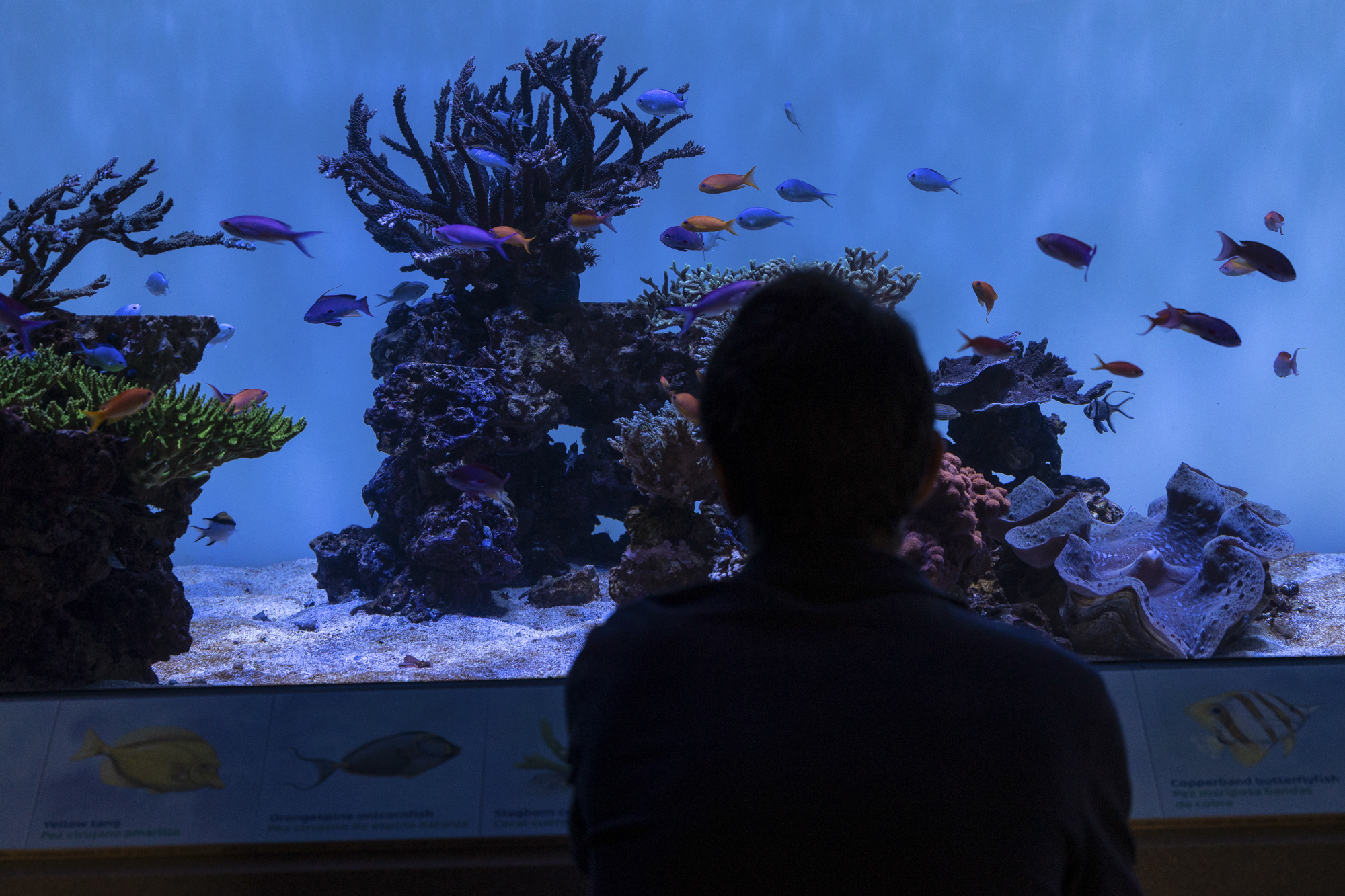
On a recent morning at the Monterey Bay Aquarium, Rey, the 12-year-old African penguin, led the way through the aquarium’s newest exhibition, flapping its wings in greeting to the media gathered for a preview tour.
Just behind, a group of Rey’s penguin friends swam and waddled in a newly expanded habitat, large enough to fit a colony of 18 African penguins. In another section, leaping blennies — amphibious fish that live mostly on land — hop from one stone to another as water washes over their habitat. Nearby, seahorses curl their tails around bright-green seagrass, anchoring themselves against the current. In a larger tank, a bluespotted ribbontail ray glides over a colorful coral reef.
All of these animal movements share a common trait: they invite imitation. At the aquarium’s newest exhibition, Ocean in Motion / La Danza del Mar, set to open on Nov. 7, children can hop like blennies, twist like seahorses, peek through coral reefs and waddle like penguins. The bilingual exhibition is designed primarily for children ages 2 to 6 and their caregivers, though visitors of all ages are welcome.
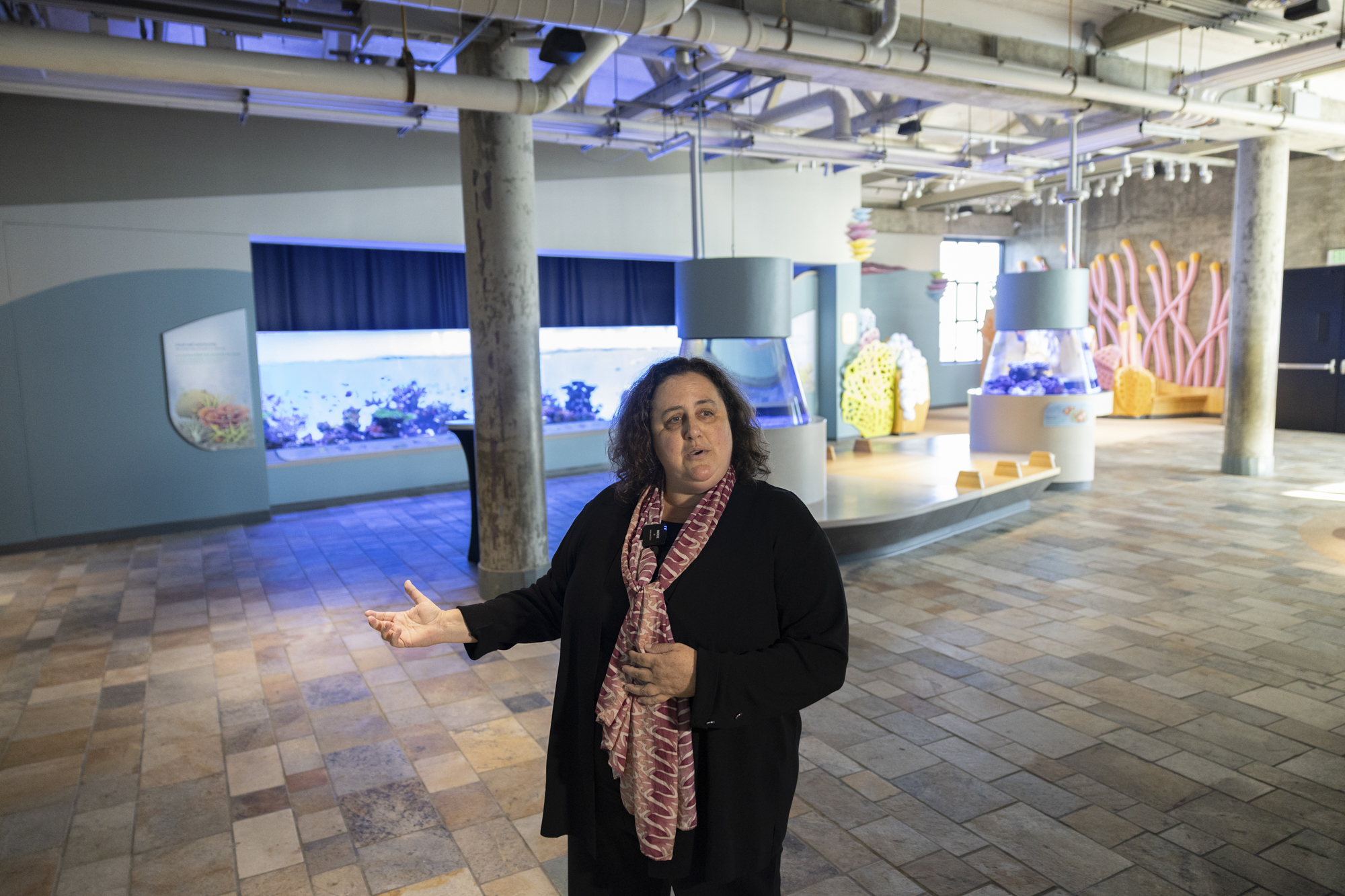
“We wanted to create a space that was really welcoming to children, but also welcoming, calm and cozy for adults,” said Emily Saich, vice president of exhibitions at the aquarium.
The idea is that, by moving like animals, children may begin to understand them better and care about what happens to them.
“We know from research that one of the best ways to build empathy for that age group, 2- to 6-year-olds, is through mimicry and moving in relation to your world,” said Natalia Hurley, the aquarium’s interim chief operations officer and vice president of education and guest experience.
The hope, she said, is that those early connections will inspire children to become ocean stewards.

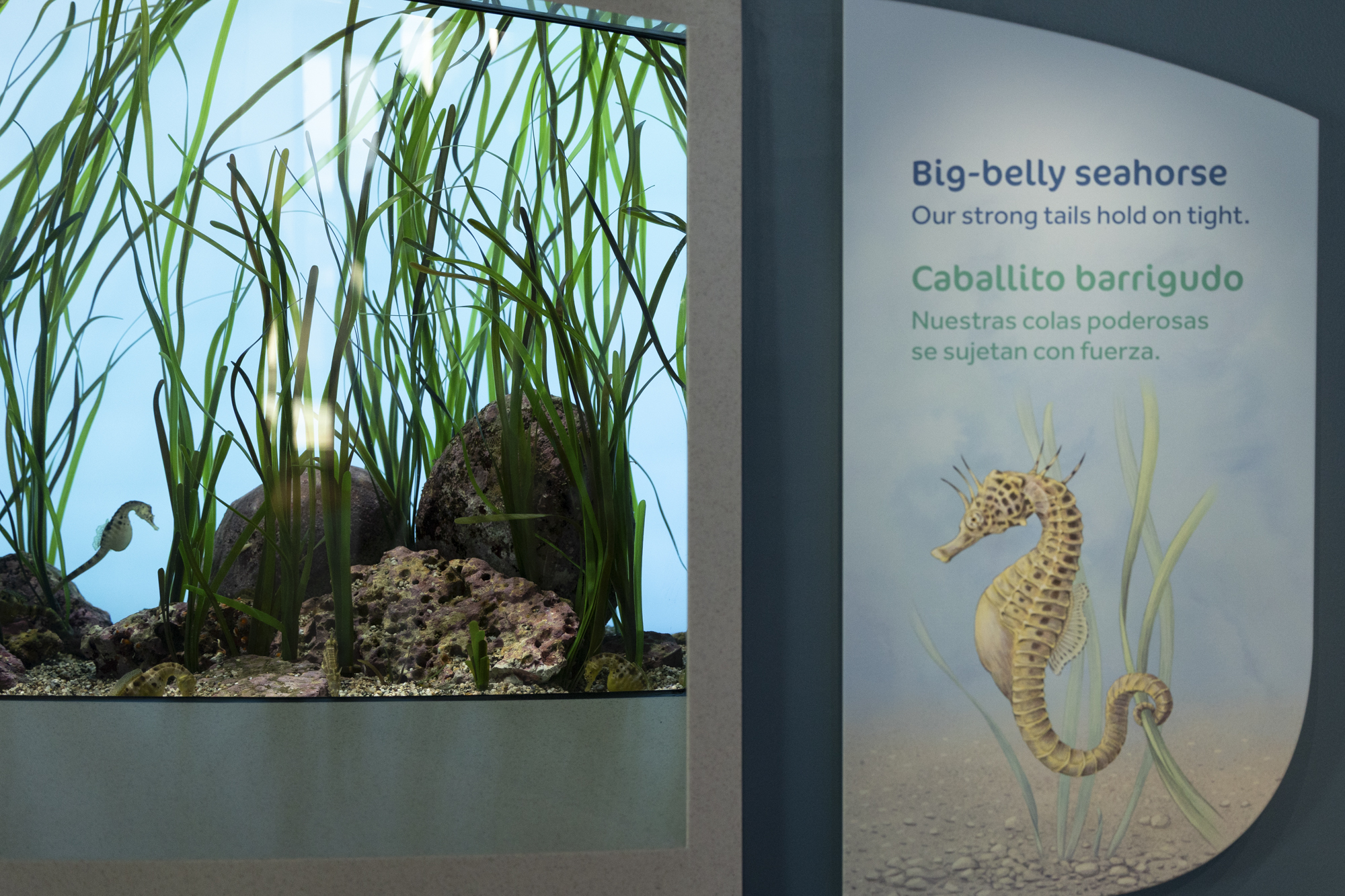
Oversized seagrass towers invite children to wrap their arms around them, mimicking the way seahorses use their muscular, hand-like tails to hold onto vegetation.
Nearby, floor markings suggest where to hop between imaginary rocks, copying the movements of leaping blennies.
Although they are fish, blennies spend much of their time out of the water in the rocky upper intertidal zone. They can absorb oxygen through their skin and gills, allowing them to remain on damp rocks and leap between them.

“They’re almost silly to watch, but they’re spectacular, constantly on the go,” said Paul Clarkson, the aquarium’s director of husbandry operations.
Seahorses, on the other hand, adapt in different ways. They are not strong swimmers, so their curled tails help them anchor themselves to seagrass and other structures rather than get swept away by currents.
Male seahorses get pregnant and can carry roughly 200 to 300 young, which hatch after about 25 days. At the exhibit, two males are currently pregnant. “I’m surprised about how well they thrive in the [wild] environment given that they’re so unusual,” Clarkson said. “They’re not great swimmers or predators. And they are quite delicate, and yet somehow they found a niche.”
Seahorses face pressures from habitat destruction, pollution and harvesting for traditional medicinal products. Warming waters can also force marine animals to shift their ranges.
Designed for playful exploration
Beyond the animal habitats, the exhibit gives children room to explore at their own pace.
A coral reef-themed play structure offers places to climb, hide and peek through openings. A water-play area invites splashing, with tables at different heights and seating for adults. Natural light connects the gallery to the ocean beyond the aquarium’s windows. Calming music plays in the background.
Saich said her team spent five years developing the space and testing early concepts with children and caregivers. The team watched how they naturally respond to the animals and play structures.

“Trusting children to tell us and respond to our designs on what they want to play with and what to do is important for us,” she said.
Exhibit labels use simple language and illustrations to describe animal movements. Caregivers can read them aloud, giving children words to connect with what they see and do.
Saich hopes the exhibit will feel like stepping inside the pages of a favorite children’s book, except the characters are alive. “Thinking about an adult reading their favorite children’s book to a child, but this is in all dimensions in real life, experiencing you’re inside the pages of that with live animals.”
The space also includes tactile animal sculptures, step-ups for younger visitors and wheelchair-accessible pathways.
Connecting with endangered species
One of the exhibit’s main highlights is an expanded habitat for African penguins. Visitors can watch the birds swim, dive, preen and rest on rocky ledges, and then imitate their movements through digital interactives that display moving penguins on mirrors, inviting visitors to waddle and swim like the birds.
African penguins are critically endangered, facing food shortages linked to overfishing and warming waters due to climate change.
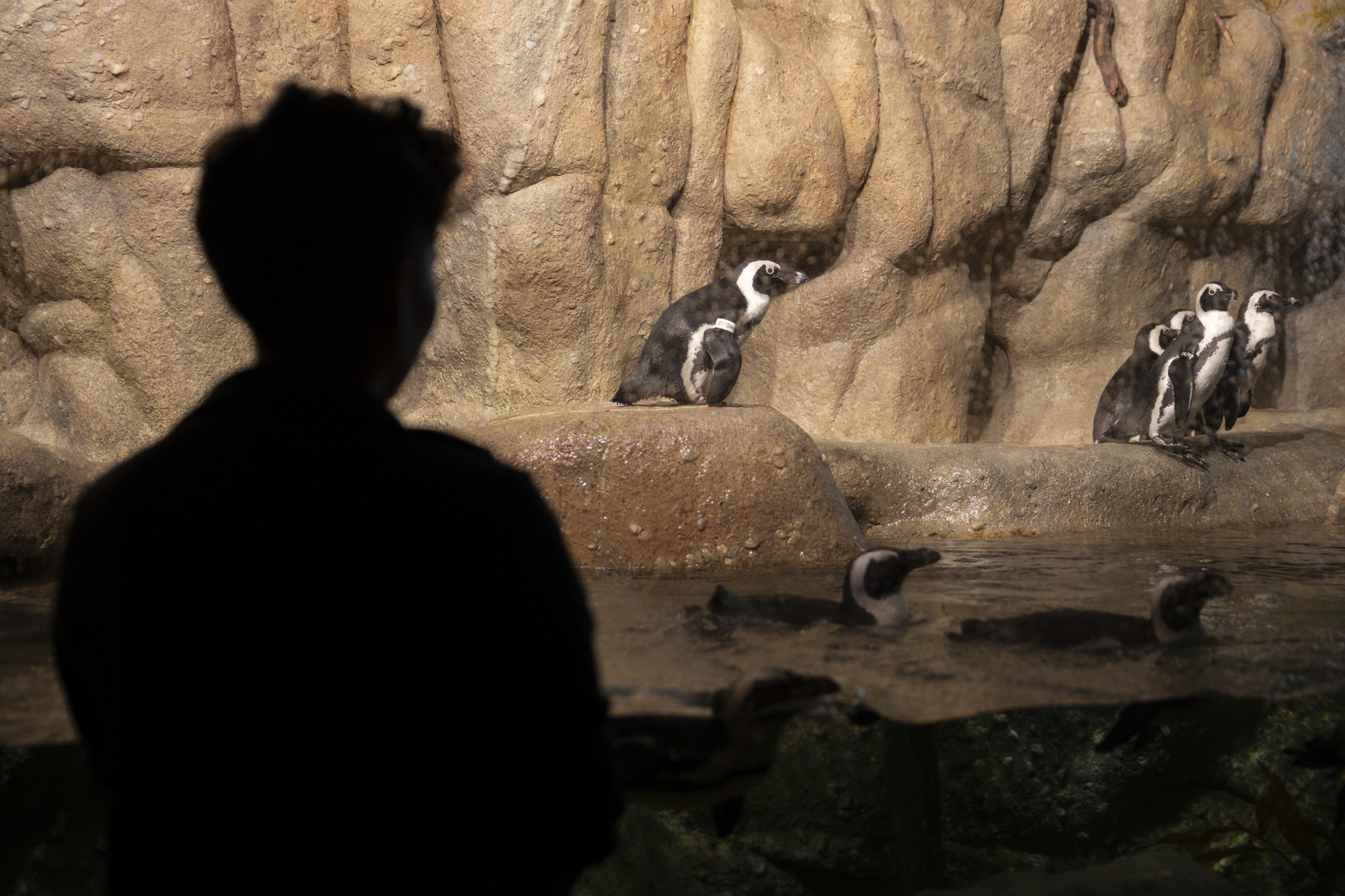
The aquarium designed the new habitat to accommodate birds of different ages and physical abilities, with more swimming space and easier ways to leave the water.
Aimee Greenebaum, the aquarium’s curator for aviculture, said those design choices are part of the aquarium’s commitment to the birds’ well-being.
Some penguins live up into their thirties at the aquarium. “In the wild, 10 to 15 years is the average lifespan, so they do live quite a bit longer here,” she said.
She said the penguins receive “really great health benefits” at the aquarium, including attentive staff care and regular health monitoring.
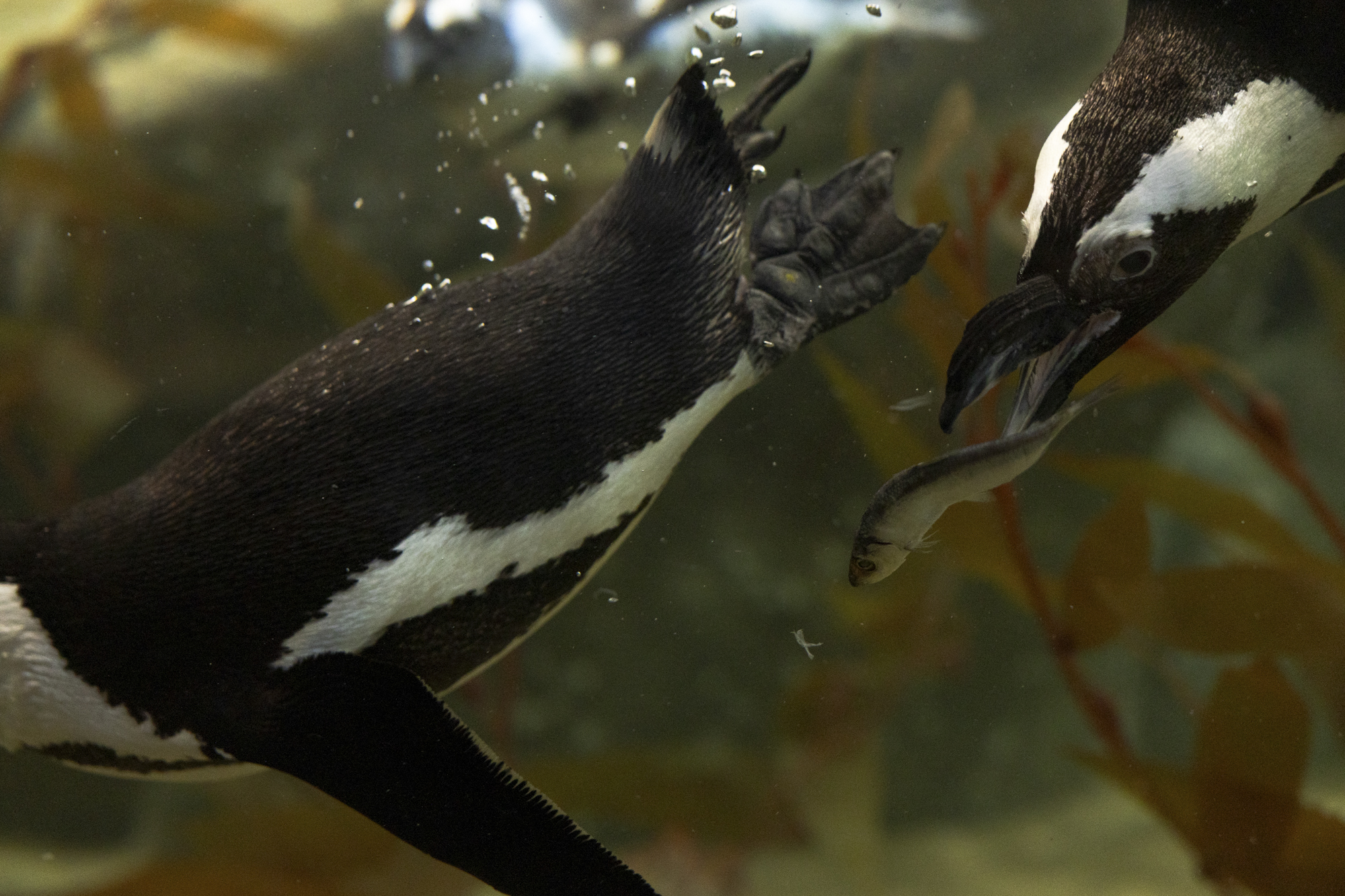
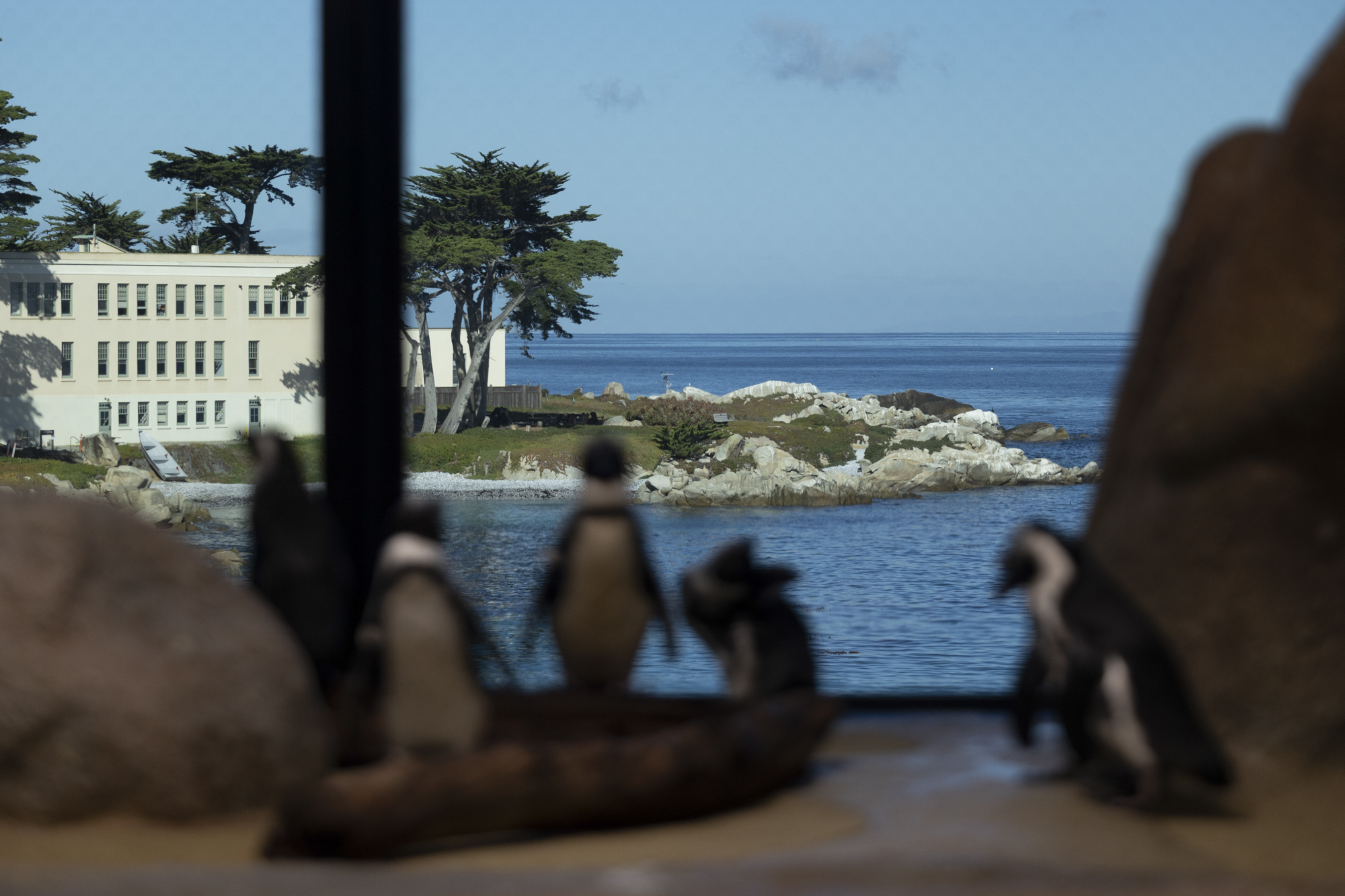
The birds’ individual personalities make them compelling ambassadors for their species. “Some of them are very curious, very playful. Some of them would rather not come over and play, which I totally respect,” she said.
Getting to know individual penguins, including through their names in exhibit graphics, can help visitors see them as more than a distant species in need of protection.
“It’s more important than ever now for people to feel that connection and do what they can to help African penguins, as well as all the animals that share our ocean,” she said.