East Bay Grief Counselors Strike to Protest Layoffs and ‘Protect the Soul of Hospice’
At 77, Judy Johnson has faced one of the unspoken responsibilities of being the youngest child in the family: shepherding her parents and her three older siblings through death.
With her last sister now in hospice care, and no one else left to lean on, Johnson found a lifeline in an emotional support group provided through her sister’s hospice provider, Hospice East Bay. But as the nonprofit’s parent organization prepares to lay off more than 20 staff, including social workers, chaplains and nurses, the support group will be disbanded, and Johnson will have to bear her sister’s death without it.
“A key element supporting my emotional well-being will be lost,” Johnson said.
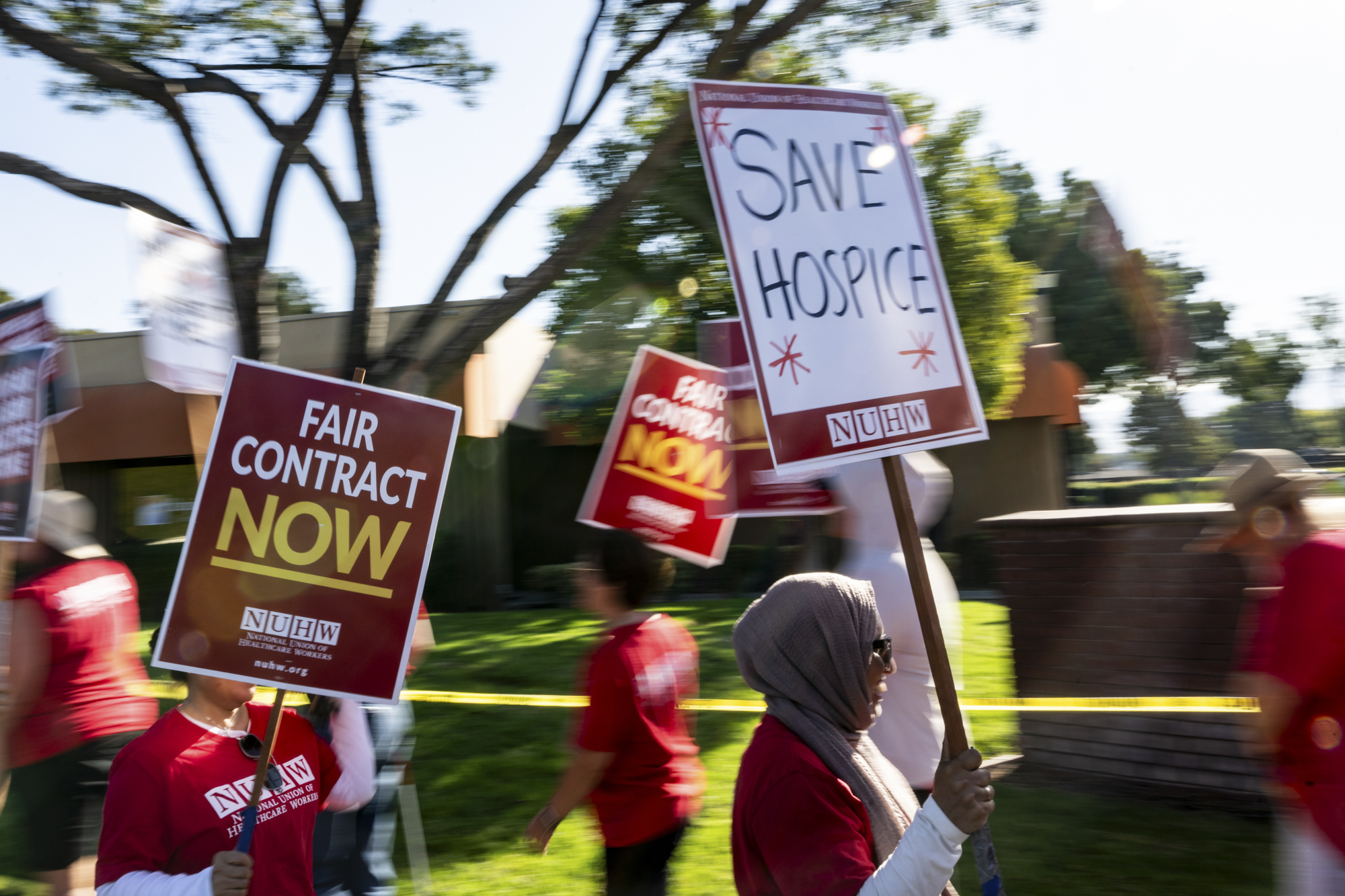
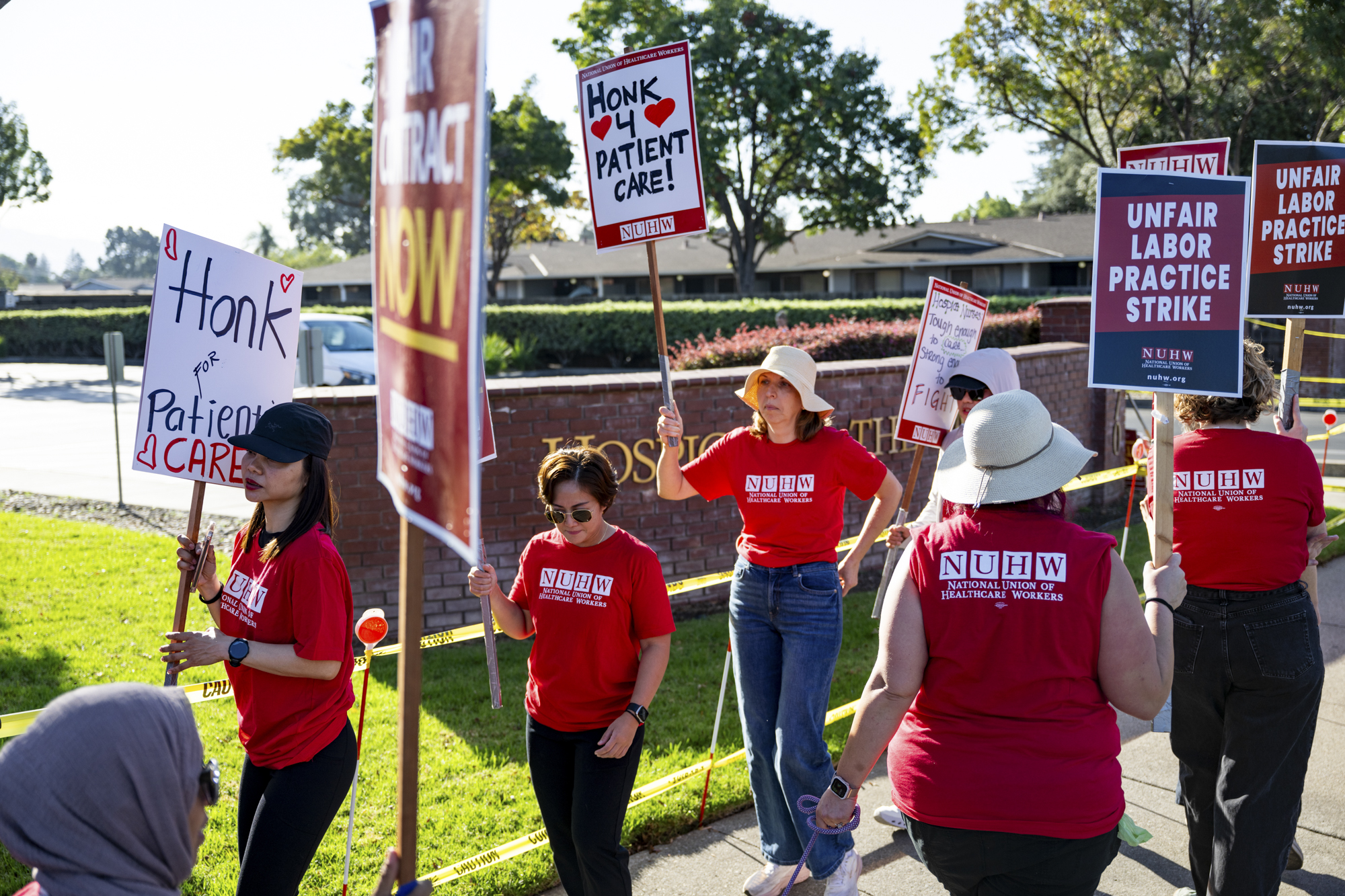
The nonprofit Hospice East Bay turned over management of its operations to a Florida-based parent company, Chapters Health System, last year, with the stated goal of expanding services. Instead, music therapy and a children’s grief program have been discontinued, and staff members are facing their second round of layoffs. Their union is staging a seven-day strike starting Monday to protest cuts to their own health benefits and demand a fair contract.
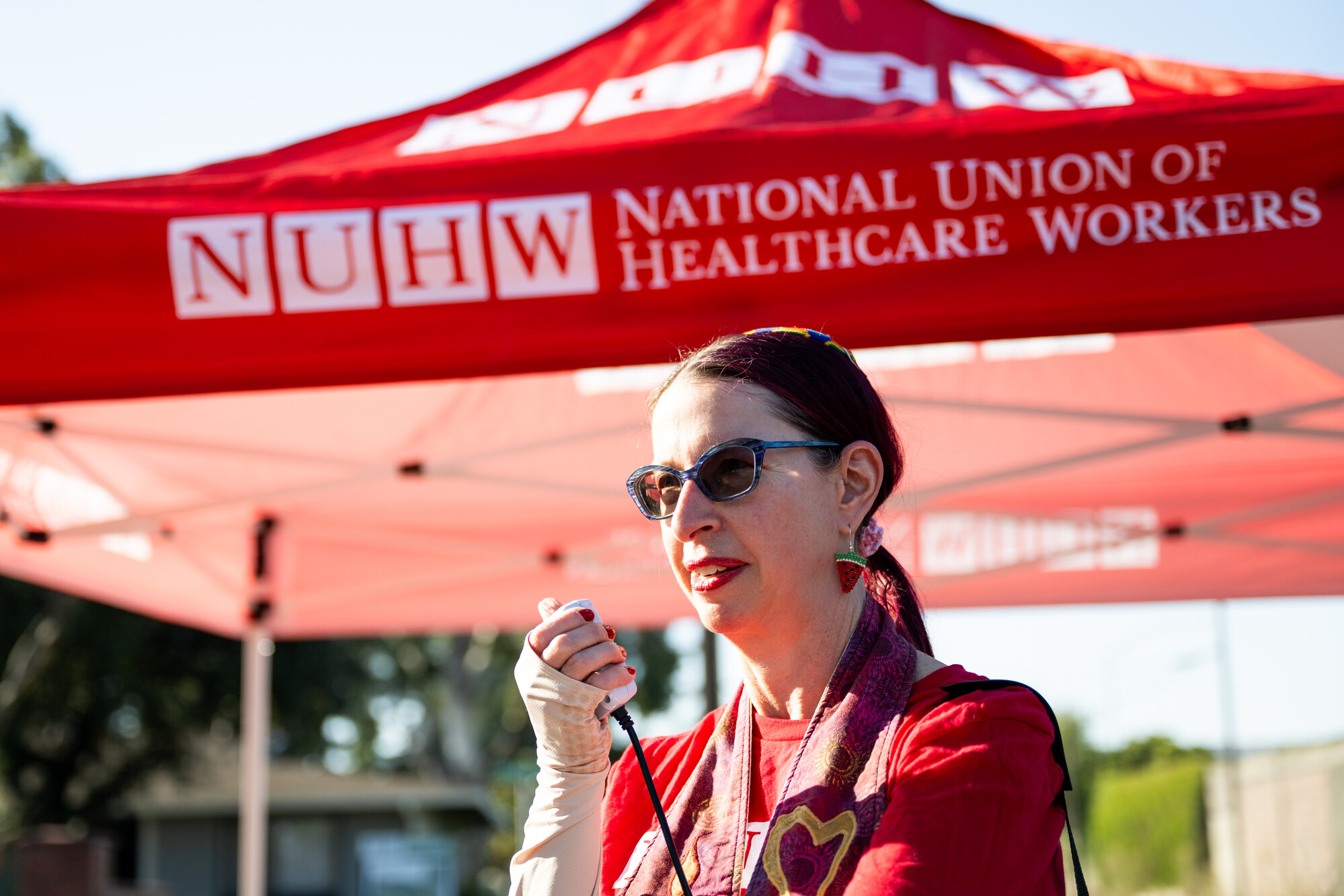
“We’re going on strike to protect the soul of hospice,” said Judy Fleischman, a spiritual care counselor at Hospice East Bay. “The jobs are being cut, and the caseloads will increase for those who remain. Let’s be clear, that is destroying our ability to care compassionately.”
Hospice began as a volunteer-led, grassroots movement in the 1970s, but in recent decades, it has ballooned into a massive industry. In California, 94% of hospice providers are now for-profit. Corporate consolidation has been widespread, leading to exploitation and even fraud.
As a small, independent nonprofit, Hospice East Bay struggled to compete in this environment. Staff say the financial strain of flat government reimbursement rates, coupled with declining patient numbers and money mismanagement, pushed previous executives to affiliate with Chapters Health last year. By centralizing business operations like human resources, IT, purchasing, and billing, local leaders believed caregivers could focus more on improving clinical services to patients and their families.
“Together, we will be able to embrace the challenges of the changing healthcare landscape and create an environment where we have the opportunity to expand our programs and services, strengthening our role as a community leader in quality care,” said Chris Falley, executive director of Hospice East Bay, at the time the partnership agreement was finalized in October 2025.
Andrew Molosky, president and CEO of Chapters Health, who earned $2.2 million in total compensation in 2024, visited Hospice East Bay headquarters in Pleasant Hill at the time and, according to staff, he told them he foresaw no cuts to clinical staff and no layoffs of senior leaders for at least a year. Six weeks later, two directors left, allegedly forced into retirement. And now staff are fighting back against the second round of clinical layoffs in a year, eliminating 30 positions total.
Chapters Health did not comment on the layoff decision, but issued a statement from regional director, Tonya Lyons, who said they were “disappointed” by the union’s plan to strike. Care for current hospice patients will continue through the seven-day walkout, she said, with a contingency team of clinicians, administrators, and on-call physicians.
Lyons said management is committed to reaching a contract with the union that “will lay the groundwork for long-term sustainability and ensure the ability to grow into the future.”
Union members countered that the current job cuts will leave remaining staff stretched long after the strike is over.
Social workers will have to care for 40 patients instead of 30. Chaplains will have 80 patients instead of 50. Two bereavement counselors will be left to help 1,200 patients and family members facing the loss of their loved ones.
“The remaining chaplains will have to figure out who will not get spiritual care,” said Claire Eustace, a chaplain who will be laid off this month. “It’s one thing when people say they don’t want spiritual care support, but it’s quite a different thing when we decide that for them, because we just don’t have the time to visit them.”
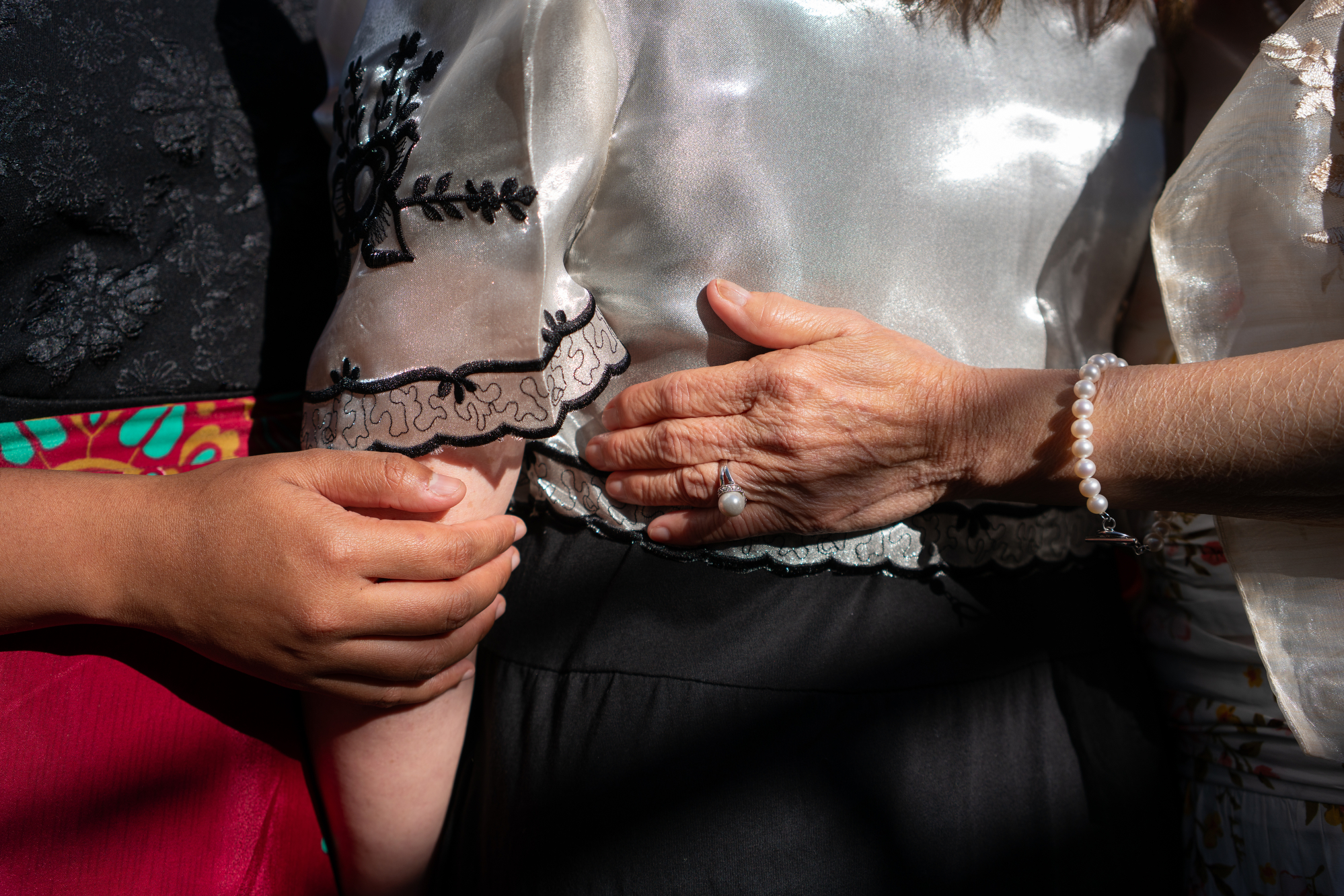
The family support group that Judy Johnson attends is run by a social worker who is being laid off.
With their increased caseloads, the remaining social workers are unlikely to have time to continue it. Johnson wonders what might happen to the care her sister, Maxine, receives.
She’s 88, suffering from Parkinson’s dementia, and bedbound from a recent fall. Johnson said the nurses and aides who visit are all highly professional, caring people.
“I look at how the home health aide bathes my sister, the gentleness with which she touches her body.
She doesn’t just grab a limb and begin washing it. She said, ‘Miss Maxine, I’m gonna do your arm now, okay?’” Johnson said. If there are more and more patients to visit in a day, she worries, “my sister’s bath may not be so gentle and life-affirming.”
The California attorney general’s office reviewed the affiliation agreement between Hospice East Bay and Chapters Health last summer, and approved it on several conditions, including the creation of a quality advisory committee and the maintenance of programs historically funded by donations rather than government payments, like music therapy and bereavement services for families.
According to staff, such therapy programs have not been maintained, and with the latest round of cuts to the bereavement team, peer support groups and one-on-one counseling for loved ones left behind will be scaled back. It’s unclear what kind of recourse the attorney general’s office may have. It did not respond to requests for comment.
Social worker Julie Aronowitz, who is also being laid off, compared the staff cuts to a poem about violinist Yitzhak Perlman, who once performed with only three strings on his instrument after one of them broke. He adapted and played with “power and intensity” anyway.
“This poem talks about how we make music with what remains,” Aronowitz said. “But how do you make music with just one string left?”