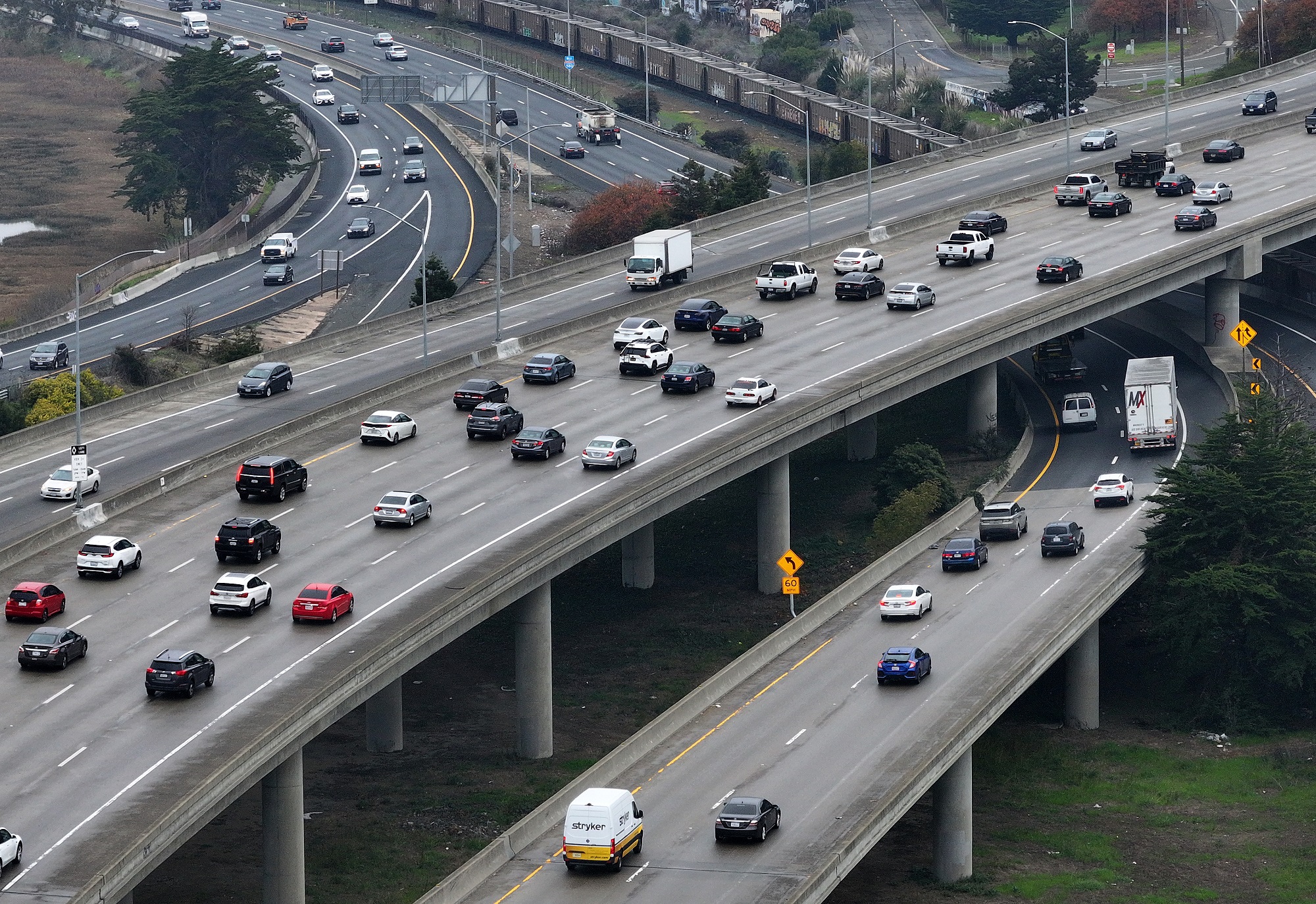
Hispanic and Black Californians are the two demographic groups most exposed to PM2.5 from vehicles, largely because they are more likely to live closer to highways and major roads, often due to historic practices like redlining.
While the study found these two groups have seen the most significant drops in overall exposure to the pollutants, that is due to the fact that they started in worse-off positions than other groups. The research shows that the gap between Hispanic and Black Californians and their white counterparts is widening.
Between 2000 and 2019, the relative gap in vehicle-related PM2.5 exposure between Hispanic and white Californians grew from 30% to 35%, with Hispanic residents being the group most exposed and white residents the least. Both groups experienced significant overall declines in exposure to pollution.
“If you reduce vehicle emissions across the board for everybody everywhere, everybody benefits,” said Josh Apte, associate professor of environmental engineering and environmental health sciences at UC Berkeley and one of the study’s authors. That’s how the U.S. and California have improved air quality for the past 50-60 years, he said.
“But if there are groups that are disparately exposed when everybody benefits, that disparity never goes away. So targeting emissions reductions in those places that tend to be overburdened is the name of the game to solve the problem,” Apte said.
The California Air Resources Board has, more recently, woven such policies into its core mission — targeting cleaning up drayage trucks, which move freight in and out of ports, and programs that help lower-income Californians trade in highly polluting vehicles for electric ones.
“Some of the policies that the Air Resources Board is pursuing now are very well placed to close those gaps in disparity,” Apte said.
Recently adopted CARB regulations, like those intended to reduce emissions from large truck fleets, will significantly benefit communities that live close to ports, rail yards and industrial warehouses, said Joshua Cunningham, who leads regulatory programs for light-duty vehicles at CARB and was not involved in the study.
Two state laws, passed in 2012 and 2017, have also prioritized targeting benefits to communities geographically exposed to unequal amounts of pollution. The first invests proceeds from California’s cap-and-trade emissions credits program in disadvantaged communities that face environmental, socioeconomic and public health challenges. The other created the Community Air Protection Program to prioritize highly polluted communities for air pollution monitoring and emissions reductions.
Libby Koolik, lead study author and a Ph.D. candidate at UC Berkeley in the environmental engineering program, was surprised by the role that passenger vehicles play in contributing to major pollution in downtown communities, as a lot of attention is normally on large, polluting vehicles like big rigs.
“The takeaway from that is not that heavy-duty vehicles aren’t important, but really that both of these fleets need to be targeted,” Koolik said.
“And that, one step further, it’s important that we look at each community and figure out what their individual composition of fleet mixtures is so we can find the interventions that work best for that community.”
Emissions from other sectors in California, like refineries, are known to unequally burden communities of color and communities already exposed to high pollution from vehicles. This study did not include those sources of pollution.
The study was co-authored by researchers at UC Berkeley, the California Environmental Protection Agency’s Office of Environmental Health Hazard Assessment and the University of Washington.