window.__IS_SSR__=true
window.__INITIAL_STATE__={
"attachmentsReducer": {
"audio_0": {
"type": "attachments",
"id": "audio_0",
"imgSizes": {
"kqedFullSize": {
"file": "https://ww2.kqed.org/news/wp-content/themes/KQED-unified/img/audio_bgs/background0.jpg"
}
}
},
"audio_1": {
"type": "attachments",
"id": "audio_1",
"imgSizes": {
"kqedFullSize": {
"file": "https://ww2.kqed.org/news/wp-content/themes/KQED-unified/img/audio_bgs/background1.jpg"
}
}
},
"audio_2": {
"type": "attachments",
"id": "audio_2",
"imgSizes": {
"kqedFullSize": {
"file": "https://ww2.kqed.org/news/wp-content/themes/KQED-unified/img/audio_bgs/background2.jpg"
}
}
},
"audio_3": {
"type": "attachments",
"id": "audio_3",
"imgSizes": {
"kqedFullSize": {
"file": "https://ww2.kqed.org/news/wp-content/themes/KQED-unified/img/audio_bgs/background3.jpg"
}
}
},
"audio_4": {
"type": "attachments",
"id": "audio_4",
"imgSizes": {
"kqedFullSize": {
"file": "https://ww2.kqed.org/news/wp-content/themes/KQED-unified/img/audio_bgs/background4.jpg"
}
}
},
"placeholder": {
"type": "attachments",
"id": "placeholder",
"imgSizes": {
"thumbnail": {
"file": "https://cdn.kqed.org/wp-content/uploads/2024/12/KQED-Default-Image-816638274-2000x1333-1-160x107.jpg",
"width": 160,
"height": 107,
"mimeType": "image/jpeg"
},
"medium": {
"file": "https://cdn.kqed.org/wp-content/uploads/2024/12/KQED-Default-Image-816638274-2000x1333-1-800x533.jpg",
"width": 800,
"height": 533,
"mimeType": "image/jpeg"
},
"medium_large": {
"file": "https://cdn.kqed.org/wp-content/uploads/2024/12/KQED-Default-Image-816638274-2000x1333-1-768x512.jpg",
"width": 768,
"height": 512,
"mimeType": "image/jpeg"
},
"large": {
"file": "https://cdn.kqed.org/wp-content/uploads/2024/12/KQED-Default-Image-816638274-2000x1333-1-1020x680.jpg",
"width": 1020,
"height": 680,
"mimeType": "image/jpeg"
},
"1536x1536": {
"file": "https://cdn.kqed.org/wp-content/uploads/2024/12/KQED-Default-Image-816638274-2000x1333-1-1536x1024.jpg",
"width": 1536,
"height": 1024,
"mimeType": "image/jpeg"
},
"fd-lrg": {
"file": "https://cdn.kqed.org/wp-content/uploads/2024/12/KQED-Default-Image-816638274-2000x1333-1-1536x1024.jpg",
"width": 1536,
"height": 1024,
"mimeType": "image/jpeg"
},
"fd-med": {
"file": "https://cdn.kqed.org/wp-content/uploads/2024/12/KQED-Default-Image-816638274-2000x1333-1-1020x680.jpg",
"width": 1020,
"height": 680,
"mimeType": "image/jpeg"
},
"fd-sm": {
"file": "https://cdn.kqed.org/wp-content/uploads/2024/12/KQED-Default-Image-816638274-2000x1333-1-800x533.jpg",
"width": 800,
"height": 533,
"mimeType": "image/jpeg"
},
"post-thumbnail": {
"file": "https://cdn.kqed.org/wp-content/uploads/2024/12/KQED-Default-Image-816638274-2000x1333-1-672x372.jpg",
"width": 672,
"height": 372,
"mimeType": "image/jpeg"
},
"twentyfourteen-full-width": {
"file": "https://cdn.kqed.org/wp-content/uploads/2024/12/KQED-Default-Image-816638274-2000x1333-1-1038x576.jpg",
"width": 1038,
"height": 576,
"mimeType": "image/jpeg"
},
"xxsmall": {
"file": "https://cdn.kqed.org/wp-content/uploads/2024/12/KQED-Default-Image-816638274-2000x1333-1-160x107.jpg",
"width": 160,
"height": 107,
"mimeType": "image/jpeg"
},
"xsmall": {
"file": "https://cdn.kqed.org/wp-content/uploads/2024/12/KQED-Default-Image-816638274-2000x1333-1-672x372.jpg",
"width": 672,
"height": 372,
"mimeType": "image/jpeg"
},
"small": {
"file": "https://cdn.kqed.org/wp-content/uploads/2024/12/KQED-Default-Image-816638274-2000x1333-1-672x372.jpg",
"width": 672,
"height": 372,
"mimeType": "image/jpeg"
},
"xlarge": {
"file": "https://cdn.kqed.org/wp-content/uploads/2024/12/KQED-Default-Image-816638274-2000x1333-1-1020x680.jpg",
"width": 1020,
"height": 680,
"mimeType": "image/jpeg"
},
"full-width": {
"file": "https://cdn.kqed.org/wp-content/uploads/2024/12/KQED-Default-Image-816638274-2000x1333-1-1920x1280.jpg",
"width": 1920,
"height": 1280,
"mimeType": "image/jpeg"
},
"guest-author-32": {
"file": "https://cdn.kqed.org/wp-content/uploads/2025/01/KQED-Default-Image-816638274-1333x1333-1-160x160.jpg",
"width": 32,
"height": 32,
"mimeType": "image/jpeg"
},
"guest-author-50": {
"file": "https://cdn.kqed.org/wp-content/uploads/2025/01/KQED-Default-Image-816638274-1333x1333-1-160x160.jpg",
"width": 50,
"height": 50,
"mimeType": "image/jpeg"
},
"guest-author-64": {
"file": "https://cdn.kqed.org/wp-content/uploads/2025/01/KQED-Default-Image-816638274-1333x1333-1-160x160.jpg",
"width": 64,
"height": 64,
"mimeType": "image/jpeg"
},
"guest-author-96": {
"file": "https://cdn.kqed.org/wp-content/uploads/2025/01/KQED-Default-Image-816638274-1333x1333-1-160x160.jpg",
"width": 96,
"height": 96,
"mimeType": "image/jpeg"
},
"guest-author-128": {
"file": "https://cdn.kqed.org/wp-content/uploads/2025/01/KQED-Default-Image-816638274-1333x1333-1-160x160.jpg",
"width": 128,
"height": 128,
"mimeType": "image/jpeg"
},
"detail": {
"file": "https://cdn.kqed.org/wp-content/uploads/2025/01/KQED-Default-Image-816638274-1333x1333-1-160x160.jpg",
"width": 160,
"height": 160,
"mimeType": "image/jpeg"
},
"kqedFullSize": {
"file": "https://cdn.kqed.org/wp-content/uploads/2024/12/KQED-Default-Image-816638274-2000x1333-1.jpg",
"width": 2000,
"height": 1333
}
}
},
"quest_70814": {
"type": "attachments",
"id": "quest_70814",
"meta": {
"index": "attachments_1716263798",
"site": "quest",
"id": "70814",
"found": true
},
"parent": 70528,
"imgSizes": {
"thumbnail": {
"file": "https://ww2.kqed.org/app/uploads/sites/39/2014/05/IMG_2779-400x225.jpg",
"width": 400,
"mimeType": "image/jpeg",
"height": 225
},
"kqedFullSize": {
"file": "https://ww2.kqed.org/app/uploads/sites/39/2014/05/IMG_2779.jpg",
"width": 640,
"height": 360
},
"guest-author-96": {
"file": "https://ww2.kqed.org/app/uploads/sites/39/2014/05/IMG_2779-96x96.jpg",
"width": 96,
"mimeType": "image/jpeg",
"height": 96
},
"guest-author-64": {
"file": "https://ww2.kqed.org/app/uploads/sites/39/2014/05/IMG_2779-64x64.jpg",
"width": 64,
"mimeType": "image/jpeg",
"height": 64
},
"detail": {
"file": "https://ww2.kqed.org/app/uploads/sites/39/2014/05/IMG_2779-75x75.jpg",
"width": 75,
"mimeType": "image/jpeg",
"height": 75
},
"guest-author-32": {
"file": "https://ww2.kqed.org/app/uploads/sites/39/2014/05/IMG_2779-32x32.jpg",
"width": 32,
"mimeType": "image/jpeg",
"height": 32
},
"guest-author-128": {
"file": "https://ww2.kqed.org/app/uploads/sites/39/2014/05/IMG_2779-128x128.jpg",
"width": 128,
"mimeType": "image/jpeg",
"height": 128
}
},
"publishDate": 1401301134,
"modified": 1401301134,
"caption": null,
"description": null,
"title": "Angel_FirstFrost",
"credit": null,
"status": "inherit",
"isLoading": false,
"fetchFailed": false
},
"quest_57283": {
"type": "attachments",
"id": "quest_57283",
"meta": {
"index": "attachments_1716263798",
"site": "quest",
"id": "57283",
"found": true
},
"parent": 52167,
"imgSizes": {
"thumbnail": {
"file": "https://ww2.kqed.org/app/uploads/sites/39/2013/04/Anne2-400x225.jpg",
"width": 400,
"mimeType": "image/jpeg",
"height": 225
},
"kqedFullSize": {
"file": "https://ww2.kqed.org/app/uploads/sites/39/2013/04/Anne2.jpg",
"width": 640,
"height": 360
},
"guest-author-96": {
"file": "https://ww2.kqed.org/app/uploads/sites/39/2013/04/Anne2-96x96.jpg",
"width": 96,
"mimeType": "image/jpeg",
"height": 96
},
"guest-author-64": {
"file": "https://ww2.kqed.org/app/uploads/sites/39/2013/04/Anne2-64x64.jpg",
"width": 64,
"mimeType": "image/jpeg",
"height": 64
},
"detail": {
"file": "https://ww2.kqed.org/app/uploads/sites/39/2013/04/Anne2-75x75.jpg",
"width": 75,
"mimeType": "image/jpeg",
"height": 75
},
"guest-author-32": {
"file": "https://ww2.kqed.org/app/uploads/sites/39/2013/04/Anne2-32x32.jpg",
"width": 32,
"mimeType": "image/jpeg",
"height": 32
},
"guest-author-128": {
"file": "https://ww2.kqed.org/app/uploads/sites/39/2013/04/Anne2-128x128.jpg",
"width": 128,
"mimeType": "image/jpeg",
"height": 128
}
},
"publishDate": 1372290015,
"modified": 1372290015,
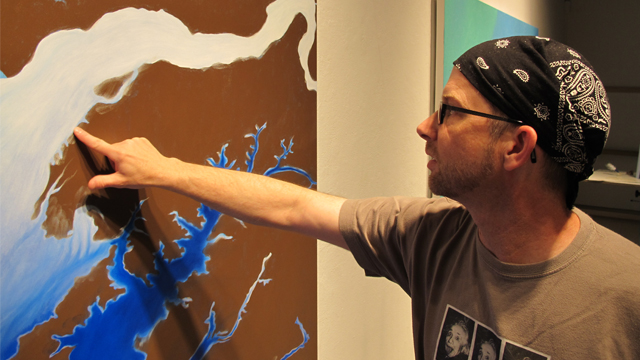
"caption": "Artist John Sabraw checks the paint on one of his works in progress. The brown pigment is sourced from coal mine runoff.",
"description": null,
"title": "Anne2",
"credit": null,
"status": "inherit",
"isLoading": false,
"fetchFailed": false
},
"quest_69737": {
"type": "attachments",
"id": "quest_69737",
"meta": {
"index": "attachments_1716263798",
"site": "quest",
"id": "69737",
"found": true
},
"parent": 63095,
"imgSizes": {
"thumbnail": {
"file": "https://ww2.kqed.org/app/uploads/sites/39/2014/04/AlgalBloom-e1397494183937-400x233.jpg",
"width": 400,
"mimeType": "image/jpeg",
"height": 233
},
"post-thumbnail": {
"file": "https://ww2.kqed.org/app/uploads/sites/39/2014/04/AlgalBloom-e1397494183937-640x372.jpg",
"width": 640,
"mimeType": "image/jpeg",
"height": 372
},
"kqedFullSize": {
"file": "https://ww2.kqed.org/app/uploads/sites/39/2014/04/AlgalBloom-e1397494183937.jpg",
"width": 640,
"height": 373
},
"guest-author-96": {
"file": "https://ww2.kqed.org/app/uploads/sites/39/2014/04/AlgalBloom-e1397494183937-96x96.jpg",
"width": 96,
"mimeType": "image/jpeg",
"height": 96
},
"guest-author-64": {
"file": "https://ww2.kqed.org/app/uploads/sites/39/2014/04/AlgalBloom-e1397494183937-64x64.jpg",
"width": 64,
"mimeType": "image/jpeg",
"height": 64
},
"detail": {
"file": "https://ww2.kqed.org/app/uploads/sites/39/2014/04/AlgalBloom-e1397494183937-75x75.jpg",
"width": 75,
"mimeType": "image/jpeg",
"height": 75
},
"guest-author-32": {
"file": "https://ww2.kqed.org/app/uploads/sites/39/2014/04/AlgalBloom-e1397494183937-32x32.jpg",
"width": 32,
"mimeType": "image/jpeg",
"height": 32
},
"guest-author-128": {
"file": "https://ww2.kqed.org/app/uploads/sites/39/2014/04/AlgalBloom-e1397494183937-128x128.jpg",
"width": 128,
"mimeType": "image/jpeg",
"height": 128
}
},
"publishDate": 1397491730,
"modified": 1442693595,
"caption": null,
"description": null,
"title": "AlgalBloom",
"credit": "Photo Credit: Brenda Culler, ODNR Coastal Management",
"status": "inherit",
"isLoading": false,
"fetchFailed": false
},
"quest_68326": {
"type": "attachments",
"id": "quest_68326",
"meta": {
"index": "attachments_1716263798",
"site": "quest",
"id": "68326",
"found": true
},
"parent": 67161,
"imgSizes": {
"thumbnail": {
"file": "https://ww2.kqed.org/app/uploads/sites/39/2014/02/Greg_Benz_cat__7007149-Edit_16_9_640-400x225.jpg",
"width": 400,
"mimeType": "image/jpeg",
"height": 225
},
"kqedFullSize": {
"file": "https://ww2.kqed.org/app/uploads/sites/39/2014/02/Greg_Benz_cat__7007149-Edit_16_9_640.jpg",
"width": 640,
"height": 360
},
"guest-author-96": {
"file": "https://ww2.kqed.org/app/uploads/sites/39/2014/02/Greg_Benz_cat__7007149-Edit_16_9_640-96x96.jpg",
"width": 96,
"mimeType": "image/jpeg",
"height": 96
},
"guest-author-64": {
"file": "https://ww2.kqed.org/app/uploads/sites/39/2014/02/Greg_Benz_cat__7007149-Edit_16_9_640-64x64.jpg",
"width": 64,
"mimeType": "image/jpeg",
"height": 64
},
"detail": {
"file": "https://ww2.kqed.org/app/uploads/sites/39/2014/02/Greg_Benz_cat__7007149-Edit_16_9_640-75x75.jpg",
"width": 75,
"mimeType": "image/jpeg",
"height": 75
},
"guest-author-32": {
"file": "https://ww2.kqed.org/app/uploads/sites/39/2014/02/Greg_Benz_cat__7007149-Edit_16_9_640-32x32.jpg",
"width": 32,
"mimeType": "image/jpeg",
"height": 32
},
"guest-author-128": {
"file": "https://ww2.kqed.org/app/uploads/sites/39/2014/02/Greg_Benz_cat__7007149-Edit_16_9_640-128x128.jpg",
"width": 128,
"mimeType": "image/jpeg",
"height": 128
}
},
"publishDate": 1394750330,
"modified": 1442698187,
"caption": "Scientists believe that chemicals in your couch can be hurting you - and your cat. ",
"description": null,
"title": "Greg_Benz_cat__7007149-Edit_16_9_640",
"credit": "Photo by gregbenzphotography.com.",
"status": "inherit",
"isLoading": false,
"fetchFailed": false
},
"quest_68713": {
"type": "attachments",
"id": "quest_68713",
"meta": {
"index": "attachments_1716263798",
"site": "quest",
"id": "68713",
"found": true
},
"parent": 65631,
"imgSizes": {
"thumbnail": {
"file": "https://ww2.kqed.org/app/uploads/sites/39/2014/03/March20.2-400x225.jpg",
"width": 400,
"mimeType": "image/jpeg",
"height": 225
},
"kqedFullSize": {
"file": "https://ww2.kqed.org/app/uploads/sites/39/2014/03/March20.2.jpg",
"width": 640,
"height": 360
},
"guest-author-96": {
"file": "https://ww2.kqed.org/app/uploads/sites/39/2014/03/March20.2-96x96.jpg",
"width": 96,
"mimeType": "image/jpeg",
"height": 96
},
"guest-author-64": {
"file": "https://ww2.kqed.org/app/uploads/sites/39/2014/03/March20.2-64x64.jpg",
"width": 64,
"mimeType": "image/jpeg",
"height": 64
},
"detail": {
"file": "https://ww2.kqed.org/app/uploads/sites/39/2014/03/March20.2-75x75.jpg",
"width": 75,
"mimeType": "image/jpeg",
"height": 75
},
"guest-author-32": {
"file": "https://ww2.kqed.org/app/uploads/sites/39/2014/03/March20.2-32x32.jpg",
"width": 32,
"mimeType": "image/jpeg",
"height": 32
},
"guest-author-128": {
"file": "https://ww2.kqed.org/app/uploads/sites/39/2014/03/March20.2-128x128.jpg",
"width": 128,
"mimeType": "image/jpeg",
"height": 128
}
},
"publishDate": 1395328349,
"modified": 1395328349,
"caption": "Dredging on the Great Miami River in southwestern Ohio. Photo by Ted / Flickr.",
"description": null,
"title": "March20.2",
"credit": null,
"status": "inherit",
"isLoading": false,
"fetchFailed": false
},
"quest_66740": {
"type": "attachments",
"id": "quest_66740",
"meta": {
"index": "attachments_1716263798",
"site": "quest",
"id": "66740",
"found": true
},
"parent": 63112,
"imgSizes": {
"thumbnail": {
"file": "https://ww2.kqed.org/app/uploads/sites/39/2013/10/PSC-space-needle1-e1391458829393-400x224.jpg",
"width": 400,
"mimeType": "image/jpeg",
"height": 224
},
"kqedFullSize": {
"file": "https://ww2.kqed.org/app/uploads/sites/39/2013/10/PSC-space-needle1-e1391458829393.jpg",
"width": 640,
"height": 359
},
"guest-author-96": {
"file": "https://ww2.kqed.org/app/uploads/sites/39/2013/10/PSC-space-needle1-e1391458829393-96x96.jpg",
"width": 96,
"mimeType": "image/jpeg",
"height": 96
},
"guest-author-64": {
"file": "https://ww2.kqed.org/app/uploads/sites/39/2013/10/PSC-space-needle1-e1391458829393-64x64.jpg",
"width": 64,
"mimeType": "image/jpeg",
"height": 64
},
"detail": {
"file": "https://ww2.kqed.org/app/uploads/sites/39/2013/10/PSC-space-needle1-e1391458829393-75x75.jpg",
"width": 75,
"mimeType": "image/jpeg",
"height": 75
},
"guest-author-32": {
"file": "https://ww2.kqed.org/app/uploads/sites/39/2013/10/PSC-space-needle1-e1391458829393-32x32.jpg",
"width": 32,
"mimeType": "image/jpeg",
"height": 32
},
"guest-author-128": {
"file": "https://ww2.kqed.org/app/uploads/sites/39/2013/10/PSC-space-needle1-e1391458829393-128x128.jpg",
"width": 128,
"mimeType": "image/jpeg",
"height": 128
}
},
"publishDate": 1391458543,
"modified": 1442703001,
"caption": "Every five minutes, CO2 measurements are sent from the top of the Space Needle to the the Pacific Science Center (their white arches). ",
"description": null,
"title": "PSC space needle",
"credit": "Photo courtesy of the Pacific Science Center",
"status": "inherit",
"isLoading": false,
"fetchFailed": false
},
"quest_65744": {
"type": "attachments",
"id": "quest_65744",
"meta": {
"index": "attachments_1716263798",
"site": "quest",
"id": "65744",
"found": true
},
"parent": 63103,
"imgSizes": {
"thumbnail": {
"file": "https://ww2.kqed.org/app/uploads/sites/39/2013/10/orange-hopscotch-e1389130969956-400x225.jpg",
"width": 400,
"mimeType": "image/jpeg",
"height": 225
},
"kqedFullSize": {
"file": "https://ww2.kqed.org/app/uploads/sites/39/2013/10/orange-hopscotch-e1389130969956.jpg",
"width": 640,
"height": 360
},
"guest-author-96": {
"file": "https://ww2.kqed.org/app/uploads/sites/39/2013/10/orange-hopscotch-e1389130969956-96x96.jpg",
"width": 96,
"mimeType": "image/jpeg",
"height": 96
},
"guest-author-64": {
"file": "https://ww2.kqed.org/app/uploads/sites/39/2013/10/orange-hopscotch-e1389130969956-64x64.jpg",
"width": 64,
"mimeType": "image/jpeg",
"height": 64
},
"detail": {
"file": "https://ww2.kqed.org/app/uploads/sites/39/2013/10/orange-hopscotch-e1389130969956-75x75.jpg",
"width": 75,
"mimeType": "image/jpeg",
"height": 75
},
"guest-author-32": {
"file": "https://ww2.kqed.org/app/uploads/sites/39/2013/10/orange-hopscotch-e1389130969956-32x32.jpg",
"width": 32,
"mimeType": "image/jpeg",
"height": 32
},
"guest-author-128": {
"file": "https://ww2.kqed.org/app/uploads/sites/39/2013/10/orange-hopscotch-e1389130969956-128x128.jpg",
"width": 128,
"mimeType": "image/jpeg",
"height": 128
}
},
"publishDate": 1389130863,
"modified": 1442705198,
"caption": null,
"description": null,
"title": "orange hopscotch",
"credit": "Photo courtesy of mkw87/Flickr",
"status": "inherit",
"isLoading": false,
"fetchFailed": false
},
"quest_66003": {
"type": "attachments",
"id": "quest_66003",
"meta": {
"index": "attachments_1716263798",
"site": "quest",
"id": "66003",
"found": true
},
"parent": 64251,
"imgSizes": {
"thumbnail": {
"file": "https://ww2.kqed.org/app/uploads/sites/39/2013/12/Before_After-400x225.jpg",
"width": 400,
"mimeType": "image/jpeg",
"height": 225
},
"kqedFullSize": {
"file": "https://ww2.kqed.org/app/uploads/sites/39/2013/12/Before_After.jpg",
"width": 640,
"height": 360
},
"guest-author-96": {
"file": "https://ww2.kqed.org/app/uploads/sites/39/2013/12/Before_After-96x96.jpg",
"width": 96,
"mimeType": "image/jpeg",
"height": 96
},
"guest-author-64": {
"file": "https://ww2.kqed.org/app/uploads/sites/39/2013/12/Before_After-64x64.jpg",
"width": 64,
"mimeType": "image/jpeg",
"height": 64
},
"detail": {
"file": "https://ww2.kqed.org/app/uploads/sites/39/2013/12/Before_After-75x75.jpg",
"width": 75,
"mimeType": "image/jpeg",
"height": 75
},
"guest-author-32": {
"file": "https://ww2.kqed.org/app/uploads/sites/39/2013/12/Before_After-32x32.jpg",
"width": 32,
"mimeType": "image/jpeg",
"height": 32
},
"guest-author-128": {
"file": "https://ww2.kqed.org/app/uploads/sites/39/2013/12/Before_After-128x128.jpg",
"width": 128,
"mimeType": "image/jpeg",
"height": 128
}
},
"publishDate": 1389720756,
"modified": 1389720756,
"caption": null,
"description": null,
"title": "Before_After",
"credit": null,
"status": "inherit",
"isLoading": false,
"fetchFailed": false
},
"quest_64404": {
"type": "attachments",
"id": "quest_64404",
"meta": {
"index": "attachments_1716263798",
"site": "quest",
"id": "64404",
"found": true
},
"parent": 0,
"imgSizes": {
"thumbnail": {
"file": "https://ww2.kqed.org/app/uploads/sites/39/2013/12/Pothole-011-e1386010033267-400x225.jpg",
"width": 400,
"mimeType": "image/jpeg",
"height": 225
},
"kqedFullSize": {
"file": "https://ww2.kqed.org/app/uploads/sites/39/2013/12/Pothole-011-e1386010033267.jpg",
"width": 640,
"height": 360
},
"guest-author-96": {
"file": "https://ww2.kqed.org/app/uploads/sites/39/2013/12/Pothole-011-e1386010033267-96x96.jpg",
"width": 96,
"mimeType": "image/jpeg",
"height": 96
},
"guest-author-64": {
"file": "https://ww2.kqed.org/app/uploads/sites/39/2013/12/Pothole-011-e1386010033267-64x64.jpg",
"width": 64,
"mimeType": "image/jpeg",
"height": 64
},
"detail": {
"file": "https://ww2.kqed.org/app/uploads/sites/39/2013/12/Pothole-011-e1386010033267-75x75.jpg",
"width": 75,
"mimeType": "image/jpeg",
"height": 75
},
"guest-author-32": {
"file": "https://ww2.kqed.org/app/uploads/sites/39/2013/12/Pothole-011-e1386010033267-32x32.jpg",
"width": 32,
"mimeType": "image/jpeg",
"height": 32
},
"guest-author-128": {
"file": "https://ww2.kqed.org/app/uploads/sites/39/2013/12/Pothole-011-e1386010033267-128x128.jpg",
"width": 128,
"mimeType": "image/jpeg",
"height": 128
}
},
"publishDate": 1386009985,
"modified": 1386009985,
"caption": null,
"description": null,
"title": "Pothole feature",
"credit": null,
"status": "inherit",
"isLoading": false,
"fetchFailed": false
},
"quest_61975": {
"type": "attachments",
"id": "quest_61975",
"meta": {
"index": "attachments_1716263798",
"site": "quest",
"id": "61975",
"found": true
},
"parent": 60342,
"imgSizes": {
"thumbnail": {
"file": "https://ww2.kqed.org/app/uploads/sites/39/2013/09/tank_distribute640x360-400x225.jpg",
"width": 400,
"mimeType": "image/jpeg",
"height": 225
},
"kqedFullSize": {
"file": "https://ww2.kqed.org/app/uploads/sites/39/2013/09/tank_distribute640x360.jpg",
"width": 640,
"height": 360
},
"guest-author-96": {
"file": "https://ww2.kqed.org/app/uploads/sites/39/2013/09/tank_distribute640x360-96x96.jpg",
"width": 96,
"mimeType": "image/jpeg",
"height": 96
},
"guest-author-64": {
"file": "https://ww2.kqed.org/app/uploads/sites/39/2013/09/tank_distribute640x360-64x64.jpg",
"width": 64,
"mimeType": "image/jpeg",
"height": 64
},
"detail": {
"file": "https://ww2.kqed.org/app/uploads/sites/39/2013/09/tank_distribute640x360-75x75.jpg",
"width": 75,
"mimeType": "image/jpeg",
"height": 75
},
"guest-author-32": {
"file": "https://ww2.kqed.org/app/uploads/sites/39/2013/09/tank_distribute640x360-32x32.jpg",
"width": 32,
"mimeType": "image/jpeg",
"height": 32
},
"guest-author-128": {
"file": "https://ww2.kqed.org/app/uploads/sites/39/2013/09/tank_distribute640x360-128x128.jpg",
"width": 128,
"mimeType": "image/jpeg",
"height": 128
}
},
"publishDate": 1381190403,
"modified": 1381190403,
"caption": null,
"description": null,
"title": "tank_distribute640x360",
"credit": null,
"status": "inherit",
"isLoading": false,
"fetchFailed": false
},
"quest_61964": {
"type": "attachments",
"id": "quest_61964",
"meta": {
"index": "attachments_1716263798",
"site": "quest",
"id": "61964",
"found": true
},
"parent": 60734,
"imgSizes": {
"thumbnail": {
"file": "https://ww2.kqed.org/app/uploads/sites/39/2013/09/Thumbnail640x360-400x225.jpg",
"width": 400,
"mimeType": "image/jpeg",
"height": 225
},
"kqedFullSize": {
"file": "https://ww2.kqed.org/app/uploads/sites/39/2013/09/Thumbnail640x360.jpg",
"width": 640,
"height": 360
},
"guest-author-96": {
"file": "https://ww2.kqed.org/app/uploads/sites/39/2013/09/Thumbnail640x360-96x96.jpg",
"width": 96,
"mimeType": "image/jpeg",
"height": 96
},
"guest-author-64": {
"file": "https://ww2.kqed.org/app/uploads/sites/39/2013/09/Thumbnail640x360-64x64.jpg",
"width": 64,
"mimeType": "image/jpeg",
"height": 64
},
"detail": {
"file": "https://ww2.kqed.org/app/uploads/sites/39/2013/09/Thumbnail640x360-75x75.jpg",
"width": 75,
"mimeType": "image/jpeg",
"height": 75
},
"guest-author-32": {
"file": "https://ww2.kqed.org/app/uploads/sites/39/2013/09/Thumbnail640x360-32x32.jpg",
"width": 32,
"mimeType": "image/jpeg",
"height": 32
},
"guest-author-128": {
"file": "https://ww2.kqed.org/app/uploads/sites/39/2013/09/Thumbnail640x360-128x128.jpg",
"width": 128,
"mimeType": "image/jpeg",
"height": 128
}
},
"publishDate": 1381187218,
"modified": 1381187218,
"caption": null,
"description": null,
"title": "Thumbnail640x360",
"credit": null,
"status": "inherit",
"isLoading": false,
"fetchFailed": false
},
"quest_61210": {
"type": "attachments",
"id": "quest_61210",
"meta": {
"index": "attachments_1716263798",
"site": "quest",
"id": "61210",
"found": true
},
"parent": 59763,
"imgSizes": {
"thumbnail": {
"file": "https://ww2.kqed.org/app/uploads/sites/39/2013/08/BackHoe-400x225.jpg",
"width": 400,
"mimeType": "image/jpeg",
"height": 225
},
"kqedFullSize": {
"file": "https://ww2.kqed.org/app/uploads/sites/39/2013/08/BackHoe.jpg",
"width": 640,
"height": 360
},
"guest-author-96": {
"file": "https://ww2.kqed.org/app/uploads/sites/39/2013/08/BackHoe-96x96.jpg",
"width": 96,
"mimeType": "image/jpeg",
"height": 96
},
"guest-author-64": {
"file": "https://ww2.kqed.org/app/uploads/sites/39/2013/08/BackHoe-64x64.jpg",
"width": 64,
"mimeType": "image/jpeg",
"height": 64
},
"detail": {
"file": "https://ww2.kqed.org/app/uploads/sites/39/2013/08/BackHoe-75x75.jpg",
"width": 75,
"mimeType": "image/jpeg",
"height": 75
},
"guest-author-32": {
"file": "https://ww2.kqed.org/app/uploads/sites/39/2013/08/BackHoe-32x32.jpg",
"width": 32,
"mimeType": "image/jpeg",
"height": 32
},
"guest-author-128": {
"file": "https://ww2.kqed.org/app/uploads/sites/39/2013/08/BackHoe-128x128.jpg",
"width": 128,
"mimeType": "image/jpeg",
"height": 128
}
},
"publishDate": 1380203280,
"modified": 1380203280,
"caption": "A backhoe loads remediated dirt that will be trucked off and used as ground cover for the old landfill (photo by Michelle Kanu).",
"description": "A backhoe loads remediated dirt that will be trucked off and used as ground cover for the old landfill (photo by Michelle Kanu).",
"title": "BackHoe",
"credit": null,
"status": "inherit",
"isLoading": false,
"fetchFailed": false
}
},
"audioPlayerReducer": {
"postId": "stream_live",
"isPaused": true,
"isPlaying": false,
"pfsActive": false,
"pledgeModalIsOpen": true,
"playerDrawerIsOpen": false,
"liveAudioPlayStartedAt": 0,
"liveAudioPlayContext": ""
},
"authorsReducer": {
"anneglausser": {
"type": "authors",
"id": "10270",
"meta": {
"index": "authors_1716337520",
"id": "10270",
"found": true
},
"name": "Anne Glausser",
"firstName": "Anne",
"lastName": "Glausser",
"slug": "anneglausser",
"email": "anne.glausser@ideastream.org",
"display_author_email": false,
"staff_mastheads": [],
"title": null,
"bio": "Anne Glausser is the Coordinating Producer for QUEST Ohio. Before taking on this role, she was WCPN 90.3 FM & WVIZ/PBS ideastream’s health reporter and produced award-winning radio pieces. She’s spent time on both coasts (her college mascot was the banana slug!), but grew up in the Midwest and is happy to be back home. She got started in radio at PRI’s Living on Earth, and has also spent time as a researcher at the Harvard School of Public Health. Anne got her SM from MIT’s Graduate Program in Science Writing.",
"avatar": "https://secure.gravatar.com/avatar/cb2272efe9d1c6b409249b4273bcef1b?s=600&d=blank&r=g",
"twitter": null,
"facebook": null,
"instagram": null,
"linkedin": null,
"sites": [
{
"site": "quest",
"roles": [
"leadcoordinator",
"subscriber"
]
}
],
"headData": {
"title": "Anne Glausser | KQED",
"description": null,
"ogImgSrc": "https://secure.gravatar.com/avatar/cb2272efe9d1c6b409249b4273bcef1b?s=600&d=blank&r=g",
"twImgSrc": "https://secure.gravatar.com/avatar/cb2272efe9d1c6b409249b4273bcef1b?s=600&d=blank&r=g"
},
"isLoading": false,
"link": "/author/anneglausser"
},
"davidhuppert": {
"type": "authors",
"id": "10296",
"meta": {
"index": "authors_1716337520",
"id": "10296",
"found": true
},
"name": "David Huppert",
"firstName": "David",
"lastName": "Huppert",
"slug": "davidhuppert",
"email": "dhuppert@unctv.org",
"display_author_email": false,
"staff_mastheads": [],
"title": null,
"bio": "As a producer/reporter for UNC-TV, David Huppert has spent the last 6 years immersing himself in the Old North State's culture and folklore, consuming as much of state's rich legacy (and barbecue) as possible.\r\n\r\nDavid returns to UNC-TV after a one-year hiatus in NYC where he produced for CBS This Morning. Since 2000 David has produced pieces for public television (UNC-TV, Charlie Rose) and commercial news (CBS, FNC’s The O’Reilly Factor, CNBC).\r\n\r\nWhen he’s not telling stories for television, David is either working on a documentary about Alaska’s Wrangell-St. Elias National Park, or gallivanting around North Carolina with his wife, @mediumish. You can follow him @hupdiggs and at vimeo.com/davidhuppert",
"avatar": "https://secure.gravatar.com/avatar/ee54583217cf12dbdba4ce61ceacb7fd?s=600&d=blank&r=g",
"twitter": null,
"facebook": null,
"instagram": null,
"linkedin": null,
"sites": [
{
"site": "quest",
"roles": [
"leadcoordinator",
"subscriber"
]
}
],
"headData": {
"title": "David Huppert | KQED",
"description": null,
"ogImgSrc": "https://secure.gravatar.com/avatar/ee54583217cf12dbdba4ce61ceacb7fd?s=600&d=blank&r=g",
"twImgSrc": "https://secure.gravatar.com/avatar/ee54583217cf12dbdba4ce61ceacb7fd?s=600&d=blank&r=g"
},
"isLoading": false,
"link": "/author/davidhuppert"
},
"jaugustine": {
"type": "authors",
"id": "10447",
"meta": {
"index": "authors_1716337520",
"id": "10447",
"found": true
},
"name": "Jon Augustine",
"firstName": "Jon",
"lastName": "Augustine",
"slug": "jaugustine",
"email": "jaugustine@netad.unl.edu",
"display_author_email": false,
"staff_mastheads": [],
"title": null,
"bio": "Associate Producer for QUEST, NET Nebraska.",
"avatar": "https://secure.gravatar.com/avatar/a159fa0e9fcb7b7f49fd7b98792e3bdb?s=600&d=blank&r=g",
"twitter": null,
"facebook": null,
"instagram": null,
"linkedin": null,
"sites": [
{
"site": "quest",
"roles": [
"leadcoordinator",
"subscriber"
]
}
],
"headData": {
"title": "Jon Augustine | KQED",
"description": null,
"ogImgSrc": "https://secure.gravatar.com/avatar/a159fa0e9fcb7b7f49fd7b98792e3bdb?s=600&d=blank&r=g",
"twImgSrc": "https://secure.gravatar.com/avatar/a159fa0e9fcb7b7f49fd7b98792e3bdb?s=600&d=blank&r=g"
},
"isLoading": false,
"link": "/author/jaugustine"
},
"sanbornsarahn": {
"type": "authors",
"id": "10471",
"meta": {
"index": "authors_1716337520",
"id": "10471",
"found": true
},
"name": "Sarah Sanborn",
"firstName": "Sarah",
"lastName": "Sanborn",
"slug": "sanbornsarahn",
"email": "SSanborn@kcts9.org",
"display_author_email": false,
"staff_mastheads": [],
"title": null,
"bio": "Sarah Sanborn joins QUEST Northwest from the University of Washington’s Program on the Environment. She has worked with the Environmental Protection Agency and a variety of citizen science projects in the Pacific Northwest. In the spring of 2013, Sarah was awarded the UW Environmental Leadership Scholarship given to those who represent leadership, integrative thought and action, and vision of how they hope to make a positive difference in the world.",
"avatar": "https://secure.gravatar.com/avatar/26e834ee9c913ef10e1ef2540202776a?s=600&d=blank&r=g",
"twitter": null,
"facebook": null,
"instagram": null,
"linkedin": null,
"sites": [
{
"site": "quest",
"roles": [
"coordinator",
"subscriber"
]
}
],
"headData": {
"title": "Sarah Sanborn | KQED",
"description": null,
"ogImgSrc": "https://secure.gravatar.com/avatar/26e834ee9c913ef10e1ef2540202776a?s=600&d=blank&r=g",
"twImgSrc": "https://secure.gravatar.com/avatar/26e834ee9c913ef10e1ef2540202776a?s=600&d=blank&r=g"
},
"isLoading": false,
"link": "/author/sanbornsarahn"
},
"mkanu": {
"type": "authors",
"id": "10486",
"meta": {
"index": "authors_1716337520",
"id": "10486",
"found": true
},
"name": "Michelle Kanu",
"firstName": "Michelle",
"lastName": "Kanu",
"slug": "mkanu",
"email": "Michelle.Kanu@ideastream.org",
"display_author_email": false,
"staff_mastheads": [],
"title": null,
"bio": "Michelle Kanu is a reporter and producer with WCPN 90.3 ideastream. She got her start in print journalism writing a weekly column for the Daily Californian at the University of California, Berkeley. After college, Michelle spent a few years working with youth in tutoring and college access programs before moving to Cleveland in 2009 and getting into radio. When she’s not anchoring WCPN’s evening newscast, Michelle is canvassing the state, reporting on Ohio’s burgeoning natural gas industry.",
"avatar": "https://secure.gravatar.com/avatar/21e6f33bc311dba649dee0181bc8411a?s=600&d=blank&r=g",
"twitter": null,
"facebook": null,
"instagram": null,
"linkedin": null,
"sites": [
{
"site": "quest",
"roles": [
"subscriber"
]
}
],
"headData": {
"title": "Michelle Kanu | KQED",
"description": null,
"ogImgSrc": "https://secure.gravatar.com/avatar/21e6f33bc311dba649dee0181bc8411a?s=600&d=blank&r=g",
"twImgSrc": "https://secure.gravatar.com/avatar/21e6f33bc311dba649dee0181bc8411a?s=600&d=blank&r=g"
},
"isLoading": false,
"link": "/author/mkanu"
},
"rmcclure": {
"type": "authors",
"id": "10505",
"meta": {
"index": "authors_1716337520",
"id": "10505",
"found": true
},
"name": "Robert McClure",
"firstName": "Robert",
"lastName": "McClure",
"slug": "rmcclure",
"email": "rmcclure@invw.org",
"display_author_email": false,
"staff_mastheads": [],
"title": null,
"bio": "Robert McClure is executive director of \u003ca href=\"http://www.invw.org\">InvestigateWest\u003c/a>, a nonprofit newsroom in Seattle specializing in the environment, public health and government accountability for the Pacific Northwest and British Columbia. A veteran newspaper reporter with a quarter of a century on the environment beat, he is a winner of the John B. Oakes Award for Distinguished Environmental Journalism and serves on the board of the Society of Environmental Journalists. Robert was named in 2013 as one of Seattle Magazine’s “most influential” people in Seattle.",
"avatar": "https://secure.gravatar.com/avatar/d854ab5ac9cf1e8e2da364a59642dd31?s=600&d=blank&r=g",
"twitter": null,
"facebook": null,
"instagram": null,
"linkedin": null,
"sites": [
{
"site": "quest",
"roles": [
"subscriber"
]
}
],
"headData": {
"title": "Robert McClure | KQED",
"description": null,
"ogImgSrc": "https://secure.gravatar.com/avatar/d854ab5ac9cf1e8e2da364a59642dd31?s=600&d=blank&r=g",
"twImgSrc": "https://secure.gravatar.com/avatar/d854ab5ac9cf1e8e2da364a59642dd31?s=600&d=blank&r=g"
},
"isLoading": false,
"link": "/author/rmcclure"
},
"maryrussellroberson": {
"type": "authors",
"id": "10549",
"meta": {
"index": "authors_1716337520",
"id": "10549",
"found": true
},
"name": "Mary-Russell Roberson",
"firstName": "Mary-Russell",
"lastName": "Roberson",
"slug": "maryrussellroberson",
"email": "maryrussellroberson@gmail.com",
"display_author_email": false,
"staff_mastheads": [],
"title": null,
"bio": "Mary-Russell Roberson writes about all kinds of science in all kinds of media, from articles to exhibits to curricula. She is co-author of \"Exploring the Geology of the Carolinas: A Field Guide to Favorite Places from Chimney Rock to Charleston.\" Although she thrives on variety, she does have some favorite topics: the earth sciences, the environment, natural history, epigenetics, medicine, and toxicology.",
"avatar": "https://secure.gravatar.com/avatar/ee407fc02fa2da01ff95f689fa04d2f7?s=600&d=blank&r=g",
"twitter": null,
"facebook": null,
"instagram": null,
"linkedin": null,
"sites": [
{
"site": "quest",
"roles": [
"subscriber"
]
}
],
"headData": {
"title": "Mary-Russell Roberson | KQED",
"description": null,
"ogImgSrc": "https://secure.gravatar.com/avatar/ee407fc02fa2da01ff95f689fa04d2f7?s=600&d=blank&r=g",
"twImgSrc": "https://secure.gravatar.com/avatar/ee407fc02fa2da01ff95f689fa04d2f7?s=600&d=blank&r=g"
},
"isLoading": false,
"link": "/author/maryrussellroberson"
}
},
"pagesReducer": {
"quest_category_chemistry": {
"type": "terms",
"id": "quest_5",
"meta": {
"index": "terms_1716263798",
"site": "quest",
"id": "5",
"score": 13.106251
},
"featImg": null,
"name": "Chemistry",
"description": null,
"taxonomy": "category",
"headData": {
"twImgId": null,
"twTitle": null,
"ogTitle": null,
"ogImgId": null,
"twDescription": null,
"description": null,
"title": "Chemistry Archives | KQED Arts",
"ogDescription": null
},
"ttid": 6,
"slug": "chemistry",
"isLoading": false,
"title": "Chemistry",
"pageMeta": {
"site": "quest",
"WpPageTemplate": "page-topic-editorial",
"currentPage": 2
},
"blocks": [
{
"blockName": "kqed/post-list",
"attrs": {
"layout": "cardArticle2",
"query": "posts/quest?category=chemistry",
"seeMore": false,
"paginated": true,
"page": 2
}
},
{
"blockName": "kqed/ad"
}
]
}
},
"pfsSessionReducer": {},
"postsReducer": {
"stream_live": {
"type": "live",
"id": "stream_live",
"audioUrl": "https://hls.kqed.org/hls/kqed_app/playlist.m3u8",
"title": "Live Stream",
"excerpt": "Live Stream information currently unavailable.",
"link": "/radio",
"featImg": "",
"label": {
"name": "KQED Live",
"link": "/"
}
},
"stream_kqedNewscast": {
"type": "posts",
"id": "stream_kqedNewscast",
"audioUrl": "https://www.kqed.org/.stream/anon/radio/RDnews/newscast.mp3?_=1",
"title": "KQED Newscast",
"featImg": "",
"label": {
"name": "88.5 FM",
"link": "/"
}
},
"quest_70528": {
"type": "posts",
"id": "quest_70528",
"meta": {
"index": "posts_1716263798",
"site": "quest",
"id": "70528",
"score": null,
"sort": [
1402408839000
]
},
"parent": 0,
"labelTerm": {},
"blocks": [],
"publishDate": 1402408839,
"format": "video",
"disqusTitle": "Foraging for a Better Beer",
"title": "Foraging for a Better Beer",
"headTitle": "QUEST | KQED Science",
"content": "\u003cp>\u003cem>Watch as a Durham, NC brewery makes persimmon beer from foraging to fermentation.\u003c/em>\u003c/p>\n\u003cp>I’m not normally a drinker of fruity beers.\u003c/p>\n\u003cp>An occasional orange slice is one thing, but beer infused with raspberry, strawberry, or pear is not my thing. Give me a malty or hoppy beer, just please leave the fruit out of it.\u003c/p>\n\u003cp>Or at least that’s what I used to say.\u003c/p>\n\u003cp>After being introduced to First Frost, Fullsteam Brewery’s persimmon beer, I can confirm that not all fruity beers are created equal.\u003c/p>\n\u003cp>[ad fullwidth]\u003c/p>\n\u003cp>\u003ca href=\"http://www.fullsteam.ag/\" target=\"_blank\">Fullsteam Brewery\u003c/a>, located in Durham, North Carolina, specializes in what they call “plow to pint” beer. That basically means they use local ingredients (including sweet potatoes) in their beer making. On my last visit, their “yeast wrangler” was on her way to a local park to collect pollen samples for in-house yeast production. They use local ingredients because it helps area farmers, it makes their beer uniquely “Southern,” and it’s a great way to distinguish and market their products.\u003c/p>\n\u003cfigure id=\"attachment_70813\" class=\"wp-caption alignleft\" style=\"max-width: 450px\">\u003ca href=\"http://ww2.kqed.org/quest/wp-content/uploads/sites/39/2014/05/IMG_2762_2_persimmon16x9.jpg\">\u003cimg class=\"size-medium wp-image-70813\" src=\"http://ww2.kqed.org/quest/wp-content/uploads/sites/39/2014/05/IMG_2762_2_persimmon16x9-450x253.jpg\" alt=\"Fullsteam Brewery pays community members $2.50 per pound for native, foraged persimmons. \" width=\"450\" height=\"253\">\u003c/a>\u003cfigcaption class=\"wp-caption-text\">Persimmons ripen around the first frost of the year, when they often fall to the ground. Photos by David Huppert\u003c/figcaption>\u003c/figure>\n\u003cp>A few years ago Fullsteam’s Chief Executive Optimist -- yes, that’s on his business card -- Sean Lilly Wilson decided to brew a beer with persimmons, an abundant fruit in the South. But obtaining enough persimmons proved problematic. The specific variety they needed (\u003ca href=\"http://www.na.fs.fed.us/pubs/silvics_manual/volume_2/diospyros/virginiana.htm\" target=\"_blank\">\u003cstrong>Diospyros Virginiana\u003c/strong>\u003c/a>), with its cinnamon and apricot notes, is most commonly found in people’s backyards. So they did what any modern brewery would do: they reached out via Facebook and \u003ca href=\"https://twitter.com/fullsteam/status/119133609192996864\" target=\"_blank\">Twitter\u003c/a>, asking people to forage for persimmons. From Raleigh to Rougemont, people were shaking persimmon trees, collecting the fallen fruit, and selling them to Fullsteam for market rate ($2.50 a pound).\u003c/p>\n\u003cp>As food prices soar and people search for a way to reduce waste and connect with the land, \u003ca href=\"http://www.sciencefriday.com/video/05/16/2014/weeding-out-and-dining-in-foraging-with-tama-matsuoka-wong.html\" target=\"_blank\">foraging\u003c/a> - a hippie-naturalist version of dumpster diving - has seen a bump in popularity across the country. There are countless blogs, books, apps, and even \u003ca href=\"http://foragesf.com/wild-kitchen/\" target=\"_blank\">restaurants\u003c/a> that specialize in collecting wild specimens for edible and medicinal purposes. Today’s foragers are not your typical mushroom hunters of yesteryear, combing the woods in search of the perfect chanterelles. Today’s foragers are often urban, sophisticated, and, very often, \u003ca href=\"http://www.outsideonline.com/outdoor-adventure/culinary/wine-beer-and-spirits/The-Foraged-Beer-Trend.html\" target=\"_blank\">beer-minded\u003c/a>. Which brings us back to Fullsteam’s persimmon partnership.\u003c/p>\n\u003cfigure id=\"attachment_70817\" class=\"wp-caption alignright\" style=\"max-width: 379px\">\u003ca href=\"http://ww2.kqed.org/quest/wp-content/uploads/sites/39/2014/05/Angel_foraged.jpg\">\u003cimg class=\"wp-image-70817 size-medium\" src=\"http://ww2.kqed.org/quest/wp-content/uploads/sites/39/2014/05/Angel_foraged-379x253.jpg\" alt=\"Angel_foraged\" width=\"379\" height=\"253\">\u003c/a>\u003cfigcaption class=\"wp-caption-text\">Fullsteam Brewery pays community members, including Angel Elliott of Rougemont, N.C., $2.50 per pound for native, foraged persimmons.\u003c/figcaption>\u003c/figure>\n\u003cp>Last year’s batch of First Frost beer included 550 pounds of native persimmons. Asked if Fullsteam could make the beer without the community support, Mr. Optimist gave an emphatic “no.” They simply don’t have the resources to go into the woods and collect all those persimmons themselves.\u003c/p>\n\u003cp>While Fullsteam admits to supplementing the community-foraged persimmons with commercial varieties, they believe the community is an indispensable ingredient. Their Forager initiative is as much about using local ingredients as it is connecting people with the land. If this sounds like PR green-washing, just spend an afternoon in the tavern talking to employees and patrons. It seems everyone is a backyard gardener, chicken keeper, or farmer’s market shopper. In Durham, buying local is more than a bumper sticker slogan.\u003c/p>\n\u003cp>\u003c/p>\n\u003cp>And as far as taste goes, well, I found myself too wrapped up in the legend of the fruit -- they said it’s ripest just before the first frost -- and the history of the beer to pay too much attention to its flavor profile. I like my beer cold and uncomplicated. And this one tasted like beer. Community beer. With hints of foraging and pumpkin. Good enough for me.\u003c/p>\n\n",
"disqusIdentifier": "70528 http://science.kqed.org/quest/?p=70528",
"disqusUrl": "https://ww2.kqed.org/quest/2014/06/10/foraging-for-a-better-beer/",
"stats": {
"hasVideo": false,
"hasChartOrMap": false,
"hasAudio": false,
"hasPolis": false,
"wordCount": 638,
"hasGoogleForm": false,
"hasGallery": false,
"hasHearkenModule": false,
"iframeSrcs": [],
"paragraphCount": 13
},
"modified": 1442677694,
"excerpt": "Watch as a Durham, NC brewery makes persimmon beer from foraging to fermentation. ",
"headData": {
"twImgId": "",
"twTitle": "",
"ogTitle": "",
"ogImgId": "",
"twDescription": "",
"description": "Watch as a Durham, NC brewery makes persimmon beer from foraging to fermentation. ",
"title": "Foraging for a Better Beer | KQED",
"ogDescription": "",
"schema": {
"@context": "https://schema.org",
"@type": "Article",
"headline": "Foraging for a Better Beer",
"datePublished": "2014-06-10T07:00:39-07:00",
"dateModified": "2015-09-19T08:48:14-07:00",
"image": "https://cdn.kqed.org/wp-content/uploads/2020/02/KQED-OG-Image@1x.png"
}
},
"guestAuthors": [],
"slug": "foraging-for-a-better-beer",
"status": "publish",
"sourceUrl": "http://ww2.kqed.org/quest/category/environment/",
"videoEmbed": "http://www.youtube.com/watch?v=0lRiLdOb8sI",
"source": "Environment",
"path": "/quest/70528/foraging-for-a-better-beer",
"audioTrackLength": null,
"parsedContent": [
{
"type": "contentString",
"content": "\u003cdiv class=\"post-body\">\u003cp>\u003cp>\u003cem>Watch as a Durham, NC brewery makes persimmon beer from foraging to fermentation.\u003c/em>\u003c/p>\n\u003cp>I’m not normally a drinker of fruity beers.\u003c/p>\n\u003cp>An occasional orange slice is one thing, but beer infused with raspberry, strawberry, or pear is not my thing. Give me a malty or hoppy beer, just please leave the fruit out of it.\u003c/p>\n\u003cp>Or at least that’s what I used to say.\u003c/p>\n\u003cp>After being introduced to First Frost, Fullsteam Brewery’s persimmon beer, I can confirm that not all fruity beers are created equal.\u003c/p>\n\u003cp>\u003c/p>\u003c/div>",
"attributes": {
"named": {},
"numeric": []
}
},
{
"type": "component",
"content": "",
"name": "ad",
"attributes": {
"named": {
"label": "fullwidth"
},
"numeric": [
"fullwidth"
]
}
},
{
"type": "contentString",
"content": "\u003cdiv class=\"post-body\">\u003cp>\u003c/p>\n\u003cp>\u003ca href=\"http://www.fullsteam.ag/\" target=\"_blank\">Fullsteam Brewery\u003c/a>, located in Durham, North Carolina, specializes in what they call “plow to pint” beer. That basically means they use local ingredients (including sweet potatoes) in their beer making. On my last visit, their “yeast wrangler” was on her way to a local park to collect pollen samples for in-house yeast production. They use local ingredients because it helps area farmers, it makes their beer uniquely “Southern,” and it’s a great way to distinguish and market their products.\u003c/p>\n\u003cfigure id=\"attachment_70813\" class=\"wp-caption alignleft\" style=\"max-width: 450px\">\u003ca href=\"http://ww2.kqed.org/quest/wp-content/uploads/sites/39/2014/05/IMG_2762_2_persimmon16x9.jpg\">\u003cimg class=\"size-medium wp-image-70813\" src=\"http://ww2.kqed.org/quest/wp-content/uploads/sites/39/2014/05/IMG_2762_2_persimmon16x9-450x253.jpg\" alt=\"Fullsteam Brewery pays community members $2.50 per pound for native, foraged persimmons. \" width=\"450\" height=\"253\">\u003c/a>\u003cfigcaption class=\"wp-caption-text\">Persimmons ripen around the first frost of the year, when they often fall to the ground. Photos by David Huppert\u003c/figcaption>\u003c/figure>\n\u003cp>A few years ago Fullsteam’s Chief Executive Optimist -- yes, that’s on his business card -- Sean Lilly Wilson decided to brew a beer with persimmons, an abundant fruit in the South. But obtaining enough persimmons proved problematic. The specific variety they needed (\u003ca href=\"http://www.na.fs.fed.us/pubs/silvics_manual/volume_2/diospyros/virginiana.htm\" target=\"_blank\">\u003cstrong>Diospyros Virginiana\u003c/strong>\u003c/a>), with its cinnamon and apricot notes, is most commonly found in people’s backyards. So they did what any modern brewery would do: they reached out via Facebook and \u003ca href=\"https://twitter.com/fullsteam/status/119133609192996864\" target=\"_blank\">Twitter\u003c/a>, asking people to forage for persimmons. From Raleigh to Rougemont, people were shaking persimmon trees, collecting the fallen fruit, and selling them to Fullsteam for market rate ($2.50 a pound).\u003c/p>\n\u003cp>As food prices soar and people search for a way to reduce waste and connect with the land, \u003ca href=\"http://www.sciencefriday.com/video/05/16/2014/weeding-out-and-dining-in-foraging-with-tama-matsuoka-wong.html\" target=\"_blank\">foraging\u003c/a> - a hippie-naturalist version of dumpster diving - has seen a bump in popularity across the country. There are countless blogs, books, apps, and even \u003ca href=\"http://foragesf.com/wild-kitchen/\" target=\"_blank\">restaurants\u003c/a> that specialize in collecting wild specimens for edible and medicinal purposes. Today’s foragers are not your typical mushroom hunters of yesteryear, combing the woods in search of the perfect chanterelles. Today’s foragers are often urban, sophisticated, and, very often, \u003ca href=\"http://www.outsideonline.com/outdoor-adventure/culinary/wine-beer-and-spirits/The-Foraged-Beer-Trend.html\" target=\"_blank\">beer-minded\u003c/a>. Which brings us back to Fullsteam’s persimmon partnership.\u003c/p>\n\u003cfigure id=\"attachment_70817\" class=\"wp-caption alignright\" style=\"max-width: 379px\">\u003ca href=\"http://ww2.kqed.org/quest/wp-content/uploads/sites/39/2014/05/Angel_foraged.jpg\">\u003cimg class=\"wp-image-70817 size-medium\" src=\"http://ww2.kqed.org/quest/wp-content/uploads/sites/39/2014/05/Angel_foraged-379x253.jpg\" alt=\"Angel_foraged\" width=\"379\" height=\"253\">\u003c/a>\u003cfigcaption class=\"wp-caption-text\">Fullsteam Brewery pays community members, including Angel Elliott of Rougemont, N.C., $2.50 per pound for native, foraged persimmons.\u003c/figcaption>\u003c/figure>\n\u003cp>Last year’s batch of First Frost beer included 550 pounds of native persimmons. Asked if Fullsteam could make the beer without the community support, Mr. Optimist gave an emphatic “no.” They simply don’t have the resources to go into the woods and collect all those persimmons themselves.\u003c/p>\n\u003cp>While Fullsteam admits to supplementing the community-foraged persimmons with commercial varieties, they believe the community is an indispensable ingredient. Their Forager initiative is as much about using local ingredients as it is connecting people with the land. If this sounds like PR green-washing, just spend an afternoon in the tavern talking to employees and patrons. It seems everyone is a backyard gardener, chicken keeper, or farmer’s market shopper. In Durham, buying local is more than a bumper sticker slogan.\u003c/p>\n\u003cp>\u003c/p>\n\u003cp>And as far as taste goes, well, I found myself too wrapped up in the legend of the fruit -- they said it’s ripest just before the first frost -- and the history of the beer to pay too much attention to its flavor profile. I like my beer cold and uncomplicated. And this one tasted like beer. Community beer. With hints of foraging and pumpkin. Good enough for me.\u003c/p>\n\n\u003c/div>\u003c/p>",
"attributes": {
"named": {},
"numeric": []
}
}
],
"link": "/quest/70528/foraging-for-a-better-beer",
"authors": [
"10296"
],
"categories": [
"quest_5",
"quest_9",
"quest_3229"
],
"tags": [
"quest_12448",
"quest_12876",
"quest_12874",
"quest_12875",
"quest_1127",
"quest_12269",
"quest_12873",
"quest_3351",
"quest_2141",
"quest_12872",
"quest_2349",
"quest_10427",
"quest_2822",
"quest_13364",
"quest_10363",
"quest_10303",
"quest_3071",
"quest_3831"
],
"featImg": "quest_70814",
"label": "source_quest_70528"
},
"quest_52167": {
"type": "posts",
"id": "quest_52167",
"meta": {
"index": "posts_1716263798",
"site": "quest",
"id": "52167",
"score": null,
"sort": [
1399989609000
]
},
"parent": 0,
"labelTerm": {},
"blocks": [],
"publishDate": 1399989609,
"format": "video",
"disqusTitle": "From Coal to Canvas: An Artist Turns Toxic Runoff into Palette-Worthy Paints",
"title": "From Coal to Canvas: An Artist Turns Toxic Runoff into Palette-Worthy Paints",
"headTitle": "QUEST | KQED Science",
"content": "\u003caside class=\"pullquote alignleft\">\"This is an area where we have massive coal mines left abandoned,\" says Sabraw.\u003c/aside>\n\u003cp>John Sabraw grew up making time machines from toasters and old alarm clocks. He built a helicopter from fence pickets and broom handles for liftoff from the military base where he spent his childhood.\u003c/p>\n\u003cp>Whatever he could lay his hands on Sabraw would turn into craft and sculpture. These days he brings that same principle of salvage and innovation to \u003ca href=\"http://www.johnsabraw.com/#/home?i=299\">his work\u003c/a> as a professional artist. Inspired by science and the natural world, his goal is to produce artwork using sustainable materials and methods.\u003c/p>\n\u003cfigure id=\"attachment_57305\" class=\"wp-caption alignleft\" style=\"max-width: 337px\">\u003ca href=\"http://ww2.kqed.org/quest/wp-content/uploads/sites/39/2013/04/Photo_20110308_114717.jpg\">\u003cimg class=\"size-medium wp-image-57305\" src=\"http://ww2.kqed.org/quest/wp-content/uploads/sites/39/2013/04/Photo_20110308_114717-337x253.jpg\" alt=\"Rain washes heavy metals from old Ohio coal mines into streams and lakes, acidifying the ecosystem. Engineers figured out how to remove the metals and turn them into paint. Photo courtesy of the Ohio Dept of Natural Resources.\" width=\"337\" height=\"253\">\u003c/a>\u003cfigcaption class=\"wp-caption-text\">Rain washes heavy metals from old coal mines into waterways, acidifying the ecosystem. Photo: \u003ca href=\"http://ohiodnr.com/mineral/acid/tabid/10421/Default.aspx\">Ohio Dept of Natural Resources\u003c/a>\u003c/figcaption>\u003c/figure>\n\u003cp>That goal is made easier by his collegiate surroundings. Partnering with Ohio University engineer \u003ca href=\"http://www.ohio.edu/ohiocoal/people/riefler.cfm\">Dr. Guy Riefler\u003c/a>, they developed an entirely new type of paint made of the runoff from Ohio’s old coal mines. “This is an area where we have massive coal mines left abandoned,” says Sabraw.\u003c/p>\n\u003cp>Iron ore and other heavy metals wash out of those old mines. They acidify streams, kill fish, and damage ecosystems. “You look at these streams and they are absolutely orange or a really acidic yellow -- sort of a vomit yellow,” says Sabraw, “and you know it’s dead.”\u003c/p>\n\u003caside class=\"pullquote alignleft\">“You look at these streams and they are absolutely orange or a really acidic yellow -- sort of a vomit yellow,” says Sabraw, “and you know it’s dead.”\u003c/aside>\n\u003cp>Riefler and Sabraw found a way to extract those metals from the streams and put them to work as pigments. Iron ore (ferrous oxide) is the basis of commercial red and yellow paints, but according to Sabraw a lot of it comes from China. “They take rusted old metals and put them in giant tanks and use chemicals to get it to do what our streams are doing naturally here,” he says.\u003c/p>\n\u003cp>[ad fullwidth]\u003c/p>\n\u003cp>Using a heavy glass mortar, Sabraw demonstrates how he blends the pigments with oil to create a rich mahogany hue. “You can get a range of shades. It can go anywhere from a super-deep brown, something like 80 percent dark chocolate, all the way up to something that’s going to look like a terra-cotta tile,” he says.\u003c/p>\n\u003cp>Sabraw's ultimate goal is to commercialize the paint and put the profits toward the cleanup of runoff-damaged Ohio streams.\u003c/p>\n\u003cfigure id=\"attachment_70110\" class=\"wp-caption alignleft\" style=\"max-width: 640px\">\u003ca href=\"http://ww2.kqed.org/quest/wp-content/uploads/sites/39/2013/07/Anne2.jpg\">\u003cimg class=\"wp-image-70110 size-full\" src=\"http://ww2.kqed.org/quest/wp-content/uploads/sites/39/2013/07/Anne2.jpg\" alt=\"Artist John Sabraw checks the paint on one of his works in progress. The brown pigment is sourced from coal mine runoff.\" width=\"640\" height=\"360\" srcset=\"https://ww2.kqed.org/app/uploads/sites/39/2013/07/Anne2.jpg 640w, https://ww2.kqed.org/app/uploads/sites/39/2013/07/Anne2-400x225.jpg 400w\" sizes=\"(max-width: 640px) 100vw, 640px\">\u003c/a>\u003cfigcaption class=\"wp-caption-text\">Artist John Sabraw checks the paint on one of his works in progress. The brown pigment is sourced from coal mine runoff.\u003c/figcaption>\u003c/figure>\n\u003cp>\u003cstrong>ARTIST TOOLBOX | \u003c/strong> Check out some of the other methods and materials used by artist John Sabraw:\u003c/p>\n\u003cp>\u003cstrong>Paint:\u003c/strong> Sabraw uses water and \u003ca href=\"http://www.britannica.com/EBchecked/topic/209841/flax\">linseed\u003c/a>-oil-based paints, carefully sourced \u003ca href=\"http://www.chemistryexplained.com/Ny-Pi/Pigments.html\">pigments\u003c/a>, and low-VOC, reusable \u003ca href=\"http://www.paintquality.com/going-green/paint-types/solvent.html\">solvents\u003c/a> to clean his brushes.\u003c/p>\n\u003cp>\u003cstrong>Canvas:\u003c/strong> Instead of canvas, Sabraw paints on linen, recycled wood, and scrap aluminum from old commercial signage.\u003c/p>\n\u003cp>\u003cstrong>Delivery:\u003c/strong> All his shipping crates are reusable. Foam and other packing materials are also reused.\u003c/p>\n\u003cp>\u003cstrong>Studio:\u003c/strong> Sabraw wakes up early to beat the summer heat. His southern Ohio studio isn't air-conditioned. He relies on natural and CFL lighting. When he leaves the studio, it is by bike.\u003c/p>\n\u003cp>\u003cstrong>Carbon Credits:\u003c/strong> All of Sabraw’s works are carbon neutral because he purchases carbon offset credits. He even developed an \u003ca href=\"http://www.greenworldart.org/calculator_details.html\">algorithm\u003c/a> for artists to determine their carbon footprint.\u003c/p>\n\u003cp>\u003c/p>\n\u003cp>\u003cstrong>Classroom:\u003c/strong> Sabraw is a teacher at Ohio University, where he asks students to consider ideas of sustainability within their craft. He started a website called \u003ca title='\"Green World Art\"' href=\"http://www.greenworldart.org/home.html\" target=\"_blank\">Green World Art\u003c/a> to spark and share best practices within the artist community. And he doesn’t stop at adults. He’s helping build sustainability into the curriculum of the New York-based \u003ca href=\"https://scribbleartworkshop.com/\">Scribble Art Workshop\u003c/a>, a kids’ art program created by one of his former students.\u003c/p>\n\n",
"disqusIdentifier": "52167 http://science.kqed.org/quest/?p=52167",
"disqusUrl": "https://ww2.kqed.org/quest/2014/05/13/coal-to-canvas-an-artist-turns-toxic-runoff-into-paints/",
"stats": {
"hasVideo": false,
"hasChartOrMap": false,
"hasAudio": false,
"hasPolis": false,
"wordCount": 652,
"hasGoogleForm": false,
"hasGallery": false,
"hasHearkenModule": false,
"iframeSrcs": [],
"paragraphCount": 16
},
"modified": 1457561162,
"excerpt": " In this video from QUEST Ohio, discover how an artist is repurposing runoff from coalmines to create a variety of rich paint pigments—and draw attention to the state’s polluted waterways.",
"headData": {
"twImgId": "",
"twTitle": "",
"ogTitle": "",
"ogImgId": "",
"twDescription": "",
"description": " In this video from QUEST Ohio, discover how an artist is repurposing runoff from coalmines to create a variety of rich paint pigments—and draw attention to the state’s polluted waterways.",
"title": "From Coal to Canvas: An Artist Turns Toxic Runoff into Palette-Worthy Paints | KQED",
"ogDescription": "",
"schema": {
"@context": "https://schema.org",
"@type": "Article",
"headline": "From Coal to Canvas: An Artist Turns Toxic Runoff into Palette-Worthy Paints",
"datePublished": "2014-05-13T07:00:09-07:00",
"dateModified": "2016-03-09T14:06:02-08:00",
"image": "https://cdn.kqed.org/wp-content/uploads/2020/02/KQED-OG-Image@1x.png"
}
},
"guestAuthors": [],
"slug": "coal-to-canvas-an-artist-turns-toxic-runoff-into-paints",
"status": "publish",
"sourceUrl": "https://ww2.kqed.org/quest/category/environment/",
"videoEmbed": "https://www.youtube.com/watch?v=LDiy-PIboRw",
"source": "Environment",
"path": "/quest/52167/coal-to-canvas-an-artist-turns-toxic-runoff-into-paints",
"audioTrackLength": null,
"parsedContent": [
{
"type": "contentString",
"content": "\u003cdiv class=\"post-body\">\u003cp>\u003caside class=\"pullquote alignleft\">\"This is an area where we have massive coal mines left abandoned,\" says Sabraw.\u003c/aside>\n\u003cp>John Sabraw grew up making time machines from toasters and old alarm clocks. He built a helicopter from fence pickets and broom handles for liftoff from the military base where he spent his childhood.\u003c/p>\n\u003cp>Whatever he could lay his hands on Sabraw would turn into craft and sculpture. These days he brings that same principle of salvage and innovation to \u003ca href=\"http://www.johnsabraw.com/#/home?i=299\">his work\u003c/a> as a professional artist. Inspired by science and the natural world, his goal is to produce artwork using sustainable materials and methods.\u003c/p>\n\u003cfigure id=\"attachment_57305\" class=\"wp-caption alignleft\" style=\"max-width: 337px\">\u003ca href=\"http://ww2.kqed.org/quest/wp-content/uploads/sites/39/2013/04/Photo_20110308_114717.jpg\">\u003cimg class=\"size-medium wp-image-57305\" src=\"http://ww2.kqed.org/quest/wp-content/uploads/sites/39/2013/04/Photo_20110308_114717-337x253.jpg\" alt=\"Rain washes heavy metals from old Ohio coal mines into streams and lakes, acidifying the ecosystem. Engineers figured out how to remove the metals and turn them into paint. Photo courtesy of the Ohio Dept of Natural Resources.\" width=\"337\" height=\"253\">\u003c/a>\u003cfigcaption class=\"wp-caption-text\">Rain washes heavy metals from old coal mines into waterways, acidifying the ecosystem. Photo: \u003ca href=\"http://ohiodnr.com/mineral/acid/tabid/10421/Default.aspx\">Ohio Dept of Natural Resources\u003c/a>\u003c/figcaption>\u003c/figure>\n\u003cp>That goal is made easier by his collegiate surroundings. Partnering with Ohio University engineer \u003ca href=\"http://www.ohio.edu/ohiocoal/people/riefler.cfm\">Dr. Guy Riefler\u003c/a>, they developed an entirely new type of paint made of the runoff from Ohio’s old coal mines. “This is an area where we have massive coal mines left abandoned,” says Sabraw.\u003c/p>\n\u003cp>Iron ore and other heavy metals wash out of those old mines. They acidify streams, kill fish, and damage ecosystems. “You look at these streams and they are absolutely orange or a really acidic yellow -- sort of a vomit yellow,” says Sabraw, “and you know it’s dead.”\u003c/p>\n\u003caside class=\"pullquote alignleft\">“You look at these streams and they are absolutely orange or a really acidic yellow -- sort of a vomit yellow,” says Sabraw, “and you know it’s dead.”\u003c/aside>\n\u003cp>Riefler and Sabraw found a way to extract those metals from the streams and put them to work as pigments. Iron ore (ferrous oxide) is the basis of commercial red and yellow paints, but according to Sabraw a lot of it comes from China. “They take rusted old metals and put them in giant tanks and use chemicals to get it to do what our streams are doing naturally here,” he says.\u003c/p>\n\u003cp>\u003c/p>\u003c/div>",
"attributes": {
"named": {},
"numeric": []
}
},
{
"type": "component",
"content": "",
"name": "ad",
"attributes": {
"named": {
"label": "fullwidth"
},
"numeric": [
"fullwidth"
]
}
},
{
"type": "contentString",
"content": "\u003cdiv class=\"post-body\">\u003cp>\u003c/p>\n\u003cp>Using a heavy glass mortar, Sabraw demonstrates how he blends the pigments with oil to create a rich mahogany hue. “You can get a range of shades. It can go anywhere from a super-deep brown, something like 80 percent dark chocolate, all the way up to something that’s going to look like a terra-cotta tile,” he says.\u003c/p>\n\u003cp>Sabraw's ultimate goal is to commercialize the paint and put the profits toward the cleanup of runoff-damaged Ohio streams.\u003c/p>\n\u003cfigure id=\"attachment_70110\" class=\"wp-caption alignleft\" style=\"max-width: 640px\">\u003ca href=\"http://ww2.kqed.org/quest/wp-content/uploads/sites/39/2013/07/Anne2.jpg\">\u003cimg class=\"wp-image-70110 size-full\" src=\"http://ww2.kqed.org/quest/wp-content/uploads/sites/39/2013/07/Anne2.jpg\" alt=\"Artist John Sabraw checks the paint on one of his works in progress. The brown pigment is sourced from coal mine runoff.\" width=\"640\" height=\"360\" srcset=\"https://ww2.kqed.org/app/uploads/sites/39/2013/07/Anne2.jpg 640w, https://ww2.kqed.org/app/uploads/sites/39/2013/07/Anne2-400x225.jpg 400w\" sizes=\"(max-width: 640px) 100vw, 640px\">\u003c/a>\u003cfigcaption class=\"wp-caption-text\">Artist John Sabraw checks the paint on one of his works in progress. The brown pigment is sourced from coal mine runoff.\u003c/figcaption>\u003c/figure>\n\u003cp>\u003cstrong>ARTIST TOOLBOX | \u003c/strong> Check out some of the other methods and materials used by artist John Sabraw:\u003c/p>\n\u003cp>\u003cstrong>Paint:\u003c/strong> Sabraw uses water and \u003ca href=\"http://www.britannica.com/EBchecked/topic/209841/flax\">linseed\u003c/a>-oil-based paints, carefully sourced \u003ca href=\"http://www.chemistryexplained.com/Ny-Pi/Pigments.html\">pigments\u003c/a>, and low-VOC, reusable \u003ca href=\"http://www.paintquality.com/going-green/paint-types/solvent.html\">solvents\u003c/a> to clean his brushes.\u003c/p>\n\u003cp>\u003cstrong>Canvas:\u003c/strong> Instead of canvas, Sabraw paints on linen, recycled wood, and scrap aluminum from old commercial signage.\u003c/p>\n\u003cp>\u003cstrong>Delivery:\u003c/strong> All his shipping crates are reusable. Foam and other packing materials are also reused.\u003c/p>\n\u003cp>\u003cstrong>Studio:\u003c/strong> Sabraw wakes up early to beat the summer heat. His southern Ohio studio isn't air-conditioned. He relies on natural and CFL lighting. When he leaves the studio, it is by bike.\u003c/p>\n\u003cp>\u003cstrong>Carbon Credits:\u003c/strong> All of Sabraw’s works are carbon neutral because he purchases carbon offset credits. He even developed an \u003ca href=\"http://www.greenworldart.org/calculator_details.html\">algorithm\u003c/a> for artists to determine their carbon footprint.\u003c/p>\n\u003cp>\u003c/p>\n\u003cp>\u003cstrong>Classroom:\u003c/strong> Sabraw is a teacher at Ohio University, where he asks students to consider ideas of sustainability within their craft. He started a website called \u003ca title='\"Green World Art\"' href=\"http://www.greenworldart.org/home.html\" target=\"_blank\">Green World Art\u003c/a> to spark and share best practices within the artist community. And he doesn’t stop at adults. He’s helping build sustainability into the curriculum of the New York-based \u003ca href=\"https://scribbleartworkshop.com/\">Scribble Art Workshop\u003c/a>, a kids’ art program created by one of his former students.\u003c/p>\n\n\u003c/div>\u003c/p>",
"attributes": {
"named": {},
"numeric": []
}
}
],
"link": "/quest/52167/coal-to-canvas-an-artist-turns-toxic-runoff-into-paints",
"authors": [
"10270"
],
"categories": [
"quest_5",
"quest_8",
"quest_9",
"quest_3422",
"quest_3233",
"quest_11766"
],
"tags": [
"quest_12141",
"quest_216",
"quest_12143",
"quest_638",
"quest_12269",
"quest_10327",
"quest_12142",
"quest_12140",
"quest_2141",
"quest_2349",
"quest_10429",
"quest_11409",
"quest_2893",
"quest_3071"
],
"featImg": "quest_57283",
"label": "source_quest_52167"
},
"quest_63095": {
"type": "posts",
"id": "quest_63095",
"meta": {
"index": "posts_1716263798",
"site": "quest",
"id": "63095",
"score": null,
"sort": [
1397743225000
]
},
"parent": 0,
"labelTerm": {},
"blocks": [],
"publishDate": 1397743225,
"format": "standard",
"disqusTitle": "Do Water Pollution Tests Lead to 'Dead Zones?'",
"title": "Do Water Pollution Tests Lead to 'Dead Zones?'",
"headTitle": "QUEST | KQED Science",
"content": "\u003ch3>\u003cem>Reported by Robert McClure, \u003ca href=\"http://www.invw.org/\">InvestigateWest\u003c/a>\u003c/em>\u003c/h3>\n\u003cp>Waterways across the country are beset by a disturbing pattern: Polluted water discharged from sewage treatment plants carries with it vast amounts of phosphorus and nitrogen, which are known as “nutrients.” The nutrients feed massive algae blooms. Those in turn spur the growth of microbes -- teeny-tiny bugs -- that suck out of the water the oxygen that’s needed by fish and other aquatic creatures. \u003ca href=\"http://ww2.kqed.org/quest/wp-content/uploads/sites/39/2013/10/DissolvedOxygenNOAA.jpg\">\u003cimg class=\" wp-image-69554 alignleft\" src=\"http://ww2.kqed.org/quest/wp-content/uploads/sites/39/2013/10/DissolvedOxygenNOAA.jpg\" alt=\"DissolvedOxygenNOAA\" width=\"472\" height=\"274\" srcset=\"https://ww2.kqed.org/app/uploads/sites/39/2013/10/DissolvedOxygenNOAA.jpg 590w, https://ww2.kqed.org/app/uploads/sites/39/2013/10/DissolvedOxygenNOAA-400x233.jpg 400w\" sizes=\"(max-width: 472px) 100vw, 472px\">\u003c/a>The result is aquatic “dead zones” like the one off the coast of Louisiana, where the Mississippi River flows into the Gulf of Mexico. At its peak last year, that lifeless oceanic zone reached the \u003ca href=\"http://www.nbcnews.com/science/science-news/gulf-mexico-dead-zone-size-connecticut-f6C10798946\">size of Connecticut\u003c/a>. While scientists and engineers nationwide grapple with the problem, one persistent environmental engineer in Salt Lake City has been pointing out for three decades what appears to be a major failing of pollution tests performed at sewage-treatment plants across the country. If he is right, they are a major unrecognized contributor to the problem. To put it simply, Peter Maier maintains that current testing procedures account for the nutrients from humans’ solid waste, but not from nutrients in urine. The problem traces to the way waste is tested for “\u003ca href=\"http://water.epa.gov/type/rsl/monitoring/vms52.cfm\">biochemical oxygen demand\u003c/a>,” or BOD. So how did this come to pass? After the federal Clean Water Act was passed in 1972, about two-thirds of sewage-treatment plants were continually failing the required tests. The U.S. Environmental Protection Agency (EPA) then changed the tests. It eliminated the need to measure the amount of “biochemical oxygen demand” from nitrogen-based wastes -- pee -- while retaining the need to measure the same from carbon-based wastes -- poop. The reason? It takes 30 days or so to measure the effects of the pee, but 10 days or less for the poop. Here’s how we explained it in an award-winning \u003ca href=\"http://www.invw.org/projects/clean-water\">series\u003c/a>by InvestigateWest and EarthFix titled “Clean Water: The Next Act.”\u003c/p>\n\u003cblockquote>\u003cp>\u003cspan style=\"color: #000000\">“The carbon-eating microbes are in full swing by the fifth day of the test. Their populations are thriving. But the nitrogen-eating bugs are just getting started, and may not get up to full speed until maybe the sixth to the eighth day, depending on conditions such as the temperature. (They do better in warmer weather.) It can take up to 30 days for those bugs to digest the urine-based waste.\u003c/span> \u003cspan style=\"color: #000000\">And this is where the science of sewage treatment parts ways with the actual methods used in the U.S., as Maier sees it… .\u003c/span> \u003cspan style=\"color: #000000\">The problem, Maier says, is that those nitrogen-eating bugs that die in the laboratory flask don’t get killed in the actual sewage-treatment plants. And those nitrogen-eating bugs keep on eating waste and requiring oxygen that comes out of the streams where the waste is dumped -- at the expense of the fish and other aquatic creatures that live there. Plus, all the nitrogen that the bacteria haven’t eaten acts as a fertilizer for algae downstream from the sewage plant.”\u003c/span>\u003c/p>\u003c/blockquote>\n\u003cp>So right now Maier contends that there are numerous examples of water bodies where sewage-treatment plants are meeting their official pollution-control limits, but are in fact continuing to contribute to the downturn in water quality.\u003c/p>\n\u003cfigure id=\"attachment_69658\" class=\"wp-caption alignright\" style=\"max-width: 450px\">\u003cimg class=\"size-medium wp-image-69658 \" src=\"http://ww2.kqed.org/quest/wp-content/uploads/sites/39/2013/10/Peter-Maier-450x250.jpg\" alt=\"Peter Maier\" width=\"450\" height=\"250\">\u003cfigcaption class=\"wp-caption-text\">Peter Maier photo courtesy of InvestigateWest\u003c/figcaption>\u003c/figure>\n\u003cp>Maier has sued the EPA and testified before Congress to get the word out -- to little avail. Now his contentions are getting new currency as environmentalists push several suits against the EPA, including one that blames the agency for not controlling the nutrients in the Mississippi River basin that killed off part of the Gulf of Mexico. One reason Maier hasn’t gotten farther may be his cantankerous nature, friends say, and it also doesn’t help that he still has a thick accent from his upbringing in the Netherlands. Said ally Lowell Palm, a mechanical engineer, “Some of it’s Peter’s ‘foreign-ness’ and rather abrasive approach to those who might hold opinions different from his. And I think that caused a lot of tension.” Fortunately for Maier’s cause, the issue of nutrients is front and center in a case brought by environmentalists in federal court in New Orleans. The suit accuses the EPA of dereliction of duty for failing to control nutrient pollution that causes the Gulf of Mexico dead zone. A judge ordered the agency to respond by March 19 as to why, but the EPA \u003ca href=\"http://switchboard.nrdc.org/blogs/aalexander/another_round_of_epa_delay_in.html\">won a last-minute stay\u003c/a>from an appeals court.\u003c/p>\n\u003cdiv>\u003c/div>\n\u003cp>[ad fullwidth]\u003c/p>\u003cp>\u003c/p>\n",
"disqusIdentifier": "63095 http://science.kqed.org/quest/?p=63095",
"disqusUrl": "https://ww2.kqed.org/quest/2014/04/17/do-water-pollution-tests-lead-to-dead-zones/",
"stats": {
"hasVideo": false,
"hasChartOrMap": false,
"hasAudio": false,
"hasPolis": false,
"wordCount": 769,
"hasGoogleForm": false,
"hasGallery": false,
"hasHearkenModule": false,
"iframeSrcs": [],
"paragraphCount": 6
},
"modified": 1442693765,
"excerpt": "The problem with pee: a scientist blows the whistle on sewage-treatment plants, claiming they harm water quality even when meeting official pollution-control limits.",
"headData": {
"twImgId": "",
"twTitle": "",
"ogTitle": "",
"ogImgId": "",
"twDescription": "",
"description": "The problem with pee: a scientist blows the whistle on sewage-treatment plants, claiming they harm water quality even when meeting official pollution-control limits.",
"title": "Do Water Pollution Tests Lead to 'Dead Zones?' | KQED",
"ogDescription": "",
"schema": {
"@context": "https://schema.org",
"@type": "Article",
"headline": "Do Water Pollution Tests Lead to 'Dead Zones?'",
"datePublished": "2014-04-17T07:00:25-07:00",
"dateModified": "2015-09-19T13:16:05-07:00",
"image": "https://cdn.kqed.org/wp-content/uploads/2020/02/KQED-OG-Image@1x.png"
}
},
"guestAuthors": [],
"slug": "do-water-pollution-tests-lead-to-dead-zones",
"status": "publish",
"sourceUrl": "https://ww2.kqed.org/quest/category/environment/",
"source": "Environment",
"path": "/quest/63095/do-water-pollution-tests-lead-to-dead-zones",
"audioTrackLength": null,
"parsedContent": [
{
"type": "contentString",
"content": "\u003cdiv class=\"post-body\">\u003cp>\u003ch3>\u003cem>Reported by Robert McClure, \u003ca href=\"http://www.invw.org/\">InvestigateWest\u003c/a>\u003c/em>\u003c/h3>\n\u003cp>Waterways across the country are beset by a disturbing pattern: Polluted water discharged from sewage treatment plants carries with it vast amounts of phosphorus and nitrogen, which are known as “nutrients.” The nutrients feed massive algae blooms. Those in turn spur the growth of microbes -- teeny-tiny bugs -- that suck out of the water the oxygen that’s needed by fish and other aquatic creatures. \u003ca href=\"http://ww2.kqed.org/quest/wp-content/uploads/sites/39/2013/10/DissolvedOxygenNOAA.jpg\">\u003cimg class=\" wp-image-69554 alignleft\" src=\"http://ww2.kqed.org/quest/wp-content/uploads/sites/39/2013/10/DissolvedOxygenNOAA.jpg\" alt=\"DissolvedOxygenNOAA\" width=\"472\" height=\"274\" srcset=\"https://ww2.kqed.org/app/uploads/sites/39/2013/10/DissolvedOxygenNOAA.jpg 590w, https://ww2.kqed.org/app/uploads/sites/39/2013/10/DissolvedOxygenNOAA-400x233.jpg 400w\" sizes=\"(max-width: 472px) 100vw, 472px\">\u003c/a>The result is aquatic “dead zones” like the one off the coast of Louisiana, where the Mississippi River flows into the Gulf of Mexico. At its peak last year, that lifeless oceanic zone reached the \u003ca href=\"http://www.nbcnews.com/science/science-news/gulf-mexico-dead-zone-size-connecticut-f6C10798946\">size of Connecticut\u003c/a>. While scientists and engineers nationwide grapple with the problem, one persistent environmental engineer in Salt Lake City has been pointing out for three decades what appears to be a major failing of pollution tests performed at sewage-treatment plants across the country. If he is right, they are a major unrecognized contributor to the problem. To put it simply, Peter Maier maintains that current testing procedures account for the nutrients from humans’ solid waste, but not from nutrients in urine. The problem traces to the way waste is tested for “\u003ca href=\"http://water.epa.gov/type/rsl/monitoring/vms52.cfm\">biochemical oxygen demand\u003c/a>,” or BOD. So how did this come to pass? After the federal Clean Water Act was passed in 1972, about two-thirds of sewage-treatment plants were continually failing the required tests. The U.S. Environmental Protection Agency (EPA) then changed the tests. It eliminated the need to measure the amount of “biochemical oxygen demand” from nitrogen-based wastes -- pee -- while retaining the need to measure the same from carbon-based wastes -- poop. The reason? It takes 30 days or so to measure the effects of the pee, but 10 days or less for the poop. Here’s how we explained it in an award-winning \u003ca href=\"http://www.invw.org/projects/clean-water\">series\u003c/a>by InvestigateWest and EarthFix titled “Clean Water: The Next Act.”\u003c/p>\n\u003cblockquote>\u003cp>\u003cspan style=\"color: #000000\">“The carbon-eating microbes are in full swing by the fifth day of the test. Their populations are thriving. But the nitrogen-eating bugs are just getting started, and may not get up to full speed until maybe the sixth to the eighth day, depending on conditions such as the temperature. (They do better in warmer weather.) It can take up to 30 days for those bugs to digest the urine-based waste.\u003c/span> \u003cspan style=\"color: #000000\">And this is where the science of sewage treatment parts ways with the actual methods used in the U.S., as Maier sees it… .\u003c/span> \u003cspan style=\"color: #000000\">The problem, Maier says, is that those nitrogen-eating bugs that die in the laboratory flask don’t get killed in the actual sewage-treatment plants. And those nitrogen-eating bugs keep on eating waste and requiring oxygen that comes out of the streams where the waste is dumped -- at the expense of the fish and other aquatic creatures that live there. Plus, all the nitrogen that the bacteria haven’t eaten acts as a fertilizer for algae downstream from the sewage plant.”\u003c/span>\u003c/p>\u003c/blockquote>\n\u003cp>So right now Maier contends that there are numerous examples of water bodies where sewage-treatment plants are meeting their official pollution-control limits, but are in fact continuing to contribute to the downturn in water quality.\u003c/p>\n\u003cfigure id=\"attachment_69658\" class=\"wp-caption alignright\" style=\"max-width: 450px\">\u003cimg class=\"size-medium wp-image-69658 \" src=\"http://ww2.kqed.org/quest/wp-content/uploads/sites/39/2013/10/Peter-Maier-450x250.jpg\" alt=\"Peter Maier\" width=\"450\" height=\"250\">\u003cfigcaption class=\"wp-caption-text\">Peter Maier photo courtesy of InvestigateWest\u003c/figcaption>\u003c/figure>\n\u003cp>Maier has sued the EPA and testified before Congress to get the word out -- to little avail. Now his contentions are getting new currency as environmentalists push several suits against the EPA, including one that blames the agency for not controlling the nutrients in the Mississippi River basin that killed off part of the Gulf of Mexico. One reason Maier hasn’t gotten farther may be his cantankerous nature, friends say, and it also doesn’t help that he still has a thick accent from his upbringing in the Netherlands. Said ally Lowell Palm, a mechanical engineer, “Some of it’s Peter’s ‘foreign-ness’ and rather abrasive approach to those who might hold opinions different from his. And I think that caused a lot of tension.” Fortunately for Maier’s cause, the issue of nutrients is front and center in a case brought by environmentalists in federal court in New Orleans. The suit accuses the EPA of dereliction of duty for failing to control nutrient pollution that causes the Gulf of Mexico dead zone. A judge ordered the agency to respond by March 19 as to why, but the EPA \u003ca href=\"http://switchboard.nrdc.org/blogs/aalexander/another_round_of_epa_delay_in.html\">won a last-minute stay\u003c/a>from an appeals court.\u003c/p>\n\u003cdiv>\u003c/div>\n\u003cp>\u003c/p>\u003c/div>",
"attributes": {
"named": {},
"numeric": []
}
},
{
"type": "component",
"content": "",
"name": "ad",
"attributes": {
"named": {
"label": "fullwidth"
},
"numeric": [
"fullwidth"
]
}
},
{
"type": "contentString",
"content": "\u003cdiv class=\"post-body\">\u003cp>\u003c/p>\u003cp>\u003c/p>\n\u003c/div>\u003c/p>",
"attributes": {
"named": {},
"numeric": []
}
}
],
"link": "/quest/63095/do-water-pollution-tests-lead-to-dead-zones",
"authors": [
"10505"
],
"categories": [
"quest_5",
"quest_9",
"quest_12",
"quest_11766"
],
"tags": [
"quest_3449",
"quest_12827",
"quest_1009",
"quest_12269",
"quest_12239",
"quest_12825",
"quest_12146",
"quest_12826",
"quest_13365"
],
"featImg": "quest_69737",
"label": "source_quest_63095"
},
"quest_67161": {
"type": "posts",
"id": "quest_67161",
"meta": {
"index": "posts_1716263798",
"site": "quest",
"id": "67161",
"score": null,
"sort": [
1395928817000
]
},
"parent": 0,
"labelTerm": {},
"blocks": [],
"publishDate": 1395928817,
"format": "standard",
"disqusTitle": "Cats, Chemicals, and Consumer Power",
"title": "Cats, Chemicals, and Consumer Power",
"headTitle": "QUEST | KQED Science",
"content": "\u003cp>If you have an older cat, there’s a good chance it has high thyroid levels. About \u003ca href=\"http://www.tandfonline.com/doi/abs/10.1080/15287394.2012.652054#.UydgD_SwLW5\" target=\"_blank\">10 percent of older cats have this condition\u003c/a>, called hyperthyroidism, which can cause weight loss, an unkempt appearance, and agitation. Unfortunately, it requires lifelong treatment, usually a daily medication\u003c/p>\n\u003cp>Curiously, hyperthyroidism in cats was virtually unknown before 1979. Another curious fact is that homes where cats with hyperthyroidism live tend to contain dust with higher levels of a certain flame retardant than homes with healthy cats.\u003c/p>\n\u003cp>Coincidence? Not likely. The flame retardant, called PBDE, is often found in polyurethane foam, which gives structure and softness to upholstered furniture. When people sit down, PBDE poofs out and accumulates in house dust. When cats groom themselves, they ingest the dust and the PBDE, which is structurally similar to thyroid molecules.\u003c/p>\n\u003cfigure id=\"attachment_68419\" class=\"wp-caption alignleft\" style=\"max-width: 224px\">\u003ca href=\"http://ww2.kqed.org/quest/wp-content/uploads/sites/39/2014/02/endocrinesystem_MossGreene.jpg\">\u003cimg class=\"size-large wp-image-68419 \" src=\"http://ww2.kqed.org/quest/wp-content/uploads/sites/39/2014/02/endocrinesystem_MossGreene-224x360.jpg\" alt=\"\" width=\"224\" height=\"360\">\u003c/a>\u003cfigcaption class=\"wp-caption-text\">The human endocrine system is a set of eight glands that produce and secrete hormones. Click to learn more about each function. Image courtesy Moss Greene & \u003ca href=\"http://commonsensehealth.com/endocrine-system-diagram-for-understanding-hormones/\">commonsensehealth.com\u003c/a>.\u003c/figcaption>\u003c/figure>\n\u003cp>Thyroid disorders are also on the rise in people. According to the American Cancer Society, diagnoses of thyroid cancer have doubled since 1990.\u003c/p>\n\u003cp>But the problem is not just PBDE, and it’s not just thyroid disorders. We are exposed to hundreds of other synthetic chemicals every day that have the potential to interfere with the body’s endocrine system, which includes the thyroid. The endocrine system consists of glands and hormones that guide development, metabolism, puberty, and reproduction. The endocrine system is particularly crucial in utero and during infancy because it orchestrates the development of organs. A hormonal misfire during brain development can have lifelong effects.\u003c/p>\n\u003cp>[ad fullwidth]\u003c/p>\n\u003cp>Scientists are concerned about possible links between endocrine-disrupting chemicals and the rapid increase in conditions as varied as autism, ADHD, asthma, childhood leukemia, early puberty, autoimmune disorders, obesity, type-2 diabetes, infertility, and cancers of the thyroid, testes, prostate, and breast.\u003c/p>\n\u003cp>“We have a lot of diseases that have gone up in incidence with our increased use of [synthetic] chemicals since the 1950s,” said Heather Patisaul, an associate professor of biology at North Carolina State University. “That suggests there is an environmental component.”\u003c/p>\n\u003cp>Linda Birnbaum, director of the National Institute of Environmental Health Science (NIEHS) and the National Toxicology Program, said, “What we’re looking for is not missing arms and legs or someone keels over and dies, but much more subtle kinds of effects which you might see over the course of a lifetime.” She added, “If you don’t look, you don’t find. Now that we’re starting to look, we’re starting to see associations.”\u003c/p>\n\u003cp>NIEHS is investing millions of dollars into research on the relationship between the endocrine system and chemicals such as flame retardants, pesticides, and BPA (often used in plastics, receipts, and can linings). We ingest these chemicals with our food and water or by putting our hands in our mouths; we also absorb them through our skin and lungs.\u003c/p>\n\u003cfigure id=\"attachment_68406\" class=\"wp-caption alignright\" style=\"max-width: 338px\">\u003ca href=\"http://ww2.kqed.org/quest/wp-content/uploads/sites/39/2014/02/Couch_Mary-Hockenbery.jpg\">\u003cimg class=\"size-medium wp-image-68406\" src=\"http://ww2.kqed.org/quest/wp-content/uploads/sites/39/2014/02/Couch_Mary-Hockenbery-338x253.jpg\" alt=\"In children, two long-running studies link PBDE exposure in utero and childhood to decreased IQ, attention problems, and problems with fine-motor control. Photo courtesy Mary Hockenbery\" width=\"338\" height=\"253\">\u003c/a>\u003cfigcaption class=\"wp-caption-text\">In children, two long-running studies link PBDE exposure in utero and childhood to decreased IQ, attention problems, and problems with fine-motor control. Photo courtesy \u003ca href=\"https://www.flickr.com/photos/reddirtrose/\" target=\"_blank\">Mary Hockenbery\u003c/a>\u003c/figcaption>\u003c/figure>\n\u003cp>Hundreds of animal studies in recent years have provided experimental evidence linking endocrine disruptors and problems ranging from asthma to hyperactivity to cancer. \u003ca href=\"http://onlinelibrary.wiley.com/doi/10.1002/jbt.21439/abstract;jsessionid=087CBBFCC0127AC621C1AE3A90D7708B.f01t01\" target=\"_blank\">Patisaul’s studies\u003c/a> on rats show an increase in anxiety, early puberty, and premature infertility with exposure to BPA at doses comparable to BPA exposure in average Americans. She and her colleagues also showed that rats exposed to the flame retardant Firemaster 550 were more likely to be anxious and obese.\u003c/p>\n\u003cp>In children, two long-running studies link PBDE exposure in utero and childhood to decreased IQ, attention problems, and problems with fine-motor control.\u003c/p>\n\u003cp>Even though PBDE was phased out between 2005 and 2013, its replacements may not be any safer. Under the \u003ca href=\"http://www2.epa.gov/laws-regulations/summary-toxic-substances-control-act\" target=\"_blank\">Toxic Substances Control Act,\u003c/a> manufacturers must notify the EPA when they bring a new chemical to market, but \u003ca href=\"http://saferchemicals.org/PDF/chemicals-and-our-health-july-2012.pdf\" target=\"_blank\">they are not required to provide safety data.\u003c/a>\u003c/p>\n\u003cp>Patisaul said, “I don’t think people realize the vast majority of chemicals in their world have never been tested for any type of toxicity at all, let alone endocrine disruption. That needs to change. If we can figure out which chemicals are the bad actors, pull them out, and redesign products that are less likely to cause problems, I think that’s a good goal.”\u003c/p>\n\u003cp>Patisaul is on the scientific advisory board of an initiative called the \u003ca href=\"http://www.tipedinfo.com\" target=\"_blank\">Tiered Protocol for Endocrine Disruption\u003c/a> (TiPED), established by Advancing Green Chemistry in collaboration with Environmental Health News. TIPED connects chemical designers with organizations and scientists who can test the chemicals under development for endocrine disruption via computer modeling, cell studies, and animal studies.\u003c/p>\n\u003caside class=\"pullquote alignleft\">“I don’t think people realize the vast majority of chemicals in their world have never been tested for any type of toxicity,\" Heather Patisaul, an associate professor of biology at NCSU\u003c/aside>\n\u003cp> Other scientists are designing safer ways to use toxic chemicals. At North Carolina State University, \u003ca href=\"http://www.sciencedirect.com/science/article/pii/S0141391000001750\" target=\"_blank\">researchers are designing “cages”\u003c/a> made of rings of sugar molecules to prevent flame retardant molecules from escaping into the environment except at high temperatures. In tests, fabrics treated with the caged flame retardant were less flammable and used less flame retardant than fabrics treated the traditional way (washed in a bath of flame retardants, then cured in an oven).\u003c/p>\n\u003cp>Another force for change is the power of the consumer. Patisaul cites BPA-free plastic bottles as an example. “Regulatory agencies didn’t do it, the government didn’t do it. It was the consumer demand for BPA-free products,” she said. “It’s the consumer that’s changing the game.”\u003c/p>\n\u003cp>As for cats, there’s not much we can do to stop them licking dust off their fur. But if we value our own health, we can learn from their experience. Birnbaum said, “Sometimes there’s strong evidence from wildlife or even domestic animals. . . . We should be listening to those signals.”\u003c/p>\n\u003cp>\u003c/p>\n\u003cp>\u003cem style=\"font-size: 13px\">\u003cspan style=\"color: #ff9900\">Interested in testing your couch for flame retardants? Check out this easy and free test at: \u003c/span>\u003c/em>\u003ca style=\"font-size: 13px\" href=\"http://foam.pratt.duke.edu/\">\u003cspan style=\"font-size: 13px\">http://foam.pratt.duke.edu/\u003c/span>\u003c/a>\u003c/p>\n\n",
"disqusIdentifier": "67161 http://science.kqed.org/quest/?p=67161",
"disqusUrl": "https://ww2.kqed.org/quest/2014/03/27/cats-chemicals-and-consumer-power/",
"stats": {
"hasVideo": false,
"hasChartOrMap": false,
"hasAudio": false,
"hasPolis": false,
"wordCount": 1082,
"hasGoogleForm": false,
"hasGallery": false,
"hasHearkenModule": false,
"iframeSrcs": [],
"paragraphCount": 20
},
"modified": 1442698298,
"excerpt": "How daily exposure to endocrine-disrupting chemicals affects people and pets.",
"headData": {
"twImgId": "",
"twTitle": "",
"ogTitle": "",
"ogImgId": "",
"twDescription": "",
"description": "How daily exposure to endocrine-disrupting chemicals affects people and pets.",
"title": "Cats, Chemicals, and Consumer Power | KQED",
"ogDescription": "",
"schema": {
"@context": "https://schema.org",
"@type": "Article",
"headline": "Cats, Chemicals, and Consumer Power",
"datePublished": "2014-03-27T07:00:17-07:00",
"dateModified": "2015-09-19T14:31:38-07:00",
"image": "https://cdn.kqed.org/wp-content/uploads/2020/02/KQED-OG-Image@1x.png"
}
},
"guestAuthors": [],
"slug": "cats-chemicals-and-consumer-power",
"status": "publish",
"sourceUrl": "https://ww2.kqed.org/quest/category/health/",
"source": "Health",
"path": "/quest/67161/cats-chemicals-and-consumer-power",
"audioTrackLength": null,
"parsedContent": [
{
"type": "contentString",
"content": "\u003cdiv class=\"post-body\">\u003cp>\u003cp>If you have an older cat, there’s a good chance it has high thyroid levels. About \u003ca href=\"http://www.tandfonline.com/doi/abs/10.1080/15287394.2012.652054#.UydgD_SwLW5\" target=\"_blank\">10 percent of older cats have this condition\u003c/a>, called hyperthyroidism, which can cause weight loss, an unkempt appearance, and agitation. Unfortunately, it requires lifelong treatment, usually a daily medication\u003c/p>\n\u003cp>Curiously, hyperthyroidism in cats was virtually unknown before 1979. Another curious fact is that homes where cats with hyperthyroidism live tend to contain dust with higher levels of a certain flame retardant than homes with healthy cats.\u003c/p>\n\u003cp>Coincidence? Not likely. The flame retardant, called PBDE, is often found in polyurethane foam, which gives structure and softness to upholstered furniture. When people sit down, PBDE poofs out and accumulates in house dust. When cats groom themselves, they ingest the dust and the PBDE, which is structurally similar to thyroid molecules.\u003c/p>\n\u003cfigure id=\"attachment_68419\" class=\"wp-caption alignleft\" style=\"max-width: 224px\">\u003ca href=\"http://ww2.kqed.org/quest/wp-content/uploads/sites/39/2014/02/endocrinesystem_MossGreene.jpg\">\u003cimg class=\"size-large wp-image-68419 \" src=\"http://ww2.kqed.org/quest/wp-content/uploads/sites/39/2014/02/endocrinesystem_MossGreene-224x360.jpg\" alt=\"\" width=\"224\" height=\"360\">\u003c/a>\u003cfigcaption class=\"wp-caption-text\">The human endocrine system is a set of eight glands that produce and secrete hormones. Click to learn more about each function. Image courtesy Moss Greene & \u003ca href=\"http://commonsensehealth.com/endocrine-system-diagram-for-understanding-hormones/\">commonsensehealth.com\u003c/a>.\u003c/figcaption>\u003c/figure>\n\u003cp>Thyroid disorders are also on the rise in people. According to the American Cancer Society, diagnoses of thyroid cancer have doubled since 1990.\u003c/p>\n\u003cp>But the problem is not just PBDE, and it’s not just thyroid disorders. We are exposed to hundreds of other synthetic chemicals every day that have the potential to interfere with the body’s endocrine system, which includes the thyroid. The endocrine system consists of glands and hormones that guide development, metabolism, puberty, and reproduction. The endocrine system is particularly crucial in utero and during infancy because it orchestrates the development of organs. A hormonal misfire during brain development can have lifelong effects.\u003c/p>\n\u003cp>\u003c/p>\u003c/div>",
"attributes": {
"named": {},
"numeric": []
}
},
{
"type": "component",
"content": "",
"name": "ad",
"attributes": {
"named": {
"label": "fullwidth"
},
"numeric": [
"fullwidth"
]
}
},
{
"type": "contentString",
"content": "\u003cdiv class=\"post-body\">\u003cp>\u003c/p>\n\u003cp>Scientists are concerned about possible links between endocrine-disrupting chemicals and the rapid increase in conditions as varied as autism, ADHD, asthma, childhood leukemia, early puberty, autoimmune disorders, obesity, type-2 diabetes, infertility, and cancers of the thyroid, testes, prostate, and breast.\u003c/p>\n\u003cp>“We have a lot of diseases that have gone up in incidence with our increased use of [synthetic] chemicals since the 1950s,” said Heather Patisaul, an associate professor of biology at North Carolina State University. “That suggests there is an environmental component.”\u003c/p>\n\u003cp>Linda Birnbaum, director of the National Institute of Environmental Health Science (NIEHS) and the National Toxicology Program, said, “What we’re looking for is not missing arms and legs or someone keels over and dies, but much more subtle kinds of effects which you might see over the course of a lifetime.” She added, “If you don’t look, you don’t find. Now that we’re starting to look, we’re starting to see associations.”\u003c/p>\n\u003cp>NIEHS is investing millions of dollars into research on the relationship between the endocrine system and chemicals such as flame retardants, pesticides, and BPA (often used in plastics, receipts, and can linings). We ingest these chemicals with our food and water or by putting our hands in our mouths; we also absorb them through our skin and lungs.\u003c/p>\n\u003cfigure id=\"attachment_68406\" class=\"wp-caption alignright\" style=\"max-width: 338px\">\u003ca href=\"http://ww2.kqed.org/quest/wp-content/uploads/sites/39/2014/02/Couch_Mary-Hockenbery.jpg\">\u003cimg class=\"size-medium wp-image-68406\" src=\"http://ww2.kqed.org/quest/wp-content/uploads/sites/39/2014/02/Couch_Mary-Hockenbery-338x253.jpg\" alt=\"In children, two long-running studies link PBDE exposure in utero and childhood to decreased IQ, attention problems, and problems with fine-motor control. Photo courtesy Mary Hockenbery\" width=\"338\" height=\"253\">\u003c/a>\u003cfigcaption class=\"wp-caption-text\">In children, two long-running studies link PBDE exposure in utero and childhood to decreased IQ, attention problems, and problems with fine-motor control. Photo courtesy \u003ca href=\"https://www.flickr.com/photos/reddirtrose/\" target=\"_blank\">Mary Hockenbery\u003c/a>\u003c/figcaption>\u003c/figure>\n\u003cp>Hundreds of animal studies in recent years have provided experimental evidence linking endocrine disruptors and problems ranging from asthma to hyperactivity to cancer. \u003ca href=\"http://onlinelibrary.wiley.com/doi/10.1002/jbt.21439/abstract;jsessionid=087CBBFCC0127AC621C1AE3A90D7708B.f01t01\" target=\"_blank\">Patisaul’s studies\u003c/a> on rats show an increase in anxiety, early puberty, and premature infertility with exposure to BPA at doses comparable to BPA exposure in average Americans. She and her colleagues also showed that rats exposed to the flame retardant Firemaster 550 were more likely to be anxious and obese.\u003c/p>\n\u003cp>In children, two long-running studies link PBDE exposure in utero and childhood to decreased IQ, attention problems, and problems with fine-motor control.\u003c/p>\n\u003cp>Even though PBDE was phased out between 2005 and 2013, its replacements may not be any safer. Under the \u003ca href=\"http://www2.epa.gov/laws-regulations/summary-toxic-substances-control-act\" target=\"_blank\">Toxic Substances Control Act,\u003c/a> manufacturers must notify the EPA when they bring a new chemical to market, but \u003ca href=\"http://saferchemicals.org/PDF/chemicals-and-our-health-july-2012.pdf\" target=\"_blank\">they are not required to provide safety data.\u003c/a>\u003c/p>\n\u003cp>Patisaul said, “I don’t think people realize the vast majority of chemicals in their world have never been tested for any type of toxicity at all, let alone endocrine disruption. That needs to change. If we can figure out which chemicals are the bad actors, pull them out, and redesign products that are less likely to cause problems, I think that’s a good goal.”\u003c/p>\n\u003cp>Patisaul is on the scientific advisory board of an initiative called the \u003ca href=\"http://www.tipedinfo.com\" target=\"_blank\">Tiered Protocol for Endocrine Disruption\u003c/a> (TiPED), established by Advancing Green Chemistry in collaboration with Environmental Health News. TIPED connects chemical designers with organizations and scientists who can test the chemicals under development for endocrine disruption via computer modeling, cell studies, and animal studies.\u003c/p>\n\u003caside class=\"pullquote alignleft\">“I don’t think people realize the vast majority of chemicals in their world have never been tested for any type of toxicity,\" Heather Patisaul, an associate professor of biology at NCSU\u003c/aside>\n\u003cp> Other scientists are designing safer ways to use toxic chemicals. At North Carolina State University, \u003ca href=\"http://www.sciencedirect.com/science/article/pii/S0141391000001750\" target=\"_blank\">researchers are designing “cages”\u003c/a> made of rings of sugar molecules to prevent flame retardant molecules from escaping into the environment except at high temperatures. In tests, fabrics treated with the caged flame retardant were less flammable and used less flame retardant than fabrics treated the traditional way (washed in a bath of flame retardants, then cured in an oven).\u003c/p>\n\u003cp>Another force for change is the power of the consumer. Patisaul cites BPA-free plastic bottles as an example. “Regulatory agencies didn’t do it, the government didn’t do it. It was the consumer demand for BPA-free products,” she said. “It’s the consumer that’s changing the game.”\u003c/p>\n\u003cp>As for cats, there’s not much we can do to stop them licking dust off their fur. But if we value our own health, we can learn from their experience. Birnbaum said, “Sometimes there’s strong evidence from wildlife or even domestic animals. . . . We should be listening to those signals.”\u003c/p>\n\u003cp>\u003c/p>\n\u003cp>\u003cem style=\"font-size: 13px\">\u003cspan style=\"color: #ff9900\">Interested in testing your couch for flame retardants? Check out this easy and free test at: \u003c/span>\u003c/em>\u003ca style=\"font-size: 13px\" href=\"http://foam.pratt.duke.edu/\">\u003cspan style=\"font-size: 13px\">http://foam.pratt.duke.edu/\u003c/span>\u003c/a>\u003c/p>\n\n\u003c/div>\u003c/p>",
"attributes": {
"named": {},
"numeric": []
}
}
],
"link": "/quest/67161/cats-chemicals-and-consumer-power",
"authors": [
"10549"
],
"categories": [
"quest_5",
"quest_12"
],
"tags": [
"quest_12705",
"quest_13217",
"quest_510",
"quest_12703",
"quest_12702",
"quest_11139",
"quest_1009",
"quest_12269",
"quest_13201",
"quest_12704",
"quest_10964",
"quest_10427",
"quest_13365",
"quest_2964"
],
"featImg": "quest_68326",
"label": "source_quest_67161"
},
"quest_65631": {
"type": "posts",
"id": "quest_65631",
"meta": {
"index": "posts_1716263798",
"site": "quest",
"id": "65631",
"score": null,
"sort": [
1395410423000
]
},
"parent": 0,
"labelTerm": {},
"blocks": [],
"publishDate": 1395410423,
"format": "audio",
"disqusTitle": "Dredging Up a Problem",
"title": "Dredging Up a Problem",
"headTitle": "QUEST | KQED Science",
"content": "\u003cp>https://s3-us-west-2.amazonaws.com/qbl-int-usw2/QUEST+Ohio/Radio/Content/Dredge/Stream/dredgewithfunders.mp3\u003c/p>\n\u003cp>In order to maintain open navigation channels for ships, sediment buildup in waterways has to be scooped out periodically through a process known as dredging.\u003c/p>\n\u003cfigure id=\"attachment_68708\" class=\"wp-caption alignright\" style=\"max-width: 189px\">\u003ca href=\"http://ww2.kqed.org/quest/wp-content/uploads/sites/39/2014/03/ideastream.jpg\">\u003cimg class=\"size-medium wp-image-68708\" src=\"http://ww2.kqed.org/quest/wp-content/uploads/sites/39/2014/03/ideastream-189x253.jpg\" alt=\"Shipping activity on the Cuyahoga River. Every year nearly 13 million tons of iron ore, limestone, cement, and salt come through the Port of Cleveland. Photo by ideastream staff.\" width=\"189\" height=\"253\">\u003c/a>\u003cfigcaption class=\"wp-caption-text\">Shipping activity on the Cuyahoga River. Every year nearly 13 million tons of iron ore, limestone, cement, and salt come through the Port of Cleveland. Photo by ideastream staff.\u003c/figcaption>\u003c/figure>\n\u003cp>In the Great Lakes states, 60 commercial ports rely on this practice. When dredged material is contaminated, it raises questions about how to dispose of it safely.\u003c/p>\n\u003cp>The \u003ca href=\"http://www.epa.gov/greatlakes/aoc/cuyahoga/\">Cuyahoga River\u003c/a> in northeast Ohio -- known for catching fire in the 1960s -- relies on frequent \u003ca href=\"http://www.epa.gov/region2/water/dredge/\">dredging. \u003c/a> The standard practice has been to put the river muck in confined disposal facilities (\u003ca href=\"http://www.iadc-dredging.com/ul/cms/fck-uploaded/documents/PDF%20Facts%20About/facts-about-confined-disposal-facilities.pdf\">CDFs\u003c/a>). But now there’s a controversial new \u003ca href=\"http://wwwapp.epa.state.oh.us/dsw/401Applications/CHD2014/134292-Cuyahoga2014Dredge401application.pdf\">proposal\u003c/a> on the table to dump the dredged material into Lake Erie, a source of drinking water for more than 11 million people.\u003c/p>\n\u003cp>Every year nearly 13 million tons of iron ore, limestone, cement, and salt are hauled into the \u003ca href=\"http://www.portofcleveland.com/\">Port of Cleveland\u003c/a> and unloaded. This commerce supports more than 17,000 jobs, all of which depend on the shipping channel remaining clear.\u003c/p>\n\u003cp>[ad fullwidth]\u003c/p>\n\u003cp>Sediment naturally flows downstream with the current, and when it does it clogs things up. To keep the channel open, the \u003ca href=\"http://www.usace.army.mil/\">U.S. Army Corps of Engineers\u003c/a> removes enough sediment each year to fill a stadium (approximately 250,000 cubic yards).\u003c/p>\n\u003cp>“The question is then what to do with the spoils, what to do with what you dredge up from the bottom. So we’ve constantly got this, not ‘Where’s Waldo?’ but ‘Where to Put Waldo?’” said Eric Fitch, an environmental science professor at Marietta College.\u003c/p>\n\u003cp>Traditionally, it’s been put in confined disposal facilities near the Erie shore. Now the Army Corps, the agency charged with maintaining the nation’s navigation channels, wants to dump it into the open lake instead. Fitch said this might be a reasonable plan, though he’d like to see some pilot testing first.\u003c/p>\n\u003cfigure id=\"attachment_68714\" class=\"wp-caption aligncenter\" style=\"max-width: 640px\">\u003ca href=\"http://ww2.kqed.org/quest/wp-content/uploads/sites/39/2014/03/March20.1.jpg\">\u003cimg class=\"size-full wp-image-68714\" src=\"http://ww2.kqed.org/quest/wp-content/uploads/sites/39/2014/03/March20.1.jpg\" alt=\"The Cleveland Lakefront. Photo by ideastream staff.\" width=\"640\" height=\"360\" srcset=\"https://ww2.kqed.org/app/uploads/sites/39/2014/03/March20.1.jpg 640w, https://ww2.kqed.org/app/uploads/sites/39/2014/03/March20.1-400x225.jpg 400w\" sizes=\"(max-width: 640px) 100vw, 640px\">\u003c/a>\u003cfigcaption class=\"wp-caption-text\">The Cleveland Lakefront. Photo by ideastream staff.\u003c/figcaption>\u003c/figure>\n\u003cp>\u003ca href=\"http://glc.org/files/docs/2013BeneficialUse-online-FINAL.pdf\">Other Great Lakes harbors\u003c/a> already submerge their dredged material in fresh water. As much as 50 percent of dredged Great Lakes sediment is placed in the open lake, once it is determined to be largely free of contaminants. Some states, including Pennsylvania, Minnesota, and Wisconsin, have attempted to ban the practice due to concerns about lingering sediment contamination.\u003c/p>\n\u003cp>Some northeast Ohio residents, environmental groups, and politicians vocally oppose this idea of lake dumping and say it’s an ill-advised cost-cutting measure.\u003c/p>\n\u003cp>“We have no idea at this point how it will contaminate the water process [or] what we’ll have to do to add additional chemicals and treatments,” said Cleveland council member Michael Polensek at a recent public hearing held by the Ohio EPA.\u003c/p>\n\u003cfigure id=\"attachment_68706\" class=\"wp-caption alignright\" style=\"max-width: 300px\">\u003ca href=\"http://ww2.kqed.org/quest/wp-content/uploads/sites/39/2014/03/dredge0307.jpg\">\u003cimg class=\"size-thumbnail wp-image-68706\" src=\"http://ww2.kqed.org/quest/wp-content/uploads/sites/39/2014/03/dredge0307-300x169.jpg\" alt=\"Opponents testified against the Army Corps' plan to dump river dredgings into Lake Erie during a hearing held by the Ohio EPA. Photo by Anne Glausser.\" width=\"300\" height=\"169\">\u003c/a>\u003cfigcaption class=\"wp-caption-text\">Opponents testified against the Army Corps' plan to dump river dredgings into Lake Erie during a hearing held by the Ohio EPA. Photo by Anne Glausser.\u003c/figcaption>\u003c/figure>\n\u003cp>Long-time resident George Havens also testified at the meeting. “I’ve been living in Cleveland for 89 years and drinking this water. I’d like to continue to drink it a little bit longer. Dumping anything into the lake is unscientific, unimaginative, uncivilized, and barbaric,” he said.\u003c/p>\n\u003cp>The \u003ca href=\"http://www.epa.gov/greatlakes/sediments.html\">Great Lakes basin\u003c/a> has a long history of industrial pollution, and some of those pollutants, like \u003ca href=\"http://www.epa.gov/epawaste/hazard/tsd/pcbs/about.htm\">PCBs\u003c/a>, \u003ca href=\"http://www.epa.gov/osw/hazard/wastemin/minimize/factshts/pahs.pdf\">PAHs\u003c/a>, heavy metals, DDT, and its metabolite DDE, persist in the buried sediment. Current urban and agricultural runoff also contributes to the problem. The \u003ca href=\"http://www.lrb.usace.army.mil/Portals/45/docs/CivilWorks/PublicReview/ClevelandOpenLakeEA-FinalDraft.pdf\">Army Corps says according to their tests on the Cuyahoga River, the sediment in the proposed dredging location is not as contaminated\u003c/a> as it used to be. But they have faced pushback not only from citizens and NGOs but also from the Ohio EPA.\u003c/p>\n\u003cp>“At the end of the day they need to meet the Ohio EPA water quality standards,” said Ohio EPA Northeast Office District Chief Kurt Princic, “and we don’t feel that’s being met.”\u003c/p>\n\u003cp>The Ohio EPA has to sign off on the Army Corps proposal before it can move forward. Princic says they’re concerned because the dredged material would be dumped close to the city’s drinking water intake valves. Fish toxicity is another concern. They also question the methods by which the Army Corps arrived at their conclusion that the sediment is safe enough to put in the lake.\u003c/p>\n\u003cp>Mike Asquith, dredging program manager for the Army Corps’s Buffalo District, said the sampling methods employed were appropriate for the situation. “All the material there is recent and storm-derived. It’s not a situation where you have legacy contamination over years of material being placed there,” he said.\u003c/p>\n\u003cp>University of Akron geoscientist John Peck reviewed the Corps’s methodology, and is still on the fence about whether this is a good idea or not.\u003c/p>\n\u003cp>One outstanding question for him was why didn’t they take samples from deeper down, where they would be dredging? “I just wonder, because you’ll vary the floods, you’ll vary the type of sediment, you’ll vary the contaminants, maybe one should just take a sediment core,” Peck said.\u003c/p>\n\u003cp>Concerns like this have environmental groups calling for the Ohio EPA to put the brakes on the plan and allow for further review of the science and a discussion of other disposal options.\u003c/p>\n\u003cfigure id=\"attachment_68735\" class=\"wp-caption alignleft\" style=\"max-width: 277px\">\u003ca href=\"http://ww2.kqed.org/quest/wp-content/uploads/sites/39/2014/03/A-common-yellowthroat-at-Dike-14-in-Cleveland-Photo-by-Laura-Gooch-Flickr.jpg\">\u003cimg class=\"size-medium wp-image-68735\" src=\"http://ww2.kqed.org/quest/wp-content/uploads/sites/39/2014/03/A-common-yellowthroat-at-Dike-14-in-Cleveland-Photo-by-Laura-Gooch-Flickr-277x253.jpg\" alt=\"A Common Yellowthroat perches on top of the Dike 14 Nature Preserve in Cleveland, Ohio, which is made up of repurposed dredge from the Cuyahoga River.\" width=\"277\" height=\"253\">\u003c/a>\u003cfigcaption class=\"wp-caption-text\">A Common Yellowthroat perches on shrubbery at the Dike 14 Nature Preserve in Cleveland, Ohio, which is made up of repurposed dredge from the Cuyahoga River. Photo by Laura Gooch / Flickr.\u003c/figcaption>\u003c/figure>\n\u003cp>While the Army Corps is required to deal with the material in the least expensive environmentally acceptable manner, there are other options for it. It could be stored more efficiently at the current confined disposal sites and eke out, by some estimates, another 20 years of storage. Or it could be \u003ca href=\"http://water.epa.gov/type/oceb/oceandumping/dredgedmaterial/upload/2004_08_20_oceans_regulatory_dumpdredged_framework_techframework.pdf\">remediated\u003c/a> and put to \u003ca href=\"http://glc.org/files/docs/2013BeneficialUse-online-FINAL.pdf\">beneficial use. \u003c/a>\u003c/p>\n\u003cp>For instance, Green Bay, Wisconsin, uses dredged material to reconstruct a series of barrier islands, creating habitat for pelicans, cormorants, and other species. Grand Haven, Michigan, mixes their dredged material with composted municipal yard waste to create topsoil. Chicago has also experimented with reuse with their “Mud to Parks” project. At the Port of Duluth-Superior in Minnesota and Wisconsin, dredged material replaces fill dirt on construction sites, and it’s also used in asphalt production. And even Cleveland has a history of putting it to beneficial use: \u003ca href=\"http://ohiodnr.com/Coastal_Main_Menu/PublicAccess/CU_ClevLakefrontNaturePreserve_Dike14/tabid/22784/Default.aspx\">Dike 14 Nature Preserve\u003c/a> is made up of material dredged from the Cuyahoga in the past.\u003c/p>\n\u003cp>[ad floatright]\u003c/p>\n\u003cp>A decision is expected from Ohio EPA by the end of March as to whether material from the Cuyahoga River will be allowed in Lake Erie. Rejecting this proposal would send the Army Corps of Engineers back to the drawing board to find another place to put this season’s cache of muck.\u003c/p>\n\n",
"disqusIdentifier": "65631 http://science.kqed.org/quest/?p=65631",
"disqusUrl": "https://ww2.kqed.org/quest/2014/03/21/dredging-up-a-problem/",
"stats": {
"hasVideo": false,
"hasChartOrMap": false,
"hasAudio": false,
"hasPolis": false,
"wordCount": 1191,
"hasGoogleForm": false,
"hasGallery": false,
"hasHearkenModule": false,
"iframeSrcs": [],
"paragraphCount": 23
},
"modified": 1442699329,
"excerpt": "The Cuyahoga River in northeast Ohio -- known for catching fire in the 1960s -- relies on frequent dredging to keep the shipping channels open. Now a controversial new proposal to dump the dredged material into Lake Erie has residents worried about contamination of the public water supply. ",
"headData": {
"twImgId": "",
"twTitle": "",
"ogTitle": "",
"ogImgId": "",
"twDescription": "",
"description": "The Cuyahoga River in northeast Ohio -- known for catching fire in the 1960s -- relies on frequent dredging to keep the shipping channels open. Now a controversial new proposal to dump the dredged material into Lake Erie has residents worried about contamination of the public water supply. ",
"title": "Dredging Up a Problem | KQED",
"ogDescription": "",
"schema": {
"@context": "https://schema.org",
"@type": "Article",
"headline": "Dredging Up a Problem",
"datePublished": "2014-03-21T07:00:23-07:00",
"dateModified": "2015-09-19T14:48:49-07:00",
"image": "https://cdn.kqed.org/wp-content/uploads/2020/02/KQED-OG-Image@1x.png"
}
},
"guestAuthors": [],
"slug": "dredging-up-a-problem",
"status": "publish",
"sourceUrl": "http://ww2.kqed.org/quest/category/environment/",
"source": "Environment",
"path": "/quest/65631/dredging-up-a-problem",
"audioUrl": "https://s3-us-west-2.amazonaws.com/qbl-int-usw2/QUEST+Ohio/Radio/Content/Dredge/Stream/dredgewithfunders.mp3",
"audioDuration": null,
"audioTrackLength": null,
"parsedContent": [
{
"type": "contentString",
"content": "\u003cdiv class=\"post-body\">\u003cp>\u003cp>https://s3-us-west-2.amazonaws.com/qbl-int-usw2/QUEST+Ohio/Radio/Content/Dredge/Stream/dredgewithfunders.mp3\u003c/p>\n\u003cp>In order to maintain open navigation channels for ships, sediment buildup in waterways has to be scooped out periodically through a process known as dredging.\u003c/p>\n\u003cfigure id=\"attachment_68708\" class=\"wp-caption alignright\" style=\"max-width: 189px\">\u003ca href=\"http://ww2.kqed.org/quest/wp-content/uploads/sites/39/2014/03/ideastream.jpg\">\u003cimg class=\"size-medium wp-image-68708\" src=\"http://ww2.kqed.org/quest/wp-content/uploads/sites/39/2014/03/ideastream-189x253.jpg\" alt=\"Shipping activity on the Cuyahoga River. Every year nearly 13 million tons of iron ore, limestone, cement, and salt come through the Port of Cleveland. Photo by ideastream staff.\" width=\"189\" height=\"253\">\u003c/a>\u003cfigcaption class=\"wp-caption-text\">Shipping activity on the Cuyahoga River. Every year nearly 13 million tons of iron ore, limestone, cement, and salt come through the Port of Cleveland. Photo by ideastream staff.\u003c/figcaption>\u003c/figure>\n\u003cp>In the Great Lakes states, 60 commercial ports rely on this practice. When dredged material is contaminated, it raises questions about how to dispose of it safely.\u003c/p>\n\u003cp>The \u003ca href=\"http://www.epa.gov/greatlakes/aoc/cuyahoga/\">Cuyahoga River\u003c/a> in northeast Ohio -- known for catching fire in the 1960s -- relies on frequent \u003ca href=\"http://www.epa.gov/region2/water/dredge/\">dredging. \u003c/a> The standard practice has been to put the river muck in confined disposal facilities (\u003ca href=\"http://www.iadc-dredging.com/ul/cms/fck-uploaded/documents/PDF%20Facts%20About/facts-about-confined-disposal-facilities.pdf\">CDFs\u003c/a>). But now there’s a controversial new \u003ca href=\"http://wwwapp.epa.state.oh.us/dsw/401Applications/CHD2014/134292-Cuyahoga2014Dredge401application.pdf\">proposal\u003c/a> on the table to dump the dredged material into Lake Erie, a source of drinking water for more than 11 million people.\u003c/p>\n\u003cp>Every year nearly 13 million tons of iron ore, limestone, cement, and salt are hauled into the \u003ca href=\"http://www.portofcleveland.com/\">Port of Cleveland\u003c/a> and unloaded. This commerce supports more than 17,000 jobs, all of which depend on the shipping channel remaining clear.\u003c/p>\n\u003cp>\u003c/p>\u003c/div>",
"attributes": {
"named": {},
"numeric": []
}
},
{
"type": "component",
"content": "",
"name": "ad",
"attributes": {
"named": {
"label": "fullwidth"
},
"numeric": [
"fullwidth"
]
}
},
{
"type": "contentString",
"content": "\u003cdiv class=\"post-body\">\u003cp>\u003c/p>\n\u003cp>Sediment naturally flows downstream with the current, and when it does it clogs things up. To keep the channel open, the \u003ca href=\"http://www.usace.army.mil/\">U.S. Army Corps of Engineers\u003c/a> removes enough sediment each year to fill a stadium (approximately 250,000 cubic yards).\u003c/p>\n\u003cp>“The question is then what to do with the spoils, what to do with what you dredge up from the bottom. So we’ve constantly got this, not ‘Where’s Waldo?’ but ‘Where to Put Waldo?’” said Eric Fitch, an environmental science professor at Marietta College.\u003c/p>\n\u003cp>Traditionally, it’s been put in confined disposal facilities near the Erie shore. Now the Army Corps, the agency charged with maintaining the nation’s navigation channels, wants to dump it into the open lake instead. Fitch said this might be a reasonable plan, though he’d like to see some pilot testing first.\u003c/p>\n\u003cfigure id=\"attachment_68714\" class=\"wp-caption aligncenter\" style=\"max-width: 640px\">\u003ca href=\"http://ww2.kqed.org/quest/wp-content/uploads/sites/39/2014/03/March20.1.jpg\">\u003cimg class=\"size-full wp-image-68714\" src=\"http://ww2.kqed.org/quest/wp-content/uploads/sites/39/2014/03/March20.1.jpg\" alt=\"The Cleveland Lakefront. Photo by ideastream staff.\" width=\"640\" height=\"360\" srcset=\"https://ww2.kqed.org/app/uploads/sites/39/2014/03/March20.1.jpg 640w, https://ww2.kqed.org/app/uploads/sites/39/2014/03/March20.1-400x225.jpg 400w\" sizes=\"(max-width: 640px) 100vw, 640px\">\u003c/a>\u003cfigcaption class=\"wp-caption-text\">The Cleveland Lakefront. Photo by ideastream staff.\u003c/figcaption>\u003c/figure>\n\u003cp>\u003ca href=\"http://glc.org/files/docs/2013BeneficialUse-online-FINAL.pdf\">Other Great Lakes harbors\u003c/a> already submerge their dredged material in fresh water. As much as 50 percent of dredged Great Lakes sediment is placed in the open lake, once it is determined to be largely free of contaminants. Some states, including Pennsylvania, Minnesota, and Wisconsin, have attempted to ban the practice due to concerns about lingering sediment contamination.\u003c/p>\n\u003cp>Some northeast Ohio residents, environmental groups, and politicians vocally oppose this idea of lake dumping and say it’s an ill-advised cost-cutting measure.\u003c/p>\n\u003cp>“We have no idea at this point how it will contaminate the water process [or] what we’ll have to do to add additional chemicals and treatments,” said Cleveland council member Michael Polensek at a recent public hearing held by the Ohio EPA.\u003c/p>\n\u003cfigure id=\"attachment_68706\" class=\"wp-caption alignright\" style=\"max-width: 300px\">\u003ca href=\"http://ww2.kqed.org/quest/wp-content/uploads/sites/39/2014/03/dredge0307.jpg\">\u003cimg class=\"size-thumbnail wp-image-68706\" src=\"http://ww2.kqed.org/quest/wp-content/uploads/sites/39/2014/03/dredge0307-300x169.jpg\" alt=\"Opponents testified against the Army Corps' plan to dump river dredgings into Lake Erie during a hearing held by the Ohio EPA. Photo by Anne Glausser.\" width=\"300\" height=\"169\">\u003c/a>\u003cfigcaption class=\"wp-caption-text\">Opponents testified against the Army Corps' plan to dump river dredgings into Lake Erie during a hearing held by the Ohio EPA. Photo by Anne Glausser.\u003c/figcaption>\u003c/figure>\n\u003cp>Long-time resident George Havens also testified at the meeting. “I’ve been living in Cleveland for 89 years and drinking this water. I’d like to continue to drink it a little bit longer. Dumping anything into the lake is unscientific, unimaginative, uncivilized, and barbaric,” he said.\u003c/p>\n\u003cp>The \u003ca href=\"http://www.epa.gov/greatlakes/sediments.html\">Great Lakes basin\u003c/a> has a long history of industrial pollution, and some of those pollutants, like \u003ca href=\"http://www.epa.gov/epawaste/hazard/tsd/pcbs/about.htm\">PCBs\u003c/a>, \u003ca href=\"http://www.epa.gov/osw/hazard/wastemin/minimize/factshts/pahs.pdf\">PAHs\u003c/a>, heavy metals, DDT, and its metabolite DDE, persist in the buried sediment. Current urban and agricultural runoff also contributes to the problem. The \u003ca href=\"http://www.lrb.usace.army.mil/Portals/45/docs/CivilWorks/PublicReview/ClevelandOpenLakeEA-FinalDraft.pdf\">Army Corps says according to their tests on the Cuyahoga River, the sediment in the proposed dredging location is not as contaminated\u003c/a> as it used to be. But they have faced pushback not only from citizens and NGOs but also from the Ohio EPA.\u003c/p>\n\u003cp>“At the end of the day they need to meet the Ohio EPA water quality standards,” said Ohio EPA Northeast Office District Chief Kurt Princic, “and we don’t feel that’s being met.”\u003c/p>\n\u003cp>The Ohio EPA has to sign off on the Army Corps proposal before it can move forward. Princic says they’re concerned because the dredged material would be dumped close to the city’s drinking water intake valves. Fish toxicity is another concern. They also question the methods by which the Army Corps arrived at their conclusion that the sediment is safe enough to put in the lake.\u003c/p>\n\u003cp>Mike Asquith, dredging program manager for the Army Corps’s Buffalo District, said the sampling methods employed were appropriate for the situation. “All the material there is recent and storm-derived. It’s not a situation where you have legacy contamination over years of material being placed there,” he said.\u003c/p>\n\u003cp>University of Akron geoscientist John Peck reviewed the Corps’s methodology, and is still on the fence about whether this is a good idea or not.\u003c/p>\n\u003cp>One outstanding question for him was why didn’t they take samples from deeper down, where they would be dredging? “I just wonder, because you’ll vary the floods, you’ll vary the type of sediment, you’ll vary the contaminants, maybe one should just take a sediment core,” Peck said.\u003c/p>\n\u003cp>Concerns like this have environmental groups calling for the Ohio EPA to put the brakes on the plan and allow for further review of the science and a discussion of other disposal options.\u003c/p>\n\u003cfigure id=\"attachment_68735\" class=\"wp-caption alignleft\" style=\"max-width: 277px\">\u003ca href=\"http://ww2.kqed.org/quest/wp-content/uploads/sites/39/2014/03/A-common-yellowthroat-at-Dike-14-in-Cleveland-Photo-by-Laura-Gooch-Flickr.jpg\">\u003cimg class=\"size-medium wp-image-68735\" src=\"http://ww2.kqed.org/quest/wp-content/uploads/sites/39/2014/03/A-common-yellowthroat-at-Dike-14-in-Cleveland-Photo-by-Laura-Gooch-Flickr-277x253.jpg\" alt=\"A Common Yellowthroat perches on top of the Dike 14 Nature Preserve in Cleveland, Ohio, which is made up of repurposed dredge from the Cuyahoga River.\" width=\"277\" height=\"253\">\u003c/a>\u003cfigcaption class=\"wp-caption-text\">A Common Yellowthroat perches on shrubbery at the Dike 14 Nature Preserve in Cleveland, Ohio, which is made up of repurposed dredge from the Cuyahoga River. Photo by Laura Gooch / Flickr.\u003c/figcaption>\u003c/figure>\n\u003cp>While the Army Corps is required to deal with the material in the least expensive environmentally acceptable manner, there are other options for it. It could be stored more efficiently at the current confined disposal sites and eke out, by some estimates, another 20 years of storage. Or it could be \u003ca href=\"http://water.epa.gov/type/oceb/oceandumping/dredgedmaterial/upload/2004_08_20_oceans_regulatory_dumpdredged_framework_techframework.pdf\">remediated\u003c/a> and put to \u003ca href=\"http://glc.org/files/docs/2013BeneficialUse-online-FINAL.pdf\">beneficial use. \u003c/a>\u003c/p>\n\u003cp>For instance, Green Bay, Wisconsin, uses dredged material to reconstruct a series of barrier islands, creating habitat for pelicans, cormorants, and other species. Grand Haven, Michigan, mixes their dredged material with composted municipal yard waste to create topsoil. Chicago has also experimented with reuse with their “Mud to Parks” project. At the Port of Duluth-Superior in Minnesota and Wisconsin, dredged material replaces fill dirt on construction sites, and it’s also used in asphalt production. And even Cleveland has a history of putting it to beneficial use: \u003ca href=\"http://ohiodnr.com/Coastal_Main_Menu/PublicAccess/CU_ClevLakefrontNaturePreserve_Dike14/tabid/22784/Default.aspx\">Dike 14 Nature Preserve\u003c/a> is made up of material dredged from the Cuyahoga in the past.\u003c/p>\n\u003cp>\u003c/p>\u003c/div>",
"attributes": {
"named": {},
"numeric": []
}
},
{
"type": "component",
"content": "",
"name": "ad",
"attributes": {
"named": {
"label": "floatright"
},
"numeric": [
"floatright"
]
}
},
{
"type": "contentString",
"content": "\u003cdiv class=\"post-body\">\u003cp>\u003c/p>\n\u003cp>A decision is expected from Ohio EPA by the end of March as to whether material from the Cuyahoga River will be allowed in Lake Erie. Rejecting this proposal would send the Army Corps of Engineers back to the drawing board to find another place to put this season’s cache of muck.\u003c/p>\n\n\u003c/div>\u003c/p>",
"attributes": {
"named": {},
"numeric": []
}
}
],
"link": "/quest/65631/dredging-up-a-problem",
"authors": [
"10270"
],
"categories": [
"quest_5",
"quest_8",
"quest_9",
"quest_12",
"quest_11766"
],
"tags": [
"quest_12760",
"quest_252",
"quest_12021",
"quest_688",
"quest_12757",
"quest_3541",
"quest_10167",
"quest_883",
"quest_12269",
"quest_10201",
"quest_1339",
"quest_10327",
"quest_12758",
"quest_12098",
"quest_12638",
"quest_2141",
"quest_9868",
"quest_2349",
"quest_3293",
"quest_10429",
"quest_2576",
"quest_12759",
"quest_12212"
],
"featImg": "quest_68713",
"label": "source_quest_65631"
},
"quest_63112": {
"type": "posts",
"id": "quest_63112",
"meta": {
"index": "posts_1716263798",
"site": "quest",
"id": "63112",
"score": null,
"sort": [
1392130851000
]
},
"parent": 0,
"labelTerm": {},
"blocks": [],
"publishDate": 1392130851,
"format": "standard",
"disqusTitle": "From the Top of the Space Needle: A New View on Carbon Emissions",
"title": "From the Top of the Space Needle: A New View on Carbon Emissions",
"headTitle": "QUEST | KQED Science",
"content": "\u003cp>New York City made headlines this year with the news that its greenhouse gas emissions dropped by \u003ca href=\"http://www.reuters.com/article/2013/12/30/us-newyorkcity-climate-idUSBRE9BT0QN20131230\">nearly 20 percent\u003c/a> over the past decade. Other \u003ca href=\"http://www.epa.gov/statelocalclimate/local/local-examples/action-plans.html\">cities and communities nationwide are also developing climate action plans\u003c/a> to reduce carbon dioxide (CO\u003csub>2\u003c/sub>) levels, but how will they measure their success?\u003c/p>\n\u003cfigure id=\"attachment_66638\" class=\"wp-caption alignleft\" style=\"max-width: 292px\">\u003ca href=\"http://ww2.kqed.org/quest/wp-content/uploads/sites/39/2013/10/Stacy-installing-monitor-e1391631654284.png\">\u003cimg class=\" wp-image-66638 \" src=\"http://ww2.kqed.org/quest/wp-content/uploads/sites/39/2013/10/Stacy-installing-monitor-e1391631654284.png\" alt=\"Stacy installing monitor\" width=\"292\" height=\"283\" srcset=\"https://ww2.kqed.org/app/uploads/sites/39/2013/10/Stacy-installing-monitor-e1391631654284.png 2414w, https://ww2.kqed.org/app/uploads/sites/39/2013/10/Stacy-installing-monitor-e1391631654284-400x387.png 400w, https://ww2.kqed.org/app/uploads/sites/39/2013/10/Stacy-installing-monitor-e1391631654284-800x774.png 800w, https://ww2.kqed.org/app/uploads/sites/39/2013/10/Stacy-installing-monitor-e1391631654284-1440x1394.png 1440w, https://ww2.kqed.org/app/uploads/sites/39/2013/10/Stacy-installing-monitor-e1391631654284-1180x1142.png 1180w, https://ww2.kqed.org/app/uploads/sites/39/2013/10/Stacy-installing-monitor-e1391631654284-960x929.png 960w, https://ww2.kqed.org/app/uploads/sites/39/2013/10/Stacy-installing-monitor-e1391631654284-32x32.png 32w\" sizes=\"(max-width: 292px) 100vw, 292px\">\u003c/a>\u003cfigcaption class=\"wp-caption-text\">Stacy Maenner and Chris Sabine helped install the CO2 monitor on top of the Space Needle. Photo courtesy of NOAA.\u003c/figcaption>\u003c/figure>\n\u003cp>Off the foggy coast of the Pacific Ocean near Aberdeen, Washington, a small monitor sits on a buoy quietly measuring atmospheric CO\u003csub>2\u003c/sub>. Its sister, a monitor high atop Seattle's iconic Space Needle, does the same. The two monitors create a picture of the carbon emissions generated by our region's population. These monitors allow scientists -- and the public -- to see daily, monthly, and seasonal highs and lows in carbon emissions.\u003c/p>\n\u003cp>Seven years ago scientists in Seattle installed this innovative system, which lets them analyze real-time data of changing atmospheric CO\u003csub>2\u003c/sub> levels and share this information with the public.\u003c/p>\n\u003cp>In Washington, a state that relies primarily on hydroelectricity to fuel industry, carbon emissions come largely from transportation, industry and residential buildings. This contrasts with most parts of the country, where carbon comes mostly from power plants.\u003c/p>\n\u003cfigure id=\"attachment_66644\" class=\"wp-caption alignright\" style=\"max-width: 363px\">\u003cimg class=\" wp-image-66644 \" src=\"http://ww2.kqed.org/quest/wp-content/uploads/sites/39/2013/10/WA-Emissions-Mobile.png.png\" alt=\"WA Emissions Mobile.png\" width=\"363\" height=\"281\" srcset=\"https://ww2.kqed.org/app/uploads/sites/39/2013/10/WA-Emissions-Mobile.png.png 1600w, https://ww2.kqed.org/app/uploads/sites/39/2013/10/WA-Emissions-Mobile.png-400x309.png 400w, https://ww2.kqed.org/app/uploads/sites/39/2013/10/WA-Emissions-Mobile.png-800x618.png 800w, https://ww2.kqed.org/app/uploads/sites/39/2013/10/WA-Emissions-Mobile.png-1440x1112.png 1440w, https://ww2.kqed.org/app/uploads/sites/39/2013/10/WA-Emissions-Mobile.png-1180x912.png 1180w, https://ww2.kqed.org/app/uploads/sites/39/2013/10/WA-Emissions-Mobile.png-960x742.png 960w\" sizes=\"(max-width: 363px) 100vw, 363px\">\u003cfigcaption class=\"wp-caption-text\">This map shows \u003ca href=\"http://www.pmel.noaa.gov/co2/story/WA+State+Emissions\">Washington State Emissions\u003c/a> from transportation sources. The dark red lines also correspond with Washington highways. Photo courtesy of Kevin Gurney. Click to enlarge.\u003c/figcaption>\u003c/figure>\n\u003cp>This makes Washington a perfect place for scientists to study the impacts of policy decisions on transportation, industrial and residential emissions, removing the influence of coal-burning power plants.\u003c/p>\n\u003cp>[ad fullwidth]\u003c/p>\n\u003cp>According to Dr. Ellen Lettvin, \u003ca href=\"http://www.pacificsciencecenter.org/\">Pacific Science Center\u003c/a>'s Vice President for Science and Education, \"The Space Needle is tall enough and central enough to gather meaningful urban data about CO2, whereas the instrument on the buoy collects important observations of the remote marine environment.\"\u003c/p>\n\u003cp>With Dr. Christopher Sabine, Director of the Pacific Marine Environmental Laboratory (PMEL), Lettvin arranged to install the Seattle \u003ca href=\"http://www.pmel.noaa.gov/co2/story/Methods+for+Space+Needle\">CO₂ monitoring station\u003c/a>.\u003c/p>\n\u003cp>Every five minutes, data from the Seattle monitor is collected and then summarized in daily, monthly, and seasonal graphs. The daily picture shows peaks at commute times, while the seasonal graphs show dips in the spring and summer when urban vegetation absorbs a portion of the CO\u003csub>2\u003c/sub>. But long-term results show a more disturbing trend.\u003c/p>\n\u003cfigure id=\"attachment_66646\" class=\"wp-caption aligncenter\" style=\"max-width: 744px\">\u003ca href=\"http://ww2.kqed.org/quest/wp-content/uploads/sites/39/2013/10/Seasonal-CO2.gif\">\u003cimg class=\"size-full wp-image-66646 \" src=\"http://ww2.kqed.org/quest/wp-content/uploads/sites/39/2013/10/Seasonal-CO2.gif\" alt=\"Seasonal CO2\" width=\"744\" height=\"312\">\u003c/a>\u003cfigcaption class=\"wp-caption-text\">\u003ca href=\"http://www.pmel.noaa.gov/co2/story/Space+Needle\">PMEL's Seasonal CO2 graph\u003c/a> shows the CO2 emissions of the coast (green) and of downtown Seattle (blue). Photo courtesy of NOAA.\u003c/figcaption>\u003c/figure>\n\u003cp>\"The scary thing is that over the last seven years since we have been taking these measurements, the seasonal CO\u003csub>2\u003c/sub> low points keeps trending slightly higher each year due to human activity, in both the measurements from Seattle and from Aberdeen,\" says Lettvin. \"The CO\u003csub>2\u003c/sub> levels in our region keep climbing, year after year -- just as they are doing worldwide.\"\u003c/p>\n\u003cfigure id=\"attachment_66639\" class=\"wp-caption alignleft\" style=\"max-width: 250px\">\u003ca href=\"http://ww2.kqed.org/quest/wp-content/uploads/sites/39/2013/10/PSC-kiosk.jpg\">\u003cimg class=\" wp-image-66639 \" src=\"http://ww2.kqed.org/quest/wp-content/uploads/sites/39/2013/10/PSC-kiosk.jpg\" alt=\"PSC kiosk\" width=\"250\" height=\"250\" srcset=\"https://ww2.kqed.org/app/uploads/sites/39/2013/10/PSC-kiosk.jpg 1536w, https://ww2.kqed.org/app/uploads/sites/39/2013/10/PSC-kiosk-400x400.jpg 400w, https://ww2.kqed.org/app/uploads/sites/39/2013/10/PSC-kiosk-800x800.jpg 800w, https://ww2.kqed.org/app/uploads/sites/39/2013/10/PSC-kiosk-1440x1440.jpg 1440w, https://ww2.kqed.org/app/uploads/sites/39/2013/10/PSC-kiosk-1180x1180.jpg 1180w, https://ww2.kqed.org/app/uploads/sites/39/2013/10/PSC-kiosk-960x960.jpg 960w, https://ww2.kqed.org/app/uploads/sites/39/2013/10/PSC-kiosk-32x32.jpg 32w, https://ww2.kqed.org/app/uploads/sites/39/2013/10/PSC-kiosk-64x64.jpg 64w, https://ww2.kqed.org/app/uploads/sites/39/2013/10/PSC-kiosk-96x96.jpg 96w, https://ww2.kqed.org/app/uploads/sites/39/2013/10/PSC-kiosk-128x128.jpg 128w, https://ww2.kqed.org/app/uploads/sites/39/2013/10/PSC-kiosk-75x75.jpg 75w\" sizes=\"(max-width: 250px) 100vw, 250px\">\u003c/a>\u003cfigcaption class=\"wp-caption-text\">Pacific Science Center's shows data from the Space Needle's CO2 monitor. Photo courtesy of Pacific Science Center.\u003c/figcaption>\u003c/figure>\n\u003cp>Lettvin points out that businesses have much to gain from a better understanding of their CO\u003csub>2\u003c/sub> footprints, too.\u003c/p>\n\u003cp>“Fuel costs keep going up,” said Lettvin, “so if you’re a business or an individual, your CO\u003csub>2\u003c/sub> footprint is strongly related to the amount of money you are spending on fuel. Saving money and reducing our individual and collective contributions to climate change are both incentives to reducing energy use.”\u003c/p>\n\u003cp>\u003c/p>\n\u003cp>Monitors like the one on top of the Space Needle help scientists understand the flow and flux of CO\u003csub>2\u003c/sub> in major cities. Individuals, companies, and governments can now make more informed decisions about their emissions, and any progress toward climate mitigation will become clearer.\u003c/p>\n\n",
"disqusIdentifier": "63112 http://science.kqed.org/quest/?p=63112",
"disqusUrl": "https://ww2.kqed.org/quest/2014/02/11/from-the-top-of-the-space-needle-a-new-view-on-carbon-emissions/",
"stats": {
"hasVideo": false,
"hasChartOrMap": false,
"hasAudio": false,
"hasPolis": false,
"wordCount": 614,
"hasGoogleForm": false,
"hasGallery": false,
"hasHearkenModule": false,
"iframeSrcs": [],
"paragraphCount": 14
},
"modified": 1442703089,
"excerpt": "A CO2 monitor atop Seattle’s Space Needle supplies empirical data on the city's carbon emissions ",
"headData": {
"twImgId": "",
"twTitle": "",
"ogTitle": "",
"ogImgId": "",
"twDescription": "",
"description": "A CO2 monitor atop Seattle’s Space Needle supplies empirical data on the city's carbon emissions ",
"title": "From the Top of the Space Needle: A New View on Carbon Emissions | KQED",
"ogDescription": "",
"schema": {
"@context": "https://schema.org",
"@type": "Article",
"headline": "From the Top of the Space Needle: A New View on Carbon Emissions",
"datePublished": "2014-02-11T07:00:51-08:00",
"dateModified": "2015-09-19T15:51:29-07:00",
"image": "https://cdn.kqed.org/wp-content/uploads/2020/02/KQED-OG-Image@1x.png"
}
},
"guestAuthors": [],
"slug": "from-the-top-of-the-space-needle-a-new-view-on-carbon-emissions",
"status": "publish",
"sourceUrl": "https://ww2.kqed.org/quest/category/environment/",
"source": "Environment",
"path": "/quest/63112/from-the-top-of-the-space-needle-a-new-view-on-carbon-emissions",
"audioTrackLength": null,
"parsedContent": [
{
"type": "contentString",
"content": "\u003cdiv class=\"post-body\">\u003cp>\u003cp>New York City made headlines this year with the news that its greenhouse gas emissions dropped by \u003ca href=\"http://www.reuters.com/article/2013/12/30/us-newyorkcity-climate-idUSBRE9BT0QN20131230\">nearly 20 percent\u003c/a> over the past decade. Other \u003ca href=\"http://www.epa.gov/statelocalclimate/local/local-examples/action-plans.html\">cities and communities nationwide are also developing climate action plans\u003c/a> to reduce carbon dioxide (CO\u003csub>2\u003c/sub>) levels, but how will they measure their success?\u003c/p>\n\u003cfigure id=\"attachment_66638\" class=\"wp-caption alignleft\" style=\"max-width: 292px\">\u003ca href=\"http://ww2.kqed.org/quest/wp-content/uploads/sites/39/2013/10/Stacy-installing-monitor-e1391631654284.png\">\u003cimg class=\" wp-image-66638 \" src=\"http://ww2.kqed.org/quest/wp-content/uploads/sites/39/2013/10/Stacy-installing-monitor-e1391631654284.png\" alt=\"Stacy installing monitor\" width=\"292\" height=\"283\" srcset=\"https://ww2.kqed.org/app/uploads/sites/39/2013/10/Stacy-installing-monitor-e1391631654284.png 2414w, https://ww2.kqed.org/app/uploads/sites/39/2013/10/Stacy-installing-monitor-e1391631654284-400x387.png 400w, https://ww2.kqed.org/app/uploads/sites/39/2013/10/Stacy-installing-monitor-e1391631654284-800x774.png 800w, https://ww2.kqed.org/app/uploads/sites/39/2013/10/Stacy-installing-monitor-e1391631654284-1440x1394.png 1440w, https://ww2.kqed.org/app/uploads/sites/39/2013/10/Stacy-installing-monitor-e1391631654284-1180x1142.png 1180w, https://ww2.kqed.org/app/uploads/sites/39/2013/10/Stacy-installing-monitor-e1391631654284-960x929.png 960w, https://ww2.kqed.org/app/uploads/sites/39/2013/10/Stacy-installing-monitor-e1391631654284-32x32.png 32w\" sizes=\"(max-width: 292px) 100vw, 292px\">\u003c/a>\u003cfigcaption class=\"wp-caption-text\">Stacy Maenner and Chris Sabine helped install the CO2 monitor on top of the Space Needle. Photo courtesy of NOAA.\u003c/figcaption>\u003c/figure>\n\u003cp>Off the foggy coast of the Pacific Ocean near Aberdeen, Washington, a small monitor sits on a buoy quietly measuring atmospheric CO\u003csub>2\u003c/sub>. Its sister, a monitor high atop Seattle's iconic Space Needle, does the same. The two monitors create a picture of the carbon emissions generated by our region's population. These monitors allow scientists -- and the public -- to see daily, monthly, and seasonal highs and lows in carbon emissions.\u003c/p>\n\u003cp>Seven years ago scientists in Seattle installed this innovative system, which lets them analyze real-time data of changing atmospheric CO\u003csub>2\u003c/sub> levels and share this information with the public.\u003c/p>\n\u003cp>In Washington, a state that relies primarily on hydroelectricity to fuel industry, carbon emissions come largely from transportation, industry and residential buildings. This contrasts with most parts of the country, where carbon comes mostly from power plants.\u003c/p>\n\u003cfigure id=\"attachment_66644\" class=\"wp-caption alignright\" style=\"max-width: 363px\">\u003cimg class=\" wp-image-66644 \" src=\"http://ww2.kqed.org/quest/wp-content/uploads/sites/39/2013/10/WA-Emissions-Mobile.png.png\" alt=\"WA Emissions Mobile.png\" width=\"363\" height=\"281\" srcset=\"https://ww2.kqed.org/app/uploads/sites/39/2013/10/WA-Emissions-Mobile.png.png 1600w, https://ww2.kqed.org/app/uploads/sites/39/2013/10/WA-Emissions-Mobile.png-400x309.png 400w, https://ww2.kqed.org/app/uploads/sites/39/2013/10/WA-Emissions-Mobile.png-800x618.png 800w, https://ww2.kqed.org/app/uploads/sites/39/2013/10/WA-Emissions-Mobile.png-1440x1112.png 1440w, https://ww2.kqed.org/app/uploads/sites/39/2013/10/WA-Emissions-Mobile.png-1180x912.png 1180w, https://ww2.kqed.org/app/uploads/sites/39/2013/10/WA-Emissions-Mobile.png-960x742.png 960w\" sizes=\"(max-width: 363px) 100vw, 363px\">\u003cfigcaption class=\"wp-caption-text\">This map shows \u003ca href=\"http://www.pmel.noaa.gov/co2/story/WA+State+Emissions\">Washington State Emissions\u003c/a> from transportation sources. The dark red lines also correspond with Washington highways. Photo courtesy of Kevin Gurney. Click to enlarge.\u003c/figcaption>\u003c/figure>\n\u003cp>This makes Washington a perfect place for scientists to study the impacts of policy decisions on transportation, industrial and residential emissions, removing the influence of coal-burning power plants.\u003c/p>\n\u003cp>\u003c/p>\u003c/div>",
"attributes": {
"named": {},
"numeric": []
}
},
{
"type": "component",
"content": "",
"name": "ad",
"attributes": {
"named": {
"label": "fullwidth"
},
"numeric": [
"fullwidth"
]
}
},
{
"type": "contentString",
"content": "\u003cdiv class=\"post-body\">\u003cp>\u003c/p>\n\u003cp>According to Dr. Ellen Lettvin, \u003ca href=\"http://www.pacificsciencecenter.org/\">Pacific Science Center\u003c/a>'s Vice President for Science and Education, \"The Space Needle is tall enough and central enough to gather meaningful urban data about CO2, whereas the instrument on the buoy collects important observations of the remote marine environment.\"\u003c/p>\n\u003cp>With Dr. Christopher Sabine, Director of the Pacific Marine Environmental Laboratory (PMEL), Lettvin arranged to install the Seattle \u003ca href=\"http://www.pmel.noaa.gov/co2/story/Methods+for+Space+Needle\">CO₂ monitoring station\u003c/a>.\u003c/p>\n\u003cp>Every five minutes, data from the Seattle monitor is collected and then summarized in daily, monthly, and seasonal graphs. The daily picture shows peaks at commute times, while the seasonal graphs show dips in the spring and summer when urban vegetation absorbs a portion of the CO\u003csub>2\u003c/sub>. But long-term results show a more disturbing trend.\u003c/p>\n\u003cfigure id=\"attachment_66646\" class=\"wp-caption aligncenter\" style=\"max-width: 744px\">\u003ca href=\"http://ww2.kqed.org/quest/wp-content/uploads/sites/39/2013/10/Seasonal-CO2.gif\">\u003cimg class=\"size-full wp-image-66646 \" src=\"http://ww2.kqed.org/quest/wp-content/uploads/sites/39/2013/10/Seasonal-CO2.gif\" alt=\"Seasonal CO2\" width=\"744\" height=\"312\">\u003c/a>\u003cfigcaption class=\"wp-caption-text\">\u003ca href=\"http://www.pmel.noaa.gov/co2/story/Space+Needle\">PMEL's Seasonal CO2 graph\u003c/a> shows the CO2 emissions of the coast (green) and of downtown Seattle (blue). Photo courtesy of NOAA.\u003c/figcaption>\u003c/figure>\n\u003cp>\"The scary thing is that over the last seven years since we have been taking these measurements, the seasonal CO\u003csub>2\u003c/sub> low points keeps trending slightly higher each year due to human activity, in both the measurements from Seattle and from Aberdeen,\" says Lettvin. \"The CO\u003csub>2\u003c/sub> levels in our region keep climbing, year after year -- just as they are doing worldwide.\"\u003c/p>\n\u003cfigure id=\"attachment_66639\" class=\"wp-caption alignleft\" style=\"max-width: 250px\">\u003ca href=\"http://ww2.kqed.org/quest/wp-content/uploads/sites/39/2013/10/PSC-kiosk.jpg\">\u003cimg class=\" wp-image-66639 \" src=\"http://ww2.kqed.org/quest/wp-content/uploads/sites/39/2013/10/PSC-kiosk.jpg\" alt=\"PSC kiosk\" width=\"250\" height=\"250\" srcset=\"https://ww2.kqed.org/app/uploads/sites/39/2013/10/PSC-kiosk.jpg 1536w, https://ww2.kqed.org/app/uploads/sites/39/2013/10/PSC-kiosk-400x400.jpg 400w, https://ww2.kqed.org/app/uploads/sites/39/2013/10/PSC-kiosk-800x800.jpg 800w, https://ww2.kqed.org/app/uploads/sites/39/2013/10/PSC-kiosk-1440x1440.jpg 1440w, https://ww2.kqed.org/app/uploads/sites/39/2013/10/PSC-kiosk-1180x1180.jpg 1180w, https://ww2.kqed.org/app/uploads/sites/39/2013/10/PSC-kiosk-960x960.jpg 960w, https://ww2.kqed.org/app/uploads/sites/39/2013/10/PSC-kiosk-32x32.jpg 32w, https://ww2.kqed.org/app/uploads/sites/39/2013/10/PSC-kiosk-64x64.jpg 64w, https://ww2.kqed.org/app/uploads/sites/39/2013/10/PSC-kiosk-96x96.jpg 96w, https://ww2.kqed.org/app/uploads/sites/39/2013/10/PSC-kiosk-128x128.jpg 128w, https://ww2.kqed.org/app/uploads/sites/39/2013/10/PSC-kiosk-75x75.jpg 75w\" sizes=\"(max-width: 250px) 100vw, 250px\">\u003c/a>\u003cfigcaption class=\"wp-caption-text\">Pacific Science Center's shows data from the Space Needle's CO2 monitor. Photo courtesy of Pacific Science Center.\u003c/figcaption>\u003c/figure>\n\u003cp>Lettvin points out that businesses have much to gain from a better understanding of their CO\u003csub>2\u003c/sub> footprints, too.\u003c/p>\n\u003cp>“Fuel costs keep going up,” said Lettvin, “so if you’re a business or an individual, your CO\u003csub>2\u003c/sub> footprint is strongly related to the amount of money you are spending on fuel. Saving money and reducing our individual and collective contributions to climate change are both incentives to reducing energy use.”\u003c/p>\n\u003cp>\u003c/p>\n\u003cp>Monitors like the one on top of the Space Needle help scientists understand the flow and flux of CO\u003csub>2\u003c/sub> in major cities. Individuals, companies, and governments can now make more informed decisions about their emissions, and any progress toward climate mitigation will become clearer.\u003c/p>\n\n\u003c/div>\u003c/p>",
"attributes": {
"named": {},
"numeric": []
}
}
],
"link": "/quest/63112/from-the-top-of-the-space-needle-a-new-view-on-carbon-emissions",
"authors": [
"10471"
],
"categories": [
"quest_4",
"quest_5",
"quest_6",
"quest_9"
],
"tags": [
"quest_485",
"quest_13195",
"quest_621",
"quest_12558",
"quest_971",
"quest_13197",
"quest_12269",
"quest_1271",
"quest_12516",
"quest_12583",
"quest_2001",
"quest_12584",
"quest_12585",
"quest_12146"
],
"featImg": "quest_66740",
"label": "source_quest_63112"
},
"quest_63103": {
"type": "posts",
"id": "quest_63103",
"meta": {
"index": "posts_1716263798",
"site": "quest",
"id": "63103",
"score": null,
"sort": [
1390489217000
]
},
"parent": 0,
"labelTerm": {
"site": "quest"
},
"blocks": [],
"publishDate": 1390489217,
"format": "standard",
"disqusTitle": "Could your driveway be poisoning your kids?",
"title": "Could your driveway be poisoning your kids?",
"headTitle": "QUEST | KQED Science",
"content": "\u003cp>Every year about 85 million gallons of a toxic waste that is known to promote cancer is carefully painted across about 170 square miles of American cities and suburbs, a swath as big as the city of New Orleans.\u003c/p>\n\u003cp>As incredible as that may sound, that’s the conclusion squarely presented by a growing body of research that looks at a gooey black \u003ca href=\"http://en.wikipedia.org/wiki/Pitch_(resin)\">pitch\u003c/a> made from a substance known as coal tar. It’s a kind of creosote, the stuff used to weatherproof telephone poles and railroad ties.\u003c/p>\n\u003cp>It’s also one of the two main ways Americans use to “seal” asphalt parking lots and driveways. It makes the asphalt look blacker and is intended to keep the pavement from wearing away so fast. Researchers are most interested in a class of chemicals contained in asphalt sealers known as “\u003ca href=\"http://www.epa.gov/osw/hazard/wastemin/minimize/factshts/pahs.pdf\">polycyclic aromatic hydrocarbons\u003c/a>,” or PAHs. And coal tar-based sealers are dangerous enough in the opinion of some local and state governments that they have been banned. In 2011 Washington \u003ca href=\"http://www.invw.org/content/washington-is-first-state-in-nation-to-ban-toxic-pavement-sealants\">became the first state to forbid\u003c/a> the use of this kind of sealant, followed by Minnesota \u003ca href=\"https://www.revisor.mn.gov/statutes/?id=116.202\"> last year\u003c/a>.\u003c/p>\n\u003cfigure id=\"attachment_65749\" class=\"wp-caption alignleft\" style=\"max-width: 393px\">\u003cimg class=\" wp-image-65749 \" src=\"http://ww2.kqed.org/quest/wp-content/uploads/sites/39/2013/10/Man-spraying-e1389131931776.jpg\" alt=\"Man spraying\" width=\"393\" height=\"382\" srcset=\"https://ww2.kqed.org/app/uploads/sites/39/2013/10/Man-spraying-e1389131931776.jpg 1135w, https://ww2.kqed.org/app/uploads/sites/39/2013/10/Man-spraying-e1389131931776-400x389.jpg 400w, https://ww2.kqed.org/app/uploads/sites/39/2013/10/Man-spraying-e1389131931776-800x779.jpg 800w, https://ww2.kqed.org/app/uploads/sites/39/2013/10/Man-spraying-e1389131931776-960x935.jpg 960w, https://ww2.kqed.org/app/uploads/sites/39/2013/10/Man-spraying-e1389131931776-32x32.jpg 32w\" sizes=\"(max-width: 393px) 100vw, 393px\">\u003cfigcaption class=\"wp-caption-text\">Man 'seals' pavement with spray. Photo courtesy of USGS.\u003c/figcaption>\u003c/figure>\n\u003cp>If you’ve ever walked by a parking lot or driveway that’s recently been sealed with coal tar, your nose most likely told you so. The “aromatic” part of PAHs means that you can smell the chemicals emanating from the recently sealed pavement , especially when it bakes in the sun. \u003ca href=\"http://www.sciencedirect.com/science/article/pii/S135223101200057X\">Recent research\u003c/a> shows that large and potentially dangerous amounts of these harmful chemicals are released into the air in the days, weeks, and even months after the pavement is sealed – more, in fact, than what is put out by all the cars in the country.\u003c/p>\n\u003cp>Scientists also looked at what happens to the toxic coal tar sealants after they have sat on the asphalt for a few months or years and start to peel off in tiny bits. Car tires, rain, foot traffic, snowplows, and the freeze/thaw cycle all cause tiny bits of the sealant to “abrade,” as scientists say. Little bits of the black stuff flake off.\u003c/p>\n\u003cp>[ad fullwidth]\u003c/p>\n\u003cp>\u003ca href=\"http://pubs.acs.org/doi/abs/10.1021/es902533r\">Research shows\u003c/a> some of it gets tracked off the parking lots and driveways and into people’s homes. Scientists at the U.S. Geological Survey (USGS) found that the most dangerous coal tar component , a PAH chemical called benzo[\u003cem>a\u003c/em>]pyrene, was in driveway dust at two suburban single-family homes at thousands of times the level that would trigger a cleanup at a toxic-waste site.\u003c/p>\n\u003cp>The United States has no standard for benzo[\u003cem>a\u003c/em>]pyrene in house dust, but Germany does: an official guideline of 10 parts of the chemical for every 1 million parts of dust. In the USGS’s tests of apartments near parking lots sealed with coal tar, more than one-third of the apartments showed levels of the toxic chemical exceeding that standard. House dust levels were much lower in apartments located next to parking lots coated with other kinds of sealants, which are based on asphalt and contain thousands of times less PAHs. \u003c/p>\n\u003cfigure id=\"attachment_66042\" class=\"wp-caption alignright\" style=\"max-width: 398px\">\u003cimg class=\"wp-image-66042 \" src=\"http://ww2.kqed.org/quest/wp-content/uploads/sites/39/2014/01/Converse-shoe.jpg\" alt=\"Converse shoe\" width=\"398\" height=\"265\" srcset=\"https://ww2.kqed.org/app/uploads/sites/39/2014/01/Converse-shoe.jpg 1536w, https://ww2.kqed.org/app/uploads/sites/39/2014/01/Converse-shoe-400x267.jpg 400w, https://ww2.kqed.org/app/uploads/sites/39/2014/01/Converse-shoe-800x533.jpg 800w, https://ww2.kqed.org/app/uploads/sites/39/2014/01/Converse-shoe-1440x960.jpg 1440w, https://ww2.kqed.org/app/uploads/sites/39/2014/01/Converse-shoe-1180x787.jpg 1180w, https://ww2.kqed.org/app/uploads/sites/39/2014/01/Converse-shoe-960x640.jpg 960w\" sizes=\"(max-width: 398px) 100vw, 398px\">\u003cfigcaption class=\"wp-caption-text\">Photo courtesy of \u003ca href=\"http://www.flickr.com/photos/werewolvesbaby/2863909864/\">brittany fucci\u003c/a>.\u003c/figcaption>\u003c/figure>\n\u003cp>\u003ca href=\"http://pubs.acs.org/doi/abs/10.1021/es303371t\">Further research\u003c/a> revealed that growing up with toxic dust from a coal tar-sealed parking lot next door could cause a child to face a 38-fold increase in lifetime cancer risk. It’s especially toxic to kids under age 6. The levels measured exceed those the EPA considers worthy of cleanup at toxic waste sites, because they are likely to cause cancer in more than 1 person out of every 1,000 people exposed, researchers reported.\u003c/p>\n\u003cp>Other studies have shown that the runoff from the coal tar-sealed lots harms critters in freshwater streams where it ends up, affecting their development and reproduction and reducing the populations and the number of species able to live in affected streams.\u003c/p>\n\u003cp>The growing body of research around asphalt sealants was \u003ca href=\"http://tx.usgs.gov/coring/pubs/parking%20lot%20sealants.pdf\">pioneered by\u003c/a> Barbara Mahler and Peter van Metre, a husband-and-wife team of researchers for the USGS in Austin, Texas. Many other researchers from more than a dozen other governments and universities also investigated.\u003c/p>\n\u003cp>The sealant industry questioned their findings. In reaction to the work by these government and university researchers, the trade group of asphalt sealers, the \u003ca href=\"http://www.pavementcouncil.org/\">Pavement Coatings Technology Council\u003c/a>, has sponsored \u003ca href=\"http://www.pavementcouncil.org/scientific-journals\">its own body of research\u003c/a>. \u003ca href=\"http://www.pavementcouncil.org/pavementcouncil/PAH%20volatilization%20critique.pdf\">One industry-sponsored critique\u003c/a> went after the USGS researchers, saying,in general, that in their work, “effects have been exaggerated and uncertainties have been minimized.”\u003c/p>\n\u003cfigure id=\"attachment_66066\" class=\"wp-caption alignleft\" style=\"max-width: 419px\">\u003ca href=\"http://ww2.kqed.org/quest/2014/01/23/could-your-driveway-be-poisoning-your-kids/walking-the-line/\" rel=\"attachment wp-att-66066\">\u003cimg class=\" wp-image-66066 \" src=\"http://ww2.kqed.org/quest/wp-content/uploads/sites/39/2014/01/Walking-the-line.jpg\" alt=\"Walking the line\" width=\"419\" height=\"279\" srcset=\"https://ww2.kqed.org/app/uploads/sites/39/2014/01/Walking-the-line.jpg 1539w, https://ww2.kqed.org/app/uploads/sites/39/2014/01/Walking-the-line-400x266.jpg 400w, https://ww2.kqed.org/app/uploads/sites/39/2014/01/Walking-the-line-800x532.jpg 800w, https://ww2.kqed.org/app/uploads/sites/39/2014/01/Walking-the-line-1440x957.jpg 1440w, https://ww2.kqed.org/app/uploads/sites/39/2014/01/Walking-the-line-1180x784.jpg 1180w, https://ww2.kqed.org/app/uploads/sites/39/2014/01/Walking-the-line-960x638.jpg 960w\" sizes=\"(max-width: 419px) 100vw, 419px\">\u003c/a>\u003cfigcaption class=\"wp-caption-text\">Photo courtesy of \u003ca href=\"http://www.flickr.com/photos/angelinawb/1085267480/\">Angelina 🙂\u003c/a>.\u003c/figcaption>\u003c/figure>\n\u003cp>PAHs are produced by many sources, the industry pointed out. Any \u003ca href=\"http://en.wikipedia.org/wiki/Organic_matter\">organic matter\u003c/a> that is burned – gasoline, for example – puts out PAHs. But the USGS team and its collaborators said the chemical “fingerprint” they are finding in, for example, sediments at the bottom of lakes near coal tar-sealed pavement, looks very similar to the PAH “fingerprint” in sealants made with coal tar.\u003c/p>\n\u003cp>Although only two states have banned coal tar sealants, \u003ca href=\"http://coaltarfreeamerica.blogspot.com/p/bans.html\">more than 40 local and state governments\u003c/a> forbid application of the coal tar-based sealants, according to the blog \u003ca href=\"http://coaltarfreeamerica.blogspot.com/\">coaltarfreeamerica.com\u003c/a>, which tracks the bans and is crusading to have the sealants outlawed nationwide. Some of the first local governments to ban the coal tar sealants were Austin, TX, Washington, DC, and Madison, WI, and surrounding Dane County.\u003c/p>\n\u003cp>In a recent webinar for researchers and others interested the topic, Mahler, the USGS researcher, reviewed the findings to date. Other scientists on the call suggested further work, such as looking into how the sealants are affecting creatures in salt water, and analysis of \u003ca href=\"http://en.wikipedia.org/wiki/Isotope\">isotopes\u003c/a> of the chemicals involved.\u003c/p>\n\u003cp>\u003c/p>\n\u003cp>Mahler agreed, telling the other researchers, “There’s a lot of really fruitful areas for research that have to do with this subject.”\u003c/p>\n\n",
"disqusIdentifier": "63103 http://science.kqed.org/quest/?p=63103",
"disqusUrl": "https://ww2.kqed.org/quest/2014/01/23/could-your-driveway-be-poisoning-your-kids/",
"stats": {
"hasVideo": false,
"hasChartOrMap": false,
"hasAudio": false,
"hasPolis": false,
"wordCount": 983,
"hasGoogleForm": false,
"hasGallery": false,
"hasHearkenModule": false,
"iframeSrcs": [],
"paragraphCount": 17
},
"modified": 1443823502,
"excerpt": "Parking lots coated with coal tar, a gooey black waste product of steel manufacturing, shed the coatings at a high rate. This toxic residue is showing up in dust on nearby apartment surfaces.",
"headData": {
"twImgId": "",
"twTitle": "",
"ogTitle": "",
"ogImgId": "",
"twDescription": "",
"description": "Parking lots coated with coal tar, a gooey black waste product of steel manufacturing, shed the coatings at a high rate. This toxic residue is showing up in dust on nearby apartment surfaces.",
"title": "Could your driveway be poisoning your kids? | KQED",
"ogDescription": "",
"schema": {
"@context": "https://schema.org",
"@type": "Article",
"headline": "Could your driveway be poisoning your kids?",
"datePublished": "2014-01-23T07:00:17-08:00",
"dateModified": "2015-10-02T15:05:02-07:00",
"image": "https://cdn.kqed.org/wp-content/uploads/2020/02/KQED-OG-Image@1x.png"
}
},
"guestAuthors": [],
"slug": "could-your-driveway-be-poisoning-your-kids",
"status": "publish",
"path": "/quest/63103/could-your-driveway-be-poisoning-your-kids",
"audioTrackLength": null,
"parsedContent": [
{
"type": "contentString",
"content": "\u003cdiv class=\"post-body\">\u003cp>\u003cp>Every year about 85 million gallons of a toxic waste that is known to promote cancer is carefully painted across about 170 square miles of American cities and suburbs, a swath as big as the city of New Orleans.\u003c/p>\n\u003cp>As incredible as that may sound, that’s the conclusion squarely presented by a growing body of research that looks at a gooey black \u003ca href=\"http://en.wikipedia.org/wiki/Pitch_(resin)\">pitch\u003c/a> made from a substance known as coal tar. It’s a kind of creosote, the stuff used to weatherproof telephone poles and railroad ties.\u003c/p>\n\u003cp>It’s also one of the two main ways Americans use to “seal” asphalt parking lots and driveways. It makes the asphalt look blacker and is intended to keep the pavement from wearing away so fast. Researchers are most interested in a class of chemicals contained in asphalt sealers known as “\u003ca href=\"http://www.epa.gov/osw/hazard/wastemin/minimize/factshts/pahs.pdf\">polycyclic aromatic hydrocarbons\u003c/a>,” or PAHs. And coal tar-based sealers are dangerous enough in the opinion of some local and state governments that they have been banned. In 2011 Washington \u003ca href=\"http://www.invw.org/content/washington-is-first-state-in-nation-to-ban-toxic-pavement-sealants\">became the first state to forbid\u003c/a> the use of this kind of sealant, followed by Minnesota \u003ca href=\"https://www.revisor.mn.gov/statutes/?id=116.202\"> last year\u003c/a>.\u003c/p>\n\u003cfigure id=\"attachment_65749\" class=\"wp-caption alignleft\" style=\"max-width: 393px\">\u003cimg class=\" wp-image-65749 \" src=\"http://ww2.kqed.org/quest/wp-content/uploads/sites/39/2013/10/Man-spraying-e1389131931776.jpg\" alt=\"Man spraying\" width=\"393\" height=\"382\" srcset=\"https://ww2.kqed.org/app/uploads/sites/39/2013/10/Man-spraying-e1389131931776.jpg 1135w, https://ww2.kqed.org/app/uploads/sites/39/2013/10/Man-spraying-e1389131931776-400x389.jpg 400w, https://ww2.kqed.org/app/uploads/sites/39/2013/10/Man-spraying-e1389131931776-800x779.jpg 800w, https://ww2.kqed.org/app/uploads/sites/39/2013/10/Man-spraying-e1389131931776-960x935.jpg 960w, https://ww2.kqed.org/app/uploads/sites/39/2013/10/Man-spraying-e1389131931776-32x32.jpg 32w\" sizes=\"(max-width: 393px) 100vw, 393px\">\u003cfigcaption class=\"wp-caption-text\">Man 'seals' pavement with spray. Photo courtesy of USGS.\u003c/figcaption>\u003c/figure>\n\u003cp>If you’ve ever walked by a parking lot or driveway that’s recently been sealed with coal tar, your nose most likely told you so. The “aromatic” part of PAHs means that you can smell the chemicals emanating from the recently sealed pavement , especially when it bakes in the sun. \u003ca href=\"http://www.sciencedirect.com/science/article/pii/S135223101200057X\">Recent research\u003c/a> shows that large and potentially dangerous amounts of these harmful chemicals are released into the air in the days, weeks, and even months after the pavement is sealed – more, in fact, than what is put out by all the cars in the country.\u003c/p>\n\u003cp>Scientists also looked at what happens to the toxic coal tar sealants after they have sat on the asphalt for a few months or years and start to peel off in tiny bits. Car tires, rain, foot traffic, snowplows, and the freeze/thaw cycle all cause tiny bits of the sealant to “abrade,” as scientists say. Little bits of the black stuff flake off.\u003c/p>\n\u003cp>\u003c/p>\u003c/div>",
"attributes": {
"named": {},
"numeric": []
}
},
{
"type": "component",
"content": "",
"name": "ad",
"attributes": {
"named": {
"label": "fullwidth"
},
"numeric": [
"fullwidth"
]
}
},
{
"type": "contentString",
"content": "\u003cdiv class=\"post-body\">\u003cp>\u003c/p>\n\u003cp>\u003ca href=\"http://pubs.acs.org/doi/abs/10.1021/es902533r\">Research shows\u003c/a> some of it gets tracked off the parking lots and driveways and into people’s homes. Scientists at the U.S. Geological Survey (USGS) found that the most dangerous coal tar component , a PAH chemical called benzo[\u003cem>a\u003c/em>]pyrene, was in driveway dust at two suburban single-family homes at thousands of times the level that would trigger a cleanup at a toxic-waste site.\u003c/p>\n\u003cp>The United States has no standard for benzo[\u003cem>a\u003c/em>]pyrene in house dust, but Germany does: an official guideline of 10 parts of the chemical for every 1 million parts of dust. In the USGS’s tests of apartments near parking lots sealed with coal tar, more than one-third of the apartments showed levels of the toxic chemical exceeding that standard. House dust levels were much lower in apartments located next to parking lots coated with other kinds of sealants, which are based on asphalt and contain thousands of times less PAHs. \u003c/p>\n\u003cfigure id=\"attachment_66042\" class=\"wp-caption alignright\" style=\"max-width: 398px\">\u003cimg class=\"wp-image-66042 \" src=\"http://ww2.kqed.org/quest/wp-content/uploads/sites/39/2014/01/Converse-shoe.jpg\" alt=\"Converse shoe\" width=\"398\" height=\"265\" srcset=\"https://ww2.kqed.org/app/uploads/sites/39/2014/01/Converse-shoe.jpg 1536w, https://ww2.kqed.org/app/uploads/sites/39/2014/01/Converse-shoe-400x267.jpg 400w, https://ww2.kqed.org/app/uploads/sites/39/2014/01/Converse-shoe-800x533.jpg 800w, https://ww2.kqed.org/app/uploads/sites/39/2014/01/Converse-shoe-1440x960.jpg 1440w, https://ww2.kqed.org/app/uploads/sites/39/2014/01/Converse-shoe-1180x787.jpg 1180w, https://ww2.kqed.org/app/uploads/sites/39/2014/01/Converse-shoe-960x640.jpg 960w\" sizes=\"(max-width: 398px) 100vw, 398px\">\u003cfigcaption class=\"wp-caption-text\">Photo courtesy of \u003ca href=\"http://www.flickr.com/photos/werewolvesbaby/2863909864/\">brittany fucci\u003c/a>.\u003c/figcaption>\u003c/figure>\n\u003cp>\u003ca href=\"http://pubs.acs.org/doi/abs/10.1021/es303371t\">Further research\u003c/a> revealed that growing up with toxic dust from a coal tar-sealed parking lot next door could cause a child to face a 38-fold increase in lifetime cancer risk. It’s especially toxic to kids under age 6. The levels measured exceed those the EPA considers worthy of cleanup at toxic waste sites, because they are likely to cause cancer in more than 1 person out of every 1,000 people exposed, researchers reported.\u003c/p>\n\u003cp>Other studies have shown that the runoff from the coal tar-sealed lots harms critters in freshwater streams where it ends up, affecting their development and reproduction and reducing the populations and the number of species able to live in affected streams.\u003c/p>\n\u003cp>The growing body of research around asphalt sealants was \u003ca href=\"http://tx.usgs.gov/coring/pubs/parking%20lot%20sealants.pdf\">pioneered by\u003c/a> Barbara Mahler and Peter van Metre, a husband-and-wife team of researchers for the USGS in Austin, Texas. Many other researchers from more than a dozen other governments and universities also investigated.\u003c/p>\n\u003cp>The sealant industry questioned their findings. In reaction to the work by these government and university researchers, the trade group of asphalt sealers, the \u003ca href=\"http://www.pavementcouncil.org/\">Pavement Coatings Technology Council\u003c/a>, has sponsored \u003ca href=\"http://www.pavementcouncil.org/scientific-journals\">its own body of research\u003c/a>. \u003ca href=\"http://www.pavementcouncil.org/pavementcouncil/PAH%20volatilization%20critique.pdf\">One industry-sponsored critique\u003c/a> went after the USGS researchers, saying,in general, that in their work, “effects have been exaggerated and uncertainties have been minimized.”\u003c/p>\n\u003cfigure id=\"attachment_66066\" class=\"wp-caption alignleft\" style=\"max-width: 419px\">\u003ca href=\"http://ww2.kqed.org/quest/2014/01/23/could-your-driveway-be-poisoning-your-kids/walking-the-line/\" rel=\"attachment wp-att-66066\">\u003cimg class=\" wp-image-66066 \" src=\"http://ww2.kqed.org/quest/wp-content/uploads/sites/39/2014/01/Walking-the-line.jpg\" alt=\"Walking the line\" width=\"419\" height=\"279\" srcset=\"https://ww2.kqed.org/app/uploads/sites/39/2014/01/Walking-the-line.jpg 1539w, https://ww2.kqed.org/app/uploads/sites/39/2014/01/Walking-the-line-400x266.jpg 400w, https://ww2.kqed.org/app/uploads/sites/39/2014/01/Walking-the-line-800x532.jpg 800w, https://ww2.kqed.org/app/uploads/sites/39/2014/01/Walking-the-line-1440x957.jpg 1440w, https://ww2.kqed.org/app/uploads/sites/39/2014/01/Walking-the-line-1180x784.jpg 1180w, https://ww2.kqed.org/app/uploads/sites/39/2014/01/Walking-the-line-960x638.jpg 960w\" sizes=\"(max-width: 419px) 100vw, 419px\">\u003c/a>\u003cfigcaption class=\"wp-caption-text\">Photo courtesy of \u003ca href=\"http://www.flickr.com/photos/angelinawb/1085267480/\">Angelina 🙂\u003c/a>.\u003c/figcaption>\u003c/figure>\n\u003cp>PAHs are produced by many sources, the industry pointed out. Any \u003ca href=\"http://en.wikipedia.org/wiki/Organic_matter\">organic matter\u003c/a> that is burned – gasoline, for example – puts out PAHs. But the USGS team and its collaborators said the chemical “fingerprint” they are finding in, for example, sediments at the bottom of lakes near coal tar-sealed pavement, looks very similar to the PAH “fingerprint” in sealants made with coal tar.\u003c/p>\n\u003cp>Although only two states have banned coal tar sealants, \u003ca href=\"http://coaltarfreeamerica.blogspot.com/p/bans.html\">more than 40 local and state governments\u003c/a> forbid application of the coal tar-based sealants, according to the blog \u003ca href=\"http://coaltarfreeamerica.blogspot.com/\">coaltarfreeamerica.com\u003c/a>, which tracks the bans and is crusading to have the sealants outlawed nationwide. Some of the first local governments to ban the coal tar sealants were Austin, TX, Washington, DC, and Madison, WI, and surrounding Dane County.\u003c/p>\n\u003cp>In a recent webinar for researchers and others interested the topic, Mahler, the USGS researcher, reviewed the findings to date. Other scientists on the call suggested further work, such as looking into how the sealants are affecting creatures in salt water, and analysis of \u003ca href=\"http://en.wikipedia.org/wiki/Isotope\">isotopes\u003c/a> of the chemicals involved.\u003c/p>\n\u003cp>\u003c/p>\n\u003cp>Mahler agreed, telling the other researchers, “There’s a lot of really fruitful areas for research that have to do with this subject.”\u003c/p>\n\n\u003c/div>\u003c/p>",
"attributes": {
"named": {},
"numeric": []
}
}
],
"link": "/quest/63103/could-your-driveway-be-poisoning-your-kids",
"authors": [
"10505"
],
"categories": [
"quest_5",
"quest_8",
"quest_9",
"quest_12"
],
"tags": [
"quest_12556",
"quest_475",
"quest_530",
"quest_12555",
"quest_12558",
"quest_12557",
"quest_12269",
"quest_12386",
"quest_12684",
"quest_12683",
"quest_12146",
"quest_12682",
"quest_13365"
],
"featImg": "quest_65744",
"label": "quest"
},
"quest_64251": {
"type": "posts",
"id": "quest_64251",
"meta": {
"index": "posts_1716263798",
"site": "quest",
"id": "64251",
"score": null,
"sort": [
1390316426000
]
},
"parent": 0,
"labelTerm": {
"site": "quest"
},
"blocks": [],
"publishDate": 1390316426,
"format": "standard",
"disqusTitle": "Denimite: Discovering New Frontiers for Old Jeans",
"title": "Denimite: Discovering New Frontiers for Old Jeans",
"headTitle": "QUEST | KQED Science",
"content": "\u003cp>Let’s start with a quick history lesson regarding gold -- and your pants.\u003c/p>\n\u003cp>During the California gold rush of the mid-1800s, an industrious young Bavarian immigrant arrived in San Francisco to seek a cut of the fortunes through the sale of his dry goods. Shortly after arriving, the man became aware of the great need that local miners had for dependable, durable clothing.\u003c/p>\n\u003cp>He began by fashioning canvas tarps into uncomfortable pants, but the idea eventually evolved into a product that proved to have real legs. By 1873, the man, Levi Strauss, was tailoring a French fabric from the \u003ca href=\"https://maps.google.com/maps?client=safari&oe=UTF-8&q=nimes+france&ie=UTF-8&hq=&hnear=0x12b42d0bd6e85339:0xde88134f9f200c03,Nimes,+France&gl=us&ei=lY7VUuvdLaLcyQG9koHgDg&ved=0CMoBELYD\" target=\"_blank\">city of Nimes\u003c/a> (the French “de nimes” means\u003cem> \u003c/em>“of Nimes”) and using an indigo dye that inspired visions of the blue uniforms worn by sailors in Genoa, Italy. This combination of places, materials, people, and historical events (and Strauss’s patented rivets for utmost durability) led to a new global craze: denim blue jeans.\u003c/p>\n\u003cp>A century and a half later, denim has invaded the wardrobes of every stratum of society. From the roughneck biker in a jean jacket with the sleeves cut off, to the Midwest farmer in overalls, to the fashionable city slicker, to Brett Favre in a backyard football game\u003c/p>\n\u003cfigure id=\"attachment_66009\" class=\"wp-caption alignright\" style=\"max-width: 252px\">\u003ca href=\"http://ww2.kqed.org/quest/wp-content/uploads/sites/39/2013/12/LeviStraussPD.jpg\">\u003cimg class=\" wp-image-66009 \" style=\"border: 1px solid black\" src=\"http://ww2.kqed.org/quest/wp-content/uploads/sites/39/2013/12/LeviStraussPD-360x360.jpg\" alt=\"Portrait of Levi Strauss (Public Domain)\" width=\"252\" height=\"252\">\u003c/a>\u003cfigcaption class=\"wp-caption-text\">Levi Strauss--the man who made denim famous. \u003cem>(Public Domain)\u003c/em>\u003c/figcaption>\u003c/figure>\n\u003cp>In terms of infiltrating society, the invention of Levi Strauss ranks among the likes of automobiles, telephones, and light bulbs. You couldn’t avoid it if you tried.\u003c/p>\n\u003cp>[ad fullwidth]\u003c/p>\n\u003cp>However, if Jen Carlson and Josh Shear have their way, the denim invasion has only just begun. Based in Lincoln, Nebraska, the entrepreneurial husband and wife team has recently developed a product they call “Denimite.” It could immortalize your favorite old pair of jeans by turning it into solid countertops, jewelry, billfolds -- and even car dashboards.\u003c/p>\n\u003cp>Their inspiration for creating Denimite comes from a belief that with a little imagination, a product has plenty of useful applications after it has exceeded its intended shelf life.\u003c/p>\n\u003cp>“We’ve all known for years that the landfills are too full, there are finite resources for many things, and it makes sense to use what we have access to for a real purpose,” Carlson said. “There are a lot of materials available easily that are technically waste materials that can be made into a new material.”\u003c/p>\n\u003cp>For Carlson and Shear this belief has become a lifestyle. After building a straw-bale home in Lincoln in 1999, they recognized a shortage of green building materials in the middle part of the country. Soon they started a business carrying sustainable materials and made a name for themselves locally by manufacturing countertops out of recycled glass. Their unique, colorful, custom-built products can now be found in homes and businesses across the city.\u003c/p>\n\u003cp>In recent years their business, \u003ca href=\"http://www.iris-industries.com\" target=\"_blank\">Iris Industries\u003c/a>, has experimented with transforming other materials into solid, sustainable composite building materials. Nonbelievers are treated to a suitcase full of wood-like blocks made of various “feedstocks,” including sunflower seed hulls, shredded magazines, grasses, even recycled U.S. currency.\u003c/p>\n\u003cp>Carlson said that turning a loose, flexible material into a solid composite isn’t as complicated a notion as one might think, but it entails loads of math, science, and experimentation.\u003c/p>\n\u003cp>“It’s really just the feedstock and the resin binder, which is a partial bio-based binder and what gives it durability. Then it just needs heat and pressure. So from that standpoint it’s very simple,\" Carlson said. \"Getting everything to work correctly -- the right ratios, the right pressures -- there’s a lot of work that goes into that, so that’s what we’ve been researching and developing.”\u003c/p>\n\u003cfigure id=\"attachment_66005\" class=\"wp-caption alignleft\" style=\"max-width: 324px\">\u003ca href=\"http://ww2.kqed.org/quest/wp-content/uploads/sites/39/2013/12/JoshShear.jpg\">\u003cimg class=\" wp-image-66005 \" src=\"http://ww2.kqed.org/quest/wp-content/uploads/sites/39/2013/12/JoshShear-540x360.jpg\" alt=\"Josh Shear working with his custom press.\" width=\"324\" height=\"216\">\u003c/a>\u003cfigcaption class=\"wp-caption-text\">Josh Shear uses a custom built hydraulic press to create square samples of Iris Industry's Denimite and other composite solids. \u003cem>(Jon Augustine/Quest Science)\u003c/em>\u003c/figcaption>\u003c/figure>\n\u003cp>The essential ingredient required for Shear and Carlson to work their magic is a solvent-free, VOC-free thermoset epoxy resin that, when combined with a fibrous material (such as denim), heat, and compression, causes an interlocking reaction at the molecular level. “It literally creates a long-chain molecule that now doesn’t change until you get it so hot that the resin breaks down, which would be very, very hot,” said Shear.\u003c/p>\n\u003cp>Typically, raw materials in epoxy resin are extracted from petroleum, but the resin used to make denimite is partially bio-based, meaning that a portion of the petroleum-based components found in traditional epoxies have been \u003ca href=\"http://www.ncbi.nlm.nih.gov/pubmed/24136894\" target=\"_blank\">replaced with biomass materials\u003c/a>—specifically \u003ca href=\"https://www.google.com/webhp?tab=ww&ei=453VUta3LsreyQGDqIC4Cw&ved=0CBgQ1S4#q=itaconic+acid\" target=\"_blank\">itaconic acid\u003c/a>.\u003c/p>\n\u003cp>Like a typical cut of composite plywood, Iris Industry’s products are usually made in sheet form and worked with standard wood tools, but Carlson and Shear are especially excited about Denimite because it can be molded into just about any shape.\u003c/p>\n\u003cp>“The automotive industry is a really cool and interesting application, as they’re trying to move into more sustainable materials in general anyway,” Carlson said. “We like the idea of using it for a console or dashboard.”\u003c/p>\n\u003cp>And as epoxy resin technology evolves, Iris Industries hopes to eventually carry fully petroleum-free products. Shear said it’s all part of an effort to see a petroleum-based society shift to a renewable-based society. “What we’re trying to get these things to do is replace, or partially replace, some 100-percent polymer compounds,” he said.\u003c/p>\n\u003cp>And what better way to do it than with one of the most recognizable, durable, and loved inventions in American history? Because of denim’s prevalence, Shear and Carlson believe Denimite has a leg up when it comes to both the product’s popularity and its ability to inspire people to expand their notion of how something can be recycled and repurposed.\u003c/p>\n\u003cp>\u003c/p>\n\u003cp>Said Shear, “We like to see people say, ‘Oh, you can recycle that?’ or ‘Oh, I get that that’s recycled.’”\u003c/p>\n\u003cfigure id=\"attachment_66049\" class=\"wp-caption aligncenter\" style=\"max-width: 640px\">\u003ca href=\"http://ww2.kqed.org/quest/wp-content/uploads/sites/39/2013/12/Untitled-1landscape1.jpg\">\u003cimg class=\"size-large wp-image-66049 \" src=\"http://ww2.kqed.org/quest/wp-content/uploads/sites/39/2013/12/Untitled-1landscape1-640x213.jpg\" alt=\"Samples of Iris Industries Products\" width=\"640\" height=\"213\">\u003c/a>\u003cfigcaption class=\"wp-caption-text\">Josh Shear and Jen Carlson use a variety of recycled materials to create solid composites--from magazines and shredded money to fabric and farm waste. Above are samples of finished products made from sunflower seed hulls, denim, and walnut shells. \u003cem>(Jon Augustine/QUEST Science)\u003c/em>\u003c/figcaption>\u003c/figure>\n\n",
"disqusIdentifier": "64251 http://science.kqed.org/quest/?p=64251",
"disqusUrl": "https://ww2.kqed.org/quest/2014/01/21/denimite-discovering-new-frontiers-for-old-jeans/",
"stats": {
"hasVideo": false,
"hasChartOrMap": false,
"hasAudio": false,
"hasPolis": false,
"wordCount": 1059,
"hasGoogleForm": false,
"hasGallery": false,
"hasHearkenModule": false,
"iframeSrcs": [],
"paragraphCount": 21
},
"modified": 1442706053,
"excerpt": "A husband and wife team explore the potential for using recycled denim to create solid composite countertops, dashboards and other unexpected items.",
"headData": {
"twImgId": "",
"twTitle": "",
"ogTitle": "",
"ogImgId": "",
"twDescription": "",
"description": "A husband and wife team explore the potential for using recycled denim to create solid composite countertops, dashboards and other unexpected items.",
"title": "Denimite: Discovering New Frontiers for Old Jeans | KQED",
"ogDescription": "",
"schema": {
"@context": "https://schema.org",
"@type": "Article",
"headline": "Denimite: Discovering New Frontiers for Old Jeans",
"datePublished": "2014-01-21T07:00:26-08:00",
"dateModified": "2015-09-19T16:40:53-07:00",
"image": "https://cdn.kqed.org/wp-content/uploads/2020/02/KQED-OG-Image@1x.png"
}
},
"guestAuthors": [],
"slug": "denimite-discovering-new-frontiers-for-old-jeans",
"status": "publish",
"path": "/quest/64251/denimite-discovering-new-frontiers-for-old-jeans",
"audioTrackLength": null,
"parsedContent": [
{
"type": "contentString",
"content": "\u003cdiv class=\"post-body\">\u003cp>\u003cp>Let’s start with a quick history lesson regarding gold -- and your pants.\u003c/p>\n\u003cp>During the California gold rush of the mid-1800s, an industrious young Bavarian immigrant arrived in San Francisco to seek a cut of the fortunes through the sale of his dry goods. Shortly after arriving, the man became aware of the great need that local miners had for dependable, durable clothing.\u003c/p>\n\u003cp>He began by fashioning canvas tarps into uncomfortable pants, but the idea eventually evolved into a product that proved to have real legs. By 1873, the man, Levi Strauss, was tailoring a French fabric from the \u003ca href=\"https://maps.google.com/maps?client=safari&oe=UTF-8&q=nimes+france&ie=UTF-8&hq=&hnear=0x12b42d0bd6e85339:0xde88134f9f200c03,Nimes,+France&gl=us&ei=lY7VUuvdLaLcyQG9koHgDg&ved=0CMoBELYD\" target=\"_blank\">city of Nimes\u003c/a> (the French “de nimes” means\u003cem> \u003c/em>“of Nimes”) and using an indigo dye that inspired visions of the blue uniforms worn by sailors in Genoa, Italy. This combination of places, materials, people, and historical events (and Strauss’s patented rivets for utmost durability) led to a new global craze: denim blue jeans.\u003c/p>\n\u003cp>A century and a half later, denim has invaded the wardrobes of every stratum of society. From the roughneck biker in a jean jacket with the sleeves cut off, to the Midwest farmer in overalls, to the fashionable city slicker, to Brett Favre in a backyard football game\u003c/p>\n\u003cfigure id=\"attachment_66009\" class=\"wp-caption alignright\" style=\"max-width: 252px\">\u003ca href=\"http://ww2.kqed.org/quest/wp-content/uploads/sites/39/2013/12/LeviStraussPD.jpg\">\u003cimg class=\" wp-image-66009 \" style=\"border: 1px solid black\" src=\"http://ww2.kqed.org/quest/wp-content/uploads/sites/39/2013/12/LeviStraussPD-360x360.jpg\" alt=\"Portrait of Levi Strauss (Public Domain)\" width=\"252\" height=\"252\">\u003c/a>\u003cfigcaption class=\"wp-caption-text\">Levi Strauss--the man who made denim famous. \u003cem>(Public Domain)\u003c/em>\u003c/figcaption>\u003c/figure>\n\u003cp>In terms of infiltrating society, the invention of Levi Strauss ranks among the likes of automobiles, telephones, and light bulbs. You couldn’t avoid it if you tried.\u003c/p>\n\u003cp>\u003c/p>\u003c/div>",
"attributes": {
"named": {},
"numeric": []
}
},
{
"type": "component",
"content": "",
"name": "ad",
"attributes": {
"named": {
"label": "fullwidth"
},
"numeric": [
"fullwidth"
]
}
},
{
"type": "contentString",
"content": "\u003cdiv class=\"post-body\">\u003cp>\u003c/p>\n\u003cp>However, if Jen Carlson and Josh Shear have their way, the denim invasion has only just begun. Based in Lincoln, Nebraska, the entrepreneurial husband and wife team has recently developed a product they call “Denimite.” It could immortalize your favorite old pair of jeans by turning it into solid countertops, jewelry, billfolds -- and even car dashboards.\u003c/p>\n\u003cp>Their inspiration for creating Denimite comes from a belief that with a little imagination, a product has plenty of useful applications after it has exceeded its intended shelf life.\u003c/p>\n\u003cp>“We’ve all known for years that the landfills are too full, there are finite resources for many things, and it makes sense to use what we have access to for a real purpose,” Carlson said. “There are a lot of materials available easily that are technically waste materials that can be made into a new material.”\u003c/p>\n\u003cp>For Carlson and Shear this belief has become a lifestyle. After building a straw-bale home in Lincoln in 1999, they recognized a shortage of green building materials in the middle part of the country. Soon they started a business carrying sustainable materials and made a name for themselves locally by manufacturing countertops out of recycled glass. Their unique, colorful, custom-built products can now be found in homes and businesses across the city.\u003c/p>\n\u003cp>In recent years their business, \u003ca href=\"http://www.iris-industries.com\" target=\"_blank\">Iris Industries\u003c/a>, has experimented with transforming other materials into solid, sustainable composite building materials. Nonbelievers are treated to a suitcase full of wood-like blocks made of various “feedstocks,” including sunflower seed hulls, shredded magazines, grasses, even recycled U.S. currency.\u003c/p>\n\u003cp>Carlson said that turning a loose, flexible material into a solid composite isn’t as complicated a notion as one might think, but it entails loads of math, science, and experimentation.\u003c/p>\n\u003cp>“It’s really just the feedstock and the resin binder, which is a partial bio-based binder and what gives it durability. Then it just needs heat and pressure. So from that standpoint it’s very simple,\" Carlson said. \"Getting everything to work correctly -- the right ratios, the right pressures -- there’s a lot of work that goes into that, so that’s what we’ve been researching and developing.”\u003c/p>\n\u003cfigure id=\"attachment_66005\" class=\"wp-caption alignleft\" style=\"max-width: 324px\">\u003ca href=\"http://ww2.kqed.org/quest/wp-content/uploads/sites/39/2013/12/JoshShear.jpg\">\u003cimg class=\" wp-image-66005 \" src=\"http://ww2.kqed.org/quest/wp-content/uploads/sites/39/2013/12/JoshShear-540x360.jpg\" alt=\"Josh Shear working with his custom press.\" width=\"324\" height=\"216\">\u003c/a>\u003cfigcaption class=\"wp-caption-text\">Josh Shear uses a custom built hydraulic press to create square samples of Iris Industry's Denimite and other composite solids. \u003cem>(Jon Augustine/Quest Science)\u003c/em>\u003c/figcaption>\u003c/figure>\n\u003cp>The essential ingredient required for Shear and Carlson to work their magic is a solvent-free, VOC-free thermoset epoxy resin that, when combined with a fibrous material (such as denim), heat, and compression, causes an interlocking reaction at the molecular level. “It literally creates a long-chain molecule that now doesn’t change until you get it so hot that the resin breaks down, which would be very, very hot,” said Shear.\u003c/p>\n\u003cp>Typically, raw materials in epoxy resin are extracted from petroleum, but the resin used to make denimite is partially bio-based, meaning that a portion of the petroleum-based components found in traditional epoxies have been \u003ca href=\"http://www.ncbi.nlm.nih.gov/pubmed/24136894\" target=\"_blank\">replaced with biomass materials\u003c/a>—specifically \u003ca href=\"https://www.google.com/webhp?tab=ww&ei=453VUta3LsreyQGDqIC4Cw&ved=0CBgQ1S4#q=itaconic+acid\" target=\"_blank\">itaconic acid\u003c/a>.\u003c/p>\n\u003cp>Like a typical cut of composite plywood, Iris Industry’s products are usually made in sheet form and worked with standard wood tools, but Carlson and Shear are especially excited about Denimite because it can be molded into just about any shape.\u003c/p>\n\u003cp>“The automotive industry is a really cool and interesting application, as they’re trying to move into more sustainable materials in general anyway,” Carlson said. “We like the idea of using it for a console or dashboard.”\u003c/p>\n\u003cp>And as epoxy resin technology evolves, Iris Industries hopes to eventually carry fully petroleum-free products. Shear said it’s all part of an effort to see a petroleum-based society shift to a renewable-based society. “What we’re trying to get these things to do is replace, or partially replace, some 100-percent polymer compounds,” he said.\u003c/p>\n\u003cp>And what better way to do it than with one of the most recognizable, durable, and loved inventions in American history? Because of denim’s prevalence, Shear and Carlson believe Denimite has a leg up when it comes to both the product’s popularity and its ability to inspire people to expand their notion of how something can be recycled and repurposed.\u003c/p>\n\u003cp>\u003c/p>\n\u003cp>Said Shear, “We like to see people say, ‘Oh, you can recycle that?’ or ‘Oh, I get that that’s recycled.’”\u003c/p>\n\u003cfigure id=\"attachment_66049\" class=\"wp-caption aligncenter\" style=\"max-width: 640px\">\u003ca href=\"http://ww2.kqed.org/quest/wp-content/uploads/sites/39/2013/12/Untitled-1landscape1.jpg\">\u003cimg class=\"size-large wp-image-66049 \" src=\"http://ww2.kqed.org/quest/wp-content/uploads/sites/39/2013/12/Untitled-1landscape1-640x213.jpg\" alt=\"Samples of Iris Industries Products\" width=\"640\" height=\"213\">\u003c/a>\u003cfigcaption class=\"wp-caption-text\">Josh Shear and Jen Carlson use a variety of recycled materials to create solid composites--from magazines and shredded money to fabric and farm waste. Above are samples of finished products made from sunflower seed hulls, denim, and walnut shells. \u003cem>(Jon Augustine/QUEST Science)\u003c/em>\u003c/figcaption>\u003c/figure>\n\n\u003c/div>\u003c/p>",
"attributes": {
"named": {},
"numeric": []
}
}
],
"link": "/quest/64251/denimite-discovering-new-frontiers-for-old-jeans",
"authors": [
"10447"
],
"categories": [
"quest_4",
"quest_5",
"quest_6",
"quest_8"
],
"tags": [
"quest_12561",
"quest_12560",
"quest_12563",
"quest_12269",
"quest_12562",
"quest_12565",
"quest_12564",
"quest_9934",
"quest_3929",
"quest_12559",
"quest_2141",
"quest_2349",
"quest_3289",
"quest_12354",
"quest_2387",
"quest_3978",
"quest_12566"
],
"featImg": "quest_66003",
"label": "quest"
},
"quest_58616": {
"type": "posts",
"id": "quest_58616",
"meta": {
"index": "posts_1716263798",
"site": "quest",
"id": "58616",
"score": null,
"sort": [
1386860428000
]
},
"parent": 0,
"labelTerm": {
"site": "quest"
},
"blocks": [],
"publishDate": 1386860428,
"format": "aside",
"disqusTitle": "A Better Way to Patch Potholes",
"title": "A Better Way to Patch Potholes",
"headTitle": "QUEST | KQED Science",
"content": "\u003cdiv>\n\u003cfigure id=\"attachment_64356\" class=\"wp-caption aligncenter\" style=\"max-width: 640px\">\u003ca href=\"http://ww2.kqed.org/quest/wp-content/uploads/sites/39/2013/07/Pothole-011.jpg\">\u003cimg class=\"size-large wp-image-64356\" src=\"http://ww2.kqed.org/quest/wp-content/uploads/sites/39/2013/07/Pothole-011-640x360.jpg\" alt=\"The silica-based Hole Patch mixture is fluid at rest\" width=\"640\" height=\"360\">\u003c/a>\u003cfigcaption class=\"wp-caption-text\">Hole Patch is fluid at rest, but special physical properties enable it to harden when struck by moving cars.\u003c/figcaption>\u003c/figure>\n\u003cp>Mayank Saksena is studying biomedical engineering at \u003ca href=\"http://engineering.case.edu/\">Case Western Reserve University\u003c/a>, but lately his mind has been on potholes. That’s because he thinks he’s found a better way to patch them, using a nontoxic, locally sourced, and reusable product.\u003c/p>\n\u003cfigure id=\"attachment_64357\" class=\"wp-caption alignright\" style=\"max-width: 202px\">\u003ca href=\"http://ww2.kqed.org/quest/wp-content/uploads/sites/39/2013/07/Pothole-023.jpg\">\u003cimg class=\"size-large wp-image-64357\" src=\"http://ww2.kqed.org/quest/wp-content/uploads/sites/39/2013/07/Pothole-023-202x360.jpg\" alt=\"Engineering student Mayank Saksena holds his team's award-winning Hole Patch product\" width=\"202\" height=\"360\">\u003c/a>\u003cfigcaption class=\"wp-caption-text\">Engineering student Mayank Saksena holds his team's award-winning Hole Patch product\u003c/figcaption>\u003c/figure>\n\u003cp>Here’s how it all started. Saksena and a group of fellow engineering students were tinkering around with cornstarch and water, just like they had back in high school science experiments. The mixture is what’s called a “non-Newtonian fluid” because it hardens when force is applied to it and turns back to goo when the force lets up. They watched YouTube videos of students in Spain who had filled a \u003ca href=\"http://www.youtube.com/watch?v=f2XQ97XHjVw\">giant bathtub\u003c/a> with the liquid goo and then run across it without falling in.\u003c/p>\n\u003cp class=\"MsoNormal\">This, plus entering an \u003ca href=\"http://engineering.case.edu/desp/saint-gobain\">engineering contest\u003c/a> that focused on using simple materials to create a new product, got Saksena and his friends mixing up batches of cornstarch and water by hand outside their dorm room. They put it in trash bags and stuck it in potholes around Case’s campus in Cleveland, Ohio. Then they watched what happened.\u003c/p>\n\u003cp class=\"MsoNormal\">Just as with the giant bathtub experiment, the students found that the goo did in fact harden when cars drove over it, allowing drivers to avoid the “THUMP, thump” that so many commuters experience.\u003c/p>\n\u003cp class=\" wp-image-64356 \">That’s when Saksena got excited. His team had found what could be an easy fix to a common problem, especially in areas with extreme weather. “The more traffic you have and the worse the weather conditions are, like in the Midwest where it swings from very cold to very hot, that's really hard on pavement,” said \u003ca href=\"http://cee.illinois.edu/faculty/williambuttlar\">William Buttlar,\u003c/a> an engineer who specializes in pavement and transportation issues at the University of Illinois.\u003c/p>\n\u003cp class=\"MsoNormal\">No one likes potholes, and cities often have a \u003ca href=\"http://www.city.cleveland.oh.us/CityofCleveland/Home/Government/CityAgencies/ParksRecreationandProperties/Street%20Operations/Street%20Operations%20Potholes\">backlog of repairs\u003c/a>. “It’s frustrating,” said Saksena. “You’re on your way to work and suddenly you hit a pothole and the coffee spills all over your pants.” Even worse, he added, is the $400 to $500 bill from the auto shop after an encounter with a particularly nasty pothole.\u003c/p>\n\u003cp>Now Saksena and the other co-founders, all still students, have secured grant funding to pursue their invention as a business venture. They’re in the R&D phase now. They have moved on from their initial cornstarch-and-water cocktail and are exploring other possibilities, including silica-based synthetic fluids. They’re hesitant to reveal too much, since they’re in the midst of applying for intellectual property rights. Saksena said the mixture and the bag that holds it are both non-petroleum based and nontoxic. “If the bag were to rip -- and it’s designed not to rip -- whatever fluid that would come out wouldn’t have a negative impact if it were to seep into groundwater,” he said.\u003c/p>\n\u003cp style=\"padding-left: 60px\">\u003ciframe style=\"width: 512px;height: 288px;border: 0;overflow: hidden\" src=\"http://www.ideastream.org/common/embed/single.php?program=quest&episode=hole_patch\" width=\"320\" height=\"240\">\u003c/iframe>\u003c/p>\n\u003cp>Their product, called \u003ca href=\"http://holepatchllc.net/\">Hole Patch\u003c/a>, would be an alternative way to temporarily patch potholes during the winter months. The Hole Patch founders don’t see their product as a permanent fix -- nothing beats a full repaving of a worn-out street. But permanent pothole fixes can’t be performed in cold and wet weather, so the creators see Hole Patch as a better stop-gap measure.\u003c/p>\n\u003cp>The traditional way to temporarily fix a pothole in winter is called a “cold patch,” a mix of gravel and asphalt. It contains many known toxic and cancer-causing compounds that can migrate into waterways when the asphalt breaks down, according to a \u003ca href=\"http://www.nature.nps.gov/hazardssafety/toxic/asphalt.pdf\">report\u003c/a> from the National Park Service. The traditional method also requires a half-hour’s worth of labor from a work crew.\u003c/p>\n\u003cp>Hole Patch, by contrast, could be tossed into potholes by just about anyone. Saksena envisions city police and other officials carrying the bags around in their trunks and popping some in when they hit a bump. He said the bag comes in one standard size and can be stacked to fill the dimensions of any pothole.\u003c/p>\n\u003cfigure id=\"attachment_64355\" class=\"wp-caption alignright\" style=\"max-width: 315px\">\u003ca href=\"http://ww2.kqed.org/quest/wp-content/uploads/sites/39/2013/07/Pothole-002.jpg\">\u003cimg class=\"size-large wp-image-64355 \" src=\"http://ww2.kqed.org/quest/wp-content/uploads/sites/39/2013/07/Pothole-002-640x360.jpg\" alt=\"The students' creation hardens when struck, allowing for easier passage over eroding roads.\" width=\"315\" height=\"176\">\u003c/a>\u003cfigcaption class=\"wp-caption-text\">Traditional pothole fills aren't sustainable and can be costly.\u003c/figcaption>\u003c/figure>\n\u003cp>The vision for Hole Patch is to help cities repair potholes more efficiently and affordably while using more sustainable materials. “It may not save lives, but it can definitely make someone’s day better,” said Saksena.\u003c/p>\n\u003cp>The product will soon move out of the lab and onto streets across the Midwest and Northeast. A multi-city pilot project is in the works for 2014. Bill Driscoll, a county engineer in Ohio, considers this road testing to be a crucial next step. “What happens when the plows start hitting it?” he asked. The product must hold up in the snow, salt, rain, and true commuter traffic for it to be embraced. “I think most people are going to want to see it in the field and in the ground before they start buying it,” he said.\u003c/p>\n\u003cp>But Driscoll and others in the field are also quite impressed by the students’ out-of-the-box thinking, and some say it has a real chance of success. “If someone comes up with something that builds a better mousetrap, everyone’s all for that,” said Driscoll, “so let’s see what happens.”\u003c/p>\n\u003cp> \u003c/p>\n\u003cp>\u003cem>QUEST Ohio’s \u003ca href=\"http://ww2.kqed.org/quest/author/hweinberger/\">Hannah Weinberger\u003c/a> contributed to the reporting of this article.\u003c/em>\u003c/p>\n\u003cp> \u003c/p>\n\u003c/div>\n\u003cp>[ad fullwidth]\u003c/p>\u003cp>\u003c/p>\n",
"disqusIdentifier": "58616 http://science.kqed.org/quest/?p=58616",
"disqusUrl": "https://ww2.kqed.org/quest/2013/12/12/a-better-way-to-patch-potholes/",
"stats": {
"hasVideo": false,
"hasChartOrMap": true,
"hasAudio": false,
"hasPolis": false,
"wordCount": 954,
"hasGoogleForm": false,
"hasGallery": false,
"hasHearkenModule": false,
"iframeSrcs": [
"http://www.ideastream.org/common/embed/single.php"
],
"paragraphCount": 12
},
"modified": 1386861810,
"excerpt": "Inspired by footraces across a giant bathtub of cornstarch, engineering students think they have hit on a more efficient and environmentally friendly way to fix potholes.",
"headData": {
"twImgId": "",
"twTitle": "",
"ogTitle": "",
"ogImgId": "",
"twDescription": "",
"description": "Inspired by footraces across a giant bathtub of cornstarch, engineering students think they have hit on a more efficient and environmentally friendly way to fix potholes.",
"title": "A Better Way to Patch Potholes | KQED",
"ogDescription": "",
"schema": {
"@context": "https://schema.org",
"@type": "Article",
"headline": "A Better Way to Patch Potholes",
"datePublished": "2013-12-12T07:00:28-08:00",
"dateModified": "2013-12-12T07:23:30-08:00",
"image": "https://cdn.kqed.org/wp-content/uploads/2020/02/KQED-OG-Image@1x.png"
}
},
"guestAuthors": [],
"slug": "a-better-way-to-patch-potholes",
"status": "publish",
"path": "/quest/58616/a-better-way-to-patch-potholes",
"audioTrackLength": null,
"parsedContent": [
{
"type": "contentString",
"content": "\u003cdiv class=\"post-body\">\u003cp>\u003cdiv>\n\u003cfigure id=\"attachment_64356\" class=\"wp-caption aligncenter\" style=\"max-width: 640px\">\u003ca href=\"http://ww2.kqed.org/quest/wp-content/uploads/sites/39/2013/07/Pothole-011.jpg\">\u003cimg class=\"size-large wp-image-64356\" src=\"http://ww2.kqed.org/quest/wp-content/uploads/sites/39/2013/07/Pothole-011-640x360.jpg\" alt=\"The silica-based Hole Patch mixture is fluid at rest\" width=\"640\" height=\"360\">\u003c/a>\u003cfigcaption class=\"wp-caption-text\">Hole Patch is fluid at rest, but special physical properties enable it to harden when struck by moving cars.\u003c/figcaption>\u003c/figure>\n\u003cp>Mayank Saksena is studying biomedical engineering at \u003ca href=\"http://engineering.case.edu/\">Case Western Reserve University\u003c/a>, but lately his mind has been on potholes. That’s because he thinks he’s found a better way to patch them, using a nontoxic, locally sourced, and reusable product.\u003c/p>\n\u003cfigure id=\"attachment_64357\" class=\"wp-caption alignright\" style=\"max-width: 202px\">\u003ca href=\"http://ww2.kqed.org/quest/wp-content/uploads/sites/39/2013/07/Pothole-023.jpg\">\u003cimg class=\"size-large wp-image-64357\" src=\"http://ww2.kqed.org/quest/wp-content/uploads/sites/39/2013/07/Pothole-023-202x360.jpg\" alt=\"Engineering student Mayank Saksena holds his team's award-winning Hole Patch product\" width=\"202\" height=\"360\">\u003c/a>\u003cfigcaption class=\"wp-caption-text\">Engineering student Mayank Saksena holds his team's award-winning Hole Patch product\u003c/figcaption>\u003c/figure>\n\u003cp>Here’s how it all started. Saksena and a group of fellow engineering students were tinkering around with cornstarch and water, just like they had back in high school science experiments. The mixture is what’s called a “non-Newtonian fluid” because it hardens when force is applied to it and turns back to goo when the force lets up. They watched YouTube videos of students in Spain who had filled a \u003ca href=\"http://www.youtube.com/watch?v=f2XQ97XHjVw\">giant bathtub\u003c/a> with the liquid goo and then run across it without falling in.\u003c/p>\n\u003cp class=\"MsoNormal\">This, plus entering an \u003ca href=\"http://engineering.case.edu/desp/saint-gobain\">engineering contest\u003c/a> that focused on using simple materials to create a new product, got Saksena and his friends mixing up batches of cornstarch and water by hand outside their dorm room. They put it in trash bags and stuck it in potholes around Case’s campus in Cleveland, Ohio. Then they watched what happened.\u003c/p>\n\u003cp class=\"MsoNormal\">Just as with the giant bathtub experiment, the students found that the goo did in fact harden when cars drove over it, allowing drivers to avoid the “THUMP, thump” that so many commuters experience.\u003c/p>\n\u003cp class=\" wp-image-64356 \">That’s when Saksena got excited. His team had found what could be an easy fix to a common problem, especially in areas with extreme weather. “The more traffic you have and the worse the weather conditions are, like in the Midwest where it swings from very cold to very hot, that's really hard on pavement,” said \u003ca href=\"http://cee.illinois.edu/faculty/williambuttlar\">William Buttlar,\u003c/a> an engineer who specializes in pavement and transportation issues at the University of Illinois.\u003c/p>\n\u003cp class=\"MsoNormal\">No one likes potholes, and cities often have a \u003ca href=\"http://www.city.cleveland.oh.us/CityofCleveland/Home/Government/CityAgencies/ParksRecreationandProperties/Street%20Operations/Street%20Operations%20Potholes\">backlog of repairs\u003c/a>. “It’s frustrating,” said Saksena. “You’re on your way to work and suddenly you hit a pothole and the coffee spills all over your pants.” Even worse, he added, is the $400 to $500 bill from the auto shop after an encounter with a particularly nasty pothole.\u003c/p>\n\u003cp>Now Saksena and the other co-founders, all still students, have secured grant funding to pursue their invention as a business venture. They’re in the R&D phase now. They have moved on from their initial cornstarch-and-water cocktail and are exploring other possibilities, including silica-based synthetic fluids. They’re hesitant to reveal too much, since they’re in the midst of applying for intellectual property rights. Saksena said the mixture and the bag that holds it are both non-petroleum based and nontoxic. “If the bag were to rip -- and it’s designed not to rip -- whatever fluid that would come out wouldn’t have a negative impact if it were to seep into groundwater,” he said.\u003c/p>\n\u003cp style=\"padding-left: 60px\">\u003ciframe style=\"width: 512px;height: 288px;border: 0;overflow: hidden\" src=\"http://www.ideastream.org/common/embed/single.php?program=quest&episode=hole_patch\" width=\"320\" height=\"240\">\u003c/iframe>\u003c/p>\n\u003cp>Their product, called \u003ca href=\"http://holepatchllc.net/\">Hole Patch\u003c/a>, would be an alternative way to temporarily patch potholes during the winter months. The Hole Patch founders don’t see their product as a permanent fix -- nothing beats a full repaving of a worn-out street. But permanent pothole fixes can’t be performed in cold and wet weather, so the creators see Hole Patch as a better stop-gap measure.\u003c/p>\n\u003cp>The traditional way to temporarily fix a pothole in winter is called a “cold patch,” a mix of gravel and asphalt. It contains many known toxic and cancer-causing compounds that can migrate into waterways when the asphalt breaks down, according to a \u003ca href=\"http://www.nature.nps.gov/hazardssafety/toxic/asphalt.pdf\">report\u003c/a> from the National Park Service. The traditional method also requires a half-hour’s worth of labor from a work crew.\u003c/p>\n\u003cp>Hole Patch, by contrast, could be tossed into potholes by just about anyone. Saksena envisions city police and other officials carrying the bags around in their trunks and popping some in when they hit a bump. He said the bag comes in one standard size and can be stacked to fill the dimensions of any pothole.\u003c/p>\n\u003cfigure id=\"attachment_64355\" class=\"wp-caption alignright\" style=\"max-width: 315px\">\u003ca href=\"http://ww2.kqed.org/quest/wp-content/uploads/sites/39/2013/07/Pothole-002.jpg\">\u003cimg class=\"size-large wp-image-64355 \" src=\"http://ww2.kqed.org/quest/wp-content/uploads/sites/39/2013/07/Pothole-002-640x360.jpg\" alt=\"The students' creation hardens when struck, allowing for easier passage over eroding roads.\" width=\"315\" height=\"176\">\u003c/a>\u003cfigcaption class=\"wp-caption-text\">Traditional pothole fills aren't sustainable and can be costly.\u003c/figcaption>\u003c/figure>\n\u003cp>The vision for Hole Patch is to help cities repair potholes more efficiently and affordably while using more sustainable materials. “It may not save lives, but it can definitely make someone’s day better,” said Saksena.\u003c/p>\n\u003cp>The product will soon move out of the lab and onto streets across the Midwest and Northeast. A multi-city pilot project is in the works for 2014. Bill Driscoll, a county engineer in Ohio, considers this road testing to be a crucial next step. “What happens when the plows start hitting it?” he asked. The product must hold up in the snow, salt, rain, and true commuter traffic for it to be embraced. “I think most people are going to want to see it in the field and in the ground before they start buying it,” he said.\u003c/p>\n\u003cp>But Driscoll and others in the field are also quite impressed by the students’ out-of-the-box thinking, and some say it has a real chance of success. “If someone comes up with something that builds a better mousetrap, everyone’s all for that,” said Driscoll, “so let’s see what happens.”\u003c/p>\n\u003cp> \u003c/p>\n\u003cp>\u003cem>QUEST Ohio’s \u003ca href=\"http://ww2.kqed.org/quest/author/hweinberger/\">Hannah Weinberger\u003c/a> contributed to the reporting of this article.\u003c/em>\u003c/p>\n\u003cp> \u003c/p>\n\u003c/div>\n\u003cp>\u003c/p>\u003c/div>",
"attributes": {
"named": {},
"numeric": []
}
},
{
"type": "component",
"content": "",
"name": "ad",
"attributes": {
"named": {
"label": "fullwidth"
},
"numeric": [
"fullwidth"
]
}
},
{
"type": "contentString",
"content": "\u003cdiv class=\"post-body\">\u003cp>\u003c/p>\u003cp>\u003c/p>\n\u003c/div>\u003c/p>",
"attributes": {
"named": {},
"numeric": []
}
}
],
"link": "/quest/58616/a-better-way-to-patch-potholes",
"authors": [
"10270"
],
"categories": [
"quest_5",
"quest_6",
"quest_8",
"quest_16"
],
"tags": [
"quest_9805",
"quest_12469",
"quest_12021",
"quest_12314",
"quest_12269",
"quest_10327",
"quest_10379",
"quest_12467",
"quest_2349",
"quest_3293",
"quest_12468",
"quest_11704"
],
"featImg": "quest_64404",
"label": "quest"
},
"quest_60342": {
"type": "posts",
"id": "quest_60342",
"meta": {
"index": "posts_1716263798",
"site": "quest",
"id": "60342",
"score": null,
"sort": [
1382018427000
]
},
"parent": 0,
"labelTerm": {
"site": "quest"
},
"blocks": [],
"publishDate": 1382018427,
"format": "video",
"disqusTitle": "Biodiesel Power",
"title": "Biodiesel Power",
"headTitle": "QUEST | KQED Science",
"content": "\u003cp>Honk if you know the person who brewed your car's fuel.\u003c/p>\n\u003cp>Anyone?\u003c/p>\n\u003cp>Pose that question in Pittsboro, North Carolina, and you’re likely to hear a symphony of Volkswagens and Mercedes proudly tooting their local laborers.\u003c/p>\n\u003cp>In Pittsboro, “Drive Local” has become the new “Eat Local.”\u003c/p>\n\u003cfigure id=\"attachment_61806\" class=\"wp-caption alignleft\" style=\"max-width: 337px\">\u003ca href=\"http://ww2.kqed.org/quest/wp-content/uploads/sites/39/2013/09/willie_lyle_leif_rachel1.jpg\">\u003cimg class=\"size-medium wp-image-61806\" src=\"http://ww2.kqed.org/quest/wp-content/uploads/sites/39/2013/09/willie_lyle_leif_rachel1-337x253.jpg\" alt=\"Piedmont Biofuels co-founders with Willie Nelson. Photo courtesy Tami Schwerin \" width=\"337\" height=\"253\">\u003c/a>\u003cfigcaption class=\"wp-caption-text\">Willie Nelson poses with Piedmont Biofuels co-founders while filling his tour bus with biodiesel. Photo courtesy Tami Schwerin\u003c/figcaption>\u003c/figure>\n\u003cp>It all started about a decade ago when Lyle Estill, Rachel Burton and Leif Forer began making biodiesel in Lyle’s backyard. Their goal was simple: make enough fuel so they no longer had to fill up at gas stations. Their DIY spirit -- coupled with a genuine desire to reduce their dependence on fossil fuels -- inspired the threesome to launch Piedmont Biofuels, a small-scale biodiesel manufacturing company.\u003c/p>\n\u003cp>[ad fullwidth]\u003c/p>\n\u003cp>Located in bucolic North Carolina, about 30 minutes outside of Raleigh, the company offered a novel product: clean, local, and sustainable fuel for Pittsboro’s diesel-powered vehicles. Ten years (and a few exploded reactors) later, Piedmont Biofuels manufactures a million gallons of B-100, or 100 percent biodiesel, annually for its more than 300 members.\u003cstrong>\u003c/strong>\u003c/p>\n\u003cp>\u003cstrong>Can It Work for You?\u003c/strong>\u003cbr>\nRight now you may be wondering what biodiesel is and if you can use it in your new Jetta TDI. Forer explained, “Biodiesel is an alternative diesel fuel made from vegetable oil instead of crude petroleum oil. Biodiesel can be used wherever conventional petroleum diesel is used.” Estill, who hasn’t been to a gas station since 2002, says any diesel engine can run on biodiesel without any modification. “You simply fill up and go.”\u003c/p>\n\u003cfigure id=\"attachment_61180\" class=\"wp-caption alignleft\" style=\"max-width: 280px\">\u003ca href=\"http://ww2.kqed.org/quest/wp-content/uploads/sites/39/2013/09/yellow_grease.jpg\">\u003cimg class=\"size-medium wp-image-61180\" src=\"http://ww2.kqed.org/quest/wp-content/uploads/sites/39/2013/09/yellow_grease-280x253.jpg\" alt=\"yellow_grease\" width=\"280\" height=\"253\">\u003c/a>\u003cfigcaption class=\"wp-caption-text\">Used vegetable oil is turned into 100% Biodiesel through a process called transesterification. Photo by David Huppert\u003c/figcaption>\u003c/figure>\n\u003cp>\u003cstrong>Green Chemistry\u003c/strong>\u003cbr>\nPiedmont’s biodiesel is made with a chemical process called \u003cstrong>transesterification\u003c/strong>. The process begins when feedstocks -- anything from soybeans to turkey fat to used vegetable oil -- are mixed with methanol in the presence of a catalyst, such as potassium hydroxide. The result is \u003ca href=\"http://www.afdc.energy.gov/fuels/biodiesel_benefits.html\">clean-burning fuel\u003c/a> made from mostly locally sourced byproducts. No need to extract petroleum from Earth’s crust, no offshore oil tankers, and no refineries in the Gulf of Mexico.\u003c/p>\n\u003cp>The main feedstock in Piedmont’s blend comes in the form of used cooking oil from the deep fryers in local restaurants. This “yellow grease,” as it’s called, is in high demand and functions as a relatively clean, stable base for biodiesel. But it’s expensive, and Piedmont is constantly on the lookout for cheaper sustainable feedstocks.\u003c/p>\n\u003cp>\u003cstrong>From Grease Traps to Greased Lightning\u003cbr>\n\u003c/strong>Walk around Piedmont’s sprawling farm-meets-lab campus and pretty soon you realize that you’re surrounded by innovators. From seed-saving farmers to enzyme-incubating scientists, everyone is looking to make a big difference using low-impact techniques.\u003c/p>\n\u003cfigure id=\"attachment_61800\" class=\"wp-caption alignright\" style=\"max-width: 337px\">\u003ca href=\"http://ww2.kqed.org/quest/wp-content/uploads/sites/39/2013/09/RB_LE_earlybrew1.jpg\">\u003cimg class=\"size-medium wp-image-61800 \" src=\"http://ww2.kqed.org/quest/wp-content/uploads/sites/39/2013/09/RB_LE_earlybrew1-337x253.jpg\" alt=\"RB_LE_earlybrew\" width=\"337\" height=\"253\">\u003c/a>\u003cfigcaption class=\"wp-caption-text\">Burton and Estill working on an early batch of home-brewed biodiesel in Estill's backyard. Photo courtesy Tami Schwerin\u003c/figcaption>\u003c/figure>\n\u003cp>One thing that has the whole place jumping is the new \u003ca href=\"http://www.biofuels.coop/enzymatic-biodiesel\">enzymatic reactor\u003c/a>. Burton, who helped design the one-of-a-kind reactor, says the new technology will enable biodiesel manufacturers to utilize a wider range of feedstocks, such as brown grease (think sludgy grease traps). Under the current workflow, brown grease is too contaminated to turn into biodiesel. Manufactures pay a premium for high-quality yellow grease, and the cost is reflected in their fuel’s price (Piedmont’s fuel usually sells around 10 cents above the petroleum average). The price point is why the enzymatic reactor has the potential to be a game changer. By using lower quality (and cheaper) grease, biodiesel manufacturers may soon see costs drop to the point where they can consistently compete with their petroleum counterparts.\u003c/p>\n\u003cp>But as Estill says, his hope is not necessarily to outsell big oil in small towns throughout North Carolina. The Piedmont Biofuels project is “demonstrative,” proving that communities can power themselves with a few local ingredients, and a lot of ingenuity.\u003c/p>\n\u003cfigure id=\"attachment_61187\" class=\"wp-caption aligncenter\" style=\"max-width: 496px\">\u003ca href=\"http://ww2.kqed.org/quest/wp-content/uploads/sites/39/2013/09/Lyle_grease_21.jpg\">\u003cimg class=\"size-large wp-image-61187\" src=\"http://ww2.kqed.org/quest/wp-content/uploads/sites/39/2013/09/Lyle_grease_21-496x360.jpg\" alt=\"Lyle_grease_2\" width=\"496\" height=\"360\">\u003c/a>\u003cfigcaption class=\"wp-caption-text\">Estill, who's official title is VP of Stuff, collects used vegetable oil from Carolina Brewery in Pittsboro, NC. Photo by David Huppert\u003c/figcaption>\u003c/figure>\n\u003cp>\u003c/p>\n\u003cp style=\"text-align: center\">\n\u003c/p>\n",
"disqusIdentifier": "60342 http://science.kqed.org/quest/?p=60342",
"disqusUrl": "https://ww2.kqed.org/quest/2013/10/17/biodiesel-power/",
"stats": {
"hasVideo": false,
"hasChartOrMap": false,
"hasAudio": false,
"hasPolis": false,
"wordCount": 711,
"hasGoogleForm": false,
"hasGallery": false,
"hasHearkenModule": false,
"iframeSrcs": [],
"paragraphCount": 14
},
"modified": 1457564977,
"excerpt": "From the deep fryer to the fuel tank, how one North Carolina company is using cooking grease to power a community.",
"headData": {
"twImgId": "",
"twTitle": "",
"ogTitle": "",
"ogImgId": "",
"twDescription": "",
"description": "From the deep fryer to the fuel tank, how one North Carolina company is using cooking grease to power a community.",
"title": "Biodiesel Power | KQED",
"ogDescription": "",
"schema": {
"@context": "https://schema.org",
"@type": "Article",
"headline": "Biodiesel Power",
"datePublished": "2013-10-17T07:00:27-07:00",
"dateModified": "2016-03-09T15:09:37-08:00",
"image": "https://cdn.kqed.org/wp-content/uploads/2020/02/KQED-OG-Image@1x.png"
}
},
"guestAuthors": [],
"slug": "biodiesel-power",
"status": "publish",
"videoEmbed": "https://www.youtube.com/watch?v=d5bGCkakxW4",
"path": "/quest/60342/biodiesel-power",
"audioTrackLength": null,
"parsedContent": [
{
"type": "contentString",
"content": "\u003cdiv class=\"post-body\">\u003cp>\u003cp>Honk if you know the person who brewed your car's fuel.\u003c/p>\n\u003cp>Anyone?\u003c/p>\n\u003cp>Pose that question in Pittsboro, North Carolina, and you’re likely to hear a symphony of Volkswagens and Mercedes proudly tooting their local laborers.\u003c/p>\n\u003cp>In Pittsboro, “Drive Local” has become the new “Eat Local.”\u003c/p>\n\u003cfigure id=\"attachment_61806\" class=\"wp-caption alignleft\" style=\"max-width: 337px\">\u003ca href=\"http://ww2.kqed.org/quest/wp-content/uploads/sites/39/2013/09/willie_lyle_leif_rachel1.jpg\">\u003cimg class=\"size-medium wp-image-61806\" src=\"http://ww2.kqed.org/quest/wp-content/uploads/sites/39/2013/09/willie_lyle_leif_rachel1-337x253.jpg\" alt=\"Piedmont Biofuels co-founders with Willie Nelson. Photo courtesy Tami Schwerin \" width=\"337\" height=\"253\">\u003c/a>\u003cfigcaption class=\"wp-caption-text\">Willie Nelson poses with Piedmont Biofuels co-founders while filling his tour bus with biodiesel. Photo courtesy Tami Schwerin\u003c/figcaption>\u003c/figure>\n\u003cp>It all started about a decade ago when Lyle Estill, Rachel Burton and Leif Forer began making biodiesel in Lyle’s backyard. Their goal was simple: make enough fuel so they no longer had to fill up at gas stations. Their DIY spirit -- coupled with a genuine desire to reduce their dependence on fossil fuels -- inspired the threesome to launch Piedmont Biofuels, a small-scale biodiesel manufacturing company.\u003c/p>\n\u003cp>\u003c/p>\u003c/div>",
"attributes": {
"named": {},
"numeric": []
}
},
{
"type": "component",
"content": "",
"name": "ad",
"attributes": {
"named": {
"label": "fullwidth"
},
"numeric": [
"fullwidth"
]
}
},
{
"type": "contentString",
"content": "\u003cdiv class=\"post-body\">\u003cp>\u003c/p>\n\u003cp>Located in bucolic North Carolina, about 30 minutes outside of Raleigh, the company offered a novel product: clean, local, and sustainable fuel for Pittsboro’s diesel-powered vehicles. Ten years (and a few exploded reactors) later, Piedmont Biofuels manufactures a million gallons of B-100, or 100 percent biodiesel, annually for its more than 300 members.\u003cstrong>\u003c/strong>\u003c/p>\n\u003cp>\u003cstrong>Can It Work for You?\u003c/strong>\u003cbr>\nRight now you may be wondering what biodiesel is and if you can use it in your new Jetta TDI. Forer explained, “Biodiesel is an alternative diesel fuel made from vegetable oil instead of crude petroleum oil. Biodiesel can be used wherever conventional petroleum diesel is used.” Estill, who hasn’t been to a gas station since 2002, says any diesel engine can run on biodiesel without any modification. “You simply fill up and go.”\u003c/p>\n\u003cfigure id=\"attachment_61180\" class=\"wp-caption alignleft\" style=\"max-width: 280px\">\u003ca href=\"http://ww2.kqed.org/quest/wp-content/uploads/sites/39/2013/09/yellow_grease.jpg\">\u003cimg class=\"size-medium wp-image-61180\" src=\"http://ww2.kqed.org/quest/wp-content/uploads/sites/39/2013/09/yellow_grease-280x253.jpg\" alt=\"yellow_grease\" width=\"280\" height=\"253\">\u003c/a>\u003cfigcaption class=\"wp-caption-text\">Used vegetable oil is turned into 100% Biodiesel through a process called transesterification. Photo by David Huppert\u003c/figcaption>\u003c/figure>\n\u003cp>\u003cstrong>Green Chemistry\u003c/strong>\u003cbr>\nPiedmont’s biodiesel is made with a chemical process called \u003cstrong>transesterification\u003c/strong>. The process begins when feedstocks -- anything from soybeans to turkey fat to used vegetable oil -- are mixed with methanol in the presence of a catalyst, such as potassium hydroxide. The result is \u003ca href=\"http://www.afdc.energy.gov/fuels/biodiesel_benefits.html\">clean-burning fuel\u003c/a> made from mostly locally sourced byproducts. No need to extract petroleum from Earth’s crust, no offshore oil tankers, and no refineries in the Gulf of Mexico.\u003c/p>\n\u003cp>The main feedstock in Piedmont’s blend comes in the form of used cooking oil from the deep fryers in local restaurants. This “yellow grease,” as it’s called, is in high demand and functions as a relatively clean, stable base for biodiesel. But it’s expensive, and Piedmont is constantly on the lookout for cheaper sustainable feedstocks.\u003c/p>\n\u003cp>\u003cstrong>From Grease Traps to Greased Lightning\u003cbr>\n\u003c/strong>Walk around Piedmont’s sprawling farm-meets-lab campus and pretty soon you realize that you’re surrounded by innovators. From seed-saving farmers to enzyme-incubating scientists, everyone is looking to make a big difference using low-impact techniques.\u003c/p>\n\u003cfigure id=\"attachment_61800\" class=\"wp-caption alignright\" style=\"max-width: 337px\">\u003ca href=\"http://ww2.kqed.org/quest/wp-content/uploads/sites/39/2013/09/RB_LE_earlybrew1.jpg\">\u003cimg class=\"size-medium wp-image-61800 \" src=\"http://ww2.kqed.org/quest/wp-content/uploads/sites/39/2013/09/RB_LE_earlybrew1-337x253.jpg\" alt=\"RB_LE_earlybrew\" width=\"337\" height=\"253\">\u003c/a>\u003cfigcaption class=\"wp-caption-text\">Burton and Estill working on an early batch of home-brewed biodiesel in Estill's backyard. Photo courtesy Tami Schwerin\u003c/figcaption>\u003c/figure>\n\u003cp>One thing that has the whole place jumping is the new \u003ca href=\"http://www.biofuels.coop/enzymatic-biodiesel\">enzymatic reactor\u003c/a>. Burton, who helped design the one-of-a-kind reactor, says the new technology will enable biodiesel manufacturers to utilize a wider range of feedstocks, such as brown grease (think sludgy grease traps). Under the current workflow, brown grease is too contaminated to turn into biodiesel. Manufactures pay a premium for high-quality yellow grease, and the cost is reflected in their fuel’s price (Piedmont’s fuel usually sells around 10 cents above the petroleum average). The price point is why the enzymatic reactor has the potential to be a game changer. By using lower quality (and cheaper) grease, biodiesel manufacturers may soon see costs drop to the point where they can consistently compete with their petroleum counterparts.\u003c/p>\n\u003cp>But as Estill says, his hope is not necessarily to outsell big oil in small towns throughout North Carolina. The Piedmont Biofuels project is “demonstrative,” proving that communities can power themselves with a few local ingredients, and a lot of ingenuity.\u003c/p>\n\u003cfigure id=\"attachment_61187\" class=\"wp-caption aligncenter\" style=\"max-width: 496px\">\u003ca href=\"http://ww2.kqed.org/quest/wp-content/uploads/sites/39/2013/09/Lyle_grease_21.jpg\">\u003cimg class=\"size-large wp-image-61187\" src=\"http://ww2.kqed.org/quest/wp-content/uploads/sites/39/2013/09/Lyle_grease_21-496x360.jpg\" alt=\"Lyle_grease_2\" width=\"496\" height=\"360\">\u003c/a>\u003cfigcaption class=\"wp-caption-text\">Estill, who's official title is VP of Stuff, collects used vegetable oil from Carolina Brewery in Pittsboro, NC. Photo by David Huppert\u003c/figcaption>\u003c/figure>\n\u003cp>\u003c/p>\n\u003cp style=\"text-align: center\">\n\u003c/p>\n\u003c/div>\u003c/p>",
"attributes": {
"named": {},
"numeric": []
}
}
],
"link": "/quest/60342/biodiesel-power",
"authors": [
"10296"
],
"categories": [
"quest_5",
"quest_8",
"quest_3229",
"quest_3422",
"quest_3233"
],
"tags": [
"quest_10995",
"quest_329",
"quest_482",
"quest_499",
"quest_637",
"quest_13198",
"quest_1023",
"quest_12269",
"quest_12308",
"quest_2057",
"quest_2141",
"quest_12307",
"quest_2349",
"quest_10427",
"quest_13364",
"quest_2893",
"quest_2983",
"quest_10363",
"quest_10303",
"quest_3071"
],
"featImg": "quest_61975",
"label": "quest"
},
"quest_60734": {
"type": "posts",
"id": "quest_60734",
"meta": {
"index": "posts_1716263798",
"site": "quest",
"id": "60734",
"score": null,
"sort": [
1381413627000
]
},
"parent": 0,
"labelTerm": {
"site": "quest",
"term": 12345
},
"blocks": [],
"publishDate": 1381413627,
"format": "video",
"disqusTitle": "Cementing a More Sustainable Future",
"title": "Cementing a More Sustainable Future",
"headTitle": "Future Home: Designing for Efficiency | QUEST | KQED Science",
"content": "\u003cp>Clarke Snell is a \u003ca href=\"http://www.amazon.com/Building-Green-New-Edition-Alternative/dp/1600595340\">builder\u003c/a>, a dreamer, and a 50 year-old student bent on saving the planet -- one house at a time.\u003c/p>\n\u003cp>As an architecture graduate student at the University of North Carolina at Charlotte, Snell is tackling what he sees as the greatest challenge of our time: climate change. Armed with a firm belief that sustainable design can help slow the warming trend, he and his fellow students have set their sights on tackling a major climate change culprit: concrete.\u003c/p>\n\u003cfigure id=\"attachment_61789\" class=\"wp-caption alignleft\" style=\"max-width: 221px\">\u003ca href=\"http://ww2.kqed.org/quest/wp-content/uploads/sites/39/2013/09/wheel_cement.jpg\">\u003cimg class=\"size-medium wp-image-61789\" src=\"http://ww2.kqed.org/quest/wp-content/uploads/sites/39/2013/09/wheel_cement-221x253.jpg\" alt=\"wheel_cement\" width=\"221\" height=\"253\">\u003c/a>\u003cfigcaption class=\"wp-caption-text\">The geopolymer cement mix developed at UNC Charlotte uses recycled fly ash from coal plants. Photo courtesy Clarke Snell.\u003c/figcaption>\u003c/figure>\n\u003cp>Concrete accounts for somewhere between 5-8% of the world’s \u003cem>total\u003c/em> carbon dioxide emissions. It’s the most widely used building material on the planet. We produce nearly three tons of the stuff, per person, every year. From buildings, to bridges, to \u003ca href=\"https://www.google.com/search?q=concrete+bathroom&client=firefox-a&hs=JtE&rls=org.mozilla:en-US:official&tbm=isch&tbo=u&source=univ&sa=X&ei=LjlPUuGkJILg8ASd6oCgAw&ved=0CCwQsAQ&biw=1015&bih=613&dpr=1.5\">bathroom countertops\u003c/a>, concrete is here to stay.\u003c/p>\n\u003cp>The question is: what are we going to do about it?\u003c/p>\n\u003cp>One answer is eco-friendly geopolymer cement, which can reduce the carbon footprint associated with concrete by \u003ca href=\"http://urbaneden.uncc.edu/house/highlights/geopolymer-concrete\">up to 90%\u003c/a>.\u003c/p>\n\u003cp>[ad fullwidth]\u003c/p>\n\u003cp>Cement and concrete are often used interchangeably, but they are actually two separate products. For starters, cement is an ingredient used to make concrete. You can’t make traditional concrete without cement. Conventional cement (also known as Portland cement) is a very fine powder typically made by burning limestone and other minerals at temperatures over 2,500°F.\u003c/p>\n\u003cp>Concrete is the mixture of aggregate (a combination of sand, gravel or crushed stone), and a paste material comprised of water and cement. Through a process called hydration, the cement and water harden with the aggregate, binding the mixture into a rocklike mass that can be shaped and set as needed.\u003c/p>\n\u003cp>As history can attest (see, \u003ca href=\"http://www.smithsonianmag.com/history-archaeology/The-Secrets-of-Ancient-Romes-Buildings.html\">Roman empire\u003c/a>) concrete is strong, durable, and relatively easy to transport. But there’s a caveat: making one ton of concrete \u003ca href=\"http://blogs.ei.columbia.edu/2012/05/09/emissions-from-the-cement-industry/\">releases a ton of carbon dioxide\u003c/a> into the atmosphere. Literally.\u003c/p>\n\u003cfigure id=\"attachment_61786\" class=\"wp-caption alignright\" style=\"max-width: 265px\">\u003ca href=\"http://ww2.kqed.org/quest/wp-content/uploads/sites/39/2013/09/IMG_3251.jpg\">\u003cimg class=\" wp-image-61786\" src=\"http://ww2.kqed.org/quest/wp-content/uploads/sites/39/2013/09/IMG_3251-379x253.jpg\" alt=\"IMG_3251\" width=\"265\" height=\"177\">\u003c/a>\u003cfigcaption class=\"wp-caption-text\">UrbanEden's concrete walls help keep the building warm in the winter and cool in the summer. Photo courtesy Clarke Snell.\u003c/figcaption>\u003c/figure>\n\u003cp>Here’s the good news: There is a viable alternative-- and Snell and his team at the University of North Carolina at Charlotte are already using it.\u003c/p>\n\u003cp>\u003ca href=\"http://www.solardecathlon.gov/\">A \u003cem>\u003c/em>biennial competition \u003c/a>sponsored by the Department of Energy challenges schools from around the world to design and build energy efficient, solar powered homes. The UNC Charlotte team wanted to use concrete for its durability and strong insulation properties, but they didn't like the carbon emissions associated with producing Portland cement - the glue that holds concrete together.\u003c/p>\n\u003cp>So they used \u003ca href=\"http://solardecathlon.tumblr.com/http://\">a geopolymer composite material \u003c/a>made from fly ash to replace the conventional Portland cement. Fly ash, or flash, is a recyclable by-product from coal power plants that is both strong and durable. The flash creates a binding material that, when combined with certain activating chemicals, can be used to make concrete.\u003c/p>\n\u003cp>The new material looks and performs like conventional concrete but doesn’t have to be burned at 2,500°F, thereby skirting most of the associated carbon dioxide emissions. As student Project Manager Clarke Snell says, “If emulated in all building projects, this small, essentially plug and play substitute, would be world changing.”\u003c/p>\n\u003cfigure id=\"attachment_61779\" class=\"wp-caption aligncenter\" style=\"max-width: 640px\">\u003cimg class=\" wp-image-61779 \" src=\"http://ww2.kqed.org/quest/wp-content/uploads/sites/39/2013/09/DoE-pic.jpg\" alt=\"UrbanEden under construciton at the 2013 Solar Decathlon competition. Photo Credit: Eric Grigorian/U.S. Department of Energy Solar Decathlon\" width=\"640\" height=\"360\">\u003cfigcaption class=\"wp-caption-text\">UrbanEden under construciton at the 2013 Solar Decathlon competition. Photo Credit: Eric Grigorian/U.S. Department of Energy Solar Decathlon\u003c/figcaption>\u003c/figure>\n\u003cp> \u003c/p>\n\u003cp>\u003c/p>\n\u003cp>Additional information about use of geopolymer based cement developed by Dr. Brett Tempest at UNC-Charlotte - \u003ca title=\"Cementing a More Sustainable Future\" href=\"http://ww2.kqed.org/quest/video/cementing-a-more-sustainable-future/\">(Link)\u003c/a>\u003c/p>\n\n",
"disqusIdentifier": "60734 http://science.kqed.org/quest/?p=60734",
"disqusUrl": "https://ww2.kqed.org/quest/2013/10/10/cementing-a-more-sustainable-future/",
"stats": {
"hasVideo": false,
"hasChartOrMap": false,
"hasAudio": false,
"hasPolis": false,
"wordCount": 602,
"hasGoogleForm": false,
"hasGallery": false,
"hasHearkenModule": false,
"iframeSrcs": [],
"paragraphCount": 15
},
"modified": 1457564701,
"excerpt": "A team of innovative students at UNC Charlotte develop a game-changing material poised to improve the way we build our cities and our homes. ",
"headData": {
"twImgId": "",
"twTitle": "",
"ogTitle": "",
"ogImgId": "",
"twDescription": "",
"description": "A team of innovative students at UNC Charlotte develop a game-changing material poised to improve the way we build our cities and our homes. ",
"title": "Cementing a More Sustainable Future | KQED",
"ogDescription": "",
"schema": {
"@context": "https://schema.org",
"@type": "Article",
"headline": "Cementing a More Sustainable Future",
"datePublished": "2013-10-10T07:00:27-07:00",
"dateModified": "2016-03-09T15:05:01-08:00",
"image": "https://cdn.kqed.org/wp-content/uploads/2020/02/KQED-OG-Image@1x.png"
}
},
"guestAuthors": [],
"slug": "cementing-a-more-sustainable-future",
"status": "publish",
"videoEmbed": "https://www.youtube.com/watch?v=RJp8_W0C0G4",
"path": "/quest/60734/cementing-a-more-sustainable-future",
"audioTrackLength": null,
"parsedContent": [
{
"type": "contentString",
"content": "\u003cdiv class=\"post-body\">\u003cp>\u003cp>Clarke Snell is a \u003ca href=\"http://www.amazon.com/Building-Green-New-Edition-Alternative/dp/1600595340\">builder\u003c/a>, a dreamer, and a 50 year-old student bent on saving the planet -- one house at a time.\u003c/p>\n\u003cp>As an architecture graduate student at the University of North Carolina at Charlotte, Snell is tackling what he sees as the greatest challenge of our time: climate change. Armed with a firm belief that sustainable design can help slow the warming trend, he and his fellow students have set their sights on tackling a major climate change culprit: concrete.\u003c/p>\n\u003cfigure id=\"attachment_61789\" class=\"wp-caption alignleft\" style=\"max-width: 221px\">\u003ca href=\"http://ww2.kqed.org/quest/wp-content/uploads/sites/39/2013/09/wheel_cement.jpg\">\u003cimg class=\"size-medium wp-image-61789\" src=\"http://ww2.kqed.org/quest/wp-content/uploads/sites/39/2013/09/wheel_cement-221x253.jpg\" alt=\"wheel_cement\" width=\"221\" height=\"253\">\u003c/a>\u003cfigcaption class=\"wp-caption-text\">The geopolymer cement mix developed at UNC Charlotte uses recycled fly ash from coal plants. Photo courtesy Clarke Snell.\u003c/figcaption>\u003c/figure>\n\u003cp>Concrete accounts for somewhere between 5-8% of the world’s \u003cem>total\u003c/em> carbon dioxide emissions. It’s the most widely used building material on the planet. We produce nearly three tons of the stuff, per person, every year. From buildings, to bridges, to \u003ca href=\"https://www.google.com/search?q=concrete+bathroom&client=firefox-a&hs=JtE&rls=org.mozilla:en-US:official&tbm=isch&tbo=u&source=univ&sa=X&ei=LjlPUuGkJILg8ASd6oCgAw&ved=0CCwQsAQ&biw=1015&bih=613&dpr=1.5\">bathroom countertops\u003c/a>, concrete is here to stay.\u003c/p>\n\u003cp>The question is: what are we going to do about it?\u003c/p>\n\u003cp>One answer is eco-friendly geopolymer cement, which can reduce the carbon footprint associated with concrete by \u003ca href=\"http://urbaneden.uncc.edu/house/highlights/geopolymer-concrete\">up to 90%\u003c/a>.\u003c/p>\n\u003cp>\u003c/p>\u003c/div>",
"attributes": {
"named": {},
"numeric": []
}
},
{
"type": "component",
"content": "",
"name": "ad",
"attributes": {
"named": {
"label": "fullwidth"
},
"numeric": [
"fullwidth"
]
}
},
{
"type": "contentString",
"content": "\u003cdiv class=\"post-body\">\u003cp>\u003c/p>\n\u003cp>Cement and concrete are often used interchangeably, but they are actually two separate products. For starters, cement is an ingredient used to make concrete. You can’t make traditional concrete without cement. Conventional cement (also known as Portland cement) is a very fine powder typically made by burning limestone and other minerals at temperatures over 2,500°F.\u003c/p>\n\u003cp>Concrete is the mixture of aggregate (a combination of sand, gravel or crushed stone), and a paste material comprised of water and cement. Through a process called hydration, the cement and water harden with the aggregate, binding the mixture into a rocklike mass that can be shaped and set as needed.\u003c/p>\n\u003cp>As history can attest (see, \u003ca href=\"http://www.smithsonianmag.com/history-archaeology/The-Secrets-of-Ancient-Romes-Buildings.html\">Roman empire\u003c/a>) concrete is strong, durable, and relatively easy to transport. But there’s a caveat: making one ton of concrete \u003ca href=\"http://blogs.ei.columbia.edu/2012/05/09/emissions-from-the-cement-industry/\">releases a ton of carbon dioxide\u003c/a> into the atmosphere. Literally.\u003c/p>\n\u003cfigure id=\"attachment_61786\" class=\"wp-caption alignright\" style=\"max-width: 265px\">\u003ca href=\"http://ww2.kqed.org/quest/wp-content/uploads/sites/39/2013/09/IMG_3251.jpg\">\u003cimg class=\" wp-image-61786\" src=\"http://ww2.kqed.org/quest/wp-content/uploads/sites/39/2013/09/IMG_3251-379x253.jpg\" alt=\"IMG_3251\" width=\"265\" height=\"177\">\u003c/a>\u003cfigcaption class=\"wp-caption-text\">UrbanEden's concrete walls help keep the building warm in the winter and cool in the summer. Photo courtesy Clarke Snell.\u003c/figcaption>\u003c/figure>\n\u003cp>Here’s the good news: There is a viable alternative-- and Snell and his team at the University of North Carolina at Charlotte are already using it.\u003c/p>\n\u003cp>\u003ca href=\"http://www.solardecathlon.gov/\">A \u003cem>\u003c/em>biennial competition \u003c/a>sponsored by the Department of Energy challenges schools from around the world to design and build energy efficient, solar powered homes. The UNC Charlotte team wanted to use concrete for its durability and strong insulation properties, but they didn't like the carbon emissions associated with producing Portland cement - the glue that holds concrete together.\u003c/p>\n\u003cp>So they used \u003ca href=\"http://solardecathlon.tumblr.com/http://\">a geopolymer composite material \u003c/a>made from fly ash to replace the conventional Portland cement. Fly ash, or flash, is a recyclable by-product from coal power plants that is both strong and durable. The flash creates a binding material that, when combined with certain activating chemicals, can be used to make concrete.\u003c/p>\n\u003cp>The new material looks and performs like conventional concrete but doesn’t have to be burned at 2,500°F, thereby skirting most of the associated carbon dioxide emissions. As student Project Manager Clarke Snell says, “If emulated in all building projects, this small, essentially plug and play substitute, would be world changing.”\u003c/p>\n\u003cfigure id=\"attachment_61779\" class=\"wp-caption aligncenter\" style=\"max-width: 640px\">\u003cimg class=\" wp-image-61779 \" src=\"http://ww2.kqed.org/quest/wp-content/uploads/sites/39/2013/09/DoE-pic.jpg\" alt=\"UrbanEden under construciton at the 2013 Solar Decathlon competition. Photo Credit: Eric Grigorian/U.S. Department of Energy Solar Decathlon\" width=\"640\" height=\"360\">\u003cfigcaption class=\"wp-caption-text\">UrbanEden under construciton at the 2013 Solar Decathlon competition. Photo Credit: Eric Grigorian/U.S. Department of Energy Solar Decathlon\u003c/figcaption>\u003c/figure>\n\u003cp> \u003c/p>\n\u003cp>\u003c/p>\n\u003cp>Additional information about use of geopolymer based cement developed by Dr. Brett Tempest at UNC-Charlotte - \u003ca title=\"Cementing a More Sustainable Future\" href=\"http://ww2.kqed.org/quest/video/cementing-a-more-sustainable-future/\">(Link)\u003c/a>\u003c/p>\n\n\u003c/div>\u003c/p>",
"attributes": {
"named": {},
"numeric": []
}
}
],
"link": "/quest/60734/cementing-a-more-sustainable-future",
"authors": [
"10296"
],
"series": [
"quest_12345"
],
"categories": [
"quest_5",
"quest_11765",
"quest_8",
"quest_9",
"quest_3422",
"quest_3233"
],
"tags": [
"quest_202",
"quest_530",
"quest_637",
"quest_12314",
"quest_12310",
"quest_814",
"quest_12312",
"quest_13197",
"quest_13198",
"quest_12269",
"quest_2141",
"quest_13205",
"quest_2349",
"quest_10427",
"quest_2693",
"quest_2698",
"quest_12309",
"quest_10363",
"quest_10303",
"quest_3041",
"quest_12313",
"quest_12311",
"quest_3071"
],
"featImg": "quest_61964",
"label": "quest_12345"
},
"quest_59763": {
"type": "posts",
"id": "quest_59763",
"meta": {
"index": "posts_1716263798",
"site": "quest",
"id": "59763",
"score": null,
"sort": [
1380639602000
]
},
"parent": 0,
"labelTerm": {},
"blocks": [],
"publishDate": 1380639602,
"format": "audio",
"disqusTitle": "Recycling Dirt: A New Niche in the Fracking Industry",
"title": "Recycling Dirt: A New Niche in the Fracking Industry",
"headTitle": "QUEST | KQED Science",
"content": "\u003cp>\u003ca href=\"http://www.what-is-fracking.com/\">Fracking\u003c/a> for natural gas has been vilified for the millions of gallons of wastewater the process generates. But drilling gas wells thousands of feet into the ground also produces another huge stream of waste --tons of rock shavings and dirt tainted with oily chemicals.\u003c/p>\n\u003cp>To get a better picture of this, imagine using an electric drill to bore a hole into a thick block of wood. All of the wood shavings that fly out are called “cuttings.”\u003c/p>\n\u003cp>The same thing happens when energy companies drill for oil or natural gas thousands of feet underground -- layers of dirt and rock cuttings are removed from the hole. These rock shavings are coated with an oily residue that rubs off the drill bit. It contains traces of metals and radiation that naturally exist deep in the earth.\u003c/p>\n\u003cfigure id=\"attachment_61204\" class=\"wp-caption alignleft\" style=\"max-width: 337px\">\u003ca href=\"http://ww2.kqed.org/quest/wp-content/uploads/sites/39/2013/08/Chris-Elliott-in-land-sea-box-where-he-grows-microbes.jpg\">\u003cimg class=\"size-medium wp-image-61204\" src=\"http://ww2.kqed.org/quest/wp-content/uploads/sites/39/2013/08/Chris-Elliott-in-land-sea-box-where-he-grows-microbes-337x253.jpg\" alt=\"Chris Elliott, President of Ohio Soil Recycling, uncovers the tank where he grows millions of tiny microbes that will clean out contaminated soil and drill cuttings (photo by Michelle Kanu).\" width=\"337\" height=\"253\">\u003c/a>\u003cfigcaption class=\"wp-caption-text\">Chris Elliott, President of Ohio Soil Recycling, uncovers the tank where he grows millions of tiny microbes that will clean out contaminated soil and drill cuttings (photo by Michelle Kanu).\u003c/figcaption>\u003c/figure>\n\u003cp>Ohio requires that these dirty cuttings be disposed of in \u003ca href=\"http://oilandgas.ohiodnr.gov/portals/oilgas/pdf/Fact%20Sheet%20on%20Drilling%20Muds.pdf\">landfills\u003c/a>, but now one company in the Buckeye State has stepped forward with the idea to recycle the material.\u003c/p>\n\u003cp>And that's where Chris Elliott, president of \u003ca href=\"http://www.soilrecycling.com/\" target=\"_blank\">Ohio Soil Recycling\u003c/a>, comes in.\u003c/p>\n\u003cp>[ad fullwidth]\u003c/p>\n\u003cp>At the company's headquarters, a trailer in the middle of an abandoned landfill in Columbus, I hop in Elliott’s pickup and he drives us down a winding dirt path to where a backhoe is scooping up massive piles of dirt and unloading it into a dump truck.\u003c/p>\n\u003cp>“Today our crew is actually moving remediated soil off of the treatment pad over here,” Elliott says. “They're taking it from the treatment pad and over to the final resting area, and placing it on the old landfill and compacting it now.”\u003c/p>\n\u003cp>This summer Ohio Soil Recycling became the first private company to get a \u003ca href=\"http://epa.ohio.gov/portals/34/document/issued_actions/OSR%20IAWMP%20Drill%20Cuttings%202013.pdf\">permit\u003c/a> from the Ohio Environmental Protection Agency to accept drill cuttings from the oil and gas industry. Elliott says drilling giant Chesapeake initially approached him with the idea a couple of years ago. He figured recycling rock cuttings would be a natural extension of his company's core business. Since 2000, the company has been using a process called \u003ca href=\"http://blog.soilutions.co.uk/2011/03/04/what-is-bioremediation/\" target=\"_blank\">bioremediation\u003c/a> to clean up dirt that has been contaminated by oil or industrial spills.\u003c/p>\n\u003cp>Elliott explains the process first involves running the soil through a machine. “It kind of breaks the soil up, spreads it across a four-foot-wide belt in a very thin layer, and then we have a spray bar that sprays the microbes onto it.”\u003c/p>\n\u003cfigure id=\"attachment_61207\" class=\"wp-caption alignleft\" style=\"max-width: 337px\">\u003ca href=\"http://ww2.kqed.org/quest/wp-content/uploads/sites/39/2013/08/OSR-treatment-pad.jpg\">\u003cimg class=\"size-medium wp-image-61207\" src=\"http://ww2.kqed.org/quest/wp-content/uploads/sites/39/2013/08/OSR-treatment-pad-337x253.jpg\" alt=\"These piles of dirt are undergoing the bioremediation treatment process (photo by Michelle Kanu).\" width=\"337\" height=\"253\">\u003c/a>\u003cfigcaption class=\"wp-caption-text\">These piles of dirt are undergoing the bioremediation treatment process (photo by Michelle Kanu).\u003c/figcaption>\u003c/figure>\n\u003cp>The microbes go to work, feasting on the oil, heavy metals, and chemical contaminants in the dirt. After the tiny organisms have consumed the food source and start to die off, Elliott says he tests the dirt to make sure it meets the EPA’s standards for residential use. The clean material is then deposited on a different part of the company property as ground cover for the old landfill.\u003c/p>\n\u003cp>Elliott says that by the time the dirt comes off their treatment pad, “We’re extremely confident with the lab results that we get off of it that we got it completely clean.”\u003c/p>\n\u003cp>But some environmental groups aren’t convinced that Ohio Soil Recycling can clean out all the contaminants in the rock cuttings from natural gas drilling.\u003c/p>\n\u003caside class=\"pullquote alignleft\">\"We do have a serious concern. Do they have the technology in place to treat for radioactivity, for heavy metals, and for these harsh chemicals?”\u003c/aside>\n\u003cp>“We do have a serious concern,” says Melanie Houston, director of water policy for the Ohio Environmental Council. “Do they have the technology in place to treat for radioactivity, for heavy metals, and for these harsh chemicals?”\u003c/p>\n\u003cp>Houston says the EPA’s standards are too lax, and state law doesn't require Ohio Soil Recycling to test the cuttings thoroughly for radiation. Her group has been lobbying the state to enact stricter policies for testing drilling waste.\u003c/p>\n\u003cp>“The way that the law is stated, these materials are considered non-hazardous,” she says, “so it sort of set things up in a way that companies have an exemption and can treat this material in a way that they would treat non-hazardous material.”\u003c/p>\n\u003cp>But some scientists say the amount of radiation in those rock cuttings is unlikely to pose a threat to human health.\u003c/p>\n\u003cp>According to Jeffrey Dick, a geologist at Youngstown State University, the amount of radiation in the cuttings is really low. “It’s not concentrated enough to be a threat. But you have to remember that these radionuclides are trapped within the rock, and they're not being given access to pathways to our drinking water.”\u003c/p>\n\u003caside class=\"pullquote alignleft\">“For the oil and gas industry, I think we really provide a great alternative that gives them a green solution they can tout that they're doing the green thing with their waste instead of just putting it into a landfill.”\u003c/aside>\n\u003cp>Back at Ohio Soil Recycling, Elliott points toward a patch of land just below the freeway and shows me where the recycled drill cuttings will go.\u003c/p>\n\u003cp>“The lowest area out there is where we would be placing them, knowing that then they would have soil put on top of them so that it could be vegetated and finished.”\u003c/p>\n\u003cp>Recycling drill cuttings is still uncharted ground. Only a few companies in Texas have experimented with the process, and so far Elliott's company has only done a test run of cleaning cuttings from Chesapeake. Now that he has the EPA's blessing, Elliott hopes drilling waste will bring a steady stream of revenue in the future.\u003c/p>\n\u003cp>\"With landfilling being the only option for cuttings previously, you know you were sending the waste to a landfill, the waste wasn't being cleaned,” he says. “For the oil and gas industry, I think we really provide a great alternative that gives them a green solution they can tout that they're doing the green thing with their waste instead of just putting it into a landfill.”\u003c/p>\n\u003cp>[ad floatright]\u003c/p>\n\u003cp>Elliott is already looking to expand. He’s planning to partner with another company that has more capital and name the new business Shale Recycling. He says he and his new partner are already scouting out areas in eastern Ohio where they plan to open future recycling sites.\u003c/p>\n\n",
"disqusIdentifier": "59763 http://science.kqed.org/quest/?p=59763",
"disqusUrl": "https://ww2.kqed.org/quest/2013/10/01/recycling-dirt-a-new-niche-in-the-fracking-industry/",
"stats": {
"hasVideo": false,
"hasChartOrMap": false,
"hasAudio": false,
"hasPolis": false,
"wordCount": 1105,
"hasGoogleForm": false,
"hasGallery": false,
"hasHearkenModule": false,
"iframeSrcs": [],
"paragraphCount": 24
},
"modified": 1450492686,
"excerpt": "As an alternative to the landfill, some companies now recycle contaminated rock shavings left over from drilling for natural gas.",
"headData": {
"twImgId": "",
"twTitle": "",
"ogTitle": "",
"ogImgId": "",
"twDescription": "",
"description": "As an alternative to the landfill, some companies now recycle contaminated rock shavings left over from drilling for natural gas.",
"title": "Recycling Dirt: A New Niche in the Fracking Industry | KQED",
"ogDescription": "",
"schema": {
"@context": "https://schema.org",
"@type": "Article",
"headline": "Recycling Dirt: A New Niche in the Fracking Industry",
"datePublished": "2013-10-01T08:00:02-07:00",
"dateModified": "2015-12-18T18:38:06-08:00",
"image": "https://cdn.kqed.org/wp-content/uploads/2020/02/KQED-OG-Image@1x.png"
}
},
"guestAuthors": [],
"slug": "recycling-dirt-a-new-niche-in-the-fracking-industry",
"status": "publish",
"sourceUrl": "http://ww2.kqed.org/quest/category/environment/",
"audioUrl": "https://s3-us-west-2.amazonaws.com/qbl-int-usw2/QUEST+Ohio/Radio/Content/Recycling+Frack+Dirt/Stream/dirtyrecyclingLONGmp3withtag.mp3",
"source": "Environment",
"path": "/quest/59763/recycling-dirt-a-new-niche-in-the-fracking-industry",
"audioDuration": null,
"audioTrackLength": null,
"parsedContent": [
{
"type": "contentString",
"content": "\u003cdiv class=\"post-body\">\u003cp>\u003cp>\u003ca href=\"http://www.what-is-fracking.com/\">Fracking\u003c/a> for natural gas has been vilified for the millions of gallons of wastewater the process generates. But drilling gas wells thousands of feet into the ground also produces another huge stream of waste --tons of rock shavings and dirt tainted with oily chemicals.\u003c/p>\n\u003cp>To get a better picture of this, imagine using an electric drill to bore a hole into a thick block of wood. All of the wood shavings that fly out are called “cuttings.”\u003c/p>\n\u003cp>The same thing happens when energy companies drill for oil or natural gas thousands of feet underground -- layers of dirt and rock cuttings are removed from the hole. These rock shavings are coated with an oily residue that rubs off the drill bit. It contains traces of metals and radiation that naturally exist deep in the earth.\u003c/p>\n\u003cfigure id=\"attachment_61204\" class=\"wp-caption alignleft\" style=\"max-width: 337px\">\u003ca href=\"http://ww2.kqed.org/quest/wp-content/uploads/sites/39/2013/08/Chris-Elliott-in-land-sea-box-where-he-grows-microbes.jpg\">\u003cimg class=\"size-medium wp-image-61204\" src=\"http://ww2.kqed.org/quest/wp-content/uploads/sites/39/2013/08/Chris-Elliott-in-land-sea-box-where-he-grows-microbes-337x253.jpg\" alt=\"Chris Elliott, President of Ohio Soil Recycling, uncovers the tank where he grows millions of tiny microbes that will clean out contaminated soil and drill cuttings (photo by Michelle Kanu).\" width=\"337\" height=\"253\">\u003c/a>\u003cfigcaption class=\"wp-caption-text\">Chris Elliott, President of Ohio Soil Recycling, uncovers the tank where he grows millions of tiny microbes that will clean out contaminated soil and drill cuttings (photo by Michelle Kanu).\u003c/figcaption>\u003c/figure>\n\u003cp>Ohio requires that these dirty cuttings be disposed of in \u003ca href=\"http://oilandgas.ohiodnr.gov/portals/oilgas/pdf/Fact%20Sheet%20on%20Drilling%20Muds.pdf\">landfills\u003c/a>, but now one company in the Buckeye State has stepped forward with the idea to recycle the material.\u003c/p>\n\u003cp>And that's where Chris Elliott, president of \u003ca href=\"http://www.soilrecycling.com/\" target=\"_blank\">Ohio Soil Recycling\u003c/a>, comes in.\u003c/p>\n\u003cp>\u003c/p>\u003c/div>",
"attributes": {
"named": {},
"numeric": []
}
},
{
"type": "component",
"content": "",
"name": "ad",
"attributes": {
"named": {
"label": "fullwidth"
},
"numeric": [
"fullwidth"
]
}
},
{
"type": "contentString",
"content": "\u003cdiv class=\"post-body\">\u003cp>\u003c/p>\n\u003cp>At the company's headquarters, a trailer in the middle of an abandoned landfill in Columbus, I hop in Elliott’s pickup and he drives us down a winding dirt path to where a backhoe is scooping up massive piles of dirt and unloading it into a dump truck.\u003c/p>\n\u003cp>“Today our crew is actually moving remediated soil off of the treatment pad over here,” Elliott says. “They're taking it from the treatment pad and over to the final resting area, and placing it on the old landfill and compacting it now.”\u003c/p>\n\u003cp>This summer Ohio Soil Recycling became the first private company to get a \u003ca href=\"http://epa.ohio.gov/portals/34/document/issued_actions/OSR%20IAWMP%20Drill%20Cuttings%202013.pdf\">permit\u003c/a> from the Ohio Environmental Protection Agency to accept drill cuttings from the oil and gas industry. Elliott says drilling giant Chesapeake initially approached him with the idea a couple of years ago. He figured recycling rock cuttings would be a natural extension of his company's core business. Since 2000, the company has been using a process called \u003ca href=\"http://blog.soilutions.co.uk/2011/03/04/what-is-bioremediation/\" target=\"_blank\">bioremediation\u003c/a> to clean up dirt that has been contaminated by oil or industrial spills.\u003c/p>\n\u003cp>Elliott explains the process first involves running the soil through a machine. “It kind of breaks the soil up, spreads it across a four-foot-wide belt in a very thin layer, and then we have a spray bar that sprays the microbes onto it.”\u003c/p>\n\u003cfigure id=\"attachment_61207\" class=\"wp-caption alignleft\" style=\"max-width: 337px\">\u003ca href=\"http://ww2.kqed.org/quest/wp-content/uploads/sites/39/2013/08/OSR-treatment-pad.jpg\">\u003cimg class=\"size-medium wp-image-61207\" src=\"http://ww2.kqed.org/quest/wp-content/uploads/sites/39/2013/08/OSR-treatment-pad-337x253.jpg\" alt=\"These piles of dirt are undergoing the bioremediation treatment process (photo by Michelle Kanu).\" width=\"337\" height=\"253\">\u003c/a>\u003cfigcaption class=\"wp-caption-text\">These piles of dirt are undergoing the bioremediation treatment process (photo by Michelle Kanu).\u003c/figcaption>\u003c/figure>\n\u003cp>The microbes go to work, feasting on the oil, heavy metals, and chemical contaminants in the dirt. After the tiny organisms have consumed the food source and start to die off, Elliott says he tests the dirt to make sure it meets the EPA’s standards for residential use. The clean material is then deposited on a different part of the company property as ground cover for the old landfill.\u003c/p>\n\u003cp>Elliott says that by the time the dirt comes off their treatment pad, “We’re extremely confident with the lab results that we get off of it that we got it completely clean.”\u003c/p>\n\u003cp>But some environmental groups aren’t convinced that Ohio Soil Recycling can clean out all the contaminants in the rock cuttings from natural gas drilling.\u003c/p>\n\u003caside class=\"pullquote alignleft\">\"We do have a serious concern. Do they have the technology in place to treat for radioactivity, for heavy metals, and for these harsh chemicals?”\u003c/aside>\n\u003cp>“We do have a serious concern,” says Melanie Houston, director of water policy for the Ohio Environmental Council. “Do they have the technology in place to treat for radioactivity, for heavy metals, and for these harsh chemicals?”\u003c/p>\n\u003cp>Houston says the EPA’s standards are too lax, and state law doesn't require Ohio Soil Recycling to test the cuttings thoroughly for radiation. Her group has been lobbying the state to enact stricter policies for testing drilling waste.\u003c/p>\n\u003cp>“The way that the law is stated, these materials are considered non-hazardous,” she says, “so it sort of set things up in a way that companies have an exemption and can treat this material in a way that they would treat non-hazardous material.”\u003c/p>\n\u003cp>But some scientists say the amount of radiation in those rock cuttings is unlikely to pose a threat to human health.\u003c/p>\n\u003cp>According to Jeffrey Dick, a geologist at Youngstown State University, the amount of radiation in the cuttings is really low. “It’s not concentrated enough to be a threat. But you have to remember that these radionuclides are trapped within the rock, and they're not being given access to pathways to our drinking water.”\u003c/p>\n\u003caside class=\"pullquote alignleft\">“For the oil and gas industry, I think we really provide a great alternative that gives them a green solution they can tout that they're doing the green thing with their waste instead of just putting it into a landfill.”\u003c/aside>\n\u003cp>Back at Ohio Soil Recycling, Elliott points toward a patch of land just below the freeway and shows me where the recycled drill cuttings will go.\u003c/p>\n\u003cp>“The lowest area out there is where we would be placing them, knowing that then they would have soil put on top of them so that it could be vegetated and finished.”\u003c/p>\n\u003cp>Recycling drill cuttings is still uncharted ground. Only a few companies in Texas have experimented with the process, and so far Elliott's company has only done a test run of cleaning cuttings from Chesapeake. Now that he has the EPA's blessing, Elliott hopes drilling waste will bring a steady stream of revenue in the future.\u003c/p>\n\u003cp>\"With landfilling being the only option for cuttings previously, you know you were sending the waste to a landfill, the waste wasn't being cleaned,” he says. “For the oil and gas industry, I think we really provide a great alternative that gives them a green solution they can tout that they're doing the green thing with their waste instead of just putting it into a landfill.”\u003c/p>\n\u003cp>\u003c/p>\u003c/div>",
"attributes": {
"named": {},
"numeric": []
}
},
{
"type": "component",
"content": "",
"name": "ad",
"attributes": {
"named": {
"label": "floatright"
},
"numeric": [
"floatright"
]
}
},
{
"type": "contentString",
"content": "\u003cdiv class=\"post-body\">\u003cp>\u003c/p>\n\u003cp>Elliott is already looking to expand. He’s planning to partner with another company that has more capital and name the new business Shale Recycling. He says he and his new partner are already scouting out areas in eastern Ohio where they plan to open future recycling sites.\u003c/p>\n\n\u003c/div>\u003c/p>",
"attributes": {
"named": {},
"numeric": []
}
}
],
"link": "/quest/59763/recycling-dirt-a-new-niche-in-the-fracking-industry",
"authors": [
"10486"
],
"categories": [
"quest_5",
"quest_11765",
"quest_9"
],
"tags": [
"quest_252",
"quest_337",
"quest_12269",
"quest_10327",
"quest_30",
"quest_9804",
"quest_12276",
"quest_2141",
"quest_2349",
"quest_3293",
"quest_10429",
"quest_2692",
"quest_3103",
"quest_12212"
],
"featImg": "quest_61210",
"label": "source_quest_59763"
}
},
"podcastsReducer": {
"isFetching": false,
"fetchFailed": false,
"hasFetched": false,
"podcasts": {}
},
"radioProgramsReducer": {
"isFetching": false,
"fetchFailed": false,
"hasFetched": false,
"radioPrograms": {}
},
"radioSearchSegmentsReducer": {},
"programsReducer": {
"all-things-considered": {
"id": "all-things-considered",
"title": "All Things Considered",
"info": "Every weekday, \u003cem>All Things Considered\u003c/em> hosts Robert Siegel, Audie Cornish, Ari Shapiro, and Kelly McEvers present the program's trademark mix of news, interviews, commentaries, reviews, and offbeat features. Michel Martin hosts on the weekends.",
"airtime": "MON-FRI 1pm-2pm, 4:30pm-6:30pm\u003cbr />SAT-SUN 5pm-6pm",
"imageSrc": "https://cdn.kqed.org/wp-content/uploads/2024/04/All-Things-Considered-Podcast-Tile-360x360-1.jpg",
"officialWebsiteLink": "https://www.npr.org/programs/all-things-considered/",
"meta": {
"site": "news",
"source": "npr"
},
"link": "/radio/program/all-things-considered"
},
"american-suburb-podcast": {
"id": "american-suburb-podcast",
"title": "American Suburb: The Podcast",
"tagline": "The flip side of gentrification, told through one town",
"info": "Gentrification is changing cities across America, forcing people from neighborhoods they have long called home. Call them the displaced. Now those priced out of the Bay Area are looking for a better life in an unlikely place. American Suburb follows this migration to one California town along the Delta, 45 miles from San Francisco. But is this once sleepy suburb ready for them?",
"imageSrc": "https://cdn.kqed.org/wp-content/uploads/2024/04/American-Suburb-Podcast-Tile-703x703-1.jpg",
"officialWebsiteLink": "/news/series/american-suburb-podcast",
"meta": {
"site": "news",
"source": "kqed",
"order": 19
},
"link": "/news/series/american-suburb-podcast/",
"subscribe": {
"npr": "https://rpb3r.app.goo.gl/RBrW",
"apple": "https://itunes.apple.com/WebObjects/MZStore.woa/wa/viewPodcast?mt=2&id=1287748328",
"tuneIn": "https://tunein.com/radio/American-Suburb-p1086805/",
"rss": "https://ww2.kqed.org/news/series/american-suburb-podcast/feed/podcast",
"google": "https://podcasts.google.com/feed/aHR0cHM6Ly9mZWVkcy5tZWdhcGhvbmUuZm0vS1FJTkMzMDExODgxNjA5"
}
},
"baycurious": {
"id": "baycurious",
"title": "Bay Curious",
"tagline": "Exploring the Bay Area, one question at a time",
"info": "KQED’s new podcast, Bay Curious, gets to the bottom of the mysteries — both profound and peculiar — that give the Bay Area its unique identity. And we’ll do it with your help! You ask the questions. You decide what Bay Curious investigates. And you join us on the journey to find the answers.",
"imageSrc": "https://cdn.kqed.org/wp-content/uploads/2024/04/Bay-Curious-Podcast-Tile-703x703-1.jpg",
"imageAlt": "KQED Bay Curious",
"officialWebsiteLink": "/news/series/baycurious",
"meta": {
"site": "news",
"source": "kqed",
"order": 3
},
"link": "/podcasts/baycurious",
"subscribe": {
"apple": "https://podcasts.apple.com/us/podcast/bay-curious/id1172473406",
"npr": "https://www.npr.org/podcasts/500557090/bay-curious",
"rss": "https://ww2.kqed.org/news/category/bay-curious-podcast/feed/podcast",
"amazon": "https://music.amazon.com/podcasts/9a90d476-aa04-455d-9a4c-0871ed6216d4/bay-curious",
"stitcher": "https://www.stitcher.com/podcast/kqed/bay-curious",
"spotify": "https://open.spotify.com/show/6O76IdmhixfijmhTZLIJ8k"
}
},
"bbc-world-service": {
"id": "bbc-world-service",
"title": "BBC World Service",
"info": "The day's top stories from BBC News compiled twice daily in the week, once at weekends.",
"airtime": "MON-FRI 9pm-10pm, TUE-FRI 1am-2am",
"imageSrc": "https://cdn.kqed.org/wp-content/uploads/2024/04/BBC-World-Service-Podcast-Tile-360x360-1.jpg",
"officialWebsiteLink": "https://www.bbc.co.uk/sounds/play/live:bbc_world_service",
"meta": {
"site": "news",
"source": "BBC World Service"
},
"link": "/radio/program/bbc-world-service",
"subscribe": {
"apple": "https://itunes.apple.com/us/podcast/global-news-podcast/id135067274?mt=2",
"tuneIn": "https://tunein.com/radio/BBC-World-Service-p455581/",
"rss": "https://podcasts.files.bbci.co.uk/p02nq0gn.rss"
}
},
"californiareport": {
"id": "californiareport",
"title": "The California Report",
"tagline": "California, day by day",
"info": "KQED’s statewide radio news program providing daily coverage of issues, trends and public policy decisions.",
"imageSrc": "https://cdn.kqed.org/wp-content/uploads/2024/04/The-California-Report-Podcast-Tile-703x703-1.jpg",
"imageAlt": "KQED The California Report",
"officialWebsiteLink": "/californiareport",
"meta": {
"site": "news",
"source": "kqed",
"order": 8
},
"link": "/californiareport",
"subscribe": {
"apple": "https://podcasts.apple.com/us/podcast/kqeds-the-california-report/id79681292",
"amazon": "https://music.amazon.com/podcasts/26099305-72af-4542-9dde-ac1807fe36d5/kqed-s-the-california-report",
"npr": "https://www.npr.org/podcasts/432285393/the-california-report",
"stitcher": "https://www.stitcher.com/podcast/kqedfm-kqeds-the-california-report-podcast-8838",
"rss": "https://ww2.kqed.org/news/tag/tcram/feed/podcast"
}
},
"californiareportmagazine": {
"id": "californiareportmagazine",
"title": "The California Report Magazine",
"tagline": "Your state, your stories",
"info": "Every week, The California Report Magazine takes you on a road trip for the ears: to visit the places and meet the people who make California unique. The in-depth storytelling podcast from the California Report.",
"airtime": "FRI 4:30pm-5pm, 6:30pm-7pm, 11pm-11:30pm",
"imageSrc": "https://cdn.kqed.org/wp-content/uploads/2024/04/The-California-Report-Magazine-Podcast-Tile-703x703-1.jpg",
"imageAlt": "KQED The California Report Magazine",
"officialWebsiteLink": "/californiareportmagazine",
"meta": {
"site": "news",
"source": "kqed",
"order": 10
},
"link": "/californiareportmagazine",
"subscribe": {
"apple": "https://podcasts.apple.com/us/podcast/the-california-report-magazine/id1314750545",
"google": "https://podcasts.google.com/feed/aHR0cHM6Ly9mZWVkcy5tZWdhcGhvbmUuZm0vS1FJTkM3NjkwNjk1OTAz",
"npr": "https://www.npr.org/podcasts/564733126/the-california-report-magazine",
"stitcher": "https://www.stitcher.com/podcast/kqed/the-california-report-magazine",
"rss": "https://ww2.kqed.org/news/tag/tcrmag/feed/podcast"
}
},
"city-arts": {
"id": "city-arts",
"title": "City Arts & Lectures",
"info": "A one-hour radio program to hear celebrated writers, artists and thinkers address contemporary ideas and values, often discussing the creative process. Please note: tapes or transcripts are not available",
"imageSrc": "https://ww2.kqed.org/radio/wp-content/uploads/sites/50/2018/05/cityartsandlecture-300x300.jpg",
"officialWebsiteLink": "https://www.cityarts.net/",
"airtime": "SUN 1pm-2pm, TUE 10pm, WED 1am",
"meta": {
"site": "news",
"source": "City Arts & Lectures"
},
"link": "https://www.cityarts.net",
"subscribe": {
"tuneIn": "https://tunein.com/radio/City-Arts-and-Lectures-p692/",
"rss": "https://www.cityarts.net/feed/"
}
},
"closealltabs": {
"id": "closealltabs",
"title": "Close All Tabs",
"tagline": "Your irreverent guide to the trends redefining our world",
"info": "Close All Tabs breaks down how digital culture shapes our world through thoughtful insights and irreverent humor.",
"imageSrc": "https://cdn.kqed.org/wp-content/uploads/2025/02/CAT_2_Tile-scaled.jpg",
"imageAlt": "KQED Close All Tabs",
"officialWebsiteLink": "/podcasts/closealltabs",
"meta": {
"site": "news",
"source": "kqed",
"order": 1
},
"link": "/podcasts/closealltabs",
"subscribe": {
"apple": "https://podcasts.apple.com/us/podcast/close-all-tabs/id214663465",
"rss": "https://feeds.megaphone.fm/KQINC6993880386",
"amazon": "https://music.amazon.com/podcasts/92d9d4ac-67a3-4eed-b10a-fb45d45b1ef2/close-all-tabs",
"spotify": "https://open.spotify.com/show/6LAJFHnGK1pYXYzv6SIol6?si=deb0cae19813417c"
}
},
"code-switch-life-kit": {
"id": "code-switch-life-kit",
"title": "Code Switch / Life Kit",
"info": "\u003cem>Code Switch\u003c/em>, which listeners will hear in the first part of the hour, has fearless and much-needed conversations about race. Hosted by journalists of color, the show tackles the subject of race head-on, exploring how it impacts every part of society — from politics and pop culture to history, sports and more.\u003cbr />\u003cbr />\u003cem>Life Kit\u003c/em>, which will be in the second part of the hour, guides you through spaces and feelings no one prepares you for — from finances to mental health, from workplace microaggressions to imposter syndrome, from relationships to parenting. The show features experts with real world experience and shares their knowledge. Because everyone needs a little help being human.\u003cbr />\u003cbr />\u003ca href=\"https://www.npr.org/podcasts/510312/codeswitch\">\u003cem>Code Switch\u003c/em> offical site and podcast\u003c/a>\u003cbr />\u003ca href=\"https://www.npr.org/lifekit\">\u003cem>Life Kit\u003c/em> offical site and podcast\u003c/a>\u003cbr />",
"airtime": "SUN 9pm-10pm",
"imageSrc": "https://cdn.kqed.org/wp-content/uploads/2024/04/Code-Switch-Life-Kit-Podcast-Tile-360x360-1.jpg",
"meta": {
"site": "radio",
"source": "npr"
},
"link": "/radio/program/code-switch-life-kit",
"subscribe": {
"apple": "https://podcasts.apple.com/podcast/1112190608?mt=2&at=11l79Y&ct=nprdirectory",
"google": "https://podcasts.google.com/feed/aHR0cHM6Ly93d3cubnByLm9yZy9yc3MvcG9kY2FzdC5waHA_aWQ9NTEwMzEy",
"spotify": "https://open.spotify.com/show/3bExJ9JQpkwNhoHvaIIuyV",
"rss": "https://feeds.npr.org/510312/podcast.xml"
}
},
"commonwealth-club": {
"id": "commonwealth-club",
"title": "Commonwealth Club of California Podcast",
"info": "The Commonwealth Club of California is the nation's oldest and largest public affairs forum. As a non-partisan forum, The Club brings to the public airwaves diverse viewpoints on important topics. The Club's weekly radio broadcast - the oldest in the U.S., dating back to 1924 - is carried across the nation on public radio stations and is now podcasting. Our website archive features audio of our recent programs, as well as selected speeches from our long and distinguished history. This podcast feed is usually updated twice a week and is always un-edited.",
"airtime": "THU 10pm, FRI 1am",
"imageSrc": "https://cdn.kqed.org/wp-content/uploads/2024/04/Commonwealth-Club-Podcast-Tile-360x360-1.jpg",
"officialWebsiteLink": "https://www.commonwealthclub.org/podcasts",
"meta": {
"site": "news",
"source": "Commonwealth Club of California"
},
"link": "/radio/program/commonwealth-club",
"subscribe": {
"apple": "https://itunes.apple.com/us/podcast/commonwealth-club-of-california-podcast/id976334034?mt=2",
"google": "https://podcasts.google.com/feed/aHR0cDovL3d3dy5jb21tb253ZWFsdGhjbHViLm9yZy9hdWRpby9wb2RjYXN0L3dlZWtseS54bWw",
"tuneIn": "https://tunein.com/radio/Commonwealth-Club-of-California-p1060/"
}
},
"forum": {
"id": "forum",
"title": "Forum",
"tagline": "The conversation starts here",
"info": "KQED’s live call-in program discussing local, state, national and international issues, as well as in-depth interviews.",
"airtime": "MON-FRI 9am-11am, 10pm-11pm",
"imageSrc": "https://cdn.kqed.org/wp-content/uploads/2024/04/Forum-Podcast-Tile-703x703-1.jpg",
"imageAlt": "KQED Forum with Mina Kim and Alexis Madrigal",
"officialWebsiteLink": "/forum",
"meta": {
"site": "news",
"source": "kqed",
"order": 9
},
"link": "/forum",
"subscribe": {
"apple": "https://podcasts.apple.com/us/podcast/kqeds-forum/id73329719",
"google": "https://podcasts.google.com/feed/aHR0cHM6Ly9mZWVkcy5tZWdhcGhvbmUuZm0vS1FJTkM5NTU3MzgxNjMz",
"npr": "https://www.npr.org/podcasts/432307980/forum",
"stitcher": "https://www.stitcher.com/podcast/kqedfm-kqeds-forum-podcast",
"rss": "https://feeds.megaphone.fm/KQINC9557381633"
}
},
"freakonomics-radio": {
"id": "freakonomics-radio",
"title": "Freakonomics Radio",
"info": "Freakonomics Radio is a one-hour award-winning podcast and public-radio project hosted by Stephen Dubner, with co-author Steve Levitt as a regular guest. It is produced in partnership with WNYC.",
"imageSrc": "https://ww2.kqed.org/news/wp-content/uploads/sites/10/2018/05/freakonomicsRadio.png",
"officialWebsiteLink": "http://freakonomics.com/",
"airtime": "SUN 1am-2am, SAT 3pm-4pm",
"meta": {
"site": "radio",
"source": "WNYC"
},
"link": "/radio/program/freakonomics-radio",
"subscribe": {
"npr": "https://rpb3r.app.goo.gl/4s8b",
"apple": "https://itunes.apple.com/us/podcast/freakonomics-radio/id354668519",
"tuneIn": "https://tunein.com/podcasts/WNYC-Podcasts/Freakonomics-Radio-p272293/",
"rss": "https://feeds.feedburner.com/freakonomicsradio"
}
},
"fresh-air": {
"id": "fresh-air",
"title": "Fresh Air",
"info": "Hosted by Terry Gross, \u003cem>Fresh Air from WHYY\u003c/em> is the Peabody Award-winning weekday magazine of contemporary arts and issues. One of public radio's most popular programs, Fresh Air features intimate conversations with today's biggest luminaries.",
"airtime": "MON-FRI 7pm-8pm",
"imageSrc": "https://cdn.kqed.org/wp-content/uploads/2024/04/Fresh-Air-Podcast-Tile-360x360-1.jpg",
"officialWebsiteLink": "https://www.npr.org/programs/fresh-air/",
"meta": {
"site": "radio",
"source": "npr"
},
"link": "/radio/program/fresh-air",
"subscribe": {
"npr": "https://rpb3r.app.goo.gl/4s8b",
"apple": "https://itunes.apple.com/WebObjects/MZStore.woa/wa/viewPodcast?s=143441&mt=2&id=214089682&at=11l79Y&ct=nprdirectory",
"tuneIn": "https://tunein.com/radio/Fresh-Air-p17/",
"rss": "https://feeds.npr.org/381444908/podcast.xml"
}
},
"here-and-now": {
"id": "here-and-now",
"title": "Here & Now",
"info": "A live production of NPR and WBUR Boston, in collaboration with stations across the country, Here & Now reflects the fluid world of news as it's happening in the middle of the day, with timely, in-depth news, interviews and conversation. Hosted by Robin Young, Jeremy Hobson and Tonya Mosley.",
"airtime": "MON-THU 11am-12pm",
"imageSrc": "https://cdn.kqed.org/wp-content/uploads/2024/04/Here-And-Now-Podcast-Tile-360x360-1.jpg",
"officialWebsiteLink": "http://www.wbur.org/hereandnow",
"meta": {
"site": "news",
"source": "npr"
},
"link": "/radio/program/here-and-now",
"subsdcribe": {
"apple": "https://itunes.apple.com/WebObjects/MZStore.woa/wa/viewPodcast?mt=2&id=426698661",
"tuneIn": "https://tunein.com/radio/Here--Now-p211/",
"rss": "https://feeds.npr.org/510051/podcast.xml"
}
},
"hidden-brain": {
"id": "hidden-brain",
"title": "Hidden Brain",
"info": "Shankar Vedantam uses science and storytelling to reveal the unconscious patterns that drive human behavior, shape our choices and direct our relationships.",
"imageSrc": "https://ww2.kqed.org/radio/wp-content/uploads/sites/50/2018/05/hiddenbrain.jpg",
"officialWebsiteLink": "https://www.npr.org/series/423302056/hidden-brain",
"airtime": "SUN 7pm-8pm",
"meta": {
"site": "news",
"source": "NPR"
},
"link": "/radio/program/hidden-brain",
"subscribe": {
"apple": "https://itunes.apple.com/us/podcast/hidden-brain/id1028908750?mt=2",
"tuneIn": "https://tunein.com/podcasts/Science-Podcasts/Hidden-Brain-p787503/",
"rss": "https://feeds.npr.org/510308/podcast.xml"
}
},
"how-i-built-this": {
"id": "how-i-built-this",
"title": "How I Built This with Guy Raz",
"info": "Guy Raz dives into the stories behind some of the world's best known companies. How I Built This weaves a narrative journey about innovators, entrepreneurs and idealists—and the movements they built.",
"imageSrc": "https://ww2.kqed.org/news/wp-content/uploads/sites/10/2018/05/howIBuiltThis.png",
"officialWebsiteLink": "https://www.npr.org/podcasts/510313/how-i-built-this",
"airtime": "SUN 7:30pm-8pm",
"meta": {
"site": "news",
"source": "npr"
},
"link": "/radio/program/how-i-built-this",
"subscribe": {
"npr": "https://rpb3r.app.goo.gl/3zxy",
"apple": "https://itunes.apple.com/us/podcast/how-i-built-this-with-guy-raz/id1150510297?mt=2",
"tuneIn": "https://tunein.com/podcasts/Arts--Culture-Podcasts/How-I-Built-This-p910896/",
"rss": "https://feeds.npr.org/510313/podcast.xml"
}
},
"hyphenacion": {
"id": "hyphenacion",
"title": "Hyphenación",
"tagline": "Where conversation and cultura meet",
"info": "What kind of no sabo word is Hyphenación? For us, it’s about living within a hyphenation. Like being a third-gen Mexican-American from the Texas border now living that Bay Area Chicano life. Like Xorje! Each week we bring together a couple of hyphenated Latinos to talk all about personal life choices: family, careers, relationships, belonging … everything is on the table. ",
"imageSrc": "https://cdn.kqed.org/wp-content/uploads/2025/03/Hyphenacion_FinalAssets_PodcastTile.png",
"imageAlt": "KQED Hyphenación",
"officialWebsiteLink": "/podcasts/hyphenacion",
"meta": {
"site": "news",
"source": "kqed",
"order": 15
},
"link": "/podcasts/hyphenacion",
"subscribe": {
"apple": "https://podcasts.apple.com/us/podcast/hyphenaci%C3%B3n/id1191591838",
"spotify": "https://open.spotify.com/show/2p3Fifq96nw9BPcmFdIq0o?si=39209f7b25774f38",
"youtube": "https://www.youtube.com/c/kqedarts",
"amazon": "https://music.amazon.com/podcasts/6c3dd23c-93fb-4aab-97ba-1725fa6315f1/hyphenaci%C3%B3n",
"rss": "https://feeds.megaphone.fm/KQINC2275451163"
}
},
"jerrybrown": {
"id": "jerrybrown",
"title": "The Political Mind of Jerry Brown",
"tagline": "Lessons from a lifetime in politics",
"info": "The Political Mind of Jerry Brown brings listeners the wisdom of the former Governor, Mayor, and presidential candidate. Scott Shafer interviewed Brown for more than 40 hours, covering the former governor's life and half-century in the political game – and Brown has some lessons he'd like to share. ",
"imageSrc": "https://cdn.kqed.org/wp-content/uploads/2024/04/The-Political-Mind-of-Jerry-Brown-Podcast-Tile-703x703-1.jpg",
"imageAlt": "KQED The Political Mind of Jerry Brown",
"officialWebsiteLink": "/podcasts/jerrybrown",
"meta": {
"site": "news",
"source": "kqed",
"order": 18
},
"link": "/podcasts/jerrybrown",
"subscribe": {
"npr": "https://www.npr.org/podcasts/790253322/the-political-mind-of-jerry-brown",
"apple": "https://itunes.apple.com/us/podcast/id1492194549",
"rss": "https://ww2.kqed.org/news/series/jerrybrown/feed/podcast/",
"tuneIn": "http://tun.in/pjGcK",
"stitcher": "https://www.stitcher.com/podcast/kqed/the-political-mind-of-jerry-brown",
"spotify": "https://open.spotify.com/show/54C1dmuyFyKMFttY6X2j6r?si=K8SgRCoISNK6ZbjpXrX5-w",
"amazon": "https://music.amazon.com/podcasts/44420f75-3b0e-4301-ab3b-16da6b09e543/the-political-mind-of-jerry-brown"
}
},
"latino-usa": {
"id": "latino-usa",
"title": "Latino USA",
"airtime": "MON 1am-2am, SUN 6pm-7pm",
"info": "Latino USA, the radio journal of news and culture, is the only national, English-language radio program produced from a Latino perspective.",
"imageSrc": "https://ww2.kqed.org/radio/wp-content/uploads/sites/50/2018/04/latinoUsa.jpg",
"officialWebsiteLink": "http://latinousa.org/",
"meta": {
"site": "news",
"source": "npr"
},
"link": "/radio/program/latino-usa",
"subscribe": {
"npr": "https://rpb3r.app.goo.gl/xtTd",
"apple": "https://itunes.apple.com/WebObjects/MZStore.woa/wa/viewPodcast?s=143441&mt=2&id=79681317&at=11l79Y&ct=nprdirectory",
"tuneIn": "https://tunein.com/radio/Latino-USA-p621/",
"rss": "https://feeds.npr.org/510016/podcast.xml"
}
},
"marketplace": {
"id": "marketplace",
"title": "Marketplace",
"info": "Our flagship program, helmed by Kai Ryssdal, examines what the day in money delivered, through stories, conversations, newsworthy numbers and more. Updated Monday through Friday at about 3:30 p.m. PT.",
"airtime": "MON-FRI 4pm-4:30pm, MON-WED 6:30pm-7pm",
"imageSrc": "https://cdn.kqed.org/wp-content/uploads/2024/04/Marketplace-Podcast-Tile-360x360-1.jpg",
"officialWebsiteLink": "https://www.marketplace.org/",
"meta": {
"site": "news",
"source": "American Public Media"
},
"link": "/radio/program/marketplace",
"subscribe": {
"apple": "https://itunes.apple.com/WebObjects/MZStore.woa/wa/viewPodcast?s=143441&mt=2&id=201853034&at=11l79Y&ct=nprdirectory",
"tuneIn": "https://tunein.com/radio/APM-Marketplace-p88/",
"rss": "https://feeds.publicradio.org/public_feeds/marketplace-pm/rss/rss"
}
},
"masters-of-scale": {
"id": "masters-of-scale",
"title": "Masters of Scale",
"info": "Masters of Scale is an original podcast in which LinkedIn co-founder and Greylock Partner Reid Hoffman sets out to describe and prove theories that explain how great entrepreneurs take their companies from zero to a gazillion in ingenious fashion.",
"airtime": "Every other Wednesday June 12 through October 16 at 8pm (repeats Thursdays at 2am)",
"imageSrc": "https://cdn.kqed.org/wp-content/uploads/2024/04/Masters-of-Scale-Podcast-Tile-360x360-1.jpg",
"officialWebsiteLink": "https://mastersofscale.com/",
"meta": {
"site": "radio",
"source": "WaitWhat"
},
"link": "/radio/program/masters-of-scale",
"subscribe": {
"apple": "http://mastersofscale.app.link/",
"rss": "https://rss.art19.com/masters-of-scale"
}
},
"mindshift": {
"id": "mindshift",
"title": "MindShift",
"tagline": "A podcast about the future of learning and how we raise our kids",
"info": "The MindShift podcast explores the innovations in education that are shaping how kids learn. Hosts Ki Sung and Katrina Schwartz introduce listeners to educators, researchers, parents and students who are developing effective ways to improve how kids learn. We cover topics like how fed-up administrators are developing surprising tactics to deal with classroom disruptions; how listening to podcasts are helping kids develop reading skills; the consequences of overparenting; and why interdisciplinary learning can engage students on all ends of the traditional achievement spectrum. This podcast is part of the MindShift education site, a division of KQED News. KQED is an NPR/PBS member station based in San Francisco. You can also visit the MindShift website for episodes and supplemental blog posts or tweet us \u003ca href=\"https://twitter.com/MindShiftKQED\">@MindShiftKQED\u003c/a> or visit us at \u003ca href=\"/mindshift\">MindShift.KQED.org\u003c/a>",
"imageSrc": "https://cdn.kqed.org/wp-content/uploads/2024/04/Mindshift-Podcast-Tile-703x703-1.jpg",
"imageAlt": "KQED MindShift: How We Will Learn",
"officialWebsiteLink": "/mindshift/",
"meta": {
"site": "news",
"source": "kqed",
"order": 12
},
"link": "/podcasts/mindshift",
"subscribe": {
"apple": "https://podcasts.apple.com/us/podcast/mindshift-podcast/id1078765985",
"google": "https://podcasts.google.com/feed/aHR0cHM6Ly9mZWVkcy5tZWdhcGhvbmUuZm0vS1FJTkM1NzY0NjAwNDI5",
"npr": "https://www.npr.org/podcasts/464615685/mind-shift-podcast",
"stitcher": "https://www.stitcher.com/podcast/kqed/stories-teachers-share",
"spotify": "https://open.spotify.com/show/0MxSpNYZKNprFLCl7eEtyx"
}
},
"morning-edition": {
"id": "morning-edition",
"title": "Morning Edition",
"info": "\u003cem>Morning Edition\u003c/em> takes listeners around the country and the world with multi-faceted stories and commentaries every weekday. Hosts Steve Inskeep, David Greene and Rachel Martin bring you the latest breaking news and features to prepare you for the day.",
"airtime": "MON-FRI 3am-9am",
"imageSrc": "https://cdn.kqed.org/wp-content/uploads/2024/04/Morning-Edition-Podcast-Tile-360x360-1.jpg",
"officialWebsiteLink": "https://www.npr.org/programs/morning-edition/",
"meta": {
"site": "news",
"source": "npr"
},
"link": "/radio/program/morning-edition"
},
"onourwatch": {
"id": "onourwatch",
"title": "On Our Watch",
"tagline": "Deeply-reported investigative journalism",
"info": "For decades, the process for how police police themselves has been inconsistent – if not opaque. In some states, like California, these proceedings were completely hidden. After a new police transparency law unsealed scores of internal affairs files, our reporters set out to examine these cases and the shadow world of police discipline. On Our Watch brings listeners into the rooms where officers are questioned and witnesses are interrogated to find out who this system is really protecting. Is it the officers, or the public they've sworn to serve?",
"imageSrc": "https://cdn.kqed.org/wp-content/uploads/2024/04/On-Our-Watch-Podcast-Tile-703x703-1.jpg",
"imageAlt": "On Our Watch from NPR and KQED",
"officialWebsiteLink": "/podcasts/onourwatch",
"meta": {
"site": "news",
"source": "kqed",
"order": 11
},
"link": "/podcasts/onourwatch",
"subscribe": {
"apple": "https://podcasts.apple.com/podcast/id1567098962",
"google": "https://podcasts.google.com/feed/aHR0cHM6Ly9mZWVkcy5ucHIub3JnLzUxMDM2MC9wb2RjYXN0LnhtbD9zYz1nb29nbGVwb2RjYXN0cw",
"npr": "https://rpb3r.app.goo.gl/onourwatch",
"spotify": "https://open.spotify.com/show/0OLWoyizopu6tY1XiuX70x",
"tuneIn": "https://tunein.com/radio/On-Our-Watch-p1436229/",
"stitcher": "https://www.stitcher.com/show/on-our-watch",
"rss": "https://feeds.npr.org/510360/podcast.xml"
}
},
"on-the-media": {
"id": "on-the-media",
"title": "On The Media",
"info": "Our weekly podcast explores how the media 'sausage' is made, casts an incisive eye on fluctuations in the marketplace of ideas, and examines threats to the freedom of information and expression in America and abroad. For one hour a week, the show tries to lift the veil from the process of \"making media,\" especially news media, because it's through that lens that we see the world and the world sees us",
"airtime": "SUN 2pm-3pm, MON 12am-1am",
"imageSrc": "https://ww2.kqed.org/radio/wp-content/uploads/sites/50/2018/04/onTheMedia.png",
"officialWebsiteLink": "https://www.wnycstudios.org/shows/otm",
"meta": {
"site": "news",
"source": "wnyc"
},
"link": "/radio/program/on-the-media",
"subscribe": {
"apple": "https://itunes.apple.com/us/podcast/on-the-media/id73330715?mt=2",
"tuneIn": "https://tunein.com/radio/On-the-Media-p69/",
"rss": "http://feeds.wnyc.org/onthemedia"
}
},
"pbs-newshour": {
"id": "pbs-newshour",
"title": "PBS NewsHour",
"info": "Analysis, background reports and updates from the PBS NewsHour putting today's news in context.",
"airtime": "MON-FRI 3pm-4pm",
"imageSrc": "https://cdn.kqed.org/wp-content/uploads/2024/04/PBS-News-Hour-Podcast-Tile-360x360-1.jpg",
"officialWebsiteLink": "https://www.pbs.org/newshour/",
"meta": {
"site": "news",
"source": "pbs"
},
"link": "/radio/program/pbs-newshour",
"subscribe": {
"apple": "https://itunes.apple.com/us/podcast/pbs-newshour-full-show/id394432287?mt=2",
"tuneIn": "https://tunein.com/radio/PBS-NewsHour---Full-Show-p425698/",
"rss": "https://www.pbs.org/newshour/feeds/rss/podcasts/show"
}
},
"perspectives": {
"id": "perspectives",
"title": "Perspectives",
"tagline": "KQED's series of daily listener commentaries since 1991",
"info": "KQED's series of daily listener commentaries since 1991.",
"imageSrc": "https://cdn.kqed.org/wp-content/uploads/2025/01/Perspectives_Tile_Final.jpg",
"imageAlt": "KQED Perspectives",
"officialWebsiteLink": "/perspectives/",
"meta": {
"site": "radio",
"source": "kqed",
"order": 14
},
"link": "/perspectives",
"subscribe": {
"apple": "https://podcasts.apple.com/us/podcast/id73801135",
"npr": "https://www.npr.org/podcasts/432309616/perspectives",
"rss": "https://ww2.kqed.org/perspectives/category/perspectives/feed/",
"google": "https://podcasts.google.com/feed/aHR0cHM6Ly93dzIua3FlZC5vcmcvcGVyc3BlY3RpdmVzL2NhdGVnb3J5L3BlcnNwZWN0aXZlcy9mZWVkLw"
}
},
"planet-money": {
"id": "planet-money",
"title": "Planet Money",
"info": "The economy explained. Imagine you could call up a friend and say, Meet me at the bar and tell me what's going on with the economy. Now imagine that's actually a fun evening.",
"airtime": "SUN 3pm-4pm",
"imageSrc": "https://ww2.kqed.org/radio/wp-content/uploads/sites/50/2018/04/planetmoney.jpg",
"officialWebsiteLink": "https://www.npr.org/sections/money/",
"meta": {
"site": "news",
"source": "npr"
},
"link": "/radio/program/planet-money",
"subscribe": {
"npr": "https://rpb3r.app.goo.gl/M4f5",
"apple": "https://itunes.apple.com/us/podcast/planet-money/id290783428?mt=2",
"tuneIn": "https://tunein.com/podcasts/Business--Economics-Podcasts/Planet-Money-p164680/",
"rss": "https://feeds.npr.org/510289/podcast.xml"
}
},
"politicalbreakdown": {
"id": "politicalbreakdown",
"title": "Political Breakdown",
"tagline": "Politics from a personal perspective",
"info": "Political Breakdown is a new series that explores the political intersection of California and the nation. Each week hosts Scott Shafer and Marisa Lagos are joined with a new special guest to unpack politics -- with personality — and offer an insider’s glimpse at how politics happens.",
"airtime": "THU 6:30pm-7pm",
"imageSrc": "https://cdn.kqed.org/wp-content/uploads/2024/04/Political-Breakdown-2024-Podcast-Tile-703x703-1.jpg",
"imageAlt": "KQED Political Breakdown",
"officialWebsiteLink": "/podcasts/politicalbreakdown",
"meta": {
"site": "radio",
"source": "kqed",
"order": 5
},
"link": "/podcasts/politicalbreakdown",
"subscribe": {
"apple": "https://podcasts.apple.com/us/podcast/political-breakdown/id1327641087",
"amazon": "https://music.amazon.com/podcasts/e0c2d153-ad36-4c8d-901d-f1da6a724824/political-breakdown",
"npr": "https://www.npr.org/podcasts/572155894/political-breakdown",
"stitcher": "https://www.stitcher.com/podcast/kqed/political-breakdown",
"spotify": "https://open.spotify.com/show/07RVyIjIdk2WDuVehvBMoN",
"rss": "https://ww2.kqed.org/news/tag/political-breakdown/feed/podcast"
}
},
"possible": {
"id": "possible",
"title": "Possible",
"info": "Possible is hosted by entrepreneur Reid Hoffman and writer Aria Finger. Together in Possible, Hoffman and Finger lead enlightening discussions about building a brighter collective future. The show features interviews with visionary guests like Trevor Noah, Sam Altman and Janette Sadik-Khan. Possible paints an optimistic portrait of the world we can create through science, policy, business, art and our shared humanity. It asks: What if everything goes right for once? How can we get there? Each episode also includes a short fiction story generated by advanced AI GPT-4, serving as a thought-provoking springboard to speculate how humanity could leverage technology for good.",
"airtime": "SUN 2pm",
"imageSrc": "https://cdn.kqed.org/wp-content/uploads/2024/04/Possible-Podcast-Tile-360x360-1.jpg",
"officialWebsiteLink": "https://www.possible.fm/",
"meta": {
"site": "news",
"source": "Possible"
},
"link": "/radio/program/possible",
"subscribe": {
"apple": "https://podcasts.apple.com/us/podcast/possible/id1677184070",
"spotify": "https://open.spotify.com/show/730YpdUSNlMyPQwNnyjp4k"
}
},
"pri-the-world": {
"id": "pri-the-world",
"title": "PRI's The World: Latest Edition",
"info": "Each weekday, host Marco Werman and his team of producers bring you the world's most interesting stories in an hour of radio that reminds us just how small our planet really is.",
"airtime": "MON-FRI 2pm-3pm",
"imageSrc": "https://cdn.kqed.org/wp-content/uploads/2024/04/The-World-Podcast-Tile-360x360-1.jpg",
"officialWebsiteLink": "https://www.pri.org/programs/the-world",
"meta": {
"site": "news",
"source": "PRI"
},
"link": "/radio/program/pri-the-world",
"subscribe": {
"apple": "https://itunes.apple.com/us/podcast/pris-the-world-latest-edition/id278196007?mt=2",
"tuneIn": "https://tunein.com/podcasts/News--Politics-Podcasts/PRIs-The-World-p24/",
"rss": "http://feeds.feedburner.com/pri/theworld"
}
},
"radiolab": {
"id": "radiolab",
"title": "Radiolab",
"info": "A two-time Peabody Award-winner, Radiolab is an investigation told through sounds and stories, and centered around one big idea. In the Radiolab world, information sounds like music and science and culture collide. Hosted by Jad Abumrad and Robert Krulwich, the show is designed for listeners who demand skepticism, but appreciate wonder. WNYC Studios is the producer of other leading podcasts including Freakonomics Radio, Death, Sex & Money, On the Media and many more.",
"airtime": "SUN 12am-1am, SAT 2pm-3pm",
"imageSrc": "https://ww2.kqed.org/radio/wp-content/uploads/sites/50/2018/04/radiolab1400.png",
"officialWebsiteLink": "https://www.wnycstudios.org/shows/radiolab/",
"meta": {
"site": "science",
"source": "WNYC"
},
"link": "/radio/program/radiolab",
"subscribe": {
"apple": "https://itunes.apple.com/us/podcast/radiolab/id152249110?mt=2",
"tuneIn": "https://tunein.com/radio/RadioLab-p68032/",
"rss": "https://feeds.wnyc.org/radiolab"
}
},
"reveal": {
"id": "reveal",
"title": "Reveal",
"info": "Created by The Center for Investigative Reporting and PRX, Reveal is public radios first one-hour weekly radio show and podcast dedicated to investigative reporting. Credible, fact based and without a partisan agenda, Reveal combines the power and artistry of driveway moment storytelling with data-rich reporting on critically important issues. The result is stories that inform and inspire, arming our listeners with information to right injustices, hold the powerful accountable and improve lives.Reveal is hosted by Al Letson and showcases the award-winning work of CIR and newsrooms large and small across the nation. In a radio and podcast market crowded with choices, Reveal focuses on important and often surprising stories that illuminate the world for our listeners.",
"airtime": "SAT 4pm-5pm",
"imageSrc": "https://ww2.kqed.org/radio/wp-content/uploads/sites/50/2018/04/reveal300px.png",
"officialWebsiteLink": "https://www.revealnews.org/episodes/",
"meta": {
"site": "news",
"source": "npr"
},
"link": "/radio/program/reveal",
"subscribe": {
"apple": "https://itunes.apple.com/us/podcast/reveal/id886009669",
"tuneIn": "https://tunein.com/radio/Reveal-p679597/",
"rss": "http://feeds.revealradio.org/revealpodcast"
}
},
"rightnowish": {
"id": "rightnowish",
"title": "Rightnowish",
"tagline": "Art is where you find it",
"info": "Rightnowish digs into life in the Bay Area right now… ish. Journalist Pendarvis Harshaw takes us to galleries painted on the sides of liquor stores in West Oakland. We'll dance in warehouses in the Bayview, make smoothies with kids in South Berkeley, and listen to classical music in a 1984 Cutlass Supreme in Richmond. Every week, Pen talks to movers and shakers about how the Bay Area shapes what they create, and how they shape the place we call home.",
"imageSrc": "https://cdn.kqed.org/wp-content/uploads/2024/04/Rightnowish-Podcast-Tile-500x500-1.jpg",
"imageAlt": "KQED Rightnowish with Pendarvis Harshaw",
"officialWebsiteLink": "/podcasts/rightnowish",
"meta": {
"site": "arts",
"source": "kqed",
"order": 16
},
"link": "/podcasts/rightnowish",
"subscribe": {
"npr": "https://www.npr.org/podcasts/721590300/rightnowish",
"rss": "https://ww2.kqed.org/arts/programs/rightnowish/feed/podcast",
"apple": "https://podcasts.apple.com/us/podcast/rightnowish/id1482187648",
"stitcher": "https://www.stitcher.com/podcast/kqed/rightnowish",
"google": "https://podcasts.google.com/feed/aHR0cHM6Ly9mZWVkcy5tZWdhcGhvbmUuZm0vS1FJTkMxMjU5MTY3NDc4",
"spotify": "https://open.spotify.com/show/7kEJuafTzTVan7B78ttz1I"
}
},
"science-friday": {
"id": "science-friday",
"title": "Science Friday",
"info": "Science Friday is a weekly science talk show, broadcast live over public radio stations nationwide. Each week, the show focuses on science topics that are in the news and tries to bring an educated, balanced discussion to bear on the scientific issues at hand. Panels of expert guests join host Ira Flatow, a veteran science journalist, to discuss science and to take questions from listeners during the call-in portion of the program.",
"airtime": "FRI 11am-1pm",
"imageSrc": "https://cdn.kqed.org/wp-content/uploads/2024/04/Science-Friday-Podcast-Tile-360x360-1.jpg",
"officialWebsiteLink": "https://www.wnycstudios.org/shows/science-friday",
"meta": {
"site": "news",
"source": "npr"
},
"link": "/radio/program/science-friday",
"subscribe": {
"apple": "https://itunes.apple.com/WebObjects/MZStore.woa/wa/viewPodcast?s=143441&mt=2&id=73329284&at=11l79Y&ct=nprdirectory",
"tuneIn": "https://tunein.com/radio/Science-Friday-p394/",
"rss": "http://feeds.wnyc.org/science-friday"
}
},
"snap-judgment": {
"id": "snap-judgment",
"title": "Snap Judgment",
"tagline": "Real stories with killer beats",
"info": "The Snap Judgment radio show and podcast mixes real stories with killer beats to produce cinematic, dramatic radio. Snap's musical brand of storytelling dares listeners to see the world through the eyes of another. This is storytelling... with a BEAT!! Snap first aired on public radio stations nationwide in July 2010. Today, Snap Judgment airs on over 450 public radio stations and is brought to the airwaves by KQED & PRX.",
"airtime": "SAT 1pm-2pm, 9pm-10pm",
"imageSrc": "https://cdn.kqed.org/wp-content/uploads/2024/05/Snap-Judgment-Podcast-Tile-703x703-1.jpg",
"imageAlt": "KQED Snap Judgment",
"officialWebsiteLink": "https://snapjudgment.org",
"meta": {
"site": "arts",
"source": "kqed",
"order": 4
},
"link": "https://snapjudgment.org",
"subscribe": {
"apple": "https://podcasts.apple.com/us/podcast/snap-judgment/id283657561",
"npr": "https://www.npr.org/podcasts/449018144/snap-judgment",
"stitcher": "https://www.pandora.com/podcast/snap-judgment/PC:241?source=stitcher-sunset",
"spotify": "https://open.spotify.com/show/3Cct7ZWmxHNAtLgBTqjC5v",
"rss": "https://snap.feed.snapjudgment.org/"
}
},
"soldout": {
"id": "soldout",
"title": "SOLD OUT: Rethinking Housing in America",
"tagline": "A new future for housing",
"info": "Sold Out: Rethinking Housing in America",
"imageSrc": "https://cdn.kqed.org/wp-content/uploads/2024/04/Sold-Out-Podcast-Tile-703x703-1.jpg",
"imageAlt": "KQED Sold Out: Rethinking Housing in America",
"officialWebsiteLink": "/podcasts/soldout",
"meta": {
"site": "news",
"source": "kqed",
"order": 13
},
"link": "/podcasts/soldout",
"subscribe": {
"npr": "https://www.npr.org/podcasts/911586047/s-o-l-d-o-u-t-a-new-future-for-housing",
"apple": "https://podcasts.apple.com/us/podcast/introducing-sold-out-rethinking-housing-in-america/id1531354937",
"rss": "https://feeds.megaphone.fm/soldout",
"spotify": "https://open.spotify.com/show/38dTBSk2ISFoPiyYNoKn1X",
"stitcher": "https://www.stitcher.com/podcast/kqed/sold-out-rethinking-housing-in-america",
"tunein": "https://tunein.com/radio/SOLD-OUT-Rethinking-Housing-in-America-p1365871/"
}
},
"spooked": {
"id": "spooked",
"title": "Spooked",
"tagline": "True-life supernatural stories",
"info": "",
"imageSrc": "https://cdn.kqed.org/wp-content/uploads/2024/10/Spooked-Podcast-Tile-703x703-1.jpg",
"imageAlt": "KQED Spooked",
"officialWebsiteLink": "https://spookedpodcast.org/",
"meta": {
"site": "news",
"source": "kqed",
"order": 7
},
"link": "https://spookedpodcast.org/",
"subscribe": {
"apple": "https://podcasts.apple.com/us/podcast/spooked/id1279361017",
"npr": "https://www.npr.org/podcasts/549547848/snap-judgment-presents-spooked",
"spotify": "https://open.spotify.com/show/76571Rfl3m7PLJQZKQIGCT",
"rss": "https://feeds.simplecast.com/TBotaapn"
}
},
"tech-nation": {
"id": "tech-nation",
"title": "Tech Nation Radio Podcast",
"info": "Tech Nation is a weekly public radio program, hosted by Dr. Moira Gunn. Founded in 1993, it has grown from a simple interview show to a multi-faceted production, featuring conversations with noted technology and science leaders, and a weekly science and technology-related commentary.",
"airtime": "FRI 10pm",
"imageSrc": "https://cdn.kqed.org/wp-content/uploads/2024/04/Tech-Nation-Radio-Podcast-Tile-360x360-1.jpg",
"officialWebsiteLink": "http://technation.podomatic.com/",
"meta": {
"site": "science",
"source": "Tech Nation Media"
},
"link": "/radio/program/tech-nation",
"subscribe": {
"rss": "https://technation.podomatic.com/rss2.xml"
}
},
"ted-radio-hour": {
"id": "ted-radio-hour",
"title": "TED Radio Hour",
"info": "The TED Radio Hour is a journey through fascinating ideas, astonishing inventions, fresh approaches to old problems, and new ways to think and create.",
"airtime": "SUN 3pm-4pm, SAT 10pm-11pm",
"imageSrc": "https://ww2.kqed.org/radio/wp-content/uploads/sites/50/2018/04/tedRadioHour.jpg",
"officialWebsiteLink": "https://www.npr.org/programs/ted-radio-hour/?showDate=2018-06-22",
"meta": {
"site": "news",
"source": "npr"
},
"link": "/radio/program/ted-radio-hour",
"subscribe": {
"npr": "https://rpb3r.app.goo.gl/8vsS",
"apple": "https://itunes.apple.com/WebObjects/MZStore.woa/wa/viewPodcast?s=143441&mt=2&id=523121474&at=11l79Y&ct=nprdirectory",
"tuneIn": "https://tunein.com/radio/TED-Radio-Hour-p418021/",
"rss": "https://feeds.npr.org/510298/podcast.xml"
}
},
"thebay": {
"id": "thebay",
"title": "The Bay",
"tagline": "Local news to keep you rooted",
"info": "Host Devin Katayama walks you through the biggest story of the day with reporters and newsmakers.",
"imageSrc": "https://cdn.kqed.org/wp-content/uploads/2024/04/The-Bay-Podcast-Tile-703x703-1.jpg",
"imageAlt": "KQED The Bay",
"officialWebsiteLink": "/podcasts/thebay",
"meta": {
"site": "radio",
"source": "kqed",
"order": 2
},
"link": "/podcasts/thebay",
"subscribe": {
"apple": "https://podcasts.apple.com/us/podcast/the-bay/id1350043452",
"amazon": "https://music.amazon.com/podcasts/d800ea4c-7a2c-42f2-b861-edaf78a5db0b/the-bay",
"npr": "https://www.npr.org/podcasts/586725995/the-bay",
"stitcher": "https://www.stitcher.com/podcast/kqed/the-bay",
"spotify": "https://open.spotify.com/show/4BIKBKIujizLHlIlBNaAqQ",
"rss": "https://feeds.megaphone.fm/KQINC8259786327"
}
},
"thelatest": {
"id": "thelatest",
"title": "The Latest",
"tagline": "Trusted local news in real time",
"info": "",
"imageSrc": "https://cdn.kqed.org/wp-content/uploads/2025/05/The-Latest-2025-Podcast-Tile-703x703-1.jpg",
"imageAlt": "KQED The Latest",
"officialWebsiteLink": "/thelatest",
"meta": {
"site": "news",
"source": "kqed",
"order": 6
},
"link": "/thelatest",
"subscribe": {
"apple": "https://podcasts.apple.com/us/podcast/the-latest-from-kqed/id1197721799",
"npr": "https://www.npr.org/podcasts/1257949365/the-latest-from-k-q-e-d",
"spotify": "https://open.spotify.com/show/5KIIXMgM9GTi5AepwOYvIZ?si=bd3053fec7244dba",
"rss": "https://feeds.megaphone.fm/KQINC9137121918"
}
},
"theleap": {
"id": "theleap",
"title": "The Leap",
"tagline": "What if you closed your eyes, and jumped?",
"info": "Stories about people making dramatic, risky changes, told by award-winning public radio reporter Judy Campbell.",
"imageSrc": "https://cdn.kqed.org/wp-content/uploads/2024/04/The-Leap-Podcast-Tile-703x703-1.jpg",
"imageAlt": "KQED The Leap",
"officialWebsiteLink": "/podcasts/theleap",
"meta": {
"site": "news",
"source": "kqed",
"order": 17
},
"link": "/podcasts/theleap",
"subscribe": {
"apple": "https://podcasts.apple.com/us/podcast/the-leap/id1046668171",
"npr": "https://www.npr.org/podcasts/447248267/the-leap",
"stitcher": "https://www.stitcher.com/podcast/kqed/the-leap",
"spotify": "https://open.spotify.com/show/3sSlVHHzU0ytLwuGs1SD1U",
"rss": "https://ww2.kqed.org/news/programs/the-leap/feed/podcast"
}
},
"the-moth-radio-hour": {
"id": "the-moth-radio-hour",
"title": "The Moth Radio Hour",
"info": "Since its launch in 1997, The Moth has presented thousands of true stories, told live and without notes, to standing-room-only crowds worldwide. Moth storytellers stand alone, under a spotlight, with only a microphone and a roomful of strangers. The storyteller and the audience embark on a high-wire act of shared experience which is both terrifying and exhilarating. Since 2008, The Moth podcast has featured many of our favorite stories told live on Moth stages around the country. For information on all of our programs and live events, visit themoth.org.",
"airtime": "SAT 8pm-9pm and SUN 11am-12pm",
"imageSrc": "https://ww2.kqed.org/radio/wp-content/uploads/sites/50/2018/04/theMoth.jpg",
"officialWebsiteLink": "https://themoth.org/",
"meta": {
"site": "arts",
"source": "prx"
},
"link": "/radio/program/the-moth-radio-hour",
"subscribe": {
"apple": "https://itunes.apple.com/us/podcast/the-moth-podcast/id275699983?mt=2",
"tuneIn": "https://tunein.com/radio/The-Moth-p273888/",
"rss": "http://feeds.themoth.org/themothpodcast"
}
},
"the-new-yorker-radio-hour": {
"id": "the-new-yorker-radio-hour",
"title": "The New Yorker Radio Hour",
"info": "The New Yorker Radio Hour is a weekly program presented by the magazine's editor, David Remnick, and produced by WNYC Studios and The New Yorker. Each episode features a diverse mix of interviews, profiles, storytelling, and an occasional burst of humor inspired by the magazine, and shaped by its writers, artists, and editors. This isn't a radio version of a magazine, but something all its own, reflecting the rich possibilities of audio storytelling and conversation. Theme music for the show was composed and performed by Merrill Garbus of tUnE-YArDs.",
"airtime": "SAT 10am-11am",
"imageSrc": "https://cdn.kqed.org/wp-content/uploads/2024/04/The-New-Yorker-Podcast-Tile-360x360-1.jpg",
"officialWebsiteLink": "https://www.wnycstudios.org/shows/tnyradiohour",
"meta": {
"site": "arts",
"source": "WNYC"
},
"link": "/radio/program/the-new-yorker-radio-hour",
"subscribe": {
"apple": "https://itunes.apple.com/us/podcast/id1050430296",
"tuneIn": "https://tunein.com/podcasts/WNYC-Podcasts/New-Yorker-Radio-Hour-p803804/",
"rss": "https://feeds.feedburner.com/newyorkerradiohour"
}
},
"the-sam-sanders-show": {
"id": "the-sam-sanders-show",
"title": "The Sam Sanders Show",
"info": "One of public radio's most dynamic voices, Sam Sanders helped launch The NPR Politics Podcast and hosted NPR's hit show It's Been A Minute. Now, the award-winning host returns with something brand new, The Sam Sanders Show. Every week, Sam Sanders and friends dig into the culture that shapes our lives: what's driving the biggest trends, how artists really think, and even the memes you can't stop scrolling past. Sam is beloved for his way of unpacking the world and bringing you up close to fresh currents and engaging conversations. The Sam Sanders Show is smart, funny and always a good time.",
"airtime": "FRI 12-1pm AND SAT 11am-12pm",
"imageSrc": "https://cdn.kqed.org/wp-content/uploads/2025/11/The-Sam-Sanders-Show-Podcast-Tile-400x400-1.jpg",
"officialWebsiteLink": "https://www.kcrw.com/shows/the-sam-sanders-show/latest",
"meta": {
"site": "arts",
"source": "KCRW"
},
"link": "https://www.kcrw.com/shows/the-sam-sanders-show/latest",
"subscribe": {
"rss": "https://feed.cdnstream1.com/zjb/feed/download/ac/28/59/ac28594c-e1d0-4231-8728-61865cdc80e8.xml"
}
},
"the-splendid-table": {
"id": "the-splendid-table",
"title": "The Splendid Table",
"info": "\u003cem>The Splendid Table\u003c/em> hosts our nation's conversations about cooking, sustainability and food culture.",
"imageSrc": "https://cdn.kqed.org/wp-content/uploads/2024/04/The-Splendid-Table-Podcast-Tile-360x360-1.jpg",
"officialWebsiteLink": "https://www.splendidtable.org/",
"airtime": "SUN 10-11 pm",
"meta": {
"site": "radio",
"source": "npr"
},
"link": "/radio/program/the-splendid-table"
},
"this-american-life": {
"id": "this-american-life",
"title": "This American Life",
"info": "This American Life is a weekly public radio show, heard by 2.2 million people on more than 500 stations. Another 2.5 million people download the weekly podcast. It is hosted by Ira Glass, produced in collaboration with Chicago Public Media, delivered to stations by PRX The Public Radio Exchange, and has won all of the major broadcasting awards.",
"airtime": "SAT 12pm-1pm, 7pm-8pm",
"imageSrc": "https://ww2.kqed.org/radio/wp-content/uploads/sites/50/2018/04/thisAmericanLife.png",
"officialWebsiteLink": "https://www.thisamericanlife.org/",
"meta": {
"site": "news",
"source": "wbez"
},
"link": "/radio/program/this-american-life",
"subscribe": {
"apple": "https://itunes.apple.com/WebObjects/MZStore.woa/wa/viewPodcast?s=143441&mt=2&id=201671138&at=11l79Y&ct=nprdirectory",
"rss": "https://www.thisamericanlife.org/podcast/rss.xml"
}
},
"tinydeskradio": {
"id": "tinydeskradio",
"title": "Tiny Desk Radio",
"info": "We're bringing the best of Tiny Desk to the airwaves, only on public radio.",
"airtime": "SUN 8pm and SAT 9pm",
"imageSrc": "https://cdn.kqed.org/wp-content/uploads/2025/04/300x300-For-Member-Station-Logo-Tiny-Desk-Radio-@2x.png",
"officialWebsiteLink": "https://www.npr.org/series/g-s1-52030/tiny-desk-radio",
"meta": {
"site": "news",
"source": "npr"
},
"link": "/radio/program/tinydeskradio",
"subscribe": {
"rss": "https://feeds.npr.org/g-s1-52030/rss.xml"
}
},
"wait-wait-dont-tell-me": {
"id": "wait-wait-dont-tell-me",
"title": "Wait Wait... Don't Tell Me!",
"info": "Peter Sagal and Bill Kurtis host the weekly NPR News quiz show alongside some of the best and brightest news and entertainment personalities.",
"airtime": "SUN 10am-11am, SAT 11am-12pm, SAT 6pm-7pm",
"imageSrc": "https://cdn.kqed.org/wp-content/uploads/2024/04/Wait-Wait-Podcast-Tile-300x300-1.jpg",
"officialWebsiteLink": "https://www.npr.org/programs/wait-wait-dont-tell-me/",
"meta": {
"site": "news",
"source": "npr"
},
"link": "/radio/program/wait-wait-dont-tell-me",
"subscribe": {
"npr": "https://rpb3r.app.goo.gl/Xogv",
"apple": "https://itunes.apple.com/WebObjects/MZStore.woa/wa/viewPodcast?s=143441&mt=2&id=121493804&at=11l79Y&ct=nprdirectory",
"tuneIn": "https://tunein.com/radio/Wait-Wait-Dont-Tell-Me-p46/",
"rss": "https://feeds.npr.org/344098539/podcast.xml"
}
},
"weekend-edition-saturday": {
"id": "weekend-edition-saturday",
"title": "Weekend Edition Saturday",
"info": "Weekend Edition Saturday wraps up the week's news and offers a mix of analysis and features on a wide range of topics, including arts, sports, entertainment, and human interest stories. The two-hour program is hosted by NPR's Peabody Award-winning Scott Simon.",
"airtime": "SAT 5am-10am",
"imageSrc": "https://cdn.kqed.org/wp-content/uploads/2024/04/Weekend-Edition-Podcast-Tile-360x360-1.jpg",
"officialWebsiteLink": "https://www.npr.org/programs/weekend-edition-saturday/",
"meta": {
"site": "news",
"source": "npr"
},
"link": "/radio/program/weekend-edition-saturday"
},
"weekend-edition-sunday": {
"id": "weekend-edition-sunday",
"title": "Weekend Edition Sunday",
"info": "Weekend Edition Sunday features interviews with newsmakers, artists, scientists, politicians, musicians, writers, theologians and historians. The program has covered news events from Nelson Mandela's 1990 release from a South African prison to the capture of Saddam Hussein.",
"airtime": "SUN 5am-10am",
"imageSrc": "https://cdn.kqed.org/wp-content/uploads/2024/04/Weekend-Edition-Podcast-Tile-360x360-1.jpg",
"officialWebsiteLink": "https://www.npr.org/programs/weekend-edition-sunday/",
"meta": {
"site": "news",
"source": "npr"
},
"link": "/radio/program/weekend-edition-sunday"
}
},
"racesReducer": {},
"racesGenElectionReducer": {},
"racesGenElection2026Reducer": {},
"racesGenElection2026PresidentialReducer": {},
"radioSchedulesReducer": {},
"listsReducer": {
"posts/quest?category=chemistry": {
"isFetching": false,
"latestQuery": {
"from": 12,
"size": 12
},
"vitalsOnly": false,
"totalRequested": 12,
"isLoading": false,
"isLoadingMore": true,
"total": {
"value": 195,
"relation": "eq"
},
"items": [
"quest_70528",
"quest_52167",
"quest_63095",
"quest_67161",
"quest_65631",
"quest_63112",
"quest_63103",
"quest_64251",
"quest_58616",
"quest_60342",
"quest_60734",
"quest_59763"
],
"complete": true
}
},
"recallGuideReducer": {
"intros": {},
"policy": {},
"candidates": {}
},
"savedArticleReducer": {
"articles": [],
"status": {}
},
"newslettersReducer": {
"isFetching": false,
"fetchFailed": false,
"hasFetched": false,
"newsletters": {},
"isSubscribing": false,
"isUnsubscribing": false,
"subscribedNewsletters": {}
},
"termsReducer": {
"about": {
"name": "About",
"type": "terms",
"id": "about",
"slug": "about",
"link": "/about",
"taxonomy": "site"
},
"arts": {
"name": "Arts & Culture",
"grouping": [
"arts",
"pop",
"trulyca"
],
"description": "KQED Arts provides daily in-depth coverage of the Bay Area's music, art, film, performing arts, literature and arts news, as well as cultural commentary and criticism.",
"type": "terms",
"id": "arts",
"slug": "arts",
"link": "/arts",
"taxonomy": "site"
},
"artschool": {
"name": "Art School",
"parent": "arts",
"type": "terms",
"id": "artschool",
"slug": "artschool",
"link": "/artschool",
"taxonomy": "site"
},
"bayareabites": {
"name": "KQED food",
"grouping": [
"food",
"bayareabites",
"checkplease"
],
"parent": "food",
"type": "terms",
"id": "bayareabites",
"slug": "bayareabites",
"link": "/food",
"taxonomy": "site"
},
"bayareahiphop": {
"name": "Bay Area Hiphop",
"type": "terms",
"id": "bayareahiphop",
"slug": "bayareahiphop",
"link": "/bayareahiphop",
"taxonomy": "site"
},
"campaign21": {
"name": "Campaign 21",
"type": "terms",
"id": "campaign21",
"slug": "campaign21",
"link": "/campaign21",
"taxonomy": "site"
},
"careers": {
"name": "Careers",
"type": "terms",
"id": "careers",
"slug": "careers",
"link": "/careers",
"taxonomy": "site"
},
"checkplease": {
"name": "KQED food",
"grouping": [
"food",
"bayareabites",
"checkplease"
],
"parent": "food",
"type": "terms",
"id": "checkplease",
"slug": "checkplease",
"link": "/food",
"taxonomy": "site"
},
"education": {
"name": "Education",
"grouping": [
"education"
],
"type": "terms",
"id": "education",
"slug": "education",
"link": "/education",
"taxonomy": "site"
},
"elections": {
"name": "Elections",
"type": "terms",
"id": "elections",
"slug": "elections",
"link": "/elections",
"taxonomy": "site"
},
"events": {
"name": "Events",
"type": "terms",
"id": "events",
"slug": "events",
"link": "/events",
"taxonomy": "site"
},
"event": {
"name": "Event",
"alias": "events",
"type": "terms",
"id": "event",
"slug": "event",
"link": "/event",
"taxonomy": "site"
},
"filmschoolshorts": {
"name": "Film School Shorts",
"type": "terms",
"id": "filmschoolshorts",
"slug": "filmschoolshorts",
"link": "/filmschoolshorts",
"taxonomy": "site"
},
"food": {
"name": "KQED food",
"grouping": [
"food",
"bayareabites",
"checkplease"
],
"type": "terms",
"id": "food",
"slug": "food",
"link": "/food",
"taxonomy": "site"
},
"forum": {
"name": "Forum",
"relatedContentQuery": "posts/forum?",
"parent": "news",
"type": "terms",
"id": "forum",
"slug": "forum",
"link": "/forum",
"taxonomy": "site"
},
"futureofyou": {
"name": "Future of You",
"grouping": [
"science",
"futureofyou"
],
"parent": "science",
"type": "terms",
"id": "futureofyou",
"slug": "futureofyou",
"link": "/futureofyou",
"taxonomy": "site"
},
"jpepinheart": {
"name": "KQED food",
"relatedContentQuery": "posts/food,bayareabites,checkplease",
"parent": "food",
"type": "terms",
"id": "jpepinheart",
"slug": "jpepinheart",
"link": "/food",
"taxonomy": "site"
},
"liveblog": {
"name": "Live Blog",
"type": "terms",
"id": "liveblog",
"slug": "liveblog",
"link": "/liveblog",
"taxonomy": "site"
},
"livetv": {
"name": "Live TV",
"parent": "tv",
"type": "terms",
"id": "livetv",
"slug": "livetv",
"link": "/livetv",
"taxonomy": "site"
},
"lowdown": {
"name": "The Lowdown",
"relatedContentQuery": "posts/lowdown?",
"parent": "news",
"type": "terms",
"id": "lowdown",
"slug": "lowdown",
"link": "/lowdown",
"taxonomy": "site"
},
"mindshift": {
"name": "Mindshift",
"parent": "news",
"description": "MindShift explores the future of education by highlighting the innovative – and sometimes counterintuitive – ways educators and parents are helping all children succeed.",
"type": "terms",
"id": "mindshift",
"slug": "mindshift",
"link": "/mindshift",
"taxonomy": "site"
},
"news": {
"name": "News",
"grouping": [
"news",
"forum"
],
"type": "terms",
"id": "news",
"slug": "news",
"link": "/news",
"taxonomy": "site"
},
"newsletters": {
"name": "newsletters",
"type": "terms",
"id": "newsletters",
"slug": "newsletters",
"link": "/newsletters",
"taxonomy": "site"
},
"perspectives": {
"name": "Perspectives",
"parent": "radio",
"type": "terms",
"id": "perspectives",
"slug": "perspectives",
"link": "/perspectives",
"taxonomy": "site"
},
"podcasts": {
"name": "Podcasts",
"type": "terms",
"id": "podcasts",
"slug": "podcasts",
"link": "/podcasts",
"taxonomy": "site"
},
"pop": {
"name": "Pop",
"parent": "arts",
"type": "terms",
"id": "pop",
"slug": "pop",
"link": "/pop",
"taxonomy": "site"
},
"pressroom": {
"name": "Pressroom",
"type": "terms",
"id": "pressroom",
"slug": "pressroom",
"link": "/pressroom",
"taxonomy": "site"
},
"quest": {
"name": "Quest",
"parent": "science",
"type": "terms",
"id": "quest",
"slug": "quest",
"link": "/quest",
"taxonomy": "site"
},
"radio": {
"name": "Radio",
"grouping": [
"forum",
"perspectives"
],
"description": "Listen to KQED Public Radio – home of Forum and The California Report – on 88.5 FM in San Francisco, 89.3 FM in Sacramento, 88.3 FM in Santa Rosa and 88.1 FM in Martinez.",
"type": "terms",
"id": "radio",
"slug": "radio",
"link": "/radio",
"taxonomy": "site"
},
"root": {
"name": "KQED",
"image": "https://ww2.kqed.org/app/uploads/2020/02/KQED-OG-Image@1x.png",
"imageWidth": 1200,
"imageHeight": 630,
"headData": {
"title": "KQED | News, Radio, Podcasts, TV | Public Media for Northern California",
"description": "KQED provides public radio, television, and independent reporting on issues that matter to the Bay Area. We’re the NPR and PBS member station for Northern California."
},
"type": "terms",
"id": "root",
"slug": "root",
"link": "/root",
"taxonomy": "site"
},
"science": {
"name": "Science",
"grouping": [
"science",
"futureofyou"
],
"description": "KQED Science brings you award-winning science and environment coverage from the Bay Area and beyond.",
"type": "terms",
"id": "science",
"slug": "science",
"link": "/science",
"taxonomy": "site"
},
"stateofhealth": {
"name": "State of Health",
"parent": "science",
"type": "terms",
"id": "stateofhealth",
"slug": "stateofhealth",
"link": "/stateofhealth",
"taxonomy": "site"
},
"support": {
"name": "Support",
"type": "terms",
"id": "support",
"slug": "support",
"link": "/support",
"taxonomy": "site"
},
"thedolist": {
"name": "The Do List",
"parent": "arts",
"type": "terms",
"id": "thedolist",
"slug": "thedolist",
"link": "/thedolist",
"taxonomy": "site"
},
"trulyca": {
"name": "Truly CA",
"grouping": [
"arts",
"pop",
"trulyca"
],
"parent": "arts",
"type": "terms",
"id": "trulyca",
"slug": "trulyca",
"link": "/trulyca",
"taxonomy": "site"
},
"tv": {
"name": "TV",
"type": "terms",
"id": "tv",
"slug": "tv",
"link": "/tv",
"taxonomy": "site"
},
"voterguide": {
"name": "Voter Guide",
"parent": "elections",
"alias": "elections",
"type": "terms",
"id": "voterguide",
"slug": "voterguide",
"link": "/voterguide",
"taxonomy": "site"
},
"guiaelectoral": {
"name": "Guia Electoral",
"parent": "elections",
"alias": "elections",
"type": "terms",
"id": "guiaelectoral",
"slug": "guiaelectoral",
"link": "/guiaelectoral",
"taxonomy": "site"
},
"quest_category_chemistry": {
"isLoading": true
},
"quest_5": {
"type": "terms",
"id": "quest_5",
"meta": {
"index": "terms_1716263798",
"site": "quest",
"id": "5",
"found": true
},
"relationships": {},
"featImg": null,
"name": "Chemistry",
"description": null,
"taxonomy": "category",
"headData": {
"twImgId": null,
"twTitle": null,
"ogTitle": null,
"ogImgId": null,
"twDescription": null,
"description": null,
"title": "Chemistry Archives | KQED Arts",
"ogDescription": null
},
"ttid": 6,
"slug": "chemistry",
"isLoading": false,
"link": "/quest/category/chemistry"
},
"source_quest_70528": {
"type": "terms",
"id": "source_quest_70528",
"meta": {
"override": true
},
"name": "Environment",
"link": "http://ww2.kqed.org/quest/category/environment/",
"isLoading": false
},
"source_quest_52167": {
"type": "terms",
"id": "source_quest_52167",
"meta": {
"override": true
},
"name": "Environment",
"link": "https://ww2.kqed.org/quest/category/environment/",
"isLoading": false
},
"source_quest_63095": {
"type": "terms",
"id": "source_quest_63095",
"meta": {
"override": true
},
"name": "Environment",
"link": "https://ww2.kqed.org/quest/category/environment/",
"isLoading": false
},
"source_quest_67161": {
"type": "terms",
"id": "source_quest_67161",
"meta": {
"override": true
},
"name": "Health",
"link": "https://ww2.kqed.org/quest/category/health/",
"isLoading": false
},
"source_quest_65631": {
"type": "terms",
"id": "source_quest_65631",
"meta": {
"override": true
},
"name": "Environment",
"link": "http://ww2.kqed.org/quest/category/environment/",
"isLoading": false
},
"source_quest_63112": {
"type": "terms",
"id": "source_quest_63112",
"meta": {
"override": true
},
"name": "Environment",
"link": "https://ww2.kqed.org/quest/category/environment/",
"isLoading": false
},
"source_quest_59763": {
"type": "terms",
"id": "source_quest_59763",
"meta": {
"override": true
},
"name": "Environment",
"link": "http://ww2.kqed.org/quest/category/environment/",
"isLoading": false
},
"quest_9": {
"type": "terms",
"id": "quest_9",
"meta": {
"index": "terms_1716263798",
"site": "quest",
"id": "9",
"found": true
},
"relationships": {},
"featImg": null,
"name": "Environment",
"description": null,
"taxonomy": "category",
"headData": {
"twImgId": null,
"twTitle": null,
"ogTitle": null,
"ogImgId": null,
"twDescription": null,
"description": null,
"title": "Environment Archives | KQED Arts",
"ogDescription": null
},
"ttid": 10,
"slug": "environment",
"isLoading": false,
"link": "/quest/category/environment"
},
"quest_3229": {
"type": "terms",
"id": "quest_3229",
"meta": {
"index": "terms_1716263798",
"site": "quest",
"id": "3229",
"found": true
},
"relationships": {},
"featImg": null,
"name": "Food",
"description": null,
"taxonomy": "category",
"headData": {
"twImgId": null,
"twTitle": null,
"ogTitle": null,
"ogImgId": null,
"twDescription": null,
"description": null,
"title": "Food Archives | KQED Arts",
"ogDescription": null
},
"ttid": 3248,
"slug": "food",
"isLoading": false,
"link": "/quest/category/food"
},
"quest_12448": {
"type": "terms",
"id": "quest_12448",
"meta": {
"index": "terms_1716263798",
"site": "quest",
"id": "12448",
"found": true
},
"relationships": {},
"featImg": null,
"name": "beer",
"description": null,
"taxonomy": "tag",
"headData": {
"twImgId": null,
"twTitle": null,
"ogTitle": null,
"ogImgId": null,
"twDescription": null,
"description": null,
"title": "beer Archives | KQED Arts",
"ogDescription": null
},
"ttid": 12601,
"slug": "beer",
"isLoading": false,
"link": "/quest/tag/beer"
},
"quest_12876": {
"type": "terms",
"id": "quest_12876",
"meta": {
"index": "terms_1716263798",
"site": "quest",
"id": "12876",
"found": true
},
"relationships": {},
"featImg": null,
"name": "brewery",
"description": null,
"taxonomy": "tag",
"headData": {
"twImgId": null,
"twTitle": null,
"ogTitle": null,
"ogImgId": null,
"twDescription": null,
"description": null,
"title": "brewery Archives | KQED Arts",
"ogDescription": null
},
"ttid": 13042,
"slug": "brewery",
"isLoading": false,
"link": "/quest/tag/brewery"
},
"quest_12874": {
"type": "terms",
"id": "quest_12874",
"meta": {
"index": "terms_1716263798",
"site": "quest",
"id": "12874",
"found": true
},
"relationships": {},
"featImg": null,
"name": "Durham",
"description": null,
"taxonomy": "tag",
"headData": {
"twImgId": null,
"twTitle": null,
"ogTitle": null,
"ogImgId": null,
"twDescription": null,
"description": null,
"title": "Durham Archives | KQED Arts",
"ogDescription": null
},
"ttid": 13040,
"slug": "durham",
"isLoading": false,
"link": "/quest/tag/durham"
},
"quest_12875": {
"type": "terms",
"id": "quest_12875",
"meta": {
"index": "terms_1716263798",
"site": "quest",
"id": "12875",
"found": true
},
"relationships": {},
"featImg": null,
"name": "forage",
"description": null,
"taxonomy": "tag",
"headData": {
"twImgId": null,
"twTitle": null,
"ogTitle": null,
"ogImgId": null,
"twDescription": null,
"description": null,
"title": "forage Archives | KQED Arts",
"ogDescription": null
},
"ttid": 13041,
"slug": "forage",
"isLoading": false,
"link": "/quest/tag/forage"
},
"quest_1127": {
"type": "terms",
"id": "quest_1127",
"meta": {
"index": "terms_1716263798",
"site": "quest",
"id": "1127",
"found": true
},
"relationships": {},
"featImg": null,
"name": "foraging",
"description": null,
"taxonomy": "tag",
"headData": {
"twImgId": null,
"twTitle": null,
"ogTitle": null,
"ogImgId": null,
"twDescription": null,
"description": null,
"title": "foraging Archives | KQED Arts",
"ogDescription": null
},
"ttid": 1136,
"slug": "foraging",
"isLoading": false,
"link": "/quest/tag/foraging"
},
"quest_12269": {
"type": "terms",
"id": "quest_12269",
"meta": {
"index": "terms_1716263798",
"site": "quest",
"id": "12269",
"found": true
},
"relationships": {},
"featImg": null,
"name": "full-image",
"description": null,
"taxonomy": "tag",
"headData": {
"twImgId": null,
"twTitle": null,
"ogTitle": null,
"ogImgId": null,
"twDescription": null,
"description": null,
"title": "full-image Archives | KQED Arts",
"ogDescription": null
},
"ttid": 12407,
"slug": "full-image",
"isLoading": false,
"link": "/quest/tag/full-image"
},
"quest_12873": {
"type": "terms",
"id": "quest_12873",
"meta": {
"index": "terms_1716263798",
"site": "quest",
"id": "12873",
"found": true
},
"relationships": {},
"featImg": null,
"name": "Fullsteam",
"description": null,
"taxonomy": "tag",
"headData": {
"twImgId": null,
"twTitle": null,
"ogTitle": null,
"ogImgId": null,
"twDescription": null,
"description": null,
"title": "Fullsteam Archives | KQED Arts",
"ogDescription": null
},
"ttid": 13039,
"slug": "fullsteam",
"isLoading": false,
"link": "/quest/tag/fullsteam"
},
"quest_3351": {
"type": "terms",
"id": "quest_3351",
"meta": {
"index": "terms_1716263798",
"site": "quest",
"id": "3351",
"found": true
},
"relationships": {},
"featImg": null,
"name": "kqed",
"description": null,
"taxonomy": "tag",
"headData": {
"twImgId": null,
"twTitle": null,
"ogTitle": null,
"ogImgId": null,
"twDescription": null,
"description": null,
"title": "kqed Archives | KQED Arts",
"ogDescription": null
},
"ttid": 3376,
"slug": "kqed",
"isLoading": false,
"link": "/quest/tag/kqed"
},
"quest_2141": {
"type": "terms",
"id": "quest_2141",
"meta": {
"index": "terms_1716263798",
"site": "quest",
"id": "2141",
"found": true
},
"relationships": {},
"featImg": null,
"name": "pbs",
"description": null,
"taxonomy": "tag",
"headData": {
"twImgId": null,
"twTitle": null,
"ogTitle": null,
"ogImgId": null,
"twDescription": null,
"description": null,
"title": "pbs Archives | KQED Arts",
"ogDescription": null
},
"ttid": 2155,
"slug": "pbs",
"isLoading": false,
"link": "/quest/tag/pbs"
},
"quest_12872": {
"type": "terms",
"id": "quest_12872",
"meta": {
"index": "terms_1716263798",
"site": "quest",
"id": "12872",
"found": true
},
"relationships": {},
"featImg": null,
"name": "persimmon",
"description": null,
"taxonomy": "tag",
"headData": {
"twImgId": null,
"twTitle": null,
"ogTitle": null,
"ogImgId": null,
"twDescription": null,
"description": null,
"title": "persimmon Archives | KQED Arts",
"ogDescription": null
},
"ttid": 13038,
"slug": "persimmon",
"isLoading": false,
"link": "/quest/tag/persimmon"
},
"quest_2349": {
"type": "terms",
"id": "quest_2349",
"meta": {
"index": "terms_1716263798",
"site": "quest",
"id": "2349",
"found": true
},
"relationships": {},
"featImg": null,
"name": "QUEST",
"description": null,
"taxonomy": "tag",
"headData": {
"twImgId": null,
"twTitle": null,
"ogTitle": null,
"ogImgId": null,
"twDescription": null,
"description": null,
"title": "QUEST Archives | KQED Arts",
"ogDescription": null
},
"ttid": 2364,
"slug": "quest",
"isLoading": false,
"link": "/quest/tag/quest"
},
"quest_10427": {
"type": "terms",
"id": "quest_10427",
"meta": {
"index": "terms_1716263798",
"site": "quest",
"id": "10427",
"found": true
},
"relationships": {},
"featImg": null,
"name": "quest north carolina",
"description": null,
"taxonomy": "tag",
"headData": {
"twImgId": null,
"twTitle": null,
"ogTitle": null,
"ogImgId": null,
"twDescription": null,
"description": null,
"title": "quest north carolina Archives | KQED Arts",
"ogDescription": null
},
"ttid": 10460,
"slug": "quest-north-carolina",
"isLoading": false,
"link": "/quest/tag/quest-north-carolina"
},
"quest_2822": {
"type": "terms",
"id": "quest_2822",
"meta": {
"index": "terms_1716263798",
"site": "quest",
"id": "2822",
"found": true
},
"relationships": {},
"featImg": null,
"name": "sugar",
"description": null,
"taxonomy": "tag",
"headData": {
"twImgId": null,
"twTitle": null,
"ogTitle": null,
"ogImgId": null,
"twDescription": null,
"description": null,
"title": "sugar Archives | KQED Arts",
"ogDescription": null
},
"ttid": 2838,
"slug": "sugar",
"isLoading": false,
"link": "/quest/tag/sugar"
},
"quest_13364": {
"type": "terms",
"id": "quest_13364",
"meta": {
"index": "terms_1716263798",
"site": "quest",
"id": "13364",
"found": true
},
"relationships": {},
"featImg": null,
"name": "sustainable food",
"description": null,
"taxonomy": "tag",
"headData": {
"twImgId": null,
"twTitle": null,
"ogTitle": null,
"ogImgId": null,
"twDescription": null,
"description": null,
"title": "sustainable food Archives | KQED Arts",
"ogDescription": null
},
"ttid": 13372,
"slug": "sustainable-food",
"isLoading": false,
"link": "/quest/tag/sustainable-food"
},
"quest_10363": {
"type": "terms",
"id": "quest_10363",
"meta": {
"index": "terms_1716263798",
"site": "quest",
"id": "10363",
"found": true
},
"relationships": {},
"featImg": null,
"name": "unc-tv",
"description": null,
"taxonomy": "tag",
"headData": {
"twImgId": null,
"twTitle": null,
"ogTitle": null,
"ogImgId": null,
"twDescription": null,
"description": null,
"title": "unc-tv Archives | KQED Arts",
"ogDescription": null
},
"ttid": 10396,
"slug": "unc-tv",
"isLoading": false,
"link": "/quest/tag/unc-tv"
},
"quest_10303": {
"type": "terms",
"id": "quest_10303",
"meta": {
"index": "terms_1716263798",
"site": "quest",
"id": "10303",
"found": true
},
"relationships": {},
"featImg": null,
"name": "UNCTV",
"description": null,
"taxonomy": "tag",
"headData": {
"twImgId": null,
"twTitle": null,
"ogTitle": null,
"ogImgId": null,
"twDescription": null,
"description": null,
"title": "UNCTV Archives | KQED Arts",
"ogDescription": null
},
"ttid": 10336,
"slug": "unctv",
"isLoading": false,
"link": "/quest/tag/unctv"
},
"quest_3071": {
"type": "terms",
"id": "quest_3071",
"meta": {
"index": "terms_1716263798",
"site": "quest",
"id": "3071",
"found": true
},
"relationships": {},
"featImg": null,
"name": "video",
"description": null,
"taxonomy": "tag",
"headData": {
"twImgId": null,
"twTitle": null,
"ogTitle": null,
"ogImgId": null,
"twDescription": null,
"description": null,
"title": "video Archives | KQED Arts",
"ogDescription": null
},
"ttid": 3088,
"slug": "tag-video",
"isLoading": false,
"link": "/quest/tag/tag-video"
},
"quest_3831": {
"type": "terms",
"id": "quest_3831",
"meta": {
"index": "terms_1716263798",
"site": "quest",
"id": "3831",
"found": true
},
"relationships": {},
"featImg": null,
"name": "yeast",
"description": null,
"taxonomy": "tag",
"headData": {
"twImgId": null,
"twTitle": null,
"ogTitle": null,
"ogImgId": null,
"twDescription": null,
"description": null,
"title": "yeast Archives | KQED Arts",
"ogDescription": null
},
"ttid": 3859,
"slug": "yeast",
"isLoading": false,
"link": "/quest/tag/yeast"
},
"quest_8": {
"type": "terms",
"id": "quest_8",
"meta": {
"index": "terms_1716263798",
"site": "quest",
"id": "8",
"found": true
},
"relationships": {},
"featImg": null,
"name": "Engineering",
"description": null,
"taxonomy": "category",
"headData": {
"twImgId": null,
"twTitle": null,
"ogTitle": null,
"ogImgId": null,
"twDescription": null,
"description": null,
"title": "Engineering Archives | KQED Arts",
"ogDescription": null
},
"ttid": 9,
"slug": "engineering",
"isLoading": false,
"link": "/quest/category/engineering"
},
"quest_3422": {
"type": "terms",
"id": "quest_3422",
"meta": {
"index": "terms_1716263798",
"site": "quest",
"id": "3422",
"found": true
},
"relationships": {},
"featImg": null,
"name": "Television",
"description": null,
"taxonomy": "category",
"headData": {
"twImgId": null,
"twTitle": null,
"ogTitle": null,
"ogImgId": null,
"twDescription": null,
"description": null,
"title": "Television Archives | KQED Arts",
"ogDescription": null
},
"ttid": 3448,
"slug": "television",
"isLoading": false,
"link": "/quest/category/television"
},
"quest_3233": {
"type": "terms",
"id": "quest_3233",
"meta": {
"index": "terms_1716263798",
"site": "quest",
"id": "3233",
"found": true
},
"relationships": {},
"featImg": null,
"name": "Video",
"description": null,
"taxonomy": "category",
"headData": {
"twImgId": null,
"twTitle": null,
"ogTitle": null,
"ogImgId": null,
"twDescription": null,
"description": null,
"title": "Video Archives | KQED Arts",
"ogDescription": null
},
"ttid": 3252,
"slug": "video",
"isLoading": false,
"link": "/quest/category/video"
},
"quest_11766": {
"type": "terms",
"id": "quest_11766",
"meta": {
"index": "terms_1716263798",
"site": "quest",
"id": "11766",
"found": true
},
"relationships": {},
"featImg": null,
"name": "Water",
"description": null,
"taxonomy": "category",
"headData": {
"twImgId": null,
"twTitle": null,
"ogTitle": null,
"ogImgId": null,
"twDescription": null,
"description": null,
"title": "Water Archives | KQED Arts",
"ogDescription": null
},
"ttid": 11800,
"slug": "water",
"isLoading": false,
"link": "/quest/category/water"
},
"quest_12141": {
"type": "terms",
"id": "quest_12141",
"meta": {
"index": "terms_1716263798",
"site": "quest",
"id": "12141",
"found": true
},
"relationships": {},
"featImg": null,
"name": "Abandoned Mines",
"description": null,
"taxonomy": "tag",
"headData": {
"twImgId": null,
"twTitle": null,
"ogTitle": null,
"ogImgId": null,
"twDescription": null,
"description": null,
"title": "Abandoned Mines Archives | KQED Arts",
"ogDescription": null
},
"ttid": 12271,
"slug": "abandoned-mines",
"isLoading": false,
"link": "/quest/tag/abandoned-mines"
},
"quest_216": {
"type": "terms",
"id": "quest_216",
"meta": {
"index": "terms_1716263798",
"site": "quest",
"id": "216",
"found": true
},
"relationships": {},
"featImg": null,
"name": "art",
"description": null,
"taxonomy": "tag",
"headData": {
"twImgId": null,
"twTitle": null,
"ogTitle": null,
"ogImgId": null,
"twDescription": null,
"description": null,
"title": "art Archives | KQED Arts",
"ogDescription": null
},
"ttid": 217,
"slug": "art",
"isLoading": false,
"link": "/quest/tag/art"
},
"quest_12143": {
"type": "terms",
"id": "quest_12143",
"meta": {
"index": "terms_1716263798",
"site": "quest",
"id": "12143",
"found": true
},
"relationships": {},
"featImg": null,
"name": "Athens",
"description": null,
"taxonomy": "tag",
"headData": {
"twImgId": null,
"twTitle": null,
"ogTitle": null,
"ogImgId": null,
"twDescription": null,
"description": null,
"title": "Athens Archives | KQED Arts",
"ogDescription": null
},
"ttid": 12273,
"slug": "athens",
"isLoading": false,
"link": "/quest/tag/athens"
},
"quest_638": {
"type": "terms",
"id": "quest_638",
"meta": {
"index": "terms_1716263798",
"site": "quest",
"id": "638",
"found": true
},
"relationships": {},
"featImg": null,
"name": "coal",
"description": null,
"taxonomy": "tag",
"headData": {
"twImgId": null,
"twTitle": null,
"ogTitle": null,
"ogImgId": null,
"twDescription": null,
"description": null,
"title": "coal Archives | KQED Arts",
"ogDescription": null
},
"ttid": 643,
"slug": "coal",
"isLoading": false,
"link": "/quest/tag/coal"
},
"quest_10327": {
"type": "terms",
"id": "quest_10327",
"meta": {
"index": "terms_1716263798",
"site": "quest",
"id": "10327",
"found": true
},
"relationships": {},
"featImg": null,
"name": "ideastream",
"description": null,
"taxonomy": "tag",
"headData": {
"twImgId": null,
"twTitle": null,
"ogTitle": null,
"ogImgId": null,
"twDescription": null,
"description": null,
"title": "ideastream Archives | KQED Arts",
"ogDescription": null
},
"ttid": 10360,
"slug": "ideastream",
"isLoading": false,
"link": "/quest/tag/ideastream"
},
"quest_12142": {
"type": "terms",
"id": "quest_12142",
"meta": {
"index": "terms_1716263798",
"site": "quest",
"id": "12142",
"found": true
},
"relationships": {},
"featImg": null,
"name": "John Sabraw",
"description": null,
"taxonomy": "tag",
"headData": {
"twImgId": null,
"twTitle": null,
"ogTitle": null,
"ogImgId": null,
"twDescription": null,
"description": null,
"title": "John Sabraw Archives | KQED Arts",
"ogDescription": null
},
"ttid": 12272,
"slug": "john-sabraw",
"isLoading": false,
"link": "/quest/tag/john-sabraw"
},
"quest_12140": {
"type": "terms",
"id": "quest_12140",
"meta": {
"index": "terms_1716263798",
"site": "quest",
"id": "12140",
"found": true
},
"relationships": {},
"featImg": null,
"name": "Paint",
"description": null,
"taxonomy": "tag",
"headData": {
"twImgId": null,
"twTitle": null,
"ogTitle": null,
"ogImgId": null,
"twDescription": null,
"description": null,
"title": "Paint Archives | KQED Arts",
"ogDescription": null
},
"ttid": 12270,
"slug": "paint",
"isLoading": false,
"link": "/quest/tag/paint"
},
"quest_10429": {
"type": "terms",
"id": "quest_10429",
"meta": {
"index": "terms_1716263798",
"site": "quest",
"id": "10429",
"found": true
},
"relationships": {},
"featImg": null,
"name": "quest ohio",
"description": null,
"taxonomy": "tag",
"headData": {
"twImgId": null,
"twTitle": null,
"ogTitle": null,
"ogImgId": null,
"twDescription": null,
"description": null,
"title": "quest ohio Archives | KQED Arts",
"ogDescription": null
},
"ttid": 10462,
"slug": "quest-ohio",
"isLoading": false,
"link": "/quest/tag/quest-ohio"
},
"quest_11409": {
"type": "terms",
"id": "quest_11409",
"meta": {
"index": "terms_1716263798",
"site": "quest",
"id": "11409",
"found": true
},
"relationships": {},
"featImg": null,
"name": "streams",
"description": null,
"taxonomy": "tag",
"headData": {
"twImgId": null,
"twTitle": null,
"ogTitle": null,
"ogImgId": null,
"twDescription": null,
"description": null,
"title": "streams Archives | KQED Arts",
"ogDescription": null
},
"ttid": 11442,
"slug": "streams",
"isLoading": false,
"link": "/quest/tag/streams"
},
"quest_2893": {
"type": "terms",
"id": "quest_2893",
"meta": {
"index": "terms_1716263798",
"site": "quest",
"id": "2893",
"found": true
},
"relationships": {},
"featImg": null,
"name": "television",
"description": null,
"taxonomy": "tag",
"headData": {
"twImgId": null,
"twTitle": null,
"ogTitle": null,
"ogImgId": null,
"twDescription": null,
"description": null,
"title": "television Archives | KQED Arts",
"ogDescription": null
},
"ttid": 2909,
"slug": "quest-television",
"isLoading": false,
"link": "/quest/tag/quest-television"
},
"quest_12": {
"type": "terms",
"id": "quest_12",
"meta": {
"index": "terms_1716263798",
"site": "quest",
"id": "12",
"found": true
},
"relationships": {},
"featImg": null,
"name": "Health",
"description": null,
"taxonomy": "category",
"headData": {
"twImgId": null,
"twTitle": null,
"ogTitle": null,
"ogImgId": null,
"twDescription": null,
"description": null,
"title": "Health Archives | KQED Arts",
"ogDescription": null
},
"ttid": 13,
"slug": "health",
"isLoading": false,
"link": "/quest/category/health"
},
"quest_3449": {
"type": "terms",
"id": "quest_3449",
"meta": {
"index": "terms_1716263798",
"site": "quest",
"id": "3449",
"found": true
},
"relationships": {},
"featImg": null,
"name": "algae blooms",
"description": null,
"taxonomy": "tag",
"headData": {
"twImgId": null,
"twTitle": null,
"ogTitle": null,
"ogImgId": null,
"twDescription": null,
"description": null,
"title": "algae blooms Archives | KQED Arts",
"ogDescription": null
},
"ttid": 3476,
"slug": "algae-blooms",
"isLoading": false,
"link": "/quest/tag/algae-blooms"
},
"quest_12827": {
"type": "terms",
"id": "quest_12827",
"meta": {
"index": "terms_1716263798",
"site": "quest",
"id": "12827",
"found": true
},
"relationships": {},
"featImg": null,
"name": "dead zones",
"description": null,
"taxonomy": "tag",
"headData": {
"twImgId": null,
"twTitle": null,
"ogTitle": null,
"ogImgId": null,
"twDescription": null,
"description": null,
"title": "dead zones Archives | KQED Arts",
"ogDescription": null
},
"ttid": 12991,
"slug": "dead-zones",
"isLoading": false,
"link": "/quest/tag/dead-zones"
},
"quest_1009": {
"type": "terms",
"id": "quest_1009",
"meta": {
"index": "terms_1716263798",
"site": "quest",
"id": "1009",
"found": true
},
"relationships": {},
"featImg": null,
"name": "epa",
"description": null,
"taxonomy": "tag",
"headData": {
"twImgId": null,
"twTitle": null,
"ogTitle": null,
"ogImgId": null,
"twDescription": null,
"description": null,
"title": "epa Archives | KQED Arts",
"ogDescription": null
},
"ttid": 1017,
"slug": "epa",
"isLoading": false,
"link": "/quest/tag/epa"
},
"quest_12239": {
"type": "terms",
"id": "quest_12239",
"meta": {
"index": "terms_1716263798",
"site": "quest",
"id": "12239",
"found": true
},
"relationships": {},
"featImg": null,
"name": "KCTS 9",
"description": null,
"taxonomy": "tag",
"headData": {
"twImgId": null,
"twTitle": null,
"ogTitle": null,
"ogImgId": null,
"twDescription": null,
"description": null,
"title": "KCTS 9 Archives | KQED Arts",
"ogDescription": null
},
"ttid": 12377,
"slug": "kcts-9",
"isLoading": false,
"link": "/quest/tag/kcts-9"
},
"quest_12825": {
"type": "terms",
"id": "quest_12825",
"meta": {
"index": "terms_1716263798",
"site": "quest",
"id": "12825",
"found": true
},
"relationships": {},
"featImg": null,
"name": "Peter Maier",
"description": null,
"taxonomy": "tag",
"headData": {
"twImgId": null,
"twTitle": null,
"ogTitle": null,
"ogImgId": null,
"twDescription": null,
"description": null,
"title": "Peter Maier Archives | KQED Arts",
"ogDescription": null
},
"ttid": 12989,
"slug": "peter-maier",
"isLoading": false,
"link": "/quest/tag/peter-maier"
},
"quest_12146": {
"type": "terms",
"id": "quest_12146",
"meta": {
"index": "terms_1716263798",
"site": "quest",
"id": "12146",
"found": true
},
"relationships": {},
"featImg": null,
"name": "QUEST Northwest",
"description": null,
"taxonomy": "tag",
"headData": {
"twImgId": null,
"twTitle": null,
"ogTitle": null,
"ogImgId": null,
"twDescription": null,
"description": null,
"title": "QUEST Northwest Archives | KQED Arts",
"ogDescription": null
},
"ttid": 12276,
"slug": "quest-northwest",
"isLoading": false,
"link": "/quest/tag/quest-northwest"
},
"quest_12826": {
"type": "terms",
"id": "quest_12826",
"meta": {
"index": "terms_1716263798",
"site": "quest",
"id": "12826",
"found": true
},
"relationships": {},
"featImg": null,
"name": "sewage treatment",
"description": null,
"taxonomy": "tag",
"headData": {
"twImgId": null,
"twTitle": null,
"ogTitle": null,
"ogImgId": null,
"twDescription": null,
"description": null,
"title": "sewage treatment Archives | KQED Arts",
"ogDescription": null
},
"ttid": 12990,
"slug": "sewage-treatment",
"isLoading": false,
"link": "/quest/tag/sewage-treatment"
},
"quest_13365": {
"type": "terms",
"id": "quest_13365",
"meta": {
"index": "terms_1716263798",
"site": "quest",
"id": "13365",
"found": true
},
"relationships": {},
"featImg": null,
"name": "sustainable health",
"description": null,
"taxonomy": "tag",
"headData": {
"twImgId": null,
"twTitle": null,
"ogTitle": null,
"ogImgId": null,
"twDescription": null,
"description": null,
"title": "sustainable health Archives | KQED Arts",
"ogDescription": null
},
"ttid": 13373,
"slug": "sustainable-health",
"isLoading": false,
"link": "/quest/tag/sustainable-health"
},
"quest_12705": {
"type": "terms",
"id": "quest_12705",
"meta": {
"index": "terms_1716263798",
"site": "quest",
"id": "12705",
"found": true
},
"relationships": {},
"featImg": null,
"name": "BPA",
"description": null,
"taxonomy": "tag",
"headData": {
"twImgId": null,
"twTitle": null,
"ogTitle": null,
"ogImgId": null,
"twDescription": null,
"description": null,
"title": "BPA Archives | KQED Arts",
"ogDescription": null
},
"ttid": 12868,
"slug": "bpa",
"isLoading": false,
"link": "/quest/tag/bpa"
},
"quest_13217": {
"type": "terms",
"id": "quest_13217",
"meta": {
"index": "terms_1716263798",
"site": "quest",
"id": "13217",
"found": true
},
"relationships": {},
"featImg": null,
"name": "cat",
"description": null,
"taxonomy": "tag",
"headData": {
"twImgId": null,
"twTitle": null,
"ogTitle": null,
"ogImgId": null,
"twDescription": null,
"description": null,
"title": "cat Archives | KQED Arts",
"ogDescription": null
},
"ttid": 12864,
"slug": "cat",
"isLoading": false,
"link": "/quest/tag/cat"
},
"quest_510": {
"type": "terms",
"id": "quest_510",
"meta": {
"index": "terms_1716263798",
"site": "quest",
"id": "510",
"found": true
},
"relationships": {},
"featImg": null,
"name": "cats",
"description": null,
"taxonomy": "tag",
"headData": {
"twImgId": null,
"twTitle": null,
"ogTitle": null,
"ogImgId": null,
"twDescription": null,
"description": null,
"title": "cats Archives | KQED Arts",
"ogDescription": null
},
"ttid": 513,
"slug": "cats",
"isLoading": false,
"link": "/quest/tag/cats"
},
"quest_12703": {
"type": "terms",
"id": "quest_12703",
"meta": {
"index": "terms_1716263798",
"site": "quest",
"id": "12703",
"found": true
},
"relationships": {},
"featImg": null,
"name": "chemicals",
"description": null,
"taxonomy": "tag",
"headData": {
"twImgId": null,
"twTitle": null,
"ogTitle": null,
"ogImgId": null,
"twDescription": null,
"description": null,
"title": "chemicals Archives | KQED Arts",
"ogDescription": null
},
"ttid": 12866,
"slug": "chemicals",
"isLoading": false,
"link": "/quest/tag/chemicals"
},
"quest_12702": {
"type": "terms",
"id": "quest_12702",
"meta": {
"index": "terms_1716263798",
"site": "quest",
"id": "12702",
"found": true
},
"relationships": {},
"featImg": null,
"name": "couch",
"description": null,
"taxonomy": "tag",
"headData": {
"twImgId": null,
"twTitle": null,
"ogTitle": null,
"ogImgId": null,
"twDescription": null,
"description": null,
"title": "couch Archives | KQED Arts",
"ogDescription": null
},
"ttid": 12865,
"slug": "couch",
"isLoading": false,
"link": "/quest/tag/couch"
},
"quest_11139": {
"type": "terms",
"id": "quest_11139",
"meta": {
"index": "terms_1716263798",
"site": "quest",
"id": "11139",
"found": true
},
"relationships": {},
"featImg": null,
"name": "endocrine",
"description": null,
"taxonomy": "tag",
"headData": {
"twImgId": null,
"twTitle": null,
"ogTitle": null,
"ogImgId": null,
"twDescription": null,
"description": null,
"title": "endocrine Archives | KQED Arts",
"ogDescription": null
},
"ttid": 11172,
"slug": "endocrine",
"isLoading": false,
"link": "/quest/tag/endocrine"
},
"quest_13201": {
"type": "terms",
"id": "quest_13201",
"meta": {
"index": "terms_1716263798",
"site": "quest",
"id": "13201",
"found": true
},
"relationships": {},
"featImg": null,
"name": "Health",
"description": null,
"taxonomy": "tag",
"headData": {
"twImgId": null,
"twTitle": null,
"ogTitle": null,
"ogImgId": null,
"twDescription": null,
"description": null,
"title": "Health Archives | KQED Arts",
"ogDescription": null
},
"ttid": 1338,
"slug": "health",
"isLoading": false,
"link": "/quest/tag/health"
},
"quest_12704": {
"type": "terms",
"id": "quest_12704",
"meta": {
"index": "terms_1716263798",
"site": "quest",
"id": "12704",
"found": true
},
"relationships": {},
"featImg": null,
"name": "hormones",
"description": null,
"taxonomy": "tag",
"headData": {
"twImgId": null,
"twTitle": null,
"ogTitle": null,
"ogImgId": null,
"twDescription": null,
"description": null,
"title": "hormones Archives | KQED Arts",
"ogDescription": null
},
"ttid": 12867,
"slug": "hormones",
"isLoading": false,
"link": "/quest/tag/hormones"
},
"quest_10964": {
"type": "terms",
"id": "quest_10964",
"meta": {
"index": "terms_1716263798",
"site": "quest",
"id": "10964",
"found": true
},
"relationships": {},
"featImg": null,
"name": "PBDE",
"description": null,
"taxonomy": "tag",
"headData": {
"twImgId": null,
"twTitle": null,
"ogTitle": null,
"ogImgId": null,
"twDescription": null,
"description": null,
"title": "PBDE Archives | KQED Arts",
"ogDescription": null
},
"ttid": 10997,
"slug": "pbde",
"isLoading": false,
"link": "/quest/tag/pbde"
},
"quest_2964": {
"type": "terms",
"id": "quest_2964",
"meta": {
"index": "terms_1716263798",
"site": "quest",
"id": "2964",
"found": true
},
"relationships": {},
"featImg": null,
"name": "toxic",
"description": null,
"taxonomy": "tag",
"headData": {
"twImgId": null,
"twTitle": null,
"ogTitle": null,
"ogImgId": null,
"twDescription": null,
"description": null,
"title": "toxic Archives | KQED Arts",
"ogDescription": null
},
"ttid": 2980,
"slug": "toxic",
"isLoading": false,
"link": "/quest/tag/toxic"
},
"quest_12760": {
"type": "terms",
"id": "quest_12760",
"meta": {
"index": "terms_1716263798",
"site": "quest",
"id": "12760",
"found": true
},
"relationships": {},
"featImg": null,
"name": "Army Corps",
"description": null,
"taxonomy": "tag",
"headData": {
"twImgId": null,
"twTitle": null,
"ogTitle": null,
"ogImgId": null,
"twDescription": null,
"description": null,
"title": "Army Corps Archives | KQED Arts",
"ogDescription": null
},
"ttid": 12924,
"slug": "army-corps",
"isLoading": false,
"link": "/quest/tag/army-corps"
},
"quest_252": {
"type": "terms",
"id": "quest_252",
"meta": {
"index": "terms_1716263798",
"site": "quest",
"id": "252",
"found": true
},
"relationships": {},
"featImg": null,
"name": "audio",
"description": null,
"taxonomy": "tag",
"headData": {
"twImgId": null,
"twTitle": null,
"ogTitle": null,
"ogImgId": null,
"twDescription": null,
"description": null,
"title": "audio Archives | KQED Arts",
"ogDescription": null
},
"ttid": 254,
"slug": "audio",
"isLoading": false,
"link": "/quest/tag/audio"
},
"quest_12021": {
"type": "terms",
"id": "quest_12021",
"meta": {
"index": "terms_1716263798",
"site": "quest",
"id": "12021",
"found": true
},
"relationships": {},
"featImg": null,
"name": "cleveland",
"description": null,
"taxonomy": "tag",
"headData": {
"twImgId": null,
"twTitle": null,
"ogTitle": null,
"ogImgId": null,
"twDescription": null,
"description": null,
"title": "cleveland Archives | KQED Arts",
"ogDescription": null
},
"ttid": 12145,
"slug": "cleveland",
"isLoading": false,
"link": "/quest/tag/cleveland"
},
"quest_688": {
"type": "terms",
"id": "quest_688",
"meta": {
"index": "terms_1716263798",
"site": "quest",
"id": "688",
"found": true
},
"relationships": {},
"featImg": null,
"name": "contamination",
"description": null,
"taxonomy": "tag",
"headData": {
"twImgId": null,
"twTitle": null,
"ogTitle": null,
"ogImgId": null,
"twDescription": null,
"description": null,
"title": "contamination Archives | KQED Arts",
"ogDescription": null
},
"ttid": 693,
"slug": "contamination",
"isLoading": false,
"link": "/quest/tag/contamination"
},
"quest_12757": {
"type": "terms",
"id": "quest_12757",
"meta": {
"index": "terms_1716263798",
"site": "quest",
"id": "12757",
"found": true
},
"relationships": {},
"featImg": null,
"name": "Cuyahoga River",
"description": null,
"taxonomy": "tag",
"headData": {
"twImgId": null,
"twTitle": null,
"ogTitle": null,
"ogImgId": null,
"twDescription": null,
"description": null,
"title": "Cuyahoga River Archives | KQED Arts",
"ogDescription": null
},
"ttid": 12921,
"slug": "cuyahoga-river",
"isLoading": false,
"link": "/quest/tag/cuyahoga-river"
},
"quest_3541": {
"type": "terms",
"id": "quest_3541",
"meta": {
"index": "terms_1716263798",
"site": "quest",
"id": "3541",
"found": true
},
"relationships": {},
"featImg": null,
"name": "DDT",
"description": null,
"taxonomy": "tag",
"headData": {
"twImgId": null,
"twTitle": null,
"ogTitle": null,
"ogImgId": null,
"twDescription": null,
"description": null,
"title": "DDT Archives | KQED Arts",
"ogDescription": null
},
"ttid": 3568,
"slug": "ddt",
"isLoading": false,
"link": "/quest/tag/ddt"
},
"quest_10167": {
"type": "terms",
"id": "quest_10167",
"meta": {
"index": "terms_1716263798",
"site": "quest",
"id": "10167",
"found": true
},
"relationships": {},
"featImg": null,
"name": "dredging",
"description": null,
"taxonomy": "tag",
"headData": {
"twImgId": null,
"twTitle": null,
"ogTitle": null,
"ogImgId": null,
"twDescription": null,
"description": null,
"title": "dredging Archives | KQED Arts",
"ogDescription": null
},
"ttid": 10200,
"slug": "dredging",
"isLoading": false,
"link": "/quest/tag/dredging"
},
"quest_883": {
"type": "terms",
"id": "quest_883",
"meta": {
"index": "terms_1716263798",
"site": "quest",
"id": "883",
"found": true
},
"relationships": {},
"featImg": null,
"name": "drinking water",
"description": null,
"taxonomy": "tag",
"headData": {
"twImgId": null,
"twTitle": null,
"ogTitle": null,
"ogImgId": null,
"twDescription": null,
"description": null,
"title": "drinking water Archives | KQED Arts",
"ogDescription": null
},
"ttid": 888,
"slug": "drinking-water",
"isLoading": false,
"link": "/quest/tag/drinking-water"
},
"quest_10201": {
"type": "terms",
"id": "quest_10201",
"meta": {
"index": "terms_1716263798",
"site": "quest",
"id": "10201",
"found": true
},
"relationships": {},
"featImg": null,
"name": "Great Lakes",
"description": null,
"taxonomy": "tag",
"headData": {
"twImgId": null,
"twTitle": null,
"ogTitle": null,
"ogImgId": null,
"twDescription": null,
"description": null,
"title": "Great Lakes Archives | KQED Arts",
"ogDescription": null
},
"ttid": 10234,
"slug": "great-lakes",
"isLoading": false,
"link": "/quest/tag/great-lakes"
},
"quest_1339": {
"type": "terms",
"id": "quest_1339",
"meta": {
"index": "terms_1716263798",
"site": "quest",
"id": "1339",
"found": true
},
"relationships": {},
"featImg": null,
"name": "heavy metals",
"description": null,
"taxonomy": "tag",
"headData": {
"twImgId": null,
"twTitle": null,
"ogTitle": null,
"ogImgId": null,
"twDescription": null,
"description": null,
"title": "heavy metals Archives | KQED Arts",
"ogDescription": null
},
"ttid": 1350,
"slug": "heavy-metals",
"isLoading": false,
"link": "/quest/tag/heavy-metals"
},
"quest_12758": {
"type": "terms",
"id": "quest_12758",
"meta": {
"index": "terms_1716263798",
"site": "quest",
"id": "12758",
"found": true
},
"relationships": {},
"featImg": null,
"name": "industrial waste",
"description": null,
"taxonomy": "tag",
"headData": {
"twImgId": null,
"twTitle": null,
"ogTitle": null,
"ogImgId": null,
"twDescription": null,
"description": null,
"title": "industrial waste Archives | KQED Arts",
"ogDescription": null
},
"ttid": 12922,
"slug": "industrial-waste",
"isLoading": false,
"link": "/quest/tag/industrial-waste"
},
"quest_12098": {
"type": "terms",
"id": "quest_12098",
"meta": {
"index": "terms_1716263798",
"site": "quest",
"id": "12098",
"found": true
},
"relationships": {},
"featImg": null,
"name": "Lake Erie",
"description": null,
"taxonomy": "tag",
"headData": {
"twImgId": null,
"twTitle": null,
"ogTitle": null,
"ogImgId": null,
"twDescription": null,
"description": null,
"title": "Lake Erie Archives | KQED Arts",
"ogDescription": null
},
"ttid": 12224,
"slug": "lake-erie",
"isLoading": false,
"link": "/quest/tag/lake-erie"
},
"quest_12638": {
"type": "terms",
"id": "quest_12638",
"meta": {
"index": "terms_1716263798",
"site": "quest",
"id": "12638",
"found": true
},
"relationships": {},
"featImg": null,
"name": "Ohio EPA",
"description": null,
"taxonomy": "tag",
"headData": {
"twImgId": null,
"twTitle": null,
"ogTitle": null,
"ogImgId": null,
"twDescription": null,
"description": null,
"title": "Ohio EPA Archives | KQED Arts",
"ogDescription": null
},
"ttid": 12799,
"slug": "ohio-epa",
"isLoading": false,
"link": "/quest/tag/ohio-epa"
},
"quest_9868": {
"type": "terms",
"id": "quest_9868",
"meta": {
"index": "terms_1716263798",
"site": "quest",
"id": "9868",
"found": true
},
"relationships": {},
"featImg": null,
"name": "PCBs",
"description": null,
"taxonomy": "tag",
"headData": {
"twImgId": null,
"twTitle": null,
"ogTitle": null,
"ogImgId": null,
"twDescription": null,
"description": null,
"title": "PCBs Archives | KQED Arts",
"ogDescription": null
},
"ttid": 9898,
"slug": "pcbs",
"isLoading": false,
"link": "/quest/tag/pcbs"
},
"quest_3293": {
"type": "terms",
"id": "quest_3293",
"meta": {
"index": "terms_1716263798",
"site": "quest",
"id": "3293",
"found": true
},
"relationships": {},
"featImg": null,
"name": "QUEST Ohio",
"description": "\u003ca href=\"http://www.ideastream.org\">ideastream®\u003c/a> is public broadcasting and a whole lot more. ideastream is a non-profit organization that applies the power of media to education, culture and citizenship. It includes WVIZ/PBS, 90.3 WCPN and WCLV 104.9, educational and public service cable channels, broadband interactive video distance learning, the Internet and other interactive media. Based on careful and ongoing ascertainment of community needs, ideastream acquires, creates and delivers content that connects those who seek knowledge with those who have it. \r\n\r\nideastream leverages technical, creative and financial resources through partnerships with other organizations that share interests in education and public service. Support comes primarily from contributions made by individuals, foundations and corporations. Funding from state and federal agencies also plays a critical role. ideastream has attracted national attention as a new model for public service media. 2.8 million people in Cleveland, Northeast Ohio and beyond are touched by ideastream programs and services in a typical month.\r\n",
"taxonomy": "tag",
"headData": {
"twImgId": null,
"twTitle": null,
"ogTitle": null,
"ogImgId": null,
"twDescription": null,
"description": "ideastream® is public broadcasting and a whole lot more. ideastream is a non-profit organization that applies the power of media to education, culture and citizenship. It includes WVIZ/PBS, 90.3 WCPN and WCLV 104.9, educational and public service cable channels, broadband interactive video distance learning, the Internet and other interactive media. Based on careful and ongoing ascertainment of community needs, ideastream acquires, creates and delivers content that connects those who seek knowledge with those who have it. ideastream leverages technical, creative and financial resources through partnerships with other organizations that share interests in education and public service. Support comes primarily from contributions made by individuals, foundations and corporations. Funding from state and federal agencies also plays a critical role. ideastream has attracted national attention as a new model for public service media. 2.8 million people in Cleveland, Northeast Ohio and beyond are touched by ideastream programs and services in a typical month.",
"title": "QUEST Ohio Archives | KQED Arts",
"ogDescription": null
},
"ttid": 3314,
"slug": "ohio",
"isLoading": false,
"link": "/quest/tag/ohio"
},
"quest_2576": {
"type": "terms",
"id": "quest_2576",
"meta": {
"index": "terms_1716263798",
"site": "quest",
"id": "2576",
"found": true
},
"relationships": {},
"featImg": null,
"name": "sediment",
"description": null,
"taxonomy": "tag",
"headData": {
"twImgId": null,
"twTitle": null,
"ogTitle": null,
"ogImgId": null,
"twDescription": null,
"description": null,
"title": "sediment Archives | KQED Arts",
"ogDescription": null
},
"ttid": 2592,
"slug": "sediment",
"isLoading": false,
"link": "/quest/tag/sediment"
},
"quest_12759": {
"type": "terms",
"id": "quest_12759",
"meta": {
"index": "terms_1716263798",
"site": "quest",
"id": "12759",
"found": true
},
"relationships": {},
"featImg": null,
"name": "urban runoff",
"description": null,
"taxonomy": "tag",
"headData": {
"twImgId": null,
"twTitle": null,
"ogTitle": null,
"ogImgId": null,
"twDescription": null,
"description": null,
"title": "urban runoff Archives | KQED Arts",
"ogDescription": null
},
"ttid": 12923,
"slug": "urban-runoff",
"isLoading": false,
"link": "/quest/tag/urban-runoff"
},
"quest_12212": {
"type": "terms",
"id": "quest_12212",
"meta": {
"index": "terms_1716263798",
"site": "quest",
"id": "12212",
"found": true
},
"relationships": {},
"featImg": null,
"name": "WCPN",
"description": null,
"taxonomy": "tag",
"headData": {
"twImgId": null,
"twTitle": null,
"ogTitle": null,
"ogImgId": null,
"twDescription": null,
"description": null,
"title": "WCPN Archives | KQED Arts",
"ogDescription": null
},
"ttid": 12349,
"slug": "wcpn",
"isLoading": false,
"link": "/quest/tag/wcpn"
},
"quest_4": {
"type": "terms",
"id": "quest_4",
"meta": {
"index": "terms_1716263798",
"site": "quest",
"id": "4",
"found": true
},
"relationships": {},
"featImg": null,
"name": "Biology",
"description": null,
"taxonomy": "category",
"headData": {
"twImgId": null,
"twTitle": null,
"ogTitle": null,
"ogImgId": null,
"twDescription": null,
"description": null,
"title": "Biology Archives | KQED Arts",
"ogDescription": null
},
"ttid": 4,
"slug": "biology",
"isLoading": false,
"link": "/quest/category/biology"
},
"quest_6": {
"type": "terms",
"id": "quest_6",
"meta": {
"index": "terms_1716263798",
"site": "quest",
"id": "6",
"found": true
},
"relationships": {},
"featImg": null,
"name": "Climate",
"description": null,
"taxonomy": "category",
"headData": {
"twImgId": null,
"twTitle": null,
"ogTitle": null,
"ogImgId": null,
"twDescription": null,
"description": null,
"title": "Climate Archives | KQED Arts",
"ogDescription": null
},
"ttid": 7,
"slug": "climate",
"isLoading": false,
"link": "/quest/category/climate"
},
"quest_485": {
"type": "terms",
"id": "quest_485",
"meta": {
"index": "terms_1716263798",
"site": "quest",
"id": "485",
"found": true
},
"relationships": {},
"featImg": null,
"name": "carbon dioxide",
"description": null,
"taxonomy": "tag",
"headData": {
"twImgId": null,
"twTitle": null,
"ogTitle": null,
"ogImgId": null,
"twDescription": null,
"description": null,
"title": "carbon dioxide Archives | KQED Arts",
"ogDescription": null
},
"ttid": 488,
"slug": "carbon-dioxide",
"isLoading": false,
"link": "/quest/tag/carbon-dioxide"
},
"quest_13195": {
"type": "terms",
"id": "quest_13195",
"meta": {
"index": "terms_1716263798",
"site": "quest",
"id": "13195",
"found": true
},
"relationships": {},
"featImg": null,
"name": "Climate",
"description": null,
"taxonomy": "tag",
"headData": {
"twImgId": null,
"twTitle": null,
"ogTitle": null,
"ogImgId": null,
"twDescription": null,
"description": null,
"title": "Climate Archives | KQED Arts",
"ogDescription": null
},
"ttid": 625,
"slug": "climate",
"isLoading": false,
"link": "/quest/tag/climate"
},
"quest_621": {
"type": "terms",
"id": "quest_621",
"meta": {
"index": "terms_1716263798",
"site": "quest",
"id": "621",
"found": true
},
"relationships": {},
"featImg": null,
"name": "climate change",
"description": null,
"taxonomy": "tag",
"headData": {
"twImgId": null,
"twTitle": null,
"ogTitle": null,
"ogImgId": null,
"twDescription": null,
"description": null,
"title": "climate change Archives | KQED Arts",
"ogDescription": null
},
"ttid": 626,
"slug": "climate-change",
"isLoading": false,
"link": "/quest/tag/climate-change"
},
"quest_12558": {
"type": "terms",
"id": "quest_12558",
"meta": {
"index": "terms_1716263798",
"site": "quest",
"id": "12558",
"found": true
},
"relationships": {},
"featImg": null,
"name": "ecosystem relationships",
"description": null,
"taxonomy": "tag",
"headData": {
"twImgId": null,
"twTitle": null,
"ogTitle": null,
"ogImgId": null,
"twDescription": null,
"description": null,
"title": "ecosystem relationships Archives | KQED Arts",
"ogDescription": null
},
"ttid": 12716,
"slug": "ecosystem-relationships",
"isLoading": false,
"link": "/quest/tag/ecosystem-relationships"
},
"quest_971": {
"type": "terms",
"id": "quest_971",
"meta": {
"index": "terms_1716263798",
"site": "quest",
"id": "971",
"found": true
},
"relationships": {},
"featImg": null,
"name": "emissions",
"description": null,
"taxonomy": "tag",
"headData": {
"twImgId": null,
"twTitle": null,
"ogTitle": null,
"ogImgId": null,
"twDescription": null,
"description": null,
"title": "emissions Archives | KQED Arts",
"ogDescription": null
},
"ttid": 977,
"slug": "emissions",
"isLoading": false,
"link": "/quest/tag/emissions"
},
"quest_13197": {
"type": "terms",
"id": "quest_13197",
"meta": {
"index": "terms_1716263798",
"site": "quest",
"id": "13197",
"found": true
},
"relationships": {},
"featImg": null,
"name": "Engineering",
"description": null,
"taxonomy": "tag",
"headData": {
"twImgId": null,
"twTitle": null,
"ogTitle": null,
"ogImgId": null,
"twDescription": null,
"description": null,
"title": "Engineering Archives | KQED Arts",
"ogDescription": null
},
"ttid": 1005,
"slug": "engineering",
"isLoading": false,
"link": "/quest/tag/engineering"
},
"quest_1271": {
"type": "terms",
"id": "quest_1271",
"meta": {
"index": "terms_1716263798",
"site": "quest",
"id": "1271",
"found": true
},
"relationships": {},
"featImg": null,
"name": "greenhouse gas",
"description": null,
"taxonomy": "tag",
"headData": {
"twImgId": null,
"twTitle": null,
"ogTitle": null,
"ogImgId": null,
"twDescription": null,
"description": null,
"title": "greenhouse gas Archives | KQED Arts",
"ogDescription": null
},
"ttid": 1281,
"slug": "greenhouse-gas",
"isLoading": false,
"link": "/quest/tag/greenhouse-gas"
},
"quest_12516": {
"type": "terms",
"id": "quest_12516",
"meta": {
"index": "terms_1716263798",
"site": "quest",
"id": "12516",
"found": true
},
"relationships": {},
"featImg": null,
"name": "human impacts on Earth systems",
"description": null,
"taxonomy": "tag",
"headData": {
"twImgId": null,
"twTitle": null,
"ogTitle": null,
"ogImgId": null,
"twDescription": null,
"description": null,
"title": "human impacts on Earth systems Archives | KQED Arts",
"ogDescription": null
},
"ttid": 12670,
"slug": "human-impacts-on-earth-systems",
"isLoading": false,
"link": "/quest/tag/human-impacts-on-earth-systems"
},
"quest_12583": {
"type": "terms",
"id": "quest_12583",
"meta": {
"index": "terms_1716263798",
"site": "quest",
"id": "12583",
"found": true
},
"relationships": {},
"featImg": null,
"name": "monitor",
"description": null,
"taxonomy": "tag",
"headData": {
"twImgId": null,
"twTitle": null,
"ogTitle": null,
"ogImgId": null,
"twDescription": null,
"description": null,
"title": "monitor Archives | KQED Arts",
"ogDescription": null
},
"ttid": 12743,
"slug": "monitor",
"isLoading": false,
"link": "/quest/tag/monitor"
},
"quest_2001": {
"type": "terms",
"id": "quest_2001",
"meta": {
"index": "terms_1716263798",
"site": "quest",
"id": "2001",
"found": true
},
"relationships": {},
"featImg": null,
"name": "NOAA",
"description": null,
"taxonomy": "tag",
"headData": {
"twImgId": null,
"twTitle": null,
"ogTitle": null,
"ogImgId": null,
"twDescription": null,
"description": null,
"title": "NOAA Archives | KQED Arts",
"ogDescription": null
},
"ttid": 2014,
"slug": "noaa",
"isLoading": false,
"link": "/quest/tag/noaa"
},
"quest_12584": {
"type": "terms",
"id": "quest_12584",
"meta": {
"index": "terms_1716263798",
"site": "quest",
"id": "12584",
"found": true
},
"relationships": {},
"featImg": null,
"name": "Pacific Science Center",
"description": null,
"taxonomy": "tag",
"headData": {
"twImgId": null,
"twTitle": null,
"ogTitle": null,
"ogImgId": null,
"twDescription": null,
"description": null,
"title": "Pacific Science Center Archives | KQED Arts",
"ogDescription": null
},
"ttid": 12744,
"slug": "pacific-science-center",
"isLoading": false,
"link": "/quest/tag/pacific-science-center"
},
"quest_12585": {
"type": "terms",
"id": "quest_12585",
"meta": {
"index": "terms_1716263798",
"site": "quest",
"id": "12585",
"found": true
},
"relationships": {},
"featImg": null,
"name": "PMEL",
"description": null,
"taxonomy": "tag",
"headData": {
"twImgId": null,
"twTitle": null,
"ogTitle": null,
"ogImgId": null,
"twDescription": null,
"description": null,
"title": "PMEL Archives | KQED Arts",
"ogDescription": null
},
"ttid": 12745,
"slug": "pmel",
"isLoading": false,
"link": "/quest/tag/pmel"
},
"quest_12556": {
"type": "terms",
"id": "quest_12556",
"meta": {
"index": "terms_1716263798",
"site": "quest",
"id": "12556",
"found": true
},
"relationships": {},
"featImg": null,
"name": "argument from evidence",
"description": null,
"taxonomy": "tag",
"headData": {
"twImgId": null,
"twTitle": null,
"ogTitle": null,
"ogImgId": null,
"twDescription": null,
"description": null,
"title": "argument from evidence Archives | KQED Arts",
"ogDescription": null
},
"ttid": 12714,
"slug": "argument-from-evidence",
"isLoading": false,
"link": "/quest/tag/argument-from-evidence"
},
"quest_475": {
"type": "terms",
"id": "quest_475",
"meta": {
"index": "terms_1716263798",
"site": "quest",
"id": "475",
"found": true
},
"relationships": {},
"featImg": null,
"name": "cancer",
"description": null,
"taxonomy": "tag",
"headData": {
"twImgId": null,
"twTitle": null,
"ogTitle": null,
"ogImgId": null,
"twDescription": null,
"description": null,
"title": "cancer Archives | KQED Arts",
"ogDescription": null
},
"ttid": 478,
"slug": "cancer",
"isLoading": false,
"link": "/quest/tag/cancer"
},
"quest_530": {
"type": "terms",
"id": "quest_530",
"meta": {
"index": "terms_1716263798",
"site": "quest",
"id": "530",
"found": true
},
"relationships": {},
"featImg": null,
"name": "cement",
"description": null,
"taxonomy": "tag",
"headData": {
"twImgId": null,
"twTitle": null,
"ogTitle": null,
"ogImgId": null,
"twDescription": null,
"description": null,
"title": "cement Archives | KQED Arts",
"ogDescription": null
},
"ttid": 533,
"slug": "cement",
"isLoading": false,
"link": "/quest/tag/cement"
},
"quest_12555": {
"type": "terms",
"id": "quest_12555",
"meta": {
"index": "terms_1716263798",
"site": "quest",
"id": "12555",
"found": true
},
"relationships": {},
"featImg": null,
"name": "coal tar",
"description": null,
"taxonomy": "tag",
"headData": {
"twImgId": null,
"twTitle": null,
"ogTitle": null,
"ogImgId": null,
"twDescription": null,
"description": null,
"title": "coal tar Archives | KQED Arts",
"ogDescription": null
},
"ttid": 12713,
"slug": "coal-tar",
"isLoading": false,
"link": "/quest/tag/coal-tar"
},
"quest_12557": {
"type": "terms",
"id": "quest_12557",
"meta": {
"index": "terms_1716263798",
"site": "quest",
"id": "12557",
"found": true
},
"relationships": {},
"featImg": null,
"name": "engineering design",
"description": null,
"taxonomy": "tag",
"headData": {
"twImgId": null,
"twTitle": null,
"ogTitle": null,
"ogImgId": null,
"twDescription": null,
"description": null,
"title": "engineering design Archives | KQED Arts",
"ogDescription": null
},
"ttid": 12715,
"slug": "engineering-design",
"isLoading": false,
"link": "/quest/tag/engineering-design"
},
"quest_12386": {
"type": "terms",
"id": "quest_12386",
"meta": {
"index": "terms_1716263798",
"site": "quest",
"id": "12386",
"found": true
},
"relationships": {},
"featImg": null,
"name": "InvestigateWest",
"description": null,
"taxonomy": "tag",
"headData": {
"twImgId": null,
"twTitle": null,
"ogTitle": null,
"ogImgId": null,
"twDescription": null,
"description": null,
"title": "InvestigateWest Archives | KQED Arts",
"ogDescription": null
},
"ttid": 12534,
"slug": "investigatewest",
"isLoading": false,
"link": "/quest/tag/investigatewest"
},
"quest_12684": {
"type": "terms",
"id": "quest_12684",
"meta": {
"index": "terms_1716263798",
"site": "quest",
"id": "12684",
"found": true
},
"relationships": {},
"featImg": null,
"name": "PAH",
"description": null,
"taxonomy": "tag",
"headData": {
"twImgId": null,
"twTitle": null,
"ogTitle": null,
"ogImgId": null,
"twDescription": null,
"description": null,
"title": "PAH Archives | KQED Arts",
"ogDescription": null
},
"ttid": 12846,
"slug": "pah",
"isLoading": false,
"link": "/quest/tag/pah"
},
"quest_12683": {
"type": "terms",
"id": "quest_12683",
"meta": {
"index": "terms_1716263798",
"site": "quest",
"id": "12683",
"found": true
},
"relationships": {},
"featImg": null,
"name": "polycyclic aromatic hydrocarbons",
"description": null,
"taxonomy": "tag",
"headData": {
"twImgId": null,
"twTitle": null,
"ogTitle": null,
"ogImgId": null,
"twDescription": null,
"description": null,
"title": "polycyclic aromatic hydrocarbons Archives | KQED Arts",
"ogDescription": null
},
"ttid": 12845,
"slug": "polycyclic-aromatic-hydrocarbons",
"isLoading": false,
"link": "/quest/tag/polycyclic-aromatic-hydrocarbons"
},
"quest_12682": {
"type": "terms",
"id": "quest_12682",
"meta": {
"index": "terms_1716263798",
"site": "quest",
"id": "12682",
"found": true
},
"relationships": {},
"featImg": null,
"name": "sealant",
"description": null,
"taxonomy": "tag",
"headData": {
"twImgId": null,
"twTitle": null,
"ogTitle": null,
"ogImgId": null,
"twDescription": null,
"description": null,
"title": "sealant Archives | KQED Arts",
"ogDescription": null
},
"ttid": 12844,
"slug": "sealant",
"isLoading": false,
"link": "/quest/tag/sealant"
},
"quest_12561": {
"type": "terms",
"id": "quest_12561",
"meta": {
"index": "terms_1716263798",
"site": "quest",
"id": "12561",
"found": true
},
"relationships": {},
"featImg": null,
"name": "composite building materials",
"description": null,
"taxonomy": "tag",
"headData": {
"twImgId": null,
"twTitle": null,
"ogTitle": null,
"ogImgId": null,
"twDescription": null,
"description": null,
"title": "composite building materials Archives | KQED Arts",
"ogDescription": null
},
"ttid": 12720,
"slug": "composite-building-materials",
"isLoading": false,
"link": "/quest/tag/composite-building-materials"
},
"quest_12560": {
"type": "terms",
"id": "quest_12560",
"meta": {
"index": "terms_1716263798",
"site": "quest",
"id": "12560",
"found": true
},
"relationships": {},
"featImg": null,
"name": "composites",
"description": null,
"taxonomy": "tag",
"headData": {
"twImgId": null,
"twTitle": null,
"ogTitle": null,
"ogImgId": null,
"twDescription": null,
"description": null,
"title": "composites Archives | KQED Arts",
"ogDescription": null
},
"ttid": 12719,
"slug": "composites",
"isLoading": false,
"link": "/quest/tag/composites"
},
"quest_12563": {
"type": "terms",
"id": "quest_12563",
"meta": {
"index": "terms_1716263798",
"site": "quest",
"id": "12563",
"found": true
},
"relationships": {},
"featImg": null,
"name": "denim",
"description": null,
"taxonomy": "tag",
"headData": {
"twImgId": null,
"twTitle": null,
"ogTitle": null,
"ogImgId": null,
"twDescription": null,
"description": null,
"title": "denim Archives | KQED Arts",
"ogDescription": null
},
"ttid": 12722,
"slug": "denim",
"isLoading": false,
"link": "/quest/tag/denim"
},
"quest_12562": {
"type": "terms",
"id": "quest_12562",
"meta": {
"index": "terms_1716263798",
"site": "quest",
"id": "12562",
"found": true
},
"relationships": {},
"featImg": null,
"name": "innovation",
"description": null,
"taxonomy": "tag",
"headData": {
"twImgId": null,
"twTitle": null,
"ogTitle": null,
"ogImgId": null,
"twDescription": null,
"description": null,
"title": "innovation Archives | KQED Arts",
"ogDescription": null
},
"ttid": 12721,
"slug": "innovation",
"isLoading": false,
"link": "/quest/tag/innovation"
},
"quest_12565": {
"type": "terms",
"id": "quest_12565",
"meta": {
"index": "terms_1716263798",
"site": "quest",
"id": "12565",
"found": true
},
"relationships": {},
"featImg": null,
"name": "Iris Industries",
"description": null,
"taxonomy": "tag",
"headData": {
"twImgId": null,
"twTitle": null,
"ogTitle": null,
"ogImgId": null,
"twDescription": null,
"description": null,
"title": "Iris Industries Archives | KQED Arts",
"ogDescription": null
},
"ttid": 12724,
"slug": "iris-industries",
"isLoading": false,
"link": "/quest/tag/iris-industries"
},
"quest_12564": {
"type": "terms",
"id": "quest_12564",
"meta": {
"index": "terms_1716263798",
"site": "quest",
"id": "12564",
"found": true
},
"relationships": {},
"featImg": null,
"name": "jeans",
"description": null,
"taxonomy": "tag",
"headData": {
"twImgId": null,
"twTitle": null,
"ogTitle": null,
"ogImgId": null,
"twDescription": null,
"description": null,
"title": "jeans Archives | KQED Arts",
"ogDescription": null
},
"ttid": 12723,
"slug": "jeans",
"isLoading": false,
"link": "/quest/tag/jeans"
},
"quest_9934": {
"type": "terms",
"id": "quest_9934",
"meta": {
"index": "terms_1716263798",
"site": "quest",
"id": "9934",
"found": true
},
"relationships": {},
"featImg": null,
"name": "Lincoln",
"description": null,
"taxonomy": "tag",
"headData": {
"twImgId": null,
"twTitle": null,
"ogTitle": null,
"ogImgId": null,
"twDescription": null,
"description": null,
"title": "Lincoln Archives | KQED Arts",
"ogDescription": null
},
"ttid": 9964,
"slug": "lincoln",
"isLoading": false,
"link": "/quest/tag/lincoln"
},
"quest_3929": {
"type": "terms",
"id": "quest_3929",
"meta": {
"index": "terms_1716263798",
"site": "quest",
"id": "3929",
"found": true
},
"relationships": {},
"featImg": null,
"name": "NET",
"description": null,
"taxonomy": "tag",
"headData": {
"twImgId": null,
"twTitle": null,
"ogTitle": null,
"ogImgId": null,
"twDescription": null,
"description": null,
"title": "NET Archives | KQED Arts",
"ogDescription": null
},
"ttid": 3957,
"slug": "net",
"isLoading": false,
"link": "/quest/tag/net"
},
"quest_12559": {
"type": "terms",
"id": "quest_12559",
"meta": {
"index": "terms_1716263798",
"site": "quest",
"id": "12559",
"found": true
},
"relationships": {},
"featImg": null,
"name": "NET Nebraska",
"description": null,
"taxonomy": "tag",
"headData": {
"twImgId": null,
"twTitle": null,
"ogTitle": null,
"ogImgId": null,
"twDescription": null,
"description": null,
"title": "NET Nebraska Archives | KQED Arts",
"ogDescription": null
},
"ttid": 12718,
"slug": "net-nebraska",
"isLoading": false,
"link": "/quest/tag/net-nebraska"
},
"quest_3289": {
"type": "terms",
"id": "quest_3289",
"meta": {
"index": "terms_1716263798",
"site": "quest",
"id": "3289",
"found": true
},
"relationships": {},
"featImg": null,
"name": "QUEST Nebraska",
"description": "\r\n\u003ca href=\"http://www.netnebraska.org\">Nebraska Educational Telecommunications – NET\u003c/a> – operates Nebraska's state-wide public radio and television networks from its headquarters in Lincoln. On a weekly basis, 100 thousand Nebraskans listen to NET Radio, and 1 million tune in to NET Television.\r\n\r\nNET is respected throughout the public broadcasting system for its creative capacity to produce major media initiatives. One of the top-tier public media organizations, NET regularly creates high quality documentaries for PBS, including \u003cem>its\u003c/em> recent two-part documentary special \u003cem>Great Plains – America’s Lingering Wild \u003c/em>which will be carried on PBS stations in the fall of 2013. NET embraces the role of public media to inform, enlighten, and enrich its communities. Its science focus is vital to Nebraska’s local and regional economies, its civic discourse, and future educational achievements. This approach, which is meant to reach multiple audiences, speaks to NET’s belief in the power of public media to inspire and educate. Tying together all of NET’s science productions, services and affiliations is the NET Science site: \u003ca href=\"http://www.netNebraska.org/science\">www.netNebraska.org/science\u003c/a>\r\n\r\nNET is a member of the Nebraska Virtual Partnership, formed to serve learners from preschool through high school, and to emphasize science, technology, engineering and math. The Nebraska Virtual Library will include digital learning objects produced by QUEST: \u003ca href=\"http://www.net.pbslearningmedia.org\">www.net.pbslearningmedia.org\u003c/a>",
"taxonomy": "tag",
"headData": {
"twImgId": null,
"twTitle": null,
"ogTitle": null,
"ogImgId": null,
"twDescription": null,
"description": "Nebraska Educational Telecommunications – NET – operates Nebraska's state-wide public radio and television networks from its headquarters in Lincoln. On a weekly basis, 100 thousand Nebraskans listen to NET Radio, and 1 million tune in to NET Television. NET is respected throughout the public broadcasting system for its creative capacity to produce major media initiatives. One of the top-tier public media organizations, NET regularly creates high quality documentaries for PBS, including its recent two-part documentary special Great Plains – America’s Lingering Wild which will be carried on PBS stations in the fall of 2013. NET embraces the role of public media to inform, enlighten, and enrich its communities. Its science focus is vital to Nebraska’s local and regional economies, its civic discourse, and future educational achievements. This approach, which is meant to reach multiple audiences, speaks to NET’s belief in the power of public media to inspire and educate. Tying together all of NET’s science productions, services and affiliations is the NET Science site: www.netNebraska.org/science NET is a member of the Nebraska Virtual Partnership, formed to serve learners from preschool through high school, and to emphasize science, technology, engineering and math. The Nebraska Virtual Library will include digital learning objects produced by QUEST: www.net.pbslearningmedia.org",
"title": "QUEST Nebraska Archives | KQED Arts",
"ogDescription": null
},
"ttid": 3310,
"slug": "nebraska",
"isLoading": false,
"link": "/quest/tag/nebraska"
},
"quest_12354": {
"type": "terms",
"id": "quest_12354",
"meta": {
"index": "terms_1716263798",
"site": "quest",
"id": "12354",
"found": true
},
"relationships": {},
"featImg": null,
"name": "QUEST Nebraska",
"description": null,
"taxonomy": "tag",
"headData": {
"twImgId": null,
"twTitle": null,
"ogTitle": null,
"ogImgId": null,
"twDescription": null,
"description": null,
"title": "QUEST Nebraska Archives | KQED Arts",
"ogDescription": null
},
"ttid": 12499,
"slug": "quest-nebraska",
"isLoading": false,
"link": "/quest/tag/quest-nebraska"
},
"quest_2387": {
"type": "terms",
"id": "quest_2387",
"meta": {
"index": "terms_1716263798",
"site": "quest",
"id": "2387",
"found": true
},
"relationships": {},
"featImg": null,
"name": "recycle",
"description": null,
"taxonomy": "tag",
"headData": {
"twImgId": null,
"twTitle": null,
"ogTitle": null,
"ogImgId": null,
"twDescription": null,
"description": null,
"title": "recycle Archives | KQED Arts",
"ogDescription": null
},
"ttid": 2403,
"slug": "recycle",
"isLoading": false,
"link": "/quest/tag/recycle"
},
"quest_3978": {
"type": "terms",
"id": "quest_3978",
"meta": {
"index": "terms_1716263798",
"site": "quest",
"id": "3978",
"found": true
},
"relationships": {},
"featImg": null,
"name": "reuse",
"description": null,
"taxonomy": "tag",
"headData": {
"twImgId": null,
"twTitle": null,
"ogTitle": null,
"ogImgId": null,
"twDescription": null,
"description": null,
"title": "reuse Archives | KQED Arts",
"ogDescription": null
},
"ttid": 4006,
"slug": "reuse",
"isLoading": false,
"link": "/quest/tag/reuse"
},
"quest_12566": {
"type": "terms",
"id": "quest_12566",
"meta": {
"index": "terms_1716263798",
"site": "quest",
"id": "12566",
"found": true
},
"relationships": {},
"featImg": null,
"name": "sustainable industry",
"description": null,
"taxonomy": "tag",
"headData": {
"twImgId": null,
"twTitle": null,
"ogTitle": null,
"ogImgId": null,
"twDescription": null,
"description": null,
"title": "sustainable industry Archives | KQED Arts",
"ogDescription": null
},
"ttid": 12725,
"slug": "sustainable-industry",
"isLoading": false,
"link": "/quest/tag/sustainable-industry"
},
"quest_16": {
"type": "terms",
"id": "quest_16",
"meta": {
"index": "terms_1716263798",
"site": "quest",
"id": "16",
"found": true
},
"relationships": {},
"featImg": null,
"name": "Physics",
"description": null,
"taxonomy": "category",
"headData": {
"twImgId": null,
"twTitle": null,
"ogTitle": null,
"ogImgId": null,
"twDescription": null,
"description": null,
"title": "Physics Archives | KQED Arts",
"ogDescription": null
},
"ttid": 17,
"slug": "physics",
"isLoading": false,
"link": "/quest/category/physics"
},
"quest_9805": {
"type": "terms",
"id": "quest_9805",
"meta": {
"index": "terms_1716263798",
"site": "quest",
"id": "9805",
"found": true
},
"relationships": {},
"featImg": null,
"name": "asphalt",
"description": null,
"taxonomy": "tag",
"headData": {
"twImgId": null,
"twTitle": null,
"ogTitle": null,
"ogImgId": null,
"twDescription": null,
"description": null,
"title": "asphalt Archives | KQED Arts",
"ogDescription": null
},
"ttid": 9835,
"slug": "asphalt",
"isLoading": false,
"link": "/quest/tag/asphalt"
},
"quest_12469": {
"type": "terms",
"id": "quest_12469",
"meta": {
"index": "terms_1716263798",
"site": "quest",
"id": "12469",
"found": true
},
"relationships": {},
"featImg": null,
"name": "Case Western Reserve University",
"description": null,
"taxonomy": "tag",
"headData": {
"twImgId": null,
"twTitle": null,
"ogTitle": null,
"ogImgId": null,
"twDescription": null,
"description": null,
"title": "Case Western Reserve University Archives | KQED Arts",
"ogDescription": null
},
"ttid": 12622,
"slug": "case-western-reserve-university",
"isLoading": false,
"link": "/quest/tag/case-western-reserve-university"
},
"quest_12314": {
"type": "terms",
"id": "quest_12314",
"meta": {
"index": "terms_1716263798",
"site": "quest",
"id": "12314",
"found": true
},
"relationships": {},
"featImg": null,
"name": "concrete",
"description": null,
"taxonomy": "tag",
"headData": {
"twImgId": null,
"twTitle": null,
"ogTitle": null,
"ogImgId": null,
"twDescription": null,
"description": null,
"title": "concrete Archives | KQED Arts",
"ogDescription": null
},
"ttid": 12457,
"slug": "concrete",
"isLoading": false,
"link": "/quest/tag/concrete"
},
"quest_10379": {
"type": "terms",
"id": "quest_10379",
"meta": {
"index": "terms_1716263798",
"site": "quest",
"id": "10379",
"found": true
},
"relationships": {},
"featImg": null,
"name": "ohio",
"description": null,
"taxonomy": "tag",
"headData": {
"twImgId": null,
"twTitle": null,
"ogTitle": null,
"ogImgId": null,
"twDescription": null,
"description": null,
"title": "ohio Archives | KQED Arts",
"ogDescription": null
},
"ttid": 10412,
"slug": "ohio-2",
"isLoading": false,
"link": "/quest/tag/ohio-2"
},
"quest_12467": {
"type": "terms",
"id": "quest_12467",
"meta": {
"index": "terms_1716263798",
"site": "quest",
"id": "12467",
"found": true
},
"relationships": {},
"featImg": null,
"name": "pothole",
"description": null,
"taxonomy": "tag",
"headData": {
"twImgId": null,
"twTitle": null,
"ogTitle": null,
"ogImgId": null,
"twDescription": null,
"description": null,
"title": "pothole Archives | KQED Arts",
"ogDescription": null
},
"ttid": 12620,
"slug": "pothole",
"isLoading": false,
"link": "/quest/tag/pothole"
},
"quest_12468": {
"type": "terms",
"id": "quest_12468",
"meta": {
"index": "terms_1716263798",
"site": "quest",
"id": "12468",
"found": true
},
"relationships": {},
"featImg": null,
"name": "road condition",
"description": null,
"taxonomy": "tag",
"headData": {
"twImgId": null,
"twTitle": null,
"ogTitle": null,
"ogImgId": null,
"twDescription": null,
"description": null,
"title": "road condition Archives | KQED Arts",
"ogDescription": null
},
"ttid": 12621,
"slug": "road-condition",
"isLoading": false,
"link": "/quest/tag/road-condition"
},
"quest_11704": {
"type": "terms",
"id": "quest_11704",
"meta": {
"index": "terms_1716263798",
"site": "quest",
"id": "11704",
"found": true
},
"relationships": {},
"featImg": null,
"name": "winter",
"description": null,
"taxonomy": "tag",
"headData": {
"twImgId": null,
"twTitle": null,
"ogTitle": null,
"ogImgId": null,
"twDescription": null,
"description": null,
"title": "winter Archives | KQED Arts",
"ogDescription": null
},
"ttid": 11738,
"slug": "winter",
"isLoading": false,
"link": "/quest/tag/winter"
},
"quest_10995": {
"type": "terms",
"id": "quest_10995",
"meta": {
"index": "terms_1716263798",
"site": "quest",
"id": "10995",
"found": true
},
"relationships": {},
"featImg": null,
"name": "\"Anissia Ramirez\"",
"description": null,
"taxonomy": "tag",
"headData": {
"twImgId": null,
"twTitle": null,
"ogTitle": null,
"ogImgId": null,
"twDescription": null,
"description": null,
"title": "\"Anissia Ramirez\" Archives | KQED Arts",
"ogDescription": null
},
"ttid": 11028,
"slug": "anissia-ramirez",
"isLoading": false,
"link": "/quest/tag/anissia-ramirez"
},
"quest_329": {
"type": "terms",
"id": "quest_329",
"meta": {
"index": "terms_1716263798",
"site": "quest",
"id": "329",
"found": true
},
"relationships": {},
"featImg": null,
"name": "biofuels",
"description": null,
"taxonomy": "tag",
"headData": {
"twImgId": null,
"twTitle": null,
"ogTitle": null,
"ogImgId": null,
"twDescription": null,
"description": null,
"title": "biofuels Archives | KQED Arts",
"ogDescription": null
},
"ttid": 331,
"slug": "biofuels",
"isLoading": false,
"link": "/quest/tag/biofuels"
},
"quest_482": {
"type": "terms",
"id": "quest_482",
"meta": {
"index": "terms_1716263798",
"site": "quest",
"id": "482",
"found": true
},
"relationships": {},
"featImg": null,
"name": "carbon",
"description": null,
"taxonomy": "tag",
"headData": {
"twImgId": null,
"twTitle": null,
"ogTitle": null,
"ogImgId": null,
"twDescription": null,
"description": null,
"title": "carbon Archives | KQED Arts",
"ogDescription": null
},
"ttid": 485,
"slug": "carbon",
"isLoading": false,
"link": "/quest/tag/carbon"
},
"quest_499": {
"type": "terms",
"id": "quest_499",
"meta": {
"index": "terms_1716263798",
"site": "quest",
"id": "499",
"found": true
},
"relationships": {},
"featImg": null,
"name": "cars",
"description": null,
"taxonomy": "tag",
"headData": {
"twImgId": null,
"twTitle": null,
"ogTitle": null,
"ogImgId": null,
"twDescription": null,
"description": null,
"title": "cars Archives | KQED Arts",
"ogDescription": null
},
"ttid": 502,
"slug": "cars",
"isLoading": false,
"link": "/quest/tag/cars"
},
"quest_637": {
"type": "terms",
"id": "quest_637",
"meta": {
"index": "terms_1716263798",
"site": "quest",
"id": "637",
"found": true
},
"relationships": {},
"featImg": null,
"name": "co2",
"description": null,
"taxonomy": "tag",
"headData": {
"twImgId": null,
"twTitle": null,
"ogTitle": null,
"ogImgId": null,
"twDescription": null,
"description": null,
"title": "co2 Archives | KQED Arts",
"ogDescription": null
},
"ttid": 642,
"slug": "co2",
"isLoading": false,
"link": "/quest/tag/co2"
},
"quest_13198": {
"type": "terms",
"id": "quest_13198",
"meta": {
"index": "terms_1716263798",
"site": "quest",
"id": "13198",
"found": true
},
"relationships": {},
"featImg": null,
"name": "Environment",
"description": null,
"taxonomy": "tag",
"headData": {
"twImgId": null,
"twTitle": null,
"ogTitle": null,
"ogImgId": null,
"twDescription": null,
"description": null,
"title": "Environment Archives | KQED Arts",
"ogDescription": null
},
"ttid": 1014,
"slug": "environment",
"isLoading": false,
"link": "/quest/tag/environment"
},
"quest_1023": {
"type": "terms",
"id": "quest_1023",
"meta": {
"index": "terms_1716263798",
"site": "quest",
"id": "1023",
"found": true
},
"relationships": {},
"featImg": null,
"name": "ethanol",
"description": null,
"taxonomy": "tag",
"headData": {
"twImgId": null,
"twTitle": null,
"ogTitle": null,
"ogImgId": null,
"twDescription": null,
"description": null,
"title": "ethanol Archives | KQED Arts",
"ogDescription": null
},
"ttid": 1031,
"slug": "ethanol",
"isLoading": false,
"link": "/quest/tag/ethanol"
},
"quest_12308": {
"type": "terms",
"id": "quest_12308",
"meta": {
"index": "terms_1716263798",
"site": "quest",
"id": "12308",
"found": true
},
"relationships": {},
"featImg": null,
"name": "grease",
"description": null,
"taxonomy": "tag",
"headData": {
"twImgId": null,
"twTitle": null,
"ogTitle": null,
"ogImgId": null,
"twDescription": null,
"description": null,
"title": "grease Archives | KQED Arts",
"ogDescription": null
},
"ttid": 12451,
"slug": "grease",
"isLoading": false,
"link": "/quest/tag/grease"
},
"quest_2057": {
"type": "terms",
"id": "quest_2057",
"meta": {
"index": "terms_1716263798",
"site": "quest",
"id": "2057",
"found": true
},
"relationships": {},
"featImg": null,
"name": "oil",
"description": null,
"taxonomy": "tag",
"headData": {
"twImgId": null,
"twTitle": null,
"ogTitle": null,
"ogImgId": null,
"twDescription": null,
"description": null,
"title": "oil Archives | KQED Arts",
"ogDescription": null
},
"ttid": 2070,
"slug": "oil",
"isLoading": false,
"link": "/quest/tag/oil"
},
"quest_12307": {
"type": "terms",
"id": "quest_12307",
"meta": {
"index": "terms_1716263798",
"site": "quest",
"id": "12307",
"found": true
},
"relationships": {},
"featImg": null,
"name": "piedmont biofuels",
"description": null,
"taxonomy": "tag",
"headData": {
"twImgId": null,
"twTitle": null,
"ogTitle": null,
"ogImgId": null,
"twDescription": null,
"description": null,
"title": "piedmont biofuels Archives | KQED Arts",
"ogDescription": null
},
"ttid": 12450,
"slug": "piedmont-biofuels",
"isLoading": false,
"link": "/quest/tag/piedmont-biofuels"
},
"quest_2983": {
"type": "terms",
"id": "quest_2983",
"meta": {
"index": "terms_1716263798",
"site": "quest",
"id": "2983",
"found": true
},
"relationships": {},
"featImg": null,
"name": "transportation",
"description": null,
"taxonomy": "tag",
"headData": {
"twImgId": null,
"twTitle": null,
"ogTitle": null,
"ogImgId": null,
"twDescription": null,
"description": null,
"title": "transportation Archives | KQED Arts",
"ogDescription": null
},
"ttid": 2999,
"slug": "transportation",
"isLoading": false,
"link": "/quest/tag/transportation"
},
"quest_12345": {
"type": "terms",
"id": "quest_12345",
"meta": {
"index": "terms_1716263798",
"site": "quest",
"id": "12345",
"found": true
},
"relationships": {},
"featImg": null,
"name": "Future Home: Designing for Efficiency",
"description": "Going off the grid becomes a reality, as students from around the world compete to design and build sustainable homes that are powered entirely by the sun.",
"taxonomy": "series",
"headData": {
"twImgId": null,
"twTitle": null,
"ogTitle": null,
"ogImgId": null,
"twDescription": null,
"description": "Going off the grid becomes a reality, as students from around the world compete to design and build sustainable homes that are powered entirely by the sun.",
"title": "Future Home: Designing for Efficiency Archives | KQED Arts",
"ogDescription": null
},
"ttid": 12490,
"slug": "future-home",
"isLoading": false,
"link": "/quest/series/future-home"
},
"quest_11765": {
"type": "terms",
"id": "quest_11765",
"meta": {
"index": "terms_1716263798",
"site": "quest",
"id": "11765",
"found": true
},
"relationships": {},
"featImg": null,
"name": "Energy",
"description": null,
"taxonomy": "category",
"headData": {
"twImgId": null,
"twTitle": null,
"ogTitle": null,
"ogImgId": null,
"twDescription": null,
"description": null,
"title": "Energy Archives | KQED Arts",
"ogDescription": null
},
"ttid": 11799,
"slug": "energy",
"isLoading": false,
"link": "/quest/category/energy"
},
"quest_202": {
"type": "terms",
"id": "quest_202",
"meta": {
"index": "terms_1716263798",
"site": "quest",
"id": "202",
"found": true
},
"relationships": {},
"featImg": null,
"name": "architecture",
"description": null,
"taxonomy": "tag",
"headData": {
"twImgId": null,
"twTitle": null,
"ogTitle": null,
"ogImgId": null,
"twDescription": null,
"description": null,
"title": "architecture Archives | KQED Arts",
"ogDescription": null
},
"ttid": 203,
"slug": "architecture",
"isLoading": false,
"link": "/quest/tag/architecture"
},
"quest_12310": {
"type": "terms",
"id": "quest_12310",
"meta": {
"index": "terms_1716263798",
"site": "quest",
"id": "12310",
"found": true
},
"relationships": {},
"featImg": null,
"name": "decathlon",
"description": null,
"taxonomy": "tag",
"headData": {
"twImgId": null,
"twTitle": null,
"ogTitle": null,
"ogImgId": null,
"twDescription": null,
"description": null,
"title": "decathlon Archives | KQED Arts",
"ogDescription": null
},
"ttid": 12453,
"slug": "decathlon",
"isLoading": false,
"link": "/quest/tag/decathlon"
},
"quest_814": {
"type": "terms",
"id": "quest_814",
"meta": {
"index": "terms_1716263798",
"site": "quest",
"id": "814",
"found": true
},
"relationships": {},
"featImg": null,
"name": "design",
"description": null,
"taxonomy": "tag",
"headData": {
"twImgId": null,
"twTitle": null,
"ogTitle": null,
"ogImgId": null,
"twDescription": null,
"description": null,
"title": "design Archives | KQED Arts",
"ogDescription": null
},
"ttid": 819,
"slug": "design",
"isLoading": false,
"link": "/quest/tag/design"
},
"quest_12312": {
"type": "terms",
"id": "quest_12312",
"meta": {
"index": "terms_1716263798",
"site": "quest",
"id": "12312",
"found": true
},
"relationships": {},
"featImg": null,
"name": "eden",
"description": null,
"taxonomy": "tag",
"headData": {
"twImgId": null,
"twTitle": null,
"ogTitle": null,
"ogImgId": null,
"twDescription": null,
"description": null,
"title": "eden Archives | KQED Arts",
"ogDescription": null
},
"ttid": 12455,
"slug": "eden",
"isLoading": false,
"link": "/quest/tag/eden"
},
"quest_13205": {
"type": "terms",
"id": "quest_13205",
"meta": {
"index": "terms_1716263798",
"site": "quest",
"id": "13205",
"found": true
},
"relationships": {},
"featImg": null,
"name": "Physics",
"description": null,
"taxonomy": "tag",
"headData": {
"twImgId": null,
"twTitle": null,
"ogTitle": null,
"ogImgId": null,
"twDescription": null,
"description": null,
"title": "Physics Archives | KQED Arts",
"ogDescription": null
},
"ttid": 2211,
"slug": "physics",
"isLoading": false,
"link": "/quest/tag/physics"
},
"quest_2693": {
"type": "terms",
"id": "quest_2693",
"meta": {
"index": "terms_1716263798",
"site": "quest",
"id": "2693",
"found": true
},
"relationships": {},
"featImg": null,
"name": "solar",
"description": null,
"taxonomy": "tag",
"headData": {
"twImgId": null,
"twTitle": null,
"ogTitle": null,
"ogImgId": null,
"twDescription": null,
"description": null,
"title": "solar Archives | KQED Arts",
"ogDescription": null
},
"ttid": 2709,
"slug": "solar",
"isLoading": false,
"link": "/quest/tag/solar"
},
"quest_2698": {
"type": "terms",
"id": "quest_2698",
"meta": {
"index": "terms_1716263798",
"site": "quest",
"id": "2698",
"found": true
},
"relationships": {},
"featImg": null,
"name": "solar decathlon",
"description": null,
"taxonomy": "tag",
"headData": {
"twImgId": null,
"twTitle": null,
"ogTitle": null,
"ogImgId": null,
"twDescription": null,
"description": null,
"title": "solar decathlon Archives | KQED Arts",
"ogDescription": null
},
"ttid": 2714,
"slug": "solar-decathlon",
"isLoading": false,
"link": "/quest/tag/solar-decathlon"
},
"quest_12309": {
"type": "terms",
"id": "quest_12309",
"meta": {
"index": "terms_1716263798",
"site": "quest",
"id": "12309",
"found": true
},
"relationships": {},
"featImg": null,
"name": "unc charlotte",
"description": null,
"taxonomy": "tag",
"headData": {
"twImgId": null,
"twTitle": null,
"ogTitle": null,
"ogImgId": null,
"twDescription": null,
"description": null,
"title": "unc charlotte Archives | KQED Arts",
"ogDescription": null
},
"ttid": 12452,
"slug": "unc-charlotte",
"isLoading": false,
"link": "/quest/tag/unc-charlotte"
},
"quest_3041": {
"type": "terms",
"id": "quest_3041",
"meta": {
"index": "terms_1716263798",
"site": "quest",
"id": "3041",
"found": true
},
"relationships": {},
"featImg": null,
"name": "urban",
"description": null,
"taxonomy": "tag",
"headData": {
"twImgId": null,
"twTitle": null,
"ogTitle": null,
"ogImgId": null,
"twDescription": null,
"description": null,
"title": "urban Archives | KQED Arts",
"ogDescription": null
},
"ttid": 3058,
"slug": "urban",
"isLoading": false,
"link": "/quest/tag/urban"
},
"quest_12313": {
"type": "terms",
"id": "quest_12313",
"meta": {
"index": "terms_1716263798",
"site": "quest",
"id": "12313",
"found": true
},
"relationships": {},
"featImg": null,
"name": "urban eden",
"description": null,
"taxonomy": "tag",
"headData": {
"twImgId": null,
"twTitle": null,
"ogTitle": null,
"ogImgId": null,
"twDescription": null,
"description": null,
"title": "urban eden Archives | KQED Arts",
"ogDescription": null
},
"ttid": 12456,
"slug": "urban-eden",
"isLoading": false,
"link": "/quest/tag/urban-eden"
},
"quest_12311": {
"type": "terms",
"id": "quest_12311",
"meta": {
"index": "terms_1716263798",
"site": "quest",
"id": "12311",
"found": true
},
"relationships": {},
"featImg": null,
"name": "urbaneden",
"description": null,
"taxonomy": "tag",
"headData": {
"twImgId": null,
"twTitle": null,
"ogTitle": null,
"ogImgId": null,
"twDescription": null,
"description": null,
"title": "urbaneden Archives | KQED Arts",
"ogDescription": null
},
"ttid": 12454,
"slug": "urbaneden",
"isLoading": false,
"link": "/quest/tag/urbaneden"
},
"quest_337": {
"type": "terms",
"id": "quest_337",
"meta": {
"index": "terms_1716263798",
"site": "quest",
"id": "337",
"found": true
},
"relationships": {},
"featImg": null,
"name": "bioremediation",
"description": null,
"taxonomy": "tag",
"headData": {
"twImgId": null,
"twTitle": null,
"ogTitle": null,
"ogImgId": null,
"twDescription": null,
"description": null,
"title": "bioremediation Archives | KQED Arts",
"ogDescription": null
},
"ttid": 340,
"slug": "bioremediation",
"isLoading": false,
"link": "/quest/tag/bioremediation"
},
"quest_30": {
"type": "terms",
"id": "quest_30",
"meta": {
"index": "terms_1716263798",
"site": "quest",
"id": "30",
"found": true
},
"relationships": {},
"featImg": null,
"name": "Moffett Field",
"description": null,
"taxonomy": "tag",
"headData": {
"twImgId": null,
"twTitle": null,
"ogTitle": null,
"ogImgId": null,
"twDescription": null,
"description": null,
"title": "Moffett Field Archives | KQED Arts",
"ogDescription": null
},
"ttid": 31,
"slug": "moffett-field",
"isLoading": false,
"link": "/quest/tag/moffett-field"
},
"quest_9804": {
"type": "terms",
"id": "quest_9804",
"meta": {
"index": "terms_1716263798",
"site": "quest",
"id": "9804",
"found": true
},
"relationships": {},
"featImg": null,
"name": "natural gas",
"description": null,
"taxonomy": "tag",
"headData": {
"twImgId": null,
"twTitle": null,
"ogTitle": null,
"ogImgId": null,
"twDescription": null,
"description": null,
"title": "natural gas Archives | KQED Arts",
"ogDescription": null
},
"ttid": 9834,
"slug": "natural-gas",
"isLoading": false,
"link": "/quest/tag/natural-gas"
},
"quest_12276": {
"type": "terms",
"id": "quest_12276",
"meta": {
"index": "terms_1716263798",
"site": "quest",
"id": "12276",
"found": true
},
"relationships": {},
"featImg": null,
"name": "Ohio Soil Recycling",
"description": null,
"taxonomy": "tag",
"headData": {
"twImgId": null,
"twTitle": null,
"ogTitle": null,
"ogImgId": null,
"twDescription": null,
"description": null,
"title": "Ohio Soil Recycling Archives | KQED Arts",
"ogDescription": null
},
"ttid": 12415,
"slug": "ohio-soil-recycling",
"isLoading": false,
"link": "/quest/tag/ohio-soil-recycling"
},
"quest_2692": {
"type": "terms",
"id": "quest_2692",
"meta": {
"index": "terms_1716263798",
"site": "quest",
"id": "2692",
"found": true
},
"relationships": {},
"featImg": null,
"name": "soil",
"description": null,
"taxonomy": "tag",
"headData": {
"twImgId": null,
"twTitle": null,
"ogTitle": null,
"ogImgId": null,
"twDescription": null,
"description": null,
"title": "soil Archives | KQED Arts",
"ogDescription": null
},
"ttid": 2708,
"slug": "soil",
"isLoading": false,
"link": "/quest/tag/soil"
},
"quest_3103": {
"type": "terms",
"id": "quest_3103",
"meta": {
"index": "terms_1716263798",
"site": "quest",
"id": "3103",
"found": true
},
"relationships": {},
"featImg": null,
"name": "waste",
"description": null,
"taxonomy": "tag",
"headData": {
"twImgId": null,
"twTitle": null,
"ogTitle": null,
"ogImgId": null,
"twDescription": null,
"description": null,
"title": "waste Archives | KQED Arts",
"ogDescription": null
},
"ttid": 3120,
"slug": "waste",
"isLoading": false,
"link": "/quest/tag/waste"
}
},
"userPermissionsReducer": {
"wpLoggedIn": false
},
"eventsReducer": {},
"fssReducer": {},
"tvDailyScheduleReducer": {},
"tvWeeklyScheduleReducer": {},
"tvPrimetimeScheduleReducer": {},
"tvMonthlyScheduleReducer": {},
"userAccountReducer": {
"user": {
"email": null,
"emailStatus": "EMAIL_UNVALIDATED",
"loggedStatus": "LOGGED_OUT",
"loggingChecked": false,
"articles": [],
"firstName": null,
"lastName": null,
"phoneNumber": null,
"fetchingMembership": false,
"membershipError": false,
"memberships": [
{
"id": null,
"startDate": null,
"firstName": null,
"lastName": null,
"familyNumber": null,
"memberNumber": null,
"memberSince": null,
"expirationDate": null,
"pfsEligible": false,
"isSustaining": false,
"membershipLevel": "Prospect",
"membershipStatus": "Non Member",
"lastGiftDate": null,
"renewalDate": null,
"lastDonationAmount": null
}
]
},
"authModal": {
"isOpen": false,
"view": "LANDING_VIEW"
},
"error": null
},
"youthMediaReducer": {},
"checkPleaseReducer": {
"filterData": {
"region": {
"key": "Restaurant Region",
"filters": [
"Any Region"
]
},
"cuisine": {
"key": "Restaurant Cuisine",
"filters": [
"Any Cuisine"
]
}
},
"restaurantDataById": {},
"restaurantIdsSorted": [],
"error": null
},
"userAgentReducer": {
"userAgent": "Mozilla/5.0 AppleWebKit/537.36 (KHTML, like Gecko; compatible; ClaudeBot/1.0; +claudebot@anthropic.com)",
"isBot": true
},
"requestOutcomesReducer": {
"notFound": []
},
"navPromosReducer": {
"isFetching": false,
"fetchFailed": false,
"hasFetched": true,
"promos": {
"news": {
"name": "2026 Voter Guide",
"link": "/voterguide",
"imageURL": "https://cdn.kqed.org/wp-content/uploads/2026/10/Nav-News-Nov2026ElectionCoverage@2x-7bd4aad4.png",
"description": "Get informed in minutes with our Voter Guide for California’s November 3 election."
},
"podcasts-radio": {},
"video-tv": {},
"events": {},
"support": {}
}
}
}