window.__IS_SSR__=true
window.__INITIAL_STATE__={
"attachmentsReducer": {
"audio_0": {
"type": "attachments",
"id": "audio_0",
"imgSizes": {
"kqedFullSize": {
"file": "https://ww2.kqed.org/news/wp-content/themes/KQED-unified/img/audio_bgs/background0.jpg"
}
}
},
"audio_1": {
"type": "attachments",
"id": "audio_1",
"imgSizes": {
"kqedFullSize": {
"file": "https://ww2.kqed.org/news/wp-content/themes/KQED-unified/img/audio_bgs/background1.jpg"
}
}
},
"audio_2": {
"type": "attachments",
"id": "audio_2",
"imgSizes": {
"kqedFullSize": {
"file": "https://ww2.kqed.org/news/wp-content/themes/KQED-unified/img/audio_bgs/background2.jpg"
}
}
},
"audio_3": {
"type": "attachments",
"id": "audio_3",
"imgSizes": {
"kqedFullSize": {
"file": "https://ww2.kqed.org/news/wp-content/themes/KQED-unified/img/audio_bgs/background3.jpg"
}
}
},
"audio_4": {
"type": "attachments",
"id": "audio_4",
"imgSizes": {
"kqedFullSize": {
"file": "https://ww2.kqed.org/news/wp-content/themes/KQED-unified/img/audio_bgs/background4.jpg"
}
}
},
"placeholder": {
"type": "attachments",
"id": "placeholder",
"imgSizes": {
"thumbnail": {
"file": "https://cdn.kqed.org/wp-content/uploads/2024/12/KQED-Default-Image-816638274-2000x1333-1-160x107.jpg",
"width": 160,
"height": 107,
"mimeType": "image/jpeg"
},
"medium": {
"file": "https://cdn.kqed.org/wp-content/uploads/2024/12/KQED-Default-Image-816638274-2000x1333-1-800x533.jpg",
"width": 800,
"height": 533,
"mimeType": "image/jpeg"
},
"medium_large": {
"file": "https://cdn.kqed.org/wp-content/uploads/2024/12/KQED-Default-Image-816638274-2000x1333-1-768x512.jpg",
"width": 768,
"height": 512,
"mimeType": "image/jpeg"
},
"large": {
"file": "https://cdn.kqed.org/wp-content/uploads/2024/12/KQED-Default-Image-816638274-2000x1333-1-1020x680.jpg",
"width": 1020,
"height": 680,
"mimeType": "image/jpeg"
},
"1536x1536": {
"file": "https://cdn.kqed.org/wp-content/uploads/2024/12/KQED-Default-Image-816638274-2000x1333-1-1536x1024.jpg",
"width": 1536,
"height": 1024,
"mimeType": "image/jpeg"
},
"fd-lrg": {
"file": "https://cdn.kqed.org/wp-content/uploads/2024/12/KQED-Default-Image-816638274-2000x1333-1-1536x1024.jpg",
"width": 1536,
"height": 1024,
"mimeType": "image/jpeg"
},
"fd-med": {
"file": "https://cdn.kqed.org/wp-content/uploads/2024/12/KQED-Default-Image-816638274-2000x1333-1-1020x680.jpg",
"width": 1020,
"height": 680,
"mimeType": "image/jpeg"
},
"fd-sm": {
"file": "https://cdn.kqed.org/wp-content/uploads/2024/12/KQED-Default-Image-816638274-2000x1333-1-800x533.jpg",
"width": 800,
"height": 533,
"mimeType": "image/jpeg"
},
"post-thumbnail": {
"file": "https://cdn.kqed.org/wp-content/uploads/2024/12/KQED-Default-Image-816638274-2000x1333-1-672x372.jpg",
"width": 672,
"height": 372,
"mimeType": "image/jpeg"
},
"twentyfourteen-full-width": {
"file": "https://cdn.kqed.org/wp-content/uploads/2024/12/KQED-Default-Image-816638274-2000x1333-1-1038x576.jpg",
"width": 1038,
"height": 576,
"mimeType": "image/jpeg"
},
"xxsmall": {
"file": "https://cdn.kqed.org/wp-content/uploads/2024/12/KQED-Default-Image-816638274-2000x1333-1-160x107.jpg",
"width": 160,
"height": 107,
"mimeType": "image/jpeg"
},
"xsmall": {
"file": "https://cdn.kqed.org/wp-content/uploads/2024/12/KQED-Default-Image-816638274-2000x1333-1-672x372.jpg",
"width": 672,
"height": 372,
"mimeType": "image/jpeg"
},
"small": {
"file": "https://cdn.kqed.org/wp-content/uploads/2024/12/KQED-Default-Image-816638274-2000x1333-1-672x372.jpg",
"width": 672,
"height": 372,
"mimeType": "image/jpeg"
},
"xlarge": {
"file": "https://cdn.kqed.org/wp-content/uploads/2024/12/KQED-Default-Image-816638274-2000x1333-1-1020x680.jpg",
"width": 1020,
"height": 680,
"mimeType": "image/jpeg"
},
"full-width": {
"file": "https://cdn.kqed.org/wp-content/uploads/2024/12/KQED-Default-Image-816638274-2000x1333-1-1920x1280.jpg",
"width": 1920,
"height": 1280,
"mimeType": "image/jpeg"
},
"guest-author-32": {
"file": "https://cdn.kqed.org/wp-content/uploads/2025/01/KQED-Default-Image-816638274-1333x1333-1-160x160.jpg",
"width": 32,
"height": 32,
"mimeType": "image/jpeg"
},
"guest-author-50": {
"file": "https://cdn.kqed.org/wp-content/uploads/2025/01/KQED-Default-Image-816638274-1333x1333-1-160x160.jpg",
"width": 50,
"height": 50,
"mimeType": "image/jpeg"
},
"guest-author-64": {
"file": "https://cdn.kqed.org/wp-content/uploads/2025/01/KQED-Default-Image-816638274-1333x1333-1-160x160.jpg",
"width": 64,
"height": 64,
"mimeType": "image/jpeg"
},
"guest-author-96": {
"file": "https://cdn.kqed.org/wp-content/uploads/2025/01/KQED-Default-Image-816638274-1333x1333-1-160x160.jpg",
"width": 96,
"height": 96,
"mimeType": "image/jpeg"
},
"guest-author-128": {
"file": "https://cdn.kqed.org/wp-content/uploads/2025/01/KQED-Default-Image-816638274-1333x1333-1-160x160.jpg",
"width": 128,
"height": 128,
"mimeType": "image/jpeg"
},
"detail": {
"file": "https://cdn.kqed.org/wp-content/uploads/2025/01/KQED-Default-Image-816638274-1333x1333-1-160x160.jpg",
"width": 160,
"height": 160,
"mimeType": "image/jpeg"
},
"kqedFullSize": {
"file": "https://cdn.kqed.org/wp-content/uploads/2024/12/KQED-Default-Image-816638274-2000x1333-1.jpg",
"width": 2000,
"height": 1333
}
}
},
"news_12020979": {
"type": "attachments",
"id": "news_12020979",
"meta": {
"index": "attachments_1716263798",
"site": "news",
"id": "12020979",
"found": true
},
"title": "California Wildfires Photo Gallery",
"publishDate": 1736380419,
"status": "inherit",
"parent": 12020765,
"modified": 1736380463,
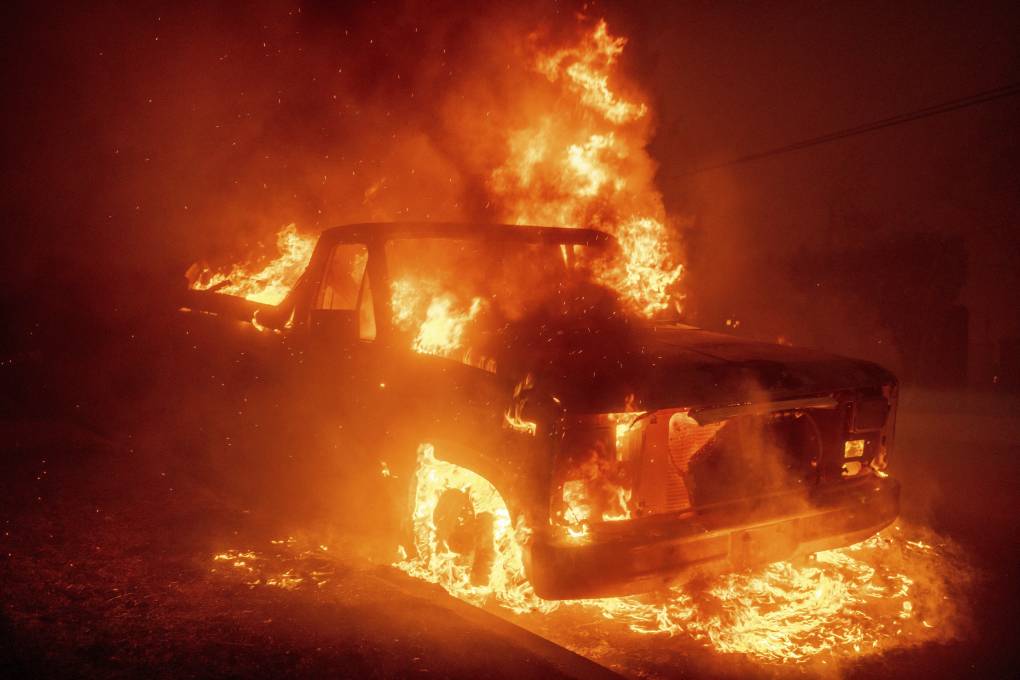
"caption": "The Eaton Fire burns a vehicle Wednesday, Jan. 8, 2025, in Altadena, Calif. ",
"credit": "Ethan Swope/AP Photo",
"altTag": null,
"description": null,
"imgSizes": {
"medium": {
"file": "https://cdn.kqed.org/wp-content/uploads/sites/10/2025/01/AP25008811327495-800x534.jpg",
"width": 800,
"height": 534,
"mimeType": "image/jpeg"
},
"large": {
"file": "https://cdn.kqed.org/wp-content/uploads/sites/10/2025/01/AP25008811327495-1020x680.jpg",
"width": 1020,
"height": 680,
"mimeType": "image/jpeg"
},
"thumbnail": {
"file": "https://cdn.kqed.org/wp-content/uploads/sites/10/2025/01/AP25008811327495-160x107.jpg",
"width": 160,
"height": 107,
"mimeType": "image/jpeg"
},
"1536x1536": {
"file": "https://cdn.kqed.org/wp-content/uploads/sites/10/2025/01/AP25008811327495-1536x1025.jpg",
"width": 1536,
"height": 1025,
"mimeType": "image/jpeg"
},
"2048x2048": {
"file": "https://cdn.kqed.org/wp-content/uploads/sites/10/2025/01/AP25008811327495-2048x1366.jpg",
"width": 2048,
"height": 1366,
"mimeType": "image/jpeg"
},
"post-thumbnail": {
"file": "https://cdn.kqed.org/wp-content/uploads/sites/10/2025/01/AP25008811327495-672x372.jpg",
"width": 672,
"height": 372,
"mimeType": "image/jpeg"
},
"twentyfourteen-full-width": {
"file": "https://cdn.kqed.org/wp-content/uploads/sites/10/2025/01/AP25008811327495-1038x576.jpg",
"width": 1038,
"height": 576,
"mimeType": "image/jpeg"
},
"full-width": {
"file": "https://cdn.kqed.org/wp-content/uploads/sites/10/2025/01/AP25008811327495-1920x1281.jpg",
"width": 1920,
"height": 1281,
"mimeType": "image/jpeg"
},
"kqedFullSize": {
"file": "https://cdn.kqed.org/wp-content/uploads/sites/10/2025/01/AP25008811327495-scaled.jpg",
"width": 2560,
"height": 1708
}
},
"isLoading": false,
"fetchFailed": false
},
"news_12020724": {
"type": "attachments",
"id": "news_12020724",
"meta": {
"index": "attachments_1716263798",
"site": "news",
"id": "12020724",
"found": true
},
"title": "APTOPIX California Wildfires",
"publishDate": 1736298142,
"status": "inherit",
"parent": 12020721,
"modified": 1736298191,
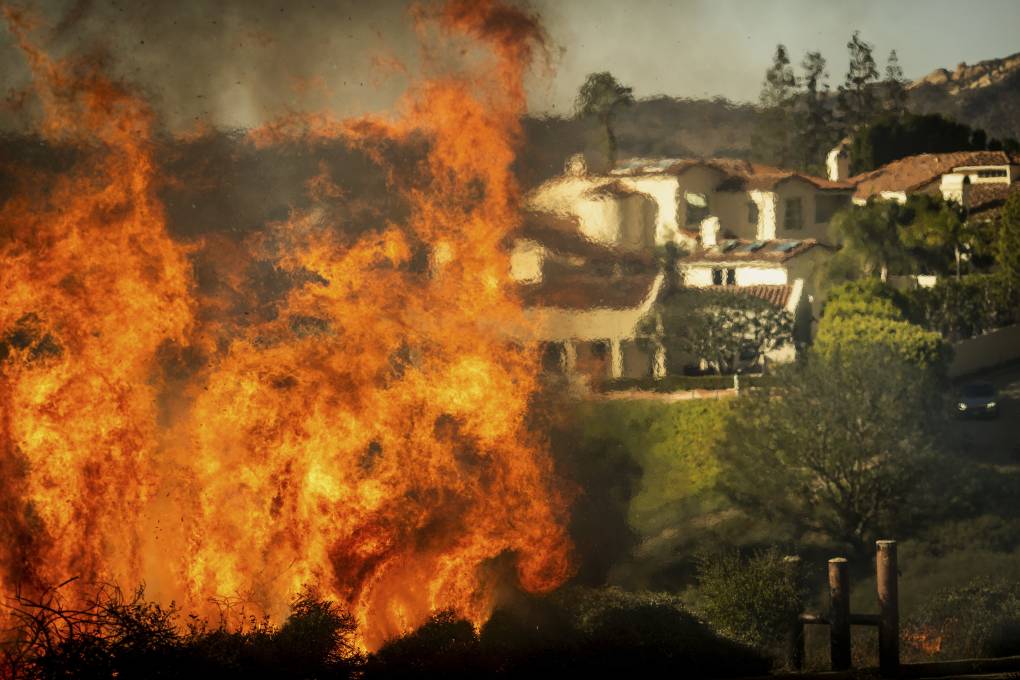
"caption": "Flames rise as the Palisades Fire advances on homes in the Pacific Palisades neighborhood of Los Angeles, Tuesday, Jan. 7, 2025. ",
"credit": "Ethan Swope/AP Photo",
"altTag": null,
"description": null,
"imgSizes": {
"medium": {
"file": "https://cdn.kqed.org/wp-content/uploads/sites/10/2025/01/AP25007853107667-800x533.jpg",
"width": 800,
"height": 533,
"mimeType": "image/jpeg"
},
"large": {
"file": "https://cdn.kqed.org/wp-content/uploads/sites/10/2025/01/AP25007853107667-1020x680.jpg",
"width": 1020,
"height": 680,
"mimeType": "image/jpeg"
},
"thumbnail": {
"file": "https://cdn.kqed.org/wp-content/uploads/sites/10/2025/01/AP25007853107667-160x107.jpg",
"width": 160,
"height": 107,
"mimeType": "image/jpeg"
},
"1536x1536": {
"file": "https://cdn.kqed.org/wp-content/uploads/sites/10/2025/01/AP25007853107667-1536x1024.jpg",
"width": 1536,
"height": 1024,
"mimeType": "image/jpeg"
},
"2048x2048": {
"file": "https://cdn.kqed.org/wp-content/uploads/sites/10/2025/01/AP25007853107667-2048x1365.jpg",
"width": 2048,
"height": 1365,
"mimeType": "image/jpeg"
},
"post-thumbnail": {
"file": "https://cdn.kqed.org/wp-content/uploads/sites/10/2025/01/AP25007853107667-672x372.jpg",
"width": 672,
"height": 372,
"mimeType": "image/jpeg"
},
"twentyfourteen-full-width": {
"file": "https://cdn.kqed.org/wp-content/uploads/sites/10/2025/01/AP25007853107667-1038x576.jpg",
"width": 1038,
"height": 576,
"mimeType": "image/jpeg"
},
"full-width": {
"file": "https://cdn.kqed.org/wp-content/uploads/sites/10/2025/01/AP25007853107667-1920x1280.jpg",
"width": 1920,
"height": 1280,
"mimeType": "image/jpeg"
},
"kqedFullSize": {
"file": "https://cdn.kqed.org/wp-content/uploads/sites/10/2025/01/AP25007853107667-scaled.jpg",
"width": 2560,
"height": 1707
}
},
"isLoading": false,
"fetchFailed": false
},
"news_12017772": {
"type": "attachments",
"id": "news_12017772",
"meta": {
"index": "attachments_1716263798",
"site": "news",
"id": "12017772",
"found": true
},
"title": "FIRE_ESCAPE_SNAP-SQ",
"publishDate": 1733954185,
"status": "inherit",
"parent": 12017770,
"modified": 1733966906,
"caption": "“Fire Escape” is a new podcast series by Snap Studies at KQED and Wondery. ",
"credit": null,
"altTag": null,
"description": null,
"imgSizes": {
"medium": {
"file": "https://cdn.kqed.org/wp-content/uploads/sites/10/2024/12/FIRE_ESCAPE_SNAP-SQ-800x800.png",
"width": 800,
"height": 800,
"mimeType": "image/png"
},
"large": {
"file": "https://cdn.kqed.org/wp-content/uploads/sites/10/2024/12/FIRE_ESCAPE_SNAP-SQ-1020x1020.png",
"width": 1020,
"height": 1020,
"mimeType": "image/png"
},
"thumbnail": {
"file": "https://cdn.kqed.org/wp-content/uploads/sites/10/2024/12/FIRE_ESCAPE_SNAP-SQ-160x160.png",
"width": 160,
"height": 160,
"mimeType": "image/png"
},
"post-thumbnail": {
"file": "https://cdn.kqed.org/wp-content/uploads/sites/10/2024/12/FIRE_ESCAPE_SNAP-SQ-672x372.png",
"width": 672,
"height": 372,
"mimeType": "image/png"
},
"twentyfourteen-full-width": {
"file": "https://cdn.kqed.org/wp-content/uploads/sites/10/2024/12/FIRE_ESCAPE_SNAP-SQ-1038x576.png",
"width": 1038,
"height": 576,
"mimeType": "image/png"
},
"kqedFullSize": {
"file": "https://cdn.kqed.org/wp-content/uploads/sites/10/2024/12/FIRE_ESCAPE_SNAP-SQ.png",
"width": 1400,
"height": 1400
}
},
"isLoading": false,
"fetchFailed": false
},
"news_12017411": {
"type": "attachments",
"id": "news_12017411",
"meta": {
"index": "attachments_1716263798",
"site": "news",
"id": "12017411",
"found": true
},
"title": "102924-BILINGUAL-RECOVERY-LV_25",
"publishDate": 1733852766,
"status": "inherit",
"parent": 12017403,
"modified": 1733852807,
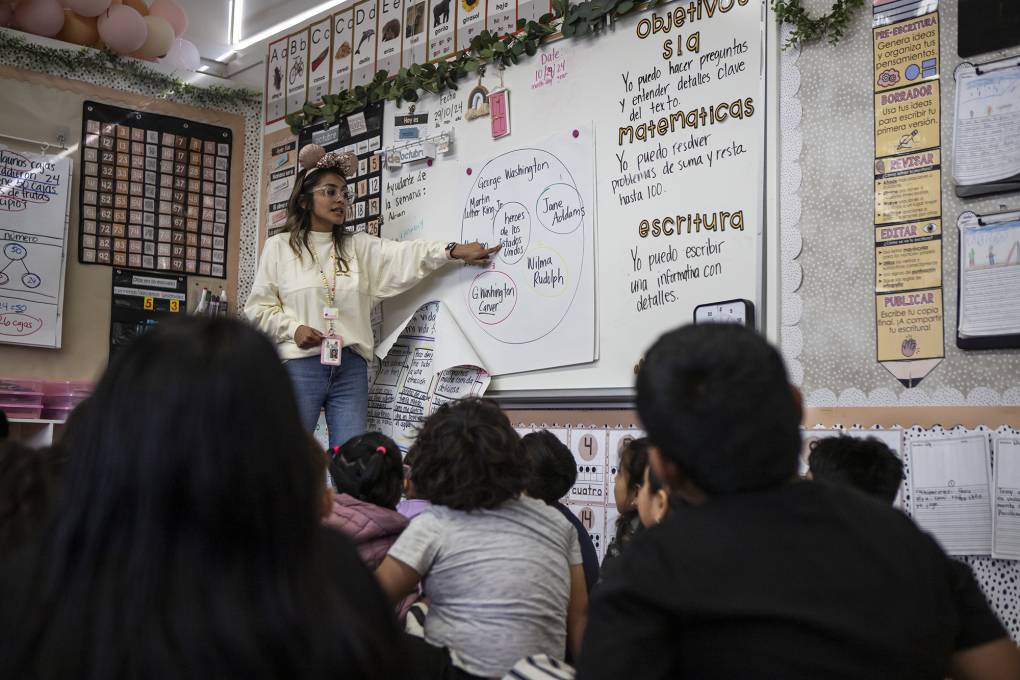
"caption": "Students discuss American heroes in their Spanish language class at Washington Elementary School in Madera on Oct. 29, 2024. The whole school is dual language. ",
"credit": "Photo by Larry Valenzuela, CalMatters/CatchLight Local",
"altTag": "bilingual education",
"description": null,
"imgSizes": {
"medium": {
"file": "https://cdn.kqed.org/wp-content/uploads/sites/10/2024/12/102924-BILINGUAL-RECOVERY-LV_25-800x533.jpg",
"width": 800,
"height": 533,
"mimeType": "image/jpeg"
},
"large": {
"file": "https://cdn.kqed.org/wp-content/uploads/sites/10/2024/12/102924-BILINGUAL-RECOVERY-LV_25-1020x680.jpg",
"width": 1020,
"height": 680,
"mimeType": "image/jpeg"
},
"thumbnail": {
"file": "https://cdn.kqed.org/wp-content/uploads/sites/10/2024/12/102924-BILINGUAL-RECOVERY-LV_25-160x107.jpg",
"width": 160,
"height": 107,
"mimeType": "image/jpeg"
},
"1536x1536": {
"file": "https://cdn.kqed.org/wp-content/uploads/sites/10/2024/12/102924-BILINGUAL-RECOVERY-LV_25-1536x1024.jpg",
"width": 1536,
"height": 1024,
"mimeType": "image/jpeg"
},
"post-thumbnail": {
"file": "https://cdn.kqed.org/wp-content/uploads/sites/10/2024/12/102924-BILINGUAL-RECOVERY-LV_25-672x372.jpg",
"width": 672,
"height": 372,
"mimeType": "image/jpeg"
},
"twentyfourteen-full-width": {
"file": "https://cdn.kqed.org/wp-content/uploads/sites/10/2024/12/102924-BILINGUAL-RECOVERY-LV_25-1038x576.jpg",
"width": 1038,
"height": 576,
"mimeType": "image/jpeg"
},
"full-width": {
"file": "https://cdn.kqed.org/wp-content/uploads/sites/10/2024/12/102924-BILINGUAL-RECOVERY-LV_25-1920x1280.jpg",
"width": 1920,
"height": 1280,
"mimeType": "image/jpeg"
},
"kqedFullSize": {
"file": "https://cdn.kqed.org/wp-content/uploads/sites/10/2024/12/102924-BILINGUAL-RECOVERY-LV_25.jpg",
"width": 2000,
"height": 1333
}
},
"isLoading": false,
"fetchFailed": false
},
"news_12016419": {
"type": "attachments",
"id": "news_12016419",
"meta": {
"index": "attachments_1716263798",
"site": "news",
"id": "12016419",
"found": true
},
"title": "101724_PGE-Underground-Cables_MG_CM_16",
"publishDate": 1733252131,
"status": "inherit",
"parent": 12016417,
"modified": 1733252143,
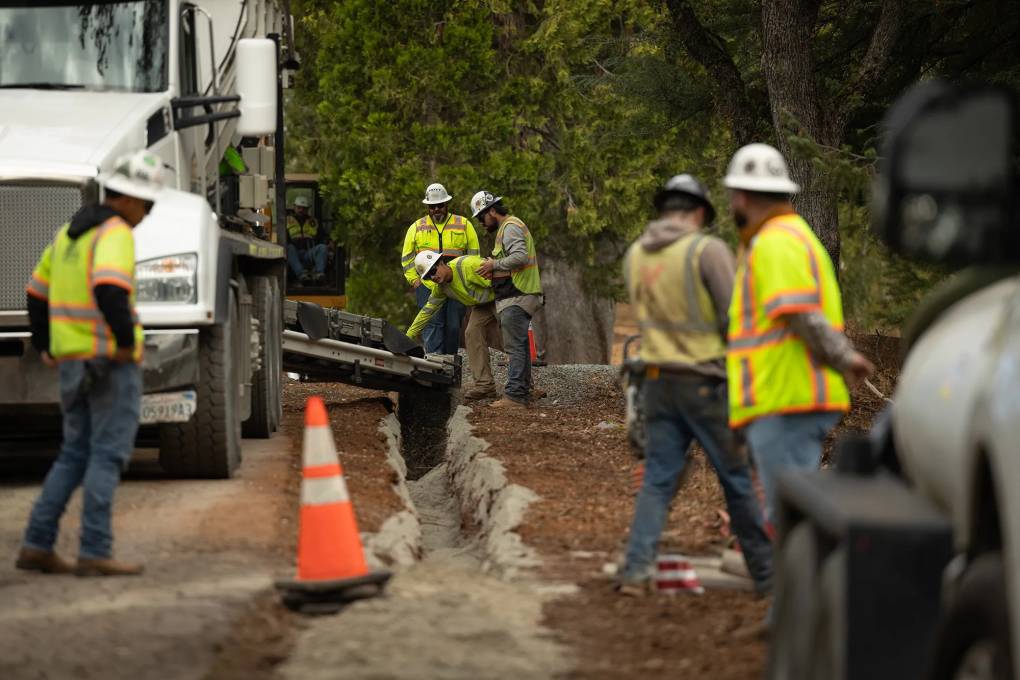
"caption": "Contractors with PG&E work in a trench to lay underground electric cables in Placer County on Oct. 17, 2024. Burying lines and other wildfire prevention projects have raised the price of electricity in California. Photo by Miguel Gutierrez Jr., CalMatters\n",
"credit": null,
"altTag": null,
"description": null,
"imgSizes": {
"medium": {
"file": "https://cdn.kqed.org/wp-content/uploads/sites/10/2024/12/101724_PGE-Underground-Cables_MG_CM_16-800x533.jpg",
"width": 800,
"height": 533,
"mimeType": "image/jpeg"
},
"large": {
"file": "https://cdn.kqed.org/wp-content/uploads/sites/10/2024/12/101724_PGE-Underground-Cables_MG_CM_16-1020x680.jpg",
"width": 1020,
"height": 680,
"mimeType": "image/jpeg"
},
"thumbnail": {
"file": "https://cdn.kqed.org/wp-content/uploads/sites/10/2024/12/101724_PGE-Underground-Cables_MG_CM_16-160x107.jpg",
"width": 160,
"height": 107,
"mimeType": "image/jpeg"
},
"1536x1536": {
"file": "https://cdn.kqed.org/wp-content/uploads/sites/10/2024/12/101724_PGE-Underground-Cables_MG_CM_16-1536x1024.jpg",
"width": 1536,
"height": 1024,
"mimeType": "image/jpeg"
},
"post-thumbnail": {
"file": "https://cdn.kqed.org/wp-content/uploads/sites/10/2024/12/101724_PGE-Underground-Cables_MG_CM_16-672x372.jpg",
"width": 672,
"height": 372,
"mimeType": "image/jpeg"
},
"twentyfourteen-full-width": {
"file": "https://cdn.kqed.org/wp-content/uploads/sites/10/2024/12/101724_PGE-Underground-Cables_MG_CM_16-1038x576.jpg",
"width": 1038,
"height": 576,
"mimeType": "image/jpeg"
},
"full-width": {
"file": "https://cdn.kqed.org/wp-content/uploads/sites/10/2024/12/101724_PGE-Underground-Cables_MG_CM_16-1920x1280.jpg",
"width": 1920,
"height": 1280,
"mimeType": "image/jpeg"
},
"kqedFullSize": {
"file": "https://cdn.kqed.org/wp-content/uploads/sites/10/2024/12/101724_PGE-Underground-Cables_MG_CM_16.jpg",
"width": 2000,
"height": 1333
}
},
"isLoading": false,
"fetchFailed": false
},
"news_12016119": {
"type": "attachments",
"id": "news_12016119",
"meta": {
"index": "attachments_1716263798",
"site": "news",
"id": "12016119",
"found": true
},
"title": "Smoke from the wildfire rises up from the mountains in",
"publishDate": 1732736105,
"status": "inherit",
"parent": 0,
"modified": 1732739810,
"caption": "Smoke from the Sites Fire rises up from the mountains in Colusa County on June 19, 2024. ",
"credit": "Michael Ho Wai Lee/SOPA Images/LightRocket via Getty Images",
"altTag": null,
"description": null,
"imgSizes": {
"medium": {
"file": "https://cdn.kqed.org/wp-content/uploads/sites/10/2024/11/GettyImages-2158001497-800x533.jpg",
"width": 800,
"height": 533,
"mimeType": "image/jpeg"
},
"large": {
"file": "https://cdn.kqed.org/wp-content/uploads/sites/10/2024/11/GettyImages-2158001497-1020x680.jpg",
"width": 1020,
"height": 680,
"mimeType": "image/jpeg"
},
"thumbnail": {
"file": "https://cdn.kqed.org/wp-content/uploads/sites/10/2024/11/GettyImages-2158001497-160x107.jpg",
"width": 160,
"height": 107,
"mimeType": "image/jpeg"
},
"1536x1536": {
"file": "https://cdn.kqed.org/wp-content/uploads/sites/10/2024/11/GettyImages-2158001497-1536x1024.jpg",
"width": 1536,
"height": 1024,
"mimeType": "image/jpeg"
},
"post-thumbnail": {
"file": "https://cdn.kqed.org/wp-content/uploads/sites/10/2024/11/GettyImages-2158001497-672x372.jpg",
"width": 672,
"height": 372,
"mimeType": "image/jpeg"
},
"twentyfourteen-full-width": {
"file": "https://cdn.kqed.org/wp-content/uploads/sites/10/2024/11/GettyImages-2158001497-1038x576.jpg",
"width": 1038,
"height": 576,
"mimeType": "image/jpeg"
},
"full-width": {
"file": "https://cdn.kqed.org/wp-content/uploads/sites/10/2024/11/GettyImages-2158001497-1920x1280.jpg",
"width": 1920,
"height": 1280,
"mimeType": "image/jpeg"
},
"kqedFullSize": {
"file": "https://cdn.kqed.org/wp-content/uploads/sites/10/2024/11/GettyImages-2158001497.jpg",
"width": 2000,
"height": 1333
}
},
"isLoading": false,
"fetchFailed": false
},
"news_12010728": {
"type": "attachments",
"id": "news_12010728",
"meta": {
"index": "attachments_1716263798",
"site": "news",
"id": "12010728",
"found": true
},
"title": "004_BoulderCreek_BigBasinRedwoods_08172021_qed",
"publishDate": 1729710255,
"status": "inherit",
"parent": 12010708,
"modified": 1729710284,
"caption": "New growth on trees in Big Basin Redwoods State Park in Boulder Creek on August 17, 2021, one year after the CZU Lightning Complex wildfire swept through the area.",
"credit": "Beth LaBerge/KQED",
"altTag": null,
"description": null,
"imgSizes": {
"medium": {
"file": "https://cdn.kqed.org/wp-content/uploads/sites/10/2024/10/004_BoulderCreek_BigBasinRedwoods_08172021_qed-800x533.jpg",
"width": 800,
"height": 533,
"mimeType": "image/jpeg"
},
"large": {
"file": "https://cdn.kqed.org/wp-content/uploads/sites/10/2024/10/004_BoulderCreek_BigBasinRedwoods_08172021_qed-1020x680.jpg",
"width": 1020,
"height": 680,
"mimeType": "image/jpeg"
},
"thumbnail": {
"file": "https://cdn.kqed.org/wp-content/uploads/sites/10/2024/10/004_BoulderCreek_BigBasinRedwoods_08172021_qed-160x107.jpg",
"width": 160,
"height": 107,
"mimeType": "image/jpeg"
},
"1536x1536": {
"file": "https://cdn.kqed.org/wp-content/uploads/sites/10/2024/10/004_BoulderCreek_BigBasinRedwoods_08172021_qed-1536x1024.jpg",
"width": 1536,
"height": 1024,
"mimeType": "image/jpeg"
},
"post-thumbnail": {
"file": "https://cdn.kqed.org/wp-content/uploads/sites/10/2024/10/004_BoulderCreek_BigBasinRedwoods_08172021_qed-672x372.jpg",
"width": 672,
"height": 372,
"mimeType": "image/jpeg"
},
"twentyfourteen-full-width": {
"file": "https://cdn.kqed.org/wp-content/uploads/sites/10/2024/10/004_BoulderCreek_BigBasinRedwoods_08172021_qed-1038x576.jpg",
"width": 1038,
"height": 576,
"mimeType": "image/jpeg"
},
"full-width": {
"file": "https://cdn.kqed.org/wp-content/uploads/sites/10/2024/10/004_BoulderCreek_BigBasinRedwoods_08172021_qed-1920x1280.jpg",
"width": 1920,
"height": 1280,
"mimeType": "image/jpeg"
},
"kqedFullSize": {
"file": "https://cdn.kqed.org/wp-content/uploads/sites/10/2024/10/004_BoulderCreek_BigBasinRedwoods_08172021_qed.jpg",
"width": 2000,
"height": 1333
}
},
"isLoading": false,
"fetchFailed": false
},
"news_12010222": {
"type": "attachments",
"id": "news_12010222",
"meta": {
"index": "attachments_1716263798",
"site": "news",
"id": "12010222",
"found": true
},
"title": "A structure damaged by the Keller Fire in Oakland on Oct. 18, 2024.",
"publishDate": 1729296351,
"status": "inherit",
"parent": 0,
"modified": 1729296688,
"caption": "A structure that was damaged by the Keller Fire in Oakland on Oct. 18, 2024.",
"credit": "Martin do Nascimento/KQED",
"altTag": null,
"description": null,
"imgSizes": {
"medium": {
"file": "https://cdn.kqed.org/wp-content/uploads/sites/10/2024/10/241018-KELLER-FIRE-MD-03-KQED-800x533.jpg",
"width": 800,
"height": 533,
"mimeType": "image/jpeg"
},
"large": {
"file": "https://cdn.kqed.org/wp-content/uploads/sites/10/2024/10/241018-KELLER-FIRE-MD-03-KQED-1020x680.jpg",
"width": 1020,
"height": 680,
"mimeType": "image/jpeg"
},
"thumbnail": {
"file": "https://cdn.kqed.org/wp-content/uploads/sites/10/2024/10/241018-KELLER-FIRE-MD-03-KQED-160x107.jpg",
"width": 160,
"height": 107,
"mimeType": "image/jpeg"
},
"1536x1536": {
"file": "https://cdn.kqed.org/wp-content/uploads/sites/10/2024/10/241018-KELLER-FIRE-MD-03-KQED-1536x1024.jpg",
"width": 1536,
"height": 1024,
"mimeType": "image/jpeg"
},
"post-thumbnail": {
"file": "https://cdn.kqed.org/wp-content/uploads/sites/10/2024/10/241018-KELLER-FIRE-MD-03-KQED-672x372.jpg",
"width": 672,
"height": 372,
"mimeType": "image/jpeg"
},
"twentyfourteen-full-width": {
"file": "https://cdn.kqed.org/wp-content/uploads/sites/10/2024/10/241018-KELLER-FIRE-MD-03-KQED-1038x576.jpg",
"width": 1038,
"height": 576,
"mimeType": "image/jpeg"
},
"full-width": {
"file": "https://cdn.kqed.org/wp-content/uploads/sites/10/2024/10/241018-KELLER-FIRE-MD-03-KQED-1920x1280.jpg",
"width": 1920,
"height": 1280,
"mimeType": "image/jpeg"
},
"kqedFullSize": {
"file": "https://cdn.kqed.org/wp-content/uploads/sites/10/2024/10/241018-KELLER-FIRE-MD-03-KQED.jpg",
"width": 2000,
"height": 1333
}
},
"isLoading": false,
"fetchFailed": false
}
},
"audioPlayerReducer": {
"postId": "stream_live",
"isPaused": true,
"isPlaying": false,
"pfsActive": false,
"pledgeModalIsOpen": true,
"playerDrawerIsOpen": false,
"liveAudioPlayStartedAt": 0,
"liveAudioPlayContext": ""
},
"authorsReducer": {
"byline_news_12020765": {
"type": "authors",
"id": "byline_news_12020765",
"meta": {
"override": true
},
"slug": "byline_news_12020765",
"name": "John Seewer, Christopher Weber and Julie Watson, AP",
"isLoading": false
},
"byline_news_12020721": {
"type": "authors",
"id": "byline_news_12020721",
"meta": {
"override": true
},
"slug": "byline_news_12020721",
"name": "Christopher Weber, AP",
"isLoading": false
},
"byline_news_12016417": {
"type": "authors",
"id": "byline_news_12016417",
"meta": {
"override": true
},
"slug": "byline_news_12016417",
"name": "Alejandro Lazo, CalMatters",
"isLoading": false
},
"kqed": {
"type": "authors",
"id": "236",
"meta": {
"index": "authors_1716337520",
"id": "236",
"found": true
},
"name": "KQED News Staff",
"firstName": "KQED News Staff",
"lastName": null,
"slug": "kqed",
"email": "faq@kqed.org",
"display_author_email": false,
"staff_mastheads": [],
"title": null,
"bio": null,
"avatar": "https://secure.gravatar.com/avatar/ef0e801a68c4c54afa9180db14084167?s=600&d=blank&r=g",
"twitter": null,
"facebook": null,
"instagram": null,
"linkedin": null,
"sites": [
{
"site": "arts",
"roles": [
"contributor"
]
},
{
"site": "news",
"roles": [
"editor"
]
},
{
"site": "futureofyou",
"roles": [
"author"
]
}
],
"headData": {
"title": "KQED News Staff | KQED",
"description": null,
"ogImgSrc": "https://secure.gravatar.com/avatar/ef0e801a68c4c54afa9180db14084167?s=600&d=blank&r=g",
"twImgSrc": "https://secure.gravatar.com/avatar/ef0e801a68c4c54afa9180db14084167?s=600&d=blank&r=g"
},
"isLoading": false,
"link": "/author/kqed"
},
"tgoldberg": {
"type": "authors",
"id": "258",
"meta": {
"index": "authors_1716337520",
"id": "258",
"found": true
},
"name": "Ted Goldberg",
"firstName": "Ted",
"lastName": "Goldberg",
"slug": "tgoldberg",
"email": "tgoldberg@kqed.org",
"display_author_email": true,
"staff_mastheads": [
"news"
],
"title": "KQED Managing Editor, News and Newscasts",
"bio": "Ted Goldberg is Managing Editor of News and Newscasts at KQED. His main reporting beat is the Bay Area's oil refining industry.\r\n\r\nPrior to joining KQED in 2014, Ted worked at CBS News and WCBS AM in New York and Bay City News and KCBS Radio in San Francisco. He graduated from Oberlin College in Ohio in 1998.",
"avatar": "https://secure.gravatar.com/avatar/30ce2e4fe89135e104f89be2394d16225b9d36c121b5b3cb7651ce642978b96f?s=600&d=blank&r=g",
"twitter": "TedrickG",
"bluesky": null,
"facebook": null,
"instagram": null,
"linkedin": null,
"sites": [
{
"site": "news",
"roles": [
"editor"
]
},
{
"site": "science",
"roles": [
"editor"
]
}
],
"headData": {
"title": "Ted Goldberg | KQED",
"description": "KQED Managing Editor, News and Newscasts",
"ogImgSrc": "https://secure.gravatar.com/avatar/30ce2e4fe89135e104f89be2394d16225b9d36c121b5b3cb7651ce642978b96f?s=600&d=blank&r=g",
"twImgSrc": "https://secure.gravatar.com/avatar/30ce2e4fe89135e104f89be2394d16225b9d36c121b5b3cb7651ce642978b96f?s=600&d=blank&r=g"
},
"isLoading": false,
"link": "/author/tgoldberg"
},
"afont": {
"type": "authors",
"id": "8637",
"meta": {
"index": "authors_1716337520",
"id": "8637",
"found": true
},
"name": "Amanda Font",
"firstName": "Amanda",
"lastName": "Font",
"slug": "afont",
"email": "afont@kqed.org",
"display_author_email": false,
"staff_mastheads": [],
"title": "KQED Contributor",
"bio": "Amanda Font is a producer on \u003cem>The Latest\u003c/em> podcast, and the host and co-producer of the series \u003cem>Audible Cosmos\u003c/em>. She has previously worked as a producer and reporter on the \u003cem>Bay Curious\u003c/em> podcast, and director of \u003cem>The California Report Magazine\u003c/em>. She grew up in the deserts of Southern California and moved north for the trees. Amanda earned a B.A. from the BECA program at San Francisco State, where she worked in the university's radio station. Amanda Font is represented by SAG-AFTRA.",
"avatar": "https://secure.gravatar.com/avatar/d9e81cf0117d5849b9cfb7ab4b1422f1?s=600&d=blank&r=g",
"twitter": null,
"facebook": null,
"instagram": null,
"linkedin": null,
"sites": [
{
"site": "news",
"roles": [
"add_users",
"create_users"
]
},
{
"site": "science",
"roles": []
},
{
"site": "forum",
"roles": [
"administrator"
]
},
{
"site": "perspectives",
"roles": [
"administrator"
]
},
{
"site": "radio",
"roles": [
"administrator"
]
}
],
"headData": {
"title": "Amanda Font | KQED",
"description": "KQED Contributor",
"ogImgSrc": "https://secure.gravatar.com/avatar/d9e81cf0117d5849b9cfb7ab4b1422f1?s=600&d=blank&r=g",
"twImgSrc": "https://secure.gravatar.com/avatar/d9e81cf0117d5849b9cfb7ab4b1422f1?s=600&d=blank&r=g"
},
"isLoading": false,
"link": "/author/afont"
},
"fjhabvala": {
"type": "authors",
"id": "8659",
"meta": {
"index": "authors_1716337520",
"id": "8659",
"found": true
},
"name": "Farida Jhabvala Romero",
"firstName": "Farida",
"lastName": "Jhabvala Romero",
"slug": "fjhabvala",
"email": "fjhabvala@kqed.org",
"display_author_email": true,
"staff_mastheads": [
"news"
],
"title": "KQED Contributor",
"bio": "Farida Jhabvala Romero is a Labor Correspondent for KQED. She previously covered immigration. Farida was \u003ca href=\"https://www.ccnma.org/2022-most-influential-latina-journalists\">named\u003c/a> one of the 10 Most Influential Latina Journalists in California in 2022 by the California Chicano News Media Association. Her work has won awards from the Society of Professional Journalists (Northern California), as well as a national and regional Edward M. Murrow Award for the collaborative reporting projects “Dangerous Air” and “Graying California.” Before joining KQED, Farida worked as a producer at Radio Bilingüe, a national public radio network. Farida earned her master’s degree in journalism from Stanford University.",
"avatar": "https://secure.gravatar.com/avatar/f9f022d4e2609741874222a1e9d41f48fea74011aa7c615eef91d9a50c944ebe?s=600&d=blank&r=g",
"twitter": "FaridaJhabvala",
"bluesky": null,
"facebook": null,
"instagram": null,
"linkedin": "https://www.linkedin.com/in/faridajhabvala/",
"sites": [
{
"site": "news",
"roles": [
"editor"
]
},
{
"site": "stateofhealth",
"roles": [
"author"
]
},
{
"site": "liveblog",
"roles": [
"author"
]
}
],
"headData": {
"title": "Farida Jhabvala Romero | KQED",
"description": "KQED Contributor",
"ogImgSrc": "https://secure.gravatar.com/avatar/f9f022d4e2609741874222a1e9d41f48fea74011aa7c615eef91d9a50c944ebe?s=600&d=blank&r=g",
"twImgSrc": "https://secure.gravatar.com/avatar/f9f022d4e2609741874222a1e9d41f48fea74011aa7c615eef91d9a50c944ebe?s=600&d=blank&r=g"
},
"isLoading": false,
"link": "/author/fjhabvala"
},
"dventon": {
"type": "authors",
"id": "11088",
"meta": {
"index": "authors_1716337520",
"id": "11088",
"found": true
},
"name": "Danielle Venton",
"firstName": "Danielle",
"lastName": "Venton",
"slug": "dventon",
"email": "dventon@kqed.org",
"display_author_email": true,
"staff_mastheads": [
"science"
],
"title": "Science reporter",
"bio": "Danielle Venton is a reporter for KQED Science. She covers wildfires, space and oceans (though she is prone to sea sickness).\r\n\r\nBefore joining KQED in 2015, Danielle was a staff reporter at KRCB in Sonoma County and a freelancer. She studied science communication at UC Santa Cruz and formerly worked at CERN in Geneva, Switzerland where she wrote about computing. She lives in Sonoma County and enjoys backpacking.",
"avatar": "https://secure.gravatar.com/avatar/37b292b5c40c8d93959c4f48d73b5286f41b7abd8588277e941905a3ed4c801c?s=600&d=blank&r=g",
"twitter": "DanielleVenton",
"bluesky": null,
"facebook": null,
"instagram": null,
"linkedin": null,
"sites": [
{
"site": "arts",
"roles": [
"contributor"
]
},
{
"site": "news",
"roles": [
"editor"
]
},
{
"site": "futureofyou",
"roles": [
"editor"
]
},
{
"site": "science",
"roles": [
"editor"
]
},
{
"site": "liveblog",
"roles": [
"contributor"
]
}
],
"headData": {
"title": "Danielle Venton | KQED",
"description": "Science reporter",
"ogImgSrc": "https://secure.gravatar.com/avatar/37b292b5c40c8d93959c4f48d73b5286f41b7abd8588277e941905a3ed4c801c?s=600&d=blank&r=g",
"twImgSrc": "https://secure.gravatar.com/avatar/37b292b5c40c8d93959c4f48d73b5286f41b7abd8588277e941905a3ed4c801c?s=600&d=blank&r=g"
},
"isLoading": false,
"link": "/author/dventon"
},
"kevinstark": {
"type": "authors",
"id": "11608",
"meta": {
"index": "authors_1716337520",
"id": "11608",
"found": true
},
"name": "Kevin Stark",
"firstName": "Kevin",
"lastName": "Stark",
"slug": "kevinstark",
"email": "kstark@kqed.org",
"display_author_email": true,
"staff_mastheads": [
"science"
],
"title": "Senior Editor",
"bio": "Kevin is a senior editor for KQED Science, managing the station's health and climate desks. His journalism career began in the Pacific Northwest, and he later became a lead reporter for the San Francisco Public Press. His work has appeared in Pacific Standard magazine, the Energy News Network, the Center for Investigative Reporting's Reveal and WBEZ in Chicago. Kevin joined KQED in 2019, and has covered issues related to energy, wildfire, climate change and the environment.",
"avatar": "https://secure.gravatar.com/avatar/365aaa4b597d3a8374f67504ff0facd323d7906e8eb4be0a7efd2427408e802c?s=600&d=blank&r=g",
"twitter": "starkkev",
"bluesky": null,
"facebook": null,
"instagram": null,
"linkedin": null,
"sites": [
{
"site": "",
"roles": [
"editor"
]
},
{
"site": "news",
"roles": [
"editor"
]
},
{
"site": "science",
"roles": [
"administrator"
]
}
],
"headData": {
"title": "Kevin Stark | KQED",
"description": "Senior Editor",
"ogImgSrc": "https://secure.gravatar.com/avatar/365aaa4b597d3a8374f67504ff0facd323d7906e8eb4be0a7efd2427408e802c?s=600&d=blank&r=g",
"twImgSrc": "https://secure.gravatar.com/avatar/365aaa4b597d3a8374f67504ff0facd323d7906e8eb4be0a7efd2427408e802c?s=600&d=blank&r=g"
},
"isLoading": false,
"link": "/author/kevinstark"
},
"kmizuguchi": {
"type": "authors",
"id": "11739",
"meta": {
"index": "authors_1716337520",
"id": "11739",
"found": true
},
"name": "Keith Mizuguchi",
"firstName": "Keith",
"lastName": "Mizuguchi",
"slug": "kmizuguchi",
"email": "kmizuguchi@kqed.org",
"display_author_email": false,
"staff_mastheads": [],
"title": "KQED Contributor",
"bio": null,
"avatar": "https://secure.gravatar.com/avatar/64d8a7de0723d4099b9fe4e915136103febcc20809abce228ee4415bcb237023?s=600&d=blank&r=g",
"twitter": null,
"bluesky": null,
"facebook": null,
"instagram": null,
"linkedin": null,
"sites": [
{
"site": "news",
"roles": [
"editor"
]
},
{
"site": "science",
"roles": [
"editor"
]
}
],
"headData": {
"title": "Keith Mizuguchi | KQED",
"description": "KQED Contributor",
"ogImgSrc": "https://secure.gravatar.com/avatar/64d8a7de0723d4099b9fe4e915136103febcc20809abce228ee4415bcb237023?s=600&d=blank&r=g",
"twImgSrc": "https://secure.gravatar.com/avatar/64d8a7de0723d4099b9fe4e915136103febcc20809abce228ee4415bcb237023?s=600&d=blank&r=g"
},
"isLoading": false,
"link": "/author/kmizuguchi"
}
},
"pagesReducer": {
"news_tag_wildfire": {
"type": "terms",
"id": "news_34684",
"meta": {
"index": "terms_1716263798",
"site": "news",
"id": "34684",
"score": 8.668915
},
"name": "wildfire",
"slug": "wildfire",
"taxonomy": "tag",
"description": null,
"featImg": null,
"headData": {
"title": "wildfire | KQED News",
"description": null,
"ogTitle": null,
"ogDescription": null,
"ogImgId": null,
"twTitle": null,
"twDescription": null,
"twImgId": null
},
"ttid": 34701,
"isLoading": false,
"title": "wildfire",
"pageMeta": {
"site": "news",
"WpPageTemplate": "page-topic-editorial",
"currentPage": 4
},
"blocks": [
{
"blockName": "kqed/post-list",
"attrs": {
"layout": "cardArticle2",
"query": "posts/news?tag=wildfire",
"seeMore": false,
"paginated": true,
"page": 4
}
},
{
"blockName": "kqed/ad"
}
]
}
},
"pfsSessionReducer": {},
"postsReducer": {
"stream_live": {
"type": "live",
"id": "stream_live",
"audioUrl": "https://streams.kqed.org/kqedradio",
"title": "Live Stream",
"excerpt": "Live Stream information currently unavailable.",
"link": "/radio",
"featImg": "",
"label": {
"name": "KQED Live",
"link": "/"
}
},
"stream_kqedNewscast": {
"type": "posts",
"id": "stream_kqedNewscast",
"audioUrl": "https://www.kqed.org/.stream/anon/radio/RDnews/newscast.mp3?_=1",
"title": "KQED Newscast",
"featImg": "",
"label": {
"name": "88.5 FM",
"link": "/"
}
},
"news_12020765": {
"type": "posts",
"id": "news_12020765",
"meta": {
"index": "posts_1716263798",
"site": "news",
"id": "12020765",
"score": null,
"sort": [
1736360383000
]
},
"guestAuthors": [],
"slug": "thousands-flee-los-angeles-area-as-wildfires-burn-out-of-control-destroying-homes",
"title": "At Least 5 Dead in Most Destructive Wildfire in LA History",
"publishDate": 1736360383,
"format": "standard",
"headTitle": "At Least 5 Dead in Most Destructive Wildfire in LA History | KQED",
"labelTerm": {
"site": "news"
},
"content": "\u003cp>\u003cem>Updated 3:15 p.m. Wednesday\u003c/em>\u003c/p>\n\u003cp>Massive wildfires roaring through \u003ca href=\"https://apnews.com/article/wildfire-southern-california-santa-ana-winds-c48661615061eb631784b666cddfa4ac\">the Los Angeles area\u003c/a> left neighborhoods in ruins Wednesday, threatening landmarks made famous by Hollywood as desperate residents escaped through flames that spread out of control with help from hurricane-force winds.\u003c/p>\n\u003cp>The \u003ca href=\"https://www.latimes.com/california/live/pacific-palisades-fire-updates-los-angeles\">Los Angeles Times reports\u003c/a> that the death toll from the fires is now up to at least 5 people with 1,100 structures burned as of 3 p.m.\u003c/p>\n\u003cp>Three major blazes that erupted just a day earlier grew substantially while winds scattered embers far and wide. The fires blanketed the city with a thick cloud of smoke and ash and destroyed homes across the metropolitan area, from the Pacific Coast inland to Pasadena, home of the famed Rose Parade.\u003c/p>\n\u003cp>One of the fires was the most destructive in the modern history of the city of LA and reduced grocery stores and banks to rubble, leveling entire blocks.\u003c/p>\n\u003cp>With thousands of firefighters already attacking the flames, the Los Angeles Fire Department put out a plea for off-duty and out-of-state firefighters to help. The winds temporarily stopped aircraft from dumping water from above until they were able to resume flights.\u003c/p>\n\u003cp>https://x.com/FremontFire/status/1877123067119563057\u003c/p>\n\u003cp>Images of the devastation showed luxurious homes that collapsed in a whirlwind of flaming embers. Swimming pools were blackened with soot, and sports cars slumped on melted tires.\u003c/p>\n\u003cp>“This morning, we woke up to a dark cloud over all of Los Angeles. But it is darkest for those who are most intimately impacted by these fires. It has been an immensely painful 24 hours,” LA County Supervisor Lindsey Horvath said.\u003c/p>\n\u003ch2>Key updates\u003c/h2>\n\u003cul>\n\u003cli>\u003cstrong>Evacuation orders\u003c/strong> issued for some densely populated areas of \u003cstrong>Santa Monica\u003c/strong>\u003c/li>\n\u003cli>Over \u003cstrong>1.5 million people\u003c/strong> in Southern California are without power\u003c/li>\n\u003cli>Already crowded hospitals now contend with medical emergencies from \u003cstrong>smoke inhalation\u003c/strong>\u003c/li>\n\u003cli>For roughly 15 hours, water systems faced four times more than normal demand, lowering water pressure and causing some fire \u003cstrong>hydrants to run dry\u003c/strong>, according to officials from the Los Angeles Department of Water and Power.\u003c/li>\n\u003cli>County officials urge residents to \u003cstrong>conserve water\u003c/strong> for firefighters\u003c/li>\n\u003cli>The \u003cstrong>LA Metro suspended fares\u003c/strong> on Wednesday after intermittent power outages made it difficult for riders to purchase and load fare cards.\u003c/li>\n\u003cli>The NHL has \u003cstrong>postponed\u003c/strong> the Los Angeles Kings’ home game against the Calgary Flames.\u003c/li>\n\u003cli>The \u003cstrong>Critics Choice Awards\u003c/strong> have been postponed until Jan. 26\u003c/li>\n\u003cli>The voting window for \u003cstrong>Academy Awards\u003c/strong> nominations has been extended\u003c/li>\n\u003cli>The Altadena Golf Course, Will Rogers’ historic home, and the iconic Reel Inn fish market off Pacific Coast Highway have been destroyed.\u003c/li>\n\u003c/ul>\n\u003cp>https://x.com/brittny_mejia/status/1877122891248025683\u003c/p>\n\u003cp>\u003ci>Wildfire locations are sourced from \u003ca href=\"https://www.fire.ca.gov/\">Cal Fire\u003c/a> and updated multiple times per day. Perimeters are based on thermal hotspot and fire activity detected by \u003ca href=\"https://www.earthdata.nasa.gov/data/instruments/viirs\">NASA’s VIIRS satellites\u003c/a>. Click on each fire icon for more incident-specific detail.\u003c/i>\u003c/p>\n\u003cp>\u003c!-- iframe plugin v.4.3 wordpress.org/plugins/iframe/ -->\u003cbr>\n\u003ciframe loading=\"lazy\" src=\"https://kqedsf.maps.arcgis.com/apps/instant/basic/index.html?appid=c7285ba9ce524bbba6c689e96d013112\" width=\"1200\" height=\"700\" scrolling=\"yes\" class=\"iframe-class\" frameborder=\"0\">\u003c/iframe>\u003cbr>\n\u003cspan style=\"font-size: 14px;\">\u003ci>Map by Matthew Green/KQED\u003c/i>\u003c/span>\u003c/p>\n\u003ch2>Like ‘living inside of a fireplace’\u003c/h2>\n\u003cp>At least 70,000 people were ordered to evacuate — a number that kept changing because evacuation orders were continually being issued, officials said. The flames marched toward highly populated and affluent neighborhoods, including Calabasas and Santa Monica, home to California’s rich and famous. \u003ca href=\"https://apnews.com/article/wildfires-los-angeles-celebrities-1337e6e1f6d631aa931684ad185310cd\">Hollywood stars\u003c/a>, including Mark Hamill, Mandy Moore and James Woods, were among those forced to flee.\u003c/p>\n\u003cp>In Palisades Village, the public library, two major grocery stores, a pair of banks and several boutiques were destroyed.\u003c/p>\n\u003cp>https://x.com/JonVigliotti/status/1877020919475884110\u003c/p>\n\u003cp>“It’s just really weird coming back to somewhere that doesn’t really exist anymore,” said Dylan Vincent, who returned to the neighborhood to retrieve some items and saw that his elementary school had burned down and that whole blocks had been flattened.\u003c/p>\n\u003cp>The fires have consumed a total of about 42 square miles (108 square kilometers) — nearly the size of the entire city of San Francisco.\u003c/p>\n\u003cp>Jennie Girardo, a 39-year-old producer and director from Pasadena, said she was alarmed when her neighbor came to check on her.\u003c/p>\n\u003cp>“When I opened my door, it smelled like I was living inside of a fireplace,” she said. “Then I also started to see the ash. And I’ve never seen that in my life. Like raining ash.”\u003c/p>\n\u003cp>[ad fullwidth]\u003c/p>\n\u003ch2>Fast-moving flames allowed little time to escape\u003c/h2>\n\u003cp>Flames moved so quickly that many barely had time to escape. Police sought shelter inside their patrol cars, and residents at a senior living center were pushed in wheelchairs and hospital beds down a street to safety in the foothills northeast of LA.\u003c/p>\n\u003cp>One of the fires ripped through the \u003ca href=\"https://apnews.com/article/california-wildfires-pacific-palisades-celebrity-20fbace2f7cd66441942674ffb5c75da\">Pacific Palisades\u003c/a> neighborhood, a hillside area along the coast dotted with celebrity homes and memorialized by the Beach Boys in their 1960s hit “Surfin’ USA.” In the \u003ca href=\"https://apnews.com/article/wildfiresafetyevacuationtipsmap-1b3bdaa19fc990bceacd60cf074eda41\">race to get to safety\u003c/a>, roadways became impassable when scores of people abandoned their vehicles and fled on foot, some toting suitcases.\u003c/p>\n\u003cp>“People were getting out of the cars with their dogs and babies and bags,” said Kelsey Trainor, who escaped while ash fell all around and fires burned on both sides of the road.\u003c/p>\n\u003cp>https://x.com/EthanSwopePhoto/status/1876938628909125720\u003c/p>\n\u003cp>Higher temperatures and less rain mean a longer fire season\u003cbr>\nCalifornia’s wildfire season typically begins in June or July and runs through October, according to the \u003ca href=\"https://wfca.com/wildfire-articles/california-fire-season-in-depth-guide/#:~:text=Fires%20are%20possible%20throughout%20the,June)%20and%20runs%20until%20October.\">Western Fire Chiefs Association\u003c/a>, but January wildfires are not unprecedented. There was one in 2022 and 10 in 2021, according to CalFire.\u003c/p>\n\u003cp>The season is beginning earlier and ending later due to rising temperatures and decreased rainfall tied to climate change, according to recent data. Rains that usually end fire season are often delayed, meaning fires can burn through the winter months, the association said.\u003c/p>\n\u003cp>Dry winds, including \u003ca href=\"https://apnews.com/article/santa-ana-winds-california-0b2c68cdc29a7c354238c6ccc09c830c\">the notorious Santa Anas\u003c/a>, have contributed to warmer-than-average temperatures in Southern California, which has not seen more than 0.1 inches (0.25 centimeters) of rain since early May.\u003c/p>\n\u003cp>The winds increased to 80 mph (129 kph) Wednesday, according to reports received by the National Weather Service, and could top 100 mph (160 kph) in mountains and foothills.\u003c/p>\n\u003ch2>Landmarks get scorched and studios suspend production\u003c/h2>\n\u003cp>President Joe Biden pledged to sign a federal emergency declaration after arriving at a Santa Monica fire station for a briefing with Gov. Gavin Newsom.\u003c/p>\n\u003cp>https://x.com/GavinNewsom/status/1877073980592390387\u003c/p>\n\u003cp>Newsom posted on X that California had deployed more than 1,400 firefighting personnel to combat the blazes. He also dispatched National Guard troops to help.\u003c/p>\n\u003cp>“We are absolutely not out of danger yet,” Los Angeles city Fire Chief Kristin M. Crowley said.\u003c/p>\n\u003cp>The fires burned through Temescal Canyon, a popular hiking area surrounded by dense neighborhoods of multimillion-dollar homes, and also jumped famous Sunset Boulevard, burning parts of the Palisades Charter High School, which has been featured in many Hollywood productions, including the 1976 horror movie “Carrie” and the TV series “Teen Wolf.”\u003c/p>\n\u003cp>Several Hollywood studios suspended production, and Universal Studios closed its theme park between Pasadena and Pacific Palisades. The Getty Villa, a campus devoted to art and culture of ancient Greece and Rome, said its structures and collection were safe.\u003c/p>\n\u003cp>As it grew, the fire burning in the Pacific Palisades became the most destructive fire in the modern history of the city of Los Angeles.\u003c/p>\n\u003cp>With an estimated 1,000 structures destroyed and the flames still growing Wednesday, it is far more destructive than the Sayre fire in 2008 that destroyed just over 600 structures, according to statistics kept by the Wildfire Alliance, a partnership between the city’s fire department and MySafe:LA. Structures refers to homes and other buildings.\u003c/p>\n\u003cp>Before that, a 1961 Bel Air fire stood for nearly half a century as the most destructive fire in the city’s history. It burned nearly 500 houses in the tony hillside enclave, including homes of actor Burt Lancaster, Zsa Zsa Gabor and other celebrities.\u003c/p>\n\u003cp>Residents were urged to limit water usage. Los Angeles Public Works Director Mark Pestrella said the city’s water systems that service homes and businesses were working effectively, but “they are not designed to fight wildfires.”\u003c/p>\n\u003cp>More than 100 schools were closed due to fire risk. Southern California Edison shut off service to thousands because of safety concerns related to high winds and fire risks. More than 1.5 million customers could face shutoffs depending on weather conditions, the utility said.\u003c/p>\n\u003cp>Several Southern California landmarks were heavily damaged, including the Reel Inn in Malibu, a seafood restaurant. Owner Teddy Leonard and her husband hope to rebuild.\u003c/p>\n\u003cp>“When you look at the grand scheme of things, as long as your family is well and everyone’s alive, you’re still winning, right?” she said.\u003c/p>\n\u003cp>\u003cem>Seewer reported from Toledo, Ohio. Watson reported from San Diego. Associated Press writers Heather Hollingsworth in Mission, Kansas; Jeff Martin in Atlanta; Janie Har in San Francisco; Hallie Golden in Seattle; Jaimie Ding and video journalist Eugene Garcia in Los Angeles; Ethan Swope in Pasadena; Brian Melley in London; Kathy McCormack in Concord, New Hampshire; Sarah Brumfield in Cockeysville, Maryland; and Tammy Webber in Detroit contributed to this report.\u003c/em>\u003c/p>\n\u003cp>\u003cem>KQED’s Brian Krans also contributed to this report.\u003c/em>\u003c/p>\n\u003cp>[ad floatright]\u003c/p>\n",
"blocks": [],
"excerpt": "Massive wildfires roaring through the Los Angeles area left neighborhoods in ruins, killing at least two people and threatening landmarks made famous by Hollywood. ",
"status": "publish",
"parent": 0,
"modified": 1736445890,
"stats": {
"hasAudio": false,
"hasVideo": false,
"hasChartOrMap": true,
"iframeSrcs": [
"https://kqedsf.maps.arcgis.com/apps/instant/basic/index.html"
],
"hasGoogleForm": false,
"hasGallery": false,
"hasHearkenModule": false,
"hasPolis": false,
"paragraphCount": 39,
"wordCount": 1550
},
"headData": {
"title": "At Least 5 Dead in Most Destructive Wildfire in LA History | KQED",
"description": "Massive wildfires roaring through the Los Angeles area left neighborhoods in ruins, killing at least two people and threatening landmarks made famous by Hollywood. ",
"ogTitle": "",
"ogDescription": "",
"ogImgId": "",
"twTitle": "",
"twDescription": "",
"twImgId": "",
"schema": {
"@context": "https://schema.org",
"@type": "NewsArticle",
"headline": "At Least 5 Dead in Most Destructive Wildfire in LA History",
"datePublished": "2025-01-08T10:19:43-08:00",
"dateModified": "2025-01-09T10:04:50-08:00",
"image": "https://cdn.kqed.org/wp-content/uploads/2020/02/KQED-OG-Image@1x.png",
"isAccessibleForFree": "True",
"publisher": {
"@type": "NewsMediaOrganization",
"@id": "https://www.kqed.org/#organization",
"name": "KQED",
"logo": "https://cdn.kqed.org/wp-content/uploads/2020/02/KQED-OG-Image@1x.png",
"url": "https://www.kqed.org",
"sameAs": [
"https://www.facebook.com/KQED",
"https://twitter.com/KQED",
"https://www.instagram.com/kqed/",
"https://www.tiktok.com/@kqedofficial",
"https://www.linkedin.com/company/kqed",
"https://www.youtube.com/channel/UCeC0IOo7i1P_61zVUWbJ4nw"
]
}
}
},
"sticky": false,
"nprByline": "John Seewer, Christopher Weber and Julie Watson, AP",
"nprStoryId": "kqed-12020765",
"excludeFromSiteSearch": "Include",
"showOnAuthorArchivePages": "No",
"articleAge": "0",
"path": "/news/12020765/thousands-flee-los-angeles-area-as-wildfires-burn-out-of-control-destroying-homes",
"audioTrackLength": null,
"parsedContent": [
{
"type": "contentString",
"content": "\u003cdiv class=\"post-body\">\u003cp>\u003cp>\u003cem>Updated 3:15 p.m. Wednesday\u003c/em>\u003c/p>\n\u003cp>Massive wildfires roaring through \u003ca href=\"https://apnews.com/article/wildfire-southern-california-santa-ana-winds-c48661615061eb631784b666cddfa4ac\">the Los Angeles area\u003c/a> left neighborhoods in ruins Wednesday, threatening landmarks made famous by Hollywood as desperate residents escaped through flames that spread out of control with help from hurricane-force winds.\u003c/p>\n\u003cp>The \u003ca href=\"https://www.latimes.com/california/live/pacific-palisades-fire-updates-los-angeles\">Los Angeles Times reports\u003c/a> that the death toll from the fires is now up to at least 5 people with 1,100 structures burned as of 3 p.m.\u003c/p>\n\u003cp>Three major blazes that erupted just a day earlier grew substantially while winds scattered embers far and wide. The fires blanketed the city with a thick cloud of smoke and ash and destroyed homes across the metropolitan area, from the Pacific Coast inland to Pasadena, home of the famed Rose Parade.\u003c/p>\n\u003cp>One of the fires was the most destructive in the modern history of the city of LA and reduced grocery stores and banks to rubble, leveling entire blocks.\u003c/p>\n\u003cp>With thousands of firefighters already attacking the flames, the Los Angeles Fire Department put out a plea for off-duty and out-of-state firefighters to help. The winds temporarily stopped aircraft from dumping water from above until they were able to resume flights.\u003c/p>\u003c/p>\u003c/div>",
"attributes": {
"named": {},
"numeric": []
}
},
{
"type": "component",
"content": "",
"name": "singleTwitterStatus",
"attributes": {
"named": {
"id": "1877123067119563057"
},
"numeric": []
}
},
{
"type": "contentString",
"content": "\u003cdiv class=\"post-body\">\u003cp>\n\u003cp>Images of the devastation showed luxurious homes that collapsed in a whirlwind of flaming embers. Swimming pools were blackened with soot, and sports cars slumped on melted tires.\u003c/p>\n\u003cp>“This morning, we woke up to a dark cloud over all of Los Angeles. But it is darkest for those who are most intimately impacted by these fires. It has been an immensely painful 24 hours,” LA County Supervisor Lindsey Horvath said.\u003c/p>\n\u003ch2>Key updates\u003c/h2>\n\u003cul>\n\u003cli>\u003cstrong>Evacuation orders\u003c/strong> issued for some densely populated areas of \u003cstrong>Santa Monica\u003c/strong>\u003c/li>\n\u003cli>Over \u003cstrong>1.5 million people\u003c/strong> in Southern California are without power\u003c/li>\n\u003cli>Already crowded hospitals now contend with medical emergencies from \u003cstrong>smoke inhalation\u003c/strong>\u003c/li>\n\u003cli>For roughly 15 hours, water systems faced four times more than normal demand, lowering water pressure and causing some fire \u003cstrong>hydrants to run dry\u003c/strong>, according to officials from the Los Angeles Department of Water and Power.\u003c/li>\n\u003cli>County officials urge residents to \u003cstrong>conserve water\u003c/strong> for firefighters\u003c/li>\n\u003cli>The \u003cstrong>LA Metro suspended fares\u003c/strong> on Wednesday after intermittent power outages made it difficult for riders to purchase and load fare cards.\u003c/li>\n\u003cli>The NHL has \u003cstrong>postponed\u003c/strong> the Los Angeles Kings’ home game against the Calgary Flames.\u003c/li>\n\u003cli>The \u003cstrong>Critics Choice Awards\u003c/strong> have been postponed until Jan. 26\u003c/li>\n\u003cli>The voting window for \u003cstrong>Academy Awards\u003c/strong> nominations has been extended\u003c/li>\n\u003cli>The Altadena Golf Course, Will Rogers’ historic home, and the iconic Reel Inn fish market off Pacific Coast Highway have been destroyed.\u003c/li>\n\u003c/ul>\u003c/p>\u003c/div>",
"attributes": {
"named": {},
"numeric": []
}
},
{
"type": "component",
"content": "",
"name": "singleTwitterStatus",
"attributes": {
"named": {
"id": "1877122891248025683"
},
"numeric": []
}
},
{
"type": "contentString",
"content": "\u003cdiv class=\"post-body\">\u003cp>\n\u003cp>\u003ci>Wildfire locations are sourced from \u003ca href=\"https://www.fire.ca.gov/\">Cal Fire\u003c/a> and updated multiple times per day. Perimeters are based on thermal hotspot and fire activity detected by \u003ca href=\"https://www.earthdata.nasa.gov/data/instruments/viirs\">NASA’s VIIRS satellites\u003c/a>. Click on each fire icon for more incident-specific detail.\u003c/i>\u003c/p>\n\u003cp>\u003c!-- iframe plugin v.4.3 wordpress.org/plugins/iframe/ -->\u003cbr>\n\u003ciframe loading=\"lazy\" src=\"https://kqedsf.maps.arcgis.com/apps/instant/basic/index.html?appid=c7285ba9ce524bbba6c689e96d013112\" width=\"1200\" height=\"700\" scrolling=\"yes\" class=\"iframe-class\" frameborder=\"0\">\u003c/iframe>\u003cbr>\n\u003cspan style=\"font-size: 14px;\">\u003ci>Map by Matthew Green/KQED\u003c/i>\u003c/span>\u003c/p>\n\u003ch2>Like ‘living inside of a fireplace’\u003c/h2>\n\u003cp>At least 70,000 people were ordered to evacuate — a number that kept changing because evacuation orders were continually being issued, officials said. The flames marched toward highly populated and affluent neighborhoods, including Calabasas and Santa Monica, home to California’s rich and famous. \u003ca href=\"https://apnews.com/article/wildfires-los-angeles-celebrities-1337e6e1f6d631aa931684ad185310cd\">Hollywood stars\u003c/a>, including Mark Hamill, Mandy Moore and James Woods, were among those forced to flee.\u003c/p>\n\u003cp>In Palisades Village, the public library, two major grocery stores, a pair of banks and several boutiques were destroyed.\u003c/p>\u003c/p>\u003c/div>",
"attributes": {
"named": {},
"numeric": []
}
},
{
"type": "component",
"content": "",
"name": "singleTwitterStatus",
"attributes": {
"named": {
"id": "1877020919475884110"
},
"numeric": []
}
},
{
"type": "contentString",
"content": "\u003cdiv class=\"post-body\">\u003cp>\n\u003cp>“It’s just really weird coming back to somewhere that doesn’t really exist anymore,” said Dylan Vincent, who returned to the neighborhood to retrieve some items and saw that his elementary school had burned down and that whole blocks had been flattened.\u003c/p>\n\u003cp>The fires have consumed a total of about 42 square miles (108 square kilometers) — nearly the size of the entire city of San Francisco.\u003c/p>\n\u003cp>Jennie Girardo, a 39-year-old producer and director from Pasadena, said she was alarmed when her neighbor came to check on her.\u003c/p>\n\u003cp>“When I opened my door, it smelled like I was living inside of a fireplace,” she said. “Then I also started to see the ash. And I’ve never seen that in my life. Like raining ash.”\u003c/p>\n\u003cp>\u003c/p>\u003c/div>",
"attributes": {
"named": {},
"numeric": []
}
},
{
"type": "component",
"content": "",
"name": "ad",
"attributes": {
"named": {
"label": "fullwidth"
},
"numeric": [
"fullwidth"
]
}
},
{
"type": "contentString",
"content": "\u003cdiv class=\"post-body\">\u003cp>\u003c/p>\n\u003ch2>Fast-moving flames allowed little time to escape\u003c/h2>\n\u003cp>Flames moved so quickly that many barely had time to escape. Police sought shelter inside their patrol cars, and residents at a senior living center were pushed in wheelchairs and hospital beds down a street to safety in the foothills northeast of LA.\u003c/p>\n\u003cp>One of the fires ripped through the \u003ca href=\"https://apnews.com/article/california-wildfires-pacific-palisades-celebrity-20fbace2f7cd66441942674ffb5c75da\">Pacific Palisades\u003c/a> neighborhood, a hillside area along the coast dotted with celebrity homes and memorialized by the Beach Boys in their 1960s hit “Surfin’ USA.” In the \u003ca href=\"https://apnews.com/article/wildfiresafetyevacuationtipsmap-1b3bdaa19fc990bceacd60cf074eda41\">race to get to safety\u003c/a>, roadways became impassable when scores of people abandoned their vehicles and fled on foot, some toting suitcases.\u003c/p>\n\u003cp>“People were getting out of the cars with their dogs and babies and bags,” said Kelsey Trainor, who escaped while ash fell all around and fires burned on both sides of the road.\u003c/p>\u003c/p>\u003c/div>",
"attributes": {
"named": {},
"numeric": []
}
},
{
"type": "component",
"content": "",
"name": "singleTwitterStatus",
"attributes": {
"named": {
"id": "1876938628909125720"
},
"numeric": []
}
},
{
"type": "contentString",
"content": "\u003cdiv class=\"post-body\">\u003cp>\n\u003cp>Higher temperatures and less rain mean a longer fire season\u003cbr>\nCalifornia’s wildfire season typically begins in June or July and runs through October, according to the \u003ca href=\"https://wfca.com/wildfire-articles/california-fire-season-in-depth-guide/#:~:text=Fires%20are%20possible%20throughout%20the,June)%20and%20runs%20until%20October.\">Western Fire Chiefs Association\u003c/a>, but January wildfires are not unprecedented. There was one in 2022 and 10 in 2021, according to CalFire.\u003c/p>\n\u003cp>The season is beginning earlier and ending later due to rising temperatures and decreased rainfall tied to climate change, according to recent data. Rains that usually end fire season are often delayed, meaning fires can burn through the winter months, the association said.\u003c/p>\n\u003cp>Dry winds, including \u003ca href=\"https://apnews.com/article/santa-ana-winds-california-0b2c68cdc29a7c354238c6ccc09c830c\">the notorious Santa Anas\u003c/a>, have contributed to warmer-than-average temperatures in Southern California, which has not seen more than 0.1 inches (0.25 centimeters) of rain since early May.\u003c/p>\n\u003cp>The winds increased to 80 mph (129 kph) Wednesday, according to reports received by the National Weather Service, and could top 100 mph (160 kph) in mountains and foothills.\u003c/p>\n\u003ch2>Landmarks get scorched and studios suspend production\u003c/h2>\n\u003cp>President Joe Biden pledged to sign a federal emergency declaration after arriving at a Santa Monica fire station for a briefing with Gov. Gavin Newsom.\u003c/p>\u003c/p>\u003c/div>",
"attributes": {
"named": {},
"numeric": []
}
},
{
"type": "component",
"content": "",
"name": "singleTwitterStatus",
"attributes": {
"named": {
"id": "1877073980592390387"
},
"numeric": []
}
},
{
"type": "contentString",
"content": "\u003cdiv class=\"post-body\">\u003cp>\n\u003cp>Newsom posted on X that California had deployed more than 1,400 firefighting personnel to combat the blazes. He also dispatched National Guard troops to help.\u003c/p>\n\u003cp>“We are absolutely not out of danger yet,” Los Angeles city Fire Chief Kristin M. Crowley said.\u003c/p>\n\u003cp>The fires burned through Temescal Canyon, a popular hiking area surrounded by dense neighborhoods of multimillion-dollar homes, and also jumped famous Sunset Boulevard, burning parts of the Palisades Charter High School, which has been featured in many Hollywood productions, including the 1976 horror movie “Carrie” and the TV series “Teen Wolf.”\u003c/p>\n\u003cp>Several Hollywood studios suspended production, and Universal Studios closed its theme park between Pasadena and Pacific Palisades. The Getty Villa, a campus devoted to art and culture of ancient Greece and Rome, said its structures and collection were safe.\u003c/p>\n\u003cp>As it grew, the fire burning in the Pacific Palisades became the most destructive fire in the modern history of the city of Los Angeles.\u003c/p>\n\u003cp>With an estimated 1,000 structures destroyed and the flames still growing Wednesday, it is far more destructive than the Sayre fire in 2008 that destroyed just over 600 structures, according to statistics kept by the Wildfire Alliance, a partnership between the city’s fire department and MySafe:LA. Structures refers to homes and other buildings.\u003c/p>\n\u003cp>Before that, a 1961 Bel Air fire stood for nearly half a century as the most destructive fire in the city’s history. It burned nearly 500 houses in the tony hillside enclave, including homes of actor Burt Lancaster, Zsa Zsa Gabor and other celebrities.\u003c/p>\n\u003cp>Residents were urged to limit water usage. Los Angeles Public Works Director Mark Pestrella said the city’s water systems that service homes and businesses were working effectively, but “they are not designed to fight wildfires.”\u003c/p>\n\u003cp>More than 100 schools were closed due to fire risk. Southern California Edison shut off service to thousands because of safety concerns related to high winds and fire risks. More than 1.5 million customers could face shutoffs depending on weather conditions, the utility said.\u003c/p>\n\u003cp>Several Southern California landmarks were heavily damaged, including the Reel Inn in Malibu, a seafood restaurant. Owner Teddy Leonard and her husband hope to rebuild.\u003c/p>\n\u003cp>“When you look at the grand scheme of things, as long as your family is well and everyone’s alive, you’re still winning, right?” she said.\u003c/p>\n\u003cp>\u003cem>Seewer reported from Toledo, Ohio. Watson reported from San Diego. Associated Press writers Heather Hollingsworth in Mission, Kansas; Jeff Martin in Atlanta; Janie Har in San Francisco; Hallie Golden in Seattle; Jaimie Ding and video journalist Eugene Garcia in Los Angeles; Ethan Swope in Pasadena; Brian Melley in London; Kathy McCormack in Concord, New Hampshire; Sarah Brumfield in Cockeysville, Maryland; and Tammy Webber in Detroit contributed to this report.\u003c/em>\u003c/p>\n\u003cp>\u003cem>KQED’s Brian Krans also contributed to this report.\u003c/em>\u003c/p>\n\u003cp>\u003c/p>\u003c/div>",
"attributes": {
"named": {},
"numeric": []
}
},
{
"type": "component",
"content": "",
"name": "ad",
"attributes": {
"named": {
"label": "floatright"
},
"numeric": [
"floatright"
]
}
},
{
"type": "contentString",
"content": "\u003cdiv class=\"post-body\">\u003cp>\u003c/p>\n\u003c/div>\u003c/p>",
"attributes": {
"named": {},
"numeric": []
}
}
],
"link": "/news/12020765/thousands-flee-los-angeles-area-as-wildfires-burn-out-of-control-destroying-homes",
"authors": [
"byline_news_12020765"
],
"categories": [
"news_31795",
"news_34165",
"news_8"
],
"tags": [
"news_27626",
"news_34684"
],
"featImg": "news_12020979",
"label": "news"
},
"news_12020721": {
"type": "posts",
"id": "news_12020721",
"meta": {
"index": "posts_1716263798",
"site": "news",
"id": "12020721",
"score": null,
"sort": [
1736298676000
]
},
"guestAuthors": [],
"slug": "pacific-palisades-wildfire-in-southern-california-destroys-many-structures-newsom-says",
"title": "Pacific Palisades Wildfire in Southern California Destroys 'Many Structures,' Newsom says",
"publishDate": 1736298676,
"format": "standard",
"headTitle": "Pacific Palisades Wildfire in Southern California Destroys ‘Many Structures,’ Newsom says | KQED",
"labelTerm": {
"site": "news"
},
"content": "\u003cp>Firefighters scrambled to corral a fast-moving wildfire in the Los Angeles hillsides dotted with celebrity homes as a fierce windstorm hit Southern California on Tuesday, fanning the blaze seen for miles as scores of residents abandoned their cars and fled on foot to safety with roads blocked.\u003c/p>\n\u003cp>About 30,000 residents are under evacuation orders and more than 13,000 structures are under threat, said Kristin Crowley, fire chief of the LA Fire Department.\u003c/p>\n\u003cp>California Gov. Gavin Newsom said he saw “many structures already destroyed.” Officials did not give an exact number of structures damaged or destroyed in the blaze.\u003c/p>\n\u003cp>The cause of the fire was not immediately known, and no injuries had been reported, officials said at a news conference Tuesday afternoon.\u003c/p>\n\u003cp>Newsom warned residents across Southern California not to assume they are out of danger, saying the worst of the winds are expected between 10 p.m. Tuesday and 5 a.m. Wednesday.\u003c/p>\n\u003cp>[ad fullwidth]\u003c/p>\n\u003cp>Forecasters predicted the windstorm would last for days, producing isolated gusts that could top 100 mph (160 kph) in mountains and foothills — including in areas that haven’t seen substantial rain in months. The National Weather service said it could be the strongest \u003ca href=\"https://apnews.com/article/california-wildfire-risk-winds-143f37204f2db129444818a9adb1ce0f\">Santa Ana windstorm\u003c/a> in more than a decade across Los Angeles and Ventura counties.\u003c/p>\n\u003cp>Roughly half a million utility customers were at risk of having their \u003ca href=\"https://apnews.com/article/wildfires-utilities-fires-weather-california-48e0e49b25ae819cfd70b2ce2ea1d29e\">power shut off\u003c/a> to reduce the risk of equipment sparking blazes.\u003c/p>\n\u003cp>In the Pacific Palisades neighborhood in western Los Angeles, a fire swiftly consumed nearly 2 square miles (just over 5 square kilometers) of land, sending up a dramatic plume of smoke visible across the city. Residents in Venice Beach, some 6 miles (10 kilometers) away, reported seeing the flames. It was one of several blazes across the area.\u003c/p>\n\u003cp>Sections of Interstate 10 and the scenic Pacific Coast Highway were closed to all non-essential traffic to aid in evacuation efforts. But other roads were blocked. Some residents jumped out of their vehicles to get out of danger and waited to be picked up.\u003c/p>\n\u003cp>Resident Kelsey Trainor said the only road in and out of her neighborhood was completely blocked. Ash fell all around them while fires burned on both sides of the road.\u003c/p>\n\u003cp>“We looked across and the fire had jumped from one side of the road to the other side of the road,” Trainor said. “People were getting out of the cars with their dogs and babies and bags, they were crying and screaming. The road was just blocked, like full-on blocked for an hour.”\u003c/p>\n\u003cp>An Associated Press journalist saw a roof and chimney of one home in flames and another residence where the walls were burning. The neighborhood that borders Malibu about 20 miles (32 kilometers) west of downtown LA includes hillside streets of tightly packed homes along winding roads nestled against the Santa Monica Mountains and stretches down to beaches along the Pacific Ocean.\u003c/p>\n\u003cp>Long-time Palisades resident Will Adams said he was down in town when the fires started and immediately went to pick his two kids up from St. Matthews Parish’s school, which is now in the line of the fire.\u003c/p>\n\u003cp>His wife, who was at home, was driving down the main evacuation road for residents in the upper part of the neighborhood when embers flew into her car.\u003c/p>\n\u003cp>“She vacated her car and left it running,” Adams said. She and many other residents walked down toward the ocean until it was safe.\u003c/p>\n\u003cp>[aside tag='wildfire' label='More Wildfire Coverage']\u003c/p>\n\u003cp>Adams said he had never seen a fire this low into the neighborhood in the 56 years he’s lived there.\u003c/p>\n\u003cp>“It is crazy, it’s everywhere, in all the nooks and crannies of the Palisades. One home’s safe, the other one’s up in flames,” Adams said.\u003c/p>\n\u003cp>He watched as the sky turned brown and then black as homes started burning. He could hear loud popping and bangs “like small explosions,” which he said he believes were the transformers exploding on the electric poles.\u003c/p>\n\u003cp>Actor James Woods posted footage of flames burning through bushes and past palm trees on a hill near his home. The towering orange flames billowed among the landscaped yards between the homes.\u003c/p>\n\u003cp>“Standing in my driveway, getting ready to evacuate,” Woods said in the short video on X.\u003c/p>\n\u003cp>Actor Steve Guttenberg, who lives in the Pacific Palisades, urged people who abandoned their cars to leave their keys behind so they could be moved to make way for fire trucks.\u003c/p>\n\u003cp>“This is not a parking lot,” Guttenberg told KTLA. “I have friends up there and they can’t evacuate … I’m walking up there as far as I can moving cars.”\u003c/p>\n\u003cp>The erratic weather caused President Joe Biden to cancel plans to travel to inland Riverside County, California, where he was to announce the establishment of \u003ca href=\"https://apnews.com/article/biden-national-monuments-california-chuckwalla-sattitla-98bc0f78529846b93fcaab0669ae3668\">two new national monuments\u003c/a> in the state. Biden will deliver his remarks in Los Angeles instead.\u003c/p>\n\u003cp>The Los Angeles Unified School District said it was temporarily relocating students from three campuses in the Pacific Palisades area due to the fire.\u003c/p>\n\u003cp>Amazon and MGM Studios canceled a premiere of Jennifer Lopez’s new film “Unstoppable” due to the fires and high winds.\u003c/p>\n\u003cp>The winds will act as an “atmospheric blow-dryer” for vegetation, bringing a long period of fire risk, said Daniel Swain, a climate scientist with the University of California, Los Angeles and the National Center for Atmospheric Research.\u003c/p>\n\u003cp>“We really haven’t seen a season as dry as this one follow a season as wet as the previous one,” Swain said Monday.\u003c/p>\n\u003cp>Recent dry winds, including the \u003ca href=\"https://apnews.com/article/santa-ana-winds-california-0b2c68cdc29a7c354238c6ccc09c830c#:~:text=Santa%20Anas%20are%20dry%2C%20warm,the%20Pacific%20into%20the%20region.\">notorious Santa Anas\u003c/a>, have contributed to warmer-than-average temperatures in Southern California, where there’s been very little rain so far this season.\u003c/p>\n\u003cp>Southern California hasn’t seen more than 0.1 inches (0.25 centimeters) of rain since early May. Much of the region has fallen into moderate drought conditions, according to the U.S. Drought Monitor. Meanwhile, up north, there have been \u003ca href=\"https://apnews.com/article/weather-climate-california-c375a777c4d358ad386ef98b5071c8bc\">multiple drenching storms\u003c/a>.\u003c/p>\n\u003cp>Areas where gusts could create extreme fire conditions include the charred footprint of last month’s wind-driven \u003ca href=\"https://apnews.com/article/wildfire-malibu-evacuation-pepperdine-university-ef9f6ea11815be64feaf2e5e5eb7588c\">Franklin Fire\u003c/a>, which damaged or destroyed 48 structures, mostly homes, in and around Malibu.\u003c/p>\n\u003cp>[ad floatright]\u003c/p>\n\u003cp>\u003cem>Associated Press writers Jaimie Ding in Los Angeles contributed to this report, Julie Watson in San Diego, and videojournalist Eugene Garcia in Los Angeles contributed.\u003c/em>\u003c/p>\n\n",
"blocks": [],
"excerpt": "Firefighters are scrambling to corral flames churning along hillsides in Los Angeles as winds have gained strength across Southern California.",
"status": "publish",
"parent": 0,
"modified": 1736298676,
"stats": {
"hasAudio": false,
"hasVideo": false,
"hasChartOrMap": false,
"iframeSrcs": [],
"hasGoogleForm": false,
"hasGallery": false,
"hasHearkenModule": false,
"hasPolis": false,
"paragraphCount": 34,
"wordCount": 1098
},
"headData": {
"title": "Pacific Palisades Wildfire in Southern California Destroys 'Many Structures,' Newsom says | KQED",
"description": "Firefighters are scrambling to corral flames churning along hillsides in Los Angeles as winds have gained strength across Southern California.",
"ogTitle": "",
"ogDescription": "",
"ogImgId": "",
"twTitle": "",
"twDescription": "",
"twImgId": "",
"schema": {
"@context": "https://schema.org",
"@type": "NewsArticle",
"headline": "Pacific Palisades Wildfire in Southern California Destroys 'Many Structures,' Newsom says",
"datePublished": "2025-01-07T17:11:16-08:00",
"dateModified": "2025-01-07T17:11:16-08:00",
"image": "https://cdn.kqed.org/wp-content/uploads/2020/02/KQED-OG-Image@1x.png",
"isAccessibleForFree": "True",
"publisher": {
"@type": "NewsMediaOrganization",
"@id": "https://www.kqed.org/#organization",
"name": "KQED",
"logo": "https://cdn.kqed.org/wp-content/uploads/2020/02/KQED-OG-Image@1x.png",
"url": "https://www.kqed.org",
"sameAs": [
"https://www.facebook.com/KQED",
"https://twitter.com/KQED",
"https://www.instagram.com/kqed/",
"https://www.tiktok.com/@kqedofficial",
"https://www.linkedin.com/company/kqed",
"https://www.youtube.com/channel/UCeC0IOo7i1P_61zVUWbJ4nw"
]
}
}
},
"sticky": false,
"nprByline": "Christopher Weber, AP",
"nprStoryId": "kqed-12020721",
"excludeFromSiteSearch": "Include",
"showOnAuthorArchivePages": "No",
"articleAge": "0",
"path": "/news/12020721/pacific-palisades-wildfire-in-southern-california-destroys-many-structures-newsom-says",
"audioTrackLength": null,
"parsedContent": [
{
"type": "contentString",
"content": "\u003cdiv class=\"post-body\">\u003cp>\u003cp>Firefighters scrambled to corral a fast-moving wildfire in the Los Angeles hillsides dotted with celebrity homes as a fierce windstorm hit Southern California on Tuesday, fanning the blaze seen for miles as scores of residents abandoned their cars and fled on foot to safety with roads blocked.\u003c/p>\n\u003cp>About 30,000 residents are under evacuation orders and more than 13,000 structures are under threat, said Kristin Crowley, fire chief of the LA Fire Department.\u003c/p>\n\u003cp>California Gov. Gavin Newsom said he saw “many structures already destroyed.” Officials did not give an exact number of structures damaged or destroyed in the blaze.\u003c/p>\n\u003cp>The cause of the fire was not immediately known, and no injuries had been reported, officials said at a news conference Tuesday afternoon.\u003c/p>\n\u003cp>Newsom warned residents across Southern California not to assume they are out of danger, saying the worst of the winds are expected between 10 p.m. Tuesday and 5 a.m. Wednesday.\u003c/p>\n\u003cp>\u003c/p>\u003c/div>",
"attributes": {
"named": {},
"numeric": []
}
},
{
"type": "component",
"content": "",
"name": "ad",
"attributes": {
"named": {
"label": "fullwidth"
},
"numeric": [
"fullwidth"
]
}
},
{
"type": "contentString",
"content": "\u003cdiv class=\"post-body\">\u003cp>\u003c/p>\n\u003cp>Forecasters predicted the windstorm would last for days, producing isolated gusts that could top 100 mph (160 kph) in mountains and foothills — including in areas that haven’t seen substantial rain in months. The National Weather service said it could be the strongest \u003ca href=\"https://apnews.com/article/california-wildfire-risk-winds-143f37204f2db129444818a9adb1ce0f\">Santa Ana windstorm\u003c/a> in more than a decade across Los Angeles and Ventura counties.\u003c/p>\n\u003cp>Roughly half a million utility customers were at risk of having their \u003ca href=\"https://apnews.com/article/wildfires-utilities-fires-weather-california-48e0e49b25ae819cfd70b2ce2ea1d29e\">power shut off\u003c/a> to reduce the risk of equipment sparking blazes.\u003c/p>\n\u003cp>In the Pacific Palisades neighborhood in western Los Angeles, a fire swiftly consumed nearly 2 square miles (just over 5 square kilometers) of land, sending up a dramatic plume of smoke visible across the city. Residents in Venice Beach, some 6 miles (10 kilometers) away, reported seeing the flames. It was one of several blazes across the area.\u003c/p>\n\u003cp>Sections of Interstate 10 and the scenic Pacific Coast Highway were closed to all non-essential traffic to aid in evacuation efforts. But other roads were blocked. Some residents jumped out of their vehicles to get out of danger and waited to be picked up.\u003c/p>\n\u003cp>Resident Kelsey Trainor said the only road in and out of her neighborhood was completely blocked. Ash fell all around them while fires burned on both sides of the road.\u003c/p>\n\u003cp>“We looked across and the fire had jumped from one side of the road to the other side of the road,” Trainor said. “People were getting out of the cars with their dogs and babies and bags, they were crying and screaming. The road was just blocked, like full-on blocked for an hour.”\u003c/p>\n\u003cp>An Associated Press journalist saw a roof and chimney of one home in flames and another residence where the walls were burning. The neighborhood that borders Malibu about 20 miles (32 kilometers) west of downtown LA includes hillside streets of tightly packed homes along winding roads nestled against the Santa Monica Mountains and stretches down to beaches along the Pacific Ocean.\u003c/p>\n\u003cp>Long-time Palisades resident Will Adams said he was down in town when the fires started and immediately went to pick his two kids up from St. Matthews Parish’s school, which is now in the line of the fire.\u003c/p>\n\u003cp>His wife, who was at home, was driving down the main evacuation road for residents in the upper part of the neighborhood when embers flew into her car.\u003c/p>\n\u003cp>“She vacated her car and left it running,” Adams said. She and many other residents walked down toward the ocean until it was safe.\u003c/p>\n\u003cp>\u003c/p>\u003c/div>",
"attributes": {
"named": {},
"numeric": []
}
},
{
"type": "component",
"content": "",
"name": "aside",
"attributes": {
"named": {
"tag": "wildfire",
"label": "More Wildfire Coverage "
},
"numeric": []
}
},
{
"type": "contentString",
"content": "\u003cdiv class=\"post-body\">\u003cp>\u003c/p>\n\u003cp>Adams said he had never seen a fire this low into the neighborhood in the 56 years he’s lived there.\u003c/p>\n\u003cp>“It is crazy, it’s everywhere, in all the nooks and crannies of the Palisades. One home’s safe, the other one’s up in flames,” Adams said.\u003c/p>\n\u003cp>He watched as the sky turned brown and then black as homes started burning. He could hear loud popping and bangs “like small explosions,” which he said he believes were the transformers exploding on the electric poles.\u003c/p>\n\u003cp>Actor James Woods posted footage of flames burning through bushes and past palm trees on a hill near his home. The towering orange flames billowed among the landscaped yards between the homes.\u003c/p>\n\u003cp>“Standing in my driveway, getting ready to evacuate,” Woods said in the short video on X.\u003c/p>\n\u003cp>Actor Steve Guttenberg, who lives in the Pacific Palisades, urged people who abandoned their cars to leave their keys behind so they could be moved to make way for fire trucks.\u003c/p>\n\u003cp>“This is not a parking lot,” Guttenberg told KTLA. “I have friends up there and they can’t evacuate … I’m walking up there as far as I can moving cars.”\u003c/p>\n\u003cp>The erratic weather caused President Joe Biden to cancel plans to travel to inland Riverside County, California, where he was to announce the establishment of \u003ca href=\"https://apnews.com/article/biden-national-monuments-california-chuckwalla-sattitla-98bc0f78529846b93fcaab0669ae3668\">two new national monuments\u003c/a> in the state. Biden will deliver his remarks in Los Angeles instead.\u003c/p>\n\u003cp>The Los Angeles Unified School District said it was temporarily relocating students from three campuses in the Pacific Palisades area due to the fire.\u003c/p>\n\u003cp>Amazon and MGM Studios canceled a premiere of Jennifer Lopez’s new film “Unstoppable” due to the fires and high winds.\u003c/p>\n\u003cp>The winds will act as an “atmospheric blow-dryer” for vegetation, bringing a long period of fire risk, said Daniel Swain, a climate scientist with the University of California, Los Angeles and the National Center for Atmospheric Research.\u003c/p>\n\u003cp>“We really haven’t seen a season as dry as this one follow a season as wet as the previous one,” Swain said Monday.\u003c/p>\n\u003cp>Recent dry winds, including the \u003ca href=\"https://apnews.com/article/santa-ana-winds-california-0b2c68cdc29a7c354238c6ccc09c830c#:~:text=Santa%20Anas%20are%20dry%2C%20warm,the%20Pacific%20into%20the%20region.\">notorious Santa Anas\u003c/a>, have contributed to warmer-than-average temperatures in Southern California, where there’s been very little rain so far this season.\u003c/p>\n\u003cp>Southern California hasn’t seen more than 0.1 inches (0.25 centimeters) of rain since early May. Much of the region has fallen into moderate drought conditions, according to the U.S. Drought Monitor. Meanwhile, up north, there have been \u003ca href=\"https://apnews.com/article/weather-climate-california-c375a777c4d358ad386ef98b5071c8bc\">multiple drenching storms\u003c/a>.\u003c/p>\n\u003cp>Areas where gusts could create extreme fire conditions include the charred footprint of last month’s wind-driven \u003ca href=\"https://apnews.com/article/wildfire-malibu-evacuation-pepperdine-university-ef9f6ea11815be64feaf2e5e5eb7588c\">Franklin Fire\u003c/a>, which damaged or destroyed 48 structures, mostly homes, in and around Malibu.\u003c/p>\n\u003cp>\u003c/p>\u003c/div>",
"attributes": {
"named": {},
"numeric": []
}
},
{
"type": "component",
"content": "",
"name": "ad",
"attributes": {
"named": {
"label": "floatright"
},
"numeric": [
"floatright"
]
}
},
{
"type": "contentString",
"content": "\u003cdiv class=\"post-body\">\u003cp>\u003c/p>\n\u003cp>\u003cem>Associated Press writers Jaimie Ding in Los Angeles contributed to this report, Julie Watson in San Diego, and videojournalist Eugene Garcia in Los Angeles contributed.\u003c/em>\u003c/p>\n\n\u003c/div>\u003c/p>",
"attributes": {
"named": {},
"numeric": []
}
}
],
"link": "/news/12020721/pacific-palisades-wildfire-in-southern-california-destroys-many-structures-newsom-says",
"authors": [
"byline_news_12020721"
],
"categories": [
"news_31795",
"news_34165",
"news_8"
],
"tags": [
"news_34196",
"news_21238",
"news_20583",
"news_18355",
"news_34684"
],
"featImg": "news_12020724",
"label": "news"
},
"news_12017770": {
"type": "posts",
"id": "news_12017770",
"meta": {
"index": "posts_1716263798",
"site": "news",
"id": "12017770",
"score": null,
"sort": [
1734120049000
]
},
"guestAuthors": [],
"slug": "fire-escape-one-womans-journey-fighting-fires-from-behind-bars",
"title": "'Fire Escape': One Woman's Journey Fighting Fires From Behind Bars",
"publishDate": 1734120049,
"format": "standard",
"headTitle": "‘Fire Escape’: One Woman’s Journey Fighting Fires From Behind Bars | KQED",
"labelTerm": {},
"content": "\u003cp>\u003cem>\u003ca href=\"http://itunes.apple.com/us/podcast/the-california-report-magazine/id1314750545?mt=2\">Listen to this and more in-depth storytelling by subscribing to The California Report Magazine podcast.\u003c/a>\u003c/em>\u003c/p>\n\u003cp>Amika Mota felt like she lost everything the day she was sentenced to prison for nearly a decade. But as her world burned down, she learned how to fight fire from inside Central California Women’s Facility (CCWF), one of the largest women’s prisons in the world. Mota and her team of incarcerated firefighters responded to calls from inside the prison and out in the community, including the homes of their correctional officers. Anna Sussman tells Mota’s story in \u003ca href=\"https://wondery.com/links/fire-escape/\">“Fire Escape”\u003c/a> a new podcast series from Snap Studios at KQED and Wondery. \u003c/p>\n\u003cp>The California Report Magazine’s Sasha Khokha spoke with Sussman about Mota’s story, the experiences of incarcerated firefighters in California, and what she hopes people will learn from the series. \u003c/p>\n\u003cp>[ad fullwidth]\u003c/p>\u003cp>\u003c/p>\n",
"blocks": [],
"excerpt": "Reporter Anna Sussman explores one woman’s journey as an incarcerated firefighter as she fights fire from behind bars. ",
"status": "publish",
"parent": 0,
"modified": 1734128143,
"stats": {
"hasAudio": false,
"hasVideo": false,
"hasChartOrMap": false,
"iframeSrcs": [],
"hasGoogleForm": false,
"hasGallery": false,
"hasHearkenModule": false,
"hasPolis": false,
"paragraphCount": 5,
"wordCount": 153
},
"headData": {
"title": "'Fire Escape': One Woman's Journey Fighting Fires From Behind Bars | KQED",
"description": "Reporter Anna Sussman explores one woman’s journey as an incarcerated firefighter as she fights fire from behind bars. ",
"ogTitle": "",
"ogDescription": "",
"ogImgId": "",
"twTitle": "",
"twDescription": "",
"twImgId": "",
"schema": {
"@context": "https://schema.org",
"@type": "NewsArticle",
"headline": "'Fire Escape': One Woman's Journey Fighting Fires From Behind Bars",
"datePublished": "2024-12-13T12:00:49-08:00",
"dateModified": "2024-12-13T14:15:43-08:00",
"image": "https://cdn.kqed.org/wp-content/uploads/2020/02/KQED-OG-Image@1x.png",
"isAccessibleForFree": "True",
"publisher": {
"@type": "NewsMediaOrganization",
"@id": "https://www.kqed.org/#organization",
"name": "KQED",
"logo": "https://cdn.kqed.org/wp-content/uploads/2020/02/KQED-OG-Image@1x.png",
"url": "https://www.kqed.org",
"sameAs": [
"https://www.facebook.com/KQED",
"https://twitter.com/KQED",
"https://www.instagram.com/kqed/",
"https://www.tiktok.com/@kqedofficial",
"https://www.linkedin.com/company/kqed",
"https://www.youtube.com/channel/UCeC0IOo7i1P_61zVUWbJ4nw"
]
}
}
},
"source": "The California Report Magazine",
"sourceUrl": "https://www.kqed.org/news/tag/tcrmag/ ",
"audioUrl": "https://www.podtrac.com/pts/redirect.mp3/chrt.fm/track/G6C7C3/traffic.megaphone.fm/KQINC9236070633.mp3?updated=1733965394",
"sticky": false,
"excludeFromSiteSearch": "Include",
"articleAge": "0",
"path": "/news/12017770/fire-escape-one-womans-journey-fighting-fires-from-behind-bars",
"audioTrackLength": null,
"parsedContent": [
{
"type": "contentString",
"content": "\u003cdiv class=\"post-body\">\u003cp>\u003cp>\u003cem>\u003ca href=\"http://itunes.apple.com/us/podcast/the-california-report-magazine/id1314750545?mt=2\">Listen to this and more in-depth storytelling by subscribing to The California Report Magazine podcast.\u003c/a>\u003c/em>\u003c/p>\n\u003cp>Amika Mota felt like she lost everything the day she was sentenced to prison for nearly a decade. But as her world burned down, she learned how to fight fire from inside Central California Women’s Facility (CCWF), one of the largest women’s prisons in the world. Mota and her team of incarcerated firefighters responded to calls from inside the prison and out in the community, including the homes of their correctional officers. Anna Sussman tells Mota’s story in \u003ca href=\"https://wondery.com/links/fire-escape/\">“Fire Escape”\u003c/a> a new podcast series from Snap Studios at KQED and Wondery. \u003c/p>\n\u003cp>The California Report Magazine’s Sasha Khokha spoke with Sussman about Mota’s story, the experiences of incarcerated firefighters in California, and what she hopes people will learn from the series. \u003c/p>\n\u003cp>\u003c/p>\u003c/div>",
"attributes": {
"named": {},
"numeric": []
}
},
{
"type": "component",
"content": "",
"name": "ad",
"attributes": {
"named": {
"label": "fullwidth"
},
"numeric": [
"fullwidth"
]
}
},
{
"type": "contentString",
"content": "\u003cdiv class=\"post-body\">\u003cp>\u003c/p>\u003cp>\u003c/p>\n\u003c/div>\u003c/p>",
"attributes": {
"named": {},
"numeric": []
}
}
],
"link": "/news/12017770/fire-escape-one-womans-journey-fighting-fires-from-behind-bars",
"authors": [
"236"
],
"programs": [
"news_72",
"news_26731"
],
"categories": [
"news_8",
"news_33520"
],
"tags": [
"news_18538",
"news_616",
"news_255",
"news_27626",
"news_28426",
"news_17968",
"news_24020",
"news_34684",
"news_4463"
],
"featImg": "news_12017772",
"label": "source_news_12017770"
},
"news_12017403": {
"type": "posts",
"id": "news_12017403",
"meta": {
"index": "posts_1716263798",
"site": "news",
"id": "12017403",
"score": null,
"sort": [
1733862086000
]
},
"guestAuthors": [],
"slug": "california-still-struggling-to-recover-from-ban-on-bilingual-education",
"title": "California Still Struggling To Recover From Ban On Bilingual Education",
"publishDate": 1733862086,
"format": "audio",
"headTitle": "California Still Struggling To Recover From Ban On Bilingual Education | KQED",
"labelTerm": {},
"content": "\u003cp>\u003cb>Here are the morning’s top stories on Tuesday, December 10, 2024…\u003c/b>\u003c/p>\n\u003cul>\n\u003cli style=\"font-weight: 400\">\u003cspan style=\"font-weight: 400\">In the late 1990s, California voters approved a law that required public schools to teach most classes only in English. After that, many public school districts across the state essentially eliminated their bilingual programs. Voters eventually repealed this law back in 2016. But \u003c/span>\u003ca href=\"https://calmatters.org/education/k-12-education/2024/12/bilingual-education/\">\u003cspan style=\"font-weight: 400\">a new investigation from our partner CalMatters\u003c/span>\u003c/a>\u003cspan style=\"font-weight: 400\"> has found that the state’s bilingual education system is still recovering, while students struggle to get the support they need.\u003c/span>\u003c/li>\n\u003cli style=\"font-weight: 400\">\u003cspan style=\"font-weight: 400\">Crews are trying to get a handle on \u003c/span>\u003ca href=\"https://laist.com/news/climate-environment/malibu-franklin-fire\">\u003cspan style=\"font-weight: 400\">a fast growing wildfire \u003c/span>\u003c/a>\u003cspan style=\"font-weight: 400\">burning in Malibu. The Franklin Fire was first reported around 11 pm Monday night. It’s since burned through more than 2,600 acres in the hills north of Pepperdine University. \u003c/span>\u003c/li>\n\u003cli>The LA Unified School District \u003ca href=\"https://laist.com/news/education/early-childhood-education-pre-k/california-preschool-program-lausd-under-capacity-higher-income\">is opening up\u003c/a> its state subsidized preschools to higher income families.\u003c/li>\n\u003c/ul>\n\u003ch2 class=\"entry-title \">\u003ca href=\"https://calmatters.org/education/k-12-education/2024/12/bilingual-education/\">\u003cstrong>California Banned Bilingual Education For Almost 20 years. It Still Hasn’t Recovered\u003c/strong>\u003c/a>\u003c/h2>\n\u003cp>The Civil Rights Movement ushered in a new era of bilingual education, and the California Legislature went further, requiring the model for students still learning English from 1976 until the anti-immigrant backlash of the 1990s. Voters banned it again in 1998, only reversing the latest prohibition in 2016.\u003c/p>\n\u003cp>Researchers have found bilingual education helps students learn English faster and can boost their standardized test scores, increase graduation rates, better prepare them for college and much more. California has removed the official barriers to offering this type of instruction since 2016, and the state now champions bilingualism and biliteracy, encouraging all students to strive for both. But eight years after repeal, California schools have yet to recover. A decades-long enrollment slump in bilingual-teacher prep programs has led to a decimated teacher pipeline. And underinvestment by the Legislature, paired with a hamstrung state Education Department, has limited the pace of bilingual education’s comeback.\u003c/p>\n\u003cp>The result? A rare case in which Californians can say Texas is inspiring. Both states enroll more than 1 million students still learning English — but last year, the Lone Star State put 40% of them in bilingual classrooms. California managed that for just 10%.\u003c/p>\n\u003ch2 class=\"ArticlePage-headline\">\u003ca href=\"https://laist.com/news/climate-environment/malibu-franklin-fire\">\u003cstrong>Fire In Malibu Prompts Evacuations, School Closures\u003c/strong>\u003c/a>\u003c/h2>\n\u003cp>A \u003ca href=\"https://www.fire.ca.gov/incidents/2024/12/9/franklin-fire\">fast-moving brush fire\u003c/a> in Malibu grew to more than 2,600 acres by mid-Tuesday amid high winds and extreme fire danger. Authorities warned the fire “continues to pose a significant threat” and asked that both residents and visitors avoid the area.\u003c/p>\n\u003cp>[ad fullwidth]\u003c/p>\n\u003cp>Mandatory evacuations affecting roughly 6,000 people are in place, Malibu schools are closed and Pacific Coast Highway, the main way in and out, is shuttered as firefighters work in tough conditions.\u003c/p>\n\u003cp>The Franklin Fire started shortly before 11 p.m. near Malibu Canyon Road and Station Boundary, according to L.A. County Fire officials. City officials said the fire sparked about three miles north of Pacific Coast Highway, and that the cause was not immediately clear.\u003c/p>\n\u003cp>At around 3 a.m., Malibu officials reported that the fire had spread south over PCH, threatening structures by Malibu Pier, Malibu Road, Malibu Knolls and Sweetwater Mesa\u003c/p>\n\u003ch2 class=\"ArticlePage-headline\">\u003ca href=\"https://laist.com/news/education/early-childhood-education-pre-k/california-preschool-program-lausd-under-capacity-higher-income\">\u003cstrong>LAUSD Opens Up Subsidized Preschool To Higher-Income Families\u003c/strong>\u003c/a>\u003c/h2>\n\u003cp>\u003c/p>\n\u003cp>With thousands of spots in its subsidized preschools vacant, the Los Angeles Unified School District is opening up enrollment to higher-income families to fill spaces currently not being used by low-income families.\u003c/p>\n\u003cdiv class=\"Enhancement\" data-align-right=\"\">\n\u003cdiv class=\"AudioEnhancement\">\n\u003cdiv class=\"AudioEnhancement-content\">\n\u003cdiv class=\"AudioEnhancement-details\">\n\u003cdiv class=\"AudioEnhancement-title\">The district has more than 80 preschools for 2- to 4-year-olds, known as \u003ca class=\"Link\" href=\"https://www.lausd.org/Page/15507\" target=\"_blank\" rel=\"noopener\" data-cms-ai=\"0\">\u003cu>early education centers\u003c/u>,\u003c/a> funded through the \u003ca class=\"Link\" href=\"https://www.cde.ca.gov/sp/cd/op/cdprograms.asp\" target=\"_blank\" rel=\"noopener\" data-cms-ai=\"0\">\u003cu>California State Preschool Program (CSPP)\u003c/u>\u003c/a>. The state requires that providers \u003ca class=\"Link\" href=\"https://www.cde.ca.gov/sp/cd/ci/serving2yrolds.asp\" target=\"_blank\" rel=\"noopener\" data-cms-ai=\"0\">prioritize students\u003c/a> based on certain criteria, like income and living situation.\u003c/div>\n\u003cdiv>\u003c/div>\n\u003cdiv class=\"AudioEnhancement-title\">But since the pandemic and the \u003ca class=\"Link\" href=\"https://laist.com/news/education/early-childhood-education-pre-k/what-is-transitional-kindergarten-what-to-expect-when-enrolling-your-child\" target=\"_blank\" rel=\"noopener\" data-cms-ai=\"0\">\u003cu>growth of transitional kindergarten for 4-year-olds\u003c/u>\u003c/a>, the district has been under capacity at its preschools, said Dean Tagawa, who directs LAUSD’s Early Childhood Education Division. They’ve been at around 70% full — equivalent to about 3,000 open spots. Now, the district is seeking families regardless of income. “This idea of being able to expand to reach other families that may not have qualified in the past is pretty exciting — to be able to get more families in and be able to provide more services,” Tagawa said.\u003c/div>\n\u003c/div>\n\u003c/div>\n\u003c/div>\n\u003c/div>\n\n",
"blocks": [],
"excerpt": "Voters banned bilingual education in 1998, and are now struggling with a slump in bilingual-teacher prep programs. ",
"status": "publish",
"parent": 0,
"modified": 1733862086,
"stats": {
"hasAudio": false,
"hasVideo": false,
"hasChartOrMap": false,
"iframeSrcs": [],
"hasGoogleForm": false,
"hasGallery": false,
"hasHearkenModule": false,
"hasPolis": false,
"paragraphCount": 11,
"wordCount": 713
},
"headData": {
"title": "California Still Struggling To Recover From Ban On Bilingual Education | KQED",
"description": "Voters banned bilingual education in 1998, and are now struggling with a slump in bilingual-teacher prep programs. ",
"ogTitle": "",
"ogDescription": "",
"ogImgId": "",
"twTitle": "",
"twDescription": "",
"twImgId": "",
"schema": {
"@context": "https://schema.org",
"@type": "NewsArticle",
"headline": "California Still Struggling To Recover From Ban On Bilingual Education",
"datePublished": "2024-12-10T12:21:26-08:00",
"dateModified": "2024-12-10T12:21:26-08:00",
"image": "https://cdn.kqed.org/wp-content/uploads/2020/02/KQED-OG-Image@1x.png",
"isAccessibleForFree": "True",
"publisher": {
"@type": "NewsMediaOrganization",
"@id": "https://www.kqed.org/#organization",
"name": "KQED",
"logo": "https://cdn.kqed.org/wp-content/uploads/2020/02/KQED-OG-Image@1x.png",
"url": "https://www.kqed.org",
"sameAs": [
"https://www.facebook.com/KQED",
"https://twitter.com/KQED",
"https://www.instagram.com/kqed/",
"https://www.tiktok.com/@kqedofficial",
"https://www.linkedin.com/company/kqed",
"https://www.youtube.com/channel/UCeC0IOo7i1P_61zVUWbJ4nw"
]
}
}
},
"source": "The California Report",
"sourceUrl": "https://www.kqed.org/news/tag/tcrarchive/",
"audioUrl": "https://www.podtrac.com/pts/redirect.mp3/chrt.fm/track/G6C7C3/traffic.megaphone.fm/KQINC5093842479.mp3?updated=1733853410",
"sticky": false,
"nprStoryId": "kqed-12017403",
"excludeFromSiteSearch": "Include",
"articleAge": "0",
"path": "/news/12017403/california-still-struggling-to-recover-from-ban-on-bilingual-education",
"audioTrackLength": null,
"parsedContent": [
{
"type": "contentString",
"content": "\u003cdiv class=\"post-body\">\u003cp>\u003cp>\u003cb>Here are the morning’s top stories on Tuesday, December 10, 2024…\u003c/b>\u003c/p>\n\u003cul>\n\u003cli style=\"font-weight: 400\">\u003cspan style=\"font-weight: 400\">In the late 1990s, California voters approved a law that required public schools to teach most classes only in English. After that, many public school districts across the state essentially eliminated their bilingual programs. Voters eventually repealed this law back in 2016. But \u003c/span>\u003ca href=\"https://calmatters.org/education/k-12-education/2024/12/bilingual-education/\">\u003cspan style=\"font-weight: 400\">a new investigation from our partner CalMatters\u003c/span>\u003c/a>\u003cspan style=\"font-weight: 400\"> has found that the state’s bilingual education system is still recovering, while students struggle to get the support they need.\u003c/span>\u003c/li>\n\u003cli style=\"font-weight: 400\">\u003cspan style=\"font-weight: 400\">Crews are trying to get a handle on \u003c/span>\u003ca href=\"https://laist.com/news/climate-environment/malibu-franklin-fire\">\u003cspan style=\"font-weight: 400\">a fast growing wildfire \u003c/span>\u003c/a>\u003cspan style=\"font-weight: 400\">burning in Malibu. The Franklin Fire was first reported around 11 pm Monday night. It’s since burned through more than 2,600 acres in the hills north of Pepperdine University. \u003c/span>\u003c/li>\n\u003cli>The LA Unified School District \u003ca href=\"https://laist.com/news/education/early-childhood-education-pre-k/california-preschool-program-lausd-under-capacity-higher-income\">is opening up\u003c/a> its state subsidized preschools to higher income families.\u003c/li>\n\u003c/ul>\n\u003ch2 class=\"entry-title \">\u003ca href=\"https://calmatters.org/education/k-12-education/2024/12/bilingual-education/\">\u003cstrong>California Banned Bilingual Education For Almost 20 years. It Still Hasn’t Recovered\u003c/strong>\u003c/a>\u003c/h2>\n\u003cp>The Civil Rights Movement ushered in a new era of bilingual education, and the California Legislature went further, requiring the model for students still learning English from 1976 until the anti-immigrant backlash of the 1990s. Voters banned it again in 1998, only reversing the latest prohibition in 2016.\u003c/p>\n\u003cp>Researchers have found bilingual education helps students learn English faster and can boost their standardized test scores, increase graduation rates, better prepare them for college and much more. California has removed the official barriers to offering this type of instruction since 2016, and the state now champions bilingualism and biliteracy, encouraging all students to strive for both. But eight years after repeal, California schools have yet to recover. A decades-long enrollment slump in bilingual-teacher prep programs has led to a decimated teacher pipeline. And underinvestment by the Legislature, paired with a hamstrung state Education Department, has limited the pace of bilingual education’s comeback.\u003c/p>\n\u003cp>The result? A rare case in which Californians can say Texas is inspiring. Both states enroll more than 1 million students still learning English — but last year, the Lone Star State put 40% of them in bilingual classrooms. California managed that for just 10%.\u003c/p>\n\u003ch2 class=\"ArticlePage-headline\">\u003ca href=\"https://laist.com/news/climate-environment/malibu-franklin-fire\">\u003cstrong>Fire In Malibu Prompts Evacuations, School Closures\u003c/strong>\u003c/a>\u003c/h2>\n\u003cp>A \u003ca href=\"https://www.fire.ca.gov/incidents/2024/12/9/franklin-fire\">fast-moving brush fire\u003c/a> in Malibu grew to more than 2,600 acres by mid-Tuesday amid high winds and extreme fire danger. Authorities warned the fire “continues to pose a significant threat” and asked that both residents and visitors avoid the area.\u003c/p>\n\u003cp>\u003c/p>\u003c/div>",
"attributes": {
"named": {},
"numeric": []
}
},
{
"type": "component",
"content": "",
"name": "ad",
"attributes": {
"named": {
"label": "fullwidth"
},
"numeric": [
"fullwidth"
]
}
},
{
"type": "contentString",
"content": "\u003cdiv class=\"post-body\">\u003cp>\u003c/p>\n\u003cp>Mandatory evacuations affecting roughly 6,000 people are in place, Malibu schools are closed and Pacific Coast Highway, the main way in and out, is shuttered as firefighters work in tough conditions.\u003c/p>\n\u003cp>The Franklin Fire started shortly before 11 p.m. near Malibu Canyon Road and Station Boundary, according to L.A. County Fire officials. City officials said the fire sparked about three miles north of Pacific Coast Highway, and that the cause was not immediately clear.\u003c/p>\n\u003cp>At around 3 a.m., Malibu officials reported that the fire had spread south over PCH, threatening structures by Malibu Pier, Malibu Road, Malibu Knolls and Sweetwater Mesa\u003c/p>\n\u003ch2 class=\"ArticlePage-headline\">\u003ca href=\"https://laist.com/news/education/early-childhood-education-pre-k/california-preschool-program-lausd-under-capacity-higher-income\">\u003cstrong>LAUSD Opens Up Subsidized Preschool To Higher-Income Families\u003c/strong>\u003c/a>\u003c/h2>\n\u003cp>\u003c/p>\n\u003cp>With thousands of spots in its subsidized preschools vacant, the Los Angeles Unified School District is opening up enrollment to higher-income families to fill spaces currently not being used by low-income families.\u003c/p>\n\u003cdiv class=\"Enhancement\" data-align-right=\"\">\n\u003cdiv class=\"AudioEnhancement\">\n\u003cdiv class=\"AudioEnhancement-content\">\n\u003cdiv class=\"AudioEnhancement-details\">\n\u003cdiv class=\"AudioEnhancement-title\">The district has more than 80 preschools for 2- to 4-year-olds, known as \u003ca class=\"Link\" href=\"https://www.lausd.org/Page/15507\" target=\"_blank\" rel=\"noopener\" data-cms-ai=\"0\">\u003cu>early education centers\u003c/u>,\u003c/a> funded through the \u003ca class=\"Link\" href=\"https://www.cde.ca.gov/sp/cd/op/cdprograms.asp\" target=\"_blank\" rel=\"noopener\" data-cms-ai=\"0\">\u003cu>California State Preschool Program (CSPP)\u003c/u>\u003c/a>. The state requires that providers \u003ca class=\"Link\" href=\"https://www.cde.ca.gov/sp/cd/ci/serving2yrolds.asp\" target=\"_blank\" rel=\"noopener\" data-cms-ai=\"0\">prioritize students\u003c/a> based on certain criteria, like income and living situation.\u003c/div>\n\u003cdiv>\u003c/div>\n\u003cdiv class=\"AudioEnhancement-title\">But since the pandemic and the \u003ca class=\"Link\" href=\"https://laist.com/news/education/early-childhood-education-pre-k/what-is-transitional-kindergarten-what-to-expect-when-enrolling-your-child\" target=\"_blank\" rel=\"noopener\" data-cms-ai=\"0\">\u003cu>growth of transitional kindergarten for 4-year-olds\u003c/u>\u003c/a>, the district has been under capacity at its preschools, said Dean Tagawa, who directs LAUSD’s Early Childhood Education Division. They’ve been at around 70% full — equivalent to about 3,000 open spots. Now, the district is seeking families regardless of income. “This idea of being able to expand to reach other families that may not have qualified in the past is pretty exciting — to be able to get more families in and be able to provide more services,” Tagawa said.\u003c/div>\n\u003c/div>\n\u003c/div>\n\u003c/div>\n\u003c/div>\n\n\u003c/div>\u003c/p>",
"attributes": {
"named": {},
"numeric": []
}
}
],
"link": "/news/12017403/california-still-struggling-to-recover-from-ban-on-bilingual-education",
"authors": [
"11739"
],
"programs": [
"news_72"
],
"categories": [
"news_33520",
"news_34018"
],
"tags": [
"news_18177",
"news_18969",
"news_20516",
"news_21998",
"news_21268",
"news_34684"
],
"featImg": "news_12017411",
"label": "source_news_12017403"
},
"news_12016417": {
"type": "posts",
"id": "news_12016417",
"meta": {
"index": "posts_1716263798",
"site": "news",
"id": "12016417",
"score": null,
"sort": [
1733259646000
]
},
"guestAuthors": [],
"slug": "californians-pay-billions-for-power-companies-wildfire-prevention-efforts-are-they-cost-effective",
"title": "Californians Pay Billions for Power Companies’ Wildfire Prevention Efforts. Are They Cost-Effective?",
"publishDate": 1733259646,
"format": "standard",
"headTitle": "Californians Pay Billions for Power Companies’ Wildfire Prevention Efforts. Are They Cost-Effective? | KQED",
"labelTerm": {
"term": 18481,
"site": "news"
},
"content": "\u003cp>Diane Moss lost her home in the Santa Monica Mountains after power lines ignited the apocalyptic Woolsey Fire in 2018. Since then, she’s pressed for a safer electric grid in California.\u003c/p>\n\u003cp>“It’s so easy to forget the risk that we live in — until it happens to you,” said Moss, a longtime clean energy advocate. “All of us in California have to think about how we better prepare to survive disaster, which is only going to be more of a problem as the climate changes.”\u003c/p>\n\u003cp>In recent years, California’s power companies have been doing just that: insulating power lines and burying lines underground, trimming trees, deploying drones and using risk-detection technology.\u003c/p>\n\u003cp>As \u003ca href=\"https://www.science.org/doi/10.1126/sciadv.abc0020\">wildfires across the U.S. intensify\u003c/a>, California is on the leading edge of efforts to prevent more deadly and destructive fires ignited by downed power lines and malfunctioning equipment.\u003c/p>\n\u003cp>Customers have shouldered a hefty price for wildfire safety measures. From 2019 through 2023, the California Public Utilities Commission authorized the three largest utilities to collect $27 billion in wildfire prevention and insurance costs from ratepayers, according to a \u003ca href=\"https://www.cpuc.ca.gov/-/media/cpuc-website/divisions/office-of-governmental-affairs-division/reports/2024/2024-sb-695-report.pdf#page=56\">report\u003c/a> to the Legislature.\u003c/p>\n\u003cp>[ad fullwidth]\u003c/p>\n\u003cp>And the costs are projected to keep rising: The three companies — Pacific Gas & Electric, Southern California Edison and San Diego Gas & Electric — continue to seek billions more from customers for wildfire prevention spending. Rates are expected to continue outpacing inflation\u003ca href=\"https://www.cpuc.ca.gov/-/media/cpuc-website/divisions/office-of-governmental-affairs-division/reports/2024/2024-sb-695-report.pdf#page=17\" target=\"_blank\" rel=\"noreferrer noopener\"> through 2027\u003c/a>.\u003c/p>\n\u003cp>Fire safety projects are a big part of the reason that Californians pay the\u003ca href=\"https://www.eia.gov/electricity/monthly/epm_table_grapher.php?t=epmt_5_6_a\"> highest electric bills\u003c/a> in the nation outside of Hawaii. Other reasons include rooftop solar incentives, new transmission systems and upgrades for electric vehicles.\u003c/p>\n\u003cp>Higher electric bills have helped fuel a\u003ca href=\"https://lao.ca.gov/LAOEconTax/Article/Detail/766\"> statewide affordability crisis\u003c/a> alongside soaring housing prices, expensive groceries and costly gasoline. \u003ca href=\"https://calmatters.org/california-divide/2024/02/utility-rate-hikes-california/\">Small businesses\u003c/a> are feeling the burden, along with the state’s poorest residents:\u003ca href=\"https://www.publicadvocates.cpuc.ca.gov/press-room/commentary/240311-setting-the-record-straight-fixed-charge\"> One in three\u003c/a> low-income households served by the three utilities fell behind in paying their power bills this year.\u003c/p>\n\u003cp>California’s three investor-owned utilities are regulated monopolies, so when they spend money on costs related to wildfires, they recover it through customers’ bills.\u003c/p>\n\u003cp>The price of electricity has ignited debate about how much California families should bear for the cost of wildfire prevention, whether utilities are balancing risk and affordability and whether the money is being spent wisely.\u003c/p>\n\u003cp>\u003c!-- iframe plugin v.4.3 wordpress.org/plugins/iframe/ -->\u003cbr>\n\u003ciframe loading=\"lazy\" src=\"https://datawrapper.dwcdn.net/9wC3J/29/\" width=\"800\" height=\"600\" scrolling=\"yes\" class=\"iframe-class\" frameborder=\"0\">\u003c/iframe>\u003c/p>\n\u003cp>Loretta Lynch, a former head of the state utilities commission, said lack of oversight is a problem, with the commission “rubber-stamping outrageous costs” and allowing the companies to “address wildfires in the most expensive, least effective way possible.”\u003c/p>\n\u003cp>One of the biggest controversies is whether the utilities should be spending so much on burying power lines, an extremely costly and slow process.\u003c/p>\n\u003cp>Last year, \u003ca href=\"https://information.auditor.ca.gov/reports/2022-115/index.html\">a state audit\u003c/a> concluded that the utilities commission and the state’s advocates office must do more to verify whether utilities were completing the work they sought payment for.\u003c/p>\n\u003cp>The three companies say the billions of dollars in spending is necessary as climate change worsens \u003ca href=\"https://calmatters.org/california-wildfire-map-tracker/?gad_source=1&gbraid=0AAAAADM7b5fFuSe1NT8oR5odtxgzBtp-K&gclid=CjwKCAiA0rW6BhAcEiwAQH28IjlGhALav1D1122TKnYxkFmzscYW2x42CGExP5nWM4kziIahkVFJ6hoCkmAQAvD_BwE\">wildfires across the state\u003c/a>. Utility equipment has caused less than 10% of the state’s fires but nearly half of its most destructive fires, \u003ca href=\"https://www.cpuc.ca.gov/industries-and-topics/wildfires\">according to the utilities commission\u003c/a>.\u003c/p>\n\u003cp>PG&E, which \u003ca href=\"https://docs.cpuc.ca.gov/PublishedDocs/Published/G000/M338/K725/338725560.PDF\">a few years ago came out of bankruptcy\u003c/a> triggered by its liability for several deadly, destructive fires, has adopted the stance that \u003ca href=\"https://www.pge.com/assets/pge/docs/outages-and-safety/outage-preparedness-and-support/wildfire-mitigation-plan-executive-summary.pdf#page=2\">“catastrophic wildfires shall stop.”\u003c/a> The company, which serves the most high-risk areas in California, is the state’s largest spender on wildfire prevention.\u003c/p>\n\u003cp>PG&E plans to bury 10,000 miles of power lines in its highest-risk areas — work that is highly contentious because it is costly and slow. The company has buried \u003ca href=\"https://www.pge.com/en/newsroom/press-release-details.5943ff56-7c74-4c60-ab87-602de41c5054.html\">800 miles since 2021\u003c/a>, with each mile costing between $3 and $4 million. Last year, the commission approved a $3.7 billion plan for PG&E to \u003ca href=\"https://docs.cpuc.ca.gov/PublishedDocs/Published/G000/M520/K799/520799852.pdf#page=289\">bury 1,230 miles\u003c/a> of lines through 2026.\u003c/p>\n\u003cp>Sumeet Singh, PG&E’s chief operating officer, told CalMatters that the utility is concerned about rates, too. He said the company is “very committed to stabilizing our customer rates as we go forward without compromising safety. I think that’s clear that it’s a non-negotiable….There’s a pretty robust process and oversight that we are under.”\u003c/p>\n\u003cp>Kevin Geraghty, chief operating officer of SDG&E, called the wildfire spending process “the most highly-scrutinized, regulatory utility process I have ever been involved in, in my life.”\u003c/p>\n\u003cp>Gov. Gavin Newsom\u003ca href=\"https://www.gov.ca.gov/2024/10/30/governor-newsom-issues-executive-order-tackling-rising-electric-bills/\"> issued an executive order\u003c/a> in October aimed at tackling the high costs of electricity, asking state agencies to evaluate their oversight of wildfire projects and ensure that the utilities are focused on “cost-effective” measures. He is seeking proposals for changes in rules or laws by Jan. 1.\u003c/p>\n\u003ch3 id=\"h-reduced-to-ash\" class=\"wp-block-heading\">Reduced to ash\u003c/h3>\n\u003cp>The spark for the increased spending came seven years ago \u003ca href=\"https://ca.water.usgs.gov/california-drought/california-drought-comparisons.html\">after California suffered one of its worst droughts\u003c/a> and \u003ca href=\"https://www.wsj.com/articles/families-scour-burnt-ruins-for-missing-in-california-1507936103?mod=article_inline\">a series of devastating wildfires\u003c/a> in 2017 and 2018, many ignited by utility equipment.\u003c/p>\n\u003cp>Sixteen fires were caused by \u003ca href=\"https://www.cpuc.ca.gov/-/media/cpuc-website/divisions/safety-policy-division/reports/root-cause-analyses-of-the-2017-18-wildfires.pdf\">PG&E equipment\u003c/a> during a rash of \u003ca href=\"https://www.cpuc.ca.gov/industries-and-topics/wildfires/october-2017-wildfires\">October 2017\u003c/a> fires that decimated Napa, Sonoma and other Northern California counties. That December, the \u003ca href=\"https://www.fire.ca.gov/incidents/2017/12/4/thomas-fire/\">Thomas Fire\u003c/a>, sparked by Southern California Edison equipment, engulfed parts of Ventura and Santa Barbara counties.\u003c/p>\n\u003cp>However, the devastation of 2017 was only a prelude to an even graver year. On Nov. 8, 2018, the \u003ca href=\"https://www.fire.ca.gov/incidents/2018/11/8/camp-fire/\">Camp Fire\u003c/a> leveled the town of Paradise, killing 85 people, making it the deadliest wildfire in state history.\u003c/p>\n\u003cp>The Camp Fire was caused by the \u003ca href=\"https://www.buttecounty.net/342/Camp-Fire\">failure of an old metal hook\u003c/a> attached to a PG&E transmission tower. An intense wind event pushed the fire at a rate of roughly 80 football fields per minute at its peak. The company in 2020 pleaded guilty to 84 counts of involuntary manslaughter for its role in the disaster.\u003c/p>\n\u003cp>The same day as the destruction in Paradise, another fire ignited some 470 miles south. In the Simi Hills of Ventura County, Southern California, Edison \u003ca href=\"https://www.cpuc.ca.gov/-/media/cpuc-website/divisions/safety-and-enforcement-division/investigations-wildfires/sed-investigation-report---woolsey-fire---redacted.pdf\">wires in two separate locations\u003c/a> made contact with others, triggering “arc” flashes that rained hot metal fragments and sparks onto the dry brush below. These triggered two blazes, which soon merged to form the Woolsey Fire.\u003c/p>\n\u003cp>Santa Ana winds spread the conflagration across parched terrain, with swaths of the nationally protected Santa Monica Mountains reduced to ash.\u003c/p>\n\u003cfigure id=\"attachment_11953264\" class=\"wp-caption alignnone\" style=\"max-width: 2000px\">\u003ca href=\"https://cdn.kqed.org/wp-content/uploads/sites/10/2023/06/110818-Paradise-Fire-AP-CM-01-copy.jpg\">\u003cimg loading=\"lazy\" decoding=\"async\" class=\"wp-image-11953264 size-full\" src=\"https://cdn.kqed.org/wp-content/uploads/sites/10/2023/06/110818-Paradise-Fire-AP-CM-01-copy.jpg\" alt=\"A burning structure with a firefighter in the foreground.\" width=\"2000\" height=\"1333\" srcset=\"https://cdn.kqed.org/wp-content/uploads/sites/10/2023/06/110818-Paradise-Fire-AP-CM-01-copy.jpg 2000w, https://cdn.kqed.org/wp-content/uploads/sites/10/2023/06/110818-Paradise-Fire-AP-CM-01-copy-800x533.jpg 800w, https://cdn.kqed.org/wp-content/uploads/sites/10/2023/06/110818-Paradise-Fire-AP-CM-01-copy-1020x680.jpg 1020w, https://cdn.kqed.org/wp-content/uploads/sites/10/2023/06/110818-Paradise-Fire-AP-CM-01-copy-160x107.jpg 160w, https://cdn.kqed.org/wp-content/uploads/sites/10/2023/06/110818-Paradise-Fire-AP-CM-01-copy-1536x1024.jpg 1536w, https://cdn.kqed.org/wp-content/uploads/sites/10/2023/06/110818-Paradise-Fire-AP-CM-01-copy-1920x1280.jpg 1920w\" sizes=\"(max-width: 2000px) 100vw, 2000px\">\u003c/a>\u003cfigcaption class=\"wp-caption-text\">A home burns as the Camp Fire rages through Paradise on Nov. 8, 2018. \u003ccite>(Noah Berger/The Associated Press)\u003c/cite>\u003c/figcaption>\u003c/figure>\n\u003cp>Moss, the clean energy advocate, evacuated her home with her son that day. Her husband, clinging to hope, stayed until the blaze threatened to swallow him whole. Their neighborhood near Malibu, with its heavily wooded surroundings, was no match for the inferno.\u003c/p>\n\u003cp>“My husband stayed until the last minute when it just — it looked like it could cost him his life,” Moss said. “Everybody else left, and just about all of us lost.”\u003c/p>\n\u003cp>Three people died. Moss’ home was gone, reduced to a hollowed-out structure and charred rubble, along with about 100,000 acres of\u003ca href=\"https://www.nps.gov/samo/learn/management/2018-woolsey-fire.htm\"> parkland and wilderness\u003c/a>, more than any other fire in recorded history for that area.\u003c/p>\n\u003cp>In 2019, downed PG&E lines ignited Sonoma County’s \u003ca href=\"https://www.wsj.com/articles/to-fight-california-fires-firefighters-seek-to-hold-the-line-in-sonoma-11572464115\">Kincade Fire\u003c/a>. Then, two years later, \u003ca href=\"https://www.fire.ca.gov/incidents/2021/7/13/dixie-fire/\">the Dixie Fire\u003c/a>, also caused by PG&E equipment, became the \u003ca href=\"https://34c031f8-c9fd-4018-8c5a-4159cdff6b0d-cdn-endpoint.azureedge.net/-/media/calfire-website/our-impact/fire-statistics/top-20-largest-ca-wildfires.pdf?rev=097f901c128347149e2614f2fca4f546&hash=27DDE83DFEF9A69E67C73765892A2B75\">second-largest wildfire\u003c/a> in California history, burning 963,000 acres north of Chico.\u003c/p>\n\u003cp>The 2021 Dixie Fire, which claimed one life and destroyed 1,311 structures, was the last catastrophic wildfire in California confirmed to be caused by utility equipment.\u003c/p>\n\u003ch3 id=\"h-it-just-takes-the-wrong-ignition\" class=\"wp-block-heading\">\u003cstrong>‘It just takes the wrong ignition’\u003c/strong>\u003c/h3>\n\u003cp>The number of fires triggered by the companies’ equipment fluctuates from year to year, driven by the huge variability in California’s weather. However, \u003ca href=\"https://www.cpuc.ca.gov/industries-and-topics/wildfires\">data from 2014 through 2023\u003c/a> indicate there were substantially fewer fires last year than in other recent years. SDG&E equipment caused 16 fires after its high of 32 fires in 2015, Southern California Edison had 90 fires, compared to a 2021 high of 173, and PG&E reported 374 fires after a high of 510 in 2020.\u003c/p>\n\u003cp>\u003ca href=\"https://s3.documentcloud.org/documents/25355999/pges-2023-annual-report-on-compliance-revision-1-r1.pdf#page=6\">PG&E also reported\u003c/a> that fires in its highest-risk areas trended down every month of 2023 compared to the same months in previous years. But that progress reversed this year, with \u003ca href=\"https://www.wsj.com/business/energy-oil/pg-e-is-racing-to-stem-increasing-fires-ignited-by-its-power-lines-0228c556\">62 fires\u003c/a> reported by August in high-risk areas, compared to 65 in all of 2023. (PG&E would not provide 2024 fire data to CalMatters.)\u003c/p>\n\u003cfigure id=\"attachment_11705327\" class=\"wp-caption alignnone\" style=\"max-width: 1920px\">\u003ca href=\"https://cdn.kqed.org/wp-content/uploads/sites/10/2018/11/WoolseyBurn.jpg\">\u003cimg loading=\"lazy\" decoding=\"async\" class=\"wp-image-11705327 size-full\" src=\"https://cdn.kqed.org/wp-content/uploads/sites/10/2018/11/WoolseyBurn.jpg\" alt=\"The Woolsey Fire burns along the ridgeline off Cornell Road near Paramount Ranch on the morning of Nov. 9, 2018 in Agoura Hills.\" width=\"1920\" height=\"1274\" srcset=\"https://cdn.kqed.org/wp-content/uploads/sites/10/2018/11/WoolseyBurn.jpg 1920w, https://cdn.kqed.org/wp-content/uploads/sites/10/2018/11/WoolseyBurn-160x106.jpg 160w, https://cdn.kqed.org/wp-content/uploads/sites/10/2018/11/WoolseyBurn-800x531.jpg 800w, https://cdn.kqed.org/wp-content/uploads/sites/10/2018/11/WoolseyBurn-1020x677.jpg 1020w, https://cdn.kqed.org/wp-content/uploads/sites/10/2018/11/WoolseyBurn-1200x796.jpg 1200w, https://cdn.kqed.org/wp-content/uploads/sites/10/2018/11/WoolseyBurn-1180x783.jpg 1180w, https://cdn.kqed.org/wp-content/uploads/sites/10/2018/11/WoolseyBurn-960x637.jpg 960w, https://cdn.kqed.org/wp-content/uploads/sites/10/2018/11/WoolseyBurn-240x159.jpg 240w, https://cdn.kqed.org/wp-content/uploads/sites/10/2018/11/WoolseyBurn-375x249.jpg 375w, https://cdn.kqed.org/wp-content/uploads/sites/10/2018/11/WoolseyBurn-520x345.jpg 520w\" sizes=\"(max-width: 1920px) 100vw, 1920px\">\u003c/a>\u003cfigcaption class=\"wp-caption-text\">The Woolsey Fire burns along the ridgeline off Cornell Road near Paramount Ranch on the morning of Nov. 9, 2018, in Agoura Hills. \u003ccite>(Matthew Simmons/Getty Images)\u003c/cite>\u003c/figcaption>\u003c/figure>\n\u003cp>[ad floatright]\u003c/p>\n\u003cp>Caroline Thomas Jacobs, inaugural director of the state Office of Energy Infrastructure Safety, established in 2021 to oversee utility safety, said progress can be hard to measure. Nevertheless, she said she has seen a cultural shift at electric companies in recent years, with a more focused approach in high-risk areas and an environment that empowers workers to prioritize safety.\u003c/p>\n\u003cdiv id=\"datawrapper-vis-Va70l\" class=\"datawrapper-script-embed vis-height-fixed vis-d3-area\">\n\u003cp>“It just takes the wrong ignition … under the right conditions, to have a catastrophic fire,” Thomas Jacobs said. “But are we in a better place? The numbers seem to indicate we’re moving in the right direction.”\u003c/p>\n\u003cp>PG&E has installed more than 1,500 weather stations and 600 AI-enabled cameras to detect severe weather and ignitions, Singh said. Enhanced safety systems now cut power to lines within a tenth of a second. The utility has also cleared vegetation, ordered power shutoffs during high-risk times, insulated lines and buried some lines underground.\u003c/p>\n\u003cp>“Where do we see the greatest risk?” Singh said the company asks itself, and “What is the most cost-effective way to be able to reduce that risk for every dollar that’s spent?”\u003cbr>\n\u003c!-- iframe plugin v.4.3 wordpress.org/plugins/iframe/ -->\u003cbr>\n\u003ciframe loading=\"lazy\" src=\"https://datawrapper.dwcdn.net/Va70l/17/\" width=\"800\" height=\"600\" scrolling=\"yes\" class=\"iframe-class\" frameborder=\"0\">\u003c/iframe>\u003c/p>\n\u003cp>Southern California Edison said since its investments began in 2019, the risk of catastrophic wildfire in its system has dropped between 85% and 90%. The company plans to bury 600 miles of lines in high-risk areas but it is relying much more on less-expensive insulating technology, which has already been used on more than 6,000 miles of lines.\u003c/p>\n\u003cp>SDG&E began prioritizing wildfire prevention, including underground and insulated lines, a decade ahead of the other two utilities after its lines sparked three major fires in 2007. The company has avoided a catastrophic fire since 2007 despite operating in one of the nation’s most fire-prone regions.\u003c/p>\n\u003cp>“We continue to double down and do and do more tomorrow than we did yesterday,” said Brian D’Agostino, the utility’s vice president of wildfire and climate science. “We don’t take a single day without a fire for granted.”\u003c/p>\n\u003ch2>Wildfire spending — ‘an odd system’\u003c/h2>\n\u003cp>Critics say the scramble to address the wildfire crisis has left the state vulnerable to overspending by utilities.\u003c/p>\n\u003cp>About two months before the Camp and Woolsey fires, outgoing Gov. Jerry Brown in 2018 signed a $1 billion plan to thin forests and clear out the tinderbox of California’s dead and dying trees. That measure came too late to prevent the devastation.\u003c/p>\n\u003cp>However, it opened the door to increased spending by utilities beyond limits set in the highly deliberative process known as their general rate cases, which determine what Californians pay.\u003c/p>\n\u003cp>Newsom and the Legislature in 2019 created a $21 billion wildfire fund paid for by Wall Street investors and California ratepayers to help PG&E exit bankruptcy and protect utilities from being financially threatened by the wildfires they cause. The utilities cannot access the state’s $21 billion fund unless the energy safety office approves their wildfire plans.\u003c/p>\n\u003cp>\u003c!-- iframe plugin v.4.3 wordpress.org/plugins/iframe/ -->\u003cbr>\n\u003ciframe loading=\"lazy\" src=\"https://datawrapper.dwcdn.net/H4pTN/16/\" width=\"800\" height=\"600\" scrolling=\"yes\" class=\"iframe-class\" frameborder=\"0\">\u003c/iframe>\u003c/p>\n\u003cp>One problem, critics say, is that the safety plans are approved by one government entity while the spending to carry them out is approved by another.\u003c/p>\n\u003cp>“We now have this very odd system,” said Lynch, who served on the utilities commission from 2000 through 2004. “The Office of Energy Infrastructure Safety reviews the plans, puts out guidelines, but then the (commission) still has to ratify the plans so that the utilities can take money from their ratepayers.”\u003c/p>\n\u003ch2>Wildfire safety goes underground\u003c/h2>\n\u003cp>On a temperate, clear morning in the Sierra Nevada foothills east of Placerville in October, a PG&E construction crew donned yellow jackets and safety helmets and went about the work of burying power lines along a narrow, wooded road. Overhead lines snaked through thick trees in this area — prime fire risk territory. The workers buried the lines in a trench that had been dug using a heavy piece of equipment designed to cut hard concrete and soil.\u003c/p>\n\u003cp>Once those power lines are buried and activated, their risk of fires is all but eliminated.\u003c/p>\n\u003cfigure id=\"attachment_12016434\" class=\"wp-caption alignnone\" style=\"max-width: 1200px\">\u003ca href=\"https://cdn.kqed.org/wp-content/uploads/sites/10/2024/12/101724_PGE-Underground-Cables_MG_CM_07.jpg\">\u003cimg loading=\"lazy\" decoding=\"async\" class=\"wp-image-12016434 size-full\" src=\"https://cdn.kqed.org/wp-content/uploads/sites/10/2024/12/101724_PGE-Underground-Cables_MG_CM_07.jpg\" alt=\"\" width=\"1200\" height=\"800\" srcset=\"https://cdn.kqed.org/wp-content/uploads/sites/10/2024/12/101724_PGE-Underground-Cables_MG_CM_07.jpg 1200w, https://cdn.kqed.org/wp-content/uploads/sites/10/2024/12/101724_PGE-Underground-Cables_MG_CM_07-800x533.jpg 800w, https://cdn.kqed.org/wp-content/uploads/sites/10/2024/12/101724_PGE-Underground-Cables_MG_CM_07-1020x680.jpg 1020w, https://cdn.kqed.org/wp-content/uploads/sites/10/2024/12/101724_PGE-Underground-Cables_MG_CM_07-160x107.jpg 160w\" sizes=\"(max-width: 1200px) 100vw, 1200px\">\u003c/a>\u003cfigcaption class=\"wp-caption-text\">Marking tape covers a layer of sand in the trench. Photos by Miguel Gutierrez Jr., CalMatters\u003c/figcaption>\u003c/figure>\n\u003cp>Burying lines in high-risk areas improves reliability amid rising wildfire risks and extreme weather, PG&E’s Singh said. Though it’s pricier up front, it eliminates the yearly expense of trimming trees and vegetation, which makes it a better, long-run value for customers, he said.\u003c/p>\n\u003cp>“Underground is a no-brainer when you look at it from that lens,” Singh said.\u003c/p>\n\u003cp>However, the high cost and the time it takes to do the work have left some skeptical. The company has buried 800 miles of wires underground since 2021 and plans to bury more than 1,600 by the end of 2026. It aims to get the cost per mile down to $2.8 million by the end of 2026 from $3 million at the end of 2023.\u003c/p>\n\u003cp>Michael Campbell, assistant deputy director of energy for the public advocates office, a state entity that represents utility customers, said PG&E should consider other means of preventing wildfire, like insulated wires, otherwise known as “covered conductors.” This can be deployed more quickly and at a lower cost, he said and is effective when combined with operational techniques like fast trip settings and power safety shutoffs.\u003c/p>\n\u003cp>“In some areas, (burying power lines) really is the correct approach to minimize risk. But it’s also very slow and very expensive, and so there’s a need to address safety in as many miles as quickly as possible, to reduce overall risk,” Campbell said.\u003c/p>\n\u003cp>The utilities commission has taken a proof-of-concept approach: The commission scaled back PG&E’s plan to bury 2,000 miles through 2026 to 1,230. The commission approved installing covered conductors, or insulated power lines, over 778 miles.\u003c/p>\n\u003cp>Lynch is skeptical of utilities and their big projects because they can profit from them, and Mark Toney, executive director of The Utility Reform Network, says too much spending is going unchecked.\u003c/p>\n\u003cp>The sense of urgency following fires paved the way for the multi-billion surge in spending. The commission authorized PG&E, for instance, to spend $4.66 billion on wildfire costs from 2020 through 2022, but the company ultimately spent $11.7 billion and is seeking payment through utility bills, according to The Utility Reform Network.\u003c/p>\n\u003cfigure id=\"attachment_12016435\" class=\"wp-caption alignnone\" style=\"max-width: 1024px\">\u003ca href=\"https://cdn.kqed.org/wp-content/uploads/sites/10/2024/12/101724_PGE-Underground-Cables_MG_CM_09.jpg\">\u003cimg loading=\"lazy\" decoding=\"async\" class=\"size-full wp-image-12016435\" src=\"https://cdn.kqed.org/wp-content/uploads/sites/10/2024/12/101724_PGE-Underground-Cables_MG_CM_09.jpg\" alt=\"\" width=\"1024\" height=\"1536\" srcset=\"https://cdn.kqed.org/wp-content/uploads/sites/10/2024/12/101724_PGE-Underground-Cables_MG_CM_09.jpg 1024w, https://cdn.kqed.org/wp-content/uploads/sites/10/2024/12/101724_PGE-Underground-Cables_MG_CM_09-800x1200.jpg 800w, https://cdn.kqed.org/wp-content/uploads/sites/10/2024/12/101724_PGE-Underground-Cables_MG_CM_09-1020x1530.jpg 1020w, https://cdn.kqed.org/wp-content/uploads/sites/10/2024/12/101724_PGE-Underground-Cables_MG_CM_09-160x240.jpg 160w\" sizes=\"(max-width: 1024px) 100vw, 1024px\">\u003c/a>\u003cfigcaption class=\"wp-caption-text\">PG&E employees and contractors stand next to a trench that was dug in Placer County so that electric cables can be buried to prevent wildfires. Burying lines costs PG&E ratepayers between $3 million and $4 million per mile. Photo by Miguel Gutierrez Jr., CalMatters\u003c/figcaption>\u003c/figure>\n\u003cp>Audits of nearly $2.5 billion in 2019 and 2020 wildfire spending found some costs from PG&E, Southern California Edison and SDG&E may already have been covered by previously approved rates, or more documentation was needed to confirm they had not been covered.\u003c/p>\n\u003cp>The utilities challenged many of the findings, saying they didn’t plan to claim some of the costs, and disputed the auditor’s conclusions as well as some of their calculations. In interviews with CalMatters, representatives for all three utilities said the process in place to oversee wildfire spending at the utilities commission was robust and thorough.\u003c/p>\n\u003cp>Geraghty, of SDG&E, said the process is transparent, with public comment periods and hearings. Regarding critics who say wildfire prevention should be cheaper and faster, “every one of them had that voice, had that say, had that transparency through this entire process,” he said.\u003c/p>\n\u003cp>Some expenses, such as operating costs, have an immediate impact on how much people pay in their bills. But other costs, such as long-term investments in insulating or burying power lines, are stretched out over years, meaning they add to bills for decades to come.\u003c/p>\n\u003cp>Over time, these capital costs are growing due to factors like depreciation and the returns utilities are allowed to generate. This creates a compounding effect, meaning wildfire-related capital costs will take up an increasing share of what California customers are charged in the future.\u003c/p>\n\u003ch2>Feeling the pinch in Oakland, the fear near Malibu\u003c/h2>\n\u003cp>The burden of the rising bills is hitting many Californians hard. Roshonda Wilson, of Oakland, couldn’t afford to pay her power bill even though she said she watches television only after sunset, refrains from running unnecessary appliances and is hyper-aware of every energy-consuming action in her household. At one point, PG&E turned her power off this year. “I couldn’t catch up,” she said.\u003c/p>\n\u003cp>On the other hand, Moss — who has weathered not just the trauma of losing her home near Malibu but also the difficult process of rebuilding — says the expensive wildfire prevention work is critical to prevent more tragedies.\u003c/p>\n\u003cp>“Even though (burying power lines) is costly and time-consuming, the cost and time of not doing it is starting to seem more devastating to a broader swath of people,” Moss said.\u003c/p>\n\u003cp>Nevertheless, the rate hikes have alarmed climate activists who fear rising power bills in California may trigger a backlash against the state’s effort to switch to renewable energy and influence other states, too.\u003c/p>\n\u003cp>“The state, we fear, will start to lose the political will to keep pushing on,” said Mohit Chhabra, a senior scientist with the Natural Resources Defense Council. “The problem with that is not that California will be a few years late — we can handle that. But the impact on all the other states who are looking at California.”\u003c/p>\n\u003cp>\u003cem>Natasha Uzcátegui-Liggett and Miguel Gutierrez Jr. contributed to this report.\u003c/em>\u003c/p>\n\u003c/div>\n\n",
"blocks": [],
"excerpt": "After utility equipment sparked tragic wildfires, PG&E, SCE and SDG&E received state approval to collect $27 billion from ratepayers. As California electric bills soar, questions have emerged about oversight and costs.\r\n\r\n",
"status": "publish",
"parent": 0,
"modified": 1733261774,
"stats": {
"hasAudio": false,
"hasVideo": false,
"hasChartOrMap": true,
"iframeSrcs": [
"https://datawrapper.dwcdn.net/9wC3J/29/",
"https://datawrapper.dwcdn.net/Va70l/17/",
"https://datawrapper.dwcdn.net/H4pTN/16/"
],
"hasGoogleForm": false,
"hasGallery": false,
"hasHearkenModule": false,
"hasPolis": false,
"paragraphCount": 70,
"wordCount": 3170
},
"headData": {
"title": "Californians Pay Billions for Power Companies’ Wildfire Prevention Efforts. Are They Cost-Effective? | KQED",
"description": "After utility equipment sparked tragic wildfires, PG&E, SCE and SDG&E received state approval to collect $27 billion from ratepayers. As California electric bills soar, questions have emerged about oversight and costs.\r\n\r\n",
"ogTitle": "",
"ogDescription": "",
"ogImgId": "",
"twTitle": "",
"twDescription": "",
"twImgId": "",
"schema": {
"@context": "https://schema.org",
"@type": "NewsArticle",
"headline": "Californians Pay Billions for Power Companies’ Wildfire Prevention Efforts. Are They Cost-Effective?",
"datePublished": "2024-12-03T13:00:46-08:00",
"dateModified": "2024-12-03T13:36:14-08:00",
"image": "https://cdn.kqed.org/wp-content/uploads/2020/02/KQED-OG-Image@1x.png",
"isAccessibleForFree": "True",
"publisher": {
"@type": "NewsMediaOrganization",
"@id": "https://www.kqed.org/#organization",
"name": "KQED",
"logo": "https://cdn.kqed.org/wp-content/uploads/2020/02/KQED-OG-Image@1x.png",
"url": "https://www.kqed.org",
"sameAs": [
"https://www.facebook.com/KQED",
"https://twitter.com/KQED",
"https://www.instagram.com/kqed/",
"https://www.tiktok.com/@kqedofficial",
"https://www.linkedin.com/company/kqed",
"https://www.youtube.com/channel/UCeC0IOo7i1P_61zVUWbJ4nw"
]
}
}
},
"sticky": false,
"nprByline": "Alejandro Lazo, CalMatters",
"excludeFromSiteSearch": "Include",
"showOnAuthorArchivePages": "No",
"articleAge": "0",
"path": "/news/12016417/californians-pay-billions-for-power-companies-wildfire-prevention-efforts-are-they-cost-effective",
"audioTrackLength": null,
"parsedContent": [
{
"type": "contentString",
"content": "\u003cdiv class=\"post-body\">\u003cp>\u003cp>Diane Moss lost her home in the Santa Monica Mountains after power lines ignited the apocalyptic Woolsey Fire in 2018. Since then, she’s pressed for a safer electric grid in California.\u003c/p>\n\u003cp>“It’s so easy to forget the risk that we live in — until it happens to you,” said Moss, a longtime clean energy advocate. “All of us in California have to think about how we better prepare to survive disaster, which is only going to be more of a problem as the climate changes.”\u003c/p>\n\u003cp>In recent years, California’s power companies have been doing just that: insulating power lines and burying lines underground, trimming trees, deploying drones and using risk-detection technology.\u003c/p>\n\u003cp>As \u003ca href=\"https://www.science.org/doi/10.1126/sciadv.abc0020\">wildfires across the U.S. intensify\u003c/a>, California is on the leading edge of efforts to prevent more deadly and destructive fires ignited by downed power lines and malfunctioning equipment.\u003c/p>\n\u003cp>Customers have shouldered a hefty price for wildfire safety measures. From 2019 through 2023, the California Public Utilities Commission authorized the three largest utilities to collect $27 billion in wildfire prevention and insurance costs from ratepayers, according to a \u003ca href=\"https://www.cpuc.ca.gov/-/media/cpuc-website/divisions/office-of-governmental-affairs-division/reports/2024/2024-sb-695-report.pdf#page=56\">report\u003c/a> to the Legislature.\u003c/p>\n\u003cp>\u003c/p>\u003c/div>",
"attributes": {
"named": {},
"numeric": []
}
},
{
"type": "component",
"content": "",
"name": "ad",
"attributes": {
"named": {
"label": "fullwidth"
},
"numeric": [
"fullwidth"
]
}
},
{
"type": "contentString",
"content": "\u003cdiv class=\"post-body\">\u003cp>\u003c/p>\n\u003cp>And the costs are projected to keep rising: The three companies — Pacific Gas & Electric, Southern California Edison and San Diego Gas & Electric — continue to seek billions more from customers for wildfire prevention spending. Rates are expected to continue outpacing inflation\u003ca href=\"https://www.cpuc.ca.gov/-/media/cpuc-website/divisions/office-of-governmental-affairs-division/reports/2024/2024-sb-695-report.pdf#page=17\" target=\"_blank\" rel=\"noreferrer noopener\"> through 2027\u003c/a>.\u003c/p>\n\u003cp>Fire safety projects are a big part of the reason that Californians pay the\u003ca href=\"https://www.eia.gov/electricity/monthly/epm_table_grapher.php?t=epmt_5_6_a\"> highest electric bills\u003c/a> in the nation outside of Hawaii. Other reasons include rooftop solar incentives, new transmission systems and upgrades for electric vehicles.\u003c/p>\n\u003cp>Higher electric bills have helped fuel a\u003ca href=\"https://lao.ca.gov/LAOEconTax/Article/Detail/766\"> statewide affordability crisis\u003c/a> alongside soaring housing prices, expensive groceries and costly gasoline. \u003ca href=\"https://calmatters.org/california-divide/2024/02/utility-rate-hikes-california/\">Small businesses\u003c/a> are feeling the burden, along with the state’s poorest residents:\u003ca href=\"https://www.publicadvocates.cpuc.ca.gov/press-room/commentary/240311-setting-the-record-straight-fixed-charge\"> One in three\u003c/a> low-income households served by the three utilities fell behind in paying their power bills this year.\u003c/p>\n\u003cp>California’s three investor-owned utilities are regulated monopolies, so when they spend money on costs related to wildfires, they recover it through customers’ bills.\u003c/p>\n\u003cp>The price of electricity has ignited debate about how much California families should bear for the cost of wildfire prevention, whether utilities are balancing risk and affordability and whether the money is being spent wisely.\u003c/p>\n\u003cp>\u003c!-- iframe plugin v.4.3 wordpress.org/plugins/iframe/ -->\u003cbr>\n\u003ciframe loading=\"lazy\" src=\"https://datawrapper.dwcdn.net/9wC3J/29/\" width=\"800\" height=\"600\" scrolling=\"yes\" class=\"iframe-class\" frameborder=\"0\">\u003c/iframe>\u003c/p>\n\u003cp>Loretta Lynch, a former head of the state utilities commission, said lack of oversight is a problem, with the commission “rubber-stamping outrageous costs” and allowing the companies to “address wildfires in the most expensive, least effective way possible.”\u003c/p>\n\u003cp>One of the biggest controversies is whether the utilities should be spending so much on burying power lines, an extremely costly and slow process.\u003c/p>\n\u003cp>Last year, \u003ca href=\"https://information.auditor.ca.gov/reports/2022-115/index.html\">a state audit\u003c/a> concluded that the utilities commission and the state’s advocates office must do more to verify whether utilities were completing the work they sought payment for.\u003c/p>\n\u003cp>The three companies say the billions of dollars in spending is necessary as climate change worsens \u003ca href=\"https://calmatters.org/california-wildfire-map-tracker/?gad_source=1&gbraid=0AAAAADM7b5fFuSe1NT8oR5odtxgzBtp-K&gclid=CjwKCAiA0rW6BhAcEiwAQH28IjlGhALav1D1122TKnYxkFmzscYW2x42CGExP5nWM4kziIahkVFJ6hoCkmAQAvD_BwE\">wildfires across the state\u003c/a>. Utility equipment has caused less than 10% of the state’s fires but nearly half of its most destructive fires, \u003ca href=\"https://www.cpuc.ca.gov/industries-and-topics/wildfires\">according to the utilities commission\u003c/a>.\u003c/p>\n\u003cp>PG&E, which \u003ca href=\"https://docs.cpuc.ca.gov/PublishedDocs/Published/G000/M338/K725/338725560.PDF\">a few years ago came out of bankruptcy\u003c/a> triggered by its liability for several deadly, destructive fires, has adopted the stance that \u003ca href=\"https://www.pge.com/assets/pge/docs/outages-and-safety/outage-preparedness-and-support/wildfire-mitigation-plan-executive-summary.pdf#page=2\">“catastrophic wildfires shall stop.”\u003c/a> The company, which serves the most high-risk areas in California, is the state’s largest spender on wildfire prevention.\u003c/p>\n\u003cp>PG&E plans to bury 10,000 miles of power lines in its highest-risk areas — work that is highly contentious because it is costly and slow. The company has buried \u003ca href=\"https://www.pge.com/en/newsroom/press-release-details.5943ff56-7c74-4c60-ab87-602de41c5054.html\">800 miles since 2021\u003c/a>, with each mile costing between $3 and $4 million. Last year, the commission approved a $3.7 billion plan for PG&E to \u003ca href=\"https://docs.cpuc.ca.gov/PublishedDocs/Published/G000/M520/K799/520799852.pdf#page=289\">bury 1,230 miles\u003c/a> of lines through 2026.\u003c/p>\n\u003cp>Sumeet Singh, PG&E’s chief operating officer, told CalMatters that the utility is concerned about rates, too. He said the company is “very committed to stabilizing our customer rates as we go forward without compromising safety. I think that’s clear that it’s a non-negotiable….There’s a pretty robust process and oversight that we are under.”\u003c/p>\n\u003cp>Kevin Geraghty, chief operating officer of SDG&E, called the wildfire spending process “the most highly-scrutinized, regulatory utility process I have ever been involved in, in my life.”\u003c/p>\n\u003cp>Gov. Gavin Newsom\u003ca href=\"https://www.gov.ca.gov/2024/10/30/governor-newsom-issues-executive-order-tackling-rising-electric-bills/\"> issued an executive order\u003c/a> in October aimed at tackling the high costs of electricity, asking state agencies to evaluate their oversight of wildfire projects and ensure that the utilities are focused on “cost-effective” measures. He is seeking proposals for changes in rules or laws by Jan. 1.\u003c/p>\n\u003ch3 id=\"h-reduced-to-ash\" class=\"wp-block-heading\">Reduced to ash\u003c/h3>\n\u003cp>The spark for the increased spending came seven years ago \u003ca href=\"https://ca.water.usgs.gov/california-drought/california-drought-comparisons.html\">after California suffered one of its worst droughts\u003c/a> and \u003ca href=\"https://www.wsj.com/articles/families-scour-burnt-ruins-for-missing-in-california-1507936103?mod=article_inline\">a series of devastating wildfires\u003c/a> in 2017 and 2018, many ignited by utility equipment.\u003c/p>\n\u003cp>Sixteen fires were caused by \u003ca href=\"https://www.cpuc.ca.gov/-/media/cpuc-website/divisions/safety-policy-division/reports/root-cause-analyses-of-the-2017-18-wildfires.pdf\">PG&E equipment\u003c/a> during a rash of \u003ca href=\"https://www.cpuc.ca.gov/industries-and-topics/wildfires/october-2017-wildfires\">October 2017\u003c/a> fires that decimated Napa, Sonoma and other Northern California counties. That December, the \u003ca href=\"https://www.fire.ca.gov/incidents/2017/12/4/thomas-fire/\">Thomas Fire\u003c/a>, sparked by Southern California Edison equipment, engulfed parts of Ventura and Santa Barbara counties.\u003c/p>\n\u003cp>However, the devastation of 2017 was only a prelude to an even graver year. On Nov. 8, 2018, the \u003ca href=\"https://www.fire.ca.gov/incidents/2018/11/8/camp-fire/\">Camp Fire\u003c/a> leveled the town of Paradise, killing 85 people, making it the deadliest wildfire in state history.\u003c/p>\n\u003cp>The Camp Fire was caused by the \u003ca href=\"https://www.buttecounty.net/342/Camp-Fire\">failure of an old metal hook\u003c/a> attached to a PG&E transmission tower. An intense wind event pushed the fire at a rate of roughly 80 football fields per minute at its peak. The company in 2020 pleaded guilty to 84 counts of involuntary manslaughter for its role in the disaster.\u003c/p>\n\u003cp>The same day as the destruction in Paradise, another fire ignited some 470 miles south. In the Simi Hills of Ventura County, Southern California, Edison \u003ca href=\"https://www.cpuc.ca.gov/-/media/cpuc-website/divisions/safety-and-enforcement-division/investigations-wildfires/sed-investigation-report---woolsey-fire---redacted.pdf\">wires in two separate locations\u003c/a> made contact with others, triggering “arc” flashes that rained hot metal fragments and sparks onto the dry brush below. These triggered two blazes, which soon merged to form the Woolsey Fire.\u003c/p>\n\u003cp>Santa Ana winds spread the conflagration across parched terrain, with swaths of the nationally protected Santa Monica Mountains reduced to ash.\u003c/p>\n\u003cfigure id=\"attachment_11953264\" class=\"wp-caption alignnone\" style=\"max-width: 2000px\">\u003ca href=\"https://cdn.kqed.org/wp-content/uploads/sites/10/2023/06/110818-Paradise-Fire-AP-CM-01-copy.jpg\">\u003cimg loading=\"lazy\" decoding=\"async\" class=\"wp-image-11953264 size-full\" src=\"https://cdn.kqed.org/wp-content/uploads/sites/10/2023/06/110818-Paradise-Fire-AP-CM-01-copy.jpg\" alt=\"A burning structure with a firefighter in the foreground.\" width=\"2000\" height=\"1333\" srcset=\"https://cdn.kqed.org/wp-content/uploads/sites/10/2023/06/110818-Paradise-Fire-AP-CM-01-copy.jpg 2000w, https://cdn.kqed.org/wp-content/uploads/sites/10/2023/06/110818-Paradise-Fire-AP-CM-01-copy-800x533.jpg 800w, https://cdn.kqed.org/wp-content/uploads/sites/10/2023/06/110818-Paradise-Fire-AP-CM-01-copy-1020x680.jpg 1020w, https://cdn.kqed.org/wp-content/uploads/sites/10/2023/06/110818-Paradise-Fire-AP-CM-01-copy-160x107.jpg 160w, https://cdn.kqed.org/wp-content/uploads/sites/10/2023/06/110818-Paradise-Fire-AP-CM-01-copy-1536x1024.jpg 1536w, https://cdn.kqed.org/wp-content/uploads/sites/10/2023/06/110818-Paradise-Fire-AP-CM-01-copy-1920x1280.jpg 1920w\" sizes=\"(max-width: 2000px) 100vw, 2000px\">\u003c/a>\u003cfigcaption class=\"wp-caption-text\">A home burns as the Camp Fire rages through Paradise on Nov. 8, 2018. \u003ccite>(Noah Berger/The Associated Press)\u003c/cite>\u003c/figcaption>\u003c/figure>\n\u003cp>Moss, the clean energy advocate, evacuated her home with her son that day. Her husband, clinging to hope, stayed until the blaze threatened to swallow him whole. Their neighborhood near Malibu, with its heavily wooded surroundings, was no match for the inferno.\u003c/p>\n\u003cp>“My husband stayed until the last minute when it just — it looked like it could cost him his life,” Moss said. “Everybody else left, and just about all of us lost.”\u003c/p>\n\u003cp>Three people died. Moss’ home was gone, reduced to a hollowed-out structure and charred rubble, along with about 100,000 acres of\u003ca href=\"https://www.nps.gov/samo/learn/management/2018-woolsey-fire.htm\"> parkland and wilderness\u003c/a>, more than any other fire in recorded history for that area.\u003c/p>\n\u003cp>In 2019, downed PG&E lines ignited Sonoma County’s \u003ca href=\"https://www.wsj.com/articles/to-fight-california-fires-firefighters-seek-to-hold-the-line-in-sonoma-11572464115\">Kincade Fire\u003c/a>. Then, two years later, \u003ca href=\"https://www.fire.ca.gov/incidents/2021/7/13/dixie-fire/\">the Dixie Fire\u003c/a>, also caused by PG&E equipment, became the \u003ca href=\"https://34c031f8-c9fd-4018-8c5a-4159cdff6b0d-cdn-endpoint.azureedge.net/-/media/calfire-website/our-impact/fire-statistics/top-20-largest-ca-wildfires.pdf?rev=097f901c128347149e2614f2fca4f546&hash=27DDE83DFEF9A69E67C73765892A2B75\">second-largest wildfire\u003c/a> in California history, burning 963,000 acres north of Chico.\u003c/p>\n\u003cp>The 2021 Dixie Fire, which claimed one life and destroyed 1,311 structures, was the last catastrophic wildfire in California confirmed to be caused by utility equipment.\u003c/p>\n\u003ch3 id=\"h-it-just-takes-the-wrong-ignition\" class=\"wp-block-heading\">\u003cstrong>‘It just takes the wrong ignition’\u003c/strong>\u003c/h3>\n\u003cp>The number of fires triggered by the companies’ equipment fluctuates from year to year, driven by the huge variability in California’s weather. However, \u003ca href=\"https://www.cpuc.ca.gov/industries-and-topics/wildfires\">data from 2014 through 2023\u003c/a> indicate there were substantially fewer fires last year than in other recent years. SDG&E equipment caused 16 fires after its high of 32 fires in 2015, Southern California Edison had 90 fires, compared to a 2021 high of 173, and PG&E reported 374 fires after a high of 510 in 2020.\u003c/p>\n\u003cp>\u003ca href=\"https://s3.documentcloud.org/documents/25355999/pges-2023-annual-report-on-compliance-revision-1-r1.pdf#page=6\">PG&E also reported\u003c/a> that fires in its highest-risk areas trended down every month of 2023 compared to the same months in previous years. But that progress reversed this year, with \u003ca href=\"https://www.wsj.com/business/energy-oil/pg-e-is-racing-to-stem-increasing-fires-ignited-by-its-power-lines-0228c556\">62 fires\u003c/a> reported by August in high-risk areas, compared to 65 in all of 2023. (PG&E would not provide 2024 fire data to CalMatters.)\u003c/p>\n\u003cfigure id=\"attachment_11705327\" class=\"wp-caption alignnone\" style=\"max-width: 1920px\">\u003ca href=\"https://cdn.kqed.org/wp-content/uploads/sites/10/2018/11/WoolseyBurn.jpg\">\u003cimg loading=\"lazy\" decoding=\"async\" class=\"wp-image-11705327 size-full\" src=\"https://cdn.kqed.org/wp-content/uploads/sites/10/2018/11/WoolseyBurn.jpg\" alt=\"The Woolsey Fire burns along the ridgeline off Cornell Road near Paramount Ranch on the morning of Nov. 9, 2018 in Agoura Hills.\" width=\"1920\" height=\"1274\" srcset=\"https://cdn.kqed.org/wp-content/uploads/sites/10/2018/11/WoolseyBurn.jpg 1920w, https://cdn.kqed.org/wp-content/uploads/sites/10/2018/11/WoolseyBurn-160x106.jpg 160w, https://cdn.kqed.org/wp-content/uploads/sites/10/2018/11/WoolseyBurn-800x531.jpg 800w, https://cdn.kqed.org/wp-content/uploads/sites/10/2018/11/WoolseyBurn-1020x677.jpg 1020w, https://cdn.kqed.org/wp-content/uploads/sites/10/2018/11/WoolseyBurn-1200x796.jpg 1200w, https://cdn.kqed.org/wp-content/uploads/sites/10/2018/11/WoolseyBurn-1180x783.jpg 1180w, https://cdn.kqed.org/wp-content/uploads/sites/10/2018/11/WoolseyBurn-960x637.jpg 960w, https://cdn.kqed.org/wp-content/uploads/sites/10/2018/11/WoolseyBurn-240x159.jpg 240w, https://cdn.kqed.org/wp-content/uploads/sites/10/2018/11/WoolseyBurn-375x249.jpg 375w, https://cdn.kqed.org/wp-content/uploads/sites/10/2018/11/WoolseyBurn-520x345.jpg 520w\" sizes=\"(max-width: 1920px) 100vw, 1920px\">\u003c/a>\u003cfigcaption class=\"wp-caption-text\">The Woolsey Fire burns along the ridgeline off Cornell Road near Paramount Ranch on the morning of Nov. 9, 2018, in Agoura Hills. \u003ccite>(Matthew Simmons/Getty Images)\u003c/cite>\u003c/figcaption>\u003c/figure>\n\u003cp>\u003c/p>\u003c/div>",
"attributes": {
"named": {},
"numeric": []
}
},
{
"type": "component",
"content": "",
"name": "ad",
"attributes": {
"named": {
"label": "floatright"
},
"numeric": [
"floatright"
]
}
},
{
"type": "contentString",
"content": "\u003cdiv class=\"post-body\">\u003cp>\u003c/p>\n\u003cp>Caroline Thomas Jacobs, inaugural director of the state Office of Energy Infrastructure Safety, established in 2021 to oversee utility safety, said progress can be hard to measure. Nevertheless, she said she has seen a cultural shift at electric companies in recent years, with a more focused approach in high-risk areas and an environment that empowers workers to prioritize safety.\u003c/p>\n\u003cdiv id=\"datawrapper-vis-Va70l\" class=\"datawrapper-script-embed vis-height-fixed vis-d3-area\">\n\u003cp>“It just takes the wrong ignition … under the right conditions, to have a catastrophic fire,” Thomas Jacobs said. “But are we in a better place? The numbers seem to indicate we’re moving in the right direction.”\u003c/p>\n\u003cp>PG&E has installed more than 1,500 weather stations and 600 AI-enabled cameras to detect severe weather and ignitions, Singh said. Enhanced safety systems now cut power to lines within a tenth of a second. The utility has also cleared vegetation, ordered power shutoffs during high-risk times, insulated lines and buried some lines underground.\u003c/p>\n\u003cp>“Where do we see the greatest risk?” Singh said the company asks itself, and “What is the most cost-effective way to be able to reduce that risk for every dollar that’s spent?”\u003cbr>\n\u003c!-- iframe plugin v.4.3 wordpress.org/plugins/iframe/ -->\u003cbr>\n\u003ciframe loading=\"lazy\" src=\"https://datawrapper.dwcdn.net/Va70l/17/\" width=\"800\" height=\"600\" scrolling=\"yes\" class=\"iframe-class\" frameborder=\"0\">\u003c/iframe>\u003c/p>\n\u003cp>Southern California Edison said since its investments began in 2019, the risk of catastrophic wildfire in its system has dropped between 85% and 90%. The company plans to bury 600 miles of lines in high-risk areas but it is relying much more on less-expensive insulating technology, which has already been used on more than 6,000 miles of lines.\u003c/p>\n\u003cp>SDG&E began prioritizing wildfire prevention, including underground and insulated lines, a decade ahead of the other two utilities after its lines sparked three major fires in 2007. The company has avoided a catastrophic fire since 2007 despite operating in one of the nation’s most fire-prone regions.\u003c/p>\n\u003cp>“We continue to double down and do and do more tomorrow than we did yesterday,” said Brian D’Agostino, the utility’s vice president of wildfire and climate science. “We don’t take a single day without a fire for granted.”\u003c/p>\n\u003ch2>Wildfire spending — ‘an odd system’\u003c/h2>\n\u003cp>Critics say the scramble to address the wildfire crisis has left the state vulnerable to overspending by utilities.\u003c/p>\n\u003cp>About two months before the Camp and Woolsey fires, outgoing Gov. Jerry Brown in 2018 signed a $1 billion plan to thin forests and clear out the tinderbox of California’s dead and dying trees. That measure came too late to prevent the devastation.\u003c/p>\n\u003cp>However, it opened the door to increased spending by utilities beyond limits set in the highly deliberative process known as their general rate cases, which determine what Californians pay.\u003c/p>\n\u003cp>Newsom and the Legislature in 2019 created a $21 billion wildfire fund paid for by Wall Street investors and California ratepayers to help PG&E exit bankruptcy and protect utilities from being financially threatened by the wildfires they cause. The utilities cannot access the state’s $21 billion fund unless the energy safety office approves their wildfire plans.\u003c/p>\n\u003cp>\u003c!-- iframe plugin v.4.3 wordpress.org/plugins/iframe/ -->\u003cbr>\n\u003ciframe loading=\"lazy\" src=\"https://datawrapper.dwcdn.net/H4pTN/16/\" width=\"800\" height=\"600\" scrolling=\"yes\" class=\"iframe-class\" frameborder=\"0\">\u003c/iframe>\u003c/p>\n\u003cp>One problem, critics say, is that the safety plans are approved by one government entity while the spending to carry them out is approved by another.\u003c/p>\n\u003cp>“We now have this very odd system,” said Lynch, who served on the utilities commission from 2000 through 2004. “The Office of Energy Infrastructure Safety reviews the plans, puts out guidelines, but then the (commission) still has to ratify the plans so that the utilities can take money from their ratepayers.”\u003c/p>\n\u003ch2>Wildfire safety goes underground\u003c/h2>\n\u003cp>On a temperate, clear morning in the Sierra Nevada foothills east of Placerville in October, a PG&E construction crew donned yellow jackets and safety helmets and went about the work of burying power lines along a narrow, wooded road. Overhead lines snaked through thick trees in this area — prime fire risk territory. The workers buried the lines in a trench that had been dug using a heavy piece of equipment designed to cut hard concrete and soil.\u003c/p>\n\u003cp>Once those power lines are buried and activated, their risk of fires is all but eliminated.\u003c/p>\n\u003cfigure id=\"attachment_12016434\" class=\"wp-caption alignnone\" style=\"max-width: 1200px\">\u003ca href=\"https://cdn.kqed.org/wp-content/uploads/sites/10/2024/12/101724_PGE-Underground-Cables_MG_CM_07.jpg\">\u003cimg loading=\"lazy\" decoding=\"async\" class=\"wp-image-12016434 size-full\" src=\"https://cdn.kqed.org/wp-content/uploads/sites/10/2024/12/101724_PGE-Underground-Cables_MG_CM_07.jpg\" alt=\"\" width=\"1200\" height=\"800\" srcset=\"https://cdn.kqed.org/wp-content/uploads/sites/10/2024/12/101724_PGE-Underground-Cables_MG_CM_07.jpg 1200w, https://cdn.kqed.org/wp-content/uploads/sites/10/2024/12/101724_PGE-Underground-Cables_MG_CM_07-800x533.jpg 800w, https://cdn.kqed.org/wp-content/uploads/sites/10/2024/12/101724_PGE-Underground-Cables_MG_CM_07-1020x680.jpg 1020w, https://cdn.kqed.org/wp-content/uploads/sites/10/2024/12/101724_PGE-Underground-Cables_MG_CM_07-160x107.jpg 160w\" sizes=\"(max-width: 1200px) 100vw, 1200px\">\u003c/a>\u003cfigcaption class=\"wp-caption-text\">Marking tape covers a layer of sand in the trench. Photos by Miguel Gutierrez Jr., CalMatters\u003c/figcaption>\u003c/figure>\n\u003cp>Burying lines in high-risk areas improves reliability amid rising wildfire risks and extreme weather, PG&E’s Singh said. Though it’s pricier up front, it eliminates the yearly expense of trimming trees and vegetation, which makes it a better, long-run value for customers, he said.\u003c/p>\n\u003cp>“Underground is a no-brainer when you look at it from that lens,” Singh said.\u003c/p>\n\u003cp>However, the high cost and the time it takes to do the work have left some skeptical. The company has buried 800 miles of wires underground since 2021 and plans to bury more than 1,600 by the end of 2026. It aims to get the cost per mile down to $2.8 million by the end of 2026 from $3 million at the end of 2023.\u003c/p>\n\u003cp>Michael Campbell, assistant deputy director of energy for the public advocates office, a state entity that represents utility customers, said PG&E should consider other means of preventing wildfire, like insulated wires, otherwise known as “covered conductors.” This can be deployed more quickly and at a lower cost, he said and is effective when combined with operational techniques like fast trip settings and power safety shutoffs.\u003c/p>\n\u003cp>“In some areas, (burying power lines) really is the correct approach to minimize risk. But it’s also very slow and very expensive, and so there’s a need to address safety in as many miles as quickly as possible, to reduce overall risk,” Campbell said.\u003c/p>\n\u003cp>The utilities commission has taken a proof-of-concept approach: The commission scaled back PG&E’s plan to bury 2,000 miles through 2026 to 1,230. The commission approved installing covered conductors, or insulated power lines, over 778 miles.\u003c/p>\n\u003cp>Lynch is skeptical of utilities and their big projects because they can profit from them, and Mark Toney, executive director of The Utility Reform Network, says too much spending is going unchecked.\u003c/p>\n\u003cp>The sense of urgency following fires paved the way for the multi-billion surge in spending. The commission authorized PG&E, for instance, to spend $4.66 billion on wildfire costs from 2020 through 2022, but the company ultimately spent $11.7 billion and is seeking payment through utility bills, according to The Utility Reform Network.\u003c/p>\n\u003cfigure id=\"attachment_12016435\" class=\"wp-caption alignnone\" style=\"max-width: 1024px\">\u003ca href=\"https://cdn.kqed.org/wp-content/uploads/sites/10/2024/12/101724_PGE-Underground-Cables_MG_CM_09.jpg\">\u003cimg loading=\"lazy\" decoding=\"async\" class=\"size-full wp-image-12016435\" src=\"https://cdn.kqed.org/wp-content/uploads/sites/10/2024/12/101724_PGE-Underground-Cables_MG_CM_09.jpg\" alt=\"\" width=\"1024\" height=\"1536\" srcset=\"https://cdn.kqed.org/wp-content/uploads/sites/10/2024/12/101724_PGE-Underground-Cables_MG_CM_09.jpg 1024w, https://cdn.kqed.org/wp-content/uploads/sites/10/2024/12/101724_PGE-Underground-Cables_MG_CM_09-800x1200.jpg 800w, https://cdn.kqed.org/wp-content/uploads/sites/10/2024/12/101724_PGE-Underground-Cables_MG_CM_09-1020x1530.jpg 1020w, https://cdn.kqed.org/wp-content/uploads/sites/10/2024/12/101724_PGE-Underground-Cables_MG_CM_09-160x240.jpg 160w\" sizes=\"(max-width: 1024px) 100vw, 1024px\">\u003c/a>\u003cfigcaption class=\"wp-caption-text\">PG&E employees and contractors stand next to a trench that was dug in Placer County so that electric cables can be buried to prevent wildfires. Burying lines costs PG&E ratepayers between $3 million and $4 million per mile. Photo by Miguel Gutierrez Jr., CalMatters\u003c/figcaption>\u003c/figure>\n\u003cp>Audits of nearly $2.5 billion in 2019 and 2020 wildfire spending found some costs from PG&E, Southern California Edison and SDG&E may already have been covered by previously approved rates, or more documentation was needed to confirm they had not been covered.\u003c/p>\n\u003cp>The utilities challenged many of the findings, saying they didn’t plan to claim some of the costs, and disputed the auditor’s conclusions as well as some of their calculations. In interviews with CalMatters, representatives for all three utilities said the process in place to oversee wildfire spending at the utilities commission was robust and thorough.\u003c/p>\n\u003cp>Geraghty, of SDG&E, said the process is transparent, with public comment periods and hearings. Regarding critics who say wildfire prevention should be cheaper and faster, “every one of them had that voice, had that say, had that transparency through this entire process,” he said.\u003c/p>\n\u003cp>Some expenses, such as operating costs, have an immediate impact on how much people pay in their bills. But other costs, such as long-term investments in insulating or burying power lines, are stretched out over years, meaning they add to bills for decades to come.\u003c/p>\n\u003cp>Over time, these capital costs are growing due to factors like depreciation and the returns utilities are allowed to generate. This creates a compounding effect, meaning wildfire-related capital costs will take up an increasing share of what California customers are charged in the future.\u003c/p>\n\u003ch2>Feeling the pinch in Oakland, the fear near Malibu\u003c/h2>\n\u003cp>The burden of the rising bills is hitting many Californians hard. Roshonda Wilson, of Oakland, couldn’t afford to pay her power bill even though she said she watches television only after sunset, refrains from running unnecessary appliances and is hyper-aware of every energy-consuming action in her household. At one point, PG&E turned her power off this year. “I couldn’t catch up,” she said.\u003c/p>\n\u003cp>On the other hand, Moss — who has weathered not just the trauma of losing her home near Malibu but also the difficult process of rebuilding — says the expensive wildfire prevention work is critical to prevent more tragedies.\u003c/p>\n\u003cp>“Even though (burying power lines) is costly and time-consuming, the cost and time of not doing it is starting to seem more devastating to a broader swath of people,” Moss said.\u003c/p>\n\u003cp>Nevertheless, the rate hikes have alarmed climate activists who fear rising power bills in California may trigger a backlash against the state’s effort to switch to renewable energy and influence other states, too.\u003c/p>\n\u003cp>“The state, we fear, will start to lose the political will to keep pushing on,” said Mohit Chhabra, a senior scientist with the Natural Resources Defense Council. “The problem with that is not that California will be a few years late — we can handle that. But the impact on all the other states who are looking at California.”\u003c/p>\n\u003cp>\u003cem>Natasha Uzcátegui-Liggett and Miguel Gutierrez Jr. contributed to this report.\u003c/em>\u003c/p>\n\u003c/div>\n\n\u003c/div>\u003c/p>",
"attributes": {
"named": {},
"numeric": []
}
}
],
"link": "/news/12016417/californians-pay-billions-for-power-companies-wildfire-prevention-efforts-are-they-cost-effective",
"authors": [
"byline_news_12016417"
],
"categories": [
"news_8"
],
"tags": [
"news_18538",
"news_24512",
"news_34054",
"news_34684"
],
"affiliates": [
"news_18481"
],
"featImg": "news_12016419",
"label": "news_18481"
},
"news_12016139": {
"type": "posts",
"id": "news_12016139",
"meta": {
"index": "posts_1716263798",
"site": "news",
"id": "12016139",
"score": null,
"sort": [
1732740096000
]
},
"guestAuthors": [],
"slug": "pge-says-it-may-have-started-yet-another-major-northern-california-wildfire",
"title": "PG&E Says It May Have Started Yet Another Major Northern California Wildfire in June",
"publishDate": 1732740096,
"format": "standard",
"headTitle": "PG&E Says It May Have Started Yet Another Major Northern California Wildfire in June | KQED",
"labelTerm": {
"site": "news"
},
"content": "\u003cp>\u003ca href=\"https://www.kqed.org/pge\">PG&E\u003c/a> equipment may have ignited a large wildfire in Colusa County that burned more than 19,000 acres at the start of the summer, the utility told state regulators.\u003c/p>\n\u003cp>In a new \u003ca href=\"https://s1.q4cdn.com/880135780/files/doc_downloads/wildfire_updates/2024/11/2024-11-25-EIR.pdf\">filing \u003c/a>with the California Public Utilities Commission, PG&E said its system experienced an outage around 1:26 p.m. on June 17 near where the \u003ca href=\"https://www.fire.ca.gov/incidents/2024/6/17/sites-fire\">Sites Fire\u003c/a> started. Cal Fire said the blaze began around 19 minutes later.\u003c/p>\n\u003cp>A worker sent to the scene of the electricity disruption on a distribution circuit near the community of Stonyford found part of a tree had fallen on what was then a de-energized power line, according to PG&E’s filing.\u003c/p>\n\u003cp>[ad fullwidth]\u003c/p>\n\u003cp>The Sites Fire would burn for more than a week before it was fully contained, turning into California’s ninth-largest wildfire this year and the largest for the Cal Fire Sonoma-Lake-Napa unit, according to state fire officials.\u003c/p>\n\u003cp>At its peak, close to 2,250 firefighters worked the blaze. It led to a series of evacuation orders and warnings, and it sent \u003ca href=\"https://www.baaqmd.gov/~/media/files/communications-and-outreach/publications/news-releases/2024/aqadvisory_240618_2024_025-pdf.pdf?rev=993001201a5a4f338426dccacfaace50&sc_lang=en\">smoke \u003c/a>into parts of Sonoma, Napa and Solano counties.\u003c/p>\n\u003cp>Although the fire burned a large amount of land, it did not injure anyone and did not destroy homes.\u003c/p>\n\u003cp>PG&E said it released a preliminary report on the incident this week because it received a claim that the fire had caused more than $50,000 in damage to fencing in the area.\u003c/p>\n\u003cp>Cal Fire would not say whether it’s investigating PG&E’s equipment as the cause of the blaze.\u003c/p>\n\u003cp>“Our investigation into the cause of the Sites Fire remains open, so we cannot comment on that report or the determination of the fire’s cause until our investigation has concluded,” Cal Fire spokesperson Jason Clay said in an email on Wednesday.\u003c/p>\n\u003cp>PG&E has come under scrutiny for starting several large wildfires in California over the last decade.\u003c/p>\n\u003cp>Those incidents include \u003ca href=\"https://www.kqed.org/news/11747485/cal-fires-official-finding-pge-equipment-touched-off-camp-fire\">Butte County’s 2018 Camp Fire\u003c/a>, the deadliest in state history, as well as \u003ca href=\"https://www.kqed.org/news/11881837/why-it-took-pge-9-5-hours-to-get-to-the-scene-where-dixie-fire-started\">the Dixie Fire\u003c/a> in the northern Sierra Nevada, California’s largest single wildland blaze ever. Both led to criminal prosecutions against PG&E.\u003c/p>\n\u003cp>[aside postID=news_12015942 hero='https://cdn.kqed.org/wp-content/uploads/sites/10/2019/01/PowerPGEMissionDist-1020x666.jpg']\u003c/p>\n\u003cp>PG&E \u003ca href=\"https://www.kqed.org/news/11824596/pge-pleads-guilty-to-84-deaths-in-wildfire-that-destroyed-paradise\">pleaded guilty\u003c/a> to 84 counts of involuntary manslaughter in connection with the Camp Fire, and it \u003ca href=\"https://www.kqed.org/news/11910835/pge-reaches-55-million-deal-to-avoid-criminal-prosecution-in-counties-ravaged-by-recent-wildfires\">agreed to a civil settlement\u003c/a> of charges in the Dixie Fire.\u003c/p>\n\u003cp>A representative for the Colusa County district attorney’s office did not respond to a request for comment.\u003c/p>\n\u003cp>A CPUC spokesperson said the agency’s role in this kind of incident is not to determine a fire’s cause.\u003c/p>\n\u003cp>“When a utility reports an electric incident potentially associated with a wildfire, CPUC staff perform site visits and collect data to assess if the utility violated any CPUC or state rules and regulations,” the commission’s Terrie Prosper said in an email.\u003c/p>\n\u003cp>A PG&E representative reached for comment on the Sites Fire acknowledged the outage but gave no further details about the incident, other than to outline steps the utility has taken to reduce wildfire risk.\u003c/p>\n\u003cp>Company spokesperson Matt Nauman noted that the utility is working to place hundreds of miles of power lines underground and continues to turn off power during windy and dry weather.\u003c/p>\n\u003cp>“Although we have made real and significant progress in driving down wildfire risk, wildfires remain a serious threat to the safety of our state and our customers. We remain focused on working every day to end catastrophic wildfires,” Nauman said.\u003c/p>\n\u003cp>\u003c/p>\n",
"blocks": [],
"excerpt": "In a new filing with California regulators, PG&E noted an outage near where the Sites Fire started in June. A worker found part of a tree had fallen on a power line.",
"status": "publish",
"parent": 0,
"modified": 1732741209,
"stats": {
"hasAudio": false,
"hasVideo": false,
"hasChartOrMap": false,
"iframeSrcs": [],
"hasGoogleForm": false,
"hasGallery": false,
"hasHearkenModule": false,
"hasPolis": false,
"paragraphCount": 21,
"wordCount": 618
},
"headData": {
"title": "PG&E Says It May Have Started Yet Another Major Northern California Wildfire in June | KQED",
"description": "In a new filing with California regulators, PG&E noted an outage near where the Sites Fire started in June. A worker found part of a tree had fallen on a power line.",
"ogTitle": "",
"ogDescription": "",
"ogImgId": "",
"twTitle": "",
"twDescription": "",
"twImgId": "",
"schema": {
"@context": "https://schema.org",
"@type": "NewsArticle",
"headline": "PG&E Says It May Have Started Yet Another Major Northern California Wildfire in June",
"datePublished": "2024-11-27T12:41:36-08:00",
"dateModified": "2024-11-27T13:00:09-08:00",
"image": "https://cdn.kqed.org/wp-content/uploads/2020/02/KQED-OG-Image@1x.png",
"isAccessibleForFree": "True",
"publisher": {
"@type": "NewsMediaOrganization",
"@id": "https://www.kqed.org/#organization",
"name": "KQED",
"logo": "https://cdn.kqed.org/wp-content/uploads/2020/02/KQED-OG-Image@1x.png",
"url": "https://www.kqed.org",
"sameAs": [
"https://www.facebook.com/KQED",
"https://twitter.com/KQED",
"https://www.instagram.com/kqed/",
"https://www.tiktok.com/@kqedofficial",
"https://www.linkedin.com/company/kqed",
"https://www.youtube.com/channel/UCeC0IOo7i1P_61zVUWbJ4nw"
]
}
}
},
"sticky": false,
"nprStoryId": "kqed-12016139",
"excludeFromSiteSearch": "Include",
"articleAge": "0",
"path": "/news/12016139/pge-says-it-may-have-started-yet-another-major-northern-california-wildfire",
"audioTrackLength": null,
"parsedContent": [
{
"type": "contentString",
"content": "\u003cdiv class=\"post-body\">\u003cp>\u003cp>\u003ca href=\"https://www.kqed.org/pge\">PG&E\u003c/a> equipment may have ignited a large wildfire in Colusa County that burned more than 19,000 acres at the start of the summer, the utility told state regulators.\u003c/p>\n\u003cp>In a new \u003ca href=\"https://s1.q4cdn.com/880135780/files/doc_downloads/wildfire_updates/2024/11/2024-11-25-EIR.pdf\">filing \u003c/a>with the California Public Utilities Commission, PG&E said its system experienced an outage around 1:26 p.m. on June 17 near where the \u003ca href=\"https://www.fire.ca.gov/incidents/2024/6/17/sites-fire\">Sites Fire\u003c/a> started. Cal Fire said the blaze began around 19 minutes later.\u003c/p>\n\u003cp>A worker sent to the scene of the electricity disruption on a distribution circuit near the community of Stonyford found part of a tree had fallen on what was then a de-energized power line, according to PG&E’s filing.\u003c/p>\n\u003cp>\u003c/p>\u003c/div>",
"attributes": {
"named": {},
"numeric": []
}
},
{
"type": "component",
"content": "",
"name": "ad",
"attributes": {
"named": {
"label": "fullwidth"
},
"numeric": [
"fullwidth"
]
}
},
{
"type": "contentString",
"content": "\u003cdiv class=\"post-body\">\u003cp>\u003c/p>\n\u003cp>The Sites Fire would burn for more than a week before it was fully contained, turning into California’s ninth-largest wildfire this year and the largest for the Cal Fire Sonoma-Lake-Napa unit, according to state fire officials.\u003c/p>\n\u003cp>At its peak, close to 2,250 firefighters worked the blaze. It led to a series of evacuation orders and warnings, and it sent \u003ca href=\"https://www.baaqmd.gov/~/media/files/communications-and-outreach/publications/news-releases/2024/aqadvisory_240618_2024_025-pdf.pdf?rev=993001201a5a4f338426dccacfaace50&sc_lang=en\">smoke \u003c/a>into parts of Sonoma, Napa and Solano counties.\u003c/p>\n\u003cp>Although the fire burned a large amount of land, it did not injure anyone and did not destroy homes.\u003c/p>\n\u003cp>PG&E said it released a preliminary report on the incident this week because it received a claim that the fire had caused more than $50,000 in damage to fencing in the area.\u003c/p>\n\u003cp>Cal Fire would not say whether it’s investigating PG&E’s equipment as the cause of the blaze.\u003c/p>\n\u003cp>“Our investigation into the cause of the Sites Fire remains open, so we cannot comment on that report or the determination of the fire’s cause until our investigation has concluded,” Cal Fire spokesperson Jason Clay said in an email on Wednesday.\u003c/p>\n\u003cp>PG&E has come under scrutiny for starting several large wildfires in California over the last decade.\u003c/p>\n\u003cp>Those incidents include \u003ca href=\"https://www.kqed.org/news/11747485/cal-fires-official-finding-pge-equipment-touched-off-camp-fire\">Butte County’s 2018 Camp Fire\u003c/a>, the deadliest in state history, as well as \u003ca href=\"https://www.kqed.org/news/11881837/why-it-took-pge-9-5-hours-to-get-to-the-scene-where-dixie-fire-started\">the Dixie Fire\u003c/a> in the northern Sierra Nevada, California’s largest single wildland blaze ever. Both led to criminal prosecutions against PG&E.\u003c/p>\n\u003cp>\u003c/p>\u003c/div>",
"attributes": {
"named": {},
"numeric": []
}
},
{
"type": "component",
"content": "",
"name": "aside",
"attributes": {
"named": {
"postid": "news_12015942",
"hero": "https://cdn.kqed.org/wp-content/uploads/sites/10/2019/01/PowerPGEMissionDist-1020x666.jpg",
"label": ""
},
"numeric": []
}
},
{
"type": "contentString",
"content": "\u003cdiv class=\"post-body\">\u003cp>\u003c/p>\n\u003cp>PG&E \u003ca href=\"https://www.kqed.org/news/11824596/pge-pleads-guilty-to-84-deaths-in-wildfire-that-destroyed-paradise\">pleaded guilty\u003c/a> to 84 counts of involuntary manslaughter in connection with the Camp Fire, and it \u003ca href=\"https://www.kqed.org/news/11910835/pge-reaches-55-million-deal-to-avoid-criminal-prosecution-in-counties-ravaged-by-recent-wildfires\">agreed to a civil settlement\u003c/a> of charges in the Dixie Fire.\u003c/p>\n\u003cp>A representative for the Colusa County district attorney’s office did not respond to a request for comment.\u003c/p>\n\u003cp>A CPUC spokesperson said the agency’s role in this kind of incident is not to determine a fire’s cause.\u003c/p>\n\u003cp>“When a utility reports an electric incident potentially associated with a wildfire, CPUC staff perform site visits and collect data to assess if the utility violated any CPUC or state rules and regulations,” the commission’s Terrie Prosper said in an email.\u003c/p>\n\u003cp>A PG&E representative reached for comment on the Sites Fire acknowledged the outage but gave no further details about the incident, other than to outline steps the utility has taken to reduce wildfire risk.\u003c/p>\n\u003cp>Company spokesperson Matt Nauman noted that the utility is working to place hundreds of miles of power lines underground and continues to turn off power during windy and dry weather.\u003c/p>\n\u003cp>“Although we have made real and significant progress in driving down wildfire risk, wildfires remain a serious threat to the safety of our state and our customers. We remain focused on working every day to end catastrophic wildfires,” Nauman said.\u003c/p>\n\u003cp>\u003c/p>\n\u003c/div>\u003c/p>",
"attributes": {
"named": {},
"numeric": []
}
}
],
"link": "/news/12016139/pge-says-it-may-have-started-yet-another-major-northern-california-wildfire",
"authors": [
"258"
],
"categories": [
"news_31795",
"news_34165",
"news_19906",
"news_28250",
"news_8"
],
"tags": [
"news_6383",
"news_27626",
"news_140",
"news_20592",
"news_34684",
"news_4463"
],
"featImg": "news_12016119",
"label": "news"
},
"news_12010708": {
"type": "posts",
"id": "news_12010708",
"meta": {
"index": "posts_1716263798",
"site": "news",
"id": "12010708",
"score": null,
"sort": [
1729764017000
]
},
"guestAuthors": [],
"slug": "how-often-should-wild-lands-burn-to-stay-healthy",
"title": "How Often Should Wild Lands Burn to Stay Healthy?",
"publishDate": 1729764017,
"format": "audio",
"headTitle": "How Often Should Wild Lands Burn to Stay Healthy? | KQED",
"labelTerm": {
"term": 33523,
"site": "news"
},
"content": "\u003cp>California has more than 33 million acres of forest land, which makes up about a third of the state’s total area, plus grasslands, chaparral and other wild lands. For decades we’ve done everything to prevent fires in wild spaces and put them out as quickly as possible.\u003c/p>\n\u003cp>That’s getting harder and harder as recent wildfire seasons have brought massive, super destructive fires. [baycuriousbug] But part of the reason for that is because of all the fire suppression that has been done. Forests need to burn sometimes, and fairly often, in order to clear out the fuels that lead to the gigantic blazes that destroy too much.\u003c/p>\n\u003cp>So how much \u003cem>should \u003c/em>be burning every year? In this episode of Bay Curious we speak to KQED Science reporter \u003ca href=\"https://www.kqed.org/author/dventon\">Danielle Venton\u003c/a>, who has covered California wildfires extensively, to find out the answer.\u003c/p>\n\u003cp>\u003c!-- iframe plugin v.4.3 wordpress.org/plugins/iframe/ -->\u003cbr>\n\u003ciframe loading=\"lazy\" frameborder=\"0\" height=\"200\" scrolling=\"no\" src=\"https://playlist.megaphone.fm?e=KQINC8933954289\" width=\"100%\" class=\"iframe-class\">\u003c/iframe>\u003c/p>\n\u003ch2>Episode Transcript\u003c/h2>\n\u003cp>\u003cstrong>Olivia Allen-Price:\u003c/strong> Hey everyone – Olivia Allen-Price here. I don’t know about you, but October is the time of year where I feel like we reach peak crispy. The hills in the Bay Area are completely golden … and so many plants have become spiky and brittle. The natural world is clearly ready for the first big rain of the season – and quite frankly, so am I.\u003c/p>\n\u003cp>[ad fullwidth]\u003c/p>\n\u003cp>But until it comes, we live under threat of wildfire. That’s been on the mind of one of our listeners …\u003c/p>\n\u003cp>\u003cstrong>Pete Smoot\u003c/strong>: I’m Pete Smoot. I live in South San Jose. I’ve been living here for many decades at this point … and I love hiking around in our parks.\u003c/p>\n\u003cp>\u003cstrong>Olivia Allen-Price:\u003c/strong> As he hikes around, he thinks a lot about wildfire – and how it’s both vital to the health of our ecosystems … but how it can also have devastating consequences.\u003c/p>\n\u003cp>\u003cstrong>Pete Smoot:\u003c/strong> We keep hearing that we have record numbers of acres of forest burning. And I keep wondering, well, forest people say that the forest should burn all the time just for forest health. What should a normal forest fire year look like? How many acres should be burning?\u003c/p>\n\u003cp>\u003cstrong>Olivia Allen-Price:\u003c/strong> I’ve wondered this too. Today on the show we’ll take a long view at what wildfire looked like in California before colonization – and try to parse out what “normal” should look like today. Plus, we’ll answer this second question from Pete…\u003c/p>\n\u003cp>\u003cstrong>Pete Smoot:\u003c/strong> I live near Quicksilver Park and it’s never had a wildfire in there in all the time I’ve been living here. And I’m kind of wondering like how due are we for a fire?\u003c/p>\n\u003cp>\u003cstrong>Olivia Allen-Price:\u003c/strong> That’s all just ahead on Bay Curious, the show that answers listener questions about the San Francisco Bay Area. Stay with us.\u003c/p>\n\u003cp>[Sponsor Message]\u003c/p>\n\u003cp>\u003cstrong>Olivia Allen-Price:\u003c/strong> Our question asker Pete Smoot has a lot of great questions about wildfires – ones that many of you might have considered too, especially if you live near a fire prone area. Or open land that just looks like it’s ready to burn. Danielle Venton is a climate reporter at KQED, and has been covering wildfires for nine years. Welcome, Danielle.\u003c/p>\n\u003cp>\u003cstrong>Danielle Venton:\u003c/strong> Happy to be here.\u003c/p>\n\u003cp>\u003cstrong>Olivia Allen-Price:\u003c/strong> So, Pete’s got a few questions, but let’s start with this one:\u003c/p>\n\u003cp>\u003cstrong>Pete Smoot:\u003c/strong> What should a normal forest fire year look like? How many acres should be burning?\u003c/p>\n\u003cp>\u003cstrong>Danielle Venton:\u003c/strong> I love this question because it recognizes that fire is this natural, necessary component of the California landscape. We are amid fire adapted ecosystems! And also because this is a really key question for California to come to grips with. But it’s kind of hard and complicated to answer because even if we reconstruct the past, we live in a different reality now. And so the past can’t be a perfect guide of the future but it can be a good place to start considering.\u003c/p>\n\u003cp>\u003cstrong>Olivia Allen-Price:\u003c/strong> Let’s look at California … pre-settlement. What was the scene like then?\u003c/p>\n\u003cp>\u003cstrong>Danielle Venton:\u003c/strong> There was a lot of fire. Both because native people intentionally set fires and because lightning generated fires didn’t get put out. Early accounts of people from European descent visiting the area mention a constant light haze in the sky from the wildfire smoke. So crystal clear skies– not normal. And because there was frequent fire, forests had this open, park-like feeling. You could ride through on horseback, stretch your arms out and not get tangled in anything.\u003c/p>\n\u003cp>\u003cstrong>Olivia Allen-Price:\u003c/strong> Wow, it’s hard to imagine that. Haha. Do we know how many acres would have burned?\u003c/p>\n\u003cp>\u003cstrong>Danielle Venton:\u003c/strong> Yeah. We have an estimate from fire researchers at Berkeley whose work shows an average of around four and a half million acres burned each year. Certainly some years there would be a lot more, some years a lot less. But that number really points to how important fire was in California\u003c/p>\n\u003cp>Now, should that be our goal? Well, I asked Scott Stephens, one of the principal researchers behind this work if that’s a number we should strive for and he said definitely not. He said: “I would never use that number as a goal today, there’s been too much land use change in the state. Including that the whole Central Valley now in agriculture, other valleys used for housing, agriculture, and so on.”\u003c/p>\n\u003cp>So, we shouldn’t strive for 4 million acres. This year we’re closing in on a million acres. Last 5-year-average is around 370 thousand acres a year, so a whole lot less. This number can be all over the place. In 2020 it was over 4 million, so that’s the closest in recent historic long, long-term average.\u003c/p>\n\u003cp>\u003cstrong>Olivia Allen-Price:\u003c/strong> I mean I remember the 2020 fire season and it felt … apocalyptic, really. I mean. That was the year we had the notorious “orange skies day,” with ash raining down all over the region. So it’s wild to think of that as a normal year, if you take the long view into our past.\u003c/p>\n\u003cp>\u003cstrong>Danielle Venton:\u003c/strong> Yeah well, California is so different now that I don’t think it’s fair to consider that a normal year, even if the acreage approached the historic average. Those fires were not burning like they would have 200 years ago. They were burning hot, they were damaging, they were killing mature trees. They were sterilizing soil. We shouldn’t hold up 2020 as something to aspire to, by any means. How the land burns, the effects of the fire, are crucially important.\u003c/p>\n\u003cp>\u003cstrong>Olivia Allen-Price:\u003c/strong> Ok, but is there a sense of … land should burn every 20 years, every 50 years or 100 years, or anything like that?\u003c/p>\n\u003cp>\u003cstrong>Danielle Venton:\u003c/strong> Yeah, it depends on the dominant vegetation is where you are. Scientists have made incredibly detailed estimates of average fire return intervals for certain areas.\u003c/p>\n\u003cp>Oak woodland, maybe one of my favorite ecosystems, the sort of average fire return interval should be around every 12 years. So pretty frequent. Redwood forests, a little bit more, it’s about 23. Lodgepole pine – 37. Dry mixed conifer – 11. Interestingly, chaparral should only get fire about once every 100 years. We’re seeing chaparral burn way too frequently. So it’s all in what’s natural for the area.\u003c/p>\n\u003cp>\u003cstrong>Olivia Allen-Price:\u003c/strong> Yeah, that has me thinking about the redwood forests near me, when was the last time they burned. It definitely wasn’t within the last 23 years. So how far we’ve gotten from some of these regimes, basically how often and intensely an area burns regularly, it’s pretty dramatic really.\u003c/p>\n\u003cp>\u003cstrong>Danielle Venton:\u003c/strong> Yeah, absolutely.\u003c/p>\n\u003cp>\u003cstrong>Olivia Allen-Price:\u003c/strong> OK, so circling back to Pete’s question about how many acres should burn in California. It sounds like the answer is obviously not 4 million acres, like once burned pre-colonization, because we’ve converted a lot of how we use land. It’s farmland, or we’ve developed it in other ways. But Is there a number of acres that’s kind of like … what should be our goal given how land is used today?\u003c/p>\n\u003cp>\u003cstrong>Danielle Venton:\u003c/strong> Well, I asked Scott Stephens, one of the researchers who found the 4 million acre number. And he pointed out that the state of Florida burns over a 1 million acres a year with prescribed fire. Mostly that’s in forests on private land by private people… and that the state’s doing this for decades. Maybe, he suggested, maybe we could use 1 million acres of healthy burning as a reasonable goal for CA. This year, we’ve done only a fraction of that in prescribed fire. Around 150,000 acres, which is not nothing, but there’s a long way to go still.\u003c/p>\n\u003cp>\u003cstrong>Olivia Allen-Price:\u003c/strong> Wow! And I’m imagining that since California is about two and a half times the size of Florida, is 1 million acres even like pretty conservative– a low goal?\u003c/p>\n\u003cp>\u003cstrong>Danielle Venton:\u003c/strong> That’s true, but in Florida the laws and culture are oriented towards this good fire… this prescribed fire. But let’s be clear that even in saying ‘1 million is a nice goal’…we’re talking about a sort of fantasy scenario, where we have healthy forests that have caught up with fire that’s been deprived to them. And again, the effects that fire is having is more important than trying to reach certain numbers.\u003c/p>\n\u003cp>\u003cstrong>Olivia Allen-Price:\u003c/strong> Can you take us through one of these prescribed fires and how they work?\u003c/p>\n\u003cp>\u003cstrong>Danielle Venton:\u003c/strong> Yeah! I’ve observed a couple and they are really fun. They’re even joyful. It feels very different from being out at a wildfire.\u003c/p>\n\u003cp>There’s always a burn boss in charge and sometimes they’re a bit stressed because if anything goes wrong they’re responsible.\u003c/p>\n\u003cp>So here’s how this works: There’s a lot of planning ahead of time, studies, permits, weather forecasts, smoke mitigation plans – often you want to do a fire at a time when the weather is calm, but you’re expecting some wind in the next day or two to carry the smoke away from the area.\u003c/p>\n\u003cp>And then the day of the fire a line is built. Which is basically a box that the fire is supposed to be in, and supposed to stay in. A line is cleared of anything that can burn, like a literal line on the ground, so it’s scraped down to mineral soil. And then sometimes wetted with a water hose.\u003c/p>\n\u003cp>There are different teams. There’s the firing team and they have drip torches. They actually put fire on the ground and I hear that’s the most fun. They kind of look like painters brushing along the ground. They use different patterns depending on what they want to do. The most experienced know to use no more than they need. Newbies can be very enthusiastic, and have a tendency to overdo it.\u003c/p>\n\u003cp>\u003cem>[Sounds of crackling fire and footsteps in the forest]\u003c/em>\u003c/p>\n\u003cp>\u003cstrong>Danielle Venton:\u003c/strong> I went to a fire, it was a training fire, along the Klamath river in the town of Orleans.\u003c/p>\n\u003cp>\u003cstrong>Scot Steinbring:\u003c/strong> So our objective is, is one: we’re learning and working together. Number two is that we want to burn something. This is 12 acres. It’s divided into three sections…(fades under)\u003c/p>\n\u003cp>\u003cstrong>Danielle Venton:\u003c/strong> So there’s the firing team, and then there’s this other team, the holding team, and they’re at the line making sure the fire doesn’t cross over, ready to stamp it out if it does.\u003c/p>\n\u003cp>And throughout all of this the burn boss is watching everything, she or he is noting how long the flame lengths are, how far embers are traveling, what sound the fire is making. And they’re doing any adjustments on the fly as they need.\u003c/p>\n\u003cp>\u003cstrong>Olivia Allen-Price:\u003c/strong> Now our listener, Pete Smoot – who I spoke to in late July – he mentioned that he hikes at Quicksilver Park in Santa Clara County, and that it hasn’t burned in his recent memory. And he’s lived in his house for 30 years. nearby\u003c/p>\n\u003cp>\u003cstrong>Danielle Venton:\u003c/strong> Right and since we spoke, there were actually two fires. One was in the park and one was close to it. So, I wanted to know about that fire that was in the park, and what the fire history of the park is, so I called up Captain Brian Christensen.\u003c/p>\n\u003cp>\u003cstrong>Brian Christensen:\u003c/strong> I’m Brian Christensen with the Santa Clara County Parks and Rec department. I’m the captain for one of our regions and a fire liaison for our agency as well.\u003c/p>\n\u003cp>\u003cstrong>Danielle Venton:\u003c/strong> I asked him how often fire was seen in the area pre-western settlement. And I was surprised about how much detail they know about this…\u003c/p>\n\u003cp>\u003cstrong>Brian Christensen:\u003c/strong> There’s a few historical documents that are out there when it comes to Santa Clara County. And there’s a 5 to 7 regime, sometimes there’s a 7 to 10, and then a 10 to 15 that usually occurs, depending on where it’s at.\u003c/p>\n\u003cp>\u003cstrong>Danielle Venton:\u003c/strong> So basically the county is supposed to burn somewhere every 5 to 15 years. A whole lot more frequently than it really has.\u003c/p>\n\u003cp>\u003cstrong>Olivia Allen-Price:\u003c/strong> Yeah, that really surprises me. Way more than they’ve seen. You know Pete also asked if Quicksilver Park was “due” for a fire — so sounds like the answer is yes, but with the recent fires… maybe it got some?\u003c/p>\n\u003cp>\u003cstrong>Danielle Venton:\u003c/strong> It did get some. You could say it was due for a fire in strictly an ecological sense. But fire is not welcome in this land. The fires pop up from time to time. Christensen said he can remember two from this year, three from last year…\u003c/p>\n\u003cp>\u003cstrong>Danielle Venton:\u003c/strong> But those fires are being suppressed, right? This park is not getting burned every 5 to 10 years.\u003c/p>\n\u003cp>\u003cstrong>Brian Christensen:\u003c/strong> No, not at all. And there isn’t really a fire regime that’s in there. And we do partner with our partnering agencies like Cal Fire, City of San Jose and County Fire. Just for a few of them to put those fires out in those areas, just like we had a recent one that started within the park, and we kept it within the park, where it did not get outside of those areas and threaten any type of subdivisions or other structures in the area.\u003c/p>\n\u003cp>\u003cstrong>Danielle Venton:\u003c/strong> He says right there, there is no fire regime in the park now. When I asked him about the use of prescribed fire he said it could be something they might consider in the future, but there are no current plans for it. So it’s been a long time since the full area burned. Christensen said it probably hadn’t burned since the 1800s.\u003c/p>\n\u003cp>The recent fire that happened in the park was really small. So the Hicks Fire burned about 4 acres in a canyon. It was suppressed quickly. But Christiansen says it behaved mildly. It cleaned up some dead trees, and left the big ones alive. It was very helpful.\u003c/p>\n\u003cp>\u003cstrong>Brian Christensen:\u003c/strong> Yeah. It’s definitely good for that land. It burns that small stuff, that understory. And it takes care of that ladder fuels. Right. You have to have that nexus for fires to go big.\u003c/p>\n\u003cp>\u003cstrong>Danielle Venton:\u003c/strong> Ladder fuels are the brush, and twigs and branches that act like mid-size kindling and allow a fire on the ground to climb up into the canopy. Getting up into the canopy is what leads to crown fires, and the types we want to avoid.\u003c/p>\n\u003cp>\u003cstrong>Brian Christensen:\u003c/strong> And the grasses will be back to it next year, along with their flowers and forbs. And it’ll be a beautiful wildflower display underneath those areas.\u003c/p>\n\u003cp>\u003cstrong>Danielle Venton:\u003c/strong> So! Our listener Peet Smoot might be in for a real treat next spring if his hiking brings him near this area, which is the southeast side of the Guadalupe Reservoir.\u003c/p>\n\u003cp>\u003cstrong>Olivia Allen-Price:\u003c/strong> Well in all this, at least there’s some wildflowers to look forward to. Danielle – KQED science reporter – It is always a pleasure. Thanks so much for stopping by!\u003c/p>\n\u003cp>\u003cstrong>Danielle Venton:\u003c/strong> Thank you Olivia.\u003c/p>\n\u003cp>\u003cstrong>Olivia Allen-Price:\u003c/strong> One note, Danielle and I had this conversation in mid-August and since then more than 1 million acres have burned by wildfire in California.\u003c/p>\n\u003cp>\u003cstrong>Olivia Allen-Price:\u003c/strong> Big thanks to Pete Smoot for asking this week’s question. If there’s something you’re been wondering about the San Francisco Bay Area – head online to BayCurious.org and ask!\u003c/p>\n\u003cp>\u003cstrong>Pete Smoot:\u003c/strong> Bay Curious is made in San Francisco at member-supported KQED.\u003c/p>\n\u003cp>\u003cstrong>Olivia Allen-Price: \u003c/strong>This episode was produced by Annie Fruit, Amanda Font, Christopher Beale, Ana De Almeida Amaral and me, Olivia Allen-Price. We get additional support from Jen Chien, Katie Sprenger, Maha Sanad, Holly Kernan and the whole KQED Family.\u003c/p>\n\u003cp>I’m Olivia Allen-Price and I hope you have a great week!\u003c/p>\n\u003cp>[ad floatright]\u003c/p>\n\u003cp>[baycuriousquestion]\u003c/p>\n\n",
"blocks": [],
"excerpt": "Wildfires conjure up images of terrible destruction, but some fire is not only good, but essential to wild land health. ",
"status": "publish",
"parent": 0,
"modified": 1732041951,
"stats": {
"hasAudio": true,
"hasVideo": false,
"hasChartOrMap": false,
"iframeSrcs": [],
"hasGoogleForm": false,
"hasGallery": false,
"hasHearkenModule": true,
"hasPolis": false,
"paragraphCount": 72,
"wordCount": 3002
},
"headData": {
"title": "How Often Should Wild Lands Burn to Stay Healthy? | KQED",
"description": "Wildfires conjure up images of terrible destruction, but some fire is not only good, but essential to wild land health. ",
"ogTitle": "",
"ogDescription": "",
"ogImgId": "",
"twTitle": "",
"twDescription": "",
"twImgId": "",
"schema": {
"@context": "https://schema.org",
"@type": "NewsArticle",
"headline": "How Often Should Wild Lands Burn to Stay Healthy?",
"datePublished": "2024-10-24T03:00:17-07:00",
"dateModified": "2024-11-19T10:45:51-08:00",
"image": "https://cdn.kqed.org/wp-content/uploads/2020/02/KQED-OG-Image@1x.png",
"isAccessibleForFree": "True",
"publisher": {
"@type": "NewsMediaOrganization",
"@id": "https://www.kqed.org/#organization",
"name": "KQED",
"logo": "https://cdn.kqed.org/wp-content/uploads/2020/02/KQED-OG-Image@1x.png",
"url": "https://www.kqed.org",
"sameAs": [
"https://www.facebook.com/KQED",
"https://twitter.com/KQED",
"https://www.instagram.com/kqed/",
"https://www.tiktok.com/@kqedofficial",
"https://www.linkedin.com/company/kqed",
"https://www.youtube.com/channel/UCeC0IOo7i1P_61zVUWbJ4nw"
]
}
}
},
"audioUrl": "https://www.podtrac.com/pts/redirect.mp3/pdst.fm/e/chrt.fm/track/G6C7C3/traffic.megaphone.fm/KQINC8933954289.mp3?updated=1729714047",
"sticky": false,
"nprStoryId": "kqed-12010708",
"excludeFromSiteSearch": "Include",
"articleAge": "0",
"path": "/news/12010708/how-often-should-wild-lands-burn-to-stay-healthy",
"audioTrackLength": null,
"parsedContent": [
{
"type": "contentString",
"content": "\u003cdiv class=\"post-body\">\u003cp>\u003cp>California has more than 33 million acres of forest land, which makes up about a third of the state’s total area, plus grasslands, chaparral and other wild lands. For decades we’ve done everything to prevent fires in wild spaces and put them out as quickly as possible.\u003c/p>\n\u003cp>That’s getting harder and harder as recent wildfire seasons have brought massive, super destructive fires. \u003c/p>\u003cp>\u003caside class=\"alignleft utils-parseShortcode-shortcodes-__bayCuriousPodcastShortcode__bayCurious\">\u003cimg src=https://cdn.kqed.org/wp-content/uploads/2023/02/bayCuriousLogo.png alt=\"Bay Curious Podcast\" loading=\"lazy\" />\n What do you wonder about the Bay Area, its culture or people that you want KQED to investigate?\n \u003ca href=\"/news/series/baycurious\">Ask Bay Curious.\u003c/a>\u003c/aside>\u003c/p>\u003cp> But part of the reason for that is because of all the fire suppression that has been done. Forests need to burn sometimes, and fairly often, in order to clear out the fuels that lead to the gigantic blazes that destroy too much.\u003c/p>\n\u003cp>So how much \u003cem>should \u003c/em>be burning every year? In this episode of Bay Curious we speak to KQED Science reporter \u003ca href=\"https://www.kqed.org/author/dventon\">Danielle Venton\u003c/a>, who has covered California wildfires extensively, to find out the answer.\u003c/p>\n\u003cp>\u003c!-- iframe plugin v.4.3 wordpress.org/plugins/iframe/ -->\u003cbr>\n\u003ciframe loading=\"lazy\" frameborder=\"0\" height=\"200\" scrolling=\"no\" src=\"https://playlist.megaphone.fm?e=KQINC8933954289\" width=\"100%\" class=\"iframe-class\">\u003c/iframe>\u003c/p>\n\u003ch2>Episode Transcript\u003c/h2>\n\u003cp>\u003cstrong>Olivia Allen-Price:\u003c/strong> Hey everyone – Olivia Allen-Price here. I don’t know about you, but October is the time of year where I feel like we reach peak crispy. The hills in the Bay Area are completely golden … and so many plants have become spiky and brittle. The natural world is clearly ready for the first big rain of the season – and quite frankly, so am I.\u003c/p>\n\u003cp>\u003c/p>\u003c/div>",
"attributes": {
"named": {},
"numeric": []
}
},
{
"type": "component",
"content": "",
"name": "ad",
"attributes": {
"named": {
"label": "fullwidth"
},
"numeric": [
"fullwidth"
]
}
},
{
"type": "contentString",
"content": "\u003cdiv class=\"post-body\">\u003cp>\u003c/p>\n\u003cp>But until it comes, we live under threat of wildfire. That’s been on the mind of one of our listeners …\u003c/p>\n\u003cp>\u003cstrong>Pete Smoot\u003c/strong>: I’m Pete Smoot. I live in South San Jose. I’ve been living here for many decades at this point … and I love hiking around in our parks.\u003c/p>\n\u003cp>\u003cstrong>Olivia Allen-Price:\u003c/strong> As he hikes around, he thinks a lot about wildfire – and how it’s both vital to the health of our ecosystems … but how it can also have devastating consequences.\u003c/p>\n\u003cp>\u003cstrong>Pete Smoot:\u003c/strong> We keep hearing that we have record numbers of acres of forest burning. And I keep wondering, well, forest people say that the forest should burn all the time just for forest health. What should a normal forest fire year look like? How many acres should be burning?\u003c/p>\n\u003cp>\u003cstrong>Olivia Allen-Price:\u003c/strong> I’ve wondered this too. Today on the show we’ll take a long view at what wildfire looked like in California before colonization – and try to parse out what “normal” should look like today. Plus, we’ll answer this second question from Pete…\u003c/p>\n\u003cp>\u003cstrong>Pete Smoot:\u003c/strong> I live near Quicksilver Park and it’s never had a wildfire in there in all the time I’ve been living here. And I’m kind of wondering like how due are we for a fire?\u003c/p>\n\u003cp>\u003cstrong>Olivia Allen-Price:\u003c/strong> That’s all just ahead on Bay Curious, the show that answers listener questions about the San Francisco Bay Area. Stay with us.\u003c/p>\n\u003cp>[Sponsor Message]\u003c/p>\n\u003cp>\u003cstrong>Olivia Allen-Price:\u003c/strong> Our question asker Pete Smoot has a lot of great questions about wildfires – ones that many of you might have considered too, especially if you live near a fire prone area. Or open land that just looks like it’s ready to burn. Danielle Venton is a climate reporter at KQED, and has been covering wildfires for nine years. Welcome, Danielle.\u003c/p>\n\u003cp>\u003cstrong>Danielle Venton:\u003c/strong> Happy to be here.\u003c/p>\n\u003cp>\u003cstrong>Olivia Allen-Price:\u003c/strong> So, Pete’s got a few questions, but let’s start with this one:\u003c/p>\n\u003cp>\u003cstrong>Pete Smoot:\u003c/strong> What should a normal forest fire year look like? How many acres should be burning?\u003c/p>\n\u003cp>\u003cstrong>Danielle Venton:\u003c/strong> I love this question because it recognizes that fire is this natural, necessary component of the California landscape. We are amid fire adapted ecosystems! And also because this is a really key question for California to come to grips with. But it’s kind of hard and complicated to answer because even if we reconstruct the past, we live in a different reality now. And so the past can’t be a perfect guide of the future but it can be a good place to start considering.\u003c/p>\n\u003cp>\u003cstrong>Olivia Allen-Price:\u003c/strong> Let’s look at California … pre-settlement. What was the scene like then?\u003c/p>\n\u003cp>\u003cstrong>Danielle Venton:\u003c/strong> There was a lot of fire. Both because native people intentionally set fires and because lightning generated fires didn’t get put out. Early accounts of people from European descent visiting the area mention a constant light haze in the sky from the wildfire smoke. So crystal clear skies– not normal. And because there was frequent fire, forests had this open, park-like feeling. You could ride through on horseback, stretch your arms out and not get tangled in anything.\u003c/p>\n\u003cp>\u003cstrong>Olivia Allen-Price:\u003c/strong> Wow, it’s hard to imagine that. Haha. Do we know how many acres would have burned?\u003c/p>\n\u003cp>\u003cstrong>Danielle Venton:\u003c/strong> Yeah. We have an estimate from fire researchers at Berkeley whose work shows an average of around four and a half million acres burned each year. Certainly some years there would be a lot more, some years a lot less. But that number really points to how important fire was in California\u003c/p>\n\u003cp>Now, should that be our goal? Well, I asked Scott Stephens, one of the principal researchers behind this work if that’s a number we should strive for and he said definitely not. He said: “I would never use that number as a goal today, there’s been too much land use change in the state. Including that the whole Central Valley now in agriculture, other valleys used for housing, agriculture, and so on.”\u003c/p>\n\u003cp>So, we shouldn’t strive for 4 million acres. This year we’re closing in on a million acres. Last 5-year-average is around 370 thousand acres a year, so a whole lot less. This number can be all over the place. In 2020 it was over 4 million, so that’s the closest in recent historic long, long-term average.\u003c/p>\n\u003cp>\u003cstrong>Olivia Allen-Price:\u003c/strong> I mean I remember the 2020 fire season and it felt … apocalyptic, really. I mean. That was the year we had the notorious “orange skies day,” with ash raining down all over the region. So it’s wild to think of that as a normal year, if you take the long view into our past.\u003c/p>\n\u003cp>\u003cstrong>Danielle Venton:\u003c/strong> Yeah well, California is so different now that I don’t think it’s fair to consider that a normal year, even if the acreage approached the historic average. Those fires were not burning like they would have 200 years ago. They were burning hot, they were damaging, they were killing mature trees. They were sterilizing soil. We shouldn’t hold up 2020 as something to aspire to, by any means. How the land burns, the effects of the fire, are crucially important.\u003c/p>\n\u003cp>\u003cstrong>Olivia Allen-Price:\u003c/strong> Ok, but is there a sense of … land should burn every 20 years, every 50 years or 100 years, or anything like that?\u003c/p>\n\u003cp>\u003cstrong>Danielle Venton:\u003c/strong> Yeah, it depends on the dominant vegetation is where you are. Scientists have made incredibly detailed estimates of average fire return intervals for certain areas.\u003c/p>\n\u003cp>Oak woodland, maybe one of my favorite ecosystems, the sort of average fire return interval should be around every 12 years. So pretty frequent. Redwood forests, a little bit more, it’s about 23. Lodgepole pine – 37. Dry mixed conifer – 11. Interestingly, chaparral should only get fire about once every 100 years. We’re seeing chaparral burn way too frequently. So it’s all in what’s natural for the area.\u003c/p>\n\u003cp>\u003cstrong>Olivia Allen-Price:\u003c/strong> Yeah, that has me thinking about the redwood forests near me, when was the last time they burned. It definitely wasn’t within the last 23 years. So how far we’ve gotten from some of these regimes, basically how often and intensely an area burns regularly, it’s pretty dramatic really.\u003c/p>\n\u003cp>\u003cstrong>Danielle Venton:\u003c/strong> Yeah, absolutely.\u003c/p>\n\u003cp>\u003cstrong>Olivia Allen-Price:\u003c/strong> OK, so circling back to Pete’s question about how many acres should burn in California. It sounds like the answer is obviously not 4 million acres, like once burned pre-colonization, because we’ve converted a lot of how we use land. It’s farmland, or we’ve developed it in other ways. But Is there a number of acres that’s kind of like … what should be our goal given how land is used today?\u003c/p>\n\u003cp>\u003cstrong>Danielle Venton:\u003c/strong> Well, I asked Scott Stephens, one of the researchers who found the 4 million acre number. And he pointed out that the state of Florida burns over a 1 million acres a year with prescribed fire. Mostly that’s in forests on private land by private people… and that the state’s doing this for decades. Maybe, he suggested, maybe we could use 1 million acres of healthy burning as a reasonable goal for CA. This year, we’ve done only a fraction of that in prescribed fire. Around 150,000 acres, which is not nothing, but there’s a long way to go still.\u003c/p>\n\u003cp>\u003cstrong>Olivia Allen-Price:\u003c/strong> Wow! And I’m imagining that since California is about two and a half times the size of Florida, is 1 million acres even like pretty conservative– a low goal?\u003c/p>\n\u003cp>\u003cstrong>Danielle Venton:\u003c/strong> That’s true, but in Florida the laws and culture are oriented towards this good fire… this prescribed fire. But let’s be clear that even in saying ‘1 million is a nice goal’…we’re talking about a sort of fantasy scenario, where we have healthy forests that have caught up with fire that’s been deprived to them. And again, the effects that fire is having is more important than trying to reach certain numbers.\u003c/p>\n\u003cp>\u003cstrong>Olivia Allen-Price:\u003c/strong> Can you take us through one of these prescribed fires and how they work?\u003c/p>\n\u003cp>\u003cstrong>Danielle Venton:\u003c/strong> Yeah! I’ve observed a couple and they are really fun. They’re even joyful. It feels very different from being out at a wildfire.\u003c/p>\n\u003cp>There’s always a burn boss in charge and sometimes they’re a bit stressed because if anything goes wrong they’re responsible.\u003c/p>\n\u003cp>So here’s how this works: There’s a lot of planning ahead of time, studies, permits, weather forecasts, smoke mitigation plans – often you want to do a fire at a time when the weather is calm, but you’re expecting some wind in the next day or two to carry the smoke away from the area.\u003c/p>\n\u003cp>And then the day of the fire a line is built. Which is basically a box that the fire is supposed to be in, and supposed to stay in. A line is cleared of anything that can burn, like a literal line on the ground, so it’s scraped down to mineral soil. And then sometimes wetted with a water hose.\u003c/p>\n\u003cp>There are different teams. There’s the firing team and they have drip torches. They actually put fire on the ground and I hear that’s the most fun. They kind of look like painters brushing along the ground. They use different patterns depending on what they want to do. The most experienced know to use no more than they need. Newbies can be very enthusiastic, and have a tendency to overdo it.\u003c/p>\n\u003cp>\u003cem>[Sounds of crackling fire and footsteps in the forest]\u003c/em>\u003c/p>\n\u003cp>\u003cstrong>Danielle Venton:\u003c/strong> I went to a fire, it was a training fire, along the Klamath river in the town of Orleans.\u003c/p>\n\u003cp>\u003cstrong>Scot Steinbring:\u003c/strong> So our objective is, is one: we’re learning and working together. Number two is that we want to burn something. This is 12 acres. It’s divided into three sections…(fades under)\u003c/p>\n\u003cp>\u003cstrong>Danielle Venton:\u003c/strong> So there’s the firing team, and then there’s this other team, the holding team, and they’re at the line making sure the fire doesn’t cross over, ready to stamp it out if it does.\u003c/p>\n\u003cp>And throughout all of this the burn boss is watching everything, she or he is noting how long the flame lengths are, how far embers are traveling, what sound the fire is making. And they’re doing any adjustments on the fly as they need.\u003c/p>\n\u003cp>\u003cstrong>Olivia Allen-Price:\u003c/strong> Now our listener, Pete Smoot – who I spoke to in late July – he mentioned that he hikes at Quicksilver Park in Santa Clara County, and that it hasn’t burned in his recent memory. And he’s lived in his house for 30 years. nearby\u003c/p>\n\u003cp>\u003cstrong>Danielle Venton:\u003c/strong> Right and since we spoke, there were actually two fires. One was in the park and one was close to it. So, I wanted to know about that fire that was in the park, and what the fire history of the park is, so I called up Captain Brian Christensen.\u003c/p>\n\u003cp>\u003cstrong>Brian Christensen:\u003c/strong> I’m Brian Christensen with the Santa Clara County Parks and Rec department. I’m the captain for one of our regions and a fire liaison for our agency as well.\u003c/p>\n\u003cp>\u003cstrong>Danielle Venton:\u003c/strong> I asked him how often fire was seen in the area pre-western settlement. And I was surprised about how much detail they know about this…\u003c/p>\n\u003cp>\u003cstrong>Brian Christensen:\u003c/strong> There’s a few historical documents that are out there when it comes to Santa Clara County. And there’s a 5 to 7 regime, sometimes there’s a 7 to 10, and then a 10 to 15 that usually occurs, depending on where it’s at.\u003c/p>\n\u003cp>\u003cstrong>Danielle Venton:\u003c/strong> So basically the county is supposed to burn somewhere every 5 to 15 years. A whole lot more frequently than it really has.\u003c/p>\n\u003cp>\u003cstrong>Olivia Allen-Price:\u003c/strong> Yeah, that really surprises me. Way more than they’ve seen. You know Pete also asked if Quicksilver Park was “due” for a fire — so sounds like the answer is yes, but with the recent fires… maybe it got some?\u003c/p>\n\u003cp>\u003cstrong>Danielle Venton:\u003c/strong> It did get some. You could say it was due for a fire in strictly an ecological sense. But fire is not welcome in this land. The fires pop up from time to time. Christensen said he can remember two from this year, three from last year…\u003c/p>\n\u003cp>\u003cstrong>Danielle Venton:\u003c/strong> But those fires are being suppressed, right? This park is not getting burned every 5 to 10 years.\u003c/p>\n\u003cp>\u003cstrong>Brian Christensen:\u003c/strong> No, not at all. And there isn’t really a fire regime that’s in there. And we do partner with our partnering agencies like Cal Fire, City of San Jose and County Fire. Just for a few of them to put those fires out in those areas, just like we had a recent one that started within the park, and we kept it within the park, where it did not get outside of those areas and threaten any type of subdivisions or other structures in the area.\u003c/p>\n\u003cp>\u003cstrong>Danielle Venton:\u003c/strong> He says right there, there is no fire regime in the park now. When I asked him about the use of prescribed fire he said it could be something they might consider in the future, but there are no current plans for it. So it’s been a long time since the full area burned. Christensen said it probably hadn’t burned since the 1800s.\u003c/p>\n\u003cp>The recent fire that happened in the park was really small. So the Hicks Fire burned about 4 acres in a canyon. It was suppressed quickly. But Christiansen says it behaved mildly. It cleaned up some dead trees, and left the big ones alive. It was very helpful.\u003c/p>\n\u003cp>\u003cstrong>Brian Christensen:\u003c/strong> Yeah. It’s definitely good for that land. It burns that small stuff, that understory. And it takes care of that ladder fuels. Right. You have to have that nexus for fires to go big.\u003c/p>\n\u003cp>\u003cstrong>Danielle Venton:\u003c/strong> Ladder fuels are the brush, and twigs and branches that act like mid-size kindling and allow a fire on the ground to climb up into the canopy. Getting up into the canopy is what leads to crown fires, and the types we want to avoid.\u003c/p>\n\u003cp>\u003cstrong>Brian Christensen:\u003c/strong> And the grasses will be back to it next year, along with their flowers and forbs. And it’ll be a beautiful wildflower display underneath those areas.\u003c/p>\n\u003cp>\u003cstrong>Danielle Venton:\u003c/strong> So! Our listener Peet Smoot might be in for a real treat next spring if his hiking brings him near this area, which is the southeast side of the Guadalupe Reservoir.\u003c/p>\n\u003cp>\u003cstrong>Olivia Allen-Price:\u003c/strong> Well in all this, at least there’s some wildflowers to look forward to. Danielle – KQED science reporter – It is always a pleasure. Thanks so much for stopping by!\u003c/p>\n\u003cp>\u003cstrong>Danielle Venton:\u003c/strong> Thank you Olivia.\u003c/p>\n\u003cp>\u003cstrong>Olivia Allen-Price:\u003c/strong> One note, Danielle and I had this conversation in mid-August and since then more than 1 million acres have burned by wildfire in California.\u003c/p>\n\u003cp>\u003cstrong>Olivia Allen-Price:\u003c/strong> Big thanks to Pete Smoot for asking this week’s question. If there’s something you’re been wondering about the San Francisco Bay Area – head online to BayCurious.org and ask!\u003c/p>\n\u003cp>\u003cstrong>Pete Smoot:\u003c/strong> Bay Curious is made in San Francisco at member-supported KQED.\u003c/p>\n\u003cp>\u003cstrong>Olivia Allen-Price: \u003c/strong>This episode was produced by Annie Fruit, Amanda Font, Christopher Beale, Ana De Almeida Amaral and me, Olivia Allen-Price. We get additional support from Jen Chien, Katie Sprenger, Maha Sanad, Holly Kernan and the whole KQED Family.\u003c/p>\n\u003cp>I’m Olivia Allen-Price and I hope you have a great week!\u003c/p>\n\u003cp>\u003c/p>\u003c/div>",
"attributes": {
"named": {},
"numeric": []
}
},
{
"type": "component",
"content": "",
"name": "ad",
"attributes": {
"named": {
"label": "floatright"
},
"numeric": [
"floatright"
]
}
},
{
"type": "contentString",
"content": "\u003cdiv class=\"post-body\">\u003cp>\u003c/p>\n\u003cp>\u003c/p>\u003c/div>",
"attributes": {
"named": {},
"numeric": []
}
},
{
"type": "component",
"content": "",
"name": "baycuriousquestion",
"attributes": {
"named": {
"label": ""
},
"numeric": []
}
},
{
"type": "contentString",
"content": "\u003cdiv class=\"post-body\">\u003cp>\u003c/p>\n\n\u003c/div>\u003c/p>",
"attributes": {
"named": {},
"numeric": []
}
}
],
"link": "/news/12010708/how-often-should-wild-lands-burn-to-stay-healthy",
"authors": [
"11088",
"8637"
],
"programs": [
"news_33523"
],
"series": [
"news_17986"
],
"categories": [
"news_34165",
"news_8",
"news_356"
],
"tags": [
"news_20023",
"news_23932",
"news_33812",
"news_34684"
],
"featImg": "news_12010728",
"label": "news_33523"
},
"news_12010151": {
"type": "posts",
"id": "news_12010151",
"meta": {
"index": "posts_1716263798",
"site": "news",
"id": "12010151",
"score": null,
"sort": [
1729368020000
]
},
"guestAuthors": [],
"slug": "oakland-fire-spreads-to-nearby-homes-amid-dry-windy-conditions",
"title": "Firefighters to Watch Oakland Hills Fire Overnight",
"publishDate": 1729368020,
"format": "standard",
"headTitle": "Firefighters to Watch Oakland Hills Fire Overnight | KQED",
"labelTerm": {
"site": "news"
},
"content": "\u003cp>\u003cstrong>Update, 8 a.m. Sunday: \u003c/strong>The Keller Fire that erupted Friday afternoon in the Oakland Hills burning two homes and up to 15 acres is now 50% contained, according to fire officials.\u003c/p>\n\u003cp>In a press conference early Saturday afternoon, Oakland Fire Chief Damon Covington said up to 200 firefighters worked overnight on the fire. On Saturday several crews from other fire departments were helping Oakland firefighters.\u003c/p>\n\u003cp>“We’re hopeful. The firefight is still going, and while it’s contained, it’s not extinguished,” said Covington, who emphasized the strong winds were still a concern. “We have a lot of work to do. I see us being out here definitely through tonight and until tomorrow, minimum, making sure we have the fire fully extinguished.”\u003c/p>\n\u003cp>Covington said that evacuation orders were still in place for many residents due to the strong gusts and the danger of flames rekindling. Eucalyptus trees, notorious for their flammability, were especially dangerous near the scene of the fire, in the Caballo Hills near the I-580.\u003c/p>\n\u003cp>“Our job right now is to get the hot spots extinguished so we don’t have to worry as much about the eucalyptus,” Covington said. “I know it’s a very trying time for everyone living in that community but we’ll get them back into their homes as soon as possible.”\u003c/p>\n\u003cp>The National Weather Service meanwhile says conditions should start to ease.\u003c/p>\n\u003cp>https://twitter.com/NWSBayArea/status/1847572828243316950\u003c/p>\n\u003cp>Agency meteorologist Rick Canepa said “Everything’s on track, we’re expecting the Red Flag Warning until 5 p.m. today then plan to let it expire. It’s mostly in the hills and mountaintops where there’s still some wind gusts.”\u003c/p>\n\u003cp>PG&E \u003ca href=\"https://www.pgecurrents.com/articles/4063-psps-update-week-october-14-2024\">wrote in a statement on Saturday evening\u003c/a> that approximately 1,300 customers are still without power — with most of the those people located in the Napa County area. The estimated time of restoration for all customers is Sunday at noon.\u003c/p>\n\u003cp>The utility has issued all-clears for high winds and is assessing damages, anticipating that power will be restored to all affected customers by Sunday noon. Five Bay Area counties are impacted by the outages, and PG&E says it will keep its \u003ca href=\"https://pgealerts.alerts.pge.com/ways-we-can-help/?WT.mc_id=Vanity_crc\">Community Resource Centers\u003c/a> open until all outages have been restored.\u003c/p>\n\u003cp>[ad fullwidth]\u003c/p>\n\u003cp>\u003cstrong>Original story, 3:25 p.m. Friday:\u003c/strong> Firefighters have stopped forward progress on a five-alarm \u003ca href=\"https://www.kqed.org/wildfires\">fire\u003c/a> that began Friday afternoon off Interstate 580 in the Oakland hills and spread into nearby homes amid strong, dry winds.\u003c/p>\n\u003cp>The fire has burned thirteen acres and damaged less than 10 structures, but no injuries have been reported, according to Oakland Fire Chief Damon Covington.\u003c/p>\n\u003cp>Residents were \u003ca href=\"https://x.com/OaklandFireCA/status/1847384515842572752\">told to evacuate\u003c/a> from their homes on Campus Drive and Crystal Ridge Court in the Caballo Hills neighborhood.\u003c/p>\n\u003cp>“It was more of an evacuation caution, because of the eucalyptus grove, because of the wind blowing, because of the red flag day, the fire was fast moving. And before we could get in front of it, we had to make evacuations,” Covington said.\u003c/p>\n\u003cp>Cars jammed up on I-580 near Keller Avenue, with a huge plume of thick, dark brown smoke visible billowing from around the neighborhoods.\u003c/p>\n\u003cfigure id=\"attachment_12010273\" class=\"wp-caption aligncenter\" style=\"max-width: 2000px\">\u003cimg loading=\"lazy\" decoding=\"async\" class=\"wp-image-12010273 size-full\" src=\"https://cdn.kqed.org/wp-content/uploads/sites/10/2024/10/241018-KELLER-FIRE-MD-04-KQED-1.jpg\" alt=\"\" width=\"2000\" height=\"1333\" srcset=\"https://cdn.kqed.org/wp-content/uploads/sites/10/2024/10/241018-KELLER-FIRE-MD-04-KQED-1.jpg 2000w, https://cdn.kqed.org/wp-content/uploads/sites/10/2024/10/241018-KELLER-FIRE-MD-04-KQED-1-800x533.jpg 800w, https://cdn.kqed.org/wp-content/uploads/sites/10/2024/10/241018-KELLER-FIRE-MD-04-KQED-1-1020x680.jpg 1020w, https://cdn.kqed.org/wp-content/uploads/sites/10/2024/10/241018-KELLER-FIRE-MD-04-KQED-1-160x107.jpg 160w, https://cdn.kqed.org/wp-content/uploads/sites/10/2024/10/241018-KELLER-FIRE-MD-04-KQED-1-1536x1024.jpg 1536w, https://cdn.kqed.org/wp-content/uploads/sites/10/2024/10/241018-KELLER-FIRE-MD-04-KQED-1-1920x1280.jpg 1920w\" sizes=\"(max-width: 2000px) 100vw, 2000px\">\u003cfigcaption class=\"wp-caption-text\">Oakland Fire Chief Damon Covington speaks with evacuees from the Keller Fire in Oakland on Oct. 18, 2024. \u003ccite>(Martin do Nascimento/KQED)\u003c/cite>\u003c/figcaption>\u003c/figure>\n\u003cp>Westbound traffic on I-580 was closed at Keller Avenue but is now open again, according to the California Highway Patrol.\u003c/p>\n\u003cp>Airplanes and helicopters buzzed low over eucalyptus and other trees as they dropped water and retardant on the fire.\u003c/p>\n\u003cp>Merritt College has closed its campus and canceled in-person classes until further notice.\u003c/p>\n\u003cp>Video posted online by the department showed firefighters dousing a smoldering home at Mountain Boulevard and Maynard Avenue as smoke rises from the hillside behind it.\u003c/p>\n\u003cp>https://twitter.com/OaklandFireCA/status/1847526267454968287\u003c/p>\n\u003cp>More than 100 firefighters joined from throughout the region, including Marin, Berkeley and San Francisco.\u003c/p>\n\u003cp>It’s one of numerous fires to touch off this afternoon amid dry and windy conditions that have spurred red flag warnings across California.\u003c/p>\n\u003cp>Firefighters are also battling the Hay Fire in Solano County, a grass fire that quickly spread to at least 890 acres, according to Cal Fire.\u003c/p>\n\u003cfigure id=\"attachment_12010271\" class=\"wp-caption alignnone\" style=\"max-width: 2000px\">\u003cimg loading=\"lazy\" decoding=\"async\" class=\"wp-image-12010271 size-full\" src=\"https://cdn.kqed.org/wp-content/uploads/sites/10/2024/10/241018-KELLER-FIRE-MD-08-KQED-1.jpg\" alt=\"\" width=\"2000\" height=\"1333\" srcset=\"https://cdn.kqed.org/wp-content/uploads/sites/10/2024/10/241018-KELLER-FIRE-MD-08-KQED-1.jpg 2000w, https://cdn.kqed.org/wp-content/uploads/sites/10/2024/10/241018-KELLER-FIRE-MD-08-KQED-1-800x533.jpg 800w, https://cdn.kqed.org/wp-content/uploads/sites/10/2024/10/241018-KELLER-FIRE-MD-08-KQED-1-1020x680.jpg 1020w, https://cdn.kqed.org/wp-content/uploads/sites/10/2024/10/241018-KELLER-FIRE-MD-08-KQED-1-160x107.jpg 160w, https://cdn.kqed.org/wp-content/uploads/sites/10/2024/10/241018-KELLER-FIRE-MD-08-KQED-1-1536x1024.jpg 1536w, https://cdn.kqed.org/wp-content/uploads/sites/10/2024/10/241018-KELLER-FIRE-MD-08-KQED-1-1920x1280.jpg 1920w\" sizes=\"(max-width: 2000px) 100vw, 2000px\">\u003cfigcaption class=\"wp-caption-text\">Fire crews respond to the Keller Fire in Oakland on Oct. 18, 2024. \u003ccite>(Martin do Nascimento)\u003c/cite>\u003c/figcaption>\u003c/figure>\n\u003cp>With windy conditions expected to last through the night, \u003ca href=\"https://berkeleyca.gov/community-recreation/news/fire-weather-October-18-19-2024\">the city of Berkeley is recommending\u003c/a> that some residents of the hills stay on heightened alert and consider leaving, especially if they may have trouble evacuating quickly.\u003c/p>\n\u003cp>PG&E had \u003ca href=\"https://www.kqed.org/science/1994844/pge-cuts-power-to-15000-customers-as-dry-winds-whip-across-california\">shut off power to thousands of customers\u003c/a> to avoid having downed trees or limbs fall on power lines and ignite a fire that would spread rapidly in the windy conditions.\u003c/p>\n\u003cp>The cause of Friday’s fires was not immediately clear.\u003c/p>\n\u003cp>\u003cem>KQED’s Riley Cooke, Christopher Alam, Attila Pelit and Ted Goldberg contributed to this developing story, which will be updated. \u003c/em>\u003c/p>\n\u003cp>\u003c/p>\n",
"blocks": [],
"excerpt": "Firefighters are still battling the Keller Fire that forced evacuation orders in the Oakland hills, with the blaze now 50% contained. Meanwhile, the Hay Fire in Solano County has burned hundreds of acres.",
"status": "publish",
"parent": 0,
"modified": 1729537423,
"stats": {
"hasAudio": false,
"hasVideo": false,
"hasChartOrMap": false,
"iframeSrcs": [],
"hasGoogleForm": false,
"hasGallery": false,
"hasHearkenModule": false,
"hasPolis": false,
"paragraphCount": 27,
"wordCount": 844
},
"headData": {
"title": "Firefighters to Watch Oakland Hills Fire Overnight | KQED",
"description": "Firefighters are still battling the Keller Fire that forced evacuation orders in the Oakland hills, with the blaze now 50% contained. Meanwhile, the Hay Fire in Solano County has burned hundreds of acres.",
"ogTitle": "",
"ogDescription": "",
"ogImgId": "",
"twTitle": "",
"twDescription": "",
"twImgId": "",
"schema": {
"@context": "https://schema.org",
"@type": "NewsArticle",
"headline": "Firefighters to Watch Oakland Hills Fire Overnight",
"datePublished": "2024-10-19T13:00:20-07:00",
"dateModified": "2024-10-21T12:03:43-07:00",
"image": "https://cdn.kqed.org/wp-content/uploads/2020/02/KQED-OG-Image@1x.png",
"isAccessibleForFree": "True",
"publisher": {
"@type": "NewsMediaOrganization",
"@id": "https://www.kqed.org/#organization",
"name": "KQED",
"logo": "https://cdn.kqed.org/wp-content/uploads/2020/02/KQED-OG-Image@1x.png",
"url": "https://www.kqed.org",
"sameAs": [
"https://www.facebook.com/KQED",
"https://twitter.com/KQED",
"https://www.instagram.com/kqed/",
"https://www.tiktok.com/@kqedofficial",
"https://www.linkedin.com/company/kqed",
"https://www.youtube.com/channel/UCeC0IOo7i1P_61zVUWbJ4nw"
]
}
}
},
"audioUrl": "https://traffic.omny.fm/d/clips/0af137ef-751e-4b19-a055-aaef00d2d578/ffca7e9f-6831-4[…]f-aaef00f5a073/8d6ec517-e301-4ff1-9889-b20e000ac12b/audio.mp3",
"sticky": false,
"nprStoryId": "kqed-12010151",
"excludeFromSiteSearch": "Include",
"articleAge": "0",
"path": "/news/12010151/oakland-fire-spreads-to-nearby-homes-amid-dry-windy-conditions",
"audioTrackLength": null,
"parsedContent": [
{
"type": "contentString",
"content": "\u003cdiv class=\"post-body\">\u003cp>\u003cp>\u003cstrong>Update, 8 a.m. Sunday: \u003c/strong>The Keller Fire that erupted Friday afternoon in the Oakland Hills burning two homes and up to 15 acres is now 50% contained, according to fire officials.\u003c/p>\n\u003cp>In a press conference early Saturday afternoon, Oakland Fire Chief Damon Covington said up to 200 firefighters worked overnight on the fire. On Saturday several crews from other fire departments were helping Oakland firefighters.\u003c/p>\n\u003cp>“We’re hopeful. The firefight is still going, and while it’s contained, it’s not extinguished,” said Covington, who emphasized the strong winds were still a concern. “We have a lot of work to do. I see us being out here definitely through tonight and until tomorrow, minimum, making sure we have the fire fully extinguished.”\u003c/p>\n\u003cp>Covington said that evacuation orders were still in place for many residents due to the strong gusts and the danger of flames rekindling. Eucalyptus trees, notorious for their flammability, were especially dangerous near the scene of the fire, in the Caballo Hills near the I-580.\u003c/p>\n\u003cp>“Our job right now is to get the hot spots extinguished so we don’t have to worry as much about the eucalyptus,” Covington said. “I know it’s a very trying time for everyone living in that community but we’ll get them back into their homes as soon as possible.”\u003c/p>\n\u003cp>The National Weather Service meanwhile says conditions should start to ease.\u003c/p>\u003c/p>\u003c/div>",
"attributes": {
"named": {},
"numeric": []
}
},
{
"type": "component",
"content": "",
"name": "singleTwitterStatus",
"attributes": {
"named": {
"id": "1847572828243316950"
},
"numeric": []
}
},
{
"type": "contentString",
"content": "\u003cdiv class=\"post-body\">\u003cp>\n\u003cp>Agency meteorologist Rick Canepa said “Everything’s on track, we’re expecting the Red Flag Warning until 5 p.m. today then plan to let it expire. It’s mostly in the hills and mountaintops where there’s still some wind gusts.”\u003c/p>\n\u003cp>PG&E \u003ca href=\"https://www.pgecurrents.com/articles/4063-psps-update-week-october-14-2024\">wrote in a statement on Saturday evening\u003c/a> that approximately 1,300 customers are still without power — with most of the those people located in the Napa County area. The estimated time of restoration for all customers is Sunday at noon.\u003c/p>\n\u003cp>The utility has issued all-clears for high winds and is assessing damages, anticipating that power will be restored to all affected customers by Sunday noon. Five Bay Area counties are impacted by the outages, and PG&E says it will keep its \u003ca href=\"https://pgealerts.alerts.pge.com/ways-we-can-help/?WT.mc_id=Vanity_crc\">Community Resource Centers\u003c/a> open until all outages have been restored.\u003c/p>\n\u003cp>\u003c/p>\u003c/div>",
"attributes": {
"named": {},
"numeric": []
}
},
{
"type": "component",
"content": "",
"name": "ad",
"attributes": {
"named": {
"label": "fullwidth"
},
"numeric": [
"fullwidth"
]
}
},
{
"type": "contentString",
"content": "\u003cdiv class=\"post-body\">\u003cp>\u003c/p>\n\u003cp>\u003cstrong>Original story, 3:25 p.m. Friday:\u003c/strong> Firefighters have stopped forward progress on a five-alarm \u003ca href=\"https://www.kqed.org/wildfires\">fire\u003c/a> that began Friday afternoon off Interstate 580 in the Oakland hills and spread into nearby homes amid strong, dry winds.\u003c/p>\n\u003cp>The fire has burned thirteen acres and damaged less than 10 structures, but no injuries have been reported, according to Oakland Fire Chief Damon Covington.\u003c/p>\n\u003cp>Residents were \u003ca href=\"https://x.com/OaklandFireCA/status/1847384515842572752\">told to evacuate\u003c/a> from their homes on Campus Drive and Crystal Ridge Court in the Caballo Hills neighborhood.\u003c/p>\n\u003cp>“It was more of an evacuation caution, because of the eucalyptus grove, because of the wind blowing, because of the red flag day, the fire was fast moving. And before we could get in front of it, we had to make evacuations,” Covington said.\u003c/p>\n\u003cp>Cars jammed up on I-580 near Keller Avenue, with a huge plume of thick, dark brown smoke visible billowing from around the neighborhoods.\u003c/p>\n\u003cfigure id=\"attachment_12010273\" class=\"wp-caption aligncenter\" style=\"max-width: 2000px\">\u003cimg loading=\"lazy\" decoding=\"async\" class=\"wp-image-12010273 size-full\" src=\"https://cdn.kqed.org/wp-content/uploads/sites/10/2024/10/241018-KELLER-FIRE-MD-04-KQED-1.jpg\" alt=\"\" width=\"2000\" height=\"1333\" srcset=\"https://cdn.kqed.org/wp-content/uploads/sites/10/2024/10/241018-KELLER-FIRE-MD-04-KQED-1.jpg 2000w, https://cdn.kqed.org/wp-content/uploads/sites/10/2024/10/241018-KELLER-FIRE-MD-04-KQED-1-800x533.jpg 800w, https://cdn.kqed.org/wp-content/uploads/sites/10/2024/10/241018-KELLER-FIRE-MD-04-KQED-1-1020x680.jpg 1020w, https://cdn.kqed.org/wp-content/uploads/sites/10/2024/10/241018-KELLER-FIRE-MD-04-KQED-1-160x107.jpg 160w, https://cdn.kqed.org/wp-content/uploads/sites/10/2024/10/241018-KELLER-FIRE-MD-04-KQED-1-1536x1024.jpg 1536w, https://cdn.kqed.org/wp-content/uploads/sites/10/2024/10/241018-KELLER-FIRE-MD-04-KQED-1-1920x1280.jpg 1920w\" sizes=\"(max-width: 2000px) 100vw, 2000px\">\u003cfigcaption class=\"wp-caption-text\">Oakland Fire Chief Damon Covington speaks with evacuees from the Keller Fire in Oakland on Oct. 18, 2024. \u003ccite>(Martin do Nascimento/KQED)\u003c/cite>\u003c/figcaption>\u003c/figure>\n\u003cp>Westbound traffic on I-580 was closed at Keller Avenue but is now open again, according to the California Highway Patrol.\u003c/p>\n\u003cp>Airplanes and helicopters buzzed low over eucalyptus and other trees as they dropped water and retardant on the fire.\u003c/p>\n\u003cp>Merritt College has closed its campus and canceled in-person classes until further notice.\u003c/p>\n\u003cp>Video posted online by the department showed firefighters dousing a smoldering home at Mountain Boulevard and Maynard Avenue as smoke rises from the hillside behind it.\u003c/p>\u003c/p>\u003c/div>",
"attributes": {
"named": {},
"numeric": []
}
},
{
"type": "component",
"content": "",
"name": "singleTwitterStatus",
"attributes": {
"named": {
"id": "1847526267454968287"
},
"numeric": []
}
},
{
"type": "contentString",
"content": "\u003cdiv class=\"post-body\">\u003cp>\n\u003cp>More than 100 firefighters joined from throughout the region, including Marin, Berkeley and San Francisco.\u003c/p>\n\u003cp>It’s one of numerous fires to touch off this afternoon amid dry and windy conditions that have spurred red flag warnings across California.\u003c/p>\n\u003cp>Firefighters are also battling the Hay Fire in Solano County, a grass fire that quickly spread to at least 890 acres, according to Cal Fire.\u003c/p>\n\u003cfigure id=\"attachment_12010271\" class=\"wp-caption alignnone\" style=\"max-width: 2000px\">\u003cimg loading=\"lazy\" decoding=\"async\" class=\"wp-image-12010271 size-full\" src=\"https://cdn.kqed.org/wp-content/uploads/sites/10/2024/10/241018-KELLER-FIRE-MD-08-KQED-1.jpg\" alt=\"\" width=\"2000\" height=\"1333\" srcset=\"https://cdn.kqed.org/wp-content/uploads/sites/10/2024/10/241018-KELLER-FIRE-MD-08-KQED-1.jpg 2000w, https://cdn.kqed.org/wp-content/uploads/sites/10/2024/10/241018-KELLER-FIRE-MD-08-KQED-1-800x533.jpg 800w, https://cdn.kqed.org/wp-content/uploads/sites/10/2024/10/241018-KELLER-FIRE-MD-08-KQED-1-1020x680.jpg 1020w, https://cdn.kqed.org/wp-content/uploads/sites/10/2024/10/241018-KELLER-FIRE-MD-08-KQED-1-160x107.jpg 160w, https://cdn.kqed.org/wp-content/uploads/sites/10/2024/10/241018-KELLER-FIRE-MD-08-KQED-1-1536x1024.jpg 1536w, https://cdn.kqed.org/wp-content/uploads/sites/10/2024/10/241018-KELLER-FIRE-MD-08-KQED-1-1920x1280.jpg 1920w\" sizes=\"(max-width: 2000px) 100vw, 2000px\">\u003cfigcaption class=\"wp-caption-text\">Fire crews respond to the Keller Fire in Oakland on Oct. 18, 2024. \u003ccite>(Martin do Nascimento)\u003c/cite>\u003c/figcaption>\u003c/figure>\n\u003cp>With windy conditions expected to last through the night, \u003ca href=\"https://berkeleyca.gov/community-recreation/news/fire-weather-October-18-19-2024\">the city of Berkeley is recommending\u003c/a> that some residents of the hills stay on heightened alert and consider leaving, especially if they may have trouble evacuating quickly.\u003c/p>\n\u003cp>PG&E had \u003ca href=\"https://www.kqed.org/science/1994844/pge-cuts-power-to-15000-customers-as-dry-winds-whip-across-california\">shut off power to thousands of customers\u003c/a> to avoid having downed trees or limbs fall on power lines and ignite a fire that would spread rapidly in the windy conditions.\u003c/p>\n\u003cp>The cause of Friday’s fires was not immediately clear.\u003c/p>\n\u003cp>\u003cem>KQED’s Riley Cooke, Christopher Alam, Attila Pelit and Ted Goldberg contributed to this developing story, which will be updated. \u003c/em>\u003c/p>\n\u003cp>\u003c/p>\n\u003c/div>\u003c/p>",
"attributes": {
"named": {},
"numeric": []
}
}
],
"link": "/news/12010151/oakland-fire-spreads-to-nearby-homes-amid-dry-windy-conditions",
"authors": [
"11608",
"8659"
],
"categories": [
"news_31795",
"news_34165",
"news_8",
"news_356"
],
"tags": [
"news_34054",
"news_34684",
"news_4463"
],
"featImg": "news_12010222",
"label": "news"
}
},
"podcastsReducer": {
"isFetching": false,
"fetchFailed": false,
"hasFetched": false,
"podcasts": {}
},
"radioProgramsReducer": {
"isFetching": false,
"fetchFailed": false,
"hasFetched": false,
"radioPrograms": {}
},
"radioSearchSegmentsReducer": {},
"programsReducer": {
"all-things-considered": {
"id": "all-things-considered",
"title": "All Things Considered",
"info": "Every weekday, \u003cem>All Things Considered\u003c/em> hosts Robert Siegel, Audie Cornish, Ari Shapiro, and Kelly McEvers present the program's trademark mix of news, interviews, commentaries, reviews, and offbeat features. Michel Martin hosts on the weekends.",
"airtime": "MON-FRI 1pm-2pm, 4:30pm-6:30pm\u003cbr />SAT-SUN 5pm-6pm",
"imageSrc": "https://cdn.kqed.org/wp-content/uploads/2024/04/All-Things-Considered-Podcast-Tile-360x360-1.jpg",
"officialWebsiteLink": "https://www.npr.org/programs/all-things-considered/",
"meta": {
"site": "news",
"source": "npr"
},
"link": "/radio/program/all-things-considered"
},
"american-suburb-podcast": {
"id": "american-suburb-podcast",
"title": "American Suburb: The Podcast",
"tagline": "The flip side of gentrification, told through one town",
"info": "Gentrification is changing cities across America, forcing people from neighborhoods they have long called home. Call them the displaced. Now those priced out of the Bay Area are looking for a better life in an unlikely place. American Suburb follows this migration to one California town along the Delta, 45 miles from San Francisco. But is this once sleepy suburb ready for them?",
"imageSrc": "https://cdn.kqed.org/wp-content/uploads/2024/04/American-Suburb-Podcast-Tile-703x703-1.jpg",
"officialWebsiteLink": "/news/series/american-suburb-podcast",
"meta": {
"site": "news",
"source": "kqed",
"order": 19
},
"link": "/news/series/american-suburb-podcast/",
"subscribe": {
"npr": "https://rpb3r.app.goo.gl/RBrW",
"apple": "https://itunes.apple.com/WebObjects/MZStore.woa/wa/viewPodcast?mt=2&id=1287748328",
"tuneIn": "https://tunein.com/radio/American-Suburb-p1086805/",
"rss": "https://ww2.kqed.org/news/series/american-suburb-podcast/feed/podcast",
"google": "https://podcasts.google.com/feed/aHR0cHM6Ly9mZWVkcy5tZWdhcGhvbmUuZm0vS1FJTkMzMDExODgxNjA5"
}
},
"baycurious": {
"id": "baycurious",
"title": "Bay Curious",
"tagline": "Exploring the Bay Area, one question at a time",
"info": "KQED’s new podcast, Bay Curious, gets to the bottom of the mysteries — both profound and peculiar — that give the Bay Area its unique identity. And we’ll do it with your help! You ask the questions. You decide what Bay Curious investigates. And you join us on the journey to find the answers.",
"imageSrc": "https://cdn.kqed.org/wp-content/uploads/2024/04/Bay-Curious-Podcast-Tile-703x703-1.jpg",
"imageAlt": "KQED Bay Curious",
"officialWebsiteLink": "/news/series/baycurious",
"meta": {
"site": "news",
"source": "kqed",
"order": 3
},
"link": "/podcasts/baycurious",
"subscribe": {
"apple": "https://podcasts.apple.com/us/podcast/bay-curious/id1172473406",
"npr": "https://www.npr.org/podcasts/500557090/bay-curious",
"rss": "https://ww2.kqed.org/news/category/bay-curious-podcast/feed/podcast",
"amazon": "https://music.amazon.com/podcasts/9a90d476-aa04-455d-9a4c-0871ed6216d4/bay-curious",
"stitcher": "https://www.stitcher.com/podcast/kqed/bay-curious",
"spotify": "https://open.spotify.com/show/6O76IdmhixfijmhTZLIJ8k"
}
},
"bbc-world-service": {
"id": "bbc-world-service",
"title": "BBC World Service",
"info": "The day's top stories from BBC News compiled twice daily in the week, once at weekends.",
"airtime": "MON-FRI 9pm-10pm, TUE-FRI 1am-2am",
"imageSrc": "https://cdn.kqed.org/wp-content/uploads/2024/04/BBC-World-Service-Podcast-Tile-360x360-1.jpg",
"officialWebsiteLink": "https://www.bbc.co.uk/sounds/play/live:bbc_world_service",
"meta": {
"site": "news",
"source": "BBC World Service"
},
"link": "/radio/program/bbc-world-service",
"subscribe": {
"apple": "https://itunes.apple.com/us/podcast/global-news-podcast/id135067274?mt=2",
"tuneIn": "https://tunein.com/radio/BBC-World-Service-p455581/",
"rss": "https://podcasts.files.bbci.co.uk/p02nq0gn.rss"
}
},
"californiareport": {
"id": "californiareport",
"title": "The California Report",
"tagline": "California, day by day",
"info": "KQED’s statewide radio news program providing daily coverage of issues, trends and public policy decisions.",
"imageSrc": "https://cdn.kqed.org/wp-content/uploads/2024/04/The-California-Report-Podcast-Tile-703x703-1.jpg",
"imageAlt": "KQED The California Report",
"officialWebsiteLink": "/californiareport",
"meta": {
"site": "news",
"source": "kqed",
"order": 8
},
"link": "/californiareport",
"subscribe": {
"apple": "https://podcasts.apple.com/us/podcast/kqeds-the-california-report/id79681292",
"amazon": "https://music.amazon.com/podcasts/26099305-72af-4542-9dde-ac1807fe36d5/kqed-s-the-california-report",
"npr": "https://www.npr.org/podcasts/432285393/the-california-report",
"stitcher": "https://www.stitcher.com/podcast/kqedfm-kqeds-the-california-report-podcast-8838",
"rss": "https://ww2.kqed.org/news/tag/tcram/feed/podcast"
}
},
"californiareportmagazine": {
"id": "californiareportmagazine",
"title": "The California Report Magazine",
"tagline": "Your state, your stories",
"info": "Every week, The California Report Magazine takes you on a road trip for the ears: to visit the places and meet the people who make California unique. The in-depth storytelling podcast from the California Report.",
"airtime": "FRI 4:30pm-5pm, 6:30pm-7pm, 11pm-11:30pm",
"imageSrc": "https://cdn.kqed.org/wp-content/uploads/2024/04/The-California-Report-Magazine-Podcast-Tile-703x703-1.jpg",
"imageAlt": "KQED The California Report Magazine",
"officialWebsiteLink": "/californiareportmagazine",
"meta": {
"site": "news",
"source": "kqed",
"order": 10
},
"link": "/californiareportmagazine",
"subscribe": {
"apple": "https://podcasts.apple.com/us/podcast/the-california-report-magazine/id1314750545",
"google": "https://podcasts.google.com/feed/aHR0cHM6Ly9mZWVkcy5tZWdhcGhvbmUuZm0vS1FJTkM3NjkwNjk1OTAz",
"npr": "https://www.npr.org/podcasts/564733126/the-california-report-magazine",
"stitcher": "https://www.stitcher.com/podcast/kqed/the-california-report-magazine",
"rss": "https://ww2.kqed.org/news/tag/tcrmag/feed/podcast"
}
},
"city-arts": {
"id": "city-arts",
"title": "City Arts & Lectures",
"info": "A one-hour radio program to hear celebrated writers, artists and thinkers address contemporary ideas and values, often discussing the creative process. Please note: tapes or transcripts are not available",
"imageSrc": "https://ww2.kqed.org/radio/wp-content/uploads/sites/50/2018/05/cityartsandlecture-300x300.jpg",
"officialWebsiteLink": "https://www.cityarts.net/",
"airtime": "SUN 1pm-2pm, TUE 10pm, WED 1am",
"meta": {
"site": "news",
"source": "City Arts & Lectures"
},
"link": "https://www.cityarts.net",
"subscribe": {
"tuneIn": "https://tunein.com/radio/City-Arts-and-Lectures-p692/",
"rss": "https://www.cityarts.net/feed/"
}
},
"closealltabs": {
"id": "closealltabs",
"title": "Close All Tabs",
"tagline": "Your irreverent guide to the trends redefining our world",
"info": "Close All Tabs breaks down how digital culture shapes our world through thoughtful insights and irreverent humor.",
"imageSrc": "https://cdn.kqed.org/wp-content/uploads/2025/02/CAT_2_Tile-scaled.jpg",
"imageAlt": "KQED Close All Tabs",
"officialWebsiteLink": "/podcasts/closealltabs",
"meta": {
"site": "news",
"source": "kqed",
"order": 1
},
"link": "/podcasts/closealltabs",
"subscribe": {
"apple": "https://podcasts.apple.com/us/podcast/close-all-tabs/id214663465",
"rss": "https://feeds.megaphone.fm/KQINC6993880386",
"amazon": "https://music.amazon.com/podcasts/92d9d4ac-67a3-4eed-b10a-fb45d45b1ef2/close-all-tabs",
"spotify": "https://open.spotify.com/show/6LAJFHnGK1pYXYzv6SIol6?si=deb0cae19813417c"
}
},
"code-switch-life-kit": {
"id": "code-switch-life-kit",
"title": "Code Switch / Life Kit",
"info": "\u003cem>Code Switch\u003c/em>, which listeners will hear in the first part of the hour, has fearless and much-needed conversations about race. Hosted by journalists of color, the show tackles the subject of race head-on, exploring how it impacts every part of society — from politics and pop culture to history, sports and more.\u003cbr />\u003cbr />\u003cem>Life Kit\u003c/em>, which will be in the second part of the hour, guides you through spaces and feelings no one prepares you for — from finances to mental health, from workplace microaggressions to imposter syndrome, from relationships to parenting. The show features experts with real world experience and shares their knowledge. Because everyone needs a little help being human.\u003cbr />\u003cbr />\u003ca href=\"https://www.npr.org/podcasts/510312/codeswitch\">\u003cem>Code Switch\u003c/em> offical site and podcast\u003c/a>\u003cbr />\u003ca href=\"https://www.npr.org/lifekit\">\u003cem>Life Kit\u003c/em> offical site and podcast\u003c/a>\u003cbr />",
"airtime": "SUN 9pm-10pm",
"imageSrc": "https://cdn.kqed.org/wp-content/uploads/2024/04/Code-Switch-Life-Kit-Podcast-Tile-360x360-1.jpg",
"meta": {
"site": "radio",
"source": "npr"
},
"link": "/radio/program/code-switch-life-kit",
"subscribe": {
"apple": "https://podcasts.apple.com/podcast/1112190608?mt=2&at=11l79Y&ct=nprdirectory",
"google": "https://podcasts.google.com/feed/aHR0cHM6Ly93d3cubnByLm9yZy9yc3MvcG9kY2FzdC5waHA_aWQ9NTEwMzEy",
"spotify": "https://open.spotify.com/show/3bExJ9JQpkwNhoHvaIIuyV",
"rss": "https://feeds.npr.org/510312/podcast.xml"
}
},
"commonwealth-club": {
"id": "commonwealth-club",
"title": "Commonwealth Club of California Podcast",
"info": "The Commonwealth Club of California is the nation's oldest and largest public affairs forum. As a non-partisan forum, The Club brings to the public airwaves diverse viewpoints on important topics. The Club's weekly radio broadcast - the oldest in the U.S., dating back to 1924 - is carried across the nation on public radio stations and is now podcasting. Our website archive features audio of our recent programs, as well as selected speeches from our long and distinguished history. This podcast feed is usually updated twice a week and is always un-edited.",
"airtime": "THU 10pm, FRI 1am",
"imageSrc": "https://cdn.kqed.org/wp-content/uploads/2024/04/Commonwealth-Club-Podcast-Tile-360x360-1.jpg",
"officialWebsiteLink": "https://www.commonwealthclub.org/podcasts",
"meta": {
"site": "news",
"source": "Commonwealth Club of California"
},
"link": "/radio/program/commonwealth-club",
"subscribe": {
"apple": "https://itunes.apple.com/us/podcast/commonwealth-club-of-california-podcast/id976334034?mt=2",
"google": "https://podcasts.google.com/feed/aHR0cDovL3d3dy5jb21tb253ZWFsdGhjbHViLm9yZy9hdWRpby9wb2RjYXN0L3dlZWtseS54bWw",
"tuneIn": "https://tunein.com/radio/Commonwealth-Club-of-California-p1060/"
}
},
"forum": {
"id": "forum",
"title": "Forum",
"tagline": "The conversation starts here",
"info": "KQED’s live call-in program discussing local, state, national and international issues, as well as in-depth interviews.",
"airtime": "MON-FRI 9am-11am, 10pm-11pm",
"imageSrc": "https://cdn.kqed.org/wp-content/uploads/2024/04/Forum-Podcast-Tile-703x703-1.jpg",
"imageAlt": "KQED Forum with Mina Kim and Alexis Madrigal",
"officialWebsiteLink": "/forum",
"meta": {
"site": "news",
"source": "kqed",
"order": 9
},
"link": "/forum",
"subscribe": {
"apple": "https://podcasts.apple.com/us/podcast/kqeds-forum/id73329719",
"google": "https://podcasts.google.com/feed/aHR0cHM6Ly9mZWVkcy5tZWdhcGhvbmUuZm0vS1FJTkM5NTU3MzgxNjMz",
"npr": "https://www.npr.org/podcasts/432307980/forum",
"stitcher": "https://www.stitcher.com/podcast/kqedfm-kqeds-forum-podcast",
"rss": "https://feeds.megaphone.fm/KQINC9557381633"
}
},
"freakonomics-radio": {
"id": "freakonomics-radio",
"title": "Freakonomics Radio",
"info": "Freakonomics Radio is a one-hour award-winning podcast and public-radio project hosted by Stephen Dubner, with co-author Steve Levitt as a regular guest. It is produced in partnership with WNYC.",
"imageSrc": "https://ww2.kqed.org/news/wp-content/uploads/sites/10/2018/05/freakonomicsRadio.png",
"officialWebsiteLink": "http://freakonomics.com/",
"airtime": "SUN 1am-2am, SAT 3pm-4pm",
"meta": {
"site": "radio",
"source": "WNYC"
},
"link": "/radio/program/freakonomics-radio",
"subscribe": {
"npr": "https://rpb3r.app.goo.gl/4s8b",
"apple": "https://itunes.apple.com/us/podcast/freakonomics-radio/id354668519",
"tuneIn": "https://tunein.com/podcasts/WNYC-Podcasts/Freakonomics-Radio-p272293/",
"rss": "https://feeds.feedburner.com/freakonomicsradio"
}
},
"fresh-air": {
"id": "fresh-air",
"title": "Fresh Air",
"info": "Hosted by Terry Gross, \u003cem>Fresh Air from WHYY\u003c/em> is the Peabody Award-winning weekday magazine of contemporary arts and issues. One of public radio's most popular programs, Fresh Air features intimate conversations with today's biggest luminaries.",
"airtime": "MON-FRI 7pm-8pm",
"imageSrc": "https://cdn.kqed.org/wp-content/uploads/2024/04/Fresh-Air-Podcast-Tile-360x360-1.jpg",
"officialWebsiteLink": "https://www.npr.org/programs/fresh-air/",
"meta": {
"site": "radio",
"source": "npr"
},
"link": "/radio/program/fresh-air",
"subscribe": {
"npr": "https://rpb3r.app.goo.gl/4s8b",
"apple": "https://itunes.apple.com/WebObjects/MZStore.woa/wa/viewPodcast?s=143441&mt=2&id=214089682&at=11l79Y&ct=nprdirectory",
"tuneIn": "https://tunein.com/radio/Fresh-Air-p17/",
"rss": "https://feeds.npr.org/381444908/podcast.xml"
}
},
"here-and-now": {
"id": "here-and-now",
"title": "Here & Now",
"info": "A live production of NPR and WBUR Boston, in collaboration with stations across the country, Here & Now reflects the fluid world of news as it's happening in the middle of the day, with timely, in-depth news, interviews and conversation. Hosted by Robin Young, Jeremy Hobson and Tonya Mosley.",
"airtime": "MON-THU 11am-12pm",
"imageSrc": "https://cdn.kqed.org/wp-content/uploads/2024/04/Here-And-Now-Podcast-Tile-360x360-1.jpg",
"officialWebsiteLink": "http://www.wbur.org/hereandnow",
"meta": {
"site": "news",
"source": "npr"
},
"link": "/radio/program/here-and-now",
"subsdcribe": {
"apple": "https://itunes.apple.com/WebObjects/MZStore.woa/wa/viewPodcast?mt=2&id=426698661",
"tuneIn": "https://tunein.com/radio/Here--Now-p211/",
"rss": "https://feeds.npr.org/510051/podcast.xml"
}
},
"hidden-brain": {
"id": "hidden-brain",
"title": "Hidden Brain",
"info": "Shankar Vedantam uses science and storytelling to reveal the unconscious patterns that drive human behavior, shape our choices and direct our relationships.",
"imageSrc": "https://ww2.kqed.org/radio/wp-content/uploads/sites/50/2018/05/hiddenbrain.jpg",
"officialWebsiteLink": "https://www.npr.org/series/423302056/hidden-brain",
"airtime": "SUN 7pm-8pm",
"meta": {
"site": "news",
"source": "NPR"
},
"link": "/radio/program/hidden-brain",
"subscribe": {
"apple": "https://itunes.apple.com/us/podcast/hidden-brain/id1028908750?mt=2",
"tuneIn": "https://tunein.com/podcasts/Science-Podcasts/Hidden-Brain-p787503/",
"rss": "https://feeds.npr.org/510308/podcast.xml"
}
},
"how-i-built-this": {
"id": "how-i-built-this",
"title": "How I Built This with Guy Raz",
"info": "Guy Raz dives into the stories behind some of the world's best known companies. How I Built This weaves a narrative journey about innovators, entrepreneurs and idealists—and the movements they built.",
"imageSrc": "https://ww2.kqed.org/news/wp-content/uploads/sites/10/2018/05/howIBuiltThis.png",
"officialWebsiteLink": "https://www.npr.org/podcasts/510313/how-i-built-this",
"airtime": "SUN 7:30pm-8pm",
"meta": {
"site": "news",
"source": "npr"
},
"link": "/radio/program/how-i-built-this",
"subscribe": {
"npr": "https://rpb3r.app.goo.gl/3zxy",
"apple": "https://itunes.apple.com/us/podcast/how-i-built-this-with-guy-raz/id1150510297?mt=2",
"tuneIn": "https://tunein.com/podcasts/Arts--Culture-Podcasts/How-I-Built-This-p910896/",
"rss": "https://feeds.npr.org/510313/podcast.xml"
}
},
"hyphenacion": {
"id": "hyphenacion",
"title": "Hyphenación",
"tagline": "Where conversation and cultura meet",
"info": "What kind of no sabo word is Hyphenación? For us, it’s about living within a hyphenation. Like being a third-gen Mexican-American from the Texas border now living that Bay Area Chicano life. Like Xorje! Each week we bring together a couple of hyphenated Latinos to talk all about personal life choices: family, careers, relationships, belonging … everything is on the table. ",
"imageSrc": "https://cdn.kqed.org/wp-content/uploads/2025/03/Hyphenacion_FinalAssets_PodcastTile.png",
"imageAlt": "KQED Hyphenación",
"officialWebsiteLink": "/podcasts/hyphenacion",
"meta": {
"site": "news",
"source": "kqed",
"order": 15
},
"link": "/podcasts/hyphenacion",
"subscribe": {
"apple": "https://podcasts.apple.com/us/podcast/hyphenaci%C3%B3n/id1191591838",
"spotify": "https://open.spotify.com/show/2p3Fifq96nw9BPcmFdIq0o?si=39209f7b25774f38",
"youtube": "https://www.youtube.com/c/kqedarts",
"amazon": "https://music.amazon.com/podcasts/6c3dd23c-93fb-4aab-97ba-1725fa6315f1/hyphenaci%C3%B3n",
"rss": "https://feeds.megaphone.fm/KQINC2275451163"
}
},
"jerrybrown": {
"id": "jerrybrown",
"title": "The Political Mind of Jerry Brown",
"tagline": "Lessons from a lifetime in politics",
"info": "The Political Mind of Jerry Brown brings listeners the wisdom of the former Governor, Mayor, and presidential candidate. Scott Shafer interviewed Brown for more than 40 hours, covering the former governor's life and half-century in the political game – and Brown has some lessons he'd like to share. ",
"imageSrc": "https://cdn.kqed.org/wp-content/uploads/2024/04/The-Political-Mind-of-Jerry-Brown-Podcast-Tile-703x703-1.jpg",
"imageAlt": "KQED The Political Mind of Jerry Brown",
"officialWebsiteLink": "/podcasts/jerrybrown",
"meta": {
"site": "news",
"source": "kqed",
"order": 18
},
"link": "/podcasts/jerrybrown",
"subscribe": {
"npr": "https://www.npr.org/podcasts/790253322/the-political-mind-of-jerry-brown",
"apple": "https://itunes.apple.com/us/podcast/id1492194549",
"rss": "https://ww2.kqed.org/news/series/jerrybrown/feed/podcast/",
"tuneIn": "http://tun.in/pjGcK",
"stitcher": "https://www.stitcher.com/podcast/kqed/the-political-mind-of-jerry-brown",
"spotify": "https://open.spotify.com/show/54C1dmuyFyKMFttY6X2j6r?si=K8SgRCoISNK6ZbjpXrX5-w",
"amazon": "https://music.amazon.com/podcasts/44420f75-3b0e-4301-ab3b-16da6b09e543/the-political-mind-of-jerry-brown"
}
},
"latino-usa": {
"id": "latino-usa",
"title": "Latino USA",
"airtime": "MON 1am-2am, SUN 6pm-7pm",
"info": "Latino USA, the radio journal of news and culture, is the only national, English-language radio program produced from a Latino perspective.",
"imageSrc": "https://ww2.kqed.org/radio/wp-content/uploads/sites/50/2018/04/latinoUsa.jpg",
"officialWebsiteLink": "http://latinousa.org/",
"meta": {
"site": "news",
"source": "npr"
},
"link": "/radio/program/latino-usa",
"subscribe": {
"npr": "https://rpb3r.app.goo.gl/xtTd",
"apple": "https://itunes.apple.com/WebObjects/MZStore.woa/wa/viewPodcast?s=143441&mt=2&id=79681317&at=11l79Y&ct=nprdirectory",
"tuneIn": "https://tunein.com/radio/Latino-USA-p621/",
"rss": "https://feeds.npr.org/510016/podcast.xml"
}
},
"marketplace": {
"id": "marketplace",
"title": "Marketplace",
"info": "Our flagship program, helmed by Kai Ryssdal, examines what the day in money delivered, through stories, conversations, newsworthy numbers and more. Updated Monday through Friday at about 3:30 p.m. PT.",
"airtime": "MON-FRI 4pm-4:30pm, MON-WED 6:30pm-7pm",
"imageSrc": "https://cdn.kqed.org/wp-content/uploads/2024/04/Marketplace-Podcast-Tile-360x360-1.jpg",
"officialWebsiteLink": "https://www.marketplace.org/",
"meta": {
"site": "news",
"source": "American Public Media"
},
"link": "/radio/program/marketplace",
"subscribe": {
"apple": "https://itunes.apple.com/WebObjects/MZStore.woa/wa/viewPodcast?s=143441&mt=2&id=201853034&at=11l79Y&ct=nprdirectory",
"tuneIn": "https://tunein.com/radio/APM-Marketplace-p88/",
"rss": "https://feeds.publicradio.org/public_feeds/marketplace-pm/rss/rss"
}
},
"masters-of-scale": {
"id": "masters-of-scale",
"title": "Masters of Scale",
"info": "Masters of Scale is an original podcast in which LinkedIn co-founder and Greylock Partner Reid Hoffman sets out to describe and prove theories that explain how great entrepreneurs take their companies from zero to a gazillion in ingenious fashion.",
"airtime": "Every other Wednesday June 12 through October 16 at 8pm (repeats Thursdays at 2am)",
"imageSrc": "https://cdn.kqed.org/wp-content/uploads/2024/04/Masters-of-Scale-Podcast-Tile-360x360-1.jpg",
"officialWebsiteLink": "https://mastersofscale.com/",
"meta": {
"site": "radio",
"source": "WaitWhat"
},
"link": "/radio/program/masters-of-scale",
"subscribe": {
"apple": "http://mastersofscale.app.link/",
"rss": "https://rss.art19.com/masters-of-scale"
}
},
"mindshift": {
"id": "mindshift",
"title": "MindShift",
"tagline": "A podcast about the future of learning and how we raise our kids",
"info": "The MindShift podcast explores the innovations in education that are shaping how kids learn. Hosts Ki Sung and Katrina Schwartz introduce listeners to educators, researchers, parents and students who are developing effective ways to improve how kids learn. We cover topics like how fed-up administrators are developing surprising tactics to deal with classroom disruptions; how listening to podcasts are helping kids develop reading skills; the consequences of overparenting; and why interdisciplinary learning can engage students on all ends of the traditional achievement spectrum. This podcast is part of the MindShift education site, a division of KQED News. KQED is an NPR/PBS member station based in San Francisco. You can also visit the MindShift website for episodes and supplemental blog posts or tweet us \u003ca href=\"https://twitter.com/MindShiftKQED\">@MindShiftKQED\u003c/a> or visit us at \u003ca href=\"/mindshift\">MindShift.KQED.org\u003c/a>",
"imageSrc": "https://cdn.kqed.org/wp-content/uploads/2024/04/Mindshift-Podcast-Tile-703x703-1.jpg",
"imageAlt": "KQED MindShift: How We Will Learn",
"officialWebsiteLink": "/mindshift/",
"meta": {
"site": "news",
"source": "kqed",
"order": 12
},
"link": "/podcasts/mindshift",
"subscribe": {
"apple": "https://podcasts.apple.com/us/podcast/mindshift-podcast/id1078765985",
"google": "https://podcasts.google.com/feed/aHR0cHM6Ly9mZWVkcy5tZWdhcGhvbmUuZm0vS1FJTkM1NzY0NjAwNDI5",
"npr": "https://www.npr.org/podcasts/464615685/mind-shift-podcast",
"stitcher": "https://www.stitcher.com/podcast/kqed/stories-teachers-share",
"spotify": "https://open.spotify.com/show/0MxSpNYZKNprFLCl7eEtyx"
}
},
"morning-edition": {
"id": "morning-edition",
"title": "Morning Edition",
"info": "\u003cem>Morning Edition\u003c/em> takes listeners around the country and the world with multi-faceted stories and commentaries every weekday. Hosts Steve Inskeep, David Greene and Rachel Martin bring you the latest breaking news and features to prepare you for the day.",
"airtime": "MON-FRI 3am-9am",
"imageSrc": "https://cdn.kqed.org/wp-content/uploads/2024/04/Morning-Edition-Podcast-Tile-360x360-1.jpg",
"officialWebsiteLink": "https://www.npr.org/programs/morning-edition/",
"meta": {
"site": "news",
"source": "npr"
},
"link": "/radio/program/morning-edition"
},
"onourwatch": {
"id": "onourwatch",
"title": "On Our Watch",
"tagline": "Deeply-reported investigative journalism",
"info": "For decades, the process for how police police themselves has been inconsistent – if not opaque. In some states, like California, these proceedings were completely hidden. After a new police transparency law unsealed scores of internal affairs files, our reporters set out to examine these cases and the shadow world of police discipline. On Our Watch brings listeners into the rooms where officers are questioned and witnesses are interrogated to find out who this system is really protecting. Is it the officers, or the public they've sworn to serve?",
"imageSrc": "https://cdn.kqed.org/wp-content/uploads/2024/04/On-Our-Watch-Podcast-Tile-703x703-1.jpg",
"imageAlt": "On Our Watch from NPR and KQED",
"officialWebsiteLink": "/podcasts/onourwatch",
"meta": {
"site": "news",
"source": "kqed",
"order": 11
},
"link": "/podcasts/onourwatch",
"subscribe": {
"apple": "https://podcasts.apple.com/podcast/id1567098962",
"google": "https://podcasts.google.com/feed/aHR0cHM6Ly9mZWVkcy5ucHIub3JnLzUxMDM2MC9wb2RjYXN0LnhtbD9zYz1nb29nbGVwb2RjYXN0cw",
"npr": "https://rpb3r.app.goo.gl/onourwatch",
"spotify": "https://open.spotify.com/show/0OLWoyizopu6tY1XiuX70x",
"tuneIn": "https://tunein.com/radio/On-Our-Watch-p1436229/",
"stitcher": "https://www.stitcher.com/show/on-our-watch",
"rss": "https://feeds.npr.org/510360/podcast.xml"
}
},
"on-the-media": {
"id": "on-the-media",
"title": "On The Media",
"info": "Our weekly podcast explores how the media 'sausage' is made, casts an incisive eye on fluctuations in the marketplace of ideas, and examines threats to the freedom of information and expression in America and abroad. For one hour a week, the show tries to lift the veil from the process of \"making media,\" especially news media, because it's through that lens that we see the world and the world sees us",
"airtime": "SUN 2pm-3pm, MON 12am-1am",
"imageSrc": "https://ww2.kqed.org/radio/wp-content/uploads/sites/50/2018/04/onTheMedia.png",
"officialWebsiteLink": "https://www.wnycstudios.org/shows/otm",
"meta": {
"site": "news",
"source": "wnyc"
},
"link": "/radio/program/on-the-media",
"subscribe": {
"apple": "https://itunes.apple.com/us/podcast/on-the-media/id73330715?mt=2",
"tuneIn": "https://tunein.com/radio/On-the-Media-p69/",
"rss": "http://feeds.wnyc.org/onthemedia"
}
},
"pbs-newshour": {
"id": "pbs-newshour",
"title": "PBS NewsHour",
"info": "Analysis, background reports and updates from the PBS NewsHour putting today's news in context.",
"airtime": "MON-FRI 3pm-4pm",
"imageSrc": "https://cdn.kqed.org/wp-content/uploads/2024/04/PBS-News-Hour-Podcast-Tile-360x360-1.jpg",
"officialWebsiteLink": "https://www.pbs.org/newshour/",
"meta": {
"site": "news",
"source": "pbs"
},
"link": "/radio/program/pbs-newshour",
"subscribe": {
"apple": "https://itunes.apple.com/us/podcast/pbs-newshour-full-show/id394432287?mt=2",
"tuneIn": "https://tunein.com/radio/PBS-NewsHour---Full-Show-p425698/",
"rss": "https://www.pbs.org/newshour/feeds/rss/podcasts/show"
}
},
"perspectives": {
"id": "perspectives",
"title": "Perspectives",
"tagline": "KQED's series of daily listener commentaries since 1991",
"info": "KQED's series of daily listener commentaries since 1991.",
"imageSrc": "https://cdn.kqed.org/wp-content/uploads/2025/01/Perspectives_Tile_Final.jpg",
"imageAlt": "KQED Perspectives",
"officialWebsiteLink": "/perspectives/",
"meta": {
"site": "radio",
"source": "kqed",
"order": 14
},
"link": "/perspectives",
"subscribe": {
"apple": "https://podcasts.apple.com/us/podcast/id73801135",
"npr": "https://www.npr.org/podcasts/432309616/perspectives",
"rss": "https://ww2.kqed.org/perspectives/category/perspectives/feed/",
"google": "https://podcasts.google.com/feed/aHR0cHM6Ly93dzIua3FlZC5vcmcvcGVyc3BlY3RpdmVzL2NhdGVnb3J5L3BlcnNwZWN0aXZlcy9mZWVkLw"
}
},
"planet-money": {
"id": "planet-money",
"title": "Planet Money",
"info": "The economy explained. Imagine you could call up a friend and say, Meet me at the bar and tell me what's going on with the economy. Now imagine that's actually a fun evening.",
"airtime": "SUN 3pm-4pm",
"imageSrc": "https://ww2.kqed.org/radio/wp-content/uploads/sites/50/2018/04/planetmoney.jpg",
"officialWebsiteLink": "https://www.npr.org/sections/money/",
"meta": {
"site": "news",
"source": "npr"
},
"link": "/radio/program/planet-money",
"subscribe": {
"npr": "https://rpb3r.app.goo.gl/M4f5",
"apple": "https://itunes.apple.com/us/podcast/planet-money/id290783428?mt=2",
"tuneIn": "https://tunein.com/podcasts/Business--Economics-Podcasts/Planet-Money-p164680/",
"rss": "https://feeds.npr.org/510289/podcast.xml"
}
},
"politicalbreakdown": {
"id": "politicalbreakdown",
"title": "Political Breakdown",
"tagline": "Politics from a personal perspective",
"info": "Political Breakdown is a new series that explores the political intersection of California and the nation. Each week hosts Scott Shafer and Marisa Lagos are joined with a new special guest to unpack politics -- with personality — and offer an insider’s glimpse at how politics happens.",
"airtime": "THU 6:30pm-7pm",
"imageSrc": "https://cdn.kqed.org/wp-content/uploads/2024/04/Political-Breakdown-2024-Podcast-Tile-703x703-1.jpg",
"imageAlt": "KQED Political Breakdown",
"officialWebsiteLink": "/podcasts/politicalbreakdown",
"meta": {
"site": "radio",
"source": "kqed",
"order": 5
},
"link": "/podcasts/politicalbreakdown",
"subscribe": {
"apple": "https://podcasts.apple.com/us/podcast/political-breakdown/id1327641087",
"amazon": "https://music.amazon.com/podcasts/e0c2d153-ad36-4c8d-901d-f1da6a724824/political-breakdown",
"npr": "https://www.npr.org/podcasts/572155894/political-breakdown",
"stitcher": "https://www.stitcher.com/podcast/kqed/political-breakdown",
"spotify": "https://open.spotify.com/show/07RVyIjIdk2WDuVehvBMoN",
"rss": "https://ww2.kqed.org/news/tag/political-breakdown/feed/podcast"
}
},
"possible": {
"id": "possible",
"title": "Possible",
"info": "Possible is hosted by entrepreneur Reid Hoffman and writer Aria Finger. Together in Possible, Hoffman and Finger lead enlightening discussions about building a brighter collective future. The show features interviews with visionary guests like Trevor Noah, Sam Altman and Janette Sadik-Khan. Possible paints an optimistic portrait of the world we can create through science, policy, business, art and our shared humanity. It asks: What if everything goes right for once? How can we get there? Each episode also includes a short fiction story generated by advanced AI GPT-4, serving as a thought-provoking springboard to speculate how humanity could leverage technology for good.",
"airtime": "SUN 2pm",
"imageSrc": "https://cdn.kqed.org/wp-content/uploads/2024/04/Possible-Podcast-Tile-360x360-1.jpg",
"officialWebsiteLink": "https://www.possible.fm/",
"meta": {
"site": "news",
"source": "Possible"
},
"link": "/radio/program/possible",
"subscribe": {
"apple": "https://podcasts.apple.com/us/podcast/possible/id1677184070",
"spotify": "https://open.spotify.com/show/730YpdUSNlMyPQwNnyjp4k"
}
},
"pri-the-world": {
"id": "pri-the-world",
"title": "PRI's The World: Latest Edition",
"info": "Each weekday, host Marco Werman and his team of producers bring you the world's most interesting stories in an hour of radio that reminds us just how small our planet really is.",
"airtime": "MON-FRI 2pm-3pm",
"imageSrc": "https://cdn.kqed.org/wp-content/uploads/2024/04/The-World-Podcast-Tile-360x360-1.jpg",
"officialWebsiteLink": "https://www.pri.org/programs/the-world",
"meta": {
"site": "news",
"source": "PRI"
},
"link": "/radio/program/pri-the-world",
"subscribe": {
"apple": "https://itunes.apple.com/us/podcast/pris-the-world-latest-edition/id278196007?mt=2",
"tuneIn": "https://tunein.com/podcasts/News--Politics-Podcasts/PRIs-The-World-p24/",
"rss": "http://feeds.feedburner.com/pri/theworld"
}
},
"radiolab": {
"id": "radiolab",
"title": "Radiolab",
"info": "A two-time Peabody Award-winner, Radiolab is an investigation told through sounds and stories, and centered around one big idea. In the Radiolab world, information sounds like music and science and culture collide. Hosted by Jad Abumrad and Robert Krulwich, the show is designed for listeners who demand skepticism, but appreciate wonder. WNYC Studios is the producer of other leading podcasts including Freakonomics Radio, Death, Sex & Money, On the Media and many more.",
"airtime": "SUN 12am-1am, SAT 2pm-3pm",
"imageSrc": "https://ww2.kqed.org/radio/wp-content/uploads/sites/50/2018/04/radiolab1400.png",
"officialWebsiteLink": "https://www.wnycstudios.org/shows/radiolab/",
"meta": {
"site": "science",
"source": "WNYC"
},
"link": "/radio/program/radiolab",
"subscribe": {
"apple": "https://itunes.apple.com/us/podcast/radiolab/id152249110?mt=2",
"tuneIn": "https://tunein.com/radio/RadioLab-p68032/",
"rss": "https://feeds.wnyc.org/radiolab"
}
},
"reveal": {
"id": "reveal",
"title": "Reveal",
"info": "Created by The Center for Investigative Reporting and PRX, Reveal is public radios first one-hour weekly radio show and podcast dedicated to investigative reporting. Credible, fact based and without a partisan agenda, Reveal combines the power and artistry of driveway moment storytelling with data-rich reporting on critically important issues. The result is stories that inform and inspire, arming our listeners with information to right injustices, hold the powerful accountable and improve lives.Reveal is hosted by Al Letson and showcases the award-winning work of CIR and newsrooms large and small across the nation. In a radio and podcast market crowded with choices, Reveal focuses on important and often surprising stories that illuminate the world for our listeners.",
"airtime": "SAT 4pm-5pm",
"imageSrc": "https://ww2.kqed.org/radio/wp-content/uploads/sites/50/2018/04/reveal300px.png",
"officialWebsiteLink": "https://www.revealnews.org/episodes/",
"meta": {
"site": "news",
"source": "npr"
},
"link": "/radio/program/reveal",
"subscribe": {
"apple": "https://itunes.apple.com/us/podcast/reveal/id886009669",
"tuneIn": "https://tunein.com/radio/Reveal-p679597/",
"rss": "http://feeds.revealradio.org/revealpodcast"
}
},
"rightnowish": {
"id": "rightnowish",
"title": "Rightnowish",
"tagline": "Art is where you find it",
"info": "Rightnowish digs into life in the Bay Area right now… ish. Journalist Pendarvis Harshaw takes us to galleries painted on the sides of liquor stores in West Oakland. We'll dance in warehouses in the Bayview, make smoothies with kids in South Berkeley, and listen to classical music in a 1984 Cutlass Supreme in Richmond. Every week, Pen talks to movers and shakers about how the Bay Area shapes what they create, and how they shape the place we call home.",
"imageSrc": "https://cdn.kqed.org/wp-content/uploads/2024/04/Rightnowish-Podcast-Tile-500x500-1.jpg",
"imageAlt": "KQED Rightnowish with Pendarvis Harshaw",
"officialWebsiteLink": "/podcasts/rightnowish",
"meta": {
"site": "arts",
"source": "kqed",
"order": 16
},
"link": "/podcasts/rightnowish",
"subscribe": {
"npr": "https://www.npr.org/podcasts/721590300/rightnowish",
"rss": "https://ww2.kqed.org/arts/programs/rightnowish/feed/podcast",
"apple": "https://podcasts.apple.com/us/podcast/rightnowish/id1482187648",
"stitcher": "https://www.stitcher.com/podcast/kqed/rightnowish",
"google": "https://podcasts.google.com/feed/aHR0cHM6Ly9mZWVkcy5tZWdhcGhvbmUuZm0vS1FJTkMxMjU5MTY3NDc4",
"spotify": "https://open.spotify.com/show/7kEJuafTzTVan7B78ttz1I"
}
},
"science-friday": {
"id": "science-friday",
"title": "Science Friday",
"info": "Science Friday is a weekly science talk show, broadcast live over public radio stations nationwide. Each week, the show focuses on science topics that are in the news and tries to bring an educated, balanced discussion to bear on the scientific issues at hand. Panels of expert guests join host Ira Flatow, a veteran science journalist, to discuss science and to take questions from listeners during the call-in portion of the program.",
"airtime": "FRI 11am-1pm",
"imageSrc": "https://cdn.kqed.org/wp-content/uploads/2024/04/Science-Friday-Podcast-Tile-360x360-1.jpg",
"officialWebsiteLink": "https://www.wnycstudios.org/shows/science-friday",
"meta": {
"site": "news",
"source": "npr"
},
"link": "/radio/program/science-friday",
"subscribe": {
"apple": "https://itunes.apple.com/WebObjects/MZStore.woa/wa/viewPodcast?s=143441&mt=2&id=73329284&at=11l79Y&ct=nprdirectory",
"tuneIn": "https://tunein.com/radio/Science-Friday-p394/",
"rss": "http://feeds.wnyc.org/science-friday"
}
},
"snap-judgment": {
"id": "snap-judgment",
"title": "Snap Judgment",
"tagline": "Real stories with killer beats",
"info": "The Snap Judgment radio show and podcast mixes real stories with killer beats to produce cinematic, dramatic radio. Snap's musical brand of storytelling dares listeners to see the world through the eyes of another. This is storytelling... with a BEAT!! Snap first aired on public radio stations nationwide in July 2010. Today, Snap Judgment airs on over 450 public radio stations and is brought to the airwaves by KQED & PRX.",
"airtime": "SAT 1pm-2pm, 9pm-10pm",
"imageSrc": "https://cdn.kqed.org/wp-content/uploads/2024/05/Snap-Judgment-Podcast-Tile-703x703-1.jpg",
"imageAlt": "KQED Snap Judgment",
"officialWebsiteLink": "https://snapjudgment.org",
"meta": {
"site": "arts",
"source": "kqed",
"order": 4
},
"link": "https://snapjudgment.org",
"subscribe": {
"apple": "https://podcasts.apple.com/us/podcast/snap-judgment/id283657561",
"npr": "https://www.npr.org/podcasts/449018144/snap-judgment",
"stitcher": "https://www.pandora.com/podcast/snap-judgment/PC:241?source=stitcher-sunset",
"spotify": "https://open.spotify.com/show/3Cct7ZWmxHNAtLgBTqjC5v",
"rss": "https://snap.feed.snapjudgment.org/"
}
},
"soldout": {
"id": "soldout",
"title": "SOLD OUT: Rethinking Housing in America",
"tagline": "A new future for housing",
"info": "Sold Out: Rethinking Housing in America",
"imageSrc": "https://cdn.kqed.org/wp-content/uploads/2024/04/Sold-Out-Podcast-Tile-703x703-1.jpg",
"imageAlt": "KQED Sold Out: Rethinking Housing in America",
"officialWebsiteLink": "/podcasts/soldout",
"meta": {
"site": "news",
"source": "kqed",
"order": 13
},
"link": "/podcasts/soldout",
"subscribe": {
"npr": "https://www.npr.org/podcasts/911586047/s-o-l-d-o-u-t-a-new-future-for-housing",
"apple": "https://podcasts.apple.com/us/podcast/introducing-sold-out-rethinking-housing-in-america/id1531354937",
"rss": "https://feeds.megaphone.fm/soldout",
"spotify": "https://open.spotify.com/show/38dTBSk2ISFoPiyYNoKn1X",
"stitcher": "https://www.stitcher.com/podcast/kqed/sold-out-rethinking-housing-in-america",
"tunein": "https://tunein.com/radio/SOLD-OUT-Rethinking-Housing-in-America-p1365871/"
}
},
"spooked": {
"id": "spooked",
"title": "Spooked",
"tagline": "True-life supernatural stories",
"info": "",
"imageSrc": "https://cdn.kqed.org/wp-content/uploads/2024/10/Spooked-Podcast-Tile-703x703-1.jpg",
"imageAlt": "KQED Spooked",
"officialWebsiteLink": "https://spookedpodcast.org/",
"meta": {
"site": "news",
"source": "kqed",
"order": 7
},
"link": "https://spookedpodcast.org/",
"subscribe": {
"apple": "https://podcasts.apple.com/us/podcast/spooked/id1279361017",
"npr": "https://www.npr.org/podcasts/549547848/snap-judgment-presents-spooked",
"spotify": "https://open.spotify.com/show/76571Rfl3m7PLJQZKQIGCT",
"rss": "https://feeds.simplecast.com/TBotaapn"
}
},
"tech-nation": {
"id": "tech-nation",
"title": "Tech Nation Radio Podcast",
"info": "Tech Nation is a weekly public radio program, hosted by Dr. Moira Gunn. Founded in 1993, it has grown from a simple interview show to a multi-faceted production, featuring conversations with noted technology and science leaders, and a weekly science and technology-related commentary.",
"airtime": "FRI 10pm",
"imageSrc": "https://cdn.kqed.org/wp-content/uploads/2024/04/Tech-Nation-Radio-Podcast-Tile-360x360-1.jpg",
"officialWebsiteLink": "http://technation.podomatic.com/",
"meta": {
"site": "science",
"source": "Tech Nation Media"
},
"link": "/radio/program/tech-nation",
"subscribe": {
"rss": "https://technation.podomatic.com/rss2.xml"
}
},
"ted-radio-hour": {
"id": "ted-radio-hour",
"title": "TED Radio Hour",
"info": "The TED Radio Hour is a journey through fascinating ideas, astonishing inventions, fresh approaches to old problems, and new ways to think and create.",
"airtime": "SUN 3pm-4pm, SAT 10pm-11pm",
"imageSrc": "https://ww2.kqed.org/radio/wp-content/uploads/sites/50/2018/04/tedRadioHour.jpg",
"officialWebsiteLink": "https://www.npr.org/programs/ted-radio-hour/?showDate=2018-06-22",
"meta": {
"site": "news",
"source": "npr"
},
"link": "/radio/program/ted-radio-hour",
"subscribe": {
"npr": "https://rpb3r.app.goo.gl/8vsS",
"apple": "https://itunes.apple.com/WebObjects/MZStore.woa/wa/viewPodcast?s=143441&mt=2&id=523121474&at=11l79Y&ct=nprdirectory",
"tuneIn": "https://tunein.com/radio/TED-Radio-Hour-p418021/",
"rss": "https://feeds.npr.org/510298/podcast.xml"
}
},
"thebay": {
"id": "thebay",
"title": "The Bay",
"tagline": "Local news to keep you rooted",
"info": "Host Devin Katayama walks you through the biggest story of the day with reporters and newsmakers.",
"imageSrc": "https://cdn.kqed.org/wp-content/uploads/2024/04/The-Bay-Podcast-Tile-703x703-1.jpg",
"imageAlt": "KQED The Bay",
"officialWebsiteLink": "/podcasts/thebay",
"meta": {
"site": "radio",
"source": "kqed",
"order": 2
},
"link": "/podcasts/thebay",
"subscribe": {
"apple": "https://podcasts.apple.com/us/podcast/the-bay/id1350043452",
"amazon": "https://music.amazon.com/podcasts/d800ea4c-7a2c-42f2-b861-edaf78a5db0b/the-bay",
"npr": "https://www.npr.org/podcasts/586725995/the-bay",
"stitcher": "https://www.stitcher.com/podcast/kqed/the-bay",
"spotify": "https://open.spotify.com/show/4BIKBKIujizLHlIlBNaAqQ",
"rss": "https://feeds.megaphone.fm/KQINC8259786327"
}
},
"thelatest": {
"id": "thelatest",
"title": "The Latest",
"tagline": "Trusted local news in real time",
"info": "",
"imageSrc": "https://cdn.kqed.org/wp-content/uploads/2025/05/The-Latest-2025-Podcast-Tile-703x703-1.jpg",
"imageAlt": "KQED The Latest",
"officialWebsiteLink": "/thelatest",
"meta": {
"site": "news",
"source": "kqed",
"order": 6
},
"link": "/thelatest",
"subscribe": {
"apple": "https://podcasts.apple.com/us/podcast/the-latest-from-kqed/id1197721799",
"npr": "https://www.npr.org/podcasts/1257949365/the-latest-from-k-q-e-d",
"spotify": "https://open.spotify.com/show/5KIIXMgM9GTi5AepwOYvIZ?si=bd3053fec7244dba",
"rss": "https://feeds.megaphone.fm/KQINC9137121918"
}
},
"theleap": {
"id": "theleap",
"title": "The Leap",
"tagline": "What if you closed your eyes, and jumped?",
"info": "Stories about people making dramatic, risky changes, told by award-winning public radio reporter Judy Campbell.",
"imageSrc": "https://cdn.kqed.org/wp-content/uploads/2024/04/The-Leap-Podcast-Tile-703x703-1.jpg",
"imageAlt": "KQED The Leap",
"officialWebsiteLink": "/podcasts/theleap",
"meta": {
"site": "news",
"source": "kqed",
"order": 17
},
"link": "/podcasts/theleap",
"subscribe": {
"apple": "https://podcasts.apple.com/us/podcast/the-leap/id1046668171",
"npr": "https://www.npr.org/podcasts/447248267/the-leap",
"stitcher": "https://www.stitcher.com/podcast/kqed/the-leap",
"spotify": "https://open.spotify.com/show/3sSlVHHzU0ytLwuGs1SD1U",
"rss": "https://ww2.kqed.org/news/programs/the-leap/feed/podcast"
}
},
"the-moth-radio-hour": {
"id": "the-moth-radio-hour",
"title": "The Moth Radio Hour",
"info": "Since its launch in 1997, The Moth has presented thousands of true stories, told live and without notes, to standing-room-only crowds worldwide. Moth storytellers stand alone, under a spotlight, with only a microphone and a roomful of strangers. The storyteller and the audience embark on a high-wire act of shared experience which is both terrifying and exhilarating. Since 2008, The Moth podcast has featured many of our favorite stories told live on Moth stages around the country. For information on all of our programs and live events, visit themoth.org.",
"airtime": "SAT 8pm-9pm and SUN 11am-12pm",
"imageSrc": "https://ww2.kqed.org/radio/wp-content/uploads/sites/50/2018/04/theMoth.jpg",
"officialWebsiteLink": "https://themoth.org/",
"meta": {
"site": "arts",
"source": "prx"
},
"link": "/radio/program/the-moth-radio-hour",
"subscribe": {
"apple": "https://itunes.apple.com/us/podcast/the-moth-podcast/id275699983?mt=2",
"tuneIn": "https://tunein.com/radio/The-Moth-p273888/",
"rss": "http://feeds.themoth.org/themothpodcast"
}
},
"the-new-yorker-radio-hour": {
"id": "the-new-yorker-radio-hour",
"title": "The New Yorker Radio Hour",
"info": "The New Yorker Radio Hour is a weekly program presented by the magazine's editor, David Remnick, and produced by WNYC Studios and The New Yorker. Each episode features a diverse mix of interviews, profiles, storytelling, and an occasional burst of humor inspired by the magazine, and shaped by its writers, artists, and editors. This isn't a radio version of a magazine, but something all its own, reflecting the rich possibilities of audio storytelling and conversation. Theme music for the show was composed and performed by Merrill Garbus of tUnE-YArDs.",
"airtime": "SAT 10am-11am",
"imageSrc": "https://cdn.kqed.org/wp-content/uploads/2024/04/The-New-Yorker-Podcast-Tile-360x360-1.jpg",
"officialWebsiteLink": "https://www.wnycstudios.org/shows/tnyradiohour",
"meta": {
"site": "arts",
"source": "WNYC"
},
"link": "/radio/program/the-new-yorker-radio-hour",
"subscribe": {
"apple": "https://itunes.apple.com/us/podcast/id1050430296",
"tuneIn": "https://tunein.com/podcasts/WNYC-Podcasts/New-Yorker-Radio-Hour-p803804/",
"rss": "https://feeds.feedburner.com/newyorkerradiohour"
}
},
"the-sam-sanders-show": {
"id": "the-sam-sanders-show",
"title": "The Sam Sanders Show",
"info": "One of public radio's most dynamic voices, Sam Sanders helped launch The NPR Politics Podcast and hosted NPR's hit show It's Been A Minute. Now, the award-winning host returns with something brand new, The Sam Sanders Show. Every week, Sam Sanders and friends dig into the culture that shapes our lives: what's driving the biggest trends, how artists really think, and even the memes you can't stop scrolling past. Sam is beloved for his way of unpacking the world and bringing you up close to fresh currents and engaging conversations. The Sam Sanders Show is smart, funny and always a good time.",
"airtime": "FRI 12-1pm AND SAT 11am-12pm",
"imageSrc": "https://cdn.kqed.org/wp-content/uploads/2025/11/The-Sam-Sanders-Show-Podcast-Tile-400x400-1.jpg",
"officialWebsiteLink": "https://www.kcrw.com/shows/the-sam-sanders-show/latest",
"meta": {
"site": "arts",
"source": "KCRW"
},
"link": "https://www.kcrw.com/shows/the-sam-sanders-show/latest",
"subscribe": {
"rss": "https://feed.cdnstream1.com/zjb/feed/download/ac/28/59/ac28594c-e1d0-4231-8728-61865cdc80e8.xml"
}
},
"the-splendid-table": {
"id": "the-splendid-table",
"title": "The Splendid Table",
"info": "\u003cem>The Splendid Table\u003c/em> hosts our nation's conversations about cooking, sustainability and food culture.",
"imageSrc": "https://cdn.kqed.org/wp-content/uploads/2024/04/The-Splendid-Table-Podcast-Tile-360x360-1.jpg",
"officialWebsiteLink": "https://www.splendidtable.org/",
"airtime": "SUN 10-11 pm",
"meta": {
"site": "radio",
"source": "npr"
},
"link": "/radio/program/the-splendid-table"
},
"this-american-life": {
"id": "this-american-life",
"title": "This American Life",
"info": "This American Life is a weekly public radio show, heard by 2.2 million people on more than 500 stations. Another 2.5 million people download the weekly podcast. It is hosted by Ira Glass, produced in collaboration with Chicago Public Media, delivered to stations by PRX The Public Radio Exchange, and has won all of the major broadcasting awards.",
"airtime": "SAT 12pm-1pm, 7pm-8pm",
"imageSrc": "https://ww2.kqed.org/radio/wp-content/uploads/sites/50/2018/04/thisAmericanLife.png",
"officialWebsiteLink": "https://www.thisamericanlife.org/",
"meta": {
"site": "news",
"source": "wbez"
},
"link": "/radio/program/this-american-life",
"subscribe": {
"apple": "https://itunes.apple.com/WebObjects/MZStore.woa/wa/viewPodcast?s=143441&mt=2&id=201671138&at=11l79Y&ct=nprdirectory",
"rss": "https://www.thisamericanlife.org/podcast/rss.xml"
}
},
"tinydeskradio": {
"id": "tinydeskradio",
"title": "Tiny Desk Radio",
"info": "We're bringing the best of Tiny Desk to the airwaves, only on public radio.",
"airtime": "SUN 8pm and SAT 9pm",
"imageSrc": "https://cdn.kqed.org/wp-content/uploads/2025/04/300x300-For-Member-Station-Logo-Tiny-Desk-Radio-@2x.png",
"officialWebsiteLink": "https://www.npr.org/series/g-s1-52030/tiny-desk-radio",
"meta": {
"site": "news",
"source": "npr"
},
"link": "/radio/program/tinydeskradio",
"subscribe": {
"rss": "https://feeds.npr.org/g-s1-52030/rss.xml"
}
},
"wait-wait-dont-tell-me": {
"id": "wait-wait-dont-tell-me",
"title": "Wait Wait... Don't Tell Me!",
"info": "Peter Sagal and Bill Kurtis host the weekly NPR News quiz show alongside some of the best and brightest news and entertainment personalities.",
"airtime": "SUN 10am-11am, SAT 11am-12pm, SAT 6pm-7pm",
"imageSrc": "https://cdn.kqed.org/wp-content/uploads/2024/04/Wait-Wait-Podcast-Tile-300x300-1.jpg",
"officialWebsiteLink": "https://www.npr.org/programs/wait-wait-dont-tell-me/",
"meta": {
"site": "news",
"source": "npr"
},
"link": "/radio/program/wait-wait-dont-tell-me",
"subscribe": {
"npr": "https://rpb3r.app.goo.gl/Xogv",
"apple": "https://itunes.apple.com/WebObjects/MZStore.woa/wa/viewPodcast?s=143441&mt=2&id=121493804&at=11l79Y&ct=nprdirectory",
"tuneIn": "https://tunein.com/radio/Wait-Wait-Dont-Tell-Me-p46/",
"rss": "https://feeds.npr.org/344098539/podcast.xml"
}
},
"weekend-edition-saturday": {
"id": "weekend-edition-saturday",
"title": "Weekend Edition Saturday",
"info": "Weekend Edition Saturday wraps up the week's news and offers a mix of analysis and features on a wide range of topics, including arts, sports, entertainment, and human interest stories. The two-hour program is hosted by NPR's Peabody Award-winning Scott Simon.",
"airtime": "SAT 5am-10am",
"imageSrc": "https://cdn.kqed.org/wp-content/uploads/2024/04/Weekend-Edition-Podcast-Tile-360x360-1.jpg",
"officialWebsiteLink": "https://www.npr.org/programs/weekend-edition-saturday/",
"meta": {
"site": "news",
"source": "npr"
},
"link": "/radio/program/weekend-edition-saturday"
},
"weekend-edition-sunday": {
"id": "weekend-edition-sunday",
"title": "Weekend Edition Sunday",
"info": "Weekend Edition Sunday features interviews with newsmakers, artists, scientists, politicians, musicians, writers, theologians and historians. The program has covered news events from Nelson Mandela's 1990 release from a South African prison to the capture of Saddam Hussein.",
"airtime": "SUN 5am-10am",
"imageSrc": "https://cdn.kqed.org/wp-content/uploads/2024/04/Weekend-Edition-Podcast-Tile-360x360-1.jpg",
"officialWebsiteLink": "https://www.npr.org/programs/weekend-edition-sunday/",
"meta": {
"site": "news",
"source": "npr"
},
"link": "/radio/program/weekend-edition-sunday"
}
},
"racesReducer": {},
"racesGenElectionReducer": {},
"racesGenElection2026Reducer": {},
"radioSchedulesReducer": {},
"listsReducer": {
"posts/news?tag=wildfire": {
"isFetching": false,
"latestQuery": {
"from": 36,
"size": 12
},
"vitalsOnly": false,
"totalRequested": 8,
"isLoading": false,
"isLoadingMore": true,
"total": {
"value": 44,
"relation": "eq"
},
"items": [
"news_12020765",
"news_12020721",
"news_12017770",
"news_12017403",
"news_12016417",
"news_12016139",
"news_12010708",
"news_12010151"
],
"complete": true
}
},
"recallGuideReducer": {
"intros": {},
"policy": {},
"candidates": {}
},
"savedArticleReducer": {
"articles": [],
"status": {}
},
"newslettersReducer": {
"isFetching": false,
"fetchFailed": false,
"hasFetched": false,
"newsletters": {},
"isSubscribing": false,
"isUnsubscribing": false,
"subscribedNewsletters": {}
},
"termsReducer": {
"about": {
"name": "About",
"type": "terms",
"id": "about",
"slug": "about",
"link": "/about",
"taxonomy": "site"
},
"arts": {
"name": "Arts & Culture",
"grouping": [
"arts",
"pop",
"trulyca"
],
"description": "KQED Arts provides daily in-depth coverage of the Bay Area's music, art, film, performing arts, literature and arts news, as well as cultural commentary and criticism.",
"type": "terms",
"id": "arts",
"slug": "arts",
"link": "/arts",
"taxonomy": "site"
},
"artschool": {
"name": "Art School",
"parent": "arts",
"type": "terms",
"id": "artschool",
"slug": "artschool",
"link": "/artschool",
"taxonomy": "site"
},
"bayareabites": {
"name": "KQED food",
"grouping": [
"food",
"bayareabites",
"checkplease"
],
"parent": "food",
"type": "terms",
"id": "bayareabites",
"slug": "bayareabites",
"link": "/food",
"taxonomy": "site"
},
"bayareahiphop": {
"name": "Bay Area Hiphop",
"type": "terms",
"id": "bayareahiphop",
"slug": "bayareahiphop",
"link": "/bayareahiphop",
"taxonomy": "site"
},
"campaign21": {
"name": "Campaign 21",
"type": "terms",
"id": "campaign21",
"slug": "campaign21",
"link": "/campaign21",
"taxonomy": "site"
},
"careers": {
"name": "Careers",
"type": "terms",
"id": "careers",
"slug": "careers",
"link": "/careers",
"taxonomy": "site"
},
"checkplease": {
"name": "KQED food",
"grouping": [
"food",
"bayareabites",
"checkplease"
],
"parent": "food",
"type": "terms",
"id": "checkplease",
"slug": "checkplease",
"link": "/food",
"taxonomy": "site"
},
"education": {
"name": "Education",
"grouping": [
"education"
],
"type": "terms",
"id": "education",
"slug": "education",
"link": "/education",
"taxonomy": "site"
},
"elections": {
"name": "Elections",
"type": "terms",
"id": "elections",
"slug": "elections",
"link": "/elections",
"taxonomy": "site"
},
"events": {
"name": "Events",
"type": "terms",
"id": "events",
"slug": "events",
"link": "/events",
"taxonomy": "site"
},
"event": {
"name": "Event",
"alias": "events",
"type": "terms",
"id": "event",
"slug": "event",
"link": "/event",
"taxonomy": "site"
},
"filmschoolshorts": {
"name": "Film School Shorts",
"type": "terms",
"id": "filmschoolshorts",
"slug": "filmschoolshorts",
"link": "/filmschoolshorts",
"taxonomy": "site"
},
"food": {
"name": "KQED food",
"grouping": [
"food",
"bayareabites",
"checkplease"
],
"type": "terms",
"id": "food",
"slug": "food",
"link": "/food",
"taxonomy": "site"
},
"forum": {
"name": "Forum",
"relatedContentQuery": "posts/forum?",
"parent": "news",
"type": "terms",
"id": "forum",
"slug": "forum",
"link": "/forum",
"taxonomy": "site"
},
"futureofyou": {
"name": "Future of You",
"grouping": [
"science",
"futureofyou"
],
"parent": "science",
"type": "terms",
"id": "futureofyou",
"slug": "futureofyou",
"link": "/futureofyou",
"taxonomy": "site"
},
"jpepinheart": {
"name": "KQED food",
"relatedContentQuery": "posts/food,bayareabites,checkplease",
"parent": "food",
"type": "terms",
"id": "jpepinheart",
"slug": "jpepinheart",
"link": "/food",
"taxonomy": "site"
},
"liveblog": {
"name": "Live Blog",
"type": "terms",
"id": "liveblog",
"slug": "liveblog",
"link": "/liveblog",
"taxonomy": "site"
},
"livetv": {
"name": "Live TV",
"parent": "tv",
"type": "terms",
"id": "livetv",
"slug": "livetv",
"link": "/livetv",
"taxonomy": "site"
},
"lowdown": {
"name": "The Lowdown",
"relatedContentQuery": "posts/lowdown?",
"parent": "news",
"type": "terms",
"id": "lowdown",
"slug": "lowdown",
"link": "/lowdown",
"taxonomy": "site"
},
"mindshift": {
"name": "Mindshift",
"parent": "news",
"description": "MindShift explores the future of education by highlighting the innovative – and sometimes counterintuitive – ways educators and parents are helping all children succeed.",
"type": "terms",
"id": "mindshift",
"slug": "mindshift",
"link": "/mindshift",
"taxonomy": "site"
},
"news": {
"name": "News",
"grouping": [
"news",
"forum"
],
"type": "terms",
"id": "news",
"slug": "news",
"link": "/news",
"taxonomy": "site"
},
"newsletters": {
"name": "newsletters",
"type": "terms",
"id": "newsletters",
"slug": "newsletters",
"link": "/newsletters",
"taxonomy": "site"
},
"perspectives": {
"name": "Perspectives",
"parent": "radio",
"type": "terms",
"id": "perspectives",
"slug": "perspectives",
"link": "/perspectives",
"taxonomy": "site"
},
"podcasts": {
"name": "Podcasts",
"type": "terms",
"id": "podcasts",
"slug": "podcasts",
"link": "/podcasts",
"taxonomy": "site"
},
"pop": {
"name": "Pop",
"parent": "arts",
"type": "terms",
"id": "pop",
"slug": "pop",
"link": "/pop",
"taxonomy": "site"
},
"pressroom": {
"name": "Pressroom",
"type": "terms",
"id": "pressroom",
"slug": "pressroom",
"link": "/pressroom",
"taxonomy": "site"
},
"quest": {
"name": "Quest",
"parent": "science",
"type": "terms",
"id": "quest",
"slug": "quest",
"link": "/quest",
"taxonomy": "site"
},
"radio": {
"name": "Radio",
"grouping": [
"forum",
"perspectives"
],
"description": "Listen to KQED Public Radio – home of Forum and The California Report – on 88.5 FM in San Francisco, 89.3 FM in Sacramento, 88.3 FM in Santa Rosa and 88.1 FM in Martinez.",
"type": "terms",
"id": "radio",
"slug": "radio",
"link": "/radio",
"taxonomy": "site"
},
"root": {
"name": "KQED",
"image": "https://ww2.kqed.org/app/uploads/2020/02/KQED-OG-Image@1x.png",
"imageWidth": 1200,
"imageHeight": 630,
"headData": {
"title": "KQED | News, Radio, Podcasts, TV | Public Media for Northern California",
"description": "KQED provides public radio, television, and independent reporting on issues that matter to the Bay Area. We’re the NPR and PBS member station for Northern California."
},
"type": "terms",
"id": "root",
"slug": "root",
"link": "/root",
"taxonomy": "site"
},
"science": {
"name": "Science",
"grouping": [
"science",
"futureofyou"
],
"description": "KQED Science brings you award-winning science and environment coverage from the Bay Area and beyond.",
"type": "terms",
"id": "science",
"slug": "science",
"link": "/science",
"taxonomy": "site"
},
"stateofhealth": {
"name": "State of Health",
"parent": "science",
"type": "terms",
"id": "stateofhealth",
"slug": "stateofhealth",
"link": "/stateofhealth",
"taxonomy": "site"
},
"support": {
"name": "Support",
"type": "terms",
"id": "support",
"slug": "support",
"link": "/support",
"taxonomy": "site"
},
"thedolist": {
"name": "The Do List",
"parent": "arts",
"type": "terms",
"id": "thedolist",
"slug": "thedolist",
"link": "/thedolist",
"taxonomy": "site"
},
"trulyca": {
"name": "Truly CA",
"grouping": [
"arts",
"pop",
"trulyca"
],
"parent": "arts",
"type": "terms",
"id": "trulyca",
"slug": "trulyca",
"link": "/trulyca",
"taxonomy": "site"
},
"tv": {
"name": "TV",
"type": "terms",
"id": "tv",
"slug": "tv",
"link": "/tv",
"taxonomy": "site"
},
"voterguide": {
"name": "Voter Guide",
"parent": "elections",
"alias": "elections",
"type": "terms",
"id": "voterguide",
"slug": "voterguide",
"link": "/voterguide",
"taxonomy": "site"
},
"guiaelectoral": {
"name": "Guia Electoral",
"parent": "elections",
"alias": "elections",
"type": "terms",
"id": "guiaelectoral",
"slug": "guiaelectoral",
"link": "/guiaelectoral",
"taxonomy": "site"
},
"news_tag_wildfire": {
"isLoading": true
},
"news_34684": {
"type": "terms",
"id": "news_34684",
"meta": {
"index": "terms_1716263798",
"site": "news",
"id": "34684",
"found": true
},
"relationships": {},
"name": "wildfire",
"slug": "wildfire",
"taxonomy": "tag",
"description": null,
"featImg": null,
"headData": {
"title": "wildfire | KQED News",
"description": null,
"ogTitle": null,
"ogDescription": null,
"ogImgId": null,
"twTitle": null,
"twDescription": null,
"twImgId": null
},
"ttid": 34701,
"isLoading": false,
"link": "/news/tag/wildfire"
},
"source_news_12017770": {
"type": "terms",
"id": "source_news_12017770",
"meta": {
"override": true
},
"name": "The California Report Magazine",
"link": "https://www.kqed.org/news/tag/tcrmag/ ",
"isLoading": false
},
"source_news_12017403": {
"type": "terms",
"id": "source_news_12017403",
"meta": {
"override": true
},
"name": "The California Report",
"link": "https://www.kqed.org/news/tag/tcrarchive/",
"isLoading": false
},
"news_31795": {
"type": "terms",
"id": "news_31795",
"meta": {
"index": "terms_1716263798",
"site": "news",
"id": "31795",
"found": true
},
"relationships": {},
"featImg": null,
"name": "California",
"description": null,
"taxonomy": "category",
"headData": {
"twImgId": null,
"twTitle": null,
"ogTitle": null,
"ogImgId": null,
"twDescription": null,
"description": null,
"title": "California Archives | KQED News",
"ogDescription": null
},
"ttid": 31812,
"slug": "california",
"isLoading": false,
"link": "/news/category/california"
},
"news_34165": {
"type": "terms",
"id": "news_34165",
"meta": {
"index": "terms_1716263798",
"site": "news",
"id": "34165",
"found": true
},
"relationships": {},
"name": "Climate",
"slug": "climate",
"taxonomy": "category",
"description": null,
"featImg": null,
"headData": {
"title": "Climate Archives | KQED News",
"description": null,
"ogTitle": null,
"ogDescription": null,
"ogImgId": null,
"twTitle": null,
"twDescription": null,
"twImgId": null
},
"ttid": 34182,
"isLoading": false,
"link": "/news/category/climate"
},
"news_8": {
"type": "terms",
"id": "news_8",
"meta": {
"index": "terms_1716263798",
"site": "news",
"id": "8",
"found": true
},
"relationships": {},
"featImg": null,
"name": "News",
"description": null,
"taxonomy": "category",
"headData": {
"twImgId": null,
"twTitle": null,
"ogTitle": null,
"ogImgId": null,
"twDescription": null,
"description": null,
"title": "News Archives | KQED News",
"ogDescription": null
},
"ttid": 8,
"slug": "news",
"isLoading": false,
"link": "/news/category/news"
},
"news_27626": {
"type": "terms",
"id": "news_27626",
"meta": {
"index": "terms_1716263798",
"site": "news",
"id": "27626",
"found": true
},
"relationships": {},
"featImg": null,
"name": "featured-news",
"description": null,
"taxonomy": "tag",
"headData": {
"twImgId": null,
"twTitle": null,
"ogTitle": null,
"ogImgId": null,
"twDescription": null,
"description": null,
"title": "featured-news Archives | KQED News",
"ogDescription": null
},
"ttid": 27643,
"slug": "featured-news",
"isLoading": false,
"link": "/news/tag/featured-news"
},
"news_33738": {
"type": "terms",
"id": "news_33738",
"meta": {
"index": "terms_1716263798",
"site": "news",
"id": "33738",
"found": true
},
"relationships": {},
"featImg": null,
"name": "California",
"description": null,
"taxonomy": "interest",
"headData": {
"twImgId": null,
"twTitle": null,
"ogTitle": null,
"ogImgId": null,
"twDescription": null,
"description": null,
"title": "California Archives | KQED News",
"ogDescription": null
},
"ttid": 33755,
"slug": "california",
"isLoading": false,
"link": "/news/interest/california"
},
"news_33750": {
"type": "terms",
"id": "news_33750",
"meta": {
"index": "terms_1716263798",
"site": "news",
"id": "33750",
"found": true
},
"relationships": {},
"featImg": null,
"name": "Climate",
"description": null,
"taxonomy": "interest",
"headData": {
"twImgId": null,
"twTitle": null,
"ogTitle": null,
"ogImgId": null,
"twDescription": null,
"description": null,
"title": "Climate Archives | KQED News",
"ogDescription": null
},
"ttid": 33767,
"slug": "climate",
"isLoading": false,
"link": "/news/interest/climate"
},
"news_33733": {
"type": "terms",
"id": "news_33733",
"meta": {
"index": "terms_1716263798",
"site": "news",
"id": "33733",
"found": true
},
"relationships": {},
"featImg": null,
"name": "News",
"description": null,
"taxonomy": "interest",
"headData": {
"twImgId": null,
"twTitle": null,
"ogTitle": null,
"ogImgId": null,
"twDescription": null,
"description": null,
"title": "News Archives | KQED News",
"ogDescription": null
},
"ttid": 33750,
"slug": "news",
"isLoading": false,
"link": "/news/interest/news"
},
"news_34196": {
"type": "terms",
"id": "news_34196",
"meta": {
"index": "terms_1716263798",
"site": "news",
"id": "34196",
"found": true
},
"relationships": {},
"name": "CalFire",
"slug": "calfire",
"taxonomy": "tag",
"description": null,
"featImg": null,
"headData": {
"title": "CalFire Archives | KQED News",
"description": null,
"ogTitle": null,
"ogDescription": null,
"ogImgId": null,
"twTitle": null,
"twDescription": null,
"twImgId": null
},
"ttid": 34213,
"isLoading": false,
"link": "/news/tag/calfire"
},
"news_21238": {
"type": "terms",
"id": "news_21238",
"meta": {
"index": "terms_1716263798",
"site": "news",
"id": "21238",
"found": true
},
"relationships": {},
"featImg": null,
"name": "Los Angeles County",
"description": null,
"taxonomy": "tag",
"headData": {
"twImgId": null,
"twTitle": null,
"ogTitle": null,
"ogImgId": null,
"twDescription": null,
"description": null,
"title": "Los Angeles County Archives | KQED News",
"ogDescription": null
},
"ttid": 21255,
"slug": "los-angeles-county",
"isLoading": false,
"link": "/news/tag/los-angeles-county"
},
"news_20583": {
"type": "terms",
"id": "news_20583",
"meta": {
"index": "terms_1716263798",
"site": "news",
"id": "20583",
"found": true
},
"relationships": {},
"featImg": null,
"name": "Santa Ana",
"description": null,
"taxonomy": "tag",
"headData": {
"twImgId": null,
"twTitle": null,
"ogTitle": null,
"ogImgId": null,
"twDescription": null,
"description": null,
"title": "Santa Ana Archives | KQED News",
"ogDescription": null
},
"ttid": 20600,
"slug": "santa-ana",
"isLoading": false,
"link": "/news/tag/santa-ana"
},
"news_18355": {
"type": "terms",
"id": "news_18355",
"meta": {
"index": "terms_1716263798",
"site": "news",
"id": "18355",
"found": true
},
"relationships": {},
"featImg": null,
"name": "Southern California",
"description": null,
"taxonomy": "tag",
"headData": {
"twImgId": null,
"twTitle": null,
"ogTitle": null,
"ogImgId": null,
"twDescription": null,
"description": null,
"title": "Southern California Archives | KQED News",
"ogDescription": null
},
"ttid": 18389,
"slug": "southern-california",
"isLoading": false,
"link": "/news/tag/southern-california"
},
"news_72": {
"type": "terms",
"id": "news_72",
"meta": {
"index": "terms_1716263798",
"site": "news",
"id": "72",
"found": true
},
"relationships": {},
"featImg": "https://ww2.kqed.org/app/uploads/sites/10/2014/10/TCR-2-Logo-Web-Banners-03.png",
"name": "The California Report",
"description": null,
"taxonomy": "program",
"headData": {
"twImgId": null,
"twTitle": null,
"ogTitle": null,
"ogImgId": null,
"twDescription": null,
"description": null,
"title": "The California Report Archives | KQED News",
"ogDescription": null
},
"ttid": 6969,
"slug": "the-california-report",
"isLoading": false,
"link": "/news/program/the-california-report"
},
"news_26731": {
"type": "terms",
"id": "news_26731",
"meta": {
"index": "terms_1716263798",
"site": "news",
"id": "26731",
"found": true
},
"relationships": {},
"featImg": null,
"name": "The California Report Magazine",
"description": null,
"taxonomy": "program",
"headData": {
"twImgId": null,
"twTitle": null,
"ogTitle": null,
"ogImgId": null,
"twDescription": null,
"description": null,
"title": "The California Report Magazine Archives | KQED News",
"ogDescription": null
},
"ttid": 26748,
"slug": "the-california-report-magazine",
"isLoading": false,
"link": "/news/program/the-california-report-magazine"
},
"news_33520": {
"type": "terms",
"id": "news_33520",
"meta": {
"index": "terms_1716263798",
"site": "news",
"id": "33520",
"found": true
},
"relationships": {},
"featImg": null,
"name": "Podcast",
"description": null,
"taxonomy": "category",
"headData": {
"twImgId": null,
"twTitle": null,
"ogTitle": null,
"ogImgId": null,
"twDescription": null,
"description": null,
"title": "Podcast Archives | KQED News",
"ogDescription": null
},
"ttid": 33537,
"slug": "podcast",
"isLoading": false,
"link": "/news/category/podcast"
},
"news_18538": {
"type": "terms",
"id": "news_18538",
"meta": {
"index": "terms_1716263798",
"site": "news",
"id": "18538",
"found": true
},
"relationships": {},
"featImg": null,
"name": "California",
"description": null,
"taxonomy": "tag",
"headData": {
"twImgId": null,
"twTitle": null,
"ogTitle": null,
"ogImgId": null,
"twDescription": null,
"description": null,
"title": "California Archives | KQED News",
"ogDescription": null
},
"ttid": 31,
"slug": "california",
"isLoading": false,
"link": "/news/tag/california"
},
"news_616": {
"type": "terms",
"id": "news_616",
"meta": {
"index": "terms_1716263798",
"site": "news",
"id": "616",
"found": true
},
"relationships": {},
"featImg": null,
"name": "California prisons",
"description": null,
"taxonomy": "tag",
"headData": {
"twImgId": null,
"twTitle": null,
"ogTitle": null,
"ogImgId": null,
"twDescription": null,
"description": null,
"title": "California prisons Archives | KQED News",
"ogDescription": null
},
"ttid": 625,
"slug": "california-prisons",
"isLoading": false,
"link": "/news/tag/california-prisons"
},
"news_255": {
"type": "terms",
"id": "news_255",
"meta": {
"index": "terms_1716263798",
"site": "news",
"id": "255",
"found": true
},
"relationships": {},
"featImg": null,
"name": "climate change",
"description": null,
"taxonomy": "tag",
"headData": {
"twImgId": null,
"twTitle": null,
"ogTitle": null,
"ogImgId": null,
"twDescription": null,
"description": null,
"title": "climate change Archives | KQED News",
"ogDescription": null
},
"ttid": 263,
"slug": "climate-change",
"isLoading": false,
"link": "/news/tag/climate-change"
},
"news_28426": {
"type": "terms",
"id": "news_28426",
"meta": {
"index": "terms_1716263798",
"site": "news",
"id": "28426",
"found": true
},
"relationships": {},
"featImg": null,
"name": "podcast",
"description": null,
"taxonomy": "tag",
"headData": {
"twImgId": null,
"twTitle": null,
"ogTitle": null,
"ogImgId": null,
"twDescription": null,
"description": null,
"title": "podcast Archives | KQED News",
"ogDescription": null
},
"ttid": 28443,
"slug": "podcast",
"isLoading": false,
"link": "/news/tag/podcast"
},
"news_17968": {
"type": "terms",
"id": "news_17968",
"meta": {
"index": "terms_1716263798",
"site": "news",
"id": "17968",
"found": true
},
"relationships": {},
"name": "Politics",
"slug": "politics",
"taxonomy": "tag",
"description": null,
"featImg": null,
"headData": {
"title": "Politics | KQED News",
"description": null,
"ogTitle": null,
"ogDescription": null,
"ogImgId": null,
"twTitle": null,
"twDescription": null,
"twImgId": null
},
"ttid": 18002,
"isLoading": false,
"link": "/news/tag/politics"
},
"news_24020": {
"type": "terms",
"id": "news_24020",
"meta": {
"index": "terms_1716263798",
"site": "news",
"id": "24020",
"found": true
},
"relationships": {},
"featImg": null,
"name": "prison reform",
"description": null,
"taxonomy": "tag",
"headData": {
"twImgId": null,
"twTitle": null,
"ogTitle": null,
"ogImgId": null,
"twDescription": null,
"description": null,
"title": "prison reform Archives | KQED News",
"ogDescription": null
},
"ttid": 24037,
"slug": "prison-reform",
"isLoading": false,
"link": "/news/tag/prison-reform"
},
"news_4463": {
"type": "terms",
"id": "news_4463",
"meta": {
"index": "terms_1716263798",
"site": "news",
"id": "4463",
"found": true
},
"relationships": {},
"featImg": null,
"name": "wildfires",
"description": null,
"taxonomy": "tag",
"headData": {
"twImgId": null,
"twTitle": null,
"ogTitle": null,
"ogImgId": null,
"twDescription": null,
"description": null,
"title": "wildfires Archives | KQED News",
"ogDescription": null
},
"ttid": 4482,
"slug": "wildfires",
"isLoading": false,
"link": "/news/tag/wildfires"
},
"news_33739": {
"type": "terms",
"id": "news_33739",
"meta": {
"index": "terms_1716263798",
"site": "news",
"id": "33739",
"found": true
},
"relationships": {},
"featImg": null,
"name": "Housing",
"description": null,
"taxonomy": "interest",
"headData": {
"twImgId": null,
"twTitle": null,
"ogTitle": null,
"ogImgId": null,
"twDescription": null,
"description": null,
"title": "Housing Archives | KQED News",
"ogDescription": null
},
"ttid": 33756,
"slug": "housing",
"isLoading": false,
"link": "/news/interest/housing"
},
"news_34018": {
"type": "terms",
"id": "news_34018",
"meta": {
"index": "terms_1716263798",
"site": "news",
"id": "34018",
"found": true
},
"relationships": {},
"featImg": null,
"name": "tcr",
"description": null,
"taxonomy": "category",
"headData": {
"twImgId": null,
"twTitle": null,
"ogTitle": null,
"ogImgId": null,
"twDescription": null,
"description": null,
"title": "tcr Archives | KQED News",
"ogDescription": null
},
"ttid": 34035,
"slug": "tcr",
"isLoading": false,
"link": "/news/category/tcr"
},
"news_18177": {
"type": "terms",
"id": "news_18177",
"meta": {
"index": "terms_1716263798",
"site": "news",
"id": "18177",
"found": true
},
"relationships": {},
"featImg": null,
"name": "bilingual",
"description": null,
"taxonomy": "tag",
"headData": {
"twImgId": null,
"twTitle": null,
"ogTitle": null,
"ogImgId": null,
"twDescription": null,
"description": null,
"title": "bilingual Archives | KQED News",
"ogDescription": null
},
"ttid": 18211,
"slug": "bilingual",
"isLoading": false,
"link": "/news/tag/bilingual"
},
"news_18969": {
"type": "terms",
"id": "news_18969",
"meta": {
"index": "terms_1716263798",
"site": "news",
"id": "18969",
"found": true
},
"relationships": {},
"featImg": null,
"name": "lausd",
"description": null,
"taxonomy": "tag",
"headData": {
"twImgId": null,
"twTitle": null,
"ogTitle": null,
"ogImgId": null,
"twDescription": null,
"description": null,
"title": "lausd Archives | KQED News",
"ogDescription": null
},
"ttid": 18986,
"slug": "lausd",
"isLoading": false,
"link": "/news/tag/lausd"
},
"news_20516": {
"type": "terms",
"id": "news_20516",
"meta": {
"index": "terms_1716263798",
"site": "news",
"id": "20516",
"found": true
},
"relationships": {},
"featImg": null,
"name": "public schools",
"description": null,
"taxonomy": "tag",
"headData": {
"twImgId": null,
"twTitle": null,
"ogTitle": null,
"ogImgId": null,
"twDescription": null,
"description": null,
"title": "public schools Archives | KQED News",
"ogDescription": null
},
"ttid": 20533,
"slug": "public-schools",
"isLoading": false,
"link": "/news/tag/public-schools"
},
"news_21998": {
"type": "terms",
"id": "news_21998",
"meta": {
"index": "terms_1716263798",
"site": "news",
"id": "21998",
"found": true
},
"relationships": {},
"featImg": null,
"name": "TCRAM",
"description": null,
"taxonomy": "tag",
"headData": {
"twImgId": null,
"twTitle": null,
"ogTitle": null,
"ogImgId": null,
"twDescription": null,
"description": null,
"title": "TCRAM Archives | KQED News",
"ogDescription": null
},
"ttid": 22015,
"slug": "tcram",
"isLoading": false,
"link": "/news/tag/tcram"
},
"news_21268": {
"type": "terms",
"id": "news_21268",
"meta": {
"index": "terms_1716263798",
"site": "news",
"id": "21268",
"found": true
},
"relationships": {},
"featImg": null,
"name": "tcrarchive",
"description": null,
"taxonomy": "tag",
"headData": {
"twImgId": null,
"twTitle": null,
"ogTitle": null,
"ogImgId": null,
"twDescription": null,
"description": null,
"title": "tcrarchive Archives | KQED News",
"ogDescription": null
},
"ttid": 21285,
"slug": "tcrarchive",
"isLoading": false,
"link": "/news/tag/tcrarchive"
},
"news_24512": {
"type": "terms",
"id": "news_24512",
"meta": {
"index": "terms_1716263798",
"site": "news",
"id": "24512",
"found": true
},
"relationships": {},
"featImg": null,
"name": "chico",
"description": null,
"taxonomy": "tag",
"headData": {
"twImgId": null,
"twTitle": null,
"ogTitle": null,
"ogImgId": null,
"twDescription": null,
"description": null,
"title": "chico Archives | KQED News",
"ogDescription": null
},
"ttid": 24529,
"slug": "chico",
"isLoading": false,
"link": "/news/tag/chico"
},
"news_34054": {
"type": "terms",
"id": "news_34054",
"meta": {
"index": "terms_1716263798",
"site": "news",
"id": "34054",
"found": true
},
"relationships": {},
"featImg": null,
"name": "oakland",
"description": null,
"taxonomy": "tag",
"headData": {
"twImgId": null,
"twTitle": null,
"ogTitle": null,
"ogImgId": null,
"twDescription": null,
"description": null,
"title": "oakland Archives | KQED News",
"ogDescription": null
},
"ttid": 34071,
"slug": "oakland",
"isLoading": false,
"link": "/news/tag/oakland"
},
"news_18481": {
"type": "terms",
"id": "news_18481",
"meta": {
"index": "terms_1716263798",
"site": "news",
"id": "18481",
"found": true
},
"relationships": {},
"featImg": null,
"name": "CALmatters",
"description": null,
"taxonomy": "affiliate",
"headData": {
"twImgId": null,
"twTitle": null,
"ogTitle": null,
"ogImgId": null,
"twDescription": null,
"description": null,
"title": "CALmatters Archives | KQED Arts",
"ogDescription": null
},
"ttid": 18515,
"slug": "calmatters",
"isLoading": false,
"link": "/news/affiliate/calmatters"
},
"news_19906": {
"type": "terms",
"id": "news_19906",
"meta": {
"index": "terms_1716263798",
"site": "news",
"id": "19906",
"found": true
},
"relationships": {},
"featImg": null,
"name": "Environment",
"description": null,
"taxonomy": "category",
"headData": {
"twImgId": null,
"twTitle": null,
"ogTitle": null,
"ogImgId": null,
"twDescription": null,
"description": null,
"title": "Environment Archives | KQED News",
"ogDescription": null
},
"ttid": 19923,
"slug": "environment",
"isLoading": false,
"link": "/news/category/environment"
},
"news_28250": {
"type": "terms",
"id": "news_28250",
"meta": {
"index": "terms_1716263798",
"site": "news",
"id": "28250",
"found": true
},
"relationships": {},
"featImg": null,
"name": "Local",
"description": null,
"taxonomy": "category",
"headData": {
"twImgId": null,
"twTitle": null,
"ogTitle": null,
"ogImgId": null,
"twDescription": null,
"description": null,
"title": "Local Archives | KQED News",
"ogDescription": null
},
"ttid": 28267,
"slug": "local",
"isLoading": false,
"link": "/news/category/local"
},
"news_6383": {
"type": "terms",
"id": "news_6383",
"meta": {
"index": "terms_1716263798",
"site": "news",
"id": "6383",
"found": true
},
"relationships": {},
"featImg": null,
"name": "Cal Fire",
"description": null,
"taxonomy": "tag",
"headData": {
"twImgId": null,
"twTitle": null,
"ogTitle": null,
"ogImgId": null,
"twDescription": null,
"description": null,
"title": "Cal Fire Archives | KQED News",
"ogDescription": null
},
"ttid": 6407,
"slug": "cal-fire",
"isLoading": false,
"link": "/news/tag/cal-fire"
},
"news_140": {
"type": "terms",
"id": "news_140",
"meta": {
"index": "terms_1716263798",
"site": "news",
"id": "140",
"found": true
},
"relationships": {},
"featImg": null,
"name": "PG&E",
"description": null,
"taxonomy": "tag",
"headData": {
"twImgId": null,
"twTitle": null,
"ogTitle": null,
"ogImgId": null,
"twDescription": null,
"description": null,
"title": "PG&E Archives | KQED News",
"ogDescription": null
},
"ttid": 144,
"slug": "pge",
"isLoading": false,
"link": "/news/tag/pge"
},
"news_20592": {
"type": "terms",
"id": "news_20592",
"meta": {
"index": "terms_1716263798",
"site": "news",
"id": "20592",
"found": true
},
"relationships": {},
"featImg": null,
"name": "power",
"description": null,
"taxonomy": "tag",
"headData": {
"twImgId": null,
"twTitle": null,
"ogTitle": null,
"ogImgId": null,
"twDescription": null,
"description": null,
"title": "power Archives | KQED News",
"ogDescription": null
},
"ttid": 20609,
"slug": "power",
"isLoading": false,
"link": "/news/tag/power"
},
"news_33523": {
"type": "terms",
"id": "news_33523",
"meta": {
"index": "terms_1716263798",
"site": "news",
"id": "33523",
"found": true
},
"relationships": {},
"featImg": null,
"name": "Bay Curious",
"description": null,
"taxonomy": "program",
"headData": {
"twImgId": null,
"twTitle": null,
"ogTitle": null,
"ogImgId": null,
"twDescription": null,
"description": null,
"title": "Bay Curious Archives | KQED News",
"ogDescription": null
},
"ttid": 33540,
"slug": "bay-curious",
"isLoading": false,
"link": "/news/program/bay-curious"
},
"news_17986": {
"type": "terms",
"id": "news_17986",
"meta": {
"index": "terms_1716263798",
"site": "news",
"id": "17986",
"found": true
},
"relationships": {},
"featImg": "https://ww2.kqed.org/app/uploads/sites/10/2016/11/BayCuriousLogoFinal01-e1493662037229.png",
"name": "Bay Curious",
"description": "\u003ch2>A podcast exploring the Bay Area one question at a time\u003c/h2>\r\n\r\n\u003caside>\r\n\u003cdiv style=\"width: 100%; padding-right: 20px;\">\r\n\r\nKQED’s \u003cstrong>Bay Curious\u003c/strong> gets to the bottom of the mysteries — both profound and peculiar — that give the Bay Area its unique identity. And we’ll do it with your help! You ask the questions. You decide what Bay Curious investigates. And you join us on the journey to find the answers.\r\n\u003cbr />\r\n\u003cspan class=\"alignleft\">\u003ca href=\"https://itunes.apple.com/us/podcast/id1172473406\">\u003cimg width=\"75px\" src=\"https://ww2.kqed.org/news/wp-content/uploads/sites/10/2016/11/DownloadOniTunes_100x100.png\">\u003c/a> \u003ca href=\"https://goo.gl/app/playmusic?ibi=com.google.PlayMusic&isi=691797987&ius=googleplaymusic&link=https://play.google.com/music/m/Ipi2mc5aqfen4nr2daayiziiyuy?t%3DBay_Curious\">\u003cimg width=\"75px\" src=\"https://ww2.kqed.org/news/wp-content/uploads/sites/10/2016/11/Google_Play_100x100.png\">\u003c/a>\u003c/span>\u003c/div>\r\n\u003c/aside> \r\n\u003ch2>What's your question?\u003c/h2>\r\n\u003cdiv id=\"huxq6\" class=\"curiosity-module\" data-pym-src=\"//modules.wearehearken.com/kqed/curiosity_modules/133\">\u003c/div>\r\n\u003cscript src=\"//assets.wearehearken.com/production/thirdparty/p.m.js\">\u003c/script>\r\n\u003ch2>Bay Curious monthly newsletter\u003c/h2>\r\nWe're launching it soon! \u003ca href=\"https://docs.google.com/forms/d/e/1FAIpQLSdEtzbyNbSQkRHCCAkKhoGiAl3Bd0zWxhk0ZseJ1KH_o_ZDjQ/viewform\" target=\"_blank\">Sign up\u003c/a> so you don't miss it when it drops.\r\n",
"taxonomy": "series",
"headData": {
"twImgId": null,
"twTitle": null,
"ogTitle": null,
"ogImgId": null,
"twDescription": null,
"description": "A podcast exploring the Bay Area one question at a time KQED’s Bay Curious gets to the bottom of the mysteries — both profound and peculiar — that give the Bay Area its unique identity. And we’ll do it with your help! You ask the questions. You decide what Bay Curious investigates. And you join us on the journey to find the answers. What's your question? Bay Curious monthly newsletter We're launching it soon! Sign up so you don't miss it when it drops.",
"title": "Bay Curious Archives | KQED News",
"ogDescription": null
},
"ttid": 18020,
"slug": "baycurious",
"isLoading": false,
"link": "/news/series/baycurious"
},
"news_356": {
"type": "terms",
"id": "news_356",
"meta": {
"index": "terms_1716263798",
"site": "news",
"id": "356",
"found": true
},
"relationships": {},
"featImg": null,
"name": "Science",
"description": null,
"taxonomy": "category",
"headData": {
"twImgId": null,
"twTitle": null,
"ogTitle": null,
"ogImgId": null,
"twDescription": null,
"description": null,
"title": "Science Archives | KQED News",
"ogDescription": null
},
"ttid": 364,
"slug": "science",
"isLoading": false,
"link": "/news/category/science"
},
"news_20023": {
"type": "terms",
"id": "news_20023",
"meta": {
"index": "terms_1716263798",
"site": "news",
"id": "20023",
"found": true
},
"relationships": {},
"featImg": null,
"name": "environment",
"description": null,
"taxonomy": "tag",
"headData": {
"twImgId": null,
"twTitle": null,
"ogTitle": null,
"ogImgId": null,
"twDescription": null,
"description": null,
"title": "environment Archives | KQED News",
"ogDescription": null
},
"ttid": 20040,
"slug": "environment",
"isLoading": false,
"link": "/news/tag/environment"
},
"news_23932": {
"type": "terms",
"id": "news_23932",
"meta": {
"index": "terms_1716263798",
"site": "news",
"id": "23932",
"found": true
},
"relationships": {},
"featImg": null,
"name": "forest management",
"description": null,
"taxonomy": "tag",
"headData": {
"twImgId": null,
"twTitle": null,
"ogTitle": null,
"ogImgId": null,
"twDescription": null,
"description": null,
"title": "forest management Archives | KQED News",
"ogDescription": null
},
"ttid": 23949,
"slug": "forest-management",
"isLoading": false,
"link": "/news/tag/forest-management"
},
"news_33812": {
"type": "terms",
"id": "news_33812",
"meta": {
"index": "terms_1716263798",
"site": "news",
"id": "33812",
"found": true
},
"relationships": {},
"featImg": null,
"name": "Interests",
"description": null,
"taxonomy": "tag",
"headData": {
"twImgId": null,
"twTitle": null,
"ogTitle": null,
"ogImgId": null,
"twDescription": null,
"description": null,
"title": "Interests Archives | KQED News",
"ogDescription": null
},
"ttid": 33829,
"slug": "interests",
"isLoading": false,
"link": "/news/tag/interests"
},
"news_33741": {
"type": "terms",
"id": "news_33741",
"meta": {
"index": "terms_1716263798",
"site": "news",
"id": "33741",
"found": true
},
"relationships": {},
"featImg": null,
"name": "East Bay",
"description": null,
"taxonomy": "interest",
"headData": {
"twImgId": null,
"twTitle": null,
"ogTitle": null,
"ogImgId": null,
"twDescription": null,
"description": null,
"title": "East Bay Archives | KQED News",
"ogDescription": null
},
"ttid": 33758,
"slug": "east-bay",
"isLoading": false,
"link": "/news/interest/east-bay"
},
"news_33730": {
"type": "terms",
"id": "news_33730",
"meta": {
"index": "terms_1716263798",
"site": "news",
"id": "33730",
"found": true
},
"relationships": {},
"featImg": null,
"name": "Oakland",
"description": null,
"taxonomy": "interest",
"headData": {
"twImgId": null,
"twTitle": null,
"ogTitle": null,
"ogImgId": null,
"twDescription": null,
"description": null,
"title": "Oakland Archives | KQED News",
"ogDescription": null
},
"ttid": 33747,
"slug": "oakland",
"isLoading": false,
"link": "/news/interest/oakland"
},
"news_33737": {
"type": "terms",
"id": "news_33737",
"meta": {
"index": "terms_1716263798",
"site": "news",
"id": "33737",
"found": true
},
"relationships": {},
"featImg": null,
"name": "Science",
"description": null,
"taxonomy": "interest",
"headData": {
"twImgId": null,
"twTitle": null,
"ogTitle": null,
"ogImgId": null,
"twDescription": null,
"description": null,
"title": "Science Archives | KQED News",
"ogDescription": null
},
"ttid": 33754,
"slug": "science",
"isLoading": false,
"link": "/news/interest/science"
}
},
"userPermissionsReducer": {
"wpLoggedIn": false
},
"eventsReducer": {},
"fssReducer": {},
"tvDailyScheduleReducer": {},
"tvWeeklyScheduleReducer": {},
"tvPrimetimeScheduleReducer": {},
"tvMonthlyScheduleReducer": {},
"userAccountReducer": {
"user": {
"email": null,
"emailStatus": "EMAIL_UNVALIDATED",
"loggedStatus": "LOGGED_OUT",
"loggingChecked": false,
"articles": [],
"firstName": null,
"lastName": null,
"phoneNumber": null,
"fetchingMembership": false,
"membershipError": false,
"memberships": [
{
"id": null,
"startDate": null,
"firstName": null,
"lastName": null,
"familyNumber": null,
"memberNumber": null,
"memberSince": null,
"expirationDate": null,
"pfsEligible": false,
"isSustaining": false,
"membershipLevel": "Prospect",
"membershipStatus": "Non Member",
"lastGiftDate": null,
"renewalDate": null,
"lastDonationAmount": null
}
]
},
"authModal": {
"isOpen": false,
"view": "LANDING_VIEW"
},
"error": null
},
"youthMediaReducer": {},
"checkPleaseReducer": {
"filterData": {
"region": {
"key": "Restaurant Region",
"filters": [
"Any Region"
]
},
"cuisine": {
"key": "Restaurant Cuisine",
"filters": [
"Any Cuisine"
]
}
},
"restaurantDataById": {},
"restaurantIdsSorted": [],
"error": null
},
"userAgentReducer": {
"userAgent": "Mozilla/5.0 AppleWebKit/537.36 (KHTML, like Gecko; compatible; ClaudeBot/1.0; +claudebot@anthropic.com)",
"isBot": true
},
"requestOutcomesReducer": {
"notFound": []
}
}