window.__IS_SSR__=true
window.__INITIAL_STATE__={
"attachmentsReducer": {
"audio_0": {
"type": "attachments",
"id": "audio_0",
"imgSizes": {
"kqedFullSize": {
"file": "https://ww2.kqed.org/news/wp-content/themes/KQED-unified/img/audio_bgs/background0.jpg"
}
}
},
"audio_1": {
"type": "attachments",
"id": "audio_1",
"imgSizes": {
"kqedFullSize": {
"file": "https://ww2.kqed.org/news/wp-content/themes/KQED-unified/img/audio_bgs/background1.jpg"
}
}
},
"audio_2": {
"type": "attachments",
"id": "audio_2",
"imgSizes": {
"kqedFullSize": {
"file": "https://ww2.kqed.org/news/wp-content/themes/KQED-unified/img/audio_bgs/background2.jpg"
}
}
},
"audio_3": {
"type": "attachments",
"id": "audio_3",
"imgSizes": {
"kqedFullSize": {
"file": "https://ww2.kqed.org/news/wp-content/themes/KQED-unified/img/audio_bgs/background3.jpg"
}
}
},
"audio_4": {
"type": "attachments",
"id": "audio_4",
"imgSizes": {
"kqedFullSize": {
"file": "https://ww2.kqed.org/news/wp-content/themes/KQED-unified/img/audio_bgs/background4.jpg"
}
}
},
"placeholder": {
"type": "attachments",
"id": "placeholder",
"imgSizes": {
"thumbnail": {
"file": "https://cdn.kqed.org/wp-content/uploads/2024/12/KQED-Default-Image-816638274-2000x1333-1-160x107.jpg",
"width": 160,
"height": 107,
"mimeType": "image/jpeg"
},
"medium": {
"file": "https://cdn.kqed.org/wp-content/uploads/2024/12/KQED-Default-Image-816638274-2000x1333-1-800x533.jpg",
"width": 800,
"height": 533,
"mimeType": "image/jpeg"
},
"medium_large": {
"file": "https://cdn.kqed.org/wp-content/uploads/2024/12/KQED-Default-Image-816638274-2000x1333-1-768x512.jpg",
"width": 768,
"height": 512,
"mimeType": "image/jpeg"
},
"large": {
"file": "https://cdn.kqed.org/wp-content/uploads/2024/12/KQED-Default-Image-816638274-2000x1333-1-1020x680.jpg",
"width": 1020,
"height": 680,
"mimeType": "image/jpeg"
},
"1536x1536": {
"file": "https://cdn.kqed.org/wp-content/uploads/2024/12/KQED-Default-Image-816638274-2000x1333-1-1536x1024.jpg",
"width": 1536,
"height": 1024,
"mimeType": "image/jpeg"
},
"fd-lrg": {
"file": "https://cdn.kqed.org/wp-content/uploads/2024/12/KQED-Default-Image-816638274-2000x1333-1-1536x1024.jpg",
"width": 1536,
"height": 1024,
"mimeType": "image/jpeg"
},
"fd-med": {
"file": "https://cdn.kqed.org/wp-content/uploads/2024/12/KQED-Default-Image-816638274-2000x1333-1-1020x680.jpg",
"width": 1020,
"height": 680,
"mimeType": "image/jpeg"
},
"fd-sm": {
"file": "https://cdn.kqed.org/wp-content/uploads/2024/12/KQED-Default-Image-816638274-2000x1333-1-800x533.jpg",
"width": 800,
"height": 533,
"mimeType": "image/jpeg"
},
"post-thumbnail": {
"file": "https://cdn.kqed.org/wp-content/uploads/2024/12/KQED-Default-Image-816638274-2000x1333-1-672x372.jpg",
"width": 672,
"height": 372,
"mimeType": "image/jpeg"
},
"twentyfourteen-full-width": {
"file": "https://cdn.kqed.org/wp-content/uploads/2024/12/KQED-Default-Image-816638274-2000x1333-1-1038x576.jpg",
"width": 1038,
"height": 576,
"mimeType": "image/jpeg"
},
"xxsmall": {
"file": "https://cdn.kqed.org/wp-content/uploads/2024/12/KQED-Default-Image-816638274-2000x1333-1-160x107.jpg",
"width": 160,
"height": 107,
"mimeType": "image/jpeg"
},
"xsmall": {
"file": "https://cdn.kqed.org/wp-content/uploads/2024/12/KQED-Default-Image-816638274-2000x1333-1-672x372.jpg",
"width": 672,
"height": 372,
"mimeType": "image/jpeg"
},
"small": {
"file": "https://cdn.kqed.org/wp-content/uploads/2024/12/KQED-Default-Image-816638274-2000x1333-1-672x372.jpg",
"width": 672,
"height": 372,
"mimeType": "image/jpeg"
},
"xlarge": {
"file": "https://cdn.kqed.org/wp-content/uploads/2024/12/KQED-Default-Image-816638274-2000x1333-1-1020x680.jpg",
"width": 1020,
"height": 680,
"mimeType": "image/jpeg"
},
"full-width": {
"file": "https://cdn.kqed.org/wp-content/uploads/2024/12/KQED-Default-Image-816638274-2000x1333-1-1920x1280.jpg",
"width": 1920,
"height": 1280,
"mimeType": "image/jpeg"
},
"guest-author-32": {
"file": "https://cdn.kqed.org/wp-content/uploads/2025/01/KQED-Default-Image-816638274-1333x1333-1-160x160.jpg",
"width": 32,
"height": 32,
"mimeType": "image/jpeg"
},
"guest-author-50": {
"file": "https://cdn.kqed.org/wp-content/uploads/2025/01/KQED-Default-Image-816638274-1333x1333-1-160x160.jpg",
"width": 50,
"height": 50,
"mimeType": "image/jpeg"
},
"guest-author-64": {
"file": "https://cdn.kqed.org/wp-content/uploads/2025/01/KQED-Default-Image-816638274-1333x1333-1-160x160.jpg",
"width": 64,
"height": 64,
"mimeType": "image/jpeg"
},
"guest-author-96": {
"file": "https://cdn.kqed.org/wp-content/uploads/2025/01/KQED-Default-Image-816638274-1333x1333-1-160x160.jpg",
"width": 96,
"height": 96,
"mimeType": "image/jpeg"
},
"guest-author-128": {
"file": "https://cdn.kqed.org/wp-content/uploads/2025/01/KQED-Default-Image-816638274-1333x1333-1-160x160.jpg",
"width": 128,
"height": 128,
"mimeType": "image/jpeg"
},
"detail": {
"file": "https://cdn.kqed.org/wp-content/uploads/2025/01/KQED-Default-Image-816638274-1333x1333-1-160x160.jpg",
"width": 160,
"height": 160,
"mimeType": "image/jpeg"
},
"kqedFullSize": {
"file": "https://cdn.kqed.org/wp-content/uploads/2024/12/KQED-Default-Image-816638274-2000x1333-1.jpg",
"width": 2000,
"height": 1333
}
}
},
"news_12052849": {
"type": "attachments",
"id": "news_12052849",
"meta": {
"index": "attachments_1716263798",
"site": "news",
"id": "12052849",
"found": true
},
"title": "Rob-Bonta-CalMatters",
"publishDate": 1755637464,
"status": "inherit",
"parent": 12052839,
"modified": 1755637506,
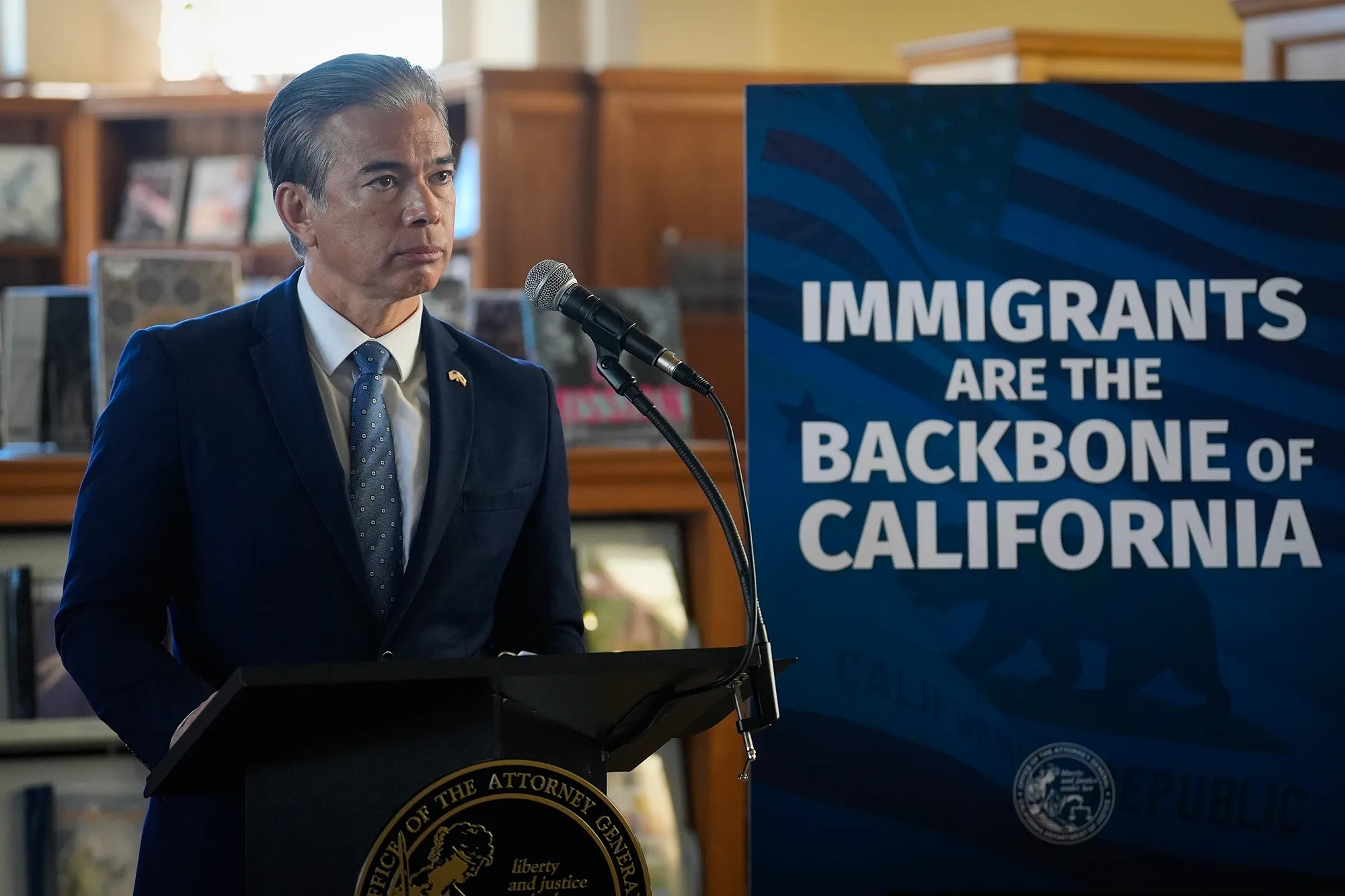
"caption": "Attorney General Rob Bonta discusses the California Department of Justice's efforts to protect rights of the state's immigrant communities at a news conference at the San Francisco Public Library's Bernal Heights branch in San Francisco, on Dec. 4, 2024. California and 20 other states are suing the Trump administration over new, immigration-related conditions on grants for crime victims.",
"credit": "Jeff Chiu/AP Photo",
"altTag": null,
"description": null,
"imgSizes": {
"thumbnail": {
"file": "https://cdn.kqed.org/wp-content/uploads/sites/10/2025/08/Rob-Bonta-CalMatters-160x107.jpg",
"width": 160,
"height": 107,
"mimeType": "image/jpeg"
},
"1536x1536": {
"file": "https://cdn.kqed.org/wp-content/uploads/sites/10/2025/08/Rob-Bonta-CalMatters-1536x1024.jpg",
"width": 1536,
"height": 1024,
"mimeType": "image/jpeg"
},
"post-thumbnail": {
"file": "https://cdn.kqed.org/wp-content/uploads/sites/10/2025/08/Rob-Bonta-CalMatters-672x372.jpg",
"width": 672,
"height": 372,
"mimeType": "image/jpeg"
},
"twentyfourteen-full-width": {
"file": "https://cdn.kqed.org/wp-content/uploads/sites/10/2025/08/Rob-Bonta-CalMatters-1038x576.jpg",
"width": 1038,
"height": 576,
"mimeType": "image/jpeg"
},
"kqedFullSize": {
"file": "https://cdn.kqed.org/wp-content/uploads/sites/10/2025/08/Rob-Bonta-CalMatters.jpg",
"width": 2000,
"height": 1333
}
},
"isLoading": false,
"fetchFailed": false
},
"news_12029489": {
"type": "attachments",
"id": "news_12029489",
"meta": {
"index": "attachments_1716263798",
"site": "news",
"id": "12029489",
"found": true
},
"title": "US-POLITICS-ENVIRONMENT-NATURE-PARKS-PROTEST",
"publishDate": 1741040569,
"status": "inherit",
"parent": 12029182,
"modified": 1741040606,
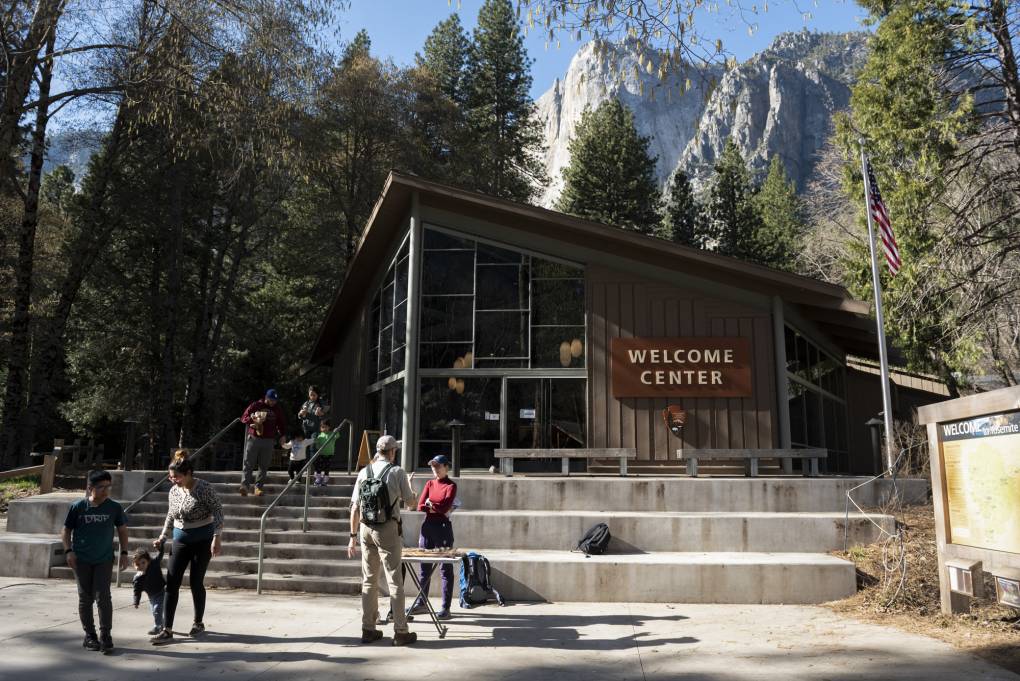
"caption": "A volunteer for the National Park Service welcomes visitors at the Exploration Center in Yosemite Valley, at Yosemite National Park on March 1, 2025.",
"credit": "Laure Andrillon/AFP via Getty",
"altTag": null,
"description": null,
"imgSizes": {
"medium": {
"file": "https://cdn.kqed.org/wp-content/uploads/sites/10/2025/03/CaliforniaPublicLandsGetty1-800x534.jpg",
"width": 800,
"height": 534,
"mimeType": "image/jpeg"
},
"large": {
"file": "https://cdn.kqed.org/wp-content/uploads/sites/10/2025/03/CaliforniaPublicLandsGetty1-1020x681.jpg",
"width": 1020,
"height": 681,
"mimeType": "image/jpeg"
},
"thumbnail": {
"file": "https://cdn.kqed.org/wp-content/uploads/sites/10/2025/03/CaliforniaPublicLandsGetty1-160x107.jpg",
"width": 160,
"height": 107,
"mimeType": "image/jpeg"
},
"1536x1536": {
"file": "https://cdn.kqed.org/wp-content/uploads/sites/10/2025/03/CaliforniaPublicLandsGetty1-1536x1025.jpg",
"width": 1536,
"height": 1025,
"mimeType": "image/jpeg"
},
"post-thumbnail": {
"file": "https://cdn.kqed.org/wp-content/uploads/sites/10/2025/03/CaliforniaPublicLandsGetty1-672x372.jpg",
"width": 672,
"height": 372,
"mimeType": "image/jpeg"
},
"twentyfourteen-full-width": {
"file": "https://cdn.kqed.org/wp-content/uploads/sites/10/2025/03/CaliforniaPublicLandsGetty1-1038x576.jpg",
"width": 1038,
"height": 576,
"mimeType": "image/jpeg"
},
"full-width": {
"file": "https://cdn.kqed.org/wp-content/uploads/sites/10/2025/03/CaliforniaPublicLandsGetty1-1920x1282.jpg",
"width": 1920,
"height": 1282,
"mimeType": "image/jpeg"
},
"kqedFullSize": {
"file": "https://cdn.kqed.org/wp-content/uploads/sites/10/2025/03/CaliforniaPublicLandsGetty1.jpg",
"width": 2000,
"height": 1335
}
},
"isLoading": false,
"fetchFailed": false
},
"news_12049917": {
"type": "attachments",
"id": "news_12049917",
"meta": {
"index": "attachments_1716263798",
"site": "news",
"id": "12049917",
"found": true
},
"title": "072525-Gavin-Newsom-Presser-AP-CM-01",
"publishDate": 1753491904,
"status": "inherit",
"parent": 12049912,
"modified": 1757024501,
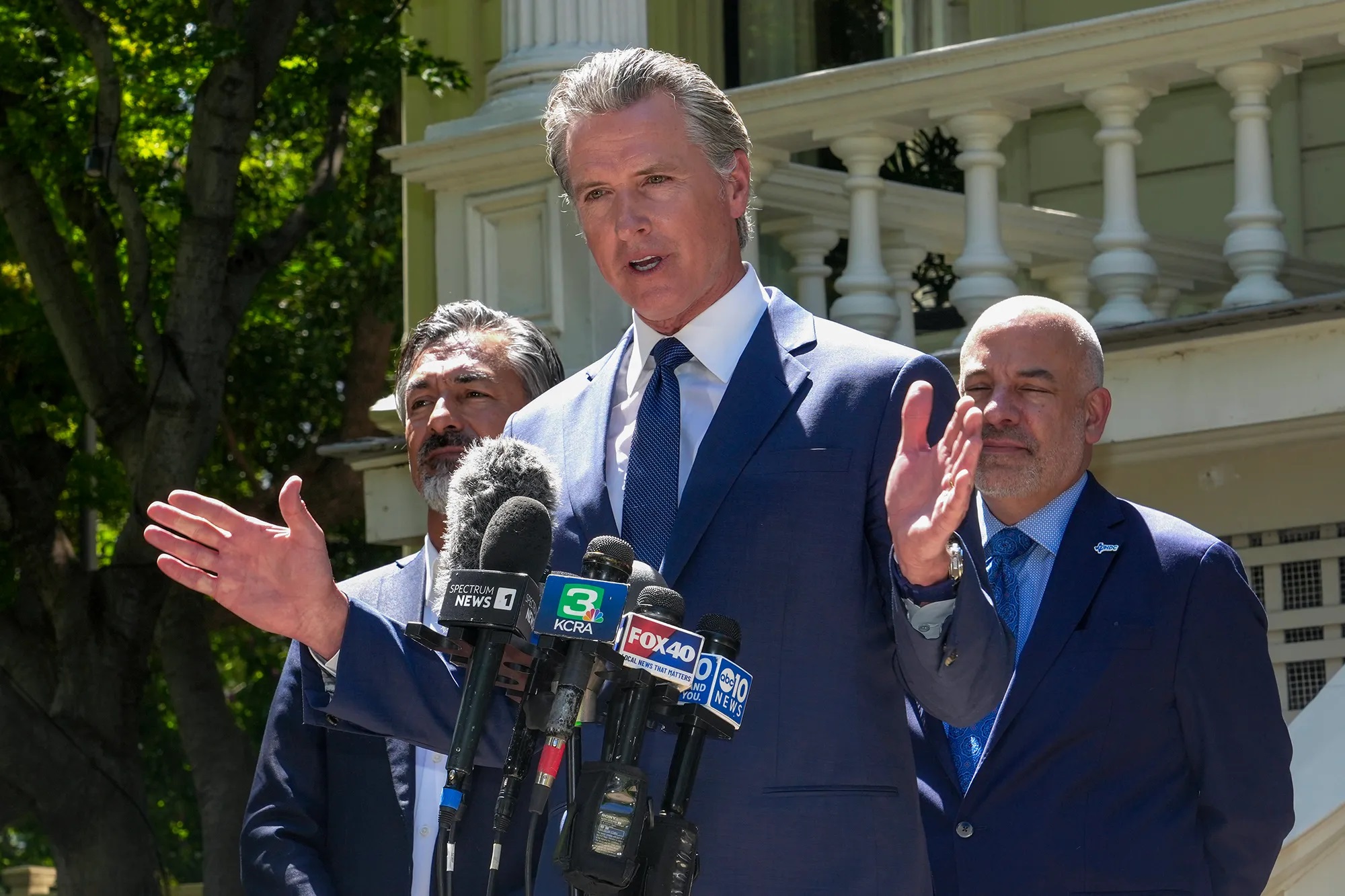
"caption": "Gov. Gavin Newsom calls for a new way for California to redraw its congressional district maps during a news conference in Sacramento on July 25, 2025. \n",
"credit": "Rich Pedroncelli/AP Photo",
"altTag": null,
"description": null,
"imgSizes": {
"thumbnail": {
"file": "https://cdn.kqed.org/wp-content/uploads/sites/10/2025/07/072525-Gavin-Newsom-Presser-AP-CM-01-160x107.jpg",
"width": 160,
"height": 107,
"mimeType": "image/jpeg"
},
"1536x1536": {
"file": "https://cdn.kqed.org/wp-content/uploads/sites/10/2025/07/072525-Gavin-Newsom-Presser-AP-CM-01-1536x1024.jpg",
"width": 1536,
"height": 1024,
"mimeType": "image/jpeg"
},
"post-thumbnail": {
"file": "https://cdn.kqed.org/wp-content/uploads/sites/10/2025/07/072525-Gavin-Newsom-Presser-AP-CM-01-672x372.jpg",
"width": 672,
"height": 372,
"mimeType": "image/jpeg"
},
"twentyfourteen-full-width": {
"file": "https://cdn.kqed.org/wp-content/uploads/sites/10/2025/07/072525-Gavin-Newsom-Presser-AP-CM-01-1038x576.jpg",
"width": 1038,
"height": 576,
"mimeType": "image/jpeg"
},
"kqedFullSize": {
"file": "https://cdn.kqed.org/wp-content/uploads/sites/10/2025/07/072525-Gavin-Newsom-Presser-AP-CM-01.jpg",
"width": 2000,
"height": 1333
}
},
"isLoading": false,
"fetchFailed": false
},
"news_12049947": {
"type": "attachments",
"id": "news_12049947",
"meta": {
"index": "attachments_1716263798",
"site": "news",
"id": "12049947",
"found": true
},
"title": "Trump Education Grant Freeze",
"publishDate": 1753548538,
"status": "inherit",
"parent": 12049944,
"modified": 1753548574,
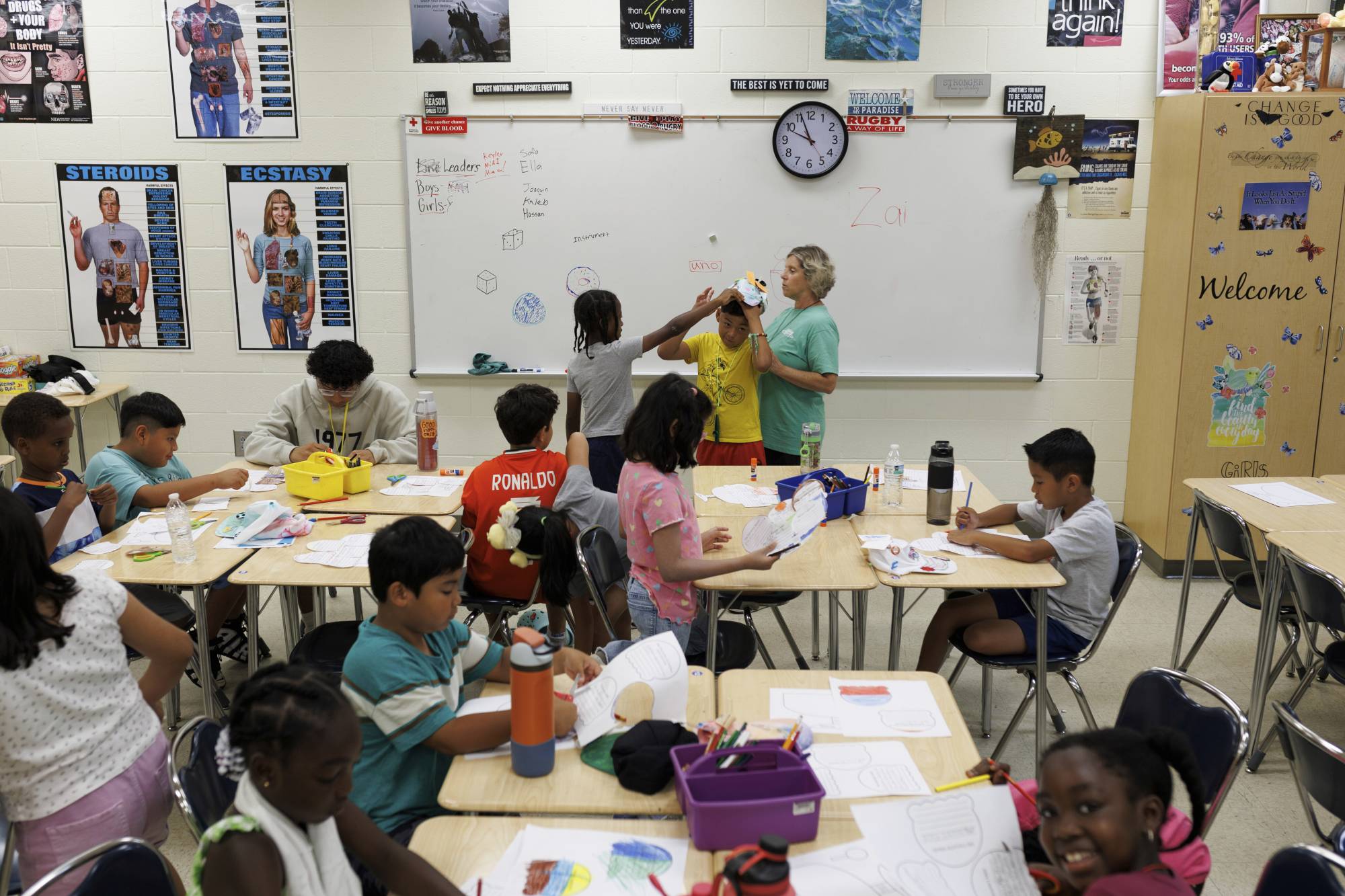
"caption": "LASOS summer campers work on an art project at Bel Air High School in Bel Air, Md., on Thursday, July 24, 2025. ",
"credit": "KT Kanazawich/AP Photo",
"altTag": null,
"description": null,
"imgSizes": {
"medium": {
"file": "https://cdn.kqed.org/wp-content/uploads/sites/10/2025/07/AP25206556651812-2000x1333.jpg",
"width": 2000,
"height": 1333,
"mimeType": "image/jpeg"
},
"large": {
"file": "https://cdn.kqed.org/wp-content/uploads/sites/10/2025/07/AP25206556651812-2000x1333.jpg",
"width": 2000,
"height": 1333,
"mimeType": "image/jpeg"
},
"thumbnail": {
"file": "https://cdn.kqed.org/wp-content/uploads/sites/10/2025/07/AP25206556651812-160x107.jpg",
"width": 160,
"height": 107,
"mimeType": "image/jpeg"
},
"1536x1536": {
"file": "https://cdn.kqed.org/wp-content/uploads/sites/10/2025/07/AP25206556651812-1536x1024.jpg",
"width": 1536,
"height": 1024,
"mimeType": "image/jpeg"
},
"2048x2048": {
"file": "https://cdn.kqed.org/wp-content/uploads/sites/10/2025/07/AP25206556651812-2048x1365.jpg",
"width": 2048,
"height": 1365,
"mimeType": "image/jpeg"
},
"post-thumbnail": {
"file": "https://cdn.kqed.org/wp-content/uploads/sites/10/2025/07/AP25206556651812-672x372.jpg",
"width": 672,
"height": 372,
"mimeType": "image/jpeg"
},
"twentyfourteen-full-width": {
"file": "https://cdn.kqed.org/wp-content/uploads/sites/10/2025/07/AP25206556651812-1038x576.jpg",
"width": 1038,
"height": 576,
"mimeType": "image/jpeg"
},
"full-width": {
"file": "https://cdn.kqed.org/wp-content/uploads/sites/10/2025/07/AP25206556651812-2000x1333.jpg",
"width": 2000,
"height": 1333,
"mimeType": "image/jpeg"
},
"kqedFullSize": {
"file": "https://cdn.kqed.org/wp-content/uploads/sites/10/2025/07/AP25206556651812-scaled.jpg",
"width": 2560,
"height": 1707
}
},
"isLoading": false,
"fetchFailed": false
},
"news_12049112": {
"type": "attachments",
"id": "news_12049112",
"meta": {
"index": "attachments_1716263798",
"site": "news",
"id": "12049112",
"found": true
},
"title": "101423_Collge-Info-Berkeley_JY-CM-20 copy",
"publishDate": 1753142650,
"status": "inherit",
"parent": 12049109,
"modified": 1753142671,
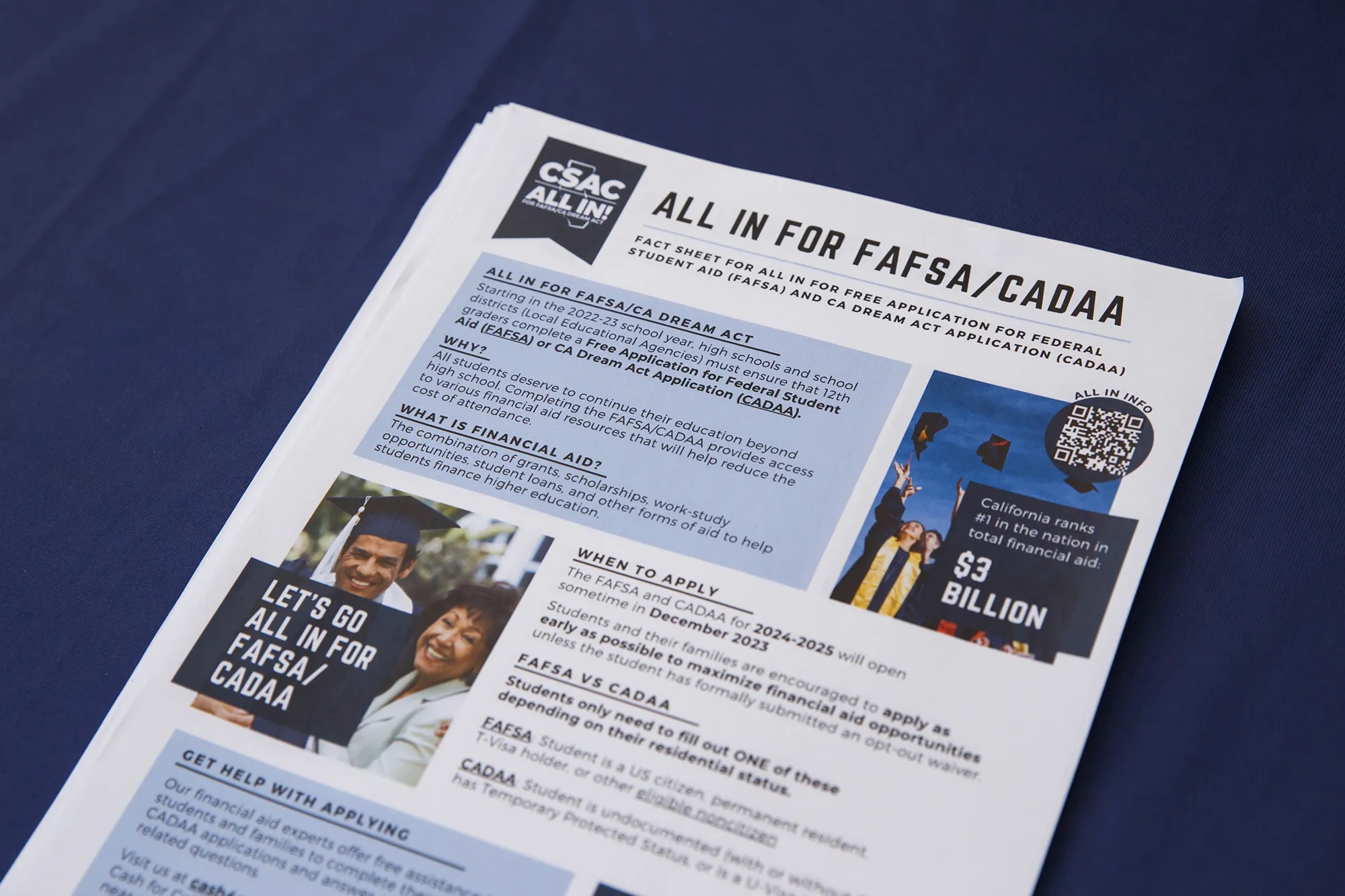
"caption": "FAFSA fact sheets at College Information Day at UC Berkeley in Berkeley on Oct. 14, 2023. \n",
"credit": "Juliana Yamada for CalMatters",
"altTag": null,
"description": null,
"imgSizes": {
"thumbnail": {
"file": "https://cdn.kqed.org/wp-content/uploads/sites/10/2025/07/101423_Collge-Info-Berkeley_JY-CM-20-copy-160x107.jpg",
"width": 160,
"height": 107,
"mimeType": "image/jpeg"
},
"1536x1536": {
"file": "https://cdn.kqed.org/wp-content/uploads/sites/10/2025/07/101423_Collge-Info-Berkeley_JY-CM-20-copy-1536x1024.jpg",
"width": 1536,
"height": 1024,
"mimeType": "image/jpeg"
},
"post-thumbnail": {
"file": "https://cdn.kqed.org/wp-content/uploads/sites/10/2025/07/101423_Collge-Info-Berkeley_JY-CM-20-copy-672x372.jpg",
"width": 672,
"height": 372,
"mimeType": "image/jpeg"
},
"twentyfourteen-full-width": {
"file": "https://cdn.kqed.org/wp-content/uploads/sites/10/2025/07/101423_Collge-Info-Berkeley_JY-CM-20-copy-1038x576.jpg",
"width": 1038,
"height": 576,
"mimeType": "image/jpeg"
},
"kqedFullSize": {
"file": "https://cdn.kqed.org/wp-content/uploads/sites/10/2025/07/101423_Collge-Info-Berkeley_JY-CM-20-copy.jpg",
"width": 2000,
"height": 1333
}
},
"isLoading": false,
"fetchFailed": false
},
"news_12049072": {
"type": "attachments",
"id": "news_12049072",
"meta": {
"index": "attachments_1716263798",
"site": "news",
"id": "12049072",
"found": true
},
"title": "npr.brightspotcdn copy",
"publishDate": 1753137661,
"status": "inherit",
"parent": 12049071,
"modified": 1753137680,
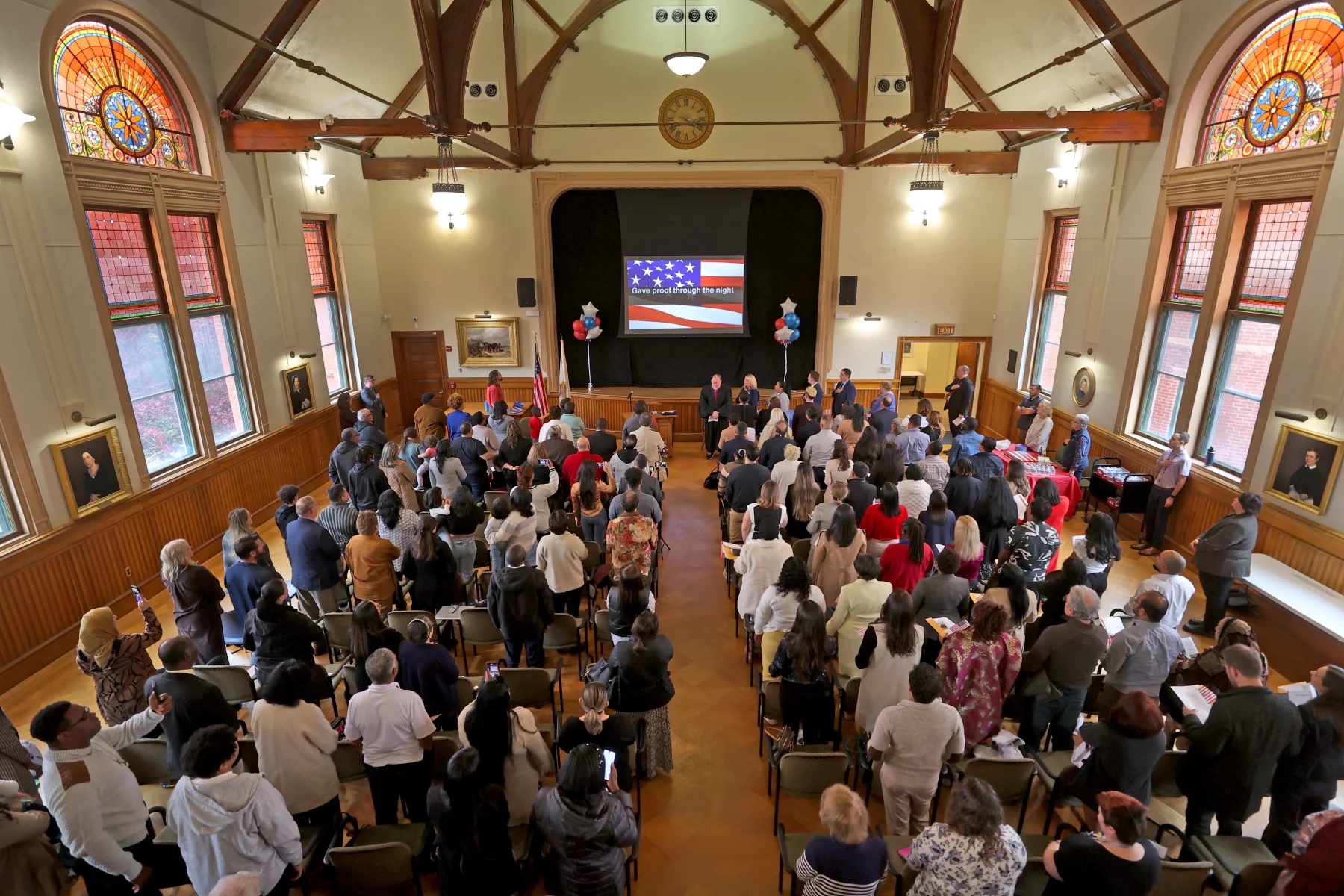
"caption": "A naturalization ceremony at the Nevins Library in Massachusetts on Oct. 30, 2024.",
"credit": "David L. Ryan/The Boston Globe via Getty Images",
"altTag": null,
"description": null,
"imgSizes": {
"thumbnail": {
"file": "https://cdn.kqed.org/wp-content/uploads/sites/10/2025/07/npr.brightspotcdn-copy-15-160x107.jpg",
"width": 160,
"height": 107,
"mimeType": "image/jpeg"
},
"1536x1536": {
"file": "https://cdn.kqed.org/wp-content/uploads/sites/10/2025/07/npr.brightspotcdn-copy-15-1536x1024.jpg",
"width": 1536,
"height": 1024,
"mimeType": "image/jpeg"
},
"post-thumbnail": {
"file": "https://cdn.kqed.org/wp-content/uploads/sites/10/2025/07/npr.brightspotcdn-copy-15-672x372.jpg",
"width": 672,
"height": 372,
"mimeType": "image/jpeg"
},
"twentyfourteen-full-width": {
"file": "https://cdn.kqed.org/wp-content/uploads/sites/10/2025/07/npr.brightspotcdn-copy-15-1038x576.jpg",
"width": 1038,
"height": 576,
"mimeType": "image/jpeg"
},
"kqedFullSize": {
"file": "https://cdn.kqed.org/wp-content/uploads/sites/10/2025/07/npr.brightspotcdn-copy-15.jpg",
"width": 1800,
"height": 1200
}
},
"isLoading": false,
"fetchFailed": false
},
"news_12049048": {
"type": "attachments",
"id": "news_12049048",
"meta": {
"index": "attachments_1716263798",
"site": "news",
"id": "12049048",
"found": true
},
"title": "npr.brightspotcdn",
"publishDate": 1753134805,
"status": "inherit",
"parent": 12049044,
"modified": 1753137060,
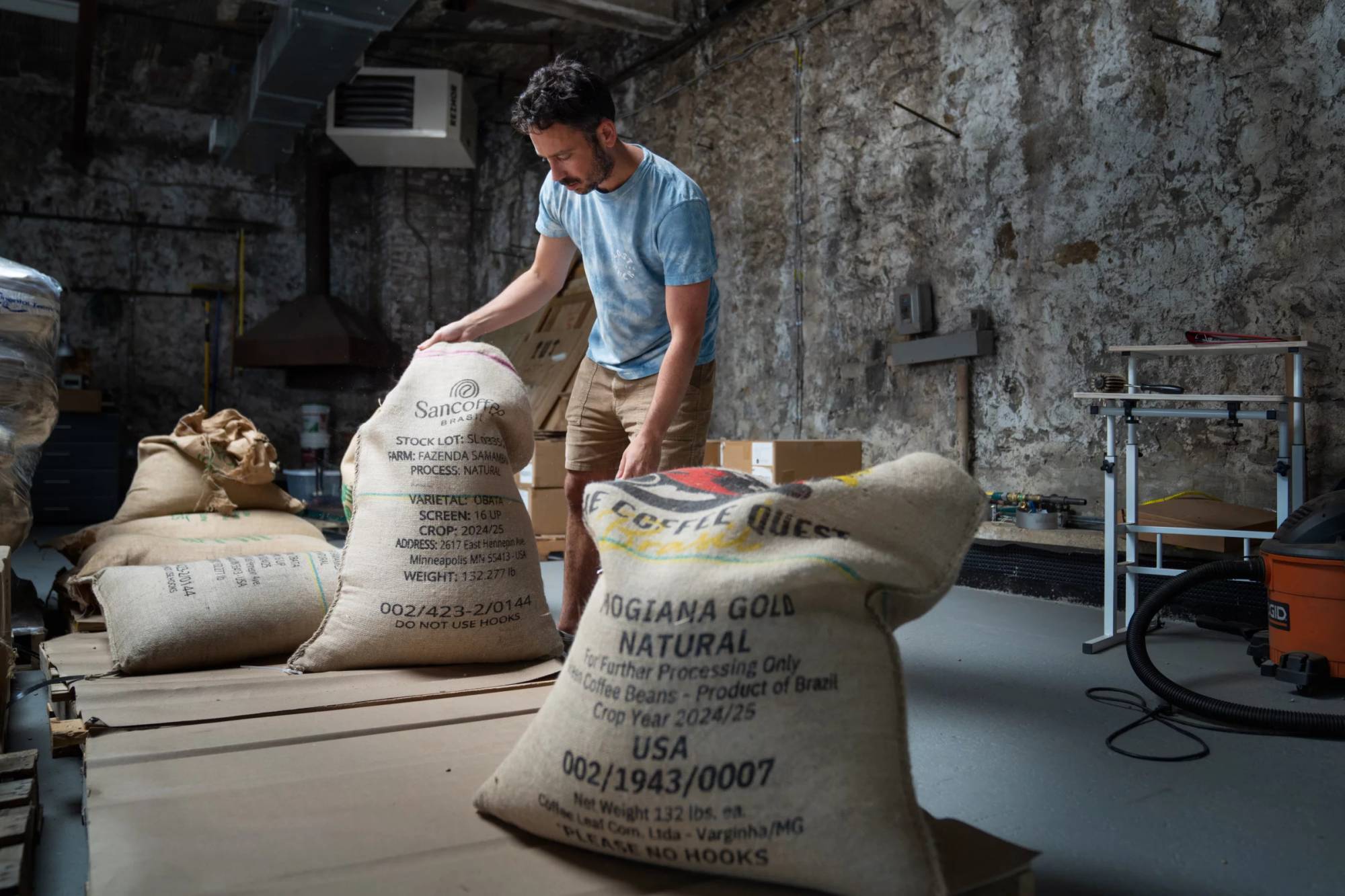
"caption": "Jeff Yerxa, co-owner of Lost Sock Roasters, shows bags of coffee beans, many from Brazil, at the company's warehouse in Washington, DC. The looming threat of a 50% tariff on all goods from Brazil — the world's largest coffee producer — has sent shock waves through the US coffee industry.",
"credit": "Claire Harbage/NPR",
"altTag": null,
"description": null,
"imgSizes": {
"medium": {
"file": "https://cdn.kqed.org/wp-content/uploads/sites/10/2025/07/npr.brightspotcdn-2000x1333.jpg",
"width": 2000,
"height": 1333,
"mimeType": "image/jpeg"
},
"large": {
"file": "https://cdn.kqed.org/wp-content/uploads/sites/10/2025/07/npr.brightspotcdn-2000x1333.jpg",
"width": 2000,
"height": 1333,
"mimeType": "image/jpeg"
},
"thumbnail": {
"file": "https://cdn.kqed.org/wp-content/uploads/sites/10/2025/07/npr.brightspotcdn-160x107.jpg",
"width": 160,
"height": 107,
"mimeType": "image/jpeg"
},
"1536x1536": {
"file": "https://cdn.kqed.org/wp-content/uploads/sites/10/2025/07/npr.brightspotcdn-1536x1024.jpg",
"width": 1536,
"height": 1024,
"mimeType": "image/jpeg"
},
"2048x2048": {
"file": "https://cdn.kqed.org/wp-content/uploads/sites/10/2025/07/npr.brightspotcdn-2048x1365.jpg",
"width": 2048,
"height": 1365,
"mimeType": "image/jpeg"
},
"post-thumbnail": {
"file": "https://cdn.kqed.org/wp-content/uploads/sites/10/2025/07/npr.brightspotcdn-672x372.jpg",
"width": 672,
"height": 372,
"mimeType": "image/jpeg"
},
"twentyfourteen-full-width": {
"file": "https://cdn.kqed.org/wp-content/uploads/sites/10/2025/07/npr.brightspotcdn-1038x576.jpg",
"width": 1038,
"height": 576,
"mimeType": "image/jpeg"
},
"full-width": {
"file": "https://cdn.kqed.org/wp-content/uploads/sites/10/2025/07/npr.brightspotcdn-2000x1333.jpg",
"width": 2000,
"height": 1333,
"mimeType": "image/jpeg"
},
"kqedFullSize": {
"file": "https://cdn.kqed.org/wp-content/uploads/sites/10/2025/07/npr.brightspotcdn.jpg",
"width": 2400,
"height": 1600
}
},
"isLoading": false,
"fetchFailed": false
},
"news_12049032": {
"type": "attachments",
"id": "news_12049032",
"meta": {
"index": "attachments_1716263798",
"site": "news",
"id": "12049032",
"found": true
},
"title": "062025-US-CBP-LA-Raids-GETTY-CM-02 copy",
"publishDate": 1753131836,
"status": "inherit",
"parent": 12049026,
"modified": 1753131870,
"caption": "A person is detained as clashes break out after U.S. Customs and Border Protection (CBP) officers attempted to raid a store in Bell, just south of Los Angeles, on June 20, 2025.",
"credit": "Etienne Laurent/AFP via Getty Images",
"altTag": null,
"description": null,
"imgSizes": {
"thumbnail": {
"file": "https://cdn.kqed.org/wp-content/uploads/sites/10/2025/07/062025-US-CBP-LA-Raids-GETTY-CM-02-copy-160x107.jpg",
"width": 160,
"height": 107,
"mimeType": "image/jpeg"
},
"1536x1536": {
"file": "https://cdn.kqed.org/wp-content/uploads/sites/10/2025/07/062025-US-CBP-LA-Raids-GETTY-CM-02-copy-1536x1025.jpg",
"width": 1536,
"height": 1025,
"mimeType": "image/jpeg"
},
"post-thumbnail": {
"file": "https://cdn.kqed.org/wp-content/uploads/sites/10/2025/07/062025-US-CBP-LA-Raids-GETTY-CM-02-copy-672x372.jpg",
"width": 672,
"height": 372,
"mimeType": "image/jpeg"
},
"twentyfourteen-full-width": {
"file": "https://cdn.kqed.org/wp-content/uploads/sites/10/2025/07/062025-US-CBP-LA-Raids-GETTY-CM-02-copy-1038x576.jpg",
"width": 1038,
"height": 576,
"mimeType": "image/jpeg"
},
"kqedFullSize": {
"file": "https://cdn.kqed.org/wp-content/uploads/sites/10/2025/07/062025-US-CBP-LA-Raids-GETTY-CM-02-copy.jpg",
"width": 2000,
"height": 1334
}
},
"isLoading": false,
"fetchFailed": false
},
"news_12049018": {
"type": "attachments",
"id": "news_12049018",
"meta": {
"index": "attachments_1716263798",
"site": "news",
"id": "12049018",
"found": true
},
"title": "S_ElYose1_ENLARGED",
"publishDate": 1753130466,
"status": "inherit",
"parent": 12049014,
"modified": 1753132283,
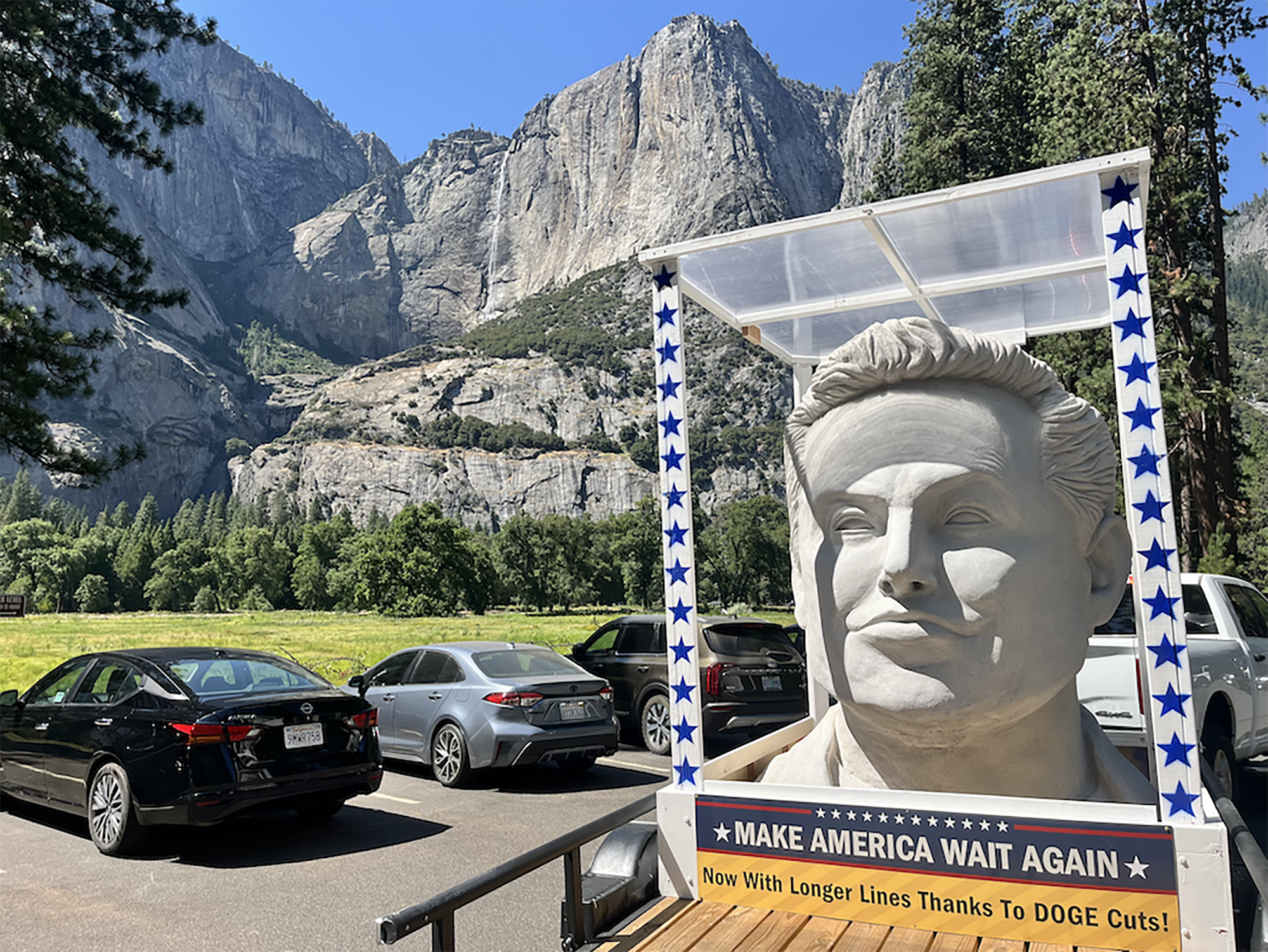
"caption": "The giant bust of Elon Musk with the words 'Make America Wait Again: Now With Longer Lines Thanks To DOGE Cuts!' at Yosemite National Park.",
"credit": "Courtesy Greg Perkins",
"altTag": null,
"description": null,
"imgSizes": {
"thumbnail": {
"file": "https://cdn.kqed.org/wp-content/uploads/sites/10/2025/07/S_ElYose1_ENLARGED-160x120.jpg",
"width": 160,
"height": 120,
"mimeType": "image/jpeg"
},
"1536x1536": {
"file": "https://cdn.kqed.org/wp-content/uploads/sites/10/2025/07/S_ElYose1_ENLARGED-1536x1154.jpg",
"width": 1536,
"height": 1154,
"mimeType": "image/jpeg"
},
"post-thumbnail": {
"file": "https://cdn.kqed.org/wp-content/uploads/sites/10/2025/07/S_ElYose1_ENLARGED-672x372.jpg",
"width": 672,
"height": 372,
"mimeType": "image/jpeg"
},
"twentyfourteen-full-width": {
"file": "https://cdn.kqed.org/wp-content/uploads/sites/10/2025/07/S_ElYose1_ENLARGED-1038x576.jpg",
"width": 1038,
"height": 576,
"mimeType": "image/jpeg"
},
"kqedFullSize": {
"file": "https://cdn.kqed.org/wp-content/uploads/sites/10/2025/07/S_ElYose1_ENLARGED.jpg",
"width": 2000,
"height": 1502
}
},
"isLoading": false,
"fetchFailed": false
},
"news_12048876": {
"type": "attachments",
"id": "news_12048876",
"meta": {
"index": "attachments_1716263798",
"site": "news",
"id": "12048876",
"found": true
},
"title": "071025-Camarillo-Raid-LV-CM-19 copy",
"publishDate": 1752874787,
"status": "inherit",
"parent": 12048875,
"modified": 1752874810,
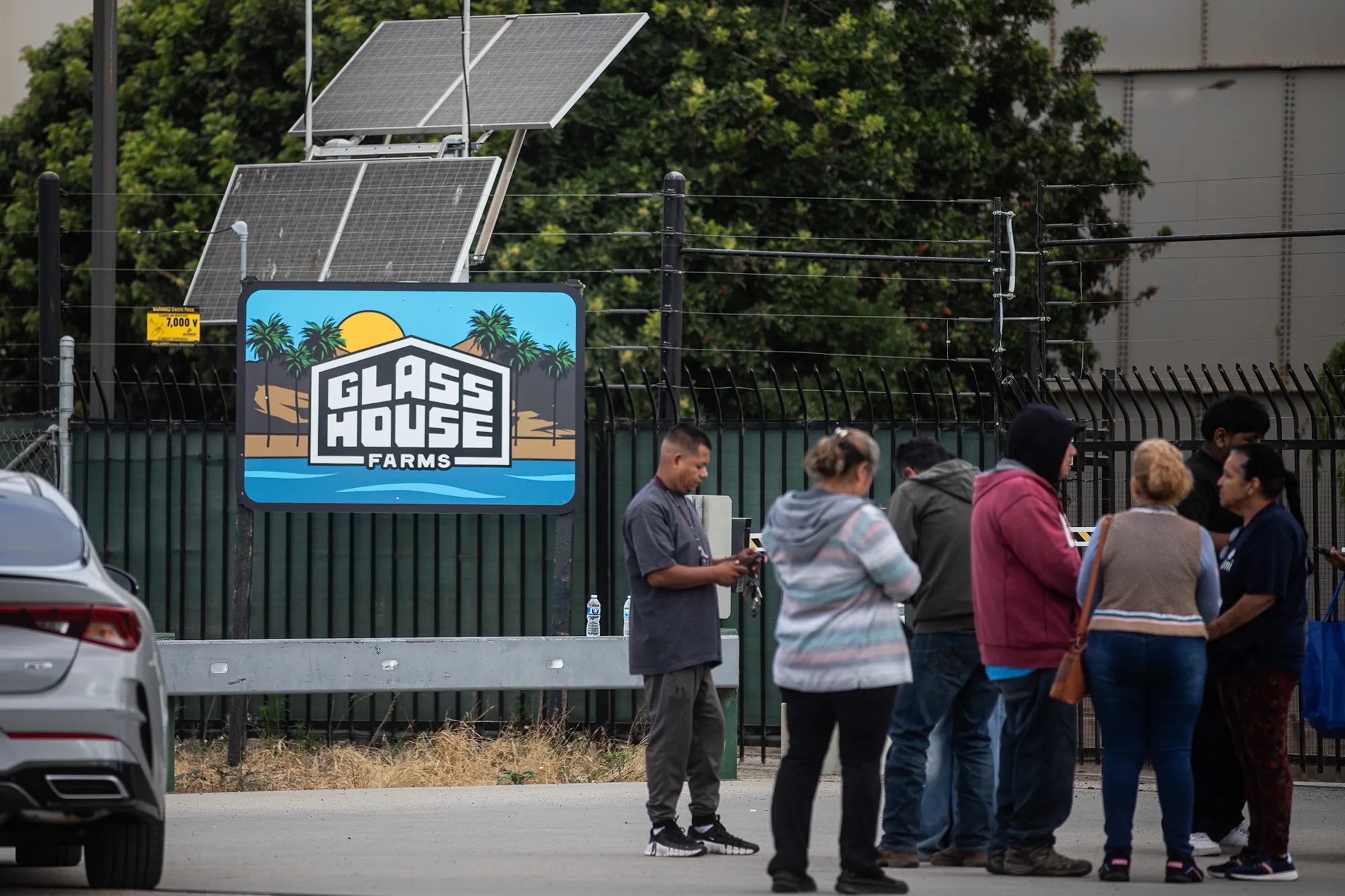
"caption": "A line of federal immigration agents and protesters stand-off near the Glass House Farms facility outside Camarillo on July 10, 2025. Protesters gathered after federal agents conducted an immigration raid earlier in the day.",
"credit": "Larry Valenzuela/CalMatters/CatchLight Local",
"altTag": null,
"description": null,
"imgSizes": {
"thumbnail": {
"file": "https://cdn.kqed.org/wp-content/uploads/sites/10/2025/07/071025-Camarillo-Raid-LV-CM-19-copy-160x107.jpg",
"width": 160,
"height": 107,
"mimeType": "image/jpeg"
},
"1536x1536": {
"file": "https://cdn.kqed.org/wp-content/uploads/sites/10/2025/07/071025-Camarillo-Raid-LV-CM-19-copy-1536x1024.jpg",
"width": 1536,
"height": 1024,
"mimeType": "image/jpeg"
},
"post-thumbnail": {
"file": "https://cdn.kqed.org/wp-content/uploads/sites/10/2025/07/071025-Camarillo-Raid-LV-CM-19-copy-672x372.jpg",
"width": 672,
"height": 372,
"mimeType": "image/jpeg"
},
"twentyfourteen-full-width": {
"file": "https://cdn.kqed.org/wp-content/uploads/sites/10/2025/07/071025-Camarillo-Raid-LV-CM-19-copy-1038x576.jpg",
"width": 1038,
"height": 576,
"mimeType": "image/jpeg"
},
"kqedFullSize": {
"file": "https://cdn.kqed.org/wp-content/uploads/sites/10/2025/07/071025-Camarillo-Raid-LV-CM-19-copy.jpg",
"width": 2000,
"height": 1333
}
},
"isLoading": false,
"fetchFailed": false
},
"news_12048932": {
"type": "attachments",
"id": "news_12048932",
"meta": {
"index": "attachments_1716263798",
"site": "news",
"id": "12048932",
"found": true
},
"title": "070125-Camarillo-Aftermath-LV-CM-06 copy",
"publishDate": 1752948537,
"status": "inherit",
"parent": 12048931,
"modified": 1752948565,
"caption": "Families wait outside the front gates of the Glass House Farms facility outside Camarillo on July 11, 2025. Glasshouse Farms was the site of an immigration raid by federal immigration agents just a day prior, on July 10.",
"credit": "Larry Valenzuela/CalMatters/CatchLight Local",
"altTag": null,
"description": null,
"imgSizes": {
"thumbnail": {
"file": "https://cdn.kqed.org/wp-content/uploads/sites/10/2025/07/070125-Camarillo-Aftermath-LV-CM-06-copy-160x107.jpg",
"width": 160,
"height": 107,
"mimeType": "image/jpeg"
},
"1536x1536": {
"file": "https://cdn.kqed.org/wp-content/uploads/sites/10/2025/07/070125-Camarillo-Aftermath-LV-CM-06-copy-1536x1024.jpg",
"width": 1536,
"height": 1024,
"mimeType": "image/jpeg"
},
"post-thumbnail": {
"file": "https://cdn.kqed.org/wp-content/uploads/sites/10/2025/07/070125-Camarillo-Aftermath-LV-CM-06-copy-672x372.jpg",
"width": 672,
"height": 372,
"mimeType": "image/jpeg"
},
"twentyfourteen-full-width": {
"file": "https://cdn.kqed.org/wp-content/uploads/sites/10/2025/07/070125-Camarillo-Aftermath-LV-CM-06-copy-1038x576.jpg",
"width": 1038,
"height": 576,
"mimeType": "image/jpeg"
},
"kqedFullSize": {
"file": "https://cdn.kqed.org/wp-content/uploads/sites/10/2025/07/070125-Camarillo-Aftermath-LV-CM-06-copy.jpg",
"width": 2000,
"height": 1333
}
},
"isLoading": false,
"fetchFailed": false
},
"news_12048109": {
"type": "attachments",
"id": "news_12048109",
"meta": {
"index": "attachments_1716263798",
"site": "news",
"id": "12048109",
"found": true
},
"title": "npr.brightspotcdn copy",
"publishDate": 1752601677,
"status": "inherit",
"parent": 12048108,
"modified": 1752601711,
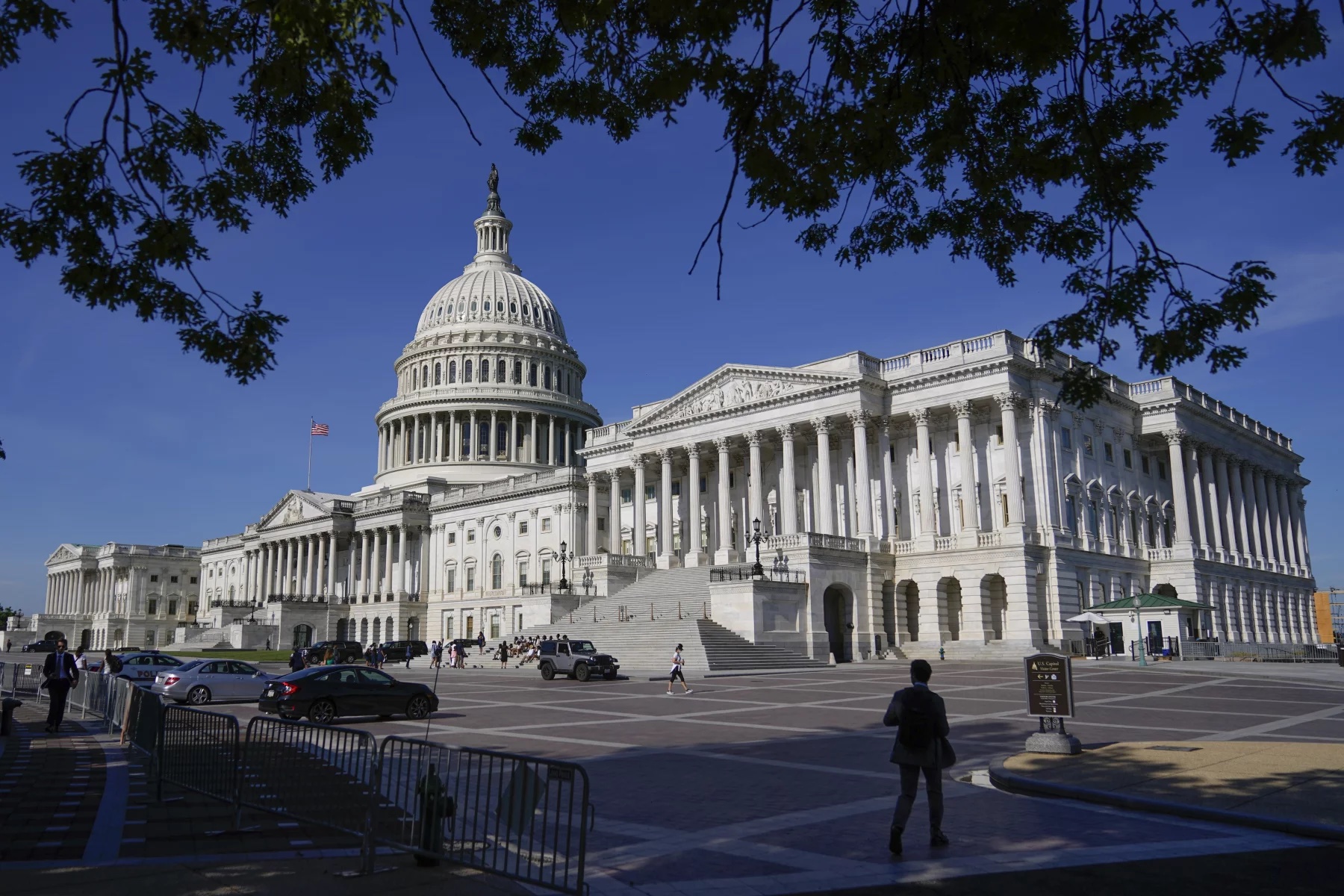
"caption": "Sun shines on the U.S. Capitol dome on Capitol Hill in Washington, D.C., in 2022.",
"credit": "Patrick Semansky/AP",
"altTag": null,
"description": null,
"imgSizes": {
"thumbnail": {
"file": "https://cdn.kqed.org/wp-content/uploads/sites/10/2025/07/npr.brightspotcdn-copy-8-160x107.jpg",
"width": 160,
"height": 107,
"mimeType": "image/jpeg"
},
"1536x1536": {
"file": "https://cdn.kqed.org/wp-content/uploads/sites/10/2025/07/npr.brightspotcdn-copy-8-1536x1024.jpg",
"width": 1536,
"height": 1024,
"mimeType": "image/jpeg"
},
"post-thumbnail": {
"file": "https://cdn.kqed.org/wp-content/uploads/sites/10/2025/07/npr.brightspotcdn-copy-8-672x372.jpg",
"width": 672,
"height": 372,
"mimeType": "image/jpeg"
},
"twentyfourteen-full-width": {
"file": "https://cdn.kqed.org/wp-content/uploads/sites/10/2025/07/npr.brightspotcdn-copy-8-1038x576.jpg",
"width": 1038,
"height": 576,
"mimeType": "image/jpeg"
},
"kqedFullSize": {
"file": "https://cdn.kqed.org/wp-content/uploads/sites/10/2025/07/npr.brightspotcdn-copy-8.jpg",
"width": 1800,
"height": 1200
}
},
"isLoading": false,
"fetchFailed": false
}
},
"audioPlayerReducer": {
"postId": "stream_live",
"isPaused": true,
"isPlaying": false,
"pfsActive": false,
"pledgeModalIsOpen": true,
"playerDrawerIsOpen": false,
"liveAudioPlayStartedAt": 0,
"liveAudioPlayContext": ""
},
"authorsReducer": {
"byline_news_12052839": {
"type": "authors",
"id": "byline_news_12052839",
"meta": {
"override": true
},
"slug": "byline_news_12052839",
"name": "Mikhail Zinshteyn and Cayla Mihalovich, CalMatters",
"isLoading": false
},
"byline_news_12049912": {
"type": "authors",
"id": "byline_news_12049912",
"meta": {
"override": true
},
"slug": "byline_news_12049912",
"name": "Alexei Koseff, CalMatters",
"isLoading": false
},
"byline_news_12049944": {
"type": "authors",
"id": "byline_news_12049944",
"meta": {
"override": true
},
"slug": "byline_news_12049944",
"name": "Collin Binkley and Annie Ma, Associated Press",
"isLoading": false
},
"byline_news_12049109": {
"type": "authors",
"id": "byline_news_12049109",
"meta": {
"override": true
},
"slug": "byline_news_12049109",
"name": "Mercy Sosa, CalMatters",
"isLoading": false
},
"byline_news_12049071": {
"type": "authors",
"id": "byline_news_12049071",
"meta": {
"override": true
},
"slug": "byline_news_12049071",
"name": "Juliana Kim, NPR",
"isLoading": false
},
"byline_news_12049044": {
"type": "authors",
"id": "byline_news_12049044",
"meta": {
"override": true
},
"slug": "byline_news_12049044",
"name": "Jaclyn Diaz, NPR",
"isLoading": false
},
"byline_news_12049026": {
"type": "authors",
"id": "byline_news_12049026",
"meta": {
"override": true
},
"slug": "byline_news_12049026",
"name": "Robert Greene, CalMatters",
"isLoading": false
},
"byline_news_12048875": {
"type": "authors",
"id": "byline_news_12048875",
"meta": {
"override": true
},
"slug": "byline_news_12048875",
"name": "Michael Lozano, CalMatters",
"isLoading": false
},
"byline_news_12048931": {
"type": "authors",
"id": "byline_news_12048931",
"meta": {
"override": true
},
"slug": "byline_news_12048931",
"name": "Alexei Koseff, CalMatters",
"isLoading": false
},
"byline_news_12048108": {
"type": "authors",
"id": "byline_news_12048108",
"meta": {
"override": true
},
"slug": "byline_news_12048108",
"name": "Deirdre Walsh, NPR",
"isLoading": false
},
"bsiavoshy": {
"type": "authors",
"id": "11890",
"meta": {
"index": "authors_1716337520",
"id": "11890",
"found": true
},
"name": "Bejan Siavoshy",
"firstName": "Bejan",
"lastName": "Siavoshy",
"slug": "bsiavoshy",
"email": "bsiavoshy@kqed.org",
"display_author_email": false,
"staff_mastheads": [],
"title": "KQED Contributor",
"bio": null,
"avatar": "https://secure.gravatar.com/avatar/ead3e7c509634b37a73b1f57677e49f9?s=600&d=blank&r=g",
"twitter": null,
"facebook": null,
"instagram": null,
"linkedin": null,
"sites": [
{
"site": "news",
"roles": [
"editor"
]
}
],
"headData": {
"title": "Bejan Siavoshy | KQED",
"description": "KQED Contributor",
"ogImgSrc": "https://secure.gravatar.com/avatar/ead3e7c509634b37a73b1f57677e49f9?s=600&d=blank&r=g",
"twImgSrc": "https://secure.gravatar.com/avatar/ead3e7c509634b37a73b1f57677e49f9?s=600&d=blank&r=g"
},
"isLoading": false,
"link": "/author/bsiavoshy"
},
"sarahwright": {
"type": "authors",
"id": "11956",
"meta": {
"index": "authors_1716337520",
"id": "11956",
"found": true
},
"name": "Sarah Wright",
"firstName": "Sarah",
"lastName": "Wright",
"slug": "sarahwright",
"email": "swright@kqed.org",
"display_author_email": true,
"staff_mastheads": [],
"title": "Outdoors Engagement Reporter",
"bio": "Sarah Wright is KQED's Outdoors Engagement Reporter. Originally from Lake Tahoe, she completed a thru-hike of the Pacific Crest Trail in 2019 and was a U.S. Fulbright Program grantee to Argentina in 2023. Her journalism has appeared in The Guardian, The San Francisco Standard, The Palo Alto Weekly and the Half Moon Bay Review.",
"avatar": "https://secure.gravatar.com/avatar/c161a3d6441865cba25e6db4fa561099ad665799e9432e34da2b84d7e371524c?s=600&d=blank&r=g",
"twitter": null,
"bluesky": null,
"facebook": null,
"instagram": null,
"linkedin": null,
"sites": [
{
"site": "arts",
"roles": [
"editor"
]
},
{
"site": "news",
"roles": [
"editor"
]
},
{
"site": "science",
"roles": [
"contributor",
"author"
]
},
{
"site": "forum",
"roles": [
"editor"
]
}
],
"headData": {
"title": "Sarah Wright | KQED",
"description": "Outdoors Engagement Reporter",
"ogImgSrc": "https://secure.gravatar.com/avatar/c161a3d6441865cba25e6db4fa561099ad665799e9432e34da2b84d7e371524c?s=600&d=blank&r=g",
"twImgSrc": "https://secure.gravatar.com/avatar/c161a3d6441865cba25e6db4fa561099ad665799e9432e34da2b84d7e371524c?s=600&d=blank&r=g"
},
"isLoading": false,
"link": "/author/sarahwright"
}
},
"pagesReducer": {
"news_tag_trump-administration": {
"type": "terms",
"id": "news_20452",
"meta": {
"index": "terms_1716263798",
"site": "news",
"id": "20452",
"score": 8.938291
},
"featImg": null,
"name": "Trump administration",
"description": null,
"taxonomy": "tag",
"headData": {
"twImgId": null,
"twTitle": null,
"ogTitle": null,
"ogImgId": null,
"twDescription": null,
"description": null,
"title": "Trump administration Archives | KQED News",
"ogDescription": null
},
"ttid": 20469,
"slug": "trump-administration",
"isLoading": false,
"title": "Trump administration",
"pageMeta": {
"site": "news",
"WpPageTemplate": "page-topic-editorial",
"currentPage": 3
},
"blocks": [
{
"blockName": "kqed/post-list",
"attrs": {
"layout": "cardArticle2",
"query": "posts/news?tag=trump-administration",
"seeMore": false,
"paginated": true,
"page": 3
}
},
{
"blockName": "kqed/ad"
}
]
}
},
"pfsSessionReducer": {},
"postsReducer": {
"stream_live": {
"type": "live",
"id": "stream_live",
"audioUrl": "https://streams.kqed.org/kqedradio",
"title": "Live Stream",
"excerpt": "Live Stream information currently unavailable.",
"link": "/radio",
"featImg": "",
"label": {
"name": "KQED Live",
"link": "/"
}
},
"stream_kqedNewscast": {
"type": "posts",
"id": "stream_kqedNewscast",
"audioUrl": "https://www.kqed.org/.stream/anon/radio/RDnews/newscast.mp3?_=1",
"title": "KQED Newscast",
"featImg": "",
"label": {
"name": "88.5 FM",
"link": "/"
}
},
"news_12052839": {
"type": "posts",
"id": "news_12052839",
"meta": {
"index": "posts_1716263798",
"site": "news",
"id": "12052839",
"score": null,
"sort": [
1755638206000
]
},
"guestAuthors": [],
"slug": "california-sues-trump-over-new-conditions-on-funding-for-crime-victims",
"title": "California Sues Trump Over New Conditions on Funding for Crime Victims",
"publishDate": 1755638206,
"format": "standard",
"headTitle": "California Sues Trump Over New Conditions on Funding for Crime Victims | KQED",
"labelTerm": {},
"content": "\u003cp>\u003cem>This story was originally published by \u003ca href=\"https://calmatters.org/\">CalMatters\u003c/a>. \u003ca href=\"https://calmatters.org/subscribe-to-calmatters/\">Sign up\u003c/a> for their newsletters.\u003c/em>\u003c/p>\n\u003cp>Attorney General Rob Bonta on Monday filed California’s \u003ca href=\"https://calmatters.org/politics/2025/01/california-trump-lawsuits/\">39th lawsuit against the Trump administration\u003c/a>, challenging new immigration enforcement requirements it placed \u003ca href=\"https://storage.courtlistener.com/recap/gov.uscourts.rid.60243/gov.uscourts.rid.60243.1.0_1.pdf\">on federal funding for crime victims\u003c/a>.\u003c/p>\n\u003cp>States were set to receive more than $1.2 billion in federal crime victim funding this year, with California expected to claim $165 million. But last month, the U.S. Justice Department’s Office of Victims for Crime announced that states must agree to support and assist the Department of Homeland Security with federal immigration enforcement in order to access those funds.\u003c/p>\n\u003cp>Some states view that condition as unworkable and the potential loss of funding could be the second significant hit this year from the Trump administration to California programs that support crime victims. Earlier this year, the U.S. Justice Department \u003ca href=\"https://calmatters.org/justice/2025/04/crime-prevention-grants-trump/\">slashed grants\u003c/a> for violence prevention and victim service programs that were initially valued at $811 million. In California alone, the department cut just over $80 million.\u003c/p>\n\u003cp>[ad fullwidth]\u003c/p>\n\u003cp>“Congress has never put civil immigration enforcement conditions on this funding because it has nothing to do with immigration. This is a brazen abuse of the president’s power,” Bonta said at a Monday press conference about the latest lawsuit.\u003c/p>\n\u003cp>California and 20 other states are suing the Trump administration over the potential cut in the U.S. District Court for Rhode Island. The states want the courts to prevent the Department of Justice from implementing the new rules.\u003c/p>\n\u003cp>The contested funding for crime victims supports expenses such as emergency shelter, sexual assault medical support, compensation for lost wages and funeral expenses.\u003c/p>\n\u003cp>The lawsuit says the Trump administration is violating the U.S. Constitution by \u003ca href=\"https://storage.courtlistener.com/recap/gov.uscourts.rid.60243/gov.uscourts.rid.60243.1.0_1.pdf#page=42\">going around Congress\u003c/a> on how a program it created should be funded. The lawsuit also alleges that the Trump administration violated the Administrative Procedure Act, a law that is the subject of most of the lawsuits California has filed against the White House. The act says that a federal agency needs to follow procedures and explain its rationale for changing a policy.[aside postID=news_12048504 hero='https://cdn.kqed.org/wp-content/uploads/sites/10/2025/07/250717-BontaForum-04-BL_qed.jpg']The states allege that the Department of Justice “arbitrarily relied on immigration-related factors that Congress did not authorize it to rely on in allocating federal grant monies to support victims.”\u003c/p>\n\u003cp>Rhode Island’s attorney general, Peter Neronha, said during the press conference that the Department of Justice’s new rules go against his values. He gave the example of a child who’s the victim of sexual assault being interviewed at a child advocacy center. “One question that should not be asked is whether that child is in this country lawfully or unlawfully,” he said.\u003c/p>\n\u003cp>The crime act fund was signed by President Ronald Reagan \u003ca href=\"https://ovc.ojp.gov/celebrating-40-years-of-voca/overview\">in 1984\u003c/a>. The law emerged after a report from Reagan’s 1982 Task Force on Victims of Crime said that the “neglect of crime victims is a national disgrace,” according to Monday’s lawsuit. Among the report’s recommendations was to “enact legislation to provide federal funding to assist state crime victim compensation programs.”\u003c/p>\n\u003cp>In May, California filed \u003ca href=\"https://oag.ca.gov/news/press-releases/attorney-general-bonta-sues-us-departments-transportation-and-homeland-security\">two other lawsuits\u003c/a> \u003ca href=\"https://oag.ca.gov/news/press-releases/attorney-general-bonta-sues-us-departments-transportation-and-homeland-security\">against the Trump administration\u003c/a> for tying immigration enforcement to transportation and counter-terrorism funding, affecting billions of dollars in federal support.\u003c/p>\n\u003cp>\u003cem>Cayla Mihalovich is a California Local News fellow. \u003c/em>\u003c/p>\n\u003cp>\u003cem>This article was \u003ca href=\"https://calmatters.org/justice/2025/08/trump-lawsuit-crime-victim-funding/\">originally published on CalMatters\u003c/a> and was republished under the \u003ca href=\"https://creativecommons.org/licenses/by-nc-nd/4.0/\">Creative Commons Attribution-NonCommercial-NoDerivatives\u003c/a> license.\u003c/em>\u003c/p>\n\u003cp>\u003c/p>\n",
"blocks": [],
"excerpt": "California and 20 other states are suing the Trump administration over new, immigration-related conditions on grants for crime victims.",
"status": "publish",
"parent": 0,
"modified": 1755638206,
"stats": {
"hasAudio": false,
"hasVideo": false,
"hasChartOrMap": false,
"iframeSrcs": [],
"hasGoogleForm": false,
"hasGallery": false,
"hasHearkenModule": false,
"hasPolis": false,
"paragraphCount": 15,
"wordCount": 600
},
"headData": {
"title": "California Sues Trump Over New Conditions on Funding for Crime Victims | KQED",
"description": "California and 20 other states are suing the Trump administration over new, immigration-related conditions on grants for crime victims.",
"ogTitle": "",
"ogDescription": "",
"ogImgId": "",
"twTitle": "",
"twDescription": "",
"twImgId": "",
"schema": {
"@context": "https://schema.org",
"@type": "NewsArticle",
"headline": "California Sues Trump Over New Conditions on Funding for Crime Victims",
"datePublished": "2025-08-19T14:16:46-07:00",
"dateModified": "2025-08-19T14:16:46-07:00",
"image": "https://cdn.kqed.org/wp-content/uploads/2020/02/KQED-OG-Image@1x.png",
"isAccessibleForFree": "True",
"publisher": {
"@type": "NewsMediaOrganization",
"@id": "https://www.kqed.org/#organization",
"name": "KQED",
"logo": "https://cdn.kqed.org/wp-content/uploads/2020/02/KQED-OG-Image@1x.png",
"url": "https://www.kqed.org",
"sameAs": [
"https://www.facebook.com/KQED",
"https://twitter.com/KQED",
"https://www.instagram.com/kqed/",
"https://www.tiktok.com/@kqedofficial",
"https://www.linkedin.com/company/kqed",
"https://www.youtube.com/channel/UCeC0IOo7i1P_61zVUWbJ4nw"
]
}
}
},
"primaryCategory": {
"termId": 8,
"slug": "news",
"name": "News"
},
"source": "CalMatters",
"sourceUrl": "https://calmatters.org/",
"sticky": false,
"nprByline": "Mikhail Zinshteyn and Cayla Mihalovich, CalMatters",
"templateType": "standard",
"featuredImageType": "standard",
"excludeFromSiteSearch": "Include",
"showOnAuthorArchivePages": "No",
"articleAge": "0",
"path": "/news/12052839/california-sues-trump-over-new-conditions-on-funding-for-crime-victims",
"audioTrackLength": null,
"parsedContent": [
{
"type": "contentString",
"content": "\u003cdiv class=\"post-body\">\u003cp>\u003cp>\u003cem>This story was originally published by \u003ca href=\"https://calmatters.org/\">CalMatters\u003c/a>. \u003ca href=\"https://calmatters.org/subscribe-to-calmatters/\">Sign up\u003c/a> for their newsletters.\u003c/em>\u003c/p>\n\u003cp>Attorney General Rob Bonta on Monday filed California’s \u003ca href=\"https://calmatters.org/politics/2025/01/california-trump-lawsuits/\">39th lawsuit against the Trump administration\u003c/a>, challenging new immigration enforcement requirements it placed \u003ca href=\"https://storage.courtlistener.com/recap/gov.uscourts.rid.60243/gov.uscourts.rid.60243.1.0_1.pdf\">on federal funding for crime victims\u003c/a>.\u003c/p>\n\u003cp>States were set to receive more than $1.2 billion in federal crime victim funding this year, with California expected to claim $165 million. But last month, the U.S. Justice Department’s Office of Victims for Crime announced that states must agree to support and assist the Department of Homeland Security with federal immigration enforcement in order to access those funds.\u003c/p>\n\u003cp>Some states view that condition as unworkable and the potential loss of funding could be the second significant hit this year from the Trump administration to California programs that support crime victims. Earlier this year, the U.S. Justice Department \u003ca href=\"https://calmatters.org/justice/2025/04/crime-prevention-grants-trump/\">slashed grants\u003c/a> for violence prevention and victim service programs that were initially valued at $811 million. In California alone, the department cut just over $80 million.\u003c/p>\n\u003cp>\u003c/p>\u003c/div>",
"attributes": {
"named": {},
"numeric": []
}
},
{
"type": "component",
"content": "",
"name": "ad",
"attributes": {
"named": {
"label": "fullwidth"
},
"numeric": [
"fullwidth"
]
}
},
{
"type": "contentString",
"content": "\u003cdiv class=\"post-body\">\u003cp>\u003c/p>\n\u003cp>“Congress has never put civil immigration enforcement conditions on this funding because it has nothing to do with immigration. This is a brazen abuse of the president’s power,” Bonta said at a Monday press conference about the latest lawsuit.\u003c/p>\n\u003cp>California and 20 other states are suing the Trump administration over the potential cut in the U.S. District Court for Rhode Island. The states want the courts to prevent the Department of Justice from implementing the new rules.\u003c/p>\n\u003cp>The contested funding for crime victims supports expenses such as emergency shelter, sexual assault medical support, compensation for lost wages and funeral expenses.\u003c/p>\n\u003cp>The lawsuit says the Trump administration is violating the U.S. Constitution by \u003ca href=\"https://storage.courtlistener.com/recap/gov.uscourts.rid.60243/gov.uscourts.rid.60243.1.0_1.pdf#page=42\">going around Congress\u003c/a> on how a program it created should be funded. The lawsuit also alleges that the Trump administration violated the Administrative Procedure Act, a law that is the subject of most of the lawsuits California has filed against the White House. The act says that a federal agency needs to follow procedures and explain its rationale for changing a policy.\u003c/p>\u003c/div>",
"attributes": {
"named": {},
"numeric": []
}
},
{
"type": "component",
"content": "",
"name": "aside",
"attributes": {
"named": {
"postid": "news_12048504",
"hero": "https://cdn.kqed.org/wp-content/uploads/sites/10/2025/07/250717-BontaForum-04-BL_qed.jpg",
"label": ""
},
"numeric": []
}
},
{
"type": "contentString",
"content": "\u003cdiv class=\"post-body\">\u003cp>The states allege that the Department of Justice “arbitrarily relied on immigration-related factors that Congress did not authorize it to rely on in allocating federal grant monies to support victims.”\u003c/p>\n\u003cp>Rhode Island’s attorney general, Peter Neronha, said during the press conference that the Department of Justice’s new rules go against his values. He gave the example of a child who’s the victim of sexual assault being interviewed at a child advocacy center. “One question that should not be asked is whether that child is in this country lawfully or unlawfully,” he said.\u003c/p>\n\u003cp>The crime act fund was signed by President Ronald Reagan \u003ca href=\"https://ovc.ojp.gov/celebrating-40-years-of-voca/overview\">in 1984\u003c/a>. The law emerged after a report from Reagan’s 1982 Task Force on Victims of Crime said that the “neglect of crime victims is a national disgrace,” according to Monday’s lawsuit. Among the report’s recommendations was to “enact legislation to provide federal funding to assist state crime victim compensation programs.”\u003c/p>\n\u003cp>In May, California filed \u003ca href=\"https://oag.ca.gov/news/press-releases/attorney-general-bonta-sues-us-departments-transportation-and-homeland-security\">two other lawsuits\u003c/a> \u003ca href=\"https://oag.ca.gov/news/press-releases/attorney-general-bonta-sues-us-departments-transportation-and-homeland-security\">against the Trump administration\u003c/a> for tying immigration enforcement to transportation and counter-terrorism funding, affecting billions of dollars in federal support.\u003c/p>\n\u003cp>\u003cem>Cayla Mihalovich is a California Local News fellow. \u003c/em>\u003c/p>\n\u003cp>\u003cem>This article was \u003ca href=\"https://calmatters.org/justice/2025/08/trump-lawsuit-crime-victim-funding/\">originally published on CalMatters\u003c/a> and was republished under the \u003ca href=\"https://creativecommons.org/licenses/by-nc-nd/4.0/\">Creative Commons Attribution-NonCommercial-NoDerivatives\u003c/a> license.\u003c/em>\u003c/p>\n\u003cp>\u003c/p>\n\u003c/div>\u003c/p>",
"attributes": {
"named": {},
"numeric": []
}
}
],
"link": "/news/12052839/california-sues-trump-over-new-conditions-on-funding-for-crime-victims",
"authors": [
"byline_news_12052839"
],
"categories": [
"news_31795",
"news_1169",
"news_6188",
"news_8",
"news_13"
],
"tags": [
"news_18538",
"news_1323",
"news_20202",
"news_21891",
"news_17968",
"news_3674",
"news_35256"
],
"affiliates": [
"news_18481"
],
"featImg": "news_12052849",
"label": "source_news_12052839"
},
"news_12051224": {
"type": "posts",
"id": "news_12051224",
"meta": {
"index": "posts_1716263798",
"site": "news",
"id": "12051224",
"score": null,
"sort": [
1754583884000
]
},
"guestAuthors": [],
"slug": "federal-cuts-left-seasonal-employees-at-yosemite-unpaid-for-weeks",
"title": "Federal Cuts Left Seasonal Employees at Yosemite Unpaid for Weeks",
"publishDate": 1754583884,
"format": "audio",
"headTitle": "Federal Cuts Left Seasonal Employees at Yosemite Unpaid for Weeks | KQED",
"labelTerm": {},
"content": "\u003cp>\u003cstrong>Here’s the morning’s top stories on Thursday, August 7th, 2025:\u003c/strong>\u003c/p>\n\u003cul>\n\u003cli>Yosemite National Park welcomes millions of visitors per year, according to the National Parks Service. The massive figure means that seasonal workers are integral for all of the park’s services to function smoothly. But an NPR investigation revealed that dozens of seasonal workers at Yosemite were on the job for weeks, without getting paid for it.\u003c/li>\n\u003c/ul>\n\u003cul>\n\u003cli>More than 2,000 DACA recipients in California are on track to lose their health insurance at the end of August, after the Trump Administration axed a rule that allowed them to obtain health coverage through Covered California.\u003c/li>\n\u003c/ul>\n\u003cp>\u003ca href=\"https://www.npr.org/2025/08/04/nx-s1-5387722/yosemite-workers-housing-volunteer-no-pay\">\u003cstrong>Dozens of Seasonal Employees at Yosemite National Park Went Weeks Before Seeing a Paycheck\u003c/strong>\u003c/a>\u003c/p>\n\u003cp>Some seasonal employees at Yosemite National Park worked for as long as six weeks without pay this spring and summer as park supervisors scrambled to manage hiring amid federal budget cuts, workers told NPR. The employees said they are now receiving hourly wages but have not been paid for the work they were asked to do as volunteers while they waited to be put on the federal payroll.\u003c/p>\n\u003cp>Some of the workers said they feel exploited.\u003c/p>\n\u003cp>NPR spoke with four seasonal and two full-time workers employed by the National Park Service who described the situation. NPR has agreed not to publish the names of the employees because they are not permitted to speak publicly and feared retribution.\u003c/p>\n\u003cp>[ad fullwidth]\u003c/p>\n\u003cp>To find out why these workers went so long with no pay, The California Report’s Keith Mizuguchi spoke with NPR Investigative Reporter, Chiara Eisner, who covered the story.\u003c/p>\n\u003cp>\u003cstrong>\u003ca href=\"https://www.kqed.org/news/12051104/covered-california-is-dropping-daca-recipients-whats-available-now\">The Trump Administration Undoes Healthcare Access for Thousands of Californians on the DACA Program\u003c/a> \u003c/strong>\u003c/p>\n\u003cp>On Aug. 31, Covered California, the state’s health insurance marketplace, will stop offering coverage to residents who are part of the \u003ca href=\"https://www.kqed.org/news/tag/daca\">Deferred Action for Childhood Arrivals\u003c/a> program.\u003c/p>\n\u003cp>This means DACA recipients who currently have health insurance through Covered California, approximately 2,300 people statewide, will lose their existing coverage by the end of the month.\u003c/p>\n\u003cp>State officials \u003ca href=\"https://www.coveredca.com/newsroom/news-releases/2025/07/31/covered-california-offers-information-and-resources-for-daca-recipients-no-longer-eligible-for-affordable-care-act-coverage/\">are complying with new rules\u003c/a> from President Donald Trump’s administration, which \u003ca href=\"https://www.cms.gov/newsroom/fact-sheets/2025-marketplace-integrity-and-affordability-final-rule\">block DACA recipients\u003c/a> from seeking insurance in state marketplaces created by the Affordable Care Act and also disqualify them from federal funds to help pay for their health plans.\u003c/p>\n\u003cp> \u003c/p>\n\u003cp>\u003c/p>\n\u003cp> \u003c/p>\n\n",
"blocks": [],
"excerpt": null,
"status": "publish",
"parent": 0,
"modified": 1754583884,
"stats": {
"hasAudio": false,
"hasVideo": false,
"hasChartOrMap": false,
"iframeSrcs": [],
"hasGoogleForm": false,
"hasGallery": false,
"hasHearkenModule": false,
"hasPolis": false,
"paragraphCount": 12,
"wordCount": 399
},
"headData": {
"title": "Federal Cuts Left Seasonal Employees at Yosemite Unpaid for Weeks | KQED",
"description": "Here's the morning's top stories on Thursday, August 7th, 2025: Yosemite National Park welcomes millions of visitors per year, according to the National Parks Service. The massive figure means that seasonal workers are integral for all of the park's services to function smoothly. But an NPR investigation revealed that dozens of seasonal workers at Yosemite were on the job for weeks, without getting paid for it. More than 2,000 DACA recipients in California are on track to lose their health insurance at the end of August, after the Trump Administration axed a rule that allowed them to obtain health coverage",
"ogTitle": "",
"ogDescription": "",
"ogImgId": "",
"twTitle": "",
"twDescription": "",
"twImgId": "",
"schema": {
"@context": "https://schema.org",
"@type": "NewsArticle",
"headline": "Federal Cuts Left Seasonal Employees at Yosemite Unpaid for Weeks",
"datePublished": "2025-08-07T09:24:44-07:00",
"dateModified": "2025-08-07T09:24:44-07:00",
"image": "https://cdn.kqed.org/wp-content/uploads/2020/02/KQED-OG-Image@1x.png",
"isAccessibleForFree": "True",
"publisher": {
"@type": "NewsMediaOrganization",
"@id": "https://www.kqed.org/#organization",
"name": "KQED",
"logo": "https://cdn.kqed.org/wp-content/uploads/2020/02/KQED-OG-Image@1x.png",
"url": "https://www.kqed.org",
"sameAs": [
"https://www.facebook.com/KQED",
"https://twitter.com/KQED",
"https://www.instagram.com/kqed/",
"https://www.tiktok.com/@kqedofficial",
"https://www.linkedin.com/company/kqed",
"https://www.youtube.com/channel/UCeC0IOo7i1P_61zVUWbJ4nw"
]
}
}
},
"primaryCategory": {
"termId": 33520,
"slug": "podcast",
"name": "Podcast"
},
"source": "The California Report",
"sourceUrl": "https://www.kqed.org/news/tag/tcrarchive/",
"audioUrl": "https://www.podtrac.com/pts/redirect.mp3/chrt.fm/track/G6C7C3/traffic.megaphone.fm/KQINC4785071383.mp3?updated=1754583981",
"sticky": false,
"nprStoryId": "kqed-12051224",
"templateType": "standard",
"featuredImageType": "standard",
"excludeFromSiteSearch": "Include",
"articleAge": "0",
"path": "/news/12051224/federal-cuts-left-seasonal-employees-at-yosemite-unpaid-for-weeks",
"audioTrackLength": null,
"parsedContent": [
{
"type": "contentString",
"content": "\u003cdiv class=\"post-body\">\u003cp>\u003cp>\u003cstrong>Here’s the morning’s top stories on Thursday, August 7th, 2025:\u003c/strong>\u003c/p>\n\u003cul>\n\u003cli>Yosemite National Park welcomes millions of visitors per year, according to the National Parks Service. The massive figure means that seasonal workers are integral for all of the park’s services to function smoothly. But an NPR investigation revealed that dozens of seasonal workers at Yosemite were on the job for weeks, without getting paid for it.\u003c/li>\n\u003c/ul>\n\u003cul>\n\u003cli>More than 2,000 DACA recipients in California are on track to lose their health insurance at the end of August, after the Trump Administration axed a rule that allowed them to obtain health coverage through Covered California.\u003c/li>\n\u003c/ul>\n\u003cp>\u003ca href=\"https://www.npr.org/2025/08/04/nx-s1-5387722/yosemite-workers-housing-volunteer-no-pay\">\u003cstrong>Dozens of Seasonal Employees at Yosemite National Park Went Weeks Before Seeing a Paycheck\u003c/strong>\u003c/a>\u003c/p>\n\u003cp>Some seasonal employees at Yosemite National Park worked for as long as six weeks without pay this spring and summer as park supervisors scrambled to manage hiring amid federal budget cuts, workers told NPR. The employees said they are now receiving hourly wages but have not been paid for the work they were asked to do as volunteers while they waited to be put on the federal payroll.\u003c/p>\n\u003cp>Some of the workers said they feel exploited.\u003c/p>\n\u003cp>NPR spoke with four seasonal and two full-time workers employed by the National Park Service who described the situation. NPR has agreed not to publish the names of the employees because they are not permitted to speak publicly and feared retribution.\u003c/p>\n\u003cp>\u003c/p>\u003c/div>",
"attributes": {
"named": {},
"numeric": []
}
},
{
"type": "component",
"content": "",
"name": "ad",
"attributes": {
"named": {
"label": "fullwidth"
},
"numeric": [
"fullwidth"
]
}
},
{
"type": "contentString",
"content": "\u003cdiv class=\"post-body\">\u003cp>\u003c/p>\n\u003cp>To find out why these workers went so long with no pay, The California Report’s Keith Mizuguchi spoke with NPR Investigative Reporter, Chiara Eisner, who covered the story.\u003c/p>\n\u003cp>\u003cstrong>\u003ca href=\"https://www.kqed.org/news/12051104/covered-california-is-dropping-daca-recipients-whats-available-now\">The Trump Administration Undoes Healthcare Access for Thousands of Californians on the DACA Program\u003c/a> \u003c/strong>\u003c/p>\n\u003cp>On Aug. 31, Covered California, the state’s health insurance marketplace, will stop offering coverage to residents who are part of the \u003ca href=\"https://www.kqed.org/news/tag/daca\">Deferred Action for Childhood Arrivals\u003c/a> program.\u003c/p>\n\u003cp>This means DACA recipients who currently have health insurance through Covered California, approximately 2,300 people statewide, will lose their existing coverage by the end of the month.\u003c/p>\n\u003cp>State officials \u003ca href=\"https://www.coveredca.com/newsroom/news-releases/2025/07/31/covered-california-offers-information-and-resources-for-daca-recipients-no-longer-eligible-for-affordable-care-act-coverage/\">are complying with new rules\u003c/a> from President Donald Trump’s administration, which \u003ca href=\"https://www.cms.gov/newsroom/fact-sheets/2025-marketplace-integrity-and-affordability-final-rule\">block DACA recipients\u003c/a> from seeking insurance in state marketplaces created by the Affordable Care Act and also disqualify them from federal funds to help pay for their health plans.\u003c/p>\n\u003cp> \u003c/p>\n\u003cp>\u003c/p>\n\u003cp> \u003c/p>\n\n\u003c/div>\u003c/p>",
"attributes": {
"named": {},
"numeric": []
}
}
],
"link": "/news/12051224/federal-cuts-left-seasonal-employees-at-yosemite-unpaid-for-weeks",
"authors": [
"11890"
],
"programs": [
"news_72"
],
"categories": [
"news_33520",
"news_34018"
],
"tags": [
"news_35723",
"news_35725",
"news_35724",
"news_21998",
"news_21268",
"news_20851",
"news_35256",
"news_35726",
"news_35728",
"news_35727",
"news_17603",
"news_4746"
],
"featImg": "news_12029489",
"label": "source_news_12051224"
},
"news_12049912": {
"type": "posts",
"id": "news_12049912",
"meta": {
"index": "posts_1716263798",
"site": "news",
"id": "12049912",
"score": null,
"sort": [
1753628404000
]
},
"guestAuthors": [],
"slug": "newsom-ramps-up-california-redistricting-threat-as-texas-weighs-new-republican-maps",
"title": "Newsom Ramps Up California Redistricting Threat as Texas Weighs New Republican Maps",
"publishDate": 1753628404,
"format": "standard",
"headTitle": "Newsom Ramps Up California Redistricting Threat as Texas Weighs New Republican Maps | KQED",
"labelTerm": {
"term": 18481,
"site": "news"
},
"content": "\u003cp>\u003cem>This story was originally published by \u003ca href=\"https://calmatters.org/\">CalMatters\u003c/a>. \u003ca href=\"https://calmatters.org/subscribe-to-calmatters/\">Sign up\u003c/a> for their newsletters.\u003c/em>\u003c/p>\n\u003cp>What seemed a few weeks ago like a far-fetched political fantasy ahead of the 2026 midterms has quickly evolved into a \u003ca href=\"https://www.kqed.org/news/12043766/newsom-tries-to-find-political-footing-in-clash-with-trump\">high-stakes showdown\u003c/a> enveloping states across the country.\u003c/p>\n\u003cp>As Texas this week \u003ca href=\"https://www.washingtonpost.com/politics/2025/07/25/texas-redistricting-midterm-elections-trump/\">began an off-cycle redistricting process\u003c/a> meant to shore up Republicans’ slim House majority, \u003ca href=\"https://www.kqed.org/news/tag/gavin-newsom\">Gov. Gavin Newsom\u003c/a> appeared Friday with a group of Democratic legislators from that state, reaffirming his intention for California to respond with new maps of its own that would benefit Democrats.\u003c/p>\n\u003cp>Following a meeting with the Texas lawmakers at the historic governor’s mansion in downtown Sacramento, Newsom told reporters that “everything is at stake if we’re not successful next year in taking back the House of Representatives” — not only blunting President \u003ca href=\"https://calmatters.org/tag/donald-trump/\">Donald Trump\u003c/a>’s agenda, but protecting American democracy.\u003c/p>\n\u003cp>[ad fullwidth]\u003c/p>\n\u003cp>“If we don’t put a stake into the heart of this administration, there may not be an election in 2028,” he said. “They’re not screwing around. We can’t afford to screw around either. We have got to fight fire with fire.”\u003c/p>\n\u003cp>There’s one major obstacle to the governor’s ambitions, however: While the Legislature draws district lines in Texas, California relies on a bipartisan citizen redistricting commission protected by the state Constitution.\u003c/p>\n\u003cfigure id=\"attachment_11961353\" class=\"wp-caption aligncenter\" style=\"max-width: 2560px\">\u003ca href=\"https://cdn.kqed.org/wp-content/uploads/sites/10/2023/09/GettyImages-524576215-scaled.jpg\">\u003cimg loading=\"lazy\" decoding=\"async\" class=\"size-full wp-image-11961353\" src=\"https://cdn.kqed.org/wp-content/uploads/sites/10/2023/09/GettyImages-524576215-scaled.jpg\" alt=\"The Sacramento Capitol building lit up at night\" width=\"2560\" height=\"1696\" srcset=\"https://cdn.kqed.org/wp-content/uploads/sites/10/2023/09/GettyImages-524576215-scaled.jpg 2560w, https://cdn.kqed.org/wp-content/uploads/sites/10/2023/09/GettyImages-524576215-800x530.jpg 800w, https://cdn.kqed.org/wp-content/uploads/sites/10/2023/09/GettyImages-524576215-1020x676.jpg 1020w, https://cdn.kqed.org/wp-content/uploads/sites/10/2023/09/GettyImages-524576215-160x106.jpg 160w, https://cdn.kqed.org/wp-content/uploads/sites/10/2023/09/GettyImages-524576215-1536x1017.jpg 1536w, https://cdn.kqed.org/wp-content/uploads/sites/10/2023/09/GettyImages-524576215-2048x1356.jpg 2048w, https://cdn.kqed.org/wp-content/uploads/sites/10/2023/09/GettyImages-524576215-1920x1272.jpg 1920w\" sizes=\"auto, (max-width: 2560px) 100vw, 2560px\">\u003c/a>\u003cfigcaption class=\"wp-caption-text\">The Capitol building in Sacramento. As Texas moves forward with an off-cycle redistricting to shore up Republicans’ narrow House majority, Gov. Gavin Newsom is plotting a Democratic response in California. But the state’s independent redistricting commission is a major obstacle. \u003ccite>(Getty Images)\u003c/cite>\u003c/figcaption>\u003c/figure>\n\u003cp>In 2008, voters narrowly approved an amendment removing California legislators’ power to draw their own seats. Two years later, voters overwhelmingly passed another amendment expanding the commission’s authority to congressional maps.\u003c/p>\n\u003cp>The independent commission in California became a national model for advocates who hoped to end the partisan gerrymandering that has contributed to a \u003ca href=\"https://www.brennancenter.org/our-work/analysis-opinion/gerrymandering-competitive-districts-near-extinction\">decline in competitive House seats\u003c/a> and the country’s fractious, sectarian politics.\u003c/p>\n\u003cp>Now Newsom, who said he otherwise supports independent redistricting, is exploring multiple options for working around the commission to squeeze more Democratic districts out of California, if Texas follows through on its plan.\u003c/p>\n\u003cp>That would probably involve calling a special election, Newsom said, though he is still discussing with the Legislature what sort of proposal they might present to voters. Would it include a new map to approve or create another process to draw on? Would the commission be temporarily or permanently repealed?\u003c/p>\n\u003cp>“This is a fluid conversation,” he said. “We’re gaming all those things out.”\u003c/p>\n\u003ch2>Trump turns up the heat in Texas\u003c/h2>\n\u003cp>States typically redraw their congressional seats once per decade, after the census, to ensure the districts are all roughly equal in population. The most recent maps were drawn after the 2020 election and took effect in 2022.\u003c/p>\n\u003cp>But last month, Trump’s political team began \u003ca href=\"https://www.nytimes.com/2025/06/09/us/politics/trump-texas-redistricting.html\">pressuring Republican leaders in Texas\u003c/a> to revisit the state’s district lines and create additional GOP seats. The party won a five-seat majority in the House last November, the narrowest in nearly a century, leaving little room for error as Trump tries to enact his legislative agenda, putting control of the chamber at risk if next year’s midterm is a wave election \u003ca href=\"https://news.gallup.com/poll/692879/independents-drive-trump-approval-second-term-low.aspx\">against the unpopular president\u003c/a>.[aside postID=news_12049817 hero='https://cdn.kqed.org/wp-content/uploads/sites/10/2023/08/230817-PETALUMA-VINEYARD-FARMWORKERS-AP-ER-KQED-1020x680.jpg']Despite opposition from Republicans in the Texas congressional delegation — who worried that diluting their conservative voter bases in redistricting could inadvertently make their seats vulnerable — Gov. Greg Abbott earlier this month \u003ca href=\"https://www.houstonchronicle.com/politics/texas/article/greg-abbott-redistricting-floods-thc-20762733.php\">called a special session\u003c/a> of the Legislature to redraw the maps. He is targeting four Democratic seats in the Dallas and Houston areas that the Trump administration has deemed “unconstitutional racial gerrymanders” because they have high numbers of Black and Latino voters. The \u003ca href=\"https://www.texastribune.org/2025/07/24/texas-redistricting-hearing-house-legislature-congress/\">first public hearing took place on Thursday\u003c/a>, with Texas Democratic lawmakers slamming the move as a “power grab.”\u003c/p>\n\u003cp>The boldly political maneuver \u003ca href=\"https://punchbowl.news/article/campaigns/gop-redistricting-next/\">juiced similar efforts\u003c/a> in other Republican states, including Ohio and Missouri, that could further pad a GOP majority, while setting off alarm bells among Democrats nationally.\u003c/p>\n\u003cp>But even as party leaders voice their outrage, they have \u003ca href=\"https://www.nytimes.com/2025/07/24/us/politics/texas-redistricting-republicans-democrats.html\">fewer options to fight back\u003c/a>, because congressional districts in many of the largest Democratic states, such as California, New York and New Jersey, are drawn by independent commissions.\u003c/p>\n\u003cp>No one has been more outspoken than Newsom, who weeks ago began publicly floating the idea of sidestepping California’s commission to redraw more congressional districts in Democrats’ favor if Texas moves forward with its plan.\u003c/p>\n\u003ch2>But it’s no sure thing in California\u003c/h2>\n\u003cp>It’s a legally dubious and politically fraught endeavor. Even some of Newsom’s fellow Democrats have expressed skepticism because of the precedent it would set, \u003ca href=\"https://x.com/alex_lee/status/1945273178680328487\">including \u003c/a>\u003ca href=\"https://www.politico.com/news/2025/07/16/newsom-jolts-california-house-maps-texas-00458927\">Assemblymember Alex Lee of Milpitas\u003c/a>, whose vote may be needed to place a measure on the ballot. Common Cause California, a nonprofit that advocates for government in the public interest and backed the formation of the independent commission, \u003ca href=\"https://www.commoncause.org/california/press/dangerous-wrong-experts-warn-against-mid-decade-redistricting/\">blasted it as a “dangerous move”\u003c/a> that would “put our state’s democracy on the line during a time of national instability.”\u003c/p>\n\u003cp>Meanwhile, Republican gubernatorial candidate Steve Hilton is already \u003ca href=\"https://x.com/SteveHiltonx/status/1948791520330743964\">threatening to sue to stop a new map\u003c/a> and has added to his platform a plan to require the redistricting commission to include more GOP seats.[aside postID=news_12049734 hero='https://cdn.kqed.org/wp-content/uploads/sites/10/2025/07/241203-FresnoCampingBan-25-BL_qed.jpg']Because of the legal risks in having the Legislature simply draw new congressional districts, the most likely route is a special election asking voters to overturn the independent commission, said Paul Mitchell, a Democratic redistricting consultant.\u003c/p>\n\u003cp>The problem is that the commission remains highly popular with voters in polling, Mitchell said. To get around that, Newsom may need to make concessions, like a temporary pause that resumes the independent redistricting process in 2031, after the next census.\u003c/p>\n\u003cp>“It’s ‘in emergency, break glass,’ not ‘let’s burn down the whole building,’” Mitchell said.\u003c/p>\n\u003cp>Even then, he said, Democrats would need to maintain the drumbeat of frustration over how the party is being harmed in Texas for months to turn out a motivated electorate in an unusual special election.\u003c/p>\n\u003cp>“It’s like lightning in a bottle right now,” Mitchell said. “Are they going to be able to keep this a front-burner issue for people?”\u003c/p>\n\u003cp>\u003cem>This article was \u003ca href=\"https://calmatters.org/politics/2025/07/gavin-newsom-redistricting/\">originally published on CalMatters\u003c/a> and was republished under the \u003ca href=\"https://creativecommons.org/licenses/by-nc-nd/4.0/\">Creative Commons Attribution-NonCommercial-NoDerivatives\u003c/a> license.\u003c/em>\u003c/p>\n\u003cp>[ad floatright]\u003c/p>\n",
"blocks": [],
"excerpt": "As Texas moves forward with an off-cycle redistricting to shore up Republicans’ narrow House majority, Gov. Gavin Newsom is plotting a Democratic response in California. But the state’s independent redistricting commission is a major obstacle.",
"status": "publish",
"parent": 0,
"modified": 1753493559,
"stats": {
"hasAudio": false,
"hasVideo": false,
"hasChartOrMap": false,
"iframeSrcs": [],
"hasGoogleForm": false,
"hasGallery": false,
"hasHearkenModule": false,
"hasPolis": false,
"paragraphCount": 25,
"wordCount": 1148
},
"headData": {
"title": "Newsom Ramps Up California Redistricting Threat as Texas Weighs New Republican Maps | KQED",
"description": "As Texas moves forward with an off-cycle redistricting to shore up Republicans’ narrow House majority, Gov. Gavin Newsom is plotting a Democratic response in California. But the state’s independent redistricting commission is a major obstacle.",
"ogTitle": "",
"ogDescription": "",
"ogImgId": "",
"twTitle": "",
"twDescription": "",
"twImgId": "",
"schema": {
"@context": "https://schema.org",
"@type": "NewsArticle",
"headline": "Newsom Ramps Up California Redistricting Threat as Texas Weighs New Republican Maps",
"datePublished": "2025-07-27T08:00:04-07:00",
"dateModified": "2025-07-25T18:32:39-07:00",
"image": "https://cdn.kqed.org/wp-content/uploads/2020/02/KQED-OG-Image@1x.png",
"isAccessibleForFree": "True",
"publisher": {
"@type": "NewsMediaOrganization",
"@id": "https://www.kqed.org/#organization",
"name": "KQED",
"logo": "https://cdn.kqed.org/wp-content/uploads/2020/02/KQED-OG-Image@1x.png",
"url": "https://www.kqed.org",
"sameAs": [
"https://www.facebook.com/KQED",
"https://twitter.com/KQED",
"https://www.instagram.com/kqed/",
"https://www.tiktok.com/@kqedofficial",
"https://www.linkedin.com/company/kqed",
"https://www.youtube.com/channel/UCeC0IOo7i1P_61zVUWbJ4nw"
]
}
}
},
"primaryCategory": {
"termId": 8,
"slug": "news",
"name": "News"
},
"sticky": false,
"nprByline": "Alexei Koseff, CalMatters",
"templateType": "standard",
"featuredImageType": "standard",
"excludeFromSiteSearch": "Include",
"showOnAuthorArchivePages": "No",
"articleAge": "0",
"path": "/news/12049912/newsom-ramps-up-california-redistricting-threat-as-texas-weighs-new-republican-maps",
"audioTrackLength": null,
"parsedContent": [
{
"type": "contentString",
"content": "\u003cdiv class=\"post-body\">\u003cp>\u003cp>\u003cem>This story was originally published by \u003ca href=\"https://calmatters.org/\">CalMatters\u003c/a>. \u003ca href=\"https://calmatters.org/subscribe-to-calmatters/\">Sign up\u003c/a> for their newsletters.\u003c/em>\u003c/p>\n\u003cp>What seemed a few weeks ago like a far-fetched political fantasy ahead of the 2026 midterms has quickly evolved into a \u003ca href=\"https://www.kqed.org/news/12043766/newsom-tries-to-find-political-footing-in-clash-with-trump\">high-stakes showdown\u003c/a> enveloping states across the country.\u003c/p>\n\u003cp>As Texas this week \u003ca href=\"https://www.washingtonpost.com/politics/2025/07/25/texas-redistricting-midterm-elections-trump/\">began an off-cycle redistricting process\u003c/a> meant to shore up Republicans’ slim House majority, \u003ca href=\"https://www.kqed.org/news/tag/gavin-newsom\">Gov. Gavin Newsom\u003c/a> appeared Friday with a group of Democratic legislators from that state, reaffirming his intention for California to respond with new maps of its own that would benefit Democrats.\u003c/p>\n\u003cp>Following a meeting with the Texas lawmakers at the historic governor’s mansion in downtown Sacramento, Newsom told reporters that “everything is at stake if we’re not successful next year in taking back the House of Representatives” — not only blunting President \u003ca href=\"https://calmatters.org/tag/donald-trump/\">Donald Trump\u003c/a>’s agenda, but protecting American democracy.\u003c/p>\n\u003cp>\u003c/p>\u003c/div>",
"attributes": {
"named": {},
"numeric": []
}
},
{
"type": "component",
"content": "",
"name": "ad",
"attributes": {
"named": {
"label": "fullwidth"
},
"numeric": [
"fullwidth"
]
}
},
{
"type": "contentString",
"content": "\u003cdiv class=\"post-body\">\u003cp>\u003c/p>\n\u003cp>“If we don’t put a stake into the heart of this administration, there may not be an election in 2028,” he said. “They’re not screwing around. We can’t afford to screw around either. We have got to fight fire with fire.”\u003c/p>\n\u003cp>There’s one major obstacle to the governor’s ambitions, however: While the Legislature draws district lines in Texas, California relies on a bipartisan citizen redistricting commission protected by the state Constitution.\u003c/p>\n\u003cfigure id=\"attachment_11961353\" class=\"wp-caption aligncenter\" style=\"max-width: 2560px\">\u003ca href=\"https://cdn.kqed.org/wp-content/uploads/sites/10/2023/09/GettyImages-524576215-scaled.jpg\">\u003cimg loading=\"lazy\" decoding=\"async\" class=\"size-full wp-image-11961353\" src=\"https://cdn.kqed.org/wp-content/uploads/sites/10/2023/09/GettyImages-524576215-scaled.jpg\" alt=\"The Sacramento Capitol building lit up at night\" width=\"2560\" height=\"1696\" srcset=\"https://cdn.kqed.org/wp-content/uploads/sites/10/2023/09/GettyImages-524576215-scaled.jpg 2560w, https://cdn.kqed.org/wp-content/uploads/sites/10/2023/09/GettyImages-524576215-800x530.jpg 800w, https://cdn.kqed.org/wp-content/uploads/sites/10/2023/09/GettyImages-524576215-1020x676.jpg 1020w, https://cdn.kqed.org/wp-content/uploads/sites/10/2023/09/GettyImages-524576215-160x106.jpg 160w, https://cdn.kqed.org/wp-content/uploads/sites/10/2023/09/GettyImages-524576215-1536x1017.jpg 1536w, https://cdn.kqed.org/wp-content/uploads/sites/10/2023/09/GettyImages-524576215-2048x1356.jpg 2048w, https://cdn.kqed.org/wp-content/uploads/sites/10/2023/09/GettyImages-524576215-1920x1272.jpg 1920w\" sizes=\"auto, (max-width: 2560px) 100vw, 2560px\">\u003c/a>\u003cfigcaption class=\"wp-caption-text\">The Capitol building in Sacramento. As Texas moves forward with an off-cycle redistricting to shore up Republicans’ narrow House majority, Gov. Gavin Newsom is plotting a Democratic response in California. But the state’s independent redistricting commission is a major obstacle. \u003ccite>(Getty Images)\u003c/cite>\u003c/figcaption>\u003c/figure>\n\u003cp>In 2008, voters narrowly approved an amendment removing California legislators’ power to draw their own seats. Two years later, voters overwhelmingly passed another amendment expanding the commission’s authority to congressional maps.\u003c/p>\n\u003cp>The independent commission in California became a national model for advocates who hoped to end the partisan gerrymandering that has contributed to a \u003ca href=\"https://www.brennancenter.org/our-work/analysis-opinion/gerrymandering-competitive-districts-near-extinction\">decline in competitive House seats\u003c/a> and the country’s fractious, sectarian politics.\u003c/p>\n\u003cp>Now Newsom, who said he otherwise supports independent redistricting, is exploring multiple options for working around the commission to squeeze more Democratic districts out of California, if Texas follows through on its plan.\u003c/p>\n\u003cp>That would probably involve calling a special election, Newsom said, though he is still discussing with the Legislature what sort of proposal they might present to voters. Would it include a new map to approve or create another process to draw on? Would the commission be temporarily or permanently repealed?\u003c/p>\n\u003cp>“This is a fluid conversation,” he said. “We’re gaming all those things out.”\u003c/p>\n\u003ch2>Trump turns up the heat in Texas\u003c/h2>\n\u003cp>States typically redraw their congressional seats once per decade, after the census, to ensure the districts are all roughly equal in population. The most recent maps were drawn after the 2020 election and took effect in 2022.\u003c/p>\n\u003cp>But last month, Trump’s political team began \u003ca href=\"https://www.nytimes.com/2025/06/09/us/politics/trump-texas-redistricting.html\">pressuring Republican leaders in Texas\u003c/a> to revisit the state’s district lines and create additional GOP seats. The party won a five-seat majority in the House last November, the narrowest in nearly a century, leaving little room for error as Trump tries to enact his legislative agenda, putting control of the chamber at risk if next year’s midterm is a wave election \u003ca href=\"https://news.gallup.com/poll/692879/independents-drive-trump-approval-second-term-low.aspx\">against the unpopular president\u003c/a>.\u003c/p>\u003c/div>",
"attributes": {
"named": {},
"numeric": []
}
},
{
"type": "component",
"content": "",
"name": "aside",
"attributes": {
"named": {
"postid": "news_12049817",
"hero": "https://cdn.kqed.org/wp-content/uploads/sites/10/2023/08/230817-PETALUMA-VINEYARD-FARMWORKERS-AP-ER-KQED-1020x680.jpg",
"label": ""
},
"numeric": []
}
},
{
"type": "contentString",
"content": "\u003cdiv class=\"post-body\">\u003cp>Despite opposition from Republicans in the Texas congressional delegation — who worried that diluting their conservative voter bases in redistricting could inadvertently make their seats vulnerable — Gov. Greg Abbott earlier this month \u003ca href=\"https://www.houstonchronicle.com/politics/texas/article/greg-abbott-redistricting-floods-thc-20762733.php\">called a special session\u003c/a> of the Legislature to redraw the maps. He is targeting four Democratic seats in the Dallas and Houston areas that the Trump administration has deemed “unconstitutional racial gerrymanders” because they have high numbers of Black and Latino voters. The \u003ca href=\"https://www.texastribune.org/2025/07/24/texas-redistricting-hearing-house-legislature-congress/\">first public hearing took place on Thursday\u003c/a>, with Texas Democratic lawmakers slamming the move as a “power grab.”\u003c/p>\n\u003cp>The boldly political maneuver \u003ca href=\"https://punchbowl.news/article/campaigns/gop-redistricting-next/\">juiced similar efforts\u003c/a> in other Republican states, including Ohio and Missouri, that could further pad a GOP majority, while setting off alarm bells among Democrats nationally.\u003c/p>\n\u003cp>But even as party leaders voice their outrage, they have \u003ca href=\"https://www.nytimes.com/2025/07/24/us/politics/texas-redistricting-republicans-democrats.html\">fewer options to fight back\u003c/a>, because congressional districts in many of the largest Democratic states, such as California, New York and New Jersey, are drawn by independent commissions.\u003c/p>\n\u003cp>No one has been more outspoken than Newsom, who weeks ago began publicly floating the idea of sidestepping California’s commission to redraw more congressional districts in Democrats’ favor if Texas moves forward with its plan.\u003c/p>\n\u003ch2>But it’s no sure thing in California\u003c/h2>\n\u003cp>It’s a legally dubious and politically fraught endeavor. Even some of Newsom’s fellow Democrats have expressed skepticism because of the precedent it would set, \u003ca href=\"https://x.com/alex_lee/status/1945273178680328487\">including \u003c/a>\u003ca href=\"https://www.politico.com/news/2025/07/16/newsom-jolts-california-house-maps-texas-00458927\">Assemblymember Alex Lee of Milpitas\u003c/a>, whose vote may be needed to place a measure on the ballot. Common Cause California, a nonprofit that advocates for government in the public interest and backed the formation of the independent commission, \u003ca href=\"https://www.commoncause.org/california/press/dangerous-wrong-experts-warn-against-mid-decade-redistricting/\">blasted it as a “dangerous move”\u003c/a> that would “put our state’s democracy on the line during a time of national instability.”\u003c/p>\n\u003cp>Meanwhile, Republican gubernatorial candidate Steve Hilton is already \u003ca href=\"https://x.com/SteveHiltonx/status/1948791520330743964\">threatening to sue to stop a new map\u003c/a> and has added to his platform a plan to require the redistricting commission to include more GOP seats.\u003c/p>\u003c/div>",
"attributes": {
"named": {},
"numeric": []
}
},
{
"type": "component",
"content": "",
"name": "aside",
"attributes": {
"named": {
"postid": "news_12049734",
"hero": "https://cdn.kqed.org/wp-content/uploads/sites/10/2025/07/241203-FresnoCampingBan-25-BL_qed.jpg",
"label": ""
},
"numeric": []
}
},
{
"type": "contentString",
"content": "\u003cdiv class=\"post-body\">\u003cp>Because of the legal risks in having the Legislature simply draw new congressional districts, the most likely route is a special election asking voters to overturn the independent commission, said Paul Mitchell, a Democratic redistricting consultant.\u003c/p>\n\u003cp>The problem is that the commission remains highly popular with voters in polling, Mitchell said. To get around that, Newsom may need to make concessions, like a temporary pause that resumes the independent redistricting process in 2031, after the next census.\u003c/p>\n\u003cp>“It’s ‘in emergency, break glass,’ not ‘let’s burn down the whole building,’” Mitchell said.\u003c/p>\n\u003cp>Even then, he said, Democrats would need to maintain the drumbeat of frustration over how the party is being harmed in Texas for months to turn out a motivated electorate in an unusual special election.\u003c/p>\n\u003cp>“It’s like lightning in a bottle right now,” Mitchell said. “Are they going to be able to keep this a front-burner issue for people?”\u003c/p>\n\u003cp>\u003cem>This article was \u003ca href=\"https://calmatters.org/politics/2025/07/gavin-newsom-redistricting/\">originally published on CalMatters\u003c/a> and was republished under the \u003ca href=\"https://creativecommons.org/licenses/by-nc-nd/4.0/\">Creative Commons Attribution-NonCommercial-NoDerivatives\u003c/a> license.\u003c/em>\u003c/p>\n\u003cp>\u003c/p>\u003c/div>",
"attributes": {
"named": {},
"numeric": []
}
},
{
"type": "component",
"content": "",
"name": "ad",
"attributes": {
"named": {
"label": "floatright"
},
"numeric": [
"floatright"
]
}
},
{
"type": "contentString",
"content": "\u003cdiv class=\"post-body\">\u003cp>\u003c/p>\n\u003c/div>\u003c/p>",
"attributes": {
"named": {},
"numeric": []
}
}
],
"link": "/news/12049912/newsom-ramps-up-california-redistricting-threat-as-texas-weighs-new-republican-maps",
"authors": [
"byline_news_12049912"
],
"categories": [
"news_31795",
"news_8",
"news_13"
],
"tags": [
"news_29954",
"news_20251",
"news_1871",
"news_20149",
"news_23728",
"news_16",
"news_282",
"news_21540",
"news_35256",
"news_387"
],
"affiliates": [
"news_18481"
],
"featImg": "news_12049917",
"label": "news_18481"
},
"news_12049944": {
"type": "posts",
"id": "news_12049944",
"meta": {
"index": "posts_1716263798",
"site": "news",
"id": "12049944",
"score": null,
"sort": [
1753549238000
]
},
"guestAuthors": [],
"slug": "education-department-will-release-billions-in-remaining-withheld-grant-money-for-schools",
"title": "Education Department Will Release Billions in Remaining Withheld Grant Money for Schools",
"publishDate": 1753549238,
"format": "standard",
"headTitle": "Education Department Will Release Billions in Remaining Withheld Grant Money for Schools | KQED",
"labelTerm": {
"site": "news"
},
"content": "\u003cp>WASHINGTON (AP) — The Trump administration is releasing billions of dollars in withheld grants for schools, the Education Department said Friday, ending weeks of uncertainty for educators around the country who rely on the money for English language instruction, adult literacy, and other programs.\u003c/p>\n\u003cp>President Donald Trump’s administration had suspended more than \u003ca href=\"https://apnews.com/article/trump-education-summer-school-english-language-grants-fac670e8f60fab397fbd68dfed866ea1\">$6 billion in funding\u003c/a> on July 1, as part of a review to ensure spending \u003ca href=\"https://apnews.com/article/trump-mental-health-grants-dei-26e421e2150c87baf7b9e8fcac701bfa\">aligned with the White House’s priorities\u003c/a>.\u003c/p>\n\u003cp>The funding freeze had been challenged by several lawsuits as educators, Congress members from both parties and others called for the administration to release the money. Congress had appropriated the money in a bill signed this year by Trump.\u003c/p>\n\u003cp>[ad fullwidth]\u003c/p>\n\u003cp>Last week, the Education Department said it would release $1.3 billion of the money for after-school and summer programming. Without the money, school districts and nonprofits such as the YMCA and \u003ca href=\"https://apnews.com/article/boys-girls-club-trump-grant-freeze-6f5bd3204d2973784d466e3f0fdb38b4\">Boys and Girls Club of America\u003c/a> had said they would have to close or scale back educational offerings this fall.\u003c/p>\n\u003cp>The Office of Management and Budget had completed its review of the programs and will begin sending the money to states next week, the Education Department said.\u003c/p>\n\u003ch2 class=\"mb-0 pb-2 ap-font-bold\">GOP senators pressed the Trump administration to release the money\u003c/h2>\n\u003cp>A group of 10 Republican senators on July 16 sent a letter imploring the administration to allow the frozen education money to be sent to states, saying the withheld money supported programs and services that are critical to local communities.\u003c/p>\n\u003cp>“The programs are ones that enjoy longstanding, bipartisan support,” U.S. Sen. Shelley Moore Capito, R-W.Va., said Friday. She pointed to after-school and summer programs that allow parents to work while their children learn and classes that help adults gain new skills — contributing to local economies.\u003c/p>\n\u003cp>In withholding the funds, the Office of Management and Budget had said some of the programs supported a “\u003ca href=\"https://apnews.com/article/trump-education-grant-funding-immigration-093aa36735f5d50de7406ee8465e1729\">radical leftwing agenda.\u003c/a>”\u003c/p>\n\u003cp>“We share your concern,” the GOP senators had written. “However, we do not believe that is happening with these funds.”\u003c/p>\n\u003cp>School superintendents had warned they would have to eliminate academic services without the money. On Friday, AASA, an association of superintendents, thanked members of Congress for pressing to release the money.\u003c/p>\n\u003cfigure id=\"attachment_12049948\" class=\"wp-caption aligncenter\" style=\"max-width: 2560px\">\u003cimg loading=\"lazy\" decoding=\"async\" class=\"size-full wp-image-12049948\" src=\"https://cdn.kqed.org/wp-content/uploads/sites/10/2025/07/AP25195724697543-scaled.jpg\" alt=\"\" width=\"2560\" height=\"1706\" srcset=\"https://cdn.kqed.org/wp-content/uploads/sites/10/2025/07/AP25195724697543-scaled.jpg 2560w, https://cdn.kqed.org/wp-content/uploads/sites/10/2025/07/AP25195724697543-2000x1333.jpg 2000w, https://cdn.kqed.org/wp-content/uploads/sites/10/2025/07/AP25195724697543-160x107.jpg 160w, https://cdn.kqed.org/wp-content/uploads/sites/10/2025/07/AP25195724697543-1536x1024.jpg 1536w, https://cdn.kqed.org/wp-content/uploads/sites/10/2025/07/AP25195724697543-2048x1365.jpg 2048w\" sizes=\"auto, (max-width: 2560px) 100vw, 2560px\">\u003cfigcaption class=\"wp-caption-text\">Education Secretary Linda McMahon speaks during a Senate Appropriations hearing, Tuesday, June 3, 2025, on Capitol Hill in Washington, DC. \u003ccite>(Julia Demaree Nikhinson/AP Photo)\u003c/cite>\u003c/figcaption>\u003c/figure>\n\u003ch2 class=\"mb-0 pb-2 ap-font-bold\">Grants supported camps and other programs for working families\u003c/h2>\n\u003cp>In Harford County, Maryland, some of the withheld federal money made up more than half the budget for the district’s annual summer camp for kids learning English. The money helps the district hire certified teachers to staff the camp, incorporating learning into children’s play for four weeks during the summer. The program helps kids keep their English and academic momentum over the summer.\u003c/p>\n\u003cp>The district serves roughly 1,100 students who are non-native English speakers. Many of them are born in the U.S. to parents who came to the area seeking job opportunities, often in the restaurants and warehouses that have popped up in the past decades in the region northeast of Baltimore. During the school year, the soon-to-be-released federal money pays for tutors for kids learning English.\u003c/p>\n\u003cp>On Thursday, more than 350 children filled the second floor of Bel Air High School for the second-to-last day of summer camp. Young learners crowded around an alphabet wheel, jostling with each other to push each letter button as they thought of foods starting with letters from A to Z.[aside postID=news_12030028 hero='https://cdn.kqed.org/wp-content/uploads/sites/10/2023/08/230828-ROB-BONTA-AP-MJS-KQED-1020x680.jpg']Middle school students watched a robotics team demonstration, and a few sheepishly raised their hands when asked if they would be interested in joining. High school student volunteers, some of whom had been campers learning English themselves not many years ago, helped the youngest children with art projects.\u003c/p>\n\u003cp>The uncertainty around the funding was an unnecessary distraction for schools, said U.S. Sen. Patty Murray, D-Wa.\u003c/p>\n\u003cp>“Instead of spending the last many weeks figuring out how to improve after-school options and get our kids’ reading and math scores up, because of President Trump, communities across the country have been forced to spend their time cutting back on tutoring options and sorting out how many teachers they will have to lay off,” Murray said.\u003c/p>\n\u003cp>The grants that were under review included $2 billion for teachers’ professional development and \u003ca href=\"https://apnews.com/hub/teacher-shortage\">efforts to reduce class size\u003c/a>; $1 billion for academic enrichment grants, often used for science and math education and accelerated learning; $890 million for students who are learning English; $376 million to educate the children of migrant workers; and $715 million to teach adults how to read.\u003c/p>\n\u003cp>It added up to millions of dollars for the nation’s largest school districts. Data available from the Census for three of the grant programs — teacher development, academic enrichment, and bilingual education — shows the Los Angeles Unified School District, for example, received $62 million in the 2022–23 school year. Philadelphia’s school district got $28 million, while Miami’s got over $24 million.\u003c/p>\n\u003cp>Smaller districts got more modest amounts, but they still would have represented sizable gaps in their budgets. For example, schools in Burlington, Vermont; Pine Bluff, Arkansas; and Norristown, Pennsylvania, each got more than $300 per student from the same three grant programs.\u003c/p>\n\u003cp>\u003cem>Associated Press writer Sharon Lurye in Philadelphia contributed to this report.\u003c/em>\u003c/p>\n\u003cp>\u003cem>The Associated Press’ education coverage receives financial support from multiple private foundations. AP is solely responsible for all content. Find AP’s \u003ca href=\"https://www.ap.org/about/news-values-and-principles/\">standards\u003c/a> for working with philanthropies, a \u003ca href=\"https://www.ap.org/about/supporting-ap/\">list\u003c/a> of supporters and funded coverage areas at AP.org.\u003c/em>\u003c/p>\n\u003cp>\u003c/p>\n",
"blocks": [],
"excerpt": "President Donald Trump’s administration had withheld over $6 billion in funding on July 1 as part of a review to ensure spending aligned with the White House’s priorities.",
"status": "publish",
"parent": 0,
"modified": 1753549474,
"stats": {
"hasAudio": false,
"hasVideo": false,
"hasChartOrMap": false,
"iframeSrcs": [],
"hasGoogleForm": false,
"hasGallery": false,
"hasHearkenModule": false,
"hasPolis": false,
"paragraphCount": 22,
"wordCount": 987
},
"headData": {
"title": "Education Department Will Release Billions in Remaining Withheld Grant Money for Schools | KQED",
"description": "President Donald Trump’s administration had withheld over $6 billion in funding on July 1 as part of a review to ensure spending aligned with the White House’s priorities.",
"ogTitle": "",
"ogDescription": "",
"ogImgId": "",
"twTitle": "",
"twDescription": "",
"twImgId": "",
"schema": {
"@context": "https://schema.org",
"@type": "NewsArticle",
"headline": "Education Department Will Release Billions in Remaining Withheld Grant Money for Schools",
"datePublished": "2025-07-26T10:00:38-07:00",
"dateModified": "2025-07-26T10:04:34-07:00",
"image": "https://cdn.kqed.org/wp-content/uploads/2020/02/KQED-OG-Image@1x.png",
"isAccessibleForFree": "True",
"publisher": {
"@type": "NewsMediaOrganization",
"@id": "https://www.kqed.org/#organization",
"name": "KQED",
"logo": "https://cdn.kqed.org/wp-content/uploads/2020/02/KQED-OG-Image@1x.png",
"url": "https://www.kqed.org",
"sameAs": [
"https://www.facebook.com/KQED",
"https://twitter.com/KQED",
"https://www.instagram.com/kqed/",
"https://www.tiktok.com/@kqedofficial",
"https://www.linkedin.com/company/kqed",
"https://www.youtube.com/channel/UCeC0IOo7i1P_61zVUWbJ4nw"
]
}
}
},
"primaryCategory": {
"termId": 8,
"slug": "news",
"name": "News"
},
"sticky": false,
"nprByline": "Collin Binkley and Annie Ma, Associated Press",
"nprStoryId": "kqed-12049944",
"templateType": "standard",
"featuredImageType": "standard",
"excludeFromSiteSearch": "Include",
"showOnAuthorArchivePages": "No",
"articleAge": "0",
"path": "/news/12049944/education-department-will-release-billions-in-remaining-withheld-grant-money-for-schools",
"audioTrackLength": null,
"parsedContent": [
{
"type": "contentString",
"content": "\u003cdiv class=\"post-body\">\u003cp>\u003cp>WASHINGTON (AP) — The Trump administration is releasing billions of dollars in withheld grants for schools, the Education Department said Friday, ending weeks of uncertainty for educators around the country who rely on the money for English language instruction, adult literacy, and other programs.\u003c/p>\n\u003cp>President Donald Trump’s administration had suspended more than \u003ca href=\"https://apnews.com/article/trump-education-summer-school-english-language-grants-fac670e8f60fab397fbd68dfed866ea1\">$6 billion in funding\u003c/a> on July 1, as part of a review to ensure spending \u003ca href=\"https://apnews.com/article/trump-mental-health-grants-dei-26e421e2150c87baf7b9e8fcac701bfa\">aligned with the White House’s priorities\u003c/a>.\u003c/p>\n\u003cp>The funding freeze had been challenged by several lawsuits as educators, Congress members from both parties and others called for the administration to release the money. Congress had appropriated the money in a bill signed this year by Trump.\u003c/p>\n\u003cp>\u003c/p>\u003c/div>",
"attributes": {
"named": {},
"numeric": []
}
},
{
"type": "component",
"content": "",
"name": "ad",
"attributes": {
"named": {
"label": "fullwidth"
},
"numeric": [
"fullwidth"
]
}
},
{
"type": "contentString",
"content": "\u003cdiv class=\"post-body\">\u003cp>\u003c/p>\n\u003cp>Last week, the Education Department said it would release $1.3 billion of the money for after-school and summer programming. Without the money, school districts and nonprofits such as the YMCA and \u003ca href=\"https://apnews.com/article/boys-girls-club-trump-grant-freeze-6f5bd3204d2973784d466e3f0fdb38b4\">Boys and Girls Club of America\u003c/a> had said they would have to close or scale back educational offerings this fall.\u003c/p>\n\u003cp>The Office of Management and Budget had completed its review of the programs and will begin sending the money to states next week, the Education Department said.\u003c/p>\n\u003ch2 class=\"mb-0 pb-2 ap-font-bold\">GOP senators pressed the Trump administration to release the money\u003c/h2>\n\u003cp>A group of 10 Republican senators on July 16 sent a letter imploring the administration to allow the frozen education money to be sent to states, saying the withheld money supported programs and services that are critical to local communities.\u003c/p>\n\u003cp>“The programs are ones that enjoy longstanding, bipartisan support,” U.S. Sen. Shelley Moore Capito, R-W.Va., said Friday. She pointed to after-school and summer programs that allow parents to work while their children learn and classes that help adults gain new skills — contributing to local economies.\u003c/p>\n\u003cp>In withholding the funds, the Office of Management and Budget had said some of the programs supported a “\u003ca href=\"https://apnews.com/article/trump-education-grant-funding-immigration-093aa36735f5d50de7406ee8465e1729\">radical leftwing agenda.\u003c/a>”\u003c/p>\n\u003cp>“We share your concern,” the GOP senators had written. “However, we do not believe that is happening with these funds.”\u003c/p>\n\u003cp>School superintendents had warned they would have to eliminate academic services without the money. On Friday, AASA, an association of superintendents, thanked members of Congress for pressing to release the money.\u003c/p>\n\u003cfigure id=\"attachment_12049948\" class=\"wp-caption aligncenter\" style=\"max-width: 2560px\">\u003cimg loading=\"lazy\" decoding=\"async\" class=\"size-full wp-image-12049948\" src=\"https://cdn.kqed.org/wp-content/uploads/sites/10/2025/07/AP25195724697543-scaled.jpg\" alt=\"\" width=\"2560\" height=\"1706\" srcset=\"https://cdn.kqed.org/wp-content/uploads/sites/10/2025/07/AP25195724697543-scaled.jpg 2560w, https://cdn.kqed.org/wp-content/uploads/sites/10/2025/07/AP25195724697543-2000x1333.jpg 2000w, https://cdn.kqed.org/wp-content/uploads/sites/10/2025/07/AP25195724697543-160x107.jpg 160w, https://cdn.kqed.org/wp-content/uploads/sites/10/2025/07/AP25195724697543-1536x1024.jpg 1536w, https://cdn.kqed.org/wp-content/uploads/sites/10/2025/07/AP25195724697543-2048x1365.jpg 2048w\" sizes=\"auto, (max-width: 2560px) 100vw, 2560px\">\u003cfigcaption class=\"wp-caption-text\">Education Secretary Linda McMahon speaks during a Senate Appropriations hearing, Tuesday, June 3, 2025, on Capitol Hill in Washington, DC. \u003ccite>(Julia Demaree Nikhinson/AP Photo)\u003c/cite>\u003c/figcaption>\u003c/figure>\n\u003ch2 class=\"mb-0 pb-2 ap-font-bold\">Grants supported camps and other programs for working families\u003c/h2>\n\u003cp>In Harford County, Maryland, some of the withheld federal money made up more than half the budget for the district’s annual summer camp for kids learning English. The money helps the district hire certified teachers to staff the camp, incorporating learning into children’s play for four weeks during the summer. The program helps kids keep their English and academic momentum over the summer.\u003c/p>\n\u003cp>The district serves roughly 1,100 students who are non-native English speakers. Many of them are born in the U.S. to parents who came to the area seeking job opportunities, often in the restaurants and warehouses that have popped up in the past decades in the region northeast of Baltimore. During the school year, the soon-to-be-released federal money pays for tutors for kids learning English.\u003c/p>\n\u003cp>On Thursday, more than 350 children filled the second floor of Bel Air High School for the second-to-last day of summer camp. Young learners crowded around an alphabet wheel, jostling with each other to push each letter button as they thought of foods starting with letters from A to Z.\u003c/p>\u003c/div>",
"attributes": {
"named": {},
"numeric": []
}
},
{
"type": "component",
"content": "",
"name": "aside",
"attributes": {
"named": {
"postid": "news_12030028",
"hero": "https://cdn.kqed.org/wp-content/uploads/sites/10/2023/08/230828-ROB-BONTA-AP-MJS-KQED-1020x680.jpg",
"label": ""
},
"numeric": []
}
},
{
"type": "contentString",
"content": "\u003cdiv class=\"post-body\">\u003cp>Middle school students watched a robotics team demonstration, and a few sheepishly raised their hands when asked if they would be interested in joining. High school student volunteers, some of whom had been campers learning English themselves not many years ago, helped the youngest children with art projects.\u003c/p>\n\u003cp>The uncertainty around the funding was an unnecessary distraction for schools, said U.S. Sen. Patty Murray, D-Wa.\u003c/p>\n\u003cp>“Instead of spending the last many weeks figuring out how to improve after-school options and get our kids’ reading and math scores up, because of President Trump, communities across the country have been forced to spend their time cutting back on tutoring options and sorting out how many teachers they will have to lay off,” Murray said.\u003c/p>\n\u003cp>The grants that were under review included $2 billion for teachers’ professional development and \u003ca href=\"https://apnews.com/hub/teacher-shortage\">efforts to reduce class size\u003c/a>; $1 billion for academic enrichment grants, often used for science and math education and accelerated learning; $890 million for students who are learning English; $376 million to educate the children of migrant workers; and $715 million to teach adults how to read.\u003c/p>\n\u003cp>It added up to millions of dollars for the nation’s largest school districts. Data available from the Census for three of the grant programs — teacher development, academic enrichment, and bilingual education — shows the Los Angeles Unified School District, for example, received $62 million in the 2022–23 school year. Philadelphia’s school district got $28 million, while Miami’s got over $24 million.\u003c/p>\n\u003cp>Smaller districts got more modest amounts, but they still would have represented sizable gaps in their budgets. For example, schools in Burlington, Vermont; Pine Bluff, Arkansas; and Norristown, Pennsylvania, each got more than $300 per student from the same three grant programs.\u003c/p>\n\u003cp>\u003cem>Associated Press writer Sharon Lurye in Philadelphia contributed to this report.\u003c/em>\u003c/p>\n\u003cp>\u003cem>The Associated Press’ education coverage receives financial support from multiple private foundations. AP is solely responsible for all content. Find AP’s \u003ca href=\"https://www.ap.org/about/news-values-and-principles/\">standards\u003c/a> for working with philanthropies, a \u003ca href=\"https://www.ap.org/about/supporting-ap/\">list\u003c/a> of supporters and funded coverage areas at AP.org.\u003c/em>\u003c/p>\n\u003cp>\u003c/p>\n\u003c/div>\u003c/p>",
"attributes": {
"named": {},
"numeric": []
}
}
],
"link": "/news/12049944/education-department-will-release-billions-in-remaining-withheld-grant-money-for-schools",
"authors": [
"byline_news_12049944"
],
"categories": [
"news_18540",
"news_8",
"news_13"
],
"tags": [
"news_20013",
"news_34390",
"news_3037",
"news_35572",
"news_386",
"news_35256"
],
"featImg": "news_12049947",
"label": "news"
},
"news_12049109": {
"type": "posts",
"id": "news_12049109",
"meta": {
"index": "posts_1716263798",
"site": "news",
"id": "12049109",
"score": null,
"sort": [
1753214435000
]
},
"guestAuthors": [],
"slug": "california-students-with-immigrant-parents-seek-financial-aid-despite-deportation-risks",
"title": "California Students With Immigrant Parents Seek Financial Aid Despite Deportation Risks",
"publishDate": 1753214435,
"format": "standard",
"headTitle": "California Students With Immigrant Parents Seek Financial Aid Despite Deportation Risks | KQED",
"labelTerm": {
"term": 18481,
"site": "news"
},
"content": "\u003cp>\u003c!-- Creative Commons Attribution-NonCommercial-NoDerivatives https://creativecommons.org/licenses/by-nc-nd/4.0/ -->\u003c/p>\n\u003cp>\u003cem>This story was originally published by \u003ca href=\"https://calmatters.org/\">CalMatters\u003c/a>. \u003ca href=\"https://calmatters.org/subscribe-to-calmatters/\">Sign up\u003c/a> for their newsletters.\u003c/em>\u003c/p>\n\u003cp>While witnessing a rise in deportations across the country, college-bound high school seniors with immigrant parents in California had to decide this spring whether to submit a federal financial aid application. Their fear: The federal government will use sensitive personal information from the application to identify people in the country who lack legal status. \u003ca href=\"https://www.npr.org/2025/04/08/g-s1-59056/irs-dhs-information-sharing-deal-immigrants-tax-records\">An agreement\u003c/a> between the IRS and U.S. Immigration and Customs Enforcement to share tax information is already in motion.\u003c/p>\n\u003cp>However, the latest data available from the California Student Aid Commission shows that the number of high school senior applicants from mixed-status families has not decreased as much as \u003ca href=\"https://calmatters.org/education/higher-education/2025/02/financial-aid-2/\">some financial aid advocates feared\u003c/a> it would. In fact, the number of high school senior applicants with at least one parent lacking legal status has nearly rebounded to the 2023 number after the revised financial aid form last year kept them from being able to apply without parental Social Security numbers for several months.\u003c/p>\n\u003cp>[ad fullwidth]\u003c/p>\n\u003cp>Despite the risk of exposing their parents to a deportation dragnet, 35% more college-bound high school seniors from mixed-status families have submitted a Free Application for Federal Student Aid as of the May 2 deadline compared to applications submitted by the same date last year. However, 9% fewer high school seniors from mixed-status families submitted their FAFSA compared to the same date two years ago. Community college students are notably excluded from these numbers as they have a separate deadline of Sept. 2.\u003c/p>\n\u003cp>Students who choose not to submit a financial aid application lose potential federal aid through grants, work study and loans. While the federal deadline is not until the end of the academic year for which a student applies, California sets its own early deadline for the FAFSA to determine state aid such as Cal Grants.\u003c/p>\n\u003cp>[aside postID=forum_2010101909645 hero='https://cdn.kqed.org/wp-content/uploads/sites/43/2025/04/GettyImages-2205113389-1-1020x574.jpg']\u003c/p>\n\u003cp>California officials gave students a one-month extension from April 2 to May 2 to submit the FAFSA after the U.S. Department of Education opened the application in December 2024 rather than the usual launch of October.\u003c/p>\n\u003cp>The \u003ca href=\"https://www.csac.ca.gov/about\">California Student Aid Commission\u003c/a> administers financial aid programs for students in California and helps organizations that counsel students on their financial aid applications. The commission’s spokesperson, Shelveen Ratnam, said the federal student aid application should have been a little easier for mixed-status families this time around.\u003c/p>\n\u003cp>“Now the concern this year has kind of been the federal landscape, the federal administration, given… all the increased immigration enforcement (and) the unprecedented data sharing between federal agencies,” Ratnam said.\u003c/p>\n\u003cp>In the federal financial aid application, parents must submit personal details such as their Social Security numbers. If parents do not have them due to their legal status, they need to click a box that says “I do not have a SSN.” Although Ratnam and fellow staff at the commission are not currently aware of any efforts by immigration enforcement to access the personal information of FAFSA applicants, some students said they are concerned about the possibility that the personal details of their parents might be used to deport them.\u003c/p>\n\u003ch2>\u003cstrong>Students and parents face a tough choice\u003c/strong>\u003c/h2>\n\u003cp>College-bound high school seniors in California who spoke to CalMatters for this story say the importance of going to college outweighs fears of their parents being deported.\u003c/p>\n\u003cp>A graduate of Hawthorne High School in Los Angeles, Janet said she and her parents were antsy as they filled out the application together for the first time. Due to her family’s mixed legal status, she asked to go by her first name only. Janet recalls the concern from one of her parents who lacks permanent legal status that by submitting the application to the federal government they would be exposing themselves to immigration enforcement. However, her parents decided it was more important that their daughter receive financial aid for college.\u003c/p>\n\u003cp>“When we submitted the application together, they said to me, ‘This is for you Janet. This is for the future generations and I hope we stay together,’” she said.\u003c/p>\n\u003cfigure>\u003cimg decoding=\"async\" src=\"https://calmatters.org/wp-content/uploads/2025/07/032725_CJN-FAFSA_AJ_05-1024x682.jpg\" alt=\"\">\u003cfigcaption>Janet, a high school senior, outside of Hawthorne High School in Los Angeles on March 27, 2025. Janet is hoping to study theatre in college. \u003cem>(Alisha Jucevic for CalMatters)\u003c/em>\u003c/figcaption>\u003c/figure>\n\u003cp>Alondra, a graduate of University High School Charter in Los Angeles, says she feels stress because most of her family does not have permanent legal status. Alondra also requested to use only her first name to protect her family from potential deportation. Alondra said it surprised her family when she informed them of the possible risk if they apply. However, a counselor in the One Voice Scholars Program, which works with low-income, first-generation students, pointed out that Alondra’s parents already share their personal information with the federal government when they file taxes.\u003c/p>\n\u003cp>“So, it’s like we already know that my parents are already in the system, so we just kind of hope that me submitting my FAFSA isn’t adding on to that risk,” Alondra said.\u003c/p>\n\u003cp>Some students from mixed-status families who have older siblings may already have shared their data with the U.S. Department of Education, according to Alison De Lucca, executive director of the Southern California College Access Network. She said each family has to determine the pros and cons of the implications when applying for financial aid. Mixed-status families are also likely sharing their data with the state and federal government when they file taxes, get a driver’s license, or adjust their immigration status.[aside postID=news_12024593 hero='https://cdn.kqed.org/wp-content/uploads/sites/10/2025/01/20250129_UcBerkeleyRally_GC-1-1020x680.jpg']Angela, a graduate of the Los Angeles County High School of the Arts who also requested to use her first name only due to her family’s mixed legal status, said she started grappling with the decision of whether to apply for federal student aid during her sophomore year. At the time, her parents were still in the process of obtaining their citizenship and did not know if they would receive it in time for Angela’s financial aid application.\u003c/p>\n\u003cp>“They just really wanted me to be able to go (to college) for as cheap as possible,” Angela said.\u003c/p>\n\u003cp>Angela’s parents were able to obtain citizenship recently. However, she feels some of her college options are “off the table,” including Cornell University, which had offered her a scholarship that would have funded her first year at the university. Angela grew concerned about attending universities in New York after hearing reports of Immigration and Customs Enforcement “targeting” students that led pro-Palestinian protests, such as \u003ca href=\"https://www.nbcnews.com/news/us-news/mahmoud-khalil-columbia-ice-deportation-rcna199814\">Mahmoud Khalil\u003c/a> at Columbia and \u003ca href=\"https://www.nbcnews.com/news/us-news/momodou-taal-cornell-student-activist-surrender-ice-rcna197604\">Momodou Taal\u003c/a> at Cornell.\u003c/p>\n\u003cp>She also feels guilt as some of her extended family and friends who are applying for financial aid do not have parents with permanent legal status in the U.S.\u003c/p>\n\u003cp>“I’m happy for myself but that feels selfish,” Angela said. “I know that I can help my family in that sense, but it’s really upsetting. You worry for your friends that might not be able to do it, might not be able to get that future that they really dream of.”\u003c/p>\n\u003ch2>\u003cstrong>Federal financial aid application faces new problems\u003c/strong>\u003c/h2>\n\u003cp>Following President Donald Trump’s \u003ca href=\"https://www.whitehouse.gov/presidential-actions/2025/03/improving-education-outcomes-by-empowering-parents-states-and-communities/\">executive order \u003c/a>to dismantle the U.S. Department of Education, the department’s spokesperson James Bergeron wrote \u003ca href=\"https://fsapartners.ed.gov/knowledge-center/library/electronic-announcements/2025-03-17/acting-under-secretary-james-bergeron-letter-education-stakeholders-march-14-2025\">in a letter on March 14\u003c/a> that those working directly with the federal financial aid application or student loan servicing were not affected by the staff reductions.\u003c/p>\n\u003cp>Although Bergeron’s letter addressed the department’s staff reduction, De Lucca said that she and fellow staff at the College Access Network are concerned that layoffs at the department could lead to less support available for students and families when they call for assistance with their financial aid applications.\u003c/p>\n\u003cfigure>\u003cimg decoding=\"async\" src=\"https://calmatters.org/wp-content/uploads/2024/05/101423_Collge-Info-Berkeley_JY_CM_22-1024x682.jpg\" alt=\"\">\u003cfigcaption>FAFSA fact sheets are displayed at College Information Day at UC Berkeley in Berkeley on Oct. 14, 2023. \u003cem>(Juliana Yamada for CalMatters)\u003c/em>\u003c/figcaption>\u003c/figure>\n\u003cp>“There’s less staff at the Department of Education to consult with community-based organizations like SoCal CAN (College Access Network) and our members,” De Lucca said. “So for us, it’s been more difficult to reach folks at the department when we do have questions.”\u003c/p>\n\u003cp>\u003ca href=\"https://www.insidehighered.com/news/government/student-aid-policy/2025/03/27/how-education-department-cuts-could-jeopardize-fafsa\">Inside Higher Ed reported\u003c/a> in March that the staff reductions in the Office of Federal Student Aid would impact the staff’s ability to fix technical issues with the form, which were prevalent last year. Additional cuts were made to the FAFSA call center and training for financial aid practitioners, according to the same story by Inside Higher Ed.\u003c/p>\n\u003cp>A \u003ca href=\"https://www.politico.com/news/2025/05/22/education-department-court-ruling-firings-00365170\">federal judge blocked Trump’s executive order\u003c/a> that led to the massive staff reduction at the education department in May. However, on July 14 \u003ca href=\"https://apnews.com/article/supreme-court-trump-education-layoffs-9370415531185092341b16a6bfea9344\">the U.S. Supreme Court allowed for the president’s plan to continue\u003c/a>.\u003c/p>\n\u003cp>The education department’s press office did not respond to repeated requests from CalMatters about the number of staff cuts at the Office of Federal Student Aid.\u003c/p>\n\u003cp>During last year’s updated FAFSA rollout, students faced technical issues with the application’s overhaul, \u003ca href=\"https://www.gao.gov/blog/botched-fafsa-rollout-leaves-uncertainty-students-seeking-financial-aid-college\">prompting a review by the U.S. Government Accountability Office\u003c/a>. Revisions to the application included reducing the number of questions by pulling students’ and parents’ financial information straight from the IRS. If parents were missing Social Security numbers then students could not submit a financial aid application.\u003c/p>\n\u003cp>Students had to wait until March 12, 2024 for the glitch on the website to be fixed before completing their submission, still ahead of the state’s extended deadline of May 2. The issues with the application last year resulted in 9,642 fewer federal financial aid applications submitted by May 2 from students in mixed-status families in the state compared to this year, according to the California Student Aid Commission.\u003c/p>\n\u003cp>Sacramento State senior Fernanda Arteaga spent four months trying to submit a FAFSA last year due to her parents not having Social Security numbers.\u003c/p>\n\u003cp>Arteaga tried calling the office about six times to ensure that her application had the necessary information to be submitted, but each time she had to wait for assistance, leading her to hang up and try again at another time. Finally, Arteaga was able to reach a staff member and submit her application. Experts from the federal \u003ca href=\"https://www.gao.gov/blog/botched-fafsa-rollout-leaves-uncertainty-students-seeking-financial-aid-college\">Governmental Accountability Office\u003c/a> testified before Congress in the fall of 2024 that 74% of the calls to the department’s call center went unanswered due to understaffing.\u003c/p>\n\u003cfigure>\u003cimg decoding=\"async\" src=\"https://calmatters.org/wp-content/uploads/2025/03/032025-Fernanda-FAFSA-CM-01-1024x682.jpg\" alt=\"A person with dark hair pulled back by a headband stands in front of a colorful mural featuring Indigenous and cultural motifs. They wear a floral-patterned dress with a square neckline and gold hoop earrings. Their expression is calm and confident, with soft lighting highlighting their face. Lush greenery surrounds the scene, and a modern glass building is visible in the background.\">\u003cfigcaption>Cal State Sacramento senior Fernanda Arteaga stands by Lassen Hall, where students can access assistance with their financial aid and scholarships, on Jan. 16, 2025. Arteaga, who comes from a mixed-status family, faced difficulties when applying for federal financial aid last year due to glitches on the site. \u003cem>(Mercy Sosa/CalMatters)\u003c/em>\u003c/figcaption>\u003c/figure>\n\u003cp>“I would mainly say that I just overcame those obstacles by just constantly checking in with the (Office of Federal Student Aid) and making sure that everything I could do on my end was done, and that everything I had was there,” Arteaga said. She finally received her financial aid a month into the fall 2024 semester and was granted an extension to pay for her tuition by the university while the funds were disbursed.\u003c/p>\n\u003cp>With this year’s federal financial aid application, Arteaga did not encounter any website glitches, and had an easier process applying. Instead, Arteaga was concerned about the implications of applying for federal student aid given the political climate. Arteaga and her parents accepted the risk of immigration enforcement accessing their personal information through the application and ultimately applied.\u003c/p>\n\u003cp>“Obviously it is a federal organization,” Arteaga said. “So we were concerned that … our information wasn’t going to be protected. But my parents, since we’ve already done applications … in the past, they were like just do it. We really need the money, and we want to get you to finish your last year in college.”\u003c/p>\n\u003ch2>\u003cstrong>California offers alternative financial aid application\u003c/strong>\u003c/h2>\n\u003cp>Students who lack permanent legal status themselves are not eligible for federal financial aid. However, since 2013, the state has administered the California Dream Act Application, also known as CADAA, for those students to apply for state and campus-based aid. When students from mixed-status families were unable to submit a federal application in 2024, California opened its financial aid application temporarily to those students so they could at least apply for state aid.\u003c/p>\n\u003cp>The California Student Aid Commission again opened the Dream Act application to \u003ca href=\"https://www.csac.ca.gov/cadaa-msf\">students from mixed-status families\u003c/a> this year to provide them a state-protected way to apply for financial aid. California \u003ca href=\"https://leginfo.legislature.ca.gov/faces/codes_displaySection.xhtml?lawCode=GOV§ionNum=7284.8.\">state law\u003c/a> protects students and families by not sharing their personal information with immigration officials.\u003c/p>\n\u003cp>Now a state senator is proposing to open the financial aid application permanently to students from mixed-status families. State Sen. Sasha Renée Pérez, a Democrat from Pasadena, proposed \u003ca href=\"https://calmatters.digitaldemocracy.org/bills/ca_202520260sb323\">Senate Bill 323\u003c/a>, which would require the California Student Aid Commission to ensure that the state application can be used by “any student eligible for state financial aid programs,” according to the bill text.\u003c/p>\n\u003cp>“It is crucial we provide California college bound students with a stable, safe, and alternative state-based financial aid application to feel safe in applying for financial aid and choosing to go to college,” \u003ca href=\"https://calmatters.digitaldemocracy.org/hearings/259431?t=1593&f=ac41f44fc0a8b5d4e237cc540187d245\">Pérez said on the Senate floor June 2\u003c/a>.\u003c/p>\n\u003cp>Emmanuel Rodriguez, senior director of policy and advocacy at The Institute for College Access and Success, said California’s Dream Act application adds a level of security for applicants as the information they receive is only shared with the campuses listed on a student’s application to determine whether the student is eligible for financial aid.\u003c/p>\n\u003cp>Financial aid advocates say that each family applying for financial aid must make a decision based on their specific situation and whether they should submit the federal application, the state Dream Act application, or both.\u003c/p>\n\u003cp>\u003cem>Samantha Yee contributed to this story. Mercy Sosa is a fellow with the College Journalism Network, a collaboration between CalMatters and student journalists from across California. CalMatters higher education coverage is supported by a grant from the College Futures Foundation.\u003c/em>\u003c/p>\n\u003cp>\u003cem>This article was \u003ca href=\"https://calmatters.org/education/2025/07/financial-aid-immigration-deportation-fears/\">originally published on CalMatters\u003c/a> and was republished under the \u003ca href=\"https://creativecommons.org/licenses/by-nc-nd/4.0/\">Creative Commons Attribution-NonCommercial-NoDerivatives\u003c/a> license.\u003c/em>\u003c/p>\n\u003cp>[ad floatright]\u003c/p>\n",
"blocks": [],
"excerpt": "Despite fears the federal government will use personal information from financial aid applications to identify immigrant parents who lack legal status, the number of high school senior applicants from mixed-status families has not decreased as much as some thought it would, according to the California Student Aid Commission.",
"status": "publish",
"parent": 0,
"modified": 1753143716,
"stats": {
"hasAudio": false,
"hasVideo": false,
"hasChartOrMap": false,
"iframeSrcs": [],
"hasGoogleForm": false,
"hasGallery": false,
"hasHearkenModule": false,
"hasPolis": false,
"paragraphCount": 44,
"wordCount": 2461
},
"headData": {
"title": "California Students With Immigrant Parents Seek Financial Aid Despite Deportation Risks | KQED",
"description": "Despite fears the federal government will use personal information from financial aid applications to identify immigrant parents who lack legal status, the number of high school senior applicants from mixed-status families has not decreased as much as some thought it would, according to the California Student Aid Commission.",
"ogTitle": "",
"ogDescription": "",
"ogImgId": "",
"twTitle": "",
"twDescription": "",
"twImgId": "",
"schema": {
"@context": "https://schema.org",
"@type": "NewsArticle",
"headline": "California Students With Immigrant Parents Seek Financial Aid Despite Deportation Risks",
"datePublished": "2025-07-22T13:00:35-07:00",
"dateModified": "2025-07-21T17:21:56-07:00",
"image": "https://cdn.kqed.org/wp-content/uploads/2020/02/KQED-OG-Image@1x.png",
"isAccessibleForFree": "True",
"publisher": {
"@type": "NewsMediaOrganization",
"@id": "https://www.kqed.org/#organization",
"name": "KQED",
"logo": "https://cdn.kqed.org/wp-content/uploads/2020/02/KQED-OG-Image@1x.png",
"url": "https://www.kqed.org",
"sameAs": [
"https://www.facebook.com/KQED",
"https://twitter.com/KQED",
"https://www.instagram.com/kqed/",
"https://www.tiktok.com/@kqedofficial",
"https://www.linkedin.com/company/kqed",
"https://www.youtube.com/channel/UCeC0IOo7i1P_61zVUWbJ4nw"
]
}
}
},
"primaryCategory": {
"termId": 8,
"slug": "news",
"name": "News"
},
"sticky": false,
"nprByline": "Mercy Sosa, CalMatters",
"templateType": "standard",
"featuredImageType": "standard",
"excludeFromSiteSearch": "Include",
"showOnAuthorArchivePages": "No",
"articleAge": "0",
"path": "/news/12049109/california-students-with-immigrant-parents-seek-financial-aid-despite-deportation-risks",
"audioTrackLength": null,
"parsedContent": [
{
"type": "contentString",
"content": "\u003cdiv class=\"post-body\">\u003cp>\u003cp>\u003c!-- Creative Commons Attribution-NonCommercial-NoDerivatives https://creativecommons.org/licenses/by-nc-nd/4.0/ -->\u003c/p>\n\u003cp>\u003cem>This story was originally published by \u003ca href=\"https://calmatters.org/\">CalMatters\u003c/a>. \u003ca href=\"https://calmatters.org/subscribe-to-calmatters/\">Sign up\u003c/a> for their newsletters.\u003c/em>\u003c/p>\n\u003cp>While witnessing a rise in deportations across the country, college-bound high school seniors with immigrant parents in California had to decide this spring whether to submit a federal financial aid application. Their fear: The federal government will use sensitive personal information from the application to identify people in the country who lack legal status. \u003ca href=\"https://www.npr.org/2025/04/08/g-s1-59056/irs-dhs-information-sharing-deal-immigrants-tax-records\">An agreement\u003c/a> between the IRS and U.S. Immigration and Customs Enforcement to share tax information is already in motion.\u003c/p>\n\u003cp>However, the latest data available from the California Student Aid Commission shows that the number of high school senior applicants from mixed-status families has not decreased as much as \u003ca href=\"https://calmatters.org/education/higher-education/2025/02/financial-aid-2/\">some financial aid advocates feared\u003c/a> it would. In fact, the number of high school senior applicants with at least one parent lacking legal status has nearly rebounded to the 2023 number after the revised financial aid form last year kept them from being able to apply without parental Social Security numbers for several months.\u003c/p>\n\u003cp>\u003c/p>\u003c/div>",
"attributes": {
"named": {},
"numeric": []
}
},
{
"type": "component",
"content": "",
"name": "ad",
"attributes": {
"named": {
"label": "fullwidth"
},
"numeric": [
"fullwidth"
]
}
},
{
"type": "contentString",
"content": "\u003cdiv class=\"post-body\">\u003cp>\u003c/p>\n\u003cp>Despite the risk of exposing their parents to a deportation dragnet, 35% more college-bound high school seniors from mixed-status families have submitted a Free Application for Federal Student Aid as of the May 2 deadline compared to applications submitted by the same date last year. However, 9% fewer high school seniors from mixed-status families submitted their FAFSA compared to the same date two years ago. Community college students are notably excluded from these numbers as they have a separate deadline of Sept. 2.\u003c/p>\n\u003cp>Students who choose not to submit a financial aid application lose potential federal aid through grants, work study and loans. While the federal deadline is not until the end of the academic year for which a student applies, California sets its own early deadline for the FAFSA to determine state aid such as Cal Grants.\u003c/p>\n\u003cp>\u003c/p>\u003c/div>",
"attributes": {
"named": {},
"numeric": []
}
},
{
"type": "component",
"content": "",
"name": "aside",
"attributes": {
"named": {
"postid": "forum_2010101909645",
"hero": "https://cdn.kqed.org/wp-content/uploads/sites/43/2025/04/GettyImages-2205113389-1-1020x574.jpg",
"label": ""
},
"numeric": []
}
},
{
"type": "contentString",
"content": "\u003cdiv class=\"post-body\">\u003cp>\u003c/p>\n\u003cp>California officials gave students a one-month extension from April 2 to May 2 to submit the FAFSA after the U.S. Department of Education opened the application in December 2024 rather than the usual launch of October.\u003c/p>\n\u003cp>The \u003ca href=\"https://www.csac.ca.gov/about\">California Student Aid Commission\u003c/a> administers financial aid programs for students in California and helps organizations that counsel students on their financial aid applications. The commission’s spokesperson, Shelveen Ratnam, said the federal student aid application should have been a little easier for mixed-status families this time around.\u003c/p>\n\u003cp>“Now the concern this year has kind of been the federal landscape, the federal administration, given… all the increased immigration enforcement (and) the unprecedented data sharing between federal agencies,” Ratnam said.\u003c/p>\n\u003cp>In the federal financial aid application, parents must submit personal details such as their Social Security numbers. If parents do not have them due to their legal status, they need to click a box that says “I do not have a SSN.” Although Ratnam and fellow staff at the commission are not currently aware of any efforts by immigration enforcement to access the personal information of FAFSA applicants, some students said they are concerned about the possibility that the personal details of their parents might be used to deport them.\u003c/p>\n\u003ch2>\u003cstrong>Students and parents face a tough choice\u003c/strong>\u003c/h2>\n\u003cp>College-bound high school seniors in California who spoke to CalMatters for this story say the importance of going to college outweighs fears of their parents being deported.\u003c/p>\n\u003cp>A graduate of Hawthorne High School in Los Angeles, Janet said she and her parents were antsy as they filled out the application together for the first time. Due to her family’s mixed legal status, she asked to go by her first name only. Janet recalls the concern from one of her parents who lacks permanent legal status that by submitting the application to the federal government they would be exposing themselves to immigration enforcement. However, her parents decided it was more important that their daughter receive financial aid for college.\u003c/p>\n\u003cp>“When we submitted the application together, they said to me, ‘This is for you Janet. This is for the future generations and I hope we stay together,’” she said.\u003c/p>\n\u003cfigure>\u003cimg decoding=\"async\" src=\"https://calmatters.org/wp-content/uploads/2025/07/032725_CJN-FAFSA_AJ_05-1024x682.jpg\" alt=\"\">\u003cfigcaption>Janet, a high school senior, outside of Hawthorne High School in Los Angeles on March 27, 2025. Janet is hoping to study theatre in college. \u003cem>(Alisha Jucevic for CalMatters)\u003c/em>\u003c/figcaption>\u003c/figure>\n\u003cp>Alondra, a graduate of University High School Charter in Los Angeles, says she feels stress because most of her family does not have permanent legal status. Alondra also requested to use only her first name to protect her family from potential deportation. Alondra said it surprised her family when she informed them of the possible risk if they apply. However, a counselor in the One Voice Scholars Program, which works with low-income, first-generation students, pointed out that Alondra’s parents already share their personal information with the federal government when they file taxes.\u003c/p>\n\u003cp>“So, it’s like we already know that my parents are already in the system, so we just kind of hope that me submitting my FAFSA isn’t adding on to that risk,” Alondra said.\u003c/p>\n\u003cp>Some students from mixed-status families who have older siblings may already have shared their data with the U.S. Department of Education, according to Alison De Lucca, executive director of the Southern California College Access Network. She said each family has to determine the pros and cons of the implications when applying for financial aid. Mixed-status families are also likely sharing their data with the state and federal government when they file taxes, get a driver’s license, or adjust their immigration status.\u003c/p>\u003c/div>",
"attributes": {
"named": {},
"numeric": []
}
},
{
"type": "component",
"content": "",
"name": "aside",
"attributes": {
"named": {
"postid": "news_12024593",
"hero": "https://cdn.kqed.org/wp-content/uploads/sites/10/2025/01/20250129_UcBerkeleyRally_GC-1-1020x680.jpg",
"label": ""
},
"numeric": []
}
},
{
"type": "contentString",
"content": "\u003cdiv class=\"post-body\">\u003cp>Angela, a graduate of the Los Angeles County High School of the Arts who also requested to use her first name only due to her family’s mixed legal status, said she started grappling with the decision of whether to apply for federal student aid during her sophomore year. At the time, her parents were still in the process of obtaining their citizenship and did not know if they would receive it in time for Angela’s financial aid application.\u003c/p>\n\u003cp>“They just really wanted me to be able to go (to college) for as cheap as possible,” Angela said.\u003c/p>\n\u003cp>Angela’s parents were able to obtain citizenship recently. However, she feels some of her college options are “off the table,” including Cornell University, which had offered her a scholarship that would have funded her first year at the university. Angela grew concerned about attending universities in New York after hearing reports of Immigration and Customs Enforcement “targeting” students that led pro-Palestinian protests, such as \u003ca href=\"https://www.nbcnews.com/news/us-news/mahmoud-khalil-columbia-ice-deportation-rcna199814\">Mahmoud Khalil\u003c/a> at Columbia and \u003ca href=\"https://www.nbcnews.com/news/us-news/momodou-taal-cornell-student-activist-surrender-ice-rcna197604\">Momodou Taal\u003c/a> at Cornell.\u003c/p>\n\u003cp>She also feels guilt as some of her extended family and friends who are applying for financial aid do not have parents with permanent legal status in the U.S.\u003c/p>\n\u003cp>“I’m happy for myself but that feels selfish,” Angela said. “I know that I can help my family in that sense, but it’s really upsetting. You worry for your friends that might not be able to do it, might not be able to get that future that they really dream of.”\u003c/p>\n\u003ch2>\u003cstrong>Federal financial aid application faces new problems\u003c/strong>\u003c/h2>\n\u003cp>Following President Donald Trump’s \u003ca href=\"https://www.whitehouse.gov/presidential-actions/2025/03/improving-education-outcomes-by-empowering-parents-states-and-communities/\">executive order \u003c/a>to dismantle the U.S. Department of Education, the department’s spokesperson James Bergeron wrote \u003ca href=\"https://fsapartners.ed.gov/knowledge-center/library/electronic-announcements/2025-03-17/acting-under-secretary-james-bergeron-letter-education-stakeholders-march-14-2025\">in a letter on March 14\u003c/a> that those working directly with the federal financial aid application or student loan servicing were not affected by the staff reductions.\u003c/p>\n\u003cp>Although Bergeron’s letter addressed the department’s staff reduction, De Lucca said that she and fellow staff at the College Access Network are concerned that layoffs at the department could lead to less support available for students and families when they call for assistance with their financial aid applications.\u003c/p>\n\u003cfigure>\u003cimg decoding=\"async\" src=\"https://calmatters.org/wp-content/uploads/2024/05/101423_Collge-Info-Berkeley_JY_CM_22-1024x682.jpg\" alt=\"\">\u003cfigcaption>FAFSA fact sheets are displayed at College Information Day at UC Berkeley in Berkeley on Oct. 14, 2023. \u003cem>(Juliana Yamada for CalMatters)\u003c/em>\u003c/figcaption>\u003c/figure>\n\u003cp>“There’s less staff at the Department of Education to consult with community-based organizations like SoCal CAN (College Access Network) and our members,” De Lucca said. “So for us, it’s been more difficult to reach folks at the department when we do have questions.”\u003c/p>\n\u003cp>\u003ca href=\"https://www.insidehighered.com/news/government/student-aid-policy/2025/03/27/how-education-department-cuts-could-jeopardize-fafsa\">Inside Higher Ed reported\u003c/a> in March that the staff reductions in the Office of Federal Student Aid would impact the staff’s ability to fix technical issues with the form, which were prevalent last year. Additional cuts were made to the FAFSA call center and training for financial aid practitioners, according to the same story by Inside Higher Ed.\u003c/p>\n\u003cp>A \u003ca href=\"https://www.politico.com/news/2025/05/22/education-department-court-ruling-firings-00365170\">federal judge blocked Trump’s executive order\u003c/a> that led to the massive staff reduction at the education department in May. However, on July 14 \u003ca href=\"https://apnews.com/article/supreme-court-trump-education-layoffs-9370415531185092341b16a6bfea9344\">the U.S. Supreme Court allowed for the president’s plan to continue\u003c/a>.\u003c/p>\n\u003cp>The education department’s press office did not respond to repeated requests from CalMatters about the number of staff cuts at the Office of Federal Student Aid.\u003c/p>\n\u003cp>During last year’s updated FAFSA rollout, students faced technical issues with the application’s overhaul, \u003ca href=\"https://www.gao.gov/blog/botched-fafsa-rollout-leaves-uncertainty-students-seeking-financial-aid-college\">prompting a review by the U.S. Government Accountability Office\u003c/a>. Revisions to the application included reducing the number of questions by pulling students’ and parents’ financial information straight from the IRS. If parents were missing Social Security numbers then students could not submit a financial aid application.\u003c/p>\n\u003cp>Students had to wait until March 12, 2024 for the glitch on the website to be fixed before completing their submission, still ahead of the state’s extended deadline of May 2. The issues with the application last year resulted in 9,642 fewer federal financial aid applications submitted by May 2 from students in mixed-status families in the state compared to this year, according to the California Student Aid Commission.\u003c/p>\n\u003cp>Sacramento State senior Fernanda Arteaga spent four months trying to submit a FAFSA last year due to her parents not having Social Security numbers.\u003c/p>\n\u003cp>Arteaga tried calling the office about six times to ensure that her application had the necessary information to be submitted, but each time she had to wait for assistance, leading her to hang up and try again at another time. Finally, Arteaga was able to reach a staff member and submit her application. Experts from the federal \u003ca href=\"https://www.gao.gov/blog/botched-fafsa-rollout-leaves-uncertainty-students-seeking-financial-aid-college\">Governmental Accountability Office\u003c/a> testified before Congress in the fall of 2024 that 74% of the calls to the department’s call center went unanswered due to understaffing.\u003c/p>\n\u003cfigure>\u003cimg decoding=\"async\" src=\"https://calmatters.org/wp-content/uploads/2025/03/032025-Fernanda-FAFSA-CM-01-1024x682.jpg\" alt=\"A person with dark hair pulled back by a headband stands in front of a colorful mural featuring Indigenous and cultural motifs. They wear a floral-patterned dress with a square neckline and gold hoop earrings. Their expression is calm and confident, with soft lighting highlighting their face. Lush greenery surrounds the scene, and a modern glass building is visible in the background.\">\u003cfigcaption>Cal State Sacramento senior Fernanda Arteaga stands by Lassen Hall, where students can access assistance with their financial aid and scholarships, on Jan. 16, 2025. Arteaga, who comes from a mixed-status family, faced difficulties when applying for federal financial aid last year due to glitches on the site. \u003cem>(Mercy Sosa/CalMatters)\u003c/em>\u003c/figcaption>\u003c/figure>\n\u003cp>“I would mainly say that I just overcame those obstacles by just constantly checking in with the (Office of Federal Student Aid) and making sure that everything I could do on my end was done, and that everything I had was there,” Arteaga said. She finally received her financial aid a month into the fall 2024 semester and was granted an extension to pay for her tuition by the university while the funds were disbursed.\u003c/p>\n\u003cp>With this year’s federal financial aid application, Arteaga did not encounter any website glitches, and had an easier process applying. Instead, Arteaga was concerned about the implications of applying for federal student aid given the political climate. Arteaga and her parents accepted the risk of immigration enforcement accessing their personal information through the application and ultimately applied.\u003c/p>\n\u003cp>“Obviously it is a federal organization,” Arteaga said. “So we were concerned that … our information wasn’t going to be protected. But my parents, since we’ve already done applications … in the past, they were like just do it. We really need the money, and we want to get you to finish your last year in college.”\u003c/p>\n\u003ch2>\u003cstrong>California offers alternative financial aid application\u003c/strong>\u003c/h2>\n\u003cp>Students who lack permanent legal status themselves are not eligible for federal financial aid. However, since 2013, the state has administered the California Dream Act Application, also known as CADAA, for those students to apply for state and campus-based aid. When students from mixed-status families were unable to submit a federal application in 2024, California opened its financial aid application temporarily to those students so they could at least apply for state aid.\u003c/p>\n\u003cp>The California Student Aid Commission again opened the Dream Act application to \u003ca href=\"https://www.csac.ca.gov/cadaa-msf\">students from mixed-status families\u003c/a> this year to provide them a state-protected way to apply for financial aid. California \u003ca href=\"https://leginfo.legislature.ca.gov/faces/codes_displaySection.xhtml?lawCode=GOV§ionNum=7284.8.\">state law\u003c/a> protects students and families by not sharing their personal information with immigration officials.\u003c/p>\n\u003cp>Now a state senator is proposing to open the financial aid application permanently to students from mixed-status families. State Sen. Sasha Renée Pérez, a Democrat from Pasadena, proposed \u003ca href=\"https://calmatters.digitaldemocracy.org/bills/ca_202520260sb323\">Senate Bill 323\u003c/a>, which would require the California Student Aid Commission to ensure that the state application can be used by “any student eligible for state financial aid programs,” according to the bill text.\u003c/p>\n\u003cp>“It is crucial we provide California college bound students with a stable, safe, and alternative state-based financial aid application to feel safe in applying for financial aid and choosing to go to college,” \u003ca href=\"https://calmatters.digitaldemocracy.org/hearings/259431?t=1593&f=ac41f44fc0a8b5d4e237cc540187d245\">Pérez said on the Senate floor June 2\u003c/a>.\u003c/p>\n\u003cp>Emmanuel Rodriguez, senior director of policy and advocacy at The Institute for College Access and Success, said California’s Dream Act application adds a level of security for applicants as the information they receive is only shared with the campuses listed on a student’s application to determine whether the student is eligible for financial aid.\u003c/p>\n\u003cp>Financial aid advocates say that each family applying for financial aid must make a decision based on their specific situation and whether they should submit the federal application, the state Dream Act application, or both.\u003c/p>\n\u003cp>\u003cem>Samantha Yee contributed to this story. Mercy Sosa is a fellow with the College Journalism Network, a collaboration between CalMatters and student journalists from across California. CalMatters higher education coverage is supported by a grant from the College Futures Foundation.\u003c/em>\u003c/p>\n\u003cp>\u003cem>This article was \u003ca href=\"https://calmatters.org/education/2025/07/financial-aid-immigration-deportation-fears/\">originally published on CalMatters\u003c/a> and was republished under the \u003ca href=\"https://creativecommons.org/licenses/by-nc-nd/4.0/\">Creative Commons Attribution-NonCommercial-NoDerivatives\u003c/a> license.\u003c/em>\u003c/p>\n\u003cp>\u003c/p>\u003c/div>",
"attributes": {
"named": {},
"numeric": []
}
},
{
"type": "component",
"content": "",
"name": "ad",
"attributes": {
"named": {
"label": "floatright"
},
"numeric": [
"floatright"
]
}
},
{
"type": "contentString",
"content": "\u003cdiv class=\"post-body\">\u003cp>\u003c/p>\n\u003c/div>\u003c/p>",
"attributes": {
"named": {},
"numeric": []
}
}
],
"link": "/news/12049109/california-students-with-immigrant-parents-seek-financial-aid-despite-deportation-risks",
"authors": [
"byline_news_12049109"
],
"categories": [
"news_31795",
"news_18540",
"news_1169",
"news_8",
"news_13"
],
"tags": [
"news_30911",
"news_31715",
"news_27924",
"news_20202",
"news_17968",
"news_3457",
"news_35256",
"news_35285"
],
"affiliates": [
"news_18481"
],
"featImg": "news_12049112",
"label": "news_18481"
},
"news_12049071": {
"type": "posts",
"id": "news_12049071",
"meta": {
"index": "posts_1716263798",
"site": "news",
"id": "12049071",
"score": null,
"sort": [
1753200024000
]
},
"guestAuthors": [],
"slug": "trump-has-a-welcome-message-for-new-citizens-its-different-from-past-presidents",
"title": "Trump Has a Welcome Message for New Citizens. It's Different From Past Presidents",
"publishDate": 1753200024,
"format": "standard",
"headTitle": "Trump Has a Welcome Message for New Citizens. It’s Different From Past Presidents | KQED",
"labelTerm": {
"term": 253,
"site": "news"
},
"content": "\u003cp>Over the past two decades, it’s become a tradition for each president to craft their own speech to welcome new citizens.\u003c/p>\n\u003cp>These video messages, played at naturalization ceremonies nationwide, are brief but experts in presidential rhetoric say they are important — not only are they meaningful to newly naturalized citizens, but they provide insight on how each president values immigration and their broader vision for the country.\u003c/p>\n\u003cp>President Trump, whose second term has been marked by his hard-line approach to immigration, released a new naturalization ceremony video last month.\u003c/p>\n\u003cp>“Today you receive one of the most priceless gifts ever granted by human hands. You become a citizen of the United States of America,” Trump said.\u003c/p>\n\u003cp>\u003c!-- iframe plugin v.4.3 wordpress.org/plugins/iframe/ -->\u003cbr>\n\u003ciframe loading=\"lazy\" id=\"jw_embed\" width=\"600\" height=\"338\" src=\"https://www.npr.org/embedded-video?storyId=g-s1-77250&mediaId=g-s1-77250-100&jwMediaType=news\" frameborder=\"0\" scrolling=\"no\" class=\"iframe-class\">\u003c/iframe>\u003c/p>\n\u003cp>Trump went on to welcome new citizens into the “national family,” adding that they now have a responsibility to “fiercely guard” and preserve American culture, including the freedom of speech, religion and the right to bear arms.\u003c/p>\n\u003cp>“That fits into his larger narrative, but that’s not usually what you see at an American naturalization ceremony. It’s much more of a celebration and I’m not saying that Trump doesn’t celebrate those ideas, but it’s less celebratory than his predecessors,” said Jason Edwards, a communications professor at Bridgewater State University in Massachusetts who has studied presidential welcomes to new citizens.\u003c/p>\n\u003cp>[ad fullwidth]\u003c/p>\n\u003ch2>Departure from past presidents’ remarks\u003c/h2>\n\u003cp>Only a handful of presidents have delivered remarks at naturalization ceremonies, either through video or in person. That includes Gerald Ford, George W. Bush, Barack Obama and Joe Biden.\u003c/p>\n\u003cp>Edwards said most have centered their message on how immigrants enrich and renew the country, whereas Trump’s remarks emphasized what the U.S. has to offer new citizens.\u003c/p>\n\u003cp>“No matter where you come from, you now share a home and a heritage with some of the most exceptional heroes, legends and patriots to ever walk the face of the Earth,” Trump said in his speech.\u003c/p>\n\u003cp>[aside postID=news_12026273 hero='https://cdn.kqed.org/wp-content/uploads/sites/10/2024/09/GettyImages-1277623147-1020x680.jpg']\u003c/p>\n\u003cp>“There’s no heterogeneity, there’s no celebration of diversity, there’s no celebration of past immigrants,” Edwards said.\u003c/p>\n\u003cp>A spokesman for the U.S. Citizenship and Immigration Services, or USCIS, which released Trump’s video, said his message is “an essential one” and would be part of naturalization ceremonies moving forward.\u003c/p>\n\u003cp>That message: “U.S. citizenship is a privilege and reserved for those who respect our laws, culture, and history,” USCIS spokesman Matthew Tragesser \u003ca href=\"https://www.uscis.gov/newsroom/news-releases/president-trump-tells-citizens-to-fiercely-guard-american-way-of-life-in-new-naturalization-ceremony\">said in a press release\u003c/a> about the video.\u003c/p>\n\u003cp>In both his first and second term, Trump avoided using the word “immigrant” altogether in his video message congratulating new citizens. That also strayed from his predecessors, who often called the U.S. a nation of immigrants and acknowledged the journey that newcomers took to become American citizens.\u003c/p>\n\u003cp>Biden, for example, spoke about immigrants’ sacrifices and courage, adding that his own ancestors immigrated to the U.S. from Ireland.\u003c/p>\n\u003cp>“I don’t wanna say it’s an erasure, but it’s wanting to kind of erase that idea — you’re no longer an immigrant, you are a citizen,” Edwards said, referring to Trump’s remarks.\u003c/p>\n\u003cp>Instead, Trump shifted the focus to the idea of a “national family,” which often implies loyalty and obligation, according to Matthew Eshbaugh-Soha, a political science professor at the University of North Texas.\u003c/p>\n\u003cp>Eshbaugh-Soha added that the emphasis on family and the explicit reference to the right to bear arms are consistent with traditional conservative values — which is also unusual for ceremonial speeches like naturalization events.\u003c/p>\n\u003cp>“That idea of American family is very much in line with this idea of America first,” he said.\u003c/p>\n\u003cp>Generally, Trump’s rhetoric on immigration has intensified during his second term, especially during his most recent presidential campaign, according to Jennifer Mercieca, a historian of American political rhetoric at Texas A&M University.\u003c/p>\n\u003cp>“The metaphors that he used about immigration, whether it was an invasion, whether immigrants were poisoning the blood of the nation and things like that,” Mercieca said. “Those are very salient ways of talking about immigration and very different from the ways that previous presidents have done.”\u003c/p>\n\u003cp>\u003c/p>\n",
"blocks": [],
"excerpt": "In a naturalization ceremony video released last month, Trump welcomed new citizens into the 'national family,' adding that they now have a responsibility to 'fiercely guard' and preserve American culture — with no mention of diversity or past immigrants.",
"status": "publish",
"parent": 0,
"modified": 1753141829,
"stats": {
"hasAudio": false,
"hasVideo": false,
"hasChartOrMap": true,
"iframeSrcs": [
"https://www.npr.org/embedded-video"
],
"hasGoogleForm": false,
"hasGallery": false,
"hasHearkenModule": false,
"hasPolis": false,
"paragraphCount": 24,
"wordCount": 750
},
"headData": {
"title": "Trump Has a Welcome Message for New Citizens. It's Different From Past Presidents | KQED",
"description": "In a naturalization ceremony video released last month, Trump welcomed new citizens into the 'national family,' adding that they now have a responsibility to 'fiercely guard' and preserve American culture — with no mention of diversity or past immigrants.",
"ogTitle": "",
"ogDescription": "",
"ogImgId": "",
"twTitle": "",
"twDescription": "",
"twImgId": "",
"schema": {
"@context": "https://schema.org",
"@type": "NewsArticle",
"headline": "Trump Has a Welcome Message for New Citizens. It's Different From Past Presidents",
"datePublished": "2025-07-22T09:00:24-07:00",
"dateModified": "2025-07-21T16:50:29-07:00",
"image": "https://cdn.kqed.org/wp-content/uploads/2020/02/KQED-OG-Image@1x.png",
"isAccessibleForFree": "True",
"publisher": {
"@type": "NewsMediaOrganization",
"@id": "https://www.kqed.org/#organization",
"name": "KQED",
"logo": "https://cdn.kqed.org/wp-content/uploads/2020/02/KQED-OG-Image@1x.png",
"url": "https://www.kqed.org",
"sameAs": [
"https://www.facebook.com/KQED",
"https://twitter.com/KQED",
"https://www.instagram.com/kqed/",
"https://www.tiktok.com/@kqedofficial",
"https://www.linkedin.com/company/kqed",
"https://www.youtube.com/channel/UCeC0IOo7i1P_61zVUWbJ4nw"
]
}
}
},
"primaryCategory": {
"termId": 8,
"slug": "news",
"name": "News"
},
"sticky": false,
"nprByline": "Juliana Kim, NPR",
"templateType": "standard",
"featuredImageType": "standard",
"excludeFromSiteSearch": "Include",
"showOnAuthorArchivePages": "No",
"articleAge": "0",
"path": "/news/12049071/trump-has-a-welcome-message-for-new-citizens-its-different-from-past-presidents",
"audioTrackLength": null,
"parsedContent": [
{
"type": "contentString",
"content": "\u003cdiv class=\"post-body\">\u003cp>\u003cp>Over the past two decades, it’s become a tradition for each president to craft their own speech to welcome new citizens.\u003c/p>\n\u003cp>These video messages, played at naturalization ceremonies nationwide, are brief but experts in presidential rhetoric say they are important — not only are they meaningful to newly naturalized citizens, but they provide insight on how each president values immigration and their broader vision for the country.\u003c/p>\n\u003cp>President Trump, whose second term has been marked by his hard-line approach to immigration, released a new naturalization ceremony video last month.\u003c/p>\n\u003cp>“Today you receive one of the most priceless gifts ever granted by human hands. You become a citizen of the United States of America,” Trump said.\u003c/p>\n\u003cp>\u003c!-- iframe plugin v.4.3 wordpress.org/plugins/iframe/ -->\u003cbr>\n\u003ciframe loading=\"lazy\" id=\"jw_embed\" width=\"600\" height=\"338\" src=\"https://www.npr.org/embedded-video?storyId=g-s1-77250&mediaId=g-s1-77250-100&jwMediaType=news\" frameborder=\"0\" scrolling=\"no\" class=\"iframe-class\">\u003c/iframe>\u003c/p>\n\u003cp>Trump went on to welcome new citizens into the “national family,” adding that they now have a responsibility to “fiercely guard” and preserve American culture, including the freedom of speech, religion and the right to bear arms.\u003c/p>\n\u003cp>“That fits into his larger narrative, but that’s not usually what you see at an American naturalization ceremony. It’s much more of a celebration and I’m not saying that Trump doesn’t celebrate those ideas, but it’s less celebratory than his predecessors,” said Jason Edwards, a communications professor at Bridgewater State University in Massachusetts who has studied presidential welcomes to new citizens.\u003c/p>\n\u003cp>\u003c/p>\u003c/div>",
"attributes": {
"named": {},
"numeric": []
}
},
{
"type": "component",
"content": "",
"name": "ad",
"attributes": {
"named": {
"label": "fullwidth"
},
"numeric": [
"fullwidth"
]
}
},
{
"type": "contentString",
"content": "\u003cdiv class=\"post-body\">\u003cp>\u003c/p>\n\u003ch2>Departure from past presidents’ remarks\u003c/h2>\n\u003cp>Only a handful of presidents have delivered remarks at naturalization ceremonies, either through video or in person. That includes Gerald Ford, George W. Bush, Barack Obama and Joe Biden.\u003c/p>\n\u003cp>Edwards said most have centered their message on how immigrants enrich and renew the country, whereas Trump’s remarks emphasized what the U.S. has to offer new citizens.\u003c/p>\n\u003cp>“No matter where you come from, you now share a home and a heritage with some of the most exceptional heroes, legends and patriots to ever walk the face of the Earth,” Trump said in his speech.\u003c/p>\n\u003cp>\u003c/p>\u003c/div>",
"attributes": {
"named": {},
"numeric": []
}
},
{
"type": "component",
"content": "",
"name": "aside",
"attributes": {
"named": {
"postid": "news_12026273",
"hero": "https://cdn.kqed.org/wp-content/uploads/sites/10/2024/09/GettyImages-1277623147-1020x680.jpg",
"label": ""
},
"numeric": []
}
},
{
"type": "contentString",
"content": "\u003cdiv class=\"post-body\">\u003cp>\u003c/p>\n\u003cp>“There’s no heterogeneity, there’s no celebration of diversity, there’s no celebration of past immigrants,” Edwards said.\u003c/p>\n\u003cp>A spokesman for the U.S. Citizenship and Immigration Services, or USCIS, which released Trump’s video, said his message is “an essential one” and would be part of naturalization ceremonies moving forward.\u003c/p>\n\u003cp>That message: “U.S. citizenship is a privilege and reserved for those who respect our laws, culture, and history,” USCIS spokesman Matthew Tragesser \u003ca href=\"https://www.uscis.gov/newsroom/news-releases/president-trump-tells-citizens-to-fiercely-guard-american-way-of-life-in-new-naturalization-ceremony\">said in a press release\u003c/a> about the video.\u003c/p>\n\u003cp>In both his first and second term, Trump avoided using the word “immigrant” altogether in his video message congratulating new citizens. That also strayed from his predecessors, who often called the U.S. a nation of immigrants and acknowledged the journey that newcomers took to become American citizens.\u003c/p>\n\u003cp>Biden, for example, spoke about immigrants’ sacrifices and courage, adding that his own ancestors immigrated to the U.S. from Ireland.\u003c/p>\n\u003cp>“I don’t wanna say it’s an erasure, but it’s wanting to kind of erase that idea — you’re no longer an immigrant, you are a citizen,” Edwards said, referring to Trump’s remarks.\u003c/p>\n\u003cp>Instead, Trump shifted the focus to the idea of a “national family,” which often implies loyalty and obligation, according to Matthew Eshbaugh-Soha, a political science professor at the University of North Texas.\u003c/p>\n\u003cp>Eshbaugh-Soha added that the emphasis on family and the explicit reference to the right to bear arms are consistent with traditional conservative values — which is also unusual for ceremonial speeches like naturalization events.\u003c/p>\n\u003cp>“That idea of American family is very much in line with this idea of America first,” he said.\u003c/p>\n\u003cp>Generally, Trump’s rhetoric on immigration has intensified during his second term, especially during his most recent presidential campaign, according to Jennifer Mercieca, a historian of American political rhetoric at Texas A&M University.\u003c/p>\n\u003cp>“The metaphors that he used about immigration, whether it was an invasion, whether immigrants were poisoning the blood of the nation and things like that,” Mercieca said. “Those are very salient ways of talking about immigration and very different from the ways that previous presidents have done.”\u003c/p>\n\u003cp>\u003c/p>\n\u003c/div>\u003c/p>",
"attributes": {
"named": {},
"numeric": []
}
}
],
"link": "/news/12049071/trump-has-a-welcome-message-for-new-citizens-its-different-from-past-presidents",
"authors": [
"byline_news_12049071"
],
"categories": [
"news_1169",
"news_8",
"news_13"
],
"tags": [
"news_22883",
"news_1323",
"news_20202",
"news_35256",
"news_26537"
],
"affiliates": [
"news_253"
],
"featImg": "news_12049072",
"label": "news_253"
},
"news_12049044": {
"type": "posts",
"id": "news_12049044",
"meta": {
"index": "posts_1716263798",
"site": "news",
"id": "12049044",
"score": null,
"sort": [
1753185651000
]
},
"guestAuthors": [],
"slug": "us-coffee-drinkers-and-businesses-will-pay-the-price-for-trumps-brazil-tariffs",
"title": "US Coffee Drinkers and Businesses Will Pay the Price for Trump's Brazil Tariffs",
"publishDate": 1753185651,
"format": "standard",
"headTitle": "US Coffee Drinkers and Businesses Will Pay the Price for Trump’s Brazil Tariffs | KQED",
"labelTerm": {
"term": 253,
"site": "news"
},
"content": "\u003cp>At a small, industrial roastery in Washington, D.C., the nutty, inviting smell of roasting coffee hangs heavy in the air. It’s where Lost Sock Roasters, a local company, roasts and packages its coffee beans — destined for its two cafes, customers’ homes and local bakeries and restaurants.\u003c/p>\n\u003cp>After nearly a decade of running the company with co-founder Nico Cabrera, Lost Sock’s Jeff Yerxa says the strong coffee aroma barely registers. “I can’t even smell it anymore,” he says with a laugh.\u003c/p>\n\u003cp>But something else \u003cem>is\u003c/em> grabbing his attention these days: tariffs.\u003c/p>\n\u003cp>[ad fullwidth]\u003c/p>\n\u003cp>This month, President Trump \u003ca href=\"https://www.npr.org/2025/07/09/nx-s1-5462903/trump-brazil-tariff-bolsonaro\">announced plans to levy a 50% tariff\u003c/a> on all goods from Brazil — the \u003ca href=\"https://www.fas.usda.gov/data/production/commodity/0711100\">world’s largest coffee producer\u003c/a> and the source of \u003ca href=\"https://www.ers.usda.gov/data-products/charts-of-note/chart-detail?chartId=110079&ref=thepourover.coffee#:~:text=The%20United%20States%20is%20the,Latin%20America%20and%20the%20Caribbean.\">about 30%\u003c/a> of U.S. coffee imports. That’s on top of the 10% tariff that impacts nearly everything the U.S. brings in. This looming tariff threat has sent shock waves through the U.S. coffee industry, raising fears especially among small roasters like Lost Sock.\u003c/p>\n\u003cp>“When people go to their local coffee shop, whether it’s Starbucks or something else, by and large they will likely be buying some form of Brazilian coffee,” says Monica de Bolle, senior fellow at the Peterson Institute for International Economics. “A 50% tariff will kill that market.”\u003c/p>\n\u003cfigure id=\"attachment_12049049\" class=\"wp-caption aligncenter\" style=\"max-width: 2400px\">\u003cimg loading=\"lazy\" decoding=\"async\" class=\"size-full wp-image-12049049\" src=\"https://cdn.kqed.org/wp-content/uploads/sites/10/2025/07/npr.brightspotcdn-1.jpg\" alt=\"\" width=\"2400\" height=\"1600\" srcset=\"https://cdn.kqed.org/wp-content/uploads/sites/10/2025/07/npr.brightspotcdn-1.jpg 2400w, https://cdn.kqed.org/wp-content/uploads/sites/10/2025/07/npr.brightspotcdn-1-2000x1333.jpg 2000w, https://cdn.kqed.org/wp-content/uploads/sites/10/2025/07/npr.brightspotcdn-1-160x107.jpg 160w, https://cdn.kqed.org/wp-content/uploads/sites/10/2025/07/npr.brightspotcdn-1-1536x1024.jpg 1536w, https://cdn.kqed.org/wp-content/uploads/sites/10/2025/07/npr.brightspotcdn-1-2048x1365.jpg 2048w\" sizes=\"auto, (max-width: 2400px) 100vw, 2400px\">\u003cfigcaption class=\"wp-caption-text\">Yerxa holds some green coffee beans before they are roasted at Lost Sock Roasters in Washington, DC. \u003ccite>(Claire Harbage/NPR)\u003c/cite>\u003c/figcaption>\u003c/figure>\n\u003cp>While the tariffs on imports from Brazil, as well as on imports from other nations, \u003ca href=\"https://www.npr.org/2025/07/12/nx-s1-5465577/trump-30-tariffs-eu-mexico\">aren’t set to begin until Aug. 1\u003c/a>, the uncertainty is rattling the industry already.\u003c/p>\n\u003cp>But it’s consumers who will end up paying the price, de Bolle, Yerxa and others warn.\u003c/p>\n\u003cp>“It’s a massive \u003ca href=\"https://www.npr.org/2025/07/16/nx-s1-5468553/what-types-of-items-are-likely-to-see-price-hikes-due-to-tariffs\">price impact\u003c/a>,” de Bolle says.\u003c/p>\n\u003cp>Tariff threats extend beyond imports from Brazil: The Trump administration has announced a number of tariffs on imports from other coffee-producing countries, like Vietnam (which \u003ca href=\"https://www.fas.usda.gov/data/production/commodity/0711100\">produces 17%\u003c/a> of the world’s coffee), Colombia (which produces 8%) and Ethiopia and Indonesia (which produce 6% each).\u003c/p>\n\u003cp>Yerxa says he is trying not to react until he knows details are final, but he says profit margins are already thin. “It’s the uncertainty that’s probably the worst.”\u003c/p>\n\u003cp>“At the end of the day, the consumer is the one that’s going to bear the brunt of it,” he says. “I don’t want to raise prices, but we’re seeing increased costs of 30% on coffee, potentially.”\u003c/p>\n\u003cfigure id=\"attachment_12049057\" class=\"wp-caption aligncenter\" style=\"max-width: 2400px\">\u003cimg loading=\"lazy\" decoding=\"async\" class=\"size-full wp-image-12049057\" src=\"https://cdn.kqed.org/wp-content/uploads/sites/10/2025/07/npr.brightspotcdn-2.jpg\" alt=\"\" width=\"2400\" height=\"1600\" srcset=\"https://cdn.kqed.org/wp-content/uploads/sites/10/2025/07/npr.brightspotcdn-2.jpg 2400w, https://cdn.kqed.org/wp-content/uploads/sites/10/2025/07/npr.brightspotcdn-2-2000x1333.jpg 2000w, https://cdn.kqed.org/wp-content/uploads/sites/10/2025/07/npr.brightspotcdn-2-160x107.jpg 160w, https://cdn.kqed.org/wp-content/uploads/sites/10/2025/07/npr.brightspotcdn-2-1536x1024.jpg 1536w, https://cdn.kqed.org/wp-content/uploads/sites/10/2025/07/npr.brightspotcdn-2-2048x1365.jpg 2048w\" sizes=\"auto, (max-width: 2400px) 100vw, 2400px\">\u003cfigcaption class=\"wp-caption-text\">An aerial view of a coffee plantation consumed by wildfires in a rural area of Caconde, in Brazil’s Sao Paulo state, on Sept. 18, 2024. \u003ccite>(Andre Penner/AP)\u003c/cite>\u003c/figcaption>\u003c/figure>\n\u003ch2>Trump’s messaging rings hollow for business owners\u003c/h2>\n\u003cp>The Trump administration defends its trade policy and the dozens of tariffs on a number of countries as necessary to protect American jobs, to renegotiate trade deals and to reduce the trade deficit.\u003c/p>\n\u003cp>[aside postID=forum_2010101908176 hero='https://cdn.kqed.org/wp-content/uploads/sites/43/2024/12/12-17-WPI-10am-1020x574.jpg']\u003c/p>\n\u003cp>In the case of Brazil, Trump also indicated that the proposed tariffs are political retribution for the treatment of former far-right President Jair Bolsonaro, who is \u003ca href=\"https://www.npr.org/2025/06/10/nx-s1-5428548/bolsonaro-brazil-coup-trial\">currently on trial\u003c/a> for trying to overturn the country’s 2022 election.\u003c/p>\n\u003cp>For roasters like Yerxa and Colby Barr, CEO and co-founder of Verve Coffee Roasters, a Santa Cruz, Calif.-based craft coffee roaster and wholesaler launched in 2007, much of the administration’s reasoning falls flat. The U.S., aside from small coffee farms in Hawaii and California, doesn’t produce coffee at the scale that Americans consume it.\u003c/p>\n\u003cp>“It’s a tax on Americans’ mornings,” Barr says.\u003c/p>\n\u003cp>The past several years have been volatile for the coffee industry, contributing to a major increase in market prices for coffee even in the last year, Barr says. The price volatility can be attributed, in part, to the COVID-19 pandemic and back-to-back low-yield coffee harvests in Brazil in the last year, Yerxa says. \u003ca href=\"https://www.npr.org/2024/12/17/nx-s1-5228008/coffee-prices-brazil-drought-weather\">Those weak harvests\u003c/a>, in turn, are due to \u003ca href=\"https://acadianplanthealth.com/resources/articles/drought-in-brazil-means-coffee-price-surge\">drought and high temperatures\u003c/a> and more generally \u003ca href=\"https://www.npr.org/sections/thesalt/2016/10/12/497578413/coffee-and-climate-change-in-brazil-a-disaster-is-brewing\">climate change\u003c/a>, which has negatively impacted coffee harvests for several years.\u003c/p>\n\u003cfigure id=\"attachment_12049058\" class=\"wp-caption aligncenter\" style=\"max-width: 2400px\">\u003cimg loading=\"lazy\" decoding=\"async\" class=\"size-full wp-image-12049058\" src=\"https://cdn.kqed.org/wp-content/uploads/sites/10/2025/07/npr.brightspotcdn-3.jpg\" alt=\"\" width=\"2400\" height=\"1600\" srcset=\"https://cdn.kqed.org/wp-content/uploads/sites/10/2025/07/npr.brightspotcdn-3.jpg 2400w, https://cdn.kqed.org/wp-content/uploads/sites/10/2025/07/npr.brightspotcdn-3-2000x1333.jpg 2000w, https://cdn.kqed.org/wp-content/uploads/sites/10/2025/07/npr.brightspotcdn-3-160x107.jpg 160w, https://cdn.kqed.org/wp-content/uploads/sites/10/2025/07/npr.brightspotcdn-3-1536x1024.jpg 1536w, https://cdn.kqed.org/wp-content/uploads/sites/10/2025/07/npr.brightspotcdn-3-2048x1365.jpg 2048w\" sizes=\"auto, (max-width: 2400px) 100vw, 2400px\">\u003cfigcaption class=\"wp-caption-text\">Coffee producer Jose Natal da Silva sifts coffee beans on his farm in Porciúncula, in Brazil’s Rio de Janeiro state, on July 17. \u003ccite>(Bruna Prado/AP)\u003c/cite>\u003c/figcaption>\u003c/figure>\n\u003cp>Roasted coffee prices in the U.S. surged 12.7% in June compared with a year prior, according to \u003ca href=\"https://www.bls.gov/news.release/cpi.t02.htm\">data\u003c/a> from the Bureau of Labor Statistics. Instant coffee saw a 16.3% increase. The \u003ca href=\"https://fred.stlouisfed.org/data/APU0000717311\">average retail price\u003c/a> for a pound of ground coffee was $8.13 in June, up more than $1 per pound since the start of the year.\u003c/p>\n\u003cp>Nika Finkelstein says she’s already well aware of the sticker shock that comes with buying coffee out. The 27-year-old sat outside Blue Bottle Coffee at Union Station in Washington, D.C., on a recent July afternoon. She makes coffee at home as much as possible. On the rare occasions she buys one out, she sticks with drip coffee rather than specialty drinks, like a latte.\u003c/p>\n\u003cp>If tariffs bump prices even higher? “I would just have to reel back on spending money at coffee shops and just make it from home, which I can do — it’s just not as fun,” she says. “There’s a certain romance to being able to go to the coffee shop and sit there and read your book or scroll on your phone.”\u003c/p>\n\u003ch2>Why customers will pay more\u003c/h2>\n\u003cp>So much coffee in the U.S. comes from Brazil because of the country’s large-scale production capacity, low costs, favorable climate and flavor profile, Yerxa and de Bolle say.\u003c/p>\n\u003cp>“Most of the industry relies on those coffees to be the backbone of their blends,” Yerxa says, referring to the mixture of beans from different regions.\u003c/p>\n\u003cfigure id=\"attachment_12049060\" class=\"wp-caption aligncenter\" style=\"max-width: 1707px\">\u003cimg loading=\"lazy\" decoding=\"async\" class=\"size-full wp-image-12049060\" src=\"https://cdn.kqed.org/wp-content/uploads/sites/10/2025/07/npr.brightspotcdn-4-scaled.jpg\" alt=\"\" width=\"1707\" height=\"2560\" srcset=\"https://cdn.kqed.org/wp-content/uploads/sites/10/2025/07/npr.brightspotcdn-4-scaled.jpg 1707w, https://cdn.kqed.org/wp-content/uploads/sites/10/2025/07/npr.brightspotcdn-4-160x240.jpg 160w, https://cdn.kqed.org/wp-content/uploads/sites/10/2025/07/npr.brightspotcdn-4-1024x1536.jpg 1024w, https://cdn.kqed.org/wp-content/uploads/sites/10/2025/07/npr.brightspotcdn-4-1365x2048.jpg 1365w\" sizes=\"auto, (max-width: 1707px) 100vw, 1707px\">\u003cfigcaption class=\"wp-caption-text\">Walking away from longtime partnerships in Brazil really isn’t an option, Yerxa says. \u003ccite>(Claire Harbage/NPR)\u003c/cite>\u003c/figcaption>\u003c/figure>\n\u003cp>Lost Sock, the D.C. coffee company, is best known for single-origin, higher-end coffees sourced from nearly a dozen countries each year. But it uses Brazilian beans for some of its blends — products that stem from its long-standing relationships with two cooperatives in Brazil.\u003c/p>\n\u003cp>Getting those beans from Brazil to D.C. is a long process that involves international partners, contracts negotiated months to years in advance, and plenty of other planning. Lost Sock coordinates with producers and exporters, and it places orders with them for specific amounts of specific beans from specific Brazilian farms, exports the coffee, and stores it in a U.S. warehouse.\u003c/p>\n\u003cp>The importer adds a margin for logistics, and Yerxa then factors that final price per pound into Lost Sock’s wholesale and retail pricing.\u003c/p>\n\u003cp>And where would the tariffs come in?\u003c/p>\n\u003cp>That is initially something that the importer would have to pay once it brings beans into the U.S., he says. “That tariff would just be another line item on the receipt that we’re getting when we release that coffee. And then for us, we take that coffee price, and again it’s added on to the price per pound of that coffee, when we come up with the pricing for wholesale and for retail.”\u003c/p>\n\u003cfigure id=\"attachment_12049063\" class=\"wp-caption aligncenter\" style=\"max-width: 2400px\">\u003cimg loading=\"lazy\" decoding=\"async\" class=\"size-full wp-image-12049063\" src=\"https://cdn.kqed.org/wp-content/uploads/sites/10/2025/07/npr.brightspotcdn-5.jpg\" alt=\"\" width=\"2400\" height=\"1600\" srcset=\"https://cdn.kqed.org/wp-content/uploads/sites/10/2025/07/npr.brightspotcdn-5.jpg 2400w, https://cdn.kqed.org/wp-content/uploads/sites/10/2025/07/npr.brightspotcdn-5-2000x1333.jpg 2000w, https://cdn.kqed.org/wp-content/uploads/sites/10/2025/07/npr.brightspotcdn-5-160x107.jpg 160w, https://cdn.kqed.org/wp-content/uploads/sites/10/2025/07/npr.brightspotcdn-5-1536x1024.jpg 1536w, https://cdn.kqed.org/wp-content/uploads/sites/10/2025/07/npr.brightspotcdn-5-2048x1365.jpg 2048w\" sizes=\"auto, (max-width: 2400px) 100vw, 2400px\">\u003cfigcaption class=\"wp-caption-text\">Kristen Tizaawie-Vogel (left) prepares a drink at a Lost Sock Roasters coffee shop in Washington, DC. \u003ccite>(Claire Harbage/NPR)\u003c/cite>\u003c/figcaption>\u003c/figure>\n\u003cp>De Bolle explains that if tariffs hit on Aug. 1, it could be a few months before customers feel price increases at cafes or restaurants. That’s because those businesses generally buy in bulk and have a stock of coffee that could last them a while — stockpiles like this could last a few months, she says. People who buy their coffee beans at the grocery store could feel the tariff impacts more quickly.\u003c/p>\n\u003cp>“For people who don’t stock up, so the regular consumer who’s going to the supermarket … and getting their coffee, maybe those price increases will be felt sooner,” de Bolle says, adding that coffee is perishable and stocking up on beans can get a business, or consumer, only so far.\u003c/p>\n\u003ch2>The ripple effects\u003c/h2>\n\u003cp>Long term, if it looks like these tariffs stick, Lost Sock may have to consider pivoting away from using Brazilian coffees in some blends, Yerxa says. Walking away from longtime partnerships in Brazil really isn’t an option for him, however.\u003c/p>\n\u003cp>“It feels unfair to pull out of a relationship when the going gets tough,” he says. “So we’ll probably bear the brunt of it a little bit, but with the hope that the prices in the future will come back down.”\u003c/p>\n\u003cfigure id=\"attachment_12049064\" class=\"wp-caption aligncenter\" style=\"max-width: 2400px\">\u003cimg loading=\"lazy\" decoding=\"async\" class=\"size-full wp-image-12049064\" src=\"https://cdn.kqed.org/wp-content/uploads/sites/10/2025/07/npr.brightspotcdn-6.jpg\" alt=\"\" width=\"2400\" height=\"1600\" srcset=\"https://cdn.kqed.org/wp-content/uploads/sites/10/2025/07/npr.brightspotcdn-6.jpg 2400w, https://cdn.kqed.org/wp-content/uploads/sites/10/2025/07/npr.brightspotcdn-6-2000x1333.jpg 2000w, https://cdn.kqed.org/wp-content/uploads/sites/10/2025/07/npr.brightspotcdn-6-160x107.jpg 160w, https://cdn.kqed.org/wp-content/uploads/sites/10/2025/07/npr.brightspotcdn-6-1536x1024.jpg 1536w, https://cdn.kqed.org/wp-content/uploads/sites/10/2025/07/npr.brightspotcdn-6-2048x1365.jpg 2048w\" sizes=\"auto, (max-width: 2400px) 100vw, 2400px\">\u003cfigcaption class=\"wp-caption-text\">Yerxa brews a cup of coffee with freshly roasted beans at Lost Sock’s roastery. \u003ccite>(Claire Harbage/NPR)\u003c/cite>\u003c/figcaption>\u003c/figure>\n\u003cp>But if Brazil’s coffee prices go up, coffee roasters will rush to buy from other sources, Barr of Verve Coffee warns. And these other coffee-producing countries, such as Vietnam, are also facing tariffs.\u003c/p>\n\u003cp>“It’s really, really difficult, and more like impossible, to really prepare for it,” Barr says. “Tariffs don’t help the coffee producer. They don’t help the small- and medium-sized businesses across the country, and they don’t help the consumer. Why are we doing it?”\u003c/p>\n\u003cp>[ad floatright]\u003c/p>\n",
"blocks": [],
"excerpt": "This month, Trump announced plans to levy a 50% tariff on all goods from Brazil — the source of about 30% of U.S. coffee imports — on top of a general 10% import tariff, sending shock waves through the U.S. coffee industry and stoking fears among small coffee roasters.",
"status": "publish",
"parent": 0,
"modified": 1753137270,
"stats": {
"hasAudio": false,
"hasVideo": false,
"hasChartOrMap": false,
"iframeSrcs": [],
"hasGoogleForm": false,
"hasGallery": false,
"hasHearkenModule": false,
"hasPolis": false,
"paragraphCount": 35,
"wordCount": 1644
},
"headData": {
"title": "US Coffee Drinkers and Businesses Will Pay the Price for Trump's Brazil Tariffs | KQED",
"description": "This month, Trump announced plans to levy a 50% tariff on all goods from Brazil — the source of about 30% of U.S. coffee imports — on top of a general 10% import tariff, sending shock waves through the U.S. coffee industry and stoking fears among small coffee roasters.",
"ogTitle": "",
"ogDescription": "",
"ogImgId": "",
"twTitle": "",
"twDescription": "",
"twImgId": "",
"schema": {
"@context": "https://schema.org",
"@type": "NewsArticle",
"headline": "US Coffee Drinkers and Businesses Will Pay the Price for Trump's Brazil Tariffs",
"datePublished": "2025-07-22T05:00:51-07:00",
"dateModified": "2025-07-21T15:34:30-07:00",
"image": "https://cdn.kqed.org/wp-content/uploads/2020/02/KQED-OG-Image@1x.png",
"isAccessibleForFree": "True",
"publisher": {
"@type": "NewsMediaOrganization",
"@id": "https://www.kqed.org/#organization",
"name": "KQED",
"logo": "https://cdn.kqed.org/wp-content/uploads/2020/02/KQED-OG-Image@1x.png",
"url": "https://www.kqed.org",
"sameAs": [
"https://www.facebook.com/KQED",
"https://twitter.com/KQED",
"https://www.instagram.com/kqed/",
"https://www.tiktok.com/@kqedofficial",
"https://www.linkedin.com/company/kqed",
"https://www.youtube.com/channel/UCeC0IOo7i1P_61zVUWbJ4nw"
]
}
}
},
"primaryCategory": {
"termId": 8,
"slug": "news",
"name": "News"
},
"sticky": false,
"nprByline": "Jaclyn Diaz, NPR",
"templateType": "standard",
"featuredImageType": "standard",
"excludeFromSiteSearch": "Include",
"showOnAuthorArchivePages": "No",
"articleAge": "0",
"path": "/news/12049044/us-coffee-drinkers-and-businesses-will-pay-the-price-for-trumps-brazil-tariffs",
"audioTrackLength": null,
"parsedContent": [
{
"type": "contentString",
"content": "\u003cdiv class=\"post-body\">\u003cp>\u003cp>At a small, industrial roastery in Washington, D.C., the nutty, inviting smell of roasting coffee hangs heavy in the air. It’s where Lost Sock Roasters, a local company, roasts and packages its coffee beans — destined for its two cafes, customers’ homes and local bakeries and restaurants.\u003c/p>\n\u003cp>After nearly a decade of running the company with co-founder Nico Cabrera, Lost Sock’s Jeff Yerxa says the strong coffee aroma barely registers. “I can’t even smell it anymore,” he says with a laugh.\u003c/p>\n\u003cp>But something else \u003cem>is\u003c/em> grabbing his attention these days: tariffs.\u003c/p>\n\u003cp>\u003c/p>\u003c/div>",
"attributes": {
"named": {},
"numeric": []
}
},
{
"type": "component",
"content": "",
"name": "ad",
"attributes": {
"named": {
"label": "fullwidth"
},
"numeric": [
"fullwidth"
]
}
},
{
"type": "contentString",
"content": "\u003cdiv class=\"post-body\">\u003cp>\u003c/p>\n\u003cp>This month, President Trump \u003ca href=\"https://www.npr.org/2025/07/09/nx-s1-5462903/trump-brazil-tariff-bolsonaro\">announced plans to levy a 50% tariff\u003c/a> on all goods from Brazil — the \u003ca href=\"https://www.fas.usda.gov/data/production/commodity/0711100\">world’s largest coffee producer\u003c/a> and the source of \u003ca href=\"https://www.ers.usda.gov/data-products/charts-of-note/chart-detail?chartId=110079&ref=thepourover.coffee#:~:text=The%20United%20States%20is%20the,Latin%20America%20and%20the%20Caribbean.\">about 30%\u003c/a> of U.S. coffee imports. That’s on top of the 10% tariff that impacts nearly everything the U.S. brings in. This looming tariff threat has sent shock waves through the U.S. coffee industry, raising fears especially among small roasters like Lost Sock.\u003c/p>\n\u003cp>“When people go to their local coffee shop, whether it’s Starbucks or something else, by and large they will likely be buying some form of Brazilian coffee,” says Monica de Bolle, senior fellow at the Peterson Institute for International Economics. “A 50% tariff will kill that market.”\u003c/p>\n\u003cfigure id=\"attachment_12049049\" class=\"wp-caption aligncenter\" style=\"max-width: 2400px\">\u003cimg loading=\"lazy\" decoding=\"async\" class=\"size-full wp-image-12049049\" src=\"https://cdn.kqed.org/wp-content/uploads/sites/10/2025/07/npr.brightspotcdn-1.jpg\" alt=\"\" width=\"2400\" height=\"1600\" srcset=\"https://cdn.kqed.org/wp-content/uploads/sites/10/2025/07/npr.brightspotcdn-1.jpg 2400w, https://cdn.kqed.org/wp-content/uploads/sites/10/2025/07/npr.brightspotcdn-1-2000x1333.jpg 2000w, https://cdn.kqed.org/wp-content/uploads/sites/10/2025/07/npr.brightspotcdn-1-160x107.jpg 160w, https://cdn.kqed.org/wp-content/uploads/sites/10/2025/07/npr.brightspotcdn-1-1536x1024.jpg 1536w, https://cdn.kqed.org/wp-content/uploads/sites/10/2025/07/npr.brightspotcdn-1-2048x1365.jpg 2048w\" sizes=\"auto, (max-width: 2400px) 100vw, 2400px\">\u003cfigcaption class=\"wp-caption-text\">Yerxa holds some green coffee beans before they are roasted at Lost Sock Roasters in Washington, DC. \u003ccite>(Claire Harbage/NPR)\u003c/cite>\u003c/figcaption>\u003c/figure>\n\u003cp>While the tariffs on imports from Brazil, as well as on imports from other nations, \u003ca href=\"https://www.npr.org/2025/07/12/nx-s1-5465577/trump-30-tariffs-eu-mexico\">aren’t set to begin until Aug. 1\u003c/a>, the uncertainty is rattling the industry already.\u003c/p>\n\u003cp>But it’s consumers who will end up paying the price, de Bolle, Yerxa and others warn.\u003c/p>\n\u003cp>“It’s a massive \u003ca href=\"https://www.npr.org/2025/07/16/nx-s1-5468553/what-types-of-items-are-likely-to-see-price-hikes-due-to-tariffs\">price impact\u003c/a>,” de Bolle says.\u003c/p>\n\u003cp>Tariff threats extend beyond imports from Brazil: The Trump administration has announced a number of tariffs on imports from other coffee-producing countries, like Vietnam (which \u003ca href=\"https://www.fas.usda.gov/data/production/commodity/0711100\">produces 17%\u003c/a> of the world’s coffee), Colombia (which produces 8%) and Ethiopia and Indonesia (which produce 6% each).\u003c/p>\n\u003cp>Yerxa says he is trying not to react until he knows details are final, but he says profit margins are already thin. “It’s the uncertainty that’s probably the worst.”\u003c/p>\n\u003cp>“At the end of the day, the consumer is the one that’s going to bear the brunt of it,” he says. “I don’t want to raise prices, but we’re seeing increased costs of 30% on coffee, potentially.”\u003c/p>\n\u003cfigure id=\"attachment_12049057\" class=\"wp-caption aligncenter\" style=\"max-width: 2400px\">\u003cimg loading=\"lazy\" decoding=\"async\" class=\"size-full wp-image-12049057\" src=\"https://cdn.kqed.org/wp-content/uploads/sites/10/2025/07/npr.brightspotcdn-2.jpg\" alt=\"\" width=\"2400\" height=\"1600\" srcset=\"https://cdn.kqed.org/wp-content/uploads/sites/10/2025/07/npr.brightspotcdn-2.jpg 2400w, https://cdn.kqed.org/wp-content/uploads/sites/10/2025/07/npr.brightspotcdn-2-2000x1333.jpg 2000w, https://cdn.kqed.org/wp-content/uploads/sites/10/2025/07/npr.brightspotcdn-2-160x107.jpg 160w, https://cdn.kqed.org/wp-content/uploads/sites/10/2025/07/npr.brightspotcdn-2-1536x1024.jpg 1536w, https://cdn.kqed.org/wp-content/uploads/sites/10/2025/07/npr.brightspotcdn-2-2048x1365.jpg 2048w\" sizes=\"auto, (max-width: 2400px) 100vw, 2400px\">\u003cfigcaption class=\"wp-caption-text\">An aerial view of a coffee plantation consumed by wildfires in a rural area of Caconde, in Brazil’s Sao Paulo state, on Sept. 18, 2024. \u003ccite>(Andre Penner/AP)\u003c/cite>\u003c/figcaption>\u003c/figure>\n\u003ch2>Trump’s messaging rings hollow for business owners\u003c/h2>\n\u003cp>The Trump administration defends its trade policy and the dozens of tariffs on a number of countries as necessary to protect American jobs, to renegotiate trade deals and to reduce the trade deficit.\u003c/p>\n\u003cp>\u003c/p>\u003c/div>",
"attributes": {
"named": {},
"numeric": []
}
},
{
"type": "component",
"content": "",
"name": "aside",
"attributes": {
"named": {
"postid": "forum_2010101908176",
"hero": "https://cdn.kqed.org/wp-content/uploads/sites/43/2024/12/12-17-WPI-10am-1020x574.jpg",
"label": ""
},
"numeric": []
}
},
{
"type": "contentString",
"content": "\u003cdiv class=\"post-body\">\u003cp>\u003c/p>\n\u003cp>In the case of Brazil, Trump also indicated that the proposed tariffs are political retribution for the treatment of former far-right President Jair Bolsonaro, who is \u003ca href=\"https://www.npr.org/2025/06/10/nx-s1-5428548/bolsonaro-brazil-coup-trial\">currently on trial\u003c/a> for trying to overturn the country’s 2022 election.\u003c/p>\n\u003cp>For roasters like Yerxa and Colby Barr, CEO and co-founder of Verve Coffee Roasters, a Santa Cruz, Calif.-based craft coffee roaster and wholesaler launched in 2007, much of the administration’s reasoning falls flat. The U.S., aside from small coffee farms in Hawaii and California, doesn’t produce coffee at the scale that Americans consume it.\u003c/p>\n\u003cp>“It’s a tax on Americans’ mornings,” Barr says.\u003c/p>\n\u003cp>The past several years have been volatile for the coffee industry, contributing to a major increase in market prices for coffee even in the last year, Barr says. The price volatility can be attributed, in part, to the COVID-19 pandemic and back-to-back low-yield coffee harvests in Brazil in the last year, Yerxa says. \u003ca href=\"https://www.npr.org/2024/12/17/nx-s1-5228008/coffee-prices-brazil-drought-weather\">Those weak harvests\u003c/a>, in turn, are due to \u003ca href=\"https://acadianplanthealth.com/resources/articles/drought-in-brazil-means-coffee-price-surge\">drought and high temperatures\u003c/a> and more generally \u003ca href=\"https://www.npr.org/sections/thesalt/2016/10/12/497578413/coffee-and-climate-change-in-brazil-a-disaster-is-brewing\">climate change\u003c/a>, which has negatively impacted coffee harvests for several years.\u003c/p>\n\u003cfigure id=\"attachment_12049058\" class=\"wp-caption aligncenter\" style=\"max-width: 2400px\">\u003cimg loading=\"lazy\" decoding=\"async\" class=\"size-full wp-image-12049058\" src=\"https://cdn.kqed.org/wp-content/uploads/sites/10/2025/07/npr.brightspotcdn-3.jpg\" alt=\"\" width=\"2400\" height=\"1600\" srcset=\"https://cdn.kqed.org/wp-content/uploads/sites/10/2025/07/npr.brightspotcdn-3.jpg 2400w, https://cdn.kqed.org/wp-content/uploads/sites/10/2025/07/npr.brightspotcdn-3-2000x1333.jpg 2000w, https://cdn.kqed.org/wp-content/uploads/sites/10/2025/07/npr.brightspotcdn-3-160x107.jpg 160w, https://cdn.kqed.org/wp-content/uploads/sites/10/2025/07/npr.brightspotcdn-3-1536x1024.jpg 1536w, https://cdn.kqed.org/wp-content/uploads/sites/10/2025/07/npr.brightspotcdn-3-2048x1365.jpg 2048w\" sizes=\"auto, (max-width: 2400px) 100vw, 2400px\">\u003cfigcaption class=\"wp-caption-text\">Coffee producer Jose Natal da Silva sifts coffee beans on his farm in Porciúncula, in Brazil’s Rio de Janeiro state, on July 17. \u003ccite>(Bruna Prado/AP)\u003c/cite>\u003c/figcaption>\u003c/figure>\n\u003cp>Roasted coffee prices in the U.S. surged 12.7% in June compared with a year prior, according to \u003ca href=\"https://www.bls.gov/news.release/cpi.t02.htm\">data\u003c/a> from the Bureau of Labor Statistics. Instant coffee saw a 16.3% increase. The \u003ca href=\"https://fred.stlouisfed.org/data/APU0000717311\">average retail price\u003c/a> for a pound of ground coffee was $8.13 in June, up more than $1 per pound since the start of the year.\u003c/p>\n\u003cp>Nika Finkelstein says she’s already well aware of the sticker shock that comes with buying coffee out. The 27-year-old sat outside Blue Bottle Coffee at Union Station in Washington, D.C., on a recent July afternoon. She makes coffee at home as much as possible. On the rare occasions she buys one out, she sticks with drip coffee rather than specialty drinks, like a latte.\u003c/p>\n\u003cp>If tariffs bump prices even higher? “I would just have to reel back on spending money at coffee shops and just make it from home, which I can do — it’s just not as fun,” she says. “There’s a certain romance to being able to go to the coffee shop and sit there and read your book or scroll on your phone.”\u003c/p>\n\u003ch2>Why customers will pay more\u003c/h2>\n\u003cp>So much coffee in the U.S. comes from Brazil because of the country’s large-scale production capacity, low costs, favorable climate and flavor profile, Yerxa and de Bolle say.\u003c/p>\n\u003cp>“Most of the industry relies on those coffees to be the backbone of their blends,” Yerxa says, referring to the mixture of beans from different regions.\u003c/p>\n\u003cfigure id=\"attachment_12049060\" class=\"wp-caption aligncenter\" style=\"max-width: 1707px\">\u003cimg loading=\"lazy\" decoding=\"async\" class=\"size-full wp-image-12049060\" src=\"https://cdn.kqed.org/wp-content/uploads/sites/10/2025/07/npr.brightspotcdn-4-scaled.jpg\" alt=\"\" width=\"1707\" height=\"2560\" srcset=\"https://cdn.kqed.org/wp-content/uploads/sites/10/2025/07/npr.brightspotcdn-4-scaled.jpg 1707w, https://cdn.kqed.org/wp-content/uploads/sites/10/2025/07/npr.brightspotcdn-4-160x240.jpg 160w, https://cdn.kqed.org/wp-content/uploads/sites/10/2025/07/npr.brightspotcdn-4-1024x1536.jpg 1024w, https://cdn.kqed.org/wp-content/uploads/sites/10/2025/07/npr.brightspotcdn-4-1365x2048.jpg 1365w\" sizes=\"auto, (max-width: 1707px) 100vw, 1707px\">\u003cfigcaption class=\"wp-caption-text\">Walking away from longtime partnerships in Brazil really isn’t an option, Yerxa says. \u003ccite>(Claire Harbage/NPR)\u003c/cite>\u003c/figcaption>\u003c/figure>\n\u003cp>Lost Sock, the D.C. coffee company, is best known for single-origin, higher-end coffees sourced from nearly a dozen countries each year. But it uses Brazilian beans for some of its blends — products that stem from its long-standing relationships with two cooperatives in Brazil.\u003c/p>\n\u003cp>Getting those beans from Brazil to D.C. is a long process that involves international partners, contracts negotiated months to years in advance, and plenty of other planning. Lost Sock coordinates with producers and exporters, and it places orders with them for specific amounts of specific beans from specific Brazilian farms, exports the coffee, and stores it in a U.S. warehouse.\u003c/p>\n\u003cp>The importer adds a margin for logistics, and Yerxa then factors that final price per pound into Lost Sock’s wholesale and retail pricing.\u003c/p>\n\u003cp>And where would the tariffs come in?\u003c/p>\n\u003cp>That is initially something that the importer would have to pay once it brings beans into the U.S., he says. “That tariff would just be another line item on the receipt that we’re getting when we release that coffee. And then for us, we take that coffee price, and again it’s added on to the price per pound of that coffee, when we come up with the pricing for wholesale and for retail.”\u003c/p>\n\u003cfigure id=\"attachment_12049063\" class=\"wp-caption aligncenter\" style=\"max-width: 2400px\">\u003cimg loading=\"lazy\" decoding=\"async\" class=\"size-full wp-image-12049063\" src=\"https://cdn.kqed.org/wp-content/uploads/sites/10/2025/07/npr.brightspotcdn-5.jpg\" alt=\"\" width=\"2400\" height=\"1600\" srcset=\"https://cdn.kqed.org/wp-content/uploads/sites/10/2025/07/npr.brightspotcdn-5.jpg 2400w, https://cdn.kqed.org/wp-content/uploads/sites/10/2025/07/npr.brightspotcdn-5-2000x1333.jpg 2000w, https://cdn.kqed.org/wp-content/uploads/sites/10/2025/07/npr.brightspotcdn-5-160x107.jpg 160w, https://cdn.kqed.org/wp-content/uploads/sites/10/2025/07/npr.brightspotcdn-5-1536x1024.jpg 1536w, https://cdn.kqed.org/wp-content/uploads/sites/10/2025/07/npr.brightspotcdn-5-2048x1365.jpg 2048w\" sizes=\"auto, (max-width: 2400px) 100vw, 2400px\">\u003cfigcaption class=\"wp-caption-text\">Kristen Tizaawie-Vogel (left) prepares a drink at a Lost Sock Roasters coffee shop in Washington, DC. \u003ccite>(Claire Harbage/NPR)\u003c/cite>\u003c/figcaption>\u003c/figure>\n\u003cp>De Bolle explains that if tariffs hit on Aug. 1, it could be a few months before customers feel price increases at cafes or restaurants. That’s because those businesses generally buy in bulk and have a stock of coffee that could last them a while — stockpiles like this could last a few months, she says. People who buy their coffee beans at the grocery store could feel the tariff impacts more quickly.\u003c/p>\n\u003cp>“For people who don’t stock up, so the regular consumer who’s going to the supermarket … and getting their coffee, maybe those price increases will be felt sooner,” de Bolle says, adding that coffee is perishable and stocking up on beans can get a business, or consumer, only so far.\u003c/p>\n\u003ch2>The ripple effects\u003c/h2>\n\u003cp>Long term, if it looks like these tariffs stick, Lost Sock may have to consider pivoting away from using Brazilian coffees in some blends, Yerxa says. Walking away from longtime partnerships in Brazil really isn’t an option for him, however.\u003c/p>\n\u003cp>“It feels unfair to pull out of a relationship when the going gets tough,” he says. “So we’ll probably bear the brunt of it a little bit, but with the hope that the prices in the future will come back down.”\u003c/p>\n\u003cfigure id=\"attachment_12049064\" class=\"wp-caption aligncenter\" style=\"max-width: 2400px\">\u003cimg loading=\"lazy\" decoding=\"async\" class=\"size-full wp-image-12049064\" src=\"https://cdn.kqed.org/wp-content/uploads/sites/10/2025/07/npr.brightspotcdn-6.jpg\" alt=\"\" width=\"2400\" height=\"1600\" srcset=\"https://cdn.kqed.org/wp-content/uploads/sites/10/2025/07/npr.brightspotcdn-6.jpg 2400w, https://cdn.kqed.org/wp-content/uploads/sites/10/2025/07/npr.brightspotcdn-6-2000x1333.jpg 2000w, https://cdn.kqed.org/wp-content/uploads/sites/10/2025/07/npr.brightspotcdn-6-160x107.jpg 160w, https://cdn.kqed.org/wp-content/uploads/sites/10/2025/07/npr.brightspotcdn-6-1536x1024.jpg 1536w, https://cdn.kqed.org/wp-content/uploads/sites/10/2025/07/npr.brightspotcdn-6-2048x1365.jpg 2048w\" sizes=\"auto, (max-width: 2400px) 100vw, 2400px\">\u003cfigcaption class=\"wp-caption-text\">Yerxa brews a cup of coffee with freshly roasted beans at Lost Sock’s roastery. \u003ccite>(Claire Harbage/NPR)\u003c/cite>\u003c/figcaption>\u003c/figure>\n\u003cp>But if Brazil’s coffee prices go up, coffee roasters will rush to buy from other sources, Barr of Verve Coffee warns. And these other coffee-producing countries, such as Vietnam, are also facing tariffs.\u003c/p>\n\u003cp>“It’s really, really difficult, and more like impossible, to really prepare for it,” Barr says. “Tariffs don’t help the coffee producer. They don’t help the small- and medium-sized businesses across the country, and they don’t help the consumer. Why are we doing it?”\u003c/p>\n\u003cp>\u003c/p>\u003c/div>",
"attributes": {
"named": {},
"numeric": []
}
},
{
"type": "component",
"content": "",
"name": "ad",
"attributes": {
"named": {
"label": "floatright"
},
"numeric": [
"floatright"
]
}
},
{
"type": "contentString",
"content": "\u003cdiv class=\"post-body\">\u003cp>\u003c/p>\n\u003c/div>\u003c/p>",
"attributes": {
"named": {},
"numeric": []
}
}
],
"link": "/news/12049044/us-coffee-drinkers-and-businesses-will-pay-the-price-for-trumps-brazil-tariffs",
"authors": [
"byline_news_12049044"
],
"categories": [
"news_1758",
"news_24114",
"news_8",
"news_13"
],
"tags": [
"news_34215",
"news_23908",
"news_35256"
],
"affiliates": [
"news_253"
],
"featImg": "news_12049048",
"label": "news_253"
},
"news_12049026": {
"type": "posts",
"id": "news_12049026",
"meta": {
"index": "posts_1716263798",
"site": "news",
"id": "12049026",
"score": null,
"sort": [
1753156804000
]
},
"guestAuthors": [],
"slug": "the-trump-regime-targets-californias-sanctuary-status-at-the-expense-of-the-american-creed",
"title": "The Trump Regime Targets California’s Sanctuary Status at the Expense of the American Creed",
"publishDate": 1753156804,
"format": "standard",
"headTitle": "The Trump Regime Targets California’s Sanctuary Status at the Expense of the American Creed | KQED",
"labelTerm": {
"term": 18481,
"site": "news"
},
"content": "\u003cp>\u003c!-- Creative Commons Attribution-NonCommercial-NoDerivatives https://creativecommons.org/licenses/by-nc-nd/4.0/ -->\u003c/p>\n\u003cp>\u003cem>This commentary was originally published by \u003ca href=\"https://calmatters.org/\">CalMatters\u003c/a>. \u003ca href=\"https://calmatters.org/subscribe-to-calmatters/\">Sign up\u003c/a> for their newsletters.\u003c/em>\u003c/p>\n\u003cp>\u003cem>This story is part of California Voices, a commentary forum aiming to broaden our understanding of the state and spotlight Californians directly impacted by policy or its absence. Learn more \u003ca href=\"https://calmatters.org/category/commentary/\">here\u003c/a>.\u003c/em>\u003c/p>\n\u003cp>\u003ca href=\"https://calmatters.org/justice/2025/07/la-immigration-restraining-order/\">Blocked for now by a federal court order\u003c/a> from sending warrantless roving immigration patrols through Los Angeles and six other Southern California counties, U.S. agents on Thursday \u003ca href=\"https://calmatters.org/justice/2025/07/sacramento-border-patrol-raids/\">moved their sweeps north to Sacramento\u003c/a>.\u003c/p>\n\u003cp>Border Patrol section chief \u003ca href=\"https://calmatters.org/investigation/2025/06/los-angeles-border-patrol-chief/\">Gregory Bovino\u003c/a> made it abundantly clear that the point of the operation at a Home Depot parking lot in South Sacramento was embodied in the same word, the same concept, as the round-ups in Los Angeles. They are about “sanctuary.”\u003c/p>\n\u003cp>It is a word that has clearly gotten under Bovino’s skin, just as it has gotten under the skin of immigration opponents in the White House and the Capitol.\u003c/p>\n\u003cp>[ad fullwidth]\u003c/p>\n\u003cp>“There is no sanctuary city,” \u003ca href=\"https://x.com/BillMelugin_/status/1945902933813690454\">Bovino told Fox News\u003c/a>. “Sacramento is not a sanctuary city. The state of California is not a sanctuary state. There is no sanctuary anywhere.”\u003c/p>\n\u003cp>If by that he meant that no jurisdiction can protect residents from federal immigration law, he is of course correct. The Constitution’s Supremacy Clause leaves no doubt about that. States, counties and cities that describe themselves as sanctuaries are engaging in recklessly misleading political marketing. Their laws at most prevent local police from \u003ca href=\"https://calmatters.org/justice/2025/01/california-sanctuary-state/\">questioning suspects about their immigration status\u003c/a>, for example, or block jailers from holding inmates past their release dates so the feds can get them.\u003c/p>\n\u003cp>But the federal government’s contempt for sanctuary appears to go well beyond the modest if over-sold local policies. Their actions and statements demonstrate that they respect no sanctuary, no refuge, no protection in the very things they purport to be guarding: the law, the Constitution, the American people, and their safety, values and sovereignty.\u003c/p>\n\u003cp>[aside postID=forum_2010101909877 hero='https://cdn.kqed.org/wp-content/uploads/sites/43/2025/05/250128-SFImmigration-08-BL_qed-1-1020x574.jpg']\u003c/p>\n\u003cp>District Judge Maame Ewusi-Mensah Frimpong’s blistering \u003ca href=\"https://storage.courtlistener.com/recap/gov.uscourts.cacd.975351/gov.uscourts.cacd.975351.87.0.pdf\">July 11 order\u003c/a>, which the administration has appealed, lays out the frightening details of a government that has turned hard-won American freedoms inside out.\u003c/p>\n\u003cp>In this country, unlike most others in the world, the people are free to go about their business without having to show their papers to government agents on demand, absent probable cause to believe they have committed a crime, or at least sufficient suspicion to ask them questions. Those same agents, by contrast, must identify themselves, and not merely by brandishing their guns. They must be clearly distinguishable in action and appearance from crooks of the sort who kidnap residents of third-world countries. Here there is no army of secret police. There are no roving bands of quasi-military thugs.\u003c/p>\n\u003cp>Until now. Border Patrol and ICE agents in \u003ca href=\"https://calmatters.org/commentary/2025/06/ice-san-diego-foreshadowed-protests/\">San Diego\u003c/a>, Los Angeles, Orange and \u003ca href=\"https://www.latimes.com/california/story/2025-07-10/federal-immigration-sweep-ventura-county-farms\">Ventura\u003c/a> counties, and now in Sacramento, \u003ca href=\"https://calmatters.org/justice/2025/07/immigration-raids-who/\">hide their faces\u003c/a>, tint their car windows, remove their license plates, cover their badges, ignore requests for identification, and \u003ca href=\"https://calmatters.org/investigation/2025/07/patterns-in-california-immigration-raids/\">target people based on where they work\u003c/a> and \u003ca href=\"https://calmatters.org/justice/2025/04/border-patrol-injunction/\">how they look\u003c/a>.\u003c/p>\n\u003cp>If this conduct is allowed to stand for federal officers, based on the specious argument that they need protection, it is inevitable that all police, perhaps all jailers, prosecutors and judges, will soon hide their faces and do their government work in secret.\u003c/p>\n\u003cp>Agents recognize no sanctuary in the Fourth Amendment’s protection against warrantless search and seizure. They demand at gunpoint that you show your papers and lock you up if they find them unsatisfactory. Frimpong’s order describes a U.S. citizen showing a driver’s license — and then being grabbed anyway after an agent demanded to see a passport.\u003c/p>\n\u003cp>Since when do American citizens have to carry passports?\u003c/p>\n\u003cp>There is no sanctuary in the 14th Amendment’s promise of equal protection or in generations of civil rights struggles, court rulings and policy updates that supposedly swept away racially disparate treatment. Frimpong’s order describes a stop in which agents let a white person walk away but not a nonwhite person. Border “czar” Tom Homan said recently that ICE agents were \u003ca href=\"https://bsky.app/profile/atrupar.com/post/3ltoyyfr5vt2m\">free to stop people based on their appearance\u003c/a>.\u003c/p>\n\u003cp>There is no sanctuary in the Sixth Amendment’s right to counsel. The order describes shocking conditions in the basement of the immigration building at 300 N. Los Angeles Street, where captured suspects were so cramped they could not sit or lie down and had no access to lawyers for days.\u003c/p>\n\u003cp>There is no sanctuary in \u003ca href=\"https://www.sacbee.com/opinion/article309102735.html\">courthouses\u003c/a>, \u003ca href=\"https://calmatters.org/california-divide/2025/07/ice-targets-immigrants-church-grounds/\">churches\u003c/a>, nursing homes or other places where agents grab people without judicial warrants. There is no sanctuary in essential work, such as farm fields, despite President Trump’s \u003ca href=\"https://www.usatoday.com/story/news/politics/2025/06/20/trump-farmers-migrant-labor/84291870007/\">statement\u003c/a> that perhaps farmworkers and hotel workers might get a break, because after all, farmers would not hire any murderers. He did not explain why the exemption should cover farmworkers but not, say, kitchen workers.\u003c/p>\n\u003cp>There is no sanctuary, no protection from deportation, even in American citizenship. The Department of Justice is \u003ca href=\"https://www.npr.org/2025/06/30/nx-s1-5445398/denaturalization-trump-immigration-enforcement\">stepping up a program to denaturalize people\u003c/a> who were born elsewhere but lawfully go through the citizenship process and take the oath, but who later commit crimes. Such a move creates a second, lesser tier of citizenship, with different standards of conduct and different consequences for the same crimes.\u003c/p>\n\u003cp>Second-tier citizenship was virtually abolished in American society after a century-long post-slavery struggle for equality. Must we countenance its return?\u003c/p>\n\u003cp>But there is no sanctuary even in being born here. The administration is moving to \u003ca href=\"https://apnews.com/article/birthright-citizenship-trump-immigration-new-hampshire-9d54d8b4a75e350b6a2fe41cb79c1c65\">end birthright citizenship\u003c/a>, which long has been an unassailable cornerstone of American identity and civil rights. Our leaders are threatening to, for the first time in 60 years, award or deny fundamental rights based not on who you are or what you do, but who your parents were and what they did.\u003c/p>\n\u003cp>So where can sanctuary be found? If not in lines written on the base of the Statue of Liberty, or in the Constitution, or in citizenship or in simple human decency, then where?\u003c/p>\n\u003cp>Is there sanctuary only in \u003ca href=\"https://www.latintimes.com/dont-you-dare-ever-say-that-again-kristi-noem-threatens-reporter-over-question-ice-racial-587136\">skin color\u003c/a>? If you’re white, or perhaps if you’re Black, you may be OK. If you are brown, you’d better carry your passport for the rest of your days, and teach your children to carry theirs too. Stay away from Home Depot. Endure stops and questions. Keep your head down. It is the dream of the white supremacist. It is the achievement of the 2017 Charlottesville rally to “Unite the Right.” It is a state of affairs repugnant to the American creed.\u003c/p>\n\u003cp>And the only thing, so far, that keeps it from becoming the new American normal is Judge Frimpong’s emergency order.\u003c/p>\n\u003cp>The government has \u003ca href=\"https://www.latimes.com/california/story/2025-07-14/doj-ninth-circuit-immigration-appeal\">appealed\u003c/a>.\u003c/p>\n\u003cp>\u003cem>This article was \u003ca href=\"https://calmatters.org/commentary/2025/07/trump-targets-sanctuary-expense-american-creed/\">originally published on CalMatters\u003c/a> and was republished under the \u003ca href=\"https://creativecommons.org/licenses/by-nc-nd/4.0/\">Creative Commons Attribution-NonCommercial-NoDerivatives\u003c/a> license.\u003c/em>\u003c/p>\n\u003cp>[ad floatright]\u003c/p>\n",
"blocks": [],
"excerpt": "A commentary piece on how the federal government’s immigration sweeps appear to go well beyond contempt for local 'sanctuary' policies and demonstrate that they respect no protection in the very things they purport to be guarding: the law, the Constitution, the American people, and their safety, values and sovereignty.",
"status": "publish",
"parent": 0,
"modified": 1753133524,
"stats": {
"hasAudio": false,
"hasVideo": false,
"hasChartOrMap": false,
"iframeSrcs": [],
"hasGoogleForm": false,
"hasGallery": false,
"hasHearkenModule": false,
"hasPolis": false,
"paragraphCount": 29,
"wordCount": 1174
},
"headData": {
"title": "The Trump Regime Targets California’s Sanctuary Status at the Expense of the American Creed | KQED",
"description": "A commentary piece on how the federal government’s immigration sweeps appear to go well beyond contempt for local 'sanctuary' policies and demonstrate that they respect no protection in the very things they purport to be guarding: the law, the Constitution, the American people, and their safety, values and sovereignty.",
"ogTitle": "",
"ogDescription": "",
"ogImgId": "",
"twTitle": "",
"twDescription": "",
"twImgId": "",
"schema": {
"@context": "https://schema.org",
"@type": "NewsArticle",
"headline": "The Trump Regime Targets California’s Sanctuary Status at the Expense of the American Creed",
"datePublished": "2025-07-21T21:00:04-07:00",
"dateModified": "2025-07-21T14:32:04-07:00",
"image": "https://cdn.kqed.org/wp-content/uploads/2020/02/KQED-OG-Image@1x.png",
"isAccessibleForFree": "True",
"publisher": {
"@type": "NewsMediaOrganization",
"@id": "https://www.kqed.org/#organization",
"name": "KQED",
"logo": "https://cdn.kqed.org/wp-content/uploads/2020/02/KQED-OG-Image@1x.png",
"url": "https://www.kqed.org",
"sameAs": [
"https://www.facebook.com/KQED",
"https://twitter.com/KQED",
"https://www.instagram.com/kqed/",
"https://www.tiktok.com/@kqedofficial",
"https://www.linkedin.com/company/kqed",
"https://www.youtube.com/channel/UCeC0IOo7i1P_61zVUWbJ4nw"
]
}
}
},
"primaryCategory": {
"termId": 8,
"slug": "news",
"name": "News"
},
"sticky": false,
"nprByline": "Robert Greene, CalMatters",
"templateType": "standard",
"featuredImageType": "standard",
"excludeFromSiteSearch": "Include",
"showOnAuthorArchivePages": "No",
"articleAge": "0",
"path": "/news/12049026/the-trump-regime-targets-californias-sanctuary-status-at-the-expense-of-the-american-creed",
"audioTrackLength": null,
"parsedContent": [
{
"type": "contentString",
"content": "\u003cdiv class=\"post-body\">\u003cp>\u003cp>\u003c!-- Creative Commons Attribution-NonCommercial-NoDerivatives https://creativecommons.org/licenses/by-nc-nd/4.0/ -->\u003c/p>\n\u003cp>\u003cem>This commentary was originally published by \u003ca href=\"https://calmatters.org/\">CalMatters\u003c/a>. \u003ca href=\"https://calmatters.org/subscribe-to-calmatters/\">Sign up\u003c/a> for their newsletters.\u003c/em>\u003c/p>\n\u003cp>\u003cem>This story is part of California Voices, a commentary forum aiming to broaden our understanding of the state and spotlight Californians directly impacted by policy or its absence. Learn more \u003ca href=\"https://calmatters.org/category/commentary/\">here\u003c/a>.\u003c/em>\u003c/p>\n\u003cp>\u003ca href=\"https://calmatters.org/justice/2025/07/la-immigration-restraining-order/\">Blocked for now by a federal court order\u003c/a> from sending warrantless roving immigration patrols through Los Angeles and six other Southern California counties, U.S. agents on Thursday \u003ca href=\"https://calmatters.org/justice/2025/07/sacramento-border-patrol-raids/\">moved their sweeps north to Sacramento\u003c/a>.\u003c/p>\n\u003cp>Border Patrol section chief \u003ca href=\"https://calmatters.org/investigation/2025/06/los-angeles-border-patrol-chief/\">Gregory Bovino\u003c/a> made it abundantly clear that the point of the operation at a Home Depot parking lot in South Sacramento was embodied in the same word, the same concept, as the round-ups in Los Angeles. They are about “sanctuary.”\u003c/p>\n\u003cp>It is a word that has clearly gotten under Bovino’s skin, just as it has gotten under the skin of immigration opponents in the White House and the Capitol.\u003c/p>\n\u003cp>\u003c/p>\u003c/div>",
"attributes": {
"named": {},
"numeric": []
}
},
{
"type": "component",
"content": "",
"name": "ad",
"attributes": {
"named": {
"label": "fullwidth"
},
"numeric": [
"fullwidth"
]
}
},
{
"type": "contentString",
"content": "\u003cdiv class=\"post-body\">\u003cp>\u003c/p>\n\u003cp>“There is no sanctuary city,” \u003ca href=\"https://x.com/BillMelugin_/status/1945902933813690454\">Bovino told Fox News\u003c/a>. “Sacramento is not a sanctuary city. The state of California is not a sanctuary state. There is no sanctuary anywhere.”\u003c/p>\n\u003cp>If by that he meant that no jurisdiction can protect residents from federal immigration law, he is of course correct. The Constitution’s Supremacy Clause leaves no doubt about that. States, counties and cities that describe themselves as sanctuaries are engaging in recklessly misleading political marketing. Their laws at most prevent local police from \u003ca href=\"https://calmatters.org/justice/2025/01/california-sanctuary-state/\">questioning suspects about their immigration status\u003c/a>, for example, or block jailers from holding inmates past their release dates so the feds can get them.\u003c/p>\n\u003cp>But the federal government’s contempt for sanctuary appears to go well beyond the modest if over-sold local policies. Their actions and statements demonstrate that they respect no sanctuary, no refuge, no protection in the very things they purport to be guarding: the law, the Constitution, the American people, and their safety, values and sovereignty.\u003c/p>\n\u003cp>\u003c/p>\u003c/div>",
"attributes": {
"named": {},
"numeric": []
}
},
{
"type": "component",
"content": "",
"name": "aside",
"attributes": {
"named": {
"postid": "forum_2010101909877",
"hero": "https://cdn.kqed.org/wp-content/uploads/sites/43/2025/05/250128-SFImmigration-08-BL_qed-1-1020x574.jpg",
"label": ""
},
"numeric": []
}
},
{
"type": "contentString",
"content": "\u003cdiv class=\"post-body\">\u003cp>\u003c/p>\n\u003cp>District Judge Maame Ewusi-Mensah Frimpong’s blistering \u003ca href=\"https://storage.courtlistener.com/recap/gov.uscourts.cacd.975351/gov.uscourts.cacd.975351.87.0.pdf\">July 11 order\u003c/a>, which the administration has appealed, lays out the frightening details of a government that has turned hard-won American freedoms inside out.\u003c/p>\n\u003cp>In this country, unlike most others in the world, the people are free to go about their business without having to show their papers to government agents on demand, absent probable cause to believe they have committed a crime, or at least sufficient suspicion to ask them questions. Those same agents, by contrast, must identify themselves, and not merely by brandishing their guns. They must be clearly distinguishable in action and appearance from crooks of the sort who kidnap residents of third-world countries. Here there is no army of secret police. There are no roving bands of quasi-military thugs.\u003c/p>\n\u003cp>Until now. Border Patrol and ICE agents in \u003ca href=\"https://calmatters.org/commentary/2025/06/ice-san-diego-foreshadowed-protests/\">San Diego\u003c/a>, Los Angeles, Orange and \u003ca href=\"https://www.latimes.com/california/story/2025-07-10/federal-immigration-sweep-ventura-county-farms\">Ventura\u003c/a> counties, and now in Sacramento, \u003ca href=\"https://calmatters.org/justice/2025/07/immigration-raids-who/\">hide their faces\u003c/a>, tint their car windows, remove their license plates, cover their badges, ignore requests for identification, and \u003ca href=\"https://calmatters.org/investigation/2025/07/patterns-in-california-immigration-raids/\">target people based on where they work\u003c/a> and \u003ca href=\"https://calmatters.org/justice/2025/04/border-patrol-injunction/\">how they look\u003c/a>.\u003c/p>\n\u003cp>If this conduct is allowed to stand for federal officers, based on the specious argument that they need protection, it is inevitable that all police, perhaps all jailers, prosecutors and judges, will soon hide their faces and do their government work in secret.\u003c/p>\n\u003cp>Agents recognize no sanctuary in the Fourth Amendment’s protection against warrantless search and seizure. They demand at gunpoint that you show your papers and lock you up if they find them unsatisfactory. Frimpong’s order describes a U.S. citizen showing a driver’s license — and then being grabbed anyway after an agent demanded to see a passport.\u003c/p>\n\u003cp>Since when do American citizens have to carry passports?\u003c/p>\n\u003cp>There is no sanctuary in the 14th Amendment’s promise of equal protection or in generations of civil rights struggles, court rulings and policy updates that supposedly swept away racially disparate treatment. Frimpong’s order describes a stop in which agents let a white person walk away but not a nonwhite person. Border “czar” Tom Homan said recently that ICE agents were \u003ca href=\"https://bsky.app/profile/atrupar.com/post/3ltoyyfr5vt2m\">free to stop people based on their appearance\u003c/a>.\u003c/p>\n\u003cp>There is no sanctuary in the Sixth Amendment’s right to counsel. The order describes shocking conditions in the basement of the immigration building at 300 N. Los Angeles Street, where captured suspects were so cramped they could not sit or lie down and had no access to lawyers for days.\u003c/p>\n\u003cp>There is no sanctuary in \u003ca href=\"https://www.sacbee.com/opinion/article309102735.html\">courthouses\u003c/a>, \u003ca href=\"https://calmatters.org/california-divide/2025/07/ice-targets-immigrants-church-grounds/\">churches\u003c/a>, nursing homes or other places where agents grab people without judicial warrants. There is no sanctuary in essential work, such as farm fields, despite President Trump’s \u003ca href=\"https://www.usatoday.com/story/news/politics/2025/06/20/trump-farmers-migrant-labor/84291870007/\">statement\u003c/a> that perhaps farmworkers and hotel workers might get a break, because after all, farmers would not hire any murderers. He did not explain why the exemption should cover farmworkers but not, say, kitchen workers.\u003c/p>\n\u003cp>There is no sanctuary, no protection from deportation, even in American citizenship. The Department of Justice is \u003ca href=\"https://www.npr.org/2025/06/30/nx-s1-5445398/denaturalization-trump-immigration-enforcement\">stepping up a program to denaturalize people\u003c/a> who were born elsewhere but lawfully go through the citizenship process and take the oath, but who later commit crimes. Such a move creates a second, lesser tier of citizenship, with different standards of conduct and different consequences for the same crimes.\u003c/p>\n\u003cp>Second-tier citizenship was virtually abolished in American society after a century-long post-slavery struggle for equality. Must we countenance its return?\u003c/p>\n\u003cp>But there is no sanctuary even in being born here. The administration is moving to \u003ca href=\"https://apnews.com/article/birthright-citizenship-trump-immigration-new-hampshire-9d54d8b4a75e350b6a2fe41cb79c1c65\">end birthright citizenship\u003c/a>, which long has been an unassailable cornerstone of American identity and civil rights. Our leaders are threatening to, for the first time in 60 years, award or deny fundamental rights based not on who you are or what you do, but who your parents were and what they did.\u003c/p>\n\u003cp>So where can sanctuary be found? If not in lines written on the base of the Statue of Liberty, or in the Constitution, or in citizenship or in simple human decency, then where?\u003c/p>\n\u003cp>Is there sanctuary only in \u003ca href=\"https://www.latintimes.com/dont-you-dare-ever-say-that-again-kristi-noem-threatens-reporter-over-question-ice-racial-587136\">skin color\u003c/a>? If you’re white, or perhaps if you’re Black, you may be OK. If you are brown, you’d better carry your passport for the rest of your days, and teach your children to carry theirs too. Stay away from Home Depot. Endure stops and questions. Keep your head down. It is the dream of the white supremacist. It is the achievement of the 2017 Charlottesville rally to “Unite the Right.” It is a state of affairs repugnant to the American creed.\u003c/p>\n\u003cp>And the only thing, so far, that keeps it from becoming the new American normal is Judge Frimpong’s emergency order.\u003c/p>\n\u003cp>The government has \u003ca href=\"https://www.latimes.com/california/story/2025-07-14/doj-ninth-circuit-immigration-appeal\">appealed\u003c/a>.\u003c/p>\n\u003cp>\u003cem>This article was \u003ca href=\"https://calmatters.org/commentary/2025/07/trump-targets-sanctuary-expense-american-creed/\">originally published on CalMatters\u003c/a> and was republished under the \u003ca href=\"https://creativecommons.org/licenses/by-nc-nd/4.0/\">Creative Commons Attribution-NonCommercial-NoDerivatives\u003c/a> license.\u003c/em>\u003c/p>\n\u003cp>\u003c/p>\u003c/div>",
"attributes": {
"named": {},
"numeric": []
}
},
{
"type": "component",
"content": "",
"name": "ad",
"attributes": {
"named": {
"label": "floatright"
},
"numeric": [
"floatright"
]
}
},
{
"type": "contentString",
"content": "\u003cdiv class=\"post-body\">\u003cp>\u003c/p>\n\u003c/div>\u003c/p>",
"attributes": {
"named": {},
"numeric": []
}
}
],
"link": "/news/12049026/the-trump-regime-targets-californias-sanctuary-status-at-the-expense-of-the-american-creed",
"authors": [
"byline_news_12049026"
],
"categories": [
"news_31795",
"news_34169",
"news_1169",
"news_8",
"news_13"
],
"tags": [
"news_1323",
"news_20202",
"news_35086",
"news_20523",
"news_35168",
"news_23272",
"news_35256"
],
"affiliates": [
"news_18481"
],
"featImg": "news_12049032",
"label": "news_18481"
},
"news_12049014": {
"type": "posts",
"id": "news_12049014",
"meta": {
"index": "posts_1716263798",
"site": "news",
"id": "12049014",
"score": null,
"sort": [
1753131800000
]
},
"guestAuthors": [],
"slug": "giant-elon-musk-head-yosemite-national-park-make-america-wait-again-doge",
"title": "The Giant Elon Musk 'Make America Wait Again' Head Made It to Yosemite This Weekend",
"publishDate": 1753131800,
"format": "standard",
"headTitle": "The Giant Elon Musk ‘Make America Wait Again’ Head Made It to Yosemite This Weekend | KQED",
"labelTerm": {
"site": "news"
},
"content": "\u003cp>\u003cem>Updated 3:30 p.m. Tuesday \u003c/em>\u003c/p>\n\u003cp>Earlier this month, a giant bust of Elon Musk — accompanied by the words “Make America Wait Again: Now With Longer Lines Thanks To DOGE Cuts!” — \u003ca href=\"https://www.outsideonline.com/outdoor-adventure/environment/elon-musk-head-arches-national-park\">appeared in Utah’s Arches National Park\u003c/a>, towed on a trailer behind a truck driving through the park.\u003c/p>\n\u003cp>[ad fullwidth]\u003c/p>\n\u003cp>Now, the Musk bust has appeared again — this time in Yosemite National Park.[aside postID='news_12047124,news_12048728,news_12045255' label='Getting Outside']\u003c/p>\n\u003cp>Visitor Greg Perkins told KQED that he spotted the sculpture, which makes reference to the Tesla CEO and former Department of Government Efficiency leader’s \u003ca href=\"https://www.kqed.org/news/12041320/in-crisis-mode-former-national-park-leaders-say-cuts-will-hit-public-lands-hard\">attempts to reduce the staff and budgets of federal departments like the National Parks Service\u003c/a>, in Yosemite this weekend — and captured photos of the giant head passing iconic park spots like \u003ca href=\"https://www.alltrails.com/trail/us/california/upper-yosemite-falls-trail\">Yosemite Falls\u003c/a> and \u003ca href=\"https://www.nps.gov/places/000/el-capitan-meadow.htm\">El Capitan\u003c/a>. According to \u003ca href=\"https://www.outsideonline.com/outdoor-adventure/environment/elon-musk-head-arches-national-park\">\u003cem>Outside\u003c/em> magazine\u003c/a>, the head spotted in Arches was 12 feet high.\u003c/p>\n\u003cp>Scott Carr, Director of Communication for Yosemite National Park, confirmed that the bust of Musk was indeed present in the park this weekend. Addressing the issue of wait times referenced by the bust’s signage, Carr told KQED by email that “Yosemite National Park is one of the busiest parks in the National Park System and while it is still early in the summer season the park is on pace to surpass last year’s visitation totals of more than 4.1 million visitors.”\u003c/p>\n\u003cp>“Wait times to enter Yosemite vary daily and throughout the day,” wrote Carr, and “weekends, specifically Friday and Saturday, are the busiest days with peak traffic between 9 a.m. and 2 p.m.”\u003c/p>\n\u003cfigure id=\"attachment_12049029\" class=\"wp-caption alignnone\" style=\"max-width: 1920px\">\u003cimg loading=\"lazy\" decoding=\"async\" class=\"wp-image-12049029 size-full\" src=\"https://cdn.kqed.org/wp-content/uploads/sites/10/2025/07/S_ElYose2-1.png\" alt=\"\" width=\"1920\" height=\"1390\" srcset=\"https://cdn.kqed.org/wp-content/uploads/sites/10/2025/07/S_ElYose2-1.png 1920w, https://cdn.kqed.org/wp-content/uploads/sites/10/2025/07/S_ElYose2-1-160x116.png 160w, https://cdn.kqed.org/wp-content/uploads/sites/10/2025/07/S_ElYose2-1-1536x1112.png 1536w\" sizes=\"auto, (max-width: 1920px) 100vw, 1920px\">\u003cfigcaption class=\"wp-caption-text\">Visitors to Yosemite National Park take photos of a traveling bust of Elon Musk. \u003ccite>(Courtesy Greg Perkins)\u003c/cite>\u003c/figcaption>\u003c/figure>\n\u003cp>According to the National Parks Conservation Association, \u003ca href=\"https://www.npca.org/articles/9551-staffing-crisis-at-national-parks-reaches-breaking-point-new-data-shows-24\">permanent staffing at national parks around the United States has fallen 24%\u003c/a> since President Donald Trump took office.\u003c/p>\n\u003cp>National Parks have \u003ca href=\"https://www.npca.org/articles/2675-lands-of-protest\">long been used as sites of protest\u003c/a>, including \u003ca href=\"https://planning.dc.gov/publication/history-resistance-lafayette-square-and-black-lives-matter-movement-washington-dc\">2020 Black Lives Matter protests\u003c/a> in Washington, D.C.’s Lafayette Square opposite the White House and the \u003ca href=\"https://www.kqed.org/news/11788540/a-look-back-at-the-occupation-of-alcatraz-50-years-later\">Native American occupation of Alcatraz Island in the 1960s\u003c/a>. In February,\u003ca href=\"https://www.nbcnews.com/news/us-news/upside-us-flag-hung-yosemite-national-park-protest-employee-cuts-rcna193409\"> Yosemite staffers hung an upside-down United State flag\u003c/a> from the face of El Capitan during \u003ca href=\"https://www.kqed.org/news/11860844/yosemite-firefall-week-2021\">the park’s annual “firefall” event\u003c/a> in protest of the Trump administration’s proposed cuts.\u003c/p>\n\u003cfigure id=\"attachment_12049021\" class=\"wp-caption aligncenter\" style=\"max-width: 1920px\">\u003cimg loading=\"lazy\" decoding=\"async\" class=\"wp-image-12049021 size-full\" src=\"https://cdn.kqed.org/wp-content/uploads/sites/10/2025/07/S_ElYose4-e1753130794983.png\" alt=\"\" width=\"1920\" height=\"1282\" srcset=\"https://cdn.kqed.org/wp-content/uploads/sites/10/2025/07/S_ElYose4-e1753130794983.png 1920w, https://cdn.kqed.org/wp-content/uploads/sites/10/2025/07/S_ElYose4-e1753130794983-160x107.png 160w, https://cdn.kqed.org/wp-content/uploads/sites/10/2025/07/S_ElYose4-e1753130794983-1536x1026.png 1536w\" sizes=\"auto, (max-width: 1920px) 100vw, 1920px\">\u003cfigcaption class=\"wp-caption-text\">The bust of Elon Musk towed on a trailer behind a truck driving through Yosemite National Park. \u003ccite>(Courtesy Greg Perkins)\u003c/cite>\u003c/figcaption>\u003c/figure>\n\u003cp>The Trump administration’s policies have taken direct aim at public lands during the president’s first six months back in office, from \u003ca href=\"https://www.whitehouse.gov/wp-content/uploads/2025/05/Fiscal-Year-2026-Discretionary-Budget-Request.pdf\">calls to cut $900 million from the NPS operations budget\u003c/a> and \u003ca href=\"https://www.kqed.org/news/12046147/incredibly-short-sighted-land-conservation-groups-rally-against-gop-proposal-to-sell-off-public-lands-like-tahoe\">attempts to sell U.S. Forest Service and Bureau of Land Management properties\u003c/a> to private buyers to \u003ca href=\"https://www.npr.org/2025/06/26/nx-s1-5444323/national-park-trump-signs\">new signs asking visitors to federal lands to report signage\u003c/a> that includes “negative” information about U.S. history.\u003c/p>\n\u003cfigure id=\"attachment_12049028\" class=\"wp-caption alignnone\" style=\"max-width: 1920px\">\u003cimg loading=\"lazy\" decoding=\"async\" class=\"size-full wp-image-12049028\" src=\"https://cdn.kqed.org/wp-content/uploads/sites/10/2025/07/S_ElYose3_CROP.png\" alt=\"\" width=\"1920\" height=\"1139\" srcset=\"https://cdn.kqed.org/wp-content/uploads/sites/10/2025/07/S_ElYose3_CROP.png 1920w, https://cdn.kqed.org/wp-content/uploads/sites/10/2025/07/S_ElYose3_CROP-160x95.png 160w, https://cdn.kqed.org/wp-content/uploads/sites/10/2025/07/S_ElYose3_CROP-1536x911.png 1536w\" sizes=\"auto, (max-width: 1920px) 100vw, 1920px\">\u003cfigcaption class=\"wp-caption-text\">A giant head of former DOGE head Elon Musk travels through Yosemite National Park. \u003ccite>(Courtesy Greg Perkins)\u003c/cite>\u003c/figcaption>\u003c/figure>\n\u003cp>While the \u003ca href=\"https://www.kqed.org/news/12046147/incredibly-short-sighted-land-conservation-groups-rally-against-gop-proposal-to-sell-off-public-lands-like-tahoe\">lands sale was ultimately scrapped from Republicans’ budget bill\u003c/a>, and most \u003ca href=\"https://www.forbes.com/sites/suzannerowankelleher/2025/07/15/national-parks-spared-deeper-budget-cuts-2026-grassroots-protests/\">parks funding may remain intact in 2026\u003c/a>, \u003ca href=\"https://www.kqed.org/news/12048367/can-trump-really-reopen-alcatraz-delegation-heads-to-island-to-make-case\">top Trump officials still have their eyes on Alcatraz National Park as a future federal prison site\u003c/a>.\u003c/p>\n\u003cp>Some national parks are also struggling not only with \u003ca href=\"https://time.com/7301979/national-park-system-trump-administration/\">low morale around the uncertainty \u003c/a>of staffing shortages and underfunding, but also \u003ca href=\"https://www.npr.org/2025/06/23/nx-s1-5393641/trump-budget-cuts-national-parks-joshua-tree-safety\">with reported lower visitation\u003c/a> as \u003ca href=\"https://www.kqed.org/news/12040535/canadians-tourists-say-they-are-avoiding-the-united-states-due-to-fear\">international travel wanes\u003c/a>.\u003c/p>\n\u003cp>\u003c/p>\n",
"blocks": [],
"excerpt": "With the tagline ‘Make America Wait Again: Now With Longer Lines Thanks to DOGE Cuts!’ a truck towing a giant bust of Elon Musk's head was sighted in Yosemite National Park last week after first touring Arches in Utah earlier this month.",
"status": "publish",
"parent": 0,
"modified": 1753228635,
"stats": {
"hasAudio": false,
"hasVideo": false,
"hasChartOrMap": false,
"iframeSrcs": [],
"hasGoogleForm": false,
"hasGallery": false,
"hasHearkenModule": false,
"hasPolis": false,
"paragraphCount": 13,
"wordCount": 575
},
"headData": {
"title": "The Giant Elon Musk 'Make America Wait Again' Head Made It to Yosemite This Weekend | KQED",
"description": "With the tagline ‘Make America Wait Again: Now With Longer Lines Thanks to DOGE Cuts!’ a truck towing a giant bust of Elon Musk's head was sighted in Yosemite National Park last week after first touring Arches in Utah earlier this month.",
"ogTitle": "",
"ogDescription": "",
"ogImgId": "",
"twTitle": "",
"twDescription": "",
"twImgId": "",
"schema": {
"@context": "https://schema.org",
"@type": "NewsArticle",
"headline": "The Giant Elon Musk 'Make America Wait Again' Head Made It to Yosemite This Weekend",
"datePublished": "2025-07-21T14:03:20-07:00",
"dateModified": "2025-07-22T16:57:15-07:00",
"image": "https://cdn.kqed.org/wp-content/uploads/2020/02/KQED-OG-Image@1x.png",
"isAccessibleForFree": "True",
"publisher": {
"@type": "NewsMediaOrganization",
"@id": "https://www.kqed.org/#organization",
"name": "KQED",
"logo": "https://cdn.kqed.org/wp-content/uploads/2020/02/KQED-OG-Image@1x.png",
"url": "https://www.kqed.org",
"sameAs": [
"https://www.facebook.com/KQED",
"https://twitter.com/KQED",
"https://www.instagram.com/kqed/",
"https://www.tiktok.com/@kqedofficial",
"https://www.linkedin.com/company/kqed",
"https://www.youtube.com/channel/UCeC0IOo7i1P_61zVUWbJ4nw"
]
}
}
},
"primaryCategory": {
"termId": 8,
"slug": "news",
"name": "News"
},
"sticky": false,
"WpOldSlug": "giant-elon-musk-make-america-wait-again-head-yosemite-national-park",
"nprStoryId": "kqed-12049014",
"templateType": "standard",
"featuredImageType": "standard",
"excludeFromSiteSearch": "Include",
"articleAge": "0",
"path": "/news/12049014/giant-elon-musk-head-yosemite-national-park-make-america-wait-again-doge",
"audioTrackLength": null,
"parsedContent": [
{
"type": "contentString",
"content": "\u003cdiv class=\"post-body\">\u003cp>\u003cp>\u003cem>Updated 3:30 p.m. Tuesday \u003c/em>\u003c/p>\n\u003cp>Earlier this month, a giant bust of Elon Musk — accompanied by the words “Make America Wait Again: Now With Longer Lines Thanks To DOGE Cuts!” — \u003ca href=\"https://www.outsideonline.com/outdoor-adventure/environment/elon-musk-head-arches-national-park\">appeared in Utah’s Arches National Park\u003c/a>, towed on a trailer behind a truck driving through the park.\u003c/p>\n\u003cp>\u003c/p>\u003c/div>",
"attributes": {
"named": {},
"numeric": []
}
},
{
"type": "component",
"content": "",
"name": "ad",
"attributes": {
"named": {
"label": "fullwidth"
},
"numeric": [
"fullwidth"
]
}
},
{
"type": "contentString",
"content": "\u003cdiv class=\"post-body\">\u003cp>\u003c/p>\n\u003cp>Now, the Musk bust has appeared again — this time in Yosemite National Park.\u003c/p>\u003c/div>",
"attributes": {
"named": {},
"numeric": []
}
},
{
"type": "component",
"content": "",
"name": "aside",
"attributes": {
"named": {
"postid": "news_12047124,news_12048728,news_12045255",
"label": "Getting Outside "
},
"numeric": []
}
},
{
"type": "contentString",
"content": "\u003cdiv class=\"post-body\">\u003cp>\u003c/p>\n\u003cp>Visitor Greg Perkins told KQED that he spotted the sculpture, which makes reference to the Tesla CEO and former Department of Government Efficiency leader’s \u003ca href=\"https://www.kqed.org/news/12041320/in-crisis-mode-former-national-park-leaders-say-cuts-will-hit-public-lands-hard\">attempts to reduce the staff and budgets of federal departments like the National Parks Service\u003c/a>, in Yosemite this weekend — and captured photos of the giant head passing iconic park spots like \u003ca href=\"https://www.alltrails.com/trail/us/california/upper-yosemite-falls-trail\">Yosemite Falls\u003c/a> and \u003ca href=\"https://www.nps.gov/places/000/el-capitan-meadow.htm\">El Capitan\u003c/a>. According to \u003ca href=\"https://www.outsideonline.com/outdoor-adventure/environment/elon-musk-head-arches-national-park\">\u003cem>Outside\u003c/em> magazine\u003c/a>, the head spotted in Arches was 12 feet high.\u003c/p>\n\u003cp>Scott Carr, Director of Communication for Yosemite National Park, confirmed that the bust of Musk was indeed present in the park this weekend. Addressing the issue of wait times referenced by the bust’s signage, Carr told KQED by email that “Yosemite National Park is one of the busiest parks in the National Park System and while it is still early in the summer season the park is on pace to surpass last year’s visitation totals of more than 4.1 million visitors.”\u003c/p>\n\u003cp>“Wait times to enter Yosemite vary daily and throughout the day,” wrote Carr, and “weekends, specifically Friday and Saturday, are the busiest days with peak traffic between 9 a.m. and 2 p.m.”\u003c/p>\n\u003cfigure id=\"attachment_12049029\" class=\"wp-caption alignnone\" style=\"max-width: 1920px\">\u003cimg loading=\"lazy\" decoding=\"async\" class=\"wp-image-12049029 size-full\" src=\"https://cdn.kqed.org/wp-content/uploads/sites/10/2025/07/S_ElYose2-1.png\" alt=\"\" width=\"1920\" height=\"1390\" srcset=\"https://cdn.kqed.org/wp-content/uploads/sites/10/2025/07/S_ElYose2-1.png 1920w, https://cdn.kqed.org/wp-content/uploads/sites/10/2025/07/S_ElYose2-1-160x116.png 160w, https://cdn.kqed.org/wp-content/uploads/sites/10/2025/07/S_ElYose2-1-1536x1112.png 1536w\" sizes=\"auto, (max-width: 1920px) 100vw, 1920px\">\u003cfigcaption class=\"wp-caption-text\">Visitors to Yosemite National Park take photos of a traveling bust of Elon Musk. \u003ccite>(Courtesy Greg Perkins)\u003c/cite>\u003c/figcaption>\u003c/figure>\n\u003cp>According to the National Parks Conservation Association, \u003ca href=\"https://www.npca.org/articles/9551-staffing-crisis-at-national-parks-reaches-breaking-point-new-data-shows-24\">permanent staffing at national parks around the United States has fallen 24%\u003c/a> since President Donald Trump took office.\u003c/p>\n\u003cp>National Parks have \u003ca href=\"https://www.npca.org/articles/2675-lands-of-protest\">long been used as sites of protest\u003c/a>, including \u003ca href=\"https://planning.dc.gov/publication/history-resistance-lafayette-square-and-black-lives-matter-movement-washington-dc\">2020 Black Lives Matter protests\u003c/a> in Washington, D.C.’s Lafayette Square opposite the White House and the \u003ca href=\"https://www.kqed.org/news/11788540/a-look-back-at-the-occupation-of-alcatraz-50-years-later\">Native American occupation of Alcatraz Island in the 1960s\u003c/a>. In February,\u003ca href=\"https://www.nbcnews.com/news/us-news/upside-us-flag-hung-yosemite-national-park-protest-employee-cuts-rcna193409\"> Yosemite staffers hung an upside-down United State flag\u003c/a> from the face of El Capitan during \u003ca href=\"https://www.kqed.org/news/11860844/yosemite-firefall-week-2021\">the park’s annual “firefall” event\u003c/a> in protest of the Trump administration’s proposed cuts.\u003c/p>\n\u003cfigure id=\"attachment_12049021\" class=\"wp-caption aligncenter\" style=\"max-width: 1920px\">\u003cimg loading=\"lazy\" decoding=\"async\" class=\"wp-image-12049021 size-full\" src=\"https://cdn.kqed.org/wp-content/uploads/sites/10/2025/07/S_ElYose4-e1753130794983.png\" alt=\"\" width=\"1920\" height=\"1282\" srcset=\"https://cdn.kqed.org/wp-content/uploads/sites/10/2025/07/S_ElYose4-e1753130794983.png 1920w, https://cdn.kqed.org/wp-content/uploads/sites/10/2025/07/S_ElYose4-e1753130794983-160x107.png 160w, https://cdn.kqed.org/wp-content/uploads/sites/10/2025/07/S_ElYose4-e1753130794983-1536x1026.png 1536w\" sizes=\"auto, (max-width: 1920px) 100vw, 1920px\">\u003cfigcaption class=\"wp-caption-text\">The bust of Elon Musk towed on a trailer behind a truck driving through Yosemite National Park. \u003ccite>(Courtesy Greg Perkins)\u003c/cite>\u003c/figcaption>\u003c/figure>\n\u003cp>The Trump administration’s policies have taken direct aim at public lands during the president’s first six months back in office, from \u003ca href=\"https://www.whitehouse.gov/wp-content/uploads/2025/05/Fiscal-Year-2026-Discretionary-Budget-Request.pdf\">calls to cut $900 million from the NPS operations budget\u003c/a> and \u003ca href=\"https://www.kqed.org/news/12046147/incredibly-short-sighted-land-conservation-groups-rally-against-gop-proposal-to-sell-off-public-lands-like-tahoe\">attempts to sell U.S. Forest Service and Bureau of Land Management properties\u003c/a> to private buyers to \u003ca href=\"https://www.npr.org/2025/06/26/nx-s1-5444323/national-park-trump-signs\">new signs asking visitors to federal lands to report signage\u003c/a> that includes “negative” information about U.S. history.\u003c/p>\n\u003cfigure id=\"attachment_12049028\" class=\"wp-caption alignnone\" style=\"max-width: 1920px\">\u003cimg loading=\"lazy\" decoding=\"async\" class=\"size-full wp-image-12049028\" src=\"https://cdn.kqed.org/wp-content/uploads/sites/10/2025/07/S_ElYose3_CROP.png\" alt=\"\" width=\"1920\" height=\"1139\" srcset=\"https://cdn.kqed.org/wp-content/uploads/sites/10/2025/07/S_ElYose3_CROP.png 1920w, https://cdn.kqed.org/wp-content/uploads/sites/10/2025/07/S_ElYose3_CROP-160x95.png 160w, https://cdn.kqed.org/wp-content/uploads/sites/10/2025/07/S_ElYose3_CROP-1536x911.png 1536w\" sizes=\"auto, (max-width: 1920px) 100vw, 1920px\">\u003cfigcaption class=\"wp-caption-text\">A giant head of former DOGE head Elon Musk travels through Yosemite National Park. \u003ccite>(Courtesy Greg Perkins)\u003c/cite>\u003c/figcaption>\u003c/figure>\n\u003cp>While the \u003ca href=\"https://www.kqed.org/news/12046147/incredibly-short-sighted-land-conservation-groups-rally-against-gop-proposal-to-sell-off-public-lands-like-tahoe\">lands sale was ultimately scrapped from Republicans’ budget bill\u003c/a>, and most \u003ca href=\"https://www.forbes.com/sites/suzannerowankelleher/2025/07/15/national-parks-spared-deeper-budget-cuts-2026-grassroots-protests/\">parks funding may remain intact in 2026\u003c/a>, \u003ca href=\"https://www.kqed.org/news/12048367/can-trump-really-reopen-alcatraz-delegation-heads-to-island-to-make-case\">top Trump officials still have their eyes on Alcatraz National Park as a future federal prison site\u003c/a>.\u003c/p>\n\u003cp>Some national parks are also struggling not only with \u003ca href=\"https://time.com/7301979/national-park-system-trump-administration/\">low morale around the uncertainty \u003c/a>of staffing shortages and underfunding, but also \u003ca href=\"https://www.npr.org/2025/06/23/nx-s1-5393641/trump-budget-cuts-national-parks-joshua-tree-safety\">with reported lower visitation\u003c/a> as \u003ca href=\"https://www.kqed.org/news/12040535/canadians-tourists-say-they-are-avoiding-the-united-states-due-to-fear\">international travel wanes\u003c/a>.\u003c/p>\n\u003cp>\u003c/p>\n\u003c/div>\u003c/p>",
"attributes": {
"named": {},
"numeric": []
}
}
],
"link": "/news/12049014/giant-elon-musk-head-yosemite-national-park-make-america-wait-again-doge",
"authors": [
"11956"
],
"categories": [
"news_8",
"news_13"
],
"tags": [
"news_32707",
"news_18538",
"news_34975",
"news_3897",
"news_27626",
"news_2715",
"news_17968",
"news_35256"
],
"featImg": "news_12049018",
"label": "news"
},
"news_12048875": {
"type": "posts",
"id": "news_12048875",
"meta": {
"index": "posts_1716263798",
"site": "news",
"id": "12048875",
"score": null,
"sort": [
1753041647000
]
},
"guestAuthors": [],
"slug": "behind-the-masks-who-are-the-people-rounding-up-immigrants-in-california",
"title": "Behind the Masks: Who Are the People Rounding Up Immigrants in California?",
"publishDate": 1753041647,
"format": "standard",
"headTitle": "Behind the Masks: Who Are the People Rounding Up Immigrants in California? | KQED",
"labelTerm": {
"term": 18481,
"site": "news"
},
"content": "\u003cp>\u003c!-- Creative Commons Attribution-NonCommercial-NoDerivatives https://creativecommons.org/licenses/by-nc-nd/4.0/ -->\u003c/p>\n\u003cp>\u003cem>This story was originally published by \u003ca href=\"https://calmatters.org/\">CalMatters\u003c/a>. \u003ca href=\"https://calmatters.org/subscribe-to-calmatters/\">Sign up\u003c/a> for their newsletters.\u003c/em>\u003c/p>\n\u003cp>They appeared in plain clothes outside a \u003ca href=\"https://www.nbcsandiego.com/news/local/immigration-raids-san-diego-hotels-tourism/3859339/\">San Diego\u003c/a> hotel, wore camouflage as they \u003ca href=\"https://calmatters.org/justice/2025/07/worksite-immigration-raids/\">raided a Los Angeles factory\u003c/a> and arrived with military gear at a \u003ca href=\"https://www.latimes.com/california/story/2025-07-10/federal-immigration-sweep-ventura-county-farms\">Ventura County farm\u003c/a>.\u003c/p>\n\u003cp>The presence of thousands of hard-to-identify federal agents is a new fact of life in Southern California this summer as the Trump administration carries out the president’s promised deportations.\u003c/p>\n\u003cp>Many residents may assume these masked agents are officers from Immigration and Customs Enforcement (ICE). But that’s not always the case.\u003c/p>\n\u003cp>Many of them belong to the Border Patrol, the agency that traditionally has policed the nation’s border with Mexico. But the Trump administration sent officers from other agencies to Los Angeles, too, including the FBI and special tactical teams from the Department of Homeland Security not widely seen until now.\u003c/p>\n\u003cp>[ad fullwidth]\u003c/p>\n\u003cp>Democrats in California’s Legislature have proposed measures to unmask the federal agents.\u003c/p>\n\u003cp>Senate Bill 627, the “\u003ca href=\"https://calmatters.digitaldemocracy.org/bills/ca_202520260sb627\">No Secret Police Act\u003c/a>,” seeks to prohibit all local, state and federal officers from using masks with some exceptions. SB 805, the “\u003ca href=\"https://calmatters.digitaldemocracy.org/bills/ca_202520260sb805\">No Vigilantes Act\u003c/a>,” would require that officers clearly display their name or badge number. It’s disputed whether the state can regulate federal officers and law enforcement agencies are lobbying against the proposals.\u003c/p>\n\u003cp>Federal regulations \u003ca href=\"https://www.ecfr.gov/current/title-8/chapter-I/subchapter-B/part-287/section-287.8#p-287.8(c)\">state\u003c/a> that ICE and Border Patrol agents should identify themselves when arresting someone “as soon as it is practical and safe to do so.”\u003c/p>\n\u003cp>And the public is allowed to ask federal agents to identify themselves.\u003c/p>\n\u003cp>[aside postID=news_12047506 hero='https://cdn.kqed.org/wp-content/uploads/sites/10/2025/07/250609-SEIUProtests-07-BL_qed.jpg']\u003c/p>\n\u003cp>But David Levine, a professor at UC Law San Francisco said, “they can ask but it doesn’t mean they’ll get the information.”\u003c/p>\n\u003cp>The number of sweeps and detentions appeared to slow this week after a federal judge issued a \u003ca href=\"https://calmatters.org/justice/2025/07/la-immigration-restraining-order/\">temporary restraining order\u003c/a>, finding that agents stopped people based on someone’s race, language, accent, presence at a specific location or job. For ensuing stops, agents must have “reasonable suspicion” that doesn’t consider those factors “alone or in combination,” according to the judge’s order.\u003c/p>\n\u003cp>While ICE is a different agency than Border Patrol, both are part of the Department of Homeland Security and carry out immigration enforcement.\u003c/p>\n\u003cp>The difference may not always matter much, but misidentifying an agency can confuse the public, as it did with the sighting of \u003ca href=\"https://www.latimes.com/california/story/2025-06-19/dhs-agents-at-dodger-stadium-area\">federal agents\u003c/a> outside Dodger Stadium in June. The agents reportedly had no visible names or badges and attempted to enter the stadium’s parking lots. The Dodgers put out a statement that “ICE agents” had been denied entry to the stadium. ICE denied it was ever there; the Department of Homeland Security then clarified that it had been Customs and Border Protection agents at the venue.\u003c/p>\n\u003cp>Images on social media show a constellation of federal agencies supporting immigration sweeps in Southern California. Here’s how you can identify them.\u003c/p>\n\u003ch2>Border Patrol far from the border\u003c/h2>\n\u003cfigure>\u003cimg decoding=\"async\" src=\"https://calmatters.org/wp-content/uploads/2025/07/070725_ILLO_Operation-Excalibur-MacArthur-Park_Hendricks_CM_14-1024x683.jpg\" alt=\"Three heavily armed U.S. Border Patrol agents in tactical gear stand outside in a city setting with palm trees and buildings in the background. All are wearing helmets, face coverings, and body armor. A zoomed-in inset highlights a round shoulder patch with yellow text reading “U.S. Border Patrol” over a blue map of the United States. The photo is black and white, except for the yellow and blue colors of the patch in the inset.\">\u003cfigcaption>Federal agents descend on MacArthur Park in Los Angeles on July 7, 2025. \u003cem>J.W. Hendricks for CalMatters\u003c/em>\u003c/figcaption>\u003c/figure>\n\u003cp>Border Patrol agents often wear green uniforms and “Border Patrol” and “U.S. Customs and Border Protection” might be labeled on their badge, vest, shoulder, back, bucket hat or cap, and usually in yellow text over blue.\u003c/p>\n\u003cp>Their marked vehicles tend to be white with a green slash, reading “Border Patrol” on the side.\u003c/p>\n\u003cp>Some might confuse Border Patrol with Customs and Border Protection officers. Those officials wear blue and usually stay stationed at ports of entry.\u003c/p>\n\u003cp>You may be wondering why Border Patrol agents are conducting immigration operations deep into Los Angeles neighborhoods, rather than staying closer to the border.[aside postID=news_12047018 hero='https://cdn.kqed.org/wp-content/uploads/sites/10/2025/07/IMG_1067-2000x1500.jpg']Border Patrol agents can search vehicles without a warrant throughout much of the country. They’re allowed to operate 100 miles from any edge of the country and coastline, reaching roughly two-thirds of the U.S. population, according to a \u003ca href=\"https://calmatters.org/economy/2025/04/border-patrol-records-kern-county/\">CalMatters investigation\u003c/a> and documentary produced in partnership with Evident and Bellingcat.\u003c/p>\n\u003cp>Since its \u003ca href=\"https://www.cbp.gov/border-security/along-us-borders/overview\">creation\u003c/a> by Congress in 1924, the Border Patrol’s role has been to prevent unauthorized entry into the United States. The agency \u003ca href=\"https://www.cbp.gov/border-security/along-us-borders\">polices\u003c/a> trade, narcotics, contraband and combats human trafficking.\u003c/p>\n\u003cp>The agency has a SWAT-like unit known as BORTAC, or Border Patrol Tactical Unit, which has also been documented in immigrant hubs such as \u003ca href=\"https://www.instagram.com/mel_buer_/p/DL0bj-LBOyT/?img_index=1\">MacArthur Park\u003c/a>, Los Angeles’ \u003ca href=\"https://www.instagram.com/p/DLlaVtDS-2N/\">Toy District\u003c/a>, and \u003ca href=\"https://www.latimes.com/story/2025-06-20/photos-federal-raid-in-bell-met-with-protests\">Bell\u003c/a>. Border Patrol sources describe the unit’s use for “high-risk” purposes.\u003c/p>\n\u003cp>In fatigues, the unit wears a “BORTAC” patch on the left shoulder with, at times, black undershirts.\u003c/p>\n\u003cp>Customs and Border Protection also \u003ca href=\"https://www.nbclosangeles.com/news/local/federal-agents-execute-search-warrant-in-north-hills-neighborhood/3734363/\">deployed\u003c/a> its tactical Special Response Team in Los Angeles’ North Hills late June, executing a federal search warrant at a “human smuggling hub” tied to national security threats, arresting two, according to the agency.\u003c/p>\n\u003ch2>ICE in police vests\u003c/h2>\n\u003cp>ICE agents might wear an “ICE” patch on the front or back of their vest, usually in black-and-white, though they also can carry a badge of the same design in gold. The ICE emblem features the U.S. Department of Homeland Security eagle \u003ca href=\"https://www.dhs.gov/department-homeland-security-seal\">seal\u003c/a>.\u003c/p>\n\u003cp>ICE agents might display “police” on their uniform. The ACLU wants ICE to stop using the word “police” on uniforms, contending the agency is impersonating local law enforcement officers\u003c/p>\n\u003cp>After 9/11, the Bush administration created the Department of Homeland Security, and Immigration and Customs Enforcement within it shortly thereafter. ICE is \u003ca href=\"https://www.ice.gov/history\">tasked\u003c/a> with enforcing trade and immigration laws, including within the interior of the country.[aside postID=news_12047397 hero='https://ww2.kqed.org/app/uploads/sites/10/2021/07/immigration-protest-1020x680.jpeg']The Cato Institute \u003ca href=\"https://www.cato.org/blog/65-people-taken-ice-had-no-convictions-93-no-violent-convictions\">found\u003c/a> that ICE booked over 200,000 people into detention between October 1 and June 14. More than 93% of book-ins had no violent conviction and 65% had no criminal conviction whatsoever.\u003c/p>\n\u003cp>ICE itself has a few enforcement divisions. That’s why some ICE uniforms might read \u003ca href=\"https://www.ice.gov/about-ice/ero\">ERO \u003c/a>— part of their “Enforcement and Removal Operations” team — or \u003ca href=\"https://www.ice.gov/about-ice/hsi\">HSI\u003c/a> for “Homeland Security Investigations.”\u003c/p>\n\u003cp>In 2024, ICE launched a rebrand and created the investigations unit to develop cases, and improve public outreach, including with local law enforcement, an \u003ca href=\"https://abcnews.go.com/Politics/homeland-security-agency-ice-rebrands-aid-investigations/story?id=109510154\">HSI official told\u003c/a> ABC News.\u003c/p>\n\u003cp>According to its \u003ca href=\"https://www.ice.gov/about-ice\">website\u003c/a>, HSI combats a broad array of transnational-related crime, ranging from narcotics smuggling to cybercrime, and from human trafficking to intellectual property theft.\u003c/p>\n\u003cp>\u003ca href=\"https://www.ice.gov/about-ice/ero\">ERO\u003c/a> meanwhile manages all aspects of the typical immigration enforcement process: identifying, arresting, \u003ca href=\"https://www.ice.gov/statistics\">GPS monitoring\u003c/a>, and deporting unauthorized immigrants. \u003ca href=\"https://www.ice.gov/mission\">Their site description \u003c/a>also says they seek to deport priority undocumented immigrants after they are released from U.S. jails and prisons. They can also assist multi-agency task forces in arresting unauthorized immigrants without any other criminal history who are “deemed a threat to public safety.”\u003c/p>\n\u003cp>ICE also deployed its Special Response Team (SRT), decked in military wear and weaponry, in San Diego late May. It sent a dozen or more of those officers to the \u003ca href=\"https://lapublicpress.org/2025/06/vendor-safety-santa-fe-springs-swap-meet-raid/\">Santa Fe Springs Swap Meet\u003c/a> near southeast Los Angeles in June, detaining two people for deportation.\u003c/p>\n\u003cp>Agents from those teams will often feature their logo on the shoulder and will be seen in heavy military-like uniforms. The teams are meant to engage “high risk” situations, according to \u003ca href=\"https://www.ice.gov/about-ice/hsi/news/hsi-insider/strategic-safety-operations\">ICE\u003c/a>.\u003c/p>\n\u003ch2>Rare National Guard deployment\u003c/h2>\n\u003cp>National Guard troops had been most visible outside a federal building during protests in \u003ca href=\"https://calmatters.org/justice/2025/06/la-immigration-protests-photo-essay/\">downtown Los Angeles\u003c/a>, but have also accompanied a few immigration enforcement operations. In \u003ca href=\"https://x.com/DEALOSANGELES/status/1935558820014809383\">mid-June\u003c/a>, National Guard soldiers accompanied federal agents raiding marijuana farms around Thermal, a desert town near Coachella, where about \u003ca href=\"https://x.com/DEALOSANGELES/status/1935559162144141669\">70 undocumented immigrants\u003c/a> were arrested, according to the Drug Enforcement Administration.\u003c/p>\n\u003cp>On July 7, about 90 California National Guard soldiers swept through the Los Angeles immigrant hub of MacArthur Park, a defense official said, to protect immigration agents from potentially hostile crowds, \u003ca href=\"https://apnews.com/article/california-immigration-raid-troops-military-2d81f5c35f9d11db9e32234e03480497\">according to the Associated Press\u003c/a>. They also were on site in \u003ca href=\"https://www.dvidshub.net/image/9177508/soldiers-support-federal-operation-southern-california\">Carpinteria\u003c/a> last week.\u003c/p>\n\u003cp>The National Guard troops in L.A. wear Army uniforms. Soldiers in the state units have patches on their left shoulder that show a \u003ca href=\"https://www.reddit.com/r/army/comments/rc5ctq/found_this_unit_patch_online_can_anyone_tell_me/\">raven\u003c/a>, a \u003ca href=\"https://www.dvidshub.net/image/9131019/california-national-guard-soldiers-support-federal-security-mission-los-angeles\">sunburst\u003c/a>, or a \u003ca href=\"http://www.uniforms-4u.com/p-49th-military-police-mp-brigade-acu-military-patch-4901.aspx\">sunburst\u003c/a> on top a diamond, each in black and green color schemes. Troops will also have a full color \u003ca href=\"https://www.dvidshub.net/image/9111385/california-national-guard-soldiers-provide-protection-federal-law-enforcement-federal-operation\">U.S. flag\u003c/a> on the right shoulder. The patch under that, if any, can vary and may be based on a soldier’s past deployments.\u003c/p>\n\u003cp>Part of the U.S. military, the National Guard is able to serve both domestically and globally for state and federal duties, assisting with natural disasters, border security, civil unrest, overseas combat, counter-drug efforts and more. Soldiers largely stay in their home state and can be called on by the state governor or president.\u003c/p>\n\u003cp>Gov. Gavin Newsom opposed President Trump’s decision to send the troops to Los Angeles, and the assignment marked the first time that a president has deployed the National Guard \u003ca href=\"https://calmatters.org/politics/2025/06/national-guard-los-angeles-legal/\">over the objections of a governor\u003c/a> since the Civil Rights era.\u003c/p>\n\u003ch2>More federal law enforcement officers\u003c/h2>\n\u003cp>In January, a Homeland Security memo called for Justice Department agents to carry out immigration enforcement, according to \u003ca href=\"https://abcnews.go.com/Politics/dhs-allows-us-marshals-dea-atf-carry-immigration/story?id=118022307\">ABC News\u003c/a>. Deputized bureaus include the Drug Enforcement Administration (DEA), the Bureau of Alcohol Tobacco and Firearms (ATF), the U.S. Marshals Service, the Federal Bureau of Prisons receiving the “same authority already granted to the FBI.”\u003c/p>\n\u003cp>Officers’ affiliations can be seen on their vests, jackets, or at times, their shoulder patches.\u003c/p>\n\u003cp>Agents wearing FBI fatigues were most visible in the worksite sweep at Ambiance Apparel in L.A.’s Fashion District, arguably the first major operation of the current wave of raids.\u003c/p>\n\u003cp>On June 10, FBI Los Angeles’ X account \u003ca href=\"https://x.com/FBILosAngeles/status/1932573649585787303\">touted\u003c/a> its collaboration with an ICE operation in Ventura County. They have also \u003ca href=\"https://www.fox10tv.com/2025/06/26/hsi-fbi-speak-illegal-immigration-raid-gulf-shores-high-school/\">participated\u003c/a> in other immigration raids across the country.\u003c/p>\n\u003cp>A spokesperson with the Justice Department declined to comment on how it deployed agents from various agencies. In early June, the FBI \u003ca href=\"https://ktla.com/news/local-news/federal-agents-raid-home-depot-in-westlake-district/\">told\u003c/a> KTLA that it is participating in immigration enforcement in Los Angeles and nationwide “as directed by the Attorney General,” supporting with SWAT, intelligence and more.\u003c/p>\n\u003cp>The ATF was also seen at the Ambiance Apparel raid. The DEA was there, too, and has since \u003ca href=\"https://x.com/DEALOSANGELES/status/1932898021626556425/photo/1\">collaborated\u003c/a> with ICE in the region.\u003c/p>\n\u003cp>On X, U.S. Marshals \u003ca href=\"https://x.com/USMSLosAngeles/status/1935684366589415896/photo/1\">touted\u003c/a> themselves as “on the front lines of immigration enforcement” in Los Angeles while showing officers interviewing a man on a bike. Marshals were also on \u003ca href=\"https://x.com/USMSLosAngeles/status/1943918200799772806/photo/1\">site\u003c/a> at a Ventura County marijuana farm raid where more than 200 people were arrested.\u003c/p>\n\u003ch2>Can California unmask federal agents?\u003c/h2>\n\u003cp>The use of masked agents without clearly identifying uniforms has confused the public, including local police receiving reports of kidnappings.\u003c/p>\n\u003cp>California Attorney General Rob Bonta \u003ca href=\"https://oag.ca.gov/news/press-releases/attorney-general-bonta-issues-warning-amid-increased-reports-fake-ice-officers\">warned\u003c/a> in March that reports of ICE impersonations were growing. Alleged federal agent impersonations have occurred in Huntington Park, \u003ca href=\"https://www.fox6now.com/news/new-berlin-border-patrol-impersonator-charges\">Wisconsin\u003c/a>, \u003ca href=\"https://www.youtube.com/watch?v=UDUXfqt4QUs\">Philadelphia\u003c/a> and elsewhere.\u003c/p>\n\u003cp>“We don’t even know who these people are. It’s so dangerous, it’s so horrific, and it’s time to put standards in place,” said Sen. Scott Wiener, a San Francisco Democrat who is backing two proposals that would compel law enforcement officers to go without masks and display identification.\u003c/p>\n\u003cp>The Trump administration maintains that the masks are necessary to protect officers’ identities as they carry out investigations.\u003c/p>\n\u003cp>“So, I’m sorry if people are offended by them wearing masks but I’m not going to let my officers and agents go out there and put their lives on the line and their family on the line because people don’t like what immigration enforcement is,” \u003ca href=\"https://newsroom.ap.org/editorial-photos-videos/detail?itemid=dfdb587be6bb4d8d829c7d1b92812a76\">said\u003c/a> acting ICE Director Todd Lyons in a press conference early June.\u003c/p>\n\u003cp>And some law enforcement experts say the federal government has that authority.\u003c/p>\n\u003cp>“Certain legislators are giving a false sense of hope that California can legislate laws to control the practices of federal agents,” said Ed Obayashi, a longtime sheriff’s deputy in California and policy adviser to the Modoc County Sheriff’s Office.\u003c/p>\n\u003cp>“They cannot do that — bottom line. Plain and simple. Federal law is supreme.”\u003c/p>\n\u003cp>Acknowledging potential legal disputes, Wiener said he’s willing to test the “time-sensitive” bills in the courts.\u003cbr>\n\u003cstrong>\u003cbr>\n\u003c/strong>“Federal employees can’t just come in and ignore all California laws,” he said. “There are laws that they have to follow.”\u003c/p>\n\u003cp>\u003cem>This article was \u003ca href=\"https://calmatters.org/justice/2025/07/immigration-raids-who/\">originally published on CalMatters\u003c/a> and was republished under the \u003ca href=\"https://creativecommons.org/licenses/by-nc-nd/4.0/\">Creative Commons Attribution-NonCommercial-NoDerivatives\u003c/a> license.\u003c/em>\u003c/p>\n\u003cp>[ad floatright]\u003c/p>\n",
"blocks": [],
"excerpt": "The presence of masked federal agents is an unnerving part of life in Southern California this summer. Here’s a look at who’s carrying out the immigration raids.",
"status": "publish",
"parent": 0,
"modified": 1752875681,
"stats": {
"hasAudio": false,
"hasVideo": false,
"hasChartOrMap": false,
"iframeSrcs": [],
"hasGoogleForm": false,
"hasGallery": false,
"hasHearkenModule": false,
"hasPolis": false,
"paragraphCount": 57,
"wordCount": 2164
},
"headData": {
"title": "Behind the Masks: Who Are the People Rounding Up Immigrants in California? | KQED",
"description": "The presence of masked federal agents is an unnerving part of life in Southern California this summer. Here’s a look at who’s carrying out the immigration raids.",
"ogTitle": "",
"ogDescription": "",
"ogImgId": "",
"twTitle": "",
"twDescription": "",
"twImgId": "",
"schema": {
"@context": "https://schema.org",
"@type": "NewsArticle",
"headline": "Behind the Masks: Who Are the People Rounding Up Immigrants in California?",
"datePublished": "2025-07-20T13:00:47-07:00",
"dateModified": "2025-07-18T14:54:41-07:00",
"image": "https://cdn.kqed.org/wp-content/uploads/2020/02/KQED-OG-Image@1x.png",
"isAccessibleForFree": "True",
"publisher": {
"@type": "NewsMediaOrganization",
"@id": "https://www.kqed.org/#organization",
"name": "KQED",
"logo": "https://cdn.kqed.org/wp-content/uploads/2020/02/KQED-OG-Image@1x.png",
"url": "https://www.kqed.org",
"sameAs": [
"https://www.facebook.com/KQED",
"https://twitter.com/KQED",
"https://www.instagram.com/kqed/",
"https://www.tiktok.com/@kqedofficial",
"https://www.linkedin.com/company/kqed",
"https://www.youtube.com/channel/UCeC0IOo7i1P_61zVUWbJ4nw"
]
}
}
},
"primaryCategory": {
"termId": 8,
"slug": "news",
"name": "News"
},
"sticky": false,
"nprByline": "Michael Lozano, CalMatters",
"templateType": "standard",
"featuredImageType": "standard",
"excludeFromSiteSearch": "Include",
"showOnAuthorArchivePages": "No",
"articleAge": "0",
"path": "/news/12048875/behind-the-masks-who-are-the-people-rounding-up-immigrants-in-california",
"audioTrackLength": null,
"parsedContent": [
{
"type": "contentString",
"content": "\u003cdiv class=\"post-body\">\u003cp>\u003cp>\u003c!-- Creative Commons Attribution-NonCommercial-NoDerivatives https://creativecommons.org/licenses/by-nc-nd/4.0/ -->\u003c/p>\n\u003cp>\u003cem>This story was originally published by \u003ca href=\"https://calmatters.org/\">CalMatters\u003c/a>. \u003ca href=\"https://calmatters.org/subscribe-to-calmatters/\">Sign up\u003c/a> for their newsletters.\u003c/em>\u003c/p>\n\u003cp>They appeared in plain clothes outside a \u003ca href=\"https://www.nbcsandiego.com/news/local/immigration-raids-san-diego-hotels-tourism/3859339/\">San Diego\u003c/a> hotel, wore camouflage as they \u003ca href=\"https://calmatters.org/justice/2025/07/worksite-immigration-raids/\">raided a Los Angeles factory\u003c/a> and arrived with military gear at a \u003ca href=\"https://www.latimes.com/california/story/2025-07-10/federal-immigration-sweep-ventura-county-farms\">Ventura County farm\u003c/a>.\u003c/p>\n\u003cp>The presence of thousands of hard-to-identify federal agents is a new fact of life in Southern California this summer as the Trump administration carries out the president’s promised deportations.\u003c/p>\n\u003cp>Many residents may assume these masked agents are officers from Immigration and Customs Enforcement (ICE). But that’s not always the case.\u003c/p>\n\u003cp>Many of them belong to the Border Patrol, the agency that traditionally has policed the nation’s border with Mexico. But the Trump administration sent officers from other agencies to Los Angeles, too, including the FBI and special tactical teams from the Department of Homeland Security not widely seen until now.\u003c/p>\n\u003cp>\u003c/p>\u003c/div>",
"attributes": {
"named": {},
"numeric": []
}
},
{
"type": "component",
"content": "",
"name": "ad",
"attributes": {
"named": {
"label": "fullwidth"
},
"numeric": [
"fullwidth"
]
}
},
{
"type": "contentString",
"content": "\u003cdiv class=\"post-body\">\u003cp>\u003c/p>\n\u003cp>Democrats in California’s Legislature have proposed measures to unmask the federal agents.\u003c/p>\n\u003cp>Senate Bill 627, the “\u003ca href=\"https://calmatters.digitaldemocracy.org/bills/ca_202520260sb627\">No Secret Police Act\u003c/a>,” seeks to prohibit all local, state and federal officers from using masks with some exceptions. SB 805, the “\u003ca href=\"https://calmatters.digitaldemocracy.org/bills/ca_202520260sb805\">No Vigilantes Act\u003c/a>,” would require that officers clearly display their name or badge number. It’s disputed whether the state can regulate federal officers and law enforcement agencies are lobbying against the proposals.\u003c/p>\n\u003cp>Federal regulations \u003ca href=\"https://www.ecfr.gov/current/title-8/chapter-I/subchapter-B/part-287/section-287.8#p-287.8(c)\">state\u003c/a> that ICE and Border Patrol agents should identify themselves when arresting someone “as soon as it is practical and safe to do so.”\u003c/p>\n\u003cp>And the public is allowed to ask federal agents to identify themselves.\u003c/p>\n\u003cp>\u003c/p>\u003c/div>",
"attributes": {
"named": {},
"numeric": []
}
},
{
"type": "component",
"content": "",
"name": "aside",
"attributes": {
"named": {
"postid": "news_12047506",
"hero": "https://cdn.kqed.org/wp-content/uploads/sites/10/2025/07/250609-SEIUProtests-07-BL_qed.jpg",
"label": ""
},
"numeric": []
}
},
{
"type": "contentString",
"content": "\u003cdiv class=\"post-body\">\u003cp>\u003c/p>\n\u003cp>But David Levine, a professor at UC Law San Francisco said, “they can ask but it doesn’t mean they’ll get the information.”\u003c/p>\n\u003cp>The number of sweeps and detentions appeared to slow this week after a federal judge issued a \u003ca href=\"https://calmatters.org/justice/2025/07/la-immigration-restraining-order/\">temporary restraining order\u003c/a>, finding that agents stopped people based on someone’s race, language, accent, presence at a specific location or job. For ensuing stops, agents must have “reasonable suspicion” that doesn’t consider those factors “alone or in combination,” according to the judge’s order.\u003c/p>\n\u003cp>While ICE is a different agency than Border Patrol, both are part of the Department of Homeland Security and carry out immigration enforcement.\u003c/p>\n\u003cp>The difference may not always matter much, but misidentifying an agency can confuse the public, as it did with the sighting of \u003ca href=\"https://www.latimes.com/california/story/2025-06-19/dhs-agents-at-dodger-stadium-area\">federal agents\u003c/a> outside Dodger Stadium in June. The agents reportedly had no visible names or badges and attempted to enter the stadium’s parking lots. The Dodgers put out a statement that “ICE agents” had been denied entry to the stadium. ICE denied it was ever there; the Department of Homeland Security then clarified that it had been Customs and Border Protection agents at the venue.\u003c/p>\n\u003cp>Images on social media show a constellation of federal agencies supporting immigration sweeps in Southern California. Here’s how you can identify them.\u003c/p>\n\u003ch2>Border Patrol far from the border\u003c/h2>\n\u003cfigure>\u003cimg decoding=\"async\" src=\"https://calmatters.org/wp-content/uploads/2025/07/070725_ILLO_Operation-Excalibur-MacArthur-Park_Hendricks_CM_14-1024x683.jpg\" alt=\"Three heavily armed U.S. Border Patrol agents in tactical gear stand outside in a city setting with palm trees and buildings in the background. All are wearing helmets, face coverings, and body armor. A zoomed-in inset highlights a round shoulder patch with yellow text reading “U.S. Border Patrol” over a blue map of the United States. The photo is black and white, except for the yellow and blue colors of the patch in the inset.\">\u003cfigcaption>Federal agents descend on MacArthur Park in Los Angeles on July 7, 2025. \u003cem>J.W. Hendricks for CalMatters\u003c/em>\u003c/figcaption>\u003c/figure>\n\u003cp>Border Patrol agents often wear green uniforms and “Border Patrol” and “U.S. Customs and Border Protection” might be labeled on their badge, vest, shoulder, back, bucket hat or cap, and usually in yellow text over blue.\u003c/p>\n\u003cp>Their marked vehicles tend to be white with a green slash, reading “Border Patrol” on the side.\u003c/p>\n\u003cp>Some might confuse Border Patrol with Customs and Border Protection officers. Those officials wear blue and usually stay stationed at ports of entry.\u003c/p>\n\u003cp>You may be wondering why Border Patrol agents are conducting immigration operations deep into Los Angeles neighborhoods, rather than staying closer to the border.\u003c/p>\u003c/div>",
"attributes": {
"named": {},
"numeric": []
}
},
{
"type": "component",
"content": "",
"name": "aside",
"attributes": {
"named": {
"postid": "news_12047018",
"hero": "https://cdn.kqed.org/wp-content/uploads/sites/10/2025/07/IMG_1067-2000x1500.jpg",
"label": ""
},
"numeric": []
}
},
{
"type": "contentString",
"content": "\u003cdiv class=\"post-body\">\u003cp>Border Patrol agents can search vehicles without a warrant throughout much of the country. They’re allowed to operate 100 miles from any edge of the country and coastline, reaching roughly two-thirds of the U.S. population, according to a \u003ca href=\"https://calmatters.org/economy/2025/04/border-patrol-records-kern-county/\">CalMatters investigation\u003c/a> and documentary produced in partnership with Evident and Bellingcat.\u003c/p>\n\u003cp>Since its \u003ca href=\"https://www.cbp.gov/border-security/along-us-borders/overview\">creation\u003c/a> by Congress in 1924, the Border Patrol’s role has been to prevent unauthorized entry into the United States. The agency \u003ca href=\"https://www.cbp.gov/border-security/along-us-borders\">polices\u003c/a> trade, narcotics, contraband and combats human trafficking.\u003c/p>\n\u003cp>The agency has a SWAT-like unit known as BORTAC, or Border Patrol Tactical Unit, which has also been documented in immigrant hubs such as \u003ca href=\"https://www.instagram.com/mel_buer_/p/DL0bj-LBOyT/?img_index=1\">MacArthur Park\u003c/a>, Los Angeles’ \u003ca href=\"https://www.instagram.com/p/DLlaVtDS-2N/\">Toy District\u003c/a>, and \u003ca href=\"https://www.latimes.com/story/2025-06-20/photos-federal-raid-in-bell-met-with-protests\">Bell\u003c/a>. Border Patrol sources describe the unit’s use for “high-risk” purposes.\u003c/p>\n\u003cp>In fatigues, the unit wears a “BORTAC” patch on the left shoulder with, at times, black undershirts.\u003c/p>\n\u003cp>Customs and Border Protection also \u003ca href=\"https://www.nbclosangeles.com/news/local/federal-agents-execute-search-warrant-in-north-hills-neighborhood/3734363/\">deployed\u003c/a> its tactical Special Response Team in Los Angeles’ North Hills late June, executing a federal search warrant at a “human smuggling hub” tied to national security threats, arresting two, according to the agency.\u003c/p>\n\u003ch2>ICE in police vests\u003c/h2>\n\u003cp>ICE agents might wear an “ICE” patch on the front or back of their vest, usually in black-and-white, though they also can carry a badge of the same design in gold. The ICE emblem features the U.S. Department of Homeland Security eagle \u003ca href=\"https://www.dhs.gov/department-homeland-security-seal\">seal\u003c/a>.\u003c/p>\n\u003cp>ICE agents might display “police” on their uniform. The ACLU wants ICE to stop using the word “police” on uniforms, contending the agency is impersonating local law enforcement officers\u003c/p>\n\u003cp>After 9/11, the Bush administration created the Department of Homeland Security, and Immigration and Customs Enforcement within it shortly thereafter. ICE is \u003ca href=\"https://www.ice.gov/history\">tasked\u003c/a> with enforcing trade and immigration laws, including within the interior of the country.\u003c/p>\u003c/div>",
"attributes": {
"named": {},
"numeric": []
}
},
{
"type": "component",
"content": "",
"name": "aside",
"attributes": {
"named": {
"postid": "news_12047397",
"hero": "https://ww2.kqed.org/app/uploads/sites/10/2021/07/immigration-protest-1020x680.jpeg",
"label": ""
},
"numeric": []
}
},
{
"type": "contentString",
"content": "\u003cdiv class=\"post-body\">\u003cp>The Cato Institute \u003ca href=\"https://www.cato.org/blog/65-people-taken-ice-had-no-convictions-93-no-violent-convictions\">found\u003c/a> that ICE booked over 200,000 people into detention between October 1 and June 14. More than 93% of book-ins had no violent conviction and 65% had no criminal conviction whatsoever.\u003c/p>\n\u003cp>ICE itself has a few enforcement divisions. That’s why some ICE uniforms might read \u003ca href=\"https://www.ice.gov/about-ice/ero\">ERO \u003c/a>— part of their “Enforcement and Removal Operations” team — or \u003ca href=\"https://www.ice.gov/about-ice/hsi\">HSI\u003c/a> for “Homeland Security Investigations.”\u003c/p>\n\u003cp>In 2024, ICE launched a rebrand and created the investigations unit to develop cases, and improve public outreach, including with local law enforcement, an \u003ca href=\"https://abcnews.go.com/Politics/homeland-security-agency-ice-rebrands-aid-investigations/story?id=109510154\">HSI official told\u003c/a> ABC News.\u003c/p>\n\u003cp>According to its \u003ca href=\"https://www.ice.gov/about-ice\">website\u003c/a>, HSI combats a broad array of transnational-related crime, ranging from narcotics smuggling to cybercrime, and from human trafficking to intellectual property theft.\u003c/p>\n\u003cp>\u003ca href=\"https://www.ice.gov/about-ice/ero\">ERO\u003c/a> meanwhile manages all aspects of the typical immigration enforcement process: identifying, arresting, \u003ca href=\"https://www.ice.gov/statistics\">GPS monitoring\u003c/a>, and deporting unauthorized immigrants. \u003ca href=\"https://www.ice.gov/mission\">Their site description \u003c/a>also says they seek to deport priority undocumented immigrants after they are released from U.S. jails and prisons. They can also assist multi-agency task forces in arresting unauthorized immigrants without any other criminal history who are “deemed a threat to public safety.”\u003c/p>\n\u003cp>ICE also deployed its Special Response Team (SRT), decked in military wear and weaponry, in San Diego late May. It sent a dozen or more of those officers to the \u003ca href=\"https://lapublicpress.org/2025/06/vendor-safety-santa-fe-springs-swap-meet-raid/\">Santa Fe Springs Swap Meet\u003c/a> near southeast Los Angeles in June, detaining two people for deportation.\u003c/p>\n\u003cp>Agents from those teams will often feature their logo on the shoulder and will be seen in heavy military-like uniforms. The teams are meant to engage “high risk” situations, according to \u003ca href=\"https://www.ice.gov/about-ice/hsi/news/hsi-insider/strategic-safety-operations\">ICE\u003c/a>.\u003c/p>\n\u003ch2>Rare National Guard deployment\u003c/h2>\n\u003cp>National Guard troops had been most visible outside a federal building during protests in \u003ca href=\"https://calmatters.org/justice/2025/06/la-immigration-protests-photo-essay/\">downtown Los Angeles\u003c/a>, but have also accompanied a few immigration enforcement operations. In \u003ca href=\"https://x.com/DEALOSANGELES/status/1935558820014809383\">mid-June\u003c/a>, National Guard soldiers accompanied federal agents raiding marijuana farms around Thermal, a desert town near Coachella, where about \u003ca href=\"https://x.com/DEALOSANGELES/status/1935559162144141669\">70 undocumented immigrants\u003c/a> were arrested, according to the Drug Enforcement Administration.\u003c/p>\n\u003cp>On July 7, about 90 California National Guard soldiers swept through the Los Angeles immigrant hub of MacArthur Park, a defense official said, to protect immigration agents from potentially hostile crowds, \u003ca href=\"https://apnews.com/article/california-immigration-raid-troops-military-2d81f5c35f9d11db9e32234e03480497\">according to the Associated Press\u003c/a>. They also were on site in \u003ca href=\"https://www.dvidshub.net/image/9177508/soldiers-support-federal-operation-southern-california\">Carpinteria\u003c/a> last week.\u003c/p>\n\u003cp>The National Guard troops in L.A. wear Army uniforms. Soldiers in the state units have patches on their left shoulder that show a \u003ca href=\"https://www.reddit.com/r/army/comments/rc5ctq/found_this_unit_patch_online_can_anyone_tell_me/\">raven\u003c/a>, a \u003ca href=\"https://www.dvidshub.net/image/9131019/california-national-guard-soldiers-support-federal-security-mission-los-angeles\">sunburst\u003c/a>, or a \u003ca href=\"http://www.uniforms-4u.com/p-49th-military-police-mp-brigade-acu-military-patch-4901.aspx\">sunburst\u003c/a> on top a diamond, each in black and green color schemes. Troops will also have a full color \u003ca href=\"https://www.dvidshub.net/image/9111385/california-national-guard-soldiers-provide-protection-federal-law-enforcement-federal-operation\">U.S. flag\u003c/a> on the right shoulder. The patch under that, if any, can vary and may be based on a soldier’s past deployments.\u003c/p>\n\u003cp>Part of the U.S. military, the National Guard is able to serve both domestically and globally for state and federal duties, assisting with natural disasters, border security, civil unrest, overseas combat, counter-drug efforts and more. Soldiers largely stay in their home state and can be called on by the state governor or president.\u003c/p>\n\u003cp>Gov. Gavin Newsom opposed President Trump’s decision to send the troops to Los Angeles, and the assignment marked the first time that a president has deployed the National Guard \u003ca href=\"https://calmatters.org/politics/2025/06/national-guard-los-angeles-legal/\">over the objections of a governor\u003c/a> since the Civil Rights era.\u003c/p>\n\u003ch2>More federal law enforcement officers\u003c/h2>\n\u003cp>In January, a Homeland Security memo called for Justice Department agents to carry out immigration enforcement, according to \u003ca href=\"https://abcnews.go.com/Politics/dhs-allows-us-marshals-dea-atf-carry-immigration/story?id=118022307\">ABC News\u003c/a>. Deputized bureaus include the Drug Enforcement Administration (DEA), the Bureau of Alcohol Tobacco and Firearms (ATF), the U.S. Marshals Service, the Federal Bureau of Prisons receiving the “same authority already granted to the FBI.”\u003c/p>\n\u003cp>Officers’ affiliations can be seen on their vests, jackets, or at times, their shoulder patches.\u003c/p>\n\u003cp>Agents wearing FBI fatigues were most visible in the worksite sweep at Ambiance Apparel in L.A.’s Fashion District, arguably the first major operation of the current wave of raids.\u003c/p>\n\u003cp>On June 10, FBI Los Angeles’ X account \u003ca href=\"https://x.com/FBILosAngeles/status/1932573649585787303\">touted\u003c/a> its collaboration with an ICE operation in Ventura County. They have also \u003ca href=\"https://www.fox10tv.com/2025/06/26/hsi-fbi-speak-illegal-immigration-raid-gulf-shores-high-school/\">participated\u003c/a> in other immigration raids across the country.\u003c/p>\n\u003cp>A spokesperson with the Justice Department declined to comment on how it deployed agents from various agencies. In early June, the FBI \u003ca href=\"https://ktla.com/news/local-news/federal-agents-raid-home-depot-in-westlake-district/\">told\u003c/a> KTLA that it is participating in immigration enforcement in Los Angeles and nationwide “as directed by the Attorney General,” supporting with SWAT, intelligence and more.\u003c/p>\n\u003cp>The ATF was also seen at the Ambiance Apparel raid. The DEA was there, too, and has since \u003ca href=\"https://x.com/DEALOSANGELES/status/1932898021626556425/photo/1\">collaborated\u003c/a> with ICE in the region.\u003c/p>\n\u003cp>On X, U.S. Marshals \u003ca href=\"https://x.com/USMSLosAngeles/status/1935684366589415896/photo/1\">touted\u003c/a> themselves as “on the front lines of immigration enforcement” in Los Angeles while showing officers interviewing a man on a bike. Marshals were also on \u003ca href=\"https://x.com/USMSLosAngeles/status/1943918200799772806/photo/1\">site\u003c/a> at a Ventura County marijuana farm raid where more than 200 people were arrested.\u003c/p>\n\u003ch2>Can California unmask federal agents?\u003c/h2>\n\u003cp>The use of masked agents without clearly identifying uniforms has confused the public, including local police receiving reports of kidnappings.\u003c/p>\n\u003cp>California Attorney General Rob Bonta \u003ca href=\"https://oag.ca.gov/news/press-releases/attorney-general-bonta-issues-warning-amid-increased-reports-fake-ice-officers\">warned\u003c/a> in March that reports of ICE impersonations were growing. Alleged federal agent impersonations have occurred in Huntington Park, \u003ca href=\"https://www.fox6now.com/news/new-berlin-border-patrol-impersonator-charges\">Wisconsin\u003c/a>, \u003ca href=\"https://www.youtube.com/watch?v=UDUXfqt4QUs\">Philadelphia\u003c/a> and elsewhere.\u003c/p>\n\u003cp>“We don’t even know who these people are. It’s so dangerous, it’s so horrific, and it’s time to put standards in place,” said Sen. Scott Wiener, a San Francisco Democrat who is backing two proposals that would compel law enforcement officers to go without masks and display identification.\u003c/p>\n\u003cp>The Trump administration maintains that the masks are necessary to protect officers’ identities as they carry out investigations.\u003c/p>\n\u003cp>“So, I’m sorry if people are offended by them wearing masks but I’m not going to let my officers and agents go out there and put their lives on the line and their family on the line because people don’t like what immigration enforcement is,” \u003ca href=\"https://newsroom.ap.org/editorial-photos-videos/detail?itemid=dfdb587be6bb4d8d829c7d1b92812a76\">said\u003c/a> acting ICE Director Todd Lyons in a press conference early June.\u003c/p>\n\u003cp>And some law enforcement experts say the federal government has that authority.\u003c/p>\n\u003cp>“Certain legislators are giving a false sense of hope that California can legislate laws to control the practices of federal agents,” said Ed Obayashi, a longtime sheriff’s deputy in California and policy adviser to the Modoc County Sheriff’s Office.\u003c/p>\n\u003cp>“They cannot do that — bottom line. Plain and simple. Federal law is supreme.”\u003c/p>\n\u003cp>Acknowledging potential legal disputes, Wiener said he’s willing to test the “time-sensitive” bills in the courts.\u003cbr>\n\u003cstrong>\u003cbr>\n\u003c/strong>“Federal employees can’t just come in and ignore all California laws,” he said. “There are laws that they have to follow.”\u003c/p>\n\u003cp>\u003cem>This article was \u003ca href=\"https://calmatters.org/justice/2025/07/immigration-raids-who/\">originally published on CalMatters\u003c/a> and was republished under the \u003ca href=\"https://creativecommons.org/licenses/by-nc-nd/4.0/\">Creative Commons Attribution-NonCommercial-NoDerivatives\u003c/a> license.\u003c/em>\u003c/p>\n\u003cp>\u003c/p>\u003c/div>",
"attributes": {
"named": {},
"numeric": []
}
},
{
"type": "component",
"content": "",
"name": "ad",
"attributes": {
"named": {
"label": "floatright"
},
"numeric": [
"floatright"
]
}
},
{
"type": "contentString",
"content": "\u003cdiv class=\"post-body\">\u003cp>\u003c/p>\n\u003c/div>\u003c/p>",
"attributes": {
"named": {},
"numeric": []
}
}
],
"link": "/news/12048875/behind-the-masks-who-are-the-people-rounding-up-immigrants-in-california",
"authors": [
"byline_news_12048875"
],
"categories": [
"news_31795",
"news_1169",
"news_8",
"news_13"
],
"tags": [
"news_24736",
"news_1323",
"news_35397",
"news_23687",
"news_20202",
"news_35256",
"news_20529",
"news_244"
],
"affiliates": [
"news_18481"
],
"featImg": "news_12048876",
"label": "news_18481"
},
"news_12048931": {
"type": "posts",
"id": "news_12048931",
"meta": {
"index": "posts_1716263798",
"site": "news",
"id": "12048931",
"score": null,
"sort": [
1752958829000
]
},
"guestAuthors": [],
"slug": "california-cannabis-companies-thought-trump-would-be-an-ally-then-the-raids-happened",
"title": "California Cannabis Companies Thought Trump Would Be an Ally. Then the Raids Happened",
"publishDate": 1752958829,
"format": "standard",
"headTitle": "California Cannabis Companies Thought Trump Would Be an Ally. Then the Raids Happened | KQED",
"labelTerm": {
"term": 18481,
"site": "news"
},
"content": "\u003cp>\u003c!-- Creative Commons Attribution-NonCommercial-NoDerivatives https://creativecommons.org/licenses/by-nc-nd/4.0/ -->\u003c/p>\n\u003cp>\u003cem>This story was originally published by \u003ca href=\"https://calmatters.org/\">CalMatters\u003c/a>. \u003ca href=\"https://calmatters.org/subscribe-to-calmatters/\">Sign up\u003c/a> for their newsletters.\u003c/em>\u003c/p>\n\u003cp>After massive federal raids last week at two Southern California cannabis farms, the United Farm Workers \u003ca href=\"https://x.com/UFWupdates/status/1944932225361068168\">posted an urgent message\u003c/a> to its social media accounts. Because weed remains illegal under federal law, the union advised workers who are not U.S. citizens to avoid jobs in the cannabis industry, even at state-licensed facilities.\u003c/p>\n\u003cp>“We know this is unfair,” the United Farm Workers wrote Monday, “but we encourage you to protect yourself and your family.”\u003c/p>\n\u003cp>The immigration enforcement operations at the Camarillo and Carpinteria facilities of Glass House Farms, one of the state’s largest licensed cannabis companies, have unsettled California’s legal industry, which feels more vulnerable than it has since voters approved recreational weed in 2016.\u003c/p>\n\u003cp>[ad fullwidth]\u003c/p>\n\u003cp>The chaotic scene has brought to the forefront simmering concerns that weed farms could become an easy target as President \u003ca href=\"https://calmatters.org/tag/donald-trump/\">Donald Trump\u003c/a> ramps up deportations, because simply working in the industry could provide the criminal pretext to arrest even a legal immigrant.\u003c/p>\n\u003cp>It has also resurfaced for many industry veterans traumatic memories of raids during the “war on drugs,” raising alarms that the Trump administration may be hardening its stance against what remains a federally illegal substance.\u003c/p>\n\u003cp>“There is a sense that the community has gotten a little complacent in our legalization bubbles,” said Caren Woodson, senior director of compliance and licensing for Kiva Brands and the board president of the California Cannabis Industry Association. “We’re definitely in a moment of uncertainty.”\u003c/p>\n\u003cfigure>\u003cimg decoding=\"async\" src=\"https://calmatters.org/wp-content/uploads/2025/07/071025-Camarillo-Raid-LV-CM-06-1024x682.jpg\" alt=\"A line of armored law enforcement officers in tactical gear and gas masks face a crowd at night, illuminated by vehicle headlights and flashlights. One officer stands in the foreground gripping a weapon with orange markings. A protester’s silhouette and a partially visible flag appear in the foreground, with tension palpable in the scene.\">\u003cfigcaption>A line of federal immigration agents and protesters stand-off near the Glass House Farms facility outside Camarillo on July 10, 2025. Protesters gathered after federal immigration agents conducted an immigration raid earlier in the day. \u003cem>Larry Valenzuela/CalMatters/CatchLight Local\u003c/em>\u003c/figcaption>\u003c/figure>\n\u003cp>The fears of California cannabis growers had largely faded in recent decades, since voters legalized medical marijuana in 1996 and its recreational use in 2016. The legal market was \u003ca href=\"https://cdtfa.ca.gov/dataportal/dataset.htm?url=CannabisTaxRevenues\">nearly $4.9 billion last year\u003c/a> and employed an \u003ca href=\"https://www.flowhub.com/cannabis-industry-statistics\">estimated 83,000 people\u003c/a>, though its growth is precarious as it \u003ca href=\"https://calmatters.org/politics/2025/07/california-marijuana-excise-tax-increase/\">struggles to compete\u003c/a> with a stubbornly robust illicit industry.\u003c/p>\n\u003cp>[aside postID=science_1997425 hero='https://cdn.kqed.org/wp-content/uploads/sites/35/2025/06/CannabisStudy.jpg']\u003c/p>\n\u003cp>But any sense of ease was snapped by the immigration raids last week, which were tied to alleged labor violations by Glass House Farms. Federal authorities ultimately reported \u003ca href=\"https://apnews.com/article/immigration-raids-marijuana-farm-southern-california-arrests-ead862824a6e994fdfd5297aa1cd6c79\">more than 360 arrests\u003c/a> of people they suspected of being in the country illegally and the recovery of 14 immigrant minors. Glass House Farms did not respond to emailed questions.\u003c/p>\n\u003cp>“There is absolutely heightened risk working for a cannabis facility. It shouldn’t be that way,” Woodson said. “Folks should be aware of that risk and we should be prepared as an industry to manage that risk.”\u003c/p>\n\u003cp>The Trump administration has not given an indication whether those operations were an isolated incident or a reflection of shifting enforcement priorities on cannabis. The U.S. Drug Enforcement Administration did not respond to emailed questions.\u003c/p>\n\u003cp>Advocates had hoped that Trump might finally lead the way on loosening federal restrictions on cannabis. Yet since \u003ca href=\"https://truthsocial.com/@realDonaldTrump/posts/113105431683796730\">suggesting during his campaign\u003c/a> last fall that he would downgrade the classification of weed so that its medical uses can be more easily studied, Trump has \u003ca href=\"https://www.nytimes.com/2025/05/21/us/trump-biden-marijuana-policy.html\">made no moves toward rescheduling\u003c/a>.\u003c/p>\n\u003cp>Other developments signal that momentum may be moving in the opposite direction. During his confirmation hearing, Trump’s nominee to lead the DEA \u003ca href=\"https://www.cannabisbusinesstimes.com/cannabis-rescheduling/news/15744461/deas-likely-administrator-refuses-to-commit-to-schedule-iii-proposal-for-cannabis\">would not commit to removing\u003c/a> cannabis from the list of serious narcotics, and there is an ongoing effort in Congress to \u003ca href=\"https://www.cannabisbusinesstimes.com/cannabis-rescheduling/news/15750787/us-house-subcommittee-advances-bill-to-prevent-cannabis-rescheduling-under-doj\">block its reclassification\u003c/a>.\u003c/p>\n\u003cfigure>\u003cimg decoding=\"async\" src=\"https://calmatters.org/wp-content/uploads/2025/07/070125-Camarillo-Aftermath-LV-CM-14-1024x682.jpg\" alt=\"A person holds up a smartphone displaying a photo of someone wearing a gray hoodie with bold lettering. The phone is held in both hands, partially covering the holder’s face. The screen includes text in Spanish that reads “El Rey de las Micheladas.” Palm trees are faintly visible in the blurred background.\">\u003cfigcaption>Mia Ortiz holds a photo of her father on her phone while talking to reporters on July 11, 2025. Mia Ortiz said she hasn’t heard from her father, Rafael Ortiz, since she heard about the immigration raid at Glasshouse Farms just a day prior on July 10. \u003cem>Larry Valenzuela/CalMatters/CatchLight Local\u003c/em>\u003c/figcaption>\u003c/figure>\n\u003cp>“We can’t take anything for granted,” Steph Sherer, executive director of the advocacy group Americans For Safe Access, warned industry members on a video call last week following the raids. “We’ve gotten dependent on this broader layer of support for medical cannabis that’s being tested right now.”\u003c/p>\n\u003cp>She suggested that growers learn how to read a search warrant, have a criminal lawyer on retainer and plan how they would pay for bail.\u003c/p>\n\u003cp>Not everyone believes it’s time to panic just yet. Some local members of the cannabis industry have noted that Glass House’s facilities are surrounded by other weed farms that were not raided by federal authorities, which could mean the operation was entirely unrelated to drugs.\u003c/p>\n\u003cp>The California Department of Cannabis Control subsequently confirmed that it was actively \u003ca href=\"https://www.latimes.com/california/story/2025-07-14/pot-farm-raided-by-immigrant-agents-has-open-child-labor-complaint-state-says\">investigating a child labor complaint\u003c/a> against the company.\u003c/p>\n\u003cp>“The employment of individuals under the age of 21 in the cannabis industry is strictly illegal, a serious matter, and is not tolerated,” spokesperson David Hafner said in a statement.\u003c/p>\n\u003cp>\u003cem>This article was \u003ca href=\"https://calmatters.org/justice/2025/07/marijuana-immigration-raid/\">originally published on CalMatters\u003c/a> and was republished under the \u003ca href=\"https://creativecommons.org/licenses/by-nc-nd/4.0/\">Creative Commons Attribution-NonCommercial-NoDerivatives\u003c/a> license.\u003c/em>\u003c/p>\n\u003cp>\u003c/p>\n",
"blocks": [],
"excerpt": "Federal agents arrested hundreds of workers after immigration sweeps at a California cannabis company, stoking fears that President Trump might target the marijuana industry.",
"status": "publish",
"parent": 0,
"modified": 1752951181,
"stats": {
"hasAudio": false,
"hasVideo": false,
"hasChartOrMap": false,
"iframeSrcs": [],
"hasGoogleForm": false,
"hasGallery": false,
"hasHearkenModule": false,
"hasPolis": false,
"paragraphCount": 23,
"wordCount": 872
},
"headData": {
"title": "California Cannabis Companies Thought Trump Would Be an Ally. Then the Raids Happened | KQED",
"description": "Federal agents arrested hundreds of workers after immigration sweeps at a California cannabis company, stoking fears that President Trump might target the marijuana industry.",
"ogTitle": "",
"ogDescription": "",
"ogImgId": "",
"twTitle": "",
"twDescription": "",
"twImgId": "",
"schema": {
"@context": "https://schema.org",
"@type": "NewsArticle",
"headline": "California Cannabis Companies Thought Trump Would Be an Ally. Then the Raids Happened",
"datePublished": "2025-07-19T14:00:29-07:00",
"dateModified": "2025-07-19T11:53:01-07:00",
"image": "https://cdn.kqed.org/wp-content/uploads/2020/02/KQED-OG-Image@1x.png",
"isAccessibleForFree": "True",
"publisher": {
"@type": "NewsMediaOrganization",
"@id": "https://www.kqed.org/#organization",
"name": "KQED",
"logo": "https://cdn.kqed.org/wp-content/uploads/2020/02/KQED-OG-Image@1x.png",
"url": "https://www.kqed.org",
"sameAs": [
"https://www.facebook.com/KQED",
"https://twitter.com/KQED",
"https://www.instagram.com/kqed/",
"https://www.tiktok.com/@kqedofficial",
"https://www.linkedin.com/company/kqed",
"https://www.youtube.com/channel/UCeC0IOo7i1P_61zVUWbJ4nw"
]
}
}
},
"primaryCategory": {
"termId": 8,
"slug": "news",
"name": "News"
},
"sticky": false,
"nprByline": "Alexei Koseff, CalMatters",
"templateType": "standard",
"featuredImageType": "standard",
"excludeFromSiteSearch": "Include",
"showOnAuthorArchivePages": "No",
"articleAge": "0",
"path": "/news/12048931/california-cannabis-companies-thought-trump-would-be-an-ally-then-the-raids-happened",
"audioTrackLength": null,
"parsedContent": [
{
"type": "contentString",
"content": "\u003cdiv class=\"post-body\">\u003cp>\u003cp>\u003c!-- Creative Commons Attribution-NonCommercial-NoDerivatives https://creativecommons.org/licenses/by-nc-nd/4.0/ -->\u003c/p>\n\u003cp>\u003cem>This story was originally published by \u003ca href=\"https://calmatters.org/\">CalMatters\u003c/a>. \u003ca href=\"https://calmatters.org/subscribe-to-calmatters/\">Sign up\u003c/a> for their newsletters.\u003c/em>\u003c/p>\n\u003cp>After massive federal raids last week at two Southern California cannabis farms, the United Farm Workers \u003ca href=\"https://x.com/UFWupdates/status/1944932225361068168\">posted an urgent message\u003c/a> to its social media accounts. Because weed remains illegal under federal law, the union advised workers who are not U.S. citizens to avoid jobs in the cannabis industry, even at state-licensed facilities.\u003c/p>\n\u003cp>“We know this is unfair,” the United Farm Workers wrote Monday, “but we encourage you to protect yourself and your family.”\u003c/p>\n\u003cp>The immigration enforcement operations at the Camarillo and Carpinteria facilities of Glass House Farms, one of the state’s largest licensed cannabis companies, have unsettled California’s legal industry, which feels more vulnerable than it has since voters approved recreational weed in 2016.\u003c/p>\n\u003cp>\u003c/p>\u003c/div>",
"attributes": {
"named": {},
"numeric": []
}
},
{
"type": "component",
"content": "",
"name": "ad",
"attributes": {
"named": {
"label": "fullwidth"
},
"numeric": [
"fullwidth"
]
}
},
{
"type": "contentString",
"content": "\u003cdiv class=\"post-body\">\u003cp>\u003c/p>\n\u003cp>The chaotic scene has brought to the forefront simmering concerns that weed farms could become an easy target as President \u003ca href=\"https://calmatters.org/tag/donald-trump/\">Donald Trump\u003c/a> ramps up deportations, because simply working in the industry could provide the criminal pretext to arrest even a legal immigrant.\u003c/p>\n\u003cp>It has also resurfaced for many industry veterans traumatic memories of raids during the “war on drugs,” raising alarms that the Trump administration may be hardening its stance against what remains a federally illegal substance.\u003c/p>\n\u003cp>“There is a sense that the community has gotten a little complacent in our legalization bubbles,” said Caren Woodson, senior director of compliance and licensing for Kiva Brands and the board president of the California Cannabis Industry Association. “We’re definitely in a moment of uncertainty.”\u003c/p>\n\u003cfigure>\u003cimg decoding=\"async\" src=\"https://calmatters.org/wp-content/uploads/2025/07/071025-Camarillo-Raid-LV-CM-06-1024x682.jpg\" alt=\"A line of armored law enforcement officers in tactical gear and gas masks face a crowd at night, illuminated by vehicle headlights and flashlights. One officer stands in the foreground gripping a weapon with orange markings. A protester’s silhouette and a partially visible flag appear in the foreground, with tension palpable in the scene.\">\u003cfigcaption>A line of federal immigration agents and protesters stand-off near the Glass House Farms facility outside Camarillo on July 10, 2025. Protesters gathered after federal immigration agents conducted an immigration raid earlier in the day. \u003cem>Larry Valenzuela/CalMatters/CatchLight Local\u003c/em>\u003c/figcaption>\u003c/figure>\n\u003cp>The fears of California cannabis growers had largely faded in recent decades, since voters legalized medical marijuana in 1996 and its recreational use in 2016. The legal market was \u003ca href=\"https://cdtfa.ca.gov/dataportal/dataset.htm?url=CannabisTaxRevenues\">nearly $4.9 billion last year\u003c/a> and employed an \u003ca href=\"https://www.flowhub.com/cannabis-industry-statistics\">estimated 83,000 people\u003c/a>, though its growth is precarious as it \u003ca href=\"https://calmatters.org/politics/2025/07/california-marijuana-excise-tax-increase/\">struggles to compete\u003c/a> with a stubbornly robust illicit industry.\u003c/p>\n\u003cp>\u003c/p>\u003c/div>",
"attributes": {
"named": {},
"numeric": []
}
},
{
"type": "component",
"content": "",
"name": "aside",
"attributes": {
"named": {
"postid": "science_1997425",
"hero": "https://cdn.kqed.org/wp-content/uploads/sites/35/2025/06/CannabisStudy.jpg",
"label": ""
},
"numeric": []
}
},
{
"type": "contentString",
"content": "\u003cdiv class=\"post-body\">\u003cp>\u003c/p>\n\u003cp>But any sense of ease was snapped by the immigration raids last week, which were tied to alleged labor violations by Glass House Farms. Federal authorities ultimately reported \u003ca href=\"https://apnews.com/article/immigration-raids-marijuana-farm-southern-california-arrests-ead862824a6e994fdfd5297aa1cd6c79\">more than 360 arrests\u003c/a> of people they suspected of being in the country illegally and the recovery of 14 immigrant minors. Glass House Farms did not respond to emailed questions.\u003c/p>\n\u003cp>“There is absolutely heightened risk working for a cannabis facility. It shouldn’t be that way,” Woodson said. “Folks should be aware of that risk and we should be prepared as an industry to manage that risk.”\u003c/p>\n\u003cp>The Trump administration has not given an indication whether those operations were an isolated incident or a reflection of shifting enforcement priorities on cannabis. The U.S. Drug Enforcement Administration did not respond to emailed questions.\u003c/p>\n\u003cp>Advocates had hoped that Trump might finally lead the way on loosening federal restrictions on cannabis. Yet since \u003ca href=\"https://truthsocial.com/@realDonaldTrump/posts/113105431683796730\">suggesting during his campaign\u003c/a> last fall that he would downgrade the classification of weed so that its medical uses can be more easily studied, Trump has \u003ca href=\"https://www.nytimes.com/2025/05/21/us/trump-biden-marijuana-policy.html\">made no moves toward rescheduling\u003c/a>.\u003c/p>\n\u003cp>Other developments signal that momentum may be moving in the opposite direction. During his confirmation hearing, Trump’s nominee to lead the DEA \u003ca href=\"https://www.cannabisbusinesstimes.com/cannabis-rescheduling/news/15744461/deas-likely-administrator-refuses-to-commit-to-schedule-iii-proposal-for-cannabis\">would not commit to removing\u003c/a> cannabis from the list of serious narcotics, and there is an ongoing effort in Congress to \u003ca href=\"https://www.cannabisbusinesstimes.com/cannabis-rescheduling/news/15750787/us-house-subcommittee-advances-bill-to-prevent-cannabis-rescheduling-under-doj\">block its reclassification\u003c/a>.\u003c/p>\n\u003cfigure>\u003cimg decoding=\"async\" src=\"https://calmatters.org/wp-content/uploads/2025/07/070125-Camarillo-Aftermath-LV-CM-14-1024x682.jpg\" alt=\"A person holds up a smartphone displaying a photo of someone wearing a gray hoodie with bold lettering. The phone is held in both hands, partially covering the holder’s face. The screen includes text in Spanish that reads “El Rey de las Micheladas.” Palm trees are faintly visible in the blurred background.\">\u003cfigcaption>Mia Ortiz holds a photo of her father on her phone while talking to reporters on July 11, 2025. Mia Ortiz said she hasn’t heard from her father, Rafael Ortiz, since she heard about the immigration raid at Glasshouse Farms just a day prior on July 10. \u003cem>Larry Valenzuela/CalMatters/CatchLight Local\u003c/em>\u003c/figcaption>\u003c/figure>\n\u003cp>“We can’t take anything for granted,” Steph Sherer, executive director of the advocacy group Americans For Safe Access, warned industry members on a video call last week following the raids. “We’ve gotten dependent on this broader layer of support for medical cannabis that’s being tested right now.”\u003c/p>\n\u003cp>She suggested that growers learn how to read a search warrant, have a criminal lawyer on retainer and plan how they would pay for bail.\u003c/p>\n\u003cp>Not everyone believes it’s time to panic just yet. Some local members of the cannabis industry have noted that Glass House’s facilities are surrounded by other weed farms that were not raided by federal authorities, which could mean the operation was entirely unrelated to drugs.\u003c/p>\n\u003cp>The California Department of Cannabis Control subsequently confirmed that it was actively \u003ca href=\"https://www.latimes.com/california/story/2025-07-14/pot-farm-raided-by-immigrant-agents-has-open-child-labor-complaint-state-says\">investigating a child labor complaint\u003c/a> against the company.\u003c/p>\n\u003cp>“The employment of individuals under the age of 21 in the cannabis industry is strictly illegal, a serious matter, and is not tolerated,” spokesperson David Hafner said in a statement.\u003c/p>\n\u003cp>\u003cem>This article was \u003ca href=\"https://calmatters.org/justice/2025/07/marijuana-immigration-raid/\">originally published on CalMatters\u003c/a> and was republished under the \u003ca href=\"https://creativecommons.org/licenses/by-nc-nd/4.0/\">Creative Commons Attribution-NonCommercial-NoDerivatives\u003c/a> license.\u003c/em>\u003c/p>\n\u003cp>\u003c/p>\n\u003c/div>\u003c/p>",
"attributes": {
"named": {},
"numeric": []
}
}
],
"link": "/news/12048931/california-cannabis-companies-thought-trump-would-be-an-ally-then-the-raids-happened",
"authors": [
"byline_news_12048931"
],
"categories": [
"news_31795",
"news_1169",
"news_8",
"news_13"
],
"tags": [
"news_19963",
"news_35650",
"news_1323",
"news_20202",
"news_35293",
"news_35256"
],
"affiliates": [
"news_18481"
],
"featImg": "news_12048932",
"label": "news_18481"
},
"news_12048108": {
"type": "posts",
"id": "news_12048108",
"meta": {
"index": "posts_1716263798",
"site": "news",
"id": "12048108",
"score": null,
"sort": [
1752602431000
]
},
"guestAuthors": [],
"slug": "will-congress-cut-funds-to-npr-pbs-and-foreign-aid-this-week",
"title": "Will Congress Cut Funds to NPR/PBS and Foreign Aid This Week?",
"publishDate": 1752602431,
"format": "standard",
"headTitle": "Will Congress Cut Funds to NPR/PBS and Foreign Aid This Week? | KQED",
"labelTerm": {
"term": 253,
"site": "news"
},
"content": "\u003cp>The Senate is moving to vote this week on the Trump administration’s request to claw back federal funding for public media and foreign assistance programs.\u003c/p>\n\u003cp>The House \u003ca href=\"https://www.npr.org/2025/06/12/g-s1-72223/public-media-funding-up-in-the-air-as-house-prepares-to-vote-on-claw-backs\">approved\u003c/a> the package last month in a largely party-line vote, but several GOP senators are pressing for changes in the $9.4 billion in spending cuts the Office of Management and Budget asked Congress to eliminate. Some proposed cuts could be scaled back or new parameters could be added by Congress for the way funds are distributed.\u003c/p>\n\u003cp>Senate Majority Leader John Thune told reporters last week he expected the Senate would clear a procedural vote, which leaders are planning for Tuesday, to begin debating the measure. GOP leaders can only afford to lose three votes to pass the measure using a process that allows the Senate to get around a filibuster.\u003c/p>\n\u003cp>[ad fullwidth]\u003c/p>\n\u003cp>In a \u003ca href=\"https://www.npr.org/2025/06/25/nx-s1-5445236/senate-hearing-rescissions-international-aid-npr-pbs\">recent Senate Appropriations hearing\u003c/a> about the rescissions package, several GOP senators raised concerns about the impact of the cuts on public radio and television stations in their states, and warned that zeroing out federal support would turn many communities into news deserts. The \u003ca href=\"https://www.npr.org/2025/06/03/nx-s1-5418080/pbs-npr-trump-rescission-public-broadcasting\">administration proposal\u003c/a> eliminates $1.1 billion for the Corporation for Public Broadcasting, which is the full amount Congress already approved for the private, nonprofit agency for the next two fiscal years. Some Senate Republicans, like Appropriations Chair Susan Collins, R-Maine, have criticized NPR, arguing that its news coverage is ideologically biased, but suggested the Senate should tweak the bill to continue supporting local public media stations.\u003c/p>\n\u003cp>Sen. Mike Rounds, R-S.D., told reporters he’s working to ensure that stations that serve Native Americans in his state continue to receive federal resources. “This has got to be resolved because this is where — in these rural areas — they get their emergency services, they get their announcements. They’re not political in nature,” he said.\u003c/p>\n\u003cp>Rounds, said on X today that the Trump administration has agreed to find money outside the rescissions package to fund tribal radio stations. Rounds said that move would allow him to vote in favor of the funding cuts.\u003c/p>\n\u003cp>https://twitter.com/SenatorRounds/status/1945145431916233064?ref_src=twsrc%5Etfw%7Ctwcamp%5Etweetembed%7Ctwterm%5E1945145431916233064%7Ctwgr%5E05d1bb3af368987f536dc35a4410251e6ee61137%7Ctwcon%5Es1_&ref_url=https%3A%2F%2Fwww.npr.org%2F2025%2F07%2F15%2Fg-s1-77572%2Fnpr-pbs-funding-rescission-congress\u003c/p>\n\u003cp>Collins and other Republicans like Sen. Mitch McConnell, R-Ky., have also raised concerns with the cuts to foreign assistance programs like PEPFAR, a global health initiative set up by former President George W. Bush to combat the HIV/AIDS epidemic, noting the program has saved millions of lives.\u003c/p>\n\u003cp>Last week, President Trump threatened to withhold his endorsement for any Republican who opposed the rescissions package. In a \u003ca href=\"https://truthsocial.com/@realDonaldTrump/posts/114831435031070955\">message on his social media platform\u003c/a>, he said, “It is very important that all Republicans adhere to my Recissions Bill and, in particular, DEFUND THE CORPORATION FOR PUBLIC BROADCASTING (PBS and NPR), which is worse than CNN & MSDNC put together.”\u003c/p>\n\u003cp>[aside postID=news_12038576 hero='https://cdn.kqed.org/wp-content/uploads/sites/10/2025/05/GettyImages-2206434879-1020x680.jpg']\u003c/p>\n\u003cp>Oklahoma GOP Sen. Markwayne Mullin told reporters the president doesn’t want changes to the package, but he didn’t know if it could pass in its current form. Referring to some of his GOP colleagues, he said, “We have some unique personalities we’ve got to deal with, like the House does.” But Mullin said he believed the Senate would pass something this week.\u003c/p>\n\u003cp>The package is the first attempt by the Trump administration to formally adopt some of the cuts that the Department of Government Efficiency, or “DOGE,” the effort to slash federal spending, announced on its own. OMB Director Russ Vought also said the administration was considering additional rescissions packages to submit in the coming months.\u003c/p>\n\u003cp>Vought is expected to attend the weekly closed-door Senate GOP lunch on Tuesday to discuss the requests and concerns from individual senators. “I think it will be very helpful,” Sen. Eric Schmitt, R-Mo., who sponsored the bill, told reporters. He said the original mission of the CPB “may have been laudable at the time. There’s such a greater diffusion of media now and personally I don’t feel the need and I don’t think the broad swath of our conference does either.”\u003c/p>\n\u003cp>Senate Minority Leader Chuck Schumer said Monday the package “suffocates public broadcasting” and warned it “sets the stage for even more party line cuts in the future.” He has also warned that if Senate Republicans move ahead with rescissions packages that undo funding levels set in bipartisan spending bills, Democrats could walk away from future talks on upcoming spending bills, increasing the odds of a government shutdown this fall.\u003c/p>\n\u003cp>Any proposed changes to the package would need to be vetted first by the Senate parliamentarian because of the process Republicans are using to pass the bill with a simple majority. If leaders secure the votes to begin debating the measure, senators can offer an unlimited number of amendments in a vote-a-rama, which could last hours. The amendments would also need to be approved by the parliamentarian, who decides whether they are germane to the legislation. But it’s unlikely many, if any, of those amendments other than the one negotiated by GOP leaders will have the votes to pass.\u003c/p>\n\u003cp>If the Senate modifies the package the House passed, it would need to go back to the House for a vote on the new package, but it will be a tight window. Congress needs to complete action on this measure by July 18 to meet the 45-day deadline specified in the law. If it fails to act in time, the funds for the targeted programs must be released.\u003c/p>\n\u003cp>\u003cem>Disclosure: This story was written and reported by NPR Congressional Correspondent Deirdre Walsh and edited by Managing Editors Vickie Walton-James and Gerry Holmes. Under NPR’s protocol for reporting on itself, no corporate official or news executive reviewed this story before it was posted publicly.\u003c/em>\u003c/p>\n\u003cp>\u003c/p>\n",
"blocks": [],
"excerpt": "The Senate will vote this week on the Trump administration's request to claw back federal funding for public media and foreign assistance programs. Some GOP senators have raised concerns about the impact of the cuts on public radio and television stations in their states.",
"status": "publish",
"parent": 0,
"modified": 1752602499,
"stats": {
"hasAudio": false,
"hasVideo": false,
"hasChartOrMap": false,
"iframeSrcs": [],
"hasGoogleForm": false,
"hasGallery": false,
"hasHearkenModule": false,
"hasPolis": false,
"paragraphCount": 18,
"wordCount": 1042
},
"headData": {
"title": "Will Congress Cut Funds to NPR/PBS and Foreign Aid This Week? | KQED",
"description": "The Senate will vote this week on the Trump administration's request to claw back federal funding for public media and foreign assistance programs. Some GOP senators have raised concerns about the impact of the cuts on public radio and television stations in their states.",
"ogTitle": "",
"ogDescription": "",
"ogImgId": "",
"twTitle": "",
"twDescription": "",
"twImgId": "",
"schema": {
"@context": "https://schema.org",
"@type": "NewsArticle",
"headline": "Will Congress Cut Funds to NPR/PBS and Foreign Aid This Week?",
"datePublished": "2025-07-15T11:00:31-07:00",
"dateModified": "2025-07-15T11:01:39-07:00",
"image": "https://cdn.kqed.org/wp-content/uploads/2020/02/KQED-OG-Image@1x.png",
"isAccessibleForFree": "True",
"publisher": {
"@type": "NewsMediaOrganization",
"@id": "https://www.kqed.org/#organization",
"name": "KQED",
"logo": "https://cdn.kqed.org/wp-content/uploads/2020/02/KQED-OG-Image@1x.png",
"url": "https://www.kqed.org",
"sameAs": [
"https://www.facebook.com/KQED",
"https://twitter.com/KQED",
"https://www.instagram.com/kqed/",
"https://www.tiktok.com/@kqedofficial",
"https://www.linkedin.com/company/kqed",
"https://www.youtube.com/channel/UCeC0IOo7i1P_61zVUWbJ4nw"
]
}
}
},
"primaryCategory": {
"termId": 8,
"slug": "news",
"name": "News"
},
"sticky": false,
"nprByline": "Deirdre Walsh, NPR",
"nprStoryId": "kqed-12048108",
"templateType": "standard",
"featuredImageType": "standard",
"excludeFromSiteSearch": "Include",
"showOnAuthorArchivePages": "No",
"articleAge": "0",
"path": "/news/12048108/will-congress-cut-funds-to-npr-pbs-and-foreign-aid-this-week",
"audioTrackLength": null,
"parsedContent": [
{
"type": "contentString",
"content": "\u003cdiv class=\"post-body\">\u003cp>\u003cp>The Senate is moving to vote this week on the Trump administration’s request to claw back federal funding for public media and foreign assistance programs.\u003c/p>\n\u003cp>The House \u003ca href=\"https://www.npr.org/2025/06/12/g-s1-72223/public-media-funding-up-in-the-air-as-house-prepares-to-vote-on-claw-backs\">approved\u003c/a> the package last month in a largely party-line vote, but several GOP senators are pressing for changes in the $9.4 billion in spending cuts the Office of Management and Budget asked Congress to eliminate. Some proposed cuts could be scaled back or new parameters could be added by Congress for the way funds are distributed.\u003c/p>\n\u003cp>Senate Majority Leader John Thune told reporters last week he expected the Senate would clear a procedural vote, which leaders are planning for Tuesday, to begin debating the measure. GOP leaders can only afford to lose three votes to pass the measure using a process that allows the Senate to get around a filibuster.\u003c/p>\n\u003cp>\u003c/p>\u003c/div>",
"attributes": {
"named": {},
"numeric": []
}
},
{
"type": "component",
"content": "",
"name": "ad",
"attributes": {
"named": {
"label": "fullwidth"
},
"numeric": [
"fullwidth"
]
}
},
{
"type": "contentString",
"content": "\u003cdiv class=\"post-body\">\u003cp>\u003c/p>\n\u003cp>In a \u003ca href=\"https://www.npr.org/2025/06/25/nx-s1-5445236/senate-hearing-rescissions-international-aid-npr-pbs\">recent Senate Appropriations hearing\u003c/a> about the rescissions package, several GOP senators raised concerns about the impact of the cuts on public radio and television stations in their states, and warned that zeroing out federal support would turn many communities into news deserts. The \u003ca href=\"https://www.npr.org/2025/06/03/nx-s1-5418080/pbs-npr-trump-rescission-public-broadcasting\">administration proposal\u003c/a> eliminates $1.1 billion for the Corporation for Public Broadcasting, which is the full amount Congress already approved for the private, nonprofit agency for the next two fiscal years. Some Senate Republicans, like Appropriations Chair Susan Collins, R-Maine, have criticized NPR, arguing that its news coverage is ideologically biased, but suggested the Senate should tweak the bill to continue supporting local public media stations.\u003c/p>\n\u003cp>Sen. Mike Rounds, R-S.D., told reporters he’s working to ensure that stations that serve Native Americans in his state continue to receive federal resources. “This has got to be resolved because this is where — in these rural areas — they get their emergency services, they get their announcements. They’re not political in nature,” he said.\u003c/p>\n\u003cp>Rounds, said on X today that the Trump administration has agreed to find money outside the rescissions package to fund tribal radio stations. Rounds said that move would allow him to vote in favor of the funding cuts.\u003c/p>\u003c/p>\u003c/div>",
"attributes": {
"named": {},
"numeric": []
}
},
{
"type": "component",
"content": "",
"name": "singleTwitterStatus",
"attributes": {
"named": {
"id": "1945145431916233064"
},
"numeric": []
}
},
{
"type": "contentString",
"content": "\u003cdiv class=\"post-body\">\u003cp>\n\u003cp>Collins and other Republicans like Sen. Mitch McConnell, R-Ky., have also raised concerns with the cuts to foreign assistance programs like PEPFAR, a global health initiative set up by former President George W. Bush to combat the HIV/AIDS epidemic, noting the program has saved millions of lives.\u003c/p>\n\u003cp>Last week, President Trump threatened to withhold his endorsement for any Republican who opposed the rescissions package. In a \u003ca href=\"https://truthsocial.com/@realDonaldTrump/posts/114831435031070955\">message on his social media platform\u003c/a>, he said, “It is very important that all Republicans adhere to my Recissions Bill and, in particular, DEFUND THE CORPORATION FOR PUBLIC BROADCASTING (PBS and NPR), which is worse than CNN & MSDNC put together.”\u003c/p>\n\u003cp>\u003c/p>\u003c/div>",
"attributes": {
"named": {},
"numeric": []
}
},
{
"type": "component",
"content": "",
"name": "aside",
"attributes": {
"named": {
"postid": "news_12038576",
"hero": "https://cdn.kqed.org/wp-content/uploads/sites/10/2025/05/GettyImages-2206434879-1020x680.jpg",
"label": ""
},
"numeric": []
}
},
{
"type": "contentString",
"content": "\u003cdiv class=\"post-body\">\u003cp>\u003c/p>\n\u003cp>Oklahoma GOP Sen. Markwayne Mullin told reporters the president doesn’t want changes to the package, but he didn’t know if it could pass in its current form. Referring to some of his GOP colleagues, he said, “We have some unique personalities we’ve got to deal with, like the House does.” But Mullin said he believed the Senate would pass something this week.\u003c/p>\n\u003cp>The package is the first attempt by the Trump administration to formally adopt some of the cuts that the Department of Government Efficiency, or “DOGE,” the effort to slash federal spending, announced on its own. OMB Director Russ Vought also said the administration was considering additional rescissions packages to submit in the coming months.\u003c/p>\n\u003cp>Vought is expected to attend the weekly closed-door Senate GOP lunch on Tuesday to discuss the requests and concerns from individual senators. “I think it will be very helpful,” Sen. Eric Schmitt, R-Mo., who sponsored the bill, told reporters. He said the original mission of the CPB “may have been laudable at the time. There’s such a greater diffusion of media now and personally I don’t feel the need and I don’t think the broad swath of our conference does either.”\u003c/p>\n\u003cp>Senate Minority Leader Chuck Schumer said Monday the package “suffocates public broadcasting” and warned it “sets the stage for even more party line cuts in the future.” He has also warned that if Senate Republicans move ahead with rescissions packages that undo funding levels set in bipartisan spending bills, Democrats could walk away from future talks on upcoming spending bills, increasing the odds of a government shutdown this fall.\u003c/p>\n\u003cp>Any proposed changes to the package would need to be vetted first by the Senate parliamentarian because of the process Republicans are using to pass the bill with a simple majority. If leaders secure the votes to begin debating the measure, senators can offer an unlimited number of amendments in a vote-a-rama, which could last hours. The amendments would also need to be approved by the parliamentarian, who decides whether they are germane to the legislation. But it’s unlikely many, if any, of those amendments other than the one negotiated by GOP leaders will have the votes to pass.\u003c/p>\n\u003cp>If the Senate modifies the package the House passed, it would need to go back to the House for a vote on the new package, but it will be a tight window. Congress needs to complete action on this measure by July 18 to meet the 45-day deadline specified in the law. If it fails to act in time, the funds for the targeted programs must be released.\u003c/p>\n\u003cp>\u003cem>Disclosure: This story was written and reported by NPR Congressional Correspondent Deirdre Walsh and edited by Managing Editors Vickie Walton-James and Gerry Holmes. Under NPR’s protocol for reporting on itself, no corporate official or news executive reviewed this story before it was posted publicly.\u003c/em>\u003c/p>\n\u003cp>\u003c/p>\n\u003c/div>\u003c/p>",
"attributes": {
"named": {},
"numeric": []
}
}
],
"link": "/news/12048108/will-congress-cut-funds-to-npr-pbs-and-foreign-aid-this-week",
"authors": [
"byline_news_12048108"
],
"categories": [
"news_8",
"news_13"
],
"tags": [
"news_1323",
"news_35063",
"news_18542",
"news_1400",
"news_1401",
"news_35256"
],
"affiliates": [
"news_253"
],
"featImg": "news_12048109",
"label": "news_253"
}
},
"podcastsReducer": {
"isFetching": false,
"fetchFailed": false,
"hasFetched": false,
"podcasts": {}
},
"radioProgramsReducer": {
"isFetching": false,
"fetchFailed": false,
"hasFetched": false,
"radioPrograms": {}
},
"radioSearchSegmentsReducer": {},
"programsReducer": {
"all-things-considered": {
"id": "all-things-considered",
"title": "All Things Considered",
"info": "Every weekday, \u003cem>All Things Considered\u003c/em> hosts Robert Siegel, Audie Cornish, Ari Shapiro, and Kelly McEvers present the program's trademark mix of news, interviews, commentaries, reviews, and offbeat features. Michel Martin hosts on the weekends.",
"airtime": "MON-FRI 1pm-2pm, 4:30pm-6:30pm\u003cbr />SAT-SUN 5pm-6pm",
"imageSrc": "https://cdn.kqed.org/wp-content/uploads/2024/04/All-Things-Considered-Podcast-Tile-360x360-1.jpg",
"officialWebsiteLink": "https://www.npr.org/programs/all-things-considered/",
"meta": {
"site": "news",
"source": "npr"
},
"link": "/radio/program/all-things-considered"
},
"american-suburb-podcast": {
"id": "american-suburb-podcast",
"title": "American Suburb: The Podcast",
"tagline": "The flip side of gentrification, told through one town",
"info": "Gentrification is changing cities across America, forcing people from neighborhoods they have long called home. Call them the displaced. Now those priced out of the Bay Area are looking for a better life in an unlikely place. American Suburb follows this migration to one California town along the Delta, 45 miles from San Francisco. But is this once sleepy suburb ready for them?",
"imageSrc": "https://cdn.kqed.org/wp-content/uploads/2024/04/American-Suburb-Podcast-Tile-703x703-1.jpg",
"officialWebsiteLink": "/news/series/american-suburb-podcast",
"meta": {
"site": "news",
"source": "kqed",
"order": 19
},
"link": "/news/series/american-suburb-podcast/",
"subscribe": {
"npr": "https://rpb3r.app.goo.gl/RBrW",
"apple": "https://itunes.apple.com/WebObjects/MZStore.woa/wa/viewPodcast?mt=2&id=1287748328",
"tuneIn": "https://tunein.com/radio/American-Suburb-p1086805/",
"rss": "https://ww2.kqed.org/news/series/american-suburb-podcast/feed/podcast",
"google": "https://podcasts.google.com/feed/aHR0cHM6Ly9mZWVkcy5tZWdhcGhvbmUuZm0vS1FJTkMzMDExODgxNjA5"
}
},
"baycurious": {
"id": "baycurious",
"title": "Bay Curious",
"tagline": "Exploring the Bay Area, one question at a time",
"info": "KQED’s new podcast, Bay Curious, gets to the bottom of the mysteries — both profound and peculiar — that give the Bay Area its unique identity. And we’ll do it with your help! You ask the questions. You decide what Bay Curious investigates. And you join us on the journey to find the answers.",
"imageSrc": "https://cdn.kqed.org/wp-content/uploads/2024/04/Bay-Curious-Podcast-Tile-703x703-1.jpg",
"imageAlt": "KQED Bay Curious",
"officialWebsiteLink": "/news/series/baycurious",
"meta": {
"site": "news",
"source": "kqed",
"order": 3
},
"link": "/podcasts/baycurious",
"subscribe": {
"apple": "https://podcasts.apple.com/us/podcast/bay-curious/id1172473406",
"npr": "https://www.npr.org/podcasts/500557090/bay-curious",
"rss": "https://ww2.kqed.org/news/category/bay-curious-podcast/feed/podcast",
"amazon": "https://music.amazon.com/podcasts/9a90d476-aa04-455d-9a4c-0871ed6216d4/bay-curious",
"stitcher": "https://www.stitcher.com/podcast/kqed/bay-curious",
"spotify": "https://open.spotify.com/show/6O76IdmhixfijmhTZLIJ8k"
}
},
"bbc-world-service": {
"id": "bbc-world-service",
"title": "BBC World Service",
"info": "The day's top stories from BBC News compiled twice daily in the week, once at weekends.",
"airtime": "MON-FRI 9pm-10pm, TUE-FRI 1am-2am",
"imageSrc": "https://cdn.kqed.org/wp-content/uploads/2024/04/BBC-World-Service-Podcast-Tile-360x360-1.jpg",
"officialWebsiteLink": "https://www.bbc.co.uk/sounds/play/live:bbc_world_service",
"meta": {
"site": "news",
"source": "BBC World Service"
},
"link": "/radio/program/bbc-world-service",
"subscribe": {
"apple": "https://itunes.apple.com/us/podcast/global-news-podcast/id135067274?mt=2",
"tuneIn": "https://tunein.com/radio/BBC-World-Service-p455581/",
"rss": "https://podcasts.files.bbci.co.uk/p02nq0gn.rss"
}
},
"californiareport": {
"id": "californiareport",
"title": "The California Report",
"tagline": "California, day by day",
"info": "KQED’s statewide radio news program providing daily coverage of issues, trends and public policy decisions.",
"imageSrc": "https://cdn.kqed.org/wp-content/uploads/2024/04/The-California-Report-Podcast-Tile-703x703-1.jpg",
"imageAlt": "KQED The California Report",
"officialWebsiteLink": "/californiareport",
"meta": {
"site": "news",
"source": "kqed",
"order": 8
},
"link": "/californiareport",
"subscribe": {
"apple": "https://podcasts.apple.com/us/podcast/kqeds-the-california-report/id79681292",
"amazon": "https://music.amazon.com/podcasts/26099305-72af-4542-9dde-ac1807fe36d5/kqed-s-the-california-report",
"npr": "https://www.npr.org/podcasts/432285393/the-california-report",
"stitcher": "https://www.stitcher.com/podcast/kqedfm-kqeds-the-california-report-podcast-8838",
"rss": "https://ww2.kqed.org/news/tag/tcram/feed/podcast"
}
},
"californiareportmagazine": {
"id": "californiareportmagazine",
"title": "The California Report Magazine",
"tagline": "Your state, your stories",
"info": "Every week, The California Report Magazine takes you on a road trip for the ears: to visit the places and meet the people who make California unique. The in-depth storytelling podcast from the California Report.",
"airtime": "FRI 4:30pm-5pm, 6:30pm-7pm, 11pm-11:30pm",
"imageSrc": "https://cdn.kqed.org/wp-content/uploads/2024/04/The-California-Report-Magazine-Podcast-Tile-703x703-1.jpg",
"imageAlt": "KQED The California Report Magazine",
"officialWebsiteLink": "/californiareportmagazine",
"meta": {
"site": "news",
"source": "kqed",
"order": 10
},
"link": "/californiareportmagazine",
"subscribe": {
"apple": "https://podcasts.apple.com/us/podcast/the-california-report-magazine/id1314750545",
"google": "https://podcasts.google.com/feed/aHR0cHM6Ly9mZWVkcy5tZWdhcGhvbmUuZm0vS1FJTkM3NjkwNjk1OTAz",
"npr": "https://www.npr.org/podcasts/564733126/the-california-report-magazine",
"stitcher": "https://www.stitcher.com/podcast/kqed/the-california-report-magazine",
"rss": "https://ww2.kqed.org/news/tag/tcrmag/feed/podcast"
}
},
"city-arts": {
"id": "city-arts",
"title": "City Arts & Lectures",
"info": "A one-hour radio program to hear celebrated writers, artists and thinkers address contemporary ideas and values, often discussing the creative process. Please note: tapes or transcripts are not available",
"imageSrc": "https://ww2.kqed.org/radio/wp-content/uploads/sites/50/2018/05/cityartsandlecture-300x300.jpg",
"officialWebsiteLink": "https://www.cityarts.net/",
"airtime": "SUN 1pm-2pm, TUE 10pm, WED 1am",
"meta": {
"site": "news",
"source": "City Arts & Lectures"
},
"link": "https://www.cityarts.net",
"subscribe": {
"tuneIn": "https://tunein.com/radio/City-Arts-and-Lectures-p692/",
"rss": "https://www.cityarts.net/feed/"
}
},
"closealltabs": {
"id": "closealltabs",
"title": "Close All Tabs",
"tagline": "Your irreverent guide to the trends redefining our world",
"info": "Close All Tabs breaks down how digital culture shapes our world through thoughtful insights and irreverent humor.",
"imageSrc": "https://cdn.kqed.org/wp-content/uploads/2025/02/CAT_2_Tile-scaled.jpg",
"imageAlt": "KQED Close All Tabs",
"officialWebsiteLink": "/podcasts/closealltabs",
"meta": {
"site": "news",
"source": "kqed",
"order": 1
},
"link": "/podcasts/closealltabs",
"subscribe": {
"apple": "https://podcasts.apple.com/us/podcast/close-all-tabs/id214663465",
"rss": "https://feeds.megaphone.fm/KQINC6993880386",
"amazon": "https://music.amazon.com/podcasts/92d9d4ac-67a3-4eed-b10a-fb45d45b1ef2/close-all-tabs",
"spotify": "https://open.spotify.com/show/6LAJFHnGK1pYXYzv6SIol6?si=deb0cae19813417c"
}
},
"code-switch-life-kit": {
"id": "code-switch-life-kit",
"title": "Code Switch / Life Kit",
"info": "\u003cem>Code Switch\u003c/em>, which listeners will hear in the first part of the hour, has fearless and much-needed conversations about race. Hosted by journalists of color, the show tackles the subject of race head-on, exploring how it impacts every part of society — from politics and pop culture to history, sports and more.\u003cbr />\u003cbr />\u003cem>Life Kit\u003c/em>, which will be in the second part of the hour, guides you through spaces and feelings no one prepares you for — from finances to mental health, from workplace microaggressions to imposter syndrome, from relationships to parenting. The show features experts with real world experience and shares their knowledge. Because everyone needs a little help being human.\u003cbr />\u003cbr />\u003ca href=\"https://www.npr.org/podcasts/510312/codeswitch\">\u003cem>Code Switch\u003c/em> offical site and podcast\u003c/a>\u003cbr />\u003ca href=\"https://www.npr.org/lifekit\">\u003cem>Life Kit\u003c/em> offical site and podcast\u003c/a>\u003cbr />",
"airtime": "SUN 9pm-10pm",
"imageSrc": "https://cdn.kqed.org/wp-content/uploads/2024/04/Code-Switch-Life-Kit-Podcast-Tile-360x360-1.jpg",
"meta": {
"site": "radio",
"source": "npr"
},
"link": "/radio/program/code-switch-life-kit",
"subscribe": {
"apple": "https://podcasts.apple.com/podcast/1112190608?mt=2&at=11l79Y&ct=nprdirectory",
"google": "https://podcasts.google.com/feed/aHR0cHM6Ly93d3cubnByLm9yZy9yc3MvcG9kY2FzdC5waHA_aWQ9NTEwMzEy",
"spotify": "https://open.spotify.com/show/3bExJ9JQpkwNhoHvaIIuyV",
"rss": "https://feeds.npr.org/510312/podcast.xml"
}
},
"commonwealth-club": {
"id": "commonwealth-club",
"title": "Commonwealth Club of California Podcast",
"info": "The Commonwealth Club of California is the nation's oldest and largest public affairs forum. As a non-partisan forum, The Club brings to the public airwaves diverse viewpoints on important topics. The Club's weekly radio broadcast - the oldest in the U.S., dating back to 1924 - is carried across the nation on public radio stations and is now podcasting. Our website archive features audio of our recent programs, as well as selected speeches from our long and distinguished history. This podcast feed is usually updated twice a week and is always un-edited.",
"airtime": "THU 10pm, FRI 1am",
"imageSrc": "https://cdn.kqed.org/wp-content/uploads/2024/04/Commonwealth-Club-Podcast-Tile-360x360-1.jpg",
"officialWebsiteLink": "https://www.commonwealthclub.org/podcasts",
"meta": {
"site": "news",
"source": "Commonwealth Club of California"
},
"link": "/radio/program/commonwealth-club",
"subscribe": {
"apple": "https://itunes.apple.com/us/podcast/commonwealth-club-of-california-podcast/id976334034?mt=2",
"google": "https://podcasts.google.com/feed/aHR0cDovL3d3dy5jb21tb253ZWFsdGhjbHViLm9yZy9hdWRpby9wb2RjYXN0L3dlZWtseS54bWw",
"tuneIn": "https://tunein.com/radio/Commonwealth-Club-of-California-p1060/"
}
},
"forum": {
"id": "forum",
"title": "Forum",
"tagline": "The conversation starts here",
"info": "KQED’s live call-in program discussing local, state, national and international issues, as well as in-depth interviews.",
"airtime": "MON-FRI 9am-11am, 10pm-11pm",
"imageSrc": "https://cdn.kqed.org/wp-content/uploads/2024/04/Forum-Podcast-Tile-703x703-1.jpg",
"imageAlt": "KQED Forum with Mina Kim and Alexis Madrigal",
"officialWebsiteLink": "/forum",
"meta": {
"site": "news",
"source": "kqed",
"order": 9
},
"link": "/forum",
"subscribe": {
"apple": "https://podcasts.apple.com/us/podcast/kqeds-forum/id73329719",
"google": "https://podcasts.google.com/feed/aHR0cHM6Ly9mZWVkcy5tZWdhcGhvbmUuZm0vS1FJTkM5NTU3MzgxNjMz",
"npr": "https://www.npr.org/podcasts/432307980/forum",
"stitcher": "https://www.stitcher.com/podcast/kqedfm-kqeds-forum-podcast",
"rss": "https://feeds.megaphone.fm/KQINC9557381633"
}
},
"freakonomics-radio": {
"id": "freakonomics-radio",
"title": "Freakonomics Radio",
"info": "Freakonomics Radio is a one-hour award-winning podcast and public-radio project hosted by Stephen Dubner, with co-author Steve Levitt as a regular guest. It is produced in partnership with WNYC.",
"imageSrc": "https://ww2.kqed.org/news/wp-content/uploads/sites/10/2018/05/freakonomicsRadio.png",
"officialWebsiteLink": "http://freakonomics.com/",
"airtime": "SUN 1am-2am, SAT 3pm-4pm",
"meta": {
"site": "radio",
"source": "WNYC"
},
"link": "/radio/program/freakonomics-radio",
"subscribe": {
"npr": "https://rpb3r.app.goo.gl/4s8b",
"apple": "https://itunes.apple.com/us/podcast/freakonomics-radio/id354668519",
"tuneIn": "https://tunein.com/podcasts/WNYC-Podcasts/Freakonomics-Radio-p272293/",
"rss": "https://feeds.feedburner.com/freakonomicsradio"
}
},
"fresh-air": {
"id": "fresh-air",
"title": "Fresh Air",
"info": "Hosted by Terry Gross, \u003cem>Fresh Air from WHYY\u003c/em> is the Peabody Award-winning weekday magazine of contemporary arts and issues. One of public radio's most popular programs, Fresh Air features intimate conversations with today's biggest luminaries.",
"airtime": "MON-FRI 7pm-8pm",
"imageSrc": "https://cdn.kqed.org/wp-content/uploads/2024/04/Fresh-Air-Podcast-Tile-360x360-1.jpg",
"officialWebsiteLink": "https://www.npr.org/programs/fresh-air/",
"meta": {
"site": "radio",
"source": "npr"
},
"link": "/radio/program/fresh-air",
"subscribe": {
"npr": "https://rpb3r.app.goo.gl/4s8b",
"apple": "https://itunes.apple.com/WebObjects/MZStore.woa/wa/viewPodcast?s=143441&mt=2&id=214089682&at=11l79Y&ct=nprdirectory",
"tuneIn": "https://tunein.com/radio/Fresh-Air-p17/",
"rss": "https://feeds.npr.org/381444908/podcast.xml"
}
},
"here-and-now": {
"id": "here-and-now",
"title": "Here & Now",
"info": "A live production of NPR and WBUR Boston, in collaboration with stations across the country, Here & Now reflects the fluid world of news as it's happening in the middle of the day, with timely, in-depth news, interviews and conversation. Hosted by Robin Young, Jeremy Hobson and Tonya Mosley.",
"airtime": "MON-THU 11am-12pm",
"imageSrc": "https://cdn.kqed.org/wp-content/uploads/2024/04/Here-And-Now-Podcast-Tile-360x360-1.jpg",
"officialWebsiteLink": "http://www.wbur.org/hereandnow",
"meta": {
"site": "news",
"source": "npr"
},
"link": "/radio/program/here-and-now",
"subsdcribe": {
"apple": "https://itunes.apple.com/WebObjects/MZStore.woa/wa/viewPodcast?mt=2&id=426698661",
"tuneIn": "https://tunein.com/radio/Here--Now-p211/",
"rss": "https://feeds.npr.org/510051/podcast.xml"
}
},
"hidden-brain": {
"id": "hidden-brain",
"title": "Hidden Brain",
"info": "Shankar Vedantam uses science and storytelling to reveal the unconscious patterns that drive human behavior, shape our choices and direct our relationships.",
"imageSrc": "https://ww2.kqed.org/radio/wp-content/uploads/sites/50/2018/05/hiddenbrain.jpg",
"officialWebsiteLink": "https://www.npr.org/series/423302056/hidden-brain",
"airtime": "SUN 7pm-8pm",
"meta": {
"site": "news",
"source": "NPR"
},
"link": "/radio/program/hidden-brain",
"subscribe": {
"apple": "https://itunes.apple.com/us/podcast/hidden-brain/id1028908750?mt=2",
"tuneIn": "https://tunein.com/podcasts/Science-Podcasts/Hidden-Brain-p787503/",
"rss": "https://feeds.npr.org/510308/podcast.xml"
}
},
"how-i-built-this": {
"id": "how-i-built-this",
"title": "How I Built This with Guy Raz",
"info": "Guy Raz dives into the stories behind some of the world's best known companies. How I Built This weaves a narrative journey about innovators, entrepreneurs and idealists—and the movements they built.",
"imageSrc": "https://ww2.kqed.org/news/wp-content/uploads/sites/10/2018/05/howIBuiltThis.png",
"officialWebsiteLink": "https://www.npr.org/podcasts/510313/how-i-built-this",
"airtime": "SUN 7:30pm-8pm",
"meta": {
"site": "news",
"source": "npr"
},
"link": "/radio/program/how-i-built-this",
"subscribe": {
"npr": "https://rpb3r.app.goo.gl/3zxy",
"apple": "https://itunes.apple.com/us/podcast/how-i-built-this-with-guy-raz/id1150510297?mt=2",
"tuneIn": "https://tunein.com/podcasts/Arts--Culture-Podcasts/How-I-Built-This-p910896/",
"rss": "https://feeds.npr.org/510313/podcast.xml"
}
},
"hyphenacion": {
"id": "hyphenacion",
"title": "Hyphenación",
"tagline": "Where conversation and cultura meet",
"info": "What kind of no sabo word is Hyphenación? For us, it’s about living within a hyphenation. Like being a third-gen Mexican-American from the Texas border now living that Bay Area Chicano life. Like Xorje! Each week we bring together a couple of hyphenated Latinos to talk all about personal life choices: family, careers, relationships, belonging … everything is on the table. ",
"imageSrc": "https://cdn.kqed.org/wp-content/uploads/2025/03/Hyphenacion_FinalAssets_PodcastTile.png",
"imageAlt": "KQED Hyphenación",
"officialWebsiteLink": "/podcasts/hyphenacion",
"meta": {
"site": "news",
"source": "kqed",
"order": 15
},
"link": "/podcasts/hyphenacion",
"subscribe": {
"apple": "https://podcasts.apple.com/us/podcast/hyphenaci%C3%B3n/id1191591838",
"spotify": "https://open.spotify.com/show/2p3Fifq96nw9BPcmFdIq0o?si=39209f7b25774f38",
"youtube": "https://www.youtube.com/c/kqedarts",
"amazon": "https://music.amazon.com/podcasts/6c3dd23c-93fb-4aab-97ba-1725fa6315f1/hyphenaci%C3%B3n",
"rss": "https://feeds.megaphone.fm/KQINC2275451163"
}
},
"jerrybrown": {
"id": "jerrybrown",
"title": "The Political Mind of Jerry Brown",
"tagline": "Lessons from a lifetime in politics",
"info": "The Political Mind of Jerry Brown brings listeners the wisdom of the former Governor, Mayor, and presidential candidate. Scott Shafer interviewed Brown for more than 40 hours, covering the former governor's life and half-century in the political game – and Brown has some lessons he'd like to share. ",
"imageSrc": "https://cdn.kqed.org/wp-content/uploads/2024/04/The-Political-Mind-of-Jerry-Brown-Podcast-Tile-703x703-1.jpg",
"imageAlt": "KQED The Political Mind of Jerry Brown",
"officialWebsiteLink": "/podcasts/jerrybrown",
"meta": {
"site": "news",
"source": "kqed",
"order": 18
},
"link": "/podcasts/jerrybrown",
"subscribe": {
"npr": "https://www.npr.org/podcasts/790253322/the-political-mind-of-jerry-brown",
"apple": "https://itunes.apple.com/us/podcast/id1492194549",
"rss": "https://ww2.kqed.org/news/series/jerrybrown/feed/podcast/",
"tuneIn": "http://tun.in/pjGcK",
"stitcher": "https://www.stitcher.com/podcast/kqed/the-political-mind-of-jerry-brown",
"spotify": "https://open.spotify.com/show/54C1dmuyFyKMFttY6X2j6r?si=K8SgRCoISNK6ZbjpXrX5-w",
"amazon": "https://music.amazon.com/podcasts/44420f75-3b0e-4301-ab3b-16da6b09e543/the-political-mind-of-jerry-brown"
}
},
"latino-usa": {
"id": "latino-usa",
"title": "Latino USA",
"airtime": "MON 1am-2am, SUN 6pm-7pm",
"info": "Latino USA, the radio journal of news and culture, is the only national, English-language radio program produced from a Latino perspective.",
"imageSrc": "https://ww2.kqed.org/radio/wp-content/uploads/sites/50/2018/04/latinoUsa.jpg",
"officialWebsiteLink": "http://latinousa.org/",
"meta": {
"site": "news",
"source": "npr"
},
"link": "/radio/program/latino-usa",
"subscribe": {
"npr": "https://rpb3r.app.goo.gl/xtTd",
"apple": "https://itunes.apple.com/WebObjects/MZStore.woa/wa/viewPodcast?s=143441&mt=2&id=79681317&at=11l79Y&ct=nprdirectory",
"tuneIn": "https://tunein.com/radio/Latino-USA-p621/",
"rss": "https://feeds.npr.org/510016/podcast.xml"
}
},
"marketplace": {
"id": "marketplace",
"title": "Marketplace",
"info": "Our flagship program, helmed by Kai Ryssdal, examines what the day in money delivered, through stories, conversations, newsworthy numbers and more. Updated Monday through Friday at about 3:30 p.m. PT.",
"airtime": "MON-FRI 4pm-4:30pm, MON-WED 6:30pm-7pm",
"imageSrc": "https://cdn.kqed.org/wp-content/uploads/2024/04/Marketplace-Podcast-Tile-360x360-1.jpg",
"officialWebsiteLink": "https://www.marketplace.org/",
"meta": {
"site": "news",
"source": "American Public Media"
},
"link": "/radio/program/marketplace",
"subscribe": {
"apple": "https://itunes.apple.com/WebObjects/MZStore.woa/wa/viewPodcast?s=143441&mt=2&id=201853034&at=11l79Y&ct=nprdirectory",
"tuneIn": "https://tunein.com/radio/APM-Marketplace-p88/",
"rss": "https://feeds.publicradio.org/public_feeds/marketplace-pm/rss/rss"
}
},
"masters-of-scale": {
"id": "masters-of-scale",
"title": "Masters of Scale",
"info": "Masters of Scale is an original podcast in which LinkedIn co-founder and Greylock Partner Reid Hoffman sets out to describe and prove theories that explain how great entrepreneurs take their companies from zero to a gazillion in ingenious fashion.",
"airtime": "Every other Wednesday June 12 through October 16 at 8pm (repeats Thursdays at 2am)",
"imageSrc": "https://cdn.kqed.org/wp-content/uploads/2024/04/Masters-of-Scale-Podcast-Tile-360x360-1.jpg",
"officialWebsiteLink": "https://mastersofscale.com/",
"meta": {
"site": "radio",
"source": "WaitWhat"
},
"link": "/radio/program/masters-of-scale",
"subscribe": {
"apple": "http://mastersofscale.app.link/",
"rss": "https://rss.art19.com/masters-of-scale"
}
},
"mindshift": {
"id": "mindshift",
"title": "MindShift",
"tagline": "A podcast about the future of learning and how we raise our kids",
"info": "The MindShift podcast explores the innovations in education that are shaping how kids learn. Hosts Ki Sung and Katrina Schwartz introduce listeners to educators, researchers, parents and students who are developing effective ways to improve how kids learn. We cover topics like how fed-up administrators are developing surprising tactics to deal with classroom disruptions; how listening to podcasts are helping kids develop reading skills; the consequences of overparenting; and why interdisciplinary learning can engage students on all ends of the traditional achievement spectrum. This podcast is part of the MindShift education site, a division of KQED News. KQED is an NPR/PBS member station based in San Francisco. You can also visit the MindShift website for episodes and supplemental blog posts or tweet us \u003ca href=\"https://twitter.com/MindShiftKQED\">@MindShiftKQED\u003c/a> or visit us at \u003ca href=\"/mindshift\">MindShift.KQED.org\u003c/a>",
"imageSrc": "https://cdn.kqed.org/wp-content/uploads/2024/04/Mindshift-Podcast-Tile-703x703-1.jpg",
"imageAlt": "KQED MindShift: How We Will Learn",
"officialWebsiteLink": "/mindshift/",
"meta": {
"site": "news",
"source": "kqed",
"order": 12
},
"link": "/podcasts/mindshift",
"subscribe": {
"apple": "https://podcasts.apple.com/us/podcast/mindshift-podcast/id1078765985",
"google": "https://podcasts.google.com/feed/aHR0cHM6Ly9mZWVkcy5tZWdhcGhvbmUuZm0vS1FJTkM1NzY0NjAwNDI5",
"npr": "https://www.npr.org/podcasts/464615685/mind-shift-podcast",
"stitcher": "https://www.stitcher.com/podcast/kqed/stories-teachers-share",
"spotify": "https://open.spotify.com/show/0MxSpNYZKNprFLCl7eEtyx"
}
},
"morning-edition": {
"id": "morning-edition",
"title": "Morning Edition",
"info": "\u003cem>Morning Edition\u003c/em> takes listeners around the country and the world with multi-faceted stories and commentaries every weekday. Hosts Steve Inskeep, David Greene and Rachel Martin bring you the latest breaking news and features to prepare you for the day.",
"airtime": "MON-FRI 3am-9am",
"imageSrc": "https://cdn.kqed.org/wp-content/uploads/2024/04/Morning-Edition-Podcast-Tile-360x360-1.jpg",
"officialWebsiteLink": "https://www.npr.org/programs/morning-edition/",
"meta": {
"site": "news",
"source": "npr"
},
"link": "/radio/program/morning-edition"
},
"onourwatch": {
"id": "onourwatch",
"title": "On Our Watch",
"tagline": "Deeply-reported investigative journalism",
"info": "For decades, the process for how police police themselves has been inconsistent – if not opaque. In some states, like California, these proceedings were completely hidden. After a new police transparency law unsealed scores of internal affairs files, our reporters set out to examine these cases and the shadow world of police discipline. On Our Watch brings listeners into the rooms where officers are questioned and witnesses are interrogated to find out who this system is really protecting. Is it the officers, or the public they've sworn to serve?",
"imageSrc": "https://cdn.kqed.org/wp-content/uploads/2024/04/On-Our-Watch-Podcast-Tile-703x703-1.jpg",
"imageAlt": "On Our Watch from NPR and KQED",
"officialWebsiteLink": "/podcasts/onourwatch",
"meta": {
"site": "news",
"source": "kqed",
"order": 11
},
"link": "/podcasts/onourwatch",
"subscribe": {
"apple": "https://podcasts.apple.com/podcast/id1567098962",
"google": "https://podcasts.google.com/feed/aHR0cHM6Ly9mZWVkcy5ucHIub3JnLzUxMDM2MC9wb2RjYXN0LnhtbD9zYz1nb29nbGVwb2RjYXN0cw",
"npr": "https://rpb3r.app.goo.gl/onourwatch",
"spotify": "https://open.spotify.com/show/0OLWoyizopu6tY1XiuX70x",
"tuneIn": "https://tunein.com/radio/On-Our-Watch-p1436229/",
"stitcher": "https://www.stitcher.com/show/on-our-watch",
"rss": "https://feeds.npr.org/510360/podcast.xml"
}
},
"on-the-media": {
"id": "on-the-media",
"title": "On The Media",
"info": "Our weekly podcast explores how the media 'sausage' is made, casts an incisive eye on fluctuations in the marketplace of ideas, and examines threats to the freedom of information and expression in America and abroad. For one hour a week, the show tries to lift the veil from the process of \"making media,\" especially news media, because it's through that lens that we see the world and the world sees us",
"airtime": "SUN 2pm-3pm, MON 12am-1am",
"imageSrc": "https://ww2.kqed.org/radio/wp-content/uploads/sites/50/2018/04/onTheMedia.png",
"officialWebsiteLink": "https://www.wnycstudios.org/shows/otm",
"meta": {
"site": "news",
"source": "wnyc"
},
"link": "/radio/program/on-the-media",
"subscribe": {
"apple": "https://itunes.apple.com/us/podcast/on-the-media/id73330715?mt=2",
"tuneIn": "https://tunein.com/radio/On-the-Media-p69/",
"rss": "http://feeds.wnyc.org/onthemedia"
}
},
"pbs-newshour": {
"id": "pbs-newshour",
"title": "PBS NewsHour",
"info": "Analysis, background reports and updates from the PBS NewsHour putting today's news in context.",
"airtime": "MON-FRI 3pm-4pm",
"imageSrc": "https://cdn.kqed.org/wp-content/uploads/2024/04/PBS-News-Hour-Podcast-Tile-360x360-1.jpg",
"officialWebsiteLink": "https://www.pbs.org/newshour/",
"meta": {
"site": "news",
"source": "pbs"
},
"link": "/radio/program/pbs-newshour",
"subscribe": {
"apple": "https://itunes.apple.com/us/podcast/pbs-newshour-full-show/id394432287?mt=2",
"tuneIn": "https://tunein.com/radio/PBS-NewsHour---Full-Show-p425698/",
"rss": "https://www.pbs.org/newshour/feeds/rss/podcasts/show"
}
},
"perspectives": {
"id": "perspectives",
"title": "Perspectives",
"tagline": "KQED's series of daily listener commentaries since 1991",
"info": "KQED's series of daily listener commentaries since 1991.",
"imageSrc": "https://cdn.kqed.org/wp-content/uploads/2025/01/Perspectives_Tile_Final.jpg",
"imageAlt": "KQED Perspectives",
"officialWebsiteLink": "/perspectives/",
"meta": {
"site": "radio",
"source": "kqed",
"order": 14
},
"link": "/perspectives",
"subscribe": {
"apple": "https://podcasts.apple.com/us/podcast/id73801135",
"npr": "https://www.npr.org/podcasts/432309616/perspectives",
"rss": "https://ww2.kqed.org/perspectives/category/perspectives/feed/",
"google": "https://podcasts.google.com/feed/aHR0cHM6Ly93dzIua3FlZC5vcmcvcGVyc3BlY3RpdmVzL2NhdGVnb3J5L3BlcnNwZWN0aXZlcy9mZWVkLw"
}
},
"planet-money": {
"id": "planet-money",
"title": "Planet Money",
"info": "The economy explained. Imagine you could call up a friend and say, Meet me at the bar and tell me what's going on with the economy. Now imagine that's actually a fun evening.",
"airtime": "SUN 3pm-4pm",
"imageSrc": "https://ww2.kqed.org/radio/wp-content/uploads/sites/50/2018/04/planetmoney.jpg",
"officialWebsiteLink": "https://www.npr.org/sections/money/",
"meta": {
"site": "news",
"source": "npr"
},
"link": "/radio/program/planet-money",
"subscribe": {
"npr": "https://rpb3r.app.goo.gl/M4f5",
"apple": "https://itunes.apple.com/us/podcast/planet-money/id290783428?mt=2",
"tuneIn": "https://tunein.com/podcasts/Business--Economics-Podcasts/Planet-Money-p164680/",
"rss": "https://feeds.npr.org/510289/podcast.xml"
}
},
"politicalbreakdown": {
"id": "politicalbreakdown",
"title": "Political Breakdown",
"tagline": "Politics from a personal perspective",
"info": "Political Breakdown is a new series that explores the political intersection of California and the nation. Each week hosts Scott Shafer and Marisa Lagos are joined with a new special guest to unpack politics -- with personality — and offer an insider’s glimpse at how politics happens.",
"airtime": "THU 6:30pm-7pm",
"imageSrc": "https://cdn.kqed.org/wp-content/uploads/2024/04/Political-Breakdown-2024-Podcast-Tile-703x703-1.jpg",
"imageAlt": "KQED Political Breakdown",
"officialWebsiteLink": "/podcasts/politicalbreakdown",
"meta": {
"site": "radio",
"source": "kqed",
"order": 5
},
"link": "/podcasts/politicalbreakdown",
"subscribe": {
"apple": "https://podcasts.apple.com/us/podcast/political-breakdown/id1327641087",
"amazon": "https://music.amazon.com/podcasts/e0c2d153-ad36-4c8d-901d-f1da6a724824/political-breakdown",
"npr": "https://www.npr.org/podcasts/572155894/political-breakdown",
"stitcher": "https://www.stitcher.com/podcast/kqed/political-breakdown",
"spotify": "https://open.spotify.com/show/07RVyIjIdk2WDuVehvBMoN",
"rss": "https://ww2.kqed.org/news/tag/political-breakdown/feed/podcast"
}
},
"possible": {
"id": "possible",
"title": "Possible",
"info": "Possible is hosted by entrepreneur Reid Hoffman and writer Aria Finger. Together in Possible, Hoffman and Finger lead enlightening discussions about building a brighter collective future. The show features interviews with visionary guests like Trevor Noah, Sam Altman and Janette Sadik-Khan. Possible paints an optimistic portrait of the world we can create through science, policy, business, art and our shared humanity. It asks: What if everything goes right for once? How can we get there? Each episode also includes a short fiction story generated by advanced AI GPT-4, serving as a thought-provoking springboard to speculate how humanity could leverage technology for good.",
"airtime": "SUN 2pm",
"imageSrc": "https://cdn.kqed.org/wp-content/uploads/2024/04/Possible-Podcast-Tile-360x360-1.jpg",
"officialWebsiteLink": "https://www.possible.fm/",
"meta": {
"site": "news",
"source": "Possible"
},
"link": "/radio/program/possible",
"subscribe": {
"apple": "https://podcasts.apple.com/us/podcast/possible/id1677184070",
"spotify": "https://open.spotify.com/show/730YpdUSNlMyPQwNnyjp4k"
}
},
"pri-the-world": {
"id": "pri-the-world",
"title": "PRI's The World: Latest Edition",
"info": "Each weekday, host Marco Werman and his team of producers bring you the world's most interesting stories in an hour of radio that reminds us just how small our planet really is.",
"airtime": "MON-FRI 2pm-3pm",
"imageSrc": "https://cdn.kqed.org/wp-content/uploads/2024/04/The-World-Podcast-Tile-360x360-1.jpg",
"officialWebsiteLink": "https://www.pri.org/programs/the-world",
"meta": {
"site": "news",
"source": "PRI"
},
"link": "/radio/program/pri-the-world",
"subscribe": {
"apple": "https://itunes.apple.com/us/podcast/pris-the-world-latest-edition/id278196007?mt=2",
"tuneIn": "https://tunein.com/podcasts/News--Politics-Podcasts/PRIs-The-World-p24/",
"rss": "http://feeds.feedburner.com/pri/theworld"
}
},
"radiolab": {
"id": "radiolab",
"title": "Radiolab",
"info": "A two-time Peabody Award-winner, Radiolab is an investigation told through sounds and stories, and centered around one big idea. In the Radiolab world, information sounds like music and science and culture collide. Hosted by Jad Abumrad and Robert Krulwich, the show is designed for listeners who demand skepticism, but appreciate wonder. WNYC Studios is the producer of other leading podcasts including Freakonomics Radio, Death, Sex & Money, On the Media and many more.",
"airtime": "SUN 12am-1am, SAT 2pm-3pm",
"imageSrc": "https://ww2.kqed.org/radio/wp-content/uploads/sites/50/2018/04/radiolab1400.png",
"officialWebsiteLink": "https://www.wnycstudios.org/shows/radiolab/",
"meta": {
"site": "science",
"source": "WNYC"
},
"link": "/radio/program/radiolab",
"subscribe": {
"apple": "https://itunes.apple.com/us/podcast/radiolab/id152249110?mt=2",
"tuneIn": "https://tunein.com/radio/RadioLab-p68032/",
"rss": "https://feeds.wnyc.org/radiolab"
}
},
"reveal": {
"id": "reveal",
"title": "Reveal",
"info": "Created by The Center for Investigative Reporting and PRX, Reveal is public radios first one-hour weekly radio show and podcast dedicated to investigative reporting. Credible, fact based and without a partisan agenda, Reveal combines the power and artistry of driveway moment storytelling with data-rich reporting on critically important issues. The result is stories that inform and inspire, arming our listeners with information to right injustices, hold the powerful accountable and improve lives.Reveal is hosted by Al Letson and showcases the award-winning work of CIR and newsrooms large and small across the nation. In a radio and podcast market crowded with choices, Reveal focuses on important and often surprising stories that illuminate the world for our listeners.",
"airtime": "SAT 4pm-5pm",
"imageSrc": "https://ww2.kqed.org/radio/wp-content/uploads/sites/50/2018/04/reveal300px.png",
"officialWebsiteLink": "https://www.revealnews.org/episodes/",
"meta": {
"site": "news",
"source": "npr"
},
"link": "/radio/program/reveal",
"subscribe": {
"apple": "https://itunes.apple.com/us/podcast/reveal/id886009669",
"tuneIn": "https://tunein.com/radio/Reveal-p679597/",
"rss": "http://feeds.revealradio.org/revealpodcast"
}
},
"rightnowish": {
"id": "rightnowish",
"title": "Rightnowish",
"tagline": "Art is where you find it",
"info": "Rightnowish digs into life in the Bay Area right now… ish. Journalist Pendarvis Harshaw takes us to galleries painted on the sides of liquor stores in West Oakland. We'll dance in warehouses in the Bayview, make smoothies with kids in South Berkeley, and listen to classical music in a 1984 Cutlass Supreme in Richmond. Every week, Pen talks to movers and shakers about how the Bay Area shapes what they create, and how they shape the place we call home.",
"imageSrc": "https://cdn.kqed.org/wp-content/uploads/2024/04/Rightnowish-Podcast-Tile-500x500-1.jpg",
"imageAlt": "KQED Rightnowish with Pendarvis Harshaw",
"officialWebsiteLink": "/podcasts/rightnowish",
"meta": {
"site": "arts",
"source": "kqed",
"order": 16
},
"link": "/podcasts/rightnowish",
"subscribe": {
"npr": "https://www.npr.org/podcasts/721590300/rightnowish",
"rss": "https://ww2.kqed.org/arts/programs/rightnowish/feed/podcast",
"apple": "https://podcasts.apple.com/us/podcast/rightnowish/id1482187648",
"stitcher": "https://www.stitcher.com/podcast/kqed/rightnowish",
"google": "https://podcasts.google.com/feed/aHR0cHM6Ly9mZWVkcy5tZWdhcGhvbmUuZm0vS1FJTkMxMjU5MTY3NDc4",
"spotify": "https://open.spotify.com/show/7kEJuafTzTVan7B78ttz1I"
}
},
"science-friday": {
"id": "science-friday",
"title": "Science Friday",
"info": "Science Friday is a weekly science talk show, broadcast live over public radio stations nationwide. Each week, the show focuses on science topics that are in the news and tries to bring an educated, balanced discussion to bear on the scientific issues at hand. Panels of expert guests join host Ira Flatow, a veteran science journalist, to discuss science and to take questions from listeners during the call-in portion of the program.",
"airtime": "FRI 11am-1pm",
"imageSrc": "https://cdn.kqed.org/wp-content/uploads/2024/04/Science-Friday-Podcast-Tile-360x360-1.jpg",
"officialWebsiteLink": "https://www.wnycstudios.org/shows/science-friday",
"meta": {
"site": "news",
"source": "npr"
},
"link": "/radio/program/science-friday",
"subscribe": {
"apple": "https://itunes.apple.com/WebObjects/MZStore.woa/wa/viewPodcast?s=143441&mt=2&id=73329284&at=11l79Y&ct=nprdirectory",
"tuneIn": "https://tunein.com/radio/Science-Friday-p394/",
"rss": "http://feeds.wnyc.org/science-friday"
}
},
"snap-judgment": {
"id": "snap-judgment",
"title": "Snap Judgment",
"tagline": "Real stories with killer beats",
"info": "The Snap Judgment radio show and podcast mixes real stories with killer beats to produce cinematic, dramatic radio. Snap's musical brand of storytelling dares listeners to see the world through the eyes of another. This is storytelling... with a BEAT!! Snap first aired on public radio stations nationwide in July 2010. Today, Snap Judgment airs on over 450 public radio stations and is brought to the airwaves by KQED & PRX.",
"airtime": "SAT 1pm-2pm, 9pm-10pm",
"imageSrc": "https://cdn.kqed.org/wp-content/uploads/2024/05/Snap-Judgment-Podcast-Tile-703x703-1.jpg",
"imageAlt": "KQED Snap Judgment",
"officialWebsiteLink": "https://snapjudgment.org",
"meta": {
"site": "arts",
"source": "kqed",
"order": 4
},
"link": "https://snapjudgment.org",
"subscribe": {
"apple": "https://podcasts.apple.com/us/podcast/snap-judgment/id283657561",
"npr": "https://www.npr.org/podcasts/449018144/snap-judgment",
"stitcher": "https://www.pandora.com/podcast/snap-judgment/PC:241?source=stitcher-sunset",
"spotify": "https://open.spotify.com/show/3Cct7ZWmxHNAtLgBTqjC5v",
"rss": "https://snap.feed.snapjudgment.org/"
}
},
"soldout": {
"id": "soldout",
"title": "SOLD OUT: Rethinking Housing in America",
"tagline": "A new future for housing",
"info": "Sold Out: Rethinking Housing in America",
"imageSrc": "https://cdn.kqed.org/wp-content/uploads/2024/04/Sold-Out-Podcast-Tile-703x703-1.jpg",
"imageAlt": "KQED Sold Out: Rethinking Housing in America",
"officialWebsiteLink": "/podcasts/soldout",
"meta": {
"site": "news",
"source": "kqed",
"order": 13
},
"link": "/podcasts/soldout",
"subscribe": {
"npr": "https://www.npr.org/podcasts/911586047/s-o-l-d-o-u-t-a-new-future-for-housing",
"apple": "https://podcasts.apple.com/us/podcast/introducing-sold-out-rethinking-housing-in-america/id1531354937",
"rss": "https://feeds.megaphone.fm/soldout",
"spotify": "https://open.spotify.com/show/38dTBSk2ISFoPiyYNoKn1X",
"stitcher": "https://www.stitcher.com/podcast/kqed/sold-out-rethinking-housing-in-america",
"tunein": "https://tunein.com/radio/SOLD-OUT-Rethinking-Housing-in-America-p1365871/"
}
},
"spooked": {
"id": "spooked",
"title": "Spooked",
"tagline": "True-life supernatural stories",
"info": "",
"imageSrc": "https://cdn.kqed.org/wp-content/uploads/2024/10/Spooked-Podcast-Tile-703x703-1.jpg",
"imageAlt": "KQED Spooked",
"officialWebsiteLink": "https://spookedpodcast.org/",
"meta": {
"site": "news",
"source": "kqed",
"order": 7
},
"link": "https://spookedpodcast.org/",
"subscribe": {
"apple": "https://podcasts.apple.com/us/podcast/spooked/id1279361017",
"npr": "https://www.npr.org/podcasts/549547848/snap-judgment-presents-spooked",
"spotify": "https://open.spotify.com/show/76571Rfl3m7PLJQZKQIGCT",
"rss": "https://feeds.simplecast.com/TBotaapn"
}
},
"tech-nation": {
"id": "tech-nation",
"title": "Tech Nation Radio Podcast",
"info": "Tech Nation is a weekly public radio program, hosted by Dr. Moira Gunn. Founded in 1993, it has grown from a simple interview show to a multi-faceted production, featuring conversations with noted technology and science leaders, and a weekly science and technology-related commentary.",
"airtime": "FRI 10pm",
"imageSrc": "https://cdn.kqed.org/wp-content/uploads/2024/04/Tech-Nation-Radio-Podcast-Tile-360x360-1.jpg",
"officialWebsiteLink": "http://technation.podomatic.com/",
"meta": {
"site": "science",
"source": "Tech Nation Media"
},
"link": "/radio/program/tech-nation",
"subscribe": {
"rss": "https://technation.podomatic.com/rss2.xml"
}
},
"ted-radio-hour": {
"id": "ted-radio-hour",
"title": "TED Radio Hour",
"info": "The TED Radio Hour is a journey through fascinating ideas, astonishing inventions, fresh approaches to old problems, and new ways to think and create.",
"airtime": "SUN 3pm-4pm, SAT 10pm-11pm",
"imageSrc": "https://ww2.kqed.org/radio/wp-content/uploads/sites/50/2018/04/tedRadioHour.jpg",
"officialWebsiteLink": "https://www.npr.org/programs/ted-radio-hour/?showDate=2018-06-22",
"meta": {
"site": "news",
"source": "npr"
},
"link": "/radio/program/ted-radio-hour",
"subscribe": {
"npr": "https://rpb3r.app.goo.gl/8vsS",
"apple": "https://itunes.apple.com/WebObjects/MZStore.woa/wa/viewPodcast?s=143441&mt=2&id=523121474&at=11l79Y&ct=nprdirectory",
"tuneIn": "https://tunein.com/radio/TED-Radio-Hour-p418021/",
"rss": "https://feeds.npr.org/510298/podcast.xml"
}
},
"thebay": {
"id": "thebay",
"title": "The Bay",
"tagline": "Local news to keep you rooted",
"info": "Host Devin Katayama walks you through the biggest story of the day with reporters and newsmakers.",
"imageSrc": "https://cdn.kqed.org/wp-content/uploads/2024/04/The-Bay-Podcast-Tile-703x703-1.jpg",
"imageAlt": "KQED The Bay",
"officialWebsiteLink": "/podcasts/thebay",
"meta": {
"site": "radio",
"source": "kqed",
"order": 2
},
"link": "/podcasts/thebay",
"subscribe": {
"apple": "https://podcasts.apple.com/us/podcast/the-bay/id1350043452",
"amazon": "https://music.amazon.com/podcasts/d800ea4c-7a2c-42f2-b861-edaf78a5db0b/the-bay",
"npr": "https://www.npr.org/podcasts/586725995/the-bay",
"stitcher": "https://www.stitcher.com/podcast/kqed/the-bay",
"spotify": "https://open.spotify.com/show/4BIKBKIujizLHlIlBNaAqQ",
"rss": "https://feeds.megaphone.fm/KQINC8259786327"
}
},
"thelatest": {
"id": "thelatest",
"title": "The Latest",
"tagline": "Trusted local news in real time",
"info": "",
"imageSrc": "https://cdn.kqed.org/wp-content/uploads/2025/05/The-Latest-2025-Podcast-Tile-703x703-1.jpg",
"imageAlt": "KQED The Latest",
"officialWebsiteLink": "/thelatest",
"meta": {
"site": "news",
"source": "kqed",
"order": 6
},
"link": "/thelatest",
"subscribe": {
"apple": "https://podcasts.apple.com/us/podcast/the-latest-from-kqed/id1197721799",
"npr": "https://www.npr.org/podcasts/1257949365/the-latest-from-k-q-e-d",
"spotify": "https://open.spotify.com/show/5KIIXMgM9GTi5AepwOYvIZ?si=bd3053fec7244dba",
"rss": "https://feeds.megaphone.fm/KQINC9137121918"
}
},
"theleap": {
"id": "theleap",
"title": "The Leap",
"tagline": "What if you closed your eyes, and jumped?",
"info": "Stories about people making dramatic, risky changes, told by award-winning public radio reporter Judy Campbell.",
"imageSrc": "https://cdn.kqed.org/wp-content/uploads/2024/04/The-Leap-Podcast-Tile-703x703-1.jpg",
"imageAlt": "KQED The Leap",
"officialWebsiteLink": "/podcasts/theleap",
"meta": {
"site": "news",
"source": "kqed",
"order": 17
},
"link": "/podcasts/theleap",
"subscribe": {
"apple": "https://podcasts.apple.com/us/podcast/the-leap/id1046668171",
"npr": "https://www.npr.org/podcasts/447248267/the-leap",
"stitcher": "https://www.stitcher.com/podcast/kqed/the-leap",
"spotify": "https://open.spotify.com/show/3sSlVHHzU0ytLwuGs1SD1U",
"rss": "https://ww2.kqed.org/news/programs/the-leap/feed/podcast"
}
},
"the-moth-radio-hour": {
"id": "the-moth-radio-hour",
"title": "The Moth Radio Hour",
"info": "Since its launch in 1997, The Moth has presented thousands of true stories, told live and without notes, to standing-room-only crowds worldwide. Moth storytellers stand alone, under a spotlight, with only a microphone and a roomful of strangers. The storyteller and the audience embark on a high-wire act of shared experience which is both terrifying and exhilarating. Since 2008, The Moth podcast has featured many of our favorite stories told live on Moth stages around the country. For information on all of our programs and live events, visit themoth.org.",
"airtime": "SAT 8pm-9pm and SUN 11am-12pm",
"imageSrc": "https://ww2.kqed.org/radio/wp-content/uploads/sites/50/2018/04/theMoth.jpg",
"officialWebsiteLink": "https://themoth.org/",
"meta": {
"site": "arts",
"source": "prx"
},
"link": "/radio/program/the-moth-radio-hour",
"subscribe": {
"apple": "https://itunes.apple.com/us/podcast/the-moth-podcast/id275699983?mt=2",
"tuneIn": "https://tunein.com/radio/The-Moth-p273888/",
"rss": "http://feeds.themoth.org/themothpodcast"
}
},
"the-new-yorker-radio-hour": {
"id": "the-new-yorker-radio-hour",
"title": "The New Yorker Radio Hour",
"info": "The New Yorker Radio Hour is a weekly program presented by the magazine's editor, David Remnick, and produced by WNYC Studios and The New Yorker. Each episode features a diverse mix of interviews, profiles, storytelling, and an occasional burst of humor inspired by the magazine, and shaped by its writers, artists, and editors. This isn't a radio version of a magazine, but something all its own, reflecting the rich possibilities of audio storytelling and conversation. Theme music for the show was composed and performed by Merrill Garbus of tUnE-YArDs.",
"airtime": "SAT 10am-11am",
"imageSrc": "https://cdn.kqed.org/wp-content/uploads/2024/04/The-New-Yorker-Podcast-Tile-360x360-1.jpg",
"officialWebsiteLink": "https://www.wnycstudios.org/shows/tnyradiohour",
"meta": {
"site": "arts",
"source": "WNYC"
},
"link": "/radio/program/the-new-yorker-radio-hour",
"subscribe": {
"apple": "https://itunes.apple.com/us/podcast/id1050430296",
"tuneIn": "https://tunein.com/podcasts/WNYC-Podcasts/New-Yorker-Radio-Hour-p803804/",
"rss": "https://feeds.feedburner.com/newyorkerradiohour"
}
},
"the-sam-sanders-show": {
"id": "the-sam-sanders-show",
"title": "The Sam Sanders Show",
"info": "One of public radio's most dynamic voices, Sam Sanders helped launch The NPR Politics Podcast and hosted NPR's hit show It's Been A Minute. Now, the award-winning host returns with something brand new, The Sam Sanders Show. Every week, Sam Sanders and friends dig into the culture that shapes our lives: what's driving the biggest trends, how artists really think, and even the memes you can't stop scrolling past. Sam is beloved for his way of unpacking the world and bringing you up close to fresh currents and engaging conversations. The Sam Sanders Show is smart, funny and always a good time.",
"airtime": "FRI 12-1pm AND SAT 11am-12pm",
"imageSrc": "https://cdn.kqed.org/wp-content/uploads/2025/11/The-Sam-Sanders-Show-Podcast-Tile-400x400-1.jpg",
"officialWebsiteLink": "https://www.kcrw.com/shows/the-sam-sanders-show/latest",
"meta": {
"site": "arts",
"source": "KCRW"
},
"link": "https://www.kcrw.com/shows/the-sam-sanders-show/latest",
"subscribe": {
"rss": "https://feed.cdnstream1.com/zjb/feed/download/ac/28/59/ac28594c-e1d0-4231-8728-61865cdc80e8.xml"
}
},
"the-splendid-table": {
"id": "the-splendid-table",
"title": "The Splendid Table",
"info": "\u003cem>The Splendid Table\u003c/em> hosts our nation's conversations about cooking, sustainability and food culture.",
"imageSrc": "https://cdn.kqed.org/wp-content/uploads/2024/04/The-Splendid-Table-Podcast-Tile-360x360-1.jpg",
"officialWebsiteLink": "https://www.splendidtable.org/",
"airtime": "SUN 10-11 pm",
"meta": {
"site": "radio",
"source": "npr"
},
"link": "/radio/program/the-splendid-table"
},
"this-american-life": {
"id": "this-american-life",
"title": "This American Life",
"info": "This American Life is a weekly public radio show, heard by 2.2 million people on more than 500 stations. Another 2.5 million people download the weekly podcast. It is hosted by Ira Glass, produced in collaboration with Chicago Public Media, delivered to stations by PRX The Public Radio Exchange, and has won all of the major broadcasting awards.",
"airtime": "SAT 12pm-1pm, 7pm-8pm",
"imageSrc": "https://ww2.kqed.org/radio/wp-content/uploads/sites/50/2018/04/thisAmericanLife.png",
"officialWebsiteLink": "https://www.thisamericanlife.org/",
"meta": {
"site": "news",
"source": "wbez"
},
"link": "/radio/program/this-american-life",
"subscribe": {
"apple": "https://itunes.apple.com/WebObjects/MZStore.woa/wa/viewPodcast?s=143441&mt=2&id=201671138&at=11l79Y&ct=nprdirectory",
"rss": "https://www.thisamericanlife.org/podcast/rss.xml"
}
},
"tinydeskradio": {
"id": "tinydeskradio",
"title": "Tiny Desk Radio",
"info": "We're bringing the best of Tiny Desk to the airwaves, only on public radio.",
"airtime": "SUN 8pm and SAT 9pm",
"imageSrc": "https://cdn.kqed.org/wp-content/uploads/2025/04/300x300-For-Member-Station-Logo-Tiny-Desk-Radio-@2x.png",
"officialWebsiteLink": "https://www.npr.org/series/g-s1-52030/tiny-desk-radio",
"meta": {
"site": "news",
"source": "npr"
},
"link": "/radio/program/tinydeskradio",
"subscribe": {
"rss": "https://feeds.npr.org/g-s1-52030/rss.xml"
}
},
"wait-wait-dont-tell-me": {
"id": "wait-wait-dont-tell-me",
"title": "Wait Wait... Don't Tell Me!",
"info": "Peter Sagal and Bill Kurtis host the weekly NPR News quiz show alongside some of the best and brightest news and entertainment personalities.",
"airtime": "SUN 10am-11am, SAT 11am-12pm, SAT 6pm-7pm",
"imageSrc": "https://cdn.kqed.org/wp-content/uploads/2024/04/Wait-Wait-Podcast-Tile-300x300-1.jpg",
"officialWebsiteLink": "https://www.npr.org/programs/wait-wait-dont-tell-me/",
"meta": {
"site": "news",
"source": "npr"
},
"link": "/radio/program/wait-wait-dont-tell-me",
"subscribe": {
"npr": "https://rpb3r.app.goo.gl/Xogv",
"apple": "https://itunes.apple.com/WebObjects/MZStore.woa/wa/viewPodcast?s=143441&mt=2&id=121493804&at=11l79Y&ct=nprdirectory",
"tuneIn": "https://tunein.com/radio/Wait-Wait-Dont-Tell-Me-p46/",
"rss": "https://feeds.npr.org/344098539/podcast.xml"
}
},
"weekend-edition-saturday": {
"id": "weekend-edition-saturday",
"title": "Weekend Edition Saturday",
"info": "Weekend Edition Saturday wraps up the week's news and offers a mix of analysis and features on a wide range of topics, including arts, sports, entertainment, and human interest stories. The two-hour program is hosted by NPR's Peabody Award-winning Scott Simon.",
"airtime": "SAT 5am-10am",
"imageSrc": "https://cdn.kqed.org/wp-content/uploads/2024/04/Weekend-Edition-Podcast-Tile-360x360-1.jpg",
"officialWebsiteLink": "https://www.npr.org/programs/weekend-edition-saturday/",
"meta": {
"site": "news",
"source": "npr"
},
"link": "/radio/program/weekend-edition-saturday"
},
"weekend-edition-sunday": {
"id": "weekend-edition-sunday",
"title": "Weekend Edition Sunday",
"info": "Weekend Edition Sunday features interviews with newsmakers, artists, scientists, politicians, musicians, writers, theologians and historians. The program has covered news events from Nelson Mandela's 1990 release from a South African prison to the capture of Saddam Hussein.",
"airtime": "SUN 5am-10am",
"imageSrc": "https://cdn.kqed.org/wp-content/uploads/2024/04/Weekend-Edition-Podcast-Tile-360x360-1.jpg",
"officialWebsiteLink": "https://www.npr.org/programs/weekend-edition-sunday/",
"meta": {
"site": "news",
"source": "npr"
},
"link": "/radio/program/weekend-edition-sunday"
}
},
"racesReducer": {},
"racesGenElectionReducer": {},
"racesGenElection2026Reducer": {},
"racesGenElection2026PresidentialReducer": {},
"radioSchedulesReducer": {},
"listsReducer": {
"posts/news?tag=trump-administration": {
"isFetching": false,
"latestQuery": {
"from": 24,
"size": 12
},
"vitalsOnly": false,
"totalRequested": 12,
"isLoading": false,
"isLoadingMore": true,
"total": {
"value": 57,
"relation": "eq"
},
"items": [
"news_12052839",
"news_12051224",
"news_12049912",
"news_12049944",
"news_12049109",
"news_12049071",
"news_12049044",
"news_12049026",
"news_12049014",
"news_12048875",
"news_12048931",
"news_12048108"
],
"complete": true
}
},
"recallGuideReducer": {
"intros": {},
"policy": {},
"candidates": {}
},
"savedArticleReducer": {
"articles": [],
"status": {}
},
"newslettersReducer": {
"isFetching": false,
"fetchFailed": false,
"hasFetched": false,
"newsletters": {},
"isSubscribing": false,
"isUnsubscribing": false,
"subscribedNewsletters": {}
},
"termsReducer": {
"about": {
"name": "About",
"type": "terms",
"id": "about",
"slug": "about",
"link": "/about",
"taxonomy": "site"
},
"arts": {
"name": "Arts & Culture",
"grouping": [
"arts",
"pop",
"trulyca"
],
"description": "KQED Arts provides daily in-depth coverage of the Bay Area's music, art, film, performing arts, literature and arts news, as well as cultural commentary and criticism.",
"type": "terms",
"id": "arts",
"slug": "arts",
"link": "/arts",
"taxonomy": "site"
},
"artschool": {
"name": "Art School",
"parent": "arts",
"type": "terms",
"id": "artschool",
"slug": "artschool",
"link": "/artschool",
"taxonomy": "site"
},
"bayareabites": {
"name": "KQED food",
"grouping": [
"food",
"bayareabites",
"checkplease"
],
"parent": "food",
"type": "terms",
"id": "bayareabites",
"slug": "bayareabites",
"link": "/food",
"taxonomy": "site"
},
"bayareahiphop": {
"name": "Bay Area Hiphop",
"type": "terms",
"id": "bayareahiphop",
"slug": "bayareahiphop",
"link": "/bayareahiphop",
"taxonomy": "site"
},
"campaign21": {
"name": "Campaign 21",
"type": "terms",
"id": "campaign21",
"slug": "campaign21",
"link": "/campaign21",
"taxonomy": "site"
},
"careers": {
"name": "Careers",
"type": "terms",
"id": "careers",
"slug": "careers",
"link": "/careers",
"taxonomy": "site"
},
"checkplease": {
"name": "KQED food",
"grouping": [
"food",
"bayareabites",
"checkplease"
],
"parent": "food",
"type": "terms",
"id": "checkplease",
"slug": "checkplease",
"link": "/food",
"taxonomy": "site"
},
"education": {
"name": "Education",
"grouping": [
"education"
],
"type": "terms",
"id": "education",
"slug": "education",
"link": "/education",
"taxonomy": "site"
},
"elections": {
"name": "Elections",
"type": "terms",
"id": "elections",
"slug": "elections",
"link": "/elections",
"taxonomy": "site"
},
"events": {
"name": "Events",
"type": "terms",
"id": "events",
"slug": "events",
"link": "/events",
"taxonomy": "site"
},
"event": {
"name": "Event",
"alias": "events",
"type": "terms",
"id": "event",
"slug": "event",
"link": "/event",
"taxonomy": "site"
},
"filmschoolshorts": {
"name": "Film School Shorts",
"type": "terms",
"id": "filmschoolshorts",
"slug": "filmschoolshorts",
"link": "/filmschoolshorts",
"taxonomy": "site"
},
"food": {
"name": "KQED food",
"grouping": [
"food",
"bayareabites",
"checkplease"
],
"type": "terms",
"id": "food",
"slug": "food",
"link": "/food",
"taxonomy": "site"
},
"forum": {
"name": "Forum",
"relatedContentQuery": "posts/forum?",
"parent": "news",
"type": "terms",
"id": "forum",
"slug": "forum",
"link": "/forum",
"taxonomy": "site"
},
"futureofyou": {
"name": "Future of You",
"grouping": [
"science",
"futureofyou"
],
"parent": "science",
"type": "terms",
"id": "futureofyou",
"slug": "futureofyou",
"link": "/futureofyou",
"taxonomy": "site"
},
"jpepinheart": {
"name": "KQED food",
"relatedContentQuery": "posts/food,bayareabites,checkplease",
"parent": "food",
"type": "terms",
"id": "jpepinheart",
"slug": "jpepinheart",
"link": "/food",
"taxonomy": "site"
},
"liveblog": {
"name": "Live Blog",
"type": "terms",
"id": "liveblog",
"slug": "liveblog",
"link": "/liveblog",
"taxonomy": "site"
},
"livetv": {
"name": "Live TV",
"parent": "tv",
"type": "terms",
"id": "livetv",
"slug": "livetv",
"link": "/livetv",
"taxonomy": "site"
},
"lowdown": {
"name": "The Lowdown",
"relatedContentQuery": "posts/lowdown?",
"parent": "news",
"type": "terms",
"id": "lowdown",
"slug": "lowdown",
"link": "/lowdown",
"taxonomy": "site"
},
"mindshift": {
"name": "Mindshift",
"parent": "news",
"description": "MindShift explores the future of education by highlighting the innovative – and sometimes counterintuitive – ways educators and parents are helping all children succeed.",
"type": "terms",
"id": "mindshift",
"slug": "mindshift",
"link": "/mindshift",
"taxonomy": "site"
},
"news": {
"name": "News",
"grouping": [
"news",
"forum"
],
"type": "terms",
"id": "news",
"slug": "news",
"link": "/news",
"taxonomy": "site"
},
"newsletters": {
"name": "newsletters",
"type": "terms",
"id": "newsletters",
"slug": "newsletters",
"link": "/newsletters",
"taxonomy": "site"
},
"perspectives": {
"name": "Perspectives",
"parent": "radio",
"type": "terms",
"id": "perspectives",
"slug": "perspectives",
"link": "/perspectives",
"taxonomy": "site"
},
"podcasts": {
"name": "Podcasts",
"type": "terms",
"id": "podcasts",
"slug": "podcasts",
"link": "/podcasts",
"taxonomy": "site"
},
"pop": {
"name": "Pop",
"parent": "arts",
"type": "terms",
"id": "pop",
"slug": "pop",
"link": "/pop",
"taxonomy": "site"
},
"pressroom": {
"name": "Pressroom",
"type": "terms",
"id": "pressroom",
"slug": "pressroom",
"link": "/pressroom",
"taxonomy": "site"
},
"quest": {
"name": "Quest",
"parent": "science",
"type": "terms",
"id": "quest",
"slug": "quest",
"link": "/quest",
"taxonomy": "site"
},
"radio": {
"name": "Radio",
"grouping": [
"forum",
"perspectives"
],
"description": "Listen to KQED Public Radio – home of Forum and The California Report – on 88.5 FM in San Francisco, 89.3 FM in Sacramento, 88.3 FM in Santa Rosa and 88.1 FM in Martinez.",
"type": "terms",
"id": "radio",
"slug": "radio",
"link": "/radio",
"taxonomy": "site"
},
"root": {
"name": "KQED",
"image": "https://ww2.kqed.org/app/uploads/2020/02/KQED-OG-Image@1x.png",
"imageWidth": 1200,
"imageHeight": 630,
"headData": {
"title": "KQED | News, Radio, Podcasts, TV | Public Media for Northern California",
"description": "KQED provides public radio, television, and independent reporting on issues that matter to the Bay Area. We’re the NPR and PBS member station for Northern California."
},
"type": "terms",
"id": "root",
"slug": "root",
"link": "/root",
"taxonomy": "site"
},
"science": {
"name": "Science",
"grouping": [
"science",
"futureofyou"
],
"description": "KQED Science brings you award-winning science and environment coverage from the Bay Area and beyond.",
"type": "terms",
"id": "science",
"slug": "science",
"link": "/science",
"taxonomy": "site"
},
"stateofhealth": {
"name": "State of Health",
"parent": "science",
"type": "terms",
"id": "stateofhealth",
"slug": "stateofhealth",
"link": "/stateofhealth",
"taxonomy": "site"
},
"support": {
"name": "Support",
"type": "terms",
"id": "support",
"slug": "support",
"link": "/support",
"taxonomy": "site"
},
"thedolist": {
"name": "The Do List",
"parent": "arts",
"type": "terms",
"id": "thedolist",
"slug": "thedolist",
"link": "/thedolist",
"taxonomy": "site"
},
"trulyca": {
"name": "Truly CA",
"grouping": [
"arts",
"pop",
"trulyca"
],
"parent": "arts",
"type": "terms",
"id": "trulyca",
"slug": "trulyca",
"link": "/trulyca",
"taxonomy": "site"
},
"tv": {
"name": "TV",
"type": "terms",
"id": "tv",
"slug": "tv",
"link": "/tv",
"taxonomy": "site"
},
"voterguide": {
"name": "Voter Guide",
"parent": "elections",
"alias": "elections",
"type": "terms",
"id": "voterguide",
"slug": "voterguide",
"link": "/voterguide",
"taxonomy": "site"
},
"guiaelectoral": {
"name": "Guia Electoral",
"parent": "elections",
"alias": "elections",
"type": "terms",
"id": "guiaelectoral",
"slug": "guiaelectoral",
"link": "/guiaelectoral",
"taxonomy": "site"
},
"news_tag_trump-administration": {
"isLoading": true
},
"news_20452": {
"type": "terms",
"id": "news_20452",
"meta": "[Circular]",
"relationships": {},
"featImg": null,
"name": "Trump administration",
"description": null,
"taxonomy": "tag",
"headData": {
"twImgId": null,
"twTitle": null,
"ogTitle": null,
"ogImgId": null,
"twDescription": null,
"description": null,
"title": "Trump administration Archives | KQED News",
"ogDescription": null
},
"ttid": 20469,
"slug": "trump-administration",
"isLoading": false,
"link": "/news/tag/trump-administration"
},
"source_news_12052839": {
"type": "terms",
"id": "source_news_12052839",
"meta": {
"override": true
},
"name": "CalMatters",
"link": "https://calmatters.org/",
"isLoading": false
},
"source_news_12051224": {
"type": "terms",
"id": "source_news_12051224",
"meta": {
"override": true
},
"name": "The California Report",
"link": "https://www.kqed.org/news/tag/tcrarchive/",
"isLoading": false
},
"news_31795": {
"type": "terms",
"id": "news_31795",
"meta": {
"index": "terms_1716263798",
"site": "news",
"id": "31795",
"found": true
},
"relationships": {},
"featImg": null,
"name": "California",
"description": null,
"taxonomy": "category",
"headData": {
"twImgId": null,
"twTitle": null,
"ogTitle": null,
"ogImgId": null,
"twDescription": null,
"description": null,
"title": "California Archives | KQED News",
"ogDescription": null
},
"ttid": 31812,
"slug": "california",
"isLoading": false,
"link": "/news/category/california"
},
"news_1169": {
"type": "terms",
"id": "news_1169",
"meta": {
"index": "terms_1716263798",
"site": "news",
"id": "1169",
"found": true
},
"relationships": {},
"featImg": null,
"name": "Immigration",
"description": null,
"taxonomy": "category",
"headData": {
"twImgId": null,
"twTitle": null,
"ogTitle": null,
"ogImgId": null,
"twDescription": null,
"description": null,
"title": "Immigration Archives | KQED News",
"ogDescription": null
},
"ttid": 1180,
"slug": "immigration",
"isLoading": false,
"link": "/news/category/immigration"
},
"news_6188": {
"type": "terms",
"id": "news_6188",
"meta": {
"index": "terms_1716263798",
"site": "news",
"id": "6188",
"found": true
},
"relationships": {},
"featImg": null,
"name": "Law and Justice",
"description": null,
"taxonomy": "category",
"headData": {
"twImgId": null,
"twTitle": null,
"ogTitle": null,
"ogImgId": null,
"twDescription": null,
"description": null,
"title": "Law and Justice Archives | KQED News",
"ogDescription": null
},
"ttid": 6212,
"slug": "law-and-justice",
"isLoading": false,
"link": "/news/category/law-and-justice"
},
"news_8": {
"type": "terms",
"id": "news_8",
"meta": {
"index": "terms_1716263798",
"site": "news",
"id": "8",
"found": true
},
"relationships": {},
"featImg": null,
"name": "News",
"description": null,
"taxonomy": "category",
"headData": {
"twImgId": null,
"twTitle": null,
"ogTitle": null,
"ogImgId": null,
"twDescription": null,
"description": null,
"title": "News Archives | KQED News",
"ogDescription": null
},
"ttid": 8,
"slug": "news",
"isLoading": false,
"link": "/news/category/news"
},
"news_13": {
"type": "terms",
"id": "news_13",
"meta": {
"index": "terms_1716263798",
"site": "news",
"id": "13",
"found": true
},
"relationships": {},
"name": "Politics",
"slug": "politics",
"taxonomy": "category",
"description": null,
"featImg": null,
"headData": {
"title": "Politics | KQED News",
"description": null,
"ogTitle": null,
"ogDescription": null,
"ogImgId": null,
"twTitle": null,
"twDescription": null,
"twImgId": null
},
"ttid": 13,
"isLoading": false,
"link": "/news/category/politics"
},
"news_18538": {
"type": "terms",
"id": "news_18538",
"meta": {
"index": "terms_1716263798",
"site": "news",
"id": "18538",
"found": true
},
"relationships": {},
"featImg": null,
"name": "California",
"description": null,
"taxonomy": "tag",
"headData": {
"twImgId": null,
"twTitle": null,
"ogTitle": null,
"ogImgId": null,
"twDescription": null,
"description": null,
"title": "California Archives | KQED News",
"ogDescription": null
},
"ttid": 31,
"slug": "california",
"isLoading": false,
"link": "/news/tag/california"
},
"news_1323": {
"type": "terms",
"id": "news_1323",
"meta": {
"index": "terms_1716263798",
"site": "news",
"id": "1323",
"found": true
},
"relationships": {},
"featImg": null,
"name": "Donald Trump",
"description": null,
"taxonomy": "tag",
"headData": {
"twImgId": null,
"twTitle": null,
"ogTitle": null,
"ogImgId": null,
"twDescription": null,
"description": null,
"title": "Donald Trump Archives | KQED News",
"ogDescription": null
},
"ttid": 1335,
"slug": "donald-trump",
"isLoading": false,
"link": "/news/tag/donald-trump"
},
"news_20202": {
"type": "terms",
"id": "news_20202",
"meta": {
"index": "terms_1716263798",
"site": "news",
"id": "20202",
"found": true
},
"relationships": {},
"featImg": null,
"name": "immigration",
"description": null,
"taxonomy": "tag",
"headData": {
"twImgId": null,
"twTitle": null,
"ogTitle": null,
"ogImgId": null,
"twDescription": null,
"description": null,
"title": "immigration Archives | KQED News",
"ogDescription": null
},
"ttid": 20219,
"slug": "immigration",
"isLoading": false,
"link": "/news/tag/immigration"
},
"news_21891": {
"type": "terms",
"id": "news_21891",
"meta": {
"index": "terms_1716263798",
"site": "news",
"id": "21891",
"found": true
},
"relationships": {},
"featImg": null,
"name": "lawsuits",
"description": null,
"taxonomy": "tag",
"headData": {
"twImgId": null,
"twTitle": null,
"ogTitle": null,
"ogImgId": null,
"twDescription": null,
"description": null,
"title": "lawsuits Archives | KQED News",
"ogDescription": null
},
"ttid": 21908,
"slug": "lawsuits",
"isLoading": false,
"link": "/news/tag/lawsuits"
},
"news_17968": {
"type": "terms",
"id": "news_17968",
"meta": {
"index": "terms_1716263798",
"site": "news",
"id": "17968",
"found": true
},
"relationships": {},
"name": "Politics",
"slug": "politics",
"taxonomy": "tag",
"description": null,
"featImg": null,
"headData": {
"title": "Politics | KQED News",
"description": null,
"ogTitle": null,
"ogDescription": null,
"ogImgId": null,
"twTitle": null,
"twDescription": null,
"twImgId": null
},
"ttid": 18002,
"isLoading": false,
"link": "/news/tag/politics"
},
"news_3674": {
"type": "terms",
"id": "news_3674",
"meta": {
"index": "terms_1716263798",
"site": "news",
"id": "3674",
"found": true
},
"relationships": {},
"featImg": null,
"name": "Rob Bonta",
"description": null,
"taxonomy": "tag",
"headData": {
"twImgId": null,
"twTitle": null,
"ogTitle": null,
"ogImgId": null,
"twDescription": null,
"description": null,
"title": "Rob Bonta Archives | KQED News",
"ogDescription": null
},
"ttid": 3692,
"slug": "rob-bonta",
"isLoading": false,
"link": "/news/tag/rob-bonta"
},
"news_35256": {
"type": "terms",
"id": "news_35256",
"meta": {
"index": "terms_1716263798",
"site": "news",
"id": "35256",
"found": true
},
"relationships": {},
"name": "Trump Administration",
"slug": "trump-administration",
"taxonomy": "tag",
"description": null,
"featImg": null,
"headData": {
"title": "Trump Administration | KQED News",
"description": null,
"ogTitle": null,
"ogDescription": null,
"ogImgId": null,
"twTitle": null,
"twDescription": null,
"twImgId": null
},
"ttid": 35273,
"isLoading": false,
"link": "/news/tag/trump-administration"
},
"news_18481": {
"type": "terms",
"id": "news_18481",
"meta": {
"index": "terms_1716263798",
"site": "news",
"id": "18481",
"found": true
},
"relationships": {},
"featImg": null,
"name": "CALmatters",
"description": null,
"taxonomy": "affiliate",
"headData": {
"twImgId": null,
"twTitle": null,
"ogTitle": null,
"ogImgId": null,
"twDescription": null,
"description": null,
"title": "CALmatters Archives | KQED Arts",
"ogDescription": null
},
"ttid": 18515,
"slug": "calmatters",
"isLoading": false,
"link": "/news/affiliate/calmatters"
},
"news_33738": {
"type": "terms",
"id": "news_33738",
"meta": {
"index": "terms_1716263798",
"site": "news",
"id": "33738",
"found": true
},
"relationships": {},
"featImg": null,
"name": "California",
"description": null,
"taxonomy": "interest",
"headData": {
"twImgId": null,
"twTitle": null,
"ogTitle": null,
"ogImgId": null,
"twDescription": null,
"description": null,
"title": "California Archives | KQED News",
"ogDescription": null
},
"ttid": 33755,
"slug": "california",
"isLoading": false,
"link": "/news/interest/california"
},
"news_33748": {
"type": "terms",
"id": "news_33748",
"meta": {
"index": "terms_1716263798",
"site": "news",
"id": "33748",
"found": true
},
"relationships": {},
"featImg": null,
"name": "Immigration",
"description": null,
"taxonomy": "interest",
"headData": {
"twImgId": null,
"twTitle": null,
"ogTitle": null,
"ogImgId": null,
"twDescription": null,
"description": null,
"title": "Immigration Archives | KQED News",
"ogDescription": null
},
"ttid": 33765,
"slug": "immigration",
"isLoading": false,
"link": "/news/interest/immigration"
},
"news_33733": {
"type": "terms",
"id": "news_33733",
"meta": {
"index": "terms_1716263798",
"site": "news",
"id": "33733",
"found": true
},
"relationships": {},
"featImg": null,
"name": "News",
"description": null,
"taxonomy": "interest",
"headData": {
"twImgId": null,
"twTitle": null,
"ogTitle": null,
"ogImgId": null,
"twDescription": null,
"description": null,
"title": "News Archives | KQED News",
"ogDescription": null
},
"ttid": 33750,
"slug": "news",
"isLoading": false,
"link": "/news/interest/news"
},
"news_72": {
"type": "terms",
"id": "news_72",
"meta": {
"index": "terms_1716263798",
"site": "news",
"id": "72",
"found": true
},
"relationships": {},
"featImg": "https://ww2.kqed.org/app/uploads/sites/10/2014/10/TCR-2-Logo-Web-Banners-03.png",
"name": "The California Report",
"description": null,
"taxonomy": "program",
"headData": {
"twImgId": null,
"twTitle": null,
"ogTitle": null,
"ogImgId": null,
"twDescription": null,
"description": null,
"title": "The California Report Archives | KQED News",
"ogDescription": null
},
"ttid": 6969,
"slug": "the-california-report",
"isLoading": false,
"link": "/news/program/the-california-report"
},
"news_33520": {
"type": "terms",
"id": "news_33520",
"meta": {
"index": "terms_1716263798",
"site": "news",
"id": "33520",
"found": true
},
"relationships": {},
"featImg": null,
"name": "Podcast",
"description": null,
"taxonomy": "category",
"headData": {
"twImgId": null,
"twTitle": null,
"ogTitle": null,
"ogImgId": null,
"twDescription": null,
"description": null,
"title": "Podcast Archives | KQED News",
"ogDescription": null
},
"ttid": 33537,
"slug": "podcast",
"isLoading": false,
"link": "/news/category/podcast"
},
"news_34018": {
"type": "terms",
"id": "news_34018",
"meta": {
"index": "terms_1716263798",
"site": "news",
"id": "34018",
"found": true
},
"relationships": {},
"featImg": null,
"name": "tcr",
"description": null,
"taxonomy": "category",
"headData": {
"twImgId": null,
"twTitle": null,
"ogTitle": null,
"ogImgId": null,
"twDescription": null,
"description": null,
"title": "tcr Archives | KQED News",
"ogDescription": null
},
"ttid": 34035,
"slug": "tcr",
"isLoading": false,
"link": "/news/category/tcr"
},
"news_35723": {
"type": "terms",
"id": "news_35723",
"meta": {
"index": "terms_1716263798",
"site": "news",
"id": "35723",
"found": true
},
"relationships": {},
"name": "Federal Cuts",
"slug": "federal-cuts",
"taxonomy": "tag",
"description": null,
"featImg": null,
"headData": {
"title": "Federal Cuts | KQED News",
"description": null,
"ogTitle": null,
"ogDescription": null,
"ogImgId": null,
"twTitle": null,
"twDescription": null,
"twImgId": null
},
"ttid": 35740,
"isLoading": false,
"link": "/news/tag/federal-cuts"
},
"news_35725": {
"type": "terms",
"id": "news_35725",
"meta": {
"index": "terms_1716263798",
"site": "news",
"id": "35725",
"found": true
},
"relationships": {},
"name": "National Parks Service",
"slug": "national-parks-service",
"taxonomy": "tag",
"description": null,
"featImg": null,
"headData": {
"title": "National Parks Service | KQED News",
"description": null,
"ogTitle": null,
"ogDescription": null,
"ogImgId": null,
"twTitle": null,
"twDescription": null,
"twImgId": null
},
"ttid": 35742,
"isLoading": false,
"link": "/news/tag/national-parks-service"
},
"news_35724": {
"type": "terms",
"id": "news_35724",
"meta": {
"index": "terms_1716263798",
"site": "news",
"id": "35724",
"found": true
},
"relationships": {},
"name": "Parks Service",
"slug": "parks-service",
"taxonomy": "tag",
"description": null,
"featImg": null,
"headData": {
"title": "Parks Service | KQED News",
"description": null,
"ogTitle": null,
"ogDescription": null,
"ogImgId": null,
"twTitle": null,
"twDescription": null,
"twImgId": null
},
"ttid": 35741,
"isLoading": false,
"link": "/news/tag/parks-service"
},
"news_21998": {
"type": "terms",
"id": "news_21998",
"meta": {
"index": "terms_1716263798",
"site": "news",
"id": "21998",
"found": true
},
"relationships": {},
"featImg": null,
"name": "TCRAM",
"description": null,
"taxonomy": "tag",
"headData": {
"twImgId": null,
"twTitle": null,
"ogTitle": null,
"ogImgId": null,
"twDescription": null,
"description": null,
"title": "TCRAM Archives | KQED News",
"ogDescription": null
},
"ttid": 22015,
"slug": "tcram",
"isLoading": false,
"link": "/news/tag/tcram"
},
"news_21268": {
"type": "terms",
"id": "news_21268",
"meta": {
"index": "terms_1716263798",
"site": "news",
"id": "21268",
"found": true
},
"relationships": {},
"featImg": null,
"name": "tcrarchive",
"description": null,
"taxonomy": "tag",
"headData": {
"twImgId": null,
"twTitle": null,
"ogTitle": null,
"ogImgId": null,
"twDescription": null,
"description": null,
"title": "tcrarchive Archives | KQED News",
"ogDescription": null
},
"ttid": 21285,
"slug": "tcrarchive",
"isLoading": false,
"link": "/news/tag/tcrarchive"
},
"news_20851": {
"type": "terms",
"id": "news_20851",
"meta": {
"index": "terms_1716263798",
"site": "news",
"id": "20851",
"found": true
},
"relationships": {},
"featImg": null,
"name": "The California Report",
"description": null,
"taxonomy": "tag",
"headData": {
"twImgId": null,
"twTitle": null,
"ogTitle": null,
"ogImgId": null,
"twDescription": null,
"description": null,
"title": "The California Report Archives | KQED News",
"ogDescription": null
},
"ttid": 20868,
"slug": "the-california-report",
"isLoading": false,
"link": "/news/tag/the-california-report"
},
"news_35726": {
"type": "terms",
"id": "news_35726",
"meta": {
"index": "terms_1716263798",
"site": "news",
"id": "35726",
"found": true
},
"relationships": {},
"name": "unpaid",
"slug": "unpaid",
"taxonomy": "tag",
"description": null,
"featImg": null,
"headData": {
"title": "unpaid | KQED News",
"description": null,
"ogTitle": null,
"ogDescription": null,
"ogImgId": null,
"twTitle": null,
"twDescription": null,
"twImgId": null
},
"ttid": 35743,
"isLoading": false,
"link": "/news/tag/unpaid"
},
"news_35728": {
"type": "terms",
"id": "news_35728",
"meta": {
"index": "terms_1716263798",
"site": "news",
"id": "35728",
"found": true
},
"relationships": {},
"name": "unpaid wages",
"slug": "unpaid-wages",
"taxonomy": "tag",
"description": null,
"featImg": null,
"headData": {
"title": "unpaid wages | KQED News",
"description": null,
"ogTitle": null,
"ogDescription": null,
"ogImgId": null,
"twTitle": null,
"twDescription": null,
"twImgId": null
},
"ttid": 35745,
"isLoading": false,
"link": "/news/tag/unpaid-wages"
},
"news_35727": {
"type": "terms",
"id": "news_35727",
"meta": {
"index": "terms_1716263798",
"site": "news",
"id": "35727",
"found": true
},
"relationships": {},
"name": "unpaid workers",
"slug": "unpaid-workers",
"taxonomy": "tag",
"description": null,
"featImg": null,
"headData": {
"title": "unpaid workers | KQED News",
"description": null,
"ogTitle": null,
"ogDescription": null,
"ogImgId": null,
"twTitle": null,
"twDescription": null,
"twImgId": null
},
"ttid": 35744,
"isLoading": false,
"link": "/news/tag/unpaid-workers"
},
"news_17603": {
"type": "terms",
"id": "news_17603",
"meta": {
"index": "terms_1716263798",
"site": "news",
"id": "17603",
"found": true
},
"relationships": {},
"featImg": null,
"name": "Yosemite",
"description": null,
"taxonomy": "tag",
"headData": {
"twImgId": null,
"twTitle": null,
"ogTitle": null,
"ogImgId": null,
"twDescription": null,
"description": null,
"title": "Yosemite Archives | KQED News",
"ogDescription": null
},
"ttid": 17637,
"slug": "yosemite",
"isLoading": false,
"link": "/news/tag/yosemite"
},
"news_4746": {
"type": "terms",
"id": "news_4746",
"meta": {
"index": "terms_1716263798",
"site": "news",
"id": "4746",
"found": true
},
"relationships": {},
"featImg": null,
"name": "Yosemite National Park",
"description": null,
"taxonomy": "tag",
"headData": {
"twImgId": null,
"twTitle": null,
"ogTitle": null,
"ogImgId": null,
"twDescription": null,
"description": null,
"title": "Yosemite National Park Archives | KQED News",
"ogDescription": null
},
"ttid": 4765,
"slug": "yosemite-national-park",
"isLoading": false,
"link": "/news/tag/yosemite-national-park"
},
"news_29954": {
"type": "terms",
"id": "news_29954",
"meta": {
"index": "terms_1716263798",
"site": "news",
"id": "29954",
"found": true
},
"relationships": {},
"featImg": null,
"name": "California Citizens Redistricting Commission",
"description": null,
"taxonomy": "tag",
"headData": {
"twImgId": null,
"twTitle": null,
"ogTitle": null,
"ogImgId": null,
"twDescription": null,
"description": null,
"title": "California Citizens Redistricting Commission Archives | KQED News",
"ogDescription": null
},
"ttid": 29971,
"slug": "california-citizens-redistricting-commission",
"isLoading": false,
"link": "/news/tag/california-citizens-redistricting-commission"
},
"news_20251": {
"type": "terms",
"id": "news_20251",
"meta": {
"index": "terms_1716263798",
"site": "news",
"id": "20251",
"found": true
},
"relationships": {},
"featImg": null,
"name": "California Democrats",
"description": null,
"taxonomy": "tag",
"headData": {
"twImgId": null,
"twTitle": null,
"ogTitle": null,
"ogImgId": null,
"twDescription": null,
"description": null,
"title": "California Democrats Archives | KQED News",
"ogDescription": null
},
"ttid": 20268,
"slug": "california-democrats",
"isLoading": false,
"link": "/news/tag/california-democrats"
},
"news_1871": {
"type": "terms",
"id": "news_1871",
"meta": {
"index": "terms_1716263798",
"site": "news",
"id": "1871",
"found": true
},
"relationships": {},
"featImg": null,
"name": "California GOP",
"description": null,
"taxonomy": "tag",
"headData": {
"twImgId": null,
"twTitle": null,
"ogTitle": null,
"ogImgId": null,
"twDescription": null,
"description": null,
"title": "California GOP Archives | KQED News",
"ogDescription": null
},
"ttid": 1886,
"slug": "california-gop",
"isLoading": false,
"link": "/news/tag/california-gop"
},
"news_20149": {
"type": "terms",
"id": "news_20149",
"meta": {
"index": "terms_1716263798",
"site": "news",
"id": "20149",
"found": true
},
"relationships": {},
"featImg": null,
"name": "Congress",
"description": null,
"taxonomy": "tag",
"headData": {
"twImgId": null,
"twTitle": null,
"ogTitle": null,
"ogImgId": null,
"twDescription": null,
"description": null,
"title": "Congress Archives | KQED News",
"ogDescription": null
},
"ttid": 20166,
"slug": "congress",
"isLoading": false,
"link": "/news/tag/congress"
},
"news_23728": {
"type": "terms",
"id": "news_23728",
"meta": {
"index": "terms_1716263798",
"site": "news",
"id": "23728",
"found": true
},
"relationships": {},
"featImg": null,
"name": "Congressional races",
"description": null,
"taxonomy": "tag",
"headData": {
"twImgId": null,
"twTitle": null,
"ogTitle": null,
"ogImgId": null,
"twDescription": null,
"description": null,
"title": "Congressional races Archives | KQED News",
"ogDescription": null
},
"ttid": 23745,
"slug": "congressional-races",
"isLoading": false,
"link": "/news/tag/congressional-races"
},
"news_16": {
"type": "terms",
"id": "news_16",
"meta": {
"index": "terms_1716263798",
"site": "news",
"id": "16",
"found": true
},
"relationships": {},
"featImg": null,
"name": "Gavin Newsom",
"description": null,
"taxonomy": "tag",
"headData": {
"twImgId": null,
"twTitle": null,
"ogTitle": null,
"ogImgId": null,
"twDescription": null,
"description": null,
"title": "Gavin Newsom Archives | KQED News",
"ogDescription": null
},
"ttid": 16,
"slug": "gavin-newsom",
"isLoading": false,
"link": "/news/tag/gavin-newsom"
},
"news_282": {
"type": "terms",
"id": "news_282",
"meta": {
"index": "terms_1716263798",
"site": "news",
"id": "282",
"found": true
},
"relationships": {},
"featImg": null,
"name": "redistricting",
"description": null,
"taxonomy": "tag",
"headData": {
"twImgId": null,
"twTitle": null,
"ogTitle": null,
"ogImgId": null,
"twDescription": null,
"description": null,
"title": "redistricting Archives | KQED News",
"ogDescription": null
},
"ttid": 290,
"slug": "redistricting",
"isLoading": false,
"link": "/news/tag/redistricting"
},
"news_21540": {
"type": "terms",
"id": "news_21540",
"meta": {
"index": "terms_1716263798",
"site": "news",
"id": "21540",
"found": true
},
"relationships": {},
"featImg": null,
"name": "Texas",
"description": null,
"taxonomy": "tag",
"headData": {
"twImgId": null,
"twTitle": null,
"ogTitle": null,
"ogImgId": null,
"twDescription": null,
"description": null,
"title": "Texas Archives | KQED News",
"ogDescription": null
},
"ttid": 21557,
"slug": "texas",
"isLoading": false,
"link": "/news/tag/texas"
},
"news_387": {
"type": "terms",
"id": "news_387",
"meta": {
"index": "terms_1716263798",
"site": "news",
"id": "387",
"found": true
},
"relationships": {},
"featImg": null,
"name": "U.S. House of Representatives",
"description": null,
"taxonomy": "tag",
"headData": {
"twImgId": null,
"twTitle": null,
"ogTitle": null,
"ogImgId": null,
"twDescription": null,
"description": null,
"title": "U.S. House of Representatives Archives | KQED News",
"ogDescription": null
},
"ttid": 395,
"slug": "u-s-house-of-representatives",
"isLoading": false,
"link": "/news/tag/u-s-house-of-representatives"
},
"news_18540": {
"type": "terms",
"id": "news_18540",
"meta": {
"index": "terms_1716263798",
"site": "news",
"id": "18540",
"found": true
},
"relationships": {},
"featImg": null,
"name": "Education",
"description": null,
"taxonomy": "category",
"headData": {
"twImgId": null,
"twTitle": null,
"ogTitle": null,
"ogImgId": null,
"twDescription": null,
"description": null,
"title": "Education Archives | KQED News",
"ogDescription": null
},
"ttid": 2595,
"slug": "education",
"isLoading": false,
"link": "/news/category/education"
},
"news_20013": {
"type": "terms",
"id": "news_20013",
"meta": {
"index": "terms_1716263798",
"site": "news",
"id": "20013",
"found": true
},
"relationships": {},
"featImg": null,
"name": "education",
"description": null,
"taxonomy": "tag",
"headData": {
"twImgId": null,
"twTitle": null,
"ogTitle": null,
"ogImgId": null,
"twDescription": null,
"description": null,
"title": "education Archives | KQED News",
"ogDescription": null
},
"ttid": 20030,
"slug": "education",
"isLoading": false,
"link": "/news/tag/education"
},
"news_34390": {
"type": "terms",
"id": "news_34390",
"meta": {
"index": "terms_1716263798",
"site": "news",
"id": "34390",
"found": true
},
"relationships": {},
"name": "education department",
"slug": "education-department",
"taxonomy": "tag",
"description": null,
"featImg": null,
"headData": {
"title": "education department Archives | KQED News",
"description": null,
"ogTitle": null,
"ogDescription": null,
"ogImgId": null,
"twTitle": null,
"twDescription": null,
"twImgId": null
},
"ttid": 34407,
"isLoading": false,
"link": "/news/tag/education-department"
},
"news_3037": {
"type": "terms",
"id": "news_3037",
"meta": {
"index": "terms_1716263798",
"site": "news",
"id": "3037",
"found": true
},
"relationships": {},
"featImg": null,
"name": "GOP",
"description": null,
"taxonomy": "tag",
"headData": {
"twImgId": null,
"twTitle": null,
"ogTitle": null,
"ogImgId": null,
"twDescription": null,
"description": null,
"title": "GOP Archives | KQED News",
"ogDescription": null
},
"ttid": 3055,
"slug": "gop",
"isLoading": false,
"link": "/news/tag/gop"
},
"news_35572": {
"type": "terms",
"id": "news_35572",
"meta": {
"index": "terms_1716263798",
"site": "news",
"id": "35572",
"found": true
},
"relationships": {},
"name": "grants",
"slug": "grants",
"taxonomy": "tag",
"description": null,
"featImg": null,
"headData": {
"title": "grants | KQED News",
"description": null,
"ogTitle": null,
"ogDescription": null,
"ogImgId": null,
"twTitle": null,
"twDescription": null,
"twImgId": null
},
"ttid": 35589,
"isLoading": false,
"link": "/news/tag/grants"
},
"news_386": {
"type": "terms",
"id": "news_386",
"meta": {
"index": "terms_1716263798",
"site": "news",
"id": "386",
"found": true
},
"relationships": {},
"featImg": null,
"name": "Republicans",
"description": null,
"taxonomy": "tag",
"headData": {
"twImgId": null,
"twTitle": null,
"ogTitle": null,
"ogImgId": null,
"twDescription": null,
"description": null,
"title": "Republicans Archives | KQED News",
"ogDescription": null
},
"ttid": 394,
"slug": "republicans",
"isLoading": false,
"link": "/news/tag/republicans"
},
"news_33746": {
"type": "terms",
"id": "news_33746",
"meta": {
"index": "terms_1716263798",
"site": "news",
"id": "33746",
"found": true
},
"relationships": {},
"featImg": null,
"name": "Education",
"description": null,
"taxonomy": "interest",
"headData": {
"twImgId": null,
"twTitle": null,
"ogTitle": null,
"ogImgId": null,
"twDescription": null,
"description": null,
"title": "Education Archives | KQED News",
"ogDescription": null
},
"ttid": 33763,
"slug": "education",
"isLoading": false,
"link": "/news/interest/education"
},
"news_30911": {
"type": "terms",
"id": "news_30911",
"meta": {
"index": "terms_1716263798",
"site": "news",
"id": "30911",
"found": true
},
"relationships": {},
"featImg": null,
"name": "california schools",
"description": null,
"taxonomy": "tag",
"headData": {
"twImgId": null,
"twTitle": null,
"ogTitle": null,
"ogImgId": null,
"twDescription": null,
"description": null,
"title": "california schools Archives | KQED News",
"ogDescription": null
},
"ttid": 30928,
"slug": "california-schools",
"isLoading": false,
"link": "/news/tag/california-schools"
},
"news_31715": {
"type": "terms",
"id": "news_31715",
"meta": {
"index": "terms_1716263798",
"site": "news",
"id": "31715",
"found": true
},
"relationships": {},
"featImg": null,
"name": "FAFSA",
"description": null,
"taxonomy": "tag",
"headData": {
"twImgId": null,
"twTitle": null,
"ogTitle": null,
"ogImgId": null,
"twDescription": null,
"description": null,
"title": "FAFSA Archives | KQED News",
"ogDescription": null
},
"ttid": 31732,
"slug": "fafsa",
"isLoading": false,
"link": "/news/tag/fafsa"
},
"news_27924": {
"type": "terms",
"id": "news_27924",
"meta": {
"index": "terms_1716263798",
"site": "news",
"id": "27924",
"found": true
},
"relationships": {},
"featImg": null,
"name": "immigrant students",
"description": null,
"taxonomy": "tag",
"headData": {
"twImgId": null,
"twTitle": null,
"ogTitle": null,
"ogImgId": null,
"twDescription": null,
"description": null,
"title": "immigrant students Archives | KQED News",
"ogDescription": null
},
"ttid": 27941,
"slug": "immigrant-students",
"isLoading": false,
"link": "/news/tag/immigrant-students"
},
"news_3457": {
"type": "terms",
"id": "news_3457",
"meta": {
"index": "terms_1716263798",
"site": "news",
"id": "3457",
"found": true
},
"relationships": {},
"name": "Students",
"slug": "students",
"taxonomy": "tag",
"description": null,
"featImg": null,
"headData": {
"title": "Students | KQED News",
"description": null,
"ogTitle": null,
"ogDescription": null,
"ogImgId": null,
"twTitle": null,
"twDescription": null,
"twImgId": null
},
"ttid": 3475,
"isLoading": false,
"link": "/news/tag/students"
},
"news_35285": {
"type": "terms",
"id": "news_35285",
"meta": {
"index": "terms_1716263798",
"site": "news",
"id": "35285",
"found": true
},
"relationships": {},
"name": "undocumented students",
"slug": "undocumented-students",
"taxonomy": "tag",
"description": null,
"featImg": null,
"headData": {
"title": "undocumented students | KQED News",
"description": null,
"ogTitle": null,
"ogDescription": null,
"ogImgId": null,
"twTitle": null,
"twDescription": null,
"twImgId": null
},
"ttid": 35302,
"isLoading": false,
"link": "/news/tag/undocumented-students"
},
"news_22883": {
"type": "terms",
"id": "news_22883",
"meta": {
"index": "terms_1716263798",
"site": "news",
"id": "22883",
"found": true
},
"relationships": {},
"featImg": null,
"name": "citizenship",
"description": null,
"taxonomy": "tag",
"headData": {
"twImgId": null,
"twTitle": null,
"ogTitle": null,
"ogImgId": null,
"twDescription": null,
"description": null,
"title": "citizenship Archives | KQED News",
"ogDescription": null
},
"ttid": 22900,
"slug": "citizenship",
"isLoading": false,
"link": "/news/tag/citizenship"
},
"news_26537": {
"type": "terms",
"id": "news_26537",
"meta": {
"index": "terms_1716263798",
"site": "news",
"id": "26537",
"found": true
},
"relationships": {},
"featImg": null,
"name": "USCIS",
"description": null,
"taxonomy": "tag",
"headData": {
"twImgId": null,
"twTitle": null,
"ogTitle": null,
"ogImgId": null,
"twDescription": null,
"description": null,
"title": "USCIS Archives | KQED News",
"ogDescription": null
},
"ttid": 26554,
"slug": "uscis",
"isLoading": false,
"link": "/news/tag/uscis"
},
"news_253": {
"type": "terms",
"id": "news_253",
"meta": {
"index": "terms_1716263798",
"site": "news",
"id": "253",
"found": true
},
"relationships": {},
"featImg": null,
"name": "NPR",
"description": null,
"taxonomy": "affiliate",
"headData": {
"twImgId": null,
"twTitle": null,
"ogTitle": null,
"ogImgId": null,
"twDescription": null,
"description": "KQED is the NPR station for the Bay Area, providing award-winning news, programming, and community engagement.",
"title": "NPR Archives - Get the Latest News and Reports from California | KQED",
"ogDescription": null
},
"ttid": 7083,
"slug": "npr",
"isLoading": false,
"link": "/news/affiliate/npr"
},
"news_1758": {
"type": "terms",
"id": "news_1758",
"meta": {
"index": "terms_1716263798",
"site": "news",
"id": "1758",
"found": true
},
"relationships": {},
"featImg": null,
"name": "Economy",
"description": null,
"taxonomy": "category",
"headData": {
"twImgId": null,
"twTitle": null,
"ogTitle": null,
"ogImgId": null,
"twDescription": null,
"description": "Full coverage of the economy",
"title": "Economy Archives | KQED News",
"ogDescription": null
},
"ttid": 2648,
"slug": "economy",
"isLoading": false,
"link": "/news/category/economy"
},
"news_24114": {
"type": "terms",
"id": "news_24114",
"meta": {
"index": "terms_1716263798",
"site": "news",
"id": "24114",
"found": true
},
"relationships": {},
"featImg": null,
"name": "Food",
"description": null,
"taxonomy": "category",
"headData": {
"twImgId": null,
"twTitle": null,
"ogTitle": null,
"ogImgId": null,
"twDescription": null,
"description": null,
"title": "Food Archives | KQED News",
"ogDescription": null
},
"ttid": 24131,
"slug": "food",
"isLoading": false,
"link": "/news/category/food"
},
"news_34215": {
"type": "terms",
"id": "news_34215",
"meta": {
"index": "terms_1716263798",
"site": "news",
"id": "34215",
"found": true
},
"relationships": {},
"name": "coffee",
"slug": "coffee",
"taxonomy": "tag",
"description": null,
"featImg": null,
"headData": {
"title": "coffee Archives | KQED News",
"description": null,
"ogTitle": null,
"ogDescription": null,
"ogImgId": null,
"twTitle": null,
"twDescription": null,
"twImgId": null
},
"ttid": 34232,
"isLoading": false,
"link": "/news/tag/coffee"
},
"news_23908": {
"type": "terms",
"id": "news_23908",
"meta": {
"index": "terms_1716263798",
"site": "news",
"id": "23908",
"found": true
},
"relationships": {},
"featImg": null,
"name": "tariffs",
"description": null,
"taxonomy": "tag",
"headData": {
"twImgId": null,
"twTitle": null,
"ogTitle": null,
"ogImgId": null,
"twDescription": null,
"description": null,
"title": "tariffs Archives | KQED News",
"ogDescription": null
},
"ttid": 23925,
"slug": "tariffs",
"isLoading": false,
"link": "/news/tag/tariffs"
},
"news_33735": {
"type": "terms",
"id": "news_33735",
"meta": {
"index": "terms_1716263798",
"site": "news",
"id": "33735",
"found": true
},
"relationships": {},
"featImg": null,
"name": "Food and Drink",
"description": null,
"taxonomy": "interest",
"headData": {
"twImgId": null,
"twTitle": null,
"ogTitle": null,
"ogImgId": null,
"twDescription": null,
"description": null,
"title": "Food and Drink Archives | KQED News",
"ogDescription": null
},
"ttid": 33752,
"slug": "food-and-drink",
"isLoading": false,
"link": "/news/interest/food-and-drink"
},
"news_34169": {
"type": "terms",
"id": "news_34169",
"meta": {
"index": "terms_1716263798",
"site": "news",
"id": "34169",
"found": true
},
"relationships": {},
"name": "Cultural Commentary",
"slug": "cultural-commentary",
"taxonomy": "category",
"description": null,
"featImg": null,
"headData": {
"title": "Cultural Commentary Archives | KQED News",
"description": null,
"ogTitle": null,
"ogDescription": null,
"ogImgId": null,
"twTitle": null,
"twDescription": null,
"twImgId": null
},
"ttid": 34186,
"isLoading": false,
"link": "/news/category/cultural-commentary"
},
"news_35086": {
"type": "terms",
"id": "news_35086",
"meta": {
"index": "terms_1716263798",
"site": "news",
"id": "35086",
"found": true
},
"relationships": {},
"name": "immigration crackdown",
"slug": "immigration-crackdown",
"taxonomy": "tag",
"description": null,
"featImg": null,
"headData": {
"title": "immigration crackdown | KQED News",
"description": null,
"ogTitle": null,
"ogDescription": null,
"ogImgId": null,
"twTitle": null,
"twDescription": null,
"twImgId": null,
"metaRobotsNoIndex": "noindex"
},
"ttid": 35103,
"isLoading": false,
"link": "/news/tag/immigration-crackdown"
},
"news_20523": {
"type": "terms",
"id": "news_20523",
"meta": {
"index": "terms_1716263798",
"site": "news",
"id": "20523",
"found": true
},
"relationships": {},
"featImg": null,
"name": "Sanctuary",
"description": null,
"taxonomy": "tag",
"headData": {
"twImgId": null,
"twTitle": null,
"ogTitle": null,
"ogImgId": null,
"twDescription": null,
"description": null,
"title": "Sanctuary Archives | KQED News",
"ogDescription": null
},
"ttid": 20540,
"slug": "sanctuary",
"isLoading": false,
"link": "/news/tag/sanctuary"
},
"news_35168": {
"type": "terms",
"id": "news_35168",
"meta": {
"index": "terms_1716263798",
"site": "news",
"id": "35168",
"found": true
},
"relationships": {},
"name": "sanctuary policies",
"slug": "sanctuary-policies",
"taxonomy": "tag",
"description": null,
"featImg": null,
"headData": {
"title": "sanctuary policies | KQED News",
"description": null,
"ogTitle": null,
"ogDescription": null,
"ogImgId": null,
"twTitle": null,
"twDescription": null,
"twImgId": null
},
"ttid": 35185,
"isLoading": false,
"link": "/news/tag/sanctuary-policies"
},
"news_23272": {
"type": "terms",
"id": "news_23272",
"meta": {
"index": "terms_1716263798",
"site": "news",
"id": "23272",
"found": true
},
"relationships": {},
"featImg": null,
"name": "Sanctuary State",
"description": null,
"taxonomy": "tag",
"headData": {
"twImgId": null,
"twTitle": null,
"ogTitle": null,
"ogImgId": null,
"twDescription": null,
"description": null,
"title": "Sanctuary State Archives | KQED News",
"ogDescription": null
},
"ttid": 23289,
"slug": "sanctuary-state",
"isLoading": false,
"link": "/news/tag/sanctuary-state"
},
"news_32707": {
"type": "terms",
"id": "news_32707",
"meta": {
"index": "terms_1716263798",
"site": "news",
"id": "32707",
"found": true
},
"relationships": {},
"featImg": null,
"name": "audience-news",
"description": null,
"taxonomy": "tag",
"headData": {
"twImgId": null,
"twTitle": null,
"ogTitle": null,
"ogImgId": null,
"twDescription": null,
"description": null,
"title": "audience-news Archives | KQED News",
"ogDescription": null
},
"ttid": 32724,
"slug": "audience-news",
"isLoading": false,
"link": "/news/tag/audience-news"
},
"news_34975": {
"type": "terms",
"id": "news_34975",
"meta": {
"index": "terms_1716263798",
"site": "news",
"id": "34975",
"found": true
},
"relationships": {},
"name": "doge",
"slug": "doge",
"taxonomy": "tag",
"description": null,
"featImg": null,
"headData": {
"title": "doge | KQED News",
"description": null,
"ogTitle": null,
"ogDescription": null,
"ogImgId": null,
"twTitle": null,
"twDescription": null,
"twImgId": null
},
"ttid": 34992,
"isLoading": false,
"link": "/news/tag/doge"
},
"news_3897": {
"type": "terms",
"id": "news_3897",
"meta": {
"index": "terms_1716263798",
"site": "news",
"id": "3897",
"found": true
},
"relationships": {},
"featImg": null,
"name": "Elon Musk",
"description": null,
"taxonomy": "tag",
"headData": {
"twImgId": null,
"twTitle": null,
"ogTitle": null,
"ogImgId": null,
"twDescription": null,
"description": null,
"title": "Elon Musk Archives | KQED News",
"ogDescription": null
},
"ttid": 3916,
"slug": "elon-musk",
"isLoading": false,
"link": "/news/tag/elon-musk"
},
"news_27626": {
"type": "terms",
"id": "news_27626",
"meta": {
"index": "terms_1716263798",
"site": "news",
"id": "27626",
"found": true
},
"relationships": {},
"featImg": null,
"name": "featured-news",
"description": null,
"taxonomy": "tag",
"headData": {
"twImgId": null,
"twTitle": null,
"ogTitle": null,
"ogImgId": null,
"twDescription": null,
"description": null,
"title": "featured-news Archives | KQED News",
"ogDescription": null
},
"ttid": 27643,
"slug": "featured-news",
"isLoading": false,
"link": "/news/tag/featured-news"
},
"news_2715": {
"type": "terms",
"id": "news_2715",
"meta": {
"index": "terms_1716263798",
"site": "news",
"id": "2715",
"found": true
},
"relationships": {},
"featImg": null,
"name": "national parks",
"description": null,
"taxonomy": "tag",
"headData": {
"twImgId": null,
"twTitle": null,
"ogTitle": null,
"ogImgId": null,
"twDescription": null,
"description": null,
"title": "national parks Archives | KQED News",
"ogDescription": null
},
"ttid": 2733,
"slug": "national-parks",
"isLoading": false,
"link": "/news/tag/national-parks"
},
"news_24736": {
"type": "terms",
"id": "news_24736",
"meta": {
"index": "terms_1716263798",
"site": "news",
"id": "24736",
"found": true
},
"relationships": {},
"featImg": null,
"name": "CBP",
"description": null,
"taxonomy": "tag",
"headData": {
"twImgId": null,
"twTitle": null,
"ogTitle": null,
"ogImgId": null,
"twDescription": null,
"description": null,
"title": "CBP Archives | KQED News",
"ogDescription": null
},
"ttid": 24753,
"slug": "cbp",
"isLoading": false,
"link": "/news/tag/cbp"
},
"news_35397": {
"type": "terms",
"id": "news_35397",
"meta": {
"index": "terms_1716263798",
"site": "news",
"id": "35397",
"found": true
},
"relationships": {},
"name": "federal government",
"slug": "federal-government",
"taxonomy": "tag",
"description": null,
"featImg": null,
"headData": {
"title": "federal government | KQED News",
"description": null,
"ogTitle": null,
"ogDescription": null,
"ogImgId": null,
"twTitle": null,
"twDescription": null,
"twImgId": null
},
"ttid": 35414,
"isLoading": false,
"link": "/news/tag/federal-government"
},
"news_23687": {
"type": "terms",
"id": "news_23687",
"meta": {
"index": "terms_1716263798",
"site": "news",
"id": "23687",
"found": true
},
"relationships": {},
"featImg": null,
"name": "immigrant detention",
"description": null,
"taxonomy": "tag",
"headData": {
"twImgId": null,
"twTitle": null,
"ogTitle": null,
"ogImgId": null,
"twDescription": null,
"description": null,
"title": "immigrant detention Archives | KQED News",
"ogDescription": null
},
"ttid": 23704,
"slug": "immigrant-detention",
"isLoading": false,
"link": "/news/tag/immigrant-detention"
},
"news_20529": {
"type": "terms",
"id": "news_20529",
"meta": {
"index": "terms_1716263798",
"site": "news",
"id": "20529",
"found": true
},
"relationships": {},
"featImg": null,
"name": "U.S. Immigration and Customs Enforcement",
"description": null,
"taxonomy": "tag",
"headData": {
"twImgId": null,
"twTitle": null,
"ogTitle": null,
"ogImgId": null,
"twDescription": null,
"description": null,
"title": "U.S. Immigration and Customs Enforcement Archives | KQED News",
"ogDescription": null
},
"ttid": 20546,
"slug": "u-s-immigration-and-customs-enforcement",
"isLoading": false,
"link": "/news/tag/u-s-immigration-and-customs-enforcement"
},
"news_244": {
"type": "terms",
"id": "news_244",
"meta": {
"index": "terms_1716263798",
"site": "news",
"id": "244",
"found": true
},
"relationships": {},
"featImg": null,
"name": "undocumented immigrants",
"description": null,
"taxonomy": "tag",
"headData": {
"twImgId": null,
"twTitle": null,
"ogTitle": null,
"ogImgId": null,
"twDescription": null,
"description": null,
"title": "undocumented immigrants Archives | KQED News",
"ogDescription": null
},
"ttid": 252,
"slug": "undocumented-immigrants",
"isLoading": false,
"link": "/news/tag/undocumented-immigrants"
},
"news_19963": {
"type": "terms",
"id": "news_19963",
"meta": {
"index": "terms_1716263798",
"site": "news",
"id": "19963",
"found": true
},
"relationships": {},
"featImg": null,
"name": "Cannabis",
"description": null,
"taxonomy": "tag",
"headData": {
"twImgId": null,
"twTitle": null,
"ogTitle": null,
"ogImgId": null,
"twDescription": null,
"description": null,
"title": "Cannabis Archives | KQED News",
"ogDescription": null
},
"ttid": 19980,
"slug": "cannabis",
"isLoading": false,
"link": "/news/tag/cannabis"
},
"news_35650": {
"type": "terms",
"id": "news_35650",
"meta": {
"index": "terms_1716263798",
"site": "news",
"id": "35650",
"found": true
},
"relationships": {},
"name": "cannabis farm",
"slug": "cannabis-farm",
"taxonomy": "tag",
"description": null,
"featImg": null,
"headData": {
"title": "cannabis farm | KQED News",
"description": null,
"ogTitle": null,
"ogDescription": null,
"ogImgId": null,
"twTitle": null,
"twDescription": null,
"twImgId": null
},
"ttid": 35667,
"isLoading": false,
"link": "/news/tag/cannabis-farm"
},
"news_35293": {
"type": "terms",
"id": "news_35293",
"meta": {
"index": "terms_1716263798",
"site": "news",
"id": "35293",
"found": true
},
"relationships": {},
"name": "immigrations raids",
"slug": "immigrations-raids",
"taxonomy": "tag",
"description": null,
"featImg": null,
"headData": {
"title": "immigrations raids | KQED News",
"description": null,
"ogTitle": null,
"ogDescription": null,
"ogImgId": null,
"twTitle": null,
"twDescription": null,
"twImgId": null
},
"ttid": 35310,
"isLoading": false,
"link": "/news/tag/immigrations-raids"
},
"news_35063": {
"type": "terms",
"id": "news_35063",
"meta": {
"index": "terms_1716263798",
"site": "news",
"id": "35063",
"found": true
},
"relationships": {},
"name": "federal funding",
"slug": "federal-funding",
"taxonomy": "tag",
"description": null,
"featImg": null,
"headData": {
"title": "federal funding | KQED News",
"description": null,
"ogTitle": null,
"ogDescription": null,
"ogImgId": null,
"twTitle": null,
"twDescription": null,
"twImgId": null
},
"ttid": 35080,
"isLoading": false,
"link": "/news/tag/federal-funding"
},
"news_18542": {
"type": "terms",
"id": "news_18542",
"meta": {
"index": "terms_1716263798",
"site": "news",
"id": "18542",
"found": true
},
"relationships": {},
"featImg": null,
"name": "NPR",
"description": null,
"taxonomy": "tag",
"headData": {
"twImgId": null,
"twTitle": null,
"ogTitle": null,
"ogImgId": null,
"twDescription": null,
"description": null,
"title": "NPR Archives | KQED News",
"ogDescription": null
},
"ttid": 261,
"slug": "npr",
"isLoading": false,
"link": "/news/tag/npr"
},
"news_1400": {
"type": "terms",
"id": "news_1400",
"meta": {
"index": "terms_1716263798",
"site": "news",
"id": "1400",
"found": true
},
"relationships": {},
"featImg": null,
"name": "pbs",
"description": null,
"taxonomy": "tag",
"headData": {
"twImgId": null,
"twTitle": null,
"ogTitle": null,
"ogImgId": null,
"twDescription": null,
"description": null,
"title": "pbs Archives | KQED News",
"ogDescription": null
},
"ttid": 1412,
"slug": "pbs",
"isLoading": false,
"link": "/news/tag/pbs"
},
"news_1401": {
"type": "terms",
"id": "news_1401",
"meta": {
"index": "terms_1716263798",
"site": "news",
"id": "1401",
"found": true
},
"relationships": {},
"featImg": null,
"name": "public media",
"description": null,
"taxonomy": "tag",
"headData": {
"twImgId": null,
"twTitle": null,
"ogTitle": null,
"ogImgId": null,
"twDescription": null,
"description": null,
"title": "public media Archives | KQED News",
"ogDescription": null
},
"ttid": 1413,
"slug": "public-media",
"isLoading": false,
"link": "/news/tag/public-media"
}
},
"userPermissionsReducer": {
"wpLoggedIn": false
},
"eventsReducer": {},
"fssReducer": {},
"tvDailyScheduleReducer": {},
"tvWeeklyScheduleReducer": {},
"tvPrimetimeScheduleReducer": {},
"tvMonthlyScheduleReducer": {},
"userAccountReducer": {
"user": {
"email": null,
"emailStatus": "EMAIL_UNVALIDATED",
"loggedStatus": "LOGGED_OUT",
"loggingChecked": false,
"articles": [],
"firstName": null,
"lastName": null,
"phoneNumber": null,
"fetchingMembership": false,
"membershipError": false,
"memberships": [
{
"id": null,
"startDate": null,
"firstName": null,
"lastName": null,
"familyNumber": null,
"memberNumber": null,
"memberSince": null,
"expirationDate": null,
"pfsEligible": false,
"isSustaining": false,
"membershipLevel": "Prospect",
"membershipStatus": "Non Member",
"lastGiftDate": null,
"renewalDate": null,
"lastDonationAmount": null
}
]
},
"authModal": {
"isOpen": false,
"view": "LANDING_VIEW"
},
"error": null
},
"youthMediaReducer": {},
"checkPleaseReducer": {
"filterData": {
"region": {
"key": "Restaurant Region",
"filters": [
"Any Region"
]
},
"cuisine": {
"key": "Restaurant Cuisine",
"filters": [
"Any Cuisine"
]
}
},
"restaurantDataById": {},
"restaurantIdsSorted": [],
"error": null
},
"userAgentReducer": {
"userAgent": "Mozilla/5.0 AppleWebKit/537.36 (KHTML, like Gecko; compatible; ClaudeBot/1.0; +claudebot@anthropic.com)",
"isBot": true
},
"requestOutcomesReducer": {
"notFound": []
}
}