window.__IS_SSR__=true
window.__INITIAL_STATE__={
"attachmentsReducer": {
"audio_0": {
"type": "attachments",
"id": "audio_0",
"imgSizes": {
"kqedFullSize": {
"file": "https://ww2.kqed.org/news/wp-content/themes/KQED-unified/img/audio_bgs/background0.jpg"
}
}
},
"audio_1": {
"type": "attachments",
"id": "audio_1",
"imgSizes": {
"kqedFullSize": {
"file": "https://ww2.kqed.org/news/wp-content/themes/KQED-unified/img/audio_bgs/background1.jpg"
}
}
},
"audio_2": {
"type": "attachments",
"id": "audio_2",
"imgSizes": {
"kqedFullSize": {
"file": "https://ww2.kqed.org/news/wp-content/themes/KQED-unified/img/audio_bgs/background2.jpg"
}
}
},
"audio_3": {
"type": "attachments",
"id": "audio_3",
"imgSizes": {
"kqedFullSize": {
"file": "https://ww2.kqed.org/news/wp-content/themes/KQED-unified/img/audio_bgs/background3.jpg"
}
}
},
"audio_4": {
"type": "attachments",
"id": "audio_4",
"imgSizes": {
"kqedFullSize": {
"file": "https://ww2.kqed.org/news/wp-content/themes/KQED-unified/img/audio_bgs/background4.jpg"
}
}
},
"placeholder": {
"type": "attachments",
"id": "placeholder",
"imgSizes": {
"thumbnail": {
"file": "https://cdn.kqed.org/wp-content/uploads/2024/12/KQED-Default-Image-816638274-2000x1333-1-160x107.jpg",
"width": 160,
"height": 107,
"mimeType": "image/jpeg"
},
"medium": {
"file": "https://cdn.kqed.org/wp-content/uploads/2024/12/KQED-Default-Image-816638274-2000x1333-1-800x533.jpg",
"width": 800,
"height": 533,
"mimeType": "image/jpeg"
},
"medium_large": {
"file": "https://cdn.kqed.org/wp-content/uploads/2024/12/KQED-Default-Image-816638274-2000x1333-1-768x512.jpg",
"width": 768,
"height": 512,
"mimeType": "image/jpeg"
},
"large": {
"file": "https://cdn.kqed.org/wp-content/uploads/2024/12/KQED-Default-Image-816638274-2000x1333-1-1020x680.jpg",
"width": 1020,
"height": 680,
"mimeType": "image/jpeg"
},
"1536x1536": {
"file": "https://cdn.kqed.org/wp-content/uploads/2024/12/KQED-Default-Image-816638274-2000x1333-1-1536x1024.jpg",
"width": 1536,
"height": 1024,
"mimeType": "image/jpeg"
},
"fd-lrg": {
"file": "https://cdn.kqed.org/wp-content/uploads/2024/12/KQED-Default-Image-816638274-2000x1333-1-1536x1024.jpg",
"width": 1536,
"height": 1024,
"mimeType": "image/jpeg"
},
"fd-med": {
"file": "https://cdn.kqed.org/wp-content/uploads/2024/12/KQED-Default-Image-816638274-2000x1333-1-1020x680.jpg",
"width": 1020,
"height": 680,
"mimeType": "image/jpeg"
},
"fd-sm": {
"file": "https://cdn.kqed.org/wp-content/uploads/2024/12/KQED-Default-Image-816638274-2000x1333-1-800x533.jpg",
"width": 800,
"height": 533,
"mimeType": "image/jpeg"
},
"post-thumbnail": {
"file": "https://cdn.kqed.org/wp-content/uploads/2024/12/KQED-Default-Image-816638274-2000x1333-1-672x372.jpg",
"width": 672,
"height": 372,
"mimeType": "image/jpeg"
},
"twentyfourteen-full-width": {
"file": "https://cdn.kqed.org/wp-content/uploads/2024/12/KQED-Default-Image-816638274-2000x1333-1-1038x576.jpg",
"width": 1038,
"height": 576,
"mimeType": "image/jpeg"
},
"xxsmall": {
"file": "https://cdn.kqed.org/wp-content/uploads/2024/12/KQED-Default-Image-816638274-2000x1333-1-160x107.jpg",
"width": 160,
"height": 107,
"mimeType": "image/jpeg"
},
"xsmall": {
"file": "https://cdn.kqed.org/wp-content/uploads/2024/12/KQED-Default-Image-816638274-2000x1333-1-672x372.jpg",
"width": 672,
"height": 372,
"mimeType": "image/jpeg"
},
"small": {
"file": "https://cdn.kqed.org/wp-content/uploads/2024/12/KQED-Default-Image-816638274-2000x1333-1-672x372.jpg",
"width": 672,
"height": 372,
"mimeType": "image/jpeg"
},
"xlarge": {
"file": "https://cdn.kqed.org/wp-content/uploads/2024/12/KQED-Default-Image-816638274-2000x1333-1-1020x680.jpg",
"width": 1020,
"height": 680,
"mimeType": "image/jpeg"
},
"full-width": {
"file": "https://cdn.kqed.org/wp-content/uploads/2024/12/KQED-Default-Image-816638274-2000x1333-1-1920x1280.jpg",
"width": 1920,
"height": 1280,
"mimeType": "image/jpeg"
},
"guest-author-32": {
"file": "https://cdn.kqed.org/wp-content/uploads/2025/01/KQED-Default-Image-816638274-1333x1333-1-160x160.jpg",
"width": 32,
"height": 32,
"mimeType": "image/jpeg"
},
"guest-author-50": {
"file": "https://cdn.kqed.org/wp-content/uploads/2025/01/KQED-Default-Image-816638274-1333x1333-1-160x160.jpg",
"width": 50,
"height": 50,
"mimeType": "image/jpeg"
},
"guest-author-64": {
"file": "https://cdn.kqed.org/wp-content/uploads/2025/01/KQED-Default-Image-816638274-1333x1333-1-160x160.jpg",
"width": 64,
"height": 64,
"mimeType": "image/jpeg"
},
"guest-author-96": {
"file": "https://cdn.kqed.org/wp-content/uploads/2025/01/KQED-Default-Image-816638274-1333x1333-1-160x160.jpg",
"width": 96,
"height": 96,
"mimeType": "image/jpeg"
},
"guest-author-128": {
"file": "https://cdn.kqed.org/wp-content/uploads/2025/01/KQED-Default-Image-816638274-1333x1333-1-160x160.jpg",
"width": 128,
"height": 128,
"mimeType": "image/jpeg"
},
"detail": {
"file": "https://cdn.kqed.org/wp-content/uploads/2025/01/KQED-Default-Image-816638274-1333x1333-1-160x160.jpg",
"width": 160,
"height": 160,
"mimeType": "image/jpeg"
},
"kqedFullSize": {
"file": "https://cdn.kqed.org/wp-content/uploads/2024/12/KQED-Default-Image-816638274-2000x1333-1.jpg",
"width": 2000,
"height": 1333
}
}
},
"news_12066410": {
"type": "attachments",
"id": "news_12066410",
"meta": {
"index": "attachments_1716263798",
"site": "news",
"id": "12066410",
"found": true
},
"title": "251208-BART SILICON VALLEY TOUR-MD- 03-KQED",
"publishDate": 1765238684,
"status": "inherit",
"parent": 0,
"modified": 1765238740,
"caption": "The tunnel under construction at the West Portal Site of the BART Silicon Valley Phase II Project in San José on Dec. 8, 2025.\r\n",
"credit": "Martin do Nascimento/KQED",
"altTag": null,
"description": null,
"imgSizes": {
"thumbnail": {
"file": "https://cdn.kqed.org/wp-content/uploads/sites/10/2025/12/251208-BART-SILICON-VALLEY-TOUR-MD-03-KQED-160x107.jpg",
"width": 160,
"height": 107,
"mimeType": "image/jpeg"
},
"1536x1536": {
"file": "https://cdn.kqed.org/wp-content/uploads/sites/10/2025/12/251208-BART-SILICON-VALLEY-TOUR-MD-03-KQED-1536x1024.jpg",
"width": 1536,
"height": 1024,
"mimeType": "image/jpeg"
},
"post-thumbnail": {
"file": "https://cdn.kqed.org/wp-content/uploads/sites/10/2025/12/251208-BART-SILICON-VALLEY-TOUR-MD-03-KQED-672x372.jpg",
"width": 672,
"height": 372,
"mimeType": "image/jpeg"
},
"twentyfourteen-full-width": {
"file": "https://cdn.kqed.org/wp-content/uploads/sites/10/2025/12/251208-BART-SILICON-VALLEY-TOUR-MD-03-KQED-1038x576.jpg",
"width": 1038,
"height": 576,
"mimeType": "image/jpeg"
},
"npr-cds-wide": {
"file": "https://cdn.kqed.org/wp-content/uploads/sites/10/2025/12/251208-BART-SILICON-VALLEY-TOUR-MD-03-KQED-1200x675.jpg",
"width": 1200,
"height": 675,
"mimeType": "image/jpeg"
},
"kqedFullSize": {
"file": "https://cdn.kqed.org/wp-content/uploads/sites/10/2025/12/251208-BART-SILICON-VALLEY-TOUR-MD-03-KQED.jpg",
"width": 2000,
"height": 1333
}
},
"isLoading": false,
"fetchFailed": false
},
"news_12023482": {
"type": "attachments",
"id": "news_12023482",
"meta": {
"index": "attachments_1716263798",
"site": "news",
"id": "12023482",
"found": true
},
"title": "Two people wait for a train at BART Powell Street station in San Francisco, Calif., on Tuesday, February 11, 2020.",
"publishDate": 1737574272,
"status": "inherit",
"parent": 12023463,
"modified": 1737588181,
"caption": "Two people wait for a train at BART Powell Street station in San Francisco, California, on Tuesday, Feb. 11, 2020. ",
"credit": "Scott Strazzante/San Francisco Chronicle via Getty Images",
"altTag": null,
"description": null,
"imgSizes": {
"medium": {
"file": "https://cdn.kqed.org/wp-content/uploads/sites/10/2025/01/PowellStationSanFranciscoGetty-800x534.jpg",
"width": 800,
"height": 534,
"mimeType": "image/jpeg"
},
"large": {
"file": "https://cdn.kqed.org/wp-content/uploads/sites/10/2025/01/PowellStationSanFranciscoGetty-1020x680.jpg",
"width": 1020,
"height": 680,
"mimeType": "image/jpeg"
},
"thumbnail": {
"file": "https://cdn.kqed.org/wp-content/uploads/sites/10/2025/01/PowellStationSanFranciscoGetty-160x107.jpg",
"width": 160,
"height": 107,
"mimeType": "image/jpeg"
},
"1536x1536": {
"file": "https://cdn.kqed.org/wp-content/uploads/sites/10/2025/01/PowellStationSanFranciscoGetty-1536x1025.jpg",
"width": 1536,
"height": 1025,
"mimeType": "image/jpeg"
},
"post-thumbnail": {
"file": "https://cdn.kqed.org/wp-content/uploads/sites/10/2025/01/PowellStationSanFranciscoGetty-672x372.jpg",
"width": 672,
"height": 372,
"mimeType": "image/jpeg"
},
"twentyfourteen-full-width": {
"file": "https://cdn.kqed.org/wp-content/uploads/sites/10/2025/01/PowellStationSanFranciscoGetty-1038x576.jpg",
"width": 1038,
"height": 576,
"mimeType": "image/jpeg"
},
"full-width": {
"file": "https://cdn.kqed.org/wp-content/uploads/sites/10/2025/01/PowellStationSanFranciscoGetty-1920x1281.jpg",
"width": 1920,
"height": 1281,
"mimeType": "image/jpeg"
},
"kqedFullSize": {
"file": "https://cdn.kqed.org/wp-content/uploads/sites/10/2025/01/PowellStationSanFranciscoGetty.jpg",
"width": 2000,
"height": 1334
}
},
"isLoading": false,
"fetchFailed": false
},
"news_12065774": {
"type": "attachments",
"id": "news_12065774",
"meta": {
"index": "attachments_1716263798",
"site": "news",
"id": "12065774",
"found": true
},
"title": "251202-OAKSPEEDCAMERAS-02-BL-KQED",
"publishDate": 1764714271,
"status": "inherit",
"parent": 0,
"modified": 1764714391,
"caption": "Lucé Lu sits in her vehicle outside of The Crown: Royal Coffee Lab & Tasting Room in Oakland on Dec. 2, 2025, a short distance from where a speed-camera pilot program will install a camera on Broadway between 26th and 27th streets.",
"credit": "Beth LaBerge/KQED",
"altTag": null,
"description": null,
"imgSizes": {
"thumbnail": {
"file": "https://cdn.kqed.org/wp-content/uploads/sites/10/2025/12/251202-OAKSPEEDCAMERAS-02-BL-KQED-160x107.jpg",
"width": 160,
"height": 107,
"mimeType": "image/jpeg"
},
"1536x1536": {
"file": "https://cdn.kqed.org/wp-content/uploads/sites/10/2025/12/251202-OAKSPEEDCAMERAS-02-BL-KQED-1536x1024.jpg",
"width": 1536,
"height": 1024,
"mimeType": "image/jpeg"
},
"post-thumbnail": {
"file": "https://cdn.kqed.org/wp-content/uploads/sites/10/2025/12/251202-OAKSPEEDCAMERAS-02-BL-KQED-672x372.jpg",
"width": 672,
"height": 372,
"mimeType": "image/jpeg"
},
"twentyfourteen-full-width": {
"file": "https://cdn.kqed.org/wp-content/uploads/sites/10/2025/12/251202-OAKSPEEDCAMERAS-02-BL-KQED-1038x576.jpg",
"width": 1038,
"height": 576,
"mimeType": "image/jpeg"
},
"npr-cds-wide": {
"file": "https://cdn.kqed.org/wp-content/uploads/sites/10/2025/12/251202-OAKSPEEDCAMERAS-02-BL-KQED-1200x675.jpg",
"width": 1200,
"height": 675,
"mimeType": "image/jpeg"
},
"kqedFullSize": {
"file": "https://cdn.kqed.org/wp-content/uploads/sites/10/2025/12/251202-OAKSPEEDCAMERAS-02-BL-KQED.jpg",
"width": 2000,
"height": 1333
}
},
"isLoading": false,
"fetchFailed": false
},
"news_12004750": {
"type": "attachments",
"id": "news_12004750",
"meta": {
"index": "attachments_1716263798",
"site": "news",
"id": "12004750",
"found": true
},
"title": "San Francisco downtown street",
"publishDate": 1726261449,
"status": "inherit",
"parent": 12004742,
"modified": 1726261591,
"caption": "Powell and Market streets in downtown San Francisco. ",
"credit": "Vichie81/Getty Images",
"altTag": null,
"description": null,
"imgSizes": {
"medium": {
"file": "https://cdn.kqed.org/wp-content/uploads/sites/10/2024/09/DowntownSFGetty1-800x533.jpg",
"width": 800,
"height": 533,
"mimeType": "image/jpeg"
},
"large": {
"file": "https://cdn.kqed.org/wp-content/uploads/sites/10/2024/09/DowntownSFGetty1-1020x680.jpg",
"width": 1020,
"height": 680,
"mimeType": "image/jpeg"
},
"thumbnail": {
"file": "https://cdn.kqed.org/wp-content/uploads/sites/10/2024/09/DowntownSFGetty1-160x107.jpg",
"width": 160,
"height": 107,
"mimeType": "image/jpeg"
},
"1536x1536": {
"file": "https://cdn.kqed.org/wp-content/uploads/sites/10/2024/09/DowntownSFGetty1-1536x1024.jpg",
"width": 1536,
"height": 1024,
"mimeType": "image/jpeg"
},
"post-thumbnail": {
"file": "https://cdn.kqed.org/wp-content/uploads/sites/10/2024/09/DowntownSFGetty1-672x372.jpg",
"width": 672,
"height": 372,
"mimeType": "image/jpeg"
},
"twentyfourteen-full-width": {
"file": "https://cdn.kqed.org/wp-content/uploads/sites/10/2024/09/DowntownSFGetty1-1038x576.jpg",
"width": 1038,
"height": 576,
"mimeType": "image/jpeg"
},
"full-width": {
"file": "https://cdn.kqed.org/wp-content/uploads/sites/10/2024/09/DowntownSFGetty1-1920x1280.jpg",
"width": 1920,
"height": 1280,
"mimeType": "image/jpeg"
},
"kqedFullSize": {
"file": "https://cdn.kqed.org/wp-content/uploads/sites/10/2024/09/DowntownSFGetty1.jpg",
"width": 2000,
"height": 1333
}
},
"isLoading": false,
"fetchFailed": false
},
"news_12064590": {
"type": "attachments",
"id": "news_12064590",
"meta": {
"index": "attachments_1716263798",
"site": "news",
"id": "12064590",
"found": true
},
"title": "241219-BayBridgeCables-04_qed",
"publishDate": 1763492379,
"status": "inherit",
"parent": 0,
"modified": 1763492388,
"caption": "Crews build a walkway next to the suspension cables of the Bay Bridge to inspect the cables on the bridge’s western span on Dec. 19, 2024. The process involves opening the cables to assess the condition of thousands of thin steel strands inside. This work is part of an effort to ensure the bridge’s long-term safety and durability, as the steel cables are inspected for corrosion and other potential issues.",
"credit": "Beth LaBerge/KQED",
"altTag": null,
"description": null,
"imgSizes": {
"thumbnail": {
"file": "https://cdn.kqed.org/wp-content/uploads/sites/10/2025/11/241219-BayBridgeCables-04_qed-160x107.jpg",
"width": 160,
"height": 107,
"mimeType": "image/jpeg"
},
"1536x1536": {
"file": "https://cdn.kqed.org/wp-content/uploads/sites/10/2025/11/241219-BayBridgeCables-04_qed-1536x1024.jpg",
"width": 1536,
"height": 1024,
"mimeType": "image/jpeg"
},
"post-thumbnail": {
"file": "https://cdn.kqed.org/wp-content/uploads/sites/10/2025/11/241219-BayBridgeCables-04_qed-672x372.jpg",
"width": 672,
"height": 372,
"mimeType": "image/jpeg"
},
"twentyfourteen-full-width": {
"file": "https://cdn.kqed.org/wp-content/uploads/sites/10/2025/11/241219-BayBridgeCables-04_qed-1038x576.jpg",
"width": 1038,
"height": 576,
"mimeType": "image/jpeg"
},
"npr-cds-wide": {
"file": "https://cdn.kqed.org/wp-content/uploads/sites/10/2025/11/241219-BayBridgeCables-04_qed-1200x675.jpg",
"width": 1200,
"height": 675,
"mimeType": "image/jpeg"
},
"kqedFullSize": {
"file": "https://cdn.kqed.org/wp-content/uploads/sites/10/2025/11/241219-BayBridgeCables-04_qed.jpg",
"width": 2000,
"height": 1333
}
},
"isLoading": false,
"fetchFailed": false
},
"news_12065291": {
"type": "attachments",
"id": "news_12065291",
"meta": {
"index": "attachments_1716263798",
"site": "news",
"id": "12065291",
"found": true
},
"title": "Busy Scene of San Francisco Bay",
"publishDate": 1764092885,
"status": "inherit",
"parent": 12065289,
"modified": 1764097577,
"caption": "Ferries and boats in the San Francisco Bay with Alcatraz Island in the background on Oct. 13, 2024. ",
"credit": "Takako Phillips/Getty Images",
"altTag": null,
"description": null,
"imgSizes": {
"thumbnail": {
"file": "https://cdn.kqed.org/wp-content/uploads/sites/10/2025/11/FerryGetty1-160x107.jpg",
"width": 160,
"height": 107,
"mimeType": "image/jpeg"
},
"1536x1536": {
"file": "https://cdn.kqed.org/wp-content/uploads/sites/10/2025/11/FerryGetty1-1536x1024.jpg",
"width": 1536,
"height": 1024,
"mimeType": "image/jpeg"
},
"post-thumbnail": {
"file": "https://cdn.kqed.org/wp-content/uploads/sites/10/2025/11/FerryGetty1-672x372.jpg",
"width": 672,
"height": 372,
"mimeType": "image/jpeg"
},
"twentyfourteen-full-width": {
"file": "https://cdn.kqed.org/wp-content/uploads/sites/10/2025/11/FerryGetty1-1038x576.jpg",
"width": 1038,
"height": 576,
"mimeType": "image/jpeg"
},
"npr-cds-wide": {
"file": "https://cdn.kqed.org/wp-content/uploads/sites/10/2025/11/FerryGetty1-1200x675.jpg",
"width": 1200,
"height": 675,
"mimeType": "image/jpeg"
},
"kqedFullSize": {
"file": "https://cdn.kqed.org/wp-content/uploads/sites/10/2025/11/FerryGetty1.jpg",
"width": 2000,
"height": 1333
}
},
"isLoading": false,
"fetchFailed": false
},
"news_12065084": {
"type": "attachments",
"id": "news_12065084",
"meta": {
"index": "attachments_1716263798",
"site": "news",
"id": "12065084",
"found": true
},
"title": "wmn-afrofuturism-gallery-03",
"publishDate": 1763755144,
"status": "inherit",
"parent": 12065083,
"modified": 1763755185,
"caption": null,
"credit": "Courtesy of SFO Museum",
"altTag": null,
"description": null,
"imgSizes": {
"medium": {
"file": "https://cdn.kqed.org/wp-content/uploads/sites/10/2025/11/wmn-afrofuturism-gallery-03-2000x1337.jpg",
"width": 2000,
"height": 1337,
"mimeType": "image/jpeg"
},
"large": {
"file": "https://cdn.kqed.org/wp-content/uploads/sites/10/2025/11/wmn-afrofuturism-gallery-03-2000x1337.jpg",
"width": 2000,
"height": 1337,
"mimeType": "image/jpeg"
},
"thumbnail": {
"file": "https://cdn.kqed.org/wp-content/uploads/sites/10/2025/11/wmn-afrofuturism-gallery-03-160x107.jpg",
"width": 160,
"height": 107,
"mimeType": "image/jpeg"
},
"1536x1536": {
"file": "https://cdn.kqed.org/wp-content/uploads/sites/10/2025/11/wmn-afrofuturism-gallery-03-1536x1027.jpg",
"width": 1536,
"height": 1027,
"mimeType": "image/jpeg"
},
"2048x2048": {
"file": "https://cdn.kqed.org/wp-content/uploads/sites/10/2025/11/wmn-afrofuturism-gallery-03-2048x1369.jpg",
"width": 2048,
"height": 1369,
"mimeType": "image/jpeg"
},
"post-thumbnail": {
"file": "https://cdn.kqed.org/wp-content/uploads/sites/10/2025/11/wmn-afrofuturism-gallery-03-672x372.jpg",
"width": 672,
"height": 372,
"mimeType": "image/jpeg"
},
"twentyfourteen-full-width": {
"file": "https://cdn.kqed.org/wp-content/uploads/sites/10/2025/11/wmn-afrofuturism-gallery-03-1038x576.jpg",
"width": 1038,
"height": 576,
"mimeType": "image/jpeg"
},
"full-width": {
"file": "https://cdn.kqed.org/wp-content/uploads/sites/10/2025/11/wmn-afrofuturism-gallery-03-2000x1337.jpg",
"width": 2000,
"height": 1337,
"mimeType": "image/jpeg"
},
"npr-cds-wide": {
"file": "https://cdn.kqed.org/wp-content/uploads/sites/10/2025/11/wmn-afrofuturism-gallery-03-1200x675.jpg",
"width": 1200,
"height": 675,
"mimeType": "image/jpeg"
},
"kqedFullSize": {
"file": "https://cdn.kqed.org/wp-content/uploads/sites/10/2025/11/wmn-afrofuturism-gallery-03-scaled-e1763755167409.jpg",
"width": 1600,
"height": 1069
}
},
"isLoading": false,
"fetchFailed": false
},
"news_12065092": {
"type": "attachments",
"id": "news_12065092",
"meta": {
"index": "attachments_1716263798",
"site": "news",
"id": "12065092",
"found": true
},
"title": "Oakland City Officials Approve Name Change Of Airport To San Francisco Bay Oakland International Airport",
"publishDate": 1763757186,
"status": "inherit",
"parent": 12065087,
"modified": 1763757227,
"caption": "A traveler walks through baggage claim in Terminal 2 at Oakland International Airport on April 12, 2024, in Oakland, California. ",
"credit": "Justin Sullivan/Getty Images",
"altTag": null,
"description": null,
"imgSizes": {
"thumbnail": {
"file": "https://cdn.kqed.org/wp-content/uploads/sites/10/2025/11/OaklandAirportGetty-160x108.jpg",
"width": 160,
"height": 108,
"mimeType": "image/jpeg"
},
"1536x1536": {
"file": "https://cdn.kqed.org/wp-content/uploads/sites/10/2025/11/OaklandAirportGetty-1536x1034.jpg",
"width": 1536,
"height": 1034,
"mimeType": "image/jpeg"
},
"post-thumbnail": {
"file": "https://cdn.kqed.org/wp-content/uploads/sites/10/2025/11/OaklandAirportGetty-672x372.jpg",
"width": 672,
"height": 372,
"mimeType": "image/jpeg"
},
"twentyfourteen-full-width": {
"file": "https://cdn.kqed.org/wp-content/uploads/sites/10/2025/11/OaklandAirportGetty-1038x576.jpg",
"width": 1038,
"height": 576,
"mimeType": "image/jpeg"
},
"npr-cds-wide": {
"file": "https://cdn.kqed.org/wp-content/uploads/sites/10/2025/11/OaklandAirportGetty-1200x675.jpg",
"width": 1200,
"height": 675,
"mimeType": "image/jpeg"
},
"kqedFullSize": {
"file": "https://cdn.kqed.org/wp-content/uploads/sites/10/2025/11/OaklandAirportGetty.jpg",
"width": 2000,
"height": 1346
}
},
"isLoading": false,
"fetchFailed": false
},
"news_11999606": {
"type": "attachments",
"id": "news_11999606",
"meta": {
"index": "attachments_1716263798",
"site": "news",
"id": "11999606",
"found": true
},
"title": "240313-BART-Train-arrives",
"publishDate": 1723226703,
"status": "inherit",
"parent": 11999596,
"modified": 1746824991,
"caption": "A BART train approaches a station on March 13, 2024. ",
"credit": "Martin do Nascimento/KQED",
"altTag": null,
"description": null,
"imgSizes": {
"medium": {
"file": "https://cdn.kqed.org/wp-content/uploads/sites/10/2024/08/240313-BART-Train-arrives-800x533.jpg",
"width": 800,
"height": 533,
"mimeType": "image/jpeg"
},
"large": {
"file": "https://cdn.kqed.org/wp-content/uploads/sites/10/2024/08/240313-BART-Train-arrives-1020x680.jpg",
"width": 1020,
"height": 680,
"mimeType": "image/jpeg"
},
"thumbnail": {
"file": "https://cdn.kqed.org/wp-content/uploads/sites/10/2024/08/240313-BART-Train-arrives-160x107.jpg",
"width": 160,
"height": 107,
"mimeType": "image/jpeg"
},
"1536x1536": {
"file": "https://cdn.kqed.org/wp-content/uploads/sites/10/2024/08/240313-BART-Train-arrives-1536x1024.jpg",
"width": 1536,
"height": 1024,
"mimeType": "image/jpeg"
},
"post-thumbnail": {
"file": "https://cdn.kqed.org/wp-content/uploads/sites/10/2024/08/240313-BART-Train-arrives-672x372.jpg",
"width": 672,
"height": 372,
"mimeType": "image/jpeg"
},
"twentyfourteen-full-width": {
"file": "https://cdn.kqed.org/wp-content/uploads/sites/10/2024/08/240313-BART-Train-arrives-1038x576.jpg",
"width": 1038,
"height": 576,
"mimeType": "image/jpeg"
},
"kqedFullSize": {
"file": "https://cdn.kqed.org/wp-content/uploads/sites/10/2024/08/240313-BART-Train-arrives.jpg",
"width": 1920,
"height": 1280
}
},
"isLoading": false,
"fetchFailed": false
},
"news_12064576": {
"type": "attachments",
"id": "news_12064576",
"meta": {
"index": "attachments_1716263798",
"site": "news",
"id": "12064576",
"found": true
},
"title": "240404-District5BOSRedistricting-003-BL_qed",
"publishDate": 1763490564,
"status": "inherit",
"parent": 12064570,
"modified": 1763490578,
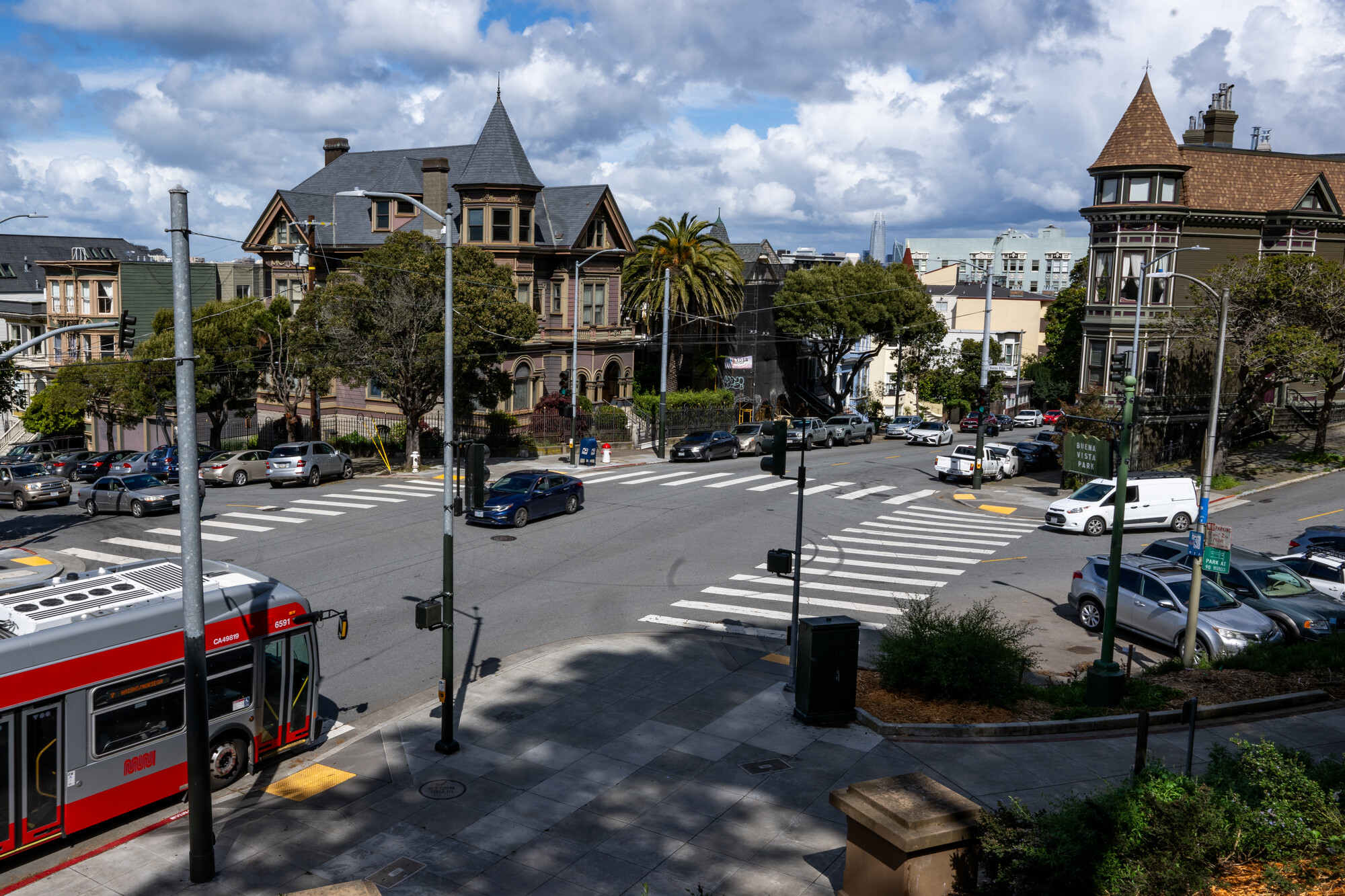
"caption": "A MUNI bus drives along Haight Street in the 5th Supervisorial District in San Francisco on April 4, 2024.",
"credit": "Beth LaBerge/KQED",
"altTag": null,
"description": null,
"imgSizes": {
"thumbnail": {
"file": "https://cdn.kqed.org/wp-content/uploads/sites/10/2025/11/240404-District5BOSRedistricting-003-BL_qed-160x107.jpg",
"width": 160,
"height": 107,
"mimeType": "image/jpeg"
},
"1536x1536": {
"file": "https://cdn.kqed.org/wp-content/uploads/sites/10/2025/11/240404-District5BOSRedistricting-003-BL_qed-1536x1024.jpg",
"width": 1536,
"height": 1024,
"mimeType": "image/jpeg"
},
"post-thumbnail": {
"file": "https://cdn.kqed.org/wp-content/uploads/sites/10/2025/11/240404-District5BOSRedistricting-003-BL_qed-672x372.jpg",
"width": 672,
"height": 372,
"mimeType": "image/jpeg"
},
"twentyfourteen-full-width": {
"file": "https://cdn.kqed.org/wp-content/uploads/sites/10/2025/11/240404-District5BOSRedistricting-003-BL_qed-1038x576.jpg",
"width": 1038,
"height": 576,
"mimeType": "image/jpeg"
},
"npr-cds-wide": {
"file": "https://cdn.kqed.org/wp-content/uploads/sites/10/2025/11/240404-District5BOSRedistricting-003-BL_qed-1200x675.jpg",
"width": 1200,
"height": 675,
"mimeType": "image/jpeg"
},
"kqedFullSize": {
"file": "https://cdn.kqed.org/wp-content/uploads/sites/10/2025/11/240404-District5BOSRedistricting-003-BL_qed.jpg",
"width": 2000,
"height": 1333
}
},
"isLoading": false,
"fetchFailed": false
},
"news_12063808": {
"type": "attachments",
"id": "news_12063808",
"meta": {
"index": "attachments_1716263798",
"site": "news",
"id": "12063808",
"found": true
},
"title": "San Francisco Waymo",
"publishDate": 1762972196,
"status": "inherit",
"parent": 12063805,
"modified": 1762976313,
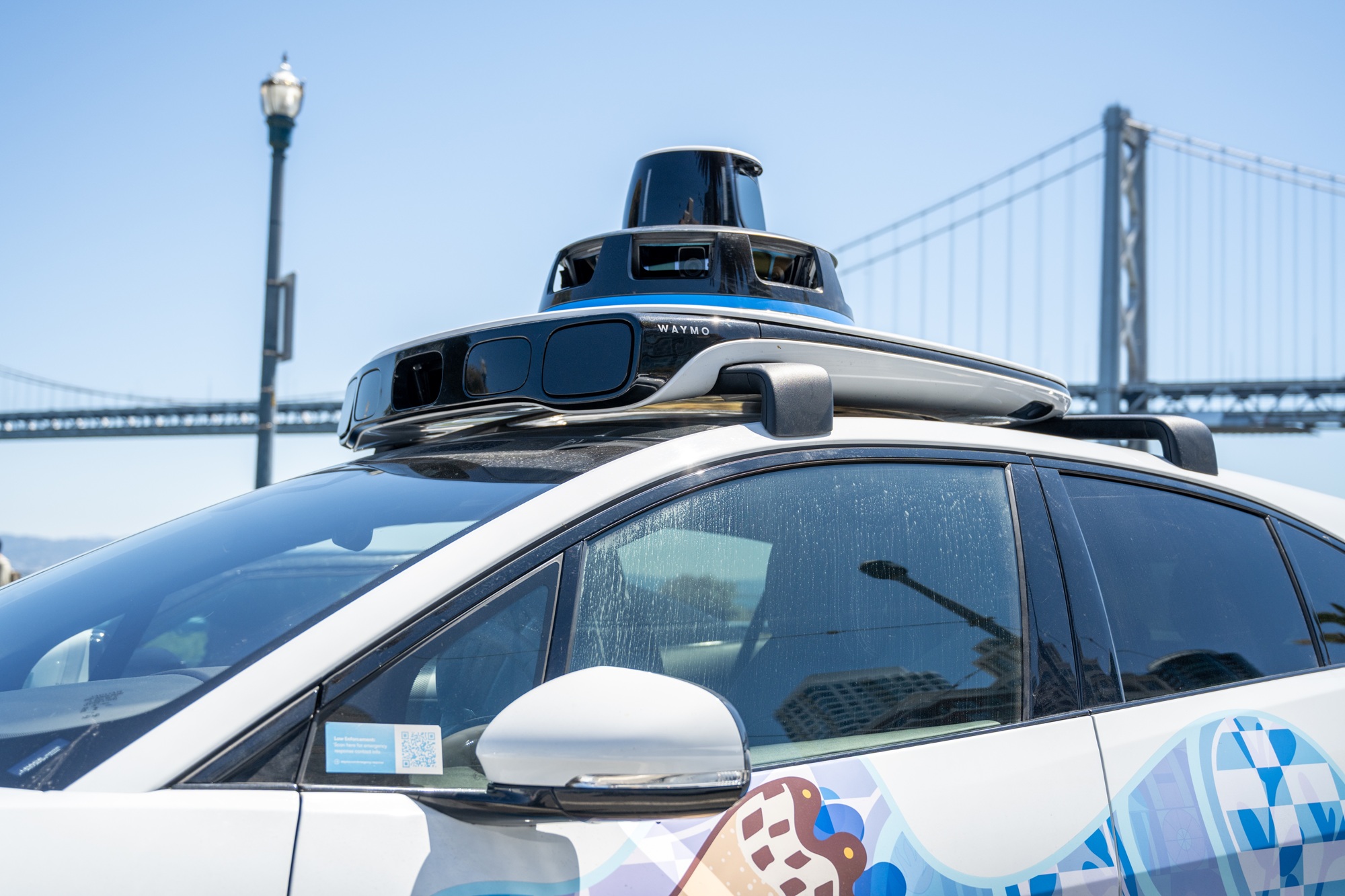
"caption": "A self-driving Waymo car with rooftop lidar and a bird-themed mural on the Embarcadero with the San Francisco-Oakland Bay Bridge in the background, in San Francisco, California, on Aug. 14, 2025. ",
"credit": "Smith Collection/Gado via Getty Images",
"altTag": null,
"description": null,
"imgSizes": {
"thumbnail": {
"file": "https://cdn.kqed.org/wp-content/uploads/sites/10/2025/11/WaymoSFGetty-160x107.jpg",
"width": 160,
"height": 107,
"mimeType": "image/jpeg"
},
"1536x1536": {
"file": "https://cdn.kqed.org/wp-content/uploads/sites/10/2025/11/WaymoSFGetty-1536x1024.jpg",
"width": 1536,
"height": 1024,
"mimeType": "image/jpeg"
},
"post-thumbnail": {
"file": "https://cdn.kqed.org/wp-content/uploads/sites/10/2025/11/WaymoSFGetty-672x372.jpg",
"width": 672,
"height": 372,
"mimeType": "image/jpeg"
},
"twentyfourteen-full-width": {
"file": "https://cdn.kqed.org/wp-content/uploads/sites/10/2025/11/WaymoSFGetty-1038x576.jpg",
"width": 1038,
"height": 576,
"mimeType": "image/jpeg"
},
"npr-cds-wide": {
"file": "https://cdn.kqed.org/wp-content/uploads/sites/10/2025/11/WaymoSFGetty-1200x675.jpg",
"width": 1200,
"height": 675,
"mimeType": "image/jpeg"
},
"kqedFullSize": {
"file": "https://cdn.kqed.org/wp-content/uploads/sites/10/2025/11/WaymoSFGetty.jpg",
"width": 2000,
"height": 1333
}
},
"isLoading": false,
"fetchFailed": false
},
"news_12063708": {
"type": "attachments",
"id": "news_12063708",
"meta": {
"index": "attachments_1716263798",
"site": "news",
"id": "12063708",
"found": true
},
"title": "240111-TransitFile-06-BL_qed",
"publishDate": 1762818697,
"status": "inherit",
"parent": 12063703,
"modified": 1762818706,
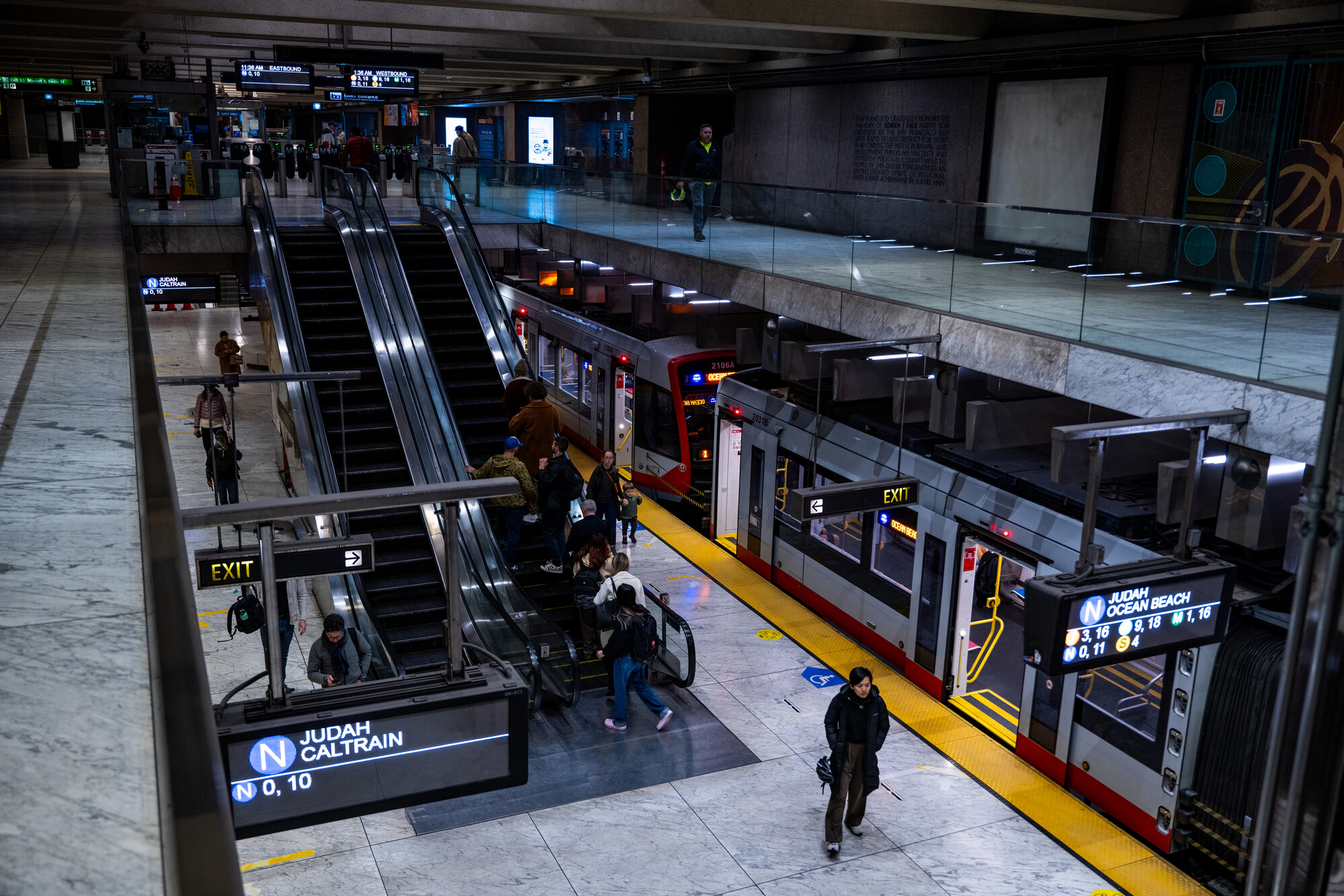
"caption": "A MUNI train stops at the Embarcadero Station in San Francisco on Jan. 11, 2024.",
"credit": "Beth LaBerge/KQED",
"altTag": null,
"description": null,
"imgSizes": {
"thumbnail": {
"file": "https://cdn.kqed.org/wp-content/uploads/sites/10/2025/11/240111-TransitFile-06-BL_qed-160x107.jpg",
"width": 160,
"height": 107,
"mimeType": "image/jpeg"
},
"1536x1536": {
"file": "https://cdn.kqed.org/wp-content/uploads/sites/10/2025/11/240111-TransitFile-06-BL_qed-1536x1024.jpg",
"width": 1536,
"height": 1024,
"mimeType": "image/jpeg"
},
"post-thumbnail": {
"file": "https://cdn.kqed.org/wp-content/uploads/sites/10/2025/11/240111-TransitFile-06-BL_qed-672x372.jpg",
"width": 672,
"height": 372,
"mimeType": "image/jpeg"
},
"twentyfourteen-full-width": {
"file": "https://cdn.kqed.org/wp-content/uploads/sites/10/2025/11/240111-TransitFile-06-BL_qed-1038x576.jpg",
"width": 1038,
"height": 576,
"mimeType": "image/jpeg"
},
"npr-cds-wide": {
"file": "https://cdn.kqed.org/wp-content/uploads/sites/10/2025/11/240111-TransitFile-06-BL_qed-1200x675.jpg",
"width": 1200,
"height": 675,
"mimeType": "image/jpeg"
},
"kqedFullSize": {
"file": "https://cdn.kqed.org/wp-content/uploads/sites/10/2025/11/240111-TransitFile-06-BL_qed.jpg",
"width": 1999,
"height": 1333
}
},
"isLoading": false,
"fetchFailed": false
}
},
"audioPlayerReducer": {
"postId": "stream_live",
"isPaused": true,
"isPlaying": false,
"pfsActive": false,
"pledgeModalIsOpen": true,
"playerDrawerIsOpen": false,
"liveAudioPlayStartedAt": 0,
"liveAudioPlayContext": ""
},
"authorsReducer": {
"danbrekke": {
"type": "authors",
"id": "222",
"meta": {
"index": "authors_1716337520",
"id": "222",
"found": true
},
"name": "Dan Brekke",
"firstName": "Dan",
"lastName": "Brekke",
"slug": "danbrekke",
"email": "dbrekke@kqed.org",
"display_author_email": true,
"staff_mastheads": [
"news",
"science"
],
"title": "KQED Editor and Reporter",
"bio": "Dan Brekke is a reporter and editor for KQED News, responsible for coverage of topics ranging from California water issues to the Bay Area's transportation challenges. In a newsroom career that began in Chicago in 1972, Dan has worked for \u003cem>The San Francisco Examiner,\u003c/em> Wired and TechTV and has been published in The New York Times, The New York Times Magazine, Business 2.0, Salon and elsewhere.\r\n\r\nSince joining KQED in 2007, Dan has reported, edited and produced both radio and online features and breaking news pieces. He has shared as both editor and reporter in four Society of Professional Journalists Norcal Excellence in Journalism awards and one Edward R. Murrow regional award. He was chosen for a spring 2017 residency at the Mesa Refuge to advance his research on California salmon.\r\n\r\nEmail Dan at: \u003ca href=\"mailto:dbrekke@kqed.org\">dbrekke@kqed.org\u003c/a>\r\n\r\n\u003cstrong>Twitter:\u003c/strong> \u003ca href=\"https://twitter.com/danbrekke\" rel=\"noopener noreferrer\">twitter.com/danbrekke\u003c/a>\r\n\u003cstrong>Facebook:\u003c/strong> \u003ca href=\"https://www.facebook.com/danbrekke\" rel=\"noopener noreferrer\">www.facebook.com/danbrekke\u003c/a>\r\n\u003cstrong>LinkedIn:\u003c/strong> \u003ca href=\"https://www.linkedin.com/in/danbrekke\" rel=\"noopener noreferrer\">www.linkedin.com/in/danbrekke\u003c/a>",
"avatar": "https://secure.gravatar.com/avatar/c8126230345efca3f7aa89b1a402be45?s=600&d=mm&r=g",
"twitter": "danbrekke",
"facebook": null,
"instagram": "https://www.instagram.com/dan.brekke/",
"linkedin": "https://www.linkedin.com/in/danbrekke/",
"sites": [
{
"site": "news",
"roles": [
"administrator",
"create_posts"
]
},
{
"site": "stateofhealth",
"roles": [
"editor"
]
},
{
"site": "science",
"roles": [
"editor"
]
},
{
"site": "quest",
"roles": [
"contributor"
]
},
{
"site": "food",
"roles": [
"contributor"
]
},
{
"site": "forum",
"roles": [
"contributor"
]
},
{
"site": "liveblog",
"roles": [
"editor"
]
}
],
"headData": {
"title": "Dan Brekke | KQED",
"description": "KQED Editor and Reporter",
"ogImgSrc": "https://secure.gravatar.com/avatar/c8126230345efca3f7aa89b1a402be45?s=600&d=mm&r=g",
"twImgSrc": "https://secure.gravatar.com/avatar/c8126230345efca3f7aa89b1a402be45?s=600&d=mm&r=g"
},
"isLoading": false,
"link": "/author/danbrekke"
},
"ecruzguevarra": {
"type": "authors",
"id": "8654",
"meta": {
"index": "authors_1716337520",
"id": "8654",
"found": true
},
"name": "Ericka Cruz Guevarra",
"firstName": "Ericka",
"lastName": "Cruz Guevarra",
"slug": "ecruzguevarra",
"email": "ecruzguevarra@kqed.org",
"display_author_email": true,
"staff_mastheads": [
"news"
],
"title": "Producer, The Bay Podcast",
"bio": "Ericka Cruz Guevarra is host of \u003ca href=\"https://www.kqed.org/podcasts/thebay\">\u003cem>The Bay\u003c/em>\u003c/a> podcast at KQED. Before host, she was the show’s producer. Her work in that capacity includes a three-part reported series on policing in Vallejo, which won a 2020 excellence in journalism award from the Society of Professional Journalists. Ericka has worked as a breaking news reporter at Oregon Public Broadcasting, helped produce the Code Switch podcast, and was KQED’s inaugural Raul Ramirez Diversity Fund intern. She’s also an alumna of NPR’s Next Generation Radio program. Send her an email if you have strong feelings about whether Fairfield and Suisun City are the Bay. Ericka is represented by SAG-AFTRA.",
"avatar": "https://secure.gravatar.com/avatar/25e5ab8d3d53fad2dcc7bb2b5c506b1a?s=600&d=blank&r=g",
"twitter": "NotoriousECG",
"facebook": null,
"instagram": null,
"linkedin": null,
"sites": [
{
"site": "arts",
"roles": [
"subscriber"
]
},
{
"site": "news",
"roles": [
"editor",
"manage_categories"
]
},
{
"site": "futureofyou",
"roles": [
"subscriber"
]
},
{
"site": "stateofhealth",
"roles": [
"subscriber"
]
},
{
"site": "science",
"roles": [
"editor"
]
},
{
"site": "forum",
"roles": [
"subscriber"
]
}
],
"headData": {
"title": "Ericka Cruz Guevarra | KQED",
"description": "Producer, The Bay Podcast",
"ogImgSrc": "https://secure.gravatar.com/avatar/25e5ab8d3d53fad2dcc7bb2b5c506b1a?s=600&d=blank&r=g",
"twImgSrc": "https://secure.gravatar.com/avatar/25e5ab8d3d53fad2dcc7bb2b5c506b1a?s=600&d=blank&r=g"
},
"isLoading": false,
"link": "/author/ecruzguevarra"
},
"amontecillo": {
"type": "authors",
"id": "11649",
"meta": {
"index": "authors_1716337520",
"id": "11649",
"found": true
},
"name": "Alan Montecillo",
"firstName": "Alan",
"lastName": "Montecillo",
"slug": "amontecillo",
"email": "amontecillo@kqed.org",
"display_author_email": false,
"staff_mastheads": [
"news"
],
"title": "KQED Contributor",
"bio": "Alan Montecillo is the senior editor of \u003cem>\u003ca href=\"http://kqed.org/thebay\">The Bay\u003c/a>, \u003c/em> KQED's local news podcast. Before moving to the Bay Area, he worked as a senior talk show producer for WILL in Champaign-Urbana, Illinois and at Oregon Public Broadcasting in Portland, Oregon. He has won journalism awards from the Society of Professional Journalists Northern California, the Public Media Journalists Association, The Signal Awards, and has also received a regional Edward R. Murrow award. Alan is a Filipino American from Hong Kong and a graduate of Reed College.",
"avatar": "https://secure.gravatar.com/avatar/d5e4e7a76481969ccba76f4e2b5ccabc?s=600&d=blank&r=g",
"twitter": "alanmontecillo",
"facebook": null,
"instagram": null,
"linkedin": null,
"sites": [
{
"site": "",
"roles": [
"editor"
]
},
{
"site": "news",
"roles": [
"editor",
"manage_categories"
]
}
],
"headData": {
"title": "Alan Montecillo | KQED",
"description": "KQED Contributor",
"ogImgSrc": "https://secure.gravatar.com/avatar/d5e4e7a76481969ccba76f4e2b5ccabc?s=600&d=blank&r=g",
"twImgSrc": "https://secure.gravatar.com/avatar/d5e4e7a76481969ccba76f4e2b5ccabc?s=600&d=blank&r=g"
},
"isLoading": false,
"link": "/author/amontecillo"
},
"adahlstromeckman": {
"type": "authors",
"id": "11785",
"meta": {
"index": "authors_1716337520",
"id": "11785",
"found": true
},
"name": "Azul Dahlstrom-Eckman",
"firstName": "Azul",
"lastName": "Dahlstrom-Eckman",
"slug": "adahlstromeckman",
"email": "adahlstrom-eckman@kqed.org",
"display_author_email": true,
"staff_mastheads": [],
"title": "Reporter",
"bio": "Azul is a reporter for KQED focusing on transportation and features. He joined KQED in 2021 as an alumna of KALW's Audio Academy radio journalism training program.",
"avatar": "https://secure.gravatar.com/avatar/9cb750298435add7815a777f55bf1f46845c1386bb8452555c60a7b820b5aba3?s=600&d=blank&r=g",
"twitter": "@zuliemann",
"bluesky": "@azul415.bsky.social",
"facebook": null,
"instagram": null,
"linkedin": null,
"sites": [
{
"site": "arts",
"roles": [
"editor"
]
},
{
"site": "news",
"roles": [
"editor"
]
},
{
"site": "science",
"roles": [
"editor"
]
},
{
"site": "liveblog",
"roles": [
"author"
]
}
],
"headData": {
"title": "Azul Dahlstrom-Eckman | KQED",
"description": "Reporter",
"ogImgSrc": "https://secure.gravatar.com/avatar/9cb750298435add7815a777f55bf1f46845c1386bb8452555c60a7b820b5aba3?s=600&d=blank&r=g",
"twImgSrc": "https://secure.gravatar.com/avatar/9cb750298435add7815a777f55bf1f46845c1386bb8452555c60a7b820b5aba3?s=600&d=blank&r=g"
},
"isLoading": false,
"link": "/author/adahlstromeckman"
},
"jessicakariisa": {
"type": "authors",
"id": "11831",
"meta": {
"index": "authors_1716337520",
"id": "11831",
"found": true
},
"name": "Jessica Kariisa",
"firstName": "Jessica",
"lastName": "Kariisa",
"slug": "jessicakariisa",
"email": "jkariisa@kqed.org",
"display_author_email": false,
"staff_mastheads": [],
"title": "Producer, The Bay",
"bio": "Jessica Kariisa is the producer of The Bay. She first joined KQED as an intern for The California Report Magazine, after which she became an on-call producer. She reported a Bay Curious episode on the use of rap lyrics in criminal trials which won a Society of Professional Journalists award in 2023 for Excellence in Features Journalism and the 2023 Signal Award for Best Conversation Starter. She’s worked on podcasts for Snap Judgment and American Public Media. Before embarking on her audio career, she was a music journalist.\r\n\r\nJessica Kariisa is represented by SAG-AFTRA.",
"avatar": "https://secure.gravatar.com/avatar/522e97b28ac0b3d411621c0fde8f3419c7b71ea2c5c262c57c4bb600963f328c?s=600&d=blank&r=g",
"twitter": null,
"bluesky": null,
"facebook": null,
"instagram": null,
"linkedin": null,
"sites": [
{
"site": "arts",
"roles": [
"author"
]
},
{
"site": "news",
"roles": [
"editor",
"manage_categories"
]
}
],
"headData": {
"title": "Jessica Kariisa | KQED",
"description": "Producer, The Bay",
"ogImgSrc": "https://secure.gravatar.com/avatar/522e97b28ac0b3d411621c0fde8f3419c7b71ea2c5c262c57c4bb600963f328c?s=600&d=blank&r=g",
"twImgSrc": "https://secure.gravatar.com/avatar/522e97b28ac0b3d411621c0fde8f3419c7b71ea2c5c262c57c4bb600963f328c?s=600&d=blank&r=g"
},
"isLoading": false,
"link": "/author/jessicakariisa"
},
"jgeha": {
"type": "authors",
"id": "11906",
"meta": {
"index": "authors_1716337520",
"id": "11906",
"found": true
},
"name": "Joseph Geha",
"firstName": "Joseph",
"lastName": "Geha",
"slug": "jgeha",
"email": "jgeha@kqed.org",
"display_author_email": false,
"staff_mastheads": [
"news",
"science"
],
"title": "KQED Contributor",
"bio": null,
"avatar": "https://secure.gravatar.com/avatar/ea84d2b6dd93d6369d453edf19dd583f117cd1759d2d9c9c92f9de77017354fe?s=600&d=blank&r=g",
"twitter": null,
"bluesky": null,
"facebook": null,
"instagram": null,
"linkedin": null,
"sites": [
{
"site": "news",
"roles": [
"editor"
]
},
{
"site": "liveblog",
"roles": [
"author"
]
}
],
"headData": {
"title": "Joseph Geha | KQED",
"description": "KQED Contributor",
"ogImgSrc": "https://secure.gravatar.com/avatar/ea84d2b6dd93d6369d453edf19dd583f117cd1759d2d9c9c92f9de77017354fe?s=600&d=blank&r=g",
"twImgSrc": "https://secure.gravatar.com/avatar/ea84d2b6dd93d6369d453edf19dd583f117cd1759d2d9c9c92f9de77017354fe?s=600&d=blank&r=g"
},
"isLoading": false,
"link": "/author/jgeha"
},
"kdebenedetti": {
"type": "authors",
"id": "11913",
"meta": {
"index": "authors_1716337520",
"id": "11913",
"found": true
},
"name": "Katie DeBenedetti",
"firstName": "Katie",
"lastName": "DeBenedetti",
"slug": "kdebenedetti",
"email": "kdebenedetti@kqed.org",
"display_author_email": false,
"staff_mastheads": [
"news",
"science"
],
"title": "KQED Contributor",
"bio": "Katie DeBenedetti is a digital reporter covering daily news for the Express Desk. Prior to joining KQED as a culture reporting intern in January 2024, she covered education and city government for the Napa Valley Register.",
"avatar": "https://secure.gravatar.com/avatar/6e31073cb8f7e4214ab03f42771d0f45?s=600&d=blank&r=g",
"twitter": null,
"facebook": null,
"instagram": null,
"linkedin": null,
"sites": [
{
"site": "news",
"roles": [
"author"
]
},
{
"site": "science",
"roles": [
"author"
]
},
{
"site": "liveblog",
"roles": [
"author"
]
}
],
"headData": {
"title": "Katie DeBenedetti | KQED",
"description": "KQED Contributor",
"ogImgSrc": "https://secure.gravatar.com/avatar/6e31073cb8f7e4214ab03f42771d0f45?s=600&d=blank&r=g",
"twImgSrc": "https://secure.gravatar.com/avatar/6e31073cb8f7e4214ab03f42771d0f45?s=600&d=blank&r=g"
},
"isLoading": false,
"link": "/author/kdebenedetti"
},
"sarahwright": {
"type": "authors",
"id": "11956",
"meta": {
"index": "authors_1716337520",
"id": "11956",
"found": true
},
"name": "Sarah Wright",
"firstName": "Sarah",
"lastName": "Wright",
"slug": "sarahwright",
"email": "swright@kqed.org",
"display_author_email": true,
"staff_mastheads": [],
"title": "Outdoors Engagement Reporter",
"bio": "Sarah Wright is KQED's Outdoors Engagement Reporter. Originally from Lake Tahoe, she completed a thru-hike of the Pacific Crest Trail in 2019 and was a U.S. Fulbright Program grantee to Argentina in 2023. Her journalism has appeared in The Guardian, The San Francisco Standard, The Palo Alto Weekly and the Half Moon Bay Review.",
"avatar": "https://secure.gravatar.com/avatar/c161a3d6441865cba25e6db4fa561099ad665799e9432e34da2b84d7e371524c?s=600&d=blank&r=g",
"twitter": null,
"bluesky": null,
"facebook": null,
"instagram": null,
"linkedin": null,
"sites": [
{
"site": "arts",
"roles": [
"editor"
]
},
{
"site": "news",
"roles": [
"editor"
]
},
{
"site": "science",
"roles": [
"contributor",
"author"
]
},
{
"site": "forum",
"roles": [
"editor"
]
}
],
"headData": {
"title": "Sarah Wright | KQED",
"description": "Outdoors Engagement Reporter",
"ogImgSrc": "https://secure.gravatar.com/avatar/c161a3d6441865cba25e6db4fa561099ad665799e9432e34da2b84d7e371524c?s=600&d=blank&r=g",
"twImgSrc": "https://secure.gravatar.com/avatar/c161a3d6441865cba25e6db4fa561099ad665799e9432e34da2b84d7e371524c?s=600&d=blank&r=g"
},
"isLoading": false,
"link": "/author/sarahwright"
},
"epeppel": {
"type": "authors",
"id": "11989",
"meta": {
"index": "authors_1716337520",
"id": "11989",
"found": true
},
"name": "Eliza Peppel",
"firstName": "Eliza",
"lastName": "Peppel",
"slug": "epeppel",
"email": "epeppel@kqed.org",
"display_author_email": false,
"staff_mastheads": [],
"title": null,
"bio": "Eliza is an award-winning journalist living in Oakland. She was previously a reporting fellow at KALW, where she reported daily news and long-form radio features. Eliza studied journalism at Fordham University in The Bronx during the COVID-19 pandemic. She grew up mainly in California and spent a few childhood years in Aix en Provence, France.",
"avatar": "https://secure.gravatar.com/avatar/20d9e17a06ee787c11052e6096319dd583b6376233d02383dab5eaeb874d5f56?s=600&d=blank&r=g",
"twitter": null,
"bluesky": null,
"facebook": null,
"instagram": null,
"linkedin": null,
"sites": [
{
"site": "news",
"roles": [
"subscriber"
]
},
{
"site": "science",
"roles": [
"subscriber"
]
}
],
"headData": {
"title": "Eliza Peppel | KQED",
"description": null,
"ogImgSrc": "https://secure.gravatar.com/avatar/20d9e17a06ee787c11052e6096319dd583b6376233d02383dab5eaeb874d5f56?s=600&d=blank&r=g",
"twImgSrc": "https://secure.gravatar.com/avatar/20d9e17a06ee787c11052e6096319dd583b6376233d02383dab5eaeb874d5f56?s=600&d=blank&r=g"
},
"isLoading": false,
"link": "/author/epeppel"
}
},
"pagesReducer": {
"news_tag_transportation": {
"type": "terms",
"id": "news_20517",
"meta": {
"index": "terms_1716263798",
"site": "news",
"id": "20517",
"score": 8.934093
},
"featImg": null,
"name": "transportation",
"description": null,
"taxonomy": "tag",
"headData": {
"twImgId": null,
"twTitle": null,
"ogTitle": null,
"ogImgId": null,
"twDescription": null,
"description": null,
"title": "transportation Archives | KQED News",
"ogDescription": null
},
"ttid": 20534,
"slug": "transportation",
"isLoading": false,
"title": "transportation",
"pageMeta": {
"site": "news",
"WpPageTemplate": "page-topic-editorial",
"currentPage": 8
},
"blocks": [
{
"blockName": "kqed/post-list",
"attrs": {
"layout": "cardArticle2",
"query": "posts/news?tag=transportation",
"seeMore": false,
"paginated": true,
"page": 8
}
},
{
"blockName": "kqed/ad"
}
]
}
},
"pfsSessionReducer": {},
"postsReducer": {
"stream_live": {
"type": "live",
"id": "stream_live",
"audioUrl": "https://streams.kqed.org/kqedradio",
"title": "Live Stream",
"excerpt": "Live Stream information currently unavailable.",
"link": "/radio",
"featImg": "",
"label": {
"name": "KQED Live",
"link": "/"
}
},
"stream_kqedNewscast": {
"type": "posts",
"id": "stream_kqedNewscast",
"audioUrl": "https://www.kqed.org/.stream/anon/radio/RDnews/newscast.mp3?_=1",
"title": "KQED Newscast",
"featImg": "",
"label": {
"name": "88.5 FM",
"link": "/"
}
},
"news_12066245": {
"type": "posts",
"id": "news_12066245",
"meta": {
"index": "posts_1716263798",
"site": "news",
"id": "12066245",
"score": null,
"sort": [
1765300813000
]
},
"guestAuthors": [],
"slug": "where-the-journey-begins-south-bay-bart-extension-work-pushes-ahead",
"title": "‘Where the Journey Begins’: South Bay BART Extension Work Pushes Ahead",
"publishDate": 1765300813,
"format": "standard",
"headTitle": "‘Where the Journey Begins’: South Bay BART Extension Work Pushes Ahead | KQED",
"labelTerm": {
"site": "news"
},
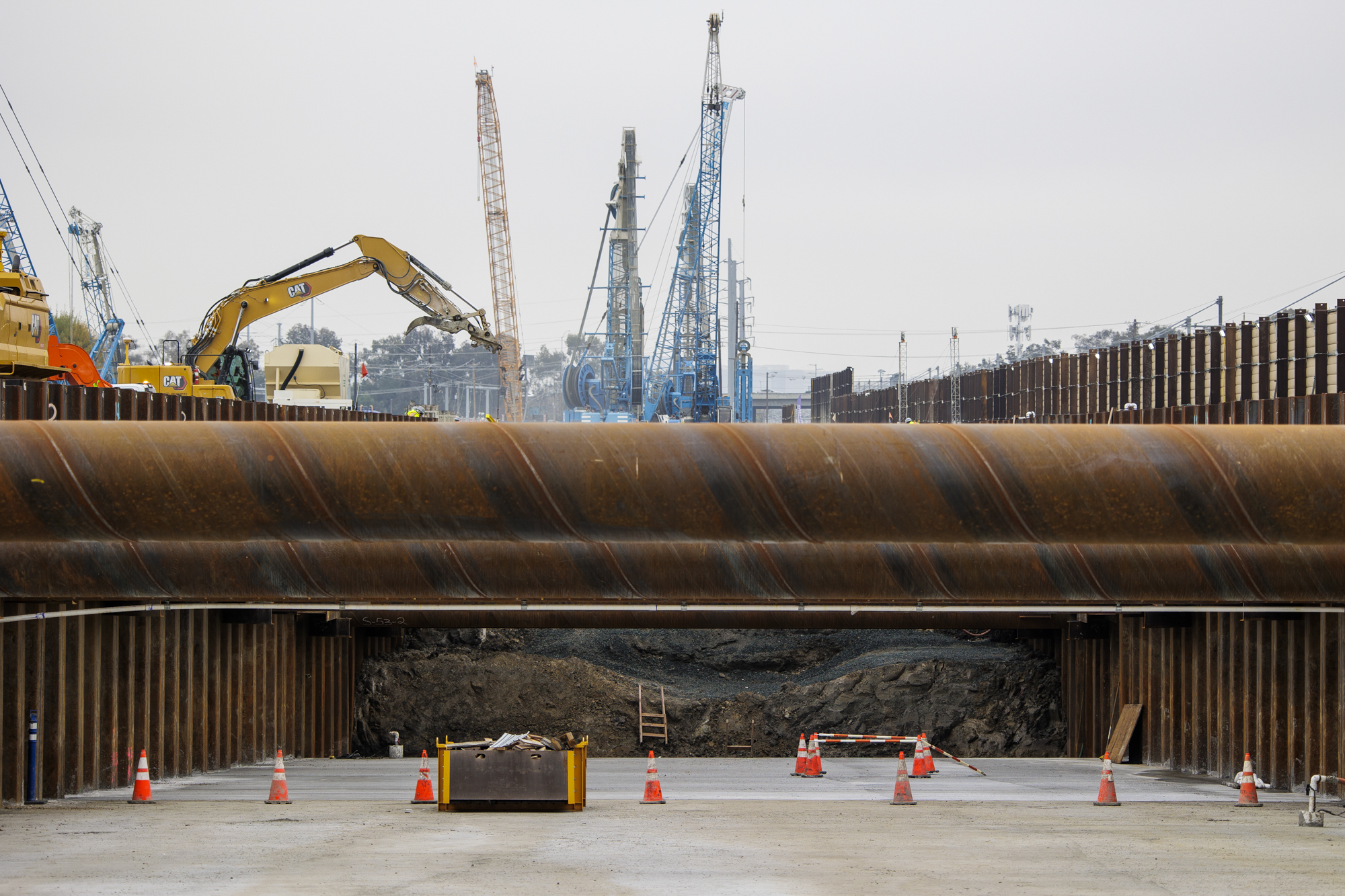
"content": "\u003cp>Plenty of questions remain about the long-running plans to extend BART through downtown San José and into Santa Clara: concerns about costs, schedule, \u003ca href=\"https://www.kqed.org/news/12043328/vta-officials-want-to-ditch-contractor-on-south-bay-bart-extension\">disputes\u003c/a> with contractors, and whether President Donald Trump might interfere with its \u003ca href=\"https://www.kqed.org/news/12063022/south-bay-transit-officials-working-on-plan-b-in-case-trump-cuts-bart-funding\">federal funding\u003c/a> are just some of the worries being weighed by local leaders.\u003c/p>\n\u003cp>Even as those questions persist, however, the first major construction since the $12.7 billion project was conceived decades ago is pushing ahead.\u003c/p>\n\u003cp>“We can see progress, and we have momentum, and we need to keep that momentum going,” said Tom Maguire, the chief megaprojects delivery officer for the Santa Clara Valley Transportation Authority, known locally as VTA.\u003c/p>\n\u003cp>[ad fullwidth]\u003c/p>\n\u003cp>The VTA is building the four-station, six-mile extension, which will eventually tie into existing BART service that currently terminates at the Berryessa/North San José Station, which opened in 2020, along with the Milpitas station.\u003c/p>\n\u003cp>New stations along the extension are planned for 28th Street/Little Portugal, Downtown San José at First Street, Diridon Station and the current Santa Clara Caltrain station.\u003c/p>\n\u003cfigure id=\"attachment_12066408\" class=\"wp-caption aligncenter\" style=\"max-width: 2000px\">\u003cimg loading=\"lazy\" decoding=\"async\" class=\"size-full wp-image-12066408\" src=\"https://cdn.kqed.org/wp-content/uploads/sites/10/2025/12/251208-BART-SILICON-VALLEY-TOUR-MD-01-KQED.jpg\" alt=\"\" width=\"2000\" height=\"1333\" srcset=\"https://cdn.kqed.org/wp-content/uploads/sites/10/2025/12/251208-BART-SILICON-VALLEY-TOUR-MD-01-KQED.jpg 2000w, https://cdn.kqed.org/wp-content/uploads/sites/10/2025/12/251208-BART-SILICON-VALLEY-TOUR-MD-01-KQED-160x107.jpg 160w, https://cdn.kqed.org/wp-content/uploads/sites/10/2025/12/251208-BART-SILICON-VALLEY-TOUR-MD-01-KQED-1536x1024.jpg 1536w\" sizes=\"auto, (max-width: 2000px) 100vw, 2000px\">\u003cfigcaption class=\"wp-caption-text\">Construction crews work at the West Portal Site of the BART Silicon Valley Phase II Project in San José on Dec. 8, 2025. \u003ccite>(Martin do Nascimento/KQED)\u003c/cite>\u003c/figcaption>\u003c/figure>\n\u003cp>Project officials said over roughly the past month, major excavation work has ramped up at the West Portal site on the border of San José and Santa Clara, near PayPal Park and San José Mineta International Airport.\u003c/p>\n\u003cp>Contractors are digging out a large ramp leading down to a 133-foot hole in the ground, which is being reinforced with huge rebar cages filled with concrete, some of which required a 217-foot crane and specialized equipment to drop into place.\u003c/p>\n\u003cp>“We’re rapidly opening up the ground. And for the first time, folks who have been waiting for this project for decades can start to see where the trains they’ve been paying for and hoping for are actually going to run,” Maguire said Monday morning during a media tour of the West Portal site.[aside postID=news_12053738 hero='https://cdn.kqed.org/wp-content/uploads/sites/10/2025/08/250623-VTAWESTPORTAL-JG-4_qed.jpg']The massive hole, and most of the construction happening around it, is in service of what’s called the launch structure. It’s where a $76 million tunnel boring machine recently assembled in Germany will eventually be dropped 82 feet into the earth to begin chewing through miles of muck.\u003c/p>\n\u003cp>It’ll bore out a 53-foot diameter tunnel shaft for five of the six miles of the extension, which will eventually contain train tracks, platforms and stairs or escalators for future passengers.\u003c/p>\n\u003cp>“Right here beneath our feet, we’re building the gateway that will connect BART to downtown San José and Berryessa and beyond,” Sarah Wilson, the construction director for the project, said during the tour. “This is where the journey begins, literally and symbolically.”\u003c/p>\n\u003cp>The vast expanse of the ramp is reinforced with large, cylindrical steel braces, which will help hold back the earth during construction and further excavation.\u003c/p>\n\u003cp>Small teams of workers on the ground were seen Monday morning coordinating with backhoe operators to check the integrity of the braces and fit them into place.\u003c/p>\n\u003cfigure id=\"attachment_12066411\" class=\"wp-caption aligncenter\" style=\"max-width: 2000px\">\u003cimg loading=\"lazy\" decoding=\"async\" class=\"size-full wp-image-12066411\" src=\"https://cdn.kqed.org/wp-content/uploads/sites/10/2025/12/251208-BART-SILICON-VALLEY-TOUR-MD-05-KQED.jpg\" alt=\"\" width=\"2000\" height=\"1334\" srcset=\"https://cdn.kqed.org/wp-content/uploads/sites/10/2025/12/251208-BART-SILICON-VALLEY-TOUR-MD-05-KQED.jpg 2000w, https://cdn.kqed.org/wp-content/uploads/sites/10/2025/12/251208-BART-SILICON-VALLEY-TOUR-MD-05-KQED-160x107.jpg 160w, https://cdn.kqed.org/wp-content/uploads/sites/10/2025/12/251208-BART-SILICON-VALLEY-TOUR-MD-05-KQED-1536x1025.jpg 1536w\" sizes=\"auto, (max-width: 2000px) 100vw, 2000px\">\u003cfigcaption class=\"wp-caption-text\">Chief Megaprojects Delivery Officer for the Santa Clara Valley Transportation Authority Tom Macguire addresses the media at the West Portal Site of the BART Silicon Valley Phase II Project in San José on Dec. 8, 2025. \u003ccite>(Martin do Nascimento/KQED)\u003c/cite>\u003c/figcaption>\u003c/figure>\n\u003cp>Maguire and other officials have emphasized the importance of getting the tunnel built as soon as possible as a means to help ensure the project doesn’t incur any further cost or schedule overruns.\u003c/p>\n\u003cp>The project, originally estimated by VTA in 2014 to cost about $4.7 billion and be completed in 2026, has ballooned in cost multiple times to its current figure, and is currently estimated to be completed sometime in the year 2037.\u003c/p>\n\u003cp>“It’s a significant project, it’s going to take a decade to build it, but the best way we can shrink that timeframe is getting this launch structure done and getting the tunnel boring machine moving as fast as possible,” Maguire said.\u003c/p>\n\u003cfigure id=\"attachment_12066413\" class=\"wp-caption aligncenter\" style=\"max-width: 2000px\">\u003cimg loading=\"lazy\" decoding=\"async\" class=\"wp-image-12066413 size-full\" src=\"https://cdn.kqed.org/wp-content/uploads/sites/10/2025/12/251208-BART-SILICON-VALLEY-TOUR-MD-07-KQED.jpg\" alt=\"\" width=\"2000\" height=\"1334\" srcset=\"https://cdn.kqed.org/wp-content/uploads/sites/10/2025/12/251208-BART-SILICON-VALLEY-TOUR-MD-07-KQED.jpg 2000w, https://cdn.kqed.org/wp-content/uploads/sites/10/2025/12/251208-BART-SILICON-VALLEY-TOUR-MD-07-KQED-160x107.jpg 160w, https://cdn.kqed.org/wp-content/uploads/sites/10/2025/12/251208-BART-SILICON-VALLEY-TOUR-MD-07-KQED-1536x1025.jpg 1536w\" sizes=\"auto, (max-width: 2000px) 100vw, 2000px\">\u003cfigcaption class=\"wp-caption-text\">The tunnel under construction at the West Portal Site of the BART Silicon Valley Phase II Project in San José on Dec. 8, 2025. \u003ccite>(Martin do Nascimento/KQED)\u003c/cite>\u003c/figcaption>\u003c/figure>\n\u003cp>But even as the crews of anywhere between 30 to 80 workers toil on rotating shifts at the West Portal site 24 hours a day, VTA is seemingly already off the optimal mark.\u003c/p>\n\u003cp>Its tunnel boring machine just recently finished quality assurance testing in Germany, and is being disassembled to be packed away in storage before eventually being shipped to San José.\u003c/p>\n\u003cp>However, Maguire said Monday the launch structure won’t be complete until spring 2027, and a series of other jobs need to be completed on the site before the machine can be brought to the site and start digging, including setting up major power supplies to run it.\u003c/p>\n\u003cfigure id=\"attachment_12066414\" class=\"wp-caption aligncenter\" style=\"max-width: 2000px\">\u003cimg loading=\"lazy\" decoding=\"async\" class=\"size-full wp-image-12066414\" src=\"https://cdn.kqed.org/wp-content/uploads/sites/10/2025/12/251208-BART-SILICON-VALLEY-TOUR-MD-08-KQED.jpg\" alt=\"\" width=\"2000\" height=\"1334\" srcset=\"https://cdn.kqed.org/wp-content/uploads/sites/10/2025/12/251208-BART-SILICON-VALLEY-TOUR-MD-08-KQED.jpg 2000w, https://cdn.kqed.org/wp-content/uploads/sites/10/2025/12/251208-BART-SILICON-VALLEY-TOUR-MD-08-KQED-160x107.jpg 160w, https://cdn.kqed.org/wp-content/uploads/sites/10/2025/12/251208-BART-SILICON-VALLEY-TOUR-MD-08-KQED-1536x1025.jpg 1536w\" sizes=\"auto, (max-width: 2000px) 100vw, 2000px\">\u003cfigcaption class=\"wp-caption-text\">Construction Director Sarah Wilson speaks with the media at the West Portal Site of the BART Silicon Valley Phase II Project in San José on Dec. 8, 2025. \u003ccite>(Martin do Nascimento/KQED)\u003c/cite>\u003c/figcaption>\u003c/figure>\n\u003cp>Wilson said VTA estimates tunneling won’t begin until either 2028 or 2029, and could take roughly three-and-a-half years to complete, barring any significant delays from unforeseen challenges.\u003c/p>\n\u003cp>Part of the delay stems from the agency’s decision to ditch its main tunneling and trackwork contractor over a cost dispute. That so-called “offramp” the agency elected to take could be responsible for up to an 18-month setback, Maguire said earlier this year.\u003c/p>\n\u003cp>It’s unclear at this point if VTA will find another contractor altogether or renegotiate with its previous partner to get the major tunneling work done, as some outside transit consultants have recommended they do.\u003c/p>\n\u003cfigure id=\"attachment_12066417\" class=\"wp-caption aligncenter\" style=\"max-width: 2000px\">\u003cimg loading=\"lazy\" decoding=\"async\" class=\"wp-image-12066417 size-full\" src=\"https://cdn.kqed.org/wp-content/uploads/sites/10/2025/12/251208-BART-SILICON-VALLEY-TOUR-MD-10-KQED.jpg\" alt=\"\" width=\"2000\" height=\"1333\" srcset=\"https://cdn.kqed.org/wp-content/uploads/sites/10/2025/12/251208-BART-SILICON-VALLEY-TOUR-MD-10-KQED.jpg 2000w, https://cdn.kqed.org/wp-content/uploads/sites/10/2025/12/251208-BART-SILICON-VALLEY-TOUR-MD-10-KQED-160x107.jpg 160w, https://cdn.kqed.org/wp-content/uploads/sites/10/2025/12/251208-BART-SILICON-VALLEY-TOUR-MD-10-KQED-1536x1024.jpg 1536w\" sizes=\"auto, (max-width: 2000px) 100vw, 2000px\">\u003cfigcaption class=\"wp-caption-text\">Construction crews work at the West Portal Site of the BART Silicon Valley Phase II Project in San José on Dec. 8, 2025. \u003ccite>(Martin do Nascimento/KQED)\u003c/cite>\u003c/figcaption>\u003c/figure>\n\u003cp>Maguire said there’s been a lot of interest shown by the industry in the job.\u003c/p>\n\u003cp>“All the major tunneling contractors around the globe who are capable of doing this work are interested in doing this work,” he said. “Lots of people want to be part of this project. It’s a once-in-a-generation project.”\u003c/p>\n\u003cp>[ad floatright]\u003c/p>\n",
"blocks": [],
"excerpt": "Crews are working around the clock to set the stage for an enormous tunnel boring machine’s arrival.",
"status": "publish",
"parent": 0,
"modified": 1765485337,
"stats": {
"hasAudio": false,
"hasVideo": false,
"hasChartOrMap": false,
"iframeSrcs": [],
"hasGoogleForm": false,
"hasGallery": false,
"hasHearkenModule": false,
"hasPolis": false,
"paragraphCount": 25,
"wordCount": 1102
},
"headData": {
"title": "‘Where the Journey Begins’: South Bay BART Extension Work Pushes Ahead | KQED",
"description": "Crews are working around the clock to set the stage for an enormous tunnel boring machine’s arrival.",
"ogTitle": "",
"ogDescription": "",
"ogImgId": "",
"twTitle": "",
"twDescription": "",
"twImgId": "",
"schema": {
"@context": "https://schema.org",
"@type": "NewsArticle",
"headline": "‘Where the Journey Begins’: South Bay BART Extension Work Pushes Ahead",
"datePublished": "2025-12-09T09:20:13-08:00",
"dateModified": "2025-12-11T12:35:37-08:00",
"image": "https://cdn.kqed.org/wp-content/uploads/2020/02/KQED-OG-Image@1x.png",
"isAccessibleForFree": "True",
"publisher": {
"@type": "NewsMediaOrganization",
"@id": "https://www.kqed.org/#organization",
"name": "KQED",
"logo": "https://cdn.kqed.org/wp-content/uploads/2020/02/KQED-OG-Image@1x.png",
"url": "https://www.kqed.org",
"sameAs": [
"https://www.facebook.com/KQED",
"https://twitter.com/KQED",
"https://www.instagram.com/kqed/",
"https://www.tiktok.com/@kqedofficial",
"https://www.linkedin.com/company/kqed",
"https://www.youtube.com/channel/UCeC0IOo7i1P_61zVUWbJ4nw"
]
}
}
},
"primaryCategory": {
"termId": 1397,
"slug": "transportation",
"name": "Transportation"
},
"audioUrl": "https://traffic.omny.fm/d/clips/0af137ef-751e-4b19-a055-aaef00d2d578/ffca7e9f-6831-41c5-bcaf-aaef00f5a073/57aeac6b-484c-48a4-ae20-b3ae012103bc/audio.mp3",
"sticky": false,
"nprStoryId": "kqed-12066245",
"templateType": "standard",
"featuredImageType": "standard",
"excludeFromSiteSearch": "Include",
"articleAge": "0",
"path": "/news/12066245/where-the-journey-begins-south-bay-bart-extension-work-pushes-ahead",
"audioTrackLength": null,
"parsedContent": [
{
"type": "contentString",
"content": "\u003cdiv class=\"post-body\">\u003cp>\u003cp>Plenty of questions remain about the long-running plans to extend BART through downtown San José and into Santa Clara: concerns about costs, schedule, \u003ca href=\"https://www.kqed.org/news/12043328/vta-officials-want-to-ditch-contractor-on-south-bay-bart-extension\">disputes\u003c/a> with contractors, and whether President Donald Trump might interfere with its \u003ca href=\"https://www.kqed.org/news/12063022/south-bay-transit-officials-working-on-plan-b-in-case-trump-cuts-bart-funding\">federal funding\u003c/a> are just some of the worries being weighed by local leaders.\u003c/p>\n\u003cp>Even as those questions persist, however, the first major construction since the $12.7 billion project was conceived decades ago is pushing ahead.\u003c/p>\n\u003cp>“We can see progress, and we have momentum, and we need to keep that momentum going,” said Tom Maguire, the chief megaprojects delivery officer for the Santa Clara Valley Transportation Authority, known locally as VTA.\u003c/p>\n\u003cp>\u003c/p>\u003c/div>",
"attributes": {
"named": {},
"numeric": []
}
},
{
"type": "component",
"content": "",
"name": "ad",
"attributes": {
"named": {
"label": "fullwidth"
},
"numeric": [
"fullwidth"
]
}
},
{
"type": "contentString",
"content": "\u003cdiv class=\"post-body\">\u003cp>\u003c/p>\n\u003cp>The VTA is building the four-station, six-mile extension, which will eventually tie into existing BART service that currently terminates at the Berryessa/North San José Station, which opened in 2020, along with the Milpitas station.\u003c/p>\n\u003cp>New stations along the extension are planned for 28th Street/Little Portugal, Downtown San José at First Street, Diridon Station and the current Santa Clara Caltrain station.\u003c/p>\n\u003cfigure id=\"attachment_12066408\" class=\"wp-caption aligncenter\" style=\"max-width: 2000px\">\u003cimg loading=\"lazy\" decoding=\"async\" class=\"size-full wp-image-12066408\" src=\"https://cdn.kqed.org/wp-content/uploads/sites/10/2025/12/251208-BART-SILICON-VALLEY-TOUR-MD-01-KQED.jpg\" alt=\"\" width=\"2000\" height=\"1333\" srcset=\"https://cdn.kqed.org/wp-content/uploads/sites/10/2025/12/251208-BART-SILICON-VALLEY-TOUR-MD-01-KQED.jpg 2000w, https://cdn.kqed.org/wp-content/uploads/sites/10/2025/12/251208-BART-SILICON-VALLEY-TOUR-MD-01-KQED-160x107.jpg 160w, https://cdn.kqed.org/wp-content/uploads/sites/10/2025/12/251208-BART-SILICON-VALLEY-TOUR-MD-01-KQED-1536x1024.jpg 1536w\" sizes=\"auto, (max-width: 2000px) 100vw, 2000px\">\u003cfigcaption class=\"wp-caption-text\">Construction crews work at the West Portal Site of the BART Silicon Valley Phase II Project in San José on Dec. 8, 2025. \u003ccite>(Martin do Nascimento/KQED)\u003c/cite>\u003c/figcaption>\u003c/figure>\n\u003cp>Project officials said over roughly the past month, major excavation work has ramped up at the West Portal site on the border of San José and Santa Clara, near PayPal Park and San José Mineta International Airport.\u003c/p>\n\u003cp>Contractors are digging out a large ramp leading down to a 133-foot hole in the ground, which is being reinforced with huge rebar cages filled with concrete, some of which required a 217-foot crane and specialized equipment to drop into place.\u003c/p>\n\u003cp>“We’re rapidly opening up the ground. And for the first time, folks who have been waiting for this project for decades can start to see where the trains they’ve been paying for and hoping for are actually going to run,” Maguire said Monday morning during a media tour of the West Portal site.\u003c/p>\u003c/div>",
"attributes": {
"named": {},
"numeric": []
}
},
{
"type": "component",
"content": "",
"name": "aside",
"attributes": {
"named": {
"postid": "news_12053738",
"hero": "https://cdn.kqed.org/wp-content/uploads/sites/10/2025/08/250623-VTAWESTPORTAL-JG-4_qed.jpg",
"label": ""
},
"numeric": []
}
},
{
"type": "contentString",
"content": "\u003cdiv class=\"post-body\">\u003cp>The massive hole, and most of the construction happening around it, is in service of what’s called the launch structure. It’s where a $76 million tunnel boring machine recently assembled in Germany will eventually be dropped 82 feet into the earth to begin chewing through miles of muck.\u003c/p>\n\u003cp>It’ll bore out a 53-foot diameter tunnel shaft for five of the six miles of the extension, which will eventually contain train tracks, platforms and stairs or escalators for future passengers.\u003c/p>\n\u003cp>“Right here beneath our feet, we’re building the gateway that will connect BART to downtown San José and Berryessa and beyond,” Sarah Wilson, the construction director for the project, said during the tour. “This is where the journey begins, literally and symbolically.”\u003c/p>\n\u003cp>The vast expanse of the ramp is reinforced with large, cylindrical steel braces, which will help hold back the earth during construction and further excavation.\u003c/p>\n\u003cp>Small teams of workers on the ground were seen Monday morning coordinating with backhoe operators to check the integrity of the braces and fit them into place.\u003c/p>\n\u003cfigure id=\"attachment_12066411\" class=\"wp-caption aligncenter\" style=\"max-width: 2000px\">\u003cimg loading=\"lazy\" decoding=\"async\" class=\"size-full wp-image-12066411\" src=\"https://cdn.kqed.org/wp-content/uploads/sites/10/2025/12/251208-BART-SILICON-VALLEY-TOUR-MD-05-KQED.jpg\" alt=\"\" width=\"2000\" height=\"1334\" srcset=\"https://cdn.kqed.org/wp-content/uploads/sites/10/2025/12/251208-BART-SILICON-VALLEY-TOUR-MD-05-KQED.jpg 2000w, https://cdn.kqed.org/wp-content/uploads/sites/10/2025/12/251208-BART-SILICON-VALLEY-TOUR-MD-05-KQED-160x107.jpg 160w, https://cdn.kqed.org/wp-content/uploads/sites/10/2025/12/251208-BART-SILICON-VALLEY-TOUR-MD-05-KQED-1536x1025.jpg 1536w\" sizes=\"auto, (max-width: 2000px) 100vw, 2000px\">\u003cfigcaption class=\"wp-caption-text\">Chief Megaprojects Delivery Officer for the Santa Clara Valley Transportation Authority Tom Macguire addresses the media at the West Portal Site of the BART Silicon Valley Phase II Project in San José on Dec. 8, 2025. \u003ccite>(Martin do Nascimento/KQED)\u003c/cite>\u003c/figcaption>\u003c/figure>\n\u003cp>Maguire and other officials have emphasized the importance of getting the tunnel built as soon as possible as a means to help ensure the project doesn’t incur any further cost or schedule overruns.\u003c/p>\n\u003cp>The project, originally estimated by VTA in 2014 to cost about $4.7 billion and be completed in 2026, has ballooned in cost multiple times to its current figure, and is currently estimated to be completed sometime in the year 2037.\u003c/p>\n\u003cp>“It’s a significant project, it’s going to take a decade to build it, but the best way we can shrink that timeframe is getting this launch structure done and getting the tunnel boring machine moving as fast as possible,” Maguire said.\u003c/p>\n\u003cfigure id=\"attachment_12066413\" class=\"wp-caption aligncenter\" style=\"max-width: 2000px\">\u003cimg loading=\"lazy\" decoding=\"async\" class=\"wp-image-12066413 size-full\" src=\"https://cdn.kqed.org/wp-content/uploads/sites/10/2025/12/251208-BART-SILICON-VALLEY-TOUR-MD-07-KQED.jpg\" alt=\"\" width=\"2000\" height=\"1334\" srcset=\"https://cdn.kqed.org/wp-content/uploads/sites/10/2025/12/251208-BART-SILICON-VALLEY-TOUR-MD-07-KQED.jpg 2000w, https://cdn.kqed.org/wp-content/uploads/sites/10/2025/12/251208-BART-SILICON-VALLEY-TOUR-MD-07-KQED-160x107.jpg 160w, https://cdn.kqed.org/wp-content/uploads/sites/10/2025/12/251208-BART-SILICON-VALLEY-TOUR-MD-07-KQED-1536x1025.jpg 1536w\" sizes=\"auto, (max-width: 2000px) 100vw, 2000px\">\u003cfigcaption class=\"wp-caption-text\">The tunnel under construction at the West Portal Site of the BART Silicon Valley Phase II Project in San José on Dec. 8, 2025. \u003ccite>(Martin do Nascimento/KQED)\u003c/cite>\u003c/figcaption>\u003c/figure>\n\u003cp>But even as the crews of anywhere between 30 to 80 workers toil on rotating shifts at the West Portal site 24 hours a day, VTA is seemingly already off the optimal mark.\u003c/p>\n\u003cp>Its tunnel boring machine just recently finished quality assurance testing in Germany, and is being disassembled to be packed away in storage before eventually being shipped to San José.\u003c/p>\n\u003cp>However, Maguire said Monday the launch structure won’t be complete until spring 2027, and a series of other jobs need to be completed on the site before the machine can be brought to the site and start digging, including setting up major power supplies to run it.\u003c/p>\n\u003cfigure id=\"attachment_12066414\" class=\"wp-caption aligncenter\" style=\"max-width: 2000px\">\u003cimg loading=\"lazy\" decoding=\"async\" class=\"size-full wp-image-12066414\" src=\"https://cdn.kqed.org/wp-content/uploads/sites/10/2025/12/251208-BART-SILICON-VALLEY-TOUR-MD-08-KQED.jpg\" alt=\"\" width=\"2000\" height=\"1334\" srcset=\"https://cdn.kqed.org/wp-content/uploads/sites/10/2025/12/251208-BART-SILICON-VALLEY-TOUR-MD-08-KQED.jpg 2000w, https://cdn.kqed.org/wp-content/uploads/sites/10/2025/12/251208-BART-SILICON-VALLEY-TOUR-MD-08-KQED-160x107.jpg 160w, https://cdn.kqed.org/wp-content/uploads/sites/10/2025/12/251208-BART-SILICON-VALLEY-TOUR-MD-08-KQED-1536x1025.jpg 1536w\" sizes=\"auto, (max-width: 2000px) 100vw, 2000px\">\u003cfigcaption class=\"wp-caption-text\">Construction Director Sarah Wilson speaks with the media at the West Portal Site of the BART Silicon Valley Phase II Project in San José on Dec. 8, 2025. \u003ccite>(Martin do Nascimento/KQED)\u003c/cite>\u003c/figcaption>\u003c/figure>\n\u003cp>Wilson said VTA estimates tunneling won’t begin until either 2028 or 2029, and could take roughly three-and-a-half years to complete, barring any significant delays from unforeseen challenges.\u003c/p>\n\u003cp>Part of the delay stems from the agency’s decision to ditch its main tunneling and trackwork contractor over a cost dispute. That so-called “offramp” the agency elected to take could be responsible for up to an 18-month setback, Maguire said earlier this year.\u003c/p>\n\u003cp>It’s unclear at this point if VTA will find another contractor altogether or renegotiate with its previous partner to get the major tunneling work done, as some outside transit consultants have recommended they do.\u003c/p>\n\u003cfigure id=\"attachment_12066417\" class=\"wp-caption aligncenter\" style=\"max-width: 2000px\">\u003cimg loading=\"lazy\" decoding=\"async\" class=\"wp-image-12066417 size-full\" src=\"https://cdn.kqed.org/wp-content/uploads/sites/10/2025/12/251208-BART-SILICON-VALLEY-TOUR-MD-10-KQED.jpg\" alt=\"\" width=\"2000\" height=\"1333\" srcset=\"https://cdn.kqed.org/wp-content/uploads/sites/10/2025/12/251208-BART-SILICON-VALLEY-TOUR-MD-10-KQED.jpg 2000w, https://cdn.kqed.org/wp-content/uploads/sites/10/2025/12/251208-BART-SILICON-VALLEY-TOUR-MD-10-KQED-160x107.jpg 160w, https://cdn.kqed.org/wp-content/uploads/sites/10/2025/12/251208-BART-SILICON-VALLEY-TOUR-MD-10-KQED-1536x1024.jpg 1536w\" sizes=\"auto, (max-width: 2000px) 100vw, 2000px\">\u003cfigcaption class=\"wp-caption-text\">Construction crews work at the West Portal Site of the BART Silicon Valley Phase II Project in San José on Dec. 8, 2025. \u003ccite>(Martin do Nascimento/KQED)\u003c/cite>\u003c/figcaption>\u003c/figure>\n\u003cp>Maguire said there’s been a lot of interest shown by the industry in the job.\u003c/p>\n\u003cp>“All the major tunneling contractors around the globe who are capable of doing this work are interested in doing this work,” he said. “Lots of people want to be part of this project. It’s a once-in-a-generation project.”\u003c/p>\n\u003cp>\u003c/p>\u003c/div>",
"attributes": {
"named": {},
"numeric": []
}
},
{
"type": "component",
"content": "",
"name": "ad",
"attributes": {
"named": {
"label": "floatright"
},
"numeric": [
"floatright"
]
}
},
{
"type": "contentString",
"content": "\u003cdiv class=\"post-body\">\u003cp>\u003c/p>\n\u003c/div>\u003c/p>",
"attributes": {
"named": {},
"numeric": []
}
}
],
"link": "/news/12066245/where-the-journey-begins-south-bay-bart-extension-work-pushes-ahead",
"authors": [
"11906"
],
"categories": [
"news_8",
"news_1397"
],
"tags": [
"news_269",
"news_2672",
"news_1764",
"news_1533",
"news_34586",
"news_21285",
"news_20517"
],
"featImg": "news_12066410",
"label": "news"
},
"news_12066354": {
"type": "posts",
"id": "news_12066354",
"meta": {
"index": "posts_1716263798",
"site": "news",
"id": "12066354",
"score": null,
"sort": [
1765220752000
]
},
"guestAuthors": [],
"slug": "bart-service-disrupted-again-after-significant-power-issue",
"title": "BART Service Disrupted Again After Significant Power Issue",
"publishDate": 1765220752,
"format": "standard",
"headTitle": "BART Service Disrupted Again After Significant Power Issue | KQED",
"labelTerm": {
"site": "news"
},
"content": "\u003cp>\u003ca href=\"https://www.kqed.org/news/tag/bart\">BART\u003c/a> experienced major disruptions on Monday morning, with service halted on multiple lines and limited on others, according to the agency.\u003c/p>\n\u003cp>Just after 9 a.m., BART said the major delays, which were prompted by a power issue between San Francisco’s Powell and Embarcadero stations, had been resolved. The agency warned riders that residual delays could continue.\u003c/p>\n\u003cp>During peak commute hours from about 7:30 a.m. to 9 a.m., BART’s Green and Red Line trains, which run from Berryessa to Daly City and Richmond to San Francisco International Airport, were suspended. Service on the Blue Line was limited to the East Bay stations between Dublin/Pleasanton and San Leandro, and all travel through San Francisco was limited during the same time.\u003c/p>\n\u003cp>[ad fullwidth]\u003c/p>\n\u003cp>It wasn’t immediately clear what caused the power issue.\u003c/p>\n\u003cp>On dispatch audio, a train operator reported “a small explosion … and a lot of smoke” along the tracks when his train was approaching Montgomery Street around 6:52 a.m.\u003c/p>\n\u003cp>The disruption is the latest in a series of BART service meltdowns — \u003ca href=\"https://www.kqed.org/news/12039472/bart-shuts-down-entire-train-service-due-to-computer-networking-problem\">since May\u003c/a>, it has experienced \u003ca href=\"https://www.kqed.org/news/12065063/bart-service-halted-from-hayward-to-north-san-jose-by-apparent-vandalism\">at least five\u003c/a> major outages. Over the summer, \u003ca href=\"https://www.kqed.org/news/12046678/bay-area-transit-agencies-open-fare-gates-after-total-clipper-system-outage\">trains ran fare-free\u003c/a> for hours due to a separate Clipper card issue.\u003c/p>\n\u003cp>It also comes as the agency \u003ca href=\"https://www.kqed.org/news/12055129/riders-rally-to-keep-bay-area-transit-loan-running-on-time\">faces a fiscal cliff\u003c/a> and warns that without \u003ca href=\"https://www.bart.gov/about/financials/crisis\">new revenue streams\u003c/a>, it could move to reduce or cut services as soon as next year. Transit advocates are lobbying to put a sales tax on the November 2026 ballot that would generate revenue for BART and other regional transit agencies also on the verge of major budget deficits.\u003c/p>\n\u003cp>\u003c/p>\n",
"blocks": [],
"excerpt": "Major delays were resolved Monday morning after a power issue between San Francisco’s Powell and Embarcadero stations. An operator reported “a small explosion … and a lot of smoke.”",
"status": "publish",
"parent": 0,
"modified": 1765223377,
"stats": {
"hasAudio": false,
"hasVideo": false,
"hasChartOrMap": false,
"iframeSrcs": [],
"hasGoogleForm": false,
"hasGallery": false,
"hasHearkenModule": false,
"hasPolis": false,
"paragraphCount": 9,
"wordCount": 275
},
"headData": {
"title": "BART Service Disrupted Again After Significant Power Issue | KQED",
"description": "Major delays were resolved Monday morning after a power issue between San Francisco’s Powell and Embarcadero stations. An operator reported “a small explosion … and a lot of smoke.”",
"ogTitle": "",
"ogDescription": "",
"ogImgId": "",
"twTitle": "",
"twDescription": "",
"twImgId": "",
"schema": {
"@context": "https://schema.org",
"@type": "NewsArticle",
"headline": "BART Service Disrupted Again After Significant Power Issue",
"datePublished": "2025-12-08T11:05:52-08:00",
"dateModified": "2025-12-08T11:49:37-08:00",
"image": "https://cdn.kqed.org/wp-content/uploads/2020/02/KQED-OG-Image@1x.png",
"isAccessibleForFree": "True",
"publisher": {
"@type": "NewsMediaOrganization",
"@id": "https://www.kqed.org/#organization",
"name": "KQED",
"logo": "https://cdn.kqed.org/wp-content/uploads/2020/02/KQED-OG-Image@1x.png",
"url": "https://www.kqed.org",
"sameAs": [
"https://www.facebook.com/KQED",
"https://twitter.com/KQED",
"https://www.instagram.com/kqed/",
"https://www.tiktok.com/@kqedofficial",
"https://www.linkedin.com/company/kqed",
"https://www.youtube.com/channel/UCeC0IOo7i1P_61zVUWbJ4nw"
]
}
}
},
"primaryCategory": {
"termId": 1397,
"slug": "transportation",
"name": "Transportation"
},
"sticky": false,
"nprStoryId": "kqed-12066354",
"templateType": "standard",
"featuredImageType": "standard",
"excludeFromSiteSearch": "Include",
"articleAge": "0",
"path": "/news/12066354/bart-service-disrupted-again-after-significant-power-issue",
"audioTrackLength": null,
"parsedContent": [
{
"type": "contentString",
"content": "\u003cdiv class=\"post-body\">\u003cp>\u003cp>\u003ca href=\"https://www.kqed.org/news/tag/bart\">BART\u003c/a> experienced major disruptions on Monday morning, with service halted on multiple lines and limited on others, according to the agency.\u003c/p>\n\u003cp>Just after 9 a.m., BART said the major delays, which were prompted by a power issue between San Francisco’s Powell and Embarcadero stations, had been resolved. The agency warned riders that residual delays could continue.\u003c/p>\n\u003cp>During peak commute hours from about 7:30 a.m. to 9 a.m., BART’s Green and Red Line trains, which run from Berryessa to Daly City and Richmond to San Francisco International Airport, were suspended. Service on the Blue Line was limited to the East Bay stations between Dublin/Pleasanton and San Leandro, and all travel through San Francisco was limited during the same time.\u003c/p>\n\u003cp>\u003c/p>\u003c/div>",
"attributes": {
"named": {},
"numeric": []
}
},
{
"type": "component",
"content": "",
"name": "ad",
"attributes": {
"named": {
"label": "fullwidth"
},
"numeric": [
"fullwidth"
]
}
},
{
"type": "contentString",
"content": "\u003cdiv class=\"post-body\">\u003cp>\u003c/p>\n\u003cp>It wasn’t immediately clear what caused the power issue.\u003c/p>\n\u003cp>On dispatch audio, a train operator reported “a small explosion … and a lot of smoke” along the tracks when his train was approaching Montgomery Street around 6:52 a.m.\u003c/p>\n\u003cp>The disruption is the latest in a series of BART service meltdowns — \u003ca href=\"https://www.kqed.org/news/12039472/bart-shuts-down-entire-train-service-due-to-computer-networking-problem\">since May\u003c/a>, it has experienced \u003ca href=\"https://www.kqed.org/news/12065063/bart-service-halted-from-hayward-to-north-san-jose-by-apparent-vandalism\">at least five\u003c/a> major outages. Over the summer, \u003ca href=\"https://www.kqed.org/news/12046678/bay-area-transit-agencies-open-fare-gates-after-total-clipper-system-outage\">trains ran fare-free\u003c/a> for hours due to a separate Clipper card issue.\u003c/p>\n\u003cp>It also comes as the agency \u003ca href=\"https://www.kqed.org/news/12055129/riders-rally-to-keep-bay-area-transit-loan-running-on-time\">faces a fiscal cliff\u003c/a> and warns that without \u003ca href=\"https://www.bart.gov/about/financials/crisis\">new revenue streams\u003c/a>, it could move to reduce or cut services as soon as next year. Transit advocates are lobbying to put a sales tax on the November 2026 ballot that would generate revenue for BART and other regional transit agencies also on the verge of major budget deficits.\u003c/p>\n\u003cp>\u003c/p>\n\u003c/div>\u003c/p>",
"attributes": {
"named": {},
"numeric": []
}
}
],
"link": "/news/12066354/bart-service-disrupted-again-after-significant-power-issue",
"authors": [
"11913"
],
"categories": [
"news_28250",
"news_8",
"news_1397"
],
"tags": [
"news_269",
"news_5226",
"news_1386",
"news_2674",
"news_4080",
"news_1533",
"news_38",
"news_20517"
],
"featImg": "news_12023482",
"label": "news"
},
"news_12065712": {
"type": "posts",
"id": "news_12065712",
"meta": {
"index": "posts_1716263798",
"site": "news",
"id": "12065712",
"score": null,
"sort": [
1764856823000
]
},
"guestAuthors": [],
"slug": "to-fix-oaklands-speeding-problem-automated-cameras-cant-do-it-alone",
"title": "To Fix Oakland’s Speeding Problem, Automated Cameras Can’t Do It Alone",
"publishDate": 1764856823,
"format": "standard",
"headTitle": "To Fix Oakland’s Speeding Problem, Automated Cameras Can’t Do It Alone | KQED",
"labelTerm": {
"site": "news"
},
"content": "\u003cp>For Oaklander Lucé Lu, the news this week that the city would soon be \u003ca href=\"https://www.kqed.org/news/12065601/oakland-begins-installing-speed-cameras-in-18-locations-with-tickets-coming-in-march\">installing automated speed cameras at 18 locations\u003c/a> couldn’t have come soon enough.\u003c/p>\n\u003cp>“ Honestly, it’s long overdue,” Lu said.\u003c/p>\n\u003cp>Standing next to a coffee shop on Broadway near downtown Oakland, Lu acknowledged that she had some concerns about the added surveillance the cameras would bring. Still, she said those worries were outweighed by her feeling that Oakland needs to address its speeding problem.\u003c/p>\n\u003cp>“ I see people that run through red [lights] constantly — all the time. It’s normalized, it’s like the culture here,” Lu said.\u003c/p>\n\u003cp>[ad fullwidth]\u003c/p>\n\u003cp>A nearby stretch of Broadway between 26th and 27th streets is one of the sites the city has selected for its automated speed camera pilot. According to city data, 9.2% of drivers — over 1,000 per day — travel more than 10 mph over the speed limit on that block.\u003c/p>\n\u003cp>Another future location of a speed camera on Hegenberger Road sees more than 10,000 vehicles — 43% of all drivers — exceeding the speed limit by more than 10 mph daily.\u003c/p>\n\u003cfigure id=\"attachment_12065777\" class=\"wp-caption aligncenter\" style=\"max-width: 2000px\">\u003cimg loading=\"lazy\" decoding=\"async\" class=\"size-full wp-image-12065777\" src=\"https://cdn.kqed.org/wp-content/uploads/sites/10/2025/12/251202-OAKSPEEDCAMERAS-10-BL-KQED.jpg\" alt=\"\" width=\"2000\" height=\"1333\" srcset=\"https://cdn.kqed.org/wp-content/uploads/sites/10/2025/12/251202-OAKSPEEDCAMERAS-10-BL-KQED.jpg 2000w, https://cdn.kqed.org/wp-content/uploads/sites/10/2025/12/251202-OAKSPEEDCAMERAS-10-BL-KQED-160x107.jpg 160w, https://cdn.kqed.org/wp-content/uploads/sites/10/2025/12/251202-OAKSPEEDCAMERAS-10-BL-KQED-1536x1024.jpg 1536w\" sizes=\"auto, (max-width: 2000px) 100vw, 2000px\">\u003cfigcaption class=\"wp-caption-text\">Vehicles drive through the intersection of Broadway and 26th Street in Oakland on Dec. 2, 2025, where a speed-camera pilot program will install a camera on Broadway between 26th and 27th streets. \u003ccite>(Beth LaBerge/KQED)\u003c/cite>\u003c/figcaption>\u003c/figure>\n\u003cp>Oakland is now on track to become the second California city, after San Francisco, to install automated speed cameras, realizing a hard-fought goal of many transportation and street safety advocates. The devices have a demonstrated track record of helping to reduce speeding in locations where they are placed.\u003c/p>\n\u003cp>But even as the city prepares to roll out the new program, local transit leaders acknowledge that the cameras are just a part of the work Oakland needs to do to make streets safer.\u003c/p>\n\u003cp>“ I don’t want to sit here and tell you I think this is going to solve everything,” said Josh Rowan, director of the Oakland Department of Transportation.[aside postID=news_12065601 hero='https://cdn.kqed.org/wp-content/uploads/sites/10/2025/08/250805_SPEED-CAMERAS-FOLO_-0007_GH-KQED.jpg']Rowan said that while the city is excited about the cameras, there are other factors besides speeding that contribute to dangerous driving in Oakland, like the design of some of the city’s streets.\u003c/p>\n\u003cp>“ They’re very long, they’re very straight, they don’t have many stop-controlled intersections and they just run like raceways. They’re very fast,” Rowan said, referring specifically to streets like East 12th, East 14th and East 21st.\u003c/p>\n\u003cp>About half of all of Oakland’s collisions are in intersections, when vehicles make left turns, Rowan said.\u003c/p>\n\u003cp>“We still can’t get away from things like the simple speed bump, or should we be rebuilding intersections as roundabouts?” Rowan said.\u003c/p>\n\u003cp>Standing at the intersection of 26th and Broadway, Justin Hu-Nguyen, co-executive director of mobility justice at Bike East Bay, has seen issues with the street that the incoming speed camera there can’t fix — like how wide the street is, which can \u003ca href=\"https://ssti.us/2016/10/31/more-evidence-that-wider-roads-encourage-speeding/\">encourage\u003c/a> drivers to speed.\u003c/p>\n\u003cp>“Even here on Broadway, [the street] is six lanes across. A camera doesn’t make this intersection safe,” Hu-Nguyen said.\u003c/p>\n\u003cfigure id=\"attachment_12065778\" class=\"wp-caption aligncenter\" style=\"max-width: 2000px\">\u003cimg loading=\"lazy\" decoding=\"async\" class=\"size-full wp-image-12065778\" src=\"https://cdn.kqed.org/wp-content/uploads/sites/10/2025/12/251202-OAKSPEEDCAMERAS-16-BL-KQED.jpg\" alt=\"\" width=\"2000\" height=\"1333\" srcset=\"https://cdn.kqed.org/wp-content/uploads/sites/10/2025/12/251202-OAKSPEEDCAMERAS-16-BL-KQED.jpg 2000w, https://cdn.kqed.org/wp-content/uploads/sites/10/2025/12/251202-OAKSPEEDCAMERAS-16-BL-KQED-160x107.jpg 160w, https://cdn.kqed.org/wp-content/uploads/sites/10/2025/12/251202-OAKSPEEDCAMERAS-16-BL-KQED-1536x1024.jpg 1536w\" sizes=\"auto, (max-width: 2000px) 100vw, 2000px\">\u003cfigcaption class=\"wp-caption-text\">Justin Hu-Nguyen stands near 26th Street and Broadway in Oakland on Dec. 2, 2025, a short distance from where a speed-camera pilot program will install a camera on Broadway between 26th and 27th streets. \u003ccite>(Beth LaBerge/KQED)\u003c/cite>\u003c/figcaption>\u003c/figure>\n\u003cp>Hu-Nguyen said Bike East Bay has mixed feelings about the cameras. On one hand, they are excited about Oakland implementing technology that will help encourage drivers to slow down, but they’re also concerned the project will take away precious city resources that could be spent on immediate, localized solutions.\u003c/p>\n\u003cp>“ People want cars to slow down, and for us, the way to do it is to build infrastructure to make [streets slower], whether it’s a raised crosswalk, a speed table or speed humps,” Hu-Nguyen said.\u003c/p>\n\u003cp>This year, 23 people have been killed in collisions in Oakland — the lowest recorded number of fatalities since 2019. City residents voted to fund street safety improvements with Measure KK in 2016 and Measure U in 2022, but Rowan said those were more “paving-centric type capital programs.”\u003c/p>\n\u003cp>“We’re looking as we go forward, should we be shifting the focus away from paving? Should we be looking at a more robust capital program focused on safety, where we actually get in and address some of these intersection issues?” Rowan said.\u003c/p>\n\u003cfigure id=\"attachment_12065779\" class=\"wp-caption aligncenter\" style=\"max-width: 2000px\">\u003cimg loading=\"lazy\" decoding=\"async\" class=\"size-full wp-image-12065779\" src=\"https://cdn.kqed.org/wp-content/uploads/sites/10/2025/12/251202-OAKSPEEDCAMERAS-19-BL-KQED.jpg\" alt=\"\" width=\"2000\" height=\"1333\" srcset=\"https://cdn.kqed.org/wp-content/uploads/sites/10/2025/12/251202-OAKSPEEDCAMERAS-19-BL-KQED.jpg 2000w, https://cdn.kqed.org/wp-content/uploads/sites/10/2025/12/251202-OAKSPEEDCAMERAS-19-BL-KQED-160x107.jpg 160w, https://cdn.kqed.org/wp-content/uploads/sites/10/2025/12/251202-OAKSPEEDCAMERAS-19-BL-KQED-1536x1024.jpg 1536w\" sizes=\"auto, (max-width: 2000px) 100vw, 2000px\">\u003cfigcaption class=\"wp-caption-text\">Pedestrians cross at the intersection of Franklin and 7th Streets in Oakland on Dec. 2, 2025, near where a speed-camera pilot program will install a camera on 7th Street between Broadway and Franklin. \u003ccite>(Beth LaBerge/KQED)\u003c/cite>\u003c/figcaption>\u003c/figure>\n\u003cp>All of the 18 camera locations are situated on the city’s \u003ca href=\"https://www.oaklandca.gov/Public-Safety-Streets/Traffic-Safety/2024-High-Injury-Network-HIN\">High Injury Network\u003c/a>, the minority of streets where the majority of severe and fatal crashes happen.\u003c/p>\n\u003cp>The city expects installation of the cameras to be completed by mid-January. According to state law, the cameras must issue warnings for the first two months before they give out tickets.\u003c/p>\n\u003cp>Fines start at $50 for drivers traveling 11 mph or more over the posted speed limit, and top out at $500 for drivers driving more than 100 mph over the speed limit.\u003c/p>\n\u003cp>Speed cameras began issuing fines to drivers in San Francisco in August, and in October, \u003ca href=\"https://www.kqed.org/news/12058605/sf-speed-cameras-are-issuing-tons-of-tickets-and-slowing-drivers-sfmta-says\">the city reported\u003c/a> that two-thirds of vehicles that received a first violation did not receive a second.\u003c/p>\n\u003cfigure id=\"attachment_12065776\" class=\"wp-caption aligncenter\" style=\"max-width: 2000px\">\u003cimg loading=\"lazy\" decoding=\"async\" class=\"size-full wp-image-12065776\" src=\"https://cdn.kqed.org/wp-content/uploads/sites/10/2025/12/251202-OAKSPEEDCAMERAS-05-BL-KQED.jpg\" alt=\"\" width=\"2000\" height=\"1333\" srcset=\"https://cdn.kqed.org/wp-content/uploads/sites/10/2025/12/251202-OAKSPEEDCAMERAS-05-BL-KQED.jpg 2000w, https://cdn.kqed.org/wp-content/uploads/sites/10/2025/12/251202-OAKSPEEDCAMERAS-05-BL-KQED-160x107.jpg 160w, https://cdn.kqed.org/wp-content/uploads/sites/10/2025/12/251202-OAKSPEEDCAMERAS-05-BL-KQED-1536x1024.jpg 1536w\" sizes=\"auto, (max-width: 2000px) 100vw, 2000px\">\u003cfigcaption class=\"wp-caption-text\">Traffic management cameras are installed at the intersection of Broadway and 26th Street in Oakland on Dec. 2, 2025, where a speed-camera pilot program will install a camera on Broadway between 26th and 27th streets. \u003ccite>(Beth LaBerge/KQED)\u003c/cite>\u003c/figcaption>\u003c/figure>\n\u003cp>Los Angeles, San José, Glendale and Long Beach are also planning to add the cameras in the coming years, as part of a statewide pilot program authorized by Gov. Gavin Newsom in 2023.\u003c/p>\n\u003cp>Rowan stressed that the speed cameras are a 5-year pilot program and that the city will be monitoring the effectiveness of camera placement.\u003c/p>\n\u003cp>“ Through this pilot, we have to demonstrate that the camera is reducing speed, and if it doesn’t, then we have to find another location,” Rowan said.\u003c/p>\n\u003cp>\u003c/p>\n",
"blocks": [],
"excerpt": "As Oakland announced the installation of automated speed cameras in the coming weeks, transit experts said there are still deeper problems the city needs to address.",
"status": "publish",
"parent": 0,
"modified": 1764813087,
"stats": {
"hasAudio": false,
"hasVideo": false,
"hasChartOrMap": false,
"iframeSrcs": [],
"hasGoogleForm": false,
"hasGallery": false,
"hasHearkenModule": false,
"hasPolis": false,
"paragraphCount": 27,
"wordCount": 1092
},
"headData": {
"title": "To Fix Oakland’s Speeding Problem, Automated Cameras Can’t Do It Alone | KQED",
"description": "As Oakland announced the installation of automated speed cameras in the coming weeks, transit experts said there are still deeper problems the city needs to address.",
"ogTitle": "",
"ogDescription": "",
"ogImgId": "",
"twTitle": "",
"twDescription": "",
"twImgId": "",
"schema": {
"@context": "https://schema.org",
"@type": "NewsArticle",
"headline": "To Fix Oakland’s Speeding Problem, Automated Cameras Can’t Do It Alone",
"datePublished": "2025-12-04T06:00:23-08:00",
"dateModified": "2025-12-03T17:51:27-08:00",
"image": "https://cdn.kqed.org/wp-content/uploads/2020/02/KQED-OG-Image@1x.png",
"isAccessibleForFree": "True",
"publisher": {
"@type": "NewsMediaOrganization",
"@id": "https://www.kqed.org/#organization",
"name": "KQED",
"logo": "https://cdn.kqed.org/wp-content/uploads/2020/02/KQED-OG-Image@1x.png",
"url": "https://www.kqed.org",
"sameAs": [
"https://www.facebook.com/KQED",
"https://twitter.com/KQED",
"https://www.instagram.com/kqed/",
"https://www.tiktok.com/@kqedofficial",
"https://www.linkedin.com/company/kqed",
"https://www.youtube.com/channel/UCeC0IOo7i1P_61zVUWbJ4nw"
]
}
}
},
"primaryCategory": {
"termId": 8,
"slug": "news",
"name": "News"
},
"audioUrl": "https://traffic.omny.fm/d/clips/0af137ef-751e-4b19-a055-aaef00d2d578/ffca7e9f-6831-41c5-bcaf-aaef00f5a073/73d4f92f-7b8a-4f4c-8feb-b3a8011e6c8b/audio.mp3",
"sticky": false,
"templateType": "standard",
"featuredImageType": "standard",
"excludeFromSiteSearch": "Include",
"articleAge": "0",
"path": "/news/12065712/to-fix-oaklands-speeding-problem-automated-cameras-cant-do-it-alone",
"audioTrackLength": null,
"parsedContent": [
{
"type": "contentString",
"content": "\u003cdiv class=\"post-body\">\u003cp>\u003cp>For Oaklander Lucé Lu, the news this week that the city would soon be \u003ca href=\"https://www.kqed.org/news/12065601/oakland-begins-installing-speed-cameras-in-18-locations-with-tickets-coming-in-march\">installing automated speed cameras at 18 locations\u003c/a> couldn’t have come soon enough.\u003c/p>\n\u003cp>“ Honestly, it’s long overdue,” Lu said.\u003c/p>\n\u003cp>Standing next to a coffee shop on Broadway near downtown Oakland, Lu acknowledged that she had some concerns about the added surveillance the cameras would bring. Still, she said those worries were outweighed by her feeling that Oakland needs to address its speeding problem.\u003c/p>\n\u003cp>“ I see people that run through red [lights] constantly — all the time. It’s normalized, it’s like the culture here,” Lu said.\u003c/p>\n\u003cp>\u003c/p>\u003c/div>",
"attributes": {
"named": {},
"numeric": []
}
},
{
"type": "component",
"content": "",
"name": "ad",
"attributes": {
"named": {
"label": "fullwidth"
},
"numeric": [
"fullwidth"
]
}
},
{
"type": "contentString",
"content": "\u003cdiv class=\"post-body\">\u003cp>\u003c/p>\n\u003cp>A nearby stretch of Broadway between 26th and 27th streets is one of the sites the city has selected for its automated speed camera pilot. According to city data, 9.2% of drivers — over 1,000 per day — travel more than 10 mph over the speed limit on that block.\u003c/p>\n\u003cp>Another future location of a speed camera on Hegenberger Road sees more than 10,000 vehicles — 43% of all drivers — exceeding the speed limit by more than 10 mph daily.\u003c/p>\n\u003cfigure id=\"attachment_12065777\" class=\"wp-caption aligncenter\" style=\"max-width: 2000px\">\u003cimg loading=\"lazy\" decoding=\"async\" class=\"size-full wp-image-12065777\" src=\"https://cdn.kqed.org/wp-content/uploads/sites/10/2025/12/251202-OAKSPEEDCAMERAS-10-BL-KQED.jpg\" alt=\"\" width=\"2000\" height=\"1333\" srcset=\"https://cdn.kqed.org/wp-content/uploads/sites/10/2025/12/251202-OAKSPEEDCAMERAS-10-BL-KQED.jpg 2000w, https://cdn.kqed.org/wp-content/uploads/sites/10/2025/12/251202-OAKSPEEDCAMERAS-10-BL-KQED-160x107.jpg 160w, https://cdn.kqed.org/wp-content/uploads/sites/10/2025/12/251202-OAKSPEEDCAMERAS-10-BL-KQED-1536x1024.jpg 1536w\" sizes=\"auto, (max-width: 2000px) 100vw, 2000px\">\u003cfigcaption class=\"wp-caption-text\">Vehicles drive through the intersection of Broadway and 26th Street in Oakland on Dec. 2, 2025, where a speed-camera pilot program will install a camera on Broadway between 26th and 27th streets. \u003ccite>(Beth LaBerge/KQED)\u003c/cite>\u003c/figcaption>\u003c/figure>\n\u003cp>Oakland is now on track to become the second California city, after San Francisco, to install automated speed cameras, realizing a hard-fought goal of many transportation and street safety advocates. The devices have a demonstrated track record of helping to reduce speeding in locations where they are placed.\u003c/p>\n\u003cp>But even as the city prepares to roll out the new program, local transit leaders acknowledge that the cameras are just a part of the work Oakland needs to do to make streets safer.\u003c/p>\n\u003cp>“ I don’t want to sit here and tell you I think this is going to solve everything,” said Josh Rowan, director of the Oakland Department of Transportation.\u003c/p>\u003c/div>",
"attributes": {
"named": {},
"numeric": []
}
},
{
"type": "component",
"content": "",
"name": "aside",
"attributes": {
"named": {
"postid": "news_12065601",
"hero": "https://cdn.kqed.org/wp-content/uploads/sites/10/2025/08/250805_SPEED-CAMERAS-FOLO_-0007_GH-KQED.jpg",
"label": ""
},
"numeric": []
}
},
{
"type": "contentString",
"content": "\u003cdiv class=\"post-body\">\u003cp>Rowan said that while the city is excited about the cameras, there are other factors besides speeding that contribute to dangerous driving in Oakland, like the design of some of the city’s streets.\u003c/p>\n\u003cp>“ They’re very long, they’re very straight, they don’t have many stop-controlled intersections and they just run like raceways. They’re very fast,” Rowan said, referring specifically to streets like East 12th, East 14th and East 21st.\u003c/p>\n\u003cp>About half of all of Oakland’s collisions are in intersections, when vehicles make left turns, Rowan said.\u003c/p>\n\u003cp>“We still can’t get away from things like the simple speed bump, or should we be rebuilding intersections as roundabouts?” Rowan said.\u003c/p>\n\u003cp>Standing at the intersection of 26th and Broadway, Justin Hu-Nguyen, co-executive director of mobility justice at Bike East Bay, has seen issues with the street that the incoming speed camera there can’t fix — like how wide the street is, which can \u003ca href=\"https://ssti.us/2016/10/31/more-evidence-that-wider-roads-encourage-speeding/\">encourage\u003c/a> drivers to speed.\u003c/p>\n\u003cp>“Even here on Broadway, [the street] is six lanes across. A camera doesn’t make this intersection safe,” Hu-Nguyen said.\u003c/p>\n\u003cfigure id=\"attachment_12065778\" class=\"wp-caption aligncenter\" style=\"max-width: 2000px\">\u003cimg loading=\"lazy\" decoding=\"async\" class=\"size-full wp-image-12065778\" src=\"https://cdn.kqed.org/wp-content/uploads/sites/10/2025/12/251202-OAKSPEEDCAMERAS-16-BL-KQED.jpg\" alt=\"\" width=\"2000\" height=\"1333\" srcset=\"https://cdn.kqed.org/wp-content/uploads/sites/10/2025/12/251202-OAKSPEEDCAMERAS-16-BL-KQED.jpg 2000w, https://cdn.kqed.org/wp-content/uploads/sites/10/2025/12/251202-OAKSPEEDCAMERAS-16-BL-KQED-160x107.jpg 160w, https://cdn.kqed.org/wp-content/uploads/sites/10/2025/12/251202-OAKSPEEDCAMERAS-16-BL-KQED-1536x1024.jpg 1536w\" sizes=\"auto, (max-width: 2000px) 100vw, 2000px\">\u003cfigcaption class=\"wp-caption-text\">Justin Hu-Nguyen stands near 26th Street and Broadway in Oakland on Dec. 2, 2025, a short distance from where a speed-camera pilot program will install a camera on Broadway between 26th and 27th streets. \u003ccite>(Beth LaBerge/KQED)\u003c/cite>\u003c/figcaption>\u003c/figure>\n\u003cp>Hu-Nguyen said Bike East Bay has mixed feelings about the cameras. On one hand, they are excited about Oakland implementing technology that will help encourage drivers to slow down, but they’re also concerned the project will take away precious city resources that could be spent on immediate, localized solutions.\u003c/p>\n\u003cp>“ People want cars to slow down, and for us, the way to do it is to build infrastructure to make [streets slower], whether it’s a raised crosswalk, a speed table or speed humps,” Hu-Nguyen said.\u003c/p>\n\u003cp>This year, 23 people have been killed in collisions in Oakland — the lowest recorded number of fatalities since 2019. City residents voted to fund street safety improvements with Measure KK in 2016 and Measure U in 2022, but Rowan said those were more “paving-centric type capital programs.”\u003c/p>\n\u003cp>“We’re looking as we go forward, should we be shifting the focus away from paving? Should we be looking at a more robust capital program focused on safety, where we actually get in and address some of these intersection issues?” Rowan said.\u003c/p>\n\u003cfigure id=\"attachment_12065779\" class=\"wp-caption aligncenter\" style=\"max-width: 2000px\">\u003cimg loading=\"lazy\" decoding=\"async\" class=\"size-full wp-image-12065779\" src=\"https://cdn.kqed.org/wp-content/uploads/sites/10/2025/12/251202-OAKSPEEDCAMERAS-19-BL-KQED.jpg\" alt=\"\" width=\"2000\" height=\"1333\" srcset=\"https://cdn.kqed.org/wp-content/uploads/sites/10/2025/12/251202-OAKSPEEDCAMERAS-19-BL-KQED.jpg 2000w, https://cdn.kqed.org/wp-content/uploads/sites/10/2025/12/251202-OAKSPEEDCAMERAS-19-BL-KQED-160x107.jpg 160w, https://cdn.kqed.org/wp-content/uploads/sites/10/2025/12/251202-OAKSPEEDCAMERAS-19-BL-KQED-1536x1024.jpg 1536w\" sizes=\"auto, (max-width: 2000px) 100vw, 2000px\">\u003cfigcaption class=\"wp-caption-text\">Pedestrians cross at the intersection of Franklin and 7th Streets in Oakland on Dec. 2, 2025, near where a speed-camera pilot program will install a camera on 7th Street between Broadway and Franklin. \u003ccite>(Beth LaBerge/KQED)\u003c/cite>\u003c/figcaption>\u003c/figure>\n\u003cp>All of the 18 camera locations are situated on the city’s \u003ca href=\"https://www.oaklandca.gov/Public-Safety-Streets/Traffic-Safety/2024-High-Injury-Network-HIN\">High Injury Network\u003c/a>, the minority of streets where the majority of severe and fatal crashes happen.\u003c/p>\n\u003cp>The city expects installation of the cameras to be completed by mid-January. According to state law, the cameras must issue warnings for the first two months before they give out tickets.\u003c/p>\n\u003cp>Fines start at $50 for drivers traveling 11 mph or more over the posted speed limit, and top out at $500 for drivers driving more than 100 mph over the speed limit.\u003c/p>\n\u003cp>Speed cameras began issuing fines to drivers in San Francisco in August, and in October, \u003ca href=\"https://www.kqed.org/news/12058605/sf-speed-cameras-are-issuing-tons-of-tickets-and-slowing-drivers-sfmta-says\">the city reported\u003c/a> that two-thirds of vehicles that received a first violation did not receive a second.\u003c/p>\n\u003cfigure id=\"attachment_12065776\" class=\"wp-caption aligncenter\" style=\"max-width: 2000px\">\u003cimg loading=\"lazy\" decoding=\"async\" class=\"size-full wp-image-12065776\" src=\"https://cdn.kqed.org/wp-content/uploads/sites/10/2025/12/251202-OAKSPEEDCAMERAS-05-BL-KQED.jpg\" alt=\"\" width=\"2000\" height=\"1333\" srcset=\"https://cdn.kqed.org/wp-content/uploads/sites/10/2025/12/251202-OAKSPEEDCAMERAS-05-BL-KQED.jpg 2000w, https://cdn.kqed.org/wp-content/uploads/sites/10/2025/12/251202-OAKSPEEDCAMERAS-05-BL-KQED-160x107.jpg 160w, https://cdn.kqed.org/wp-content/uploads/sites/10/2025/12/251202-OAKSPEEDCAMERAS-05-BL-KQED-1536x1024.jpg 1536w\" sizes=\"auto, (max-width: 2000px) 100vw, 2000px\">\u003cfigcaption class=\"wp-caption-text\">Traffic management cameras are installed at the intersection of Broadway and 26th Street in Oakland on Dec. 2, 2025, where a speed-camera pilot program will install a camera on Broadway between 26th and 27th streets. \u003ccite>(Beth LaBerge/KQED)\u003c/cite>\u003c/figcaption>\u003c/figure>\n\u003cp>Los Angeles, San José, Glendale and Long Beach are also planning to add the cameras in the coming years, as part of a statewide pilot program authorized by Gov. Gavin Newsom in 2023.\u003c/p>\n\u003cp>Rowan stressed that the speed cameras are a 5-year pilot program and that the city will be monitoring the effectiveness of camera placement.\u003c/p>\n\u003cp>“ Through this pilot, we have to demonstrate that the camera is reducing speed, and if it doesn’t, then we have to find another location,” Rowan said.\u003c/p>\n\u003cp>\u003c/p>\n\u003c/div>\u003c/p>",
"attributes": {
"named": {},
"numeric": []
}
}
],
"link": "/news/12065712/to-fix-oaklands-speeding-problem-automated-cameras-cant-do-it-alone",
"authors": [
"11785"
],
"categories": [
"news_28250",
"news_8",
"news_248",
"news_1397"
],
"tags": [
"news_32939",
"news_34054",
"news_412",
"news_416",
"news_5535",
"news_22456",
"news_20517"
],
"featImg": "news_12065774",
"label": "news"
},
"news_12065918": {
"type": "posts",
"id": "news_12065918",
"meta": {
"index": "posts_1716263798",
"site": "news",
"id": "12065918",
"score": null,
"sort": [
1764810273000
]
},
"guestAuthors": [],
"slug": "waymo-uber-lyft-to-expand-on-sfs-market-street-despite-pushback-from-transit-groups",
"title": "Waymo, Uber, Lyft to Expand on SF’s Market Street, Despite Pushback From Transit Groups",
"publishDate": 1764810273,
"format": "standard",
"headTitle": "Waymo, Uber, Lyft to Expand on SF’s Market Street, Despite Pushback From Transit Groups | KQED",
"labelTerm": {
"site": "news"
},
"content": "\u003cp>Ride-hailing companies will be allowed to serve riders on San Francisco’s Market Street 24 hours a day starting later this month, despite pleas from safe streets activists \u003ca href=\"https://www.kqed.org/news/12053305/advocates-warn-of-dangerous-and-chaotic-market-st-as-it-reopens-to-some-cars\">to return to a car-free roadway\u003c/a>.\u003c/p>\n\u003cp>Waymo and select Uber and Lyft vehicles are set to enter the third and final phase of a pilot program to allow the companies to drop off and pick up passengers on the road that’s been shuttered to cars since 2020, San Francisco Municipal Transportation Agency Director Julie Kirschbaum told the organization’s Board of Directors Tuesday.\u003c/p>\n\u003cp>“So far, activity has been fairly limited, and importantly, there have been no detrimental outcomes to our key transportation metrics,” Kirschbaum said. “Based on their findings, I believe this is a good time to shift to the next stage.”\u003c/p>\n\u003cp>[ad fullwidth]\u003c/p>\n\u003cp>In August, the city allowed Waymo, Lyft and Uber Black cars to begin dropping off and picking up riders at seven loading bays along a two-mile stretch of Market Street during limited hours, in accordance with city policy.\u003c/p>\n\u003cp>The commercial vehicles have not been legally obligated to stay off the road under SFMTA traffic regulations, though \u003ca href=\"https://www.kqed.org/news/12035348/mayor-lurie-allows-waymo-on-sfs-car-free-market-street\">Waymo confirmed in April that it had\u003c/a> voluntarily refrained from operating there until the summer.\u003c/p>\n\u003cfigure id=\"attachment_12053385\" class=\"wp-caption aligncenter\" style=\"max-width: 2000px\">\u003cimg loading=\"lazy\" decoding=\"async\" class=\"size-full wp-image-12053385\" src=\"https://cdn.kqed.org/wp-content/uploads/sites/10/2025/08/IMG_0527_qed.jpg\" alt=\"\" width=\"2000\" height=\"1333\" srcset=\"https://cdn.kqed.org/wp-content/uploads/sites/10/2025/08/IMG_0527_qed.jpg 2000w, https://cdn.kqed.org/wp-content/uploads/sites/10/2025/08/IMG_0527_qed-160x107.jpg 160w, https://cdn.kqed.org/wp-content/uploads/sites/10/2025/08/IMG_0527_qed-1536x1024.jpg 1536w\" sizes=\"auto, (max-width: 2000px) 100vw, 2000px\">\u003cfigcaption class=\"wp-caption-text\">An Uber and Lyft driver drops off a customer in San Francisco’s downtown neighborhood on Aug. 31, 2015. \u003ccite>(Ericka Cruz Guevarra/KQED)\u003c/cite>\u003c/figcaption>\u003c/figure>\n\u003cp>Market Street had been completely car-free since January 2020, after more than a decade of advocacy from biking, pedestrian and transit supporters. The move was part of the citywide “Better Market Street” \u003ca href=\"https://bettermarketstreetsf.org/about.html\">proposal\u003c/a>, which aimed to transform the city’s central roadway to “connect the City’s Civic Center with cultural, social, convention, tourism, and retail destinations.”\u003c/p>\n\u003cp>But Mayor Daniel Lurie has said that reopening Market Street to some ride-hailing cars was key to his plan for downtown revitalization.\u003c/p>\n\u003cp>“The Market Street corridor is key to our city’s recovery, and by thoughtfully expanding transportation options, we are going to bring residents and visitors back to enjoy everything Market Street has to offer,” he said in a statement when the pilot launched in August. “We are identifying the tools to get people back to our theaters, hotels, and restaurants, and drive San Francisco’s comeback.”\u003c/p>\n\u003cp>For the past three months, Waymo has been allowed to pick up and drop off passengers at seven locations between Fifth and Eighth streets between 9 a.m. and 4 p.m., and overnight from 7 p.m. to 6 a.m. They’ve had permission to drive on the strip between Van Ness Avenue and Steuart Street.[aside postID=news_12063805 hero='https://cdn.kqed.org/wp-content/uploads/sites/10/2025/11/WaymoSFGetty.jpg']Uber and Lyft Black — or premium line — cars have been allowed to operate at those same locations during the evening and night hours, from 7 p.m. to 6 a.m.\u003c/p>\n\u003cp>So far, Jenny Delumo with SFMTA’s Streets Division said there’s been virtually no impact on travel time along Market, and no decrease in Muni ridership or bike use. She did note, however, that some bikers and pedestrians have raised concerns about the vehicles’ return.\u003c/p>\n\u003cp>Kirschbaum said that SFMTA will continue monitoring impacts as companies scale up their operations. The agency plans to return to the board of directors in mid-2026 with a full evaluation of the pilot program and recommendations for future vehicle access.\u003c/p>\n\u003cp>While the Mid Market Community Benefits District, a nonprofit that promotes local businesses, praised the rideshare expansion and asked SFMTA to reopen Market Street to all traffic, safe street advocacy groups are pushing for the city to reverse course.\u003c/p>\n\u003cp>San Francisco Bicycle Coalition Executive Director Christopher White said the organization’s thousand members are feeling the impact of a more crowded roadway during public comment at SFMTA’s meeting on Tuesday. He also questioned the value of opening the road, claiming that the ride-hailing apps have continued to avoid drop-offs and pick-ups because the seven loading bays are often full.\u003c/p>\n\u003cfigure id=\"attachment_11944379\" class=\"wp-caption aligncenter\" style=\"max-width: 2000px\">\u003cimg loading=\"lazy\" decoding=\"async\" class=\"wp-image-11944379 size-full\" src=\"https://cdn.kqed.org/wp-content/uploads/sites/10/2023/03/RS16535_IMG_0443.JPG-scaled-e1764810192572.jpg\" alt=\"A closeup shot of a black vehicle with a pink Lyft sticker and a black and white Uber sticker on the left side of its windshield. The vehicle sits idle, waiting to pick up a customer.\" width=\"2000\" height=\"1334\">\u003cfigcaption class=\"wp-caption-text\">San Francisco Transit officials greenlit an expansion of rideshare operations to 24-hour-a-day service on San Francisco’s downtown Market Street. \u003ccite>(Ericka Cruz Guevarra/KQED)\u003c/cite>\u003c/figcaption>\u003c/figure>\n\u003cp>At the same time, though, he said the expansion has led to “more private vehicles illegally driving on Market Street.\u003c/p>\n\u003cp>“And who can blame them, when to all appearances, Market Street is back open to cars?” White said.\u003c/p>\n\u003cp>Walk SF Executive Director Jodie Medeiros urged SFMTA to adopt its own community advisory committee’s motion, presented last month, to close the loophole in city policy that allows commercial vehicles to operate. The committee recommended limiting commercial operations to just goods deliveries to businesses.\u003c/p>\n\u003cp>“We can’t go back to a dangerous and chaotic Market Street,” she said. “More autonomous vehicle companies, including Tesla, are coming to San Francisco streets and will bring thousands more trips every day. And they’ll want, or just take, the access that Waymo is getting now.\u003c/p>\n\u003cp>“If it becomes a dangerous, congested mess again, it is going to seriously harm transit service and safety, and it certainly will not help the economic recovery of downtown,” she continued.\u003c/p>\n\u003cp>\u003c/p>\n",
"blocks": [],
"excerpt": "San Francisco Transit officials greenlit an expansion of rideshare operations to 24-hour-a-day service on San Francisco’s downtown Market Street. ",
"status": "publish",
"parent": 0,
"modified": 1764814397,
"stats": {
"hasAudio": false,
"hasVideo": false,
"hasChartOrMap": false,
"iframeSrcs": [],
"hasGoogleForm": false,
"hasGallery": false,
"hasHearkenModule": false,
"hasPolis": false,
"paragraphCount": 20,
"wordCount": 902
},
"headData": {
"title": "Waymo, Uber, Lyft to Expand on SF’s Market Street, Despite Pushback From Transit Groups | KQED",
"description": "San Francisco Transit officials greenlit an expansion of rideshare operations to 24-hour-a-day service on San Francisco’s downtown Market Street. ",
"ogTitle": "",
"ogDescription": "",
"ogImgId": "",
"twTitle": "",
"twDescription": "",
"twImgId": "",
"schema": {
"@context": "https://schema.org",
"@type": "NewsArticle",
"headline": "Waymo, Uber, Lyft to Expand on SF’s Market Street, Despite Pushback From Transit Groups",
"datePublished": "2025-12-03T17:04:33-08:00",
"dateModified": "2025-12-03T18:13:17-08:00",
"image": "https://cdn.kqed.org/wp-content/uploads/2020/02/KQED-OG-Image@1x.png",
"isAccessibleForFree": "True",
"publisher": {
"@type": "NewsMediaOrganization",
"@id": "https://www.kqed.org/#organization",
"name": "KQED",
"logo": "https://cdn.kqed.org/wp-content/uploads/2020/02/KQED-OG-Image@1x.png",
"url": "https://www.kqed.org",
"sameAs": [
"https://www.facebook.com/KQED",
"https://twitter.com/KQED",
"https://www.instagram.com/kqed/",
"https://www.tiktok.com/@kqedofficial",
"https://www.linkedin.com/company/kqed",
"https://www.youtube.com/channel/UCeC0IOo7i1P_61zVUWbJ4nw"
]
}
}
},
"primaryCategory": {
"termId": 1397,
"slug": "transportation",
"name": "Transportation"
},
"sticky": false,
"nprStoryId": "kqed-12065918",
"templateType": "standard",
"featuredImageType": "standard",
"excludeFromSiteSearch": "Include",
"articleAge": "0",
"path": "/news/12065918/waymo-uber-lyft-to-expand-on-sfs-market-street-despite-pushback-from-transit-groups",
"audioTrackLength": null,
"parsedContent": [
{
"type": "contentString",
"content": "\u003cdiv class=\"post-body\">\u003cp>\u003cp>Ride-hailing companies will be allowed to serve riders on San Francisco’s Market Street 24 hours a day starting later this month, despite pleas from safe streets activists \u003ca href=\"https://www.kqed.org/news/12053305/advocates-warn-of-dangerous-and-chaotic-market-st-as-it-reopens-to-some-cars\">to return to a car-free roadway\u003c/a>.\u003c/p>\n\u003cp>Waymo and select Uber and Lyft vehicles are set to enter the third and final phase of a pilot program to allow the companies to drop off and pick up passengers on the road that’s been shuttered to cars since 2020, San Francisco Municipal Transportation Agency Director Julie Kirschbaum told the organization’s Board of Directors Tuesday.\u003c/p>\n\u003cp>“So far, activity has been fairly limited, and importantly, there have been no detrimental outcomes to our key transportation metrics,” Kirschbaum said. “Based on their findings, I believe this is a good time to shift to the next stage.”\u003c/p>\n\u003cp>\u003c/p>\u003c/div>",
"attributes": {
"named": {},
"numeric": []
}
},
{
"type": "component",
"content": "",
"name": "ad",
"attributes": {
"named": {
"label": "fullwidth"
},
"numeric": [
"fullwidth"
]
}
},
{
"type": "contentString",
"content": "\u003cdiv class=\"post-body\">\u003cp>\u003c/p>\n\u003cp>In August, the city allowed Waymo, Lyft and Uber Black cars to begin dropping off and picking up riders at seven loading bays along a two-mile stretch of Market Street during limited hours, in accordance with city policy.\u003c/p>\n\u003cp>The commercial vehicles have not been legally obligated to stay off the road under SFMTA traffic regulations, though \u003ca href=\"https://www.kqed.org/news/12035348/mayor-lurie-allows-waymo-on-sfs-car-free-market-street\">Waymo confirmed in April that it had\u003c/a> voluntarily refrained from operating there until the summer.\u003c/p>\n\u003cfigure id=\"attachment_12053385\" class=\"wp-caption aligncenter\" style=\"max-width: 2000px\">\u003cimg loading=\"lazy\" decoding=\"async\" class=\"size-full wp-image-12053385\" src=\"https://cdn.kqed.org/wp-content/uploads/sites/10/2025/08/IMG_0527_qed.jpg\" alt=\"\" width=\"2000\" height=\"1333\" srcset=\"https://cdn.kqed.org/wp-content/uploads/sites/10/2025/08/IMG_0527_qed.jpg 2000w, https://cdn.kqed.org/wp-content/uploads/sites/10/2025/08/IMG_0527_qed-160x107.jpg 160w, https://cdn.kqed.org/wp-content/uploads/sites/10/2025/08/IMG_0527_qed-1536x1024.jpg 1536w\" sizes=\"auto, (max-width: 2000px) 100vw, 2000px\">\u003cfigcaption class=\"wp-caption-text\">An Uber and Lyft driver drops off a customer in San Francisco’s downtown neighborhood on Aug. 31, 2015. \u003ccite>(Ericka Cruz Guevarra/KQED)\u003c/cite>\u003c/figcaption>\u003c/figure>\n\u003cp>Market Street had been completely car-free since January 2020, after more than a decade of advocacy from biking, pedestrian and transit supporters. The move was part of the citywide “Better Market Street” \u003ca href=\"https://bettermarketstreetsf.org/about.html\">proposal\u003c/a>, which aimed to transform the city’s central roadway to “connect the City’s Civic Center with cultural, social, convention, tourism, and retail destinations.”\u003c/p>\n\u003cp>But Mayor Daniel Lurie has said that reopening Market Street to some ride-hailing cars was key to his plan for downtown revitalization.\u003c/p>\n\u003cp>“The Market Street corridor is key to our city’s recovery, and by thoughtfully expanding transportation options, we are going to bring residents and visitors back to enjoy everything Market Street has to offer,” he said in a statement when the pilot launched in August. “We are identifying the tools to get people back to our theaters, hotels, and restaurants, and drive San Francisco’s comeback.”\u003c/p>\n\u003cp>For the past three months, Waymo has been allowed to pick up and drop off passengers at seven locations between Fifth and Eighth streets between 9 a.m. and 4 p.m., and overnight from 7 p.m. to 6 a.m. They’ve had permission to drive on the strip between Van Ness Avenue and Steuart Street.\u003c/p>\u003c/div>",
"attributes": {
"named": {},
"numeric": []
}
},
{
"type": "component",
"content": "",
"name": "aside",
"attributes": {
"named": {
"postid": "news_12063805",
"hero": "https://cdn.kqed.org/wp-content/uploads/sites/10/2025/11/WaymoSFGetty.jpg",
"label": ""
},
"numeric": []
}
},
{
"type": "contentString",
"content": "\u003cdiv class=\"post-body\">\u003cp>Uber and Lyft Black — or premium line — cars have been allowed to operate at those same locations during the evening and night hours, from 7 p.m. to 6 a.m.\u003c/p>\n\u003cp>So far, Jenny Delumo with SFMTA’s Streets Division said there’s been virtually no impact on travel time along Market, and no decrease in Muni ridership or bike use. She did note, however, that some bikers and pedestrians have raised concerns about the vehicles’ return.\u003c/p>\n\u003cp>Kirschbaum said that SFMTA will continue monitoring impacts as companies scale up their operations. The agency plans to return to the board of directors in mid-2026 with a full evaluation of the pilot program and recommendations for future vehicle access.\u003c/p>\n\u003cp>While the Mid Market Community Benefits District, a nonprofit that promotes local businesses, praised the rideshare expansion and asked SFMTA to reopen Market Street to all traffic, safe street advocacy groups are pushing for the city to reverse course.\u003c/p>\n\u003cp>San Francisco Bicycle Coalition Executive Director Christopher White said the organization’s thousand members are feeling the impact of a more crowded roadway during public comment at SFMTA’s meeting on Tuesday. He also questioned the value of opening the road, claiming that the ride-hailing apps have continued to avoid drop-offs and pick-ups because the seven loading bays are often full.\u003c/p>\n\u003cfigure id=\"attachment_11944379\" class=\"wp-caption aligncenter\" style=\"max-width: 2000px\">\u003cimg loading=\"lazy\" decoding=\"async\" class=\"wp-image-11944379 size-full\" src=\"https://cdn.kqed.org/wp-content/uploads/sites/10/2023/03/RS16535_IMG_0443.JPG-scaled-e1764810192572.jpg\" alt=\"A closeup shot of a black vehicle with a pink Lyft sticker and a black and white Uber sticker on the left side of its windshield. The vehicle sits idle, waiting to pick up a customer.\" width=\"2000\" height=\"1334\">\u003cfigcaption class=\"wp-caption-text\">San Francisco Transit officials greenlit an expansion of rideshare operations to 24-hour-a-day service on San Francisco’s downtown Market Street. \u003ccite>(Ericka Cruz Guevarra/KQED)\u003c/cite>\u003c/figcaption>\u003c/figure>\n\u003cp>At the same time, though, he said the expansion has led to “more private vehicles illegally driving on Market Street.\u003c/p>\n\u003cp>“And who can blame them, when to all appearances, Market Street is back open to cars?” White said.\u003c/p>\n\u003cp>Walk SF Executive Director Jodie Medeiros urged SFMTA to adopt its own community advisory committee’s motion, presented last month, to close the loophole in city policy that allows commercial vehicles to operate. The committee recommended limiting commercial operations to just goods deliveries to businesses.\u003c/p>\n\u003cp>“We can’t go back to a dangerous and chaotic Market Street,” she said. “More autonomous vehicle companies, including Tesla, are coming to San Francisco streets and will bring thousands more trips every day. And they’ll want, or just take, the access that Waymo is getting now.\u003c/p>\n\u003cp>“If it becomes a dangerous, congested mess again, it is going to seriously harm transit service and safety, and it certainly will not help the economic recovery of downtown,” she continued.\u003c/p>\n\u003cp>\u003c/p>\n\u003c/div>\u003c/p>",
"attributes": {
"named": {},
"numeric": []
}
}
],
"link": "/news/12065918/waymo-uber-lyft-to-expand-on-sfs-market-street-despite-pushback-from-transit-groups",
"authors": [
"11913"
],
"categories": [
"news_28250",
"news_8",
"news_248",
"news_1397"
],
"tags": [
"news_34043",
"news_33010",
"news_4524",
"news_17660",
"news_5535",
"news_22456",
"news_23667",
"news_4756",
"news_25675",
"news_4658",
"news_33028",
"news_38",
"news_92",
"news_20517",
"news_4523",
"news_20576"
],
"featImg": "news_12004750",
"label": "news"
},
"news_12065655": {
"type": "posts",
"id": "news_12065655",
"meta": {
"index": "posts_1716263798",
"site": "news",
"id": "12065655",
"score": null,
"sort": [
1764763232000
]
},
"guestAuthors": [],
"slug": "the-bay-bridge-nearing-age-90-gets-a-physical",
"title": "The Bay Bridge, Nearing Age 90, Gets a Physical",
"publishDate": 1764763232,
"format": "standard",
"headTitle": "The Bay Bridge, Nearing Age 90, Gets a Physical | KQED",
"labelTerm": {
"site": "news"
},
"content": "\u003cp>For most of the past year, \u003ca href=\"https://www.kqed.org/news/tag/caltrans\">Caltrans\u003c/a> contractors have conducted a far-from-routine physical on an 89-year-old patient: the monumental western span of the \u003ca href=\"https://www.kqed.org/news/tag/bay-bridge\">San Francisco-Oakland Bay Bridge\u003c/a>.\u003c/p>\n\u003cp>In a process completed in September, engineers opened up the massive main cables that support the bridge’s double-deck roadway between Yerba Buena Island and San Francisco’s Rincon Hill to check on conditions inside. The results from that exam are due by early next year.\u003c/p>\n\u003cp>The last time crews looked inside the cables was in 2003, during a major seismic upgrade project. The Metropolitan Transportation Commission said this year’s checkup was the first systematic \u003ca href=\"https://mtc.ca.gov/news/bay-bridge-work-focuses-suspension-cables\">investigation \u003c/a>of the 25-inch diameter cables since the Bay Bridge was completed in 1936.\u003c/p>\n\u003cp>[ad fullwidth]\u003c/p>\n\u003cp>To Bart Ney, the chief spokesperson for the Caltrans office that covers the Bay Area, the Bay Bridge is one of the engineering wonders of the world. During a late-night visit to the bridge earlier this year, he recited some of the features that make the bridge unique.\u003c/p>\n\u003cp>“You’re standing on a very special bridge,” Ney said, during a stop on the upper deck. He pointed out that the western side of the bridge is actually \u003cem>two \u003c/em>spans, each of which ties into a humongous center anchorage that, he noted, “has more concrete in it than the Empire State Building.”\u003c/p>\n\u003cfigure id=\"attachment_12064387\" class=\"wp-caption aligncenter\" style=\"max-width: 2000px\">\u003ca href=\"https://cdn.kqed.org/wp-content/uploads/sites/10/2025/11/251117-Bay-Bridge-Cables-03-KQED.jpg\">\u003cimg loading=\"lazy\" decoding=\"async\" class=\"size-full wp-image-12064387\" src=\"https://cdn.kqed.org/wp-content/uploads/sites/10/2025/11/251117-Bay-Bridge-Cables-03-KQED.jpg\" alt=\"\" width=\"2000\" height=\"1334\" srcset=\"https://cdn.kqed.org/wp-content/uploads/sites/10/2025/11/251117-Bay-Bridge-Cables-03-KQED.jpg 2000w, https://cdn.kqed.org/wp-content/uploads/sites/10/2025/11/251117-Bay-Bridge-Cables-03-KQED-160x107.jpg 160w, https://cdn.kqed.org/wp-content/uploads/sites/10/2025/11/251117-Bay-Bridge-Cables-03-KQED-1536x1025.jpg 1536w\" sizes=\"auto, (max-width: 2000px) 100vw, 2000px\">\u003c/a>\u003cfigcaption class=\"wp-caption-text\">Workers opened the main cables on the San Francisco-Oakland Bay Bridge to inspect the more than 17,000 individual wires that make up each of the main cables for the first time since the bridge was built 90 years ago. \u003ccite>(Courtesy of Metropolitan Transportation Commission)\u003c/cite>\u003c/figcaption>\u003c/figure>\n\u003cfigure id=\"attachment_12025258\" class=\"wp-caption aligncenter\" style=\"max-width: 1403px\">\u003ca href=\"https://cdn.kqed.org/wp-content/uploads/sites/10/2025/02/I0035379A_duo.jpg\">\u003cimg loading=\"lazy\" decoding=\"async\" class=\"size-full wp-image-12025258\" src=\"https://cdn.kqed.org/wp-content/uploads/sites/10/2025/02/I0035379A_duo.jpg\" alt=\"\" width=\"1403\" height=\"865\" srcset=\"https://cdn.kqed.org/wp-content/uploads/sites/10/2025/02/I0035379A_duo.jpg 1403w, https://cdn.kqed.org/wp-content/uploads/sites/10/2025/02/I0035379A_duo-800x493.jpg 800w, https://cdn.kqed.org/wp-content/uploads/sites/10/2025/02/I0035379A_duo-1020x629.jpg 1020w, https://cdn.kqed.org/wp-content/uploads/sites/10/2025/02/I0035379A_duo-160x99.jpg 160w\" sizes=\"auto, (max-width: 1403px) 100vw, 1403px\">\u003c/a>\u003cfigcaption class=\"wp-caption-text\">(left) Hand-wrapping the south cable span of the San Francisco-Oakland Bay Bridge, circa September 1936. (right) The south cable saddle during construction of the San Francisco-Oakland Bay Bridge, circa November 1935. \u003ccite>(Courtesy of UC Berkeley, Bancroft Library)\u003c/cite>\u003c/figcaption>\u003c/figure>\n\u003cp>Beginning last fall, ironworkers and engineers moved along the main cables, removing the outer housing at select locations to expose the tightly packed bundles of galvanized steel wire inside.\u003c/p>\n\u003cp>“What we’re doing out here is we’re taking a look at the main cables that actually hold the deck up that you drive on,” Ney said. “And so, at 10 different locations, we’re going inside the cable, we’re opening it up, and we’re testing the steel inside of it.”\u003c/p>\n\u003cp>Each cable consists of more than 17,000 wires that were spun into place, bound together, tightly compressed and painted with a special protective paste before the outer housing was installed.\u003c/p>\n\u003cfigure id=\"attachment_12019920\" class=\"wp-caption aligncenter\" style=\"max-width: 2000px\">\u003ca href=\"https://cdn.kqed.org/wp-content/uploads/sites/10/2024/12/241219-BayBridgeCables-12.jpg\">\u003cimg loading=\"lazy\" decoding=\"async\" class=\"size-full wp-image-12019920\" src=\"https://cdn.kqed.org/wp-content/uploads/sites/10/2024/12/241219-BayBridgeCables-12.jpg\" alt=\"\" width=\"2000\" height=\"1333\" srcset=\"https://cdn.kqed.org/wp-content/uploads/sites/10/2024/12/241219-BayBridgeCables-12.jpg 2000w, https://cdn.kqed.org/wp-content/uploads/sites/10/2024/12/241219-BayBridgeCables-12-800x533.jpg 800w, https://cdn.kqed.org/wp-content/uploads/sites/10/2024/12/241219-BayBridgeCables-12-1020x680.jpg 1020w, https://cdn.kqed.org/wp-content/uploads/sites/10/2024/12/241219-BayBridgeCables-12-160x107.jpg 160w, https://cdn.kqed.org/wp-content/uploads/sites/10/2024/12/241219-BayBridgeCables-12-1536x1024.jpg 1536w, https://cdn.kqed.org/wp-content/uploads/sites/10/2024/12/241219-BayBridgeCables-12-1920x1280.jpg 1920w\" sizes=\"auto, (max-width: 2000px) 100vw, 2000px\">\u003c/a>\u003cfigcaption class=\"wp-caption-text\">The suspension cables of the Bay Bridge on the bridge’s western span on Dec. 19, 2024. Crews work to open the suspension cables to assess the condition of thousands of thin steel strands inside. This work is part of an effort to ensure the bridge’s long-term safety and durability, as the steel cables are inspected for corrosion and other issues. \u003ccite>(Beth LaBerge/KQED)\u003c/cite>\u003c/figcaption>\u003c/figure>\n\u003cp>At each of the 10 testing locations, workers used hammers and mallets to drive large wedges into the tightly packed bundle of wires. Engineers gave the wire a visual inspection, snipped out short sections for laboratory testing and then spliced those cut strands back together. The inspection also studied how air moves through the interior of the cables — a concern given the bridge’s constant exposure to humidity and salt.\u003c/p>\n\u003cp>Caltrans and the Bay Area Toll Authority, the regional agency that oversees the Bay Area’s state-owned bridges, will use that information to decide whether to install a dehumidifying system to help protect the cables.\u003c/p>\n\u003cp>As part of this project, crews also replaced a half dozen of the vertical suspender ropes that help support the western spans’ road decks. Ney said the ropes to be replaced were identified by engineers with Caltrans’ structural maintenance inspection team as part of an evaluation conducted every two years.\u003c/p>\n\u003cp>\u003c/p>\n",
"blocks": [],
"excerpt": "Caltrans crews opened up the main suspension cables on bridge's western span to see how they've stood up to decades of high humidity and salt air. \r\n",
"status": "publish",
"parent": 0,
"modified": 1767637742,
"stats": {
"hasAudio": false,
"hasVideo": false,
"hasChartOrMap": false,
"iframeSrcs": [],
"hasGoogleForm": false,
"hasGallery": false,
"hasHearkenModule": false,
"hasPolis": false,
"paragraphCount": 13,
"wordCount": 674
},
"headData": {
"title": "The Bay Bridge, Nearing Age 90, Gets a Physical | KQED",
"description": "Caltrans crews opened up the main suspension cables on bridge's western span to see how they've stood up to decades of high humidity and salt air. \r\n",
"ogTitle": "",
"ogDescription": "",
"ogImgId": "",
"twTitle": "",
"twDescription": "",
"twImgId": "",
"schema": {
"@context": "https://schema.org",
"@type": "NewsArticle",
"headline": "The Bay Bridge, Nearing Age 90, Gets a Physical",
"datePublished": "2025-12-03T04:00:32-08:00",
"dateModified": "2026-01-05T10:29:02-08:00",
"image": "https://cdn.kqed.org/wp-content/uploads/2020/02/KQED-OG-Image@1x.png",
"isAccessibleForFree": "True",
"publisher": {
"@type": "NewsMediaOrganization",
"@id": "https://www.kqed.org/#organization",
"name": "KQED",
"logo": "https://cdn.kqed.org/wp-content/uploads/2020/02/KQED-OG-Image@1x.png",
"url": "https://www.kqed.org",
"sameAs": [
"https://www.facebook.com/KQED",
"https://twitter.com/KQED",
"https://www.instagram.com/kqed/",
"https://www.tiktok.com/@kqedofficial",
"https://www.linkedin.com/company/kqed",
"https://www.youtube.com/channel/UCeC0IOo7i1P_61zVUWbJ4nw"
]
}
}
},
"primaryCategory": {
"termId": 1397,
"slug": "transportation",
"name": "Transportation"
},
"audioUrl": "https://traffic.omny.fm/d/clips/0af137ef-751e-4b19-a055-aaef00d2d578/ffca7e9f-6831-41c5-bcaf-aaef00f5a073/7f27ee0a-b9bf-49b4-8e5d-b3c9011e472d/audio.mp3",
"sticky": false,
"nprStoryId": "kqed-12065655",
"templateType": "standard",
"featuredImageType": "standard",
"excludeFromSiteSearch": "Include",
"articleAge": "0",
"path": "/news/12065655/the-bay-bridge-nearing-age-90-gets-a-physical",
"audioTrackLength": null,
"parsedContent": [
{
"type": "contentString",
"content": "\u003cdiv class=\"post-body\">\u003cp>\u003cp>For most of the past year, \u003ca href=\"https://www.kqed.org/news/tag/caltrans\">Caltrans\u003c/a> contractors have conducted a far-from-routine physical on an 89-year-old patient: the monumental western span of the \u003ca href=\"https://www.kqed.org/news/tag/bay-bridge\">San Francisco-Oakland Bay Bridge\u003c/a>.\u003c/p>\n\u003cp>In a process completed in September, engineers opened up the massive main cables that support the bridge’s double-deck roadway between Yerba Buena Island and San Francisco’s Rincon Hill to check on conditions inside. The results from that exam are due by early next year.\u003c/p>\n\u003cp>The last time crews looked inside the cables was in 2003, during a major seismic upgrade project. The Metropolitan Transportation Commission said this year’s checkup was the first systematic \u003ca href=\"https://mtc.ca.gov/news/bay-bridge-work-focuses-suspension-cables\">investigation \u003c/a>of the 25-inch diameter cables since the Bay Bridge was completed in 1936.\u003c/p>\n\u003cp>\u003c/p>\u003c/div>",
"attributes": {
"named": {},
"numeric": []
}
},
{
"type": "component",
"content": "",
"name": "ad",
"attributes": {
"named": {
"label": "fullwidth"
},
"numeric": [
"fullwidth"
]
}
},
{
"type": "contentString",
"content": "\u003cdiv class=\"post-body\">\u003cp>\u003c/p>\n\u003cp>To Bart Ney, the chief spokesperson for the Caltrans office that covers the Bay Area, the Bay Bridge is one of the engineering wonders of the world. During a late-night visit to the bridge earlier this year, he recited some of the features that make the bridge unique.\u003c/p>\n\u003cp>“You’re standing on a very special bridge,” Ney said, during a stop on the upper deck. He pointed out that the western side of the bridge is actually \u003cem>two \u003c/em>spans, each of which ties into a humongous center anchorage that, he noted, “has more concrete in it than the Empire State Building.”\u003c/p>\n\u003cfigure id=\"attachment_12064387\" class=\"wp-caption aligncenter\" style=\"max-width: 2000px\">\u003ca href=\"https://cdn.kqed.org/wp-content/uploads/sites/10/2025/11/251117-Bay-Bridge-Cables-03-KQED.jpg\">\u003cimg loading=\"lazy\" decoding=\"async\" class=\"size-full wp-image-12064387\" src=\"https://cdn.kqed.org/wp-content/uploads/sites/10/2025/11/251117-Bay-Bridge-Cables-03-KQED.jpg\" alt=\"\" width=\"2000\" height=\"1334\" srcset=\"https://cdn.kqed.org/wp-content/uploads/sites/10/2025/11/251117-Bay-Bridge-Cables-03-KQED.jpg 2000w, https://cdn.kqed.org/wp-content/uploads/sites/10/2025/11/251117-Bay-Bridge-Cables-03-KQED-160x107.jpg 160w, https://cdn.kqed.org/wp-content/uploads/sites/10/2025/11/251117-Bay-Bridge-Cables-03-KQED-1536x1025.jpg 1536w\" sizes=\"auto, (max-width: 2000px) 100vw, 2000px\">\u003c/a>\u003cfigcaption class=\"wp-caption-text\">Workers opened the main cables on the San Francisco-Oakland Bay Bridge to inspect the more than 17,000 individual wires that make up each of the main cables for the first time since the bridge was built 90 years ago. \u003ccite>(Courtesy of Metropolitan Transportation Commission)\u003c/cite>\u003c/figcaption>\u003c/figure>\n\u003cfigure id=\"attachment_12025258\" class=\"wp-caption aligncenter\" style=\"max-width: 1403px\">\u003ca href=\"https://cdn.kqed.org/wp-content/uploads/sites/10/2025/02/I0035379A_duo.jpg\">\u003cimg loading=\"lazy\" decoding=\"async\" class=\"size-full wp-image-12025258\" src=\"https://cdn.kqed.org/wp-content/uploads/sites/10/2025/02/I0035379A_duo.jpg\" alt=\"\" width=\"1403\" height=\"865\" srcset=\"https://cdn.kqed.org/wp-content/uploads/sites/10/2025/02/I0035379A_duo.jpg 1403w, https://cdn.kqed.org/wp-content/uploads/sites/10/2025/02/I0035379A_duo-800x493.jpg 800w, https://cdn.kqed.org/wp-content/uploads/sites/10/2025/02/I0035379A_duo-1020x629.jpg 1020w, https://cdn.kqed.org/wp-content/uploads/sites/10/2025/02/I0035379A_duo-160x99.jpg 160w\" sizes=\"auto, (max-width: 1403px) 100vw, 1403px\">\u003c/a>\u003cfigcaption class=\"wp-caption-text\">(left) Hand-wrapping the south cable span of the San Francisco-Oakland Bay Bridge, circa September 1936. (right) The south cable saddle during construction of the San Francisco-Oakland Bay Bridge, circa November 1935. \u003ccite>(Courtesy of UC Berkeley, Bancroft Library)\u003c/cite>\u003c/figcaption>\u003c/figure>\n\u003cp>Beginning last fall, ironworkers and engineers moved along the main cables, removing the outer housing at select locations to expose the tightly packed bundles of galvanized steel wire inside.\u003c/p>\n\u003cp>“What we’re doing out here is we’re taking a look at the main cables that actually hold the deck up that you drive on,” Ney said. “And so, at 10 different locations, we’re going inside the cable, we’re opening it up, and we’re testing the steel inside of it.”\u003c/p>\n\u003cp>Each cable consists of more than 17,000 wires that were spun into place, bound together, tightly compressed and painted with a special protective paste before the outer housing was installed.\u003c/p>\n\u003cfigure id=\"attachment_12019920\" class=\"wp-caption aligncenter\" style=\"max-width: 2000px\">\u003ca href=\"https://cdn.kqed.org/wp-content/uploads/sites/10/2024/12/241219-BayBridgeCables-12.jpg\">\u003cimg loading=\"lazy\" decoding=\"async\" class=\"size-full wp-image-12019920\" src=\"https://cdn.kqed.org/wp-content/uploads/sites/10/2024/12/241219-BayBridgeCables-12.jpg\" alt=\"\" width=\"2000\" height=\"1333\" srcset=\"https://cdn.kqed.org/wp-content/uploads/sites/10/2024/12/241219-BayBridgeCables-12.jpg 2000w, https://cdn.kqed.org/wp-content/uploads/sites/10/2024/12/241219-BayBridgeCables-12-800x533.jpg 800w, https://cdn.kqed.org/wp-content/uploads/sites/10/2024/12/241219-BayBridgeCables-12-1020x680.jpg 1020w, https://cdn.kqed.org/wp-content/uploads/sites/10/2024/12/241219-BayBridgeCables-12-160x107.jpg 160w, https://cdn.kqed.org/wp-content/uploads/sites/10/2024/12/241219-BayBridgeCables-12-1536x1024.jpg 1536w, https://cdn.kqed.org/wp-content/uploads/sites/10/2024/12/241219-BayBridgeCables-12-1920x1280.jpg 1920w\" sizes=\"auto, (max-width: 2000px) 100vw, 2000px\">\u003c/a>\u003cfigcaption class=\"wp-caption-text\">The suspension cables of the Bay Bridge on the bridge’s western span on Dec. 19, 2024. Crews work to open the suspension cables to assess the condition of thousands of thin steel strands inside. This work is part of an effort to ensure the bridge’s long-term safety and durability, as the steel cables are inspected for corrosion and other issues. \u003ccite>(Beth LaBerge/KQED)\u003c/cite>\u003c/figcaption>\u003c/figure>\n\u003cp>At each of the 10 testing locations, workers used hammers and mallets to drive large wedges into the tightly packed bundle of wires. Engineers gave the wire a visual inspection, snipped out short sections for laboratory testing and then spliced those cut strands back together. The inspection also studied how air moves through the interior of the cables — a concern given the bridge’s constant exposure to humidity and salt.\u003c/p>\n\u003cp>Caltrans and the Bay Area Toll Authority, the regional agency that oversees the Bay Area’s state-owned bridges, will use that information to decide whether to install a dehumidifying system to help protect the cables.\u003c/p>\n\u003cp>As part of this project, crews also replaced a half dozen of the vertical suspender ropes that help support the western spans’ road decks. Ney said the ropes to be replaced were identified by engineers with Caltrans’ structural maintenance inspection team as part of an evaluation conducted every two years.\u003c/p>\n\u003cp>\u003c/p>\n\u003c/div>\u003c/p>",
"attributes": {
"named": {},
"numeric": []
}
}
],
"link": "/news/12065655/the-bay-bridge-nearing-age-90-gets-a-physical",
"authors": [
"222"
],
"categories": [
"news_31795",
"news_19906",
"news_8",
"news_13",
"news_1397"
],
"tags": [
"news_1386",
"news_231",
"news_18538",
"news_943",
"news_27626",
"news_20008",
"news_34054",
"news_22456",
"news_38",
"news_20517"
],
"featImg": "news_12064590",
"label": "news"
},
"news_12065289": {
"type": "posts",
"id": "news_12065289",
"meta": {
"index": "posts_1716263798",
"site": "news",
"id": "12065289",
"score": null,
"sort": [
1764331238000
]
},
"guestAuthors": [],
"slug": "this-thanksgiving-weekend-why-not-hop-on-a-ferry",
"title": "This Thanksgiving Weekend, Why Not Hop on a Ferry?",
"publishDate": 1764331238,
"format": "standard",
"headTitle": "This Thanksgiving Weekend, Why Not Hop on a Ferry? | KQED",
"labelTerm": {
"site": "news"
},
"content": "\u003cp>Belly full of turkey? Keen to get out of the house and find a relaxed adventure for you or your guests this Thanksgiving weekend?\u003c/p>\n\u003cp>Consider hopping on what might be the Bay Area’s most underrated mode of transit: the ferry.\u003c/p>\n\u003cp>After their Thanksgiving Day closures on Thursday itself, both the \u003ca href=\"https://www.goldengate.org/ferry/schedules-maps/\">Golden Gate Ferry\u003c/a> and \u003ca href=\"https://sanfranciscobayferry.com/\">San Francisco Bay Ferry\u003c/a> services open up again on Friday, Nov. 28. And not only is this a scenic way of exploring somewhere new — with truly unparalleled views of the Bay waters along the way — the ferry allows bikes onboard and offers food and beverages.\u003c/p>\n\u003cp>[ad fullwidth]\u003c/p>\n\u003cp>Keep reading for three great ferry-based itineraries from San Francisco to try after Thursday’s feast — leftover turkey sandwiches optional. You can also jump straight to more tips for riding the ferry in the Bay Area, including how to find discounts on fares.\u003c/p>\n\u003cp>Bear in mind that all Golden Gate Ferry and San Francisco Bay Ferry lines are running on slightly reduced weekend schedules on Friday, Saturday and Sunday of Thanksgiving weekend. And always remember to check the timetables before you head out, so you won’t miss the last boat back if you get caught up eating, shopping or exploring.\u003c/p>\n\u003ch2>Find biking, history and shopping on the Richmond waterfront\u003c/h2>\n\u003cp>Bring your bike aboard and head to \u003ca href=\"https://sanfranciscobayferry.com/routes-schedules/richmond/\">Richmond\u003c/a> Ferry Terminal on the San Francisco Bay Ferry service to explore the \u003ca href=\"https://www.alltrails.com/trail/us/california/richmond-bay-trail\">Bay Trail\u003c/a>, a flat and well-maintained trail with views of both Oakland and San Francisco.\u003c/p>\n\u003cp>While there, you can stop by \u003ca href=\"https://www.nps.gov/rori/index.htm\">Rosie the Riveter WWII Home Front National Historic Park\u003c/a>, where you can learn about how East Bay locals contributed to the war effort abroad while fighting their own battles at home.\u003c/p>\n\u003cfigure id=\"attachment_12065297\" class=\"wp-caption aligncenter\" style=\"max-width: 1920px\">\u003cimg loading=\"lazy\" decoding=\"async\" class=\"size-full wp-image-12065297\" src=\"https://cdn.kqed.org/wp-content/uploads/sites/10/2025/11/San-Francisco-Bay-Ferry-1.jpg\" alt=\"\" width=\"1920\" height=\"1280\" srcset=\"https://cdn.kqed.org/wp-content/uploads/sites/10/2025/11/San-Francisco-Bay-Ferry-1.jpg 1920w, https://cdn.kqed.org/wp-content/uploads/sites/10/2025/11/San-Francisco-Bay-Ferry-1-160x107.jpg 160w, https://cdn.kqed.org/wp-content/uploads/sites/10/2025/11/San-Francisco-Bay-Ferry-1-1536x1024.jpg 1536w\" sizes=\"auto, (max-width: 1920px) 100vw, 1920px\">\u003cfigcaption class=\"wp-caption-text\">After Thanksgiving Day, both ferry companies serving the Bay Area reopen on weekend schedules. \u003ccite>(Courtesy of San Francisco Bay Ferry)\u003c/cite>\u003c/figcaption>\u003c/figure>\n\u003cp>And if you’ve still got items to check off your shopping list for the December holidays, stop by the \u003ca href=\"https://stores.columbia.com/ca/richmond/employee-store-426\">Columbia Sportswear employee store\u003c/a>, which is accepting donations of new, unwrapped toys in exchange for access to discounted shopping from now until Dec. 15. Jump straight to more tips on traveling by ferry to the East Bay.\u003c/p>\n\u003cp>\u003cstrong>Departs:\u003c/strong> Downtown San Francisco Ferry Terminal by the Ferry Building (Gate E2 on weekdays, Gate F2 on weekends)\u003c/p>\n\u003cp>\u003cstrong>Arrives: \u003c/strong>Richmond Ferry Terminal\u003c/p>\n\u003cp>\u003cstrong>Cost: \u003c/strong>$4.90 each way.\u003c/p>\n\u003cp>\u003cstrong>Transit time: \u003c/strong>35 minutes each direction.\u003c/p>\n\u003cp>\u003cstrong>Timings: \u003c/strong>First ferry departs San Francisco at 9:35 a.m., last ferry departs Richmond at 9:30 p.m.\u003c/p>\n\u003ch2>Take the no-rush scenic route to Vallejo for views and brews\u003c/h2>\n\u003cp>Stretching across the entire Bay, the San Francisco Bay Ferry route from \u003ca href=\"https://sanfranciscobayferry.com/routes-schedules/vallejo/\">the city to Vallejo \u003c/a>has it all: views of Angel Island, Alcatraz Island, the Golden Gate Bridge and the Carquinez Strait. On this ride, “you get to see parts of the Bay that most people don’t,” said Lexi Matsui, spokesperson for the San Francisco Bay Ferry.\u003c/p>\n\u003cp>“It’s an hour, which sounds like a long time,” Matsui said. “But it’s so beautiful.”\u003c/p>\n\u003cfigure id=\"attachment_12065299\" class=\"wp-caption aligncenter\" style=\"max-width: 1920px\">\u003cimg loading=\"lazy\" decoding=\"async\" class=\"size-full wp-image-12065299\" src=\"https://cdn.kqed.org/wp-content/uploads/sites/10/2025/11/San-Francisco-Bay-Ferry-4.jpg\" alt=\"\" width=\"1920\" height=\"1252\" srcset=\"https://cdn.kqed.org/wp-content/uploads/sites/10/2025/11/San-Francisco-Bay-Ferry-4.jpg 1920w, https://cdn.kqed.org/wp-content/uploads/sites/10/2025/11/San-Francisco-Bay-Ferry-4-160x104.jpg 160w, https://cdn.kqed.org/wp-content/uploads/sites/10/2025/11/San-Francisco-Bay-Ferry-4-1536x1002.jpg 1536w\" sizes=\"auto, (max-width: 1920px) 100vw, 1920px\">\u003cfigcaption class=\"wp-caption-text\">Vallejo’s ferry landing offers a range of options for eating, drinking and exploring. \u003ccite>(Courtesy of San Francisco Bay Ferry)\u003c/cite>\u003c/figcaption>\u003c/figure>\n\u003cp>Once you get to the Vallejo Ferry Terminal, you can enjoy lunch and a beverage from\u003ca href=\"https://www.mareislandbrewingco.com/\"> Mare Island Brewing Co.\u003c/a>’s \u003ca href=\"https://www.mareislandbrewingco.com/ferry-taproom\">ferry taproom\u003c/a>, or even pick up another boat ride from the ferry landing to Mare Island itself for the \u003ca href=\"https://www.mareislandbrewingco.com/coal-shed\">brewery’s Coal Shed location\u003c/a>.\u003c/p>\n\u003cp>From there, both sides of the Napa River have ample shoreline to explore. If you make the trip on Saturday, you can stop by the \u003ca href=\"http://visitvallejo.com/events/upcoming-events/photos-with-santa-vallejo-farmers-market-brickmania\">Vallejo Farmers Market\u003c/a> (9 a.m.—2 p.m.) for photos with Santa. Jump straight to more tips on traveling by ferry to the East Bay.\u003c/p>\n\u003cp>\u003cstrong>Departs: \u003c/strong>Downtown San Francisco Ferry Terminal by the Ferry Building (Gate E1)\u003c/p>\n\u003cp>\u003cstrong>Arrives: \u003c/strong>Vallejo Ferry Terminal\u003c/p>\n\u003cp>\u003cstrong>Cost: \u003c/strong>$9.90 each way.\u003c/p>\n\u003cp>\u003cstrong>Transit time: \u003c/strong>60 minutes each direction.\u003c/p>\n\u003cp>\u003cstrong>Timings: \u003c/strong>First ferry departs San Francisco at 10:25 a.m., last ferry departs Vallejo at 7:35 p.m.\u003c/p>\n\u003ch2>Skim the Golden Gate Bridge to see Sausalito by boat\u003c/h2>\n\u003cp>\u003ca href=\"https://www.goldengate.org/ferry/riding-the-ferry/#sausalito\">The ferry ride from San Francisco to Sausalito\u003c/a> and back is movie-worthy in terms of views of the Golden Gate Bridge — especially knowing you can enjoy the ride without the stress of having to cross the bridge yourself on car, foot or bike.\u003c/p>\n\u003cp>In Sausalito, you can rent or bring your own bike to explore the city’s waterfront. Or consider \u003ca href=\"https://www.seatrek.com/\">renting kayaks \u003c/a>and stand-up paddle boards and bob among the famous \u003ca href=\"https://www.kqed.org/news/11739421/from-arks-to-anchor-outs-the-history-of-waterfront-living-on-richardson-bay\">houseboats.\u003c/a>[aside postID=news_12064296 hero='https://cdn.kqed.org/wp-content/uploads/sites/10/2025/09/AngelIslandGGBridgeGetty.jpg']There’s also no shortage of Sausalito restaurants and shops to explore, many with the bridge and city skyline in clear view.\u003c/p>\n\u003cp>Paolo Cosulich-Schwartz, spokesperson for Golden Gate Ferry, said this route was his personal favorite on the service, particularly in the direction back to the city.\u003c/p>\n\u003cp>“You just can’t beat the postcard views of San Francisco Bay and the Golden Gate Bridge from that trip,” he said. Jump straight to more tips on traveling by ferry to the North Bay.\u003c/p>\n\u003cp>\u003cstrong>Departs: \u003c/strong>Downtown San Francisco Ferry Terminal by the Ferry Building (Gates B or C)\u003c/p>\n\u003cp>\u003cstrong>Arrives: \u003c/strong>Sausalito Ferry Landing\u003c/p>\n\u003cp>\u003cstrong>Cost: \u003c/strong>$14 each way without Clipper, $8.25 with Clipper.\u003c/p>\n\u003cp>\u003cstrong>Transit time: \u003c/strong>30 minutes each direction.\u003c/p>\n\u003cp>\u003cstrong>Timings: \u003c/strong>First ferry departs San Francisco at 10:15 a.m., last ferry departs Sausalito at 6:55 p.m.\u003c/p>\n\u003ch2>Ferry tips for designing your own day out via boat\u003c/h2>\n\u003cp>\u003cstrong>Traveling by ferry to East Bay\u003c/strong>\u003c/p>\n\u003cp>To find \u003ca href=\"https://sanfranciscobayferry.com/general-tickets-payment-options/\">fares\u003c/a>, schedules and \u003ca href=\"https://sanfranciscobayferry.com/routes-schedules/#daily-routes\">routes\u003c/a> around San Francisco, South City and the East Bay, visit the \u003ca href=\"https://sanfranciscobayferry.com/\">San Francisco Bay Ferry\u003c/a> website.\u003c/p>\n\u003cp>The easiest way to pay for the ferry is via a Clipper card. Those without one can download the agency’s app and purchase tickets there.\u003c/p>\n\u003cp>While it’s not yet active, the ferry \u003ca href=\"https://mtc.ca.gov/news/next-generation-clipper-set-sail-december\">will begin accepting credit card payments \u003c/a>on board on Dec. 10 as part of an effort to help make purchasing tickets easier for visitors to the Bay.\u003c/p>\n\u003cfigure id=\"attachment_12065303\" class=\"wp-caption aligncenter\" style=\"max-width: 1920px\">\u003cimg loading=\"lazy\" decoding=\"async\" class=\"size-full wp-image-12065303\" src=\"https://cdn.kqed.org/wp-content/uploads/sites/10/2025/11/San-Francisco-Bay-Ferry-3.jpg\" alt=\"\" width=\"1920\" height=\"1280\" srcset=\"https://cdn.kqed.org/wp-content/uploads/sites/10/2025/11/San-Francisco-Bay-Ferry-3.jpg 1920w, https://cdn.kqed.org/wp-content/uploads/sites/10/2025/11/San-Francisco-Bay-Ferry-3-160x107.jpg 160w, https://cdn.kqed.org/wp-content/uploads/sites/10/2025/11/San-Francisco-Bay-Ferry-3-1536x1024.jpg 1536w\" sizes=\"auto, (max-width: 1920px) 100vw, 1920px\">\u003cfigcaption class=\"wp-caption-text\">Several Bay Area ferry routes brush the region’s bridges. \u003ccite>(Courtesy of San Francisco Bay Ferry)\u003c/cite>\u003c/figcaption>\u003c/figure>\n\u003cp>Tickets can be purchased on the \u003ca href=\"https://play.google.com/store/apps/details?id=com.hornblower.sanfranciscobayferry&hl=en_US\">SF Bay Ferry app\u003c/a> and are valid for 90 days, so you can stay flexible with your plans.\u003c/p>\n\u003cp>The San Francisco Bay Ferry currently offers \u003ca href=\"https://sanfranciscobayferry.com/winter-ferry-fun/\">two fare promotions\u003c/a>: $1 tickets for riders aged under 17 and a $20 day pass to ride for a flat rate for 24 hours.\u003c/p>\n\u003cp>While spokesperson Matsui said they don’t expect to sell out of spots on boats over Thanksgiving weekend, “it can happen, so just make sure you get there early enough,” — around five or 10 minutes early is a safe bet, as boats are first-come, first-served.\u003c/p>\n\u003cp>“They’re high-capacity boats, but we don’t want people trying to run on last-minute,” Matsui said.\u003c/p>\n\u003cp>All the East Bay ferry terminals, but Vallejo also has free parking at the terminal, and you can get paid parking validated on board the ferry.\u003c/p>\n\u003cp>And if you miss out on a Thanksgiving ride? Matsui said that during December, in celebration of the holidays, the “\u003ca href=\"https://sanfranciscobayferry.com/winter-ferry-fun/\">Merry Ferry\u003c/a>” featuring Santa will be running on three separate dates and routes, with live music for Friday nights coming to select routes in January.\u003c/p>\n\u003ch2>Traveling by ferry to North Bay\u003c/h2>\n\u003cp>The ferry that serves most of the North Bay is the Golden Gate Ferry, part of the transit system that also crosses the Golden Gate Bridge and serves Marin. Fares, \u003ca href=\"https://www.goldengate.org/ferry/schedules-maps/\">schedules\u003c/a> and more route information are available online.\u003c/p>\n\u003cp>While using your Clipper card will offer the biggest discount on fares, people without Clipper cards can purchase tickets from vending machines or attendants at the ferry terminals. Ticket prices range from $15.50 without a Clipper card to $8.25 with one.\u003c/p>\n\u003cfigure id=\"attachment_12065298\" class=\"wp-caption aligncenter\" style=\"max-width: 1920px\">\u003cimg loading=\"lazy\" decoding=\"async\" class=\"size-full wp-image-12065298\" src=\"https://cdn.kqed.org/wp-content/uploads/sites/10/2025/11/San-Francisco-Bay-Ferry-2.jpg\" alt=\"\" width=\"1920\" height=\"1280\" srcset=\"https://cdn.kqed.org/wp-content/uploads/sites/10/2025/11/San-Francisco-Bay-Ferry-2.jpg 1920w, https://cdn.kqed.org/wp-content/uploads/sites/10/2025/11/San-Francisco-Bay-Ferry-2-160x107.jpg 160w, https://cdn.kqed.org/wp-content/uploads/sites/10/2025/11/San-Francisco-Bay-Ferry-2-1536x1024.jpg 1536w\" sizes=\"auto, (max-width: 1920px) 100vw, 1920px\">\u003cfigcaption class=\"wp-caption-text\">Hopping onto one of the Bay Area’s two ferry companies is a unique way to explore the region — while taking in scenic views. \u003ccite>(Courtesy of San Francisco Bay Ferry)\u003c/cite>\u003c/figcaption>\u003c/figure>\n\u003cp>Before you head out, be sure to check the agency’s \u003ca href=\"https://www.goldengate.org/ferry/riding-the-ferry/\">comprehensive page\u003c/a> on attractions at each ferry destination, so you can design the perfect post-Thanksgiving outing.\u003c/p>\n\u003cp>“You really can’t go wrong with any of the routes,” spokesperson Cosulich-Schwartz said. ”They all end up in beautiful destinations with great access to restaurants and activities — especially for families — and just make for great excursions during the holiday season.”\u003c/p>\n\u003cp>Throughout the next month, \u003ca href=\"https://www.goldengate.org/ferry/calendar-of-events/\">winter events\u003c/a> like the Tiburon Holiday Festival and Sausalito Gingerbread House Competition are accessible via the ferry, Cosulich-Schwartz said.\u003c/p>\n\u003cp>Want to visit wine country via boat? You can connect to the \u003ca href=\"https://www.sonomamarintrain.org/\">SMART \u003c/a>train, an around 15-minute walk from the Larkspur ferry terminal, and ride through Novato, Petaluma, Santa Rosa, and as far north as Windsor for just $10 total through a promotional “\u003ca href=\"https://www.goldengate.org/ferry/sail-rail-explore/\">Sail and Rail\u003c/a>” fare.\u003c/p>\n\u003cp>“It’s a really great way to combine travel modes and connect to all sorts of activities and outdoor recreation in the North Bay,” Cosulich-Schwartz said.\u003c/p>\n\u003cp>[ad floatright]\u003c/p>\n",
"blocks": [],
"excerpt": "After Turkey Day, the Bay Area’s ferry routes reopen — and we’ve got three boat-based itineraries all planned out for you.",
"status": "publish",
"parent": 0,
"modified": 1764966058,
"stats": {
"hasAudio": false,
"hasVideo": false,
"hasChartOrMap": false,
"iframeSrcs": [],
"hasGoogleForm": false,
"hasGallery": false,
"hasHearkenModule": false,
"hasPolis": false,
"paragraphCount": 50,
"wordCount": 1556
},
"headData": {
"title": "This Thanksgiving Weekend, Why Not Hop on a Ferry? | KQED",
"description": "After Turkey Day, the Bay Area’s ferry routes reopen — and we’ve got three boat-based itineraries all planned out for you.",
"ogTitle": "",
"ogDescription": "",
"ogImgId": "",
"twTitle": "",
"twDescription": "",
"twImgId": "",
"schema": {
"@context": "https://schema.org",
"@type": "NewsArticle",
"headline": "This Thanksgiving Weekend, Why Not Hop on a Ferry?",
"datePublished": "2025-11-28T04:00:38-08:00",
"dateModified": "2025-12-05T12:20:58-08:00",
"image": "https://cdn.kqed.org/wp-content/uploads/2020/02/KQED-OG-Image@1x.png",
"isAccessibleForFree": "True",
"publisher": {
"@type": "NewsMediaOrganization",
"@id": "https://www.kqed.org/#organization",
"name": "KQED",
"logo": "https://cdn.kqed.org/wp-content/uploads/2020/02/KQED-OG-Image@1x.png",
"url": "https://www.kqed.org",
"sameAs": [
"https://www.facebook.com/KQED",
"https://twitter.com/KQED",
"https://www.instagram.com/kqed/",
"https://www.tiktok.com/@kqedofficial",
"https://www.linkedin.com/company/kqed",
"https://www.youtube.com/channel/UCeC0IOo7i1P_61zVUWbJ4nw"
]
}
}
},
"primaryCategory": {
"termId": 34168,
"slug": "guides-and-explainers",
"name": "Guides and Explainers"
},
"sticky": false,
"nprStoryId": "kqed-12065289",
"templateType": "standard",
"featuredImageType": "standard",
"excludeFromSiteSearch": "Include",
"articleAge": "0",
"path": "/news/12065289/this-thanksgiving-weekend-why-not-hop-on-a-ferry",
"audioTrackLength": null,
"parsedContent": [
{
"type": "contentString",
"content": "\u003cdiv class=\"post-body\">\u003cp>\u003cp>Belly full of turkey? Keen to get out of the house and find a relaxed adventure for you or your guests this Thanksgiving weekend?\u003c/p>\n\u003cp>Consider hopping on what might be the Bay Area’s most underrated mode of transit: the ferry.\u003c/p>\n\u003cp>After their Thanksgiving Day closures on Thursday itself, both the \u003ca href=\"https://www.goldengate.org/ferry/schedules-maps/\">Golden Gate Ferry\u003c/a> and \u003ca href=\"https://sanfranciscobayferry.com/\">San Francisco Bay Ferry\u003c/a> services open up again on Friday, Nov. 28. And not only is this a scenic way of exploring somewhere new — with truly unparalleled views of the Bay waters along the way — the ferry allows bikes onboard and offers food and beverages.\u003c/p>\n\u003cp>\u003c/p>\u003c/div>",
"attributes": {
"named": {},
"numeric": []
}
},
{
"type": "component",
"content": "",
"name": "ad",
"attributes": {
"named": {
"label": "fullwidth"
},
"numeric": [
"fullwidth"
]
}
},
{
"type": "contentString",
"content": "\u003cdiv class=\"post-body\">\u003cp>\u003c/p>\n\u003cp>Keep reading for three great ferry-based itineraries from San Francisco to try after Thursday’s feast — leftover turkey sandwiches optional. You can also jump straight to more tips for riding the ferry in the Bay Area, including how to find discounts on fares.\u003c/p>\n\u003cp>Bear in mind that all Golden Gate Ferry and San Francisco Bay Ferry lines are running on slightly reduced weekend schedules on Friday, Saturday and Sunday of Thanksgiving weekend. And always remember to check the timetables before you head out, so you won’t miss the last boat back if you get caught up eating, shopping or exploring.\u003c/p>\n\u003ch2>Find biking, history and shopping on the Richmond waterfront\u003c/h2>\n\u003cp>Bring your bike aboard and head to \u003ca href=\"https://sanfranciscobayferry.com/routes-schedules/richmond/\">Richmond\u003c/a> Ferry Terminal on the San Francisco Bay Ferry service to explore the \u003ca href=\"https://www.alltrails.com/trail/us/california/richmond-bay-trail\">Bay Trail\u003c/a>, a flat and well-maintained trail with views of both Oakland and San Francisco.\u003c/p>\n\u003cp>While there, you can stop by \u003ca href=\"https://www.nps.gov/rori/index.htm\">Rosie the Riveter WWII Home Front National Historic Park\u003c/a>, where you can learn about how East Bay locals contributed to the war effort abroad while fighting their own battles at home.\u003c/p>\n\u003cfigure id=\"attachment_12065297\" class=\"wp-caption aligncenter\" style=\"max-width: 1920px\">\u003cimg loading=\"lazy\" decoding=\"async\" class=\"size-full wp-image-12065297\" src=\"https://cdn.kqed.org/wp-content/uploads/sites/10/2025/11/San-Francisco-Bay-Ferry-1.jpg\" alt=\"\" width=\"1920\" height=\"1280\" srcset=\"https://cdn.kqed.org/wp-content/uploads/sites/10/2025/11/San-Francisco-Bay-Ferry-1.jpg 1920w, https://cdn.kqed.org/wp-content/uploads/sites/10/2025/11/San-Francisco-Bay-Ferry-1-160x107.jpg 160w, https://cdn.kqed.org/wp-content/uploads/sites/10/2025/11/San-Francisco-Bay-Ferry-1-1536x1024.jpg 1536w\" sizes=\"auto, (max-width: 1920px) 100vw, 1920px\">\u003cfigcaption class=\"wp-caption-text\">After Thanksgiving Day, both ferry companies serving the Bay Area reopen on weekend schedules. \u003ccite>(Courtesy of San Francisco Bay Ferry)\u003c/cite>\u003c/figcaption>\u003c/figure>\n\u003cp>And if you’ve still got items to check off your shopping list for the December holidays, stop by the \u003ca href=\"https://stores.columbia.com/ca/richmond/employee-store-426\">Columbia Sportswear employee store\u003c/a>, which is accepting donations of new, unwrapped toys in exchange for access to discounted shopping from now until Dec. 15. Jump straight to more tips on traveling by ferry to the East Bay.\u003c/p>\n\u003cp>\u003cstrong>Departs:\u003c/strong> Downtown San Francisco Ferry Terminal by the Ferry Building (Gate E2 on weekdays, Gate F2 on weekends)\u003c/p>\n\u003cp>\u003cstrong>Arrives: \u003c/strong>Richmond Ferry Terminal\u003c/p>\n\u003cp>\u003cstrong>Cost: \u003c/strong>$4.90 each way.\u003c/p>\n\u003cp>\u003cstrong>Transit time: \u003c/strong>35 minutes each direction.\u003c/p>\n\u003cp>\u003cstrong>Timings: \u003c/strong>First ferry departs San Francisco at 9:35 a.m., last ferry departs Richmond at 9:30 p.m.\u003c/p>\n\u003ch2>Take the no-rush scenic route to Vallejo for views and brews\u003c/h2>\n\u003cp>Stretching across the entire Bay, the San Francisco Bay Ferry route from \u003ca href=\"https://sanfranciscobayferry.com/routes-schedules/vallejo/\">the city to Vallejo \u003c/a>has it all: views of Angel Island, Alcatraz Island, the Golden Gate Bridge and the Carquinez Strait. On this ride, “you get to see parts of the Bay that most people don’t,” said Lexi Matsui, spokesperson for the San Francisco Bay Ferry.\u003c/p>\n\u003cp>“It’s an hour, which sounds like a long time,” Matsui said. “But it’s so beautiful.”\u003c/p>\n\u003cfigure id=\"attachment_12065299\" class=\"wp-caption aligncenter\" style=\"max-width: 1920px\">\u003cimg loading=\"lazy\" decoding=\"async\" class=\"size-full wp-image-12065299\" src=\"https://cdn.kqed.org/wp-content/uploads/sites/10/2025/11/San-Francisco-Bay-Ferry-4.jpg\" alt=\"\" width=\"1920\" height=\"1252\" srcset=\"https://cdn.kqed.org/wp-content/uploads/sites/10/2025/11/San-Francisco-Bay-Ferry-4.jpg 1920w, https://cdn.kqed.org/wp-content/uploads/sites/10/2025/11/San-Francisco-Bay-Ferry-4-160x104.jpg 160w, https://cdn.kqed.org/wp-content/uploads/sites/10/2025/11/San-Francisco-Bay-Ferry-4-1536x1002.jpg 1536w\" sizes=\"auto, (max-width: 1920px) 100vw, 1920px\">\u003cfigcaption class=\"wp-caption-text\">Vallejo’s ferry landing offers a range of options for eating, drinking and exploring. \u003ccite>(Courtesy of San Francisco Bay Ferry)\u003c/cite>\u003c/figcaption>\u003c/figure>\n\u003cp>Once you get to the Vallejo Ferry Terminal, you can enjoy lunch and a beverage from\u003ca href=\"https://www.mareislandbrewingco.com/\"> Mare Island Brewing Co.\u003c/a>’s \u003ca href=\"https://www.mareislandbrewingco.com/ferry-taproom\">ferry taproom\u003c/a>, or even pick up another boat ride from the ferry landing to Mare Island itself for the \u003ca href=\"https://www.mareislandbrewingco.com/coal-shed\">brewery’s Coal Shed location\u003c/a>.\u003c/p>\n\u003cp>From there, both sides of the Napa River have ample shoreline to explore. If you make the trip on Saturday, you can stop by the \u003ca href=\"http://visitvallejo.com/events/upcoming-events/photos-with-santa-vallejo-farmers-market-brickmania\">Vallejo Farmers Market\u003c/a> (9 a.m.—2 p.m.) for photos with Santa. Jump straight to more tips on traveling by ferry to the East Bay.\u003c/p>\n\u003cp>\u003cstrong>Departs: \u003c/strong>Downtown San Francisco Ferry Terminal by the Ferry Building (Gate E1)\u003c/p>\n\u003cp>\u003cstrong>Arrives: \u003c/strong>Vallejo Ferry Terminal\u003c/p>\n\u003cp>\u003cstrong>Cost: \u003c/strong>$9.90 each way.\u003c/p>\n\u003cp>\u003cstrong>Transit time: \u003c/strong>60 minutes each direction.\u003c/p>\n\u003cp>\u003cstrong>Timings: \u003c/strong>First ferry departs San Francisco at 10:25 a.m., last ferry departs Vallejo at 7:35 p.m.\u003c/p>\n\u003ch2>Skim the Golden Gate Bridge to see Sausalito by boat\u003c/h2>\n\u003cp>\u003ca href=\"https://www.goldengate.org/ferry/riding-the-ferry/#sausalito\">The ferry ride from San Francisco to Sausalito\u003c/a> and back is movie-worthy in terms of views of the Golden Gate Bridge — especially knowing you can enjoy the ride without the stress of having to cross the bridge yourself on car, foot or bike.\u003c/p>\n\u003cp>In Sausalito, you can rent or bring your own bike to explore the city’s waterfront. Or consider \u003ca href=\"https://www.seatrek.com/\">renting kayaks \u003c/a>and stand-up paddle boards and bob among the famous \u003ca href=\"https://www.kqed.org/news/11739421/from-arks-to-anchor-outs-the-history-of-waterfront-living-on-richardson-bay\">houseboats.\u003c/a>\u003c/p>\u003c/div>",
"attributes": {
"named": {},
"numeric": []
}
},
{
"type": "component",
"content": "",
"name": "aside",
"attributes": {
"named": {
"postid": "news_12064296",
"hero": "https://cdn.kqed.org/wp-content/uploads/sites/10/2025/09/AngelIslandGGBridgeGetty.jpg",
"label": ""
},
"numeric": []
}
},
{
"type": "contentString",
"content": "\u003cdiv class=\"post-body\">\u003cp>There’s also no shortage of Sausalito restaurants and shops to explore, many with the bridge and city skyline in clear view.\u003c/p>\n\u003cp>Paolo Cosulich-Schwartz, spokesperson for Golden Gate Ferry, said this route was his personal favorite on the service, particularly in the direction back to the city.\u003c/p>\n\u003cp>“You just can’t beat the postcard views of San Francisco Bay and the Golden Gate Bridge from that trip,” he said. Jump straight to more tips on traveling by ferry to the North Bay.\u003c/p>\n\u003cp>\u003cstrong>Departs: \u003c/strong>Downtown San Francisco Ferry Terminal by the Ferry Building (Gates B or C)\u003c/p>\n\u003cp>\u003cstrong>Arrives: \u003c/strong>Sausalito Ferry Landing\u003c/p>\n\u003cp>\u003cstrong>Cost: \u003c/strong>$14 each way without Clipper, $8.25 with Clipper.\u003c/p>\n\u003cp>\u003cstrong>Transit time: \u003c/strong>30 minutes each direction.\u003c/p>\n\u003cp>\u003cstrong>Timings: \u003c/strong>First ferry departs San Francisco at 10:15 a.m., last ferry departs Sausalito at 6:55 p.m.\u003c/p>\n\u003ch2>Ferry tips for designing your own day out via boat\u003c/h2>\n\u003cp>\u003cstrong>Traveling by ferry to East Bay\u003c/strong>\u003c/p>\n\u003cp>To find \u003ca href=\"https://sanfranciscobayferry.com/general-tickets-payment-options/\">fares\u003c/a>, schedules and \u003ca href=\"https://sanfranciscobayferry.com/routes-schedules/#daily-routes\">routes\u003c/a> around San Francisco, South City and the East Bay, visit the \u003ca href=\"https://sanfranciscobayferry.com/\">San Francisco Bay Ferry\u003c/a> website.\u003c/p>\n\u003cp>The easiest way to pay for the ferry is via a Clipper card. Those without one can download the agency’s app and purchase tickets there.\u003c/p>\n\u003cp>While it’s not yet active, the ferry \u003ca href=\"https://mtc.ca.gov/news/next-generation-clipper-set-sail-december\">will begin accepting credit card payments \u003c/a>on board on Dec. 10 as part of an effort to help make purchasing tickets easier for visitors to the Bay.\u003c/p>\n\u003cfigure id=\"attachment_12065303\" class=\"wp-caption aligncenter\" style=\"max-width: 1920px\">\u003cimg loading=\"lazy\" decoding=\"async\" class=\"size-full wp-image-12065303\" src=\"https://cdn.kqed.org/wp-content/uploads/sites/10/2025/11/San-Francisco-Bay-Ferry-3.jpg\" alt=\"\" width=\"1920\" height=\"1280\" srcset=\"https://cdn.kqed.org/wp-content/uploads/sites/10/2025/11/San-Francisco-Bay-Ferry-3.jpg 1920w, https://cdn.kqed.org/wp-content/uploads/sites/10/2025/11/San-Francisco-Bay-Ferry-3-160x107.jpg 160w, https://cdn.kqed.org/wp-content/uploads/sites/10/2025/11/San-Francisco-Bay-Ferry-3-1536x1024.jpg 1536w\" sizes=\"auto, (max-width: 1920px) 100vw, 1920px\">\u003cfigcaption class=\"wp-caption-text\">Several Bay Area ferry routes brush the region’s bridges. \u003ccite>(Courtesy of San Francisco Bay Ferry)\u003c/cite>\u003c/figcaption>\u003c/figure>\n\u003cp>Tickets can be purchased on the \u003ca href=\"https://play.google.com/store/apps/details?id=com.hornblower.sanfranciscobayferry&hl=en_US\">SF Bay Ferry app\u003c/a> and are valid for 90 days, so you can stay flexible with your plans.\u003c/p>\n\u003cp>The San Francisco Bay Ferry currently offers \u003ca href=\"https://sanfranciscobayferry.com/winter-ferry-fun/\">two fare promotions\u003c/a>: $1 tickets for riders aged under 17 and a $20 day pass to ride for a flat rate for 24 hours.\u003c/p>\n\u003cp>While spokesperson Matsui said they don’t expect to sell out of spots on boats over Thanksgiving weekend, “it can happen, so just make sure you get there early enough,” — around five or 10 minutes early is a safe bet, as boats are first-come, first-served.\u003c/p>\n\u003cp>“They’re high-capacity boats, but we don’t want people trying to run on last-minute,” Matsui said.\u003c/p>\n\u003cp>All the East Bay ferry terminals, but Vallejo also has free parking at the terminal, and you can get paid parking validated on board the ferry.\u003c/p>\n\u003cp>And if you miss out on a Thanksgiving ride? Matsui said that during December, in celebration of the holidays, the “\u003ca href=\"https://sanfranciscobayferry.com/winter-ferry-fun/\">Merry Ferry\u003c/a>” featuring Santa will be running on three separate dates and routes, with live music for Friday nights coming to select routes in January.\u003c/p>\n\u003ch2>Traveling by ferry to North Bay\u003c/h2>\n\u003cp>The ferry that serves most of the North Bay is the Golden Gate Ferry, part of the transit system that also crosses the Golden Gate Bridge and serves Marin. Fares, \u003ca href=\"https://www.goldengate.org/ferry/schedules-maps/\">schedules\u003c/a> and more route information are available online.\u003c/p>\n\u003cp>While using your Clipper card will offer the biggest discount on fares, people without Clipper cards can purchase tickets from vending machines or attendants at the ferry terminals. Ticket prices range from $15.50 without a Clipper card to $8.25 with one.\u003c/p>\n\u003cfigure id=\"attachment_12065298\" class=\"wp-caption aligncenter\" style=\"max-width: 1920px\">\u003cimg loading=\"lazy\" decoding=\"async\" class=\"size-full wp-image-12065298\" src=\"https://cdn.kqed.org/wp-content/uploads/sites/10/2025/11/San-Francisco-Bay-Ferry-2.jpg\" alt=\"\" width=\"1920\" height=\"1280\" srcset=\"https://cdn.kqed.org/wp-content/uploads/sites/10/2025/11/San-Francisco-Bay-Ferry-2.jpg 1920w, https://cdn.kqed.org/wp-content/uploads/sites/10/2025/11/San-Francisco-Bay-Ferry-2-160x107.jpg 160w, https://cdn.kqed.org/wp-content/uploads/sites/10/2025/11/San-Francisco-Bay-Ferry-2-1536x1024.jpg 1536w\" sizes=\"auto, (max-width: 1920px) 100vw, 1920px\">\u003cfigcaption class=\"wp-caption-text\">Hopping onto one of the Bay Area’s two ferry companies is a unique way to explore the region — while taking in scenic views. \u003ccite>(Courtesy of San Francisco Bay Ferry)\u003c/cite>\u003c/figcaption>\u003c/figure>\n\u003cp>Before you head out, be sure to check the agency’s \u003ca href=\"https://www.goldengate.org/ferry/riding-the-ferry/\">comprehensive page\u003c/a> on attractions at each ferry destination, so you can design the perfect post-Thanksgiving outing.\u003c/p>\n\u003cp>“You really can’t go wrong with any of the routes,” spokesperson Cosulich-Schwartz said. ”They all end up in beautiful destinations with great access to restaurants and activities — especially for families — and just make for great excursions during the holiday season.”\u003c/p>\n\u003cp>Throughout the next month, \u003ca href=\"https://www.goldengate.org/ferry/calendar-of-events/\">winter events\u003c/a> like the Tiburon Holiday Festival and Sausalito Gingerbread House Competition are accessible via the ferry, Cosulich-Schwartz said.\u003c/p>\n\u003cp>Want to visit wine country via boat? You can connect to the \u003ca href=\"https://www.sonomamarintrain.org/\">SMART \u003c/a>train, an around 15-minute walk from the Larkspur ferry terminal, and ride through Novato, Petaluma, Santa Rosa, and as far north as Windsor for just $10 total through a promotional “\u003ca href=\"https://www.goldengate.org/ferry/sail-rail-explore/\">Sail and Rail\u003c/a>” fare.\u003c/p>\n\u003cp>“It’s a really great way to combine travel modes and connect to all sorts of activities and outdoor recreation in the North Bay,” Cosulich-Schwartz said.\u003c/p>\n\u003cp>\u003c/p>\u003c/div>",
"attributes": {
"named": {},
"numeric": []
}
},
{
"type": "component",
"content": "",
"name": "ad",
"attributes": {
"named": {
"label": "floatright"
},
"numeric": [
"floatright"
]
}
},
{
"type": "contentString",
"content": "\u003cdiv class=\"post-body\">\u003cp>\u003c/p>\n\u003c/div>\u003c/p>",
"attributes": {
"named": {},
"numeric": []
}
}
],
"link": "/news/12065289/this-thanksgiving-weekend-why-not-hop-on-a-ferry",
"authors": [
"11956"
],
"categories": [
"news_34168",
"news_28250",
"news_8",
"news_1397"
],
"tags": [
"news_32707",
"news_1386",
"news_34081",
"news_35888",
"news_2493",
"news_1533",
"news_20887",
"news_20517",
"news_1855"
],
"featImg": "news_12065291",
"label": "news"
},
"news_12065083": {
"type": "posts",
"id": "news_12065083",
"meta": {
"index": "posts_1716263798",
"site": "news",
"id": "12065083",
"score": null,
"sort": [
1763982020000
]
},
"guestAuthors": [],
"slug": "traveling-through-sfo-airport-check-out-the-art-museum",
"title": "Traveling Through SFO Airport? Check Out the Art Museum",
"publishDate": 1763982020,
"format": "audio",
"headTitle": "Traveling Through SFO Airport? Check Out the Art Museum | KQED",
"labelTerm": {},
"content": "\u003cp>An estimated 6.3 million travelers are expected to pass through San Francisco International Airport between Thanksgiving and New Year’s. If you’re one of them, you can spend some time visiting the SFO Museum, the only airport museum accredited by the American Alliance of Museums. Today, we take you on a tour of some of the exhibits and meet the curators behind them.\u003c/p>\n\u003cp>\u003cb>Links:\u003c/b>\u003c/p>\n\u003cul>\n\u003cli>If you’re interested in scheduling a free tour of SFO Museum, whether or not you’re flying, email \u003ca href=\"mailto:curator@flysfo.com\">curator@flysfo.com\u003c/a>\u003c/li>\n\u003c/ul>\n\u003cp>\u003c!-- iframe plugin v.4.3 wordpress.org/plugins/iframe/ -->\u003cbr>\n\u003ciframe loading=\"lazy\" frameborder=\"0\" height=\"200\" scrolling=\"no\" src=\"https://playlist.megaphone.fm?e=KQINC8701699800\" width=\"100%\" class=\"iframe-class\">\u003c/iframe>\u003c/p>\n\u003cp>\u003ci>Some members of the KQED podcast team are represented by The Screen Actors Guild, American Federation of Television and Radio Artists, San Francisco-Northern California Local.\u003c/i>\u003c/p>\n\u003cp>\u003cem>This transcript is computer-generated. While our team has reviewed it, there may be errors.\u003c/em>\u003c/p>\n\u003cp>[ad fullwidth]\u003c/p>\n\u003cp>\u003cstrong>Ericka Cruz Guevarra \u003c/strong>[00:00:00] I’m Ericka Cruz Guevarra and welcome to The Bay, local news to keep you rooted. So earlier this month, me and the rest of the Bay team were at San Francisco International Airport. But we weren’t flying anywhere. We were there to check out all the really cool art exhibits at the airport.\u003c/p>\n\u003cp>\u003cstrong>Bao Li \u003c/strong>[00:00:22] So we are now in Harvey Milk Terminal 1, and SFO Museum does have a permanent installation dedicated to the life of Harvey Milk.\u003c/p>\n\u003cp>\u003cstrong>Ericka Cruz Guevarra \u003c/strong>[00:00:31] Past the security gates, there’s a wall of archival photos of Harvey Milk’s time and work in San Francisco. There are also newspaper clippings and speech drafts.\u003c/p>\n\u003cp>\u003cstrong>Bao Li \u003c/strong>[00:00:44] I think we are the first and only terminal in the world that has a terminal dedicated to an LGBT activist, which is important because we are celebrating San Francisco history.\u003c/p>\n\u003cp>\u003cstrong>Ericka Cruz Guevarra \u003c/strong>[00:00:54] Yeah, makes sense.\u003c/p>\n\u003cp>\u003cstrong>Ericka Cruz Guevarra \u003c/strong>[00:00:59] The Harvey Milk exhibit is just one of several exhibits at SFO, which also happens to be the only airport museum accredited by the American Alliance of Museums. And if you’ll be one of the 6.3 million passengers expected to move through SFO between Thanksgiving and New Year’s, the curators of the SFO Museum hope to showcase work that gets you to look up from your phone. And stay a while.\u003c/p>\n\u003cp>\u003cstrong>Daniel Calderon \u003c/strong>[00:01:32] We want to try to catch people’s attention, maybe get them to peel off for a few minutes and take some of the exhibitions in, read a little bit. Hopefully not so much that they miss their flight. I’m sure that’s happened. Exhibitions are that good.\u003c/p>\n\u003cp>\u003cstrong>Ericka Cruz Guevarra \u003c/strong>[00:01:47] Today we take you to the SFO Art Museum and meet its carriers. I’m here at San Francisco International Airport in front of the Aviation Museum and Library.\u003c/p>\n\u003cp>\u003cstrong>Ericka Cruz Guevarra \u003c/strong>[00:02:19] Daniel, can you introduce yourself for me and tell me what you do here?\u003c/p>\n\u003cp>\u003cstrong>Daniel Calderon \u003c/strong>[00:02:22] Sure, Daniel Calderon, one of the exhibition curators at SFO Museum.\u003c/p>\n\u003cp>\u003cstrong>Ericka Cruz Guevarra \u003c/strong>[00:02:28] And I’m also here with Nicole. Nicole, would you mind introducing yourself as well?\u003c/p>\n\u003cp>\u003cstrong>Nicole Mullen \u003c/strong>[00:02:32] My name is Nicole Mullen and I’m curator in charge of exhibitions at SFO Museum at the San Francisco International Airport.\u003c/p>\n\u003cp>\u003cstrong>Ericka Cruz Guevarra \u003c/strong>[00:02:41] Can you talk a little bit more maybe, Daniel, about the specific work that you do as a curator for an airport?\u003c/p>\n\u003cp>\u003cstrong>Daniel Calderon \u003c/strong>[00:02:48] Sure. Currently we have 25 sites throughout the airport terminals. Nicole and I are among an excess of 30 to 40 full-time staff here at SFO Museum, involved in all aspects of production. And our role is to really drive the content of these exhibitions. So not having a real permanent collection to draw from, Nicole and are always on out for exciting, engaging collections, things to represent at SFO Museum. You know, we do have exhibitions that are pre-security, but with some advanced notice we can accommodate tours post-security like we’ll do today.\u003c/p>\n\u003cp>\u003cstrong>Nicole Mullen \u003c/strong>[00:03:29] Our program was created in 1980. We are the only museum in an airport accredited by the American Alliance of Museums. So everything from vintage telephones to women in Afrofuturism to Chinese ceramics and Chinese basketry you can see right now on display.\u003c/p>\n\u003cp>\u003cstrong>Ericka Cruz Guevarra \u003c/strong>[00:03:53] Well, Daniel, I know you’re going to take us over to the first exhibition that we’re going to look at, and I believe it’s the one that you curated, right? Can you tell us a little bit about where we’re heading and what we’re about to go check out?\u003c/p>\n\u003cp>\u003cstrong>Daniel Calderon \u003c/strong>[00:04:07] Sure, we’re in the International Terminal main hall. We’re going to walk along the back of the main hall to the middle of the hall. We have the AIDS Memorial Quilt installed there.\u003c/p>\n\u003cp>\u003cstrong>Ericka Cruz Guevarra \u003c/strong>[00:04:17] Great, let’s go ahead and take a look.\u003c/p>\n\u003cp>\u003cstrong>Ericka Cruz Guevarra \u003c/strong>[00:04:27] I was actually traveling earlier this year, Daniel, and I stopped by this area, the AIDS Memorial Quilt exhibition. Can you tell us a little bit about what’s in here?\u003c/p>\n\u003cp>\u003cstrong>Daniel Calderon \u003c/strong>[00:04:43] We have these two huge galleries, about 50 feet long each. The quilt was born in 1987 here in San Francisco. Only six blocks of the quilt are on display out of more than 6,000 that actually make up the quilt. Each block is 12 foot square, 12 foot by 12 foot, made from panels that are three by six feet. And the three by 6 foot dimension was decided upon… Because that was the approximate size of human grave. At that point the federal government had decided essentially to turn a blind eye on the AIDS epidemic and you can imagine living in San Francisco then, you know, seeing your friends and family members dying all around you. Cleve Jones, Gert McMullin, other members of the NAMES project were just, they were fed up, they’re frustrated, they are angry. And in 1987, starting in the spring… And working up to October of that year, they created 1,920 panels that were sewn into these 12-foot blocks. They all piled in a van that somebody donated into a box truck, and they drove to D.C. And they covered a good portion of the National Mall in protest. There are more than 50,000 panels in the quilt now, and over 6,000 blocks, 110,000 names are represented. It’s just a drop in the bucket, the millions of people who have died from HIV and AIDS-related illness.\u003c/p>\n\u003cp>\u003cstrong>Ericka Cruz Guevarra \u003c/strong>[00:06:28] Sort of a range, like some of them are really intricate, like this one that we’re looking at right here has painted hands, I mean like paint all over it, but also some really intricate stitching, and I mean this one here has names spelled out with like individual buttons.\u003c/p>\n\u003cp>\u003cstrong>Daniel Calderon \u003c/strong>[00:06:48] With buttons. So now, you know, now we’re at a panel that was made in 1993 and by this time the quilt has grown. So now you’re seeing that. You’re seeing traditional quilt making techniques in addition to the buttons that you noticed. And that is one panel that we have some information on. It was made for Margaret Janet Emmett by her daughter. And she recalled her mother as being… Someone who was very, very eccentric in a good way. She took the family to museums, she loved to craft, she loved make things, and her daughter wrote that she felt rendering her names in buttons sort of conveyed, at least to her, that eccentricity in a very positive way.\u003c/p>\n\u003cp>\u003cstrong>Ericka Cruz Guevarra \u003c/strong>[00:07:38] There’s a nice variety of buttons sort of represented there. And then it also says 1931 to 1985, my mother, my friend, I love you forever. You mentioned earlier, Daniel, that one of the things that you aim to do when you’re picking what you curate for the museum is you want things to be very colorful. And I feel like this exhibition is definitely representative of that. There’s lot of really bright. Beautiful color, very eye-catching in this otherwise very gray building. What do you want people to feel when they see this and come across this?\u003c/p>\n\u003cp>\u003cstrong>Daniel Calderon \u003c/strong>[00:08:17] I hope that being so visually beautiful, I hope they would be drawn in. Younger people now don’t even know what the AIDS Memorial Quilt is, having that distance from the onset of the epidemic, right? But as they read and they learn, potentially draw an inspiration from that. So, it’s a very important exhibition.\u003c/p>\n\u003cp>\u003cstrong>Daniel Calderon \u003c/strong>[00:08:41] We’re currently walking past the AIDS Memorial Quilt Exhibition in the International Terminal Main Hall towards the A Gates, International Terminals A Gates on the departures level. So that we can go through the security checkpoint there to view an exhibition in Harvey Milk Terminal One on women of Afrofuturism.\u003c/p>\n\u003cp>\u003cstrong>Bao Li \u003c/strong>[00:09:05] So we’re going to go through security, we’re gonna go through security just like any normal passenger would. My name is Bao Li, I’m the associate curator of public engagement at SFO Museum. I run tours for the post security exhibitions at SFO Museum. We have scheduled tours once a week, however we do have unscheduled tours if people can’t make the time that the scheduled tours occur. They are free, although they do require a bit of paperwork. And so there is a bit of a process that you need to go through to be able to come through TSA security without a valid flight ticket.\u003c/p>\n\u003cp>\u003cstrong>Bao Li \u003c/strong>[00:09:45] Everything goes in the gray bin, you do not need to take off your shoes anymore. What we will do is that this first person in line will just want to see that you have a badge, so just show them your badge. The second person at the security line will ask for both your badge and your ID. They will look at your badge, look at you ID, look your face, scan your badge look at the ID, your face and then scan your bag a second time. After that, we’ll go to the place with the gray bins. Everything goes in the gray bin except for your badge. Keep your badge on at all times. Okay, perfect.\u003c/p>\n\u003cp>\u003cstrong>Bao Li \u003c/strong>[00:10:25] In the fiscal year of June 2024 to June 2025, the airport had 54 million passengers arrive and depart from the airport. And the other thing is that the airport is never not open, so we are open 24 hours a day, seven days a week, which means that pieces of art are actually blasted with light levels. 24 hours day, 7 days a weak, and they are potentially touched by 54 million of passengers. We have a lot of mosaics because they are very robust, they are resilient, they are easy to clean. Much more than paintings or anything like that and so we actually are going to have more public art in the new Terminal 3 and what has been pitched has been a lot more mosaics because they are very easy to clean.\u003c/p>\n\u003cp>\u003cstrong>Ericka Cruz Guevarra \u003c/strong>[00:11:10] Now we are walking past security to see the Women in Afrofuturism exhibit that Nicole curated.\u003c/p>\n\u003cp>\u003cstrong>Nicole Mullen \u003c/strong>[00:11:20] Just past security and Harvey Milk Terminal 1, we are standing outside of Green Apple Books and Ritual Coffee. And in between those two vendors, you have a beautiful, intimate space where we’re currently featuring women of Afrofuturism.\u003c/p>\n\u003cp>\u003cstrong>Ericka Cruz Guevarra \u003c/strong>[00:11:44] It is nice to know that there are these little corners of the airport that you can escape to after a stressful walk through security.\u003c/p>\n\u003cp>\u003cstrong>Nicole Mullen \u003c/strong>[00:11:54] Absolutely. You know, when we opened the space we were worried that people would just pass right by, but really people are intrigued and they’re lured into the space. And this is really fun because when you first step into the exhibition you see local Oakland Bay area based artist, Celia C. Peters, who is a filmmaker and artist. So we’re showing her proof-of-concept godspeed, you and see that. Animation and you can also interact with her lenticular print.\u003c/p>\n\u003cp>\u003cstrong>Ericka Cruz Guevarra \u003c/strong>[00:12:29] And it’s this, like, woman who’s sort of looking over her shoulder, she’s sort of blue in color, has blue lipstick, and is wearing very, like futuristic, like aluminum sort of-looking clothing.\u003c/p>\n\u003cp>\u003cstrong>Nicole Mullen \u003c/strong>[00:12:43] And very confident and welcoming you into the space. So it’s a special print made on plastic and it has three changes. So if you start here, you see the woman with her eyes open and if you look a little further, she turns green and gold with a pink background. So it changes a little bit. Yes, and then step again and you’ll see her. With a little bit of a smile now, and she suggested the idea to start the show like this with this strong woman in space.\u003c/p>\n\u003cp>\u003cstrong>Ericka Cruz Guevarra \u003c/strong>[00:13:25] Maybe Nicole, if you could explain this specific corner of the exhibition.\u003c/p>\n\u003cp>\u003cstrong>Nicole Mullen \u003c/strong>[00:13:31] Right now we’re looking at futuristic fashion design in the last bay of the exhibition and what you’re seeing here is work done by Afatasi The Artist. She is a local San Francisco based artist, born and raised here. She currently resides in Bayview. She’s created these kind of space helmets in a way, but you’re looking really bright red and yellow flowers that she’s created into a space helmet.\u003c/p>\n\u003cp>\u003cstrong>Ericka Cruz Guevarra \u003c/strong>[00:13:59] I wonder as the person who curated this exhibit, why was it important for you to really show and highlight Afrofuturism at SFO?\u003c/p>\n\u003cp>\u003cstrong>Nicole Mullen \u003c/strong>[00:14:10] Well, I really thought it would be wonderful for our audience. You know, when you’re talking about Afrofuturism, this is a social, political, and artistic movement. It examines the past. It questions the present. And it looks at how we can re-sculpt futures, both real and imagined. And I think doing that through the eyes of black women, especially, and their role in the movement, as Ingrid LaFleur had said, it really is like a warm hug. You know, when you come in here and you get to celebrate all these women.\u003c/p>\n\u003cp>\u003cstrong>Ericka Cruz Guevarra \u003c/strong>[00:14:44] And as we’re walking through here, it’s, I mean, a pretty short-ish, I feel like it takes you from one end of the airport to another end of the airport. You see people, some people just sort of walking through. But you also see, I see someone who’s stopping and really looking at the stuff. What is it like for you when you see people coming into this hallway and looking at the things you’ve curated?\u003c/p>\n\u003cp>\u003cstrong>Nicole Mullen \u003c/strong>[00:15:10] It’s really amazing and it’s really an honor to be able to bring this type of material to the public. We have a QR code to a visitor survey and so we get responses from the public all the time and a lot of people have been very moved by this exhibition and you don’t have to know a lot about the subject matter. You don’t need to pay a ticket to go see a museum exhibition and a lotta times people. You know, they may have not thought about it and they stumble upon our exhibition and they feel drawn to it or excited by it. And so being able to reach that vast general audience is what I really love about the job.\u003c/p>\n\u003cp>\u003cstrong>Ericka Cruz Guevarra \u003c/strong>[00:15:58] Well, Daniel, Nicole, and Bao, thank you so much for for walking us through this. This is really fun.\u003c/p>\n\u003cp>\u003cstrong>Daniel Calderon \u003c/strong>[00:16:05] You’re so welcome. Glad to have you.\u003c/p>\n\u003cp>\u003cstrong>Nicole Mullen \u003c/strong>[00:16:08] Thank you so much for coming out.\u003c/p>\n\u003cp>[ad floatright]\u003c/p>\n\u003cp>\u003cstrong>Bao Li \u003c/strong>[00:16:09] Thank you for featuring us.\u003c/p>\n\n",
"blocks": [],
"excerpt": "Today, we take you on a tour the SFO Museum and meet the curators.",
"status": "publish",
"parent": 0,
"modified": 1764014345,
"stats": {
"hasAudio": true,
"hasVideo": false,
"hasChartOrMap": false,
"iframeSrcs": [],
"hasGoogleForm": false,
"hasGallery": false,
"hasHearkenModule": false,
"hasPolis": false,
"paragraphCount": 51,
"wordCount": 2830
},
"headData": {
"title": "Traveling Through SFO Airport? Check Out the Art Museum | KQED",
"description": "Today, we take you on a tour the SFO Museum and meet the curators.",
"ogTitle": "",
"ogDescription": "",
"ogImgId": "",
"twTitle": "",
"twDescription": "",
"twImgId": "",
"schema": {
"@context": "https://schema.org",
"@type": "NewsArticle",
"headline": "Traveling Through SFO Airport? Check Out the Art Museum",
"datePublished": "2025-11-24T03:00:20-08:00",
"dateModified": "2025-11-24T11:59:05-08:00",
"image": "https://cdn.kqed.org/wp-content/uploads/2020/02/KQED-OG-Image@1x.png",
"isAccessibleForFree": "True",
"publisher": {
"@type": "NewsMediaOrganization",
"@id": "https://www.kqed.org/#organization",
"name": "KQED",
"logo": "https://cdn.kqed.org/wp-content/uploads/2020/02/KQED-OG-Image@1x.png",
"url": "https://www.kqed.org",
"sameAs": [
"https://www.facebook.com/KQED",
"https://twitter.com/KQED",
"https://www.instagram.com/kqed/",
"https://www.tiktok.com/@kqedofficial",
"https://www.linkedin.com/company/kqed",
"https://www.youtube.com/channel/UCeC0IOo7i1P_61zVUWbJ4nw"
]
}
}
},
"primaryCategory": {
"termId": 8,
"slug": "news",
"name": "News"
},
"source": "The Bay",
"sourceUrl": "https://www.kqed.org/podcasts/thebay",
"audioUrl": "https://www.podtrac.com/pts/redirect.mp3/chrt.fm/track/G6C7C3/traffic.megaphone.fm/KQINC8701699800.mp3",
"sticky": false,
"nprStoryId": "kqed-12065083",
"templateType": "standard",
"featuredImageType": "standard",
"excludeFromSiteSearch": "Include",
"articleAge": "0",
"path": "/news/12065083/traveling-through-sfo-airport-check-out-the-art-museum",
"audioTrackLength": null,
"parsedContent": [
{
"type": "contentString",
"content": "\u003cdiv class=\"post-body\">\u003cp>\u003cp>An estimated 6.3 million travelers are expected to pass through San Francisco International Airport between Thanksgiving and New Year’s. If you’re one of them, you can spend some time visiting the SFO Museum, the only airport museum accredited by the American Alliance of Museums. Today, we take you on a tour of some of the exhibits and meet the curators behind them.\u003c/p>\n\u003cp>\u003cb>Links:\u003c/b>\u003c/p>\n\u003cul>\n\u003cli>If you’re interested in scheduling a free tour of SFO Museum, whether or not you’re flying, email \u003ca href=\"mailto:curator@flysfo.com\">curator@flysfo.com\u003c/a>\u003c/li>\n\u003c/ul>\n\u003cp>\u003c!-- iframe plugin v.4.3 wordpress.org/plugins/iframe/ -->\u003cbr>\n\u003ciframe loading=\"lazy\" frameborder=\"0\" height=\"200\" scrolling=\"no\" src=\"https://playlist.megaphone.fm?e=KQINC8701699800\" width=\"100%\" class=\"iframe-class\">\u003c/iframe>\u003c/p>\n\u003cp>\u003ci>Some members of the KQED podcast team are represented by The Screen Actors Guild, American Federation of Television and Radio Artists, San Francisco-Northern California Local.\u003c/i>\u003c/p>\n\u003cp>\u003cem>This transcript is computer-generated. While our team has reviewed it, there may be errors.\u003c/em>\u003c/p>\n\u003cp>\u003c/p>\u003c/div>",
"attributes": {
"named": {},
"numeric": []
}
},
{
"type": "component",
"content": "",
"name": "ad",
"attributes": {
"named": {
"label": "fullwidth"
},
"numeric": [
"fullwidth"
]
}
},
{
"type": "contentString",
"content": "\u003cdiv class=\"post-body\">\u003cp>\u003c/p>\n\u003cp>\u003cstrong>Ericka Cruz Guevarra \u003c/strong>[00:00:00] I’m Ericka Cruz Guevarra and welcome to The Bay, local news to keep you rooted. So earlier this month, me and the rest of the Bay team were at San Francisco International Airport. But we weren’t flying anywhere. We were there to check out all the really cool art exhibits at the airport.\u003c/p>\n\u003cp>\u003cstrong>Bao Li \u003c/strong>[00:00:22] So we are now in Harvey Milk Terminal 1, and SFO Museum does have a permanent installation dedicated to the life of Harvey Milk.\u003c/p>\n\u003cp>\u003cstrong>Ericka Cruz Guevarra \u003c/strong>[00:00:31] Past the security gates, there’s a wall of archival photos of Harvey Milk’s time and work in San Francisco. There are also newspaper clippings and speech drafts.\u003c/p>\n\u003cp>\u003cstrong>Bao Li \u003c/strong>[00:00:44] I think we are the first and only terminal in the world that has a terminal dedicated to an LGBT activist, which is important because we are celebrating San Francisco history.\u003c/p>\n\u003cp>\u003cstrong>Ericka Cruz Guevarra \u003c/strong>[00:00:54] Yeah, makes sense.\u003c/p>\n\u003cp>\u003cstrong>Ericka Cruz Guevarra \u003c/strong>[00:00:59] The Harvey Milk exhibit is just one of several exhibits at SFO, which also happens to be the only airport museum accredited by the American Alliance of Museums. And if you’ll be one of the 6.3 million passengers expected to move through SFO between Thanksgiving and New Year’s, the curators of the SFO Museum hope to showcase work that gets you to look up from your phone. And stay a while.\u003c/p>\n\u003cp>\u003cstrong>Daniel Calderon \u003c/strong>[00:01:32] We want to try to catch people’s attention, maybe get them to peel off for a few minutes and take some of the exhibitions in, read a little bit. Hopefully not so much that they miss their flight. I’m sure that’s happened. Exhibitions are that good.\u003c/p>\n\u003cp>\u003cstrong>Ericka Cruz Guevarra \u003c/strong>[00:01:47] Today we take you to the SFO Art Museum and meet its carriers. I’m here at San Francisco International Airport in front of the Aviation Museum and Library.\u003c/p>\n\u003cp>\u003cstrong>Ericka Cruz Guevarra \u003c/strong>[00:02:19] Daniel, can you introduce yourself for me and tell me what you do here?\u003c/p>\n\u003cp>\u003cstrong>Daniel Calderon \u003c/strong>[00:02:22] Sure, Daniel Calderon, one of the exhibition curators at SFO Museum.\u003c/p>\n\u003cp>\u003cstrong>Ericka Cruz Guevarra \u003c/strong>[00:02:28] And I’m also here with Nicole. Nicole, would you mind introducing yourself as well?\u003c/p>\n\u003cp>\u003cstrong>Nicole Mullen \u003c/strong>[00:02:32] My name is Nicole Mullen and I’m curator in charge of exhibitions at SFO Museum at the San Francisco International Airport.\u003c/p>\n\u003cp>\u003cstrong>Ericka Cruz Guevarra \u003c/strong>[00:02:41] Can you talk a little bit more maybe, Daniel, about the specific work that you do as a curator for an airport?\u003c/p>\n\u003cp>\u003cstrong>Daniel Calderon \u003c/strong>[00:02:48] Sure. Currently we have 25 sites throughout the airport terminals. Nicole and I are among an excess of 30 to 40 full-time staff here at SFO Museum, involved in all aspects of production. And our role is to really drive the content of these exhibitions. So not having a real permanent collection to draw from, Nicole and are always on out for exciting, engaging collections, things to represent at SFO Museum. You know, we do have exhibitions that are pre-security, but with some advanced notice we can accommodate tours post-security like we’ll do today.\u003c/p>\n\u003cp>\u003cstrong>Nicole Mullen \u003c/strong>[00:03:29] Our program was created in 1980. We are the only museum in an airport accredited by the American Alliance of Museums. So everything from vintage telephones to women in Afrofuturism to Chinese ceramics and Chinese basketry you can see right now on display.\u003c/p>\n\u003cp>\u003cstrong>Ericka Cruz Guevarra \u003c/strong>[00:03:53] Well, Daniel, I know you’re going to take us over to the first exhibition that we’re going to look at, and I believe it’s the one that you curated, right? Can you tell us a little bit about where we’re heading and what we’re about to go check out?\u003c/p>\n\u003cp>\u003cstrong>Daniel Calderon \u003c/strong>[00:04:07] Sure, we’re in the International Terminal main hall. We’re going to walk along the back of the main hall to the middle of the hall. We have the AIDS Memorial Quilt installed there.\u003c/p>\n\u003cp>\u003cstrong>Ericka Cruz Guevarra \u003c/strong>[00:04:17] Great, let’s go ahead and take a look.\u003c/p>\n\u003cp>\u003cstrong>Ericka Cruz Guevarra \u003c/strong>[00:04:27] I was actually traveling earlier this year, Daniel, and I stopped by this area, the AIDS Memorial Quilt exhibition. Can you tell us a little bit about what’s in here?\u003c/p>\n\u003cp>\u003cstrong>Daniel Calderon \u003c/strong>[00:04:43] We have these two huge galleries, about 50 feet long each. The quilt was born in 1987 here in San Francisco. Only six blocks of the quilt are on display out of more than 6,000 that actually make up the quilt. Each block is 12 foot square, 12 foot by 12 foot, made from panels that are three by six feet. And the three by 6 foot dimension was decided upon… Because that was the approximate size of human grave. At that point the federal government had decided essentially to turn a blind eye on the AIDS epidemic and you can imagine living in San Francisco then, you know, seeing your friends and family members dying all around you. Cleve Jones, Gert McMullin, other members of the NAMES project were just, they were fed up, they’re frustrated, they are angry. And in 1987, starting in the spring… And working up to October of that year, they created 1,920 panels that were sewn into these 12-foot blocks. They all piled in a van that somebody donated into a box truck, and they drove to D.C. And they covered a good portion of the National Mall in protest. There are more than 50,000 panels in the quilt now, and over 6,000 blocks, 110,000 names are represented. It’s just a drop in the bucket, the millions of people who have died from HIV and AIDS-related illness.\u003c/p>\n\u003cp>\u003cstrong>Ericka Cruz Guevarra \u003c/strong>[00:06:28] Sort of a range, like some of them are really intricate, like this one that we’re looking at right here has painted hands, I mean like paint all over it, but also some really intricate stitching, and I mean this one here has names spelled out with like individual buttons.\u003c/p>\n\u003cp>\u003cstrong>Daniel Calderon \u003c/strong>[00:06:48] With buttons. So now, you know, now we’re at a panel that was made in 1993 and by this time the quilt has grown. So now you’re seeing that. You’re seeing traditional quilt making techniques in addition to the buttons that you noticed. And that is one panel that we have some information on. It was made for Margaret Janet Emmett by her daughter. And she recalled her mother as being… Someone who was very, very eccentric in a good way. She took the family to museums, she loved to craft, she loved make things, and her daughter wrote that she felt rendering her names in buttons sort of conveyed, at least to her, that eccentricity in a very positive way.\u003c/p>\n\u003cp>\u003cstrong>Ericka Cruz Guevarra \u003c/strong>[00:07:38] There’s a nice variety of buttons sort of represented there. And then it also says 1931 to 1985, my mother, my friend, I love you forever. You mentioned earlier, Daniel, that one of the things that you aim to do when you’re picking what you curate for the museum is you want things to be very colorful. And I feel like this exhibition is definitely representative of that. There’s lot of really bright. Beautiful color, very eye-catching in this otherwise very gray building. What do you want people to feel when they see this and come across this?\u003c/p>\n\u003cp>\u003cstrong>Daniel Calderon \u003c/strong>[00:08:17] I hope that being so visually beautiful, I hope they would be drawn in. Younger people now don’t even know what the AIDS Memorial Quilt is, having that distance from the onset of the epidemic, right? But as they read and they learn, potentially draw an inspiration from that. So, it’s a very important exhibition.\u003c/p>\n\u003cp>\u003cstrong>Daniel Calderon \u003c/strong>[00:08:41] We’re currently walking past the AIDS Memorial Quilt Exhibition in the International Terminal Main Hall towards the A Gates, International Terminals A Gates on the departures level. So that we can go through the security checkpoint there to view an exhibition in Harvey Milk Terminal One on women of Afrofuturism.\u003c/p>\n\u003cp>\u003cstrong>Bao Li \u003c/strong>[00:09:05] So we’re going to go through security, we’re gonna go through security just like any normal passenger would. My name is Bao Li, I’m the associate curator of public engagement at SFO Museum. I run tours for the post security exhibitions at SFO Museum. We have scheduled tours once a week, however we do have unscheduled tours if people can’t make the time that the scheduled tours occur. They are free, although they do require a bit of paperwork. And so there is a bit of a process that you need to go through to be able to come through TSA security without a valid flight ticket.\u003c/p>\n\u003cp>\u003cstrong>Bao Li \u003c/strong>[00:09:45] Everything goes in the gray bin, you do not need to take off your shoes anymore. What we will do is that this first person in line will just want to see that you have a badge, so just show them your badge. The second person at the security line will ask for both your badge and your ID. They will look at your badge, look at you ID, look your face, scan your badge look at the ID, your face and then scan your bag a second time. After that, we’ll go to the place with the gray bins. Everything goes in the gray bin except for your badge. Keep your badge on at all times. Okay, perfect.\u003c/p>\n\u003cp>\u003cstrong>Bao Li \u003c/strong>[00:10:25] In the fiscal year of June 2024 to June 2025, the airport had 54 million passengers arrive and depart from the airport. And the other thing is that the airport is never not open, so we are open 24 hours a day, seven days a week, which means that pieces of art are actually blasted with light levels. 24 hours day, 7 days a weak, and they are potentially touched by 54 million of passengers. We have a lot of mosaics because they are very robust, they are resilient, they are easy to clean. Much more than paintings or anything like that and so we actually are going to have more public art in the new Terminal 3 and what has been pitched has been a lot more mosaics because they are very easy to clean.\u003c/p>\n\u003cp>\u003cstrong>Ericka Cruz Guevarra \u003c/strong>[00:11:10] Now we are walking past security to see the Women in Afrofuturism exhibit that Nicole curated.\u003c/p>\n\u003cp>\u003cstrong>Nicole Mullen \u003c/strong>[00:11:20] Just past security and Harvey Milk Terminal 1, we are standing outside of Green Apple Books and Ritual Coffee. And in between those two vendors, you have a beautiful, intimate space where we’re currently featuring women of Afrofuturism.\u003c/p>\n\u003cp>\u003cstrong>Ericka Cruz Guevarra \u003c/strong>[00:11:44] It is nice to know that there are these little corners of the airport that you can escape to after a stressful walk through security.\u003c/p>\n\u003cp>\u003cstrong>Nicole Mullen \u003c/strong>[00:11:54] Absolutely. You know, when we opened the space we were worried that people would just pass right by, but really people are intrigued and they’re lured into the space. And this is really fun because when you first step into the exhibition you see local Oakland Bay area based artist, Celia C. Peters, who is a filmmaker and artist. So we’re showing her proof-of-concept godspeed, you and see that. Animation and you can also interact with her lenticular print.\u003c/p>\n\u003cp>\u003cstrong>Ericka Cruz Guevarra \u003c/strong>[00:12:29] And it’s this, like, woman who’s sort of looking over her shoulder, she’s sort of blue in color, has blue lipstick, and is wearing very, like futuristic, like aluminum sort of-looking clothing.\u003c/p>\n\u003cp>\u003cstrong>Nicole Mullen \u003c/strong>[00:12:43] And very confident and welcoming you into the space. So it’s a special print made on plastic and it has three changes. So if you start here, you see the woman with her eyes open and if you look a little further, she turns green and gold with a pink background. So it changes a little bit. Yes, and then step again and you’ll see her. With a little bit of a smile now, and she suggested the idea to start the show like this with this strong woman in space.\u003c/p>\n\u003cp>\u003cstrong>Ericka Cruz Guevarra \u003c/strong>[00:13:25] Maybe Nicole, if you could explain this specific corner of the exhibition.\u003c/p>\n\u003cp>\u003cstrong>Nicole Mullen \u003c/strong>[00:13:31] Right now we’re looking at futuristic fashion design in the last bay of the exhibition and what you’re seeing here is work done by Afatasi The Artist. She is a local San Francisco based artist, born and raised here. She currently resides in Bayview. She’s created these kind of space helmets in a way, but you’re looking really bright red and yellow flowers that she’s created into a space helmet.\u003c/p>\n\u003cp>\u003cstrong>Ericka Cruz Guevarra \u003c/strong>[00:13:59] I wonder as the person who curated this exhibit, why was it important for you to really show and highlight Afrofuturism at SFO?\u003c/p>\n\u003cp>\u003cstrong>Nicole Mullen \u003c/strong>[00:14:10] Well, I really thought it would be wonderful for our audience. You know, when you’re talking about Afrofuturism, this is a social, political, and artistic movement. It examines the past. It questions the present. And it looks at how we can re-sculpt futures, both real and imagined. And I think doing that through the eyes of black women, especially, and their role in the movement, as Ingrid LaFleur had said, it really is like a warm hug. You know, when you come in here and you get to celebrate all these women.\u003c/p>\n\u003cp>\u003cstrong>Ericka Cruz Guevarra \u003c/strong>[00:14:44] And as we’re walking through here, it’s, I mean, a pretty short-ish, I feel like it takes you from one end of the airport to another end of the airport. You see people, some people just sort of walking through. But you also see, I see someone who’s stopping and really looking at the stuff. What is it like for you when you see people coming into this hallway and looking at the things you’ve curated?\u003c/p>\n\u003cp>\u003cstrong>Nicole Mullen \u003c/strong>[00:15:10] It’s really amazing and it’s really an honor to be able to bring this type of material to the public. We have a QR code to a visitor survey and so we get responses from the public all the time and a lot of people have been very moved by this exhibition and you don’t have to know a lot about the subject matter. You don’t need to pay a ticket to go see a museum exhibition and a lotta times people. You know, they may have not thought about it and they stumble upon our exhibition and they feel drawn to it or excited by it. And so being able to reach that vast general audience is what I really love about the job.\u003c/p>\n\u003cp>\u003cstrong>Ericka Cruz Guevarra \u003c/strong>[00:15:58] Well, Daniel, Nicole, and Bao, thank you so much for for walking us through this. This is really fun.\u003c/p>\n\u003cp>\u003cstrong>Daniel Calderon \u003c/strong>[00:16:05] You’re so welcome. Glad to have you.\u003c/p>\n\u003cp>\u003cstrong>Nicole Mullen \u003c/strong>[00:16:08] Thank you so much for coming out.\u003c/p>\n\u003cp>\u003c/p>\u003c/div>",
"attributes": {
"named": {},
"numeric": []
}
},
{
"type": "component",
"content": "",
"name": "ad",
"attributes": {
"named": {
"label": "floatright"
},
"numeric": [
"floatright"
]
}
},
{
"type": "contentString",
"content": "\u003cdiv class=\"post-body\">\u003cp>\u003c/p>\n\u003cp>\u003cstrong>Bao Li \u003c/strong>[00:16:09] Thank you for featuring us.\u003c/p>\n\n\u003c/div>\u003c/p>",
"attributes": {
"named": {},
"numeric": []
}
}
],
"link": "/news/12065083/traveling-through-sfo-airport-check-out-the-art-museum",
"authors": [
"8654",
"11831",
"11649"
],
"categories": [
"news_29992",
"news_8"
],
"tags": [
"news_20281",
"news_32662",
"news_33812",
"news_639",
"news_2767",
"news_451",
"news_22598",
"news_20517"
],
"featImg": "news_12065084",
"label": "source_news_12065083"
},
"news_12065087": {
"type": "posts",
"id": "news_12065087",
"meta": {
"index": "posts_1716263798",
"site": "news",
"id": "12065087",
"score": null,
"sort": [
1763917248000
]
},
"guestAuthors": [],
"slug": "bay-area-airports-brace-for-record-breaking-travel-numbers-this-holiday-season",
"title": "Bay Area Airports Brace for Record-Breaking Travel Numbers This Holiday Season",
"publishDate": 1763917248,
"format": "standard",
"headTitle": "Bay Area Airports Brace for Record-Breaking Travel Numbers This Holiday Season | KQED",
"labelTerm": {
"site": "news"
},
"content": "\u003cp>Days after the end of the longest government shutdown in U.S. history, \u003ca href=\"https://www.kqed.org/news/tag/san-francisco-airport\">San Francisco \u003c/a>and \u003ca href=\"https://www.kqed.org/news/tag/oakland-airport\">Oakland’s\u003c/a> airports are gearing up for record-breaking travel numbers over the holiday season.\u003c/p>\n\u003cp>Nearly 82 million Americans are projected to travel at least 50 miles over Thanksgiving, according to data gathered from \u003ca href=\"https://newsroom.aaa.com/2025/11/aaa-thanksgiving-travel-forecast-2025/\">AAA\u003c/a>. That includes around 11 million Californians — about 300,000 more than last year.\u003c/p>\n\u003cp>While 90% of U.S. travelers will go by car, Bay Area airports are bracing for packed terminals, with San Francisco International Airport projecting 6.3 million passengers between Thanksgiving and New Year’s Day.\u003c/p>\n\u003cp>[ad fullwidth]\u003c/p>\n\u003cp>Doug Johnson, spokesperson from AAA Northern California, attributed the eye-popping numbers to loosening COVID travel restrictions.\u003c/p>\n\u003cp>“People are just more confident to travel now, people want to go see their relatives and they’re taking advantage of the time off work to go do it.”[aside postID=news_11970450 hero='https://cdn.kqed.org/wp-content/uploads/sites/10/2023/12/230925-TaxiDriver-001-BL-qut-672x372.jpg']On Friday morning, Oakland International Airport was bustling yet calm this morning — the first hours of an especially busy stretch that will end on Nov. 30. The airport is expecting nearly a quarter of a million passengers to pass through in the next nine days, according to Kaley Skantz, a spokesperson for OAK.\u003c/p>\n\u003cp>Norlan Rosales Ramos, who had his first shift as a wheelchair services employee at OAK, said the airport upped staffing for the influx of passengers — with extra pay for employees who work on holidays.\u003c/p>\n\u003cp>“I’m not nervous, I’m just excited about how busy it’s going to get,” Rosales Ramos said.\u003c/p>\n\u003cp>On Sunday, the Federal Aviation Administration \u003ca href=\"https://www.kqed.org/news/12063196/sfo-delays-could-worsen-under-trump-plans-to-cut-air-traffic-in-us-by-10\">lifted the emergency order \u003c/a>limiting flights and restricting U.S. airspace was lifted on Sunday, after Congress passed the funding bill that ended the government shutdown. While OAK dodged the worst of the government shutdown chaos, Skantz said passengers flying on peak days should plan ahead.\u003c/p>\n\u003cp>“We do expect our terminals to be very busy,” Skantz said.“We highly recommend that passengers arrive early — at least two hours prior to departure for domestic travel and three hours prior for international travel.”\u003c/p>\n\u003cp>\u003c/p>\n",
"blocks": [],
"excerpt": "According to new data, 11 million Californians will travel at least 50 miles this holiday season, around 300,000 more than last year. ",
"status": "publish",
"parent": 0,
"modified": 1768601614,
"stats": {
"hasAudio": false,
"hasVideo": false,
"hasChartOrMap": false,
"iframeSrcs": [],
"hasGoogleForm": false,
"hasGallery": false,
"hasHearkenModule": false,
"hasPolis": false,
"paragraphCount": 11,
"wordCount": 380
},
"headData": {
"title": "Bay Area Airports Brace for Record-Breaking Travel Numbers This Holiday Season | KQED",
"description": "According to new data, 11 million Californians will travel at least 50 miles this holiday season, around 300,000 more than last year. ",
"ogTitle": "",
"ogDescription": "",
"ogImgId": "",
"twTitle": "",
"twDescription": "",
"twImgId": "",
"schema": {
"@context": "https://schema.org",
"@type": "NewsArticle",
"headline": "Bay Area Airports Brace for Record-Breaking Travel Numbers This Holiday Season",
"datePublished": "2025-11-23T09:00:48-08:00",
"dateModified": "2026-01-16T14:13:34-08:00",
"image": "https://cdn.kqed.org/wp-content/uploads/2020/02/KQED-OG-Image@1x.png",
"isAccessibleForFree": "True",
"publisher": {
"@type": "NewsMediaOrganization",
"@id": "https://www.kqed.org/#organization",
"name": "KQED",
"logo": "https://cdn.kqed.org/wp-content/uploads/2020/02/KQED-OG-Image@1x.png",
"url": "https://www.kqed.org",
"sameAs": [
"https://www.facebook.com/KQED",
"https://twitter.com/KQED",
"https://www.instagram.com/kqed/",
"https://www.tiktok.com/@kqedofficial",
"https://www.linkedin.com/company/kqed",
"https://www.youtube.com/channel/UCeC0IOo7i1P_61zVUWbJ4nw"
]
}
}
},
"primaryCategory": {
"termId": 1397,
"slug": "transportation",
"name": "Transportation"
},
"sticky": false,
"nprStoryId": "kqed-12065087",
"templateType": "standard",
"featuredImageType": "standard",
"excludeFromSiteSearch": "Include",
"showOnAuthorArchivePages": "No",
"articleAge": "0",
"path": "/news/12065087/bay-area-airports-brace-for-record-breaking-travel-numbers-this-holiday-season",
"audioTrackLength": null,
"parsedContent": [
{
"type": "contentString",
"content": "\u003cdiv class=\"post-body\">\u003cp>\u003cp>Days after the end of the longest government shutdown in U.S. history, \u003ca href=\"https://www.kqed.org/news/tag/san-francisco-airport\">San Francisco \u003c/a>and \u003ca href=\"https://www.kqed.org/news/tag/oakland-airport\">Oakland’s\u003c/a> airports are gearing up for record-breaking travel numbers over the holiday season.\u003c/p>\n\u003cp>Nearly 82 million Americans are projected to travel at least 50 miles over Thanksgiving, according to data gathered from \u003ca href=\"https://newsroom.aaa.com/2025/11/aaa-thanksgiving-travel-forecast-2025/\">AAA\u003c/a>. That includes around 11 million Californians — about 300,000 more than last year.\u003c/p>\n\u003cp>While 90% of U.S. travelers will go by car, Bay Area airports are bracing for packed terminals, with San Francisco International Airport projecting 6.3 million passengers between Thanksgiving and New Year’s Day.\u003c/p>\n\u003cp>\u003c/p>\u003c/div>",
"attributes": {
"named": {},
"numeric": []
}
},
{
"type": "component",
"content": "",
"name": "ad",
"attributes": {
"named": {
"label": "fullwidth"
},
"numeric": [
"fullwidth"
]
}
},
{
"type": "contentString",
"content": "\u003cdiv class=\"post-body\">\u003cp>\u003c/p>\n\u003cp>Doug Johnson, spokesperson from AAA Northern California, attributed the eye-popping numbers to loosening COVID travel restrictions.\u003c/p>\n\u003cp>“People are just more confident to travel now, people want to go see their relatives and they’re taking advantage of the time off work to go do it.”\u003c/p>\u003c/div>",
"attributes": {
"named": {},
"numeric": []
}
},
{
"type": "component",
"content": "",
"name": "aside",
"attributes": {
"named": {
"postid": "news_11970450",
"hero": "https://cdn.kqed.org/wp-content/uploads/sites/10/2023/12/230925-TaxiDriver-001-BL-qut-672x372.jpg",
"label": ""
},
"numeric": []
}
},
{
"type": "contentString",
"content": "\u003cdiv class=\"post-body\">\u003cp>On Friday morning, Oakland International Airport was bustling yet calm this morning — the first hours of an especially busy stretch that will end on Nov. 30. The airport is expecting nearly a quarter of a million passengers to pass through in the next nine days, according to Kaley Skantz, a spokesperson for OAK.\u003c/p>\n\u003cp>Norlan Rosales Ramos, who had his first shift as a wheelchair services employee at OAK, said the airport upped staffing for the influx of passengers — with extra pay for employees who work on holidays.\u003c/p>\n\u003cp>“I’m not nervous, I’m just excited about how busy it’s going to get,” Rosales Ramos said.\u003c/p>\n\u003cp>On Sunday, the Federal Aviation Administration \u003ca href=\"https://www.kqed.org/news/12063196/sfo-delays-could-worsen-under-trump-plans-to-cut-air-traffic-in-us-by-10\">lifted the emergency order \u003c/a>limiting flights and restricting U.S. airspace was lifted on Sunday, after Congress passed the funding bill that ended the government shutdown. While OAK dodged the worst of the government shutdown chaos, Skantz said passengers flying on peak days should plan ahead.\u003c/p>\n\u003cp>“We do expect our terminals to be very busy,” Skantz said.“We highly recommend that passengers arrive early — at least two hours prior to departure for domestic travel and three hours prior for international travel.”\u003c/p>\n\u003cp>\u003c/p>\n\u003c/div>\u003c/p>",
"attributes": {
"named": {},
"numeric": []
}
}
],
"link": "/news/12065087/bay-area-airports-brace-for-record-breaking-travel-numbers-this-holiday-season",
"authors": [
"11989"
],
"categories": [
"news_28250",
"news_8",
"news_1397"
],
"tags": [
"news_20281",
"news_1386",
"news_27626",
"news_20138",
"news_33915",
"news_293",
"news_20517",
"news_1855"
],
"featImg": "news_12065092",
"label": "news"
},
"news_12065063": {
"type": "posts",
"id": "news_12065063",
"meta": {
"index": "posts_1716263798",
"site": "news",
"id": "12065063",
"score": null,
"sort": [
1763761042000
]
},
"guestAuthors": [],
"slug": "bart-service-halted-from-hayward-to-north-san-jose-by-apparent-vandalism",
"title": "BART Service Halted From Hayward to North San José by Apparent Vandalism",
"publishDate": 1763761042,
"format": "standard",
"headTitle": "BART Service Halted From Hayward to North San José by Apparent Vandalism | KQED",
"labelTerm": {
"site": "news"
},
"content": "\u003cp>Apparent vandalism overnight led \u003ca href=\"https://www.kqed.org/news/tag/bart\">BART\u003c/a> to halt service on Friday morning between Hayward and North San José, the agency said.\u003c/p>\n\u003cp>The agency said that it was unable to begin service on the southern stretch of its Orange and Green line trains, which connect the East Bay and South Bay.\u003c/p>\n\u003cp>Just after 2 p.m., service on the Orange line between Richmond and Berryessa was restored, but Green line trains from Daly City were still only traveling as far south as Hayward.\u003c/p>\n\u003cp>[ad fullwidth]\u003c/p>\n\u003cp>That follows multiple widespread BART outages this year as the transit system faces a major budget deficit and threat of possible service reductions.\u003c/p>\n\u003cp>The latest disruption is believed to be the result of damage to wayside equipment, which is installed on BART trackways to detect trains and possible hazards and send commands to control train movement.\u003c/p>\n\u003cfigure id=\"attachment_12043558\" class=\"wp-caption aligncenter\" style=\"max-width: 1999px\">\u003cimg loading=\"lazy\" decoding=\"async\" class=\"size-full wp-image-12043558\" src=\"https://cdn.kqed.org/wp-content/uploads/sites/10/2025/06/20241204-BART-JY-003_qed.jpg\" alt=\"\" width=\"1999\" height=\"1333\" srcset=\"https://cdn.kqed.org/wp-content/uploads/sites/10/2025/06/20241204-BART-JY-003_qed.jpg 1999w, https://cdn.kqed.org/wp-content/uploads/sites/10/2025/06/20241204-BART-JY-003_qed-160x107.jpg 160w, https://cdn.kqed.org/wp-content/uploads/sites/10/2025/06/20241204-BART-JY-003_qed-1536x1024.jpg 1536w\" sizes=\"auto, (max-width: 1999px) 100vw, 1999px\">\u003cfigcaption class=\"wp-caption-text\">Passengers wait to board BART at Daly City Station in Daly City, California, on Dec. 4, 2024. \u003ccite>(Juliana Yamada/KQED)\u003c/cite>\u003c/figcaption>\u003c/figure>\n\u003cp>“It’s equipment that is essential for us to be able to safely run trains,” spokesperson Chris Filippi said. “That was damaged at some point from when we stopped service last night to when we wanted to start service this morning.”\u003c/p>\n\u003cp>Filippi said AC Transit and Santa Clara Valley Transportation Authority buses were running parallel routes between Hayward and Milpitas, and Milpitas and Berryessa, respectively.\u003c/p>\n\u003cp>He said BART passengers should look for the best alternative to get to their destination on \u003ca href=\"http://bart.gov/alternatives\">BART.gov/alternatives\u003c/a>.\u003c/p>\n\u003cp>Separate equipment issues in \u003ca href=\"https://www.kqed.org/news/12054754/bart-outage-shuts-down-entire-system-for-2nd-time-in-months\">September\u003c/a> and \u003ca href=\"https://www.kqed.org/news/12039472/bart-shuts-down-entire-train-service-due-to-computer-networking-problem\">May\u003c/a> halted trains for hours, and another problem on \u003ca href=\"https://www.kqed.org/news/12060687/bart-resumes-service-but-delays-remain-after-another-major-disruption\">one of two Transbay Tube tracks\u003c/a> connecting San Francisco to the East Bay slowed systemwide travel in October.[aside postID=news_12064570 hero='https://cdn.kqed.org/wp-content/uploads/sites/10/2025/11/240404-District5BOSRedistricting-003-BL_qed.jpg']The outages have left customers frustrated, and advocates warning of what the future of Bay Area public transit could look like without a major funding boost.\u003c/p>\n\u003cp>Transit agencies in the region have struggled to regain pre-pandemic ridership due to a rise in remote work. Prior, \u003ca href=\"https://www.bart.gov/about/financials/crisis\">BART said passenger fares and parking fees covered 70%\u003c/a> of its operating costs. Now, that’s down to 25%.\u003c/p>\n\u003cp>Earlier this year, the agency announced $35 million in budget cuts and cost controls to balance its books for 2025, but it said it is operating on emergency funds that will run out in 2026. BART’s deficit is expected to balloon to $400 million by 2027.\u003c/p>\n\u003cp>It’s warned that without significant new funding, it could cut weekend service, close stations, shut down lines or reduce the number of trains it runs per hour.\u003c/p>\n\u003cp>Advocates are aiming to put a five-county sales tax measure on next November’s ballot to generate up to $980 million a year for local transit agencies for 14 years. In September, Gov. Gavin Newsom signed state Senate Bill 63, paving the way for the measure to be placed on the ballot.\u003c/p>\n\u003cp>A separate effort in San Francisco to support the San Francisco Municipal Transportation Agency would add a parcel tax to properties to generate up to \u003ca href=\"https://media.api.sf.gov/documents/Muni_Funding_Working_Group_Final_Report_9n2cEn7.pdf\">$85 million a year\u003c/a>, though the tax measure is still in early stages.\u003c/p>\n\u003cp>\u003cem>KQED’s Amanda Hernandez contributed to this report.\u003c/em>\u003c/p>\n\u003cp>\u003c/p>\n",
"blocks": [],
"excerpt": "The Bay Area transit agency said it was unable to begin service on the southern stretch of its Orange and Green line trains on Friday, the latest major service disruption this year.",
"status": "publish",
"parent": 0,
"modified": 1763765467,
"stats": {
"hasAudio": false,
"hasVideo": false,
"hasChartOrMap": false,
"iframeSrcs": [],
"hasGoogleForm": false,
"hasGallery": false,
"hasHearkenModule": false,
"hasPolis": false,
"paragraphCount": 17,
"wordCount": 546
},
"headData": {
"title": "BART Service Halted From Hayward to North San José by Apparent Vandalism | KQED",
"description": "The Bay Area transit agency said it was unable to begin service on the southern stretch of its Orange and Green line trains on Friday, the latest major service disruption this year.",
"ogTitle": "",
"ogDescription": "",
"ogImgId": "",
"twTitle": "",
"twDescription": "",
"twImgId": "",
"schema": {
"@context": "https://schema.org",
"@type": "NewsArticle",
"headline": "BART Service Halted From Hayward to North San José by Apparent Vandalism",
"datePublished": "2025-11-21T13:37:22-08:00",
"dateModified": "2025-11-21T14:51:07-08:00",
"image": "https://cdn.kqed.org/wp-content/uploads/2020/02/KQED-OG-Image@1x.png",
"isAccessibleForFree": "True",
"publisher": {
"@type": "NewsMediaOrganization",
"@id": "https://www.kqed.org/#organization",
"name": "KQED",
"logo": "https://cdn.kqed.org/wp-content/uploads/2020/02/KQED-OG-Image@1x.png",
"url": "https://www.kqed.org",
"sameAs": [
"https://www.facebook.com/KQED",
"https://twitter.com/KQED",
"https://www.instagram.com/kqed/",
"https://www.tiktok.com/@kqedofficial",
"https://www.linkedin.com/company/kqed",
"https://www.youtube.com/channel/UCeC0IOo7i1P_61zVUWbJ4nw"
]
}
}
},
"primaryCategory": {
"termId": 1397,
"slug": "transportation",
"name": "Transportation"
},
"sticky": false,
"nprStoryId": "kqed-12065063",
"templateType": "standard",
"featuredImageType": "standard",
"excludeFromSiteSearch": "Include",
"articleAge": "0",
"path": "/news/12065063/bart-service-halted-from-hayward-to-north-san-jose-by-apparent-vandalism",
"audioTrackLength": null,
"parsedContent": [
{
"type": "contentString",
"content": "\u003cdiv class=\"post-body\">\u003cp>\u003cp>Apparent vandalism overnight led \u003ca href=\"https://www.kqed.org/news/tag/bart\">BART\u003c/a> to halt service on Friday morning between Hayward and North San José, the agency said.\u003c/p>\n\u003cp>The agency said that it was unable to begin service on the southern stretch of its Orange and Green line trains, which connect the East Bay and South Bay.\u003c/p>\n\u003cp>Just after 2 p.m., service on the Orange line between Richmond and Berryessa was restored, but Green line trains from Daly City were still only traveling as far south as Hayward.\u003c/p>\n\u003cp>\u003c/p>\u003c/div>",
"attributes": {
"named": {},
"numeric": []
}
},
{
"type": "component",
"content": "",
"name": "ad",
"attributes": {
"named": {
"label": "fullwidth"
},
"numeric": [
"fullwidth"
]
}
},
{
"type": "contentString",
"content": "\u003cdiv class=\"post-body\">\u003cp>\u003c/p>\n\u003cp>That follows multiple widespread BART outages this year as the transit system faces a major budget deficit and threat of possible service reductions.\u003c/p>\n\u003cp>The latest disruption is believed to be the result of damage to wayside equipment, which is installed on BART trackways to detect trains and possible hazards and send commands to control train movement.\u003c/p>\n\u003cfigure id=\"attachment_12043558\" class=\"wp-caption aligncenter\" style=\"max-width: 1999px\">\u003cimg loading=\"lazy\" decoding=\"async\" class=\"size-full wp-image-12043558\" src=\"https://cdn.kqed.org/wp-content/uploads/sites/10/2025/06/20241204-BART-JY-003_qed.jpg\" alt=\"\" width=\"1999\" height=\"1333\" srcset=\"https://cdn.kqed.org/wp-content/uploads/sites/10/2025/06/20241204-BART-JY-003_qed.jpg 1999w, https://cdn.kqed.org/wp-content/uploads/sites/10/2025/06/20241204-BART-JY-003_qed-160x107.jpg 160w, https://cdn.kqed.org/wp-content/uploads/sites/10/2025/06/20241204-BART-JY-003_qed-1536x1024.jpg 1536w\" sizes=\"auto, (max-width: 1999px) 100vw, 1999px\">\u003cfigcaption class=\"wp-caption-text\">Passengers wait to board BART at Daly City Station in Daly City, California, on Dec. 4, 2024. \u003ccite>(Juliana Yamada/KQED)\u003c/cite>\u003c/figcaption>\u003c/figure>\n\u003cp>“It’s equipment that is essential for us to be able to safely run trains,” spokesperson Chris Filippi said. “That was damaged at some point from when we stopped service last night to when we wanted to start service this morning.”\u003c/p>\n\u003cp>Filippi said AC Transit and Santa Clara Valley Transportation Authority buses were running parallel routes between Hayward and Milpitas, and Milpitas and Berryessa, respectively.\u003c/p>\n\u003cp>He said BART passengers should look for the best alternative to get to their destination on \u003ca href=\"http://bart.gov/alternatives\">BART.gov/alternatives\u003c/a>.\u003c/p>\n\u003cp>Separate equipment issues in \u003ca href=\"https://www.kqed.org/news/12054754/bart-outage-shuts-down-entire-system-for-2nd-time-in-months\">September\u003c/a> and \u003ca href=\"https://www.kqed.org/news/12039472/bart-shuts-down-entire-train-service-due-to-computer-networking-problem\">May\u003c/a> halted trains for hours, and another problem on \u003ca href=\"https://www.kqed.org/news/12060687/bart-resumes-service-but-delays-remain-after-another-major-disruption\">one of two Transbay Tube tracks\u003c/a> connecting San Francisco to the East Bay slowed systemwide travel in October.\u003c/p>\u003c/div>",
"attributes": {
"named": {},
"numeric": []
}
},
{
"type": "component",
"content": "",
"name": "aside",
"attributes": {
"named": {
"postid": "news_12064570",
"hero": "https://cdn.kqed.org/wp-content/uploads/sites/10/2025/11/240404-District5BOSRedistricting-003-BL_qed.jpg",
"label": ""
},
"numeric": []
}
},
{
"type": "contentString",
"content": "\u003cdiv class=\"post-body\">\u003cp>The outages have left customers frustrated, and advocates warning of what the future of Bay Area public transit could look like without a major funding boost.\u003c/p>\n\u003cp>Transit agencies in the region have struggled to regain pre-pandemic ridership due to a rise in remote work. Prior, \u003ca href=\"https://www.bart.gov/about/financials/crisis\">BART said passenger fares and parking fees covered 70%\u003c/a> of its operating costs. Now, that’s down to 25%.\u003c/p>\n\u003cp>Earlier this year, the agency announced $35 million in budget cuts and cost controls to balance its books for 2025, but it said it is operating on emergency funds that will run out in 2026. BART’s deficit is expected to balloon to $400 million by 2027.\u003c/p>\n\u003cp>It’s warned that without significant new funding, it could cut weekend service, close stations, shut down lines or reduce the number of trains it runs per hour.\u003c/p>\n\u003cp>Advocates are aiming to put a five-county sales tax measure on next November’s ballot to generate up to $980 million a year for local transit agencies for 14 years. In September, Gov. Gavin Newsom signed state Senate Bill 63, paving the way for the measure to be placed on the ballot.\u003c/p>\n\u003cp>A separate effort in San Francisco to support the San Francisco Municipal Transportation Agency would add a parcel tax to properties to generate up to \u003ca href=\"https://media.api.sf.gov/documents/Muni_Funding_Working_Group_Final_Report_9n2cEn7.pdf\">$85 million a year\u003c/a>, though the tax measure is still in early stages.\u003c/p>\n\u003cp>\u003cem>KQED’s Amanda Hernandez contributed to this report.\u003c/em>\u003c/p>\n\u003cp>\u003c/p>\n\u003c/div>\u003c/p>",
"attributes": {
"named": {},
"numeric": []
}
}
],
"link": "/news/12065063/bart-service-halted-from-hayward-to-north-san-jose-by-apparent-vandalism",
"authors": [
"11913"
],
"categories": [
"news_34167",
"news_28250",
"news_8",
"news_1397"
],
"tags": [
"news_269",
"news_5226",
"news_1386",
"news_1764",
"news_1533",
"news_20517",
"news_6091"
],
"featImg": "news_11999606",
"label": "news"
},
"news_12064570": {
"type": "posts",
"id": "news_12064570",
"meta": {
"index": "posts_1716263798",
"site": "news",
"id": "12064570",
"score": null,
"sort": [
1763571628000
]
},
"guestAuthors": [],
"slug": "after-years-of-parking-violations-sf-is-stepping-up-enforcement-in-transit-only-lanes",
"title": "After Years of Parking Violations, SF is Stepping Up Enforcement in Transit-Only Lanes",
"publishDate": 1763571628,
"format": "standard",
"headTitle": "After Years of Parking Violations, SF is Stepping Up Enforcement in Transit-Only Lanes | KQED",
"labelTerm": {
"site": "news"
},
"content": "\u003cp>Transit officials in\u003ca href=\"https://www.kqed.org/news/tag/san-francisco\"> San Francisco\u003c/a> on Tuesday moved forward with a plan that would dramatically increase the number of citations the agency can issue to drivers who park in transit-only lanes and bus stops.\u003c/p>\n\u003cp>The \u003ca href=\"https://www.kqed.org/news/tag/sfmta\">San Francisco Municipal Transportation Agency\u003c/a> will now issue a request for proposals for a “Next Generation Transit Lane and Bus Stop Enforcement System,” which is expected to increase by at least fivefold the number of citations parking control officers are able to issue for transit lane violations. Unauthorized parking in a transit lane carries a fine of $108.\u003c/p>\n\u003cp>The SFMTA launched the Transit-Only Lane Enforcement program in 2008. The program installed forward-facing cameras on buses to document drivers parked in transit-only lanes or bus stops.\u003c/p>\n\u003cp>[ad fullwidth]\u003c/p>\n\u003cp>But the agency says limited staffing and out-of-date equipment have hamstrung the ability of parking control officers to review and issue citations. The two parking control officers who work on the TOLE program must manually review thousands of hours of video footage a year, according to an SFMTA staff report. Because of this, the agency says those officers can only issue about 20 citations per day.\u003c/p>\n\u003cp>The new system will build on the existing TOLE program with upgrades like real-time data transmission, automated license plate readers and violation detection, as well as GPS mounted on buses to automatically generate evidence packages, which the agency says will allow it to process more citations with existing staffing levels.\u003c/p>\n\u003cfigure id=\"attachment_12031474\" class=\"wp-caption aligncenter\" style=\"max-width: 2000px\">\u003ca href=\"https://cdn.kqed.org/wp-content/uploads/sites/10/2025/03/20250313_MUNI-OPERATOR-DAY_DMB_00072-KQED.jpg\">\u003cimg loading=\"lazy\" decoding=\"async\" class=\"size-full wp-image-12031474\" src=\"https://cdn.kqed.org/wp-content/uploads/sites/10/2025/03/20250313_MUNI-OPERATOR-DAY_DMB_00072-KQED.jpg\" alt=\"\" width=\"2000\" height=\"1333\" srcset=\"https://cdn.kqed.org/wp-content/uploads/sites/10/2025/03/20250313_MUNI-OPERATOR-DAY_DMB_00072-KQED.jpg 2000w, https://cdn.kqed.org/wp-content/uploads/sites/10/2025/03/20250313_MUNI-OPERATOR-DAY_DMB_00072-KQED-800x533.jpg 800w, https://cdn.kqed.org/wp-content/uploads/sites/10/2025/03/20250313_MUNI-OPERATOR-DAY_DMB_00072-KQED-1020x680.jpg 1020w, https://cdn.kqed.org/wp-content/uploads/sites/10/2025/03/20250313_MUNI-OPERATOR-DAY_DMB_00072-KQED-160x107.jpg 160w, https://cdn.kqed.org/wp-content/uploads/sites/10/2025/03/20250313_MUNI-OPERATOR-DAY_DMB_00072-KQED-1536x1024.jpg 1536w, https://cdn.kqed.org/wp-content/uploads/sites/10/2025/03/20250313_MUNI-OPERATOR-DAY_DMB_00072-KQED-1920x1280.jpg 1920w\" sizes=\"auto, (max-width: 2000px) 100vw, 2000px\">\u003c/a>\u003cfigcaption class=\"wp-caption-text\">A painted bus stop sign along the 44 O’Shaughnessy line in San Francisco, March 13, 2025. Transit-only lanes are generally reserved for Muni, taxis and emergency vehicles. \u003ccite>(David M. Barreda/KQED)\u003c/cite>\u003c/figcaption>\u003c/figure>\n\u003cp>“Transit lanes are an essential tool to keep Muni moving on San Francisco’s busy streets as traffic congestion increases. Parking in bus lanes is both a safety issue and impedes Muni’s reliability,” says Erica Kato, Chief Spokesperson for SFMTA.\u003c/p>\n\u003cp>San Francisco introduced transit lanes over 40 years ago, and the city’s network of them has since swelled to over\u003ca href=\"https://www.sfmta.com/blog/decade-change-how-muni-forward-transforming-san-francisco\"> 75 miles\u003c/a>.\u003c/p>\n\u003cp>\u003ca href=\"https://www.sfmta.com/blog/rules-when-you-can-enter-transit-only-lane\">Transit-only lanes\u003c/a>, many of which can be identified by solid red paint, are generally reserved only for Muni, taxis and emergency vehicles. People in other vehicles are allowed to use transit lanes only to make a turn or to reach a parking space or a curb.\u003c/p>\n\u003cp>SFMTA expects to award a contract by April 2026. The system will initially be deployed on two buses as a pilot, with deployment expanding to an additional 210 buses, pending SFMTA approval of the pilot.[aside postID=news_12063703 hero='https://cdn.kqed.org/wp-content/uploads/sites/10/2025/11/240111-TransitFile-06-BL_qed.jpg']The agency is also reserving the option to expand the system into its remaining 600-plus New Flyer buses, subject to city approval processes. The total estimated cost of the project is $15,639,776 for an initial three-year term, with an option for three additional one-year terms. $2.5 million in installation costs will be covered by a Caltrans grant, and citations generated by the program will pay for the remainder.\u003c/p>\n\u003cp>SFMTA says improvements to the city’s transportation network over the past decade, including transit-only lanes, have led to faster travel times and reduced traffic-related injuries. The agency also claims that transit-lane enforcement is effective in reducing violations, citing a statistic that 93% of vehicles cited for transit lane violations do not receive a second citation.\u003c/p>\n\u003cp>The program allows for warnings for first-time violations.\u003c/p>\n\u003cp>“While an initial increase in citations is expected, the long-term goal is a reduction in violations as awareness and compliance improve,” the report says.\u003c/p>\n\u003cp>The contract will require approval by the SFMTA Board and the city’s Board of Supervisors.\u003c/p>\n\u003cp>\u003c/p>\n",
"blocks": [],
"excerpt": "SFMTA officials say automated systems like bus-mounted license plate readers will help them issue more citations to drivers violating transit-only lane rules.",
"status": "publish",
"parent": 0,
"modified": 1763517384,
"stats": {
"hasAudio": false,
"hasVideo": false,
"hasChartOrMap": false,
"iframeSrcs": [],
"hasGoogleForm": false,
"hasGallery": false,
"hasHearkenModule": false,
"hasPolis": false,
"paragraphCount": 15,
"wordCount": 639
},
"headData": {
"title": "After Years of Parking Violations, SF is Stepping Up Enforcement in Transit-Only Lanes | KQED",
"description": "SFMTA officials say automated systems like bus-mounted license plate readers will help them issue more citations to drivers violating transit-only lane rules.",
"ogTitle": "",
"ogDescription": "",
"ogImgId": "",
"twTitle": "",
"twDescription": "",
"twImgId": "",
"schema": {
"@context": "https://schema.org",
"@type": "NewsArticle",
"headline": "After Years of Parking Violations, SF is Stepping Up Enforcement in Transit-Only Lanes",
"datePublished": "2025-11-19T09:00:28-08:00",
"dateModified": "2025-11-18T17:56:24-08:00",
"image": "https://cdn.kqed.org/wp-content/uploads/2020/02/KQED-OG-Image@1x.png",
"isAccessibleForFree": "True",
"publisher": {
"@type": "NewsMediaOrganization",
"@id": "https://www.kqed.org/#organization",
"name": "KQED",
"logo": "https://cdn.kqed.org/wp-content/uploads/2020/02/KQED-OG-Image@1x.png",
"url": "https://www.kqed.org",
"sameAs": [
"https://www.facebook.com/KQED",
"https://twitter.com/KQED",
"https://www.instagram.com/kqed/",
"https://www.tiktok.com/@kqedofficial",
"https://www.linkedin.com/company/kqed",
"https://www.youtube.com/channel/UCeC0IOo7i1P_61zVUWbJ4nw"
]
}
}
},
"primaryCategory": {
"termId": 1397,
"slug": "transportation",
"name": "Transportation"
},
"sticky": false,
"templateType": "standard",
"featuredImageType": "standard",
"excludeFromSiteSearch": "Include",
"articleAge": "0",
"path": "/news/12064570/after-years-of-parking-violations-sf-is-stepping-up-enforcement-in-transit-only-lanes",
"audioTrackLength": null,
"parsedContent": [
{
"type": "contentString",
"content": "\u003cdiv class=\"post-body\">\u003cp>\u003cp>Transit officials in\u003ca href=\"https://www.kqed.org/news/tag/san-francisco\"> San Francisco\u003c/a> on Tuesday moved forward with a plan that would dramatically increase the number of citations the agency can issue to drivers who park in transit-only lanes and bus stops.\u003c/p>\n\u003cp>The \u003ca href=\"https://www.kqed.org/news/tag/sfmta\">San Francisco Municipal Transportation Agency\u003c/a> will now issue a request for proposals for a “Next Generation Transit Lane and Bus Stop Enforcement System,” which is expected to increase by at least fivefold the number of citations parking control officers are able to issue for transit lane violations. Unauthorized parking in a transit lane carries a fine of $108.\u003c/p>\n\u003cp>The SFMTA launched the Transit-Only Lane Enforcement program in 2008. The program installed forward-facing cameras on buses to document drivers parked in transit-only lanes or bus stops.\u003c/p>\n\u003cp>\u003c/p>\u003c/div>",
"attributes": {
"named": {},
"numeric": []
}
},
{
"type": "component",
"content": "",
"name": "ad",
"attributes": {
"named": {
"label": "fullwidth"
},
"numeric": [
"fullwidth"
]
}
},
{
"type": "contentString",
"content": "\u003cdiv class=\"post-body\">\u003cp>\u003c/p>\n\u003cp>But the agency says limited staffing and out-of-date equipment have hamstrung the ability of parking control officers to review and issue citations. The two parking control officers who work on the TOLE program must manually review thousands of hours of video footage a year, according to an SFMTA staff report. Because of this, the agency says those officers can only issue about 20 citations per day.\u003c/p>\n\u003cp>The new system will build on the existing TOLE program with upgrades like real-time data transmission, automated license plate readers and violation detection, as well as GPS mounted on buses to automatically generate evidence packages, which the agency says will allow it to process more citations with existing staffing levels.\u003c/p>\n\u003cfigure id=\"attachment_12031474\" class=\"wp-caption aligncenter\" style=\"max-width: 2000px\">\u003ca href=\"https://cdn.kqed.org/wp-content/uploads/sites/10/2025/03/20250313_MUNI-OPERATOR-DAY_DMB_00072-KQED.jpg\">\u003cimg loading=\"lazy\" decoding=\"async\" class=\"size-full wp-image-12031474\" src=\"https://cdn.kqed.org/wp-content/uploads/sites/10/2025/03/20250313_MUNI-OPERATOR-DAY_DMB_00072-KQED.jpg\" alt=\"\" width=\"2000\" height=\"1333\" srcset=\"https://cdn.kqed.org/wp-content/uploads/sites/10/2025/03/20250313_MUNI-OPERATOR-DAY_DMB_00072-KQED.jpg 2000w, https://cdn.kqed.org/wp-content/uploads/sites/10/2025/03/20250313_MUNI-OPERATOR-DAY_DMB_00072-KQED-800x533.jpg 800w, https://cdn.kqed.org/wp-content/uploads/sites/10/2025/03/20250313_MUNI-OPERATOR-DAY_DMB_00072-KQED-1020x680.jpg 1020w, https://cdn.kqed.org/wp-content/uploads/sites/10/2025/03/20250313_MUNI-OPERATOR-DAY_DMB_00072-KQED-160x107.jpg 160w, https://cdn.kqed.org/wp-content/uploads/sites/10/2025/03/20250313_MUNI-OPERATOR-DAY_DMB_00072-KQED-1536x1024.jpg 1536w, https://cdn.kqed.org/wp-content/uploads/sites/10/2025/03/20250313_MUNI-OPERATOR-DAY_DMB_00072-KQED-1920x1280.jpg 1920w\" sizes=\"auto, (max-width: 2000px) 100vw, 2000px\">\u003c/a>\u003cfigcaption class=\"wp-caption-text\">A painted bus stop sign along the 44 O’Shaughnessy line in San Francisco, March 13, 2025. Transit-only lanes are generally reserved for Muni, taxis and emergency vehicles. \u003ccite>(David M. Barreda/KQED)\u003c/cite>\u003c/figcaption>\u003c/figure>\n\u003cp>“Transit lanes are an essential tool to keep Muni moving on San Francisco’s busy streets as traffic congestion increases. Parking in bus lanes is both a safety issue and impedes Muni’s reliability,” says Erica Kato, Chief Spokesperson for SFMTA.\u003c/p>\n\u003cp>San Francisco introduced transit lanes over 40 years ago, and the city’s network of them has since swelled to over\u003ca href=\"https://www.sfmta.com/blog/decade-change-how-muni-forward-transforming-san-francisco\"> 75 miles\u003c/a>.\u003c/p>\n\u003cp>\u003ca href=\"https://www.sfmta.com/blog/rules-when-you-can-enter-transit-only-lane\">Transit-only lanes\u003c/a>, many of which can be identified by solid red paint, are generally reserved only for Muni, taxis and emergency vehicles. People in other vehicles are allowed to use transit lanes only to make a turn or to reach a parking space or a curb.\u003c/p>\n\u003cp>SFMTA expects to award a contract by April 2026. The system will initially be deployed on two buses as a pilot, with deployment expanding to an additional 210 buses, pending SFMTA approval of the pilot.\u003c/p>\u003c/div>",
"attributes": {
"named": {},
"numeric": []
}
},
{
"type": "component",
"content": "",
"name": "aside",
"attributes": {
"named": {
"postid": "news_12063703",
"hero": "https://cdn.kqed.org/wp-content/uploads/sites/10/2025/11/240111-TransitFile-06-BL_qed.jpg",
"label": ""
},
"numeric": []
}
},
{
"type": "contentString",
"content": "\u003cdiv class=\"post-body\">\u003cp>The agency is also reserving the option to expand the system into its remaining 600-plus New Flyer buses, subject to city approval processes. The total estimated cost of the project is $15,639,776 for an initial three-year term, with an option for three additional one-year terms. $2.5 million in installation costs will be covered by a Caltrans grant, and citations generated by the program will pay for the remainder.\u003c/p>\n\u003cp>SFMTA says improvements to the city’s transportation network over the past decade, including transit-only lanes, have led to faster travel times and reduced traffic-related injuries. The agency also claims that transit-lane enforcement is effective in reducing violations, citing a statistic that 93% of vehicles cited for transit lane violations do not receive a second citation.\u003c/p>\n\u003cp>The program allows for warnings for first-time violations.\u003c/p>\n\u003cp>“While an initial increase in citations is expected, the long-term goal is a reduction in violations as awareness and compliance improve,” the report says.\u003c/p>\n\u003cp>The contract will require approval by the SFMTA Board and the city’s Board of Supervisors.\u003c/p>\n\u003cp>\u003c/p>\n\u003c/div>\u003c/p>",
"attributes": {
"named": {},
"numeric": []
}
}
],
"link": "/news/12064570/after-years-of-parking-violations-sf-is-stepping-up-enforcement-in-transit-only-lanes",
"authors": [
"11785"
],
"categories": [
"news_28250",
"news_8",
"news_1397"
],
"tags": [
"news_320",
"news_22456",
"news_1764",
"news_1533",
"news_38",
"news_1334",
"news_20517"
],
"featImg": "news_12064576",
"label": "news"
},
"news_12063805": {
"type": "posts",
"id": "news_12063805",
"meta": {
"index": "posts_1716263798",
"site": "news",
"id": "12063805",
"score": null,
"sort": [
1762974198000
]
},
"guestAuthors": [],
"slug": "waymo-expands-service-bay-area-freeways-san-jose-airport",
"title": "Waymo Expands Service to Bay Area Freeways and San José Airport",
"publishDate": 1762974198,
"format": "standard",
"headTitle": "Waymo Expands Service to Bay Area Freeways and San José Airport | KQED",
"labelTerm": {
"site": "news"
},
"content": "\u003cp>Select riders across more than 260 square miles of the \u003ca href=\"https://www.kqed.org/news/tag/bay-area\">Bay Area\u003c/a> will now be able to hail a Waymo robotaxi, years after the driverless cars debuted in \u003ca href=\"https://www.kqed.org/news/tag/san-francisco\">San Francisco\u003c/a>.\u003c/p>\n\u003cp>The autonomous vehicle company began shuttling commercial passengers across Bay Area freeways and making trips to and from San José Mineta International Airport on Wednesday, marking a major expansion for the company.\u003c/p>\n\u003cp>“Achieving fully autonomous freeway operations is a profound engineering feat—easy to conceive, yet hard to truly master,” Waymo co-CEO Dmitri Dolgov said in a statement. “This milestone is a powerful testament to the maturity of our operations and technology.”\u003c/p>\n\u003cp>[ad fullwidth]\u003c/p>\n\u003cp>The Alphabet-owned company said that for more than a year, it’s been operating freeway rides for employees and their guests to ensure reliable and safe service. This week, it will begin making select commercial trips on freeways for the first time in the Bay Area, as well as Los Angeles and Phoenix, Arizona.\u003c/p>\n\u003cp>Following Phoenix’s Sky Harbor airport, San José’s airport is the second major airport in the nation to welcome the robotaxis, and first in the state.\u003c/p>\n\u003cfigure id=\"attachment_12053307\" class=\"wp-caption aligncenter\" style=\"max-width: 2000px\">\u003cimg loading=\"lazy\" decoding=\"async\" class=\"size-full wp-image-12053307\" src=\"https://cdn.kqed.org/wp-content/uploads/sites/10/2025/08/231102-DriverlessTaxi-15-BL_qed.jpg\" alt=\"\" width=\"2000\" height=\"1333\" srcset=\"https://cdn.kqed.org/wp-content/uploads/sites/10/2025/08/231102-DriverlessTaxi-15-BL_qed.jpg 2000w, https://cdn.kqed.org/wp-content/uploads/sites/10/2025/08/231102-DriverlessTaxi-15-BL_qed-160x107.jpg 160w, https://cdn.kqed.org/wp-content/uploads/sites/10/2025/08/231102-DriverlessTaxi-15-BL_qed-1536x1024.jpg 1536w\" sizes=\"auto, (max-width: 2000px) 100vw, 2000px\">\u003cfigcaption class=\"wp-caption-text\">A Waymo driverless taxi drives through Downtown San Francisco, California, on Nov. 2, 2023. \u003ccite>(Carlos Avila Gonzalez/SF Chronicle )\u003c/cite>\u003c/figcaption>\u003c/figure>\n\u003cp>“Waymo’s arrival at San José Mineta International Airport demonstrates our City’s commitment to innovation and world-class service,” San José City Manager Jennifer Maguire said. “This partnership offers travelers a new level of convenience while reflecting the values and ingenuity that drive Silicon Valley.”\u003c/p>\n\u003cp>Waymo will be able to pick up passengers at SJC’s Ground Transportation Centers in both terminals, and deliver them to some locations across the city, as well as north to the Peninsula and San Francisco.\u003c/p>\n\u003cp>But not all riders will see the option to hail a robotaxi from the South Bay to San Francisco right away. Freeway rides will become available for select trips this week and roll out to more riders over time. People interested in getting earlier access can express interest in their Waymo app, according to the company.[aside postID=news_12063035 hero='https://cdn.kqed.org/wp-content/uploads/sites/10/2025/11/251105-Waymo-Discriminate-03-KQED.jpg']“When a freeway route is meaningfully faster, riders can be matched with a freeway trip, providing quicker, smoother, and more efficient rides,” the company said in a statement.\u003c/p>\n\u003cp>San José Mayor Matt Mahan said the expansion will allow visitors heading to the Bay Area for major sporting events in 2026, including Super Bowl LX and the World Cup, to step “into the future of mobility and entertainment.\u003c/p>\n\u003cp>“With San José at the center of the biggest sporting events of 2026, we’re helping deliver the most technologically advanced Super Bowl and World Cup experience ever,” he said in a statement.\u003c/p>\n\u003cp>The scope of Waymo’s San José service will also initially be limited to the city center. Riders can call a car to the Santana Row and Westfield Valley Fair commercial areas or the Newhall, College Park and Cory neighborhoods.\u003c/p>\n\u003cp>According to SJC, the company plans to expand downtown and to other parts of the city over time, as it has elsewhere in the Bay Area.\u003c/p>\n\u003cp>In August, Waymo led the \u003ca href=\"https://www.kqed.org/news/12053305/advocates-warn-of-dangerous-and-chaotic-market-st-as-it-reopens-to-some-cars\">return of ride-hailing services\u003c/a> on San Francisco’s Market Street, five years after it became car-free, and in September, it received a permit to \u003ca href=\"https://www.kqed.org/news/12056134/lurie-gives-waymo-green-light-to-prepare-for-service-to-sfo\">begin trips to and from San Francisco International Airport\u003c/a>. Commercial operations there won’t launch until it’s gone through a phased testing process. The timeline on that is unknown.\u003c/p>\n\u003cp>\u003c/p>\n",
"blocks": [],
"excerpt": "Freeway rides across San Francisco, the Peninsula and South Bay would become available for select trips this week, and roll out to more riders over time, the company said. ",
"status": "publish",
"parent": 0,
"modified": 1762981719,
"stats": {
"hasAudio": false,
"hasVideo": false,
"hasChartOrMap": false,
"iframeSrcs": [],
"hasGoogleForm": false,
"hasGallery": false,
"hasHearkenModule": false,
"hasPolis": false,
"paragraphCount": 15,
"wordCount": 624
},
"headData": {
"title": "Waymo Expands Service to Bay Area Freeways and San José Airport | KQED",
"description": "Freeway rides across San Francisco, the Peninsula and South Bay would become available for select trips this week, and roll out to more riders over time, the company said. ",
"ogTitle": "",
"ogDescription": "",
"ogImgId": "",
"twTitle": "",
"twDescription": "",
"twImgId": "",
"schema": {
"@context": "https://schema.org",
"@type": "NewsArticle",
"headline": "Waymo Expands Service to Bay Area Freeways and San José Airport",
"datePublished": "2025-11-12T11:03:18-08:00",
"dateModified": "2025-11-12T13:08:39-08:00",
"image": "https://cdn.kqed.org/wp-content/uploads/2020/02/KQED-OG-Image@1x.png",
"isAccessibleForFree": "True",
"publisher": {
"@type": "NewsMediaOrganization",
"@id": "https://www.kqed.org/#organization",
"name": "KQED",
"logo": "https://cdn.kqed.org/wp-content/uploads/2020/02/KQED-OG-Image@1x.png",
"url": "https://www.kqed.org",
"sameAs": [
"https://www.facebook.com/KQED",
"https://twitter.com/KQED",
"https://www.instagram.com/kqed/",
"https://www.tiktok.com/@kqedofficial",
"https://www.linkedin.com/company/kqed",
"https://www.youtube.com/channel/UCeC0IOo7i1P_61zVUWbJ4nw"
]
}
}
},
"primaryCategory": {
"termId": 1397,
"slug": "transportation",
"name": "Transportation"
},
"sticky": false,
"nprStoryId": "kqed-12063805",
"templateType": "standard",
"featuredImageType": "standard",
"excludeFromSiteSearch": "Include",
"articleAge": "0",
"path": "/news/12063805/waymo-expands-service-bay-area-freeways-san-jose-airport",
"audioTrackLength": null,
"parsedContent": [
{
"type": "contentString",
"content": "\u003cdiv class=\"post-body\">\u003cp>\u003cp>Select riders across more than 260 square miles of the \u003ca href=\"https://www.kqed.org/news/tag/bay-area\">Bay Area\u003c/a> will now be able to hail a Waymo robotaxi, years after the driverless cars debuted in \u003ca href=\"https://www.kqed.org/news/tag/san-francisco\">San Francisco\u003c/a>.\u003c/p>\n\u003cp>The autonomous vehicle company began shuttling commercial passengers across Bay Area freeways and making trips to and from San José Mineta International Airport on Wednesday, marking a major expansion for the company.\u003c/p>\n\u003cp>“Achieving fully autonomous freeway operations is a profound engineering feat—easy to conceive, yet hard to truly master,” Waymo co-CEO Dmitri Dolgov said in a statement. “This milestone is a powerful testament to the maturity of our operations and technology.”\u003c/p>\n\u003cp>\u003c/p>\u003c/div>",
"attributes": {
"named": {},
"numeric": []
}
},
{
"type": "component",
"content": "",
"name": "ad",
"attributes": {
"named": {
"label": "fullwidth"
},
"numeric": [
"fullwidth"
]
}
},
{
"type": "contentString",
"content": "\u003cdiv class=\"post-body\">\u003cp>\u003c/p>\n\u003cp>The Alphabet-owned company said that for more than a year, it’s been operating freeway rides for employees and their guests to ensure reliable and safe service. This week, it will begin making select commercial trips on freeways for the first time in the Bay Area, as well as Los Angeles and Phoenix, Arizona.\u003c/p>\n\u003cp>Following Phoenix’s Sky Harbor airport, San José’s airport is the second major airport in the nation to welcome the robotaxis, and first in the state.\u003c/p>\n\u003cfigure id=\"attachment_12053307\" class=\"wp-caption aligncenter\" style=\"max-width: 2000px\">\u003cimg loading=\"lazy\" decoding=\"async\" class=\"size-full wp-image-12053307\" src=\"https://cdn.kqed.org/wp-content/uploads/sites/10/2025/08/231102-DriverlessTaxi-15-BL_qed.jpg\" alt=\"\" width=\"2000\" height=\"1333\" srcset=\"https://cdn.kqed.org/wp-content/uploads/sites/10/2025/08/231102-DriverlessTaxi-15-BL_qed.jpg 2000w, https://cdn.kqed.org/wp-content/uploads/sites/10/2025/08/231102-DriverlessTaxi-15-BL_qed-160x107.jpg 160w, https://cdn.kqed.org/wp-content/uploads/sites/10/2025/08/231102-DriverlessTaxi-15-BL_qed-1536x1024.jpg 1536w\" sizes=\"auto, (max-width: 2000px) 100vw, 2000px\">\u003cfigcaption class=\"wp-caption-text\">A Waymo driverless taxi drives through Downtown San Francisco, California, on Nov. 2, 2023. \u003ccite>(Carlos Avila Gonzalez/SF Chronicle )\u003c/cite>\u003c/figcaption>\u003c/figure>\n\u003cp>“Waymo’s arrival at San José Mineta International Airport demonstrates our City’s commitment to innovation and world-class service,” San José City Manager Jennifer Maguire said. “This partnership offers travelers a new level of convenience while reflecting the values and ingenuity that drive Silicon Valley.”\u003c/p>\n\u003cp>Waymo will be able to pick up passengers at SJC’s Ground Transportation Centers in both terminals, and deliver them to some locations across the city, as well as north to the Peninsula and San Francisco.\u003c/p>\n\u003cp>But not all riders will see the option to hail a robotaxi from the South Bay to San Francisco right away. Freeway rides will become available for select trips this week and roll out to more riders over time. People interested in getting earlier access can express interest in their Waymo app, according to the company.\u003c/p>\u003c/div>",
"attributes": {
"named": {},
"numeric": []
}
},
{
"type": "component",
"content": "",
"name": "aside",
"attributes": {
"named": {
"postid": "news_12063035",
"hero": "https://cdn.kqed.org/wp-content/uploads/sites/10/2025/11/251105-Waymo-Discriminate-03-KQED.jpg",
"label": ""
},
"numeric": []
}
},
{
"type": "contentString",
"content": "\u003cdiv class=\"post-body\">\u003cp>“When a freeway route is meaningfully faster, riders can be matched with a freeway trip, providing quicker, smoother, and more efficient rides,” the company said in a statement.\u003c/p>\n\u003cp>San José Mayor Matt Mahan said the expansion will allow visitors heading to the Bay Area for major sporting events in 2026, including Super Bowl LX and the World Cup, to step “into the future of mobility and entertainment.\u003c/p>\n\u003cp>“With San José at the center of the biggest sporting events of 2026, we’re helping deliver the most technologically advanced Super Bowl and World Cup experience ever,” he said in a statement.\u003c/p>\n\u003cp>The scope of Waymo’s San José service will also initially be limited to the city center. Riders can call a car to the Santana Row and Westfield Valley Fair commercial areas or the Newhall, College Park and Cory neighborhoods.\u003c/p>\n\u003cp>According to SJC, the company plans to expand downtown and to other parts of the city over time, as it has elsewhere in the Bay Area.\u003c/p>\n\u003cp>In August, Waymo led the \u003ca href=\"https://www.kqed.org/news/12053305/advocates-warn-of-dangerous-and-chaotic-market-st-as-it-reopens-to-some-cars\">return of ride-hailing services\u003c/a> on San Francisco’s Market Street, five years after it became car-free, and in September, it received a permit to \u003ca href=\"https://www.kqed.org/news/12056134/lurie-gives-waymo-green-light-to-prepare-for-service-to-sfo\">begin trips to and from San Francisco International Airport\u003c/a>. Commercial operations there won’t launch until it’s gone through a phased testing process. The timeline on that is unknown.\u003c/p>\n\u003cp>\u003c/p>\n\u003c/div>\u003c/p>",
"attributes": {
"named": {},
"numeric": []
}
}
],
"link": "/news/12063805/waymo-expands-service-bay-area-freeways-san-jose-airport",
"authors": [
"11913"
],
"categories": [
"news_31795",
"news_8",
"news_248",
"news_1397"
],
"tags": [
"news_34043",
"news_1386",
"news_33010",
"news_22456",
"news_23667",
"news_4658",
"news_33028",
"news_1631",
"news_20517",
"news_20576"
],
"featImg": "news_12063808",
"label": "news"
},
"news_12063703": {
"type": "posts",
"id": "news_12063703",
"meta": {
"index": "posts_1716263798",
"site": "news",
"id": "12063703",
"score": null,
"sort": [
1762821137000
]
},
"guestAuthors": [],
"slug": "video-appears-to-show-muni-driver-asleep-at-controls-during-frightening-september-incident",
"title": "Video Appears to Show MUNI Driver Asleep at Controls During ‘Frightening’ September Incident",
"publishDate": 1762821137,
"format": "standard",
"headTitle": "Video Appears to Show MUNI Driver Asleep at Controls During ‘Frightening’ September Incident | KQED",
"labelTerm": {
"site": "news"
},
"content": "\u003cp>Minutes before the \u003ca href=\"https://www.kqed.org/news/12057465/sf-muni-riders-say-morning-train-barreled-through-stop-felt-like-it-could-derail\">N Judah train barrelled through a stop\u003c/a> in September, rattling passengers and prompting \u003ca href=\"https://www.kqed.org/news/12058145/frightening-incident-on-sf-muni-train-is-under-investigation-by-state-regulators\">a state investigation\u003c/a>, the driver was leaned back in the operator’s booth with her head down, snapping to attention after the train jolted passengers at top speed.\u003c/p>\n\u003cp>Seconds before the train began to take a series of curves at high speeds, causing commotion and knocking over riders, \u003ca href=\"https://www.youtube.com/watch?v=edOHnZFP1yU&t=92s\">video footage\u003c/a> obtained by KQED shows the operator appearing to drift off, her head falling forward. Minutes earlier, at a stop, she appeared leaned over, with her head resting on the control board.\u003c/p>\n\u003cp>The San Francisco Municipal Transit Agency said in a statement that it had confirmed that the error was a result of “operator fatigue.” It said it was “addressing the matter in accordance with internal protocols and the relevant contract, which included placing the operator on nondriving status.”\u003c/p>\n\u003cp>[ad fullwidth]\u003c/p>\n\u003cp>“Safety is always our top priority,” SFMTA Director Julie Kirschbaum said in a statement. “We are committed to accountability in response to this specific unacceptable incident and we are taking all necessary steps to keep Muni safe and reliable for all riders and the public.”\u003c/p>\n\u003cp>On Sept. 24, riders aboard the N Judah headed east had their usual morning commute upended after the train sped through its Duboce Ave. and Noe Street stop at the east end of the Sunset Tunnel, instead picking up speed and merging onto Duboce Avenue before halting abruptly about a half block later.\u003c/p>\n\u003cp>https://www.youtube.com/watch?v=edOHnZFP1yU&t=92s\u003c/p>\n\u003cp>Riders told KQED at the time that they were prepared to crash or derail as seconds seemed to pass without any effort to slow the vehicle down.\u003c/p>\n\u003cp>The video shows the train picking up significant speed in the tunnel, reaching 50 miles per hour just before it emerged. As its track veers right, passengers were jolted to the left. Some yelled out as the conductor appeared to come to attention and repeatedly press a button on the control board. Over the next few seconds, the train speed slows, dropping to about 25 miles per hour before it reaches the road and cuts off a car driving west.\u003c/p>\n\u003cp>Muni’s average speed is between \u003ca href=\"https://web.archive.org/web/20090205230220/http:/www.sfmta.com/cms/cmta/documents/MuniUniqueCostOpenEnv.pdf\">eight and 10 miles per hour\u003c/a>.[aside postID=news_12057465 hero='https://cdn.kqed.org/wp-content/uploads/sites/10/2025/09/250325-ApartmentsonWestside-21-BL_qed.jpg']“I had people fall on me as we were going around the first curve. There were a couple loud yells, but then the train didn’t really stop immediately,” Jack Logar, who was on his way to work downtown, told KQED at the time. “It definitely seemed like for at least five seconds, maybe longer, the train was just flying.”\u003c/p>\n\u003cp>Once the vehicle comes to a stop in front of Duboce Park Cafe, video footage shows the operator enter the front car, saying repeatedly that the vehicle “wouldn’t stop” and that the “emergency brake wouldn’t even hit.”\u003c/p>\n\u003cp>“I’m sorry. Relax, relax, relax,” she says in the footage. Later, speaking to another Muni employee, she says she was trying to slow down the train as it was emerging from the tunnel, but that it continued to pick up speed.\u003c/p>\n\u003cp>Muni said shortly after the incident that its preliminary investigation found no issues with the train, first raising questions of human error. The agency confirmed Monday that the braking system performed as designed.\u003c/p>\n\u003cp>It also said it has reinforced existing training on watching for signs of fatigue, and was beginning to work with manufacturers or software that could limit speeds in specific locations.\u003c/p>\n\u003cp>“It’s really, really concerning,” Kenny Sandon, who was on board, said Monday. “I really hope this is like a smoking gun for Muni to take action and make sure this doesn’t happen again.”\u003c/p>\n\u003cp>\u003c/p>\n",
"blocks": [],
"excerpt": "Downtown San Francisco-bound passengers aboard the N Judah had their usual morning commute upended when the train sped through a stop.",
"status": "publish",
"parent": 0,
"modified": 1762823044,
"stats": {
"hasAudio": false,
"hasVideo": true,
"hasChartOrMap": false,
"iframeSrcs": [],
"hasGoogleForm": false,
"hasGallery": false,
"hasHearkenModule": false,
"hasPolis": false,
"paragraphCount": 15,
"wordCount": 664
},
"headData": {
"title": "Video Appears to Show MUNI Driver Asleep at Controls During ‘Frightening’ September Incident | KQED",
"description": "Downtown San Francisco-bound passengers aboard the N Judah had their usual morning commute upended when the train sped through a stop.",
"ogTitle": "",
"ogDescription": "",
"ogImgId": "",
"twTitle": "",
"twDescription": "",
"twImgId": "",
"schema": {
"@context": "https://schema.org",
"@type": "NewsArticle",
"headline": "Video Appears to Show MUNI Driver Asleep at Controls During ‘Frightening’ September Incident",
"datePublished": "2025-11-10T16:32:17-08:00",
"dateModified": "2025-11-10T17:04:04-08:00",
"image": "https://cdn.kqed.org/wp-content/uploads/2020/02/KQED-OG-Image@1x.png",
"isAccessibleForFree": "True",
"publisher": {
"@type": "NewsMediaOrganization",
"@id": "https://www.kqed.org/#organization",
"name": "KQED",
"logo": "https://cdn.kqed.org/wp-content/uploads/2020/02/KQED-OG-Image@1x.png",
"url": "https://www.kqed.org",
"sameAs": [
"https://www.facebook.com/KQED",
"https://twitter.com/KQED",
"https://www.instagram.com/kqed/",
"https://www.tiktok.com/@kqedofficial",
"https://www.linkedin.com/company/kqed",
"https://www.youtube.com/channel/UCeC0IOo7i1P_61zVUWbJ4nw"
]
}
}
},
"primaryCategory": {
"termId": 1397,
"slug": "transportation",
"name": "Transportation"
},
"sticky": false,
"nprStoryId": "kqed-12063703",
"templateType": "standard",
"featuredImageType": "standard",
"excludeFromSiteSearch": "Include",
"articleAge": "0",
"path": "/news/12063703/video-appears-to-show-muni-driver-asleep-at-controls-during-frightening-september-incident",
"audioTrackLength": null,
"parsedContent": [
{
"type": "contentString",
"content": "\u003cdiv class=\"post-body\">\u003cp>\u003cp>Minutes before the \u003ca href=\"https://www.kqed.org/news/12057465/sf-muni-riders-say-morning-train-barreled-through-stop-felt-like-it-could-derail\">N Judah train barrelled through a stop\u003c/a> in September, rattling passengers and prompting \u003ca href=\"https://www.kqed.org/news/12058145/frightening-incident-on-sf-muni-train-is-under-investigation-by-state-regulators\">a state investigation\u003c/a>, the driver was leaned back in the operator’s booth with her head down, snapping to attention after the train jolted passengers at top speed.\u003c/p>\n\u003cp>Seconds before the train began to take a series of curves at high speeds, causing commotion and knocking over riders, \u003ca href=\"https://www.youtube.com/watch?v=edOHnZFP1yU&t=92s\">video footage\u003c/a> obtained by KQED shows the operator appearing to drift off, her head falling forward. Minutes earlier, at a stop, she appeared leaned over, with her head resting on the control board.\u003c/p>\n\u003cp>The San Francisco Municipal Transit Agency said in a statement that it had confirmed that the error was a result of “operator fatigue.” It said it was “addressing the matter in accordance with internal protocols and the relevant contract, which included placing the operator on nondriving status.”\u003c/p>\n\u003cp>\u003c/p>\u003c/div>",
"attributes": {
"named": {},
"numeric": []
}
},
{
"type": "component",
"content": "",
"name": "ad",
"attributes": {
"named": {
"label": "fullwidth"
},
"numeric": [
"fullwidth"
]
}
},
{
"type": "contentString",
"content": "\u003cdiv class=\"post-body\">\u003cp>\u003c/p>\n\u003cp>“Safety is always our top priority,” SFMTA Director Julie Kirschbaum said in a statement. “We are committed to accountability in response to this specific unacceptable incident and we are taking all necessary steps to keep Muni safe and reliable for all riders and the public.”\u003c/p>\n\u003cp>On Sept. 24, riders aboard the N Judah headed east had their usual morning commute upended after the train sped through its Duboce Ave. and Noe Street stop at the east end of the Sunset Tunnel, instead picking up speed and merging onto Duboce Avenue before halting abruptly about a half block later.\u003c/p>\u003c/p>\u003cp>\u003cspan class='utils-parseShortcode-shortcodes-__youtubeShortcode__embedYoutube'>\n \u003cspan class='utils-parseShortcode-shortcodes-__youtubeShortcode__embedYoutubeInside'>\n \u003ciframe\n loading='lazy'\n class='utils-parseShortcode-shortcodes-__youtubeShortcode__youtubePlayer'\n type='text/html'\n src='//www.youtube.com/embed/edOHnZFP1yU'\n title='//www.youtube.com/embed/edOHnZFP1yU'\n allowfullscreen='true'\n style='border:0;'>\u003c/iframe>\n \u003c/span>\n \u003c/span>\u003c/p>\u003cp>\u003cp>Riders told KQED at the time that they were prepared to crash or derail as seconds seemed to pass without any effort to slow the vehicle down.\u003c/p>\n\u003cp>The video shows the train picking up significant speed in the tunnel, reaching 50 miles per hour just before it emerged. As its track veers right, passengers were jolted to the left. Some yelled out as the conductor appeared to come to attention and repeatedly press a button on the control board. Over the next few seconds, the train speed slows, dropping to about 25 miles per hour before it reaches the road and cuts off a car driving west.\u003c/p>\n\u003cp>Muni’s average speed is between \u003ca href=\"https://web.archive.org/web/20090205230220/http:/www.sfmta.com/cms/cmta/documents/MuniUniqueCostOpenEnv.pdf\">eight and 10 miles per hour\u003c/a>.\u003c/p>\u003c/div>",
"attributes": {
"named": {},
"numeric": []
}
},
{
"type": "component",
"content": "",
"name": "aside",
"attributes": {
"named": {
"postid": "news_12057465",
"hero": "https://cdn.kqed.org/wp-content/uploads/sites/10/2025/09/250325-ApartmentsonWestside-21-BL_qed.jpg",
"label": ""
},
"numeric": []
}
},
{
"type": "contentString",
"content": "\u003cdiv class=\"post-body\">\u003cp>“I had people fall on me as we were going around the first curve. There were a couple loud yells, but then the train didn’t really stop immediately,” Jack Logar, who was on his way to work downtown, told KQED at the time. “It definitely seemed like for at least five seconds, maybe longer, the train was just flying.”\u003c/p>\n\u003cp>Once the vehicle comes to a stop in front of Duboce Park Cafe, video footage shows the operator enter the front car, saying repeatedly that the vehicle “wouldn’t stop” and that the “emergency brake wouldn’t even hit.”\u003c/p>\n\u003cp>“I’m sorry. Relax, relax, relax,” she says in the footage. Later, speaking to another Muni employee, she says she was trying to slow down the train as it was emerging from the tunnel, but that it continued to pick up speed.\u003c/p>\n\u003cp>Muni said shortly after the incident that its preliminary investigation found no issues with the train, first raising questions of human error. The agency confirmed Monday that the braking system performed as designed.\u003c/p>\n\u003cp>It also said it has reinforced existing training on watching for signs of fatigue, and was beginning to work with manufacturers or software that could limit speeds in specific locations.\u003c/p>\n\u003cp>“It’s really, really concerning,” Kenny Sandon, who was on board, said Monday. “I really hope this is like a smoking gun for Muni to take action and make sure this doesn’t happen again.”\u003c/p>\n\u003cp>\u003c/p>\n\u003c/div>\u003c/p>",
"attributes": {
"named": {},
"numeric": []
}
}
],
"link": "/news/12063703/video-appears-to-show-muni-driver-asleep-at-controls-during-frightening-september-incident",
"authors": [
"11913"
],
"categories": [
"news_28250",
"news_8",
"news_1397"
],
"tags": [
"news_320",
"news_22456",
"news_1764",
"news_1533",
"news_38",
"news_1334",
"news_20517"
],
"featImg": "news_12063708",
"label": "news"
}
},
"podcastsReducer": {
"isFetching": false,
"fetchFailed": false,
"hasFetched": false,
"podcasts": {}
},
"radioProgramsReducer": {
"isFetching": false,
"fetchFailed": false,
"hasFetched": false,
"radioPrograms": {}
},
"programsReducer": {
"all-things-considered": {
"id": "all-things-considered",
"title": "All Things Considered",
"info": "Every weekday, \u003cem>All Things Considered\u003c/em> hosts Robert Siegel, Audie Cornish, Ari Shapiro, and Kelly McEvers present the program's trademark mix of news, interviews, commentaries, reviews, and offbeat features. Michel Martin hosts on the weekends.",
"airtime": "MON-FRI 1pm-2pm, 4:30pm-6:30pm\u003cbr />SAT-SUN 5pm-6pm",
"imageSrc": "https://cdn.kqed.org/wp-content/uploads/2024/04/All-Things-Considered-Podcast-Tile-360x360-1.jpg",
"officialWebsiteLink": "https://www.npr.org/programs/all-things-considered/",
"meta": {
"site": "news",
"source": "npr"
},
"link": "/radio/program/all-things-considered"
},
"american-suburb-podcast": {
"id": "american-suburb-podcast",
"title": "American Suburb: The Podcast",
"tagline": "The flip side of gentrification, told through one town",
"info": "Gentrification is changing cities across America, forcing people from neighborhoods they have long called home. Call them the displaced. Now those priced out of the Bay Area are looking for a better life in an unlikely place. American Suburb follows this migration to one California town along the Delta, 45 miles from San Francisco. But is this once sleepy suburb ready for them?",
"imageSrc": "https://cdn.kqed.org/wp-content/uploads/2024/04/American-Suburb-Podcast-Tile-703x703-1.jpg",
"officialWebsiteLink": "/news/series/american-suburb-podcast",
"meta": {
"site": "news",
"source": "kqed",
"order": 19
},
"link": "/news/series/american-suburb-podcast/",
"subscribe": {
"npr": "https://rpb3r.app.goo.gl/RBrW",
"apple": "https://itunes.apple.com/WebObjects/MZStore.woa/wa/viewPodcast?mt=2&id=1287748328",
"tuneIn": "https://tunein.com/radio/American-Suburb-p1086805/",
"rss": "https://ww2.kqed.org/news/series/american-suburb-podcast/feed/podcast",
"google": "https://podcasts.google.com/feed/aHR0cHM6Ly9mZWVkcy5tZWdhcGhvbmUuZm0vS1FJTkMzMDExODgxNjA5"
}
},
"baycurious": {
"id": "baycurious",
"title": "Bay Curious",
"tagline": "Exploring the Bay Area, one question at a time",
"info": "KQED’s new podcast, Bay Curious, gets to the bottom of the mysteries — both profound and peculiar — that give the Bay Area its unique identity. And we’ll do it with your help! You ask the questions. You decide what Bay Curious investigates. And you join us on the journey to find the answers.",
"imageSrc": "https://cdn.kqed.org/wp-content/uploads/2024/04/Bay-Curious-Podcast-Tile-703x703-1.jpg",
"imageAlt": "KQED Bay Curious",
"officialWebsiteLink": "/news/series/baycurious",
"meta": {
"site": "news",
"source": "kqed",
"order": 3
},
"link": "/podcasts/baycurious",
"subscribe": {
"apple": "https://podcasts.apple.com/us/podcast/bay-curious/id1172473406",
"npr": "https://www.npr.org/podcasts/500557090/bay-curious",
"rss": "https://ww2.kqed.org/news/category/bay-curious-podcast/feed/podcast",
"amazon": "https://music.amazon.com/podcasts/9a90d476-aa04-455d-9a4c-0871ed6216d4/bay-curious",
"stitcher": "https://www.stitcher.com/podcast/kqed/bay-curious",
"spotify": "https://open.spotify.com/show/6O76IdmhixfijmhTZLIJ8k"
}
},
"bbc-world-service": {
"id": "bbc-world-service",
"title": "BBC World Service",
"info": "The day's top stories from BBC News compiled twice daily in the week, once at weekends.",
"airtime": "MON-FRI 9pm-10pm, TUE-FRI 1am-2am",
"imageSrc": "https://cdn.kqed.org/wp-content/uploads/2024/04/BBC-World-Service-Podcast-Tile-360x360-1.jpg",
"officialWebsiteLink": "https://www.bbc.co.uk/sounds/play/live:bbc_world_service",
"meta": {
"site": "news",
"source": "BBC World Service"
},
"link": "/radio/program/bbc-world-service",
"subscribe": {
"apple": "https://itunes.apple.com/us/podcast/global-news-podcast/id135067274?mt=2",
"tuneIn": "https://tunein.com/radio/BBC-World-Service-p455581/",
"rss": "https://podcasts.files.bbci.co.uk/p02nq0gn.rss"
}
},
"californiareport": {
"id": "californiareport",
"title": "The California Report",
"tagline": "California, day by day",
"info": "KQED’s statewide radio news program providing daily coverage of issues, trends and public policy decisions.",
"imageSrc": "https://cdn.kqed.org/wp-content/uploads/2024/04/The-California-Report-Podcast-Tile-703x703-1.jpg",
"imageAlt": "KQED The California Report",
"officialWebsiteLink": "/californiareport",
"meta": {
"site": "news",
"source": "kqed",
"order": 8
},
"link": "/californiareport",
"subscribe": {
"apple": "https://podcasts.apple.com/us/podcast/kqeds-the-california-report/id79681292",
"amazon": "https://music.amazon.com/podcasts/26099305-72af-4542-9dde-ac1807fe36d5/kqed-s-the-california-report",
"npr": "https://www.npr.org/podcasts/432285393/the-california-report",
"stitcher": "https://www.stitcher.com/podcast/kqedfm-kqeds-the-california-report-podcast-8838",
"rss": "https://ww2.kqed.org/news/tag/tcram/feed/podcast"
}
},
"californiareportmagazine": {
"id": "californiareportmagazine",
"title": "The California Report Magazine",
"tagline": "Your state, your stories",
"info": "Every week, The California Report Magazine takes you on a road trip for the ears: to visit the places and meet the people who make California unique. The in-depth storytelling podcast from the California Report.",
"airtime": "FRI 4:30pm-5pm, 6:30pm-7pm, 11pm-11:30pm",
"imageSrc": "https://cdn.kqed.org/wp-content/uploads/2024/04/The-California-Report-Magazine-Podcast-Tile-703x703-1.jpg",
"imageAlt": "KQED The California Report Magazine",
"officialWebsiteLink": "/californiareportmagazine",
"meta": {
"site": "news",
"source": "kqed",
"order": 10
},
"link": "/californiareportmagazine",
"subscribe": {
"apple": "https://podcasts.apple.com/us/podcast/the-california-report-magazine/id1314750545",
"google": "https://podcasts.google.com/feed/aHR0cHM6Ly9mZWVkcy5tZWdhcGhvbmUuZm0vS1FJTkM3NjkwNjk1OTAz",
"npr": "https://www.npr.org/podcasts/564733126/the-california-report-magazine",
"stitcher": "https://www.stitcher.com/podcast/kqed/the-california-report-magazine",
"rss": "https://ww2.kqed.org/news/tag/tcrmag/feed/podcast"
}
},
"city-arts": {
"id": "city-arts",
"title": "City Arts & Lectures",
"info": "A one-hour radio program to hear celebrated writers, artists and thinkers address contemporary ideas and values, often discussing the creative process. Please note: tapes or transcripts are not available",
"imageSrc": "https://ww2.kqed.org/radio/wp-content/uploads/sites/50/2018/05/cityartsandlecture-300x300.jpg",
"officialWebsiteLink": "https://www.cityarts.net/",
"airtime": "SUN 1pm-2pm, TUE 10pm, WED 1am",
"meta": {
"site": "news",
"source": "City Arts & Lectures"
},
"link": "https://www.cityarts.net",
"subscribe": {
"tuneIn": "https://tunein.com/radio/City-Arts-and-Lectures-p692/",
"rss": "https://www.cityarts.net/feed/"
}
},
"closealltabs": {
"id": "closealltabs",
"title": "Close All Tabs",
"tagline": "Your irreverent guide to the trends redefining our world",
"info": "Close All Tabs breaks down how digital culture shapes our world through thoughtful insights and irreverent humor.",
"imageSrc": "https://cdn.kqed.org/wp-content/uploads/2025/02/CAT_2_Tile-scaled.jpg",
"imageAlt": "KQED Close All Tabs",
"officialWebsiteLink": "/podcasts/closealltabs",
"meta": {
"site": "news",
"source": "kqed",
"order": 1
},
"link": "/podcasts/closealltabs",
"subscribe": {
"apple": "https://podcasts.apple.com/us/podcast/close-all-tabs/id214663465",
"rss": "https://feeds.megaphone.fm/KQINC6993880386",
"amazon": "https://music.amazon.com/podcasts/92d9d4ac-67a3-4eed-b10a-fb45d45b1ef2/close-all-tabs",
"spotify": "https://open.spotify.com/show/6LAJFHnGK1pYXYzv6SIol6?si=deb0cae19813417c"
}
},
"code-switch-life-kit": {
"id": "code-switch-life-kit",
"title": "Code Switch / Life Kit",
"info": "\u003cem>Code Switch\u003c/em>, which listeners will hear in the first part of the hour, has fearless and much-needed conversations about race. Hosted by journalists of color, the show tackles the subject of race head-on, exploring how it impacts every part of society — from politics and pop culture to history, sports and more.\u003cbr />\u003cbr />\u003cem>Life Kit\u003c/em>, which will be in the second part of the hour, guides you through spaces and feelings no one prepares you for — from finances to mental health, from workplace microaggressions to imposter syndrome, from relationships to parenting. The show features experts with real world experience and shares their knowledge. Because everyone needs a little help being human.\u003cbr />\u003cbr />\u003ca href=\"https://www.npr.org/podcasts/510312/codeswitch\">\u003cem>Code Switch\u003c/em> offical site and podcast\u003c/a>\u003cbr />\u003ca href=\"https://www.npr.org/lifekit\">\u003cem>Life Kit\u003c/em> offical site and podcast\u003c/a>\u003cbr />",
"airtime": "SUN 9pm-10pm",
"imageSrc": "https://cdn.kqed.org/wp-content/uploads/2024/04/Code-Switch-Life-Kit-Podcast-Tile-360x360-1.jpg",
"meta": {
"site": "radio",
"source": "npr"
},
"link": "/radio/program/code-switch-life-kit",
"subscribe": {
"apple": "https://podcasts.apple.com/podcast/1112190608?mt=2&at=11l79Y&ct=nprdirectory",
"google": "https://podcasts.google.com/feed/aHR0cHM6Ly93d3cubnByLm9yZy9yc3MvcG9kY2FzdC5waHA_aWQ9NTEwMzEy",
"spotify": "https://open.spotify.com/show/3bExJ9JQpkwNhoHvaIIuyV",
"rss": "https://feeds.npr.org/510312/podcast.xml"
}
},
"commonwealth-club": {
"id": "commonwealth-club",
"title": "Commonwealth Club of California Podcast",
"info": "The Commonwealth Club of California is the nation's oldest and largest public affairs forum. As a non-partisan forum, The Club brings to the public airwaves diverse viewpoints on important topics. The Club's weekly radio broadcast - the oldest in the U.S., dating back to 1924 - is carried across the nation on public radio stations and is now podcasting. Our website archive features audio of our recent programs, as well as selected speeches from our long and distinguished history. This podcast feed is usually updated twice a week and is always un-edited.",
"airtime": "THU 10pm, FRI 1am",
"imageSrc": "https://cdn.kqed.org/wp-content/uploads/2024/04/Commonwealth-Club-Podcast-Tile-360x360-1.jpg",
"officialWebsiteLink": "https://www.commonwealthclub.org/podcasts",
"meta": {
"site": "news",
"source": "Commonwealth Club of California"
},
"link": "/radio/program/commonwealth-club",
"subscribe": {
"apple": "https://itunes.apple.com/us/podcast/commonwealth-club-of-california-podcast/id976334034?mt=2",
"google": "https://podcasts.google.com/feed/aHR0cDovL3d3dy5jb21tb253ZWFsdGhjbHViLm9yZy9hdWRpby9wb2RjYXN0L3dlZWtseS54bWw",
"tuneIn": "https://tunein.com/radio/Commonwealth-Club-of-California-p1060/"
}
},
"forum": {
"id": "forum",
"title": "Forum",
"tagline": "The conversation starts here",
"info": "KQED’s live call-in program discussing local, state, national and international issues, as well as in-depth interviews.",
"airtime": "MON-FRI 9am-11am, 10pm-11pm",
"imageSrc": "https://cdn.kqed.org/wp-content/uploads/2024/04/Forum-Podcast-Tile-703x703-1.jpg",
"imageAlt": "KQED Forum with Mina Kim and Alexis Madrigal",
"officialWebsiteLink": "/forum",
"meta": {
"site": "news",
"source": "kqed",
"order": 9
},
"link": "/forum",
"subscribe": {
"apple": "https://podcasts.apple.com/us/podcast/kqeds-forum/id73329719",
"google": "https://podcasts.google.com/feed/aHR0cHM6Ly9mZWVkcy5tZWdhcGhvbmUuZm0vS1FJTkM5NTU3MzgxNjMz",
"npr": "https://www.npr.org/podcasts/432307980/forum",
"stitcher": "https://www.stitcher.com/podcast/kqedfm-kqeds-forum-podcast",
"rss": "https://feeds.megaphone.fm/KQINC9557381633"
}
},
"freakonomics-radio": {
"id": "freakonomics-radio",
"title": "Freakonomics Radio",
"info": "Freakonomics Radio is a one-hour award-winning podcast and public-radio project hosted by Stephen Dubner, with co-author Steve Levitt as a regular guest. It is produced in partnership with WNYC.",
"imageSrc": "https://ww2.kqed.org/news/wp-content/uploads/sites/10/2018/05/freakonomicsRadio.png",
"officialWebsiteLink": "http://freakonomics.com/",
"airtime": "SUN 1am-2am, SAT 3pm-4pm",
"meta": {
"site": "radio",
"source": "WNYC"
},
"link": "/radio/program/freakonomics-radio",
"subscribe": {
"npr": "https://rpb3r.app.goo.gl/4s8b",
"apple": "https://itunes.apple.com/us/podcast/freakonomics-radio/id354668519",
"tuneIn": "https://tunein.com/podcasts/WNYC-Podcasts/Freakonomics-Radio-p272293/",
"rss": "https://feeds.feedburner.com/freakonomicsradio"
}
},
"fresh-air": {
"id": "fresh-air",
"title": "Fresh Air",
"info": "Hosted by Terry Gross, \u003cem>Fresh Air from WHYY\u003c/em> is the Peabody Award-winning weekday magazine of contemporary arts and issues. One of public radio's most popular programs, Fresh Air features intimate conversations with today's biggest luminaries.",
"airtime": "MON-FRI 7pm-8pm",
"imageSrc": "https://cdn.kqed.org/wp-content/uploads/2024/04/Fresh-Air-Podcast-Tile-360x360-1.jpg",
"officialWebsiteLink": "https://www.npr.org/programs/fresh-air/",
"meta": {
"site": "radio",
"source": "npr"
},
"link": "/radio/program/fresh-air",
"subscribe": {
"npr": "https://rpb3r.app.goo.gl/4s8b",
"apple": "https://itunes.apple.com/WebObjects/MZStore.woa/wa/viewPodcast?s=143441&mt=2&id=214089682&at=11l79Y&ct=nprdirectory",
"tuneIn": "https://tunein.com/radio/Fresh-Air-p17/",
"rss": "https://feeds.npr.org/381444908/podcast.xml"
}
},
"here-and-now": {
"id": "here-and-now",
"title": "Here & Now",
"info": "A live production of NPR and WBUR Boston, in collaboration with stations across the country, Here & Now reflects the fluid world of news as it's happening in the middle of the day, with timely, in-depth news, interviews and conversation. Hosted by Robin Young, Jeremy Hobson and Tonya Mosley.",
"airtime": "MON-THU 11am-12pm",
"imageSrc": "https://cdn.kqed.org/wp-content/uploads/2024/04/Here-And-Now-Podcast-Tile-360x360-1.jpg",
"officialWebsiteLink": "http://www.wbur.org/hereandnow",
"meta": {
"site": "news",
"source": "npr"
},
"link": "/radio/program/here-and-now",
"subsdcribe": {
"apple": "https://itunes.apple.com/WebObjects/MZStore.woa/wa/viewPodcast?mt=2&id=426698661",
"tuneIn": "https://tunein.com/radio/Here--Now-p211/",
"rss": "https://feeds.npr.org/510051/podcast.xml"
}
},
"hidden-brain": {
"id": "hidden-brain",
"title": "Hidden Brain",
"info": "Shankar Vedantam uses science and storytelling to reveal the unconscious patterns that drive human behavior, shape our choices and direct our relationships.",
"imageSrc": "https://ww2.kqed.org/radio/wp-content/uploads/sites/50/2018/05/hiddenbrain.jpg",
"officialWebsiteLink": "https://www.npr.org/series/423302056/hidden-brain",
"airtime": "SUN 7pm-8pm",
"meta": {
"site": "news",
"source": "NPR"
},
"link": "/radio/program/hidden-brain",
"subscribe": {
"apple": "https://itunes.apple.com/us/podcast/hidden-brain/id1028908750?mt=2",
"tuneIn": "https://tunein.com/podcasts/Science-Podcasts/Hidden-Brain-p787503/",
"rss": "https://feeds.npr.org/510308/podcast.xml"
}
},
"how-i-built-this": {
"id": "how-i-built-this",
"title": "How I Built This with Guy Raz",
"info": "Guy Raz dives into the stories behind some of the world's best known companies. How I Built This weaves a narrative journey about innovators, entrepreneurs and idealists—and the movements they built.",
"imageSrc": "https://ww2.kqed.org/news/wp-content/uploads/sites/10/2018/05/howIBuiltThis.png",
"officialWebsiteLink": "https://www.npr.org/podcasts/510313/how-i-built-this",
"airtime": "SUN 7:30pm-8pm",
"meta": {
"site": "news",
"source": "npr"
},
"link": "/radio/program/how-i-built-this",
"subscribe": {
"npr": "https://rpb3r.app.goo.gl/3zxy",
"apple": "https://itunes.apple.com/us/podcast/how-i-built-this-with-guy-raz/id1150510297?mt=2",
"tuneIn": "https://tunein.com/podcasts/Arts--Culture-Podcasts/How-I-Built-This-p910896/",
"rss": "https://feeds.npr.org/510313/podcast.xml"
}
},
"hyphenacion": {
"id": "hyphenacion",
"title": "Hyphenación",
"tagline": "Where conversation and cultura meet",
"info": "What kind of no sabo word is Hyphenación? For us, it’s about living within a hyphenation. Like being a third-gen Mexican-American from the Texas border now living that Bay Area Chicano life. Like Xorje! Each week we bring together a couple of hyphenated Latinos to talk all about personal life choices: family, careers, relationships, belonging … everything is on the table. ",
"imageSrc": "https://cdn.kqed.org/wp-content/uploads/2025/03/Hyphenacion_FinalAssets_PodcastTile.png",
"imageAlt": "KQED Hyphenación",
"officialWebsiteLink": "/podcasts/hyphenacion",
"meta": {
"site": "news",
"source": "kqed",
"order": 15
},
"link": "/podcasts/hyphenacion",
"subscribe": {
"apple": "https://podcasts.apple.com/us/podcast/hyphenaci%C3%B3n/id1191591838",
"spotify": "https://open.spotify.com/show/2p3Fifq96nw9BPcmFdIq0o?si=39209f7b25774f38",
"youtube": "https://www.youtube.com/c/kqedarts",
"amazon": "https://music.amazon.com/podcasts/6c3dd23c-93fb-4aab-97ba-1725fa6315f1/hyphenaci%C3%B3n",
"rss": "https://feeds.megaphone.fm/KQINC2275451163"
}
},
"jerrybrown": {
"id": "jerrybrown",
"title": "The Political Mind of Jerry Brown",
"tagline": "Lessons from a lifetime in politics",
"info": "The Political Mind of Jerry Brown brings listeners the wisdom of the former Governor, Mayor, and presidential candidate. Scott Shafer interviewed Brown for more than 40 hours, covering the former governor's life and half-century in the political game – and Brown has some lessons he'd like to share. ",
"imageSrc": "https://cdn.kqed.org/wp-content/uploads/2024/04/The-Political-Mind-of-Jerry-Brown-Podcast-Tile-703x703-1.jpg",
"imageAlt": "KQED The Political Mind of Jerry Brown",
"officialWebsiteLink": "/podcasts/jerrybrown",
"meta": {
"site": "news",
"source": "kqed",
"order": 18
},
"link": "/podcasts/jerrybrown",
"subscribe": {
"npr": "https://www.npr.org/podcasts/790253322/the-political-mind-of-jerry-brown",
"apple": "https://itunes.apple.com/us/podcast/id1492194549",
"rss": "https://ww2.kqed.org/news/series/jerrybrown/feed/podcast/",
"tuneIn": "http://tun.in/pjGcK",
"stitcher": "https://www.stitcher.com/podcast/kqed/the-political-mind-of-jerry-brown",
"spotify": "https://open.spotify.com/show/54C1dmuyFyKMFttY6X2j6r?si=K8SgRCoISNK6ZbjpXrX5-w",
"amazon": "https://music.amazon.com/podcasts/44420f75-3b0e-4301-ab3b-16da6b09e543/the-political-mind-of-jerry-brown"
}
},
"latino-usa": {
"id": "latino-usa",
"title": "Latino USA",
"airtime": "MON 1am-2am, SUN 6pm-7pm",
"info": "Latino USA, the radio journal of news and culture, is the only national, English-language radio program produced from a Latino perspective.",
"imageSrc": "https://ww2.kqed.org/radio/wp-content/uploads/sites/50/2018/04/latinoUsa.jpg",
"officialWebsiteLink": "http://latinousa.org/",
"meta": {
"site": "news",
"source": "npr"
},
"link": "/radio/program/latino-usa",
"subscribe": {
"npr": "https://rpb3r.app.goo.gl/xtTd",
"apple": "https://itunes.apple.com/WebObjects/MZStore.woa/wa/viewPodcast?s=143441&mt=2&id=79681317&at=11l79Y&ct=nprdirectory",
"tuneIn": "https://tunein.com/radio/Latino-USA-p621/",
"rss": "https://feeds.npr.org/510016/podcast.xml"
}
},
"marketplace": {
"id": "marketplace",
"title": "Marketplace",
"info": "Our flagship program, helmed by Kai Ryssdal, examines what the day in money delivered, through stories, conversations, newsworthy numbers and more. Updated Monday through Friday at about 3:30 p.m. PT.",
"airtime": "MON-FRI 4pm-4:30pm, MON-WED 6:30pm-7pm",
"imageSrc": "https://cdn.kqed.org/wp-content/uploads/2024/04/Marketplace-Podcast-Tile-360x360-1.jpg",
"officialWebsiteLink": "https://www.marketplace.org/",
"meta": {
"site": "news",
"source": "American Public Media"
},
"link": "/radio/program/marketplace",
"subscribe": {
"apple": "https://itunes.apple.com/WebObjects/MZStore.woa/wa/viewPodcast?s=143441&mt=2&id=201853034&at=11l79Y&ct=nprdirectory",
"tuneIn": "https://tunein.com/radio/APM-Marketplace-p88/",
"rss": "https://feeds.publicradio.org/public_feeds/marketplace-pm/rss/rss"
}
},
"masters-of-scale": {
"id": "masters-of-scale",
"title": "Masters of Scale",
"info": "Masters of Scale is an original podcast in which LinkedIn co-founder and Greylock Partner Reid Hoffman sets out to describe and prove theories that explain how great entrepreneurs take their companies from zero to a gazillion in ingenious fashion.",
"airtime": "Every other Wednesday June 12 through October 16 at 8pm (repeats Thursdays at 2am)",
"imageSrc": "https://cdn.kqed.org/wp-content/uploads/2024/04/Masters-of-Scale-Podcast-Tile-360x360-1.jpg",
"officialWebsiteLink": "https://mastersofscale.com/",
"meta": {
"site": "radio",
"source": "WaitWhat"
},
"link": "/radio/program/masters-of-scale",
"subscribe": {
"apple": "http://mastersofscale.app.link/",
"rss": "https://rss.art19.com/masters-of-scale"
}
},
"mindshift": {
"id": "mindshift",
"title": "MindShift",
"tagline": "A podcast about the future of learning and how we raise our kids",
"info": "The MindShift podcast explores the innovations in education that are shaping how kids learn. Hosts Ki Sung and Katrina Schwartz introduce listeners to educators, researchers, parents and students who are developing effective ways to improve how kids learn. We cover topics like how fed-up administrators are developing surprising tactics to deal with classroom disruptions; how listening to podcasts are helping kids develop reading skills; the consequences of overparenting; and why interdisciplinary learning can engage students on all ends of the traditional achievement spectrum. This podcast is part of the MindShift education site, a division of KQED News. KQED is an NPR/PBS member station based in San Francisco. You can also visit the MindShift website for episodes and supplemental blog posts or tweet us \u003ca href=\"https://twitter.com/MindShiftKQED\">@MindShiftKQED\u003c/a> or visit us at \u003ca href=\"/mindshift\">MindShift.KQED.org\u003c/a>",
"imageSrc": "https://cdn.kqed.org/wp-content/uploads/2024/04/Mindshift-Podcast-Tile-703x703-1.jpg",
"imageAlt": "KQED MindShift: How We Will Learn",
"officialWebsiteLink": "/mindshift/",
"meta": {
"site": "news",
"source": "kqed",
"order": 12
},
"link": "/podcasts/mindshift",
"subscribe": {
"apple": "https://podcasts.apple.com/us/podcast/mindshift-podcast/id1078765985",
"google": "https://podcasts.google.com/feed/aHR0cHM6Ly9mZWVkcy5tZWdhcGhvbmUuZm0vS1FJTkM1NzY0NjAwNDI5",
"npr": "https://www.npr.org/podcasts/464615685/mind-shift-podcast",
"stitcher": "https://www.stitcher.com/podcast/kqed/stories-teachers-share",
"spotify": "https://open.spotify.com/show/0MxSpNYZKNprFLCl7eEtyx"
}
},
"morning-edition": {
"id": "morning-edition",
"title": "Morning Edition",
"info": "\u003cem>Morning Edition\u003c/em> takes listeners around the country and the world with multi-faceted stories and commentaries every weekday. Hosts Steve Inskeep, David Greene and Rachel Martin bring you the latest breaking news and features to prepare you for the day.",
"airtime": "MON-FRI 3am-9am",
"imageSrc": "https://cdn.kqed.org/wp-content/uploads/2024/04/Morning-Edition-Podcast-Tile-360x360-1.jpg",
"officialWebsiteLink": "https://www.npr.org/programs/morning-edition/",
"meta": {
"site": "news",
"source": "npr"
},
"link": "/radio/program/morning-edition"
},
"onourwatch": {
"id": "onourwatch",
"title": "On Our Watch",
"tagline": "Deeply-reported investigative journalism",
"info": "For decades, the process for how police police themselves has been inconsistent – if not opaque. In some states, like California, these proceedings were completely hidden. After a new police transparency law unsealed scores of internal affairs files, our reporters set out to examine these cases and the shadow world of police discipline. On Our Watch brings listeners into the rooms where officers are questioned and witnesses are interrogated to find out who this system is really protecting. Is it the officers, or the public they've sworn to serve?",
"imageSrc": "https://cdn.kqed.org/wp-content/uploads/2024/04/On-Our-Watch-Podcast-Tile-703x703-1.jpg",
"imageAlt": "On Our Watch from NPR and KQED",
"officialWebsiteLink": "/podcasts/onourwatch",
"meta": {
"site": "news",
"source": "kqed",
"order": 11
},
"link": "/podcasts/onourwatch",
"subscribe": {
"apple": "https://podcasts.apple.com/podcast/id1567098962",
"google": "https://podcasts.google.com/feed/aHR0cHM6Ly9mZWVkcy5ucHIub3JnLzUxMDM2MC9wb2RjYXN0LnhtbD9zYz1nb29nbGVwb2RjYXN0cw",
"npr": "https://rpb3r.app.goo.gl/onourwatch",
"spotify": "https://open.spotify.com/show/0OLWoyizopu6tY1XiuX70x",
"tuneIn": "https://tunein.com/radio/On-Our-Watch-p1436229/",
"stitcher": "https://www.stitcher.com/show/on-our-watch",
"rss": "https://feeds.npr.org/510360/podcast.xml"
}
},
"on-the-media": {
"id": "on-the-media",
"title": "On The Media",
"info": "Our weekly podcast explores how the media 'sausage' is made, casts an incisive eye on fluctuations in the marketplace of ideas, and examines threats to the freedom of information and expression in America and abroad. For one hour a week, the show tries to lift the veil from the process of \"making media,\" especially news media, because it's through that lens that we see the world and the world sees us",
"airtime": "SUN 2pm-3pm, MON 12am-1am",
"imageSrc": "https://ww2.kqed.org/radio/wp-content/uploads/sites/50/2018/04/onTheMedia.png",
"officialWebsiteLink": "https://www.wnycstudios.org/shows/otm",
"meta": {
"site": "news",
"source": "wnyc"
},
"link": "/radio/program/on-the-media",
"subscribe": {
"apple": "https://itunes.apple.com/us/podcast/on-the-media/id73330715?mt=2",
"tuneIn": "https://tunein.com/radio/On-the-Media-p69/",
"rss": "http://feeds.wnyc.org/onthemedia"
}
},
"pbs-newshour": {
"id": "pbs-newshour",
"title": "PBS NewsHour",
"info": "Analysis, background reports and updates from the PBS NewsHour putting today's news in context.",
"airtime": "MON-FRI 3pm-4pm",
"imageSrc": "https://cdn.kqed.org/wp-content/uploads/2024/04/PBS-News-Hour-Podcast-Tile-360x360-1.jpg",
"officialWebsiteLink": "https://www.pbs.org/newshour/",
"meta": {
"site": "news",
"source": "pbs"
},
"link": "/radio/program/pbs-newshour",
"subscribe": {
"apple": "https://itunes.apple.com/us/podcast/pbs-newshour-full-show/id394432287?mt=2",
"tuneIn": "https://tunein.com/radio/PBS-NewsHour---Full-Show-p425698/",
"rss": "https://www.pbs.org/newshour/feeds/rss/podcasts/show"
}
},
"perspectives": {
"id": "perspectives",
"title": "Perspectives",
"tagline": "KQED's series of daily listener commentaries since 1991",
"info": "KQED's series of daily listener commentaries since 1991.",
"imageSrc": "https://cdn.kqed.org/wp-content/uploads/2025/01/Perspectives_Tile_Final.jpg",
"imageAlt": "KQED Perspectives",
"officialWebsiteLink": "/perspectives/",
"meta": {
"site": "radio",
"source": "kqed",
"order": 14
},
"link": "/perspectives",
"subscribe": {
"apple": "https://podcasts.apple.com/us/podcast/id73801135",
"npr": "https://www.npr.org/podcasts/432309616/perspectives",
"rss": "https://ww2.kqed.org/perspectives/category/perspectives/feed/",
"google": "https://podcasts.google.com/feed/aHR0cHM6Ly93dzIua3FlZC5vcmcvcGVyc3BlY3RpdmVzL2NhdGVnb3J5L3BlcnNwZWN0aXZlcy9mZWVkLw"
}
},
"planet-money": {
"id": "planet-money",
"title": "Planet Money",
"info": "The economy explained. Imagine you could call up a friend and say, Meet me at the bar and tell me what's going on with the economy. Now imagine that's actually a fun evening.",
"airtime": "SUN 3pm-4pm",
"imageSrc": "https://ww2.kqed.org/radio/wp-content/uploads/sites/50/2018/04/planetmoney.jpg",
"officialWebsiteLink": "https://www.npr.org/sections/money/",
"meta": {
"site": "news",
"source": "npr"
},
"link": "/radio/program/planet-money",
"subscribe": {
"npr": "https://rpb3r.app.goo.gl/M4f5",
"apple": "https://itunes.apple.com/us/podcast/planet-money/id290783428?mt=2",
"tuneIn": "https://tunein.com/podcasts/Business--Economics-Podcasts/Planet-Money-p164680/",
"rss": "https://feeds.npr.org/510289/podcast.xml"
}
},
"politicalbreakdown": {
"id": "politicalbreakdown",
"title": "Political Breakdown",
"tagline": "Politics from a personal perspective",
"info": "Political Breakdown is a new series that explores the political intersection of California and the nation. Each week hosts Scott Shafer and Marisa Lagos are joined with a new special guest to unpack politics -- with personality — and offer an insider’s glimpse at how politics happens.",
"airtime": "THU 6:30pm-7pm",
"imageSrc": "https://cdn.kqed.org/wp-content/uploads/2024/04/Political-Breakdown-2024-Podcast-Tile-703x703-1.jpg",
"imageAlt": "KQED Political Breakdown",
"officialWebsiteLink": "/podcasts/politicalbreakdown",
"meta": {
"site": "radio",
"source": "kqed",
"order": 5
},
"link": "/podcasts/politicalbreakdown",
"subscribe": {
"apple": "https://podcasts.apple.com/us/podcast/political-breakdown/id1327641087",
"amazon": "https://music.amazon.com/podcasts/e0c2d153-ad36-4c8d-901d-f1da6a724824/political-breakdown",
"npr": "https://www.npr.org/podcasts/572155894/political-breakdown",
"stitcher": "https://www.stitcher.com/podcast/kqed/political-breakdown",
"spotify": "https://open.spotify.com/show/07RVyIjIdk2WDuVehvBMoN",
"rss": "https://ww2.kqed.org/news/tag/political-breakdown/feed/podcast"
}
},
"possible": {
"id": "possible",
"title": "Possible",
"info": "Possible is hosted by entrepreneur Reid Hoffman and writer Aria Finger. Together in Possible, Hoffman and Finger lead enlightening discussions about building a brighter collective future. The show features interviews with visionary guests like Trevor Noah, Sam Altman and Janette Sadik-Khan. Possible paints an optimistic portrait of the world we can create through science, policy, business, art and our shared humanity. It asks: What if everything goes right for once? How can we get there? Each episode also includes a short fiction story generated by advanced AI GPT-4, serving as a thought-provoking springboard to speculate how humanity could leverage technology for good.",
"airtime": "SUN 2pm",
"imageSrc": "https://cdn.kqed.org/wp-content/uploads/2024/04/Possible-Podcast-Tile-360x360-1.jpg",
"officialWebsiteLink": "https://www.possible.fm/",
"meta": {
"site": "news",
"source": "Possible"
},
"link": "/radio/program/possible",
"subscribe": {
"apple": "https://podcasts.apple.com/us/podcast/possible/id1677184070",
"spotify": "https://open.spotify.com/show/730YpdUSNlMyPQwNnyjp4k"
}
},
"pri-the-world": {
"id": "pri-the-world",
"title": "PRI's The World: Latest Edition",
"info": "Each weekday, host Marco Werman and his team of producers bring you the world's most interesting stories in an hour of radio that reminds us just how small our planet really is.",
"airtime": "MON-FRI 2pm-3pm",
"imageSrc": "https://cdn.kqed.org/wp-content/uploads/2024/04/The-World-Podcast-Tile-360x360-1.jpg",
"officialWebsiteLink": "https://www.pri.org/programs/the-world",
"meta": {
"site": "news",
"source": "PRI"
},
"link": "/radio/program/pri-the-world",
"subscribe": {
"apple": "https://itunes.apple.com/us/podcast/pris-the-world-latest-edition/id278196007?mt=2",
"tuneIn": "https://tunein.com/podcasts/News--Politics-Podcasts/PRIs-The-World-p24/",
"rss": "http://feeds.feedburner.com/pri/theworld"
}
},
"radiolab": {
"id": "radiolab",
"title": "Radiolab",
"info": "A two-time Peabody Award-winner, Radiolab is an investigation told through sounds and stories, and centered around one big idea. In the Radiolab world, information sounds like music and science and culture collide. Hosted by Jad Abumrad and Robert Krulwich, the show is designed for listeners who demand skepticism, but appreciate wonder. WNYC Studios is the producer of other leading podcasts including Freakonomics Radio, Death, Sex & Money, On the Media and many more.",
"airtime": "SUN 12am-1am, SAT 2pm-3pm",
"imageSrc": "https://ww2.kqed.org/radio/wp-content/uploads/sites/50/2018/04/radiolab1400.png",
"officialWebsiteLink": "https://www.wnycstudios.org/shows/radiolab/",
"meta": {
"site": "science",
"source": "WNYC"
},
"link": "/radio/program/radiolab",
"subscribe": {
"apple": "https://itunes.apple.com/us/podcast/radiolab/id152249110?mt=2",
"tuneIn": "https://tunein.com/radio/RadioLab-p68032/",
"rss": "https://feeds.wnyc.org/radiolab"
}
},
"reveal": {
"id": "reveal",
"title": "Reveal",
"info": "Created by The Center for Investigative Reporting and PRX, Reveal is public radios first one-hour weekly radio show and podcast dedicated to investigative reporting. Credible, fact based and without a partisan agenda, Reveal combines the power and artistry of driveway moment storytelling with data-rich reporting on critically important issues. The result is stories that inform and inspire, arming our listeners with information to right injustices, hold the powerful accountable and improve lives.Reveal is hosted by Al Letson and showcases the award-winning work of CIR and newsrooms large and small across the nation. In a radio and podcast market crowded with choices, Reveal focuses on important and often surprising stories that illuminate the world for our listeners.",
"airtime": "SAT 4pm-5pm",
"imageSrc": "https://ww2.kqed.org/radio/wp-content/uploads/sites/50/2018/04/reveal300px.png",
"officialWebsiteLink": "https://www.revealnews.org/episodes/",
"meta": {
"site": "news",
"source": "npr"
},
"link": "/radio/program/reveal",
"subscribe": {
"apple": "https://itunes.apple.com/us/podcast/reveal/id886009669",
"tuneIn": "https://tunein.com/radio/Reveal-p679597/",
"rss": "http://feeds.revealradio.org/revealpodcast"
}
},
"rightnowish": {
"id": "rightnowish",
"title": "Rightnowish",
"tagline": "Art is where you find it",
"info": "Rightnowish digs into life in the Bay Area right now… ish. Journalist Pendarvis Harshaw takes us to galleries painted on the sides of liquor stores in West Oakland. We'll dance in warehouses in the Bayview, make smoothies with kids in South Berkeley, and listen to classical music in a 1984 Cutlass Supreme in Richmond. Every week, Pen talks to movers and shakers about how the Bay Area shapes what they create, and how they shape the place we call home.",
"imageSrc": "https://cdn.kqed.org/wp-content/uploads/2024/04/Rightnowish-Podcast-Tile-500x500-1.jpg",
"imageAlt": "KQED Rightnowish with Pendarvis Harshaw",
"officialWebsiteLink": "/podcasts/rightnowish",
"meta": {
"site": "arts",
"source": "kqed",
"order": 16
},
"link": "/podcasts/rightnowish",
"subscribe": {
"npr": "https://www.npr.org/podcasts/721590300/rightnowish",
"rss": "https://ww2.kqed.org/arts/programs/rightnowish/feed/podcast",
"apple": "https://podcasts.apple.com/us/podcast/rightnowish/id1482187648",
"stitcher": "https://www.stitcher.com/podcast/kqed/rightnowish",
"google": "https://podcasts.google.com/feed/aHR0cHM6Ly9mZWVkcy5tZWdhcGhvbmUuZm0vS1FJTkMxMjU5MTY3NDc4",
"spotify": "https://open.spotify.com/show/7kEJuafTzTVan7B78ttz1I"
}
},
"science-friday": {
"id": "science-friday",
"title": "Science Friday",
"info": "Science Friday is a weekly science talk show, broadcast live over public radio stations nationwide. Each week, the show focuses on science topics that are in the news and tries to bring an educated, balanced discussion to bear on the scientific issues at hand. Panels of expert guests join host Ira Flatow, a veteran science journalist, to discuss science and to take questions from listeners during the call-in portion of the program.",
"airtime": "FRI 11am-1pm",
"imageSrc": "https://cdn.kqed.org/wp-content/uploads/2024/04/Science-Friday-Podcast-Tile-360x360-1.jpg",
"officialWebsiteLink": "https://www.wnycstudios.org/shows/science-friday",
"meta": {
"site": "news",
"source": "npr"
},
"link": "/radio/program/science-friday",
"subscribe": {
"apple": "https://itunes.apple.com/WebObjects/MZStore.woa/wa/viewPodcast?s=143441&mt=2&id=73329284&at=11l79Y&ct=nprdirectory",
"tuneIn": "https://tunein.com/radio/Science-Friday-p394/",
"rss": "http://feeds.wnyc.org/science-friday"
}
},
"snap-judgment": {
"id": "snap-judgment",
"title": "Snap Judgment",
"tagline": "Real stories with killer beats",
"info": "The Snap Judgment radio show and podcast mixes real stories with killer beats to produce cinematic, dramatic radio. Snap's musical brand of storytelling dares listeners to see the world through the eyes of another. This is storytelling... with a BEAT!! Snap first aired on public radio stations nationwide in July 2010. Today, Snap Judgment airs on over 450 public radio stations and is brought to the airwaves by KQED & PRX.",
"airtime": "SAT 1pm-2pm, 9pm-10pm",
"imageSrc": "https://cdn.kqed.org/wp-content/uploads/2024/05/Snap-Judgment-Podcast-Tile-703x703-1.jpg",
"imageAlt": "KQED Snap Judgment",
"officialWebsiteLink": "https://snapjudgment.org",
"meta": {
"site": "arts",
"source": "kqed",
"order": 4
},
"link": "https://snapjudgment.org",
"subscribe": {
"apple": "https://podcasts.apple.com/us/podcast/snap-judgment/id283657561",
"npr": "https://www.npr.org/podcasts/449018144/snap-judgment",
"stitcher": "https://www.pandora.com/podcast/snap-judgment/PC:241?source=stitcher-sunset",
"spotify": "https://open.spotify.com/show/3Cct7ZWmxHNAtLgBTqjC5v",
"rss": "https://snap.feed.snapjudgment.org/"
}
},
"soldout": {
"id": "soldout",
"title": "SOLD OUT: Rethinking Housing in America",
"tagline": "A new future for housing",
"info": "Sold Out: Rethinking Housing in America",
"imageSrc": "https://cdn.kqed.org/wp-content/uploads/2024/04/Sold-Out-Podcast-Tile-703x703-1.jpg",
"imageAlt": "KQED Sold Out: Rethinking Housing in America",
"officialWebsiteLink": "/podcasts/soldout",
"meta": {
"site": "news",
"source": "kqed",
"order": 13
},
"link": "/podcasts/soldout",
"subscribe": {
"npr": "https://www.npr.org/podcasts/911586047/s-o-l-d-o-u-t-a-new-future-for-housing",
"apple": "https://podcasts.apple.com/us/podcast/introducing-sold-out-rethinking-housing-in-america/id1531354937",
"rss": "https://feeds.megaphone.fm/soldout",
"spotify": "https://open.spotify.com/show/38dTBSk2ISFoPiyYNoKn1X",
"stitcher": "https://www.stitcher.com/podcast/kqed/sold-out-rethinking-housing-in-america",
"tunein": "https://tunein.com/radio/SOLD-OUT-Rethinking-Housing-in-America-p1365871/"
}
},
"spooked": {
"id": "spooked",
"title": "Spooked",
"tagline": "True-life supernatural stories",
"info": "",
"imageSrc": "https://cdn.kqed.org/wp-content/uploads/2024/10/Spooked-Podcast-Tile-703x703-1.jpg",
"imageAlt": "KQED Spooked",
"officialWebsiteLink": "https://spookedpodcast.org/",
"meta": {
"site": "news",
"source": "kqed",
"order": 7
},
"link": "https://spookedpodcast.org/",
"subscribe": {
"apple": "https://podcasts.apple.com/us/podcast/spooked/id1279361017",
"npr": "https://www.npr.org/podcasts/549547848/snap-judgment-presents-spooked",
"spotify": "https://open.spotify.com/show/76571Rfl3m7PLJQZKQIGCT",
"rss": "https://feeds.simplecast.com/TBotaapn"
}
},
"tech-nation": {
"id": "tech-nation",
"title": "Tech Nation Radio Podcast",
"info": "Tech Nation is a weekly public radio program, hosted by Dr. Moira Gunn. Founded in 1993, it has grown from a simple interview show to a multi-faceted production, featuring conversations with noted technology and science leaders, and a weekly science and technology-related commentary.",
"airtime": "FRI 10pm",
"imageSrc": "https://cdn.kqed.org/wp-content/uploads/2024/04/Tech-Nation-Radio-Podcast-Tile-360x360-1.jpg",
"officialWebsiteLink": "http://technation.podomatic.com/",
"meta": {
"site": "science",
"source": "Tech Nation Media"
},
"link": "/radio/program/tech-nation",
"subscribe": {
"rss": "https://technation.podomatic.com/rss2.xml"
}
},
"ted-radio-hour": {
"id": "ted-radio-hour",
"title": "TED Radio Hour",
"info": "The TED Radio Hour is a journey through fascinating ideas, astonishing inventions, fresh approaches to old problems, and new ways to think and create.",
"airtime": "SUN 3pm-4pm, SAT 10pm-11pm",
"imageSrc": "https://ww2.kqed.org/radio/wp-content/uploads/sites/50/2018/04/tedRadioHour.jpg",
"officialWebsiteLink": "https://www.npr.org/programs/ted-radio-hour/?showDate=2018-06-22",
"meta": {
"site": "news",
"source": "npr"
},
"link": "/radio/program/ted-radio-hour",
"subscribe": {
"npr": "https://rpb3r.app.goo.gl/8vsS",
"apple": "https://itunes.apple.com/WebObjects/MZStore.woa/wa/viewPodcast?s=143441&mt=2&id=523121474&at=11l79Y&ct=nprdirectory",
"tuneIn": "https://tunein.com/radio/TED-Radio-Hour-p418021/",
"rss": "https://feeds.npr.org/510298/podcast.xml"
}
},
"thebay": {
"id": "thebay",
"title": "The Bay",
"tagline": "Local news to keep you rooted",
"info": "Host Devin Katayama walks you through the biggest story of the day with reporters and newsmakers.",
"imageSrc": "https://cdn.kqed.org/wp-content/uploads/2024/04/The-Bay-Podcast-Tile-703x703-1.jpg",
"imageAlt": "KQED The Bay",
"officialWebsiteLink": "/podcasts/thebay",
"meta": {
"site": "radio",
"source": "kqed",
"order": 2
},
"link": "/podcasts/thebay",
"subscribe": {
"apple": "https://podcasts.apple.com/us/podcast/the-bay/id1350043452",
"amazon": "https://music.amazon.com/podcasts/d800ea4c-7a2c-42f2-b861-edaf78a5db0b/the-bay",
"npr": "https://www.npr.org/podcasts/586725995/the-bay",
"stitcher": "https://www.stitcher.com/podcast/kqed/the-bay",
"spotify": "https://open.spotify.com/show/4BIKBKIujizLHlIlBNaAqQ",
"rss": "https://feeds.megaphone.fm/KQINC8259786327"
}
},
"thelatest": {
"id": "thelatest",
"title": "The Latest",
"tagline": "Trusted local news in real time",
"info": "",
"imageSrc": "https://cdn.kqed.org/wp-content/uploads/2025/05/The-Latest-2025-Podcast-Tile-703x703-1.jpg",
"imageAlt": "KQED The Latest",
"officialWebsiteLink": "/thelatest",
"meta": {
"site": "news",
"source": "kqed",
"order": 6
},
"link": "/thelatest",
"subscribe": {
"apple": "https://podcasts.apple.com/us/podcast/the-latest-from-kqed/id1197721799",
"npr": "https://www.npr.org/podcasts/1257949365/the-latest-from-k-q-e-d",
"spotify": "https://open.spotify.com/show/5KIIXMgM9GTi5AepwOYvIZ?si=bd3053fec7244dba",
"rss": "https://feeds.megaphone.fm/KQINC9137121918"
}
},
"theleap": {
"id": "theleap",
"title": "The Leap",
"tagline": "What if you closed your eyes, and jumped?",
"info": "Stories about people making dramatic, risky changes, told by award-winning public radio reporter Judy Campbell.",
"imageSrc": "https://cdn.kqed.org/wp-content/uploads/2024/04/The-Leap-Podcast-Tile-703x703-1.jpg",
"imageAlt": "KQED The Leap",
"officialWebsiteLink": "/podcasts/theleap",
"meta": {
"site": "news",
"source": "kqed",
"order": 17
},
"link": "/podcasts/theleap",
"subscribe": {
"apple": "https://podcasts.apple.com/us/podcast/the-leap/id1046668171",
"npr": "https://www.npr.org/podcasts/447248267/the-leap",
"stitcher": "https://www.stitcher.com/podcast/kqed/the-leap",
"spotify": "https://open.spotify.com/show/3sSlVHHzU0ytLwuGs1SD1U",
"rss": "https://ww2.kqed.org/news/programs/the-leap/feed/podcast"
}
},
"the-moth-radio-hour": {
"id": "the-moth-radio-hour",
"title": "The Moth Radio Hour",
"info": "Since its launch in 1997, The Moth has presented thousands of true stories, told live and without notes, to standing-room-only crowds worldwide. Moth storytellers stand alone, under a spotlight, with only a microphone and a roomful of strangers. The storyteller and the audience embark on a high-wire act of shared experience which is both terrifying and exhilarating. Since 2008, The Moth podcast has featured many of our favorite stories told live on Moth stages around the country. For information on all of our programs and live events, visit themoth.org.",
"airtime": "SAT 8pm-9pm and SUN 11am-12pm",
"imageSrc": "https://ww2.kqed.org/radio/wp-content/uploads/sites/50/2018/04/theMoth.jpg",
"officialWebsiteLink": "https://themoth.org/",
"meta": {
"site": "arts",
"source": "prx"
},
"link": "/radio/program/the-moth-radio-hour",
"subscribe": {
"apple": "https://itunes.apple.com/us/podcast/the-moth-podcast/id275699983?mt=2",
"tuneIn": "https://tunein.com/radio/The-Moth-p273888/",
"rss": "http://feeds.themoth.org/themothpodcast"
}
},
"the-new-yorker-radio-hour": {
"id": "the-new-yorker-radio-hour",
"title": "The New Yorker Radio Hour",
"info": "The New Yorker Radio Hour is a weekly program presented by the magazine's editor, David Remnick, and produced by WNYC Studios and The New Yorker. Each episode features a diverse mix of interviews, profiles, storytelling, and an occasional burst of humor inspired by the magazine, and shaped by its writers, artists, and editors. This isn't a radio version of a magazine, but something all its own, reflecting the rich possibilities of audio storytelling and conversation. Theme music for the show was composed and performed by Merrill Garbus of tUnE-YArDs.",
"airtime": "SAT 10am-11am",
"imageSrc": "https://cdn.kqed.org/wp-content/uploads/2024/04/The-New-Yorker-Podcast-Tile-360x360-1.jpg",
"officialWebsiteLink": "https://www.wnycstudios.org/shows/tnyradiohour",
"meta": {
"site": "arts",
"source": "WNYC"
},
"link": "/radio/program/the-new-yorker-radio-hour",
"subscribe": {
"apple": "https://itunes.apple.com/us/podcast/id1050430296",
"tuneIn": "https://tunein.com/podcasts/WNYC-Podcasts/New-Yorker-Radio-Hour-p803804/",
"rss": "https://feeds.feedburner.com/newyorkerradiohour"
}
},
"the-sam-sanders-show": {
"id": "the-sam-sanders-show",
"title": "The Sam Sanders Show",
"info": "One of public radio's most dynamic voices, Sam Sanders helped launch The NPR Politics Podcast and hosted NPR's hit show It's Been A Minute. Now, the award-winning host returns with something brand new, The Sam Sanders Show. Every week, Sam Sanders and friends dig into the culture that shapes our lives: what's driving the biggest trends, how artists really think, and even the memes you can't stop scrolling past. Sam is beloved for his way of unpacking the world and bringing you up close to fresh currents and engaging conversations. The Sam Sanders Show is smart, funny and always a good time.",
"airtime": "FRI 12-1pm AND SAT 11am-12pm",
"imageSrc": "https://cdn.kqed.org/wp-content/uploads/2025/11/The-Sam-Sanders-Show-Podcast-Tile-400x400-1.jpg",
"officialWebsiteLink": "https://www.kcrw.com/shows/the-sam-sanders-show/latest",
"meta": {
"site": "arts",
"source": "KCRW"
},
"link": "https://www.kcrw.com/shows/the-sam-sanders-show/latest",
"subscribe": {
"rss": "https://feed.cdnstream1.com/zjb/feed/download/ac/28/59/ac28594c-e1d0-4231-8728-61865cdc80e8.xml"
}
},
"the-splendid-table": {
"id": "the-splendid-table",
"title": "The Splendid Table",
"info": "\u003cem>The Splendid Table\u003c/em> hosts our nation's conversations about cooking, sustainability and food culture.",
"imageSrc": "https://cdn.kqed.org/wp-content/uploads/2024/04/The-Splendid-Table-Podcast-Tile-360x360-1.jpg",
"officialWebsiteLink": "https://www.splendidtable.org/",
"airtime": "SUN 10-11 pm",
"meta": {
"site": "radio",
"source": "npr"
},
"link": "/radio/program/the-splendid-table"
},
"this-american-life": {
"id": "this-american-life",
"title": "This American Life",
"info": "This American Life is a weekly public radio show, heard by 2.2 million people on more than 500 stations. Another 2.5 million people download the weekly podcast. It is hosted by Ira Glass, produced in collaboration with Chicago Public Media, delivered to stations by PRX The Public Radio Exchange, and has won all of the major broadcasting awards.",
"airtime": "SAT 12pm-1pm, 7pm-8pm",
"imageSrc": "https://ww2.kqed.org/radio/wp-content/uploads/sites/50/2018/04/thisAmericanLife.png",
"officialWebsiteLink": "https://www.thisamericanlife.org/",
"meta": {
"site": "news",
"source": "wbez"
},
"link": "/radio/program/this-american-life",
"subscribe": {
"apple": "https://itunes.apple.com/WebObjects/MZStore.woa/wa/viewPodcast?s=143441&mt=2&id=201671138&at=11l79Y&ct=nprdirectory",
"rss": "https://www.thisamericanlife.org/podcast/rss.xml"
}
},
"tinydeskradio": {
"id": "tinydeskradio",
"title": "Tiny Desk Radio",
"info": "We're bringing the best of Tiny Desk to the airwaves, only on public radio.",
"airtime": "SUN 8pm and SAT 9pm",
"imageSrc": "https://cdn.kqed.org/wp-content/uploads/2025/04/300x300-For-Member-Station-Logo-Tiny-Desk-Radio-@2x.png",
"officialWebsiteLink": "https://www.npr.org/series/g-s1-52030/tiny-desk-radio",
"meta": {
"site": "news",
"source": "npr"
},
"link": "/radio/program/tinydeskradio",
"subscribe": {
"rss": "https://feeds.npr.org/g-s1-52030/rss.xml"
}
},
"wait-wait-dont-tell-me": {
"id": "wait-wait-dont-tell-me",
"title": "Wait Wait... Don't Tell Me!",
"info": "Peter Sagal and Bill Kurtis host the weekly NPR News quiz show alongside some of the best and brightest news and entertainment personalities.",
"airtime": "SUN 10am-11am, SAT 11am-12pm, SAT 6pm-7pm",
"imageSrc": "https://cdn.kqed.org/wp-content/uploads/2024/04/Wait-Wait-Podcast-Tile-300x300-1.jpg",
"officialWebsiteLink": "https://www.npr.org/programs/wait-wait-dont-tell-me/",
"meta": {
"site": "news",
"source": "npr"
},
"link": "/radio/program/wait-wait-dont-tell-me",
"subscribe": {
"npr": "https://rpb3r.app.goo.gl/Xogv",
"apple": "https://itunes.apple.com/WebObjects/MZStore.woa/wa/viewPodcast?s=143441&mt=2&id=121493804&at=11l79Y&ct=nprdirectory",
"tuneIn": "https://tunein.com/radio/Wait-Wait-Dont-Tell-Me-p46/",
"rss": "https://feeds.npr.org/344098539/podcast.xml"
}
},
"weekend-edition-saturday": {
"id": "weekend-edition-saturday",
"title": "Weekend Edition Saturday",
"info": "Weekend Edition Saturday wraps up the week's news and offers a mix of analysis and features on a wide range of topics, including arts, sports, entertainment, and human interest stories. The two-hour program is hosted by NPR's Peabody Award-winning Scott Simon.",
"airtime": "SAT 5am-10am",
"imageSrc": "https://cdn.kqed.org/wp-content/uploads/2024/04/Weekend-Edition-Podcast-Tile-360x360-1.jpg",
"officialWebsiteLink": "https://www.npr.org/programs/weekend-edition-saturday/",
"meta": {
"site": "news",
"source": "npr"
},
"link": "/radio/program/weekend-edition-saturday"
},
"weekend-edition-sunday": {
"id": "weekend-edition-sunday",
"title": "Weekend Edition Sunday",
"info": "Weekend Edition Sunday features interviews with newsmakers, artists, scientists, politicians, musicians, writers, theologians and historians. The program has covered news events from Nelson Mandela's 1990 release from a South African prison to the capture of Saddam Hussein.",
"airtime": "SUN 5am-10am",
"imageSrc": "https://cdn.kqed.org/wp-content/uploads/2024/04/Weekend-Edition-Podcast-Tile-360x360-1.jpg",
"officialWebsiteLink": "https://www.npr.org/programs/weekend-edition-sunday/",
"meta": {
"site": "news",
"source": "npr"
},
"link": "/radio/program/weekend-edition-sunday"
}
},
"racesReducer": {},
"racesGenElectionReducer": {},
"racesGenElection2026Reducer": {},
"radioSchedulesReducer": {},
"listsReducer": {
"posts/news?tag=transportation": {
"isFetching": false,
"latestQuery": {
"from": 84,
"size": 12
},
"vitalsOnly": false,
"totalRequested": 12,
"isLoading": false,
"isLoadingMore": true,
"total": {
"value": 496,
"relation": "eq"
},
"items": [
"news_12066245",
"news_12066354",
"news_12065712",
"news_12065918",
"news_12065655",
"news_12065289",
"news_12065083",
"news_12065087",
"news_12065063",
"news_12064570",
"news_12063805",
"news_12063703"
],
"complete": true
}
},
"recallGuideReducer": {
"intros": {},
"policy": {},
"candidates": {}
},
"savedArticleReducer": {
"articles": [],
"status": {}
},
"newslettersReducer": {
"isFetching": false,
"fetchFailed": false,
"hasFetched": false,
"newsletters": {},
"isSubscribing": false,
"isUnsubscribing": false,
"subscribedNewsletters": {}
},
"termsReducer": {
"about": {
"name": "About",
"type": "terms",
"id": "about",
"slug": "about",
"link": "/about",
"taxonomy": "site"
},
"arts": {
"name": "Arts & Culture",
"grouping": [
"arts",
"pop",
"trulyca"
],
"description": "KQED Arts provides daily in-depth coverage of the Bay Area's music, art, film, performing arts, literature and arts news, as well as cultural commentary and criticism.",
"type": "terms",
"id": "arts",
"slug": "arts",
"link": "/arts",
"taxonomy": "site"
},
"artschool": {
"name": "Art School",
"parent": "arts",
"type": "terms",
"id": "artschool",
"slug": "artschool",
"link": "/artschool",
"taxonomy": "site"
},
"bayareabites": {
"name": "KQED food",
"grouping": [
"food",
"bayareabites",
"checkplease"
],
"parent": "food",
"type": "terms",
"id": "bayareabites",
"slug": "bayareabites",
"link": "/food",
"taxonomy": "site"
},
"bayareahiphop": {
"name": "Bay Area Hiphop",
"type": "terms",
"id": "bayareahiphop",
"slug": "bayareahiphop",
"link": "/bayareahiphop",
"taxonomy": "site"
},
"campaign21": {
"name": "Campaign 21",
"type": "terms",
"id": "campaign21",
"slug": "campaign21",
"link": "/campaign21",
"taxonomy": "site"
},
"careers": {
"name": "Careers",
"type": "terms",
"id": "careers",
"slug": "careers",
"link": "/careers",
"taxonomy": "site"
},
"checkplease": {
"name": "KQED food",
"grouping": [
"food",
"bayareabites",
"checkplease"
],
"parent": "food",
"type": "terms",
"id": "checkplease",
"slug": "checkplease",
"link": "/food",
"taxonomy": "site"
},
"education": {
"name": "Education",
"grouping": [
"education"
],
"type": "terms",
"id": "education",
"slug": "education",
"link": "/education",
"taxonomy": "site"
},
"elections": {
"name": "Elections",
"type": "terms",
"id": "elections",
"slug": "elections",
"link": "/elections",
"taxonomy": "site"
},
"events": {
"name": "Events",
"type": "terms",
"id": "events",
"slug": "events",
"link": "/events",
"taxonomy": "site"
},
"event": {
"name": "Event",
"alias": "events",
"type": "terms",
"id": "event",
"slug": "event",
"link": "/event",
"taxonomy": "site"
},
"filmschoolshorts": {
"name": "Film School Shorts",
"type": "terms",
"id": "filmschoolshorts",
"slug": "filmschoolshorts",
"link": "/filmschoolshorts",
"taxonomy": "site"
},
"food": {
"name": "KQED food",
"grouping": [
"food",
"bayareabites",
"checkplease"
],
"type": "terms",
"id": "food",
"slug": "food",
"link": "/food",
"taxonomy": "site"
},
"forum": {
"name": "Forum",
"relatedContentQuery": "posts/forum?",
"parent": "news",
"type": "terms",
"id": "forum",
"slug": "forum",
"link": "/forum",
"taxonomy": "site"
},
"futureofyou": {
"name": "Future of You",
"grouping": [
"science",
"futureofyou"
],
"parent": "science",
"type": "terms",
"id": "futureofyou",
"slug": "futureofyou",
"link": "/futureofyou",
"taxonomy": "site"
},
"jpepinheart": {
"name": "KQED food",
"relatedContentQuery": "posts/food,bayareabites,checkplease",
"parent": "food",
"type": "terms",
"id": "jpepinheart",
"slug": "jpepinheart",
"link": "/food",
"taxonomy": "site"
},
"liveblog": {
"name": "Live Blog",
"type": "terms",
"id": "liveblog",
"slug": "liveblog",
"link": "/liveblog",
"taxonomy": "site"
},
"livetv": {
"name": "Live TV",
"parent": "tv",
"type": "terms",
"id": "livetv",
"slug": "livetv",
"link": "/livetv",
"taxonomy": "site"
},
"lowdown": {
"name": "The Lowdown",
"relatedContentQuery": "posts/lowdown?",
"parent": "news",
"type": "terms",
"id": "lowdown",
"slug": "lowdown",
"link": "/lowdown",
"taxonomy": "site"
},
"mindshift": {
"name": "Mindshift",
"parent": "news",
"description": "MindShift explores the future of education by highlighting the innovative – and sometimes counterintuitive – ways educators and parents are helping all children succeed.",
"type": "terms",
"id": "mindshift",
"slug": "mindshift",
"link": "/mindshift",
"taxonomy": "site"
},
"news": {
"name": "News",
"grouping": [
"news",
"forum"
],
"type": "terms",
"id": "news",
"slug": "news",
"link": "/news",
"taxonomy": "site"
},
"newsletters": {
"name": "newsletters",
"type": "terms",
"id": "newsletters",
"slug": "newsletters",
"link": "/newsletters",
"taxonomy": "site"
},
"perspectives": {
"name": "Perspectives",
"parent": "radio",
"type": "terms",
"id": "perspectives",
"slug": "perspectives",
"link": "/perspectives",
"taxonomy": "site"
},
"podcasts": {
"name": "Podcasts",
"type": "terms",
"id": "podcasts",
"slug": "podcasts",
"link": "/podcasts",
"taxonomy": "site"
},
"pop": {
"name": "Pop",
"parent": "arts",
"type": "terms",
"id": "pop",
"slug": "pop",
"link": "/pop",
"taxonomy": "site"
},
"pressroom": {
"name": "Pressroom",
"type": "terms",
"id": "pressroom",
"slug": "pressroom",
"link": "/pressroom",
"taxonomy": "site"
},
"quest": {
"name": "Quest",
"parent": "science",
"type": "terms",
"id": "quest",
"slug": "quest",
"link": "/quest",
"taxonomy": "site"
},
"radio": {
"name": "Radio",
"grouping": [
"forum",
"perspectives"
],
"description": "Listen to KQED Public Radio – home of Forum and The California Report – on 88.5 FM in San Francisco, 89.3 FM in Sacramento, 88.3 FM in Santa Rosa and 88.1 FM in Martinez.",
"type": "terms",
"id": "radio",
"slug": "radio",
"link": "/radio",
"taxonomy": "site"
},
"root": {
"name": "KQED",
"image": "https://ww2.kqed.org/app/uploads/2020/02/KQED-OG-Image@1x.png",
"imageWidth": 1200,
"imageHeight": 630,
"headData": {
"title": "KQED | News, Radio, Podcasts, TV | Public Media for Northern California",
"description": "KQED provides public radio, television, and independent reporting on issues that matter to the Bay Area. We’re the NPR and PBS member station for Northern California."
},
"type": "terms",
"id": "root",
"slug": "root",
"link": "/root",
"taxonomy": "site"
},
"science": {
"name": "Science",
"grouping": [
"science",
"futureofyou"
],
"description": "KQED Science brings you award-winning science and environment coverage from the Bay Area and beyond.",
"type": "terms",
"id": "science",
"slug": "science",
"link": "/science",
"taxonomy": "site"
},
"stateofhealth": {
"name": "State of Health",
"parent": "science",
"type": "terms",
"id": "stateofhealth",
"slug": "stateofhealth",
"link": "/stateofhealth",
"taxonomy": "site"
},
"support": {
"name": "Support",
"type": "terms",
"id": "support",
"slug": "support",
"link": "/support",
"taxonomy": "site"
},
"thedolist": {
"name": "The Do List",
"parent": "arts",
"type": "terms",
"id": "thedolist",
"slug": "thedolist",
"link": "/thedolist",
"taxonomy": "site"
},
"trulyca": {
"name": "Truly CA",
"grouping": [
"arts",
"pop",
"trulyca"
],
"parent": "arts",
"type": "terms",
"id": "trulyca",
"slug": "trulyca",
"link": "/trulyca",
"taxonomy": "site"
},
"tv": {
"name": "TV",
"type": "terms",
"id": "tv",
"slug": "tv",
"link": "/tv",
"taxonomy": "site"
},
"voterguide": {
"name": "Voter Guide",
"parent": "elections",
"alias": "elections",
"type": "terms",
"id": "voterguide",
"slug": "voterguide",
"link": "/voterguide",
"taxonomy": "site"
},
"guiaelectoral": {
"name": "Guia Electoral",
"parent": "elections",
"alias": "elections",
"type": "terms",
"id": "guiaelectoral",
"slug": "guiaelectoral",
"link": "/guiaelectoral",
"taxonomy": "site"
},
"news_tag_transportation": {
"isLoading": true
},
"news_20517": {
"type": "terms",
"id": "news_20517",
"meta": {
"index": "terms_1716263798",
"site": "news",
"id": "20517",
"found": true
},
"relationships": {},
"featImg": null,
"name": "transportation",
"description": null,
"taxonomy": "tag",
"headData": {
"twImgId": null,
"twTitle": null,
"ogTitle": null,
"ogImgId": null,
"twDescription": null,
"description": null,
"title": "transportation Archives | KQED News",
"ogDescription": null
},
"ttid": 20534,
"slug": "transportation",
"isLoading": false,
"link": "/news/tag/transportation"
},
"source_news_12065083": {
"type": "terms",
"id": "source_news_12065083",
"meta": {
"override": true
},
"name": "The Bay",
"link": "https://www.kqed.org/podcasts/thebay",
"isLoading": false
},
"news_8": {
"type": "terms",
"id": "news_8",
"meta": {
"index": "terms_1716263798",
"site": "news",
"id": "8",
"found": true
},
"relationships": {},
"featImg": null,
"name": "News",
"description": null,
"taxonomy": "category",
"headData": {
"twImgId": null,
"twTitle": null,
"ogTitle": null,
"ogImgId": null,
"twDescription": null,
"description": null,
"title": "News Archives | KQED News",
"ogDescription": null
},
"ttid": 8,
"slug": "news",
"isLoading": false,
"link": "/news/category/news"
},
"news_1397": {
"type": "terms",
"id": "news_1397",
"meta": {
"index": "terms_1716263798",
"site": "news",
"id": "1397",
"found": true
},
"relationships": {},
"featImg": null,
"name": "Transportation",
"description": null,
"taxonomy": "category",
"headData": {
"twImgId": null,
"twTitle": null,
"ogTitle": null,
"ogImgId": null,
"twDescription": null,
"description": null,
"title": "Transportation Archives | KQED News",
"ogDescription": null
},
"ttid": 1409,
"slug": "transportation",
"isLoading": false,
"link": "/news/category/transportation"
},
"news_269": {
"type": "terms",
"id": "news_269",
"meta": {
"index": "terms_1716263798",
"site": "news",
"id": "269",
"found": true
},
"relationships": {},
"featImg": null,
"name": "BART",
"description": null,
"taxonomy": "tag",
"headData": {
"twImgId": null,
"twTitle": null,
"ogTitle": null,
"ogImgId": null,
"twDescription": null,
"description": null,
"title": "BART Archives | KQED News",
"ogDescription": null
},
"ttid": 277,
"slug": "bart",
"isLoading": false,
"link": "/news/tag/bart"
},
"news_2672": {
"type": "terms",
"id": "news_2672",
"meta": {
"index": "terms_1716263798",
"site": "news",
"id": "2672",
"found": true
},
"relationships": {},
"featImg": null,
"name": "Photography",
"description": "Witness the Bay Area through captivating images and compelling narratives. Explore the latest visually-driven storytelling by KQED and immerse yourself in the heart of our community.",
"taxonomy": "tag",
"headData": {
"twImgId": null,
"twTitle": null,
"ogTitle": null,
"ogImgId": null,
"twDescription": null,
"description": "Witness the Bay Area through captivating images and compelling narratives. Explore the latest visually-driven storytelling by KQED and immerse yourself in the heart of our community.",
"title": "Photography Archives | KQED News",
"ogDescription": null
},
"ttid": 2689,
"slug": "photography",
"isLoading": false,
"link": "/news/tag/photography"
},
"news_1764": {
"type": "terms",
"id": "news_1764",
"meta": {
"index": "terms_1716263798",
"site": "news",
"id": "1764",
"found": true
},
"relationships": {},
"featImg": null,
"name": "public transit",
"description": null,
"taxonomy": "tag",
"headData": {
"twImgId": null,
"twTitle": null,
"ogTitle": null,
"ogImgId": null,
"twDescription": null,
"description": null,
"title": "public transit Archives | KQED News",
"ogDescription": null
},
"ttid": 1777,
"slug": "public-transit",
"isLoading": false,
"link": "/news/tag/public-transit"
},
"news_1533": {
"type": "terms",
"id": "news_1533",
"meta": {
"index": "terms_1716263798",
"site": "news",
"id": "1533",
"found": true
},
"relationships": {},
"featImg": null,
"name": "public transportation",
"description": null,
"taxonomy": "tag",
"headData": {
"twImgId": null,
"twTitle": null,
"ogTitle": null,
"ogImgId": null,
"twDescription": null,
"description": null,
"title": "public transportation Archives | KQED News",
"ogDescription": null
},
"ttid": 1545,
"slug": "public-transportation",
"isLoading": false,
"link": "/news/tag/public-transportation"
},
"news_34586": {
"type": "terms",
"id": "news_34586",
"meta": {
"index": "terms_1716263798",
"site": "news",
"id": "34586",
"found": true
},
"relationships": {},
"name": "Silicon Valley",
"slug": "silicon-valley",
"taxonomy": "tag",
"description": null,
"featImg": null,
"headData": {
"title": "Silicon Valley | KQED News",
"description": null,
"ogTitle": null,
"ogDescription": null,
"ogImgId": null,
"twTitle": null,
"twDescription": null,
"twImgId": null
},
"ttid": 34603,
"isLoading": false,
"link": "/news/tag/silicon-valley"
},
"news_21285": {
"type": "terms",
"id": "news_21285",
"meta": {
"index": "terms_1716263798",
"site": "news",
"id": "21285",
"found": true
},
"relationships": {},
"featImg": null,
"name": "South Bay",
"description": null,
"taxonomy": "tag",
"headData": {
"twImgId": null,
"twTitle": null,
"ogTitle": null,
"ogImgId": null,
"twDescription": null,
"description": null,
"title": "South Bay Archives | KQED News",
"ogDescription": null
},
"ttid": 21302,
"slug": "south-bay",
"isLoading": false,
"link": "/news/tag/south-bay"
},
"news_33733": {
"type": "terms",
"id": "news_33733",
"meta": {
"index": "terms_1716263798",
"site": "news",
"id": "33733",
"found": true
},
"relationships": {},
"featImg": null,
"name": "News",
"description": null,
"taxonomy": "interest",
"headData": {
"twImgId": null,
"twTitle": null,
"ogTitle": null,
"ogImgId": null,
"twDescription": null,
"description": null,
"title": "News Archives | KQED News",
"ogDescription": null
},
"ttid": 33750,
"slug": "news",
"isLoading": false,
"link": "/news/interest/news"
},
"news_33731": {
"type": "terms",
"id": "news_33731",
"meta": {
"index": "terms_1716263798",
"site": "news",
"id": "33731",
"found": true
},
"relationships": {},
"featImg": null,
"name": "South Bay",
"description": null,
"taxonomy": "interest",
"headData": {
"twImgId": null,
"twTitle": null,
"ogTitle": null,
"ogImgId": null,
"twDescription": null,
"description": null,
"title": "South Bay Archives | KQED News",
"ogDescription": null
},
"ttid": 33748,
"slug": "south-bay",
"isLoading": false,
"link": "/news/interest/south-bay"
},
"news_28250": {
"type": "terms",
"id": "news_28250",
"meta": {
"index": "terms_1716263798",
"site": "news",
"id": "28250",
"found": true
},
"relationships": {},
"featImg": null,
"name": "Local",
"description": null,
"taxonomy": "category",
"headData": {
"twImgId": null,
"twTitle": null,
"ogTitle": null,
"ogImgId": null,
"twDescription": null,
"description": null,
"title": "Local Archives | KQED News",
"ogDescription": null
},
"ttid": 28267,
"slug": "local",
"isLoading": false,
"link": "/news/category/local"
},
"news_5226": {
"type": "terms",
"id": "news_5226",
"meta": {
"index": "terms_1716263798",
"site": "news",
"id": "5226",
"found": true
},
"relationships": {},
"featImg": null,
"name": "BART delays",
"description": null,
"taxonomy": "tag",
"headData": {
"twImgId": null,
"twTitle": null,
"ogTitle": null,
"ogImgId": null,
"twDescription": null,
"description": null,
"title": "BART delays Archives | KQED News",
"ogDescription": null
},
"ttid": 5247,
"slug": "bart-delays",
"isLoading": false,
"link": "/news/tag/bart-delays"
},
"news_1386": {
"type": "terms",
"id": "news_1386",
"meta": {
"index": "terms_1716263798",
"site": "news",
"id": "1386",
"found": true
},
"relationships": {},
"featImg": null,
"name": "Bay Area",
"description": null,
"taxonomy": "tag",
"headData": {
"twImgId": null,
"twTitle": null,
"ogTitle": null,
"ogImgId": null,
"twDescription": null,
"description": null,
"title": "Bay Area Archives | KQED News",
"ogDescription": null
},
"ttid": 1398,
"slug": "bay-area",
"isLoading": false,
"link": "/news/tag/bay-area"
},
"news_2674": {
"type": "terms",
"id": "news_2674",
"meta": {
"index": "terms_1716263798",
"site": "news",
"id": "2674",
"found": true
},
"relationships": {},
"featImg": null,
"name": "Embarcadero",
"description": null,
"taxonomy": "tag",
"headData": {
"twImgId": null,
"twTitle": null,
"ogTitle": null,
"ogImgId": null,
"twDescription": null,
"description": null,
"title": "Embarcadero Archives | KQED News",
"ogDescription": null
},
"ttid": 2691,
"slug": "embarcadero",
"isLoading": false,
"link": "/news/tag/embarcadero"
},
"news_4080": {
"type": "terms",
"id": "news_4080",
"meta": {
"index": "terms_1716263798",
"site": "news",
"id": "4080",
"found": true
},
"relationships": {},
"featImg": null,
"name": "Powell",
"description": null,
"taxonomy": "tag",
"headData": {
"twImgId": null,
"twTitle": null,
"ogTitle": null,
"ogImgId": null,
"twDescription": null,
"description": null,
"title": "Powell Archives | KQED News",
"ogDescription": null
},
"ttid": 4099,
"slug": "powell",
"isLoading": false,
"link": "/news/tag/powell"
},
"news_38": {
"type": "terms",
"id": "news_38",
"meta": {
"index": "terms_1716263798",
"site": "news",
"id": "38",
"found": true
},
"relationships": {},
"featImg": null,
"name": "San Francisco",
"description": null,
"taxonomy": "tag",
"headData": {
"twImgId": null,
"twTitle": null,
"ogTitle": null,
"ogImgId": null,
"twDescription": null,
"description": null,
"title": "San Francisco Archives | KQED News",
"ogDescription": null
},
"ttid": 58,
"slug": "san-francisco",
"isLoading": false,
"link": "/news/tag/san-francisco"
},
"news_33729": {
"type": "terms",
"id": "news_33729",
"meta": {
"index": "terms_1716263798",
"site": "news",
"id": "33729",
"found": true
},
"relationships": {},
"featImg": null,
"name": "San Francisco",
"description": null,
"taxonomy": "interest",
"headData": {
"twImgId": null,
"twTitle": null,
"ogTitle": null,
"ogImgId": null,
"twDescription": null,
"description": null,
"title": "San Francisco Archives | KQED News",
"ogDescription": null
},
"ttid": 33746,
"slug": "san-francisco",
"isLoading": false,
"link": "/news/interest/san-francisco"
},
"news_248": {
"type": "terms",
"id": "news_248",
"meta": {
"index": "terms_1716263798",
"site": "news",
"id": "248",
"found": true
},
"relationships": {},
"featImg": null,
"name": "Technology",
"description": null,
"taxonomy": "category",
"headData": {
"twImgId": null,
"twTitle": null,
"ogTitle": null,
"ogImgId": null,
"twDescription": null,
"description": null,
"title": "Technology Archives | KQED News",
"ogDescription": null
},
"ttid": 256,
"slug": "technology",
"isLoading": false,
"link": "/news/category/technology"
},
"news_32939": {
"type": "terms",
"id": "news_32939",
"meta": {
"index": "terms_1716263798",
"site": "news",
"id": "32939",
"found": true
},
"relationships": {},
"featImg": null,
"name": "automated speeding tickets",
"description": null,
"taxonomy": "tag",
"headData": {
"twImgId": null,
"twTitle": null,
"ogTitle": null,
"ogImgId": null,
"twDescription": null,
"description": null,
"title": "automated speeding tickets Archives | KQED News",
"ogDescription": null
},
"ttid": 32956,
"slug": "automated-speeding-tickets",
"isLoading": false,
"link": "/news/tag/automated-speeding-tickets"
},
"news_34054": {
"type": "terms",
"id": "news_34054",
"meta": {
"index": "terms_1716263798",
"site": "news",
"id": "34054",
"found": true
},
"relationships": {},
"featImg": null,
"name": "oakland",
"description": null,
"taxonomy": "tag",
"headData": {
"twImgId": null,
"twTitle": null,
"ogTitle": null,
"ogImgId": null,
"twDescription": null,
"description": null,
"title": "oakland Archives | KQED News",
"ogDescription": null
},
"ttid": 34071,
"slug": "oakland",
"isLoading": false,
"link": "/news/tag/oakland"
},
"news_412": {
"type": "terms",
"id": "news_412",
"meta": {
"index": "terms_1716263798",
"site": "news",
"id": "412",
"found": true
},
"relationships": {},
"featImg": null,
"name": "Oakland police",
"description": null,
"taxonomy": "tag",
"headData": {
"twImgId": null,
"twTitle": null,
"ogTitle": null,
"ogImgId": null,
"twDescription": null,
"description": null,
"title": "Oakland police Archives | KQED News",
"ogDescription": null
},
"ttid": 421,
"slug": "oakland-police",
"isLoading": false,
"link": "/news/tag/oakland-police"
},
"news_416": {
"type": "terms",
"id": "news_416",
"meta": {
"index": "terms_1716263798",
"site": "news",
"id": "416",
"found": true
},
"relationships": {},
"featImg": null,
"name": "Oakland Police Department",
"description": null,
"taxonomy": "tag",
"headData": {
"twImgId": null,
"twTitle": null,
"ogTitle": null,
"ogImgId": null,
"twDescription": null,
"description": null,
"title": "Oakland Police Department Archives | KQED News",
"ogDescription": null
},
"ttid": 425,
"slug": "oakland-police-department",
"isLoading": false,
"link": "/news/tag/oakland-police-department"
},
"news_5535": {
"type": "terms",
"id": "news_5535",
"meta": {
"index": "terms_1716263798",
"site": "news",
"id": "5535",
"found": true
},
"relationships": {},
"featImg": null,
"name": "pedestrian safety",
"description": null,
"taxonomy": "tag",
"headData": {
"twImgId": null,
"twTitle": null,
"ogTitle": null,
"ogImgId": null,
"twDescription": null,
"description": null,
"title": "pedestrian safety Archives | KQED News",
"ogDescription": null
},
"ttid": 5558,
"slug": "pedestrian-safety",
"isLoading": false,
"link": "/news/tag/pedestrian-safety"
},
"news_22456": {
"type": "terms",
"id": "news_22456",
"meta": {
"index": "terms_1716263798",
"site": "news",
"id": "22456",
"found": true
},
"relationships": {},
"featImg": null,
"name": "public safety",
"description": null,
"taxonomy": "tag",
"headData": {
"twImgId": null,
"twTitle": null,
"ogTitle": null,
"ogImgId": null,
"twDescription": null,
"description": null,
"title": "public safety Archives | KQED News",
"ogDescription": null
},
"ttid": 22473,
"slug": "public-safety",
"isLoading": false,
"link": "/news/tag/public-safety"
},
"news_33730": {
"type": "terms",
"id": "news_33730",
"meta": {
"index": "terms_1716263798",
"site": "news",
"id": "33730",
"found": true
},
"relationships": {},
"featImg": null,
"name": "Oakland",
"description": null,
"taxonomy": "interest",
"headData": {
"twImgId": null,
"twTitle": null,
"ogTitle": null,
"ogImgId": null,
"twDescription": null,
"description": null,
"title": "Oakland Archives | KQED News",
"ogDescription": null
},
"ttid": 33747,
"slug": "oakland",
"isLoading": false,
"link": "/news/interest/oakland"
},
"news_33732": {
"type": "terms",
"id": "news_33732",
"meta": {
"index": "terms_1716263798",
"site": "news",
"id": "33732",
"found": true
},
"relationships": {},
"featImg": null,
"name": "Technology",
"description": null,
"taxonomy": "interest",
"headData": {
"twImgId": null,
"twTitle": null,
"ogTitle": null,
"ogImgId": null,
"twDescription": null,
"description": null,
"title": "Technology Archives | KQED News",
"ogDescription": null
},
"ttid": 33749,
"slug": "technology",
"isLoading": false,
"link": "/news/interest/technology"
},
"news_34043": {
"type": "terms",
"id": "news_34043",
"meta": {
"index": "terms_1716263798",
"site": "news",
"id": "34043",
"found": true
},
"relationships": {},
"featImg": null,
"name": "autonomous vehicles",
"description": null,
"taxonomy": "tag",
"headData": {
"twImgId": null,
"twTitle": null,
"ogTitle": null,
"ogImgId": null,
"twDescription": null,
"description": null,
"title": "autonomous vehicles Archives | KQED News",
"ogDescription": null
},
"ttid": 34060,
"slug": "autonomous-vehicles",
"isLoading": false,
"link": "/news/tag/autonomous-vehicles"
},
"news_33010": {
"type": "terms",
"id": "news_33010",
"meta": {
"index": "terms_1716263798",
"site": "news",
"id": "33010",
"found": true
},
"relationships": {},
"featImg": null,
"name": "driverless taxis",
"description": null,
"taxonomy": "tag",
"headData": {
"twImgId": null,
"twTitle": null,
"ogTitle": null,
"ogImgId": null,
"twDescription": null,
"description": null,
"title": "driverless taxis Archives | KQED News",
"ogDescription": null
},
"ttid": 33027,
"slug": "driverless-taxis",
"isLoading": false,
"link": "/news/tag/driverless-taxis"
},
"news_4524": {
"type": "terms",
"id": "news_4524",
"meta": {
"index": "terms_1716263798",
"site": "news",
"id": "4524",
"found": true
},
"relationships": {},
"featImg": null,
"name": "Lyft",
"description": null,
"taxonomy": "tag",
"headData": {
"twImgId": null,
"twTitle": null,
"ogTitle": null,
"ogImgId": null,
"twDescription": null,
"description": null,
"title": "Lyft Archives | KQED News",
"ogDescription": null
},
"ttid": 4543,
"slug": "lyft",
"isLoading": false,
"link": "/news/tag/lyft"
},
"news_17660": {
"type": "terms",
"id": "news_17660",
"meta": {
"index": "terms_1716263798",
"site": "news",
"id": "17660",
"found": true
},
"relationships": {},
"featImg": null,
"name": "Market Street",
"description": null,
"taxonomy": "tag",
"headData": {
"twImgId": null,
"twTitle": null,
"ogTitle": null,
"ogImgId": null,
"twDescription": null,
"description": null,
"title": "Market Street Archives | KQED News",
"ogDescription": null
},
"ttid": 17694,
"slug": "market-street",
"isLoading": false,
"link": "/news/tag/market-street"
},
"news_23667": {
"type": "terms",
"id": "news_23667",
"meta": {
"index": "terms_1716263798",
"site": "news",
"id": "23667",
"found": true
},
"relationships": {},
"featImg": null,
"name": "ride-hailing",
"description": null,
"taxonomy": "tag",
"headData": {
"twImgId": null,
"twTitle": null,
"ogTitle": null,
"ogImgId": null,
"twDescription": null,
"description": null,
"title": "ride-hailing Archives | KQED News",
"ogDescription": null
},
"ttid": 23684,
"slug": "ride-hailing",
"isLoading": false,
"link": "/news/tag/ride-hailing"
},
"news_4756": {
"type": "terms",
"id": "news_4756",
"meta": {
"index": "terms_1716263798",
"site": "news",
"id": "4756",
"found": true
},
"relationships": {},
"featImg": null,
"name": "ride-sharing",
"description": null,
"taxonomy": "tag",
"headData": {
"twImgId": null,
"twTitle": null,
"ogTitle": null,
"ogImgId": null,
"twDescription": null,
"description": null,
"title": "ride-sharing Archives | KQED News",
"ogDescription": null
},
"ttid": 4775,
"slug": "ride-sharing",
"isLoading": false,
"link": "/news/tag/ride-sharing"
},
"news_25675": {
"type": "terms",
"id": "news_25675",
"meta": {
"index": "terms_1716263798",
"site": "news",
"id": "25675",
"found": true
},
"relationships": {},
"featImg": null,
"name": "rideshare",
"description": null,
"taxonomy": "tag",
"headData": {
"twImgId": null,
"twTitle": null,
"ogTitle": null,
"ogImgId": null,
"twDescription": null,
"description": null,
"title": "rideshare Archives | KQED News",
"ogDescription": null
},
"ttid": 25692,
"slug": "rideshare",
"isLoading": false,
"link": "/news/tag/rideshare"
},
"news_4658": {
"type": "terms",
"id": "news_4658",
"meta": {
"index": "terms_1716263798",
"site": "news",
"id": "4658",
"found": true
},
"relationships": {},
"featImg": null,
"name": "ridesharing",
"description": null,
"taxonomy": "tag",
"headData": {
"twImgId": null,
"twTitle": null,
"ogTitle": null,
"ogImgId": null,
"twDescription": null,
"description": null,
"title": "ridesharing Archives | KQED News",
"ogDescription": null
},
"ttid": 4677,
"slug": "ridesharing",
"isLoading": false,
"link": "/news/tag/ridesharing"
},
"news_33028": {
"type": "terms",
"id": "news_33028",
"meta": {
"index": "terms_1716263798",
"site": "news",
"id": "33028",
"found": true
},
"relationships": {},
"featImg": null,
"name": "robotaxis",
"description": null,
"taxonomy": "tag",
"headData": {
"twImgId": null,
"twTitle": null,
"ogTitle": null,
"ogImgId": null,
"twDescription": null,
"description": null,
"title": "robotaxis Archives | KQED News",
"ogDescription": null
},
"ttid": 33045,
"slug": "robotaxis",
"isLoading": false,
"link": "/news/tag/robotaxis"
},
"news_92": {
"type": "terms",
"id": "news_92",
"meta": {
"index": "terms_1716263798",
"site": "news",
"id": "92",
"found": true
},
"relationships": {},
"featImg": null,
"name": "traffic",
"description": null,
"taxonomy": "tag",
"headData": {
"twImgId": null,
"twTitle": null,
"ogTitle": null,
"ogImgId": null,
"twDescription": null,
"description": null,
"title": "traffic Archives | KQED News",
"ogDescription": null
},
"ttid": 95,
"slug": "traffic",
"isLoading": false,
"link": "/news/tag/traffic"
},
"news_4523": {
"type": "terms",
"id": "news_4523",
"meta": {
"index": "terms_1716263798",
"site": "news",
"id": "4523",
"found": true
},
"relationships": {},
"featImg": null,
"name": "Uber",
"description": null,
"taxonomy": "tag",
"headData": {
"twImgId": null,
"twTitle": null,
"ogTitle": null,
"ogImgId": null,
"twDescription": null,
"description": null,
"title": "Uber Archives | KQED News",
"ogDescription": null
},
"ttid": 4542,
"slug": "uber",
"isLoading": false,
"link": "/news/tag/uber"
},
"news_20576": {
"type": "terms",
"id": "news_20576",
"meta": {
"index": "terms_1716263798",
"site": "news",
"id": "20576",
"found": true
},
"relationships": {},
"featImg": null,
"name": "Waymo",
"description": null,
"taxonomy": "tag",
"headData": {
"twImgId": null,
"twTitle": null,
"ogTitle": null,
"ogImgId": null,
"twDescription": null,
"description": null,
"title": "Waymo Archives | KQED News",
"ogDescription": null
},
"ttid": 20593,
"slug": "waymo",
"isLoading": false,
"link": "/news/tag/waymo"
},
"news_31795": {
"type": "terms",
"id": "news_31795",
"meta": {
"index": "terms_1716263798",
"site": "news",
"id": "31795",
"found": true
},
"relationships": {},
"featImg": null,
"name": "California",
"description": null,
"taxonomy": "category",
"headData": {
"twImgId": null,
"twTitle": null,
"ogTitle": null,
"ogImgId": null,
"twDescription": null,
"description": null,
"title": "California Archives | KQED News",
"ogDescription": null
},
"ttid": 31812,
"slug": "california",
"isLoading": false,
"link": "/news/category/california"
},
"news_19906": {
"type": "terms",
"id": "news_19906",
"meta": {
"index": "terms_1716263798",
"site": "news",
"id": "19906",
"found": true
},
"relationships": {},
"featImg": null,
"name": "Environment",
"description": null,
"taxonomy": "category",
"headData": {
"twImgId": null,
"twTitle": null,
"ogTitle": null,
"ogImgId": null,
"twDescription": null,
"description": null,
"title": "Environment Archives | KQED News",
"ogDescription": null
},
"ttid": 19923,
"slug": "environment",
"isLoading": false,
"link": "/news/category/environment"
},
"news_13": {
"type": "terms",
"id": "news_13",
"meta": {
"index": "terms_1716263798",
"site": "news",
"id": "13",
"found": true
},
"relationships": {},
"name": "Politics",
"slug": "politics",
"taxonomy": "category",
"description": null,
"featImg": null,
"headData": {
"title": "Politics | KQED News",
"description": null,
"ogTitle": null,
"ogDescription": null,
"ogImgId": null,
"twTitle": null,
"twDescription": null,
"twImgId": null
},
"ttid": 13,
"isLoading": false,
"link": "/news/category/politics"
},
"news_231": {
"type": "terms",
"id": "news_231",
"meta": {
"index": "terms_1716263798",
"site": "news",
"id": "231",
"found": true
},
"relationships": {},
"featImg": null,
"name": "Bay Bridge",
"description": null,
"taxonomy": "tag",
"headData": {
"twImgId": null,
"twTitle": null,
"ogTitle": null,
"ogImgId": null,
"twDescription": null,
"description": null,
"title": "Bay Bridge Archives | KQED News",
"ogDescription": null
},
"ttid": 239,
"slug": "bay-bridge",
"isLoading": false,
"link": "/news/tag/bay-bridge"
},
"news_18538": {
"type": "terms",
"id": "news_18538",
"meta": {
"index": "terms_1716263798",
"site": "news",
"id": "18538",
"found": true
},
"relationships": {},
"featImg": null,
"name": "California",
"description": null,
"taxonomy": "tag",
"headData": {
"twImgId": null,
"twTitle": null,
"ogTitle": null,
"ogImgId": null,
"twDescription": null,
"description": null,
"title": "California Archives | KQED News",
"ogDescription": null
},
"ttid": 31,
"slug": "california",
"isLoading": false,
"link": "/news/tag/california"
},
"news_943": {
"type": "terms",
"id": "news_943",
"meta": {
"index": "terms_1716263798",
"site": "news",
"id": "943",
"found": true
},
"relationships": {},
"featImg": null,
"name": "Caltrans",
"description": null,
"taxonomy": "tag",
"headData": {
"twImgId": null,
"twTitle": null,
"ogTitle": null,
"ogImgId": null,
"twDescription": null,
"description": null,
"title": "Caltrans Archives | KQED News",
"ogDescription": null
},
"ttid": 953,
"slug": "caltrans",
"isLoading": false,
"link": "/news/tag/caltrans"
},
"news_27626": {
"type": "terms",
"id": "news_27626",
"meta": {
"index": "terms_1716263798",
"site": "news",
"id": "27626",
"found": true
},
"relationships": {},
"featImg": null,
"name": "featured-news",
"description": null,
"taxonomy": "tag",
"headData": {
"twImgId": null,
"twTitle": null,
"ogTitle": null,
"ogImgId": null,
"twDescription": null,
"description": null,
"title": "featured-news Archives | KQED News",
"ogDescription": null
},
"ttid": 27643,
"slug": "featured-news",
"isLoading": false,
"link": "/news/tag/featured-news"
},
"news_20008": {
"type": "terms",
"id": "news_20008",
"meta": {
"index": "terms_1716263798",
"site": "news",
"id": "20008",
"found": true
},
"relationships": {},
"featImg": null,
"name": "Metropolitan Transportation Commission",
"description": null,
"taxonomy": "tag",
"headData": {
"twImgId": null,
"twTitle": null,
"ogTitle": null,
"ogImgId": null,
"twDescription": null,
"description": null,
"title": "Metropolitan Transportation Commission Archives | KQED News",
"ogDescription": null
},
"ttid": 20025,
"slug": "metropolitan-transportation-commission",
"isLoading": false,
"link": "/news/tag/metropolitan-transportation-commission"
},
"news_33738": {
"type": "terms",
"id": "news_33738",
"meta": {
"index": "terms_1716263798",
"site": "news",
"id": "33738",
"found": true
},
"relationships": {},
"featImg": null,
"name": "California",
"description": null,
"taxonomy": "interest",
"headData": {
"twImgId": null,
"twTitle": null,
"ogTitle": null,
"ogImgId": null,
"twDescription": null,
"description": null,
"title": "California Archives | KQED News",
"ogDescription": null
},
"ttid": 33755,
"slug": "california",
"isLoading": false,
"link": "/news/interest/california"
},
"news_33741": {
"type": "terms",
"id": "news_33741",
"meta": {
"index": "terms_1716263798",
"site": "news",
"id": "33741",
"found": true
},
"relationships": {},
"featImg": null,
"name": "East Bay",
"description": null,
"taxonomy": "interest",
"headData": {
"twImgId": null,
"twTitle": null,
"ogTitle": null,
"ogImgId": null,
"twDescription": null,
"description": null,
"title": "East Bay Archives | KQED News",
"ogDescription": null
},
"ttid": 33758,
"slug": "east-bay",
"isLoading": false,
"link": "/news/interest/east-bay"
},
"news_34168": {
"type": "terms",
"id": "news_34168",
"meta": {
"index": "terms_1716263798",
"site": "news",
"id": "34168",
"found": true
},
"relationships": {},
"name": "Guides and Explainers",
"slug": "guides-and-explainers",
"taxonomy": "category",
"description": null,
"featImg": null,
"headData": {
"title": "Guides and Explainers Archives | KQED News",
"description": null,
"ogTitle": null,
"ogDescription": null,
"ogImgId": null,
"twTitle": null,
"twDescription": null,
"twImgId": null
},
"ttid": 34185,
"isLoading": false,
"link": "/news/category/guides-and-explainers"
},
"news_32707": {
"type": "terms",
"id": "news_32707",
"meta": {
"index": "terms_1716263798",
"site": "news",
"id": "32707",
"found": true
},
"relationships": {},
"featImg": null,
"name": "audience-news",
"description": null,
"taxonomy": "tag",
"headData": {
"twImgId": null,
"twTitle": null,
"ogTitle": null,
"ogImgId": null,
"twDescription": null,
"description": null,
"title": "audience-news Archives | KQED News",
"ogDescription": null
},
"ttid": 32724,
"slug": "audience-news",
"isLoading": false,
"link": "/news/tag/audience-news"
},
"news_34081": {
"type": "terms",
"id": "news_34081",
"meta": {
"index": "terms_1716263798",
"site": "news",
"id": "34081",
"found": true
},
"relationships": {},
"featImg": null,
"name": "events",
"description": null,
"taxonomy": "tag",
"headData": {
"twImgId": null,
"twTitle": null,
"ogTitle": null,
"ogImgId": null,
"twDescription": null,
"description": null,
"title": "events Archives | KQED News",
"ogDescription": null
},
"ttid": 34098,
"slug": "events",
"isLoading": false,
"link": "/news/tag/events"
},
"news_35888": {
"type": "terms",
"id": "news_35888",
"meta": {
"index": "terms_1716263798",
"site": "news",
"id": "35888",
"found": true
},
"relationships": {},
"name": "featured-audience-news",
"slug": "featured-audience-news",
"taxonomy": "tag",
"description": null,
"featImg": null,
"headData": {
"title": "featured-audience-news | KQED News",
"description": null,
"ogTitle": null,
"ogDescription": null,
"ogImgId": null,
"twTitle": null,
"twDescription": null,
"twImgId": null
},
"ttid": 35905,
"isLoading": false,
"link": "/news/tag/featured-audience-news"
},
"news_2493": {
"type": "terms",
"id": "news_2493",
"meta": {
"index": "terms_1716263798",
"site": "news",
"id": "2493",
"found": true
},
"relationships": {},
"name": "Golden Gate Ferry",
"slug": "golden-gate-ferry",
"taxonomy": "tag",
"description": null,
"featImg": null,
"headData": {
"title": "Golden Gate Ferry | KQED News",
"description": null,
"ogTitle": null,
"ogDescription": null,
"ogImgId": null,
"twTitle": null,
"twDescription": null,
"twImgId": null,
"metaRobotsNoIndex": "noindex"
},
"ttid": 2508,
"isLoading": false,
"link": "/news/tag/golden-gate-ferry"
},
"news_20887": {
"type": "terms",
"id": "news_20887",
"meta": {
"index": "terms_1716263798",
"site": "news",
"id": "20887",
"found": true
},
"relationships": {},
"featImg": null,
"name": "San Francisco Bay Ferry",
"description": null,
"taxonomy": "tag",
"headData": {
"twImgId": null,
"twTitle": null,
"ogTitle": null,
"ogImgId": null,
"twDescription": null,
"description": null,
"title": "San Francisco Bay Ferry Archives | KQED News",
"ogDescription": null
},
"ttid": 20904,
"slug": "san-francisco-bay-ferry",
"isLoading": false,
"link": "/news/tag/san-francisco-bay-ferry"
},
"news_1855": {
"type": "terms",
"id": "news_1855",
"meta": {
"index": "terms_1716263798",
"site": "news",
"id": "1855",
"found": true
},
"relationships": {},
"featImg": null,
"name": "travel",
"description": null,
"taxonomy": "tag",
"headData": {
"twImgId": null,
"twTitle": null,
"ogTitle": null,
"ogImgId": null,
"twDescription": null,
"description": null,
"title": "travel Archives | KQED News",
"ogDescription": null
},
"ttid": 1870,
"slug": "travel",
"isLoading": false,
"link": "/news/tag/travel"
},
"news_33749": {
"type": "terms",
"id": "news_33749",
"meta": {
"index": "terms_1716263798",
"site": "news",
"id": "33749",
"found": true
},
"relationships": {},
"featImg": null,
"name": "Entertainment",
"description": null,
"taxonomy": "interest",
"headData": {
"twImgId": null,
"twTitle": null,
"ogTitle": null,
"ogImgId": null,
"twDescription": null,
"description": null,
"title": "Entertainment Archives | KQED News",
"ogDescription": null
},
"ttid": 33766,
"slug": "entertainment",
"isLoading": false,
"link": "/news/interest/entertainment"
},
"news_29992": {
"type": "terms",
"id": "news_29992",
"meta": {
"index": "terms_1716263798",
"site": "news",
"id": "29992",
"found": true
},
"relationships": {},
"featImg": null,
"name": "Arts",
"description": null,
"taxonomy": "category",
"headData": {
"twImgId": null,
"twTitle": null,
"ogTitle": null,
"ogImgId": null,
"twDescription": null,
"description": null,
"title": "Arts Archives | KQED News",
"ogDescription": null
},
"ttid": 30009,
"slug": "arts",
"isLoading": false,
"link": "/news/category/arts"
},
"news_20281": {
"type": "terms",
"id": "news_20281",
"meta": {
"index": "terms_1716263798",
"site": "news",
"id": "20281",
"found": true
},
"relationships": {},
"featImg": null,
"name": "air travel",
"description": null,
"taxonomy": "tag",
"headData": {
"twImgId": null,
"twTitle": null,
"ogTitle": null,
"ogImgId": null,
"twDescription": null,
"description": null,
"title": "air travel Archives | KQED News",
"ogDescription": null
},
"ttid": 20298,
"slug": "air-travel",
"isLoading": false,
"link": "/news/tag/air-travel"
},
"news_32662": {
"type": "terms",
"id": "news_32662",
"meta": {
"index": "terms_1716263798",
"site": "news",
"id": "32662",
"found": true
},
"relationships": {},
"featImg": null,
"name": "arts and culture",
"description": null,
"taxonomy": "tag",
"headData": {
"twImgId": null,
"twTitle": null,
"ogTitle": null,
"ogImgId": null,
"twDescription": null,
"description": null,
"title": "arts and culture Archives | KQED News",
"ogDescription": null
},
"ttid": 32679,
"slug": "arts-and-culture",
"isLoading": false,
"link": "/news/tag/arts-and-culture"
},
"news_33812": {
"type": "terms",
"id": "news_33812",
"meta": {
"index": "terms_1716263798",
"site": "news",
"id": "33812",
"found": true
},
"relationships": {},
"featImg": null,
"name": "Interests",
"description": null,
"taxonomy": "tag",
"headData": {
"twImgId": null,
"twTitle": null,
"ogTitle": null,
"ogImgId": null,
"twDescription": null,
"description": null,
"title": "Interests Archives | KQED News",
"ogDescription": null
},
"ttid": 33829,
"slug": "interests",
"isLoading": false,
"link": "/news/tag/interests"
},
"news_639": {
"type": "terms",
"id": "news_639",
"meta": {
"index": "terms_1716263798",
"site": "news",
"id": "639",
"found": true
},
"relationships": {},
"featImg": null,
"name": "museums",
"description": null,
"taxonomy": "tag",
"headData": {
"twImgId": null,
"twTitle": null,
"ogTitle": null,
"ogImgId": null,
"twDescription": null,
"description": null,
"title": "museums Archives | KQED News",
"ogDescription": null
},
"ttid": 648,
"slug": "museums",
"isLoading": false,
"link": "/news/tag/museums"
},
"news_2767": {
"type": "terms",
"id": "news_2767",
"meta": {
"index": "terms_1716263798",
"site": "news",
"id": "2767",
"found": true
},
"relationships": {},
"featImg": null,
"name": "San Francisco international Airport",
"description": null,
"taxonomy": "tag",
"headData": {
"twImgId": null,
"twTitle": null,
"ogTitle": null,
"ogImgId": null,
"twDescription": null,
"description": null,
"title": "San Francisco international Airport Archives | KQED News",
"ogDescription": null
},
"ttid": 2785,
"slug": "san-francisco-international-airport",
"isLoading": false,
"link": "/news/tag/san-francisco-international-airport"
},
"news_451": {
"type": "terms",
"id": "news_451",
"meta": {
"index": "terms_1716263798",
"site": "news",
"id": "451",
"found": true
},
"relationships": {},
"featImg": null,
"name": "SFO",
"description": null,
"taxonomy": "tag",
"headData": {
"twImgId": null,
"twTitle": null,
"ogTitle": null,
"ogImgId": null,
"twDescription": null,
"description": null,
"title": "SFO Archives | KQED News",
"ogDescription": null
},
"ttid": 460,
"slug": "sfo",
"isLoading": false,
"link": "/news/tag/sfo"
},
"news_22598": {
"type": "terms",
"id": "news_22598",
"meta": {
"index": "terms_1716263798",
"site": "news",
"id": "22598",
"found": true
},
"relationships": {},
"featImg": null,
"name": "The Bay",
"description": "\u003cimg class=\"alignnone size-medium wp-image-11638190\" src=\"https://ww2.kqed.org/news/wp-content/uploads/sites/10/2018/02/TheBay_1200x6301.png\" alt=\"\" />\r\n\u003cbr/>\r\n\r\nEvery good story starts local. So that’s where we start. \u003ci>The Bay\u003c/i> is storytelling for daily news. KQED host Devin Katayama talks with reporters to help us make sense of what’s happening in the Bay Area. One story. One conversation. One idea.\r\n\r\n\u003cstrong>Subscribe to The Bay:\u003c/strong>\r\n\r\n\u003ca href=\"https://itunes.apple.com/us/podcast/the-bay/id1350043452?mt=2\">\u003cimg src=\"https://ww2.kqed.org/news/wp-content/uploads/sites/10/2018/01/Listen_on_Apple_Podcasts_sRGB_US-e1515635079510.png\" />\u003c/a>",
"taxonomy": "tag",
"headData": {
"twImgId": null,
"twTitle": null,
"ogTitle": null,
"ogImgId": null,
"twDescription": null,
"description": "Every good story starts local. So that’s where we start. The Bay is storytelling for daily news. KQED host Devin Katayama talks with reporters to help us make sense of what’s happening in the Bay Area. One story. One conversation. One idea. Subscribe to The Bay:",
"title": "The Bay Archives | KQED News",
"ogDescription": null
},
"ttid": 22615,
"slug": "the-bay",
"isLoading": false,
"link": "/news/tag/the-bay"
},
"news_20138": {
"type": "terms",
"id": "news_20138",
"meta": {
"index": "terms_1716263798",
"site": "news",
"id": "20138",
"found": true
},
"relationships": {},
"featImg": null,
"name": "holidays",
"description": null,
"taxonomy": "tag",
"headData": {
"twImgId": null,
"twTitle": null,
"ogTitle": null,
"ogImgId": null,
"twDescription": null,
"description": null,
"title": "holidays Archives | KQED News",
"ogDescription": null
},
"ttid": 20155,
"slug": "holidays",
"isLoading": false,
"link": "/news/tag/holidays"
},
"news_33915": {
"type": "terms",
"id": "news_33915",
"meta": {
"index": "terms_1716263798",
"site": "news",
"id": "33915",
"found": true
},
"relationships": {},
"featImg": null,
"name": "Oakland Airport",
"description": null,
"taxonomy": "tag",
"headData": {
"twImgId": null,
"twTitle": null,
"ogTitle": null,
"ogImgId": null,
"twDescription": null,
"description": null,
"title": "Oakland Airport Archives | KQED News",
"ogDescription": null
},
"ttid": 33932,
"slug": "oakland-airport",
"isLoading": false,
"link": "/news/tag/oakland-airport"
},
"news_293": {
"type": "terms",
"id": "news_293",
"meta": {
"index": "terms_1716263798",
"site": "news",
"id": "293",
"found": true
},
"relationships": {},
"featImg": null,
"name": "Thanksgiving",
"description": null,
"taxonomy": "tag",
"headData": {
"twImgId": null,
"twTitle": null,
"ogTitle": null,
"ogImgId": null,
"twDescription": null,
"description": null,
"title": "Thanksgiving Archives | KQED News",
"ogDescription": null
},
"ttid": 301,
"slug": "thanksgiving",
"isLoading": false,
"link": "/news/tag/thanksgiving"
},
"news_34167": {
"type": "terms",
"id": "news_34167",
"meta": {
"index": "terms_1716263798",
"site": "news",
"id": "34167",
"found": true
},
"relationships": {},
"name": "Criminal Justice",
"slug": "criminal-justice",
"taxonomy": "category",
"description": null,
"featImg": null,
"headData": {
"title": "Criminal Justice Archives | KQED News",
"description": null,
"ogTitle": null,
"ogDescription": null,
"ogImgId": null,
"twTitle": null,
"twDescription": null,
"twImgId": null
},
"ttid": 34184,
"isLoading": false,
"link": "/news/category/criminal-justice"
},
"news_6091": {
"type": "terms",
"id": "news_6091",
"meta": {
"index": "terms_1716263798",
"site": "news",
"id": "6091",
"found": true
},
"relationships": {},
"featImg": null,
"name": "vandalism",
"description": null,
"taxonomy": "tag",
"headData": {
"twImgId": null,
"twTitle": null,
"ogTitle": null,
"ogImgId": null,
"twDescription": null,
"description": null,
"title": "vandalism Archives | KQED News",
"ogDescription": null
},
"ttid": 6115,
"slug": "vandalism",
"isLoading": false,
"link": "/news/tag/vandalism"
},
"news_33745": {
"type": "terms",
"id": "news_33745",
"meta": {
"index": "terms_1716263798",
"site": "news",
"id": "33745",
"found": true
},
"relationships": {},
"featImg": null,
"name": "Criminal Justice",
"description": null,
"taxonomy": "interest",
"headData": {
"twImgId": null,
"twTitle": null,
"ogTitle": null,
"ogImgId": null,
"twDescription": null,
"description": null,
"title": "Criminal Justice Archives | KQED News",
"ogDescription": null
},
"ttid": 33762,
"slug": "criminal-justice",
"isLoading": false,
"link": "/news/interest/criminal-justice"
},
"news_320": {
"type": "terms",
"id": "news_320",
"meta": {
"index": "terms_1716263798",
"site": "news",
"id": "320",
"found": true
},
"relationships": {},
"featImg": null,
"name": "Muni",
"description": null,
"taxonomy": "tag",
"headData": {
"twImgId": null,
"twTitle": null,
"ogTitle": null,
"ogImgId": null,
"twDescription": null,
"description": null,
"title": "Muni Archives | KQED News",
"ogDescription": null
},
"ttid": 328,
"slug": "muni",
"isLoading": false,
"link": "/news/tag/muni"
},
"news_1334": {
"type": "terms",
"id": "news_1334",
"meta": {
"index": "terms_1716263798",
"site": "news",
"id": "1334",
"found": true
},
"relationships": {},
"featImg": null,
"name": "SFMTA",
"description": null,
"taxonomy": "tag",
"headData": {
"twImgId": null,
"twTitle": null,
"ogTitle": null,
"ogImgId": null,
"twDescription": null,
"description": null,
"title": "SFMTA Archives | KQED News",
"ogDescription": null
},
"ttid": 1346,
"slug": "sfmta",
"isLoading": false,
"link": "/news/tag/sfmta"
},
"news_1631": {
"type": "terms",
"id": "news_1631",
"meta": {
"index": "terms_1716263798",
"site": "news",
"id": "1631",
"found": true
},
"relationships": {},
"name": "Technology",
"slug": "technology",
"taxonomy": "tag",
"description": null,
"featImg": null,
"headData": {
"title": "Technology | KQED News",
"description": null,
"ogTitle": null,
"ogDescription": null,
"ogImgId": null,
"twTitle": null,
"twDescription": null,
"twImgId": null
},
"ttid": 1643,
"isLoading": false,
"link": "/news/tag/technology"
}
},
"userPermissionsReducer": {
"wpLoggedIn": false
},
"eventsReducer": {},
"fssReducer": {},
"tvDailyScheduleReducer": {},
"tvWeeklyScheduleReducer": {},
"tvPrimetimeScheduleReducer": {},
"tvMonthlyScheduleReducer": {},
"userAccountReducer": {
"user": {
"email": null,
"emailStatus": "EMAIL_UNVALIDATED",
"loggedStatus": "LOGGED_OUT",
"loggingChecked": false,
"articles": [],
"firstName": null,
"lastName": null,
"phoneNumber": null,
"fetchingMembership": false,
"membershipError": false,
"memberships": [
{
"id": null,
"startDate": null,
"firstName": null,
"lastName": null,
"familyNumber": null,
"memberNumber": null,
"memberSince": null,
"expirationDate": null,
"pfsEligible": false,
"isSustaining": false,
"membershipLevel": "Prospect",
"membershipStatus": "Non Member",
"lastGiftDate": null,
"renewalDate": null,
"lastDonationAmount": null
}
]
},
"authModal": {
"isOpen": false,
"view": "LANDING_VIEW"
},
"error": null
},
"youthMediaReducer": {},
"checkPleaseReducer": {
"filterData": {
"region": {
"key": "Restaurant Region",
"filters": [
"Any Region"
]
},
"cuisine": {
"key": "Restaurant Cuisine",
"filters": [
"Any Cuisine"
]
}
},
"restaurantDataById": {},
"restaurantIdsSorted": [],
"error": null
},
"userAgentReducer": {
"userAgent": "Mozilla/5.0 AppleWebKit/537.36 (KHTML, like Gecko; compatible; ClaudeBot/1.0; +claudebot@anthropic.com)",
"isBot": true
}
}