window.__IS_SSR__=true
window.__INITIAL_STATE__={
"attachmentsReducer": {
"audio_0": {
"type": "attachments",
"id": "audio_0",
"imgSizes": {
"kqedFullSize": {
"file": "https://ww2.kqed.org/news/wp-content/themes/KQED-unified/img/audio_bgs/background0.jpg"
}
}
},
"audio_1": {
"type": "attachments",
"id": "audio_1",
"imgSizes": {
"kqedFullSize": {
"file": "https://ww2.kqed.org/news/wp-content/themes/KQED-unified/img/audio_bgs/background1.jpg"
}
}
},
"audio_2": {
"type": "attachments",
"id": "audio_2",
"imgSizes": {
"kqedFullSize": {
"file": "https://ww2.kqed.org/news/wp-content/themes/KQED-unified/img/audio_bgs/background2.jpg"
}
}
},
"audio_3": {
"type": "attachments",
"id": "audio_3",
"imgSizes": {
"kqedFullSize": {
"file": "https://ww2.kqed.org/news/wp-content/themes/KQED-unified/img/audio_bgs/background3.jpg"
}
}
},
"audio_4": {
"type": "attachments",
"id": "audio_4",
"imgSizes": {
"kqedFullSize": {
"file": "https://ww2.kqed.org/news/wp-content/themes/KQED-unified/img/audio_bgs/background4.jpg"
}
}
},
"placeholder": {
"type": "attachments",
"id": "placeholder",
"imgSizes": {
"thumbnail": {
"file": "https://cdn.kqed.org/wp-content/uploads/2024/12/KQED-Default-Image-816638274-2000x1333-1-160x107.jpg",
"width": 160,
"height": 107,
"mimeType": "image/jpeg"
},
"medium": {
"file": "https://cdn.kqed.org/wp-content/uploads/2024/12/KQED-Default-Image-816638274-2000x1333-1-800x533.jpg",
"width": 800,
"height": 533,
"mimeType": "image/jpeg"
},
"medium_large": {
"file": "https://cdn.kqed.org/wp-content/uploads/2024/12/KQED-Default-Image-816638274-2000x1333-1-768x512.jpg",
"width": 768,
"height": 512,
"mimeType": "image/jpeg"
},
"large": {
"file": "https://cdn.kqed.org/wp-content/uploads/2024/12/KQED-Default-Image-816638274-2000x1333-1-1020x680.jpg",
"width": 1020,
"height": 680,
"mimeType": "image/jpeg"
},
"1536x1536": {
"file": "https://cdn.kqed.org/wp-content/uploads/2024/12/KQED-Default-Image-816638274-2000x1333-1-1536x1024.jpg",
"width": 1536,
"height": 1024,
"mimeType": "image/jpeg"
},
"fd-lrg": {
"file": "https://cdn.kqed.org/wp-content/uploads/2024/12/KQED-Default-Image-816638274-2000x1333-1-1536x1024.jpg",
"width": 1536,
"height": 1024,
"mimeType": "image/jpeg"
},
"fd-med": {
"file": "https://cdn.kqed.org/wp-content/uploads/2024/12/KQED-Default-Image-816638274-2000x1333-1-1020x680.jpg",
"width": 1020,
"height": 680,
"mimeType": "image/jpeg"
},
"fd-sm": {
"file": "https://cdn.kqed.org/wp-content/uploads/2024/12/KQED-Default-Image-816638274-2000x1333-1-800x533.jpg",
"width": 800,
"height": 533,
"mimeType": "image/jpeg"
},
"post-thumbnail": {
"file": "https://cdn.kqed.org/wp-content/uploads/2024/12/KQED-Default-Image-816638274-2000x1333-1-672x372.jpg",
"width": 672,
"height": 372,
"mimeType": "image/jpeg"
},
"twentyfourteen-full-width": {
"file": "https://cdn.kqed.org/wp-content/uploads/2024/12/KQED-Default-Image-816638274-2000x1333-1-1038x576.jpg",
"width": 1038,
"height": 576,
"mimeType": "image/jpeg"
},
"xxsmall": {
"file": "https://cdn.kqed.org/wp-content/uploads/2024/12/KQED-Default-Image-816638274-2000x1333-1-160x107.jpg",
"width": 160,
"height": 107,
"mimeType": "image/jpeg"
},
"xsmall": {
"file": "https://cdn.kqed.org/wp-content/uploads/2024/12/KQED-Default-Image-816638274-2000x1333-1-672x372.jpg",
"width": 672,
"height": 372,
"mimeType": "image/jpeg"
},
"small": {
"file": "https://cdn.kqed.org/wp-content/uploads/2024/12/KQED-Default-Image-816638274-2000x1333-1-672x372.jpg",
"width": 672,
"height": 372,
"mimeType": "image/jpeg"
},
"xlarge": {
"file": "https://cdn.kqed.org/wp-content/uploads/2024/12/KQED-Default-Image-816638274-2000x1333-1-1020x680.jpg",
"width": 1020,
"height": 680,
"mimeType": "image/jpeg"
},
"full-width": {
"file": "https://cdn.kqed.org/wp-content/uploads/2024/12/KQED-Default-Image-816638274-2000x1333-1-1920x1280.jpg",
"width": 1920,
"height": 1280,
"mimeType": "image/jpeg"
},
"guest-author-32": {
"file": "https://cdn.kqed.org/wp-content/uploads/2025/01/KQED-Default-Image-816638274-1333x1333-1-160x160.jpg",
"width": 32,
"height": 32,
"mimeType": "image/jpeg"
},
"guest-author-50": {
"file": "https://cdn.kqed.org/wp-content/uploads/2025/01/KQED-Default-Image-816638274-1333x1333-1-160x160.jpg",
"width": 50,
"height": 50,
"mimeType": "image/jpeg"
},
"guest-author-64": {
"file": "https://cdn.kqed.org/wp-content/uploads/2025/01/KQED-Default-Image-816638274-1333x1333-1-160x160.jpg",
"width": 64,
"height": 64,
"mimeType": "image/jpeg"
},
"guest-author-96": {
"file": "https://cdn.kqed.org/wp-content/uploads/2025/01/KQED-Default-Image-816638274-1333x1333-1-160x160.jpg",
"width": 96,
"height": 96,
"mimeType": "image/jpeg"
},
"guest-author-128": {
"file": "https://cdn.kqed.org/wp-content/uploads/2025/01/KQED-Default-Image-816638274-1333x1333-1-160x160.jpg",
"width": 128,
"height": 128,
"mimeType": "image/jpeg"
},
"detail": {
"file": "https://cdn.kqed.org/wp-content/uploads/2025/01/KQED-Default-Image-816638274-1333x1333-1-160x160.jpg",
"width": 160,
"height": 160,
"mimeType": "image/jpeg"
},
"kqedFullSize": {
"file": "https://cdn.kqed.org/wp-content/uploads/2024/12/KQED-Default-Image-816638274-2000x1333-1.jpg",
"width": 2000,
"height": 1333
}
}
},
"news_12003092": {
"type": "attachments",
"id": "news_12003092",
"meta": {
"index": "attachments_1716263798",
"site": "news",
"id": "12003092",
"found": true
},
"title": "20240830-AAPIVOTERS-JY-004-KQED",
"publishDate": 1725483595,
"status": "inherit",
"parent": 12056059,
"modified": 1758136169,
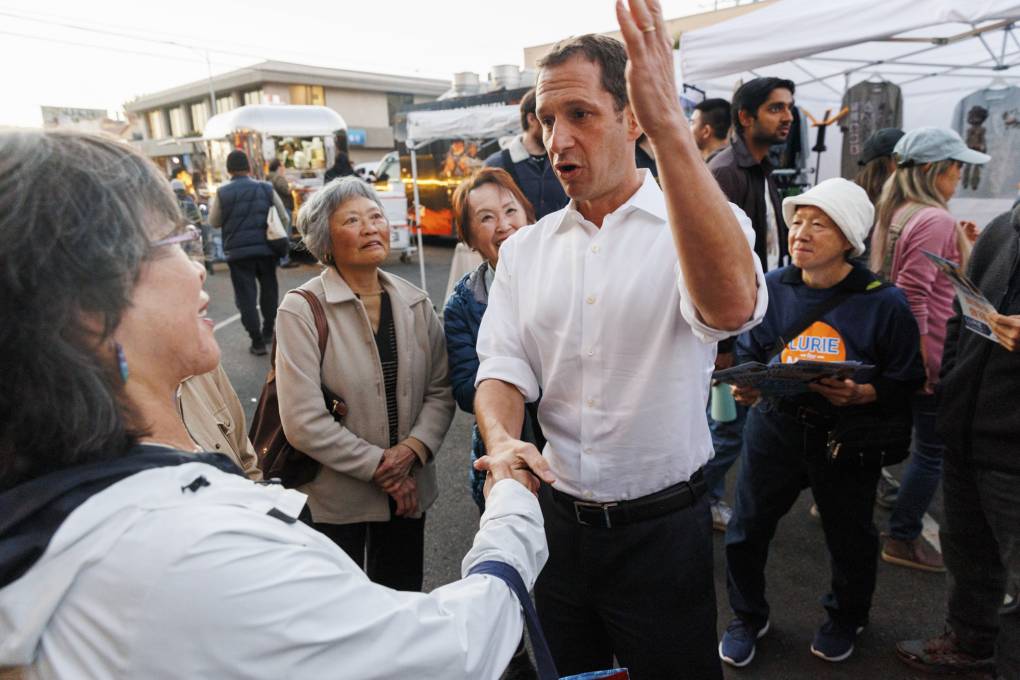
"caption": "Then-mayoral candidate Daniel Lurie shakes voter Diane Lee’s hand as he campaigns at the Sunset Night Market in San Francisco on Aug. 30, 2024.",
"credit": "Juliana Yamada for KQED",
"altTag": null,
"description": null,
"imgSizes": {
"medium": {
"file": "https://cdn.kqed.org/wp-content/uploads/sites/10/2024/09/20240830-AAPIVOTERS-JY-004-KQED-800x533.jpg",
"width": 800,
"height": 533,
"mimeType": "image/jpeg"
},
"large": {
"file": "https://cdn.kqed.org/wp-content/uploads/sites/10/2024/09/20240830-AAPIVOTERS-JY-004-KQED-1020x680.jpg",
"width": 1020,
"height": 680,
"mimeType": "image/jpeg"
},
"thumbnail": {
"file": "https://cdn.kqed.org/wp-content/uploads/sites/10/2024/09/20240830-AAPIVOTERS-JY-004-KQED-160x107.jpg",
"width": 160,
"height": 107,
"mimeType": "image/jpeg"
},
"1536x1536": {
"file": "https://cdn.kqed.org/wp-content/uploads/sites/10/2024/09/20240830-AAPIVOTERS-JY-004-KQED-1536x1024.jpg",
"width": 1536,
"height": 1024,
"mimeType": "image/jpeg"
},
"post-thumbnail": {
"file": "https://cdn.kqed.org/wp-content/uploads/sites/10/2024/09/20240830-AAPIVOTERS-JY-004-KQED-672x372.jpg",
"width": 672,
"height": 372,
"mimeType": "image/jpeg"
},
"twentyfourteen-full-width": {
"file": "https://cdn.kqed.org/wp-content/uploads/sites/10/2024/09/20240830-AAPIVOTERS-JY-004-KQED-1038x576.jpg",
"width": 1038,
"height": 576,
"mimeType": "image/jpeg"
},
"full-width": {
"file": "https://cdn.kqed.org/wp-content/uploads/sites/10/2024/09/20240830-AAPIVOTERS-JY-004-KQED-1920x1280.jpg",
"width": 1920,
"height": 1280,
"mimeType": "image/jpeg"
},
"kqedFullSize": {
"file": "https://cdn.kqed.org/wp-content/uploads/sites/10/2024/09/20240830-AAPIVOTERS-JY-004-KQED.jpg",
"width": 2000,
"height": 1333
}
},
"isLoading": false,
"fetchFailed": false
},
"news_12009681": {
"type": "attachments",
"id": "news_12009681",
"meta": {
"index": "attachments_1716263798",
"site": "news",
"id": "12009681",
"found": true
},
"title": "Omar Torres",
"publishDate": 1729111784,
"status": "inherit",
"parent": 12009671,
"modified": 1730920482,
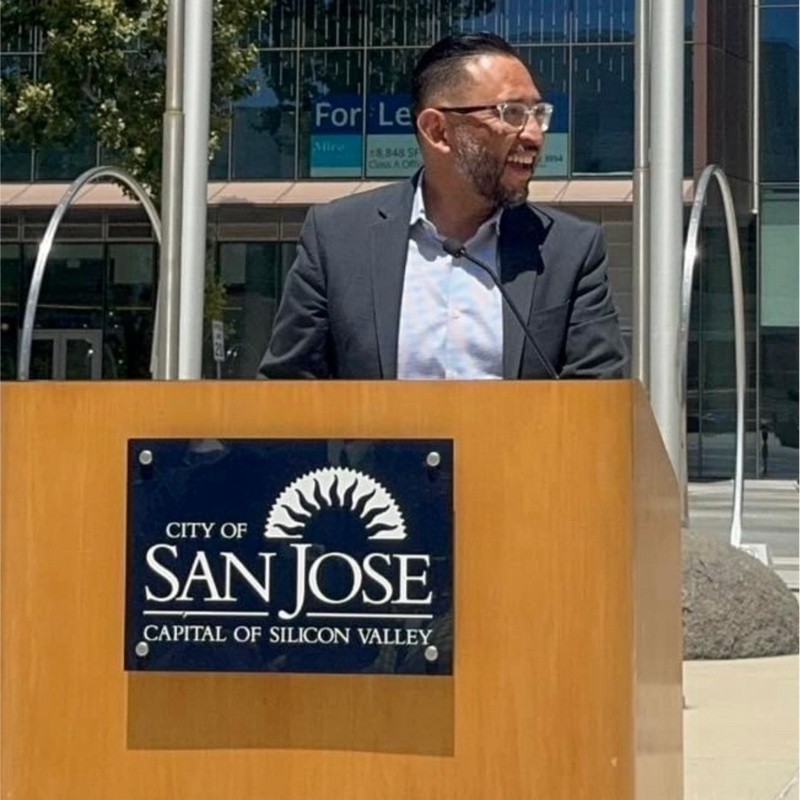
"caption": "First-term San José Councilmember Omar Torres is facing pressure to resign after allegations of sexual misconduct with a minor. ",
"credit": "Courtesy of LinkedIn",
"altTag": "A young bearded, smiling Latino man with glasses stands behind a podium that says 'San Jose — Capital of Silicon Valley.'",
"description": null,
"imgSizes": {
"thumbnail": {
"file": "https://cdn.kqed.org/wp-content/uploads/sites/10/2024/10/Omar-Torres-160x160.jpeg",
"width": 160,
"height": 160,
"mimeType": "image/jpeg"
},
"post-thumbnail": {
"file": "https://cdn.kqed.org/wp-content/uploads/sites/10/2024/10/Omar-Torres-672x372.jpeg",
"width": 672,
"height": 372,
"mimeType": "image/jpeg"
},
"twentyfourteen-full-width": {
"file": "https://cdn.kqed.org/wp-content/uploads/sites/10/2024/10/Omar-Torres-800x576.jpeg",
"width": 800,
"height": 576,
"mimeType": "image/jpeg"
},
"kqedFullSize": {
"file": "https://cdn.kqed.org/wp-content/uploads/sites/10/2024/10/Omar-Torres.jpeg",
"width": 800,
"height": 800
}
},
"isLoading": false,
"fetchFailed": false
},
"news_12012632": {
"type": "attachments",
"id": "news_12012632",
"meta": {
"index": "attachments_1716263798",
"site": "news",
"id": "12012632",
"found": true
},
"title": "2016Election1",
"publishDate": 1730767969,
"status": "inherit",
"parent": 12012421,
"modified": 1730768166,
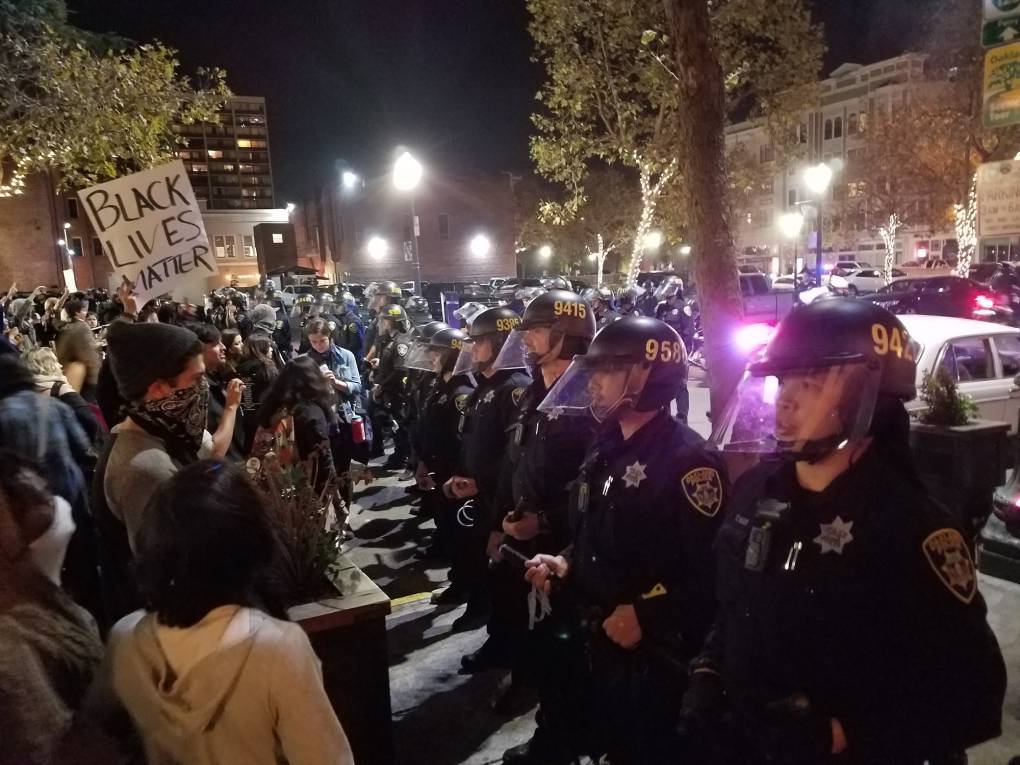
"caption": "Protests in Oakland on Nov. 9, 2016, in reaction to the election of Donald Trump to President of the United States.",
"credit": "Alex Emslie/KQED",
"altTag": null,
"description": null,
"imgSizes": {
"medium": {
"file": "https://cdn.kqed.org/wp-content/uploads/sites/10/2024/11/2016Election1-800x600.jpg",
"width": 800,
"height": 600,
"mimeType": "image/jpeg"
},
"large": {
"file": "https://cdn.kqed.org/wp-content/uploads/sites/10/2024/11/2016Election1-1020x765.jpg",
"width": 1020,
"height": 765,
"mimeType": "image/jpeg"
},
"thumbnail": {
"file": "https://cdn.kqed.org/wp-content/uploads/sites/10/2024/11/2016Election1-160x120.jpg",
"width": 160,
"height": 120,
"mimeType": "image/jpeg"
},
"1536x1536": {
"file": "https://cdn.kqed.org/wp-content/uploads/sites/10/2024/11/2016Election1-1536x1152.jpg",
"width": 1536,
"height": 1152,
"mimeType": "image/jpeg"
},
"post-thumbnail": {
"file": "https://cdn.kqed.org/wp-content/uploads/sites/10/2024/11/2016Election1-672x372.jpg",
"width": 672,
"height": 372,
"mimeType": "image/jpeg"
},
"twentyfourteen-full-width": {
"file": "https://cdn.kqed.org/wp-content/uploads/sites/10/2024/11/2016Election1-1038x576.jpg",
"width": 1038,
"height": 576,
"mimeType": "image/jpeg"
},
"full-width": {
"file": "https://cdn.kqed.org/wp-content/uploads/sites/10/2024/11/2016Election1-1920x1440.jpg",
"width": 1920,
"height": 1440,
"mimeType": "image/jpeg"
},
"kqedFullSize": {
"file": "https://cdn.kqed.org/wp-content/uploads/sites/10/2024/11/2016Election1.jpg",
"width": 2000,
"height": 1500
}
},
"isLoading": false,
"fetchFailed": false
},
"news_12012009": {
"type": "attachments",
"id": "news_12012009",
"meta": {
"index": "attachments_1716263798",
"site": "news",
"id": "12012009",
"found": true
},
"title": "MixCollage-31-Oct-2024-03-28-PM-9253",
"publishDate": 1730413783,
"status": "inherit",
"parent": 12012008,
"modified": 1730413855,
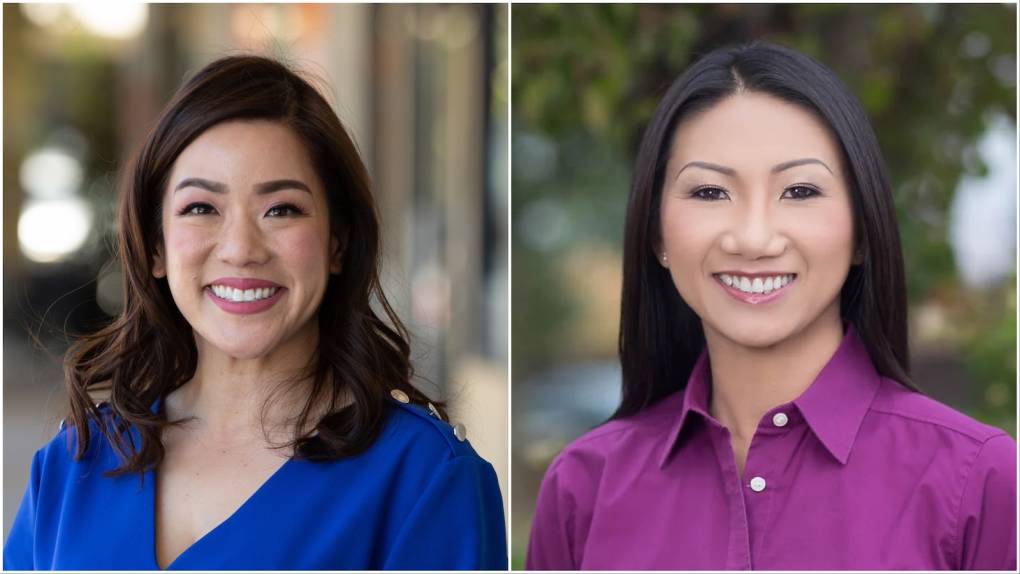
"caption": "Betty Duong (L), chief of staff for outgoing Supervisor Cindy Chavez, and Madison Nguyen (R), former San Jose City council member, are vying for Santa Clara County's Board of Supervisors in District 2, which includes downtown San Jose and east San Jose.",
"credit": null,
"altTag": null,
"description": null,
"imgSizes": {
"medium": {
"file": "https://cdn.kqed.org/wp-content/uploads/sites/10/2024/10/MixCollage-31-Oct-2024-03-28-PM-9253-800x450.jpg",
"width": 800,
"height": 450,
"mimeType": "image/jpeg"
},
"large": {
"file": "https://cdn.kqed.org/wp-content/uploads/sites/10/2024/10/MixCollage-31-Oct-2024-03-28-PM-9253-1020x574.jpg",
"width": 1020,
"height": 574,
"mimeType": "image/jpeg"
},
"thumbnail": {
"file": "https://cdn.kqed.org/wp-content/uploads/sites/10/2024/10/MixCollage-31-Oct-2024-03-28-PM-9253-160x90.jpg",
"width": 160,
"height": 90,
"mimeType": "image/jpeg"
},
"1536x1536": {
"file": "https://cdn.kqed.org/wp-content/uploads/sites/10/2024/10/MixCollage-31-Oct-2024-03-28-PM-9253-1536x864.jpg",
"width": 1536,
"height": 864,
"mimeType": "image/jpeg"
},
"post-thumbnail": {
"file": "https://cdn.kqed.org/wp-content/uploads/sites/10/2024/10/MixCollage-31-Oct-2024-03-28-PM-9253-672x372.jpg",
"width": 672,
"height": 372,
"mimeType": "image/jpeg"
},
"twentyfourteen-full-width": {
"file": "https://cdn.kqed.org/wp-content/uploads/sites/10/2024/10/MixCollage-31-Oct-2024-03-28-PM-9253-1038x576.jpg",
"width": 1038,
"height": 576,
"mimeType": "image/jpeg"
},
"kqedFullSize": {
"file": "https://cdn.kqed.org/wp-content/uploads/sites/10/2024/10/MixCollage-31-Oct-2024-03-28-PM-9253.jpg",
"width": 1600,
"height": 900
}
},
"isLoading": false,
"fetchFailed": false
},
"news_12010730": {
"type": "attachments",
"id": "news_12010730",
"meta": {
"index": "attachments_1716263798",
"site": "news",
"id": "12010730",
"found": true
},
"title": "20241022_SCHOOLDISTRICTHOUSING_GC-10-KQED",
"publishDate": 1729710279,
"status": "inherit",
"parent": 0,
"modified": 1729882204,
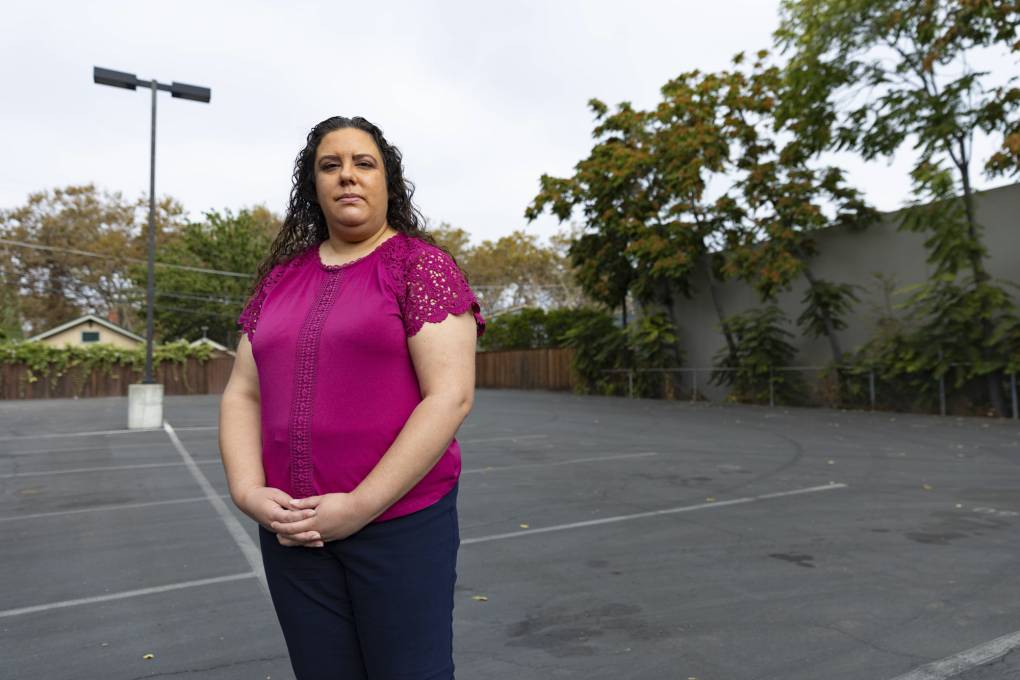
"caption": "Renata Sanchez, president of the San José Teachers Association, poses for a photo at an employee parking lot, the proposed site for educator housing, in San José on Oct. 22.",
"credit": "Gina Castro/KQED",
"altTag": null,
"description": null,
"imgSizes": {
"medium": {
"file": "https://cdn.kqed.org/wp-content/uploads/sites/10/2024/10/20241022_SCHOOLDISTRICTHOUSING_GC-10-KQED-800x533.jpg",
"width": 800,
"height": 533,
"mimeType": "image/jpeg"
},
"large": {
"file": "https://cdn.kqed.org/wp-content/uploads/sites/10/2024/10/20241022_SCHOOLDISTRICTHOUSING_GC-10-KQED-1020x680.jpg",
"width": 1020,
"height": 680,
"mimeType": "image/jpeg"
},
"thumbnail": {
"file": "https://cdn.kqed.org/wp-content/uploads/sites/10/2024/10/20241022_SCHOOLDISTRICTHOUSING_GC-10-KQED-160x107.jpg",
"width": 160,
"height": 107,
"mimeType": "image/jpeg"
},
"1536x1536": {
"file": "https://cdn.kqed.org/wp-content/uploads/sites/10/2024/10/20241022_SCHOOLDISTRICTHOUSING_GC-10-KQED-1536x1024.jpg",
"width": 1536,
"height": 1024,
"mimeType": "image/jpeg"
},
"post-thumbnail": {
"file": "https://cdn.kqed.org/wp-content/uploads/sites/10/2024/10/20241022_SCHOOLDISTRICTHOUSING_GC-10-KQED-672x372.jpg",
"width": 672,
"height": 372,
"mimeType": "image/jpeg"
},
"twentyfourteen-full-width": {
"file": "https://cdn.kqed.org/wp-content/uploads/sites/10/2024/10/20241022_SCHOOLDISTRICTHOUSING_GC-10-KQED-1038x576.jpg",
"width": 1038,
"height": 576,
"mimeType": "image/jpeg"
},
"full-width": {
"file": "https://cdn.kqed.org/wp-content/uploads/sites/10/2024/10/20241022_SCHOOLDISTRICTHOUSING_GC-10-KQED-1920x1280.jpg",
"width": 1920,
"height": 1280,
"mimeType": "image/jpeg"
},
"kqedFullSize": {
"file": "https://cdn.kqed.org/wp-content/uploads/sites/10/2024/10/20241022_SCHOOLDISTRICTHOUSING_GC-10-KQED.jpg",
"width": 2000,
"height": 1333
}
},
"isLoading": false,
"fetchFailed": false
},
"news_12011244": {
"type": "attachments",
"id": "news_12011244",
"meta": {
"index": "attachments_1716263798",
"site": "news",
"id": "12011244",
"found": true
},
"title": "241025-ASTRONAUTJOSEHERNANDEZ-10-BL-KQED",
"publishDate": 1729893636,
"status": "inherit",
"parent": 0,
"modified": 1729893726,
"caption": "Former NASA astronaut José Hernández greets students as he arrives at Alpha: José Hernández School in San José on Oct. 25, 2024, during a backpack and book giveaway event.",
"credit": "Beth LaBerge/KQED",
"altTag": null,
"description": null,
"imgSizes": {
"medium": {
"file": "https://cdn.kqed.org/wp-content/uploads/sites/10/2024/10/241025-ASTRONAUTJOSEHERNANDEZ-10-BL-KQED-800x533.jpg",
"width": 800,
"height": 533,
"mimeType": "image/jpeg"
},
"large": {
"file": "https://cdn.kqed.org/wp-content/uploads/sites/10/2024/10/241025-ASTRONAUTJOSEHERNANDEZ-10-BL-KQED-1020x680.jpg",
"width": 1020,
"height": 680,
"mimeType": "image/jpeg"
},
"thumbnail": {
"file": "https://cdn.kqed.org/wp-content/uploads/sites/10/2024/10/241025-ASTRONAUTJOSEHERNANDEZ-10-BL-KQED-160x107.jpg",
"width": 160,
"height": 107,
"mimeType": "image/jpeg"
},
"1536x1536": {
"file": "https://cdn.kqed.org/wp-content/uploads/sites/10/2024/10/241025-ASTRONAUTJOSEHERNANDEZ-10-BL-KQED-1536x1024.jpg",
"width": 1536,
"height": 1024,
"mimeType": "image/jpeg"
},
"post-thumbnail": {
"file": "https://cdn.kqed.org/wp-content/uploads/sites/10/2024/10/241025-ASTRONAUTJOSEHERNANDEZ-10-BL-KQED-672x372.jpg",
"width": 672,
"height": 372,
"mimeType": "image/jpeg"
},
"twentyfourteen-full-width": {
"file": "https://cdn.kqed.org/wp-content/uploads/sites/10/2024/10/241025-ASTRONAUTJOSEHERNANDEZ-10-BL-KQED-1038x576.jpg",
"width": 1038,
"height": 576,
"mimeType": "image/jpeg"
},
"full-width": {
"file": "https://cdn.kqed.org/wp-content/uploads/sites/10/2024/10/241025-ASTRONAUTJOSEHERNANDEZ-10-BL-KQED-1920x1280.jpg",
"width": 1920,
"height": 1280,
"mimeType": "image/jpeg"
},
"kqedFullSize": {
"file": "https://cdn.kqed.org/wp-content/uploads/sites/10/2024/10/241025-ASTRONAUTJOSEHERNANDEZ-10-BL-KQED.jpg",
"width": 2000,
"height": 1333
}
},
"isLoading": false,
"fetchFailed": false
},
"news_12011217": {
"type": "attachments",
"id": "news_12011217",
"meta": {
"index": "attachments_1716263798",
"site": "news",
"id": "12011217",
"found": true
},
"title": "241025-TORRESRECALL-JG-7-KQED",
"publishDate": 1729888555,
"status": "inherit",
"parent": 0,
"modified": 1729888569,
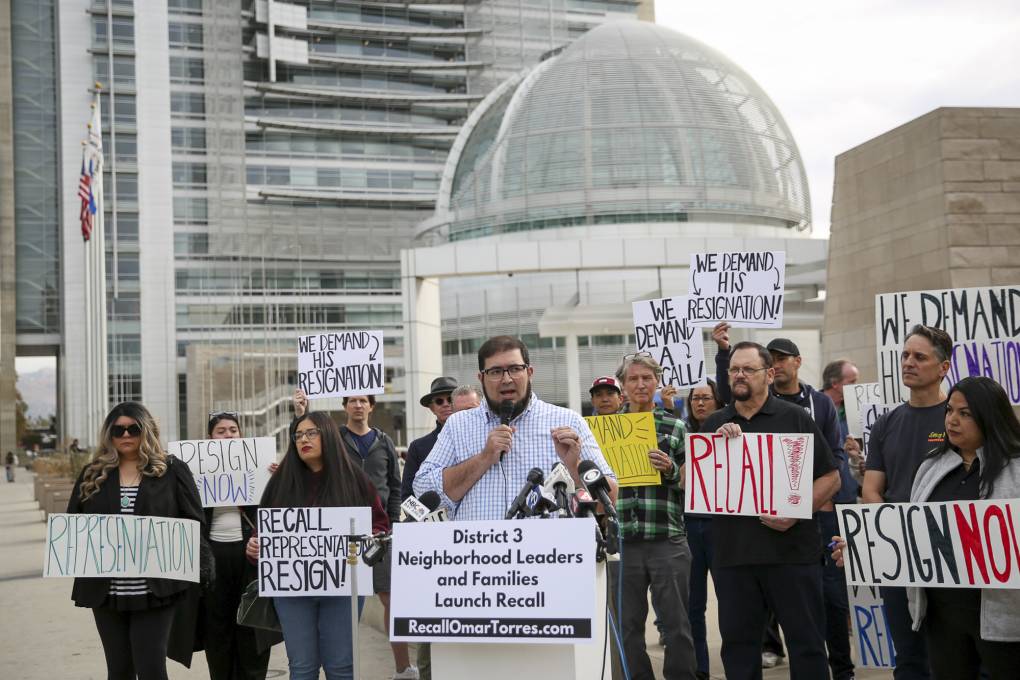
"caption": "Matthew Quevedo, a downtown San José resident, speaks during a rally outside city hall, helping to launch an effort to recall Councilmember Omar Torres amid an ongoing investigation into allegations Torres committed sexual misconduct with a minor.",
"credit": "Joseph Geha/KQED",
"altTag": null,
"description": null,
"imgSizes": {
"medium": {
"file": "https://cdn.kqed.org/wp-content/uploads/sites/10/2024/10/241025-TORRESRECALL-JG-7-KQED-800x533.jpg",
"width": 800,
"height": 533,
"mimeType": "image/jpeg"
},
"large": {
"file": "https://cdn.kqed.org/wp-content/uploads/sites/10/2024/10/241025-TORRESRECALL-JG-7-KQED-1020x680.jpg",
"width": 1020,
"height": 680,
"mimeType": "image/jpeg"
},
"thumbnail": {
"file": "https://cdn.kqed.org/wp-content/uploads/sites/10/2024/10/241025-TORRESRECALL-JG-7-KQED-160x107.jpg",
"width": 160,
"height": 107,
"mimeType": "image/jpeg"
},
"1536x1536": {
"file": "https://cdn.kqed.org/wp-content/uploads/sites/10/2024/10/241025-TORRESRECALL-JG-7-KQED-1536x1024.jpg",
"width": 1536,
"height": 1024,
"mimeType": "image/jpeg"
},
"post-thumbnail": {
"file": "https://cdn.kqed.org/wp-content/uploads/sites/10/2024/10/241025-TORRESRECALL-JG-7-KQED-672x372.jpg",
"width": 672,
"height": 372,
"mimeType": "image/jpeg"
},
"twentyfourteen-full-width": {
"file": "https://cdn.kqed.org/wp-content/uploads/sites/10/2024/10/241025-TORRESRECALL-JG-7-KQED-1038x576.jpg",
"width": 1038,
"height": 576,
"mimeType": "image/jpeg"
},
"full-width": {
"file": "https://cdn.kqed.org/wp-content/uploads/sites/10/2024/10/241025-TORRESRECALL-JG-7-KQED-1920x1280.jpg",
"width": 1920,
"height": 1280,
"mimeType": "image/jpeg"
},
"kqedFullSize": {
"file": "https://cdn.kqed.org/wp-content/uploads/sites/10/2024/10/241025-TORRESRECALL-JG-7-KQED.jpg",
"width": 2000,
"height": 1333
}
},
"isLoading": false,
"fetchFailed": false
},
"news_12009735": {
"type": "attachments",
"id": "news_12009735",
"meta": {
"index": "attachments_1716263798",
"site": "news",
"id": "12009735",
"found": true
},
"title": "241016-OMAR TORRES-GH-1-KQED",
"publishDate": 1729121458,
"status": "inherit",
"parent": 12009671,
"modified": 1729121486,
"caption": "First-term San José Councilmember Omar Torres is facing increasing pressure to resign following a police investigation into text messages he sent referencing sexually explicit acts with a minor.",
"credit": "Joseph Geha/KQED",
"altTag": null,
"description": null,
"imgSizes": {
"medium": {
"file": "https://cdn.kqed.org/wp-content/uploads/sites/10/2024/10/241016-OMAR-TORRES-GH-1-KQED-800x533.jpg",
"width": 800,
"height": 533,
"mimeType": "image/jpeg"
},
"large": {
"file": "https://cdn.kqed.org/wp-content/uploads/sites/10/2024/10/241016-OMAR-TORRES-GH-1-KQED-1020x680.jpg",
"width": 1020,
"height": 680,
"mimeType": "image/jpeg"
},
"thumbnail": {
"file": "https://cdn.kqed.org/wp-content/uploads/sites/10/2024/10/241016-OMAR-TORRES-GH-1-KQED-160x107.jpg",
"width": 160,
"height": 107,
"mimeType": "image/jpeg"
},
"1536x1536": {
"file": "https://cdn.kqed.org/wp-content/uploads/sites/10/2024/10/241016-OMAR-TORRES-GH-1-KQED-1536x1024.jpg",
"width": 1536,
"height": 1024,
"mimeType": "image/jpeg"
},
"post-thumbnail": {
"file": "https://cdn.kqed.org/wp-content/uploads/sites/10/2024/10/241016-OMAR-TORRES-GH-1-KQED-672x372.jpg",
"width": 672,
"height": 372,
"mimeType": "image/jpeg"
},
"twentyfourteen-full-width": {
"file": "https://cdn.kqed.org/wp-content/uploads/sites/10/2024/10/241016-OMAR-TORRES-GH-1-KQED-1038x576.jpg",
"width": 1038,
"height": 576,
"mimeType": "image/jpeg"
},
"full-width": {
"file": "https://cdn.kqed.org/wp-content/uploads/sites/10/2024/10/241016-OMAR-TORRES-GH-1-KQED-1920x1280.jpg",
"width": 1920,
"height": 1280,
"mimeType": "image/jpeg"
},
"kqedFullSize": {
"file": "https://cdn.kqed.org/wp-content/uploads/sites/10/2024/10/241016-OMAR-TORRES-GH-1-KQED.jpg",
"width": 2000,
"height": 1333
}
},
"isLoading": false,
"fetchFailed": false
},
"news_11987071": {
"type": "attachments",
"id": "news_11987071",
"meta": {
"index": "attachments_1716263798",
"site": "news",
"id": "11987071",
"found": true
},
"title": "240520-SJPD SHOOTING-JG-05_qut",
"publishDate": 1716251943,
"status": "inherit",
"parent": 11986891,
"modified": 1729631063,
"caption": "San José acting Police Chief Paul Joseph speaks during a May 20, 2024, press conference about a police shooting in the city's East Side.",
"credit": "Joseph Geha/KQED",
"altTag": "A police officer stands in front of a podium.",
"description": null,
"imgSizes": {
"medium": {
"file": "https://cdn.kqed.org/wp-content/uploads/sites/10/2024/05/240520-SJPD-SHOOTING-JG-05_qut-800x533.jpg",
"width": 800,
"height": 533,
"mimeType": "image/jpeg"
},
"large": {
"file": "https://cdn.kqed.org/wp-content/uploads/sites/10/2024/05/240520-SJPD-SHOOTING-JG-05_qut-1020x680.jpg",
"width": 1020,
"height": 680,
"mimeType": "image/jpeg"
},
"thumbnail": {
"file": "https://cdn.kqed.org/wp-content/uploads/sites/10/2024/05/240520-SJPD-SHOOTING-JG-05_qut-160x107.jpg",
"width": 160,
"height": 107,
"mimeType": "image/jpeg"
},
"1536x1536": {
"file": "https://cdn.kqed.org/wp-content/uploads/sites/10/2024/05/240520-SJPD-SHOOTING-JG-05_qut-1536x1024.jpg",
"width": 1536,
"height": 1024,
"mimeType": "image/jpeg"
},
"post-thumbnail": {
"file": "https://cdn.kqed.org/wp-content/uploads/sites/10/2024/05/240520-SJPD-SHOOTING-JG-05_qut-672x372.jpg",
"width": 672,
"height": 372,
"mimeType": "image/jpeg"
},
"twentyfourteen-full-width": {
"file": "https://cdn.kqed.org/wp-content/uploads/sites/10/2024/05/240520-SJPD-SHOOTING-JG-05_qut-1038x576.jpg",
"width": 1038,
"height": 576,
"mimeType": "image/jpeg"
},
"kqedFullSize": {
"file": "https://cdn.kqed.org/wp-content/uploads/sites/10/2024/05/240520-SJPD-SHOOTING-JG-05_qut.jpg",
"width": 1920,
"height": 1280
}
},
"isLoading": false,
"fetchFailed": false
},
"news_12009973": {
"type": "attachments",
"id": "news_12009973",
"meta": {
"index": "attachments_1716263798",
"site": "news",
"id": "12009973",
"found": true
},
"title": "IMG_4243 resized",
"publishDate": 1729210410,
"status": "inherit",
"parent": 12009871,
"modified": 1735578685,
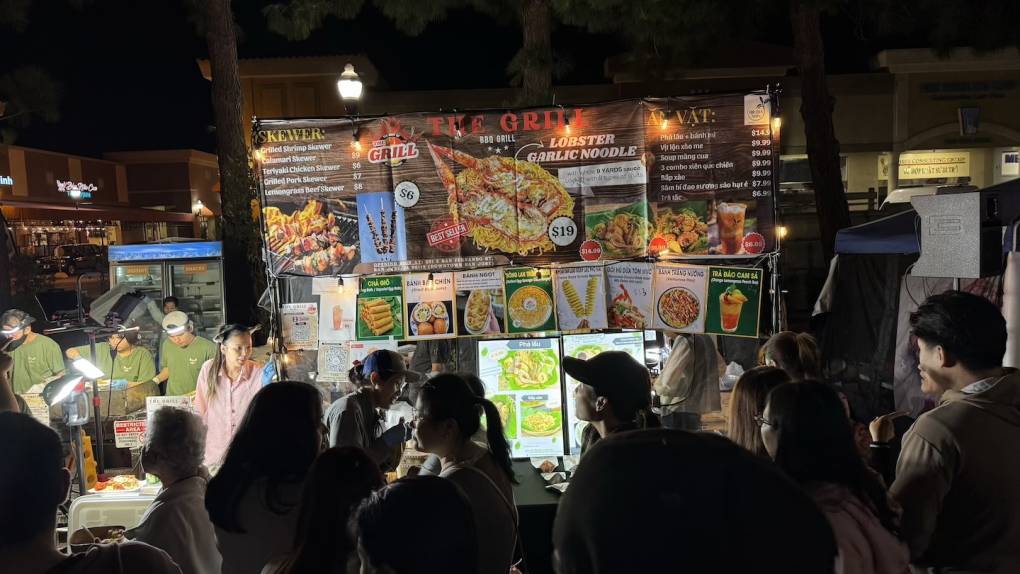
"caption": "Customers crowd around a stand at the Story Road Night Market in San José. ",
"credit": "Courtesy of Moveable Feast",
"altTag": null,
"description": null,
"imgSizes": {
"medium": {
"file": "https://cdn.kqed.org/wp-content/uploads/sites/10/2024/10/IMG_4243-resized-800x450.jpg",
"width": 800,
"height": 450,
"mimeType": "image/jpeg"
},
"large": {
"file": "https://cdn.kqed.org/wp-content/uploads/sites/10/2024/10/IMG_4243-resized-1020x574.jpg",
"width": 1020,
"height": 574,
"mimeType": "image/jpeg"
},
"thumbnail": {
"file": "https://cdn.kqed.org/wp-content/uploads/sites/10/2024/10/IMG_4243-resized-160x90.jpg",
"width": 160,
"height": 90,
"mimeType": "image/jpeg"
},
"post-thumbnail": {
"file": "https://cdn.kqed.org/wp-content/uploads/sites/10/2024/10/IMG_4243-resized-672x372.jpg",
"width": 672,
"height": 372,
"mimeType": "image/jpeg"
},
"twentyfourteen-full-width": {
"file": "https://cdn.kqed.org/wp-content/uploads/sites/10/2024/10/IMG_4243-resized-1038x576.jpg",
"width": 1038,
"height": 576,
"mimeType": "image/jpeg"
},
"kqedFullSize": {
"file": "https://cdn.kqed.org/wp-content/uploads/sites/10/2024/10/IMG_4243-resized.jpg",
"width": 1440,
"height": 810
}
},
"isLoading": false,
"fetchFailed": false
},
"news_11988518": {
"type": "attachments",
"id": "news_11988518",
"meta": {
"index": "attachments_1716263798",
"site": "news",
"id": "11988518",
"found": true
},
"title": "240531-SEGOVIACASE-JG-2_qut",
"publishDate": 1717195890,
"status": "inherit",
"parent": 0,
"modified": 1728412159,
"caption": "Joanne Segovia (left) and her attorney, Adam Gasner, walk out of the federal courthouse in San José on May 31, 2024, following her first court appearance since being charged over a year ago with attempting to illegally import opioids.",
"credit": "Joseph Geha/KQED",
"altTag": "A middle-aged white woman with blond hair walks through a courtyard next to a middle-aged man wearing a suit and carrying a briefcase.",
"description": null,
"imgSizes": {
"medium": {
"file": "https://cdn.kqed.org/wp-content/uploads/sites/10/2024/05/240531-SEGOVIACASE-JG-2_qut-800x549.jpg",
"width": 800,
"height": 549,
"mimeType": "image/jpeg"
},
"large": {
"file": "https://cdn.kqed.org/wp-content/uploads/sites/10/2024/05/240531-SEGOVIACASE-JG-2_qut-1020x700.jpg",
"width": 1020,
"height": 700,
"mimeType": "image/jpeg"
},
"thumbnail": {
"file": "https://cdn.kqed.org/wp-content/uploads/sites/10/2024/05/240531-SEGOVIACASE-JG-2_qut-160x110.jpg",
"width": 160,
"height": 110,
"mimeType": "image/jpeg"
},
"1536x1536": {
"file": "https://cdn.kqed.org/wp-content/uploads/sites/10/2024/05/240531-SEGOVIACASE-JG-2_qut-1536x1055.jpg",
"width": 1536,
"height": 1055,
"mimeType": "image/jpeg"
},
"post-thumbnail": {
"file": "https://cdn.kqed.org/wp-content/uploads/sites/10/2024/05/240531-SEGOVIACASE-JG-2_qut-672x372.jpg",
"width": 672,
"height": 372,
"mimeType": "image/jpeg"
},
"twentyfourteen-full-width": {
"file": "https://cdn.kqed.org/wp-content/uploads/sites/10/2024/05/240531-SEGOVIACASE-JG-2_qut-1038x576.jpg",
"width": 1038,
"height": 576,
"mimeType": "image/jpeg"
},
"kqedFullSize": {
"file": "https://cdn.kqed.org/wp-content/uploads/sites/10/2024/05/240531-SEGOVIACASE-JG-2_qut.jpg",
"width": 1873,
"height": 1286
}
},
"isLoading": false,
"fetchFailed": false
}
},
"audioPlayerReducer": {
"postId": "stream_live",
"isPaused": true,
"isPlaying": false,
"pfsActive": false,
"pledgeModalIsOpen": true,
"playerDrawerIsOpen": false,
"liveAudioPlayStartedAt": 0,
"liveAudioPlayContext": ""
},
"authorsReducer": {
"gmarzorati": {
"type": "authors",
"id": "227",
"meta": {
"index": "authors_1716337520",
"id": "227",
"found": true
},
"name": "Guy Marzorati",
"firstName": "Guy",
"lastName": "Marzorati",
"slug": "gmarzorati",
"email": "gmarzorati@KQED.org",
"display_author_email": true,
"staff_mastheads": [
"news"
],
"title": "Correspondent",
"bio": "Guy Marzorati is a correspondent on KQED's California Politics and Government Desk, based in San Jose. A graduate of Santa Clara University, Guy joined KQED in 2013. He reports on state and local politics and produces KQED's digital voter guide.",
"avatar": "https://secure.gravatar.com/avatar/e7038b8dbfd55b104369b76b1cd0b9de?s=600&d=blank&r=g",
"twitter": "guymarzorati",
"facebook": null,
"instagram": null,
"linkedin": null,
"sites": [
{
"site": "",
"roles": [
"editor"
]
},
{
"site": "news",
"roles": [
"editor"
]
},
{
"site": "science",
"roles": [
"editor"
]
},
{
"site": "forum",
"roles": [
"editor"
]
},
{
"site": "elections",
"roles": [
"editor"
]
},
{
"site": "liveblog",
"roles": [
"editor"
]
}
],
"headData": {
"title": "Guy Marzorati | KQED",
"description": "Correspondent",
"ogImgSrc": "https://secure.gravatar.com/avatar/e7038b8dbfd55b104369b76b1cd0b9de?s=600&d=blank&r=g",
"twImgSrc": "https://secure.gravatar.com/avatar/e7038b8dbfd55b104369b76b1cd0b9de?s=600&d=blank&r=g"
},
"isLoading": false,
"link": "/author/gmarzorati"
},
"ecruzguevarra": {
"type": "authors",
"id": "8654",
"meta": {
"index": "authors_1716337520",
"id": "8654",
"found": true
},
"name": "Ericka Cruz Guevarra",
"firstName": "Ericka",
"lastName": "Cruz Guevarra",
"slug": "ecruzguevarra",
"email": "ecruzguevarra@kqed.org",
"display_author_email": true,
"staff_mastheads": [
"news"
],
"title": "Producer, The Bay Podcast",
"bio": "Ericka Cruz Guevarra is host of \u003ca href=\"https://www.kqed.org/podcasts/thebay\">\u003cem>The Bay\u003c/em>\u003c/a> podcast at KQED. Before host, she was the show’s producer. Her work in that capacity includes a three-part reported series on policing in Vallejo, which won a 2020 excellence in journalism award from the Society of Professional Journalists. Ericka has worked as a breaking news reporter at Oregon Public Broadcasting, helped produce the Code Switch podcast, and was KQED’s inaugural Raul Ramirez Diversity Fund intern. She’s also an alumna of NPR’s Next Generation Radio program. Send her an email if you have strong feelings about whether Fairfield and Suisun City are the Bay. Ericka is represented by SAG-AFTRA.",
"avatar": "https://secure.gravatar.com/avatar/accefc1de4bafc7e234b69bcb9b6f6536c130fd84709bc3069ef11a78787e1bb?s=600&d=blank&r=g",
"twitter": "NotoriousECG",
"bluesky": null,
"facebook": null,
"instagram": null,
"linkedin": null,
"sites": [
{
"site": "arts",
"roles": [
"subscriber"
]
},
{
"site": "news",
"roles": [
"editor",
"manage_categories"
]
},
{
"site": "futureofyou",
"roles": [
"subscriber"
]
},
{
"site": "stateofhealth",
"roles": [
"subscriber"
]
},
{
"site": "science",
"roles": [
"editor"
]
},
{
"site": "forum",
"roles": [
"subscriber"
]
}
],
"headData": {
"title": "Ericka Cruz Guevarra | KQED",
"description": "Producer, The Bay Podcast",
"ogImgSrc": "https://secure.gravatar.com/avatar/accefc1de4bafc7e234b69bcb9b6f6536c130fd84709bc3069ef11a78787e1bb?s=600&d=blank&r=g",
"twImgSrc": "https://secure.gravatar.com/avatar/accefc1de4bafc7e234b69bcb9b6f6536c130fd84709bc3069ef11a78787e1bb?s=600&d=blank&r=g"
},
"isLoading": false,
"link": "/author/ecruzguevarra"
},
"dcronin": {
"type": "authors",
"id": "11362",
"meta": {
"index": "authors_1716337520",
"id": "11362",
"found": true
},
"name": "Dana Cronin",
"firstName": "Dana",
"lastName": "Cronin",
"slug": "dcronin",
"email": "dcronin@KQED.org",
"display_author_email": true,
"staff_mastheads": [],
"title": "KQED Contributor",
"bio": "Dana Cronin is a reporter for KQED News. She loves writing stories about climate change, environmental issues, food and agriculture. She's reported across the country, from Colorado to Washington D.C. to Illinois, and has won numerous awards for her coverage. Her work is regularly featured on national broadcasts, including NPR’s Morning Edition, All Things Considered, PBS Newshour and Science Friday. She lives in Oakland and has an avocado tree in her back yard.",
"avatar": "https://secure.gravatar.com/avatar/bcf89e3455ff7235f96ab6fa7258dd95?s=600&d=blank&r=g",
"twitter": "DanaHCronin",
"facebook": null,
"instagram": null,
"linkedin": null,
"sites": [
{
"site": "arts",
"roles": [
"author"
]
},
{
"site": "news",
"roles": [
"editor"
]
},
{
"site": "science",
"roles": [
"author"
]
},
{
"site": "liveblog",
"roles": [
"author"
]
}
],
"headData": {
"title": "Dana Cronin | KQED",
"description": "KQED Contributor",
"ogImgSrc": "https://secure.gravatar.com/avatar/bcf89e3455ff7235f96ab6fa7258dd95?s=600&d=blank&r=g",
"twImgSrc": "https://secure.gravatar.com/avatar/bcf89e3455ff7235f96ab6fa7258dd95?s=600&d=blank&r=g"
},
"isLoading": false,
"link": "/author/dcronin"
},
"amontecillo": {
"type": "authors",
"id": "11649",
"meta": {
"index": "authors_1716337520",
"id": "11649",
"found": true
},
"name": "Alan Montecillo",
"firstName": "Alan",
"lastName": "Montecillo",
"slug": "amontecillo",
"email": "amontecillo@kqed.org",
"display_author_email": false,
"staff_mastheads": [
"news"
],
"title": "KQED Contributor",
"bio": "Alan Montecillo is the senior editor of \u003cem>\u003ca href=\"http://kqed.org/thebay\">The Bay\u003c/a>, \u003c/em> KQED's local news podcast. Before moving to the Bay Area, he worked as a senior talk show producer for WILL in Champaign-Urbana, Illinois and at Oregon Public Broadcasting in Portland, Oregon. He has won journalism awards from the Society of Professional Journalists Northern California, the Public Media Journalists Association, The Signal Awards, and has also received a regional Edward R. Murrow award. Alan is a Filipino American from Hong Kong and a graduate of Reed College.",
"avatar": "https://secure.gravatar.com/avatar/268f53a2066899ea9efdd8a5900218b17c822d9862cbc9326cccec53ef41d349?s=600&d=blank&r=g",
"twitter": "alanmontecillo",
"bluesky": null,
"facebook": null,
"instagram": null,
"linkedin": null,
"sites": [
{
"site": "",
"roles": [
"editor"
]
},
{
"site": "news",
"roles": [
"editor",
"manage_categories"
]
}
],
"headData": {
"title": "Alan Montecillo | KQED",
"description": "KQED Contributor",
"ogImgSrc": "https://secure.gravatar.com/avatar/268f53a2066899ea9efdd8a5900218b17c822d9862cbc9326cccec53ef41d349?s=600&d=blank&r=g",
"twImgSrc": "https://secure.gravatar.com/avatar/268f53a2066899ea9efdd8a5900218b17c822d9862cbc9326cccec53ef41d349?s=600&d=blank&r=g"
},
"isLoading": false,
"link": "/author/amontecillo"
},
"abandlamudi": {
"type": "authors",
"id": "11672",
"meta": {
"index": "authors_1716337520",
"id": "11672",
"found": true
},
"name": "Adhiti Bandlamudi",
"firstName": "Adhiti",
"lastName": "Bandlamudi",
"slug": "abandlamudi",
"email": "abandlamudi@kqed.org",
"display_author_email": false,
"staff_mastheads": [
"news"
],
"title": "KQED Housing Reporter",
"bio": "Adhiti Bandlamudi reports for KQED's Housing desk. She focuses on how housing gets built across the Bay Area. Before joining KQED in 2020, she reported for WUNC in Durham, North Carolina, WABE in Atlanta, Georgia and Capital Public Radio in Sacramento. In 2017, she was awarded a Kroc Fellowship at NPR where she reported on everything from sprinkles to the Golden State Killer's arrest. When she's not reporting, she's baking new recipes in her kitchen or watching movies with friends and family. She's originally from Georgia and has strong opinions about Great British Bake Off.",
"avatar": "https://secure.gravatar.com/avatar/868129c8b257bb99a3500e2c86a65400?s=600&d=mm&r=g",
"twitter": "oddity_adhiti",
"facebook": null,
"instagram": null,
"linkedin": null,
"sites": [
{
"site": "arts",
"roles": [
"author"
]
},
{
"site": "news",
"roles": [
"editor"
]
},
{
"site": "liveblog",
"roles": [
"author"
]
}
],
"headData": {
"title": "Adhiti Bandlamudi | KQED",
"description": "KQED Housing Reporter",
"ogImgSrc": "https://secure.gravatar.com/avatar/868129c8b257bb99a3500e2c86a65400?s=600&d=mm&r=g",
"twImgSrc": "https://secure.gravatar.com/avatar/868129c8b257bb99a3500e2c86a65400?s=600&d=mm&r=g"
},
"isLoading": false,
"link": "/author/abandlamudi"
},
"ccabreralomeli": {
"type": "authors",
"id": "11708",
"meta": {
"index": "authors_1716337520",
"id": "11708",
"found": true
},
"name": "Carlos Cabrera-Lomelí",
"firstName": "Carlos",
"lastName": "Cabrera-Lomelí",
"slug": "ccabreralomeli",
"email": "ccabreralomeli@KQED.org",
"display_author_email": true,
"staff_mastheads": [
"news"
],
"title": "Community Reporter",
"bio": "Carlos Cabrera-Lomelí is a community reporter with KQED's digital engagement team. He also reports and co-produces for KQED's bilingual news hub KQED en Español. He grew up in San Francisco's Mission District and has previously worked with Univision, 48 Hills and REFORMA in Mexico City.",
"avatar": "https://secure.gravatar.com/avatar/c309be9665e484f887b818c89e273ecc673004f426f36b24d00a4d813a2e0518?s=600&d=blank&r=g",
"twitter": "@LomeliCabrera",
"bluesky": null,
"facebook": null,
"instagram": null,
"linkedin": null,
"sites": [
{
"site": "arts",
"roles": [
"editor"
]
},
{
"site": "news",
"roles": [
"editor"
]
},
{
"site": "about",
"roles": [
"editor"
]
},
{
"site": "science",
"roles": [
"editor"
]
},
{
"site": "perspectives",
"roles": [
"editor"
]
},
{
"site": "elections",
"roles": [
"editor"
]
},
{
"site": "liveblog",
"roles": [
"contributor"
]
}
],
"headData": {
"title": "Carlos Cabrera-Lomelí | KQED",
"description": "Community Reporter",
"ogImgSrc": "https://secure.gravatar.com/avatar/c309be9665e484f887b818c89e273ecc673004f426f36b24d00a4d813a2e0518?s=600&d=blank&r=g",
"twImgSrc": "https://secure.gravatar.com/avatar/c309be9665e484f887b818c89e273ecc673004f426f36b24d00a4d813a2e0518?s=600&d=blank&r=g"
},
"isLoading": false,
"link": "/author/ccabreralomeli"
},
"jlara": {
"type": "authors",
"id": "11761",
"meta": {
"index": "authors_1716337520",
"id": "11761",
"found": true
},
"name": "Juan Carlos Lara",
"firstName": "Juan Carlos",
"lastName": "Lara",
"slug": "jlara",
"email": "jlara@kqed.org",
"display_author_email": false,
"staff_mastheads": [],
"title": "KQED Contributor",
"bio": null,
"avatar": "https://secure.gravatar.com/avatar/19e2052b9b05657c5ff2af2121846e9c?s=600&d=blank&r=g",
"twitter": null,
"facebook": null,
"instagram": null,
"linkedin": null,
"sites": [
{
"site": "arts",
"roles": [
"editor"
]
},
{
"site": "news",
"roles": [
"editor"
]
},
{
"site": "forum",
"roles": [
"editor"
]
},
{
"site": "liveblog",
"roles": [
"contributor"
]
}
],
"headData": {
"title": "Juan Carlos Lara | KQED",
"description": "KQED Contributor",
"ogImgSrc": "https://secure.gravatar.com/avatar/19e2052b9b05657c5ff2af2121846e9c?s=600&d=blank&r=g",
"twImgSrc": "https://secure.gravatar.com/avatar/19e2052b9b05657c5ff2af2121846e9c?s=600&d=blank&r=g"
},
"isLoading": false,
"link": "/author/jlara"
},
"jessicakariisa": {
"type": "authors",
"id": "11831",
"meta": {
"index": "authors_1716337520",
"id": "11831",
"found": true
},
"name": "Jessica Kariisa",
"firstName": "Jessica",
"lastName": "Kariisa",
"slug": "jessicakariisa",
"email": "jkariisa@kqed.org",
"display_author_email": false,
"staff_mastheads": [],
"title": "Producer, The Bay",
"bio": "Jessica Kariisa is the producer of The Bay. She first joined KQED as an intern for The California Report Magazine, after which she became an on-call producer. She reported a Bay Curious episode on the use of rap lyrics in criminal trials which won a Society of Professional Journalists award in 2023 for Excellence in Features Journalism and the 2023 Signal Award for Best Conversation Starter. She’s worked on podcasts for Snap Judgment and American Public Media. Before embarking on her audio career, she was a music journalist.\r\n\r\nJessica Kariisa is represented by SAG-AFTRA.",
"avatar": "https://secure.gravatar.com/avatar/522e97b28ac0b3d411621c0fde8f3419c7b71ea2c5c262c57c4bb600963f328c?s=600&d=blank&r=g",
"twitter": null,
"bluesky": null,
"facebook": null,
"instagram": null,
"linkedin": null,
"sites": [
{
"site": "arts",
"roles": [
"author"
]
},
{
"site": "news",
"roles": [
"editor",
"manage_categories"
]
}
],
"headData": {
"title": "Jessica Kariisa | KQED",
"description": "Producer, The Bay",
"ogImgSrc": "https://secure.gravatar.com/avatar/522e97b28ac0b3d411621c0fde8f3419c7b71ea2c5c262c57c4bb600963f328c?s=600&d=blank&r=g",
"twImgSrc": "https://secure.gravatar.com/avatar/522e97b28ac0b3d411621c0fde8f3419c7b71ea2c5c262c57c4bb600963f328c?s=600&d=blank&r=g"
},
"isLoading": false,
"link": "/author/jessicakariisa"
},
"jgeha": {
"type": "authors",
"id": "11906",
"meta": {
"index": "authors_1716337520",
"id": "11906",
"found": true
},
"name": "Joseph Geha",
"firstName": "Joseph",
"lastName": "Geha",
"slug": "jgeha",
"email": "jgeha@kqed.org",
"display_author_email": false,
"staff_mastheads": [
"news",
"science"
],
"title": "KQED Contributor",
"bio": null,
"avatar": "https://secure.gravatar.com/avatar/ea84d2b6dd93d6369d453edf19dd583f117cd1759d2d9c9c92f9de77017354fe?s=600&d=blank&r=g",
"twitter": null,
"bluesky": null,
"facebook": null,
"instagram": null,
"linkedin": null,
"sites": [
{
"site": "news",
"roles": [
"editor"
]
},
{
"site": "liveblog",
"roles": [
"author"
]
}
],
"headData": {
"title": "Joseph Geha | KQED",
"description": "KQED Contributor",
"ogImgSrc": "https://secure.gravatar.com/avatar/ea84d2b6dd93d6369d453edf19dd583f117cd1759d2d9c9c92f9de77017354fe?s=600&d=blank&r=g",
"twImgSrc": "https://secure.gravatar.com/avatar/ea84d2b6dd93d6369d453edf19dd583f117cd1759d2d9c9c92f9de77017354fe?s=600&d=blank&r=g"
},
"isLoading": false,
"link": "/author/jgeha"
}
},
"pagesReducer": {
"news_tag_san-jose": {
"type": "terms",
"id": "news_18541",
"meta": {
"index": "terms_1716263798",
"site": "news",
"id": "18541",
"score": 8.005292
},
"featImg": null,
"name": "San Jose",
"description": null,
"taxonomy": "tag",
"headData": {
"twImgId": null,
"twTitle": null,
"ogTitle": null,
"ogImgId": null,
"twDescription": null,
"description": null,
"title": "San Jose Archives | KQED News",
"ogDescription": null
},
"ttid": 91,
"slug": "san-jose",
"isLoading": false,
"title": "San Jose",
"pageMeta": {
"site": "news",
"WpPageTemplate": "page-topic-editorial",
"currentPage": 18
},
"blocks": [
{
"blockName": "kqed/post-list",
"attrs": {
"layout": "cardArticle2",
"query": "posts/news?tag=san-jose",
"seeMore": false,
"paginated": true,
"page": 18
}
},
{
"blockName": "kqed/ad"
}
]
}
},
"pfsSessionReducer": {},
"postsReducer": {
"stream_live": {
"type": "live",
"id": "stream_live",
"audioUrl": "https://streams.kqed.org/kqedradio",
"title": "Live Stream",
"excerpt": "Live Stream information currently unavailable.",
"link": "/radio",
"featImg": "",
"label": {
"name": "KQED Live",
"link": "/"
}
},
"stream_kqedNewscast": {
"type": "posts",
"id": "stream_kqedNewscast",
"audioUrl": "https://www.kqed.org/.stream/anon/radio/RDnews/newscast.mp3?_=1",
"title": "KQED Newscast",
"featImg": "",
"label": {
"name": "88.5 FM",
"link": "/"
}
},
"news_12014282": {
"type": "posts",
"id": "news_12014282",
"meta": {
"index": "posts_1716263798",
"site": "news",
"id": "12014282",
"score": null,
"sort": [
1731598214000
]
},
"guestAuthors": [],
"slug": "bay-area-voters-embrace-political-outsiders-in-historic-mayoral-shake-ups",
"title": "Bay Area Voters Embrace Political Outsiders in Historic Mayoral Shake-ups",
"publishDate": 1731598214,
"format": "standard",
"headTitle": "Bay Area Voters Embrace Political Outsiders in Historic Mayoral Shake-ups | KQED",
"labelTerm": {
"site": "news"
},
"content": "\u003cp>Amid continued frustration over the cost of living, public safety and homelessness, voters in the Bay Area’s largest cities are \u003ca href=\"https://www.kqed.org/news/12013761/this-was-not-a-good-election-to-be-an-incumbent\">embracing mayoral candidates and campaigns that promise a shake-up at city hall\u003c/a> — putting aside concerns about experience and stability and embracing political outsiders in this year’s elections.\u003c/p>\n\u003cp>In San Francisco, nonprofit founder and philanthropist Daniel Lurie \u003ca href=\"https://www.kqed.org/news/12013464/daniel-lurie-clinches-victory-become-sfs-next-mayor-unseating-london-breed\">toppled incumbent mayor London Breed and bested a field of candidates\u003c/a> with decades of combined city hall experience. In San Jose, Mayor Matt Mahan \u003ca href=\"https://www.kqed.org/liveblog/election-2024#matt-mahan-sails-to-second-term-as-mayor-of-san-jose\">cruised to an early re-election in March\u003c/a>, riding the momentum of his own insurgent victory less than two years ago. And in Oakland, Mayor Sheng Thao \u003ca href=\"https://www.kqed.org/news/12012357/sheng-thao-accepts-defeat-in-contentious-oakland-mayoral-recall\">was removed from office after an unprecedented\u003c/a> recall election.\u003c/p>\n\u003cp>Candidates have long rode promises of change to victory, but in Mahan and Lurie, voters in the region’s two largest cities have chosen leaders with a historic lack of government experience who touted their outsider status as evidence of a fresh and independent perspective.\u003c/p>\n\u003cp>“Matt Mahan felt like an outsider, and I think Daniel Lurie does, too,” said Jim Wunderman, president and CEO of the business advocacy group the Bay Area Council and a former mayoral chief of staff in San Francisco. “I think their campaigns were sort of saying, ‘Things aren’t being run the way they could be, and I could do a better job, and I won’t be afraid to make the changes.’”\u003c/p>\n\u003cp>After his surprising victory in 2022, Mahan \u003ca href=\"https://www.kqed.org/news/11967395/san-jose-labor-groups-dont-like-mayor-matt-mahan-so-why-does-his-re-election-seem-assured\">faced no organized opposition in the mayoral contest held in March\u003c/a> after the city moved its mayoral elections to presidential years. \u003ca href=\"https://www.kqed.org/news/12013667/daniel-lurie-san-franciscos-next-mayor-what-will-that-look-like\">Lurie prevailed in a ranked-choice election, winning the most first-choice votes\u003c/a> and also drawing second-choice support from voters across San Francisco’s political spectrum.\u003c/p>\n\u003cp>[ad fullwidth]\u003c/p>\n\u003cp>This wave of political change in Bay Area cities could have profound impacts on city management, government transparency and local labor unions — especially those representing city workers. Some progressives worry that a new preference for upstart campaigns could challenge the traditional pipelines of power that allow candidates without access to large financial resources to build support while slowly moving up the ranks of local government.\u003c/p>\n\u003cp>Lurie, an heir to the Levi Strauss fortune, \u003ca href=\"https://www.kqed.org/news/12010904/whos-pouring-millions-into-san-franciscos-expensive-mayors-race\">benefited from record spending, much of it self-financed\u003c/a>, to become the city’s first mayor elected without any government experience since Jim Rolph in 1911. When Mahan won the mayorship in 2022, he did so after just two years on the city council — the least government experience of any mayor since San Jose voters began directly electing the position in 1966.\u003c/p>\n\u003cfigure id=\"attachment_11984099\" class=\"wp-caption aligncenter\" style=\"max-width: 2000px\">\u003cimg loading=\"lazy\" decoding=\"async\" class=\"size-full wp-image-11984099\" src=\"https://cdn.kqed.org/wp-content/uploads/sites/10/2024/04/San-Jose-License-Plate-Readers-08.jpg\" alt=\"A white middle aged man speaks into microphones wearing a blue suit and a white collared shirt with no tie.\" width=\"2000\" height=\"1333\" srcset=\"https://cdn.kqed.org/wp-content/uploads/sites/10/2024/04/San-Jose-License-Plate-Readers-08.jpg 2000w, https://cdn.kqed.org/wp-content/uploads/sites/10/2024/04/San-Jose-License-Plate-Readers-08-800x533.jpg 800w, https://cdn.kqed.org/wp-content/uploads/sites/10/2024/04/San-Jose-License-Plate-Readers-08-1020x680.jpg 1020w, https://cdn.kqed.org/wp-content/uploads/sites/10/2024/04/San-Jose-License-Plate-Readers-08-160x107.jpg 160w, https://cdn.kqed.org/wp-content/uploads/sites/10/2024/04/San-Jose-License-Plate-Readers-08-1536x1024.jpg 1536w, https://cdn.kqed.org/wp-content/uploads/sites/10/2024/04/San-Jose-License-Plate-Readers-08-1920x1280.jpg 1920w\" sizes=\"(max-width: 2000px) 100vw, 2000px\">\u003cfigcaption class=\"wp-caption-text\">San José Mayor Matt Mahan at the press conference on April 25, 2024. \u003ccite>(Joseph Geha/KQED)\u003c/cite>\u003c/figcaption>\u003c/figure>\n\u003cp>Both Mahan and Lurie were able to seize on voter discontent over widespread and highly visible homelessness, a rise in shoplifting and commercial burglaries and ongoing disruptions from the pandemic by blaming city hall “insiders.” They argued that their years of experience outside of government — Mahan as CEO of the civic engagement tech platform Brigade, Lurie as founder of the anti-poverty nonprofit Tipping Point Community — would allow them to engineer a culture shift within the municipal bureaucracy.\u003c/p>\n\u003cp>\u003ca href=\"https://www.kqed.org/news/12013667/daniel-lurie-san-franciscos-next-mayor-what-will-that-look-like\">At his victory press conference on Friday\u003c/a>, Lurie promised “a government centered on accountability, service and change” that would move past years of corruption scandals. It was a message with echoes of Mahan’s 2022 campaign call for “common sense, accountability and transparency.”\u003c/p>\n\u003cp>Neither candidate emerged completely independent of their cities’ existing power structures. Lurie grew up amid San Francisco’s financial elite, and his work with Tipping Point brought him close contact with city leaders trying to reduce homelessness. Mahan was backed by the incumbent mayor, Sam Liccardo, and the city’s powerful business community.\u003c/p>\n\u003cp>But Wunderman said voters viewed these political outsiders as better equipped to take a data-driven approach to reducing homelessness, crime and blight — and more likely to ask tough questions of city department heads.\u003c/p>\n\u003cp>“Like ‘Why do we have so many employees in the city? What are we getting from the work of these departments and the individuals in them?” Wunderman said. “‘What kind of management do we have in place?’’\u003c/p>\n\u003cp>Many of those questions could portend conflict with existing city employees and the unions that represent them.\u003c/p>\n\u003cp>Mahan has sparred with municipal worker unions since taking office, and he \u003ca href=\"https://www.kqed.org/news/11958290/san-jose-city-council-approves-agreements-with-unions-to-avoid-strike\">voted against a deal that raised wages and benefits for city employees\u003c/a> last year. Lurie’s relationship with labor is less defined. While he received the support of a few unions, most labor groups backed other candidates in the mayoral race.\u003c/p>\n\u003cp>IFPTE Local 21, which represents municipal workers across the Bay Area’s largest cities, has opposed Mahan and strongly supported Sheng Thao in Oakland. In San Francisco, they recommended only that voters leave former interim mayor Mark Farrell off of their ranked-choice ballots for mayor.\u003c/p>\n\u003cp>“It’s our fervent hope that Daniel Lurie’s administration is going to make it a priority to support the workers that actually make this city run,” said Bianca Polovina, president of IFPTE Local 21.\u003c/p>\n\u003cp>Polovina said the mayoral election results should not be read as a rebuke to organized labor — pointing to the success of a majority of IFPTE-endorsed candidates for supervisor and city council across the three cities.\u003c/p>\n\u003cp>[aside tag='politics' label='More Politics Coverage.']\u003c/p>\n\u003cp>“Working people across the San Francisco Bay Area are demanding bold leadership that prioritizes high-quality public services,” Polovina added. “Voters are pretty adamant that they want core essential services, they want clean streets, effective public transportation, and comprehensive public safety.”\u003c/p>\n\u003cp>Not only did Mahan and Lurie win without major backing from labor, incumbent elected officials across the political spectrum also opposed them. All of Mahan’s fellow city council members endorsed his 2022 opponent, Santa Clara County Supervisor Cindy Chavez, and not a single sitting San Francisco supervisor picked Lurie as their first choice for mayor.\u003c/p>\n\u003cp>Facing entrenched interests and the daunting task of introducing themselves to voters, Lurie’s personal wealth and Mahan’s Silicon Valley connections provided them with access to capital, argued Kimi Lee, executive director of Bay Rising, a coalition of progressive groups working to build political power among working-class voters of color.\u003c/p>\n\u003cp>“What we see is that there’s definitely an influence of corporations and billionaires and outside money and venture capitalists,” said Lee, who also noted the \u003ca href=\"https://www.kqed.org/news/11998651/a-hedge-fund-manager-is-funding-bid-to-oust-oaklands-mayor-and-its-not-his-first-recall\">outsized role of a single hedge-fund manager\u003c/a> in funding the Thao recall.\u003c/p>\n\u003cp>On the losing end of last week’s electoral upheaval were two incumbents, Thao and Breed, who had spent years working their way up the ranks of city government before breaking barriers as their city’s first Hmong-American and Black female mayors, respectively.\u003c/p>\n\u003cp>“I think there is still something there, where people overly criticize women, women of color,” said Lee. “They expect higher things from them — just more critical, saying they’re soft on crime…or saying that they’re not someone who can handle this job.”\u003c/p>\n\u003cp>Lurie’s lack of experience will be tested quickly, as he will face the immediate challenges of building an administration, establishing relationships within city hall and closing an ongoing budget deficit. After a rocky first year in office in which he was often on the losing end of high-profile votes, Mahan found his footing in 2024 — winning \u003ca href=\"https://www.kqed.org/news/11989926/san-jose-council-approves-budget-with-historic-shift-in-unhoused-spending\">unanimous support for his homeless housing plan\u003c/a>, emerging as a leading supporter of the \u003ca href=\"https://www.kqed.org/news/12012656/proposition-36-californias-newest-tough-on-crime-measure-appears-headed-for-victory\">new criminal sentencing law approved by California voters\u003c/a>, Proposition 36, and garnering 87% of the vote in his run for re-election.\u003c/p>\n\u003cp>[ad floatright]\u003c/p>\n\u003cp>The next test for insurgent campaigns will be in Oakland, where voters will likely pick a new mayor in a special election next spring. Any outsider running there will face a familiar historical obstacle: since the city returned to directly electing the position in the 1950s, every Oakland mayor has come into office with prior government experience.\u003c/p>\n\n",
"blocks": [],
"excerpt": "Insurgent campaigns for mayor such as Daniel Lurie in San Francisco and Matt Mahan in San Jose, along with a recall in Oakland, succeed with promises to upend city hall. ",
"status": "publish",
"parent": 0,
"modified": 1731609036,
"stats": {
"hasAudio": false,
"hasVideo": false,
"hasChartOrMap": false,
"iframeSrcs": [],
"hasGoogleForm": false,
"hasGallery": false,
"hasHearkenModule": false,
"hasPolis": false,
"paragraphCount": 28,
"wordCount": 1380
},
"headData": {
"title": "Bay Area Voters Embrace Political Outsiders in Historic Mayoral Shake-ups | KQED",
"description": "Insurgent campaigns for mayor such as Daniel Lurie in San Francisco and Matt Mahan in San Jose, along with a recall in Oakland, succeed with promises to upend city hall. ",
"ogTitle": "",
"ogDescription": "",
"ogImgId": "",
"twTitle": "",
"twDescription": "",
"twImgId": "",
"schema": {
"@context": "https://schema.org",
"@type": "NewsArticle",
"headline": "Bay Area Voters Embrace Political Outsiders in Historic Mayoral Shake-ups",
"datePublished": "2024-11-14T07:30:14-08:00",
"dateModified": "2024-11-14T10:30:36-08:00",
"image": "https://cdn.kqed.org/wp-content/uploads/2020/02/KQED-OG-Image@1x.png",
"isAccessibleForFree": "True",
"publisher": {
"@type": "NewsMediaOrganization",
"@id": "https://www.kqed.org/#organization",
"name": "KQED",
"logo": "https://cdn.kqed.org/wp-content/uploads/2020/02/KQED-OG-Image@1x.png",
"url": "https://www.kqed.org",
"sameAs": [
"https://www.facebook.com/KQED",
"https://twitter.com/KQED",
"https://www.instagram.com/kqed/",
"https://www.tiktok.com/@kqedofficial",
"https://www.linkedin.com/company/kqed",
"https://www.youtube.com/channel/UCeC0IOo7i1P_61zVUWbJ4nw"
]
}
}
},
"audioUrl": "https://traffic.omny.fm/d/clips/0af137ef-751e-4b19-a055-aaef00d2d578/ffca7e9f-6831-41c5-bcaf-aaef00f5a073/32956360-3a03-4d2a-bdb8-b22801148c60/audio.mp3?accessToken=eyJhbGciOiJIUzI1NiIsImtpZCI6IjlzYTZ6N20wdUVtT0VhcnZBUGdxVHciLCJ0eXAiOiJKV1QifQ.eyJjbGlwIjoiMzI5NTYzNjAtM2EwMy00ZDJhLWJkYjgtYjIyODAxMTQ4YzYwIiwiYWRzIjowfQ.7YcG_TsMGHHpILdJrbyWi4q5WwlB_7BrXYdHrsinIJI",
"sticky": false,
"nprStoryId": "kqed-12014282",
"excludeFromSiteSearch": "Include",
"articleAge": "0",
"path": "/news/12014282/bay-area-voters-embrace-political-outsiders-in-historic-mayoral-shake-ups",
"audioTrackLength": null,
"parsedContent": [
{
"type": "contentString",
"content": "\u003cdiv class=\"post-body\">\u003cp>\u003cp>Amid continued frustration over the cost of living, public safety and homelessness, voters in the Bay Area’s largest cities are \u003ca href=\"https://www.kqed.org/news/12013761/this-was-not-a-good-election-to-be-an-incumbent\">embracing mayoral candidates and campaigns that promise a shake-up at city hall\u003c/a> — putting aside concerns about experience and stability and embracing political outsiders in this year’s elections.\u003c/p>\n\u003cp>In San Francisco, nonprofit founder and philanthropist Daniel Lurie \u003ca href=\"https://www.kqed.org/news/12013464/daniel-lurie-clinches-victory-become-sfs-next-mayor-unseating-london-breed\">toppled incumbent mayor London Breed and bested a field of candidates\u003c/a> with decades of combined city hall experience. In San Jose, Mayor Matt Mahan \u003ca href=\"https://www.kqed.org/liveblog/election-2024#matt-mahan-sails-to-second-term-as-mayor-of-san-jose\">cruised to an early re-election in March\u003c/a>, riding the momentum of his own insurgent victory less than two years ago. And in Oakland, Mayor Sheng Thao \u003ca href=\"https://www.kqed.org/news/12012357/sheng-thao-accepts-defeat-in-contentious-oakland-mayoral-recall\">was removed from office after an unprecedented\u003c/a> recall election.\u003c/p>\n\u003cp>Candidates have long rode promises of change to victory, but in Mahan and Lurie, voters in the region’s two largest cities have chosen leaders with a historic lack of government experience who touted their outsider status as evidence of a fresh and independent perspective.\u003c/p>\n\u003cp>“Matt Mahan felt like an outsider, and I think Daniel Lurie does, too,” said Jim Wunderman, president and CEO of the business advocacy group the Bay Area Council and a former mayoral chief of staff in San Francisco. “I think their campaigns were sort of saying, ‘Things aren’t being run the way they could be, and I could do a better job, and I won’t be afraid to make the changes.’”\u003c/p>\n\u003cp>After his surprising victory in 2022, Mahan \u003ca href=\"https://www.kqed.org/news/11967395/san-jose-labor-groups-dont-like-mayor-matt-mahan-so-why-does-his-re-election-seem-assured\">faced no organized opposition in the mayoral contest held in March\u003c/a> after the city moved its mayoral elections to presidential years. \u003ca href=\"https://www.kqed.org/news/12013667/daniel-lurie-san-franciscos-next-mayor-what-will-that-look-like\">Lurie prevailed in a ranked-choice election, winning the most first-choice votes\u003c/a> and also drawing second-choice support from voters across San Francisco’s political spectrum.\u003c/p>\n\u003cp>\u003c/p>\u003c/div>",
"attributes": {
"named": {},
"numeric": []
}
},
{
"type": "component",
"content": "",
"name": "ad",
"attributes": {
"named": {
"label": "fullwidth"
},
"numeric": [
"fullwidth"
]
}
},
{
"type": "contentString",
"content": "\u003cdiv class=\"post-body\">\u003cp>\u003c/p>\n\u003cp>This wave of political change in Bay Area cities could have profound impacts on city management, government transparency and local labor unions — especially those representing city workers. Some progressives worry that a new preference for upstart campaigns could challenge the traditional pipelines of power that allow candidates without access to large financial resources to build support while slowly moving up the ranks of local government.\u003c/p>\n\u003cp>Lurie, an heir to the Levi Strauss fortune, \u003ca href=\"https://www.kqed.org/news/12010904/whos-pouring-millions-into-san-franciscos-expensive-mayors-race\">benefited from record spending, much of it self-financed\u003c/a>, to become the city’s first mayor elected without any government experience since Jim Rolph in 1911. When Mahan won the mayorship in 2022, he did so after just two years on the city council — the least government experience of any mayor since San Jose voters began directly electing the position in 1966.\u003c/p>\n\u003cfigure id=\"attachment_11984099\" class=\"wp-caption aligncenter\" style=\"max-width: 2000px\">\u003cimg loading=\"lazy\" decoding=\"async\" class=\"size-full wp-image-11984099\" src=\"https://cdn.kqed.org/wp-content/uploads/sites/10/2024/04/San-Jose-License-Plate-Readers-08.jpg\" alt=\"A white middle aged man speaks into microphones wearing a blue suit and a white collared shirt with no tie.\" width=\"2000\" height=\"1333\" srcset=\"https://cdn.kqed.org/wp-content/uploads/sites/10/2024/04/San-Jose-License-Plate-Readers-08.jpg 2000w, https://cdn.kqed.org/wp-content/uploads/sites/10/2024/04/San-Jose-License-Plate-Readers-08-800x533.jpg 800w, https://cdn.kqed.org/wp-content/uploads/sites/10/2024/04/San-Jose-License-Plate-Readers-08-1020x680.jpg 1020w, https://cdn.kqed.org/wp-content/uploads/sites/10/2024/04/San-Jose-License-Plate-Readers-08-160x107.jpg 160w, https://cdn.kqed.org/wp-content/uploads/sites/10/2024/04/San-Jose-License-Plate-Readers-08-1536x1024.jpg 1536w, https://cdn.kqed.org/wp-content/uploads/sites/10/2024/04/San-Jose-License-Plate-Readers-08-1920x1280.jpg 1920w\" sizes=\"(max-width: 2000px) 100vw, 2000px\">\u003cfigcaption class=\"wp-caption-text\">San José Mayor Matt Mahan at the press conference on April 25, 2024. \u003ccite>(Joseph Geha/KQED)\u003c/cite>\u003c/figcaption>\u003c/figure>\n\u003cp>Both Mahan and Lurie were able to seize on voter discontent over widespread and highly visible homelessness, a rise in shoplifting and commercial burglaries and ongoing disruptions from the pandemic by blaming city hall “insiders.” They argued that their years of experience outside of government — Mahan as CEO of the civic engagement tech platform Brigade, Lurie as founder of the anti-poverty nonprofit Tipping Point Community — would allow them to engineer a culture shift within the municipal bureaucracy.\u003c/p>\n\u003cp>\u003ca href=\"https://www.kqed.org/news/12013667/daniel-lurie-san-franciscos-next-mayor-what-will-that-look-like\">At his victory press conference on Friday\u003c/a>, Lurie promised “a government centered on accountability, service and change” that would move past years of corruption scandals. It was a message with echoes of Mahan’s 2022 campaign call for “common sense, accountability and transparency.”\u003c/p>\n\u003cp>Neither candidate emerged completely independent of their cities’ existing power structures. Lurie grew up amid San Francisco’s financial elite, and his work with Tipping Point brought him close contact with city leaders trying to reduce homelessness. Mahan was backed by the incumbent mayor, Sam Liccardo, and the city’s powerful business community.\u003c/p>\n\u003cp>But Wunderman said voters viewed these political outsiders as better equipped to take a data-driven approach to reducing homelessness, crime and blight — and more likely to ask tough questions of city department heads.\u003c/p>\n\u003cp>“Like ‘Why do we have so many employees in the city? What are we getting from the work of these departments and the individuals in them?” Wunderman said. “‘What kind of management do we have in place?’’\u003c/p>\n\u003cp>Many of those questions could portend conflict with existing city employees and the unions that represent them.\u003c/p>\n\u003cp>Mahan has sparred with municipal worker unions since taking office, and he \u003ca href=\"https://www.kqed.org/news/11958290/san-jose-city-council-approves-agreements-with-unions-to-avoid-strike\">voted against a deal that raised wages and benefits for city employees\u003c/a> last year. Lurie’s relationship with labor is less defined. While he received the support of a few unions, most labor groups backed other candidates in the mayoral race.\u003c/p>\n\u003cp>IFPTE Local 21, which represents municipal workers across the Bay Area’s largest cities, has opposed Mahan and strongly supported Sheng Thao in Oakland. In San Francisco, they recommended only that voters leave former interim mayor Mark Farrell off of their ranked-choice ballots for mayor.\u003c/p>\n\u003cp>“It’s our fervent hope that Daniel Lurie’s administration is going to make it a priority to support the workers that actually make this city run,” said Bianca Polovina, president of IFPTE Local 21.\u003c/p>\n\u003cp>Polovina said the mayoral election results should not be read as a rebuke to organized labor — pointing to the success of a majority of IFPTE-endorsed candidates for supervisor and city council across the three cities.\u003c/p>\n\u003cp>\u003c/p>\u003c/div>",
"attributes": {
"named": {},
"numeric": []
}
},
{
"type": "component",
"content": "",
"name": "aside",
"attributes": {
"named": {
"tag": "politics",
"label": "More Politics Coverage. "
},
"numeric": []
}
},
{
"type": "contentString",
"content": "\u003cdiv class=\"post-body\">\u003cp>\u003c/p>\n\u003cp>“Working people across the San Francisco Bay Area are demanding bold leadership that prioritizes high-quality public services,” Polovina added. “Voters are pretty adamant that they want core essential services, they want clean streets, effective public transportation, and comprehensive public safety.”\u003c/p>\n\u003cp>Not only did Mahan and Lurie win without major backing from labor, incumbent elected officials across the political spectrum also opposed them. All of Mahan’s fellow city council members endorsed his 2022 opponent, Santa Clara County Supervisor Cindy Chavez, and not a single sitting San Francisco supervisor picked Lurie as their first choice for mayor.\u003c/p>\n\u003cp>Facing entrenched interests and the daunting task of introducing themselves to voters, Lurie’s personal wealth and Mahan’s Silicon Valley connections provided them with access to capital, argued Kimi Lee, executive director of Bay Rising, a coalition of progressive groups working to build political power among working-class voters of color.\u003c/p>\n\u003cp>“What we see is that there’s definitely an influence of corporations and billionaires and outside money and venture capitalists,” said Lee, who also noted the \u003ca href=\"https://www.kqed.org/news/11998651/a-hedge-fund-manager-is-funding-bid-to-oust-oaklands-mayor-and-its-not-his-first-recall\">outsized role of a single hedge-fund manager\u003c/a> in funding the Thao recall.\u003c/p>\n\u003cp>On the losing end of last week’s electoral upheaval were two incumbents, Thao and Breed, who had spent years working their way up the ranks of city government before breaking barriers as their city’s first Hmong-American and Black female mayors, respectively.\u003c/p>\n\u003cp>“I think there is still something there, where people overly criticize women, women of color,” said Lee. “They expect higher things from them — just more critical, saying they’re soft on crime…or saying that they’re not someone who can handle this job.”\u003c/p>\n\u003cp>Lurie’s lack of experience will be tested quickly, as he will face the immediate challenges of building an administration, establishing relationships within city hall and closing an ongoing budget deficit. After a rocky first year in office in which he was often on the losing end of high-profile votes, Mahan found his footing in 2024 — winning \u003ca href=\"https://www.kqed.org/news/11989926/san-jose-council-approves-budget-with-historic-shift-in-unhoused-spending\">unanimous support for his homeless housing plan\u003c/a>, emerging as a leading supporter of the \u003ca href=\"https://www.kqed.org/news/12012656/proposition-36-californias-newest-tough-on-crime-measure-appears-headed-for-victory\">new criminal sentencing law approved by California voters\u003c/a>, Proposition 36, and garnering 87% of the vote in his run for re-election.\u003c/p>\n\u003cp>\u003c/p>\u003c/div>",
"attributes": {
"named": {},
"numeric": []
}
},
{
"type": "component",
"content": "",
"name": "ad",
"attributes": {
"named": {
"label": "floatright"
},
"numeric": [
"floatright"
]
}
},
{
"type": "contentString",
"content": "\u003cdiv class=\"post-body\">\u003cp>\u003c/p>\n\u003cp>The next test for insurgent campaigns will be in Oakland, where voters will likely pick a new mayor in a special election next spring. Any outsider running there will face a familiar historical obstacle: since the city returned to directly electing the position in the 1950s, every Oakland mayor has come into office with prior government experience.\u003c/p>\n\n\u003c/div>\u003c/p>",
"attributes": {
"named": {},
"numeric": []
}
}
],
"link": "/news/12014282/bay-area-voters-embrace-political-outsiders-in-historic-mayoral-shake-ups",
"authors": [
"227"
],
"categories": [
"news_28250",
"news_8",
"news_13"
],
"tags": [
"news_34055",
"news_32839",
"news_27626",
"news_4020",
"news_31197",
"news_34054",
"news_17968",
"news_22456",
"news_38",
"news_34371",
"news_18541",
"news_31962"
],
"featImg": "news_12003092",
"label": "news"
},
"news_12013122": {
"type": "posts",
"id": "news_12013122",
"meta": {
"index": "posts_1716263798",
"site": "news",
"id": "12013122",
"score": null,
"sort": [
1730937605000
]
},
"guestAuthors": [],
"slug": "san-jose-councilmember-omar-torres-resigns-arrested",
"title": "Omar Torres Faces 3 Felonies, Including Child Molestation",
"publishDate": 1730937605,
"format": "standard",
"headTitle": "Omar Torres Faces 3 Felonies, Including Child Molestation | KQED",
"labelTerm": {
"site": "news"
},
"content": "\u003cp>\u003cem>Updated 4 p.m. Wednesday\u003c/em>\u003c/p>\n\u003cp>\u003cem>Note: This story has been updated to include Wednesday’s arraignment and details from the charging documents.\u003c/em>\u003c/p>\n\u003cp>Former San José Councilmember Omar Torres, who resigned Tuesday under multiple active police investigations, is facing three charges of child molestation stemming from when he was a young man, authorities said Wednesday.\u003c/p>\n\u003cp>Torres is accused of sexually assaulting a teenage relative over a period of weeks in 1999 when Torres was 18.\u003c/p>\n\u003cp>Torres, 43, is facing charges of sodomy, oral copulation, and lewd and lascivious acts on a minor under the age of 14, according to charging documents the Santa Clara County District Attorney’s Office filed in court.\u003c/p>\n\u003cp>[ad fullwidth]\u003c/p>\n\u003cp>In a shocking police report, investigators say Torres admitted to the crimes during a phone call with the victim earlier this week that police recorded.\u003c/p>\n\u003cp>“From the bottom of my heart, I’m so sorry that I hurt you,” Torres said to his alleged victim during the call, according to the police report. “I’m in intense therapy right now to, you know, to work on myself, and I haven’t stopped thinking about the harm that I caused you.”\u003c/p>\n\u003cp>Torres was arraigned in court in San José Wednesday afternoon, staying mostly out of view of the courtroom in a hallway where people in custody wait to appear in court. He is being held without bail, and his next court hearing is scheduled for Nov. 14.\u003c/p>\n\u003cp>The case brought by prosecutors only surfaced this week, when Torres’ alleged victim came forward to police to share their account of the abuse from Torres that they allegedly endured when they were both minors, which continued when Torres aged into adulthood.\u003c/p>\n\u003cp>The victim alleged that Torres’ abuse began when they were only four years old and continued for nearly another decade.\u003c/p>\n\u003cp>It is a separate case from the ongoing and parallel police investigation into Torres for different allegations of sexual misconduct with a minor, which has been active since late August, authorities said Wednesday.\u003c/p>\n\u003cp>“Please know that this department will always support survivors of sexual violence and abuse and need to know that it’s never too late to come forward,” San José Police Chief Paul Joseph said during a news conference on Wednesday about the arrest. “Doing so takes courage, but know that you will be supported.”\u003c/p>\n\u003cfigure id=\"attachment_12013307\" class=\"wp-caption alignnone\" style=\"max-width: 2000px\">\u003cimg loading=\"lazy\" decoding=\"async\" class=\"size-full wp-image-12013307\" src=\"https://cdn.kqed.org/wp-content/uploads/sites/10/2024/11/241106-Election-Mom-Folo-01-KQED.jpg\" alt=\"\" width=\"2000\" height=\"1333\" srcset=\"https://cdn.kqed.org/wp-content/uploads/sites/10/2024/11/241106-Election-Mom-Folo-01-KQED.jpg 2000w, https://cdn.kqed.org/wp-content/uploads/sites/10/2024/11/241106-Election-Mom-Folo-01-KQED-800x533.jpg 800w, https://cdn.kqed.org/wp-content/uploads/sites/10/2024/11/241106-Election-Mom-Folo-01-KQED-1020x680.jpg 1020w, https://cdn.kqed.org/wp-content/uploads/sites/10/2024/11/241106-Election-Mom-Folo-01-KQED-160x107.jpg 160w, https://cdn.kqed.org/wp-content/uploads/sites/10/2024/11/241106-Election-Mom-Folo-01-KQED-1536x1024.jpg 1536w, https://cdn.kqed.org/wp-content/uploads/sites/10/2024/11/241106-Election-Mom-Folo-01-KQED-1920x1280.jpg 1920w\" sizes=\"(max-width: 2000px) 100vw, 2000px\">\u003cfigcaption class=\"wp-caption-text\">Santa Clara County Chief Assistant District Attorney Jay Boyarsky speaks to the press about the child molestation case against former San José Councilmember Omar Torres on Nov. 6, 2024. \u003ccite>(Joseph Geha/KQED)\u003c/cite>\u003c/figcaption>\u003c/figure>\n\u003cp>Chief Assistant District Attorney Jay Boyarsky expressed gratitude to the person who reported the alleged assault.\u003c/p>\n\u003cp>“Sometimes people look askance at survivors who come forward years after they were victimized and wonder what took them so long to come forward. As a sex crime prosecutor, I’ve spoken with many of these survivors. They are heroic,” Boyarsky said.\u003c/p>\n\u003cp>“Many have lived with the pain and suffering inflicted upon them for decades, often wondering, ‘Is there anyone they can talk to? Is there anyone that will listen to them? Will anyone understand?’ We understand, and we care. We understand perfectly why they keep the violent crimes against them secret. We understand the incredible courage, the strength that it takes to finally come forward,” Boyarsky added.\u003c/p>\n\u003cp>Mayor Matt Mahan said he and the entire city council are “absolutely horrified” at the allegations against Torres.\u003c/p>\n\u003cp>“These allegations are every parent’s worst nightmare. But you don’t have to be a parent to be sickened by the charges against Omar Torres, which are some of the most serious charges imaginable,” Mahan said.\u003c/p>\n\u003cp>He credited the police department for its investigation of the prior allegations against Torres and said he believes the alleged victim in the current case felt comfortable to come forward because of the diligent work by investigators.\u003c/p>\n\u003cp>“I have full faith in our police department and the district attorney’s office to get to the bottom of this case and ensure that Omar Torres is held accountable if proven guilty,” Mahan said.\u003c/p>\n\u003cp>Torres — who had been under mounting pressure to resign while being investigated on the prior allegations of sexual misconduct with a minor — submitted a letter of resignation to the city late Tuesday afternoon, and police arrested him the same day.\u003c/p>\n\u003cp>[aside label='More South Bay News' tag='south-bay']\u003c/p>\n\u003cp>It’s unclear if Torres knew he would be arrested Tuesday. His resignation letter, addressed to his council colleagues and constituents, was received by the city clerk’s office around 5:30 p.m. Tuesday, according to a copy obtained by this news organization.\u003c/p>\n\u003cp>“After careful consideration, I have made the difficult decision to resign from my position as Councilmember, effective Nov. 27, 2024. This choice comes with a heavy heart, but I believe it is in the best interest of my constituents and my community,” Torres wrote in the letter.\u003c/p>\n\u003cp>“Serving the people of San José has been one of the greatest honors of my life. Together, we have shared victories, tackled challenges, and strived for a more resilient community. I am humbled by the trust you placed in me and forever inspired by the passion and resilience of our district,” Torres wrote.\u003c/p>\n\u003cp>Torres’ attorney, Nelson McElmurry, and Torres’ chief of staff, Kiara Arreola, both did not immediately respond to requests for comment on Wednesday.\u003c/p>\n\u003cp>Mahan, in an interview on Tuesday night, said it was “past time” for Torres to resign.\u003c/p>\n\u003cp>“I’m glad that his final decision as a councilmember was the right one, which was to resign for the sake of the community,” Mahan said. “And it’s time for us to move forward and ensure that the residents of District 3 have representation that they can trust, that they have faith in, and that is going to be able to come to work every day and focus on their needs.”\u003c/p>\n\u003cp>District 7 Councilmember Bien Doan shared a similar sentiment on Tuesday night.\u003c/p>\n\u003cp>“It’s about time,” Doan said of Torres’ resignation. “It’s about time that he allows the community to heal. It’s about time he allows trust and integrity to go back to city hall. It’s about time in his life to do the right thing.”\u003c/p>\n\u003cp>Mahan said he hoped to see a special election held to fill the District 3 seat so that candidates can face scrutiny from the public and the press.\u003c/p>\n\u003cp>Before his arrest and resignation on Tuesday, Torres had not been formally charged with a crime and denied any wrongdoing consistently, as allegations surfaced in early October and later that month as more details were revealed in a police affidavit supporting a search warrant.\u003c/p>\n\u003cp>In that affidavit, police said they were \u003ca href=\"https://www.kqed.org/news/12009671/san-jose-mayor-and-council-call-on-councilmember-omar-torres-to-resign-amid-sexual-misconduct-allegations\">investigating Torres\u003c/a> on suspicion of oral copulation of a minor and abnormal interest in children, a felony and a misdemeanor, respectively.\u003c/p>\n\u003cp>Police first started looking into claims from Torres that he was being extorted by a 21-year-old man from Chicago, Terry Beeks, with whom Torres had an online sexual relationship.\u003c/p>\n\u003cp>However, the investigation seemed to turn to focus on Torres after police found texts from Torres to Beeks in 2022 describing the genitalia of an 11-year-old boy and writing that he had performed oral sex on a 17-year-old boy while working at a college.\u003c/p>\n\u003cp>In another text exchange with Beeks about having a sexual encounter, according to the affidavit, Torres asked, “U got any homies under 18.”\u003c/p>\n\u003cp>McElmurry, Torres’ attorney, did not deny the authenticity of the texts but previously characterized the conversations as “outrageous fantasy and role play.”\u003c/p>\n\u003cp>It’s unclear if the charges Torres was arrested for on Tuesday are directly connected to the details revealed in the affidavit.\u003c/p>\n\u003cp>Torres has been absent from public view since the investigation into him was first revealed. He missed meetings of the city council, committees and other regional boards and commissions he serves on.\u003c/p>\n\u003cp>All of his council colleagues, including Mahan, have called for him to resign and later voted to strip Torres of his \u003ca href=\"https://www.kqed.org/news/12010529/san-jose-council-could-limit-omar-torres-power-amid-sexual-misconduct-investigation\">committee and commission assignments\u003c/a>.\u003c/p>\n\u003cp>A group of residents and business owners in Torres’ district, including Mahan’s deputy chief of staff Matthew Quevedo, pledged on Oct. 25 to begin a \u003ca href=\"https://www.kqed.org/news/12011120/embattled-san-jose-council-member-faces-recall-push-amid-sex-crimes-investigation\">recall campaign\u003c/a> against Torres if he didn’t resign.\u003c/p>\n\u003cp>[ad floatright]\u003c/p>\n\u003cp>\u003cem>KQED’s Juan Carlos Lara contributed to this report.\u003c/em>\u003c/p>\n\n",
"blocks": [],
"excerpt": "The former San Jose City councilmember resigned Tuesday, just before he was arrested related to alleged lewd acts with a child dating back to the 1990s. ",
"status": "publish",
"parent": 0,
"modified": 1730941145,
"stats": {
"hasAudio": false,
"hasVideo": false,
"hasChartOrMap": false,
"iframeSrcs": [],
"hasGoogleForm": false,
"hasGallery": false,
"hasHearkenModule": false,
"hasPolis": false,
"paragraphCount": 43,
"wordCount": 1456
},
"headData": {
"title": "Omar Torres Faces 3 Felonies, Including Child Molestation | KQED",
"description": "The former San Jose City councilmember resigned Tuesday, just before he was arrested related to alleged lewd acts with a child dating back to the 1990s. ",
"ogTitle": "",
"ogDescription": "",
"ogImgId": "",
"twTitle": "",
"twDescription": "",
"twImgId": "",
"schema": {
"@context": "https://schema.org",
"@type": "NewsArticle",
"headline": "Omar Torres Faces 3 Felonies, Including Child Molestation",
"datePublished": "2024-11-06T16:00:05-08:00",
"dateModified": "2024-11-06T16:59:05-08:00",
"image": "https://cdn.kqed.org/wp-content/uploads/2020/02/KQED-OG-Image@1x.png",
"isAccessibleForFree": "True",
"publisher": {
"@type": "NewsMediaOrganization",
"@id": "https://www.kqed.org/#organization",
"name": "KQED",
"logo": "https://cdn.kqed.org/wp-content/uploads/2020/02/KQED-OG-Image@1x.png",
"url": "https://www.kqed.org",
"sameAs": [
"https://www.facebook.com/KQED",
"https://twitter.com/KQED",
"https://www.instagram.com/kqed/",
"https://www.tiktok.com/@kqedofficial",
"https://www.linkedin.com/company/kqed",
"https://www.youtube.com/channel/UCeC0IOo7i1P_61zVUWbJ4nw"
]
}
}
},
"sticky": false,
"nprStoryId": "kqed-12013122",
"excludeFromSiteSearch": "Include",
"articleAge": "0",
"path": "/news/12013122/san-jose-councilmember-omar-torres-resigns-arrested",
"audioTrackLength": null,
"parsedContent": [
{
"type": "contentString",
"content": "\u003cdiv class=\"post-body\">\u003cp>\u003cp>\u003cem>Updated 4 p.m. Wednesday\u003c/em>\u003c/p>\n\u003cp>\u003cem>Note: This story has been updated to include Wednesday’s arraignment and details from the charging documents.\u003c/em>\u003c/p>\n\u003cp>Former San José Councilmember Omar Torres, who resigned Tuesday under multiple active police investigations, is facing three charges of child molestation stemming from when he was a young man, authorities said Wednesday.\u003c/p>\n\u003cp>Torres is accused of sexually assaulting a teenage relative over a period of weeks in 1999 when Torres was 18.\u003c/p>\n\u003cp>Torres, 43, is facing charges of sodomy, oral copulation, and lewd and lascivious acts on a minor under the age of 14, according to charging documents the Santa Clara County District Attorney’s Office filed in court.\u003c/p>\n\u003cp>\u003c/p>\u003c/div>",
"attributes": {
"named": {},
"numeric": []
}
},
{
"type": "component",
"content": "",
"name": "ad",
"attributes": {
"named": {
"label": "fullwidth"
},
"numeric": [
"fullwidth"
]
}
},
{
"type": "contentString",
"content": "\u003cdiv class=\"post-body\">\u003cp>\u003c/p>\n\u003cp>In a shocking police report, investigators say Torres admitted to the crimes during a phone call with the victim earlier this week that police recorded.\u003c/p>\n\u003cp>“From the bottom of my heart, I’m so sorry that I hurt you,” Torres said to his alleged victim during the call, according to the police report. “I’m in intense therapy right now to, you know, to work on myself, and I haven’t stopped thinking about the harm that I caused you.”\u003c/p>\n\u003cp>Torres was arraigned in court in San José Wednesday afternoon, staying mostly out of view of the courtroom in a hallway where people in custody wait to appear in court. He is being held without bail, and his next court hearing is scheduled for Nov. 14.\u003c/p>\n\u003cp>The case brought by prosecutors only surfaced this week, when Torres’ alleged victim came forward to police to share their account of the abuse from Torres that they allegedly endured when they were both minors, which continued when Torres aged into adulthood.\u003c/p>\n\u003cp>The victim alleged that Torres’ abuse began when they were only four years old and continued for nearly another decade.\u003c/p>\n\u003cp>It is a separate case from the ongoing and parallel police investigation into Torres for different allegations of sexual misconduct with a minor, which has been active since late August, authorities said Wednesday.\u003c/p>\n\u003cp>“Please know that this department will always support survivors of sexual violence and abuse and need to know that it’s never too late to come forward,” San José Police Chief Paul Joseph said during a news conference on Wednesday about the arrest. “Doing so takes courage, but know that you will be supported.”\u003c/p>\n\u003cfigure id=\"attachment_12013307\" class=\"wp-caption alignnone\" style=\"max-width: 2000px\">\u003cimg loading=\"lazy\" decoding=\"async\" class=\"size-full wp-image-12013307\" src=\"https://cdn.kqed.org/wp-content/uploads/sites/10/2024/11/241106-Election-Mom-Folo-01-KQED.jpg\" alt=\"\" width=\"2000\" height=\"1333\" srcset=\"https://cdn.kqed.org/wp-content/uploads/sites/10/2024/11/241106-Election-Mom-Folo-01-KQED.jpg 2000w, https://cdn.kqed.org/wp-content/uploads/sites/10/2024/11/241106-Election-Mom-Folo-01-KQED-800x533.jpg 800w, https://cdn.kqed.org/wp-content/uploads/sites/10/2024/11/241106-Election-Mom-Folo-01-KQED-1020x680.jpg 1020w, https://cdn.kqed.org/wp-content/uploads/sites/10/2024/11/241106-Election-Mom-Folo-01-KQED-160x107.jpg 160w, https://cdn.kqed.org/wp-content/uploads/sites/10/2024/11/241106-Election-Mom-Folo-01-KQED-1536x1024.jpg 1536w, https://cdn.kqed.org/wp-content/uploads/sites/10/2024/11/241106-Election-Mom-Folo-01-KQED-1920x1280.jpg 1920w\" sizes=\"(max-width: 2000px) 100vw, 2000px\">\u003cfigcaption class=\"wp-caption-text\">Santa Clara County Chief Assistant District Attorney Jay Boyarsky speaks to the press about the child molestation case against former San José Councilmember Omar Torres on Nov. 6, 2024. \u003ccite>(Joseph Geha/KQED)\u003c/cite>\u003c/figcaption>\u003c/figure>\n\u003cp>Chief Assistant District Attorney Jay Boyarsky expressed gratitude to the person who reported the alleged assault.\u003c/p>\n\u003cp>“Sometimes people look askance at survivors who come forward years after they were victimized and wonder what took them so long to come forward. As a sex crime prosecutor, I’ve spoken with many of these survivors. They are heroic,” Boyarsky said.\u003c/p>\n\u003cp>“Many have lived with the pain and suffering inflicted upon them for decades, often wondering, ‘Is there anyone they can talk to? Is there anyone that will listen to them? Will anyone understand?’ We understand, and we care. We understand perfectly why they keep the violent crimes against them secret. We understand the incredible courage, the strength that it takes to finally come forward,” Boyarsky added.\u003c/p>\n\u003cp>Mayor Matt Mahan said he and the entire city council are “absolutely horrified” at the allegations against Torres.\u003c/p>\n\u003cp>“These allegations are every parent’s worst nightmare. But you don’t have to be a parent to be sickened by the charges against Omar Torres, which are some of the most serious charges imaginable,” Mahan said.\u003c/p>\n\u003cp>He credited the police department for its investigation of the prior allegations against Torres and said he believes the alleged victim in the current case felt comfortable to come forward because of the diligent work by investigators.\u003c/p>\n\u003cp>“I have full faith in our police department and the district attorney’s office to get to the bottom of this case and ensure that Omar Torres is held accountable if proven guilty,” Mahan said.\u003c/p>\n\u003cp>Torres — who had been under mounting pressure to resign while being investigated on the prior allegations of sexual misconduct with a minor — submitted a letter of resignation to the city late Tuesday afternoon, and police arrested him the same day.\u003c/p>\n\u003cp>\u003c/p>\u003c/div>",
"attributes": {
"named": {},
"numeric": []
}
},
{
"type": "component",
"content": "",
"name": "aside",
"attributes": {
"named": {
"label": "More South Bay News ",
"tag": "south-bay"
},
"numeric": []
}
},
{
"type": "contentString",
"content": "\u003cdiv class=\"post-body\">\u003cp>\u003c/p>\n\u003cp>It’s unclear if Torres knew he would be arrested Tuesday. His resignation letter, addressed to his council colleagues and constituents, was received by the city clerk’s office around 5:30 p.m. Tuesday, according to a copy obtained by this news organization.\u003c/p>\n\u003cp>“After careful consideration, I have made the difficult decision to resign from my position as Councilmember, effective Nov. 27, 2024. This choice comes with a heavy heart, but I believe it is in the best interest of my constituents and my community,” Torres wrote in the letter.\u003c/p>\n\u003cp>“Serving the people of San José has been one of the greatest honors of my life. Together, we have shared victories, tackled challenges, and strived for a more resilient community. I am humbled by the trust you placed in me and forever inspired by the passion and resilience of our district,” Torres wrote.\u003c/p>\n\u003cp>Torres’ attorney, Nelson McElmurry, and Torres’ chief of staff, Kiara Arreola, both did not immediately respond to requests for comment on Wednesday.\u003c/p>\n\u003cp>Mahan, in an interview on Tuesday night, said it was “past time” for Torres to resign.\u003c/p>\n\u003cp>“I’m glad that his final decision as a councilmember was the right one, which was to resign for the sake of the community,” Mahan said. “And it’s time for us to move forward and ensure that the residents of District 3 have representation that they can trust, that they have faith in, and that is going to be able to come to work every day and focus on their needs.”\u003c/p>\n\u003cp>District 7 Councilmember Bien Doan shared a similar sentiment on Tuesday night.\u003c/p>\n\u003cp>“It’s about time,” Doan said of Torres’ resignation. “It’s about time that he allows the community to heal. It’s about time he allows trust and integrity to go back to city hall. It’s about time in his life to do the right thing.”\u003c/p>\n\u003cp>Mahan said he hoped to see a special election held to fill the District 3 seat so that candidates can face scrutiny from the public and the press.\u003c/p>\n\u003cp>Before his arrest and resignation on Tuesday, Torres had not been formally charged with a crime and denied any wrongdoing consistently, as allegations surfaced in early October and later that month as more details were revealed in a police affidavit supporting a search warrant.\u003c/p>\n\u003cp>In that affidavit, police said they were \u003ca href=\"https://www.kqed.org/news/12009671/san-jose-mayor-and-council-call-on-councilmember-omar-torres-to-resign-amid-sexual-misconduct-allegations\">investigating Torres\u003c/a> on suspicion of oral copulation of a minor and abnormal interest in children, a felony and a misdemeanor, respectively.\u003c/p>\n\u003cp>Police first started looking into claims from Torres that he was being extorted by a 21-year-old man from Chicago, Terry Beeks, with whom Torres had an online sexual relationship.\u003c/p>\n\u003cp>However, the investigation seemed to turn to focus on Torres after police found texts from Torres to Beeks in 2022 describing the genitalia of an 11-year-old boy and writing that he had performed oral sex on a 17-year-old boy while working at a college.\u003c/p>\n\u003cp>In another text exchange with Beeks about having a sexual encounter, according to the affidavit, Torres asked, “U got any homies under 18.”\u003c/p>\n\u003cp>McElmurry, Torres’ attorney, did not deny the authenticity of the texts but previously characterized the conversations as “outrageous fantasy and role play.”\u003c/p>\n\u003cp>It’s unclear if the charges Torres was arrested for on Tuesday are directly connected to the details revealed in the affidavit.\u003c/p>\n\u003cp>Torres has been absent from public view since the investigation into him was first revealed. He missed meetings of the city council, committees and other regional boards and commissions he serves on.\u003c/p>\n\u003cp>All of his council colleagues, including Mahan, have called for him to resign and later voted to strip Torres of his \u003ca href=\"https://www.kqed.org/news/12010529/san-jose-council-could-limit-omar-torres-power-amid-sexual-misconduct-investigation\">committee and commission assignments\u003c/a>.\u003c/p>\n\u003cp>A group of residents and business owners in Torres’ district, including Mahan’s deputy chief of staff Matthew Quevedo, pledged on Oct. 25 to begin a \u003ca href=\"https://www.kqed.org/news/12011120/embattled-san-jose-council-member-faces-recall-push-amid-sex-crimes-investigation\">recall campaign\u003c/a> against Torres if he didn’t resign.\u003c/p>\n\u003cp>\u003c/p>\u003c/div>",
"attributes": {
"named": {},
"numeric": []
}
},
{
"type": "component",
"content": "",
"name": "ad",
"attributes": {
"named": {
"label": "floatright"
},
"numeric": [
"floatright"
]
}
},
{
"type": "contentString",
"content": "\u003cdiv class=\"post-body\">\u003cp>\u003c/p>\n\u003cp>\u003cem>KQED’s Juan Carlos Lara contributed to this report.\u003c/em>\u003c/p>\n\n\u003c/div>\u003c/p>",
"attributes": {
"named": {},
"numeric": []
}
}
],
"link": "/news/12013122/san-jose-councilmember-omar-torres-resigns-arrested",
"authors": [
"11906"
],
"categories": [
"news_34167",
"news_6188",
"news_28250",
"news_8",
"news_13"
],
"tags": [
"news_17626",
"news_17725",
"news_17968",
"news_18541",
"news_21285"
],
"featImg": "news_12009681",
"label": "news"
},
"news_12012421": {
"type": "posts",
"id": "news_12012421",
"meta": {
"index": "posts_1716263798",
"site": "news",
"id": "12012421",
"score": null,
"sort": [
1730808025000
]
},
"guestAuthors": [],
"slug": "law-enforcement-schools-bay-area-prepare-post-election-turmoil",
"title": "Law Enforcement, Schools in the Bay Area Prepare for Post-Election Turmoil",
"publishDate": 1730808025,
"format": "standard",
"headTitle": "Law Enforcement, Schools in the Bay Area Prepare for Post-Election Turmoil | KQED",
"labelTerm": {
"site": "news"
},
"content": "\u003cp>\u003cem>Updated 11:30 a.m. Tuesday\u003c/em>\u003c/p>\n\u003cp>State and local law enforcement officers are preparing for the possibility of mass protests — and even violent riots — if Republican nominee Donald Trump wins the 2024 presidential election.\u003c/p>\n\u003cp>His 2016 election win \u003ca href=\"https://www.kqed.org/news/11168447/photos-days-of-protest-in-the-bay-area-after-the-election\">touched off a week of continuous protests\u003c/a> across the Bay Area, including in Oakland, Berkeley, San Francisco and San José. A few turned violent, \u003ca href=\"https://www.kqed.org/forum/2010101857514/after-trump-victory-protest-conflict-at-bay-area-schools\">including at some schools across the region\u003c/a>.\u003c/p>\n\u003cp>“There was a lot of vandalism, destruction, things set on fire, things like that,” said Huy Nguyen, president of the Oakland Police Officers’ Association.\u003c/p>\n\u003cp>[ad fullwidth]\u003c/p>\n\u003cp>Law enforcement agencies are calling for peaceful demonstrations this week should there be similar unrest as election results roll in.\u003c/p>\n\u003cp>“Our officers are out there to help make sure that every resident out there has the opportunity to express their First Amendment right, the freedom of speech,” Nguyen said.\u003c/p>\n\u003cfigure id=\"attachment_12012625\" class=\"wp-caption aligncenter\" style=\"max-width: 1920px\">\u003cimg loading=\"lazy\" decoding=\"async\" class=\"size-full wp-image-12012625\" src=\"https://cdn.kqed.org/wp-content/uploads/sites/10/2024/11/161109_OaklandProtest_bhs08.jpg\" alt=\"\" width=\"1920\" height=\"1280\" srcset=\"https://cdn.kqed.org/wp-content/uploads/sites/10/2024/11/161109_OaklandProtest_bhs08.jpg 1920w, https://cdn.kqed.org/wp-content/uploads/sites/10/2024/11/161109_OaklandProtest_bhs08-800x533.jpg 800w, https://cdn.kqed.org/wp-content/uploads/sites/10/2024/11/161109_OaklandProtest_bhs08-1020x680.jpg 1020w, https://cdn.kqed.org/wp-content/uploads/sites/10/2024/11/161109_OaklandProtest_bhs08-160x107.jpg 160w, https://cdn.kqed.org/wp-content/uploads/sites/10/2024/11/161109_OaklandProtest_bhs08-1536x1024.jpg 1536w\" sizes=\"(max-width: 1920px) 100vw, 1920px\">\u003cfigcaption class=\"wp-caption-text\">Thousands of people attended the anti-Trump protest in Oakland, California, on Nov. 9, 2016 \u003ccite>(Alex Emslie/KQED)\u003c/cite>\u003c/figcaption>\u003c/figure>\n\u003cp>The Oakland Police Department, which \u003ca href=\"https://abc7news.com/donald-trump-protest-oakland-protests/1599421/\">dealt with vandalism, Molotov cocktails and fires\u003c/a> in 2016, said it plans to provide extra staffing this year “to facilitate people’s rights to peaceful gatherings and to address any crime-related incidents.” The department also said it’s coordinating with law enforcement agencies in other cities, “enabling a regional response if needed.”\u003c/p>\n\u003cp>Some buildings in downtown Oakland were reportedly boarded up Monday night, and Oakland police headquarters was surrounded by barricades.\u003c/p>\n\u003cp>The Berkeley Police Department declined to share its plans to address potential civil unrest, but a spokesperson said the department is unaware of any specific threats or large-scale events related to the election.\u003c/p>\n\u003cp>In San Francisco, the police department said its stations are fully staffed and prepared to respond to emergencies on the day and night of Tuesday’s election.\u003c/p>\n\u003cp>“People are welcome to exercise their First Amendment rights. We will not tolerate acts of violence nor the destruction of property,” a spokesperson for SFPD said in a statement.\u003c/p>\n\u003cp>\u003ca href=\"https://x.com/SanJosePD/status/1851388772535132217\">In a statement on social media platform X\u003c/a>, the San José Police Department said it won’t be sending officers to polling locations but that it’s in close contact with the registrar of voters to ensure a safe voting environment.\u003c/p>\n\u003cp>Some Bay Area schools are also preparing for potential demonstrations in the coming days.\u003c/p>\n\u003cp>[aside label=\"From the 2024 Voter Guide\" link1='https://www.kqed.org/voterguide/president,Learn about the U.S. Presidential Election' hero=https://cdn.kqed.org/wp-content/uploads/sites/80/2024/09/Aside-Presidential-2024-General-Election-1200x1200-1.png]\u003c/p>\n\u003cp>At Sonoma State University, school staff and campus police officers recently participated in a preparation exercise with local and state agencies.\u003c/p>\n\u003cp>Some states have \u003ca href=\"https://www.cnn.com/2024/11/02/us/washington-oregon-nevada-national-guard-election/index.html\">National Guard troops on standby\u003c/a>, including Washington and Oregon, where officials say \u003ca href=\"https://www.kqed.org/news/12011898/after-ballot-box-fires-elsewhere-bay-area-elections-officials-urge-trust-in-the-vote\">hundreds of ballots were damaged\u003c/a> or destroyed after three ballot boxes were set on fire.\u003c/p>\n\u003cp>So far, Gov. Gavin Newsom has not taken similar precautions, though his department is coordinating with the secretary of state and the attorney general’s office, as well as federal, state and local law enforcement agencies to ensure potential demonstrations remain peaceful.\u003c/p>\n\u003cp>“Californians’ right to vote, demonstrate peacefully, and live safely and free from violence, intimidation and fear are core democratic values that our state will always stand ready to protect,” Newsom’s office said in a statement.\u003c/p>\n\u003cp>The Bay Area is no stranger to mass demonstrations, and public safety experts say \u003ca href=\"https://www.kqed.org/news/11821950/how-to-safely-attend-a-protest-in-the-bay-area\">there are a number\u003c/a> of ways participants can keep themselves safe, including making a plan ahead of time.\u003c/p>\n\u003cp>“Suss out the location that you’re going to for the protest. Understand what precautions have been put in place, understand that location in terms of exits and where you will be situated,” said Stephanie Cyr, faculty lecturer of personal defense at San Francisco State University.\u003c/p>\n\u003cp>If you’re out there, she said, stay aware and use your internal alarm system, as things can change quickly.\u003c/p>\n\u003cp>“Listen to your gut. Take a look around. Always, even when you’re relaxed and alert, you should be scanning your environment,” she said.\u003c/p>\n\u003cp>If a protest turns violent, Cyr’s advice is simple: run.\u003c/p>\n\u003cp>\u003c/p>\n",
"blocks": [],
"excerpt": "Bay Area law enforcement agencies in Oakland, San Francisco and Berkeley are bracing for unrest, depending on who wins the presidential election.\r\n",
"status": "publish",
"parent": 0,
"modified": 1730856862,
"stats": {
"hasAudio": false,
"hasVideo": false,
"hasChartOrMap": false,
"iframeSrcs": [],
"hasGoogleForm": false,
"hasGallery": false,
"hasHearkenModule": false,
"hasPolis": false,
"paragraphCount": 25,
"wordCount": 720
},
"headData": {
"title": "Law Enforcement, Schools in the Bay Area Prepare for Post-Election Turmoil | KQED",
"description": "Bay Area law enforcement agencies in Oakland, San Francisco and Berkeley are bracing for unrest, depending on who wins the presidential election.\r\n",
"ogTitle": "",
"ogDescription": "",
"ogImgId": "",
"twTitle": "",
"twDescription": "",
"twImgId": "",
"schema": {
"@context": "https://schema.org",
"@type": "NewsArticle",
"headline": "Law Enforcement, Schools in the Bay Area Prepare for Post-Election Turmoil",
"datePublished": "2024-11-05T04:00:25-08:00",
"dateModified": "2024-11-05T17:34:22-08:00",
"image": "https://cdn.kqed.org/wp-content/uploads/2020/02/KQED-OG-Image@1x.png",
"isAccessibleForFree": "True",
"publisher": {
"@type": "NewsMediaOrganization",
"@id": "https://www.kqed.org/#organization",
"name": "KQED",
"logo": "https://cdn.kqed.org/wp-content/uploads/2020/02/KQED-OG-Image@1x.png",
"url": "https://www.kqed.org",
"sameAs": [
"https://www.facebook.com/KQED",
"https://twitter.com/KQED",
"https://www.instagram.com/kqed/",
"https://www.tiktok.com/@kqedofficial",
"https://www.linkedin.com/company/kqed",
"https://www.youtube.com/channel/UCeC0IOo7i1P_61zVUWbJ4nw"
]
}
}
},
"sticky": false,
"nprStoryId": "kqed-12012421",
"excludeFromSiteSearch": "Include",
"articleAge": "0",
"path": "/news/12012421/law-enforcement-schools-bay-area-prepare-post-election-turmoil",
"audioTrackLength": null,
"parsedContent": [
{
"type": "contentString",
"content": "\u003cdiv class=\"post-body\">\u003cp>\u003cp>\u003cem>Updated 11:30 a.m. Tuesday\u003c/em>\u003c/p>\n\u003cp>State and local law enforcement officers are preparing for the possibility of mass protests — and even violent riots — if Republican nominee Donald Trump wins the 2024 presidential election.\u003c/p>\n\u003cp>His 2016 election win \u003ca href=\"https://www.kqed.org/news/11168447/photos-days-of-protest-in-the-bay-area-after-the-election\">touched off a week of continuous protests\u003c/a> across the Bay Area, including in Oakland, Berkeley, San Francisco and San José. A few turned violent, \u003ca href=\"https://www.kqed.org/forum/2010101857514/after-trump-victory-protest-conflict-at-bay-area-schools\">including at some schools across the region\u003c/a>.\u003c/p>\n\u003cp>“There was a lot of vandalism, destruction, things set on fire, things like that,” said Huy Nguyen, president of the Oakland Police Officers’ Association.\u003c/p>\n\u003cp>\u003c/p>\u003c/div>",
"attributes": {
"named": {},
"numeric": []
}
},
{
"type": "component",
"content": "",
"name": "ad",
"attributes": {
"named": {
"label": "fullwidth"
},
"numeric": [
"fullwidth"
]
}
},
{
"type": "contentString",
"content": "\u003cdiv class=\"post-body\">\u003cp>\u003c/p>\n\u003cp>Law enforcement agencies are calling for peaceful demonstrations this week should there be similar unrest as election results roll in.\u003c/p>\n\u003cp>“Our officers are out there to help make sure that every resident out there has the opportunity to express their First Amendment right, the freedom of speech,” Nguyen said.\u003c/p>\n\u003cfigure id=\"attachment_12012625\" class=\"wp-caption aligncenter\" style=\"max-width: 1920px\">\u003cimg loading=\"lazy\" decoding=\"async\" class=\"size-full wp-image-12012625\" src=\"https://cdn.kqed.org/wp-content/uploads/sites/10/2024/11/161109_OaklandProtest_bhs08.jpg\" alt=\"\" width=\"1920\" height=\"1280\" srcset=\"https://cdn.kqed.org/wp-content/uploads/sites/10/2024/11/161109_OaklandProtest_bhs08.jpg 1920w, https://cdn.kqed.org/wp-content/uploads/sites/10/2024/11/161109_OaklandProtest_bhs08-800x533.jpg 800w, https://cdn.kqed.org/wp-content/uploads/sites/10/2024/11/161109_OaklandProtest_bhs08-1020x680.jpg 1020w, https://cdn.kqed.org/wp-content/uploads/sites/10/2024/11/161109_OaklandProtest_bhs08-160x107.jpg 160w, https://cdn.kqed.org/wp-content/uploads/sites/10/2024/11/161109_OaklandProtest_bhs08-1536x1024.jpg 1536w\" sizes=\"(max-width: 1920px) 100vw, 1920px\">\u003cfigcaption class=\"wp-caption-text\">Thousands of people attended the anti-Trump protest in Oakland, California, on Nov. 9, 2016 \u003ccite>(Alex Emslie/KQED)\u003c/cite>\u003c/figcaption>\u003c/figure>\n\u003cp>The Oakland Police Department, which \u003ca href=\"https://abc7news.com/donald-trump-protest-oakland-protests/1599421/\">dealt with vandalism, Molotov cocktails and fires\u003c/a> in 2016, said it plans to provide extra staffing this year “to facilitate people’s rights to peaceful gatherings and to address any crime-related incidents.” The department also said it’s coordinating with law enforcement agencies in other cities, “enabling a regional response if needed.”\u003c/p>\n\u003cp>Some buildings in downtown Oakland were reportedly boarded up Monday night, and Oakland police headquarters was surrounded by barricades.\u003c/p>\n\u003cp>The Berkeley Police Department declined to share its plans to address potential civil unrest, but a spokesperson said the department is unaware of any specific threats or large-scale events related to the election.\u003c/p>\n\u003cp>In San Francisco, the police department said its stations are fully staffed and prepared to respond to emergencies on the day and night of Tuesday’s election.\u003c/p>\n\u003cp>“People are welcome to exercise their First Amendment rights. We will not tolerate acts of violence nor the destruction of property,” a spokesperson for SFPD said in a statement.\u003c/p>\n\u003cp>\u003ca href=\"https://x.com/SanJosePD/status/1851388772535132217\">In a statement on social media platform X\u003c/a>, the San José Police Department said it won’t be sending officers to polling locations but that it’s in close contact with the registrar of voters to ensure a safe voting environment.\u003c/p>\n\u003cp>Some Bay Area schools are also preparing for potential demonstrations in the coming days.\u003c/p>\n\u003cp>\u003c/p>\u003c/div>",
"attributes": {
"named": {},
"numeric": []
}
},
{
"type": "component",
"content": "",
"name": "aside",
"attributes": {
"named": {
"label": "From the 2024 Voter Guide ",
"link1": "https://www.kqed.org/voterguide/president,Learn about the U.S. Presidential Election",
"hero": "https://cdn.kqed.org/wp-content/uploads/sites/80/2024/09/Aside-Presidential-2024-General-Election-1200x1200-1.png"
},
"numeric": []
}
},
{
"type": "contentString",
"content": "\u003cdiv class=\"post-body\">\u003cp>\u003c/p>\n\u003cp>At Sonoma State University, school staff and campus police officers recently participated in a preparation exercise with local and state agencies.\u003c/p>\n\u003cp>Some states have \u003ca href=\"https://www.cnn.com/2024/11/02/us/washington-oregon-nevada-national-guard-election/index.html\">National Guard troops on standby\u003c/a>, including Washington and Oregon, where officials say \u003ca href=\"https://www.kqed.org/news/12011898/after-ballot-box-fires-elsewhere-bay-area-elections-officials-urge-trust-in-the-vote\">hundreds of ballots were damaged\u003c/a> or destroyed after three ballot boxes were set on fire.\u003c/p>\n\u003cp>So far, Gov. Gavin Newsom has not taken similar precautions, though his department is coordinating with the secretary of state and the attorney general’s office, as well as federal, state and local law enforcement agencies to ensure potential demonstrations remain peaceful.\u003c/p>\n\u003cp>“Californians’ right to vote, demonstrate peacefully, and live safely and free from violence, intimidation and fear are core democratic values that our state will always stand ready to protect,” Newsom’s office said in a statement.\u003c/p>\n\u003cp>The Bay Area is no stranger to mass demonstrations, and public safety experts say \u003ca href=\"https://www.kqed.org/news/11821950/how-to-safely-attend-a-protest-in-the-bay-area\">there are a number\u003c/a> of ways participants can keep themselves safe, including making a plan ahead of time.\u003c/p>\n\u003cp>“Suss out the location that you’re going to for the protest. Understand what precautions have been put in place, understand that location in terms of exits and where you will be situated,” said Stephanie Cyr, faculty lecturer of personal defense at San Francisco State University.\u003c/p>\n\u003cp>If you’re out there, she said, stay aware and use your internal alarm system, as things can change quickly.\u003c/p>\n\u003cp>“Listen to your gut. Take a look around. Always, even when you’re relaxed and alert, you should be scanning your environment,” she said.\u003c/p>\n\u003cp>If a protest turns violent, Cyr’s advice is simple: run.\u003c/p>\n\u003cp>\u003c/p>\n\u003c/div>\u003c/p>",
"attributes": {
"named": {},
"numeric": []
}
}
],
"link": "/news/12012421/law-enforcement-schools-bay-area-prepare-post-election-turmoil",
"authors": [
"11362"
],
"categories": [
"news_31795",
"news_8",
"news_13"
],
"tags": [
"news_1386",
"news_129",
"news_18199",
"news_32839",
"news_34377",
"news_19903",
"news_34054",
"news_416",
"news_17968",
"news_29111",
"news_745",
"news_38",
"news_559",
"news_34371",
"news_545",
"news_18541",
"news_20331"
],
"featImg": "news_12012632",
"label": "news"
},
"news_12012008": {
"type": "posts",
"id": "news_12012008",
"meta": {
"index": "posts_1716263798",
"site": "news",
"id": "12012008",
"score": null,
"sort": [
1730455224000
]
},
"guestAuthors": [],
"slug": "santa-clara-county-is-about-to-elect-its-first-vietnamese-american-supervisor",
"title": "Santa Clara County Is About to Elect Its First Vietnamese American Supervisor",
"publishDate": 1730455224,
"format": "audio",
"headTitle": "Santa Clara County Is About to Elect Its First Vietnamese American Supervisor | KQED",
"labelTerm": {},
"content": "\u003cp>\u003cspan style=\"font-weight: 400\">Santa Clara County is about to elect its first ever Vietnamese American to the Board of Supervisors. In District 2, which includes downtown San Jose and the east side, Madison Nguyen and Betty Duong are vying for a seat that is open for the first time in over a decade. Whoever wins will play a major role in overseeing how the county spends money on issues like health care, housing, and human services.\u003c/span>\u003c/p>\n\u003cp>\u003cstrong>Links:\u003c/strong>\u003c/p>\n\u003cul>\n\u003cli>\u003ca href=\"http://kqed.org/propfest\">\u003cspan style=\"font-weight: 400\">Prop Fest\u003c/span>\u003c/a>\u003c/li>\n\u003cli style=\"font-weight: 400\">\u003ca href=\"http://kqed.org/voterguide\">\u003cspan style=\"font-weight: 400\">KQED’s Voter Guide\u003c/span>\u003c/a>\u003c/li>\n\u003cli style=\"font-weight: 400\">\u003ca href=\"https://kqed.applytojob.com/apply/ECNyMQ12yY/The-Bay-Podcast-Intern\">\u003cspan style=\"font-weight: 400\">Apply to be our intern\u003c/span>\u003c/a>\u003c/li>\n\u003c/ul>\n\u003cp>\u003c!-- iframe plugin v.4.3 wordpress.org/plugins/iframe/ -->\u003cbr>\n\u003ciframe loading=\"lazy\" frameborder=\"0\" height=\"200\" scrolling=\"no\" src=\"https://playlist.megaphone.fm?e=KQINC6021388936&light=true\" width=\"100%\" class=\"iframe-class\">\u003c/iframe>\u003c/p>\n\u003cp>\u003cem>This is a computer-generated transcript. While our team has reviewed it, there may be errors.\u003c/em>\u003c/p>\n\u003cp>\u003cb>Guy Marzorati: \u003c/b>\u003cem>[00:01:04] \u003c/em>I often think that, like County Board of Supervisors is a really overlooked position for local government because they really have the purse strings.\u003c/p>\n\u003cp>[ad fullwidth]\u003c/p>\n\u003cp>\u003cb>Ericka Cruz Guevarra: \u003c/b>\u003cem>[00:01:16] \u003c/em>Guy Marzorati is a politics and government correspondent for KQED.\u003c/p>\n\u003cp>\u003cb>Guy Marzorati: \u003c/b>\u003cem>[00:01:21] \u003c/em>The county has a huge budget, in this case, $12 billion roughly, that they’re spending every year. Roughly half of that is just on health care and the hospital system. But supervisors also do oversee other parts of county government, from the sheriffs to the county jails, the elections office and also in the South Bay and Santa Clara County. The board has gotten more involved in housing development in the last decade, using public funds to address the affordable housing shortfall we have in the South Bay. So there’s a huge responsibility and a huge kind of fiscal oversight that the county board has.\u003c/p>\n\u003cp>\u003cb>Ericka Cruz Guevarra: \u003c/b>\u003cem>[00:02:02] \u003c/em>There are two open seats now on this board of supervisors. One in District five, which represents Palo Alto, Mountain View, Cupertino, Saratoga, Los Gatos, and District two, which is the the race we’re talking about today, which is entirely within San Jose and kind of a big deal, right, Guy?\u003c/p>\n\u003cp>\u003cb>Guy Marzorati: \u003c/b>\u003cem>[00:02:25] \u003c/em>Yeah. I mean, San Jose is the only city in District two and this seat covers a real variety of neighborhoods. You have downtown San Jose, you have some neighborhoods south of downtown and in the city’s East side, Alum Rock, Little Saigon. So it’s really an ethnically and racially diverse district. Just looking at registered voters, it’s basically like a third Latino, a third Asian and a third white. So to win this seat, they’re going to need to run campaigns that really speak to voters across race and ethnicity.\u003c/p>\n\u003cp>\u003cb>Ericka Cruz Guevarra: \u003c/b>\u003cem>[00:02:58] \u003c/em>And what have voters in this part of the county told you about some of the issues that they’re thinking about this election?\u003c/p>\n\u003cp>\u003cb>Guy Marzorati: \u003c/b>\u003cem>[00:03:07] \u003c/em>Yeah, I’ve heard a lot of, you know, the same issues come up from voters, but from different perspectives.\u003c/p>\n\u003cp>\u003cb>Aaron Resendez: \u003c/b>\u003cem>[00:03:13] \u003c/em>You know, both are good candidates, but I’m voting for Madison.\u003c/p>\n\u003cp>\u003cb>Guy Marzorati: \u003c/b>\u003cem>[00:03:16] \u003c/em>So I talked to Aaron Resendez. He’s a longtime resident of the East Side. He’s been really involved in community politics. He’s a business consultant. He’s supporting Madison Nguyen in this race. And he talked about kind of just like the feeling of almost like shame he has, as a longtime resident of seeing homelessness and so much blight in his community.\u003c/p>\n\u003cp>\u003cb>Aaron Resendez: \u003c/b>\u003cem>[00:03:39] \u003c/em>But he did that, like with Cindy Chapman was that was not enough. And we just have the homeless population so bad.\u003c/p>\n\u003cp>\u003cb>Guy Marzorati: \u003c/b>\u003cem>[00:03:48] \u003c/em>I also talked to Christina Bui, who is a business owner, runs a bridal shop in Line Plaza, and she kind of pointed to the same conditions as Rezendes. But from a small business perspective.\u003c/p>\n\u003cp>\u003cb>Christina Bui: \u003c/b>\u003cem>[00:04:00] \u003c/em>We want our streets to be clean.\u003c/p>\n\u003cp>\u003cb>Guy Marzorati: \u003c/b>\u003cem>[00:04:03] \u003c/em>She says. You know, these same kind of issues of blight make it hard to run a business and be in this race is supporting Betty Duong.\u003c/p>\n\u003cp>\u003cb>Christina Bui: \u003c/b>\u003cem>[00:04:11] \u003c/em>With the county and the city and their help. You know, we can make this place a better place for not just the community, but for our businesses as well. So let’s get into the race for this open seat in District two, then Guy, a seat that’s left open by supervisor Cindy Chavez, a longtime politician in the South Bay for the last 25 years. But she is turning out of the supervisor seat. What does it mean that she’s leaving?\u003c/p>\n\u003cp>\u003cb>Guy Marzorati: \u003c/b>\u003cem>[00:04:46] \u003c/em>Yeah, it’s a big deal. And when you think about kind of the two traditional wings of South Bay politics, the business moderate wing, the kind of labor progressive wing Cindy Chavez has been the face of that labor wing of politics in the South Bay. She’s been in this seat since 2013. So you have the fact of this, you know, longtime voice for labor and voice for these communities leaving. You also have this seat now that I think a lot of labor groups feel like we have to defend this seat on the county board of supervisors.\u003c/p>\n\u003cp>\u003cb>Ericka Cruz Guevarra: \u003c/b>\u003cem>[00:05:18] \u003c/em>Right. And there are two women running to replace her. One is actually Chavez’s chief of staff, Betty Duong, and a former San Jose City Council member, Madison Nguyen. And before we get into the specifics of each candidate, they do have one thing in common, which is that if either of them wins, they’ll be the first Vietnamese-American on the board of supervisors, right?\u003c/p>\n\u003cp>\u003cb>Guy Marzorati: \u003c/b>\u003cem>[00:05:43] \u003c/em>That’s right. And it’s certainly, I think, definitely a moment of history for the Vietnamese-American community in the South Bay. There is roughly 140,000 Vietnamese Americans in Santa Clara County. San Jose, by some estimates, has the largest Vietnamese population outside of Vietnam. And this district, District two, has, it’s safe to say, has really been historically shaped by Vietnamese residents. Since they started arriving in the county in the mid-seventies after the fall of Saigon. You know, we saw initially a lot of refugees settle around downtown, really revitalized San Jose’s core in the late 70s. And then leading up to today, where you have these really thriving commercial districts in Little Saigon like Vietnam Town. So Vietnamese-American residents have shaped San Jose for decades and decades. And certainly this moment would be a big achievement in terms of political representation.\u003c/p>\n\u003cp>\u003cb>Ericka Cruz Guevarra: \u003c/b>\u003cem>[00:06:33] \u003c/em>And both these candidates are really part of that legacy. And I want to talk more a little bit about who they are starting with, Madison Nguyen, what’s her sort of personal bio? What are her roots in San Jose and how how did she get started in politics?\u003c/p>\n\u003cp>\u003cb>Madison Nguyen: \u003c/b>\u003cem>[00:06:48] \u003c/em>So I am what you call a a boat baby.\u003c/p>\n\u003cp>\u003cb>Guy Marzorati: \u003c/b>\u003cem>[00:06:53] \u003c/em>Yeah. So Madison Nguyen came with her family from Vietnam to the U.S. as a refugee. I think she was 3 or 4 years old.\u003c/p>\n\u003cp>\u003cb>Madison Nguyen: \u003c/b>\u003cem>[00:06:59] \u003c/em>We were rescued by a Philippine freighter who took us to the Philippines refugee camps. So we were there for about almost three years. And before we were sponsored by a Lutheran church to go to America.\u003c/p>\n\u003cp>\u003cb>Guy Marzorati: \u003c/b>\u003cem>[00:07:13] \u003c/em>She grew up in the Central Valley and worked kind of in the agricultural business. Her family was then she was picking almonds, apricots, peaches.\u003c/p>\n\u003cp>\u003cb>Madison Nguyen: \u003c/b>\u003cem>[00:07:22] \u003c/em>We live in a Section eight, you know, house that was that was subsidized by the local government. And I had, you know, free lunches at the elementary school, middle school and high school.\u003c/p>\n\u003cp>\u003cb>Guy Marzorati: \u003c/b>\u003cem>[00:07:34] \u003c/em>She went to UC Santa Cruz. She was eventually a community college instructor at Danza and then eventually ran for this local school board seat in the Franklin McKinley School District. She became, at that time, the first Vietnamese-American woman in state history to hold public office. She also was the first Vietnamese-American council member in San Jose history when she won election in 2005, later became the city’s vice mayor. So she’s already, you know, made history and been a real name in South Bay politics before this election.\u003c/p>\n\u003cp>\u003cb>Ericka Cruz Guevarra: \u003c/b>\u003cem>[00:08:05] \u003c/em>And how does when talk about the issues that matter to her in this race for board of supervisors.\u003c/p>\n\u003cp>\u003cb>Guy Marzorati: \u003c/b>\u003cem>[00:08:13] \u003c/em>So when really comes from that more moderate business flank of South Bay politics, although she had labor support earlier in her career, she’s more of a business aligned candidate at this point. And how that translates into issues, you can start with housing.\u003c/p>\n\u003cp>\u003cb>Madison Nguyen: \u003c/b>\u003cem>[00:08:28] \u003c/em>I definitely think that we should spend a differently than what we have been doing in the past.\u003c/p>\n\u003cp>\u003cb>Guy Marzorati: \u003c/b>\u003cem>[00:08:32] \u003c/em>I think Nguyen would like to see Santa Clara County align more with the strategies we’ve seen the city of San Jose pursue under Mayor Matt Mahan, which is a shift in funding away from permanent affordable housing towards more short term transitional housing and.\u003c/p>\n\u003cp>\u003cb>Madison Nguyen: \u003c/b>\u003cem>[00:08:48] \u003c/em>Shelter For a minute, affordable housing, that’s always going to be the goal, the end goal, right? But before we get there, we have to get them transitioned into temporary temporary housing.\u003c/p>\n\u003cp>\u003cb>Guy Marzorati: \u003c/b>\u003cem>[00:08:59] \u003c/em>She’s also probably a little bit more to the center in terms of criminal justice and policing. She’s been an outspoken supporter of Proposition 36 to enact some tougher sentences statewide. So that’s kind of the framing policy wise in which she’s approaching this election.\u003c/p>\n\u003cp>\u003cb>Madison Nguyen: \u003c/b>\u003cem>[00:09:16] \u003c/em>We need to get drug dealers off the street. We need to make sure that when people commit a felony, that they pay for their crime. And we need to be very diligent in working together to ensure that, you know, that that we provide public safety for our residents.\u003c/p>\n\u003cp>\u003cb>Ericka Cruz Guevarra: \u003c/b>\u003cem>[00:09:35] \u003c/em>And who’s coming out in support of her.\u003c/p>\n\u003cp>\u003cb>Guy Marzorati: \u003c/b>\u003cem>[00:09:37] \u003c/em>So we have seen support for Nguyen come from some of the leading moderate politicians in the region, most notably San Jose Mayor Matt Mahan, who’s endorsed her candidacy. And I think this speaks to really the integral relationship that the District two supervisor will have with the city of San Jose. Right. As the person representing downtown and much of the east side. Like that’s that’s a really important relationship. And then she’s also gotten financially more of the, you know, kind of traditional business backing.\u003c/p>\n\u003cp>\u003cb>Ericka Cruz Guevarra: \u003c/b>\u003cem>[00:10:15] \u003c/em>Coming up, what candidate Betty Duong is all about and how the two represent a shift in Vietnamese-American politics in the South Bay. Stay with us.\u003c/p>\n\u003cp>\u003cb>Ericka Cruz Guevarra: \u003c/b>\u003cem>[00:10:35] \u003c/em>And what about Betty Duong? What is her personal bio and and what was her pathway into politics like?\u003c/p>\n\u003cp>\u003cb>Betty Duong: \u003c/b>\u003cem>[00:10:43] \u003c/em>So my mom and dad came to Santa Clara County in the late 70s.\u003c/p>\n\u003cp>\u003cb>Guy Marzorati: \u003c/b>\u003cem>[00:10:47] \u003c/em>Yeah. So Betty Duong is a San Jose native. Her family participated in this refugee resettlement program in Santa Clara County. Growing up in Section eight housing in downtown San Jose.\u003c/p>\n\u003cp>\u003cb>Betty Duong: \u003c/b>\u003cem>[00:10:57] \u003c/em>And at that time when we were growing up, we relied heavily on county services as well. So that actually comes with lots of visits from social workers, inspections just to make sure the family’s doing well. So that again, that was.\u003c/p>\n\u003cp>\u003cb>Guy Marzorati: \u003c/b>\u003cem>[00:11:08] \u003c/em>I think it’s safe to say, like she probably has more government experience than most first time candidates. She’s been Cindy Chavez’s chief of staff. That means basically her like top deputy running her office. She previously ran the county’s Office of Labor Standards Enforcement. She also led the campaign back in 2016 to pass a huge, affordable housing bond. This was measure A, this really kickstarted the county’s efforts to be involved in the housing development business.\u003c/p>\n\u003cp>\u003cb>Betty Duong: \u003c/b>\u003cem>[00:11:37] \u003c/em>We really were the first county to say, hey, we’re going to step in, even though nothing says it’s our job, we’re going to step and we’re going to take on housing as a response, playing a role for public safety, for health and for health and wellness and for just the humanity of it. Right.\u003c/p>\n\u003cp>\u003cb>Guy Marzorati: \u003c/b>\u003cem>[00:11:52] \u003c/em>So the issues that she’s emphasizing, they align a lot with what Madison Women’s emphasized as far as housing, homelessness, public safety, the strategies and the policy views are a little different.\u003c/p>\n\u003cp>\u003cb>Betty Duong: \u003c/b>\u003cem>[00:12:04] \u003c/em>So my priorities are to build more and more expanse and expand the type of housing that we’re going to build to be able to meet the needs of everybody who is housing insecure and unhoused right now and also build up prevention system.\u003c/p>\n\u003cp>\u003cb>Guy Marzorati: \u003c/b>\u003cem>[00:12:18] \u003c/em>Young would kind of more aligned with Cindy Chavez in supporting the development of affordable housing, putting more money towards prevention of homelessness, making sure that people have, you know, rent assistance and are not, you know, losing their apartments and ending up on the street and probably a kind of a staying the course as far as the county’s focus on permanent affordable housing rather than shifting towards a more shelter based approach in reducing homelessness.\u003c/p>\n\u003cp>\u003cb>Betty Duong: \u003c/b>\u003cem>[00:12:45] \u003c/em>I can tell you this, in the years that I have supported and been a part of the county’s housing efforts, helping someone stay house is going to be infinitely easier, right? Less costly, better outcomes and helping someone off the streets. I’m not saying we don’t do that still, but there’s an opportunity.\u003c/p>\n\u003cp>\u003cb>Ericka Cruz Guevarra: \u003c/b>\u003cem>[00:13:01] \u003c/em>And I imagine Labor is coming out in support of Betty Duong here. Who else?\u003c/p>\n\u003cp>\u003cb>Guy Marzorati: \u003c/b>\u003cem>[00:13:08] \u003c/em>Yeah. So she certainly has the support of organized labor in the county and also of a lot of, you know, labor backed politicians, whether that’s Cindy Chavez, whether that’s Dave Cortez, the the state senator, and the labor spectrum, It really is across the board from home health care workers to teamsters to county employees. I think you are seeing a broad labor coalition get behind Yang’s candidacy.\u003c/p>\n\u003cp>\u003cb>Ericka Cruz Guevarra: \u003c/b>\u003cem>[00:13:37] \u003c/em>Guy. How are both these candidates pitching themselves to voters?\u003c/p>\n\u003cp>\u003cb>Guy Marzorati: \u003c/b>\u003cem>[00:13:43] \u003c/em>Yeah, well, one thing I’ve really been interested in watching is like that dynamic of how both of these candidates are pitching themselves as change candidates. Madison Nguyen has been clear the county needs a new approach, like that’s her change argument. She’s offering change on the policy front and a move away from maybe how Cindy Chavez represented the district. Then you have Betty Duong, who has said again and again, like I’m a first time candidate, she’s offering change, really on the personal front. You know, Madison win is a more established figure, but that kind of comes with all the baggage that you see in local politics. You maybe have more established support. You also have a lot of established opposition. I mean, Nguyen survived a recall while she was on the city council. There was a recall attempt against her in 2009 over her push to change the name of Little Saigon to the Saigon business district. You still have some people upset over that. So she has this longer life in public office. And I think Young’s case is the change candidates. I’m a new face on the elected stage.\u003c/p>\n\u003cp>\u003cb>Ericka Cruz Guevarra: \u003c/b>\u003cem>[00:14:49] \u003c/em>And what about spending here? What’s that looking like?\u003c/p>\n\u003cp>\u003cb>Guy Marzorati: \u003c/b>\u003cem>[00:14:53] \u003c/em>Yes. So spending’s been really interesting to track. Duong has spent around $460,000 Nguyen has spent around 400,000. So there has been a lot of campaign spending. And then when you look outside of that, like the outside groups who have no limits on their abilities to spend, Yang is definitely benefited from hundreds of thousands of dollars spent by labor groups, including groups who are county employees like sheriffs, for example. The real thing that stood out to me, though, and caught my eye in the campaign. Spending is this new dynamic of this group called the California Alliance of Family Owned Businesses. They are funded by fast food franchise owners, and they’ve poured more than half $1 million roughly into this campaign. Both money opposing Duong and also supporting Nguyen. As you all have talked about, like this issue of local fast food wages, labor standards, this is really getting heated up in local politics. And we’ve seen this fight over, you know, fast food working conditions now move to the local level, you know, whoever is going to be elected, the next supervisor. This could potentially be an issue coming before the board whether Santa Clara should enact more local protections for fast food workers.\u003c/p>\n\u003cp>\u003cb>Ericka Cruz Guevarra: \u003c/b>\u003cem>[00:16:11] \u003c/em>And I mean, again, we are talking about a history making election here between these two. I mean, it would be a historic first, whoever it is who wins. There’s been media coverage about all this. But how front and center has this sort of representation factor been in the actual campaigning?\u003c/p>\n\u003cp>\u003cb>Guy Marzorati: \u003c/b>\u003cem>[00:16:36] \u003c/em>It’s not the first thing that these candidates are interested in talking about. I think part of that is the fact that with two Vietnamese Americans in this general election, it’s a guarantee that history is going to be made. And I think in some ways that’s kind of opened up the dialog between the candidates to be more about the issues because it’s a foregone conclusion. Whoever wins will become the county’s first Vietnamese-American supervisor. I also think it’s it speaks to districts, to diversity. Right. And just winning the Vietnamese American vote is not going to be enough to win this district. And you’ve seen both candidates really bring to this race long histories of working across community lines. I mean, Madison Nguyen represented District seven on the council. A plurality of residents there are Latino. And so I think the work that she did, you know, backing housing projects in the district, those were not specifically like Vietnamese-American issues. Same thing with Betty Duong. She’s worked in this district to office. One of the issues the board is is working on right now is setting up a Latino wellness center. So I think both Duong and Nguyen understand deeply that getting elected and effectively serving this district to community is not going to be through the kind of narrow lens of Vietnamese-American representation.\u003c/p>\n\u003cp>\u003cb>Ericka Cruz Guevarra: \u003c/b>\u003cem>[00:17:51] \u003c/em>Yeah, but it is interesting because you have these two candidates from the same community, but who represent sort of different kinds of politics. Like how do you see these two women representing the changes in politics within the Vietnamese-American community in San Jose over the years?\u003c/p>\n\u003cp>\u003cb>Guy Marzorati: \u003c/b>\u003cem>[00:18:13] \u003c/em>Yeah, this was something I talked about with Phillip Nguyen who’s with the Vietnamese-American roundtable about this kind of being like a real second generation election within the communities.\u003c/p>\n\u003cp>\u003cb>Philip Nguyen: \u003c/b>\u003cem>[00:18:23] \u003c/em>For the younger generation, at least my generation of folk, right? There is a there is a hope. And in being able to see that sort of representation in the political.\u003c/p>\n\u003cp>\u003cb>Guy Marzorati: \u003c/b>\u003cem>[00:18:31] \u003c/em>Process and we talked about that in two aspects. The first of which is the issues of, you know, Vietnam and some of the more polarizing issues around communism. Those are not front and center in this election.\u003c/p>\n\u003cp>\u003cb>Philip Nguyen: \u003c/b>\u003cem>[00:18:45] \u003c/em>Folks in San Jose probably have seen parades or cars with like flags going around like Eastridge Mall into Grand Central, Right. That are calling for freedom for Vietnam and like human rights for Vietnam, down with the communists. I think for that, for a long time, that was the only image of who Vietnamese Americans were in in San Jose. In San Jose. Right.\u003c/p>\n\u003cp>\u003cb>Guy Marzorati: \u003c/b>\u003cem>[00:19:07] \u003c/em>You know, you have the candidates focused on issues that you would likely hear about from any supervisor candidate, housing, public safety. Those have been, at least by the candidates themselves, what they’ve been centering in their campaigns.\u003c/p>\n\u003cp>\u003cb>Philip Nguyen: \u003c/b>\u003cem>[00:19:20] \u003c/em>What I and I think a lot of the Vietnamese American community see and in both candidates is a lot of hope and a direction forward, a way to move forward while still acknowledging that we are not yet done with healing from the past. Right. That these these wounds.\u003c/p>\n\u003cp>\u003cb>Guy Marzorati: \u003c/b>\u003cem>[00:19:35] \u003c/em>This the second piece of that, I think, is the fact that as you see Vietnamese-American candidates like white candidates, like Mexican-American candidates in San Jose fall within this kind of spectrum of labor and business. It just means really that this is just like a San Jose story.\u003c/p>\n\u003cp>\u003cb>Philip Nguyen: \u003c/b>\u003cem>[00:19:52] \u003c/em>And I think those camps have emerged in a way that is in alignment with how San Jose politics has kind of fallen into. Right. The Vietnamese-American community is is conforming to that political discourse. Right. Of like Vietnamese Americans who support more business oriented interests and more labor oriented interests. And then who? Those folks?\u003c/p>\n\u003cp>\u003cb>Guy Marzorati: \u003c/b>\u003cem>[00:20:11] \u003c/em>As you know, communities take hold within the region. You see kind of these broader political divides cut across different races, cut across different ethnicities. And I do think that’s something you definitely see at play here, even with two Vietnamese-American candidates.\u003c/p>\n\u003cp>\u003cb>Ericka Cruz Guevarra: \u003c/b>\u003cem>[00:20:31] \u003c/em>Okay. How might you summarize, I guess, the stakes of this specific election for San Jose and the South Bay more broadly?\u003c/p>\n\u003cp>\u003cb>Guy Marzorati: \u003c/b>\u003cem>[00:20:39] \u003c/em>There’s a huge responsibility that the county board has. And so it makes it a really important position and one that could really define policy direction within Santa Clara County for a while, because these are seats in which the winner gets three terms. You get to run for three, four year terms. And so when you’re talking about the winner of this race potentially holding this office for more than a decade, you really start to understand the significant impacts that this election could have on this community.\u003c/p>\n\u003cp>\u003cb>Ericka Cruz Guevarra: \u003c/b>\u003cem>[00:21:12] \u003c/em>Well, Guy, thank you so much for breaking this one down. I really appreciate it.\u003c/p>\n\u003cp>[ad floatright]\u003c/p>\n\u003cp>\u003cb>Guy Marzorati: \u003c/b>\u003cem>[00:21:17] \u003c/em>Yeah, Thanks so much for having me.\u003c/p>\n\n",
"blocks": [],
"excerpt": "In District 2, which includes downtown San Jose and the east side, Madison Nguyen and Betty Duong are vying for a seat that is open for the first time in over a decade.",
"status": "publish",
"parent": 0,
"modified": 1730486193,
"stats": {
"hasAudio": true,
"hasVideo": false,
"hasChartOrMap": false,
"iframeSrcs": [],
"hasGoogleForm": false,
"hasGallery": false,
"hasHearkenModule": false,
"hasPolis": false,
"paragraphCount": 72,
"wordCount": 3973
},
"headData": {
"title": "Santa Clara County Is About to Elect Its First Vietnamese American Supervisor | KQED",
"description": "In District 2, which includes downtown San Jose and the east side, Madison Nguyen and Betty Duong are vying for a seat that is open for the first time in over a decade.",
"ogTitle": "",
"ogDescription": "",
"ogImgId": "",
"twTitle": "",
"twDescription": "",
"twImgId": "",
"schema": {
"@context": "https://schema.org",
"@type": "NewsArticle",
"headline": "Santa Clara County Is About to Elect Its First Vietnamese American Supervisor",
"datePublished": "2024-11-01T03:00:24-07:00",
"dateModified": "2024-11-01T11:36:33-07:00",
"image": "https://cdn.kqed.org/wp-content/uploads/2020/02/KQED-OG-Image@1x.png",
"isAccessibleForFree": "True",
"publisher": {
"@type": "NewsMediaOrganization",
"@id": "https://www.kqed.org/#organization",
"name": "KQED",
"logo": "https://cdn.kqed.org/wp-content/uploads/2020/02/KQED-OG-Image@1x.png",
"url": "https://www.kqed.org",
"sameAs": [
"https://www.facebook.com/KQED",
"https://twitter.com/KQED",
"https://www.instagram.com/kqed/",
"https://www.tiktok.com/@kqedofficial",
"https://www.linkedin.com/company/kqed",
"https://www.youtube.com/channel/UCeC0IOo7i1P_61zVUWbJ4nw"
]
}
}
},
"source": "The Bay",
"sourceUrl": "https://www.kqed.org/podcasts/thebay",
"audioUrl": "https://www.podtrac.com/pts/redirect.mp3/chrt.fm/track/G6C7C3/traffic.megaphone.fm/KQINC6021388936.mp3?updated=1730414532",
"sticky": false,
"nprStoryId": "kqed-12012008",
"excludeFromSiteSearch": "Include",
"articleAge": "0",
"path": "/news/12012008/santa-clara-county-is-about-to-elect-its-first-vietnamese-american-supervisor",
"audioTrackLength": null,
"parsedContent": [
{
"type": "contentString",
"content": "\u003cdiv class=\"post-body\">\u003cp>\u003cp>\u003cspan style=\"font-weight: 400\">Santa Clara County is about to elect its first ever Vietnamese American to the Board of Supervisors. In District 2, which includes downtown San Jose and the east side, Madison Nguyen and Betty Duong are vying for a seat that is open for the first time in over a decade. Whoever wins will play a major role in overseeing how the county spends money on issues like health care, housing, and human services.\u003c/span>\u003c/p>\n\u003cp>\u003cstrong>Links:\u003c/strong>\u003c/p>\n\u003cul>\n\u003cli>\u003ca href=\"http://kqed.org/propfest\">\u003cspan style=\"font-weight: 400\">Prop Fest\u003c/span>\u003c/a>\u003c/li>\n\u003cli style=\"font-weight: 400\">\u003ca href=\"http://kqed.org/voterguide\">\u003cspan style=\"font-weight: 400\">KQED’s Voter Guide\u003c/span>\u003c/a>\u003c/li>\n\u003cli style=\"font-weight: 400\">\u003ca href=\"https://kqed.applytojob.com/apply/ECNyMQ12yY/The-Bay-Podcast-Intern\">\u003cspan style=\"font-weight: 400\">Apply to be our intern\u003c/span>\u003c/a>\u003c/li>\n\u003c/ul>\n\u003cp>\u003c!-- iframe plugin v.4.3 wordpress.org/plugins/iframe/ -->\u003cbr>\n\u003ciframe loading=\"lazy\" frameborder=\"0\" height=\"200\" scrolling=\"no\" src=\"https://playlist.megaphone.fm?e=KQINC6021388936&light=true\" width=\"100%\" class=\"iframe-class\">\u003c/iframe>\u003c/p>\n\u003cp>\u003cem>This is a computer-generated transcript. While our team has reviewed it, there may be errors.\u003c/em>\u003c/p>\n\u003cp>\u003cb>Guy Marzorati: \u003c/b>\u003cem>[00:01:04] \u003c/em>I often think that, like County Board of Supervisors is a really overlooked position for local government because they really have the purse strings.\u003c/p>\n\u003cp>\u003c/p>\u003c/div>",
"attributes": {
"named": {},
"numeric": []
}
},
{
"type": "component",
"content": "",
"name": "ad",
"attributes": {
"named": {
"label": "fullwidth"
},
"numeric": [
"fullwidth"
]
}
},
{
"type": "contentString",
"content": "\u003cdiv class=\"post-body\">\u003cp>\u003c/p>\n\u003cp>\u003cb>Ericka Cruz Guevarra: \u003c/b>\u003cem>[00:01:16] \u003c/em>Guy Marzorati is a politics and government correspondent for KQED.\u003c/p>\n\u003cp>\u003cb>Guy Marzorati: \u003c/b>\u003cem>[00:01:21] \u003c/em>The county has a huge budget, in this case, $12 billion roughly, that they’re spending every year. Roughly half of that is just on health care and the hospital system. But supervisors also do oversee other parts of county government, from the sheriffs to the county jails, the elections office and also in the South Bay and Santa Clara County. The board has gotten more involved in housing development in the last decade, using public funds to address the affordable housing shortfall we have in the South Bay. So there’s a huge responsibility and a huge kind of fiscal oversight that the county board has.\u003c/p>\n\u003cp>\u003cb>Ericka Cruz Guevarra: \u003c/b>\u003cem>[00:02:02] \u003c/em>There are two open seats now on this board of supervisors. One in District five, which represents Palo Alto, Mountain View, Cupertino, Saratoga, Los Gatos, and District two, which is the the race we’re talking about today, which is entirely within San Jose and kind of a big deal, right, Guy?\u003c/p>\n\u003cp>\u003cb>Guy Marzorati: \u003c/b>\u003cem>[00:02:25] \u003c/em>Yeah. I mean, San Jose is the only city in District two and this seat covers a real variety of neighborhoods. You have downtown San Jose, you have some neighborhoods south of downtown and in the city’s East side, Alum Rock, Little Saigon. So it’s really an ethnically and racially diverse district. Just looking at registered voters, it’s basically like a third Latino, a third Asian and a third white. So to win this seat, they’re going to need to run campaigns that really speak to voters across race and ethnicity.\u003c/p>\n\u003cp>\u003cb>Ericka Cruz Guevarra: \u003c/b>\u003cem>[00:02:58] \u003c/em>And what have voters in this part of the county told you about some of the issues that they’re thinking about this election?\u003c/p>\n\u003cp>\u003cb>Guy Marzorati: \u003c/b>\u003cem>[00:03:07] \u003c/em>Yeah, I’ve heard a lot of, you know, the same issues come up from voters, but from different perspectives.\u003c/p>\n\u003cp>\u003cb>Aaron Resendez: \u003c/b>\u003cem>[00:03:13] \u003c/em>You know, both are good candidates, but I’m voting for Madison.\u003c/p>\n\u003cp>\u003cb>Guy Marzorati: \u003c/b>\u003cem>[00:03:16] \u003c/em>So I talked to Aaron Resendez. He’s a longtime resident of the East Side. He’s been really involved in community politics. He’s a business consultant. He’s supporting Madison Nguyen in this race. And he talked about kind of just like the feeling of almost like shame he has, as a longtime resident of seeing homelessness and so much blight in his community.\u003c/p>\n\u003cp>\u003cb>Aaron Resendez: \u003c/b>\u003cem>[00:03:39] \u003c/em>But he did that, like with Cindy Chapman was that was not enough. And we just have the homeless population so bad.\u003c/p>\n\u003cp>\u003cb>Guy Marzorati: \u003c/b>\u003cem>[00:03:48] \u003c/em>I also talked to Christina Bui, who is a business owner, runs a bridal shop in Line Plaza, and she kind of pointed to the same conditions as Rezendes. But from a small business perspective.\u003c/p>\n\u003cp>\u003cb>Christina Bui: \u003c/b>\u003cem>[00:04:00] \u003c/em>We want our streets to be clean.\u003c/p>\n\u003cp>\u003cb>Guy Marzorati: \u003c/b>\u003cem>[00:04:03] \u003c/em>She says. You know, these same kind of issues of blight make it hard to run a business and be in this race is supporting Betty Duong.\u003c/p>\n\u003cp>\u003cb>Christina Bui: \u003c/b>\u003cem>[00:04:11] \u003c/em>With the county and the city and their help. You know, we can make this place a better place for not just the community, but for our businesses as well. So let’s get into the race for this open seat in District two, then Guy, a seat that’s left open by supervisor Cindy Chavez, a longtime politician in the South Bay for the last 25 years. But she is turning out of the supervisor seat. What does it mean that she’s leaving?\u003c/p>\n\u003cp>\u003cb>Guy Marzorati: \u003c/b>\u003cem>[00:04:46] \u003c/em>Yeah, it’s a big deal. And when you think about kind of the two traditional wings of South Bay politics, the business moderate wing, the kind of labor progressive wing Cindy Chavez has been the face of that labor wing of politics in the South Bay. She’s been in this seat since 2013. So you have the fact of this, you know, longtime voice for labor and voice for these communities leaving. You also have this seat now that I think a lot of labor groups feel like we have to defend this seat on the county board of supervisors.\u003c/p>\n\u003cp>\u003cb>Ericka Cruz Guevarra: \u003c/b>\u003cem>[00:05:18] \u003c/em>Right. And there are two women running to replace her. One is actually Chavez’s chief of staff, Betty Duong, and a former San Jose City Council member, Madison Nguyen. And before we get into the specifics of each candidate, they do have one thing in common, which is that if either of them wins, they’ll be the first Vietnamese-American on the board of supervisors, right?\u003c/p>\n\u003cp>\u003cb>Guy Marzorati: \u003c/b>\u003cem>[00:05:43] \u003c/em>That’s right. And it’s certainly, I think, definitely a moment of history for the Vietnamese-American community in the South Bay. There is roughly 140,000 Vietnamese Americans in Santa Clara County. San Jose, by some estimates, has the largest Vietnamese population outside of Vietnam. And this district, District two, has, it’s safe to say, has really been historically shaped by Vietnamese residents. Since they started arriving in the county in the mid-seventies after the fall of Saigon. You know, we saw initially a lot of refugees settle around downtown, really revitalized San Jose’s core in the late 70s. And then leading up to today, where you have these really thriving commercial districts in Little Saigon like Vietnam Town. So Vietnamese-American residents have shaped San Jose for decades and decades. And certainly this moment would be a big achievement in terms of political representation.\u003c/p>\n\u003cp>\u003cb>Ericka Cruz Guevarra: \u003c/b>\u003cem>[00:06:33] \u003c/em>And both these candidates are really part of that legacy. And I want to talk more a little bit about who they are starting with, Madison Nguyen, what’s her sort of personal bio? What are her roots in San Jose and how how did she get started in politics?\u003c/p>\n\u003cp>\u003cb>Madison Nguyen: \u003c/b>\u003cem>[00:06:48] \u003c/em>So I am what you call a a boat baby.\u003c/p>\n\u003cp>\u003cb>Guy Marzorati: \u003c/b>\u003cem>[00:06:53] \u003c/em>Yeah. So Madison Nguyen came with her family from Vietnam to the U.S. as a refugee. I think she was 3 or 4 years old.\u003c/p>\n\u003cp>\u003cb>Madison Nguyen: \u003c/b>\u003cem>[00:06:59] \u003c/em>We were rescued by a Philippine freighter who took us to the Philippines refugee camps. So we were there for about almost three years. And before we were sponsored by a Lutheran church to go to America.\u003c/p>\n\u003cp>\u003cb>Guy Marzorati: \u003c/b>\u003cem>[00:07:13] \u003c/em>She grew up in the Central Valley and worked kind of in the agricultural business. Her family was then she was picking almonds, apricots, peaches.\u003c/p>\n\u003cp>\u003cb>Madison Nguyen: \u003c/b>\u003cem>[00:07:22] \u003c/em>We live in a Section eight, you know, house that was that was subsidized by the local government. And I had, you know, free lunches at the elementary school, middle school and high school.\u003c/p>\n\u003cp>\u003cb>Guy Marzorati: \u003c/b>\u003cem>[00:07:34] \u003c/em>She went to UC Santa Cruz. She was eventually a community college instructor at Danza and then eventually ran for this local school board seat in the Franklin McKinley School District. She became, at that time, the first Vietnamese-American woman in state history to hold public office. She also was the first Vietnamese-American council member in San Jose history when she won election in 2005, later became the city’s vice mayor. So she’s already, you know, made history and been a real name in South Bay politics before this election.\u003c/p>\n\u003cp>\u003cb>Ericka Cruz Guevarra: \u003c/b>\u003cem>[00:08:05] \u003c/em>And how does when talk about the issues that matter to her in this race for board of supervisors.\u003c/p>\n\u003cp>\u003cb>Guy Marzorati: \u003c/b>\u003cem>[00:08:13] \u003c/em>So when really comes from that more moderate business flank of South Bay politics, although she had labor support earlier in her career, she’s more of a business aligned candidate at this point. And how that translates into issues, you can start with housing.\u003c/p>\n\u003cp>\u003cb>Madison Nguyen: \u003c/b>\u003cem>[00:08:28] \u003c/em>I definitely think that we should spend a differently than what we have been doing in the past.\u003c/p>\n\u003cp>\u003cb>Guy Marzorati: \u003c/b>\u003cem>[00:08:32] \u003c/em>I think Nguyen would like to see Santa Clara County align more with the strategies we’ve seen the city of San Jose pursue under Mayor Matt Mahan, which is a shift in funding away from permanent affordable housing towards more short term transitional housing and.\u003c/p>\n\u003cp>\u003cb>Madison Nguyen: \u003c/b>\u003cem>[00:08:48] \u003c/em>Shelter For a minute, affordable housing, that’s always going to be the goal, the end goal, right? But before we get there, we have to get them transitioned into temporary temporary housing.\u003c/p>\n\u003cp>\u003cb>Guy Marzorati: \u003c/b>\u003cem>[00:08:59] \u003c/em>She’s also probably a little bit more to the center in terms of criminal justice and policing. She’s been an outspoken supporter of Proposition 36 to enact some tougher sentences statewide. So that’s kind of the framing policy wise in which she’s approaching this election.\u003c/p>\n\u003cp>\u003cb>Madison Nguyen: \u003c/b>\u003cem>[00:09:16] \u003c/em>We need to get drug dealers off the street. We need to make sure that when people commit a felony, that they pay for their crime. And we need to be very diligent in working together to ensure that, you know, that that we provide public safety for our residents.\u003c/p>\n\u003cp>\u003cb>Ericka Cruz Guevarra: \u003c/b>\u003cem>[00:09:35] \u003c/em>And who’s coming out in support of her.\u003c/p>\n\u003cp>\u003cb>Guy Marzorati: \u003c/b>\u003cem>[00:09:37] \u003c/em>So we have seen support for Nguyen come from some of the leading moderate politicians in the region, most notably San Jose Mayor Matt Mahan, who’s endorsed her candidacy. And I think this speaks to really the integral relationship that the District two supervisor will have with the city of San Jose. Right. As the person representing downtown and much of the east side. Like that’s that’s a really important relationship. And then she’s also gotten financially more of the, you know, kind of traditional business backing.\u003c/p>\n\u003cp>\u003cb>Ericka Cruz Guevarra: \u003c/b>\u003cem>[00:10:15] \u003c/em>Coming up, what candidate Betty Duong is all about and how the two represent a shift in Vietnamese-American politics in the South Bay. Stay with us.\u003c/p>\n\u003cp>\u003cb>Ericka Cruz Guevarra: \u003c/b>\u003cem>[00:10:35] \u003c/em>And what about Betty Duong? What is her personal bio and and what was her pathway into politics like?\u003c/p>\n\u003cp>\u003cb>Betty Duong: \u003c/b>\u003cem>[00:10:43] \u003c/em>So my mom and dad came to Santa Clara County in the late 70s.\u003c/p>\n\u003cp>\u003cb>Guy Marzorati: \u003c/b>\u003cem>[00:10:47] \u003c/em>Yeah. So Betty Duong is a San Jose native. Her family participated in this refugee resettlement program in Santa Clara County. Growing up in Section eight housing in downtown San Jose.\u003c/p>\n\u003cp>\u003cb>Betty Duong: \u003c/b>\u003cem>[00:10:57] \u003c/em>And at that time when we were growing up, we relied heavily on county services as well. So that actually comes with lots of visits from social workers, inspections just to make sure the family’s doing well. So that again, that was.\u003c/p>\n\u003cp>\u003cb>Guy Marzorati: \u003c/b>\u003cem>[00:11:08] \u003c/em>I think it’s safe to say, like she probably has more government experience than most first time candidates. She’s been Cindy Chavez’s chief of staff. That means basically her like top deputy running her office. She previously ran the county’s Office of Labor Standards Enforcement. She also led the campaign back in 2016 to pass a huge, affordable housing bond. This was measure A, this really kickstarted the county’s efforts to be involved in the housing development business.\u003c/p>\n\u003cp>\u003cb>Betty Duong: \u003c/b>\u003cem>[00:11:37] \u003c/em>We really were the first county to say, hey, we’re going to step in, even though nothing says it’s our job, we’re going to step and we’re going to take on housing as a response, playing a role for public safety, for health and for health and wellness and for just the humanity of it. Right.\u003c/p>\n\u003cp>\u003cb>Guy Marzorati: \u003c/b>\u003cem>[00:11:52] \u003c/em>So the issues that she’s emphasizing, they align a lot with what Madison Women’s emphasized as far as housing, homelessness, public safety, the strategies and the policy views are a little different.\u003c/p>\n\u003cp>\u003cb>Betty Duong: \u003c/b>\u003cem>[00:12:04] \u003c/em>So my priorities are to build more and more expanse and expand the type of housing that we’re going to build to be able to meet the needs of everybody who is housing insecure and unhoused right now and also build up prevention system.\u003c/p>\n\u003cp>\u003cb>Guy Marzorati: \u003c/b>\u003cem>[00:12:18] \u003c/em>Young would kind of more aligned with Cindy Chavez in supporting the development of affordable housing, putting more money towards prevention of homelessness, making sure that people have, you know, rent assistance and are not, you know, losing their apartments and ending up on the street and probably a kind of a staying the course as far as the county’s focus on permanent affordable housing rather than shifting towards a more shelter based approach in reducing homelessness.\u003c/p>\n\u003cp>\u003cb>Betty Duong: \u003c/b>\u003cem>[00:12:45] \u003c/em>I can tell you this, in the years that I have supported and been a part of the county’s housing efforts, helping someone stay house is going to be infinitely easier, right? Less costly, better outcomes and helping someone off the streets. I’m not saying we don’t do that still, but there’s an opportunity.\u003c/p>\n\u003cp>\u003cb>Ericka Cruz Guevarra: \u003c/b>\u003cem>[00:13:01] \u003c/em>And I imagine Labor is coming out in support of Betty Duong here. Who else?\u003c/p>\n\u003cp>\u003cb>Guy Marzorati: \u003c/b>\u003cem>[00:13:08] \u003c/em>Yeah. So she certainly has the support of organized labor in the county and also of a lot of, you know, labor backed politicians, whether that’s Cindy Chavez, whether that’s Dave Cortez, the the state senator, and the labor spectrum, It really is across the board from home health care workers to teamsters to county employees. I think you are seeing a broad labor coalition get behind Yang’s candidacy.\u003c/p>\n\u003cp>\u003cb>Ericka Cruz Guevarra: \u003c/b>\u003cem>[00:13:37] \u003c/em>Guy. How are both these candidates pitching themselves to voters?\u003c/p>\n\u003cp>\u003cb>Guy Marzorati: \u003c/b>\u003cem>[00:13:43] \u003c/em>Yeah, well, one thing I’ve really been interested in watching is like that dynamic of how both of these candidates are pitching themselves as change candidates. Madison Nguyen has been clear the county needs a new approach, like that’s her change argument. She’s offering change on the policy front and a move away from maybe how Cindy Chavez represented the district. Then you have Betty Duong, who has said again and again, like I’m a first time candidate, she’s offering change, really on the personal front. You know, Madison win is a more established figure, but that kind of comes with all the baggage that you see in local politics. You maybe have more established support. You also have a lot of established opposition. I mean, Nguyen survived a recall while she was on the city council. There was a recall attempt against her in 2009 over her push to change the name of Little Saigon to the Saigon business district. You still have some people upset over that. So she has this longer life in public office. And I think Young’s case is the change candidates. I’m a new face on the elected stage.\u003c/p>\n\u003cp>\u003cb>Ericka Cruz Guevarra: \u003c/b>\u003cem>[00:14:49] \u003c/em>And what about spending here? What’s that looking like?\u003c/p>\n\u003cp>\u003cb>Guy Marzorati: \u003c/b>\u003cem>[00:14:53] \u003c/em>Yes. So spending’s been really interesting to track. Duong has spent around $460,000 Nguyen has spent around 400,000. So there has been a lot of campaign spending. And then when you look outside of that, like the outside groups who have no limits on their abilities to spend, Yang is definitely benefited from hundreds of thousands of dollars spent by labor groups, including groups who are county employees like sheriffs, for example. The real thing that stood out to me, though, and caught my eye in the campaign. Spending is this new dynamic of this group called the California Alliance of Family Owned Businesses. They are funded by fast food franchise owners, and they’ve poured more than half $1 million roughly into this campaign. Both money opposing Duong and also supporting Nguyen. As you all have talked about, like this issue of local fast food wages, labor standards, this is really getting heated up in local politics. And we’ve seen this fight over, you know, fast food working conditions now move to the local level, you know, whoever is going to be elected, the next supervisor. This could potentially be an issue coming before the board whether Santa Clara should enact more local protections for fast food workers.\u003c/p>\n\u003cp>\u003cb>Ericka Cruz Guevarra: \u003c/b>\u003cem>[00:16:11] \u003c/em>And I mean, again, we are talking about a history making election here between these two. I mean, it would be a historic first, whoever it is who wins. There’s been media coverage about all this. But how front and center has this sort of representation factor been in the actual campaigning?\u003c/p>\n\u003cp>\u003cb>Guy Marzorati: \u003c/b>\u003cem>[00:16:36] \u003c/em>It’s not the first thing that these candidates are interested in talking about. I think part of that is the fact that with two Vietnamese Americans in this general election, it’s a guarantee that history is going to be made. And I think in some ways that’s kind of opened up the dialog between the candidates to be more about the issues because it’s a foregone conclusion. Whoever wins will become the county’s first Vietnamese-American supervisor. I also think it’s it speaks to districts, to diversity. Right. And just winning the Vietnamese American vote is not going to be enough to win this district. And you’ve seen both candidates really bring to this race long histories of working across community lines. I mean, Madison Nguyen represented District seven on the council. A plurality of residents there are Latino. And so I think the work that she did, you know, backing housing projects in the district, those were not specifically like Vietnamese-American issues. Same thing with Betty Duong. She’s worked in this district to office. One of the issues the board is is working on right now is setting up a Latino wellness center. So I think both Duong and Nguyen understand deeply that getting elected and effectively serving this district to community is not going to be through the kind of narrow lens of Vietnamese-American representation.\u003c/p>\n\u003cp>\u003cb>Ericka Cruz Guevarra: \u003c/b>\u003cem>[00:17:51] \u003c/em>Yeah, but it is interesting because you have these two candidates from the same community, but who represent sort of different kinds of politics. Like how do you see these two women representing the changes in politics within the Vietnamese-American community in San Jose over the years?\u003c/p>\n\u003cp>\u003cb>Guy Marzorati: \u003c/b>\u003cem>[00:18:13] \u003c/em>Yeah, this was something I talked about with Phillip Nguyen who’s with the Vietnamese-American roundtable about this kind of being like a real second generation election within the communities.\u003c/p>\n\u003cp>\u003cb>Philip Nguyen: \u003c/b>\u003cem>[00:18:23] \u003c/em>For the younger generation, at least my generation of folk, right? There is a there is a hope. And in being able to see that sort of representation in the political.\u003c/p>\n\u003cp>\u003cb>Guy Marzorati: \u003c/b>\u003cem>[00:18:31] \u003c/em>Process and we talked about that in two aspects. The first of which is the issues of, you know, Vietnam and some of the more polarizing issues around communism. Those are not front and center in this election.\u003c/p>\n\u003cp>\u003cb>Philip Nguyen: \u003c/b>\u003cem>[00:18:45] \u003c/em>Folks in San Jose probably have seen parades or cars with like flags going around like Eastridge Mall into Grand Central, Right. That are calling for freedom for Vietnam and like human rights for Vietnam, down with the communists. I think for that, for a long time, that was the only image of who Vietnamese Americans were in in San Jose. In San Jose. Right.\u003c/p>\n\u003cp>\u003cb>Guy Marzorati: \u003c/b>\u003cem>[00:19:07] \u003c/em>You know, you have the candidates focused on issues that you would likely hear about from any supervisor candidate, housing, public safety. Those have been, at least by the candidates themselves, what they’ve been centering in their campaigns.\u003c/p>\n\u003cp>\u003cb>Philip Nguyen: \u003c/b>\u003cem>[00:19:20] \u003c/em>What I and I think a lot of the Vietnamese American community see and in both candidates is a lot of hope and a direction forward, a way to move forward while still acknowledging that we are not yet done with healing from the past. Right. That these these wounds.\u003c/p>\n\u003cp>\u003cb>Guy Marzorati: \u003c/b>\u003cem>[00:19:35] \u003c/em>This the second piece of that, I think, is the fact that as you see Vietnamese-American candidates like white candidates, like Mexican-American candidates in San Jose fall within this kind of spectrum of labor and business. It just means really that this is just like a San Jose story.\u003c/p>\n\u003cp>\u003cb>Philip Nguyen: \u003c/b>\u003cem>[00:19:52] \u003c/em>And I think those camps have emerged in a way that is in alignment with how San Jose politics has kind of fallen into. Right. The Vietnamese-American community is is conforming to that political discourse. Right. Of like Vietnamese Americans who support more business oriented interests and more labor oriented interests. And then who? Those folks?\u003c/p>\n\u003cp>\u003cb>Guy Marzorati: \u003c/b>\u003cem>[00:20:11] \u003c/em>As you know, communities take hold within the region. You see kind of these broader political divides cut across different races, cut across different ethnicities. And I do think that’s something you definitely see at play here, even with two Vietnamese-American candidates.\u003c/p>\n\u003cp>\u003cb>Ericka Cruz Guevarra: \u003c/b>\u003cem>[00:20:31] \u003c/em>Okay. How might you summarize, I guess, the stakes of this specific election for San Jose and the South Bay more broadly?\u003c/p>\n\u003cp>\u003cb>Guy Marzorati: \u003c/b>\u003cem>[00:20:39] \u003c/em>There’s a huge responsibility that the county board has. And so it makes it a really important position and one that could really define policy direction within Santa Clara County for a while, because these are seats in which the winner gets three terms. You get to run for three, four year terms. And so when you’re talking about the winner of this race potentially holding this office for more than a decade, you really start to understand the significant impacts that this election could have on this community.\u003c/p>\n\u003cp>\u003cb>Ericka Cruz Guevarra: \u003c/b>\u003cem>[00:21:12] \u003c/em>Well, Guy, thank you so much for breaking this one down. I really appreciate it.\u003c/p>\n\u003cp>\u003c/p>\u003c/div>",
"attributes": {
"named": {},
"numeric": []
}
},
{
"type": "component",
"content": "",
"name": "ad",
"attributes": {
"named": {
"label": "floatright"
},
"numeric": [
"floatright"
]
}
},
{
"type": "contentString",
"content": "\u003cdiv class=\"post-body\">\u003cp>\u003c/p>\n\u003cp>\u003cb>Guy Marzorati: \u003c/b>\u003cem>[00:21:17] \u003c/em>Yeah, Thanks so much for having me.\u003c/p>\n\n\u003c/div>\u003c/p>",
"attributes": {
"named": {},
"numeric": []
}
}
],
"link": "/news/12012008/santa-clara-county-is-about-to-elect-its-first-vietnamese-american-supervisor",
"authors": [
"8654",
"227",
"11831",
"11649"
],
"categories": [
"news_8"
],
"tags": [
"news_33812",
"news_17968",
"news_18541",
"news_22598"
],
"featImg": "news_12012009",
"label": "source_news_12012008"
},
"news_12011125": {
"type": "posts",
"id": "news_12011125",
"meta": {
"index": "posts_1716263798",
"site": "news",
"id": "12011125",
"score": null,
"sort": [
1730113328000
]
},
"guestAuthors": [],
"slug": "these-2-bay-area-school-bonds-could-help-build-teacher-housing",
"title": "These 2 Bay Area School Bonds Could Help Build Teacher Housing",
"publishDate": 1730113328,
"format": "standard",
"headTitle": "These 2 Bay Area School Bonds Could Help Build Teacher Housing | KQED",
"labelTerm": {
"site": "news"
},
"content": "\u003cp>For \u003ca href=\"https://www.npr.org/sections/ed/2016/03/24/470710747/more-teachers-cant-afford-to-live-where-they-teach\">years\u003c/a>, Bay Area teachers have said one of their biggest concerns is finding affordable housing close to where they work. For some teachers, the fact that their salaries \u003ca href=\"https://www.edweek.org/teaching-learning/better-pay-would-keep-teachers-from-quitting-but-theres-more-to-it/2022/07\">can’t keep up with the increased cost of living\u003c/a> has some considering leaving the profession altogether.\u003c/p>\n\u003cp>Now, more school districts across California are taking matters into their own hands by getting into the business of building housing for their teachers and staff on empty parking lots, unused office buildings and other excess land. And, in the Bay Area, two districts are turning to bond measures to help pay for it.\u003c/p>\n\u003cp>Those two bonds — \u003ca href=\"https://www.kqed.org/voterguide/santaclara/measures#measure-r\">Measure R in Santa Clara County\u003c/a> and \u003ca href=\"https://www.kqed.org/voterguide/sanmateo/measures#measure-k\">Measure K in San Mateo County\u003c/a> — would raise $1.15 billion and $153 million, respectively, to pay for upgrades to school district facilities. Both measures include building affordable housing for teachers and staff in their descriptions for what the bond could fund.\u003c/p>\n\u003cp>[ad fullwidth]\u003c/p>\n\u003cp>The measures come as state leaders ask voters to consider a \u003ca href=\"https://www.kqed.org/voterguide/california/proposition-2\">$10 billion bond measure\u003c/a> to upgrade school facilities across California. And, as state leaders are faced with a lofty goal to plan for 2.5 million new homes statewide by 2030, \u003ca href=\"https://www.kqed.org/news/11997949/california-schools-keep-losing-teachers-the-state-wants-to-help-build-homes-for-them\">they are encouraging school districts to be more proactive\u003c/a> about building housing for their staff.\u003c/p>\n\u003cp>In San Mateo County, a group of parents and teachers at the Cabrillo Unified School District saw other school districts develop housing for their employees and were inspired to campaign to get Measure K on the ballot. If approved by voters, most of the $153 million will be used to fix classrooms, according to members of the board. Some of the money can also be used to construct educator housing.\u003c/p>\n\u003cp>San José Unified School District’s Measure R anticipates dedicating approximately $283 million of the total $1.15 billion bond to build housing for staff.\u003c/p>\n\u003cfigure id=\"attachment_12010731\" class=\"wp-caption aligncenter\" style=\"max-width: 2000px\">\u003cimg loading=\"lazy\" decoding=\"async\" class=\"size-full wp-image-12010731\" src=\"https://cdn.kqed.org/wp-content/uploads/sites/10/2024/10/20241022_SCHOOLDISTRICTHOUSING_GC-12-KQED.jpg\" alt=\"\" width=\"2000\" height=\"1333\" srcset=\"https://cdn.kqed.org/wp-content/uploads/sites/10/2024/10/20241022_SCHOOLDISTRICTHOUSING_GC-12-KQED.jpg 2000w, https://cdn.kqed.org/wp-content/uploads/sites/10/2024/10/20241022_SCHOOLDISTRICTHOUSING_GC-12-KQED-800x533.jpg 800w, https://cdn.kqed.org/wp-content/uploads/sites/10/2024/10/20241022_SCHOOLDISTRICTHOUSING_GC-12-KQED-1020x680.jpg 1020w, https://cdn.kqed.org/wp-content/uploads/sites/10/2024/10/20241022_SCHOOLDISTRICTHOUSING_GC-12-KQED-160x107.jpg 160w, https://cdn.kqed.org/wp-content/uploads/sites/10/2024/10/20241022_SCHOOLDISTRICTHOUSING_GC-12-KQED-1536x1024.jpg 1536w, https://cdn.kqed.org/wp-content/uploads/sites/10/2024/10/20241022_SCHOOLDISTRICTHOUSING_GC-12-KQED-1920x1280.jpg 1920w\" sizes=\"(max-width: 2000px) 100vw, 2000px\">\u003cfigcaption class=\"wp-caption-text\">A brochure supporting Measure R In San José. \u003ccite>(Gina Castro/KQED)\u003c/cite>\u003c/figcaption>\u003c/figure>\n\u003cp>Renata Sanchez, president of the San José Teachers Union, said the district has seen employee vacancy rates rise, especially among instructional associates, the staff who support special education teachers, and who are often paid less than teachers. She said the bond could help keep those associates from leaving the district.\u003c/p>\n\u003cp>“Nobody here wants to be in the business of developing land for housing,” Sanchez said. “We just feel that we’re cornered into it. We have to do something because nobody else is.”\u003c/p>\n\u003cp>However, opponents of local bond measures say school districts should focus on educating their students, and that bond measures are often proposed too lightly, without thought to how they will impact future residents who have to pay back the debt.\u003c/p>\n\u003cp>“Anybody who owns a home is going to pay more for that home every year,” said Mark Hinkle, president of the Silicon Valley Taxpayers Association, which is opposed to both measures R and K. “And even if you’re a renter, guess where the landlord gets the money to pay these taxes?”\u003c/p>\n\u003cp>[aside label=\"2024 Bay Area Voter Guide\" link1='https://www.kqed.org/voterguide/bayarea,Learn about every single race and measure across the nine Bay Area counties' hero=https://cdn.kqed.org/wp-content/uploads/sites/80/2024/02/Aside-Bay-Area-Voter-Guide-2024-Primary-Election-1200x1200-1.png]\u003c/p>\n\u003cp>So far, only a handful of school districts across the state have successfully completed construction on new workforce housing. Santa Clara Unified School District was the first district to build housing for its staff, according to the California School Board Association. The apartment complex, \u003ca href=\"https://www.santaclarausd.org/about-us/departments/facility-development-and-planning/teacher-housing-foundation\">named Casa Del Maestro\u003c/a>, opened in 2002 and has 70 one- and two-bedroom apartments.\u003c/p>\n\u003cp>This summer, the \u003ca href=\"https://www.kqed.org/news/11997949/california-schools-keep-losing-teachers-the-state-wants-to-help-build-homes-for-them\">Department of Education announced an initiative\u003c/a> to help schools navigate the muddy waters of housing development.\u003c/p>\n\u003cp>In August, the California School Board Association hosted a summit with school district staff, affordable housing advocates and researchers to look into how schools can more effectively build housing. According to Scott Roark, a spokesperson for the Department of Education, more than 150 districts across the state are now in “some stage of developing housing on district property.”\u003c/p>\n\u003cp>Troy Flint, a spokesperson for the California School Board Association, said districts are well-positioned to develop housing because they already own the land. And he argued such projects tend to have a shorter timeline than traditional affordable housing projects.\u003c/p>\n\u003cp>“The land or the buildings that the school districts own — that is under their control, and they have a lot of autonomy,” he said. “You can get from concept to people moving into housing in as little as five years.”\u003c/p>\n\u003cp>Sanchez and others in the San José Unified School District have concrete plans for where they would build the new housing if their bond passes.\u003c/p>\n\u003cp>One project would turn an empty parking lot into 75 studio and one-bedroom apartments with parking underground. Another would move a magnet school to a larger campus and use the existing land to build approximately 120 apartments and townhomes. Their third site would build educator housing on what is currently a special education school.\u003c/p>\n\u003cfigure id=\"attachment_12010729\" class=\"wp-caption aligncenter\" style=\"max-width: 2000px\">\u003cimg loading=\"lazy\" decoding=\"async\" class=\"size-full wp-image-12010729\" src=\"https://cdn.kqed.org/wp-content/uploads/sites/10/2024/10/20241022_SCHOOLDISTRICTHOUSING_GC-4-KQED.jpg\" alt=\"\" width=\"2000\" height=\"1333\" srcset=\"https://cdn.kqed.org/wp-content/uploads/sites/10/2024/10/20241022_SCHOOLDISTRICTHOUSING_GC-4-KQED.jpg 2000w, https://cdn.kqed.org/wp-content/uploads/sites/10/2024/10/20241022_SCHOOLDISTRICTHOUSING_GC-4-KQED-800x533.jpg 800w, https://cdn.kqed.org/wp-content/uploads/sites/10/2024/10/20241022_SCHOOLDISTRICTHOUSING_GC-4-KQED-1020x680.jpg 1020w, https://cdn.kqed.org/wp-content/uploads/sites/10/2024/10/20241022_SCHOOLDISTRICTHOUSING_GC-4-KQED-160x107.jpg 160w, https://cdn.kqed.org/wp-content/uploads/sites/10/2024/10/20241022_SCHOOLDISTRICTHOUSING_GC-4-KQED-1536x1024.jpg 1536w, https://cdn.kqed.org/wp-content/uploads/sites/10/2024/10/20241022_SCHOOLDISTRICTHOUSING_GC-4-KQED-1920x1280.jpg 1920w\" sizes=\"(max-width: 2000px) 100vw, 2000px\">\u003cfigcaption class=\"wp-caption-text\">The proposed site for educator housing on Lenzen Avenue, currently used as an employee parking lot for the San José Unified School District in San José. If approved, the project would create 75 studio and one-bedroom units. \u003ccite>(Gina Castro/KQED)\u003c/cite>\u003c/figcaption>\u003c/figure>\n\u003cp>The biggest project would transform an open field on a technical education campus into an estimated 300 two-bedroom apartments and townhomes. Sanchez said funds from Measure R could fund two of the smaller projects or the one with 300 units.\u003c/p>\n\u003cp>But even if the bond measures are approved, the projects will have to go through each city’s complicated and often costly permitting process.\u003c/p>\n\u003cp>And, in Half Moon Bay, the proposed housing has already caused consternation amongst neighbors who worry the new development could be “out of character” with the existing homes. Mike Alifano, a Half Moon Bay resident and member of previous school bond oversight committees, said this is the district’s first bond measure to mention teacher housing.\u003c/p>\n\u003cp>“We’re a community that doesn’t like a lot of change, and it’s because we want to keep this look and feel of the way things are right now,” he said. “There were other areas [the district] was looking at in different communities, and we had a bit of pushback in those communities.”\u003c/p>\n\u003cp>Sanchez said there have been plans to develop teacher housing in San José since 2020, but once the pandemic hit, the district had to put the projects on hold. But she said she didn’t want to wait any longer.\u003c/p>\n\u003cp>“We are losing teachers across the state, but in this area, at an alarming rate,” she said. “Our kids will suffer if we don’t do something soon.”\u003c/p>\n\u003cp>\u003cem>What housing questions do you have for KQED? \u003ca href=\"https://docs.google.com/forms/d/e/1FAIpQLSfZ-ZKtuSHdeWqxooQwfEcr-oiOpdpJcf2RLZInU7aqjjQlRQ/viewform?embedded=true\">Let us know\u003c/a>:\u003c/em>\u003cbr>\nhttps://docs.google.com/forms/d/e/1FAIpQLSfZ-ZKtuSHdeWqxooQwfEcr-oiOpdpJcf2RLZInU7aqjjQlRQ/viewform?embedded=true\u003c/p>\n\u003cp>[ad floatright]\u003c/p>\n",
"blocks": [],
"excerpt": "Two Bay Area school districts are proposing bond measures that would fund teacher housing. However, developing housing is tough work, especially for schools that are fighting for funding.",
"status": "publish",
"parent": 0,
"modified": 1730307277,
"stats": {
"hasAudio": false,
"hasVideo": false,
"hasChartOrMap": false,
"iframeSrcs": [],
"hasGoogleForm": false,
"hasGallery": false,
"hasHearkenModule": false,
"hasPolis": false,
"paragraphCount": 27,
"wordCount": 1194
},
"headData": {
"title": "These 2 Bay Area School Bonds Could Help Build Teacher Housing | KQED",
"description": "Two Bay Area school districts are proposing bond measures that would fund teacher housing. However, developing housing is tough work, especially for schools that are fighting for funding.",
"ogTitle": "",
"ogDescription": "",
"ogImgId": "",
"twTitle": "",
"twDescription": "",
"twImgId": "",
"schema": {
"@context": "https://schema.org",
"@type": "NewsArticle",
"headline": "These 2 Bay Area School Bonds Could Help Build Teacher Housing",
"datePublished": "2024-10-28T04:02:08-07:00",
"dateModified": "2024-10-30T09:54:37-07:00",
"image": "https://cdn.kqed.org/wp-content/uploads/2020/02/KQED-OG-Image@1x.png",
"isAccessibleForFree": "True",
"publisher": {
"@type": "NewsMediaOrganization",
"@id": "https://www.kqed.org/#organization",
"name": "KQED",
"logo": "https://cdn.kqed.org/wp-content/uploads/2020/02/KQED-OG-Image@1x.png",
"url": "https://www.kqed.org",
"sameAs": [
"https://www.facebook.com/KQED",
"https://twitter.com/KQED",
"https://www.instagram.com/kqed/",
"https://www.tiktok.com/@kqedofficial",
"https://www.linkedin.com/company/kqed",
"https://www.youtube.com/channel/UCeC0IOo7i1P_61zVUWbJ4nw"
]
}
}
},
"audioUrl": "https://traffic.omny.fm/d/clips/0af137ef-751e-4b19-a055-aaef00d2d578/ffca7e9f-6831-41c5-bcaf-aaef00f5a073/afb813d5-d0b7-4286-b82d-b218010ebe7e/audio.mp3",
"sticky": false,
"nprStoryId": "kqed-12011125",
"excludeFromSiteSearch": "Include",
"articleAge": "0",
"path": "/news/12011125/these-2-bay-area-school-bonds-could-help-build-teacher-housing",
"audioTrackLength": null,
"parsedContent": [
{
"type": "contentString",
"content": "\u003cdiv class=\"post-body\">\u003cp>\u003cp>For \u003ca href=\"https://www.npr.org/sections/ed/2016/03/24/470710747/more-teachers-cant-afford-to-live-where-they-teach\">years\u003c/a>, Bay Area teachers have said one of their biggest concerns is finding affordable housing close to where they work. For some teachers, the fact that their salaries \u003ca href=\"https://www.edweek.org/teaching-learning/better-pay-would-keep-teachers-from-quitting-but-theres-more-to-it/2022/07\">can’t keep up with the increased cost of living\u003c/a> has some considering leaving the profession altogether.\u003c/p>\n\u003cp>Now, more school districts across California are taking matters into their own hands by getting into the business of building housing for their teachers and staff on empty parking lots, unused office buildings and other excess land. And, in the Bay Area, two districts are turning to bond measures to help pay for it.\u003c/p>\n\u003cp>Those two bonds — \u003ca href=\"https://www.kqed.org/voterguide/santaclara/measures#measure-r\">Measure R in Santa Clara County\u003c/a> and \u003ca href=\"https://www.kqed.org/voterguide/sanmateo/measures#measure-k\">Measure K in San Mateo County\u003c/a> — would raise $1.15 billion and $153 million, respectively, to pay for upgrades to school district facilities. Both measures include building affordable housing for teachers and staff in their descriptions for what the bond could fund.\u003c/p>\n\u003cp>\u003c/p>\u003c/div>",
"attributes": {
"named": {},
"numeric": []
}
},
{
"type": "component",
"content": "",
"name": "ad",
"attributes": {
"named": {
"label": "fullwidth"
},
"numeric": [
"fullwidth"
]
}
},
{
"type": "contentString",
"content": "\u003cdiv class=\"post-body\">\u003cp>\u003c/p>\n\u003cp>The measures come as state leaders ask voters to consider a \u003ca href=\"https://www.kqed.org/voterguide/california/proposition-2\">$10 billion bond measure\u003c/a> to upgrade school facilities across California. And, as state leaders are faced with a lofty goal to plan for 2.5 million new homes statewide by 2030, \u003ca href=\"https://www.kqed.org/news/11997949/california-schools-keep-losing-teachers-the-state-wants-to-help-build-homes-for-them\">they are encouraging school districts to be more proactive\u003c/a> about building housing for their staff.\u003c/p>\n\u003cp>In San Mateo County, a group of parents and teachers at the Cabrillo Unified School District saw other school districts develop housing for their employees and were inspired to campaign to get Measure K on the ballot. If approved by voters, most of the $153 million will be used to fix classrooms, according to members of the board. Some of the money can also be used to construct educator housing.\u003c/p>\n\u003cp>San José Unified School District’s Measure R anticipates dedicating approximately $283 million of the total $1.15 billion bond to build housing for staff.\u003c/p>\n\u003cfigure id=\"attachment_12010731\" class=\"wp-caption aligncenter\" style=\"max-width: 2000px\">\u003cimg loading=\"lazy\" decoding=\"async\" class=\"size-full wp-image-12010731\" src=\"https://cdn.kqed.org/wp-content/uploads/sites/10/2024/10/20241022_SCHOOLDISTRICTHOUSING_GC-12-KQED.jpg\" alt=\"\" width=\"2000\" height=\"1333\" srcset=\"https://cdn.kqed.org/wp-content/uploads/sites/10/2024/10/20241022_SCHOOLDISTRICTHOUSING_GC-12-KQED.jpg 2000w, https://cdn.kqed.org/wp-content/uploads/sites/10/2024/10/20241022_SCHOOLDISTRICTHOUSING_GC-12-KQED-800x533.jpg 800w, https://cdn.kqed.org/wp-content/uploads/sites/10/2024/10/20241022_SCHOOLDISTRICTHOUSING_GC-12-KQED-1020x680.jpg 1020w, https://cdn.kqed.org/wp-content/uploads/sites/10/2024/10/20241022_SCHOOLDISTRICTHOUSING_GC-12-KQED-160x107.jpg 160w, https://cdn.kqed.org/wp-content/uploads/sites/10/2024/10/20241022_SCHOOLDISTRICTHOUSING_GC-12-KQED-1536x1024.jpg 1536w, https://cdn.kqed.org/wp-content/uploads/sites/10/2024/10/20241022_SCHOOLDISTRICTHOUSING_GC-12-KQED-1920x1280.jpg 1920w\" sizes=\"(max-width: 2000px) 100vw, 2000px\">\u003cfigcaption class=\"wp-caption-text\">A brochure supporting Measure R In San José. \u003ccite>(Gina Castro/KQED)\u003c/cite>\u003c/figcaption>\u003c/figure>\n\u003cp>Renata Sanchez, president of the San José Teachers Union, said the district has seen employee vacancy rates rise, especially among instructional associates, the staff who support special education teachers, and who are often paid less than teachers. She said the bond could help keep those associates from leaving the district.\u003c/p>\n\u003cp>“Nobody here wants to be in the business of developing land for housing,” Sanchez said. “We just feel that we’re cornered into it. We have to do something because nobody else is.”\u003c/p>\n\u003cp>However, opponents of local bond measures say school districts should focus on educating their students, and that bond measures are often proposed too lightly, without thought to how they will impact future residents who have to pay back the debt.\u003c/p>\n\u003cp>“Anybody who owns a home is going to pay more for that home every year,” said Mark Hinkle, president of the Silicon Valley Taxpayers Association, which is opposed to both measures R and K. “And even if you’re a renter, guess where the landlord gets the money to pay these taxes?”\u003c/p>\n\u003cp>\u003c/p>\u003c/div>",
"attributes": {
"named": {},
"numeric": []
}
},
{
"type": "component",
"content": "",
"name": "aside",
"attributes": {
"named": {
"label": "2024 Bay Area Voter Guide ",
"link1": "https://www.kqed.org/voterguide/bayarea,Learn about every single race and measure across the nine Bay Area counties",
"hero": "https://cdn.kqed.org/wp-content/uploads/sites/80/2024/02/Aside-Bay-Area-Voter-Guide-2024-Primary-Election-1200x1200-1.png"
},
"numeric": []
}
},
{
"type": "contentString",
"content": "\u003cdiv class=\"post-body\">\u003cp>\u003c/p>\n\u003cp>So far, only a handful of school districts across the state have successfully completed construction on new workforce housing. Santa Clara Unified School District was the first district to build housing for its staff, according to the California School Board Association. The apartment complex, \u003ca href=\"https://www.santaclarausd.org/about-us/departments/facility-development-and-planning/teacher-housing-foundation\">named Casa Del Maestro\u003c/a>, opened in 2002 and has 70 one- and two-bedroom apartments.\u003c/p>\n\u003cp>This summer, the \u003ca href=\"https://www.kqed.org/news/11997949/california-schools-keep-losing-teachers-the-state-wants-to-help-build-homes-for-them\">Department of Education announced an initiative\u003c/a> to help schools navigate the muddy waters of housing development.\u003c/p>\n\u003cp>In August, the California School Board Association hosted a summit with school district staff, affordable housing advocates and researchers to look into how schools can more effectively build housing. According to Scott Roark, a spokesperson for the Department of Education, more than 150 districts across the state are now in “some stage of developing housing on district property.”\u003c/p>\n\u003cp>Troy Flint, a spokesperson for the California School Board Association, said districts are well-positioned to develop housing because they already own the land. And he argued such projects tend to have a shorter timeline than traditional affordable housing projects.\u003c/p>\n\u003cp>“The land or the buildings that the school districts own — that is under their control, and they have a lot of autonomy,” he said. “You can get from concept to people moving into housing in as little as five years.”\u003c/p>\n\u003cp>Sanchez and others in the San José Unified School District have concrete plans for where they would build the new housing if their bond passes.\u003c/p>\n\u003cp>One project would turn an empty parking lot into 75 studio and one-bedroom apartments with parking underground. Another would move a magnet school to a larger campus and use the existing land to build approximately 120 apartments and townhomes. Their third site would build educator housing on what is currently a special education school.\u003c/p>\n\u003cfigure id=\"attachment_12010729\" class=\"wp-caption aligncenter\" style=\"max-width: 2000px\">\u003cimg loading=\"lazy\" decoding=\"async\" class=\"size-full wp-image-12010729\" src=\"https://cdn.kqed.org/wp-content/uploads/sites/10/2024/10/20241022_SCHOOLDISTRICTHOUSING_GC-4-KQED.jpg\" alt=\"\" width=\"2000\" height=\"1333\" srcset=\"https://cdn.kqed.org/wp-content/uploads/sites/10/2024/10/20241022_SCHOOLDISTRICTHOUSING_GC-4-KQED.jpg 2000w, https://cdn.kqed.org/wp-content/uploads/sites/10/2024/10/20241022_SCHOOLDISTRICTHOUSING_GC-4-KQED-800x533.jpg 800w, https://cdn.kqed.org/wp-content/uploads/sites/10/2024/10/20241022_SCHOOLDISTRICTHOUSING_GC-4-KQED-1020x680.jpg 1020w, https://cdn.kqed.org/wp-content/uploads/sites/10/2024/10/20241022_SCHOOLDISTRICTHOUSING_GC-4-KQED-160x107.jpg 160w, https://cdn.kqed.org/wp-content/uploads/sites/10/2024/10/20241022_SCHOOLDISTRICTHOUSING_GC-4-KQED-1536x1024.jpg 1536w, https://cdn.kqed.org/wp-content/uploads/sites/10/2024/10/20241022_SCHOOLDISTRICTHOUSING_GC-4-KQED-1920x1280.jpg 1920w\" sizes=\"(max-width: 2000px) 100vw, 2000px\">\u003cfigcaption class=\"wp-caption-text\">The proposed site for educator housing on Lenzen Avenue, currently used as an employee parking lot for the San José Unified School District in San José. If approved, the project would create 75 studio and one-bedroom units. \u003ccite>(Gina Castro/KQED)\u003c/cite>\u003c/figcaption>\u003c/figure>\n\u003cp>The biggest project would transform an open field on a technical education campus into an estimated 300 two-bedroom apartments and townhomes. Sanchez said funds from Measure R could fund two of the smaller projects or the one with 300 units.\u003c/p>\n\u003cp>But even if the bond measures are approved, the projects will have to go through each city’s complicated and often costly permitting process.\u003c/p>\n\u003cp>And, in Half Moon Bay, the proposed housing has already caused consternation amongst neighbors who worry the new development could be “out of character” with the existing homes. Mike Alifano, a Half Moon Bay resident and member of previous school bond oversight committees, said this is the district’s first bond measure to mention teacher housing.\u003c/p>\n\u003cp>“We’re a community that doesn’t like a lot of change, and it’s because we want to keep this look and feel of the way things are right now,” he said. “There were other areas [the district] was looking at in different communities, and we had a bit of pushback in those communities.”\u003c/p>\n\u003cp>Sanchez said there have been plans to develop teacher housing in San José since 2020, but once the pandemic hit, the district had to put the projects on hold. But she said she didn’t want to wait any longer.\u003c/p>\n\u003cp>“We are losing teachers across the state, but in this area, at an alarming rate,” she said. “Our kids will suffer if we don’t do something soon.”\u003c/p>\n\u003cp>\u003cem>What housing questions do you have for KQED? \u003ca href=\"https://docs.google.com/forms/d/e/1FAIpQLSfZ-ZKtuSHdeWqxooQwfEcr-oiOpdpJcf2RLZInU7aqjjQlRQ/viewform?embedded=true\">Let us know\u003c/a>:\u003c/em>\u003cbr>\u003c/p>\u003cp>\u003cdiv class='utils-parseShortcode-shortcodes-__shortcodes__shortcodeWrapper'>\n \u003ciframe\n src='https://docs.google.com/forms/d/e/1FAIpQLSfZ-ZKtuSHdeWqxooQwfEcr-oiOpdpJcf2RLZInU7aqjjQlRQ/viewform?embedded=true?embedded=true'\n title='https://docs.google.com/forms/d/e/1FAIpQLSfZ-ZKtuSHdeWqxooQwfEcr-oiOpdpJcf2RLZInU7aqjjQlRQ/viewform?embedded=true'\n width='760' height='500'\n frameborder='0'\n marginheight='0' marginwidth='0'>\u003c/iframe>\u003c/div>\u003c/p>\u003cp>\u003cp>\u003c/p>\u003c/div>",
"attributes": {
"named": {},
"numeric": []
}
},
{
"type": "component",
"content": "",
"name": "ad",
"attributes": {
"named": {
"label": "floatright"
},
"numeric": [
"floatright"
]
}
},
{
"type": "contentString",
"content": "\u003cdiv class=\"post-body\">\u003cp>\u003c/p>\n\u003c/div>\u003c/p>",
"attributes": {
"named": {},
"numeric": []
}
}
],
"link": "/news/12011125/these-2-bay-area-school-bonds-could-help-build-teacher-housing",
"authors": [
"11672"
],
"categories": [
"news_18540",
"news_6266",
"news_28250",
"news_8",
"news_13"
],
"tags": [
"news_3921",
"news_20013",
"news_32839",
"news_27626",
"news_1775",
"news_18541",
"news_551",
"news_18188",
"news_21285"
],
"featImg": "news_12010730",
"label": "news"
},
"news_12011271": {
"type": "posts",
"id": "news_12011271",
"meta": {
"index": "posts_1716263798",
"site": "news",
"id": "12011271",
"score": null,
"sort": [
1729940414000
]
},
"guestAuthors": [],
"slug": "at-a-san-jose-school-a-cosmic-visit-from-astronaut-jose-hernandez",
"title": "At a San José School, a Cosmic Visit From Astronaut José Hernández",
"publishDate": 1729940414,
"format": "standard",
"headTitle": "At a San José School, a Cosmic Visit From Astronaut José Hernández | KQED",
"labelTerm": {
"site": "news"
},
"content": "\u003cp>On a sunny Friday morning in San José, students and teachers at Alpha: José Hernández School stream into their cafeteria. With smiles everywhere, the excitement is palpable: Students are about to meet the person that their school — a TK–8 public charter school in the city’s Eastside — is named for.\u003c/p>\n\u003cp>A few minutes later, wearing his blue NASA uniform, astronaut and engineer José Hernández walks in — immediately greeted by cheers. He walks over to a lunch table with students from all different grades.\u003c/p>\n\u003cp>“What grade are you guys in?” he asks. “Third!” “First!” “Fourth!” students shout back all at once.\u003c/p>\n\u003cp>“Who’s in fifth?” Hernández asks, and several hands shoot up.\u003c/p>\n\u003cp>“Ah, you know that’s when I decided to be an astronaut,” he replies.\u003c/p>\n\u003cfigure id=\"attachment_12011247\" class=\"wp-caption aligncenter\" style=\"max-width: 2000px\">\u003cimg loading=\"lazy\" decoding=\"async\" class=\"size-full wp-image-12011247\" src=\"https://cdn.kqed.org/wp-content/uploads/sites/10/2024/10/241025-ASTRONAUTJOSEHERNANDEZ-37-BL-KQED.jpg\" alt=\"\" width=\"2000\" height=\"1333\" srcset=\"https://cdn.kqed.org/wp-content/uploads/sites/10/2024/10/241025-ASTRONAUTJOSEHERNANDEZ-37-BL-KQED.jpg 2000w, https://cdn.kqed.org/wp-content/uploads/sites/10/2024/10/241025-ASTRONAUTJOSEHERNANDEZ-37-BL-KQED-800x533.jpg 800w, https://cdn.kqed.org/wp-content/uploads/sites/10/2024/10/241025-ASTRONAUTJOSEHERNANDEZ-37-BL-KQED-1020x680.jpg 1020w, https://cdn.kqed.org/wp-content/uploads/sites/10/2024/10/241025-ASTRONAUTJOSEHERNANDEZ-37-BL-KQED-160x107.jpg 160w, https://cdn.kqed.org/wp-content/uploads/sites/10/2024/10/241025-ASTRONAUTJOSEHERNANDEZ-37-BL-KQED-1536x1024.jpg 1536w, https://cdn.kqed.org/wp-content/uploads/sites/10/2024/10/241025-ASTRONAUTJOSEHERNANDEZ-37-BL-KQED-1920x1280.jpg 1920w\" sizes=\"(max-width: 2000px) 100vw, 2000px\">\u003cfigcaption class=\"wp-caption-text\">Former NASA astronaut José Hernández poses for a portrait at Alpha: José Hernández School in San José on Oct. 25, 2024, during a backpack and book giveaway event. \u003ccite>(Beth LaBerge/KQED)\u003c/cite>\u003c/figcaption>\u003c/figure>\n\u003ch2>\u003cstrong>‘Yo pienso que lo puedes lograr’\u003c/strong>\u003c/h2>\n\u003cp>In 2009, Hernández was a crew member on the \u003ca href=\"https://www.nasa.gov/mission/sts-128/\">STS-128 space shuttle Discovery mission\u003c/a>, which traveled to the International Space Station (ISS.) The mission, which lasted almost two weeks and covered a total of 5.7 million miles, brought crucial maintenance supplies and scientific equipment to the ISS.\u003c/p>\n\u003cp>Hernández’s journey to becoming an astronaut was not easy. He was born in the small agricultural community of French Camp in San Joaquin County to a family of Mexican migrant farmworkers — and during his childhood, his family traveled back and forth between California and Michoacan, Mexico, to follow the different growing seasons.\u003c/p>\n\u003cp>During the school year, Hernández worked in the fields alongside his parents, picking produce on the weekends and seven days a week during the summer. But his parents always emphasized the importance of education to better oneself, he told the students assembled \u003ca href=\"https://www.nbcbayarea.com/news/local/jose-hernandez-migrant-astronaut-alpha-middle-school-reach-stars/70966/\">at the school named after him\u003c/a>.\u003c/p>\n\u003cfigure id=\"attachment_12011245\" class=\"wp-caption aligncenter\" style=\"max-width: 2000px\">\u003cimg loading=\"lazy\" decoding=\"async\" class=\"size-full wp-image-12011245\" src=\"https://cdn.kqed.org/wp-content/uploads/sites/10/2024/10/241025-ASTRONAUTJOSEHERNANDEZ-17-BL-KQED.jpg\" alt=\"\" width=\"2000\" height=\"1333\" srcset=\"https://cdn.kqed.org/wp-content/uploads/sites/10/2024/10/241025-ASTRONAUTJOSEHERNANDEZ-17-BL-KQED.jpg 2000w, https://cdn.kqed.org/wp-content/uploads/sites/10/2024/10/241025-ASTRONAUTJOSEHERNANDEZ-17-BL-KQED-800x533.jpg 800w, https://cdn.kqed.org/wp-content/uploads/sites/10/2024/10/241025-ASTRONAUTJOSEHERNANDEZ-17-BL-KQED-1020x680.jpg 1020w, https://cdn.kqed.org/wp-content/uploads/sites/10/2024/10/241025-ASTRONAUTJOSEHERNANDEZ-17-BL-KQED-160x107.jpg 160w, https://cdn.kqed.org/wp-content/uploads/sites/10/2024/10/241025-ASTRONAUTJOSEHERNANDEZ-17-BL-KQED-1536x1024.jpg 1536w, https://cdn.kqed.org/wp-content/uploads/sites/10/2024/10/241025-ASTRONAUTJOSEHERNANDEZ-17-BL-KQED-1920x1280.jpg 1920w\" sizes=\"(max-width: 2000px) 100vw, 2000px\">\u003cfigcaption class=\"wp-caption-text\">Students listen to former NASA astronaut José Hernández speaks at Alpha: José Hernández School in San José on Oct. 25, 2024, during a backpack and book giveaway event. \u003ccite>(Beth LaBerge/KQED)\u003c/cite>\u003c/figcaption>\u003c/figure>\n\u003cp>“When I told [my father] that I wanted to be an astronaut, he did two things,” Hernández said. “The first thing he did was empower my dream. He said to me, ‘Yo pienso que lo puedes lograr’ — ‘I know you can do it.’”\u003c/p>\n\u003cp>The second thing Hernández’s father did, he said, was to give him tangible advice on how to achieve that dream. “He told me, ‘You know that effort you put out picking fruits and vegetables Saturdays and Sundays, seven days during the summer?’ … and he pointed to my books on the kitchen table, and he said, ‘You put that effort there.’”\u003c/p>\n\u003cp>[ad fullwidth]\u003c/p>\n\u003ch2>\u003cstrong>‘It’s actually a gift’\u003c/strong>\u003c/h2>\n\u003cp>Books — and his love of reading — accompanied Hernández as he moved first through college and then the complex process of applying and training to be an astronaut. And his visit on Friday to the school that bears his name also came with good news: Gordon Philanthropies, a nonprofit organization that works to provide free books to schools in underserved communities, is donating 6,700 books to the school, alongside Hernández’s own Reaching for the Stars Foundation.\u003c/p>\n\u003cfigure id=\"attachment_12011246\" class=\"wp-caption aligncenter\" style=\"max-width: 2000px\">\u003cimg loading=\"lazy\" decoding=\"async\" class=\"size-full wp-image-12011246\" src=\"https://cdn.kqed.org/wp-content/uploads/sites/10/2024/10/241025-ASTRONAUTJOSEHERNANDEZ-29-BL-KQED.jpg\" alt=\"\" width=\"2000\" height=\"1333\" srcset=\"https://cdn.kqed.org/wp-content/uploads/sites/10/2024/10/241025-ASTRONAUTJOSEHERNANDEZ-29-BL-KQED.jpg 2000w, https://cdn.kqed.org/wp-content/uploads/sites/10/2024/10/241025-ASTRONAUTJOSEHERNANDEZ-29-BL-KQED-800x533.jpg 800w, https://cdn.kqed.org/wp-content/uploads/sites/10/2024/10/241025-ASTRONAUTJOSEHERNANDEZ-29-BL-KQED-1020x680.jpg 1020w, https://cdn.kqed.org/wp-content/uploads/sites/10/2024/10/241025-ASTRONAUTJOSEHERNANDEZ-29-BL-KQED-160x107.jpg 160w, https://cdn.kqed.org/wp-content/uploads/sites/10/2024/10/241025-ASTRONAUTJOSEHERNANDEZ-29-BL-KQED-1536x1024.jpg 1536w, https://cdn.kqed.org/wp-content/uploads/sites/10/2024/10/241025-ASTRONAUTJOSEHERNANDEZ-29-BL-KQED-1920x1280.jpg 1920w\" sizes=\"(max-width: 2000px) 100vw, 2000px\">\u003cfigcaption class=\"wp-caption-text\">Former NASA astronaut José Hernández hands out backpacks to students at Alpha: José Hernández School in San José on Oct. 25, 2024, during a book giveaway event. \u003ccite>(Beth LaBerge/KQED)\u003c/cite>\u003c/figcaption>\u003c/figure>\n\u003cp>Many of the donated books are completely bilingual in English and Spanish so that students can take them home and read them together with their families. “En la casa hablábamos puro español — at home, we only spoke Spanish — and what helped me learn English era leer libros — reading books is what helped me learn English,” Hernández said.\u003c/p>\n\u003cp>The majority of students at the school come from Spanish-speaking families and are learning English as a second language, said Alpha: José Hernández School principal Julianna Parra. “We let students take books from our school … not all of our families live near a library, so that opportunity has been really important for our students,” she explained.\u003c/p>\n\u003cp>“We really want to make sure that our students and our families know that having a different primary language is not a bad thing. It’s actually a gift — a skill they can leverage,” Parra said. “Being able to provide books that come in both languages allows for our families to see that in action.”\u003c/p>\n\u003cfigure id=\"attachment_12011248\" class=\"wp-caption aligncenter\" style=\"max-width: 2000px\">\u003cimg loading=\"lazy\" decoding=\"async\" class=\"size-full wp-image-12011248\" src=\"https://cdn.kqed.org/wp-content/uploads/sites/10/2024/10/241025-ASTRONAUTJOSEHERNANDEZ-40-BL-KQED.jpg\" alt=\"\" width=\"2000\" height=\"1333\" srcset=\"https://cdn.kqed.org/wp-content/uploads/sites/10/2024/10/241025-ASTRONAUTJOSEHERNANDEZ-40-BL-KQED.jpg 2000w, https://cdn.kqed.org/wp-content/uploads/sites/10/2024/10/241025-ASTRONAUTJOSEHERNANDEZ-40-BL-KQED-800x533.jpg 800w, https://cdn.kqed.org/wp-content/uploads/sites/10/2024/10/241025-ASTRONAUTJOSEHERNANDEZ-40-BL-KQED-1020x680.jpg 1020w, https://cdn.kqed.org/wp-content/uploads/sites/10/2024/10/241025-ASTRONAUTJOSEHERNANDEZ-40-BL-KQED-160x107.jpg 160w, https://cdn.kqed.org/wp-content/uploads/sites/10/2024/10/241025-ASTRONAUTJOSEHERNANDEZ-40-BL-KQED-1536x1024.jpg 1536w, https://cdn.kqed.org/wp-content/uploads/sites/10/2024/10/241025-ASTRONAUTJOSEHERNANDEZ-40-BL-KQED-1920x1280.jpg 1920w\" sizes=\"(max-width: 2000px) 100vw, 2000px\">\u003cfigcaption class=\"wp-caption-text\">Former NASA astronaut José Hernández poses for photos with students at Alpha: José Hernández School in San José on Oct. 25, 2024, during a backpack and book giveaway event. \u003ccite>(Beth LaBerge/KQED)\u003c/cite>\u003c/figcaption>\u003c/figure>\n\u003cp>Reading in both English and the language spoken at home has been found \u003ca href=\"https://www.aft.org/sites/default/files/ae_fall2015goldenberg_wagner.pdf\">to help bilingual students retain and improve their home language\u003c/a> as they mature. According to \u003ca href=\"https://www.scopus.com/results/citedbyresults.uri?sort=plf-f&cite=2-s2.0-0001674036&src=s&imp=t&sid=e708f65c0daed7fa25e58b397450427c&sot=cite&sdt=a&sl=0&origin=inward&editSaveSearch=&txGid=f03603ba7f558fd52def372d5c6605bd\">decades of research within education\u003c/a>, students from homes where the primary language is not English tend to lose their fluency in that language over time if only English is prioritized at school, something known as “language attrition.”\u003c/p>\n\u003cp>And while not all students at Alpha: José Hernández School may not have the desire to follow in Hernández’s exact footsteps to become an astronaut, many of them still share his love of reading. After hearing Hernández speak, seventh grader Vernon Paul Pineda said that he especially loves reading true crime and thrillers — and when he grows up, he wants to become a photographer.\u003c/p>\n\u003cp>“I get really interested in what the book is talking about,” he said. “You just keep reading, and the book gets more interesting.”\u003c/p>\n\u003cp>\u003c/p>\n",
"blocks": [],
"excerpt": "NASA's first Latino astronaut talked with students about his humble beginnings and how he worked his way to achieving his childhood dream of becoming an astronaut.",
"status": "publish",
"parent": 0,
"modified": 1729903729,
"stats": {
"hasAudio": false,
"hasVideo": false,
"hasChartOrMap": false,
"iframeSrcs": [],
"hasGoogleForm": false,
"hasGallery": false,
"hasHearkenModule": false,
"hasPolis": false,
"paragraphCount": 19,
"wordCount": 1051
},
"headData": {
"title": "At a San José School, a Cosmic Visit From Astronaut José Hernández | KQED",
"description": "NASA's first Latino astronaut talked with students about his humble beginnings and how he worked his way to achieving his childhood dream of becoming an astronaut.",
"ogTitle": "",
"ogDescription": "",
"ogImgId": "",
"twTitle": "",
"twDescription": "",
"twImgId": "",
"schema": {
"@context": "https://schema.org",
"@type": "NewsArticle",
"headline": "At a San José School, a Cosmic Visit From Astronaut José Hernández",
"datePublished": "2024-10-26T04:00:14-07:00",
"dateModified": "2024-10-25T17:48:49-07:00",
"image": "https://cdn.kqed.org/wp-content/uploads/2020/02/KQED-OG-Image@1x.png",
"isAccessibleForFree": "True",
"publisher": {
"@type": "NewsMediaOrganization",
"@id": "https://www.kqed.org/#organization",
"name": "KQED",
"logo": "https://cdn.kqed.org/wp-content/uploads/2020/02/KQED-OG-Image@1x.png",
"url": "https://www.kqed.org",
"sameAs": [
"https://www.facebook.com/KQED",
"https://twitter.com/KQED",
"https://www.instagram.com/kqed/",
"https://www.tiktok.com/@kqedofficial",
"https://www.linkedin.com/company/kqed",
"https://www.youtube.com/channel/UCeC0IOo7i1P_61zVUWbJ4nw"
]
}
}
},
"sticky": false,
"excludeFromSiteSearch": "Include",
"articleAge": "0",
"path": "/news/12011271/at-a-san-jose-school-a-cosmic-visit-from-astronaut-jose-hernandez",
"audioTrackLength": null,
"parsedContent": [
{
"type": "contentString",
"content": "\u003cdiv class=\"post-body\">\u003cp>\u003cp>On a sunny Friday morning in San José, students and teachers at Alpha: José Hernández School stream into their cafeteria. With smiles everywhere, the excitement is palpable: Students are about to meet the person that their school — a TK–8 public charter school in the city’s Eastside — is named for.\u003c/p>\n\u003cp>A few minutes later, wearing his blue NASA uniform, astronaut and engineer José Hernández walks in — immediately greeted by cheers. He walks over to a lunch table with students from all different grades.\u003c/p>\n\u003cp>“What grade are you guys in?” he asks. “Third!” “First!” “Fourth!” students shout back all at once.\u003c/p>\n\u003cp>“Who’s in fifth?” Hernández asks, and several hands shoot up.\u003c/p>\n\u003cp>“Ah, you know that’s when I decided to be an astronaut,” he replies.\u003c/p>\n\u003cfigure id=\"attachment_12011247\" class=\"wp-caption aligncenter\" style=\"max-width: 2000px\">\u003cimg loading=\"lazy\" decoding=\"async\" class=\"size-full wp-image-12011247\" src=\"https://cdn.kqed.org/wp-content/uploads/sites/10/2024/10/241025-ASTRONAUTJOSEHERNANDEZ-37-BL-KQED.jpg\" alt=\"\" width=\"2000\" height=\"1333\" srcset=\"https://cdn.kqed.org/wp-content/uploads/sites/10/2024/10/241025-ASTRONAUTJOSEHERNANDEZ-37-BL-KQED.jpg 2000w, https://cdn.kqed.org/wp-content/uploads/sites/10/2024/10/241025-ASTRONAUTJOSEHERNANDEZ-37-BL-KQED-800x533.jpg 800w, https://cdn.kqed.org/wp-content/uploads/sites/10/2024/10/241025-ASTRONAUTJOSEHERNANDEZ-37-BL-KQED-1020x680.jpg 1020w, https://cdn.kqed.org/wp-content/uploads/sites/10/2024/10/241025-ASTRONAUTJOSEHERNANDEZ-37-BL-KQED-160x107.jpg 160w, https://cdn.kqed.org/wp-content/uploads/sites/10/2024/10/241025-ASTRONAUTJOSEHERNANDEZ-37-BL-KQED-1536x1024.jpg 1536w, https://cdn.kqed.org/wp-content/uploads/sites/10/2024/10/241025-ASTRONAUTJOSEHERNANDEZ-37-BL-KQED-1920x1280.jpg 1920w\" sizes=\"(max-width: 2000px) 100vw, 2000px\">\u003cfigcaption class=\"wp-caption-text\">Former NASA astronaut José Hernández poses for a portrait at Alpha: José Hernández School in San José on Oct. 25, 2024, during a backpack and book giveaway event. \u003ccite>(Beth LaBerge/KQED)\u003c/cite>\u003c/figcaption>\u003c/figure>\n\u003ch2>\u003cstrong>‘Yo pienso que lo puedes lograr’\u003c/strong>\u003c/h2>\n\u003cp>In 2009, Hernández was a crew member on the \u003ca href=\"https://www.nasa.gov/mission/sts-128/\">STS-128 space shuttle Discovery mission\u003c/a>, which traveled to the International Space Station (ISS.) The mission, which lasted almost two weeks and covered a total of 5.7 million miles, brought crucial maintenance supplies and scientific equipment to the ISS.\u003c/p>\n\u003cp>Hernández’s journey to becoming an astronaut was not easy. He was born in the small agricultural community of French Camp in San Joaquin County to a family of Mexican migrant farmworkers — and during his childhood, his family traveled back and forth between California and Michoacan, Mexico, to follow the different growing seasons.\u003c/p>\n\u003cp>During the school year, Hernández worked in the fields alongside his parents, picking produce on the weekends and seven days a week during the summer. But his parents always emphasized the importance of education to better oneself, he told the students assembled \u003ca href=\"https://www.nbcbayarea.com/news/local/jose-hernandez-migrant-astronaut-alpha-middle-school-reach-stars/70966/\">at the school named after him\u003c/a>.\u003c/p>\n\u003cfigure id=\"attachment_12011245\" class=\"wp-caption aligncenter\" style=\"max-width: 2000px\">\u003cimg loading=\"lazy\" decoding=\"async\" class=\"size-full wp-image-12011245\" src=\"https://cdn.kqed.org/wp-content/uploads/sites/10/2024/10/241025-ASTRONAUTJOSEHERNANDEZ-17-BL-KQED.jpg\" alt=\"\" width=\"2000\" height=\"1333\" srcset=\"https://cdn.kqed.org/wp-content/uploads/sites/10/2024/10/241025-ASTRONAUTJOSEHERNANDEZ-17-BL-KQED.jpg 2000w, https://cdn.kqed.org/wp-content/uploads/sites/10/2024/10/241025-ASTRONAUTJOSEHERNANDEZ-17-BL-KQED-800x533.jpg 800w, https://cdn.kqed.org/wp-content/uploads/sites/10/2024/10/241025-ASTRONAUTJOSEHERNANDEZ-17-BL-KQED-1020x680.jpg 1020w, https://cdn.kqed.org/wp-content/uploads/sites/10/2024/10/241025-ASTRONAUTJOSEHERNANDEZ-17-BL-KQED-160x107.jpg 160w, https://cdn.kqed.org/wp-content/uploads/sites/10/2024/10/241025-ASTRONAUTJOSEHERNANDEZ-17-BL-KQED-1536x1024.jpg 1536w, https://cdn.kqed.org/wp-content/uploads/sites/10/2024/10/241025-ASTRONAUTJOSEHERNANDEZ-17-BL-KQED-1920x1280.jpg 1920w\" sizes=\"(max-width: 2000px) 100vw, 2000px\">\u003cfigcaption class=\"wp-caption-text\">Students listen to former NASA astronaut José Hernández speaks at Alpha: José Hernández School in San José on Oct. 25, 2024, during a backpack and book giveaway event. \u003ccite>(Beth LaBerge/KQED)\u003c/cite>\u003c/figcaption>\u003c/figure>\n\u003cp>“When I told [my father] that I wanted to be an astronaut, he did two things,” Hernández said. “The first thing he did was empower my dream. He said to me, ‘Yo pienso que lo puedes lograr’ — ‘I know you can do it.’”\u003c/p>\n\u003cp>The second thing Hernández’s father did, he said, was to give him tangible advice on how to achieve that dream. “He told me, ‘You know that effort you put out picking fruits and vegetables Saturdays and Sundays, seven days during the summer?’ … and he pointed to my books on the kitchen table, and he said, ‘You put that effort there.’”\u003c/p>\n\u003cp>\u003c/p>\u003c/div>",
"attributes": {
"named": {},
"numeric": []
}
},
{
"type": "component",
"content": "",
"name": "ad",
"attributes": {
"named": {
"label": "fullwidth"
},
"numeric": [
"fullwidth"
]
}
},
{
"type": "contentString",
"content": "\u003cdiv class=\"post-body\">\u003cp>\u003c/p>\n\u003ch2>\u003cstrong>‘It’s actually a gift’\u003c/strong>\u003c/h2>\n\u003cp>Books — and his love of reading — accompanied Hernández as he moved first through college and then the complex process of applying and training to be an astronaut. And his visit on Friday to the school that bears his name also came with good news: Gordon Philanthropies, a nonprofit organization that works to provide free books to schools in underserved communities, is donating 6,700 books to the school, alongside Hernández’s own Reaching for the Stars Foundation.\u003c/p>\n\u003cfigure id=\"attachment_12011246\" class=\"wp-caption aligncenter\" style=\"max-width: 2000px\">\u003cimg loading=\"lazy\" decoding=\"async\" class=\"size-full wp-image-12011246\" src=\"https://cdn.kqed.org/wp-content/uploads/sites/10/2024/10/241025-ASTRONAUTJOSEHERNANDEZ-29-BL-KQED.jpg\" alt=\"\" width=\"2000\" height=\"1333\" srcset=\"https://cdn.kqed.org/wp-content/uploads/sites/10/2024/10/241025-ASTRONAUTJOSEHERNANDEZ-29-BL-KQED.jpg 2000w, https://cdn.kqed.org/wp-content/uploads/sites/10/2024/10/241025-ASTRONAUTJOSEHERNANDEZ-29-BL-KQED-800x533.jpg 800w, https://cdn.kqed.org/wp-content/uploads/sites/10/2024/10/241025-ASTRONAUTJOSEHERNANDEZ-29-BL-KQED-1020x680.jpg 1020w, https://cdn.kqed.org/wp-content/uploads/sites/10/2024/10/241025-ASTRONAUTJOSEHERNANDEZ-29-BL-KQED-160x107.jpg 160w, https://cdn.kqed.org/wp-content/uploads/sites/10/2024/10/241025-ASTRONAUTJOSEHERNANDEZ-29-BL-KQED-1536x1024.jpg 1536w, https://cdn.kqed.org/wp-content/uploads/sites/10/2024/10/241025-ASTRONAUTJOSEHERNANDEZ-29-BL-KQED-1920x1280.jpg 1920w\" sizes=\"(max-width: 2000px) 100vw, 2000px\">\u003cfigcaption class=\"wp-caption-text\">Former NASA astronaut José Hernández hands out backpacks to students at Alpha: José Hernández School in San José on Oct. 25, 2024, during a book giveaway event. \u003ccite>(Beth LaBerge/KQED)\u003c/cite>\u003c/figcaption>\u003c/figure>\n\u003cp>Many of the donated books are completely bilingual in English and Spanish so that students can take them home and read them together with their families. “En la casa hablábamos puro español — at home, we only spoke Spanish — and what helped me learn English era leer libros — reading books is what helped me learn English,” Hernández said.\u003c/p>\n\u003cp>The majority of students at the school come from Spanish-speaking families and are learning English as a second language, said Alpha: José Hernández School principal Julianna Parra. “We let students take books from our school … not all of our families live near a library, so that opportunity has been really important for our students,” she explained.\u003c/p>\n\u003cp>“We really want to make sure that our students and our families know that having a different primary language is not a bad thing. It’s actually a gift — a skill they can leverage,” Parra said. “Being able to provide books that come in both languages allows for our families to see that in action.”\u003c/p>\n\u003cfigure id=\"attachment_12011248\" class=\"wp-caption aligncenter\" style=\"max-width: 2000px\">\u003cimg loading=\"lazy\" decoding=\"async\" class=\"size-full wp-image-12011248\" src=\"https://cdn.kqed.org/wp-content/uploads/sites/10/2024/10/241025-ASTRONAUTJOSEHERNANDEZ-40-BL-KQED.jpg\" alt=\"\" width=\"2000\" height=\"1333\" srcset=\"https://cdn.kqed.org/wp-content/uploads/sites/10/2024/10/241025-ASTRONAUTJOSEHERNANDEZ-40-BL-KQED.jpg 2000w, https://cdn.kqed.org/wp-content/uploads/sites/10/2024/10/241025-ASTRONAUTJOSEHERNANDEZ-40-BL-KQED-800x533.jpg 800w, https://cdn.kqed.org/wp-content/uploads/sites/10/2024/10/241025-ASTRONAUTJOSEHERNANDEZ-40-BL-KQED-1020x680.jpg 1020w, https://cdn.kqed.org/wp-content/uploads/sites/10/2024/10/241025-ASTRONAUTJOSEHERNANDEZ-40-BL-KQED-160x107.jpg 160w, https://cdn.kqed.org/wp-content/uploads/sites/10/2024/10/241025-ASTRONAUTJOSEHERNANDEZ-40-BL-KQED-1536x1024.jpg 1536w, https://cdn.kqed.org/wp-content/uploads/sites/10/2024/10/241025-ASTRONAUTJOSEHERNANDEZ-40-BL-KQED-1920x1280.jpg 1920w\" sizes=\"(max-width: 2000px) 100vw, 2000px\">\u003cfigcaption class=\"wp-caption-text\">Former NASA astronaut José Hernández poses for photos with students at Alpha: José Hernández School in San José on Oct. 25, 2024, during a backpack and book giveaway event. \u003ccite>(Beth LaBerge/KQED)\u003c/cite>\u003c/figcaption>\u003c/figure>\n\u003cp>Reading in both English and the language spoken at home has been found \u003ca href=\"https://www.aft.org/sites/default/files/ae_fall2015goldenberg_wagner.pdf\">to help bilingual students retain and improve their home language\u003c/a> as they mature. According to \u003ca href=\"https://www.scopus.com/results/citedbyresults.uri?sort=plf-f&cite=2-s2.0-0001674036&src=s&imp=t&sid=e708f65c0daed7fa25e58b397450427c&sot=cite&sdt=a&sl=0&origin=inward&editSaveSearch=&txGid=f03603ba7f558fd52def372d5c6605bd\">decades of research within education\u003c/a>, students from homes where the primary language is not English tend to lose their fluency in that language over time if only English is prioritized at school, something known as “language attrition.”\u003c/p>\n\u003cp>And while not all students at Alpha: José Hernández School may not have the desire to follow in Hernández’s exact footsteps to become an astronaut, many of them still share his love of reading. After hearing Hernández speak, seventh grader Vernon Paul Pineda said that he especially loves reading true crime and thrillers — and when he grows up, he wants to become a photographer.\u003c/p>\n\u003cp>“I get really interested in what the book is talking about,” he said. “You just keep reading, and the book gets more interesting.”\u003c/p>\n\u003cp>\u003c/p>\n\u003c/div>\u003c/p>",
"attributes": {
"named": {},
"numeric": []
}
}
],
"link": "/news/12011271/at-a-san-jose-school-a-cosmic-visit-from-astronaut-jose-hernandez",
"authors": [
"11708"
],
"categories": [
"news_18540",
"news_8"
],
"tags": [
"news_32707",
"news_20013",
"news_27626",
"news_18541"
],
"featImg": "news_12011244",
"label": "news"
},
"news_12011120": {
"type": "posts",
"id": "news_12011120",
"meta": {
"index": "posts_1716263798",
"site": "news",
"id": "12011120",
"score": null,
"sort": [
1729890795000
]
},
"guestAuthors": [],
"slug": "embattled-san-jose-council-member-faces-recall-push-amid-sex-crimes-investigation",
"title": "Embattled San José Council Member Faces Recall Push Amid Sex Crimes Investigation",
"publishDate": 1729890795,
"format": "standard",
"headTitle": "Embattled San José Council Member Faces Recall Push Amid Sex Crimes Investigation | KQED",
"labelTerm": {
"site": "news"
},
"content": "\u003cp>A group of downtown \u003ca href=\"https://www.kqed.org/news/tag/san-jose\">San José\u003c/a> residents, including a top city staffer, are beginning a campaign to recall Councilmember Omar Torres, who is the \u003ca href=\"https://www.kqed.org/news/12010529/san-jose-council-could-limit-omar-torres-power-amid-sexual-misconduct-investigation\">subject of a police investigation\u003c/a> into alleged sexual misconduct involving a minor.\u003c/p>\n\u003cp>The residents in Torres’ District 3 said Friday that they are willing to see through a potentially months-long effort to recall him from office but hope the added pressure will force him to resign immediately.\u003c/p>\n\u003cp>“We are doing this because enough is enough,” Matthew Quevedo, a resident and Mayor Matt Mahan’s deputy chief of staff, said at a news conference in front of City Hall. “We are building a coalition of neighbors, parents and small-business owners to begin this recall process.”\u003c/p>\n\u003cp>Torres, who has not been formally charged with a crime and denied any wrongdoing, has faced a backlash and \u003ca href=\"https://www.kqed.org/news/12009671/san-jose-mayor-and-council-call-on-councilmember-omar-torres-to-resign-amid-sexual-misconduct-allegations\">calls for his resignation\u003c/a> from all of his council colleagues since details of the police investigation emerged this month.\u003c/p>\n\u003cp>[ad fullwidth]\u003c/p>\n\u003cp>In an affidavit supporting a search warrant and GPS tracking on Torres’ car, police said they are investigating Torres on suspicion of oral copulation of a minor and abnormal interest in children, a felony and a misdemeanor, respectively.\u003c/p>\n\u003cp>Police first started looking into claims from Torres that he was being extorted by a 21-year-old man from Chicago, Terry Beeks, with whom Torres had an online sexual relationship.\u003c/p>\n\u003cp>However, the investigation seemed to turn to focus on Torres after police found texts from Torres to Beeks in 2022 describing the genitalia of an 11-year-old boy and writing that he had performed oral sex on a 17-year-old boy while working at a college.\u003c/p>\n\u003cfigure id=\"attachment_12009735\" class=\"wp-caption aligncenter\" style=\"max-width: 2000px\">\u003cimg loading=\"lazy\" decoding=\"async\" class=\"size-full wp-image-12009735\" src=\"https://cdn.kqed.org/wp-content/uploads/sites/10/2024/10/241016-OMAR-TORRES-GH-1-KQED.jpg\" alt=\"\" width=\"2000\" height=\"1333\" srcset=\"https://cdn.kqed.org/wp-content/uploads/sites/10/2024/10/241016-OMAR-TORRES-GH-1-KQED.jpg 2000w, https://cdn.kqed.org/wp-content/uploads/sites/10/2024/10/241016-OMAR-TORRES-GH-1-KQED-800x533.jpg 800w, https://cdn.kqed.org/wp-content/uploads/sites/10/2024/10/241016-OMAR-TORRES-GH-1-KQED-1020x680.jpg 1020w, https://cdn.kqed.org/wp-content/uploads/sites/10/2024/10/241016-OMAR-TORRES-GH-1-KQED-160x107.jpg 160w, https://cdn.kqed.org/wp-content/uploads/sites/10/2024/10/241016-OMAR-TORRES-GH-1-KQED-1536x1024.jpg 1536w, https://cdn.kqed.org/wp-content/uploads/sites/10/2024/10/241016-OMAR-TORRES-GH-1-KQED-1920x1280.jpg 1920w\" sizes=\"(max-width: 2000px) 100vw, 2000px\">\u003cfigcaption class=\"wp-caption-text\">First-term San José Councilmember Omar Torres is facing increasing pressure to resign following a police investigation into text messages he sent referencing sexually explicit acts with a minor. \u003ccite>(Joseph Geha/KQED)\u003c/cite>\u003c/figcaption>\u003c/figure>\n\u003cp>In another text exchange with Beeks about having a sexual encounter, according to the affidavit, Torres asked, “U got any homies under 18.”\u003c/p>\n\u003cp>Torres’ attorney, Nelson McElmurry, did not deny the authenticity of the texts but previously characterized the conversations as “outrageous fantasy and role play.”\u003c/p>\n\u003cp>Torres has been largely absent from public view since the investigation into him was first revealed. He has missed City Council meetings, committee meetings, and meetings of other regional boards and commissions he serves on, leading the council to \u003ca href=\"https://www.kqed.org/news/12010529/san-jose-council-could-limit-omar-torres-power-amid-sexual-misconduct-investigation\">strip him of his assignments\u003c/a> this week and reassign those duties to other members.\u003c/p>\n\u003cp>“I was present at the last City Council meeting because I wanted to ask Omar in person for his resignation. But he was not there,” Melissa Reyes, who owns downtown’s Mesquite & Oak restaurant, said at Friday’s press conference. “We need the representation. And he was nowhere to be found.”\u003c/p>\n\u003cp>Kevin Morris, co-owner of Spicy Roy’s Caribbean Grill downtown, said the criminal investigation has stopped Torres from participating in neighborhood or business association meetings, frustrating people looking to make progress on issues such as homelessness, public safety and parking.\u003c/p>\n\u003cfigure id=\"attachment_11983130\" class=\"wp-caption aligncenter\" style=\"max-width: 1920px\">\u003cimg loading=\"lazy\" decoding=\"async\" class=\"size-full wp-image-11983130\" src=\"https://cdn.kqed.org/wp-content/uploads/sites/10/2024/04/20230801-SJCityHall-27-JY_qut-1.jpg\" alt=\"\" width=\"1920\" height=\"1280\" srcset=\"https://cdn.kqed.org/wp-content/uploads/sites/10/2024/04/20230801-SJCityHall-27-JY_qut-1.jpg 1920w, https://cdn.kqed.org/wp-content/uploads/sites/10/2024/04/20230801-SJCityHall-27-JY_qut-1-800x533.jpg 800w, https://cdn.kqed.org/wp-content/uploads/sites/10/2024/04/20230801-SJCityHall-27-JY_qut-1-1020x680.jpg 1020w, https://cdn.kqed.org/wp-content/uploads/sites/10/2024/04/20230801-SJCityHall-27-JY_qut-1-160x107.jpg 160w, https://cdn.kqed.org/wp-content/uploads/sites/10/2024/04/20230801-SJCityHall-27-JY_qut-1-1536x1024.jpg 1536w\" sizes=\"(max-width: 1920px) 100vw, 1920px\">\u003cfigcaption class=\"wp-caption-text\">City Hall in San José, California, on Tuesday, Aug. 1, 2023. \u003ccite>(Juliana Yamada/KQED)\u003c/cite>\u003c/figcaption>\u003c/figure>\n\u003cp>“We’ve heard repeatedly the frustrations of no representation at council,” said Quevedo, the mayor’s deputy chief of staff. “I’ve heard the concerns of neighbors attending meetings with a council member whose attorney tried to wave off inappropriate conversations about an 11-year-old child as simply role play and fantasy. This is simply unacceptable.”\u003c/p>\n\u003cp>The City Council also voted this week to approve an excused absence for Torres from its Oct. 8 meeting for illness.\u003c/p>\n\u003cp>McElmurry has said previously that the council member does not intend to resign, but in a late addition to the council’s rules committee meeting on Wednesday, Torres submitted a memo requesting approval to be excused from the Oct. 22, 29, and Nov. 5 meetings for a 30-day leave of absence, citing the need to protect his health.\u003c/p>\n\u003cp>“I will be taking a temporary leave of absence from the San José City Council, following my doctor’s recommendation … to focus on my mental health,” Torres wrote. “The allegations made against me have significantly impacted my emotional and mental well-being.”\u003c/p>\n\u003cp>[aside postID=news_12011106 hero='https://ww2.kqed.org/app/uploads/sites/10/2021/04/RS48718_037_Alameda_MarioGonzalezVigil_04212021-qut-1020x680.jpg']\u003c/p>\n\u003cp>He said his office would remain “fully operational” as his staff continues to serve residents, adding that he is “committed to returning to my duties.”\u003c/p>\n\u003cp>The rules committee, however, did not take action on the memo, meaning it will not appear on Tuesday’s agenda to be considered by the full council.\u003c/p>\n\u003cp>Torres, a first-term council member, is not up for reelection next month, and his current term is set to end in December 2026.\u003c/p>\n\u003cp>Quevedo, the mayor’s deputy chief of staff, acknowledged that it could take until early 2025 to get a special recall election in place for District 3 residents, but he said he’d rather start this effort now in light of Torres’ declination to resign.\u003c/p>\n\u003cp>Quevedo also dismissed the idea that his connection to Mahan could color this effort as a political play. He said he took a vacation day from his work in Mahan’s office to help organize Friday’s press conference and was working on the recall effort separately from his work duties.\u003c/p>\n\u003cp>“I’m a San Joséan first and foremost, I’m a father. I’m a husband. I’m a resident here in the neighborhood. I’ve been doing community advocacy work for the past 15 years,” Quevedo said. “And so this is my civic duty to get involved in this today.”\u003c/p>\n\u003cp>The group said Friday that they plan to deliver Torres a notice of intent to recall him soon.\u003c/p>\n\u003cp>Some at the press conference said the criminal investigation just offers another reason to oust a council member they weren’t fond of already.\u003c/p>\n\u003cp>Steve Cohen, a real estate investor in downtown San José and a resident, said he wasn’t happy with Torres’ work before the investigation was revealed, alleging he didn’t do enough to care for the whole district.\u003c/p>\n\u003cp>“We haven’t had good representation for 10 years,” Cohen said, calling the investigation into Torres “one more nail in the coffin.”\u003c/p>\n\u003cp>[ad floatright]\u003c/p>\n",
"blocks": [],
"excerpt": "A group of downtown San José residents launched a bid to recall Councilmember Omar Torres, who faces a police investigation into alleged sexual misconduct involving a minor.",
"status": "publish",
"parent": 0,
"modified": 1729897999,
"stats": {
"hasAudio": false,
"hasVideo": false,
"hasChartOrMap": false,
"iframeSrcs": [],
"hasGoogleForm": false,
"hasGallery": false,
"hasHearkenModule": false,
"hasPolis": false,
"paragraphCount": 29,
"wordCount": 1107
},
"headData": {
"title": "Embattled San José Council Member Faces Recall Push Amid Sex Crimes Investigation | KQED",
"description": "A group of downtown San José residents launched a bid to recall Councilmember Omar Torres, who faces a police investigation into alleged sexual misconduct involving a minor.",
"ogTitle": "",
"ogDescription": "",
"ogImgId": "",
"twTitle": "",
"twDescription": "",
"twImgId": "",
"schema": {
"@context": "https://schema.org",
"@type": "NewsArticle",
"headline": "Embattled San José Council Member Faces Recall Push Amid Sex Crimes Investigation",
"datePublished": "2024-10-25T14:13:15-07:00",
"dateModified": "2024-10-25T16:13:19-07:00",
"image": "https://cdn.kqed.org/wp-content/uploads/2020/02/KQED-OG-Image@1x.png",
"isAccessibleForFree": "True",
"publisher": {
"@type": "NewsMediaOrganization",
"@id": "https://www.kqed.org/#organization",
"name": "KQED",
"logo": "https://cdn.kqed.org/wp-content/uploads/2020/02/KQED-OG-Image@1x.png",
"url": "https://www.kqed.org",
"sameAs": [
"https://www.facebook.com/KQED",
"https://twitter.com/KQED",
"https://www.instagram.com/kqed/",
"https://www.tiktok.com/@kqedofficial",
"https://www.linkedin.com/company/kqed",
"https://www.youtube.com/channel/UCeC0IOo7i1P_61zVUWbJ4nw"
]
}
}
},
"sticky": false,
"nprStoryId": "kqed-12011120",
"excludeFromSiteSearch": "Include",
"articleAge": "0",
"path": "/news/12011120/embattled-san-jose-council-member-faces-recall-push-amid-sex-crimes-investigation",
"audioTrackLength": null,
"parsedContent": [
{
"type": "contentString",
"content": "\u003cdiv class=\"post-body\">\u003cp>\u003cp>A group of downtown \u003ca href=\"https://www.kqed.org/news/tag/san-jose\">San José\u003c/a> residents, including a top city staffer, are beginning a campaign to recall Councilmember Omar Torres, who is the \u003ca href=\"https://www.kqed.org/news/12010529/san-jose-council-could-limit-omar-torres-power-amid-sexual-misconduct-investigation\">subject of a police investigation\u003c/a> into alleged sexual misconduct involving a minor.\u003c/p>\n\u003cp>The residents in Torres’ District 3 said Friday that they are willing to see through a potentially months-long effort to recall him from office but hope the added pressure will force him to resign immediately.\u003c/p>\n\u003cp>“We are doing this because enough is enough,” Matthew Quevedo, a resident and Mayor Matt Mahan’s deputy chief of staff, said at a news conference in front of City Hall. “We are building a coalition of neighbors, parents and small-business owners to begin this recall process.”\u003c/p>\n\u003cp>Torres, who has not been formally charged with a crime and denied any wrongdoing, has faced a backlash and \u003ca href=\"https://www.kqed.org/news/12009671/san-jose-mayor-and-council-call-on-councilmember-omar-torres-to-resign-amid-sexual-misconduct-allegations\">calls for his resignation\u003c/a> from all of his council colleagues since details of the police investigation emerged this month.\u003c/p>\n\u003cp>\u003c/p>\u003c/div>",
"attributes": {
"named": {},
"numeric": []
}
},
{
"type": "component",
"content": "",
"name": "ad",
"attributes": {
"named": {
"label": "fullwidth"
},
"numeric": [
"fullwidth"
]
}
},
{
"type": "contentString",
"content": "\u003cdiv class=\"post-body\">\u003cp>\u003c/p>\n\u003cp>In an affidavit supporting a search warrant and GPS tracking on Torres’ car, police said they are investigating Torres on suspicion of oral copulation of a minor and abnormal interest in children, a felony and a misdemeanor, respectively.\u003c/p>\n\u003cp>Police first started looking into claims from Torres that he was being extorted by a 21-year-old man from Chicago, Terry Beeks, with whom Torres had an online sexual relationship.\u003c/p>\n\u003cp>However, the investigation seemed to turn to focus on Torres after police found texts from Torres to Beeks in 2022 describing the genitalia of an 11-year-old boy and writing that he had performed oral sex on a 17-year-old boy while working at a college.\u003c/p>\n\u003cfigure id=\"attachment_12009735\" class=\"wp-caption aligncenter\" style=\"max-width: 2000px\">\u003cimg loading=\"lazy\" decoding=\"async\" class=\"size-full wp-image-12009735\" src=\"https://cdn.kqed.org/wp-content/uploads/sites/10/2024/10/241016-OMAR-TORRES-GH-1-KQED.jpg\" alt=\"\" width=\"2000\" height=\"1333\" srcset=\"https://cdn.kqed.org/wp-content/uploads/sites/10/2024/10/241016-OMAR-TORRES-GH-1-KQED.jpg 2000w, https://cdn.kqed.org/wp-content/uploads/sites/10/2024/10/241016-OMAR-TORRES-GH-1-KQED-800x533.jpg 800w, https://cdn.kqed.org/wp-content/uploads/sites/10/2024/10/241016-OMAR-TORRES-GH-1-KQED-1020x680.jpg 1020w, https://cdn.kqed.org/wp-content/uploads/sites/10/2024/10/241016-OMAR-TORRES-GH-1-KQED-160x107.jpg 160w, https://cdn.kqed.org/wp-content/uploads/sites/10/2024/10/241016-OMAR-TORRES-GH-1-KQED-1536x1024.jpg 1536w, https://cdn.kqed.org/wp-content/uploads/sites/10/2024/10/241016-OMAR-TORRES-GH-1-KQED-1920x1280.jpg 1920w\" sizes=\"(max-width: 2000px) 100vw, 2000px\">\u003cfigcaption class=\"wp-caption-text\">First-term San José Councilmember Omar Torres is facing increasing pressure to resign following a police investigation into text messages he sent referencing sexually explicit acts with a minor. \u003ccite>(Joseph Geha/KQED)\u003c/cite>\u003c/figcaption>\u003c/figure>\n\u003cp>In another text exchange with Beeks about having a sexual encounter, according to the affidavit, Torres asked, “U got any homies under 18.”\u003c/p>\n\u003cp>Torres’ attorney, Nelson McElmurry, did not deny the authenticity of the texts but previously characterized the conversations as “outrageous fantasy and role play.”\u003c/p>\n\u003cp>Torres has been largely absent from public view since the investigation into him was first revealed. He has missed City Council meetings, committee meetings, and meetings of other regional boards and commissions he serves on, leading the council to \u003ca href=\"https://www.kqed.org/news/12010529/san-jose-council-could-limit-omar-torres-power-amid-sexual-misconduct-investigation\">strip him of his assignments\u003c/a> this week and reassign those duties to other members.\u003c/p>\n\u003cp>“I was present at the last City Council meeting because I wanted to ask Omar in person for his resignation. But he was not there,” Melissa Reyes, who owns downtown’s Mesquite & Oak restaurant, said at Friday’s press conference. “We need the representation. And he was nowhere to be found.”\u003c/p>\n\u003cp>Kevin Morris, co-owner of Spicy Roy’s Caribbean Grill downtown, said the criminal investigation has stopped Torres from participating in neighborhood or business association meetings, frustrating people looking to make progress on issues such as homelessness, public safety and parking.\u003c/p>\n\u003cfigure id=\"attachment_11983130\" class=\"wp-caption aligncenter\" style=\"max-width: 1920px\">\u003cimg loading=\"lazy\" decoding=\"async\" class=\"size-full wp-image-11983130\" src=\"https://cdn.kqed.org/wp-content/uploads/sites/10/2024/04/20230801-SJCityHall-27-JY_qut-1.jpg\" alt=\"\" width=\"1920\" height=\"1280\" srcset=\"https://cdn.kqed.org/wp-content/uploads/sites/10/2024/04/20230801-SJCityHall-27-JY_qut-1.jpg 1920w, https://cdn.kqed.org/wp-content/uploads/sites/10/2024/04/20230801-SJCityHall-27-JY_qut-1-800x533.jpg 800w, https://cdn.kqed.org/wp-content/uploads/sites/10/2024/04/20230801-SJCityHall-27-JY_qut-1-1020x680.jpg 1020w, https://cdn.kqed.org/wp-content/uploads/sites/10/2024/04/20230801-SJCityHall-27-JY_qut-1-160x107.jpg 160w, https://cdn.kqed.org/wp-content/uploads/sites/10/2024/04/20230801-SJCityHall-27-JY_qut-1-1536x1024.jpg 1536w\" sizes=\"(max-width: 1920px) 100vw, 1920px\">\u003cfigcaption class=\"wp-caption-text\">City Hall in San José, California, on Tuesday, Aug. 1, 2023. \u003ccite>(Juliana Yamada/KQED)\u003c/cite>\u003c/figcaption>\u003c/figure>\n\u003cp>“We’ve heard repeatedly the frustrations of no representation at council,” said Quevedo, the mayor’s deputy chief of staff. “I’ve heard the concerns of neighbors attending meetings with a council member whose attorney tried to wave off inappropriate conversations about an 11-year-old child as simply role play and fantasy. This is simply unacceptable.”\u003c/p>\n\u003cp>The City Council also voted this week to approve an excused absence for Torres from its Oct. 8 meeting for illness.\u003c/p>\n\u003cp>McElmurry has said previously that the council member does not intend to resign, but in a late addition to the council’s rules committee meeting on Wednesday, Torres submitted a memo requesting approval to be excused from the Oct. 22, 29, and Nov. 5 meetings for a 30-day leave of absence, citing the need to protect his health.\u003c/p>\n\u003cp>“I will be taking a temporary leave of absence from the San José City Council, following my doctor’s recommendation … to focus on my mental health,” Torres wrote. “The allegations made against me have significantly impacted my emotional and mental well-being.”\u003c/p>\n\u003cp>\u003c/p>\u003c/div>",
"attributes": {
"named": {},
"numeric": []
}
},
{
"type": "component",
"content": "",
"name": "aside",
"attributes": {
"named": {
"postid": "news_12011106",
"hero": "https://ww2.kqed.org/app/uploads/sites/10/2021/04/RS48718_037_Alameda_MarioGonzalezVigil_04212021-qut-1020x680.jpg",
"label": ""
},
"numeric": []
}
},
{
"type": "contentString",
"content": "\u003cdiv class=\"post-body\">\u003cp>\u003c/p>\n\u003cp>He said his office would remain “fully operational” as his staff continues to serve residents, adding that he is “committed to returning to my duties.”\u003c/p>\n\u003cp>The rules committee, however, did not take action on the memo, meaning it will not appear on Tuesday’s agenda to be considered by the full council.\u003c/p>\n\u003cp>Torres, a first-term council member, is not up for reelection next month, and his current term is set to end in December 2026.\u003c/p>\n\u003cp>Quevedo, the mayor’s deputy chief of staff, acknowledged that it could take until early 2025 to get a special recall election in place for District 3 residents, but he said he’d rather start this effort now in light of Torres’ declination to resign.\u003c/p>\n\u003cp>Quevedo also dismissed the idea that his connection to Mahan could color this effort as a political play. He said he took a vacation day from his work in Mahan’s office to help organize Friday’s press conference and was working on the recall effort separately from his work duties.\u003c/p>\n\u003cp>“I’m a San Joséan first and foremost, I’m a father. I’m a husband. I’m a resident here in the neighborhood. I’ve been doing community advocacy work for the past 15 years,” Quevedo said. “And so this is my civic duty to get involved in this today.”\u003c/p>\n\u003cp>The group said Friday that they plan to deliver Torres a notice of intent to recall him soon.\u003c/p>\n\u003cp>Some at the press conference said the criminal investigation just offers another reason to oust a council member they weren’t fond of already.\u003c/p>\n\u003cp>Steve Cohen, a real estate investor in downtown San José and a resident, said he wasn’t happy with Torres’ work before the investigation was revealed, alleging he didn’t do enough to care for the whole district.\u003c/p>\n\u003cp>“We haven’t had good representation for 10 years,” Cohen said, calling the investigation into Torres “one more nail in the coffin.”\u003c/p>\n\u003cp>\u003c/p>\u003c/div>",
"attributes": {
"named": {},
"numeric": []
}
},
{
"type": "component",
"content": "",
"name": "ad",
"attributes": {
"named": {
"label": "floatright"
},
"numeric": [
"floatright"
]
}
},
{
"type": "contentString",
"content": "\u003cdiv class=\"post-body\">\u003cp>\u003c/p>\n\u003c/div>\u003c/p>",
"attributes": {
"named": {},
"numeric": []
}
}
],
"link": "/news/12011120/embattled-san-jose-council-member-faces-recall-push-amid-sex-crimes-investigation",
"authors": [
"11906"
],
"categories": [
"news_31795",
"news_8",
"news_13"
],
"tags": [
"news_27626",
"news_34377",
"news_17968",
"news_21509",
"news_18541",
"news_20618",
"news_21285"
],
"featImg": "news_12011217",
"label": "news"
},
"news_12010529": {
"type": "posts",
"id": "news_12010529",
"meta": {
"index": "posts_1716263798",
"site": "news",
"id": "12010529",
"score": null,
"sort": [
1729638844000
]
},
"guestAuthors": [],
"slug": "san-jose-council-could-limit-omar-torres-power-amid-sexual-misconduct-investigation",
"title": "San José Council Limits Omar Torres’ Power Amid Sexual Misconduct Investigation",
"publishDate": 1729638844,
"format": "standard",
"headTitle": "San José Council Limits Omar Torres’ Power Amid Sexual Misconduct Investigation | KQED",
"labelTerm": {
"site": "news"
},
"content": "\u003cp>\u003cem>Updated 4:15 p.m. Tuesday\u003c/em>\u003c/p>\n\u003cp>San José’s City Council voted unanimously Tuesday to remove Councilmember Omar Torres from all of his committee assignments amid a police investigation into \u003ca href=\"https://www.kqed.org/news/12009671/san-jose-mayor-and-council-call-on-councilmember-omar-torres-to-resign-amid-sexual-misconduct-allegations\">allegations of sexual misconduct\u003c/a> involving a minor.\u003c/p>\n\u003cp>“Councilmember Torres has recently been absent from all committee, commission and board meetings that I am aware of over the last two weeks,” said Mayor Matt Mahan, who recommended the move. “I think that the public deserves to have other council colleagues fill in in those roles.”\u003c/p>\n\u003cp>Those positions — three committee assignments and nearly a dozen positions on other boards or commissions, including the Santa Clara Valley Transportation Authority Board and the San José Youth Empowerment Alliance — \u003ca href=\"https://sanjose.legistar.com/View.ashx?M=F&ID=13387333&GUID=3A6EC2BC-7F0F-4D70-AE6D-1D37A618AE7C\">will now be distributed\u003c/a> among most of the remaining council members and will remain in effect until early next year, when the mayor makes his annual recommendations for committee assignments.\u003c/p>\n\u003cp>Mahan and the rest of the council are also calling for Torres’ resignation after a recently publicized police affidavit revealed Torres is being investigated on suspicion of “oral copulation of a minor.”\u003c/p>\n\u003cp>[ad fullwidth]\u003c/p>\n\u003cp>Torres began retreating from public view after police \u003ca href=\"https://www.kqed.org/news/12007943/san-jose-councilmember-is-reportedly-target-of-child-sexual-misconduct-investigation\">served him with a search warrant\u003c/a> earlier this month. Details of the criminal investigation into him and his reported sexual interest in minors quickly followed. No criminal charges have been filed, and Torres has denied any wrongdoing.\u003c/p>\n\u003cp>Torres has missed several public meetings in recent weeks, including a City Council meeting on Oct. 8, which he said was due to illness.\u003c/p>\n\u003cp>The council on Tuesday approved Torres’ request to be excused for that absence, though nobody seemed eager to be the one to initiate that action. After a prolonged moment of silence, Mahan eventually spoke up.\u003c/p>\n\u003cfigure id=\"attachment_11984099\" class=\"wp-caption aligncenter\" style=\"max-width: 2000px\">\u003cimg loading=\"lazy\" decoding=\"async\" class=\"size-full wp-image-11984099\" src=\"https://cdn.kqed.org/wp-content/uploads/sites/10/2024/04/San-Jose-License-Plate-Readers-08.jpg\" alt=\"A white middle aged man speaks into microphones wearing a blue suit and a white collared shirt with no tie.\" width=\"2000\" height=\"1333\" srcset=\"https://cdn.kqed.org/wp-content/uploads/sites/10/2024/04/San-Jose-License-Plate-Readers-08.jpg 2000w, https://cdn.kqed.org/wp-content/uploads/sites/10/2024/04/San-Jose-License-Plate-Readers-08-800x533.jpg 800w, https://cdn.kqed.org/wp-content/uploads/sites/10/2024/04/San-Jose-License-Plate-Readers-08-1020x680.jpg 1020w, https://cdn.kqed.org/wp-content/uploads/sites/10/2024/04/San-Jose-License-Plate-Readers-08-160x107.jpg 160w, https://cdn.kqed.org/wp-content/uploads/sites/10/2024/04/San-Jose-License-Plate-Readers-08-1536x1024.jpg 1536w, https://cdn.kqed.org/wp-content/uploads/sites/10/2024/04/San-Jose-License-Plate-Readers-08-1920x1280.jpg 1920w\" sizes=\"(max-width: 2000px) 100vw, 2000px\">\u003cfigcaption class=\"wp-caption-text\">San José Mayor Matt Mahan at the press conference on April 25, 2024. \u003ccite>(Joseph Geha/KQED)\u003c/cite>\u003c/figcaption>\u003c/figure>\n\u003cp>“I believe Councilmember Torres is holding his seat hostage and denying representation to the 100,000 residents of District 3. We’ve all called on him to resign. He should resign,” Mahan said.\u003c/p>\n\u003cp>“At the same time, after getting some insight from the city attorney, I personally am not interested in litigating whether or not he was sick two weeks ago. So, I will be supporting the motion. And moving forward, should he continue to request excused absences, I personally will want to hear a better explanation for what the illness is.”\u003c/p>\n\u003cp>Only District 7 Councilmember Bien Doan voted against excusing the absence.\u003c/p>\n\u003cp>[aside postID=news_12009590 hero='https://cdn.kqed.org/wp-content/uploads/sites/10/2024/10/SchoolLockers-1020x638.jpg']\u003c/p>\n\u003cp>San José’s city charter states that a council member can be removed after five consecutive unexcused absences.\u003c/p>\n\u003cp>Torres was not present for Tuesday’s meeting. His attorney, Nelson McElmurry, said in a text to KQED that Torres would not comment publicly until the investigation into him is complete.\u003c/p>\n\u003cp>The investigation began when Torres reported to police that he was being blackmailed by a Chicago man with whom he’d had a sexual relationship and shared illicit pictures. Torres reportedly told police that he had already sent the man $22,000.\u003c/p>\n\u003cp>The recently released affidavit included texts from 2022 between Torres and the man in which Torres sent a picture of a boy he identified as his autistic 11-year-old son and shared inappropriate details about the boy’s genitalia, though the council member is not known to have any children.\u003c/p>\n\u003cp>In the texts, Torres also reportedly talked about having oral sex with a 17-year-old while working at a college and, while talking about a future sexual encounter, asked if the man had “any homies under 18.”\u003c/p>\n\u003cp>In previous statements to the media, McElmurry has called the text messages “outrageous fantasy and roleplay.”\u003c/p>\n\u003cp>\u003c/p>\n",
"blocks": [],
"excerpt": "San José Councilmember Omar Torres will be stripped of his committee assignments amid a police investigation into alleged sexual misconduct involving a minor.",
"status": "publish",
"parent": 0,
"modified": 1729884106,
"stats": {
"hasAudio": false,
"hasVideo": false,
"hasChartOrMap": false,
"iframeSrcs": [],
"hasGoogleForm": false,
"hasGallery": false,
"hasHearkenModule": false,
"hasPolis": false,
"paragraphCount": 20,
"wordCount": 643
},
"headData": {
"title": "San José Council Limits Omar Torres’ Power Amid Sexual Misconduct Investigation | KQED",
"description": "San José Councilmember Omar Torres will be stripped of his committee assignments amid a police investigation into alleged sexual misconduct involving a minor.",
"ogTitle": "",
"ogDescription": "",
"ogImgId": "",
"twTitle": "",
"twDescription": "",
"twImgId": "",
"schema": {
"@context": "https://schema.org",
"@type": "NewsArticle",
"headline": "San José Council Limits Omar Torres’ Power Amid Sexual Misconduct Investigation",
"datePublished": "2024-10-22T16:14:04-07:00",
"dateModified": "2024-10-25T12:21:46-07:00",
"image": "https://cdn.kqed.org/wp-content/uploads/2020/02/KQED-OG-Image@1x.png",
"isAccessibleForFree": "True",
"publisher": {
"@type": "NewsMediaOrganization",
"@id": "https://www.kqed.org/#organization",
"name": "KQED",
"logo": "https://cdn.kqed.org/wp-content/uploads/2020/02/KQED-OG-Image@1x.png",
"url": "https://www.kqed.org",
"sameAs": [
"https://www.facebook.com/KQED",
"https://twitter.com/KQED",
"https://www.instagram.com/kqed/",
"https://www.tiktok.com/@kqedofficial",
"https://www.linkedin.com/company/kqed",
"https://www.youtube.com/channel/UCeC0IOo7i1P_61zVUWbJ4nw"
]
}
}
},
"sticky": false,
"nprStoryId": "kqed-12010529",
"excludeFromSiteSearch": "Include",
"articleAge": "0",
"path": "/news/12010529/san-jose-council-could-limit-omar-torres-power-amid-sexual-misconduct-investigation",
"audioTrackLength": null,
"parsedContent": [
{
"type": "contentString",
"content": "\u003cdiv class=\"post-body\">\u003cp>\u003cp>\u003cem>Updated 4:15 p.m. Tuesday\u003c/em>\u003c/p>\n\u003cp>San José’s City Council voted unanimously Tuesday to remove Councilmember Omar Torres from all of his committee assignments amid a police investigation into \u003ca href=\"https://www.kqed.org/news/12009671/san-jose-mayor-and-council-call-on-councilmember-omar-torres-to-resign-amid-sexual-misconduct-allegations\">allegations of sexual misconduct\u003c/a> involving a minor.\u003c/p>\n\u003cp>“Councilmember Torres has recently been absent from all committee, commission and board meetings that I am aware of over the last two weeks,” said Mayor Matt Mahan, who recommended the move. “I think that the public deserves to have other council colleagues fill in in those roles.”\u003c/p>\n\u003cp>Those positions — three committee assignments and nearly a dozen positions on other boards or commissions, including the Santa Clara Valley Transportation Authority Board and the San José Youth Empowerment Alliance — \u003ca href=\"https://sanjose.legistar.com/View.ashx?M=F&ID=13387333&GUID=3A6EC2BC-7F0F-4D70-AE6D-1D37A618AE7C\">will now be distributed\u003c/a> among most of the remaining council members and will remain in effect until early next year, when the mayor makes his annual recommendations for committee assignments.\u003c/p>\n\u003cp>Mahan and the rest of the council are also calling for Torres’ resignation after a recently publicized police affidavit revealed Torres is being investigated on suspicion of “oral copulation of a minor.”\u003c/p>\n\u003cp>\u003c/p>\u003c/div>",
"attributes": {
"named": {},
"numeric": []
}
},
{
"type": "component",
"content": "",
"name": "ad",
"attributes": {
"named": {
"label": "fullwidth"
},
"numeric": [
"fullwidth"
]
}
},
{
"type": "contentString",
"content": "\u003cdiv class=\"post-body\">\u003cp>\u003c/p>\n\u003cp>Torres began retreating from public view after police \u003ca href=\"https://www.kqed.org/news/12007943/san-jose-councilmember-is-reportedly-target-of-child-sexual-misconduct-investigation\">served him with a search warrant\u003c/a> earlier this month. Details of the criminal investigation into him and his reported sexual interest in minors quickly followed. No criminal charges have been filed, and Torres has denied any wrongdoing.\u003c/p>\n\u003cp>Torres has missed several public meetings in recent weeks, including a City Council meeting on Oct. 8, which he said was due to illness.\u003c/p>\n\u003cp>The council on Tuesday approved Torres’ request to be excused for that absence, though nobody seemed eager to be the one to initiate that action. After a prolonged moment of silence, Mahan eventually spoke up.\u003c/p>\n\u003cfigure id=\"attachment_11984099\" class=\"wp-caption aligncenter\" style=\"max-width: 2000px\">\u003cimg loading=\"lazy\" decoding=\"async\" class=\"size-full wp-image-11984099\" src=\"https://cdn.kqed.org/wp-content/uploads/sites/10/2024/04/San-Jose-License-Plate-Readers-08.jpg\" alt=\"A white middle aged man speaks into microphones wearing a blue suit and a white collared shirt with no tie.\" width=\"2000\" height=\"1333\" srcset=\"https://cdn.kqed.org/wp-content/uploads/sites/10/2024/04/San-Jose-License-Plate-Readers-08.jpg 2000w, https://cdn.kqed.org/wp-content/uploads/sites/10/2024/04/San-Jose-License-Plate-Readers-08-800x533.jpg 800w, https://cdn.kqed.org/wp-content/uploads/sites/10/2024/04/San-Jose-License-Plate-Readers-08-1020x680.jpg 1020w, https://cdn.kqed.org/wp-content/uploads/sites/10/2024/04/San-Jose-License-Plate-Readers-08-160x107.jpg 160w, https://cdn.kqed.org/wp-content/uploads/sites/10/2024/04/San-Jose-License-Plate-Readers-08-1536x1024.jpg 1536w, https://cdn.kqed.org/wp-content/uploads/sites/10/2024/04/San-Jose-License-Plate-Readers-08-1920x1280.jpg 1920w\" sizes=\"(max-width: 2000px) 100vw, 2000px\">\u003cfigcaption class=\"wp-caption-text\">San José Mayor Matt Mahan at the press conference on April 25, 2024. \u003ccite>(Joseph Geha/KQED)\u003c/cite>\u003c/figcaption>\u003c/figure>\n\u003cp>“I believe Councilmember Torres is holding his seat hostage and denying representation to the 100,000 residents of District 3. We’ve all called on him to resign. He should resign,” Mahan said.\u003c/p>\n\u003cp>“At the same time, after getting some insight from the city attorney, I personally am not interested in litigating whether or not he was sick two weeks ago. So, I will be supporting the motion. And moving forward, should he continue to request excused absences, I personally will want to hear a better explanation for what the illness is.”\u003c/p>\n\u003cp>Only District 7 Councilmember Bien Doan voted against excusing the absence.\u003c/p>\n\u003cp>\u003c/p>\u003c/div>",
"attributes": {
"named": {},
"numeric": []
}
},
{
"type": "component",
"content": "",
"name": "aside",
"attributes": {
"named": {
"postid": "news_12009590",
"hero": "https://cdn.kqed.org/wp-content/uploads/sites/10/2024/10/SchoolLockers-1020x638.jpg",
"label": ""
},
"numeric": []
}
},
{
"type": "contentString",
"content": "\u003cdiv class=\"post-body\">\u003cp>\u003c/p>\n\u003cp>San José’s city charter states that a council member can be removed after five consecutive unexcused absences.\u003c/p>\n\u003cp>Torres was not present for Tuesday’s meeting. His attorney, Nelson McElmurry, said in a text to KQED that Torres would not comment publicly until the investigation into him is complete.\u003c/p>\n\u003cp>The investigation began when Torres reported to police that he was being blackmailed by a Chicago man with whom he’d had a sexual relationship and shared illicit pictures. Torres reportedly told police that he had already sent the man $22,000.\u003c/p>\n\u003cp>The recently released affidavit included texts from 2022 between Torres and the man in which Torres sent a picture of a boy he identified as his autistic 11-year-old son and shared inappropriate details about the boy’s genitalia, though the council member is not known to have any children.\u003c/p>\n\u003cp>In the texts, Torres also reportedly talked about having oral sex with a 17-year-old while working at a college and, while talking about a future sexual encounter, asked if the man had “any homies under 18.”\u003c/p>\n\u003cp>In previous statements to the media, McElmurry has called the text messages “outrageous fantasy and roleplay.”\u003c/p>\n\u003cp>\u003c/p>\n\u003c/div>\u003c/p>",
"attributes": {
"named": {},
"numeric": []
}
}
],
"link": "/news/12010529/san-jose-council-could-limit-omar-torres-power-amid-sexual-misconduct-investigation",
"authors": [
"11761"
],
"categories": [
"news_34167",
"news_28250",
"news_8",
"news_13"
],
"tags": [
"news_17626",
"news_17725",
"news_34377",
"news_17968",
"news_18541",
"news_20618",
"news_21285"
],
"featImg": "news_12009735",
"label": "news"
},
"news_12010518": {
"type": "posts",
"id": "news_12010518",
"meta": {
"index": "posts_1716263798",
"site": "news",
"id": "12010518",
"score": null,
"sort": [
1729627181000
]
},
"guestAuthors": [],
"slug": "san-jose-leaders-select-acting-police-chief-permanent-role",
"title": "San José Leaders Select Acting Police Chief for Permanent Role, Touting His Experience",
"publishDate": 1729627181,
"format": "standard",
"headTitle": "San José Leaders Select Acting Police Chief for Permanent Role, Touting His Experience | KQED",
"labelTerm": {
"site": "news"
},
"content": "\u003cp>\u003cem>Updated 1:55 p.m. Tuesday\u003c/em>\u003c/p>\n\u003cp>Paul Joseph, a 30-year veteran of the \u003ca href=\"https://www.kqed.org/news/tag/san-jose-police\">San José Police Department\u003c/a> and its current acting chief, will become the city’s permanent police chief beginning Monday.\u003c/p>\n\u003cp>City officials announced the selection of Joseph on Tuesday after a vote by the City Council in closed session. Joseph has served as the acting chief since March 31, following the retirement of former Chief Anthony Mata from the position.\u003c/p>\n\u003cp>Mata went on to take over the investigations bureau at the Santa Clara County District Attorney’s Office.\u003c/p>\n\u003cp>“I am excited to take this next step in my career. It is an honor and a privilege to lead the amazing men and women of the San José Police Department,” Joseph said in a statement released by the city.\u003c/p>\n\u003cp>[ad fullwidth]\u003c/p>\n\u003cp>City Manager Jennifer Maguire said Joseph is an experienced law enforcement professional.\u003c/p>\n\u003cp>“A courageous and collaborative leader who is unafraid to try new policing techniques, engage in dialogue with our community and build deep and lasting relationships. He is transparent, direct and candid,” Maguire said.\u003c/p>\n\u003cp>“Paul also has the leadership and experience to do this job on day one. He knows and loves serving this city and our community and will continue to build strong relations with San José’s diverse community while providing quality public safety services,” Maguire said.\u003c/p>\n\u003cp>The appointment of Joseph comes after a competitive recruitment and selection process that started in January after Mata announced his intention to retire, city officials said.\u003c/p>\n\u003cp>[aside postID=news_12010529 hero='https://cdn.kqed.org/wp-content/uploads/sites/10/2024/10/241016-OMAR-TORRES-GH-1-KQED-1020x680.jpg']\u003c/p>\n\u003cp>Joseph, who grew up in Los Angeles, started as an officer at SJPD in 1994 after two years as an officer in San Mateo and has served in a variety of leadership roles, according to the city.\u003c/p>\n\u003cp>“I have seen Paul Joseph stand by injured officers during their worst moments, stand firm when our community is threatened and stand up to take responsibility for our department — in good times and bad,” San José Mayor Matt Mahan said. “He is exactly the person we need to help rebuild our ranks, test innovative new approaches and ensure the people of San José are safe and protected.”\u003c/p>\n\u003cp>The union representing San José police officers praised Joseph’s appointment as a “wise decision.”\u003c/p>\n\u003cp>“Chief Joseph brings a wealth of experience, innovative ideas, and a collaborative nature to a department he knows inside and out,” the San José Police Officers’ Association said in a statement. “Chief Joseph will need all of those traits as we get to work keeping the residents of San Jose safe by increasing staffing, improving morale, and strengthening community policing.”\u003c/p>\n\u003cp>In San José, Joseph served as an officer on patrol, a detective in the robbery unit, as well as on the narcotics enforcement team and the mobile emergency response group and equipment, known as the MERGE Unit.\u003c/p>\n\u003cp>He was promoted to sergeant in August 2006, where he worked in patrol and the field training program. He was promoted to lieutenant in January 2016, first in patrol and then later serving as the commander of the robbery unit and homicide unit.\u003c/p>\n\u003cp>He served as a captain over the western division beginning in February 2020 and was elevated to assistant chief by Mata in 2021.\u003c/p>\n\u003cp>Joseph holds a law degree from UC Hastings College of Law and a bachelor’s degree in political science from California State University Northridge, according to the city.\u003c/p>\n\u003cp>The recruitment and selection process included a $59,000 contract with Public Sector Search & Consulting Inc. to help the city advertise the position and find candidates.\u003c/p>\n\u003cp>Sixteen candidates applied for the job, including four finalists who were interviewed by panels made up of city officials, government agency partners and community leaders, city spokesperson Carolina Camarena said in an email.\u003c/p>\n\u003cp>To help inform which candidates advanced, the administration conducted outreach through a citywide online anonymous survey, six community meetings, key stakeholder focus groups and one-on-one sessions and an anonymous online survey of police department employees. It also met with Mahan and council members.\u003c/p>\n\u003cp>“Partnership with the community is the most essential element to policing,” Joseph said. “I look forward to collaborating with our diverse community to create safer neighborhoods for everyone in San José.”\u003c/p>\n\u003cp>\u003c/p>\n",
"blocks": [],
"excerpt": "San José’s acting Chief of Police, Paul Joseph, has been appointed the city’s permanent chief by the City Council following a six-month search for candidates.",
"status": "publish",
"parent": 0,
"modified": 1729884111,
"stats": {
"hasAudio": false,
"hasVideo": false,
"hasChartOrMap": false,
"iframeSrcs": [],
"hasGoogleForm": false,
"hasGallery": false,
"hasHearkenModule": false,
"hasPolis": false,
"paragraphCount": 24,
"wordCount": 754
},
"headData": {
"title": "San José Leaders Select Acting Police Chief for Permanent Role, Touting His Experience | KQED",
"description": "San José’s acting Chief of Police, Paul Joseph, has been appointed the city’s permanent chief by the City Council following a six-month search for candidates.",
"ogTitle": "",
"ogDescription": "",
"ogImgId": "",
"twTitle": "",
"twDescription": "",
"twImgId": "",
"schema": {
"@context": "https://schema.org",
"@type": "NewsArticle",
"headline": "San José Leaders Select Acting Police Chief for Permanent Role, Touting His Experience",
"datePublished": "2024-10-22T12:59:41-07:00",
"dateModified": "2024-10-25T12:21:51-07:00",
"image": "https://cdn.kqed.org/wp-content/uploads/2020/02/KQED-OG-Image@1x.png",
"isAccessibleForFree": "True",
"publisher": {
"@type": "NewsMediaOrganization",
"@id": "https://www.kqed.org/#organization",
"name": "KQED",
"logo": "https://cdn.kqed.org/wp-content/uploads/2020/02/KQED-OG-Image@1x.png",
"url": "https://www.kqed.org",
"sameAs": [
"https://www.facebook.com/KQED",
"https://twitter.com/KQED",
"https://www.instagram.com/kqed/",
"https://www.tiktok.com/@kqedofficial",
"https://www.linkedin.com/company/kqed",
"https://www.youtube.com/channel/UCeC0IOo7i1P_61zVUWbJ4nw"
]
}
}
},
"sticky": false,
"nprStoryId": "kqed-12010518",
"excludeFromSiteSearch": "Include",
"articleAge": "0",
"path": "/news/12010518/san-jose-leaders-select-acting-police-chief-permanent-role",
"audioTrackLength": null,
"parsedContent": [
{
"type": "contentString",
"content": "\u003cdiv class=\"post-body\">\u003cp>\u003cp>\u003cem>Updated 1:55 p.m. Tuesday\u003c/em>\u003c/p>\n\u003cp>Paul Joseph, a 30-year veteran of the \u003ca href=\"https://www.kqed.org/news/tag/san-jose-police\">San José Police Department\u003c/a> and its current acting chief, will become the city’s permanent police chief beginning Monday.\u003c/p>\n\u003cp>City officials announced the selection of Joseph on Tuesday after a vote by the City Council in closed session. Joseph has served as the acting chief since March 31, following the retirement of former Chief Anthony Mata from the position.\u003c/p>\n\u003cp>Mata went on to take over the investigations bureau at the Santa Clara County District Attorney’s Office.\u003c/p>\n\u003cp>“I am excited to take this next step in my career. It is an honor and a privilege to lead the amazing men and women of the San José Police Department,” Joseph said in a statement released by the city.\u003c/p>\n\u003cp>\u003c/p>\u003c/div>",
"attributes": {
"named": {},
"numeric": []
}
},
{
"type": "component",
"content": "",
"name": "ad",
"attributes": {
"named": {
"label": "fullwidth"
},
"numeric": [
"fullwidth"
]
}
},
{
"type": "contentString",
"content": "\u003cdiv class=\"post-body\">\u003cp>\u003c/p>\n\u003cp>City Manager Jennifer Maguire said Joseph is an experienced law enforcement professional.\u003c/p>\n\u003cp>“A courageous and collaborative leader who is unafraid to try new policing techniques, engage in dialogue with our community and build deep and lasting relationships. He is transparent, direct and candid,” Maguire said.\u003c/p>\n\u003cp>“Paul also has the leadership and experience to do this job on day one. He knows and loves serving this city and our community and will continue to build strong relations with San José’s diverse community while providing quality public safety services,” Maguire said.\u003c/p>\n\u003cp>The appointment of Joseph comes after a competitive recruitment and selection process that started in January after Mata announced his intention to retire, city officials said.\u003c/p>\n\u003cp>\u003c/p>\u003c/div>",
"attributes": {
"named": {},
"numeric": []
}
},
{
"type": "component",
"content": "",
"name": "aside",
"attributes": {
"named": {
"postid": "news_12010529",
"hero": "https://cdn.kqed.org/wp-content/uploads/sites/10/2024/10/241016-OMAR-TORRES-GH-1-KQED-1020x680.jpg",
"label": ""
},
"numeric": []
}
},
{
"type": "contentString",
"content": "\u003cdiv class=\"post-body\">\u003cp>\u003c/p>\n\u003cp>Joseph, who grew up in Los Angeles, started as an officer at SJPD in 1994 after two years as an officer in San Mateo and has served in a variety of leadership roles, according to the city.\u003c/p>\n\u003cp>“I have seen Paul Joseph stand by injured officers during their worst moments, stand firm when our community is threatened and stand up to take responsibility for our department — in good times and bad,” San José Mayor Matt Mahan said. “He is exactly the person we need to help rebuild our ranks, test innovative new approaches and ensure the people of San José are safe and protected.”\u003c/p>\n\u003cp>The union representing San José police officers praised Joseph’s appointment as a “wise decision.”\u003c/p>\n\u003cp>“Chief Joseph brings a wealth of experience, innovative ideas, and a collaborative nature to a department he knows inside and out,” the San José Police Officers’ Association said in a statement. “Chief Joseph will need all of those traits as we get to work keeping the residents of San Jose safe by increasing staffing, improving morale, and strengthening community policing.”\u003c/p>\n\u003cp>In San José, Joseph served as an officer on patrol, a detective in the robbery unit, as well as on the narcotics enforcement team and the mobile emergency response group and equipment, known as the MERGE Unit.\u003c/p>\n\u003cp>He was promoted to sergeant in August 2006, where he worked in patrol and the field training program. He was promoted to lieutenant in January 2016, first in patrol and then later serving as the commander of the robbery unit and homicide unit.\u003c/p>\n\u003cp>He served as a captain over the western division beginning in February 2020 and was elevated to assistant chief by Mata in 2021.\u003c/p>\n\u003cp>Joseph holds a law degree from UC Hastings College of Law and a bachelor’s degree in political science from California State University Northridge, according to the city.\u003c/p>\n\u003cp>The recruitment and selection process included a $59,000 contract with Public Sector Search & Consulting Inc. to help the city advertise the position and find candidates.\u003c/p>\n\u003cp>Sixteen candidates applied for the job, including four finalists who were interviewed by panels made up of city officials, government agency partners and community leaders, city spokesperson Carolina Camarena said in an email.\u003c/p>\n\u003cp>To help inform which candidates advanced, the administration conducted outreach through a citywide online anonymous survey, six community meetings, key stakeholder focus groups and one-on-one sessions and an anonymous online survey of police department employees. It also met with Mahan and council members.\u003c/p>\n\u003cp>“Partnership with the community is the most essential element to policing,” Joseph said. “I look forward to collaborating with our diverse community to create safer neighborhoods for everyone in San José.”\u003c/p>\n\u003cp>\u003c/p>\n\u003c/div>\u003c/p>",
"attributes": {
"named": {},
"numeric": []
}
}
],
"link": "/news/12010518/san-jose-leaders-select-acting-police-chief-permanent-role",
"authors": [
"11906"
],
"categories": [
"news_31795",
"news_28250",
"news_8"
],
"tags": [
"news_1386",
"news_18541",
"news_667",
"news_21285"
],
"featImg": "news_11987071",
"label": "news"
},
"news_12009871": {
"type": "posts",
"id": "news_12009871",
"meta": {
"index": "posts_1716263798",
"site": "news",
"id": "12009871",
"score": null,
"sort": [
1729245628000
]
},
"guestAuthors": [],
"slug": "an-evening-at-san-joses-story-road-night-market",
"title": "An Evening at San Jose’s Story Road Night Market",
"publishDate": 1729245628,
"format": "audio",
"headTitle": "An Evening at San Jose’s Story Road Night Market | KQED",
"labelTerm": {},
"content": "\u003cp>\u003cspan style=\"font-weight: 400\">Night markets have exploded in popularity over the past few years in the Bay Area. Many local downtowns and shopping districts have invested in night markets as a way to regain the foot traffic of the pre-pandemic years. \u003c/span>\u003c/p>\n\u003cp>\u003cspan style=\"font-weight: 400\">In this episode, we go to the Story Road Night Market in San Jose’s Little Saigon neighborhood to eat some delicious food and talk about whether night markets are here to stay.\u003c/span>\u003c/p>\n\u003cp>\u003c!-- iframe plugin v.4.3 wordpress.org/plugins/iframe/ -->\u003cbr>\n\u003ciframe loading=\"lazy\" frameborder=\"0\" height=\"200\" scrolling=\"no\" src=\"https://playlist.megaphone.fm?e=KQINC6287890509&light=true\" width=\"100%\" class=\"iframe-class\">\u003c/iframe>\u003c/p>\n\u003cp>\u003cem>This is a transcript of the episode.\u003c/em>\u003cb>\u003c/b>\u003c/p>\n\u003cp>\u003cstrong>Ericka Cruz Guevarra: \u003c/strong>I’m Ericka Cruz Guevarra and welcome to The Bay. Local news to keep you rooted. And today, we’re going to the night market.\u003c/p>\n\u003cp>[ad fullwidth]\u003c/p>\n\u003cp>\u003cstrong>Thien Pham:\u003c/strong> To me it seems like a farmer’s market almost, but at night. Right? And I guess really what a night market is, is a farmer’s market at night.\u003c/p>\n\u003cp>\u003cstrong>Ericka Cruz Guevarra :\u003c/strong> Night markets have popped up all around the Bay Area in the last two years. And organizers and local officials are hoping that they can bring more life into some of the neighborhoods hit hardest by the pandemic.\u003c/p>\n\u003cp>\u003cstrong>Luke Tsai: \u003c/strong> Especially in the Bay Area, and especially when you’re talking about some of the Asian American communities. Nothing is going to bring people out like the promise of delicious free food.\u003c/p>\n\u003cp>\u003cstrong>Ericka Cruz Guevarra: \u003c/strong>So today we’re taking you to the Story Road Night Market, right in the heart of San Jose’s Little Saigon neighborhood, to see what these night markets are all about.\u003c/p>\n\u003cp>\u003cem>Sponsor Message\u003c/em>\u003c/p>\n\u003cp>\u003cstrong>Ericka Cruz Guevarra: \u003c/strong>And we are here in San Jose on Story Road. And I’m here with..\u003c/p>\n\u003cp>\u003cstrong>Luke Tsai: \u003c/strong>Luke Tsai food editor for KQED.\u003c/p>\n\u003cp>\u003cstrong>Thien Pham: \u003c/strong>And Thien Pham, a graphic novelist and an educator based in Oakland.\u003c/p>\n\u003cp>\u003cstrong>Ericka Cruz Guevarra: \u003c/strong>And we are here at this Story Road Night Market, which is a mostly Vietnamese night market at this strip mall. Thien, can you tell us a little bit more about where we are right now?\u003c/p>\n\u003cp>\u003cstrong>Thien Pham: \u003c/strong>Yeah. So this strip of San Jose has always been kind of like Little Saigon. But they opened this big place called the Grand Century. And it was supposed to be like \u003cem>the\u003c/em> Vietnamese mall, you know, like it had all the Vietnamese food, all the restaurants were here. And then, like a couple of years later, this giant lot next to Grand Century opened up. It was called Vietnam Town, the hub of like, Vietnamese culture in San Jose.\u003c/p>\n\u003cp>\u003cstrong>Ericka Cruz Guevarra: \u003c/strong>We’re kind of here to explore, Luke as you wrote about, a growing sort of night market scene in the Bay Area, right?\u003c/p>\n\u003cp>\u003cstrong>Luke Tsai : \u003c/strong>Yeah, totally, I think. You know, I grew up going to night markets when I would travel to Taiwan with my family. You know, as a kid eating stinky tofu, eating like giant chicken cutlets the size of my head. And so that was something I grew up with and something that after I moved to the Bay Area, I never really found. But just in the past few years and really like in the past year or two, we’ve seen this kind of explosion in night markets.\u003c/p>\n\u003cp>With the pandemic, there were so many neighborhoods that just sort of shut down. A lot of these areas were struggling. And so what a lot of sort of community organizers, community groups, local governments, kind of when they put their heads together, a lot of them looked to the night market as kind of a potentially successful model. And I think especially in the Bay Area and especially when you’re talking about some of the Asian-American communities, nothing is going to bring people out like the promise of delicious street food. And I think that’s that’s mostly why we’re here tonight to check that out.\u003c/p>\n\u003cp>\u003cstrong>Ericka Cruz Guevarra: \u003c/strong>Yeah. And people are out. People are out.\u003c/p>\n\u003cp>\u003cstrong>Luke Tsai: \u003c/strong>We’re going to get, we’re going to try the chicken hand pie and the charcoal grilled ribs.\u003c/p>\n\u003cp>\u003cstrong>Ericka Cruz Guevarra:\u003c/strong> Can I get the steamed tofu?\u003c/p>\n\u003cp>\u003cstrong>Ryan Sebastian: \u003c/strong>Speaking as someone who was born and raised in East San Jose. Like, there is always a feeling that when I would travel to other places and I would say, “Why can’t we have that?”\u003c/p>\n\u003cp>My name is Ryan Sebastian and I run Moveable Feast. We started doing food truck events here based out of San Jose. Our whole goal for the whole summer was, or the whole series, was to get 20,000 people. And we saw by backed by cell phone data that the first weekend we had 22,000 people.\u003c/p>\n\u003cp>You know, Story Road for many reasons, particularly in the Vietnamese community and the like Mexican-American community is so, so key. To have this in San Jose, to have it in a place that maybe isn’t always like shown in the most positive light, is incredibly important.\u003c/p>\n\u003cp>\u003cstrong>Thien Pham: \u003c/strong>Family style. We’re family style.\u003c/p>\n\u003cp>\u003cstrong>Ericka Cruz Guevarra: \u003c/strong>Okay. And what do we got here, Thien?\u003c/p>\n\u003cp>\u003cstrong>Thien Pham: \u003c/strong>We got some lobster like fried in a rice coating. Green rice, which is like a gelatinous rice. And then we have here, ee have a hand pie that has a chicken curry in it.\u003c/p>\n\u003cp>\u003cstrong>Luke Tsai: \u003c/strong>These are the pork ribs that have some sort of, like, herb fish sauce, calamansi, sort of a little dressing, kind of garnish on top.\u003c/p>\n\u003cp>\u003cstrong>Thien Pham: \u003c/strong>All right. Let’s go.\u003c/p>\n\u003cp>\u003cstrong>Ericka Cruz Guevarra: \u003c/strong>These ribs are so good.\u003c/p>\n\u003cp>\u003cstrong>Luke Tsai: \u003c/strong>So it’s got that little bit of tanginess on top, but the ribs are super, super tender and juicy.\u003c/p>\n\u003cp>\u003cstrong>Thien Pham: \u003c/strong>Oh my god. So good. In my phone, I just have so much of just Luke, like, eating. He’s such a, like, profane eater. It’s, like, disgusting to watch him eat. But I’m also, like, I really also love it.\u003c/p>\n\u003cp>\u003cstrong>Luke Tsai: \u003c/strong>So what’s, what’s what’s this? This is like a tofu sandwich.\u003c/p>\n\u003cp>\u003cstrong>Ericka Cruz Guevarra: \u003c/strong>Yeah, it’s like a tofu sandwiches with some pork inside. And then it looks like…\u003c/p>\n\u003cp>\u003cstrong>Luke Tsai: \u003c/strong>Is that like pork floss?\u003c/p>\n\u003cp>\u003cstrong>Ericka Cruz Guevarra: \u003c/strong>Yeah. Yeah.\u003c/p>\n\u003cp>\u003cstrong>Luke Tsai: \u003c/strong>Vietnamese people eat pork floss?\u003c/p>\n\u003cp>\u003cstrong>Thien Pham: \u003c/strong>That’s our thing! We came up with pork floss, bro!\u003c/p>\n\u003cp>\u003cstrong>Luke Tsai: \u003c/strong>Come on! I’m always like, this is a Chinese thing, and Thien is always like, “No, the Vietnamese invented that.”\u003c/p>\n\u003cp>\u003cstrong>Thien Pham: \u003c/strong>The Vietnamese invented that for sure! Chinese took that from us.\u003c/p>\n\u003cp>\u003cstrong>Mori Nguyen: \u003c/strong>My name is Mori. Last name is Nguyen. I feel like there’s a healthy amount of vendors, so and a lot of like, I don’t know what they’re called but like cool little shops that people have or like small businesses. So I like it so far.\u003c/p>\n\u003cp>I ordered grilled squid satay. It’s really good. It’s a little on the saltier side, but I like it because I think it’s, I want to say it’s a Vietnamese style, and I really like Vietnamese style squid.\u003c/p>\n\u003cp>\u003cstrong>Luke Tsai: \u003c/strong>And I mean, I think the other thing I really like when you walk past is you have all these sort of like retail vendors that are mixed in also. And I think there are other markets that have that component or like, you know, one day festivals where it’ll be like, okay, we’re going to have food, but we’re also going to have people selling like crafts, or we’re also going to have people selling like clothing or jewelry. You know, where it doesn’t feel like it’s some like, fancy artisan who has like parachuted in from outside of the community to, like, promote their art.\u003c/p>\n\u003cp>You know, it feels more like, these are just like people from the community. Maybe they have a shop in this mall, selling like jewelry or selling like little trinkets or gifts. And so they set up a stall outside. And so it just has that very– it just feels very natural, feels very good just to walk around and see everybody checking out all the little stalls while they’re eating their their food. Yeah.\u003c/p>\n\u003cp>\u003cstrong>Shanaya: \u003c/strong>I’m Shanaya. I’m the creator of Naya’s Desk. So I sell original art through stickers. And I also hand make all of these at home, sticker sheets. I’ve been a San Jose native all my life, so this is my second time here at the Story Road Night Market. This one is really great because I love the Asian diversity here, and the community here is really good. Really good food and a lot of other cool artists here.\u003c/p>\n\u003cp>\u003cstrong>Thien Pham: \u003c/strong>Snails! I found the snails! Should I go get it? Or do you guys want to come?\u003c/p>\n\u003cp>\u003cstrong>Luke Tsai: \u003c/strong>The sea snails, the grilled sea snails.\u003c/p>\n\u003cp>\u003cstrong>Ericka Cruz Guevarra: \u003c/strong>Oh! That’s what you wanted.\u003c/p>\n\u003cp>\u003cstrong>Luke Tsai: \u003c/strong>That’s what we wanted. Yeah. Should we go get the snails?\u003c/p>\n\u003cp>\u003cstrong>Thien Pham: \u003c/strong>You want to go try? Yeah. Yeah. It’s amazing. So right now, we’re going across the parking lot to the next mall, which is called Vietnam Town. There’s only one stall, but they got a lot of attention.\u003c/p>\n\u003cp>\u003cstrong>Ericka Cruz Guevarra: \u003c/strong>This is actually insane. Okay. So there is literally a deejay spinning EDM in the background. And in the forefront, with this, just like, YouTube lighting, are these Vietnamese aunties pouring sugarcane juice, selling snails. An uncle is grilling. I am, I’m stunned. I think it’s the lights. It’s the lights and the music, for sure.\u003c/p>\n\u003cp>\u003cstrong>Ericka Cruz Guevarra: \u003c/strong>Okay, so Thien just ordered. He has a snail in his hand.\u003c/p>\n\u003cp>\u003cstrong>Thien Pham: \u003c/strong> And then you grab it with a toothpick. Because the snail has, like, a you know, like the shell is, like, circular. So you got to, like, kind of spin it while you open it, and you grab it. And you’ve got to dip it in this sauce. The sauce is it. And then, oh my God, they have this thing called rau răm, which I think the English title is Vietnamese Coriander.\u003c/p>\n\u003cp>Oh my god. It’s so good you guys. Oh my god. So this really brings me home to my mom because, you know, we didn’t have a lot of money when we came to America. So my mom would go to the market. My mom would just have this huge pot of it and me and my mom would just sit there and just do this and eat there. And it would just be like our bonding. We never really talked, you know, it’s one of those things that is just like, oh man, this is like, my mom, you know, this is like, like my mom. Yeah. Oh my god.\u003c/p>\n\u003cp>\u003cstrong>Ericka Cruz Guevarra: \u003c/strong>I’m curious what you all, just your impressions of the night market so far, especially Luke, compared to some of the other ones that you’ve been to around the Bay Area.\u003c/p>\n\u003cp>\u003cstrong>Luke Tsai: \u003c/strong>I mean, one of the things I really appreciate about here is just when you’re walking through and you smell the smell of that charcoal, right? And you just know it’s going to be good. And I was reading, I think Soleil Ho for The Chronicle wrote this opinion piece basically saying how it was really awesome that San Francisco has a whole bunch of night markets now, but that at a lot of them the food they said was like kind of mid. And it wasn’t because the food vendors aren’t good, but because the regulations and the fees are such that most vendors can’t afford to pay all the fees to be able to, like grill on the street to actually cook hot food. I mean, that’s one of the hallmarks of a night market is like you have, you have the fire going, you smell that charcoal. So I really appreciate that about here.\u003c/p>\n\u003cp>\u003cstrong>Ericka Cruz Guevarra: \u003c/strong>Like we’re literally standing–\u003c/p>\n\u003cp>\u003cstrong>Luke Tsai: \u003c/strong>Watching them make it. They’ve got like a little bamboo fan that they’re like fanning it every so often. Like, that’s like old school cooking, right? Old school street food cooking. And I do think, like, with anything else, that it requires some like know how. You know, and it requires some, like, actual outreach and connection to the community.\u003c/p>\n\u003cp>\u003cstrong>Ericka Cruz Guevarra: \u003c/strong>I am curious for both of you and I guess starting with you first, Luke, is this the kind of thing you both would want to see more of?\u003c/p>\n\u003cp>\u003cstrong>Luke Tsai:\u003c/strong> Yeah, totally. Yeah. I think it just feels so comfortable just strolling through here. The smells, the sights. It’s such a warm kind of community feeling for for folks in San Jose. If you had this every week, you know, or at least you had it like once or twice a month, I feel like people would come out, you know, especially especially in San Jose and a lot of other neighborhoods, too. I think people would come out.\u003c/p>\n\u003cp>\u003cstrong>Ericka Cruz Guevarra: \u003c/strong>You seem very at home here, Thien.\u003c/p>\n\u003cp>\u003cstrong>Thien Pham: \u003c/strong>I love it. This type of thing we didn’t have when we were growing up. And so now when I walk around and sometimes when I speak about it, it’s like really moving to me. Because it’s like so many years of growing up and just kind of like hiding your culture or just like experiencing it with your family. And for me, I can go to my American friends or my friends of all cultures, “Hey, let’s go to this this Vietnamese street fair.” And they will be fine with it. And every single one of this food here can be enjoyed by everybody. Like every time me and Luke go anywhere, like in the Bay Area nowadays and we see this huge, diverse crowd, we’re like always moved by it. It’s always so, feels so nice. It feels so nice to like to like have this, you know, like, and I think that’s part of the reason why we live here. Why we pay the prices that we pay to live here, you know.\u003c/p>\n\u003cp>\u003cstrong>Luke Tsai:\u003c/strong>100%. Yeah.\u003c/p>\n\u003cp>\u003cstrong>Ericka Cruz Guevarra: \u003c/strong>Okay. So I don’t know about you all, but I’m full. I’m very full.\u003c/p>\n\u003cp>\u003cstrong>Luke Tsai: \u003c/strong>We have, you can’t see, but we have like two giant bags of leftovers.\u003c/p>\n\u003cp>\u003cstrong>Thien Pham: \u003c/strong>Ericka’s just holding the nước mía. I hope, I hope someone at home likes sugar cane juice.\u003c/p>\n\u003cp>\u003cstrong>Ericka Cruz Guevarra: \u003c/strong>Just double fisting this sugar cane juice. This was so much fun, you guys. Thank you so much for doing this. I really appreciate it.\u003c/p>\n\u003cp>\u003cstrong>Luke Tsai: \u003c/strong>Thanks so much for having us here. Cheers!\u003c/p>\n\u003cp>\u003cstrong>Ericka Cruz Guevarra: \u003c/strong>Special thanks to KQED food editor Luke Tsai and Thien Pham for being our guides of the Story Road Night Market. The Story Road Night Market is done for the year, but there are still a handful of night markets to still check out around the Bay Area. We’re going to leave you a link to Luke’s list of Bay Area night markets in our show notes.\u003c/p>\n\u003cp>[ad floatright]\u003c/p>\n\u003cp>This episode was cut down and edited by me and senior editor Alan Montecillo. It was produced by Jessica Kariisa. We get extra support from Jen Chien, Katie Sprenger, Maha Sanad and Holly Kernan. Music Courtesy of Audio Network. The Bay is a production of KQED in San Francisco, I’m Ericka Cruz Guevarra, thanks for listening.\u003c/p>\n\n",
"blocks": [],
"excerpt": "Night markets have exploded in popularity over the past few years in the Bay Area. We visit one in San Jose to find out why they are so popular and if they are here to stay. ",
"status": "publish",
"parent": 0,
"modified": 1729272779,
"stats": {
"hasAudio": true,
"hasVideo": false,
"hasChartOrMap": false,
"iframeSrcs": [],
"hasGoogleForm": false,
"hasGallery": false,
"hasHearkenModule": false,
"hasPolis": false,
"paragraphCount": 72,
"wordCount": 2752
},
"headData": {
"title": "An Evening at San Jose’s Story Road Night Market | KQED",
"description": "Night markets have exploded in popularity over the past few years in the Bay Area. We visit one in San Jose to find out why they are so popular and if they are here to stay. ",
"ogTitle": "",
"ogDescription": "",
"ogImgId": "",
"twTitle": "",
"twDescription": "",
"twImgId": "",
"schema": {
"@context": "https://schema.org",
"@type": "NewsArticle",
"headline": "An Evening at San Jose’s Story Road Night Market",
"datePublished": "2024-10-18T03:00:28-07:00",
"dateModified": "2024-10-18T10:32:59-07:00",
"image": "https://cdn.kqed.org/wp-content/uploads/2020/02/KQED-OG-Image@1x.png",
"isAccessibleForFree": "True",
"publisher": {
"@type": "NewsMediaOrganization",
"@id": "https://www.kqed.org/#organization",
"name": "KQED",
"logo": "https://cdn.kqed.org/wp-content/uploads/2020/02/KQED-OG-Image@1x.png",
"url": "https://www.kqed.org",
"sameAs": [
"https://www.facebook.com/KQED",
"https://twitter.com/KQED",
"https://www.instagram.com/kqed/",
"https://www.tiktok.com/@kqedofficial",
"https://www.linkedin.com/company/kqed",
"https://www.youtube.com/channel/UCeC0IOo7i1P_61zVUWbJ4nw"
]
}
}
},
"source": "The Bay",
"sourceUrl": "https://www.kqed.org/podcasts/thebay",
"audioUrl": "https://www.podtrac.com/pts/redirect.mp3/chrt.fm/track/G6C7C3/traffic.megaphone.fm/KQINC6287890509.mp3?updated=1729207260",
"sticky": false,
"nprStoryId": "kqed-12009871",
"excludeFromSiteSearch": "Include",
"articleAge": "0",
"path": "/news/12009871/an-evening-at-san-joses-story-road-night-market",
"audioTrackLength": null,
"parsedContent": [
{
"type": "contentString",
"content": "\u003cdiv class=\"post-body\">\u003cp>\u003cp>\u003cspan style=\"font-weight: 400\">Night markets have exploded in popularity over the past few years in the Bay Area. Many local downtowns and shopping districts have invested in night markets as a way to regain the foot traffic of the pre-pandemic years. \u003c/span>\u003c/p>\n\u003cp>\u003cspan style=\"font-weight: 400\">In this episode, we go to the Story Road Night Market in San Jose’s Little Saigon neighborhood to eat some delicious food and talk about whether night markets are here to stay.\u003c/span>\u003c/p>\n\u003cp>\u003c!-- iframe plugin v.4.3 wordpress.org/plugins/iframe/ -->\u003cbr>\n\u003ciframe loading=\"lazy\" frameborder=\"0\" height=\"200\" scrolling=\"no\" src=\"https://playlist.megaphone.fm?e=KQINC6287890509&light=true\" width=\"100%\" class=\"iframe-class\">\u003c/iframe>\u003c/p>\n\u003cp>\u003cem>This is a transcript of the episode.\u003c/em>\u003cb>\u003c/b>\u003c/p>\n\u003cp>\u003cstrong>Ericka Cruz Guevarra: \u003c/strong>I’m Ericka Cruz Guevarra and welcome to The Bay. Local news to keep you rooted. And today, we’re going to the night market.\u003c/p>\n\u003cp>\u003c/p>\u003c/div>",
"attributes": {
"named": {},
"numeric": []
}
},
{
"type": "component",
"content": "",
"name": "ad",
"attributes": {
"named": {
"label": "fullwidth"
},
"numeric": [
"fullwidth"
]
}
},
{
"type": "contentString",
"content": "\u003cdiv class=\"post-body\">\u003cp>\u003c/p>\n\u003cp>\u003cstrong>Thien Pham:\u003c/strong> To me it seems like a farmer’s market almost, but at night. Right? And I guess really what a night market is, is a farmer’s market at night.\u003c/p>\n\u003cp>\u003cstrong>Ericka Cruz Guevarra :\u003c/strong> Night markets have popped up all around the Bay Area in the last two years. And organizers and local officials are hoping that they can bring more life into some of the neighborhoods hit hardest by the pandemic.\u003c/p>\n\u003cp>\u003cstrong>Luke Tsai: \u003c/strong> Especially in the Bay Area, and especially when you’re talking about some of the Asian American communities. Nothing is going to bring people out like the promise of delicious free food.\u003c/p>\n\u003cp>\u003cstrong>Ericka Cruz Guevarra: \u003c/strong>So today we’re taking you to the Story Road Night Market, right in the heart of San Jose’s Little Saigon neighborhood, to see what these night markets are all about.\u003c/p>\n\u003cp>\u003cem>Sponsor Message\u003c/em>\u003c/p>\n\u003cp>\u003cstrong>Ericka Cruz Guevarra: \u003c/strong>And we are here in San Jose on Story Road. And I’m here with..\u003c/p>\n\u003cp>\u003cstrong>Luke Tsai: \u003c/strong>Luke Tsai food editor for KQED.\u003c/p>\n\u003cp>\u003cstrong>Thien Pham: \u003c/strong>And Thien Pham, a graphic novelist and an educator based in Oakland.\u003c/p>\n\u003cp>\u003cstrong>Ericka Cruz Guevarra: \u003c/strong>And we are here at this Story Road Night Market, which is a mostly Vietnamese night market at this strip mall. Thien, can you tell us a little bit more about where we are right now?\u003c/p>\n\u003cp>\u003cstrong>Thien Pham: \u003c/strong>Yeah. So this strip of San Jose has always been kind of like Little Saigon. But they opened this big place called the Grand Century. And it was supposed to be like \u003cem>the\u003c/em> Vietnamese mall, you know, like it had all the Vietnamese food, all the restaurants were here. And then, like a couple of years later, this giant lot next to Grand Century opened up. It was called Vietnam Town, the hub of like, Vietnamese culture in San Jose.\u003c/p>\n\u003cp>\u003cstrong>Ericka Cruz Guevarra: \u003c/strong>We’re kind of here to explore, Luke as you wrote about, a growing sort of night market scene in the Bay Area, right?\u003c/p>\n\u003cp>\u003cstrong>Luke Tsai : \u003c/strong>Yeah, totally, I think. You know, I grew up going to night markets when I would travel to Taiwan with my family. You know, as a kid eating stinky tofu, eating like giant chicken cutlets the size of my head. And so that was something I grew up with and something that after I moved to the Bay Area, I never really found. But just in the past few years and really like in the past year or two, we’ve seen this kind of explosion in night markets.\u003c/p>\n\u003cp>With the pandemic, there were so many neighborhoods that just sort of shut down. A lot of these areas were struggling. And so what a lot of sort of community organizers, community groups, local governments, kind of when they put their heads together, a lot of them looked to the night market as kind of a potentially successful model. And I think especially in the Bay Area and especially when you’re talking about some of the Asian-American communities, nothing is going to bring people out like the promise of delicious street food. And I think that’s that’s mostly why we’re here tonight to check that out.\u003c/p>\n\u003cp>\u003cstrong>Ericka Cruz Guevarra: \u003c/strong>Yeah. And people are out. People are out.\u003c/p>\n\u003cp>\u003cstrong>Luke Tsai: \u003c/strong>We’re going to get, we’re going to try the chicken hand pie and the charcoal grilled ribs.\u003c/p>\n\u003cp>\u003cstrong>Ericka Cruz Guevarra:\u003c/strong> Can I get the steamed tofu?\u003c/p>\n\u003cp>\u003cstrong>Ryan Sebastian: \u003c/strong>Speaking as someone who was born and raised in East San Jose. Like, there is always a feeling that when I would travel to other places and I would say, “Why can’t we have that?”\u003c/p>\n\u003cp>My name is Ryan Sebastian and I run Moveable Feast. We started doing food truck events here based out of San Jose. Our whole goal for the whole summer was, or the whole series, was to get 20,000 people. And we saw by backed by cell phone data that the first weekend we had 22,000 people.\u003c/p>\n\u003cp>You know, Story Road for many reasons, particularly in the Vietnamese community and the like Mexican-American community is so, so key. To have this in San Jose, to have it in a place that maybe isn’t always like shown in the most positive light, is incredibly important.\u003c/p>\n\u003cp>\u003cstrong>Thien Pham: \u003c/strong>Family style. We’re family style.\u003c/p>\n\u003cp>\u003cstrong>Ericka Cruz Guevarra: \u003c/strong>Okay. And what do we got here, Thien?\u003c/p>\n\u003cp>\u003cstrong>Thien Pham: \u003c/strong>We got some lobster like fried in a rice coating. Green rice, which is like a gelatinous rice. And then we have here, ee have a hand pie that has a chicken curry in it.\u003c/p>\n\u003cp>\u003cstrong>Luke Tsai: \u003c/strong>These are the pork ribs that have some sort of, like, herb fish sauce, calamansi, sort of a little dressing, kind of garnish on top.\u003c/p>\n\u003cp>\u003cstrong>Thien Pham: \u003c/strong>All right. Let’s go.\u003c/p>\n\u003cp>\u003cstrong>Ericka Cruz Guevarra: \u003c/strong>These ribs are so good.\u003c/p>\n\u003cp>\u003cstrong>Luke Tsai: \u003c/strong>So it’s got that little bit of tanginess on top, but the ribs are super, super tender and juicy.\u003c/p>\n\u003cp>\u003cstrong>Thien Pham: \u003c/strong>Oh my god. So good. In my phone, I just have so much of just Luke, like, eating. He’s such a, like, profane eater. It’s, like, disgusting to watch him eat. But I’m also, like, I really also love it.\u003c/p>\n\u003cp>\u003cstrong>Luke Tsai: \u003c/strong>So what’s, what’s what’s this? This is like a tofu sandwich.\u003c/p>\n\u003cp>\u003cstrong>Ericka Cruz Guevarra: \u003c/strong>Yeah, it’s like a tofu sandwiches with some pork inside. And then it looks like…\u003c/p>\n\u003cp>\u003cstrong>Luke Tsai: \u003c/strong>Is that like pork floss?\u003c/p>\n\u003cp>\u003cstrong>Ericka Cruz Guevarra: \u003c/strong>Yeah. Yeah.\u003c/p>\n\u003cp>\u003cstrong>Luke Tsai: \u003c/strong>Vietnamese people eat pork floss?\u003c/p>\n\u003cp>\u003cstrong>Thien Pham: \u003c/strong>That’s our thing! We came up with pork floss, bro!\u003c/p>\n\u003cp>\u003cstrong>Luke Tsai: \u003c/strong>Come on! I’m always like, this is a Chinese thing, and Thien is always like, “No, the Vietnamese invented that.”\u003c/p>\n\u003cp>\u003cstrong>Thien Pham: \u003c/strong>The Vietnamese invented that for sure! Chinese took that from us.\u003c/p>\n\u003cp>\u003cstrong>Mori Nguyen: \u003c/strong>My name is Mori. Last name is Nguyen. I feel like there’s a healthy amount of vendors, so and a lot of like, I don’t know what they’re called but like cool little shops that people have or like small businesses. So I like it so far.\u003c/p>\n\u003cp>I ordered grilled squid satay. It’s really good. It’s a little on the saltier side, but I like it because I think it’s, I want to say it’s a Vietnamese style, and I really like Vietnamese style squid.\u003c/p>\n\u003cp>\u003cstrong>Luke Tsai: \u003c/strong>And I mean, I think the other thing I really like when you walk past is you have all these sort of like retail vendors that are mixed in also. And I think there are other markets that have that component or like, you know, one day festivals where it’ll be like, okay, we’re going to have food, but we’re also going to have people selling like crafts, or we’re also going to have people selling like clothing or jewelry. You know, where it doesn’t feel like it’s some like, fancy artisan who has like parachuted in from outside of the community to, like, promote their art.\u003c/p>\n\u003cp>You know, it feels more like, these are just like people from the community. Maybe they have a shop in this mall, selling like jewelry or selling like little trinkets or gifts. And so they set up a stall outside. And so it just has that very– it just feels very natural, feels very good just to walk around and see everybody checking out all the little stalls while they’re eating their their food. Yeah.\u003c/p>\n\u003cp>\u003cstrong>Shanaya: \u003c/strong>I’m Shanaya. I’m the creator of Naya’s Desk. So I sell original art through stickers. And I also hand make all of these at home, sticker sheets. I’ve been a San Jose native all my life, so this is my second time here at the Story Road Night Market. This one is really great because I love the Asian diversity here, and the community here is really good. Really good food and a lot of other cool artists here.\u003c/p>\n\u003cp>\u003cstrong>Thien Pham: \u003c/strong>Snails! I found the snails! Should I go get it? Or do you guys want to come?\u003c/p>\n\u003cp>\u003cstrong>Luke Tsai: \u003c/strong>The sea snails, the grilled sea snails.\u003c/p>\n\u003cp>\u003cstrong>Ericka Cruz Guevarra: \u003c/strong>Oh! That’s what you wanted.\u003c/p>\n\u003cp>\u003cstrong>Luke Tsai: \u003c/strong>That’s what we wanted. Yeah. Should we go get the snails?\u003c/p>\n\u003cp>\u003cstrong>Thien Pham: \u003c/strong>You want to go try? Yeah. Yeah. It’s amazing. So right now, we’re going across the parking lot to the next mall, which is called Vietnam Town. There’s only one stall, but they got a lot of attention.\u003c/p>\n\u003cp>\u003cstrong>Ericka Cruz Guevarra: \u003c/strong>This is actually insane. Okay. So there is literally a deejay spinning EDM in the background. And in the forefront, with this, just like, YouTube lighting, are these Vietnamese aunties pouring sugarcane juice, selling snails. An uncle is grilling. I am, I’m stunned. I think it’s the lights. It’s the lights and the music, for sure.\u003c/p>\n\u003cp>\u003cstrong>Ericka Cruz Guevarra: \u003c/strong>Okay, so Thien just ordered. He has a snail in his hand.\u003c/p>\n\u003cp>\u003cstrong>Thien Pham: \u003c/strong> And then you grab it with a toothpick. Because the snail has, like, a you know, like the shell is, like, circular. So you got to, like, kind of spin it while you open it, and you grab it. And you’ve got to dip it in this sauce. The sauce is it. And then, oh my God, they have this thing called rau răm, which I think the English title is Vietnamese Coriander.\u003c/p>\n\u003cp>Oh my god. It’s so good you guys. Oh my god. So this really brings me home to my mom because, you know, we didn’t have a lot of money when we came to America. So my mom would go to the market. My mom would just have this huge pot of it and me and my mom would just sit there and just do this and eat there. And it would just be like our bonding. We never really talked, you know, it’s one of those things that is just like, oh man, this is like, my mom, you know, this is like, like my mom. Yeah. Oh my god.\u003c/p>\n\u003cp>\u003cstrong>Ericka Cruz Guevarra: \u003c/strong>I’m curious what you all, just your impressions of the night market so far, especially Luke, compared to some of the other ones that you’ve been to around the Bay Area.\u003c/p>\n\u003cp>\u003cstrong>Luke Tsai: \u003c/strong>I mean, one of the things I really appreciate about here is just when you’re walking through and you smell the smell of that charcoal, right? And you just know it’s going to be good. And I was reading, I think Soleil Ho for The Chronicle wrote this opinion piece basically saying how it was really awesome that San Francisco has a whole bunch of night markets now, but that at a lot of them the food they said was like kind of mid. And it wasn’t because the food vendors aren’t good, but because the regulations and the fees are such that most vendors can’t afford to pay all the fees to be able to, like grill on the street to actually cook hot food. I mean, that’s one of the hallmarks of a night market is like you have, you have the fire going, you smell that charcoal. So I really appreciate that about here.\u003c/p>\n\u003cp>\u003cstrong>Ericka Cruz Guevarra: \u003c/strong>Like we’re literally standing–\u003c/p>\n\u003cp>\u003cstrong>Luke Tsai: \u003c/strong>Watching them make it. They’ve got like a little bamboo fan that they’re like fanning it every so often. Like, that’s like old school cooking, right? Old school street food cooking. And I do think, like, with anything else, that it requires some like know how. You know, and it requires some, like, actual outreach and connection to the community.\u003c/p>\n\u003cp>\u003cstrong>Ericka Cruz Guevarra: \u003c/strong>I am curious for both of you and I guess starting with you first, Luke, is this the kind of thing you both would want to see more of?\u003c/p>\n\u003cp>\u003cstrong>Luke Tsai:\u003c/strong> Yeah, totally. Yeah. I think it just feels so comfortable just strolling through here. The smells, the sights. It’s such a warm kind of community feeling for for folks in San Jose. If you had this every week, you know, or at least you had it like once or twice a month, I feel like people would come out, you know, especially especially in San Jose and a lot of other neighborhoods, too. I think people would come out.\u003c/p>\n\u003cp>\u003cstrong>Ericka Cruz Guevarra: \u003c/strong>You seem very at home here, Thien.\u003c/p>\n\u003cp>\u003cstrong>Thien Pham: \u003c/strong>I love it. This type of thing we didn’t have when we were growing up. And so now when I walk around and sometimes when I speak about it, it’s like really moving to me. Because it’s like so many years of growing up and just kind of like hiding your culture or just like experiencing it with your family. And for me, I can go to my American friends or my friends of all cultures, “Hey, let’s go to this this Vietnamese street fair.” And they will be fine with it. And every single one of this food here can be enjoyed by everybody. Like every time me and Luke go anywhere, like in the Bay Area nowadays and we see this huge, diverse crowd, we’re like always moved by it. It’s always so, feels so nice. It feels so nice to like to like have this, you know, like, and I think that’s part of the reason why we live here. Why we pay the prices that we pay to live here, you know.\u003c/p>\n\u003cp>\u003cstrong>Luke Tsai:\u003c/strong>100%. Yeah.\u003c/p>\n\u003cp>\u003cstrong>Ericka Cruz Guevarra: \u003c/strong>Okay. So I don’t know about you all, but I’m full. I’m very full.\u003c/p>\n\u003cp>\u003cstrong>Luke Tsai: \u003c/strong>We have, you can’t see, but we have like two giant bags of leftovers.\u003c/p>\n\u003cp>\u003cstrong>Thien Pham: \u003c/strong>Ericka’s just holding the nước mía. I hope, I hope someone at home likes sugar cane juice.\u003c/p>\n\u003cp>\u003cstrong>Ericka Cruz Guevarra: \u003c/strong>Just double fisting this sugar cane juice. This was so much fun, you guys. Thank you so much for doing this. I really appreciate it.\u003c/p>\n\u003cp>\u003cstrong>Luke Tsai: \u003c/strong>Thanks so much for having us here. Cheers!\u003c/p>\n\u003cp>\u003cstrong>Ericka Cruz Guevarra: \u003c/strong>Special thanks to KQED food editor Luke Tsai and Thien Pham for being our guides of the Story Road Night Market. The Story Road Night Market is done for the year, but there are still a handful of night markets to still check out around the Bay Area. We’re going to leave you a link to Luke’s list of Bay Area night markets in our show notes.\u003c/p>\n\u003cp>\u003c/p>\u003c/div>",
"attributes": {
"named": {},
"numeric": []
}
},
{
"type": "component",
"content": "",
"name": "ad",
"attributes": {
"named": {
"label": "floatright"
},
"numeric": [
"floatright"
]
}
},
{
"type": "contentString",
"content": "\u003cdiv class=\"post-body\">\u003cp>\u003c/p>\n\u003cp>This episode was cut down and edited by me and senior editor Alan Montecillo. It was produced by Jessica Kariisa. We get extra support from Jen Chien, Katie Sprenger, Maha Sanad and Holly Kernan. Music Courtesy of Audio Network. The Bay is a production of KQED in San Francisco, I’m Ericka Cruz Guevarra, thanks for listening.\u003c/p>\n\n\u003c/div>\u003c/p>",
"attributes": {
"named": {},
"numeric": []
}
}
],
"link": "/news/12009871/an-evening-at-san-joses-story-road-night-market",
"authors": [
"8654",
"11649",
"11831"
],
"categories": [
"news_8"
],
"tags": [
"news_33812",
"news_32915",
"news_18541",
"news_34675",
"news_34676",
"news_22598",
"news_20043"
],
"featImg": "news_12009973",
"label": "source_news_12009871"
},
"news_12009671": {
"type": "posts",
"id": "news_12009671",
"meta": {
"index": "posts_1716263798",
"site": "news",
"id": "12009671",
"score": null,
"sort": [
1729113732000
]
},
"guestAuthors": [],
"slug": "san-jose-mayor-and-council-call-on-councilmember-omar-torres-to-resign-amid-sexual-misconduct-allegations",
"title": "San José Mayor and Council Call on Councilmember Omar Torres to Resign Amid Sexual Misconduct Allegations",
"publishDate": 1729113732,
"format": "standard",
"headTitle": "San José Mayor and Council Call on Councilmember Omar Torres to Resign Amid Sexual Misconduct Allegations | KQED",
"labelTerm": {
"site": "news"
},
"content": "\u003cp>San José Mayor Matt Mahan and the rest of the City Council are calling on fellow Councilmember Omar Torres to resign in light of details from an ongoing police investigation into allegations that he committed sex acts with a minor.\u003c/p>\n\u003cp>Mahan and the nine other council members issued their call in a joint statement Wednesday afternoon, about a week after a police affidavit was made public that showed Torres was being investigated on suspicion of “oral copulation of a minor” and “having an abnormal interest in children.”\u003c/p>\n\u003cp>“We all live in a nation in which we are innocent until proven guilty — that applies to every single person in our city, including those in elected office. We are in the midst of an active and ongoing investigation, and as our police department uncovers the truth, that truth will be shared with the community,” the Council statement said.\u003c/p>\n\u003cp>“Given the appalling nature of Omar Torres’ own words and the allegations against him, we believe that he has lost the trust of the community and is no longer able to effectively serve the residents of District 3,” the statement continued. “As his own words call into question his ability to lead and make decisions on the behalf of the community, we are calling on him to resign.”\u003c/p>\n\u003cp>Torres, a first-term councilmember who previously served as a council staffer and a community college district board member, has largely withdrawn from public view since the allegations against him were first revealed earlier this month, and further details were made public in the affidavit supporting a search warrant.\u003c/p>\n\u003cp>[ad fullwidth]\u003c/p>\n\u003cp>The investigation is ongoing, police officials said, and no criminal charges have been filed.\u003c/p>\n\u003cp>Torres has repeatedly denied any wrongdoing.\u003c/p>\n\u003cp>“He has no intention of resigning, he intends to continue fully serving his constituency,” his attorney, Nelson McElmurry, said Wednesday.\u003c/p>\n\u003cp>“He absolutely wants to address the public concern surrounding the bits and pieces of information that have been released throughout the course of the investigation,” he added, emphasizing that much of what has been reported thus far has been “speculation” and doesn’t include full context.\u003c/p>\n\u003cp>“He would rather wait until the investigation is completed and then address the issue, as well as responding to everyone’s questions regarding the details,” McElmurry said.\u003c/p>\n\u003cp>Later Wednesday, Mahan told KQED there is a higher bar for elected officials. \u003c/p>\n\u003cp>“I don’t believe he is fit to lead and represent our community. I was sick to my stomach as I read some of the text messages in the affidavit,” Mahan said. \u003c/p>\n\u003cp>Mahan said the case is a big distraction for Torres and for a city trying to address major civic issues of homelessness, housing and crime. \u003c/p>\n\u003cp>“He’s distracted by this. I’ve gone to community meetings over the last week in his district where he’s been unable to attend. There’s no way to get around the fact that this is going to take a lot of his time and attention and he needs to focus on the rest of that process,” Mahan said. “But in the meantime, the residents of District Three deserve strong representation, a leader who they trust and progress on the issues that affect their daily lives.”\u003c/p>\n\u003cp>[aside label=\"more on San José\" tag=\"san-jose-city-council\"]The investigation apparently started when \u003ca href=\"https://www.mercurynews.com/2024/10/03/san-jose-police-warrant-city-councilmember-omar-torres/\">Torres contacted San José police\u003c/a> on Aug. 29 to report that he was being extorted by a 21-year-old man in Chicago named Terry Beeks, with whom, investigators later said, Torres had an “online sexual relationship.”\u003c/p>\n\u003cp>Torres told police that during their relationship over the course of the past two years, he sent Beeks “nude photos and videos of himself, some of which include his face,” investigators said, after which Beeks demanded money, threatening to release nude photos or videos if he didn’t pay.\u003c/p>\n\u003cp>“Torres admitted that this extortion had been going on for a long time,” the affidavit said, stating that he had paid Beeks a total of roughly $22,000.\u003c/p>\n\u003cp>Torres showed police investigators his messages with Beeks, as well as screenshots of receipts with payments he made to him. He also told investigators that Beeks had a history of harassing his partner and his Council staff members when his demands were ignored.\u003c/p>\n\u003cp>Investigators then interviewed Beeks and seized his electronics, determining from messages on those devices that it appeared “Torres was paying Beeks for masturbation videos and nude photos” and “paying to Facetime with Beeks while he masturbated.”\u003c/p>\n\u003cp>\u003ca href=\"https://www.mercurynews.com/2024/10/15/condemns-councilmember-sex-crime-investigation-minors/\">During their ongoing text correspondence, \u003c/a>Torres, in February 2022, sent Beeks a photo of a boy who he referred to as his “autistic son,” saying he was 11 years old and that he was “like daddy lol he already has a big penis haha,” according to text exchanges listed in the affidavit. He also talked about the boy’s pubic hair.\u003c/p>\n\u003cp>Torres, however, does not have any children.\u003c/p>\n\u003cp>In a text exchange with Beeks the following month, Torres described performing oral sex on a 17-year-old while working at a college.\u003c/p>\n\u003cp>In another 2022 text exchange with Beeks about having a sexual encounter, Torres asked, “U got any homies under 18.”\u003c/p>\n\u003cp>In previous statements to the media, McElmurry, Torres’ attorney, did not refute the authenticity of the text messages but downplayed their significance, calling them “outrageous fantasy and role play.”\u003c/p>\n\u003cp>“These communications do not reflect any real-world actions or intentions and were entirely fictitious,” McElmurry said. He described Beeks as a “friend-turned-stalker” of Torres’,” who steered conversations into topics that would be damaging to Torres, as part of his extortion plot.\u003c/p>\n\u003cp>McElmurry said that Torres “felt trapped in a cycle of manipulation” and chose to take “the difficult yet honorable path, reporting the situation to law enforcement despite the significant personal risks involved.”\u003c/p>\n\u003cp>But he made it clear that Torres “maintains his innocence.” “He has no interest in minors. He’s never had a relationship with minors in terms of that manner,” McElmurry said.\u003c/p>\n\u003cp>With his election to the District 3 seat in 2022, Torres became the first openly gay Latino to hold a council seat in the county, according to his council website profile. Torres, 42, said he has dedicated much of his life to advocating for youth and families in San José and in the Guadalupe-Washington community where he was raised.\u003c/p>\n\u003cp>The San Jose Police Officers’ Association, \u003ca href=\"https://www.mercurynews.com/2022/04/01/san-joses-district-3-race-candidates-aim-for-a-downtown-core-where-everyone-feels-safe/\">who supported Torres’ opponent\u003c/a> in his council race, has publicly called on him to resign and had previously expressed disappointment that Torres’ colleagues on the Council were not asking for the same.\u003c/p>\n\u003cp>“The Councilmember Omar Torres criminal investigation into alleged sexual misconduct with a minor will run its course, but through his criminal defense attorney, he has admitted he sent multiple text messages about an 11-year-old autistic boy’s genitals and asked for help in procuring underage minors for sex,” Sgt. Steve Slack, the president of the police union, said in a statement to KQED.\u003c/p>\n\u003cp>“That’s repugnant, and his own words meet the SJPOA’s threshold for resignation,” Slack said.\u003c/p>\n\u003cp>On Wednesday, after the Council released its joint statement, the police union questioned why it took so long for city leaders to call on Torres to resign.\u003c/p>\n\u003cp>“Although we commend this action, we are left wondering: what took them so long?” the union statement said. “After reading Torres’s self-admitted text messages seeking sex with underage minors and participating in an extortion scheme to keep his “fantasies” and “role-playing” about minors quiet, when are other leaders and organizations going to demand Torres resign?”\u003c/p>\n\u003cp>[ad floatright]\u003c/p>\n\u003cp>\u003cem>KQED’s Guy Marzorati contributed to this report.\u003c/em>\u003c/p>\n\n",
"blocks": [],
"excerpt": "Mayor Matt Mahan and the 9 other Council members issued their call in a joint statement Wednesday, about a week after a police affidavit revealed that Torres was being investigated on suspicion of 'oral copulation of a minor' and 'having an abnormal interest in children.'\r\n",
"status": "publish",
"parent": 0,
"modified": 1729884116,
"stats": {
"hasAudio": false,
"hasVideo": false,
"hasChartOrMap": false,
"iframeSrcs": [],
"hasGoogleForm": false,
"hasGallery": false,
"hasHearkenModule": false,
"hasPolis": false,
"paragraphCount": 36,
"wordCount": 1359
},
"headData": {
"title": "San José Mayor and Council Call on Councilmember Omar Torres to Resign Amid Sexual Misconduct Allegations | KQED",
"description": "Mayor Matt Mahan and the 9 other Council members issued their call in a joint statement Wednesday, about a week after a police affidavit revealed that Torres was being investigated on suspicion of 'oral copulation of a minor' and 'having an abnormal interest in children.'\r\n",
"ogTitle": "",
"ogDescription": "",
"ogImgId": "",
"twTitle": "",
"twDescription": "",
"twImgId": "",
"schema": {
"@context": "https://schema.org",
"@type": "NewsArticle",
"headline": "San José Mayor and Council Call on Councilmember Omar Torres to Resign Amid Sexual Misconduct Allegations",
"datePublished": "2024-10-16T14:22:12-07:00",
"dateModified": "2024-10-25T12:21:56-07:00",
"image": "https://cdn.kqed.org/wp-content/uploads/2020/02/KQED-OG-Image@1x.png",
"isAccessibleForFree": "True",
"publisher": {
"@type": "NewsMediaOrganization",
"@id": "https://www.kqed.org/#organization",
"name": "KQED",
"logo": "https://cdn.kqed.org/wp-content/uploads/2020/02/KQED-OG-Image@1x.png",
"url": "https://www.kqed.org",
"sameAs": [
"https://www.facebook.com/KQED",
"https://twitter.com/KQED",
"https://www.instagram.com/kqed/",
"https://www.tiktok.com/@kqedofficial",
"https://www.linkedin.com/company/kqed",
"https://www.youtube.com/channel/UCeC0IOo7i1P_61zVUWbJ4nw"
]
}
}
},
"sticky": false,
"nprStoryId": "kqed-12009671",
"excludeFromSiteSearch": "Include",
"articleAge": "0",
"path": "/news/12009671/san-jose-mayor-and-council-call-on-councilmember-omar-torres-to-resign-amid-sexual-misconduct-allegations",
"audioTrackLength": null,
"parsedContent": [
{
"type": "contentString",
"content": "\u003cdiv class=\"post-body\">\u003cp>\u003cp>San José Mayor Matt Mahan and the rest of the City Council are calling on fellow Councilmember Omar Torres to resign in light of details from an ongoing police investigation into allegations that he committed sex acts with a minor.\u003c/p>\n\u003cp>Mahan and the nine other council members issued their call in a joint statement Wednesday afternoon, about a week after a police affidavit was made public that showed Torres was being investigated on suspicion of “oral copulation of a minor” and “having an abnormal interest in children.”\u003c/p>\n\u003cp>“We all live in a nation in which we are innocent until proven guilty — that applies to every single person in our city, including those in elected office. We are in the midst of an active and ongoing investigation, and as our police department uncovers the truth, that truth will be shared with the community,” the Council statement said.\u003c/p>\n\u003cp>“Given the appalling nature of Omar Torres’ own words and the allegations against him, we believe that he has lost the trust of the community and is no longer able to effectively serve the residents of District 3,” the statement continued. “As his own words call into question his ability to lead and make decisions on the behalf of the community, we are calling on him to resign.”\u003c/p>\n\u003cp>Torres, a first-term councilmember who previously served as a council staffer and a community college district board member, has largely withdrawn from public view since the allegations against him were first revealed earlier this month, and further details were made public in the affidavit supporting a search warrant.\u003c/p>\n\u003cp>\u003c/p>\u003c/div>",
"attributes": {
"named": {},
"numeric": []
}
},
{
"type": "component",
"content": "",
"name": "ad",
"attributes": {
"named": {
"label": "fullwidth"
},
"numeric": [
"fullwidth"
]
}
},
{
"type": "contentString",
"content": "\u003cdiv class=\"post-body\">\u003cp>\u003c/p>\n\u003cp>The investigation is ongoing, police officials said, and no criminal charges have been filed.\u003c/p>\n\u003cp>Torres has repeatedly denied any wrongdoing.\u003c/p>\n\u003cp>“He has no intention of resigning, he intends to continue fully serving his constituency,” his attorney, Nelson McElmurry, said Wednesday.\u003c/p>\n\u003cp>“He absolutely wants to address the public concern surrounding the bits and pieces of information that have been released throughout the course of the investigation,” he added, emphasizing that much of what has been reported thus far has been “speculation” and doesn’t include full context.\u003c/p>\n\u003cp>“He would rather wait until the investigation is completed and then address the issue, as well as responding to everyone’s questions regarding the details,” McElmurry said.\u003c/p>\n\u003cp>Later Wednesday, Mahan told KQED there is a higher bar for elected officials. \u003c/p>\n\u003cp>“I don’t believe he is fit to lead and represent our community. I was sick to my stomach as I read some of the text messages in the affidavit,” Mahan said. \u003c/p>\n\u003cp>Mahan said the case is a big distraction for Torres and for a city trying to address major civic issues of homelessness, housing and crime. \u003c/p>\n\u003cp>“He’s distracted by this. I’ve gone to community meetings over the last week in his district where he’s been unable to attend. There’s no way to get around the fact that this is going to take a lot of his time and attention and he needs to focus on the rest of that process,” Mahan said. “But in the meantime, the residents of District Three deserve strong representation, a leader who they trust and progress on the issues that affect their daily lives.”\u003c/p>\n\u003cp>\u003c/p>\u003c/div>",
"attributes": {
"named": {},
"numeric": []
}
},
{
"type": "component",
"content": "",
"name": "aside",
"attributes": {
"named": {
"label": "more on San José ",
"tag": "san-jose-city-council"
},
"numeric": []
}
},
{
"type": "contentString",
"content": "\u003cdiv class=\"post-body\">\u003cp>The investigation apparently started when \u003ca href=\"https://www.mercurynews.com/2024/10/03/san-jose-police-warrant-city-councilmember-omar-torres/\">Torres contacted San José police\u003c/a> on Aug. 29 to report that he was being extorted by a 21-year-old man in Chicago named Terry Beeks, with whom, investigators later said, Torres had an “online sexual relationship.”\u003c/p>\n\u003cp>Torres told police that during their relationship over the course of the past two years, he sent Beeks “nude photos and videos of himself, some of which include his face,” investigators said, after which Beeks demanded money, threatening to release nude photos or videos if he didn’t pay.\u003c/p>\n\u003cp>“Torres admitted that this extortion had been going on for a long time,” the affidavit said, stating that he had paid Beeks a total of roughly $22,000.\u003c/p>\n\u003cp>Torres showed police investigators his messages with Beeks, as well as screenshots of receipts with payments he made to him. He also told investigators that Beeks had a history of harassing his partner and his Council staff members when his demands were ignored.\u003c/p>\n\u003cp>Investigators then interviewed Beeks and seized his electronics, determining from messages on those devices that it appeared “Torres was paying Beeks for masturbation videos and nude photos” and “paying to Facetime with Beeks while he masturbated.”\u003c/p>\n\u003cp>\u003ca href=\"https://www.mercurynews.com/2024/10/15/condemns-councilmember-sex-crime-investigation-minors/\">During their ongoing text correspondence, \u003c/a>Torres, in February 2022, sent Beeks a photo of a boy who he referred to as his “autistic son,” saying he was 11 years old and that he was “like daddy lol he already has a big penis haha,” according to text exchanges listed in the affidavit. He also talked about the boy’s pubic hair.\u003c/p>\n\u003cp>Torres, however, does not have any children.\u003c/p>\n\u003cp>In a text exchange with Beeks the following month, Torres described performing oral sex on a 17-year-old while working at a college.\u003c/p>\n\u003cp>In another 2022 text exchange with Beeks about having a sexual encounter, Torres asked, “U got any homies under 18.”\u003c/p>\n\u003cp>In previous statements to the media, McElmurry, Torres’ attorney, did not refute the authenticity of the text messages but downplayed their significance, calling them “outrageous fantasy and role play.”\u003c/p>\n\u003cp>“These communications do not reflect any real-world actions or intentions and were entirely fictitious,” McElmurry said. He described Beeks as a “friend-turned-stalker” of Torres’,” who steered conversations into topics that would be damaging to Torres, as part of his extortion plot.\u003c/p>\n\u003cp>McElmurry said that Torres “felt trapped in a cycle of manipulation” and chose to take “the difficult yet honorable path, reporting the situation to law enforcement despite the significant personal risks involved.”\u003c/p>\n\u003cp>But he made it clear that Torres “maintains his innocence.” “He has no interest in minors. He’s never had a relationship with minors in terms of that manner,” McElmurry said.\u003c/p>\n\u003cp>With his election to the District 3 seat in 2022, Torres became the first openly gay Latino to hold a council seat in the county, according to his council website profile. Torres, 42, said he has dedicated much of his life to advocating for youth and families in San José and in the Guadalupe-Washington community where he was raised.\u003c/p>\n\u003cp>The San Jose Police Officers’ Association, \u003ca href=\"https://www.mercurynews.com/2022/04/01/san-joses-district-3-race-candidates-aim-for-a-downtown-core-where-everyone-feels-safe/\">who supported Torres’ opponent\u003c/a> in his council race, has publicly called on him to resign and had previously expressed disappointment that Torres’ colleagues on the Council were not asking for the same.\u003c/p>\n\u003cp>“The Councilmember Omar Torres criminal investigation into alleged sexual misconduct with a minor will run its course, but through his criminal defense attorney, he has admitted he sent multiple text messages about an 11-year-old autistic boy’s genitals and asked for help in procuring underage minors for sex,” Sgt. Steve Slack, the president of the police union, said in a statement to KQED.\u003c/p>\n\u003cp>“That’s repugnant, and his own words meet the SJPOA’s threshold for resignation,” Slack said.\u003c/p>\n\u003cp>On Wednesday, after the Council released its joint statement, the police union questioned why it took so long for city leaders to call on Torres to resign.\u003c/p>\n\u003cp>“Although we commend this action, we are left wondering: what took them so long?” the union statement said. “After reading Torres’s self-admitted text messages seeking sex with underage minors and participating in an extortion scheme to keep his “fantasies” and “role-playing” about minors quiet, when are other leaders and organizations going to demand Torres resign?”\u003c/p>\n\u003cp>\u003c/p>\u003c/div>",
"attributes": {
"named": {},
"numeric": []
}
},
{
"type": "component",
"content": "",
"name": "ad",
"attributes": {
"named": {
"label": "floatright"
},
"numeric": [
"floatright"
]
}
},
{
"type": "contentString",
"content": "\u003cdiv class=\"post-body\">\u003cp>\u003c/p>\n\u003cp>\u003cem>KQED’s Guy Marzorati contributed to this report.\u003c/em>\u003c/p>\n\n\u003c/div>\u003c/p>",
"attributes": {
"named": {},
"numeric": []
}
}
],
"link": "/news/12009671/san-jose-mayor-and-council-call-on-councilmember-omar-torres-to-resign-amid-sexual-misconduct-allegations",
"authors": [
"11906"
],
"categories": [
"news_6188",
"news_8",
"news_13"
],
"tags": [
"news_17968",
"news_18541",
"news_21285"
],
"featImg": "news_12009735",
"label": "news"
},
"news_12008434": {
"type": "posts",
"id": "news_12008434",
"meta": {
"index": "posts_1716263798",
"site": "news",
"id": "12008434",
"score": null,
"sort": [
1728410947000
]
},
"guestAuthors": [],
"slug": "former-san-jose-police-union-director-pleads-guilty-to-smuggling-opioids",
"title": "Former San José Police Union Director Pleads Guilty to Smuggling Opioids",
"publishDate": 1728410947,
"format": "standard",
"headTitle": "Former San José Police Union Director Pleads Guilty to Smuggling Opioids | KQED",
"labelTerm": {
"site": "news"
},
"content": "\u003cp>\u003cem>Updated 12:30 p.m.\u003c/em>\u003c/p>\n\u003cp>The former executive director of the San Jose Police Officers’ Association pleaded guilty on Tuesday to illegally importing opioids.\u003c/p>\n\u003cp>Joanne Segovia entered her plea in San José federal court as part of a deal with federal authorities about a year and a half after she was first charged in connection with an international drug ring that Homeland Security investigators were monitoring.\u003c/p>\n\u003cp>While Segovia had previously maintained her innocence, \u003ca href=\"https://www.kqed.org/news/12000464/former-san-jose-police-union-director-expected-to-plead-guilty-to-smuggling-opioids-in-deal-with-feds\">she agreed in August\u003c/a> to accept responsibility for her actions as part of a deal with U.S. prosecutors.\u003c/p>\n\u003cp>“Ms. Segovia is relieved to be able to admit responsibility and culpability for what she did,” Adam Gasner, her attorney, said Monday. “As a sober person who has had time to reflect on the wrongfulness of her conduct, it’s time for her to take the next step towards closure of this case and her personal healing.”\u003c/p>\n\u003cp>[ad fullwidth]\u003c/p>\n\u003cp>While working as the lead civilian administrator for the San José police union, Segovia allegedly had thousands of illicit pills shipped to her home over several years that she ordered on both her personal and office computers and redistributed some of those pills elsewhere in the U.S., authorities said.\u003c/p>\n\u003cp>Under the current plea deal, Segovia is being charged with one count of illegally importing tapentadol, a potent painkiller listed as a Schedule II controlled substance by the U.S. government.\u003c/p>\n\u003cp>[aside label=\"More on this case\" postID=\"news_12000464,news_11988510,news_11945256\"]\u003c/p>\n\u003cp>Segovia was originally charged, in March 2023, with one count of attempting to import a form of fentanyl that authorities found on patches and stickers in a package addressed to her from China.\u003c/p>\n\u003cp>However, U.S. prosecutors in August removed that charge, saying there was an “error” in the testing of the substance, with subsequent testing showing no evidence of fentanyl in the package.\u003c/p>\n\u003cp>U.S. District Judge Eumi K. Lee spent much of the hearing Tuesday advising Segovia of her legal rights. Lee then asked Segovia how she chose to plead to the count against her, to which Segovia responded with one word: “Guilty.” \u003c/p>\n\u003cp>Gasner has attempted to portray Segovia as someone struggling with a substance use disorder, not a kingpin or drug distributor, who became involved in a drug shipping network as a result of her vulnerability and addiction, saying she was taken advantage of by other bad actors.\u003c/p>\n\u003cp>Under both the original and current charge, Segovia could face a maximum of 20 years in prison. Her sentencing hearing is scheduled for Jan. 21, 2025.\u003c/p>\n\u003cp>After Tuesday’s hearing, Gasner suggested that probation, rather than incarceration, would be a suitable punishment for Segovia, who he said is recovering from addiction and deserves compassion. \u003c/p>\n\u003cp>“I don’t believe additional incarceration will reduce the chance that Ms. Segovia would be a recidivist or increase the chance she’d be a recidivist,” he said outside the courthouse. “I believe that her being convicted of this very serious crime and making these admissions and having to be supervised is certainly a punishment for what she has done.”\u003c/p>\n\u003cp>From October 2015 to January 2023, Segovia had at least 61 drug shipments mailed to her home from various overseas origins, according to last year’s original criminal complaint against her.\u003c/p>\n\u003cp>While the shipping information for the packages claimed they contained innocuous items like “wedding party favors,” “gift makeup,” and “chocolate and sweets,” investigators alleged they contained drugs.\u003c/p>\n\u003cp>Between July 2019 and January 2023, officials intercepted five shipments intended for Segovia, finding thousands of pills, including the synthetic opioids tramadol and tapentadol, the U.S. Attorney’s Office said.\u003c/p>\n\u003cfigure id=\"attachment_12008475\" class=\"wp-caption alignnone\" style=\"max-width: 1858px\">\u003ca href=\"https://cdn.kqed.org/wp-content/uploads/sites/10/2024/10/241008-SEGOVIA-JG-1-KQED.jpg\">\u003cimg loading=\"lazy\" decoding=\"async\" src=\"https://cdn.kqed.org/wp-content/uploads/sites/10/2024/10/241008-SEGOVIA-JG-1-KQED.jpg\" alt=\"A middle-aged women with dyed blond hair exits a courthouse.\" width=\"1858\" height=\"1238\" class=\"size-full wp-image-12008475\" srcset=\"https://cdn.kqed.org/wp-content/uploads/sites/10/2024/10/241008-SEGOVIA-JG-1-KQED.jpg 1858w, https://cdn.kqed.org/wp-content/uploads/sites/10/2024/10/241008-SEGOVIA-JG-1-KQED-800x533.jpg 800w, https://cdn.kqed.org/wp-content/uploads/sites/10/2024/10/241008-SEGOVIA-JG-1-KQED-1020x680.jpg 1020w, https://cdn.kqed.org/wp-content/uploads/sites/10/2024/10/241008-SEGOVIA-JG-1-KQED-160x107.jpg 160w, https://cdn.kqed.org/wp-content/uploads/sites/10/2024/10/241008-SEGOVIA-JG-1-KQED-1536x1023.jpg 1536w\" sizes=\"auto, (max-width: 1858px) 100vw, 1858px\">\u003c/a>\u003cfigcaption class=\"wp-caption-text\">Joanne Segovia, the former executive director of the San José Police Officers’ Association, leaves federal court in San José on Oct. 8, 2024, after pleading guilty to smuggling opioids into the U.S. \u003ccite>(Joseph Geha/KQED)\u003c/cite>\u003c/figcaption>\u003c/figure>\n\u003cp>In court on Tuesday, Assistant U.S. Attorney Joseph Tartakovsky, the lead prosecutor in the case, revealed as of yet unreported details of the investigation, including that Segovia ordered more than 17,000 tapentadol pills between April 2021 and September 2023 for what he said was her personal use. \u003c/p>\n\u003cp>Investigators previously said they seized drugs both at her house and her office.\u003c/p>\n\u003cp>The allegations against Segovia, \u003ca href=\"https://twitter.com/MattMahanSJ/status/1641311111306940418\">which San José Mayor Matt Mahan at the time called “disturbing,\u003c/a>” sent shockwaves through the South Bay last year, sparking protests outside City Hall amid demands that city leaders stop taking donations from the powerful police union.\u003c/p>\n\u003cp>But police union representatives have long denied that any officers or other civilian staffers knew about Segovia’s actions. The union fired her shortly after the allegations surfaced and said the organization was fully cooperating with federal investigators.\u003c/p>\n\u003cp>It also launched an internal investigation looking into possible changes within the organization to beef up oversight and accountability and root out issues like this sooner.\u003c/p>\n\u003cp>The union doesn’t plan to release the findings of that investigation until Segovia’s case is concluded, Tom Saggau, a union spokesperson, told KQED. Shortly after the allegations surfaced last year, the police union insisted it was working to transparently address the concerns around the allegations aimed at Segovia, with Sean Pritchard, its president, even \u003ca href=\"https://www.mercurynews.com/2023/04/13/opinion-san-jose-poa-is-transparently-taking-action/\">penning an opinion piece\u003c/a> in The Mercury News about the organization’s efforts to ensure public trust in the organization.\u003c/p>\n\u003cp>But that same week, the union \u003ca href=\"https://sanjosespotlight.com/san-jose-police-officers-association-union-sjpoa-hides-website-pages-after-scandal/\">walled off access to major portions of its website\u003c/a>, including pages that list its board members and staff, which now require a member login to view — a change that Pritchard said was aimed at protecting its members and staff.\u003c/p>\n\u003cp>Sean Allen, a retired Santa Clara County Sheriff’s Department sergeant and board member of Lodge 65 of the California Fraternal Order of Police, said he still questions how Segovia’s criminal actions went undetected in an organization full of police officers.\u003c/p>\n\u003cp>“How this got under their nose, I just don’t believe that’s possible,” Allen said.\u003c/p>\n\u003cp>“Police departments, police personnel, law enforcement personnel at all levels tend to try to keep their issues internal,” he added. “And many times, they go without resolution. They simply don’t want the public to know what’s going on.”\u003c/p>\n\u003cp>But Saggau called Allen’s comments “silly.”\u003c/p>\n\u003cp>“It’s just a silly thing for an individual to say that everybody that’s interacted with Ms. Segovia for over 20 years should have known that she was doing whatever it was she was doing,” he said. “By his implication, then if any of his coworkers have crossed the line, he should have known about it.”\u003c/p>\n\u003cp>Even though Segovia was officially the executive director of the police union, Saggau and some former police union officials described her as more of an “office manager” with a limited scope of responsibilities. Following the allegations, Saggau even referred to her as the “grandma” of the union.\u003c/p>\n\u003cp>Gasner, meanwhile, underscored that Segovia’s actions were “separate from her employment” at the police union.\u003c/p>\n\u003cp>[ad floatright]\u003c/p>\n\u003cp>“Her private actions should not look negatively upon her employer or the police in any way. They did not participate or engage or assist her in this endeavor,” he said. “And so, therefore, I hope that the trust that the public has in the police in Santa Clara County remains high.”\u003c/p>\n\n",
"blocks": [],
"excerpt": "As part of a deal with federal prosecutors, Joanne Segovia, the former executive director of the San José Police Officers’ Association, pleaded guilty Tuesday to illegally importing opioids. She could receive a sentence of as much as 20 years in prison.",
"status": "publish",
"parent": 0,
"modified": 1737487109,
"stats": {
"hasAudio": false,
"hasVideo": false,
"hasChartOrMap": false,
"iframeSrcs": [],
"hasGoogleForm": false,
"hasGallery": false,
"hasHearkenModule": false,
"hasPolis": false,
"paragraphCount": 35,
"wordCount": 1268
},
"headData": {
"title": "Former San José Police Union Director Pleads Guilty to Smuggling Opioids | KQED",
"description": "As part of a deal with federal prosecutors, Joanne Segovia, the former executive director of the San José Police Officers’ Association, pleaded guilty Tuesday to illegally importing opioids. She could receive a sentence of as much as 20 years in prison.",
"ogTitle": "",
"ogDescription": "",
"ogImgId": "",
"twTitle": "",
"twDescription": "",
"twImgId": "",
"schema": {
"@context": "https://schema.org",
"@type": "NewsArticle",
"headline": "Former San José Police Union Director Pleads Guilty to Smuggling Opioids",
"datePublished": "2024-10-08T11:09:07-07:00",
"dateModified": "2025-01-21T11:18:29-08:00",
"image": "https://cdn.kqed.org/wp-content/uploads/2020/02/KQED-OG-Image@1x.png",
"isAccessibleForFree": "True",
"publisher": {
"@type": "NewsMediaOrganization",
"@id": "https://www.kqed.org/#organization",
"name": "KQED",
"logo": "https://cdn.kqed.org/wp-content/uploads/2020/02/KQED-OG-Image@1x.png",
"url": "https://www.kqed.org",
"sameAs": [
"https://www.facebook.com/KQED",
"https://twitter.com/KQED",
"https://www.instagram.com/kqed/",
"https://www.tiktok.com/@kqedofficial",
"https://www.linkedin.com/company/kqed",
"https://www.youtube.com/channel/UCeC0IOo7i1P_61zVUWbJ4nw"
]
}
}
},
"sticky": false,
"nprStoryId": "kqed-12008434",
"excludeFromSiteSearch": "Include",
"articleAge": "0",
"path": "/news/12008434/former-san-jose-police-union-director-pleads-guilty-to-smuggling-opioids",
"audioTrackLength": null,
"parsedContent": [
{
"type": "contentString",
"content": "\u003cdiv class=\"post-body\">\u003cp>\u003cp>\u003cem>Updated 12:30 p.m.\u003c/em>\u003c/p>\n\u003cp>The former executive director of the San Jose Police Officers’ Association pleaded guilty on Tuesday to illegally importing opioids.\u003c/p>\n\u003cp>Joanne Segovia entered her plea in San José federal court as part of a deal with federal authorities about a year and a half after she was first charged in connection with an international drug ring that Homeland Security investigators were monitoring.\u003c/p>\n\u003cp>While Segovia had previously maintained her innocence, \u003ca href=\"https://www.kqed.org/news/12000464/former-san-jose-police-union-director-expected-to-plead-guilty-to-smuggling-opioids-in-deal-with-feds\">she agreed in August\u003c/a> to accept responsibility for her actions as part of a deal with U.S. prosecutors.\u003c/p>\n\u003cp>“Ms. Segovia is relieved to be able to admit responsibility and culpability for what she did,” Adam Gasner, her attorney, said Monday. “As a sober person who has had time to reflect on the wrongfulness of her conduct, it’s time for her to take the next step towards closure of this case and her personal healing.”\u003c/p>\n\u003cp>\u003c/p>\u003c/div>",
"attributes": {
"named": {},
"numeric": []
}
},
{
"type": "component",
"content": "",
"name": "ad",
"attributes": {
"named": {
"label": "fullwidth"
},
"numeric": [
"fullwidth"
]
}
},
{
"type": "contentString",
"content": "\u003cdiv class=\"post-body\">\u003cp>\u003c/p>\n\u003cp>While working as the lead civilian administrator for the San José police union, Segovia allegedly had thousands of illicit pills shipped to her home over several years that she ordered on both her personal and office computers and redistributed some of those pills elsewhere in the U.S., authorities said.\u003c/p>\n\u003cp>Under the current plea deal, Segovia is being charged with one count of illegally importing tapentadol, a potent painkiller listed as a Schedule II controlled substance by the U.S. government.\u003c/p>\n\u003cp>\u003c/p>\u003c/div>",
"attributes": {
"named": {},
"numeric": []
}
},
{
"type": "component",
"content": "",
"name": "aside",
"attributes": {
"named": {
"label": "More on this case ",
"postid": "news_12000464,news_11988510,news_11945256"
},
"numeric": []
}
},
{
"type": "contentString",
"content": "\u003cdiv class=\"post-body\">\u003cp>\u003c/p>\n\u003cp>Segovia was originally charged, in March 2023, with one count of attempting to import a form of fentanyl that authorities found on patches and stickers in a package addressed to her from China.\u003c/p>\n\u003cp>However, U.S. prosecutors in August removed that charge, saying there was an “error” in the testing of the substance, with subsequent testing showing no evidence of fentanyl in the package.\u003c/p>\n\u003cp>U.S. District Judge Eumi K. Lee spent much of the hearing Tuesday advising Segovia of her legal rights. Lee then asked Segovia how she chose to plead to the count against her, to which Segovia responded with one word: “Guilty.” \u003c/p>\n\u003cp>Gasner has attempted to portray Segovia as someone struggling with a substance use disorder, not a kingpin or drug distributor, who became involved in a drug shipping network as a result of her vulnerability and addiction, saying she was taken advantage of by other bad actors.\u003c/p>\n\u003cp>Under both the original and current charge, Segovia could face a maximum of 20 years in prison. Her sentencing hearing is scheduled for Jan. 21, 2025.\u003c/p>\n\u003cp>After Tuesday’s hearing, Gasner suggested that probation, rather than incarceration, would be a suitable punishment for Segovia, who he said is recovering from addiction and deserves compassion. \u003c/p>\n\u003cp>“I don’t believe additional incarceration will reduce the chance that Ms. Segovia would be a recidivist or increase the chance she’d be a recidivist,” he said outside the courthouse. “I believe that her being convicted of this very serious crime and making these admissions and having to be supervised is certainly a punishment for what she has done.”\u003c/p>\n\u003cp>From October 2015 to January 2023, Segovia had at least 61 drug shipments mailed to her home from various overseas origins, according to last year’s original criminal complaint against her.\u003c/p>\n\u003cp>While the shipping information for the packages claimed they contained innocuous items like “wedding party favors,” “gift makeup,” and “chocolate and sweets,” investigators alleged they contained drugs.\u003c/p>\n\u003cp>Between July 2019 and January 2023, officials intercepted five shipments intended for Segovia, finding thousands of pills, including the synthetic opioids tramadol and tapentadol, the U.S. Attorney’s Office said.\u003c/p>\n\u003cfigure id=\"attachment_12008475\" class=\"wp-caption alignnone\" style=\"max-width: 1858px\">\u003ca href=\"https://cdn.kqed.org/wp-content/uploads/sites/10/2024/10/241008-SEGOVIA-JG-1-KQED.jpg\">\u003cimg loading=\"lazy\" decoding=\"async\" src=\"https://cdn.kqed.org/wp-content/uploads/sites/10/2024/10/241008-SEGOVIA-JG-1-KQED.jpg\" alt=\"A middle-aged women with dyed blond hair exits a courthouse.\" width=\"1858\" height=\"1238\" class=\"size-full wp-image-12008475\" srcset=\"https://cdn.kqed.org/wp-content/uploads/sites/10/2024/10/241008-SEGOVIA-JG-1-KQED.jpg 1858w, https://cdn.kqed.org/wp-content/uploads/sites/10/2024/10/241008-SEGOVIA-JG-1-KQED-800x533.jpg 800w, https://cdn.kqed.org/wp-content/uploads/sites/10/2024/10/241008-SEGOVIA-JG-1-KQED-1020x680.jpg 1020w, https://cdn.kqed.org/wp-content/uploads/sites/10/2024/10/241008-SEGOVIA-JG-1-KQED-160x107.jpg 160w, https://cdn.kqed.org/wp-content/uploads/sites/10/2024/10/241008-SEGOVIA-JG-1-KQED-1536x1023.jpg 1536w\" sizes=\"auto, (max-width: 1858px) 100vw, 1858px\">\u003c/a>\u003cfigcaption class=\"wp-caption-text\">Joanne Segovia, the former executive director of the San José Police Officers’ Association, leaves federal court in San José on Oct. 8, 2024, after pleading guilty to smuggling opioids into the U.S. \u003ccite>(Joseph Geha/KQED)\u003c/cite>\u003c/figcaption>\u003c/figure>\n\u003cp>In court on Tuesday, Assistant U.S. Attorney Joseph Tartakovsky, the lead prosecutor in the case, revealed as of yet unreported details of the investigation, including that Segovia ordered more than 17,000 tapentadol pills between April 2021 and September 2023 for what he said was her personal use. \u003c/p>\n\u003cp>Investigators previously said they seized drugs both at her house and her office.\u003c/p>\n\u003cp>The allegations against Segovia, \u003ca href=\"https://twitter.com/MattMahanSJ/status/1641311111306940418\">which San José Mayor Matt Mahan at the time called “disturbing,\u003c/a>” sent shockwaves through the South Bay last year, sparking protests outside City Hall amid demands that city leaders stop taking donations from the powerful police union.\u003c/p>\n\u003cp>But police union representatives have long denied that any officers or other civilian staffers knew about Segovia’s actions. The union fired her shortly after the allegations surfaced and said the organization was fully cooperating with federal investigators.\u003c/p>\n\u003cp>It also launched an internal investigation looking into possible changes within the organization to beef up oversight and accountability and root out issues like this sooner.\u003c/p>\n\u003cp>The union doesn’t plan to release the findings of that investigation until Segovia’s case is concluded, Tom Saggau, a union spokesperson, told KQED. Shortly after the allegations surfaced last year, the police union insisted it was working to transparently address the concerns around the allegations aimed at Segovia, with Sean Pritchard, its president, even \u003ca href=\"https://www.mercurynews.com/2023/04/13/opinion-san-jose-poa-is-transparently-taking-action/\">penning an opinion piece\u003c/a> in The Mercury News about the organization’s efforts to ensure public trust in the organization.\u003c/p>\n\u003cp>But that same week, the union \u003ca href=\"https://sanjosespotlight.com/san-jose-police-officers-association-union-sjpoa-hides-website-pages-after-scandal/\">walled off access to major portions of its website\u003c/a>, including pages that list its board members and staff, which now require a member login to view — a change that Pritchard said was aimed at protecting its members and staff.\u003c/p>\n\u003cp>Sean Allen, a retired Santa Clara County Sheriff’s Department sergeant and board member of Lodge 65 of the California Fraternal Order of Police, said he still questions how Segovia’s criminal actions went undetected in an organization full of police officers.\u003c/p>\n\u003cp>“How this got under their nose, I just don’t believe that’s possible,” Allen said.\u003c/p>\n\u003cp>“Police departments, police personnel, law enforcement personnel at all levels tend to try to keep their issues internal,” he added. “And many times, they go without resolution. They simply don’t want the public to know what’s going on.”\u003c/p>\n\u003cp>But Saggau called Allen’s comments “silly.”\u003c/p>\n\u003cp>“It’s just a silly thing for an individual to say that everybody that’s interacted with Ms. Segovia for over 20 years should have known that she was doing whatever it was she was doing,” he said. “By his implication, then if any of his coworkers have crossed the line, he should have known about it.”\u003c/p>\n\u003cp>Even though Segovia was officially the executive director of the police union, Saggau and some former police union officials described her as more of an “office manager” with a limited scope of responsibilities. Following the allegations, Saggau even referred to her as the “grandma” of the union.\u003c/p>\n\u003cp>Gasner, meanwhile, underscored that Segovia’s actions were “separate from her employment” at the police union.\u003c/p>\n\u003cp>\u003c/p>\u003c/div>",
"attributes": {
"named": {},
"numeric": []
}
},
{
"type": "component",
"content": "",
"name": "ad",
"attributes": {
"named": {
"label": "floatright"
},
"numeric": [
"floatright"
]
}
},
{
"type": "contentString",
"content": "\u003cdiv class=\"post-body\">\u003cp>\u003c/p>\n\u003cp>“Her private actions should not look negatively upon her employer or the police in any way. They did not participate or engage or assist her in this endeavor,” he said. “And so, therefore, I hope that the trust that the public has in the police in Santa Clara County remains high.”\u003c/p>\n\n\u003c/div>\u003c/p>",
"attributes": {
"named": {},
"numeric": []
}
}
],
"link": "/news/12008434/former-san-jose-police-union-director-pleads-guilty-to-smuggling-opioids",
"authors": [
"11906"
],
"categories": [
"news_34167",
"news_6188",
"news_8"
],
"tags": [
"news_27626",
"news_34898",
"news_18541",
"news_667",
"news_21285"
],
"featImg": "news_11988518",
"label": "news"
}
},
"podcastsReducer": {
"isFetching": false,
"fetchFailed": false,
"hasFetched": false,
"podcasts": {}
},
"radioProgramsReducer": {
"isFetching": false,
"fetchFailed": false,
"hasFetched": false,
"radioPrograms": {}
},
"radioSearchSegmentsReducer": {},
"programsReducer": {
"all-things-considered": {
"id": "all-things-considered",
"title": "All Things Considered",
"info": "Every weekday, \u003cem>All Things Considered\u003c/em> hosts Robert Siegel, Audie Cornish, Ari Shapiro, and Kelly McEvers present the program's trademark mix of news, interviews, commentaries, reviews, and offbeat features. Michel Martin hosts on the weekends.",
"airtime": "MON-FRI 1pm-2pm, 4:30pm-6:30pm\u003cbr />SAT-SUN 5pm-6pm",
"imageSrc": "https://cdn.kqed.org/wp-content/uploads/2024/04/All-Things-Considered-Podcast-Tile-360x360-1.jpg",
"officialWebsiteLink": "https://www.npr.org/programs/all-things-considered/",
"meta": {
"site": "news",
"source": "npr"
},
"link": "/radio/program/all-things-considered"
},
"american-suburb-podcast": {
"id": "american-suburb-podcast",
"title": "American Suburb: The Podcast",
"tagline": "The flip side of gentrification, told through one town",
"info": "Gentrification is changing cities across America, forcing people from neighborhoods they have long called home. Call them the displaced. Now those priced out of the Bay Area are looking for a better life in an unlikely place. American Suburb follows this migration to one California town along the Delta, 45 miles from San Francisco. But is this once sleepy suburb ready for them?",
"imageSrc": "https://cdn.kqed.org/wp-content/uploads/2024/04/American-Suburb-Podcast-Tile-703x703-1.jpg",
"officialWebsiteLink": "/news/series/american-suburb-podcast",
"meta": {
"site": "news",
"source": "kqed",
"order": 19
},
"link": "/news/series/american-suburb-podcast/",
"subscribe": {
"npr": "https://rpb3r.app.goo.gl/RBrW",
"apple": "https://itunes.apple.com/WebObjects/MZStore.woa/wa/viewPodcast?mt=2&id=1287748328",
"tuneIn": "https://tunein.com/radio/American-Suburb-p1086805/",
"rss": "https://ww2.kqed.org/news/series/american-suburb-podcast/feed/podcast",
"google": "https://podcasts.google.com/feed/aHR0cHM6Ly9mZWVkcy5tZWdhcGhvbmUuZm0vS1FJTkMzMDExODgxNjA5"
}
},
"baycurious": {
"id": "baycurious",
"title": "Bay Curious",
"tagline": "Exploring the Bay Area, one question at a time",
"info": "KQED’s new podcast, Bay Curious, gets to the bottom of the mysteries — both profound and peculiar — that give the Bay Area its unique identity. And we’ll do it with your help! You ask the questions. You decide what Bay Curious investigates. And you join us on the journey to find the answers.",
"imageSrc": "https://cdn.kqed.org/wp-content/uploads/2024/04/Bay-Curious-Podcast-Tile-703x703-1.jpg",
"imageAlt": "KQED Bay Curious",
"officialWebsiteLink": "/news/series/baycurious",
"meta": {
"site": "news",
"source": "kqed",
"order": 3
},
"link": "/podcasts/baycurious",
"subscribe": {
"apple": "https://podcasts.apple.com/us/podcast/bay-curious/id1172473406",
"npr": "https://www.npr.org/podcasts/500557090/bay-curious",
"rss": "https://ww2.kqed.org/news/category/bay-curious-podcast/feed/podcast",
"amazon": "https://music.amazon.com/podcasts/9a90d476-aa04-455d-9a4c-0871ed6216d4/bay-curious",
"stitcher": "https://www.stitcher.com/podcast/kqed/bay-curious",
"spotify": "https://open.spotify.com/show/6O76IdmhixfijmhTZLIJ8k"
}
},
"bbc-world-service": {
"id": "bbc-world-service",
"title": "BBC World Service",
"info": "The day's top stories from BBC News compiled twice daily in the week, once at weekends.",
"airtime": "MON-FRI 9pm-10pm, TUE-FRI 1am-2am",
"imageSrc": "https://cdn.kqed.org/wp-content/uploads/2024/04/BBC-World-Service-Podcast-Tile-360x360-1.jpg",
"officialWebsiteLink": "https://www.bbc.co.uk/sounds/play/live:bbc_world_service",
"meta": {
"site": "news",
"source": "BBC World Service"
},
"link": "/radio/program/bbc-world-service",
"subscribe": {
"apple": "https://itunes.apple.com/us/podcast/global-news-podcast/id135067274?mt=2",
"tuneIn": "https://tunein.com/radio/BBC-World-Service-p455581/",
"rss": "https://podcasts.files.bbci.co.uk/p02nq0gn.rss"
}
},
"californiareport": {
"id": "californiareport",
"title": "The California Report",
"tagline": "California, day by day",
"info": "KQED’s statewide radio news program providing daily coverage of issues, trends and public policy decisions.",
"imageSrc": "https://cdn.kqed.org/wp-content/uploads/2024/04/The-California-Report-Podcast-Tile-703x703-1.jpg",
"imageAlt": "KQED The California Report",
"officialWebsiteLink": "/californiareport",
"meta": {
"site": "news",
"source": "kqed",
"order": 8
},
"link": "/californiareport",
"subscribe": {
"apple": "https://podcasts.apple.com/us/podcast/kqeds-the-california-report/id79681292",
"amazon": "https://music.amazon.com/podcasts/26099305-72af-4542-9dde-ac1807fe36d5/kqed-s-the-california-report",
"npr": "https://www.npr.org/podcasts/432285393/the-california-report",
"stitcher": "https://www.stitcher.com/podcast/kqedfm-kqeds-the-california-report-podcast-8838",
"rss": "https://ww2.kqed.org/news/tag/tcram/feed/podcast"
}
},
"californiareportmagazine": {
"id": "californiareportmagazine",
"title": "The California Report Magazine",
"tagline": "Your state, your stories",
"info": "Every week, The California Report Magazine takes you on a road trip for the ears: to visit the places and meet the people who make California unique. The in-depth storytelling podcast from the California Report.",
"airtime": "FRI 4:30pm-5pm, 6:30pm-7pm, 11pm-11:30pm",
"imageSrc": "https://cdn.kqed.org/wp-content/uploads/2024/04/The-California-Report-Magazine-Podcast-Tile-703x703-1.jpg",
"imageAlt": "KQED The California Report Magazine",
"officialWebsiteLink": "/californiareportmagazine",
"meta": {
"site": "news",
"source": "kqed",
"order": 10
},
"link": "/californiareportmagazine",
"subscribe": {
"apple": "https://podcasts.apple.com/us/podcast/the-california-report-magazine/id1314750545",
"google": "https://podcasts.google.com/feed/aHR0cHM6Ly9mZWVkcy5tZWdhcGhvbmUuZm0vS1FJTkM3NjkwNjk1OTAz",
"npr": "https://www.npr.org/podcasts/564733126/the-california-report-magazine",
"stitcher": "https://www.stitcher.com/podcast/kqed/the-california-report-magazine",
"rss": "https://ww2.kqed.org/news/tag/tcrmag/feed/podcast"
}
},
"city-arts": {
"id": "city-arts",
"title": "City Arts & Lectures",
"info": "A one-hour radio program to hear celebrated writers, artists and thinkers address contemporary ideas and values, often discussing the creative process. Please note: tapes or transcripts are not available",
"imageSrc": "https://ww2.kqed.org/radio/wp-content/uploads/sites/50/2018/05/cityartsandlecture-300x300.jpg",
"officialWebsiteLink": "https://www.cityarts.net/",
"airtime": "SUN 1pm-2pm, TUE 10pm, WED 1am",
"meta": {
"site": "news",
"source": "City Arts & Lectures"
},
"link": "https://www.cityarts.net",
"subscribe": {
"tuneIn": "https://tunein.com/radio/City-Arts-and-Lectures-p692/",
"rss": "https://www.cityarts.net/feed/"
}
},
"closealltabs": {
"id": "closealltabs",
"title": "Close All Tabs",
"tagline": "Your irreverent guide to the trends redefining our world",
"info": "Close All Tabs breaks down how digital culture shapes our world through thoughtful insights and irreverent humor.",
"imageSrc": "https://cdn.kqed.org/wp-content/uploads/2025/02/CAT_2_Tile-scaled.jpg",
"imageAlt": "KQED Close All Tabs",
"officialWebsiteLink": "/podcasts/closealltabs",
"meta": {
"site": "news",
"source": "kqed",
"order": 1
},
"link": "/podcasts/closealltabs",
"subscribe": {
"apple": "https://podcasts.apple.com/us/podcast/close-all-tabs/id214663465",
"rss": "https://feeds.megaphone.fm/KQINC6993880386",
"amazon": "https://music.amazon.com/podcasts/92d9d4ac-67a3-4eed-b10a-fb45d45b1ef2/close-all-tabs",
"spotify": "https://open.spotify.com/show/6LAJFHnGK1pYXYzv6SIol6?si=deb0cae19813417c"
}
},
"code-switch-life-kit": {
"id": "code-switch-life-kit",
"title": "Code Switch / Life Kit",
"info": "\u003cem>Code Switch\u003c/em>, which listeners will hear in the first part of the hour, has fearless and much-needed conversations about race. Hosted by journalists of color, the show tackles the subject of race head-on, exploring how it impacts every part of society — from politics and pop culture to history, sports and more.\u003cbr />\u003cbr />\u003cem>Life Kit\u003c/em>, which will be in the second part of the hour, guides you through spaces and feelings no one prepares you for — from finances to mental health, from workplace microaggressions to imposter syndrome, from relationships to parenting. The show features experts with real world experience and shares their knowledge. Because everyone needs a little help being human.\u003cbr />\u003cbr />\u003ca href=\"https://www.npr.org/podcasts/510312/codeswitch\">\u003cem>Code Switch\u003c/em> offical site and podcast\u003c/a>\u003cbr />\u003ca href=\"https://www.npr.org/lifekit\">\u003cem>Life Kit\u003c/em> offical site and podcast\u003c/a>\u003cbr />",
"airtime": "SUN 9pm-10pm",
"imageSrc": "https://cdn.kqed.org/wp-content/uploads/2024/04/Code-Switch-Life-Kit-Podcast-Tile-360x360-1.jpg",
"meta": {
"site": "radio",
"source": "npr"
},
"link": "/radio/program/code-switch-life-kit",
"subscribe": {
"apple": "https://podcasts.apple.com/podcast/1112190608?mt=2&at=11l79Y&ct=nprdirectory",
"google": "https://podcasts.google.com/feed/aHR0cHM6Ly93d3cubnByLm9yZy9yc3MvcG9kY2FzdC5waHA_aWQ9NTEwMzEy",
"spotify": "https://open.spotify.com/show/3bExJ9JQpkwNhoHvaIIuyV",
"rss": "https://feeds.npr.org/510312/podcast.xml"
}
},
"commonwealth-club": {
"id": "commonwealth-club",
"title": "Commonwealth Club of California Podcast",
"info": "The Commonwealth Club of California is the nation's oldest and largest public affairs forum. As a non-partisan forum, The Club brings to the public airwaves diverse viewpoints on important topics. The Club's weekly radio broadcast - the oldest in the U.S., dating back to 1924 - is carried across the nation on public radio stations and is now podcasting. Our website archive features audio of our recent programs, as well as selected speeches from our long and distinguished history. This podcast feed is usually updated twice a week and is always un-edited.",
"airtime": "THU 10pm, FRI 1am",
"imageSrc": "https://cdn.kqed.org/wp-content/uploads/2024/04/Commonwealth-Club-Podcast-Tile-360x360-1.jpg",
"officialWebsiteLink": "https://www.commonwealthclub.org/podcasts",
"meta": {
"site": "news",
"source": "Commonwealth Club of California"
},
"link": "/radio/program/commonwealth-club",
"subscribe": {
"apple": "https://itunes.apple.com/us/podcast/commonwealth-club-of-california-podcast/id976334034?mt=2",
"google": "https://podcasts.google.com/feed/aHR0cDovL3d3dy5jb21tb253ZWFsdGhjbHViLm9yZy9hdWRpby9wb2RjYXN0L3dlZWtseS54bWw",
"tuneIn": "https://tunein.com/radio/Commonwealth-Club-of-California-p1060/"
}
},
"forum": {
"id": "forum",
"title": "Forum",
"tagline": "The conversation starts here",
"info": "KQED’s live call-in program discussing local, state, national and international issues, as well as in-depth interviews.",
"airtime": "MON-FRI 9am-11am, 10pm-11pm",
"imageSrc": "https://cdn.kqed.org/wp-content/uploads/2024/04/Forum-Podcast-Tile-703x703-1.jpg",
"imageAlt": "KQED Forum with Mina Kim and Alexis Madrigal",
"officialWebsiteLink": "/forum",
"meta": {
"site": "news",
"source": "kqed",
"order": 9
},
"link": "/forum",
"subscribe": {
"apple": "https://podcasts.apple.com/us/podcast/kqeds-forum/id73329719",
"google": "https://podcasts.google.com/feed/aHR0cHM6Ly9mZWVkcy5tZWdhcGhvbmUuZm0vS1FJTkM5NTU3MzgxNjMz",
"npr": "https://www.npr.org/podcasts/432307980/forum",
"stitcher": "https://www.stitcher.com/podcast/kqedfm-kqeds-forum-podcast",
"rss": "https://feeds.megaphone.fm/KQINC9557381633"
}
},
"freakonomics-radio": {
"id": "freakonomics-radio",
"title": "Freakonomics Radio",
"info": "Freakonomics Radio is a one-hour award-winning podcast and public-radio project hosted by Stephen Dubner, with co-author Steve Levitt as a regular guest. It is produced in partnership with WNYC.",
"imageSrc": "https://ww2.kqed.org/news/wp-content/uploads/sites/10/2018/05/freakonomicsRadio.png",
"officialWebsiteLink": "http://freakonomics.com/",
"airtime": "SUN 1am-2am, SAT 3pm-4pm",
"meta": {
"site": "radio",
"source": "WNYC"
},
"link": "/radio/program/freakonomics-radio",
"subscribe": {
"npr": "https://rpb3r.app.goo.gl/4s8b",
"apple": "https://itunes.apple.com/us/podcast/freakonomics-radio/id354668519",
"tuneIn": "https://tunein.com/podcasts/WNYC-Podcasts/Freakonomics-Radio-p272293/",
"rss": "https://feeds.feedburner.com/freakonomicsradio"
}
},
"fresh-air": {
"id": "fresh-air",
"title": "Fresh Air",
"info": "Hosted by Terry Gross, \u003cem>Fresh Air from WHYY\u003c/em> is the Peabody Award-winning weekday magazine of contemporary arts and issues. One of public radio's most popular programs, Fresh Air features intimate conversations with today's biggest luminaries.",
"airtime": "MON-FRI 7pm-8pm",
"imageSrc": "https://cdn.kqed.org/wp-content/uploads/2024/04/Fresh-Air-Podcast-Tile-360x360-1.jpg",
"officialWebsiteLink": "https://www.npr.org/programs/fresh-air/",
"meta": {
"site": "radio",
"source": "npr"
},
"link": "/radio/program/fresh-air",
"subscribe": {
"npr": "https://rpb3r.app.goo.gl/4s8b",
"apple": "https://itunes.apple.com/WebObjects/MZStore.woa/wa/viewPodcast?s=143441&mt=2&id=214089682&at=11l79Y&ct=nprdirectory",
"tuneIn": "https://tunein.com/radio/Fresh-Air-p17/",
"rss": "https://feeds.npr.org/381444908/podcast.xml"
}
},
"here-and-now": {
"id": "here-and-now",
"title": "Here & Now",
"info": "A live production of NPR and WBUR Boston, in collaboration with stations across the country, Here & Now reflects the fluid world of news as it's happening in the middle of the day, with timely, in-depth news, interviews and conversation. Hosted by Robin Young, Jeremy Hobson and Tonya Mosley.",
"airtime": "MON-THU 11am-12pm",
"imageSrc": "https://cdn.kqed.org/wp-content/uploads/2024/04/Here-And-Now-Podcast-Tile-360x360-1.jpg",
"officialWebsiteLink": "http://www.wbur.org/hereandnow",
"meta": {
"site": "news",
"source": "npr"
},
"link": "/radio/program/here-and-now",
"subsdcribe": {
"apple": "https://itunes.apple.com/WebObjects/MZStore.woa/wa/viewPodcast?mt=2&id=426698661",
"tuneIn": "https://tunein.com/radio/Here--Now-p211/",
"rss": "https://feeds.npr.org/510051/podcast.xml"
}
},
"hidden-brain": {
"id": "hidden-brain",
"title": "Hidden Brain",
"info": "Shankar Vedantam uses science and storytelling to reveal the unconscious patterns that drive human behavior, shape our choices and direct our relationships.",
"imageSrc": "https://ww2.kqed.org/radio/wp-content/uploads/sites/50/2018/05/hiddenbrain.jpg",
"officialWebsiteLink": "https://www.npr.org/series/423302056/hidden-brain",
"airtime": "SUN 7pm-8pm",
"meta": {
"site": "news",
"source": "NPR"
},
"link": "/radio/program/hidden-brain",
"subscribe": {
"apple": "https://itunes.apple.com/us/podcast/hidden-brain/id1028908750?mt=2",
"tuneIn": "https://tunein.com/podcasts/Science-Podcasts/Hidden-Brain-p787503/",
"rss": "https://feeds.npr.org/510308/podcast.xml"
}
},
"how-i-built-this": {
"id": "how-i-built-this",
"title": "How I Built This with Guy Raz",
"info": "Guy Raz dives into the stories behind some of the world's best known companies. How I Built This weaves a narrative journey about innovators, entrepreneurs and idealists—and the movements they built.",
"imageSrc": "https://ww2.kqed.org/news/wp-content/uploads/sites/10/2018/05/howIBuiltThis.png",
"officialWebsiteLink": "https://www.npr.org/podcasts/510313/how-i-built-this",
"airtime": "SUN 7:30pm-8pm",
"meta": {
"site": "news",
"source": "npr"
},
"link": "/radio/program/how-i-built-this",
"subscribe": {
"npr": "https://rpb3r.app.goo.gl/3zxy",
"apple": "https://itunes.apple.com/us/podcast/how-i-built-this-with-guy-raz/id1150510297?mt=2",
"tuneIn": "https://tunein.com/podcasts/Arts--Culture-Podcasts/How-I-Built-This-p910896/",
"rss": "https://feeds.npr.org/510313/podcast.xml"
}
},
"hyphenacion": {
"id": "hyphenacion",
"title": "Hyphenación",
"tagline": "Where conversation and cultura meet",
"info": "What kind of no sabo word is Hyphenación? For us, it’s about living within a hyphenation. Like being a third-gen Mexican-American from the Texas border now living that Bay Area Chicano life. Like Xorje! Each week we bring together a couple of hyphenated Latinos to talk all about personal life choices: family, careers, relationships, belonging … everything is on the table. ",
"imageSrc": "https://cdn.kqed.org/wp-content/uploads/2025/03/Hyphenacion_FinalAssets_PodcastTile.png",
"imageAlt": "KQED Hyphenación",
"officialWebsiteLink": "/podcasts/hyphenacion",
"meta": {
"site": "news",
"source": "kqed",
"order": 15
},
"link": "/podcasts/hyphenacion",
"subscribe": {
"apple": "https://podcasts.apple.com/us/podcast/hyphenaci%C3%B3n/id1191591838",
"spotify": "https://open.spotify.com/show/2p3Fifq96nw9BPcmFdIq0o?si=39209f7b25774f38",
"youtube": "https://www.youtube.com/c/kqedarts",
"amazon": "https://music.amazon.com/podcasts/6c3dd23c-93fb-4aab-97ba-1725fa6315f1/hyphenaci%C3%B3n",
"rss": "https://feeds.megaphone.fm/KQINC2275451163"
}
},
"jerrybrown": {
"id": "jerrybrown",
"title": "The Political Mind of Jerry Brown",
"tagline": "Lessons from a lifetime in politics",
"info": "The Political Mind of Jerry Brown brings listeners the wisdom of the former Governor, Mayor, and presidential candidate. Scott Shafer interviewed Brown for more than 40 hours, covering the former governor's life and half-century in the political game – and Brown has some lessons he'd like to share. ",
"imageSrc": "https://cdn.kqed.org/wp-content/uploads/2024/04/The-Political-Mind-of-Jerry-Brown-Podcast-Tile-703x703-1.jpg",
"imageAlt": "KQED The Political Mind of Jerry Brown",
"officialWebsiteLink": "/podcasts/jerrybrown",
"meta": {
"site": "news",
"source": "kqed",
"order": 18
},
"link": "/podcasts/jerrybrown",
"subscribe": {
"npr": "https://www.npr.org/podcasts/790253322/the-political-mind-of-jerry-brown",
"apple": "https://itunes.apple.com/us/podcast/id1492194549",
"rss": "https://ww2.kqed.org/news/series/jerrybrown/feed/podcast/",
"tuneIn": "http://tun.in/pjGcK",
"stitcher": "https://www.stitcher.com/podcast/kqed/the-political-mind-of-jerry-brown",
"spotify": "https://open.spotify.com/show/54C1dmuyFyKMFttY6X2j6r?si=K8SgRCoISNK6ZbjpXrX5-w",
"amazon": "https://music.amazon.com/podcasts/44420f75-3b0e-4301-ab3b-16da6b09e543/the-political-mind-of-jerry-brown"
}
},
"latino-usa": {
"id": "latino-usa",
"title": "Latino USA",
"airtime": "MON 1am-2am, SUN 6pm-7pm",
"info": "Latino USA, the radio journal of news and culture, is the only national, English-language radio program produced from a Latino perspective.",
"imageSrc": "https://ww2.kqed.org/radio/wp-content/uploads/sites/50/2018/04/latinoUsa.jpg",
"officialWebsiteLink": "http://latinousa.org/",
"meta": {
"site": "news",
"source": "npr"
},
"link": "/radio/program/latino-usa",
"subscribe": {
"npr": "https://rpb3r.app.goo.gl/xtTd",
"apple": "https://itunes.apple.com/WebObjects/MZStore.woa/wa/viewPodcast?s=143441&mt=2&id=79681317&at=11l79Y&ct=nprdirectory",
"tuneIn": "https://tunein.com/radio/Latino-USA-p621/",
"rss": "https://feeds.npr.org/510016/podcast.xml"
}
},
"marketplace": {
"id": "marketplace",
"title": "Marketplace",
"info": "Our flagship program, helmed by Kai Ryssdal, examines what the day in money delivered, through stories, conversations, newsworthy numbers and more. Updated Monday through Friday at about 3:30 p.m. PT.",
"airtime": "MON-FRI 4pm-4:30pm, MON-WED 6:30pm-7pm",
"imageSrc": "https://cdn.kqed.org/wp-content/uploads/2024/04/Marketplace-Podcast-Tile-360x360-1.jpg",
"officialWebsiteLink": "https://www.marketplace.org/",
"meta": {
"site": "news",
"source": "American Public Media"
},
"link": "/radio/program/marketplace",
"subscribe": {
"apple": "https://itunes.apple.com/WebObjects/MZStore.woa/wa/viewPodcast?s=143441&mt=2&id=201853034&at=11l79Y&ct=nprdirectory",
"tuneIn": "https://tunein.com/radio/APM-Marketplace-p88/",
"rss": "https://feeds.publicradio.org/public_feeds/marketplace-pm/rss/rss"
}
},
"masters-of-scale": {
"id": "masters-of-scale",
"title": "Masters of Scale",
"info": "Masters of Scale is an original podcast in which LinkedIn co-founder and Greylock Partner Reid Hoffman sets out to describe and prove theories that explain how great entrepreneurs take their companies from zero to a gazillion in ingenious fashion.",
"airtime": "Every other Wednesday June 12 through October 16 at 8pm (repeats Thursdays at 2am)",
"imageSrc": "https://cdn.kqed.org/wp-content/uploads/2024/04/Masters-of-Scale-Podcast-Tile-360x360-1.jpg",
"officialWebsiteLink": "https://mastersofscale.com/",
"meta": {
"site": "radio",
"source": "WaitWhat"
},
"link": "/radio/program/masters-of-scale",
"subscribe": {
"apple": "http://mastersofscale.app.link/",
"rss": "https://rss.art19.com/masters-of-scale"
}
},
"mindshift": {
"id": "mindshift",
"title": "MindShift",
"tagline": "A podcast about the future of learning and how we raise our kids",
"info": "The MindShift podcast explores the innovations in education that are shaping how kids learn. Hosts Ki Sung and Katrina Schwartz introduce listeners to educators, researchers, parents and students who are developing effective ways to improve how kids learn. We cover topics like how fed-up administrators are developing surprising tactics to deal with classroom disruptions; how listening to podcasts are helping kids develop reading skills; the consequences of overparenting; and why interdisciplinary learning can engage students on all ends of the traditional achievement spectrum. This podcast is part of the MindShift education site, a division of KQED News. KQED is an NPR/PBS member station based in San Francisco. You can also visit the MindShift website for episodes and supplemental blog posts or tweet us \u003ca href=\"https://twitter.com/MindShiftKQED\">@MindShiftKQED\u003c/a> or visit us at \u003ca href=\"/mindshift\">MindShift.KQED.org\u003c/a>",
"imageSrc": "https://cdn.kqed.org/wp-content/uploads/2024/04/Mindshift-Podcast-Tile-703x703-1.jpg",
"imageAlt": "KQED MindShift: How We Will Learn",
"officialWebsiteLink": "/mindshift/",
"meta": {
"site": "news",
"source": "kqed",
"order": 12
},
"link": "/podcasts/mindshift",
"subscribe": {
"apple": "https://podcasts.apple.com/us/podcast/mindshift-podcast/id1078765985",
"google": "https://podcasts.google.com/feed/aHR0cHM6Ly9mZWVkcy5tZWdhcGhvbmUuZm0vS1FJTkM1NzY0NjAwNDI5",
"npr": "https://www.npr.org/podcasts/464615685/mind-shift-podcast",
"stitcher": "https://www.stitcher.com/podcast/kqed/stories-teachers-share",
"spotify": "https://open.spotify.com/show/0MxSpNYZKNprFLCl7eEtyx"
}
},
"morning-edition": {
"id": "morning-edition",
"title": "Morning Edition",
"info": "\u003cem>Morning Edition\u003c/em> takes listeners around the country and the world with multi-faceted stories and commentaries every weekday. Hosts Steve Inskeep, David Greene and Rachel Martin bring you the latest breaking news and features to prepare you for the day.",
"airtime": "MON-FRI 3am-9am",
"imageSrc": "https://cdn.kqed.org/wp-content/uploads/2024/04/Morning-Edition-Podcast-Tile-360x360-1.jpg",
"officialWebsiteLink": "https://www.npr.org/programs/morning-edition/",
"meta": {
"site": "news",
"source": "npr"
},
"link": "/radio/program/morning-edition"
},
"onourwatch": {
"id": "onourwatch",
"title": "On Our Watch",
"tagline": "Deeply-reported investigative journalism",
"info": "For decades, the process for how police police themselves has been inconsistent – if not opaque. In some states, like California, these proceedings were completely hidden. After a new police transparency law unsealed scores of internal affairs files, our reporters set out to examine these cases and the shadow world of police discipline. On Our Watch brings listeners into the rooms where officers are questioned and witnesses are interrogated to find out who this system is really protecting. Is it the officers, or the public they've sworn to serve?",
"imageSrc": "https://cdn.kqed.org/wp-content/uploads/2024/04/On-Our-Watch-Podcast-Tile-703x703-1.jpg",
"imageAlt": "On Our Watch from NPR and KQED",
"officialWebsiteLink": "/podcasts/onourwatch",
"meta": {
"site": "news",
"source": "kqed",
"order": 11
},
"link": "/podcasts/onourwatch",
"subscribe": {
"apple": "https://podcasts.apple.com/podcast/id1567098962",
"google": "https://podcasts.google.com/feed/aHR0cHM6Ly9mZWVkcy5ucHIub3JnLzUxMDM2MC9wb2RjYXN0LnhtbD9zYz1nb29nbGVwb2RjYXN0cw",
"npr": "https://rpb3r.app.goo.gl/onourwatch",
"spotify": "https://open.spotify.com/show/0OLWoyizopu6tY1XiuX70x",
"tuneIn": "https://tunein.com/radio/On-Our-Watch-p1436229/",
"stitcher": "https://www.stitcher.com/show/on-our-watch",
"rss": "https://feeds.npr.org/510360/podcast.xml"
}
},
"on-the-media": {
"id": "on-the-media",
"title": "On The Media",
"info": "Our weekly podcast explores how the media 'sausage' is made, casts an incisive eye on fluctuations in the marketplace of ideas, and examines threats to the freedom of information and expression in America and abroad. For one hour a week, the show tries to lift the veil from the process of \"making media,\" especially news media, because it's through that lens that we see the world and the world sees us",
"airtime": "SUN 2pm-3pm, MON 12am-1am",
"imageSrc": "https://ww2.kqed.org/radio/wp-content/uploads/sites/50/2018/04/onTheMedia.png",
"officialWebsiteLink": "https://www.wnycstudios.org/shows/otm",
"meta": {
"site": "news",
"source": "wnyc"
},
"link": "/radio/program/on-the-media",
"subscribe": {
"apple": "https://itunes.apple.com/us/podcast/on-the-media/id73330715?mt=2",
"tuneIn": "https://tunein.com/radio/On-the-Media-p69/",
"rss": "http://feeds.wnyc.org/onthemedia"
}
},
"pbs-newshour": {
"id": "pbs-newshour",
"title": "PBS NewsHour",
"info": "Analysis, background reports and updates from the PBS NewsHour putting today's news in context.",
"airtime": "MON-FRI 3pm-4pm",
"imageSrc": "https://cdn.kqed.org/wp-content/uploads/2024/04/PBS-News-Hour-Podcast-Tile-360x360-1.jpg",
"officialWebsiteLink": "https://www.pbs.org/newshour/",
"meta": {
"site": "news",
"source": "pbs"
},
"link": "/radio/program/pbs-newshour",
"subscribe": {
"apple": "https://itunes.apple.com/us/podcast/pbs-newshour-full-show/id394432287?mt=2",
"tuneIn": "https://tunein.com/radio/PBS-NewsHour---Full-Show-p425698/",
"rss": "https://www.pbs.org/newshour/feeds/rss/podcasts/show"
}
},
"perspectives": {
"id": "perspectives",
"title": "Perspectives",
"tagline": "KQED's series of daily listener commentaries since 1991",
"info": "KQED's series of daily listener commentaries since 1991.",
"imageSrc": "https://cdn.kqed.org/wp-content/uploads/2025/01/Perspectives_Tile_Final.jpg",
"imageAlt": "KQED Perspectives",
"officialWebsiteLink": "/perspectives/",
"meta": {
"site": "radio",
"source": "kqed",
"order": 14
},
"link": "/perspectives",
"subscribe": {
"apple": "https://podcasts.apple.com/us/podcast/id73801135",
"npr": "https://www.npr.org/podcasts/432309616/perspectives",
"rss": "https://ww2.kqed.org/perspectives/category/perspectives/feed/",
"google": "https://podcasts.google.com/feed/aHR0cHM6Ly93dzIua3FlZC5vcmcvcGVyc3BlY3RpdmVzL2NhdGVnb3J5L3BlcnNwZWN0aXZlcy9mZWVkLw"
}
},
"planet-money": {
"id": "planet-money",
"title": "Planet Money",
"info": "The economy explained. Imagine you could call up a friend and say, Meet me at the bar and tell me what's going on with the economy. Now imagine that's actually a fun evening.",
"airtime": "SUN 3pm-4pm",
"imageSrc": "https://ww2.kqed.org/radio/wp-content/uploads/sites/50/2018/04/planetmoney.jpg",
"officialWebsiteLink": "https://www.npr.org/sections/money/",
"meta": {
"site": "news",
"source": "npr"
},
"link": "/radio/program/planet-money",
"subscribe": {
"npr": "https://rpb3r.app.goo.gl/M4f5",
"apple": "https://itunes.apple.com/us/podcast/planet-money/id290783428?mt=2",
"tuneIn": "https://tunein.com/podcasts/Business--Economics-Podcasts/Planet-Money-p164680/",
"rss": "https://feeds.npr.org/510289/podcast.xml"
}
},
"politicalbreakdown": {
"id": "politicalbreakdown",
"title": "Political Breakdown",
"tagline": "Politics from a personal perspective",
"info": "Political Breakdown is a new series that explores the political intersection of California and the nation. Each week hosts Scott Shafer and Marisa Lagos are joined with a new special guest to unpack politics -- with personality — and offer an insider’s glimpse at how politics happens.",
"airtime": "THU 6:30pm-7pm",
"imageSrc": "https://cdn.kqed.org/wp-content/uploads/2024/04/Political-Breakdown-2024-Podcast-Tile-703x703-1.jpg",
"imageAlt": "KQED Political Breakdown",
"officialWebsiteLink": "/podcasts/politicalbreakdown",
"meta": {
"site": "radio",
"source": "kqed",
"order": 5
},
"link": "/podcasts/politicalbreakdown",
"subscribe": {
"apple": "https://podcasts.apple.com/us/podcast/political-breakdown/id1327641087",
"amazon": "https://music.amazon.com/podcasts/e0c2d153-ad36-4c8d-901d-f1da6a724824/political-breakdown",
"npr": "https://www.npr.org/podcasts/572155894/political-breakdown",
"stitcher": "https://www.stitcher.com/podcast/kqed/political-breakdown",
"spotify": "https://open.spotify.com/show/07RVyIjIdk2WDuVehvBMoN",
"rss": "https://ww2.kqed.org/news/tag/political-breakdown/feed/podcast"
}
},
"possible": {
"id": "possible",
"title": "Possible",
"info": "Possible is hosted by entrepreneur Reid Hoffman and writer Aria Finger. Together in Possible, Hoffman and Finger lead enlightening discussions about building a brighter collective future. The show features interviews with visionary guests like Trevor Noah, Sam Altman and Janette Sadik-Khan. Possible paints an optimistic portrait of the world we can create through science, policy, business, art and our shared humanity. It asks: What if everything goes right for once? How can we get there? Each episode also includes a short fiction story generated by advanced AI GPT-4, serving as a thought-provoking springboard to speculate how humanity could leverage technology for good.",
"airtime": "SUN 2pm",
"imageSrc": "https://cdn.kqed.org/wp-content/uploads/2024/04/Possible-Podcast-Tile-360x360-1.jpg",
"officialWebsiteLink": "https://www.possible.fm/",
"meta": {
"site": "news",
"source": "Possible"
},
"link": "/radio/program/possible",
"subscribe": {
"apple": "https://podcasts.apple.com/us/podcast/possible/id1677184070",
"spotify": "https://open.spotify.com/show/730YpdUSNlMyPQwNnyjp4k"
}
},
"pri-the-world": {
"id": "pri-the-world",
"title": "PRI's The World: Latest Edition",
"info": "Each weekday, host Marco Werman and his team of producers bring you the world's most interesting stories in an hour of radio that reminds us just how small our planet really is.",
"airtime": "MON-FRI 2pm-3pm",
"imageSrc": "https://cdn.kqed.org/wp-content/uploads/2024/04/The-World-Podcast-Tile-360x360-1.jpg",
"officialWebsiteLink": "https://www.pri.org/programs/the-world",
"meta": {
"site": "news",
"source": "PRI"
},
"link": "/radio/program/pri-the-world",
"subscribe": {
"apple": "https://itunes.apple.com/us/podcast/pris-the-world-latest-edition/id278196007?mt=2",
"tuneIn": "https://tunein.com/podcasts/News--Politics-Podcasts/PRIs-The-World-p24/",
"rss": "http://feeds.feedburner.com/pri/theworld"
}
},
"radiolab": {
"id": "radiolab",
"title": "Radiolab",
"info": "A two-time Peabody Award-winner, Radiolab is an investigation told through sounds and stories, and centered around one big idea. In the Radiolab world, information sounds like music and science and culture collide. Hosted by Jad Abumrad and Robert Krulwich, the show is designed for listeners who demand skepticism, but appreciate wonder. WNYC Studios is the producer of other leading podcasts including Freakonomics Radio, Death, Sex & Money, On the Media and many more.",
"airtime": "SUN 12am-1am, SAT 2pm-3pm",
"imageSrc": "https://ww2.kqed.org/radio/wp-content/uploads/sites/50/2018/04/radiolab1400.png",
"officialWebsiteLink": "https://www.wnycstudios.org/shows/radiolab/",
"meta": {
"site": "science",
"source": "WNYC"
},
"link": "/radio/program/radiolab",
"subscribe": {
"apple": "https://itunes.apple.com/us/podcast/radiolab/id152249110?mt=2",
"tuneIn": "https://tunein.com/radio/RadioLab-p68032/",
"rss": "https://feeds.wnyc.org/radiolab"
}
},
"reveal": {
"id": "reveal",
"title": "Reveal",
"info": "Created by The Center for Investigative Reporting and PRX, Reveal is public radios first one-hour weekly radio show and podcast dedicated to investigative reporting. Credible, fact based and without a partisan agenda, Reveal combines the power and artistry of driveway moment storytelling with data-rich reporting on critically important issues. The result is stories that inform and inspire, arming our listeners with information to right injustices, hold the powerful accountable and improve lives.Reveal is hosted by Al Letson and showcases the award-winning work of CIR and newsrooms large and small across the nation. In a radio and podcast market crowded with choices, Reveal focuses on important and often surprising stories that illuminate the world for our listeners.",
"airtime": "SAT 4pm-5pm",
"imageSrc": "https://ww2.kqed.org/radio/wp-content/uploads/sites/50/2018/04/reveal300px.png",
"officialWebsiteLink": "https://www.revealnews.org/episodes/",
"meta": {
"site": "news",
"source": "npr"
},
"link": "/radio/program/reveal",
"subscribe": {
"apple": "https://itunes.apple.com/us/podcast/reveal/id886009669",
"tuneIn": "https://tunein.com/radio/Reveal-p679597/",
"rss": "http://feeds.revealradio.org/revealpodcast"
}
},
"rightnowish": {
"id": "rightnowish",
"title": "Rightnowish",
"tagline": "Art is where you find it",
"info": "Rightnowish digs into life in the Bay Area right now… ish. Journalist Pendarvis Harshaw takes us to galleries painted on the sides of liquor stores in West Oakland. We'll dance in warehouses in the Bayview, make smoothies with kids in South Berkeley, and listen to classical music in a 1984 Cutlass Supreme in Richmond. Every week, Pen talks to movers and shakers about how the Bay Area shapes what they create, and how they shape the place we call home.",
"imageSrc": "https://cdn.kqed.org/wp-content/uploads/2024/04/Rightnowish-Podcast-Tile-500x500-1.jpg",
"imageAlt": "KQED Rightnowish with Pendarvis Harshaw",
"officialWebsiteLink": "/podcasts/rightnowish",
"meta": {
"site": "arts",
"source": "kqed",
"order": 16
},
"link": "/podcasts/rightnowish",
"subscribe": {
"npr": "https://www.npr.org/podcasts/721590300/rightnowish",
"rss": "https://ww2.kqed.org/arts/programs/rightnowish/feed/podcast",
"apple": "https://podcasts.apple.com/us/podcast/rightnowish/id1482187648",
"stitcher": "https://www.stitcher.com/podcast/kqed/rightnowish",
"google": "https://podcasts.google.com/feed/aHR0cHM6Ly9mZWVkcy5tZWdhcGhvbmUuZm0vS1FJTkMxMjU5MTY3NDc4",
"spotify": "https://open.spotify.com/show/7kEJuafTzTVan7B78ttz1I"
}
},
"science-friday": {
"id": "science-friday",
"title": "Science Friday",
"info": "Science Friday is a weekly science talk show, broadcast live over public radio stations nationwide. Each week, the show focuses on science topics that are in the news and tries to bring an educated, balanced discussion to bear on the scientific issues at hand. Panels of expert guests join host Ira Flatow, a veteran science journalist, to discuss science and to take questions from listeners during the call-in portion of the program.",
"airtime": "FRI 11am-1pm",
"imageSrc": "https://cdn.kqed.org/wp-content/uploads/2024/04/Science-Friday-Podcast-Tile-360x360-1.jpg",
"officialWebsiteLink": "https://www.wnycstudios.org/shows/science-friday",
"meta": {
"site": "news",
"source": "npr"
},
"link": "/radio/program/science-friday",
"subscribe": {
"apple": "https://itunes.apple.com/WebObjects/MZStore.woa/wa/viewPodcast?s=143441&mt=2&id=73329284&at=11l79Y&ct=nprdirectory",
"tuneIn": "https://tunein.com/radio/Science-Friday-p394/",
"rss": "http://feeds.wnyc.org/science-friday"
}
},
"snap-judgment": {
"id": "snap-judgment",
"title": "Snap Judgment",
"tagline": "Real stories with killer beats",
"info": "The Snap Judgment radio show and podcast mixes real stories with killer beats to produce cinematic, dramatic radio. Snap's musical brand of storytelling dares listeners to see the world through the eyes of another. This is storytelling... with a BEAT!! Snap first aired on public radio stations nationwide in July 2010. Today, Snap Judgment airs on over 450 public radio stations and is brought to the airwaves by KQED & PRX.",
"airtime": "SAT 1pm-2pm, 9pm-10pm",
"imageSrc": "https://cdn.kqed.org/wp-content/uploads/2024/05/Snap-Judgment-Podcast-Tile-703x703-1.jpg",
"imageAlt": "KQED Snap Judgment",
"officialWebsiteLink": "https://snapjudgment.org",
"meta": {
"site": "arts",
"source": "kqed",
"order": 4
},
"link": "https://snapjudgment.org",
"subscribe": {
"apple": "https://podcasts.apple.com/us/podcast/snap-judgment/id283657561",
"npr": "https://www.npr.org/podcasts/449018144/snap-judgment",
"stitcher": "https://www.pandora.com/podcast/snap-judgment/PC:241?source=stitcher-sunset",
"spotify": "https://open.spotify.com/show/3Cct7ZWmxHNAtLgBTqjC5v",
"rss": "https://snap.feed.snapjudgment.org/"
}
},
"soldout": {
"id": "soldout",
"title": "SOLD OUT: Rethinking Housing in America",
"tagline": "A new future for housing",
"info": "Sold Out: Rethinking Housing in America",
"imageSrc": "https://cdn.kqed.org/wp-content/uploads/2024/04/Sold-Out-Podcast-Tile-703x703-1.jpg",
"imageAlt": "KQED Sold Out: Rethinking Housing in America",
"officialWebsiteLink": "/podcasts/soldout",
"meta": {
"site": "news",
"source": "kqed",
"order": 13
},
"link": "/podcasts/soldout",
"subscribe": {
"npr": "https://www.npr.org/podcasts/911586047/s-o-l-d-o-u-t-a-new-future-for-housing",
"apple": "https://podcasts.apple.com/us/podcast/introducing-sold-out-rethinking-housing-in-america/id1531354937",
"rss": "https://feeds.megaphone.fm/soldout",
"spotify": "https://open.spotify.com/show/38dTBSk2ISFoPiyYNoKn1X",
"stitcher": "https://www.stitcher.com/podcast/kqed/sold-out-rethinking-housing-in-america",
"tunein": "https://tunein.com/radio/SOLD-OUT-Rethinking-Housing-in-America-p1365871/"
}
},
"spooked": {
"id": "spooked",
"title": "Spooked",
"tagline": "True-life supernatural stories",
"info": "",
"imageSrc": "https://cdn.kqed.org/wp-content/uploads/2024/10/Spooked-Podcast-Tile-703x703-1.jpg",
"imageAlt": "KQED Spooked",
"officialWebsiteLink": "https://spookedpodcast.org/",
"meta": {
"site": "news",
"source": "kqed",
"order": 7
},
"link": "https://spookedpodcast.org/",
"subscribe": {
"apple": "https://podcasts.apple.com/us/podcast/spooked/id1279361017",
"npr": "https://www.npr.org/podcasts/549547848/snap-judgment-presents-spooked",
"spotify": "https://open.spotify.com/show/76571Rfl3m7PLJQZKQIGCT",
"rss": "https://feeds.simplecast.com/TBotaapn"
}
},
"tech-nation": {
"id": "tech-nation",
"title": "Tech Nation Radio Podcast",
"info": "Tech Nation is a weekly public radio program, hosted by Dr. Moira Gunn. Founded in 1993, it has grown from a simple interview show to a multi-faceted production, featuring conversations with noted technology and science leaders, and a weekly science and technology-related commentary.",
"airtime": "FRI 10pm",
"imageSrc": "https://cdn.kqed.org/wp-content/uploads/2024/04/Tech-Nation-Radio-Podcast-Tile-360x360-1.jpg",
"officialWebsiteLink": "http://technation.podomatic.com/",
"meta": {
"site": "science",
"source": "Tech Nation Media"
},
"link": "/radio/program/tech-nation",
"subscribe": {
"rss": "https://technation.podomatic.com/rss2.xml"
}
},
"ted-radio-hour": {
"id": "ted-radio-hour",
"title": "TED Radio Hour",
"info": "The TED Radio Hour is a journey through fascinating ideas, astonishing inventions, fresh approaches to old problems, and new ways to think and create.",
"airtime": "SUN 3pm-4pm, SAT 10pm-11pm",
"imageSrc": "https://ww2.kqed.org/radio/wp-content/uploads/sites/50/2018/04/tedRadioHour.jpg",
"officialWebsiteLink": "https://www.npr.org/programs/ted-radio-hour/?showDate=2018-06-22",
"meta": {
"site": "news",
"source": "npr"
},
"link": "/radio/program/ted-radio-hour",
"subscribe": {
"npr": "https://rpb3r.app.goo.gl/8vsS",
"apple": "https://itunes.apple.com/WebObjects/MZStore.woa/wa/viewPodcast?s=143441&mt=2&id=523121474&at=11l79Y&ct=nprdirectory",
"tuneIn": "https://tunein.com/radio/TED-Radio-Hour-p418021/",
"rss": "https://feeds.npr.org/510298/podcast.xml"
}
},
"thebay": {
"id": "thebay",
"title": "The Bay",
"tagline": "Local news to keep you rooted",
"info": "Host Devin Katayama walks you through the biggest story of the day with reporters and newsmakers.",
"imageSrc": "https://cdn.kqed.org/wp-content/uploads/2024/04/The-Bay-Podcast-Tile-703x703-1.jpg",
"imageAlt": "KQED The Bay",
"officialWebsiteLink": "/podcasts/thebay",
"meta": {
"site": "radio",
"source": "kqed",
"order": 2
},
"link": "/podcasts/thebay",
"subscribe": {
"apple": "https://podcasts.apple.com/us/podcast/the-bay/id1350043452",
"amazon": "https://music.amazon.com/podcasts/d800ea4c-7a2c-42f2-b861-edaf78a5db0b/the-bay",
"npr": "https://www.npr.org/podcasts/586725995/the-bay",
"stitcher": "https://www.stitcher.com/podcast/kqed/the-bay",
"spotify": "https://open.spotify.com/show/4BIKBKIujizLHlIlBNaAqQ",
"rss": "https://feeds.megaphone.fm/KQINC8259786327"
}
},
"thelatest": {
"id": "thelatest",
"title": "The Latest",
"tagline": "Trusted local news in real time",
"info": "",
"imageSrc": "https://cdn.kqed.org/wp-content/uploads/2025/05/The-Latest-2025-Podcast-Tile-703x703-1.jpg",
"imageAlt": "KQED The Latest",
"officialWebsiteLink": "/thelatest",
"meta": {
"site": "news",
"source": "kqed",
"order": 6
},
"link": "/thelatest",
"subscribe": {
"apple": "https://podcasts.apple.com/us/podcast/the-latest-from-kqed/id1197721799",
"npr": "https://www.npr.org/podcasts/1257949365/the-latest-from-k-q-e-d",
"spotify": "https://open.spotify.com/show/5KIIXMgM9GTi5AepwOYvIZ?si=bd3053fec7244dba",
"rss": "https://feeds.megaphone.fm/KQINC9137121918"
}
},
"theleap": {
"id": "theleap",
"title": "The Leap",
"tagline": "What if you closed your eyes, and jumped?",
"info": "Stories about people making dramatic, risky changes, told by award-winning public radio reporter Judy Campbell.",
"imageSrc": "https://cdn.kqed.org/wp-content/uploads/2024/04/The-Leap-Podcast-Tile-703x703-1.jpg",
"imageAlt": "KQED The Leap",
"officialWebsiteLink": "/podcasts/theleap",
"meta": {
"site": "news",
"source": "kqed",
"order": 17
},
"link": "/podcasts/theleap",
"subscribe": {
"apple": "https://podcasts.apple.com/us/podcast/the-leap/id1046668171",
"npr": "https://www.npr.org/podcasts/447248267/the-leap",
"stitcher": "https://www.stitcher.com/podcast/kqed/the-leap",
"spotify": "https://open.spotify.com/show/3sSlVHHzU0ytLwuGs1SD1U",
"rss": "https://ww2.kqed.org/news/programs/the-leap/feed/podcast"
}
},
"the-moth-radio-hour": {
"id": "the-moth-radio-hour",
"title": "The Moth Radio Hour",
"info": "Since its launch in 1997, The Moth has presented thousands of true stories, told live and without notes, to standing-room-only crowds worldwide. Moth storytellers stand alone, under a spotlight, with only a microphone and a roomful of strangers. The storyteller and the audience embark on a high-wire act of shared experience which is both terrifying and exhilarating. Since 2008, The Moth podcast has featured many of our favorite stories told live on Moth stages around the country. For information on all of our programs and live events, visit themoth.org.",
"airtime": "SAT 8pm-9pm and SUN 11am-12pm",
"imageSrc": "https://ww2.kqed.org/radio/wp-content/uploads/sites/50/2018/04/theMoth.jpg",
"officialWebsiteLink": "https://themoth.org/",
"meta": {
"site": "arts",
"source": "prx"
},
"link": "/radio/program/the-moth-radio-hour",
"subscribe": {
"apple": "https://itunes.apple.com/us/podcast/the-moth-podcast/id275699983?mt=2",
"tuneIn": "https://tunein.com/radio/The-Moth-p273888/",
"rss": "http://feeds.themoth.org/themothpodcast"
}
},
"the-new-yorker-radio-hour": {
"id": "the-new-yorker-radio-hour",
"title": "The New Yorker Radio Hour",
"info": "The New Yorker Radio Hour is a weekly program presented by the magazine's editor, David Remnick, and produced by WNYC Studios and The New Yorker. Each episode features a diverse mix of interviews, profiles, storytelling, and an occasional burst of humor inspired by the magazine, and shaped by its writers, artists, and editors. This isn't a radio version of a magazine, but something all its own, reflecting the rich possibilities of audio storytelling and conversation. Theme music for the show was composed and performed by Merrill Garbus of tUnE-YArDs.",
"airtime": "SAT 10am-11am",
"imageSrc": "https://cdn.kqed.org/wp-content/uploads/2024/04/The-New-Yorker-Podcast-Tile-360x360-1.jpg",
"officialWebsiteLink": "https://www.wnycstudios.org/shows/tnyradiohour",
"meta": {
"site": "arts",
"source": "WNYC"
},
"link": "/radio/program/the-new-yorker-radio-hour",
"subscribe": {
"apple": "https://itunes.apple.com/us/podcast/id1050430296",
"tuneIn": "https://tunein.com/podcasts/WNYC-Podcasts/New-Yorker-Radio-Hour-p803804/",
"rss": "https://feeds.feedburner.com/newyorkerradiohour"
}
},
"the-sam-sanders-show": {
"id": "the-sam-sanders-show",
"title": "The Sam Sanders Show",
"info": "One of public radio's most dynamic voices, Sam Sanders helped launch The NPR Politics Podcast and hosted NPR's hit show It's Been A Minute. Now, the award-winning host returns with something brand new, The Sam Sanders Show. Every week, Sam Sanders and friends dig into the culture that shapes our lives: what's driving the biggest trends, how artists really think, and even the memes you can't stop scrolling past. Sam is beloved for his way of unpacking the world and bringing you up close to fresh currents and engaging conversations. The Sam Sanders Show is smart, funny and always a good time.",
"airtime": "FRI 12-1pm AND SAT 11am-12pm",
"imageSrc": "https://cdn.kqed.org/wp-content/uploads/2025/11/The-Sam-Sanders-Show-Podcast-Tile-400x400-1.jpg",
"officialWebsiteLink": "https://www.kcrw.com/shows/the-sam-sanders-show/latest",
"meta": {
"site": "arts",
"source": "KCRW"
},
"link": "https://www.kcrw.com/shows/the-sam-sanders-show/latest",
"subscribe": {
"rss": "https://feed.cdnstream1.com/zjb/feed/download/ac/28/59/ac28594c-e1d0-4231-8728-61865cdc80e8.xml"
}
},
"the-splendid-table": {
"id": "the-splendid-table",
"title": "The Splendid Table",
"info": "\u003cem>The Splendid Table\u003c/em> hosts our nation's conversations about cooking, sustainability and food culture.",
"imageSrc": "https://cdn.kqed.org/wp-content/uploads/2024/04/The-Splendid-Table-Podcast-Tile-360x360-1.jpg",
"officialWebsiteLink": "https://www.splendidtable.org/",
"airtime": "SUN 10-11 pm",
"meta": {
"site": "radio",
"source": "npr"
},
"link": "/radio/program/the-splendid-table"
},
"this-american-life": {
"id": "this-american-life",
"title": "This American Life",
"info": "This American Life is a weekly public radio show, heard by 2.2 million people on more than 500 stations. Another 2.5 million people download the weekly podcast. It is hosted by Ira Glass, produced in collaboration with Chicago Public Media, delivered to stations by PRX The Public Radio Exchange, and has won all of the major broadcasting awards.",
"airtime": "SAT 12pm-1pm, 7pm-8pm",
"imageSrc": "https://ww2.kqed.org/radio/wp-content/uploads/sites/50/2018/04/thisAmericanLife.png",
"officialWebsiteLink": "https://www.thisamericanlife.org/",
"meta": {
"site": "news",
"source": "wbez"
},
"link": "/radio/program/this-american-life",
"subscribe": {
"apple": "https://itunes.apple.com/WebObjects/MZStore.woa/wa/viewPodcast?s=143441&mt=2&id=201671138&at=11l79Y&ct=nprdirectory",
"rss": "https://www.thisamericanlife.org/podcast/rss.xml"
}
},
"tinydeskradio": {
"id": "tinydeskradio",
"title": "Tiny Desk Radio",
"info": "We're bringing the best of Tiny Desk to the airwaves, only on public radio.",
"airtime": "SUN 8pm and SAT 9pm",
"imageSrc": "https://cdn.kqed.org/wp-content/uploads/2025/04/300x300-For-Member-Station-Logo-Tiny-Desk-Radio-@2x.png",
"officialWebsiteLink": "https://www.npr.org/series/g-s1-52030/tiny-desk-radio",
"meta": {
"site": "news",
"source": "npr"
},
"link": "/radio/program/tinydeskradio",
"subscribe": {
"rss": "https://feeds.npr.org/g-s1-52030/rss.xml"
}
},
"wait-wait-dont-tell-me": {
"id": "wait-wait-dont-tell-me",
"title": "Wait Wait... Don't Tell Me!",
"info": "Peter Sagal and Bill Kurtis host the weekly NPR News quiz show alongside some of the best and brightest news and entertainment personalities.",
"airtime": "SUN 10am-11am, SAT 11am-12pm, SAT 6pm-7pm",
"imageSrc": "https://cdn.kqed.org/wp-content/uploads/2024/04/Wait-Wait-Podcast-Tile-300x300-1.jpg",
"officialWebsiteLink": "https://www.npr.org/programs/wait-wait-dont-tell-me/",
"meta": {
"site": "news",
"source": "npr"
},
"link": "/radio/program/wait-wait-dont-tell-me",
"subscribe": {
"npr": "https://rpb3r.app.goo.gl/Xogv",
"apple": "https://itunes.apple.com/WebObjects/MZStore.woa/wa/viewPodcast?s=143441&mt=2&id=121493804&at=11l79Y&ct=nprdirectory",
"tuneIn": "https://tunein.com/radio/Wait-Wait-Dont-Tell-Me-p46/",
"rss": "https://feeds.npr.org/344098539/podcast.xml"
}
},
"weekend-edition-saturday": {
"id": "weekend-edition-saturday",
"title": "Weekend Edition Saturday",
"info": "Weekend Edition Saturday wraps up the week's news and offers a mix of analysis and features on a wide range of topics, including arts, sports, entertainment, and human interest stories. The two-hour program is hosted by NPR's Peabody Award-winning Scott Simon.",
"airtime": "SAT 5am-10am",
"imageSrc": "https://cdn.kqed.org/wp-content/uploads/2024/04/Weekend-Edition-Podcast-Tile-360x360-1.jpg",
"officialWebsiteLink": "https://www.npr.org/programs/weekend-edition-saturday/",
"meta": {
"site": "news",
"source": "npr"
},
"link": "/radio/program/weekend-edition-saturday"
},
"weekend-edition-sunday": {
"id": "weekend-edition-sunday",
"title": "Weekend Edition Sunday",
"info": "Weekend Edition Sunday features interviews with newsmakers, artists, scientists, politicians, musicians, writers, theologians and historians. The program has covered news events from Nelson Mandela's 1990 release from a South African prison to the capture of Saddam Hussein.",
"airtime": "SUN 5am-10am",
"imageSrc": "https://cdn.kqed.org/wp-content/uploads/2024/04/Weekend-Edition-Podcast-Tile-360x360-1.jpg",
"officialWebsiteLink": "https://www.npr.org/programs/weekend-edition-sunday/",
"meta": {
"site": "news",
"source": "npr"
},
"link": "/radio/program/weekend-edition-sunday"
}
},
"racesReducer": {},
"racesGenElectionReducer": {},
"racesGenElection2026Reducer": {},
"radioSchedulesReducer": {},
"listsReducer": {
"posts/news?tag=san-jose": {
"isFetching": false,
"latestQuery": {
"from": 204,
"size": 12
},
"vitalsOnly": false,
"totalRequested": 12,
"isLoading": false,
"isLoadingMore": true,
"total": {
"value": 687,
"relation": "eq"
},
"items": [
"news_12014282",
"news_12013122",
"news_12012421",
"news_12012008",
"news_12011125",
"news_12011271",
"news_12011120",
"news_12010529",
"news_12010518",
"news_12009871",
"news_12009671",
"news_12008434"
],
"complete": true
}
},
"recallGuideReducer": {
"intros": {},
"policy": {},
"candidates": {}
},
"savedArticleReducer": {
"articles": [],
"status": {}
},
"newslettersReducer": {
"isFetching": false,
"fetchFailed": false,
"hasFetched": false,
"newsletters": {},
"isSubscribing": false,
"isUnsubscribing": false,
"subscribedNewsletters": {}
},
"termsReducer": {
"about": {
"name": "About",
"type": "terms",
"id": "about",
"slug": "about",
"link": "/about",
"taxonomy": "site"
},
"arts": {
"name": "Arts & Culture",
"grouping": [
"arts",
"pop",
"trulyca"
],
"description": "KQED Arts provides daily in-depth coverage of the Bay Area's music, art, film, performing arts, literature and arts news, as well as cultural commentary and criticism.",
"type": "terms",
"id": "arts",
"slug": "arts",
"link": "/arts",
"taxonomy": "site"
},
"artschool": {
"name": "Art School",
"parent": "arts",
"type": "terms",
"id": "artschool",
"slug": "artschool",
"link": "/artschool",
"taxonomy": "site"
},
"bayareabites": {
"name": "KQED food",
"grouping": [
"food",
"bayareabites",
"checkplease"
],
"parent": "food",
"type": "terms",
"id": "bayareabites",
"slug": "bayareabites",
"link": "/food",
"taxonomy": "site"
},
"bayareahiphop": {
"name": "Bay Area Hiphop",
"type": "terms",
"id": "bayareahiphop",
"slug": "bayareahiphop",
"link": "/bayareahiphop",
"taxonomy": "site"
},
"campaign21": {
"name": "Campaign 21",
"type": "terms",
"id": "campaign21",
"slug": "campaign21",
"link": "/campaign21",
"taxonomy": "site"
},
"careers": {
"name": "Careers",
"type": "terms",
"id": "careers",
"slug": "careers",
"link": "/careers",
"taxonomy": "site"
},
"checkplease": {
"name": "KQED food",
"grouping": [
"food",
"bayareabites",
"checkplease"
],
"parent": "food",
"type": "terms",
"id": "checkplease",
"slug": "checkplease",
"link": "/food",
"taxonomy": "site"
},
"education": {
"name": "Education",
"grouping": [
"education"
],
"type": "terms",
"id": "education",
"slug": "education",
"link": "/education",
"taxonomy": "site"
},
"elections": {
"name": "Elections",
"type": "terms",
"id": "elections",
"slug": "elections",
"link": "/elections",
"taxonomy": "site"
},
"events": {
"name": "Events",
"type": "terms",
"id": "events",
"slug": "events",
"link": "/events",
"taxonomy": "site"
},
"event": {
"name": "Event",
"alias": "events",
"type": "terms",
"id": "event",
"slug": "event",
"link": "/event",
"taxonomy": "site"
},
"filmschoolshorts": {
"name": "Film School Shorts",
"type": "terms",
"id": "filmschoolshorts",
"slug": "filmschoolshorts",
"link": "/filmschoolshorts",
"taxonomy": "site"
},
"food": {
"name": "KQED food",
"grouping": [
"food",
"bayareabites",
"checkplease"
],
"type": "terms",
"id": "food",
"slug": "food",
"link": "/food",
"taxonomy": "site"
},
"forum": {
"name": "Forum",
"relatedContentQuery": "posts/forum?",
"parent": "news",
"type": "terms",
"id": "forum",
"slug": "forum",
"link": "/forum",
"taxonomy": "site"
},
"futureofyou": {
"name": "Future of You",
"grouping": [
"science",
"futureofyou"
],
"parent": "science",
"type": "terms",
"id": "futureofyou",
"slug": "futureofyou",
"link": "/futureofyou",
"taxonomy": "site"
},
"jpepinheart": {
"name": "KQED food",
"relatedContentQuery": "posts/food,bayareabites,checkplease",
"parent": "food",
"type": "terms",
"id": "jpepinheart",
"slug": "jpepinheart",
"link": "/food",
"taxonomy": "site"
},
"liveblog": {
"name": "Live Blog",
"type": "terms",
"id": "liveblog",
"slug": "liveblog",
"link": "/liveblog",
"taxonomy": "site"
},
"livetv": {
"name": "Live TV",
"parent": "tv",
"type": "terms",
"id": "livetv",
"slug": "livetv",
"link": "/livetv",
"taxonomy": "site"
},
"lowdown": {
"name": "The Lowdown",
"relatedContentQuery": "posts/lowdown?",
"parent": "news",
"type": "terms",
"id": "lowdown",
"slug": "lowdown",
"link": "/lowdown",
"taxonomy": "site"
},
"mindshift": {
"name": "Mindshift",
"parent": "news",
"description": "MindShift explores the future of education by highlighting the innovative – and sometimes counterintuitive – ways educators and parents are helping all children succeed.",
"type": "terms",
"id": "mindshift",
"slug": "mindshift",
"link": "/mindshift",
"taxonomy": "site"
},
"news": {
"name": "News",
"grouping": [
"news",
"forum"
],
"type": "terms",
"id": "news",
"slug": "news",
"link": "/news",
"taxonomy": "site"
},
"newsletters": {
"name": "newsletters",
"type": "terms",
"id": "newsletters",
"slug": "newsletters",
"link": "/newsletters",
"taxonomy": "site"
},
"perspectives": {
"name": "Perspectives",
"parent": "radio",
"type": "terms",
"id": "perspectives",
"slug": "perspectives",
"link": "/perspectives",
"taxonomy": "site"
},
"podcasts": {
"name": "Podcasts",
"type": "terms",
"id": "podcasts",
"slug": "podcasts",
"link": "/podcasts",
"taxonomy": "site"
},
"pop": {
"name": "Pop",
"parent": "arts",
"type": "terms",
"id": "pop",
"slug": "pop",
"link": "/pop",
"taxonomy": "site"
},
"pressroom": {
"name": "Pressroom",
"type": "terms",
"id": "pressroom",
"slug": "pressroom",
"link": "/pressroom",
"taxonomy": "site"
},
"quest": {
"name": "Quest",
"parent": "science",
"type": "terms",
"id": "quest",
"slug": "quest",
"link": "/quest",
"taxonomy": "site"
},
"radio": {
"name": "Radio",
"grouping": [
"forum",
"perspectives"
],
"description": "Listen to KQED Public Radio – home of Forum and The California Report – on 88.5 FM in San Francisco, 89.3 FM in Sacramento, 88.3 FM in Santa Rosa and 88.1 FM in Martinez.",
"type": "terms",
"id": "radio",
"slug": "radio",
"link": "/radio",
"taxonomy": "site"
},
"root": {
"name": "KQED",
"image": "https://ww2.kqed.org/app/uploads/2020/02/KQED-OG-Image@1x.png",
"imageWidth": 1200,
"imageHeight": 630,
"headData": {
"title": "KQED | News, Radio, Podcasts, TV | Public Media for Northern California",
"description": "KQED provides public radio, television, and independent reporting on issues that matter to the Bay Area. We’re the NPR and PBS member station for Northern California."
},
"type": "terms",
"id": "root",
"slug": "root",
"link": "/root",
"taxonomy": "site"
},
"science": {
"name": "Science",
"grouping": [
"science",
"futureofyou"
],
"description": "KQED Science brings you award-winning science and environment coverage from the Bay Area and beyond.",
"type": "terms",
"id": "science",
"slug": "science",
"link": "/science",
"taxonomy": "site"
},
"stateofhealth": {
"name": "State of Health",
"parent": "science",
"type": "terms",
"id": "stateofhealth",
"slug": "stateofhealth",
"link": "/stateofhealth",
"taxonomy": "site"
},
"support": {
"name": "Support",
"type": "terms",
"id": "support",
"slug": "support",
"link": "/support",
"taxonomy": "site"
},
"thedolist": {
"name": "The Do List",
"parent": "arts",
"type": "terms",
"id": "thedolist",
"slug": "thedolist",
"link": "/thedolist",
"taxonomy": "site"
},
"trulyca": {
"name": "Truly CA",
"grouping": [
"arts",
"pop",
"trulyca"
],
"parent": "arts",
"type": "terms",
"id": "trulyca",
"slug": "trulyca",
"link": "/trulyca",
"taxonomy": "site"
},
"tv": {
"name": "TV",
"type": "terms",
"id": "tv",
"slug": "tv",
"link": "/tv",
"taxonomy": "site"
},
"voterguide": {
"name": "Voter Guide",
"parent": "elections",
"alias": "elections",
"type": "terms",
"id": "voterguide",
"slug": "voterguide",
"link": "/voterguide",
"taxonomy": "site"
},
"guiaelectoral": {
"name": "Guia Electoral",
"parent": "elections",
"alias": "elections",
"type": "terms",
"id": "guiaelectoral",
"slug": "guiaelectoral",
"link": "/guiaelectoral",
"taxonomy": "site"
},
"news_tag_san-jose": {
"isLoading": true
},
"news_18541": {
"type": "terms",
"id": "news_18541",
"meta": {
"index": "terms_1716263798",
"site": "news",
"id": "18541",
"found": true
},
"relationships": {},
"featImg": null,
"name": "San Jose",
"description": null,
"taxonomy": "tag",
"headData": {
"twImgId": null,
"twTitle": null,
"ogTitle": null,
"ogImgId": null,
"twDescription": null,
"description": null,
"title": "San Jose Archives | KQED News",
"ogDescription": null
},
"ttid": 91,
"slug": "san-jose",
"isLoading": false,
"link": "/news/tag/san-jose"
},
"source_news_12012008": {
"type": "terms",
"id": "source_news_12012008",
"meta": {
"override": true
},
"name": "The Bay",
"link": "https://www.kqed.org/podcasts/thebay",
"isLoading": false
},
"source_news_12009871": {
"type": "terms",
"id": "source_news_12009871",
"meta": {
"override": true
},
"name": "The Bay",
"link": "https://www.kqed.org/podcasts/thebay",
"isLoading": false
},
"news_28250": {
"type": "terms",
"id": "news_28250",
"meta": {
"index": "terms_1716263798",
"site": "news",
"id": "28250",
"found": true
},
"relationships": {},
"featImg": null,
"name": "Local",
"description": null,
"taxonomy": "category",
"headData": {
"twImgId": null,
"twTitle": null,
"ogTitle": null,
"ogImgId": null,
"twDescription": null,
"description": null,
"title": "Local Archives | KQED News",
"ogDescription": null
},
"ttid": 28267,
"slug": "local",
"isLoading": false,
"link": "/news/category/local"
},
"news_8": {
"type": "terms",
"id": "news_8",
"meta": {
"index": "terms_1716263798",
"site": "news",
"id": "8",
"found": true
},
"relationships": {},
"featImg": null,
"name": "News",
"description": null,
"taxonomy": "category",
"headData": {
"twImgId": null,
"twTitle": null,
"ogTitle": null,
"ogImgId": null,
"twDescription": null,
"description": null,
"title": "News Archives | KQED News",
"ogDescription": null
},
"ttid": 8,
"slug": "news",
"isLoading": false,
"link": "/news/category/news"
},
"news_13": {
"type": "terms",
"id": "news_13",
"meta": {
"index": "terms_1716263798",
"site": "news",
"id": "13",
"found": true
},
"relationships": {},
"name": "Politics",
"slug": "politics",
"taxonomy": "category",
"description": null,
"featImg": null,
"headData": {
"title": "Politics | KQED News",
"description": null,
"ogTitle": null,
"ogDescription": null,
"ogImgId": null,
"twTitle": null,
"twDescription": null,
"twImgId": null
},
"ttid": 13,
"isLoading": false,
"link": "/news/category/politics"
},
"news_34055": {
"type": "terms",
"id": "news_34055",
"meta": {
"index": "terms_1716263798",
"site": "news",
"id": "34055",
"found": true
},
"relationships": {},
"name": "Daniel Lurie",
"slug": "daniel-lurie",
"taxonomy": "tag",
"description": null,
"featImg": null,
"headData": {
"title": "Daniel Lurie | KQED News",
"description": null,
"ogTitle": null,
"ogDescription": null,
"ogImgId": null,
"twTitle": null,
"twDescription": null,
"twImgId": null
},
"ttid": 34072,
"isLoading": false,
"link": "/news/tag/daniel-lurie"
},
"news_32839": {
"type": "terms",
"id": "news_32839",
"meta": {
"index": "terms_1716263798",
"site": "news",
"id": "32839",
"found": true
},
"relationships": {},
"featImg": null,
"name": "Election 2024",
"description": null,
"taxonomy": "tag",
"headData": {
"twImgId": null,
"twTitle": null,
"ogTitle": null,
"ogImgId": null,
"twDescription": null,
"description": null,
"title": "Election 2024 Archives | KQED News",
"ogDescription": null
},
"ttid": 32856,
"slug": "election-2024",
"isLoading": false,
"link": "/news/tag/election-2024"
},
"news_27626": {
"type": "terms",
"id": "news_27626",
"meta": {
"index": "terms_1716263798",
"site": "news",
"id": "27626",
"found": true
},
"relationships": {},
"featImg": null,
"name": "featured-news",
"description": null,
"taxonomy": "tag",
"headData": {
"twImgId": null,
"twTitle": null,
"ogTitle": null,
"ogImgId": null,
"twDescription": null,
"description": null,
"title": "featured-news Archives | KQED News",
"ogDescription": null
},
"ttid": 27643,
"slug": "featured-news",
"isLoading": false,
"link": "/news/tag/featured-news"
},
"news_4020": {
"type": "terms",
"id": "news_4020",
"meta": {
"index": "terms_1716263798",
"site": "news",
"id": "4020",
"found": true
},
"relationships": {},
"name": "Homelessness",
"slug": "homelessness",
"taxonomy": "tag",
"description": null,
"featImg": null,
"headData": {
"title": "Homelessness | KQED News",
"description": null,
"ogTitle": null,
"ogDescription": null,
"ogImgId": null,
"twTitle": null,
"twDescription": null,
"twImgId": null,
"metaRobotsNoIndex": "index"
},
"ttid": 4039,
"isLoading": false,
"link": "/news/tag/homelessness"
},
"news_31197": {
"type": "terms",
"id": "news_31197",
"meta": {
"index": "terms_1716263798",
"site": "news",
"id": "31197",
"found": true
},
"relationships": {},
"name": "Matt Mahan",
"slug": "matt-mahan",
"taxonomy": "tag",
"description": null,
"featImg": null,
"headData": {
"title": "Matt Mahan | KQED News",
"description": null,
"ogTitle": null,
"ogDescription": null,
"ogImgId": null,
"twTitle": null,
"twDescription": null,
"twImgId": null
},
"ttid": 31214,
"isLoading": false,
"link": "/news/tag/matt-mahan"
},
"news_34054": {
"type": "terms",
"id": "news_34054",
"meta": {
"index": "terms_1716263798",
"site": "news",
"id": "34054",
"found": true
},
"relationships": {},
"featImg": null,
"name": "oakland",
"description": null,
"taxonomy": "tag",
"headData": {
"twImgId": null,
"twTitle": null,
"ogTitle": null,
"ogImgId": null,
"twDescription": null,
"description": null,
"title": "oakland Archives | KQED News",
"ogDescription": null
},
"ttid": 34071,
"slug": "oakland",
"isLoading": false,
"link": "/news/tag/oakland"
},
"news_17968": {
"type": "terms",
"id": "news_17968",
"meta": {
"index": "terms_1716263798",
"site": "news",
"id": "17968",
"found": true
},
"relationships": {},
"name": "Politics",
"slug": "politics",
"taxonomy": "tag",
"description": null,
"featImg": null,
"headData": {
"title": "Politics | KQED News",
"description": null,
"ogTitle": null,
"ogDescription": null,
"ogImgId": null,
"twTitle": null,
"twDescription": null,
"twImgId": null
},
"ttid": 18002,
"isLoading": false,
"link": "/news/tag/politics"
},
"news_22456": {
"type": "terms",
"id": "news_22456",
"meta": {
"index": "terms_1716263798",
"site": "news",
"id": "22456",
"found": true
},
"relationships": {},
"featImg": null,
"name": "public safety",
"description": null,
"taxonomy": "tag",
"headData": {
"twImgId": null,
"twTitle": null,
"ogTitle": null,
"ogImgId": null,
"twDescription": null,
"description": null,
"title": "public safety Archives | KQED News",
"ogDescription": null
},
"ttid": 22473,
"slug": "public-safety",
"isLoading": false,
"link": "/news/tag/public-safety"
},
"news_38": {
"type": "terms",
"id": "news_38",
"meta": {
"index": "terms_1716263798",
"site": "news",
"id": "38",
"found": true
},
"relationships": {},
"featImg": null,
"name": "San Francisco",
"description": null,
"taxonomy": "tag",
"headData": {
"twImgId": null,
"twTitle": null,
"ogTitle": null,
"ogImgId": null,
"twDescription": null,
"description": null,
"title": "San Francisco Archives | KQED News",
"ogDescription": null
},
"ttid": 58,
"slug": "san-francisco",
"isLoading": false,
"link": "/news/tag/san-francisco"
},
"news_34371": {
"type": "terms",
"id": "news_34371",
"meta": {
"index": "terms_1716263798",
"site": "news",
"id": "34371",
"found": true
},
"relationships": {},
"name": "San Francisco Mayor Election",
"slug": "san-francisco-mayor-election",
"taxonomy": "tag",
"description": null,
"featImg": null,
"headData": {
"title": "San Francisco Mayor Election Archives | KQED News",
"description": null,
"ogTitle": null,
"ogDescription": null,
"ogImgId": null,
"twTitle": null,
"twDescription": null,
"twImgId": null
},
"ttid": 34388,
"isLoading": false,
"link": "/news/tag/san-francisco-mayor-election"
},
"news_31962": {
"type": "terms",
"id": "news_31962",
"meta": {
"index": "terms_1716263798",
"site": "news",
"id": "31962",
"found": true
},
"relationships": {},
"name": "Sheng Thao",
"slug": "sheng-thao",
"taxonomy": "tag",
"description": null,
"featImg": null,
"headData": {
"title": "Sheng Thao Archives | KQED News",
"description": null,
"ogTitle": null,
"ogDescription": null,
"ogImgId": null,
"twTitle": null,
"twDescription": null,
"twImgId": null
},
"ttid": 31979,
"isLoading": false,
"link": "/news/tag/sheng-thao"
},
"news_33741": {
"type": "terms",
"id": "news_33741",
"meta": {
"index": "terms_1716263798",
"site": "news",
"id": "33741",
"found": true
},
"relationships": {},
"featImg": null,
"name": "East Bay",
"description": null,
"taxonomy": "interest",
"headData": {
"twImgId": null,
"twTitle": null,
"ogTitle": null,
"ogImgId": null,
"twDescription": null,
"description": null,
"title": "East Bay Archives | KQED News",
"ogDescription": null
},
"ttid": 33758,
"slug": "east-bay",
"isLoading": false,
"link": "/news/interest/east-bay"
},
"news_33734": {
"type": "terms",
"id": "news_33734",
"meta": {
"index": "terms_1716263798",
"site": "news",
"id": "33734",
"found": true
},
"relationships": {},
"featImg": null,
"name": "Local Politics",
"description": null,
"taxonomy": "interest",
"headData": {
"twImgId": null,
"twTitle": null,
"ogTitle": null,
"ogImgId": null,
"twDescription": null,
"description": null,
"title": "Local Politics Archives | KQED News",
"ogDescription": null
},
"ttid": 33751,
"slug": "local-politics",
"isLoading": false,
"link": "/news/interest/local-politics"
},
"news_33733": {
"type": "terms",
"id": "news_33733",
"meta": {
"index": "terms_1716263798",
"site": "news",
"id": "33733",
"found": true
},
"relationships": {},
"featImg": null,
"name": "News",
"description": null,
"taxonomy": "interest",
"headData": {
"twImgId": null,
"twTitle": null,
"ogTitle": null,
"ogImgId": null,
"twDescription": null,
"description": null,
"title": "News Archives | KQED News",
"ogDescription": null
},
"ttid": 33750,
"slug": "news",
"isLoading": false,
"link": "/news/interest/news"
},
"news_33730": {
"type": "terms",
"id": "news_33730",
"meta": {
"index": "terms_1716263798",
"site": "news",
"id": "33730",
"found": true
},
"relationships": {},
"featImg": null,
"name": "Oakland",
"description": null,
"taxonomy": "interest",
"headData": {
"twImgId": null,
"twTitle": null,
"ogTitle": null,
"ogImgId": null,
"twDescription": null,
"description": null,
"title": "Oakland Archives | KQED News",
"ogDescription": null
},
"ttid": 33747,
"slug": "oakland",
"isLoading": false,
"link": "/news/interest/oakland"
},
"news_33729": {
"type": "terms",
"id": "news_33729",
"meta": {
"index": "terms_1716263798",
"site": "news",
"id": "33729",
"found": true
},
"relationships": {},
"featImg": null,
"name": "San Francisco",
"description": null,
"taxonomy": "interest",
"headData": {
"twImgId": null,
"twTitle": null,
"ogTitle": null,
"ogImgId": null,
"twDescription": null,
"description": null,
"title": "San Francisco Archives | KQED News",
"ogDescription": null
},
"ttid": 33746,
"slug": "san-francisco",
"isLoading": false,
"link": "/news/interest/san-francisco"
},
"news_33731": {
"type": "terms",
"id": "news_33731",
"meta": {
"index": "terms_1716263798",
"site": "news",
"id": "33731",
"found": true
},
"relationships": {},
"featImg": null,
"name": "South Bay",
"description": null,
"taxonomy": "interest",
"headData": {
"twImgId": null,
"twTitle": null,
"ogTitle": null,
"ogImgId": null,
"twDescription": null,
"description": null,
"title": "South Bay Archives | KQED News",
"ogDescription": null
},
"ttid": 33748,
"slug": "south-bay",
"isLoading": false,
"link": "/news/interest/south-bay"
},
"news_34167": {
"type": "terms",
"id": "news_34167",
"meta": {
"index": "terms_1716263798",
"site": "news",
"id": "34167",
"found": true
},
"relationships": {},
"name": "Criminal Justice",
"slug": "criminal-justice",
"taxonomy": "category",
"description": null,
"featImg": null,
"headData": {
"title": "Criminal Justice Archives | KQED News",
"description": null,
"ogTitle": null,
"ogDescription": null,
"ogImgId": null,
"twTitle": null,
"twDescription": null,
"twImgId": null
},
"ttid": 34184,
"isLoading": false,
"link": "/news/category/criminal-justice"
},
"news_6188": {
"type": "terms",
"id": "news_6188",
"meta": {
"index": "terms_1716263798",
"site": "news",
"id": "6188",
"found": true
},
"relationships": {},
"featImg": null,
"name": "Law and Justice",
"description": null,
"taxonomy": "category",
"headData": {
"twImgId": null,
"twTitle": null,
"ogTitle": null,
"ogImgId": null,
"twDescription": null,
"description": null,
"title": "Law and Justice Archives | KQED News",
"ogDescription": null
},
"ttid": 6212,
"slug": "law-and-justice",
"isLoading": false,
"link": "/news/category/law-and-justice"
},
"news_17626": {
"type": "terms",
"id": "news_17626",
"meta": {
"index": "terms_1716263798",
"site": "news",
"id": "17626",
"found": true
},
"relationships": {},
"featImg": null,
"name": "crime",
"description": null,
"taxonomy": "tag",
"headData": {
"twImgId": null,
"twTitle": null,
"ogTitle": null,
"ogImgId": null,
"twDescription": null,
"description": null,
"title": "crime Archives | KQED News",
"ogDescription": null
},
"ttid": 17660,
"slug": "crime",
"isLoading": false,
"link": "/news/tag/crime"
},
"news_17725": {
"type": "terms",
"id": "news_17725",
"meta": {
"index": "terms_1716263798",
"site": "news",
"id": "17725",
"found": true
},
"relationships": {},
"featImg": null,
"name": "criminal justice",
"description": null,
"taxonomy": "tag",
"headData": {
"twImgId": null,
"twTitle": null,
"ogTitle": null,
"ogImgId": null,
"twDescription": null,
"description": null,
"title": "criminal justice Archives | KQED News",
"ogDescription": null
},
"ttid": 17759,
"slug": "criminal-justice",
"isLoading": false,
"link": "/news/tag/criminal-justice"
},
"news_21285": {
"type": "terms",
"id": "news_21285",
"meta": {
"index": "terms_1716263798",
"site": "news",
"id": "21285",
"found": true
},
"relationships": {},
"featImg": null,
"name": "South Bay",
"description": null,
"taxonomy": "tag",
"headData": {
"twImgId": null,
"twTitle": null,
"ogTitle": null,
"ogImgId": null,
"twDescription": null,
"description": null,
"title": "South Bay Archives | KQED News",
"ogDescription": null
},
"ttid": 21302,
"slug": "south-bay",
"isLoading": false,
"link": "/news/tag/south-bay"
},
"news_33745": {
"type": "terms",
"id": "news_33745",
"meta": {
"index": "terms_1716263798",
"site": "news",
"id": "33745",
"found": true
},
"relationships": {},
"featImg": null,
"name": "Criminal Justice",
"description": null,
"taxonomy": "interest",
"headData": {
"twImgId": null,
"twTitle": null,
"ogTitle": null,
"ogImgId": null,
"twDescription": null,
"description": null,
"title": "Criminal Justice Archives | KQED News",
"ogDescription": null
},
"ttid": 33762,
"slug": "criminal-justice",
"isLoading": false,
"link": "/news/interest/criminal-justice"
},
"news_31795": {
"type": "terms",
"id": "news_31795",
"meta": {
"index": "terms_1716263798",
"site": "news",
"id": "31795",
"found": true
},
"relationships": {},
"featImg": null,
"name": "California",
"description": null,
"taxonomy": "category",
"headData": {
"twImgId": null,
"twTitle": null,
"ogTitle": null,
"ogImgId": null,
"twDescription": null,
"description": null,
"title": "California Archives | KQED News",
"ogDescription": null
},
"ttid": 31812,
"slug": "california",
"isLoading": false,
"link": "/news/category/california"
},
"news_1386": {
"type": "terms",
"id": "news_1386",
"meta": {
"index": "terms_1716263798",
"site": "news",
"id": "1386",
"found": true
},
"relationships": {},
"featImg": null,
"name": "Bay Area",
"description": null,
"taxonomy": "tag",
"headData": {
"twImgId": null,
"twTitle": null,
"ogTitle": null,
"ogImgId": null,
"twDescription": null,
"description": null,
"title": "Bay Area Archives | KQED News",
"ogDescription": null
},
"ttid": 1398,
"slug": "bay-area",
"isLoading": false,
"link": "/news/tag/bay-area"
},
"news_129": {
"type": "terms",
"id": "news_129",
"meta": {
"index": "terms_1716263798",
"site": "news",
"id": "129",
"found": true
},
"relationships": {},
"featImg": null,
"name": "Berkeley",
"description": null,
"taxonomy": "tag",
"headData": {
"twImgId": null,
"twTitle": null,
"ogTitle": null,
"ogImgId": null,
"twDescription": null,
"description": null,
"title": "Berkeley Archives | KQED News",
"ogDescription": null
},
"ttid": 133,
"slug": "berkeley",
"isLoading": false,
"link": "/news/tag/berkeley"
},
"news_18199": {
"type": "terms",
"id": "news_18199",
"meta": {
"index": "terms_1716263798",
"site": "news",
"id": "18199",
"found": true
},
"relationships": {},
"featImg": null,
"name": "Berkeley Police Department",
"description": null,
"taxonomy": "tag",
"headData": {
"twImgId": null,
"twTitle": null,
"ogTitle": null,
"ogImgId": null,
"twDescription": null,
"description": null,
"title": "Berkeley Police Department Archives | KQED News",
"ogDescription": null
},
"ttid": 18233,
"slug": "berkeley-police-department",
"isLoading": false,
"link": "/news/tag/berkeley-police-department"
},
"news_34377": {
"type": "terms",
"id": "news_34377",
"meta": {
"index": "terms_1716263798",
"site": "news",
"id": "34377",
"found": true
},
"relationships": {},
"name": "featured-politics",
"slug": "featured-politics",
"taxonomy": "tag",
"description": null,
"featImg": null,
"headData": {
"title": "featured-politics Archives | KQED News",
"description": null,
"ogTitle": null,
"ogDescription": null,
"ogImgId": null,
"twTitle": null,
"twDescription": null,
"twImgId": null
},
"ttid": 34394,
"isLoading": false,
"link": "/news/tag/featured-politics"
},
"news_19903": {
"type": "terms",
"id": "news_19903",
"meta": {
"index": "terms_1716263798",
"site": "news",
"id": "19903",
"found": true
},
"relationships": {},
"featImg": null,
"name": "law enforcement",
"description": null,
"taxonomy": "tag",
"headData": {
"twImgId": null,
"twTitle": null,
"ogTitle": null,
"ogImgId": null,
"twDescription": null,
"description": null,
"title": "law enforcement Archives | KQED News",
"ogDescription": null
},
"ttid": 19920,
"slug": "law-enforcement",
"isLoading": false,
"link": "/news/tag/law-enforcement"
},
"news_416": {
"type": "terms",
"id": "news_416",
"meta": {
"index": "terms_1716263798",
"site": "news",
"id": "416",
"found": true
},
"relationships": {},
"featImg": null,
"name": "Oakland Police Department",
"description": null,
"taxonomy": "tag",
"headData": {
"twImgId": null,
"twTitle": null,
"ogTitle": null,
"ogImgId": null,
"twDescription": null,
"description": null,
"title": "Oakland Police Department Archives | KQED News",
"ogDescription": null
},
"ttid": 425,
"slug": "oakland-police-department",
"isLoading": false,
"link": "/news/tag/oakland-police-department"
},
"news_29111": {
"type": "terms",
"id": "news_29111",
"meta": {
"index": "terms_1716263798",
"site": "news",
"id": "29111",
"found": true
},
"relationships": {},
"name": "Presidential Election",
"slug": "presidential-election",
"taxonomy": "tag",
"description": null,
"featImg": null,
"headData": {
"title": "Presidential Election Archives | KQED News",
"description": null,
"ogTitle": null,
"ogDescription": null,
"ogImgId": null,
"twTitle": null,
"twDescription": null,
"twImgId": null
},
"ttid": 29128,
"isLoading": false,
"link": "/news/tag/presidential-election"
},
"news_745": {
"type": "terms",
"id": "news_745",
"meta": {
"index": "terms_1716263798",
"site": "news",
"id": "745",
"found": true
},
"relationships": {},
"featImg": null,
"name": "protests",
"description": null,
"taxonomy": "tag",
"headData": {
"twImgId": null,
"twTitle": null,
"ogTitle": null,
"ogImgId": null,
"twDescription": null,
"description": null,
"title": "protests Archives | KQED News",
"ogDescription": null
},
"ttid": 754,
"slug": "protests",
"isLoading": false,
"link": "/news/tag/protests"
},
"news_559": {
"type": "terms",
"id": "news_559",
"meta": {
"index": "terms_1716263798",
"site": "news",
"id": "559",
"found": true
},
"relationships": {},
"featImg": null,
"name": "San Francisco District Attorney",
"description": null,
"taxonomy": "tag",
"headData": {
"twImgId": null,
"twTitle": null,
"ogTitle": null,
"ogImgId": null,
"twDescription": null,
"description": null,
"title": "San Francisco District Attorney Archives | KQED News",
"ogDescription": null
},
"ttid": 568,
"slug": "san-francisco-district-attorney",
"isLoading": false,
"link": "/news/tag/san-francisco-district-attorney"
},
"news_545": {
"type": "terms",
"id": "news_545",
"meta": {
"index": "terms_1716263798",
"site": "news",
"id": "545",
"found": true
},
"relationships": {},
"featImg": null,
"name": "San Francisco Police Department",
"description": null,
"taxonomy": "tag",
"headData": {
"twImgId": null,
"twTitle": null,
"ogTitle": null,
"ogImgId": null,
"twDescription": null,
"description": null,
"title": "San Francisco Police Department Archives | KQED News",
"ogDescription": null
},
"ttid": 554,
"slug": "san-francisco-police-department",
"isLoading": false,
"link": "/news/tag/san-francisco-police-department"
},
"news_20331": {
"type": "terms",
"id": "news_20331",
"meta": {
"index": "terms_1716263798",
"site": "news",
"id": "20331",
"found": true
},
"relationships": {},
"featImg": null,
"name": "SFPD",
"description": null,
"taxonomy": "tag",
"headData": {
"twImgId": null,
"twTitle": null,
"ogTitle": null,
"ogImgId": null,
"twDescription": null,
"description": null,
"title": "SFPD Archives | KQED News",
"ogDescription": null
},
"ttid": 20348,
"slug": "sfpd",
"isLoading": false,
"link": "/news/tag/sfpd"
},
"news_33738": {
"type": "terms",
"id": "news_33738",
"meta": {
"index": "terms_1716263798",
"site": "news",
"id": "33738",
"found": true
},
"relationships": {},
"featImg": null,
"name": "California",
"description": null,
"taxonomy": "interest",
"headData": {
"twImgId": null,
"twTitle": null,
"ogTitle": null,
"ogImgId": null,
"twDescription": null,
"description": null,
"title": "California Archives | KQED News",
"ogDescription": null
},
"ttid": 33755,
"slug": "california",
"isLoading": false,
"link": "/news/interest/california"
},
"news_33812": {
"type": "terms",
"id": "news_33812",
"meta": {
"index": "terms_1716263798",
"site": "news",
"id": "33812",
"found": true
},
"relationships": {},
"featImg": null,
"name": "Interests",
"description": null,
"taxonomy": "tag",
"headData": {
"twImgId": null,
"twTitle": null,
"ogTitle": null,
"ogImgId": null,
"twDescription": null,
"description": null,
"title": "Interests Archives | KQED News",
"ogDescription": null
},
"ttid": 33829,
"slug": "interests",
"isLoading": false,
"link": "/news/tag/interests"
},
"news_22598": {
"type": "terms",
"id": "news_22598",
"meta": {
"index": "terms_1716263798",
"site": "news",
"id": "22598",
"found": true
},
"relationships": {},
"featImg": null,
"name": "The Bay",
"description": "\u003cimg class=\"alignnone size-medium wp-image-11638190\" src=\"https://ww2.kqed.org/news/wp-content/uploads/sites/10/2018/02/TheBay_1200x6301.png\" alt=\"\" />\r\n\u003cbr/>\r\n\r\nEvery good story starts local. So that’s where we start. \u003ci>The Bay\u003c/i> is storytelling for daily news. KQED host Devin Katayama talks with reporters to help us make sense of what’s happening in the Bay Area. One story. One conversation. One idea.\r\n\r\n\u003cstrong>Subscribe to The Bay:\u003c/strong>\r\n\r\n\u003ca href=\"https://itunes.apple.com/us/podcast/the-bay/id1350043452?mt=2\">\u003cimg src=\"https://ww2.kqed.org/news/wp-content/uploads/sites/10/2018/01/Listen_on_Apple_Podcasts_sRGB_US-e1515635079510.png\" />\u003c/a>",
"taxonomy": "tag",
"headData": {
"twImgId": null,
"twTitle": null,
"ogTitle": null,
"ogImgId": null,
"twDescription": null,
"description": "Every good story starts local. So that’s where we start. The Bay is storytelling for daily news. KQED host Devin Katayama talks with reporters to help us make sense of what’s happening in the Bay Area. One story. One conversation. One idea. Subscribe to The Bay:",
"title": "The Bay Archives | KQED News",
"ogDescription": null
},
"ttid": 22615,
"slug": "the-bay",
"isLoading": false,
"link": "/news/tag/the-bay"
},
"news_18540": {
"type": "terms",
"id": "news_18540",
"meta": {
"index": "terms_1716263798",
"site": "news",
"id": "18540",
"found": true
},
"relationships": {},
"featImg": null,
"name": "Education",
"description": null,
"taxonomy": "category",
"headData": {
"twImgId": null,
"twTitle": null,
"ogTitle": null,
"ogImgId": null,
"twDescription": null,
"description": null,
"title": "Education Archives | KQED News",
"ogDescription": null
},
"ttid": 2595,
"slug": "education",
"isLoading": false,
"link": "/news/category/education"
},
"news_6266": {
"type": "terms",
"id": "news_6266",
"meta": {
"index": "terms_1716263798",
"site": "news",
"id": "6266",
"found": true
},
"relationships": {},
"featImg": null,
"name": "Housing",
"description": null,
"taxonomy": "category",
"headData": {
"twImgId": null,
"twTitle": null,
"ogTitle": null,
"ogImgId": null,
"twDescription": null,
"description": null,
"title": "Housing Archives | KQED News",
"ogDescription": null
},
"ttid": 6290,
"slug": "housing",
"isLoading": false,
"link": "/news/category/housing"
},
"news_3921": {
"type": "terms",
"id": "news_3921",
"meta": {
"index": "terms_1716263798",
"site": "news",
"id": "3921",
"found": true
},
"relationships": {},
"featImg": null,
"name": "affordable housing",
"description": null,
"taxonomy": "tag",
"headData": {
"twImgId": null,
"twTitle": null,
"ogTitle": null,
"ogImgId": null,
"twDescription": null,
"description": null,
"title": "affordable housing Archives | KQED News",
"ogDescription": null
},
"ttid": 3940,
"slug": "affordable-housing",
"isLoading": false,
"link": "/news/tag/affordable-housing"
},
"news_20013": {
"type": "terms",
"id": "news_20013",
"meta": {
"index": "terms_1716263798",
"site": "news",
"id": "20013",
"found": true
},
"relationships": {},
"featImg": null,
"name": "education",
"description": null,
"taxonomy": "tag",
"headData": {
"twImgId": null,
"twTitle": null,
"ogTitle": null,
"ogImgId": null,
"twDescription": null,
"description": null,
"title": "education Archives | KQED News",
"ogDescription": null
},
"ttid": 20030,
"slug": "education",
"isLoading": false,
"link": "/news/tag/education"
},
"news_1775": {
"type": "terms",
"id": "news_1775",
"meta": {
"index": "terms_1716263798",
"site": "news",
"id": "1775",
"found": true
},
"relationships": {},
"featImg": null,
"name": "housing",
"description": null,
"taxonomy": "tag",
"headData": {
"twImgId": null,
"twTitle": null,
"ogTitle": null,
"ogImgId": null,
"twDescription": null,
"description": null,
"title": "housing Archives | KQED News",
"ogDescription": null
},
"ttid": 1790,
"slug": "housing",
"isLoading": false,
"link": "/news/tag/housing"
},
"news_551": {
"type": "terms",
"id": "news_551",
"meta": {
"index": "terms_1716263798",
"site": "news",
"id": "551",
"found": true
},
"relationships": {},
"featImg": null,
"name": "San Mateo County",
"description": null,
"taxonomy": "tag",
"headData": {
"twImgId": null,
"twTitle": null,
"ogTitle": null,
"ogImgId": null,
"twDescription": null,
"description": null,
"title": "San Mateo County Archives | KQED News",
"ogDescription": null
},
"ttid": 560,
"slug": "san-mateo-county",
"isLoading": false,
"link": "/news/tag/san-mateo-county"
},
"news_18188": {
"type": "terms",
"id": "news_18188",
"meta": {
"index": "terms_1716263798",
"site": "news",
"id": "18188",
"found": true
},
"relationships": {},
"featImg": null,
"name": "Santa Clara County",
"description": null,
"taxonomy": "tag",
"headData": {
"twImgId": null,
"twTitle": null,
"ogTitle": null,
"ogImgId": null,
"twDescription": null,
"description": null,
"title": "Santa Clara County Archives | KQED News",
"ogDescription": null
},
"ttid": 18222,
"slug": "santa-clara-county",
"isLoading": false,
"link": "/news/tag/santa-clara-county"
},
"news_32707": {
"type": "terms",
"id": "news_32707",
"meta": {
"index": "terms_1716263798",
"site": "news",
"id": "32707",
"found": true
},
"relationships": {},
"featImg": null,
"name": "audience-news",
"description": null,
"taxonomy": "tag",
"headData": {
"twImgId": null,
"twTitle": null,
"ogTitle": null,
"ogImgId": null,
"twDescription": null,
"description": null,
"title": "audience-news Archives | KQED News",
"ogDescription": null
},
"ttid": 32724,
"slug": "audience-news",
"isLoading": false,
"link": "/news/tag/audience-news"
},
"news_33746": {
"type": "terms",
"id": "news_33746",
"meta": {
"index": "terms_1716263798",
"site": "news",
"id": "33746",
"found": true
},
"relationships": {},
"featImg": null,
"name": "Education",
"description": null,
"taxonomy": "interest",
"headData": {
"twImgId": null,
"twTitle": null,
"ogTitle": null,
"ogImgId": null,
"twDescription": null,
"description": null,
"title": "Education Archives | KQED News",
"ogDescription": null
},
"ttid": 33763,
"slug": "education",
"isLoading": false,
"link": "/news/interest/education"
},
"news_21509": {
"type": "terms",
"id": "news_21509",
"meta": {
"index": "terms_1716263798",
"site": "news",
"id": "21509",
"found": true
},
"relationships": {},
"featImg": null,
"name": "recall",
"description": null,
"taxonomy": "tag",
"headData": {
"twImgId": null,
"twTitle": null,
"ogTitle": null,
"ogImgId": null,
"twDescription": null,
"description": null,
"title": "recall Archives | KQED News",
"ogDescription": null
},
"ttid": 21526,
"slug": "recall",
"isLoading": false,
"link": "/news/tag/recall"
},
"news_20618": {
"type": "terms",
"id": "news_20618",
"meta": {
"index": "terms_1716263798",
"site": "news",
"id": "20618",
"found": true
},
"relationships": {},
"featImg": null,
"name": "sexual misconduct",
"description": null,
"taxonomy": "tag",
"headData": {
"twImgId": null,
"twTitle": null,
"ogTitle": null,
"ogImgId": null,
"twDescription": null,
"description": null,
"title": "sexual misconduct Archives | KQED News",
"ogDescription": null
},
"ttid": 20635,
"slug": "sexual-misconduct",
"isLoading": false,
"link": "/news/tag/sexual-misconduct"
},
"news_667": {
"type": "terms",
"id": "news_667",
"meta": {
"index": "terms_1716263798",
"site": "news",
"id": "667",
"found": true
},
"relationships": {},
"featImg": null,
"name": "San Jose police",
"description": null,
"taxonomy": "tag",
"headData": {
"twImgId": null,
"twTitle": null,
"ogTitle": null,
"ogImgId": null,
"twDescription": null,
"description": null,
"title": "San Jose police Archives | KQED News",
"ogDescription": null
},
"ttid": 676,
"slug": "san-jose-police",
"isLoading": false,
"link": "/news/tag/san-jose-police"
},
"news_32915": {
"type": "terms",
"id": "news_32915",
"meta": {
"index": "terms_1716263798",
"site": "news",
"id": "32915",
"found": true
},
"relationships": {},
"featImg": null,
"name": "night market",
"description": null,
"taxonomy": "tag",
"headData": {
"twImgId": null,
"twTitle": null,
"ogTitle": null,
"ogImgId": null,
"twDescription": null,
"description": null,
"title": "night market Archives | KQED News",
"ogDescription": null
},
"ttid": 32932,
"slug": "night-market",
"isLoading": false,
"link": "/news/tag/night-market"
},
"news_34675": {
"type": "terms",
"id": "news_34675",
"meta": {
"index": "terms_1716263798",
"site": "news",
"id": "34675",
"found": true
},
"relationships": {},
"name": "story road",
"slug": "story-road",
"taxonomy": "tag",
"description": null,
"featImg": null,
"headData": {
"title": "story road | KQED News",
"description": null,
"ogTitle": null,
"ogDescription": null,
"ogImgId": null,
"twTitle": null,
"twDescription": null,
"twImgId": null
},
"ttid": 34692,
"isLoading": false,
"link": "/news/tag/story-road"
},
"news_34676": {
"type": "terms",
"id": "news_34676",
"meta": {
"index": "terms_1716263798",
"site": "news",
"id": "34676",
"found": true
},
"relationships": {},
"name": "street food",
"slug": "street-food",
"taxonomy": "tag",
"description": null,
"featImg": null,
"headData": {
"title": "street food | KQED News",
"description": null,
"ogTitle": null,
"ogDescription": null,
"ogImgId": null,
"twTitle": null,
"twDescription": null,
"twImgId": null
},
"ttid": 34693,
"isLoading": false,
"link": "/news/tag/street-food"
},
"news_20043": {
"type": "terms",
"id": "news_20043",
"meta": {
"index": "terms_1716263798",
"site": "news",
"id": "20043",
"found": true
},
"relationships": {},
"featImg": null,
"name": "Vietnamese-Americans",
"description": null,
"taxonomy": "tag",
"headData": {
"twImgId": null,
"twTitle": null,
"ogTitle": null,
"ogImgId": null,
"twDescription": null,
"description": null,
"title": "Vietnamese-Americans Archives | KQED News",
"ogDescription": null
},
"ttid": 20060,
"slug": "vietnamese-americans",
"isLoading": false,
"link": "/news/tag/vietnamese-americans"
},
"news_34898": {
"type": "terms",
"id": "news_34898",
"meta": {
"index": "terms_1716263798",
"site": "news",
"id": "34898",
"found": true
},
"relationships": {},
"name": "joanne segovia",
"slug": "joanne-segovia",
"taxonomy": "tag",
"description": null,
"featImg": null,
"headData": {
"title": "joanne segovia | KQED News",
"description": null,
"ogTitle": null,
"ogDescription": null,
"ogImgId": null,
"twTitle": null,
"twDescription": null,
"twImgId": null
},
"ttid": 34915,
"isLoading": false,
"link": "/news/tag/joanne-segovia"
}
},
"userPermissionsReducer": {
"wpLoggedIn": false
},
"eventsReducer": {},
"fssReducer": {},
"tvDailyScheduleReducer": {},
"tvWeeklyScheduleReducer": {},
"tvPrimetimeScheduleReducer": {},
"tvMonthlyScheduleReducer": {},
"userAccountReducer": {
"user": {
"email": null,
"emailStatus": "EMAIL_UNVALIDATED",
"loggedStatus": "LOGGED_OUT",
"loggingChecked": false,
"articles": [],
"firstName": null,
"lastName": null,
"phoneNumber": null,
"fetchingMembership": false,
"membershipError": false,
"memberships": [
{
"id": null,
"startDate": null,
"firstName": null,
"lastName": null,
"familyNumber": null,
"memberNumber": null,
"memberSince": null,
"expirationDate": null,
"pfsEligible": false,
"isSustaining": false,
"membershipLevel": "Prospect",
"membershipStatus": "Non Member",
"lastGiftDate": null,
"renewalDate": null,
"lastDonationAmount": null
}
]
},
"authModal": {
"isOpen": false,
"view": "LANDING_VIEW"
},
"error": null
},
"youthMediaReducer": {},
"checkPleaseReducer": {
"filterData": {
"region": {
"key": "Restaurant Region",
"filters": [
"Any Region"
]
},
"cuisine": {
"key": "Restaurant Cuisine",
"filters": [
"Any Cuisine"
]
}
},
"restaurantDataById": {},
"restaurantIdsSorted": [],
"error": null
},
"userAgentReducer": {
"userAgent": "Mozilla/5.0 AppleWebKit/537.36 (KHTML, like Gecko; compatible; ClaudeBot/1.0; +claudebot@anthropic.com)",
"isBot": true
},
"requestOutcomesReducer": {
"notFound": []
}
}