window.__IS_SSR__=true
window.__INITIAL_STATE__={
"attachmentsReducer": {
"audio_0": {
"type": "attachments",
"id": "audio_0",
"imgSizes": {
"kqedFullSize": {
"file": "https://ww2.kqed.org/news/wp-content/themes/KQED-unified/img/audio_bgs/background0.jpg"
}
}
},
"audio_1": {
"type": "attachments",
"id": "audio_1",
"imgSizes": {
"kqedFullSize": {
"file": "https://ww2.kqed.org/news/wp-content/themes/KQED-unified/img/audio_bgs/background1.jpg"
}
}
},
"audio_2": {
"type": "attachments",
"id": "audio_2",
"imgSizes": {
"kqedFullSize": {
"file": "https://ww2.kqed.org/news/wp-content/themes/KQED-unified/img/audio_bgs/background2.jpg"
}
}
},
"audio_3": {
"type": "attachments",
"id": "audio_3",
"imgSizes": {
"kqedFullSize": {
"file": "https://ww2.kqed.org/news/wp-content/themes/KQED-unified/img/audio_bgs/background3.jpg"
}
}
},
"audio_4": {
"type": "attachments",
"id": "audio_4",
"imgSizes": {
"kqedFullSize": {
"file": "https://ww2.kqed.org/news/wp-content/themes/KQED-unified/img/audio_bgs/background4.jpg"
}
}
},
"placeholder": {
"type": "attachments",
"id": "placeholder",
"imgSizes": {
"thumbnail": {
"file": "https://cdn.kqed.org/wp-content/uploads/2024/12/KQED-Default-Image-816638274-2000x1333-1-160x107.jpg",
"width": 160,
"height": 107,
"mimeType": "image/jpeg"
},
"medium": {
"file": "https://cdn.kqed.org/wp-content/uploads/2024/12/KQED-Default-Image-816638274-2000x1333-1-800x533.jpg",
"width": 800,
"height": 533,
"mimeType": "image/jpeg"
},
"medium_large": {
"file": "https://cdn.kqed.org/wp-content/uploads/2024/12/KQED-Default-Image-816638274-2000x1333-1-768x512.jpg",
"width": 768,
"height": 512,
"mimeType": "image/jpeg"
},
"large": {
"file": "https://cdn.kqed.org/wp-content/uploads/2024/12/KQED-Default-Image-816638274-2000x1333-1-1020x680.jpg",
"width": 1020,
"height": 680,
"mimeType": "image/jpeg"
},
"1536x1536": {
"file": "https://cdn.kqed.org/wp-content/uploads/2024/12/KQED-Default-Image-816638274-2000x1333-1-1536x1024.jpg",
"width": 1536,
"height": 1024,
"mimeType": "image/jpeg"
},
"fd-lrg": {
"file": "https://cdn.kqed.org/wp-content/uploads/2024/12/KQED-Default-Image-816638274-2000x1333-1-1536x1024.jpg",
"width": 1536,
"height": 1024,
"mimeType": "image/jpeg"
},
"fd-med": {
"file": "https://cdn.kqed.org/wp-content/uploads/2024/12/KQED-Default-Image-816638274-2000x1333-1-1020x680.jpg",
"width": 1020,
"height": 680,
"mimeType": "image/jpeg"
},
"fd-sm": {
"file": "https://cdn.kqed.org/wp-content/uploads/2024/12/KQED-Default-Image-816638274-2000x1333-1-800x533.jpg",
"width": 800,
"height": 533,
"mimeType": "image/jpeg"
},
"post-thumbnail": {
"file": "https://cdn.kqed.org/wp-content/uploads/2024/12/KQED-Default-Image-816638274-2000x1333-1-672x372.jpg",
"width": 672,
"height": 372,
"mimeType": "image/jpeg"
},
"twentyfourteen-full-width": {
"file": "https://cdn.kqed.org/wp-content/uploads/2024/12/KQED-Default-Image-816638274-2000x1333-1-1038x576.jpg",
"width": 1038,
"height": 576,
"mimeType": "image/jpeg"
},
"xxsmall": {
"file": "https://cdn.kqed.org/wp-content/uploads/2024/12/KQED-Default-Image-816638274-2000x1333-1-160x107.jpg",
"width": 160,
"height": 107,
"mimeType": "image/jpeg"
},
"xsmall": {
"file": "https://cdn.kqed.org/wp-content/uploads/2024/12/KQED-Default-Image-816638274-2000x1333-1-672x372.jpg",
"width": 672,
"height": 372,
"mimeType": "image/jpeg"
},
"small": {
"file": "https://cdn.kqed.org/wp-content/uploads/2024/12/KQED-Default-Image-816638274-2000x1333-1-672x372.jpg",
"width": 672,
"height": 372,
"mimeType": "image/jpeg"
},
"xlarge": {
"file": "https://cdn.kqed.org/wp-content/uploads/2024/12/KQED-Default-Image-816638274-2000x1333-1-1020x680.jpg",
"width": 1020,
"height": 680,
"mimeType": "image/jpeg"
},
"full-width": {
"file": "https://cdn.kqed.org/wp-content/uploads/2024/12/KQED-Default-Image-816638274-2000x1333-1-1920x1280.jpg",
"width": 1920,
"height": 1280,
"mimeType": "image/jpeg"
},
"guest-author-32": {
"file": "https://cdn.kqed.org/wp-content/uploads/2025/01/KQED-Default-Image-816638274-1333x1333-1-160x160.jpg",
"width": 32,
"height": 32,
"mimeType": "image/jpeg"
},
"guest-author-50": {
"file": "https://cdn.kqed.org/wp-content/uploads/2025/01/KQED-Default-Image-816638274-1333x1333-1-160x160.jpg",
"width": 50,
"height": 50,
"mimeType": "image/jpeg"
},
"guest-author-64": {
"file": "https://cdn.kqed.org/wp-content/uploads/2025/01/KQED-Default-Image-816638274-1333x1333-1-160x160.jpg",
"width": 64,
"height": 64,
"mimeType": "image/jpeg"
},
"guest-author-96": {
"file": "https://cdn.kqed.org/wp-content/uploads/2025/01/KQED-Default-Image-816638274-1333x1333-1-160x160.jpg",
"width": 96,
"height": 96,
"mimeType": "image/jpeg"
},
"guest-author-128": {
"file": "https://cdn.kqed.org/wp-content/uploads/2025/01/KQED-Default-Image-816638274-1333x1333-1-160x160.jpg",
"width": 128,
"height": 128,
"mimeType": "image/jpeg"
},
"detail": {
"file": "https://cdn.kqed.org/wp-content/uploads/2025/01/KQED-Default-Image-816638274-1333x1333-1-160x160.jpg",
"width": 160,
"height": 160,
"mimeType": "image/jpeg"
},
"kqedFullSize": {
"file": "https://cdn.kqed.org/wp-content/uploads/2024/12/KQED-Default-Image-816638274-2000x1333-1.jpg",
"width": 2000,
"height": 1333
}
}
},
"news_12032006": {
"type": "attachments",
"id": "news_12032006",
"meta": {
"index": "attachments_1716263798",
"site": "news",
"id": "12032006",
"found": true
},
"title": "20250306_SANJOSEDISTRICT3_GC-26-KQED",
"publishDate": 1742383418,
"status": "inherit",
"parent": 12031808,
"modified": 1742383438,
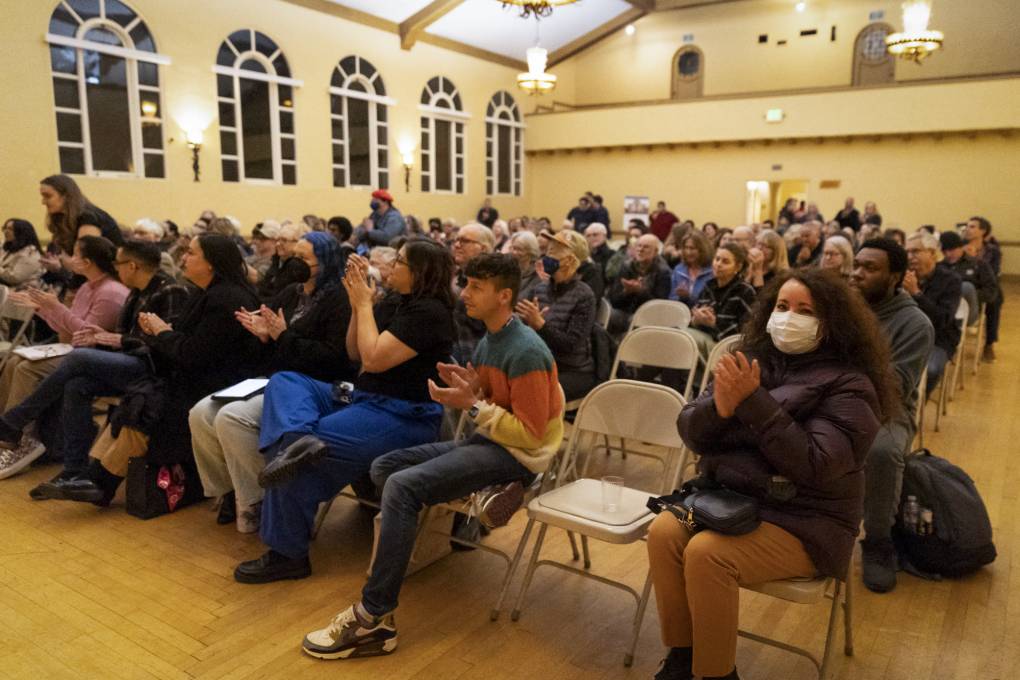
"caption": "San José District 3 voters attend a District 3 City Council candidates forum at the San José Women’s Club in San José on March 6, 2025. Ahead of the April 8 special election, voters said homelessness was their top issue in the race for the downtown seat vacated by Omar Torres.",
"credit": "Gina Castro/KQED",
"altTag": null,
"description": null,
"imgSizes": {
"medium": {
"file": "https://cdn.kqed.org/wp-content/uploads/sites/10/2025/03/20250306_SANJOSEDISTRICT3_GC-26-KQED-800x533.jpg",
"width": 800,
"height": 533,
"mimeType": "image/jpeg"
},
"large": {
"file": "https://cdn.kqed.org/wp-content/uploads/sites/10/2025/03/20250306_SANJOSEDISTRICT3_GC-26-KQED-1020x680.jpg",
"width": 1020,
"height": 680,
"mimeType": "image/jpeg"
},
"thumbnail": {
"file": "https://cdn.kqed.org/wp-content/uploads/sites/10/2025/03/20250306_SANJOSEDISTRICT3_GC-26-KQED-160x107.jpg",
"width": 160,
"height": 107,
"mimeType": "image/jpeg"
},
"1536x1536": {
"file": "https://cdn.kqed.org/wp-content/uploads/sites/10/2025/03/20250306_SANJOSEDISTRICT3_GC-26-KQED-1536x1024.jpg",
"width": 1536,
"height": 1024,
"mimeType": "image/jpeg"
},
"post-thumbnail": {
"file": "https://cdn.kqed.org/wp-content/uploads/sites/10/2025/03/20250306_SANJOSEDISTRICT3_GC-26-KQED-672x372.jpg",
"width": 672,
"height": 372,
"mimeType": "image/jpeg"
},
"twentyfourteen-full-width": {
"file": "https://cdn.kqed.org/wp-content/uploads/sites/10/2025/03/20250306_SANJOSEDISTRICT3_GC-26-KQED-1038x576.jpg",
"width": 1038,
"height": 576,
"mimeType": "image/jpeg"
},
"full-width": {
"file": "https://cdn.kqed.org/wp-content/uploads/sites/10/2025/03/20250306_SANJOSEDISTRICT3_GC-26-KQED-1920x1280.jpg",
"width": 1920,
"height": 1280,
"mimeType": "image/jpeg"
},
"kqedFullSize": {
"file": "https://cdn.kqed.org/wp-content/uploads/sites/10/2025/03/20250306_SANJOSEDISTRICT3_GC-26-KQED.jpg",
"width": 2000,
"height": 1333
}
},
"isLoading": false,
"fetchFailed": false
},
"news_12030426": {
"type": "attachments",
"id": "news_12030426",
"meta": {
"index": "attachments_1716263798",
"site": "news",
"id": "12030426",
"found": true
},
"title": "20250306_SANJOSEDISTRICT3_GC-1-KQED",
"publishDate": 1741388613,
"status": "inherit",
"parent": 12030375,
"modified": 1741389046,
"caption": "From left, candidates running for District 3 City Council, Gabby Chavez-Lopez, Philip Dolan, Adam Duran, Irene Smith, Anthony Tordillos and Matthew Quevedo speak at a candidates forum at the San José Woman’s Club in San José on March 6, 2025.",
"credit": "Gina Castro/KQED",
"altTag": null,
"description": null,
"imgSizes": {
"medium": {
"file": "https://cdn.kqed.org/wp-content/uploads/sites/10/2025/03/20250306_SANJOSEDISTRICT3_GC-1-KQED-2-800x533.jpg",
"width": 800,
"height": 533,
"mimeType": "image/jpeg"
},
"large": {
"file": "https://cdn.kqed.org/wp-content/uploads/sites/10/2025/03/20250306_SANJOSEDISTRICT3_GC-1-KQED-2-1020x680.jpg",
"width": 1020,
"height": 680,
"mimeType": "image/jpeg"
},
"thumbnail": {
"file": "https://cdn.kqed.org/wp-content/uploads/sites/10/2025/03/20250306_SANJOSEDISTRICT3_GC-1-KQED-2-160x107.jpg",
"width": 160,
"height": 107,
"mimeType": "image/jpeg"
},
"1536x1536": {
"file": "https://cdn.kqed.org/wp-content/uploads/sites/10/2025/03/20250306_SANJOSEDISTRICT3_GC-1-KQED-2-1536x1024.jpg",
"width": 1536,
"height": 1024,
"mimeType": "image/jpeg"
},
"post-thumbnail": {
"file": "https://cdn.kqed.org/wp-content/uploads/sites/10/2025/03/20250306_SANJOSEDISTRICT3_GC-1-KQED-2-672x372.jpg",
"width": 672,
"height": 372,
"mimeType": "image/jpeg"
},
"twentyfourteen-full-width": {
"file": "https://cdn.kqed.org/wp-content/uploads/sites/10/2025/03/20250306_SANJOSEDISTRICT3_GC-1-KQED-2-1038x576.jpg",
"width": 1038,
"height": 576,
"mimeType": "image/jpeg"
},
"full-width": {
"file": "https://cdn.kqed.org/wp-content/uploads/sites/10/2025/03/20250306_SANJOSEDISTRICT3_GC-1-KQED-2-1920x1280.jpg",
"width": 1920,
"height": 1280,
"mimeType": "image/jpeg"
},
"kqedFullSize": {
"file": "https://cdn.kqed.org/wp-content/uploads/sites/10/2025/03/20250306_SANJOSEDISTRICT3_GC-1-KQED-2.jpg",
"width": 2000,
"height": 1333
}
},
"isLoading": false,
"fetchFailed": false
},
"news_12030774": {
"type": "attachments",
"id": "news_12030774",
"meta": {
"index": "attachments_1716263798",
"site": "news",
"id": "12030774",
"found": true
},
"title": "An empty railroad track stop on N First St in San Jose on March 11, 2025.",
"publishDate": 1741719083,
"status": "inherit",
"parent": 12042427,
"modified": 1748907852,
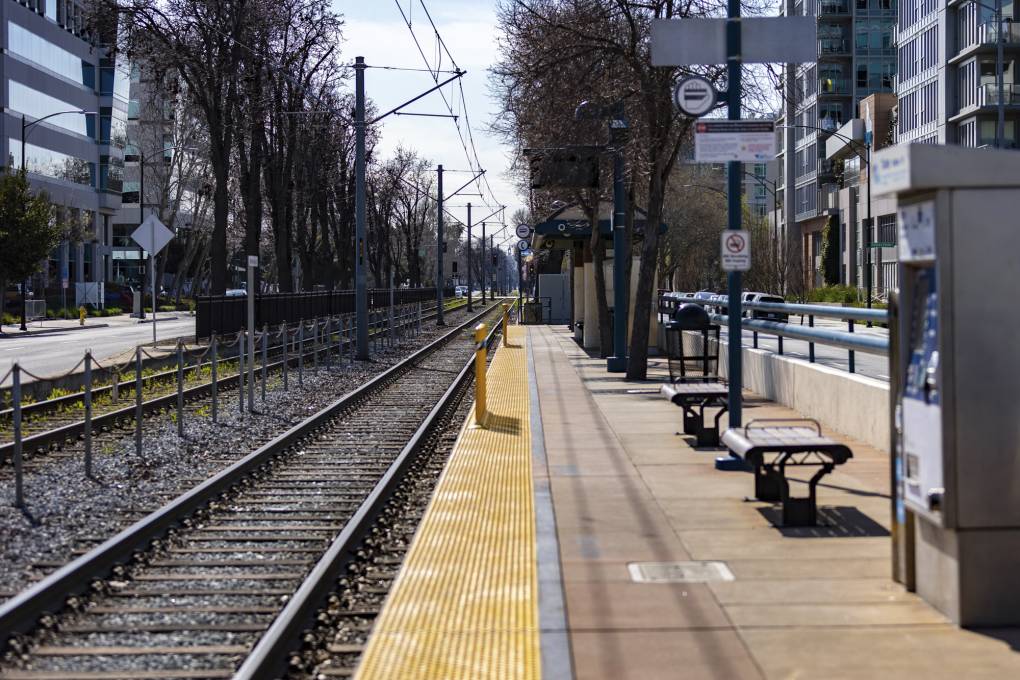
"caption": "An empty railroad track stop on North First Street in San José on March 11, 2025.",
"credit": "Gina Castro/KQED",
"altTag": null,
"description": null,
"imgSizes": {
"medium": {
"file": "https://cdn.kqed.org/wp-content/uploads/sites/10/2025/03/20250311_VTASTRIKEDAY2_GC-23-KQED-800x533.jpg",
"width": 800,
"height": 533,
"mimeType": "image/jpeg"
},
"large": {
"file": "https://cdn.kqed.org/wp-content/uploads/sites/10/2025/03/20250311_VTASTRIKEDAY2_GC-23-KQED-1020x680.jpg",
"width": 1020,
"height": 680,
"mimeType": "image/jpeg"
},
"thumbnail": {
"file": "https://cdn.kqed.org/wp-content/uploads/sites/10/2025/03/20250311_VTASTRIKEDAY2_GC-23-KQED-160x107.jpg",
"width": 160,
"height": 107,
"mimeType": "image/jpeg"
},
"1536x1536": {
"file": "https://cdn.kqed.org/wp-content/uploads/sites/10/2025/03/20250311_VTASTRIKEDAY2_GC-23-KQED-1536x1024.jpg",
"width": 1536,
"height": 1024,
"mimeType": "image/jpeg"
},
"post-thumbnail": {
"file": "https://cdn.kqed.org/wp-content/uploads/sites/10/2025/03/20250311_VTASTRIKEDAY2_GC-23-KQED-672x372.jpg",
"width": 672,
"height": 372,
"mimeType": "image/jpeg"
},
"twentyfourteen-full-width": {
"file": "https://cdn.kqed.org/wp-content/uploads/sites/10/2025/03/20250311_VTASTRIKEDAY2_GC-23-KQED-1038x576.jpg",
"width": 1038,
"height": 576,
"mimeType": "image/jpeg"
},
"full-width": {
"file": "https://cdn.kqed.org/wp-content/uploads/sites/10/2025/03/20250311_VTASTRIKEDAY2_GC-23-KQED-1920x1280.jpg",
"width": 1920,
"height": 1280,
"mimeType": "image/jpeg"
},
"kqedFullSize": {
"file": "https://cdn.kqed.org/wp-content/uploads/sites/10/2025/03/20250311_VTASTRIKEDAY2_GC-23-KQED.jpg",
"width": 2000,
"height": 1333
}
},
"isLoading": false,
"fetchFailed": false
},
"news_12030770": {
"type": "attachments",
"id": "news_12030770",
"meta": {
"index": "attachments_1716263798",
"site": "news",
"id": "12030770",
"found": true
},
"title": "20250311_VTASTRIKEDAY2_GC-2-KQED",
"publishDate": 1741719070,
"status": "inherit",
"parent": 12031632,
"modified": 1742241158,
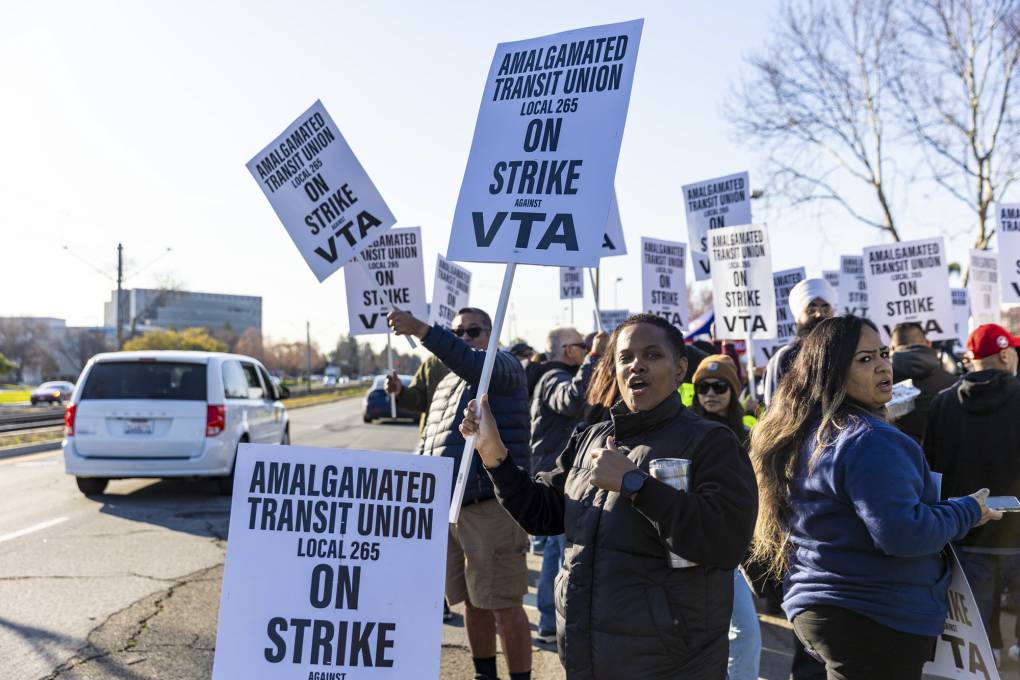
"caption": "Dafina Cozine, a bus operator, joins a strike with hundreds of Santa Clara Valley Transportation Authority workers, represented by the Amalgamated Transit Union Local 265, on N. First Street, in San José, demanding a better contract and an increase in wages, on March 11, 2025.",
"credit": "Gina Castro/KQED",
"altTag": null,
"description": null,
"imgSizes": {
"medium": {
"file": "https://cdn.kqed.org/wp-content/uploads/sites/10/2025/03/20250311_VTASTRIKEDAY2_GC-2-KQED-800x533.jpg",
"width": 800,
"height": 533,
"mimeType": "image/jpeg"
},
"large": {
"file": "https://cdn.kqed.org/wp-content/uploads/sites/10/2025/03/20250311_VTASTRIKEDAY2_GC-2-KQED-1020x680.jpg",
"width": 1020,
"height": 680,
"mimeType": "image/jpeg"
},
"thumbnail": {
"file": "https://cdn.kqed.org/wp-content/uploads/sites/10/2025/03/20250311_VTASTRIKEDAY2_GC-2-KQED-160x107.jpg",
"width": 160,
"height": 107,
"mimeType": "image/jpeg"
},
"1536x1536": {
"file": "https://cdn.kqed.org/wp-content/uploads/sites/10/2025/03/20250311_VTASTRIKEDAY2_GC-2-KQED-1536x1024.jpg",
"width": 1536,
"height": 1024,
"mimeType": "image/jpeg"
},
"post-thumbnail": {
"file": "https://cdn.kqed.org/wp-content/uploads/sites/10/2025/03/20250311_VTASTRIKEDAY2_GC-2-KQED-672x372.jpg",
"width": 672,
"height": 372,
"mimeType": "image/jpeg"
},
"twentyfourteen-full-width": {
"file": "https://cdn.kqed.org/wp-content/uploads/sites/10/2025/03/20250311_VTASTRIKEDAY2_GC-2-KQED-1038x576.jpg",
"width": 1038,
"height": 576,
"mimeType": "image/jpeg"
},
"full-width": {
"file": "https://cdn.kqed.org/wp-content/uploads/sites/10/2025/03/20250311_VTASTRIKEDAY2_GC-2-KQED-1920x1280.jpg",
"width": 1920,
"height": 1280,
"mimeType": "image/jpeg"
},
"kqedFullSize": {
"file": "https://cdn.kqed.org/wp-content/uploads/sites/10/2025/03/20250311_VTASTRIKEDAY2_GC-2-KQED.jpg",
"width": 2000,
"height": 1333
}
},
"isLoading": false,
"fetchFailed": false
},
"news_12030425": {
"type": "attachments",
"id": "news_12030425",
"meta": {
"index": "attachments_1716263798",
"site": "news",
"id": "12030425",
"found": true
},
"title": "20250306_SANJOSEDISTRICT3_GC-1-KQED-1",
"publishDate": 1741388508,
"status": "inherit",
"parent": 0,
"modified": 1742315789,
"caption": "From left, candidates running for District 3 City Council, Gabby Chavez-Lopez, Philip Dolan, Adam Duran, Irene Smith, Anthony Tordillos and Matthew Quevedo speak at a candidates forum at the San José Women’s Club in San José on March 6, 2025.",
"credit": "Gina Castro/KQED",
"altTag": null,
"description": null,
"imgSizes": {
"medium": {
"file": "https://cdn.kqed.org/wp-content/uploads/sites/10/2025/03/20250306_SANJOSEDISTRICT3_GC-1-KQED-1-800x533.jpg",
"width": 800,
"height": 533,
"mimeType": "image/jpeg"
},
"large": {
"file": "https://cdn.kqed.org/wp-content/uploads/sites/10/2025/03/20250306_SANJOSEDISTRICT3_GC-1-KQED-1-1020x680.jpg",
"width": 1020,
"height": 680,
"mimeType": "image/jpeg"
},
"thumbnail": {
"file": "https://cdn.kqed.org/wp-content/uploads/sites/10/2025/03/20250306_SANJOSEDISTRICT3_GC-1-KQED-1-160x107.jpg",
"width": 160,
"height": 107,
"mimeType": "image/jpeg"
},
"1536x1536": {
"file": "https://cdn.kqed.org/wp-content/uploads/sites/10/2025/03/20250306_SANJOSEDISTRICT3_GC-1-KQED-1-1536x1024.jpg",
"width": 1536,
"height": 1024,
"mimeType": "image/jpeg"
},
"post-thumbnail": {
"file": "https://cdn.kqed.org/wp-content/uploads/sites/10/2025/03/20250306_SANJOSEDISTRICT3_GC-1-KQED-1-672x372.jpg",
"width": 672,
"height": 372,
"mimeType": "image/jpeg"
},
"twentyfourteen-full-width": {
"file": "https://cdn.kqed.org/wp-content/uploads/sites/10/2025/03/20250306_SANJOSEDISTRICT3_GC-1-KQED-1-1038x576.jpg",
"width": 1038,
"height": 576,
"mimeType": "image/jpeg"
},
"full-width": {
"file": "https://cdn.kqed.org/wp-content/uploads/sites/10/2025/03/20250306_SANJOSEDISTRICT3_GC-1-KQED-1-1920x1280.jpg",
"width": 1920,
"height": 1280,
"mimeType": "image/jpeg"
},
"kqedFullSize": {
"file": "https://cdn.kqed.org/wp-content/uploads/sites/10/2025/03/20250306_SANJOSEDISTRICT3_GC-1-KQED-1.jpg",
"width": 2000,
"height": 1333
}
},
"isLoading": false,
"fetchFailed": false
},
"news_12029999": {
"type": "attachments",
"id": "news_12029999",
"meta": {
"index": "attachments_1716263798",
"site": "news",
"id": "12029999",
"found": true
},
"title": "240620-AffordableHousingPresser-10-BL_qed (1)",
"publishDate": 1741232089,
"status": "inherit",
"parent": 12029843,
"modified": 1741232109,
"caption": "San José Mayor Matt Mahan speaks during a press conference in support of a regional affordable housing measure at Five88, a mixed-use residential and retail property, in the Mission Bay neighborhood in San Francisco on June 20, 2024.",
"credit": "Beth LaBerge/KQED",
"altTag": null,
"description": null,
"imgSizes": {
"medium": {
"file": "https://cdn.kqed.org/wp-content/uploads/sites/10/2025/03/240620-AffordableHousingPresser-10-BL_qed-1-800x533.jpg",
"width": 800,
"height": 533,
"mimeType": "image/jpeg"
},
"large": {
"file": "https://cdn.kqed.org/wp-content/uploads/sites/10/2025/03/240620-AffordableHousingPresser-10-BL_qed-1-1020x680.jpg",
"width": 1020,
"height": 680,
"mimeType": "image/jpeg"
},
"thumbnail": {
"file": "https://cdn.kqed.org/wp-content/uploads/sites/10/2025/03/240620-AffordableHousingPresser-10-BL_qed-1-160x107.jpg",
"width": 160,
"height": 107,
"mimeType": "image/jpeg"
},
"1536x1536": {
"file": "https://cdn.kqed.org/wp-content/uploads/sites/10/2025/03/240620-AffordableHousingPresser-10-BL_qed-1-1536x1024.jpg",
"width": 1536,
"height": 1024,
"mimeType": "image/jpeg"
},
"post-thumbnail": {
"file": "https://cdn.kqed.org/wp-content/uploads/sites/10/2025/03/240620-AffordableHousingPresser-10-BL_qed-1-672x372.jpg",
"width": 672,
"height": 372,
"mimeType": "image/jpeg"
},
"twentyfourteen-full-width": {
"file": "https://cdn.kqed.org/wp-content/uploads/sites/10/2025/03/240620-AffordableHousingPresser-10-BL_qed-1-1038x576.jpg",
"width": 1038,
"height": 576,
"mimeType": "image/jpeg"
},
"full-width": {
"file": "https://cdn.kqed.org/wp-content/uploads/sites/10/2025/03/240620-AffordableHousingPresser-10-BL_qed-1-1920x1280.jpg",
"width": 1920,
"height": 1280,
"mimeType": "image/jpeg"
},
"kqedFullSize": {
"file": "https://cdn.kqed.org/wp-content/uploads/sites/10/2025/03/240620-AffordableHousingPresser-10-BL_qed-1.jpg",
"width": 1999,
"height": 1333
}
},
"isLoading": false,
"fetchFailed": false
},
"news_12029836": {
"type": "attachments",
"id": "news_12029836",
"meta": {
"index": "attachments_1716263798",
"site": "news",
"id": "12029836",
"found": true
},
"title": "MiLB: JUL 09 Mvericks at Giants",
"publishDate": 1741202445,
"status": "inherit",
"parent": 12029804,
"modified": 1741217385,
"caption": "San José Giants' Ryan Lormand is tagged out at home by High Desert Mavericks catcher Travis Scott while trying to score on a fly ball in the third inning at Municipal Stadium, in San José, California, on July 9, 2009.",
"credit": "Chris Talley/Icon SMI/Corbis/Icon Sportswire via Getty Images",
"altTag": null,
"description": null,
"imgSizes": {
"medium": {
"file": "https://cdn.kqed.org/wp-content/uploads/sites/10/2025/03/SanJoseGiantsGetty-800x533.jpg",
"width": 800,
"height": 533,
"mimeType": "image/jpeg"
},
"large": {
"file": "https://cdn.kqed.org/wp-content/uploads/sites/10/2025/03/SanJoseGiantsGetty-1020x680.jpg",
"width": 1020,
"height": 680,
"mimeType": "image/jpeg"
},
"thumbnail": {
"file": "https://cdn.kqed.org/wp-content/uploads/sites/10/2025/03/SanJoseGiantsGetty-160x107.jpg",
"width": 160,
"height": 107,
"mimeType": "image/jpeg"
},
"1536x1536": {
"file": "https://cdn.kqed.org/wp-content/uploads/sites/10/2025/03/SanJoseGiantsGetty-1536x1024.jpg",
"width": 1536,
"height": 1024,
"mimeType": "image/jpeg"
},
"post-thumbnail": {
"file": "https://cdn.kqed.org/wp-content/uploads/sites/10/2025/03/SanJoseGiantsGetty-672x372.jpg",
"width": 672,
"height": 372,
"mimeType": "image/jpeg"
},
"twentyfourteen-full-width": {
"file": "https://cdn.kqed.org/wp-content/uploads/sites/10/2025/03/SanJoseGiantsGetty-1038x576.jpg",
"width": 1038,
"height": 576,
"mimeType": "image/jpeg"
},
"full-width": {
"file": "https://cdn.kqed.org/wp-content/uploads/sites/10/2025/03/SanJoseGiantsGetty-1920x1280.jpg",
"width": 1920,
"height": 1280,
"mimeType": "image/jpeg"
},
"kqedFullSize": {
"file": "https://cdn.kqed.org/wp-content/uploads/sites/10/2025/03/SanJoseGiantsGetty.jpg",
"width": 2000,
"height": 1333
}
},
"isLoading": false,
"fetchFailed": false
},
"news_12029443": {
"type": "attachments",
"id": "news_12029443",
"meta": {
"index": "attachments_1716263798",
"site": "news",
"id": "12029443",
"found": true
},
"title": "20241122_NorcalStorm_GC-7_qed",
"publishDate": 1741024106,
"status": "inherit",
"parent": 12029441,
"modified": 1741024140,
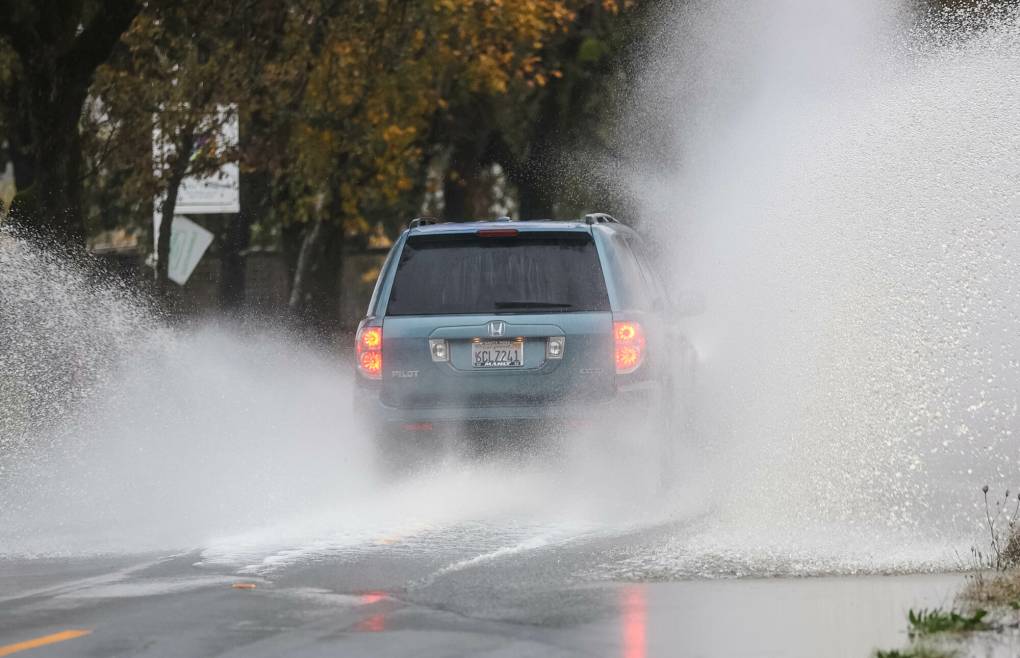
"caption": "A car drives through a puddle on Piner Road in Santa Rosa during an atmospheric river storm affecting the Bay Area on Nov. 22, 2024. ",
"credit": "Gina Castro/KQED",
"altTag": null,
"description": null,
"imgSizes": {
"medium": {
"file": "https://cdn.kqed.org/wp-content/uploads/sites/10/2025/03/20241122_NorcalStorm_GC-7_qed-800x516.jpg",
"width": 800,
"height": 516,
"mimeType": "image/jpeg"
},
"large": {
"file": "https://cdn.kqed.org/wp-content/uploads/sites/10/2025/03/20241122_NorcalStorm_GC-7_qed-1020x658.jpg",
"width": 1020,
"height": 658,
"mimeType": "image/jpeg"
},
"thumbnail": {
"file": "https://cdn.kqed.org/wp-content/uploads/sites/10/2025/03/20241122_NorcalStorm_GC-7_qed-160x103.jpg",
"width": 160,
"height": 103,
"mimeType": "image/jpeg"
},
"1536x1536": {
"file": "https://cdn.kqed.org/wp-content/uploads/sites/10/2025/03/20241122_NorcalStorm_GC-7_qed-1536x991.jpg",
"width": 1536,
"height": 991,
"mimeType": "image/jpeg"
},
"post-thumbnail": {
"file": "https://cdn.kqed.org/wp-content/uploads/sites/10/2025/03/20241122_NorcalStorm_GC-7_qed-672x372.jpg",
"width": 672,
"height": 372,
"mimeType": "image/jpeg"
},
"twentyfourteen-full-width": {
"file": "https://cdn.kqed.org/wp-content/uploads/sites/10/2025/03/20241122_NorcalStorm_GC-7_qed-1038x576.jpg",
"width": 1038,
"height": 576,
"mimeType": "image/jpeg"
},
"full-width": {
"file": "https://cdn.kqed.org/wp-content/uploads/sites/10/2025/03/20241122_NorcalStorm_GC-7_qed-1920x1239.jpg",
"width": 1920,
"height": 1239,
"mimeType": "image/jpeg"
},
"kqedFullSize": {
"file": "https://cdn.kqed.org/wp-content/uploads/sites/10/2025/03/20241122_NorcalStorm_GC-7_qed.jpg",
"width": 2000,
"height": 1291
}
},
"isLoading": false,
"fetchFailed": false
},
"news_12028620": {
"type": "attachments",
"id": "news_12028620",
"meta": {
"index": "attachments_1716263798",
"site": "news",
"id": "12028620",
"found": true
},
"title": "man on bus",
"publishDate": 1740531404,
"status": "inherit",
"parent": 0,
"modified": 1740531472,
"caption": "A $200,000 pilot program, championed by San José Mayor Matt Mahan, will offer bus and train tickets to unhoused people who want to reconnect with family or friends.",
"credit": "Jason Yeomans/Getty Images",
"altTag": null,
"description": null,
"imgSizes": {
"medium": {
"file": "https://cdn.kqed.org/wp-content/uploads/sites/10/2025/02/GettyImages-1150473913-800x600.jpg",
"width": 800,
"height": 600,
"mimeType": "image/jpeg"
},
"large": {
"file": "https://cdn.kqed.org/wp-content/uploads/sites/10/2025/02/GettyImages-1150473913-1020x765.jpg",
"width": 1020,
"height": 765,
"mimeType": "image/jpeg"
},
"thumbnail": {
"file": "https://cdn.kqed.org/wp-content/uploads/sites/10/2025/02/GettyImages-1150473913-160x120.jpg",
"width": 160,
"height": 120,
"mimeType": "image/jpeg"
},
"1536x1536": {
"file": "https://cdn.kqed.org/wp-content/uploads/sites/10/2025/02/GettyImages-1150473913-1536x1152.jpg",
"width": 1536,
"height": 1152,
"mimeType": "image/jpeg"
},
"2048x2048": {
"file": "https://cdn.kqed.org/wp-content/uploads/sites/10/2025/02/GettyImages-1150473913-2048x1536.jpg",
"width": 2048,
"height": 1536,
"mimeType": "image/jpeg"
},
"post-thumbnail": {
"file": "https://cdn.kqed.org/wp-content/uploads/sites/10/2025/02/GettyImages-1150473913-672x372.jpg",
"width": 672,
"height": 372,
"mimeType": "image/jpeg"
},
"twentyfourteen-full-width": {
"file": "https://cdn.kqed.org/wp-content/uploads/sites/10/2025/02/GettyImages-1150473913-1038x576.jpg",
"width": 1038,
"height": 576,
"mimeType": "image/jpeg"
},
"full-width": {
"file": "https://cdn.kqed.org/wp-content/uploads/sites/10/2025/02/GettyImages-1150473913-1920x1440.jpg",
"width": 1920,
"height": 1440,
"mimeType": "image/jpeg"
},
"kqedFullSize": {
"file": "https://cdn.kqed.org/wp-content/uploads/sites/10/2025/02/GettyImages-1150473913-scaled.jpg",
"width": 2560,
"height": 1920
}
},
"isLoading": false,
"fetchFailed": false
},
"news_12028006": {
"type": "attachments",
"id": "news_12028006",
"meta": {
"index": "attachments_1716263798",
"site": "news",
"id": "12028006",
"found": true
},
"title": "250220-SJFLOODWALLS-JG-3",
"publishDate": 1740095222,
"status": "inherit",
"parent": 0,
"modified": 1740103874,
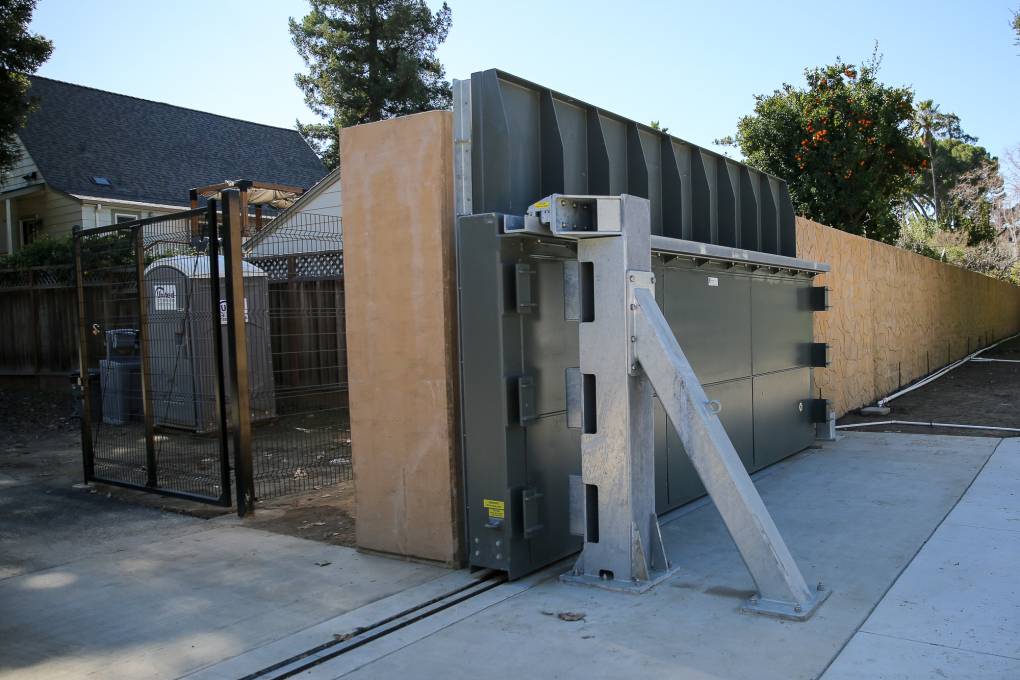
"caption": "A massive metal door attached to new 10-foot floodwalls built by Santa Clara Valley Water District at the Coyote Creek Outdoor Classroom in San José, on Thursday, Feb. 20, 2025.",
"credit": "Joseph Geha/KQED",
"altTag": null,
"description": null,
"imgSizes": {
"medium": {
"file": "https://cdn.kqed.org/wp-content/uploads/sites/10/2025/02/250220-SJFLOODWALLS-JG-3-800x533.jpg",
"width": 800,
"height": 533,
"mimeType": "image/jpeg"
},
"large": {
"file": "https://cdn.kqed.org/wp-content/uploads/sites/10/2025/02/250220-SJFLOODWALLS-JG-3-1020x680.jpg",
"width": 1020,
"height": 680,
"mimeType": "image/jpeg"
},
"thumbnail": {
"file": "https://cdn.kqed.org/wp-content/uploads/sites/10/2025/02/250220-SJFLOODWALLS-JG-3-160x107.jpg",
"width": 160,
"height": 107,
"mimeType": "image/jpeg"
},
"1536x1536": {
"file": "https://cdn.kqed.org/wp-content/uploads/sites/10/2025/02/250220-SJFLOODWALLS-JG-3-1536x1024.jpg",
"width": 1536,
"height": 1024,
"mimeType": "image/jpeg"
},
"post-thumbnail": {
"file": "https://cdn.kqed.org/wp-content/uploads/sites/10/2025/02/250220-SJFLOODWALLS-JG-3-672x372.jpg",
"width": 672,
"height": 372,
"mimeType": "image/jpeg"
},
"twentyfourteen-full-width": {
"file": "https://cdn.kqed.org/wp-content/uploads/sites/10/2025/02/250220-SJFLOODWALLS-JG-3-1038x576.jpg",
"width": 1038,
"height": 576,
"mimeType": "image/jpeg"
},
"full-width": {
"file": "https://cdn.kqed.org/wp-content/uploads/sites/10/2025/02/250220-SJFLOODWALLS-JG-3-1920x1280.jpg",
"width": 1920,
"height": 1280,
"mimeType": "image/jpeg"
},
"kqedFullSize": {
"file": "https://cdn.kqed.org/wp-content/uploads/sites/10/2025/02/250220-SJFLOODWALLS-JG-3.jpg",
"width": 2000,
"height": 1333
}
},
"isLoading": false,
"fetchFailed": false
},
"news_11957563": {
"type": "attachments",
"id": "news_11957563",
"meta": {
"index": "attachments_1716263798",
"site": "news",
"id": "11957563",
"found": true
},
"parent": 0,
"imgSizes": {
"twentyfourteen-full-width": {
"file": "https://ww2.kqed.org/app/uploads/sites/10/2023/08/RS67526_20230801-SJCityHall-01-JYKQED-1038x576.jpg",
"width": 1038,
"mimeType": "image/jpeg",
"height": 576
},
"thumbnail": {
"file": "https://ww2.kqed.org/app/uploads/sites/10/2023/08/RS67526_20230801-SJCityHall-01-JYKQED-160x107.jpg",
"width": 160,
"mimeType": "image/jpeg",
"height": 107
},
"post-thumbnail": {
"file": "https://ww2.kqed.org/app/uploads/sites/10/2023/08/RS67526_20230801-SJCityHall-01-JYKQED-672x372.jpg",
"width": 672,
"mimeType": "image/jpeg",
"height": 372
},
"kqedFullSize": {
"file": "https://ww2.kqed.org/app/uploads/sites/10/2023/08/RS67526_20230801-SJCityHall-01-JYKQED.jpg",
"width": 2000,
"height": 1333
},
"large": {
"file": "https://ww2.kqed.org/app/uploads/sites/10/2023/08/RS67526_20230801-SJCityHall-01-JYKQED-1020x680.jpg",
"width": 1020,
"mimeType": "image/jpeg",
"height": 680
},
"1536x1536": {
"file": "https://ww2.kqed.org/app/uploads/sites/10/2023/08/RS67526_20230801-SJCityHall-01-JYKQED-1536x1024.jpg",
"width": 1536,
"mimeType": "image/jpeg",
"height": 1024
},
"full-width": {
"file": "https://ww2.kqed.org/app/uploads/sites/10/2023/08/RS67526_20230801-SJCityHall-01-JYKQED-1920x1280.jpg",
"width": 1920,
"mimeType": "image/jpeg",
"height": 1280
},
"medium": {
"file": "https://ww2.kqed.org/app/uploads/sites/10/2023/08/RS67526_20230801-SJCityHall-01-JYKQED-800x533.jpg",
"width": 800,
"mimeType": "image/jpeg",
"height": 533
}
},
"publishDate": 1691431355,
"modified": 1692146238,
"caption": "City Hall in San José on Aug. 1, 2023.",
"description": null,
"title": "City Hall in San Jose, Calif., on Tuesday, August 1, 2023.",
"credit": "Juliana Yamada/KQED",
"status": "inherit",
"altTag": "A sign on a building reading \"San Jose City Hall.\"",
"isLoading": false,
"fetchFailed": false
}
},
"audioPlayerReducer": {
"postId": "stream_live",
"isPaused": true,
"isPlaying": false,
"pfsActive": false,
"pledgeModalIsOpen": true,
"playerDrawerIsOpen": false,
"liveAudioPlayStartedAt": 0,
"liveAudioPlayContext": ""
},
"authorsReducer": {
"gmarzorati": {
"type": "authors",
"id": "227",
"meta": {
"index": "authors_1716337520",
"id": "227",
"found": true
},
"name": "Guy Marzorati",
"firstName": "Guy",
"lastName": "Marzorati",
"slug": "gmarzorati",
"email": "gmarzorati@KQED.org",
"display_author_email": true,
"staff_mastheads": [
"news"
],
"title": "Correspondent",
"bio": "Guy Marzorati is a correspondent on KQED's California Politics and Government Desk, based in San Jose. A graduate of Santa Clara University, Guy joined KQED in 2013. He reports on state and local politics and produces KQED's digital voter guide.",
"avatar": "https://secure.gravatar.com/avatar/e7038b8dbfd55b104369b76b1cd0b9de?s=600&d=blank&r=g",
"twitter": "guymarzorati",
"facebook": null,
"instagram": null,
"linkedin": null,
"sites": [
{
"site": "",
"roles": [
"editor"
]
},
{
"site": "news",
"roles": [
"editor"
]
},
{
"site": "science",
"roles": [
"editor"
]
},
{
"site": "forum",
"roles": [
"editor"
]
},
{
"site": "elections",
"roles": [
"editor"
]
},
{
"site": "liveblog",
"roles": [
"editor"
]
}
],
"headData": {
"title": "Guy Marzorati | KQED",
"description": "Correspondent",
"ogImgSrc": "https://secure.gravatar.com/avatar/e7038b8dbfd55b104369b76b1cd0b9de?s=600&d=blank&r=g",
"twImgSrc": "https://secure.gravatar.com/avatar/e7038b8dbfd55b104369b76b1cd0b9de?s=600&d=blank&r=g"
},
"isLoading": false,
"link": "/author/gmarzorati"
},
"ecruzguevarra": {
"type": "authors",
"id": "8654",
"meta": {
"index": "authors_1716337520",
"id": "8654",
"found": true
},
"name": "Ericka Cruz Guevarra",
"firstName": "Ericka",
"lastName": "Cruz Guevarra",
"slug": "ecruzguevarra",
"email": "ecruzguevarra@kqed.org",
"display_author_email": true,
"staff_mastheads": [
"news"
],
"title": "Producer, The Bay Podcast",
"bio": "Ericka Cruz Guevarra is host of \u003ca href=\"https://www.kqed.org/podcasts/thebay\">\u003cem>The Bay\u003c/em>\u003c/a> podcast at KQED. Before host, she was the show’s producer. Her work in that capacity includes a three-part reported series on policing in Vallejo, which won a 2020 excellence in journalism award from the Society of Professional Journalists. Ericka has worked as a breaking news reporter at Oregon Public Broadcasting, helped produce the Code Switch podcast, and was KQED’s inaugural Raul Ramirez Diversity Fund intern. She’s also an alumna of NPR’s Next Generation Radio program. Send her an email if you have strong feelings about whether Fairfield and Suisun City are the Bay. Ericka is represented by SAG-AFTRA.",
"avatar": "https://secure.gravatar.com/avatar/accefc1de4bafc7e234b69bcb9b6f6536c130fd84709bc3069ef11a78787e1bb?s=600&d=blank&r=g",
"twitter": "NotoriousECG",
"bluesky": null,
"facebook": null,
"instagram": null,
"linkedin": null,
"sites": [
{
"site": "arts",
"roles": [
"subscriber"
]
},
{
"site": "news",
"roles": [
"editor",
"manage_categories"
]
},
{
"site": "futureofyou",
"roles": [
"subscriber"
]
},
{
"site": "stateofhealth",
"roles": [
"subscriber"
]
},
{
"site": "science",
"roles": [
"editor"
]
},
{
"site": "forum",
"roles": [
"subscriber"
]
}
],
"headData": {
"title": "Ericka Cruz Guevarra | KQED",
"description": "Producer, The Bay Podcast",
"ogImgSrc": "https://secure.gravatar.com/avatar/accefc1de4bafc7e234b69bcb9b6f6536c130fd84709bc3069ef11a78787e1bb?s=600&d=blank&r=g",
"twImgSrc": "https://secure.gravatar.com/avatar/accefc1de4bafc7e234b69bcb9b6f6536c130fd84709bc3069ef11a78787e1bb?s=600&d=blank&r=g"
},
"isLoading": false,
"link": "/author/ecruzguevarra"
},
"amontecillo": {
"type": "authors",
"id": "11649",
"meta": {
"index": "authors_1716337520",
"id": "11649",
"found": true
},
"name": "Alan Montecillo",
"firstName": "Alan",
"lastName": "Montecillo",
"slug": "amontecillo",
"email": "amontecillo@kqed.org",
"display_author_email": false,
"staff_mastheads": [
"news"
],
"title": "KQED Contributor",
"bio": "Alan Montecillo is the senior editor of \u003cem>\u003ca href=\"http://kqed.org/thebay\">The Bay\u003c/a>, \u003c/em> KQED's local news podcast. Before moving to the Bay Area, he worked as a senior talk show producer for WILL in Champaign-Urbana, Illinois and at Oregon Public Broadcasting in Portland, Oregon. He has won journalism awards from the Society of Professional Journalists Northern California, the Public Media Journalists Association, The Signal Awards, and has also received a regional Edward R. Murrow award. Alan is a Filipino American from Hong Kong and a graduate of Reed College.",
"avatar": "https://secure.gravatar.com/avatar/268f53a2066899ea9efdd8a5900218b17c822d9862cbc9326cccec53ef41d349?s=600&d=blank&r=g",
"twitter": "alanmontecillo",
"bluesky": null,
"facebook": null,
"instagram": null,
"linkedin": null,
"sites": [
{
"site": "",
"roles": [
"editor"
]
},
{
"site": "news",
"roles": [
"editor",
"manage_categories"
]
}
],
"headData": {
"title": "Alan Montecillo | KQED",
"description": "KQED Contributor",
"ogImgSrc": "https://secure.gravatar.com/avatar/268f53a2066899ea9efdd8a5900218b17c822d9862cbc9326cccec53ef41d349?s=600&d=blank&r=g",
"twImgSrc": "https://secure.gravatar.com/avatar/268f53a2066899ea9efdd8a5900218b17c822d9862cbc9326cccec53ef41d349?s=600&d=blank&r=g"
},
"isLoading": false,
"link": "/author/amontecillo"
},
"jessicakariisa": {
"type": "authors",
"id": "11831",
"meta": {
"index": "authors_1716337520",
"id": "11831",
"found": true
},
"name": "Jessica Kariisa",
"firstName": "Jessica",
"lastName": "Kariisa",
"slug": "jessicakariisa",
"email": "jkariisa@kqed.org",
"display_author_email": false,
"staff_mastheads": [],
"title": "Producer, The Bay",
"bio": "Jessica Kariisa is the producer of The Bay. She first joined KQED as an intern for The California Report Magazine, after which she became an on-call producer. She reported a Bay Curious episode on the use of rap lyrics in criminal trials which won a Society of Professional Journalists award in 2023 for Excellence in Features Journalism and the 2023 Signal Award for Best Conversation Starter. She’s worked on podcasts for Snap Judgment and American Public Media. Before embarking on her audio career, she was a music journalist.\r\n\r\nJessica Kariisa is represented by SAG-AFTRA.",
"avatar": "https://secure.gravatar.com/avatar/522e97b28ac0b3d411621c0fde8f3419c7b71ea2c5c262c57c4bb600963f328c?s=600&d=blank&r=g",
"twitter": null,
"bluesky": null,
"facebook": null,
"instagram": null,
"linkedin": null,
"sites": [
{
"site": "arts",
"roles": [
"author"
]
},
{
"site": "news",
"roles": [
"editor",
"manage_categories"
]
}
],
"headData": {
"title": "Jessica Kariisa | KQED",
"description": "Producer, The Bay",
"ogImgSrc": "https://secure.gravatar.com/avatar/522e97b28ac0b3d411621c0fde8f3419c7b71ea2c5c262c57c4bb600963f328c?s=600&d=blank&r=g",
"twImgSrc": "https://secure.gravatar.com/avatar/522e97b28ac0b3d411621c0fde8f3419c7b71ea2c5c262c57c4bb600963f328c?s=600&d=blank&r=g"
},
"isLoading": false,
"link": "/author/jessicakariisa"
},
"jgeha": {
"type": "authors",
"id": "11906",
"meta": {
"index": "authors_1716337520",
"id": "11906",
"found": true
},
"name": "Joseph Geha",
"firstName": "Joseph",
"lastName": "Geha",
"slug": "jgeha",
"email": "jgeha@kqed.org",
"display_author_email": false,
"staff_mastheads": [
"news",
"science"
],
"title": "KQED Contributor",
"bio": null,
"avatar": "https://secure.gravatar.com/avatar/ea84d2b6dd93d6369d453edf19dd583f117cd1759d2d9c9c92f9de77017354fe?s=600&d=blank&r=g",
"twitter": null,
"bluesky": null,
"facebook": null,
"instagram": null,
"linkedin": null,
"sites": [
{
"site": "news",
"roles": [
"editor"
]
},
{
"site": "liveblog",
"roles": [
"author"
]
}
],
"headData": {
"title": "Joseph Geha | KQED",
"description": "KQED Contributor",
"ogImgSrc": "https://secure.gravatar.com/avatar/ea84d2b6dd93d6369d453edf19dd583f117cd1759d2d9c9c92f9de77017354fe?s=600&d=blank&r=g",
"twImgSrc": "https://secure.gravatar.com/avatar/ea84d2b6dd93d6369d453edf19dd583f117cd1759d2d9c9c92f9de77017354fe?s=600&d=blank&r=g"
},
"isLoading": false,
"link": "/author/jgeha"
},
"kdebenedetti": {
"type": "authors",
"id": "11913",
"meta": {
"index": "authors_1716337520",
"id": "11913",
"found": true
},
"name": "Katie DeBenedetti",
"firstName": "Katie",
"lastName": "DeBenedetti",
"slug": "kdebenedetti",
"email": "kdebenedetti@kqed.org",
"display_author_email": false,
"staff_mastheads": [
"news",
"science"
],
"title": "KQED Contributor",
"bio": "Katie DeBenedetti is a digital reporter covering daily news for the Express Desk. Prior to joining KQED as a culture reporting intern in January 2024, she covered education and city government for the Napa Valley Register.",
"avatar": "https://secure.gravatar.com/avatar/6e31073cb8f7e4214ab03f42771d0f45?s=600&d=blank&r=g",
"twitter": null,
"facebook": null,
"instagram": null,
"linkedin": null,
"sites": [
{
"site": "news",
"roles": [
"author"
]
},
{
"site": "science",
"roles": [
"author"
]
},
{
"site": "liveblog",
"roles": [
"author"
]
}
],
"headData": {
"title": "Katie DeBenedetti | KQED",
"description": "KQED Contributor",
"ogImgSrc": "https://secure.gravatar.com/avatar/6e31073cb8f7e4214ab03f42771d0f45?s=600&d=blank&r=g",
"twImgSrc": "https://secure.gravatar.com/avatar/6e31073cb8f7e4214ab03f42771d0f45?s=600&d=blank&r=g"
},
"isLoading": false,
"link": "/author/kdebenedetti"
},
"mvelasquez": {
"type": "authors",
"id": "11939",
"meta": {
"index": "authors_1716337520",
"id": "11939",
"found": true
},
"name": "Mel Velasquez",
"firstName": "Mel",
"lastName": "Velasquez",
"slug": "mvelasquez",
"email": "mvelasquez@kqed.org",
"display_author_email": false,
"staff_mastheads": [],
"title": "KQED Contributor",
"bio": null,
"avatar": "https://secure.gravatar.com/avatar/409094312d56fab09fef4251e949ffa6?s=600&d=blank&r=g",
"twitter": null,
"facebook": null,
"instagram": null,
"linkedin": "www.linkedin.com/in/melanievelasquezz",
"sites": [
{
"site": "news",
"roles": [
"editor"
]
}
],
"headData": {
"title": "Mel Velasquez | KQED",
"description": "KQED Contributor",
"ogImgSrc": "https://secure.gravatar.com/avatar/409094312d56fab09fef4251e949ffa6?s=600&d=blank&r=g",
"twImgSrc": "https://secure.gravatar.com/avatar/409094312d56fab09fef4251e949ffa6?s=600&d=blank&r=g"
},
"isLoading": false,
"link": "/author/mvelasquez"
},
"tpaoli": {
"type": "authors",
"id": "11945",
"meta": {
"index": "authors_1716337520",
"id": "11945",
"found": true
},
"name": "Tessa Paoli",
"firstName": "Tessa",
"lastName": "Paoli",
"slug": "tpaoli",
"email": "tpaoli@kqed.org",
"display_author_email": false,
"staff_mastheads": [],
"title": "KQED Contributor",
"bio": null,
"avatar": "https://secure.gravatar.com/avatar/cf3572a84291e4bdfdf32ea2d72a79f6?s=600&d=blank&r=g",
"twitter": null,
"facebook": null,
"instagram": null,
"linkedin": null,
"sites": [
{
"site": "news",
"roles": [
"author"
]
}
],
"headData": {
"title": "Tessa Paoli | KQED",
"description": "KQED Contributor",
"ogImgSrc": "https://secure.gravatar.com/avatar/cf3572a84291e4bdfdf32ea2d72a79f6?s=600&d=blank&r=g",
"twImgSrc": "https://secure.gravatar.com/avatar/cf3572a84291e4bdfdf32ea2d72a79f6?s=600&d=blank&r=g"
},
"isLoading": false,
"link": "/author/tpaoli"
}
},
"pagesReducer": {
"news_tag_san-jose": {
"type": "terms",
"id": "news_18541",
"meta": {
"index": "terms_1716263798",
"site": "news",
"id": "18541",
"score": 8.005273
},
"featImg": null,
"name": "San Jose",
"description": null,
"taxonomy": "tag",
"headData": {
"twImgId": null,
"twTitle": null,
"ogTitle": null,
"ogImgId": null,
"twDescription": null,
"description": null,
"title": "San Jose Archives | KQED News",
"ogDescription": null
},
"ttid": 91,
"slug": "san-jose",
"isLoading": false,
"title": "San Jose",
"pageMeta": {
"site": "news",
"WpPageTemplate": "page-topic-editorial",
"currentPage": 15
},
"blocks": [
{
"blockName": "kqed/post-list",
"attrs": {
"layout": "cardArticle2",
"query": "posts/news?tag=san-jose",
"seeMore": false,
"paginated": true,
"page": 15
}
},
{
"blockName": "kqed/ad"
}
]
}
},
"pfsSessionReducer": {},
"postsReducer": {
"stream_live": {
"type": "live",
"id": "stream_live",
"audioUrl": "https://streams.kqed.org/kqedradio",
"title": "Live Stream",
"excerpt": "Live Stream information currently unavailable.",
"link": "/radio",
"featImg": "",
"label": {
"name": "KQED Live",
"link": "/"
}
},
"stream_kqedNewscast": {
"type": "posts",
"id": "stream_kqedNewscast",
"audioUrl": "https://www.kqed.org/.stream/anon/radio/RDnews/newscast.mp3?_=1",
"title": "KQED Newscast",
"featImg": "",
"label": {
"name": "88.5 FM",
"link": "/"
}
},
"news_12031808": {
"type": "posts",
"id": "news_12031808",
"meta": {
"index": "posts_1716263798",
"site": "news",
"id": "12031808",
"score": null,
"sort": [
1742382040000
]
},
"guestAuthors": [],
"slug": "homelessness-trust-center-san-jose-district-3-special-election",
"title": "Homelessness, Trust at Center of San José District 3 Special Election",
"publishDate": 1742382040,
"format": "standard",
"headTitle": "Homelessness, Trust at Center of San José District 3 Special Election | KQED",
"labelTerm": {
"site": "news"
},
"content": "\u003cp>The \u003ca href=\"https://www.kqed.org/news/12030375/san-jose-district-3-special-election-whos-running-and-how-to-vote\">District 3 seat\u003c/a> on the San José City Council is a privileged perch in South Bay politics.\u003c/p>\n\u003cp>The district includes the original heart of the city in downtown and the historic Japantown and Washington-Guadalupe neighborhoods. Former Mayors Tom McEnery, Susan Hammer and Sam Liccardo, as well as Santa Clara County County Supervisor Cindy Chavez, all rose from the District 3 council seat to higher office.\u003c/p>\n\u003cp>Lately, the district has been awash in political turmoil. Omar Torres \u003ca href=\"https://www.kqed.org/news/12013122/san-jose-councilmember-omar-torres-resigns-arrested\">resigned from\u003c/a> the council seat in November after he faced \u003ca href=\"https://www.kqed.org/news/12014643/omar-torres-resigns-from-san-jose-city-council-is-arrested\">multiple criminal charges\u003c/a> of child sexual abuse. As voters begin casting their ballots in an April 8 \u003ca href=\"https://www.kqed.org/news/12014860/san-jose-city-council-approves-special-election-for-torres-seat\">special election\u003c/a> to fill the seat, many told KQED they hope the next council member will prioritize reducing homelessness in the area and rebuilding trust between City Hall and residents following the Torres scandal.\u003c/p>\n\u003cp>[ad fullwidth]\u003c/p>\n\u003cp>“I actually voted for [Torres], so I was very disappointed to hear about that,” said Roberta Ortega, who lives on 17th Street in the Northside neighborhood. “But I also view this as an opportunity to have a little more input and have great candidates.”\u003c/p>\n\u003cp>\u003ca href=\"https://www.kqed.org/news/12030375/san-jose-district-3-special-election-whos-running-and-how-to-vote\">Seven candidates\u003c/a> — Gabby Chavez-Lopez, Philip Dolan, Adam Duran, Matthew Quevedo, Irene Smith, Anthony Tordillos and Tyrone Wade — are running in the special election, which will proceed to a June 24 runoff if no one secures a majority in April.\u003c/p>\n\u003cfigure id=\"attachment_12031947\" class=\"wp-caption aligncenter\" style=\"max-width: 2000px\">\u003cimg loading=\"lazy\" decoding=\"async\" class=\"size-full wp-image-12031947\" src=\"https://cdn.kqed.org/wp-content/uploads/sites/10/2025/03/20250306_SanJoseDistrict3_GC-20_qed.jpg\" alt=\"\" width=\"2000\" height=\"1333\" srcset=\"https://cdn.kqed.org/wp-content/uploads/sites/10/2025/03/20250306_SanJoseDistrict3_GC-20_qed.jpg 2000w, https://cdn.kqed.org/wp-content/uploads/sites/10/2025/03/20250306_SanJoseDistrict3_GC-20_qed-800x533.jpg 800w, https://cdn.kqed.org/wp-content/uploads/sites/10/2025/03/20250306_SanJoseDistrict3_GC-20_qed-1020x680.jpg 1020w, https://cdn.kqed.org/wp-content/uploads/sites/10/2025/03/20250306_SanJoseDistrict3_GC-20_qed-160x107.jpg 160w, https://cdn.kqed.org/wp-content/uploads/sites/10/2025/03/20250306_SanJoseDistrict3_GC-20_qed-1536x1024.jpg 1536w, https://cdn.kqed.org/wp-content/uploads/sites/10/2025/03/20250306_SanJoseDistrict3_GC-20_qed-1920x1280.jpg 1920w\" sizes=\"auto, (max-width: 2000px) 100vw, 2000px\">\u003cfigcaption class=\"wp-caption-text\">From left, candidates running for District 3 City Council, Gabby Chavez-Lopez, Philip Dolan, Adam Duran, Irene Smith, Anthony Tordillos and Matthew Quevedo speak at a candidates forum at the San José Women’s Club in San José on March 6, 2025. \u003ccite>(Gina Castro/KQED)\u003c/cite>\u003c/figcaption>\u003c/figure>\n\u003cp>Torres, who was elected in 2022, resigned in November and was accused of sexually assaulting a teenage relative in the late 1990s. For months, the seat was vacant until the \u003ca href=\"https://www.kqed.org/news/12024327/san-jose-council-taps-engineering-executive-carl-salas-vacant-seat\">city council appointed\u003c/a> Carl Salas, an engineering executive, to serve through the special election.\u003c/p>\n\u003cp>“To me, ethics and honesty is a very important issue,” Ortega, whose top concern is homelessness, said.\u003c/p>\n\u003cp>She wants increased investment in non-police responses to issues in encampments along the Guadalupe River and she supports outreach programs that provide services to people living on the street.\u003c/p>\n\u003cp>“They have a van come for the homeless so that they can get cleaned up — I’m in favor of all that,” Ortega said. “Crowding them into tent cities and trailer parks, I don’t think it’s helping … I just feel like it’s just creating more blight.”[aside postID=news_12030375 hero='https://cdn.kqed.org/wp-content/uploads/sites/10/2025/03/20250306_SANJOSEDISTRICT3_GC-1-KQED-1-1020x680.jpg']The city’s last full homeless count in early 2023 found District 3 had the second-highest number of people experiencing unsheltered homelessness in the city.\u003c/p>\n\u003cp>Susan Hartt said she appreciated that the candidates are making their plans to reduce homelessness a priority, though she doubts one council election can turn the tide.\u003c/p>\n\u003cp>“I think it’s great that everyone recognizes it’s the top issue,” said Hartt, who lives in the Naglee Park neighborhood. “But I think it’s still gonna be very challenging to come up with a plan that really ends homelessness.”\u003c/p>\n\u003cp>Ray and Dora McCasland have lived in the Northside neighborhood for decades. They said encampments, blight and an attempted break-in of their home have been met with little follow-up from City Hall.\u003c/p>\n\u003cp>“They’re humans, the homeless people, they’re human just like we are,” Dora McCasland said. “We’re not judging anyone, but I just feel like … something needs to be done.”\u003c/p>\n\u003cp>“When you see the homeless, houseless people living on the streets with their tents and the trash, it’s just not the city that we want it to be, especially downtown,” she added. “We want to come and have dinner downtown and walk during the summer nights.”\u003c/p>\n\u003cfigure id=\"attachment_12031949\" class=\"wp-caption aligncenter\" style=\"max-width: 2000px\">\u003cimg loading=\"lazy\" decoding=\"async\" class=\"wp-image-12031949 size-full\" src=\"https://cdn.kqed.org/wp-content/uploads/sites/10/2025/03/20250306_SanJoseDistrict3_GC-22_qed.jpg\" alt=\"\" width=\"2000\" height=\"1333\" srcset=\"https://cdn.kqed.org/wp-content/uploads/sites/10/2025/03/20250306_SanJoseDistrict3_GC-22_qed.jpg 2000w, https://cdn.kqed.org/wp-content/uploads/sites/10/2025/03/20250306_SanJoseDistrict3_GC-22_qed-800x533.jpg 800w, https://cdn.kqed.org/wp-content/uploads/sites/10/2025/03/20250306_SanJoseDistrict3_GC-22_qed-1020x680.jpg 1020w, https://cdn.kqed.org/wp-content/uploads/sites/10/2025/03/20250306_SanJoseDistrict3_GC-22_qed-160x107.jpg 160w, https://cdn.kqed.org/wp-content/uploads/sites/10/2025/03/20250306_SanJoseDistrict3_GC-22_qed-1536x1024.jpg 1536w, https://cdn.kqed.org/wp-content/uploads/sites/10/2025/03/20250306_SanJoseDistrict3_GC-22_qed-1920x1280.jpg 1920w\" sizes=\"auto, (max-width: 2000px) 100vw, 2000px\">\u003cfigcaption class=\"wp-caption-text\">San José District 3 voters attend a District 3 City Council candidates forum at the San José Women’s Club in San José on March 6, 2025. \u003ccite>(Gina Castro/KQED)\u003c/cite>\u003c/figcaption>\u003c/figure>\n\u003cp>City officials have placed extra focus on unsheltered homelessness in the downtown area. Last week, the council voted unanimously to extend a ban on sitting or lying down on a downtown sidewalk to begin at 8 a.m. instead of 10 a.m. The move followed a council vote last year to enforce a ban on encampments along the Guadalupe River Trail.\u003c/p>\n\u003cp>The next year could be crucial to rejuvenating economic activity and vibrancy in the city center. In 2026, the Super Bowl, along with portions of the FIFA World Cup and the NCAA men’s basketball tournament, will be played in Santa Clara and San José.\u003cstrong> \u003c/strong>\u003c/p>\n\u003cp>Downtown boosters hope the marquee events, along with the opening of new student housing at San José State University and the return of more city workers to the office, will boost foot traffic in the area and uplift small businesses.\u003c/p>\n\u003cp>James Riley, who lives near campus in the South University neighborhood, has a simple vision for the area’s future as he considers who to support.\u003c/p>\n\u003cp>“Watching this district — the downtown — recover and thrive,” he said.\u003c/p>\n\u003cp>\u003c/p>\n",
"blocks": [],
"excerpt": "Ahead of the April 8 special election, voters said homelessness was their top issue in the race for the downtown seat vacated by Omar Torres.",
"status": "publish",
"parent": 0,
"modified": 1742383445,
"stats": {
"hasAudio": false,
"hasVideo": false,
"hasChartOrMap": false,
"iframeSrcs": [],
"hasGoogleForm": false,
"hasGallery": false,
"hasHearkenModule": false,
"hasPolis": false,
"paragraphCount": 21,
"wordCount": 907
},
"headData": {
"title": "Homelessness, Trust at Center of San José District 3 Special Election | KQED",
"description": "Ahead of the April 8 special election, voters said homelessness was their top issue in the race for the downtown seat vacated by Omar Torres.",
"ogTitle": "",
"ogDescription": "",
"ogImgId": "",
"twTitle": "",
"twDescription": "",
"twImgId": "",
"schema": {
"@context": "https://schema.org",
"@type": "NewsArticle",
"headline": "Homelessness, Trust at Center of San José District 3 Special Election",
"datePublished": "2025-03-19T04:00:40-07:00",
"dateModified": "2025-03-19T04:24:05-07:00",
"image": "https://cdn.kqed.org/wp-content/uploads/2020/02/KQED-OG-Image@1x.png",
"isAccessibleForFree": "True",
"publisher": {
"@type": "NewsMediaOrganization",
"@id": "https://www.kqed.org/#organization",
"name": "KQED",
"logo": "https://cdn.kqed.org/wp-content/uploads/2020/02/KQED-OG-Image@1x.png",
"url": "https://www.kqed.org",
"sameAs": [
"https://www.facebook.com/KQED",
"https://twitter.com/KQED",
"https://www.instagram.com/kqed/",
"https://www.tiktok.com/@kqedofficial",
"https://www.linkedin.com/company/kqed",
"https://www.youtube.com/channel/UCeC0IOo7i1P_61zVUWbJ4nw"
]
}
}
},
"audioUrl": "https://traffic.omny.fm/d/clips/0af137ef-751e-4b19-a055-aaef00d2d578/ffca7e9f-6831-41c5-bcaf-aaef00f5a073/eec24407-d7fa-457e-a4e8-b29c01066245/audio.mp3",
"sticky": false,
"nprStoryId": "kqed-12031808",
"templateType": "standard",
"featuredImageType": "standard",
"excludeFromSiteSearch": "Include",
"articleAge": "0",
"path": "/news/12031808/homelessness-trust-center-san-jose-district-3-special-election",
"audioTrackLength": null,
"parsedContent": [
{
"type": "contentString",
"content": "\u003cdiv class=\"post-body\">\u003cp>\u003cp>The \u003ca href=\"https://www.kqed.org/news/12030375/san-jose-district-3-special-election-whos-running-and-how-to-vote\">District 3 seat\u003c/a> on the San José City Council is a privileged perch in South Bay politics.\u003c/p>\n\u003cp>The district includes the original heart of the city in downtown and the historic Japantown and Washington-Guadalupe neighborhoods. Former Mayors Tom McEnery, Susan Hammer and Sam Liccardo, as well as Santa Clara County County Supervisor Cindy Chavez, all rose from the District 3 council seat to higher office.\u003c/p>\n\u003cp>Lately, the district has been awash in political turmoil. Omar Torres \u003ca href=\"https://www.kqed.org/news/12013122/san-jose-councilmember-omar-torres-resigns-arrested\">resigned from\u003c/a> the council seat in November after he faced \u003ca href=\"https://www.kqed.org/news/12014643/omar-torres-resigns-from-san-jose-city-council-is-arrested\">multiple criminal charges\u003c/a> of child sexual abuse. As voters begin casting their ballots in an April 8 \u003ca href=\"https://www.kqed.org/news/12014860/san-jose-city-council-approves-special-election-for-torres-seat\">special election\u003c/a> to fill the seat, many told KQED they hope the next council member will prioritize reducing homelessness in the area and rebuilding trust between City Hall and residents following the Torres scandal.\u003c/p>\n\u003cp>\u003c/p>\u003c/div>",
"attributes": {
"named": {},
"numeric": []
}
},
{
"type": "component",
"content": "",
"name": "ad",
"attributes": {
"named": {
"label": "fullwidth"
},
"numeric": [
"fullwidth"
]
}
},
{
"type": "contentString",
"content": "\u003cdiv class=\"post-body\">\u003cp>\u003c/p>\n\u003cp>“I actually voted for [Torres], so I was very disappointed to hear about that,” said Roberta Ortega, who lives on 17th Street in the Northside neighborhood. “But I also view this as an opportunity to have a little more input and have great candidates.”\u003c/p>\n\u003cp>\u003ca href=\"https://www.kqed.org/news/12030375/san-jose-district-3-special-election-whos-running-and-how-to-vote\">Seven candidates\u003c/a> — Gabby Chavez-Lopez, Philip Dolan, Adam Duran, Matthew Quevedo, Irene Smith, Anthony Tordillos and Tyrone Wade — are running in the special election, which will proceed to a June 24 runoff if no one secures a majority in April.\u003c/p>\n\u003cfigure id=\"attachment_12031947\" class=\"wp-caption aligncenter\" style=\"max-width: 2000px\">\u003cimg loading=\"lazy\" decoding=\"async\" class=\"size-full wp-image-12031947\" src=\"https://cdn.kqed.org/wp-content/uploads/sites/10/2025/03/20250306_SanJoseDistrict3_GC-20_qed.jpg\" alt=\"\" width=\"2000\" height=\"1333\" srcset=\"https://cdn.kqed.org/wp-content/uploads/sites/10/2025/03/20250306_SanJoseDistrict3_GC-20_qed.jpg 2000w, https://cdn.kqed.org/wp-content/uploads/sites/10/2025/03/20250306_SanJoseDistrict3_GC-20_qed-800x533.jpg 800w, https://cdn.kqed.org/wp-content/uploads/sites/10/2025/03/20250306_SanJoseDistrict3_GC-20_qed-1020x680.jpg 1020w, https://cdn.kqed.org/wp-content/uploads/sites/10/2025/03/20250306_SanJoseDistrict3_GC-20_qed-160x107.jpg 160w, https://cdn.kqed.org/wp-content/uploads/sites/10/2025/03/20250306_SanJoseDistrict3_GC-20_qed-1536x1024.jpg 1536w, https://cdn.kqed.org/wp-content/uploads/sites/10/2025/03/20250306_SanJoseDistrict3_GC-20_qed-1920x1280.jpg 1920w\" sizes=\"auto, (max-width: 2000px) 100vw, 2000px\">\u003cfigcaption class=\"wp-caption-text\">From left, candidates running for District 3 City Council, Gabby Chavez-Lopez, Philip Dolan, Adam Duran, Irene Smith, Anthony Tordillos and Matthew Quevedo speak at a candidates forum at the San José Women’s Club in San José on March 6, 2025. \u003ccite>(Gina Castro/KQED)\u003c/cite>\u003c/figcaption>\u003c/figure>\n\u003cp>Torres, who was elected in 2022, resigned in November and was accused of sexually assaulting a teenage relative in the late 1990s. For months, the seat was vacant until the \u003ca href=\"https://www.kqed.org/news/12024327/san-jose-council-taps-engineering-executive-carl-salas-vacant-seat\">city council appointed\u003c/a> Carl Salas, an engineering executive, to serve through the special election.\u003c/p>\n\u003cp>“To me, ethics and honesty is a very important issue,” Ortega, whose top concern is homelessness, said.\u003c/p>\n\u003cp>She wants increased investment in non-police responses to issues in encampments along the Guadalupe River and she supports outreach programs that provide services to people living on the street.\u003c/p>\n\u003cp>“They have a van come for the homeless so that they can get cleaned up — I’m in favor of all that,” Ortega said. “Crowding them into tent cities and trailer parks, I don’t think it’s helping … I just feel like it’s just creating more blight.”\u003c/p>\u003c/div>",
"attributes": {
"named": {},
"numeric": []
}
},
{
"type": "component",
"content": "",
"name": "aside",
"attributes": {
"named": {
"postid": "news_12030375",
"hero": "https://cdn.kqed.org/wp-content/uploads/sites/10/2025/03/20250306_SANJOSEDISTRICT3_GC-1-KQED-1-1020x680.jpg",
"label": ""
},
"numeric": []
}
},
{
"type": "contentString",
"content": "\u003cdiv class=\"post-body\">\u003cp>The city’s last full homeless count in early 2023 found District 3 had the second-highest number of people experiencing unsheltered homelessness in the city.\u003c/p>\n\u003cp>Susan Hartt said she appreciated that the candidates are making their plans to reduce homelessness a priority, though she doubts one council election can turn the tide.\u003c/p>\n\u003cp>“I think it’s great that everyone recognizes it’s the top issue,” said Hartt, who lives in the Naglee Park neighborhood. “But I think it’s still gonna be very challenging to come up with a plan that really ends homelessness.”\u003c/p>\n\u003cp>Ray and Dora McCasland have lived in the Northside neighborhood for decades. They said encampments, blight and an attempted break-in of their home have been met with little follow-up from City Hall.\u003c/p>\n\u003cp>“They’re humans, the homeless people, they’re human just like we are,” Dora McCasland said. “We’re not judging anyone, but I just feel like … something needs to be done.”\u003c/p>\n\u003cp>“When you see the homeless, houseless people living on the streets with their tents and the trash, it’s just not the city that we want it to be, especially downtown,” she added. “We want to come and have dinner downtown and walk during the summer nights.”\u003c/p>\n\u003cfigure id=\"attachment_12031949\" class=\"wp-caption aligncenter\" style=\"max-width: 2000px\">\u003cimg loading=\"lazy\" decoding=\"async\" class=\"wp-image-12031949 size-full\" src=\"https://cdn.kqed.org/wp-content/uploads/sites/10/2025/03/20250306_SanJoseDistrict3_GC-22_qed.jpg\" alt=\"\" width=\"2000\" height=\"1333\" srcset=\"https://cdn.kqed.org/wp-content/uploads/sites/10/2025/03/20250306_SanJoseDistrict3_GC-22_qed.jpg 2000w, https://cdn.kqed.org/wp-content/uploads/sites/10/2025/03/20250306_SanJoseDistrict3_GC-22_qed-800x533.jpg 800w, https://cdn.kqed.org/wp-content/uploads/sites/10/2025/03/20250306_SanJoseDistrict3_GC-22_qed-1020x680.jpg 1020w, https://cdn.kqed.org/wp-content/uploads/sites/10/2025/03/20250306_SanJoseDistrict3_GC-22_qed-160x107.jpg 160w, https://cdn.kqed.org/wp-content/uploads/sites/10/2025/03/20250306_SanJoseDistrict3_GC-22_qed-1536x1024.jpg 1536w, https://cdn.kqed.org/wp-content/uploads/sites/10/2025/03/20250306_SanJoseDistrict3_GC-22_qed-1920x1280.jpg 1920w\" sizes=\"auto, (max-width: 2000px) 100vw, 2000px\">\u003cfigcaption class=\"wp-caption-text\">San José District 3 voters attend a District 3 City Council candidates forum at the San José Women’s Club in San José on March 6, 2025. \u003ccite>(Gina Castro/KQED)\u003c/cite>\u003c/figcaption>\u003c/figure>\n\u003cp>City officials have placed extra focus on unsheltered homelessness in the downtown area. Last week, the council voted unanimously to extend a ban on sitting or lying down on a downtown sidewalk to begin at 8 a.m. instead of 10 a.m. The move followed a council vote last year to enforce a ban on encampments along the Guadalupe River Trail.\u003c/p>\n\u003cp>The next year could be crucial to rejuvenating economic activity and vibrancy in the city center. In 2026, the Super Bowl, along with portions of the FIFA World Cup and the NCAA men’s basketball tournament, will be played in Santa Clara and San José.\u003cstrong> \u003c/strong>\u003c/p>\n\u003cp>Downtown boosters hope the marquee events, along with the opening of new student housing at San José State University and the return of more city workers to the office, will boost foot traffic in the area and uplift small businesses.\u003c/p>\n\u003cp>James Riley, who lives near campus in the South University neighborhood, has a simple vision for the area’s future as he considers who to support.\u003c/p>\n\u003cp>“Watching this district — the downtown — recover and thrive,” he said.\u003c/p>\n\u003cp>\u003c/p>\n\u003c/div>\u003c/p>",
"attributes": {
"named": {},
"numeric": []
}
}
],
"link": "/news/12031808/homelessness-trust-center-san-jose-district-3-special-election",
"authors": [
"227"
],
"categories": [
"news_31795",
"news_8",
"news_13"
],
"tags": [
"news_27166",
"news_27626",
"news_34377",
"news_17968",
"news_18541",
"news_21285",
"news_20147"
],
"featImg": "news_12032006",
"label": "news"
},
"news_12031953": {
"type": "posts",
"id": "news_12031953",
"meta": {
"index": "posts_1716263798",
"site": "news",
"id": "12031953",
"score": null,
"sort": [
1742378431000
]
},
"guestAuthors": [],
"slug": "san-joses-district-3-is-picking-a-new-city-councilmember-and-the-stakes-are-high",
"title": "San José's District 3 Is Picking a New City Councilmember — and the Stakes Are High",
"publishDate": 1742378431,
"format": "audio",
"headTitle": "San José’s District 3 Is Picking a New City Councilmember — and the Stakes Are High | KQED",
"labelTerm": {},
"content": "\u003cp>\u003cspan style=\"font-weight: 400\">Voters in San José’s downtown, north side, Guadalupe-Washington, and Japantown neighborhoods are already casting ballots to fill an empty city council seat left open by former Councilmember Omar Torres, who resigned in November and faces child sex abuse charges. The future of downtown San José — and possibly Mayor Matt Mahan’s agenda — hangs in the balance.\u003c/span>\u003c/p>\n\u003cp>Links:\u003c/p>\n\u003cul>\n\u003cli>\u003ca href=\"https://www.kqed.org/news/12030375/san-jose-district-3-special-election-whos-running-and-how-to-vote\">San José District 3 Special Election: Who’s Running and How to Vote\u003c/a>\u003c/li>\n\u003c/ul>\n\u003cp>\u003cem>Some members of the KQED podcast team are represented by The Screen Actors Guild, American Federation of Television and Radio Artists. San Francisco Northern California Local.\u003c/em>\u003c/p>\n\u003cp>\u003c!-- iframe plugin v.4.3 wordpress.org/plugins/iframe/ -->\u003cbr>\n\u003ciframe loading=\"lazy\" frameborder=\"0\" height=\"200\" scrolling=\"no\" src=\"https://playlist.megaphone.fm?e=KQINC5602068054&light=true\" width=\"100%\" class=\"iframe-class\">\u003c/iframe>\u003c/p>\n\u003cp>\u003cem>This is a computer-generated transcript. While our team has reviewed it, there may be errors.\u003c/em>\u003c/p>\n\u003cp>[ad fullwidth]\u003c/p>\n\u003cp>\u003cstrong>Ericka Cruz Guevarra \u003c/strong>[00:00:58] Can you remind us why this special election is happening and why there is an open seat on San Jose City Council right now?\u003c/p>\n\u003cp>\u003cstrong>Guy Marzorati \u003c/strong>[00:01:07] Yeah, so this really goes back to last year when the District 3 council member Omar Torres resigned from his seat last November as he was arrested on charges of child sexual abuse.\u003c/p>\n\u003cp>\u003cstrong>Ericka Cruz Guevarra \u003c/strong>[00:01:19] Guy Marzorati is a politics and government correspondent for KQED.\u003c/p>\n\u003cp>\u003cstrong>Guy Marzorati \u003c/strong>[00:01:24] After that, the council made the decision to appoint an interim council member for District 3, Carl Salas, who is a local engineering executive, but they also made the decision to hold a special election for the seat going forward. So basically to represent the district through the rest of this year and through the rest of 2026 until the next scheduled election. So that’s created this open seat that covers downtown, Northside neighborhood, Guadalupe – Washington, as well as the city’s Japantown.\u003c/p>\n\u003cp>\u003cstrong>Ericka Cruz Guevarra \u003c/strong>[00:01:57] Okay, and so we’re talking about downtown San Jose. What is at stake in this election, especially for this specific district?\u003c/p>\n\u003cp>\u003cstrong>Guy Marzorati \u003c/strong>[00:02:08] Yeah, I think certainly for residents, homelessness is at top of mind. And I will say the last time San Jose took a full homeless count in 2023, District 3 had the second most people experiencing unsheltered homelessness of any district in the city. It certainly was for pretty much every voter that I talked with as I’ve been covering this race, including Ray and Dora McCasland.\u003c/p>\n\u003cp>\u003cstrong>Ray McCasland \u003c/strong>[00:02:33] We feel that a lot of the homeless issues are overlooked at our expense.\u003c/p>\n\u003cp>\u003cstrong>Guy Marzorati \u003c/strong>[00:02:40] They’ve lived in the Northside neighborhood for decades.\u003c/p>\n\u003cp>\u003cstrong>Ray McCasland \u003c/strong>[00:02:44] We can’t park a certain area, we can’t have a certain tree, we can’t have certain things on our porch. But the homeless can park anywhere they want, and they can throw trash anywhere. And there’s no consequences, and we just feel it’s totally unfair.\u003c/p>\n\u003cp>\u003cstrong>Guy Marzorati \u003c/strong>[00:03:00] They even said they don’t want to go out, they don’t want to go downtown, they see conditions on the streets. They feel like in the years that they’ve lived in this neighborhood, I think for them it’s been over 50 years, they feel like Northside, downtown is not kind of the neighborhood that it used to be. A few of the voters that I spoke with were really concerned about increasing trust between the community and City Hall. This issue was obviously amplified by the fact that Torres is facing these criminal charges, had to resign from his seat.\u003c/p>\n\u003cp>\u003cstrong>Dora McCasland \u003c/strong>[00:03:30] All we want from a council member for District 3 is to be honest with us, to care what the people in the district want.\u003c/p>\n\u003cp>\u003cstrong>Guy Marzorati \u003c/strong>[00:03:38] But when I talk with voters like Dora and Ray McCasland, I think there was a desire both to put someone in office in the seat with integrity to hold the seat, but also to improve the kind of communication and services that are delivered to District 3 residents.\u003c/p>\n\u003cp>\u003cstrong>Dora McCasland \u003c/strong>[00:03:53] Be honest with us and tell us, no, we can’t do that because of whatever reason. Or, yes, we’re going to do that and follow it up.\u003c/p>\n\u003cp>\u003cstrong>Ericka Cruz Guevarra \u003c/strong>[00:04:03] And then what is at stake for the city more broadly in this particular race?\u003c/p>\n\u003cp>\u003cstrong>Guy Marzorati \u003c/strong>[00:04:10] This race has pretty high stakes. I wouldn’t say it’s like a normal special election for an open city council seat because San Jose definitely seems to be at an inflection point on policies like homelessness and the balance of power at City Hall is up for grabs in this election. What that means in practice is, will Mayor Matt Mahan have the six votes he needs on the council, a majority on the council, to pursue a really ambitious agenda that he’s laid out? That includes shifting money from paying for affordable apartments to building temporary housing and shelter. It includes a recent proposal that he’s rolled out that would basically make people experiencing homelessness subject to arrest if they refuse shelter three times. Mahan’s definitely pushing the city in a kind of a new direction when it comes to a lot of these issues. And so the balance of power at City Hall will determine whether or not he actually can get that done. And if he has an ally win this election, he will have those six votes going forward to pursue some of these proposals that he’s laid out.\u003c/p>\n\u003cp>\u003cstrong>Ericka Cruz Guevarra \u003c/strong>[00:05:24] Well, let’s get into the candidates, Guy. How would you, I guess, characterize the range of folks running for this seat and who’s kind of rising to the top right now?\u003c/p>\n\u003cp>\u003cstrong>Guy Marzorati \u003c/strong>[00:05:35] I think as far as, you know, rising to the top, I kind of see four candidates in this out of the seven. You have Gabby Chavez-Lopez, who’s been the executive director of the Latino Coalition of Silicon Valley.\u003c/p>\n\u003cp>\u003cstrong>Gabby Chavez-Lopez \u003c/strong>[00:05:49] I’m running because I believe in the power of opportunity, the strength of our community, and the importance of real results-driven leadership.\u003c/p>\n\u003cp>\u003cstrong>Guy Marzorati \u003c/strong>[00:05:58] And then there’s Matthew Quevedo, who’s the mayor’s deputy chief of staff. He’s worked for Mahan’s campaigns in the past.\u003c/p>\n\u003cp>\u003cstrong>Matthew Quevedo \u003c/strong>[00:06:05] I have the experience, I’ve been at City Hall, I’ve been working there to push away from the status quo, which has largely got us into the situation we’re in today.\u003c/p>\n\u003cp>\u003cstrong>Guy Marzorati \u003c/strong>[00:06:14] You have Irene Smith, who’s a financial analyst and kind of a local neighborhood activist.\u003c/p>\n\u003cp>\u003cstrong>Irene Smith \u003c/strong>[00:06:19] My unique mix of social local activism and fiscal discipline is the right mix to confront D3’s most chronic problems.\u003c/p>\n\u003cp>\u003cstrong>Guy Marzorati \u003c/strong>[00:06:30] and then Anthony Tordillos, who’s the chair of the San Jose Planning Commission.\u003c/p>\n\u003cp>\u003cstrong>Anthony Tordillos \u003c/strong>[00:06:34] I’m running because I want to restore trust in local government and really deliver results for the people of District 3, and I believe I have the experience to do so.\u003c/p>\n\u003cp>\u003cstrong>Guy Marzorati \u003c/strong>[00:06:41] Those four are perhaps best positions going into this election. And then there’s three other candidates I should note, which is Adam Duran, who worked in the Santa Clara County Sheriff’s Office. You have Philip Dolan, who’s a knife sharpener salesman. He’s been very critical of City Hall. And then Tyrone Wade, who’s a family counselor who previously ran for mayor.\u003c/p>\n\u003cp>\u003cstrong>Ericka Cruz Guevarra \u003c/strong>[00:07:05] Well, let’s talk a little bit more about some of those top candidates, starting with Gabby Chavez Lopez. Tell me a little bit more about her and what some of her top issues are in this race.\u003c/p>\n\u003cp>\u003cstrong>Guy Marzorati \u003c/strong>[00:07:20] Yeah. So Gabby Chavez Lopez, like I said, she led this nonprofit Latina coalition of Silicon Valley. She’s been backed in this race by the South Bay Labor Council. That’s always a really important endorsement here in local politics to have that big union organization behind your campaign. And Chavez Lopez has come out pretty strongly against a lot of the policies that mayor Matt Mahan has laid out.\u003c/p>\n\u003cp>\u003cstrong>Gabby Chavez-Lopez \u003c/strong>[00:07:45] You can house, you know, 50 people, but if 400 people are becoming unhoused then you’re just kind of like not really addressing the root cause.\u003c/p>\n\u003cp>\u003cstrong>Guy Marzorati \u003c/strong>[00:07:54] She says permanent housing, building permanently affordable apartments should be the priority for city dollars, not focusing on interim housing and shelter.\u003c/p>\n\u003cp>\u003cstrong>Gabby Chavez-Lopez \u003c/strong>[00:08:04] We need to not always think about, you know, the cheaper and faster option, because I don’t know that many of us really make choices like that in our lives. Like, no, you ultimately want what’s best for people.\u003c/p>\n\u003cp>\u003cstrong>Guy Marzorati \u003c/strong>[00:08:20] She was really critical at recent candidate forums of Mahan’s plan to potentially arrest people who refuse shelter. And so, again, if Chavez-Lopez is able to win this seat, that really rearranges the deck chairs at City Hall. Mahan no longer has the solid six vote majority. Instead, he would likely have to work with maybe some of the more swing votes on the council make compromises in order to pursue his agenda.\u003c/p>\n\u003cp>\u003cstrong>Ericka Cruz Guevarra \u003c/strong>[00:08:46] So it sounds like she’s sort of positioning herself as on the opposite sort of end of Matt Mahan’s platform. And I have to imagine that Matt Mahan’s Deputy Chief of Staff, Matthew Quevedo is sort of on the other end of that. He’s obviously the mayor’s top pick. Tell me a little bit more about him and some of his top priorities.\u003c/p>\n\u003cp>\u003cstrong>Guy Marzorati \u003c/strong>[00:09:06] Yeah, no, that’s absolutely right. And it’s been interesting to watch Quevedo really bill himself as Mahan’s pick in this race. He’s even at numerous candidate forums says, vote for me, I’ll be that sixth vote on the city council.\u003c/p>\n\u003cp>\u003cstrong>Matthew Quevedo \u003c/strong>[00:09:21] On solutions like interim housing and getting people off the streets more immediately, I would be a proud vote and a proud majority vote on making that happen faster.\u003c/p>\n\u003cp>\u003cstrong>Guy Marzorati \u003c/strong>[00:09:29] He’s the only candidate I heard who really came out strongly in support of Mahan’s plan to say, look, if someone’s experiencing homelessness, we offer them a shelter bed or a spot in interim housing and they refuse, we need to have a tougher approach. We need to have a stick and potentially send that person to jail in hopes that they’ll get diverted to some kind of service, but have that more stick approach to dealing with people who don’t wanna come inside. Quevedo has been the candidate most strongly in support of that approach.\u003c/p>\n\u003cp>\u003cstrong>Matthew Quevedo \u003c/strong>[00:09:57] If we try to champion everything, we’re going to fail at everything. By focusing on ending street homelessness, rebuilding our police department, supporting our small businesses and building the housing we need, that’s how San Jose needs to move forward and we need to do so in a much faster way.\u003c/p>\n\u003cp>\u003cstrong>Guy Marzorati \u003c/strong>[00:10:11] There will always be questions like, will he have independence from the mayor? I asked him about that. He laid out some issues where he has been on different sides of votes. There was a recent controversy around putting up digital signboards downtown that Mahan supported, Quevedo opposed. So he’s argued that he can still be an independent voice while also largely being this important vote in favor of the mayor’s agenda.\u003c/p>\n\u003cp>\u003cstrong>Ericka Cruz Guevarra \u003c/strong>[00:10:35] And what have endorsements look like for Quevedo besides Mayor Matt Mahan?\u003c/p>\n\u003cp>\u003cstrong>Guy Marzorati \u003c/strong>[00:10:41] The endorsements that you’ve seen Quevedo get have largely been in line with the more moderate wing of San Jose politics. So yes, Mahan has endorsed him, but so has former mayor Sam Liccardo, who was a big backer of Mahan’s campaign. Former mayor Tom McEnery, who again used to represent this downtown district is a well-known political figure in the city. He’s also come out and supported Matthew Quevedo’s campaign.\u003c/p>\n\u003cp>\u003cstrong>Ericka Cruz Guevarra \u003c/strong>[00:11:09] Well, moving on to the other top candidates guy, tell me a little bit about Anthony Tordillos and what his top issues are.\u003c/p>\n\u003cp>\u003cstrong>Guy Marzorati \u003c/strong>[00:11:20] Yeah, so Anthony Tordillos is the chair of San Jose’s Planning Commission, so he’s been intimately involved with the city’s planning for future housing. He has a lot of support, as you might expect, from YIMBY groups, groups that want to see more dense housing built, and that’s especially a big part of Tordillos’ platform downtown.\u003c/p>\n\u003cp>\u003cstrong>Anthony Tordillos \u003c/strong>[00:11:40] I would say that generally the city just needs to do more, they need to think bigger, and they need to act with more urgency. And also making sure that we’re looking towards a post-COVID future for downtown that is not just about business development, but also bringing in more housing density, close to resources, jobs, and transit, as well as supporting our local business community.\u003c/p>\n\u003cp>\u003cstrong>Guy Marzorati \u003c/strong>[00:11:58] He feels like if we are able to bring more housing development to downtown San Jose, that will bring in more tax dollars, more business activity, more vibrancy downtown. And he also has support from groups that support LGBTQ candidates statewide who’ve gotten behind his campaign for city council. And I would say Tordillos has a slightly different perspective than Chavez-Lopez on Mahan’s plans. Ultimately, he says he believes that the city should be investing in supportive housing. But Tordio says in the short term he understands if the city wants to make the shift that Mahan is proposing and use more of the dedicated money they have towards interim housing and shelter.\u003c/p>\n\u003cp>\u003cstrong>Anthony Tordillos \u003c/strong>[00:12:38] Yeah, I would say, you know, I’m a realist here, you know, the city has some real difficult times ahead in terms of our budget, and that means that we need to be flexible in the short term to immediate needs.\u003c/p>\n\u003cp>\u003cstrong>Ericka Cruz Guevarra \u003c/strong>[00:12:47] And then there’s Irene Smith who actually ran against Omar Torres for this District Three seat before, right? Tell me a little bit more about her and what her top issues are.\u003c/p>\n\u003cp>\u003cstrong>Guy Marzorati \u003c/strong>[00:12:59] Yes, that’s right. Good memory. So Smith was, you know, she finished second to Torres in that 2022 election. And that’s why I’d say, you know, Smith doesn’t have the financial resources of the other three candidates we’ve already talked about. But I think, you know, she has somewhat, you know, name identification in this area based on the fact that she’s been a longtime neighborhood activist. I would say she’s on the other end of the spectrum of Tordillos when it comes to housing. Smith homing. She wants to see, you know, kind of more layers of approval on housing, more neighborhood input, community input on housing projects.\u003c/p>\n\u003cp>\u003cstrong>Irene Smith \u003c/strong>[00:13:34] San Jose and D3 is in the dark ages when it comes to community input.\u003c/p>\n\u003cp>\u003cstrong>Guy Marzorati \u003c/strong>[00:13:40] She largely agrees with Mahan’s, you know, moves to shift around this housing money. She would actually want to see more of it spent on big congregate shelters.\u003c/p>\n\u003cp>\u003cstrong>Irene Smith \u003c/strong>[00:13:51] We haven’t been able to build big enough or fast enough. So we have to have interim solutions for folks who are living on the streets and living in tents. We can’t play whack-a-mole with misery all the time and expect to have a different result. It’s not working.\u003c/p>\n\u003cp>\u003cstrong>Guy Marzorati \u003c/strong>[00:14:11] Mahan and Quevedo have really tried to invest in these kind of tiny homes that offer some level of privacy, private bathrooms, in some cases, private kitchens. Smith says no, we need to go back to the really big large congregate shelters. That’s her preference for how to reduce unsheltered homelessness.\u003c/p>\n\u003cp>\u003cstrong>Ericka Cruz Guevarra \u003c/strong>[00:14:38] So, Guy, you just talked about four of some of the top candidates in this pretty crowded race, and they all sort of represent a range of politics, I guess, especially in relationship to Mayor Matt Mahan. Any one of these four in particular rising to the top?\u003c/p>\n\u003cp>\u003cstrong>Guy Marzorati \u003c/strong>[00:15:00] Conventional wisdom might be that Quevedo and Chavez-Lopez, you know, potentially have the best shots to end up in a runoff just based on the fact that, you know, the mayor’s gotten behind Quevedo, the South Bay Labor Council has gotten behind Chavez-Lopez. Those are the two big kind of forces in local politics. Anthony Tordillos has been raising money. He has a real well of support locally in the community. I think with these kind of special elections with low turnout, it’s really hard to tell. I kind of see these four as, you know, perhaps the most competitive in this special election.\u003c/p>\n\u003cp>\u003cstrong>Ericka Cruz Guevarra \u003c/strong>[00:15:40] People have, in fact, started voting, right? Where are we at in, I guess, the timeline of things?\u003c/p>\n\u003cp>\u003cstrong>Guy Marzorati \u003c/strong>[00:15:47] Yeah, that’s right. So voting is underway. It’ll run through April 8th. And then if none of these candidates gets a majority of the vote in that April 8th special election, there’s actually a runoff between the top two candidates in June. So June 24th, the runoff would take place. So then you’d expect that new council member to take office, probably, you know, sometime early July. That’s notable because this year’s budget process will end in June. So the current interim council member, Carl Salas will represent the district through the budget process, which is really in San Jose city government. That’s the most important time is during the city budget. So whoever wins this, unless someone is able to get 50% in the April 8th election, it’s a real possibility that Carl Salas, the interim council member will make decisions for this district in the budget process.\u003c/p>\n\u003cp>\u003cstrong>Ericka Cruz Guevarra \u003c/strong>[00:16:41] And I imagine some of these candidates are itching to get in on that part of the process as soon as possible. Do we have a sense right now of, I guess, the mood in District 3? I mean, are people following this election closely? Are they sending in their ballots?\u003c/p>\n\u003cp>\u003cstrong>Guy Marzorati \u003c/strong>[00:17:00] Yeah, I, you know, I would expect a pretty low turnout election for this. The fact that this is an off year, um, you know, special election, I would expect probably low turnout. This election is being really closely watched at city hall. Like I mentioned, kind of the balance of power there is at stake. And then also by a lot of business interests and others in downtown, because this is actually a pretty big year coming up for the neighborhood. You have in 2026, the Superbowl and the World Cup coming to Levi’s medium. And I think a lot of downtown boosters see that as like the opportunity to market downtown. So I think there’s a lot of interest in getting someone in place in this seat and really having them be a leader in kind of organizing the city’s efforts around branding itself and visitors for those big marquee events.\u003c/p>\n\u003cp>\u003cstrong>Ericka Cruz Guevarra \u003c/strong>[00:17:50] Wow, so much at stake here, Guy. Thank you so much for breaking it all down. Appreciate it.\u003c/p>\n\u003cp>\u003cstrong>Guy Marzorati \u003c/strong>[00:17:56] Thanks so much for having me.\u003c/p>\n\u003cp>[ad floatright]\u003c/p>\n\u003cp>\u003cstrong>Ericka Cruz Guevarra \u003c/strong>[00:18:02] The last day to mail in your ballot, drop it off, or vote in person is April 8th. Ballots can be returned at drop boxes at the Santa Clara County Registrar of Voters Office, San Jose City Hall, Biblioteca Latino America Branch Library, the Joyce Ellington Branch Library, East San Jose Carnegie Library, and the Santa Clara County Civic Center. If you prefer to cast a ballot person, the county will be opening two voting locations on March 29th and a third location on April 5th.\u003c/p>\n\n",
"blocks": [],
"excerpt": "The future of downtown San José — and possibly Mayor Matt Mahan’s agenda — hangs in the balance.",
"status": "publish",
"parent": 0,
"modified": 1742493269,
"stats": {
"hasAudio": true,
"hasVideo": false,
"hasChartOrMap": false,
"iframeSrcs": [],
"hasGoogleForm": false,
"hasGallery": false,
"hasHearkenModule": false,
"hasPolis": false,
"paragraphCount": 66,
"wordCount": 3579
},
"headData": {
"title": "San José's District 3 Is Picking a New City Councilmember — and the Stakes Are High | KQED",
"description": "The future of downtown San José — and possibly Mayor Matt Mahan’s agenda — hangs in the balance.",
"ogTitle": "",
"ogDescription": "",
"ogImgId": "",
"twTitle": "",
"twDescription": "",
"twImgId": "",
"schema": {
"@context": "https://schema.org",
"@type": "NewsArticle",
"headline": "San José's District 3 Is Picking a New City Councilmember — and the Stakes Are High",
"datePublished": "2025-03-19T03:00:31-07:00",
"dateModified": "2025-03-20T10:54:29-07:00",
"image": "https://cdn.kqed.org/wp-content/uploads/2020/02/KQED-OG-Image@1x.png",
"isAccessibleForFree": "True",
"publisher": {
"@type": "NewsMediaOrganization",
"@id": "https://www.kqed.org/#organization",
"name": "KQED",
"logo": "https://cdn.kqed.org/wp-content/uploads/2020/02/KQED-OG-Image@1x.png",
"url": "https://www.kqed.org",
"sameAs": [
"https://www.facebook.com/KQED",
"https://twitter.com/KQED",
"https://www.instagram.com/kqed/",
"https://www.tiktok.com/@kqedofficial",
"https://www.linkedin.com/company/kqed",
"https://www.youtube.com/channel/UCeC0IOo7i1P_61zVUWbJ4nw"
]
}
}
},
"source": "The Bay",
"sourceUrl": "https://www.kqed.org/podcasts/thebay",
"audioUrl": "https://www.podtrac.com/pts/redirect.mp3/chrt.fm/track/G6C7C3/traffic.megaphone.fm/KQINC5602068054.mp3?updated=1742346043",
"sticky": false,
"nprStoryId": "kqed-12031953",
"templateType": "standard",
"featuredImageType": "standard",
"excludeFromSiteSearch": "Include",
"articleAge": "0",
"path": "/news/12031953/san-joses-district-3-is-picking-a-new-city-councilmember-and-the-stakes-are-high",
"audioTrackLength": null,
"parsedContent": [
{
"type": "contentString",
"content": "\u003cdiv class=\"post-body\">\u003cp>\u003cp>\u003cspan style=\"font-weight: 400\">Voters in San José’s downtown, north side, Guadalupe-Washington, and Japantown neighborhoods are already casting ballots to fill an empty city council seat left open by former Councilmember Omar Torres, who resigned in November and faces child sex abuse charges. The future of downtown San José — and possibly Mayor Matt Mahan’s agenda — hangs in the balance.\u003c/span>\u003c/p>\n\u003cp>Links:\u003c/p>\n\u003cul>\n\u003cli>\u003ca href=\"https://www.kqed.org/news/12030375/san-jose-district-3-special-election-whos-running-and-how-to-vote\">San José District 3 Special Election: Who’s Running and How to Vote\u003c/a>\u003c/li>\n\u003c/ul>\n\u003cp>\u003cem>Some members of the KQED podcast team are represented by The Screen Actors Guild, American Federation of Television and Radio Artists. San Francisco Northern California Local.\u003c/em>\u003c/p>\n\u003cp>\u003c!-- iframe plugin v.4.3 wordpress.org/plugins/iframe/ -->\u003cbr>\n\u003ciframe loading=\"lazy\" frameborder=\"0\" height=\"200\" scrolling=\"no\" src=\"https://playlist.megaphone.fm?e=KQINC5602068054&light=true\" width=\"100%\" class=\"iframe-class\">\u003c/iframe>\u003c/p>\n\u003cp>\u003cem>This is a computer-generated transcript. While our team has reviewed it, there may be errors.\u003c/em>\u003c/p>\n\u003cp>\u003c/p>\u003c/div>",
"attributes": {
"named": {},
"numeric": []
}
},
{
"type": "component",
"content": "",
"name": "ad",
"attributes": {
"named": {
"label": "fullwidth"
},
"numeric": [
"fullwidth"
]
}
},
{
"type": "contentString",
"content": "\u003cdiv class=\"post-body\">\u003cp>\u003c/p>\n\u003cp>\u003cstrong>Ericka Cruz Guevarra \u003c/strong>[00:00:58] Can you remind us why this special election is happening and why there is an open seat on San Jose City Council right now?\u003c/p>\n\u003cp>\u003cstrong>Guy Marzorati \u003c/strong>[00:01:07] Yeah, so this really goes back to last year when the District 3 council member Omar Torres resigned from his seat last November as he was arrested on charges of child sexual abuse.\u003c/p>\n\u003cp>\u003cstrong>Ericka Cruz Guevarra \u003c/strong>[00:01:19] Guy Marzorati is a politics and government correspondent for KQED.\u003c/p>\n\u003cp>\u003cstrong>Guy Marzorati \u003c/strong>[00:01:24] After that, the council made the decision to appoint an interim council member for District 3, Carl Salas, who is a local engineering executive, but they also made the decision to hold a special election for the seat going forward. So basically to represent the district through the rest of this year and through the rest of 2026 until the next scheduled election. So that’s created this open seat that covers downtown, Northside neighborhood, Guadalupe – Washington, as well as the city’s Japantown.\u003c/p>\n\u003cp>\u003cstrong>Ericka Cruz Guevarra \u003c/strong>[00:01:57] Okay, and so we’re talking about downtown San Jose. What is at stake in this election, especially for this specific district?\u003c/p>\n\u003cp>\u003cstrong>Guy Marzorati \u003c/strong>[00:02:08] Yeah, I think certainly for residents, homelessness is at top of mind. And I will say the last time San Jose took a full homeless count in 2023, District 3 had the second most people experiencing unsheltered homelessness of any district in the city. It certainly was for pretty much every voter that I talked with as I’ve been covering this race, including Ray and Dora McCasland.\u003c/p>\n\u003cp>\u003cstrong>Ray McCasland \u003c/strong>[00:02:33] We feel that a lot of the homeless issues are overlooked at our expense.\u003c/p>\n\u003cp>\u003cstrong>Guy Marzorati \u003c/strong>[00:02:40] They’ve lived in the Northside neighborhood for decades.\u003c/p>\n\u003cp>\u003cstrong>Ray McCasland \u003c/strong>[00:02:44] We can’t park a certain area, we can’t have a certain tree, we can’t have certain things on our porch. But the homeless can park anywhere they want, and they can throw trash anywhere. And there’s no consequences, and we just feel it’s totally unfair.\u003c/p>\n\u003cp>\u003cstrong>Guy Marzorati \u003c/strong>[00:03:00] They even said they don’t want to go out, they don’t want to go downtown, they see conditions on the streets. They feel like in the years that they’ve lived in this neighborhood, I think for them it’s been over 50 years, they feel like Northside, downtown is not kind of the neighborhood that it used to be. A few of the voters that I spoke with were really concerned about increasing trust between the community and City Hall. This issue was obviously amplified by the fact that Torres is facing these criminal charges, had to resign from his seat.\u003c/p>\n\u003cp>\u003cstrong>Dora McCasland \u003c/strong>[00:03:30] All we want from a council member for District 3 is to be honest with us, to care what the people in the district want.\u003c/p>\n\u003cp>\u003cstrong>Guy Marzorati \u003c/strong>[00:03:38] But when I talk with voters like Dora and Ray McCasland, I think there was a desire both to put someone in office in the seat with integrity to hold the seat, but also to improve the kind of communication and services that are delivered to District 3 residents.\u003c/p>\n\u003cp>\u003cstrong>Dora McCasland \u003c/strong>[00:03:53] Be honest with us and tell us, no, we can’t do that because of whatever reason. Or, yes, we’re going to do that and follow it up.\u003c/p>\n\u003cp>\u003cstrong>Ericka Cruz Guevarra \u003c/strong>[00:04:03] And then what is at stake for the city more broadly in this particular race?\u003c/p>\n\u003cp>\u003cstrong>Guy Marzorati \u003c/strong>[00:04:10] This race has pretty high stakes. I wouldn’t say it’s like a normal special election for an open city council seat because San Jose definitely seems to be at an inflection point on policies like homelessness and the balance of power at City Hall is up for grabs in this election. What that means in practice is, will Mayor Matt Mahan have the six votes he needs on the council, a majority on the council, to pursue a really ambitious agenda that he’s laid out? That includes shifting money from paying for affordable apartments to building temporary housing and shelter. It includes a recent proposal that he’s rolled out that would basically make people experiencing homelessness subject to arrest if they refuse shelter three times. Mahan’s definitely pushing the city in a kind of a new direction when it comes to a lot of these issues. And so the balance of power at City Hall will determine whether or not he actually can get that done. And if he has an ally win this election, he will have those six votes going forward to pursue some of these proposals that he’s laid out.\u003c/p>\n\u003cp>\u003cstrong>Ericka Cruz Guevarra \u003c/strong>[00:05:24] Well, let’s get into the candidates, Guy. How would you, I guess, characterize the range of folks running for this seat and who’s kind of rising to the top right now?\u003c/p>\n\u003cp>\u003cstrong>Guy Marzorati \u003c/strong>[00:05:35] I think as far as, you know, rising to the top, I kind of see four candidates in this out of the seven. You have Gabby Chavez-Lopez, who’s been the executive director of the Latino Coalition of Silicon Valley.\u003c/p>\n\u003cp>\u003cstrong>Gabby Chavez-Lopez \u003c/strong>[00:05:49] I’m running because I believe in the power of opportunity, the strength of our community, and the importance of real results-driven leadership.\u003c/p>\n\u003cp>\u003cstrong>Guy Marzorati \u003c/strong>[00:05:58] And then there’s Matthew Quevedo, who’s the mayor’s deputy chief of staff. He’s worked for Mahan’s campaigns in the past.\u003c/p>\n\u003cp>\u003cstrong>Matthew Quevedo \u003c/strong>[00:06:05] I have the experience, I’ve been at City Hall, I’ve been working there to push away from the status quo, which has largely got us into the situation we’re in today.\u003c/p>\n\u003cp>\u003cstrong>Guy Marzorati \u003c/strong>[00:06:14] You have Irene Smith, who’s a financial analyst and kind of a local neighborhood activist.\u003c/p>\n\u003cp>\u003cstrong>Irene Smith \u003c/strong>[00:06:19] My unique mix of social local activism and fiscal discipline is the right mix to confront D3’s most chronic problems.\u003c/p>\n\u003cp>\u003cstrong>Guy Marzorati \u003c/strong>[00:06:30] and then Anthony Tordillos, who’s the chair of the San Jose Planning Commission.\u003c/p>\n\u003cp>\u003cstrong>Anthony Tordillos \u003c/strong>[00:06:34] I’m running because I want to restore trust in local government and really deliver results for the people of District 3, and I believe I have the experience to do so.\u003c/p>\n\u003cp>\u003cstrong>Guy Marzorati \u003c/strong>[00:06:41] Those four are perhaps best positions going into this election. And then there’s three other candidates I should note, which is Adam Duran, who worked in the Santa Clara County Sheriff’s Office. You have Philip Dolan, who’s a knife sharpener salesman. He’s been very critical of City Hall. And then Tyrone Wade, who’s a family counselor who previously ran for mayor.\u003c/p>\n\u003cp>\u003cstrong>Ericka Cruz Guevarra \u003c/strong>[00:07:05] Well, let’s talk a little bit more about some of those top candidates, starting with Gabby Chavez Lopez. Tell me a little bit more about her and what some of her top issues are in this race.\u003c/p>\n\u003cp>\u003cstrong>Guy Marzorati \u003c/strong>[00:07:20] Yeah. So Gabby Chavez Lopez, like I said, she led this nonprofit Latina coalition of Silicon Valley. She’s been backed in this race by the South Bay Labor Council. That’s always a really important endorsement here in local politics to have that big union organization behind your campaign. And Chavez Lopez has come out pretty strongly against a lot of the policies that mayor Matt Mahan has laid out.\u003c/p>\n\u003cp>\u003cstrong>Gabby Chavez-Lopez \u003c/strong>[00:07:45] You can house, you know, 50 people, but if 400 people are becoming unhoused then you’re just kind of like not really addressing the root cause.\u003c/p>\n\u003cp>\u003cstrong>Guy Marzorati \u003c/strong>[00:07:54] She says permanent housing, building permanently affordable apartments should be the priority for city dollars, not focusing on interim housing and shelter.\u003c/p>\n\u003cp>\u003cstrong>Gabby Chavez-Lopez \u003c/strong>[00:08:04] We need to not always think about, you know, the cheaper and faster option, because I don’t know that many of us really make choices like that in our lives. Like, no, you ultimately want what’s best for people.\u003c/p>\n\u003cp>\u003cstrong>Guy Marzorati \u003c/strong>[00:08:20] She was really critical at recent candidate forums of Mahan’s plan to potentially arrest people who refuse shelter. And so, again, if Chavez-Lopez is able to win this seat, that really rearranges the deck chairs at City Hall. Mahan no longer has the solid six vote majority. Instead, he would likely have to work with maybe some of the more swing votes on the council make compromises in order to pursue his agenda.\u003c/p>\n\u003cp>\u003cstrong>Ericka Cruz Guevarra \u003c/strong>[00:08:46] So it sounds like she’s sort of positioning herself as on the opposite sort of end of Matt Mahan’s platform. And I have to imagine that Matt Mahan’s Deputy Chief of Staff, Matthew Quevedo is sort of on the other end of that. He’s obviously the mayor’s top pick. Tell me a little bit more about him and some of his top priorities.\u003c/p>\n\u003cp>\u003cstrong>Guy Marzorati \u003c/strong>[00:09:06] Yeah, no, that’s absolutely right. And it’s been interesting to watch Quevedo really bill himself as Mahan’s pick in this race. He’s even at numerous candidate forums says, vote for me, I’ll be that sixth vote on the city council.\u003c/p>\n\u003cp>\u003cstrong>Matthew Quevedo \u003c/strong>[00:09:21] On solutions like interim housing and getting people off the streets more immediately, I would be a proud vote and a proud majority vote on making that happen faster.\u003c/p>\n\u003cp>\u003cstrong>Guy Marzorati \u003c/strong>[00:09:29] He’s the only candidate I heard who really came out strongly in support of Mahan’s plan to say, look, if someone’s experiencing homelessness, we offer them a shelter bed or a spot in interim housing and they refuse, we need to have a tougher approach. We need to have a stick and potentially send that person to jail in hopes that they’ll get diverted to some kind of service, but have that more stick approach to dealing with people who don’t wanna come inside. Quevedo has been the candidate most strongly in support of that approach.\u003c/p>\n\u003cp>\u003cstrong>Matthew Quevedo \u003c/strong>[00:09:57] If we try to champion everything, we’re going to fail at everything. By focusing on ending street homelessness, rebuilding our police department, supporting our small businesses and building the housing we need, that’s how San Jose needs to move forward and we need to do so in a much faster way.\u003c/p>\n\u003cp>\u003cstrong>Guy Marzorati \u003c/strong>[00:10:11] There will always be questions like, will he have independence from the mayor? I asked him about that. He laid out some issues where he has been on different sides of votes. There was a recent controversy around putting up digital signboards downtown that Mahan supported, Quevedo opposed. So he’s argued that he can still be an independent voice while also largely being this important vote in favor of the mayor’s agenda.\u003c/p>\n\u003cp>\u003cstrong>Ericka Cruz Guevarra \u003c/strong>[00:10:35] And what have endorsements look like for Quevedo besides Mayor Matt Mahan?\u003c/p>\n\u003cp>\u003cstrong>Guy Marzorati \u003c/strong>[00:10:41] The endorsements that you’ve seen Quevedo get have largely been in line with the more moderate wing of San Jose politics. So yes, Mahan has endorsed him, but so has former mayor Sam Liccardo, who was a big backer of Mahan’s campaign. Former mayor Tom McEnery, who again used to represent this downtown district is a well-known political figure in the city. He’s also come out and supported Matthew Quevedo’s campaign.\u003c/p>\n\u003cp>\u003cstrong>Ericka Cruz Guevarra \u003c/strong>[00:11:09] Well, moving on to the other top candidates guy, tell me a little bit about Anthony Tordillos and what his top issues are.\u003c/p>\n\u003cp>\u003cstrong>Guy Marzorati \u003c/strong>[00:11:20] Yeah, so Anthony Tordillos is the chair of San Jose’s Planning Commission, so he’s been intimately involved with the city’s planning for future housing. He has a lot of support, as you might expect, from YIMBY groups, groups that want to see more dense housing built, and that’s especially a big part of Tordillos’ platform downtown.\u003c/p>\n\u003cp>\u003cstrong>Anthony Tordillos \u003c/strong>[00:11:40] I would say that generally the city just needs to do more, they need to think bigger, and they need to act with more urgency. And also making sure that we’re looking towards a post-COVID future for downtown that is not just about business development, but also bringing in more housing density, close to resources, jobs, and transit, as well as supporting our local business community.\u003c/p>\n\u003cp>\u003cstrong>Guy Marzorati \u003c/strong>[00:11:58] He feels like if we are able to bring more housing development to downtown San Jose, that will bring in more tax dollars, more business activity, more vibrancy downtown. And he also has support from groups that support LGBTQ candidates statewide who’ve gotten behind his campaign for city council. And I would say Tordillos has a slightly different perspective than Chavez-Lopez on Mahan’s plans. Ultimately, he says he believes that the city should be investing in supportive housing. But Tordio says in the short term he understands if the city wants to make the shift that Mahan is proposing and use more of the dedicated money they have towards interim housing and shelter.\u003c/p>\n\u003cp>\u003cstrong>Anthony Tordillos \u003c/strong>[00:12:38] Yeah, I would say, you know, I’m a realist here, you know, the city has some real difficult times ahead in terms of our budget, and that means that we need to be flexible in the short term to immediate needs.\u003c/p>\n\u003cp>\u003cstrong>Ericka Cruz Guevarra \u003c/strong>[00:12:47] And then there’s Irene Smith who actually ran against Omar Torres for this District Three seat before, right? Tell me a little bit more about her and what her top issues are.\u003c/p>\n\u003cp>\u003cstrong>Guy Marzorati \u003c/strong>[00:12:59] Yes, that’s right. Good memory. So Smith was, you know, she finished second to Torres in that 2022 election. And that’s why I’d say, you know, Smith doesn’t have the financial resources of the other three candidates we’ve already talked about. But I think, you know, she has somewhat, you know, name identification in this area based on the fact that she’s been a longtime neighborhood activist. I would say she’s on the other end of the spectrum of Tordillos when it comes to housing. Smith homing. She wants to see, you know, kind of more layers of approval on housing, more neighborhood input, community input on housing projects.\u003c/p>\n\u003cp>\u003cstrong>Irene Smith \u003c/strong>[00:13:34] San Jose and D3 is in the dark ages when it comes to community input.\u003c/p>\n\u003cp>\u003cstrong>Guy Marzorati \u003c/strong>[00:13:40] She largely agrees with Mahan’s, you know, moves to shift around this housing money. She would actually want to see more of it spent on big congregate shelters.\u003c/p>\n\u003cp>\u003cstrong>Irene Smith \u003c/strong>[00:13:51] We haven’t been able to build big enough or fast enough. So we have to have interim solutions for folks who are living on the streets and living in tents. We can’t play whack-a-mole with misery all the time and expect to have a different result. It’s not working.\u003c/p>\n\u003cp>\u003cstrong>Guy Marzorati \u003c/strong>[00:14:11] Mahan and Quevedo have really tried to invest in these kind of tiny homes that offer some level of privacy, private bathrooms, in some cases, private kitchens. Smith says no, we need to go back to the really big large congregate shelters. That’s her preference for how to reduce unsheltered homelessness.\u003c/p>\n\u003cp>\u003cstrong>Ericka Cruz Guevarra \u003c/strong>[00:14:38] So, Guy, you just talked about four of some of the top candidates in this pretty crowded race, and they all sort of represent a range of politics, I guess, especially in relationship to Mayor Matt Mahan. Any one of these four in particular rising to the top?\u003c/p>\n\u003cp>\u003cstrong>Guy Marzorati \u003c/strong>[00:15:00] Conventional wisdom might be that Quevedo and Chavez-Lopez, you know, potentially have the best shots to end up in a runoff just based on the fact that, you know, the mayor’s gotten behind Quevedo, the South Bay Labor Council has gotten behind Chavez-Lopez. Those are the two big kind of forces in local politics. Anthony Tordillos has been raising money. He has a real well of support locally in the community. I think with these kind of special elections with low turnout, it’s really hard to tell. I kind of see these four as, you know, perhaps the most competitive in this special election.\u003c/p>\n\u003cp>\u003cstrong>Ericka Cruz Guevarra \u003c/strong>[00:15:40] People have, in fact, started voting, right? Where are we at in, I guess, the timeline of things?\u003c/p>\n\u003cp>\u003cstrong>Guy Marzorati \u003c/strong>[00:15:47] Yeah, that’s right. So voting is underway. It’ll run through April 8th. And then if none of these candidates gets a majority of the vote in that April 8th special election, there’s actually a runoff between the top two candidates in June. So June 24th, the runoff would take place. So then you’d expect that new council member to take office, probably, you know, sometime early July. That’s notable because this year’s budget process will end in June. So the current interim council member, Carl Salas will represent the district through the budget process, which is really in San Jose city government. That’s the most important time is during the city budget. So whoever wins this, unless someone is able to get 50% in the April 8th election, it’s a real possibility that Carl Salas, the interim council member will make decisions for this district in the budget process.\u003c/p>\n\u003cp>\u003cstrong>Ericka Cruz Guevarra \u003c/strong>[00:16:41] And I imagine some of these candidates are itching to get in on that part of the process as soon as possible. Do we have a sense right now of, I guess, the mood in District 3? I mean, are people following this election closely? Are they sending in their ballots?\u003c/p>\n\u003cp>\u003cstrong>Guy Marzorati \u003c/strong>[00:17:00] Yeah, I, you know, I would expect a pretty low turnout election for this. The fact that this is an off year, um, you know, special election, I would expect probably low turnout. This election is being really closely watched at city hall. Like I mentioned, kind of the balance of power there is at stake. And then also by a lot of business interests and others in downtown, because this is actually a pretty big year coming up for the neighborhood. You have in 2026, the Superbowl and the World Cup coming to Levi’s medium. And I think a lot of downtown boosters see that as like the opportunity to market downtown. So I think there’s a lot of interest in getting someone in place in this seat and really having them be a leader in kind of organizing the city’s efforts around branding itself and visitors for those big marquee events.\u003c/p>\n\u003cp>\u003cstrong>Ericka Cruz Guevarra \u003c/strong>[00:17:50] Wow, so much at stake here, Guy. Thank you so much for breaking it all down. Appreciate it.\u003c/p>\n\u003cp>\u003cstrong>Guy Marzorati \u003c/strong>[00:17:56] Thanks so much for having me.\u003c/p>\n\u003cp>\u003c/p>\u003c/div>",
"attributes": {
"named": {},
"numeric": []
}
},
{
"type": "component",
"content": "",
"name": "ad",
"attributes": {
"named": {
"label": "floatright"
},
"numeric": [
"floatright"
]
}
},
{
"type": "contentString",
"content": "\u003cdiv class=\"post-body\">\u003cp>\u003c/p>\n\u003cp>\u003cstrong>Ericka Cruz Guevarra \u003c/strong>[00:18:02] The last day to mail in your ballot, drop it off, or vote in person is April 8th. Ballots can be returned at drop boxes at the Santa Clara County Registrar of Voters Office, San Jose City Hall, Biblioteca Latino America Branch Library, the Joyce Ellington Branch Library, East San Jose Carnegie Library, and the Santa Clara County Civic Center. If you prefer to cast a ballot person, the county will be opening two voting locations on March 29th and a third location on April 5th.\u003c/p>\n\n\u003c/div>\u003c/p>",
"attributes": {
"named": {},
"numeric": []
}
}
],
"link": "/news/12031953/san-joses-district-3-is-picking-a-new-city-councilmember-and-the-stakes-are-high",
"authors": [
"8654",
"227",
"11831",
"11649"
],
"categories": [
"news_8"
],
"tags": [
"news_33812",
"news_17968",
"news_18541",
"news_22598"
],
"featImg": "news_12030426",
"label": "source_news_12031953"
},
"news_12031387": {
"type": "posts",
"id": "news_12031387",
"meta": {
"index": "posts_1716263798",
"site": "news",
"id": "12031387",
"score": null,
"sort": [
1741979446000
]
},
"guestAuthors": [],
"slug": "newsom-should-intervene-in-vta-strike-expert-says",
"title": "Newsom Should Intervene in VTA Strike, Expert Says",
"publishDate": 1741979446,
"format": "standard",
"headTitle": "Newsom Should Intervene in VTA Strike, Expert Says | KQED",
"labelTerm": {
"site": "news"
},
"content": "\u003cp>\u003cem>Updated 3:45 p.m. Friday\u003c/em>\u003c/p>\n\u003cp>A flurry of court filings this week is revealing more of the apparent bad blood between the South Bay’s lead transit agency and its largest labor union amid a \u003ca href=\"https://www.kqed.org/news/12030951/vta-strike-underscores-silicon-valleys-widening-income-inequality\">historic strike\u003c/a> over contract negotiations.\u003c/p>\n\u003cp>The Amalgamated Transit Union Local 265, which represents more than 1,500 bus drivers, train operators and maintenance workers, and the Santa Clara Valley Transportation Authority, have both accused the other of causing the strike and of bad-faith bargaining.\u003c/p>\n\u003cp>Meanwhile, as bus and light rail services are at a standstill for a fifth straight day, forcing tens of thousands to find alternative ways to get around, some labor law experts say the courts may not be the best route to end the strike, and the governor should step in to move things along.\u003c/p>\n\u003cp>“The business of jaw-jawing and discussing is always better than warfare, which can be harmful to the public,” William B. Gould IV, a professor emeritus at Stanford Law School, said of the ongoing dispute. Gould was the former chair of the National Labor Relations Board from 1994 to 1998.\u003c/p>\n\u003cp>[ad fullwidth]\u003c/p>\n\u003cp>Gould said he was “puzzled” that the governor hasn’t gotten involved yet to help mediate between the parties or, if necessary, to order a panel to do fact-finding.\u003c/p>\n\u003cp>VTA officials said they plan to pursue the governor’s involvement for a possible “cooling off period,” which could pause the strike while negotiations continue.\u003c/p>\n\u003cfigure id=\"attachment_12030673\" class=\"wp-caption aligncenter\" style=\"max-width: 2000px\">\u003ca href=\"https://cdn.kqed.org/wp-content/uploads/sites/10/2025/03/250220-VTASTRIKED1.-JG-8.jpg\">\u003cimg loading=\"lazy\" decoding=\"async\" class=\"size-full wp-image-12030673\" src=\"https://cdn.kqed.org/wp-content/uploads/sites/10/2025/03/250220-VTASTRIKED1.-JG-8.jpg\" alt=\"\" width=\"2000\" height=\"1333\" srcset=\"https://cdn.kqed.org/wp-content/uploads/sites/10/2025/03/250220-VTASTRIKED1.-JG-8.jpg 2000w, https://cdn.kqed.org/wp-content/uploads/sites/10/2025/03/250220-VTASTRIKED1.-JG-8-800x533.jpg 800w, https://cdn.kqed.org/wp-content/uploads/sites/10/2025/03/250220-VTASTRIKED1.-JG-8-1020x680.jpg 1020w, https://cdn.kqed.org/wp-content/uploads/sites/10/2025/03/250220-VTASTRIKED1.-JG-8-160x107.jpg 160w, https://cdn.kqed.org/wp-content/uploads/sites/10/2025/03/250220-VTASTRIKED1.-JG-8-1536x1024.jpg 1536w, https://cdn.kqed.org/wp-content/uploads/sites/10/2025/03/250220-VTASTRIKED1.-JG-8-1920x1280.jpg 1920w\" sizes=\"auto, (max-width: 2000px) 100vw, 2000px\">\u003c/a>\u003cfigcaption class=\"wp-caption-text\">Striking VTA workers picket acknowledge a passing honking car outside the agency’s headquarters on North First Street in San José on March 10, 2025. \u003ccite>(Joseph Geha/KQED)\u003c/cite>\u003c/figcaption>\u003c/figure>\n\u003cp>Gov. Gavin Newsom’s office did not respond to a request for comment on the situation.\u003c/p>\n\u003cp>“I would think that the time is right and propitious for the governor to intervene,” Gould said.\u003c/p>\n\u003cp>For all of Thursday and part of Friday, the union and the agency met with a mediator for the first negotiations since the strike began, according to Raj Singh, the union president. However, a resolution was not able to be reached, and no further talks were scheduled as of Friday afternoon.\u003c/p>\n\u003cp>The VTA, in a \u003ca href=\"https://www.kqed.org/news/12030759/vta-sues-to-end-historic-south-bay-transit-workers-strike\">complaint filed in court late Monday night\u003c/a>, followed by several more supporting filings on Wednesday and Thursday, claims the union is violating the “no-strike clause” of a collective bargaining agreement between the agency and the union.\u003c/p>\n\u003cp>The agency alleges the union did not give VTA proper notice it wanted to end or change the agreement, which expired on March 3, and claims the no-strike conditions are in full effect for another year while negotiations for a new contract continue.\u003c/p>\n\u003cp>[aside postID=news_12029843 hero='https://cdn.kqed.org/wp-content/uploads/sites/10/2025/03/240620-AffordableHousingPresser-10-BL_qed-1-1020x680.jpg']\u003c/p>\n\u003cp>The union, for its part, responded Thursday in a filing asking the judge to reject the VTA’s request. The union claims it’s clear the contract rules are no longer applicable because bargaining for a new contract had ended, as neither side budged off their last, best and final offers, and the union declared an impasse a few days before the strike began.\u003c/p>\n\u003cp>The law firm representing the VTA deferred comment to the agency, and the attorneys representing the ATU did not respond to a request for comment on Thursday.\u003c/p>\n\u003cp>“Both sides clearly have different interpretations of the contract language,” Greg Richardson, the deputy general manager for VTA, said Wednesday during a news conference. “Our belief is the current contract, although beyond its term, remains in full force during negotiations, and as such, the no strike clause is still in effect.”\u003c/p>\n\u003cp>Richardson said the lawsuit is one more attempt the agency is making to try and get service back for the tens of thousands of riders who depend on it.\u003c/p>\n\u003cp>Raj Singh, the president of ATU Local 265, said the lawsuit shows the “true colors” of the agency’s leadership and said VTA has “pushed us to this point” by wasting months of bargaining time ahead of the strike.\u003c/p>\n\u003cp>“Instead of trying to resolve this immediately, they’re choosing to litigate and go the long route. I hope that the public is seeing this,” Singh said Wednesday.\u003c/p>\n\u003cfigure id=\"attachment_12022979\" class=\"wp-caption aligncenter\" style=\"max-width: 2000px\">\u003ca href=\"https://cdn.kqed.org/wp-content/uploads/sites/10/2025/01/01062023-Newsom-Inauguration-RL-CM-03-copy.jpg\">\u003cimg loading=\"lazy\" decoding=\"async\" class=\"size-full wp-image-12022979\" src=\"https://cdn.kqed.org/wp-content/uploads/sites/10/2025/01/01062023-Newsom-Inauguration-RL-CM-03-copy.jpg\" alt=\"\" width=\"2000\" height=\"1333\" srcset=\"https://cdn.kqed.org/wp-content/uploads/sites/10/2025/01/01062023-Newsom-Inauguration-RL-CM-03-copy.jpg 2000w, https://cdn.kqed.org/wp-content/uploads/sites/10/2025/01/01062023-Newsom-Inauguration-RL-CM-03-copy-800x533.jpg 800w, https://cdn.kqed.org/wp-content/uploads/sites/10/2025/01/01062023-Newsom-Inauguration-RL-CM-03-copy-1020x680.jpg 1020w, https://cdn.kqed.org/wp-content/uploads/sites/10/2025/01/01062023-Newsom-Inauguration-RL-CM-03-copy-160x107.jpg 160w, https://cdn.kqed.org/wp-content/uploads/sites/10/2025/01/01062023-Newsom-Inauguration-RL-CM-03-copy-1536x1024.jpg 1536w, https://cdn.kqed.org/wp-content/uploads/sites/10/2025/01/01062023-Newsom-Inauguration-RL-CM-03-copy-1920x1280.jpg 1920w\" sizes=\"auto, (max-width: 2000px) 100vw, 2000px\">\u003c/a>\u003cfigcaption class=\"wp-caption-text\">Gov. Gavin Newsom addresses attendees during his inauguration for a second term at the Plaza de California in Sacramento on Jan. 6, 2023. VTA officials said they plan to pursue the governor’s involvement for a possible ‘cooling off period,’ which could pause the strike while negotiations continue. \u003ccite>(Rahul Lal/CalMatters)\u003c/cite>\u003c/figcaption>\u003c/figure>\n\u003cp>The agency’s filings accuse the union of “bad faith behavior” at the bargaining table and said for negotiations to work, the union must “want to act in the interest of the great public they serve and understand that their public agency employer’s financial means are limited by available public tax dollars,” the filing said. “The sooner that ATU remembers this, the better.”\u003c/p>\n\u003cp>While the legal fight plays out in the courts, one labor expert said a judge should not intervene in this dispute between workers and their employer.\u003c/p>\n\u003cp>Robert Ovetz, a senior political science lecturer at San José State University who teaches labor relations in the Master’s of Public Administration program, said there’s a long history of courts being used to break strikes and bust unions, especially before the passage of the National Labor Relations Act in 1935.\u003c/p>\n\u003cp>“Ultimately, the only real tool that workers have in asserting their interests is to stop working, to go on strike,” Ovetz said. “And so it would be very, very problematic for a judge to step in and then prevent them from being able to use that.”\u003c/p>\n\u003cp>Ovetz said it seemed clear to him that negotiations had broken down when the strike was started, and he thinks a judge wouldn’t have a basis to grant an injunction to stop the strike. The best way to end the dispute is to simply return to bargaining, he said.\u003c/p>\n\u003cp>As of Friday morning, the VTA said no date was set for an initial court hearing, and a judge was not assigned to the case.\u003c/p>\n\u003cp>\u003c/p>\n",
"blocks": [],
"excerpt": "VTA officials said they plan to pursue Gov. Gavin Newsom's involvement for a possible 'cooling off period,' which could pause the strike while negotiations continue.",
"status": "publish",
"parent": 0,
"modified": 1741995600,
"stats": {
"hasAudio": false,
"hasVideo": false,
"hasChartOrMap": false,
"iframeSrcs": [],
"hasGoogleForm": false,
"hasGallery": false,
"hasHearkenModule": false,
"hasPolis": false,
"paragraphCount": 27,
"wordCount": 1062
},
"headData": {
"title": "Newsom Should Intervene in VTA Strike, Expert Says | KQED",
"description": "VTA officials said they plan to pursue Gov. Gavin Newsom's involvement for a possible 'cooling off period,' which could pause the strike while negotiations continue.",
"ogTitle": "",
"ogDescription": "",
"ogImgId": "",
"twTitle": "",
"twDescription": "",
"twImgId": "",
"schema": {
"@context": "https://schema.org",
"@type": "NewsArticle",
"headline": "Newsom Should Intervene in VTA Strike, Expert Says",
"datePublished": "2025-03-14T12:10:46-07:00",
"dateModified": "2025-03-14T16:40:00-07:00",
"image": "https://cdn.kqed.org/wp-content/uploads/2020/02/KQED-OG-Image@1x.png",
"isAccessibleForFree": "True",
"publisher": {
"@type": "NewsMediaOrganization",
"@id": "https://www.kqed.org/#organization",
"name": "KQED",
"logo": "https://cdn.kqed.org/wp-content/uploads/2020/02/KQED-OG-Image@1x.png",
"url": "https://www.kqed.org",
"sameAs": [
"https://www.facebook.com/KQED",
"https://twitter.com/KQED",
"https://www.instagram.com/kqed/",
"https://www.tiktok.com/@kqedofficial",
"https://www.linkedin.com/company/kqed",
"https://www.youtube.com/channel/UCeC0IOo7i1P_61zVUWbJ4nw"
]
}
}
},
"sticky": false,
"nprStoryId": "kqed-12031387",
"templateType": "standard",
"featuredImageType": "standard",
"excludeFromSiteSearch": "Include",
"articleAge": "0",
"path": "/news/12031387/newsom-should-intervene-in-vta-strike-expert-says",
"audioTrackLength": null,
"parsedContent": [
{
"type": "contentString",
"content": "\u003cdiv class=\"post-body\">\u003cp>\u003cp>\u003cem>Updated 3:45 p.m. Friday\u003c/em>\u003c/p>\n\u003cp>A flurry of court filings this week is revealing more of the apparent bad blood between the South Bay’s lead transit agency and its largest labor union amid a \u003ca href=\"https://www.kqed.org/news/12030951/vta-strike-underscores-silicon-valleys-widening-income-inequality\">historic strike\u003c/a> over contract negotiations.\u003c/p>\n\u003cp>The Amalgamated Transit Union Local 265, which represents more than 1,500 bus drivers, train operators and maintenance workers, and the Santa Clara Valley Transportation Authority, have both accused the other of causing the strike and of bad-faith bargaining.\u003c/p>\n\u003cp>Meanwhile, as bus and light rail services are at a standstill for a fifth straight day, forcing tens of thousands to find alternative ways to get around, some labor law experts say the courts may not be the best route to end the strike, and the governor should step in to move things along.\u003c/p>\n\u003cp>“The business of jaw-jawing and discussing is always better than warfare, which can be harmful to the public,” William B. Gould IV, a professor emeritus at Stanford Law School, said of the ongoing dispute. Gould was the former chair of the National Labor Relations Board from 1994 to 1998.\u003c/p>\n\u003cp>\u003c/p>\u003c/div>",
"attributes": {
"named": {},
"numeric": []
}
},
{
"type": "component",
"content": "",
"name": "ad",
"attributes": {
"named": {
"label": "fullwidth"
},
"numeric": [
"fullwidth"
]
}
},
{
"type": "contentString",
"content": "\u003cdiv class=\"post-body\">\u003cp>\u003c/p>\n\u003cp>Gould said he was “puzzled” that the governor hasn’t gotten involved yet to help mediate between the parties or, if necessary, to order a panel to do fact-finding.\u003c/p>\n\u003cp>VTA officials said they plan to pursue the governor’s involvement for a possible “cooling off period,” which could pause the strike while negotiations continue.\u003c/p>\n\u003cfigure id=\"attachment_12030673\" class=\"wp-caption aligncenter\" style=\"max-width: 2000px\">\u003ca href=\"https://cdn.kqed.org/wp-content/uploads/sites/10/2025/03/250220-VTASTRIKED1.-JG-8.jpg\">\u003cimg loading=\"lazy\" decoding=\"async\" class=\"size-full wp-image-12030673\" src=\"https://cdn.kqed.org/wp-content/uploads/sites/10/2025/03/250220-VTASTRIKED1.-JG-8.jpg\" alt=\"\" width=\"2000\" height=\"1333\" srcset=\"https://cdn.kqed.org/wp-content/uploads/sites/10/2025/03/250220-VTASTRIKED1.-JG-8.jpg 2000w, https://cdn.kqed.org/wp-content/uploads/sites/10/2025/03/250220-VTASTRIKED1.-JG-8-800x533.jpg 800w, https://cdn.kqed.org/wp-content/uploads/sites/10/2025/03/250220-VTASTRIKED1.-JG-8-1020x680.jpg 1020w, https://cdn.kqed.org/wp-content/uploads/sites/10/2025/03/250220-VTASTRIKED1.-JG-8-160x107.jpg 160w, https://cdn.kqed.org/wp-content/uploads/sites/10/2025/03/250220-VTASTRIKED1.-JG-8-1536x1024.jpg 1536w, https://cdn.kqed.org/wp-content/uploads/sites/10/2025/03/250220-VTASTRIKED1.-JG-8-1920x1280.jpg 1920w\" sizes=\"auto, (max-width: 2000px) 100vw, 2000px\">\u003c/a>\u003cfigcaption class=\"wp-caption-text\">Striking VTA workers picket acknowledge a passing honking car outside the agency’s headquarters on North First Street in San José on March 10, 2025. \u003ccite>(Joseph Geha/KQED)\u003c/cite>\u003c/figcaption>\u003c/figure>\n\u003cp>Gov. Gavin Newsom’s office did not respond to a request for comment on the situation.\u003c/p>\n\u003cp>“I would think that the time is right and propitious for the governor to intervene,” Gould said.\u003c/p>\n\u003cp>For all of Thursday and part of Friday, the union and the agency met with a mediator for the first negotiations since the strike began, according to Raj Singh, the union president. However, a resolution was not able to be reached, and no further talks were scheduled as of Friday afternoon.\u003c/p>\n\u003cp>The VTA, in a \u003ca href=\"https://www.kqed.org/news/12030759/vta-sues-to-end-historic-south-bay-transit-workers-strike\">complaint filed in court late Monday night\u003c/a>, followed by several more supporting filings on Wednesday and Thursday, claims the union is violating the “no-strike clause” of a collective bargaining agreement between the agency and the union.\u003c/p>\n\u003cp>The agency alleges the union did not give VTA proper notice it wanted to end or change the agreement, which expired on March 3, and claims the no-strike conditions are in full effect for another year while negotiations for a new contract continue.\u003c/p>\n\u003cp>\u003c/p>\u003c/div>",
"attributes": {
"named": {},
"numeric": []
}
},
{
"type": "component",
"content": "",
"name": "aside",
"attributes": {
"named": {
"postid": "news_12029843",
"hero": "https://cdn.kqed.org/wp-content/uploads/sites/10/2025/03/240620-AffordableHousingPresser-10-BL_qed-1-1020x680.jpg",
"label": ""
},
"numeric": []
}
},
{
"type": "contentString",
"content": "\u003cdiv class=\"post-body\">\u003cp>\u003c/p>\n\u003cp>The union, for its part, responded Thursday in a filing asking the judge to reject the VTA’s request. The union claims it’s clear the contract rules are no longer applicable because bargaining for a new contract had ended, as neither side budged off their last, best and final offers, and the union declared an impasse a few days before the strike began.\u003c/p>\n\u003cp>The law firm representing the VTA deferred comment to the agency, and the attorneys representing the ATU did not respond to a request for comment on Thursday.\u003c/p>\n\u003cp>“Both sides clearly have different interpretations of the contract language,” Greg Richardson, the deputy general manager for VTA, said Wednesday during a news conference. “Our belief is the current contract, although beyond its term, remains in full force during negotiations, and as such, the no strike clause is still in effect.”\u003c/p>\n\u003cp>Richardson said the lawsuit is one more attempt the agency is making to try and get service back for the tens of thousands of riders who depend on it.\u003c/p>\n\u003cp>Raj Singh, the president of ATU Local 265, said the lawsuit shows the “true colors” of the agency’s leadership and said VTA has “pushed us to this point” by wasting months of bargaining time ahead of the strike.\u003c/p>\n\u003cp>“Instead of trying to resolve this immediately, they’re choosing to litigate and go the long route. I hope that the public is seeing this,” Singh said Wednesday.\u003c/p>\n\u003cfigure id=\"attachment_12022979\" class=\"wp-caption aligncenter\" style=\"max-width: 2000px\">\u003ca href=\"https://cdn.kqed.org/wp-content/uploads/sites/10/2025/01/01062023-Newsom-Inauguration-RL-CM-03-copy.jpg\">\u003cimg loading=\"lazy\" decoding=\"async\" class=\"size-full wp-image-12022979\" src=\"https://cdn.kqed.org/wp-content/uploads/sites/10/2025/01/01062023-Newsom-Inauguration-RL-CM-03-copy.jpg\" alt=\"\" width=\"2000\" height=\"1333\" srcset=\"https://cdn.kqed.org/wp-content/uploads/sites/10/2025/01/01062023-Newsom-Inauguration-RL-CM-03-copy.jpg 2000w, https://cdn.kqed.org/wp-content/uploads/sites/10/2025/01/01062023-Newsom-Inauguration-RL-CM-03-copy-800x533.jpg 800w, https://cdn.kqed.org/wp-content/uploads/sites/10/2025/01/01062023-Newsom-Inauguration-RL-CM-03-copy-1020x680.jpg 1020w, https://cdn.kqed.org/wp-content/uploads/sites/10/2025/01/01062023-Newsom-Inauguration-RL-CM-03-copy-160x107.jpg 160w, https://cdn.kqed.org/wp-content/uploads/sites/10/2025/01/01062023-Newsom-Inauguration-RL-CM-03-copy-1536x1024.jpg 1536w, https://cdn.kqed.org/wp-content/uploads/sites/10/2025/01/01062023-Newsom-Inauguration-RL-CM-03-copy-1920x1280.jpg 1920w\" sizes=\"auto, (max-width: 2000px) 100vw, 2000px\">\u003c/a>\u003cfigcaption class=\"wp-caption-text\">Gov. Gavin Newsom addresses attendees during his inauguration for a second term at the Plaza de California in Sacramento on Jan. 6, 2023. VTA officials said they plan to pursue the governor’s involvement for a possible ‘cooling off period,’ which could pause the strike while negotiations continue. \u003ccite>(Rahul Lal/CalMatters)\u003c/cite>\u003c/figcaption>\u003c/figure>\n\u003cp>The agency’s filings accuse the union of “bad faith behavior” at the bargaining table and said for negotiations to work, the union must “want to act in the interest of the great public they serve and understand that their public agency employer’s financial means are limited by available public tax dollars,” the filing said. “The sooner that ATU remembers this, the better.”\u003c/p>\n\u003cp>While the legal fight plays out in the courts, one labor expert said a judge should not intervene in this dispute between workers and their employer.\u003c/p>\n\u003cp>Robert Ovetz, a senior political science lecturer at San José State University who teaches labor relations in the Master’s of Public Administration program, said there’s a long history of courts being used to break strikes and bust unions, especially before the passage of the National Labor Relations Act in 1935.\u003c/p>\n\u003cp>“Ultimately, the only real tool that workers have in asserting their interests is to stop working, to go on strike,” Ovetz said. “And so it would be very, very problematic for a judge to step in and then prevent them from being able to use that.”\u003c/p>\n\u003cp>Ovetz said it seemed clear to him that negotiations had broken down when the strike was started, and he thinks a judge wouldn’t have a basis to grant an injunction to stop the strike. The best way to end the dispute is to simply return to bargaining, he said.\u003c/p>\n\u003cp>As of Friday morning, the VTA said no date was set for an initial court hearing, and a judge was not assigned to the case.\u003c/p>\n\u003cp>\u003c/p>\n\u003c/div>\u003c/p>",
"attributes": {
"named": {},
"numeric": []
}
}
],
"link": "/news/12031387/newsom-should-intervene-in-vta-strike-expert-says",
"authors": [
"11906"
],
"categories": [
"news_34551",
"news_8",
"news_1397"
],
"tags": [
"news_18538",
"news_27626",
"news_19904",
"news_18541",
"news_21285",
"news_1631",
"news_20517",
"news_20675"
],
"featImg": "news_12030774",
"label": "news"
},
"news_12030780": {
"type": "posts",
"id": "news_12030780",
"meta": {
"index": "posts_1716263798",
"site": "news",
"id": "12030780",
"score": null,
"sort": [
1741773654000
]
},
"guestAuthors": [],
"slug": "bus-drivers-light-rail-operators-on-strike-in-the-south-bay",
"title": "Bus Drivers, Light Rail Operators On Strike in the South Bay",
"publishDate": 1741773654,
"format": "audio",
"headTitle": "Bus Drivers, Light Rail Operators On Strike in the South Bay | KQED",
"labelTerm": {},
"content": "\u003cp>\u003cspan style=\"font-weight: 400\">On Monday, more than 1,500 Santa Clara Valley Transportation Authority bus drivers, light rail operators and other employees went on strike for the first time in the agency’s history after more than six months of failed negotiations over wages and other issues.\u003c/span>\u003c/p>\n\u003cp>\u003c!-- iframe plugin v.4.3 wordpress.org/plugins/iframe/ -->\u003cbr>\n\u003ciframe loading=\"lazy\" frameborder=\"0\" height=\"200\" scrolling=\"no\" src=\"https://playlist.megaphone.fm?e=KQINC1945432953\" width=\"100%\" class=\"iframe-class\">\u003c/iframe>\u003c/p>\n\u003cp>\u003cem>This is a computer-generated transcript. While our team has reviewed it, there may be errors.\u003c/em>\u003c/p>\n\u003cp style=\"font-weight: 400\">\u003cstrong>Ericka Cruz Guevarra \u003c/strong>[00:01:33] It’s about nine a .m. on Tuesday, and we’re talking about the VTA strike. But first, I mean, just sort of stepping back here, how big of a role does the VTA play in getting people around the South Bay?\u003c/p>\n\u003cp style=\"font-weight: 400\">\u003cstrong>Joseph Geha \u003c/strong>[00:02:10] Vta, the Valley Transportation Authority, runs a ton of busses and light rail all around Santa Clara County. They serve, according to the agency right now, about 100,000 people per day. They are the transit agency for this region. And so that means they serve the most heavily populated and dense areas and do all kinds of bus and light rail transfers at really popular places like Diridon Station in downtown San Jose or at these various BART stations. They also serve the outer reaches of the county, like Morgan Hill and Gilroy with bus service, and light rail extending into the eastern foothills and into different regions all around big and small cities.\u003c/p>\n\u003cp>[ad fullwidth]\u003c/p>\n\u003cp style=\"font-weight: 400\">\u003cstrong>Ericka Cruz Guevarra \u003c/strong>[00:03:04] Okay, so we’re talking about 100,000 people across Santa Clara County who rely on the VTA every day. Now I wanna talk about the strike, which is affecting all of those folks who rely on this agency. Who exactly is on strike right now and what jobs are we talking about?\u003c/p>\n\u003cp style=\"font-weight: 400\">\u003cstrong>Joseph Geha \u003c/strong>[00:03:25] The Amalgamated Transit Union, Local 265, it’s a long name for a union, but that is the local chapter of a very large national transit union. And at VTA, Local 265 represents more than 1 ,500 currently, bus drivers and light rail train operators, as well as a series of other critical functions like maintenance workers who keep those trains and busses operating. as well as customer service agents and dispatchers.\u003c/p>\n\u003cp style=\"font-weight: 400\">\u003cstrong>Melissa Rodriguez \u003c/strong>[00:03:58] A lot of us here don’t want to, but we have to.\u003c/p>\n\u003cp style=\"font-weight: 400\">\u003cstrong>Joseph Geha \u003c/strong>[00:04:00] Melissa Rodriguez is a bus driver, and she’s been doing it for years with VTA.\u003c/p>\n\u003cp style=\"font-weight: 400\">\u003cstrong>Melissa Rodriguez \u003c/strong>[00:04:06] It’s hard to live. A lot of people, a lot of drivers live really far away. They drive two to three hours just to get here, just to go to work, and it’s hard.\u003c/p>\n\u003cp style=\"font-weight: 400\">\u003cstrong>Joseph Geha \u003c/strong>[00:04:16] And I talked to her outside of the Cerone yard. It’s a bus depot in North San Jose. And she’s essentially one of hundreds of workers yesterday who were taking shifts on picket lines and protesting essentially what they believe is an unfair contract.\u003c/p>\n\u003cp style=\"font-weight: 400\">\u003cstrong>Melissa Rodriguez \u003c/strong>[00:04:32] People that I’ve had on my bus, they were supportive. They said they had to find other avenues to go ahead and get to where they needed to get to. I feel really bad, but if we don’t do anything about this now, we’re just gonna continue to fight like this back and forth.\u003c/p>\n\u003cp style=\"font-weight: 400\">\u003cstrong>Ericka Cruz Guevarra \u003c/strong>[00:04:54] Yeah, let’s talk about that a little bit more, Joseph. Why exactly is this strike happening? And I guess how did we get here?\u003c/p>\n\u003cp style=\"font-weight: 400\">\u003cstrong>Joseph Geha \u003c/strong>[00:05:01] It’s been months and months of negotiations. ATU members were negotiating for a new contract. Their current contract expired in early March, but they’ve been negotiating with the agency to hammer out a new contract since August. Despite that, you know, more than six month negotiation period where for most weeks they were meeting twice a week, they were unable to get the contract completely figured out. And the two sides, the agency and the union, they remain really far apart on these critical issues like wages, as well as how employee grievances are handled and a couple of other issues that are important to the union right now.\u003c/p>\n\u003cp style=\"font-weight: 400\">\u003cstrong>Ericka Cruz Guevarra \u003c/strong>[00:05:50] What exactly are these VTA workers asking for? What are their demands?\u003c/p>\n\u003cp style=\"font-weight: 400\">\u003cstrong>Joseph Geha \u003c/strong>[00:05:57] Yeah, the biggest one right now, at least in terms of, you know, on paper, where they’re farthest apart is wages. So the VTA made its most recent offer to the union in late February, on February 28th, and they were offering a 9 % raise to these drivers, operators, and other workers over a period of three years. Meanwhile, on the other hand, you’ve got the union on that same day making their most recent ask. And for wages, they are asking for 18%. So they want a 6 % raise in each of the three years that this contract would cover. The union is asking for double what the agency is offering. So that is one of the biggest chasms, I guess, you could say. One of the bigger sticking points is the arbitration issue. So essentially, this is the way that the union and the agency work out disputes. When there is a problem with the way a worker was treated in the view of the union, they can bring a grievance to the agency. and that can sometimes go into the arbitration process. The ATU and the VTA have been meeting for months and negotiating multiple times a week up until this strike occurred. And the negotiation team for the union includes its president, Raj Singh, and he has been characterizing these negotiations in a really negative light.\u003c/p>\n\u003cp style=\"font-weight: 400\">\u003cstrong>Raj Singh \u003c/strong>[00:07:13] Negotiations have not been in good faith, you know, the communication was very poor. The agency has stuck to their normal routine that it’s, you know, it’s used for every single negotiations that I’ve seen in my 17 years of employment here.\u003c/p>\n\u003cp style=\"font-weight: 400\">\u003cstrong>Joseph Geha \u003c/strong>[00:07:29] He said that the agency is wasting the union’s time for the first several months of the negotiations and not addressing real issues and not making what the union considers to be real substantive offers in terms of wages. He has kind of lambasted the agency and claimed that they are the reason this strike is happening.\u003c/p>\n\u003cp style=\"font-weight: 400\">\u003cstrong>Raj Singh \u003c/strong>[00:07:49] We’re asking for the agency to, you know, present something that they believe is fair. We want to get this done sooner rather than later.\u003c/p>\n\u003cp style=\"font-weight: 400\">\u003cstrong>Ericka Cruz Guevarra \u003c/strong>[00:08:01] Wow, strong words there. And also seems like there’s just a lot going on here. The union and the agency being very far apart on wages and this sort of conflict resolution process. I mean, how has VTA responded to all of this and especially these demands?\u003c/p>\n\u003cp style=\"font-weight: 400\">\u003cstrong>Joseph Geha \u003c/strong>[00:08:24] Yeah, I mean, I think there’s been some nearly equally strong words coming from the VTA.\u003c/p>\n\u003cp style=\"font-weight: 400\">\u003cstrong>Greg Richardson \u003c/strong>[00:08:32] Let me first start by saying how disappointed we are with the action taken last night by ATU Local 265 with their communication to our board of their intent to strike.\u003c/p>\n\u003cp style=\"font-weight: 400\">\u003cstrong>Joseph Geha \u003c/strong>[00:08:45] you’ve got the deputy general manager of VTA, his name’s Greg Richardson, and he has, you know, been interviewed a million times by local media as well as held press conferences where he has decried what he calls a decision, a choice by the union to basically abandon a hundred thousand people every day.\u003c/p>\n\u003cp style=\"font-weight: 400\">\u003cstrong>Greg Richardson \u003c/strong>[00:09:05] you know these are folks who are trying to get to their job and if they’re not aware of it and they’re having a clock in clock out i mean this is going to be something that that could impact them dramatically and uh… it’s not something that we want to see.\u003c/p>\n\u003cp style=\"font-weight: 400\">\u003cstrong>Joseph Geha \u003c/strong>[00:09:18] The other thing that Greg Richardson and VTA spokespeople have noted is that there simply in their view is not enough money in the piggy bank, so to speak, to meet the union where they are asking to be met.\u003c/p>\n\u003cp style=\"font-weight: 400\">\u003cstrong>Greg Richardson \u003c/strong>[00:09:33] ATU’s demand is for a 19 .1 % increase over three years. The reality, with a wage increase at this level, or anything close to it, would be service cuts throughout our system and the likely elimination of positions across VTA.\u003c/p>\n\u003cp style=\"font-weight: 400\">\u003cstrong>Joseph Geha \u003c/strong>[00:09:50] Richardson has said, you know, it’s going to be a little bit of a fiscal challenge for the agency to be able to meet the offer that they’ve already made at 9%, but they’re willing to do that and they are committed to doing that without having to cut, first of all, any employees or cut any service.\u003c/p>\n\u003cp style=\"font-weight: 400\">\u003cstrong>Greg Richardson \u003c/strong>[00:10:06] You know, do we want to keep the ridership going? Of course. I mean, the momentum that VTA has gained over the last 18 to 24 months has been dramatic, but it’s more important about the impact it’s going to have on those riders.\u003c/p>\n\u003cp style=\"font-weight: 400\">\u003cstrong>Ericka Cruz Guevarra \u003c/strong>[00:10:21] And as we’re talking Joseph, it’s day two now of the strike. How has it gone so far?\u003c/p>\n\u003cp style=\"font-weight: 400\">\u003cstrong>Joseph Geha \u003c/strong>[00:10:27] Yeah, day one was interesting. Spirits were high, a lot of strikes with labor unions often start early in the morning, and there’s no exception here. You had workers kind of in line with their shifts, right? Because bus drivers and train operators, they get up before the crack of dawn in some cases. And so you had folks picketing outside of five locations that are run by the VTA, including their headquarters in North San Jose, and you had folks out there in the dark of night, essentially around four in the morning. beginning their picketing and their chanting of slogans and, you know, basically just making a public show of force that they won’t be ignored and that their demands are serious.\u003c/p>\n\u003cp style=\"font-weight: 400\">There was an incident in the morning at the Cerone yard where there’s this pickup truck driven by what ATU says was a VTA supervisor that kind of made contact with a couple of the picketers. And there was a dispute about whether he collided with them on purpose or what was happening. But it was a really messy situation. A couple of people got sent to the hospital just to make sure they were okay with some minor injuries. but overall that incident really increased the tensions. VTA, for its side, is saying that the picketing workers were at fault, essentially blocking the car’s way, the pickup truck’s way, and kind of getting in the way of the car on purpose. So there seems to be a lot of disagreement, but either way, nobody is happy about this incident with the pickup truck.\u003c/p>\n\u003cp style=\"font-weight: 400\">\u003cstrong>Ericka Cruz Guevarra \u003c/strong>[00:11:53] I mean, what impact is this having so far on riders in the county, Joseph? I mean, because obviously no one, it seems like, is driving the busses. So are none of the trains or busses operating right now? I mean, what does this all mean for riders?\u003c/p>\n\u003cp style=\"font-weight: 400\">\u003cstrong>Joseph Geha \u003c/strong>[00:12:14] Yeah, not a single bus or train, light rail train, from VTA is running right now and has not been running since just after midnight on Monday.\u003c/p>\n\u003cp style=\"font-weight: 400\">\u003cstrong>Sheila Mirrielees \u003c/strong>[00:12:23] And so there’s a strike that I didn’t listen to the news this morning. So now I have to take an Uber out to Mountain View.\u003c/p>\n\u003cp style=\"font-weight: 400\">\u003cstrong>Joseph Geha \u003c/strong>[00:12:32] Sheila Mirrelees of Mountain View took Cal Train and BART into work in Oakland in the morning but was coming back through BART and planned to take a VTA light rail train back home in the afternoon and she found out after walking the footbridge over to the light rail station that there were going to be no trains this week or that day.\u003c/p>\n\u003cp style=\"font-weight: 400\">\u003cstrong>Sheila Mirrielees \u003c/strong>[00:12:53] I saw people walking back but they didn’t tell me so yeah, I walked all the way over there, so\u003c/p>\n\u003cp style=\"font-weight: 400\">\u003cstrong>Joseph Geha \u003c/strong>[00:12:58] A lot of people have mixed feelings about when a public agency workforce like this goes on strike and affects so many people on a daily basis. But some of those people who were directly affected, like Sheila, still have empathy and understanding for this workforce and what they’ve chosen to do here to get a better contract.\u003c/p>\n\u003cp style=\"font-weight: 400\">\u003cstrong>Sheila Mirrielees \u003c/strong>[00:13:19] People just don’t go on strike for the fun of it. There’s something going on in their lives or they really need to for the most part.\u003c/p>\n\u003cp style=\"font-weight: 400\">\u003cstrong>Ericka Cruz Guevarra \u003c/strong>[00:13:30] Joseph, you’ve talked to both the union and the VTA at this point. Any sense on how long this could last?\u003c/p>\n\u003cp>[ad floatright]\u003c/p>\n\u003cp style=\"font-weight: 400\">\u003cstrong>Joseph Geha \u003c/strong>[00:13:40] That’s the million dollar question, but the short answer is no. There’s no big insight or secret here. The VTA says, hey, we’re ready for the union to come back to the table. And the union says, hey, we’re waiting for the VTA to improve its offer and call us back to the table. So there’s a little bit of finger pointing and a little bit of inaction, it seems, at this moment. It’s unclear how long that’ll last. You know, the union has not said if there’s a limit on how long they plan to strike. And the agency itself has not said, you know, if they would change their approach after a certain amount of time of the strike continuing. So it’s really unclear.\u003c/p>\n\n",
"blocks": [],
"excerpt": "VTA workers in Santa Clara County are on strike, halting bus and light rail services.",
"status": "publish",
"parent": 0,
"modified": 1741829869,
"stats": {
"hasAudio": true,
"hasVideo": false,
"hasChartOrMap": false,
"iframeSrcs": [],
"hasGoogleForm": false,
"hasGallery": false,
"hasHearkenModule": false,
"hasPolis": false,
"paragraphCount": 5,
"wordCount": 2393
},
"headData": {
"title": "Bus Drivers, Light Rail Operators On Strike in the South Bay | KQED",
"description": "VTA workers in Santa Clara County are on strike, halting bus and light rail services.",
"ogTitle": "",
"ogDescription": "",
"ogImgId": "",
"twTitle": "",
"twDescription": "",
"twImgId": "",
"schema": {
"@context": "https://schema.org",
"@type": "NewsArticle",
"headline": "Bus Drivers, Light Rail Operators On Strike in the South Bay",
"datePublished": "2025-03-12T03:00:54-07:00",
"dateModified": "2025-03-12T18:37:49-07:00",
"image": "https://cdn.kqed.org/wp-content/uploads/2020/02/KQED-OG-Image@1x.png",
"isAccessibleForFree": "True",
"publisher": {
"@type": "NewsMediaOrganization",
"@id": "https://www.kqed.org/#organization",
"name": "KQED",
"logo": "https://cdn.kqed.org/wp-content/uploads/2020/02/KQED-OG-Image@1x.png",
"url": "https://www.kqed.org",
"sameAs": [
"https://www.facebook.com/KQED",
"https://twitter.com/KQED",
"https://www.instagram.com/kqed/",
"https://www.tiktok.com/@kqedofficial",
"https://www.linkedin.com/company/kqed",
"https://www.youtube.com/channel/UCeC0IOo7i1P_61zVUWbJ4nw"
]
}
}
},
"source": "The Bay",
"sourceUrl": "https://www.kqed.org/podcasts/thebay",
"audioUrl": "https://www.podtrac.com/pts/redirect.mp3/chrt.fm/track/G6C7C3/traffic.megaphone.fm/KQINC1945432953.mp3?updated=1741795380",
"sticky": false,
"nprStoryId": "kqed-12030780",
"templateType": "standard",
"featuredImageType": "standard",
"excludeFromSiteSearch": "Include",
"articleAge": "0",
"path": "/news/12030780/bus-drivers-light-rail-operators-on-strike-in-the-south-bay",
"audioTrackLength": null,
"parsedContent": [
{
"type": "contentString",
"content": "\u003cdiv class=\"post-body\">\u003cp>\u003cp>\u003cspan style=\"font-weight: 400\">On Monday, more than 1,500 Santa Clara Valley Transportation Authority bus drivers, light rail operators and other employees went on strike for the first time in the agency’s history after more than six months of failed negotiations over wages and other issues.\u003c/span>\u003c/p>\n\u003cp>\u003c!-- iframe plugin v.4.3 wordpress.org/plugins/iframe/ -->\u003cbr>\n\u003ciframe loading=\"lazy\" frameborder=\"0\" height=\"200\" scrolling=\"no\" src=\"https://playlist.megaphone.fm?e=KQINC1945432953\" width=\"100%\" class=\"iframe-class\">\u003c/iframe>\u003c/p>\n\u003cp>\u003cem>This is a computer-generated transcript. While our team has reviewed it, there may be errors.\u003c/em>\u003c/p>\n\u003cp style=\"font-weight: 400\">\u003cstrong>Ericka Cruz Guevarra \u003c/strong>[00:01:33] It’s about nine a .m. on Tuesday, and we’re talking about the VTA strike. But first, I mean, just sort of stepping back here, how big of a role does the VTA play in getting people around the South Bay?\u003c/p>\n\u003cp style=\"font-weight: 400\">\u003cstrong>Joseph Geha \u003c/strong>[00:02:10] Vta, the Valley Transportation Authority, runs a ton of busses and light rail all around Santa Clara County. They serve, according to the agency right now, about 100,000 people per day. They are the transit agency for this region. And so that means they serve the most heavily populated and dense areas and do all kinds of bus and light rail transfers at really popular places like Diridon Station in downtown San Jose or at these various BART stations. They also serve the outer reaches of the county, like Morgan Hill and Gilroy with bus service, and light rail extending into the eastern foothills and into different regions all around big and small cities.\u003c/p>\n\u003cp>\u003c/p>\u003c/div>",
"attributes": {
"named": {},
"numeric": []
}
},
{
"type": "component",
"content": "",
"name": "ad",
"attributes": {
"named": {
"label": "fullwidth"
},
"numeric": [
"fullwidth"
]
}
},
{
"type": "contentString",
"content": "\u003cdiv class=\"post-body\">\u003cp>\u003c/p>\n\u003cp style=\"font-weight: 400\">\u003cstrong>Ericka Cruz Guevarra \u003c/strong>[00:03:04] Okay, so we’re talking about 100,000 people across Santa Clara County who rely on the VTA every day. Now I wanna talk about the strike, which is affecting all of those folks who rely on this agency. Who exactly is on strike right now and what jobs are we talking about?\u003c/p>\n\u003cp style=\"font-weight: 400\">\u003cstrong>Joseph Geha \u003c/strong>[00:03:25] The Amalgamated Transit Union, Local 265, it’s a long name for a union, but that is the local chapter of a very large national transit union. And at VTA, Local 265 represents more than 1 ,500 currently, bus drivers and light rail train operators, as well as a series of other critical functions like maintenance workers who keep those trains and busses operating. as well as customer service agents and dispatchers.\u003c/p>\n\u003cp style=\"font-weight: 400\">\u003cstrong>Melissa Rodriguez \u003c/strong>[00:03:58] A lot of us here don’t want to, but we have to.\u003c/p>\n\u003cp style=\"font-weight: 400\">\u003cstrong>Joseph Geha \u003c/strong>[00:04:00] Melissa Rodriguez is a bus driver, and she’s been doing it for years with VTA.\u003c/p>\n\u003cp style=\"font-weight: 400\">\u003cstrong>Melissa Rodriguez \u003c/strong>[00:04:06] It’s hard to live. A lot of people, a lot of drivers live really far away. They drive two to three hours just to get here, just to go to work, and it’s hard.\u003c/p>\n\u003cp style=\"font-weight: 400\">\u003cstrong>Joseph Geha \u003c/strong>[00:04:16] And I talked to her outside of the Cerone yard. It’s a bus depot in North San Jose. And she’s essentially one of hundreds of workers yesterday who were taking shifts on picket lines and protesting essentially what they believe is an unfair contract.\u003c/p>\n\u003cp style=\"font-weight: 400\">\u003cstrong>Melissa Rodriguez \u003c/strong>[00:04:32] People that I’ve had on my bus, they were supportive. They said they had to find other avenues to go ahead and get to where they needed to get to. I feel really bad, but if we don’t do anything about this now, we’re just gonna continue to fight like this back and forth.\u003c/p>\n\u003cp style=\"font-weight: 400\">\u003cstrong>Ericka Cruz Guevarra \u003c/strong>[00:04:54] Yeah, let’s talk about that a little bit more, Joseph. Why exactly is this strike happening? And I guess how did we get here?\u003c/p>\n\u003cp style=\"font-weight: 400\">\u003cstrong>Joseph Geha \u003c/strong>[00:05:01] It’s been months and months of negotiations. ATU members were negotiating for a new contract. Their current contract expired in early March, but they’ve been negotiating with the agency to hammer out a new contract since August. Despite that, you know, more than six month negotiation period where for most weeks they were meeting twice a week, they were unable to get the contract completely figured out. And the two sides, the agency and the union, they remain really far apart on these critical issues like wages, as well as how employee grievances are handled and a couple of other issues that are important to the union right now.\u003c/p>\n\u003cp style=\"font-weight: 400\">\u003cstrong>Ericka Cruz Guevarra \u003c/strong>[00:05:50] What exactly are these VTA workers asking for? What are their demands?\u003c/p>\n\u003cp style=\"font-weight: 400\">\u003cstrong>Joseph Geha \u003c/strong>[00:05:57] Yeah, the biggest one right now, at least in terms of, you know, on paper, where they’re farthest apart is wages. So the VTA made its most recent offer to the union in late February, on February 28th, and they were offering a 9 % raise to these drivers, operators, and other workers over a period of three years. Meanwhile, on the other hand, you’ve got the union on that same day making their most recent ask. And for wages, they are asking for 18%. So they want a 6 % raise in each of the three years that this contract would cover. The union is asking for double what the agency is offering. So that is one of the biggest chasms, I guess, you could say. One of the bigger sticking points is the arbitration issue. So essentially, this is the way that the union and the agency work out disputes. When there is a problem with the way a worker was treated in the view of the union, they can bring a grievance to the agency. and that can sometimes go into the arbitration process. The ATU and the VTA have been meeting for months and negotiating multiple times a week up until this strike occurred. And the negotiation team for the union includes its president, Raj Singh, and he has been characterizing these negotiations in a really negative light.\u003c/p>\n\u003cp style=\"font-weight: 400\">\u003cstrong>Raj Singh \u003c/strong>[00:07:13] Negotiations have not been in good faith, you know, the communication was very poor. The agency has stuck to their normal routine that it’s, you know, it’s used for every single negotiations that I’ve seen in my 17 years of employment here.\u003c/p>\n\u003cp style=\"font-weight: 400\">\u003cstrong>Joseph Geha \u003c/strong>[00:07:29] He said that the agency is wasting the union’s time for the first several months of the negotiations and not addressing real issues and not making what the union considers to be real substantive offers in terms of wages. He has kind of lambasted the agency and claimed that they are the reason this strike is happening.\u003c/p>\n\u003cp style=\"font-weight: 400\">\u003cstrong>Raj Singh \u003c/strong>[00:07:49] We’re asking for the agency to, you know, present something that they believe is fair. We want to get this done sooner rather than later.\u003c/p>\n\u003cp style=\"font-weight: 400\">\u003cstrong>Ericka Cruz Guevarra \u003c/strong>[00:08:01] Wow, strong words there. And also seems like there’s just a lot going on here. The union and the agency being very far apart on wages and this sort of conflict resolution process. I mean, how has VTA responded to all of this and especially these demands?\u003c/p>\n\u003cp style=\"font-weight: 400\">\u003cstrong>Joseph Geha \u003c/strong>[00:08:24] Yeah, I mean, I think there’s been some nearly equally strong words coming from the VTA.\u003c/p>\n\u003cp style=\"font-weight: 400\">\u003cstrong>Greg Richardson \u003c/strong>[00:08:32] Let me first start by saying how disappointed we are with the action taken last night by ATU Local 265 with their communication to our board of their intent to strike.\u003c/p>\n\u003cp style=\"font-weight: 400\">\u003cstrong>Joseph Geha \u003c/strong>[00:08:45] you’ve got the deputy general manager of VTA, his name’s Greg Richardson, and he has, you know, been interviewed a million times by local media as well as held press conferences where he has decried what he calls a decision, a choice by the union to basically abandon a hundred thousand people every day.\u003c/p>\n\u003cp style=\"font-weight: 400\">\u003cstrong>Greg Richardson \u003c/strong>[00:09:05] you know these are folks who are trying to get to their job and if they’re not aware of it and they’re having a clock in clock out i mean this is going to be something that that could impact them dramatically and uh… it’s not something that we want to see.\u003c/p>\n\u003cp style=\"font-weight: 400\">\u003cstrong>Joseph Geha \u003c/strong>[00:09:18] The other thing that Greg Richardson and VTA spokespeople have noted is that there simply in their view is not enough money in the piggy bank, so to speak, to meet the union where they are asking to be met.\u003c/p>\n\u003cp style=\"font-weight: 400\">\u003cstrong>Greg Richardson \u003c/strong>[00:09:33] ATU’s demand is for a 19 .1 % increase over three years. The reality, with a wage increase at this level, or anything close to it, would be service cuts throughout our system and the likely elimination of positions across VTA.\u003c/p>\n\u003cp style=\"font-weight: 400\">\u003cstrong>Joseph Geha \u003c/strong>[00:09:50] Richardson has said, you know, it’s going to be a little bit of a fiscal challenge for the agency to be able to meet the offer that they’ve already made at 9%, but they’re willing to do that and they are committed to doing that without having to cut, first of all, any employees or cut any service.\u003c/p>\n\u003cp style=\"font-weight: 400\">\u003cstrong>Greg Richardson \u003c/strong>[00:10:06] You know, do we want to keep the ridership going? Of course. I mean, the momentum that VTA has gained over the last 18 to 24 months has been dramatic, but it’s more important about the impact it’s going to have on those riders.\u003c/p>\n\u003cp style=\"font-weight: 400\">\u003cstrong>Ericka Cruz Guevarra \u003c/strong>[00:10:21] And as we’re talking Joseph, it’s day two now of the strike. How has it gone so far?\u003c/p>\n\u003cp style=\"font-weight: 400\">\u003cstrong>Joseph Geha \u003c/strong>[00:10:27] Yeah, day one was interesting. Spirits were high, a lot of strikes with labor unions often start early in the morning, and there’s no exception here. You had workers kind of in line with their shifts, right? Because bus drivers and train operators, they get up before the crack of dawn in some cases. And so you had folks picketing outside of five locations that are run by the VTA, including their headquarters in North San Jose, and you had folks out there in the dark of night, essentially around four in the morning. beginning their picketing and their chanting of slogans and, you know, basically just making a public show of force that they won’t be ignored and that their demands are serious.\u003c/p>\n\u003cp style=\"font-weight: 400\">There was an incident in the morning at the Cerone yard where there’s this pickup truck driven by what ATU says was a VTA supervisor that kind of made contact with a couple of the picketers. And there was a dispute about whether he collided with them on purpose or what was happening. But it was a really messy situation. A couple of people got sent to the hospital just to make sure they were okay with some minor injuries. but overall that incident really increased the tensions. VTA, for its side, is saying that the picketing workers were at fault, essentially blocking the car’s way, the pickup truck’s way, and kind of getting in the way of the car on purpose. So there seems to be a lot of disagreement, but either way, nobody is happy about this incident with the pickup truck.\u003c/p>\n\u003cp style=\"font-weight: 400\">\u003cstrong>Ericka Cruz Guevarra \u003c/strong>[00:11:53] I mean, what impact is this having so far on riders in the county, Joseph? I mean, because obviously no one, it seems like, is driving the busses. So are none of the trains or busses operating right now? I mean, what does this all mean for riders?\u003c/p>\n\u003cp style=\"font-weight: 400\">\u003cstrong>Joseph Geha \u003c/strong>[00:12:14] Yeah, not a single bus or train, light rail train, from VTA is running right now and has not been running since just after midnight on Monday.\u003c/p>\n\u003cp style=\"font-weight: 400\">\u003cstrong>Sheila Mirrielees \u003c/strong>[00:12:23] And so there’s a strike that I didn’t listen to the news this morning. So now I have to take an Uber out to Mountain View.\u003c/p>\n\u003cp style=\"font-weight: 400\">\u003cstrong>Joseph Geha \u003c/strong>[00:12:32] Sheila Mirrelees of Mountain View took Cal Train and BART into work in Oakland in the morning but was coming back through BART and planned to take a VTA light rail train back home in the afternoon and she found out after walking the footbridge over to the light rail station that there were going to be no trains this week or that day.\u003c/p>\n\u003cp style=\"font-weight: 400\">\u003cstrong>Sheila Mirrielees \u003c/strong>[00:12:53] I saw people walking back but they didn’t tell me so yeah, I walked all the way over there, so\u003c/p>\n\u003cp style=\"font-weight: 400\">\u003cstrong>Joseph Geha \u003c/strong>[00:12:58] A lot of people have mixed feelings about when a public agency workforce like this goes on strike and affects so many people on a daily basis. But some of those people who were directly affected, like Sheila, still have empathy and understanding for this workforce and what they’ve chosen to do here to get a better contract.\u003c/p>\n\u003cp style=\"font-weight: 400\">\u003cstrong>Sheila Mirrielees \u003c/strong>[00:13:19] People just don’t go on strike for the fun of it. There’s something going on in their lives or they really need to for the most part.\u003c/p>\n\u003cp style=\"font-weight: 400\">\u003cstrong>Ericka Cruz Guevarra \u003c/strong>[00:13:30] Joseph, you’ve talked to both the union and the VTA at this point. Any sense on how long this could last?\u003c/p>\n\u003cp>\u003c/p>\u003c/div>",
"attributes": {
"named": {},
"numeric": []
}
},
{
"type": "component",
"content": "",
"name": "ad",
"attributes": {
"named": {
"label": "floatright"
},
"numeric": [
"floatright"
]
}
},
{
"type": "contentString",
"content": "\u003cdiv class=\"post-body\">\u003cp>\u003c/p>\n\u003cp style=\"font-weight: 400\">\u003cstrong>Joseph Geha \u003c/strong>[00:13:40] That’s the million dollar question, but the short answer is no. There’s no big insight or secret here. The VTA says, hey, we’re ready for the union to come back to the table. And the union says, hey, we’re waiting for the VTA to improve its offer and call us back to the table. So there’s a little bit of finger pointing and a little bit of inaction, it seems, at this moment. It’s unclear how long that’ll last. You know, the union has not said if there’s a limit on how long they plan to strike. And the agency itself has not said, you know, if they would change their approach after a certain amount of time of the strike continuing. So it’s really unclear.\u003c/p>\n\n\u003c/div>\u003c/p>",
"attributes": {
"named": {},
"numeric": []
}
}
],
"link": "/news/12030780/bus-drivers-light-rail-operators-on-strike-in-the-south-bay",
"authors": [
"8654",
"11906",
"11831",
"11649",
"11939"
],
"programs": [
"news_28779"
],
"categories": [
"news_8"
],
"tags": [
"news_33812",
"news_19904",
"news_18541",
"news_1749",
"news_29087",
"news_22598",
"news_20517",
"news_20675"
],
"featImg": "news_12030770",
"label": "source_news_12030780"
},
"news_12030375": {
"type": "posts",
"id": "news_12030375",
"meta": {
"index": "posts_1716263798",
"site": "news",
"id": "12030375",
"score": null,
"sort": [
1741617029000
]
},
"guestAuthors": [],
"slug": "san-jose-district-3-special-election-whos-running-and-how-to-vote",
"title": "San José District 3 Special Election: Who’s Running and How to Vote",
"publishDate": 1741617029,
"format": "standard",
"headTitle": "San José District 3 Special Election: Who’s Running and How to Vote | KQED",
"labelTerm": {
"site": "news"
},
"content": "\u003cp>Voting is underway in the April 8 special election to fill the District 3 seat on the San José City Council. The election was called \u003ca href=\"https://www.kqed.org/news/12013122/san-jose-councilmember-omar-torres-resigns-arrested\">after former Councilmember Omar Torres resigned\u003c/a> in November amid multiple criminal charges of child sex abuse.\u003c/p>\n\u003cp>In January, engineering executive Carl Salas was \u003ca href=\"https://www.kqed.org/news/12024327/san-jose-council-taps-engineering-executive-carl-salas-vacant-seat\">appointed to temporarily represent the district\u003c/a>, which includes the city’s downtown and Japantown neighborhoods. Seven candidates are vying to represent the seat through 2026. If a candidate receives over 50% of the vote, they win the special election and take office before the end of April. If no candidate claims a majority, the top two finishers will compete in a runoff election on June 24.\u003c/p>\n\u003cp>Here’s a guide to who is running and how to cast your ballot:\u003c/p>\n\u003cp>[ad fullwidth]\u003c/p>\n\u003ch2>\u003cstrong>The candidates \u003c/strong>\u003c/h2>\n\u003cp>\u003cstrong>Gabby Chavez-Lopez\u003c/strong>\u003c/p>\n\u003cul>\n\u003cli>Executive Director, Latina Coalition of Silicon Valley\u003c/li>\n\u003cli>Key Supporters: State Sen. Dave Cortese, South Bay Labor Council, Santa Clara County Democratic Party\u003c/li>\n\u003c/ul>\n\u003cfigure id=\"attachment_12030412\" class=\"wp-caption aligncenter\" style=\"max-width: 2000px\">\u003cimg loading=\"lazy\" decoding=\"async\" class=\"size-full wp-image-12030412\" src=\"https://cdn.kqed.org/wp-content/uploads/sites/10/2025/03/20250306_SANJOSEDISTRICT3_GC-2-KQED.jpg\" alt=\"\" width=\"2000\" height=\"1348\" srcset=\"https://cdn.kqed.org/wp-content/uploads/sites/10/2025/03/20250306_SANJOSEDISTRICT3_GC-2-KQED.jpg 2000w, https://cdn.kqed.org/wp-content/uploads/sites/10/2025/03/20250306_SANJOSEDISTRICT3_GC-2-KQED-800x539.jpg 800w, https://cdn.kqed.org/wp-content/uploads/sites/10/2025/03/20250306_SANJOSEDISTRICT3_GC-2-KQED-1020x687.jpg 1020w, https://cdn.kqed.org/wp-content/uploads/sites/10/2025/03/20250306_SANJOSEDISTRICT3_GC-2-KQED-160x108.jpg 160w, https://cdn.kqed.org/wp-content/uploads/sites/10/2025/03/20250306_SANJOSEDISTRICT3_GC-2-KQED-1536x1035.jpg 1536w, https://cdn.kqed.org/wp-content/uploads/sites/10/2025/03/20250306_SANJOSEDISTRICT3_GC-2-KQED-1920x1294.jpg 1920w\" sizes=\"auto, (max-width: 2000px) 100vw, 2000px\">\u003cfigcaption class=\"wp-caption-text\">San Jos\u003cspan style=\"font-weight: 400\">é\u003c/span> City Council District 3 candidate, Gabby Chavez-Lopez, speaks at a candidates forum at the San Jos\u003cspan style=\"font-weight: 400\">é\u003c/span> Woman’s Club in San Jos\u003cspan style=\"font-weight: 400\">é\u003c/span> on March 6, 2025. \u003ccite>(Gina Castro/KQED)\u003c/cite>\u003c/figcaption>\u003c/figure>\n\u003cp>\u003cstrong>Philip Dolan\u003c/strong>\u003c/p>\n\u003cul>\n\u003cli>Knife sharpener salesman\u003c/li>\n\u003cli>Key Supporters: N/A\u003c/li>\n\u003c/ul>\n\u003cfigure id=\"attachment_12030414\" class=\"wp-caption aligncenter\" style=\"max-width: 2000px\">\u003cimg loading=\"lazy\" decoding=\"async\" class=\"size-full wp-image-12030414\" src=\"https://cdn.kqed.org/wp-content/uploads/sites/10/2025/03/20250306_SANJOSEDISTRICT3_GC-4-KQED.jpg\" alt=\"\" width=\"2000\" height=\"1333\" srcset=\"https://cdn.kqed.org/wp-content/uploads/sites/10/2025/03/20250306_SANJOSEDISTRICT3_GC-4-KQED.jpg 2000w, https://cdn.kqed.org/wp-content/uploads/sites/10/2025/03/20250306_SANJOSEDISTRICT3_GC-4-KQED-800x533.jpg 800w, https://cdn.kqed.org/wp-content/uploads/sites/10/2025/03/20250306_SANJOSEDISTRICT3_GC-4-KQED-1020x680.jpg 1020w, https://cdn.kqed.org/wp-content/uploads/sites/10/2025/03/20250306_SANJOSEDISTRICT3_GC-4-KQED-160x107.jpg 160w, https://cdn.kqed.org/wp-content/uploads/sites/10/2025/03/20250306_SANJOSEDISTRICT3_GC-4-KQED-1536x1024.jpg 1536w, https://cdn.kqed.org/wp-content/uploads/sites/10/2025/03/20250306_SANJOSEDISTRICT3_GC-4-KQED-1920x1280.jpg 1920w\" sizes=\"auto, (max-width: 2000px) 100vw, 2000px\">\u003cfigcaption class=\"wp-caption-text\">San Jos\u003cspan style=\"font-weight: 400\">é\u003c/span> City Council District 3 candidate, Philip Dolan, speaks at a candidates forum at the San Jos\u003cspan style=\"font-weight: 400\">é\u003c/span> Woman’s Club in San Jos\u003cspan style=\"font-weight: 400\">é\u003c/span> on March 6, 2025. \u003ccite>(Gina Castro/KQED)\u003c/cite>\u003c/figcaption>\u003c/figure>\n\u003cp>\u003cstrong>Adam Duran \u003c/strong>\u003c/p>\n\u003cul>\n\u003cli>Retired lieutenant, Santa Clara County Sheriff’s Office\u003c/li>\n\u003cli>Key Supporters: Former Santa Clara County Undersheriff Ken Binder, former Santa Clara County Department of Corrections Deputy Director Bob Conroy, former Santa Clara County Sheriff’s Department Capt. Kevin Jensen.\u003c/li>\n\u003c/ul>\n\u003cfigure id=\"attachment_12030415\" class=\"wp-caption aligncenter\" style=\"max-width: 2000px\">\u003cimg loading=\"lazy\" decoding=\"async\" class=\"size-full wp-image-12030415\" src=\"https://cdn.kqed.org/wp-content/uploads/sites/10/2025/03/20250306_SANJOSEDISTRICT3_GC-5-KQED.jpg\" alt=\"\" width=\"2000\" height=\"1333\" srcset=\"https://cdn.kqed.org/wp-content/uploads/sites/10/2025/03/20250306_SANJOSEDISTRICT3_GC-5-KQED.jpg 2000w, https://cdn.kqed.org/wp-content/uploads/sites/10/2025/03/20250306_SANJOSEDISTRICT3_GC-5-KQED-800x533.jpg 800w, https://cdn.kqed.org/wp-content/uploads/sites/10/2025/03/20250306_SANJOSEDISTRICT3_GC-5-KQED-1020x680.jpg 1020w, https://cdn.kqed.org/wp-content/uploads/sites/10/2025/03/20250306_SANJOSEDISTRICT3_GC-5-KQED-160x107.jpg 160w, https://cdn.kqed.org/wp-content/uploads/sites/10/2025/03/20250306_SANJOSEDISTRICT3_GC-5-KQED-1536x1024.jpg 1536w, https://cdn.kqed.org/wp-content/uploads/sites/10/2025/03/20250306_SANJOSEDISTRICT3_GC-5-KQED-1920x1280.jpg 1920w\" sizes=\"auto, (max-width: 2000px) 100vw, 2000px\">\u003cfigcaption class=\"wp-caption-text\">San Jos\u003cspan style=\"font-weight: 400\">é\u003c/span> City Council District 3 candidate, Adam Duran, speaks at a candidates forum at the San Jos\u003cspan style=\"font-weight: 400\">é\u003c/span> Woman’s Club in San Jos\u003cspan style=\"font-weight: 400\">é\u003c/span> on March 6, 2025. \u003ccite>(Gina Castro/KQED)\u003c/cite>\u003c/figcaption>\u003c/figure>\n\u003cp>\u003cstrong>Matthew Quevedo\u003c/strong>\u003c/p>\n\u003cul>\n\u003cli>Deputy Chief of Staff, San José Mayor’s Office\u003c/li>\n\u003cli>Key Supporters: San José Mayor Matt Mahan, Rep. Sam Liccardo, former San José Mayor Tom McEnery.\u003c/li>\n\u003c/ul>\n\u003cfigure id=\"attachment_12030418\" class=\"wp-caption aligncenter\" style=\"max-width: 2000px\">\u003cimg loading=\"lazy\" decoding=\"async\" class=\"size-full wp-image-12030418\" src=\"https://cdn.kqed.org/wp-content/uploads/sites/10/2025/03/20250306_SANJOSEDISTRICT3_GC-13-KQED.jpg\" alt=\"\" width=\"2000\" height=\"1333\" srcset=\"https://cdn.kqed.org/wp-content/uploads/sites/10/2025/03/20250306_SANJOSEDISTRICT3_GC-13-KQED.jpg 2000w, https://cdn.kqed.org/wp-content/uploads/sites/10/2025/03/20250306_SANJOSEDISTRICT3_GC-13-KQED-800x533.jpg 800w, https://cdn.kqed.org/wp-content/uploads/sites/10/2025/03/20250306_SANJOSEDISTRICT3_GC-13-KQED-1020x680.jpg 1020w, https://cdn.kqed.org/wp-content/uploads/sites/10/2025/03/20250306_SANJOSEDISTRICT3_GC-13-KQED-160x107.jpg 160w, https://cdn.kqed.org/wp-content/uploads/sites/10/2025/03/20250306_SANJOSEDISTRICT3_GC-13-KQED-1536x1024.jpg 1536w, https://cdn.kqed.org/wp-content/uploads/sites/10/2025/03/20250306_SANJOSEDISTRICT3_GC-13-KQED-1920x1280.jpg 1920w\" sizes=\"auto, (max-width: 2000px) 100vw, 2000px\">\u003cfigcaption class=\"wp-caption-text\">San Jos\u003cspan style=\"font-weight: 400\">é\u003c/span> City Council District 3 candidate, Matthew Quevedo, speaks at a candidates forum at the San Jos\u003cspan style=\"font-weight: 400\">é\u003c/span> Woman’s Club in San Jos\u003cspan style=\"font-weight: 400\">é\u003c/span> on March 6, 2025. \u003ccite>(Gina Castro/KQED)\u003c/cite>\u003c/figcaption>\u003c/figure>\n\u003cp>\u003cstrong>Irene Smith \u003c/strong>\u003c/p>\n\u003cul>\n\u003cli>Financial analyst\u003c/li>\n\u003cli>Key Supporters: Citizens for Fiscal Responsibility. Families & Homes SJ.\u003c/li>\n\u003c/ul>\n\u003cfigure id=\"attachment_12030416\" class=\"wp-caption aligncenter\" style=\"max-width: 2000px\">\u003cimg loading=\"lazy\" decoding=\"async\" class=\"size-full wp-image-12030416\" src=\"https://cdn.kqed.org/wp-content/uploads/sites/10/2025/03/20250306_SANJOSEDISTRICT3_GC-8-KQED.jpg\" alt=\"\" width=\"2000\" height=\"1333\" srcset=\"https://cdn.kqed.org/wp-content/uploads/sites/10/2025/03/20250306_SANJOSEDISTRICT3_GC-8-KQED.jpg 2000w, https://cdn.kqed.org/wp-content/uploads/sites/10/2025/03/20250306_SANJOSEDISTRICT3_GC-8-KQED-800x533.jpg 800w, https://cdn.kqed.org/wp-content/uploads/sites/10/2025/03/20250306_SANJOSEDISTRICT3_GC-8-KQED-1020x680.jpg 1020w, https://cdn.kqed.org/wp-content/uploads/sites/10/2025/03/20250306_SANJOSEDISTRICT3_GC-8-KQED-160x107.jpg 160w, https://cdn.kqed.org/wp-content/uploads/sites/10/2025/03/20250306_SANJOSEDISTRICT3_GC-8-KQED-1536x1024.jpg 1536w, https://cdn.kqed.org/wp-content/uploads/sites/10/2025/03/20250306_SANJOSEDISTRICT3_GC-8-KQED-1920x1280.jpg 1920w\" sizes=\"auto, (max-width: 2000px) 100vw, 2000px\">\u003cfigcaption class=\"wp-caption-text\">San Jos\u003cspan style=\"font-weight: 400\">é\u003c/span> City Council District 3 candidate, Irene Smith, speaks at a candidates forum at the San Jos\u003cspan style=\"font-weight: 400\">é\u003c/span> Woman’s Club in San Jos\u003cspan style=\"font-weight: 400\">é\u003c/span> on March 6, 2025. \u003ccite>(Gina Castro/KQED)\u003c/cite>\u003c/figcaption>\u003c/figure>\n\u003cp>\u003cstrong>Anthony Tordillos\u003c/strong>\u003c/p>\n\u003cul>\n\u003cli>Chair, San José Planning Commission\u003c/li>\n\u003cli>Key Supporters: Former Santa Clara County Supervisor Ken Yeager, Santa Clara County Democratic Party, South Bay YIMBY.\u003c/li>\n\u003c/ul>\n\u003cfigure id=\"attachment_12030417\" class=\"wp-caption aligncenter\" style=\"max-width: 2000px\">\u003cimg loading=\"lazy\" decoding=\"async\" class=\"size-full wp-image-12030417\" src=\"https://cdn.kqed.org/wp-content/uploads/sites/10/2025/03/20250306_SANJOSEDISTRICT3_GC-10-KQED.jpg\" alt=\"\" width=\"2000\" height=\"1288\" srcset=\"https://cdn.kqed.org/wp-content/uploads/sites/10/2025/03/20250306_SANJOSEDISTRICT3_GC-10-KQED.jpg 2000w, https://cdn.kqed.org/wp-content/uploads/sites/10/2025/03/20250306_SANJOSEDISTRICT3_GC-10-KQED-800x515.jpg 800w, https://cdn.kqed.org/wp-content/uploads/sites/10/2025/03/20250306_SANJOSEDISTRICT3_GC-10-KQED-1020x657.jpg 1020w, https://cdn.kqed.org/wp-content/uploads/sites/10/2025/03/20250306_SANJOSEDISTRICT3_GC-10-KQED-160x103.jpg 160w, https://cdn.kqed.org/wp-content/uploads/sites/10/2025/03/20250306_SANJOSEDISTRICT3_GC-10-KQED-1536x989.jpg 1536w, https://cdn.kqed.org/wp-content/uploads/sites/10/2025/03/20250306_SANJOSEDISTRICT3_GC-10-KQED-1920x1236.jpg 1920w\" sizes=\"auto, (max-width: 2000px) 100vw, 2000px\">\u003cfigcaption class=\"wp-caption-text\">San Jos\u003cspan style=\"font-weight: 400\">é\u003c/span> City Council District 3 candidate, Anthony Tordillos, speaks at a candidates forum at the San Jos\u003cspan style=\"font-weight: 400\">é\u003c/span> Woman’s Club in San Jos\u003cspan style=\"font-weight: 400\">é\u003c/span> on March 6, 2025. \u003ccite>(Gina Castro/KQED)\u003c/cite>\u003c/figcaption>\u003c/figure>\n\u003cp>\u003cstrong>Tyrone Wade \u003c/strong>\u003c/p>\n\u003cul>\n\u003cli>Retired family counselor\u003c/li>\n\u003cli>Key Supporters: N/A\u003c/li>\n\u003c/ul>\n\u003ch2>\u003cstrong>Positions on key issues \u003c/strong>\u003c/h2>\n\u003cp>\u003cstrong>San José faces a modest budget shortfall of $45.7 million in the upcoming fiscal year and deficits in future years. What is your plan to balance the city budget for the long haul? \u003c/strong>\u003c/p>\n\u003cp>\u003cstrong>Chavez-Lopez \u003c/strong>supports the conversion of office buildings to apartments to bring more people downtown. “Once you make a destination desirable to visitors and really center that experience, it makes for a better quality of life for those that live here,” Chavez-Lopez said. “Because people who live here want to come downstairs out of their condos or their apartments.”\u003c/p>\n\u003cp>\u003cstrong>Dolan \u003c/strong>faulted the city for “giving essential services away.” He questioned how San José is “going to be able to take care of the homeless when we have to close that gap,” adding, “I don’t think government should be there to give essential services away unless it’s a time of need and a time of war or there’s an economic depression.”[aside postID=news_12026772 hero='https://ww2.kqed.org/app/uploads/sites/10/2023/08/RS67526_20230801-SJCityHall-01-JYKQED-1020x680.jpg']\u003cstrong>Duran \u003c/strong>pointed to his experience managing large teams of sergeants and deputies in the Santa Clara County Sheriff’s Office. “That was a lot of money to be managing because a lieutenant really is a manager position,” he said. Looking at the city budget, Duran said, “Before we get to cuts, let’s get more revenue,” which he believes will come if the city focuses police enforcement downtown and cuts business regulation.\u003c/p>\n\u003cp>\u003cstrong>Quevedo \u003c/strong>said long-term fiscal health will come by focusing spending on a few core issues: building interim housing for people experiencing homelessness, hiring police officers, funding housing construction and suspending taxes for small businesses for the first three years of the business. “Anything else, we have to really have an open and honest conversation on whether or not the city can provide those services,” he said.\u003c/p>\n\u003cp>\u003cstrong>Smith \u003c/strong>touted her experience as a financial analyst with IBM and proposed implementing zero-based budgeting for one city department each year, requiring all expenses to be reapproved rather than using the previous budget as a baseline. Right now, she argued, “We don’t have that feedback loop that tells us what’s being successful and what’s not being successful.”\u003c/p>\n\u003cp>\u003cstrong>Tordillos \u003c/strong>called for more housing development to bolster the city’s property tax base. And he supported exploring changes to the city’s businesses tax to potentially bring in more dollars from the largest companies. “San José’s business tax is much more regressive than what we see in some other cities throughout the Bay Area,” Tordillos said. “And it brings in a lot less revenue than other cities in the Bay Area.”\u003c/p>\n\u003cp>\u003cstrong>Wade \u003c/strong>said the council should “revisit the budget and examine how we’re spending all that and make sure that we’re not doing anything wasteful.” He called for an initiative to encourage small businesses downtown to hire recent graduates from San José State University. “Have them work with the small business mom-and-pop businesses to increase their revenue and their marketing so that they can get past the first five years of development or incorporation.”\u003c/p>\n\u003cfigure id=\"attachment_12030419\" class=\"wp-caption aligncenter\" style=\"max-width: 2000px\">\u003cimg loading=\"lazy\" decoding=\"async\" class=\"size-full wp-image-12030419\" src=\"https://cdn.kqed.org/wp-content/uploads/sites/10/2025/03/20250306_SANJOSEDISTRICT3_GC-14-KQED.jpg\" alt=\"\" width=\"2000\" height=\"1333\" srcset=\"https://cdn.kqed.org/wp-content/uploads/sites/10/2025/03/20250306_SANJOSEDISTRICT3_GC-14-KQED.jpg 2000w, https://cdn.kqed.org/wp-content/uploads/sites/10/2025/03/20250306_SANJOSEDISTRICT3_GC-14-KQED-800x533.jpg 800w, https://cdn.kqed.org/wp-content/uploads/sites/10/2025/03/20250306_SANJOSEDISTRICT3_GC-14-KQED-1020x680.jpg 1020w, https://cdn.kqed.org/wp-content/uploads/sites/10/2025/03/20250306_SANJOSEDISTRICT3_GC-14-KQED-160x107.jpg 160w, https://cdn.kqed.org/wp-content/uploads/sites/10/2025/03/20250306_SANJOSEDISTRICT3_GC-14-KQED-1536x1024.jpg 1536w, https://cdn.kqed.org/wp-content/uploads/sites/10/2025/03/20250306_SANJOSEDISTRICT3_GC-14-KQED-1920x1280.jpg 1920w\" sizes=\"auto, (max-width: 2000px) 100vw, 2000px\">\u003cfigcaption class=\"wp-caption-text\">San Jos\u003cspan style=\"font-weight: 400\">é\u003c/span> District 3 voters attend a District 3 City Council candidates forum at the San José Women’s Club in San José on March 6, 2025. \u003ccite>(Gina Castro/KQED)\u003c/cite>\u003c/figcaption>\u003c/figure>\n\u003cp>\u003cstrong>San José Mayor Matt Mahan has proposed \u003c/strong>\u003ca href=\"https://www.kqed.org/news/12026437/san-jose-mayor-proposes-permanent-shift-homeless-funding-from-housing-shelter\">\u003cstrong>permanently shifting Measure E tax dollars\u003c/strong>\u003c/a>\u003cstrong> to fund interim housing and shelter instead of permanent housing. Do you agree with his plan? How would you spend city dollars to reduce homelessness? \u003c/strong>\u003c/p>\n\u003cp>\u003cstrong>Chavez-Lopez \u003c/strong>opposed Mahan’s plan and said “permanent supportive [housing] should be prioritized” in city spending. Chavez-Lopez recalled her experience campaigning for the Measure E real estate transfer tax in 2020. “We were telling [voters] that it was for permanent supportive housing and prevention,” she said. “So, for me, in a time when trust is at an all-time low, why are we going back on that commitment to voters?”\u003c/p>\n\u003cp>\u003cstrong>Dolan \u003c/strong>criticized spending on both interim and permanent housing and said his focus would be on prioritizing city dollars for families with children who are experiencing homelessness.“If you’re a single man, you’re kind of out of luck. You need to go get a job. If it’s drugs, you need to really pick yourself up. We can’t take care of everybody,” he said.[aside postID=news_12029843 hero='https://cdn.kqed.org/wp-content/uploads/sites/10/2025/03/240620-AffordableHousingPresser-10-BL_qed-1-1020x680.jpg']\u003cstrong>Duran \u003c/strong>said his top priority for city dollars would be to open mental health and drug treatment facilities, in coordination with the state and county government, instead of providing housing first. “Providing a home for them while leaving them in their addiction to me is the opposite of compassion,” Duran said.\u003c/p>\n\u003cp>\u003cstrong>Quevedo \u003c/strong>supported Mahan’s plan and said, “Interim [housing] should definitely be the priority.” He also voiced support for rental assistance to keep people from entering homelessness. “But let’s make sure that for the population that exists on the streets right now, that we’re building the housing that they need and providing the services to help them get off the streets.”\u003c/p>\n\u003cp>\u003cstrong>Smith \u003c/strong>supported Mahan’s plan and said proponents of affordable housing “haven’t been able to build big enough or fast enough. So we have to have interim solutions for folks who are living on the streets and living in tents.” Smith diverged from Mahan in her preference for spending on large congregate shelters instead of tiny homes.\u003c/p>\n\u003cp>\u003cstrong>Tordillos \u003c/strong>opposed Mahan’s plan to permanently shift the Measure E dollars toward interim housing because it would “ignore the will of the voters who impose this tax on themselves.” He supported increased funding for interim housing in the short term but said, “Over time, we need to make sure that we’re getting back to a balanced allocation of Measure E dollars between both shelter spending as well as affordable housing.”\u003c/p>\n\u003cp>\u003cstrong>Wade \u003c/strong>said his experience working in homeless shelters for San Jos\u003cspan style=\"font-weight: 400\">é\u003c/span> Urban Ministries taught him that city spending should be tailored to the specific needs of each unhoused person, which could be counseling, treatment or job training. “It’s not a question of homes or temporary housing,” Wade added. “It’s an experience that has to be followed and coached until someone is stable enough to maintain their own lifestyle.”\u003c/p>\n\u003cp>\u003cstrong>What will you do to restore trust in city government and strengthen communication \u003c/strong>\u003ca href=\"https://www.kqed.org/news/12014643/omar-torres-resigns-from-san-jose-city-council-is-arrested\">\u003cstrong>with District 3 residents after the Torres scandal\u003c/strong>\u003c/a>\u003cstrong>? \u003c/strong>\u003c/p>\n\u003cp>\u003cstrong>Chavez-Lopez \u003c/strong>pointed to the fact she hasn’t run for office or served in government. “It is a real plus because I have been serving in the community and really establishing deep-rooted relationships here.” She referred to herself as “a community organizer at heart” who “will continue to make sure that residents are informed that they have all the information available to them.”\u003c/p>\n\u003cp>\u003cstrong>Dolan \u003c/strong>supported creating an easily accessible online directory that could store information about city departments, making it easier for residents to find where to report specific issues. “So a person … can get on there and say, ‘Bumpers in the street,’ and the search will take you to the [department] and why they’re putting these little bumpers in the street. I want everything to be so transparent.”[aside postID=news_12014643 hero='https://cdn.kqed.org/wp-content/uploads/sites/10/2024/10/241016-OMAR-TORRES-GH-1-KQED-1020x680.jpg']\u003cstrong>Duran \u003c/strong>said “the bruise to the community” from the Torres scandal was deep. He cited his work in the county jail as evidence of his commitment to public service. “I was always that guy trying to serve, even inside behind the walls … so this is all part of my journey in helping people and serving my community.”\u003c/p>\n\u003cp>\u003cstrong>Quevedo \u003c/strong>said that trust will be built if residents receive high-quality services. “I think long before even the [Torres] incident that occurred, there has been an erosion of trust in providing services,” he said. He said the council’s decision to fill the seat through a special election rather than a longer-term appointment will make residents feel that their voice is being heard at City Hall.\u003c/p>\n\u003cp>\u003cstrong>Smith\u003c/strong> called for more opportunities for public feedback on development and criticized the city’s recent elimination of public hearings for housing in already-developed areas, known as infill development. “Where does infill go? That goes into D3,” Smith said. “So they’ve completely eliminated our voice on public infill.”\u003c/p>\n\u003cp>\u003cstrong>Tordillos \u003c/strong>said he would gain voter trust through his decision not to accept campaign donations from corporations or lobbyists. “Some folks in our community feel like special interests often have more of a voice at City Hall than actual residents and community members,” Tordillos said. “So I’m running and rejecting corporate money.”\u003c/p>\n\u003cp>\u003cstrong>Wade \u003c/strong>proposed developing an advisory board of residents and groups, including “community activists, community leaders, churches, schools [and] nonprofits” that would propose ideas to inform his work. “The community has a better feel for what they want and need to be done, and they can direct those services,” he added.\u003c/p>\n\u003ch2>\u003cstrong>How to vote? \u003c/strong>\u003c/h2>\n\u003cp>Election officials are mailing ballots to registered voters in District 3, which also includes the Washington-Guadalupe, Naglee Park and Northside communities.\u003c/p>\n\u003cp>The ballots can be returned at drop boxes at the Santa Clara County Registrar of Voters’ office, San José City Hall, Biblioteca Latinoamericana Branch Library, Joyce Ellington Branch Library, East San José Carnegie Library and the Santa Clara County Civic Center.\u003c/p>\n\u003ch2>In-person voting\u003c/h2>\n\u003cp>For voters who prefer to cast in-person ballots, the county is opening two voting locations on March 29. The location will be open daily from 9 a.m.–5 p.m. through April 7 and from 7 a.m.–8 p.m. on election day, April 8.\u003c/p>\n\u003cul>\n\u003cli>\u003cstrong>Joyce Ellington Branch Library Community Room\u003c/strong>, 491 East Empire St., San José.\u003c/li>\n\u003cli>\u003cstrong>Olinder Community Center Community Room\u003c/strong>, 848 East William St., San José.\u003c/li>\n\u003c/ul>\n\u003cp>A third voting location will open on April 5. The location will be open daily from 9 a.m.–5 p.m. April 5–7 and from 7 a.m.–8 p.m. on April 8.\u003c/p>\n\u003cul>\n\u003cli>\u003cstrong>Center for Employment Training Banquet Room\u003c/strong>, 701 Vine St., San José.\u003c/li>\n\u003c/ul>\n\u003cp>[ad floatright]\u003c/p>\n",
"blocks": [],
"excerpt": "Omar Torres’ resignation led to the April 8 special election with seven candidates to fill his seat on the San José City Council.",
"status": "publish",
"parent": 0,
"modified": 1741823059,
"stats": {
"hasAudio": false,
"hasVideo": false,
"hasChartOrMap": false,
"iframeSrcs": [],
"hasGoogleForm": false,
"hasGallery": false,
"hasHearkenModule": false,
"hasPolis": false,
"paragraphCount": 37,
"wordCount": 2362
},
"headData": {
"title": "San José District 3 Special Election: Who’s Running and How to Vote | KQED",
"description": "Omar Torres’ resignation led to the April 8 special election with seven candidates to fill his seat on the San José City Council.",
"ogTitle": "",
"ogDescription": "",
"ogImgId": "",
"twTitle": "",
"twDescription": "",
"twImgId": "",
"schema": {
"@context": "https://schema.org",
"@type": "NewsArticle",
"headline": "San José District 3 Special Election: Who’s Running and How to Vote",
"datePublished": "2025-03-10T07:30:29-07:00",
"dateModified": "2025-03-12T16:44:19-07:00",
"image": "https://cdn.kqed.org/wp-content/uploads/2020/02/KQED-OG-Image@1x.png",
"isAccessibleForFree": "True",
"publisher": {
"@type": "NewsMediaOrganization",
"@id": "https://www.kqed.org/#organization",
"name": "KQED",
"logo": "https://cdn.kqed.org/wp-content/uploads/2020/02/KQED-OG-Image@1x.png",
"url": "https://www.kqed.org",
"sameAs": [
"https://www.facebook.com/KQED",
"https://twitter.com/KQED",
"https://www.instagram.com/kqed/",
"https://www.tiktok.com/@kqedofficial",
"https://www.linkedin.com/company/kqed",
"https://www.youtube.com/channel/UCeC0IOo7i1P_61zVUWbJ4nw"
]
}
}
},
"audioUrl": "https://traffic.omny.fm/d/clips/0af137ef-751e-4b19-a055-aaef00d2d578/ffca7e9f-6831-41c5-bcaf-aaef00f5a073/a6a7eb66-fa23-44af-8728-b29e01057119/audio.mp3",
"sticky": false,
"nprStoryId": "kqed-12030375",
"templateType": "standard",
"featuredImageType": "standard",
"excludeFromSiteSearch": "Include",
"articleAge": "0",
"path": "/news/12030375/san-jose-district-3-special-election-whos-running-and-how-to-vote",
"audioTrackLength": null,
"parsedContent": [
{
"type": "contentString",
"content": "\u003cdiv class=\"post-body\">\u003cp>\u003cp>Voting is underway in the April 8 special election to fill the District 3 seat on the San José City Council. The election was called \u003ca href=\"https://www.kqed.org/news/12013122/san-jose-councilmember-omar-torres-resigns-arrested\">after former Councilmember Omar Torres resigned\u003c/a> in November amid multiple criminal charges of child sex abuse.\u003c/p>\n\u003cp>In January, engineering executive Carl Salas was \u003ca href=\"https://www.kqed.org/news/12024327/san-jose-council-taps-engineering-executive-carl-salas-vacant-seat\">appointed to temporarily represent the district\u003c/a>, which includes the city’s downtown and Japantown neighborhoods. Seven candidates are vying to represent the seat through 2026. If a candidate receives over 50% of the vote, they win the special election and take office before the end of April. If no candidate claims a majority, the top two finishers will compete in a runoff election on June 24.\u003c/p>\n\u003cp>Here’s a guide to who is running and how to cast your ballot:\u003c/p>\n\u003cp>\u003c/p>\u003c/div>",
"attributes": {
"named": {},
"numeric": []
}
},
{
"type": "component",
"content": "",
"name": "ad",
"attributes": {
"named": {
"label": "fullwidth"
},
"numeric": [
"fullwidth"
]
}
},
{
"type": "contentString",
"content": "\u003cdiv class=\"post-body\">\u003cp>\u003c/p>\n\u003ch2>\u003cstrong>The candidates \u003c/strong>\u003c/h2>\n\u003cp>\u003cstrong>Gabby Chavez-Lopez\u003c/strong>\u003c/p>\n\u003cul>\n\u003cli>Executive Director, Latina Coalition of Silicon Valley\u003c/li>\n\u003cli>Key Supporters: State Sen. Dave Cortese, South Bay Labor Council, Santa Clara County Democratic Party\u003c/li>\n\u003c/ul>\n\u003cfigure id=\"attachment_12030412\" class=\"wp-caption aligncenter\" style=\"max-width: 2000px\">\u003cimg loading=\"lazy\" decoding=\"async\" class=\"size-full wp-image-12030412\" src=\"https://cdn.kqed.org/wp-content/uploads/sites/10/2025/03/20250306_SANJOSEDISTRICT3_GC-2-KQED.jpg\" alt=\"\" width=\"2000\" height=\"1348\" srcset=\"https://cdn.kqed.org/wp-content/uploads/sites/10/2025/03/20250306_SANJOSEDISTRICT3_GC-2-KQED.jpg 2000w, https://cdn.kqed.org/wp-content/uploads/sites/10/2025/03/20250306_SANJOSEDISTRICT3_GC-2-KQED-800x539.jpg 800w, https://cdn.kqed.org/wp-content/uploads/sites/10/2025/03/20250306_SANJOSEDISTRICT3_GC-2-KQED-1020x687.jpg 1020w, https://cdn.kqed.org/wp-content/uploads/sites/10/2025/03/20250306_SANJOSEDISTRICT3_GC-2-KQED-160x108.jpg 160w, https://cdn.kqed.org/wp-content/uploads/sites/10/2025/03/20250306_SANJOSEDISTRICT3_GC-2-KQED-1536x1035.jpg 1536w, https://cdn.kqed.org/wp-content/uploads/sites/10/2025/03/20250306_SANJOSEDISTRICT3_GC-2-KQED-1920x1294.jpg 1920w\" sizes=\"auto, (max-width: 2000px) 100vw, 2000px\">\u003cfigcaption class=\"wp-caption-text\">San Jos\u003cspan style=\"font-weight: 400\">é\u003c/span> City Council District 3 candidate, Gabby Chavez-Lopez, speaks at a candidates forum at the San Jos\u003cspan style=\"font-weight: 400\">é\u003c/span> Woman’s Club in San Jos\u003cspan style=\"font-weight: 400\">é\u003c/span> on March 6, 2025. \u003ccite>(Gina Castro/KQED)\u003c/cite>\u003c/figcaption>\u003c/figure>\n\u003cp>\u003cstrong>Philip Dolan\u003c/strong>\u003c/p>\n\u003cul>\n\u003cli>Knife sharpener salesman\u003c/li>\n\u003cli>Key Supporters: N/A\u003c/li>\n\u003c/ul>\n\u003cfigure id=\"attachment_12030414\" class=\"wp-caption aligncenter\" style=\"max-width: 2000px\">\u003cimg loading=\"lazy\" decoding=\"async\" class=\"size-full wp-image-12030414\" src=\"https://cdn.kqed.org/wp-content/uploads/sites/10/2025/03/20250306_SANJOSEDISTRICT3_GC-4-KQED.jpg\" alt=\"\" width=\"2000\" height=\"1333\" srcset=\"https://cdn.kqed.org/wp-content/uploads/sites/10/2025/03/20250306_SANJOSEDISTRICT3_GC-4-KQED.jpg 2000w, https://cdn.kqed.org/wp-content/uploads/sites/10/2025/03/20250306_SANJOSEDISTRICT3_GC-4-KQED-800x533.jpg 800w, https://cdn.kqed.org/wp-content/uploads/sites/10/2025/03/20250306_SANJOSEDISTRICT3_GC-4-KQED-1020x680.jpg 1020w, https://cdn.kqed.org/wp-content/uploads/sites/10/2025/03/20250306_SANJOSEDISTRICT3_GC-4-KQED-160x107.jpg 160w, https://cdn.kqed.org/wp-content/uploads/sites/10/2025/03/20250306_SANJOSEDISTRICT3_GC-4-KQED-1536x1024.jpg 1536w, https://cdn.kqed.org/wp-content/uploads/sites/10/2025/03/20250306_SANJOSEDISTRICT3_GC-4-KQED-1920x1280.jpg 1920w\" sizes=\"auto, (max-width: 2000px) 100vw, 2000px\">\u003cfigcaption class=\"wp-caption-text\">San Jos\u003cspan style=\"font-weight: 400\">é\u003c/span> City Council District 3 candidate, Philip Dolan, speaks at a candidates forum at the San Jos\u003cspan style=\"font-weight: 400\">é\u003c/span> Woman’s Club in San Jos\u003cspan style=\"font-weight: 400\">é\u003c/span> on March 6, 2025. \u003ccite>(Gina Castro/KQED)\u003c/cite>\u003c/figcaption>\u003c/figure>\n\u003cp>\u003cstrong>Adam Duran \u003c/strong>\u003c/p>\n\u003cul>\n\u003cli>Retired lieutenant, Santa Clara County Sheriff’s Office\u003c/li>\n\u003cli>Key Supporters: Former Santa Clara County Undersheriff Ken Binder, former Santa Clara County Department of Corrections Deputy Director Bob Conroy, former Santa Clara County Sheriff’s Department Capt. Kevin Jensen.\u003c/li>\n\u003c/ul>\n\u003cfigure id=\"attachment_12030415\" class=\"wp-caption aligncenter\" style=\"max-width: 2000px\">\u003cimg loading=\"lazy\" decoding=\"async\" class=\"size-full wp-image-12030415\" src=\"https://cdn.kqed.org/wp-content/uploads/sites/10/2025/03/20250306_SANJOSEDISTRICT3_GC-5-KQED.jpg\" alt=\"\" width=\"2000\" height=\"1333\" srcset=\"https://cdn.kqed.org/wp-content/uploads/sites/10/2025/03/20250306_SANJOSEDISTRICT3_GC-5-KQED.jpg 2000w, https://cdn.kqed.org/wp-content/uploads/sites/10/2025/03/20250306_SANJOSEDISTRICT3_GC-5-KQED-800x533.jpg 800w, https://cdn.kqed.org/wp-content/uploads/sites/10/2025/03/20250306_SANJOSEDISTRICT3_GC-5-KQED-1020x680.jpg 1020w, https://cdn.kqed.org/wp-content/uploads/sites/10/2025/03/20250306_SANJOSEDISTRICT3_GC-5-KQED-160x107.jpg 160w, https://cdn.kqed.org/wp-content/uploads/sites/10/2025/03/20250306_SANJOSEDISTRICT3_GC-5-KQED-1536x1024.jpg 1536w, https://cdn.kqed.org/wp-content/uploads/sites/10/2025/03/20250306_SANJOSEDISTRICT3_GC-5-KQED-1920x1280.jpg 1920w\" sizes=\"auto, (max-width: 2000px) 100vw, 2000px\">\u003cfigcaption class=\"wp-caption-text\">San Jos\u003cspan style=\"font-weight: 400\">é\u003c/span> City Council District 3 candidate, Adam Duran, speaks at a candidates forum at the San Jos\u003cspan style=\"font-weight: 400\">é\u003c/span> Woman’s Club in San Jos\u003cspan style=\"font-weight: 400\">é\u003c/span> on March 6, 2025. \u003ccite>(Gina Castro/KQED)\u003c/cite>\u003c/figcaption>\u003c/figure>\n\u003cp>\u003cstrong>Matthew Quevedo\u003c/strong>\u003c/p>\n\u003cul>\n\u003cli>Deputy Chief of Staff, San José Mayor’s Office\u003c/li>\n\u003cli>Key Supporters: San José Mayor Matt Mahan, Rep. Sam Liccardo, former San José Mayor Tom McEnery.\u003c/li>\n\u003c/ul>\n\u003cfigure id=\"attachment_12030418\" class=\"wp-caption aligncenter\" style=\"max-width: 2000px\">\u003cimg loading=\"lazy\" decoding=\"async\" class=\"size-full wp-image-12030418\" src=\"https://cdn.kqed.org/wp-content/uploads/sites/10/2025/03/20250306_SANJOSEDISTRICT3_GC-13-KQED.jpg\" alt=\"\" width=\"2000\" height=\"1333\" srcset=\"https://cdn.kqed.org/wp-content/uploads/sites/10/2025/03/20250306_SANJOSEDISTRICT3_GC-13-KQED.jpg 2000w, https://cdn.kqed.org/wp-content/uploads/sites/10/2025/03/20250306_SANJOSEDISTRICT3_GC-13-KQED-800x533.jpg 800w, https://cdn.kqed.org/wp-content/uploads/sites/10/2025/03/20250306_SANJOSEDISTRICT3_GC-13-KQED-1020x680.jpg 1020w, https://cdn.kqed.org/wp-content/uploads/sites/10/2025/03/20250306_SANJOSEDISTRICT3_GC-13-KQED-160x107.jpg 160w, https://cdn.kqed.org/wp-content/uploads/sites/10/2025/03/20250306_SANJOSEDISTRICT3_GC-13-KQED-1536x1024.jpg 1536w, https://cdn.kqed.org/wp-content/uploads/sites/10/2025/03/20250306_SANJOSEDISTRICT3_GC-13-KQED-1920x1280.jpg 1920w\" sizes=\"auto, (max-width: 2000px) 100vw, 2000px\">\u003cfigcaption class=\"wp-caption-text\">San Jos\u003cspan style=\"font-weight: 400\">é\u003c/span> City Council District 3 candidate, Matthew Quevedo, speaks at a candidates forum at the San Jos\u003cspan style=\"font-weight: 400\">é\u003c/span> Woman’s Club in San Jos\u003cspan style=\"font-weight: 400\">é\u003c/span> on March 6, 2025. \u003ccite>(Gina Castro/KQED)\u003c/cite>\u003c/figcaption>\u003c/figure>\n\u003cp>\u003cstrong>Irene Smith \u003c/strong>\u003c/p>\n\u003cul>\n\u003cli>Financial analyst\u003c/li>\n\u003cli>Key Supporters: Citizens for Fiscal Responsibility. Families & Homes SJ.\u003c/li>\n\u003c/ul>\n\u003cfigure id=\"attachment_12030416\" class=\"wp-caption aligncenter\" style=\"max-width: 2000px\">\u003cimg loading=\"lazy\" decoding=\"async\" class=\"size-full wp-image-12030416\" src=\"https://cdn.kqed.org/wp-content/uploads/sites/10/2025/03/20250306_SANJOSEDISTRICT3_GC-8-KQED.jpg\" alt=\"\" width=\"2000\" height=\"1333\" srcset=\"https://cdn.kqed.org/wp-content/uploads/sites/10/2025/03/20250306_SANJOSEDISTRICT3_GC-8-KQED.jpg 2000w, https://cdn.kqed.org/wp-content/uploads/sites/10/2025/03/20250306_SANJOSEDISTRICT3_GC-8-KQED-800x533.jpg 800w, https://cdn.kqed.org/wp-content/uploads/sites/10/2025/03/20250306_SANJOSEDISTRICT3_GC-8-KQED-1020x680.jpg 1020w, https://cdn.kqed.org/wp-content/uploads/sites/10/2025/03/20250306_SANJOSEDISTRICT3_GC-8-KQED-160x107.jpg 160w, https://cdn.kqed.org/wp-content/uploads/sites/10/2025/03/20250306_SANJOSEDISTRICT3_GC-8-KQED-1536x1024.jpg 1536w, https://cdn.kqed.org/wp-content/uploads/sites/10/2025/03/20250306_SANJOSEDISTRICT3_GC-8-KQED-1920x1280.jpg 1920w\" sizes=\"auto, (max-width: 2000px) 100vw, 2000px\">\u003cfigcaption class=\"wp-caption-text\">San Jos\u003cspan style=\"font-weight: 400\">é\u003c/span> City Council District 3 candidate, Irene Smith, speaks at a candidates forum at the San Jos\u003cspan style=\"font-weight: 400\">é\u003c/span> Woman’s Club in San Jos\u003cspan style=\"font-weight: 400\">é\u003c/span> on March 6, 2025. \u003ccite>(Gina Castro/KQED)\u003c/cite>\u003c/figcaption>\u003c/figure>\n\u003cp>\u003cstrong>Anthony Tordillos\u003c/strong>\u003c/p>\n\u003cul>\n\u003cli>Chair, San José Planning Commission\u003c/li>\n\u003cli>Key Supporters: Former Santa Clara County Supervisor Ken Yeager, Santa Clara County Democratic Party, South Bay YIMBY.\u003c/li>\n\u003c/ul>\n\u003cfigure id=\"attachment_12030417\" class=\"wp-caption aligncenter\" style=\"max-width: 2000px\">\u003cimg loading=\"lazy\" decoding=\"async\" class=\"size-full wp-image-12030417\" src=\"https://cdn.kqed.org/wp-content/uploads/sites/10/2025/03/20250306_SANJOSEDISTRICT3_GC-10-KQED.jpg\" alt=\"\" width=\"2000\" height=\"1288\" srcset=\"https://cdn.kqed.org/wp-content/uploads/sites/10/2025/03/20250306_SANJOSEDISTRICT3_GC-10-KQED.jpg 2000w, https://cdn.kqed.org/wp-content/uploads/sites/10/2025/03/20250306_SANJOSEDISTRICT3_GC-10-KQED-800x515.jpg 800w, https://cdn.kqed.org/wp-content/uploads/sites/10/2025/03/20250306_SANJOSEDISTRICT3_GC-10-KQED-1020x657.jpg 1020w, https://cdn.kqed.org/wp-content/uploads/sites/10/2025/03/20250306_SANJOSEDISTRICT3_GC-10-KQED-160x103.jpg 160w, https://cdn.kqed.org/wp-content/uploads/sites/10/2025/03/20250306_SANJOSEDISTRICT3_GC-10-KQED-1536x989.jpg 1536w, https://cdn.kqed.org/wp-content/uploads/sites/10/2025/03/20250306_SANJOSEDISTRICT3_GC-10-KQED-1920x1236.jpg 1920w\" sizes=\"auto, (max-width: 2000px) 100vw, 2000px\">\u003cfigcaption class=\"wp-caption-text\">San Jos\u003cspan style=\"font-weight: 400\">é\u003c/span> City Council District 3 candidate, Anthony Tordillos, speaks at a candidates forum at the San Jos\u003cspan style=\"font-weight: 400\">é\u003c/span> Woman’s Club in San Jos\u003cspan style=\"font-weight: 400\">é\u003c/span> on March 6, 2025. \u003ccite>(Gina Castro/KQED)\u003c/cite>\u003c/figcaption>\u003c/figure>\n\u003cp>\u003cstrong>Tyrone Wade \u003c/strong>\u003c/p>\n\u003cul>\n\u003cli>Retired family counselor\u003c/li>\n\u003cli>Key Supporters: N/A\u003c/li>\n\u003c/ul>\n\u003ch2>\u003cstrong>Positions on key issues \u003c/strong>\u003c/h2>\n\u003cp>\u003cstrong>San José faces a modest budget shortfall of $45.7 million in the upcoming fiscal year and deficits in future years. What is your plan to balance the city budget for the long haul? \u003c/strong>\u003c/p>\n\u003cp>\u003cstrong>Chavez-Lopez \u003c/strong>supports the conversion of office buildings to apartments to bring more people downtown. “Once you make a destination desirable to visitors and really center that experience, it makes for a better quality of life for those that live here,” Chavez-Lopez said. “Because people who live here want to come downstairs out of their condos or their apartments.”\u003c/p>\n\u003cp>\u003cstrong>Dolan \u003c/strong>faulted the city for “giving essential services away.” He questioned how San José is “going to be able to take care of the homeless when we have to close that gap,” adding, “I don’t think government should be there to give essential services away unless it’s a time of need and a time of war or there’s an economic depression.”\u003c/p>\u003c/div>",
"attributes": {
"named": {},
"numeric": []
}
},
{
"type": "component",
"content": "",
"name": "aside",
"attributes": {
"named": {
"postid": "news_12026772",
"hero": "https://ww2.kqed.org/app/uploads/sites/10/2023/08/RS67526_20230801-SJCityHall-01-JYKQED-1020x680.jpg",
"label": ""
},
"numeric": []
}
},
{
"type": "contentString",
"content": "\u003cdiv class=\"post-body\">\u003cp>\u003cstrong>Duran \u003c/strong>pointed to his experience managing large teams of sergeants and deputies in the Santa Clara County Sheriff’s Office. “That was a lot of money to be managing because a lieutenant really is a manager position,” he said. Looking at the city budget, Duran said, “Before we get to cuts, let’s get more revenue,” which he believes will come if the city focuses police enforcement downtown and cuts business regulation.\u003c/p>\n\u003cp>\u003cstrong>Quevedo \u003c/strong>said long-term fiscal health will come by focusing spending on a few core issues: building interim housing for people experiencing homelessness, hiring police officers, funding housing construction and suspending taxes for small businesses for the first three years of the business. “Anything else, we have to really have an open and honest conversation on whether or not the city can provide those services,” he said.\u003c/p>\n\u003cp>\u003cstrong>Smith \u003c/strong>touted her experience as a financial analyst with IBM and proposed implementing zero-based budgeting for one city department each year, requiring all expenses to be reapproved rather than using the previous budget as a baseline. Right now, she argued, “We don’t have that feedback loop that tells us what’s being successful and what’s not being successful.”\u003c/p>\n\u003cp>\u003cstrong>Tordillos \u003c/strong>called for more housing development to bolster the city’s property tax base. And he supported exploring changes to the city’s businesses tax to potentially bring in more dollars from the largest companies. “San José’s business tax is much more regressive than what we see in some other cities throughout the Bay Area,” Tordillos said. “And it brings in a lot less revenue than other cities in the Bay Area.”\u003c/p>\n\u003cp>\u003cstrong>Wade \u003c/strong>said the council should “revisit the budget and examine how we’re spending all that and make sure that we’re not doing anything wasteful.” He called for an initiative to encourage small businesses downtown to hire recent graduates from San José State University. “Have them work with the small business mom-and-pop businesses to increase their revenue and their marketing so that they can get past the first five years of development or incorporation.”\u003c/p>\n\u003cfigure id=\"attachment_12030419\" class=\"wp-caption aligncenter\" style=\"max-width: 2000px\">\u003cimg loading=\"lazy\" decoding=\"async\" class=\"size-full wp-image-12030419\" src=\"https://cdn.kqed.org/wp-content/uploads/sites/10/2025/03/20250306_SANJOSEDISTRICT3_GC-14-KQED.jpg\" alt=\"\" width=\"2000\" height=\"1333\" srcset=\"https://cdn.kqed.org/wp-content/uploads/sites/10/2025/03/20250306_SANJOSEDISTRICT3_GC-14-KQED.jpg 2000w, https://cdn.kqed.org/wp-content/uploads/sites/10/2025/03/20250306_SANJOSEDISTRICT3_GC-14-KQED-800x533.jpg 800w, https://cdn.kqed.org/wp-content/uploads/sites/10/2025/03/20250306_SANJOSEDISTRICT3_GC-14-KQED-1020x680.jpg 1020w, https://cdn.kqed.org/wp-content/uploads/sites/10/2025/03/20250306_SANJOSEDISTRICT3_GC-14-KQED-160x107.jpg 160w, https://cdn.kqed.org/wp-content/uploads/sites/10/2025/03/20250306_SANJOSEDISTRICT3_GC-14-KQED-1536x1024.jpg 1536w, https://cdn.kqed.org/wp-content/uploads/sites/10/2025/03/20250306_SANJOSEDISTRICT3_GC-14-KQED-1920x1280.jpg 1920w\" sizes=\"auto, (max-width: 2000px) 100vw, 2000px\">\u003cfigcaption class=\"wp-caption-text\">San Jos\u003cspan style=\"font-weight: 400\">é\u003c/span> District 3 voters attend a District 3 City Council candidates forum at the San José Women’s Club in San José on March 6, 2025. \u003ccite>(Gina Castro/KQED)\u003c/cite>\u003c/figcaption>\u003c/figure>\n\u003cp>\u003cstrong>San José Mayor Matt Mahan has proposed \u003c/strong>\u003ca href=\"https://www.kqed.org/news/12026437/san-jose-mayor-proposes-permanent-shift-homeless-funding-from-housing-shelter\">\u003cstrong>permanently shifting Measure E tax dollars\u003c/strong>\u003c/a>\u003cstrong> to fund interim housing and shelter instead of permanent housing. Do you agree with his plan? How would you spend city dollars to reduce homelessness? \u003c/strong>\u003c/p>\n\u003cp>\u003cstrong>Chavez-Lopez \u003c/strong>opposed Mahan’s plan and said “permanent supportive [housing] should be prioritized” in city spending. Chavez-Lopez recalled her experience campaigning for the Measure E real estate transfer tax in 2020. “We were telling [voters] that it was for permanent supportive housing and prevention,” she said. “So, for me, in a time when trust is at an all-time low, why are we going back on that commitment to voters?”\u003c/p>\n\u003cp>\u003cstrong>Dolan \u003c/strong>criticized spending on both interim and permanent housing and said his focus would be on prioritizing city dollars for families with children who are experiencing homelessness.“If you’re a single man, you’re kind of out of luck. You need to go get a job. If it’s drugs, you need to really pick yourself up. We can’t take care of everybody,” he said.\u003c/p>\u003c/div>",
"attributes": {
"named": {},
"numeric": []
}
},
{
"type": "component",
"content": "",
"name": "aside",
"attributes": {
"named": {
"postid": "news_12029843",
"hero": "https://cdn.kqed.org/wp-content/uploads/sites/10/2025/03/240620-AffordableHousingPresser-10-BL_qed-1-1020x680.jpg",
"label": ""
},
"numeric": []
}
},
{
"type": "contentString",
"content": "\u003cdiv class=\"post-body\">\u003cp>\u003cstrong>Duran \u003c/strong>said his top priority for city dollars would be to open mental health and drug treatment facilities, in coordination with the state and county government, instead of providing housing first. “Providing a home for them while leaving them in their addiction to me is the opposite of compassion,” Duran said.\u003c/p>\n\u003cp>\u003cstrong>Quevedo \u003c/strong>supported Mahan’s plan and said, “Interim [housing] should definitely be the priority.” He also voiced support for rental assistance to keep people from entering homelessness. “But let’s make sure that for the population that exists on the streets right now, that we’re building the housing that they need and providing the services to help them get off the streets.”\u003c/p>\n\u003cp>\u003cstrong>Smith \u003c/strong>supported Mahan’s plan and said proponents of affordable housing “haven’t been able to build big enough or fast enough. So we have to have interim solutions for folks who are living on the streets and living in tents.” Smith diverged from Mahan in her preference for spending on large congregate shelters instead of tiny homes.\u003c/p>\n\u003cp>\u003cstrong>Tordillos \u003c/strong>opposed Mahan’s plan to permanently shift the Measure E dollars toward interim housing because it would “ignore the will of the voters who impose this tax on themselves.” He supported increased funding for interim housing in the short term but said, “Over time, we need to make sure that we’re getting back to a balanced allocation of Measure E dollars between both shelter spending as well as affordable housing.”\u003c/p>\n\u003cp>\u003cstrong>Wade \u003c/strong>said his experience working in homeless shelters for San Jos\u003cspan style=\"font-weight: 400\">é\u003c/span> Urban Ministries taught him that city spending should be tailored to the specific needs of each unhoused person, which could be counseling, treatment or job training. “It’s not a question of homes or temporary housing,” Wade added. “It’s an experience that has to be followed and coached until someone is stable enough to maintain their own lifestyle.”\u003c/p>\n\u003cp>\u003cstrong>What will you do to restore trust in city government and strengthen communication \u003c/strong>\u003ca href=\"https://www.kqed.org/news/12014643/omar-torres-resigns-from-san-jose-city-council-is-arrested\">\u003cstrong>with District 3 residents after the Torres scandal\u003c/strong>\u003c/a>\u003cstrong>? \u003c/strong>\u003c/p>\n\u003cp>\u003cstrong>Chavez-Lopez \u003c/strong>pointed to the fact she hasn’t run for office or served in government. “It is a real plus because I have been serving in the community and really establishing deep-rooted relationships here.” She referred to herself as “a community organizer at heart” who “will continue to make sure that residents are informed that they have all the information available to them.”\u003c/p>\n\u003cp>\u003cstrong>Dolan \u003c/strong>supported creating an easily accessible online directory that could store information about city departments, making it easier for residents to find where to report specific issues. “So a person … can get on there and say, ‘Bumpers in the street,’ and the search will take you to the [department] and why they’re putting these little bumpers in the street. I want everything to be so transparent.”\u003c/p>\u003c/div>",
"attributes": {
"named": {},
"numeric": []
}
},
{
"type": "component",
"content": "",
"name": "aside",
"attributes": {
"named": {
"postid": "news_12014643",
"hero": "https://cdn.kqed.org/wp-content/uploads/sites/10/2024/10/241016-OMAR-TORRES-GH-1-KQED-1020x680.jpg",
"label": ""
},
"numeric": []
}
},
{
"type": "contentString",
"content": "\u003cdiv class=\"post-body\">\u003cp>\u003cstrong>Duran \u003c/strong>said “the bruise to the community” from the Torres scandal was deep. He cited his work in the county jail as evidence of his commitment to public service. “I was always that guy trying to serve, even inside behind the walls … so this is all part of my journey in helping people and serving my community.”\u003c/p>\n\u003cp>\u003cstrong>Quevedo \u003c/strong>said that trust will be built if residents receive high-quality services. “I think long before even the [Torres] incident that occurred, there has been an erosion of trust in providing services,” he said. He said the council’s decision to fill the seat through a special election rather than a longer-term appointment will make residents feel that their voice is being heard at City Hall.\u003c/p>\n\u003cp>\u003cstrong>Smith\u003c/strong> called for more opportunities for public feedback on development and criticized the city’s recent elimination of public hearings for housing in already-developed areas, known as infill development. “Where does infill go? That goes into D3,” Smith said. “So they’ve completely eliminated our voice on public infill.”\u003c/p>\n\u003cp>\u003cstrong>Tordillos \u003c/strong>said he would gain voter trust through his decision not to accept campaign donations from corporations or lobbyists. “Some folks in our community feel like special interests often have more of a voice at City Hall than actual residents and community members,” Tordillos said. “So I’m running and rejecting corporate money.”\u003c/p>\n\u003cp>\u003cstrong>Wade \u003c/strong>proposed developing an advisory board of residents and groups, including “community activists, community leaders, churches, schools [and] nonprofits” that would propose ideas to inform his work. “The community has a better feel for what they want and need to be done, and they can direct those services,” he added.\u003c/p>\n\u003ch2>\u003cstrong>How to vote? \u003c/strong>\u003c/h2>\n\u003cp>Election officials are mailing ballots to registered voters in District 3, which also includes the Washington-Guadalupe, Naglee Park and Northside communities.\u003c/p>\n\u003cp>The ballots can be returned at drop boxes at the Santa Clara County Registrar of Voters’ office, San José City Hall, Biblioteca Latinoamericana Branch Library, Joyce Ellington Branch Library, East San José Carnegie Library and the Santa Clara County Civic Center.\u003c/p>\n\u003ch2>In-person voting\u003c/h2>\n\u003cp>For voters who prefer to cast in-person ballots, the county is opening two voting locations on March 29. The location will be open daily from 9 a.m.–5 p.m. through April 7 and from 7 a.m.–8 p.m. on election day, April 8.\u003c/p>\n\u003cul>\n\u003cli>\u003cstrong>Joyce Ellington Branch Library Community Room\u003c/strong>, 491 East Empire St., San José.\u003c/li>\n\u003cli>\u003cstrong>Olinder Community Center Community Room\u003c/strong>, 848 East William St., San José.\u003c/li>\n\u003c/ul>\n\u003cp>A third voting location will open on April 5. The location will be open daily from 9 a.m.–5 p.m. April 5–7 and from 7 a.m.–8 p.m. on April 8.\u003c/p>\n\u003cul>\n\u003cli>\u003cstrong>Center for Employment Training Banquet Room\u003c/strong>, 701 Vine St., San José.\u003c/li>\n\u003c/ul>\n\u003cp>\u003c/p>\u003c/div>",
"attributes": {
"named": {},
"numeric": []
}
},
{
"type": "component",
"content": "",
"name": "ad",
"attributes": {
"named": {
"label": "floatright"
},
"numeric": [
"floatright"
]
}
},
{
"type": "contentString",
"content": "\u003cdiv class=\"post-body\">\u003cp>\u003c/p>\n\u003c/div>\u003c/p>",
"attributes": {
"named": {},
"numeric": []
}
}
],
"link": "/news/12030375/san-jose-district-3-special-election-whos-running-and-how-to-vote",
"authors": [
"227"
],
"categories": [
"news_28250",
"news_8",
"news_13"
],
"tags": [
"news_23394",
"news_27626",
"news_34377",
"news_23056",
"news_17968",
"news_18541"
],
"featImg": "news_12030425",
"label": "news"
},
"news_12029843": {
"type": "posts",
"id": "news_12029843",
"meta": {
"index": "posts_1716263798",
"site": "news",
"id": "12029843",
"score": null,
"sort": [
1741269617000
]
},
"guestAuthors": [],
"slug": "san-jose-mayor-pushes-to-arrest-unhoused-who-refuse-shelter",
"title": "San José Mayor Pushes to Arrest Unhoused Who Refuse Shelter",
"publishDate": 1741269617,
"format": "standard",
"headTitle": "San José Mayor Pushes to Arrest Unhoused Who Refuse Shelter | KQED",
"labelTerm": {
"site": "news"
},
"content": "\u003cp>\u003ca href=\"https://www.kqed.org/news/tag/san-jose\">San José\u003c/a> Mayor Matt Mahan is proposing that unhoused people who refuse multiple offers of shelter should face arrest, arguing that they have a “responsibility” to move indoors if the city has a bed available.\u003c/p>\n\u003cp>Mahan’s plan would make San José the latest Bay Area city to escalate criminal enforcement against people experiencing unsheltered homelessness in the wake of a Supreme Court ruling last year that allowed arrests for sleeping outside. With \u003ca href=\"https://www.kqed.org/news/12024327/san-jose-council-taps-engineering-executive-carl-salas-vacant-seat\">a new six-vote majority on the City Council\u003c/a>, Mahan will look to enact the enforcement measure as part of an \u003ca href=\"https://www.kqed.org/news/12026437/san-jose-mayor-proposes-permanent-shift-homeless-funding-from-housing-shelter\">ambitious budget proposal that also includes a shift in city funding\u003c/a> to pay for temporary housing and shelter.\u003c/p>\n\u003cp>“The city is making historic investments in expanding interim housing and shelter options,” Mahan told KQED. “And as we do that, we also need to hold our homeless neighbors accountable for coming indoors.”\u003c/p>\n\u003cp>[ad fullwidth]\u003c/p>\n\u003cp>The proposal would direct the city attorney to expand the definition of trespassing in the municipal code to include occupying public space after three offers of shelter. Unhoused residents who decline shelter would first be issued a warning or a citation. If they refuse shelter after a third encounter with city staff, they would be subject to arrest.\u003c/p>\n\u003cp>Last month, \u003ca href=\"https://www.kqed.org/news/12026580/this-bay-area-city-just-passed-the-most-extreme-encampment-ban-in-california\">the Fremont City Council passed an ordinance that banned camping for more than three consecutive nights\u003c/a>, punishable by a fine or jail time. Mahan said he was concerned that those outright bans on camping would push people experiencing homelessness into larger cities like San José. He emphasized that his plan was different because arrests would be preceded by multiple offers of shelter.\u003c/p>\n\u003cp>“Simply banning camping does not end homelessness, but holding people accountable for accepting shelter and housing when it’s available can help us to ultimately end homelessness,” he said.\u003c/p>\n\u003cp>Mahan \u003ca href=\"https://www.kqed.org/news/11979482/san-jose-mayor-matt-mahan-calls-for-urgent-action-on-homelessness-in-city-budget-plan\">has made the construction of temporary housing and shelter\u003c/a> the centerpiece of his plan to reduce homelessness in San José. The city currently operates more than 1,000 shelter spaces — which include tiny homes, converted motels and parking lots for people living in their vehicles.\u003c/p>\n\u003cp>The mayor said his enforcement proposal was motivated by difficulties he said city staff faced in convincing people experiencing homelessness in South San José to move into a new 204-unit interim housing site that opened last month on Monterey Road and Branham Lane. Under current city policy, people living outdoors near a new interim housing site are given first preference for beds when the facility opens.\u003c/p>\n\u003cp>“If someone is refusing a brand new apartment with an en-suite bathroom and a kitchenette, as is the case at Branham and Monterey — where we just saw roughly one-third of people encamped in the area say ‘no’ — we are probably beyond the point where the city has the tools to help that person,” Mahan added.[aside postID=news_12028615 hero='https://cdn.kqed.org/wp-content/uploads/sites/10/2025/02/GettyImages-1150473913-1020x765.jpg'] A report from city staff published in February found a much lower rate of so-called “service resistance” — just 541 people \u003ca href=\"https://www.kqed.org/news/12026630/san-jose-has-an-idea-to-bring-street-homelessness-to-functional-zero-can-it-work\">out of the estimated 5,477 who are living without shelter in the city\u003c/a>. And the same report found a low vacancy rate of just 5% across all city and county-operated shelter spaces in San José.\u003c/p>\n\u003cp>For JD Marone, who lives in an encampment along the Guadalupe River in South San José, the barrier to moving indoors — even to a studio-sized tiny home — is the lack of space for his two large dogs.\u003c/p>\n\u003cp>“They are used to being free, running and protecting my stuff,” he told KQED. “That’s probably why I still have my tools, is because of my dogs.”\u003c/p>\n\u003cp>Marone would likely get preference for a spot in a nearby interim housing site on Cherry Avenue, which is set to open later this year. But he said he can’t decide between the dogs and a potential housing offer.\u003c/p>\n\u003cp>“It stops me from getting work — when I go to work, that’s all I think about all day is ‘Are my dogs okay? It does limit me, it limits me a lot,” he said. “A lot of these people here have animals, so it’s going to be tough on all of us.”\u003c/p>\n\u003cp>Across California, many cities have adopted tougher approaches to reducing unsheltered homelessness. The U.S. Supreme Court ruled last year that banning encampments, even if no shelter space is available, is not a form of “cruel and unusual punishment” because the laws target an activity, not someone’s personal status. In the months since the ruling, police in cities such as San Diego and San Francisco \u003ca href=\"https://www.kqed.org/news/12015125/tentless-amid-encampment-crackdown-unhoused-san-franciscans-storms\">have arrested hundreds of people\u003c/a> for sleeping outside.\u003c/p>\n\u003cp>State Assemblymember Alex Lee, a Democrat who represents Fremont and parts of San José, called Mahan’s initiative “immoral, ineffective and stupid,” adding that he would explore writing state legislation to “curb the criminalization of homelessness” on the city level.\u003c/p>\n\u003cp>“The choice is you go to this tiny home or you go to jail?” Lee asked. “It’s another clear indication that the mayor is more interested in making homelessness invisible than solving it.”\u003c/p>\n\u003cp>San José City Councilmember Pamela Campos said she was concerned that the policy would make “a challenging problem more challenging.”\u003c/p>\n\u003cp>“With a criminal record, if this policy does pass, that’s only going to make it more difficult to find the jobs and the housing that are going to support self-sustainability,” Campos said.\u003c/p>\n\u003cp>Campos told KQED she wanted to hear more details about how the policy would be implemented — and how it would affect existing police and fire response across the sprawling city.\u003c/p>\n\u003cp>Mahan expressed confidence that the enforcement plan would win support from the city’s police force. It was immediately embraced by police and fire union leaders.\u003c/p>\n\u003cp>“I believe that increasing accountability and actually focusing on getting that population into shelter, housing or a treatment center, or detoxing in the county jail for 30 days, will ultimately save a tremendous amount of police and fire capacity to respond to other calls,” Mahan said.\u003c/p>\n\u003cp>The City Council will debate the proposal, along with the rest of Mahan’s spending plan for the 2025–26 fiscal year, later this month. A final city budget will be voted on in June.\u003c/p>\n\u003cp>\u003cem>This story was updated at 2 p.m. Thursday.\u003c/em>\u003c/p>\n\u003cp>[ad floatright]\u003c/p>\n",
"blocks": [],
"excerpt": "Matt Mahan’s proposal would make San José the latest Bay Area city to escalate criminal enforcement against people experiencing unsheltered homelessness.",
"status": "publish",
"parent": 0,
"modified": 1741406692,
"stats": {
"hasAudio": false,
"hasVideo": false,
"hasChartOrMap": false,
"iframeSrcs": [],
"hasGoogleForm": false,
"hasGallery": false,
"hasHearkenModule": false,
"hasPolis": false,
"paragraphCount": 25,
"wordCount": 1124
},
"headData": {
"title": "San José Mayor Pushes to Arrest Unhoused Who Refuse Shelter | KQED",
"description": "Matt Mahan’s proposal would make San José the latest Bay Area city to escalate criminal enforcement against people experiencing unsheltered homelessness.",
"ogTitle": "",
"ogDescription": "",
"ogImgId": "",
"twTitle": "",
"twDescription": "",
"twImgId": "",
"schema": {
"@context": "https://schema.org",
"@type": "NewsArticle",
"headline": "San José Mayor Pushes to Arrest Unhoused Who Refuse Shelter",
"datePublished": "2025-03-06T06:00:17-08:00",
"dateModified": "2025-03-07T20:04:52-08:00",
"image": "https://cdn.kqed.org/wp-content/uploads/2020/02/KQED-OG-Image@1x.png",
"isAccessibleForFree": "True",
"publisher": {
"@type": "NewsMediaOrganization",
"@id": "https://www.kqed.org/#organization",
"name": "KQED",
"logo": "https://cdn.kqed.org/wp-content/uploads/2020/02/KQED-OG-Image@1x.png",
"url": "https://www.kqed.org",
"sameAs": [
"https://www.facebook.com/KQED",
"https://twitter.com/KQED",
"https://www.instagram.com/kqed/",
"https://www.tiktok.com/@kqedofficial",
"https://www.linkedin.com/company/kqed",
"https://www.youtube.com/channel/UCeC0IOo7i1P_61zVUWbJ4nw"
]
}
}
},
"sticky": false,
"nprStoryId": "kqed-12029843",
"templateType": "standard",
"featuredImageType": "standard",
"excludeFromSiteSearch": "Include",
"articleAge": "0",
"path": "/news/12029843/san-jose-mayor-pushes-to-arrest-unhoused-who-refuse-shelter",
"audioTrackLength": null,
"parsedContent": [
{
"type": "contentString",
"content": "\u003cdiv class=\"post-body\">\u003cp>\u003cp>\u003ca href=\"https://www.kqed.org/news/tag/san-jose\">San José\u003c/a> Mayor Matt Mahan is proposing that unhoused people who refuse multiple offers of shelter should face arrest, arguing that they have a “responsibility” to move indoors if the city has a bed available.\u003c/p>\n\u003cp>Mahan’s plan would make San José the latest Bay Area city to escalate criminal enforcement against people experiencing unsheltered homelessness in the wake of a Supreme Court ruling last year that allowed arrests for sleeping outside. With \u003ca href=\"https://www.kqed.org/news/12024327/san-jose-council-taps-engineering-executive-carl-salas-vacant-seat\">a new six-vote majority on the City Council\u003c/a>, Mahan will look to enact the enforcement measure as part of an \u003ca href=\"https://www.kqed.org/news/12026437/san-jose-mayor-proposes-permanent-shift-homeless-funding-from-housing-shelter\">ambitious budget proposal that also includes a shift in city funding\u003c/a> to pay for temporary housing and shelter.\u003c/p>\n\u003cp>“The city is making historic investments in expanding interim housing and shelter options,” Mahan told KQED. “And as we do that, we also need to hold our homeless neighbors accountable for coming indoors.”\u003c/p>\n\u003cp>\u003c/p>\u003c/div>",
"attributes": {
"named": {},
"numeric": []
}
},
{
"type": "component",
"content": "",
"name": "ad",
"attributes": {
"named": {
"label": "fullwidth"
},
"numeric": [
"fullwidth"
]
}
},
{
"type": "contentString",
"content": "\u003cdiv class=\"post-body\">\u003cp>\u003c/p>\n\u003cp>The proposal would direct the city attorney to expand the definition of trespassing in the municipal code to include occupying public space after three offers of shelter. Unhoused residents who decline shelter would first be issued a warning or a citation. If they refuse shelter after a third encounter with city staff, they would be subject to arrest.\u003c/p>\n\u003cp>Last month, \u003ca href=\"https://www.kqed.org/news/12026580/this-bay-area-city-just-passed-the-most-extreme-encampment-ban-in-california\">the Fremont City Council passed an ordinance that banned camping for more than three consecutive nights\u003c/a>, punishable by a fine or jail time. Mahan said he was concerned that those outright bans on camping would push people experiencing homelessness into larger cities like San José. He emphasized that his plan was different because arrests would be preceded by multiple offers of shelter.\u003c/p>\n\u003cp>“Simply banning camping does not end homelessness, but holding people accountable for accepting shelter and housing when it’s available can help us to ultimately end homelessness,” he said.\u003c/p>\n\u003cp>Mahan \u003ca href=\"https://www.kqed.org/news/11979482/san-jose-mayor-matt-mahan-calls-for-urgent-action-on-homelessness-in-city-budget-plan\">has made the construction of temporary housing and shelter\u003c/a> the centerpiece of his plan to reduce homelessness in San José. The city currently operates more than 1,000 shelter spaces — which include tiny homes, converted motels and parking lots for people living in their vehicles.\u003c/p>\n\u003cp>The mayor said his enforcement proposal was motivated by difficulties he said city staff faced in convincing people experiencing homelessness in South San José to move into a new 204-unit interim housing site that opened last month on Monterey Road and Branham Lane. Under current city policy, people living outdoors near a new interim housing site are given first preference for beds when the facility opens.\u003c/p>\n\u003cp>“If someone is refusing a brand new apartment with an en-suite bathroom and a kitchenette, as is the case at Branham and Monterey — where we just saw roughly one-third of people encamped in the area say ‘no’ — we are probably beyond the point where the city has the tools to help that person,” Mahan added.\u003c/p>\u003c/div>",
"attributes": {
"named": {},
"numeric": []
}
},
{
"type": "component",
"content": "",
"name": "aside",
"attributes": {
"named": {
"postid": "news_12028615",
"hero": "https://cdn.kqed.org/wp-content/uploads/sites/10/2025/02/GettyImages-1150473913-1020x765.jpg",
"label": ""
},
"numeric": []
}
},
{
"type": "contentString",
"content": "\u003cdiv class=\"post-body\">\u003cp> A report from city staff published in February found a much lower rate of so-called “service resistance” — just 541 people \u003ca href=\"https://www.kqed.org/news/12026630/san-jose-has-an-idea-to-bring-street-homelessness-to-functional-zero-can-it-work\">out of the estimated 5,477 who are living without shelter in the city\u003c/a>. And the same report found a low vacancy rate of just 5% across all city and county-operated shelter spaces in San José.\u003c/p>\n\u003cp>For JD Marone, who lives in an encampment along the Guadalupe River in South San José, the barrier to moving indoors — even to a studio-sized tiny home — is the lack of space for his two large dogs.\u003c/p>\n\u003cp>“They are used to being free, running and protecting my stuff,” he told KQED. “That’s probably why I still have my tools, is because of my dogs.”\u003c/p>\n\u003cp>Marone would likely get preference for a spot in a nearby interim housing site on Cherry Avenue, which is set to open later this year. But he said he can’t decide between the dogs and a potential housing offer.\u003c/p>\n\u003cp>“It stops me from getting work — when I go to work, that’s all I think about all day is ‘Are my dogs okay? It does limit me, it limits me a lot,” he said. “A lot of these people here have animals, so it’s going to be tough on all of us.”\u003c/p>\n\u003cp>Across California, many cities have adopted tougher approaches to reducing unsheltered homelessness. The U.S. Supreme Court ruled last year that banning encampments, even if no shelter space is available, is not a form of “cruel and unusual punishment” because the laws target an activity, not someone’s personal status. In the months since the ruling, police in cities such as San Diego and San Francisco \u003ca href=\"https://www.kqed.org/news/12015125/tentless-amid-encampment-crackdown-unhoused-san-franciscans-storms\">have arrested hundreds of people\u003c/a> for sleeping outside.\u003c/p>\n\u003cp>State Assemblymember Alex Lee, a Democrat who represents Fremont and parts of San José, called Mahan’s initiative “immoral, ineffective and stupid,” adding that he would explore writing state legislation to “curb the criminalization of homelessness” on the city level.\u003c/p>\n\u003cp>“The choice is you go to this tiny home or you go to jail?” Lee asked. “It’s another clear indication that the mayor is more interested in making homelessness invisible than solving it.”\u003c/p>\n\u003cp>San José City Councilmember Pamela Campos said she was concerned that the policy would make “a challenging problem more challenging.”\u003c/p>\n\u003cp>“With a criminal record, if this policy does pass, that’s only going to make it more difficult to find the jobs and the housing that are going to support self-sustainability,” Campos said.\u003c/p>\n\u003cp>Campos told KQED she wanted to hear more details about how the policy would be implemented — and how it would affect existing police and fire response across the sprawling city.\u003c/p>\n\u003cp>Mahan expressed confidence that the enforcement plan would win support from the city’s police force. It was immediately embraced by police and fire union leaders.\u003c/p>\n\u003cp>“I believe that increasing accountability and actually focusing on getting that population into shelter, housing or a treatment center, or detoxing in the county jail for 30 days, will ultimately save a tremendous amount of police and fire capacity to respond to other calls,” Mahan said.\u003c/p>\n\u003cp>The City Council will debate the proposal, along with the rest of Mahan’s spending plan for the 2025–26 fiscal year, later this month. A final city budget will be voted on in June.\u003c/p>\n\u003cp>\u003cem>This story was updated at 2 p.m. Thursday.\u003c/em>\u003c/p>\n\u003cp>\u003c/p>\u003c/div>",
"attributes": {
"named": {},
"numeric": []
}
},
{
"type": "component",
"content": "",
"name": "ad",
"attributes": {
"named": {
"label": "floatright"
},
"numeric": [
"floatright"
]
}
},
{
"type": "contentString",
"content": "\u003cdiv class=\"post-body\">\u003cp>\u003c/p>\n\u003c/div>\u003c/p>",
"attributes": {
"named": {},
"numeric": []
}
}
],
"link": "/news/12029843/san-jose-mayor-pushes-to-arrest-unhoused-who-refuse-shelter",
"authors": [
"227"
],
"categories": [
"news_6266",
"news_8",
"news_13"
],
"tags": [
"news_3921",
"news_27626",
"news_34377",
"news_4020",
"news_1775",
"news_17968",
"news_18541",
"news_21285"
],
"featImg": "news_12029999",
"label": "news"
},
"news_12029804": {
"type": "posts",
"id": "news_12029804",
"meta": {
"index": "posts_1716263798",
"site": "news",
"id": "12029804",
"score": null,
"sort": [
1741217185000
]
},
"guestAuthors": [],
"slug": "san-jose-giants-secure-25-year-lease-keeping-minor-league-baseball-in-city",
"title": "San José Giants Secure 25-Year Lease, Keeping Minor League Baseball in City",
"publishDate": 1741217185,
"format": "standard",
"headTitle": "San José Giants Secure 25-Year Lease, Keeping Minor League Baseball in City | KQED",
"labelTerm": {
"site": "news"
},
"content": "\u003cp>The \u003ca href=\"https://www.kqed.org/news/tag/san-jose\">San José\u003c/a> Giants will continue playing Minor League Baseball in the South Bay city for a quarter century longer, under a newly hammered out lease extension unanimously approved by the City Council on Tuesday.\u003c/p>\n\u003cp>Officials said the restructuring of a deal between the city and the Single-A affiliate of the \u003ca href=\"https://www.kqed.org/news/tag/san-francisco-giants\">San Francisco Giants\u003c/a> would pave the way for significant upgrades to 83-year-old Excite Ballpark — formerly known as San José Municipal Stadium — and will ensure a lower-cost entertainment option is preserved for residents and visitors.\u003c/p>\n\u003cp>“The Giants provide an incredible resource and opportunity for families to come to the area,” Nanci Klein, the city’s economic development director, said Wednesday.\u003c/p>\n\u003cp>[ad fullwidth]\u003c/p>\n\u003cp>Tickets to most games start at $8 per person, though the team runs many discount promotions and distributes free tickets to some games at grocers and other community centers. The stadium is also the home field of the San José State University Spartans baseball team, which rents use of the park from the Giants.\u003c/p>\n\u003cp>While professional baseball has been played in some form in the stadium since it opened in 1942, the team known as the San José Giants has played at the stadium since 1988.\u003c/p>\n\u003cp>Since 2021, the team has been owned by Diamond Baseball Holdings, which owns more than 40 minor-league teams. DBH is, in turn, owned by Menlo Park-based private equity firm Silver Lake, which \u003ca href=\"https://www.silverlake.com/purpose/\">has more than $100 billion in assets\u003c/a>.\u003c/p>\n\u003cp>Under a change enacted by Major League Baseball in 2021 to increase standards for player development and safety, the park is required to undergo a major renovation, including new clubhouses, batting cages, renovated dugouts and a regraded field.\u003c/p>\n\u003cp>[aside postID=news_12029450 hero='https://cdn.kqed.org/wp-content/uploads/sites/10/2025/03/BoxingGetty-1020x701.jpg']\u003c/p>\n\u003cp>“The risk was that if we couldn’t ensure that the improvements would happen, that Major League Baseball would insist the San José Giants play elsewhere. It was with that understanding and urgency that we came together and were able to work out a plan that met all three parties’ needs,” Klein said.\u003c/p>\n\u003cp>The result is a 25-year lease through 2050, in which the team will put up about $20 million for the required upgrades, which team officials said they need to complete by Opening Day of the 2026 season, a little more than a year away.\u003c/p>\n\u003cp>The city, which is currently working to close a \u003ca href=\"https://www.kqed.org/news/12026772/san-jose-faces-60-million-budget-shortfall-as-negotiations-begin\">$60 million budget gap\u003c/a> for the current year, will reimburse DBH for about $5 million of that cost. Klein said the city will spread the payments out over seven years beginning in fiscal year 2027–28, when the city’s budget picture is expected to be a bit rosier.\u003c/p>\n\u003cp>“So, to keep the Giants here, invest in our stadium, it makes financially, from the city point of view as a real estate holder, a lot of sense,” Klein said.\u003c/p>\n\u003cp>To further help “level out the deal” for DBH, Klein told the council at its Tuesday meeting that the city will forgo all revenue it currently collects from the naming rights contracts for the stadium and video board rentals or advertisements, which is used to fund maintenance and upkeep.\u003c/p>\n\u003cp>Instead, DBH will keep that money, estimated at about $3 million over the 25 years of the lease. The team will also pay an increased rent of $40,000 annually, double its current $20,000, and that money will be put into a shared account the team can draw on to pay for maintenance needs, with city approval, city staff said.\u003c/p>\n\u003cp>Lastly, the city pledged to rent the rights to build a cell phone tower on the property to a wireless carrier, and to turn that money over to DBH, as well. Under a standard 15-year term, city staff said the telecommunications lease could generate about $675,000.\u003c/p>\n\u003cp>Ben Taylor, the president of the San José Giants, said the team and its ownership group are making the largest single investment in the history of the stadium.\u003c/p>\n\u003cp>“This agreement solidifies the ballpark for decades as a memory-making place for really what makes San José what it is, and it’s the people of this city,” Taylor said.\u003c/p>\n\u003cp>While the upgrades will benefit the team, it will also mean the facilities are in better shape for college and high school teams that use it, as well as for roughly 100 or more non-baseball events ranging from Chamber of Commerce barbeques to blood drives and fundraisers that are hosted there annually.\u003c/p>\n\u003cp>“I think the reality is that this is a community asset, and having participation from the city is recognition of that,” Taylor said.\u003c/p>\n\u003cp>Mayor Matt Mahan, during the council meeting on Tuesday, said the San José Giants represent the best the city has to offer, and he’s happy to see the deal come together.\u003c/p>\n\u003cp>“It is accessible, family-friendly fun. People are just having a good time, you see people of all backgrounds, all walks of life, and everybody is just having a good time together,” he said. “It’s a great experience that’s an important part of our history.”\u003c/p>\n\u003cp>\u003c/p>\n",
"blocks": [],
"excerpt": "The San José Giants have hammered out a deal to continue playing in the South Bay city for 25 years.",
"status": "publish",
"parent": 0,
"modified": 1741217951,
"stats": {
"hasAudio": false,
"hasVideo": false,
"hasChartOrMap": false,
"iframeSrcs": [],
"hasGoogleForm": false,
"hasGallery": false,
"hasHearkenModule": false,
"hasPolis": false,
"paragraphCount": 23,
"wordCount": 892
},
"headData": {
"title": "San José Giants Secure 25-Year Lease, Keeping Minor League Baseball in City | KQED",
"description": "The San José Giants have hammered out a deal to continue playing in the South Bay city for 25 years.",
"ogTitle": "",
"ogDescription": "",
"ogImgId": "",
"twTitle": "",
"twDescription": "",
"twImgId": "",
"schema": {
"@context": "https://schema.org",
"@type": "NewsArticle",
"headline": "San José Giants Secure 25-Year Lease, Keeping Minor League Baseball in City",
"datePublished": "2025-03-05T15:26:25-08:00",
"dateModified": "2025-03-05T15:39:11-08:00",
"image": "https://cdn.kqed.org/wp-content/uploads/2020/02/KQED-OG-Image@1x.png",
"isAccessibleForFree": "True",
"publisher": {
"@type": "NewsMediaOrganization",
"@id": "https://www.kqed.org/#organization",
"name": "KQED",
"logo": "https://cdn.kqed.org/wp-content/uploads/2020/02/KQED-OG-Image@1x.png",
"url": "https://www.kqed.org",
"sameAs": [
"https://www.facebook.com/KQED",
"https://twitter.com/KQED",
"https://www.instagram.com/kqed/",
"https://www.tiktok.com/@kqedofficial",
"https://www.linkedin.com/company/kqed",
"https://www.youtube.com/channel/UCeC0IOo7i1P_61zVUWbJ4nw"
]
}
}
},
"sticky": false,
"nprStoryId": "kqed-12029804",
"templateType": "standard",
"featuredImageType": "standard",
"excludeFromSiteSearch": "Include",
"articleAge": "0",
"path": "/news/12029804/san-jose-giants-secure-25-year-lease-keeping-minor-league-baseball-in-city",
"audioTrackLength": null,
"parsedContent": [
{
"type": "contentString",
"content": "\u003cdiv class=\"post-body\">\u003cp>\u003cp>The \u003ca href=\"https://www.kqed.org/news/tag/san-jose\">San José\u003c/a> Giants will continue playing Minor League Baseball in the South Bay city for a quarter century longer, under a newly hammered out lease extension unanimously approved by the City Council on Tuesday.\u003c/p>\n\u003cp>Officials said the restructuring of a deal between the city and the Single-A affiliate of the \u003ca href=\"https://www.kqed.org/news/tag/san-francisco-giants\">San Francisco Giants\u003c/a> would pave the way for significant upgrades to 83-year-old Excite Ballpark — formerly known as San José Municipal Stadium — and will ensure a lower-cost entertainment option is preserved for residents and visitors.\u003c/p>\n\u003cp>“The Giants provide an incredible resource and opportunity for families to come to the area,” Nanci Klein, the city’s economic development director, said Wednesday.\u003c/p>\n\u003cp>\u003c/p>\u003c/div>",
"attributes": {
"named": {},
"numeric": []
}
},
{
"type": "component",
"content": "",
"name": "ad",
"attributes": {
"named": {
"label": "fullwidth"
},
"numeric": [
"fullwidth"
]
}
},
{
"type": "contentString",
"content": "\u003cdiv class=\"post-body\">\u003cp>\u003c/p>\n\u003cp>Tickets to most games start at $8 per person, though the team runs many discount promotions and distributes free tickets to some games at grocers and other community centers. The stadium is also the home field of the San José State University Spartans baseball team, which rents use of the park from the Giants.\u003c/p>\n\u003cp>While professional baseball has been played in some form in the stadium since it opened in 1942, the team known as the San José Giants has played at the stadium since 1988.\u003c/p>\n\u003cp>Since 2021, the team has been owned by Diamond Baseball Holdings, which owns more than 40 minor-league teams. DBH is, in turn, owned by Menlo Park-based private equity firm Silver Lake, which \u003ca href=\"https://www.silverlake.com/purpose/\">has more than $100 billion in assets\u003c/a>.\u003c/p>\n\u003cp>Under a change enacted by Major League Baseball in 2021 to increase standards for player development and safety, the park is required to undergo a major renovation, including new clubhouses, batting cages, renovated dugouts and a regraded field.\u003c/p>\n\u003cp>\u003c/p>\u003c/div>",
"attributes": {
"named": {},
"numeric": []
}
},
{
"type": "component",
"content": "",
"name": "aside",
"attributes": {
"named": {
"postid": "news_12029450",
"hero": "https://cdn.kqed.org/wp-content/uploads/sites/10/2025/03/BoxingGetty-1020x701.jpg",
"label": ""
},
"numeric": []
}
},
{
"type": "contentString",
"content": "\u003cdiv class=\"post-body\">\u003cp>\u003c/p>\n\u003cp>“The risk was that if we couldn’t ensure that the improvements would happen, that Major League Baseball would insist the San José Giants play elsewhere. It was with that understanding and urgency that we came together and were able to work out a plan that met all three parties’ needs,” Klein said.\u003c/p>\n\u003cp>The result is a 25-year lease through 2050, in which the team will put up about $20 million for the required upgrades, which team officials said they need to complete by Opening Day of the 2026 season, a little more than a year away.\u003c/p>\n\u003cp>The city, which is currently working to close a \u003ca href=\"https://www.kqed.org/news/12026772/san-jose-faces-60-million-budget-shortfall-as-negotiations-begin\">$60 million budget gap\u003c/a> for the current year, will reimburse DBH for about $5 million of that cost. Klein said the city will spread the payments out over seven years beginning in fiscal year 2027–28, when the city’s budget picture is expected to be a bit rosier.\u003c/p>\n\u003cp>“So, to keep the Giants here, invest in our stadium, it makes financially, from the city point of view as a real estate holder, a lot of sense,” Klein said.\u003c/p>\n\u003cp>To further help “level out the deal” for DBH, Klein told the council at its Tuesday meeting that the city will forgo all revenue it currently collects from the naming rights contracts for the stadium and video board rentals or advertisements, which is used to fund maintenance and upkeep.\u003c/p>\n\u003cp>Instead, DBH will keep that money, estimated at about $3 million over the 25 years of the lease. The team will also pay an increased rent of $40,000 annually, double its current $20,000, and that money will be put into a shared account the team can draw on to pay for maintenance needs, with city approval, city staff said.\u003c/p>\n\u003cp>Lastly, the city pledged to rent the rights to build a cell phone tower on the property to a wireless carrier, and to turn that money over to DBH, as well. Under a standard 15-year term, city staff said the telecommunications lease could generate about $675,000.\u003c/p>\n\u003cp>Ben Taylor, the president of the San José Giants, said the team and its ownership group are making the largest single investment in the history of the stadium.\u003c/p>\n\u003cp>“This agreement solidifies the ballpark for decades as a memory-making place for really what makes San José what it is, and it’s the people of this city,” Taylor said.\u003c/p>\n\u003cp>While the upgrades will benefit the team, it will also mean the facilities are in better shape for college and high school teams that use it, as well as for roughly 100 or more non-baseball events ranging from Chamber of Commerce barbeques to blood drives and fundraisers that are hosted there annually.\u003c/p>\n\u003cp>“I think the reality is that this is a community asset, and having participation from the city is recognition of that,” Taylor said.\u003c/p>\n\u003cp>Mayor Matt Mahan, during the council meeting on Tuesday, said the San José Giants represent the best the city has to offer, and he’s happy to see the deal come together.\u003c/p>\n\u003cp>“It is accessible, family-friendly fun. People are just having a good time, you see people of all backgrounds, all walks of life, and everybody is just having a good time together,” he said. “It’s a great experience that’s an important part of our history.”\u003c/p>\n\u003cp>\u003c/p>\n\u003c/div>\u003c/p>",
"attributes": {
"named": {},
"numeric": []
}
}
],
"link": "/news/12029804/san-jose-giants-secure-25-year-lease-keeping-minor-league-baseball-in-city",
"authors": [
"11906"
],
"categories": [
"news_28250",
"news_8",
"news_10"
],
"tags": [
"news_18203",
"news_33130",
"news_18541",
"news_21285",
"news_34078"
],
"featImg": "news_12029836",
"label": "news"
},
"news_12029441": {
"type": "posts",
"id": "news_12029441",
"meta": {
"index": "posts_1716263798",
"site": "news",
"id": "12029441",
"score": null,
"sort": [
1741031722000
]
},
"guestAuthors": [],
"slug": "california-weather-colder-rainier-after-hint-spring",
"title": "California Weather to Get Colder and Rainier After a Hint of Spring",
"publishDate": 1741031722,
"format": "standard",
"headTitle": "California Weather to Get Colder and Rainier After a Hint of Spring | KQED",
"labelTerm": {
"site": "news"
},
"content": "\u003cp>The Bay Area’s sunny spring weather last week seems to have been a tease, with rain dotting the current forecast while meteorologists warn that the first half of the month at least looks dreary.\u003c/p>\n\u003cp>“It looks like we’re gonna be cold and wet,” said Dylan Flynn, a meteorologist at the \u003ca href=\"https://www.kqed.org/news/tag/national-weather-service\">National Weather Service\u003c/a>’s Bay Area office. “Colder than average and wetter than average, at least through the middle of the month.”\u003c/p>\n\u003cp>After some early morning rain on Monday, the rest of the day should be pretty dry across the Bay Area, with only slight chances of spotty showers in Monterey County. When the rain returns later in the week, it will be unusually focused on Southern California, dropping just about an inch across Northern California counties that bore the brunt of February’s winter weather.\u003c/p>\n\u003cp>[ad fullwidth]\u003c/p>\n\u003cp>The National Weather Service said there’s about a 50% chance the Bay Area will get light rain on Tuesday before the odds increase throughout Wednesday and into Thursday morning.\u003c/p>\n\u003cp>Most of the rainfall will occur south of San José, and the Santa Cruz Mountains and Monterey’s Santa Lucia Mountains could get about an inch of rainfall. Throughout the north and east Bay Area and San Francisco, just about a quarter to half an inch could fall.\u003c/p>\n\u003cfigure id=\"attachment_12015646\" class=\"wp-caption aligncenter\" style=\"max-width: 2000px\">\u003cimg loading=\"lazy\" decoding=\"async\" class=\"size-full wp-image-12015646\" src=\"https://cdn.kqed.org/wp-content/uploads/sites/10/2024/11/241122-StormHitsBayArea-37-BL.jpg\" alt=\"\" width=\"2000\" height=\"1333\" srcset=\"https://cdn.kqed.org/wp-content/uploads/sites/10/2024/11/241122-StormHitsBayArea-37-BL.jpg 2000w, https://cdn.kqed.org/wp-content/uploads/sites/10/2024/11/241122-StormHitsBayArea-37-BL-800x533.jpg 800w, https://cdn.kqed.org/wp-content/uploads/sites/10/2024/11/241122-StormHitsBayArea-37-BL-1020x680.jpg 1020w, https://cdn.kqed.org/wp-content/uploads/sites/10/2024/11/241122-StormHitsBayArea-37-BL-160x107.jpg 160w, https://cdn.kqed.org/wp-content/uploads/sites/10/2024/11/241122-StormHitsBayArea-37-BL-1536x1024.jpg 1536w, https://cdn.kqed.org/wp-content/uploads/sites/10/2024/11/241122-StormHitsBayArea-37-BL-1920x1280.jpg 1920w\" sizes=\"auto, (max-width: 2000px) 100vw, 2000px\">\u003cfigcaption class=\"wp-caption-text\">Water spills over the Highway 101 overpass in San Francisco on Nov. 22, 2024, during a storm bringing heavy rain and strong winds to the Bay Area. \u003ccite>(Beth LaBerge/KQED)\u003c/cite>\u003c/figcaption>\u003c/figure>\n\u003cp>Monitoring the rainfall in the Santa Cruz Mountains over the next few days could be more difficult than usual after the NWS’s radar on Mount Umunhum, just south of San José, \u003ca href=\"https://x.com/NWSBayArea/status/1895941600813203859\">went down\u003c/a> Saturday. It is one of 160 radars across the state that help meteorologists track rainfall by examining particles in raindrops and snow.\u003c/p>\n\u003cp>“Some of our components wore out, and we needed to order replacements, so as soon as the replacements come in, we’re sending our technicians up to get it repaired,” Flynn said. He said it’s not uncommon for the radars to need maintenance, especially since they are often on mountaintops and spin constantly.\u003c/p>\n\u003cp>“It’s unfortunate when we don’t have a replacement part on hand, and there’s rain also coming because that’s where we really rely on the radar to see through the clouds and what’s happening in the rain,” Flynn told KQED.\u003c/p>\n\u003cp>[aside postID=news_12029178 hero='https://cdn.kqed.org/wp-content/uploads/sites/10/2025/02/NOAAGetty-1020x680.jpg']\u003c/p>\n\u003cp>He said that the replacement part is expected to arrive in the next day or so and that NWS is working to have the radar repaired before the next round of rain begins Wednesday.\u003c/p>\n\u003cp>Flynn called the series of showers “beneficial rains” that won’t mirror \u003ca href=\"https://www.kqed.org/news/12026874/bay-area-heavy-rain-flooding-landslides-thousands-without-power\">February’s deluges\u003c/a> — less than half an inch of rainfall is predicted throughout most of the Bay Area, and the San Mateo and Santa Clara coasts are expected to top out at about one inch.\u003c/p>\n\u003cp>These are “amounts that are noticeable, measurable, might not be the most comfortable thing to go and walk your dog in, but it’s not a big flooding concern,” Flynn said. “It more helps fill up the reservoirs, it’s good as we get to the drier months ahead for the state.”\u003c/p>\n\u003cp>Unlike the atmospheric river-fueled storms that have dominated the Bay Area’s winter weather so far, this series will bring more evenly distributed rain throughout the state, with the low-pressure systems hanging in the Central Valley and reaching Southern California. The storms will also be considerably colder since there’s less moisture gathering in the air.\u003c/p>\n\u003cp>That means the Sierra Nevada can expect significant snowfall throughout the week after getting 6 to 12 inches around the mountains this past weekend.\u003c/p>\n\u003cp>“I would assume it’ll [be] pretty much on par with what we got over the weekend for each of these [systems],” Flynn said.\u003c/p>\n\u003cp>Friday and Saturday should be dry — though cold and windy — before rain returns Sunday, dropping up to an inch of rain across the Bay Area. Flynn said the National Weather Service is starting to see hints that a larger storm system could be gearing up to hit the region in the middle of next week.\u003c/p>\n\u003cp>“Enjoy the short periods of dry weather,” the NWS’s forecast discussion said Monday.\u003c/p>\n\u003cp>\u003c/p>\n",
"blocks": [],
"excerpt": "Rain is dotting the forecast for the Bay Area and other parts of the state, but monitoring it could be more difficult after a weather service radar went down.",
"status": "publish",
"parent": 0,
"modified": 1741033330,
"stats": {
"hasAudio": false,
"hasVideo": false,
"hasChartOrMap": false,
"iframeSrcs": [],
"hasGoogleForm": false,
"hasGallery": false,
"hasHearkenModule": false,
"hasPolis": false,
"paragraphCount": 19,
"wordCount": 773
},
"headData": {
"title": "California Weather to Get Colder and Rainier After a Hint of Spring | KQED",
"description": "Rain is dotting the forecast for the Bay Area and other parts of the state, but monitoring it could be more difficult after a weather service radar went down.",
"ogTitle": "",
"ogDescription": "",
"ogImgId": "",
"twTitle": "",
"twDescription": "",
"twImgId": "",
"schema": {
"@context": "https://schema.org",
"@type": "NewsArticle",
"headline": "California Weather to Get Colder and Rainier After a Hint of Spring",
"datePublished": "2025-03-03T11:55:22-08:00",
"dateModified": "2025-03-03T12:22:10-08:00",
"image": "https://cdn.kqed.org/wp-content/uploads/2020/02/KQED-OG-Image@1x.png",
"isAccessibleForFree": "True",
"publisher": {
"@type": "NewsMediaOrganization",
"@id": "https://www.kqed.org/#organization",
"name": "KQED",
"logo": "https://cdn.kqed.org/wp-content/uploads/2020/02/KQED-OG-Image@1x.png",
"url": "https://www.kqed.org",
"sameAs": [
"https://www.facebook.com/KQED",
"https://twitter.com/KQED",
"https://www.instagram.com/kqed/",
"https://www.tiktok.com/@kqedofficial",
"https://www.linkedin.com/company/kqed",
"https://www.youtube.com/channel/UCeC0IOo7i1P_61zVUWbJ4nw"
]
}
}
},
"sticky": false,
"nprStoryId": "kqed-12029441",
"templateType": "standard",
"featuredImageType": "standard",
"excludeFromSiteSearch": "Include",
"articleAge": "0",
"path": "/news/12029441/california-weather-colder-rainier-after-hint-spring",
"audioTrackLength": null,
"parsedContent": [
{
"type": "contentString",
"content": "\u003cdiv class=\"post-body\">\u003cp>\u003cp>The Bay Area’s sunny spring weather last week seems to have been a tease, with rain dotting the current forecast while meteorologists warn that the first half of the month at least looks dreary.\u003c/p>\n\u003cp>“It looks like we’re gonna be cold and wet,” said Dylan Flynn, a meteorologist at the \u003ca href=\"https://www.kqed.org/news/tag/national-weather-service\">National Weather Service\u003c/a>’s Bay Area office. “Colder than average and wetter than average, at least through the middle of the month.”\u003c/p>\n\u003cp>After some early morning rain on Monday, the rest of the day should be pretty dry across the Bay Area, with only slight chances of spotty showers in Monterey County. When the rain returns later in the week, it will be unusually focused on Southern California, dropping just about an inch across Northern California counties that bore the brunt of February’s winter weather.\u003c/p>\n\u003cp>\u003c/p>\u003c/div>",
"attributes": {
"named": {},
"numeric": []
}
},
{
"type": "component",
"content": "",
"name": "ad",
"attributes": {
"named": {
"label": "fullwidth"
},
"numeric": [
"fullwidth"
]
}
},
{
"type": "contentString",
"content": "\u003cdiv class=\"post-body\">\u003cp>\u003c/p>\n\u003cp>The National Weather Service said there’s about a 50% chance the Bay Area will get light rain on Tuesday before the odds increase throughout Wednesday and into Thursday morning.\u003c/p>\n\u003cp>Most of the rainfall will occur south of San José, and the Santa Cruz Mountains and Monterey’s Santa Lucia Mountains could get about an inch of rainfall. Throughout the north and east Bay Area and San Francisco, just about a quarter to half an inch could fall.\u003c/p>\n\u003cfigure id=\"attachment_12015646\" class=\"wp-caption aligncenter\" style=\"max-width: 2000px\">\u003cimg loading=\"lazy\" decoding=\"async\" class=\"size-full wp-image-12015646\" src=\"https://cdn.kqed.org/wp-content/uploads/sites/10/2024/11/241122-StormHitsBayArea-37-BL.jpg\" alt=\"\" width=\"2000\" height=\"1333\" srcset=\"https://cdn.kqed.org/wp-content/uploads/sites/10/2024/11/241122-StormHitsBayArea-37-BL.jpg 2000w, https://cdn.kqed.org/wp-content/uploads/sites/10/2024/11/241122-StormHitsBayArea-37-BL-800x533.jpg 800w, https://cdn.kqed.org/wp-content/uploads/sites/10/2024/11/241122-StormHitsBayArea-37-BL-1020x680.jpg 1020w, https://cdn.kqed.org/wp-content/uploads/sites/10/2024/11/241122-StormHitsBayArea-37-BL-160x107.jpg 160w, https://cdn.kqed.org/wp-content/uploads/sites/10/2024/11/241122-StormHitsBayArea-37-BL-1536x1024.jpg 1536w, https://cdn.kqed.org/wp-content/uploads/sites/10/2024/11/241122-StormHitsBayArea-37-BL-1920x1280.jpg 1920w\" sizes=\"auto, (max-width: 2000px) 100vw, 2000px\">\u003cfigcaption class=\"wp-caption-text\">Water spills over the Highway 101 overpass in San Francisco on Nov. 22, 2024, during a storm bringing heavy rain and strong winds to the Bay Area. \u003ccite>(Beth LaBerge/KQED)\u003c/cite>\u003c/figcaption>\u003c/figure>\n\u003cp>Monitoring the rainfall in the Santa Cruz Mountains over the next few days could be more difficult than usual after the NWS’s radar on Mount Umunhum, just south of San José, \u003ca href=\"https://x.com/NWSBayArea/status/1895941600813203859\">went down\u003c/a> Saturday. It is one of 160 radars across the state that help meteorologists track rainfall by examining particles in raindrops and snow.\u003c/p>\n\u003cp>“Some of our components wore out, and we needed to order replacements, so as soon as the replacements come in, we’re sending our technicians up to get it repaired,” Flynn said. He said it’s not uncommon for the radars to need maintenance, especially since they are often on mountaintops and spin constantly.\u003c/p>\n\u003cp>“It’s unfortunate when we don’t have a replacement part on hand, and there’s rain also coming because that’s where we really rely on the radar to see through the clouds and what’s happening in the rain,” Flynn told KQED.\u003c/p>\n\u003cp>\u003c/p>\u003c/div>",
"attributes": {
"named": {},
"numeric": []
}
},
{
"type": "component",
"content": "",
"name": "aside",
"attributes": {
"named": {
"postid": "news_12029178",
"hero": "https://cdn.kqed.org/wp-content/uploads/sites/10/2025/02/NOAAGetty-1020x680.jpg",
"label": ""
},
"numeric": []
}
},
{
"type": "contentString",
"content": "\u003cdiv class=\"post-body\">\u003cp>\u003c/p>\n\u003cp>He said that the replacement part is expected to arrive in the next day or so and that NWS is working to have the radar repaired before the next round of rain begins Wednesday.\u003c/p>\n\u003cp>Flynn called the series of showers “beneficial rains” that won’t mirror \u003ca href=\"https://www.kqed.org/news/12026874/bay-area-heavy-rain-flooding-landslides-thousands-without-power\">February’s deluges\u003c/a> — less than half an inch of rainfall is predicted throughout most of the Bay Area, and the San Mateo and Santa Clara coasts are expected to top out at about one inch.\u003c/p>\n\u003cp>These are “amounts that are noticeable, measurable, might not be the most comfortable thing to go and walk your dog in, but it’s not a big flooding concern,” Flynn said. “It more helps fill up the reservoirs, it’s good as we get to the drier months ahead for the state.”\u003c/p>\n\u003cp>Unlike the atmospheric river-fueled storms that have dominated the Bay Area’s winter weather so far, this series will bring more evenly distributed rain throughout the state, with the low-pressure systems hanging in the Central Valley and reaching Southern California. The storms will also be considerably colder since there’s less moisture gathering in the air.\u003c/p>\n\u003cp>That means the Sierra Nevada can expect significant snowfall throughout the week after getting 6 to 12 inches around the mountains this past weekend.\u003c/p>\n\u003cp>“I would assume it’ll [be] pretty much on par with what we got over the weekend for each of these [systems],” Flynn said.\u003c/p>\n\u003cp>Friday and Saturday should be dry — though cold and windy — before rain returns Sunday, dropping up to an inch of rain across the Bay Area. Flynn said the National Weather Service is starting to see hints that a larger storm system could be gearing up to hit the region in the middle of next week.\u003c/p>\n\u003cp>“Enjoy the short periods of dry weather,” the NWS’s forecast discussion said Monday.\u003c/p>\n\u003cp>\u003c/p>\n\u003c/div>\u003c/p>",
"attributes": {
"named": {},
"numeric": []
}
}
],
"link": "/news/12029441/california-weather-colder-rainier-after-hint-spring",
"authors": [
"11913"
],
"categories": [
"news_34165",
"news_28250",
"news_8"
],
"tags": [
"news_20061",
"news_1386",
"news_34945",
"news_19204",
"news_255",
"news_27626",
"news_28199",
"news_461",
"news_465",
"news_30125",
"news_18541",
"news_21285",
"news_3"
],
"featImg": "news_12029443",
"label": "news"
},
"news_12029245": {
"type": "posts",
"id": "news_12029245",
"meta": {
"index": "posts_1716263798",
"site": "news",
"id": "12029245",
"score": null,
"sort": [
1740999609000
]
},
"guestAuthors": [],
"slug": "san-jose-announces-plan-to-send-some-homeless-residents-out-of-the-city",
"title": "San José Announces Plan to Send Some Homeless Residents Out of the City",
"publishDate": 1740999609,
"format": "audio",
"headTitle": "San José Announces Plan to Send Some Homeless Residents Out of the City | KQED",
"labelTerm": {},
"content": "\u003cp>\u003cspan style=\"font-weight: 400\">San José leaders have announced a new and controversial plan as part of their efforts to end street homelessness. ‘Homeward Bound’ will offer to send unhoused residents to family or friends who are willing to take them in. Mayor Matt Mahan says it’s an additional tool to get people off the streets, while some homelessness advocates say it’s an ineffective and inhumane approach.\u003c/span>\u003c/p>\n\u003cp>\u003cstrong>Links: \u003c/strong>\u003c/p>\n\u003cul>\n\u003cli>\u003ca href=\"https://www.kqed.org/news/12028615/san-jose-adopts-controversial-plan-to-bus-homeless-people-out-of-the-city\">San José Adopts Controversial Plan to Bus Homeless People Out of the City\u003c/a>\u003c/li>\n\u003c/ul>\n\u003cp>\u003cem>Some members of the KQED podcast team are represented by The Screen Actors Guild, American Federation of Television and Radio Artists. San Francisco Northern California Local.\u003c/em>\u003c/p>\n\u003cp>\u003c!-- iframe plugin v.4.3 wordpress.org/plugins/iframe/ -->\u003cbr>\n\u003ciframe loading=\"lazy\" frameborder=\"0\" height=\"200\" scrolling=\"no\" src=\"https://playlist.megaphone.fm?e=KQINC3422661440&light=true\" width=\"100%\" class=\"iframe-class\">\u003c/iframe>\u003c/p>\n\u003cp>\u003cem>This is a computer-generated transcript. While our team has reviewed it, there may be errors.\u003c/em>\u003c/p>\n\u003cp>[ad fullwidth]\u003c/p>\n\u003cp>\u003cstrong>Joseph Geha \u003c/strong>[00:01:07] Homelessness in San Jose is a major problem. Over 6 ,300 people counted as homeless in some of the latest numbers. Usually those counts are considered undercounts, so it’s a significant problem. People have a lot of different feelings about how it should be approached, but most people seem to agree that it’s a major problem that the city should be doing all it can to solve.\u003c/p>\n\u003cp>\u003cstrong>Alan Montecillo \u003c/strong>[00:01:39] And so what has the city been doing about homelessness, especially the mayor, Matt Mahan?\u003c/p>\n\u003cp>\u003cstrong>Joseph Geha \u003c/strong>[00:01:46] So Mayor Matt Mahan, since taking office and even during his initial campaigns, you know, he’s been pushing for what he called basics, right? Back to basics was one of his campaign slogans about public safety and about homelessness.\u003c/p>\n\u003cp>\u003cstrong>Matt Mahan \u003c/strong>[00:01:59] I want us to act with a greater sense of urgency. I think we have have a true humanitarian crisis on the streets.\u003c/p>\n\u003cp>\u003cstrong>Joseph Geha \u003c/strong>[00:02:06] And what he’s done now since having the governing power for a couple of years is really push things toward shorter term solutions. The city has said that with their current shelter space, both with places run by the county and by the city, but within the bounds of San Jose, there are several thousand people who still do not have places to go right now, even as the city plans to in the next several months and coming years more than triple its temporary shelter space, there’s still going to be a shortage for a long time, even in some very optimistic projections. And so in the past, while the city has kind of taken a mixed approach towards supporting things like permanent affordable housing and supportive housing with services, so people have a place to live forever, and also supported some short -term solutions like temporary shelters, Mayor Matt Mahan has really pushed it toward a focus almost entirely on short -term. like temporary shelters, like sanctioned encampments, like safe parking sites, and now this latest program.\u003c/p>\n\u003cp>\u003cstrong>Alan Montecillo \u003c/strong>[00:03:13] We’re talking now, Joseph, speaking of this latest program, because last Tuesday, the city of San Jose announced that it would be launching a pilot program called Homeward Bound.\u003c/p>\n\u003cp>\u003cstrong>Joseph Geha \u003c/strong>[00:03:26] Yeah, so the mayor and the city’s director of housing, Eric Solivan, came out and essentially told folks at a press conference that the city is putting up $200,000 of its housing funds to help support a pilot program to buy train or bus tickets for people who are unhoused in the city, so long as they have somewhere to go in another part of the city or another part of the country.\u003c/p>\n\u003cp>\u003cstrong>Matt Mahan \u003c/strong>[00:03:51] Homeward Bound offers one way out. If our outreach workers can offer people family reconnection services immediately, that saves a bed in our shelter system for someone who truly doesn’t have anyone to support them.\u003c/p>\n\u003cp>\u003cstrong>Joseph Geha \u003c/strong>[00:04:06] The city is willing to help facilitate their transportation and get them to this place where they may become, you know, housed and more stable. And it’s not a new idea. Other cities have tried this, but in San Jose, this would be the first time the city is officially kind of supporting it from its own housing department.\u003c/p>\n\u003cp>\u003cstrong>Alan Montecillo \u003c/strong>[00:04:27] I want to know about the details here. Like, how is that going to work? Are they going to take a survey? Like, hey, who has family that could take them in? Who is this intended for? How is this going to work?\u003c/p>\n\u003cp>\u003cstrong>Joseph Geha \u003c/strong>[00:04:38] Yeah so technically anybody who’s currently unhoused is eligible. If you are one of the many thousands living on the streets of San Jose and trying to find a better situation you have the prerequisites already. Outreach workers who work for the city currently or who contract with the city through a non -profit who are already going out to talk to unhoused people on a daily or weekly basis and learn about their living situation and ask them about their needs well they’re essentially just going to be adding one more question into something that they might already be talking with them about, and that question’s going to be, hey, do you think you have a family member or a friend or someone from your past who would be willing to put you up? And if that conversation develops into, you know, the right opportunity being there, that outreach worker can verify some of those details with, like, a phone call to a family member or a friend and try to ensure that all that is correct and that there’s a person willing to accept someone on the other end. And then if that all lines up, they can help them buy a bus or train ticket right there on the spot, or maybe within a couple of days and get this person set up and on their way.\u003c/p>\n\u003cp>\u003cstrong>Alan Montecillo \u003c/strong>[00:05:44] And this would be a bus or train ticket to potentially anywhere in the country.\u003c/p>\n\u003cp>\u003cstrong>Joseph Geha \u003c/strong>[00:05:49] Anywhere. Yeah, it sounds like anywhere that can be reached by bus or train up to a $1 ,000 limit is what the city said they will spend on each person. At least in the early going here, that’s going to be on the table.\u003c/p>\n\u003cp>\u003cstrong>Alan Montecillo \u003c/strong>[00:06:01] You know, I know that you can, through this program, get transported to another part of San Jose. It’s not just to get people out of the area. But I do think embedded in this story is this idea that I hear a lot, which is that people come to cities in California, like San Jose, San Francisco, LA, from other parts of the country because it’s a better place to live outside. It’s warmer and there’s more resources to essentially take advantage of. How true is that in San Jose? Do we even know how many people living outside in San Jose are from out of town versus in the city?\u003c/p>\n\u003cp>\u003cstrong>Joseph Geha \u003c/strong>[00:06:40] It’s a common misconception that a lot of people who are unhoused might come to places like San Jose for, you know, more generous handouts or better weather, but the data doesn’t really support that. What we have seen in surveys from city and county officials who who work with the unhoused is that the large majority of people living on the streets of San Jose right now report that their last known physical address was in San Jose or in Santa Clara County, which is a broad place. but certainly they’re not necessarily, you know coming from afar before they became homeless they were living here or living in this region when whatever the circumstances were that occurred to make them lose their houses\u003c/p>\n\u003cp>\u003cstrong>Alan Montecillo \u003c/strong>[00:07:26] As you said, this is new for San Jose, but isn’t new in general. And this certainly isn’t the first time I’ve heard of this idea. Do we have any examples, recent examples or otherwise, of this type of program in action?\u003c/p>\n\u003cp>\u003cstrong>Joseph Geha \u003c/strong>[00:07:42] Absolutely. One of the best programs, I guess, to make a comparison for here in the Bay Area is San Francisco. In San Francisco, they had a program called Homeward Bound, which is the same name as the San Jose program that’s been running for about 20 years. That program was started by then -mayor Gavin Newsom in San Francisco. The issue there is we’ve had some kind of mixed results in terms of understanding how successful it has been. Some of the issues might be, okay, so the person gets set up with this ticket, they end up where they’re going, and maybe even they call the back to let them know. that, yes, I’ve made it to so -and -so’s place, and things are going good. But who knows what happens to them a week, a month, three months, a year out? Are they becoming homeless in another city or another portion of the city? Are they struggling in some way? Is their life improving in a marked way?\u003c/p>\n\u003cp>\u003cstrong>Dr. Jamie Chang \u003c/strong>[00:08:37] The lack of a bus ticket home is not the root cause of homelessness.\u003c/p>\n\u003cp>\u003cstrong>Joseph Geha \u003c/strong>[00:08:41] I spoke with Dr. Jamie Chang, she’s an associate professor at UC Berkeley’s School of Social Welfare, and she has raised some concerns about whether or not the program does enough to find out if it is a success.\u003c/p>\n\u003cp>\u003cstrong>Dr. Jamie Chang \u003c/strong>[00:08:53] There is very, very little evidence as to the long -term success of these programs. We don’t really know what happens to people once they’re dropped off at their destination.\u003c/p>\n\u003cp>\u003cstrong>Joseph Geha \u003c/strong>[00:09:03] And that’s why some people have concerns about whether or not the program is doing what it actually intends to do.\u003c/p>\n\u003cp>\u003cstrong>Dr. Jamie Chang \u003c/strong>[00:09:09] While these programs might temporarily be effective at removing people from an area without a system in place to ensure their success elsewhere, I’m skeptical about its overall efficacy.\u003c/p>\n\u003cp>\u003cstrong>Alan Montecillo \u003c/strong>[00:09:27] Okay, so people like Mayor Matt Mahan say, this is just one tool in the toolbox. We’re trying a lot of things. If you have a loved one who can take care of you somewhere else, we will help you get there. People like Dr. Chang are warning that there’s not a lot of data or evidence that this really works, at least based on San Francisco’s experience. I gotta imagine there are critics based in San Jose as well who think that this is a bad idea, right?\u003c/p>\n\u003cp>\u003cstrong>Joseph Geha \u003c/strong>[00:09:54] Yeah, one of the people I spoke with is Gail Osmer, and she’s a long -time advocate for people who are unhoused.\u003c/p>\n\u003cp>\u003cstrong>Gail Osmer \u003c/strong>[00:10:01] I don’t agree with it. Some people do want to go home and it works for them and I think it’s a great idea, but I think mainly it’s going to be a failure.\u003c/p>\n\u003cp>\u003cstrong>Joseph Geha \u003c/strong>[00:10:12] But her biggest concern when I spoke with her about this is, you know, a few things. First of all, a trust element. She’s not really certain that folks who are in the unhoused community who might have a little bit of, you know, distrust of authority figures and stuff, or someone they may not know in an outreach worker very closely, that they’re just going to start spilling all these details about their friends or family or their past lives or somebody who might be able to take them in. You know, it may not be a subject they want to talk about.\u003c/p>\n\u003cp>\u003cstrong>Gail Osmer \u003c/strong>[00:10:37] Do you think the unhoused are going to trust a stranger or somebody they don’t really know to give them information or even talk to them about going home?\u003c/p>\n\u003cp>\u003cstrong>Joseph Geha \u003c/strong>[00:10:47] The second problem she had, of course, is just similar to Dr. Chang, is the verification of where they’re going to end up. And, you know, she raised an example, of course, that the city, even through its best efforts and good faith, may not actually be able to verify what kind of home environment people are going to be sent to.\u003c/p>\n\u003cp>\u003cstrong>Gail Osmer \u003c/strong>[00:11:04] But there’s a lot of problems that people have probably at home, you know, and we don’t know the home environment. What if somebody is clean and sober and they send them home or whatever, and they’re in a home where there’s, you know, alcoholism?\u003c/p>\n\u003cp>\u003cstrong>Joseph Geha \u003c/strong>[00:11:21] The connotation with hearing about bus or train tickets being offered for unhoused people to essentially leave the area, it does sometimes strike people the wrong way. One of the concerns that Gail Osmer raised with us was that she believes the mayor might be doing this for the wrong reasons. She said essentially that he wants unhoused people out of sight and out of mind.\u003c/p>\n\u003cp>\u003cstrong>Gail Osmer \u003c/strong>[00:11:48] I think this is just a way to get rid of the unhoused from the mayor.\u003c/p>\n\u003cp>\u003cstrong>Alan Montecillo \u003c/strong>[00:11:56] So all that said, Joseph, what’s next for the program? I know it was just announced on Tuesday. What has the city said? How will we know if it’s working?\u003c/p>\n\u003cp>\u003cstrong>Joseph Geha \u003c/strong>[00:12:07] Yeah, so, you know, as far as the city officials have told us, this can pretty much be implemented immediately and get started right away. The city did say it is going to emphasize that upfront verification. It’s gonna do all it can through its teams and its workers to ensure that the person or place that they are helping an unhoused person reach in the end is a good place for them. As far as whether the follow -up is actually going to be there, it sounds like the city is not going to put a lot of resources into that. So what kind of data and what kind of qualitative evaluation the city is gonna put into deciding whether or not to. continue or expand this program in the future after its initial run, it still kind of remains to be seen.\u003c/p>\n\u003cp>\u003cstrong>Alan Montecillo \u003c/strong>[00:12:53] We should say this is one of many things San Jose is doing. You know, it’s a $200 ,000 pilot program, which is not a lot of money for a city of San Jose size, definitely a lot of money for a regular person. But what does this story tell us about the city’s priorities when it comes to homelessness and housing?\u003c/p>\n\u003cp>[ad floatright]\u003c/p>\n\u003cp>\u003cstrong>Joseph Geha \u003c/strong>[00:13:13] This program in particular, along with all these other efforts, will kind of fit into a larger picture, so to speak, of what Mayor Matt Mahon has really staked part of his reputation on is his approach to this issue. And I think he wants to be the mayor who says, I ended street homelessness in San Jose in my tenure. I got 5,000 plus people off the street in short order. But if it doesn’t end up working out in the long term, you know, there could be bigger questions. He doesn’t want, as he just said last week, he doesn’t want perfect to be the enemy of good. He openly admitted that it’s easy for folks to poke holes in some of these attempts or some of these programs. It’s easy to say there are problems with this approach or gaps in this approach or it may not be correct for everybody. But he’s saying because of the literal life and death stakes for the people living on the street, that something needs to be done now and the city is willing to try multiple efforts to reach this goal.\u003c/p>\n\n",
"blocks": [],
"excerpt": "The program is the latest initiative in Matt Mahan's fight against homelessness in the South Bay city. ",
"status": "publish",
"parent": 0,
"modified": 1741041454,
"stats": {
"hasAudio": true,
"hasVideo": false,
"hasChartOrMap": false,
"iframeSrcs": [],
"hasGoogleForm": false,
"hasGallery": false,
"hasHearkenModule": false,
"hasPolis": false,
"paragraphCount": 42,
"wordCount": 2764
},
"headData": {
"title": "San José Announces Plan to Send Some Homeless Residents Out of the City | KQED",
"description": "The program is the latest initiative in Matt Mahan's fight against homelessness in the South Bay city. ",
"ogTitle": "",
"ogDescription": "",
"ogImgId": "",
"twTitle": "",
"twDescription": "",
"twImgId": "",
"schema": {
"@context": "https://schema.org",
"@type": "NewsArticle",
"headline": "San José Announces Plan to Send Some Homeless Residents Out of the City",
"datePublished": "2025-03-03T03:00:09-08:00",
"dateModified": "2025-03-03T14:37:34-08:00",
"image": "https://cdn.kqed.org/wp-content/uploads/2020/02/KQED-OG-Image@1x.png",
"isAccessibleForFree": "True",
"publisher": {
"@type": "NewsMediaOrganization",
"@id": "https://www.kqed.org/#organization",
"name": "KQED",
"logo": "https://cdn.kqed.org/wp-content/uploads/2020/02/KQED-OG-Image@1x.png",
"url": "https://www.kqed.org",
"sameAs": [
"https://www.facebook.com/KQED",
"https://twitter.com/KQED",
"https://www.instagram.com/kqed/",
"https://www.tiktok.com/@kqedofficial",
"https://www.linkedin.com/company/kqed",
"https://www.youtube.com/channel/UCeC0IOo7i1P_61zVUWbJ4nw"
]
}
}
},
"source": "The Bay",
"sourceUrl": "https://www.kqed.org/podcasts/thebay",
"audioUrl": "https://www.podtrac.com/pts/redirect.mp3/chrt.fm/track/G6C7C3/traffic.megaphone.fm/KQINC3422661440.mp3?updated=1740785037",
"sticky": false,
"nprStoryId": "kqed-12029245",
"templateType": "standard",
"featuredImageType": "standard",
"excludeFromSiteSearch": "Include",
"articleAge": "0",
"path": "/news/12029245/san-jose-announces-plan-to-send-some-homeless-residents-out-of-the-city",
"audioTrackLength": null,
"parsedContent": [
{
"type": "contentString",
"content": "\u003cdiv class=\"post-body\">\u003cp>\u003cp>\u003cspan style=\"font-weight: 400\">San José leaders have announced a new and controversial plan as part of their efforts to end street homelessness. ‘Homeward Bound’ will offer to send unhoused residents to family or friends who are willing to take them in. Mayor Matt Mahan says it’s an additional tool to get people off the streets, while some homelessness advocates say it’s an ineffective and inhumane approach.\u003c/span>\u003c/p>\n\u003cp>\u003cstrong>Links: \u003c/strong>\u003c/p>\n\u003cul>\n\u003cli>\u003ca href=\"https://www.kqed.org/news/12028615/san-jose-adopts-controversial-plan-to-bus-homeless-people-out-of-the-city\">San José Adopts Controversial Plan to Bus Homeless People Out of the City\u003c/a>\u003c/li>\n\u003c/ul>\n\u003cp>\u003cem>Some members of the KQED podcast team are represented by The Screen Actors Guild, American Federation of Television and Radio Artists. San Francisco Northern California Local.\u003c/em>\u003c/p>\n\u003cp>\u003c!-- iframe plugin v.4.3 wordpress.org/plugins/iframe/ -->\u003cbr>\n\u003ciframe loading=\"lazy\" frameborder=\"0\" height=\"200\" scrolling=\"no\" src=\"https://playlist.megaphone.fm?e=KQINC3422661440&light=true\" width=\"100%\" class=\"iframe-class\">\u003c/iframe>\u003c/p>\n\u003cp>\u003cem>This is a computer-generated transcript. While our team has reviewed it, there may be errors.\u003c/em>\u003c/p>\n\u003cp>\u003c/p>\u003c/div>",
"attributes": {
"named": {},
"numeric": []
}
},
{
"type": "component",
"content": "",
"name": "ad",
"attributes": {
"named": {
"label": "fullwidth"
},
"numeric": [
"fullwidth"
]
}
},
{
"type": "contentString",
"content": "\u003cdiv class=\"post-body\">\u003cp>\u003c/p>\n\u003cp>\u003cstrong>Joseph Geha \u003c/strong>[00:01:07] Homelessness in San Jose is a major problem. Over 6 ,300 people counted as homeless in some of the latest numbers. Usually those counts are considered undercounts, so it’s a significant problem. People have a lot of different feelings about how it should be approached, but most people seem to agree that it’s a major problem that the city should be doing all it can to solve.\u003c/p>\n\u003cp>\u003cstrong>Alan Montecillo \u003c/strong>[00:01:39] And so what has the city been doing about homelessness, especially the mayor, Matt Mahan?\u003c/p>\n\u003cp>\u003cstrong>Joseph Geha \u003c/strong>[00:01:46] So Mayor Matt Mahan, since taking office and even during his initial campaigns, you know, he’s been pushing for what he called basics, right? Back to basics was one of his campaign slogans about public safety and about homelessness.\u003c/p>\n\u003cp>\u003cstrong>Matt Mahan \u003c/strong>[00:01:59] I want us to act with a greater sense of urgency. I think we have have a true humanitarian crisis on the streets.\u003c/p>\n\u003cp>\u003cstrong>Joseph Geha \u003c/strong>[00:02:06] And what he’s done now since having the governing power for a couple of years is really push things toward shorter term solutions. The city has said that with their current shelter space, both with places run by the county and by the city, but within the bounds of San Jose, there are several thousand people who still do not have places to go right now, even as the city plans to in the next several months and coming years more than triple its temporary shelter space, there’s still going to be a shortage for a long time, even in some very optimistic projections. And so in the past, while the city has kind of taken a mixed approach towards supporting things like permanent affordable housing and supportive housing with services, so people have a place to live forever, and also supported some short -term solutions like temporary shelters, Mayor Matt Mahan has really pushed it toward a focus almost entirely on short -term. like temporary shelters, like sanctioned encampments, like safe parking sites, and now this latest program.\u003c/p>\n\u003cp>\u003cstrong>Alan Montecillo \u003c/strong>[00:03:13] We’re talking now, Joseph, speaking of this latest program, because last Tuesday, the city of San Jose announced that it would be launching a pilot program called Homeward Bound.\u003c/p>\n\u003cp>\u003cstrong>Joseph Geha \u003c/strong>[00:03:26] Yeah, so the mayor and the city’s director of housing, Eric Solivan, came out and essentially told folks at a press conference that the city is putting up $200,000 of its housing funds to help support a pilot program to buy train or bus tickets for people who are unhoused in the city, so long as they have somewhere to go in another part of the city or another part of the country.\u003c/p>\n\u003cp>\u003cstrong>Matt Mahan \u003c/strong>[00:03:51] Homeward Bound offers one way out. If our outreach workers can offer people family reconnection services immediately, that saves a bed in our shelter system for someone who truly doesn’t have anyone to support them.\u003c/p>\n\u003cp>\u003cstrong>Joseph Geha \u003c/strong>[00:04:06] The city is willing to help facilitate their transportation and get them to this place where they may become, you know, housed and more stable. And it’s not a new idea. Other cities have tried this, but in San Jose, this would be the first time the city is officially kind of supporting it from its own housing department.\u003c/p>\n\u003cp>\u003cstrong>Alan Montecillo \u003c/strong>[00:04:27] I want to know about the details here. Like, how is that going to work? Are they going to take a survey? Like, hey, who has family that could take them in? Who is this intended for? How is this going to work?\u003c/p>\n\u003cp>\u003cstrong>Joseph Geha \u003c/strong>[00:04:38] Yeah so technically anybody who’s currently unhoused is eligible. If you are one of the many thousands living on the streets of San Jose and trying to find a better situation you have the prerequisites already. Outreach workers who work for the city currently or who contract with the city through a non -profit who are already going out to talk to unhoused people on a daily or weekly basis and learn about their living situation and ask them about their needs well they’re essentially just going to be adding one more question into something that they might already be talking with them about, and that question’s going to be, hey, do you think you have a family member or a friend or someone from your past who would be willing to put you up? And if that conversation develops into, you know, the right opportunity being there, that outreach worker can verify some of those details with, like, a phone call to a family member or a friend and try to ensure that all that is correct and that there’s a person willing to accept someone on the other end. And then if that all lines up, they can help them buy a bus or train ticket right there on the spot, or maybe within a couple of days and get this person set up and on their way.\u003c/p>\n\u003cp>\u003cstrong>Alan Montecillo \u003c/strong>[00:05:44] And this would be a bus or train ticket to potentially anywhere in the country.\u003c/p>\n\u003cp>\u003cstrong>Joseph Geha \u003c/strong>[00:05:49] Anywhere. Yeah, it sounds like anywhere that can be reached by bus or train up to a $1 ,000 limit is what the city said they will spend on each person. At least in the early going here, that’s going to be on the table.\u003c/p>\n\u003cp>\u003cstrong>Alan Montecillo \u003c/strong>[00:06:01] You know, I know that you can, through this program, get transported to another part of San Jose. It’s not just to get people out of the area. But I do think embedded in this story is this idea that I hear a lot, which is that people come to cities in California, like San Jose, San Francisco, LA, from other parts of the country because it’s a better place to live outside. It’s warmer and there’s more resources to essentially take advantage of. How true is that in San Jose? Do we even know how many people living outside in San Jose are from out of town versus in the city?\u003c/p>\n\u003cp>\u003cstrong>Joseph Geha \u003c/strong>[00:06:40] It’s a common misconception that a lot of people who are unhoused might come to places like San Jose for, you know, more generous handouts or better weather, but the data doesn’t really support that. What we have seen in surveys from city and county officials who who work with the unhoused is that the large majority of people living on the streets of San Jose right now report that their last known physical address was in San Jose or in Santa Clara County, which is a broad place. but certainly they’re not necessarily, you know coming from afar before they became homeless they were living here or living in this region when whatever the circumstances were that occurred to make them lose their houses\u003c/p>\n\u003cp>\u003cstrong>Alan Montecillo \u003c/strong>[00:07:26] As you said, this is new for San Jose, but isn’t new in general. And this certainly isn’t the first time I’ve heard of this idea. Do we have any examples, recent examples or otherwise, of this type of program in action?\u003c/p>\n\u003cp>\u003cstrong>Joseph Geha \u003c/strong>[00:07:42] Absolutely. One of the best programs, I guess, to make a comparison for here in the Bay Area is San Francisco. In San Francisco, they had a program called Homeward Bound, which is the same name as the San Jose program that’s been running for about 20 years. That program was started by then -mayor Gavin Newsom in San Francisco. The issue there is we’ve had some kind of mixed results in terms of understanding how successful it has been. Some of the issues might be, okay, so the person gets set up with this ticket, they end up where they’re going, and maybe even they call the back to let them know. that, yes, I’ve made it to so -and -so’s place, and things are going good. But who knows what happens to them a week, a month, three months, a year out? Are they becoming homeless in another city or another portion of the city? Are they struggling in some way? Is their life improving in a marked way?\u003c/p>\n\u003cp>\u003cstrong>Dr. Jamie Chang \u003c/strong>[00:08:37] The lack of a bus ticket home is not the root cause of homelessness.\u003c/p>\n\u003cp>\u003cstrong>Joseph Geha \u003c/strong>[00:08:41] I spoke with Dr. Jamie Chang, she’s an associate professor at UC Berkeley’s School of Social Welfare, and she has raised some concerns about whether or not the program does enough to find out if it is a success.\u003c/p>\n\u003cp>\u003cstrong>Dr. Jamie Chang \u003c/strong>[00:08:53] There is very, very little evidence as to the long -term success of these programs. We don’t really know what happens to people once they’re dropped off at their destination.\u003c/p>\n\u003cp>\u003cstrong>Joseph Geha \u003c/strong>[00:09:03] And that’s why some people have concerns about whether or not the program is doing what it actually intends to do.\u003c/p>\n\u003cp>\u003cstrong>Dr. Jamie Chang \u003c/strong>[00:09:09] While these programs might temporarily be effective at removing people from an area without a system in place to ensure their success elsewhere, I’m skeptical about its overall efficacy.\u003c/p>\n\u003cp>\u003cstrong>Alan Montecillo \u003c/strong>[00:09:27] Okay, so people like Mayor Matt Mahan say, this is just one tool in the toolbox. We’re trying a lot of things. If you have a loved one who can take care of you somewhere else, we will help you get there. People like Dr. Chang are warning that there’s not a lot of data or evidence that this really works, at least based on San Francisco’s experience. I gotta imagine there are critics based in San Jose as well who think that this is a bad idea, right?\u003c/p>\n\u003cp>\u003cstrong>Joseph Geha \u003c/strong>[00:09:54] Yeah, one of the people I spoke with is Gail Osmer, and she’s a long -time advocate for people who are unhoused.\u003c/p>\n\u003cp>\u003cstrong>Gail Osmer \u003c/strong>[00:10:01] I don’t agree with it. Some people do want to go home and it works for them and I think it’s a great idea, but I think mainly it’s going to be a failure.\u003c/p>\n\u003cp>\u003cstrong>Joseph Geha \u003c/strong>[00:10:12] But her biggest concern when I spoke with her about this is, you know, a few things. First of all, a trust element. She’s not really certain that folks who are in the unhoused community who might have a little bit of, you know, distrust of authority figures and stuff, or someone they may not know in an outreach worker very closely, that they’re just going to start spilling all these details about their friends or family or their past lives or somebody who might be able to take them in. You know, it may not be a subject they want to talk about.\u003c/p>\n\u003cp>\u003cstrong>Gail Osmer \u003c/strong>[00:10:37] Do you think the unhoused are going to trust a stranger or somebody they don’t really know to give them information or even talk to them about going home?\u003c/p>\n\u003cp>\u003cstrong>Joseph Geha \u003c/strong>[00:10:47] The second problem she had, of course, is just similar to Dr. Chang, is the verification of where they’re going to end up. And, you know, she raised an example, of course, that the city, even through its best efforts and good faith, may not actually be able to verify what kind of home environment people are going to be sent to.\u003c/p>\n\u003cp>\u003cstrong>Gail Osmer \u003c/strong>[00:11:04] But there’s a lot of problems that people have probably at home, you know, and we don’t know the home environment. What if somebody is clean and sober and they send them home or whatever, and they’re in a home where there’s, you know, alcoholism?\u003c/p>\n\u003cp>\u003cstrong>Joseph Geha \u003c/strong>[00:11:21] The connotation with hearing about bus or train tickets being offered for unhoused people to essentially leave the area, it does sometimes strike people the wrong way. One of the concerns that Gail Osmer raised with us was that she believes the mayor might be doing this for the wrong reasons. She said essentially that he wants unhoused people out of sight and out of mind.\u003c/p>\n\u003cp>\u003cstrong>Gail Osmer \u003c/strong>[00:11:48] I think this is just a way to get rid of the unhoused from the mayor.\u003c/p>\n\u003cp>\u003cstrong>Alan Montecillo \u003c/strong>[00:11:56] So all that said, Joseph, what’s next for the program? I know it was just announced on Tuesday. What has the city said? How will we know if it’s working?\u003c/p>\n\u003cp>\u003cstrong>Joseph Geha \u003c/strong>[00:12:07] Yeah, so, you know, as far as the city officials have told us, this can pretty much be implemented immediately and get started right away. The city did say it is going to emphasize that upfront verification. It’s gonna do all it can through its teams and its workers to ensure that the person or place that they are helping an unhoused person reach in the end is a good place for them. As far as whether the follow -up is actually going to be there, it sounds like the city is not going to put a lot of resources into that. So what kind of data and what kind of qualitative evaluation the city is gonna put into deciding whether or not to. continue or expand this program in the future after its initial run, it still kind of remains to be seen.\u003c/p>\n\u003cp>\u003cstrong>Alan Montecillo \u003c/strong>[00:12:53] We should say this is one of many things San Jose is doing. You know, it’s a $200 ,000 pilot program, which is not a lot of money for a city of San Jose size, definitely a lot of money for a regular person. But what does this story tell us about the city’s priorities when it comes to homelessness and housing?\u003c/p>\n\u003cp>\u003c/p>\u003c/div>",
"attributes": {
"named": {},
"numeric": []
}
},
{
"type": "component",
"content": "",
"name": "ad",
"attributes": {
"named": {
"label": "floatright"
},
"numeric": [
"floatright"
]
}
},
{
"type": "contentString",
"content": "\u003cdiv class=\"post-body\">\u003cp>\u003c/p>\n\u003cp>\u003cstrong>Joseph Geha \u003c/strong>[00:13:13] This program in particular, along with all these other efforts, will kind of fit into a larger picture, so to speak, of what Mayor Matt Mahon has really staked part of his reputation on is his approach to this issue. And I think he wants to be the mayor who says, I ended street homelessness in San Jose in my tenure. I got 5,000 plus people off the street in short order. But if it doesn’t end up working out in the long term, you know, there could be bigger questions. He doesn’t want, as he just said last week, he doesn’t want perfect to be the enemy of good. He openly admitted that it’s easy for folks to poke holes in some of these attempts or some of these programs. It’s easy to say there are problems with this approach or gaps in this approach or it may not be correct for everybody. But he’s saying because of the literal life and death stakes for the people living on the street, that something needs to be done now and the city is willing to try multiple efforts to reach this goal.\u003c/p>\n\n\u003c/div>\u003c/p>",
"attributes": {
"named": {},
"numeric": []
}
}
],
"link": "/news/12029245/san-jose-announces-plan-to-send-some-homeless-residents-out-of-the-city",
"authors": [
"11649",
"11906",
"11831",
"11945",
"11939"
],
"programs": [
"news_28779"
],
"categories": [
"news_6266",
"news_8",
"news_33520"
],
"tags": [
"news_4020",
"news_1775",
"news_33812",
"news_31197",
"news_18541",
"news_21285",
"news_22598",
"news_29607"
],
"featImg": "news_12028620",
"label": "source_news_12029245"
},
"news_12028615": {
"type": "posts",
"id": "news_12028615",
"meta": {
"index": "posts_1716263798",
"site": "news",
"id": "12028615",
"score": null,
"sort": [
1740574827000
]
},
"guestAuthors": [],
"slug": "san-jose-adopts-controversial-plan-to-bus-homeless-people-out-of-the-city",
"title": "San José Adopts Controversial Plan to Bus Homeless People Out of the City",
"publishDate": 1740574827,
"format": "standard",
"headTitle": "San José Adopts Controversial Plan to Bus Homeless People Out of the City | KQED",
"labelTerm": {
"site": "news"
},
"content": "\u003cp>As San José Mayor Matt Mahan continues to champion a drastic shift toward \u003ca href=\"https://www.kqed.org/news/12026437/san-jose-mayor-proposes-permanent-shift-homeless-funding-from-housing-shelter\">shorter-term solutions\u003c/a> to \u003ca href=\"https://www.kqed.org/news/12026630/san-jose-has-an-idea-to-bring-street-homelessness-to-functional-zero-can-it-work\">ending street homelessness\u003c/a>, the city is rolling out another avenue to that end: busing people who are unhoused to family members or friends who will take them in.\u003c/p>\n\u003cp>Mahan and city housing officials say the pilot program, called Homeward Bound, will serve as another tool in the city’s kit to help bring thousands of people who currently have nowhere else to go into a managed living situation. It is set to start as soon as this week and will provide up to $1,000 for bus and train tickets as far away as the East Coast.\u003c/p>\n\u003cp>“Many of the people living and dying on our streets have a loved one who cares for them,” Mahan said during a Tuesday press conference outside City Hall. “Many have connections and ties to places they can’t reach. And each one has a different story, a different reason for being on the streets.”\u003c/p>\n\u003cp>However, a local advocate for unhoused people and a Bay Area homelessness researcher are skeptical the program will be effective and are concerned about the lack of follow-up and limited data from similar programs run in other cities. In San Francisco, which has \u003ca href=\"https://www.sfchronicle.com/sf/article/sf-homeless-people-bus-program-19257394.php\">had similar programs\u003c/a> running for two decades, the success of those efforts has been hard to track, and of what data there is, the \u003ca href=\"https://sfstandard.com/2024/08/22/homeless-humboldt-bus-san-francisco-other-states/\">results are mixed\u003c/a>.\u003c/p>\n\u003cp>Mahan acknowledged the program, which will be funded with $200,000 of city money and run by its outreach workers or contractors, will not be a fit for everyone.\u003c/p>\n\u003cp>[ad fullwidth]\u003c/p>\n\u003cp>“But it’s the right program for anyone trying to get home, trying to restart their lives and reconnect with family or friends who are willing to help,” he said.\u003c/p>\n\u003cp>The program doesn’t have any firmly defined goals or benchmarks, but Mahan and city officials said San José will be collecting information about who uses it and plan to analyze that when deciding whether to expand the effort in the future.\u003c/p>\n\u003cp>For Gail Osmer, an advocate who regularly assists unhoused people with finding resources and services, the program feels like the wrong approach.\u003c/p>\n\u003cp>“Out of sight, out of mind,” Osmer said, adding that she feels Mahan is just using this program as a way to shift homelessness off of San José’s list of things to address.\u003c/p>\n\u003cp>“Do you think the unhoused are going to trust a stranger or somebody they don’t really know to give them information or even talk to them about going home?” Osmer said.\u003c/p>\n\u003cp>[aside postID=news_12026437]She also expressed concern that the city wouldn’t be able to ensure people remain housed and safe wherever they end up.\u003c/p>\n\u003cp>“What if somebody is clean and sober, and they send them home, and they’re in a home where there’s alcoholism?” Osmer said. “I think this is just a way to get rid of the unhoused.”\u003c/p>\n\u003cp>In San Francisco, a \u003ca href=\"https://hsh.sfgov.org/services/the-homelessness-response-system/problem-solving/relocation-assistance-programs/\">data dashboard\u003c/a> from the city’s Department of Homelessness and Supportive Housing shows that 1,159 people used one of the city’s three relocation assistance programs from Fiscal Year 2022 to present. However, the dashboard does not include any data about where people end up.\u003c/p>\n\u003cp>The \u003ca href=\"https://www.sfchronicle.com/sf/article/sf-homeless-people-bus-program-19257394.php\">San Francisco Chronicle reported last year\u003c/a> that about 60% of people remained with their friends or family after follow-ups. The rest could not be tracked.\u003c/p>\n\u003cp>The lack of clear data on the outcomes for people using the program concerns Dr. Jamie Chang, an associate professor at UC Berkeley’s School of Social Welfare, whose research focuses on homelessness and substance use treatment.\u003c/p>\n\u003cp>“I think that while these programs might temporarily be effective at removing people from an area, without a system in place to ensure their success elsewhere, I’m skeptical about its overall efficacy,” Chang told KQED. “We don’t really know what happens to people once they’re dropped off at their destination.”\u003c/p>\n\u003cp>She also said the programs should be monitored and tracked closely so they are not used to coerce people to leave.\u003c/p>\n\u003cp>[aside postID=news_12026630]Erik Soliván, San José’s director of housing, said the city has evaluated San Francisco’s program and plans to have case managers speak with the person who would be taking in their unhoused friend or family member upfront to verify that it will be safe and stable.\u003c/p>\n\u003cp>“The learning from the San Francisco model is that we have to do some due diligence and put an expectation on the individual that once you land, call us,” he said.\u003c/p>\n\u003cp>However, there won’t be too many restrictions in place, and there won’t be continued follow-up once a person has made it to their landing spot.\u003c/p>\n\u003cp>“We’re not going to require a family member because maybe it’s a friend. We’re not going to require that the landing place be a particular house because maybe it’s an ADU they’re living in. There’s lots of options,” Soliván said.\u003c/p>\n\u003cp>He added that outreach workers will be authorized to spend up to $500 during routine conversations with unhoused people to set them up with transportation or up to $1,000 after receiving a supervisor’s approval.\u003c/p>\n\u003cp>“They’re going to have iPads and phones to make that transaction available. So that way, if it’s just a ticket to go to Portland and hop on a bus, you can make that happen today and turn it around,” Soliván said.\u003c/p>\n\u003cp>Chang said the program could be effective for some people who have access to support in another place, but that is uncommon among people experiencing homelessness.\u003c/p>\n\u003cp>\u003c/p>\n\u003cp>“It’s not the inability to get a ticket to go home that’s the issue,” she said. “For most people who are homeless, it’s actually having a safe place to go home to begin with, as well as having the adequate services to treat trauma, and mental health, and access to quality substance use treatment.”\u003c/p>\n\n",
"blocks": [],
"excerpt": "San José Mayor Matt Mahan is championing the $200,000 pilot program, which will offer bus and train tickets to homeless people who want to reconnect with family or friends.",
"status": "publish",
"parent": 0,
"modified": 1740534566,
"stats": {
"hasAudio": false,
"hasVideo": false,
"hasChartOrMap": false,
"iframeSrcs": [],
"hasGoogleForm": false,
"hasGallery": false,
"hasHearkenModule": false,
"hasPolis": false,
"paragraphCount": 27,
"wordCount": 1067
},
"headData": {
"title": "San José Adopts Controversial Plan to Bus Homeless People Out of the City | KQED",
"description": "San José Mayor Matt Mahan is championing the $200,000 pilot program, which will offer bus and train tickets to homeless people who want to reconnect with family or friends.",
"ogTitle": "",
"ogDescription": "",
"ogImgId": "",
"twTitle": "",
"twDescription": "",
"twImgId": "",
"schema": {
"@context": "https://schema.org",
"@type": "NewsArticle",
"headline": "San José Adopts Controversial Plan to Bus Homeless People Out of the City",
"datePublished": "2025-02-26T05:00:27-08:00",
"dateModified": "2025-02-25T17:49:26-08:00",
"image": "https://cdn.kqed.org/wp-content/uploads/2020/02/KQED-OG-Image@1x.png",
"isAccessibleForFree": "True",
"publisher": {
"@type": "NewsMediaOrganization",
"@id": "https://www.kqed.org/#organization",
"name": "KQED",
"logo": "https://cdn.kqed.org/wp-content/uploads/2020/02/KQED-OG-Image@1x.png",
"url": "https://www.kqed.org",
"sameAs": [
"https://www.facebook.com/KQED",
"https://twitter.com/KQED",
"https://www.instagram.com/kqed/",
"https://www.tiktok.com/@kqedofficial",
"https://www.linkedin.com/company/kqed",
"https://www.youtube.com/channel/UCeC0IOo7i1P_61zVUWbJ4nw"
]
}
}
},
"sticky": false,
"excludeFromSiteSearch": "Include",
"articleAge": "0",
"path": "/news/12028615/san-jose-adopts-controversial-plan-to-bus-homeless-people-out-of-the-city",
"audioTrackLength": null,
"parsedContent": [
{
"type": "contentString",
"content": "\u003cdiv class=\"post-body\">\u003cp>\u003cp>As San José Mayor Matt Mahan continues to champion a drastic shift toward \u003ca href=\"https://www.kqed.org/news/12026437/san-jose-mayor-proposes-permanent-shift-homeless-funding-from-housing-shelter\">shorter-term solutions\u003c/a> to \u003ca href=\"https://www.kqed.org/news/12026630/san-jose-has-an-idea-to-bring-street-homelessness-to-functional-zero-can-it-work\">ending street homelessness\u003c/a>, the city is rolling out another avenue to that end: busing people who are unhoused to family members or friends who will take them in.\u003c/p>\n\u003cp>Mahan and city housing officials say the pilot program, called Homeward Bound, will serve as another tool in the city’s kit to help bring thousands of people who currently have nowhere else to go into a managed living situation. It is set to start as soon as this week and will provide up to $1,000 for bus and train tickets as far away as the East Coast.\u003c/p>\n\u003cp>“Many of the people living and dying on our streets have a loved one who cares for them,” Mahan said during a Tuesday press conference outside City Hall. “Many have connections and ties to places they can’t reach. And each one has a different story, a different reason for being on the streets.”\u003c/p>\n\u003cp>However, a local advocate for unhoused people and a Bay Area homelessness researcher are skeptical the program will be effective and are concerned about the lack of follow-up and limited data from similar programs run in other cities. In San Francisco, which has \u003ca href=\"https://www.sfchronicle.com/sf/article/sf-homeless-people-bus-program-19257394.php\">had similar programs\u003c/a> running for two decades, the success of those efforts has been hard to track, and of what data there is, the \u003ca href=\"https://sfstandard.com/2024/08/22/homeless-humboldt-bus-san-francisco-other-states/\">results are mixed\u003c/a>.\u003c/p>\n\u003cp>Mahan acknowledged the program, which will be funded with $200,000 of city money and run by its outreach workers or contractors, will not be a fit for everyone.\u003c/p>\n\u003cp>\u003c/p>\u003c/div>",
"attributes": {
"named": {},
"numeric": []
}
},
{
"type": "component",
"content": "",
"name": "ad",
"attributes": {
"named": {
"label": "fullwidth"
},
"numeric": [
"fullwidth"
]
}
},
{
"type": "contentString",
"content": "\u003cdiv class=\"post-body\">\u003cp>\u003c/p>\n\u003cp>“But it’s the right program for anyone trying to get home, trying to restart their lives and reconnect with family or friends who are willing to help,” he said.\u003c/p>\n\u003cp>The program doesn’t have any firmly defined goals or benchmarks, but Mahan and city officials said San José will be collecting information about who uses it and plan to analyze that when deciding whether to expand the effort in the future.\u003c/p>\n\u003cp>For Gail Osmer, an advocate who regularly assists unhoused people with finding resources and services, the program feels like the wrong approach.\u003c/p>\n\u003cp>“Out of sight, out of mind,” Osmer said, adding that she feels Mahan is just using this program as a way to shift homelessness off of San José’s list of things to address.\u003c/p>\n\u003cp>“Do you think the unhoused are going to trust a stranger or somebody they don’t really know to give them information or even talk to them about going home?” Osmer said.\u003c/p>\n\u003cp>\u003c/p>\u003c/div>",
"attributes": {
"named": {},
"numeric": []
}
},
{
"type": "component",
"content": "",
"name": "aside",
"attributes": {
"named": {
"postid": "news_12026437",
"label": ""
},
"numeric": []
}
},
{
"type": "contentString",
"content": "\u003cdiv class=\"post-body\">\u003cp>She also expressed concern that the city wouldn’t be able to ensure people remain housed and safe wherever they end up.\u003c/p>\n\u003cp>“What if somebody is clean and sober, and they send them home, and they’re in a home where there’s alcoholism?” Osmer said. “I think this is just a way to get rid of the unhoused.”\u003c/p>\n\u003cp>In San Francisco, a \u003ca href=\"https://hsh.sfgov.org/services/the-homelessness-response-system/problem-solving/relocation-assistance-programs/\">data dashboard\u003c/a> from the city’s Department of Homelessness and Supportive Housing shows that 1,159 people used one of the city’s three relocation assistance programs from Fiscal Year 2022 to present. However, the dashboard does not include any data about where people end up.\u003c/p>\n\u003cp>The \u003ca href=\"https://www.sfchronicle.com/sf/article/sf-homeless-people-bus-program-19257394.php\">San Francisco Chronicle reported last year\u003c/a> that about 60% of people remained with their friends or family after follow-ups. The rest could not be tracked.\u003c/p>\n\u003cp>The lack of clear data on the outcomes for people using the program concerns Dr. Jamie Chang, an associate professor at UC Berkeley’s School of Social Welfare, whose research focuses on homelessness and substance use treatment.\u003c/p>\n\u003cp>“I think that while these programs might temporarily be effective at removing people from an area, without a system in place to ensure their success elsewhere, I’m skeptical about its overall efficacy,” Chang told KQED. “We don’t really know what happens to people once they’re dropped off at their destination.”\u003c/p>\n\u003cp>She also said the programs should be monitored and tracked closely so they are not used to coerce people to leave.\u003c/p>\n\u003cp>\u003c/p>\u003c/div>",
"attributes": {
"named": {},
"numeric": []
}
},
{
"type": "component",
"content": "",
"name": "aside",
"attributes": {
"named": {
"postid": "news_12026630",
"label": ""
},
"numeric": []
}
},
{
"type": "contentString",
"content": "\u003cdiv class=\"post-body\">\u003cp>Erik Soliván, San José’s director of housing, said the city has evaluated San Francisco’s program and plans to have case managers speak with the person who would be taking in their unhoused friend or family member upfront to verify that it will be safe and stable.\u003c/p>\n\u003cp>“The learning from the San Francisco model is that we have to do some due diligence and put an expectation on the individual that once you land, call us,” he said.\u003c/p>\n\u003cp>However, there won’t be too many restrictions in place, and there won’t be continued follow-up once a person has made it to their landing spot.\u003c/p>\n\u003cp>“We’re not going to require a family member because maybe it’s a friend. We’re not going to require that the landing place be a particular house because maybe it’s an ADU they’re living in. There’s lots of options,” Soliván said.\u003c/p>\n\u003cp>He added that outreach workers will be authorized to spend up to $500 during routine conversations with unhoused people to set them up with transportation or up to $1,000 after receiving a supervisor’s approval.\u003c/p>\n\u003cp>“They’re going to have iPads and phones to make that transaction available. So that way, if it’s just a ticket to go to Portland and hop on a bus, you can make that happen today and turn it around,” Soliván said.\u003c/p>\n\u003cp>Chang said the program could be effective for some people who have access to support in another place, but that is uncommon among people experiencing homelessness.\u003c/p>\n\u003cp>\u003c/p>\n\u003cp>“It’s not the inability to get a ticket to go home that’s the issue,” she said. “For most people who are homeless, it’s actually having a safe place to go home to begin with, as well as having the adequate services to treat trauma, and mental health, and access to quality substance use treatment.”\u003c/p>\n\n\u003c/div>\u003c/p>",
"attributes": {
"named": {},
"numeric": []
}
}
],
"link": "/news/12028615/san-jose-adopts-controversial-plan-to-bus-homeless-people-out-of-the-city",
"authors": [
"11906"
],
"categories": [
"news_6266",
"news_8",
"news_1397"
],
"tags": [
"news_4020",
"news_31197",
"news_18541",
"news_21285"
],
"featImg": "news_12028620",
"label": "news"
},
"news_12027875": {
"type": "posts",
"id": "news_12027875",
"meta": {
"index": "posts_1716263798",
"site": "news",
"id": "12027875",
"score": null,
"sort": [
1740096055000
]
},
"guestAuthors": [],
"slug": "san-jose-floodwalls-should-shield-neighborhoods-against-20-year-flood",
"title": "These San José Floodwalls Should Shield Neighborhoods Against a 20-Year Flood",
"publishDate": 1740096055,
"format": "standard",
"headTitle": "These San José Floodwalls Should Shield Neighborhoods Against a 20-Year Flood | KQED",
"labelTerm": {
"site": "news"
},
"content": "\u003cp>Nearly eight years to the day after \u003ca href=\"https://www.kqed.org/news/11788730/nearly-two-years-after-coyote-creek-floods-lawsuit-drags-on\">major flooding displaced thousands in San José\u003c/a>, officials on Thursday celebrated the completion of almost 9,000 feet of new floodwalls to help shield neighborhoods.\u003c/p>\n\u003cp>South Bay leaders stood inside a newly enclosed patch of land in the city’s Olinder-McKinley neighborhood, highlighting one of seven areas between Highway 280 and Old Oakland Road that are now equipped with 10-foot steel walls, many encased in concrete.\u003c/p>\n\u003cp>“Eight years ago, residents of this neighborhood had to rush to leave their homes during the worst flooding in this area experienced since 1997,” Richard Santos, the vice chair of the Santa Clara Valley Water District’s Board of Directors, said during Thursday’s gathering. “This was a devastated area.”\u003c/p>\n\u003cp>[ad fullwidth]\u003c/p>\n\u003cp>The height and strength of the new barriers are meant to hold back heavy water flows during a 20-year flood event, a term used to refer to an intense flood that could happen once every 20 years or has a roughly 5% chance of happening in any given year.\u003c/p>\n\u003cp>The walls represent the first phase of Valley Water’s Coyote Creek Flood Protection Project, which will ultimately cover several points across an eight-mile stretch along the creek between Montague Expressway and Tully Road in San José.\u003c/p>\n\u003cfigure id=\"attachment_12028007\" class=\"wp-caption aligncenter\" style=\"max-width: 2000px\">\u003cimg loading=\"lazy\" decoding=\"async\" class=\"size-full wp-image-12028007\" src=\"https://cdn.kqed.org/wp-content/uploads/sites/10/2025/02/250220-SJFLOODWALLS-JG-4.jpg\" alt=\"\" width=\"2000\" height=\"1333\" srcset=\"https://cdn.kqed.org/wp-content/uploads/sites/10/2025/02/250220-SJFLOODWALLS-JG-4.jpg 2000w, https://cdn.kqed.org/wp-content/uploads/sites/10/2025/02/250220-SJFLOODWALLS-JG-4-800x533.jpg 800w, https://cdn.kqed.org/wp-content/uploads/sites/10/2025/02/250220-SJFLOODWALLS-JG-4-1020x680.jpg 1020w, https://cdn.kqed.org/wp-content/uploads/sites/10/2025/02/250220-SJFLOODWALLS-JG-4-160x107.jpg 160w, https://cdn.kqed.org/wp-content/uploads/sites/10/2025/02/250220-SJFLOODWALLS-JG-4-1536x1024.jpg 1536w, https://cdn.kqed.org/wp-content/uploads/sites/10/2025/02/250220-SJFLOODWALLS-JG-4-1920x1280.jpg 1920w\" sizes=\"auto, (max-width: 2000px) 100vw, 2000px\">\u003cfigcaption class=\"wp-caption-text\">Coyote Creek flows past the Olinder-McKinley neighborhood in San José, on Thursday, Feb. 20, 2025. The neighborhood was inundated in February 2017 during a major flood. \u003ccite>(Joseph Geha/KQED)\u003c/cite>\u003c/figcaption>\u003c/figure>\n\u003cp>The project is also tied to a massive renovation and seismic retrofit underway at Anderson Dam in Morgan Hill, which could increase the flows into Coyote Creek when storm surges occur to stop the dam from overflowing.\u003c/p>\n\u003cp>The seven areas that were chosen for the first phase of walls are considered the most vulnerable to flooding because they are low-lying and are near sections of the creek where additional water would flow after a tunnel diversion portion of the dam upgrade is completed.\u003c/p>\n\u003cp>Officials said the walls, which will vary slightly depending on where they are installed, can withstand a storm surge like the one seen on President’s Day weekend in 2017, when rushing waters overtopped the banks of Coyote Creek, overrunning parks, roads and homes, and \u003ca href=\"https://www.kqed.org/news/11328162/san-jose-flooding-14000-told-to-evacuate\">triggering evacuation\u003c/a> orders or advisories for tens of thousands of people.[aside postID=news_12026630 hero='https://cdn.kqed.org/wp-content/uploads/sites/10/2024/11/SantaClaraCountyHomelessnessGetty1-1020x680.jpg']“I think those of us who were living here in San José in 2017, we all have some sort of personal story,” Valley Water board member Shiloh Ballard said during the announcement. “We know someone, or we experienced it personally.”\u003c/p>\n\u003cp>The city of San José faced significant criticism in the days and months after the flood, including in a \u003ca href=\"https://www.kqed.org/news/11612712/the-san-jose-flood-what-went-wrong-and-how-the-city-plans-to-fix-it\">report it commissioned\u003c/a> that gave the city an “F” for its level of foresight regarding the storm. The report also lambasted its late notification to many residents, some of whom received evacuation orders after floodwaters were already at their door.\u003c/p>\n\u003cp>Saraí Rojas, a resident of the Olinder-McKinley neighborhood, lives in an apartment near the creek and said she is happy to see the floodwalls largely completed near her home.\u003c/p>\n\u003cp>“It’s important work. I want to think it’s a good use of tax dollars … because, though I didn’t live here in 2017, I’ve seen the pictures and the extent of all the damage. I’m also a firm believer in climate change,” Rojas said. “So anything that we can do to kind of assuage those negative impacts, I’m all for.”\u003c/p>\n\u003cp>Rojas has also received flood-ready pamphlets and information from the water district and said she tries to stay vigilant during wet weather.\u003c/p>\n\u003cfigure id=\"attachment_12028005\" class=\"wp-caption aligncenter\" style=\"max-width: 2000px\">\u003cimg loading=\"lazy\" decoding=\"async\" class=\"size-full wp-image-12028005\" src=\"https://cdn.kqed.org/wp-content/uploads/sites/10/2025/02/250220-SJFLOODWALLS-JG-1.jpg\" alt=\"\" width=\"2000\" height=\"1333\" srcset=\"https://cdn.kqed.org/wp-content/uploads/sites/10/2025/02/250220-SJFLOODWALLS-JG-1.jpg 2000w, https://cdn.kqed.org/wp-content/uploads/sites/10/2025/02/250220-SJFLOODWALLS-JG-1-800x533.jpg 800w, https://cdn.kqed.org/wp-content/uploads/sites/10/2025/02/250220-SJFLOODWALLS-JG-1-1020x680.jpg 1020w, https://cdn.kqed.org/wp-content/uploads/sites/10/2025/02/250220-SJFLOODWALLS-JG-1-160x107.jpg 160w, https://cdn.kqed.org/wp-content/uploads/sites/10/2025/02/250220-SJFLOODWALLS-JG-1-1536x1024.jpg 1536w, https://cdn.kqed.org/wp-content/uploads/sites/10/2025/02/250220-SJFLOODWALLS-JG-1-1920x1280.jpg 1920w\" sizes=\"auto, (max-width: 2000px) 100vw, 2000px\">\u003cfigcaption class=\"wp-caption-text\">A home in San José’s Olinder-McKinley neighborhood is shielded by a new 10-foot floodwall on Thursday, Feb. 20, 2025. Santa Clara Valley Water District announced the near completion of roughly 9,000 feet of new floodwalls in several areas of the city to protect against a 20-year flood risk. \u003ccite>(Joseph Geha/KQED)\u003c/cite>\u003c/figcaption>\u003c/figure>\n\u003cp>Santa Clara County Supervisor Betty Duong said the work being recognized this week is about more than just managing waterways.\u003c/p>\n\u003cp>“Whenever we talk about the flood of 2017, when we talk about the impending doom of future potential floods, we see people and families. And that’s what it comes down to,” Duong said. “When floods happen time and time again, it is always the most vulnerable families, seniors on fixed incomes, families with small children, who are going to be suffering the most.”\u003c/p>\n\u003cp>The first phase of Valley Water’s project cost about $117 million, officials said, and the next phase, which would add about 17,000 more feet of walls, passive barriers and earthen berms, is estimated to cost $221 million.[aside postID=news_12024565 hero='https://cdn.kqed.org/wp-content/uploads/sites/10/2025/01/250129-SCCTURF-JG-3-1020x680.jpg']Robert Yamane, the lead project engineer, said the passive barriers will be made of aluminum interlocking structures that will lay flat until water levels rise.\u003c/p>\n\u003cp>“It’s around park areas, so people can still get into the park, and it’s not blocking all lines of sight into the park,” Yamane said. “So they lie down flat, kind of adjacent to the sidewalks, and then they’ll float up and then lock into place with some struts.”\u003c/p>\n\u003cp>Chris Hakes, chief operating officer of watersheds at Valley Water, said the water district attempted to plan a project in 2011 in conjunction with the Army Corps of Engineers that would have offered a significantly higher level of protection — enough to withstand a 100-year-flood — but the costs were too high in the view of the Corps, and the project was scrapped.\u003c/p>\n\u003cp>He said residents and business owners in the areas with the new walls have been patient and supportive of the current project, which has been a long time coming.\u003c/p>\n\u003cp>“There are many community members here who are breathing a little bit of a sigh of relief that this project is completing,” he said, “and they’re getting the protection that they’ve sought for a long time.”\u003c/p>\n\u003cp>\u003c/p>\n",
"blocks": [],
"excerpt": "Nearly eight years to the day after major flooding displaced thousands in San José, officials celebrated the first stage of the Coyote Creek Flood Protection Project.",
"status": "publish",
"parent": 0,
"modified": 1740178488,
"stats": {
"hasAudio": false,
"hasVideo": false,
"hasChartOrMap": false,
"iframeSrcs": [],
"hasGoogleForm": false,
"hasGallery": false,
"hasHearkenModule": false,
"hasPolis": false,
"paragraphCount": 21,
"wordCount": 1082
},
"headData": {
"title": "These San José Floodwalls Should Shield Neighborhoods Against a 20-Year Flood | KQED",
"description": "Nearly eight years to the day after major flooding displaced thousands in San José, officials celebrated the first stage of the Coyote Creek Flood Protection Project.",
"ogTitle": "",
"ogDescription": "",
"ogImgId": "",
"twTitle": "",
"twDescription": "",
"twImgId": "",
"schema": {
"@context": "https://schema.org",
"@type": "NewsArticle",
"headline": "These San José Floodwalls Should Shield Neighborhoods Against a 20-Year Flood",
"datePublished": "2025-02-20T16:00:55-08:00",
"dateModified": "2025-02-21T14:54:48-08:00",
"image": "https://cdn.kqed.org/wp-content/uploads/2020/02/KQED-OG-Image@1x.png",
"isAccessibleForFree": "True",
"publisher": {
"@type": "NewsMediaOrganization",
"@id": "https://www.kqed.org/#organization",
"name": "KQED",
"logo": "https://cdn.kqed.org/wp-content/uploads/2020/02/KQED-OG-Image@1x.png",
"url": "https://www.kqed.org",
"sameAs": [
"https://www.facebook.com/KQED",
"https://twitter.com/KQED",
"https://www.instagram.com/kqed/",
"https://www.tiktok.com/@kqedofficial",
"https://www.linkedin.com/company/kqed",
"https://www.youtube.com/channel/UCeC0IOo7i1P_61zVUWbJ4nw"
]
}
}
},
"sticky": false,
"nprStoryId": "kqed-12027875",
"excludeFromSiteSearch": "Include",
"articleAge": "0",
"path": "/news/12027875/san-jose-floodwalls-should-shield-neighborhoods-against-20-year-flood",
"audioTrackLength": null,
"parsedContent": [
{
"type": "contentString",
"content": "\u003cdiv class=\"post-body\">\u003cp>\u003cp>Nearly eight years to the day after \u003ca href=\"https://www.kqed.org/news/11788730/nearly-two-years-after-coyote-creek-floods-lawsuit-drags-on\">major flooding displaced thousands in San José\u003c/a>, officials on Thursday celebrated the completion of almost 9,000 feet of new floodwalls to help shield neighborhoods.\u003c/p>\n\u003cp>South Bay leaders stood inside a newly enclosed patch of land in the city’s Olinder-McKinley neighborhood, highlighting one of seven areas between Highway 280 and Old Oakland Road that are now equipped with 10-foot steel walls, many encased in concrete.\u003c/p>\n\u003cp>“Eight years ago, residents of this neighborhood had to rush to leave their homes during the worst flooding in this area experienced since 1997,” Richard Santos, the vice chair of the Santa Clara Valley Water District’s Board of Directors, said during Thursday’s gathering. “This was a devastated area.”\u003c/p>\n\u003cp>\u003c/p>\u003c/div>",
"attributes": {
"named": {},
"numeric": []
}
},
{
"type": "component",
"content": "",
"name": "ad",
"attributes": {
"named": {
"label": "fullwidth"
},
"numeric": [
"fullwidth"
]
}
},
{
"type": "contentString",
"content": "\u003cdiv class=\"post-body\">\u003cp>\u003c/p>\n\u003cp>The height and strength of the new barriers are meant to hold back heavy water flows during a 20-year flood event, a term used to refer to an intense flood that could happen once every 20 years or has a roughly 5% chance of happening in any given year.\u003c/p>\n\u003cp>The walls represent the first phase of Valley Water’s Coyote Creek Flood Protection Project, which will ultimately cover several points across an eight-mile stretch along the creek between Montague Expressway and Tully Road in San José.\u003c/p>\n\u003cfigure id=\"attachment_12028007\" class=\"wp-caption aligncenter\" style=\"max-width: 2000px\">\u003cimg loading=\"lazy\" decoding=\"async\" class=\"size-full wp-image-12028007\" src=\"https://cdn.kqed.org/wp-content/uploads/sites/10/2025/02/250220-SJFLOODWALLS-JG-4.jpg\" alt=\"\" width=\"2000\" height=\"1333\" srcset=\"https://cdn.kqed.org/wp-content/uploads/sites/10/2025/02/250220-SJFLOODWALLS-JG-4.jpg 2000w, https://cdn.kqed.org/wp-content/uploads/sites/10/2025/02/250220-SJFLOODWALLS-JG-4-800x533.jpg 800w, https://cdn.kqed.org/wp-content/uploads/sites/10/2025/02/250220-SJFLOODWALLS-JG-4-1020x680.jpg 1020w, https://cdn.kqed.org/wp-content/uploads/sites/10/2025/02/250220-SJFLOODWALLS-JG-4-160x107.jpg 160w, https://cdn.kqed.org/wp-content/uploads/sites/10/2025/02/250220-SJFLOODWALLS-JG-4-1536x1024.jpg 1536w, https://cdn.kqed.org/wp-content/uploads/sites/10/2025/02/250220-SJFLOODWALLS-JG-4-1920x1280.jpg 1920w\" sizes=\"auto, (max-width: 2000px) 100vw, 2000px\">\u003cfigcaption class=\"wp-caption-text\">Coyote Creek flows past the Olinder-McKinley neighborhood in San José, on Thursday, Feb. 20, 2025. The neighborhood was inundated in February 2017 during a major flood. \u003ccite>(Joseph Geha/KQED)\u003c/cite>\u003c/figcaption>\u003c/figure>\n\u003cp>The project is also tied to a massive renovation and seismic retrofit underway at Anderson Dam in Morgan Hill, which could increase the flows into Coyote Creek when storm surges occur to stop the dam from overflowing.\u003c/p>\n\u003cp>The seven areas that were chosen for the first phase of walls are considered the most vulnerable to flooding because they are low-lying and are near sections of the creek where additional water would flow after a tunnel diversion portion of the dam upgrade is completed.\u003c/p>\n\u003cp>Officials said the walls, which will vary slightly depending on where they are installed, can withstand a storm surge like the one seen on President’s Day weekend in 2017, when rushing waters overtopped the banks of Coyote Creek, overrunning parks, roads and homes, and \u003ca href=\"https://www.kqed.org/news/11328162/san-jose-flooding-14000-told-to-evacuate\">triggering evacuation\u003c/a> orders or advisories for tens of thousands of people.\u003c/p>\u003c/div>",
"attributes": {
"named": {},
"numeric": []
}
},
{
"type": "component",
"content": "",
"name": "aside",
"attributes": {
"named": {
"postid": "news_12026630",
"hero": "https://cdn.kqed.org/wp-content/uploads/sites/10/2024/11/SantaClaraCountyHomelessnessGetty1-1020x680.jpg",
"label": ""
},
"numeric": []
}
},
{
"type": "contentString",
"content": "\u003cdiv class=\"post-body\">\u003cp>“I think those of us who were living here in San José in 2017, we all have some sort of personal story,” Valley Water board member Shiloh Ballard said during the announcement. “We know someone, or we experienced it personally.”\u003c/p>\n\u003cp>The city of San José faced significant criticism in the days and months after the flood, including in a \u003ca href=\"https://www.kqed.org/news/11612712/the-san-jose-flood-what-went-wrong-and-how-the-city-plans-to-fix-it\">report it commissioned\u003c/a> that gave the city an “F” for its level of foresight regarding the storm. The report also lambasted its late notification to many residents, some of whom received evacuation orders after floodwaters were already at their door.\u003c/p>\n\u003cp>Saraí Rojas, a resident of the Olinder-McKinley neighborhood, lives in an apartment near the creek and said she is happy to see the floodwalls largely completed near her home.\u003c/p>\n\u003cp>“It’s important work. I want to think it’s a good use of tax dollars … because, though I didn’t live here in 2017, I’ve seen the pictures and the extent of all the damage. I’m also a firm believer in climate change,” Rojas said. “So anything that we can do to kind of assuage those negative impacts, I’m all for.”\u003c/p>\n\u003cp>Rojas has also received flood-ready pamphlets and information from the water district and said she tries to stay vigilant during wet weather.\u003c/p>\n\u003cfigure id=\"attachment_12028005\" class=\"wp-caption aligncenter\" style=\"max-width: 2000px\">\u003cimg loading=\"lazy\" decoding=\"async\" class=\"size-full wp-image-12028005\" src=\"https://cdn.kqed.org/wp-content/uploads/sites/10/2025/02/250220-SJFLOODWALLS-JG-1.jpg\" alt=\"\" width=\"2000\" height=\"1333\" srcset=\"https://cdn.kqed.org/wp-content/uploads/sites/10/2025/02/250220-SJFLOODWALLS-JG-1.jpg 2000w, https://cdn.kqed.org/wp-content/uploads/sites/10/2025/02/250220-SJFLOODWALLS-JG-1-800x533.jpg 800w, https://cdn.kqed.org/wp-content/uploads/sites/10/2025/02/250220-SJFLOODWALLS-JG-1-1020x680.jpg 1020w, https://cdn.kqed.org/wp-content/uploads/sites/10/2025/02/250220-SJFLOODWALLS-JG-1-160x107.jpg 160w, https://cdn.kqed.org/wp-content/uploads/sites/10/2025/02/250220-SJFLOODWALLS-JG-1-1536x1024.jpg 1536w, https://cdn.kqed.org/wp-content/uploads/sites/10/2025/02/250220-SJFLOODWALLS-JG-1-1920x1280.jpg 1920w\" sizes=\"auto, (max-width: 2000px) 100vw, 2000px\">\u003cfigcaption class=\"wp-caption-text\">A home in San José’s Olinder-McKinley neighborhood is shielded by a new 10-foot floodwall on Thursday, Feb. 20, 2025. Santa Clara Valley Water District announced the near completion of roughly 9,000 feet of new floodwalls in several areas of the city to protect against a 20-year flood risk. \u003ccite>(Joseph Geha/KQED)\u003c/cite>\u003c/figcaption>\u003c/figure>\n\u003cp>Santa Clara County Supervisor Betty Duong said the work being recognized this week is about more than just managing waterways.\u003c/p>\n\u003cp>“Whenever we talk about the flood of 2017, when we talk about the impending doom of future potential floods, we see people and families. And that’s what it comes down to,” Duong said. “When floods happen time and time again, it is always the most vulnerable families, seniors on fixed incomes, families with small children, who are going to be suffering the most.”\u003c/p>\n\u003cp>The first phase of Valley Water’s project cost about $117 million, officials said, and the next phase, which would add about 17,000 more feet of walls, passive barriers and earthen berms, is estimated to cost $221 million.\u003c/p>\u003c/div>",
"attributes": {
"named": {},
"numeric": []
}
},
{
"type": "component",
"content": "",
"name": "aside",
"attributes": {
"named": {
"postid": "news_12024565",
"hero": "https://cdn.kqed.org/wp-content/uploads/sites/10/2025/01/250129-SCCTURF-JG-3-1020x680.jpg",
"label": ""
},
"numeric": []
}
},
{
"type": "contentString",
"content": "\u003cdiv class=\"post-body\">\u003cp>Robert Yamane, the lead project engineer, said the passive barriers will be made of aluminum interlocking structures that will lay flat until water levels rise.\u003c/p>\n\u003cp>“It’s around park areas, so people can still get into the park, and it’s not blocking all lines of sight into the park,” Yamane said. “So they lie down flat, kind of adjacent to the sidewalks, and then they’ll float up and then lock into place with some struts.”\u003c/p>\n\u003cp>Chris Hakes, chief operating officer of watersheds at Valley Water, said the water district attempted to plan a project in 2011 in conjunction with the Army Corps of Engineers that would have offered a significantly higher level of protection — enough to withstand a 100-year-flood — but the costs were too high in the view of the Corps, and the project was scrapped.\u003c/p>\n\u003cp>He said residents and business owners in the areas with the new walls have been patient and supportive of the current project, which has been a long time coming.\u003c/p>\n\u003cp>“There are many community members here who are breathing a little bit of a sigh of relief that this project is completing,” he said, “and they’re getting the protection that they’ve sought for a long time.”\u003c/p>\n\u003cp>\u003c/p>\n\u003c/div>\u003c/p>",
"attributes": {
"named": {},
"numeric": []
}
}
],
"link": "/news/12027875/san-jose-floodwalls-should-shield-neighborhoods-against-20-year-flood",
"authors": [
"11906"
],
"categories": [
"news_31795",
"news_34165",
"news_8",
"news_356"
],
"tags": [
"news_20023",
"news_3431",
"news_22456",
"news_18541",
"news_3430",
"news_21285"
],
"featImg": "news_12028006",
"label": "news"
},
"news_12026772": {
"type": "posts",
"id": "news_12026772",
"meta": {
"index": "posts_1716263798",
"site": "news",
"id": "12026772",
"score": null,
"sort": [
1739404568000
]
},
"guestAuthors": [],
"slug": "san-jose-faces-60-million-budget-shortfall-as-negotiations-begin",
"title": "San José Faces $60 Million Budget Shortfall as Negotiations Begin",
"publishDate": 1739404568,
"format": "standard",
"headTitle": "San José Faces $60 Million Budget Shortfall as Negotiations Begin | KQED",
"labelTerm": {
"site": "news"
},
"content": "\u003cp>The San José City Council began negotiations to balance the city budget at an informational hearing on Tuesday amid financial headwinds and political uncertainty over federal funding brought on by the Trump administration.\u003c/p>\n\u003cp>The meeting offered an early look at spending priorities for the mayor and city council members as they began deliberations on the city’s budget for the 2025–26 fiscal year. City leaders will need to close a projected $60 million shortfall in the budget — \u003ca href=\"https://www.kqed.org/news/12018688/oakland-broad-cuts-public-safety-city-agencies-amid-massive-deficit\">a modest deficit compared to the fiscal woes of other large\u003c/a> Bay Area cities.\u003c/p>\n\u003cp>“We’ve got some relatively weak revenue growth, and we still have costs that are continuing to increase at the same pace,” said Jim Shannon, the city’s budget director.\u003c/p>\n\u003cp>[ad fullwidth]\u003c/p>\n\u003cp>Declining sales tax revenue, in particular, has had an impact on city coffers. Shannon said an initial burst of local consumer spending after the COVID-19 lockdowns has petered out. Sales tax receipts in the first quarter of the current fiscal year, from July through September, were down 10% from the previous year.\u003c/p>\n\u003cp>Among the rising costs are the city’s investments in short-term housing and shelter to reduce street homelessness, \u003ca href=\"https://www.kqed.org/news/11979482/san-jose-mayor-matt-mahan-calls-for-urgent-action-on-homelessness-in-city-budget-plan\">a top priority for Mayor Matt Mahan\u003c/a>.\u003c/p>\n\u003cfigure id=\"attachment_12026833\" class=\"wp-caption alignnone\" style=\"max-width: 1999px\">\u003ca href=\"https://cdn.kqed.org/wp-content/uploads/sites/10/2025/02/241029-SAN-JOSE%CC%81-SURVEILLANCE-CAMERAS-MD-02_qed.jpg\">\u003cimg loading=\"lazy\" decoding=\"async\" class=\"size-full wp-image-12026833\" src=\"https://cdn.kqed.org/wp-content/uploads/sites/10/2025/02/241029-SAN-JOSE%CC%81-SURVEILLANCE-CAMERAS-MD-02_qed.jpg\" alt=\"\" width=\"1999\" height=\"1333\" srcset=\"https://cdn.kqed.org/wp-content/uploads/sites/10/2025/02/241029-SAN-JOSÉ-SURVEILLANCE-CAMERAS-MD-02_qed.jpg 1999w, https://cdn.kqed.org/wp-content/uploads/sites/10/2025/02/241029-SAN-JOSÉ-SURVEILLANCE-CAMERAS-MD-02_qed-800x533.jpg 800w, https://cdn.kqed.org/wp-content/uploads/sites/10/2025/02/241029-SAN-JOSÉ-SURVEILLANCE-CAMERAS-MD-02_qed-1020x680.jpg 1020w, https://cdn.kqed.org/wp-content/uploads/sites/10/2025/02/241029-SAN-JOSÉ-SURVEILLANCE-CAMERAS-MD-02_qed-160x107.jpg 160w, https://cdn.kqed.org/wp-content/uploads/sites/10/2025/02/241029-SAN-JOSÉ-SURVEILLANCE-CAMERAS-MD-02_qed-1536x1024.jpg 1536w, https://cdn.kqed.org/wp-content/uploads/sites/10/2025/02/241029-SAN-JOSÉ-SURVEILLANCE-CAMERAS-MD-02_qed-1920x1280.jpg 1920w\" sizes=\"auto, (max-width: 1999px) 100vw, 1999px\">\u003c/a>\u003cfigcaption class=\"wp-caption-text\">San José City Councilmember Domingo Candelas speaks at a press event in Lion Plaza in San José on Oct. 29, 2024. \u003ccite>(Martin do Nascimento/KQED)\u003c/cite>\u003c/figcaption>\u003c/figure>\n\u003cp>Mahan \u003ca href=\"https://www.kqed.org/news/12026437/san-jose-mayor-proposes-permanent-shift-homeless-funding-from-housing-shelter\">has proposed paying for some of the interim housing costs by using voter-approved money currently slated \u003c/a>to build affordable housing — a move that would shave the budget shortfall from $60 million to $21 million.\u003c/p>\n\u003cp>Shannon said without changes to Measure E spending, up to 180 positions would need to be eliminated.\u003c/p>\n\u003cp>Riley Knight, an environmental services specialist who has worked for the city for eight years, urged the council to avoid cuts to municipal jobs.\u003c/p>\n\u003cp>“As a city worker, I’ve seen all too many times scenarios in which we are the last to be fully staffed and the first to be cut,” Knight said.\u003c/p>\n\u003cp>San José’s budget problem is much less severe than the Bay Area’s other large cities.\u003c/p>\n\u003cp>[aside postID=news_12017244 hero='https://cdn.kqed.org/wp-content/uploads/sites/10/2024/09/04052023_downtownoaklandreactivation-181_qed.jpg']\u003c/p>\n\u003cp>Oakland is facing a $280 million shortfall in its upcoming two-year budget cycle that begins on July 1, while San Francisco — which operates a larger budget as a city and a county — has a $876 million deficit over that same window.\u003c/p>\n\u003cp>Deep cuts in the wake of the Great Recession have left San José with minimal staff compared to neighboring big cities, with seven city positions for every 1,000 residents, compared to roughly 11 per 1,000 residents in Oakland.\u003c/p>\n\u003cp>“We’re already at a pretty limited capacity,” Shannon said. “Even the small reductions are sort of hard to come by because we don’t have a lot of room left in the budget without really impacting services.”\u003c/p>\n\u003cp>Recent moves from the Trump administration to expand immigration enforcement have created additional uncertainty in the budget process.\u003c/p>\n\u003cp>Councilmembers Peter Ortiz and Domingo Candelas said threats of immigration raids have frightened residents and depressed shopping in their Eastside districts. They called for the city to invest more money in Santa Clara County’s Rapid Response Network, a service that provides legal assistance to residents facing deportation.\u003c/p>\n\u003cp>“Many of our immigrant communities face significant disruption in this national political moment,” Ortiz said. “As a city, we already caught a glimpse of that kind of disruption, and we fear that if this takes hold in our community, we will never be able to reach them with the services that they desire.”\u003c/p>\n\u003cp>Mahan will submit his initial spending proposal in early March, kicking off months of debate and public meetings on the budget before the council approves a final plan in June.\u003c/p>\n\u003cp>\u003c/p>\n",
"blocks": [],
"excerpt": "Despite facing a smaller shortfall than San Francisco and Oakland, San José budget officials say cuts could be necessary to close a $60 million shortfall.",
"status": "publish",
"parent": 0,
"modified": 1743621999,
"stats": {
"hasAudio": false,
"hasVideo": false,
"hasChartOrMap": false,
"iframeSrcs": [],
"hasGoogleForm": false,
"hasGallery": false,
"hasHearkenModule": false,
"hasPolis": false,
"paragraphCount": 20,
"wordCount": 671
},
"headData": {
"title": "San José Faces $60 Million Budget Shortfall as Negotiations Begin | KQED",
"description": "Despite facing a smaller shortfall than San Francisco and Oakland, San José budget officials say cuts could be necessary to close a $60 million shortfall.",
"ogTitle": "",
"ogDescription": "",
"ogImgId": "",
"twTitle": "",
"twDescription": "",
"twImgId": "",
"schema": {
"@context": "https://schema.org",
"@type": "NewsArticle",
"headline": "San José Faces $60 Million Budget Shortfall as Negotiations Begin",
"datePublished": "2025-02-12T15:56:08-08:00",
"dateModified": "2025-04-02T12:26:39-07:00",
"image": "https://cdn.kqed.org/wp-content/uploads/2020/02/KQED-OG-Image@1x.png",
"isAccessibleForFree": "True",
"publisher": {
"@type": "NewsMediaOrganization",
"@id": "https://www.kqed.org/#organization",
"name": "KQED",
"logo": "https://cdn.kqed.org/wp-content/uploads/2020/02/KQED-OG-Image@1x.png",
"url": "https://www.kqed.org",
"sameAs": [
"https://www.facebook.com/KQED",
"https://twitter.com/KQED",
"https://www.instagram.com/kqed/",
"https://www.tiktok.com/@kqedofficial",
"https://www.linkedin.com/company/kqed",
"https://www.youtube.com/channel/UCeC0IOo7i1P_61zVUWbJ4nw"
]
}
}
},
"sticky": false,
"nprStoryId": "kqed-12026772",
"templateType": "standard",
"featuredImageType": "standard",
"excludeFromSiteSearch": "Include",
"articleAge": "0",
"path": "/news/12026772/san-jose-faces-60-million-budget-shortfall-as-negotiations-begin",
"audioTrackLength": null,
"parsedContent": [
{
"type": "contentString",
"content": "\u003cdiv class=\"post-body\">\u003cp>\u003cp>The San José City Council began negotiations to balance the city budget at an informational hearing on Tuesday amid financial headwinds and political uncertainty over federal funding brought on by the Trump administration.\u003c/p>\n\u003cp>The meeting offered an early look at spending priorities for the mayor and city council members as they began deliberations on the city’s budget for the 2025–26 fiscal year. City leaders will need to close a projected $60 million shortfall in the budget — \u003ca href=\"https://www.kqed.org/news/12018688/oakland-broad-cuts-public-safety-city-agencies-amid-massive-deficit\">a modest deficit compared to the fiscal woes of other large\u003c/a> Bay Area cities.\u003c/p>\n\u003cp>“We’ve got some relatively weak revenue growth, and we still have costs that are continuing to increase at the same pace,” said Jim Shannon, the city’s budget director.\u003c/p>\n\u003cp>\u003c/p>\u003c/div>",
"attributes": {
"named": {},
"numeric": []
}
},
{
"type": "component",
"content": "",
"name": "ad",
"attributes": {
"named": {
"label": "fullwidth"
},
"numeric": [
"fullwidth"
]
}
},
{
"type": "contentString",
"content": "\u003cdiv class=\"post-body\">\u003cp>\u003c/p>\n\u003cp>Declining sales tax revenue, in particular, has had an impact on city coffers. Shannon said an initial burst of local consumer spending after the COVID-19 lockdowns has petered out. Sales tax receipts in the first quarter of the current fiscal year, from July through September, were down 10% from the previous year.\u003c/p>\n\u003cp>Among the rising costs are the city’s investments in short-term housing and shelter to reduce street homelessness, \u003ca href=\"https://www.kqed.org/news/11979482/san-jose-mayor-matt-mahan-calls-for-urgent-action-on-homelessness-in-city-budget-plan\">a top priority for Mayor Matt Mahan\u003c/a>.\u003c/p>\n\u003cfigure id=\"attachment_12026833\" class=\"wp-caption alignnone\" style=\"max-width: 1999px\">\u003ca href=\"https://cdn.kqed.org/wp-content/uploads/sites/10/2025/02/241029-SAN-JOSE%CC%81-SURVEILLANCE-CAMERAS-MD-02_qed.jpg\">\u003cimg loading=\"lazy\" decoding=\"async\" class=\"size-full wp-image-12026833\" src=\"https://cdn.kqed.org/wp-content/uploads/sites/10/2025/02/241029-SAN-JOSE%CC%81-SURVEILLANCE-CAMERAS-MD-02_qed.jpg\" alt=\"\" width=\"1999\" height=\"1333\" srcset=\"https://cdn.kqed.org/wp-content/uploads/sites/10/2025/02/241029-SAN-JOSÉ-SURVEILLANCE-CAMERAS-MD-02_qed.jpg 1999w, https://cdn.kqed.org/wp-content/uploads/sites/10/2025/02/241029-SAN-JOSÉ-SURVEILLANCE-CAMERAS-MD-02_qed-800x533.jpg 800w, https://cdn.kqed.org/wp-content/uploads/sites/10/2025/02/241029-SAN-JOSÉ-SURVEILLANCE-CAMERAS-MD-02_qed-1020x680.jpg 1020w, https://cdn.kqed.org/wp-content/uploads/sites/10/2025/02/241029-SAN-JOSÉ-SURVEILLANCE-CAMERAS-MD-02_qed-160x107.jpg 160w, https://cdn.kqed.org/wp-content/uploads/sites/10/2025/02/241029-SAN-JOSÉ-SURVEILLANCE-CAMERAS-MD-02_qed-1536x1024.jpg 1536w, https://cdn.kqed.org/wp-content/uploads/sites/10/2025/02/241029-SAN-JOSÉ-SURVEILLANCE-CAMERAS-MD-02_qed-1920x1280.jpg 1920w\" sizes=\"auto, (max-width: 1999px) 100vw, 1999px\">\u003c/a>\u003cfigcaption class=\"wp-caption-text\">San José City Councilmember Domingo Candelas speaks at a press event in Lion Plaza in San José on Oct. 29, 2024. \u003ccite>(Martin do Nascimento/KQED)\u003c/cite>\u003c/figcaption>\u003c/figure>\n\u003cp>Mahan \u003ca href=\"https://www.kqed.org/news/12026437/san-jose-mayor-proposes-permanent-shift-homeless-funding-from-housing-shelter\">has proposed paying for some of the interim housing costs by using voter-approved money currently slated \u003c/a>to build affordable housing — a move that would shave the budget shortfall from $60 million to $21 million.\u003c/p>\n\u003cp>Shannon said without changes to Measure E spending, up to 180 positions would need to be eliminated.\u003c/p>\n\u003cp>Riley Knight, an environmental services specialist who has worked for the city for eight years, urged the council to avoid cuts to municipal jobs.\u003c/p>\n\u003cp>“As a city worker, I’ve seen all too many times scenarios in which we are the last to be fully staffed and the first to be cut,” Knight said.\u003c/p>\n\u003cp>San José’s budget problem is much less severe than the Bay Area’s other large cities.\u003c/p>\n\u003cp>\u003c/p>\u003c/div>",
"attributes": {
"named": {},
"numeric": []
}
},
{
"type": "component",
"content": "",
"name": "aside",
"attributes": {
"named": {
"postid": "news_12017244",
"hero": "https://cdn.kqed.org/wp-content/uploads/sites/10/2024/09/04052023_downtownoaklandreactivation-181_qed.jpg",
"label": ""
},
"numeric": []
}
},
{
"type": "contentString",
"content": "\u003cdiv class=\"post-body\">\u003cp>\u003c/p>\n\u003cp>Oakland is facing a $280 million shortfall in its upcoming two-year budget cycle that begins on July 1, while San Francisco — which operates a larger budget as a city and a county — has a $876 million deficit over that same window.\u003c/p>\n\u003cp>Deep cuts in the wake of the Great Recession have left San José with minimal staff compared to neighboring big cities, with seven city positions for every 1,000 residents, compared to roughly 11 per 1,000 residents in Oakland.\u003c/p>\n\u003cp>“We’re already at a pretty limited capacity,” Shannon said. “Even the small reductions are sort of hard to come by because we don’t have a lot of room left in the budget without really impacting services.”\u003c/p>\n\u003cp>Recent moves from the Trump administration to expand immigration enforcement have created additional uncertainty in the budget process.\u003c/p>\n\u003cp>Councilmembers Peter Ortiz and Domingo Candelas said threats of immigration raids have frightened residents and depressed shopping in their Eastside districts. They called for the city to invest more money in Santa Clara County’s Rapid Response Network, a service that provides legal assistance to residents facing deportation.\u003c/p>\n\u003cp>“Many of our immigrant communities face significant disruption in this national political moment,” Ortiz said. “As a city, we already caught a glimpse of that kind of disruption, and we fear that if this takes hold in our community, we will never be able to reach them with the services that they desire.”\u003c/p>\n\u003cp>Mahan will submit his initial spending proposal in early March, kicking off months of debate and public meetings on the budget before the council approves a final plan in June.\u003c/p>\n\u003cp>\u003c/p>\n\u003c/div>\u003c/p>",
"attributes": {
"named": {},
"numeric": []
}
}
],
"link": "/news/12026772/san-jose-faces-60-million-budget-shortfall-as-negotiations-begin",
"authors": [
"227"
],
"categories": [
"news_31795",
"news_28250",
"news_8",
"news_13"
],
"tags": [
"news_34377",
"news_31197",
"news_18541",
"news_667"
],
"featImg": "news_11957563",
"label": "news"
}
},
"podcastsReducer": {
"isFetching": false,
"fetchFailed": false,
"hasFetched": false,
"podcasts": {}
},
"radioProgramsReducer": {
"isFetching": false,
"fetchFailed": false,
"hasFetched": false,
"radioPrograms": {}
},
"radioSearchSegmentsReducer": {},
"programsReducer": {
"all-things-considered": {
"id": "all-things-considered",
"title": "All Things Considered",
"info": "Every weekday, \u003cem>All Things Considered\u003c/em> hosts Robert Siegel, Audie Cornish, Ari Shapiro, and Kelly McEvers present the program's trademark mix of news, interviews, commentaries, reviews, and offbeat features. Michel Martin hosts on the weekends.",
"airtime": "MON-FRI 1pm-2pm, 4:30pm-6:30pm\u003cbr />SAT-SUN 5pm-6pm",
"imageSrc": "https://cdn.kqed.org/wp-content/uploads/2024/04/All-Things-Considered-Podcast-Tile-360x360-1.jpg",
"officialWebsiteLink": "https://www.npr.org/programs/all-things-considered/",
"meta": {
"site": "news",
"source": "npr"
},
"link": "/radio/program/all-things-considered"
},
"american-suburb-podcast": {
"id": "american-suburb-podcast",
"title": "American Suburb: The Podcast",
"tagline": "The flip side of gentrification, told through one town",
"info": "Gentrification is changing cities across America, forcing people from neighborhoods they have long called home. Call them the displaced. Now those priced out of the Bay Area are looking for a better life in an unlikely place. American Suburb follows this migration to one California town along the Delta, 45 miles from San Francisco. But is this once sleepy suburb ready for them?",
"imageSrc": "https://cdn.kqed.org/wp-content/uploads/2024/04/American-Suburb-Podcast-Tile-703x703-1.jpg",
"officialWebsiteLink": "/news/series/american-suburb-podcast",
"meta": {
"site": "news",
"source": "kqed",
"order": 19
},
"link": "/news/series/american-suburb-podcast/",
"subscribe": {
"npr": "https://rpb3r.app.goo.gl/RBrW",
"apple": "https://itunes.apple.com/WebObjects/MZStore.woa/wa/viewPodcast?mt=2&id=1287748328",
"tuneIn": "https://tunein.com/radio/American-Suburb-p1086805/",
"rss": "https://ww2.kqed.org/news/series/american-suburb-podcast/feed/podcast",
"google": "https://podcasts.google.com/feed/aHR0cHM6Ly9mZWVkcy5tZWdhcGhvbmUuZm0vS1FJTkMzMDExODgxNjA5"
}
},
"baycurious": {
"id": "baycurious",
"title": "Bay Curious",
"tagline": "Exploring the Bay Area, one question at a time",
"info": "KQED’s new podcast, Bay Curious, gets to the bottom of the mysteries — both profound and peculiar — that give the Bay Area its unique identity. And we’ll do it with your help! You ask the questions. You decide what Bay Curious investigates. And you join us on the journey to find the answers.",
"imageSrc": "https://cdn.kqed.org/wp-content/uploads/2024/04/Bay-Curious-Podcast-Tile-703x703-1.jpg",
"imageAlt": "KQED Bay Curious",
"officialWebsiteLink": "/news/series/baycurious",
"meta": {
"site": "news",
"source": "kqed",
"order": 3
},
"link": "/podcasts/baycurious",
"subscribe": {
"apple": "https://podcasts.apple.com/us/podcast/bay-curious/id1172473406",
"npr": "https://www.npr.org/podcasts/500557090/bay-curious",
"rss": "https://ww2.kqed.org/news/category/bay-curious-podcast/feed/podcast",
"amazon": "https://music.amazon.com/podcasts/9a90d476-aa04-455d-9a4c-0871ed6216d4/bay-curious",
"stitcher": "https://www.stitcher.com/podcast/kqed/bay-curious",
"spotify": "https://open.spotify.com/show/6O76IdmhixfijmhTZLIJ8k"
}
},
"bbc-world-service": {
"id": "bbc-world-service",
"title": "BBC World Service",
"info": "The day's top stories from BBC News compiled twice daily in the week, once at weekends.",
"airtime": "MON-FRI 9pm-10pm, TUE-FRI 1am-2am",
"imageSrc": "https://cdn.kqed.org/wp-content/uploads/2024/04/BBC-World-Service-Podcast-Tile-360x360-1.jpg",
"officialWebsiteLink": "https://www.bbc.co.uk/sounds/play/live:bbc_world_service",
"meta": {
"site": "news",
"source": "BBC World Service"
},
"link": "/radio/program/bbc-world-service",
"subscribe": {
"apple": "https://itunes.apple.com/us/podcast/global-news-podcast/id135067274?mt=2",
"tuneIn": "https://tunein.com/radio/BBC-World-Service-p455581/",
"rss": "https://podcasts.files.bbci.co.uk/p02nq0gn.rss"
}
},
"californiareport": {
"id": "californiareport",
"title": "The California Report",
"tagline": "California, day by day",
"info": "KQED’s statewide radio news program providing daily coverage of issues, trends and public policy decisions.",
"imageSrc": "https://cdn.kqed.org/wp-content/uploads/2024/04/The-California-Report-Podcast-Tile-703x703-1.jpg",
"imageAlt": "KQED The California Report",
"officialWebsiteLink": "/californiareport",
"meta": {
"site": "news",
"source": "kqed",
"order": 8
},
"link": "/californiareport",
"subscribe": {
"apple": "https://podcasts.apple.com/us/podcast/kqeds-the-california-report/id79681292",
"amazon": "https://music.amazon.com/podcasts/26099305-72af-4542-9dde-ac1807fe36d5/kqed-s-the-california-report",
"npr": "https://www.npr.org/podcasts/432285393/the-california-report",
"stitcher": "https://www.stitcher.com/podcast/kqedfm-kqeds-the-california-report-podcast-8838",
"rss": "https://ww2.kqed.org/news/tag/tcram/feed/podcast"
}
},
"californiareportmagazine": {
"id": "californiareportmagazine",
"title": "The California Report Magazine",
"tagline": "Your state, your stories",
"info": "Every week, The California Report Magazine takes you on a road trip for the ears: to visit the places and meet the people who make California unique. The in-depth storytelling podcast from the California Report.",
"airtime": "FRI 4:30pm-5pm, 6:30pm-7pm, 11pm-11:30pm",
"imageSrc": "https://cdn.kqed.org/wp-content/uploads/2024/04/The-California-Report-Magazine-Podcast-Tile-703x703-1.jpg",
"imageAlt": "KQED The California Report Magazine",
"officialWebsiteLink": "/californiareportmagazine",
"meta": {
"site": "news",
"source": "kqed",
"order": 10
},
"link": "/californiareportmagazine",
"subscribe": {
"apple": "https://podcasts.apple.com/us/podcast/the-california-report-magazine/id1314750545",
"google": "https://podcasts.google.com/feed/aHR0cHM6Ly9mZWVkcy5tZWdhcGhvbmUuZm0vS1FJTkM3NjkwNjk1OTAz",
"npr": "https://www.npr.org/podcasts/564733126/the-california-report-magazine",
"stitcher": "https://www.stitcher.com/podcast/kqed/the-california-report-magazine",
"rss": "https://ww2.kqed.org/news/tag/tcrmag/feed/podcast"
}
},
"city-arts": {
"id": "city-arts",
"title": "City Arts & Lectures",
"info": "A one-hour radio program to hear celebrated writers, artists and thinkers address contemporary ideas and values, often discussing the creative process. Please note: tapes or transcripts are not available",
"imageSrc": "https://ww2.kqed.org/radio/wp-content/uploads/sites/50/2018/05/cityartsandlecture-300x300.jpg",
"officialWebsiteLink": "https://www.cityarts.net/",
"airtime": "SUN 1pm-2pm, TUE 10pm, WED 1am",
"meta": {
"site": "news",
"source": "City Arts & Lectures"
},
"link": "https://www.cityarts.net",
"subscribe": {
"tuneIn": "https://tunein.com/radio/City-Arts-and-Lectures-p692/",
"rss": "https://www.cityarts.net/feed/"
}
},
"closealltabs": {
"id": "closealltabs",
"title": "Close All Tabs",
"tagline": "Your irreverent guide to the trends redefining our world",
"info": "Close All Tabs breaks down how digital culture shapes our world through thoughtful insights and irreverent humor.",
"imageSrc": "https://cdn.kqed.org/wp-content/uploads/2025/02/CAT_2_Tile-scaled.jpg",
"imageAlt": "KQED Close All Tabs",
"officialWebsiteLink": "/podcasts/closealltabs",
"meta": {
"site": "news",
"source": "kqed",
"order": 1
},
"link": "/podcasts/closealltabs",
"subscribe": {
"apple": "https://podcasts.apple.com/us/podcast/close-all-tabs/id214663465",
"rss": "https://feeds.megaphone.fm/KQINC6993880386",
"amazon": "https://music.amazon.com/podcasts/92d9d4ac-67a3-4eed-b10a-fb45d45b1ef2/close-all-tabs",
"spotify": "https://open.spotify.com/show/6LAJFHnGK1pYXYzv6SIol6?si=deb0cae19813417c"
}
},
"code-switch-life-kit": {
"id": "code-switch-life-kit",
"title": "Code Switch / Life Kit",
"info": "\u003cem>Code Switch\u003c/em>, which listeners will hear in the first part of the hour, has fearless and much-needed conversations about race. Hosted by journalists of color, the show tackles the subject of race head-on, exploring how it impacts every part of society — from politics and pop culture to history, sports and more.\u003cbr />\u003cbr />\u003cem>Life Kit\u003c/em>, which will be in the second part of the hour, guides you through spaces and feelings no one prepares you for — from finances to mental health, from workplace microaggressions to imposter syndrome, from relationships to parenting. The show features experts with real world experience and shares their knowledge. Because everyone needs a little help being human.\u003cbr />\u003cbr />\u003ca href=\"https://www.npr.org/podcasts/510312/codeswitch\">\u003cem>Code Switch\u003c/em> offical site and podcast\u003c/a>\u003cbr />\u003ca href=\"https://www.npr.org/lifekit\">\u003cem>Life Kit\u003c/em> offical site and podcast\u003c/a>\u003cbr />",
"airtime": "SUN 9pm-10pm",
"imageSrc": "https://cdn.kqed.org/wp-content/uploads/2024/04/Code-Switch-Life-Kit-Podcast-Tile-360x360-1.jpg",
"meta": {
"site": "radio",
"source": "npr"
},
"link": "/radio/program/code-switch-life-kit",
"subscribe": {
"apple": "https://podcasts.apple.com/podcast/1112190608?mt=2&at=11l79Y&ct=nprdirectory",
"google": "https://podcasts.google.com/feed/aHR0cHM6Ly93d3cubnByLm9yZy9yc3MvcG9kY2FzdC5waHA_aWQ9NTEwMzEy",
"spotify": "https://open.spotify.com/show/3bExJ9JQpkwNhoHvaIIuyV",
"rss": "https://feeds.npr.org/510312/podcast.xml"
}
},
"commonwealth-club": {
"id": "commonwealth-club",
"title": "Commonwealth Club of California Podcast",
"info": "The Commonwealth Club of California is the nation's oldest and largest public affairs forum. As a non-partisan forum, The Club brings to the public airwaves diverse viewpoints on important topics. The Club's weekly radio broadcast - the oldest in the U.S., dating back to 1924 - is carried across the nation on public radio stations and is now podcasting. Our website archive features audio of our recent programs, as well as selected speeches from our long and distinguished history. This podcast feed is usually updated twice a week and is always un-edited.",
"airtime": "THU 10pm, FRI 1am",
"imageSrc": "https://cdn.kqed.org/wp-content/uploads/2024/04/Commonwealth-Club-Podcast-Tile-360x360-1.jpg",
"officialWebsiteLink": "https://www.commonwealthclub.org/podcasts",
"meta": {
"site": "news",
"source": "Commonwealth Club of California"
},
"link": "/radio/program/commonwealth-club",
"subscribe": {
"apple": "https://itunes.apple.com/us/podcast/commonwealth-club-of-california-podcast/id976334034?mt=2",
"google": "https://podcasts.google.com/feed/aHR0cDovL3d3dy5jb21tb253ZWFsdGhjbHViLm9yZy9hdWRpby9wb2RjYXN0L3dlZWtseS54bWw",
"tuneIn": "https://tunein.com/radio/Commonwealth-Club-of-California-p1060/"
}
},
"forum": {
"id": "forum",
"title": "Forum",
"tagline": "The conversation starts here",
"info": "KQED’s live call-in program discussing local, state, national and international issues, as well as in-depth interviews.",
"airtime": "MON-FRI 9am-11am, 10pm-11pm",
"imageSrc": "https://cdn.kqed.org/wp-content/uploads/2024/04/Forum-Podcast-Tile-703x703-1.jpg",
"imageAlt": "KQED Forum with Mina Kim and Alexis Madrigal",
"officialWebsiteLink": "/forum",
"meta": {
"site": "news",
"source": "kqed",
"order": 9
},
"link": "/forum",
"subscribe": {
"apple": "https://podcasts.apple.com/us/podcast/kqeds-forum/id73329719",
"google": "https://podcasts.google.com/feed/aHR0cHM6Ly9mZWVkcy5tZWdhcGhvbmUuZm0vS1FJTkM5NTU3MzgxNjMz",
"npr": "https://www.npr.org/podcasts/432307980/forum",
"stitcher": "https://www.stitcher.com/podcast/kqedfm-kqeds-forum-podcast",
"rss": "https://feeds.megaphone.fm/KQINC9557381633"
}
},
"freakonomics-radio": {
"id": "freakonomics-radio",
"title": "Freakonomics Radio",
"info": "Freakonomics Radio is a one-hour award-winning podcast and public-radio project hosted by Stephen Dubner, with co-author Steve Levitt as a regular guest. It is produced in partnership with WNYC.",
"imageSrc": "https://ww2.kqed.org/news/wp-content/uploads/sites/10/2018/05/freakonomicsRadio.png",
"officialWebsiteLink": "http://freakonomics.com/",
"airtime": "SUN 1am-2am, SAT 3pm-4pm",
"meta": {
"site": "radio",
"source": "WNYC"
},
"link": "/radio/program/freakonomics-radio",
"subscribe": {
"npr": "https://rpb3r.app.goo.gl/4s8b",
"apple": "https://itunes.apple.com/us/podcast/freakonomics-radio/id354668519",
"tuneIn": "https://tunein.com/podcasts/WNYC-Podcasts/Freakonomics-Radio-p272293/",
"rss": "https://feeds.feedburner.com/freakonomicsradio"
}
},
"fresh-air": {
"id": "fresh-air",
"title": "Fresh Air",
"info": "Hosted by Terry Gross, \u003cem>Fresh Air from WHYY\u003c/em> is the Peabody Award-winning weekday magazine of contemporary arts and issues. One of public radio's most popular programs, Fresh Air features intimate conversations with today's biggest luminaries.",
"airtime": "MON-FRI 7pm-8pm",
"imageSrc": "https://cdn.kqed.org/wp-content/uploads/2024/04/Fresh-Air-Podcast-Tile-360x360-1.jpg",
"officialWebsiteLink": "https://www.npr.org/programs/fresh-air/",
"meta": {
"site": "radio",
"source": "npr"
},
"link": "/radio/program/fresh-air",
"subscribe": {
"npr": "https://rpb3r.app.goo.gl/4s8b",
"apple": "https://itunes.apple.com/WebObjects/MZStore.woa/wa/viewPodcast?s=143441&mt=2&id=214089682&at=11l79Y&ct=nprdirectory",
"tuneIn": "https://tunein.com/radio/Fresh-Air-p17/",
"rss": "https://feeds.npr.org/381444908/podcast.xml"
}
},
"here-and-now": {
"id": "here-and-now",
"title": "Here & Now",
"info": "A live production of NPR and WBUR Boston, in collaboration with stations across the country, Here & Now reflects the fluid world of news as it's happening in the middle of the day, with timely, in-depth news, interviews and conversation. Hosted by Robin Young, Jeremy Hobson and Tonya Mosley.",
"airtime": "MON-THU 11am-12pm",
"imageSrc": "https://cdn.kqed.org/wp-content/uploads/2024/04/Here-And-Now-Podcast-Tile-360x360-1.jpg",
"officialWebsiteLink": "http://www.wbur.org/hereandnow",
"meta": {
"site": "news",
"source": "npr"
},
"link": "/radio/program/here-and-now",
"subsdcribe": {
"apple": "https://itunes.apple.com/WebObjects/MZStore.woa/wa/viewPodcast?mt=2&id=426698661",
"tuneIn": "https://tunein.com/radio/Here--Now-p211/",
"rss": "https://feeds.npr.org/510051/podcast.xml"
}
},
"hidden-brain": {
"id": "hidden-brain",
"title": "Hidden Brain",
"info": "Shankar Vedantam uses science and storytelling to reveal the unconscious patterns that drive human behavior, shape our choices and direct our relationships.",
"imageSrc": "https://ww2.kqed.org/radio/wp-content/uploads/sites/50/2018/05/hiddenbrain.jpg",
"officialWebsiteLink": "https://www.npr.org/series/423302056/hidden-brain",
"airtime": "SUN 7pm-8pm",
"meta": {
"site": "news",
"source": "NPR"
},
"link": "/radio/program/hidden-brain",
"subscribe": {
"apple": "https://itunes.apple.com/us/podcast/hidden-brain/id1028908750?mt=2",
"tuneIn": "https://tunein.com/podcasts/Science-Podcasts/Hidden-Brain-p787503/",
"rss": "https://feeds.npr.org/510308/podcast.xml"
}
},
"how-i-built-this": {
"id": "how-i-built-this",
"title": "How I Built This with Guy Raz",
"info": "Guy Raz dives into the stories behind some of the world's best known companies. How I Built This weaves a narrative journey about innovators, entrepreneurs and idealists—and the movements they built.",
"imageSrc": "https://ww2.kqed.org/news/wp-content/uploads/sites/10/2018/05/howIBuiltThis.png",
"officialWebsiteLink": "https://www.npr.org/podcasts/510313/how-i-built-this",
"airtime": "SUN 7:30pm-8pm",
"meta": {
"site": "news",
"source": "npr"
},
"link": "/radio/program/how-i-built-this",
"subscribe": {
"npr": "https://rpb3r.app.goo.gl/3zxy",
"apple": "https://itunes.apple.com/us/podcast/how-i-built-this-with-guy-raz/id1150510297?mt=2",
"tuneIn": "https://tunein.com/podcasts/Arts--Culture-Podcasts/How-I-Built-This-p910896/",
"rss": "https://feeds.npr.org/510313/podcast.xml"
}
},
"hyphenacion": {
"id": "hyphenacion",
"title": "Hyphenación",
"tagline": "Where conversation and cultura meet",
"info": "What kind of no sabo word is Hyphenación? For us, it’s about living within a hyphenation. Like being a third-gen Mexican-American from the Texas border now living that Bay Area Chicano life. Like Xorje! Each week we bring together a couple of hyphenated Latinos to talk all about personal life choices: family, careers, relationships, belonging … everything is on the table. ",
"imageSrc": "https://cdn.kqed.org/wp-content/uploads/2025/03/Hyphenacion_FinalAssets_PodcastTile.png",
"imageAlt": "KQED Hyphenación",
"officialWebsiteLink": "/podcasts/hyphenacion",
"meta": {
"site": "news",
"source": "kqed",
"order": 15
},
"link": "/podcasts/hyphenacion",
"subscribe": {
"apple": "https://podcasts.apple.com/us/podcast/hyphenaci%C3%B3n/id1191591838",
"spotify": "https://open.spotify.com/show/2p3Fifq96nw9BPcmFdIq0o?si=39209f7b25774f38",
"youtube": "https://www.youtube.com/c/kqedarts",
"amazon": "https://music.amazon.com/podcasts/6c3dd23c-93fb-4aab-97ba-1725fa6315f1/hyphenaci%C3%B3n",
"rss": "https://feeds.megaphone.fm/KQINC2275451163"
}
},
"jerrybrown": {
"id": "jerrybrown",
"title": "The Political Mind of Jerry Brown",
"tagline": "Lessons from a lifetime in politics",
"info": "The Political Mind of Jerry Brown brings listeners the wisdom of the former Governor, Mayor, and presidential candidate. Scott Shafer interviewed Brown for more than 40 hours, covering the former governor's life and half-century in the political game – and Brown has some lessons he'd like to share. ",
"imageSrc": "https://cdn.kqed.org/wp-content/uploads/2024/04/The-Political-Mind-of-Jerry-Brown-Podcast-Tile-703x703-1.jpg",
"imageAlt": "KQED The Political Mind of Jerry Brown",
"officialWebsiteLink": "/podcasts/jerrybrown",
"meta": {
"site": "news",
"source": "kqed",
"order": 18
},
"link": "/podcasts/jerrybrown",
"subscribe": {
"npr": "https://www.npr.org/podcasts/790253322/the-political-mind-of-jerry-brown",
"apple": "https://itunes.apple.com/us/podcast/id1492194549",
"rss": "https://ww2.kqed.org/news/series/jerrybrown/feed/podcast/",
"tuneIn": "http://tun.in/pjGcK",
"stitcher": "https://www.stitcher.com/podcast/kqed/the-political-mind-of-jerry-brown",
"spotify": "https://open.spotify.com/show/54C1dmuyFyKMFttY6X2j6r?si=K8SgRCoISNK6ZbjpXrX5-w",
"amazon": "https://music.amazon.com/podcasts/44420f75-3b0e-4301-ab3b-16da6b09e543/the-political-mind-of-jerry-brown"
}
},
"latino-usa": {
"id": "latino-usa",
"title": "Latino USA",
"airtime": "MON 1am-2am, SUN 6pm-7pm",
"info": "Latino USA, the radio journal of news and culture, is the only national, English-language radio program produced from a Latino perspective.",
"imageSrc": "https://ww2.kqed.org/radio/wp-content/uploads/sites/50/2018/04/latinoUsa.jpg",
"officialWebsiteLink": "http://latinousa.org/",
"meta": {
"site": "news",
"source": "npr"
},
"link": "/radio/program/latino-usa",
"subscribe": {
"npr": "https://rpb3r.app.goo.gl/xtTd",
"apple": "https://itunes.apple.com/WebObjects/MZStore.woa/wa/viewPodcast?s=143441&mt=2&id=79681317&at=11l79Y&ct=nprdirectory",
"tuneIn": "https://tunein.com/radio/Latino-USA-p621/",
"rss": "https://feeds.npr.org/510016/podcast.xml"
}
},
"marketplace": {
"id": "marketplace",
"title": "Marketplace",
"info": "Our flagship program, helmed by Kai Ryssdal, examines what the day in money delivered, through stories, conversations, newsworthy numbers and more. Updated Monday through Friday at about 3:30 p.m. PT.",
"airtime": "MON-FRI 4pm-4:30pm, MON-WED 6:30pm-7pm",
"imageSrc": "https://cdn.kqed.org/wp-content/uploads/2024/04/Marketplace-Podcast-Tile-360x360-1.jpg",
"officialWebsiteLink": "https://www.marketplace.org/",
"meta": {
"site": "news",
"source": "American Public Media"
},
"link": "/radio/program/marketplace",
"subscribe": {
"apple": "https://itunes.apple.com/WebObjects/MZStore.woa/wa/viewPodcast?s=143441&mt=2&id=201853034&at=11l79Y&ct=nprdirectory",
"tuneIn": "https://tunein.com/radio/APM-Marketplace-p88/",
"rss": "https://feeds.publicradio.org/public_feeds/marketplace-pm/rss/rss"
}
},
"masters-of-scale": {
"id": "masters-of-scale",
"title": "Masters of Scale",
"info": "Masters of Scale is an original podcast in which LinkedIn co-founder and Greylock Partner Reid Hoffman sets out to describe and prove theories that explain how great entrepreneurs take their companies from zero to a gazillion in ingenious fashion.",
"airtime": "Every other Wednesday June 12 through October 16 at 8pm (repeats Thursdays at 2am)",
"imageSrc": "https://cdn.kqed.org/wp-content/uploads/2024/04/Masters-of-Scale-Podcast-Tile-360x360-1.jpg",
"officialWebsiteLink": "https://mastersofscale.com/",
"meta": {
"site": "radio",
"source": "WaitWhat"
},
"link": "/radio/program/masters-of-scale",
"subscribe": {
"apple": "http://mastersofscale.app.link/",
"rss": "https://rss.art19.com/masters-of-scale"
}
},
"mindshift": {
"id": "mindshift",
"title": "MindShift",
"tagline": "A podcast about the future of learning and how we raise our kids",
"info": "The MindShift podcast explores the innovations in education that are shaping how kids learn. Hosts Ki Sung and Katrina Schwartz introduce listeners to educators, researchers, parents and students who are developing effective ways to improve how kids learn. We cover topics like how fed-up administrators are developing surprising tactics to deal with classroom disruptions; how listening to podcasts are helping kids develop reading skills; the consequences of overparenting; and why interdisciplinary learning can engage students on all ends of the traditional achievement spectrum. This podcast is part of the MindShift education site, a division of KQED News. KQED is an NPR/PBS member station based in San Francisco. You can also visit the MindShift website for episodes and supplemental blog posts or tweet us \u003ca href=\"https://twitter.com/MindShiftKQED\">@MindShiftKQED\u003c/a> or visit us at \u003ca href=\"/mindshift\">MindShift.KQED.org\u003c/a>",
"imageSrc": "https://cdn.kqed.org/wp-content/uploads/2024/04/Mindshift-Podcast-Tile-703x703-1.jpg",
"imageAlt": "KQED MindShift: How We Will Learn",
"officialWebsiteLink": "/mindshift/",
"meta": {
"site": "news",
"source": "kqed",
"order": 12
},
"link": "/podcasts/mindshift",
"subscribe": {
"apple": "https://podcasts.apple.com/us/podcast/mindshift-podcast/id1078765985",
"google": "https://podcasts.google.com/feed/aHR0cHM6Ly9mZWVkcy5tZWdhcGhvbmUuZm0vS1FJTkM1NzY0NjAwNDI5",
"npr": "https://www.npr.org/podcasts/464615685/mind-shift-podcast",
"stitcher": "https://www.stitcher.com/podcast/kqed/stories-teachers-share",
"spotify": "https://open.spotify.com/show/0MxSpNYZKNprFLCl7eEtyx"
}
},
"morning-edition": {
"id": "morning-edition",
"title": "Morning Edition",
"info": "\u003cem>Morning Edition\u003c/em> takes listeners around the country and the world with multi-faceted stories and commentaries every weekday. Hosts Steve Inskeep, David Greene and Rachel Martin bring you the latest breaking news and features to prepare you for the day.",
"airtime": "MON-FRI 3am-9am",
"imageSrc": "https://cdn.kqed.org/wp-content/uploads/2024/04/Morning-Edition-Podcast-Tile-360x360-1.jpg",
"officialWebsiteLink": "https://www.npr.org/programs/morning-edition/",
"meta": {
"site": "news",
"source": "npr"
},
"link": "/radio/program/morning-edition"
},
"onourwatch": {
"id": "onourwatch",
"title": "On Our Watch",
"tagline": "Deeply-reported investigative journalism",
"info": "For decades, the process for how police police themselves has been inconsistent – if not opaque. In some states, like California, these proceedings were completely hidden. After a new police transparency law unsealed scores of internal affairs files, our reporters set out to examine these cases and the shadow world of police discipline. On Our Watch brings listeners into the rooms where officers are questioned and witnesses are interrogated to find out who this system is really protecting. Is it the officers, or the public they've sworn to serve?",
"imageSrc": "https://cdn.kqed.org/wp-content/uploads/2024/04/On-Our-Watch-Podcast-Tile-703x703-1.jpg",
"imageAlt": "On Our Watch from NPR and KQED",
"officialWebsiteLink": "/podcasts/onourwatch",
"meta": {
"site": "news",
"source": "kqed",
"order": 11
},
"link": "/podcasts/onourwatch",
"subscribe": {
"apple": "https://podcasts.apple.com/podcast/id1567098962",
"google": "https://podcasts.google.com/feed/aHR0cHM6Ly9mZWVkcy5ucHIub3JnLzUxMDM2MC9wb2RjYXN0LnhtbD9zYz1nb29nbGVwb2RjYXN0cw",
"npr": "https://rpb3r.app.goo.gl/onourwatch",
"spotify": "https://open.spotify.com/show/0OLWoyizopu6tY1XiuX70x",
"tuneIn": "https://tunein.com/radio/On-Our-Watch-p1436229/",
"stitcher": "https://www.stitcher.com/show/on-our-watch",
"rss": "https://feeds.npr.org/510360/podcast.xml"
}
},
"on-the-media": {
"id": "on-the-media",
"title": "On The Media",
"info": "Our weekly podcast explores how the media 'sausage' is made, casts an incisive eye on fluctuations in the marketplace of ideas, and examines threats to the freedom of information and expression in America and abroad. For one hour a week, the show tries to lift the veil from the process of \"making media,\" especially news media, because it's through that lens that we see the world and the world sees us",
"airtime": "SUN 2pm-3pm, MON 12am-1am",
"imageSrc": "https://ww2.kqed.org/radio/wp-content/uploads/sites/50/2018/04/onTheMedia.png",
"officialWebsiteLink": "https://www.wnycstudios.org/shows/otm",
"meta": {
"site": "news",
"source": "wnyc"
},
"link": "/radio/program/on-the-media",
"subscribe": {
"apple": "https://itunes.apple.com/us/podcast/on-the-media/id73330715?mt=2",
"tuneIn": "https://tunein.com/radio/On-the-Media-p69/",
"rss": "http://feeds.wnyc.org/onthemedia"
}
},
"pbs-newshour": {
"id": "pbs-newshour",
"title": "PBS NewsHour",
"info": "Analysis, background reports and updates from the PBS NewsHour putting today's news in context.",
"airtime": "MON-FRI 3pm-4pm",
"imageSrc": "https://cdn.kqed.org/wp-content/uploads/2024/04/PBS-News-Hour-Podcast-Tile-360x360-1.jpg",
"officialWebsiteLink": "https://www.pbs.org/newshour/",
"meta": {
"site": "news",
"source": "pbs"
},
"link": "/radio/program/pbs-newshour",
"subscribe": {
"apple": "https://itunes.apple.com/us/podcast/pbs-newshour-full-show/id394432287?mt=2",
"tuneIn": "https://tunein.com/radio/PBS-NewsHour---Full-Show-p425698/",
"rss": "https://www.pbs.org/newshour/feeds/rss/podcasts/show"
}
},
"perspectives": {
"id": "perspectives",
"title": "Perspectives",
"tagline": "KQED's series of daily listener commentaries since 1991",
"info": "KQED's series of daily listener commentaries since 1991.",
"imageSrc": "https://cdn.kqed.org/wp-content/uploads/2025/01/Perspectives_Tile_Final.jpg",
"imageAlt": "KQED Perspectives",
"officialWebsiteLink": "/perspectives/",
"meta": {
"site": "radio",
"source": "kqed",
"order": 14
},
"link": "/perspectives",
"subscribe": {
"apple": "https://podcasts.apple.com/us/podcast/id73801135",
"npr": "https://www.npr.org/podcasts/432309616/perspectives",
"rss": "https://ww2.kqed.org/perspectives/category/perspectives/feed/",
"google": "https://podcasts.google.com/feed/aHR0cHM6Ly93dzIua3FlZC5vcmcvcGVyc3BlY3RpdmVzL2NhdGVnb3J5L3BlcnNwZWN0aXZlcy9mZWVkLw"
}
},
"planet-money": {
"id": "planet-money",
"title": "Planet Money",
"info": "The economy explained. Imagine you could call up a friend and say, Meet me at the bar and tell me what's going on with the economy. Now imagine that's actually a fun evening.",
"airtime": "SUN 3pm-4pm",
"imageSrc": "https://ww2.kqed.org/radio/wp-content/uploads/sites/50/2018/04/planetmoney.jpg",
"officialWebsiteLink": "https://www.npr.org/sections/money/",
"meta": {
"site": "news",
"source": "npr"
},
"link": "/radio/program/planet-money",
"subscribe": {
"npr": "https://rpb3r.app.goo.gl/M4f5",
"apple": "https://itunes.apple.com/us/podcast/planet-money/id290783428?mt=2",
"tuneIn": "https://tunein.com/podcasts/Business--Economics-Podcasts/Planet-Money-p164680/",
"rss": "https://feeds.npr.org/510289/podcast.xml"
}
},
"politicalbreakdown": {
"id": "politicalbreakdown",
"title": "Political Breakdown",
"tagline": "Politics from a personal perspective",
"info": "Political Breakdown is a new series that explores the political intersection of California and the nation. Each week hosts Scott Shafer and Marisa Lagos are joined with a new special guest to unpack politics -- with personality — and offer an insider’s glimpse at how politics happens.",
"airtime": "THU 6:30pm-7pm",
"imageSrc": "https://cdn.kqed.org/wp-content/uploads/2024/04/Political-Breakdown-2024-Podcast-Tile-703x703-1.jpg",
"imageAlt": "KQED Political Breakdown",
"officialWebsiteLink": "/podcasts/politicalbreakdown",
"meta": {
"site": "radio",
"source": "kqed",
"order": 5
},
"link": "/podcasts/politicalbreakdown",
"subscribe": {
"apple": "https://podcasts.apple.com/us/podcast/political-breakdown/id1327641087",
"amazon": "https://music.amazon.com/podcasts/e0c2d153-ad36-4c8d-901d-f1da6a724824/political-breakdown",
"npr": "https://www.npr.org/podcasts/572155894/political-breakdown",
"stitcher": "https://www.stitcher.com/podcast/kqed/political-breakdown",
"spotify": "https://open.spotify.com/show/07RVyIjIdk2WDuVehvBMoN",
"rss": "https://ww2.kqed.org/news/tag/political-breakdown/feed/podcast"
}
},
"possible": {
"id": "possible",
"title": "Possible",
"info": "Possible is hosted by entrepreneur Reid Hoffman and writer Aria Finger. Together in Possible, Hoffman and Finger lead enlightening discussions about building a brighter collective future. The show features interviews with visionary guests like Trevor Noah, Sam Altman and Janette Sadik-Khan. Possible paints an optimistic portrait of the world we can create through science, policy, business, art and our shared humanity. It asks: What if everything goes right for once? How can we get there? Each episode also includes a short fiction story generated by advanced AI GPT-4, serving as a thought-provoking springboard to speculate how humanity could leverage technology for good.",
"airtime": "SUN 2pm",
"imageSrc": "https://cdn.kqed.org/wp-content/uploads/2024/04/Possible-Podcast-Tile-360x360-1.jpg",
"officialWebsiteLink": "https://www.possible.fm/",
"meta": {
"site": "news",
"source": "Possible"
},
"link": "/radio/program/possible",
"subscribe": {
"apple": "https://podcasts.apple.com/us/podcast/possible/id1677184070",
"spotify": "https://open.spotify.com/show/730YpdUSNlMyPQwNnyjp4k"
}
},
"pri-the-world": {
"id": "pri-the-world",
"title": "PRI's The World: Latest Edition",
"info": "Each weekday, host Marco Werman and his team of producers bring you the world's most interesting stories in an hour of radio that reminds us just how small our planet really is.",
"airtime": "MON-FRI 2pm-3pm",
"imageSrc": "https://cdn.kqed.org/wp-content/uploads/2024/04/The-World-Podcast-Tile-360x360-1.jpg",
"officialWebsiteLink": "https://www.pri.org/programs/the-world",
"meta": {
"site": "news",
"source": "PRI"
},
"link": "/radio/program/pri-the-world",
"subscribe": {
"apple": "https://itunes.apple.com/us/podcast/pris-the-world-latest-edition/id278196007?mt=2",
"tuneIn": "https://tunein.com/podcasts/News--Politics-Podcasts/PRIs-The-World-p24/",
"rss": "http://feeds.feedburner.com/pri/theworld"
}
},
"radiolab": {
"id": "radiolab",
"title": "Radiolab",
"info": "A two-time Peabody Award-winner, Radiolab is an investigation told through sounds and stories, and centered around one big idea. In the Radiolab world, information sounds like music and science and culture collide. Hosted by Jad Abumrad and Robert Krulwich, the show is designed for listeners who demand skepticism, but appreciate wonder. WNYC Studios is the producer of other leading podcasts including Freakonomics Radio, Death, Sex & Money, On the Media and many more.",
"airtime": "SUN 12am-1am, SAT 2pm-3pm",
"imageSrc": "https://ww2.kqed.org/radio/wp-content/uploads/sites/50/2018/04/radiolab1400.png",
"officialWebsiteLink": "https://www.wnycstudios.org/shows/radiolab/",
"meta": {
"site": "science",
"source": "WNYC"
},
"link": "/radio/program/radiolab",
"subscribe": {
"apple": "https://itunes.apple.com/us/podcast/radiolab/id152249110?mt=2",
"tuneIn": "https://tunein.com/radio/RadioLab-p68032/",
"rss": "https://feeds.wnyc.org/radiolab"
}
},
"reveal": {
"id": "reveal",
"title": "Reveal",
"info": "Created by The Center for Investigative Reporting and PRX, Reveal is public radios first one-hour weekly radio show and podcast dedicated to investigative reporting. Credible, fact based and without a partisan agenda, Reveal combines the power and artistry of driveway moment storytelling with data-rich reporting on critically important issues. The result is stories that inform and inspire, arming our listeners with information to right injustices, hold the powerful accountable and improve lives.Reveal is hosted by Al Letson and showcases the award-winning work of CIR and newsrooms large and small across the nation. In a radio and podcast market crowded with choices, Reveal focuses on important and often surprising stories that illuminate the world for our listeners.",
"airtime": "SAT 4pm-5pm",
"imageSrc": "https://ww2.kqed.org/radio/wp-content/uploads/sites/50/2018/04/reveal300px.png",
"officialWebsiteLink": "https://www.revealnews.org/episodes/",
"meta": {
"site": "news",
"source": "npr"
},
"link": "/radio/program/reveal",
"subscribe": {
"apple": "https://itunes.apple.com/us/podcast/reveal/id886009669",
"tuneIn": "https://tunein.com/radio/Reveal-p679597/",
"rss": "http://feeds.revealradio.org/revealpodcast"
}
},
"rightnowish": {
"id": "rightnowish",
"title": "Rightnowish",
"tagline": "Art is where you find it",
"info": "Rightnowish digs into life in the Bay Area right now… ish. Journalist Pendarvis Harshaw takes us to galleries painted on the sides of liquor stores in West Oakland. We'll dance in warehouses in the Bayview, make smoothies with kids in South Berkeley, and listen to classical music in a 1984 Cutlass Supreme in Richmond. Every week, Pen talks to movers and shakers about how the Bay Area shapes what they create, and how they shape the place we call home.",
"imageSrc": "https://cdn.kqed.org/wp-content/uploads/2024/04/Rightnowish-Podcast-Tile-500x500-1.jpg",
"imageAlt": "KQED Rightnowish with Pendarvis Harshaw",
"officialWebsiteLink": "/podcasts/rightnowish",
"meta": {
"site": "arts",
"source": "kqed",
"order": 16
},
"link": "/podcasts/rightnowish",
"subscribe": {
"npr": "https://www.npr.org/podcasts/721590300/rightnowish",
"rss": "https://ww2.kqed.org/arts/programs/rightnowish/feed/podcast",
"apple": "https://podcasts.apple.com/us/podcast/rightnowish/id1482187648",
"stitcher": "https://www.stitcher.com/podcast/kqed/rightnowish",
"google": "https://podcasts.google.com/feed/aHR0cHM6Ly9mZWVkcy5tZWdhcGhvbmUuZm0vS1FJTkMxMjU5MTY3NDc4",
"spotify": "https://open.spotify.com/show/7kEJuafTzTVan7B78ttz1I"
}
},
"science-friday": {
"id": "science-friday",
"title": "Science Friday",
"info": "Science Friday is a weekly science talk show, broadcast live over public radio stations nationwide. Each week, the show focuses on science topics that are in the news and tries to bring an educated, balanced discussion to bear on the scientific issues at hand. Panels of expert guests join host Ira Flatow, a veteran science journalist, to discuss science and to take questions from listeners during the call-in portion of the program.",
"airtime": "FRI 11am-1pm",
"imageSrc": "https://cdn.kqed.org/wp-content/uploads/2024/04/Science-Friday-Podcast-Tile-360x360-1.jpg",
"officialWebsiteLink": "https://www.wnycstudios.org/shows/science-friday",
"meta": {
"site": "news",
"source": "npr"
},
"link": "/radio/program/science-friday",
"subscribe": {
"apple": "https://itunes.apple.com/WebObjects/MZStore.woa/wa/viewPodcast?s=143441&mt=2&id=73329284&at=11l79Y&ct=nprdirectory",
"tuneIn": "https://tunein.com/radio/Science-Friday-p394/",
"rss": "http://feeds.wnyc.org/science-friday"
}
},
"snap-judgment": {
"id": "snap-judgment",
"title": "Snap Judgment",
"tagline": "Real stories with killer beats",
"info": "The Snap Judgment radio show and podcast mixes real stories with killer beats to produce cinematic, dramatic radio. Snap's musical brand of storytelling dares listeners to see the world through the eyes of another. This is storytelling... with a BEAT!! Snap first aired on public radio stations nationwide in July 2010. Today, Snap Judgment airs on over 450 public radio stations and is brought to the airwaves by KQED & PRX.",
"airtime": "SAT 1pm-2pm, 9pm-10pm",
"imageSrc": "https://cdn.kqed.org/wp-content/uploads/2024/05/Snap-Judgment-Podcast-Tile-703x703-1.jpg",
"imageAlt": "KQED Snap Judgment",
"officialWebsiteLink": "https://snapjudgment.org",
"meta": {
"site": "arts",
"source": "kqed",
"order": 4
},
"link": "https://snapjudgment.org",
"subscribe": {
"apple": "https://podcasts.apple.com/us/podcast/snap-judgment/id283657561",
"npr": "https://www.npr.org/podcasts/449018144/snap-judgment",
"stitcher": "https://www.pandora.com/podcast/snap-judgment/PC:241?source=stitcher-sunset",
"spotify": "https://open.spotify.com/show/3Cct7ZWmxHNAtLgBTqjC5v",
"rss": "https://snap.feed.snapjudgment.org/"
}
},
"soldout": {
"id": "soldout",
"title": "SOLD OUT: Rethinking Housing in America",
"tagline": "A new future for housing",
"info": "Sold Out: Rethinking Housing in America",
"imageSrc": "https://cdn.kqed.org/wp-content/uploads/2024/04/Sold-Out-Podcast-Tile-703x703-1.jpg",
"imageAlt": "KQED Sold Out: Rethinking Housing in America",
"officialWebsiteLink": "/podcasts/soldout",
"meta": {
"site": "news",
"source": "kqed",
"order": 13
},
"link": "/podcasts/soldout",
"subscribe": {
"npr": "https://www.npr.org/podcasts/911586047/s-o-l-d-o-u-t-a-new-future-for-housing",
"apple": "https://podcasts.apple.com/us/podcast/introducing-sold-out-rethinking-housing-in-america/id1531354937",
"rss": "https://feeds.megaphone.fm/soldout",
"spotify": "https://open.spotify.com/show/38dTBSk2ISFoPiyYNoKn1X",
"stitcher": "https://www.stitcher.com/podcast/kqed/sold-out-rethinking-housing-in-america",
"tunein": "https://tunein.com/radio/SOLD-OUT-Rethinking-Housing-in-America-p1365871/"
}
},
"spooked": {
"id": "spooked",
"title": "Spooked",
"tagline": "True-life supernatural stories",
"info": "",
"imageSrc": "https://cdn.kqed.org/wp-content/uploads/2024/10/Spooked-Podcast-Tile-703x703-1.jpg",
"imageAlt": "KQED Spooked",
"officialWebsiteLink": "https://spookedpodcast.org/",
"meta": {
"site": "news",
"source": "kqed",
"order": 7
},
"link": "https://spookedpodcast.org/",
"subscribe": {
"apple": "https://podcasts.apple.com/us/podcast/spooked/id1279361017",
"npr": "https://www.npr.org/podcasts/549547848/snap-judgment-presents-spooked",
"spotify": "https://open.spotify.com/show/76571Rfl3m7PLJQZKQIGCT",
"rss": "https://feeds.simplecast.com/TBotaapn"
}
},
"tech-nation": {
"id": "tech-nation",
"title": "Tech Nation Radio Podcast",
"info": "Tech Nation is a weekly public radio program, hosted by Dr. Moira Gunn. Founded in 1993, it has grown from a simple interview show to a multi-faceted production, featuring conversations with noted technology and science leaders, and a weekly science and technology-related commentary.",
"airtime": "FRI 10pm",
"imageSrc": "https://cdn.kqed.org/wp-content/uploads/2024/04/Tech-Nation-Radio-Podcast-Tile-360x360-1.jpg",
"officialWebsiteLink": "http://technation.podomatic.com/",
"meta": {
"site": "science",
"source": "Tech Nation Media"
},
"link": "/radio/program/tech-nation",
"subscribe": {
"rss": "https://technation.podomatic.com/rss2.xml"
}
},
"ted-radio-hour": {
"id": "ted-radio-hour",
"title": "TED Radio Hour",
"info": "The TED Radio Hour is a journey through fascinating ideas, astonishing inventions, fresh approaches to old problems, and new ways to think and create.",
"airtime": "SUN 3pm-4pm, SAT 10pm-11pm",
"imageSrc": "https://ww2.kqed.org/radio/wp-content/uploads/sites/50/2018/04/tedRadioHour.jpg",
"officialWebsiteLink": "https://www.npr.org/programs/ted-radio-hour/?showDate=2018-06-22",
"meta": {
"site": "news",
"source": "npr"
},
"link": "/radio/program/ted-radio-hour",
"subscribe": {
"npr": "https://rpb3r.app.goo.gl/8vsS",
"apple": "https://itunes.apple.com/WebObjects/MZStore.woa/wa/viewPodcast?s=143441&mt=2&id=523121474&at=11l79Y&ct=nprdirectory",
"tuneIn": "https://tunein.com/radio/TED-Radio-Hour-p418021/",
"rss": "https://feeds.npr.org/510298/podcast.xml"
}
},
"thebay": {
"id": "thebay",
"title": "The Bay",
"tagline": "Local news to keep you rooted",
"info": "Host Devin Katayama walks you through the biggest story of the day with reporters and newsmakers.",
"imageSrc": "https://cdn.kqed.org/wp-content/uploads/2024/04/The-Bay-Podcast-Tile-703x703-1.jpg",
"imageAlt": "KQED The Bay",
"officialWebsiteLink": "/podcasts/thebay",
"meta": {
"site": "radio",
"source": "kqed",
"order": 2
},
"link": "/podcasts/thebay",
"subscribe": {
"apple": "https://podcasts.apple.com/us/podcast/the-bay/id1350043452",
"amazon": "https://music.amazon.com/podcasts/d800ea4c-7a2c-42f2-b861-edaf78a5db0b/the-bay",
"npr": "https://www.npr.org/podcasts/586725995/the-bay",
"stitcher": "https://www.stitcher.com/podcast/kqed/the-bay",
"spotify": "https://open.spotify.com/show/4BIKBKIujizLHlIlBNaAqQ",
"rss": "https://feeds.megaphone.fm/KQINC8259786327"
}
},
"thelatest": {
"id": "thelatest",
"title": "The Latest",
"tagline": "Trusted local news in real time",
"info": "",
"imageSrc": "https://cdn.kqed.org/wp-content/uploads/2025/05/The-Latest-2025-Podcast-Tile-703x703-1.jpg",
"imageAlt": "KQED The Latest",
"officialWebsiteLink": "/thelatest",
"meta": {
"site": "news",
"source": "kqed",
"order": 6
},
"link": "/thelatest",
"subscribe": {
"apple": "https://podcasts.apple.com/us/podcast/the-latest-from-kqed/id1197721799",
"npr": "https://www.npr.org/podcasts/1257949365/the-latest-from-k-q-e-d",
"spotify": "https://open.spotify.com/show/5KIIXMgM9GTi5AepwOYvIZ?si=bd3053fec7244dba",
"rss": "https://feeds.megaphone.fm/KQINC9137121918"
}
},
"theleap": {
"id": "theleap",
"title": "The Leap",
"tagline": "What if you closed your eyes, and jumped?",
"info": "Stories about people making dramatic, risky changes, told by award-winning public radio reporter Judy Campbell.",
"imageSrc": "https://cdn.kqed.org/wp-content/uploads/2024/04/The-Leap-Podcast-Tile-703x703-1.jpg",
"imageAlt": "KQED The Leap",
"officialWebsiteLink": "/podcasts/theleap",
"meta": {
"site": "news",
"source": "kqed",
"order": 17
},
"link": "/podcasts/theleap",
"subscribe": {
"apple": "https://podcasts.apple.com/us/podcast/the-leap/id1046668171",
"npr": "https://www.npr.org/podcasts/447248267/the-leap",
"stitcher": "https://www.stitcher.com/podcast/kqed/the-leap",
"spotify": "https://open.spotify.com/show/3sSlVHHzU0ytLwuGs1SD1U",
"rss": "https://ww2.kqed.org/news/programs/the-leap/feed/podcast"
}
},
"the-moth-radio-hour": {
"id": "the-moth-radio-hour",
"title": "The Moth Radio Hour",
"info": "Since its launch in 1997, The Moth has presented thousands of true stories, told live and without notes, to standing-room-only crowds worldwide. Moth storytellers stand alone, under a spotlight, with only a microphone and a roomful of strangers. The storyteller and the audience embark on a high-wire act of shared experience which is both terrifying and exhilarating. Since 2008, The Moth podcast has featured many of our favorite stories told live on Moth stages around the country. For information on all of our programs and live events, visit themoth.org.",
"airtime": "SAT 8pm-9pm and SUN 11am-12pm",
"imageSrc": "https://ww2.kqed.org/radio/wp-content/uploads/sites/50/2018/04/theMoth.jpg",
"officialWebsiteLink": "https://themoth.org/",
"meta": {
"site": "arts",
"source": "prx"
},
"link": "/radio/program/the-moth-radio-hour",
"subscribe": {
"apple": "https://itunes.apple.com/us/podcast/the-moth-podcast/id275699983?mt=2",
"tuneIn": "https://tunein.com/radio/The-Moth-p273888/",
"rss": "http://feeds.themoth.org/themothpodcast"
}
},
"the-new-yorker-radio-hour": {
"id": "the-new-yorker-radio-hour",
"title": "The New Yorker Radio Hour",
"info": "The New Yorker Radio Hour is a weekly program presented by the magazine's editor, David Remnick, and produced by WNYC Studios and The New Yorker. Each episode features a diverse mix of interviews, profiles, storytelling, and an occasional burst of humor inspired by the magazine, and shaped by its writers, artists, and editors. This isn't a radio version of a magazine, but something all its own, reflecting the rich possibilities of audio storytelling and conversation. Theme music for the show was composed and performed by Merrill Garbus of tUnE-YArDs.",
"airtime": "SAT 10am-11am",
"imageSrc": "https://cdn.kqed.org/wp-content/uploads/2024/04/The-New-Yorker-Podcast-Tile-360x360-1.jpg",
"officialWebsiteLink": "https://www.wnycstudios.org/shows/tnyradiohour",
"meta": {
"site": "arts",
"source": "WNYC"
},
"link": "/radio/program/the-new-yorker-radio-hour",
"subscribe": {
"apple": "https://itunes.apple.com/us/podcast/id1050430296",
"tuneIn": "https://tunein.com/podcasts/WNYC-Podcasts/New-Yorker-Radio-Hour-p803804/",
"rss": "https://feeds.feedburner.com/newyorkerradiohour"
}
},
"the-sam-sanders-show": {
"id": "the-sam-sanders-show",
"title": "The Sam Sanders Show",
"info": "One of public radio's most dynamic voices, Sam Sanders helped launch The NPR Politics Podcast and hosted NPR's hit show It's Been A Minute. Now, the award-winning host returns with something brand new, The Sam Sanders Show. Every week, Sam Sanders and friends dig into the culture that shapes our lives: what's driving the biggest trends, how artists really think, and even the memes you can't stop scrolling past. Sam is beloved for his way of unpacking the world and bringing you up close to fresh currents and engaging conversations. The Sam Sanders Show is smart, funny and always a good time.",
"airtime": "FRI 12-1pm AND SAT 11am-12pm",
"imageSrc": "https://cdn.kqed.org/wp-content/uploads/2025/11/The-Sam-Sanders-Show-Podcast-Tile-400x400-1.jpg",
"officialWebsiteLink": "https://www.kcrw.com/shows/the-sam-sanders-show/latest",
"meta": {
"site": "arts",
"source": "KCRW"
},
"link": "https://www.kcrw.com/shows/the-sam-sanders-show/latest",
"subscribe": {
"rss": "https://feed.cdnstream1.com/zjb/feed/download/ac/28/59/ac28594c-e1d0-4231-8728-61865cdc80e8.xml"
}
},
"the-splendid-table": {
"id": "the-splendid-table",
"title": "The Splendid Table",
"info": "\u003cem>The Splendid Table\u003c/em> hosts our nation's conversations about cooking, sustainability and food culture.",
"imageSrc": "https://cdn.kqed.org/wp-content/uploads/2024/04/The-Splendid-Table-Podcast-Tile-360x360-1.jpg",
"officialWebsiteLink": "https://www.splendidtable.org/",
"airtime": "SUN 10-11 pm",
"meta": {
"site": "radio",
"source": "npr"
},
"link": "/radio/program/the-splendid-table"
},
"this-american-life": {
"id": "this-american-life",
"title": "This American Life",
"info": "This American Life is a weekly public radio show, heard by 2.2 million people on more than 500 stations. Another 2.5 million people download the weekly podcast. It is hosted by Ira Glass, produced in collaboration with Chicago Public Media, delivered to stations by PRX The Public Radio Exchange, and has won all of the major broadcasting awards.",
"airtime": "SAT 12pm-1pm, 7pm-8pm",
"imageSrc": "https://ww2.kqed.org/radio/wp-content/uploads/sites/50/2018/04/thisAmericanLife.png",
"officialWebsiteLink": "https://www.thisamericanlife.org/",
"meta": {
"site": "news",
"source": "wbez"
},
"link": "/radio/program/this-american-life",
"subscribe": {
"apple": "https://itunes.apple.com/WebObjects/MZStore.woa/wa/viewPodcast?s=143441&mt=2&id=201671138&at=11l79Y&ct=nprdirectory",
"rss": "https://www.thisamericanlife.org/podcast/rss.xml"
}
},
"tinydeskradio": {
"id": "tinydeskradio",
"title": "Tiny Desk Radio",
"info": "We're bringing the best of Tiny Desk to the airwaves, only on public radio.",
"airtime": "SUN 8pm and SAT 9pm",
"imageSrc": "https://cdn.kqed.org/wp-content/uploads/2025/04/300x300-For-Member-Station-Logo-Tiny-Desk-Radio-@2x.png",
"officialWebsiteLink": "https://www.npr.org/series/g-s1-52030/tiny-desk-radio",
"meta": {
"site": "news",
"source": "npr"
},
"link": "/radio/program/tinydeskradio",
"subscribe": {
"rss": "https://feeds.npr.org/g-s1-52030/rss.xml"
}
},
"wait-wait-dont-tell-me": {
"id": "wait-wait-dont-tell-me",
"title": "Wait Wait... Don't Tell Me!",
"info": "Peter Sagal and Bill Kurtis host the weekly NPR News quiz show alongside some of the best and brightest news and entertainment personalities.",
"airtime": "SUN 10am-11am, SAT 11am-12pm, SAT 6pm-7pm",
"imageSrc": "https://cdn.kqed.org/wp-content/uploads/2024/04/Wait-Wait-Podcast-Tile-300x300-1.jpg",
"officialWebsiteLink": "https://www.npr.org/programs/wait-wait-dont-tell-me/",
"meta": {
"site": "news",
"source": "npr"
},
"link": "/radio/program/wait-wait-dont-tell-me",
"subscribe": {
"npr": "https://rpb3r.app.goo.gl/Xogv",
"apple": "https://itunes.apple.com/WebObjects/MZStore.woa/wa/viewPodcast?s=143441&mt=2&id=121493804&at=11l79Y&ct=nprdirectory",
"tuneIn": "https://tunein.com/radio/Wait-Wait-Dont-Tell-Me-p46/",
"rss": "https://feeds.npr.org/344098539/podcast.xml"
}
},
"weekend-edition-saturday": {
"id": "weekend-edition-saturday",
"title": "Weekend Edition Saturday",
"info": "Weekend Edition Saturday wraps up the week's news and offers a mix of analysis and features on a wide range of topics, including arts, sports, entertainment, and human interest stories. The two-hour program is hosted by NPR's Peabody Award-winning Scott Simon.",
"airtime": "SAT 5am-10am",
"imageSrc": "https://cdn.kqed.org/wp-content/uploads/2024/04/Weekend-Edition-Podcast-Tile-360x360-1.jpg",
"officialWebsiteLink": "https://www.npr.org/programs/weekend-edition-saturday/",
"meta": {
"site": "news",
"source": "npr"
},
"link": "/radio/program/weekend-edition-saturday"
},
"weekend-edition-sunday": {
"id": "weekend-edition-sunday",
"title": "Weekend Edition Sunday",
"info": "Weekend Edition Sunday features interviews with newsmakers, artists, scientists, politicians, musicians, writers, theologians and historians. The program has covered news events from Nelson Mandela's 1990 release from a South African prison to the capture of Saddam Hussein.",
"airtime": "SUN 5am-10am",
"imageSrc": "https://cdn.kqed.org/wp-content/uploads/2024/04/Weekend-Edition-Podcast-Tile-360x360-1.jpg",
"officialWebsiteLink": "https://www.npr.org/programs/weekend-edition-sunday/",
"meta": {
"site": "news",
"source": "npr"
},
"link": "/radio/program/weekend-edition-sunday"
}
},
"racesReducer": {},
"racesGenElectionReducer": {},
"racesGenElection2026Reducer": {},
"radioSchedulesReducer": {},
"listsReducer": {
"posts/news?tag=san-jose": {
"isFetching": false,
"latestQuery": {
"from": 168,
"size": 12
},
"vitalsOnly": false,
"totalRequested": 12,
"isLoading": false,
"isLoadingMore": true,
"total": {
"value": 687,
"relation": "eq"
},
"items": [
"news_12031808",
"news_12031953",
"news_12031387",
"news_12030780",
"news_12030375",
"news_12029843",
"news_12029804",
"news_12029441",
"news_12029245",
"news_12028615",
"news_12027875",
"news_12026772"
],
"complete": true
}
},
"recallGuideReducer": {
"intros": {},
"policy": {},
"candidates": {}
},
"savedArticleReducer": {
"articles": [],
"status": {}
},
"newslettersReducer": {
"isFetching": false,
"fetchFailed": false,
"hasFetched": false,
"newsletters": {},
"isSubscribing": false,
"isUnsubscribing": false,
"subscribedNewsletters": {}
},
"termsReducer": {
"about": {
"name": "About",
"type": "terms",
"id": "about",
"slug": "about",
"link": "/about",
"taxonomy": "site"
},
"arts": {
"name": "Arts & Culture",
"grouping": [
"arts",
"pop",
"trulyca"
],
"description": "KQED Arts provides daily in-depth coverage of the Bay Area's music, art, film, performing arts, literature and arts news, as well as cultural commentary and criticism.",
"type": "terms",
"id": "arts",
"slug": "arts",
"link": "/arts",
"taxonomy": "site"
},
"artschool": {
"name": "Art School",
"parent": "arts",
"type": "terms",
"id": "artschool",
"slug": "artschool",
"link": "/artschool",
"taxonomy": "site"
},
"bayareabites": {
"name": "KQED food",
"grouping": [
"food",
"bayareabites",
"checkplease"
],
"parent": "food",
"type": "terms",
"id": "bayareabites",
"slug": "bayareabites",
"link": "/food",
"taxonomy": "site"
},
"bayareahiphop": {
"name": "Bay Area Hiphop",
"type": "terms",
"id": "bayareahiphop",
"slug": "bayareahiphop",
"link": "/bayareahiphop",
"taxonomy": "site"
},
"campaign21": {
"name": "Campaign 21",
"type": "terms",
"id": "campaign21",
"slug": "campaign21",
"link": "/campaign21",
"taxonomy": "site"
},
"careers": {
"name": "Careers",
"type": "terms",
"id": "careers",
"slug": "careers",
"link": "/careers",
"taxonomy": "site"
},
"checkplease": {
"name": "KQED food",
"grouping": [
"food",
"bayareabites",
"checkplease"
],
"parent": "food",
"type": "terms",
"id": "checkplease",
"slug": "checkplease",
"link": "/food",
"taxonomy": "site"
},
"education": {
"name": "Education",
"grouping": [
"education"
],
"type": "terms",
"id": "education",
"slug": "education",
"link": "/education",
"taxonomy": "site"
},
"elections": {
"name": "Elections",
"type": "terms",
"id": "elections",
"slug": "elections",
"link": "/elections",
"taxonomy": "site"
},
"events": {
"name": "Events",
"type": "terms",
"id": "events",
"slug": "events",
"link": "/events",
"taxonomy": "site"
},
"event": {
"name": "Event",
"alias": "events",
"type": "terms",
"id": "event",
"slug": "event",
"link": "/event",
"taxonomy": "site"
},
"filmschoolshorts": {
"name": "Film School Shorts",
"type": "terms",
"id": "filmschoolshorts",
"slug": "filmschoolshorts",
"link": "/filmschoolshorts",
"taxonomy": "site"
},
"food": {
"name": "KQED food",
"grouping": [
"food",
"bayareabites",
"checkplease"
],
"type": "terms",
"id": "food",
"slug": "food",
"link": "/food",
"taxonomy": "site"
},
"forum": {
"name": "Forum",
"relatedContentQuery": "posts/forum?",
"parent": "news",
"type": "terms",
"id": "forum",
"slug": "forum",
"link": "/forum",
"taxonomy": "site"
},
"futureofyou": {
"name": "Future of You",
"grouping": [
"science",
"futureofyou"
],
"parent": "science",
"type": "terms",
"id": "futureofyou",
"slug": "futureofyou",
"link": "/futureofyou",
"taxonomy": "site"
},
"jpepinheart": {
"name": "KQED food",
"relatedContentQuery": "posts/food,bayareabites,checkplease",
"parent": "food",
"type": "terms",
"id": "jpepinheart",
"slug": "jpepinheart",
"link": "/food",
"taxonomy": "site"
},
"liveblog": {
"name": "Live Blog",
"type": "terms",
"id": "liveblog",
"slug": "liveblog",
"link": "/liveblog",
"taxonomy": "site"
},
"livetv": {
"name": "Live TV",
"parent": "tv",
"type": "terms",
"id": "livetv",
"slug": "livetv",
"link": "/livetv",
"taxonomy": "site"
},
"lowdown": {
"name": "The Lowdown",
"relatedContentQuery": "posts/lowdown?",
"parent": "news",
"type": "terms",
"id": "lowdown",
"slug": "lowdown",
"link": "/lowdown",
"taxonomy": "site"
},
"mindshift": {
"name": "Mindshift",
"parent": "news",
"description": "MindShift explores the future of education by highlighting the innovative – and sometimes counterintuitive – ways educators and parents are helping all children succeed.",
"type": "terms",
"id": "mindshift",
"slug": "mindshift",
"link": "/mindshift",
"taxonomy": "site"
},
"news": {
"name": "News",
"grouping": [
"news",
"forum"
],
"type": "terms",
"id": "news",
"slug": "news",
"link": "/news",
"taxonomy": "site"
},
"newsletters": {
"name": "newsletters",
"type": "terms",
"id": "newsletters",
"slug": "newsletters",
"link": "/newsletters",
"taxonomy": "site"
},
"perspectives": {
"name": "Perspectives",
"parent": "radio",
"type": "terms",
"id": "perspectives",
"slug": "perspectives",
"link": "/perspectives",
"taxonomy": "site"
},
"podcasts": {
"name": "Podcasts",
"type": "terms",
"id": "podcasts",
"slug": "podcasts",
"link": "/podcasts",
"taxonomy": "site"
},
"pop": {
"name": "Pop",
"parent": "arts",
"type": "terms",
"id": "pop",
"slug": "pop",
"link": "/pop",
"taxonomy": "site"
},
"pressroom": {
"name": "Pressroom",
"type": "terms",
"id": "pressroom",
"slug": "pressroom",
"link": "/pressroom",
"taxonomy": "site"
},
"quest": {
"name": "Quest",
"parent": "science",
"type": "terms",
"id": "quest",
"slug": "quest",
"link": "/quest",
"taxonomy": "site"
},
"radio": {
"name": "Radio",
"grouping": [
"forum",
"perspectives"
],
"description": "Listen to KQED Public Radio – home of Forum and The California Report – on 88.5 FM in San Francisco, 89.3 FM in Sacramento, 88.3 FM in Santa Rosa and 88.1 FM in Martinez.",
"type": "terms",
"id": "radio",
"slug": "radio",
"link": "/radio",
"taxonomy": "site"
},
"root": {
"name": "KQED",
"image": "https://ww2.kqed.org/app/uploads/2020/02/KQED-OG-Image@1x.png",
"imageWidth": 1200,
"imageHeight": 630,
"headData": {
"title": "KQED | News, Radio, Podcasts, TV | Public Media for Northern California",
"description": "KQED provides public radio, television, and independent reporting on issues that matter to the Bay Area. We’re the NPR and PBS member station for Northern California."
},
"type": "terms",
"id": "root",
"slug": "root",
"link": "/root",
"taxonomy": "site"
},
"science": {
"name": "Science",
"grouping": [
"science",
"futureofyou"
],
"description": "KQED Science brings you award-winning science and environment coverage from the Bay Area and beyond.",
"type": "terms",
"id": "science",
"slug": "science",
"link": "/science",
"taxonomy": "site"
},
"stateofhealth": {
"name": "State of Health",
"parent": "science",
"type": "terms",
"id": "stateofhealth",
"slug": "stateofhealth",
"link": "/stateofhealth",
"taxonomy": "site"
},
"support": {
"name": "Support",
"type": "terms",
"id": "support",
"slug": "support",
"link": "/support",
"taxonomy": "site"
},
"thedolist": {
"name": "The Do List",
"parent": "arts",
"type": "terms",
"id": "thedolist",
"slug": "thedolist",
"link": "/thedolist",
"taxonomy": "site"
},
"trulyca": {
"name": "Truly CA",
"grouping": [
"arts",
"pop",
"trulyca"
],
"parent": "arts",
"type": "terms",
"id": "trulyca",
"slug": "trulyca",
"link": "/trulyca",
"taxonomy": "site"
},
"tv": {
"name": "TV",
"type": "terms",
"id": "tv",
"slug": "tv",
"link": "/tv",
"taxonomy": "site"
},
"voterguide": {
"name": "Voter Guide",
"parent": "elections",
"alias": "elections",
"type": "terms",
"id": "voterguide",
"slug": "voterguide",
"link": "/voterguide",
"taxonomy": "site"
},
"guiaelectoral": {
"name": "Guia Electoral",
"parent": "elections",
"alias": "elections",
"type": "terms",
"id": "guiaelectoral",
"slug": "guiaelectoral",
"link": "/guiaelectoral",
"taxonomy": "site"
},
"news_tag_san-jose": {
"isLoading": true
},
"news_18541": {
"type": "terms",
"id": "news_18541",
"meta": {
"index": "terms_1716263798",
"site": "news",
"id": "18541",
"found": true
},
"relationships": {},
"featImg": null,
"name": "San Jose",
"description": null,
"taxonomy": "tag",
"headData": {
"twImgId": null,
"twTitle": null,
"ogTitle": null,
"ogImgId": null,
"twDescription": null,
"description": null,
"title": "San Jose Archives | KQED News",
"ogDescription": null
},
"ttid": 91,
"slug": "san-jose",
"isLoading": false,
"link": "/news/tag/san-jose"
},
"source_news_12031953": {
"type": "terms",
"id": "source_news_12031953",
"meta": {
"override": true
},
"name": "The Bay",
"link": "https://www.kqed.org/podcasts/thebay",
"isLoading": false
},
"source_news_12030780": {
"type": "terms",
"id": "source_news_12030780",
"meta": {
"override": true
},
"name": "The Bay",
"link": "https://www.kqed.org/podcasts/thebay",
"isLoading": false
},
"source_news_12029245": {
"type": "terms",
"id": "source_news_12029245",
"meta": {
"override": true
},
"name": "The Bay",
"link": "https://www.kqed.org/podcasts/thebay",
"isLoading": false
},
"news_31795": {
"type": "terms",
"id": "news_31795",
"meta": {
"index": "terms_1716263798",
"site": "news",
"id": "31795",
"found": true
},
"relationships": {},
"featImg": null,
"name": "California",
"description": null,
"taxonomy": "category",
"headData": {
"twImgId": null,
"twTitle": null,
"ogTitle": null,
"ogImgId": null,
"twDescription": null,
"description": null,
"title": "California Archives | KQED News",
"ogDescription": null
},
"ttid": 31812,
"slug": "california",
"isLoading": false,
"link": "/news/category/california"
},
"news_8": {
"type": "terms",
"id": "news_8",
"meta": {
"index": "terms_1716263798",
"site": "news",
"id": "8",
"found": true
},
"relationships": {},
"featImg": null,
"name": "News",
"description": null,
"taxonomy": "category",
"headData": {
"twImgId": null,
"twTitle": null,
"ogTitle": null,
"ogImgId": null,
"twDescription": null,
"description": null,
"title": "News Archives | KQED News",
"ogDescription": null
},
"ttid": 8,
"slug": "news",
"isLoading": false,
"link": "/news/category/news"
},
"news_13": {
"type": "terms",
"id": "news_13",
"meta": {
"index": "terms_1716263798",
"site": "news",
"id": "13",
"found": true
},
"relationships": {},
"name": "Politics",
"slug": "politics",
"taxonomy": "category",
"description": null,
"featImg": null,
"headData": {
"title": "Politics | KQED News",
"description": null,
"ogTitle": null,
"ogDescription": null,
"ogImgId": null,
"twTitle": null,
"twDescription": null,
"twImgId": null
},
"ttid": 13,
"isLoading": false,
"link": "/news/category/politics"
},
"news_27166": {
"type": "terms",
"id": "news_27166",
"meta": {
"index": "terms_1716263798",
"site": "news",
"id": "27166",
"found": true
},
"relationships": {},
"featImg": null,
"name": "california voters",
"description": null,
"taxonomy": "tag",
"headData": {
"twImgId": null,
"twTitle": null,
"ogTitle": null,
"ogImgId": null,
"twDescription": null,
"description": null,
"title": "california voters Archives | KQED News",
"ogDescription": null
},
"ttid": 27183,
"slug": "california-voters",
"isLoading": false,
"link": "/news/tag/california-voters"
},
"news_27626": {
"type": "terms",
"id": "news_27626",
"meta": {
"index": "terms_1716263798",
"site": "news",
"id": "27626",
"found": true
},
"relationships": {},
"featImg": null,
"name": "featured-news",
"description": null,
"taxonomy": "tag",
"headData": {
"twImgId": null,
"twTitle": null,
"ogTitle": null,
"ogImgId": null,
"twDescription": null,
"description": null,
"title": "featured-news Archives | KQED News",
"ogDescription": null
},
"ttid": 27643,
"slug": "featured-news",
"isLoading": false,
"link": "/news/tag/featured-news"
},
"news_34377": {
"type": "terms",
"id": "news_34377",
"meta": {
"index": "terms_1716263798",
"site": "news",
"id": "34377",
"found": true
},
"relationships": {},
"name": "featured-politics",
"slug": "featured-politics",
"taxonomy": "tag",
"description": null,
"featImg": null,
"headData": {
"title": "featured-politics Archives | KQED News",
"description": null,
"ogTitle": null,
"ogDescription": null,
"ogImgId": null,
"twTitle": null,
"twDescription": null,
"twImgId": null
},
"ttid": 34394,
"isLoading": false,
"link": "/news/tag/featured-politics"
},
"news_17968": {
"type": "terms",
"id": "news_17968",
"meta": {
"index": "terms_1716263798",
"site": "news",
"id": "17968",
"found": true
},
"relationships": {},
"name": "Politics",
"slug": "politics",
"taxonomy": "tag",
"description": null,
"featImg": null,
"headData": {
"title": "Politics | KQED News",
"description": null,
"ogTitle": null,
"ogDescription": null,
"ogImgId": null,
"twTitle": null,
"twDescription": null,
"twImgId": null
},
"ttid": 18002,
"isLoading": false,
"link": "/news/tag/politics"
},
"news_21285": {
"type": "terms",
"id": "news_21285",
"meta": {
"index": "terms_1716263798",
"site": "news",
"id": "21285",
"found": true
},
"relationships": {},
"featImg": null,
"name": "South Bay",
"description": null,
"taxonomy": "tag",
"headData": {
"twImgId": null,
"twTitle": null,
"ogTitle": null,
"ogImgId": null,
"twDescription": null,
"description": null,
"title": "South Bay Archives | KQED News",
"ogDescription": null
},
"ttid": 21302,
"slug": "south-bay",
"isLoading": false,
"link": "/news/tag/south-bay"
},
"news_20147": {
"type": "terms",
"id": "news_20147",
"meta": {
"index": "terms_1716263798",
"site": "news",
"id": "20147",
"found": true
},
"relationships": {},
"featImg": null,
"name": "voters",
"description": null,
"taxonomy": "tag",
"headData": {
"twImgId": null,
"twTitle": null,
"ogTitle": null,
"ogImgId": null,
"twDescription": null,
"description": null,
"title": "voters Archives | KQED News",
"ogDescription": null
},
"ttid": 20164,
"slug": "voters",
"isLoading": false,
"link": "/news/tag/voters"
},
"news_33734": {
"type": "terms",
"id": "news_33734",
"meta": {
"index": "terms_1716263798",
"site": "news",
"id": "33734",
"found": true
},
"relationships": {},
"featImg": null,
"name": "Local Politics",
"description": null,
"taxonomy": "interest",
"headData": {
"twImgId": null,
"twTitle": null,
"ogTitle": null,
"ogImgId": null,
"twDescription": null,
"description": null,
"title": "Local Politics Archives | KQED News",
"ogDescription": null
},
"ttid": 33751,
"slug": "local-politics",
"isLoading": false,
"link": "/news/interest/local-politics"
},
"news_33733": {
"type": "terms",
"id": "news_33733",
"meta": {
"index": "terms_1716263798",
"site": "news",
"id": "33733",
"found": true
},
"relationships": {},
"featImg": null,
"name": "News",
"description": null,
"taxonomy": "interest",
"headData": {
"twImgId": null,
"twTitle": null,
"ogTitle": null,
"ogImgId": null,
"twDescription": null,
"description": null,
"title": "News Archives | KQED News",
"ogDescription": null
},
"ttid": 33750,
"slug": "news",
"isLoading": false,
"link": "/news/interest/news"
},
"news_33731": {
"type": "terms",
"id": "news_33731",
"meta": {
"index": "terms_1716263798",
"site": "news",
"id": "33731",
"found": true
},
"relationships": {},
"featImg": null,
"name": "South Bay",
"description": null,
"taxonomy": "interest",
"headData": {
"twImgId": null,
"twTitle": null,
"ogTitle": null,
"ogImgId": null,
"twDescription": null,
"description": null,
"title": "South Bay Archives | KQED News",
"ogDescription": null
},
"ttid": 33748,
"slug": "south-bay",
"isLoading": false,
"link": "/news/interest/south-bay"
},
"news_33812": {
"type": "terms",
"id": "news_33812",
"meta": {
"index": "terms_1716263798",
"site": "news",
"id": "33812",
"found": true
},
"relationships": {},
"featImg": null,
"name": "Interests",
"description": null,
"taxonomy": "tag",
"headData": {
"twImgId": null,
"twTitle": null,
"ogTitle": null,
"ogImgId": null,
"twDescription": null,
"description": null,
"title": "Interests Archives | KQED News",
"ogDescription": null
},
"ttid": 33829,
"slug": "interests",
"isLoading": false,
"link": "/news/tag/interests"
},
"news_22598": {
"type": "terms",
"id": "news_22598",
"meta": {
"index": "terms_1716263798",
"site": "news",
"id": "22598",
"found": true
},
"relationships": {},
"featImg": null,
"name": "The Bay",
"description": "\u003cimg class=\"alignnone size-medium wp-image-11638190\" src=\"https://ww2.kqed.org/news/wp-content/uploads/sites/10/2018/02/TheBay_1200x6301.png\" alt=\"\" />\r\n\u003cbr/>\r\n\r\nEvery good story starts local. So that’s where we start. \u003ci>The Bay\u003c/i> is storytelling for daily news. KQED host Devin Katayama talks with reporters to help us make sense of what’s happening in the Bay Area. One story. One conversation. One idea.\r\n\r\n\u003cstrong>Subscribe to The Bay:\u003c/strong>\r\n\r\n\u003ca href=\"https://itunes.apple.com/us/podcast/the-bay/id1350043452?mt=2\">\u003cimg src=\"https://ww2.kqed.org/news/wp-content/uploads/sites/10/2018/01/Listen_on_Apple_Podcasts_sRGB_US-e1515635079510.png\" />\u003c/a>",
"taxonomy": "tag",
"headData": {
"twImgId": null,
"twTitle": null,
"ogTitle": null,
"ogImgId": null,
"twDescription": null,
"description": "Every good story starts local. So that’s where we start. The Bay is storytelling for daily news. KQED host Devin Katayama talks with reporters to help us make sense of what’s happening in the Bay Area. One story. One conversation. One idea. Subscribe to The Bay:",
"title": "The Bay Archives | KQED News",
"ogDescription": null
},
"ttid": 22615,
"slug": "the-bay",
"isLoading": false,
"link": "/news/tag/the-bay"
},
"news_34551": {
"type": "terms",
"id": "news_34551",
"meta": {
"index": "terms_1716263798",
"site": "news",
"id": "34551",
"found": true
},
"relationships": {},
"name": "Labor",
"slug": "labor",
"taxonomy": "category",
"description": "We examine worker safety, workplace regulation, employment trends and union organizing.",
"featImg": null,
"headData": {
"title": "Labor | KQED News",
"description": "We examine worker safety, workplace regulation, employment trends and union organizing.",
"ogTitle": null,
"ogDescription": null,
"ogImgId": null,
"twTitle": null,
"twDescription": null,
"twImgId": null
},
"ttid": 34568,
"isLoading": false,
"link": "/news/category/labor"
},
"news_1397": {
"type": "terms",
"id": "news_1397",
"meta": {
"index": "terms_1716263798",
"site": "news",
"id": "1397",
"found": true
},
"relationships": {},
"featImg": null,
"name": "Transportation",
"description": null,
"taxonomy": "category",
"headData": {
"twImgId": null,
"twTitle": null,
"ogTitle": null,
"ogImgId": null,
"twDescription": null,
"description": null,
"title": "Transportation Archives | KQED News",
"ogDescription": null
},
"ttid": 1409,
"slug": "transportation",
"isLoading": false,
"link": "/news/category/transportation"
},
"news_18538": {
"type": "terms",
"id": "news_18538",
"meta": {
"index": "terms_1716263798",
"site": "news",
"id": "18538",
"found": true
},
"relationships": {},
"featImg": null,
"name": "California",
"description": null,
"taxonomy": "tag",
"headData": {
"twImgId": null,
"twTitle": null,
"ogTitle": null,
"ogImgId": null,
"twDescription": null,
"description": null,
"title": "California Archives | KQED News",
"ogDescription": null
},
"ttid": 31,
"slug": "california",
"isLoading": false,
"link": "/news/tag/california"
},
"news_19904": {
"type": "terms",
"id": "news_19904",
"meta": {
"index": "terms_1716263798",
"site": "news",
"id": "19904",
"found": true
},
"relationships": {},
"name": "Labor",
"slug": "labor",
"taxonomy": "tag",
"description": null,
"featImg": null,
"headData": {
"title": "Labor | KQED News",
"description": null,
"ogTitle": null,
"ogDescription": null,
"ogImgId": null,
"twTitle": null,
"twDescription": null,
"twImgId": null
},
"ttid": 19921,
"isLoading": false,
"link": "/news/tag/labor"
},
"news_1631": {
"type": "terms",
"id": "news_1631",
"meta": {
"index": "terms_1716263798",
"site": "news",
"id": "1631",
"found": true
},
"relationships": {},
"name": "Technology",
"slug": "technology",
"taxonomy": "tag",
"description": null,
"featImg": null,
"headData": {
"title": "Technology | KQED News",
"description": null,
"ogTitle": null,
"ogDescription": null,
"ogImgId": null,
"twTitle": null,
"twDescription": null,
"twImgId": null
},
"ttid": 1643,
"isLoading": false,
"link": "/news/tag/technology"
},
"news_20517": {
"type": "terms",
"id": "news_20517",
"meta": {
"index": "terms_1716263798",
"site": "news",
"id": "20517",
"found": true
},
"relationships": {},
"featImg": null,
"name": "transportation",
"description": null,
"taxonomy": "tag",
"headData": {
"twImgId": null,
"twTitle": null,
"ogTitle": null,
"ogImgId": null,
"twDescription": null,
"description": null,
"title": "transportation Archives | KQED News",
"ogDescription": null
},
"ttid": 20534,
"slug": "transportation",
"isLoading": false,
"link": "/news/tag/transportation"
},
"news_20675": {
"type": "terms",
"id": "news_20675",
"meta": {
"index": "terms_1716263798",
"site": "news",
"id": "20675",
"found": true
},
"relationships": {},
"featImg": null,
"name": "VTA",
"description": null,
"taxonomy": "tag",
"headData": {
"twImgId": null,
"twTitle": null,
"ogTitle": null,
"ogImgId": null,
"twDescription": null,
"description": null,
"title": "VTA Archives | KQED News",
"ogDescription": null
},
"ttid": 20692,
"slug": "vta",
"isLoading": false,
"link": "/news/tag/vta"
},
"news_33744": {
"type": "terms",
"id": "news_33744",
"meta": {
"index": "terms_1716263798",
"site": "news",
"id": "33744",
"found": true
},
"relationships": {},
"featImg": null,
"name": "Peninsula",
"description": null,
"taxonomy": "interest",
"headData": {
"twImgId": null,
"twTitle": null,
"ogTitle": null,
"ogImgId": null,
"twDescription": null,
"description": null,
"title": "Peninsula Archives | KQED News",
"ogDescription": null
},
"ttid": 33761,
"slug": "peninsula",
"isLoading": false,
"link": "/news/interest/peninsula"
},
"news_28779": {
"type": "terms",
"id": "news_28779",
"meta": {
"index": "terms_1716263798",
"site": "news",
"id": "28779",
"found": true
},
"relationships": {},
"featImg": null,
"name": "The Bay",
"description": null,
"taxonomy": "program",
"headData": {
"twImgId": null,
"twTitle": null,
"ogTitle": null,
"ogImgId": null,
"twDescription": null,
"description": "The Bay is a daily news and culture program from KQED that covers the latest headlines, trends, and stories that matter to the Bay Area.",
"title": "The Bay Area Archives | KQED",
"ogDescription": null
},
"ttid": 28796,
"slug": "the-bay",
"isLoading": false,
"link": "/news/program/the-bay"
},
"news_1749": {
"type": "terms",
"id": "news_1749",
"meta": {
"index": "terms_1716263798",
"site": "news",
"id": "1749",
"found": true
},
"relationships": {},
"featImg": null,
"name": "Santa Clara",
"description": null,
"taxonomy": "tag",
"headData": {
"twImgId": null,
"twTitle": null,
"ogTitle": null,
"ogImgId": null,
"twDescription": null,
"description": null,
"title": "Santa Clara Archives | KQED News",
"ogDescription": null
},
"ttid": 1761,
"slug": "santa-clara",
"isLoading": false,
"link": "/news/tag/santa-clara"
},
"news_29087": {
"type": "terms",
"id": "news_29087",
"meta": {
"index": "terms_1716263798",
"site": "news",
"id": "29087",
"found": true
},
"relationships": {},
"featImg": null,
"name": "Santa Clara Valley Transportation Authority",
"description": null,
"taxonomy": "tag",
"headData": {
"twImgId": null,
"twTitle": null,
"ogTitle": null,
"ogImgId": null,
"twDescription": null,
"description": null,
"title": "Santa Clara Valley Transportation Authority Archives | KQED News",
"ogDescription": null
},
"ttid": 29104,
"slug": "santa-clara-valley-transportation-authority",
"isLoading": false,
"link": "/news/tag/santa-clara-valley-transportation-authority"
},
"news_28250": {
"type": "terms",
"id": "news_28250",
"meta": {
"index": "terms_1716263798",
"site": "news",
"id": "28250",
"found": true
},
"relationships": {},
"featImg": null,
"name": "Local",
"description": null,
"taxonomy": "category",
"headData": {
"twImgId": null,
"twTitle": null,
"ogTitle": null,
"ogImgId": null,
"twDescription": null,
"description": null,
"title": "Local Archives | KQED News",
"ogDescription": null
},
"ttid": 28267,
"slug": "local",
"isLoading": false,
"link": "/news/category/local"
},
"news_23394": {
"type": "terms",
"id": "news_23394",
"meta": {
"index": "terms_1716263798",
"site": "news",
"id": "23394",
"found": true
},
"relationships": {},
"featImg": null,
"name": "elections",
"description": null,
"taxonomy": "tag",
"headData": {
"twImgId": null,
"twTitle": null,
"ogTitle": null,
"ogImgId": null,
"twDescription": null,
"description": null,
"title": "elections Archives | KQED News",
"ogDescription": null
},
"ttid": 23411,
"slug": "elections",
"isLoading": false,
"link": "/news/tag/elections"
},
"news_23056": {
"type": "terms",
"id": "news_23056",
"meta": {
"index": "terms_1716263798",
"site": "news",
"id": "23056",
"found": true
},
"relationships": {},
"featImg": null,
"name": "japantown",
"description": null,
"taxonomy": "tag",
"headData": {
"twImgId": null,
"twTitle": null,
"ogTitle": null,
"ogImgId": null,
"twDescription": null,
"description": null,
"title": "japantown Archives | KQED News",
"ogDescription": null
},
"ttid": 23073,
"slug": "japantown",
"isLoading": false,
"link": "/news/tag/japantown"
},
"news_6266": {
"type": "terms",
"id": "news_6266",
"meta": {
"index": "terms_1716263798",
"site": "news",
"id": "6266",
"found": true
},
"relationships": {},
"featImg": null,
"name": "Housing",
"description": null,
"taxonomy": "category",
"headData": {
"twImgId": null,
"twTitle": null,
"ogTitle": null,
"ogImgId": null,
"twDescription": null,
"description": null,
"title": "Housing Archives | KQED News",
"ogDescription": null
},
"ttid": 6290,
"slug": "housing",
"isLoading": false,
"link": "/news/category/housing"
},
"news_3921": {
"type": "terms",
"id": "news_3921",
"meta": {
"index": "terms_1716263798",
"site": "news",
"id": "3921",
"found": true
},
"relationships": {},
"featImg": null,
"name": "affordable housing",
"description": null,
"taxonomy": "tag",
"headData": {
"twImgId": null,
"twTitle": null,
"ogTitle": null,
"ogImgId": null,
"twDescription": null,
"description": null,
"title": "affordable housing Archives | KQED News",
"ogDescription": null
},
"ttid": 3940,
"slug": "affordable-housing",
"isLoading": false,
"link": "/news/tag/affordable-housing"
},
"news_4020": {
"type": "terms",
"id": "news_4020",
"meta": {
"index": "terms_1716263798",
"site": "news",
"id": "4020",
"found": true
},
"relationships": {},
"name": "Homelessness",
"slug": "homelessness",
"taxonomy": "tag",
"description": null,
"featImg": null,
"headData": {
"title": "Homelessness | KQED News",
"description": null,
"ogTitle": null,
"ogDescription": null,
"ogImgId": null,
"twTitle": null,
"twDescription": null,
"twImgId": null,
"metaRobotsNoIndex": "index"
},
"ttid": 4039,
"isLoading": false,
"link": "/news/tag/homelessness"
},
"news_1775": {
"type": "terms",
"id": "news_1775",
"meta": {
"index": "terms_1716263798",
"site": "news",
"id": "1775",
"found": true
},
"relationships": {},
"featImg": null,
"name": "housing",
"description": null,
"taxonomy": "tag",
"headData": {
"twImgId": null,
"twTitle": null,
"ogTitle": null,
"ogImgId": null,
"twDescription": null,
"description": null,
"title": "housing Archives | KQED News",
"ogDescription": null
},
"ttid": 1790,
"slug": "housing",
"isLoading": false,
"link": "/news/tag/housing"
},
"news_33739": {
"type": "terms",
"id": "news_33739",
"meta": {
"index": "terms_1716263798",
"site": "news",
"id": "33739",
"found": true
},
"relationships": {},
"featImg": null,
"name": "Housing",
"description": null,
"taxonomy": "interest",
"headData": {
"twImgId": null,
"twTitle": null,
"ogTitle": null,
"ogImgId": null,
"twDescription": null,
"description": null,
"title": "Housing Archives | KQED News",
"ogDescription": null
},
"ttid": 33756,
"slug": "housing",
"isLoading": false,
"link": "/news/interest/housing"
},
"news_10": {
"type": "terms",
"id": "news_10",
"meta": {
"index": "terms_1716263798",
"site": "news",
"id": "10",
"found": true
},
"relationships": {},
"featImg": null,
"name": "Sports",
"description": null,
"taxonomy": "category",
"headData": {
"twImgId": null,
"twTitle": null,
"ogTitle": null,
"ogImgId": null,
"twDescription": null,
"description": null,
"title": "Sports Archives | KQED News",
"ogDescription": null
},
"ttid": 10,
"slug": "sports",
"isLoading": false,
"link": "/news/category/sports"
},
"news_18203": {
"type": "terms",
"id": "news_18203",
"meta": {
"index": "terms_1716263798",
"site": "news",
"id": "18203",
"found": true
},
"relationships": {},
"featImg": null,
"name": "baseball",
"description": null,
"taxonomy": "tag",
"headData": {
"twImgId": null,
"twTitle": null,
"ogTitle": null,
"ogImgId": null,
"twDescription": null,
"description": null,
"title": "baseball Archives | KQED News",
"ogDescription": null
},
"ttid": 18237,
"slug": "baseball",
"isLoading": false,
"link": "/news/tag/baseball"
},
"news_33130": {
"type": "terms",
"id": "news_33130",
"meta": {
"index": "terms_1716263798",
"site": "news",
"id": "33130",
"found": true
},
"relationships": {},
"featImg": null,
"name": "Bay Area sports",
"description": null,
"taxonomy": "tag",
"headData": {
"twImgId": null,
"twTitle": null,
"ogTitle": null,
"ogImgId": null,
"twDescription": null,
"description": null,
"title": "Bay Area sports Archives | KQED News",
"ogDescription": null
},
"ttid": 33147,
"slug": "bay-area-sports",
"isLoading": false,
"link": "/news/tag/bay-area-sports"
},
"news_34078": {
"type": "terms",
"id": "news_34078",
"meta": {
"index": "terms_1716263798",
"site": "news",
"id": "34078",
"found": true
},
"relationships": {},
"featImg": null,
"name": "sports",
"description": null,
"taxonomy": "tag",
"headData": {
"twImgId": null,
"twTitle": null,
"ogTitle": null,
"ogImgId": null,
"twDescription": null,
"description": null,
"title": "sports Archives | KQED News",
"ogDescription": null
},
"ttid": 34095,
"slug": "sports",
"isLoading": false,
"link": "/news/tag/sports"
},
"news_33749": {
"type": "terms",
"id": "news_33749",
"meta": {
"index": "terms_1716263798",
"site": "news",
"id": "33749",
"found": true
},
"relationships": {},
"featImg": null,
"name": "Entertainment",
"description": null,
"taxonomy": "interest",
"headData": {
"twImgId": null,
"twTitle": null,
"ogTitle": null,
"ogImgId": null,
"twDescription": null,
"description": null,
"title": "Entertainment Archives | KQED News",
"ogDescription": null
},
"ttid": 33766,
"slug": "entertainment",
"isLoading": false,
"link": "/news/interest/entertainment"
},
"news_34165": {
"type": "terms",
"id": "news_34165",
"meta": {
"index": "terms_1716263798",
"site": "news",
"id": "34165",
"found": true
},
"relationships": {},
"name": "Climate",
"slug": "climate",
"taxonomy": "category",
"description": null,
"featImg": null,
"headData": {
"title": "Climate Archives | KQED News",
"description": null,
"ogTitle": null,
"ogDescription": null,
"ogImgId": null,
"twTitle": null,
"twDescription": null,
"twImgId": null
},
"ttid": 34182,
"isLoading": false,
"link": "/news/category/climate"
},
"news_20061": {
"type": "terms",
"id": "news_20061",
"meta": {
"index": "terms_1716263798",
"site": "news",
"id": "20061",
"found": true
},
"relationships": {},
"featImg": null,
"name": "Atmospheric River",
"description": null,
"taxonomy": "tag",
"headData": {
"twImgId": null,
"twTitle": null,
"ogTitle": null,
"ogImgId": null,
"twDescription": null,
"description": null,
"title": "Atmospheric River Archives | KQED News",
"ogDescription": null
},
"ttid": 20078,
"slug": "atmospheric-river",
"isLoading": false,
"link": "/news/tag/atmospheric-river"
},
"news_1386": {
"type": "terms",
"id": "news_1386",
"meta": {
"index": "terms_1716263798",
"site": "news",
"id": "1386",
"found": true
},
"relationships": {},
"featImg": null,
"name": "Bay Area",
"description": null,
"taxonomy": "tag",
"headData": {
"twImgId": null,
"twTitle": null,
"ogTitle": null,
"ogImgId": null,
"twDescription": null,
"description": null,
"title": "Bay Area Archives | KQED News",
"ogDescription": null
},
"ttid": 1398,
"slug": "bay-area",
"isLoading": false,
"link": "/news/tag/bay-area"
},
"news_34945": {
"type": "terms",
"id": "news_34945",
"meta": {
"index": "terms_1716263798",
"site": "news",
"id": "34945",
"found": true
},
"relationships": {},
"name": "bay area weather",
"slug": "bay-area-weather",
"taxonomy": "tag",
"description": null,
"featImg": null,
"headData": {
"title": "bay area weather | KQED News",
"description": null,
"ogTitle": null,
"ogDescription": null,
"ogImgId": null,
"twTitle": null,
"twDescription": null,
"twImgId": null
},
"ttid": 34962,
"isLoading": false,
"link": "/news/tag/bay-area-weather"
},
"news_19204": {
"type": "terms",
"id": "news_19204",
"meta": {
"index": "terms_1716263798",
"site": "news",
"id": "19204",
"found": true
},
"relationships": {},
"featImg": null,
"name": "climate",
"description": null,
"taxonomy": "tag",
"headData": {
"twImgId": null,
"twTitle": null,
"ogTitle": null,
"ogImgId": null,
"twDescription": null,
"description": null,
"title": "climate Archives | KQED News",
"ogDescription": null
},
"ttid": 19221,
"slug": "climate",
"isLoading": false,
"link": "/news/tag/climate"
},
"news_255": {
"type": "terms",
"id": "news_255",
"meta": {
"index": "terms_1716263798",
"site": "news",
"id": "255",
"found": true
},
"relationships": {},
"featImg": null,
"name": "climate change",
"description": null,
"taxonomy": "tag",
"headData": {
"twImgId": null,
"twTitle": null,
"ogTitle": null,
"ogImgId": null,
"twDescription": null,
"description": null,
"title": "climate change Archives | KQED News",
"ogDescription": null
},
"ttid": 263,
"slug": "climate-change",
"isLoading": false,
"link": "/news/tag/climate-change"
},
"news_28199": {
"type": "terms",
"id": "news_28199",
"meta": {
"index": "terms_1716263798",
"site": "news",
"id": "28199",
"found": true
},
"relationships": {},
"featImg": null,
"name": "featured-science",
"description": null,
"taxonomy": "tag",
"headData": {
"twImgId": null,
"twTitle": null,
"ogTitle": null,
"ogImgId": null,
"twDescription": null,
"description": null,
"title": "featured-science Archives | KQED News",
"ogDescription": null
},
"ttid": 28216,
"slug": "featured-science",
"isLoading": false,
"link": "/news/tag/featured-science"
},
"news_461": {
"type": "terms",
"id": "news_461",
"meta": {
"index": "terms_1716263798",
"site": "news",
"id": "461",
"found": true
},
"relationships": {},
"featImg": null,
"name": "National Weather Service",
"description": null,
"taxonomy": "tag",
"headData": {
"twImgId": null,
"twTitle": null,
"ogTitle": null,
"ogImgId": null,
"twDescription": null,
"description": null,
"title": "National Weather Service Archives | KQED News",
"ogDescription": null
},
"ttid": 470,
"slug": "national-weather-service",
"isLoading": false,
"link": "/news/tag/national-weather-service"
},
"news_465": {
"type": "terms",
"id": "news_465",
"meta": {
"index": "terms_1716263798",
"site": "news",
"id": "465",
"found": true
},
"relationships": {},
"featImg": null,
"name": "rain",
"description": null,
"taxonomy": "tag",
"headData": {
"twImgId": null,
"twTitle": null,
"ogTitle": null,
"ogImgId": null,
"twDescription": null,
"description": null,
"title": "rain Archives | KQED News",
"ogDescription": null
},
"ttid": 474,
"slug": "rain",
"isLoading": false,
"link": "/news/tag/rain"
},
"news_30125": {
"type": "terms",
"id": "news_30125",
"meta": {
"index": "terms_1716263798",
"site": "news",
"id": "30125",
"found": true
},
"relationships": {},
"featImg": null,
"name": "rain storm",
"description": null,
"taxonomy": "tag",
"headData": {
"twImgId": null,
"twTitle": null,
"ogTitle": null,
"ogImgId": null,
"twDescription": null,
"description": null,
"title": "rain storm Archives | KQED News",
"ogDescription": null
},
"ttid": 30142,
"slug": "rain-storm",
"isLoading": false,
"link": "/news/tag/rain-storm"
},
"news_3": {
"type": "terms",
"id": "news_3",
"meta": {
"index": "terms_1716263798",
"site": "news",
"id": "3",
"found": true
},
"relationships": {},
"featImg": null,
"name": "weather",
"description": null,
"taxonomy": "tag",
"headData": {
"twImgId": null,
"twTitle": null,
"ogTitle": null,
"ogImgId": null,
"twDescription": null,
"description": null,
"title": "weather Archives | KQED News",
"ogDescription": null
},
"ttid": 3,
"slug": "weather",
"isLoading": false,
"link": "/news/tag/weather"
},
"news_33738": {
"type": "terms",
"id": "news_33738",
"meta": {
"index": "terms_1716263798",
"site": "news",
"id": "33738",
"found": true
},
"relationships": {},
"featImg": null,
"name": "California",
"description": null,
"taxonomy": "interest",
"headData": {
"twImgId": null,
"twTitle": null,
"ogTitle": null,
"ogImgId": null,
"twDescription": null,
"description": null,
"title": "California Archives | KQED News",
"ogDescription": null
},
"ttid": 33755,
"slug": "california",
"isLoading": false,
"link": "/news/interest/california"
},
"news_33750": {
"type": "terms",
"id": "news_33750",
"meta": {
"index": "terms_1716263798",
"site": "news",
"id": "33750",
"found": true
},
"relationships": {},
"featImg": null,
"name": "Climate",
"description": null,
"taxonomy": "interest",
"headData": {
"twImgId": null,
"twTitle": null,
"ogTitle": null,
"ogImgId": null,
"twDescription": null,
"description": null,
"title": "Climate Archives | KQED News",
"ogDescription": null
},
"ttid": 33767,
"slug": "climate",
"isLoading": false,
"link": "/news/interest/climate"
},
"news_33520": {
"type": "terms",
"id": "news_33520",
"meta": {
"index": "terms_1716263798",
"site": "news",
"id": "33520",
"found": true
},
"relationships": {},
"featImg": null,
"name": "Podcast",
"description": null,
"taxonomy": "category",
"headData": {
"twImgId": null,
"twTitle": null,
"ogTitle": null,
"ogImgId": null,
"twDescription": null,
"description": null,
"title": "Podcast Archives | KQED News",
"ogDescription": null
},
"ttid": 33537,
"slug": "podcast",
"isLoading": false,
"link": "/news/category/podcast"
},
"news_31197": {
"type": "terms",
"id": "news_31197",
"meta": {
"index": "terms_1716263798",
"site": "news",
"id": "31197",
"found": true
},
"relationships": {},
"name": "Matt Mahan",
"slug": "matt-mahan",
"taxonomy": "tag",
"description": null,
"featImg": null,
"headData": {
"title": "Matt Mahan | KQED News",
"description": null,
"ogTitle": null,
"ogDescription": null,
"ogImgId": null,
"twTitle": null,
"twDescription": null,
"twImgId": null
},
"ttid": 31214,
"isLoading": false,
"link": "/news/tag/matt-mahan"
},
"news_29607": {
"type": "terms",
"id": "news_29607",
"meta": {
"index": "terms_1716263798",
"site": "news",
"id": "29607",
"found": true
},
"relationships": {},
"featImg": null,
"name": "unhoused",
"description": null,
"taxonomy": "tag",
"headData": {
"twImgId": null,
"twTitle": null,
"ogTitle": null,
"ogImgId": null,
"twDescription": null,
"description": null,
"title": "unhoused Archives | KQED News",
"ogDescription": null
},
"ttid": 29624,
"slug": "unhoused",
"isLoading": false,
"link": "/news/tag/unhoused"
},
"news_356": {
"type": "terms",
"id": "news_356",
"meta": {
"index": "terms_1716263798",
"site": "news",
"id": "356",
"found": true
},
"relationships": {},
"featImg": null,
"name": "Science",
"description": null,
"taxonomy": "category",
"headData": {
"twImgId": null,
"twTitle": null,
"ogTitle": null,
"ogImgId": null,
"twDescription": null,
"description": null,
"title": "Science Archives | KQED News",
"ogDescription": null
},
"ttid": 364,
"slug": "science",
"isLoading": false,
"link": "/news/category/science"
},
"news_20023": {
"type": "terms",
"id": "news_20023",
"meta": {
"index": "terms_1716263798",
"site": "news",
"id": "20023",
"found": true
},
"relationships": {},
"featImg": null,
"name": "environment",
"description": null,
"taxonomy": "tag",
"headData": {
"twImgId": null,
"twTitle": null,
"ogTitle": null,
"ogImgId": null,
"twDescription": null,
"description": null,
"title": "environment Archives | KQED News",
"ogDescription": null
},
"ttid": 20040,
"slug": "environment",
"isLoading": false,
"link": "/news/tag/environment"
},
"news_3431": {
"type": "terms",
"id": "news_3431",
"meta": {
"index": "terms_1716263798",
"site": "news",
"id": "3431",
"found": true
},
"relationships": {},
"name": "Flooding",
"slug": "flooding",
"taxonomy": "tag",
"description": null,
"featImg": null,
"headData": {
"title": "Flooding | KQED News",
"description": null,
"ogTitle": null,
"ogDescription": null,
"ogImgId": null,
"twTitle": null,
"twDescription": null,
"twImgId": null
},
"ttid": 3449,
"isLoading": false,
"link": "/news/tag/flooding"
},
"news_22456": {
"type": "terms",
"id": "news_22456",
"meta": {
"index": "terms_1716263798",
"site": "news",
"id": "22456",
"found": true
},
"relationships": {},
"featImg": null,
"name": "public safety",
"description": null,
"taxonomy": "tag",
"headData": {
"twImgId": null,
"twTitle": null,
"ogTitle": null,
"ogImgId": null,
"twDescription": null,
"description": null,
"title": "public safety Archives | KQED News",
"ogDescription": null
},
"ttid": 22473,
"slug": "public-safety",
"isLoading": false,
"link": "/news/tag/public-safety"
},
"news_3430": {
"type": "terms",
"id": "news_3430",
"meta": {
"index": "terms_1716263798",
"site": "news",
"id": "3430",
"found": true
},
"relationships": {},
"featImg": null,
"name": "sea levels",
"description": null,
"taxonomy": "tag",
"headData": {
"twImgId": null,
"twTitle": null,
"ogTitle": null,
"ogImgId": null,
"twDescription": null,
"description": null,
"title": "sea levels Archives | KQED News",
"ogDescription": null
},
"ttid": 3448,
"slug": "sea-levels",
"isLoading": false,
"link": "/news/tag/sea-levels"
},
"news_667": {
"type": "terms",
"id": "news_667",
"meta": {
"index": "terms_1716263798",
"site": "news",
"id": "667",
"found": true
},
"relationships": {},
"featImg": null,
"name": "San Jose police",
"description": null,
"taxonomy": "tag",
"headData": {
"twImgId": null,
"twTitle": null,
"ogTitle": null,
"ogImgId": null,
"twDescription": null,
"description": null,
"title": "San Jose police Archives | KQED News",
"ogDescription": null
},
"ttid": 676,
"slug": "san-jose-police",
"isLoading": false,
"link": "/news/tag/san-jose-police"
}
},
"userPermissionsReducer": {
"wpLoggedIn": false
},
"eventsReducer": {},
"fssReducer": {},
"tvDailyScheduleReducer": {},
"tvWeeklyScheduleReducer": {},
"tvPrimetimeScheduleReducer": {},
"tvMonthlyScheduleReducer": {},
"userAccountReducer": {
"user": {
"email": null,
"emailStatus": "EMAIL_UNVALIDATED",
"loggedStatus": "LOGGED_OUT",
"loggingChecked": false,
"articles": [],
"firstName": null,
"lastName": null,
"phoneNumber": null,
"fetchingMembership": false,
"membershipError": false,
"memberships": [
{
"id": null,
"startDate": null,
"firstName": null,
"lastName": null,
"familyNumber": null,
"memberNumber": null,
"memberSince": null,
"expirationDate": null,
"pfsEligible": false,
"isSustaining": false,
"membershipLevel": "Prospect",
"membershipStatus": "Non Member",
"lastGiftDate": null,
"renewalDate": null,
"lastDonationAmount": null
}
]
},
"authModal": {
"isOpen": false,
"view": "LANDING_VIEW"
},
"error": null
},
"youthMediaReducer": {},
"checkPleaseReducer": {
"filterData": {
"region": {
"key": "Restaurant Region",
"filters": [
"Any Region"
]
},
"cuisine": {
"key": "Restaurant Cuisine",
"filters": [
"Any Cuisine"
]
}
},
"restaurantDataById": {},
"restaurantIdsSorted": [],
"error": null
},
"userAgentReducer": {
"userAgent": "Mozilla/5.0 AppleWebKit/537.36 (KHTML, like Gecko; compatible; ClaudeBot/1.0; +claudebot@anthropic.com)",
"isBot": true
},
"requestOutcomesReducer": {
"notFound": []
}
}