window.__IS_SSR__=true
window.__INITIAL_STATE__={
"attachmentsReducer": {
"audio_0": {
"type": "attachments",
"id": "audio_0",
"imgSizes": {
"kqedFullSize": {
"file": "https://ww2.kqed.org/news/wp-content/themes/KQED-unified/img/audio_bgs/background0.jpg"
}
}
},
"audio_1": {
"type": "attachments",
"id": "audio_1",
"imgSizes": {
"kqedFullSize": {
"file": "https://ww2.kqed.org/news/wp-content/themes/KQED-unified/img/audio_bgs/background1.jpg"
}
}
},
"audio_2": {
"type": "attachments",
"id": "audio_2",
"imgSizes": {
"kqedFullSize": {
"file": "https://ww2.kqed.org/news/wp-content/themes/KQED-unified/img/audio_bgs/background2.jpg"
}
}
},
"audio_3": {
"type": "attachments",
"id": "audio_3",
"imgSizes": {
"kqedFullSize": {
"file": "https://ww2.kqed.org/news/wp-content/themes/KQED-unified/img/audio_bgs/background3.jpg"
}
}
},
"audio_4": {
"type": "attachments",
"id": "audio_4",
"imgSizes": {
"kqedFullSize": {
"file": "https://ww2.kqed.org/news/wp-content/themes/KQED-unified/img/audio_bgs/background4.jpg"
}
}
},
"placeholder": {
"type": "attachments",
"id": "placeholder",
"imgSizes": {
"thumbnail": {
"file": "https://cdn.kqed.org/wp-content/uploads/2024/12/KQED-Default-Image-816638274-2000x1333-1-160x107.jpg",
"width": 160,
"height": 107,
"mimeType": "image/jpeg"
},
"medium": {
"file": "https://cdn.kqed.org/wp-content/uploads/2024/12/KQED-Default-Image-816638274-2000x1333-1-800x533.jpg",
"width": 800,
"height": 533,
"mimeType": "image/jpeg"
},
"medium_large": {
"file": "https://cdn.kqed.org/wp-content/uploads/2024/12/KQED-Default-Image-816638274-2000x1333-1-768x512.jpg",
"width": 768,
"height": 512,
"mimeType": "image/jpeg"
},
"large": {
"file": "https://cdn.kqed.org/wp-content/uploads/2024/12/KQED-Default-Image-816638274-2000x1333-1-1020x680.jpg",
"width": 1020,
"height": 680,
"mimeType": "image/jpeg"
},
"1536x1536": {
"file": "https://cdn.kqed.org/wp-content/uploads/2024/12/KQED-Default-Image-816638274-2000x1333-1-1536x1024.jpg",
"width": 1536,
"height": 1024,
"mimeType": "image/jpeg"
},
"fd-lrg": {
"file": "https://cdn.kqed.org/wp-content/uploads/2024/12/KQED-Default-Image-816638274-2000x1333-1-1536x1024.jpg",
"width": 1536,
"height": 1024,
"mimeType": "image/jpeg"
},
"fd-med": {
"file": "https://cdn.kqed.org/wp-content/uploads/2024/12/KQED-Default-Image-816638274-2000x1333-1-1020x680.jpg",
"width": 1020,
"height": 680,
"mimeType": "image/jpeg"
},
"fd-sm": {
"file": "https://cdn.kqed.org/wp-content/uploads/2024/12/KQED-Default-Image-816638274-2000x1333-1-800x533.jpg",
"width": 800,
"height": 533,
"mimeType": "image/jpeg"
},
"post-thumbnail": {
"file": "https://cdn.kqed.org/wp-content/uploads/2024/12/KQED-Default-Image-816638274-2000x1333-1-672x372.jpg",
"width": 672,
"height": 372,
"mimeType": "image/jpeg"
},
"twentyfourteen-full-width": {
"file": "https://cdn.kqed.org/wp-content/uploads/2024/12/KQED-Default-Image-816638274-2000x1333-1-1038x576.jpg",
"width": 1038,
"height": 576,
"mimeType": "image/jpeg"
},
"xxsmall": {
"file": "https://cdn.kqed.org/wp-content/uploads/2024/12/KQED-Default-Image-816638274-2000x1333-1-160x107.jpg",
"width": 160,
"height": 107,
"mimeType": "image/jpeg"
},
"xsmall": {
"file": "https://cdn.kqed.org/wp-content/uploads/2024/12/KQED-Default-Image-816638274-2000x1333-1-672x372.jpg",
"width": 672,
"height": 372,
"mimeType": "image/jpeg"
},
"small": {
"file": "https://cdn.kqed.org/wp-content/uploads/2024/12/KQED-Default-Image-816638274-2000x1333-1-672x372.jpg",
"width": 672,
"height": 372,
"mimeType": "image/jpeg"
},
"xlarge": {
"file": "https://cdn.kqed.org/wp-content/uploads/2024/12/KQED-Default-Image-816638274-2000x1333-1-1020x680.jpg",
"width": 1020,
"height": 680,
"mimeType": "image/jpeg"
},
"full-width": {
"file": "https://cdn.kqed.org/wp-content/uploads/2024/12/KQED-Default-Image-816638274-2000x1333-1-1920x1280.jpg",
"width": 1920,
"height": 1280,
"mimeType": "image/jpeg"
},
"guest-author-32": {
"file": "https://cdn.kqed.org/wp-content/uploads/2025/01/KQED-Default-Image-816638274-1333x1333-1-160x160.jpg",
"width": 32,
"height": 32,
"mimeType": "image/jpeg"
},
"guest-author-50": {
"file": "https://cdn.kqed.org/wp-content/uploads/2025/01/KQED-Default-Image-816638274-1333x1333-1-160x160.jpg",
"width": 50,
"height": 50,
"mimeType": "image/jpeg"
},
"guest-author-64": {
"file": "https://cdn.kqed.org/wp-content/uploads/2025/01/KQED-Default-Image-816638274-1333x1333-1-160x160.jpg",
"width": 64,
"height": 64,
"mimeType": "image/jpeg"
},
"guest-author-96": {
"file": "https://cdn.kqed.org/wp-content/uploads/2025/01/KQED-Default-Image-816638274-1333x1333-1-160x160.jpg",
"width": 96,
"height": 96,
"mimeType": "image/jpeg"
},
"guest-author-128": {
"file": "https://cdn.kqed.org/wp-content/uploads/2025/01/KQED-Default-Image-816638274-1333x1333-1-160x160.jpg",
"width": 128,
"height": 128,
"mimeType": "image/jpeg"
},
"detail": {
"file": "https://cdn.kqed.org/wp-content/uploads/2025/01/KQED-Default-Image-816638274-1333x1333-1-160x160.jpg",
"width": 160,
"height": 160,
"mimeType": "image/jpeg"
},
"kqedFullSize": {
"file": "https://cdn.kqed.org/wp-content/uploads/2024/12/KQED-Default-Image-816638274-2000x1333-1.jpg",
"width": 2000,
"height": 1333
}
}
},
"news_12001694": {
"type": "attachments",
"id": "news_12001694",
"meta": {
"index": "attachments_1716263798",
"site": "news",
"id": "12001694",
"found": true
},
"title": "Merrick Garland",
"publishDate": 1724447235,
"status": "inherit",
"parent": 12001652,
"modified": 1724452577,
"caption": "Attorney General Merrick Garland, center, speaks with reporters about an antitrust lawsuit against real estate software company RealPage during a news conference at the Department of Justice, Friday, Aug. 23, 2024, in Washington, D.C.",
"credit": "Mark Schiefelbein/AP Photo",
"altTag": null,
"description": null,
"imgSizes": {
"medium": {
"file": "https://cdn.kqed.org/wp-content/uploads/sites/10/2024/08/MerrickGarlandAntiTrustLawsuitAP-800x533.jpg",
"width": 800,
"height": 533,
"mimeType": "image/jpeg"
},
"large": {
"file": "https://cdn.kqed.org/wp-content/uploads/sites/10/2024/08/MerrickGarlandAntiTrustLawsuitAP-1020x680.jpg",
"width": 1020,
"height": 680,
"mimeType": "image/jpeg"
},
"thumbnail": {
"file": "https://cdn.kqed.org/wp-content/uploads/sites/10/2024/08/MerrickGarlandAntiTrustLawsuitAP-160x107.jpg",
"width": 160,
"height": 107,
"mimeType": "image/jpeg"
},
"1536x1536": {
"file": "https://cdn.kqed.org/wp-content/uploads/sites/10/2024/08/MerrickGarlandAntiTrustLawsuitAP-1536x1024.jpg",
"width": 1536,
"height": 1024,
"mimeType": "image/jpeg"
},
"post-thumbnail": {
"file": "https://cdn.kqed.org/wp-content/uploads/sites/10/2024/08/MerrickGarlandAntiTrustLawsuitAP-672x372.jpg",
"width": 672,
"height": 372,
"mimeType": "image/jpeg"
},
"twentyfourteen-full-width": {
"file": "https://cdn.kqed.org/wp-content/uploads/sites/10/2024/08/MerrickGarlandAntiTrustLawsuitAP-1038x576.jpg",
"width": 1038,
"height": 576,
"mimeType": "image/jpeg"
},
"full-width": {
"file": "https://cdn.kqed.org/wp-content/uploads/sites/10/2024/08/MerrickGarlandAntiTrustLawsuitAP-1920x1280.jpg",
"width": 1920,
"height": 1280,
"mimeType": "image/jpeg"
},
"kqedFullSize": {
"file": "https://cdn.kqed.org/wp-content/uploads/sites/10/2024/08/MerrickGarlandAntiTrustLawsuitAP.jpg",
"width": 2000,
"height": 1333
}
},
"isLoading": false,
"fetchFailed": false
},
"news_12001650": {
"type": "attachments",
"id": "news_12001650",
"meta": {
"index": "attachments_1716263798",
"site": "news",
"id": "12001650",
"found": true
},
"title": "Cruise cars parked in a lot on 16th St. in San Francisco on Dec. 14, 2023.",
"publishDate": 1724442135,
"status": "inherit",
"parent": 12001637,
"modified": 1724442160,
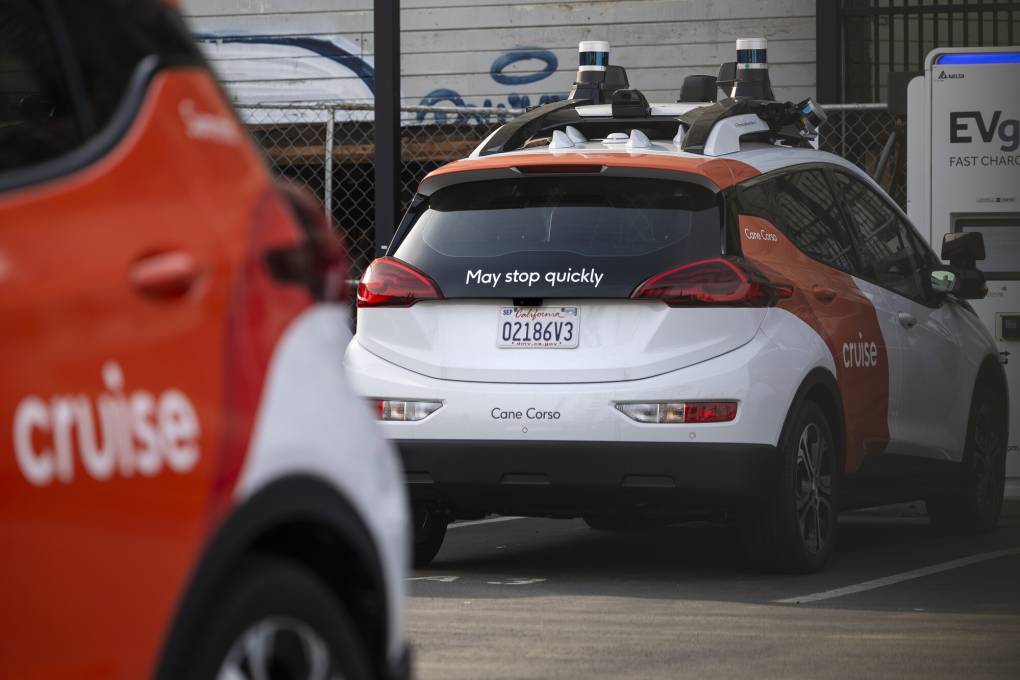
"caption": "Cruise cars parked in a lot on 16th Street in San Francisco on Dec. 14, 2023.",
"credit": "Martin do Nascimento/KQED",
"altTag": null,
"description": null,
"imgSizes": {
"medium": {
"file": "https://cdn.kqed.org/wp-content/uploads/sites/10/2024/08/231214-CRUISE-MD-06_qed-800x533.jpg",
"width": 800,
"height": 533,
"mimeType": "image/jpeg"
},
"large": {
"file": "https://cdn.kqed.org/wp-content/uploads/sites/10/2024/08/231214-CRUISE-MD-06_qed-1020x680.jpg",
"width": 1020,
"height": 680,
"mimeType": "image/jpeg"
},
"thumbnail": {
"file": "https://cdn.kqed.org/wp-content/uploads/sites/10/2024/08/231214-CRUISE-MD-06_qed-160x107.jpg",
"width": 160,
"height": 107,
"mimeType": "image/jpeg"
},
"1536x1536": {
"file": "https://cdn.kqed.org/wp-content/uploads/sites/10/2024/08/231214-CRUISE-MD-06_qed-1536x1024.jpg",
"width": 1536,
"height": 1024,
"mimeType": "image/jpeg"
},
"post-thumbnail": {
"file": "https://cdn.kqed.org/wp-content/uploads/sites/10/2024/08/231214-CRUISE-MD-06_qed-672x372.jpg",
"width": 672,
"height": 372,
"mimeType": "image/jpeg"
},
"twentyfourteen-full-width": {
"file": "https://cdn.kqed.org/wp-content/uploads/sites/10/2024/08/231214-CRUISE-MD-06_qed-1038x576.jpg",
"width": 1038,
"height": 576,
"mimeType": "image/jpeg"
},
"full-width": {
"file": "https://cdn.kqed.org/wp-content/uploads/sites/10/2024/08/231214-CRUISE-MD-06_qed-1920x1280.jpg",
"width": 1920,
"height": 1280,
"mimeType": "image/jpeg"
},
"kqedFullSize": {
"file": "https://cdn.kqed.org/wp-content/uploads/sites/10/2024/08/231214-CRUISE-MD-06_qed.jpg",
"width": 1999,
"height": 1333
}
},
"isLoading": false,
"fetchFailed": false
},
"news_12001174": {
"type": "attachments",
"id": "news_12001174",
"meta": {
"index": "attachments_1716263798",
"site": "news",
"id": "12001174",
"found": true
},
"title": "Colombian Police Capture 52 Allegedly Involved In Drug Trafficking Financing",
"publishDate": 1724269260,
"status": "inherit",
"parent": 12001172,
"modified": 1724269515,
"caption": "Federal prosecutors have charged a man for allegedly breaking into an FBI vehicle on Aug. 7, 2024, in San Francisco’s South of Market neighborhood and stealing two dozen flash-bang grenades, a ballistic vest, a gas deployment gun and surveillance equipment.",
"credit": "Sebastian Barros/NurPhoto via Getty Images",
"altTag": null,
"description": null,
"imgSizes": {
"medium": {
"file": "https://cdn.kqed.org/wp-content/uploads/sites/10/2024/08/FBIJacketGetty1-800x532.jpg",
"width": 800,
"height": 532,
"mimeType": "image/jpeg"
},
"large": {
"file": "https://cdn.kqed.org/wp-content/uploads/sites/10/2024/08/FBIJacketGetty1-1020x678.jpg",
"width": 1020,
"height": 678,
"mimeType": "image/jpeg"
},
"thumbnail": {
"file": "https://cdn.kqed.org/wp-content/uploads/sites/10/2024/08/FBIJacketGetty1-160x106.jpg",
"width": 160,
"height": 106,
"mimeType": "image/jpeg"
},
"1536x1536": {
"file": "https://cdn.kqed.org/wp-content/uploads/sites/10/2024/08/FBIJacketGetty1-1536x1021.jpg",
"width": 1536,
"height": 1021,
"mimeType": "image/jpeg"
},
"post-thumbnail": {
"file": "https://cdn.kqed.org/wp-content/uploads/sites/10/2024/08/FBIJacketGetty1-672x372.jpg",
"width": 672,
"height": 372,
"mimeType": "image/jpeg"
},
"twentyfourteen-full-width": {
"file": "https://cdn.kqed.org/wp-content/uploads/sites/10/2024/08/FBIJacketGetty1-1038x576.jpg",
"width": 1038,
"height": 576,
"mimeType": "image/jpeg"
},
"full-width": {
"file": "https://cdn.kqed.org/wp-content/uploads/sites/10/2024/08/FBIJacketGetty1-1920x1277.jpg",
"width": 1920,
"height": 1277,
"mimeType": "image/jpeg"
},
"kqedFullSize": {
"file": "https://cdn.kqed.org/wp-content/uploads/sites/10/2024/08/FBIJacketGetty1.jpg",
"width": 2000,
"height": 1330
}
},
"isLoading": false,
"fetchFailed": false
},
"news_11996849": {
"type": "attachments",
"id": "news_11996849",
"meta": {
"index": "attachments_1716263798",
"site": "news",
"id": "11996849",
"found": true
},
"title": "San Francisco Ballot Initiative Calls For Legalizing Prostitution",
"publishDate": 1721692206,
"status": "inherit",
"parent": 0,
"modified": 1724189933,
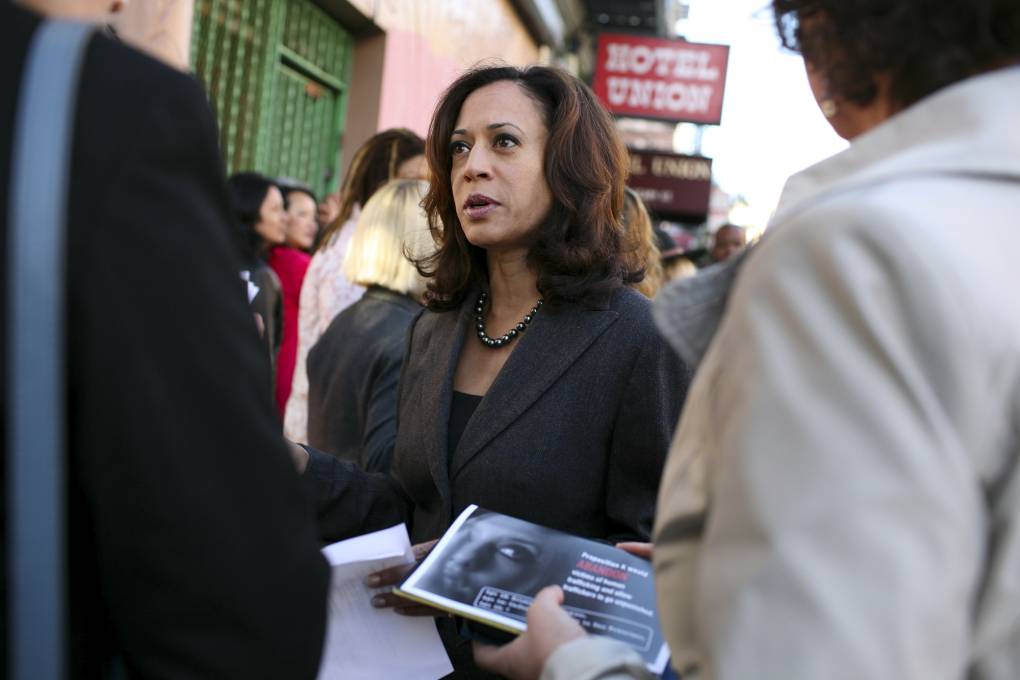
"caption": "Then San Francisco District Attorney Kamala Harris speaks to supporters before a press conference in San Francisco on Oct. 29, 2008. ",
"credit": "Justin Sullivan/Getty Images",
"altTag": null,
"description": null,
"imgSizes": {
"medium": {
"file": "https://cdn.kqed.org/wp-content/uploads/sites/10/2024/07/GETTYIMAGES-83480574-KQED-800x533.jpg",
"width": 800,
"height": 533,
"mimeType": "image/jpeg"
},
"large": {
"file": "https://cdn.kqed.org/wp-content/uploads/sites/10/2024/07/GETTYIMAGES-83480574-KQED-1020x680.jpg",
"width": 1020,
"height": 680,
"mimeType": "image/jpeg"
},
"thumbnail": {
"file": "https://cdn.kqed.org/wp-content/uploads/sites/10/2024/07/GETTYIMAGES-83480574-KQED-160x107.jpg",
"width": 160,
"height": 107,
"mimeType": "image/jpeg"
},
"1536x1536": {
"file": "https://cdn.kqed.org/wp-content/uploads/sites/10/2024/07/GETTYIMAGES-83480574-KQED-1536x1024.jpg",
"width": 1536,
"height": 1024,
"mimeType": "image/jpeg"
},
"post-thumbnail": {
"file": "https://cdn.kqed.org/wp-content/uploads/sites/10/2024/07/GETTYIMAGES-83480574-KQED-672x372.jpg",
"width": 672,
"height": 372,
"mimeType": "image/jpeg"
},
"twentyfourteen-full-width": {
"file": "https://cdn.kqed.org/wp-content/uploads/sites/10/2024/07/GETTYIMAGES-83480574-KQED-1038x576.jpg",
"width": 1038,
"height": 576,
"mimeType": "image/jpeg"
},
"full-width": {
"file": "https://cdn.kqed.org/wp-content/uploads/sites/10/2024/07/GETTYIMAGES-83480574-KQED-1920x1280.jpg",
"width": 1920,
"height": 1280,
"mimeType": "image/jpeg"
},
"kqedFullSize": {
"file": "https://cdn.kqed.org/wp-content/uploads/sites/10/2024/07/GETTYIMAGES-83480574-KQED.jpg",
"width": 2000,
"height": 1333
}
},
"isLoading": false,
"fetchFailed": false
},
"news_12000943": {
"type": "attachments",
"id": "news_12000943",
"meta": {
"index": "attachments_1716263798",
"site": "news",
"id": "12000943",
"found": true
},
"title": "240406-PeskinCampaignKickoff-038-BL_qed",
"publishDate": 1724181558,
"status": "inherit",
"parent": 12000938,
"modified": 1724181594,
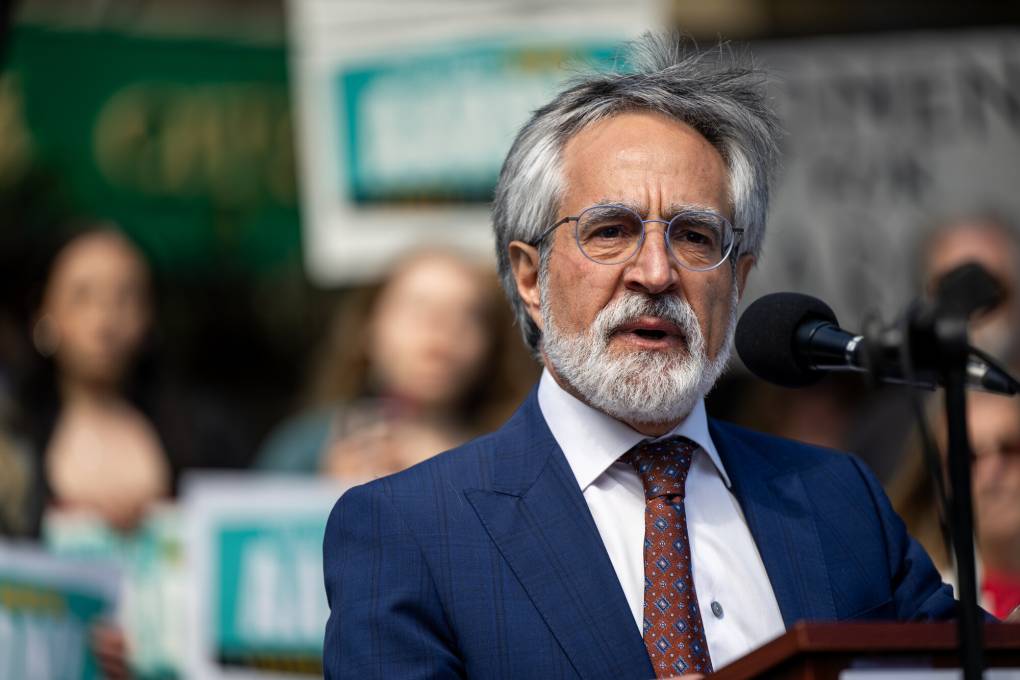
"caption": "Board of Supervisors president Aaron Peskin speaks during a rally to announce his campaign for mayor of San Francisco in Chinatown’s Portsmouth Square in San Francisco on April 6, 2024.",
"credit": "Beth LaBerge/KQED",
"altTag": null,
"description": null,
"imgSizes": {
"medium": {
"file": "https://cdn.kqed.org/wp-content/uploads/sites/10/2024/08/240406-PeskinCampaignKickoff-038-BL_qed-800x533.jpg",
"width": 800,
"height": 533,
"mimeType": "image/jpeg"
},
"large": {
"file": "https://cdn.kqed.org/wp-content/uploads/sites/10/2024/08/240406-PeskinCampaignKickoff-038-BL_qed-1020x680.jpg",
"width": 1020,
"height": 680,
"mimeType": "image/jpeg"
},
"thumbnail": {
"file": "https://cdn.kqed.org/wp-content/uploads/sites/10/2024/08/240406-PeskinCampaignKickoff-038-BL_qed-160x107.jpg",
"width": 160,
"height": 107,
"mimeType": "image/jpeg"
},
"1536x1536": {
"file": "https://cdn.kqed.org/wp-content/uploads/sites/10/2024/08/240406-PeskinCampaignKickoff-038-BL_qed-1536x1024.jpg",
"width": 1536,
"height": 1024,
"mimeType": "image/jpeg"
},
"post-thumbnail": {
"file": "https://cdn.kqed.org/wp-content/uploads/sites/10/2024/08/240406-PeskinCampaignKickoff-038-BL_qed-672x372.jpg",
"width": 672,
"height": 372,
"mimeType": "image/jpeg"
},
"twentyfourteen-full-width": {
"file": "https://cdn.kqed.org/wp-content/uploads/sites/10/2024/08/240406-PeskinCampaignKickoff-038-BL_qed-1038x576.jpg",
"width": 1038,
"height": 576,
"mimeType": "image/jpeg"
},
"full-width": {
"file": "https://cdn.kqed.org/wp-content/uploads/sites/10/2024/08/240406-PeskinCampaignKickoff-038-BL_qed-1920x1280.jpg",
"width": 1920,
"height": 1280,
"mimeType": "image/jpeg"
},
"kqedFullSize": {
"file": "https://cdn.kqed.org/wp-content/uploads/sites/10/2024/08/240406-PeskinCampaignKickoff-038-BL_qed.jpg",
"width": 2000,
"height": 1333
}
},
"isLoading": false,
"fetchFailed": false
},
"news_12000887": {
"type": "attachments",
"id": "news_12000887",
"meta": {
"index": "attachments_1716263798",
"site": "news",
"id": "12000887",
"found": true
},
"title": "240415-880GazaProtest-020-BL_qed",
"publishDate": 1724174222,
"status": "inherit",
"parent": 12000881,
"modified": 1729648414,
"caption": "Demonstrators shut down the southbound lanes of I-880 on the morning of April 15, 2024, in West Oakland. The protesters, engaging in an economic blockade in solidarity with Palestine, marched from the West Oakland BART Station to the freeway.",
"credit": "Beth LaBerge/KQED",
"altTag": null,
"description": null,
"imgSizes": {
"medium": {
"file": "https://cdn.kqed.org/wp-content/uploads/sites/10/2024/08/240415-880GazaProtest-020-BL_qed-800x533.jpg",
"width": 800,
"height": 533,
"mimeType": "image/jpeg"
},
"large": {
"file": "https://cdn.kqed.org/wp-content/uploads/sites/10/2024/08/240415-880GazaProtest-020-BL_qed-1020x680.jpg",
"width": 1020,
"height": 680,
"mimeType": "image/jpeg"
},
"thumbnail": {
"file": "https://cdn.kqed.org/wp-content/uploads/sites/10/2024/08/240415-880GazaProtest-020-BL_qed-160x107.jpg",
"width": 160,
"height": 107,
"mimeType": "image/jpeg"
},
"1536x1536": {
"file": "https://cdn.kqed.org/wp-content/uploads/sites/10/2024/08/240415-880GazaProtest-020-BL_qed-1536x1024.jpg",
"width": 1536,
"height": 1024,
"mimeType": "image/jpeg"
},
"post-thumbnail": {
"file": "https://cdn.kqed.org/wp-content/uploads/sites/10/2024/08/240415-880GazaProtest-020-BL_qed-672x372.jpg",
"width": 672,
"height": 372,
"mimeType": "image/jpeg"
},
"twentyfourteen-full-width": {
"file": "https://cdn.kqed.org/wp-content/uploads/sites/10/2024/08/240415-880GazaProtest-020-BL_qed-1038x576.jpg",
"width": 1038,
"height": 576,
"mimeType": "image/jpeg"
},
"full-width": {
"file": "https://cdn.kqed.org/wp-content/uploads/sites/10/2024/08/240415-880GazaProtest-020-BL_qed-1920x1280.jpg",
"width": 1920,
"height": 1280,
"mimeType": "image/jpeg"
},
"kqedFullSize": {
"file": "https://cdn.kqed.org/wp-content/uploads/sites/10/2024/08/240415-880GazaProtest-020-BL_qed.jpg",
"width": 2000,
"height": 1333
}
},
"isLoading": false,
"fetchFailed": false
},
"news_12000872": {
"type": "attachments",
"id": "news_12000872",
"meta": {
"index": "attachments_1716263798",
"site": "news",
"id": "12000872",
"found": true
},
"title": "240819-DNCWATCHPARTY-04-BL-KQED",
"publishDate": 1724170987,
"status": "inherit",
"parent": 0,
"modified": 1724171012,
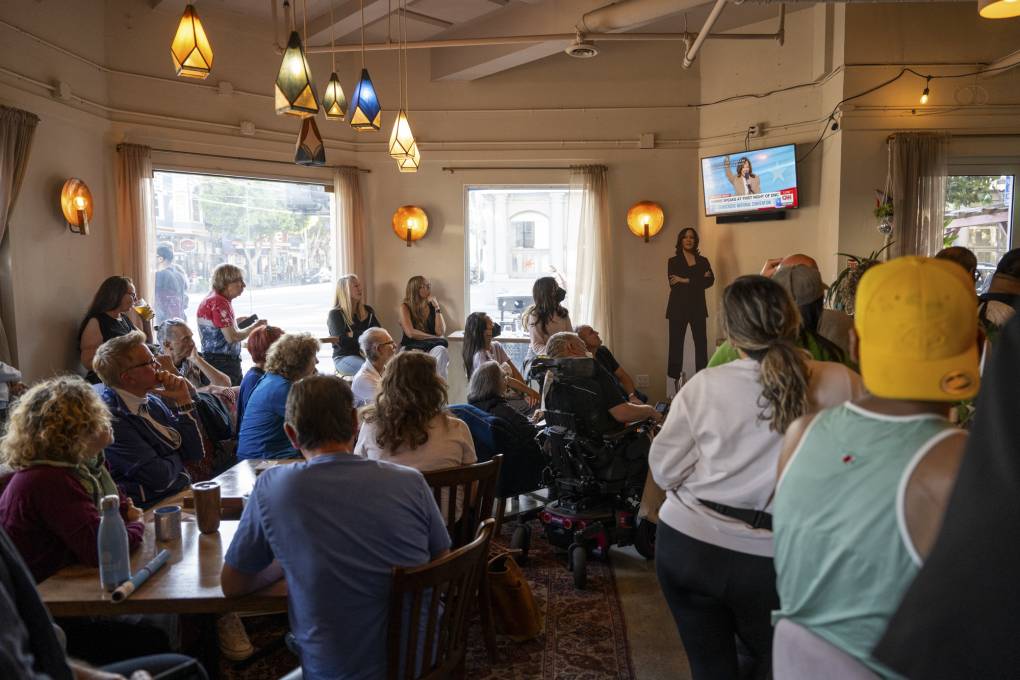
"caption": "A crowd watches Vice President Kamala Harris speak during the first night of the Democratic National Convention from a watch party at Manny's in San Francisco on Aug. 19, 2024.",
"credit": "Beth LaBerge/KQED",
"altTag": null,
"description": null,
"imgSizes": {
"medium": {
"file": "https://cdn.kqed.org/wp-content/uploads/sites/10/2024/08/240819-DNCWATCHPARTY-04-BL-KQED-800x533.jpg",
"width": 800,
"height": 533,
"mimeType": "image/jpeg"
},
"large": {
"file": "https://cdn.kqed.org/wp-content/uploads/sites/10/2024/08/240819-DNCWATCHPARTY-04-BL-KQED-1020x680.jpg",
"width": 1020,
"height": 680,
"mimeType": "image/jpeg"
},
"thumbnail": {
"file": "https://cdn.kqed.org/wp-content/uploads/sites/10/2024/08/240819-DNCWATCHPARTY-04-BL-KQED-160x107.jpg",
"width": 160,
"height": 107,
"mimeType": "image/jpeg"
},
"1536x1536": {
"file": "https://cdn.kqed.org/wp-content/uploads/sites/10/2024/08/240819-DNCWATCHPARTY-04-BL-KQED-1536x1024.jpg",
"width": 1536,
"height": 1024,
"mimeType": "image/jpeg"
},
"post-thumbnail": {
"file": "https://cdn.kqed.org/wp-content/uploads/sites/10/2024/08/240819-DNCWATCHPARTY-04-BL-KQED-672x372.jpg",
"width": 672,
"height": 372,
"mimeType": "image/jpeg"
},
"twentyfourteen-full-width": {
"file": "https://cdn.kqed.org/wp-content/uploads/sites/10/2024/08/240819-DNCWATCHPARTY-04-BL-KQED-1038x576.jpg",
"width": 1038,
"height": 576,
"mimeType": "image/jpeg"
},
"full-width": {
"file": "https://cdn.kqed.org/wp-content/uploads/sites/10/2024/08/240819-DNCWATCHPARTY-04-BL-KQED-1920x1280.jpg",
"width": 1920,
"height": 1280,
"mimeType": "image/jpeg"
},
"kqedFullSize": {
"file": "https://cdn.kqed.org/wp-content/uploads/sites/10/2024/08/240819-DNCWATCHPARTY-04-BL-KQED.jpg",
"width": 2000,
"height": 1333
}
},
"isLoading": false,
"fetchFailed": false
},
"news_11998743": {
"type": "attachments",
"id": "news_11998743",
"meta": {
"index": "attachments_1716263798",
"site": "news",
"id": "11998743",
"found": true
},
"title": "240801-ENCAMPMENT SWEEPS-MD-03-KQED",
"publishDate": 1722690633,
"status": "inherit",
"parent": 12000606,
"modified": 1723850346,
"caption": "Alex Vallardo ties his belongings to a wagon as he prepares to relocate before the sweep team arrives.",
"credit": "Martin do Nascimento/KQED",
"altTag": null,
"description": null,
"imgSizes": {
"medium": {
"file": "https://cdn.kqed.org/wp-content/uploads/sites/10/2024/08/240801-ENCAMPMENT-SWEEPS-MD-03-KQED-800x533.jpg",
"width": 800,
"height": 533,
"mimeType": "image/jpeg"
},
"large": {
"file": "https://cdn.kqed.org/wp-content/uploads/sites/10/2024/08/240801-ENCAMPMENT-SWEEPS-MD-03-KQED-1020x680.jpg",
"width": 1020,
"height": 680,
"mimeType": "image/jpeg"
},
"thumbnail": {
"file": "https://cdn.kqed.org/wp-content/uploads/sites/10/2024/08/240801-ENCAMPMENT-SWEEPS-MD-03-KQED-160x107.jpg",
"width": 160,
"height": 107,
"mimeType": "image/jpeg"
},
"1536x1536": {
"file": "https://cdn.kqed.org/wp-content/uploads/sites/10/2024/08/240801-ENCAMPMENT-SWEEPS-MD-03-KQED-1536x1024.jpg",
"width": 1536,
"height": 1024,
"mimeType": "image/jpeg"
},
"post-thumbnail": {
"file": "https://cdn.kqed.org/wp-content/uploads/sites/10/2024/08/240801-ENCAMPMENT-SWEEPS-MD-03-KQED-672x372.jpg",
"width": 672,
"height": 372,
"mimeType": "image/jpeg"
},
"twentyfourteen-full-width": {
"file": "https://cdn.kqed.org/wp-content/uploads/sites/10/2024/08/240801-ENCAMPMENT-SWEEPS-MD-03-KQED-1038x576.jpg",
"width": 1038,
"height": 576,
"mimeType": "image/jpeg"
},
"full-width": {
"file": "https://cdn.kqed.org/wp-content/uploads/sites/10/2024/08/240801-ENCAMPMENT-SWEEPS-MD-03-KQED-1920x1280.jpg",
"width": 1920,
"height": 1280,
"mimeType": "image/jpeg"
},
"kqedFullSize": {
"file": "https://cdn.kqed.org/wp-content/uploads/sites/10/2024/08/240801-ENCAMPMENT-SWEEPS-MD-03-KQED.jpg",
"width": 2000,
"height": 1333
}
},
"isLoading": false,
"fetchFailed": false
},
"news_11942385": {
"type": "attachments",
"id": "news_11942385",
"meta": {
"index": "attachments_1716263798",
"site": "news",
"id": "11942385",
"found": true
},
"title": "010_KQED_SFUSDSchoolBus_03022023",
"publishDate": 1677802386,
"status": "inherit",
"parent": 11942379,
"modified": 1771453781,
"caption": "A school bus is parked outside Buena Vista Horace Mann K–8, part of the San Francisco Unified School District, in San Francisco on March 2, 2023. ",
"credit": "Beth LaBerge/KQED",
"altTag": "A school bus parked on a street next to a sign that reads \"school bus loading zone.\"",
"description": null,
"imgSizes": {
"medium": {
"file": "https://cdn.kqed.org/wp-content/uploads/sites/10/2023/03/010_KQED_SFUSDSchoolBus_03022023-800x533.jpg",
"width": 800,
"height": 533,
"mimeType": "image/jpeg"
},
"large": {
"file": "https://cdn.kqed.org/wp-content/uploads/sites/10/2023/03/010_KQED_SFUSDSchoolBus_03022023-1020x680.jpg",
"width": 1020,
"height": 680,
"mimeType": "image/jpeg"
},
"thumbnail": {
"file": "https://cdn.kqed.org/wp-content/uploads/sites/10/2023/03/010_KQED_SFUSDSchoolBus_03022023-160x107.jpg",
"width": 160,
"height": 107,
"mimeType": "image/jpeg"
},
"1536x1536": {
"file": "https://cdn.kqed.org/wp-content/uploads/sites/10/2023/03/010_KQED_SFUSDSchoolBus_03022023-1536x1024.jpg",
"width": 1536,
"height": 1024,
"mimeType": "image/jpeg"
},
"post-thumbnail": {
"file": "https://cdn.kqed.org/wp-content/uploads/sites/10/2023/03/010_KQED_SFUSDSchoolBus_03022023-672x372.jpg",
"width": 672,
"height": 372,
"mimeType": "image/jpeg"
},
"twentyfourteen-full-width": {
"file": "https://cdn.kqed.org/wp-content/uploads/sites/10/2023/03/010_KQED_SFUSDSchoolBus_03022023-1038x576.jpg",
"width": 1038,
"height": 576,
"mimeType": "image/jpeg"
},
"kqedFullSize": {
"file": "https://cdn.kqed.org/wp-content/uploads/sites/10/2023/03/010_KQED_SFUSDSchoolBus_03022023.jpg",
"width": 1920,
"height": 1280
}
},
"isLoading": false,
"fetchFailed": false
},
"news_11998571": {
"type": "attachments",
"id": "news_11998571",
"meta": {
"index": "attachments_1716263798",
"site": "news",
"id": "11998571",
"found": true
},
"title": "240801-ENCAMPMENT SWEEPS-MD-02-KQED",
"publishDate": 1722601919,
"status": "inherit",
"parent": 12000938,
"modified": 1732740082,
"caption": "An unhoused man relocates his belongings to a new site in anticipation of an encampment sweep by San Francisco's Department of Public Works near Showplace Square in San Francisco on Aug. 1, 2024.",
"credit": "Martin do Nascimento/KQED",
"altTag": "A person wearing black moves a shopping cart full of belongings.",
"description": null,
"imgSizes": {
"medium": {
"file": "https://cdn.kqed.org/wp-content/uploads/sites/10/2024/08/240801-ENCAMPMENT-SWEEPS-MD-02-KQED-800x533.jpg",
"width": 800,
"height": 533,
"mimeType": "image/jpeg"
},
"large": {
"file": "https://cdn.kqed.org/wp-content/uploads/sites/10/2024/08/240801-ENCAMPMENT-SWEEPS-MD-02-KQED-1020x680.jpg",
"width": 1020,
"height": 680,
"mimeType": "image/jpeg"
},
"thumbnail": {
"file": "https://cdn.kqed.org/wp-content/uploads/sites/10/2024/08/240801-ENCAMPMENT-SWEEPS-MD-02-KQED-160x107.jpg",
"width": 160,
"height": 107,
"mimeType": "image/jpeg"
},
"1536x1536": {
"file": "https://cdn.kqed.org/wp-content/uploads/sites/10/2024/08/240801-ENCAMPMENT-SWEEPS-MD-02-KQED-1536x1024.jpg",
"width": 1536,
"height": 1024,
"mimeType": "image/jpeg"
},
"post-thumbnail": {
"file": "https://cdn.kqed.org/wp-content/uploads/sites/10/2024/08/240801-ENCAMPMENT-SWEEPS-MD-02-KQED-672x372.jpg",
"width": 672,
"height": 372,
"mimeType": "image/jpeg"
},
"twentyfourteen-full-width": {
"file": "https://cdn.kqed.org/wp-content/uploads/sites/10/2024/08/240801-ENCAMPMENT-SWEEPS-MD-02-KQED-1038x576.jpg",
"width": 1038,
"height": 576,
"mimeType": "image/jpeg"
},
"full-width": {
"file": "https://cdn.kqed.org/wp-content/uploads/sites/10/2024/08/240801-ENCAMPMENT-SWEEPS-MD-02-KQED-1920x1280.jpg",
"width": 1920,
"height": 1280,
"mimeType": "image/jpeg"
},
"kqedFullSize": {
"file": "https://cdn.kqed.org/wp-content/uploads/sites/10/2024/08/240801-ENCAMPMENT-SWEEPS-MD-02-KQED.jpg?ver=1722631109",
"width": 2000,
"height": 1333
}
},
"isLoading": false,
"fetchFailed": false
},
"news_12000524": {
"type": "attachments",
"id": "news_12000524",
"meta": {
"index": "attachments_1716263798",
"site": "news",
"id": "12000524",
"found": true
},
"title": "California-Homeless",
"publishDate": 1723830664,
"status": "inherit",
"parent": 12000513,
"modified": 1723833367,
"caption": "California Gov. Gavin Newsom greets people on July 8, 2024, near the Common Man Roadside Market and Deli in Hooksett, New Hampshire. Newsom issued an executive order Thursday, July 25, to remove homeless encampments in his state.",
"credit": "Steven Senne/AP Photo",
"altTag": null,
"description": null,
"imgSizes": {
"medium": {
"file": "https://cdn.kqed.org/wp-content/uploads/sites/10/2024/08/AP24207558088069-800x533.jpg",
"width": 800,
"height": 533,
"mimeType": "image/jpeg"
},
"large": {
"file": "https://cdn.kqed.org/wp-content/uploads/sites/10/2024/08/AP24207558088069-1020x680.jpg",
"width": 1020,
"height": 680,
"mimeType": "image/jpeg"
},
"thumbnail": {
"file": "https://cdn.kqed.org/wp-content/uploads/sites/10/2024/08/AP24207558088069-160x107.jpg",
"width": 160,
"height": 107,
"mimeType": "image/jpeg"
},
"1536x1536": {
"file": "https://cdn.kqed.org/wp-content/uploads/sites/10/2024/08/AP24207558088069-1536x1024.jpg",
"width": 1536,
"height": 1024,
"mimeType": "image/jpeg"
},
"post-thumbnail": {
"file": "https://cdn.kqed.org/wp-content/uploads/sites/10/2024/08/AP24207558088069-672x372.jpg",
"width": 672,
"height": 372,
"mimeType": "image/jpeg"
},
"twentyfourteen-full-width": {
"file": "https://cdn.kqed.org/wp-content/uploads/sites/10/2024/08/AP24207558088069-1038x576.jpg",
"width": 1038,
"height": 576,
"mimeType": "image/jpeg"
},
"full-width": {
"file": "https://cdn.kqed.org/wp-content/uploads/sites/10/2024/08/AP24207558088069-1920x1280.jpg",
"width": 1920,
"height": 1280,
"mimeType": "image/jpeg"
},
"kqedFullSize": {
"file": "https://cdn.kqed.org/wp-content/uploads/sites/10/2024/08/AP24207558088069.jpg",
"width": 2000,
"height": 1333
}
},
"isLoading": false,
"fetchFailed": false
},
"news_11996247": {
"type": "attachments",
"id": "news_11996247",
"meta": {
"index": "attachments_1716263798",
"site": "news",
"id": "11996247",
"found": true
},
"title": "SFMayoralDebate2",
"publishDate": 1721326821,
"status": "inherit",
"parent": 11996234,
"modified": 1721344064,
"caption": "Mayoral candidates face off at a San Francisco Fire Fighters union debate on Thursday, July 8. Left to right: Ahsha Safaí, Mark Farrell, London Breed, Aaron Peskin and Daniel Lurie.",
"credit": "Sydney Johnson/KQED",
"altTag": null,
"description": null,
"imgSizes": {
"medium": {
"file": "https://cdn.kqed.org/wp-content/uploads/sites/10/2024/07/SFMayoralDebate2-800x600.jpg",
"width": 800,
"height": 600,
"mimeType": "image/jpeg"
},
"large": {
"file": "https://cdn.kqed.org/wp-content/uploads/sites/10/2024/07/SFMayoralDebate2-1020x765.jpg",
"width": 1020,
"height": 765,
"mimeType": "image/jpeg"
},
"thumbnail": {
"file": "https://cdn.kqed.org/wp-content/uploads/sites/10/2024/07/SFMayoralDebate2-160x120.jpg",
"width": 160,
"height": 120,
"mimeType": "image/jpeg"
},
"1536x1536": {
"file": "https://cdn.kqed.org/wp-content/uploads/sites/10/2024/07/SFMayoralDebate2-1536x1152.jpg",
"width": 1536,
"height": 1152,
"mimeType": "image/jpeg"
},
"post-thumbnail": {
"file": "https://cdn.kqed.org/wp-content/uploads/sites/10/2024/07/SFMayoralDebate2-672x372.jpg",
"width": 672,
"height": 372,
"mimeType": "image/jpeg"
},
"twentyfourteen-full-width": {
"file": "https://cdn.kqed.org/wp-content/uploads/sites/10/2024/07/SFMayoralDebate2-1038x576.jpg",
"width": 1038,
"height": 576,
"mimeType": "image/jpeg"
},
"full-width": {
"file": "https://cdn.kqed.org/wp-content/uploads/sites/10/2024/07/SFMayoralDebate2-1920x1440.jpg",
"width": 1920,
"height": 1440,
"mimeType": "image/jpeg"
},
"kqedFullSize": {
"file": "https://cdn.kqed.org/wp-content/uploads/sites/10/2024/07/SFMayoralDebate2.jpg",
"width": 2000,
"height": 1500
}
},
"isLoading": false,
"fetchFailed": false
}
},
"audioPlayerReducer": {
"postId": "stream_live",
"isPaused": true,
"isPlaying": false,
"pfsActive": false,
"pledgeModalIsOpen": true,
"playerDrawerIsOpen": false,
"liveAudioPlayStartedAt": 0,
"liveAudioPlayContext": ""
},
"authorsReducer": {
"gmarzorati": {
"type": "authors",
"id": "227",
"meta": {
"index": "authors_1716337520",
"id": "227",
"found": true
},
"name": "Guy Marzorati",
"firstName": "Guy",
"lastName": "Marzorati",
"slug": "gmarzorati",
"email": "gmarzorati@KQED.org",
"display_author_email": true,
"staff_mastheads": [
"news"
],
"title": "Correspondent",
"bio": "Guy Marzorati is a correspondent on KQED's California Politics and Government Desk, based in San Jose. A graduate of Santa Clara University, Guy joined KQED in 2013. He reports on state and local politics and produces KQED's digital voter guide.",
"avatar": "https://secure.gravatar.com/avatar/e7038b8dbfd55b104369b76b1cd0b9de?s=600&d=blank&r=g",
"twitter": "guymarzorati",
"facebook": null,
"instagram": null,
"linkedin": null,
"sites": [
{
"site": "",
"roles": [
"editor"
]
},
{
"site": "news",
"roles": [
"editor"
]
},
{
"site": "science",
"roles": [
"editor"
]
},
{
"site": "forum",
"roles": [
"editor"
]
},
{
"site": "elections",
"roles": [
"editor"
]
},
{
"site": "liveblog",
"roles": [
"editor"
]
}
],
"headData": {
"title": "Guy Marzorati | KQED",
"description": "Correspondent",
"ogImgSrc": "https://secure.gravatar.com/avatar/e7038b8dbfd55b104369b76b1cd0b9de?s=600&d=blank&r=g",
"twImgSrc": "https://secure.gravatar.com/avatar/e7038b8dbfd55b104369b76b1cd0b9de?s=600&d=blank&r=g"
},
"isLoading": false,
"link": "/author/gmarzorati"
},
"scottshafer": {
"type": "authors",
"id": "255",
"meta": {
"index": "authors_1716337520",
"id": "255",
"found": true
},
"name": "Scott Shafer",
"firstName": "Scott",
"lastName": "Shafer",
"slug": "scottshafer",
"email": "sshafer@kqed.org",
"display_author_email": false,
"staff_mastheads": [
"news"
],
"title": "KQED Contributor",
"bio": "Scott Shafer is a senior editor with the KQED Politics and Government desk. He is co-host of Political Breakdown, the award-winning radio show and podcast with a personal take on the world of politics. Scott came to KQED in 1998 to host the statewide\u003cem> California Report\u003c/em>. Prior to that he had extended stints in politics and government\u003cem>.\u003c/em> He uses that inside experience at KQED in his, reporting, hosting and analysis for the politics desk. Scott collaborated \u003cem>Political Breakdown a\u003c/em>nd on \u003cem>The Political Mind of Jerry Brown, \u003c/em>an eight-part series about the life and extraordinary political career of the former governor. For fun, he plays water polo with the San Francisco Tsunami.",
"avatar": "https://secure.gravatar.com/avatar/a62ebae45b79d7aed1a39a0e3bf68104?s=600&d=blank&r=g",
"twitter": "scottshafer",
"bluesky": null,
"facebook": null,
"instagram": null,
"linkedin": null,
"sites": [
{
"site": "news",
"roles": [
"editor"
]
},
{
"site": "stateofhealth",
"roles": [
"author"
]
},
{
"site": "science",
"roles": [
"author"
]
},
{
"site": "forum",
"roles": [
"subscriber"
]
},
{
"site": "liveblog",
"roles": [
"author"
]
}
],
"headData": {
"title": "Scott Shafer | KQED",
"description": "KQED Contributor",
"ogImgSrc": "https://secure.gravatar.com/avatar/a62ebae45b79d7aed1a39a0e3bf68104?s=600&d=blank&r=g",
"twImgSrc": "https://secure.gravatar.com/avatar/a62ebae45b79d7aed1a39a0e3bf68104?s=600&d=blank&r=g"
},
"isLoading": false,
"link": "/author/scottshafer"
},
"mlagos": {
"type": "authors",
"id": "3239",
"meta": {
"index": "authors_1716337520",
"id": "3239",
"found": true
},
"name": "Marisa Lagos",
"firstName": "Marisa",
"lastName": "Lagos",
"slug": "mlagos",
"email": "mlagos@kqed.org",
"display_author_email": false,
"staff_mastheads": [
"news"
],
"title": "KQED Contributor",
"bio": "Marisa Lagos is a correspondent for KQED’s California Politics and Government Desk and co-hosts the award-winning show and podcast, Political Breakdown. At KQED, Lagos also conducts reporting, analysis and investigations into state, local and national politics for radio, TV, online and onstage. In 2022, she and co-host, Scott Shafer, moderated the only gubernatorial debate in California. In 2020, the \u003ci>Washington Post\u003c/i> named her one of the top political journalists in California; she was nominated for a Peabody and won several other awards for her work investigating the 2017 California wildfires. She has worked at the \u003ci>San Francisco Chronicle\u003c/i>, \u003ci>San Francisco Examiner\u003c/i> and \u003ci>Los Angeles Times\u003c/i>. A UC Santa Barbara graduate, she lives in San Francisco with her two sons and husband.",
"avatar": "https://secure.gravatar.com/avatar/a261a0d3696fc066871ef96b85b5e7d2?s=600&d=blank&r=g",
"twitter": "@mlagos",
"facebook": null,
"instagram": null,
"linkedin": null,
"sites": [
{
"site": "arts",
"roles": [
"author"
]
},
{
"site": "news",
"roles": [
"editor"
]
},
{
"site": "science",
"roles": [
"editor"
]
},
{
"site": "forum",
"roles": [
"author"
]
},
{
"site": "liveblog",
"roles": [
"author"
]
}
],
"headData": {
"title": "Marisa Lagos | KQED",
"description": "KQED Contributor",
"ogImgSrc": "https://secure.gravatar.com/avatar/a261a0d3696fc066871ef96b85b5e7d2?s=600&d=blank&r=g",
"twImgSrc": "https://secure.gravatar.com/avatar/a261a0d3696fc066871ef96b85b5e7d2?s=600&d=blank&r=g"
},
"isLoading": false,
"link": "/author/mlagos"
},
"vrancano": {
"type": "authors",
"id": "11276",
"meta": {
"index": "authors_1716337520",
"id": "11276",
"found": true
},
"name": "Vanessa Rancaño",
"firstName": "Vanessa",
"lastName": "Rancaño",
"slug": "vrancano",
"email": "vrancano@kqed.org",
"display_author_email": false,
"staff_mastheads": [
"news"
],
"title": "Reporter",
"bio": "Vanessa Rancaño is a features reporter for KQED. She’s also covered homelessness and education for the station and reported from the Central Valley. Her work has aired across public radio, from flagship national news shows to longform narrative podcasts. Before taking up a mic, she worked as a freelance print journalist. She’s been recognized with a number of national and regional awards. Vanessa grew up in California's Central Valley. She's a former NPR Kroc Fellow, and a graduate of the UC Berkeley Graduate School of Journalism.",
"avatar": "https://secure.gravatar.com/avatar/b3a383dfb0e7ee1c17568f2cf067904ab654d6e3de9743fc661f3c788ade1bed?s=600&d=blank&r=g",
"twitter": "vanessarancano",
"bluesky": null,
"facebook": null,
"instagram": null,
"linkedin": null,
"sites": [
{
"site": "arts",
"roles": [
"editor"
]
},
{
"site": "news",
"roles": [
"editor"
]
},
{
"site": "liveblog",
"roles": [
"contributor"
]
}
],
"headData": {
"title": "Vanessa Rancaño | KQED",
"description": "Reporter",
"ogImgSrc": "https://secure.gravatar.com/avatar/b3a383dfb0e7ee1c17568f2cf067904ab654d6e3de9743fc661f3c788ade1bed?s=600&d=blank&r=g",
"twImgSrc": "https://secure.gravatar.com/avatar/b3a383dfb0e7ee1c17568f2cf067904ab654d6e3de9743fc661f3c788ade1bed?s=600&d=blank&r=g"
},
"isLoading": false,
"link": "/author/vrancano"
},
"ahall": {
"type": "authors",
"id": "11490",
"meta": {
"index": "authors_1716337520",
"id": "11490",
"found": true
},
"name": "Alex Hall",
"firstName": "Alex",
"lastName": "Hall",
"slug": "ahall",
"email": "ahall@kqed.org",
"display_author_email": false,
"staff_mastheads": [
"news"
],
"title": "KQED Enterprise & Accountability Reporter",
"bio": "Alex Hall is KQED's Enterprise and Accountability Reporter. She previously covered the Central Valley for five years from KQED's bureau in Fresno. Before joining KQED, Alex was an investigative reporting fellow at Wisconsin Public Radio and the Wisconsin Center for Investigative Journalism. She has also worked as a bilingual producer for NPR's investigative unit and freelance video producer for Reuters TV on the Latin America desk. She got her start in journalism in South America, where she worked as a radio producer and Spanish-English translator for CNN Chile. Her documentary and investigation into the series of deadly COVID-19 outbreaks at Foster Farms won a national Edward R. Murrow award and was named an Investigative Reporters & Editors award finalist. Alex's reporting for Reveal on the Wisconsin dairy industry's reliance on undocumented immigrant labor was made into a film, Los Lecheros, which won a regional Edward R. Murrow award for best news documentary.",
"avatar": "https://secure.gravatar.com/avatar/defcbeb88b0bf591ff9af41f22644051?s=600&d=blank&r=g",
"twitter": "@chalexhall",
"facebook": null,
"instagram": null,
"linkedin": null,
"sites": [
{
"site": "news",
"roles": [
"editor"
]
},
{
"site": "liveblog",
"roles": [
"author"
]
}
],
"headData": {
"title": "Alex Hall | KQED",
"description": "KQED Enterprise & Accountability Reporter",
"ogImgSrc": "https://secure.gravatar.com/avatar/defcbeb88b0bf591ff9af41f22644051?s=600&d=blank&r=g",
"twImgSrc": "https://secure.gravatar.com/avatar/defcbeb88b0bf591ff9af41f22644051?s=600&d=blank&r=g"
},
"isLoading": false,
"link": "/author/ahall"
},
"ebaldassari": {
"type": "authors",
"id": "11652",
"meta": {
"index": "authors_1716337520",
"id": "11652",
"found": true
},
"name": "Erin Baldassari",
"firstName": "Erin",
"lastName": "Baldassari",
"slug": "ebaldassari",
"email": "ebaldassari@KQED.org",
"display_author_email": true,
"staff_mastheads": [
"news"
],
"title": "Staff Writer",
"bio": "Erin Baldassari covers housing for KQED. She's a former print journalist and most recently worked as the transportation reporter for the \u003cem>Mercury News\u003c/em> and \u003cem>East Bay Times. \u003c/em>There, she focused on how the Bay Area’s housing shortage has changed the way people move around the region. She also served on the \u003cem>East Bay Times\u003c/em>’ 2017 Pulitzer Prize-winning team for coverage of the Ghost Ship Fire in Oakland. Prior to that, Erin worked as a breaking news and general assignment reporter for a variety of outlets in the Bay Area and the greater Boston area. A Tufts University alumna, Erin grew up in the foothills of the Sierra Nevada mountains and in Sonoma County. She is a life-long KQED listener.",
"avatar": "https://secure.gravatar.com/avatar/5e95cad64a8ca08288082212e199d2b0cbeb4fd8e8ef5339395f361032bbe005?s=600&d=blank&r=g",
"twitter": "e_baldi",
"bluesky": null,
"facebook": null,
"instagram": null,
"linkedin": null,
"sites": [
{
"site": "news",
"roles": [
"edit_others_posts",
"editor"
]
},
{
"site": "science",
"roles": [
"editor"
]
},
{
"site": "liveblog",
"roles": [
"editor"
]
}
],
"headData": {
"title": "Erin Baldassari | KQED",
"description": "Staff Writer",
"ogImgSrc": "https://secure.gravatar.com/avatar/5e95cad64a8ca08288082212e199d2b0cbeb4fd8e8ef5339395f361032bbe005?s=600&d=blank&r=g",
"twImgSrc": "https://secure.gravatar.com/avatar/5e95cad64a8ca08288082212e199d2b0cbeb4fd8e8ef5339395f361032bbe005?s=600&d=blank&r=g"
},
"isLoading": false,
"link": "/author/ebaldassari"
},
"blaberge": {
"type": "authors",
"id": "11667",
"meta": {
"index": "authors_1716337520",
"id": "11667",
"found": true
},
"name": "Beth LaBerge",
"firstName": "Beth",
"lastName": "LaBerge",
"slug": "blaberge",
"email": "blaberge@KQED.org",
"display_author_email": true,
"staff_mastheads": [
"news"
],
"title": "Photographer, News",
"bio": "Beth LaBerge is a visual journalist for \u003ca href=\"https://www.kqed.org/news\">KQED News\u003c/a>.",
"avatar": "https://secure.gravatar.com/avatar/ce49ecd7a1306685637b45a1f6f5dedfc4ae9481966eb596fea5160466dd6319?s=600&d=blank&r=g",
"twitter": null,
"bluesky": null,
"facebook": null,
"instagram": "https://www.instagram.com/bethlaberge/",
"linkedin": null,
"sites": [
{
"site": "arts",
"roles": [
"editor",
"manage_categories"
]
},
{
"site": "news",
"roles": [
"editor",
"edit_plugins",
"manage_categories"
]
},
{
"site": "science",
"roles": [
"editor",
"contributor",
"author",
"manage_categories"
]
},
{
"site": "perspectives",
"roles": [
"editor"
]
},
{
"site": "liveblog",
"roles": [
"editor"
]
}
],
"headData": {
"title": "Beth LaBerge | KQED",
"description": "Photographer, News",
"ogImgSrc": "https://secure.gravatar.com/avatar/ce49ecd7a1306685637b45a1f6f5dedfc4ae9481966eb596fea5160466dd6319?s=600&d=blank&r=g",
"twImgSrc": "https://secure.gravatar.com/avatar/ce49ecd7a1306685637b45a1f6f5dedfc4ae9481966eb596fea5160466dd6319?s=600&d=blank&r=g"
},
"isLoading": false,
"link": "/author/blaberge"
},
"sjohnson": {
"type": "authors",
"id": "11840",
"meta": {
"index": "authors_1716337520",
"id": "11840",
"found": true
},
"name": "Sydney Johnson",
"firstName": "Sydney",
"lastName": "Johnson",
"slug": "sjohnson",
"email": "sjohnson@kqed.org",
"display_author_email": false,
"staff_mastheads": [
"news"
],
"title": "KQED Reporter",
"bio": "Sydney Johnson is a general assignment reporter at KQED. She previously reported on public health and city government at the San Francisco Examiner, and before that, she covered statewide education policy for EdSource. Her reporting has won multiple local, state and national awards. Sydney is a graduate of the University of California, Berkeley and lives in San Francisco.",
"avatar": "https://secure.gravatar.com/avatar/97855f2719b72ad6190b7c535fe642c8?s=600&d=blank&r=g",
"twitter": "sydneyfjohnson",
"facebook": null,
"instagram": null,
"linkedin": null,
"sites": [
{
"site": "news",
"roles": [
"editor"
]
}
],
"headData": {
"title": "Sydney Johnson | KQED",
"description": "KQED Reporter",
"ogImgSrc": "https://secure.gravatar.com/avatar/97855f2719b72ad6190b7c535fe642c8?s=600&d=blank&r=g",
"twImgSrc": "https://secure.gravatar.com/avatar/97855f2719b72ad6190b7c535fe642c8?s=600&d=blank&r=g"
},
"isLoading": false,
"link": "/author/sjohnson"
},
"mdonascimento": {
"type": "authors",
"id": "11865",
"meta": {
"index": "authors_1716337520",
"id": "11865",
"found": true
},
"name": "Martin do Nascimento",
"firstName": "Martin",
"lastName": "do Nascimento",
"slug": "mdonascimento",
"email": "mdonascimento@kqed.org",
"display_author_email": false,
"staff_mastheads": [
"news",
"science",
"arts"
],
"title": "KQED Contributor",
"bio": null,
"avatar": "https://secure.gravatar.com/avatar/e5337c4df47f2c1c9af0124a4550094c9ba92a05654bb02aea5e72d902b41744?s=600&d=blank&r=g",
"twitter": null,
"bluesky": null,
"facebook": null,
"instagram": null,
"linkedin": null,
"sites": [
{
"site": "arts",
"roles": [
"manage_categories",
"administrator"
]
},
{
"site": "news",
"roles": [
"manage_categories",
"administrator"
]
},
{
"site": "science",
"roles": [
"manage_categories",
"administrator"
]
},
{
"site": "perspectives",
"roles": [
"administrator"
]
},
{
"site": "liveblog",
"roles": [
"administrator"
]
}
],
"headData": {
"title": "Martin do Nascimento | KQED",
"description": "KQED Contributor",
"ogImgSrc": "https://secure.gravatar.com/avatar/e5337c4df47f2c1c9af0124a4550094c9ba92a05654bb02aea5e72d902b41744?s=600&d=blank&r=g",
"twImgSrc": "https://secure.gravatar.com/avatar/e5337c4df47f2c1c9af0124a4550094c9ba92a05654bb02aea5e72d902b41744?s=600&d=blank&r=g"
},
"isLoading": false,
"link": "/author/mdonascimento"
},
"gcastro": {
"type": "authors",
"id": "11908",
"meta": {
"index": "authors_1716337520",
"id": "11908",
"found": true
},
"name": "Gina Castro",
"firstName": "Gina",
"lastName": "Castro",
"slug": "gcastro",
"email": "gcastro@kqed.org",
"display_author_email": false,
"staff_mastheads": [
"news"
],
"title": "KQED Contributor",
"bio": null,
"avatar": "https://secure.gravatar.com/avatar/27b36c9ac0b86aced91deb0fc63fc510307488fa6761ac6062ac2eb798ed123f?s=600&d=blank&r=g",
"twitter": null,
"bluesky": null,
"facebook": null,
"instagram": null,
"linkedin": null,
"sites": [
{
"site": "arts",
"roles": [
"editor"
]
},
{
"site": "news",
"roles": [
"editor",
"manage_categories"
]
},
{
"site": "science",
"roles": [
"editor"
]
},
{
"site": "perspectives",
"roles": [
"editor"
]
}
],
"headData": {
"title": "Gina Castro | KQED",
"description": "KQED Contributor",
"ogImgSrc": "https://secure.gravatar.com/avatar/27b36c9ac0b86aced91deb0fc63fc510307488fa6761ac6062ac2eb798ed123f?s=600&d=blank&r=g",
"twImgSrc": "https://secure.gravatar.com/avatar/27b36c9ac0b86aced91deb0fc63fc510307488fa6761ac6062ac2eb798ed123f?s=600&d=blank&r=g"
},
"isLoading": false,
"link": "/author/gcastro"
},
"kdebenedetti": {
"type": "authors",
"id": "11913",
"meta": {
"index": "authors_1716337520",
"id": "11913",
"found": true
},
"name": "Katie DeBenedetti",
"firstName": "Katie",
"lastName": "DeBenedetti",
"slug": "kdebenedetti",
"email": "kdebenedetti@kqed.org",
"display_author_email": false,
"staff_mastheads": [
"news",
"science"
],
"title": "KQED Contributor",
"bio": "Katie DeBenedetti is a digital reporter covering daily news for the Express Desk. Prior to joining KQED as a culture reporting intern in January 2024, she covered education and city government for the Napa Valley Register.",
"avatar": "https://secure.gravatar.com/avatar/6e31073cb8f7e4214ab03f42771d0f45?s=600&d=blank&r=g",
"twitter": null,
"facebook": null,
"instagram": null,
"linkedin": null,
"sites": [
{
"site": "news",
"roles": [
"author"
]
},
{
"site": "science",
"roles": [
"author"
]
},
{
"site": "liveblog",
"roles": [
"author"
]
}
],
"headData": {
"title": "Katie DeBenedetti | KQED",
"description": "KQED Contributor",
"ogImgSrc": "https://secure.gravatar.com/avatar/6e31073cb8f7e4214ab03f42771d0f45?s=600&d=blank&r=g",
"twImgSrc": "https://secure.gravatar.com/avatar/6e31073cb8f7e4214ab03f42771d0f45?s=600&d=blank&r=g"
},
"isLoading": false,
"link": "/author/kdebenedetti"
},
"bkrans": {
"type": "authors",
"id": "11923",
"meta": {
"index": "authors_1716337520",
"id": "11923",
"found": true
},
"name": "Brian Krans",
"firstName": "Brian",
"lastName": "Krans",
"slug": "bkrans",
"email": "bkrans@kqed.org",
"display_author_email": false,
"staff_mastheads": [
"news"
],
"title": "KQED Contributing Reporter",
"bio": "Brian Krans is an award-winning local news and investigative reporter who has been proudly working as a general assignment reporter for KQED since August 2023. He lives in Richmond, where he also reports on air pollution for Richmondside. He is also a founding member of the Vallejo Sun.",
"avatar": "https://secure.gravatar.com/avatar/d1014d604089314a94807d2c4f2d3e06?s=600&d=blank&r=g",
"twitter": "citizenkrans",
"facebook": null,
"instagram": null,
"linkedin": null,
"sites": [
{
"site": "news",
"roles": [
"editor"
]
}
],
"headData": {
"title": "Brian Krans | KQED",
"description": "KQED Contributing Reporter",
"ogImgSrc": "https://secure.gravatar.com/avatar/d1014d604089314a94807d2c4f2d3e06?s=600&d=blank&r=g",
"twImgSrc": "https://secure.gravatar.com/avatar/d1014d604089314a94807d2c4f2d3e06?s=600&d=blank&r=g"
},
"isLoading": false,
"link": "/author/bkrans"
}
},
"pagesReducer": {
"news_tag_san-francisco": {
"type": "terms",
"id": "news_38",
"meta": {
"index": "terms_1716263798",
"site": "news",
"id": "38",
"score": 6.7230244
},
"featImg": null,
"name": "San Francisco",
"description": null,
"taxonomy": "tag",
"headData": {
"twImgId": null,
"twTitle": null,
"ogTitle": null,
"ogImgId": null,
"twDescription": null,
"description": null,
"title": "San Francisco Archives | KQED News",
"ogDescription": null
},
"ttid": 58,
"slug": "san-francisco",
"isLoading": false,
"title": "San Francisco",
"pageMeta": {
"site": "news",
"WpPageTemplate": "page-topic-editorial",
"currentPage": 94
},
"blocks": [
{
"blockName": "kqed/post-list",
"attrs": {
"layout": "cardArticle2",
"query": "posts/news?tag=san-francisco",
"seeMore": false,
"paginated": true,
"page": 94
}
},
{
"blockName": "kqed/ad"
}
]
}
},
"pfsSessionReducer": {},
"postsReducer": {
"stream_live": {
"type": "live",
"id": "stream_live",
"audioUrl": "https://streams.kqed.org/kqedradio",
"title": "Live Stream",
"excerpt": "Live Stream information currently unavailable.",
"link": "/radio",
"featImg": "",
"label": {
"name": "KQED Live",
"link": "/"
}
},
"stream_kqedNewscast": {
"type": "posts",
"id": "stream_kqedNewscast",
"audioUrl": "https://www.kqed.org/.stream/anon/radio/RDnews/newscast.mp3?_=1",
"title": "KQED Newscast",
"featImg": "",
"label": {
"name": "88.5 FM",
"link": "/"
}
},
"news_12001652": {
"type": "posts",
"id": "news_12001652",
"meta": {
"index": "posts_1716263798",
"site": "news",
"id": "12001652",
"score": null,
"sort": [
1724447499000
]
},
"guestAuthors": [],
"slug": "california-joins-doj-antitrust-lawsuit-alleges-price-fixing-software-drives-up-rent",
"title": "California Joins DOJ Antitrust Lawsuit, Alleges Price-Fixing Software Drives Up Rent",
"publishDate": 1724447499,
"format": "standard",
"headTitle": "California Joins DOJ Antitrust Lawsuit, Alleges Price-Fixing Software Drives Up Rent | KQED",
"labelTerm": {
"site": "news"
},
"content": "\u003cp>California joined seven other states and the U.S. Department of Justice on Friday in a federal antitrust lawsuit against the real estate software company, RealPage Inc., accusing it of enabling landlords to illegally drive up rents.\u003c/p>\n\u003cp>The software lets property management companies and landlords voluntarily input rent prices and other lease terms and then provides “recommendations” for how much to charge tenants, \u003ca href=\"https://www.justice.gov/opa/media/1364976/dl?inline\">according to the complaint\u003c/a>. That allows landlords to “move in unison versus against each other,” as RealPage’s vice president of Revenue Management Advisory Services allegedly described it, according to the suit, which stifles competition and artificially inflates prices.\u003c/p>\n\u003cp>“Americans should not have to pay more in rent because a company has found a new way to scheme with landlords to break the law,” Attorney General Merrick Garland \u003ca href=\"https://www.justice.gov/opa/pr/justice-department-sues-realpage-algorithmic-pricing-scheme-harms-millions-american-renters\">said in a statement\u003c/a> on Friday.\u003c/p>\n\u003cp>[ad fullwidth]\u003c/p>\n\u003cp>RealPage did not respond to KQED’s request for comment, but it has \u003ca href=\"https://www.reuters.com/legal/litigation/first-settlements-reached-realpage-rental-price-fixing-lawsuits-2024-02-05/\">denied wrongdoing\u003c/a> in other class action suits.\u003c/p>\n\u003cp>Nationally, some 16 million renters live in properties controlled by companies that use RealPage’s software, according to RealPage’s own estimates, as detailed in the lawsuit. The suit comes as shelter costs have continued to drive up total household costs, contributing to nearly \u003ca href=\"https://www.bls.gov/news.release/cpi.nr0.htm\">90% of the increase\u003c/a> last month, even as \u003ca href=\"https://ycharts.com/indicators/us_inflation_rate#:~:text=US%20Inflation%20Rate%20(I%3AUSIR)&text=US%20Inflation%20Rate%20is%20at,in%20price%20over%20a%20year.\">inflation overall has ebbed\u003c/a>, according to the U.S. Bureau of Labor Statistics.\u003c/p>\n\u003cp>[aside postID=news_11999481 hero='https://cdn.kqed.org/wp-content/uploads/sites/10/2024/08/020_KQED_OneLoveBlackCommunity_11132022_qed-1020x680.jpg']\u003c/p>\n\u003cp>Meanwhile, corporate landlords are under pressure to lower rents nationally. Last month, President Joe Biden called on Congress to pass new legislation to force landlords with 50 or more units to \u003ca href=\"https://www.whitehouse.gov/briefing-room/statements-releases/2024/07/16/fact-sheet-president-biden-announces-major-new-actions-to-lower-housing-costs-by-limiting-rent-increases-and-building-more-homes/\">cap annual rent increases at 5%\u003c/a> or risk losing certain federal tax breaks. In her first major campaign event, Vice President and Democratic presidential nominee Kamala Harris \u003ca href=\"https://x.com/KamalaHQ/status/1818428966559944924\">pledged\u003c/a> to “take on corporate landlords and cap unfair rent increases.”\u003c/p>\n\u003cp>Liz Zelnick, director of the Economic Security & Corporate Power Program at the consumer watchdog group, Accountable.us, said her organization \u003ca href=\"https://accountable.us/report-top-corporate-landlords-see-profits-soar-amid-rent-hikes-and-fees/\">has been investigating\u003c/a> RealPage for years after it began noticing a pattern: Corporate landlords were posting record profits while raising rents, not just in high-priced cities like Boston and San Francisco, but across the country.\u003c/p>\n\u003cp>“We recognized that it wasn’t just plain corporate greed; it was corporate greed meets price fixing,” she said. “This is really artificially raising rates across the country in different cities and towns and making it nearly impossible for tenants to find a cheaper building in the city in which they were looking because a lot of these landlords were colluding with one another, within those same cities.”\u003c/p>\n\u003cp>In California, Attorney General Rob Bonta said in a statement on Friday that renters in Southern California are particularly impacted by companies that use RealPage. As home prices and rents rise, he said, renters have “no other choice” but to pay.\u003c/p>\n\u003cp>“This means that even if rental home supply was high, rent prices stayed the same, and in some cases, rents went up,” Bonta said. “This conduct is unacceptable and illegal.”\u003c/p>\n\u003cp>The National Apartment Association declined to comment on the case, citing the pending litigation. For its part, the California Apartment Association said it remains committed to educating its members “about compliance with all relevant laws and regulations.”\u003c/p>\n\u003cp>[aside postID=news_11998121 hero='https://cdn.kqed.org/wp-content/uploads/sites/10/2024/04/240403-AARONPESKIN-003-BL-KQED-1020x680.jpg']\u003c/p>\n\u003cp>“We believe in fair competition and responsible practices in the rental market,” Mike Nemeth, a spokesperson for the association, said in an email to KQED. “We’re aware of the lawsuit filed by the DOJ and Attorney General Bonta against RealPage, and we’ll be monitoring the case closely to assess its impact on California’s housing providers and renters.”\u003c/p>\n\u003cp>In the Bay Area, a \u003ca href=\"https://accountable.us/report-top-corporate-landlords-see-profits-soar-amid-rent-hikes-and-fees/\">study\u003c/a> by Accountable.us \u003ca href=\"https://accountable.us/wp-content/uploads/2024/06/2024-06-13-Housing-Location-Tracking-Spreadsheet-Sheet1.pdf\">found\u003c/a> that six real estate companies that use RealPage’s software controlled more than 18,300 units in San Francisco; over 8,600 units in Santa Clara County; nearly 4,000 units in Alameda County; and more than 2,600 units in Contra Costa County.\u003c/p>\n\u003cp>San Francisco Board of Supervisors President and mayoral candidate Aaron Peskin \u003ca href=\"https://www.kqed.org/news/11995878/ai-raising-the-rent-san-francisco-could-be-the-first-city-to-ban-the-practice\">recently introduced legislation\u003c/a> prohibiting property owners and managers from using algorithm-based tools. In a statement Friday to KQED, he lauded the federal antitrust lawsuit.\u003c/p>\n\u003cp>“Once again, San Francisco is a model for the nation,” he said. “The rent’s too high, and that’s why I’m banning the corporate software that enables tenant price gouging here in San Francisco.”\u003c/p>\n\u003cp>While California has its \u003ca href=\"https://www.kqed.org/news/11773508/california-senate-approves-bill-to-cap-rent-increases\">own laws\u003c/a> prohibiting rental increases of more than 10% annually, Leah Simon-Weisberg, an attorney with the nonprofit California Center for Movement Legal Services, said this suit is evidence more regulation is needed. Her organization is advocating for a measure on the Berkeley ballot that would \u003ca href=\"https://www.kqed.org/news/11980492/berkeley-voters-could-face-competing-tenant-protection-measures-in-november\">strengthen tenant protections\u003c/a>.\u003c/p>\n\u003cp>“We need to stop pretending that there is a free market and stop pretending that a free market is going to solve anything,” she said. “We need regulation.”\u003c/p>\n\u003cp>\u003c/p>\n",
"blocks": [],
"excerpt": "In a federal antitrust lawsuit filed Friday, attorneys from the U.S. Department of Justice allege RealPage and its software, YieldStar, allow landlords to indirectly cooperate to maintain high rents and maximize profits.",
"status": "publish",
"parent": 0,
"modified": 1738787233,
"stats": {
"hasAudio": false,
"hasVideo": false,
"hasChartOrMap": false,
"iframeSrcs": [],
"hasGoogleForm": false,
"hasGallery": false,
"hasHearkenModule": false,
"hasPolis": false,
"paragraphCount": 21,
"wordCount": 877
},
"headData": {
"title": "California Joins DOJ Antitrust Lawsuit, Alleges Price-Fixing Software Drives Up Rent | KQED",
"description": "In a federal antitrust lawsuit filed Friday, attorneys from the U.S. Department of Justice allege RealPage and its software, YieldStar, allow landlords to indirectly cooperate to maintain high rents and maximize profits.",
"ogTitle": "",
"ogDescription": "",
"ogImgId": "",
"twTitle": "",
"twDescription": "",
"twImgId": "",
"schema": {
"@context": "https://schema.org",
"@type": "NewsArticle",
"headline": "California Joins DOJ Antitrust Lawsuit, Alleges Price-Fixing Software Drives Up Rent",
"datePublished": "2024-08-23T14:11:39-07:00",
"dateModified": "2025-02-05T12:27:13-08:00",
"image": "https://cdn.kqed.org/wp-content/uploads/2020/02/KQED-OG-Image@1x.png",
"isAccessibleForFree": "True",
"publisher": {
"@type": "NewsMediaOrganization",
"@id": "https://www.kqed.org/#organization",
"name": "KQED",
"logo": "https://cdn.kqed.org/wp-content/uploads/2020/02/KQED-OG-Image@1x.png",
"url": "https://www.kqed.org",
"sameAs": [
"https://www.facebook.com/KQED",
"https://twitter.com/KQED",
"https://www.instagram.com/kqed/",
"https://www.tiktok.com/@kqedofficial",
"https://www.linkedin.com/company/kqed",
"https://www.youtube.com/channel/UCeC0IOo7i1P_61zVUWbJ4nw"
]
}
}
},
"sticky": false,
"nprStoryId": "kqed-12001652",
"excludeFromSiteSearch": "Include",
"articleAge": "0",
"path": "/news/12001652/california-joins-doj-antitrust-lawsuit-alleges-price-fixing-software-drives-up-rent",
"audioTrackLength": null,
"parsedContent": [
{
"type": "contentString",
"content": "\u003cdiv class=\"post-body\">\u003cp>\u003cp>California joined seven other states and the U.S. Department of Justice on Friday in a federal antitrust lawsuit against the real estate software company, RealPage Inc., accusing it of enabling landlords to illegally drive up rents.\u003c/p>\n\u003cp>The software lets property management companies and landlords voluntarily input rent prices and other lease terms and then provides “recommendations” for how much to charge tenants, \u003ca href=\"https://www.justice.gov/opa/media/1364976/dl?inline\">according to the complaint\u003c/a>. That allows landlords to “move in unison versus against each other,” as RealPage’s vice president of Revenue Management Advisory Services allegedly described it, according to the suit, which stifles competition and artificially inflates prices.\u003c/p>\n\u003cp>“Americans should not have to pay more in rent because a company has found a new way to scheme with landlords to break the law,” Attorney General Merrick Garland \u003ca href=\"https://www.justice.gov/opa/pr/justice-department-sues-realpage-algorithmic-pricing-scheme-harms-millions-american-renters\">said in a statement\u003c/a> on Friday.\u003c/p>\n\u003cp>\u003c/p>\u003c/div>",
"attributes": {
"named": {},
"numeric": []
}
},
{
"type": "component",
"content": "",
"name": "ad",
"attributes": {
"named": {
"label": "fullwidth"
},
"numeric": [
"fullwidth"
]
}
},
{
"type": "contentString",
"content": "\u003cdiv class=\"post-body\">\u003cp>\u003c/p>\n\u003cp>RealPage did not respond to KQED’s request for comment, but it has \u003ca href=\"https://www.reuters.com/legal/litigation/first-settlements-reached-realpage-rental-price-fixing-lawsuits-2024-02-05/\">denied wrongdoing\u003c/a> in other class action suits.\u003c/p>\n\u003cp>Nationally, some 16 million renters live in properties controlled by companies that use RealPage’s software, according to RealPage’s own estimates, as detailed in the lawsuit. The suit comes as shelter costs have continued to drive up total household costs, contributing to nearly \u003ca href=\"https://www.bls.gov/news.release/cpi.nr0.htm\">90% of the increase\u003c/a> last month, even as \u003ca href=\"https://ycharts.com/indicators/us_inflation_rate#:~:text=US%20Inflation%20Rate%20(I%3AUSIR)&text=US%20Inflation%20Rate%20is%20at,in%20price%20over%20a%20year.\">inflation overall has ebbed\u003c/a>, according to the U.S. Bureau of Labor Statistics.\u003c/p>\n\u003cp>\u003c/p>\u003c/div>",
"attributes": {
"named": {},
"numeric": []
}
},
{
"type": "component",
"content": "",
"name": "aside",
"attributes": {
"named": {
"postid": "news_11999481",
"hero": "https://cdn.kqed.org/wp-content/uploads/sites/10/2024/08/020_KQED_OneLoveBlackCommunity_11132022_qed-1020x680.jpg",
"label": ""
},
"numeric": []
}
},
{
"type": "contentString",
"content": "\u003cdiv class=\"post-body\">\u003cp>\u003c/p>\n\u003cp>Meanwhile, corporate landlords are under pressure to lower rents nationally. Last month, President Joe Biden called on Congress to pass new legislation to force landlords with 50 or more units to \u003ca href=\"https://www.whitehouse.gov/briefing-room/statements-releases/2024/07/16/fact-sheet-president-biden-announces-major-new-actions-to-lower-housing-costs-by-limiting-rent-increases-and-building-more-homes/\">cap annual rent increases at 5%\u003c/a> or risk losing certain federal tax breaks. In her first major campaign event, Vice President and Democratic presidential nominee Kamala Harris \u003ca href=\"https://x.com/KamalaHQ/status/1818428966559944924\">pledged\u003c/a> to “take on corporate landlords and cap unfair rent increases.”\u003c/p>\n\u003cp>Liz Zelnick, director of the Economic Security & Corporate Power Program at the consumer watchdog group, Accountable.us, said her organization \u003ca href=\"https://accountable.us/report-top-corporate-landlords-see-profits-soar-amid-rent-hikes-and-fees/\">has been investigating\u003c/a> RealPage for years after it began noticing a pattern: Corporate landlords were posting record profits while raising rents, not just in high-priced cities like Boston and San Francisco, but across the country.\u003c/p>\n\u003cp>“We recognized that it wasn’t just plain corporate greed; it was corporate greed meets price fixing,” she said. “This is really artificially raising rates across the country in different cities and towns and making it nearly impossible for tenants to find a cheaper building in the city in which they were looking because a lot of these landlords were colluding with one another, within those same cities.”\u003c/p>\n\u003cp>In California, Attorney General Rob Bonta said in a statement on Friday that renters in Southern California are particularly impacted by companies that use RealPage. As home prices and rents rise, he said, renters have “no other choice” but to pay.\u003c/p>\n\u003cp>“This means that even if rental home supply was high, rent prices stayed the same, and in some cases, rents went up,” Bonta said. “This conduct is unacceptable and illegal.”\u003c/p>\n\u003cp>The National Apartment Association declined to comment on the case, citing the pending litigation. For its part, the California Apartment Association said it remains committed to educating its members “about compliance with all relevant laws and regulations.”\u003c/p>\n\u003cp>\u003c/p>\u003c/div>",
"attributes": {
"named": {},
"numeric": []
}
},
{
"type": "component",
"content": "",
"name": "aside",
"attributes": {
"named": {
"postid": "news_11998121",
"hero": "https://cdn.kqed.org/wp-content/uploads/sites/10/2024/04/240403-AARONPESKIN-003-BL-KQED-1020x680.jpg",
"label": ""
},
"numeric": []
}
},
{
"type": "contentString",
"content": "\u003cdiv class=\"post-body\">\u003cp>\u003c/p>\n\u003cp>“We believe in fair competition and responsible practices in the rental market,” Mike Nemeth, a spokesperson for the association, said in an email to KQED. “We’re aware of the lawsuit filed by the DOJ and Attorney General Bonta against RealPage, and we’ll be monitoring the case closely to assess its impact on California’s housing providers and renters.”\u003c/p>\n\u003cp>In the Bay Area, a \u003ca href=\"https://accountable.us/report-top-corporate-landlords-see-profits-soar-amid-rent-hikes-and-fees/\">study\u003c/a> by Accountable.us \u003ca href=\"https://accountable.us/wp-content/uploads/2024/06/2024-06-13-Housing-Location-Tracking-Spreadsheet-Sheet1.pdf\">found\u003c/a> that six real estate companies that use RealPage’s software controlled more than 18,300 units in San Francisco; over 8,600 units in Santa Clara County; nearly 4,000 units in Alameda County; and more than 2,600 units in Contra Costa County.\u003c/p>\n\u003cp>San Francisco Board of Supervisors President and mayoral candidate Aaron Peskin \u003ca href=\"https://www.kqed.org/news/11995878/ai-raising-the-rent-san-francisco-could-be-the-first-city-to-ban-the-practice\">recently introduced legislation\u003c/a> prohibiting property owners and managers from using algorithm-based tools. In a statement Friday to KQED, he lauded the federal antitrust lawsuit.\u003c/p>\n\u003cp>“Once again, San Francisco is a model for the nation,” he said. “The rent’s too high, and that’s why I’m banning the corporate software that enables tenant price gouging here in San Francisco.”\u003c/p>\n\u003cp>While California has its \u003ca href=\"https://www.kqed.org/news/11773508/california-senate-approves-bill-to-cap-rent-increases\">own laws\u003c/a> prohibiting rental increases of more than 10% annually, Leah Simon-Weisberg, an attorney with the nonprofit California Center for Movement Legal Services, said this suit is evidence more regulation is needed. Her organization is advocating for a measure on the Berkeley ballot that would \u003ca href=\"https://www.kqed.org/news/11980492/berkeley-voters-could-face-competing-tenant-protection-measures-in-november\">strengthen tenant protections\u003c/a>.\u003c/p>\n\u003cp>“We need to stop pretending that there is a free market and stop pretending that a free market is going to solve anything,” she said. “We need regulation.”\u003c/p>\n\u003cp>\u003c/p>\n\u003c/div>\u003c/p>",
"attributes": {
"named": {},
"numeric": []
}
}
],
"link": "/news/12001652/california-joins-doj-antitrust-lawsuit-alleges-price-fixing-software-drives-up-rent",
"authors": [
"11652"
],
"categories": [
"news_6266",
"news_8"
],
"tags": [
"news_3921",
"news_25184",
"news_32664",
"news_1386",
"news_18538",
"news_1775",
"news_20967",
"news_3924",
"news_38",
"news_1631"
],
"featImg": "news_12001694",
"label": "news"
},
"news_12001637": {
"type": "posts",
"id": "news_12001637",
"meta": {
"index": "posts_1716263798",
"site": "news",
"id": "12001637",
"score": null,
"sort": [
1724442292000
]
},
"guestAuthors": [],
"slug": "uber-users-will-soon-be-able-to-order-an-autonomous-cruise-car-but-not-in-california",
"title": "Uber Users Will Soon Be Able to Order an Autonomous Cruise Car, But Not in California",
"publishDate": 1724442292,
"format": "standard",
"headTitle": "Uber Users Will Soon Be Able to Order an Autonomous Cruise Car, But Not in California | KQED",
"labelTerm": {
"site": "news"
},
"content": "\u003cp>As soon as next year, \u003ca href=\"https://www.kqed.org/news/tag/uber\">Uber\u003c/a> users in certain cities could have the option of summoning one of Cruise’s driverless Chevy Bolts, an announcement both companies made this week.\u003c/p>\n\u003cp>The feature won’t be available in San Francisco — where both companies are based — or anywhere else in California after the \u003ca href=\"https://www.kqed.org/news/11965443/california-dmv-pumps-the-brakes-on-cruise-driverless-taxis-in-san-francisco\">Department of Motor Vehicles pulled Cruise’s testing permits\u003c/a> last October because it found the vehicles were “not safe for the public’s operation.”\u003c/p>\n\u003cp>The California DMV first granted Cruise the authority to test autonomous vehicles with safety drivers in 2015, and last August, the company was cleared by the California Public Utilities Commission \u003ca href=\"https://www.dmv.ca.gov/portal/news-and-media/dmv-authorizes-cruise-to-test-driverless-vehicles-in-san-francisco/\">to operate without a driver in San Francisco\u003c/a>.\u003c/p>\n\u003cp>[ad fullwidth]\u003c/p>\n\u003cp>Then, in October, a pedestrian who had been hit by a human driver in San Francisco became pinned under the tire of a Cruise vehicle after it dragged the pedestrian as it came to a stop. Cruise, at the time, called it an “extremely rare event” but \u003ca href=\"https://www.kqed.org/news/11965752/cruise-suspends-driverless-robotaxi-service-nationwide\">suspended testing its driverless vehicles\u003c/a> across the country shortly after.\u003c/p>\n\u003cp>The company’s permits in California remain suspended indefinitely, according to the DMV. As of May, the agency said it had “provided Cruise with additional questions regarding the reinstatement of their permits.”\u003c/p>\n\u003cp>Tiffany Testo, a spokesperson for Cruise, told KQED that the first cities to have the driverless option on Uber would likely be where Cruise is currently conducting supervised testing with safety drivers: Phoenix, Dallas or Houston.\u003c/p>\n\u003cp>\u003cspan style=\"font-weight: 400\">[aside postID=news_11993706 hero='https://cdn.kqed.org/wp-content/uploads/sites/10/2024/07/Waymo-1020x601.jpg']\u003c/span>\u003c/p>\n\u003cp>Cruise resumed safety testing in those three cities in June.\u003c/p>\n\u003cp>The partnership brings together two companies that have fallen behind in the race for autonomous robotaxis to Waymo, owned by Google’s parent company, Alphabet.\u003c/p>\n\u003cp>“We are excited to partner with Uber to bring the benefits of safe, reliable, autonomous driving to even more people, unlocking a new era of urban mobility,” Marc Whitten, CEO of Cruise, \u003ca href=\"https://www.getcruise.com/news/blog/2024/uber-and-cruise-to-deploy-autonomous-vehicles-on-the-uber-platform/\">said in a statement\u003c/a>.\u003c/p>\n\u003cp>In the joint statement, Uber CEO Dara Khosrowshahi cited the company’s position as “the largest mobility and delivery platform.”\u003c/p>\n\u003cp>Earlier this month, Cruise agreed to \u003ca href=\"https://static.nhtsa.gov/odi/inv/2022/INCLA-PE22014-10746.pdf\">recall nearly 1,200 robotaxis\u003c/a>, ending an investigation by the National Transportation Safety Board over unnecessarily hard braking. The NTSB says those issues have since been “remedied through software updates that are intended to reduce the risk of unexpected braking maneuvers, including by improvements to perception, prediction, and planning.”\u003c/p>\n\u003cp>Cruise’s safety issues also centered on the vehicles’ behavior around pedestrians in roadways, including crosswalks, in some situations. The NTSB previously raised concerns that Cruise’s vehicles didn’t exercise the right amount of caution.\u003c/p>\n\u003cp>\u003c/p>\n",
"blocks": [],
"excerpt": "The partnership announced by Uber and Cruise brings together two companies that have fallen behind in the robotaxi race to Waymo.",
"status": "publish",
"parent": 0,
"modified": 1724443023,
"stats": {
"hasAudio": false,
"hasVideo": false,
"hasChartOrMap": false,
"iframeSrcs": [],
"hasGoogleForm": false,
"hasGallery": false,
"hasHearkenModule": false,
"hasPolis": false,
"paragraphCount": 15,
"wordCount": 465
},
"headData": {
"title": "Uber Users Will Soon Be Able to Order an Autonomous Cruise Car, But Not in California | KQED",
"description": "The partnership announced by Uber and Cruise brings together two companies that have fallen behind in the robotaxi race to Waymo.",
"ogTitle": "",
"ogDescription": "",
"ogImgId": "",
"twTitle": "",
"twDescription": "",
"twImgId": "",
"schema": {
"@context": "https://schema.org",
"@type": "NewsArticle",
"headline": "Uber Users Will Soon Be Able to Order an Autonomous Cruise Car, But Not in California",
"datePublished": "2024-08-23T12:44:52-07:00",
"dateModified": "2024-08-23T12:57:03-07:00",
"image": "https://cdn.kqed.org/wp-content/uploads/2020/02/KQED-OG-Image@1x.png",
"isAccessibleForFree": "True",
"publisher": {
"@type": "NewsMediaOrganization",
"@id": "https://www.kqed.org/#organization",
"name": "KQED",
"logo": "https://cdn.kqed.org/wp-content/uploads/2020/02/KQED-OG-Image@1x.png",
"url": "https://www.kqed.org",
"sameAs": [
"https://www.facebook.com/KQED",
"https://twitter.com/KQED",
"https://www.instagram.com/kqed/",
"https://www.tiktok.com/@kqedofficial",
"https://www.linkedin.com/company/kqed",
"https://www.youtube.com/channel/UCeC0IOo7i1P_61zVUWbJ4nw"
]
}
}
},
"sticky": false,
"nprStoryId": "kqed-12001637",
"excludeFromSiteSearch": "Include",
"articleAge": "0",
"path": "/news/12001637/uber-users-will-soon-be-able-to-order-an-autonomous-cruise-car-but-not-in-california",
"audioTrackLength": null,
"parsedContent": [
{
"type": "contentString",
"content": "\u003cdiv class=\"post-body\">\u003cp>\u003cp>As soon as next year, \u003ca href=\"https://www.kqed.org/news/tag/uber\">Uber\u003c/a> users in certain cities could have the option of summoning one of Cruise’s driverless Chevy Bolts, an announcement both companies made this week.\u003c/p>\n\u003cp>The feature won’t be available in San Francisco — where both companies are based — or anywhere else in California after the \u003ca href=\"https://www.kqed.org/news/11965443/california-dmv-pumps-the-brakes-on-cruise-driverless-taxis-in-san-francisco\">Department of Motor Vehicles pulled Cruise’s testing permits\u003c/a> last October because it found the vehicles were “not safe for the public’s operation.”\u003c/p>\n\u003cp>The California DMV first granted Cruise the authority to test autonomous vehicles with safety drivers in 2015, and last August, the company was cleared by the California Public Utilities Commission \u003ca href=\"https://www.dmv.ca.gov/portal/news-and-media/dmv-authorizes-cruise-to-test-driverless-vehicles-in-san-francisco/\">to operate without a driver in San Francisco\u003c/a>.\u003c/p>\n\u003cp>\u003c/p>\u003c/div>",
"attributes": {
"named": {},
"numeric": []
}
},
{
"type": "component",
"content": "",
"name": "ad",
"attributes": {
"named": {
"label": "fullwidth"
},
"numeric": [
"fullwidth"
]
}
},
{
"type": "contentString",
"content": "\u003cdiv class=\"post-body\">\u003cp>\u003c/p>\n\u003cp>Then, in October, a pedestrian who had been hit by a human driver in San Francisco became pinned under the tire of a Cruise vehicle after it dragged the pedestrian as it came to a stop. Cruise, at the time, called it an “extremely rare event” but \u003ca href=\"https://www.kqed.org/news/11965752/cruise-suspends-driverless-robotaxi-service-nationwide\">suspended testing its driverless vehicles\u003c/a> across the country shortly after.\u003c/p>\n\u003cp>The company’s permits in California remain suspended indefinitely, according to the DMV. As of May, the agency said it had “provided Cruise with additional questions regarding the reinstatement of their permits.”\u003c/p>\n\u003cp>Tiffany Testo, a spokesperson for Cruise, told KQED that the first cities to have the driverless option on Uber would likely be where Cruise is currently conducting supervised testing with safety drivers: Phoenix, Dallas or Houston.\u003c/p>\n\u003cp>\u003cspan style=\"font-weight: 400\">\u003c/p>\u003c/div>",
"attributes": {
"named": {},
"numeric": []
}
},
{
"type": "component",
"content": "",
"name": "aside",
"attributes": {
"named": {
"postid": "news_11993706",
"hero": "https://cdn.kqed.org/wp-content/uploads/sites/10/2024/07/Waymo-1020x601.jpg",
"label": ""
},
"numeric": []
}
},
{
"type": "contentString",
"content": "\u003cdiv class=\"post-body\">\u003cp>\u003c/span>\u003c/p>\n\u003cp>Cruise resumed safety testing in those three cities in June.\u003c/p>\n\u003cp>The partnership brings together two companies that have fallen behind in the race for autonomous robotaxis to Waymo, owned by Google’s parent company, Alphabet.\u003c/p>\n\u003cp>“We are excited to partner with Uber to bring the benefits of safe, reliable, autonomous driving to even more people, unlocking a new era of urban mobility,” Marc Whitten, CEO of Cruise, \u003ca href=\"https://www.getcruise.com/news/blog/2024/uber-and-cruise-to-deploy-autonomous-vehicles-on-the-uber-platform/\">said in a statement\u003c/a>.\u003c/p>\n\u003cp>In the joint statement, Uber CEO Dara Khosrowshahi cited the company’s position as “the largest mobility and delivery platform.”\u003c/p>\n\u003cp>Earlier this month, Cruise agreed to \u003ca href=\"https://static.nhtsa.gov/odi/inv/2022/INCLA-PE22014-10746.pdf\">recall nearly 1,200 robotaxis\u003c/a>, ending an investigation by the National Transportation Safety Board over unnecessarily hard braking. The NTSB says those issues have since been “remedied through software updates that are intended to reduce the risk of unexpected braking maneuvers, including by improvements to perception, prediction, and planning.”\u003c/p>\n\u003cp>Cruise’s safety issues also centered on the vehicles’ behavior around pedestrians in roadways, including crosswalks, in some situations. The NTSB previously raised concerns that Cruise’s vehicles didn’t exercise the right amount of caution.\u003c/p>\n\u003cp>\u003c/p>\n\u003c/div>\u003c/p>",
"attributes": {
"named": {},
"numeric": []
}
}
],
"link": "/news/12001637/uber-users-will-soon-be-able-to-order-an-autonomous-cruise-car-but-not-in-california",
"authors": [
"11923"
],
"categories": [
"news_8",
"news_1397"
],
"tags": [
"news_34043",
"news_1386",
"news_18538",
"news_33009",
"news_23667",
"news_25675",
"news_33028",
"news_38",
"news_20517",
"news_4523"
],
"featImg": "news_12001650",
"label": "news"
},
"news_12001172": {
"type": "posts",
"id": "news_12001172",
"meta": {
"index": "posts_1716263798",
"site": "news",
"id": "12001172",
"score": null,
"sort": [
1724273579000
]
},
"guestAuthors": [],
"slug": "man-accused-of-robbing-fbi-vehicle-parked-in-sf-faces-additional-state-charges",
"title": "Man Accused of Robbing FBI Vehicle Parked in SF Faces Additional State Charges",
"publishDate": 1724273579,
"format": "standard",
"headTitle": "Man Accused of Robbing FBI Vehicle Parked in SF Faces Additional State Charges | KQED",
"labelTerm": {
"site": "news"
},
"content": "\u003cp>A man who federal investigators say stole thousands of dollars worth of tactical gear and explosives from an FBI vehicle parked in San Francisco and then traded some of it for $20 worth of crystal meth is also being prosecuted by the city’s district attorney, KQED has learned.\u003c/p>\n\u003cp>Gregory Acosta Alvarez, 29, was initially booked at the San Francisco Jail on Aug. 7 and charged in federal court with theft of government property. He also faces felony state charges of second-degree burglary, grand theft and possession of a destructive device, a spokesperson for the San Francisco District Attorney’s Office confirmed on Wednesday.\u003c/p>\n\u003cp>According to an \u003ca href=\"https://www.documentcloud.org/documents/25053804-acosta-alvarez-complaint-pdf\">FBI affidavit filed in U.S. District Court in San Francisco\u003c/a>, an FBI agent had parked the vehicle, a white Ford F-150, overnight on Aug. 6 near 442 Natoma St. in the city’s South of Market neighborhood and discovered early the next morning that it had been burglarized.\u003c/p>\n\u003cp>“FBI Special Agent Welton Pollard became aware of the fact that his FBI-issued vehicle…had been recently burglarized and various pieces of FBI equipment had been stolen,” the affidavit reads.\u003c/p>\n\u003cp>[ad fullwidth]\u003c/p>\n\u003cp>Pollard reported various pieces of FBI property missing from the truck, including a box of flashbangs, a “gas deployment gun,” a ballistic vest, pole camera, mobile camera floor robot, several saws, a torch kit and a camera floor robot, the affidavit reads.\u003c/p>\n\u003cp>After canvassing the area, FBI agents and other law enforcement officers obtained surveillance footage that showed a man riding a bicycle toward the vehicle and prying open the lock on the back doors. He then removed a power saw from the truck, investigators say.\u003c/p>\n\u003cfigure id=\"attachment_12001189\" class=\"wp-caption aligncenter\" style=\"max-width: 800px\">\u003cimg loading=\"lazy\" decoding=\"async\" class=\"size-full wp-image-12001189\" src=\"https://cdn.kqed.org/wp-content/uploads/sites/10/2024/08/240821-FBI-EQUIPMENT-THEFT-01-KQED.jpg\" alt=\"\" width=\"800\" height=\"533\" srcset=\"https://cdn.kqed.org/wp-content/uploads/sites/10/2024/08/240821-FBI-EQUIPMENT-THEFT-01-KQED.jpg 800w, https://cdn.kqed.org/wp-content/uploads/sites/10/2024/08/240821-FBI-EQUIPMENT-THEFT-01-KQED-160x107.jpg 160w\" sizes=\"(max-width: 800px) 100vw, 800px\">\u003cfigcaption class=\"wp-caption-text\">A surveillance photo submitted in federal court as part of a criminal complaint shows a man breaking into the rear doors of an FBI pickup truck parked on Natoma Street in San Francisco around 12:45 a.m. on Aug. 7, 2024. \u003ccite>(Courtesy of the Federal Bureau of Investigations)\u003c/cite>\u003c/figcaption>\u003c/figure>\n\u003cp>Agents later found some of the items abandoned on the street, including an empty box with an orange “1.4 Explosive” label, a Pelican case and a case for an Ogura breaching tool.\u003c/p>\n\u003cp>San Francisco police found Acosta Alvarez at the Sunset Hotel, where they detained him, searched his room and recovered 23 flashbangs, a pole camera and other items, the affidavit says. Acosta Alvarez allegedly admitted to police he had burglarized the vehicle and traded the ballistic vest and gas gun for crystal meth.\u003c/p>\n\u003cp>The FBI declined to comment in response to questions from KQED, including whether leaving government-issued tactical gear in a vehicle parked on the street follows agency protocol.\u003c/p>\n\u003cp>A preliminary hearing in the state case against Acosta Alvarez is set for Aug. 23 in San Francisco Superior Court. If convicted on all the state charges, he faces up to six years and four months in prison. The federal charge carries a separate maximum penalty of 10 years in prison, though a judge could order the sentences to be served concurrently.\u003c/p>\n\u003cp>\u003c/p>\n",
"blocks": [],
"excerpt": "A man who federal investigators say stole FBI tactical gear and explosives, then traded some of it for crystal meth, is also being prosecuted by the San Francisco district attorney.",
"status": "publish",
"parent": 0,
"modified": 1724276192,
"stats": {
"hasAudio": false,
"hasVideo": false,
"hasChartOrMap": false,
"iframeSrcs": [],
"hasGoogleForm": false,
"hasGallery": false,
"hasHearkenModule": false,
"hasPolis": false,
"paragraphCount": 12,
"wordCount": 511
},
"headData": {
"title": "Man Accused of Robbing FBI Vehicle Parked in SF Faces Additional State Charges | KQED",
"description": "A man who federal investigators say stole FBI tactical gear and explosives, then traded some of it for crystal meth, is also being prosecuted by the San Francisco district attorney.",
"ogTitle": "",
"ogDescription": "",
"ogImgId": "",
"twTitle": "",
"twDescription": "",
"twImgId": "",
"schema": {
"@context": "https://schema.org",
"@type": "NewsArticle",
"headline": "Man Accused of Robbing FBI Vehicle Parked in SF Faces Additional State Charges",
"datePublished": "2024-08-21T13:52:59-07:00",
"dateModified": "2024-08-21T14:36:32-07:00",
"image": "https://cdn.kqed.org/wp-content/uploads/2020/02/KQED-OG-Image@1x.png",
"isAccessibleForFree": "True",
"publisher": {
"@type": "NewsMediaOrganization",
"@id": "https://www.kqed.org/#organization",
"name": "KQED",
"logo": "https://cdn.kqed.org/wp-content/uploads/2020/02/KQED-OG-Image@1x.png",
"url": "https://www.kqed.org",
"sameAs": [
"https://www.facebook.com/KQED",
"https://twitter.com/KQED",
"https://www.instagram.com/kqed/",
"https://www.tiktok.com/@kqedofficial",
"https://www.linkedin.com/company/kqed",
"https://www.youtube.com/channel/UCeC0IOo7i1P_61zVUWbJ4nw"
]
}
}
},
"sticky": false,
"nprStoryId": "kqed-12001172",
"excludeFromSiteSearch": "Include",
"articleAge": "0",
"path": "/news/12001172/man-accused-of-robbing-fbi-vehicle-parked-in-sf-faces-additional-state-charges",
"audioTrackLength": null,
"parsedContent": [
{
"type": "contentString",
"content": "\u003cdiv class=\"post-body\">\u003cp>\u003cp>A man who federal investigators say stole thousands of dollars worth of tactical gear and explosives from an FBI vehicle parked in San Francisco and then traded some of it for $20 worth of crystal meth is also being prosecuted by the city’s district attorney, KQED has learned.\u003c/p>\n\u003cp>Gregory Acosta Alvarez, 29, was initially booked at the San Francisco Jail on Aug. 7 and charged in federal court with theft of government property. He also faces felony state charges of second-degree burglary, grand theft and possession of a destructive device, a spokesperson for the San Francisco District Attorney’s Office confirmed on Wednesday.\u003c/p>\n\u003cp>According to an \u003ca href=\"https://www.documentcloud.org/documents/25053804-acosta-alvarez-complaint-pdf\">FBI affidavit filed in U.S. District Court in San Francisco\u003c/a>, an FBI agent had parked the vehicle, a white Ford F-150, overnight on Aug. 6 near 442 Natoma St. in the city’s South of Market neighborhood and discovered early the next morning that it had been burglarized.\u003c/p>\n\u003cp>“FBI Special Agent Welton Pollard became aware of the fact that his FBI-issued vehicle…had been recently burglarized and various pieces of FBI equipment had been stolen,” the affidavit reads.\u003c/p>\n\u003cp>\u003c/p>\u003c/div>",
"attributes": {
"named": {},
"numeric": []
}
},
{
"type": "component",
"content": "",
"name": "ad",
"attributes": {
"named": {
"label": "fullwidth"
},
"numeric": [
"fullwidth"
]
}
},
{
"type": "contentString",
"content": "\u003cdiv class=\"post-body\">\u003cp>\u003c/p>\n\u003cp>Pollard reported various pieces of FBI property missing from the truck, including a box of flashbangs, a “gas deployment gun,” a ballistic vest, pole camera, mobile camera floor robot, several saws, a torch kit and a camera floor robot, the affidavit reads.\u003c/p>\n\u003cp>After canvassing the area, FBI agents and other law enforcement officers obtained surveillance footage that showed a man riding a bicycle toward the vehicle and prying open the lock on the back doors. He then removed a power saw from the truck, investigators say.\u003c/p>\n\u003cfigure id=\"attachment_12001189\" class=\"wp-caption aligncenter\" style=\"max-width: 800px\">\u003cimg loading=\"lazy\" decoding=\"async\" class=\"size-full wp-image-12001189\" src=\"https://cdn.kqed.org/wp-content/uploads/sites/10/2024/08/240821-FBI-EQUIPMENT-THEFT-01-KQED.jpg\" alt=\"\" width=\"800\" height=\"533\" srcset=\"https://cdn.kqed.org/wp-content/uploads/sites/10/2024/08/240821-FBI-EQUIPMENT-THEFT-01-KQED.jpg 800w, https://cdn.kqed.org/wp-content/uploads/sites/10/2024/08/240821-FBI-EQUIPMENT-THEFT-01-KQED-160x107.jpg 160w\" sizes=\"(max-width: 800px) 100vw, 800px\">\u003cfigcaption class=\"wp-caption-text\">A surveillance photo submitted in federal court as part of a criminal complaint shows a man breaking into the rear doors of an FBI pickup truck parked on Natoma Street in San Francisco around 12:45 a.m. on Aug. 7, 2024. \u003ccite>(Courtesy of the Federal Bureau of Investigations)\u003c/cite>\u003c/figcaption>\u003c/figure>\n\u003cp>Agents later found some of the items abandoned on the street, including an empty box with an orange “1.4 Explosive” label, a Pelican case and a case for an Ogura breaching tool.\u003c/p>\n\u003cp>San Francisco police found Acosta Alvarez at the Sunset Hotel, where they detained him, searched his room and recovered 23 flashbangs, a pole camera and other items, the affidavit says. Acosta Alvarez allegedly admitted to police he had burglarized the vehicle and traded the ballistic vest and gas gun for crystal meth.\u003c/p>\n\u003cp>The FBI declined to comment in response to questions from KQED, including whether leaving government-issued tactical gear in a vehicle parked on the street follows agency protocol.\u003c/p>\n\u003cp>A preliminary hearing in the state case against Acosta Alvarez is set for Aug. 23 in San Francisco Superior Court. If convicted on all the state charges, he faces up to six years and four months in prison. The federal charge carries a separate maximum penalty of 10 years in prison, though a judge could order the sentences to be served concurrently.\u003c/p>\n\u003cp>\u003c/p>\n\u003c/div>\u003c/p>",
"attributes": {
"named": {},
"numeric": []
}
}
],
"link": "/news/12001172/man-accused-of-robbing-fbi-vehicle-parked-in-sf-faces-additional-state-charges",
"authors": [
"11490"
],
"categories": [
"news_8"
],
"tags": [
"news_17626",
"news_425",
"news_38",
"news_4500"
],
"featImg": "news_12001174",
"label": "news"
},
"news_12000992": {
"type": "posts",
"id": "news_12000992",
"meta": {
"index": "posts_1716263798",
"site": "news",
"id": "12000992",
"score": null,
"sort": [
1724194515000
]
},
"guestAuthors": [],
"slug": "kamala-harris-rise-and-the-campaign-that-started-it-all",
"title": "Kamala Harris’ Rise and the Campaign That Started It All",
"publishDate": 1724194515,
"format": "standard",
"headTitle": "Kamala Harris’ Rise and the Campaign That Started It All | KQED",
"labelTerm": {
"site": "news"
},
"content": "\u003cp>\u003cspan style=\"font-weight: 400\">CHICAGO\u003c/span>\u003cspan style=\"font-weight: 400\"> — \u003c/span>Years before \u003ca href=\"https://www.kqed.org/news/tag/kamala-harris\">Kamala Harris\u003c/a> rose to the top of the Democratic Party, she was an unheralded prosecutor who mounted a challenge against her former boss, the sitting district attorney of San Francisco, Terence Hallinan.\u003c/p>\n\u003cp>The brain trust behind Harris’ 2003 victory is still riding with her. As Harris prepares to accept the Democratic nomination for president, a group of her longtime confidants \u003ca href=\"https://www.kqed.org/news/12000901/they-knew-kamala-before-she-was-like-famous\">spoke with KQED’s Political Breakdown\u003c/a> at a Chicago hotel near the convention to reflect on the campaign that started it all.\u003c/p>\n\u003cp>\u003c!-- iframe plugin v.4.3 wordpress.org/plugins/iframe/ -->\u003cbr>\n\u003ciframe loading=\"lazy\" frameborder=\"0\" height=\"200\" scrolling=\"no\" src=\"https://playlist.megaphone.fm/?e=KQINC2936791874\" width=\"100%\" class=\"iframe-class\">\u003c/iframe>\u003c/p>\n\u003cp>\u003cem>This interview has been edited for length and clarity.\u003c/em>\u003c/p>\n\u003ch2>Meeting Kamala Harris\u003c/h2>\n\u003cp>\u003cstrong>Debbie Mesloh, campaign volunteer and later Harris’ communications director: \u003c/strong>I met Kamala in 2000. I met her the night of the reelection for Sen. Feinstein, who I was working for at the time, and she was a guest to a very small dinner by Louise Renne, our first female city attorney. Kamala was working for her at the time, and we had an amazing conversation, and I realized she was going to do big things. And I made up my mind to be a part of that if I could be.\u003c/p>\n\u003cp>\u003cstrong>Heidi Sieck, campaign volunteer: \u003c/strong>I met Kamala in 2003. There were like eight people at this house party. It was on the back patio, it was raining, it was kind of dingy. And we were just kind of standing there, and all of a sudden, this young woman comes in. She gets this, like milk carton or crate, and she steps up on it and gives this speech about transformation of criminal justice reform that I had never heard before because it was such a new, fresh perspective. And I was like, who is this woman? And I was all in.\u003c/p>\n\u003cp>[ad fullwidth]\u003c/p>\n\u003cp>\u003cstrong>Matthew Rothschild, Harris’ colleague in the city attorney’s office\u003c/strong>: We were both on senior staff at the time. We’d go for coffee and talk about, you know, gossip, what was going on in city politics and what was going on in just our personal lives. I got to know her, and that’s when she told me she was thinking about running for district attorney. And would I help.\u003c/p>\n\u003cp>\u003cstrong>Rebecca Prozan, campaign manager\u003c/strong>: I had just graduated from law school, and I was supposed to start a job at a firm, and she called. It was two weeks before Labor Day. So, during the interview, I said, “So, have you done any recent polling?” Again, mind you, this is a week before Labor Day. And [Harris] said, “I’m at 8%.” And the election is in November. It’s literally just like this [year]: she had 70 days.\u003c/p>\n\u003ch2>The 2003 campaign\u003c/h2>\n\u003cp>\u003cstrong>Prozan:\u003c/strong> She was always the key ingredient. Because she was so good, she could be anywhere. She could talk to Black voters in the Bayview. She could go to Pacific Heights. She could go to women’s groups. The LGBT community loved her. San Francisco could see who she was.\u003c/p>\n\u003cp>\u003cstrong>Sieck: \u003c/strong>The passion that the volunteers had in that short amount of time was absolutely infectious. I totaled my car running precincts for her in the runoff, and I just left my car on the side of the road and kept running precincts.\u003c/p>\n\u003cp>\u003cstrong>Prozan:\u003c/strong> Thanksgiving, I was like, the team needs a day off. This is between the first election and the [Dec. 9] runoff. And just to get her to take the time off was a thing. And then, Wednesday at noon, she says, “No, I need to go to Costco. I need to go to Costco and shake every hand.”\u003c/p>\n\u003ch2>Harris’ mother, Shyamala Gopalan\u003c/h2>\n\u003cp>\u003cstrong>Rothschild:\u003c/strong> I met [Shyamala] at the campaign headquarters in 2,003, and we hit it off right away. She had a great sense of humor. Kamala definitely got her love of cooking, her laugh, the way she would move her shoulders. And she was interested in you. And, Kamala, she could see that we were becoming good friends. She sort of made sure I knew that when [Shyamala] calls you, make sure you understand her phone calls were never short.\u003c/p>\n\u003cp>\u003cspan style=\"font-weight: 400\">[aside postID=news_12000691 hero='https://cdn.kqed.org/wp-content/uploads/sites/10/2024/08/GettyImages-2166686058-1020x680.jpg']\u003c/span>\u003c/p>\n\u003cp>\u003cstrong>Mesloh:\u003c/strong> When you walked into the campaign office in 2003, which was in the Bayview — she’s still the only citywide San Francisco [candidate] to have an office in the Bayview for an election — Shyamala would be there every day. And it reminds me of Kamala that Shyamala could give a brilliant strategy, or she could stuff a letter. Nothing was too big or too small. She was a worker, and she was like, this needs to be done, and I’m going to work extremely hard to make it happen. And Kamala has that.\u003c/p>\n\u003cp>\u003cstrong>Rothschild:\u003c/strong> Kamala’s other campaign manager with Rebecca was Jim Rivaldo, who was also Harvey Milk’s campaign manager. And he was sick at the time. And when Jim died, when I went to see him the last time, Shyamala was with me. And then afterwards she said, “Let’s go to Neiman Marcus and have a popover.” So we went to Neiman’s and had a popover and prayed.\u003c/p>\n\u003cp>\u003cstrong>Prozan: \u003c/strong>On election night, Matthew and Kamala and I believe [then state Assemblymember] Mark Leno and a couple of other people went to dinner, and Kamala was like, “Come to dinner,” and I’m like, “No, I’m going to sit here with Shyamala [and her friend], and we’re going to get the [election results], we’re going to hang out.” Shyamala was like, “I need a drink.” But they did not want to get a bottle of wine. They just wanted those chocolate candies with the liquor in them. And after three [boxes], they were completely drunk. And so I remember getting the call saying she’s going to win. And I looked at Shyamala, and I was like, “Your daughter is going to be the next district attorney in San Francisco.” And that was before I even called Kamala to tell her. What a moment to share with her.\u003c/p>\n\u003ch2>San Francisco ‘has prepared her for this moment’\u003c/h2>\n\u003cp>\u003cstrong>Sieck:\u003c/strong> She always brings people together. That’s what I loved about what she did in San Francisco. She brought us together, and she said, “Women of San Francisco, what do we want to be? What do we want to prioritize?” It really was the foundation of our leadership capabilities in the city. And so you’ll see, San Francisco is run by a lot of women. And we are all mentees of Kamala Harris.\u003c/p>\n\u003cp>\u003cstrong>Rothschild: \u003c/strong>I’m glad she’s my friend. I miss her sometimes because the world has her now. But I’m happy to share her with the country and the world.\u003c/p>\n\u003cp>\u003cstrong>Mesloh:\u003c/strong> I think that all politics is local and campaigns in San Francisco are a knife fight in a phone booth. And if you can survive that… she’s very special. And I’m so excited that the rest of the country is seeing that now as well.\u003c/p>\n\u003cp>\u003cstrong>Prozan:\u003c/strong> I think it’s a question that gets asked a lot: how does San Francisco, California, produce the Nancy Pelosi’s, the Gavin Newsom’s, the Dianne Feinstein, the Kamala Harris’? And, yes, there is something to be said about, you know, San Francisco politics is a town like none other. We do this for sport. We’re mean, we’re feisty, and we demand a lot from who we elect. But I do think that has prepared her for this moment.\u003c/p>\n\u003cp>[ad floatright]\u003c/p>\n",
"blocks": [],
"excerpt": "Longtime Harris friends and confidants gather in Chicago for the Democratic National Convention and share their memories of her campaign for San Francisco district attorney in 2003.",
"status": "publish",
"parent": 0,
"modified": 1725490386,
"stats": {
"hasAudio": true,
"hasVideo": false,
"hasChartOrMap": false,
"iframeSrcs": [],
"hasGoogleForm": false,
"hasGallery": false,
"hasHearkenModule": false,
"hasPolis": false,
"paragraphCount": 22,
"wordCount": 1322
},
"headData": {
"title": "Kamala Harris’ Rise and the Campaign That Started It All | KQED",
"description": "Longtime Harris friends and confidants gather in Chicago for the Democratic National Convention and share their memories of her campaign for San Francisco district attorney in 2003.",
"ogTitle": "",
"ogDescription": "",
"ogImgId": "",
"twTitle": "",
"twDescription": "",
"twImgId": "",
"schema": {
"@context": "https://schema.org",
"@type": "NewsArticle",
"headline": "Kamala Harris’ Rise and the Campaign That Started It All",
"datePublished": "2024-08-20T15:55:15-07:00",
"dateModified": "2024-09-04T15:53:06-07:00",
"image": "https://cdn.kqed.org/wp-content/uploads/2020/02/KQED-OG-Image@1x.png",
"isAccessibleForFree": "True",
"publisher": {
"@type": "NewsMediaOrganization",
"@id": "https://www.kqed.org/#organization",
"name": "KQED",
"logo": "https://cdn.kqed.org/wp-content/uploads/2020/02/KQED-OG-Image@1x.png",
"url": "https://www.kqed.org",
"sameAs": [
"https://www.facebook.com/KQED",
"https://twitter.com/KQED",
"https://www.instagram.com/kqed/",
"https://www.tiktok.com/@kqedofficial",
"https://www.linkedin.com/company/kqed",
"https://www.youtube.com/channel/UCeC0IOo7i1P_61zVUWbJ4nw"
]
}
}
},
"sticky": false,
"nprStoryId": "kqed-12000992",
"excludeFromSiteSearch": "Include",
"articleAge": "0",
"path": "/news/12000992/kamala-harris-rise-and-the-campaign-that-started-it-all",
"audioTrackLength": null,
"parsedContent": [
{
"type": "contentString",
"content": "\u003cdiv class=\"post-body\">\u003cp>\u003cp>\u003cspan style=\"font-weight: 400\">CHICAGO\u003c/span>\u003cspan style=\"font-weight: 400\"> — \u003c/span>Years before \u003ca href=\"https://www.kqed.org/news/tag/kamala-harris\">Kamala Harris\u003c/a> rose to the top of the Democratic Party, she was an unheralded prosecutor who mounted a challenge against her former boss, the sitting district attorney of San Francisco, Terence Hallinan.\u003c/p>\n\u003cp>The brain trust behind Harris’ 2003 victory is still riding with her. As Harris prepares to accept the Democratic nomination for president, a group of her longtime confidants \u003ca href=\"https://www.kqed.org/news/12000901/they-knew-kamala-before-she-was-like-famous\">spoke with KQED’s Political Breakdown\u003c/a> at a Chicago hotel near the convention to reflect on the campaign that started it all.\u003c/p>\n\u003cp>\u003c!-- iframe plugin v.4.3 wordpress.org/plugins/iframe/ -->\u003cbr>\n\u003ciframe loading=\"lazy\" frameborder=\"0\" height=\"200\" scrolling=\"no\" src=\"https://playlist.megaphone.fm/?e=KQINC2936791874\" width=\"100%\" class=\"iframe-class\">\u003c/iframe>\u003c/p>\n\u003cp>\u003cem>This interview has been edited for length and clarity.\u003c/em>\u003c/p>\n\u003ch2>Meeting Kamala Harris\u003c/h2>\n\u003cp>\u003cstrong>Debbie Mesloh, campaign volunteer and later Harris’ communications director: \u003c/strong>I met Kamala in 2000. I met her the night of the reelection for Sen. Feinstein, who I was working for at the time, and she was a guest to a very small dinner by Louise Renne, our first female city attorney. Kamala was working for her at the time, and we had an amazing conversation, and I realized she was going to do big things. And I made up my mind to be a part of that if I could be.\u003c/p>\n\u003cp>\u003cstrong>Heidi Sieck, campaign volunteer: \u003c/strong>I met Kamala in 2003. There were like eight people at this house party. It was on the back patio, it was raining, it was kind of dingy. And we were just kind of standing there, and all of a sudden, this young woman comes in. She gets this, like milk carton or crate, and she steps up on it and gives this speech about transformation of criminal justice reform that I had never heard before because it was such a new, fresh perspective. And I was like, who is this woman? And I was all in.\u003c/p>\n\u003cp>\u003c/p>\u003c/div>",
"attributes": {
"named": {},
"numeric": []
}
},
{
"type": "component",
"content": "",
"name": "ad",
"attributes": {
"named": {
"label": "fullwidth"
},
"numeric": [
"fullwidth"
]
}
},
{
"type": "contentString",
"content": "\u003cdiv class=\"post-body\">\u003cp>\u003c/p>\n\u003cp>\u003cstrong>Matthew Rothschild, Harris’ colleague in the city attorney’s office\u003c/strong>: We were both on senior staff at the time. We’d go for coffee and talk about, you know, gossip, what was going on in city politics and what was going on in just our personal lives. I got to know her, and that’s when she told me she was thinking about running for district attorney. And would I help.\u003c/p>\n\u003cp>\u003cstrong>Rebecca Prozan, campaign manager\u003c/strong>: I had just graduated from law school, and I was supposed to start a job at a firm, and she called. It was two weeks before Labor Day. So, during the interview, I said, “So, have you done any recent polling?” Again, mind you, this is a week before Labor Day. And [Harris] said, “I’m at 8%.” And the election is in November. It’s literally just like this [year]: she had 70 days.\u003c/p>\n\u003ch2>The 2003 campaign\u003c/h2>\n\u003cp>\u003cstrong>Prozan:\u003c/strong> She was always the key ingredient. Because she was so good, she could be anywhere. She could talk to Black voters in the Bayview. She could go to Pacific Heights. She could go to women’s groups. The LGBT community loved her. San Francisco could see who she was.\u003c/p>\n\u003cp>\u003cstrong>Sieck: \u003c/strong>The passion that the volunteers had in that short amount of time was absolutely infectious. I totaled my car running precincts for her in the runoff, and I just left my car on the side of the road and kept running precincts.\u003c/p>\n\u003cp>\u003cstrong>Prozan:\u003c/strong> Thanksgiving, I was like, the team needs a day off. This is between the first election and the [Dec. 9] runoff. And just to get her to take the time off was a thing. And then, Wednesday at noon, she says, “No, I need to go to Costco. I need to go to Costco and shake every hand.”\u003c/p>\n\u003ch2>Harris’ mother, Shyamala Gopalan\u003c/h2>\n\u003cp>\u003cstrong>Rothschild:\u003c/strong> I met [Shyamala] at the campaign headquarters in 2,003, and we hit it off right away. She had a great sense of humor. Kamala definitely got her love of cooking, her laugh, the way she would move her shoulders. And she was interested in you. And, Kamala, she could see that we were becoming good friends. She sort of made sure I knew that when [Shyamala] calls you, make sure you understand her phone calls were never short.\u003c/p>\n\u003cp>\u003cspan style=\"font-weight: 400\">\u003c/p>\u003c/div>",
"attributes": {
"named": {},
"numeric": []
}
},
{
"type": "component",
"content": "",
"name": "aside",
"attributes": {
"named": {
"postid": "news_12000691",
"hero": "https://cdn.kqed.org/wp-content/uploads/sites/10/2024/08/GettyImages-2166686058-1020x680.jpg",
"label": ""
},
"numeric": []
}
},
{
"type": "contentString",
"content": "\u003cdiv class=\"post-body\">\u003cp>\u003c/span>\u003c/p>\n\u003cp>\u003cstrong>Mesloh:\u003c/strong> When you walked into the campaign office in 2003, which was in the Bayview — she’s still the only citywide San Francisco [candidate] to have an office in the Bayview for an election — Shyamala would be there every day. And it reminds me of Kamala that Shyamala could give a brilliant strategy, or she could stuff a letter. Nothing was too big or too small. She was a worker, and she was like, this needs to be done, and I’m going to work extremely hard to make it happen. And Kamala has that.\u003c/p>\n\u003cp>\u003cstrong>Rothschild:\u003c/strong> Kamala’s other campaign manager with Rebecca was Jim Rivaldo, who was also Harvey Milk’s campaign manager. And he was sick at the time. And when Jim died, when I went to see him the last time, Shyamala was with me. And then afterwards she said, “Let’s go to Neiman Marcus and have a popover.” So we went to Neiman’s and had a popover and prayed.\u003c/p>\n\u003cp>\u003cstrong>Prozan: \u003c/strong>On election night, Matthew and Kamala and I believe [then state Assemblymember] Mark Leno and a couple of other people went to dinner, and Kamala was like, “Come to dinner,” and I’m like, “No, I’m going to sit here with Shyamala [and her friend], and we’re going to get the [election results], we’re going to hang out.” Shyamala was like, “I need a drink.” But they did not want to get a bottle of wine. They just wanted those chocolate candies with the liquor in them. And after three [boxes], they were completely drunk. And so I remember getting the call saying she’s going to win. And I looked at Shyamala, and I was like, “Your daughter is going to be the next district attorney in San Francisco.” And that was before I even called Kamala to tell her. What a moment to share with her.\u003c/p>\n\u003ch2>San Francisco ‘has prepared her for this moment’\u003c/h2>\n\u003cp>\u003cstrong>Sieck:\u003c/strong> She always brings people together. That’s what I loved about what she did in San Francisco. She brought us together, and she said, “Women of San Francisco, what do we want to be? What do we want to prioritize?” It really was the foundation of our leadership capabilities in the city. And so you’ll see, San Francisco is run by a lot of women. And we are all mentees of Kamala Harris.\u003c/p>\n\u003cp>\u003cstrong>Rothschild: \u003c/strong>I’m glad she’s my friend. I miss her sometimes because the world has her now. But I’m happy to share her with the country and the world.\u003c/p>\n\u003cp>\u003cstrong>Mesloh:\u003c/strong> I think that all politics is local and campaigns in San Francisco are a knife fight in a phone booth. And if you can survive that… she’s very special. And I’m so excited that the rest of the country is seeing that now as well.\u003c/p>\n\u003cp>\u003cstrong>Prozan:\u003c/strong> I think it’s a question that gets asked a lot: how does San Francisco, California, produce the Nancy Pelosi’s, the Gavin Newsom’s, the Dianne Feinstein, the Kamala Harris’? And, yes, there is something to be said about, you know, San Francisco politics is a town like none other. We do this for sport. We’re mean, we’re feisty, and we demand a lot from who we elect. But I do think that has prepared her for this moment.\u003c/p>\n\u003cp>\u003c/p>\u003c/div>",
"attributes": {
"named": {},
"numeric": []
}
},
{
"type": "component",
"content": "",
"name": "ad",
"attributes": {
"named": {
"label": "floatright"
},
"numeric": [
"floatright"
]
}
},
{
"type": "contentString",
"content": "\u003cdiv class=\"post-body\">\u003cp>\u003c/p>\n\u003c/div>\u003c/p>",
"attributes": {
"named": {},
"numeric": []
}
}
],
"link": "/news/12000992/kamala-harris-rise-and-the-campaign-that-started-it-all",
"authors": [
"227",
"3239",
"255"
],
"categories": [
"news_8"
],
"tags": [
"news_34416",
"news_34377",
"news_61",
"news_17968",
"news_29111",
"news_38"
],
"featImg": "news_11996849",
"label": "news"
},
"news_12000938": {
"type": "posts",
"id": "news_12000938",
"meta": {
"index": "posts_1716263798",
"site": "news",
"id": "12000938",
"score": null,
"sort": [
1724192939000
]
},
"guestAuthors": [],
"slug": "to-fight-homelessness-san-francisco-is-ramping-up-sweeps-aaron-peskin-has-another-plan",
"title": "To Fight Homelessness, San Francisco Is Ramping Up Sweeps. Aaron Peskin Has Another Plan",
"publishDate": 1724192939,
"format": "standard",
"headTitle": "To Fight Homelessness, San Francisco Is Ramping Up Sweeps. Aaron Peskin Has Another Plan | KQED",
"labelTerm": {
"site": "news"
},
"content": "\u003cp>Board of Supervisors President Aaron Peskin is drawing a line in the sand on his approach to homelessness versus that of \u003ca href=\"https://www.kqed.org/news/11998871/the-rhetoric-is-amplified-sf-homeless-sweeps-a-focal-point-of-mayors-race\">his opponents running for mayor of San Francisco\u003c/a>.\u003c/p>\n\u003cp>Peskin announced his plan, called From Crisis to Care, on Tuesday, taking a chance to criticize Mayor London Breed’s crackdown and promises from his opponents that their administrations will prioritize \u003ca href=\"https://www.kqed.org/news/12000606/scenes-from-san-franciscos-unhoused-encampment-sweeps\">clearing homeless encampments\u003c/a> after a Supreme Court ruling gave local governments expanded authority to do so.\u003c/p>\n\u003cp>“All these sweeps are doing is moving homelessness from one neighborhood to another,” Peskin said. “These are not actual solutions; these are election-year gimmicks.”\u003c/p>\n\u003cp>Peskin said his plan would expand the shelter system so 2,000 fewer people have to sleep outside every night.\u003c/p>\n\u003cp>[ad fullwidth]\u003c/p>\n\u003cp>The latest federal survey counted \u003ca href=\"https://www.kqed.org/news/11986620/san-francisco-homelessness-up-7-despite-decline-in-street-camping\">more than 8,000 people experiencing homelessness\u003c/a> in San Francisco, but the city has fewer than 4,000 shelter beds to offer, and those are typically around 90% full. There were 198 people on the Department of Homelessness and Supportive Housing’s online waitlist for shelter on Tuesday morning.\u003c/p>\n\u003cp>Peskin pointed to places like the now-full family homeless shelter at Buena Vista Horace Mann K–8 Community School as examples of the work he wants to uplift as mayor.\u003c/p>\n\u003cfigure id=\"attachment_11998571\" class=\"wp-caption aligncenter\" style=\"max-width: 2000px\">\u003cimg loading=\"lazy\" decoding=\"async\" class=\"size-full wp-image-11998571\" src=\"https://cdn.kqed.org/wp-content/uploads/sites/10/2024/08/240801-ENCAMPMENT-SWEEPS-MD-02-KQED.jpg\" alt=\"\" width=\"2000\" height=\"1333\" srcset=\"https://cdn.kqed.org/wp-content/uploads/sites/10/2024/08/240801-ENCAMPMENT-SWEEPS-MD-02-KQED.jpg 2000w, https://cdn.kqed.org/wp-content/uploads/sites/10/2024/08/240801-ENCAMPMENT-SWEEPS-MD-02-KQED-800x533.jpg 800w, https://cdn.kqed.org/wp-content/uploads/sites/10/2024/08/240801-ENCAMPMENT-SWEEPS-MD-02-KQED-1020x680.jpg 1020w, https://cdn.kqed.org/wp-content/uploads/sites/10/2024/08/240801-ENCAMPMENT-SWEEPS-MD-02-KQED-160x107.jpg 160w, https://cdn.kqed.org/wp-content/uploads/sites/10/2024/08/240801-ENCAMPMENT-SWEEPS-MD-02-KQED-1536x1024.jpg 1536w, https://cdn.kqed.org/wp-content/uploads/sites/10/2024/08/240801-ENCAMPMENT-SWEEPS-MD-02-KQED-1920x1280.jpg 1920w\" sizes=\"auto, (max-width: 2000px) 100vw, 2000px\">\u003cfigcaption class=\"wp-caption-text\">An unhoused man relocates his belongings to a new site in anticipation of an encampment sweep by San Francisco’s Department of Public Works near Showplace Square in San Francisco on Aug. 1. \u003ccite>(Martin do Nascimento/KQED)\u003c/cite>\u003c/figcaption>\u003c/figure>\n\u003cp>“This is a dire situation across the school district,” said Anabel Ibanez, a teacher at Buena Vista Horace Mann who helps oversee the homelessness program. “Currently, there is a waitlist in the stayover program that’s housed here at my school. In other words, a waitlist for basic security and dignity.”\u003c/p>\n\u003cp>Peskin’s plan would use existing funding sources — a statewide mental health bond and a San Francisco tax to fund homeless services — to open new housing and treatment beds in reactivated state and county-run hospitals and treatment centers. He is also backing Proposition G on the November ballot, which would amend the city’s charter to use general funds to subsidize housing for extremely low-income residents.\u003c/p>\n\u003cp>Reducing evictions and keeping tenants in their homes is another pillar of the plan. Peskin said he would expand rent control to about 40% more San Francisco apartments that currently don’t have it, create a fund for emergency loans of up to $2,000 for people facing eviction, and expand other rent-relief programs for families facing eviction.\u003c/p>\n\u003cp>“This is not pie in the sky. And I am ready to implement it on day one to make significant progress on day one in the area of homelessness, which is the most important issue that San Francisco faces for both our housed residents and unhoused residents,” Peskin said.\u003c/p>\n\u003cp>Former Mayor Art Agnos endorsed Peskin’s plan on Tuesday.\u003c/p>\n\u003cp>\u003cspan style=\"font-weight: 400\">[aside postID=news_12000285 hero='https://cdn.kqed.org/wp-content/uploads/sites/10/2024/08/231017-LakeMercedRVs-019-BL_qed-1020x680.jpg']\u003c/span>\u003c/p>\n\u003cp>“Each mayor comes up with their own program depending on the politics of the times they are in office rather than what’s in the best interest of the homeless,” Agnos said. “This complicated, unpopular social challenge needs smart management with services aimed at strengthening our current system to honestly help people.”\u003c/p>\n\u003cp>Peskin’s plan comes as San Francisco ramps up citations and sweeps of unhoused people who refuse to move from city streets. Breed \u003ca href=\"https://www.kqed.org/news/11996234/sf-mayor-says-very-aggressive-encampment-sweeps-will-start-in-august\">promised the crackdown\u003c/a> after the conservative-majority U.S. Supreme Court ruled in June that cities can remove tent encampments on sidewalks and other public places and force people to move even if there is no alternative place for them to go, like a temporary shelter.\u003c/p>\n\u003cp>She recently directed street crews that clear encampments to \u003ca href=\"https://www.kqed.org/news/11998474/breed-orders-sf-homeless-outreach-workers-to-offer-relocation-out-of-city-before-shelter\">first offer people bus tickets home\u003c/a>, a resource the city has had since 2005 but recently began promoting again. Peskin said he would broaden that program, too.\u003c/p>\n\u003cp>Breed has also been working for years to open up places for unhoused people to go. Since 2018, when she entered office, San Francisco’s shelter slots have expanded by over 60% and housing for formerly homeless people has increased by more than 50%, according to the mayor’s office.\u003c/p>\n\u003cp>However, without enough places for people to go, Peskin and advocates for unhoused residents say the recent crackdown has mostly amounted to \u003ca href=\"https://www.kqed.org/news/12000781/sf-encampment-crackdown-gets-tents-but-not-people-off-the-streets-neighbors-say\">moving people around from block to block\u003c/a> rather than helping people exit the streets for longer-term housing.\u003c/p>\n\u003cp>“I have received as a supervisor more complaints about homelessness in the last 10 days than I have in the last several years,” Peskin said, adding, “I have never gotten complaints about homelessness on Pacific and Leavenworth. I’m getting them now.”\u003c/p>\n\u003cp>\u003c/p>\n",
"blocks": [],
"excerpt": "The progressive mayoral candidate, taking on his opponents’ rhetoric around clearing tents, vows to open up more shelter and affordable housing.",
"status": "publish",
"parent": 0,
"modified": 1740527449,
"stats": {
"hasAudio": false,
"hasVideo": false,
"hasChartOrMap": false,
"iframeSrcs": [],
"hasGoogleForm": false,
"hasGallery": false,
"hasHearkenModule": false,
"hasPolis": false,
"paragraphCount": 20,
"wordCount": 827
},
"headData": {
"title": "To Fight Homelessness, San Francisco Is Ramping Up Sweeps. Aaron Peskin Has Another Plan | KQED",
"description": "The progressive mayoral candidate, taking on his opponents’ rhetoric around clearing tents, vows to open up more shelter and affordable housing.",
"ogTitle": "",
"ogDescription": "",
"ogImgId": "",
"twTitle": "",
"twDescription": "",
"twImgId": "",
"schema": {
"@context": "https://schema.org",
"@type": "NewsArticle",
"headline": "To Fight Homelessness, San Francisco Is Ramping Up Sweeps. Aaron Peskin Has Another Plan",
"datePublished": "2024-08-20T15:28:59-07:00",
"dateModified": "2025-02-25T15:50:49-08:00",
"image": "https://cdn.kqed.org/wp-content/uploads/2020/02/KQED-OG-Image@1x.png",
"isAccessibleForFree": "True",
"publisher": {
"@type": "NewsMediaOrganization",
"@id": "https://www.kqed.org/#organization",
"name": "KQED",
"logo": "https://cdn.kqed.org/wp-content/uploads/2020/02/KQED-OG-Image@1x.png",
"url": "https://www.kqed.org",
"sameAs": [
"https://www.facebook.com/KQED",
"https://twitter.com/KQED",
"https://www.instagram.com/kqed/",
"https://www.tiktok.com/@kqedofficial",
"https://www.linkedin.com/company/kqed",
"https://www.youtube.com/channel/UCeC0IOo7i1P_61zVUWbJ4nw"
]
}
}
},
"sticky": false,
"nprStoryId": "kqed-12000938",
"excludeFromSiteSearch": "Include",
"articleAge": "0",
"path": "/news/12000938/to-fight-homelessness-san-francisco-is-ramping-up-sweeps-aaron-peskin-has-another-plan",
"audioTrackLength": null,
"parsedContent": [
{
"type": "contentString",
"content": "\u003cdiv class=\"post-body\">\u003cp>\u003cp>Board of Supervisors President Aaron Peskin is drawing a line in the sand on his approach to homelessness versus that of \u003ca href=\"https://www.kqed.org/news/11998871/the-rhetoric-is-amplified-sf-homeless-sweeps-a-focal-point-of-mayors-race\">his opponents running for mayor of San Francisco\u003c/a>.\u003c/p>\n\u003cp>Peskin announced his plan, called From Crisis to Care, on Tuesday, taking a chance to criticize Mayor London Breed’s crackdown and promises from his opponents that their administrations will prioritize \u003ca href=\"https://www.kqed.org/news/12000606/scenes-from-san-franciscos-unhoused-encampment-sweeps\">clearing homeless encampments\u003c/a> after a Supreme Court ruling gave local governments expanded authority to do so.\u003c/p>\n\u003cp>“All these sweeps are doing is moving homelessness from one neighborhood to another,” Peskin said. “These are not actual solutions; these are election-year gimmicks.”\u003c/p>\n\u003cp>Peskin said his plan would expand the shelter system so 2,000 fewer people have to sleep outside every night.\u003c/p>\n\u003cp>\u003c/p>\u003c/div>",
"attributes": {
"named": {},
"numeric": []
}
},
{
"type": "component",
"content": "",
"name": "ad",
"attributes": {
"named": {
"label": "fullwidth"
},
"numeric": [
"fullwidth"
]
}
},
{
"type": "contentString",
"content": "\u003cdiv class=\"post-body\">\u003cp>\u003c/p>\n\u003cp>The latest federal survey counted \u003ca href=\"https://www.kqed.org/news/11986620/san-francisco-homelessness-up-7-despite-decline-in-street-camping\">more than 8,000 people experiencing homelessness\u003c/a> in San Francisco, but the city has fewer than 4,000 shelter beds to offer, and those are typically around 90% full. There were 198 people on the Department of Homelessness and Supportive Housing’s online waitlist for shelter on Tuesday morning.\u003c/p>\n\u003cp>Peskin pointed to places like the now-full family homeless shelter at Buena Vista Horace Mann K–8 Community School as examples of the work he wants to uplift as mayor.\u003c/p>\n\u003cfigure id=\"attachment_11998571\" class=\"wp-caption aligncenter\" style=\"max-width: 2000px\">\u003cimg loading=\"lazy\" decoding=\"async\" class=\"size-full wp-image-11998571\" src=\"https://cdn.kqed.org/wp-content/uploads/sites/10/2024/08/240801-ENCAMPMENT-SWEEPS-MD-02-KQED.jpg\" alt=\"\" width=\"2000\" height=\"1333\" srcset=\"https://cdn.kqed.org/wp-content/uploads/sites/10/2024/08/240801-ENCAMPMENT-SWEEPS-MD-02-KQED.jpg 2000w, https://cdn.kqed.org/wp-content/uploads/sites/10/2024/08/240801-ENCAMPMENT-SWEEPS-MD-02-KQED-800x533.jpg 800w, https://cdn.kqed.org/wp-content/uploads/sites/10/2024/08/240801-ENCAMPMENT-SWEEPS-MD-02-KQED-1020x680.jpg 1020w, https://cdn.kqed.org/wp-content/uploads/sites/10/2024/08/240801-ENCAMPMENT-SWEEPS-MD-02-KQED-160x107.jpg 160w, https://cdn.kqed.org/wp-content/uploads/sites/10/2024/08/240801-ENCAMPMENT-SWEEPS-MD-02-KQED-1536x1024.jpg 1536w, https://cdn.kqed.org/wp-content/uploads/sites/10/2024/08/240801-ENCAMPMENT-SWEEPS-MD-02-KQED-1920x1280.jpg 1920w\" sizes=\"auto, (max-width: 2000px) 100vw, 2000px\">\u003cfigcaption class=\"wp-caption-text\">An unhoused man relocates his belongings to a new site in anticipation of an encampment sweep by San Francisco’s Department of Public Works near Showplace Square in San Francisco on Aug. 1. \u003ccite>(Martin do Nascimento/KQED)\u003c/cite>\u003c/figcaption>\u003c/figure>\n\u003cp>“This is a dire situation across the school district,” said Anabel Ibanez, a teacher at Buena Vista Horace Mann who helps oversee the homelessness program. “Currently, there is a waitlist in the stayover program that’s housed here at my school. In other words, a waitlist for basic security and dignity.”\u003c/p>\n\u003cp>Peskin’s plan would use existing funding sources — a statewide mental health bond and a San Francisco tax to fund homeless services — to open new housing and treatment beds in reactivated state and county-run hospitals and treatment centers. He is also backing Proposition G on the November ballot, which would amend the city’s charter to use general funds to subsidize housing for extremely low-income residents.\u003c/p>\n\u003cp>Reducing evictions and keeping tenants in their homes is another pillar of the plan. Peskin said he would expand rent control to about 40% more San Francisco apartments that currently don’t have it, create a fund for emergency loans of up to $2,000 for people facing eviction, and expand other rent-relief programs for families facing eviction.\u003c/p>\n\u003cp>“This is not pie in the sky. And I am ready to implement it on day one to make significant progress on day one in the area of homelessness, which is the most important issue that San Francisco faces for both our housed residents and unhoused residents,” Peskin said.\u003c/p>\n\u003cp>Former Mayor Art Agnos endorsed Peskin’s plan on Tuesday.\u003c/p>\n\u003cp>\u003cspan style=\"font-weight: 400\">\u003c/p>\u003c/div>",
"attributes": {
"named": {},
"numeric": []
}
},
{
"type": "component",
"content": "",
"name": "aside",
"attributes": {
"named": {
"postid": "news_12000285",
"hero": "https://cdn.kqed.org/wp-content/uploads/sites/10/2024/08/231017-LakeMercedRVs-019-BL_qed-1020x680.jpg",
"label": ""
},
"numeric": []
}
},
{
"type": "contentString",
"content": "\u003cdiv class=\"post-body\">\u003cp>\u003c/span>\u003c/p>\n\u003cp>“Each mayor comes up with their own program depending on the politics of the times they are in office rather than what’s in the best interest of the homeless,” Agnos said. “This complicated, unpopular social challenge needs smart management with services aimed at strengthening our current system to honestly help people.”\u003c/p>\n\u003cp>Peskin’s plan comes as San Francisco ramps up citations and sweeps of unhoused people who refuse to move from city streets. Breed \u003ca href=\"https://www.kqed.org/news/11996234/sf-mayor-says-very-aggressive-encampment-sweeps-will-start-in-august\">promised the crackdown\u003c/a> after the conservative-majority U.S. Supreme Court ruled in June that cities can remove tent encampments on sidewalks and other public places and force people to move even if there is no alternative place for them to go, like a temporary shelter.\u003c/p>\n\u003cp>She recently directed street crews that clear encampments to \u003ca href=\"https://www.kqed.org/news/11998474/breed-orders-sf-homeless-outreach-workers-to-offer-relocation-out-of-city-before-shelter\">first offer people bus tickets home\u003c/a>, a resource the city has had since 2005 but recently began promoting again. Peskin said he would broaden that program, too.\u003c/p>\n\u003cp>Breed has also been working for years to open up places for unhoused people to go. Since 2018, when she entered office, San Francisco’s shelter slots have expanded by over 60% and housing for formerly homeless people has increased by more than 50%, according to the mayor’s office.\u003c/p>\n\u003cp>However, without enough places for people to go, Peskin and advocates for unhoused residents say the recent crackdown has mostly amounted to \u003ca href=\"https://www.kqed.org/news/12000781/sf-encampment-crackdown-gets-tents-but-not-people-off-the-streets-neighbors-say\">moving people around from block to block\u003c/a> rather than helping people exit the streets for longer-term housing.\u003c/p>\n\u003cp>“I have received as a supervisor more complaints about homelessness in the last 10 days than I have in the last several years,” Peskin said, adding, “I have never gotten complaints about homelessness on Pacific and Leavenworth. I’m getting them now.”\u003c/p>\n\u003cp>\u003c/p>\n\u003c/div>\u003c/p>",
"attributes": {
"named": {},
"numeric": []
}
}
],
"link": "/news/12000938/to-fight-homelessness-san-francisco-is-ramping-up-sweeps-aaron-peskin-has-another-plan",
"authors": [
"11840"
],
"categories": [
"news_6266",
"news_8"
],
"tags": [
"news_195",
"news_3921",
"news_27626",
"news_34377",
"news_21214",
"news_4020",
"news_1775",
"news_17968",
"news_38"
],
"featImg": "news_12000943",
"label": "news"
},
"news_12000881": {
"type": "posts",
"id": "news_12000881",
"meta": {
"index": "posts_1716263798",
"site": "news",
"id": "12000881",
"score": null,
"sort": [
1724180425000
]
},
"guestAuthors": [],
"slug": "attorneys-for-golden-gate-bridge-protesters-demand-das-recusal-alleging-pro-israel-bias",
"title": "Attorneys for Golden Gate Bridge Protesters Demand DA’s Recusal, Alleging Pro-Israel Bias",
"publishDate": 1724180425,
"format": "standard",
"headTitle": "Attorneys for Golden Gate Bridge Protesters Demand DA’s Recusal, Alleging Pro-Israel Bias | KQED",
"labelTerm": {
"site": "news"
},
"content": "\u003cp>Lawyers for the 26 people charged in connection with a pro-Palestinian protest that blocked the Golden Gate Bridge in April are calling on the district attorney to recuse herself from the case, alleging a conflict of interest and a “pattern of anti-Palestinian and anti-Arab racism” in her office.\u003c/p>\n\u003cp>The protesters, known to their supporters as the Golden Gate 26, each \u003ca href=\"https://www.kqed.org/news/11999854/golden-gate-bridge-protesters-surrender-to-face-controversial-false-imprisonment-charges\">face more than 40 counts\u003c/a>, including felonies for eight defendants. Their defense team alleges that the charges are politically motivated.\u003c/p>\n\u003cp>In a letter sent via email on Tuesday to District Attorney Brooke Jenkins, the defense team accused prosecutors of overcharging the protesters with false imprisonment and conspiracy charges, noting that \u003ca href=\"https://www.kqed.org/news/10837192/activism-inconvenience-and-a-slice-of-protest-history-on-the-bay-bridge\">past Bay Area bridge protests\u003c/a> that blocked traffic “were handled as infractions and/or ultimately dismissed.”\u003c/p>\n\u003cp>The letter cites potential conflicts of interest, saying Jenkins “had at least two unpublicized meetings with the Israeli Consulate” in February and December last year.\u003c/p>\n\u003cp>[ad fullwidth]\u003c/p>\n\u003cp>Jeff Wozniak, an attorney for the protesters, said he and the legal team looked into Jenkins’ office after feeling that the case was overcharged.\u003c/p>\n\u003cp>“Jenkins met with the Israeli Consulate in December. It was a meeting that was not on Jenkins’ public calendar. The only reason we know about it is because of wine that was gifted to her during that meeting,” he said. “We don’t know who was in the meeting. We don’t know what was discussed.”\u003c/p>\n\u003cp>The wine totaled $17.49 and was received on Dec. 12, according to a statement of economic interests filed by the district attorney’s office. Days later, \u003ca href=\"https://www.kqed.org/news/11970376/demonstrators-pack-the-court-to-support-activists-arrested-for-blocking-bay-bridge-last-month\">80 protesters were charged\u003c/a> with five misdemeanors each in connection with a protest that blocked the Bay Bridge in November.\u003c/p>\n\u003cp>\u003cspan style=\"font-weight: 400\">[aside postID=news_12000770 hero='https://cdn.kqed.org/wp-content/uploads/sites/10/2024/08/240424-BERKELEY-GAZA-ENCAMPMENT-MD-06_qed-1020x680.jpg']\u003c/span>\u003c/p>\n\u003cp>The office also reported a $60 gift of wine from the Israeli Consulate in February 2023.\u003c/p>\n\u003cp>Wozniak said he believes the charges could have something to do with bias in Jenkins’ office after she allegedly met with the Israeli Consulate in December.\u003c/p>\n\u003cp>The letter to her office also cites potential conflicts among members of her staff, including that her director of public affairs previously worked for the American Israel Public Affairs Committee, a major pro-Israel lobbying group.\u003c/p>\n\u003cp>Additionally, it points to emails from Assistant District Attorney Michael Menesini, revealed in February by the San Francisco Standard, that described Palestinians as “brutal Arab invaders,” “hate mongers,” and “Nazis” who need to be “sent back to their native homelands.” The district attorney’s office said at the time that Menesini’s communications reflected his “personal views,” and he quietly retired in April, \u003ca href=\"https://sfstandard.com/2024/04/05/san-francisco-prosecutor-michael-menesini-retires-anti-arab-emails/\">the Standard reported\u003c/a>.\u003c/p>\n\u003cp>The district attorney’s office said in a statement that a meeting with consular staff “does not create a real or apparent conflict of interest” and added that Jenkins’ office meets periodically with consulates for “discussions around [the] safety of consulates, consulate staff and their citizen populations.” The statement does not say whether Jenkins met with Israeli consular staff around the dates of the gifts or what she discussed if they did meet.\u003c/p>\n\u003cfigure id=\"attachment_12000928\" class=\"wp-caption aligncenter\" style=\"max-width: 2000px\">\u003cimg loading=\"lazy\" decoding=\"async\" class=\"size-full wp-image-12000928\" src=\"https://cdn.kqed.org/wp-content/uploads/sites/10/2024/08/020_KQED_DABrookeJenkins_07072022_qed.jpg\" alt=\"\" width=\"2000\" height=\"1333\" srcset=\"https://cdn.kqed.org/wp-content/uploads/sites/10/2024/08/020_KQED_DABrookeJenkins_07072022_qed.jpg 2000w, https://cdn.kqed.org/wp-content/uploads/sites/10/2024/08/020_KQED_DABrookeJenkins_07072022_qed-800x533.jpg 800w, https://cdn.kqed.org/wp-content/uploads/sites/10/2024/08/020_KQED_DABrookeJenkins_07072022_qed-1020x680.jpg 1020w, https://cdn.kqed.org/wp-content/uploads/sites/10/2024/08/020_KQED_DABrookeJenkins_07072022_qed-160x107.jpg 160w, https://cdn.kqed.org/wp-content/uploads/sites/10/2024/08/020_KQED_DABrookeJenkins_07072022_qed-1536x1024.jpg 1536w, https://cdn.kqed.org/wp-content/uploads/sites/10/2024/08/020_KQED_DABrookeJenkins_07072022_qed-1920x1280.jpg 1920w\" sizes=\"(max-width: 2000px) 100vw, 2000px\">\u003cfigcaption class=\"wp-caption-text\">San Francisco District Attorney Brooke Jenkins speaks during a press conference at City Hall on July 7, 2022. On Tuesday, lawyers for the “Golden Gate Bridge 26” called on Jenkins to recuse herself from the case, alleging a conflict of interest and a “pattern of anti-Palestinian and anti-Arab racism” in her office. \u003ccite>(Beth LaBerge/KQED)\u003c/cite>\u003c/figcaption>\u003c/figure>\n\u003cp>“If the defense files a recusal motion, we will litigate that in court, not in the press,” the statement continues.\u003c/p>\n\u003cp>The office’s statement also rejects the notion that the charges levied against the Golden Gate Bridge protesters are “political,” as Wozniak and the defense team have suggested.\u003c/p>\n\u003cp>“Charging decisions are made based on the facts, evidence and the law,” the office said. “We do not pursue political prosecutions under any circumstances at any time.”\u003c/p>\n\u003cp>In cases where there is a real or apparent conflict of interest, the office takes steps, including recusing specific staff, up to and including the district attorney or the office as needed, the statement said.\u003c/p>\n\u003cp>Wozniak said the defense team plans to file motions for vindictive prosecution, discriminatory prosecution and recusal.\u003c/p>\n\u003cp>“Jenkins should recuse herself. The attorney general should take over the case,” he told KQED. “And I think the attorney general, when they review this case, will see that it’s completely and utterly overcharged. This is a political prosecution.”\u003c/p>\n\u003cp>\u003c/p>\n",
"blocks": [],
"excerpt": "Defense attorneys say the case is overcharged, citing alleged anti-Palestinian racism in the San Francisco district attorney’s office and meetings with Israeli officials.",
"status": "publish",
"parent": 0,
"modified": 1724183370,
"stats": {
"hasAudio": false,
"hasVideo": false,
"hasChartOrMap": false,
"iframeSrcs": [],
"hasGoogleForm": false,
"hasGallery": false,
"hasHearkenModule": false,
"hasPolis": false,
"paragraphCount": 21,
"wordCount": 798
},
"headData": {
"title": "Attorneys for Golden Gate Bridge Protesters Demand DA’s Recusal, Alleging Pro-Israel Bias | KQED",
"description": "Defense attorneys say the case is overcharged, citing alleged anti-Palestinian racism in the San Francisco district attorney’s office and meetings with Israeli officials.",
"ogTitle": "",
"ogDescription": "",
"ogImgId": "",
"twTitle": "",
"twDescription": "",
"twImgId": "",
"schema": {
"@context": "https://schema.org",
"@type": "NewsArticle",
"headline": "Attorneys for Golden Gate Bridge Protesters Demand DA’s Recusal, Alleging Pro-Israel Bias",
"datePublished": "2024-08-20T12:00:25-07:00",
"dateModified": "2024-08-20T12:49:30-07:00",
"image": "https://cdn.kqed.org/wp-content/uploads/2020/02/KQED-OG-Image@1x.png",
"isAccessibleForFree": "True",
"publisher": {
"@type": "NewsMediaOrganization",
"@id": "https://www.kqed.org/#organization",
"name": "KQED",
"logo": "https://cdn.kqed.org/wp-content/uploads/2020/02/KQED-OG-Image@1x.png",
"url": "https://www.kqed.org",
"sameAs": [
"https://www.facebook.com/KQED",
"https://twitter.com/KQED",
"https://www.instagram.com/kqed/",
"https://www.tiktok.com/@kqedofficial",
"https://www.linkedin.com/company/kqed",
"https://www.youtube.com/channel/UCeC0IOo7i1P_61zVUWbJ4nw"
]
}
}
},
"sticky": false,
"nprStoryId": "kqed-12000881",
"excludeFromSiteSearch": "Include",
"articleAge": "0",
"path": "/news/12000881/attorneys-for-golden-gate-bridge-protesters-demand-das-recusal-alleging-pro-israel-bias",
"audioTrackLength": null,
"parsedContent": [
{
"type": "contentString",
"content": "\u003cdiv class=\"post-body\">\u003cp>\u003cp>Lawyers for the 26 people charged in connection with a pro-Palestinian protest that blocked the Golden Gate Bridge in April are calling on the district attorney to recuse herself from the case, alleging a conflict of interest and a “pattern of anti-Palestinian and anti-Arab racism” in her office.\u003c/p>\n\u003cp>The protesters, known to their supporters as the Golden Gate 26, each \u003ca href=\"https://www.kqed.org/news/11999854/golden-gate-bridge-protesters-surrender-to-face-controversial-false-imprisonment-charges\">face more than 40 counts\u003c/a>, including felonies for eight defendants. Their defense team alleges that the charges are politically motivated.\u003c/p>\n\u003cp>In a letter sent via email on Tuesday to District Attorney Brooke Jenkins, the defense team accused prosecutors of overcharging the protesters with false imprisonment and conspiracy charges, noting that \u003ca href=\"https://www.kqed.org/news/10837192/activism-inconvenience-and-a-slice-of-protest-history-on-the-bay-bridge\">past Bay Area bridge protests\u003c/a> that blocked traffic “were handled as infractions and/or ultimately dismissed.”\u003c/p>\n\u003cp>The letter cites potential conflicts of interest, saying Jenkins “had at least two unpublicized meetings with the Israeli Consulate” in February and December last year.\u003c/p>\n\u003cp>\u003c/p>\u003c/div>",
"attributes": {
"named": {},
"numeric": []
}
},
{
"type": "component",
"content": "",
"name": "ad",
"attributes": {
"named": {
"label": "fullwidth"
},
"numeric": [
"fullwidth"
]
}
},
{
"type": "contentString",
"content": "\u003cdiv class=\"post-body\">\u003cp>\u003c/p>\n\u003cp>Jeff Wozniak, an attorney for the protesters, said he and the legal team looked into Jenkins’ office after feeling that the case was overcharged.\u003c/p>\n\u003cp>“Jenkins met with the Israeli Consulate in December. It was a meeting that was not on Jenkins’ public calendar. The only reason we know about it is because of wine that was gifted to her during that meeting,” he said. “We don’t know who was in the meeting. We don’t know what was discussed.”\u003c/p>\n\u003cp>The wine totaled $17.49 and was received on Dec. 12, according to a statement of economic interests filed by the district attorney’s office. Days later, \u003ca href=\"https://www.kqed.org/news/11970376/demonstrators-pack-the-court-to-support-activists-arrested-for-blocking-bay-bridge-last-month\">80 protesters were charged\u003c/a> with five misdemeanors each in connection with a protest that blocked the Bay Bridge in November.\u003c/p>\n\u003cp>\u003cspan style=\"font-weight: 400\">\u003c/p>\u003c/div>",
"attributes": {
"named": {},
"numeric": []
}
},
{
"type": "component",
"content": "",
"name": "aside",
"attributes": {
"named": {
"postid": "news_12000770",
"hero": "https://cdn.kqed.org/wp-content/uploads/sites/10/2024/08/240424-BERKELEY-GAZA-ENCAMPMENT-MD-06_qed-1020x680.jpg",
"label": ""
},
"numeric": []
}
},
{
"type": "contentString",
"content": "\u003cdiv class=\"post-body\">\u003cp>\u003c/span>\u003c/p>\n\u003cp>The office also reported a $60 gift of wine from the Israeli Consulate in February 2023.\u003c/p>\n\u003cp>Wozniak said he believes the charges could have something to do with bias in Jenkins’ office after she allegedly met with the Israeli Consulate in December.\u003c/p>\n\u003cp>The letter to her office also cites potential conflicts among members of her staff, including that her director of public affairs previously worked for the American Israel Public Affairs Committee, a major pro-Israel lobbying group.\u003c/p>\n\u003cp>Additionally, it points to emails from Assistant District Attorney Michael Menesini, revealed in February by the San Francisco Standard, that described Palestinians as “brutal Arab invaders,” “hate mongers,” and “Nazis” who need to be “sent back to their native homelands.” The district attorney’s office said at the time that Menesini’s communications reflected his “personal views,” and he quietly retired in April, \u003ca href=\"https://sfstandard.com/2024/04/05/san-francisco-prosecutor-michael-menesini-retires-anti-arab-emails/\">the Standard reported\u003c/a>.\u003c/p>\n\u003cp>The district attorney’s office said in a statement that a meeting with consular staff “does not create a real or apparent conflict of interest” and added that Jenkins’ office meets periodically with consulates for “discussions around [the] safety of consulates, consulate staff and their citizen populations.” The statement does not say whether Jenkins met with Israeli consular staff around the dates of the gifts or what she discussed if they did meet.\u003c/p>\n\u003cfigure id=\"attachment_12000928\" class=\"wp-caption aligncenter\" style=\"max-width: 2000px\">\u003cimg loading=\"lazy\" decoding=\"async\" class=\"size-full wp-image-12000928\" src=\"https://cdn.kqed.org/wp-content/uploads/sites/10/2024/08/020_KQED_DABrookeJenkins_07072022_qed.jpg\" alt=\"\" width=\"2000\" height=\"1333\" srcset=\"https://cdn.kqed.org/wp-content/uploads/sites/10/2024/08/020_KQED_DABrookeJenkins_07072022_qed.jpg 2000w, https://cdn.kqed.org/wp-content/uploads/sites/10/2024/08/020_KQED_DABrookeJenkins_07072022_qed-800x533.jpg 800w, https://cdn.kqed.org/wp-content/uploads/sites/10/2024/08/020_KQED_DABrookeJenkins_07072022_qed-1020x680.jpg 1020w, https://cdn.kqed.org/wp-content/uploads/sites/10/2024/08/020_KQED_DABrookeJenkins_07072022_qed-160x107.jpg 160w, https://cdn.kqed.org/wp-content/uploads/sites/10/2024/08/020_KQED_DABrookeJenkins_07072022_qed-1536x1024.jpg 1536w, https://cdn.kqed.org/wp-content/uploads/sites/10/2024/08/020_KQED_DABrookeJenkins_07072022_qed-1920x1280.jpg 1920w\" sizes=\"(max-width: 2000px) 100vw, 2000px\">\u003cfigcaption class=\"wp-caption-text\">San Francisco District Attorney Brooke Jenkins speaks during a press conference at City Hall on July 7, 2022. On Tuesday, lawyers for the “Golden Gate Bridge 26” called on Jenkins to recuse herself from the case, alleging a conflict of interest and a “pattern of anti-Palestinian and anti-Arab racism” in her office. \u003ccite>(Beth LaBerge/KQED)\u003c/cite>\u003c/figcaption>\u003c/figure>\n\u003cp>“If the defense files a recusal motion, we will litigate that in court, not in the press,” the statement continues.\u003c/p>\n\u003cp>The office’s statement also rejects the notion that the charges levied against the Golden Gate Bridge protesters are “political,” as Wozniak and the defense team have suggested.\u003c/p>\n\u003cp>“Charging decisions are made based on the facts, evidence and the law,” the office said. “We do not pursue political prosecutions under any circumstances at any time.”\u003c/p>\n\u003cp>In cases where there is a real or apparent conflict of interest, the office takes steps, including recusing specific staff, up to and including the district attorney or the office as needed, the statement said.\u003c/p>\n\u003cp>Wozniak said the defense team plans to file motions for vindictive prosecution, discriminatory prosecution and recusal.\u003c/p>\n\u003cp>“Jenkins should recuse herself. The attorney general should take over the case,” he told KQED. “And I think the attorney general, when they review this case, will see that it’s completely and utterly overcharged. This is a political prosecution.”\u003c/p>\n\u003cp>\u003c/p>\n\u003c/div>\u003c/p>",
"attributes": {
"named": {},
"numeric": []
}
}
],
"link": "/news/12000881/attorneys-for-golden-gate-bridge-protesters-demand-das-recusal-alleging-pro-israel-bias",
"authors": [
"11913"
],
"categories": [
"news_34167",
"news_8"
],
"tags": [
"news_1386",
"news_33672",
"news_31298",
"news_27626",
"news_6631",
"news_1276",
"news_33333",
"news_745",
"news_38"
],
"featImg": "news_12000887",
"label": "news"
},
"news_12000880": {
"type": "posts",
"id": "news_12000880",
"meta": {
"index": "posts_1716263798",
"site": "news",
"id": "12000880",
"score": null,
"sort": [
1724175055000
]
},
"guestAuthors": [],
"slug": "san-franciscans-cheer-on-kamala-harris-at-dnc-watch-party",
"title": "San Franciscans Cheer On Kamala Harris at DNC Watch Party",
"publishDate": 1724175055,
"format": "standard",
"headTitle": "San Franciscans Cheer On Kamala Harris at DNC Watch Party | KQED",
"labelTerm": {
"site": "news"
},
"content": "\u003cp>Dozens of San Franciscans lined the walls of Manny’s in the Mission on Monday, cheering at a single TV in the popular cafe. No 49ers playoffs or Drag Race All Stars here — they came to see Vice President Kamala Harris and others take the stage at this week’s Democratic National Convention.\u003c/p>\n\u003cp>The convention comes about a month after Biden ended his reelection campaign and announced his support for Harris, who recently selected Minnesota Gov. Tim Walz as her running mate. Energy was high on Monday in Manny’s, a popular civic salon, as people rooted for their favorite politicos and passersby gathered at a front window to get a peek.\u003c/p>\n\u003cp>“I feel really optimistic about the race right now. Kamala is such a better candidate than Biden, and I think she has a good chance of winning, and I love Tim Walz. I think they will capture the young vote and people like me,” said DeVon Thompson, a 20-year-old from New York City living in San Francisco for a summer internship in the mayor’s office.\u003c/p>\n\u003cfigure id=\"attachment_12000871\" class=\"wp-caption alignnone\" style=\"max-width: 2000px\">\u003cimg loading=\"lazy\" decoding=\"async\" class=\"size-full wp-image-12000871\" src=\"https://cdn.kqed.org/wp-content/uploads/sites/10/2024/08/240819-DNCWATCHPARTY-26-BL-KQED.jpg\" alt=\"\" width=\"2000\" height=\"1333\" srcset=\"https://cdn.kqed.org/wp-content/uploads/sites/10/2024/08/240819-DNCWATCHPARTY-26-BL-KQED.jpg 2000w, https://cdn.kqed.org/wp-content/uploads/sites/10/2024/08/240819-DNCWATCHPARTY-26-BL-KQED-800x533.jpg 800w, https://cdn.kqed.org/wp-content/uploads/sites/10/2024/08/240819-DNCWATCHPARTY-26-BL-KQED-1020x680.jpg 1020w, https://cdn.kqed.org/wp-content/uploads/sites/10/2024/08/240819-DNCWATCHPARTY-26-BL-KQED-160x107.jpg 160w, https://cdn.kqed.org/wp-content/uploads/sites/10/2024/08/240819-DNCWATCHPARTY-26-BL-KQED-1536x1024.jpg 1536w, https://cdn.kqed.org/wp-content/uploads/sites/10/2024/08/240819-DNCWATCHPARTY-26-BL-KQED-1920x1280.jpg 1920w\" sizes=\"(max-width: 2000px) 100vw, 2000px\">\u003cfigcaption class=\"wp-caption-text\">DeVon Thompson cheers during the first night of the Democratic National Convention at a watch party at Manny’s in San Francisco on Aug. 19, 2024. \u003ccite>(Beth LaBerge/KQED)\u003c/cite>\u003c/figcaption>\u003c/figure>\n\u003cp>Thompson was among about 60 people who stopped by Manny’s to catch the first night of the four-day convention, which kicked off Monday in Chicago with speakers including Hillary Clinton, Steve Kerr, Alexandria Ocasio-Cortez and President Joe Biden.\u003c/p>\n\u003cp>“I don’t have too many friends here yet, so I came out to make more, and I’m excited just to watch,” Thompson said, adding that it was his first convention to watch and his first election he’s able to vote in.\u003c/p>\n\u003cp>[ad fullwidth]\u003c/p>\n\u003cp>Others at Monday’s gathering have been steeped in politics for years. Noe Valley resident Doug Neilson remembers watching parties for the Democratic National Convention when Barack Obama was running for president, and now he’s riding the wave of enthusiasm for Harris. He plans to travel to Nevada and take part in a phone banking to campaign for the vice president this fall.\u003c/p>\n\u003cfigure id=\"attachment_12000867\" class=\"wp-caption alignnone\" style=\"max-width: 2000px\">\u003cimg loading=\"lazy\" decoding=\"async\" class=\"size-full wp-image-12000867\" src=\"https://cdn.kqed.org/wp-content/uploads/sites/10/2024/08/240819-DNCWATCHPARTY-09-BL-KQED.jpg\" alt=\"\" width=\"2000\" height=\"1333\" srcset=\"https://cdn.kqed.org/wp-content/uploads/sites/10/2024/08/240819-DNCWATCHPARTY-09-BL-KQED.jpg 2000w, https://cdn.kqed.org/wp-content/uploads/sites/10/2024/08/240819-DNCWATCHPARTY-09-BL-KQED-800x533.jpg 800w, https://cdn.kqed.org/wp-content/uploads/sites/10/2024/08/240819-DNCWATCHPARTY-09-BL-KQED-1020x680.jpg 1020w, https://cdn.kqed.org/wp-content/uploads/sites/10/2024/08/240819-DNCWATCHPARTY-09-BL-KQED-160x107.jpg 160w, https://cdn.kqed.org/wp-content/uploads/sites/10/2024/08/240819-DNCWATCHPARTY-09-BL-KQED-1536x1024.jpg 1536w, https://cdn.kqed.org/wp-content/uploads/sites/10/2024/08/240819-DNCWATCHPARTY-09-BL-KQED-1920x1280.jpg 1920w\" sizes=\"(max-width: 2000px) 100vw, 2000px\">\u003cfigcaption class=\"wp-caption-text\">A crowd watches Vice President Kamala Harris speak during the first night of the Democratic National Convention from a watch party at Manny’s in San Francisco on Aug. 19, 2024. \u003ccite>(Beth LaBerge/KQED)\u003c/cite>\u003c/figcaption>\u003c/figure>\n\u003cp>“I remember the celebration that night (when Obama was elected), and the reason I’m here is to help that happen again for Kamala Harris,” Neilson said. “I’ve never felt this energy before, from being very, very concerned to now having an incredible amount of hope. But we also have to fight.”\u003c/p>\n\u003cp>For most of the roughly 60 people who came through the party on Monday, it was a chance to meet neighbors and share both optimism and fears about the upcoming election.\u003c/p>\n\u003cp>“I thought it would be fun to see this with people in the neighborhood and build excitement,” Mission resident Alice Liu said. “It’s been hard to see a fractious Democratic party, and I’m really excited to see how the different politicians can unite. The political environment has been really all over the place.”\u003c/p>\n\u003cfigure id=\"attachment_12000868\" class=\"wp-caption alignnone\" style=\"max-width: 2000px\">\u003cimg loading=\"lazy\" decoding=\"async\" class=\"size-full wp-image-12000868\" src=\"https://cdn.kqed.org/wp-content/uploads/sites/10/2024/08/240819-DNCWATCHPARTY-13-BL-KQED.jpg\" alt=\"\" width=\"2000\" height=\"1333\" srcset=\"https://cdn.kqed.org/wp-content/uploads/sites/10/2024/08/240819-DNCWATCHPARTY-13-BL-KQED.jpg 2000w, https://cdn.kqed.org/wp-content/uploads/sites/10/2024/08/240819-DNCWATCHPARTY-13-BL-KQED-800x533.jpg 800w, https://cdn.kqed.org/wp-content/uploads/sites/10/2024/08/240819-DNCWATCHPARTY-13-BL-KQED-1020x680.jpg 1020w, https://cdn.kqed.org/wp-content/uploads/sites/10/2024/08/240819-DNCWATCHPARTY-13-BL-KQED-160x107.jpg 160w, https://cdn.kqed.org/wp-content/uploads/sites/10/2024/08/240819-DNCWATCHPARTY-13-BL-KQED-1536x1024.jpg 1536w, https://cdn.kqed.org/wp-content/uploads/sites/10/2024/08/240819-DNCWATCHPARTY-13-BL-KQED-1920x1280.jpg 1920w\" sizes=\"(max-width: 2000px) 100vw, 2000px\">\u003cfigcaption class=\"wp-caption-text\">A Harris supporter displays a pin they made in support of the vice president during a watch party for the first night of the Democratic National Convention at Manny’s in San Francisco on Aug. 19, 2024. \u003ccite>(Beth LaBerge/KQED)\u003c/cite>\u003c/figcaption>\u003c/figure>\n\u003cp>This week, more than 4,000 delegates will meet at the convention in Chicago to recognize Harris as the Democratic nominee. Harris is already the official candidate, however, as she already earned the majority of her delegate votes in a virtual vote in early August.\u003c/p>\n\u003cp>Other speakers planned for this week include former President Barack Obama, Vermont Sen. Bernie Sanders, former President Bill Clinton and Speaker Emerita Nancy Pelosi.\u003c/p>\n\u003cp>Walz will speak on Wednesday night to accept the vice president nomination, and Harris, who made a surprise appearance already on Monday night, will speak again on Thursday evening.\u003c/p>\n\u003cfigure id=\"attachment_12000869\" class=\"wp-caption alignnone\" style=\"max-width: 2000px\">\u003cimg loading=\"lazy\" decoding=\"async\" class=\"size-full wp-image-12000869\" src=\"https://cdn.kqed.org/wp-content/uploads/sites/10/2024/08/240819-DNCWATCHPARTY-17-BL-KQED.jpg\" alt=\"\" width=\"2000\" height=\"1333\" srcset=\"https://cdn.kqed.org/wp-content/uploads/sites/10/2024/08/240819-DNCWATCHPARTY-17-BL-KQED.jpg 2000w, https://cdn.kqed.org/wp-content/uploads/sites/10/2024/08/240819-DNCWATCHPARTY-17-BL-KQED-800x533.jpg 800w, https://cdn.kqed.org/wp-content/uploads/sites/10/2024/08/240819-DNCWATCHPARTY-17-BL-KQED-1020x680.jpg 1020w, https://cdn.kqed.org/wp-content/uploads/sites/10/2024/08/240819-DNCWATCHPARTY-17-BL-KQED-160x107.jpg 160w, https://cdn.kqed.org/wp-content/uploads/sites/10/2024/08/240819-DNCWATCHPARTY-17-BL-KQED-1536x1024.jpg 1536w, https://cdn.kqed.org/wp-content/uploads/sites/10/2024/08/240819-DNCWATCHPARTY-17-BL-KQED-1920x1280.jpg 1920w\" sizes=\"(max-width: 2000px) 100vw, 2000px\">\u003cfigcaption class=\"wp-caption-text\">Tina Martin (center left) gathers with friends to watch speeches during the first night of the Democratic National Convention at Manny’s in San Francisco on Aug. 19, 2024. \u003ccite>(Beth LaBerge/KQED)\u003c/cite>\u003c/figcaption>\u003c/figure>\n\u003cp>Sidath Perera, who lives in the Glen Park neighborhood, stopped by for the camaraderie during the convention. He has visited other political events at Manny’s, which regularly hosts talks and forums with community and government leaders, and said he wanted to feel the excitement of the moment alongside some new faces.\u003c/p>\n\u003cp>[aside label=\"Related Stories\" postID=\"news_11998607,forum_2010101906413,news_11996731\"]\u003c/p>\n\u003cp>“I really like the trajectory now. I was feeling really pessimistic after the debate (between Biden and former President Donald Trump) and am really thankful for the people who stuck their neck out and urged Biden to give the next generation a chance,” said Perera.\u003c/p>\n\u003cp>During Biden’s appearance on Monday in Chicago, he said that selecting Harris as a running mate was “the best decision I made in my whole career.”\u003c/p>\n\u003cp>“She’ll be a president our children can look up to. She’d be a president respected by world leaders because she already is. She’d be a president we can all be proud of. And she’d be a historic president who puts her stamp on America’s future,” Biden said.\u003c/p>\n\u003cp>David George Johnson, a San Francisco resident and mailman, was particularly moved by speakers like UAW President Shawn Fain, who called Trump “a scab” — a term referring to someone who crosses a picket line — in his DNC remarks.\u003c/p>\n\u003cfigure id=\"attachment_12000870\" class=\"wp-caption alignnone\" style=\"max-width: 2000px\">\u003cimg loading=\"lazy\" decoding=\"async\" class=\"size-full wp-image-12000870\" src=\"https://cdn.kqed.org/wp-content/uploads/sites/10/2024/08/240819-DNCWATCHPARTY-25-BL-KQED.jpg\" alt=\"\" width=\"2000\" height=\"1333\" srcset=\"https://cdn.kqed.org/wp-content/uploads/sites/10/2024/08/240819-DNCWATCHPARTY-25-BL-KQED.jpg 2000w, https://cdn.kqed.org/wp-content/uploads/sites/10/2024/08/240819-DNCWATCHPARTY-25-BL-KQED-800x533.jpg 800w, https://cdn.kqed.org/wp-content/uploads/sites/10/2024/08/240819-DNCWATCHPARTY-25-BL-KQED-1020x680.jpg 1020w, https://cdn.kqed.org/wp-content/uploads/sites/10/2024/08/240819-DNCWATCHPARTY-25-BL-KQED-160x107.jpg 160w, https://cdn.kqed.org/wp-content/uploads/sites/10/2024/08/240819-DNCWATCHPARTY-25-BL-KQED-1536x1024.jpg 1536w, https://cdn.kqed.org/wp-content/uploads/sites/10/2024/08/240819-DNCWATCHPARTY-25-BL-KQED-1920x1280.jpg 1920w\" sizes=\"(max-width: 2000px) 100vw, 2000px\">\u003cfigcaption class=\"wp-caption-text\">A crowd gathers to watch speeches during the first night of the Democratic National Convention at a watch party at Manny’s in San Francisco on Aug. 19, 2024. \u003ccite>(Beth LaBerge/KQED)\u003c/cite>\u003c/figcaption>\u003c/figure>\n\u003cp>He said the high cost of living and inequality are two of the issues he is most concerned about, and he felt proud that his union endorsed Harris for president last week.\u003c/p>\n\u003cp>“This convention is really important because of our democracy,” Johnson said from a barstool at Manny’s. “We need to elect someone who can resonate with us here in the Bay Area and around the United States.”\u003c/p>\n\u003cp>[ad floatright]\u003c/p>\n",
"blocks": [],
"excerpt": "About 60 people stopped by Manny’s in the Mission to catch the first night of the four-day convention, which kicked off Monday in Chicago.",
"status": "publish",
"parent": 0,
"modified": 1724263966,
"stats": {
"hasAudio": false,
"hasVideo": false,
"hasChartOrMap": false,
"iframeSrcs": [],
"hasGoogleForm": false,
"hasGallery": false,
"hasHearkenModule": false,
"hasPolis": false,
"paragraphCount": 22,
"wordCount": 1082
},
"headData": {
"title": "San Franciscans Cheer On Kamala Harris at DNC Watch Party | KQED",
"description": "About 60 people stopped by Manny’s in the Mission to catch the first night of the four-day convention, which kicked off Monday in Chicago.",
"ogTitle": "",
"ogDescription": "",
"ogImgId": "",
"twTitle": "",
"twDescription": "",
"twImgId": "",
"schema": {
"@context": "https://schema.org",
"@type": "NewsArticle",
"headline": "San Franciscans Cheer On Kamala Harris at DNC Watch Party",
"datePublished": "2024-08-20T10:30:55-07:00",
"dateModified": "2024-08-21T11:12:46-07:00",
"image": "https://cdn.kqed.org/wp-content/uploads/2020/02/KQED-OG-Image@1x.png",
"isAccessibleForFree": "True",
"publisher": {
"@type": "NewsMediaOrganization",
"@id": "https://www.kqed.org/#organization",
"name": "KQED",
"logo": "https://cdn.kqed.org/wp-content/uploads/2020/02/KQED-OG-Image@1x.png",
"url": "https://www.kqed.org",
"sameAs": [
"https://www.facebook.com/KQED",
"https://twitter.com/KQED",
"https://www.instagram.com/kqed/",
"https://www.tiktok.com/@kqedofficial",
"https://www.linkedin.com/company/kqed",
"https://www.youtube.com/channel/UCeC0IOo7i1P_61zVUWbJ4nw"
]
}
}
},
"audioUrl": "https://traffic.omny.fm/d/clips/0af137ef-751e-4b19-a055-aaef00d2d578/ffca7e9f-6831-41c5-bcaf-aaef00f5a073/a2057ac1-124f-487c-82bf-b1d3010ef984/audio.mp3",
"sticky": false,
"nprStoryId": "kqed-12000880",
"excludeFromSiteSearch": "Include",
"articleAge": "0",
"path": "/news/12000880/san-franciscans-cheer-on-kamala-harris-at-dnc-watch-party",
"audioTrackLength": null,
"parsedContent": [
{
"type": "contentString",
"content": "\u003cdiv class=\"post-body\">\u003cp>\u003cp>Dozens of San Franciscans lined the walls of Manny’s in the Mission on Monday, cheering at a single TV in the popular cafe. No 49ers playoffs or Drag Race All Stars here — they came to see Vice President Kamala Harris and others take the stage at this week’s Democratic National Convention.\u003c/p>\n\u003cp>The convention comes about a month after Biden ended his reelection campaign and announced his support for Harris, who recently selected Minnesota Gov. Tim Walz as her running mate. Energy was high on Monday in Manny’s, a popular civic salon, as people rooted for their favorite politicos and passersby gathered at a front window to get a peek.\u003c/p>\n\u003cp>“I feel really optimistic about the race right now. Kamala is such a better candidate than Biden, and I think she has a good chance of winning, and I love Tim Walz. I think they will capture the young vote and people like me,” said DeVon Thompson, a 20-year-old from New York City living in San Francisco for a summer internship in the mayor’s office.\u003c/p>\n\u003cfigure id=\"attachment_12000871\" class=\"wp-caption alignnone\" style=\"max-width: 2000px\">\u003cimg loading=\"lazy\" decoding=\"async\" class=\"size-full wp-image-12000871\" src=\"https://cdn.kqed.org/wp-content/uploads/sites/10/2024/08/240819-DNCWATCHPARTY-26-BL-KQED.jpg\" alt=\"\" width=\"2000\" height=\"1333\" srcset=\"https://cdn.kqed.org/wp-content/uploads/sites/10/2024/08/240819-DNCWATCHPARTY-26-BL-KQED.jpg 2000w, https://cdn.kqed.org/wp-content/uploads/sites/10/2024/08/240819-DNCWATCHPARTY-26-BL-KQED-800x533.jpg 800w, https://cdn.kqed.org/wp-content/uploads/sites/10/2024/08/240819-DNCWATCHPARTY-26-BL-KQED-1020x680.jpg 1020w, https://cdn.kqed.org/wp-content/uploads/sites/10/2024/08/240819-DNCWATCHPARTY-26-BL-KQED-160x107.jpg 160w, https://cdn.kqed.org/wp-content/uploads/sites/10/2024/08/240819-DNCWATCHPARTY-26-BL-KQED-1536x1024.jpg 1536w, https://cdn.kqed.org/wp-content/uploads/sites/10/2024/08/240819-DNCWATCHPARTY-26-BL-KQED-1920x1280.jpg 1920w\" sizes=\"(max-width: 2000px) 100vw, 2000px\">\u003cfigcaption class=\"wp-caption-text\">DeVon Thompson cheers during the first night of the Democratic National Convention at a watch party at Manny’s in San Francisco on Aug. 19, 2024. \u003ccite>(Beth LaBerge/KQED)\u003c/cite>\u003c/figcaption>\u003c/figure>\n\u003cp>Thompson was among about 60 people who stopped by Manny’s to catch the first night of the four-day convention, which kicked off Monday in Chicago with speakers including Hillary Clinton, Steve Kerr, Alexandria Ocasio-Cortez and President Joe Biden.\u003c/p>\n\u003cp>“I don’t have too many friends here yet, so I came out to make more, and I’m excited just to watch,” Thompson said, adding that it was his first convention to watch and his first election he’s able to vote in.\u003c/p>\n\u003cp>\u003c/p>\u003c/div>",
"attributes": {
"named": {},
"numeric": []
}
},
{
"type": "component",
"content": "",
"name": "ad",
"attributes": {
"named": {
"label": "fullwidth"
},
"numeric": [
"fullwidth"
]
}
},
{
"type": "contentString",
"content": "\u003cdiv class=\"post-body\">\u003cp>\u003c/p>\n\u003cp>Others at Monday’s gathering have been steeped in politics for years. Noe Valley resident Doug Neilson remembers watching parties for the Democratic National Convention when Barack Obama was running for president, and now he’s riding the wave of enthusiasm for Harris. He plans to travel to Nevada and take part in a phone banking to campaign for the vice president this fall.\u003c/p>\n\u003cfigure id=\"attachment_12000867\" class=\"wp-caption alignnone\" style=\"max-width: 2000px\">\u003cimg loading=\"lazy\" decoding=\"async\" class=\"size-full wp-image-12000867\" src=\"https://cdn.kqed.org/wp-content/uploads/sites/10/2024/08/240819-DNCWATCHPARTY-09-BL-KQED.jpg\" alt=\"\" width=\"2000\" height=\"1333\" srcset=\"https://cdn.kqed.org/wp-content/uploads/sites/10/2024/08/240819-DNCWATCHPARTY-09-BL-KQED.jpg 2000w, https://cdn.kqed.org/wp-content/uploads/sites/10/2024/08/240819-DNCWATCHPARTY-09-BL-KQED-800x533.jpg 800w, https://cdn.kqed.org/wp-content/uploads/sites/10/2024/08/240819-DNCWATCHPARTY-09-BL-KQED-1020x680.jpg 1020w, https://cdn.kqed.org/wp-content/uploads/sites/10/2024/08/240819-DNCWATCHPARTY-09-BL-KQED-160x107.jpg 160w, https://cdn.kqed.org/wp-content/uploads/sites/10/2024/08/240819-DNCWATCHPARTY-09-BL-KQED-1536x1024.jpg 1536w, https://cdn.kqed.org/wp-content/uploads/sites/10/2024/08/240819-DNCWATCHPARTY-09-BL-KQED-1920x1280.jpg 1920w\" sizes=\"(max-width: 2000px) 100vw, 2000px\">\u003cfigcaption class=\"wp-caption-text\">A crowd watches Vice President Kamala Harris speak during the first night of the Democratic National Convention from a watch party at Manny’s in San Francisco on Aug. 19, 2024. \u003ccite>(Beth LaBerge/KQED)\u003c/cite>\u003c/figcaption>\u003c/figure>\n\u003cp>“I remember the celebration that night (when Obama was elected), and the reason I’m here is to help that happen again for Kamala Harris,” Neilson said. “I’ve never felt this energy before, from being very, very concerned to now having an incredible amount of hope. But we also have to fight.”\u003c/p>\n\u003cp>For most of the roughly 60 people who came through the party on Monday, it was a chance to meet neighbors and share both optimism and fears about the upcoming election.\u003c/p>\n\u003cp>“I thought it would be fun to see this with people in the neighborhood and build excitement,” Mission resident Alice Liu said. “It’s been hard to see a fractious Democratic party, and I’m really excited to see how the different politicians can unite. The political environment has been really all over the place.”\u003c/p>\n\u003cfigure id=\"attachment_12000868\" class=\"wp-caption alignnone\" style=\"max-width: 2000px\">\u003cimg loading=\"lazy\" decoding=\"async\" class=\"size-full wp-image-12000868\" src=\"https://cdn.kqed.org/wp-content/uploads/sites/10/2024/08/240819-DNCWATCHPARTY-13-BL-KQED.jpg\" alt=\"\" width=\"2000\" height=\"1333\" srcset=\"https://cdn.kqed.org/wp-content/uploads/sites/10/2024/08/240819-DNCWATCHPARTY-13-BL-KQED.jpg 2000w, https://cdn.kqed.org/wp-content/uploads/sites/10/2024/08/240819-DNCWATCHPARTY-13-BL-KQED-800x533.jpg 800w, https://cdn.kqed.org/wp-content/uploads/sites/10/2024/08/240819-DNCWATCHPARTY-13-BL-KQED-1020x680.jpg 1020w, https://cdn.kqed.org/wp-content/uploads/sites/10/2024/08/240819-DNCWATCHPARTY-13-BL-KQED-160x107.jpg 160w, https://cdn.kqed.org/wp-content/uploads/sites/10/2024/08/240819-DNCWATCHPARTY-13-BL-KQED-1536x1024.jpg 1536w, https://cdn.kqed.org/wp-content/uploads/sites/10/2024/08/240819-DNCWATCHPARTY-13-BL-KQED-1920x1280.jpg 1920w\" sizes=\"(max-width: 2000px) 100vw, 2000px\">\u003cfigcaption class=\"wp-caption-text\">A Harris supporter displays a pin they made in support of the vice president during a watch party for the first night of the Democratic National Convention at Manny’s in San Francisco on Aug. 19, 2024. \u003ccite>(Beth LaBerge/KQED)\u003c/cite>\u003c/figcaption>\u003c/figure>\n\u003cp>This week, more than 4,000 delegates will meet at the convention in Chicago to recognize Harris as the Democratic nominee. Harris is already the official candidate, however, as she already earned the majority of her delegate votes in a virtual vote in early August.\u003c/p>\n\u003cp>Other speakers planned for this week include former President Barack Obama, Vermont Sen. Bernie Sanders, former President Bill Clinton and Speaker Emerita Nancy Pelosi.\u003c/p>\n\u003cp>Walz will speak on Wednesday night to accept the vice president nomination, and Harris, who made a surprise appearance already on Monday night, will speak again on Thursday evening.\u003c/p>\n\u003cfigure id=\"attachment_12000869\" class=\"wp-caption alignnone\" style=\"max-width: 2000px\">\u003cimg loading=\"lazy\" decoding=\"async\" class=\"size-full wp-image-12000869\" src=\"https://cdn.kqed.org/wp-content/uploads/sites/10/2024/08/240819-DNCWATCHPARTY-17-BL-KQED.jpg\" alt=\"\" width=\"2000\" height=\"1333\" srcset=\"https://cdn.kqed.org/wp-content/uploads/sites/10/2024/08/240819-DNCWATCHPARTY-17-BL-KQED.jpg 2000w, https://cdn.kqed.org/wp-content/uploads/sites/10/2024/08/240819-DNCWATCHPARTY-17-BL-KQED-800x533.jpg 800w, https://cdn.kqed.org/wp-content/uploads/sites/10/2024/08/240819-DNCWATCHPARTY-17-BL-KQED-1020x680.jpg 1020w, https://cdn.kqed.org/wp-content/uploads/sites/10/2024/08/240819-DNCWATCHPARTY-17-BL-KQED-160x107.jpg 160w, https://cdn.kqed.org/wp-content/uploads/sites/10/2024/08/240819-DNCWATCHPARTY-17-BL-KQED-1536x1024.jpg 1536w, https://cdn.kqed.org/wp-content/uploads/sites/10/2024/08/240819-DNCWATCHPARTY-17-BL-KQED-1920x1280.jpg 1920w\" sizes=\"(max-width: 2000px) 100vw, 2000px\">\u003cfigcaption class=\"wp-caption-text\">Tina Martin (center left) gathers with friends to watch speeches during the first night of the Democratic National Convention at Manny’s in San Francisco on Aug. 19, 2024. \u003ccite>(Beth LaBerge/KQED)\u003c/cite>\u003c/figcaption>\u003c/figure>\n\u003cp>Sidath Perera, who lives in the Glen Park neighborhood, stopped by for the camaraderie during the convention. He has visited other political events at Manny’s, which regularly hosts talks and forums with community and government leaders, and said he wanted to feel the excitement of the moment alongside some new faces.\u003c/p>\n\u003cp>\u003c/p>\u003c/div>",
"attributes": {
"named": {},
"numeric": []
}
},
{
"type": "component",
"content": "",
"name": "aside",
"attributes": {
"named": {
"label": "Related Stories ",
"postid": "news_11998607,forum_2010101906413,news_11996731"
},
"numeric": []
}
},
{
"type": "contentString",
"content": "\u003cdiv class=\"post-body\">\u003cp>\u003c/p>\n\u003cp>“I really like the trajectory now. I was feeling really pessimistic after the debate (between Biden and former President Donald Trump) and am really thankful for the people who stuck their neck out and urged Biden to give the next generation a chance,” said Perera.\u003c/p>\n\u003cp>During Biden’s appearance on Monday in Chicago, he said that selecting Harris as a running mate was “the best decision I made in my whole career.”\u003c/p>\n\u003cp>“She’ll be a president our children can look up to. She’d be a president respected by world leaders because she already is. She’d be a president we can all be proud of. And she’d be a historic president who puts her stamp on America’s future,” Biden said.\u003c/p>\n\u003cp>David George Johnson, a San Francisco resident and mailman, was particularly moved by speakers like UAW President Shawn Fain, who called Trump “a scab” — a term referring to someone who crosses a picket line — in his DNC remarks.\u003c/p>\n\u003cfigure id=\"attachment_12000870\" class=\"wp-caption alignnone\" style=\"max-width: 2000px\">\u003cimg loading=\"lazy\" decoding=\"async\" class=\"size-full wp-image-12000870\" src=\"https://cdn.kqed.org/wp-content/uploads/sites/10/2024/08/240819-DNCWATCHPARTY-25-BL-KQED.jpg\" alt=\"\" width=\"2000\" height=\"1333\" srcset=\"https://cdn.kqed.org/wp-content/uploads/sites/10/2024/08/240819-DNCWATCHPARTY-25-BL-KQED.jpg 2000w, https://cdn.kqed.org/wp-content/uploads/sites/10/2024/08/240819-DNCWATCHPARTY-25-BL-KQED-800x533.jpg 800w, https://cdn.kqed.org/wp-content/uploads/sites/10/2024/08/240819-DNCWATCHPARTY-25-BL-KQED-1020x680.jpg 1020w, https://cdn.kqed.org/wp-content/uploads/sites/10/2024/08/240819-DNCWATCHPARTY-25-BL-KQED-160x107.jpg 160w, https://cdn.kqed.org/wp-content/uploads/sites/10/2024/08/240819-DNCWATCHPARTY-25-BL-KQED-1536x1024.jpg 1536w, https://cdn.kqed.org/wp-content/uploads/sites/10/2024/08/240819-DNCWATCHPARTY-25-BL-KQED-1920x1280.jpg 1920w\" sizes=\"(max-width: 2000px) 100vw, 2000px\">\u003cfigcaption class=\"wp-caption-text\">A crowd gathers to watch speeches during the first night of the Democratic National Convention at a watch party at Manny’s in San Francisco on Aug. 19, 2024. \u003ccite>(Beth LaBerge/KQED)\u003c/cite>\u003c/figcaption>\u003c/figure>\n\u003cp>He said the high cost of living and inequality are two of the issues he is most concerned about, and he felt proud that his union endorsed Harris for president last week.\u003c/p>\n\u003cp>“This convention is really important because of our democracy,” Johnson said from a barstool at Manny’s. “We need to elect someone who can resonate with us here in the Bay Area and around the United States.”\u003c/p>\n\u003cp>\u003c/p>\u003c/div>",
"attributes": {
"named": {},
"numeric": []
}
},
{
"type": "component",
"content": "",
"name": "ad",
"attributes": {
"named": {
"label": "floatright"
},
"numeric": [
"floatright"
]
}
},
{
"type": "contentString",
"content": "\u003cdiv class=\"post-body\">\u003cp>\u003c/p>\n\u003c/div>\u003c/p>",
"attributes": {
"named": {},
"numeric": []
}
}
],
"link": "/news/12000880/san-franciscans-cheer-on-kamala-harris-at-dnc-watch-party",
"authors": [
"11840"
],
"categories": [
"news_8",
"news_13"
],
"tags": [
"news_21983",
"news_34416",
"news_27626",
"news_61",
"news_38"
],
"featImg": "news_12000872",
"label": "news"
},
"news_12000781": {
"type": "posts",
"id": "news_12000781",
"meta": {
"index": "posts_1716263798",
"site": "news",
"id": "12000781",
"score": null,
"sort": [
1724106346000
]
},
"guestAuthors": [],
"slug": "sf-encampment-crackdown-gets-tents-but-not-people-off-the-streets-neighbors-say",
"title": "SF Encampment Crackdown Gets Tents, But Not People, Off the Streets, Neighbors Say",
"publishDate": 1724106346,
"format": "standard",
"headTitle": "SF Encampment Crackdown Gets Tents, But Not People, Off the Streets, Neighbors Say | KQED",
"labelTerm": {
"site": "news"
},
"content": "\u003cp>More than two weeks into San Francisco’s aggressive \u003ca href=\"https://www.kqed.org/news/12000606/scenes-from-san-franciscos-unhoused-encampment-sweeps\">crackdown on homeless encampments\u003c/a>, business owners and neighbors say they’re seeing a decrease in tents — but not people.\u003c/p>\n\u003cp>“There’s a noticeable difference,” said Christian Martin, executive director of SoMa West Community Benefit District. Encampments are smaller and get cleared more quickly, he said, but as the sweeps diffuse camps, their residents have dispersed across the neighborhood.\u003c/p>\n\u003cp>People appear to be shuffling from place to place as they struggle to find shelter. Martin called it “the kicking of the ant hill effect.”\u003c/p>\n\u003cp>“It looks a lot cleaner and less visible,” he said of the tents and people who inhabit them. But at the same time, he said, the people remain, “just not the tent around them.”\u003c/p>\n\u003cp>[ad fullwidth]\u003c/p>\n\u003cp>Members of the SoMa neighborhood group still see that as an improvement over large camps, Martin said, noting that “what really harms the business atmosphere is the large tent encampments.” Without tents, business owners can more easily ask people to move, he said. “Once there’s a tent, there’s that veil of privacy.”\u003c/p>\n\u003cp>Not all business owners are pleased with the city’s more aggressive tack, which \u003ca href=\"https://www.kqed.org/news/11996234/sf-mayor-says-very-aggressive-encampment-sweeps-will-start-in-august\">Mayor London Breed promised \u003c/a>after a recent U.S. Supreme Court ruling granting cities expanded authority to police encampments.\u003c/p>\n\u003cp>“This is really counterproductive to addressing homelessness and helping those individuals off the street,” said Christin Evans, who owns the Booksmith and the Alembic in the Haight District and acts as vice chair of the Homeless Oversight Commission.\u003c/p>\n\u003cp>\u003cspan style=\"font-weight: 400\">[aside postID=news_12000606 hero='https://cdn.kqed.org/wp-content/uploads/sites/10/2024/08/240801-ENCAMPMENT-SWEEPS-MD-02-KQED-1020x680.jpg']\u003c/span>\u003c/p>\n\u003cp>“I personally have talked to individuals that have said they’ve \u003ca href=\"https://www.kqed.org/news/11999041/san-francisco-workers-clearing-homeless-encampments-need-better-training-judge-rules\">lost heart medication\u003c/a>, that they’ve lost their housing paperwork, that they’ve lost their identification card, debit card,” she said. “These are really big setbacks to people that are really trying to struggle to meet their basic needs.”\u003c/p>\n\u003cp>In the Tenderloin, Rev. Paul Trudeau praised the city’s Health Streets Operation Center (HSOC) teams for consistently tamping down an encampment next to his nonprofit, City Hope, clearing it twice a week for months.\u003c/p>\n\u003cp>But when the city clears the camp, which is most troublesome for him, the residents move across the street, becoming the barbershop owner’s problem. “There’s this constant dance,” he said.\u003c/p>\n\u003cp>More troubling for him, he said, is that it’s becoming increasingly hard to keep up with the overwhelming number of people who show up for the free breakfast at City Hope, which also runs a sober living facility. Since the ramp-up in HSOC team activity, lines have been stretching down the block.\u003c/p>\n\u003cp>“You get this tidal wave of humanity coming from the ebb and flow of encampments,” he said.\u003c/p>\n\u003cp>As unhoused people increasingly migrate within the neighborhood, he speculates they’re noticing the cafe, maybe for the first time. The volume is hard to manage, as are the incidents that he said come with these new customers: A man bashed Trudeau in the head with a rod, splitting it open, after the reverend announced the cafe wouldn’t be able to feed everyone in line; people are overdosing while waiting for food, passing out and vomiting in the cafe.\u003c/p>\n\u003cfigure id=\"attachment_12000574\" class=\"wp-caption aligncenter\" style=\"max-width: 2000px\">\u003cimg loading=\"lazy\" decoding=\"async\" class=\"size-full wp-image-12000574\" src=\"https://cdn.kqed.org/wp-content/uploads/sites/10/2024/08/20240808_EncampmentSweep_GC-29_qed.jpg\" alt=\"\" width=\"2000\" height=\"1333\" srcset=\"https://cdn.kqed.org/wp-content/uploads/sites/10/2024/08/20240808_EncampmentSweep_GC-29_qed.jpg 2000w, https://cdn.kqed.org/wp-content/uploads/sites/10/2024/08/20240808_EncampmentSweep_GC-29_qed-800x533.jpg 800w, https://cdn.kqed.org/wp-content/uploads/sites/10/2024/08/20240808_EncampmentSweep_GC-29_qed-1020x680.jpg 1020w, https://cdn.kqed.org/wp-content/uploads/sites/10/2024/08/20240808_EncampmentSweep_GC-29_qed-160x107.jpg 160w, https://cdn.kqed.org/wp-content/uploads/sites/10/2024/08/20240808_EncampmentSweep_GC-29_qed-1536x1024.jpg 1536w, https://cdn.kqed.org/wp-content/uploads/sites/10/2024/08/20240808_EncampmentSweep_GC-29_qed-1920x1280.jpg 1920w\" sizes=\"auto, (max-width: 2000px) 100vw, 2000px\">\u003cfigcaption class=\"wp-caption-text\">Department of Public Works crew members ask Jasmine to relocate from Leavenworth Street. \u003ccite>(Gina Castro/KQED)\u003c/cite>\u003c/figcaption>\u003c/figure>\n\u003cp>“I’ve been working for nine years trying to build up community, and when you have an influx come in it’s hard to take care of those who’ve called this place their living room,” Trudeau said.\u003c/p>\n\u003cp>Last week, as city workers cleared a small encampment under Interstate 101 near Cesar Chavez and Vermont streets, Gabe Brower stopped to thank them as he was riding by on his bike.\u003c/p>\n\u003cp>A year ago, Brower said, he had his bike stolen from his front porch, and a few days later, as he was passing by the camp on his way to work, he saw one of its residents working on it. He was able to get it back, but said it frustrates him that there was no accountability.\u003c/p>\n\u003cp>“His encampment was cleared, but then he came back, he posted up, and he’s doing the same thing,” Brower said. “It really sucks for people like me who rely on our bikes to get to work, so I’m really happy to see it being taken care of.”\u003c/p>\n\u003cp>While the city crew finished dismantling the camp, its former resident, 52-year-old Salomon Bello Molino, stood a few hundred feet away with his dog and two carts full of remaining possessions. He denied stealing bikes but said he works on them. Asked whether he would set up another camp nearby, he said, “With a decent job I can stop bothering people here, I can leave. But right now, I have nothing. I can’t lie.”\u003c/p>\n\u003cp>\u003c/p>\n",
"blocks": [],
"excerpt": "Over two weeks into San Francisco’s crackdown on homeless encampments, businesses and nonprofits are seeing benefits and unintended consequences.",
"status": "publish",
"parent": 0,
"modified": 1740527452,
"stats": {
"hasAudio": false,
"hasVideo": false,
"hasChartOrMap": false,
"iframeSrcs": [],
"hasGoogleForm": false,
"hasGallery": false,
"hasHearkenModule": false,
"hasPolis": false,
"paragraphCount": 21,
"wordCount": 865
},
"headData": {
"title": "SF Encampment Crackdown Gets Tents, But Not People, Off the Streets, Neighbors Say | KQED",
"description": "Over two weeks into San Francisco’s crackdown on homeless encampments, businesses and nonprofits are seeing benefits and unintended consequences.",
"ogTitle": "",
"ogDescription": "",
"ogImgId": "",
"twTitle": "",
"twDescription": "",
"twImgId": "",
"schema": {
"@context": "https://schema.org",
"@type": "NewsArticle",
"headline": "SF Encampment Crackdown Gets Tents, But Not People, Off the Streets, Neighbors Say",
"datePublished": "2024-08-19T15:25:46-07:00",
"dateModified": "2025-02-25T15:50:52-08:00",
"image": "https://cdn.kqed.org/wp-content/uploads/2020/02/KQED-OG-Image@1x.png",
"isAccessibleForFree": "True",
"publisher": {
"@type": "NewsMediaOrganization",
"@id": "https://www.kqed.org/#organization",
"name": "KQED",
"logo": "https://cdn.kqed.org/wp-content/uploads/2020/02/KQED-OG-Image@1x.png",
"url": "https://www.kqed.org",
"sameAs": [
"https://www.facebook.com/KQED",
"https://twitter.com/KQED",
"https://www.instagram.com/kqed/",
"https://www.tiktok.com/@kqedofficial",
"https://www.linkedin.com/company/kqed",
"https://www.youtube.com/channel/UCeC0IOo7i1P_61zVUWbJ4nw"
]
}
}
},
"sticky": false,
"nprStoryId": "kqed-12000781",
"excludeFromSiteSearch": "Include",
"articleAge": "0",
"path": "/news/12000781/sf-encampment-crackdown-gets-tents-but-not-people-off-the-streets-neighbors-say",
"audioTrackLength": null,
"parsedContent": [
{
"type": "contentString",
"content": "\u003cdiv class=\"post-body\">\u003cp>\u003cp>More than two weeks into San Francisco’s aggressive \u003ca href=\"https://www.kqed.org/news/12000606/scenes-from-san-franciscos-unhoused-encampment-sweeps\">crackdown on homeless encampments\u003c/a>, business owners and neighbors say they’re seeing a decrease in tents — but not people.\u003c/p>\n\u003cp>“There’s a noticeable difference,” said Christian Martin, executive director of SoMa West Community Benefit District. Encampments are smaller and get cleared more quickly, he said, but as the sweeps diffuse camps, their residents have dispersed across the neighborhood.\u003c/p>\n\u003cp>People appear to be shuffling from place to place as they struggle to find shelter. Martin called it “the kicking of the ant hill effect.”\u003c/p>\n\u003cp>“It looks a lot cleaner and less visible,” he said of the tents and people who inhabit them. But at the same time, he said, the people remain, “just not the tent around them.”\u003c/p>\n\u003cp>\u003c/p>\u003c/div>",
"attributes": {
"named": {},
"numeric": []
}
},
{
"type": "component",
"content": "",
"name": "ad",
"attributes": {
"named": {
"label": "fullwidth"
},
"numeric": [
"fullwidth"
]
}
},
{
"type": "contentString",
"content": "\u003cdiv class=\"post-body\">\u003cp>\u003c/p>\n\u003cp>Members of the SoMa neighborhood group still see that as an improvement over large camps, Martin said, noting that “what really harms the business atmosphere is the large tent encampments.” Without tents, business owners can more easily ask people to move, he said. “Once there’s a tent, there’s that veil of privacy.”\u003c/p>\n\u003cp>Not all business owners are pleased with the city’s more aggressive tack, which \u003ca href=\"https://www.kqed.org/news/11996234/sf-mayor-says-very-aggressive-encampment-sweeps-will-start-in-august\">Mayor London Breed promised \u003c/a>after a recent U.S. Supreme Court ruling granting cities expanded authority to police encampments.\u003c/p>\n\u003cp>“This is really counterproductive to addressing homelessness and helping those individuals off the street,” said Christin Evans, who owns the Booksmith and the Alembic in the Haight District and acts as vice chair of the Homeless Oversight Commission.\u003c/p>\n\u003cp>\u003cspan style=\"font-weight: 400\">\u003c/p>\u003c/div>",
"attributes": {
"named": {},
"numeric": []
}
},
{
"type": "component",
"content": "",
"name": "aside",
"attributes": {
"named": {
"postid": "news_12000606",
"hero": "https://cdn.kqed.org/wp-content/uploads/sites/10/2024/08/240801-ENCAMPMENT-SWEEPS-MD-02-KQED-1020x680.jpg",
"label": ""
},
"numeric": []
}
},
{
"type": "contentString",
"content": "\u003cdiv class=\"post-body\">\u003cp>\u003c/span>\u003c/p>\n\u003cp>“I personally have talked to individuals that have said they’ve \u003ca href=\"https://www.kqed.org/news/11999041/san-francisco-workers-clearing-homeless-encampments-need-better-training-judge-rules\">lost heart medication\u003c/a>, that they’ve lost their housing paperwork, that they’ve lost their identification card, debit card,” she said. “These are really big setbacks to people that are really trying to struggle to meet their basic needs.”\u003c/p>\n\u003cp>In the Tenderloin, Rev. Paul Trudeau praised the city’s Health Streets Operation Center (HSOC) teams for consistently tamping down an encampment next to his nonprofit, City Hope, clearing it twice a week for months.\u003c/p>\n\u003cp>But when the city clears the camp, which is most troublesome for him, the residents move across the street, becoming the barbershop owner’s problem. “There’s this constant dance,” he said.\u003c/p>\n\u003cp>More troubling for him, he said, is that it’s becoming increasingly hard to keep up with the overwhelming number of people who show up for the free breakfast at City Hope, which also runs a sober living facility. Since the ramp-up in HSOC team activity, lines have been stretching down the block.\u003c/p>\n\u003cp>“You get this tidal wave of humanity coming from the ebb and flow of encampments,” he said.\u003c/p>\n\u003cp>As unhoused people increasingly migrate within the neighborhood, he speculates they’re noticing the cafe, maybe for the first time. The volume is hard to manage, as are the incidents that he said come with these new customers: A man bashed Trudeau in the head with a rod, splitting it open, after the reverend announced the cafe wouldn’t be able to feed everyone in line; people are overdosing while waiting for food, passing out and vomiting in the cafe.\u003c/p>\n\u003cfigure id=\"attachment_12000574\" class=\"wp-caption aligncenter\" style=\"max-width: 2000px\">\u003cimg loading=\"lazy\" decoding=\"async\" class=\"size-full wp-image-12000574\" src=\"https://cdn.kqed.org/wp-content/uploads/sites/10/2024/08/20240808_EncampmentSweep_GC-29_qed.jpg\" alt=\"\" width=\"2000\" height=\"1333\" srcset=\"https://cdn.kqed.org/wp-content/uploads/sites/10/2024/08/20240808_EncampmentSweep_GC-29_qed.jpg 2000w, https://cdn.kqed.org/wp-content/uploads/sites/10/2024/08/20240808_EncampmentSweep_GC-29_qed-800x533.jpg 800w, https://cdn.kqed.org/wp-content/uploads/sites/10/2024/08/20240808_EncampmentSweep_GC-29_qed-1020x680.jpg 1020w, https://cdn.kqed.org/wp-content/uploads/sites/10/2024/08/20240808_EncampmentSweep_GC-29_qed-160x107.jpg 160w, https://cdn.kqed.org/wp-content/uploads/sites/10/2024/08/20240808_EncampmentSweep_GC-29_qed-1536x1024.jpg 1536w, https://cdn.kqed.org/wp-content/uploads/sites/10/2024/08/20240808_EncampmentSweep_GC-29_qed-1920x1280.jpg 1920w\" sizes=\"auto, (max-width: 2000px) 100vw, 2000px\">\u003cfigcaption class=\"wp-caption-text\">Department of Public Works crew members ask Jasmine to relocate from Leavenworth Street. \u003ccite>(Gina Castro/KQED)\u003c/cite>\u003c/figcaption>\u003c/figure>\n\u003cp>“I’ve been working for nine years trying to build up community, and when you have an influx come in it’s hard to take care of those who’ve called this place their living room,” Trudeau said.\u003c/p>\n\u003cp>Last week, as city workers cleared a small encampment under Interstate 101 near Cesar Chavez and Vermont streets, Gabe Brower stopped to thank them as he was riding by on his bike.\u003c/p>\n\u003cp>A year ago, Brower said, he had his bike stolen from his front porch, and a few days later, as he was passing by the camp on his way to work, he saw one of its residents working on it. He was able to get it back, but said it frustrates him that there was no accountability.\u003c/p>\n\u003cp>“His encampment was cleared, but then he came back, he posted up, and he’s doing the same thing,” Brower said. “It really sucks for people like me who rely on our bikes to get to work, so I’m really happy to see it being taken care of.”\u003c/p>\n\u003cp>While the city crew finished dismantling the camp, its former resident, 52-year-old Salomon Bello Molino, stood a few hundred feet away with his dog and two carts full of remaining possessions. He denied stealing bikes but said he works on them. Asked whether he would set up another camp nearby, he said, “With a decent job I can stop bothering people here, I can leave. But right now, I have nothing. I can’t lie.”\u003c/p>\n\u003cp>\u003c/p>\n\u003c/div>\u003c/p>",
"attributes": {
"named": {},
"numeric": []
}
}
],
"link": "/news/12000781/sf-encampment-crackdown-gets-tents-but-not-people-off-the-streets-neighbors-say",
"authors": [
"11276"
],
"categories": [
"news_6266",
"news_8"
],
"tags": [
"news_21214",
"news_4020",
"news_1775",
"news_6931",
"news_38",
"news_27734"
],
"featImg": "news_11998743",
"label": "news"
},
"news_12000784": {
"type": "posts",
"id": "news_12000784",
"meta": {
"index": "posts_1716263798",
"site": "news",
"id": "12000784",
"score": null,
"sort": [
1724102194000
]
},
"guestAuthors": [],
"slug": "sf-teachers-students-face-uncertain-future-as-budget-crisis-threatens-closures",
"title": "SF Teachers, Students Face Uncertain Future as Budget Crisis Threatens Closures",
"publishDate": 1724102194,
"format": "standard",
"headTitle": "SF Teachers, Students Face Uncertain Future as Budget Crisis Threatens Closures | KQED",
"labelTerm": {
"site": "news"
},
"content": "\u003cp>San Francisco students are heading back to school on Monday. But amid the excitement, first-day outfits and fresh school supplies, uncertainty about the future of the city’s public school district looms.\u003c/p>\n\u003cp>The academic year is set to be volatile. Superintendent Matt Wayne will likely announce a list of recommended schools for school closures as soon as next month. The district has cut hundreds of positions to alleviate a budget shortfall, and the board of education will need to make more spending reductions to balance its budget or risk a state takeover.\u003c/p>\n\u003cp>Cassondra Curiel, the president of United Educators of San Francisco, said that teachers are feeling the weight of these challenges as they return to their classrooms this week.\u003c/p>\n\u003cp>“It’s a really exciting time. It’s a really positive environment you want to set up for students. It happens, though, with the backdrop of the concerns,” she told KQED. “As adults, we are holding this knowledge that the district is going to shortly propose a list of schools that it wants to merge or close.”\u003c/p>\n\u003cp>[ad fullwidth]\u003c/p>\n\u003cp>The exact number and locations of schools that will be closed are unknown, and the district’s website says there is no internal list of schools being considered. A proposed list is expected around mid-September. The plan will face a school board vote likely in December, according to a district spokesperson. Campuses affected will close at the end of the academic year.\u003c/p>\n\u003cp>The closures will be the first in the district in 20 years despite enrollment consistently declining since 1999, leaving more than 14,000 empty seats across campuses. More than 4,000 students have left the district since the 2017–18 school year. SFUSD could lose another 4,600 by 2032, according to the district.\u003c/p>\n\u003cp>“Ultimately, we hope that this is going to lead San Francisco into a more sustainable and well-resourced school district so that we can support all of our students across every single school in the city,” Laura Dudnick, SFUSD’s executive director of communications, told KQED.\u003c/p>\n\u003cp>\u003cspan style=\"font-weight: 400\">[aside postID=news_12000395 hero='https://cdn.kqed.org/wp-content/uploads/sites/10/2024/08/untitled-10_qed-1020x680.jpg']\u003c/span>\u003c/p>\n\u003cp>In addition to school closures, SFUSD has already cut more than 900 positions, many of which were vacant, and implemented a hiring freeze for non-classroom positions to help rightsize the budget.\u003c/p>\n\u003cp>It is planning additional expenditure reductions of more than $100 million in the 2025–26 year and will not have access to one-time federal funds it has used to cover deficit spending for years. If the school board isn’t able to balance next year’s budget, it could face a state takeover.\u003c/p>\n\u003cp>The uncertainty makes it challenging for teachers to do their jobs, Curiel said.\u003c/p>\n\u003cp>“If you were told today that your job may not be available to you in 10 months, and it’s just flying around — there’s no plan, there’s no relocation, there’s no guarantees of any kind — how would you work for the next 10 months?’ she asked.\u003c/p>\n\u003cp>Parents dropping off their children on the first day of school also said they had worries about the year to come. Nadim Hossain said that he sees the state of the district as a “leadership failure.”\u003c/p>\n\u003cp>“I guess we screwed up as voters, I think, is what I would say,” he said.\u003c/p>\n\u003cp>Discontent with the school board is not new. In 2022, \u003ca href=\"https://www.kqed.org/news/11900721/how-we-got-here-the-road-to-the-recall-election-of-3-sf-school-board-members\">three members were recalled\u003c/a> because of frustration over the district’s handling of schools during the pandemic, as well as budget concerns with declining enrollment. In November, four of the seven seats will be on the ballot.\u003c/p>\n\u003cp>In June, the city’s teachers’ union endorsed an unexpected group of four candidates — one progressive and three moderate. In the past, the union has not typically endorsed moderates running for the seats.\u003c/p>\n\u003cp>Parents at smaller, under-enrolled schools are worried about the closures. Though the algorithm being used to determine which schools will close is apparently weighing equity heavily, there is anxiety for parents who fear their children’s campus might be shuttered.\u003c/p>\n\u003cp>“It’s so unfair, and it breaks my heart,” Cece Roberts, another seventh-grade parent at Marina Middle, said.\u003c/p>\n\u003cp>Despite worries about the future, Meredith Dodson, the executive director of the San Francisco Parents Coalition, told KQED that the first day still feels joyful.\u003c/p>\n\u003cp>“When you go back to the student level, the classroom level, it’s just positive and warm, loving, caring teachers welcoming students back,” she said.\u003c/p>\n\u003cp>\u003cem>KQED’s Gilare Zada contributed to this report.\u003c/em>\u003c/p>\n\u003cp>\u003c/p>\n",
"blocks": [],
"excerpt": "The exact number and locations of schools that will be closed are unknown, but a proposed list is expected around mid-September. The plan will face a school board vote likely in December.",
"status": "publish",
"parent": 0,
"modified": 1724107927,
"stats": {
"hasAudio": false,
"hasVideo": false,
"hasChartOrMap": false,
"iframeSrcs": [],
"hasGoogleForm": false,
"hasGallery": false,
"hasHearkenModule": false,
"hasPolis": false,
"paragraphCount": 23,
"wordCount": 799
},
"headData": {
"title": "SF Teachers, Students Face Uncertain Future as Budget Crisis Threatens Closures | KQED",
"description": "The exact number and locations of schools that will be closed are unknown, but a proposed list is expected around mid-September. The plan will face a school board vote likely in December.",
"ogTitle": "",
"ogDescription": "",
"ogImgId": "",
"twTitle": "",
"twDescription": "",
"twImgId": "",
"schema": {
"@context": "https://schema.org",
"@type": "NewsArticle",
"headline": "SF Teachers, Students Face Uncertain Future as Budget Crisis Threatens Closures",
"datePublished": "2024-08-19T14:16:34-07:00",
"dateModified": "2024-08-19T15:52:07-07:00",
"image": "https://cdn.kqed.org/wp-content/uploads/2020/02/KQED-OG-Image@1x.png",
"isAccessibleForFree": "True",
"publisher": {
"@type": "NewsMediaOrganization",
"@id": "https://www.kqed.org/#organization",
"name": "KQED",
"logo": "https://cdn.kqed.org/wp-content/uploads/2020/02/KQED-OG-Image@1x.png",
"url": "https://www.kqed.org",
"sameAs": [
"https://www.facebook.com/KQED",
"https://twitter.com/KQED",
"https://www.instagram.com/kqed/",
"https://www.tiktok.com/@kqedofficial",
"https://www.linkedin.com/company/kqed",
"https://www.youtube.com/channel/UCeC0IOo7i1P_61zVUWbJ4nw"
]
}
}
},
"sticky": false,
"nprStoryId": "kqed-12000784",
"excludeFromSiteSearch": "Include",
"articleAge": "0",
"path": "/news/12000784/sf-teachers-students-face-uncertain-future-as-budget-crisis-threatens-closures",
"audioTrackLength": null,
"parsedContent": [
{
"type": "contentString",
"content": "\u003cdiv class=\"post-body\">\u003cp>\u003cp>San Francisco students are heading back to school on Monday. But amid the excitement, first-day outfits and fresh school supplies, uncertainty about the future of the city’s public school district looms.\u003c/p>\n\u003cp>The academic year is set to be volatile. Superintendent Matt Wayne will likely announce a list of recommended schools for school closures as soon as next month. The district has cut hundreds of positions to alleviate a budget shortfall, and the board of education will need to make more spending reductions to balance its budget or risk a state takeover.\u003c/p>\n\u003cp>Cassondra Curiel, the president of United Educators of San Francisco, said that teachers are feeling the weight of these challenges as they return to their classrooms this week.\u003c/p>\n\u003cp>“It’s a really exciting time. It’s a really positive environment you want to set up for students. It happens, though, with the backdrop of the concerns,” she told KQED. “As adults, we are holding this knowledge that the district is going to shortly propose a list of schools that it wants to merge or close.”\u003c/p>\n\u003cp>\u003c/p>\u003c/div>",
"attributes": {
"named": {},
"numeric": []
}
},
{
"type": "component",
"content": "",
"name": "ad",
"attributes": {
"named": {
"label": "fullwidth"
},
"numeric": [
"fullwidth"
]
}
},
{
"type": "contentString",
"content": "\u003cdiv class=\"post-body\">\u003cp>\u003c/p>\n\u003cp>The exact number and locations of schools that will be closed are unknown, and the district’s website says there is no internal list of schools being considered. A proposed list is expected around mid-September. The plan will face a school board vote likely in December, according to a district spokesperson. Campuses affected will close at the end of the academic year.\u003c/p>\n\u003cp>The closures will be the first in the district in 20 years despite enrollment consistently declining since 1999, leaving more than 14,000 empty seats across campuses. More than 4,000 students have left the district since the 2017–18 school year. SFUSD could lose another 4,600 by 2032, according to the district.\u003c/p>\n\u003cp>“Ultimately, we hope that this is going to lead San Francisco into a more sustainable and well-resourced school district so that we can support all of our students across every single school in the city,” Laura Dudnick, SFUSD’s executive director of communications, told KQED.\u003c/p>\n\u003cp>\u003cspan style=\"font-weight: 400\">\u003c/p>\u003c/div>",
"attributes": {
"named": {},
"numeric": []
}
},
{
"type": "component",
"content": "",
"name": "aside",
"attributes": {
"named": {
"postid": "news_12000395",
"hero": "https://cdn.kqed.org/wp-content/uploads/sites/10/2024/08/untitled-10_qed-1020x680.jpg",
"label": ""
},
"numeric": []
}
},
{
"type": "contentString",
"content": "\u003cdiv class=\"post-body\">\u003cp>\u003c/span>\u003c/p>\n\u003cp>In addition to school closures, SFUSD has already cut more than 900 positions, many of which were vacant, and implemented a hiring freeze for non-classroom positions to help rightsize the budget.\u003c/p>\n\u003cp>It is planning additional expenditure reductions of more than $100 million in the 2025–26 year and will not have access to one-time federal funds it has used to cover deficit spending for years. If the school board isn’t able to balance next year’s budget, it could face a state takeover.\u003c/p>\n\u003cp>The uncertainty makes it challenging for teachers to do their jobs, Curiel said.\u003c/p>\n\u003cp>“If you were told today that your job may not be available to you in 10 months, and it’s just flying around — there’s no plan, there’s no relocation, there’s no guarantees of any kind — how would you work for the next 10 months?’ she asked.\u003c/p>\n\u003cp>Parents dropping off their children on the first day of school also said they had worries about the year to come. Nadim Hossain said that he sees the state of the district as a “leadership failure.”\u003c/p>\n\u003cp>“I guess we screwed up as voters, I think, is what I would say,” he said.\u003c/p>\n\u003cp>Discontent with the school board is not new. In 2022, \u003ca href=\"https://www.kqed.org/news/11900721/how-we-got-here-the-road-to-the-recall-election-of-3-sf-school-board-members\">three members were recalled\u003c/a> because of frustration over the district’s handling of schools during the pandemic, as well as budget concerns with declining enrollment. In November, four of the seven seats will be on the ballot.\u003c/p>\n\u003cp>In June, the city’s teachers’ union endorsed an unexpected group of four candidates — one progressive and three moderate. In the past, the union has not typically endorsed moderates running for the seats.\u003c/p>\n\u003cp>Parents at smaller, under-enrolled schools are worried about the closures. Though the algorithm being used to determine which schools will close is apparently weighing equity heavily, there is anxiety for parents who fear their children’s campus might be shuttered.\u003c/p>\n\u003cp>“It’s so unfair, and it breaks my heart,” Cece Roberts, another seventh-grade parent at Marina Middle, said.\u003c/p>\n\u003cp>Despite worries about the future, Meredith Dodson, the executive director of the San Francisco Parents Coalition, told KQED that the first day still feels joyful.\u003c/p>\n\u003cp>“When you go back to the student level, the classroom level, it’s just positive and warm, loving, caring teachers welcoming students back,” she said.\u003c/p>\n\u003cp>\u003cem>KQED’s Gilare Zada contributed to this report.\u003c/em>\u003c/p>\n\u003cp>\u003c/p>\n\u003c/div>\u003c/p>",
"attributes": {
"named": {},
"numeric": []
}
}
],
"link": "/news/12000784/sf-teachers-students-face-uncertain-future-as-budget-crisis-threatens-closures",
"authors": [
"11913"
],
"categories": [
"news_18540",
"news_8"
],
"tags": [
"news_3854",
"news_30911",
"news_20013",
"news_27626",
"news_38",
"news_3946",
"news_24524",
"news_1290"
],
"featImg": "news_11942385",
"label": "news"
},
"news_12000606": {
"type": "posts",
"id": "news_12000606",
"meta": {
"index": "posts_1716263798",
"site": "news",
"id": "12000606",
"score": null,
"sort": [
1724065259000
]
},
"guestAuthors": [],
"slug": "scenes-from-san-franciscos-unhoused-encampment-sweeps",
"title": "Scenes From San Francisco's Unhoused Encampment Sweeps",
"publishDate": 1724065259,
"format": "standard",
"headTitle": "Scenes From San Francisco’s Unhoused Encampment Sweeps | KQED",
"labelTerm": {
"site": "news"
},
"content": "\u003cp>[dropcap]S[/dropcap]an Francisco officials are ramping up citations and sweeps of unhoused people sleeping on the city’s streets.\u003c/p>\n\u003cp>The escalation in enforcement comes as Mayor London Breed \u003ca href=\"https://www.kqed.org/news/11998871/the-rhetoric-is-amplified-sf-homeless-sweeps-a-focal-point-of-mayors-race\">faces a tight reelection this November\u003c/a> and increasing pressure from opponents saying the city hasn’t done enough to solve the problem. In July, she \u003ca href=\"https://www.kqed.org/news/11996234/sf-mayor-says-very-aggressive-encampment-sweeps-will-start-in-august\">vowed to more aggressively clear encampments beginning in August\u003c/a>.\u003c/p>\n\u003cp>The mayor’s crackdown follows the recent \u003ca href=\"https://www.sfchronicle.com/politics/article/homelessness-grants-pass-ruling-19484767.php\">U.S. Supreme Court ruling\u003c/a> making it easier for cities to cite or even arrest unhoused people for sleeping on public property whether or not any alternative shelter is available. She has directed San Francisco city crews made up of police, emergency responders, social outreach workers and street cleaning workers to clear tent encampments throughout the city twice a day. Since the sweeps began, a federal judge \u003ca href=\"https://www.kqed.org/news/11999041/san-francisco-workers-clearing-homeless-encampments-need-better-training-judge-rules\">ruled the city must better train its workers\u003c/a> on how to handle unhoused people’s belongings.\u003c/p>\n\u003cp>The city has increased shelter capacity by more than 60% since 2018 and has added more housing units for formerly unhoused people, according to the mayor’s office. But San Francisco still \u003ca href=\"https://hsh.sfgov.org/services/how-to-get-services/accessing-temporary-shelter/adult-temporary-shelter/shelter-reservation-waitlist/\">lacks enough temporary shelter\u003c/a> and permanent homes for people to move into off the street.\u003c/p>\n\u003cp>KQED’s photo team spent a series of days over the past two weeks documenting the sweeps and speaking with the people impacted by them.\u003c/p>\n\u003cp>[ad fullwidth]\u003c/p>\n\u003ch2>August 1, Showplace Square Neighborhood\u003c/h2>\n\u003cp>City crews sweep encampments on Division Street, from Vermont Street to 9th Street, and on Alameda Street from San Bruno Ave. to Potrero Ave.\u003c/p>\n\u003cp>At 7:45 a.m. Alex Vallardo packs up his camp from under the I-80/Highway101 freeway interchange to avoid losing them to the city’s encampment sweep teams. Vallardo says he plans on staying in the same general part of San Francisco.\u003c/p>\n\u003cfigure id=\"attachment_11998743\" class=\"wp-caption aligncenter\" style=\"max-width: 2000px\">\u003cimg loading=\"lazy\" decoding=\"async\" class=\"size-full wp-image-11998743\" src=\"https://cdn.kqed.org/wp-content/uploads/sites/10/2024/08/240801-ENCAMPMENT-SWEEPS-MD-03-KQED.jpg\" alt=\"\" width=\"2000\" height=\"1333\" srcset=\"https://cdn.kqed.org/wp-content/uploads/sites/10/2024/08/240801-ENCAMPMENT-SWEEPS-MD-03-KQED.jpg 2000w, https://cdn.kqed.org/wp-content/uploads/sites/10/2024/08/240801-ENCAMPMENT-SWEEPS-MD-03-KQED-800x533.jpg 800w, https://cdn.kqed.org/wp-content/uploads/sites/10/2024/08/240801-ENCAMPMENT-SWEEPS-MD-03-KQED-1020x680.jpg 1020w, https://cdn.kqed.org/wp-content/uploads/sites/10/2024/08/240801-ENCAMPMENT-SWEEPS-MD-03-KQED-160x107.jpg 160w, https://cdn.kqed.org/wp-content/uploads/sites/10/2024/08/240801-ENCAMPMENT-SWEEPS-MD-03-KQED-1536x1024.jpg 1536w, https://cdn.kqed.org/wp-content/uploads/sites/10/2024/08/240801-ENCAMPMENT-SWEEPS-MD-03-KQED-1920x1280.jpg 1920w\" sizes=\"auto, (max-width: 2000px) 100vw, 2000px\">\u003cfigcaption class=\"wp-caption-text\">Alex Vallardo ties his belongings to a wagon as he prepares to relocate before the sweep team arrives. \u003ccite>(Martin do Nascimento/KQED)\u003c/cite>\u003c/figcaption>\u003c/figure>\n\u003cp>The sweep begins and a team from the San Francisco Department of Public works clears out a handful of unoccupied encampments and power washes the area.\u003c/p>\n\u003cfigure id=\"attachment_12000640\" class=\"wp-caption aligncenter\" style=\"max-width: 2500px\">\u003cimg loading=\"lazy\" decoding=\"async\" class=\"wp-image-12000640 size-full\" src=\"https://cdn.kqed.org/wp-content/uploads/sites/10/2024/08/ENCAMPMENT-SWEEPS-TRIPTYCH-01.jpg\" alt=\"\" width=\"2500\" height=\"2547\" srcset=\"https://cdn.kqed.org/wp-content/uploads/sites/10/2024/08/ENCAMPMENT-SWEEPS-TRIPTYCH-01.jpg 2500w, https://cdn.kqed.org/wp-content/uploads/sites/10/2024/08/ENCAMPMENT-SWEEPS-TRIPTYCH-01-800x815.jpg 800w, https://cdn.kqed.org/wp-content/uploads/sites/10/2024/08/ENCAMPMENT-SWEEPS-TRIPTYCH-01-1020x1039.jpg 1020w, https://cdn.kqed.org/wp-content/uploads/sites/10/2024/08/ENCAMPMENT-SWEEPS-TRIPTYCH-01-160x163.jpg 160w, https://cdn.kqed.org/wp-content/uploads/sites/10/2024/08/ENCAMPMENT-SWEEPS-TRIPTYCH-01-1508x1536.jpg 1508w, https://cdn.kqed.org/wp-content/uploads/sites/10/2024/08/ENCAMPMENT-SWEEPS-TRIPTYCH-01-2010x2048.jpg 2010w, https://cdn.kqed.org/wp-content/uploads/sites/10/2024/08/ENCAMPMENT-SWEEPS-TRIPTYCH-01-1920x1956.jpg 1920w\" sizes=\"auto, (max-width: 2500px) 100vw, 2500px\">\u003cfigcaption class=\"wp-caption-text\">Workers with the Department of Public Works examine and break down the contents of an unoccupied tent and load it into trucks headed for the dump. \u003ccite>(Martin do Nascimento/KQED)\u003c/cite>\u003c/figcaption>\u003c/figure>\n\u003cfigure id=\"attachment_11998575\" class=\"wp-caption aligncenter\" style=\"max-width: 2000px\">\u003cimg loading=\"lazy\" decoding=\"async\" class=\"size-full wp-image-11998575\" src=\"https://cdn.kqed.org/wp-content/uploads/sites/10/2024/08/240801-ENCAMPMENT-SWEEPS-MD-06-KQED.jpg\" alt=\"\" width=\"2000\" height=\"1333\" srcset=\"https://cdn.kqed.org/wp-content/uploads/sites/10/2024/08/240801-ENCAMPMENT-SWEEPS-MD-06-KQED.jpg 2000w, https://cdn.kqed.org/wp-content/uploads/sites/10/2024/08/240801-ENCAMPMENT-SWEEPS-MD-06-KQED-800x533.jpg 800w, https://cdn.kqed.org/wp-content/uploads/sites/10/2024/08/240801-ENCAMPMENT-SWEEPS-MD-06-KQED-1020x680.jpg 1020w, https://cdn.kqed.org/wp-content/uploads/sites/10/2024/08/240801-ENCAMPMENT-SWEEPS-MD-06-KQED-160x107.jpg 160w, https://cdn.kqed.org/wp-content/uploads/sites/10/2024/08/240801-ENCAMPMENT-SWEEPS-MD-06-KQED-1536x1024.jpg 1536w, https://cdn.kqed.org/wp-content/uploads/sites/10/2024/08/240801-ENCAMPMENT-SWEEPS-MD-06-KQED-1920x1280.jpg 1920w\" sizes=\"auto, (max-width: 2000px) 100vw, 2000px\">\u003cfigcaption class=\"wp-caption-text\">A worker with the Department of Public Works rakes a sidewalk in Showplace Square. \u003ccite>(Martin do Nascimento/KQED)\u003c/cite>\u003c/figcaption>\u003c/figure>\n\u003cfigure id=\"attachment_11998580\" class=\"wp-caption aligncenter\" style=\"max-width: 2000px\">\u003cimg loading=\"lazy\" decoding=\"async\" class=\"size-full wp-image-11998580\" src=\"https://cdn.kqed.org/wp-content/uploads/sites/10/2024/08/240801-ENCAMPMENT-SWEEPS-MD-16-KQED.jpg\" alt=\"\" width=\"2000\" height=\"1333\" srcset=\"https://cdn.kqed.org/wp-content/uploads/sites/10/2024/08/240801-ENCAMPMENT-SWEEPS-MD-16-KQED.jpg 2000w, https://cdn.kqed.org/wp-content/uploads/sites/10/2024/08/240801-ENCAMPMENT-SWEEPS-MD-16-KQED-800x533.jpg 800w, https://cdn.kqed.org/wp-content/uploads/sites/10/2024/08/240801-ENCAMPMENT-SWEEPS-MD-16-KQED-1020x680.jpg 1020w, https://cdn.kqed.org/wp-content/uploads/sites/10/2024/08/240801-ENCAMPMENT-SWEEPS-MD-16-KQED-160x107.jpg 160w, https://cdn.kqed.org/wp-content/uploads/sites/10/2024/08/240801-ENCAMPMENT-SWEEPS-MD-16-KQED-1536x1024.jpg 1536w, https://cdn.kqed.org/wp-content/uploads/sites/10/2024/08/240801-ENCAMPMENT-SWEEPS-MD-16-KQED-1920x1280.jpg 1920w\" sizes=\"auto, (max-width: 2000px) 100vw, 2000px\">\u003cfigcaption class=\"wp-caption-text\">After clearing an encampment, a worker with the Department of Public Works sprays disinfectant and power washes the area. \u003ccite>(Martin do Nascimento/KQED)\u003c/cite>\u003c/figcaption>\u003c/figure>\n\u003cp>By 10:50 a.m. the sweep is over in the area and Alex Vallardo returns to the same location where he’d been that morning. He says he’d like to go home to Mexico but can’t afford to.\u003c/p>\n\u003cfigure id=\"attachment_12000326\" class=\"wp-caption aligncenter\" style=\"max-width: 2000px\">\u003cimg loading=\"lazy\" decoding=\"async\" class=\"size-full wp-image-12000326\" src=\"https://cdn.kqed.org/wp-content/uploads/sites/10/2024/08/240801-ENCAMPMENT-SWEEPS-MD-17-KQED.jpg\" alt=\"\" width=\"2000\" height=\"1333\" srcset=\"https://cdn.kqed.org/wp-content/uploads/sites/10/2024/08/240801-ENCAMPMENT-SWEEPS-MD-17-KQED.jpg 2000w, https://cdn.kqed.org/wp-content/uploads/sites/10/2024/08/240801-ENCAMPMENT-SWEEPS-MD-17-KQED-800x533.jpg 800w, https://cdn.kqed.org/wp-content/uploads/sites/10/2024/08/240801-ENCAMPMENT-SWEEPS-MD-17-KQED-1020x680.jpg 1020w, https://cdn.kqed.org/wp-content/uploads/sites/10/2024/08/240801-ENCAMPMENT-SWEEPS-MD-17-KQED-160x107.jpg 160w, https://cdn.kqed.org/wp-content/uploads/sites/10/2024/08/240801-ENCAMPMENT-SWEEPS-MD-17-KQED-1536x1024.jpg 1536w, https://cdn.kqed.org/wp-content/uploads/sites/10/2024/08/240801-ENCAMPMENT-SWEEPS-MD-17-KQED-1920x1280.jpg 1920w\" sizes=\"auto, (max-width: 2000px) 100vw, 2000px\">\u003cfigcaption class=\"wp-caption-text\">Alex Vallardo reassembles his encampment following the sweep. \u003ccite>(Martin do Nascimento/KQED)\u003c/cite>\u003c/figcaption>\u003c/figure>\n\u003ch2>August 8, Bayview Neighborhood\u003c/h2>\n\u003cp>City crews sweep encampments on McKinnon Ave., from Selby Street to Toland Street, and on Toland Street from McKinnon Ave. to Jerrold Ave.\u003c/p>\n\u003cp>Ronnie Haggard pushes an overloaded cart up Selby Street away from McKinnon Street, where the city’s sweep will begin at 8 a.m.\u003c/p>\n\u003cp>Haggard and Ariel Young are relocating their camp and their four puppies two blocks from where they had been.\u003c/p>\n\u003cp>“We moved from one spot to another just until they’re finished doing what they’re doing,” says Haggard. “Then we’ll move back to where we was.”\u003c/p>\n\u003cfigure id=\"attachment_12000328\" class=\"wp-caption aligncenter\" style=\"max-width: 2000px\">\u003cimg loading=\"lazy\" decoding=\"async\" class=\"size-full wp-image-12000328\" src=\"https://cdn.kqed.org/wp-content/uploads/sites/10/2024/08/240808-ENCAMPMENT-SWEEP-MD-02-KQED.jpg\" alt=\"\" width=\"2000\" height=\"1333\" srcset=\"https://cdn.kqed.org/wp-content/uploads/sites/10/2024/08/240808-ENCAMPMENT-SWEEP-MD-02-KQED.jpg 2000w, https://cdn.kqed.org/wp-content/uploads/sites/10/2024/08/240808-ENCAMPMENT-SWEEP-MD-02-KQED-800x533.jpg 800w, https://cdn.kqed.org/wp-content/uploads/sites/10/2024/08/240808-ENCAMPMENT-SWEEP-MD-02-KQED-1020x680.jpg 1020w, https://cdn.kqed.org/wp-content/uploads/sites/10/2024/08/240808-ENCAMPMENT-SWEEP-MD-02-KQED-160x107.jpg 160w, https://cdn.kqed.org/wp-content/uploads/sites/10/2024/08/240808-ENCAMPMENT-SWEEP-MD-02-KQED-1536x1024.jpg 1536w, https://cdn.kqed.org/wp-content/uploads/sites/10/2024/08/240808-ENCAMPMENT-SWEEP-MD-02-KQED-1920x1280.jpg 1920w\" sizes=\"auto, (max-width: 2000px) 100vw, 2000px\">\u003cfigcaption class=\"wp-caption-text\">Ronnie Haggard pushes a cartload of belongings up Selby Street. \u003ccite>(Martin do Nascimento/KQED)\u003c/cite>\u003c/figcaption>\u003c/figure>\n\u003cfigure id=\"attachment_12000376\" class=\"wp-caption aligncenter\" style=\"max-width: 2500px\">\u003cimg loading=\"lazy\" decoding=\"async\" class=\"size-full wp-image-12000376\" src=\"https://cdn.kqed.org/wp-content/uploads/sites/10/2024/08/ENCAMPMENT-SWEEPS-DIPTYCH-02.jpg\" alt=\"\" width=\"2500\" height=\"866\" srcset=\"https://cdn.kqed.org/wp-content/uploads/sites/10/2024/08/ENCAMPMENT-SWEEPS-DIPTYCH-02.jpg 2500w, https://cdn.kqed.org/wp-content/uploads/sites/10/2024/08/ENCAMPMENT-SWEEPS-DIPTYCH-02-800x277.jpg 800w, https://cdn.kqed.org/wp-content/uploads/sites/10/2024/08/ENCAMPMENT-SWEEPS-DIPTYCH-02-1020x353.jpg 1020w, https://cdn.kqed.org/wp-content/uploads/sites/10/2024/08/ENCAMPMENT-SWEEPS-DIPTYCH-02-160x55.jpg 160w, https://cdn.kqed.org/wp-content/uploads/sites/10/2024/08/ENCAMPMENT-SWEEPS-DIPTYCH-02-1536x532.jpg 1536w, https://cdn.kqed.org/wp-content/uploads/sites/10/2024/08/ENCAMPMENT-SWEEPS-DIPTYCH-02-2048x709.jpg 2048w, https://cdn.kqed.org/wp-content/uploads/sites/10/2024/08/ENCAMPMENT-SWEEPS-DIPTYCH-02-1920x665.jpg 1920w\" sizes=\"auto, (max-width: 2500px) 100vw, 2500px\">\u003cfigcaption class=\"wp-caption-text\">Left: Haggard pushes another cartload of belongings up Selby Street. It took multiple trips to relocate his and Ariel Young’s encampment. Right: Haggard and Young’s puppies in their new encampment. \u003ccite>(Martin do Nascimento/KQED)\u003c/cite>\u003c/figcaption>\u003c/figure>\n\u003cfigure id=\"attachment_12000329\" class=\"wp-caption aligncenter\" style=\"max-width: 2000px\">\u003cimg loading=\"lazy\" decoding=\"async\" class=\"size-full wp-image-12000329\" src=\"https://cdn.kqed.org/wp-content/uploads/sites/10/2024/08/240808-ENCAMPMENT-SWEEP-MD-04-KQED.jpg\" alt=\"\" width=\"2000\" height=\"1333\" srcset=\"https://cdn.kqed.org/wp-content/uploads/sites/10/2024/08/240808-ENCAMPMENT-SWEEP-MD-04-KQED.jpg 2000w, https://cdn.kqed.org/wp-content/uploads/sites/10/2024/08/240808-ENCAMPMENT-SWEEP-MD-04-KQED-800x533.jpg 800w, https://cdn.kqed.org/wp-content/uploads/sites/10/2024/08/240808-ENCAMPMENT-SWEEP-MD-04-KQED-1020x680.jpg 1020w, https://cdn.kqed.org/wp-content/uploads/sites/10/2024/08/240808-ENCAMPMENT-SWEEP-MD-04-KQED-160x107.jpg 160w, https://cdn.kqed.org/wp-content/uploads/sites/10/2024/08/240808-ENCAMPMENT-SWEEP-MD-04-KQED-1536x1024.jpg 1536w, https://cdn.kqed.org/wp-content/uploads/sites/10/2024/08/240808-ENCAMPMENT-SWEEP-MD-04-KQED-1920x1280.jpg 1920w\" sizes=\"auto, (max-width: 2000px) 100vw, 2000px\">\u003cfigcaption class=\"wp-caption-text\">Ariel Young cleans out a pen for her puppies at the new encampment. \u003ccite>(Martin do Nascimento/KQED)\u003c/cite>\u003c/figcaption>\u003c/figure>\n\u003cp>On McKinnon Ave., a man known as MacGyver goes through his belongings deciding what to take with him and what he’ll have to leave.\u003c/p>\n\u003cp>Like several residents of the area, he’s not in a tent but has built a shelter out of wooden pallets. When he leaves, MacGyver is forced to leave the pallets behind.\u003c/p>\n\u003cfigure id=\"attachment_12000330\" class=\"wp-caption aligncenter\" style=\"max-width: 2000px\">\u003cimg loading=\"lazy\" decoding=\"async\" class=\"size-full wp-image-12000330\" src=\"https://cdn.kqed.org/wp-content/uploads/sites/10/2024/08/240808-ENCAMPMENT-SWEEP-MD-08-KQED.jpg\" alt=\"\" width=\"2000\" height=\"1333\" srcset=\"https://cdn.kqed.org/wp-content/uploads/sites/10/2024/08/240808-ENCAMPMENT-SWEEP-MD-08-KQED.jpg 2000w, https://cdn.kqed.org/wp-content/uploads/sites/10/2024/08/240808-ENCAMPMENT-SWEEP-MD-08-KQED-800x533.jpg 800w, https://cdn.kqed.org/wp-content/uploads/sites/10/2024/08/240808-ENCAMPMENT-SWEEP-MD-08-KQED-1020x680.jpg 1020w, https://cdn.kqed.org/wp-content/uploads/sites/10/2024/08/240808-ENCAMPMENT-SWEEP-MD-08-KQED-160x107.jpg 160w, https://cdn.kqed.org/wp-content/uploads/sites/10/2024/08/240808-ENCAMPMENT-SWEEP-MD-08-KQED-1536x1024.jpg 1536w, https://cdn.kqed.org/wp-content/uploads/sites/10/2024/08/240808-ENCAMPMENT-SWEEP-MD-08-KQED-1920x1280.jpg 1920w\" sizes=\"auto, (max-width: 2000px) 100vw, 2000px\">\u003cfigcaption class=\"wp-caption-text\">MacGyver breaks down his encampment. \u003ccite>(Martin do Nascimento/KQED)\u003c/cite>\u003c/figcaption>\u003c/figure>\n\u003cfigure id=\"attachment_12000331\" class=\"wp-caption aligncenter\" style=\"max-width: 2000px\">\u003cimg loading=\"lazy\" decoding=\"async\" class=\"size-full wp-image-12000331\" src=\"https://cdn.kqed.org/wp-content/uploads/sites/10/2024/08/240808-ENCAMPMENT-SWEEP-MD-12-KQED.jpg\" alt=\"\" width=\"2000\" height=\"1333\" srcset=\"https://cdn.kqed.org/wp-content/uploads/sites/10/2024/08/240808-ENCAMPMENT-SWEEP-MD-12-KQED.jpg 2000w, https://cdn.kqed.org/wp-content/uploads/sites/10/2024/08/240808-ENCAMPMENT-SWEEP-MD-12-KQED-800x533.jpg 800w, https://cdn.kqed.org/wp-content/uploads/sites/10/2024/08/240808-ENCAMPMENT-SWEEP-MD-12-KQED-1020x680.jpg 1020w, https://cdn.kqed.org/wp-content/uploads/sites/10/2024/08/240808-ENCAMPMENT-SWEEP-MD-12-KQED-160x107.jpg 160w, https://cdn.kqed.org/wp-content/uploads/sites/10/2024/08/240808-ENCAMPMENT-SWEEP-MD-12-KQED-1536x1024.jpg 1536w, https://cdn.kqed.org/wp-content/uploads/sites/10/2024/08/240808-ENCAMPMENT-SWEEP-MD-12-KQED-1920x1280.jpg 1920w\" sizes=\"auto, (max-width: 2000px) 100vw, 2000px\">\u003cfigcaption class=\"wp-caption-text\">MacGyver relocates the belongings he’s able to move in a shopping cart. \u003ccite>(Martin do Nascimento/KQED)\u003c/cite>\u003c/figcaption>\u003c/figure>\n\u003cp>As the sweep team works its way up at McKinnon Ave., nearby residents Suyen and José Zapatano desperately try to relocate the RV where they live with their 11-year-old son.\u003c/p>\n\u003cp>The battery is dead and they say they’ve been trying to replace it since the night prior.\u003c/p>\n\u003cp>As José calls out of work for the day to address the situation, a mechanic friend tries to install a new battery in the RV. DPW tells the Zapatanos that they have until 9 a.m. to move their vehicle or it will be towed.\u003c/p>\n\u003cfigure id=\"attachment_12000332\" class=\"wp-caption aligncenter\" style=\"max-width: 2000px\">\u003cimg loading=\"lazy\" decoding=\"async\" class=\"size-full wp-image-12000332\" src=\"https://cdn.kqed.org/wp-content/uploads/sites/10/2024/08/240808-ENCAMPMENT-SWEEP-MD-13-KQED.jpg\" alt=\"\" width=\"2000\" height=\"1333\" srcset=\"https://cdn.kqed.org/wp-content/uploads/sites/10/2024/08/240808-ENCAMPMENT-SWEEP-MD-13-KQED.jpg 2000w, https://cdn.kqed.org/wp-content/uploads/sites/10/2024/08/240808-ENCAMPMENT-SWEEP-MD-13-KQED-800x533.jpg 800w, https://cdn.kqed.org/wp-content/uploads/sites/10/2024/08/240808-ENCAMPMENT-SWEEP-MD-13-KQED-1020x680.jpg 1020w, https://cdn.kqed.org/wp-content/uploads/sites/10/2024/08/240808-ENCAMPMENT-SWEEP-MD-13-KQED-160x107.jpg 160w, https://cdn.kqed.org/wp-content/uploads/sites/10/2024/08/240808-ENCAMPMENT-SWEEP-MD-13-KQED-1536x1024.jpg 1536w, https://cdn.kqed.org/wp-content/uploads/sites/10/2024/08/240808-ENCAMPMENT-SWEEP-MD-13-KQED-1920x1280.jpg 1920w\" sizes=\"auto, (max-width: 2000px) 100vw, 2000px\">\u003cfigcaption class=\"wp-caption-text\">José Zapatano (left) calls out of work in order to try to relocate his family’s RV. \u003ccite>(Martin do Nascimento/KQED)\u003c/cite>\u003c/figcaption>\u003c/figure>\n\u003cfigure id=\"attachment_12000333\" class=\"wp-caption aligncenter\" style=\"max-width: 2000px\">\u003cimg loading=\"lazy\" decoding=\"async\" class=\"size-full wp-image-12000333\" src=\"https://cdn.kqed.org/wp-content/uploads/sites/10/2024/08/240808-ENCAMPMENT-SWEEP-MD-14-KQED.jpg\" alt=\"\" width=\"2000\" height=\"1333\" srcset=\"https://cdn.kqed.org/wp-content/uploads/sites/10/2024/08/240808-ENCAMPMENT-SWEEP-MD-14-KQED.jpg 2000w, https://cdn.kqed.org/wp-content/uploads/sites/10/2024/08/240808-ENCAMPMENT-SWEEP-MD-14-KQED-800x533.jpg 800w, https://cdn.kqed.org/wp-content/uploads/sites/10/2024/08/240808-ENCAMPMENT-SWEEP-MD-14-KQED-1020x680.jpg 1020w, https://cdn.kqed.org/wp-content/uploads/sites/10/2024/08/240808-ENCAMPMENT-SWEEP-MD-14-KQED-160x107.jpg 160w, https://cdn.kqed.org/wp-content/uploads/sites/10/2024/08/240808-ENCAMPMENT-SWEEP-MD-14-KQED-1536x1024.jpg 1536w, https://cdn.kqed.org/wp-content/uploads/sites/10/2024/08/240808-ENCAMPMENT-SWEEP-MD-14-KQED-1920x1280.jpg 1920w\" sizes=\"auto, (max-width: 2000px) 100vw, 2000px\">\u003cfigcaption class=\"wp-caption-text\">Suyen Zapatano hugs her son not knowing if they will be able to relocate their RV or if it will be towed. \u003ccite>(Martin do Nascimento/KQED)\u003c/cite>\u003c/figcaption>\u003c/figure>\n\u003cp>The replacement battery doesn’t work – but by strapping the RV to his car, their friend is able to tow the RV one block over and out of the sweep zone.\u003c/p>\n\u003cp>“Nobody would choose to live like this”, says Suyen. She says the family would like to find an apartment to live in but can’t because they don’t have credit.\u003c/p>\n\u003cfigure id=\"attachment_12000334\" class=\"wp-caption aligncenter\" style=\"max-width: 2000px\">\u003cimg loading=\"lazy\" decoding=\"async\" class=\"size-full wp-image-12000334\" src=\"https://cdn.kqed.org/wp-content/uploads/sites/10/2024/08/240808-ENCAMPMENT-SWEEP-MD-15-KQED.jpg\" alt=\"\" width=\"2000\" height=\"1333\" srcset=\"https://cdn.kqed.org/wp-content/uploads/sites/10/2024/08/240808-ENCAMPMENT-SWEEP-MD-15-KQED.jpg 2000w, https://cdn.kqed.org/wp-content/uploads/sites/10/2024/08/240808-ENCAMPMENT-SWEEP-MD-15-KQED-800x533.jpg 800w, https://cdn.kqed.org/wp-content/uploads/sites/10/2024/08/240808-ENCAMPMENT-SWEEP-MD-15-KQED-1020x680.jpg 1020w, https://cdn.kqed.org/wp-content/uploads/sites/10/2024/08/240808-ENCAMPMENT-SWEEP-MD-15-KQED-160x107.jpg 160w, https://cdn.kqed.org/wp-content/uploads/sites/10/2024/08/240808-ENCAMPMENT-SWEEP-MD-15-KQED-1536x1024.jpg 1536w, https://cdn.kqed.org/wp-content/uploads/sites/10/2024/08/240808-ENCAMPMENT-SWEEP-MD-15-KQED-1920x1280.jpg 1920w\" sizes=\"auto, (max-width: 2000px) 100vw, 2000px\">\u003cfigcaption class=\"wp-caption-text\">José Zapatano and a friend strap the RV to the back of the friend’s car. \u003ccite>(Martin do Nascimento/KQED)\u003c/cite>\u003c/figcaption>\u003c/figure>\n\u003cfigure id=\"attachment_12000335\" class=\"wp-caption aligncenter\" style=\"max-width: 2000px\">\u003cimg loading=\"lazy\" decoding=\"async\" class=\"size-full wp-image-12000335\" src=\"https://cdn.kqed.org/wp-content/uploads/sites/10/2024/08/240808-ENCAMPMENT-SWEEP-MD-16-KQED.jpg\" alt=\"\" width=\"2000\" height=\"1333\" srcset=\"https://cdn.kqed.org/wp-content/uploads/sites/10/2024/08/240808-ENCAMPMENT-SWEEP-MD-16-KQED.jpg 2000w, https://cdn.kqed.org/wp-content/uploads/sites/10/2024/08/240808-ENCAMPMENT-SWEEP-MD-16-KQED-800x533.jpg 800w, https://cdn.kqed.org/wp-content/uploads/sites/10/2024/08/240808-ENCAMPMENT-SWEEP-MD-16-KQED-1020x680.jpg 1020w, https://cdn.kqed.org/wp-content/uploads/sites/10/2024/08/240808-ENCAMPMENT-SWEEP-MD-16-KQED-160x107.jpg 160w, https://cdn.kqed.org/wp-content/uploads/sites/10/2024/08/240808-ENCAMPMENT-SWEEP-MD-16-KQED-1536x1024.jpg 1536w, https://cdn.kqed.org/wp-content/uploads/sites/10/2024/08/240808-ENCAMPMENT-SWEEP-MD-16-KQED-1920x1280.jpg 1920w\" sizes=\"auto, (max-width: 2000px) 100vw, 2000px\">\u003cfigcaption class=\"wp-caption-text\">The Zapatanos’ RV is towed by a friend one block over and out of the sweep area. \u003ccite>(Martin do Nascimento/KQED)\u003c/cite>\u003c/figcaption>\u003c/figure>\n\u003cp>The sweep moves up McKinnon Ave. and around the corner on Tolland Ave., alongside the perimeter of a large Amazon facility with crews filling the backs of pickup trucks with trash and discarded belongings to be taken to the dump. A front-end loader is used to demolish larger encampments.\u003c/p>\n\u003cfigure id=\"attachment_12000377\" class=\"wp-caption aligncenter\" style=\"max-width: 2500px\">\u003cimg loading=\"lazy\" decoding=\"async\" class=\"size-full wp-image-12000377\" src=\"https://cdn.kqed.org/wp-content/uploads/sites/10/2024/08/ENCAMPMENT-SWEEPS-DIPTYCH-03.jpg\" alt=\"\" width=\"2500\" height=\"866\" srcset=\"https://cdn.kqed.org/wp-content/uploads/sites/10/2024/08/ENCAMPMENT-SWEEPS-DIPTYCH-03.jpg 2500w, https://cdn.kqed.org/wp-content/uploads/sites/10/2024/08/ENCAMPMENT-SWEEPS-DIPTYCH-03-800x277.jpg 800w, https://cdn.kqed.org/wp-content/uploads/sites/10/2024/08/ENCAMPMENT-SWEEPS-DIPTYCH-03-1020x353.jpg 1020w, https://cdn.kqed.org/wp-content/uploads/sites/10/2024/08/ENCAMPMENT-SWEEPS-DIPTYCH-03-160x55.jpg 160w, https://cdn.kqed.org/wp-content/uploads/sites/10/2024/08/ENCAMPMENT-SWEEPS-DIPTYCH-03-1536x532.jpg 1536w, https://cdn.kqed.org/wp-content/uploads/sites/10/2024/08/ENCAMPMENT-SWEEPS-DIPTYCH-03-2048x709.jpg 2048w, https://cdn.kqed.org/wp-content/uploads/sites/10/2024/08/ENCAMPMENT-SWEEPS-DIPTYCH-03-1920x665.jpg 1920w\" sizes=\"auto, (max-width: 2500px) 100vw, 2500px\">\u003cfigcaption class=\"wp-caption-text\">Crews with the Department of Public Works dispose of the contents of encampments along McKinnon Ave. \u003ccite>(Martin do Nascimento/KQED)\u003c/cite>\u003c/figcaption>\u003c/figure>\n\u003cfigure id=\"attachment_12000337\" class=\"wp-caption aligncenter\" style=\"max-width: 2000px\">\u003cimg loading=\"lazy\" decoding=\"async\" class=\"size-full wp-image-12000337\" src=\"https://cdn.kqed.org/wp-content/uploads/sites/10/2024/08/240808-ENCAMPMENT-SWEEP-MD-18-KQED.jpg\" alt=\"\" width=\"2000\" height=\"1333\" srcset=\"https://cdn.kqed.org/wp-content/uploads/sites/10/2024/08/240808-ENCAMPMENT-SWEEP-MD-18-KQED.jpg 2000w, https://cdn.kqed.org/wp-content/uploads/sites/10/2024/08/240808-ENCAMPMENT-SWEEP-MD-18-KQED-800x533.jpg 800w, https://cdn.kqed.org/wp-content/uploads/sites/10/2024/08/240808-ENCAMPMENT-SWEEP-MD-18-KQED-1020x680.jpg 1020w, https://cdn.kqed.org/wp-content/uploads/sites/10/2024/08/240808-ENCAMPMENT-SWEEP-MD-18-KQED-160x107.jpg 160w, https://cdn.kqed.org/wp-content/uploads/sites/10/2024/08/240808-ENCAMPMENT-SWEEP-MD-18-KQED-1536x1024.jpg 1536w, https://cdn.kqed.org/wp-content/uploads/sites/10/2024/08/240808-ENCAMPMENT-SWEEP-MD-18-KQED-1920x1280.jpg 1920w\" sizes=\"auto, (max-width: 2000px) 100vw, 2000px\">\u003cfigcaption class=\"wp-caption-text\">A Department of Public Works crew uses a front-end loader to scrape an encampment along Tolland Ave. \u003ccite>(Martin do Nascimento/KQED)\u003c/cite>\u003c/figcaption>\u003c/figure>\n\u003cp>After leaving her encampment briefly to relocate a shopping cart full of belongings, a resident of McKinnon Ave. is blocked by San Francisco police officers from returning to gather the remainder of her possessions.\u003c/p>\n\u003cfigure id=\"attachment_12000338\" class=\"wp-caption aligncenter\" style=\"max-width: 2000px\">\u003cimg loading=\"lazy\" decoding=\"async\" class=\"size-full wp-image-12000338\" src=\"https://cdn.kqed.org/wp-content/uploads/sites/10/2024/08/240808-ENCAMPMENT-SWEEP-MD-21-KQED.jpg\" alt=\"\" width=\"2000\" height=\"1333\" srcset=\"https://cdn.kqed.org/wp-content/uploads/sites/10/2024/08/240808-ENCAMPMENT-SWEEP-MD-21-KQED.jpg 2000w, https://cdn.kqed.org/wp-content/uploads/sites/10/2024/08/240808-ENCAMPMENT-SWEEP-MD-21-KQED-800x533.jpg 800w, https://cdn.kqed.org/wp-content/uploads/sites/10/2024/08/240808-ENCAMPMENT-SWEEP-MD-21-KQED-1020x680.jpg 1020w, https://cdn.kqed.org/wp-content/uploads/sites/10/2024/08/240808-ENCAMPMENT-SWEEP-MD-21-KQED-160x107.jpg 160w, https://cdn.kqed.org/wp-content/uploads/sites/10/2024/08/240808-ENCAMPMENT-SWEEP-MD-21-KQED-1536x1024.jpg 1536w, https://cdn.kqed.org/wp-content/uploads/sites/10/2024/08/240808-ENCAMPMENT-SWEEP-MD-21-KQED-1920x1280.jpg 1920w\" sizes=\"auto, (max-width: 2000px) 100vw, 2000px\">\u003cfigcaption class=\"wp-caption-text\">Police bar a resident of McKinnon Ave. from returning to her encampment. \u003ccite>(Martin do Nascimento/KQED)\u003c/cite>\u003c/figcaption>\u003c/figure>\n\u003cp>Gilbert Cayago says he’s been living in an RV along Tolland Ave. for three years. It’s ironic, he says, that after supporting neighbors in repairing their vehicles for years, he’s now unable to start his own and will have to surrender it.\u003c/p>\n\u003cp>Cayago says he’s learned to smile through the pain and jokes with the SFPD officers on the scene. He accepts an offer from the city for placement in housing services and leaves Tolland Ave. after selecting a few prize possessions to take with him, including his guitar.\u003c/p>\n\u003cfigure id=\"attachment_12000339\" class=\"wp-caption aligncenter\" style=\"max-width: 2000px\">\u003cimg loading=\"lazy\" decoding=\"async\" class=\"size-full wp-image-12000339\" src=\"https://cdn.kqed.org/wp-content/uploads/sites/10/2024/08/240808-ENCAMPMENT-SWEEP-MD-23-KQED.jpg\" alt=\"\" width=\"2000\" height=\"1333\" srcset=\"https://cdn.kqed.org/wp-content/uploads/sites/10/2024/08/240808-ENCAMPMENT-SWEEP-MD-23-KQED.jpg 2000w, https://cdn.kqed.org/wp-content/uploads/sites/10/2024/08/240808-ENCAMPMENT-SWEEP-MD-23-KQED-800x533.jpg 800w, https://cdn.kqed.org/wp-content/uploads/sites/10/2024/08/240808-ENCAMPMENT-SWEEP-MD-23-KQED-1020x680.jpg 1020w, https://cdn.kqed.org/wp-content/uploads/sites/10/2024/08/240808-ENCAMPMENT-SWEEP-MD-23-KQED-160x107.jpg 160w, https://cdn.kqed.org/wp-content/uploads/sites/10/2024/08/240808-ENCAMPMENT-SWEEP-MD-23-KQED-1536x1024.jpg 1536w, https://cdn.kqed.org/wp-content/uploads/sites/10/2024/08/240808-ENCAMPMENT-SWEEP-MD-23-KQED-1920x1280.jpg 1920w\" sizes=\"auto, (max-width: 2000px) 100vw, 2000px\">\u003cfigcaption class=\"wp-caption-text\">Gilbert Cayago speaks with police officers after he is unable to relocate his RV from Tolland Ave. \u003ccite>(Martin do Nascimento/KQED)\u003c/cite>\u003c/figcaption>\u003c/figure>\n\u003cfigure id=\"attachment_12000378\" class=\"wp-caption aligncenter\" style=\"max-width: 2500px\">\u003cimg loading=\"lazy\" decoding=\"async\" class=\"size-full wp-image-12000378\" src=\"https://cdn.kqed.org/wp-content/uploads/sites/10/2024/08/ENCAMPMENT-SWEEPS-DIPTYCH-04.jpg\" alt=\"\" width=\"2500\" height=\"866\" srcset=\"https://cdn.kqed.org/wp-content/uploads/sites/10/2024/08/ENCAMPMENT-SWEEPS-DIPTYCH-04.jpg 2500w, https://cdn.kqed.org/wp-content/uploads/sites/10/2024/08/ENCAMPMENT-SWEEPS-DIPTYCH-04-800x277.jpg 800w, https://cdn.kqed.org/wp-content/uploads/sites/10/2024/08/ENCAMPMENT-SWEEPS-DIPTYCH-04-1020x353.jpg 1020w, https://cdn.kqed.org/wp-content/uploads/sites/10/2024/08/ENCAMPMENT-SWEEPS-DIPTYCH-04-160x55.jpg 160w, https://cdn.kqed.org/wp-content/uploads/sites/10/2024/08/ENCAMPMENT-SWEEPS-DIPTYCH-04-1536x532.jpg 1536w, https://cdn.kqed.org/wp-content/uploads/sites/10/2024/08/ENCAMPMENT-SWEEPS-DIPTYCH-04-2048x709.jpg 2048w, https://cdn.kqed.org/wp-content/uploads/sites/10/2024/08/ENCAMPMENT-SWEEPS-DIPTYCH-04-1920x665.jpg 1920w\" sizes=\"auto, (max-width: 2500px) 100vw, 2500px\">\u003cfigcaption class=\"wp-caption-text\">Left: Cayago’s RV is towed. Right: Cayago departs Tolland Ave. for city-provided housing. \u003ccite>(Martin do Nascimento/KQED)\u003c/cite>\u003c/figcaption>\u003c/figure>\n\u003ch2>August 8, Tenderloin Neighborhood\u003c/h2>\n\u003cp>Crews sweep encampments on Leavenworth Street, between Turk and Eddy streets.\u003c/p>\n\u003cp>As the afternoon sweep begins, unhoused people in the area begin packing up their things.\u003c/p>\n\u003cp>Alongside the city’s sweep team, Jay Paulino, a youth reporter at POOR Magazine, is on the scene handing out bagels to unhoused people in the area, and live streaming video documenting the sweeps.\u003c/p>\n\u003cfigure id=\"attachment_12000343\" class=\"wp-caption aligncenter\" style=\"max-width: 2000px\">\u003cimg loading=\"lazy\" decoding=\"async\" class=\"size-full wp-image-12000343\" src=\"https://cdn.kqed.org/wp-content/uploads/sites/10/2024/08/20240808_ENCAMPMENTSWEEP_GC-23-KQED.jpg\" alt=\"\" width=\"2000\" height=\"1342\" srcset=\"https://cdn.kqed.org/wp-content/uploads/sites/10/2024/08/20240808_ENCAMPMENTSWEEP_GC-23-KQED.jpg 2000w, https://cdn.kqed.org/wp-content/uploads/sites/10/2024/08/20240808_ENCAMPMENTSWEEP_GC-23-KQED-800x537.jpg 800w, https://cdn.kqed.org/wp-content/uploads/sites/10/2024/08/20240808_ENCAMPMENTSWEEP_GC-23-KQED-1020x684.jpg 1020w, https://cdn.kqed.org/wp-content/uploads/sites/10/2024/08/20240808_ENCAMPMENTSWEEP_GC-23-KQED-160x107.jpg 160w, https://cdn.kqed.org/wp-content/uploads/sites/10/2024/08/20240808_ENCAMPMENTSWEEP_GC-23-KQED-1536x1031.jpg 1536w, https://cdn.kqed.org/wp-content/uploads/sites/10/2024/08/20240808_ENCAMPMENTSWEEP_GC-23-KQED-1920x1288.jpg 1920w\" sizes=\"auto, (max-width: 2000px) 100vw, 2000px\">\u003cfigcaption class=\"wp-caption-text\">Department of Public Works crews begin their work on Leavenworth Street as unhoused people prepare to relocate from the area. \u003ccite>(Gina Castro/KQED)\u003c/cite>\u003c/figcaption>\u003c/figure>\n\u003cfigure id=\"attachment_12000342\" class=\"wp-caption aligncenter\" style=\"max-width: 2000px\">\u003cimg loading=\"lazy\" decoding=\"async\" class=\"size-full wp-image-12000342\" src=\"https://cdn.kqed.org/wp-content/uploads/sites/10/2024/08/20240808_ENCAMPMENTSWEEP_GC-21-KQED.jpg\" alt=\"\" width=\"2000\" height=\"1333\" srcset=\"https://cdn.kqed.org/wp-content/uploads/sites/10/2024/08/20240808_ENCAMPMENTSWEEP_GC-21-KQED.jpg 2000w, https://cdn.kqed.org/wp-content/uploads/sites/10/2024/08/20240808_ENCAMPMENTSWEEP_GC-21-KQED-800x533.jpg 800w, https://cdn.kqed.org/wp-content/uploads/sites/10/2024/08/20240808_ENCAMPMENTSWEEP_GC-21-KQED-1020x680.jpg 1020w, https://cdn.kqed.org/wp-content/uploads/sites/10/2024/08/20240808_ENCAMPMENTSWEEP_GC-21-KQED-160x107.jpg 160w, https://cdn.kqed.org/wp-content/uploads/sites/10/2024/08/20240808_ENCAMPMENTSWEEP_GC-21-KQED-1536x1024.jpg 1536w, https://cdn.kqed.org/wp-content/uploads/sites/10/2024/08/20240808_ENCAMPMENTSWEEP_GC-21-KQED-1920x1280.jpg 1920w\" sizes=\"auto, (max-width: 2000px) 100vw, 2000px\">\u003cfigcaption class=\"wp-caption-text\">Jay Paulino offers bagels to unhoused people on Leavenworth Street. \u003ccite>(Gina Castro/KQED)\u003c/cite>\u003c/figcaption>\u003c/figure>\n\u003cfigure id=\"attachment_12000341\" class=\"wp-caption aligncenter\" style=\"max-width: 2000px\">\u003cimg loading=\"lazy\" decoding=\"async\" class=\"size-full wp-image-12000341\" src=\"https://cdn.kqed.org/wp-content/uploads/sites/10/2024/08/20240808_ENCAMPMENTSWEEP_GC-6-KQED.jpg\" alt=\"\" width=\"2000\" height=\"1333\" srcset=\"https://cdn.kqed.org/wp-content/uploads/sites/10/2024/08/20240808_ENCAMPMENTSWEEP_GC-6-KQED.jpg 2000w, https://cdn.kqed.org/wp-content/uploads/sites/10/2024/08/20240808_ENCAMPMENTSWEEP_GC-6-KQED-800x533.jpg 800w, https://cdn.kqed.org/wp-content/uploads/sites/10/2024/08/20240808_ENCAMPMENTSWEEP_GC-6-KQED-1020x680.jpg 1020w, https://cdn.kqed.org/wp-content/uploads/sites/10/2024/08/20240808_ENCAMPMENTSWEEP_GC-6-KQED-160x107.jpg 160w, https://cdn.kqed.org/wp-content/uploads/sites/10/2024/08/20240808_ENCAMPMENTSWEEP_GC-6-KQED-1536x1024.jpg 1536w, https://cdn.kqed.org/wp-content/uploads/sites/10/2024/08/20240808_ENCAMPMENTSWEEP_GC-6-KQED-1920x1280.jpg 1920w\" sizes=\"auto, (max-width: 2000px) 100vw, 2000px\">\u003cfigcaption class=\"wp-caption-text\">A Department of Public Works crewmember clears Leavenworth Street. \u003ccite>(Gina Castro/KQED)\u003c/cite>\u003c/figcaption>\u003c/figure>\n\u003cp>As the DPW teams move up Leavenworth Street between Eddy and Ellis streets, an unhoused resident named Jasmine is asked to pack her belongings and clear the area. The sweep team power washes the sidewalks where the people had been.\u003c/p>\n\u003cfigure id=\"attachment_12000574\" class=\"wp-caption aligncenter\" style=\"max-width: 2000px\">\u003cimg loading=\"lazy\" decoding=\"async\" class=\"size-full wp-image-12000574\" src=\"https://cdn.kqed.org/wp-content/uploads/sites/10/2024/08/20240808_EncampmentSweep_GC-29_qed.jpg\" alt=\"\" width=\"2000\" height=\"1333\" srcset=\"https://cdn.kqed.org/wp-content/uploads/sites/10/2024/08/20240808_EncampmentSweep_GC-29_qed.jpg 2000w, https://cdn.kqed.org/wp-content/uploads/sites/10/2024/08/20240808_EncampmentSweep_GC-29_qed-800x533.jpg 800w, https://cdn.kqed.org/wp-content/uploads/sites/10/2024/08/20240808_EncampmentSweep_GC-29_qed-1020x680.jpg 1020w, https://cdn.kqed.org/wp-content/uploads/sites/10/2024/08/20240808_EncampmentSweep_GC-29_qed-160x107.jpg 160w, https://cdn.kqed.org/wp-content/uploads/sites/10/2024/08/20240808_EncampmentSweep_GC-29_qed-1536x1024.jpg 1536w, https://cdn.kqed.org/wp-content/uploads/sites/10/2024/08/20240808_EncampmentSweep_GC-29_qed-1920x1280.jpg 1920w\" sizes=\"auto, (max-width: 2000px) 100vw, 2000px\">\u003cfigcaption class=\"wp-caption-text\">Department of Public Works crew members ask Jasmine to relocate from Leavenworth Street. \u003ccite>(Gina Castro/KQED)\u003c/cite>\u003c/figcaption>\u003c/figure>\n\u003cfigure id=\"attachment_12000345\" class=\"wp-caption aligncenter\" style=\"max-width: 2000px\">\u003cimg loading=\"lazy\" decoding=\"async\" class=\"size-full wp-image-12000345\" src=\"https://cdn.kqed.org/wp-content/uploads/sites/10/2024/08/20240808_ENCAMPMENTSWEEP_GC-40-KQED.jpg\" alt=\"\" width=\"2000\" height=\"1333\" srcset=\"https://cdn.kqed.org/wp-content/uploads/sites/10/2024/08/20240808_ENCAMPMENTSWEEP_GC-40-KQED.jpg 2000w, https://cdn.kqed.org/wp-content/uploads/sites/10/2024/08/20240808_ENCAMPMENTSWEEP_GC-40-KQED-800x533.jpg 800w, https://cdn.kqed.org/wp-content/uploads/sites/10/2024/08/20240808_ENCAMPMENTSWEEP_GC-40-KQED-1020x680.jpg 1020w, https://cdn.kqed.org/wp-content/uploads/sites/10/2024/08/20240808_ENCAMPMENTSWEEP_GC-40-KQED-160x107.jpg 160w, https://cdn.kqed.org/wp-content/uploads/sites/10/2024/08/20240808_ENCAMPMENTSWEEP_GC-40-KQED-1536x1024.jpg 1536w, https://cdn.kqed.org/wp-content/uploads/sites/10/2024/08/20240808_ENCAMPMENTSWEEP_GC-40-KQED-1920x1280.jpg 1920w\" sizes=\"auto, (max-width: 2000px) 100vw, 2000px\">\u003cfigcaption class=\"wp-caption-text\">A Department of Public Works crew member power washes the sidewalk. \u003ccite>(Gina Castro/KQED)\u003c/cite>\u003c/figcaption>\u003c/figure>\n\u003ch2>August 9, South of Market Neighborhood\u003c/h2>\n\u003cp>Crews sweep encampments on Merlin Street, near the intersection of Harrison and 5th streets.\u003c/p>\n\u003cp>“If you don’t know your rights, you’re stuck in this wave,” says Tracey Luz, a Bay Area native who was forced to move.\u003c/p>\n\u003cp>[aside label='More Photo Stories' tag='photography']\u003c/p>\n\u003cp>In the morning, Luz packs her clothes and blankets into a cart and walks with her dog around the corner from where she had been sleeping on Merlin Street, where she’s lived on and off for nearly a year. She says city crews used to clear the area once every six months or so, but it’s happened multiple times in the last couple of weeks.\u003c/p>\n\u003cp>The city notified Luz on August 5 that crews would be clearing the street on August 9, she said. When they arrive, she accepts an offer for shelter for the day. But she doesn’t know where she will go after that, saying the shuffle around had been “disconcerting.”\u003c/p>\n\u003cp>“Some people lose almost everything. They might fall asleep or they are gone and come back and everything is gone,” Luz says.\u003c/p>\n\u003cfigure id=\"attachment_12000348\" class=\"wp-caption aligncenter\" style=\"max-width: 2000px\">\u003cimg loading=\"lazy\" decoding=\"async\" class=\"size-full wp-image-12000348\" src=\"https://cdn.kqed.org/wp-content/uploads/sites/10/2024/08/20240809_ENCAMPMENTSWEEP_GC-11-KQED.jpg\" alt=\"\" width=\"2000\" height=\"1333\" srcset=\"https://cdn.kqed.org/wp-content/uploads/sites/10/2024/08/20240809_ENCAMPMENTSWEEP_GC-11-KQED.jpg 2000w, https://cdn.kqed.org/wp-content/uploads/sites/10/2024/08/20240809_ENCAMPMENTSWEEP_GC-11-KQED-800x533.jpg 800w, https://cdn.kqed.org/wp-content/uploads/sites/10/2024/08/20240809_ENCAMPMENTSWEEP_GC-11-KQED-1020x680.jpg 1020w, https://cdn.kqed.org/wp-content/uploads/sites/10/2024/08/20240809_ENCAMPMENTSWEEP_GC-11-KQED-160x107.jpg 160w, https://cdn.kqed.org/wp-content/uploads/sites/10/2024/08/20240809_ENCAMPMENTSWEEP_GC-11-KQED-1536x1024.jpg 1536w, https://cdn.kqed.org/wp-content/uploads/sites/10/2024/08/20240809_ENCAMPMENTSWEEP_GC-11-KQED-1920x1280.jpg 1920w\" sizes=\"auto, (max-width: 2000px) 100vw, 2000px\">\u003cfigcaption class=\"wp-caption-text\">Tracey Luz with her 7-month-old puppy Scooby on Merlin Street. \u003ccite>(Gina Castro/KQED)\u003c/cite>\u003c/figcaption>\u003c/figure>\n\u003cfigure id=\"attachment_12000687\" class=\"wp-caption aligncenter\" style=\"max-width: 2500px\">\u003cimg loading=\"lazy\" decoding=\"async\" class=\"size-full wp-image-12000687\" src=\"https://cdn.kqed.org/wp-content/uploads/sites/10/2024/08/ENCAMPMENT-SWEEPS-TRIPTYCH-2.jpg\" alt=\"\" width=\"2500\" height=\"2547\" srcset=\"https://cdn.kqed.org/wp-content/uploads/sites/10/2024/08/ENCAMPMENT-SWEEPS-TRIPTYCH-2.jpg 2500w, https://cdn.kqed.org/wp-content/uploads/sites/10/2024/08/ENCAMPMENT-SWEEPS-TRIPTYCH-2-800x815.jpg 800w, https://cdn.kqed.org/wp-content/uploads/sites/10/2024/08/ENCAMPMENT-SWEEPS-TRIPTYCH-2-1020x1039.jpg 1020w, https://cdn.kqed.org/wp-content/uploads/sites/10/2024/08/ENCAMPMENT-SWEEPS-TRIPTYCH-2-160x163.jpg 160w, https://cdn.kqed.org/wp-content/uploads/sites/10/2024/08/ENCAMPMENT-SWEEPS-TRIPTYCH-2-1508x1536.jpg 1508w, https://cdn.kqed.org/wp-content/uploads/sites/10/2024/08/ENCAMPMENT-SWEEPS-TRIPTYCH-2-2010x2048.jpg 2010w, https://cdn.kqed.org/wp-content/uploads/sites/10/2024/08/ENCAMPMENT-SWEEPS-TRIPTYCH-2-1920x1956.jpg 1920w\" sizes=\"auto, (max-width: 2500px) 100vw, 2500px\">\u003cfigcaption class=\"wp-caption-text\">Department of Public Works crews clear encampments from Merlin Street. \u003ccite>(Gina Castro/KQED)\u003c/cite>\u003c/figcaption>\u003c/figure>\n\u003cp>In the nearby Embarcadero Neighborhood, James Harris was told he needed to leave an F-train stop where he’d been staying. Harris, an army veteran, has lived in San Francisco for 33 years.\u003c/p>\n\u003cfigure id=\"attachment_12000351\" class=\"wp-caption aligncenter\" style=\"max-width: 2000px\">\u003cimg loading=\"lazy\" decoding=\"async\" class=\"size-full wp-image-12000351\" src=\"https://cdn.kqed.org/wp-content/uploads/sites/10/2024/08/20240809_ENCAMPMENTSWEEP_GC-41-KQED.jpg\" alt=\"\" width=\"2000\" height=\"1333\" srcset=\"https://cdn.kqed.org/wp-content/uploads/sites/10/2024/08/20240809_ENCAMPMENTSWEEP_GC-41-KQED.jpg 2000w, https://cdn.kqed.org/wp-content/uploads/sites/10/2024/08/20240809_ENCAMPMENTSWEEP_GC-41-KQED-800x533.jpg 800w, https://cdn.kqed.org/wp-content/uploads/sites/10/2024/08/20240809_ENCAMPMENTSWEEP_GC-41-KQED-1020x680.jpg 1020w, https://cdn.kqed.org/wp-content/uploads/sites/10/2024/08/20240809_ENCAMPMENTSWEEP_GC-41-KQED-160x107.jpg 160w, https://cdn.kqed.org/wp-content/uploads/sites/10/2024/08/20240809_ENCAMPMENTSWEEP_GC-41-KQED-1536x1024.jpg 1536w, https://cdn.kqed.org/wp-content/uploads/sites/10/2024/08/20240809_ENCAMPMENTSWEEP_GC-41-KQED-1920x1280.jpg 1920w\" sizes=\"auto, (max-width: 2000px) 100vw, 2000px\">\u003cfigcaption class=\"wp-caption-text\">San Francisco Fire Dept. Incident Commander Leslie Fong speaks with James Harris. \u003ccite>(Gina Castro/KQED)\u003c/cite>\u003c/figcaption>\u003c/figure>\n\u003cfigure id=\"attachment_12000350\" class=\"wp-caption aligncenter\" style=\"max-width: 2000px\">\u003cimg loading=\"lazy\" decoding=\"async\" class=\"size-full wp-image-12000350\" src=\"https://cdn.kqed.org/wp-content/uploads/sites/10/2024/08/20240809_ENCAMPMENTSWEEP_GC-38-KQED.jpg\" alt=\"\" width=\"2000\" height=\"1358\" srcset=\"https://cdn.kqed.org/wp-content/uploads/sites/10/2024/08/20240809_ENCAMPMENTSWEEP_GC-38-KQED.jpg 2000w, https://cdn.kqed.org/wp-content/uploads/sites/10/2024/08/20240809_ENCAMPMENTSWEEP_GC-38-KQED-800x543.jpg 800w, https://cdn.kqed.org/wp-content/uploads/sites/10/2024/08/20240809_ENCAMPMENTSWEEP_GC-38-KQED-1020x693.jpg 1020w, https://cdn.kqed.org/wp-content/uploads/sites/10/2024/08/20240809_ENCAMPMENTSWEEP_GC-38-KQED-160x109.jpg 160w, https://cdn.kqed.org/wp-content/uploads/sites/10/2024/08/20240809_ENCAMPMENTSWEEP_GC-38-KQED-1536x1043.jpg 1536w, https://cdn.kqed.org/wp-content/uploads/sites/10/2024/08/20240809_ENCAMPMENTSWEEP_GC-38-KQED-1920x1304.jpg 1920w\" sizes=\"auto, (max-width: 2000px) 100vw, 2000px\">\u003cfigcaption class=\"wp-caption-text\">James Harris packs his things to relocate his encampment. \u003ccite>(Gina Castro/KQED)\u003c/cite>\u003c/figcaption>\u003c/figure>\n\u003ch2>August 9, South of Market Neighborhood\u003c/h2>\n\u003cp>Crews sweep encampments on 6th Street, between Howard and Minna streets.\u003c/p>\n\u003cp>Seeing the sweep team arrive and begin their work, Gary Lai begins folding and packing his belongings. He says he and his dog Creed are headed “westward,” as far as he can go.\u003c/p>\n\u003cp>Lai says his father is from Hawaii and he wishes he could go there. Lai says he’s been on the street in the area for 5 years but has only been staying where the sweep will take place for the past 24 hours.\u003c/p>\n\u003cfigure id=\"attachment_12000354\" class=\"wp-caption aligncenter\" style=\"max-width: 2000px\">\u003cimg loading=\"lazy\" decoding=\"async\" class=\"size-full wp-image-12000354\" src=\"https://cdn.kqed.org/wp-content/uploads/sites/10/2024/08/080924-ENCAMPMENT-SWEEP-MD-01-KQED.jpg\" alt=\"\" width=\"2000\" height=\"1333\" srcset=\"https://cdn.kqed.org/wp-content/uploads/sites/10/2024/08/080924-ENCAMPMENT-SWEEP-MD-01-KQED.jpg 2000w, https://cdn.kqed.org/wp-content/uploads/sites/10/2024/08/080924-ENCAMPMENT-SWEEP-MD-01-KQED-800x533.jpg 800w, https://cdn.kqed.org/wp-content/uploads/sites/10/2024/08/080924-ENCAMPMENT-SWEEP-MD-01-KQED-1020x680.jpg 1020w, https://cdn.kqed.org/wp-content/uploads/sites/10/2024/08/080924-ENCAMPMENT-SWEEP-MD-01-KQED-160x107.jpg 160w, https://cdn.kqed.org/wp-content/uploads/sites/10/2024/08/080924-ENCAMPMENT-SWEEP-MD-01-KQED-1536x1024.jpg 1536w, https://cdn.kqed.org/wp-content/uploads/sites/10/2024/08/080924-ENCAMPMENT-SWEEP-MD-01-KQED-1920x1280.jpg 1920w\" sizes=\"auto, (max-width: 2000px) 100vw, 2000px\">\u003cfigcaption class=\"wp-caption-text\">Gary Lai carefully folds a blanket while packing up his encampment. \u003ccite>(Martin do Nascimento/KQED)\u003c/cite>\u003c/figcaption>\u003c/figure>\n\u003cfigure id=\"attachment_12000380\" class=\"wp-caption aligncenter\" style=\"max-width: 2500px\">\u003cimg loading=\"lazy\" decoding=\"async\" class=\"size-full wp-image-12000380\" src=\"https://cdn.kqed.org/wp-content/uploads/sites/10/2024/08/ENCAMPMENT-SWEEPS-DIPTYCH-06.jpg\" alt=\"\" width=\"2500\" height=\"866\" srcset=\"https://cdn.kqed.org/wp-content/uploads/sites/10/2024/08/ENCAMPMENT-SWEEPS-DIPTYCH-06.jpg 2500w, https://cdn.kqed.org/wp-content/uploads/sites/10/2024/08/ENCAMPMENT-SWEEPS-DIPTYCH-06-800x277.jpg 800w, https://cdn.kqed.org/wp-content/uploads/sites/10/2024/08/ENCAMPMENT-SWEEPS-DIPTYCH-06-1020x353.jpg 1020w, https://cdn.kqed.org/wp-content/uploads/sites/10/2024/08/ENCAMPMENT-SWEEPS-DIPTYCH-06-160x55.jpg 160w, https://cdn.kqed.org/wp-content/uploads/sites/10/2024/08/ENCAMPMENT-SWEEPS-DIPTYCH-06-1536x532.jpg 1536w, https://cdn.kqed.org/wp-content/uploads/sites/10/2024/08/ENCAMPMENT-SWEEPS-DIPTYCH-06-2048x709.jpg 2048w, https://cdn.kqed.org/wp-content/uploads/sites/10/2024/08/ENCAMPMENT-SWEEPS-DIPTYCH-06-1920x665.jpg 1920w\" sizes=\"auto, (max-width: 2500px) 100vw, 2500px\">\u003cfigcaption class=\"wp-caption-text\">Lai and his dog Creed relocate their encampment to outside the sweep area. \u003ccite>(Martin do Nascimento/KQED)\u003c/cite>\u003c/figcaption>\u003c/figure>\n\u003cp>As others prepare their things to relocate, Incident Commander Leslie Fong with the San Francisco Fire Department approaches several unhoused people within the sweep area to inform them that city officials are on the scene offering services including housing.\u003c/p>\n\u003cfigure id=\"attachment_12000355\" class=\"wp-caption aligncenter\" style=\"max-width: 2000px\">\u003cimg loading=\"lazy\" decoding=\"async\" class=\"size-full wp-image-12000355\" src=\"https://cdn.kqed.org/wp-content/uploads/sites/10/2024/08/080924-ENCAMPMENT-SWEEP-MD-04-KQED.jpg\" alt=\"\" width=\"2000\" height=\"1333\" srcset=\"https://cdn.kqed.org/wp-content/uploads/sites/10/2024/08/080924-ENCAMPMENT-SWEEP-MD-04-KQED.jpg 2000w, https://cdn.kqed.org/wp-content/uploads/sites/10/2024/08/080924-ENCAMPMENT-SWEEP-MD-04-KQED-800x533.jpg 800w, https://cdn.kqed.org/wp-content/uploads/sites/10/2024/08/080924-ENCAMPMENT-SWEEP-MD-04-KQED-1020x680.jpg 1020w, https://cdn.kqed.org/wp-content/uploads/sites/10/2024/08/080924-ENCAMPMENT-SWEEP-MD-04-KQED-160x107.jpg 160w, https://cdn.kqed.org/wp-content/uploads/sites/10/2024/08/080924-ENCAMPMENT-SWEEP-MD-04-KQED-1536x1024.jpg 1536w, https://cdn.kqed.org/wp-content/uploads/sites/10/2024/08/080924-ENCAMPMENT-SWEEP-MD-04-KQED-1920x1280.jpg 1920w\" sizes=\"auto, (max-width: 2000px) 100vw, 2000px\">\u003cfigcaption class=\"wp-caption-text\">Incident Commander Leslie Fong speaks with unhoused people in the sweep area. \u003ccite>(Martin do Nascimento/KQED)\u003c/cite>\u003c/figcaption>\u003c/figure>\n\u003cfigure id=\"attachment_12000358\" class=\"wp-caption aligncenter\" style=\"max-width: 2000px\">\u003cimg loading=\"lazy\" decoding=\"async\" class=\"size-full wp-image-12000358\" src=\"https://cdn.kqed.org/wp-content/uploads/sites/10/2024/08/080924-ENCAMPMENT-SWEEP-MD-12-KQED.jpg\" alt=\"\" width=\"2000\" height=\"1333\" srcset=\"https://cdn.kqed.org/wp-content/uploads/sites/10/2024/08/080924-ENCAMPMENT-SWEEP-MD-12-KQED.jpg 2000w, https://cdn.kqed.org/wp-content/uploads/sites/10/2024/08/080924-ENCAMPMENT-SWEEP-MD-12-KQED-800x533.jpg 800w, https://cdn.kqed.org/wp-content/uploads/sites/10/2024/08/080924-ENCAMPMENT-SWEEP-MD-12-KQED-1020x680.jpg 1020w, https://cdn.kqed.org/wp-content/uploads/sites/10/2024/08/080924-ENCAMPMENT-SWEEP-MD-12-KQED-160x107.jpg 160w, https://cdn.kqed.org/wp-content/uploads/sites/10/2024/08/080924-ENCAMPMENT-SWEEP-MD-12-KQED-1536x1024.jpg 1536w, https://cdn.kqed.org/wp-content/uploads/sites/10/2024/08/080924-ENCAMPMENT-SWEEP-MD-12-KQED-1920x1280.jpg 1920w\" sizes=\"auto, (max-width: 2000px) 100vw, 2000px\">\u003cfigcaption class=\"wp-caption-text\">Department of Public Works teams clear trash from the corner of 6th and Natoma streets. \u003ccite>(Martin do Nascimento/KQED)\u003c/cite>\u003c/figcaption>\u003c/figure>\n\u003cp>“You’d be surprised how quickly your shoes get holes in them,” says Erin Henry as she laces up a pair of shoes on Minna and 6th streets.\u003c/p>\n\u003cp>Henry and her partner Michael Johnson are packing away their tent and getting ready to relocate as the sweep moves up 6th Street towards their encampment.\u003c/p>\n\u003cp>Johnson says that the last time the area was swept he was away from his things and his good wagon was taken, making it harder to move this time.\u003c/p>\n\u003cp>As the sweep approaches, Henry and Johnson relocate their things across 6th Street. to Natoma Street a block that has just been cleared.\u003c/p>\n\u003cfigure id=\"attachment_12000356\" class=\"wp-caption aligncenter\" style=\"max-width: 2000px\">\u003cimg loading=\"lazy\" decoding=\"async\" class=\"size-full wp-image-12000356\" src=\"https://cdn.kqed.org/wp-content/uploads/sites/10/2024/08/080924-ENCAMPMENT-SWEEP-MD-07-KQED.jpg\" alt=\"\" width=\"2000\" height=\"1333\" srcset=\"https://cdn.kqed.org/wp-content/uploads/sites/10/2024/08/080924-ENCAMPMENT-SWEEP-MD-07-KQED.jpg 2000w, https://cdn.kqed.org/wp-content/uploads/sites/10/2024/08/080924-ENCAMPMENT-SWEEP-MD-07-KQED-800x533.jpg 800w, https://cdn.kqed.org/wp-content/uploads/sites/10/2024/08/080924-ENCAMPMENT-SWEEP-MD-07-KQED-1020x680.jpg 1020w, https://cdn.kqed.org/wp-content/uploads/sites/10/2024/08/080924-ENCAMPMENT-SWEEP-MD-07-KQED-160x107.jpg 160w, https://cdn.kqed.org/wp-content/uploads/sites/10/2024/08/080924-ENCAMPMENT-SWEEP-MD-07-KQED-1536x1024.jpg 1536w, https://cdn.kqed.org/wp-content/uploads/sites/10/2024/08/080924-ENCAMPMENT-SWEEP-MD-07-KQED-1920x1280.jpg 1920w\" sizes=\"auto, (max-width: 2000px) 100vw, 2000px\">\u003cfigcaption class=\"wp-caption-text\">Erin Henry laces up a pair of shoes after wearing her old pair through. \u003ccite>(Martin do Nascimento/KQED)\u003c/cite>\u003c/figcaption>\u003c/figure>\n\u003cfigure id=\"attachment_12000381\" class=\"wp-caption aligncenter\" style=\"max-width: 2500px\">\u003cimg loading=\"lazy\" decoding=\"async\" class=\"size-full wp-image-12000381\" src=\"https://cdn.kqed.org/wp-content/uploads/sites/10/2024/08/ENCAMPMENT-SWEEPS-DIPTYCH-07.jpg\" alt=\"\" width=\"2500\" height=\"866\" srcset=\"https://cdn.kqed.org/wp-content/uploads/sites/10/2024/08/ENCAMPMENT-SWEEPS-DIPTYCH-07.jpg 2500w, https://cdn.kqed.org/wp-content/uploads/sites/10/2024/08/ENCAMPMENT-SWEEPS-DIPTYCH-07-800x277.jpg 800w, https://cdn.kqed.org/wp-content/uploads/sites/10/2024/08/ENCAMPMENT-SWEEPS-DIPTYCH-07-1020x353.jpg 1020w, https://cdn.kqed.org/wp-content/uploads/sites/10/2024/08/ENCAMPMENT-SWEEPS-DIPTYCH-07-160x55.jpg 160w, https://cdn.kqed.org/wp-content/uploads/sites/10/2024/08/ENCAMPMENT-SWEEPS-DIPTYCH-07-1536x532.jpg 1536w, https://cdn.kqed.org/wp-content/uploads/sites/10/2024/08/ENCAMPMENT-SWEEPS-DIPTYCH-07-2048x709.jpg 2048w, https://cdn.kqed.org/wp-content/uploads/sites/10/2024/08/ENCAMPMENT-SWEEPS-DIPTYCH-07-1920x665.jpg 1920w\" sizes=\"auto, (max-width: 2500px) 100vw, 2500px\">\u003cfigcaption class=\"wp-caption-text\">Henry and Johnson pack up and relocate their encampment to a block that has just been cleared. \u003ccite>(Martin do Nascimento/KQED)\u003c/cite>\u003c/figcaption>\u003c/figure>\n\u003ch2>August 14, Produce Market Neighborhood\u003c/h2>\n\u003cp>Crews sweep an area underneath the Highway 101 onramp near Cesar Chavez Street, known as The Hairball.\u003c/p>\n\u003cp>Shortly before 8 a.m., Salomon Bello Molina is approached by a member of the Encampment Resolution Team known as ERT. The ERT is an initiative by the city’s Department of Homelessness and Supportive Housing to provide services for unhoused people, including shelter placement.\u003c/p>\n\u003cp>As he packs his belongings, Molina is advised about temporary housing options available to him, but he ultimately declines.\u003c/p>\n\u003cfigure id=\"attachment_12000359\" class=\"wp-caption aligncenter\" style=\"max-width: 2000px\">\u003cimg loading=\"lazy\" decoding=\"async\" class=\"size-full wp-image-12000359\" src=\"https://cdn.kqed.org/wp-content/uploads/sites/10/2024/08/240814-ENCAMPMENTSWEEP-06-BL-KQED.jpg\" alt=\"\" width=\"2000\" height=\"1333\" srcset=\"https://cdn.kqed.org/wp-content/uploads/sites/10/2024/08/240814-ENCAMPMENTSWEEP-06-BL-KQED.jpg 2000w, https://cdn.kqed.org/wp-content/uploads/sites/10/2024/08/240814-ENCAMPMENTSWEEP-06-BL-KQED-800x533.jpg 800w, https://cdn.kqed.org/wp-content/uploads/sites/10/2024/08/240814-ENCAMPMENTSWEEP-06-BL-KQED-1020x680.jpg 1020w, https://cdn.kqed.org/wp-content/uploads/sites/10/2024/08/240814-ENCAMPMENTSWEEP-06-BL-KQED-160x107.jpg 160w, https://cdn.kqed.org/wp-content/uploads/sites/10/2024/08/240814-ENCAMPMENTSWEEP-06-BL-KQED-1536x1024.jpg 1536w, https://cdn.kqed.org/wp-content/uploads/sites/10/2024/08/240814-ENCAMPMENTSWEEP-06-BL-KQED-1920x1280.jpg 1920w\" sizes=\"auto, (max-width: 2000px) 100vw, 2000px\">\u003cfigcaption class=\"wp-caption-text\">An Encampment Resolution Team member speaks with Molina about temporary housing. \u003ccite>(Beth LaBerge/KQED)\u003c/cite>\u003c/figcaption>\u003c/figure>\n\u003cfigure id=\"attachment_12000384\" class=\"wp-caption aligncenter\" style=\"max-width: 2500px\">\u003cimg loading=\"lazy\" decoding=\"async\" class=\"size-full wp-image-12000384\" src=\"https://cdn.kqed.org/wp-content/uploads/sites/10/2024/08/ENCAMPMENT-SWEEPS-DIPTYCH-10.jpg\" alt=\"\" width=\"2500\" height=\"866\" srcset=\"https://cdn.kqed.org/wp-content/uploads/sites/10/2024/08/ENCAMPMENT-SWEEPS-DIPTYCH-10.jpg 2500w, https://cdn.kqed.org/wp-content/uploads/sites/10/2024/08/ENCAMPMENT-SWEEPS-DIPTYCH-10-800x277.jpg 800w, https://cdn.kqed.org/wp-content/uploads/sites/10/2024/08/ENCAMPMENT-SWEEPS-DIPTYCH-10-1020x353.jpg 1020w, https://cdn.kqed.org/wp-content/uploads/sites/10/2024/08/ENCAMPMENT-SWEEPS-DIPTYCH-10-160x55.jpg 160w, https://cdn.kqed.org/wp-content/uploads/sites/10/2024/08/ENCAMPMENT-SWEEPS-DIPTYCH-10-1536x532.jpg 1536w, https://cdn.kqed.org/wp-content/uploads/sites/10/2024/08/ENCAMPMENT-SWEEPS-DIPTYCH-10-2048x709.jpg 2048w, https://cdn.kqed.org/wp-content/uploads/sites/10/2024/08/ENCAMPMENT-SWEEPS-DIPTYCH-10-1920x665.jpg 1920w\" sizes=\"auto, (max-width: 2500px) 100vw, 2500px\">\u003cfigcaption class=\"wp-caption-text\">Left: Molina pets his dog Melvin, who has been his companion for seven years. Right: An Encampment Resolution Team member speaks with Molina about housing options with dogs. \u003ccite>(Beth LaBerge/KQED)\u003c/cite>\u003c/figcaption>\u003c/figure>\n\u003cp>Molina, 52, came to San Francisco 10 years ago with hopes of supporting his children and mother in Mexico. However, two years after his arrival, he became addicted to drugs and has been unhoused ever since.\u003c/p>\n\u003cp>“I came here to work, but I got lost in drugs – I relapsed,” he says. “That addiction is so powerful, you can’t have anything; you sell your things, you lose your principles.”\u003c/p>\n\u003cfigure id=\"attachment_12000360\" class=\"wp-caption aligncenter\" style=\"max-width: 2000px\">\u003cimg loading=\"lazy\" decoding=\"async\" class=\"size-full wp-image-12000360\" src=\"https://cdn.kqed.org/wp-content/uploads/sites/10/2024/08/240814-ENCAMPMENTSWEEP-45-BL-KQED.jpg\" alt=\"\" width=\"2000\" height=\"1333\" srcset=\"https://cdn.kqed.org/wp-content/uploads/sites/10/2024/08/240814-ENCAMPMENTSWEEP-45-BL-KQED.jpg 2000w, https://cdn.kqed.org/wp-content/uploads/sites/10/2024/08/240814-ENCAMPMENTSWEEP-45-BL-KQED-800x533.jpg 800w, https://cdn.kqed.org/wp-content/uploads/sites/10/2024/08/240814-ENCAMPMENTSWEEP-45-BL-KQED-1020x680.jpg 1020w, https://cdn.kqed.org/wp-content/uploads/sites/10/2024/08/240814-ENCAMPMENTSWEEP-45-BL-KQED-160x107.jpg 160w, https://cdn.kqed.org/wp-content/uploads/sites/10/2024/08/240814-ENCAMPMENTSWEEP-45-BL-KQED-1536x1024.jpg 1536w, https://cdn.kqed.org/wp-content/uploads/sites/10/2024/08/240814-ENCAMPMENTSWEEP-45-BL-KQED-1920x1280.jpg 1920w\" sizes=\"auto, (max-width: 2000px) 100vw, 2000px\">\u003cfigcaption class=\"wp-caption-text\">Public Works employees clear debris left under Highway 101 near Cesar Chavez Street. \u003ccite>(Beth LaBerge/KQED)\u003c/cite>\u003c/figcaption>\u003c/figure>\n\u003cfigure id=\"attachment_12000382\" class=\"wp-caption aligncenter\" style=\"max-width: 2500px\">\u003cimg loading=\"lazy\" decoding=\"async\" class=\"size-full wp-image-12000382\" src=\"https://cdn.kqed.org/wp-content/uploads/sites/10/2024/08/ENCAMPMENT-SWEEPS-DIPTYCH-08.jpg\" alt=\"\" width=\"2500\" height=\"866\" srcset=\"https://cdn.kqed.org/wp-content/uploads/sites/10/2024/08/ENCAMPMENT-SWEEPS-DIPTYCH-08.jpg 2500w, https://cdn.kqed.org/wp-content/uploads/sites/10/2024/08/ENCAMPMENT-SWEEPS-DIPTYCH-08-800x277.jpg 800w, https://cdn.kqed.org/wp-content/uploads/sites/10/2024/08/ENCAMPMENT-SWEEPS-DIPTYCH-08-1020x353.jpg 1020w, https://cdn.kqed.org/wp-content/uploads/sites/10/2024/08/ENCAMPMENT-SWEEPS-DIPTYCH-08-160x55.jpg 160w, https://cdn.kqed.org/wp-content/uploads/sites/10/2024/08/ENCAMPMENT-SWEEPS-DIPTYCH-08-1536x532.jpg 1536w, https://cdn.kqed.org/wp-content/uploads/sites/10/2024/08/ENCAMPMENT-SWEEPS-DIPTYCH-08-2048x709.jpg 2048w, https://cdn.kqed.org/wp-content/uploads/sites/10/2024/08/ENCAMPMENT-SWEEPS-DIPTYCH-08-1920x665.jpg 1920w\" sizes=\"auto, (max-width: 2500px) 100vw, 2500px\">\u003cfigcaption class=\"wp-caption-text\">Left: Public Works employees carry wood from a housing structure to a nearby trash truck. Right: Molina moves a cart of his belongings, including a lamp he hopes to trade for food. \u003ccite>(Beth LaBerge/KQED)\u003c/cite>\u003c/figcaption>\u003c/figure>\n\u003cp>Molina describes the encampment sweeps as overwhelming, and during this sweep, he abandoned most of his belongings.\u003c/p>\n\u003cp>“The city shows up – the police, the cleaning crew – and they all want my attention. I can’t give them all my attention. It’s chaos,” he says, adding that the experience gives him “stage fright.”\u003c/p>\n\u003cp>When he leaves, Molina takes only a few small carts filled with food, clothes, a bike he plans to sell and a pair of table lamps he hopes to trade for food.\u003c/p>\n\u003cfigure id=\"attachment_12000361\" class=\"wp-caption aligncenter\" style=\"max-width: 2000px\">\u003cimg loading=\"lazy\" decoding=\"async\" class=\"size-full wp-image-12000361\" src=\"https://cdn.kqed.org/wp-content/uploads/sites/10/2024/08/240814-ENCAMPMENTSWEEP-59-BL-KQED.jpg\" alt=\"\" width=\"2000\" height=\"1333\" srcset=\"https://cdn.kqed.org/wp-content/uploads/sites/10/2024/08/240814-ENCAMPMENTSWEEP-59-BL-KQED.jpg 2000w, https://cdn.kqed.org/wp-content/uploads/sites/10/2024/08/240814-ENCAMPMENTSWEEP-59-BL-KQED-800x533.jpg 800w, https://cdn.kqed.org/wp-content/uploads/sites/10/2024/08/240814-ENCAMPMENTSWEEP-59-BL-KQED-1020x680.jpg 1020w, https://cdn.kqed.org/wp-content/uploads/sites/10/2024/08/240814-ENCAMPMENTSWEEP-59-BL-KQED-160x107.jpg 160w, https://cdn.kqed.org/wp-content/uploads/sites/10/2024/08/240814-ENCAMPMENTSWEEP-59-BL-KQED-1536x1024.jpg 1536w, https://cdn.kqed.org/wp-content/uploads/sites/10/2024/08/240814-ENCAMPMENTSWEEP-59-BL-KQED-1920x1280.jpg 1920w\" sizes=\"auto, (max-width: 2000px) 100vw, 2000px\">\u003cfigcaption class=\"wp-caption-text\">Molina and a friend watch as Public Works employees clean a bicycle path where Molina moved his belongings, just a few hundred feet from where he had been living. \u003ccite>(Beth LaBerge/KQED)\u003c/cite>\u003c/figcaption>\u003c/figure>\n\u003cfigure id=\"attachment_12000383\" class=\"wp-caption aligncenter\" style=\"max-width: 2500px\">\u003cimg loading=\"lazy\" decoding=\"async\" class=\"size-full wp-image-12000383\" src=\"https://cdn.kqed.org/wp-content/uploads/sites/10/2024/08/ENCAMPMENT-SWEEPS-DIPTYCH-09.jpg\" alt=\"\" width=\"2500\" height=\"866\" srcset=\"https://cdn.kqed.org/wp-content/uploads/sites/10/2024/08/ENCAMPMENT-SWEEPS-DIPTYCH-09.jpg 2500w, https://cdn.kqed.org/wp-content/uploads/sites/10/2024/08/ENCAMPMENT-SWEEPS-DIPTYCH-09-800x277.jpg 800w, https://cdn.kqed.org/wp-content/uploads/sites/10/2024/08/ENCAMPMENT-SWEEPS-DIPTYCH-09-1020x353.jpg 1020w, https://cdn.kqed.org/wp-content/uploads/sites/10/2024/08/ENCAMPMENT-SWEEPS-DIPTYCH-09-160x55.jpg 160w, https://cdn.kqed.org/wp-content/uploads/sites/10/2024/08/ENCAMPMENT-SWEEPS-DIPTYCH-09-1536x532.jpg 1536w, https://cdn.kqed.org/wp-content/uploads/sites/10/2024/08/ENCAMPMENT-SWEEPS-DIPTYCH-09-2048x709.jpg 2048w, https://cdn.kqed.org/wp-content/uploads/sites/10/2024/08/ENCAMPMENT-SWEEPS-DIPTYCH-09-1920x665.jpg 1920w\" sizes=\"auto, (max-width: 2500px) 100vw, 2500px\">\u003cfigcaption class=\"wp-caption-text\">Left: Molina holds his dog, Melvin. Right: Public Works employees clean around Molina’s belongings and allow him to remain. \u003ccite>(Beth LaBerge/KQED)\u003c/cite>\u003c/figcaption>\u003c/figure>\n\u003cp>When asked about the kind of support he ideally wants, Molina says he would appreciate a decent job and a quiet place to clean up and keep his dog – a small room with a bathroom, kitchen and refrigerator.\u003c/p>\n\u003cfigure id=\"attachment_12000362\" class=\"wp-caption aligncenter\" style=\"max-width: 2000px\">\u003cimg loading=\"lazy\" decoding=\"async\" class=\"size-full wp-image-12000362\" src=\"https://cdn.kqed.org/wp-content/uploads/sites/10/2024/08/240814-ENCAMPMENTSWEEP-64-BL-KQED.jpg\" alt=\"\" width=\"2000\" height=\"1333\" srcset=\"https://cdn.kqed.org/wp-content/uploads/sites/10/2024/08/240814-ENCAMPMENTSWEEP-64-BL-KQED.jpg 2000w, https://cdn.kqed.org/wp-content/uploads/sites/10/2024/08/240814-ENCAMPMENTSWEEP-64-BL-KQED-800x533.jpg 800w, https://cdn.kqed.org/wp-content/uploads/sites/10/2024/08/240814-ENCAMPMENTSWEEP-64-BL-KQED-1020x680.jpg 1020w, https://cdn.kqed.org/wp-content/uploads/sites/10/2024/08/240814-ENCAMPMENTSWEEP-64-BL-KQED-160x107.jpg 160w, https://cdn.kqed.org/wp-content/uploads/sites/10/2024/08/240814-ENCAMPMENTSWEEP-64-BL-KQED-1536x1024.jpg 1536w, https://cdn.kqed.org/wp-content/uploads/sites/10/2024/08/240814-ENCAMPMENTSWEEP-64-BL-KQED-1920x1280.jpg 1920w\" sizes=\"auto, (max-width: 2000px) 100vw, 2000px\">\u003cfigcaption class=\"wp-caption-text\">The area where Molina lived is cleared of debris and items left behind. \u003ccite>(Beth LaBerge/KQED)\u003c/cite>\u003c/figcaption>\u003c/figure>\n\u003cp>Although he was offered a motel room in the past, he turned it down, citing concerns about neighbors, bedbugs and fleas.\u003c/p>\n\u003cp>“With a decent job, I can stop bothering people here. I can leave. But right now, I have nothing,” he says.\u003c/p>\n\u003cp>\u003cem>KQED’s Vanessa Rancano contributed to this story.\u003c/em>\u003c/p>\n\u003cp>[ad floatright]\u003c/p>\n",
"blocks": [],
"excerpt": "KQED's photo team has been documenting the city's ongoing, ramped-up sweeps of unhoused encampments and speaking with the people impacted by them over the past two weeks.",
"status": "publish",
"parent": 0,
"modified": 1740516461,
"stats": {
"hasAudio": false,
"hasVideo": false,
"hasChartOrMap": false,
"iframeSrcs": [],
"hasGoogleForm": false,
"hasGallery": false,
"hasHearkenModule": false,
"hasPolis": false,
"paragraphCount": 57,
"wordCount": 2625
},
"headData": {
"title": "Scenes From San Francisco's Unhoused Encampment Sweeps | KQED",
"description": "KQED's photo team has been documenting the city's ongoing, ramped-up sweeps of unhoused encampments and speaking with the people impacted by them over the past two weeks.",
"ogTitle": "",
"ogDescription": "",
"ogImgId": "",
"twTitle": "",
"twDescription": "",
"twImgId": "",
"schema": {
"@context": "https://schema.org",
"@type": "NewsArticle",
"headline": "Scenes From San Francisco's Unhoused Encampment Sweeps",
"datePublished": "2024-08-19T04:00:59-07:00",
"dateModified": "2025-02-25T12:47:41-08:00",
"image": "https://cdn.kqed.org/wp-content/uploads/2020/02/KQED-OG-Image@1x.png",
"isAccessibleForFree": "True",
"publisher": {
"@type": "NewsMediaOrganization",
"@id": "https://www.kqed.org/#organization",
"name": "KQED",
"logo": "https://cdn.kqed.org/wp-content/uploads/2020/02/KQED-OG-Image@1x.png",
"url": "https://www.kqed.org",
"sameAs": [
"https://www.facebook.com/KQED",
"https://twitter.com/KQED",
"https://www.instagram.com/kqed/",
"https://www.tiktok.com/@kqedofficial",
"https://www.linkedin.com/company/kqed",
"https://www.youtube.com/channel/UCeC0IOo7i1P_61zVUWbJ4nw"
]
}
}
},
"sticky": false,
"nprStoryId": "kqed-12000606",
"excludeFromSiteSearch": "Include",
"articleAge": "0",
"path": "/news/12000606/scenes-from-san-franciscos-unhoused-encampment-sweeps",
"audioTrackLength": null,
"parsedContent": [
{
"type": "contentString",
"content": "\u003cdiv class=\"post-body\">\u003cp>\u003cp>\u003c/p>\u003cp>\u003cspan class=\"utils-parseShortcode-shortcodes-__dropcapShortcode__dropcap\">S\u003c/span>\u003c/p>\u003cp>an Francisco officials are ramping up citations and sweeps of unhoused people sleeping on the city’s streets.\u003c/p>\n\u003cp>The escalation in enforcement comes as Mayor London Breed \u003ca href=\"https://www.kqed.org/news/11998871/the-rhetoric-is-amplified-sf-homeless-sweeps-a-focal-point-of-mayors-race\">faces a tight reelection this November\u003c/a> and increasing pressure from opponents saying the city hasn’t done enough to solve the problem. In July, she \u003ca href=\"https://www.kqed.org/news/11996234/sf-mayor-says-very-aggressive-encampment-sweeps-will-start-in-august\">vowed to more aggressively clear encampments beginning in August\u003c/a>.\u003c/p>\n\u003cp>The mayor’s crackdown follows the recent \u003ca href=\"https://www.sfchronicle.com/politics/article/homelessness-grants-pass-ruling-19484767.php\">U.S. Supreme Court ruling\u003c/a> making it easier for cities to cite or even arrest unhoused people for sleeping on public property whether or not any alternative shelter is available. She has directed San Francisco city crews made up of police, emergency responders, social outreach workers and street cleaning workers to clear tent encampments throughout the city twice a day. Since the sweeps began, a federal judge \u003ca href=\"https://www.kqed.org/news/11999041/san-francisco-workers-clearing-homeless-encampments-need-better-training-judge-rules\">ruled the city must better train its workers\u003c/a> on how to handle unhoused people’s belongings.\u003c/p>\n\u003cp>The city has increased shelter capacity by more than 60% since 2018 and has added more housing units for formerly unhoused people, according to the mayor’s office. But San Francisco still \u003ca href=\"https://hsh.sfgov.org/services/how-to-get-services/accessing-temporary-shelter/adult-temporary-shelter/shelter-reservation-waitlist/\">lacks enough temporary shelter\u003c/a> and permanent homes for people to move into off the street.\u003c/p>\n\u003cp>KQED’s photo team spent a series of days over the past two weeks documenting the sweeps and speaking with the people impacted by them.\u003c/p>\n\u003cp>\u003c/p>\u003c/div>",
"attributes": {
"named": {},
"numeric": []
}
},
{
"type": "component",
"content": "",
"name": "ad",
"attributes": {
"named": {
"label": "fullwidth"
},
"numeric": [
"fullwidth"
]
}
},
{
"type": "contentString",
"content": "\u003cdiv class=\"post-body\">\u003cp>\u003c/p>\n\u003ch2>August 1, Showplace Square Neighborhood\u003c/h2>\n\u003cp>City crews sweep encampments on Division Street, from Vermont Street to 9th Street, and on Alameda Street from San Bruno Ave. to Potrero Ave.\u003c/p>\n\u003cp>At 7:45 a.m. Alex Vallardo packs up his camp from under the I-80/Highway101 freeway interchange to avoid losing them to the city’s encampment sweep teams. Vallardo says he plans on staying in the same general part of San Francisco.\u003c/p>\n\u003cfigure id=\"attachment_11998743\" class=\"wp-caption aligncenter\" style=\"max-width: 2000px\">\u003cimg loading=\"lazy\" decoding=\"async\" class=\"size-full wp-image-11998743\" src=\"https://cdn.kqed.org/wp-content/uploads/sites/10/2024/08/240801-ENCAMPMENT-SWEEPS-MD-03-KQED.jpg\" alt=\"\" width=\"2000\" height=\"1333\" srcset=\"https://cdn.kqed.org/wp-content/uploads/sites/10/2024/08/240801-ENCAMPMENT-SWEEPS-MD-03-KQED.jpg 2000w, https://cdn.kqed.org/wp-content/uploads/sites/10/2024/08/240801-ENCAMPMENT-SWEEPS-MD-03-KQED-800x533.jpg 800w, https://cdn.kqed.org/wp-content/uploads/sites/10/2024/08/240801-ENCAMPMENT-SWEEPS-MD-03-KQED-1020x680.jpg 1020w, https://cdn.kqed.org/wp-content/uploads/sites/10/2024/08/240801-ENCAMPMENT-SWEEPS-MD-03-KQED-160x107.jpg 160w, https://cdn.kqed.org/wp-content/uploads/sites/10/2024/08/240801-ENCAMPMENT-SWEEPS-MD-03-KQED-1536x1024.jpg 1536w, https://cdn.kqed.org/wp-content/uploads/sites/10/2024/08/240801-ENCAMPMENT-SWEEPS-MD-03-KQED-1920x1280.jpg 1920w\" sizes=\"auto, (max-width: 2000px) 100vw, 2000px\">\u003cfigcaption class=\"wp-caption-text\">Alex Vallardo ties his belongings to a wagon as he prepares to relocate before the sweep team arrives. \u003ccite>(Martin do Nascimento/KQED)\u003c/cite>\u003c/figcaption>\u003c/figure>\n\u003cp>The sweep begins and a team from the San Francisco Department of Public works clears out a handful of unoccupied encampments and power washes the area.\u003c/p>\n\u003cfigure id=\"attachment_12000640\" class=\"wp-caption aligncenter\" style=\"max-width: 2500px\">\u003cimg loading=\"lazy\" decoding=\"async\" class=\"wp-image-12000640 size-full\" src=\"https://cdn.kqed.org/wp-content/uploads/sites/10/2024/08/ENCAMPMENT-SWEEPS-TRIPTYCH-01.jpg\" alt=\"\" width=\"2500\" height=\"2547\" srcset=\"https://cdn.kqed.org/wp-content/uploads/sites/10/2024/08/ENCAMPMENT-SWEEPS-TRIPTYCH-01.jpg 2500w, https://cdn.kqed.org/wp-content/uploads/sites/10/2024/08/ENCAMPMENT-SWEEPS-TRIPTYCH-01-800x815.jpg 800w, https://cdn.kqed.org/wp-content/uploads/sites/10/2024/08/ENCAMPMENT-SWEEPS-TRIPTYCH-01-1020x1039.jpg 1020w, https://cdn.kqed.org/wp-content/uploads/sites/10/2024/08/ENCAMPMENT-SWEEPS-TRIPTYCH-01-160x163.jpg 160w, https://cdn.kqed.org/wp-content/uploads/sites/10/2024/08/ENCAMPMENT-SWEEPS-TRIPTYCH-01-1508x1536.jpg 1508w, https://cdn.kqed.org/wp-content/uploads/sites/10/2024/08/ENCAMPMENT-SWEEPS-TRIPTYCH-01-2010x2048.jpg 2010w, https://cdn.kqed.org/wp-content/uploads/sites/10/2024/08/ENCAMPMENT-SWEEPS-TRIPTYCH-01-1920x1956.jpg 1920w\" sizes=\"auto, (max-width: 2500px) 100vw, 2500px\">\u003cfigcaption class=\"wp-caption-text\">Workers with the Department of Public Works examine and break down the contents of an unoccupied tent and load it into trucks headed for the dump. \u003ccite>(Martin do Nascimento/KQED)\u003c/cite>\u003c/figcaption>\u003c/figure>\n\u003cfigure id=\"attachment_11998575\" class=\"wp-caption aligncenter\" style=\"max-width: 2000px\">\u003cimg loading=\"lazy\" decoding=\"async\" class=\"size-full wp-image-11998575\" src=\"https://cdn.kqed.org/wp-content/uploads/sites/10/2024/08/240801-ENCAMPMENT-SWEEPS-MD-06-KQED.jpg\" alt=\"\" width=\"2000\" height=\"1333\" srcset=\"https://cdn.kqed.org/wp-content/uploads/sites/10/2024/08/240801-ENCAMPMENT-SWEEPS-MD-06-KQED.jpg 2000w, https://cdn.kqed.org/wp-content/uploads/sites/10/2024/08/240801-ENCAMPMENT-SWEEPS-MD-06-KQED-800x533.jpg 800w, https://cdn.kqed.org/wp-content/uploads/sites/10/2024/08/240801-ENCAMPMENT-SWEEPS-MD-06-KQED-1020x680.jpg 1020w, https://cdn.kqed.org/wp-content/uploads/sites/10/2024/08/240801-ENCAMPMENT-SWEEPS-MD-06-KQED-160x107.jpg 160w, https://cdn.kqed.org/wp-content/uploads/sites/10/2024/08/240801-ENCAMPMENT-SWEEPS-MD-06-KQED-1536x1024.jpg 1536w, https://cdn.kqed.org/wp-content/uploads/sites/10/2024/08/240801-ENCAMPMENT-SWEEPS-MD-06-KQED-1920x1280.jpg 1920w\" sizes=\"auto, (max-width: 2000px) 100vw, 2000px\">\u003cfigcaption class=\"wp-caption-text\">A worker with the Department of Public Works rakes a sidewalk in Showplace Square. \u003ccite>(Martin do Nascimento/KQED)\u003c/cite>\u003c/figcaption>\u003c/figure>\n\u003cfigure id=\"attachment_11998580\" class=\"wp-caption aligncenter\" style=\"max-width: 2000px\">\u003cimg loading=\"lazy\" decoding=\"async\" class=\"size-full wp-image-11998580\" src=\"https://cdn.kqed.org/wp-content/uploads/sites/10/2024/08/240801-ENCAMPMENT-SWEEPS-MD-16-KQED.jpg\" alt=\"\" width=\"2000\" height=\"1333\" srcset=\"https://cdn.kqed.org/wp-content/uploads/sites/10/2024/08/240801-ENCAMPMENT-SWEEPS-MD-16-KQED.jpg 2000w, https://cdn.kqed.org/wp-content/uploads/sites/10/2024/08/240801-ENCAMPMENT-SWEEPS-MD-16-KQED-800x533.jpg 800w, https://cdn.kqed.org/wp-content/uploads/sites/10/2024/08/240801-ENCAMPMENT-SWEEPS-MD-16-KQED-1020x680.jpg 1020w, https://cdn.kqed.org/wp-content/uploads/sites/10/2024/08/240801-ENCAMPMENT-SWEEPS-MD-16-KQED-160x107.jpg 160w, https://cdn.kqed.org/wp-content/uploads/sites/10/2024/08/240801-ENCAMPMENT-SWEEPS-MD-16-KQED-1536x1024.jpg 1536w, https://cdn.kqed.org/wp-content/uploads/sites/10/2024/08/240801-ENCAMPMENT-SWEEPS-MD-16-KQED-1920x1280.jpg 1920w\" sizes=\"auto, (max-width: 2000px) 100vw, 2000px\">\u003cfigcaption class=\"wp-caption-text\">After clearing an encampment, a worker with the Department of Public Works sprays disinfectant and power washes the area. \u003ccite>(Martin do Nascimento/KQED)\u003c/cite>\u003c/figcaption>\u003c/figure>\n\u003cp>By 10:50 a.m. the sweep is over in the area and Alex Vallardo returns to the same location where he’d been that morning. He says he’d like to go home to Mexico but can’t afford to.\u003c/p>\n\u003cfigure id=\"attachment_12000326\" class=\"wp-caption aligncenter\" style=\"max-width: 2000px\">\u003cimg loading=\"lazy\" decoding=\"async\" class=\"size-full wp-image-12000326\" src=\"https://cdn.kqed.org/wp-content/uploads/sites/10/2024/08/240801-ENCAMPMENT-SWEEPS-MD-17-KQED.jpg\" alt=\"\" width=\"2000\" height=\"1333\" srcset=\"https://cdn.kqed.org/wp-content/uploads/sites/10/2024/08/240801-ENCAMPMENT-SWEEPS-MD-17-KQED.jpg 2000w, https://cdn.kqed.org/wp-content/uploads/sites/10/2024/08/240801-ENCAMPMENT-SWEEPS-MD-17-KQED-800x533.jpg 800w, https://cdn.kqed.org/wp-content/uploads/sites/10/2024/08/240801-ENCAMPMENT-SWEEPS-MD-17-KQED-1020x680.jpg 1020w, https://cdn.kqed.org/wp-content/uploads/sites/10/2024/08/240801-ENCAMPMENT-SWEEPS-MD-17-KQED-160x107.jpg 160w, https://cdn.kqed.org/wp-content/uploads/sites/10/2024/08/240801-ENCAMPMENT-SWEEPS-MD-17-KQED-1536x1024.jpg 1536w, https://cdn.kqed.org/wp-content/uploads/sites/10/2024/08/240801-ENCAMPMENT-SWEEPS-MD-17-KQED-1920x1280.jpg 1920w\" sizes=\"auto, (max-width: 2000px) 100vw, 2000px\">\u003cfigcaption class=\"wp-caption-text\">Alex Vallardo reassembles his encampment following the sweep. \u003ccite>(Martin do Nascimento/KQED)\u003c/cite>\u003c/figcaption>\u003c/figure>\n\u003ch2>August 8, Bayview Neighborhood\u003c/h2>\n\u003cp>City crews sweep encampments on McKinnon Ave., from Selby Street to Toland Street, and on Toland Street from McKinnon Ave. to Jerrold Ave.\u003c/p>\n\u003cp>Ronnie Haggard pushes an overloaded cart up Selby Street away from McKinnon Street, where the city’s sweep will begin at 8 a.m.\u003c/p>\n\u003cp>Haggard and Ariel Young are relocating their camp and their four puppies two blocks from where they had been.\u003c/p>\n\u003cp>“We moved from one spot to another just until they’re finished doing what they’re doing,” says Haggard. “Then we’ll move back to where we was.”\u003c/p>\n\u003cfigure id=\"attachment_12000328\" class=\"wp-caption aligncenter\" style=\"max-width: 2000px\">\u003cimg loading=\"lazy\" decoding=\"async\" class=\"size-full wp-image-12000328\" src=\"https://cdn.kqed.org/wp-content/uploads/sites/10/2024/08/240808-ENCAMPMENT-SWEEP-MD-02-KQED.jpg\" alt=\"\" width=\"2000\" height=\"1333\" srcset=\"https://cdn.kqed.org/wp-content/uploads/sites/10/2024/08/240808-ENCAMPMENT-SWEEP-MD-02-KQED.jpg 2000w, https://cdn.kqed.org/wp-content/uploads/sites/10/2024/08/240808-ENCAMPMENT-SWEEP-MD-02-KQED-800x533.jpg 800w, https://cdn.kqed.org/wp-content/uploads/sites/10/2024/08/240808-ENCAMPMENT-SWEEP-MD-02-KQED-1020x680.jpg 1020w, https://cdn.kqed.org/wp-content/uploads/sites/10/2024/08/240808-ENCAMPMENT-SWEEP-MD-02-KQED-160x107.jpg 160w, https://cdn.kqed.org/wp-content/uploads/sites/10/2024/08/240808-ENCAMPMENT-SWEEP-MD-02-KQED-1536x1024.jpg 1536w, https://cdn.kqed.org/wp-content/uploads/sites/10/2024/08/240808-ENCAMPMENT-SWEEP-MD-02-KQED-1920x1280.jpg 1920w\" sizes=\"auto, (max-width: 2000px) 100vw, 2000px\">\u003cfigcaption class=\"wp-caption-text\">Ronnie Haggard pushes a cartload of belongings up Selby Street. \u003ccite>(Martin do Nascimento/KQED)\u003c/cite>\u003c/figcaption>\u003c/figure>\n\u003cfigure id=\"attachment_12000376\" class=\"wp-caption aligncenter\" style=\"max-width: 2500px\">\u003cimg loading=\"lazy\" decoding=\"async\" class=\"size-full wp-image-12000376\" src=\"https://cdn.kqed.org/wp-content/uploads/sites/10/2024/08/ENCAMPMENT-SWEEPS-DIPTYCH-02.jpg\" alt=\"\" width=\"2500\" height=\"866\" srcset=\"https://cdn.kqed.org/wp-content/uploads/sites/10/2024/08/ENCAMPMENT-SWEEPS-DIPTYCH-02.jpg 2500w, https://cdn.kqed.org/wp-content/uploads/sites/10/2024/08/ENCAMPMENT-SWEEPS-DIPTYCH-02-800x277.jpg 800w, https://cdn.kqed.org/wp-content/uploads/sites/10/2024/08/ENCAMPMENT-SWEEPS-DIPTYCH-02-1020x353.jpg 1020w, https://cdn.kqed.org/wp-content/uploads/sites/10/2024/08/ENCAMPMENT-SWEEPS-DIPTYCH-02-160x55.jpg 160w, https://cdn.kqed.org/wp-content/uploads/sites/10/2024/08/ENCAMPMENT-SWEEPS-DIPTYCH-02-1536x532.jpg 1536w, https://cdn.kqed.org/wp-content/uploads/sites/10/2024/08/ENCAMPMENT-SWEEPS-DIPTYCH-02-2048x709.jpg 2048w, https://cdn.kqed.org/wp-content/uploads/sites/10/2024/08/ENCAMPMENT-SWEEPS-DIPTYCH-02-1920x665.jpg 1920w\" sizes=\"auto, (max-width: 2500px) 100vw, 2500px\">\u003cfigcaption class=\"wp-caption-text\">Left: Haggard pushes another cartload of belongings up Selby Street. It took multiple trips to relocate his and Ariel Young’s encampment. Right: Haggard and Young’s puppies in their new encampment. \u003ccite>(Martin do Nascimento/KQED)\u003c/cite>\u003c/figcaption>\u003c/figure>\n\u003cfigure id=\"attachment_12000329\" class=\"wp-caption aligncenter\" style=\"max-width: 2000px\">\u003cimg loading=\"lazy\" decoding=\"async\" class=\"size-full wp-image-12000329\" src=\"https://cdn.kqed.org/wp-content/uploads/sites/10/2024/08/240808-ENCAMPMENT-SWEEP-MD-04-KQED.jpg\" alt=\"\" width=\"2000\" height=\"1333\" srcset=\"https://cdn.kqed.org/wp-content/uploads/sites/10/2024/08/240808-ENCAMPMENT-SWEEP-MD-04-KQED.jpg 2000w, https://cdn.kqed.org/wp-content/uploads/sites/10/2024/08/240808-ENCAMPMENT-SWEEP-MD-04-KQED-800x533.jpg 800w, https://cdn.kqed.org/wp-content/uploads/sites/10/2024/08/240808-ENCAMPMENT-SWEEP-MD-04-KQED-1020x680.jpg 1020w, https://cdn.kqed.org/wp-content/uploads/sites/10/2024/08/240808-ENCAMPMENT-SWEEP-MD-04-KQED-160x107.jpg 160w, https://cdn.kqed.org/wp-content/uploads/sites/10/2024/08/240808-ENCAMPMENT-SWEEP-MD-04-KQED-1536x1024.jpg 1536w, https://cdn.kqed.org/wp-content/uploads/sites/10/2024/08/240808-ENCAMPMENT-SWEEP-MD-04-KQED-1920x1280.jpg 1920w\" sizes=\"auto, (max-width: 2000px) 100vw, 2000px\">\u003cfigcaption class=\"wp-caption-text\">Ariel Young cleans out a pen for her puppies at the new encampment. \u003ccite>(Martin do Nascimento/KQED)\u003c/cite>\u003c/figcaption>\u003c/figure>\n\u003cp>On McKinnon Ave., a man known as MacGyver goes through his belongings deciding what to take with him and what he’ll have to leave.\u003c/p>\n\u003cp>Like several residents of the area, he’s not in a tent but has built a shelter out of wooden pallets. When he leaves, MacGyver is forced to leave the pallets behind.\u003c/p>\n\u003cfigure id=\"attachment_12000330\" class=\"wp-caption aligncenter\" style=\"max-width: 2000px\">\u003cimg loading=\"lazy\" decoding=\"async\" class=\"size-full wp-image-12000330\" src=\"https://cdn.kqed.org/wp-content/uploads/sites/10/2024/08/240808-ENCAMPMENT-SWEEP-MD-08-KQED.jpg\" alt=\"\" width=\"2000\" height=\"1333\" srcset=\"https://cdn.kqed.org/wp-content/uploads/sites/10/2024/08/240808-ENCAMPMENT-SWEEP-MD-08-KQED.jpg 2000w, https://cdn.kqed.org/wp-content/uploads/sites/10/2024/08/240808-ENCAMPMENT-SWEEP-MD-08-KQED-800x533.jpg 800w, https://cdn.kqed.org/wp-content/uploads/sites/10/2024/08/240808-ENCAMPMENT-SWEEP-MD-08-KQED-1020x680.jpg 1020w, https://cdn.kqed.org/wp-content/uploads/sites/10/2024/08/240808-ENCAMPMENT-SWEEP-MD-08-KQED-160x107.jpg 160w, https://cdn.kqed.org/wp-content/uploads/sites/10/2024/08/240808-ENCAMPMENT-SWEEP-MD-08-KQED-1536x1024.jpg 1536w, https://cdn.kqed.org/wp-content/uploads/sites/10/2024/08/240808-ENCAMPMENT-SWEEP-MD-08-KQED-1920x1280.jpg 1920w\" sizes=\"auto, (max-width: 2000px) 100vw, 2000px\">\u003cfigcaption class=\"wp-caption-text\">MacGyver breaks down his encampment. \u003ccite>(Martin do Nascimento/KQED)\u003c/cite>\u003c/figcaption>\u003c/figure>\n\u003cfigure id=\"attachment_12000331\" class=\"wp-caption aligncenter\" style=\"max-width: 2000px\">\u003cimg loading=\"lazy\" decoding=\"async\" class=\"size-full wp-image-12000331\" src=\"https://cdn.kqed.org/wp-content/uploads/sites/10/2024/08/240808-ENCAMPMENT-SWEEP-MD-12-KQED.jpg\" alt=\"\" width=\"2000\" height=\"1333\" srcset=\"https://cdn.kqed.org/wp-content/uploads/sites/10/2024/08/240808-ENCAMPMENT-SWEEP-MD-12-KQED.jpg 2000w, https://cdn.kqed.org/wp-content/uploads/sites/10/2024/08/240808-ENCAMPMENT-SWEEP-MD-12-KQED-800x533.jpg 800w, https://cdn.kqed.org/wp-content/uploads/sites/10/2024/08/240808-ENCAMPMENT-SWEEP-MD-12-KQED-1020x680.jpg 1020w, https://cdn.kqed.org/wp-content/uploads/sites/10/2024/08/240808-ENCAMPMENT-SWEEP-MD-12-KQED-160x107.jpg 160w, https://cdn.kqed.org/wp-content/uploads/sites/10/2024/08/240808-ENCAMPMENT-SWEEP-MD-12-KQED-1536x1024.jpg 1536w, https://cdn.kqed.org/wp-content/uploads/sites/10/2024/08/240808-ENCAMPMENT-SWEEP-MD-12-KQED-1920x1280.jpg 1920w\" sizes=\"auto, (max-width: 2000px) 100vw, 2000px\">\u003cfigcaption class=\"wp-caption-text\">MacGyver relocates the belongings he’s able to move in a shopping cart. \u003ccite>(Martin do Nascimento/KQED)\u003c/cite>\u003c/figcaption>\u003c/figure>\n\u003cp>As the sweep team works its way up at McKinnon Ave., nearby residents Suyen and José Zapatano desperately try to relocate the RV where they live with their 11-year-old son.\u003c/p>\n\u003cp>The battery is dead and they say they’ve been trying to replace it since the night prior.\u003c/p>\n\u003cp>As José calls out of work for the day to address the situation, a mechanic friend tries to install a new battery in the RV. DPW tells the Zapatanos that they have until 9 a.m. to move their vehicle or it will be towed.\u003c/p>\n\u003cfigure id=\"attachment_12000332\" class=\"wp-caption aligncenter\" style=\"max-width: 2000px\">\u003cimg loading=\"lazy\" decoding=\"async\" class=\"size-full wp-image-12000332\" src=\"https://cdn.kqed.org/wp-content/uploads/sites/10/2024/08/240808-ENCAMPMENT-SWEEP-MD-13-KQED.jpg\" alt=\"\" width=\"2000\" height=\"1333\" srcset=\"https://cdn.kqed.org/wp-content/uploads/sites/10/2024/08/240808-ENCAMPMENT-SWEEP-MD-13-KQED.jpg 2000w, https://cdn.kqed.org/wp-content/uploads/sites/10/2024/08/240808-ENCAMPMENT-SWEEP-MD-13-KQED-800x533.jpg 800w, https://cdn.kqed.org/wp-content/uploads/sites/10/2024/08/240808-ENCAMPMENT-SWEEP-MD-13-KQED-1020x680.jpg 1020w, https://cdn.kqed.org/wp-content/uploads/sites/10/2024/08/240808-ENCAMPMENT-SWEEP-MD-13-KQED-160x107.jpg 160w, https://cdn.kqed.org/wp-content/uploads/sites/10/2024/08/240808-ENCAMPMENT-SWEEP-MD-13-KQED-1536x1024.jpg 1536w, https://cdn.kqed.org/wp-content/uploads/sites/10/2024/08/240808-ENCAMPMENT-SWEEP-MD-13-KQED-1920x1280.jpg 1920w\" sizes=\"auto, (max-width: 2000px) 100vw, 2000px\">\u003cfigcaption class=\"wp-caption-text\">José Zapatano (left) calls out of work in order to try to relocate his family’s RV. \u003ccite>(Martin do Nascimento/KQED)\u003c/cite>\u003c/figcaption>\u003c/figure>\n\u003cfigure id=\"attachment_12000333\" class=\"wp-caption aligncenter\" style=\"max-width: 2000px\">\u003cimg loading=\"lazy\" decoding=\"async\" class=\"size-full wp-image-12000333\" src=\"https://cdn.kqed.org/wp-content/uploads/sites/10/2024/08/240808-ENCAMPMENT-SWEEP-MD-14-KQED.jpg\" alt=\"\" width=\"2000\" height=\"1333\" srcset=\"https://cdn.kqed.org/wp-content/uploads/sites/10/2024/08/240808-ENCAMPMENT-SWEEP-MD-14-KQED.jpg 2000w, https://cdn.kqed.org/wp-content/uploads/sites/10/2024/08/240808-ENCAMPMENT-SWEEP-MD-14-KQED-800x533.jpg 800w, https://cdn.kqed.org/wp-content/uploads/sites/10/2024/08/240808-ENCAMPMENT-SWEEP-MD-14-KQED-1020x680.jpg 1020w, https://cdn.kqed.org/wp-content/uploads/sites/10/2024/08/240808-ENCAMPMENT-SWEEP-MD-14-KQED-160x107.jpg 160w, https://cdn.kqed.org/wp-content/uploads/sites/10/2024/08/240808-ENCAMPMENT-SWEEP-MD-14-KQED-1536x1024.jpg 1536w, https://cdn.kqed.org/wp-content/uploads/sites/10/2024/08/240808-ENCAMPMENT-SWEEP-MD-14-KQED-1920x1280.jpg 1920w\" sizes=\"auto, (max-width: 2000px) 100vw, 2000px\">\u003cfigcaption class=\"wp-caption-text\">Suyen Zapatano hugs her son not knowing if they will be able to relocate their RV or if it will be towed. \u003ccite>(Martin do Nascimento/KQED)\u003c/cite>\u003c/figcaption>\u003c/figure>\n\u003cp>The replacement battery doesn’t work – but by strapping the RV to his car, their friend is able to tow the RV one block over and out of the sweep zone.\u003c/p>\n\u003cp>“Nobody would choose to live like this”, says Suyen. She says the family would like to find an apartment to live in but can’t because they don’t have credit.\u003c/p>\n\u003cfigure id=\"attachment_12000334\" class=\"wp-caption aligncenter\" style=\"max-width: 2000px\">\u003cimg loading=\"lazy\" decoding=\"async\" class=\"size-full wp-image-12000334\" src=\"https://cdn.kqed.org/wp-content/uploads/sites/10/2024/08/240808-ENCAMPMENT-SWEEP-MD-15-KQED.jpg\" alt=\"\" width=\"2000\" height=\"1333\" srcset=\"https://cdn.kqed.org/wp-content/uploads/sites/10/2024/08/240808-ENCAMPMENT-SWEEP-MD-15-KQED.jpg 2000w, https://cdn.kqed.org/wp-content/uploads/sites/10/2024/08/240808-ENCAMPMENT-SWEEP-MD-15-KQED-800x533.jpg 800w, https://cdn.kqed.org/wp-content/uploads/sites/10/2024/08/240808-ENCAMPMENT-SWEEP-MD-15-KQED-1020x680.jpg 1020w, https://cdn.kqed.org/wp-content/uploads/sites/10/2024/08/240808-ENCAMPMENT-SWEEP-MD-15-KQED-160x107.jpg 160w, https://cdn.kqed.org/wp-content/uploads/sites/10/2024/08/240808-ENCAMPMENT-SWEEP-MD-15-KQED-1536x1024.jpg 1536w, https://cdn.kqed.org/wp-content/uploads/sites/10/2024/08/240808-ENCAMPMENT-SWEEP-MD-15-KQED-1920x1280.jpg 1920w\" sizes=\"auto, (max-width: 2000px) 100vw, 2000px\">\u003cfigcaption class=\"wp-caption-text\">José Zapatano and a friend strap the RV to the back of the friend’s car. \u003ccite>(Martin do Nascimento/KQED)\u003c/cite>\u003c/figcaption>\u003c/figure>\n\u003cfigure id=\"attachment_12000335\" class=\"wp-caption aligncenter\" style=\"max-width: 2000px\">\u003cimg loading=\"lazy\" decoding=\"async\" class=\"size-full wp-image-12000335\" src=\"https://cdn.kqed.org/wp-content/uploads/sites/10/2024/08/240808-ENCAMPMENT-SWEEP-MD-16-KQED.jpg\" alt=\"\" width=\"2000\" height=\"1333\" srcset=\"https://cdn.kqed.org/wp-content/uploads/sites/10/2024/08/240808-ENCAMPMENT-SWEEP-MD-16-KQED.jpg 2000w, https://cdn.kqed.org/wp-content/uploads/sites/10/2024/08/240808-ENCAMPMENT-SWEEP-MD-16-KQED-800x533.jpg 800w, https://cdn.kqed.org/wp-content/uploads/sites/10/2024/08/240808-ENCAMPMENT-SWEEP-MD-16-KQED-1020x680.jpg 1020w, https://cdn.kqed.org/wp-content/uploads/sites/10/2024/08/240808-ENCAMPMENT-SWEEP-MD-16-KQED-160x107.jpg 160w, https://cdn.kqed.org/wp-content/uploads/sites/10/2024/08/240808-ENCAMPMENT-SWEEP-MD-16-KQED-1536x1024.jpg 1536w, https://cdn.kqed.org/wp-content/uploads/sites/10/2024/08/240808-ENCAMPMENT-SWEEP-MD-16-KQED-1920x1280.jpg 1920w\" sizes=\"auto, (max-width: 2000px) 100vw, 2000px\">\u003cfigcaption class=\"wp-caption-text\">The Zapatanos’ RV is towed by a friend one block over and out of the sweep area. \u003ccite>(Martin do Nascimento/KQED)\u003c/cite>\u003c/figcaption>\u003c/figure>\n\u003cp>The sweep moves up McKinnon Ave. and around the corner on Tolland Ave., alongside the perimeter of a large Amazon facility with crews filling the backs of pickup trucks with trash and discarded belongings to be taken to the dump. A front-end loader is used to demolish larger encampments.\u003c/p>\n\u003cfigure id=\"attachment_12000377\" class=\"wp-caption aligncenter\" style=\"max-width: 2500px\">\u003cimg loading=\"lazy\" decoding=\"async\" class=\"size-full wp-image-12000377\" src=\"https://cdn.kqed.org/wp-content/uploads/sites/10/2024/08/ENCAMPMENT-SWEEPS-DIPTYCH-03.jpg\" alt=\"\" width=\"2500\" height=\"866\" srcset=\"https://cdn.kqed.org/wp-content/uploads/sites/10/2024/08/ENCAMPMENT-SWEEPS-DIPTYCH-03.jpg 2500w, https://cdn.kqed.org/wp-content/uploads/sites/10/2024/08/ENCAMPMENT-SWEEPS-DIPTYCH-03-800x277.jpg 800w, https://cdn.kqed.org/wp-content/uploads/sites/10/2024/08/ENCAMPMENT-SWEEPS-DIPTYCH-03-1020x353.jpg 1020w, https://cdn.kqed.org/wp-content/uploads/sites/10/2024/08/ENCAMPMENT-SWEEPS-DIPTYCH-03-160x55.jpg 160w, https://cdn.kqed.org/wp-content/uploads/sites/10/2024/08/ENCAMPMENT-SWEEPS-DIPTYCH-03-1536x532.jpg 1536w, https://cdn.kqed.org/wp-content/uploads/sites/10/2024/08/ENCAMPMENT-SWEEPS-DIPTYCH-03-2048x709.jpg 2048w, https://cdn.kqed.org/wp-content/uploads/sites/10/2024/08/ENCAMPMENT-SWEEPS-DIPTYCH-03-1920x665.jpg 1920w\" sizes=\"auto, (max-width: 2500px) 100vw, 2500px\">\u003cfigcaption class=\"wp-caption-text\">Crews with the Department of Public Works dispose of the contents of encampments along McKinnon Ave. \u003ccite>(Martin do Nascimento/KQED)\u003c/cite>\u003c/figcaption>\u003c/figure>\n\u003cfigure id=\"attachment_12000337\" class=\"wp-caption aligncenter\" style=\"max-width: 2000px\">\u003cimg loading=\"lazy\" decoding=\"async\" class=\"size-full wp-image-12000337\" src=\"https://cdn.kqed.org/wp-content/uploads/sites/10/2024/08/240808-ENCAMPMENT-SWEEP-MD-18-KQED.jpg\" alt=\"\" width=\"2000\" height=\"1333\" srcset=\"https://cdn.kqed.org/wp-content/uploads/sites/10/2024/08/240808-ENCAMPMENT-SWEEP-MD-18-KQED.jpg 2000w, https://cdn.kqed.org/wp-content/uploads/sites/10/2024/08/240808-ENCAMPMENT-SWEEP-MD-18-KQED-800x533.jpg 800w, https://cdn.kqed.org/wp-content/uploads/sites/10/2024/08/240808-ENCAMPMENT-SWEEP-MD-18-KQED-1020x680.jpg 1020w, https://cdn.kqed.org/wp-content/uploads/sites/10/2024/08/240808-ENCAMPMENT-SWEEP-MD-18-KQED-160x107.jpg 160w, https://cdn.kqed.org/wp-content/uploads/sites/10/2024/08/240808-ENCAMPMENT-SWEEP-MD-18-KQED-1536x1024.jpg 1536w, https://cdn.kqed.org/wp-content/uploads/sites/10/2024/08/240808-ENCAMPMENT-SWEEP-MD-18-KQED-1920x1280.jpg 1920w\" sizes=\"auto, (max-width: 2000px) 100vw, 2000px\">\u003cfigcaption class=\"wp-caption-text\">A Department of Public Works crew uses a front-end loader to scrape an encampment along Tolland Ave. \u003ccite>(Martin do Nascimento/KQED)\u003c/cite>\u003c/figcaption>\u003c/figure>\n\u003cp>After leaving her encampment briefly to relocate a shopping cart full of belongings, a resident of McKinnon Ave. is blocked by San Francisco police officers from returning to gather the remainder of her possessions.\u003c/p>\n\u003cfigure id=\"attachment_12000338\" class=\"wp-caption aligncenter\" style=\"max-width: 2000px\">\u003cimg loading=\"lazy\" decoding=\"async\" class=\"size-full wp-image-12000338\" src=\"https://cdn.kqed.org/wp-content/uploads/sites/10/2024/08/240808-ENCAMPMENT-SWEEP-MD-21-KQED.jpg\" alt=\"\" width=\"2000\" height=\"1333\" srcset=\"https://cdn.kqed.org/wp-content/uploads/sites/10/2024/08/240808-ENCAMPMENT-SWEEP-MD-21-KQED.jpg 2000w, https://cdn.kqed.org/wp-content/uploads/sites/10/2024/08/240808-ENCAMPMENT-SWEEP-MD-21-KQED-800x533.jpg 800w, https://cdn.kqed.org/wp-content/uploads/sites/10/2024/08/240808-ENCAMPMENT-SWEEP-MD-21-KQED-1020x680.jpg 1020w, https://cdn.kqed.org/wp-content/uploads/sites/10/2024/08/240808-ENCAMPMENT-SWEEP-MD-21-KQED-160x107.jpg 160w, https://cdn.kqed.org/wp-content/uploads/sites/10/2024/08/240808-ENCAMPMENT-SWEEP-MD-21-KQED-1536x1024.jpg 1536w, https://cdn.kqed.org/wp-content/uploads/sites/10/2024/08/240808-ENCAMPMENT-SWEEP-MD-21-KQED-1920x1280.jpg 1920w\" sizes=\"auto, (max-width: 2000px) 100vw, 2000px\">\u003cfigcaption class=\"wp-caption-text\">Police bar a resident of McKinnon Ave. from returning to her encampment. \u003ccite>(Martin do Nascimento/KQED)\u003c/cite>\u003c/figcaption>\u003c/figure>\n\u003cp>Gilbert Cayago says he’s been living in an RV along Tolland Ave. for three years. It’s ironic, he says, that after supporting neighbors in repairing their vehicles for years, he’s now unable to start his own and will have to surrender it.\u003c/p>\n\u003cp>Cayago says he’s learned to smile through the pain and jokes with the SFPD officers on the scene. He accepts an offer from the city for placement in housing services and leaves Tolland Ave. after selecting a few prize possessions to take with him, including his guitar.\u003c/p>\n\u003cfigure id=\"attachment_12000339\" class=\"wp-caption aligncenter\" style=\"max-width: 2000px\">\u003cimg loading=\"lazy\" decoding=\"async\" class=\"size-full wp-image-12000339\" src=\"https://cdn.kqed.org/wp-content/uploads/sites/10/2024/08/240808-ENCAMPMENT-SWEEP-MD-23-KQED.jpg\" alt=\"\" width=\"2000\" height=\"1333\" srcset=\"https://cdn.kqed.org/wp-content/uploads/sites/10/2024/08/240808-ENCAMPMENT-SWEEP-MD-23-KQED.jpg 2000w, https://cdn.kqed.org/wp-content/uploads/sites/10/2024/08/240808-ENCAMPMENT-SWEEP-MD-23-KQED-800x533.jpg 800w, https://cdn.kqed.org/wp-content/uploads/sites/10/2024/08/240808-ENCAMPMENT-SWEEP-MD-23-KQED-1020x680.jpg 1020w, https://cdn.kqed.org/wp-content/uploads/sites/10/2024/08/240808-ENCAMPMENT-SWEEP-MD-23-KQED-160x107.jpg 160w, https://cdn.kqed.org/wp-content/uploads/sites/10/2024/08/240808-ENCAMPMENT-SWEEP-MD-23-KQED-1536x1024.jpg 1536w, https://cdn.kqed.org/wp-content/uploads/sites/10/2024/08/240808-ENCAMPMENT-SWEEP-MD-23-KQED-1920x1280.jpg 1920w\" sizes=\"auto, (max-width: 2000px) 100vw, 2000px\">\u003cfigcaption class=\"wp-caption-text\">Gilbert Cayago speaks with police officers after he is unable to relocate his RV from Tolland Ave. \u003ccite>(Martin do Nascimento/KQED)\u003c/cite>\u003c/figcaption>\u003c/figure>\n\u003cfigure id=\"attachment_12000378\" class=\"wp-caption aligncenter\" style=\"max-width: 2500px\">\u003cimg loading=\"lazy\" decoding=\"async\" class=\"size-full wp-image-12000378\" src=\"https://cdn.kqed.org/wp-content/uploads/sites/10/2024/08/ENCAMPMENT-SWEEPS-DIPTYCH-04.jpg\" alt=\"\" width=\"2500\" height=\"866\" srcset=\"https://cdn.kqed.org/wp-content/uploads/sites/10/2024/08/ENCAMPMENT-SWEEPS-DIPTYCH-04.jpg 2500w, https://cdn.kqed.org/wp-content/uploads/sites/10/2024/08/ENCAMPMENT-SWEEPS-DIPTYCH-04-800x277.jpg 800w, https://cdn.kqed.org/wp-content/uploads/sites/10/2024/08/ENCAMPMENT-SWEEPS-DIPTYCH-04-1020x353.jpg 1020w, https://cdn.kqed.org/wp-content/uploads/sites/10/2024/08/ENCAMPMENT-SWEEPS-DIPTYCH-04-160x55.jpg 160w, https://cdn.kqed.org/wp-content/uploads/sites/10/2024/08/ENCAMPMENT-SWEEPS-DIPTYCH-04-1536x532.jpg 1536w, https://cdn.kqed.org/wp-content/uploads/sites/10/2024/08/ENCAMPMENT-SWEEPS-DIPTYCH-04-2048x709.jpg 2048w, https://cdn.kqed.org/wp-content/uploads/sites/10/2024/08/ENCAMPMENT-SWEEPS-DIPTYCH-04-1920x665.jpg 1920w\" sizes=\"auto, (max-width: 2500px) 100vw, 2500px\">\u003cfigcaption class=\"wp-caption-text\">Left: Cayago’s RV is towed. Right: Cayago departs Tolland Ave. for city-provided housing. \u003ccite>(Martin do Nascimento/KQED)\u003c/cite>\u003c/figcaption>\u003c/figure>\n\u003ch2>August 8, Tenderloin Neighborhood\u003c/h2>\n\u003cp>Crews sweep encampments on Leavenworth Street, between Turk and Eddy streets.\u003c/p>\n\u003cp>As the afternoon sweep begins, unhoused people in the area begin packing up their things.\u003c/p>\n\u003cp>Alongside the city’s sweep team, Jay Paulino, a youth reporter at POOR Magazine, is on the scene handing out bagels to unhoused people in the area, and live streaming video documenting the sweeps.\u003c/p>\n\u003cfigure id=\"attachment_12000343\" class=\"wp-caption aligncenter\" style=\"max-width: 2000px\">\u003cimg loading=\"lazy\" decoding=\"async\" class=\"size-full wp-image-12000343\" src=\"https://cdn.kqed.org/wp-content/uploads/sites/10/2024/08/20240808_ENCAMPMENTSWEEP_GC-23-KQED.jpg\" alt=\"\" width=\"2000\" height=\"1342\" srcset=\"https://cdn.kqed.org/wp-content/uploads/sites/10/2024/08/20240808_ENCAMPMENTSWEEP_GC-23-KQED.jpg 2000w, https://cdn.kqed.org/wp-content/uploads/sites/10/2024/08/20240808_ENCAMPMENTSWEEP_GC-23-KQED-800x537.jpg 800w, https://cdn.kqed.org/wp-content/uploads/sites/10/2024/08/20240808_ENCAMPMENTSWEEP_GC-23-KQED-1020x684.jpg 1020w, https://cdn.kqed.org/wp-content/uploads/sites/10/2024/08/20240808_ENCAMPMENTSWEEP_GC-23-KQED-160x107.jpg 160w, https://cdn.kqed.org/wp-content/uploads/sites/10/2024/08/20240808_ENCAMPMENTSWEEP_GC-23-KQED-1536x1031.jpg 1536w, https://cdn.kqed.org/wp-content/uploads/sites/10/2024/08/20240808_ENCAMPMENTSWEEP_GC-23-KQED-1920x1288.jpg 1920w\" sizes=\"auto, (max-width: 2000px) 100vw, 2000px\">\u003cfigcaption class=\"wp-caption-text\">Department of Public Works crews begin their work on Leavenworth Street as unhoused people prepare to relocate from the area. \u003ccite>(Gina Castro/KQED)\u003c/cite>\u003c/figcaption>\u003c/figure>\n\u003cfigure id=\"attachment_12000342\" class=\"wp-caption aligncenter\" style=\"max-width: 2000px\">\u003cimg loading=\"lazy\" decoding=\"async\" class=\"size-full wp-image-12000342\" src=\"https://cdn.kqed.org/wp-content/uploads/sites/10/2024/08/20240808_ENCAMPMENTSWEEP_GC-21-KQED.jpg\" alt=\"\" width=\"2000\" height=\"1333\" srcset=\"https://cdn.kqed.org/wp-content/uploads/sites/10/2024/08/20240808_ENCAMPMENTSWEEP_GC-21-KQED.jpg 2000w, https://cdn.kqed.org/wp-content/uploads/sites/10/2024/08/20240808_ENCAMPMENTSWEEP_GC-21-KQED-800x533.jpg 800w, https://cdn.kqed.org/wp-content/uploads/sites/10/2024/08/20240808_ENCAMPMENTSWEEP_GC-21-KQED-1020x680.jpg 1020w, https://cdn.kqed.org/wp-content/uploads/sites/10/2024/08/20240808_ENCAMPMENTSWEEP_GC-21-KQED-160x107.jpg 160w, https://cdn.kqed.org/wp-content/uploads/sites/10/2024/08/20240808_ENCAMPMENTSWEEP_GC-21-KQED-1536x1024.jpg 1536w, https://cdn.kqed.org/wp-content/uploads/sites/10/2024/08/20240808_ENCAMPMENTSWEEP_GC-21-KQED-1920x1280.jpg 1920w\" sizes=\"auto, (max-width: 2000px) 100vw, 2000px\">\u003cfigcaption class=\"wp-caption-text\">Jay Paulino offers bagels to unhoused people on Leavenworth Street. \u003ccite>(Gina Castro/KQED)\u003c/cite>\u003c/figcaption>\u003c/figure>\n\u003cfigure id=\"attachment_12000341\" class=\"wp-caption aligncenter\" style=\"max-width: 2000px\">\u003cimg loading=\"lazy\" decoding=\"async\" class=\"size-full wp-image-12000341\" src=\"https://cdn.kqed.org/wp-content/uploads/sites/10/2024/08/20240808_ENCAMPMENTSWEEP_GC-6-KQED.jpg\" alt=\"\" width=\"2000\" height=\"1333\" srcset=\"https://cdn.kqed.org/wp-content/uploads/sites/10/2024/08/20240808_ENCAMPMENTSWEEP_GC-6-KQED.jpg 2000w, https://cdn.kqed.org/wp-content/uploads/sites/10/2024/08/20240808_ENCAMPMENTSWEEP_GC-6-KQED-800x533.jpg 800w, https://cdn.kqed.org/wp-content/uploads/sites/10/2024/08/20240808_ENCAMPMENTSWEEP_GC-6-KQED-1020x680.jpg 1020w, https://cdn.kqed.org/wp-content/uploads/sites/10/2024/08/20240808_ENCAMPMENTSWEEP_GC-6-KQED-160x107.jpg 160w, https://cdn.kqed.org/wp-content/uploads/sites/10/2024/08/20240808_ENCAMPMENTSWEEP_GC-6-KQED-1536x1024.jpg 1536w, https://cdn.kqed.org/wp-content/uploads/sites/10/2024/08/20240808_ENCAMPMENTSWEEP_GC-6-KQED-1920x1280.jpg 1920w\" sizes=\"auto, (max-width: 2000px) 100vw, 2000px\">\u003cfigcaption class=\"wp-caption-text\">A Department of Public Works crewmember clears Leavenworth Street. \u003ccite>(Gina Castro/KQED)\u003c/cite>\u003c/figcaption>\u003c/figure>\n\u003cp>As the DPW teams move up Leavenworth Street between Eddy and Ellis streets, an unhoused resident named Jasmine is asked to pack her belongings and clear the area. The sweep team power washes the sidewalks where the people had been.\u003c/p>\n\u003cfigure id=\"attachment_12000574\" class=\"wp-caption aligncenter\" style=\"max-width: 2000px\">\u003cimg loading=\"lazy\" decoding=\"async\" class=\"size-full wp-image-12000574\" src=\"https://cdn.kqed.org/wp-content/uploads/sites/10/2024/08/20240808_EncampmentSweep_GC-29_qed.jpg\" alt=\"\" width=\"2000\" height=\"1333\" srcset=\"https://cdn.kqed.org/wp-content/uploads/sites/10/2024/08/20240808_EncampmentSweep_GC-29_qed.jpg 2000w, https://cdn.kqed.org/wp-content/uploads/sites/10/2024/08/20240808_EncampmentSweep_GC-29_qed-800x533.jpg 800w, https://cdn.kqed.org/wp-content/uploads/sites/10/2024/08/20240808_EncampmentSweep_GC-29_qed-1020x680.jpg 1020w, https://cdn.kqed.org/wp-content/uploads/sites/10/2024/08/20240808_EncampmentSweep_GC-29_qed-160x107.jpg 160w, https://cdn.kqed.org/wp-content/uploads/sites/10/2024/08/20240808_EncampmentSweep_GC-29_qed-1536x1024.jpg 1536w, https://cdn.kqed.org/wp-content/uploads/sites/10/2024/08/20240808_EncampmentSweep_GC-29_qed-1920x1280.jpg 1920w\" sizes=\"auto, (max-width: 2000px) 100vw, 2000px\">\u003cfigcaption class=\"wp-caption-text\">Department of Public Works crew members ask Jasmine to relocate from Leavenworth Street. \u003ccite>(Gina Castro/KQED)\u003c/cite>\u003c/figcaption>\u003c/figure>\n\u003cfigure id=\"attachment_12000345\" class=\"wp-caption aligncenter\" style=\"max-width: 2000px\">\u003cimg loading=\"lazy\" decoding=\"async\" class=\"size-full wp-image-12000345\" src=\"https://cdn.kqed.org/wp-content/uploads/sites/10/2024/08/20240808_ENCAMPMENTSWEEP_GC-40-KQED.jpg\" alt=\"\" width=\"2000\" height=\"1333\" srcset=\"https://cdn.kqed.org/wp-content/uploads/sites/10/2024/08/20240808_ENCAMPMENTSWEEP_GC-40-KQED.jpg 2000w, https://cdn.kqed.org/wp-content/uploads/sites/10/2024/08/20240808_ENCAMPMENTSWEEP_GC-40-KQED-800x533.jpg 800w, https://cdn.kqed.org/wp-content/uploads/sites/10/2024/08/20240808_ENCAMPMENTSWEEP_GC-40-KQED-1020x680.jpg 1020w, https://cdn.kqed.org/wp-content/uploads/sites/10/2024/08/20240808_ENCAMPMENTSWEEP_GC-40-KQED-160x107.jpg 160w, https://cdn.kqed.org/wp-content/uploads/sites/10/2024/08/20240808_ENCAMPMENTSWEEP_GC-40-KQED-1536x1024.jpg 1536w, https://cdn.kqed.org/wp-content/uploads/sites/10/2024/08/20240808_ENCAMPMENTSWEEP_GC-40-KQED-1920x1280.jpg 1920w\" sizes=\"auto, (max-width: 2000px) 100vw, 2000px\">\u003cfigcaption class=\"wp-caption-text\">A Department of Public Works crew member power washes the sidewalk. \u003ccite>(Gina Castro/KQED)\u003c/cite>\u003c/figcaption>\u003c/figure>\n\u003ch2>August 9, South of Market Neighborhood\u003c/h2>\n\u003cp>Crews sweep encampments on Merlin Street, near the intersection of Harrison and 5th streets.\u003c/p>\n\u003cp>“If you don’t know your rights, you’re stuck in this wave,” says Tracey Luz, a Bay Area native who was forced to move.\u003c/p>\n\u003cp>\u003c/p>\u003c/div>",
"attributes": {
"named": {},
"numeric": []
}
},
{
"type": "component",
"content": "",
"name": "aside",
"attributes": {
"named": {
"label": "More Photo Stories ",
"tag": "photography"
},
"numeric": []
}
},
{
"type": "contentString",
"content": "\u003cdiv class=\"post-body\">\u003cp>\u003c/p>\n\u003cp>In the morning, Luz packs her clothes and blankets into a cart and walks with her dog around the corner from where she had been sleeping on Merlin Street, where she’s lived on and off for nearly a year. She says city crews used to clear the area once every six months or so, but it’s happened multiple times in the last couple of weeks.\u003c/p>\n\u003cp>The city notified Luz on August 5 that crews would be clearing the street on August 9, she said. When they arrive, she accepts an offer for shelter for the day. But she doesn’t know where she will go after that, saying the shuffle around had been “disconcerting.”\u003c/p>\n\u003cp>“Some people lose almost everything. They might fall asleep or they are gone and come back and everything is gone,” Luz says.\u003c/p>\n\u003cfigure id=\"attachment_12000348\" class=\"wp-caption aligncenter\" style=\"max-width: 2000px\">\u003cimg loading=\"lazy\" decoding=\"async\" class=\"size-full wp-image-12000348\" src=\"https://cdn.kqed.org/wp-content/uploads/sites/10/2024/08/20240809_ENCAMPMENTSWEEP_GC-11-KQED.jpg\" alt=\"\" width=\"2000\" height=\"1333\" srcset=\"https://cdn.kqed.org/wp-content/uploads/sites/10/2024/08/20240809_ENCAMPMENTSWEEP_GC-11-KQED.jpg 2000w, https://cdn.kqed.org/wp-content/uploads/sites/10/2024/08/20240809_ENCAMPMENTSWEEP_GC-11-KQED-800x533.jpg 800w, https://cdn.kqed.org/wp-content/uploads/sites/10/2024/08/20240809_ENCAMPMENTSWEEP_GC-11-KQED-1020x680.jpg 1020w, https://cdn.kqed.org/wp-content/uploads/sites/10/2024/08/20240809_ENCAMPMENTSWEEP_GC-11-KQED-160x107.jpg 160w, https://cdn.kqed.org/wp-content/uploads/sites/10/2024/08/20240809_ENCAMPMENTSWEEP_GC-11-KQED-1536x1024.jpg 1536w, https://cdn.kqed.org/wp-content/uploads/sites/10/2024/08/20240809_ENCAMPMENTSWEEP_GC-11-KQED-1920x1280.jpg 1920w\" sizes=\"auto, (max-width: 2000px) 100vw, 2000px\">\u003cfigcaption class=\"wp-caption-text\">Tracey Luz with her 7-month-old puppy Scooby on Merlin Street. \u003ccite>(Gina Castro/KQED)\u003c/cite>\u003c/figcaption>\u003c/figure>\n\u003cfigure id=\"attachment_12000687\" class=\"wp-caption aligncenter\" style=\"max-width: 2500px\">\u003cimg loading=\"lazy\" decoding=\"async\" class=\"size-full wp-image-12000687\" src=\"https://cdn.kqed.org/wp-content/uploads/sites/10/2024/08/ENCAMPMENT-SWEEPS-TRIPTYCH-2.jpg\" alt=\"\" width=\"2500\" height=\"2547\" srcset=\"https://cdn.kqed.org/wp-content/uploads/sites/10/2024/08/ENCAMPMENT-SWEEPS-TRIPTYCH-2.jpg 2500w, https://cdn.kqed.org/wp-content/uploads/sites/10/2024/08/ENCAMPMENT-SWEEPS-TRIPTYCH-2-800x815.jpg 800w, https://cdn.kqed.org/wp-content/uploads/sites/10/2024/08/ENCAMPMENT-SWEEPS-TRIPTYCH-2-1020x1039.jpg 1020w, https://cdn.kqed.org/wp-content/uploads/sites/10/2024/08/ENCAMPMENT-SWEEPS-TRIPTYCH-2-160x163.jpg 160w, https://cdn.kqed.org/wp-content/uploads/sites/10/2024/08/ENCAMPMENT-SWEEPS-TRIPTYCH-2-1508x1536.jpg 1508w, https://cdn.kqed.org/wp-content/uploads/sites/10/2024/08/ENCAMPMENT-SWEEPS-TRIPTYCH-2-2010x2048.jpg 2010w, https://cdn.kqed.org/wp-content/uploads/sites/10/2024/08/ENCAMPMENT-SWEEPS-TRIPTYCH-2-1920x1956.jpg 1920w\" sizes=\"auto, (max-width: 2500px) 100vw, 2500px\">\u003cfigcaption class=\"wp-caption-text\">Department of Public Works crews clear encampments from Merlin Street. \u003ccite>(Gina Castro/KQED)\u003c/cite>\u003c/figcaption>\u003c/figure>\n\u003cp>In the nearby Embarcadero Neighborhood, James Harris was told he needed to leave an F-train stop where he’d been staying. Harris, an army veteran, has lived in San Francisco for 33 years.\u003c/p>\n\u003cfigure id=\"attachment_12000351\" class=\"wp-caption aligncenter\" style=\"max-width: 2000px\">\u003cimg loading=\"lazy\" decoding=\"async\" class=\"size-full wp-image-12000351\" src=\"https://cdn.kqed.org/wp-content/uploads/sites/10/2024/08/20240809_ENCAMPMENTSWEEP_GC-41-KQED.jpg\" alt=\"\" width=\"2000\" height=\"1333\" srcset=\"https://cdn.kqed.org/wp-content/uploads/sites/10/2024/08/20240809_ENCAMPMENTSWEEP_GC-41-KQED.jpg 2000w, https://cdn.kqed.org/wp-content/uploads/sites/10/2024/08/20240809_ENCAMPMENTSWEEP_GC-41-KQED-800x533.jpg 800w, https://cdn.kqed.org/wp-content/uploads/sites/10/2024/08/20240809_ENCAMPMENTSWEEP_GC-41-KQED-1020x680.jpg 1020w, https://cdn.kqed.org/wp-content/uploads/sites/10/2024/08/20240809_ENCAMPMENTSWEEP_GC-41-KQED-160x107.jpg 160w, https://cdn.kqed.org/wp-content/uploads/sites/10/2024/08/20240809_ENCAMPMENTSWEEP_GC-41-KQED-1536x1024.jpg 1536w, https://cdn.kqed.org/wp-content/uploads/sites/10/2024/08/20240809_ENCAMPMENTSWEEP_GC-41-KQED-1920x1280.jpg 1920w\" sizes=\"auto, (max-width: 2000px) 100vw, 2000px\">\u003cfigcaption class=\"wp-caption-text\">San Francisco Fire Dept. Incident Commander Leslie Fong speaks with James Harris. \u003ccite>(Gina Castro/KQED)\u003c/cite>\u003c/figcaption>\u003c/figure>\n\u003cfigure id=\"attachment_12000350\" class=\"wp-caption aligncenter\" style=\"max-width: 2000px\">\u003cimg loading=\"lazy\" decoding=\"async\" class=\"size-full wp-image-12000350\" src=\"https://cdn.kqed.org/wp-content/uploads/sites/10/2024/08/20240809_ENCAMPMENTSWEEP_GC-38-KQED.jpg\" alt=\"\" width=\"2000\" height=\"1358\" srcset=\"https://cdn.kqed.org/wp-content/uploads/sites/10/2024/08/20240809_ENCAMPMENTSWEEP_GC-38-KQED.jpg 2000w, https://cdn.kqed.org/wp-content/uploads/sites/10/2024/08/20240809_ENCAMPMENTSWEEP_GC-38-KQED-800x543.jpg 800w, https://cdn.kqed.org/wp-content/uploads/sites/10/2024/08/20240809_ENCAMPMENTSWEEP_GC-38-KQED-1020x693.jpg 1020w, https://cdn.kqed.org/wp-content/uploads/sites/10/2024/08/20240809_ENCAMPMENTSWEEP_GC-38-KQED-160x109.jpg 160w, https://cdn.kqed.org/wp-content/uploads/sites/10/2024/08/20240809_ENCAMPMENTSWEEP_GC-38-KQED-1536x1043.jpg 1536w, https://cdn.kqed.org/wp-content/uploads/sites/10/2024/08/20240809_ENCAMPMENTSWEEP_GC-38-KQED-1920x1304.jpg 1920w\" sizes=\"auto, (max-width: 2000px) 100vw, 2000px\">\u003cfigcaption class=\"wp-caption-text\">James Harris packs his things to relocate his encampment. \u003ccite>(Gina Castro/KQED)\u003c/cite>\u003c/figcaption>\u003c/figure>\n\u003ch2>August 9, South of Market Neighborhood\u003c/h2>\n\u003cp>Crews sweep encampments on 6th Street, between Howard and Minna streets.\u003c/p>\n\u003cp>Seeing the sweep team arrive and begin their work, Gary Lai begins folding and packing his belongings. He says he and his dog Creed are headed “westward,” as far as he can go.\u003c/p>\n\u003cp>Lai says his father is from Hawaii and he wishes he could go there. Lai says he’s been on the street in the area for 5 years but has only been staying where the sweep will take place for the past 24 hours.\u003c/p>\n\u003cfigure id=\"attachment_12000354\" class=\"wp-caption aligncenter\" style=\"max-width: 2000px\">\u003cimg loading=\"lazy\" decoding=\"async\" class=\"size-full wp-image-12000354\" src=\"https://cdn.kqed.org/wp-content/uploads/sites/10/2024/08/080924-ENCAMPMENT-SWEEP-MD-01-KQED.jpg\" alt=\"\" width=\"2000\" height=\"1333\" srcset=\"https://cdn.kqed.org/wp-content/uploads/sites/10/2024/08/080924-ENCAMPMENT-SWEEP-MD-01-KQED.jpg 2000w, https://cdn.kqed.org/wp-content/uploads/sites/10/2024/08/080924-ENCAMPMENT-SWEEP-MD-01-KQED-800x533.jpg 800w, https://cdn.kqed.org/wp-content/uploads/sites/10/2024/08/080924-ENCAMPMENT-SWEEP-MD-01-KQED-1020x680.jpg 1020w, https://cdn.kqed.org/wp-content/uploads/sites/10/2024/08/080924-ENCAMPMENT-SWEEP-MD-01-KQED-160x107.jpg 160w, https://cdn.kqed.org/wp-content/uploads/sites/10/2024/08/080924-ENCAMPMENT-SWEEP-MD-01-KQED-1536x1024.jpg 1536w, https://cdn.kqed.org/wp-content/uploads/sites/10/2024/08/080924-ENCAMPMENT-SWEEP-MD-01-KQED-1920x1280.jpg 1920w\" sizes=\"auto, (max-width: 2000px) 100vw, 2000px\">\u003cfigcaption class=\"wp-caption-text\">Gary Lai carefully folds a blanket while packing up his encampment. \u003ccite>(Martin do Nascimento/KQED)\u003c/cite>\u003c/figcaption>\u003c/figure>\n\u003cfigure id=\"attachment_12000380\" class=\"wp-caption aligncenter\" style=\"max-width: 2500px\">\u003cimg loading=\"lazy\" decoding=\"async\" class=\"size-full wp-image-12000380\" src=\"https://cdn.kqed.org/wp-content/uploads/sites/10/2024/08/ENCAMPMENT-SWEEPS-DIPTYCH-06.jpg\" alt=\"\" width=\"2500\" height=\"866\" srcset=\"https://cdn.kqed.org/wp-content/uploads/sites/10/2024/08/ENCAMPMENT-SWEEPS-DIPTYCH-06.jpg 2500w, https://cdn.kqed.org/wp-content/uploads/sites/10/2024/08/ENCAMPMENT-SWEEPS-DIPTYCH-06-800x277.jpg 800w, https://cdn.kqed.org/wp-content/uploads/sites/10/2024/08/ENCAMPMENT-SWEEPS-DIPTYCH-06-1020x353.jpg 1020w, https://cdn.kqed.org/wp-content/uploads/sites/10/2024/08/ENCAMPMENT-SWEEPS-DIPTYCH-06-160x55.jpg 160w, https://cdn.kqed.org/wp-content/uploads/sites/10/2024/08/ENCAMPMENT-SWEEPS-DIPTYCH-06-1536x532.jpg 1536w, https://cdn.kqed.org/wp-content/uploads/sites/10/2024/08/ENCAMPMENT-SWEEPS-DIPTYCH-06-2048x709.jpg 2048w, https://cdn.kqed.org/wp-content/uploads/sites/10/2024/08/ENCAMPMENT-SWEEPS-DIPTYCH-06-1920x665.jpg 1920w\" sizes=\"auto, (max-width: 2500px) 100vw, 2500px\">\u003cfigcaption class=\"wp-caption-text\">Lai and his dog Creed relocate their encampment to outside the sweep area. \u003ccite>(Martin do Nascimento/KQED)\u003c/cite>\u003c/figcaption>\u003c/figure>\n\u003cp>As others prepare their things to relocate, Incident Commander Leslie Fong with the San Francisco Fire Department approaches several unhoused people within the sweep area to inform them that city officials are on the scene offering services including housing.\u003c/p>\n\u003cfigure id=\"attachment_12000355\" class=\"wp-caption aligncenter\" style=\"max-width: 2000px\">\u003cimg loading=\"lazy\" decoding=\"async\" class=\"size-full wp-image-12000355\" src=\"https://cdn.kqed.org/wp-content/uploads/sites/10/2024/08/080924-ENCAMPMENT-SWEEP-MD-04-KQED.jpg\" alt=\"\" width=\"2000\" height=\"1333\" srcset=\"https://cdn.kqed.org/wp-content/uploads/sites/10/2024/08/080924-ENCAMPMENT-SWEEP-MD-04-KQED.jpg 2000w, https://cdn.kqed.org/wp-content/uploads/sites/10/2024/08/080924-ENCAMPMENT-SWEEP-MD-04-KQED-800x533.jpg 800w, https://cdn.kqed.org/wp-content/uploads/sites/10/2024/08/080924-ENCAMPMENT-SWEEP-MD-04-KQED-1020x680.jpg 1020w, https://cdn.kqed.org/wp-content/uploads/sites/10/2024/08/080924-ENCAMPMENT-SWEEP-MD-04-KQED-160x107.jpg 160w, https://cdn.kqed.org/wp-content/uploads/sites/10/2024/08/080924-ENCAMPMENT-SWEEP-MD-04-KQED-1536x1024.jpg 1536w, https://cdn.kqed.org/wp-content/uploads/sites/10/2024/08/080924-ENCAMPMENT-SWEEP-MD-04-KQED-1920x1280.jpg 1920w\" sizes=\"auto, (max-width: 2000px) 100vw, 2000px\">\u003cfigcaption class=\"wp-caption-text\">Incident Commander Leslie Fong speaks with unhoused people in the sweep area. \u003ccite>(Martin do Nascimento/KQED)\u003c/cite>\u003c/figcaption>\u003c/figure>\n\u003cfigure id=\"attachment_12000358\" class=\"wp-caption aligncenter\" style=\"max-width: 2000px\">\u003cimg loading=\"lazy\" decoding=\"async\" class=\"size-full wp-image-12000358\" src=\"https://cdn.kqed.org/wp-content/uploads/sites/10/2024/08/080924-ENCAMPMENT-SWEEP-MD-12-KQED.jpg\" alt=\"\" width=\"2000\" height=\"1333\" srcset=\"https://cdn.kqed.org/wp-content/uploads/sites/10/2024/08/080924-ENCAMPMENT-SWEEP-MD-12-KQED.jpg 2000w, https://cdn.kqed.org/wp-content/uploads/sites/10/2024/08/080924-ENCAMPMENT-SWEEP-MD-12-KQED-800x533.jpg 800w, https://cdn.kqed.org/wp-content/uploads/sites/10/2024/08/080924-ENCAMPMENT-SWEEP-MD-12-KQED-1020x680.jpg 1020w, https://cdn.kqed.org/wp-content/uploads/sites/10/2024/08/080924-ENCAMPMENT-SWEEP-MD-12-KQED-160x107.jpg 160w, https://cdn.kqed.org/wp-content/uploads/sites/10/2024/08/080924-ENCAMPMENT-SWEEP-MD-12-KQED-1536x1024.jpg 1536w, https://cdn.kqed.org/wp-content/uploads/sites/10/2024/08/080924-ENCAMPMENT-SWEEP-MD-12-KQED-1920x1280.jpg 1920w\" sizes=\"auto, (max-width: 2000px) 100vw, 2000px\">\u003cfigcaption class=\"wp-caption-text\">Department of Public Works teams clear trash from the corner of 6th and Natoma streets. \u003ccite>(Martin do Nascimento/KQED)\u003c/cite>\u003c/figcaption>\u003c/figure>\n\u003cp>“You’d be surprised how quickly your shoes get holes in them,” says Erin Henry as she laces up a pair of shoes on Minna and 6th streets.\u003c/p>\n\u003cp>Henry and her partner Michael Johnson are packing away their tent and getting ready to relocate as the sweep moves up 6th Street towards their encampment.\u003c/p>\n\u003cp>Johnson says that the last time the area was swept he was away from his things and his good wagon was taken, making it harder to move this time.\u003c/p>\n\u003cp>As the sweep approaches, Henry and Johnson relocate their things across 6th Street. to Natoma Street a block that has just been cleared.\u003c/p>\n\u003cfigure id=\"attachment_12000356\" class=\"wp-caption aligncenter\" style=\"max-width: 2000px\">\u003cimg loading=\"lazy\" decoding=\"async\" class=\"size-full wp-image-12000356\" src=\"https://cdn.kqed.org/wp-content/uploads/sites/10/2024/08/080924-ENCAMPMENT-SWEEP-MD-07-KQED.jpg\" alt=\"\" width=\"2000\" height=\"1333\" srcset=\"https://cdn.kqed.org/wp-content/uploads/sites/10/2024/08/080924-ENCAMPMENT-SWEEP-MD-07-KQED.jpg 2000w, https://cdn.kqed.org/wp-content/uploads/sites/10/2024/08/080924-ENCAMPMENT-SWEEP-MD-07-KQED-800x533.jpg 800w, https://cdn.kqed.org/wp-content/uploads/sites/10/2024/08/080924-ENCAMPMENT-SWEEP-MD-07-KQED-1020x680.jpg 1020w, https://cdn.kqed.org/wp-content/uploads/sites/10/2024/08/080924-ENCAMPMENT-SWEEP-MD-07-KQED-160x107.jpg 160w, https://cdn.kqed.org/wp-content/uploads/sites/10/2024/08/080924-ENCAMPMENT-SWEEP-MD-07-KQED-1536x1024.jpg 1536w, https://cdn.kqed.org/wp-content/uploads/sites/10/2024/08/080924-ENCAMPMENT-SWEEP-MD-07-KQED-1920x1280.jpg 1920w\" sizes=\"auto, (max-width: 2000px) 100vw, 2000px\">\u003cfigcaption class=\"wp-caption-text\">Erin Henry laces up a pair of shoes after wearing her old pair through. \u003ccite>(Martin do Nascimento/KQED)\u003c/cite>\u003c/figcaption>\u003c/figure>\n\u003cfigure id=\"attachment_12000381\" class=\"wp-caption aligncenter\" style=\"max-width: 2500px\">\u003cimg loading=\"lazy\" decoding=\"async\" class=\"size-full wp-image-12000381\" src=\"https://cdn.kqed.org/wp-content/uploads/sites/10/2024/08/ENCAMPMENT-SWEEPS-DIPTYCH-07.jpg\" alt=\"\" width=\"2500\" height=\"866\" srcset=\"https://cdn.kqed.org/wp-content/uploads/sites/10/2024/08/ENCAMPMENT-SWEEPS-DIPTYCH-07.jpg 2500w, https://cdn.kqed.org/wp-content/uploads/sites/10/2024/08/ENCAMPMENT-SWEEPS-DIPTYCH-07-800x277.jpg 800w, https://cdn.kqed.org/wp-content/uploads/sites/10/2024/08/ENCAMPMENT-SWEEPS-DIPTYCH-07-1020x353.jpg 1020w, https://cdn.kqed.org/wp-content/uploads/sites/10/2024/08/ENCAMPMENT-SWEEPS-DIPTYCH-07-160x55.jpg 160w, https://cdn.kqed.org/wp-content/uploads/sites/10/2024/08/ENCAMPMENT-SWEEPS-DIPTYCH-07-1536x532.jpg 1536w, https://cdn.kqed.org/wp-content/uploads/sites/10/2024/08/ENCAMPMENT-SWEEPS-DIPTYCH-07-2048x709.jpg 2048w, https://cdn.kqed.org/wp-content/uploads/sites/10/2024/08/ENCAMPMENT-SWEEPS-DIPTYCH-07-1920x665.jpg 1920w\" sizes=\"auto, (max-width: 2500px) 100vw, 2500px\">\u003cfigcaption class=\"wp-caption-text\">Henry and Johnson pack up and relocate their encampment to a block that has just been cleared. \u003ccite>(Martin do Nascimento/KQED)\u003c/cite>\u003c/figcaption>\u003c/figure>\n\u003ch2>August 14, Produce Market Neighborhood\u003c/h2>\n\u003cp>Crews sweep an area underneath the Highway 101 onramp near Cesar Chavez Street, known as The Hairball.\u003c/p>\n\u003cp>Shortly before 8 a.m., Salomon Bello Molina is approached by a member of the Encampment Resolution Team known as ERT. The ERT is an initiative by the city’s Department of Homelessness and Supportive Housing to provide services for unhoused people, including shelter placement.\u003c/p>\n\u003cp>As he packs his belongings, Molina is advised about temporary housing options available to him, but he ultimately declines.\u003c/p>\n\u003cfigure id=\"attachment_12000359\" class=\"wp-caption aligncenter\" style=\"max-width: 2000px\">\u003cimg loading=\"lazy\" decoding=\"async\" class=\"size-full wp-image-12000359\" src=\"https://cdn.kqed.org/wp-content/uploads/sites/10/2024/08/240814-ENCAMPMENTSWEEP-06-BL-KQED.jpg\" alt=\"\" width=\"2000\" height=\"1333\" srcset=\"https://cdn.kqed.org/wp-content/uploads/sites/10/2024/08/240814-ENCAMPMENTSWEEP-06-BL-KQED.jpg 2000w, https://cdn.kqed.org/wp-content/uploads/sites/10/2024/08/240814-ENCAMPMENTSWEEP-06-BL-KQED-800x533.jpg 800w, https://cdn.kqed.org/wp-content/uploads/sites/10/2024/08/240814-ENCAMPMENTSWEEP-06-BL-KQED-1020x680.jpg 1020w, https://cdn.kqed.org/wp-content/uploads/sites/10/2024/08/240814-ENCAMPMENTSWEEP-06-BL-KQED-160x107.jpg 160w, https://cdn.kqed.org/wp-content/uploads/sites/10/2024/08/240814-ENCAMPMENTSWEEP-06-BL-KQED-1536x1024.jpg 1536w, https://cdn.kqed.org/wp-content/uploads/sites/10/2024/08/240814-ENCAMPMENTSWEEP-06-BL-KQED-1920x1280.jpg 1920w\" sizes=\"auto, (max-width: 2000px) 100vw, 2000px\">\u003cfigcaption class=\"wp-caption-text\">An Encampment Resolution Team member speaks with Molina about temporary housing. \u003ccite>(Beth LaBerge/KQED)\u003c/cite>\u003c/figcaption>\u003c/figure>\n\u003cfigure id=\"attachment_12000384\" class=\"wp-caption aligncenter\" style=\"max-width: 2500px\">\u003cimg loading=\"lazy\" decoding=\"async\" class=\"size-full wp-image-12000384\" src=\"https://cdn.kqed.org/wp-content/uploads/sites/10/2024/08/ENCAMPMENT-SWEEPS-DIPTYCH-10.jpg\" alt=\"\" width=\"2500\" height=\"866\" srcset=\"https://cdn.kqed.org/wp-content/uploads/sites/10/2024/08/ENCAMPMENT-SWEEPS-DIPTYCH-10.jpg 2500w, https://cdn.kqed.org/wp-content/uploads/sites/10/2024/08/ENCAMPMENT-SWEEPS-DIPTYCH-10-800x277.jpg 800w, https://cdn.kqed.org/wp-content/uploads/sites/10/2024/08/ENCAMPMENT-SWEEPS-DIPTYCH-10-1020x353.jpg 1020w, https://cdn.kqed.org/wp-content/uploads/sites/10/2024/08/ENCAMPMENT-SWEEPS-DIPTYCH-10-160x55.jpg 160w, https://cdn.kqed.org/wp-content/uploads/sites/10/2024/08/ENCAMPMENT-SWEEPS-DIPTYCH-10-1536x532.jpg 1536w, https://cdn.kqed.org/wp-content/uploads/sites/10/2024/08/ENCAMPMENT-SWEEPS-DIPTYCH-10-2048x709.jpg 2048w, https://cdn.kqed.org/wp-content/uploads/sites/10/2024/08/ENCAMPMENT-SWEEPS-DIPTYCH-10-1920x665.jpg 1920w\" sizes=\"auto, (max-width: 2500px) 100vw, 2500px\">\u003cfigcaption class=\"wp-caption-text\">Left: Molina pets his dog Melvin, who has been his companion for seven years. Right: An Encampment Resolution Team member speaks with Molina about housing options with dogs. \u003ccite>(Beth LaBerge/KQED)\u003c/cite>\u003c/figcaption>\u003c/figure>\n\u003cp>Molina, 52, came to San Francisco 10 years ago with hopes of supporting his children and mother in Mexico. However, two years after his arrival, he became addicted to drugs and has been unhoused ever since.\u003c/p>\n\u003cp>“I came here to work, but I got lost in drugs – I relapsed,” he says. “That addiction is so powerful, you can’t have anything; you sell your things, you lose your principles.”\u003c/p>\n\u003cfigure id=\"attachment_12000360\" class=\"wp-caption aligncenter\" style=\"max-width: 2000px\">\u003cimg loading=\"lazy\" decoding=\"async\" class=\"size-full wp-image-12000360\" src=\"https://cdn.kqed.org/wp-content/uploads/sites/10/2024/08/240814-ENCAMPMENTSWEEP-45-BL-KQED.jpg\" alt=\"\" width=\"2000\" height=\"1333\" srcset=\"https://cdn.kqed.org/wp-content/uploads/sites/10/2024/08/240814-ENCAMPMENTSWEEP-45-BL-KQED.jpg 2000w, https://cdn.kqed.org/wp-content/uploads/sites/10/2024/08/240814-ENCAMPMENTSWEEP-45-BL-KQED-800x533.jpg 800w, https://cdn.kqed.org/wp-content/uploads/sites/10/2024/08/240814-ENCAMPMENTSWEEP-45-BL-KQED-1020x680.jpg 1020w, https://cdn.kqed.org/wp-content/uploads/sites/10/2024/08/240814-ENCAMPMENTSWEEP-45-BL-KQED-160x107.jpg 160w, https://cdn.kqed.org/wp-content/uploads/sites/10/2024/08/240814-ENCAMPMENTSWEEP-45-BL-KQED-1536x1024.jpg 1536w, https://cdn.kqed.org/wp-content/uploads/sites/10/2024/08/240814-ENCAMPMENTSWEEP-45-BL-KQED-1920x1280.jpg 1920w\" sizes=\"auto, (max-width: 2000px) 100vw, 2000px\">\u003cfigcaption class=\"wp-caption-text\">Public Works employees clear debris left under Highway 101 near Cesar Chavez Street. \u003ccite>(Beth LaBerge/KQED)\u003c/cite>\u003c/figcaption>\u003c/figure>\n\u003cfigure id=\"attachment_12000382\" class=\"wp-caption aligncenter\" style=\"max-width: 2500px\">\u003cimg loading=\"lazy\" decoding=\"async\" class=\"size-full wp-image-12000382\" src=\"https://cdn.kqed.org/wp-content/uploads/sites/10/2024/08/ENCAMPMENT-SWEEPS-DIPTYCH-08.jpg\" alt=\"\" width=\"2500\" height=\"866\" srcset=\"https://cdn.kqed.org/wp-content/uploads/sites/10/2024/08/ENCAMPMENT-SWEEPS-DIPTYCH-08.jpg 2500w, https://cdn.kqed.org/wp-content/uploads/sites/10/2024/08/ENCAMPMENT-SWEEPS-DIPTYCH-08-800x277.jpg 800w, https://cdn.kqed.org/wp-content/uploads/sites/10/2024/08/ENCAMPMENT-SWEEPS-DIPTYCH-08-1020x353.jpg 1020w, https://cdn.kqed.org/wp-content/uploads/sites/10/2024/08/ENCAMPMENT-SWEEPS-DIPTYCH-08-160x55.jpg 160w, https://cdn.kqed.org/wp-content/uploads/sites/10/2024/08/ENCAMPMENT-SWEEPS-DIPTYCH-08-1536x532.jpg 1536w, https://cdn.kqed.org/wp-content/uploads/sites/10/2024/08/ENCAMPMENT-SWEEPS-DIPTYCH-08-2048x709.jpg 2048w, https://cdn.kqed.org/wp-content/uploads/sites/10/2024/08/ENCAMPMENT-SWEEPS-DIPTYCH-08-1920x665.jpg 1920w\" sizes=\"auto, (max-width: 2500px) 100vw, 2500px\">\u003cfigcaption class=\"wp-caption-text\">Left: Public Works employees carry wood from a housing structure to a nearby trash truck. Right: Molina moves a cart of his belongings, including a lamp he hopes to trade for food. \u003ccite>(Beth LaBerge/KQED)\u003c/cite>\u003c/figcaption>\u003c/figure>\n\u003cp>Molina describes the encampment sweeps as overwhelming, and during this sweep, he abandoned most of his belongings.\u003c/p>\n\u003cp>“The city shows up – the police, the cleaning crew – and they all want my attention. I can’t give them all my attention. It’s chaos,” he says, adding that the experience gives him “stage fright.”\u003c/p>\n\u003cp>When he leaves, Molina takes only a few small carts filled with food, clothes, a bike he plans to sell and a pair of table lamps he hopes to trade for food.\u003c/p>\n\u003cfigure id=\"attachment_12000361\" class=\"wp-caption aligncenter\" style=\"max-width: 2000px\">\u003cimg loading=\"lazy\" decoding=\"async\" class=\"size-full wp-image-12000361\" src=\"https://cdn.kqed.org/wp-content/uploads/sites/10/2024/08/240814-ENCAMPMENTSWEEP-59-BL-KQED.jpg\" alt=\"\" width=\"2000\" height=\"1333\" srcset=\"https://cdn.kqed.org/wp-content/uploads/sites/10/2024/08/240814-ENCAMPMENTSWEEP-59-BL-KQED.jpg 2000w, https://cdn.kqed.org/wp-content/uploads/sites/10/2024/08/240814-ENCAMPMENTSWEEP-59-BL-KQED-800x533.jpg 800w, https://cdn.kqed.org/wp-content/uploads/sites/10/2024/08/240814-ENCAMPMENTSWEEP-59-BL-KQED-1020x680.jpg 1020w, https://cdn.kqed.org/wp-content/uploads/sites/10/2024/08/240814-ENCAMPMENTSWEEP-59-BL-KQED-160x107.jpg 160w, https://cdn.kqed.org/wp-content/uploads/sites/10/2024/08/240814-ENCAMPMENTSWEEP-59-BL-KQED-1536x1024.jpg 1536w, https://cdn.kqed.org/wp-content/uploads/sites/10/2024/08/240814-ENCAMPMENTSWEEP-59-BL-KQED-1920x1280.jpg 1920w\" sizes=\"auto, (max-width: 2000px) 100vw, 2000px\">\u003cfigcaption class=\"wp-caption-text\">Molina and a friend watch as Public Works employees clean a bicycle path where Molina moved his belongings, just a few hundred feet from where he had been living. \u003ccite>(Beth LaBerge/KQED)\u003c/cite>\u003c/figcaption>\u003c/figure>\n\u003cfigure id=\"attachment_12000383\" class=\"wp-caption aligncenter\" style=\"max-width: 2500px\">\u003cimg loading=\"lazy\" decoding=\"async\" class=\"size-full wp-image-12000383\" src=\"https://cdn.kqed.org/wp-content/uploads/sites/10/2024/08/ENCAMPMENT-SWEEPS-DIPTYCH-09.jpg\" alt=\"\" width=\"2500\" height=\"866\" srcset=\"https://cdn.kqed.org/wp-content/uploads/sites/10/2024/08/ENCAMPMENT-SWEEPS-DIPTYCH-09.jpg 2500w, https://cdn.kqed.org/wp-content/uploads/sites/10/2024/08/ENCAMPMENT-SWEEPS-DIPTYCH-09-800x277.jpg 800w, https://cdn.kqed.org/wp-content/uploads/sites/10/2024/08/ENCAMPMENT-SWEEPS-DIPTYCH-09-1020x353.jpg 1020w, https://cdn.kqed.org/wp-content/uploads/sites/10/2024/08/ENCAMPMENT-SWEEPS-DIPTYCH-09-160x55.jpg 160w, https://cdn.kqed.org/wp-content/uploads/sites/10/2024/08/ENCAMPMENT-SWEEPS-DIPTYCH-09-1536x532.jpg 1536w, https://cdn.kqed.org/wp-content/uploads/sites/10/2024/08/ENCAMPMENT-SWEEPS-DIPTYCH-09-2048x709.jpg 2048w, https://cdn.kqed.org/wp-content/uploads/sites/10/2024/08/ENCAMPMENT-SWEEPS-DIPTYCH-09-1920x665.jpg 1920w\" sizes=\"auto, (max-width: 2500px) 100vw, 2500px\">\u003cfigcaption class=\"wp-caption-text\">Left: Molina holds his dog, Melvin. Right: Public Works employees clean around Molina’s belongings and allow him to remain. \u003ccite>(Beth LaBerge/KQED)\u003c/cite>\u003c/figcaption>\u003c/figure>\n\u003cp>When asked about the kind of support he ideally wants, Molina says he would appreciate a decent job and a quiet place to clean up and keep his dog – a small room with a bathroom, kitchen and refrigerator.\u003c/p>\n\u003cfigure id=\"attachment_12000362\" class=\"wp-caption aligncenter\" style=\"max-width: 2000px\">\u003cimg loading=\"lazy\" decoding=\"async\" class=\"size-full wp-image-12000362\" src=\"https://cdn.kqed.org/wp-content/uploads/sites/10/2024/08/240814-ENCAMPMENTSWEEP-64-BL-KQED.jpg\" alt=\"\" width=\"2000\" height=\"1333\" srcset=\"https://cdn.kqed.org/wp-content/uploads/sites/10/2024/08/240814-ENCAMPMENTSWEEP-64-BL-KQED.jpg 2000w, https://cdn.kqed.org/wp-content/uploads/sites/10/2024/08/240814-ENCAMPMENTSWEEP-64-BL-KQED-800x533.jpg 800w, https://cdn.kqed.org/wp-content/uploads/sites/10/2024/08/240814-ENCAMPMENTSWEEP-64-BL-KQED-1020x680.jpg 1020w, https://cdn.kqed.org/wp-content/uploads/sites/10/2024/08/240814-ENCAMPMENTSWEEP-64-BL-KQED-160x107.jpg 160w, https://cdn.kqed.org/wp-content/uploads/sites/10/2024/08/240814-ENCAMPMENTSWEEP-64-BL-KQED-1536x1024.jpg 1536w, https://cdn.kqed.org/wp-content/uploads/sites/10/2024/08/240814-ENCAMPMENTSWEEP-64-BL-KQED-1920x1280.jpg 1920w\" sizes=\"auto, (max-width: 2000px) 100vw, 2000px\">\u003cfigcaption class=\"wp-caption-text\">The area where Molina lived is cleared of debris and items left behind. \u003ccite>(Beth LaBerge/KQED)\u003c/cite>\u003c/figcaption>\u003c/figure>\n\u003cp>Although he was offered a motel room in the past, he turned it down, citing concerns about neighbors, bedbugs and fleas.\u003c/p>\n\u003cp>“With a decent job, I can stop bothering people here. I can leave. But right now, I have nothing,” he says.\u003c/p>\n\u003cp>\u003cem>KQED’s Vanessa Rancano contributed to this story.\u003c/em>\u003c/p>\n\u003cp>\u003c/p>\u003c/div>",
"attributes": {
"named": {},
"numeric": []
}
},
{
"type": "component",
"content": "",
"name": "ad",
"attributes": {
"named": {
"label": "floatright"
},
"numeric": [
"floatright"
]
}
},
{
"type": "contentString",
"content": "\u003cdiv class=\"post-body\">\u003cp>\u003c/p>\n\u003c/div>\u003c/p>",
"attributes": {
"named": {},
"numeric": []
}
}
],
"link": "/news/12000606/scenes-from-san-franciscos-unhoused-encampment-sweeps",
"authors": [
"11865",
"11667",
"11908",
"11840"
],
"categories": [
"news_31795",
"news_6266",
"news_8",
"news_13"
],
"tags": [
"news_27626",
"news_4020",
"news_1775",
"news_2672",
"news_38",
"news_29607"
],
"featImg": "news_11998571",
"label": "news"
},
"news_12000513": {
"type": "posts",
"id": "news_12000513",
"meta": {
"index": "posts_1716263798",
"site": "news",
"id": "12000513",
"score": null,
"sort": [
1723832273000
]
},
"guestAuthors": [],
"slug": "new-california-laws-aim-to-crack-down-on-retail-theft-voters-could-decide-to-go-further",
"title": "New California Laws Aim to Crack Down on Retail Theft. Voters Could Decide to Go Further",
"publishDate": 1723832273,
"format": "standard",
"headTitle": "New California Laws Aim to Crack Down on Retail Theft. Voters Could Decide to Go Further | KQED",
"labelTerm": {
"site": "news"
},
"content": "\u003cp>\u003cem>Updated 2:50 p.m. Friday\u003c/em>\u003c/p>\n\u003cp>Gov. Gavin Newsom on Friday signed a package of bills \u003ca href=\"https://www.kqed.org/news/11982393/california-assembly-bills-seek-to-curb-retail-theft-maintain-proposition-47\">aimed at cracking down on shoplifting and organized retail theft\u003c/a>, while taking aim at a tough-on-crime measure on the November ballot that the governor said is unfairly punitive in pursuing the same goals.\u003c/p>\n\u003cp>Newsom called organized retail theft and serial theft “the issue that is front and center in the consciousness of so many Californians.”\u003c/p>\n\u003cp>“You see it online, social media, you see it on the nightly news,” Newsom said. “This goes to the heart of the issue and it does it in a thoughtful and judicious way.”\u003c/p>\n\u003cp>Newsom argued the bills are a measured approach that will make it easier for police to arrest shoplifters and disrupt larger retail crime rings. But it’s unclear whether the governor’s action will deter voters from going further and passing Proposition 36, which would increase sentences for theft and drug crimes by rolling back pieces of Proposition 47, a criminal justice reform measure passed by voters a decade ago.\u003c/p>\n\u003cp>[ad fullwidth]\u003c/p>\n\u003cp>On Friday, Newsom launched the opening salvo in the campaign, arguing that Proposition 36 “takes us back to the 1980s, the war on drugs, mass incarceration. It promotes a promise that can’t be delivered.”\u003c/p>\n\u003cp>“Those that support Prop 36, they’ll be accountable for it. I wouldn’t want to be on their side of this,” Newsom added. “It’s such a devastating setback in this state; the impact on poor folks, the impact on Black and brown communities, it’s next level — and it doesn’t address what they’re saying.”\u003c/p>\n\u003cp>Newsom signed 10 bills inside a Home Depot in San José, where he criticized the city’s mayor, Matt Mahan, who has emerged as a leading supporter of Proposition 36.\u003c/p>\n\u003cp>Proposition 36 has gained recent momentum, with a new poll from UC Berkeley’s Institute for Governmental Studies showing that 56% of likely voters support the measure. The proposal, which Republicans and district attorneys have long backed, also drew support from Democratic mayors like Mahan and London Breed in San Francisco. This week, nearly a dozen Democrats in the Legislature threw their support behind the idea.\u003c/p>\n\u003cfigure id=\"attachment_12000577\" class=\"wp-caption aligncenter\" style=\"max-width: 1999px\">\u003cimg loading=\"lazy\" decoding=\"async\" class=\"size-full wp-image-12000577\" src=\"https://cdn.kqed.org/wp-content/uploads/sites/10/2024/08/240409-MAHAN-HOMELESS-JG-01_qed.jpg\" alt=\"\" width=\"1999\" height=\"1333\" srcset=\"https://cdn.kqed.org/wp-content/uploads/sites/10/2024/08/240409-MAHAN-HOMELESS-JG-01_qed.jpg 1999w, https://cdn.kqed.org/wp-content/uploads/sites/10/2024/08/240409-MAHAN-HOMELESS-JG-01_qed-800x533.jpg 800w, https://cdn.kqed.org/wp-content/uploads/sites/10/2024/08/240409-MAHAN-HOMELESS-JG-01_qed-1020x680.jpg 1020w, https://cdn.kqed.org/wp-content/uploads/sites/10/2024/08/240409-MAHAN-HOMELESS-JG-01_qed-160x107.jpg 160w, https://cdn.kqed.org/wp-content/uploads/sites/10/2024/08/240409-MAHAN-HOMELESS-JG-01_qed-1536x1024.jpg 1536w, https://cdn.kqed.org/wp-content/uploads/sites/10/2024/08/240409-MAHAN-HOMELESS-JG-01_qed-1920x1280.jpg 1920w\" sizes=\"(max-width: 1999px) 100vw, 1999px\">\u003cfigcaption class=\"wp-caption-text\">San José Mayor Matt Mahan speaking outside City Hall on April 9, 2024. On Friday, Mahan said, “The criminal penalties that [Newsom] signed into law today that will incarcerate more people, they’re needed, they’re a step in the right direction, but they’re only a first step.” \u003ccite>(Joseph Geha/KQED)\u003c/cite>\u003c/figcaption>\u003c/figure>\n\u003cp>Following Newsom’s comments at the bill signing, Mahan held a press conference in front of San José City Hall, where he argued the new felonies created by Proposition 36 are necessary to compel Californians convicted of theft and drug possession to accept court-ordered treatment.\u003c/p>\n\u003cp>“The criminal penalties that [Newsom] signed into law today that will incarcerate more people, they’re needed, they’re a step in the right direction, but they’re only a first step,” Mahan said. “What we really need is mass treatment.”\u003c/p>\n\u003cp>Many of the bills Newsom signed Friday are based on research suggesting that the \u003ca href=\"https://www.kqed.org/news/11975692/prop-47s-impact-on-californias-criminal-justice-system\">certainty of arrest is a more effective deterrent\u003c/a> to shoplifting than longer sentences.\u003c/p>\n\u003cp>\u003ca href=\"https://leginfo.legislature.ca.gov/faces/billNavClient.xhtml?bill_id=202320240AB2943\">Assembly Bill 2943\u003c/a> would allow police to arrest a suspected shoplifter without directly witnessing the crime, relying instead on sworn statements or video footage. It would also allow law enforcement to bundle related thefts into a grand theft charge if the items’ value surpasses the felony threshold of $950 set by Proposition 47.\u003c/p>\n\u003cp>Another bill in the package, \u003ca href=\"https://leginfo.legislature.ca.gov/faces/billNavClient.xhtml?bill_id=202320240SB905\">Senate Bill 905\u003c/a>, would remove the requirement that prosecutors prove a car was locked to get an auto burglary conviction.\u003c/p>\n\u003cp>Other proposals signed Friday are more directly aimed at large-scale organized retail theft. Newsom signed bills to place sentencing enhancements on large theft operations and extend the life of a regional property crimes task force.\u003c/p>\n\u003cp>\u003cspan style=\"font-weight: 400;\">[aside postID=news_11990587 hero='https://cdn.kqed.org/wp-content/uploads/sites/10/2024/06/GettyImages-1498501086-1020x679.jpg']\u003c/span>\u003c/p>\n\u003cp>“All of these things in this package [are] going to help retailers, law enforcement and district attorneys be able to provide the consequences for the behaviors that we need to make sure that people don’t continue doing this behavior,” said Rachel Michelin, president and CEO of the California Retailers Association.\u003c/p>\n\u003cp>Supporters of Proposition 36 argue that stricter punishments are necessary to prevent shoplifting and drug crimes — and to compel drug users into treatment. Participation in drug courts, which require treatment in exchange for reduced punishment, has dropped significantly since the \u003ca href=\"https://www.kqed.org/news/11975692/prop-47s-impact-on-californias-criminal-justice-system\">passage of Proposition 47\u003c/a>.\u003c/p>\n\u003cp>Proposition 36 would require Californians convicted multiple times of drug possession to complete treatment to potentially avoid prison time. It would also punish shoplifting based on the frequency of the crime, rather than the value of the stolen goods. Under the measure, a third theft offense could be punishable with a felony, regardless of what was stolen.\u003c/p>\n\u003cp>“State leaders have had years to address California’s crime and drug crises, yet little has been done to tackle the root causes,” a spokesperson for the Yes on Proposition 36 campaign said in a statement. “These newly passed legislative bills are half measures, failing to address the fundamental issues of habitual repeat theft, the fentanyl epidemic, and the ongoing homelessness crisis, which remains unaddressed due to the lack of strong incentives for drug treatment.”\u003c/p>\n\u003cp>Many of the high-profile proposals signed by Newsom won bipartisan support in the state Legislature. But the path to the governor’s desk wasn’t simple. In an attempt to blunt support for Proposition 36 and keep it off the ballot, Newsom and legislative leaders inserted language into the retail theft bills that would have nullified them if the ballot measure passed. The governor also worked to craft a competing public safety ballot measure, but could not secure legislative support before the ballot deadline.\u003c/p>\n\u003cp>When the architects of Proposition 36 held firm in their push to place the initiative on the ballot, the poison pill language was removed from the legislative package.\u003c/p>\n\u003cp>\u003c/p>\n",
"blocks": [],
"excerpt": "Gov. Gavin Newsom signed bills targeting shoplifting and organized theft rings as Californians consider a tough-on-crime ballot measure, Proposition 36.",
"status": "publish",
"parent": 0,
"modified": 1730493694,
"stats": {
"hasAudio": false,
"hasVideo": false,
"hasChartOrMap": false,
"iframeSrcs": [],
"hasGoogleForm": false,
"hasGallery": false,
"hasHearkenModule": false,
"hasPolis": false,
"paragraphCount": 24,
"wordCount": 1059
},
"headData": {
"title": "New California Laws Aim to Crack Down on Retail Theft. Voters Could Decide to Go Further | KQED",
"description": "Gov. Gavin Newsom signed bills targeting shoplifting and organized theft rings as Californians consider a tough-on-crime ballot measure, Proposition 36.",
"ogTitle": "",
"ogDescription": "",
"ogImgId": "",
"twTitle": "",
"twDescription": "",
"twImgId": "",
"schema": {
"@context": "https://schema.org",
"@type": "NewsArticle",
"headline": "New California Laws Aim to Crack Down on Retail Theft. Voters Could Decide to Go Further",
"datePublished": "2024-08-16T11:17:53-07:00",
"dateModified": "2024-11-01T13:41:34-07:00",
"image": "https://cdn.kqed.org/wp-content/uploads/2020/02/KQED-OG-Image@1x.png",
"isAccessibleForFree": "True",
"publisher": {
"@type": "NewsMediaOrganization",
"@id": "https://www.kqed.org/#organization",
"name": "KQED",
"logo": "https://cdn.kqed.org/wp-content/uploads/2020/02/KQED-OG-Image@1x.png",
"url": "https://www.kqed.org",
"sameAs": [
"https://www.facebook.com/KQED",
"https://twitter.com/KQED",
"https://www.instagram.com/kqed/",
"https://www.tiktok.com/@kqedofficial",
"https://www.linkedin.com/company/kqed",
"https://www.youtube.com/channel/UCeC0IOo7i1P_61zVUWbJ4nw"
]
}
}
},
"sticky": false,
"nprStoryId": "kqed-12000513",
"excludeFromSiteSearch": "Include",
"articleAge": "0",
"path": "/news/12000513/new-california-laws-aim-to-crack-down-on-retail-theft-voters-could-decide-to-go-further",
"audioTrackLength": null,
"parsedContent": [
{
"type": "contentString",
"content": "\u003cdiv class=\"post-body\">\u003cp>\u003cp>\u003cem>Updated 2:50 p.m. Friday\u003c/em>\u003c/p>\n\u003cp>Gov. Gavin Newsom on Friday signed a package of bills \u003ca href=\"https://www.kqed.org/news/11982393/california-assembly-bills-seek-to-curb-retail-theft-maintain-proposition-47\">aimed at cracking down on shoplifting and organized retail theft\u003c/a>, while taking aim at a tough-on-crime measure on the November ballot that the governor said is unfairly punitive in pursuing the same goals.\u003c/p>\n\u003cp>Newsom called organized retail theft and serial theft “the issue that is front and center in the consciousness of so many Californians.”\u003c/p>\n\u003cp>“You see it online, social media, you see it on the nightly news,” Newsom said. “This goes to the heart of the issue and it does it in a thoughtful and judicious way.”\u003c/p>\n\u003cp>Newsom argued the bills are a measured approach that will make it easier for police to arrest shoplifters and disrupt larger retail crime rings. But it’s unclear whether the governor’s action will deter voters from going further and passing Proposition 36, which would increase sentences for theft and drug crimes by rolling back pieces of Proposition 47, a criminal justice reform measure passed by voters a decade ago.\u003c/p>\n\u003cp>\u003c/p>\u003c/div>",
"attributes": {
"named": {},
"numeric": []
}
},
{
"type": "component",
"content": "",
"name": "ad",
"attributes": {
"named": {
"label": "fullwidth"
},
"numeric": [
"fullwidth"
]
}
},
{
"type": "contentString",
"content": "\u003cdiv class=\"post-body\">\u003cp>\u003c/p>\n\u003cp>On Friday, Newsom launched the opening salvo in the campaign, arguing that Proposition 36 “takes us back to the 1980s, the war on drugs, mass incarceration. It promotes a promise that can’t be delivered.”\u003c/p>\n\u003cp>“Those that support Prop 36, they’ll be accountable for it. I wouldn’t want to be on their side of this,” Newsom added. “It’s such a devastating setback in this state; the impact on poor folks, the impact on Black and brown communities, it’s next level — and it doesn’t address what they’re saying.”\u003c/p>\n\u003cp>Newsom signed 10 bills inside a Home Depot in San José, where he criticized the city’s mayor, Matt Mahan, who has emerged as a leading supporter of Proposition 36.\u003c/p>\n\u003cp>Proposition 36 has gained recent momentum, with a new poll from UC Berkeley’s Institute for Governmental Studies showing that 56% of likely voters support the measure. The proposal, which Republicans and district attorneys have long backed, also drew support from Democratic mayors like Mahan and London Breed in San Francisco. This week, nearly a dozen Democrats in the Legislature threw their support behind the idea.\u003c/p>\n\u003cfigure id=\"attachment_12000577\" class=\"wp-caption aligncenter\" style=\"max-width: 1999px\">\u003cimg loading=\"lazy\" decoding=\"async\" class=\"size-full wp-image-12000577\" src=\"https://cdn.kqed.org/wp-content/uploads/sites/10/2024/08/240409-MAHAN-HOMELESS-JG-01_qed.jpg\" alt=\"\" width=\"1999\" height=\"1333\" srcset=\"https://cdn.kqed.org/wp-content/uploads/sites/10/2024/08/240409-MAHAN-HOMELESS-JG-01_qed.jpg 1999w, https://cdn.kqed.org/wp-content/uploads/sites/10/2024/08/240409-MAHAN-HOMELESS-JG-01_qed-800x533.jpg 800w, https://cdn.kqed.org/wp-content/uploads/sites/10/2024/08/240409-MAHAN-HOMELESS-JG-01_qed-1020x680.jpg 1020w, https://cdn.kqed.org/wp-content/uploads/sites/10/2024/08/240409-MAHAN-HOMELESS-JG-01_qed-160x107.jpg 160w, https://cdn.kqed.org/wp-content/uploads/sites/10/2024/08/240409-MAHAN-HOMELESS-JG-01_qed-1536x1024.jpg 1536w, https://cdn.kqed.org/wp-content/uploads/sites/10/2024/08/240409-MAHAN-HOMELESS-JG-01_qed-1920x1280.jpg 1920w\" sizes=\"(max-width: 1999px) 100vw, 1999px\">\u003cfigcaption class=\"wp-caption-text\">San José Mayor Matt Mahan speaking outside City Hall on April 9, 2024. On Friday, Mahan said, “The criminal penalties that [Newsom] signed into law today that will incarcerate more people, they’re needed, they’re a step in the right direction, but they’re only a first step.” \u003ccite>(Joseph Geha/KQED)\u003c/cite>\u003c/figcaption>\u003c/figure>\n\u003cp>Following Newsom’s comments at the bill signing, Mahan held a press conference in front of San José City Hall, where he argued the new felonies created by Proposition 36 are necessary to compel Californians convicted of theft and drug possession to accept court-ordered treatment.\u003c/p>\n\u003cp>“The criminal penalties that [Newsom] signed into law today that will incarcerate more people, they’re needed, they’re a step in the right direction, but they’re only a first step,” Mahan said. “What we really need is mass treatment.”\u003c/p>\n\u003cp>Many of the bills Newsom signed Friday are based on research suggesting that the \u003ca href=\"https://www.kqed.org/news/11975692/prop-47s-impact-on-californias-criminal-justice-system\">certainty of arrest is a more effective deterrent\u003c/a> to shoplifting than longer sentences.\u003c/p>\n\u003cp>\u003ca href=\"https://leginfo.legislature.ca.gov/faces/billNavClient.xhtml?bill_id=202320240AB2943\">Assembly Bill 2943\u003c/a> would allow police to arrest a suspected shoplifter without directly witnessing the crime, relying instead on sworn statements or video footage. It would also allow law enforcement to bundle related thefts into a grand theft charge if the items’ value surpasses the felony threshold of $950 set by Proposition 47.\u003c/p>\n\u003cp>Another bill in the package, \u003ca href=\"https://leginfo.legislature.ca.gov/faces/billNavClient.xhtml?bill_id=202320240SB905\">Senate Bill 905\u003c/a>, would remove the requirement that prosecutors prove a car was locked to get an auto burglary conviction.\u003c/p>\n\u003cp>Other proposals signed Friday are more directly aimed at large-scale organized retail theft. Newsom signed bills to place sentencing enhancements on large theft operations and extend the life of a regional property crimes task force.\u003c/p>\n\u003cp>\u003cspan style=\"font-weight: 400;\">\u003c/p>\u003c/div>",
"attributes": {
"named": {},
"numeric": []
}
},
{
"type": "component",
"content": "",
"name": "aside",
"attributes": {
"named": {
"postid": "news_11990587",
"hero": "https://cdn.kqed.org/wp-content/uploads/sites/10/2024/06/GettyImages-1498501086-1020x679.jpg",
"label": ""
},
"numeric": []
}
},
{
"type": "contentString",
"content": "\u003cdiv class=\"post-body\">\u003cp>\u003c/span>\u003c/p>\n\u003cp>“All of these things in this package [are] going to help retailers, law enforcement and district attorneys be able to provide the consequences for the behaviors that we need to make sure that people don’t continue doing this behavior,” said Rachel Michelin, president and CEO of the California Retailers Association.\u003c/p>\n\u003cp>Supporters of Proposition 36 argue that stricter punishments are necessary to prevent shoplifting and drug crimes — and to compel drug users into treatment. Participation in drug courts, which require treatment in exchange for reduced punishment, has dropped significantly since the \u003ca href=\"https://www.kqed.org/news/11975692/prop-47s-impact-on-californias-criminal-justice-system\">passage of Proposition 47\u003c/a>.\u003c/p>\n\u003cp>Proposition 36 would require Californians convicted multiple times of drug possession to complete treatment to potentially avoid prison time. It would also punish shoplifting based on the frequency of the crime, rather than the value of the stolen goods. Under the measure, a third theft offense could be punishable with a felony, regardless of what was stolen.\u003c/p>\n\u003cp>“State leaders have had years to address California’s crime and drug crises, yet little has been done to tackle the root causes,” a spokesperson for the Yes on Proposition 36 campaign said in a statement. “These newly passed legislative bills are half measures, failing to address the fundamental issues of habitual repeat theft, the fentanyl epidemic, and the ongoing homelessness crisis, which remains unaddressed due to the lack of strong incentives for drug treatment.”\u003c/p>\n\u003cp>Many of the high-profile proposals signed by Newsom won bipartisan support in the state Legislature. But the path to the governor’s desk wasn’t simple. In an attempt to blunt support for Proposition 36 and keep it off the ballot, Newsom and legislative leaders inserted language into the retail theft bills that would have nullified them if the ballot measure passed. The governor also worked to craft a competing public safety ballot measure, but could not secure legislative support before the ballot deadline.\u003c/p>\n\u003cp>When the architects of Proposition 36 held firm in their push to place the initiative on the ballot, the poison pill language was removed from the legislative package.\u003c/p>\n\u003cp>\u003c/p>\n\u003c/div>\u003c/p>",
"attributes": {
"named": {},
"numeric": []
}
}
],
"link": "/news/12000513/new-california-laws-aim-to-crack-down-on-retail-theft-voters-could-decide-to-go-further",
"authors": [
"227"
],
"categories": [
"news_8"
],
"tags": [
"news_1386",
"news_18538",
"news_17626",
"news_34377",
"news_16",
"news_17968",
"news_3611",
"news_34195",
"news_38",
"news_18541",
"news_21285"
],
"featImg": "news_12000524",
"label": "news"
},
"news_12000386": {
"type": "posts",
"id": "news_12000386",
"meta": {
"index": "posts_1716263798",
"site": "news",
"id": "12000386",
"score": null,
"sort": [
1723754945000
]
},
"guestAuthors": [],
"slug": "in-sf-mayors-race-farrell-flips-two-key-endorsements-that-previously-went-to-breed",
"title": "In SF Mayor’s Race, Farrell Flips 2 Key Endorsements That Previously Went to Breed",
"publishDate": 1723754945,
"format": "standard",
"headTitle": "In SF Mayor’s Race, Farrell Flips 2 Key Endorsements That Previously Went to Breed | KQED",
"labelTerm": {
"site": "news"
},
"content": "\u003cp>\u003cem>Updated 4:05 p.m. Thursday\u003c/em>\u003c/p>\n\u003cp>As the November election comes closer, two major groups are throwing their support behind the \u003ca href=\"https://www.kqed.org/news/11975607/mark-farrell-enters-crowded-sf-mayors-race-searches-for-support\">mayoral campaign of former San Francisco Supervisor Mark Farrell\u003c/a>.\u003c/p>\n\u003cp>The union representing the city’s firefighters announced Thursday that its members had overwhelmingly voted Farrell as their sole endorsement for mayor — a blow to incumbent London Breed, who received the same nod in 2018.\u003c/p>\n\u003cp>“Our members are on the front lines of the opioid crisis, the conditions on the streets and homeless encampments and small outside fires. I can’t help but think all of those things played into what members looked at and listened intently to,” said Floyd Rollins, president of the San Francisco Fire Fighters Local 798.\u003c/p>\n\u003cp>Farrell has \u003ca href=\"https://www.kqed.org/news/11999473/mark-farrell-on-his-run-for-mayor-the-police-department-and-outside-lands\">positioned himself furthest to the right\u003c/a> among the mostly moderate slate of mayoral candidates with \u003ca href=\"https://www.kqed.org/news/11999069/what-can-the-sf-mayor-actually-do-about-homelessness\">promises to ramp up police crackdowns on street homelessness\u003c/a> and drug use. His opponents, meanwhile, have pointed out that a budget deficit, a lack of shelter beds or housing for people living on the street, and overcrowded jails weaken the tough-on-crime argument that has resonated with Farrell’s supporters.\u003c/p>\n\u003cp>[ad fullwidth]\u003c/p>\n\u003cp>On Thursday, he welcomed the firefighters’ endorsement, which will come with campaign support. Local 798 is one of the city’s largest unions and has broad appeal to everyday voters who put trust in the Fire Department, making its endorsement highly coveted.\u003c/p>\n\u003cp>“I grew up in a working-class, union family here in San Francisco that instilled the values of community, solidarity, and collective strength in me from a young age,” Farrell told reporters on Thursday. “As mayor, I promise that our firefighters and emergency medical responders will have the tools, support, and resources they need to do their jobs and make San Francisco safer and stronger.”\u003c/p>\n\u003cp>The union does not plan to set up an independent expenditure committee to raise money for Farrell, Rollins said, although it did in Breed’s previous campaign.\u003c/p>\n\u003cp>Farrell and another candidate, nonprofit founder Daniel Lurie, have come out in support of the union’s Proposition H, a ballot measure that would lower the full retirement age for the city’s firefighters from 58 to 55. The initiative is driven by concerns over research showing older firefighters in San Francisco and other major cities were more likely to die of lung cancer and leukemia due to prolonged exposure to smoke and other hazards.\u003c/p>\n\u003cp>Breed, who was on the fire commission before becoming a city supervisor, does not back Proposition H.\u003c/p>\n\u003cp>It was a good week for Farrell, who also received the top endorsement from San Francisco’s Chinese American Democratic Club. The group selected Lurie as its second pick and Breed for third in the ranked-choice system. The group had endorsed Breed as its top pick in her last run for mayor.\u003c/p>\n\u003cp>[aside label='Related Coverage' tag='san-francisco-mayor-election']\u003c/p>\n\u003cp>A battle over whether or not to permanently convert the Great Highway into a public park through another ballot measure, Proposition K, played a key factor in the decision. Farrell has come out against Proposition K, which would ban traffic on the road, while Breed, who herself has received backing from groups like SF YIMBY Action and the city’s primary Democratic Party organizing body, is backing the measure.\u003c/p>\n\u003cp>Recent \u003ca href=\"https://www.probolskyresearch.com/2024/08/14/race-for-san-francisco-mayor-tied/\">polling\u003c/a> from Probolsky Research found Breed and Farrell neck-and-neck at this stage in the race, with a simulated ranked-choice vote ending in Breed taking 50.8% to Farrell’s 49.2%. Their leading progressive opponent, Board of Supervisors President Aaron Peskin, finished third with 28% of the vote before being eliminated in the last round before the head-to-head matchup.\u003c/p>\n\u003cp>The poll, which was funded by the San Francisco Deputy Sheriffs’ Association Political Action Committee, was taken from July 30 to Aug. 7 and asked responders to rank their top choices for candidates. The survey of 300 people was conducted by phone and online in English, Cantonese and Spanish, with a margin of error of 5.8%.\u003c/p>\n\u003cp>Adam Probolsky, president of Probolsky Research, said in a statement that to win in November, Breed “needs to hold on to every vote she has” while Farrell “has room to grow his support base from voters who are currently choosing other challenger candidates.”\u003c/p>\n\u003cp>\u003c/p>\n",
"blocks": [],
"excerpt": "The former San Francisco supervisor won the backing of the city’s firefighters union and the Chinese American Democratic Club. ",
"status": "publish",
"parent": 0,
"modified": 1725490415,
"stats": {
"hasAudio": false,
"hasVideo": false,
"hasChartOrMap": false,
"iframeSrcs": [],
"hasGoogleForm": false,
"hasGallery": false,
"hasHearkenModule": false,
"hasPolis": false,
"paragraphCount": 18,
"wordCount": 735
},
"headData": {
"title": "In SF Mayor’s Race, Farrell Flips 2 Key Endorsements That Previously Went to Breed | KQED",
"description": "The former San Francisco supervisor won the backing of the city’s firefighters union and the Chinese American Democratic Club. ",
"ogTitle": "",
"ogDescription": "",
"ogImgId": "",
"twTitle": "",
"twDescription": "",
"twImgId": "",
"schema": {
"@context": "https://schema.org",
"@type": "NewsArticle",
"headline": "In SF Mayor’s Race, Farrell Flips 2 Key Endorsements That Previously Went to Breed",
"datePublished": "2024-08-15T13:49:05-07:00",
"dateModified": "2024-09-04T15:53:35-07:00",
"image": "https://cdn.kqed.org/wp-content/uploads/2020/02/KQED-OG-Image@1x.png",
"isAccessibleForFree": "True",
"publisher": {
"@type": "NewsMediaOrganization",
"@id": "https://www.kqed.org/#organization",
"name": "KQED",
"logo": "https://cdn.kqed.org/wp-content/uploads/2020/02/KQED-OG-Image@1x.png",
"url": "https://www.kqed.org",
"sameAs": [
"https://www.facebook.com/KQED",
"https://twitter.com/KQED",
"https://www.instagram.com/kqed/",
"https://www.tiktok.com/@kqedofficial",
"https://www.linkedin.com/company/kqed",
"https://www.youtube.com/channel/UCeC0IOo7i1P_61zVUWbJ4nw"
]
}
}
},
"sticky": false,
"nprStoryId": "kqed-12000386",
"excludeFromSiteSearch": "Include",
"articleAge": "0",
"path": "/news/12000386/in-sf-mayors-race-farrell-flips-two-key-endorsements-that-previously-went-to-breed",
"audioTrackLength": null,
"parsedContent": [
{
"type": "contentString",
"content": "\u003cdiv class=\"post-body\">\u003cp>\u003cp>\u003cem>Updated 4:05 p.m. Thursday\u003c/em>\u003c/p>\n\u003cp>As the November election comes closer, two major groups are throwing their support behind the \u003ca href=\"https://www.kqed.org/news/11975607/mark-farrell-enters-crowded-sf-mayors-race-searches-for-support\">mayoral campaign of former San Francisco Supervisor Mark Farrell\u003c/a>.\u003c/p>\n\u003cp>The union representing the city’s firefighters announced Thursday that its members had overwhelmingly voted Farrell as their sole endorsement for mayor — a blow to incumbent London Breed, who received the same nod in 2018.\u003c/p>\n\u003cp>“Our members are on the front lines of the opioid crisis, the conditions on the streets and homeless encampments and small outside fires. I can’t help but think all of those things played into what members looked at and listened intently to,” said Floyd Rollins, president of the San Francisco Fire Fighters Local 798.\u003c/p>\n\u003cp>Farrell has \u003ca href=\"https://www.kqed.org/news/11999473/mark-farrell-on-his-run-for-mayor-the-police-department-and-outside-lands\">positioned himself furthest to the right\u003c/a> among the mostly moderate slate of mayoral candidates with \u003ca href=\"https://www.kqed.org/news/11999069/what-can-the-sf-mayor-actually-do-about-homelessness\">promises to ramp up police crackdowns on street homelessness\u003c/a> and drug use. His opponents, meanwhile, have pointed out that a budget deficit, a lack of shelter beds or housing for people living on the street, and overcrowded jails weaken the tough-on-crime argument that has resonated with Farrell’s supporters.\u003c/p>\n\u003cp>\u003c/p>\u003c/div>",
"attributes": {
"named": {},
"numeric": []
}
},
{
"type": "component",
"content": "",
"name": "ad",
"attributes": {
"named": {
"label": "fullwidth"
},
"numeric": [
"fullwidth"
]
}
},
{
"type": "contentString",
"content": "\u003cdiv class=\"post-body\">\u003cp>\u003c/p>\n\u003cp>On Thursday, he welcomed the firefighters’ endorsement, which will come with campaign support. Local 798 is one of the city’s largest unions and has broad appeal to everyday voters who put trust in the Fire Department, making its endorsement highly coveted.\u003c/p>\n\u003cp>“I grew up in a working-class, union family here in San Francisco that instilled the values of community, solidarity, and collective strength in me from a young age,” Farrell told reporters on Thursday. “As mayor, I promise that our firefighters and emergency medical responders will have the tools, support, and resources they need to do their jobs and make San Francisco safer and stronger.”\u003c/p>\n\u003cp>The union does not plan to set up an independent expenditure committee to raise money for Farrell, Rollins said, although it did in Breed’s previous campaign.\u003c/p>\n\u003cp>Farrell and another candidate, nonprofit founder Daniel Lurie, have come out in support of the union’s Proposition H, a ballot measure that would lower the full retirement age for the city’s firefighters from 58 to 55. The initiative is driven by concerns over research showing older firefighters in San Francisco and other major cities were more likely to die of lung cancer and leukemia due to prolonged exposure to smoke and other hazards.\u003c/p>\n\u003cp>Breed, who was on the fire commission before becoming a city supervisor, does not back Proposition H.\u003c/p>\n\u003cp>It was a good week for Farrell, who also received the top endorsement from San Francisco’s Chinese American Democratic Club. The group selected Lurie as its second pick and Breed for third in the ranked-choice system. The group had endorsed Breed as its top pick in her last run for mayor.\u003c/p>\n\u003cp>\u003c/p>\u003c/div>",
"attributes": {
"named": {},
"numeric": []
}
},
{
"type": "component",
"content": "",
"name": "aside",
"attributes": {
"named": {
"label": "Related Coverage ",
"tag": "san-francisco-mayor-election"
},
"numeric": []
}
},
{
"type": "contentString",
"content": "\u003cdiv class=\"post-body\">\u003cp>\u003c/p>\n\u003cp>A battle over whether or not to permanently convert the Great Highway into a public park through another ballot measure, Proposition K, played a key factor in the decision. Farrell has come out against Proposition K, which would ban traffic on the road, while Breed, who herself has received backing from groups like SF YIMBY Action and the city’s primary Democratic Party organizing body, is backing the measure.\u003c/p>\n\u003cp>Recent \u003ca href=\"https://www.probolskyresearch.com/2024/08/14/race-for-san-francisco-mayor-tied/\">polling\u003c/a> from Probolsky Research found Breed and Farrell neck-and-neck at this stage in the race, with a simulated ranked-choice vote ending in Breed taking 50.8% to Farrell’s 49.2%. Their leading progressive opponent, Board of Supervisors President Aaron Peskin, finished third with 28% of the vote before being eliminated in the last round before the head-to-head matchup.\u003c/p>\n\u003cp>The poll, which was funded by the San Francisco Deputy Sheriffs’ Association Political Action Committee, was taken from July 30 to Aug. 7 and asked responders to rank their top choices for candidates. The survey of 300 people was conducted by phone and online in English, Cantonese and Spanish, with a margin of error of 5.8%.\u003c/p>\n\u003cp>Adam Probolsky, president of Probolsky Research, said in a statement that to win in November, Breed “needs to hold on to every vote she has” while Farrell “has room to grow his support base from voters who are currently choosing other challenger candidates.”\u003c/p>\n\u003cp>\u003c/p>\n\u003c/div>\u003c/p>",
"attributes": {
"named": {},
"numeric": []
}
}
],
"link": "/news/12000386/in-sf-mayors-race-farrell-flips-two-key-endorsements-that-previously-went-to-breed",
"authors": [
"11840"
],
"categories": [
"news_8",
"news_13"
],
"tags": [
"news_34377",
"news_18512",
"news_6931",
"news_22439",
"news_17968",
"news_38",
"news_34371"
],
"featImg": "news_11996247",
"label": "news"
}
},
"podcastsReducer": {
"isFetching": false,
"fetchFailed": false,
"hasFetched": false,
"podcasts": {}
},
"radioProgramsReducer": {
"isFetching": false,
"fetchFailed": false,
"hasFetched": false,
"radioPrograms": {}
},
"radioSearchSegmentsReducer": {},
"programsReducer": {
"all-things-considered": {
"id": "all-things-considered",
"title": "All Things Considered",
"info": "Every weekday, \u003cem>All Things Considered\u003c/em> hosts Robert Siegel, Audie Cornish, Ari Shapiro, and Kelly McEvers present the program's trademark mix of news, interviews, commentaries, reviews, and offbeat features. Michel Martin hosts on the weekends.",
"airtime": "MON-FRI 1pm-2pm, 4:30pm-6:30pm\u003cbr />SAT-SUN 5pm-6pm",
"imageSrc": "https://cdn.kqed.org/wp-content/uploads/2024/04/All-Things-Considered-Podcast-Tile-360x360-1.jpg",
"officialWebsiteLink": "https://www.npr.org/programs/all-things-considered/",
"meta": {
"site": "news",
"source": "npr"
},
"link": "/radio/program/all-things-considered"
},
"american-suburb-podcast": {
"id": "american-suburb-podcast",
"title": "American Suburb: The Podcast",
"tagline": "The flip side of gentrification, told through one town",
"info": "Gentrification is changing cities across America, forcing people from neighborhoods they have long called home. Call them the displaced. Now those priced out of the Bay Area are looking for a better life in an unlikely place. American Suburb follows this migration to one California town along the Delta, 45 miles from San Francisco. But is this once sleepy suburb ready for them?",
"imageSrc": "https://cdn.kqed.org/wp-content/uploads/2024/04/American-Suburb-Podcast-Tile-703x703-1.jpg",
"officialWebsiteLink": "/news/series/american-suburb-podcast",
"meta": {
"site": "news",
"source": "kqed",
"order": 19
},
"link": "/news/series/american-suburb-podcast/",
"subscribe": {
"npr": "https://rpb3r.app.goo.gl/RBrW",
"apple": "https://itunes.apple.com/WebObjects/MZStore.woa/wa/viewPodcast?mt=2&id=1287748328",
"tuneIn": "https://tunein.com/radio/American-Suburb-p1086805/",
"rss": "https://ww2.kqed.org/news/series/american-suburb-podcast/feed/podcast",
"google": "https://podcasts.google.com/feed/aHR0cHM6Ly9mZWVkcy5tZWdhcGhvbmUuZm0vS1FJTkMzMDExODgxNjA5"
}
},
"baycurious": {
"id": "baycurious",
"title": "Bay Curious",
"tagline": "Exploring the Bay Area, one question at a time",
"info": "KQED’s new podcast, Bay Curious, gets to the bottom of the mysteries — both profound and peculiar — that give the Bay Area its unique identity. And we’ll do it with your help! You ask the questions. You decide what Bay Curious investigates. And you join us on the journey to find the answers.",
"imageSrc": "https://cdn.kqed.org/wp-content/uploads/2024/04/Bay-Curious-Podcast-Tile-703x703-1.jpg",
"imageAlt": "KQED Bay Curious",
"officialWebsiteLink": "/news/series/baycurious",
"meta": {
"site": "news",
"source": "kqed",
"order": 3
},
"link": "/podcasts/baycurious",
"subscribe": {
"apple": "https://podcasts.apple.com/us/podcast/bay-curious/id1172473406",
"npr": "https://www.npr.org/podcasts/500557090/bay-curious",
"rss": "https://ww2.kqed.org/news/category/bay-curious-podcast/feed/podcast",
"amazon": "https://music.amazon.com/podcasts/9a90d476-aa04-455d-9a4c-0871ed6216d4/bay-curious",
"stitcher": "https://www.stitcher.com/podcast/kqed/bay-curious",
"spotify": "https://open.spotify.com/show/6O76IdmhixfijmhTZLIJ8k"
}
},
"bbc-world-service": {
"id": "bbc-world-service",
"title": "BBC World Service",
"info": "The day's top stories from BBC News compiled twice daily in the week, once at weekends.",
"airtime": "MON-FRI 9pm-10pm, TUE-FRI 1am-2am",
"imageSrc": "https://cdn.kqed.org/wp-content/uploads/2024/04/BBC-World-Service-Podcast-Tile-360x360-1.jpg",
"officialWebsiteLink": "https://www.bbc.co.uk/sounds/play/live:bbc_world_service",
"meta": {
"site": "news",
"source": "BBC World Service"
},
"link": "/radio/program/bbc-world-service",
"subscribe": {
"apple": "https://itunes.apple.com/us/podcast/global-news-podcast/id135067274?mt=2",
"tuneIn": "https://tunein.com/radio/BBC-World-Service-p455581/",
"rss": "https://podcasts.files.bbci.co.uk/p02nq0gn.rss"
}
},
"californiareport": {
"id": "californiareport",
"title": "The California Report",
"tagline": "California, day by day",
"info": "KQED’s statewide radio news program providing daily coverage of issues, trends and public policy decisions.",
"imageSrc": "https://cdn.kqed.org/wp-content/uploads/2024/04/The-California-Report-Podcast-Tile-703x703-1.jpg",
"imageAlt": "KQED The California Report",
"officialWebsiteLink": "/californiareport",
"meta": {
"site": "news",
"source": "kqed",
"order": 8
},
"link": "/californiareport",
"subscribe": {
"apple": "https://podcasts.apple.com/us/podcast/kqeds-the-california-report/id79681292",
"amazon": "https://music.amazon.com/podcasts/26099305-72af-4542-9dde-ac1807fe36d5/kqed-s-the-california-report",
"npr": "https://www.npr.org/podcasts/432285393/the-california-report",
"stitcher": "https://www.stitcher.com/podcast/kqedfm-kqeds-the-california-report-podcast-8838",
"rss": "https://ww2.kqed.org/news/tag/tcram/feed/podcast"
}
},
"californiareportmagazine": {
"id": "californiareportmagazine",
"title": "The California Report Magazine",
"tagline": "Your state, your stories",
"info": "Every week, The California Report Magazine takes you on a road trip for the ears: to visit the places and meet the people who make California unique. The in-depth storytelling podcast from the California Report.",
"airtime": "FRI 4:30pm-5pm, 6:30pm-7pm, 11pm-11:30pm",
"imageSrc": "https://cdn.kqed.org/wp-content/uploads/2024/04/The-California-Report-Magazine-Podcast-Tile-703x703-1.jpg",
"imageAlt": "KQED The California Report Magazine",
"officialWebsiteLink": "/californiareportmagazine",
"meta": {
"site": "news",
"source": "kqed",
"order": 10
},
"link": "/californiareportmagazine",
"subscribe": {
"apple": "https://podcasts.apple.com/us/podcast/the-california-report-magazine/id1314750545",
"google": "https://podcasts.google.com/feed/aHR0cHM6Ly9mZWVkcy5tZWdhcGhvbmUuZm0vS1FJTkM3NjkwNjk1OTAz",
"npr": "https://www.npr.org/podcasts/564733126/the-california-report-magazine",
"stitcher": "https://www.stitcher.com/podcast/kqed/the-california-report-magazine",
"rss": "https://ww2.kqed.org/news/tag/tcrmag/feed/podcast"
}
},
"city-arts": {
"id": "city-arts",
"title": "City Arts & Lectures",
"info": "A one-hour radio program to hear celebrated writers, artists and thinkers address contemporary ideas and values, often discussing the creative process. Please note: tapes or transcripts are not available",
"imageSrc": "https://ww2.kqed.org/radio/wp-content/uploads/sites/50/2018/05/cityartsandlecture-300x300.jpg",
"officialWebsiteLink": "https://www.cityarts.net/",
"airtime": "SUN 1pm-2pm, TUE 10pm, WED 1am",
"meta": {
"site": "news",
"source": "City Arts & Lectures"
},
"link": "https://www.cityarts.net",
"subscribe": {
"tuneIn": "https://tunein.com/radio/City-Arts-and-Lectures-p692/",
"rss": "https://www.cityarts.net/feed/"
}
},
"closealltabs": {
"id": "closealltabs",
"title": "Close All Tabs",
"tagline": "Your irreverent guide to the trends redefining our world",
"info": "Close All Tabs breaks down how digital culture shapes our world through thoughtful insights and irreverent humor.",
"imageSrc": "https://cdn.kqed.org/wp-content/uploads/2025/02/CAT_2_Tile-scaled.jpg",
"imageAlt": "KQED Close All Tabs",
"officialWebsiteLink": "/podcasts/closealltabs",
"meta": {
"site": "news",
"source": "kqed",
"order": 1
},
"link": "/podcasts/closealltabs",
"subscribe": {
"apple": "https://podcasts.apple.com/us/podcast/close-all-tabs/id214663465",
"rss": "https://feeds.megaphone.fm/KQINC6993880386",
"amazon": "https://music.amazon.com/podcasts/92d9d4ac-67a3-4eed-b10a-fb45d45b1ef2/close-all-tabs",
"spotify": "https://open.spotify.com/show/6LAJFHnGK1pYXYzv6SIol6?si=deb0cae19813417c"
}
},
"code-switch-life-kit": {
"id": "code-switch-life-kit",
"title": "Code Switch / Life Kit",
"info": "\u003cem>Code Switch\u003c/em>, which listeners will hear in the first part of the hour, has fearless and much-needed conversations about race. Hosted by journalists of color, the show tackles the subject of race head-on, exploring how it impacts every part of society — from politics and pop culture to history, sports and more.\u003cbr />\u003cbr />\u003cem>Life Kit\u003c/em>, which will be in the second part of the hour, guides you through spaces and feelings no one prepares you for — from finances to mental health, from workplace microaggressions to imposter syndrome, from relationships to parenting. The show features experts with real world experience and shares their knowledge. Because everyone needs a little help being human.\u003cbr />\u003cbr />\u003ca href=\"https://www.npr.org/podcasts/510312/codeswitch\">\u003cem>Code Switch\u003c/em> offical site and podcast\u003c/a>\u003cbr />\u003ca href=\"https://www.npr.org/lifekit\">\u003cem>Life Kit\u003c/em> offical site and podcast\u003c/a>\u003cbr />",
"airtime": "SUN 9pm-10pm",
"imageSrc": "https://cdn.kqed.org/wp-content/uploads/2024/04/Code-Switch-Life-Kit-Podcast-Tile-360x360-1.jpg",
"meta": {
"site": "radio",
"source": "npr"
},
"link": "/radio/program/code-switch-life-kit",
"subscribe": {
"apple": "https://podcasts.apple.com/podcast/1112190608?mt=2&at=11l79Y&ct=nprdirectory",
"google": "https://podcasts.google.com/feed/aHR0cHM6Ly93d3cubnByLm9yZy9yc3MvcG9kY2FzdC5waHA_aWQ9NTEwMzEy",
"spotify": "https://open.spotify.com/show/3bExJ9JQpkwNhoHvaIIuyV",
"rss": "https://feeds.npr.org/510312/podcast.xml"
}
},
"commonwealth-club": {
"id": "commonwealth-club",
"title": "Commonwealth Club of California Podcast",
"info": "The Commonwealth Club of California is the nation's oldest and largest public affairs forum. As a non-partisan forum, The Club brings to the public airwaves diverse viewpoints on important topics. The Club's weekly radio broadcast - the oldest in the U.S., dating back to 1924 - is carried across the nation on public radio stations and is now podcasting. Our website archive features audio of our recent programs, as well as selected speeches from our long and distinguished history. This podcast feed is usually updated twice a week and is always un-edited.",
"airtime": "THU 10pm, FRI 1am",
"imageSrc": "https://cdn.kqed.org/wp-content/uploads/2024/04/Commonwealth-Club-Podcast-Tile-360x360-1.jpg",
"officialWebsiteLink": "https://www.commonwealthclub.org/podcasts",
"meta": {
"site": "news",
"source": "Commonwealth Club of California"
},
"link": "/radio/program/commonwealth-club",
"subscribe": {
"apple": "https://itunes.apple.com/us/podcast/commonwealth-club-of-california-podcast/id976334034?mt=2",
"google": "https://podcasts.google.com/feed/aHR0cDovL3d3dy5jb21tb253ZWFsdGhjbHViLm9yZy9hdWRpby9wb2RjYXN0L3dlZWtseS54bWw",
"tuneIn": "https://tunein.com/radio/Commonwealth-Club-of-California-p1060/"
}
},
"forum": {
"id": "forum",
"title": "Forum",
"tagline": "The conversation starts here",
"info": "KQED’s live call-in program discussing local, state, national and international issues, as well as in-depth interviews.",
"airtime": "MON-FRI 9am-11am, 10pm-11pm",
"imageSrc": "https://cdn.kqed.org/wp-content/uploads/2024/04/Forum-Podcast-Tile-703x703-1.jpg",
"imageAlt": "KQED Forum with Mina Kim and Alexis Madrigal",
"officialWebsiteLink": "/forum",
"meta": {
"site": "news",
"source": "kqed",
"order": 9
},
"link": "/forum",
"subscribe": {
"apple": "https://podcasts.apple.com/us/podcast/kqeds-forum/id73329719",
"google": "https://podcasts.google.com/feed/aHR0cHM6Ly9mZWVkcy5tZWdhcGhvbmUuZm0vS1FJTkM5NTU3MzgxNjMz",
"npr": "https://www.npr.org/podcasts/432307980/forum",
"stitcher": "https://www.stitcher.com/podcast/kqedfm-kqeds-forum-podcast",
"rss": "https://feeds.megaphone.fm/KQINC9557381633"
}
},
"freakonomics-radio": {
"id": "freakonomics-radio",
"title": "Freakonomics Radio",
"info": "Freakonomics Radio is a one-hour award-winning podcast and public-radio project hosted by Stephen Dubner, with co-author Steve Levitt as a regular guest. It is produced in partnership with WNYC.",
"imageSrc": "https://ww2.kqed.org/news/wp-content/uploads/sites/10/2018/05/freakonomicsRadio.png",
"officialWebsiteLink": "http://freakonomics.com/",
"airtime": "SUN 1am-2am, SAT 3pm-4pm",
"meta": {
"site": "radio",
"source": "WNYC"
},
"link": "/radio/program/freakonomics-radio",
"subscribe": {
"npr": "https://rpb3r.app.goo.gl/4s8b",
"apple": "https://itunes.apple.com/us/podcast/freakonomics-radio/id354668519",
"tuneIn": "https://tunein.com/podcasts/WNYC-Podcasts/Freakonomics-Radio-p272293/",
"rss": "https://feeds.feedburner.com/freakonomicsradio"
}
},
"fresh-air": {
"id": "fresh-air",
"title": "Fresh Air",
"info": "Hosted by Terry Gross, \u003cem>Fresh Air from WHYY\u003c/em> is the Peabody Award-winning weekday magazine of contemporary arts and issues. One of public radio's most popular programs, Fresh Air features intimate conversations with today's biggest luminaries.",
"airtime": "MON-FRI 7pm-8pm",
"imageSrc": "https://cdn.kqed.org/wp-content/uploads/2024/04/Fresh-Air-Podcast-Tile-360x360-1.jpg",
"officialWebsiteLink": "https://www.npr.org/programs/fresh-air/",
"meta": {
"site": "radio",
"source": "npr"
},
"link": "/radio/program/fresh-air",
"subscribe": {
"npr": "https://rpb3r.app.goo.gl/4s8b",
"apple": "https://itunes.apple.com/WebObjects/MZStore.woa/wa/viewPodcast?s=143441&mt=2&id=214089682&at=11l79Y&ct=nprdirectory",
"tuneIn": "https://tunein.com/radio/Fresh-Air-p17/",
"rss": "https://feeds.npr.org/381444908/podcast.xml"
}
},
"here-and-now": {
"id": "here-and-now",
"title": "Here & Now",
"info": "A live production of NPR and WBUR Boston, in collaboration with stations across the country, Here & Now reflects the fluid world of news as it's happening in the middle of the day, with timely, in-depth news, interviews and conversation. Hosted by Robin Young, Jeremy Hobson and Tonya Mosley.",
"airtime": "MON-THU 11am-12pm",
"imageSrc": "https://cdn.kqed.org/wp-content/uploads/2024/04/Here-And-Now-Podcast-Tile-360x360-1.jpg",
"officialWebsiteLink": "http://www.wbur.org/hereandnow",
"meta": {
"site": "news",
"source": "npr"
},
"link": "/radio/program/here-and-now",
"subsdcribe": {
"apple": "https://itunes.apple.com/WebObjects/MZStore.woa/wa/viewPodcast?mt=2&id=426698661",
"tuneIn": "https://tunein.com/radio/Here--Now-p211/",
"rss": "https://feeds.npr.org/510051/podcast.xml"
}
},
"hidden-brain": {
"id": "hidden-brain",
"title": "Hidden Brain",
"info": "Shankar Vedantam uses science and storytelling to reveal the unconscious patterns that drive human behavior, shape our choices and direct our relationships.",
"imageSrc": "https://ww2.kqed.org/radio/wp-content/uploads/sites/50/2018/05/hiddenbrain.jpg",
"officialWebsiteLink": "https://www.npr.org/series/423302056/hidden-brain",
"airtime": "SUN 7pm-8pm",
"meta": {
"site": "news",
"source": "NPR"
},
"link": "/radio/program/hidden-brain",
"subscribe": {
"apple": "https://itunes.apple.com/us/podcast/hidden-brain/id1028908750?mt=2",
"tuneIn": "https://tunein.com/podcasts/Science-Podcasts/Hidden-Brain-p787503/",
"rss": "https://feeds.npr.org/510308/podcast.xml"
}
},
"how-i-built-this": {
"id": "how-i-built-this",
"title": "How I Built This with Guy Raz",
"info": "Guy Raz dives into the stories behind some of the world's best known companies. How I Built This weaves a narrative journey about innovators, entrepreneurs and idealists—and the movements they built.",
"imageSrc": "https://ww2.kqed.org/news/wp-content/uploads/sites/10/2018/05/howIBuiltThis.png",
"officialWebsiteLink": "https://www.npr.org/podcasts/510313/how-i-built-this",
"airtime": "SUN 7:30pm-8pm",
"meta": {
"site": "news",
"source": "npr"
},
"link": "/radio/program/how-i-built-this",
"subscribe": {
"npr": "https://rpb3r.app.goo.gl/3zxy",
"apple": "https://itunes.apple.com/us/podcast/how-i-built-this-with-guy-raz/id1150510297?mt=2",
"tuneIn": "https://tunein.com/podcasts/Arts--Culture-Podcasts/How-I-Built-This-p910896/",
"rss": "https://feeds.npr.org/510313/podcast.xml"
}
},
"hyphenacion": {
"id": "hyphenacion",
"title": "Hyphenación",
"tagline": "Where conversation and cultura meet",
"info": "What kind of no sabo word is Hyphenación? For us, it’s about living within a hyphenation. Like being a third-gen Mexican-American from the Texas border now living that Bay Area Chicano life. Like Xorje! Each week we bring together a couple of hyphenated Latinos to talk all about personal life choices: family, careers, relationships, belonging … everything is on the table. ",
"imageSrc": "https://cdn.kqed.org/wp-content/uploads/2025/03/Hyphenacion_FinalAssets_PodcastTile.png",
"imageAlt": "KQED Hyphenación",
"officialWebsiteLink": "/podcasts/hyphenacion",
"meta": {
"site": "news",
"source": "kqed",
"order": 15
},
"link": "/podcasts/hyphenacion",
"subscribe": {
"apple": "https://podcasts.apple.com/us/podcast/hyphenaci%C3%B3n/id1191591838",
"spotify": "https://open.spotify.com/show/2p3Fifq96nw9BPcmFdIq0o?si=39209f7b25774f38",
"youtube": "https://www.youtube.com/c/kqedarts",
"amazon": "https://music.amazon.com/podcasts/6c3dd23c-93fb-4aab-97ba-1725fa6315f1/hyphenaci%C3%B3n",
"rss": "https://feeds.megaphone.fm/KQINC2275451163"
}
},
"jerrybrown": {
"id": "jerrybrown",
"title": "The Political Mind of Jerry Brown",
"tagline": "Lessons from a lifetime in politics",
"info": "The Political Mind of Jerry Brown brings listeners the wisdom of the former Governor, Mayor, and presidential candidate. Scott Shafer interviewed Brown for more than 40 hours, covering the former governor's life and half-century in the political game – and Brown has some lessons he'd like to share. ",
"imageSrc": "https://cdn.kqed.org/wp-content/uploads/2024/04/The-Political-Mind-of-Jerry-Brown-Podcast-Tile-703x703-1.jpg",
"imageAlt": "KQED The Political Mind of Jerry Brown",
"officialWebsiteLink": "/podcasts/jerrybrown",
"meta": {
"site": "news",
"source": "kqed",
"order": 18
},
"link": "/podcasts/jerrybrown",
"subscribe": {
"npr": "https://www.npr.org/podcasts/790253322/the-political-mind-of-jerry-brown",
"apple": "https://itunes.apple.com/us/podcast/id1492194549",
"rss": "https://ww2.kqed.org/news/series/jerrybrown/feed/podcast/",
"tuneIn": "http://tun.in/pjGcK",
"stitcher": "https://www.stitcher.com/podcast/kqed/the-political-mind-of-jerry-brown",
"spotify": "https://open.spotify.com/show/54C1dmuyFyKMFttY6X2j6r?si=K8SgRCoISNK6ZbjpXrX5-w",
"amazon": "https://music.amazon.com/podcasts/44420f75-3b0e-4301-ab3b-16da6b09e543/the-political-mind-of-jerry-brown"
}
},
"latino-usa": {
"id": "latino-usa",
"title": "Latino USA",
"airtime": "MON 1am-2am, SUN 6pm-7pm",
"info": "Latino USA, the radio journal of news and culture, is the only national, English-language radio program produced from a Latino perspective.",
"imageSrc": "https://ww2.kqed.org/radio/wp-content/uploads/sites/50/2018/04/latinoUsa.jpg",
"officialWebsiteLink": "http://latinousa.org/",
"meta": {
"site": "news",
"source": "npr"
},
"link": "/radio/program/latino-usa",
"subscribe": {
"npr": "https://rpb3r.app.goo.gl/xtTd",
"apple": "https://itunes.apple.com/WebObjects/MZStore.woa/wa/viewPodcast?s=143441&mt=2&id=79681317&at=11l79Y&ct=nprdirectory",
"tuneIn": "https://tunein.com/radio/Latino-USA-p621/",
"rss": "https://feeds.npr.org/510016/podcast.xml"
}
},
"marketplace": {
"id": "marketplace",
"title": "Marketplace",
"info": "Our flagship program, helmed by Kai Ryssdal, examines what the day in money delivered, through stories, conversations, newsworthy numbers and more. Updated Monday through Friday at about 3:30 p.m. PT.",
"airtime": "MON-FRI 4pm-4:30pm, MON-WED 6:30pm-7pm",
"imageSrc": "https://cdn.kqed.org/wp-content/uploads/2024/04/Marketplace-Podcast-Tile-360x360-1.jpg",
"officialWebsiteLink": "https://www.marketplace.org/",
"meta": {
"site": "news",
"source": "American Public Media"
},
"link": "/radio/program/marketplace",
"subscribe": {
"apple": "https://itunes.apple.com/WebObjects/MZStore.woa/wa/viewPodcast?s=143441&mt=2&id=201853034&at=11l79Y&ct=nprdirectory",
"tuneIn": "https://tunein.com/radio/APM-Marketplace-p88/",
"rss": "https://feeds.publicradio.org/public_feeds/marketplace-pm/rss/rss"
}
},
"masters-of-scale": {
"id": "masters-of-scale",
"title": "Masters of Scale",
"info": "Masters of Scale is an original podcast in which LinkedIn co-founder and Greylock Partner Reid Hoffman sets out to describe and prove theories that explain how great entrepreneurs take their companies from zero to a gazillion in ingenious fashion.",
"airtime": "Every other Wednesday June 12 through October 16 at 8pm (repeats Thursdays at 2am)",
"imageSrc": "https://cdn.kqed.org/wp-content/uploads/2024/04/Masters-of-Scale-Podcast-Tile-360x360-1.jpg",
"officialWebsiteLink": "https://mastersofscale.com/",
"meta": {
"site": "radio",
"source": "WaitWhat"
},
"link": "/radio/program/masters-of-scale",
"subscribe": {
"apple": "http://mastersofscale.app.link/",
"rss": "https://rss.art19.com/masters-of-scale"
}
},
"mindshift": {
"id": "mindshift",
"title": "MindShift",
"tagline": "A podcast about the future of learning and how we raise our kids",
"info": "The MindShift podcast explores the innovations in education that are shaping how kids learn. Hosts Ki Sung and Katrina Schwartz introduce listeners to educators, researchers, parents and students who are developing effective ways to improve how kids learn. We cover topics like how fed-up administrators are developing surprising tactics to deal with classroom disruptions; how listening to podcasts are helping kids develop reading skills; the consequences of overparenting; and why interdisciplinary learning can engage students on all ends of the traditional achievement spectrum. This podcast is part of the MindShift education site, a division of KQED News. KQED is an NPR/PBS member station based in San Francisco. You can also visit the MindShift website for episodes and supplemental blog posts or tweet us \u003ca href=\"https://twitter.com/MindShiftKQED\">@MindShiftKQED\u003c/a> or visit us at \u003ca href=\"/mindshift\">MindShift.KQED.org\u003c/a>",
"imageSrc": "https://cdn.kqed.org/wp-content/uploads/2024/04/Mindshift-Podcast-Tile-703x703-1.jpg",
"imageAlt": "KQED MindShift: How We Will Learn",
"officialWebsiteLink": "/mindshift/",
"meta": {
"site": "news",
"source": "kqed",
"order": 12
},
"link": "/podcasts/mindshift",
"subscribe": {
"apple": "https://podcasts.apple.com/us/podcast/mindshift-podcast/id1078765985",
"google": "https://podcasts.google.com/feed/aHR0cHM6Ly9mZWVkcy5tZWdhcGhvbmUuZm0vS1FJTkM1NzY0NjAwNDI5",
"npr": "https://www.npr.org/podcasts/464615685/mind-shift-podcast",
"stitcher": "https://www.stitcher.com/podcast/kqed/stories-teachers-share",
"spotify": "https://open.spotify.com/show/0MxSpNYZKNprFLCl7eEtyx"
}
},
"morning-edition": {
"id": "morning-edition",
"title": "Morning Edition",
"info": "\u003cem>Morning Edition\u003c/em> takes listeners around the country and the world with multi-faceted stories and commentaries every weekday. Hosts Steve Inskeep, David Greene and Rachel Martin bring you the latest breaking news and features to prepare you for the day.",
"airtime": "MON-FRI 3am-9am",
"imageSrc": "https://cdn.kqed.org/wp-content/uploads/2024/04/Morning-Edition-Podcast-Tile-360x360-1.jpg",
"officialWebsiteLink": "https://www.npr.org/programs/morning-edition/",
"meta": {
"site": "news",
"source": "npr"
},
"link": "/radio/program/morning-edition"
},
"onourwatch": {
"id": "onourwatch",
"title": "On Our Watch",
"tagline": "Deeply-reported investigative journalism",
"info": "For decades, the process for how police police themselves has been inconsistent – if not opaque. In some states, like California, these proceedings were completely hidden. After a new police transparency law unsealed scores of internal affairs files, our reporters set out to examine these cases and the shadow world of police discipline. On Our Watch brings listeners into the rooms where officers are questioned and witnesses are interrogated to find out who this system is really protecting. Is it the officers, or the public they've sworn to serve?",
"imageSrc": "https://cdn.kqed.org/wp-content/uploads/2024/04/On-Our-Watch-Podcast-Tile-703x703-1.jpg",
"imageAlt": "On Our Watch from NPR and KQED",
"officialWebsiteLink": "/podcasts/onourwatch",
"meta": {
"site": "news",
"source": "kqed",
"order": 11
},
"link": "/podcasts/onourwatch",
"subscribe": {
"apple": "https://podcasts.apple.com/podcast/id1567098962",
"google": "https://podcasts.google.com/feed/aHR0cHM6Ly9mZWVkcy5ucHIub3JnLzUxMDM2MC9wb2RjYXN0LnhtbD9zYz1nb29nbGVwb2RjYXN0cw",
"npr": "https://rpb3r.app.goo.gl/onourwatch",
"spotify": "https://open.spotify.com/show/0OLWoyizopu6tY1XiuX70x",
"tuneIn": "https://tunein.com/radio/On-Our-Watch-p1436229/",
"stitcher": "https://www.stitcher.com/show/on-our-watch",
"rss": "https://feeds.npr.org/510360/podcast.xml"
}
},
"on-the-media": {
"id": "on-the-media",
"title": "On The Media",
"info": "Our weekly podcast explores how the media 'sausage' is made, casts an incisive eye on fluctuations in the marketplace of ideas, and examines threats to the freedom of information and expression in America and abroad. For one hour a week, the show tries to lift the veil from the process of \"making media,\" especially news media, because it's through that lens that we see the world and the world sees us",
"airtime": "SUN 2pm-3pm, MON 12am-1am",
"imageSrc": "https://ww2.kqed.org/radio/wp-content/uploads/sites/50/2018/04/onTheMedia.png",
"officialWebsiteLink": "https://www.wnycstudios.org/shows/otm",
"meta": {
"site": "news",
"source": "wnyc"
},
"link": "/radio/program/on-the-media",
"subscribe": {
"apple": "https://itunes.apple.com/us/podcast/on-the-media/id73330715?mt=2",
"tuneIn": "https://tunein.com/radio/On-the-Media-p69/",
"rss": "http://feeds.wnyc.org/onthemedia"
}
},
"pbs-newshour": {
"id": "pbs-newshour",
"title": "PBS NewsHour",
"info": "Analysis, background reports and updates from the PBS NewsHour putting today's news in context.",
"airtime": "MON-FRI 3pm-4pm",
"imageSrc": "https://cdn.kqed.org/wp-content/uploads/2024/04/PBS-News-Hour-Podcast-Tile-360x360-1.jpg",
"officialWebsiteLink": "https://www.pbs.org/newshour/",
"meta": {
"site": "news",
"source": "pbs"
},
"link": "/radio/program/pbs-newshour",
"subscribe": {
"apple": "https://itunes.apple.com/us/podcast/pbs-newshour-full-show/id394432287?mt=2",
"tuneIn": "https://tunein.com/radio/PBS-NewsHour---Full-Show-p425698/",
"rss": "https://www.pbs.org/newshour/feeds/rss/podcasts/show"
}
},
"perspectives": {
"id": "perspectives",
"title": "Perspectives",
"tagline": "KQED's series of daily listener commentaries since 1991",
"info": "KQED's series of daily listener commentaries since 1991.",
"imageSrc": "https://cdn.kqed.org/wp-content/uploads/2025/01/Perspectives_Tile_Final.jpg",
"imageAlt": "KQED Perspectives",
"officialWebsiteLink": "/perspectives/",
"meta": {
"site": "radio",
"source": "kqed",
"order": 14
},
"link": "/perspectives",
"subscribe": {
"apple": "https://podcasts.apple.com/us/podcast/id73801135",
"npr": "https://www.npr.org/podcasts/432309616/perspectives",
"rss": "https://ww2.kqed.org/perspectives/category/perspectives/feed/",
"google": "https://podcasts.google.com/feed/aHR0cHM6Ly93dzIua3FlZC5vcmcvcGVyc3BlY3RpdmVzL2NhdGVnb3J5L3BlcnNwZWN0aXZlcy9mZWVkLw"
}
},
"planet-money": {
"id": "planet-money",
"title": "Planet Money",
"info": "The economy explained. Imagine you could call up a friend and say, Meet me at the bar and tell me what's going on with the economy. Now imagine that's actually a fun evening.",
"airtime": "SUN 3pm-4pm",
"imageSrc": "https://ww2.kqed.org/radio/wp-content/uploads/sites/50/2018/04/planetmoney.jpg",
"officialWebsiteLink": "https://www.npr.org/sections/money/",
"meta": {
"site": "news",
"source": "npr"
},
"link": "/radio/program/planet-money",
"subscribe": {
"npr": "https://rpb3r.app.goo.gl/M4f5",
"apple": "https://itunes.apple.com/us/podcast/planet-money/id290783428?mt=2",
"tuneIn": "https://tunein.com/podcasts/Business--Economics-Podcasts/Planet-Money-p164680/",
"rss": "https://feeds.npr.org/510289/podcast.xml"
}
},
"politicalbreakdown": {
"id": "politicalbreakdown",
"title": "Political Breakdown",
"tagline": "Politics from a personal perspective",
"info": "Political Breakdown is a new series that explores the political intersection of California and the nation. Each week hosts Scott Shafer and Marisa Lagos are joined with a new special guest to unpack politics -- with personality — and offer an insider’s glimpse at how politics happens.",
"airtime": "THU 6:30pm-7pm",
"imageSrc": "https://cdn.kqed.org/wp-content/uploads/2024/04/Political-Breakdown-2024-Podcast-Tile-703x703-1.jpg",
"imageAlt": "KQED Political Breakdown",
"officialWebsiteLink": "/podcasts/politicalbreakdown",
"meta": {
"site": "radio",
"source": "kqed",
"order": 5
},
"link": "/podcasts/politicalbreakdown",
"subscribe": {
"apple": "https://podcasts.apple.com/us/podcast/political-breakdown/id1327641087",
"amazon": "https://music.amazon.com/podcasts/e0c2d153-ad36-4c8d-901d-f1da6a724824/political-breakdown",
"npr": "https://www.npr.org/podcasts/572155894/political-breakdown",
"stitcher": "https://www.stitcher.com/podcast/kqed/political-breakdown",
"spotify": "https://open.spotify.com/show/07RVyIjIdk2WDuVehvBMoN",
"rss": "https://ww2.kqed.org/news/tag/political-breakdown/feed/podcast"
}
},
"possible": {
"id": "possible",
"title": "Possible",
"info": "Possible is hosted by entrepreneur Reid Hoffman and writer Aria Finger. Together in Possible, Hoffman and Finger lead enlightening discussions about building a brighter collective future. The show features interviews with visionary guests like Trevor Noah, Sam Altman and Janette Sadik-Khan. Possible paints an optimistic portrait of the world we can create through science, policy, business, art and our shared humanity. It asks: What if everything goes right for once? How can we get there? Each episode also includes a short fiction story generated by advanced AI GPT-4, serving as a thought-provoking springboard to speculate how humanity could leverage technology for good.",
"airtime": "SUN 2pm",
"imageSrc": "https://cdn.kqed.org/wp-content/uploads/2024/04/Possible-Podcast-Tile-360x360-1.jpg",
"officialWebsiteLink": "https://www.possible.fm/",
"meta": {
"site": "news",
"source": "Possible"
},
"link": "/radio/program/possible",
"subscribe": {
"apple": "https://podcasts.apple.com/us/podcast/possible/id1677184070",
"spotify": "https://open.spotify.com/show/730YpdUSNlMyPQwNnyjp4k"
}
},
"pri-the-world": {
"id": "pri-the-world",
"title": "PRI's The World: Latest Edition",
"info": "Each weekday, host Marco Werman and his team of producers bring you the world's most interesting stories in an hour of radio that reminds us just how small our planet really is.",
"airtime": "MON-FRI 2pm-3pm",
"imageSrc": "https://cdn.kqed.org/wp-content/uploads/2024/04/The-World-Podcast-Tile-360x360-1.jpg",
"officialWebsiteLink": "https://www.pri.org/programs/the-world",
"meta": {
"site": "news",
"source": "PRI"
},
"link": "/radio/program/pri-the-world",
"subscribe": {
"apple": "https://itunes.apple.com/us/podcast/pris-the-world-latest-edition/id278196007?mt=2",
"tuneIn": "https://tunein.com/podcasts/News--Politics-Podcasts/PRIs-The-World-p24/",
"rss": "http://feeds.feedburner.com/pri/theworld"
}
},
"radiolab": {
"id": "radiolab",
"title": "Radiolab",
"info": "A two-time Peabody Award-winner, Radiolab is an investigation told through sounds and stories, and centered around one big idea. In the Radiolab world, information sounds like music and science and culture collide. Hosted by Jad Abumrad and Robert Krulwich, the show is designed for listeners who demand skepticism, but appreciate wonder. WNYC Studios is the producer of other leading podcasts including Freakonomics Radio, Death, Sex & Money, On the Media and many more.",
"airtime": "SUN 12am-1am, SAT 2pm-3pm",
"imageSrc": "https://ww2.kqed.org/radio/wp-content/uploads/sites/50/2018/04/radiolab1400.png",
"officialWebsiteLink": "https://www.wnycstudios.org/shows/radiolab/",
"meta": {
"site": "science",
"source": "WNYC"
},
"link": "/radio/program/radiolab",
"subscribe": {
"apple": "https://itunes.apple.com/us/podcast/radiolab/id152249110?mt=2",
"tuneIn": "https://tunein.com/radio/RadioLab-p68032/",
"rss": "https://feeds.wnyc.org/radiolab"
}
},
"reveal": {
"id": "reveal",
"title": "Reveal",
"info": "Created by The Center for Investigative Reporting and PRX, Reveal is public radios first one-hour weekly radio show and podcast dedicated to investigative reporting. Credible, fact based and without a partisan agenda, Reveal combines the power and artistry of driveway moment storytelling with data-rich reporting on critically important issues. The result is stories that inform and inspire, arming our listeners with information to right injustices, hold the powerful accountable and improve lives.Reveal is hosted by Al Letson and showcases the award-winning work of CIR and newsrooms large and small across the nation. In a radio and podcast market crowded with choices, Reveal focuses on important and often surprising stories that illuminate the world for our listeners.",
"airtime": "SAT 4pm-5pm",
"imageSrc": "https://ww2.kqed.org/radio/wp-content/uploads/sites/50/2018/04/reveal300px.png",
"officialWebsiteLink": "https://www.revealnews.org/episodes/",
"meta": {
"site": "news",
"source": "npr"
},
"link": "/radio/program/reveal",
"subscribe": {
"apple": "https://itunes.apple.com/us/podcast/reveal/id886009669",
"tuneIn": "https://tunein.com/radio/Reveal-p679597/",
"rss": "http://feeds.revealradio.org/revealpodcast"
}
},
"rightnowish": {
"id": "rightnowish",
"title": "Rightnowish",
"tagline": "Art is where you find it",
"info": "Rightnowish digs into life in the Bay Area right now… ish. Journalist Pendarvis Harshaw takes us to galleries painted on the sides of liquor stores in West Oakland. We'll dance in warehouses in the Bayview, make smoothies with kids in South Berkeley, and listen to classical music in a 1984 Cutlass Supreme in Richmond. Every week, Pen talks to movers and shakers about how the Bay Area shapes what they create, and how they shape the place we call home.",
"imageSrc": "https://cdn.kqed.org/wp-content/uploads/2024/04/Rightnowish-Podcast-Tile-500x500-1.jpg",
"imageAlt": "KQED Rightnowish with Pendarvis Harshaw",
"officialWebsiteLink": "/podcasts/rightnowish",
"meta": {
"site": "arts",
"source": "kqed",
"order": 16
},
"link": "/podcasts/rightnowish",
"subscribe": {
"npr": "https://www.npr.org/podcasts/721590300/rightnowish",
"rss": "https://ww2.kqed.org/arts/programs/rightnowish/feed/podcast",
"apple": "https://podcasts.apple.com/us/podcast/rightnowish/id1482187648",
"stitcher": "https://www.stitcher.com/podcast/kqed/rightnowish",
"google": "https://podcasts.google.com/feed/aHR0cHM6Ly9mZWVkcy5tZWdhcGhvbmUuZm0vS1FJTkMxMjU5MTY3NDc4",
"spotify": "https://open.spotify.com/show/7kEJuafTzTVan7B78ttz1I"
}
},
"science-friday": {
"id": "science-friday",
"title": "Science Friday",
"info": "Science Friday is a weekly science talk show, broadcast live over public radio stations nationwide. Each week, the show focuses on science topics that are in the news and tries to bring an educated, balanced discussion to bear on the scientific issues at hand. Panels of expert guests join host Ira Flatow, a veteran science journalist, to discuss science and to take questions from listeners during the call-in portion of the program.",
"airtime": "FRI 11am-1pm",
"imageSrc": "https://cdn.kqed.org/wp-content/uploads/2024/04/Science-Friday-Podcast-Tile-360x360-1.jpg",
"officialWebsiteLink": "https://www.wnycstudios.org/shows/science-friday",
"meta": {
"site": "news",
"source": "npr"
},
"link": "/radio/program/science-friday",
"subscribe": {
"apple": "https://itunes.apple.com/WebObjects/MZStore.woa/wa/viewPodcast?s=143441&mt=2&id=73329284&at=11l79Y&ct=nprdirectory",
"tuneIn": "https://tunein.com/radio/Science-Friday-p394/",
"rss": "http://feeds.wnyc.org/science-friday"
}
},
"snap-judgment": {
"id": "snap-judgment",
"title": "Snap Judgment",
"tagline": "Real stories with killer beats",
"info": "The Snap Judgment radio show and podcast mixes real stories with killer beats to produce cinematic, dramatic radio. Snap's musical brand of storytelling dares listeners to see the world through the eyes of another. This is storytelling... with a BEAT!! Snap first aired on public radio stations nationwide in July 2010. Today, Snap Judgment airs on over 450 public radio stations and is brought to the airwaves by KQED & PRX.",
"airtime": "SAT 1pm-2pm, 9pm-10pm",
"imageSrc": "https://cdn.kqed.org/wp-content/uploads/2024/05/Snap-Judgment-Podcast-Tile-703x703-1.jpg",
"imageAlt": "KQED Snap Judgment",
"officialWebsiteLink": "https://snapjudgment.org",
"meta": {
"site": "arts",
"source": "kqed",
"order": 4
},
"link": "https://snapjudgment.org",
"subscribe": {
"apple": "https://podcasts.apple.com/us/podcast/snap-judgment/id283657561",
"npr": "https://www.npr.org/podcasts/449018144/snap-judgment",
"stitcher": "https://www.pandora.com/podcast/snap-judgment/PC:241?source=stitcher-sunset",
"spotify": "https://open.spotify.com/show/3Cct7ZWmxHNAtLgBTqjC5v",
"rss": "https://snap.feed.snapjudgment.org/"
}
},
"soldout": {
"id": "soldout",
"title": "SOLD OUT: Rethinking Housing in America",
"tagline": "A new future for housing",
"info": "Sold Out: Rethinking Housing in America",
"imageSrc": "https://cdn.kqed.org/wp-content/uploads/2024/04/Sold-Out-Podcast-Tile-703x703-1.jpg",
"imageAlt": "KQED Sold Out: Rethinking Housing in America",
"officialWebsiteLink": "/podcasts/soldout",
"meta": {
"site": "news",
"source": "kqed",
"order": 13
},
"link": "/podcasts/soldout",
"subscribe": {
"npr": "https://www.npr.org/podcasts/911586047/s-o-l-d-o-u-t-a-new-future-for-housing",
"apple": "https://podcasts.apple.com/us/podcast/introducing-sold-out-rethinking-housing-in-america/id1531354937",
"rss": "https://feeds.megaphone.fm/soldout",
"spotify": "https://open.spotify.com/show/38dTBSk2ISFoPiyYNoKn1X",
"stitcher": "https://www.stitcher.com/podcast/kqed/sold-out-rethinking-housing-in-america",
"tunein": "https://tunein.com/radio/SOLD-OUT-Rethinking-Housing-in-America-p1365871/"
}
},
"spooked": {
"id": "spooked",
"title": "Spooked",
"tagline": "True-life supernatural stories",
"info": "",
"imageSrc": "https://cdn.kqed.org/wp-content/uploads/2024/10/Spooked-Podcast-Tile-703x703-1.jpg",
"imageAlt": "KQED Spooked",
"officialWebsiteLink": "https://spookedpodcast.org/",
"meta": {
"site": "news",
"source": "kqed",
"order": 7
},
"link": "https://spookedpodcast.org/",
"subscribe": {
"apple": "https://podcasts.apple.com/us/podcast/spooked/id1279361017",
"npr": "https://www.npr.org/podcasts/549547848/snap-judgment-presents-spooked",
"spotify": "https://open.spotify.com/show/76571Rfl3m7PLJQZKQIGCT",
"rss": "https://feeds.simplecast.com/TBotaapn"
}
},
"tech-nation": {
"id": "tech-nation",
"title": "Tech Nation Radio Podcast",
"info": "Tech Nation is a weekly public radio program, hosted by Dr. Moira Gunn. Founded in 1993, it has grown from a simple interview show to a multi-faceted production, featuring conversations with noted technology and science leaders, and a weekly science and technology-related commentary.",
"airtime": "FRI 10pm",
"imageSrc": "https://cdn.kqed.org/wp-content/uploads/2024/04/Tech-Nation-Radio-Podcast-Tile-360x360-1.jpg",
"officialWebsiteLink": "http://technation.podomatic.com/",
"meta": {
"site": "science",
"source": "Tech Nation Media"
},
"link": "/radio/program/tech-nation",
"subscribe": {
"rss": "https://technation.podomatic.com/rss2.xml"
}
},
"ted-radio-hour": {
"id": "ted-radio-hour",
"title": "TED Radio Hour",
"info": "The TED Radio Hour is a journey through fascinating ideas, astonishing inventions, fresh approaches to old problems, and new ways to think and create.",
"airtime": "SUN 3pm-4pm, SAT 10pm-11pm",
"imageSrc": "https://ww2.kqed.org/radio/wp-content/uploads/sites/50/2018/04/tedRadioHour.jpg",
"officialWebsiteLink": "https://www.npr.org/programs/ted-radio-hour/?showDate=2018-06-22",
"meta": {
"site": "news",
"source": "npr"
},
"link": "/radio/program/ted-radio-hour",
"subscribe": {
"npr": "https://rpb3r.app.goo.gl/8vsS",
"apple": "https://itunes.apple.com/WebObjects/MZStore.woa/wa/viewPodcast?s=143441&mt=2&id=523121474&at=11l79Y&ct=nprdirectory",
"tuneIn": "https://tunein.com/radio/TED-Radio-Hour-p418021/",
"rss": "https://feeds.npr.org/510298/podcast.xml"
}
},
"thebay": {
"id": "thebay",
"title": "The Bay",
"tagline": "Local news to keep you rooted",
"info": "Host Devin Katayama walks you through the biggest story of the day with reporters and newsmakers.",
"imageSrc": "https://cdn.kqed.org/wp-content/uploads/2024/04/The-Bay-Podcast-Tile-703x703-1.jpg",
"imageAlt": "KQED The Bay",
"officialWebsiteLink": "/podcasts/thebay",
"meta": {
"site": "radio",
"source": "kqed",
"order": 2
},
"link": "/podcasts/thebay",
"subscribe": {
"apple": "https://podcasts.apple.com/us/podcast/the-bay/id1350043452",
"amazon": "https://music.amazon.com/podcasts/d800ea4c-7a2c-42f2-b861-edaf78a5db0b/the-bay",
"npr": "https://www.npr.org/podcasts/586725995/the-bay",
"stitcher": "https://www.stitcher.com/podcast/kqed/the-bay",
"spotify": "https://open.spotify.com/show/4BIKBKIujizLHlIlBNaAqQ",
"rss": "https://feeds.megaphone.fm/KQINC8259786327"
}
},
"thelatest": {
"id": "thelatest",
"title": "The Latest",
"tagline": "Trusted local news in real time",
"info": "",
"imageSrc": "https://cdn.kqed.org/wp-content/uploads/2025/05/The-Latest-2025-Podcast-Tile-703x703-1.jpg",
"imageAlt": "KQED The Latest",
"officialWebsiteLink": "/thelatest",
"meta": {
"site": "news",
"source": "kqed",
"order": 6
},
"link": "/thelatest",
"subscribe": {
"apple": "https://podcasts.apple.com/us/podcast/the-latest-from-kqed/id1197721799",
"npr": "https://www.npr.org/podcasts/1257949365/the-latest-from-k-q-e-d",
"spotify": "https://open.spotify.com/show/5KIIXMgM9GTi5AepwOYvIZ?si=bd3053fec7244dba",
"rss": "https://feeds.megaphone.fm/KQINC9137121918"
}
},
"theleap": {
"id": "theleap",
"title": "The Leap",
"tagline": "What if you closed your eyes, and jumped?",
"info": "Stories about people making dramatic, risky changes, told by award-winning public radio reporter Judy Campbell.",
"imageSrc": "https://cdn.kqed.org/wp-content/uploads/2024/04/The-Leap-Podcast-Tile-703x703-1.jpg",
"imageAlt": "KQED The Leap",
"officialWebsiteLink": "/podcasts/theleap",
"meta": {
"site": "news",
"source": "kqed",
"order": 17
},
"link": "/podcasts/theleap",
"subscribe": {
"apple": "https://podcasts.apple.com/us/podcast/the-leap/id1046668171",
"npr": "https://www.npr.org/podcasts/447248267/the-leap",
"stitcher": "https://www.stitcher.com/podcast/kqed/the-leap",
"spotify": "https://open.spotify.com/show/3sSlVHHzU0ytLwuGs1SD1U",
"rss": "https://ww2.kqed.org/news/programs/the-leap/feed/podcast"
}
},
"the-moth-radio-hour": {
"id": "the-moth-radio-hour",
"title": "The Moth Radio Hour",
"info": "Since its launch in 1997, The Moth has presented thousands of true stories, told live and without notes, to standing-room-only crowds worldwide. Moth storytellers stand alone, under a spotlight, with only a microphone and a roomful of strangers. The storyteller and the audience embark on a high-wire act of shared experience which is both terrifying and exhilarating. Since 2008, The Moth podcast has featured many of our favorite stories told live on Moth stages around the country. For information on all of our programs and live events, visit themoth.org.",
"airtime": "SAT 8pm-9pm and SUN 11am-12pm",
"imageSrc": "https://ww2.kqed.org/radio/wp-content/uploads/sites/50/2018/04/theMoth.jpg",
"officialWebsiteLink": "https://themoth.org/",
"meta": {
"site": "arts",
"source": "prx"
},
"link": "/radio/program/the-moth-radio-hour",
"subscribe": {
"apple": "https://itunes.apple.com/us/podcast/the-moth-podcast/id275699983?mt=2",
"tuneIn": "https://tunein.com/radio/The-Moth-p273888/",
"rss": "http://feeds.themoth.org/themothpodcast"
}
},
"the-new-yorker-radio-hour": {
"id": "the-new-yorker-radio-hour",
"title": "The New Yorker Radio Hour",
"info": "The New Yorker Radio Hour is a weekly program presented by the magazine's editor, David Remnick, and produced by WNYC Studios and The New Yorker. Each episode features a diverse mix of interviews, profiles, storytelling, and an occasional burst of humor inspired by the magazine, and shaped by its writers, artists, and editors. This isn't a radio version of a magazine, but something all its own, reflecting the rich possibilities of audio storytelling and conversation. Theme music for the show was composed and performed by Merrill Garbus of tUnE-YArDs.",
"airtime": "SAT 10am-11am",
"imageSrc": "https://cdn.kqed.org/wp-content/uploads/2024/04/The-New-Yorker-Podcast-Tile-360x360-1.jpg",
"officialWebsiteLink": "https://www.wnycstudios.org/shows/tnyradiohour",
"meta": {
"site": "arts",
"source": "WNYC"
},
"link": "/radio/program/the-new-yorker-radio-hour",
"subscribe": {
"apple": "https://itunes.apple.com/us/podcast/id1050430296",
"tuneIn": "https://tunein.com/podcasts/WNYC-Podcasts/New-Yorker-Radio-Hour-p803804/",
"rss": "https://feeds.feedburner.com/newyorkerradiohour"
}
},
"the-sam-sanders-show": {
"id": "the-sam-sanders-show",
"title": "The Sam Sanders Show",
"info": "One of public radio's most dynamic voices, Sam Sanders helped launch The NPR Politics Podcast and hosted NPR's hit show It's Been A Minute. Now, the award-winning host returns with something brand new, The Sam Sanders Show. Every week, Sam Sanders and friends dig into the culture that shapes our lives: what's driving the biggest trends, how artists really think, and even the memes you can't stop scrolling past. Sam is beloved for his way of unpacking the world and bringing you up close to fresh currents and engaging conversations. The Sam Sanders Show is smart, funny and always a good time.",
"airtime": "FRI 12-1pm AND SAT 11am-12pm",
"imageSrc": "https://cdn.kqed.org/wp-content/uploads/2025/11/The-Sam-Sanders-Show-Podcast-Tile-400x400-1.jpg",
"officialWebsiteLink": "https://www.kcrw.com/shows/the-sam-sanders-show/latest",
"meta": {
"site": "arts",
"source": "KCRW"
},
"link": "https://www.kcrw.com/shows/the-sam-sanders-show/latest",
"subscribe": {
"rss": "https://feed.cdnstream1.com/zjb/feed/download/ac/28/59/ac28594c-e1d0-4231-8728-61865cdc80e8.xml"
}
},
"the-splendid-table": {
"id": "the-splendid-table",
"title": "The Splendid Table",
"info": "\u003cem>The Splendid Table\u003c/em> hosts our nation's conversations about cooking, sustainability and food culture.",
"imageSrc": "https://cdn.kqed.org/wp-content/uploads/2024/04/The-Splendid-Table-Podcast-Tile-360x360-1.jpg",
"officialWebsiteLink": "https://www.splendidtable.org/",
"airtime": "SUN 10-11 pm",
"meta": {
"site": "radio",
"source": "npr"
},
"link": "/radio/program/the-splendid-table"
},
"this-american-life": {
"id": "this-american-life",
"title": "This American Life",
"info": "This American Life is a weekly public radio show, heard by 2.2 million people on more than 500 stations. Another 2.5 million people download the weekly podcast. It is hosted by Ira Glass, produced in collaboration with Chicago Public Media, delivered to stations by PRX The Public Radio Exchange, and has won all of the major broadcasting awards.",
"airtime": "SAT 12pm-1pm, 7pm-8pm",
"imageSrc": "https://ww2.kqed.org/radio/wp-content/uploads/sites/50/2018/04/thisAmericanLife.png",
"officialWebsiteLink": "https://www.thisamericanlife.org/",
"meta": {
"site": "news",
"source": "wbez"
},
"link": "/radio/program/this-american-life",
"subscribe": {
"apple": "https://itunes.apple.com/WebObjects/MZStore.woa/wa/viewPodcast?s=143441&mt=2&id=201671138&at=11l79Y&ct=nprdirectory",
"rss": "https://www.thisamericanlife.org/podcast/rss.xml"
}
},
"tinydeskradio": {
"id": "tinydeskradio",
"title": "Tiny Desk Radio",
"info": "We're bringing the best of Tiny Desk to the airwaves, only on public radio.",
"airtime": "SUN 8pm and SAT 9pm",
"imageSrc": "https://cdn.kqed.org/wp-content/uploads/2025/04/300x300-For-Member-Station-Logo-Tiny-Desk-Radio-@2x.png",
"officialWebsiteLink": "https://www.npr.org/series/g-s1-52030/tiny-desk-radio",
"meta": {
"site": "news",
"source": "npr"
},
"link": "/radio/program/tinydeskradio",
"subscribe": {
"rss": "https://feeds.npr.org/g-s1-52030/rss.xml"
}
},
"wait-wait-dont-tell-me": {
"id": "wait-wait-dont-tell-me",
"title": "Wait Wait... Don't Tell Me!",
"info": "Peter Sagal and Bill Kurtis host the weekly NPR News quiz show alongside some of the best and brightest news and entertainment personalities.",
"airtime": "SUN 10am-11am, SAT 11am-12pm, SAT 6pm-7pm",
"imageSrc": "https://cdn.kqed.org/wp-content/uploads/2024/04/Wait-Wait-Podcast-Tile-300x300-1.jpg",
"officialWebsiteLink": "https://www.npr.org/programs/wait-wait-dont-tell-me/",
"meta": {
"site": "news",
"source": "npr"
},
"link": "/radio/program/wait-wait-dont-tell-me",
"subscribe": {
"npr": "https://rpb3r.app.goo.gl/Xogv",
"apple": "https://itunes.apple.com/WebObjects/MZStore.woa/wa/viewPodcast?s=143441&mt=2&id=121493804&at=11l79Y&ct=nprdirectory",
"tuneIn": "https://tunein.com/radio/Wait-Wait-Dont-Tell-Me-p46/",
"rss": "https://feeds.npr.org/344098539/podcast.xml"
}
},
"weekend-edition-saturday": {
"id": "weekend-edition-saturday",
"title": "Weekend Edition Saturday",
"info": "Weekend Edition Saturday wraps up the week's news and offers a mix of analysis and features on a wide range of topics, including arts, sports, entertainment, and human interest stories. The two-hour program is hosted by NPR's Peabody Award-winning Scott Simon.",
"airtime": "SAT 5am-10am",
"imageSrc": "https://cdn.kqed.org/wp-content/uploads/2024/04/Weekend-Edition-Podcast-Tile-360x360-1.jpg",
"officialWebsiteLink": "https://www.npr.org/programs/weekend-edition-saturday/",
"meta": {
"site": "news",
"source": "npr"
},
"link": "/radio/program/weekend-edition-saturday"
},
"weekend-edition-sunday": {
"id": "weekend-edition-sunday",
"title": "Weekend Edition Sunday",
"info": "Weekend Edition Sunday features interviews with newsmakers, artists, scientists, politicians, musicians, writers, theologians and historians. The program has covered news events from Nelson Mandela's 1990 release from a South African prison to the capture of Saddam Hussein.",
"airtime": "SUN 5am-10am",
"imageSrc": "https://cdn.kqed.org/wp-content/uploads/2024/04/Weekend-Edition-Podcast-Tile-360x360-1.jpg",
"officialWebsiteLink": "https://www.npr.org/programs/weekend-edition-sunday/",
"meta": {
"site": "news",
"source": "npr"
},
"link": "/radio/program/weekend-edition-sunday"
}
},
"racesReducer": {},
"racesGenElectionReducer": {},
"racesGenElection2026Reducer": {},
"radioSchedulesReducer": {},
"listsReducer": {
"posts/news?tag=san-francisco": {
"isFetching": false,
"latestQuery": {
"from": 1116,
"size": 12
},
"vitalsOnly": false,
"totalRequested": 12,
"isLoading": false,
"isLoadingMore": true,
"total": {
"value": 3222,
"relation": "eq"
},
"items": [
"news_12001652",
"news_12001637",
"news_12001172",
"news_12000992",
"news_12000938",
"news_12000881",
"news_12000880",
"news_12000781",
"news_12000784",
"news_12000606",
"news_12000513",
"news_12000386"
],
"complete": true
}
},
"recallGuideReducer": {
"intros": {},
"policy": {},
"candidates": {}
},
"savedArticleReducer": {
"articles": [],
"status": {}
},
"newslettersReducer": {
"isFetching": false,
"fetchFailed": false,
"hasFetched": false,
"newsletters": {},
"isSubscribing": false,
"isUnsubscribing": false,
"subscribedNewsletters": {}
},
"termsReducer": {
"about": {
"name": "About",
"type": "terms",
"id": "about",
"slug": "about",
"link": "/about",
"taxonomy": "site"
},
"arts": {
"name": "Arts & Culture",
"grouping": [
"arts",
"pop",
"trulyca"
],
"description": "KQED Arts provides daily in-depth coverage of the Bay Area's music, art, film, performing arts, literature and arts news, as well as cultural commentary and criticism.",
"type": "terms",
"id": "arts",
"slug": "arts",
"link": "/arts",
"taxonomy": "site"
},
"artschool": {
"name": "Art School",
"parent": "arts",
"type": "terms",
"id": "artschool",
"slug": "artschool",
"link": "/artschool",
"taxonomy": "site"
},
"bayareabites": {
"name": "KQED food",
"grouping": [
"food",
"bayareabites",
"checkplease"
],
"parent": "food",
"type": "terms",
"id": "bayareabites",
"slug": "bayareabites",
"link": "/food",
"taxonomy": "site"
},
"bayareahiphop": {
"name": "Bay Area Hiphop",
"type": "terms",
"id": "bayareahiphop",
"slug": "bayareahiphop",
"link": "/bayareahiphop",
"taxonomy": "site"
},
"campaign21": {
"name": "Campaign 21",
"type": "terms",
"id": "campaign21",
"slug": "campaign21",
"link": "/campaign21",
"taxonomy": "site"
},
"careers": {
"name": "Careers",
"type": "terms",
"id": "careers",
"slug": "careers",
"link": "/careers",
"taxonomy": "site"
},
"checkplease": {
"name": "KQED food",
"grouping": [
"food",
"bayareabites",
"checkplease"
],
"parent": "food",
"type": "terms",
"id": "checkplease",
"slug": "checkplease",
"link": "/food",
"taxonomy": "site"
},
"education": {
"name": "Education",
"grouping": [
"education"
],
"type": "terms",
"id": "education",
"slug": "education",
"link": "/education",
"taxonomy": "site"
},
"elections": {
"name": "Elections",
"type": "terms",
"id": "elections",
"slug": "elections",
"link": "/elections",
"taxonomy": "site"
},
"events": {
"name": "Events",
"type": "terms",
"id": "events",
"slug": "events",
"link": "/events",
"taxonomy": "site"
},
"event": {
"name": "Event",
"alias": "events",
"type": "terms",
"id": "event",
"slug": "event",
"link": "/event",
"taxonomy": "site"
},
"filmschoolshorts": {
"name": "Film School Shorts",
"type": "terms",
"id": "filmschoolshorts",
"slug": "filmschoolshorts",
"link": "/filmschoolshorts",
"taxonomy": "site"
},
"food": {
"name": "KQED food",
"grouping": [
"food",
"bayareabites",
"checkplease"
],
"type": "terms",
"id": "food",
"slug": "food",
"link": "/food",
"taxonomy": "site"
},
"forum": {
"name": "Forum",
"relatedContentQuery": "posts/forum?",
"parent": "news",
"type": "terms",
"id": "forum",
"slug": "forum",
"link": "/forum",
"taxonomy": "site"
},
"futureofyou": {
"name": "Future of You",
"grouping": [
"science",
"futureofyou"
],
"parent": "science",
"type": "terms",
"id": "futureofyou",
"slug": "futureofyou",
"link": "/futureofyou",
"taxonomy": "site"
},
"jpepinheart": {
"name": "KQED food",
"relatedContentQuery": "posts/food,bayareabites,checkplease",
"parent": "food",
"type": "terms",
"id": "jpepinheart",
"slug": "jpepinheart",
"link": "/food",
"taxonomy": "site"
},
"liveblog": {
"name": "Live Blog",
"type": "terms",
"id": "liveblog",
"slug": "liveblog",
"link": "/liveblog",
"taxonomy": "site"
},
"livetv": {
"name": "Live TV",
"parent": "tv",
"type": "terms",
"id": "livetv",
"slug": "livetv",
"link": "/livetv",
"taxonomy": "site"
},
"lowdown": {
"name": "The Lowdown",
"relatedContentQuery": "posts/lowdown?",
"parent": "news",
"type": "terms",
"id": "lowdown",
"slug": "lowdown",
"link": "/lowdown",
"taxonomy": "site"
},
"mindshift": {
"name": "Mindshift",
"parent": "news",
"description": "MindShift explores the future of education by highlighting the innovative – and sometimes counterintuitive – ways educators and parents are helping all children succeed.",
"type": "terms",
"id": "mindshift",
"slug": "mindshift",
"link": "/mindshift",
"taxonomy": "site"
},
"news": {
"name": "News",
"grouping": [
"news",
"forum"
],
"type": "terms",
"id": "news",
"slug": "news",
"link": "/news",
"taxonomy": "site"
},
"newsletters": {
"name": "newsletters",
"type": "terms",
"id": "newsletters",
"slug": "newsletters",
"link": "/newsletters",
"taxonomy": "site"
},
"perspectives": {
"name": "Perspectives",
"parent": "radio",
"type": "terms",
"id": "perspectives",
"slug": "perspectives",
"link": "/perspectives",
"taxonomy": "site"
},
"podcasts": {
"name": "Podcasts",
"type": "terms",
"id": "podcasts",
"slug": "podcasts",
"link": "/podcasts",
"taxonomy": "site"
},
"pop": {
"name": "Pop",
"parent": "arts",
"type": "terms",
"id": "pop",
"slug": "pop",
"link": "/pop",
"taxonomy": "site"
},
"pressroom": {
"name": "Pressroom",
"type": "terms",
"id": "pressroom",
"slug": "pressroom",
"link": "/pressroom",
"taxonomy": "site"
},
"quest": {
"name": "Quest",
"parent": "science",
"type": "terms",
"id": "quest",
"slug": "quest",
"link": "/quest",
"taxonomy": "site"
},
"radio": {
"name": "Radio",
"grouping": [
"forum",
"perspectives"
],
"description": "Listen to KQED Public Radio – home of Forum and The California Report – on 88.5 FM in San Francisco, 89.3 FM in Sacramento, 88.3 FM in Santa Rosa and 88.1 FM in Martinez.",
"type": "terms",
"id": "radio",
"slug": "radio",
"link": "/radio",
"taxonomy": "site"
},
"root": {
"name": "KQED",
"image": "https://ww2.kqed.org/app/uploads/2020/02/KQED-OG-Image@1x.png",
"imageWidth": 1200,
"imageHeight": 630,
"headData": {
"title": "KQED | News, Radio, Podcasts, TV | Public Media for Northern California",
"description": "KQED provides public radio, television, and independent reporting on issues that matter to the Bay Area. We’re the NPR and PBS member station for Northern California."
},
"type": "terms",
"id": "root",
"slug": "root",
"link": "/root",
"taxonomy": "site"
},
"science": {
"name": "Science",
"grouping": [
"science",
"futureofyou"
],
"description": "KQED Science brings you award-winning science and environment coverage from the Bay Area and beyond.",
"type": "terms",
"id": "science",
"slug": "science",
"link": "/science",
"taxonomy": "site"
},
"stateofhealth": {
"name": "State of Health",
"parent": "science",
"type": "terms",
"id": "stateofhealth",
"slug": "stateofhealth",
"link": "/stateofhealth",
"taxonomy": "site"
},
"support": {
"name": "Support",
"type": "terms",
"id": "support",
"slug": "support",
"link": "/support",
"taxonomy": "site"
},
"thedolist": {
"name": "The Do List",
"parent": "arts",
"type": "terms",
"id": "thedolist",
"slug": "thedolist",
"link": "/thedolist",
"taxonomy": "site"
},
"trulyca": {
"name": "Truly CA",
"grouping": [
"arts",
"pop",
"trulyca"
],
"parent": "arts",
"type": "terms",
"id": "trulyca",
"slug": "trulyca",
"link": "/trulyca",
"taxonomy": "site"
},
"tv": {
"name": "TV",
"type": "terms",
"id": "tv",
"slug": "tv",
"link": "/tv",
"taxonomy": "site"
},
"voterguide": {
"name": "Voter Guide",
"parent": "elections",
"alias": "elections",
"type": "terms",
"id": "voterguide",
"slug": "voterguide",
"link": "/voterguide",
"taxonomy": "site"
},
"guiaelectoral": {
"name": "Guia Electoral",
"parent": "elections",
"alias": "elections",
"type": "terms",
"id": "guiaelectoral",
"slug": "guiaelectoral",
"link": "/guiaelectoral",
"taxonomy": "site"
},
"news_tag_san-francisco": {
"isLoading": true
},
"news_38": {
"type": "terms",
"id": "news_38",
"meta": {
"index": "terms_1716263798",
"site": "news",
"id": "38",
"found": true
},
"relationships": {},
"featImg": null,
"name": "San Francisco",
"description": null,
"taxonomy": "tag",
"headData": {
"twImgId": null,
"twTitle": null,
"ogTitle": null,
"ogImgId": null,
"twDescription": null,
"description": null,
"title": "San Francisco Archives | KQED News",
"ogDescription": null
},
"ttid": 58,
"slug": "san-francisco",
"isLoading": false,
"link": "/news/tag/san-francisco"
},
"news_6266": {
"type": "terms",
"id": "news_6266",
"meta": {
"index": "terms_1716263798",
"site": "news",
"id": "6266",
"found": true
},
"relationships": {},
"featImg": null,
"name": "Housing",
"description": null,
"taxonomy": "category",
"headData": {
"twImgId": null,
"twTitle": null,
"ogTitle": null,
"ogImgId": null,
"twDescription": null,
"description": null,
"title": "Housing Archives | KQED News",
"ogDescription": null
},
"ttid": 6290,
"slug": "housing",
"isLoading": false,
"link": "/news/category/housing"
},
"news_8": {
"type": "terms",
"id": "news_8",
"meta": {
"index": "terms_1716263798",
"site": "news",
"id": "8",
"found": true
},
"relationships": {},
"featImg": null,
"name": "News",
"description": null,
"taxonomy": "category",
"headData": {
"twImgId": null,
"twTitle": null,
"ogTitle": null,
"ogImgId": null,
"twDescription": null,
"description": null,
"title": "News Archives | KQED News",
"ogDescription": null
},
"ttid": 8,
"slug": "news",
"isLoading": false,
"link": "/news/category/news"
},
"news_3921": {
"type": "terms",
"id": "news_3921",
"meta": {
"index": "terms_1716263798",
"site": "news",
"id": "3921",
"found": true
},
"relationships": {},
"featImg": null,
"name": "affordable housing",
"description": null,
"taxonomy": "tag",
"headData": {
"twImgId": null,
"twTitle": null,
"ogTitle": null,
"ogImgId": null,
"twDescription": null,
"description": null,
"title": "affordable housing Archives | KQED News",
"ogDescription": null
},
"ttid": 3940,
"slug": "affordable-housing",
"isLoading": false,
"link": "/news/tag/affordable-housing"
},
"news_25184": {
"type": "terms",
"id": "news_25184",
"meta": {
"index": "terms_1716263798",
"site": "news",
"id": "25184",
"found": true
},
"relationships": {},
"featImg": null,
"name": "AI",
"description": null,
"taxonomy": "tag",
"headData": {
"twImgId": null,
"twTitle": null,
"ogTitle": null,
"ogImgId": null,
"twDescription": null,
"description": null,
"title": "AI Archives | KQED News",
"ogDescription": null
},
"ttid": 25201,
"slug": "ai",
"isLoading": false,
"link": "/news/tag/ai"
},
"news_32664": {
"type": "terms",
"id": "news_32664",
"meta": {
"index": "terms_1716263798",
"site": "news",
"id": "32664",
"found": true
},
"relationships": {},
"name": "AI software",
"slug": "ai-software",
"taxonomy": "tag",
"description": null,
"featImg": null,
"headData": {
"title": "AI software | KQED News",
"description": null,
"ogTitle": null,
"ogDescription": null,
"ogImgId": null,
"twTitle": null,
"twDescription": null,
"twImgId": null
},
"ttid": 32681,
"isLoading": false,
"link": "/news/tag/ai-software"
},
"news_1386": {
"type": "terms",
"id": "news_1386",
"meta": {
"index": "terms_1716263798",
"site": "news",
"id": "1386",
"found": true
},
"relationships": {},
"featImg": null,
"name": "Bay Area",
"description": null,
"taxonomy": "tag",
"headData": {
"twImgId": null,
"twTitle": null,
"ogTitle": null,
"ogImgId": null,
"twDescription": null,
"description": null,
"title": "Bay Area Archives | KQED News",
"ogDescription": null
},
"ttid": 1398,
"slug": "bay-area",
"isLoading": false,
"link": "/news/tag/bay-area"
},
"news_18538": {
"type": "terms",
"id": "news_18538",
"meta": {
"index": "terms_1716263798",
"site": "news",
"id": "18538",
"found": true
},
"relationships": {},
"featImg": null,
"name": "California",
"description": null,
"taxonomy": "tag",
"headData": {
"twImgId": null,
"twTitle": null,
"ogTitle": null,
"ogImgId": null,
"twDescription": null,
"description": null,
"title": "California Archives | KQED News",
"ogDescription": null
},
"ttid": 31,
"slug": "california",
"isLoading": false,
"link": "/news/tag/california"
},
"news_1775": {
"type": "terms",
"id": "news_1775",
"meta": {
"index": "terms_1716263798",
"site": "news",
"id": "1775",
"found": true
},
"relationships": {},
"featImg": null,
"name": "housing",
"description": null,
"taxonomy": "tag",
"headData": {
"twImgId": null,
"twTitle": null,
"ogTitle": null,
"ogImgId": null,
"twDescription": null,
"description": null,
"title": "housing Archives | KQED News",
"ogDescription": null
},
"ttid": 1790,
"slug": "housing",
"isLoading": false,
"link": "/news/tag/housing"
},
"news_20967": {
"type": "terms",
"id": "news_20967",
"meta": {
"index": "terms_1716263798",
"site": "news",
"id": "20967",
"found": true
},
"relationships": {},
"featImg": null,
"name": "Rent",
"description": null,
"taxonomy": "tag",
"headData": {
"twImgId": null,
"twTitle": null,
"ogTitle": null,
"ogImgId": null,
"twDescription": null,
"description": null,
"title": "Rent Archives | KQED News",
"ogDescription": null
},
"ttid": 20984,
"slug": "rent",
"isLoading": false,
"link": "/news/tag/rent"
},
"news_3924": {
"type": "terms",
"id": "news_3924",
"meta": {
"index": "terms_1716263798",
"site": "news",
"id": "3924",
"found": true
},
"relationships": {},
"name": "Rent Control",
"slug": "rent-control",
"taxonomy": "tag",
"description": null,
"featImg": null,
"headData": {
"title": "Rent Control | KQED News",
"description": null,
"ogTitle": null,
"ogDescription": null,
"ogImgId": null,
"twTitle": null,
"twDescription": null,
"twImgId": null
},
"ttid": 3943,
"isLoading": false,
"link": "/news/tag/rent-control"
},
"news_1631": {
"type": "terms",
"id": "news_1631",
"meta": {
"index": "terms_1716263798",
"site": "news",
"id": "1631",
"found": true
},
"relationships": {},
"name": "Technology",
"slug": "technology",
"taxonomy": "tag",
"description": null,
"featImg": null,
"headData": {
"title": "Technology | KQED News",
"description": null,
"ogTitle": null,
"ogDescription": null,
"ogImgId": null,
"twTitle": null,
"twDescription": null,
"twImgId": null
},
"ttid": 1643,
"isLoading": false,
"link": "/news/tag/technology"
},
"news_33738": {
"type": "terms",
"id": "news_33738",
"meta": {
"index": "terms_1716263798",
"site": "news",
"id": "33738",
"found": true
},
"relationships": {},
"featImg": null,
"name": "California",
"description": null,
"taxonomy": "interest",
"headData": {
"twImgId": null,
"twTitle": null,
"ogTitle": null,
"ogImgId": null,
"twDescription": null,
"description": null,
"title": "California Archives | KQED News",
"ogDescription": null
},
"ttid": 33755,
"slug": "california",
"isLoading": false,
"link": "/news/interest/california"
},
"news_33739": {
"type": "terms",
"id": "news_33739",
"meta": {
"index": "terms_1716263798",
"site": "news",
"id": "33739",
"found": true
},
"relationships": {},
"featImg": null,
"name": "Housing",
"description": null,
"taxonomy": "interest",
"headData": {
"twImgId": null,
"twTitle": null,
"ogTitle": null,
"ogImgId": null,
"twDescription": null,
"description": null,
"title": "Housing Archives | KQED News",
"ogDescription": null
},
"ttid": 33756,
"slug": "housing",
"isLoading": false,
"link": "/news/interest/housing"
},
"news_33733": {
"type": "terms",
"id": "news_33733",
"meta": {
"index": "terms_1716263798",
"site": "news",
"id": "33733",
"found": true
},
"relationships": {},
"featImg": null,
"name": "News",
"description": null,
"taxonomy": "interest",
"headData": {
"twImgId": null,
"twTitle": null,
"ogTitle": null,
"ogImgId": null,
"twDescription": null,
"description": null,
"title": "News Archives | KQED News",
"ogDescription": null
},
"ttid": 33750,
"slug": "news",
"isLoading": false,
"link": "/news/interest/news"
},
"news_1397": {
"type": "terms",
"id": "news_1397",
"meta": {
"index": "terms_1716263798",
"site": "news",
"id": "1397",
"found": true
},
"relationships": {},
"featImg": null,
"name": "Transportation",
"description": null,
"taxonomy": "category",
"headData": {
"twImgId": null,
"twTitle": null,
"ogTitle": null,
"ogImgId": null,
"twDescription": null,
"description": null,
"title": "Transportation Archives | KQED News",
"ogDescription": null
},
"ttid": 1409,
"slug": "transportation",
"isLoading": false,
"link": "/news/category/transportation"
},
"news_34043": {
"type": "terms",
"id": "news_34043",
"meta": {
"index": "terms_1716263798",
"site": "news",
"id": "34043",
"found": true
},
"relationships": {},
"featImg": null,
"name": "autonomous vehicles",
"description": null,
"taxonomy": "tag",
"headData": {
"twImgId": null,
"twTitle": null,
"ogTitle": null,
"ogImgId": null,
"twDescription": null,
"description": null,
"title": "autonomous vehicles Archives | KQED News",
"ogDescription": null
},
"ttid": 34060,
"slug": "autonomous-vehicles",
"isLoading": false,
"link": "/news/tag/autonomous-vehicles"
},
"news_33009": {
"type": "terms",
"id": "news_33009",
"meta": {
"index": "terms_1716263798",
"site": "news",
"id": "33009",
"found": true
},
"relationships": {},
"featImg": null,
"name": "cruise",
"description": null,
"taxonomy": "tag",
"headData": {
"twImgId": null,
"twTitle": null,
"ogTitle": null,
"ogImgId": null,
"twDescription": null,
"description": null,
"title": "cruise Archives | KQED News",
"ogDescription": null
},
"ttid": 33026,
"slug": "cruise",
"isLoading": false,
"link": "/news/tag/cruise"
},
"news_23667": {
"type": "terms",
"id": "news_23667",
"meta": {
"index": "terms_1716263798",
"site": "news",
"id": "23667",
"found": true
},
"relationships": {},
"featImg": null,
"name": "ride-hailing",
"description": null,
"taxonomy": "tag",
"headData": {
"twImgId": null,
"twTitle": null,
"ogTitle": null,
"ogImgId": null,
"twDescription": null,
"description": null,
"title": "ride-hailing Archives | KQED News",
"ogDescription": null
},
"ttid": 23684,
"slug": "ride-hailing",
"isLoading": false,
"link": "/news/tag/ride-hailing"
},
"news_25675": {
"type": "terms",
"id": "news_25675",
"meta": {
"index": "terms_1716263798",
"site": "news",
"id": "25675",
"found": true
},
"relationships": {},
"featImg": null,
"name": "rideshare",
"description": null,
"taxonomy": "tag",
"headData": {
"twImgId": null,
"twTitle": null,
"ogTitle": null,
"ogImgId": null,
"twDescription": null,
"description": null,
"title": "rideshare Archives | KQED News",
"ogDescription": null
},
"ttid": 25692,
"slug": "rideshare",
"isLoading": false,
"link": "/news/tag/rideshare"
},
"news_33028": {
"type": "terms",
"id": "news_33028",
"meta": {
"index": "terms_1716263798",
"site": "news",
"id": "33028",
"found": true
},
"relationships": {},
"featImg": null,
"name": "robotaxis",
"description": null,
"taxonomy": "tag",
"headData": {
"twImgId": null,
"twTitle": null,
"ogTitle": null,
"ogImgId": null,
"twDescription": null,
"description": null,
"title": "robotaxis Archives | KQED News",
"ogDescription": null
},
"ttid": 33045,
"slug": "robotaxis",
"isLoading": false,
"link": "/news/tag/robotaxis"
},
"news_20517": {
"type": "terms",
"id": "news_20517",
"meta": {
"index": "terms_1716263798",
"site": "news",
"id": "20517",
"found": true
},
"relationships": {},
"featImg": null,
"name": "transportation",
"description": null,
"taxonomy": "tag",
"headData": {
"twImgId": null,
"twTitle": null,
"ogTitle": null,
"ogImgId": null,
"twDescription": null,
"description": null,
"title": "transportation Archives | KQED News",
"ogDescription": null
},
"ttid": 20534,
"slug": "transportation",
"isLoading": false,
"link": "/news/tag/transportation"
},
"news_4523": {
"type": "terms",
"id": "news_4523",
"meta": {
"index": "terms_1716263798",
"site": "news",
"id": "4523",
"found": true
},
"relationships": {},
"featImg": null,
"name": "Uber",
"description": null,
"taxonomy": "tag",
"headData": {
"twImgId": null,
"twTitle": null,
"ogTitle": null,
"ogImgId": null,
"twDescription": null,
"description": null,
"title": "Uber Archives | KQED News",
"ogDescription": null
},
"ttid": 4542,
"slug": "uber",
"isLoading": false,
"link": "/news/tag/uber"
},
"news_33729": {
"type": "terms",
"id": "news_33729",
"meta": {
"index": "terms_1716263798",
"site": "news",
"id": "33729",
"found": true
},
"relationships": {},
"featImg": null,
"name": "San Francisco",
"description": null,
"taxonomy": "interest",
"headData": {
"twImgId": null,
"twTitle": null,
"ogTitle": null,
"ogImgId": null,
"twDescription": null,
"description": null,
"title": "San Francisco Archives | KQED News",
"ogDescription": null
},
"ttid": 33746,
"slug": "san-francisco",
"isLoading": false,
"link": "/news/interest/san-francisco"
},
"news_17626": {
"type": "terms",
"id": "news_17626",
"meta": {
"index": "terms_1716263798",
"site": "news",
"id": "17626",
"found": true
},
"relationships": {},
"featImg": null,
"name": "crime",
"description": null,
"taxonomy": "tag",
"headData": {
"twImgId": null,
"twTitle": null,
"ogTitle": null,
"ogImgId": null,
"twDescription": null,
"description": null,
"title": "crime Archives | KQED News",
"ogDescription": null
},
"ttid": 17660,
"slug": "crime",
"isLoading": false,
"link": "/news/tag/crime"
},
"news_425": {
"type": "terms",
"id": "news_425",
"meta": {
"index": "terms_1716263798",
"site": "news",
"id": "425",
"found": true
},
"relationships": {},
"featImg": null,
"name": "FBI",
"description": null,
"taxonomy": "tag",
"headData": {
"twImgId": null,
"twTitle": null,
"ogTitle": null,
"ogImgId": null,
"twDescription": null,
"description": null,
"title": "FBI Archives | KQED News",
"ogDescription": null
},
"ttid": 434,
"slug": "fbi",
"isLoading": false,
"link": "/news/tag/fbi"
},
"news_4500": {
"type": "terms",
"id": "news_4500",
"meta": {
"index": "terms_1716263798",
"site": "news",
"id": "4500",
"found": true
},
"relationships": {},
"featImg": null,
"name": "theft",
"description": null,
"taxonomy": "tag",
"headData": {
"twImgId": null,
"twTitle": null,
"ogTitle": null,
"ogImgId": null,
"twDescription": null,
"description": null,
"title": "theft Archives | KQED News",
"ogDescription": null
},
"ttid": 4519,
"slug": "theft",
"isLoading": false,
"link": "/news/tag/theft"
},
"news_33745": {
"type": "terms",
"id": "news_33745",
"meta": {
"index": "terms_1716263798",
"site": "news",
"id": "33745",
"found": true
},
"relationships": {},
"featImg": null,
"name": "Criminal Justice",
"description": null,
"taxonomy": "interest",
"headData": {
"twImgId": null,
"twTitle": null,
"ogTitle": null,
"ogImgId": null,
"twDescription": null,
"description": null,
"title": "Criminal Justice Archives | KQED News",
"ogDescription": null
},
"ttid": 33762,
"slug": "criminal-justice",
"isLoading": false,
"link": "/news/interest/criminal-justice"
},
"news_34416": {
"type": "terms",
"id": "news_34416",
"meta": {
"index": "terms_1716263798",
"site": "news",
"id": "34416",
"found": true
},
"relationships": {},
"name": "DNC",
"slug": "dnc",
"taxonomy": "tag",
"description": null,
"featImg": null,
"headData": {
"title": "DNC | KQED News",
"description": null,
"ogTitle": null,
"ogDescription": null,
"ogImgId": null,
"twTitle": null,
"twDescription": null,
"twImgId": null
},
"ttid": 34433,
"isLoading": false,
"link": "/news/tag/dnc"
},
"news_34377": {
"type": "terms",
"id": "news_34377",
"meta": {
"index": "terms_1716263798",
"site": "news",
"id": "34377",
"found": true
},
"relationships": {},
"name": "featured-politics",
"slug": "featured-politics",
"taxonomy": "tag",
"description": null,
"featImg": null,
"headData": {
"title": "featured-politics Archives | KQED News",
"description": null,
"ogTitle": null,
"ogDescription": null,
"ogImgId": null,
"twTitle": null,
"twDescription": null,
"twImgId": null
},
"ttid": 34394,
"isLoading": false,
"link": "/news/tag/featured-politics"
},
"news_61": {
"type": "terms",
"id": "news_61",
"meta": {
"index": "terms_1716263798",
"site": "news",
"id": "61",
"found": true
},
"relationships": {},
"name": "Kamala Harris",
"slug": "kamala-harris",
"taxonomy": "tag",
"description": "Browse all our stories on Vice President Kamala Harris, including archive coverage of her accomplishments — and controversies — during her time in Bay Area and California politics before 2020.\r\n\r\nThe Oakland-born, Berkeley-raised Harris was San Francisco district attorney from 2004–10, California attorney general from 2011–17 and United States senator for California from 2017–21. In 2020, she became the first woman, the first Black woman and the first South Asian woman to be elected to vice president.",
"featImg": null,
"headData": {
"title": "Kamala Harris Archives | KQED News",
"description": "Browse all our stories on Vice President Kamala Harris, including archive coverage of her accomplishments — and controversies — during her time in Bay Area and California politics before 2020. The Oakland-born, Berkeley-raised Harris was San Francisco district attorney from 2004–10, California attorney general from 2011–17 and United States senator for California from 2017–21. In 2020, she became the first woman, the first Black woman and the first South Asian woman to be elected to vice president.",
"ogTitle": null,
"ogDescription": null,
"ogImgId": null,
"twTitle": null,
"twDescription": null,
"twImgId": null
},
"ttid": 62,
"isLoading": false,
"link": "/news/tag/kamala-harris"
},
"news_17968": {
"type": "terms",
"id": "news_17968",
"meta": {
"index": "terms_1716263798",
"site": "news",
"id": "17968",
"found": true
},
"relationships": {},
"name": "Politics",
"slug": "politics",
"taxonomy": "tag",
"description": null,
"featImg": null,
"headData": {
"title": "Politics | KQED News",
"description": null,
"ogTitle": null,
"ogDescription": null,
"ogImgId": null,
"twTitle": null,
"twDescription": null,
"twImgId": null
},
"ttid": 18002,
"isLoading": false,
"link": "/news/tag/politics"
},
"news_29111": {
"type": "terms",
"id": "news_29111",
"meta": {
"index": "terms_1716263798",
"site": "news",
"id": "29111",
"found": true
},
"relationships": {},
"name": "Presidential Election",
"slug": "presidential-election",
"taxonomy": "tag",
"description": null,
"featImg": null,
"headData": {
"title": "Presidential Election Archives | KQED News",
"description": null,
"ogTitle": null,
"ogDescription": null,
"ogImgId": null,
"twTitle": null,
"twDescription": null,
"twImgId": null
},
"ttid": 29128,
"isLoading": false,
"link": "/news/tag/presidential-election"
},
"news_33734": {
"type": "terms",
"id": "news_33734",
"meta": {
"index": "terms_1716263798",
"site": "news",
"id": "33734",
"found": true
},
"relationships": {},
"featImg": null,
"name": "Local Politics",
"description": null,
"taxonomy": "interest",
"headData": {
"twImgId": null,
"twTitle": null,
"ogTitle": null,
"ogImgId": null,
"twDescription": null,
"description": null,
"title": "Local Politics Archives | KQED News",
"ogDescription": null
},
"ttid": 33751,
"slug": "local-politics",
"isLoading": false,
"link": "/news/interest/local-politics"
},
"news_195": {
"type": "terms",
"id": "news_195",
"meta": {
"index": "terms_1716263798",
"site": "news",
"id": "195",
"found": true
},
"relationships": {},
"featImg": null,
"name": "Aaron Peskin",
"description": null,
"taxonomy": "tag",
"headData": {
"twImgId": null,
"twTitle": null,
"ogTitle": null,
"ogImgId": null,
"twDescription": null,
"description": null,
"title": "Aaron Peskin Archives | KQED News",
"ogDescription": null
},
"ttid": 203,
"slug": "aaron-peskin",
"isLoading": false,
"link": "/news/tag/aaron-peskin"
},
"news_27626": {
"type": "terms",
"id": "news_27626",
"meta": {
"index": "terms_1716263798",
"site": "news",
"id": "27626",
"found": true
},
"relationships": {},
"featImg": null,
"name": "featured-news",
"description": null,
"taxonomy": "tag",
"headData": {
"twImgId": null,
"twTitle": null,
"ogTitle": null,
"ogImgId": null,
"twDescription": null,
"description": null,
"title": "featured-news Archives | KQED News",
"ogDescription": null
},
"ttid": 27643,
"slug": "featured-news",
"isLoading": false,
"link": "/news/tag/featured-news"
},
"news_21214": {
"type": "terms",
"id": "news_21214",
"meta": {
"index": "terms_1716263798",
"site": "news",
"id": "21214",
"found": true
},
"relationships": {},
"featImg": null,
"name": "homeless encampments",
"description": null,
"taxonomy": "tag",
"headData": {
"twImgId": null,
"twTitle": null,
"ogTitle": null,
"ogImgId": null,
"twDescription": null,
"description": null,
"title": "homeless encampments Archives | KQED News",
"ogDescription": null
},
"ttid": 21231,
"slug": "homeless-encampments",
"isLoading": false,
"link": "/news/tag/homeless-encampments"
},
"news_4020": {
"type": "terms",
"id": "news_4020",
"meta": {
"index": "terms_1716263798",
"site": "news",
"id": "4020",
"found": true
},
"relationships": {},
"name": "Homelessness",
"slug": "homelessness",
"taxonomy": "tag",
"description": null,
"featImg": null,
"headData": {
"title": "Homelessness | KQED News",
"description": null,
"ogTitle": null,
"ogDescription": null,
"ogImgId": null,
"twTitle": null,
"twDescription": null,
"twImgId": null,
"metaRobotsNoIndex": "index"
},
"ttid": 4039,
"isLoading": false,
"link": "/news/tag/homelessness"
},
"news_34167": {
"type": "terms",
"id": "news_34167",
"meta": {
"index": "terms_1716263798",
"site": "news",
"id": "34167",
"found": true
},
"relationships": {},
"name": "Criminal Justice",
"slug": "criminal-justice",
"taxonomy": "category",
"description": null,
"featImg": null,
"headData": {
"title": "Criminal Justice Archives | KQED News",
"description": null,
"ogTitle": null,
"ogDescription": null,
"ogImgId": null,
"twTitle": null,
"twDescription": null,
"twImgId": null
},
"ttid": 34184,
"isLoading": false,
"link": "/news/category/criminal-justice"
},
"news_33672": {
"type": "terms",
"id": "news_33672",
"meta": {
"index": "terms_1716263798",
"site": "news",
"id": "33672",
"found": true
},
"relationships": {},
"name": "Bay Bridge protest",
"slug": "bay-bridge-protest",
"taxonomy": "tag",
"description": null,
"featImg": null,
"headData": {
"title": "Bay Bridge protest | KQED News",
"description": null,
"ogTitle": null,
"ogDescription": null,
"ogImgId": null,
"twTitle": null,
"twDescription": null,
"twImgId": null,
"metaRobotsNoIndex": "noindex"
},
"ttid": 33689,
"isLoading": false,
"link": "/news/tag/bay-bridge-protest"
},
"news_31298": {
"type": "terms",
"id": "news_31298",
"meta": {
"index": "terms_1716263798",
"site": "news",
"id": "31298",
"found": true
},
"relationships": {},
"name": "Brooke Jenkins",
"slug": "brooke-jenkins",
"taxonomy": "tag",
"description": null,
"featImg": null,
"headData": {
"title": "Brooke Jenkins | KQED News",
"description": null,
"ogTitle": null,
"ogDescription": null,
"ogImgId": null,
"twTitle": null,
"twDescription": null,
"twImgId": null,
"metaRobotsNoIndex": "index"
},
"ttid": 31315,
"isLoading": false,
"link": "/news/tag/brooke-jenkins"
},
"news_6631": {
"type": "terms",
"id": "news_6631",
"meta": {
"index": "terms_1716263798",
"site": "news",
"id": "6631",
"found": true
},
"relationships": {},
"featImg": null,
"name": "Gaza",
"description": null,
"taxonomy": "tag",
"headData": {
"twImgId": null,
"twTitle": null,
"ogTitle": null,
"ogImgId": null,
"twDescription": null,
"description": null,
"title": "Gaza Archives | KQED News",
"ogDescription": null
},
"ttid": 6655,
"slug": "gaza",
"isLoading": false,
"link": "/news/tag/gaza"
},
"news_1276": {
"type": "terms",
"id": "news_1276",
"meta": {
"index": "terms_1716263798",
"site": "news",
"id": "1276",
"found": true
},
"relationships": {},
"featImg": null,
"name": "Golden Gate Bridge",
"description": null,
"taxonomy": "tag",
"headData": {
"twImgId": null,
"twTitle": null,
"ogTitle": null,
"ogImgId": null,
"twDescription": null,
"description": null,
"title": "Golden Gate Bridge Archives | KQED News",
"ogDescription": null
},
"ttid": 1288,
"slug": "golden-gate-bridge",
"isLoading": false,
"link": "/news/tag/golden-gate-bridge"
},
"news_33333": {
"type": "terms",
"id": "news_33333",
"meta": {
"index": "terms_1716263798",
"site": "news",
"id": "33333",
"found": true
},
"relationships": {},
"featImg": null,
"name": "Israel-Hamas War",
"description": null,
"taxonomy": "tag",
"headData": {
"twImgId": null,
"twTitle": null,
"ogTitle": null,
"ogImgId": null,
"twDescription": null,
"description": null,
"title": "Israel-Hamas War Archives | KQED News",
"ogDescription": null
},
"ttid": 33350,
"slug": "israel-hamas-war",
"isLoading": false,
"link": "/news/tag/israel-hamas-war"
},
"news_745": {
"type": "terms",
"id": "news_745",
"meta": {
"index": "terms_1716263798",
"site": "news",
"id": "745",
"found": true
},
"relationships": {},
"featImg": null,
"name": "protests",
"description": null,
"taxonomy": "tag",
"headData": {
"twImgId": null,
"twTitle": null,
"ogTitle": null,
"ogImgId": null,
"twDescription": null,
"description": null,
"title": "protests Archives | KQED News",
"ogDescription": null
},
"ttid": 754,
"slug": "protests",
"isLoading": false,
"link": "/news/tag/protests"
},
"news_13": {
"type": "terms",
"id": "news_13",
"meta": {
"index": "terms_1716263798",
"site": "news",
"id": "13",
"found": true
},
"relationships": {},
"name": "Politics",
"slug": "politics",
"taxonomy": "category",
"description": null,
"featImg": null,
"headData": {
"title": "Politics | KQED News",
"description": null,
"ogTitle": null,
"ogDescription": null,
"ogImgId": null,
"twTitle": null,
"twDescription": null,
"twImgId": null
},
"ttid": 13,
"isLoading": false,
"link": "/news/category/politics"
},
"news_21983": {
"type": "terms",
"id": "news_21983",
"meta": {
"index": "terms_1716263798",
"site": "news",
"id": "21983",
"found": true
},
"relationships": {},
"featImg": null,
"name": "democratic party",
"description": null,
"taxonomy": "tag",
"headData": {
"twImgId": null,
"twTitle": null,
"ogTitle": null,
"ogImgId": null,
"twDescription": null,
"description": null,
"title": "democratic party Archives | KQED News",
"ogDescription": null
},
"ttid": 22000,
"slug": "democratic-party",
"isLoading": false,
"link": "/news/tag/democratic-party"
},
"news_6931": {
"type": "terms",
"id": "news_6931",
"meta": {
"index": "terms_1716263798",
"site": "news",
"id": "6931",
"found": true
},
"relationships": {},
"featImg": null,
"name": "London Breed",
"description": null,
"taxonomy": "tag",
"headData": {
"twImgId": null,
"twTitle": null,
"ogTitle": null,
"ogImgId": null,
"twDescription": null,
"description": null,
"title": "London Breed Archives | KQED News",
"ogDescription": null
},
"ttid": 6955,
"slug": "london-breed",
"isLoading": false,
"link": "/news/tag/london-breed"
},
"news_27734": {
"type": "terms",
"id": "news_27734",
"meta": {
"index": "terms_1716263798",
"site": "news",
"id": "27734",
"found": true
},
"relationships": {},
"featImg": null,
"name": "small businesses",
"description": null,
"taxonomy": "tag",
"headData": {
"twImgId": null,
"twTitle": null,
"ogTitle": null,
"ogImgId": null,
"twDescription": null,
"description": null,
"title": "small businesses Archives | KQED News",
"ogDescription": null
},
"ttid": 27751,
"slug": "small-businesses",
"isLoading": false,
"link": "/news/tag/small-businesses"
},
"news_18540": {
"type": "terms",
"id": "news_18540",
"meta": {
"index": "terms_1716263798",
"site": "news",
"id": "18540",
"found": true
},
"relationships": {},
"featImg": null,
"name": "Education",
"description": null,
"taxonomy": "category",
"headData": {
"twImgId": null,
"twTitle": null,
"ogTitle": null,
"ogImgId": null,
"twDescription": null,
"description": null,
"title": "Education Archives | KQED News",
"ogDescription": null
},
"ttid": 2595,
"slug": "education",
"isLoading": false,
"link": "/news/category/education"
},
"news_3854": {
"type": "terms",
"id": "news_3854",
"meta": {
"index": "terms_1716263798",
"site": "news",
"id": "3854",
"found": true
},
"relationships": {},
"featImg": null,
"name": "budget cuts",
"description": null,
"taxonomy": "tag",
"headData": {
"twImgId": null,
"twTitle": null,
"ogTitle": null,
"ogImgId": null,
"twDescription": null,
"description": null,
"title": "budget cuts Archives | KQED News",
"ogDescription": null
},
"ttid": 3873,
"slug": "budget-cuts",
"isLoading": false,
"link": "/news/tag/budget-cuts"
},
"news_30911": {
"type": "terms",
"id": "news_30911",
"meta": {
"index": "terms_1716263798",
"site": "news",
"id": "30911",
"found": true
},
"relationships": {},
"featImg": null,
"name": "california schools",
"description": null,
"taxonomy": "tag",
"headData": {
"twImgId": null,
"twTitle": null,
"ogTitle": null,
"ogImgId": null,
"twDescription": null,
"description": null,
"title": "california schools Archives | KQED News",
"ogDescription": null
},
"ttid": 30928,
"slug": "california-schools",
"isLoading": false,
"link": "/news/tag/california-schools"
},
"news_20013": {
"type": "terms",
"id": "news_20013",
"meta": {
"index": "terms_1716263798",
"site": "news",
"id": "20013",
"found": true
},
"relationships": {},
"featImg": null,
"name": "education",
"description": null,
"taxonomy": "tag",
"headData": {
"twImgId": null,
"twTitle": null,
"ogTitle": null,
"ogImgId": null,
"twDescription": null,
"description": null,
"title": "education Archives | KQED News",
"ogDescription": null
},
"ttid": 20030,
"slug": "education",
"isLoading": false,
"link": "/news/tag/education"
},
"news_3946": {
"type": "terms",
"id": "news_3946",
"meta": {
"index": "terms_1716263798",
"site": "news",
"id": "3946",
"found": true
},
"relationships": {},
"featImg": null,
"name": "San Francisco Unified School District",
"description": null,
"taxonomy": "tag",
"headData": {
"twImgId": null,
"twTitle": null,
"ogTitle": null,
"ogImgId": null,
"twDescription": null,
"description": null,
"title": "San Francisco Unified School District Archives | KQED News",
"ogDescription": null
},
"ttid": 3965,
"slug": "san-francisco-unified-school-district",
"isLoading": false,
"link": "/news/tag/san-francisco-unified-school-district"
},
"news_24524": {
"type": "terms",
"id": "news_24524",
"meta": {
"index": "terms_1716263798",
"site": "news",
"id": "24524",
"found": true
},
"relationships": {},
"featImg": null,
"name": "school closures",
"description": null,
"taxonomy": "tag",
"headData": {
"twImgId": null,
"twTitle": null,
"ogTitle": null,
"ogImgId": null,
"twDescription": null,
"description": null,
"title": "school closures Archives | KQED News",
"ogDescription": null
},
"ttid": 24541,
"slug": "school-closures",
"isLoading": false,
"link": "/news/tag/school-closures"
},
"news_1290": {
"type": "terms",
"id": "news_1290",
"meta": {
"index": "terms_1716263798",
"site": "news",
"id": "1290",
"found": true
},
"relationships": {},
"featImg": null,
"name": "SFUSD",
"description": null,
"taxonomy": "tag",
"headData": {
"twImgId": null,
"twTitle": null,
"ogTitle": null,
"ogImgId": null,
"twDescription": null,
"description": null,
"title": "SFUSD Archives | KQED News",
"ogDescription": null
},
"ttid": 1302,
"slug": "sfusd",
"isLoading": false,
"link": "/news/tag/sfusd"
},
"news_33746": {
"type": "terms",
"id": "news_33746",
"meta": {
"index": "terms_1716263798",
"site": "news",
"id": "33746",
"found": true
},
"relationships": {},
"featImg": null,
"name": "Education",
"description": null,
"taxonomy": "interest",
"headData": {
"twImgId": null,
"twTitle": null,
"ogTitle": null,
"ogImgId": null,
"twDescription": null,
"description": null,
"title": "Education Archives | KQED News",
"ogDescription": null
},
"ttid": 33763,
"slug": "education",
"isLoading": false,
"link": "/news/interest/education"
},
"news_31795": {
"type": "terms",
"id": "news_31795",
"meta": {
"index": "terms_1716263798",
"site": "news",
"id": "31795",
"found": true
},
"relationships": {},
"featImg": null,
"name": "California",
"description": null,
"taxonomy": "category",
"headData": {
"twImgId": null,
"twTitle": null,
"ogTitle": null,
"ogImgId": null,
"twDescription": null,
"description": null,
"title": "California Archives | KQED News",
"ogDescription": null
},
"ttid": 31812,
"slug": "california",
"isLoading": false,
"link": "/news/category/california"
},
"news_2672": {
"type": "terms",
"id": "news_2672",
"meta": {
"index": "terms_1716263798",
"site": "news",
"id": "2672",
"found": true
},
"relationships": {},
"featImg": null,
"name": "Photography",
"description": "Witness the Bay Area through captivating images and compelling narratives. Explore the latest visually-driven storytelling by KQED and immerse yourself in the heart of our community.",
"taxonomy": "tag",
"headData": {
"twImgId": null,
"twTitle": null,
"ogTitle": null,
"ogImgId": null,
"twDescription": null,
"description": "Witness the Bay Area through captivating images and compelling narratives. Explore the latest visually-driven storytelling by KQED and immerse yourself in the heart of our community.",
"title": "Photography Archives | KQED News",
"ogDescription": null
},
"ttid": 2689,
"slug": "photography",
"isLoading": false,
"link": "/news/tag/photography"
},
"news_29607": {
"type": "terms",
"id": "news_29607",
"meta": {
"index": "terms_1716263798",
"site": "news",
"id": "29607",
"found": true
},
"relationships": {},
"featImg": null,
"name": "unhoused",
"description": null,
"taxonomy": "tag",
"headData": {
"twImgId": null,
"twTitle": null,
"ogTitle": null,
"ogImgId": null,
"twDescription": null,
"description": null,
"title": "unhoused Archives | KQED News",
"ogDescription": null
},
"ttid": 29624,
"slug": "unhoused",
"isLoading": false,
"link": "/news/tag/unhoused"
},
"news_16": {
"type": "terms",
"id": "news_16",
"meta": {
"index": "terms_1716263798",
"site": "news",
"id": "16",
"found": true
},
"relationships": {},
"featImg": null,
"name": "Gavin Newsom",
"description": null,
"taxonomy": "tag",
"headData": {
"twImgId": null,
"twTitle": null,
"ogTitle": null,
"ogImgId": null,
"twDescription": null,
"description": null,
"title": "Gavin Newsom Archives | KQED News",
"ogDescription": null
},
"ttid": 16,
"slug": "gavin-newsom",
"isLoading": false,
"link": "/news/tag/gavin-newsom"
},
"news_3611": {
"type": "terms",
"id": "news_3611",
"meta": {
"index": "terms_1716263798",
"site": "news",
"id": "3611",
"found": true
},
"relationships": {},
"featImg": null,
"name": "Proposition 36",
"description": null,
"taxonomy": "tag",
"headData": {
"twImgId": null,
"twTitle": null,
"ogTitle": null,
"ogImgId": null,
"twDescription": null,
"description": null,
"title": "Proposition 36 Archives | KQED News",
"ogDescription": null
},
"ttid": 3629,
"slug": "proposition-36",
"isLoading": false,
"link": "/news/tag/proposition-36"
},
"news_34195": {
"type": "terms",
"id": "news_34195",
"meta": {
"index": "terms_1716263798",
"site": "news",
"id": "34195",
"found": true
},
"relationships": {},
"name": "retail theft",
"slug": "retail-theft",
"taxonomy": "tag",
"description": null,
"featImg": null,
"headData": {
"title": "retail theft Archives | KQED News",
"description": null,
"ogTitle": null,
"ogDescription": null,
"ogImgId": null,
"twTitle": null,
"twDescription": null,
"twImgId": null
},
"ttid": 34212,
"isLoading": false,
"link": "/news/tag/retail-theft"
},
"news_18541": {
"type": "terms",
"id": "news_18541",
"meta": {
"index": "terms_1716263798",
"site": "news",
"id": "18541",
"found": true
},
"relationships": {},
"featImg": null,
"name": "San Jose",
"description": null,
"taxonomy": "tag",
"headData": {
"twImgId": null,
"twTitle": null,
"ogTitle": null,
"ogImgId": null,
"twDescription": null,
"description": null,
"title": "San Jose Archives | KQED News",
"ogDescription": null
},
"ttid": 91,
"slug": "san-jose",
"isLoading": false,
"link": "/news/tag/san-jose"
},
"news_21285": {
"type": "terms",
"id": "news_21285",
"meta": {
"index": "terms_1716263798",
"site": "news",
"id": "21285",
"found": true
},
"relationships": {},
"featImg": null,
"name": "South Bay",
"description": null,
"taxonomy": "tag",
"headData": {
"twImgId": null,
"twTitle": null,
"ogTitle": null,
"ogImgId": null,
"twDescription": null,
"description": null,
"title": "South Bay Archives | KQED News",
"ogDescription": null
},
"ttid": 21302,
"slug": "south-bay",
"isLoading": false,
"link": "/news/tag/south-bay"
},
"news_18512": {
"type": "terms",
"id": "news_18512",
"meta": {
"index": "terms_1716263798",
"site": "news",
"id": "18512",
"found": true
},
"relationships": {},
"featImg": null,
"name": "firefighters",
"description": null,
"taxonomy": "tag",
"headData": {
"twImgId": null,
"twTitle": null,
"ogTitle": null,
"ogImgId": null,
"twDescription": null,
"description": null,
"title": "firefighters Archives | KQED News",
"ogDescription": null
},
"ttid": 18546,
"slug": "firefighters",
"isLoading": false,
"link": "/news/tag/firefighters"
},
"news_22439": {
"type": "terms",
"id": "news_22439",
"meta": {
"index": "terms_1716263798",
"site": "news",
"id": "22439",
"found": true
},
"relationships": {},
"featImg": null,
"name": "Mark Farrell",
"description": null,
"taxonomy": "tag",
"headData": {
"twImgId": null,
"twTitle": null,
"ogTitle": null,
"ogImgId": null,
"twDescription": null,
"description": null,
"title": "Mark Farrell Archives | KQED News",
"ogDescription": null
},
"ttid": 22456,
"slug": "mark-farrell",
"isLoading": false,
"link": "/news/tag/mark-farrell"
},
"news_34371": {
"type": "terms",
"id": "news_34371",
"meta": {
"index": "terms_1716263798",
"site": "news",
"id": "34371",
"found": true
},
"relationships": {},
"name": "San Francisco Mayor Election",
"slug": "san-francisco-mayor-election",
"taxonomy": "tag",
"description": null,
"featImg": null,
"headData": {
"title": "San Francisco Mayor Election Archives | KQED News",
"description": null,
"ogTitle": null,
"ogDescription": null,
"ogImgId": null,
"twTitle": null,
"twDescription": null,
"twImgId": null
},
"ttid": 34388,
"isLoading": false,
"link": "/news/tag/san-francisco-mayor-election"
}
},
"userPermissionsReducer": {
"wpLoggedIn": false
},
"eventsReducer": {},
"fssReducer": {},
"tvDailyScheduleReducer": {},
"tvWeeklyScheduleReducer": {},
"tvPrimetimeScheduleReducer": {},
"tvMonthlyScheduleReducer": {},
"userAccountReducer": {
"user": {
"email": null,
"emailStatus": "EMAIL_UNVALIDATED",
"loggedStatus": "LOGGED_OUT",
"loggingChecked": false,
"articles": [],
"firstName": null,
"lastName": null,
"phoneNumber": null,
"fetchingMembership": false,
"membershipError": false,
"memberships": [
{
"id": null,
"startDate": null,
"firstName": null,
"lastName": null,
"familyNumber": null,
"memberNumber": null,
"memberSince": null,
"expirationDate": null,
"pfsEligible": false,
"isSustaining": false,
"membershipLevel": "Prospect",
"membershipStatus": "Non Member",
"lastGiftDate": null,
"renewalDate": null,
"lastDonationAmount": null
}
]
},
"authModal": {
"isOpen": false,
"view": "LANDING_VIEW"
},
"error": null
},
"youthMediaReducer": {},
"checkPleaseReducer": {
"filterData": {
"region": {
"key": "Restaurant Region",
"filters": [
"Any Region"
]
},
"cuisine": {
"key": "Restaurant Cuisine",
"filters": [
"Any Cuisine"
]
}
},
"restaurantDataById": {},
"restaurantIdsSorted": [],
"error": null
},
"userAgentReducer": {
"userAgent": "Mozilla/5.0 AppleWebKit/537.36 (KHTML, like Gecko; compatible; ClaudeBot/1.0; +claudebot@anthropic.com)",
"isBot": true
},
"requestOutcomesReducer": {
"notFound": []
}
}