window.__IS_SSR__=true
window.__INITIAL_STATE__={
"attachmentsReducer": {
"audio_0": {
"type": "attachments",
"id": "audio_0",
"imgSizes": {
"kqedFullSize": {
"file": "https://ww2.kqed.org/news/wp-content/themes/KQED-unified/img/audio_bgs/background0.jpg"
}
}
},
"audio_1": {
"type": "attachments",
"id": "audio_1",
"imgSizes": {
"kqedFullSize": {
"file": "https://ww2.kqed.org/news/wp-content/themes/KQED-unified/img/audio_bgs/background1.jpg"
}
}
},
"audio_2": {
"type": "attachments",
"id": "audio_2",
"imgSizes": {
"kqedFullSize": {
"file": "https://ww2.kqed.org/news/wp-content/themes/KQED-unified/img/audio_bgs/background2.jpg"
}
}
},
"audio_3": {
"type": "attachments",
"id": "audio_3",
"imgSizes": {
"kqedFullSize": {
"file": "https://ww2.kqed.org/news/wp-content/themes/KQED-unified/img/audio_bgs/background3.jpg"
}
}
},
"audio_4": {
"type": "attachments",
"id": "audio_4",
"imgSizes": {
"kqedFullSize": {
"file": "https://ww2.kqed.org/news/wp-content/themes/KQED-unified/img/audio_bgs/background4.jpg"
}
}
},
"placeholder": {
"type": "attachments",
"id": "placeholder",
"imgSizes": {
"thumbnail": {
"file": "https://cdn.kqed.org/wp-content/uploads/2024/12/KQED-Default-Image-816638274-2000x1333-1-160x107.jpg",
"width": 160,
"height": 107,
"mimeType": "image/jpeg"
},
"medium": {
"file": "https://cdn.kqed.org/wp-content/uploads/2024/12/KQED-Default-Image-816638274-2000x1333-1-800x533.jpg",
"width": 800,
"height": 533,
"mimeType": "image/jpeg"
},
"medium_large": {
"file": "https://cdn.kqed.org/wp-content/uploads/2024/12/KQED-Default-Image-816638274-2000x1333-1-768x512.jpg",
"width": 768,
"height": 512,
"mimeType": "image/jpeg"
},
"large": {
"file": "https://cdn.kqed.org/wp-content/uploads/2024/12/KQED-Default-Image-816638274-2000x1333-1-1020x680.jpg",
"width": 1020,
"height": 680,
"mimeType": "image/jpeg"
},
"1536x1536": {
"file": "https://cdn.kqed.org/wp-content/uploads/2024/12/KQED-Default-Image-816638274-2000x1333-1-1536x1024.jpg",
"width": 1536,
"height": 1024,
"mimeType": "image/jpeg"
},
"fd-lrg": {
"file": "https://cdn.kqed.org/wp-content/uploads/2024/12/KQED-Default-Image-816638274-2000x1333-1-1536x1024.jpg",
"width": 1536,
"height": 1024,
"mimeType": "image/jpeg"
},
"fd-med": {
"file": "https://cdn.kqed.org/wp-content/uploads/2024/12/KQED-Default-Image-816638274-2000x1333-1-1020x680.jpg",
"width": 1020,
"height": 680,
"mimeType": "image/jpeg"
},
"fd-sm": {
"file": "https://cdn.kqed.org/wp-content/uploads/2024/12/KQED-Default-Image-816638274-2000x1333-1-800x533.jpg",
"width": 800,
"height": 533,
"mimeType": "image/jpeg"
},
"post-thumbnail": {
"file": "https://cdn.kqed.org/wp-content/uploads/2024/12/KQED-Default-Image-816638274-2000x1333-1-672x372.jpg",
"width": 672,
"height": 372,
"mimeType": "image/jpeg"
},
"twentyfourteen-full-width": {
"file": "https://cdn.kqed.org/wp-content/uploads/2024/12/KQED-Default-Image-816638274-2000x1333-1-1038x576.jpg",
"width": 1038,
"height": 576,
"mimeType": "image/jpeg"
},
"xxsmall": {
"file": "https://cdn.kqed.org/wp-content/uploads/2024/12/KQED-Default-Image-816638274-2000x1333-1-160x107.jpg",
"width": 160,
"height": 107,
"mimeType": "image/jpeg"
},
"xsmall": {
"file": "https://cdn.kqed.org/wp-content/uploads/2024/12/KQED-Default-Image-816638274-2000x1333-1-672x372.jpg",
"width": 672,
"height": 372,
"mimeType": "image/jpeg"
},
"small": {
"file": "https://cdn.kqed.org/wp-content/uploads/2024/12/KQED-Default-Image-816638274-2000x1333-1-672x372.jpg",
"width": 672,
"height": 372,
"mimeType": "image/jpeg"
},
"xlarge": {
"file": "https://cdn.kqed.org/wp-content/uploads/2024/12/KQED-Default-Image-816638274-2000x1333-1-1020x680.jpg",
"width": 1020,
"height": 680,
"mimeType": "image/jpeg"
},
"full-width": {
"file": "https://cdn.kqed.org/wp-content/uploads/2024/12/KQED-Default-Image-816638274-2000x1333-1-1920x1280.jpg",
"width": 1920,
"height": 1280,
"mimeType": "image/jpeg"
},
"guest-author-32": {
"file": "https://cdn.kqed.org/wp-content/uploads/2025/01/KQED-Default-Image-816638274-1333x1333-1-160x160.jpg",
"width": 32,
"height": 32,
"mimeType": "image/jpeg"
},
"guest-author-50": {
"file": "https://cdn.kqed.org/wp-content/uploads/2025/01/KQED-Default-Image-816638274-1333x1333-1-160x160.jpg",
"width": 50,
"height": 50,
"mimeType": "image/jpeg"
},
"guest-author-64": {
"file": "https://cdn.kqed.org/wp-content/uploads/2025/01/KQED-Default-Image-816638274-1333x1333-1-160x160.jpg",
"width": 64,
"height": 64,
"mimeType": "image/jpeg"
},
"guest-author-96": {
"file": "https://cdn.kqed.org/wp-content/uploads/2025/01/KQED-Default-Image-816638274-1333x1333-1-160x160.jpg",
"width": 96,
"height": 96,
"mimeType": "image/jpeg"
},
"guest-author-128": {
"file": "https://cdn.kqed.org/wp-content/uploads/2025/01/KQED-Default-Image-816638274-1333x1333-1-160x160.jpg",
"width": 128,
"height": 128,
"mimeType": "image/jpeg"
},
"detail": {
"file": "https://cdn.kqed.org/wp-content/uploads/2025/01/KQED-Default-Image-816638274-1333x1333-1-160x160.jpg",
"width": 160,
"height": 160,
"mimeType": "image/jpeg"
},
"kqedFullSize": {
"file": "https://cdn.kqed.org/wp-content/uploads/2024/12/KQED-Default-Image-816638274-2000x1333-1.jpg",
"width": 2000,
"height": 1333
}
}
},
"news_12008835": {
"type": "attachments",
"id": "news_12008835",
"meta": {
"index": "attachments_1716263798",
"site": "news",
"id": "12008835",
"found": true
},
"title": "241009-SFUSDCLOSURESMARCH-29-BL-KQED",
"publishDate": 1728517176,
"status": "inherit",
"parent": 0,
"modified": 1729271470,
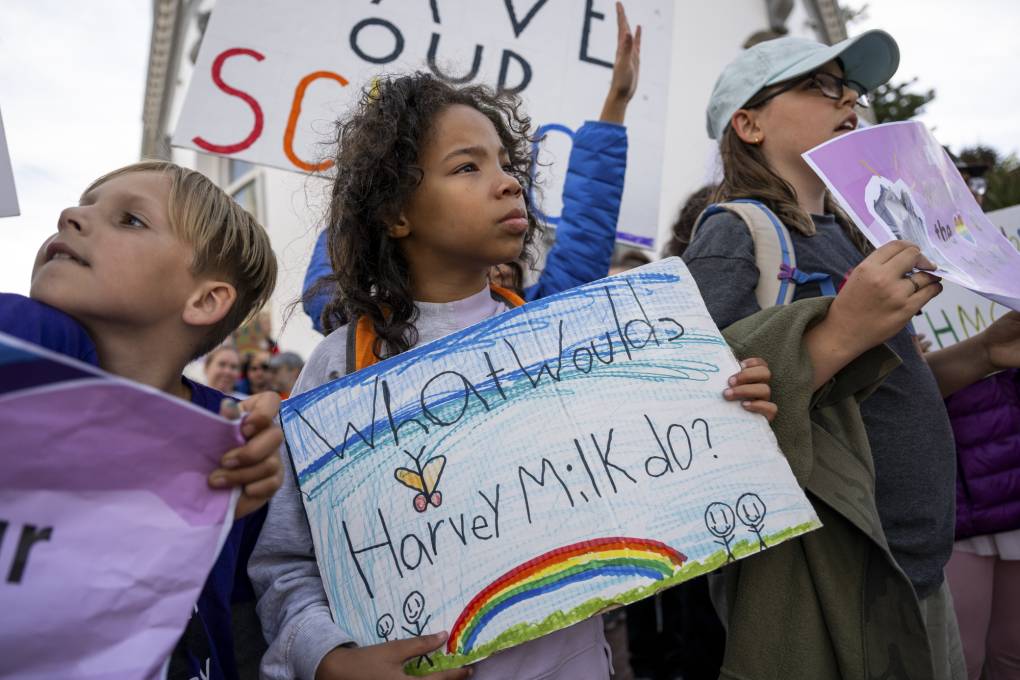
"caption": "Teachers, K–5 students and families of Harvey Milk Civil Rights Academy rally at Harvey Milk Plaza in the Castro neighborhood of San Francisco on Oct. 9, 2024, to protest against the potential closure of the school.",
"credit": "Beth LaBerge/KQED",
"altTag": null,
"description": null,
"imgSizes": {
"medium": {
"file": "https://cdn.kqed.org/wp-content/uploads/sites/10/2024/10/241009-SFUSDCLOSURESMARCH-29-BL-KQED-800x533.jpg",
"width": 800,
"height": 533,
"mimeType": "image/jpeg"
},
"large": {
"file": "https://cdn.kqed.org/wp-content/uploads/sites/10/2024/10/241009-SFUSDCLOSURESMARCH-29-BL-KQED-1020x680.jpg",
"width": 1020,
"height": 680,
"mimeType": "image/jpeg"
},
"thumbnail": {
"file": "https://cdn.kqed.org/wp-content/uploads/sites/10/2024/10/241009-SFUSDCLOSURESMARCH-29-BL-KQED-160x107.jpg",
"width": 160,
"height": 107,
"mimeType": "image/jpeg"
},
"1536x1536": {
"file": "https://cdn.kqed.org/wp-content/uploads/sites/10/2024/10/241009-SFUSDCLOSURESMARCH-29-BL-KQED-1536x1024.jpg",
"width": 1536,
"height": 1024,
"mimeType": "image/jpeg"
},
"post-thumbnail": {
"file": "https://cdn.kqed.org/wp-content/uploads/sites/10/2024/10/241009-SFUSDCLOSURESMARCH-29-BL-KQED-672x372.jpg",
"width": 672,
"height": 372,
"mimeType": "image/jpeg"
},
"twentyfourteen-full-width": {
"file": "https://cdn.kqed.org/wp-content/uploads/sites/10/2024/10/241009-SFUSDCLOSURESMARCH-29-BL-KQED-1038x576.jpg",
"width": 1038,
"height": 576,
"mimeType": "image/jpeg"
},
"full-width": {
"file": "https://cdn.kqed.org/wp-content/uploads/sites/10/2024/10/241009-SFUSDCLOSURESMARCH-29-BL-KQED-1920x1280.jpg",
"width": 1920,
"height": 1280,
"mimeType": "image/jpeg"
},
"kqedFullSize": {
"file": "https://cdn.kqed.org/wp-content/uploads/sites/10/2024/10/241009-SFUSDCLOSURESMARCH-29-BL-KQED.jpg",
"width": 2000,
"height": 1333
}
},
"isLoading": false,
"fetchFailed": false
},
"news_11998920": {
"type": "attachments",
"id": "news_11998920",
"meta": {
"index": "attachments_1716263798",
"site": "news",
"id": "11998920",
"found": true
},
"title": "_M6A2369_qed",
"publishDate": 1722899185,
"status": "inherit",
"parent": 11998871,
"modified": 1729206825,
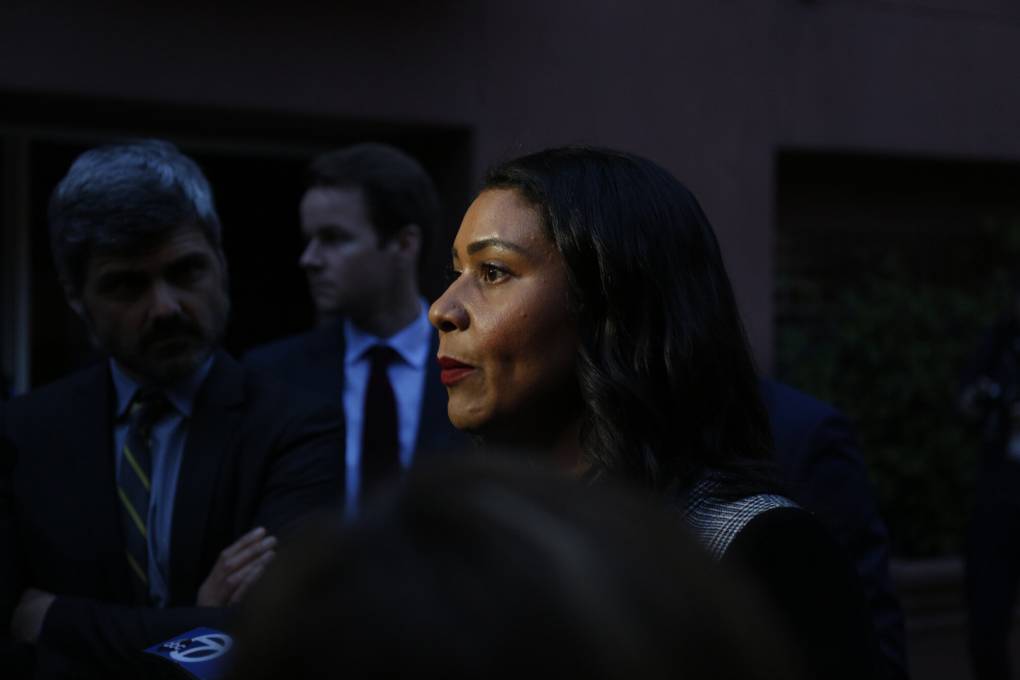
"caption": "Mayor London Breed talks to members of the press after a dramatic meeting about the Embarcadero SAFE Navigation Center in April 2019.",
"credit": "Stephanie Lister/KQED",
"altTag": null,
"description": null,
"imgSizes": {
"medium": {
"file": "https://cdn.kqed.org/wp-content/uploads/sites/10/2024/08/M6A2369_qed-800x533.jpg",
"width": 800,
"height": 533,
"mimeType": "image/jpeg"
},
"large": {
"file": "https://cdn.kqed.org/wp-content/uploads/sites/10/2024/08/M6A2369_qed-1020x680.jpg",
"width": 1020,
"height": 680,
"mimeType": "image/jpeg"
},
"thumbnail": {
"file": "https://cdn.kqed.org/wp-content/uploads/sites/10/2024/08/M6A2369_qed-160x107.jpg",
"width": 160,
"height": 107,
"mimeType": "image/jpeg"
},
"1536x1536": {
"file": "https://cdn.kqed.org/wp-content/uploads/sites/10/2024/08/M6A2369_qed-1536x1024.jpg",
"width": 1536,
"height": 1024,
"mimeType": "image/jpeg"
},
"post-thumbnail": {
"file": "https://cdn.kqed.org/wp-content/uploads/sites/10/2024/08/M6A2369_qed-672x372.jpg",
"width": 672,
"height": 372,
"mimeType": "image/jpeg"
},
"twentyfourteen-full-width": {
"file": "https://cdn.kqed.org/wp-content/uploads/sites/10/2024/08/M6A2369_qed-1038x576.jpg",
"width": 1038,
"height": 576,
"mimeType": "image/jpeg"
},
"full-width": {
"file": "https://cdn.kqed.org/wp-content/uploads/sites/10/2024/08/M6A2369_qed-1920x1280.jpg",
"width": 1920,
"height": 1280,
"mimeType": "image/jpeg"
},
"kqedFullSize": {
"file": "https://cdn.kqed.org/wp-content/uploads/sites/10/2024/08/M6A2369_qed.jpg",
"width": 1999,
"height": 1333
}
},
"isLoading": false,
"fetchFailed": false
},
"news_12009893": {
"type": "attachments",
"id": "news_12009893",
"meta": {
"index": "attachments_1716263798",
"site": "news",
"id": "12009893",
"found": true
},
"title": "General view of debris after the earthquake",
"publishDate": 1729204492,
"status": "inherit",
"parent": 12009820,
"modified": 1729206266,
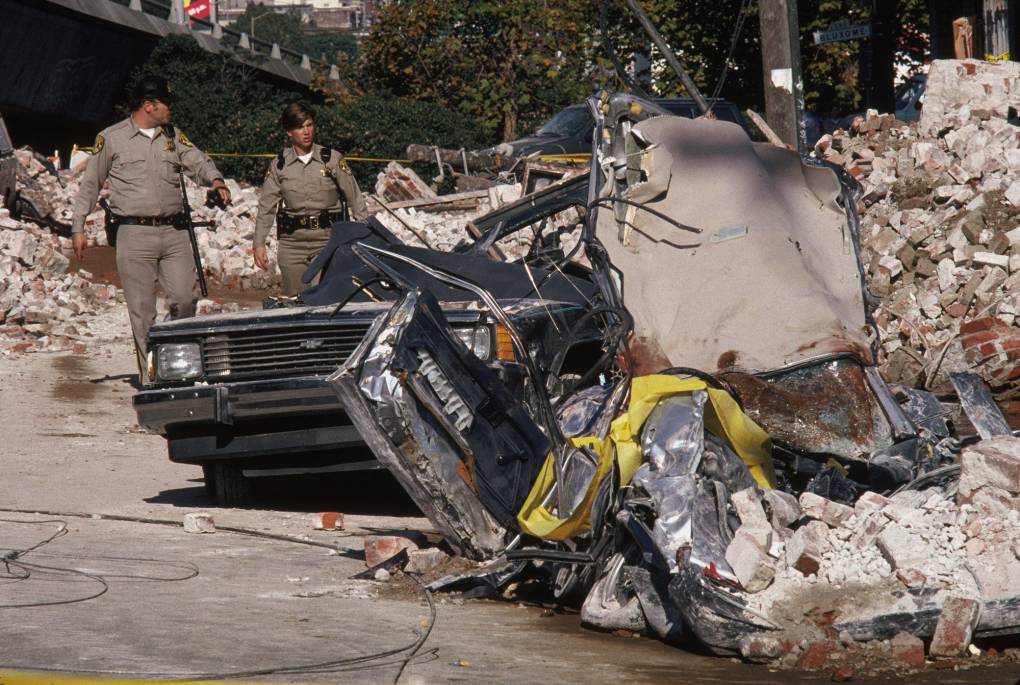
"caption": "Debris after the earthquake, measuring 7.1 in magnitude, rocked game three of the World Series between the Oakland A's and San Francisco Giants at Candlestick Park on Oct. 17, 1989, in San Francisco, California.",
"credit": "Otto Greule Jr /Getty Images",
"altTag": null,
"description": null,
"imgSizes": {
"medium": {
"file": "https://cdn.kqed.org/wp-content/uploads/sites/10/2024/10/LomaPrietaEarthquakeGetty1-800x537.jpg",
"width": 800,
"height": 537,
"mimeType": "image/jpeg"
},
"large": {
"file": "https://cdn.kqed.org/wp-content/uploads/sites/10/2024/10/LomaPrietaEarthquakeGetty1-1020x685.jpg",
"width": 1020,
"height": 685,
"mimeType": "image/jpeg"
},
"thumbnail": {
"file": "https://cdn.kqed.org/wp-content/uploads/sites/10/2024/10/LomaPrietaEarthquakeGetty1-160x107.jpg",
"width": 160,
"height": 107,
"mimeType": "image/jpeg"
},
"1536x1536": {
"file": "https://cdn.kqed.org/wp-content/uploads/sites/10/2024/10/LomaPrietaEarthquakeGetty1-1536x1031.jpg",
"width": 1536,
"height": 1031,
"mimeType": "image/jpeg"
},
"post-thumbnail": {
"file": "https://cdn.kqed.org/wp-content/uploads/sites/10/2024/10/LomaPrietaEarthquakeGetty1-672x372.jpg",
"width": 672,
"height": 372,
"mimeType": "image/jpeg"
},
"twentyfourteen-full-width": {
"file": "https://cdn.kqed.org/wp-content/uploads/sites/10/2024/10/LomaPrietaEarthquakeGetty1-1038x576.jpg",
"width": 1038,
"height": 576,
"mimeType": "image/jpeg"
},
"full-width": {
"file": "https://cdn.kqed.org/wp-content/uploads/sites/10/2024/10/LomaPrietaEarthquakeGetty1-1920x1289.jpg",
"width": 1920,
"height": 1289,
"mimeType": "image/jpeg"
},
"kqedFullSize": {
"file": "https://cdn.kqed.org/wp-content/uploads/sites/10/2024/10/LomaPrietaEarthquakeGetty1.jpg",
"width": 2000,
"height": 1343
}
},
"isLoading": false,
"fetchFailed": false
},
"news_12009613": {
"type": "attachments",
"id": "news_12009613",
"meta": {
"index": "attachments_1716263798",
"site": "news",
"id": "12009613",
"found": true
},
"title": "240214-CoastalCommission-50-BL_qed",
"publishDate": 1729101052,
"status": "inherit",
"parent": 12009607,
"modified": 1729101066,
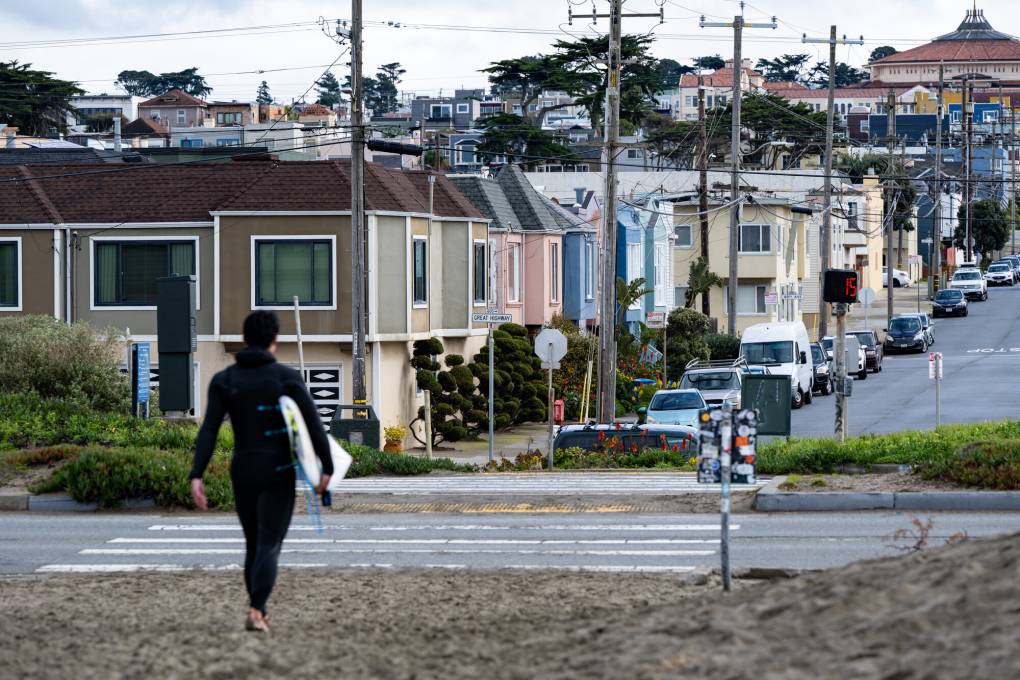
"caption": "A surfer walks along a sandy path leading from Ocean Beach to the Great Highway and the Sunset District in San Francisco on Feb. 14, 2024.",
"credit": "Beth LaBerge/KQED",
"altTag": null,
"description": null,
"imgSizes": {
"medium": {
"file": "https://cdn.kqed.org/wp-content/uploads/sites/10/2024/10/240214-CoastalCommission-50-BL_qed-800x533.jpg",
"width": 800,
"height": 533,
"mimeType": "image/jpeg"
},
"large": {
"file": "https://cdn.kqed.org/wp-content/uploads/sites/10/2024/10/240214-CoastalCommission-50-BL_qed-1020x680.jpg",
"width": 1020,
"height": 680,
"mimeType": "image/jpeg"
},
"thumbnail": {
"file": "https://cdn.kqed.org/wp-content/uploads/sites/10/2024/10/240214-CoastalCommission-50-BL_qed-160x107.jpg",
"width": 160,
"height": 107,
"mimeType": "image/jpeg"
},
"1536x1536": {
"file": "https://cdn.kqed.org/wp-content/uploads/sites/10/2024/10/240214-CoastalCommission-50-BL_qed-1536x1024.jpg",
"width": 1536,
"height": 1024,
"mimeType": "image/jpeg"
},
"post-thumbnail": {
"file": "https://cdn.kqed.org/wp-content/uploads/sites/10/2024/10/240214-CoastalCommission-50-BL_qed-672x372.jpg",
"width": 672,
"height": 372,
"mimeType": "image/jpeg"
},
"twentyfourteen-full-width": {
"file": "https://cdn.kqed.org/wp-content/uploads/sites/10/2024/10/240214-CoastalCommission-50-BL_qed-1038x576.jpg",
"width": 1038,
"height": 576,
"mimeType": "image/jpeg"
},
"full-width": {
"file": "https://cdn.kqed.org/wp-content/uploads/sites/10/2024/10/240214-CoastalCommission-50-BL_qed-1920x1280.jpg",
"width": 1920,
"height": 1280,
"mimeType": "image/jpeg"
},
"kqedFullSize": {
"file": "https://cdn.kqed.org/wp-content/uploads/sites/10/2024/10/240214-CoastalCommission-50-BL_qed.jpg",
"width": 2000,
"height": 1333
}
},
"isLoading": false,
"fetchFailed": false
},
"news_12009137": {
"type": "attachments",
"id": "news_12009137",
"meta": {
"index": "attachments_1716263798",
"site": "news",
"id": "12009137",
"found": true
},
"title": "Senior student Calvonnia Kelly looks out at the Balboa High School yard before school lets out in San Francisco, California, on Friday, May 22, 2015.",
"publishDate": 1728674370,
"status": "inherit",
"parent": 12009120,
"modified": 1728674517,
"caption": "Balboa High School students on campus before school lets out in San Francisco, California, on Friday, May 22, 2015. San Francisco Unified School District began its antisemitism training on Wednesday for high school teachers at Abraham Lincoln, Balboa, Galileo Academy of Science & Technology and George Washington after postponing the sessions due to objections from pro-Palestinian activists over the American Jewish Committee, the group running the training, and its stance on Israel.",
"credit": "Liz Hafalia/The San Francisco Chronicle via Getty Images",
"altTag": null,
"description": null,
"imgSizes": {
"medium": {
"file": "https://cdn.kqed.org/wp-content/uploads/sites/10/2024/10/BalboaHighSchoolSFAntisemitismGetty-800x494.jpg",
"width": 800,
"height": 494,
"mimeType": "image/jpeg"
},
"large": {
"file": "https://cdn.kqed.org/wp-content/uploads/sites/10/2024/10/BalboaHighSchoolSFAntisemitismGetty-1020x629.jpg",
"width": 1020,
"height": 629,
"mimeType": "image/jpeg"
},
"thumbnail": {
"file": "https://cdn.kqed.org/wp-content/uploads/sites/10/2024/10/BalboaHighSchoolSFAntisemitismGetty-160x99.jpg",
"width": 160,
"height": 99,
"mimeType": "image/jpeg"
},
"1536x1536": {
"file": "https://cdn.kqed.org/wp-content/uploads/sites/10/2024/10/BalboaHighSchoolSFAntisemitismGetty-1536x948.jpg",
"width": 1536,
"height": 948,
"mimeType": "image/jpeg"
},
"post-thumbnail": {
"file": "https://cdn.kqed.org/wp-content/uploads/sites/10/2024/10/BalboaHighSchoolSFAntisemitismGetty-672x372.jpg",
"width": 672,
"height": 372,
"mimeType": "image/jpeg"
},
"twentyfourteen-full-width": {
"file": "https://cdn.kqed.org/wp-content/uploads/sites/10/2024/10/BalboaHighSchoolSFAntisemitismGetty-1038x576.jpg",
"width": 1038,
"height": 576,
"mimeType": "image/jpeg"
},
"full-width": {
"file": "https://cdn.kqed.org/wp-content/uploads/sites/10/2024/10/BalboaHighSchoolSFAntisemitismGetty-1920x1185.jpg",
"width": 1920,
"height": 1185,
"mimeType": "image/jpeg"
},
"kqedFullSize": {
"file": "https://cdn.kqed.org/wp-content/uploads/sites/10/2024/10/BalboaHighSchoolSFAntisemitismGetty.jpg",
"width": 2000,
"height": 1234
}
},
"isLoading": false,
"fetchFailed": false
},
"news_12008836": {
"type": "attachments",
"id": "news_12008836",
"meta": {
"index": "attachments_1716263798",
"site": "news",
"id": "12008836",
"found": true
},
"title": "241009-SFUSDCLOSURESMARCH-32-BL-KQED",
"publishDate": 1728517181,
"status": "inherit",
"parent": 12072028,
"modified": 1770411523,
"caption": "Tiffany Furrell holds her daughter Zoe, 4, on her shoulders alongside teachers and students of Harvey Milk Civil Rights Academy during a rally at Harvey Milk Plaza in the Castro neighborhood of San Francisco on Oct. 9, 2024, to protest against the potential closure of the school. The school is on the list of 11 San Francisco campuses that could close after this academic year as the district grapples with declining enrollment and a budget deficit.",
"credit": "Beth LaBerge/KQED",
"altTag": null,
"description": null,
"imgSizes": {
"medium": {
"file": "https://cdn.kqed.org/wp-content/uploads/sites/10/2024/10/241009-SFUSDCLOSURESMARCH-32-BL-KQED-800x533.jpg",
"width": 800,
"height": 533,
"mimeType": "image/jpeg"
},
"large": {
"file": "https://cdn.kqed.org/wp-content/uploads/sites/10/2024/10/241009-SFUSDCLOSURESMARCH-32-BL-KQED-1020x680.jpg",
"width": 1020,
"height": 680,
"mimeType": "image/jpeg"
},
"thumbnail": {
"file": "https://cdn.kqed.org/wp-content/uploads/sites/10/2024/10/241009-SFUSDCLOSURESMARCH-32-BL-KQED-160x107.jpg",
"width": 160,
"height": 107,
"mimeType": "image/jpeg"
},
"1536x1536": {
"file": "https://cdn.kqed.org/wp-content/uploads/sites/10/2024/10/241009-SFUSDCLOSURESMARCH-32-BL-KQED-1536x1024.jpg",
"width": 1536,
"height": 1024,
"mimeType": "image/jpeg"
},
"post-thumbnail": {
"file": "https://cdn.kqed.org/wp-content/uploads/sites/10/2024/10/241009-SFUSDCLOSURESMARCH-32-BL-KQED-672x372.jpg",
"width": 672,
"height": 372,
"mimeType": "image/jpeg"
},
"twentyfourteen-full-width": {
"file": "https://cdn.kqed.org/wp-content/uploads/sites/10/2024/10/241009-SFUSDCLOSURESMARCH-32-BL-KQED-1038x576.jpg",
"width": 1038,
"height": 576,
"mimeType": "image/jpeg"
},
"full-width": {
"file": "https://cdn.kqed.org/wp-content/uploads/sites/10/2024/10/241009-SFUSDCLOSURESMARCH-32-BL-KQED-1920x1280.jpg",
"width": 1920,
"height": 1280,
"mimeType": "image/jpeg"
},
"kqedFullSize": {
"file": "https://cdn.kqed.org/wp-content/uploads/sites/10/2024/10/241009-SFUSDCLOSURESMARCH-32-BL-KQED.jpg",
"width": 2000,
"height": 1333
}
},
"isLoading": false,
"fetchFailed": false
},
"news_12008916": {
"type": "attachments",
"id": "news_12008916",
"meta": {
"index": "attachments_1716263798",
"site": "news",
"id": "12008916",
"found": true
},
"title": "241010-SFUSDClosures-06-BL",
"publishDate": 1728590533,
"status": "inherit",
"parent": 0,
"modified": 1728601972,
"caption": "Supervisor Connie Chan speaks alongside Board of Supervisors president Aaron Peskin during a press conference outside Spring Valley Science Elementary School in San Francisco on Oct. 10, 2024, to push for city intervention in SFUSD’s school closure plans.",
"credit": "Beth LaBerge/KQED",
"altTag": null,
"description": null,
"imgSizes": {
"medium": {
"file": "https://cdn.kqed.org/wp-content/uploads/sites/10/2024/10/241010-SFUSDClosures-06-BL-800x533.jpg",
"width": 800,
"height": 533,
"mimeType": "image/jpeg"
},
"large": {
"file": "https://cdn.kqed.org/wp-content/uploads/sites/10/2024/10/241010-SFUSDClosures-06-BL-1020x680.jpg",
"width": 1020,
"height": 680,
"mimeType": "image/jpeg"
},
"thumbnail": {
"file": "https://cdn.kqed.org/wp-content/uploads/sites/10/2024/10/241010-SFUSDClosures-06-BL-160x107.jpg",
"width": 160,
"height": 107,
"mimeType": "image/jpeg"
},
"1536x1536": {
"file": "https://cdn.kqed.org/wp-content/uploads/sites/10/2024/10/241010-SFUSDClosures-06-BL-1536x1024.jpg",
"width": 1536,
"height": 1024,
"mimeType": "image/jpeg"
},
"post-thumbnail": {
"file": "https://cdn.kqed.org/wp-content/uploads/sites/10/2024/10/241010-SFUSDClosures-06-BL-672x372.jpg",
"width": 672,
"height": 372,
"mimeType": "image/jpeg"
},
"twentyfourteen-full-width": {
"file": "https://cdn.kqed.org/wp-content/uploads/sites/10/2024/10/241010-SFUSDClosures-06-BL-1038x576.jpg",
"width": 1038,
"height": 576,
"mimeType": "image/jpeg"
},
"full-width": {
"file": "https://cdn.kqed.org/wp-content/uploads/sites/10/2024/10/241010-SFUSDClosures-06-BL-1920x1280.jpg",
"width": 1920,
"height": 1280,
"mimeType": "image/jpeg"
},
"kqedFullSize": {
"file": "https://cdn.kqed.org/wp-content/uploads/sites/10/2024/10/241010-SFUSDClosures-06-BL.jpg",
"width": 2000,
"height": 1333
}
},
"isLoading": false,
"fetchFailed": false
},
"news_12008879": {
"type": "attachments",
"id": "news_12008879",
"meta": {
"index": "attachments_1716263798",
"site": "news",
"id": "12008879",
"found": true
},
"title": "240111-TransitFile-19-BL_qed",
"publishDate": 1728583167,
"status": "inherit",
"parent": 12008877,
"modified": 1728583182,
"caption": "BART fare gates at the 24th Street Mission station in San Francisco on Jan. 11, 2024.",
"credit": "Beth LaBerge/KQED",
"altTag": null,
"description": null,
"imgSizes": {
"medium": {
"file": "https://cdn.kqed.org/wp-content/uploads/sites/10/2024/10/240111-TransitFile-19-BL_qed-800x533.jpg",
"width": 800,
"height": 533,
"mimeType": "image/jpeg"
},
"large": {
"file": "https://cdn.kqed.org/wp-content/uploads/sites/10/2024/10/240111-TransitFile-19-BL_qed-1020x680.jpg",
"width": 1020,
"height": 680,
"mimeType": "image/jpeg"
},
"thumbnail": {
"file": "https://cdn.kqed.org/wp-content/uploads/sites/10/2024/10/240111-TransitFile-19-BL_qed-160x107.jpg",
"width": 160,
"height": 107,
"mimeType": "image/jpeg"
},
"1536x1536": {
"file": "https://cdn.kqed.org/wp-content/uploads/sites/10/2024/10/240111-TransitFile-19-BL_qed-1536x1024.jpg",
"width": 1536,
"height": 1024,
"mimeType": "image/jpeg"
},
"post-thumbnail": {
"file": "https://cdn.kqed.org/wp-content/uploads/sites/10/2024/10/240111-TransitFile-19-BL_qed-672x372.jpg",
"width": 672,
"height": 372,
"mimeType": "image/jpeg"
},
"twentyfourteen-full-width": {
"file": "https://cdn.kqed.org/wp-content/uploads/sites/10/2024/10/240111-TransitFile-19-BL_qed-1038x576.jpg",
"width": 1038,
"height": 576,
"mimeType": "image/jpeg"
},
"full-width": {
"file": "https://cdn.kqed.org/wp-content/uploads/sites/10/2024/10/240111-TransitFile-19-BL_qed-1920x1280.jpg",
"width": 1920,
"height": 1280,
"mimeType": "image/jpeg"
},
"kqedFullSize": {
"file": "https://cdn.kqed.org/wp-content/uploads/sites/10/2024/10/240111-TransitFile-19-BL_qed.jpg",
"width": 2000,
"height": 1333
}
},
"isLoading": false,
"fetchFailed": false
},
"news_12000350": {
"type": "attachments",
"id": "news_12000350",
"meta": {
"index": "attachments_1716263798",
"site": "news",
"id": "12000350",
"found": true
},
"title": "20240809_ENCAMPMENTSWEEP_GC-38-KQED",
"publishDate": 1723742926,
"status": "inherit",
"parent": 12000606,
"modified": 1723853884,
"caption": "James Harris packs his things to relocate his encampment.",
"credit": "Gina Castro/KQED",
"altTag": null,
"description": null,
"imgSizes": {
"medium": {
"file": "https://cdn.kqed.org/wp-content/uploads/sites/10/2024/08/20240809_ENCAMPMENTSWEEP_GC-38-KQED-800x543.jpg",
"width": 800,
"height": 543,
"mimeType": "image/jpeg"
},
"large": {
"file": "https://cdn.kqed.org/wp-content/uploads/sites/10/2024/08/20240809_ENCAMPMENTSWEEP_GC-38-KQED-1020x693.jpg",
"width": 1020,
"height": 693,
"mimeType": "image/jpeg"
},
"thumbnail": {
"file": "https://cdn.kqed.org/wp-content/uploads/sites/10/2024/08/20240809_ENCAMPMENTSWEEP_GC-38-KQED-160x109.jpg",
"width": 160,
"height": 109,
"mimeType": "image/jpeg"
},
"1536x1536": {
"file": "https://cdn.kqed.org/wp-content/uploads/sites/10/2024/08/20240809_ENCAMPMENTSWEEP_GC-38-KQED-1536x1043.jpg",
"width": 1536,
"height": 1043,
"mimeType": "image/jpeg"
},
"post-thumbnail": {
"file": "https://cdn.kqed.org/wp-content/uploads/sites/10/2024/08/20240809_ENCAMPMENTSWEEP_GC-38-KQED-672x372.jpg",
"width": 672,
"height": 372,
"mimeType": "image/jpeg"
},
"twentyfourteen-full-width": {
"file": "https://cdn.kqed.org/wp-content/uploads/sites/10/2024/08/20240809_ENCAMPMENTSWEEP_GC-38-KQED-1038x576.jpg",
"width": 1038,
"height": 576,
"mimeType": "image/jpeg"
},
"full-width": {
"file": "https://cdn.kqed.org/wp-content/uploads/sites/10/2024/08/20240809_ENCAMPMENTSWEEP_GC-38-KQED-1920x1304.jpg",
"width": 1920,
"height": 1304,
"mimeType": "image/jpeg"
},
"kqedFullSize": {
"file": "https://cdn.kqed.org/wp-content/uploads/sites/10/2024/08/20240809_ENCAMPMENTSWEEP_GC-38-KQED.jpg",
"width": 2000,
"height": 1358
}
},
"isLoading": false,
"fetchFailed": false
},
"news_12008751": {
"type": "attachments",
"id": "news_12008751",
"meta": {
"index": "attachments_1716263798",
"site": "news",
"id": "12008751",
"found": true
},
"title": "Abraham Lincoln High School In San Francisco To Be Renamed",
"publishDate": 1728498598,
"status": "inherit",
"parent": 12008739,
"modified": 1728499067,
"caption": "Abraham Lincoln High School on Dec. 17, 2020, in San Francisco. San Francisco Unified School District began its antisemitism training on Wednesday for high school teachers at Abraham Lincoln, Balboa, Galileo Academy of Science & Technology and George Washington after postponing the sessions due to objections from pro-Palestinian activists over the American Jewish Committee, the group running the training, and its stance on Israel.",
"credit": "Justin Sullivan/Getty Images",
"altTag": null,
"description": null,
"imgSizes": {
"medium": {
"file": "https://cdn.kqed.org/wp-content/uploads/sites/10/2024/10/AbrahamLincolnHSSFGetty2-800x533.jpg",
"width": 800,
"height": 533,
"mimeType": "image/jpeg"
},
"large": {
"file": "https://cdn.kqed.org/wp-content/uploads/sites/10/2024/10/AbrahamLincolnHSSFGetty2-1020x680.jpg",
"width": 1020,
"height": 680,
"mimeType": "image/jpeg"
},
"thumbnail": {
"file": "https://cdn.kqed.org/wp-content/uploads/sites/10/2024/10/AbrahamLincolnHSSFGetty2-160x107.jpg",
"width": 160,
"height": 107,
"mimeType": "image/jpeg"
},
"1536x1536": {
"file": "https://cdn.kqed.org/wp-content/uploads/sites/10/2024/10/AbrahamLincolnHSSFGetty2-1536x1024.jpg",
"width": 1536,
"height": 1024,
"mimeType": "image/jpeg"
},
"post-thumbnail": {
"file": "https://cdn.kqed.org/wp-content/uploads/sites/10/2024/10/AbrahamLincolnHSSFGetty2-672x372.jpg",
"width": 672,
"height": 372,
"mimeType": "image/jpeg"
},
"twentyfourteen-full-width": {
"file": "https://cdn.kqed.org/wp-content/uploads/sites/10/2024/10/AbrahamLincolnHSSFGetty2-1038x576.jpg",
"width": 1038,
"height": 576,
"mimeType": "image/jpeg"
},
"full-width": {
"file": "https://cdn.kqed.org/wp-content/uploads/sites/10/2024/10/AbrahamLincolnHSSFGetty2-1920x1280.jpg",
"width": 1920,
"height": 1280,
"mimeType": "image/jpeg"
},
"kqedFullSize": {
"file": "https://cdn.kqed.org/wp-content/uploads/sites/10/2024/10/AbrahamLincolnHSSFGetty2.jpg",
"width": 2000,
"height": 1333
}
},
"isLoading": false,
"fetchFailed": false
},
"news_12008414": {
"type": "attachments",
"id": "news_12008414",
"meta": {
"index": "attachments_1716263798",
"site": "news",
"id": "12008414",
"found": true
},
"title": "Students from the unified school district go to their buses after seeing the movie \"Bully\" at Herbst Theater in San Francisco, Calif., on Thursday, September 13, 2012.",
"publishDate": 1728405853,
"status": "inherit",
"parent": 12008405,
"modified": 1751059205,
"caption": "Students from the San Francisco Unified School District return to their buses after a field trip in San Francisco, California, on Sept. 13, 2012. ",
"credit": "Liz Hafalia/The San Francisco Chronicle via Getty Images",
"altTag": null,
"description": null,
"imgSizes": {
"medium": {
"file": "https://cdn.kqed.org/wp-content/uploads/sites/10/2024/10/SFUSDStudentsGetty-800x534.jpg",
"width": 800,
"height": 534,
"mimeType": "image/jpeg"
},
"large": {
"file": "https://cdn.kqed.org/wp-content/uploads/sites/10/2024/10/SFUSDStudentsGetty-1020x681.jpg",
"width": 1020,
"height": 681,
"mimeType": "image/jpeg"
},
"thumbnail": {
"file": "https://cdn.kqed.org/wp-content/uploads/sites/10/2024/10/SFUSDStudentsGetty-160x107.jpg",
"width": 160,
"height": 107,
"mimeType": "image/jpeg"
},
"1536x1536": {
"file": "https://cdn.kqed.org/wp-content/uploads/sites/10/2024/10/SFUSDStudentsGetty-1536x1026.jpg",
"width": 1536,
"height": 1026,
"mimeType": "image/jpeg"
},
"post-thumbnail": {
"file": "https://cdn.kqed.org/wp-content/uploads/sites/10/2024/10/SFUSDStudentsGetty-672x372.jpg",
"width": 672,
"height": 372,
"mimeType": "image/jpeg"
},
"twentyfourteen-full-width": {
"file": "https://cdn.kqed.org/wp-content/uploads/sites/10/2024/10/SFUSDStudentsGetty-1038x576.jpg",
"width": 1038,
"height": 576,
"mimeType": "image/jpeg"
},
"full-width": {
"file": "https://cdn.kqed.org/wp-content/uploads/sites/10/2024/10/SFUSDStudentsGetty-1920x1283.jpg",
"width": 1920,
"height": 1283,
"mimeType": "image/jpeg"
},
"kqedFullSize": {
"file": "https://cdn.kqed.org/wp-content/uploads/sites/10/2024/10/SFUSDStudentsGetty.jpg",
"width": 2000,
"height": 1336
}
},
"isLoading": false,
"fetchFailed": false
},
"news_12008663": {
"type": "attachments",
"id": "news_12008663",
"meta": {
"index": "attachments_1716263798",
"site": "news",
"id": "12008663",
"found": true
},
"title": "241008-UCB CAMPUS WALKOUT-MD-09-KQED",
"publishDate": 1728431201,
"status": "inherit",
"parent": 12032046,
"modified": 1742415507,
"caption": "A walkout and rally for Gaza and Lebanon at the University of California, Berkeley, on Oct. 8, 2024.",
"credit": "Martin do Nascimento/KQED",
"altTag": null,
"description": null,
"imgSizes": {
"medium": {
"file": "https://cdn.kqed.org/wp-content/uploads/sites/10/2024/10/241008-UCB-CAMPUS-WALKOUT-MD-09-KQED-800x533.jpg",
"width": 800,
"height": 533,
"mimeType": "image/jpeg"
},
"large": {
"file": "https://cdn.kqed.org/wp-content/uploads/sites/10/2024/10/241008-UCB-CAMPUS-WALKOUT-MD-09-KQED-1020x680.jpg",
"width": 1020,
"height": 680,
"mimeType": "image/jpeg"
},
"thumbnail": {
"file": "https://cdn.kqed.org/wp-content/uploads/sites/10/2024/10/241008-UCB-CAMPUS-WALKOUT-MD-09-KQED-160x107.jpg",
"width": 160,
"height": 107,
"mimeType": "image/jpeg"
},
"1536x1536": {
"file": "https://cdn.kqed.org/wp-content/uploads/sites/10/2024/10/241008-UCB-CAMPUS-WALKOUT-MD-09-KQED-1536x1024.jpg",
"width": 1536,
"height": 1024,
"mimeType": "image/jpeg"
},
"post-thumbnail": {
"file": "https://cdn.kqed.org/wp-content/uploads/sites/10/2024/10/241008-UCB-CAMPUS-WALKOUT-MD-09-KQED-672x372.jpg",
"width": 672,
"height": 372,
"mimeType": "image/jpeg"
},
"twentyfourteen-full-width": {
"file": "https://cdn.kqed.org/wp-content/uploads/sites/10/2024/10/241008-UCB-CAMPUS-WALKOUT-MD-09-KQED-1038x576.jpg",
"width": 1038,
"height": 576,
"mimeType": "image/jpeg"
},
"full-width": {
"file": "https://cdn.kqed.org/wp-content/uploads/sites/10/2024/10/241008-UCB-CAMPUS-WALKOUT-MD-09-KQED-1920x1280.jpg",
"width": 1920,
"height": 1280,
"mimeType": "image/jpeg"
},
"kqedFullSize": {
"file": "https://cdn.kqed.org/wp-content/uploads/sites/10/2024/10/241008-UCB-CAMPUS-WALKOUT-MD-09-KQED.jpg",
"width": 2000,
"height": 1333
}
},
"isLoading": false,
"fetchFailed": false
}
},
"audioPlayerReducer": {
"postId": "stream_live",
"isPaused": true,
"isPlaying": false,
"pfsActive": false,
"pledgeModalIsOpen": true,
"playerDrawerIsOpen": false,
"liveAudioPlayStartedAt": 0,
"liveAudioPlayContext": ""
},
"authorsReducer": {
"shossaini": {
"type": "authors",
"id": "3214",
"meta": {
"index": "authors_1716337520",
"id": "3214",
"found": true
},
"name": "Sara Hossaini",
"firstName": "Sara",
"lastName": "Hossaini",
"slug": "shossaini",
"email": "shossaini@kqed.org",
"display_author_email": true,
"staff_mastheads": [
"news"
],
"title": "KQED Reporter",
"bio": "Sara Hossaini came to general assignment reporting at KQED in 2013 after two winters reporting at Wyoming Public Radio. She holds a bachelor's degree in broadcast journalism from the University of Nebraska-Lincoln. Her radio romance began after a bitter breakup with documentary film (Ok, maybe it's still complicated). Her first simultaneous jobs in San Francisco were as Associate Producer on a PBS film series through the Center for Asian American Media and as a butler. She likes to trot, plot and make things with her hands.",
"avatar": "https://secure.gravatar.com/avatar/060e9f56b9554e17942e89f413242774?s=600&d=blank&r=g",
"twitter": "mshossaini",
"facebook": null,
"instagram": null,
"linkedin": null,
"sites": [
{
"site": "news",
"roles": [
"author"
]
},
{
"site": "stateofhealth",
"roles": [
"author"
]
}
],
"headData": {
"title": "Sara Hossaini | KQED",
"description": "KQED Reporter",
"ogImgSrc": "https://secure.gravatar.com/avatar/060e9f56b9554e17942e89f413242774?s=600&d=blank&r=g",
"twImgSrc": "https://secure.gravatar.com/avatar/060e9f56b9554e17942e89f413242774?s=600&d=blank&r=g"
},
"isLoading": false,
"link": "/author/shossaini"
},
"vrancano": {
"type": "authors",
"id": "11276",
"meta": {
"index": "authors_1716337520",
"id": "11276",
"found": true
},
"name": "Vanessa Rancaño",
"firstName": "Vanessa",
"lastName": "Rancaño",
"slug": "vrancano",
"email": "vrancano@kqed.org",
"display_author_email": false,
"staff_mastheads": [
"news"
],
"title": "Reporter",
"bio": "Vanessa Rancaño is a features reporter for KQED. She’s also covered homelessness and education for the station and reported from the Central Valley. Her work has aired across public radio, from flagship national news shows to longform narrative podcasts. Before taking up a mic, she worked as a freelance print journalist. She’s been recognized with a number of national and regional awards. Vanessa grew up in California's Central Valley. She's a former NPR Kroc Fellow, and a graduate of the UC Berkeley Graduate School of Journalism.",
"avatar": "https://secure.gravatar.com/avatar/b3a383dfb0e7ee1c17568f2cf067904ab654d6e3de9743fc661f3c788ade1bed?s=600&d=blank&r=g",
"twitter": "vanessarancano",
"bluesky": null,
"facebook": null,
"instagram": null,
"linkedin": null,
"sites": [
{
"site": "arts",
"roles": [
"editor"
]
},
{
"site": "news",
"roles": [
"editor"
]
},
{
"site": "liveblog",
"roles": [
"contributor"
]
}
],
"headData": {
"title": "Vanessa Rancaño | KQED",
"description": "Reporter",
"ogImgSrc": "https://secure.gravatar.com/avatar/b3a383dfb0e7ee1c17568f2cf067904ab654d6e3de9743fc661f3c788ade1bed?s=600&d=blank&r=g",
"twImgSrc": "https://secure.gravatar.com/avatar/b3a383dfb0e7ee1c17568f2cf067904ab654d6e3de9743fc661f3c788ade1bed?s=600&d=blank&r=g"
},
"isLoading": false,
"link": "/author/vrancano"
},
"jlara": {
"type": "authors",
"id": "11761",
"meta": {
"index": "authors_1716337520",
"id": "11761",
"found": true
},
"name": "Juan Carlos Lara",
"firstName": "Juan Carlos",
"lastName": "Lara",
"slug": "jlara",
"email": "jlara@kqed.org",
"display_author_email": false,
"staff_mastheads": [],
"title": "KQED Contributor",
"bio": null,
"avatar": "https://secure.gravatar.com/avatar/19e2052b9b05657c5ff2af2121846e9c?s=600&d=blank&r=g",
"twitter": null,
"facebook": null,
"instagram": null,
"linkedin": null,
"sites": [
{
"site": "arts",
"roles": [
"editor"
]
},
{
"site": "news",
"roles": [
"editor"
]
},
{
"site": "forum",
"roles": [
"editor"
]
},
{
"site": "liveblog",
"roles": [
"contributor"
]
}
],
"headData": {
"title": "Juan Carlos Lara | KQED",
"description": "KQED Contributor",
"ogImgSrc": "https://secure.gravatar.com/avatar/19e2052b9b05657c5ff2af2121846e9c?s=600&d=blank&r=g",
"twImgSrc": "https://secure.gravatar.com/avatar/19e2052b9b05657c5ff2af2121846e9c?s=600&d=blank&r=g"
},
"isLoading": false,
"link": "/author/jlara"
},
"sjohnson": {
"type": "authors",
"id": "11840",
"meta": {
"index": "authors_1716337520",
"id": "11840",
"found": true
},
"name": "Sydney Johnson",
"firstName": "Sydney",
"lastName": "Johnson",
"slug": "sjohnson",
"email": "sjohnson@kqed.org",
"display_author_email": false,
"staff_mastheads": [
"news"
],
"title": "KQED Reporter",
"bio": "Sydney Johnson is a general assignment reporter at KQED. She previously reported on public health and city government at the San Francisco Examiner, and before that, she covered statewide education policy for EdSource. Her reporting has won multiple local, state and national awards. Sydney is a graduate of the University of California, Berkeley and lives in San Francisco.",
"avatar": "https://secure.gravatar.com/avatar/97855f2719b72ad6190b7c535fe642c8?s=600&d=blank&r=g",
"twitter": "sydneyfjohnson",
"facebook": null,
"instagram": null,
"linkedin": null,
"sites": [
{
"site": "news",
"roles": [
"editor"
]
}
],
"headData": {
"title": "Sydney Johnson | KQED",
"description": "KQED Reporter",
"ogImgSrc": "https://secure.gravatar.com/avatar/97855f2719b72ad6190b7c535fe642c8?s=600&d=blank&r=g",
"twImgSrc": "https://secure.gravatar.com/avatar/97855f2719b72ad6190b7c535fe642c8?s=600&d=blank&r=g"
},
"isLoading": false,
"link": "/author/sjohnson"
},
"kdebenedetti": {
"type": "authors",
"id": "11913",
"meta": {
"index": "authors_1716337520",
"id": "11913",
"found": true
},
"name": "Katie DeBenedetti",
"firstName": "Katie",
"lastName": "DeBenedetti",
"slug": "kdebenedetti",
"email": "kdebenedetti@kqed.org",
"display_author_email": false,
"staff_mastheads": [
"news",
"science"
],
"title": "KQED Contributor",
"bio": "Katie DeBenedetti is a digital reporter covering daily news for the Express Desk. Prior to joining KQED as a culture reporting intern in January 2024, she covered education and city government for the Napa Valley Register.",
"avatar": "https://secure.gravatar.com/avatar/6e31073cb8f7e4214ab03f42771d0f45?s=600&d=blank&r=g",
"twitter": null,
"facebook": null,
"instagram": null,
"linkedin": null,
"sites": [
{
"site": "news",
"roles": [
"author"
]
},
{
"site": "science",
"roles": [
"author"
]
},
{
"site": "liveblog",
"roles": [
"author"
]
}
],
"headData": {
"title": "Katie DeBenedetti | KQED",
"description": "KQED Contributor",
"ogImgSrc": "https://secure.gravatar.com/avatar/6e31073cb8f7e4214ab03f42771d0f45?s=600&d=blank&r=g",
"twImgSrc": "https://secure.gravatar.com/avatar/6e31073cb8f7e4214ab03f42771d0f45?s=600&d=blank&r=g"
},
"isLoading": false,
"link": "/author/kdebenedetti"
},
"slim": {
"type": "authors",
"id": "11920",
"meta": {
"index": "authors_1716337520",
"id": "11920",
"found": true
},
"name": "Samantha Lim",
"firstName": "Samantha",
"lastName": "Lim",
"slug": "slim",
"email": "slim@KQED.org",
"display_author_email": false,
"staff_mastheads": [],
"title": "KQED Contributor",
"bio": null,
"avatar": "https://secure.gravatar.com/avatar/82e592e6c15fe1a04d385e8ad0fb0b4e?s=600&d=blank&r=g",
"twitter": null,
"facebook": null,
"instagram": null,
"linkedin": null,
"sites": [
{
"site": "news",
"roles": []
}
],
"headData": {
"title": "Samantha Lim | KQED",
"description": "KQED Contributor",
"ogImgSrc": "https://secure.gravatar.com/avatar/82e592e6c15fe1a04d385e8ad0fb0b4e?s=600&d=blank&r=g",
"twImgSrc": "https://secure.gravatar.com/avatar/82e592e6c15fe1a04d385e8ad0fb0b4e?s=600&d=blank&r=g"
},
"isLoading": false,
"link": "/author/slim"
},
"rcooke": {
"type": "authors",
"id": "11921",
"meta": {
"index": "authors_1716337520",
"id": "11921",
"found": true
},
"name": "Riley Cooke",
"firstName": "Riley",
"lastName": "Cooke",
"slug": "rcooke",
"email": "rcooke@kqed.org",
"display_author_email": true,
"staff_mastheads": [
"news"
],
"title": "KQED Contributor",
"bio": "Riley is a senior at UC Berkeley, where she studies political science and journalism. Her work has appeared in SFGate, NBC Bay Area, Local News Matters and more. She enjoys reporting on politics, housing and homelessness — and using as many em dashes as her editors will allow.",
"avatar": "https://secure.gravatar.com/avatar/792f98c126cc5e270a8a96f77f7224ea?s=600&d=blank&r=g",
"twitter": "rrileycooke",
"facebook": null,
"instagram": null,
"linkedin": null,
"sites": [
{
"site": "arts",
"roles": [
"author"
]
},
{
"site": "news",
"roles": [
"author"
]
}
],
"headData": {
"title": "Riley Cooke | KQED",
"description": "KQED Contributor",
"ogImgSrc": "https://secure.gravatar.com/avatar/792f98c126cc5e270a8a96f77f7224ea?s=600&d=blank&r=g",
"twImgSrc": "https://secure.gravatar.com/avatar/792f98c126cc5e270a8a96f77f7224ea?s=600&d=blank&r=g"
},
"isLoading": false,
"link": "/author/rcooke"
}
},
"pagesReducer": {
"news_tag_san-francisco": {
"type": "terms",
"id": "news_38",
"meta": {
"index": "terms_1716263798",
"site": "news",
"id": "38",
"score": 6.7229023
},
"featImg": null,
"name": "San Francisco",
"description": null,
"taxonomy": "tag",
"headData": {
"twImgId": null,
"twTitle": null,
"ogTitle": null,
"ogImgId": null,
"twDescription": null,
"description": null,
"title": "San Francisco Archives | KQED News",
"ogDescription": null
},
"ttid": 58,
"slug": "san-francisco",
"isLoading": false,
"title": "San Francisco",
"pageMeta": {
"site": "news",
"WpPageTemplate": "page-topic-editorial",
"currentPage": 88
},
"blocks": [
{
"blockName": "kqed/post-list",
"attrs": {
"layout": "cardArticle2",
"query": "posts/news?tag=san-francisco",
"seeMore": false,
"paginated": true,
"page": 88
}
},
{
"blockName": "kqed/ad"
}
]
}
},
"pfsSessionReducer": {},
"postsReducer": {
"stream_live": {
"type": "live",
"id": "stream_live",
"audioUrl": "https://streams.kqed.org/kqedradio",
"title": "Live Stream",
"excerpt": "Live Stream information currently unavailable.",
"link": "/radio",
"featImg": "",
"label": {
"name": "KQED Live",
"link": "/"
}
},
"stream_kqedNewscast": {
"type": "posts",
"id": "stream_kqedNewscast",
"audioUrl": "https://www.kqed.org/.stream/anon/radio/RDnews/newscast.mp3?_=1",
"title": "KQED Newscast",
"featImg": "",
"label": {
"name": "88.5 FM",
"link": "/"
}
},
"news_12010008": {
"type": "posts",
"id": "news_12010008",
"meta": {
"index": "posts_1716263798",
"site": "news",
"id": "12010008",
"score": null,
"sort": [
1729305383000
]
},
"guestAuthors": [],
"slug": "sf-schools-crisis-is-spiraling-with-top-official-to-resign-heres-all-thats-happened",
"title": "Top SF Schools Official Resigns; Board Halts School Closures",
"publishDate": 1729305383,
"format": "standard",
"headTitle": "Top SF Schools Official Resigns; Board Halts School Closures | KQED",
"labelTerm": {
"site": "news"
},
"content": "\u003cp>\u003cem>Updated at 8:20 p.m. Oct. 18.\u003c/em>\u003c/p>\n\u003cp>San Francisco’s superintendent of schools resigned Friday after a botched school closure rollout, hiring fiasco and worsening budget crisis have spurred mounting questions about his ability to lead.\u003c/p>\n\u003cp>The Board of Education accepted Matt Wayne’s resignation at an emergency closed-door meeting Friday night. Wayne led \u003ca href=\"https://www.kqed.org/news/tag/sfusd\">San Francisco Unified School District\u003c/a> for less than two years, and had two years remaining in his contract.\u003c/p>\n\u003cp>Board of Education President Matt Alexander announced a new superintendent will be appointed next week, and school closures will be halted. On Tuesday, the board plans to appoint Maria Su, the co-leader of the rescue team Mayor London Breed appointed to aid the district earlier this month. Su has been the director of the Department of Children, Youth and Their Families since 2009, and previously worked in senior management roles at multiple nonprofits, including Vietnamese Youth Development Center in the Tenderloin.\u003c/p>\n\u003cp>The board plans to direct Su to stop the current school closure process, which Alexander said had gotten too rocky to continue at this time. He said the district’s primary focus will be cutting more than $110 million from the budget before mid-December in order to avoid a state takeover.\u003c/p>\n\u003cp>“The school merger and closure process has been chaotic,” Alexander said after the meeting. “We’ve heard that from families. We’ve heard that from educators. We’ve even heard that from school district staff. The board believes that we need a reset, and we’re going to ask Superintendent Maria Su to assess the situation and determine appropriate next steps.”\u003c/p>\n\u003cp>[ad fullwidth]\u003c/p>\n\u003cp>The move comes days after Breed \u003ca href=\"https://www.kqed.org/news/12009509/mayor-breed-demands-halt-sf-school-closures-citing-chaos-confusion\">called on the district to halt its school closure plan\u003c/a>, saying she had lost confidence in Wayne’s ability to carry it out — joining numerous elected officials and school board members who have questioned his capability to usher the district through the difficult year ahead.\u003c/p>\n\u003cp>The district has been\u003ca href=\"https://www.kqed.org/news/12000784/sf-teachers-students-face-uncertain-future-as-budget-crisis-threatens-closures\"> in turmoil\u003c/a> since before the school year began. It’s already under state oversight amid a massive budget shortfall, and it could face a full takeover if it can’t cut $113 million from an already tight spending plan by December. Chronic declining enrollment has left 14,000 empty seats across San Francisco campuses, and the district continues to deal with vacant positions as it recovers from a multi-year payroll fiasco that cost tens of millions of dollars and resulted in wrong and missed paychecks for staff.\u003c/p>\n\u003cp>\u003cspan style=\"margin: 0px;padding: 0px\">But questions about Wayne’s effectiveness began cropping up more frequently about a month ago when he announced the highly anticipated list of schools slated to close or merge after this academic year — part of a “resource alignment initiative” to cut down costs and decrease empty seats — would be \u003ca href=\"https://www.kqed.org/news/12004831/anxious-waiting-game-drags-on-as-sfusd-delays-list-of-school-closures\" target=\"_blank\" rel=\"noopener\">delayed\u003c/a>.\u003c/span>\u003c/p>\n\u003cp>Within the week, former school board president \u003ca href=\"https://www.kqed.org/news/12001593/sudden-shakeup-on-san-francisco-school-board-adds-another-challenge-for-district\">Lainie Motamedi\u003c/a> said that Wayne’s leadership failures were directly correlated with her abrupt decision to resign days after classes started, the board held its closed-door weekend meeting, and Breed sent in a rescue team of city administrators to aid the struggling district.\u003c/p>\n\u003cp>Since, Wayne has been blamed for failing to budget enough money for 252 special education workers, costing the district tens of millions of dollars. The eventual roll-out of the school closure list has not instilled confidence.\u003c/p>\n\u003cp>[aside postID=news_12008524 hero='https://cdn.kqed.org/wp-content/uploads/sites/10/2024/10/240916-UnionSFSchoolClosures-38-BL_qed-1020x680.jpg']\u003c/p>\n\u003cp>On a Friday earlier this month, \u003cem>Mission Local \u003c/em>reported that the list, already pushed back to October, could be delayed yet again — to after the November election. The district \u003ca href=\"https://www.kqed.org/news/12008286/is-san-franciscos-school-closure-list-delayed-again-district-offers-little-clarity\">didn’t offer much clarity\u003c/a> until the following week, when in a video message, Wayne said he would make an announcement naming schools that met the district’s criteria for closure but weren’t necessarily on the chopping block yet.\u003c/p>\n\u003cp>The\u003ca href=\"https://www.kqed.org/news/12008405/these-san-francisco-schools-could-close-list-isnt-final\"> list came out\u003c/a> the following day, Oct. 8, hours earlier than expected after \u003cspan style=\"margin: 0px;padding: 0px\">Mission Local obtained \u003cem>it\u003c/em>\u003c/span>. It included inaccurate “composite scores” — which SFUSD is using to rate schools on factors including equity, academic performance, school culture and effective use of resources to determine which should close — that had to be updated the same day. Wayne had to apologize after families across the entire district received messages that were supposed to be sent only to an affected school community. The list also included information about where students would transfer and which campuses would merge, leading to questions about whether it might, in fact, be the superintendent’s final recommendation, not just those that met the criteria for potential closure.\u003c/p>\n\u003cp>In the week since the announcement, \u003ca href=\"https://www.kqed.org/news/12008714/parents-sf-schools-named-for-closure-fight-keep-campuses-open\">parents\u003c/a>, politicians and some school board members have spoken out against the district’s mishandlings.\u003c/p>\n\u003cp>Supervisor Connie Chan and Board President Aaron Peskin called out the list’s \u003ca href=\"https://www.kqed.org/news/12008873/san-francisco-school-closures-will-hurt-chinese-immigrant-communities-city-leaders-say\">disproportionate impact on Asian students\u003c/a>. Every leading mayoral candidate, including Peskin, has indicated their opposition to Wayne’s plan, and Tuesday, Breed issued a statement calling for the closures process to be \u003ca href=\"https://www.kqed.org/news/12009509/mayor-breed-demands-halt-sf-school-closures-citing-chaos-confusion\">halted\u003c/a> amid the confusion, saying it was distracting from the crucial need to balance the budget by year’s end.\u003c/p>\n\u003cp>School Board President Matt Alexander told KQED on Tuesday that Breed had made “some valid points.”\u003c/p>\n\u003cp>“The Board of Education … [has] one employee, which is the superintendent, and so we’re monitoring it, holding him accountable and we understand that as a governance team, it’s our responsibility to ensure that we stabilize the situation and that we provide our students and our educators with the schools they deserve,” he said at the time.\u003c/p>\n\u003cp>It seems they plan to do just that on Friday when the board is expected to vote on whether to accept Wayne’s resignation. He still has two years remaining in his contract.\u003c/p>\n\u003cp>Presumably, the board will have to name an interim superintendent as the district now adds to its list of priorities the long process of hiring a new leader.\u003c/p>\n\u003cp>While Wayne appears to be taking the fall for the district’s missteps, Dodson said that he didn’t make all of these decisions alone.\u003c/p>\n\u003cp>“Several others who were involved during this time who contributed to some of the major problems over the last couple of weeks, including the Board of Education, were very involved in fiddling with the [school closures] plan before it was released,” she told KQED. “They were probably more heavily involved with the plan and the final touches on the plan than maybe a board of education should be.”\u003c/p>\n\u003cp>\u003cem>KQED’s Azul Dahlstrom-Eckman contributed to this report.\u003c/em>\u003c/p>\n\u003cp>[ad floatright]\u003c/p>\n",
"blocks": [],
"excerpt": "The Board of Education plans to appoint Maria Su, the co-leader of the rescue team Mayor London Breed appointed to aid the district earlier this month, as superintendent of schools on Tuesday.",
"status": "publish",
"parent": 0,
"modified": 1729309312,
"stats": {
"hasAudio": false,
"hasVideo": false,
"hasChartOrMap": false,
"iframeSrcs": [],
"hasGoogleForm": false,
"hasGallery": false,
"hasHearkenModule": false,
"hasPolis": false,
"paragraphCount": 25,
"wordCount": 1139
},
"headData": {
"title": "Top SF Schools Official Resigns; Board Halts School Closures | KQED",
"description": "The Board of Education plans to appoint Maria Su, the co-leader of the rescue team Mayor London Breed appointed to aid the district earlier this month, as superintendent of schools on Tuesday.",
"ogTitle": "",
"ogDescription": "",
"ogImgId": "",
"twTitle": "",
"twDescription": "",
"twImgId": "",
"schema": {
"@context": "https://schema.org",
"@type": "NewsArticle",
"headline": "Top SF Schools Official Resigns; Board Halts School Closures",
"datePublished": "2024-10-18T19:36:23-07:00",
"dateModified": "2024-10-18T20:41:52-07:00",
"image": "https://cdn.kqed.org/wp-content/uploads/2020/02/KQED-OG-Image@1x.png",
"isAccessibleForFree": "True",
"publisher": {
"@type": "NewsMediaOrganization",
"@id": "https://www.kqed.org/#organization",
"name": "KQED",
"logo": "https://cdn.kqed.org/wp-content/uploads/2020/02/KQED-OG-Image@1x.png",
"url": "https://www.kqed.org",
"sameAs": [
"https://www.facebook.com/KQED",
"https://twitter.com/KQED",
"https://www.instagram.com/kqed/",
"https://www.tiktok.com/@kqedofficial",
"https://www.linkedin.com/company/kqed",
"https://www.youtube.com/channel/UCeC0IOo7i1P_61zVUWbJ4nw"
]
}
}
},
"sticky": false,
"nprStoryId": "kqed-12010008",
"excludeFromSiteSearch": "Include",
"articleAge": "0",
"path": "/news/12010008/sf-schools-crisis-is-spiraling-with-top-official-to-resign-heres-all-thats-happened",
"audioTrackLength": null,
"parsedContent": [
{
"type": "contentString",
"content": "\u003cdiv class=\"post-body\">\u003cp>\u003cp>\u003cem>Updated at 8:20 p.m. Oct. 18.\u003c/em>\u003c/p>\n\u003cp>San Francisco’s superintendent of schools resigned Friday after a botched school closure rollout, hiring fiasco and worsening budget crisis have spurred mounting questions about his ability to lead.\u003c/p>\n\u003cp>The Board of Education accepted Matt Wayne’s resignation at an emergency closed-door meeting Friday night. Wayne led \u003ca href=\"https://www.kqed.org/news/tag/sfusd\">San Francisco Unified School District\u003c/a> for less than two years, and had two years remaining in his contract.\u003c/p>\n\u003cp>Board of Education President Matt Alexander announced a new superintendent will be appointed next week, and school closures will be halted. On Tuesday, the board plans to appoint Maria Su, the co-leader of the rescue team Mayor London Breed appointed to aid the district earlier this month. Su has been the director of the Department of Children, Youth and Their Families since 2009, and previously worked in senior management roles at multiple nonprofits, including Vietnamese Youth Development Center in the Tenderloin.\u003c/p>\n\u003cp>The board plans to direct Su to stop the current school closure process, which Alexander said had gotten too rocky to continue at this time. He said the district’s primary focus will be cutting more than $110 million from the budget before mid-December in order to avoid a state takeover.\u003c/p>\n\u003cp>“The school merger and closure process has been chaotic,” Alexander said after the meeting. “We’ve heard that from families. We’ve heard that from educators. We’ve even heard that from school district staff. The board believes that we need a reset, and we’re going to ask Superintendent Maria Su to assess the situation and determine appropriate next steps.”\u003c/p>\n\u003cp>\u003c/p>\u003c/div>",
"attributes": {
"named": {},
"numeric": []
}
},
{
"type": "component",
"content": "",
"name": "ad",
"attributes": {
"named": {
"label": "fullwidth"
},
"numeric": [
"fullwidth"
]
}
},
{
"type": "contentString",
"content": "\u003cdiv class=\"post-body\">\u003cp>\u003c/p>\n\u003cp>The move comes days after Breed \u003ca href=\"https://www.kqed.org/news/12009509/mayor-breed-demands-halt-sf-school-closures-citing-chaos-confusion\">called on the district to halt its school closure plan\u003c/a>, saying she had lost confidence in Wayne’s ability to carry it out — joining numerous elected officials and school board members who have questioned his capability to usher the district through the difficult year ahead.\u003c/p>\n\u003cp>The district has been\u003ca href=\"https://www.kqed.org/news/12000784/sf-teachers-students-face-uncertain-future-as-budget-crisis-threatens-closures\"> in turmoil\u003c/a> since before the school year began. It’s already under state oversight amid a massive budget shortfall, and it could face a full takeover if it can’t cut $113 million from an already tight spending plan by December. Chronic declining enrollment has left 14,000 empty seats across San Francisco campuses, and the district continues to deal with vacant positions as it recovers from a multi-year payroll fiasco that cost tens of millions of dollars and resulted in wrong and missed paychecks for staff.\u003c/p>\n\u003cp>\u003cspan style=\"margin: 0px;padding: 0px\">But questions about Wayne’s effectiveness began cropping up more frequently about a month ago when he announced the highly anticipated list of schools slated to close or merge after this academic year — part of a “resource alignment initiative” to cut down costs and decrease empty seats — would be \u003ca href=\"https://www.kqed.org/news/12004831/anxious-waiting-game-drags-on-as-sfusd-delays-list-of-school-closures\" target=\"_blank\" rel=\"noopener\">delayed\u003c/a>.\u003c/span>\u003c/p>\n\u003cp>Within the week, former school board president \u003ca href=\"https://www.kqed.org/news/12001593/sudden-shakeup-on-san-francisco-school-board-adds-another-challenge-for-district\">Lainie Motamedi\u003c/a> said that Wayne’s leadership failures were directly correlated with her abrupt decision to resign days after classes started, the board held its closed-door weekend meeting, and Breed sent in a rescue team of city administrators to aid the struggling district.\u003c/p>\n\u003cp>Since, Wayne has been blamed for failing to budget enough money for 252 special education workers, costing the district tens of millions of dollars. The eventual roll-out of the school closure list has not instilled confidence.\u003c/p>\n\u003cp>\u003c/p>\u003c/div>",
"attributes": {
"named": {},
"numeric": []
}
},
{
"type": "component",
"content": "",
"name": "aside",
"attributes": {
"named": {
"postid": "news_12008524",
"hero": "https://cdn.kqed.org/wp-content/uploads/sites/10/2024/10/240916-UnionSFSchoolClosures-38-BL_qed-1020x680.jpg",
"label": ""
},
"numeric": []
}
},
{
"type": "contentString",
"content": "\u003cdiv class=\"post-body\">\u003cp>\u003c/p>\n\u003cp>On a Friday earlier this month, \u003cem>Mission Local \u003c/em>reported that the list, already pushed back to October, could be delayed yet again — to after the November election. The district \u003ca href=\"https://www.kqed.org/news/12008286/is-san-franciscos-school-closure-list-delayed-again-district-offers-little-clarity\">didn’t offer much clarity\u003c/a> until the following week, when in a video message, Wayne said he would make an announcement naming schools that met the district’s criteria for closure but weren’t necessarily on the chopping block yet.\u003c/p>\n\u003cp>The\u003ca href=\"https://www.kqed.org/news/12008405/these-san-francisco-schools-could-close-list-isnt-final\"> list came out\u003c/a> the following day, Oct. 8, hours earlier than expected after \u003cspan style=\"margin: 0px;padding: 0px\">Mission Local obtained \u003cem>it\u003c/em>\u003c/span>. It included inaccurate “composite scores” — which SFUSD is using to rate schools on factors including equity, academic performance, school culture and effective use of resources to determine which should close — that had to be updated the same day. Wayne had to apologize after families across the entire district received messages that were supposed to be sent only to an affected school community. The list also included information about where students would transfer and which campuses would merge, leading to questions about whether it might, in fact, be the superintendent’s final recommendation, not just those that met the criteria for potential closure.\u003c/p>\n\u003cp>In the week since the announcement, \u003ca href=\"https://www.kqed.org/news/12008714/parents-sf-schools-named-for-closure-fight-keep-campuses-open\">parents\u003c/a>, politicians and some school board members have spoken out against the district’s mishandlings.\u003c/p>\n\u003cp>Supervisor Connie Chan and Board President Aaron Peskin called out the list’s \u003ca href=\"https://www.kqed.org/news/12008873/san-francisco-school-closures-will-hurt-chinese-immigrant-communities-city-leaders-say\">disproportionate impact on Asian students\u003c/a>. Every leading mayoral candidate, including Peskin, has indicated their opposition to Wayne’s plan, and Tuesday, Breed issued a statement calling for the closures process to be \u003ca href=\"https://www.kqed.org/news/12009509/mayor-breed-demands-halt-sf-school-closures-citing-chaos-confusion\">halted\u003c/a> amid the confusion, saying it was distracting from the crucial need to balance the budget by year’s end.\u003c/p>\n\u003cp>School Board President Matt Alexander told KQED on Tuesday that Breed had made “some valid points.”\u003c/p>\n\u003cp>“The Board of Education … [has] one employee, which is the superintendent, and so we’re monitoring it, holding him accountable and we understand that as a governance team, it’s our responsibility to ensure that we stabilize the situation and that we provide our students and our educators with the schools they deserve,” he said at the time.\u003c/p>\n\u003cp>It seems they plan to do just that on Friday when the board is expected to vote on whether to accept Wayne’s resignation. He still has two years remaining in his contract.\u003c/p>\n\u003cp>Presumably, the board will have to name an interim superintendent as the district now adds to its list of priorities the long process of hiring a new leader.\u003c/p>\n\u003cp>While Wayne appears to be taking the fall for the district’s missteps, Dodson said that he didn’t make all of these decisions alone.\u003c/p>\n\u003cp>“Several others who were involved during this time who contributed to some of the major problems over the last couple of weeks, including the Board of Education, were very involved in fiddling with the [school closures] plan before it was released,” she told KQED. “They were probably more heavily involved with the plan and the final touches on the plan than maybe a board of education should be.”\u003c/p>\n\u003cp>\u003cem>KQED’s Azul Dahlstrom-Eckman contributed to this report.\u003c/em>\u003c/p>\n\u003cp>\u003c/p>\u003c/div>",
"attributes": {
"named": {},
"numeric": []
}
},
{
"type": "component",
"content": "",
"name": "ad",
"attributes": {
"named": {
"label": "floatright"
},
"numeric": [
"floatright"
]
}
},
{
"type": "contentString",
"content": "\u003cdiv class=\"post-body\">\u003cp>\u003c/p>\n\u003c/div>\u003c/p>",
"attributes": {
"named": {},
"numeric": []
}
}
],
"link": "/news/12010008/sf-schools-crisis-is-spiraling-with-top-official-to-resign-heres-all-thats-happened",
"authors": [
"11913"
],
"categories": [
"news_31795",
"news_18540",
"news_8"
],
"tags": [
"news_20013",
"news_27626",
"news_38",
"news_3946",
"news_2998",
"news_1290"
],
"featImg": "news_12008835",
"label": "news"
},
"news_12009818": {
"type": "posts",
"id": "news_12009818",
"meta": {
"index": "posts_1716263798",
"site": "news",
"id": "12009818",
"score": null,
"sort": [
1729205671000
]
},
"guestAuthors": [],
"slug": "sf-dream-keeper-scandal-supervisors-urgency-releasing-funds",
"title": "After SF Dream Keeper Scandal, Supervisors Call for Urgency in Releasing Funds",
"publishDate": 1729205671,
"format": "standard",
"headTitle": "After SF Dream Keeper Scandal, Supervisors Call for Urgency in Releasing Funds | KQED",
"labelTerm": {
"site": "news"
},
"content": "\u003cp>San Francisco supervisors on Thursday grilled city officials tasked with overseeing spending plans for Mayor \u003ca href=\"https://www.kqed.org/news/tag/london-breed\">London Breed\u003c/a>’s Dream Keeper Initiative, an ambitious social equity program that has landed at the center of a \u003ca href=\"https://www.kqed.org/news/12004947/sf-mayor-breed-pushes-back-against-corruption-criticism-from-opponents\">spiraling scandal at the Human Rights Commission\u003c/a>.\u003c/p>\n\u003cp>It comes amid an \u003ca href=\"https://www.kqed.org/news/tag/san-francisco-mayor-election\">increasingly tense election cycle\u003c/a> in which multiple candidates face allegations of ethical lapses and follows several major City Hall scandals that have cracked open during Breed’s tenure — including allegations that former HRC director Sheryl Davis was misspending public funds.\u003c/p>\n\u003cp>Davis \u003ca href=\"https://www.kqed.org/news/12004687/mayor-breed-taps-new-sf-human-rights-director-as-misspending-scrutiny-intensifies\">resigned last month\u003c/a> after reports that she had overseen and signed off on problematic spending of Dream Keeper funds, including a lack of documentation and overpaying in some cases by tens of thousands of dollars. Breed spearheaded the initiative to steer tens of millions of dollars from law enforcement budgets to programs aimed at providing job training, homeownership opportunities and other social and economic support for Black San Franciscans.\u003c/p>\n\u003cp>[ad fullwidth]\u003c/p>\n\u003cp>Thursday’s hearing was called by Supervisors Ahsha Safaí and Aaron Peskin, who are both running to unseat Breed for mayor.\u003c/p>\n\u003cp>“Let’s be clear, there was a whistleblower complaint and some of those allegations seem to have been validated,” Peskin said. “What I am trying to do here is to be transparent. I think that aids in our collective goal, which is to change health outcomes [and] economic outcomes in a community that has long fought for and deserved it.”\u003c/p>\n\u003cp>The mayor has paused funding for future contracts with the Dream Keeper Initiative — though existing contracts are still active — while an investigation into the potential misspending is underway. Still, supervisors and officials who spoke on Thursday suggested there is widespread support in City Hall for preserving the program.\u003c/p>\n\u003cp>Preston pressed the Human Rights Commission’s interim director, Mawuli Tugbenyoh, for a timeline on when funding could be released for programs that are meeting the city’s standards. Tugbenyoh, who was tapped to replace Davis last month, said a timeline is not yet available.\u003c/p>\n\u003cp>“It feels like there is a lack of urgency on that [creating a timeline] compared to what I hear from community-based organizations and folks receiving services. People are going to literally lay off staff or have already because funding is paused,” Preston said. “There should be a timeline with an initial review … and do that with urgency.”\u003c/p>\n\u003cp>[aside postID=news_12006395 hero='https://cdn.kqed.org/wp-content/uploads/sites/10/2024/09/240725-BreedEndorsementPresser-75-BL_qed-1020x680.jpg']\u003c/p>\n\u003cp>The initiative, which \u003ca href=\"https://www.kqed.org/news/11862094/sf-mayor-breed-unveils-plan-for-reinvesting-120-million-from-police-into-black-communities\">passed unanimously in 2021\u003c/a> and was inspired by the protests over the police killing of George Floyd, has aimed to redirect $120 million to address systemic racism in San Francisco. The city’s Black community faces disproportionate challenges, including having the lowest household income and lowest rate of homeownership among all racial groups.\u003c/p>\n\u003cp>Several supporters spoke during the meeting’s public comment in favor of continuing the funding. One Black resident said she was able to successfully launch her own consulting firm with the program’s support.\u003c/p>\n\u003cp>Others criticized the way city officials and media have focused scrutiny on the program, which also funds food security, after-school and extracurricular activities for youth and other programs for the Black community.\u003c/p>\n\u003cp>“You have villainized the black community through DKI,” said Phelicia Jones, a longtime civil rights and community advocate for the Bayview-Hunters Point neighborhood. “People are scared about how the Chronicle will see them and scared how the Standard will see them, and it’s not fair to the Black community. This is a smear campaign against Mayor Breed.”\u003c/p>\n\u003cp>Tugbenyoh shared several changes that the Human Rights Commission has introduced following Davis’ resignation. Those include bringing on a financial support team from the Controller’s Office to assist with accounting oversight and suspending the commission’s Authority to make purchases without a competitive bid process, so all procurement must now go through the Office of Contract Administration.\u003c/p>\n\u003cp>Tugbenyoh also shared that the Human Rights Commission has still not selected anyone to temporarily oversee the Dream Keeper Initiative.\u003c/p>\n\u003cp>“I am losing sleep over getting this money out. I know that community organizations have been in a bit of a holding pattern for a number of months,” he said. “There certainly is urgency on my part and my staff’s part to get these funds out.”\u003c/p>\n\u003cp>\u003cem>An earlier version of this story said Thursday’s hearing was called by Supervisors Dean Preston and Aaron Peskin. It has been updated to reflect that the hearing was called by Supervisors Ahsha Safaí and Aaron Peskin. It has also been updated to reflect that the mayor, not the city as a whole, paused funding for the Dream Keeper Initiative.\u003c/em>\u003c/p>\n\u003cp>\u003c/p>\n",
"blocks": [],
"excerpt": "San Francisco officials grilled the Human Rights Commission interim director after allegations of misspending led to a pause in the social equity program.",
"status": "publish",
"parent": 0,
"modified": 1729220410,
"stats": {
"hasAudio": false,
"hasVideo": false,
"hasChartOrMap": false,
"iframeSrcs": [],
"hasGoogleForm": false,
"hasGallery": false,
"hasHearkenModule": false,
"hasPolis": false,
"paragraphCount": 19,
"wordCount": 814
},
"headData": {
"title": "After SF Dream Keeper Scandal, Supervisors Call for Urgency in Releasing Funds | KQED",
"description": "San Francisco officials grilled the Human Rights Commission interim director after allegations of misspending led to a pause in the social equity program.",
"ogTitle": "",
"ogDescription": "",
"ogImgId": "",
"twTitle": "",
"twDescription": "",
"twImgId": "",
"schema": {
"@context": "https://schema.org",
"@type": "NewsArticle",
"headline": "After SF Dream Keeper Scandal, Supervisors Call for Urgency in Releasing Funds",
"datePublished": "2024-10-17T15:54:31-07:00",
"dateModified": "2024-10-17T20:00:10-07:00",
"image": "https://cdn.kqed.org/wp-content/uploads/2020/02/KQED-OG-Image@1x.png",
"isAccessibleForFree": "True",
"publisher": {
"@type": "NewsMediaOrganization",
"@id": "https://www.kqed.org/#organization",
"name": "KQED",
"logo": "https://cdn.kqed.org/wp-content/uploads/2020/02/KQED-OG-Image@1x.png",
"url": "https://www.kqed.org",
"sameAs": [
"https://www.facebook.com/KQED",
"https://twitter.com/KQED",
"https://www.instagram.com/kqed/",
"https://www.tiktok.com/@kqedofficial",
"https://www.linkedin.com/company/kqed",
"https://www.youtube.com/channel/UCeC0IOo7i1P_61zVUWbJ4nw"
]
}
}
},
"sticky": false,
"nprStoryId": "kqed-12009818",
"excludeFromSiteSearch": "Include",
"articleAge": "0",
"path": "/news/12009818/sf-dream-keeper-scandal-supervisors-urgency-releasing-funds",
"audioTrackLength": null,
"parsedContent": [
{
"type": "contentString",
"content": "\u003cdiv class=\"post-body\">\u003cp>\u003cp>San Francisco supervisors on Thursday grilled city officials tasked with overseeing spending plans for Mayor \u003ca href=\"https://www.kqed.org/news/tag/london-breed\">London Breed\u003c/a>’s Dream Keeper Initiative, an ambitious social equity program that has landed at the center of a \u003ca href=\"https://www.kqed.org/news/12004947/sf-mayor-breed-pushes-back-against-corruption-criticism-from-opponents\">spiraling scandal at the Human Rights Commission\u003c/a>.\u003c/p>\n\u003cp>It comes amid an \u003ca href=\"https://www.kqed.org/news/tag/san-francisco-mayor-election\">increasingly tense election cycle\u003c/a> in which multiple candidates face allegations of ethical lapses and follows several major City Hall scandals that have cracked open during Breed’s tenure — including allegations that former HRC director Sheryl Davis was misspending public funds.\u003c/p>\n\u003cp>Davis \u003ca href=\"https://www.kqed.org/news/12004687/mayor-breed-taps-new-sf-human-rights-director-as-misspending-scrutiny-intensifies\">resigned last month\u003c/a> after reports that she had overseen and signed off on problematic spending of Dream Keeper funds, including a lack of documentation and overpaying in some cases by tens of thousands of dollars. Breed spearheaded the initiative to steer tens of millions of dollars from law enforcement budgets to programs aimed at providing job training, homeownership opportunities and other social and economic support for Black San Franciscans.\u003c/p>\n\u003cp>\u003c/p>\u003c/div>",
"attributes": {
"named": {},
"numeric": []
}
},
{
"type": "component",
"content": "",
"name": "ad",
"attributes": {
"named": {
"label": "fullwidth"
},
"numeric": [
"fullwidth"
]
}
},
{
"type": "contentString",
"content": "\u003cdiv class=\"post-body\">\u003cp>\u003c/p>\n\u003cp>Thursday’s hearing was called by Supervisors Ahsha Safaí and Aaron Peskin, who are both running to unseat Breed for mayor.\u003c/p>\n\u003cp>“Let’s be clear, there was a whistleblower complaint and some of those allegations seem to have been validated,” Peskin said. “What I am trying to do here is to be transparent. I think that aids in our collective goal, which is to change health outcomes [and] economic outcomes in a community that has long fought for and deserved it.”\u003c/p>\n\u003cp>The mayor has paused funding for future contracts with the Dream Keeper Initiative — though existing contracts are still active — while an investigation into the potential misspending is underway. Still, supervisors and officials who spoke on Thursday suggested there is widespread support in City Hall for preserving the program.\u003c/p>\n\u003cp>Preston pressed the Human Rights Commission’s interim director, Mawuli Tugbenyoh, for a timeline on when funding could be released for programs that are meeting the city’s standards. Tugbenyoh, who was tapped to replace Davis last month, said a timeline is not yet available.\u003c/p>\n\u003cp>“It feels like there is a lack of urgency on that [creating a timeline] compared to what I hear from community-based organizations and folks receiving services. People are going to literally lay off staff or have already because funding is paused,” Preston said. “There should be a timeline with an initial review … and do that with urgency.”\u003c/p>\n\u003cp>\u003c/p>\u003c/div>",
"attributes": {
"named": {},
"numeric": []
}
},
{
"type": "component",
"content": "",
"name": "aside",
"attributes": {
"named": {
"postid": "news_12006395",
"hero": "https://cdn.kqed.org/wp-content/uploads/sites/10/2024/09/240725-BreedEndorsementPresser-75-BL_qed-1020x680.jpg",
"label": ""
},
"numeric": []
}
},
{
"type": "contentString",
"content": "\u003cdiv class=\"post-body\">\u003cp>\u003c/p>\n\u003cp>The initiative, which \u003ca href=\"https://www.kqed.org/news/11862094/sf-mayor-breed-unveils-plan-for-reinvesting-120-million-from-police-into-black-communities\">passed unanimously in 2021\u003c/a> and was inspired by the protests over the police killing of George Floyd, has aimed to redirect $120 million to address systemic racism in San Francisco. The city’s Black community faces disproportionate challenges, including having the lowest household income and lowest rate of homeownership among all racial groups.\u003c/p>\n\u003cp>Several supporters spoke during the meeting’s public comment in favor of continuing the funding. One Black resident said she was able to successfully launch her own consulting firm with the program’s support.\u003c/p>\n\u003cp>Others criticized the way city officials and media have focused scrutiny on the program, which also funds food security, after-school and extracurricular activities for youth and other programs for the Black community.\u003c/p>\n\u003cp>“You have villainized the black community through DKI,” said Phelicia Jones, a longtime civil rights and community advocate for the Bayview-Hunters Point neighborhood. “People are scared about how the Chronicle will see them and scared how the Standard will see them, and it’s not fair to the Black community. This is a smear campaign against Mayor Breed.”\u003c/p>\n\u003cp>Tugbenyoh shared several changes that the Human Rights Commission has introduced following Davis’ resignation. Those include bringing on a financial support team from the Controller’s Office to assist with accounting oversight and suspending the commission’s Authority to make purchases without a competitive bid process, so all procurement must now go through the Office of Contract Administration.\u003c/p>\n\u003cp>Tugbenyoh also shared that the Human Rights Commission has still not selected anyone to temporarily oversee the Dream Keeper Initiative.\u003c/p>\n\u003cp>“I am losing sleep over getting this money out. I know that community organizations have been in a bit of a holding pattern for a number of months,” he said. “There certainly is urgency on my part and my staff’s part to get these funds out.”\u003c/p>\n\u003cp>\u003cem>An earlier version of this story said Thursday’s hearing was called by Supervisors Dean Preston and Aaron Peskin. It has been updated to reflect that the hearing was called by Supervisors Ahsha Safaí and Aaron Peskin. It has also been updated to reflect that the mayor, not the city as a whole, paused funding for the Dream Keeper Initiative.\u003c/em>\u003c/p>\n\u003cp>\u003c/p>\n\u003c/div>\u003c/p>",
"attributes": {
"named": {},
"numeric": []
}
}
],
"link": "/news/12009818/sf-dream-keeper-scandal-supervisors-urgency-releasing-funds",
"authors": [
"11840"
],
"categories": [
"news_31795",
"news_8",
"news_13"
],
"tags": [
"news_17626",
"news_34377",
"news_23052",
"news_152",
"news_6931",
"news_3424",
"news_17968",
"news_38"
],
"featImg": "news_11998920",
"label": "news"
},
"news_12009820": {
"type": "posts",
"id": "news_12009820",
"meta": {
"index": "posts_1716263798",
"site": "news",
"id": "12009820",
"score": null,
"sort": [
1729204961000
]
},
"guestAuthors": [],
"slug": "bay-area-leaders-loma-prieta-anniversary-push-federal-earthquake-safety",
"title": "Bay Area Leaders Mark Loma Prieta Anniversary With Push for Federal Earthquake Safety",
"publishDate": 1729204961,
"format": "standard",
"headTitle": "Bay Area Leaders Mark Loma Prieta Anniversary With Push for Federal Earthquake Safety | KQED",
"labelTerm": {
"site": "news"
},
"content": "\u003cp>On the 35th anniversary of the 1989 Loma Prieta \u003ca href=\"https://www.kqed.org/earthquakes\">earthquake\u003c/a> that rocked San Francisco, a group of Bay Area leaders gathered Thursday at Pier 9 to tell their \u003ca href=\"https://www.kqed.org/news/11780447/the-bay-area-remembers-loma-prieta-30-years-later\">stories of the infamous day\u003c/a> and call for the passage of an earthquake safety bill introduced by a local member of Congress.\u003c/p>\n\u003cp>The \u003ca href=\"https://www.kqed.org/news/11780552/when-the-big-one-hit-unearthed-images-of-loma-prieta\">6.9 magnitude earthquake\u003c/a>, named after the highest peak of the Santa Cruz Mountains near the quake’s epicenter, resulted in 63 people dead, nearly 3,800 injured and over $6 billion in damage.\u003c/p>\n\u003cp>Rep. Kevin Mullin (D-South San Francisco) recalled being home with his mother, getting ready for Game 3 of the Giants-Athletics World Series when his house began to rock.\u003c/p>\n\u003cp>[ad fullwidth]\u003c/p>\n\u003cp>“I remember running down the hall and actually banging into the walls of the hall. As I ran down, the pictures were coming off, books were falling off the shelves,” said Mullin, whose proposed federal legislation aims to build on earthquake resiliency efforts already underway in San Francisco and other California cities.\u003c/p>\n\u003cp>Standing in front of the Bay Bridge, Mullin also recounted learning about the widespread devastation, including the bridge’s partial collapse.\u003c/p>\n\u003cfigure id=\"attachment_12009890\" class=\"wp-caption aligncenter\" style=\"max-width: 2000px\">\u003cimg loading=\"lazy\" decoding=\"async\" class=\"size-full wp-image-12009890\" src=\"https://cdn.kqed.org/wp-content/uploads/sites/10/2024/10/EarthquakeStory.jpg\" alt=\"\" width=\"2000\" height=\"1500\" srcset=\"https://cdn.kqed.org/wp-content/uploads/sites/10/2024/10/EarthquakeStory.jpg 2000w, https://cdn.kqed.org/wp-content/uploads/sites/10/2024/10/EarthquakeStory-800x600.jpg 800w, https://cdn.kqed.org/wp-content/uploads/sites/10/2024/10/EarthquakeStory-1020x765.jpg 1020w, https://cdn.kqed.org/wp-content/uploads/sites/10/2024/10/EarthquakeStory-160x120.jpg 160w, https://cdn.kqed.org/wp-content/uploads/sites/10/2024/10/EarthquakeStory-1536x1152.jpg 1536w, https://cdn.kqed.org/wp-content/uploads/sites/10/2024/10/EarthquakeStory-1920x1440.jpg 1920w\" sizes=\"(max-width: 2000px) 100vw, 2000px\">\u003cfigcaption class=\"wp-caption-text\">San Francisco Mayor London Breed and Rep. Kevin Mullin (center) at an event commemorating the 35th anniversary of the 1989 earthquake on Thursday, Oct. 17, 2024. \u003ccite>(Juan Carlos Lara)\u003c/cite>\u003c/figcaption>\u003c/figure>\n\u003cp>He called the anniversary a sober reminder of the destructive power of earthquakes and spoke of the need to prepare for those that lie ahead.\u003c/p>\n\u003cp>“California is earthquake country, but we’re not alone in facing risks. This is a national problem that deserves national attention,” Mullin said. “75% of the United States could experience a major earthquake, and almost half of the U.S. population, 150 million people, reside in areas that are at risk of experiencing a damaging earthquake in the next 50 years.”\u003c/p>\n\u003cp>In August, the first-term representative formally introduced the Earthquake Resilience Act, which would direct federal authorities to conduct a risk assessment of earthquake preparedness throughout the country.\u003c/p>\n\u003cp>“On average, earthquakes cost the nation billions of dollars annually in building damage and associated losses,” Mullin said. “Yet despite these known losses, we still don’t have a firm understanding of how prepared communities are in this country.”\u003c/p>\n\u003cp>[aside postID=news_11999982 hero='https://cdn.kqed.org/wp-content/uploads/sites/10/2024/08/MyShakeUCBerkeley-1020x679.jpg']\u003c/p>\n\u003cp>The risk assessment would look at both the progress made to strengthen earthquake resilience through things like building codes and also look for any gaps in preparation, according to\u003ca href=\"https://www.congress.gov/bill/118th-congress/house-bill/9375/text\"> the bill’s text.\u003c/a>\u003c/p>\n\u003cp>Like other cities in California, San Francisco has already taken similar steps. After the Loma Prieta quake \u003ca href=\"https://www.kqed.org/science/1949362/how-loma-prieta-changed-earthquake-science-building-codes-and-the-bay-area\">revealed structural deficiencies\u003c/a> in unreinforced masonry buildings and wood-frame “soft story” buildings, which have residential units above ground-floor parking or retail, the city mandated a \u003ca href=\"https://www.kqed.org/news/10436483/san-franciscos-seismic-retrofit-program-finds-some-success\">seismic retrofit program\u003c/a> covering thousands of older buildings that are susceptible to crumbling during a disaster.\u003c/p>\n\u003cp>In April, Breed also directed the Office of Resilience and Capital Planning and the Department of Building Inspection to draft proposed legislation to assess potentially vulnerable \u003ca href=\"https://www.kqed.org/news/11941631/thousands-of-buildings-in-the-bay-area-state-have-weakness-similar-to-those-damaged-in-turkey-and-syria-quake\">concrete buildings\u003c/a> and provide owners with clear retrofit standards.\u003c/p>\n\u003cp>Speaking from the deck of the historic Klamath ferry at Pier 9, she compared the boat’s rocking to the feeling of earthquake aftershocks.\u003c/p>\n\u003cp>When Loma Prieta struck, Breed was in high school. She recalled seeing fallen buildings across the city and referenced San Francisco’s recent retrofit work.\u003c/p>\n\u003cp>“That’s what this is about. It’s about preparedness,” Breed said. “It’s about taking an opportunity to remind the public that it’s not a matter of if, it’s a matter of when.”\u003c/p>\n\u003cp>Mullin’s bill, which Breed is supporting, also would direct the National Earthquake Hazard Reduction Program, a collaboration between several federal agencies, to develop new federal standards and guidelines for getting lifeline infrastructure systems up and running after an earthquake. Lifeline infrastructure, Mullin explained, includes things like power, water, communications and transportation.\u003c/p>\n\u003cp>“We are more reliant than ever before on these lifeline systems to live, to work, to communicate with each other,” Mullin said.\u003c/p>\n\u003cp>Lastly, the bill calls for the U.S. Geological Survey to update its seismic monitoring systems with new technology aimed at improving the predictions of aftershocks and large-magnitude earthquakes.\u003c/p>\n\u003cp>“Investing in preparedness now will save lives and money in the future. That is why Congress should act to help ensure the nation is better prepared for the next disaster,” Mullin said.\u003c/p>\n\u003cp>\u003c/p>\n",
"blocks": [],
"excerpt": "On the 35th anniversary of the 1989 Loma Prieta earthquake, Bay Area leaders called for the passage of an earthquake safety bill introduced by Rep. Kevin Mullin.",
"status": "publish",
"parent": 0,
"modified": 1729206878,
"stats": {
"hasAudio": false,
"hasVideo": false,
"hasChartOrMap": false,
"iframeSrcs": [],
"hasGoogleForm": false,
"hasGallery": false,
"hasHearkenModule": false,
"hasPolis": false,
"paragraphCount": 22,
"wordCount": 772
},
"headData": {
"title": "Bay Area Leaders Mark Loma Prieta Anniversary With Push for Federal Earthquake Safety | KQED",
"description": "On the 35th anniversary of the 1989 Loma Prieta earthquake, Bay Area leaders called for the passage of an earthquake safety bill introduced by Rep. Kevin Mullin.",
"ogTitle": "",
"ogDescription": "",
"ogImgId": "",
"twTitle": "",
"twDescription": "",
"twImgId": "",
"schema": {
"@context": "https://schema.org",
"@type": "NewsArticle",
"headline": "Bay Area Leaders Mark Loma Prieta Anniversary With Push for Federal Earthquake Safety",
"datePublished": "2024-10-17T15:42:41-07:00",
"dateModified": "2024-10-17T16:14:38-07:00",
"image": "https://cdn.kqed.org/wp-content/uploads/2020/02/KQED-OG-Image@1x.png",
"isAccessibleForFree": "True",
"publisher": {
"@type": "NewsMediaOrganization",
"@id": "https://www.kqed.org/#organization",
"name": "KQED",
"logo": "https://cdn.kqed.org/wp-content/uploads/2020/02/KQED-OG-Image@1x.png",
"url": "https://www.kqed.org",
"sameAs": [
"https://www.facebook.com/KQED",
"https://twitter.com/KQED",
"https://www.instagram.com/kqed/",
"https://www.tiktok.com/@kqedofficial",
"https://www.linkedin.com/company/kqed",
"https://www.youtube.com/channel/UCeC0IOo7i1P_61zVUWbJ4nw"
]
}
}
},
"sticky": false,
"nprStoryId": "kqed-12009820",
"excludeFromSiteSearch": "Include",
"articleAge": "0",
"path": "/news/12009820/bay-area-leaders-loma-prieta-anniversary-push-federal-earthquake-safety",
"audioTrackLength": null,
"parsedContent": [
{
"type": "contentString",
"content": "\u003cdiv class=\"post-body\">\u003cp>\u003cp>On the 35th anniversary of the 1989 Loma Prieta \u003ca href=\"https://www.kqed.org/earthquakes\">earthquake\u003c/a> that rocked San Francisco, a group of Bay Area leaders gathered Thursday at Pier 9 to tell their \u003ca href=\"https://www.kqed.org/news/11780447/the-bay-area-remembers-loma-prieta-30-years-later\">stories of the infamous day\u003c/a> and call for the passage of an earthquake safety bill introduced by a local member of Congress.\u003c/p>\n\u003cp>The \u003ca href=\"https://www.kqed.org/news/11780552/when-the-big-one-hit-unearthed-images-of-loma-prieta\">6.9 magnitude earthquake\u003c/a>, named after the highest peak of the Santa Cruz Mountains near the quake’s epicenter, resulted in 63 people dead, nearly 3,800 injured and over $6 billion in damage.\u003c/p>\n\u003cp>Rep. Kevin Mullin (D-South San Francisco) recalled being home with his mother, getting ready for Game 3 of the Giants-Athletics World Series when his house began to rock.\u003c/p>\n\u003cp>\u003c/p>\u003c/div>",
"attributes": {
"named": {},
"numeric": []
}
},
{
"type": "component",
"content": "",
"name": "ad",
"attributes": {
"named": {
"label": "fullwidth"
},
"numeric": [
"fullwidth"
]
}
},
{
"type": "contentString",
"content": "\u003cdiv class=\"post-body\">\u003cp>\u003c/p>\n\u003cp>“I remember running down the hall and actually banging into the walls of the hall. As I ran down, the pictures were coming off, books were falling off the shelves,” said Mullin, whose proposed federal legislation aims to build on earthquake resiliency efforts already underway in San Francisco and other California cities.\u003c/p>\n\u003cp>Standing in front of the Bay Bridge, Mullin also recounted learning about the widespread devastation, including the bridge’s partial collapse.\u003c/p>\n\u003cfigure id=\"attachment_12009890\" class=\"wp-caption aligncenter\" style=\"max-width: 2000px\">\u003cimg loading=\"lazy\" decoding=\"async\" class=\"size-full wp-image-12009890\" src=\"https://cdn.kqed.org/wp-content/uploads/sites/10/2024/10/EarthquakeStory.jpg\" alt=\"\" width=\"2000\" height=\"1500\" srcset=\"https://cdn.kqed.org/wp-content/uploads/sites/10/2024/10/EarthquakeStory.jpg 2000w, https://cdn.kqed.org/wp-content/uploads/sites/10/2024/10/EarthquakeStory-800x600.jpg 800w, https://cdn.kqed.org/wp-content/uploads/sites/10/2024/10/EarthquakeStory-1020x765.jpg 1020w, https://cdn.kqed.org/wp-content/uploads/sites/10/2024/10/EarthquakeStory-160x120.jpg 160w, https://cdn.kqed.org/wp-content/uploads/sites/10/2024/10/EarthquakeStory-1536x1152.jpg 1536w, https://cdn.kqed.org/wp-content/uploads/sites/10/2024/10/EarthquakeStory-1920x1440.jpg 1920w\" sizes=\"(max-width: 2000px) 100vw, 2000px\">\u003cfigcaption class=\"wp-caption-text\">San Francisco Mayor London Breed and Rep. Kevin Mullin (center) at an event commemorating the 35th anniversary of the 1989 earthquake on Thursday, Oct. 17, 2024. \u003ccite>(Juan Carlos Lara)\u003c/cite>\u003c/figcaption>\u003c/figure>\n\u003cp>He called the anniversary a sober reminder of the destructive power of earthquakes and spoke of the need to prepare for those that lie ahead.\u003c/p>\n\u003cp>“California is earthquake country, but we’re not alone in facing risks. This is a national problem that deserves national attention,” Mullin said. “75% of the United States could experience a major earthquake, and almost half of the U.S. population, 150 million people, reside in areas that are at risk of experiencing a damaging earthquake in the next 50 years.”\u003c/p>\n\u003cp>In August, the first-term representative formally introduced the Earthquake Resilience Act, which would direct federal authorities to conduct a risk assessment of earthquake preparedness throughout the country.\u003c/p>\n\u003cp>“On average, earthquakes cost the nation billions of dollars annually in building damage and associated losses,” Mullin said. “Yet despite these known losses, we still don’t have a firm understanding of how prepared communities are in this country.”\u003c/p>\n\u003cp>\u003c/p>\u003c/div>",
"attributes": {
"named": {},
"numeric": []
}
},
{
"type": "component",
"content": "",
"name": "aside",
"attributes": {
"named": {
"postid": "news_11999982",
"hero": "https://cdn.kqed.org/wp-content/uploads/sites/10/2024/08/MyShakeUCBerkeley-1020x679.jpg",
"label": ""
},
"numeric": []
}
},
{
"type": "contentString",
"content": "\u003cdiv class=\"post-body\">\u003cp>\u003c/p>\n\u003cp>The risk assessment would look at both the progress made to strengthen earthquake resilience through things like building codes and also look for any gaps in preparation, according to\u003ca href=\"https://www.congress.gov/bill/118th-congress/house-bill/9375/text\"> the bill’s text.\u003c/a>\u003c/p>\n\u003cp>Like other cities in California, San Francisco has already taken similar steps. After the Loma Prieta quake \u003ca href=\"https://www.kqed.org/science/1949362/how-loma-prieta-changed-earthquake-science-building-codes-and-the-bay-area\">revealed structural deficiencies\u003c/a> in unreinforced masonry buildings and wood-frame “soft story” buildings, which have residential units above ground-floor parking or retail, the city mandated a \u003ca href=\"https://www.kqed.org/news/10436483/san-franciscos-seismic-retrofit-program-finds-some-success\">seismic retrofit program\u003c/a> covering thousands of older buildings that are susceptible to crumbling during a disaster.\u003c/p>\n\u003cp>In April, Breed also directed the Office of Resilience and Capital Planning and the Department of Building Inspection to draft proposed legislation to assess potentially vulnerable \u003ca href=\"https://www.kqed.org/news/11941631/thousands-of-buildings-in-the-bay-area-state-have-weakness-similar-to-those-damaged-in-turkey-and-syria-quake\">concrete buildings\u003c/a> and provide owners with clear retrofit standards.\u003c/p>\n\u003cp>Speaking from the deck of the historic Klamath ferry at Pier 9, she compared the boat’s rocking to the feeling of earthquake aftershocks.\u003c/p>\n\u003cp>When Loma Prieta struck, Breed was in high school. She recalled seeing fallen buildings across the city and referenced San Francisco’s recent retrofit work.\u003c/p>\n\u003cp>“That’s what this is about. It’s about preparedness,” Breed said. “It’s about taking an opportunity to remind the public that it’s not a matter of if, it’s a matter of when.”\u003c/p>\n\u003cp>Mullin’s bill, which Breed is supporting, also would direct the National Earthquake Hazard Reduction Program, a collaboration between several federal agencies, to develop new federal standards and guidelines for getting lifeline infrastructure systems up and running after an earthquake. Lifeline infrastructure, Mullin explained, includes things like power, water, communications and transportation.\u003c/p>\n\u003cp>“We are more reliant than ever before on these lifeline systems to live, to work, to communicate with each other,” Mullin said.\u003c/p>\n\u003cp>Lastly, the bill calls for the U.S. Geological Survey to update its seismic monitoring systems with new technology aimed at improving the predictions of aftershocks and large-magnitude earthquakes.\u003c/p>\n\u003cp>“Investing in preparedness now will save lives and money in the future. That is why Congress should act to help ensure the nation is better prepared for the next disaster,” Mullin said.\u003c/p>\n\u003cp>\u003c/p>\n\u003c/div>\u003c/p>",
"attributes": {
"named": {},
"numeric": []
}
}
],
"link": "/news/12009820/bay-area-leaders-loma-prieta-anniversary-push-federal-earthquake-safety",
"authors": [
"11761"
],
"categories": [
"news_31795",
"news_8",
"news_13"
],
"tags": [
"news_993",
"news_17826",
"news_27626",
"news_34377",
"news_26807",
"news_17968",
"news_38",
"news_1256"
],
"featImg": "news_12009893",
"label": "news"
},
"news_12009607": {
"type": "posts",
"id": "news_12009607",
"meta": {
"index": "posts_1716263798",
"site": "news",
"id": "12009607",
"score": null,
"sort": [
1729175441000
]
},
"guestAuthors": [],
"slug": "turning-sfs-great-highway-park-major-ecological-benefits-report-says",
"title": "Turning SF’s Great Highway Into a Park Will Have Major Ecological Benefits, Report Says",
"publishDate": 1729175441,
"format": "standard",
"headTitle": "Turning SF’s Great Highway Into a Park Will Have Major Ecological Benefits, Report Says | KQED",
"labelTerm": {
"site": "news"
},
"content": "\u003cp>Supporters of \u003ca href=\"https://www.kqed.org/voterguide/sanfrancisco/propositions#proposition-k\">San Francisco’s Proposition K\u003c/a>, which would ban car traffic along the city’s oceanside Great Highway and turn the road into a park, say a new environmental report bolsters their argument.\u003c/p>\n\u003cp>Sea-level rise and coastal erosion already threaten the Great Highway, which frequently must be closed to clear windblown sand, and nonnative vegetation like ice plants abound. \u003ca href=\"https://www.sfei.org/documents/future-opportunities-great-highway-what-are-benefits-people-and-nature\">The report, released by the San Francisco Estuary Institute this week\u003c/a>, recommends ways to reduce sand encroachment and promote biodiversity.\u003c/p>\n\u003cp>It lays out actions that could be taken under three scenarios: a full transformation of the \u003ca href=\"https://www.kqed.org/science/1991995/sen-wiener-alters-position-on-sf-coastal-boundary-to-balance-housing-and-conservation\">Great Highway\u003c/a> into a park, which Proposition K calls for; maintaining the status quo, in which the road is off limits to cars over the weekends; and bringing back full-time car access to the roadway.\u003c/p>\n\u003cp>[ad fullwidth]\u003c/p>\n\u003cp>“We were interested in particular because the future of this treasured space is so discussed, and right now, there are a lot of opportunities to support wildlife,” said Cate Jaffe, an associate environmental scientist at SFEI and one of the report’s authors.\u003c/p>\n\u003cp>Jaffe added that the Great Highway’s position between Ocean Beach, Lake Merced and Golden Gate Park, three of the city’s largest open spaces, makes it a critical connector for wildlife.\u003c/p>\n\u003cfigure id=\"attachment_12009726\" class=\"wp-caption aligncenter\" style=\"max-width: 2000px\">\u003cimg loading=\"lazy\" decoding=\"async\" class=\"size-full wp-image-12009726\" src=\"https://cdn.kqed.org/wp-content/uploads/sites/10/2024/10/240214-CoastalCommission-22-BL_qed.jpg\" alt=\"\" width=\"2000\" height=\"1333\" srcset=\"https://cdn.kqed.org/wp-content/uploads/sites/10/2024/10/240214-CoastalCommission-22-BL_qed.jpg 2000w, https://cdn.kqed.org/wp-content/uploads/sites/10/2024/10/240214-CoastalCommission-22-BL_qed-800x533.jpg 800w, https://cdn.kqed.org/wp-content/uploads/sites/10/2024/10/240214-CoastalCommission-22-BL_qed-1020x680.jpg 1020w, https://cdn.kqed.org/wp-content/uploads/sites/10/2024/10/240214-CoastalCommission-22-BL_qed-160x107.jpg 160w, https://cdn.kqed.org/wp-content/uploads/sites/10/2024/10/240214-CoastalCommission-22-BL_qed-1536x1024.jpg 1536w, https://cdn.kqed.org/wp-content/uploads/sites/10/2024/10/240214-CoastalCommission-22-BL_qed-1920x1280.jpg 1920w\" sizes=\"(max-width: 2000px) 100vw, 2000px\">\u003cfigcaption class=\"wp-caption-text\">A sandy path leads from Ocean Beach to the Great Highway and the Sunset District in San Francisco on Feb. 14, 2024. \u003ccite>(Beth LaBerge/KQED)\u003c/cite>\u003c/figcaption>\u003c/figure>\n\u003cp>Several of the recommendations are possible regardless of Proposition K’s fate, including improving trash management and revegetating the area with native plants that both contribute to local biodiversity and reduce the amount of sand that gets blown inland.\u003c/p>\n\u003cp>Other recommendations, like planting large shrubs to encourage wildlife habitats or reducing street lights that are bothersome to wildlife, aren’t as practical unless the road becomes a pedestrian-only zone.\u003c/p>\n\u003cp>With Election Day just weeks away, proponents of Proposition K celebrated the report’s release as an affirmation of one of their chief arguments for the road’s conversion.\u003c/p>\n\u003cp>“The City’s major environmental groups join in the consensus that Proposition K will greatly benefit the Ocean Beach ecosystem and the wildlife that call it home,” wrote the Yes on K campaign in a statement.\u003c/p>\n\u003cp>[aside label=\"From the 2024 Voter Guide\" link1='https://www.kqed.org/voterguide/california,Learn about the California Propositions' hero=https://cdn.kqed.org/wp-content/uploads/sites/80/2024/09/Aside-California-Propositions-2024-General-Election-1200x1200-1.png]\u003c/p>\n\u003cp>“I think the report really makes clear that voters have a great opportunity to make a step forward for the environment,” said Peter Belden, political chair of the Sierra Club’s San Francisco group.\u003c/p>\n\u003cp>Belden noted other environmental concerns should the ballot measure fail, including ongoing pollution from car traffic.\u003c/p>\n\u003cp>“Anyone who’s looked at a supermarket parking lot … you often see this little dark spot where there’s a pool of the oil as some cars drip oil,” Belden said. “On the Great Highway, those liquids end up on the road, then wash into the ocean.”\u003c/p>\n\u003cp>Jaffe and the report both made clear that SFEI’s goal is not to advocate for a specific vote but to recommend ways to support the health of the ecosystem.\u003c/p>\n\u003cp>“We’re a nonadvocacy organization, so we’re trying to provide the best available independent science to inform ongoing planning efforts,” Jaffe said. “So even with cars, Great Highway could be made friendlier to wildlife.”\u003c/p>\n\u003cp>But even if the institute doesn’t take an official position, it seems the environment has a preference.\u003c/p>\n\u003cp>“While all planning scenarios for the Great Highway present some opportunities to enhance or protect ecosystem health, closing the roadway to cars entirely has the greatest and most immediate ecological benefits,” the report states.\u003c/p>\n\u003cp>Even if revegetation efforts succeeded in attracting more pollinator and bird species, the report notes that continued car traffic would have negative effects on wildlife, including “wildlife disorientation or avoidance behaviors caused by traffic, noise, and artificial light, in addition to wildlife-vehicle collisions.”\u003c/p>\n\u003cp>The No on Prop K campaign did not respond to a request for comment, but opponents of the ballot measure have previously argued that the Great Highway is a crucial transportation corridor for the city’s westside communities and that the harms of closing the roadway to cars outweigh any benefits.\u003c/p>\n\u003cp>Proposition K opponents have also warned that if the Great Highway were to close, traffic would be diverted to adjacent residential streets, increasing risk to pedestrians.\u003c/p>\n\u003cp>\u003c/p>\n",
"blocks": [],
"excerpt": "Supporters of San Francisco’s Proposition K are touting a new environmental report that lays out three scenarios for the road’s future, with banning cars being the best one for wildlife.",
"status": "publish",
"parent": 0,
"modified": 1729184835,
"stats": {
"hasAudio": false,
"hasVideo": false,
"hasChartOrMap": false,
"iframeSrcs": [],
"hasGoogleForm": false,
"hasGallery": false,
"hasHearkenModule": false,
"hasPolis": false,
"paragraphCount": 22,
"wordCount": 782
},
"headData": {
"title": "Turning SF’s Great Highway Into a Park Will Have Major Ecological Benefits, Report Says | KQED",
"description": "Supporters of San Francisco’s Proposition K are touting a new environmental report that lays out three scenarios for the road’s future, with banning cars being the best one for wildlife.",
"ogTitle": "",
"ogDescription": "",
"ogImgId": "",
"twTitle": "",
"twDescription": "",
"twImgId": "",
"schema": {
"@context": "https://schema.org",
"@type": "NewsArticle",
"headline": "Turning SF’s Great Highway Into a Park Will Have Major Ecological Benefits, Report Says",
"datePublished": "2024-10-17T07:30:41-07:00",
"dateModified": "2024-10-17T10:07:15-07:00",
"image": "https://cdn.kqed.org/wp-content/uploads/2020/02/KQED-OG-Image@1x.png",
"isAccessibleForFree": "True",
"publisher": {
"@type": "NewsMediaOrganization",
"@id": "https://www.kqed.org/#organization",
"name": "KQED",
"logo": "https://cdn.kqed.org/wp-content/uploads/2020/02/KQED-OG-Image@1x.png",
"url": "https://www.kqed.org",
"sameAs": [
"https://www.facebook.com/KQED",
"https://twitter.com/KQED",
"https://www.instagram.com/kqed/",
"https://www.tiktok.com/@kqedofficial",
"https://www.linkedin.com/company/kqed",
"https://www.youtube.com/channel/UCeC0IOo7i1P_61zVUWbJ4nw"
]
}
}
},
"sticky": false,
"nprStoryId": "kqed-12009607",
"excludeFromSiteSearch": "Include",
"articleAge": "0",
"path": "/news/12009607/turning-sfs-great-highway-park-major-ecological-benefits-report-says",
"audioTrackLength": null,
"parsedContent": [
{
"type": "contentString",
"content": "\u003cdiv class=\"post-body\">\u003cp>\u003cp>Supporters of \u003ca href=\"https://www.kqed.org/voterguide/sanfrancisco/propositions#proposition-k\">San Francisco’s Proposition K\u003c/a>, which would ban car traffic along the city’s oceanside Great Highway and turn the road into a park, say a new environmental report bolsters their argument.\u003c/p>\n\u003cp>Sea-level rise and coastal erosion already threaten the Great Highway, which frequently must be closed to clear windblown sand, and nonnative vegetation like ice plants abound. \u003ca href=\"https://www.sfei.org/documents/future-opportunities-great-highway-what-are-benefits-people-and-nature\">The report, released by the San Francisco Estuary Institute this week\u003c/a>, recommends ways to reduce sand encroachment and promote biodiversity.\u003c/p>\n\u003cp>It lays out actions that could be taken under three scenarios: a full transformation of the \u003ca href=\"https://www.kqed.org/science/1991995/sen-wiener-alters-position-on-sf-coastal-boundary-to-balance-housing-and-conservation\">Great Highway\u003c/a> into a park, which Proposition K calls for; maintaining the status quo, in which the road is off limits to cars over the weekends; and bringing back full-time car access to the roadway.\u003c/p>\n\u003cp>\u003c/p>\u003c/div>",
"attributes": {
"named": {},
"numeric": []
}
},
{
"type": "component",
"content": "",
"name": "ad",
"attributes": {
"named": {
"label": "fullwidth"
},
"numeric": [
"fullwidth"
]
}
},
{
"type": "contentString",
"content": "\u003cdiv class=\"post-body\">\u003cp>\u003c/p>\n\u003cp>“We were interested in particular because the future of this treasured space is so discussed, and right now, there are a lot of opportunities to support wildlife,” said Cate Jaffe, an associate environmental scientist at SFEI and one of the report’s authors.\u003c/p>\n\u003cp>Jaffe added that the Great Highway’s position between Ocean Beach, Lake Merced and Golden Gate Park, three of the city’s largest open spaces, makes it a critical connector for wildlife.\u003c/p>\n\u003cfigure id=\"attachment_12009726\" class=\"wp-caption aligncenter\" style=\"max-width: 2000px\">\u003cimg loading=\"lazy\" decoding=\"async\" class=\"size-full wp-image-12009726\" src=\"https://cdn.kqed.org/wp-content/uploads/sites/10/2024/10/240214-CoastalCommission-22-BL_qed.jpg\" alt=\"\" width=\"2000\" height=\"1333\" srcset=\"https://cdn.kqed.org/wp-content/uploads/sites/10/2024/10/240214-CoastalCommission-22-BL_qed.jpg 2000w, https://cdn.kqed.org/wp-content/uploads/sites/10/2024/10/240214-CoastalCommission-22-BL_qed-800x533.jpg 800w, https://cdn.kqed.org/wp-content/uploads/sites/10/2024/10/240214-CoastalCommission-22-BL_qed-1020x680.jpg 1020w, https://cdn.kqed.org/wp-content/uploads/sites/10/2024/10/240214-CoastalCommission-22-BL_qed-160x107.jpg 160w, https://cdn.kqed.org/wp-content/uploads/sites/10/2024/10/240214-CoastalCommission-22-BL_qed-1536x1024.jpg 1536w, https://cdn.kqed.org/wp-content/uploads/sites/10/2024/10/240214-CoastalCommission-22-BL_qed-1920x1280.jpg 1920w\" sizes=\"(max-width: 2000px) 100vw, 2000px\">\u003cfigcaption class=\"wp-caption-text\">A sandy path leads from Ocean Beach to the Great Highway and the Sunset District in San Francisco on Feb. 14, 2024. \u003ccite>(Beth LaBerge/KQED)\u003c/cite>\u003c/figcaption>\u003c/figure>\n\u003cp>Several of the recommendations are possible regardless of Proposition K’s fate, including improving trash management and revegetating the area with native plants that both contribute to local biodiversity and reduce the amount of sand that gets blown inland.\u003c/p>\n\u003cp>Other recommendations, like planting large shrubs to encourage wildlife habitats or reducing street lights that are bothersome to wildlife, aren’t as practical unless the road becomes a pedestrian-only zone.\u003c/p>\n\u003cp>With Election Day just weeks away, proponents of Proposition K celebrated the report’s release as an affirmation of one of their chief arguments for the road’s conversion.\u003c/p>\n\u003cp>“The City’s major environmental groups join in the consensus that Proposition K will greatly benefit the Ocean Beach ecosystem and the wildlife that call it home,” wrote the Yes on K campaign in a statement.\u003c/p>\n\u003cp>\u003c/p>\u003c/div>",
"attributes": {
"named": {},
"numeric": []
}
},
{
"type": "component",
"content": "",
"name": "aside",
"attributes": {
"named": {
"label": "From the 2024 Voter Guide ",
"link1": "https://www.kqed.org/voterguide/california,Learn about the California Propositions",
"hero": "https://cdn.kqed.org/wp-content/uploads/sites/80/2024/09/Aside-California-Propositions-2024-General-Election-1200x1200-1.png"
},
"numeric": []
}
},
{
"type": "contentString",
"content": "\u003cdiv class=\"post-body\">\u003cp>\u003c/p>\n\u003cp>“I think the report really makes clear that voters have a great opportunity to make a step forward for the environment,” said Peter Belden, political chair of the Sierra Club’s San Francisco group.\u003c/p>\n\u003cp>Belden noted other environmental concerns should the ballot measure fail, including ongoing pollution from car traffic.\u003c/p>\n\u003cp>“Anyone who’s looked at a supermarket parking lot … you often see this little dark spot where there’s a pool of the oil as some cars drip oil,” Belden said. “On the Great Highway, those liquids end up on the road, then wash into the ocean.”\u003c/p>\n\u003cp>Jaffe and the report both made clear that SFEI’s goal is not to advocate for a specific vote but to recommend ways to support the health of the ecosystem.\u003c/p>\n\u003cp>“We’re a nonadvocacy organization, so we’re trying to provide the best available independent science to inform ongoing planning efforts,” Jaffe said. “So even with cars, Great Highway could be made friendlier to wildlife.”\u003c/p>\n\u003cp>But even if the institute doesn’t take an official position, it seems the environment has a preference.\u003c/p>\n\u003cp>“While all planning scenarios for the Great Highway present some opportunities to enhance or protect ecosystem health, closing the roadway to cars entirely has the greatest and most immediate ecological benefits,” the report states.\u003c/p>\n\u003cp>Even if revegetation efforts succeeded in attracting more pollinator and bird species, the report notes that continued car traffic would have negative effects on wildlife, including “wildlife disorientation or avoidance behaviors caused by traffic, noise, and artificial light, in addition to wildlife-vehicle collisions.”\u003c/p>\n\u003cp>The No on Prop K campaign did not respond to a request for comment, but opponents of the ballot measure have previously argued that the Great Highway is a crucial transportation corridor for the city’s westside communities and that the harms of closing the roadway to cars outweigh any benefits.\u003c/p>\n\u003cp>Proposition K opponents have also warned that if the Great Highway were to close, traffic would be diverted to adjacent residential streets, increasing risk to pedestrians.\u003c/p>\n\u003cp>\u003c/p>\n\u003c/div>\u003c/p>",
"attributes": {
"named": {},
"numeric": []
}
}
],
"link": "/news/12009607/turning-sfs-great-highway-park-major-ecological-benefits-report-says",
"authors": [
"11761"
],
"categories": [
"news_31795",
"news_8",
"news_13"
],
"tags": [
"news_1386",
"news_32839",
"news_20023",
"news_27626",
"news_34377",
"news_3841",
"news_240",
"news_17968",
"news_38",
"news_2181"
],
"featImg": "news_12009613",
"label": "news"
},
"news_12009120": {
"type": "posts",
"id": "news_12009120",
"meta": {
"index": "posts_1716263798",
"site": "news",
"id": "12009120",
"score": null,
"sort": [
1728838826000
]
},
"guestAuthors": [],
"slug": "at-2-conflicting-sfusd-trainings-dueling-ideas-of-what-antisemitism-means",
"title": "At 2 Conflicting SFUSD Trainings, Dueling Ideas of What Antisemitism Means",
"publishDate": 1728838826,
"format": "standard",
"headTitle": "At 2 Conflicting SFUSD Trainings, Dueling Ideas of What Antisemitism Means | KQED",
"labelTerm": {
"site": "news"
},
"content": "\u003cp>At the heart of the split between two separate workshops meant to train \u003ca href=\"https://www.kqed.org/news/tag/san-francisco\">San Francisco\u003c/a> high school teachers \u003ca href=\"https://www.kqed.org/news/12008739/sfusd-antisemitism-training-sparks-controversy-as-some-educators-opt-for-alternative\">on how to combat antisemitism\u003c/a> this week was the definition of antisemitism itself — namely, whether anti-Zionism falls under the umbrella.\u003c/p>\n\u003cp>Dozens of educators refused to attend a Wednesday training that the \u003ca href=\"https://www.kqed.org/news/tag/san-francisco-unified-school-district\">San Francisco Unified School District\u003c/a> called mandatory, which was led by a pro-Israel group. Instead, they opted for an alternative workshop from an anti-racist education institute.\u003c/p>\n\u003cp>“It sounds like the training they received compared to the alternate training that the rest of us received was very polar opposite,” said Marloes Sijstermans, a math teacher at Galileo Academy of Science & Technology who attended the alternative training.\u003c/p>\n\u003cp>[ad fullwidth]\u003c/p>\n\u003cp>Educators had \u003ca href=\"https://www.kqed.org/news/12003864/san-francisco-schools-cancel-antisemitism-workshops-after-complaints-about-potential-bias\">raised concerns weeks ago about the American Jewish Committee\u003c/a> — the organization that the district chose to host antisemitism training at Galileo Academy as well as George Washington, Abraham Lincoln and Balboa high schools — citing its longstanding support for Israel’s right to exist and to defend itself. The initial training, set for September, was called off and \u003ca href=\"https://www.kqed.org/news/12005210/sfusd-reschedules-antisemitism-workshops-amid-outcry-from-parents-jewish-groups\">rescheduled\u003c/a>.\u003c/p>\n\u003cp>Though the district maintained that the workshop would not focus or take a position on the Israel-Hamas war, some teachers and administrators worried that the AJC could not provide unbiased training against that context.\u003c/p>\n\u003cfigure id=\"attachment_12008751\" class=\"wp-caption aligncenter\" style=\"max-width: 2000px\">\u003cimg loading=\"lazy\" decoding=\"async\" class=\"size-full wp-image-12008751\" src=\"https://cdn.kqed.org/wp-content/uploads/sites/10/2024/10/AbrahamLincolnHSSFGetty2.jpg\" alt=\"\" width=\"2000\" height=\"1333\" srcset=\"https://cdn.kqed.org/wp-content/uploads/sites/10/2024/10/AbrahamLincolnHSSFGetty2.jpg 2000w, https://cdn.kqed.org/wp-content/uploads/sites/10/2024/10/AbrahamLincolnHSSFGetty2-800x533.jpg 800w, https://cdn.kqed.org/wp-content/uploads/sites/10/2024/10/AbrahamLincolnHSSFGetty2-1020x680.jpg 1020w, https://cdn.kqed.org/wp-content/uploads/sites/10/2024/10/AbrahamLincolnHSSFGetty2-160x107.jpg 160w, https://cdn.kqed.org/wp-content/uploads/sites/10/2024/10/AbrahamLincolnHSSFGetty2-1536x1024.jpg 1536w, https://cdn.kqed.org/wp-content/uploads/sites/10/2024/10/AbrahamLincolnHSSFGetty2-1920x1280.jpg 1920w\" sizes=\"(max-width: 2000px) 100vw, 2000px\">\u003cfigcaption class=\"wp-caption-text\">Abraham Lincoln High School on Dec. 17, 2020, in San Francisco. San Francisco Unified School District began its antisemitism training on Wednesday for high school teachers at Abraham Lincoln, Balboa, Galileo Academy of Science & Technology and George Washington after postponing the sessions due to objections from pro-Palestinian activists over the American Jewish Committee, the group running the training, and its stance on Israel. \u003ccite>(Justin Sullivan/Getty Images)\u003c/cite>\u003c/figcaption>\u003c/figure>\n\u003cp>With support from their union, a group of teachers organized an alternative workshop to be held at the same time and led by PARCEO, an education justice institute, with support from the anti-Zionist group Jewish Voice for Peace.\u003c/p>\n\u003cp>PARCEO and AJC declined to release their training materials, but educators who attended each workshop shared notes and photos of the presentations with KQED.\u003c/p>\n\u003cp>At Galileo, 33 people — about one-third of the school’s staff members — attended PARCEO’s training, according to Sijstermans. Half of all staff, Sijstermans said, didn’t attend either workshop.\u003c/p>\n\u003cp>Multiple educators said PARCEO’s workshop focused on preparing them to discuss antisemitism with their students. Ian Williams, a special education teacher at Balboa, said he felt it was a better use of his time than other professional development sessions mandated by the district.\u003c/p>\n\u003cp>“Because of the topic, it was one of the best [professional development opportunities] I’ve ever been to,” Williams said. “That speaks to political passion versus the pedagogy that we normally get.”\u003c/p>\n\u003cp>[aside postID=news_12008873 hero='https://cdn.kqed.org/wp-content/uploads/sites/10/2024/10/241010-SFUSDClosures-06-BL-1020x680.jpg']\u003c/p>\n\u003cp>However, not all attendees at the PARCEO workshop were satisfied with the training.\u003c/p>\n\u003cp>Henry Machtay, a media arts teacher at Galileo, said he felt the training focused too much on “disengaging Zionism and Judaism” rather than antisemitism itself. In hindsight, he said he would have preferred to attend neither.\u003c/p>\n\u003cp>“There are negatives about both organizations, and my choice was really a statement about the paternalistic attitude of San Francisco Unified School District — the way they have foisted these professional developments on us one after another after another without any input from teachers,” Machtay said.\u003c/p>\n\u003cp>Over at George Washington High School, teacher Julia David said the AJC training saw about half of all staff in attendance. She said the main focus was the history of antisemitism globally and the complex identity of Jewish people.\u003c/p>\n\u003cp>“Israel did come up because it’s a large part of our identity,” David said, adding that the presentation did not delve into the geopolitical aspect of the modern Israeli-Palestinian conflict.\u003c/p>\n\u003cp>The day before the scheduled training, Galileo principal De Trice Rodgers reminded staff to attend the AJC workshop in an email obtained by KQED. Other schools received similar emails from their principals, Sijstermans said.\u003c/p>\n\u003cp>“We expect teachers to attend this professional development opportunity, and any other type of presentation taking place is not District-approved professional development and you are not authorized to attend during your working hours and while on the school site,” the email reads.\u003c/p>\n\u003cp>The teachers’ union, United Educators of San Francisco, said it would support any educator who skipped the mandatory training in favor of PARCEO’s, according to a union email sent to educators at George Washington High School.\u003c/p>\n\u003cp>In a statement, the district said it could not comment on the PARCEO training because it was not district-sponsored or vetted.\u003c/p>\n\u003cp>“Our focus is on how to provide our diverse student population a safe and supportive learning environment without advocating for any one stance on an issue,” the district said.\u003c/p>\n\u003cp>Officials also chose not to comment on the status of possible disciplinary actions, stating that they were confidential.\u003c/p>\n\u003cp>“Teachers were willing to come up to me and address their own biases that they’re confronting, and I think that’s the point of this workshop,” David said.\u003c/p>\n\u003cp>\u003c/p>\n",
"blocks": [],
"excerpt": "Dozens of San Francisco teachers refused to attend a training led by a pro-Israel group. At the heart of the split between that and an alternative workshop was whether anti-Zionism is antisemitism. ",
"status": "publish",
"parent": 0,
"modified": 1728690882,
"stats": {
"hasAudio": false,
"hasVideo": false,
"hasChartOrMap": false,
"iframeSrcs": [],
"hasGoogleForm": false,
"hasGallery": false,
"hasHearkenModule": false,
"hasPolis": false,
"paragraphCount": 25,
"wordCount": 887
},
"headData": {
"title": "At 2 Conflicting SFUSD Trainings, Dueling Ideas of What Antisemitism Means | KQED",
"description": "Dozens of San Francisco teachers refused to attend a training led by a pro-Israel group. At the heart of the split between that and an alternative workshop was whether anti-Zionism is antisemitism. ",
"ogTitle": "",
"ogDescription": "",
"ogImgId": "",
"twTitle": "",
"twDescription": "",
"twImgId": "",
"schema": {
"@context": "https://schema.org",
"@type": "NewsArticle",
"headline": "At 2 Conflicting SFUSD Trainings, Dueling Ideas of What Antisemitism Means",
"datePublished": "2024-10-13T10:00:26-07:00",
"dateModified": "2024-10-11T16:54:42-07:00",
"image": "https://cdn.kqed.org/wp-content/uploads/2020/02/KQED-OG-Image@1x.png",
"isAccessibleForFree": "True",
"publisher": {
"@type": "NewsMediaOrganization",
"@id": "https://www.kqed.org/#organization",
"name": "KQED",
"logo": "https://cdn.kqed.org/wp-content/uploads/2020/02/KQED-OG-Image@1x.png",
"url": "https://www.kqed.org",
"sameAs": [
"https://www.facebook.com/KQED",
"https://twitter.com/KQED",
"https://www.instagram.com/kqed/",
"https://www.tiktok.com/@kqedofficial",
"https://www.linkedin.com/company/kqed",
"https://www.youtube.com/channel/UCeC0IOo7i1P_61zVUWbJ4nw"
]
}
}
},
"sticky": false,
"excludeFromSiteSearch": "Include",
"articleAge": "0",
"path": "/news/12009120/at-2-conflicting-sfusd-trainings-dueling-ideas-of-what-antisemitism-means",
"audioTrackLength": null,
"parsedContent": [
{
"type": "contentString",
"content": "\u003cdiv class=\"post-body\">\u003cp>\u003cp>At the heart of the split between two separate workshops meant to train \u003ca href=\"https://www.kqed.org/news/tag/san-francisco\">San Francisco\u003c/a> high school teachers \u003ca href=\"https://www.kqed.org/news/12008739/sfusd-antisemitism-training-sparks-controversy-as-some-educators-opt-for-alternative\">on how to combat antisemitism\u003c/a> this week was the definition of antisemitism itself — namely, whether anti-Zionism falls under the umbrella.\u003c/p>\n\u003cp>Dozens of educators refused to attend a Wednesday training that the \u003ca href=\"https://www.kqed.org/news/tag/san-francisco-unified-school-district\">San Francisco Unified School District\u003c/a> called mandatory, which was led by a pro-Israel group. Instead, they opted for an alternative workshop from an anti-racist education institute.\u003c/p>\n\u003cp>“It sounds like the training they received compared to the alternate training that the rest of us received was very polar opposite,” said Marloes Sijstermans, a math teacher at Galileo Academy of Science & Technology who attended the alternative training.\u003c/p>\n\u003cp>\u003c/p>\u003c/div>",
"attributes": {
"named": {},
"numeric": []
}
},
{
"type": "component",
"content": "",
"name": "ad",
"attributes": {
"named": {
"label": "fullwidth"
},
"numeric": [
"fullwidth"
]
}
},
{
"type": "contentString",
"content": "\u003cdiv class=\"post-body\">\u003cp>\u003c/p>\n\u003cp>Educators had \u003ca href=\"https://www.kqed.org/news/12003864/san-francisco-schools-cancel-antisemitism-workshops-after-complaints-about-potential-bias\">raised concerns weeks ago about the American Jewish Committee\u003c/a> — the organization that the district chose to host antisemitism training at Galileo Academy as well as George Washington, Abraham Lincoln and Balboa high schools — citing its longstanding support for Israel’s right to exist and to defend itself. The initial training, set for September, was called off and \u003ca href=\"https://www.kqed.org/news/12005210/sfusd-reschedules-antisemitism-workshops-amid-outcry-from-parents-jewish-groups\">rescheduled\u003c/a>.\u003c/p>\n\u003cp>Though the district maintained that the workshop would not focus or take a position on the Israel-Hamas war, some teachers and administrators worried that the AJC could not provide unbiased training against that context.\u003c/p>\n\u003cfigure id=\"attachment_12008751\" class=\"wp-caption aligncenter\" style=\"max-width: 2000px\">\u003cimg loading=\"lazy\" decoding=\"async\" class=\"size-full wp-image-12008751\" src=\"https://cdn.kqed.org/wp-content/uploads/sites/10/2024/10/AbrahamLincolnHSSFGetty2.jpg\" alt=\"\" width=\"2000\" height=\"1333\" srcset=\"https://cdn.kqed.org/wp-content/uploads/sites/10/2024/10/AbrahamLincolnHSSFGetty2.jpg 2000w, https://cdn.kqed.org/wp-content/uploads/sites/10/2024/10/AbrahamLincolnHSSFGetty2-800x533.jpg 800w, https://cdn.kqed.org/wp-content/uploads/sites/10/2024/10/AbrahamLincolnHSSFGetty2-1020x680.jpg 1020w, https://cdn.kqed.org/wp-content/uploads/sites/10/2024/10/AbrahamLincolnHSSFGetty2-160x107.jpg 160w, https://cdn.kqed.org/wp-content/uploads/sites/10/2024/10/AbrahamLincolnHSSFGetty2-1536x1024.jpg 1536w, https://cdn.kqed.org/wp-content/uploads/sites/10/2024/10/AbrahamLincolnHSSFGetty2-1920x1280.jpg 1920w\" sizes=\"(max-width: 2000px) 100vw, 2000px\">\u003cfigcaption class=\"wp-caption-text\">Abraham Lincoln High School on Dec. 17, 2020, in San Francisco. San Francisco Unified School District began its antisemitism training on Wednesday for high school teachers at Abraham Lincoln, Balboa, Galileo Academy of Science & Technology and George Washington after postponing the sessions due to objections from pro-Palestinian activists over the American Jewish Committee, the group running the training, and its stance on Israel. \u003ccite>(Justin Sullivan/Getty Images)\u003c/cite>\u003c/figcaption>\u003c/figure>\n\u003cp>With support from their union, a group of teachers organized an alternative workshop to be held at the same time and led by PARCEO, an education justice institute, with support from the anti-Zionist group Jewish Voice for Peace.\u003c/p>\n\u003cp>PARCEO and AJC declined to release their training materials, but educators who attended each workshop shared notes and photos of the presentations with KQED.\u003c/p>\n\u003cp>At Galileo, 33 people — about one-third of the school’s staff members — attended PARCEO’s training, according to Sijstermans. Half of all staff, Sijstermans said, didn’t attend either workshop.\u003c/p>\n\u003cp>Multiple educators said PARCEO’s workshop focused on preparing them to discuss antisemitism with their students. Ian Williams, a special education teacher at Balboa, said he felt it was a better use of his time than other professional development sessions mandated by the district.\u003c/p>\n\u003cp>“Because of the topic, it was one of the best [professional development opportunities] I’ve ever been to,” Williams said. “That speaks to political passion versus the pedagogy that we normally get.”\u003c/p>\n\u003cp>\u003c/p>\u003c/div>",
"attributes": {
"named": {},
"numeric": []
}
},
{
"type": "component",
"content": "",
"name": "aside",
"attributes": {
"named": {
"postid": "news_12008873",
"hero": "https://cdn.kqed.org/wp-content/uploads/sites/10/2024/10/241010-SFUSDClosures-06-BL-1020x680.jpg",
"label": ""
},
"numeric": []
}
},
{
"type": "contentString",
"content": "\u003cdiv class=\"post-body\">\u003cp>\u003c/p>\n\u003cp>However, not all attendees at the PARCEO workshop were satisfied with the training.\u003c/p>\n\u003cp>Henry Machtay, a media arts teacher at Galileo, said he felt the training focused too much on “disengaging Zionism and Judaism” rather than antisemitism itself. In hindsight, he said he would have preferred to attend neither.\u003c/p>\n\u003cp>“There are negatives about both organizations, and my choice was really a statement about the paternalistic attitude of San Francisco Unified School District — the way they have foisted these professional developments on us one after another after another without any input from teachers,” Machtay said.\u003c/p>\n\u003cp>Over at George Washington High School, teacher Julia David said the AJC training saw about half of all staff in attendance. She said the main focus was the history of antisemitism globally and the complex identity of Jewish people.\u003c/p>\n\u003cp>“Israel did come up because it’s a large part of our identity,” David said, adding that the presentation did not delve into the geopolitical aspect of the modern Israeli-Palestinian conflict.\u003c/p>\n\u003cp>The day before the scheduled training, Galileo principal De Trice Rodgers reminded staff to attend the AJC workshop in an email obtained by KQED. Other schools received similar emails from their principals, Sijstermans said.\u003c/p>\n\u003cp>“We expect teachers to attend this professional development opportunity, and any other type of presentation taking place is not District-approved professional development and you are not authorized to attend during your working hours and while on the school site,” the email reads.\u003c/p>\n\u003cp>The teachers’ union, United Educators of San Francisco, said it would support any educator who skipped the mandatory training in favor of PARCEO’s, according to a union email sent to educators at George Washington High School.\u003c/p>\n\u003cp>In a statement, the district said it could not comment on the PARCEO training because it was not district-sponsored or vetted.\u003c/p>\n\u003cp>“Our focus is on how to provide our diverse student population a safe and supportive learning environment without advocating for any one stance on an issue,” the district said.\u003c/p>\n\u003cp>Officials also chose not to comment on the status of possible disciplinary actions, stating that they were confidential.\u003c/p>\n\u003cp>“Teachers were willing to come up to me and address their own biases that they’re confronting, and I think that’s the point of this workshop,” David said.\u003c/p>\n\u003cp>\u003c/p>\n\u003c/div>\u003c/p>",
"attributes": {
"named": {},
"numeric": []
}
}
],
"link": "/news/12009120/at-2-conflicting-sfusd-trainings-dueling-ideas-of-what-antisemitism-means",
"authors": [
"11921"
],
"categories": [
"news_31795",
"news_18540",
"news_8"
],
"tags": [
"news_24276",
"news_20013",
"news_27626",
"news_6631",
"news_38",
"news_30812",
"news_3946",
"news_1290"
],
"featImg": "news_12009137",
"label": "news"
},
"news_12008882": {
"type": "posts",
"id": "news_12008882",
"meta": {
"index": "posts_1716263798",
"site": "news",
"id": "12008882",
"score": null,
"sort": [
1728604118000
]
},
"guestAuthors": [],
"slug": "sfusd-faces-backlash-school-closures-community-rallies-town-halls",
"title": "SFUSD Faces Backlash Over Proposed Closures as Community Rallies Before Town Halls",
"publishDate": 1728604118,
"format": "standard",
"headTitle": "SFUSD Faces Backlash Over Proposed Closures as Community Rallies Before Town Halls | KQED",
"labelTerm": {
"site": "news"
},
"content": "\u003cp>\u003ca href=\"https://www.kqed.org/news/tag/san-francisco-unified-school-district\">San Francisco Unified School District\u003c/a> officials plan to hold the first of three town hall meetings on Thursday night to discuss the newly released \u003ca href=\"https://www.kqed.org/news/12008405/these-san-francisco-schools-could-close-list-isnt-final\">list of schools\u003c/a> proposed for closure or merger.\u003c/p>\n\u003cp>Since Tuesday’s announcement, parent and teacher groups have raised several concerns about the school closure list.\u003c/p>\n\u003cp>Parents point out that most of the selected schools are located on the city’s east side, several have Cantonese biliteracy programs and some could merge with schools with different schedules and after-school programs, making it harder for communities to transition together.\u003c/p>\n\u003cp>Some school communities have \u003ca href=\"https://www.kqed.org/news/12008714/parents-sf-schools-named-for-closure-fight-keep-campuses-open\">vowed to fight the closures. \u003c/a>\u003c/p>\n\u003cp>[ad fullwidth]\u003c/p>\n\u003cp>On Wednesday, parents, students and teachers at Harvey Milk Civil Rights Academy rallied against their school’s inclusion on the list.\u003c/p>\n\u003cp>Many hope to get answers during Thursday night’s town hall, but some are disappointed with the virtual-only format. Led by Superintendent Matt Wayne, the meeting requires questions to be submitted in advance via \u003ca href=\"https://docs.google.com/forms/d/1AOHCbQVvBwYSvuSLotfmGZUspMESy8vmESNgW8ygD8w/viewform?edit_requested=true\">a Google form\u003c/a> on the \u003ca href=\"https://www.sfusd.edu/resource-alignment-initiative/town-halls\">district’s website. \u003c/a>\u003c/p>\n\u003cfigure id=\"attachment_12008835\" class=\"wp-caption aligncenter\" style=\"max-width: 2000px\">\u003cimg loading=\"lazy\" decoding=\"async\" class=\"size-full wp-image-12008835\" src=\"https://cdn.kqed.org/wp-content/uploads/sites/10/2024/10/241009-SFUSDCLOSURESMARCH-29-BL-KQED.jpg\" alt=\"\" width=\"2000\" height=\"1333\" srcset=\"https://cdn.kqed.org/wp-content/uploads/sites/10/2024/10/241009-SFUSDCLOSURESMARCH-29-BL-KQED.jpg 2000w, https://cdn.kqed.org/wp-content/uploads/sites/10/2024/10/241009-SFUSDCLOSURESMARCH-29-BL-KQED-800x533.jpg 800w, https://cdn.kqed.org/wp-content/uploads/sites/10/2024/10/241009-SFUSDCLOSURESMARCH-29-BL-KQED-1020x680.jpg 1020w, https://cdn.kqed.org/wp-content/uploads/sites/10/2024/10/241009-SFUSDCLOSURESMARCH-29-BL-KQED-160x107.jpg 160w, https://cdn.kqed.org/wp-content/uploads/sites/10/2024/10/241009-SFUSDCLOSURESMARCH-29-BL-KQED-1536x1024.jpg 1536w, https://cdn.kqed.org/wp-content/uploads/sites/10/2024/10/241009-SFUSDCLOSURESMARCH-29-BL-KQED-1920x1280.jpg 1920w\" sizes=\"(max-width: 2000px) 100vw, 2000px\">\u003cfigcaption class=\"wp-caption-text\">Teachers, K-5 students and families of Harvey Milk Civil Rights Academy rally at Harvey Milk Plaza in the Castro neighborhood of San Francisco on Oct. 9, 2024, to protest against the potential closure of the school. \u003ccite>(Beth LaBerge/KQED)\u003c/cite>\u003c/figcaption>\u003c/figure>\n\u003cp>“If I am expressing concerns about something with my child’s school, I want an active human being that I can interact with,” said Vanessa Marrero, executive director for Parents for Public Schools of San Francisco. “I don’t want a screen that can’t talk back to me or questions that are cherry-picked that may not be my questions.”\u003c/p>\n\u003cp>Marrero added that she’s concerned that the question form wasn’t made available in other languages for non-English speaking families and may be difficult to access for parents who are visually impaired.\u003c/p>\n\u003cp>“I do think that that is a huge indicator of how culturally unresponsive, as the view has been to the immigrant communities in San Francisco,” Marrero said.\u003c/p>\n\u003cp>The meeting will also include updates regarding the district’s ongoing budget deficit crisis, which the closures are meant to help address.\u003c/p>\n\u003cp>[aside postID=news_12008873 hero='https://cdn.kqed.org/wp-content/uploads/sites/10/2024/10/241010-SFUSDClosures-06-BL-1020x680.jpg']\u003c/p>\n\u003cp>Frank Lara, executive vice president for United Educators of San Francisco, said he’s interested in hearing more about how the district is rectifying the budget while minimizing the negative impacts on students and teachers.\u003c/p>\n\u003cp>“The central office has been bloated and is obviously not capable of carrying out its objectives,” Lara said. “So why all of a sudden is the focus on targeting school sites for budget cuts? What happened to the central office cuts?”\u003c/p>\n\u003cp>Mayor London Breed has also stepped into the fray, saying in a statement that she has “heard from families that are confused and frustrated, and there is a lot of fear in the community.”\u003c/p>\n\u003cp>Last month, Breed announced a new School Stabilization Team to assist district officials. That came not long after the district announced it was delaying the release of the school closure list despite the fact that parents and educators had already been waiting for months.\u003c/p>\n\u003cp>Breed said that the team has been encouraging district leadership to deeply engage with families on this matter.\u003c/p>\n\u003cp>“Unfortunately, the way the Superintendent and the School District rolled out their plan earlier this week was antithetical to these goals,” Breed said in a statement.\u003c/p>\n\u003cp>The remaining two town halls will be held on Oct. 26 and Nov. 6, and the proposal will appear before the San Francisco Board of Education on Nov. 12. Over the next few weeks, district officials will also conduct visits to impacted schools.\u003c/p>\n\u003cp>Those interested in viewing Thursday’s meeting, which begins at 5:30 p.m., \u003ca href=\"https://www.youtube.com/live/mxSq7UuDn8k\">can do so at this link\u003c/a>. Questions for the superintendent \u003ca href=\"https://docs.google.com/forms/d/1AOHCbQVvBwYSvuSLotfmGZUspMESy8vmESNgW8ygD8w/viewform?edit_requested=true\">can be submitted to this link\u003c/a>.\u003c/p>\n\u003cp>\u003c/p>\n",
"blocks": [],
"excerpt": "San Francisco parents, teachers and students rally against SFUSD's proposed school closures, citing concerns over Cantonese programs and community disruption ahead of town halls.",
"status": "publish",
"parent": 0,
"modified": 1728607630,
"stats": {
"hasAudio": false,
"hasVideo": false,
"hasChartOrMap": false,
"iframeSrcs": [],
"hasGoogleForm": false,
"hasGallery": false,
"hasHearkenModule": false,
"hasPolis": false,
"paragraphCount": 21,
"wordCount": 672
},
"headData": {
"title": "SFUSD Faces Backlash Over Proposed Closures as Community Rallies Before Town Halls | KQED",
"description": "San Francisco parents, teachers and students rally against SFUSD's proposed school closures, citing concerns over Cantonese programs and community disruption ahead of town halls.",
"ogTitle": "",
"ogDescription": "",
"ogImgId": "",
"twTitle": "",
"twDescription": "",
"twImgId": "",
"schema": {
"@context": "https://schema.org",
"@type": "NewsArticle",
"headline": "SFUSD Faces Backlash Over Proposed Closures as Community Rallies Before Town Halls",
"datePublished": "2024-10-10T16:48:38-07:00",
"dateModified": "2024-10-10T17:47:10-07:00",
"image": "https://cdn.kqed.org/wp-content/uploads/2020/02/KQED-OG-Image@1x.png",
"isAccessibleForFree": "True",
"publisher": {
"@type": "NewsMediaOrganization",
"@id": "https://www.kqed.org/#organization",
"name": "KQED",
"logo": "https://cdn.kqed.org/wp-content/uploads/2020/02/KQED-OG-Image@1x.png",
"url": "https://www.kqed.org",
"sameAs": [
"https://www.facebook.com/KQED",
"https://twitter.com/KQED",
"https://www.instagram.com/kqed/",
"https://www.tiktok.com/@kqedofficial",
"https://www.linkedin.com/company/kqed",
"https://www.youtube.com/channel/UCeC0IOo7i1P_61zVUWbJ4nw"
]
}
}
},
"sticky": false,
"nprStoryId": "kqed-12008882",
"excludeFromSiteSearch": "Include",
"articleAge": "0",
"path": "/news/12008882/sfusd-faces-backlash-school-closures-community-rallies-town-halls",
"audioTrackLength": null,
"parsedContent": [
{
"type": "contentString",
"content": "\u003cdiv class=\"post-body\">\u003cp>\u003cp>\u003ca href=\"https://www.kqed.org/news/tag/san-francisco-unified-school-district\">San Francisco Unified School District\u003c/a> officials plan to hold the first of three town hall meetings on Thursday night to discuss the newly released \u003ca href=\"https://www.kqed.org/news/12008405/these-san-francisco-schools-could-close-list-isnt-final\">list of schools\u003c/a> proposed for closure or merger.\u003c/p>\n\u003cp>Since Tuesday’s announcement, parent and teacher groups have raised several concerns about the school closure list.\u003c/p>\n\u003cp>Parents point out that most of the selected schools are located on the city’s east side, several have Cantonese biliteracy programs and some could merge with schools with different schedules and after-school programs, making it harder for communities to transition together.\u003c/p>\n\u003cp>Some school communities have \u003ca href=\"https://www.kqed.org/news/12008714/parents-sf-schools-named-for-closure-fight-keep-campuses-open\">vowed to fight the closures. \u003c/a>\u003c/p>\n\u003cp>\u003c/p>\u003c/div>",
"attributes": {
"named": {},
"numeric": []
}
},
{
"type": "component",
"content": "",
"name": "ad",
"attributes": {
"named": {
"label": "fullwidth"
},
"numeric": [
"fullwidth"
]
}
},
{
"type": "contentString",
"content": "\u003cdiv class=\"post-body\">\u003cp>\u003c/p>\n\u003cp>On Wednesday, parents, students and teachers at Harvey Milk Civil Rights Academy rallied against their school’s inclusion on the list.\u003c/p>\n\u003cp>Many hope to get answers during Thursday night’s town hall, but some are disappointed with the virtual-only format. Led by Superintendent Matt Wayne, the meeting requires questions to be submitted in advance via \u003ca href=\"https://docs.google.com/forms/d/1AOHCbQVvBwYSvuSLotfmGZUspMESy8vmESNgW8ygD8w/viewform?edit_requested=true\">a Google form\u003c/a> on the \u003ca href=\"https://www.sfusd.edu/resource-alignment-initiative/town-halls\">district’s website. \u003c/a>\u003c/p>\n\u003cfigure id=\"attachment_12008835\" class=\"wp-caption aligncenter\" style=\"max-width: 2000px\">\u003cimg loading=\"lazy\" decoding=\"async\" class=\"size-full wp-image-12008835\" src=\"https://cdn.kqed.org/wp-content/uploads/sites/10/2024/10/241009-SFUSDCLOSURESMARCH-29-BL-KQED.jpg\" alt=\"\" width=\"2000\" height=\"1333\" srcset=\"https://cdn.kqed.org/wp-content/uploads/sites/10/2024/10/241009-SFUSDCLOSURESMARCH-29-BL-KQED.jpg 2000w, https://cdn.kqed.org/wp-content/uploads/sites/10/2024/10/241009-SFUSDCLOSURESMARCH-29-BL-KQED-800x533.jpg 800w, https://cdn.kqed.org/wp-content/uploads/sites/10/2024/10/241009-SFUSDCLOSURESMARCH-29-BL-KQED-1020x680.jpg 1020w, https://cdn.kqed.org/wp-content/uploads/sites/10/2024/10/241009-SFUSDCLOSURESMARCH-29-BL-KQED-160x107.jpg 160w, https://cdn.kqed.org/wp-content/uploads/sites/10/2024/10/241009-SFUSDCLOSURESMARCH-29-BL-KQED-1536x1024.jpg 1536w, https://cdn.kqed.org/wp-content/uploads/sites/10/2024/10/241009-SFUSDCLOSURESMARCH-29-BL-KQED-1920x1280.jpg 1920w\" sizes=\"(max-width: 2000px) 100vw, 2000px\">\u003cfigcaption class=\"wp-caption-text\">Teachers, K-5 students and families of Harvey Milk Civil Rights Academy rally at Harvey Milk Plaza in the Castro neighborhood of San Francisco on Oct. 9, 2024, to protest against the potential closure of the school. \u003ccite>(Beth LaBerge/KQED)\u003c/cite>\u003c/figcaption>\u003c/figure>\n\u003cp>“If I am expressing concerns about something with my child’s school, I want an active human being that I can interact with,” said Vanessa Marrero, executive director for Parents for Public Schools of San Francisco. “I don’t want a screen that can’t talk back to me or questions that are cherry-picked that may not be my questions.”\u003c/p>\n\u003cp>Marrero added that she’s concerned that the question form wasn’t made available in other languages for non-English speaking families and may be difficult to access for parents who are visually impaired.\u003c/p>\n\u003cp>“I do think that that is a huge indicator of how culturally unresponsive, as the view has been to the immigrant communities in San Francisco,” Marrero said.\u003c/p>\n\u003cp>The meeting will also include updates regarding the district’s ongoing budget deficit crisis, which the closures are meant to help address.\u003c/p>\n\u003cp>\u003c/p>\u003c/div>",
"attributes": {
"named": {},
"numeric": []
}
},
{
"type": "component",
"content": "",
"name": "aside",
"attributes": {
"named": {
"postid": "news_12008873",
"hero": "https://cdn.kqed.org/wp-content/uploads/sites/10/2024/10/241010-SFUSDClosures-06-BL-1020x680.jpg",
"label": ""
},
"numeric": []
}
},
{
"type": "contentString",
"content": "\u003cdiv class=\"post-body\">\u003cp>\u003c/p>\n\u003cp>Frank Lara, executive vice president for United Educators of San Francisco, said he’s interested in hearing more about how the district is rectifying the budget while minimizing the negative impacts on students and teachers.\u003c/p>\n\u003cp>“The central office has been bloated and is obviously not capable of carrying out its objectives,” Lara said. “So why all of a sudden is the focus on targeting school sites for budget cuts? What happened to the central office cuts?”\u003c/p>\n\u003cp>Mayor London Breed has also stepped into the fray, saying in a statement that she has “heard from families that are confused and frustrated, and there is a lot of fear in the community.”\u003c/p>\n\u003cp>Last month, Breed announced a new School Stabilization Team to assist district officials. That came not long after the district announced it was delaying the release of the school closure list despite the fact that parents and educators had already been waiting for months.\u003c/p>\n\u003cp>Breed said that the team has been encouraging district leadership to deeply engage with families on this matter.\u003c/p>\n\u003cp>“Unfortunately, the way the Superintendent and the School District rolled out their plan earlier this week was antithetical to these goals,” Breed said in a statement.\u003c/p>\n\u003cp>The remaining two town halls will be held on Oct. 26 and Nov. 6, and the proposal will appear before the San Francisco Board of Education on Nov. 12. Over the next few weeks, district officials will also conduct visits to impacted schools.\u003c/p>\n\u003cp>Those interested in viewing Thursday’s meeting, which begins at 5:30 p.m., \u003ca href=\"https://www.youtube.com/live/mxSq7UuDn8k\">can do so at this link\u003c/a>. Questions for the superintendent \u003ca href=\"https://docs.google.com/forms/d/1AOHCbQVvBwYSvuSLotfmGZUspMESy8vmESNgW8ygD8w/viewform?edit_requested=true\">can be submitted to this link\u003c/a>.\u003c/p>\n\u003cp>\u003c/p>\n\u003c/div>\u003c/p>",
"attributes": {
"named": {},
"numeric": []
}
}
],
"link": "/news/12008882/sfusd-faces-backlash-school-closures-community-rallies-town-halls",
"authors": [
"11761"
],
"categories": [
"news_31795",
"news_18540",
"news_8"
],
"tags": [
"news_22960",
"news_38",
"news_30812",
"news_3946",
"news_1290",
"news_3457"
],
"featImg": "news_12008836",
"label": "news"
},
"news_12008873": {
"type": "posts",
"id": "news_12008873",
"meta": {
"index": "posts_1716263798",
"site": "news",
"id": "12008873",
"score": null,
"sort": [
1728602745000
]
},
"guestAuthors": [],
"slug": "san-francisco-school-closures-will-hurt-chinese-immigrant-communities-city-leaders-say",
"title": "San Francisco School Closures Will Hurt Chinese, Immigrant Communities, City Leaders Say",
"publishDate": 1728602745,
"format": "standard",
"headTitle": "San Francisco School Closures Will Hurt Chinese, Immigrant Communities, City Leaders Say | KQED",
"labelTerm": {
"site": "news"
},
"content": "\u003cp>City leaders rallied Thursday morning to urge the San Francisco Unified School District to halt its \u003ca href=\"https://www.kqed.org/news/12008714/parents-sf-schools-named-for-closure-fight-keep-campuses-open\">effort to close as many as 11 campuses\u003c/a>, which they say will have a disproportionate impact on the city’s immigrant population and communities of color.\u003c/p>\n\u003cp>Board of Supervisors President Aaron Peskin, whose district includes three elementary schools that could close, said Jean Parker Elementary, in particular, is integral to the Chinatown community.\u003c/p>\n\u003cp>“This is more than just a school site,” Peskin, who is a candidate for mayor, said during the rally outside Spring Valley Science Elementary School, which is also on the list of potential closures. “This is an intimate part of the fabric of this community. This is the densest part of San Francisco, and that’s why we have this many school sites in San Francisco. It is also the heartland of the Chinese-American community.”\u003c/p>\n\u003cp>[ad fullwidth]\u003c/p>\n\u003cp>After a hectic and agonizing few months of waiting and confusion for parents, Superintendent Matt Wayne on Tuesday released \u003ca href=\"https://www.kqed.org/news/12008405/these-san-francisco-schools-could-close-list-isnt-final\">a list of 11 campuses that could close\u003c/a> at the end of this school year.\u003c/p>\n\u003cp>The list includes a few schools with special programs geared toward Cantonese-speaking families, one of which is in Peskin’s District 3 near Chinatown.\u003c/p>\n\u003cp>\u003ciframe title=\"Student Demographic Makeup at SFUSD Schools Slated to Merge or Close\" aria-label=\"Multiple Donuts\" id=\"datawrapper-chart-rz3JE\" src=\"https://datawrapper.dwcdn.net/rz3JE/5/\" scrolling=\"no\" frameborder=\"0\" style=\"width: 0; min-width: 100% !important; border: none;\" height=\"481\" data-external=\"1\">\u003c/iframe>\u003cscript type=\"text/javascript\">!function(){\"use strict\";window.addEventListener(\"message\",(function(a){if(void 0!==a.data[\"datawrapper-height\"]){var e=document.querySelectorAll(\"iframe\");for(var t in a.data[\"datawrapper-height\"])for(var r=0;r\u003ce.length;r++)if(e[r].contentWindow===a.source){var i=a.data[\"datawrapper-height\"][t]+\"px\";e[r].style.height=i}}}))}();\u003c/script>\u003cbr>\nJean Parker, which serves students from Chinatown along with Nob Hill and Russian Hill, has a Cantonese biliteracy program, and about 65% of its students identify as Asian or Pacific Islander. More than 80% of students at both Gordon J. Lau and John Yehall Chin elementary schools, where Jean Parker’s general education students could go next year if it closes, also identify as Asian.\u003c/p>\n\u003cp>Supervisor Connie Chan, who represents the Richmond and Presidio, said that it “seems like [the closures are] targeting Chinese Americans and Asian American families.”\u003c/p>\n\u003cp>Sutro Elementary, the only westside elementary school on the district’s initial list, is the only bilingual and immersion school in the Richmond, Chan said, and many of its students have family members who are monolingual Cantonese speakers.\u003c/p>\n\u003cfigure id=\"attachment_12008939\" class=\"wp-caption aligncenter\" style=\"max-width: 2000px\">\u003cimg loading=\"lazy\" decoding=\"async\" class=\"size-full wp-image-12008939\" src=\"https://cdn.kqed.org/wp-content/uploads/sites/10/2024/10/241010-SFUSDClosures-11-BL_qed.jpg\" alt=\"\" width=\"2000\" height=\"1333\" srcset=\"https://cdn.kqed.org/wp-content/uploads/sites/10/2024/10/241010-SFUSDClosures-11-BL_qed.jpg 2000w, https://cdn.kqed.org/wp-content/uploads/sites/10/2024/10/241010-SFUSDClosures-11-BL_qed-800x533.jpg 800w, https://cdn.kqed.org/wp-content/uploads/sites/10/2024/10/241010-SFUSDClosures-11-BL_qed-1020x680.jpg 1020w, https://cdn.kqed.org/wp-content/uploads/sites/10/2024/10/241010-SFUSDClosures-11-BL_qed-160x107.jpg 160w, https://cdn.kqed.org/wp-content/uploads/sites/10/2024/10/241010-SFUSDClosures-11-BL_qed-1536x1024.jpg 1536w, https://cdn.kqed.org/wp-content/uploads/sites/10/2024/10/241010-SFUSDClosures-11-BL_qed-1920x1280.jpg 1920w\" sizes=\"(max-width: 2000px) 100vw, 2000px\">\u003cfigcaption class=\"wp-caption-text\">Signs cover the fence in front of Spring Valley Science Elementary School in San Francisco during a press conference on Oct. 10, 2024, to push for city intervention in SFUSD’s school closure plans. \u003ccite>(Beth LaBerge/KQED)\u003c/cite>\u003c/figcaption>\u003c/figure>\n\u003cp>Students who are enrolled in Sutro’s Cantonese biliteracy program would move to the Chinese Immersion School at De Avila Elementary next year, but Chan said an immersion program would be very different from the support they get at Sutro.\u003c/p>\n\u003cp>“Chinese [Immersion School at] De Avila is really an immersion program where your primary language doesn't have to be Chinese — or in this case, Cantonese — to be part,” she told KQED. “For Sutro Elementary, though, it’s not just about the language itself, but also many of [the students] are actually what we would call newcomer immigrants. They typically would be first generation, newly arrived immigrants, or their family, are typically monolingual.”\u003c/p>\n\u003cp>She said that while the goal of an immersion program is often for students to become bilingual, the biliteracy program at Sutro is geared toward families whose first language is Cantonese.\u003c/p>\n\u003cp>Other speakers at the event got emotional discussing the school communities affected by the list of potential closures.\u003c/p>\n\u003cfigure id=\"attachment_12008914\" class=\"wp-caption aligncenter\" style=\"max-width: 2000px\">\u003cimg loading=\"lazy\" decoding=\"async\" class=\"size-full wp-image-12008914\" src=\"https://cdn.kqed.org/wp-content/uploads/sites/10/2024/10/241010-SFUSDClosures-01-BL.jpg\" alt=\"\" width=\"2000\" height=\"1333\" srcset=\"https://cdn.kqed.org/wp-content/uploads/sites/10/2024/10/241010-SFUSDClosures-01-BL.jpg 2000w, https://cdn.kqed.org/wp-content/uploads/sites/10/2024/10/241010-SFUSDClosures-01-BL-800x533.jpg 800w, https://cdn.kqed.org/wp-content/uploads/sites/10/2024/10/241010-SFUSDClosures-01-BL-1020x680.jpg 1020w, https://cdn.kqed.org/wp-content/uploads/sites/10/2024/10/241010-SFUSDClosures-01-BL-160x107.jpg 160w, https://cdn.kqed.org/wp-content/uploads/sites/10/2024/10/241010-SFUSDClosures-01-BL-1536x1024.jpg 1536w, https://cdn.kqed.org/wp-content/uploads/sites/10/2024/10/241010-SFUSDClosures-01-BL-1920x1280.jpg 1920w\" sizes=\"(max-width: 2000px) 100vw, 2000px\">\u003cfigcaption class=\"wp-caption-text\">Board of Supervisors president Aaron Peskin speaks during a press conference outside Spring Valley Science Elementary School in San Francisco on Oct. 10, 2024. \u003ccite>(Beth LaBerge/KQED)\u003c/cite>\u003c/figcaption>\u003c/figure>\n\u003cp>“This is a similar situation for me because … during my senior year of high school, we were told our school was cutting a bunch of teachers because we didn't have money because enrollment was down,” said Queena Chen, an alumna of Spring Valley Elementary. “Does that sound familiar?”\u003c/p>\n\u003cp>SFUSD last \u003ca href=\"https://www.sfgate.com/education/article/MANY-S-F-SCHOOLS-TO-CLOSE-OR-MERGE-In-front-of-3237431.php\">closed schools in 2005 and 2006\u003c/a>. Those consolidations drew criticism for disproportionately affecting schools with higher percentages of Black students.\u003c/p>\n\u003cp>Four schools in the Western Addition neighborhood shuttered in those two years, along with a K-8 school in the Bayview. The Japanese Bilingual Bicultural Program was merged with Rosa Parks Elementary School in 2006.\u003c/p>\n\u003cp>The school district has made a point to center equity in this round of cuts, citing an equity audit and weighing equity heavily in the “composite scores” it is giving schools to guide its decisions. In Wayne’s announcement sharing the initial list of campuses that qualify for closure under the district’s criteria, he said that elementary schools with under 260 students and composite scores in the lower 50% — which weigh equity, academic performance, school culture and use of resources — could be closed.\u003c/p>\n\u003cp>[aside postID=news_12008405 hero='https://cdn.kqed.org/wp-content/uploads/sites/10/2024/10/SFUSDStudentsGetty-1020x681.jpg']\u003c/p>\n\u003cp>\u003ca href=\"https://www.sfchronicle.com/sf/article/sfusd-releases-list-sf-schools-facing-closure-19752856.php\">Data\u003c/a> from the \u003cem>San Francisco Chronicle\u003c/em> shows that the demographic split of students affected by the closures aligns pretty closely with the demographic makeup of the district. Still, there’s a lot of concern over where the schools getting cut are located and which communities will be the most heavily affected.\u003c/p>\n\u003cp>“I think that there is a general sense that the list of schools proposed to be merged and closed is unequitable,” said Vanessa Marrero, the executive director of Parents for Public School Students of San Francisco. “The three schools that are proposed for closure are all schools that have a high incidence of Asian populations and or bilingual education programs in the Chinese language, so that seems problematic to me.”\u003c/p>\n\u003cp>Chan and Peskin are calling on the district to hold off on the consolidation plan and focus instead on remediating the district’s budget crisis, which puts it at risk of state takeover if it can’t cut an additional $113 million to balance the books by December.\u003c/p>\n\u003cp>Growing up as an immigrant who attended Galileo High School, Chan said that school communities can be a lifeline for families arriving in the city and added that budget solutions should be more thoroughly examined before turning to closures.\u003c/p>\n\u003cp>“When you really think about a school community — especially for immigrants and new immigrants — those are the very critical community spaces … so that they can actually take root and stay here and thrive as part of the larger San Francisco community,” she told KQED.\u003c/p>\n\u003cp>\u003c/p>\n",
"blocks": [],
"excerpt": "Supervisors Aaron Peskin and Connie Chan joined others in a rally urging a halt to the SFUSD closures, which they say will have a disproportionate impact on immigrants.",
"status": "publish",
"parent": 0,
"modified": 1729049746,
"stats": {
"hasAudio": false,
"hasVideo": false,
"hasChartOrMap": true,
"iframeSrcs": [
"https://datawrapper.dwcdn.net/rz3JE/5/"
],
"hasGoogleForm": false,
"hasGallery": false,
"hasHearkenModule": false,
"hasPolis": false,
"paragraphCount": 7,
"wordCount": 244
},
"headData": {
"title": "San Francisco School Closures Will Hurt Chinese, Immigrant Communities, City Leaders Say | KQED",
"description": "Supervisors Aaron Peskin and Connie Chan joined others in a rally urging a halt to the SFUSD closures, which they say will have a disproportionate impact on immigrants.",
"ogTitle": "",
"ogDescription": "",
"ogImgId": "",
"twTitle": "",
"twDescription": "",
"twImgId": "",
"schema": {
"@context": "https://schema.org",
"@type": "NewsArticle",
"headline": "San Francisco School Closures Will Hurt Chinese, Immigrant Communities, City Leaders Say",
"datePublished": "2024-10-10T16:25:45-07:00",
"dateModified": "2024-10-15T20:35:46-07:00",
"image": "https://cdn.kqed.org/wp-content/uploads/2020/02/KQED-OG-Image@1x.png",
"isAccessibleForFree": "True",
"publisher": {
"@type": "NewsMediaOrganization",
"@id": "https://www.kqed.org/#organization",
"name": "KQED",
"logo": "https://cdn.kqed.org/wp-content/uploads/2020/02/KQED-OG-Image@1x.png",
"url": "https://www.kqed.org",
"sameAs": [
"https://www.facebook.com/KQED",
"https://twitter.com/KQED",
"https://www.instagram.com/kqed/",
"https://www.tiktok.com/@kqedofficial",
"https://www.linkedin.com/company/kqed",
"https://www.youtube.com/channel/UCeC0IOo7i1P_61zVUWbJ4nw"
]
}
}
},
"sticky": false,
"nprStoryId": "kqed-12008873",
"excludeFromSiteSearch": "Include",
"articleAge": "0",
"path": "/news/12008873/san-francisco-school-closures-will-hurt-chinese-immigrant-communities-city-leaders-say",
"audioTrackLength": null,
"parsedContent": [
{
"type": "contentString",
"content": "\u003cdiv class=\"post-body\">\u003cp>\u003cp>City leaders rallied Thursday morning to urge the San Francisco Unified School District to halt its \u003ca href=\"https://www.kqed.org/news/12008714/parents-sf-schools-named-for-closure-fight-keep-campuses-open\">effort to close as many as 11 campuses\u003c/a>, which they say will have a disproportionate impact on the city’s immigrant population and communities of color.\u003c/p>\n\u003cp>Board of Supervisors President Aaron Peskin, whose district includes three elementary schools that could close, said Jean Parker Elementary, in particular, is integral to the Chinatown community.\u003c/p>\n\u003cp>“This is more than just a school site,” Peskin, who is a candidate for mayor, said during the rally outside Spring Valley Science Elementary School, which is also on the list of potential closures. “This is an intimate part of the fabric of this community. This is the densest part of San Francisco, and that’s why we have this many school sites in San Francisco. It is also the heartland of the Chinese-American community.”\u003c/p>\n\u003cp>\u003c/p>\u003c/div>",
"attributes": {
"named": {},
"numeric": []
}
},
{
"type": "component",
"content": "",
"name": "ad",
"attributes": {
"named": {
"label": "fullwidth"
},
"numeric": [
"fullwidth"
]
}
},
{
"type": "contentString",
"content": "\u003cdiv class=\"post-body\">\u003cp>\u003c/p>\n\u003cp>After a hectic and agonizing few months of waiting and confusion for parents, Superintendent Matt Wayne on Tuesday released \u003ca href=\"https://www.kqed.org/news/12008405/these-san-francisco-schools-could-close-list-isnt-final\">a list of 11 campuses that could close\u003c/a> at the end of this school year.\u003c/p>\n\u003cp>The list includes a few schools with special programs geared toward Cantonese-speaking families, one of which is in Peskin’s District 3 near Chinatown.\u003c/p>\n\u003cp>\u003ciframe title=\"Student Demographic Makeup at SFUSD Schools Slated to Merge or Close\" aria-label=\"Multiple Donuts\" id=\"datawrapper-chart-rz3JE\" src=\"https://datawrapper.dwcdn.net/rz3JE/5/\" scrolling=\"no\" frameborder=\"0\" style=\"width: 0; min-width: 100% !important; border: none;\" height=\"481\" data-external=\"1\">\u003c/iframe>\u003cscript type=\"text/javascript\">!function(){\"use strict\";window.addEventListener(\"message\",(function(a){if(void 0!==a.data[\"datawrapper-height\"]){var e=document.querySelectorAll(\"iframe\");for(var t in a.data[\"datawrapper-height\"])for(var r=0;r\u003ce.length;r++)if(e[r].contentWindow===a.source){var i=a.data[\"datawrapper-height\"][t]+\"px\";e[r].style.height=i}}}))}();\u003c/script>\u003cbr>\nJean Parker, which serves students from Chinatown along with Nob Hill and Russian Hill, has a Cantonese biliteracy program, and about 65% of its students identify as Asian or Pacific Islander. More than 80% of students at both Gordon J. Lau and John Yehall Chin elementary schools, where Jean Parker’s general education students could go next year if it closes, also identify as Asian.\u003c/p>\n\u003cp>Supervisor Connie Chan, who represents the Richmond and Presidio, said that it “seems like [the closures are] targeting Chinese Americans and Asian American families.”\u003c/p>\n\u003cp>Sutro Elementary, the only westside elementary school on the district’s initial list, is the only bilingual and immersion school in the Richmond, Chan said, and many of its students have family members who are monolingual Cantonese speakers.\u003c/p>\n\u003cfigure id=\"attachment_12008939\" class=\"wp-caption aligncenter\" style=\"max-width: 2000px\">\u003cimg loading=\"lazy\" decoding=\"async\" class=\"size-full wp-image-12008939\" src=\"https://cdn.kqed.org/wp-content/uploads/sites/10/2024/10/241010-SFUSDClosures-11-BL_qed.jpg\" alt=\"\" width=\"2000\" height=\"1333\" srcset=\"https://cdn.kqed.org/wp-content/uploads/sites/10/2024/10/241010-SFUSDClosures-11-BL_qed.jpg 2000w, https://cdn.kqed.org/wp-content/uploads/sites/10/2024/10/241010-SFUSDClosures-11-BL_qed-800x533.jpg 800w, https://cdn.kqed.org/wp-content/uploads/sites/10/2024/10/241010-SFUSDClosures-11-BL_qed-1020x680.jpg 1020w, https://cdn.kqed.org/wp-content/uploads/sites/10/2024/10/241010-SFUSDClosures-11-BL_qed-160x107.jpg 160w, https://cdn.kqed.org/wp-content/uploads/sites/10/2024/10/241010-SFUSDClosures-11-BL_qed-1536x1024.jpg 1536w, https://cdn.kqed.org/wp-content/uploads/sites/10/2024/10/241010-SFUSDClosures-11-BL_qed-1920x1280.jpg 1920w\" sizes=\"(max-width: 2000px) 100vw, 2000px\">\u003cfigcaption class=\"wp-caption-text\">Signs cover the fence in front of Spring Valley Science Elementary School in San Francisco during a press conference on Oct. 10, 2024, to push for city intervention in SFUSD’s school closure plans. \u003ccite>(Beth LaBerge/KQED)\u003c/cite>\u003c/figcaption>\u003c/figure>\n\u003cp>Students who are enrolled in Sutro’s Cantonese biliteracy program would move to the Chinese Immersion School at De Avila Elementary next year, but Chan said an immersion program would be very different from the support they get at Sutro.\u003c/p>\n\u003cp>“Chinese [Immersion School at] De Avila is really an immersion program where your primary language doesn't have to be Chinese — or in this case, Cantonese — to be part,” she told KQED. “For Sutro Elementary, though, it’s not just about the language itself, but also many of [the students] are actually what we would call newcomer immigrants. They typically would be first generation, newly arrived immigrants, or their family, are typically monolingual.”\u003c/p>\n\u003cp>She said that while the goal of an immersion program is often for students to become bilingual, the biliteracy program at Sutro is geared toward families whose first language is Cantonese.\u003c/p>\n\u003cp>Other speakers at the event got emotional discussing the school communities affected by the list of potential closures.\u003c/p>\n\u003cfigure id=\"attachment_12008914\" class=\"wp-caption aligncenter\" style=\"max-width: 2000px\">\u003cimg loading=\"lazy\" decoding=\"async\" class=\"size-full wp-image-12008914\" src=\"https://cdn.kqed.org/wp-content/uploads/sites/10/2024/10/241010-SFUSDClosures-01-BL.jpg\" alt=\"\" width=\"2000\" height=\"1333\" srcset=\"https://cdn.kqed.org/wp-content/uploads/sites/10/2024/10/241010-SFUSDClosures-01-BL.jpg 2000w, https://cdn.kqed.org/wp-content/uploads/sites/10/2024/10/241010-SFUSDClosures-01-BL-800x533.jpg 800w, https://cdn.kqed.org/wp-content/uploads/sites/10/2024/10/241010-SFUSDClosures-01-BL-1020x680.jpg 1020w, https://cdn.kqed.org/wp-content/uploads/sites/10/2024/10/241010-SFUSDClosures-01-BL-160x107.jpg 160w, https://cdn.kqed.org/wp-content/uploads/sites/10/2024/10/241010-SFUSDClosures-01-BL-1536x1024.jpg 1536w, https://cdn.kqed.org/wp-content/uploads/sites/10/2024/10/241010-SFUSDClosures-01-BL-1920x1280.jpg 1920w\" sizes=\"(max-width: 2000px) 100vw, 2000px\">\u003cfigcaption class=\"wp-caption-text\">Board of Supervisors president Aaron Peskin speaks during a press conference outside Spring Valley Science Elementary School in San Francisco on Oct. 10, 2024. \u003ccite>(Beth LaBerge/KQED)\u003c/cite>\u003c/figcaption>\u003c/figure>\n\u003cp>“This is a similar situation for me because … during my senior year of high school, we were told our school was cutting a bunch of teachers because we didn't have money because enrollment was down,” said Queena Chen, an alumna of Spring Valley Elementary. “Does that sound familiar?”\u003c/p>\n\u003cp>SFUSD last \u003ca href=\"https://www.sfgate.com/education/article/MANY-S-F-SCHOOLS-TO-CLOSE-OR-MERGE-In-front-of-3237431.php\">closed schools in 2005 and 2006\u003c/a>. Those consolidations drew criticism for disproportionately affecting schools with higher percentages of Black students.\u003c/p>\n\u003cp>Four schools in the Western Addition neighborhood shuttered in those two years, along with a K-8 school in the Bayview. The Japanese Bilingual Bicultural Program was merged with Rosa Parks Elementary School in 2006.\u003c/p>\n\u003cp>The school district has made a point to center equity in this round of cuts, citing an equity audit and weighing equity heavily in the “composite scores” it is giving schools to guide its decisions. In Wayne’s announcement sharing the initial list of campuses that qualify for closure under the district’s criteria, he said that elementary schools with under 260 students and composite scores in the lower 50% — which weigh equity, academic performance, school culture and use of resources — could be closed.\u003c/p>\n\u003cp>\u003c/p>\u003c/div>",
"attributes": {
"named": {},
"numeric": []
}
},
{
"type": "component",
"content": "",
"name": "aside",
"attributes": {
"named": {
"postid": "news_12008405",
"hero": "https://cdn.kqed.org/wp-content/uploads/sites/10/2024/10/SFUSDStudentsGetty-1020x681.jpg",
"label": ""
},
"numeric": []
}
},
{
"type": "contentString",
"content": "\u003cdiv class=\"post-body\">\u003cp>\u003c/p>\n\u003cp>\u003ca href=\"https://www.sfchronicle.com/sf/article/sfusd-releases-list-sf-schools-facing-closure-19752856.php\">Data\u003c/a> from the \u003cem>San Francisco Chronicle\u003c/em> shows that the demographic split of students affected by the closures aligns pretty closely with the demographic makeup of the district. Still, there’s a lot of concern over where the schools getting cut are located and which communities will be the most heavily affected.\u003c/p>\n\u003cp>“I think that there is a general sense that the list of schools proposed to be merged and closed is unequitable,” said Vanessa Marrero, the executive director of Parents for Public School Students of San Francisco. “The three schools that are proposed for closure are all schools that have a high incidence of Asian populations and or bilingual education programs in the Chinese language, so that seems problematic to me.”\u003c/p>\n\u003cp>Chan and Peskin are calling on the district to hold off on the consolidation plan and focus instead on remediating the district’s budget crisis, which puts it at risk of state takeover if it can’t cut an additional $113 million to balance the books by December.\u003c/p>\n\u003cp>Growing up as an immigrant who attended Galileo High School, Chan said that school communities can be a lifeline for families arriving in the city and added that budget solutions should be more thoroughly examined before turning to closures.\u003c/p>\n\u003cp>“When you really think about a school community — especially for immigrants and new immigrants — those are the very critical community spaces … so that they can actually take root and stay here and thrive as part of the larger San Francisco community,” she told KQED.\u003c/p>\n\u003cp>\u003c/p>\n\u003c/div>\u003c/p>",
"attributes": {
"named": {},
"numeric": []
}
}
],
"link": "/news/12008873/san-francisco-school-closures-will-hurt-chinese-immigrant-communities-city-leaders-say",
"authors": [
"11913"
],
"categories": [
"news_31795",
"news_18540",
"news_8"
],
"tags": [
"news_195",
"news_1386",
"news_393",
"news_22960",
"news_20013",
"news_38",
"news_30076",
"news_3946",
"news_24524",
"news_1290",
"news_3457"
],
"featImg": "news_12008916",
"label": "news"
},
"news_12008877": {
"type": "posts",
"id": "news_12008877",
"meta": {
"index": "posts_1716263798",
"site": "news",
"id": "12008877",
"score": null,
"sort": [
1728599307000
]
},
"guestAuthors": [],
"slug": "bart-riders-free-discounted-transfers-bay-area-transit-systems",
"title": "BART Riders Are Set for Free or Discounted Transfers Between Bay Area Transit Systems",
"publishDate": 1728599307,
"format": "standard",
"headTitle": "BART Riders Are Set for Free or Discounted Transfers Between Bay Area Transit Systems | KQED",
"labelTerm": {
"site": "news"
},
"content": "\u003cp>\u003ca href=\"https://www.kqed.org/news/tag/bart\">BART\u003c/a> riders transferring to and from nearly two dozen other Bay Area transit systems will get free or discounted fares next spring under a new pilot program.\u003c/p>\n\u003cp>Riders who pay with a Clipper Card will receive $2.50 off each transfer between BART and 21 other transit agencies during a two-hour window. If the fare is lower than that, it will be free.\u003c/p>\n\u003cp>BART directors approved a motion to join the pilot program during their Thursday morning board meeting\u003c/p>\n\u003cp>“This is an important opportunity to improve the rider experience and a great example of coordination across 22 agencies to increase ridership and to deliver real benefits to riders at a low cost,” Pamela Herhold, assistant general manager of performance and budget at BART, said during the meeting.\u003c/p>\n\u003cp>[ad fullwidth]\u003c/p>\n\u003cp>The program is one of four key strategies introduced by a task force created by BART and the regional Metropolitan Transportation Commission with the goal of improving transit fare integration in the Bay Area. The others include a Clipper BayPass pilot program to offer free rides for some students and residents of affordable housing communities, an all-agency transit pass and a vision for a shared zone or distance-based fare for regional transit.\u003c/p>\n\u003cp>“The idea behind the pilot is that a customer should not have to pay extra just for switching agencies,” said Lisa Raffetto, principal financial analyst at BART. “We want customers to be able to make use of the whole network as one transit system.”\u003c/p>\n\u003cp>[aside postID=news_12005173 hero='https://cdn.kqed.org/wp-content/uploads/sites/10/2024/09/240823-ValenciaTelegraphBikeLanes-05-BL_qed-1020x680.jpg']\u003c/p>\n\u003cp>According to BART spokesperson Alicia Trost, the program is set to begin next spring after the new generation of Clipper Cards are released. It will last 18 to 24 months and is estimated to cost the agency $3 million to $4 million.\u003c/p>\n\u003cp>As part of the program, BART will contribute $0.50 per transfer discount. The MTC and other participating transit agencies will cover the remainder of the cost. MTC will grant BART $22 million in Transit Transformation Action Plan implementation funds, according to a presentation from the board meeting.\u003c/p>\n\u003cp>For Bay Area transit users, the new program is projected to both increase ridership and improve rider experience. The program is estimated to save some regular transfer riders over $1,000 a year and will especially benefit those with lower incomes.\u003c/p>\n\u003cp>“I really think people are going to acknowledge less and less when they’re moving between agencies as there’s no longer a fare penalty,” BART director Rebecca Saltzman said during the meeting. “The impact on riders who are struggling right now and [for whom] this is such a big portion of their income to spend on transit, this is going to have a huge impact.”\u003c/p>\n\u003cp>According to the board meeting presentation, transit costs are the third-largest expense for lower-income households in California.\u003c/p>\n\u003cfigure id=\"attachment_11992927\" class=\"wp-caption aligncenter\" style=\"max-width: 2000px\">\u003cimg loading=\"lazy\" decoding=\"async\" class=\"size-full wp-image-11992927\" src=\"https://cdn.kqed.org/wp-content/uploads/sites/10/2024/07/20231128-Muni-010-JY_qed.jpg\" alt=\"\" width=\"2000\" height=\"1333\" srcset=\"https://cdn.kqed.org/wp-content/uploads/sites/10/2024/07/20231128-Muni-010-JY_qed.jpg 2000w, https://cdn.kqed.org/wp-content/uploads/sites/10/2024/07/20231128-Muni-010-JY_qed-800x533.jpg 800w, https://cdn.kqed.org/wp-content/uploads/sites/10/2024/07/20231128-Muni-010-JY_qed-1020x680.jpg 1020w, https://cdn.kqed.org/wp-content/uploads/sites/10/2024/07/20231128-Muni-010-JY_qed-160x107.jpg 160w, https://cdn.kqed.org/wp-content/uploads/sites/10/2024/07/20231128-Muni-010-JY_qed-1536x1024.jpg 1536w, https://cdn.kqed.org/wp-content/uploads/sites/10/2024/07/20231128-Muni-010-JY_qed-1920x1280.jpg 1920w\" sizes=\"(max-width: 2000px) 100vw, 2000px\">\u003cfigcaption class=\"wp-caption-text\">The L Bus arrives at West Portal Station in San Francisco on Tuesday, Nov. 28, 2023. \u003ccite>(Juliana Yamada/KQED)\u003c/cite>\u003c/figcaption>\u003c/figure>\n\u003cp>Saltzman said the pilot program will make using the system more feasible and affordable for the people who rely on it.\u003c/p>\n\u003cp>“It reflects the larger idea that BART is the people’s system,” said frequent BART rider Aleta Dupree during public comment.\u003c/p>\n\u003cp>In addition to BART, the other participating transit agencies are:\u003c/p>\n\u003cul>\n\u003cli>Alameda-Contra Costa Transit District (AC Transit)\u003c/li>\n\u003cli>Golden Gate Bridge Highway and Transportation District\u003c/li>\n\u003cli>The City and County of San Francisco, acting by and through its Municipal Transportation Agency (SFMTA or Muni)\u003c/li>\n\u003cli>The San Mateo County Transit District (SamTrans)\u003c/li>\n\u003cli>The Santa Clara Valley Transportation Authority (VTA)\u003c/li>\n\u003cli>The Peninsula Corridor Joint Powers Board (Caltrain)\u003c/li>\n\u003cli>Central Contra Costa Transit Authority\u003c/li>\n\u003cli>The City of Fairfield, as the operator of FAST\u003c/li>\n\u003cli>The City of Petaluma\u003c/li>\n\u003cli>Eastern Contra Costa Transit Authority\u003c/li>\n\u003cli>Livermore/Amador Valley Transit Authority\u003c/li>\n\u003cli>Marin County Transit District\u003c/li>\n\u003cli>Napa Valley Transportation Authority\u003c/li>\n\u003cli>Solano County Transit\u003c/li>\n\u003cli>Sonoma County Transit\u003c/li>\n\u003cli>Sonoma-Marin Area Rail Transit (SMART)\u003c/li>\n\u003cli>Vacaville City Coach\u003c/li>\n\u003cli>Western Contra Costa Transit Authority\u003c/li>\n\u003cli>San Francisco Bay Area Water Emergency Transportation Authority\u003c/li>\n\u003cli>The City of Santa Rosa\u003c/li>\n\u003cli>The City of Union City\u003c/li>\n\u003c/ul>\n\u003cp>\u003c/p>\n",
"blocks": [],
"excerpt": "BART directors voted to join a pilot program that will provide $2.50 off transfers for riders using Clipper Card starting next spring.",
"status": "publish",
"parent": 0,
"modified": 1728600420,
"stats": {
"hasAudio": false,
"hasVideo": false,
"hasChartOrMap": false,
"iframeSrcs": [],
"hasGoogleForm": false,
"hasGallery": false,
"hasHearkenModule": false,
"hasPolis": false,
"paragraphCount": 17,
"wordCount": 697
},
"headData": {
"title": "BART Riders Are Set for Free or Discounted Transfers Between Bay Area Transit Systems | KQED",
"description": "BART directors voted to join a pilot program that will provide $2.50 off transfers for riders using Clipper Card starting next spring.",
"ogTitle": "",
"ogDescription": "",
"ogImgId": "",
"twTitle": "",
"twDescription": "",
"twImgId": "",
"schema": {
"@context": "https://schema.org",
"@type": "NewsArticle",
"headline": "BART Riders Are Set for Free or Discounted Transfers Between Bay Area Transit Systems",
"datePublished": "2024-10-10T15:28:27-07:00",
"dateModified": "2024-10-10T15:47:00-07:00",
"image": "https://cdn.kqed.org/wp-content/uploads/2020/02/KQED-OG-Image@1x.png",
"isAccessibleForFree": "True",
"publisher": {
"@type": "NewsMediaOrganization",
"@id": "https://www.kqed.org/#organization",
"name": "KQED",
"logo": "https://cdn.kqed.org/wp-content/uploads/2020/02/KQED-OG-Image@1x.png",
"url": "https://www.kqed.org",
"sameAs": [
"https://www.facebook.com/KQED",
"https://twitter.com/KQED",
"https://www.instagram.com/kqed/",
"https://www.tiktok.com/@kqedofficial",
"https://www.linkedin.com/company/kqed",
"https://www.youtube.com/channel/UCeC0IOo7i1P_61zVUWbJ4nw"
]
}
}
},
"sticky": false,
"nprStoryId": "kqed-12008877",
"excludeFromSiteSearch": "Include",
"articleAge": "0",
"path": "/news/12008877/bart-riders-free-discounted-transfers-bay-area-transit-systems",
"audioTrackLength": null,
"parsedContent": [
{
"type": "contentString",
"content": "\u003cdiv class=\"post-body\">\u003cp>\u003cp>\u003ca href=\"https://www.kqed.org/news/tag/bart\">BART\u003c/a> riders transferring to and from nearly two dozen other Bay Area transit systems will get free or discounted fares next spring under a new pilot program.\u003c/p>\n\u003cp>Riders who pay with a Clipper Card will receive $2.50 off each transfer between BART and 21 other transit agencies during a two-hour window. If the fare is lower than that, it will be free.\u003c/p>\n\u003cp>BART directors approved a motion to join the pilot program during their Thursday morning board meeting\u003c/p>\n\u003cp>“This is an important opportunity to improve the rider experience and a great example of coordination across 22 agencies to increase ridership and to deliver real benefits to riders at a low cost,” Pamela Herhold, assistant general manager of performance and budget at BART, said during the meeting.\u003c/p>\n\u003cp>\u003c/p>\u003c/div>",
"attributes": {
"named": {},
"numeric": []
}
},
{
"type": "component",
"content": "",
"name": "ad",
"attributes": {
"named": {
"label": "fullwidth"
},
"numeric": [
"fullwidth"
]
}
},
{
"type": "contentString",
"content": "\u003cdiv class=\"post-body\">\u003cp>\u003c/p>\n\u003cp>The program is one of four key strategies introduced by a task force created by BART and the regional Metropolitan Transportation Commission with the goal of improving transit fare integration in the Bay Area. The others include a Clipper BayPass pilot program to offer free rides for some students and residents of affordable housing communities, an all-agency transit pass and a vision for a shared zone or distance-based fare for regional transit.\u003c/p>\n\u003cp>“The idea behind the pilot is that a customer should not have to pay extra just for switching agencies,” said Lisa Raffetto, principal financial analyst at BART. “We want customers to be able to make use of the whole network as one transit system.”\u003c/p>\n\u003cp>\u003c/p>\u003c/div>",
"attributes": {
"named": {},
"numeric": []
}
},
{
"type": "component",
"content": "",
"name": "aside",
"attributes": {
"named": {
"postid": "news_12005173",
"hero": "https://cdn.kqed.org/wp-content/uploads/sites/10/2024/09/240823-ValenciaTelegraphBikeLanes-05-BL_qed-1020x680.jpg",
"label": ""
},
"numeric": []
}
},
{
"type": "contentString",
"content": "\u003cdiv class=\"post-body\">\u003cp>\u003c/p>\n\u003cp>According to BART spokesperson Alicia Trost, the program is set to begin next spring after the new generation of Clipper Cards are released. It will last 18 to 24 months and is estimated to cost the agency $3 million to $4 million.\u003c/p>\n\u003cp>As part of the program, BART will contribute $0.50 per transfer discount. The MTC and other participating transit agencies will cover the remainder of the cost. MTC will grant BART $22 million in Transit Transformation Action Plan implementation funds, according to a presentation from the board meeting.\u003c/p>\n\u003cp>For Bay Area transit users, the new program is projected to both increase ridership and improve rider experience. The program is estimated to save some regular transfer riders over $1,000 a year and will especially benefit those with lower incomes.\u003c/p>\n\u003cp>“I really think people are going to acknowledge less and less when they’re moving between agencies as there’s no longer a fare penalty,” BART director Rebecca Saltzman said during the meeting. “The impact on riders who are struggling right now and [for whom] this is such a big portion of their income to spend on transit, this is going to have a huge impact.”\u003c/p>\n\u003cp>According to the board meeting presentation, transit costs are the third-largest expense for lower-income households in California.\u003c/p>\n\u003cfigure id=\"attachment_11992927\" class=\"wp-caption aligncenter\" style=\"max-width: 2000px\">\u003cimg loading=\"lazy\" decoding=\"async\" class=\"size-full wp-image-11992927\" src=\"https://cdn.kqed.org/wp-content/uploads/sites/10/2024/07/20231128-Muni-010-JY_qed.jpg\" alt=\"\" width=\"2000\" height=\"1333\" srcset=\"https://cdn.kqed.org/wp-content/uploads/sites/10/2024/07/20231128-Muni-010-JY_qed.jpg 2000w, https://cdn.kqed.org/wp-content/uploads/sites/10/2024/07/20231128-Muni-010-JY_qed-800x533.jpg 800w, https://cdn.kqed.org/wp-content/uploads/sites/10/2024/07/20231128-Muni-010-JY_qed-1020x680.jpg 1020w, https://cdn.kqed.org/wp-content/uploads/sites/10/2024/07/20231128-Muni-010-JY_qed-160x107.jpg 160w, https://cdn.kqed.org/wp-content/uploads/sites/10/2024/07/20231128-Muni-010-JY_qed-1536x1024.jpg 1536w, https://cdn.kqed.org/wp-content/uploads/sites/10/2024/07/20231128-Muni-010-JY_qed-1920x1280.jpg 1920w\" sizes=\"(max-width: 2000px) 100vw, 2000px\">\u003cfigcaption class=\"wp-caption-text\">The L Bus arrives at West Portal Station in San Francisco on Tuesday, Nov. 28, 2023. \u003ccite>(Juliana Yamada/KQED)\u003c/cite>\u003c/figcaption>\u003c/figure>\n\u003cp>Saltzman said the pilot program will make using the system more feasible and affordable for the people who rely on it.\u003c/p>\n\u003cp>“It reflects the larger idea that BART is the people’s system,” said frequent BART rider Aleta Dupree during public comment.\u003c/p>\n\u003cp>In addition to BART, the other participating transit agencies are:\u003c/p>\n\u003cul>\n\u003cli>Alameda-Contra Costa Transit District (AC Transit)\u003c/li>\n\u003cli>Golden Gate Bridge Highway and Transportation District\u003c/li>\n\u003cli>The City and County of San Francisco, acting by and through its Municipal Transportation Agency (SFMTA or Muni)\u003c/li>\n\u003cli>The San Mateo County Transit District (SamTrans)\u003c/li>\n\u003cli>The Santa Clara Valley Transportation Authority (VTA)\u003c/li>\n\u003cli>The Peninsula Corridor Joint Powers Board (Caltrain)\u003c/li>\n\u003cli>Central Contra Costa Transit Authority\u003c/li>\n\u003cli>The City of Fairfield, as the operator of FAST\u003c/li>\n\u003cli>The City of Petaluma\u003c/li>\n\u003cli>Eastern Contra Costa Transit Authority\u003c/li>\n\u003cli>Livermore/Amador Valley Transit Authority\u003c/li>\n\u003cli>Marin County Transit District\u003c/li>\n\u003cli>Napa Valley Transportation Authority\u003c/li>\n\u003cli>Solano County Transit\u003c/li>\n\u003cli>Sonoma County Transit\u003c/li>\n\u003cli>Sonoma-Marin Area Rail Transit (SMART)\u003c/li>\n\u003cli>Vacaville City Coach\u003c/li>\n\u003cli>Western Contra Costa Transit Authority\u003c/li>\n\u003cli>San Francisco Bay Area Water Emergency Transportation Authority\u003c/li>\n\u003cli>The City of Santa Rosa\u003c/li>\n\u003cli>The City of Union City\u003c/li>\n\u003c/ul>\n\u003cp>\u003c/p>\n\u003c/div>\u003c/p>",
"attributes": {
"named": {},
"numeric": []
}
}
],
"link": "/news/12008877/bart-riders-free-discounted-transfers-bay-area-transit-systems",
"authors": [
"11920"
],
"categories": [
"news_31795",
"news_8",
"news_1397"
],
"tags": [
"news_269",
"news_1386",
"news_34342",
"news_17768",
"news_320",
"news_34054",
"news_38",
"news_20517"
],
"featImg": "news_12008879",
"label": "news"
},
"news_12008860": {
"type": "posts",
"id": "news_12008860",
"meta": {
"index": "posts_1716263798",
"site": "news",
"id": "12008860",
"score": null,
"sort": [
1728586147000
]
},
"guestAuthors": [],
"slug": "san-franciscos-homeless-tent-count-drops-record-low",
"title": "San Francisco’s Homeless Tent Count Drops to Record Low, Mayor Says",
"publishDate": 1728586147,
"format": "standard",
"headTitle": "San Francisco’s Homeless Tent Count Drops to Record Low, Mayor Says | KQED",
"labelTerm": {
"site": "news"
},
"content": "\u003cp>\u003cem>Updated 12:35 p.m. Thursday\u003c/em>\u003c/p>\n\u003cp>The number of \u003ca href=\"https://www.kqed.org/news/12000781/sf-encampment-crackdown-gets-tents-but-not-people-off-the-streets-neighbors-say\">tents on San Francisco streets\u003c/a> is at its lowest point since before the city started counting in 2018, according to new quarterly figures announced on Thursday by Mayor \u003ca href=\"https://www.kqed.org/news/tag/london-breed\">London Breed\u003c/a>.\u003c/p>\n\u003cp>The latest tally, conducted this month, found 242 tents and other structures around the city, down 60% from the 609 counted in July 2023, when a steady month-over-month decline began. The recent count found only five encampments of five or more tents, down from 14 last July. Declines were seen in every supervisorial district, ranging from a 9% drop in District 3 to 96% in District 8.\u003c/p>\n\u003cp>“We have seen more progress than we’ve seen in a long time because we’re making it harder for people to live on the streets,” Breed said at a Thursday press conference. “The goal is to not let people be comfortable living on the streets of San Francisco when we have an alternative.”\u003c/p>\n\u003cp>[ad fullwidth]\u003c/p>\n\u003cp>According to the mayor’s office, city outreach teams have connected over 950 people to shelters since the beginning of the year.\u003c/p>\n\u003cp>The city ramped up efforts to clear encampments in the wake of a June \u003ca href=\"https://www.kqed.org/news/11993312/court-lifts-restrictions-on-sf-encampment-sweeps\">Supreme Court decision\u003c/a> that opened the door for more aggressive enforcement, including the use of fines and arrests, whether or not shelter beds are available.\u003c/p>\n\u003cfigure id=\"attachment_12000640\" class=\"wp-caption aligncenter\" style=\"max-width: 2500px\">\u003cimg loading=\"lazy\" decoding=\"async\" class=\"size-full wp-image-12000640\" src=\"https://cdn.kqed.org/wp-content/uploads/sites/10/2024/08/ENCAMPMENT-SWEEPS-TRIPTYCH-01.jpg\" alt=\"\" width=\"2500\" height=\"2547\" srcset=\"https://cdn.kqed.org/wp-content/uploads/sites/10/2024/08/ENCAMPMENT-SWEEPS-TRIPTYCH-01.jpg 2500w, https://cdn.kqed.org/wp-content/uploads/sites/10/2024/08/ENCAMPMENT-SWEEPS-TRIPTYCH-01-800x815.jpg 800w, https://cdn.kqed.org/wp-content/uploads/sites/10/2024/08/ENCAMPMENT-SWEEPS-TRIPTYCH-01-1020x1039.jpg 1020w, https://cdn.kqed.org/wp-content/uploads/sites/10/2024/08/ENCAMPMENT-SWEEPS-TRIPTYCH-01-160x163.jpg 160w, https://cdn.kqed.org/wp-content/uploads/sites/10/2024/08/ENCAMPMENT-SWEEPS-TRIPTYCH-01-1508x1536.jpg 1508w, https://cdn.kqed.org/wp-content/uploads/sites/10/2024/08/ENCAMPMENT-SWEEPS-TRIPTYCH-01-2010x2048.jpg 2010w, https://cdn.kqed.org/wp-content/uploads/sites/10/2024/08/ENCAMPMENT-SWEEPS-TRIPTYCH-01-1920x1956.jpg 1920w\" sizes=\"auto, (max-width: 2500px) 100vw, 2500px\">\u003cfigcaption class=\"wp-caption-text\">Workers with the Department of Public Works examine and break down the contents of an unoccupied tent and load it into trucks headed for the dump. \u003ccite>(Martin do Nascimento/KQED)\u003c/cite>\u003c/figcaption>\u003c/figure>\n\u003cp>Since Breed launched the crackdown in August, amid a \u003ca href=\"https://www.kqed.org/news/11998871/the-rhetoric-is-amplified-sf-homeless-sweeps-a-focal-point-of-mayors-race\">tough reelection campaign\u003c/a>, business owners and residents have said they see \u003ca href=\"https://www.kqed.org/news/12000781/sf-encampment-crackdown-gets-tents-but-not-people-off-the-streets-neighbors-say\">fewer tents but just as many people\u003c/a> as they disperse throughout neighborhoods and \u003ca href=\"https://www.kqed.org/news/12006541/sfs-homeless-sweeps-have-cleared-over-1200-tents-where-are-people-going\">find more discreet spots\u003c/a> to shelter.\u003c/p>\n\u003cp>“The tent count is meaningless. We need to consider human beings,” said Jennifer Friedenbach, executive director of the Coalition on Homelessness, which has an ongoing lawsuit against the city over its homelessness policies. She said people often end up sleeping rough after their camps are cleared until they can buy another tent or get one donated.\u003c/p>\n\u003cp>“We have seen progress from Prop C,” she added, referring to a business tax passed in 2018 that funds services and housing, “but high rents are driving more people into homelessness. We need more efforts focused on prevention, rather than punishing them for being poor.”\u003c/p>\n\u003cp>[aside postID=news_12006541 hero='https://cdn.kqed.org/wp-content/uploads/sites/10/2024/09/240405-District5BOSRedistricting-001-BL_qed-1020x680.jpg']\u003c/p>\n\u003cp>Out of 3,000 interactions with people in encampments — a number that includes multiple interactions with the same individuals — 365 people accepted shelter, 296 people were arrested and 46 already had housing or shelter, per the mayor’s office. Of those who were arrested, 80% were cited for illegal lodging and released at the scene.\u003c/p>\n\u003cp>Mary Ellen Carroll, executive director of the Department of Emergency Management, credited better coordination for the latest numbers. “Why we have seen improvement is because of the collaborative work of all the city departments,” she said.\u003c/p>\n\u003cp>The city has also seen a drop in the number of people living in vehicles, with the vehicle count down from 1,058 in July 2023 to 458 this month. An increase in family homelessness over the last couple of years fueled rising RV camping. The city recently \u003ca href=\"https://www.kqed.org/news/12000285/unhoused-rv-families-return-to-winston-drive-after-eviction-from-s-f-zoo-road\">evicted an RV community\u003c/a> near the zoo and \u003ca href=\"https://www.kqed.org/news/12007425/san-francisco-bans-overnight-parking-for-rvs-on-most-city-streets\">banned overnight RV parking\u003c/a> on most streets.\u003c/p>\n\u003cp>Supervisor Rafael Mandelman, whose District 8 saw the steepest decline in tents, celebrated the latest numbers. Just one tent remained in his district at last count, down from 24 last summer.\u003c/p>\n\u003cp>“If you look at the progress the city has made over the last six years, it is remarkable,” he said. “This is not to say the work is done.”\u003c/p>\n\u003cp>\u003c/p>\n",
"blocks": [],
"excerpt": "Encampment sweeps have accelerated since August, when Mayor London Breed’s promised crackdown began, adding to a steady decline in the number of tents on city streets since last summer. ",
"status": "publish",
"parent": 0,
"modified": 1740527419,
"stats": {
"hasAudio": false,
"hasVideo": false,
"hasChartOrMap": false,
"iframeSrcs": [],
"hasGoogleForm": false,
"hasGallery": false,
"hasHearkenModule": false,
"hasPolis": false,
"paragraphCount": 17,
"wordCount": 652
},
"headData": {
"title": "San Francisco’s Homeless Tent Count Drops to Record Low, Mayor Says | KQED",
"description": "Encampment sweeps have accelerated since August, when Mayor London Breed’s promised crackdown began, adding to a steady decline in the number of tents on city streets since last summer. ",
"ogTitle": "",
"ogDescription": "",
"ogImgId": "",
"twTitle": "",
"twDescription": "",
"twImgId": "",
"schema": {
"@context": "https://schema.org",
"@type": "NewsArticle",
"headline": "San Francisco’s Homeless Tent Count Drops to Record Low, Mayor Says",
"datePublished": "2024-10-10T11:49:07-07:00",
"dateModified": "2025-02-25T15:50:19-08:00",
"image": "https://cdn.kqed.org/wp-content/uploads/2020/02/KQED-OG-Image@1x.png",
"isAccessibleForFree": "True",
"publisher": {
"@type": "NewsMediaOrganization",
"@id": "https://www.kqed.org/#organization",
"name": "KQED",
"logo": "https://cdn.kqed.org/wp-content/uploads/2020/02/KQED-OG-Image@1x.png",
"url": "https://www.kqed.org",
"sameAs": [
"https://www.facebook.com/KQED",
"https://twitter.com/KQED",
"https://www.instagram.com/kqed/",
"https://www.tiktok.com/@kqedofficial",
"https://www.linkedin.com/company/kqed",
"https://www.youtube.com/channel/UCeC0IOo7i1P_61zVUWbJ4nw"
]
}
}
},
"sticky": false,
"nprStoryId": "kqed-12008860",
"excludeFromSiteSearch": "Include",
"articleAge": "0",
"path": "/news/12008860/san-franciscos-homeless-tent-count-drops-record-low",
"audioTrackLength": null,
"parsedContent": [
{
"type": "contentString",
"content": "\u003cdiv class=\"post-body\">\u003cp>\u003cp>\u003cem>Updated 12:35 p.m. Thursday\u003c/em>\u003c/p>\n\u003cp>The number of \u003ca href=\"https://www.kqed.org/news/12000781/sf-encampment-crackdown-gets-tents-but-not-people-off-the-streets-neighbors-say\">tents on San Francisco streets\u003c/a> is at its lowest point since before the city started counting in 2018, according to new quarterly figures announced on Thursday by Mayor \u003ca href=\"https://www.kqed.org/news/tag/london-breed\">London Breed\u003c/a>.\u003c/p>\n\u003cp>The latest tally, conducted this month, found 242 tents and other structures around the city, down 60% from the 609 counted in July 2023, when a steady month-over-month decline began. The recent count found only five encampments of five or more tents, down from 14 last July. Declines were seen in every supervisorial district, ranging from a 9% drop in District 3 to 96% in District 8.\u003c/p>\n\u003cp>“We have seen more progress than we’ve seen in a long time because we’re making it harder for people to live on the streets,” Breed said at a Thursday press conference. “The goal is to not let people be comfortable living on the streets of San Francisco when we have an alternative.”\u003c/p>\n\u003cp>\u003c/p>\u003c/div>",
"attributes": {
"named": {},
"numeric": []
}
},
{
"type": "component",
"content": "",
"name": "ad",
"attributes": {
"named": {
"label": "fullwidth"
},
"numeric": [
"fullwidth"
]
}
},
{
"type": "contentString",
"content": "\u003cdiv class=\"post-body\">\u003cp>\u003c/p>\n\u003cp>According to the mayor’s office, city outreach teams have connected over 950 people to shelters since the beginning of the year.\u003c/p>\n\u003cp>The city ramped up efforts to clear encampments in the wake of a June \u003ca href=\"https://www.kqed.org/news/11993312/court-lifts-restrictions-on-sf-encampment-sweeps\">Supreme Court decision\u003c/a> that opened the door for more aggressive enforcement, including the use of fines and arrests, whether or not shelter beds are available.\u003c/p>\n\u003cfigure id=\"attachment_12000640\" class=\"wp-caption aligncenter\" style=\"max-width: 2500px\">\u003cimg loading=\"lazy\" decoding=\"async\" class=\"size-full wp-image-12000640\" src=\"https://cdn.kqed.org/wp-content/uploads/sites/10/2024/08/ENCAMPMENT-SWEEPS-TRIPTYCH-01.jpg\" alt=\"\" width=\"2500\" height=\"2547\" srcset=\"https://cdn.kqed.org/wp-content/uploads/sites/10/2024/08/ENCAMPMENT-SWEEPS-TRIPTYCH-01.jpg 2500w, https://cdn.kqed.org/wp-content/uploads/sites/10/2024/08/ENCAMPMENT-SWEEPS-TRIPTYCH-01-800x815.jpg 800w, https://cdn.kqed.org/wp-content/uploads/sites/10/2024/08/ENCAMPMENT-SWEEPS-TRIPTYCH-01-1020x1039.jpg 1020w, https://cdn.kqed.org/wp-content/uploads/sites/10/2024/08/ENCAMPMENT-SWEEPS-TRIPTYCH-01-160x163.jpg 160w, https://cdn.kqed.org/wp-content/uploads/sites/10/2024/08/ENCAMPMENT-SWEEPS-TRIPTYCH-01-1508x1536.jpg 1508w, https://cdn.kqed.org/wp-content/uploads/sites/10/2024/08/ENCAMPMENT-SWEEPS-TRIPTYCH-01-2010x2048.jpg 2010w, https://cdn.kqed.org/wp-content/uploads/sites/10/2024/08/ENCAMPMENT-SWEEPS-TRIPTYCH-01-1920x1956.jpg 1920w\" sizes=\"auto, (max-width: 2500px) 100vw, 2500px\">\u003cfigcaption class=\"wp-caption-text\">Workers with the Department of Public Works examine and break down the contents of an unoccupied tent and load it into trucks headed for the dump. \u003ccite>(Martin do Nascimento/KQED)\u003c/cite>\u003c/figcaption>\u003c/figure>\n\u003cp>Since Breed launched the crackdown in August, amid a \u003ca href=\"https://www.kqed.org/news/11998871/the-rhetoric-is-amplified-sf-homeless-sweeps-a-focal-point-of-mayors-race\">tough reelection campaign\u003c/a>, business owners and residents have said they see \u003ca href=\"https://www.kqed.org/news/12000781/sf-encampment-crackdown-gets-tents-but-not-people-off-the-streets-neighbors-say\">fewer tents but just as many people\u003c/a> as they disperse throughout neighborhoods and \u003ca href=\"https://www.kqed.org/news/12006541/sfs-homeless-sweeps-have-cleared-over-1200-tents-where-are-people-going\">find more discreet spots\u003c/a> to shelter.\u003c/p>\n\u003cp>“The tent count is meaningless. We need to consider human beings,” said Jennifer Friedenbach, executive director of the Coalition on Homelessness, which has an ongoing lawsuit against the city over its homelessness policies. She said people often end up sleeping rough after their camps are cleared until they can buy another tent or get one donated.\u003c/p>\n\u003cp>“We have seen progress from Prop C,” she added, referring to a business tax passed in 2018 that funds services and housing, “but high rents are driving more people into homelessness. We need more efforts focused on prevention, rather than punishing them for being poor.”\u003c/p>\n\u003cp>\u003c/p>\u003c/div>",
"attributes": {
"named": {},
"numeric": []
}
},
{
"type": "component",
"content": "",
"name": "aside",
"attributes": {
"named": {
"postid": "news_12006541",
"hero": "https://cdn.kqed.org/wp-content/uploads/sites/10/2024/09/240405-District5BOSRedistricting-001-BL_qed-1020x680.jpg",
"label": ""
},
"numeric": []
}
},
{
"type": "contentString",
"content": "\u003cdiv class=\"post-body\">\u003cp>\u003c/p>\n\u003cp>Out of 3,000 interactions with people in encampments — a number that includes multiple interactions with the same individuals — 365 people accepted shelter, 296 people were arrested and 46 already had housing or shelter, per the mayor’s office. Of those who were arrested, 80% were cited for illegal lodging and released at the scene.\u003c/p>\n\u003cp>Mary Ellen Carroll, executive director of the Department of Emergency Management, credited better coordination for the latest numbers. “Why we have seen improvement is because of the collaborative work of all the city departments,” she said.\u003c/p>\n\u003cp>The city has also seen a drop in the number of people living in vehicles, with the vehicle count down from 1,058 in July 2023 to 458 this month. An increase in family homelessness over the last couple of years fueled rising RV camping. The city recently \u003ca href=\"https://www.kqed.org/news/12000285/unhoused-rv-families-return-to-winston-drive-after-eviction-from-s-f-zoo-road\">evicted an RV community\u003c/a> near the zoo and \u003ca href=\"https://www.kqed.org/news/12007425/san-francisco-bans-overnight-parking-for-rvs-on-most-city-streets\">banned overnight RV parking\u003c/a> on most streets.\u003c/p>\n\u003cp>Supervisor Rafael Mandelman, whose District 8 saw the steepest decline in tents, celebrated the latest numbers. Just one tent remained in his district at last count, down from 24 last summer.\u003c/p>\n\u003cp>“If you look at the progress the city has made over the last six years, it is remarkable,” he said. “This is not to say the work is done.”\u003c/p>\n\u003cp>\u003c/p>\n\u003c/div>\u003c/p>",
"attributes": {
"named": {},
"numeric": []
}
}
],
"link": "/news/12008860/san-franciscos-homeless-tent-count-drops-record-low",
"authors": [
"11276"
],
"categories": [
"news_31795",
"news_6266",
"news_8"
],
"tags": [
"news_27626",
"news_21214",
"news_4020",
"news_1775",
"news_6931",
"news_38"
],
"featImg": "news_12000350",
"label": "news"
},
"news_12008739": {
"type": "posts",
"id": "news_12008739",
"meta": {
"index": "posts_1716263798",
"site": "news",
"id": "12008739",
"score": null,
"sort": [
1728558014000
]
},
"guestAuthors": [],
"slug": "sfusd-antisemitism-training-sparks-controversy-as-some-educators-opt-for-alternative",
"title": "SFUSD Antisemitism Training Sparks Controversy as Some Educators Opt for Alternative",
"publishDate": 1728558014,
"format": "standard",
"headTitle": "SFUSD Antisemitism Training Sparks Controversy as Some Educators Opt for Alternative | KQED",
"labelTerm": {
"site": "news"
},
"content": "\u003cp>\u003ca href=\"https://www.kqed.org/news/tag/san-francisco-unified-school-district\">San Francisco Unified School District\u003c/a> held mandatory antisemitism training for staff at four high schools on Wednesday, but some educators chose to attend an alternative workshop due to concerns of bias from the district’s contractor.\u003c/p>\n\u003cp>The training sessions led by the American Jewish Committee, initially scheduled for last month, \u003ca href=\"https://www.kqed.org/news/tag/san-francisco-unified-school-district\">were canceled\u003c/a> because parents and community groups expressed concern about the organization’s pro-Israel position. However, on Wednesday, the rescheduled sessions took place at George Washington High School, Galileo Academy of Science & Technology, Abraham Lincoln High School and Balboa High School.\u003c/p>\n\u003cp>SFUSD maintains that the training does not focus or take a position on the Israel-Hamas war, but organizations such as Jewish Voice for Peace say that AJC’s materials are inherently political because the group advocates for the right of Israel to exist and defend itself.\u003c/p>\n\u003cp>[ad fullwidth]\u003c/p>\n\u003cp>“They’re very biased in favor of Israel. They claim that legitimate criticism of Israel is antisemitism, and that is basically weaponizing the concept of antisemitism,” said Seth Morrison, a spokesperson for Jewish Voice for Peace.\u003c/p>\n\u003cp>JVP supported an alternative training option led by PARCEO, a social justice education institute that advocates say is unbiased.\u003c/p>\n\u003cp>“The curriculum is devoted to understanding antisemitism, both historically and currently, as well as understanding what antisemitism is, not and how false charges of antisemitism have been used to serve an anti-liberatory agenda,” Donna Nevel, PARCEO’s co-director, said in a statement.\u003c/p>\n\u003cp>[aside postID=news_12003864 hero='https://cdn.kqed.org/wp-content/uploads/sites/10/2024/09/AbrahamLincolnHSSFGetty1-1020x685.jpg']\u003c/p>\n\u003cp>The PARCEO virtual training was held at the same time as the AJC workshop, forcing educators to choose.\u003c/p>\n\u003cp>The teachers’ union, United Educators of San Francisco, said it would support any educator who decided to forgo the mandatory training in favor of PARCEO’s, according to a union email sent to educators at George Washington High School.\u003c/p>\n\u003cp>Julia David, a teacher at George Washington, said she would want any bias training to come from the group that experiences that bias. She added that JVP, an anti-Zionist organization, represents a “fringe group” that doesn’t advocate for the majority of Jewish Americans.\u003c/p>\n\u003cp>“The emphasis on AJC’s political positions over its capacity to provide education on antisemitism discourages important learning opportunities for all educators,” David said.\u003c/p>\n\u003cp>Both \u003ca href=\"https://www.ajc.org/PublicSchoolAdministratorsActionPlan\">AJC\u003c/a> and PARCEO declined to share their training materials. However, both organizations have curriculum summaries \u003ca href=\"https://www.antisemitismcurriculum.org/copy-of-curriculum-1\">available online\u003c/a>.\u003c/p>\n\u003cp>The main point of contention appears to be the definition of antisemitism in the first place — and whether anti-Zionism falls under that umbrella.\u003c/p>\n\u003cp>AJC stands by the International Holocaust Remembrance Alliance’s working definition of antisemitism, which includes “the denial of Israel’s right to exist.” Meanwhile, the curriculum on PARCEO’s website states that it explores how “criticism of Israel has been falsely equated with antisemitism.”\u003c/p>\n\u003cp>“It is absolutely authentic for an individual to be able to say for themselves that they define their Judaism or antisemitism in a certain way,” AJC Northern California regional director Seth Brysk said. “But it’s not authentic for someone to say that they speak on behalf of an entire community.”\u003c/p>\n\u003cp>Both groups agree that it should be possible to conduct a training program on antisemitism without discussing the escalating conflict in Israel and Palestine in the wake of Oct. 7, 2023.\u003c/p>\n\u003cp>SFUSD has seen an uptick in antisemitic and Islamaphobic incidents at its schools since Hamas attacked Israel and the ensuing war in Gaza. David said the district also plans to host an anti-Islamophobia training in the future.\u003c/p>\n\u003cp>SFUSD did not respond to multiple requests for comment.\u003c/p>\n\u003cp>\u003c/p>\n",
"blocks": [],
"excerpt": "Jewish Voice for Peace supported an alternative training for SFUSD educators held at the same time as the American Jewish Committee’s workshop. ",
"status": "publish",
"parent": 0,
"modified": 1728576465,
"stats": {
"hasAudio": false,
"hasVideo": false,
"hasChartOrMap": false,
"iframeSrcs": [],
"hasGoogleForm": false,
"hasGallery": false,
"hasHearkenModule": false,
"hasPolis": false,
"paragraphCount": 20,
"wordCount": 630
},
"headData": {
"title": "SFUSD Antisemitism Training Sparks Controversy as Some Educators Opt for Alternative | KQED",
"description": "Jewish Voice for Peace supported an alternative training for SFUSD educators held at the same time as the American Jewish Committee’s workshop. ",
"ogTitle": "",
"ogDescription": "",
"ogImgId": "",
"twTitle": "",
"twDescription": "",
"twImgId": "",
"schema": {
"@context": "https://schema.org",
"@type": "NewsArticle",
"headline": "SFUSD Antisemitism Training Sparks Controversy as Some Educators Opt for Alternative",
"datePublished": "2024-10-10T04:00:14-07:00",
"dateModified": "2024-10-10T09:07:45-07:00",
"image": "https://cdn.kqed.org/wp-content/uploads/2020/02/KQED-OG-Image@1x.png",
"isAccessibleForFree": "True",
"publisher": {
"@type": "NewsMediaOrganization",
"@id": "https://www.kqed.org/#organization",
"name": "KQED",
"logo": "https://cdn.kqed.org/wp-content/uploads/2020/02/KQED-OG-Image@1x.png",
"url": "https://www.kqed.org",
"sameAs": [
"https://www.facebook.com/KQED",
"https://twitter.com/KQED",
"https://www.instagram.com/kqed/",
"https://www.tiktok.com/@kqedofficial",
"https://www.linkedin.com/company/kqed",
"https://www.youtube.com/channel/UCeC0IOo7i1P_61zVUWbJ4nw"
]
}
}
},
"sticky": false,
"nprStoryId": "kqed-12008739",
"excludeFromSiteSearch": "Include",
"articleAge": "0",
"path": "/news/12008739/sfusd-antisemitism-training-sparks-controversy-as-some-educators-opt-for-alternative",
"audioTrackLength": null,
"parsedContent": [
{
"type": "contentString",
"content": "\u003cdiv class=\"post-body\">\u003cp>\u003cp>\u003ca href=\"https://www.kqed.org/news/tag/san-francisco-unified-school-district\">San Francisco Unified School District\u003c/a> held mandatory antisemitism training for staff at four high schools on Wednesday, but some educators chose to attend an alternative workshop due to concerns of bias from the district’s contractor.\u003c/p>\n\u003cp>The training sessions led by the American Jewish Committee, initially scheduled for last month, \u003ca href=\"https://www.kqed.org/news/tag/san-francisco-unified-school-district\">were canceled\u003c/a> because parents and community groups expressed concern about the organization’s pro-Israel position. However, on Wednesday, the rescheduled sessions took place at George Washington High School, Galileo Academy of Science & Technology, Abraham Lincoln High School and Balboa High School.\u003c/p>\n\u003cp>SFUSD maintains that the training does not focus or take a position on the Israel-Hamas war, but organizations such as Jewish Voice for Peace say that AJC’s materials are inherently political because the group advocates for the right of Israel to exist and defend itself.\u003c/p>\n\u003cp>\u003c/p>\u003c/div>",
"attributes": {
"named": {},
"numeric": []
}
},
{
"type": "component",
"content": "",
"name": "ad",
"attributes": {
"named": {
"label": "fullwidth"
},
"numeric": [
"fullwidth"
]
}
},
{
"type": "contentString",
"content": "\u003cdiv class=\"post-body\">\u003cp>\u003c/p>\n\u003cp>“They’re very biased in favor of Israel. They claim that legitimate criticism of Israel is antisemitism, and that is basically weaponizing the concept of antisemitism,” said Seth Morrison, a spokesperson for Jewish Voice for Peace.\u003c/p>\n\u003cp>JVP supported an alternative training option led by PARCEO, a social justice education institute that advocates say is unbiased.\u003c/p>\n\u003cp>“The curriculum is devoted to understanding antisemitism, both historically and currently, as well as understanding what antisemitism is, not and how false charges of antisemitism have been used to serve an anti-liberatory agenda,” Donna Nevel, PARCEO’s co-director, said in a statement.\u003c/p>\n\u003cp>\u003c/p>\u003c/div>",
"attributes": {
"named": {},
"numeric": []
}
},
{
"type": "component",
"content": "",
"name": "aside",
"attributes": {
"named": {
"postid": "news_12003864",
"hero": "https://cdn.kqed.org/wp-content/uploads/sites/10/2024/09/AbrahamLincolnHSSFGetty1-1020x685.jpg",
"label": ""
},
"numeric": []
}
},
{
"type": "contentString",
"content": "\u003cdiv class=\"post-body\">\u003cp>\u003c/p>\n\u003cp>The PARCEO virtual training was held at the same time as the AJC workshop, forcing educators to choose.\u003c/p>\n\u003cp>The teachers’ union, United Educators of San Francisco, said it would support any educator who decided to forgo the mandatory training in favor of PARCEO’s, according to a union email sent to educators at George Washington High School.\u003c/p>\n\u003cp>Julia David, a teacher at George Washington, said she would want any bias training to come from the group that experiences that bias. She added that JVP, an anti-Zionist organization, represents a “fringe group” that doesn’t advocate for the majority of Jewish Americans.\u003c/p>\n\u003cp>“The emphasis on AJC’s political positions over its capacity to provide education on antisemitism discourages important learning opportunities for all educators,” David said.\u003c/p>\n\u003cp>Both \u003ca href=\"https://www.ajc.org/PublicSchoolAdministratorsActionPlan\">AJC\u003c/a> and PARCEO declined to share their training materials. However, both organizations have curriculum summaries \u003ca href=\"https://www.antisemitismcurriculum.org/copy-of-curriculum-1\">available online\u003c/a>.\u003c/p>\n\u003cp>The main point of contention appears to be the definition of antisemitism in the first place — and whether anti-Zionism falls under that umbrella.\u003c/p>\n\u003cp>AJC stands by the International Holocaust Remembrance Alliance’s working definition of antisemitism, which includes “the denial of Israel’s right to exist.” Meanwhile, the curriculum on PARCEO’s website states that it explores how “criticism of Israel has been falsely equated with antisemitism.”\u003c/p>\n\u003cp>“It is absolutely authentic for an individual to be able to say for themselves that they define their Judaism or antisemitism in a certain way,” AJC Northern California regional director Seth Brysk said. “But it’s not authentic for someone to say that they speak on behalf of an entire community.”\u003c/p>\n\u003cp>Both groups agree that it should be possible to conduct a training program on antisemitism without discussing the escalating conflict in Israel and Palestine in the wake of Oct. 7, 2023.\u003c/p>\n\u003cp>SFUSD has seen an uptick in antisemitic and Islamaphobic incidents at its schools since Hamas attacked Israel and the ensuing war in Gaza. David said the district also plans to host an anti-Islamophobia training in the future.\u003c/p>\n\u003cp>SFUSD did not respond to multiple requests for comment.\u003c/p>\n\u003cp>\u003c/p>\n\u003c/div>\u003c/p>",
"attributes": {
"named": {},
"numeric": []
}
}
],
"link": "/news/12008739/sfusd-antisemitism-training-sparks-controversy-as-some-educators-opt-for-alternative",
"authors": [
"11921"
],
"categories": [
"news_31795",
"news_18540",
"news_8"
],
"tags": [
"news_24276",
"news_20013",
"news_6631",
"news_33333",
"news_38",
"news_3946",
"news_1290"
],
"featImg": "news_12008751",
"label": "news"
},
"news_12008405": {
"type": "posts",
"id": "news_12008405",
"meta": {
"index": "posts_1716263798",
"site": "news",
"id": "12008405",
"score": null,
"sort": [
1728430124000
]
},
"guestAuthors": [],
"slug": "these-san-francisco-schools-could-close-list-isnt-final",
"title": "These Are the San Francisco Schools That Could Close, But the List Isn’t Final",
"publishDate": 1728430124,
"format": "standard",
"headTitle": "These Are the San Francisco Schools That Could Close, But the List Isn’t Final | KQED",
"labelTerm": {
"site": "news"
},
"content": "\u003cp>\u003cem>Updated 4:28 p.m. Tuesday\u003c/em>\u003c/p>\n\u003cp>After months of waiting and a frustrating last-minute delay, San Francisco’s school superintendent announced Tuesday that 11 schools are being \u003ca href=\"https://www.kqed.org/news/12008286/is-san-franciscos-school-closure-list-delayed-again-district-offers-little-clarity\">considered for closures and mergers\u003c/a>, and two others will take in students from shuttered campuses instead of closing.\u003c/p>\n\u003cp>The list of campuses that meet the district’s criteria for closure includes eight elementary campuses, as well as one serving kindergarten through eighth grade and two high schools. Two other elementary schools that met the criteria for closure will remain open and welcome students from closing schools. Middle schools are not being considered, according to the announcement.\u003c/p>\n\u003cp>The district is considering closing or merging elementary and K–8 schools with fewer than 260 students and is in the lowest 50% of its composite scores, which it said is determined by factors including equity, excellence — which includes school culture and academic performance — and effective use of resources.\u003c/p>\n\u003cp>[ad fullwidth]\u003c/p>\n\u003cp>Here’s what that could look like:\u003c/p>\n\u003cul>\n\u003cli>\u003cstrong>Sutro Elementary\u003c/strong>, \u003cstrong>Yick Wo Alternative Elementary School\u003c/strong> and \u003cstrong>Jean Parker Elementary\u003c/strong> are proposed to close.\u003c/li>\n\u003cli>\u003cstrong>El Dorado Elementary School\u003c/strong> is proposed to merge with Visitacion Valley.\u003c/li>\n\u003cli>\u003cstrong>Harvey Milk Civil Rights Academy\u003c/strong> is proposed to merge with Sanchez Elementary.\u003c/li>\n\u003cli>\u003cstrong>Malcolm X Academy\u003c/strong> is proposed to merge with Carver Elementary School.\u003c/li>\n\u003cli>\u003cstrong>San Francisco Public Montessori\u003c/strong> is proposed to merge with Rosa Parks Elementary.\u003c/li>\n\u003cli>\u003cstrong>Spring Valley Science Elementary School \u003c/strong>is proposed to merge with John Muir.\u003c/li>\n\u003cli>\u003cstrong>San Francisco Community TK–8\u003c/strong> is proposed to merge with Paul Revere TK–8.\u003c/li>\n\u003c/ul>\n\u003cp>Two high schools that have fewer than 400 students and are not alternative schools are also on the chopping block:\u003c/p>\n\u003cul>\n\u003cli>\u003cstrong>June Jordan School for Social Justice\u003c/strong> and\u003cstrong> The Academy High\u003c/strong> \u003cstrong>School \u003c/strong>are proposed to merge with John O’Connell High and Raoul Wallenberg High at their respective campuses.\u003c/li>\n\u003c/ul>\n\u003cp>Redding Elementary and Visitacion Valley meet the criteria for closure but would remain open as merged or welcoming schools.\u003c/p>\n\u003cp>According to the announcement from Superintendent Matt Wayne, district staff plans to meet in the coming weeks with all 13 school communities “to share what happens to their budget next year and our initial thinking about the school’s future, including why a closure or merger could result in a better educational experience for students.”\u003c/p>\n\u003cp>This isn’t Wayne’s final recommendation — after the next few weeks meeting with school communities, he’ll propose a plan to the Board of Education on Nov. 12, and the board will vote on it on Dec. 10.\u003c/p>\n\u003cp>Though the district has previously framed the campus closures and consolidation as a way to adjust for declining enrollment, not to save money, Wayne said that the closures are necessary as the district faces a significant budget shortfall, which puts it at risk for state takeover in the coming year.\u003c/p>\n\u003cp>[aside postID=news_12008524 hero='https://cdn.kqed.org/wp-content/uploads/sites/10/2024/10/240916-UnionSFSchoolClosures-38-BL_qed-1020x680.jpg']\u003c/p>\n\u003cp>“There will be significant staff reductions, which will impact all of our schools,” Wayne said in the message Tuesday. “We are particularly mindful of the impacts of these staff reductions on schools already experiencing the greatest resource challenges because of their enrollment patterns and other factors.\u003c/p>\n\u003cp>“Our small schools are extremely vulnerable to the impact of pending budget reductions.”\u003c/p>\n\u003cp>The announcement comes days after a \u003ca href=\"https://www.kqed.org/news/12008286/is-san-franciscos-school-closure-list-delayed-again-district-offers-little-clarity\">news report suggested\u003c/a> that the highly anticipated list might be delayed again. It was originally expected in mid-September before Wayne pushed it back a month, just two days before it was scheduled to be released, saying the district needed more time to thoroughly review some aspects of the plan.\u003c/p>\n\u003cp>That delay kicked off a rocky week for the district — the former school board president announced her abrupt resignation from the board was in part due to Wayne’s failures in leadership, the school board called an emergency weekend meeting, purportedly to discuss whether to keep Wayne in his job, and Mayor London Breed sent in a \u003ca href=\"https://www.kqed.org/news/12005932/sf-mayor-sends-team-to-address-crisis-at-school-district-but-dont-call-it-a-takeover\">team of experts\u003c/a> to assist the district’s consolidation plan, which it’s labeled its Resource Alignment Initiative.\u003c/p>\n\u003cp>Tuesday’s announcement offers some respite for school communities not on the list, but it’s not set in stone, and the 13 campuses that are affected will have a long few months ahead.\u003c/p>\n\u003cp>Wayne plans to host the first of three town halls to discuss the budget crisis on Thursday, with two more to come on Oct. 24 and Nov. 6.\u003c/p>\n\u003cp>The announcement also included site visits at the 13 affected schools between Oct. 14 and Nov. 1.\u003c/p>\n\u003cp>“As a district, we have difficult decisions to make, and it’s important that we’re talking about these decisions together,” he said.\u003c/p>\n\u003cp>\u003c/p>\n",
"blocks": [],
"excerpt": "San Francisco’s school closures list has been months in the making, with a delay that frustrated families and teachers.",
"status": "publish",
"parent": 0,
"modified": 1728432764,
"stats": {
"hasAudio": false,
"hasVideo": false,
"hasChartOrMap": false,
"iframeSrcs": [],
"hasGoogleForm": false,
"hasGallery": false,
"hasHearkenModule": false,
"hasPolis": false,
"paragraphCount": 21,
"wordCount": 804
},
"headData": {
"title": "These Are the San Francisco Schools That Could Close, But the List Isn’t Final | KQED",
"description": "San Francisco’s school closures list has been months in the making, with a delay that frustrated families and teachers.",
"ogTitle": "",
"ogDescription": "",
"ogImgId": "",
"twTitle": "",
"twDescription": "",
"twImgId": "",
"schema": {
"@context": "https://schema.org",
"@type": "NewsArticle",
"headline": "These Are the San Francisco Schools That Could Close, But the List Isn’t Final",
"datePublished": "2024-10-08T16:28:44-07:00",
"dateModified": "2024-10-08T17:12:44-07:00",
"image": "https://cdn.kqed.org/wp-content/uploads/2020/02/KQED-OG-Image@1x.png",
"isAccessibleForFree": "True",
"publisher": {
"@type": "NewsMediaOrganization",
"@id": "https://www.kqed.org/#organization",
"name": "KQED",
"logo": "https://cdn.kqed.org/wp-content/uploads/2020/02/KQED-OG-Image@1x.png",
"url": "https://www.kqed.org",
"sameAs": [
"https://www.facebook.com/KQED",
"https://twitter.com/KQED",
"https://www.instagram.com/kqed/",
"https://www.tiktok.com/@kqedofficial",
"https://www.linkedin.com/company/kqed",
"https://www.youtube.com/channel/UCeC0IOo7i1P_61zVUWbJ4nw"
]
}
}
},
"sticky": false,
"WpOldSlug": "san-francisco-district-to-announce-schools-that-could-close-but-the-list-wont-be-final",
"nprStoryId": "kqed-12008405",
"excludeFromSiteSearch": "Include",
"articleAge": "0",
"path": "/news/12008405/these-san-francisco-schools-could-close-list-isnt-final",
"audioTrackLength": null,
"parsedContent": [
{
"type": "contentString",
"content": "\u003cdiv class=\"post-body\">\u003cp>\u003cp>\u003cem>Updated 4:28 p.m. Tuesday\u003c/em>\u003c/p>\n\u003cp>After months of waiting and a frustrating last-minute delay, San Francisco’s school superintendent announced Tuesday that 11 schools are being \u003ca href=\"https://www.kqed.org/news/12008286/is-san-franciscos-school-closure-list-delayed-again-district-offers-little-clarity\">considered for closures and mergers\u003c/a>, and two others will take in students from shuttered campuses instead of closing.\u003c/p>\n\u003cp>The list of campuses that meet the district’s criteria for closure includes eight elementary campuses, as well as one serving kindergarten through eighth grade and two high schools. Two other elementary schools that met the criteria for closure will remain open and welcome students from closing schools. Middle schools are not being considered, according to the announcement.\u003c/p>\n\u003cp>The district is considering closing or merging elementary and K–8 schools with fewer than 260 students and is in the lowest 50% of its composite scores, which it said is determined by factors including equity, excellence — which includes school culture and academic performance — and effective use of resources.\u003c/p>\n\u003cp>\u003c/p>\u003c/div>",
"attributes": {
"named": {},
"numeric": []
}
},
{
"type": "component",
"content": "",
"name": "ad",
"attributes": {
"named": {
"label": "fullwidth"
},
"numeric": [
"fullwidth"
]
}
},
{
"type": "contentString",
"content": "\u003cdiv class=\"post-body\">\u003cp>\u003c/p>\n\u003cp>Here’s what that could look like:\u003c/p>\n\u003cul>\n\u003cli>\u003cstrong>Sutro Elementary\u003c/strong>, \u003cstrong>Yick Wo Alternative Elementary School\u003c/strong> and \u003cstrong>Jean Parker Elementary\u003c/strong> are proposed to close.\u003c/li>\n\u003cli>\u003cstrong>El Dorado Elementary School\u003c/strong> is proposed to merge with Visitacion Valley.\u003c/li>\n\u003cli>\u003cstrong>Harvey Milk Civil Rights Academy\u003c/strong> is proposed to merge with Sanchez Elementary.\u003c/li>\n\u003cli>\u003cstrong>Malcolm X Academy\u003c/strong> is proposed to merge with Carver Elementary School.\u003c/li>\n\u003cli>\u003cstrong>San Francisco Public Montessori\u003c/strong> is proposed to merge with Rosa Parks Elementary.\u003c/li>\n\u003cli>\u003cstrong>Spring Valley Science Elementary School \u003c/strong>is proposed to merge with John Muir.\u003c/li>\n\u003cli>\u003cstrong>San Francisco Community TK–8\u003c/strong> is proposed to merge with Paul Revere TK–8.\u003c/li>\n\u003c/ul>\n\u003cp>Two high schools that have fewer than 400 students and are not alternative schools are also on the chopping block:\u003c/p>\n\u003cul>\n\u003cli>\u003cstrong>June Jordan School for Social Justice\u003c/strong> and\u003cstrong> The Academy High\u003c/strong> \u003cstrong>School \u003c/strong>are proposed to merge with John O’Connell High and Raoul Wallenberg High at their respective campuses.\u003c/li>\n\u003c/ul>\n\u003cp>Redding Elementary and Visitacion Valley meet the criteria for closure but would remain open as merged or welcoming schools.\u003c/p>\n\u003cp>According to the announcement from Superintendent Matt Wayne, district staff plans to meet in the coming weeks with all 13 school communities “to share what happens to their budget next year and our initial thinking about the school’s future, including why a closure or merger could result in a better educational experience for students.”\u003c/p>\n\u003cp>This isn’t Wayne’s final recommendation — after the next few weeks meeting with school communities, he’ll propose a plan to the Board of Education on Nov. 12, and the board will vote on it on Dec. 10.\u003c/p>\n\u003cp>Though the district has previously framed the campus closures and consolidation as a way to adjust for declining enrollment, not to save money, Wayne said that the closures are necessary as the district faces a significant budget shortfall, which puts it at risk for state takeover in the coming year.\u003c/p>\n\u003cp>\u003c/p>\u003c/div>",
"attributes": {
"named": {},
"numeric": []
}
},
{
"type": "component",
"content": "",
"name": "aside",
"attributes": {
"named": {
"postid": "news_12008524",
"hero": "https://cdn.kqed.org/wp-content/uploads/sites/10/2024/10/240916-UnionSFSchoolClosures-38-BL_qed-1020x680.jpg",
"label": ""
},
"numeric": []
}
},
{
"type": "contentString",
"content": "\u003cdiv class=\"post-body\">\u003cp>\u003c/p>\n\u003cp>“There will be significant staff reductions, which will impact all of our schools,” Wayne said in the message Tuesday. “We are particularly mindful of the impacts of these staff reductions on schools already experiencing the greatest resource challenges because of their enrollment patterns and other factors.\u003c/p>\n\u003cp>“Our small schools are extremely vulnerable to the impact of pending budget reductions.”\u003c/p>\n\u003cp>The announcement comes days after a \u003ca href=\"https://www.kqed.org/news/12008286/is-san-franciscos-school-closure-list-delayed-again-district-offers-little-clarity\">news report suggested\u003c/a> that the highly anticipated list might be delayed again. It was originally expected in mid-September before Wayne pushed it back a month, just two days before it was scheduled to be released, saying the district needed more time to thoroughly review some aspects of the plan.\u003c/p>\n\u003cp>That delay kicked off a rocky week for the district — the former school board president announced her abrupt resignation from the board was in part due to Wayne’s failures in leadership, the school board called an emergency weekend meeting, purportedly to discuss whether to keep Wayne in his job, and Mayor London Breed sent in a \u003ca href=\"https://www.kqed.org/news/12005932/sf-mayor-sends-team-to-address-crisis-at-school-district-but-dont-call-it-a-takeover\">team of experts\u003c/a> to assist the district’s consolidation plan, which it’s labeled its Resource Alignment Initiative.\u003c/p>\n\u003cp>Tuesday’s announcement offers some respite for school communities not on the list, but it’s not set in stone, and the 13 campuses that are affected will have a long few months ahead.\u003c/p>\n\u003cp>Wayne plans to host the first of three town halls to discuss the budget crisis on Thursday, with two more to come on Oct. 24 and Nov. 6.\u003c/p>\n\u003cp>The announcement also included site visits at the 13 affected schools between Oct. 14 and Nov. 1.\u003c/p>\n\u003cp>“As a district, we have difficult decisions to make, and it’s important that we’re talking about these decisions together,” he said.\u003c/p>\n\u003cp>\u003c/p>\n\u003c/div>\u003c/p>",
"attributes": {
"named": {},
"numeric": []
}
}
],
"link": "/news/12008405/these-san-francisco-schools-could-close-list-isnt-final",
"authors": [
"11913"
],
"categories": [
"news_31795",
"news_18540",
"news_8"
],
"tags": [
"news_20013",
"news_27626",
"news_38",
"news_3946",
"news_24524",
"news_1290"
],
"featImg": "news_12008414",
"label": "news"
},
"news_12008430": {
"type": "posts",
"id": "news_12008430",
"meta": {
"index": "posts_1716263798",
"site": "news",
"id": "12008430",
"score": null,
"sort": [
1728429352000
]
},
"guestAuthors": [],
"slug": "uc-berkeley-walkout-grows-tense-bay-area-college-students-mark-1-year-war-gaza",
"title": "UC Berkeley Walkout Grows Tense as Bay Area College Students Mark 1 Year of War in Gaza",
"publishDate": 1728429352,
"format": "standard",
"headTitle": "UC Berkeley Walkout Grows Tense as Bay Area College Students Mark 1 Year of War in Gaza | KQED",
"labelTerm": {
"site": "news"
},
"content": "\u003cp>\u003cem>Updated 5:25 p.m. Tuesday\u003c/em>\u003c/p>\n\u003cp>A walkout at \u003ca href=\"https://www.kqed.org/news/tag/uc-berkeley\">UC Berkeley\u003c/a> in support of the Palestinian people, one year into the deadly siege that followed Hamas’ surprise attacks in \u003ca href=\"https://www.kqed.org/news/tag/israel\">Israel\u003c/a> last October, grew tense on Tuesday afternoon amid a standoff with pro-Israel counterprotesters.\u003c/p>\n\u003cp>As hundreds of people gathered at Sproul Plaza, the site of last school year’s pro-Palestinian encampment, a group of about half a dozen counterprotesters draped in Israeli flags walked across the steps behind the speakers and started shouting things like, “Bring them home.”\u003c/p>\n\u003cp>Some of the pro-Palestinian protesters formed a circle around them, and both sides shouted at each other.\u003c/p>\n\u003cp>[ad fullwidth]\u003c/p>\n\u003cp>Despite the tense mood, students like Yousuf Abubakr of Students for Justice in Palestine were undeterred. He said although he doesn’t believe student protests will be enough to “free Palestine,” he believes it will help move the needle.\u003c/p>\n\u003cp>“We enjoy the fact that, you know, we piss off university officials,” Abubakr said. “The fact that they had these new encampment and new masking policies, I smile because it’s like … we have their attention.”\u003c/p>\n\u003cfigure id=\"attachment_12008683\" class=\"wp-caption aligncenter\" style=\"max-width: 2000px\">\u003cimg loading=\"lazy\" decoding=\"async\" class=\"wp-image-12008683 size-full\" src=\"https://cdn.kqed.org/wp-content/uploads/sites/10/2024/10/1W9A8664-KQED.jpg\" alt=\"\" width=\"2000\" height=\"1333\" srcset=\"https://cdn.kqed.org/wp-content/uploads/sites/10/2024/10/1W9A8664-KQED.jpg 2000w, https://cdn.kqed.org/wp-content/uploads/sites/10/2024/10/1W9A8664-KQED-800x533.jpg 800w, https://cdn.kqed.org/wp-content/uploads/sites/10/2024/10/1W9A8664-KQED-1020x680.jpg 1020w, https://cdn.kqed.org/wp-content/uploads/sites/10/2024/10/1W9A8664-KQED-160x107.jpg 160w, https://cdn.kqed.org/wp-content/uploads/sites/10/2024/10/1W9A8664-KQED-1536x1024.jpg 1536w, https://cdn.kqed.org/wp-content/uploads/sites/10/2024/10/1W9A8664-KQED-1920x1280.jpg 1920w\" sizes=\"auto, (max-width: 2000px) 100vw, 2000px\">\u003cfigcaption class=\"wp-caption-text\">Students cheer at a rally for Gaza and Lebanon at the University of California, Berkeley on Oct. 8, 2024. \u003ccite>(Martin do Nascimento/KQED)\u003c/cite>\u003c/figcaption>\u003c/figure>\n\u003cp>As a man chanted, “No Zionist racists,” Jewish transfer student Ethan Tallman said he came out to show his support for the Israeli community.\u003c/p>\n\u003cp>“[My] reasons are for the hostages, for their families, and for the world to see that they matter,” Tallman said, adding that he found the crowd overwhelming.\u003c/p>\n\u003cp>Signs carried by the protesters included messages like “No Votes for Genocide,” featuring the image of Democratic presidential nominee Kamala Harris.\u003c/p>\n\u003cfigure id=\"attachment_12008657\" class=\"wp-caption alignnone\" style=\"max-width: 2000px\">\u003cimg loading=\"lazy\" decoding=\"async\" class=\"wp-image-12008657 size-full\" src=\"https://cdn.kqed.org/wp-content/uploads/sites/10/2024/10/241008-UCB-CAMPUS-WALKOUT-MD-03-KQED.jpg\" alt=\"\" width=\"2000\" height=\"1333\" srcset=\"https://cdn.kqed.org/wp-content/uploads/sites/10/2024/10/241008-UCB-CAMPUS-WALKOUT-MD-03-KQED.jpg 2000w, https://cdn.kqed.org/wp-content/uploads/sites/10/2024/10/241008-UCB-CAMPUS-WALKOUT-MD-03-KQED-800x533.jpg 800w, https://cdn.kqed.org/wp-content/uploads/sites/10/2024/10/241008-UCB-CAMPUS-WALKOUT-MD-03-KQED-1020x680.jpg 1020w, https://cdn.kqed.org/wp-content/uploads/sites/10/2024/10/241008-UCB-CAMPUS-WALKOUT-MD-03-KQED-160x107.jpg 160w, https://cdn.kqed.org/wp-content/uploads/sites/10/2024/10/241008-UCB-CAMPUS-WALKOUT-MD-03-KQED-1536x1024.jpg 1536w, https://cdn.kqed.org/wp-content/uploads/sites/10/2024/10/241008-UCB-CAMPUS-WALKOUT-MD-03-KQED-1920x1280.jpg 1920w\" sizes=\"auto, (max-width: 2000px) 100vw, 2000px\">\u003cfigcaption class=\"wp-caption-text\">Rally attendees hold signs that read “No Votes for Genocide” at a walkout and rally for Gaza and Lebanon at the University of California, Berkeley on Oct. 8, 2024. \u003ccite>(Martin do Nascimento/KQED)\u003c/cite>\u003c/figcaption>\u003c/figure>\n\u003cp>Sameeha Ahmed, who studies cognitive science and public health at Berkeley, said Tuesday morning that she planned to take time away from the busy midterm season to participate in the walkout.\u003c/p>\n\u003cp>\u003cstrong>“\u003c/strong>We’ve gotten to a point in the movement where I think people are able to sort of turn a blind eye toward the horrors that are happening in Gaza just because this has been going on for so long. People are becoming so desensitized to all of the injustice that’s been occurring,” said Ahmed, who added that she is focused on the call for the University of California to divest from Israel and its war effort.\u003c/p>\n\u003cp>“I think that makes it all the more imperative for us to … continue showing that we are not going to stand for this any longer,” Ahmed said.\u003c/p>\n\u003cfigure id=\"attachment_12008655\" class=\"wp-caption alignnone\" style=\"max-width: 2000px\">\u003cimg loading=\"lazy\" decoding=\"async\" class=\"wp-image-12008655 size-full\" src=\"https://cdn.kqed.org/wp-content/uploads/sites/10/2024/10/241008-UCB-CAMPUS-WALKOUT-MD-01-KQED.jpg\" alt=\"\" width=\"2000\" height=\"1333\" srcset=\"https://cdn.kqed.org/wp-content/uploads/sites/10/2024/10/241008-UCB-CAMPUS-WALKOUT-MD-01-KQED.jpg 2000w, https://cdn.kqed.org/wp-content/uploads/sites/10/2024/10/241008-UCB-CAMPUS-WALKOUT-MD-01-KQED-800x533.jpg 800w, https://cdn.kqed.org/wp-content/uploads/sites/10/2024/10/241008-UCB-CAMPUS-WALKOUT-MD-01-KQED-1020x680.jpg 1020w, https://cdn.kqed.org/wp-content/uploads/sites/10/2024/10/241008-UCB-CAMPUS-WALKOUT-MD-01-KQED-160x107.jpg 160w, https://cdn.kqed.org/wp-content/uploads/sites/10/2024/10/241008-UCB-CAMPUS-WALKOUT-MD-01-KQED-1536x1024.jpg 1536w, https://cdn.kqed.org/wp-content/uploads/sites/10/2024/10/241008-UCB-CAMPUS-WALKOUT-MD-01-KQED-1920x1280.jpg 1920w\" sizes=\"auto, (max-width: 2000px) 100vw, 2000px\">\u003cfigcaption class=\"wp-caption-text\">A walkout and rally for Gaza and Lebanon on the steps of Sproul Hall at the University of California, Berkeley on Oct. 8, 2024. \u003ccite>(Martin do Nascimento/KQED)\u003c/cite>\u003c/figcaption>\u003c/figure>\n\u003cp>In a social media \u003ca href=\"https://www.instagram.com/p/DA1CDoLPVJa/?img_index=1\">post\u003c/a>, a group calling itself UC Berkeley Faculty and Staff for Justice in Palestine wrote “The university, too, has blood on its hands. The University of California system has long committed to war and destruction through research and development of nuclear weapons, drones and other military technologies — as well as investments in weapons manufacturing, fossil fuel, and settler industries profiting from this atrocity.”\u003c/p>\n\u003cp>The group also cited accusations that the UC has supported the firing, arrests and investigations of professors, the approval of military surplus for UC police forces, and the chilling of \u003ca href=\"https://www.kqed.org/news/12005478/university-of-california-is-accused-of-trying-to-silence-faculty-speech-about-war-in-gaza\">free speech\u003c/a>.\u003c/p>\n\u003cp>In a statement, Stett Holbrook, a UC Office of the President spokesperson, said while most protests over the past year were peaceful and lawful, administrators have had to take steps to address some that were not.\u003c/p>\n\u003cp>“In some instances, campuses faced significant disruptions due to protests that resulted in violence, vandalism, class and research interruption, and restricted access to public spaces,” he said. “While we provide many opportunities and venues for the expression of diverse viewpoints at UC campuses, activities that violate the law, University policy, or both, will not be tolerated.”\u003c/p>\n\u003cp>Holbrook added that UCPD’s equipment is not military surplus, military-grade nor designed for military use.\u003c/p>\n\u003cp>“The University’s use of this equipment provides UC police officers with non-lethal alternatives to standard-issue firearms, enabling them to de-escalate situations and respond without the use of deadly force,” he said.\u003c/p>\n\u003cfigure id=\"attachment_12008658\" class=\"wp-caption alignnone\" style=\"max-width: 2000px\">\u003cimg loading=\"lazy\" decoding=\"async\" class=\"wp-image-12008658 size-full\" src=\"https://cdn.kqed.org/wp-content/uploads/sites/10/2024/10/241008-UCB-CAMPUS-WALKOUT-MD-04-KQED.jpg\" alt=\"\" width=\"2000\" height=\"1333\" srcset=\"https://cdn.kqed.org/wp-content/uploads/sites/10/2024/10/241008-UCB-CAMPUS-WALKOUT-MD-04-KQED.jpg 2000w, https://cdn.kqed.org/wp-content/uploads/sites/10/2024/10/241008-UCB-CAMPUS-WALKOUT-MD-04-KQED-800x533.jpg 800w, https://cdn.kqed.org/wp-content/uploads/sites/10/2024/10/241008-UCB-CAMPUS-WALKOUT-MD-04-KQED-1020x680.jpg 1020w, https://cdn.kqed.org/wp-content/uploads/sites/10/2024/10/241008-UCB-CAMPUS-WALKOUT-MD-04-KQED-160x107.jpg 160w, https://cdn.kqed.org/wp-content/uploads/sites/10/2024/10/241008-UCB-CAMPUS-WALKOUT-MD-04-KQED-1536x1024.jpg 1536w, https://cdn.kqed.org/wp-content/uploads/sites/10/2024/10/241008-UCB-CAMPUS-WALKOUT-MD-04-KQED-1920x1280.jpg 1920w\" sizes=\"auto, (max-width: 2000px) 100vw, 2000px\">\u003cfigcaption class=\"wp-caption-text\">Ethan Tallman (center), a pro-Israel student at Berkeley, counter-protests a walkout and rally for Gaza and Lebanon at the University of California, Berkeley on Oct. 8, 2024. \u003ccite>(Martin do Nascimento/KQED)\u003c/cite>\u003c/figcaption>\u003c/figure>\n\u003cp>UC Berkeley spokesperson Dan Mogulof said the campus had been planning for walkouts and other events since July. “We’re aware what moment in time we’re in,” said Mogulof.\u003c/p>\n\u003cp>Meanwhile, at San Francisco State University, protesters were back at the picket lines and faculty-led teachouts after a midday rally.\u003c/p>\n\u003cp>During the event, a crowd of about 200 broke into chants like, “Not another penny, not another dollar, we won’t pay for Israel’s slaughter,” and “I can’t even pay my rent; still more bombs are being sent.”\u003c/p>\n\u003cfigure id=\"attachment_12008656\" class=\"wp-caption alignnone\" style=\"max-width: 2000px\">\u003cimg loading=\"lazy\" decoding=\"async\" class=\"wp-image-12008656 size-full\" src=\"https://cdn.kqed.org/wp-content/uploads/sites/10/2024/10/241008-UCB-CAMPUS-WALKOUT-MD-02-KQED.jpg\" alt=\"\" width=\"2000\" height=\"1333\" srcset=\"https://cdn.kqed.org/wp-content/uploads/sites/10/2024/10/241008-UCB-CAMPUS-WALKOUT-MD-02-KQED.jpg 2000w, https://cdn.kqed.org/wp-content/uploads/sites/10/2024/10/241008-UCB-CAMPUS-WALKOUT-MD-02-KQED-800x533.jpg 800w, https://cdn.kqed.org/wp-content/uploads/sites/10/2024/10/241008-UCB-CAMPUS-WALKOUT-MD-02-KQED-1020x680.jpg 1020w, https://cdn.kqed.org/wp-content/uploads/sites/10/2024/10/241008-UCB-CAMPUS-WALKOUT-MD-02-KQED-160x107.jpg 160w, https://cdn.kqed.org/wp-content/uploads/sites/10/2024/10/241008-UCB-CAMPUS-WALKOUT-MD-02-KQED-1536x1024.jpg 1536w, https://cdn.kqed.org/wp-content/uploads/sites/10/2024/10/241008-UCB-CAMPUS-WALKOUT-MD-02-KQED-1920x1280.jpg 1920w\" sizes=\"auto, (max-width: 2000px) 100vw, 2000px\">\u003cfigcaption class=\"wp-caption-text\">Harry Singh (center), a pro-Israel student at Berkeley, counter-protests a walkout and rally for Gaza and Lebanon at the University of California, Berkeley on Oct. 8, 2024. \u003ccite>(Martin do Nascimento/KQED)\u003c/cite>\u003c/figcaption>\u003c/figure>\n\u003cp>Speaker Omar Zahzah told the demonstrators that enough was enough.\u003c/p>\n\u003cp>“We are here because we feel the connection because we’re suffering through the connections,” Zahzah said. “So long as they keep putting money towards genocide, we say no. We are here to do a critical education project where all of us are united as students and as teachers and as people embodying multiple roles. And this work that we’re starting today on Oct. 8 is just the beginning.”\u003c/p>\n\u003cp>[aside postID=news_12008405 hero='https://cdn.kqed.org/wp-content/uploads/sites/10/2024/10/SFUSDStudentsGetty-1020x681.jpg']\u003c/p>\n\u003cp>SFSU student Rithik Hemanth came to support the Students for Gaza picket, in part because he sees conditions for Palestinians and students on campus as connected. He cited Gov. Gavin Newsom’s recent signing of \u003ca href=\"https://www.dailycal.org/news/uc/newsom-approves-bill-to-prevent-hostile-protest-environments-on-college-campuses/article_c5316348-8217-11ef-8828-5bba697a269a.html\">SB1287\u003c/a>, the “Equity in Higher Education Act: prohibition on violence, harassment, intimidation, and discrimination,” which \u003ca href=\"https://www.kqed.org/news/12001778/students-suspended-over-pro-palestinian-protests-tread-a-fine-line-as-fall-semester-begins-at-bay-area-universities\">some see\u003c/a> as an assault on free speech and student protests.\u003c/p>\n\u003cp>“We’re out here to demand that our money, our taxpayer dollars goes to our education, towards these classrooms that are falling apart — every single one that have mold in them and everything — instead of the genocide that’s currently occurring and the war machine across the world,” Hemanth said.\u003c/p>\n\u003cp>In August, pro-Palestinian student organizers announced they had worked with SFSU to \u003ca href=\"https://www.kqed.org/news/12002307/san-francisco-state-divests-from-weapons-makers-after-working-with-student-activists\">identify for divestment\u003c/a> four companies tied to weapons manufacturing or the war in Gaza.\u003c/p>\n\u003cp>Bobby King, an SFSU spokesperson, said the university was not engaged in any unusual planning for Tuesday’s events but said he had not heard of any disruptions to operations at the school.\u003c/p>\n\u003cp>“SF State has a long tradition of honoring the rights of its community members to peacefully protest while preserving a safe campus environment, and we expect that will continue today,” King said.\u003c/p>\n\u003cp>\u003cem>KQED’s \u003c/em>\u003ca href=\"https://www.kqed.org/author/adahlstromeckman\">\u003cem>Azul Dahlstrom-Eckman\u003c/em>\u003c/a>\u003cem> and Samantha Kennedy contributed to this report.\u003c/em>\u003c/p>\n\u003cp>[ad floatright]\u003c/p>\n",
"blocks": [],
"excerpt": "Walkouts at UC Berkeley and San Francisco State come months after the spring’s pro-Palestinian encampments and protests.",
"status": "publish",
"parent": 0,
"modified": 1787076335,
"stats": {
"hasAudio": false,
"hasVideo": false,
"hasChartOrMap": false,
"iframeSrcs": [],
"hasGoogleForm": false,
"hasGallery": false,
"hasHearkenModule": false,
"hasPolis": false,
"paragraphCount": 32,
"wordCount": 1260
},
"headData": {
"title": "UC Berkeley Walkout Grows Tense as Bay Area College Students Mark 1 Year of War in Gaza | KQED",
"description": "Walkouts at UC Berkeley and San Francisco State come months after the spring’s pro-Palestinian encampments and protests.",
"ogTitle": "",
"ogDescription": "",
"ogImgId": "",
"twTitle": "",
"twDescription": "",
"twImgId": "",
"schema": {
"@context": "https://schema.org",
"@type": "NewsArticle",
"headline": "UC Berkeley Walkout Grows Tense as Bay Area College Students Mark 1 Year of War in Gaza",
"datePublished": "2024-10-08T16:15:52-07:00",
"dateModified": "2026-08-18T11:05:35-07:00",
"image": "https://cdn.kqed.org/wp-content/uploads/2020/02/KQED-OG-Image@1x.png",
"isAccessibleForFree": "True",
"publisher": {
"@type": "NewsMediaOrganization",
"@id": "https://www.kqed.org/#organization",
"name": "KQED",
"logo": "https://cdn.kqed.org/wp-content/uploads/2020/02/KQED-OG-Image@1x.png",
"url": "https://www.kqed.org",
"sameAs": [
"https://www.facebook.com/KQED",
"https://twitter.com/KQED",
"https://www.instagram.com/kqed/",
"https://www.tiktok.com/@kqedofficial",
"https://www.linkedin.com/company/kqed",
"https://www.youtube.com/channel/UCeC0IOo7i1P_61zVUWbJ4nw"
]
}
}
},
"primaryCategory": {
"termId": 8,
"slug": "news",
"name": "News"
},
"audioUrl": "https://traffic.omny.fm/d/clips/0af137ef-751e-4b19-a055-aaef00d2d578/ffca7e9f-6831-41c5-bcaf-aaef00f5a073/82b6b1e8-c712-4ee0-aa81-b204010899a6/audio.mp3",
"sticky": false,
"WpOldSlug": "bay-area-college-students-walk-out-mark-1-year-war-gaza",
"nprStoryId": "kqed-12008430",
"templateType": "standard",
"featuredImageType": "standard",
"excludeFromSiteSearch": "Include",
"articleAge": "0",
"path": "/news/12008430/uc-berkeley-walkout-grows-tense-bay-area-college-students-mark-1-year-war-gaza",
"audioTrackLength": null,
"parsedContent": [
{
"type": "contentString",
"content": "\u003cdiv class=\"post-body\">\u003cp>\u003cp>\u003cem>Updated 5:25 p.m. Tuesday\u003c/em>\u003c/p>\n\u003cp>A walkout at \u003ca href=\"https://www.kqed.org/news/tag/uc-berkeley\">UC Berkeley\u003c/a> in support of the Palestinian people, one year into the deadly siege that followed Hamas’ surprise attacks in \u003ca href=\"https://www.kqed.org/news/tag/israel\">Israel\u003c/a> last October, grew tense on Tuesday afternoon amid a standoff with pro-Israel counterprotesters.\u003c/p>\n\u003cp>As hundreds of people gathered at Sproul Plaza, the site of last school year’s pro-Palestinian encampment, a group of about half a dozen counterprotesters draped in Israeli flags walked across the steps behind the speakers and started shouting things like, “Bring them home.”\u003c/p>\n\u003cp>Some of the pro-Palestinian protesters formed a circle around them, and both sides shouted at each other.\u003c/p>\n\u003cp>\u003c/p>\u003c/div>",
"attributes": {
"named": {},
"numeric": []
}
},
{
"type": "component",
"content": "",
"name": "ad",
"attributes": {
"named": {
"label": "fullwidth"
},
"numeric": [
"fullwidth"
]
}
},
{
"type": "contentString",
"content": "\u003cdiv class=\"post-body\">\u003cp>\u003c/p>\n\u003cp>Despite the tense mood, students like Yousuf Abubakr of Students for Justice in Palestine were undeterred. He said although he doesn’t believe student protests will be enough to “free Palestine,” he believes it will help move the needle.\u003c/p>\n\u003cp>“We enjoy the fact that, you know, we piss off university officials,” Abubakr said. “The fact that they had these new encampment and new masking policies, I smile because it’s like … we have their attention.”\u003c/p>\n\u003cfigure id=\"attachment_12008683\" class=\"wp-caption aligncenter\" style=\"max-width: 2000px\">\u003cimg loading=\"lazy\" decoding=\"async\" class=\"wp-image-12008683 size-full\" src=\"https://cdn.kqed.org/wp-content/uploads/sites/10/2024/10/1W9A8664-KQED.jpg\" alt=\"\" width=\"2000\" height=\"1333\" srcset=\"https://cdn.kqed.org/wp-content/uploads/sites/10/2024/10/1W9A8664-KQED.jpg 2000w, https://cdn.kqed.org/wp-content/uploads/sites/10/2024/10/1W9A8664-KQED-800x533.jpg 800w, https://cdn.kqed.org/wp-content/uploads/sites/10/2024/10/1W9A8664-KQED-1020x680.jpg 1020w, https://cdn.kqed.org/wp-content/uploads/sites/10/2024/10/1W9A8664-KQED-160x107.jpg 160w, https://cdn.kqed.org/wp-content/uploads/sites/10/2024/10/1W9A8664-KQED-1536x1024.jpg 1536w, https://cdn.kqed.org/wp-content/uploads/sites/10/2024/10/1W9A8664-KQED-1920x1280.jpg 1920w\" sizes=\"auto, (max-width: 2000px) 100vw, 2000px\">\u003cfigcaption class=\"wp-caption-text\">Students cheer at a rally for Gaza and Lebanon at the University of California, Berkeley on Oct. 8, 2024. \u003ccite>(Martin do Nascimento/KQED)\u003c/cite>\u003c/figcaption>\u003c/figure>\n\u003cp>As a man chanted, “No Zionist racists,” Jewish transfer student Ethan Tallman said he came out to show his support for the Israeli community.\u003c/p>\n\u003cp>“[My] reasons are for the hostages, for their families, and for the world to see that they matter,” Tallman said, adding that he found the crowd overwhelming.\u003c/p>\n\u003cp>Signs carried by the protesters included messages like “No Votes for Genocide,” featuring the image of Democratic presidential nominee Kamala Harris.\u003c/p>\n\u003cfigure id=\"attachment_12008657\" class=\"wp-caption alignnone\" style=\"max-width: 2000px\">\u003cimg loading=\"lazy\" decoding=\"async\" class=\"wp-image-12008657 size-full\" src=\"https://cdn.kqed.org/wp-content/uploads/sites/10/2024/10/241008-UCB-CAMPUS-WALKOUT-MD-03-KQED.jpg\" alt=\"\" width=\"2000\" height=\"1333\" srcset=\"https://cdn.kqed.org/wp-content/uploads/sites/10/2024/10/241008-UCB-CAMPUS-WALKOUT-MD-03-KQED.jpg 2000w, https://cdn.kqed.org/wp-content/uploads/sites/10/2024/10/241008-UCB-CAMPUS-WALKOUT-MD-03-KQED-800x533.jpg 800w, https://cdn.kqed.org/wp-content/uploads/sites/10/2024/10/241008-UCB-CAMPUS-WALKOUT-MD-03-KQED-1020x680.jpg 1020w, https://cdn.kqed.org/wp-content/uploads/sites/10/2024/10/241008-UCB-CAMPUS-WALKOUT-MD-03-KQED-160x107.jpg 160w, https://cdn.kqed.org/wp-content/uploads/sites/10/2024/10/241008-UCB-CAMPUS-WALKOUT-MD-03-KQED-1536x1024.jpg 1536w, https://cdn.kqed.org/wp-content/uploads/sites/10/2024/10/241008-UCB-CAMPUS-WALKOUT-MD-03-KQED-1920x1280.jpg 1920w\" sizes=\"auto, (max-width: 2000px) 100vw, 2000px\">\u003cfigcaption class=\"wp-caption-text\">Rally attendees hold signs that read “No Votes for Genocide” at a walkout and rally for Gaza and Lebanon at the University of California, Berkeley on Oct. 8, 2024. \u003ccite>(Martin do Nascimento/KQED)\u003c/cite>\u003c/figcaption>\u003c/figure>\n\u003cp>Sameeha Ahmed, who studies cognitive science and public health at Berkeley, said Tuesday morning that she planned to take time away from the busy midterm season to participate in the walkout.\u003c/p>\n\u003cp>\u003cstrong>“\u003c/strong>We’ve gotten to a point in the movement where I think people are able to sort of turn a blind eye toward the horrors that are happening in Gaza just because this has been going on for so long. People are becoming so desensitized to all of the injustice that’s been occurring,” said Ahmed, who added that she is focused on the call for the University of California to divest from Israel and its war effort.\u003c/p>\n\u003cp>“I think that makes it all the more imperative for us to … continue showing that we are not going to stand for this any longer,” Ahmed said.\u003c/p>\n\u003cfigure id=\"attachment_12008655\" class=\"wp-caption alignnone\" style=\"max-width: 2000px\">\u003cimg loading=\"lazy\" decoding=\"async\" class=\"wp-image-12008655 size-full\" src=\"https://cdn.kqed.org/wp-content/uploads/sites/10/2024/10/241008-UCB-CAMPUS-WALKOUT-MD-01-KQED.jpg\" alt=\"\" width=\"2000\" height=\"1333\" srcset=\"https://cdn.kqed.org/wp-content/uploads/sites/10/2024/10/241008-UCB-CAMPUS-WALKOUT-MD-01-KQED.jpg 2000w, https://cdn.kqed.org/wp-content/uploads/sites/10/2024/10/241008-UCB-CAMPUS-WALKOUT-MD-01-KQED-800x533.jpg 800w, https://cdn.kqed.org/wp-content/uploads/sites/10/2024/10/241008-UCB-CAMPUS-WALKOUT-MD-01-KQED-1020x680.jpg 1020w, https://cdn.kqed.org/wp-content/uploads/sites/10/2024/10/241008-UCB-CAMPUS-WALKOUT-MD-01-KQED-160x107.jpg 160w, https://cdn.kqed.org/wp-content/uploads/sites/10/2024/10/241008-UCB-CAMPUS-WALKOUT-MD-01-KQED-1536x1024.jpg 1536w, https://cdn.kqed.org/wp-content/uploads/sites/10/2024/10/241008-UCB-CAMPUS-WALKOUT-MD-01-KQED-1920x1280.jpg 1920w\" sizes=\"auto, (max-width: 2000px) 100vw, 2000px\">\u003cfigcaption class=\"wp-caption-text\">A walkout and rally for Gaza and Lebanon on the steps of Sproul Hall at the University of California, Berkeley on Oct. 8, 2024. \u003ccite>(Martin do Nascimento/KQED)\u003c/cite>\u003c/figcaption>\u003c/figure>\n\u003cp>In a social media \u003ca href=\"https://www.instagram.com/p/DA1CDoLPVJa/?img_index=1\">post\u003c/a>, a group calling itself UC Berkeley Faculty and Staff for Justice in Palestine wrote “The university, too, has blood on its hands. The University of California system has long committed to war and destruction through research and development of nuclear weapons, drones and other military technologies — as well as investments in weapons manufacturing, fossil fuel, and settler industries profiting from this atrocity.”\u003c/p>\n\u003cp>The group also cited accusations that the UC has supported the firing, arrests and investigations of professors, the approval of military surplus for UC police forces, and the chilling of \u003ca href=\"https://www.kqed.org/news/12005478/university-of-california-is-accused-of-trying-to-silence-faculty-speech-about-war-in-gaza\">free speech\u003c/a>.\u003c/p>\n\u003cp>In a statement, Stett Holbrook, a UC Office of the President spokesperson, said while most protests over the past year were peaceful and lawful, administrators have had to take steps to address some that were not.\u003c/p>\n\u003cp>“In some instances, campuses faced significant disruptions due to protests that resulted in violence, vandalism, class and research interruption, and restricted access to public spaces,” he said. “While we provide many opportunities and venues for the expression of diverse viewpoints at UC campuses, activities that violate the law, University policy, or both, will not be tolerated.”\u003c/p>\n\u003cp>Holbrook added that UCPD’s equipment is not military surplus, military-grade nor designed for military use.\u003c/p>\n\u003cp>“The University’s use of this equipment provides UC police officers with non-lethal alternatives to standard-issue firearms, enabling them to de-escalate situations and respond without the use of deadly force,” he said.\u003c/p>\n\u003cfigure id=\"attachment_12008658\" class=\"wp-caption alignnone\" style=\"max-width: 2000px\">\u003cimg loading=\"lazy\" decoding=\"async\" class=\"wp-image-12008658 size-full\" src=\"https://cdn.kqed.org/wp-content/uploads/sites/10/2024/10/241008-UCB-CAMPUS-WALKOUT-MD-04-KQED.jpg\" alt=\"\" width=\"2000\" height=\"1333\" srcset=\"https://cdn.kqed.org/wp-content/uploads/sites/10/2024/10/241008-UCB-CAMPUS-WALKOUT-MD-04-KQED.jpg 2000w, https://cdn.kqed.org/wp-content/uploads/sites/10/2024/10/241008-UCB-CAMPUS-WALKOUT-MD-04-KQED-800x533.jpg 800w, https://cdn.kqed.org/wp-content/uploads/sites/10/2024/10/241008-UCB-CAMPUS-WALKOUT-MD-04-KQED-1020x680.jpg 1020w, https://cdn.kqed.org/wp-content/uploads/sites/10/2024/10/241008-UCB-CAMPUS-WALKOUT-MD-04-KQED-160x107.jpg 160w, https://cdn.kqed.org/wp-content/uploads/sites/10/2024/10/241008-UCB-CAMPUS-WALKOUT-MD-04-KQED-1536x1024.jpg 1536w, https://cdn.kqed.org/wp-content/uploads/sites/10/2024/10/241008-UCB-CAMPUS-WALKOUT-MD-04-KQED-1920x1280.jpg 1920w\" sizes=\"auto, (max-width: 2000px) 100vw, 2000px\">\u003cfigcaption class=\"wp-caption-text\">Ethan Tallman (center), a pro-Israel student at Berkeley, counter-protests a walkout and rally for Gaza and Lebanon at the University of California, Berkeley on Oct. 8, 2024. \u003ccite>(Martin do Nascimento/KQED)\u003c/cite>\u003c/figcaption>\u003c/figure>\n\u003cp>UC Berkeley spokesperson Dan Mogulof said the campus had been planning for walkouts and other events since July. “We’re aware what moment in time we’re in,” said Mogulof.\u003c/p>\n\u003cp>Meanwhile, at San Francisco State University, protesters were back at the picket lines and faculty-led teachouts after a midday rally.\u003c/p>\n\u003cp>During the event, a crowd of about 200 broke into chants like, “Not another penny, not another dollar, we won’t pay for Israel’s slaughter,” and “I can’t even pay my rent; still more bombs are being sent.”\u003c/p>\n\u003cfigure id=\"attachment_12008656\" class=\"wp-caption alignnone\" style=\"max-width: 2000px\">\u003cimg loading=\"lazy\" decoding=\"async\" class=\"wp-image-12008656 size-full\" src=\"https://cdn.kqed.org/wp-content/uploads/sites/10/2024/10/241008-UCB-CAMPUS-WALKOUT-MD-02-KQED.jpg\" alt=\"\" width=\"2000\" height=\"1333\" srcset=\"https://cdn.kqed.org/wp-content/uploads/sites/10/2024/10/241008-UCB-CAMPUS-WALKOUT-MD-02-KQED.jpg 2000w, https://cdn.kqed.org/wp-content/uploads/sites/10/2024/10/241008-UCB-CAMPUS-WALKOUT-MD-02-KQED-800x533.jpg 800w, https://cdn.kqed.org/wp-content/uploads/sites/10/2024/10/241008-UCB-CAMPUS-WALKOUT-MD-02-KQED-1020x680.jpg 1020w, https://cdn.kqed.org/wp-content/uploads/sites/10/2024/10/241008-UCB-CAMPUS-WALKOUT-MD-02-KQED-160x107.jpg 160w, https://cdn.kqed.org/wp-content/uploads/sites/10/2024/10/241008-UCB-CAMPUS-WALKOUT-MD-02-KQED-1536x1024.jpg 1536w, https://cdn.kqed.org/wp-content/uploads/sites/10/2024/10/241008-UCB-CAMPUS-WALKOUT-MD-02-KQED-1920x1280.jpg 1920w\" sizes=\"auto, (max-width: 2000px) 100vw, 2000px\">\u003cfigcaption class=\"wp-caption-text\">Harry Singh (center), a pro-Israel student at Berkeley, counter-protests a walkout and rally for Gaza and Lebanon at the University of California, Berkeley on Oct. 8, 2024. \u003ccite>(Martin do Nascimento/KQED)\u003c/cite>\u003c/figcaption>\u003c/figure>\n\u003cp>Speaker Omar Zahzah told the demonstrators that enough was enough.\u003c/p>\n\u003cp>“We are here because we feel the connection because we’re suffering through the connections,” Zahzah said. “So long as they keep putting money towards genocide, we say no. We are here to do a critical education project where all of us are united as students and as teachers and as people embodying multiple roles. And this work that we’re starting today on Oct. 8 is just the beginning.”\u003c/p>\n\u003cp>\u003c/p>\u003c/div>",
"attributes": {
"named": {},
"numeric": []
}
},
{
"type": "component",
"content": "",
"name": "aside",
"attributes": {
"named": {
"postid": "news_12008405",
"hero": "https://cdn.kqed.org/wp-content/uploads/sites/10/2024/10/SFUSDStudentsGetty-1020x681.jpg",
"label": ""
},
"numeric": []
}
},
{
"type": "contentString",
"content": "\u003cdiv class=\"post-body\">\u003cp>\u003c/p>\n\u003cp>SFSU student Rithik Hemanth came to support the Students for Gaza picket, in part because he sees conditions for Palestinians and students on campus as connected. He cited Gov. Gavin Newsom’s recent signing of \u003ca href=\"https://www.dailycal.org/news/uc/newsom-approves-bill-to-prevent-hostile-protest-environments-on-college-campuses/article_c5316348-8217-11ef-8828-5bba697a269a.html\">SB1287\u003c/a>, the “Equity in Higher Education Act: prohibition on violence, harassment, intimidation, and discrimination,” which \u003ca href=\"https://www.kqed.org/news/12001778/students-suspended-over-pro-palestinian-protests-tread-a-fine-line-as-fall-semester-begins-at-bay-area-universities\">some see\u003c/a> as an assault on free speech and student protests.\u003c/p>\n\u003cp>“We’re out here to demand that our money, our taxpayer dollars goes to our education, towards these classrooms that are falling apart — every single one that have mold in them and everything — instead of the genocide that’s currently occurring and the war machine across the world,” Hemanth said.\u003c/p>\n\u003cp>In August, pro-Palestinian student organizers announced they had worked with SFSU to \u003ca href=\"https://www.kqed.org/news/12002307/san-francisco-state-divests-from-weapons-makers-after-working-with-student-activists\">identify for divestment\u003c/a> four companies tied to weapons manufacturing or the war in Gaza.\u003c/p>\n\u003cp>Bobby King, an SFSU spokesperson, said the university was not engaged in any unusual planning for Tuesday’s events but said he had not heard of any disruptions to operations at the school.\u003c/p>\n\u003cp>“SF State has a long tradition of honoring the rights of its community members to peacefully protest while preserving a safe campus environment, and we expect that will continue today,” King said.\u003c/p>\n\u003cp>\u003cem>KQED’s \u003c/em>\u003ca href=\"https://www.kqed.org/author/adahlstromeckman\">\u003cem>Azul Dahlstrom-Eckman\u003c/em>\u003c/a>\u003cem> and Samantha Kennedy contributed to this report.\u003c/em>\u003c/p>\n\u003cp>\u003c/p>\u003c/div>",
"attributes": {
"named": {},
"numeric": []
}
},
{
"type": "component",
"content": "",
"name": "ad",
"attributes": {
"named": {
"label": "floatright"
},
"numeric": [
"floatright"
]
}
},
{
"type": "contentString",
"content": "\u003cdiv class=\"post-body\">\u003cp>\u003c/p>\n\u003c/div>\u003c/p>",
"attributes": {
"named": {},
"numeric": []
}
}
],
"link": "/news/12008430/uc-berkeley-walkout-grows-tense-bay-area-college-students-mark-1-year-war-gaza",
"authors": [
"3214"
],
"categories": [
"news_31795",
"news_18540",
"news_8",
"news_13"
],
"tags": [
"news_129",
"news_18538",
"news_20013",
"news_6631",
"news_33333",
"news_17968",
"news_33647",
"news_38",
"news_1260",
"news_2200",
"news_17597"
],
"featImg": "news_12008663",
"label": "news"
}
},
"podcastsReducer": {
"isFetching": false,
"fetchFailed": false,
"hasFetched": false,
"podcasts": {}
},
"radioProgramsReducer": {
"isFetching": false,
"fetchFailed": false,
"hasFetched": false,
"radioPrograms": {}
},
"radioSearchSegmentsReducer": {},
"programsReducer": {
"all-things-considered": {
"id": "all-things-considered",
"title": "All Things Considered",
"info": "Every weekday, \u003cem>All Things Considered\u003c/em> hosts Robert Siegel, Audie Cornish, Ari Shapiro, and Kelly McEvers present the program's trademark mix of news, interviews, commentaries, reviews, and offbeat features. Michel Martin hosts on the weekends.",
"airtime": "MON-FRI 1pm-2pm, 4:30pm-6:30pm\u003cbr />SAT-SUN 5pm-6pm",
"imageSrc": "https://cdn.kqed.org/wp-content/uploads/2024/04/All-Things-Considered-Podcast-Tile-360x360-1.jpg",
"officialWebsiteLink": "https://www.npr.org/programs/all-things-considered/",
"meta": {
"site": "news",
"source": "npr"
},
"link": "/radio/program/all-things-considered"
},
"american-suburb-podcast": {
"id": "american-suburb-podcast",
"title": "American Suburb: The Podcast",
"tagline": "The flip side of gentrification, told through one town",
"info": "Gentrification is changing cities across America, forcing people from neighborhoods they have long called home. Call them the displaced. Now those priced out of the Bay Area are looking for a better life in an unlikely place. American Suburb follows this migration to one California town along the Delta, 45 miles from San Francisco. But is this once sleepy suburb ready for them?",
"imageSrc": "https://cdn.kqed.org/wp-content/uploads/2024/04/American-Suburb-Podcast-Tile-703x703-1.jpg",
"officialWebsiteLink": "/news/series/american-suburb-podcast",
"meta": {
"site": "news",
"source": "kqed",
"order": 19
},
"link": "/news/series/american-suburb-podcast/",
"subscribe": {
"npr": "https://rpb3r.app.goo.gl/RBrW",
"apple": "https://itunes.apple.com/WebObjects/MZStore.woa/wa/viewPodcast?mt=2&id=1287748328",
"tuneIn": "https://tunein.com/radio/American-Suburb-p1086805/",
"rss": "https://ww2.kqed.org/news/series/american-suburb-podcast/feed/podcast",
"google": "https://podcasts.google.com/feed/aHR0cHM6Ly9mZWVkcy5tZWdhcGhvbmUuZm0vS1FJTkMzMDExODgxNjA5"
}
},
"baycurious": {
"id": "baycurious",
"title": "Bay Curious",
"tagline": "Exploring the Bay Area, one question at a time",
"info": "KQED’s new podcast, Bay Curious, gets to the bottom of the mysteries — both profound and peculiar — that give the Bay Area its unique identity. And we’ll do it with your help! You ask the questions. You decide what Bay Curious investigates. And you join us on the journey to find the answers.",
"imageSrc": "https://cdn.kqed.org/wp-content/uploads/2024/04/Bay-Curious-Podcast-Tile-703x703-1.jpg",
"imageAlt": "KQED Bay Curious",
"officialWebsiteLink": "/news/series/baycurious",
"meta": {
"site": "news",
"source": "kqed",
"order": 3
},
"link": "/podcasts/baycurious",
"subscribe": {
"apple": "https://podcasts.apple.com/us/podcast/bay-curious/id1172473406",
"npr": "https://www.npr.org/podcasts/500557090/bay-curious",
"rss": "https://ww2.kqed.org/news/category/bay-curious-podcast/feed/podcast",
"amazon": "https://music.amazon.com/podcasts/9a90d476-aa04-455d-9a4c-0871ed6216d4/bay-curious",
"stitcher": "https://www.stitcher.com/podcast/kqed/bay-curious",
"spotify": "https://open.spotify.com/show/6O76IdmhixfijmhTZLIJ8k"
}
},
"bbc-world-service": {
"id": "bbc-world-service",
"title": "BBC World Service",
"info": "The day's top stories from BBC News compiled twice daily in the week, once at weekends.",
"airtime": "MON-FRI 9pm-10pm, TUE-FRI 1am-2am",
"imageSrc": "https://cdn.kqed.org/wp-content/uploads/2024/04/BBC-World-Service-Podcast-Tile-360x360-1.jpg",
"officialWebsiteLink": "https://www.bbc.co.uk/sounds/play/live:bbc_world_service",
"meta": {
"site": "news",
"source": "BBC World Service"
},
"link": "/radio/program/bbc-world-service",
"subscribe": {
"apple": "https://itunes.apple.com/us/podcast/global-news-podcast/id135067274?mt=2",
"tuneIn": "https://tunein.com/radio/BBC-World-Service-p455581/",
"rss": "https://podcasts.files.bbci.co.uk/p02nq0gn.rss"
}
},
"californiareport": {
"id": "californiareport",
"title": "The California Report",
"tagline": "California, day by day",
"info": "KQED’s statewide radio news program providing daily coverage of issues, trends and public policy decisions.",
"imageSrc": "https://cdn.kqed.org/wp-content/uploads/2024/04/The-California-Report-Podcast-Tile-703x703-1.jpg",
"imageAlt": "KQED The California Report",
"officialWebsiteLink": "/californiareport",
"meta": {
"site": "news",
"source": "kqed",
"order": 8
},
"link": "/californiareport",
"subscribe": {
"apple": "https://podcasts.apple.com/us/podcast/kqeds-the-california-report/id79681292",
"amazon": "https://music.amazon.com/podcasts/26099305-72af-4542-9dde-ac1807fe36d5/kqed-s-the-california-report",
"npr": "https://www.npr.org/podcasts/432285393/the-california-report",
"stitcher": "https://www.stitcher.com/podcast/kqedfm-kqeds-the-california-report-podcast-8838",
"rss": "https://ww2.kqed.org/news/tag/tcram/feed/podcast"
}
},
"californiareportmagazine": {
"id": "californiareportmagazine",
"title": "The California Report Magazine",
"tagline": "Your state, your stories",
"info": "Every week, The California Report Magazine takes you on a road trip for the ears: to visit the places and meet the people who make California unique. The in-depth storytelling podcast from the California Report.",
"airtime": "FRI 4:30pm-5pm, 6:30pm-7pm, 11pm-11:30pm",
"imageSrc": "https://cdn.kqed.org/wp-content/uploads/2024/04/The-California-Report-Magazine-Podcast-Tile-703x703-1.jpg",
"imageAlt": "KQED The California Report Magazine",
"officialWebsiteLink": "/californiareportmagazine",
"meta": {
"site": "news",
"source": "kqed",
"order": 10
},
"link": "/californiareportmagazine",
"subscribe": {
"apple": "https://podcasts.apple.com/us/podcast/the-california-report-magazine/id1314750545",
"google": "https://podcasts.google.com/feed/aHR0cHM6Ly9mZWVkcy5tZWdhcGhvbmUuZm0vS1FJTkM3NjkwNjk1OTAz",
"npr": "https://www.npr.org/podcasts/564733126/the-california-report-magazine",
"stitcher": "https://www.stitcher.com/podcast/kqed/the-california-report-magazine",
"rss": "https://ww2.kqed.org/news/tag/tcrmag/feed/podcast"
}
},
"city-arts": {
"id": "city-arts",
"title": "City Arts & Lectures",
"info": "A one-hour radio program to hear celebrated writers, artists and thinkers address contemporary ideas and values, often discussing the creative process. Please note: tapes or transcripts are not available",
"imageSrc": "https://ww2.kqed.org/radio/wp-content/uploads/sites/50/2018/05/cityartsandlecture-300x300.jpg",
"officialWebsiteLink": "https://www.cityarts.net/",
"airtime": "SUN 1pm-2pm, TUE 10pm, WED 1am",
"meta": {
"site": "news",
"source": "City Arts & Lectures"
},
"link": "https://www.cityarts.net",
"subscribe": {
"tuneIn": "https://tunein.com/radio/City-Arts-and-Lectures-p692/",
"rss": "https://www.cityarts.net/feed/"
}
},
"closealltabs": {
"id": "closealltabs",
"title": "Close All Tabs",
"tagline": "Your irreverent guide to the trends redefining our world",
"info": "Close All Tabs breaks down how digital culture shapes our world through thoughtful insights and irreverent humor.",
"imageSrc": "https://cdn.kqed.org/wp-content/uploads/2025/02/CAT_2_Tile-scaled.jpg",
"imageAlt": "KQED Close All Tabs",
"officialWebsiteLink": "/podcasts/closealltabs",
"meta": {
"site": "news",
"source": "kqed",
"order": 1
},
"link": "/podcasts/closealltabs",
"subscribe": {
"apple": "https://podcasts.apple.com/us/podcast/close-all-tabs/id214663465",
"rss": "https://feeds.megaphone.fm/KQINC6993880386",
"amazon": "https://music.amazon.com/podcasts/92d9d4ac-67a3-4eed-b10a-fb45d45b1ef2/close-all-tabs",
"spotify": "https://open.spotify.com/show/6LAJFHnGK1pYXYzv6SIol6?si=deb0cae19813417c"
}
},
"code-switch-life-kit": {
"id": "code-switch-life-kit",
"title": "Code Switch / Life Kit",
"info": "\u003cem>Code Switch\u003c/em>, which listeners will hear in the first part of the hour, has fearless and much-needed conversations about race. Hosted by journalists of color, the show tackles the subject of race head-on, exploring how it impacts every part of society — from politics and pop culture to history, sports and more.\u003cbr />\u003cbr />\u003cem>Life Kit\u003c/em>, which will be in the second part of the hour, guides you through spaces and feelings no one prepares you for — from finances to mental health, from workplace microaggressions to imposter syndrome, from relationships to parenting. The show features experts with real world experience and shares their knowledge. Because everyone needs a little help being human.\u003cbr />\u003cbr />\u003ca href=\"https://www.npr.org/podcasts/510312/codeswitch\">\u003cem>Code Switch\u003c/em> offical site and podcast\u003c/a>\u003cbr />\u003ca href=\"https://www.npr.org/lifekit\">\u003cem>Life Kit\u003c/em> offical site and podcast\u003c/a>\u003cbr />",
"airtime": "SUN 9pm-10pm",
"imageSrc": "https://cdn.kqed.org/wp-content/uploads/2024/04/Code-Switch-Life-Kit-Podcast-Tile-360x360-1.jpg",
"meta": {
"site": "radio",
"source": "npr"
},
"link": "/radio/program/code-switch-life-kit",
"subscribe": {
"apple": "https://podcasts.apple.com/podcast/1112190608?mt=2&at=11l79Y&ct=nprdirectory",
"google": "https://podcasts.google.com/feed/aHR0cHM6Ly93d3cubnByLm9yZy9yc3MvcG9kY2FzdC5waHA_aWQ9NTEwMzEy",
"spotify": "https://open.spotify.com/show/3bExJ9JQpkwNhoHvaIIuyV",
"rss": "https://feeds.npr.org/510312/podcast.xml"
}
},
"commonwealth-club": {
"id": "commonwealth-club",
"title": "Commonwealth Club of California Podcast",
"info": "The Commonwealth Club of California is the nation's oldest and largest public affairs forum. As a non-partisan forum, The Club brings to the public airwaves diverse viewpoints on important topics. The Club's weekly radio broadcast - the oldest in the U.S., dating back to 1924 - is carried across the nation on public radio stations and is now podcasting. Our website archive features audio of our recent programs, as well as selected speeches from our long and distinguished history. This podcast feed is usually updated twice a week and is always un-edited.",
"airtime": "THU 10pm, FRI 1am",
"imageSrc": "https://cdn.kqed.org/wp-content/uploads/2024/04/Commonwealth-Club-Podcast-Tile-360x360-1.jpg",
"officialWebsiteLink": "https://www.commonwealthclub.org/podcasts",
"meta": {
"site": "news",
"source": "Commonwealth Club of California"
},
"link": "/radio/program/commonwealth-club",
"subscribe": {
"apple": "https://itunes.apple.com/us/podcast/commonwealth-club-of-california-podcast/id976334034?mt=2",
"google": "https://podcasts.google.com/feed/aHR0cDovL3d3dy5jb21tb253ZWFsdGhjbHViLm9yZy9hdWRpby9wb2RjYXN0L3dlZWtseS54bWw",
"tuneIn": "https://tunein.com/radio/Commonwealth-Club-of-California-p1060/"
}
},
"forum": {
"id": "forum",
"title": "Forum",
"tagline": "The conversation starts here",
"info": "KQED’s live call-in program discussing local, state, national and international issues, as well as in-depth interviews.",
"airtime": "MON-FRI 9am-11am, 10pm-11pm",
"imageSrc": "https://cdn.kqed.org/wp-content/uploads/2024/04/Forum-Podcast-Tile-703x703-1.jpg",
"imageAlt": "KQED Forum with Mina Kim and Alexis Madrigal",
"officialWebsiteLink": "/forum",
"meta": {
"site": "news",
"source": "kqed",
"order": 9
},
"link": "/forum",
"subscribe": {
"apple": "https://podcasts.apple.com/us/podcast/kqeds-forum/id73329719",
"google": "https://podcasts.google.com/feed/aHR0cHM6Ly9mZWVkcy5tZWdhcGhvbmUuZm0vS1FJTkM5NTU3MzgxNjMz",
"npr": "https://www.npr.org/podcasts/432307980/forum",
"stitcher": "https://www.stitcher.com/podcast/kqedfm-kqeds-forum-podcast",
"rss": "https://feeds.megaphone.fm/KQINC9557381633"
}
},
"freakonomics-radio": {
"id": "freakonomics-radio",
"title": "Freakonomics Radio",
"info": "Freakonomics Radio is a one-hour award-winning podcast and public-radio project hosted by Stephen Dubner, with co-author Steve Levitt as a regular guest. It is produced in partnership with WNYC.",
"imageSrc": "https://ww2.kqed.org/news/wp-content/uploads/sites/10/2018/05/freakonomicsRadio.png",
"officialWebsiteLink": "http://freakonomics.com/",
"airtime": "SUN 1am-2am, SAT 3pm-4pm",
"meta": {
"site": "radio",
"source": "WNYC"
},
"link": "/radio/program/freakonomics-radio",
"subscribe": {
"npr": "https://rpb3r.app.goo.gl/4s8b",
"apple": "https://itunes.apple.com/us/podcast/freakonomics-radio/id354668519",
"tuneIn": "https://tunein.com/podcasts/WNYC-Podcasts/Freakonomics-Radio-p272293/",
"rss": "https://feeds.feedburner.com/freakonomicsradio"
}
},
"fresh-air": {
"id": "fresh-air",
"title": "Fresh Air",
"info": "Hosted by Terry Gross, \u003cem>Fresh Air from WHYY\u003c/em> is the Peabody Award-winning weekday magazine of contemporary arts and issues. One of public radio's most popular programs, Fresh Air features intimate conversations with today's biggest luminaries.",
"airtime": "MON-FRI 7pm-8pm",
"imageSrc": "https://cdn.kqed.org/wp-content/uploads/2024/04/Fresh-Air-Podcast-Tile-360x360-1.jpg",
"officialWebsiteLink": "https://www.npr.org/programs/fresh-air/",
"meta": {
"site": "radio",
"source": "npr"
},
"link": "/radio/program/fresh-air",
"subscribe": {
"npr": "https://rpb3r.app.goo.gl/4s8b",
"apple": "https://itunes.apple.com/WebObjects/MZStore.woa/wa/viewPodcast?s=143441&mt=2&id=214089682&at=11l79Y&ct=nprdirectory",
"tuneIn": "https://tunein.com/radio/Fresh-Air-p17/",
"rss": "https://feeds.npr.org/381444908/podcast.xml"
}
},
"here-and-now": {
"id": "here-and-now",
"title": "Here & Now",
"info": "A live production of NPR and WBUR Boston, in collaboration with stations across the country, Here & Now reflects the fluid world of news as it's happening in the middle of the day, with timely, in-depth news, interviews and conversation. Hosted by Robin Young, Jeremy Hobson and Tonya Mosley.",
"airtime": "MON-THU 11am-12pm",
"imageSrc": "https://cdn.kqed.org/wp-content/uploads/2024/04/Here-And-Now-Podcast-Tile-360x360-1.jpg",
"officialWebsiteLink": "http://www.wbur.org/hereandnow",
"meta": {
"site": "news",
"source": "npr"
},
"link": "/radio/program/here-and-now",
"subsdcribe": {
"apple": "https://itunes.apple.com/WebObjects/MZStore.woa/wa/viewPodcast?mt=2&id=426698661",
"tuneIn": "https://tunein.com/radio/Here--Now-p211/",
"rss": "https://feeds.npr.org/510051/podcast.xml"
}
},
"hidden-brain": {
"id": "hidden-brain",
"title": "Hidden Brain",
"info": "Shankar Vedantam uses science and storytelling to reveal the unconscious patterns that drive human behavior, shape our choices and direct our relationships.",
"imageSrc": "https://ww2.kqed.org/radio/wp-content/uploads/sites/50/2018/05/hiddenbrain.jpg",
"officialWebsiteLink": "https://www.npr.org/series/423302056/hidden-brain",
"airtime": "SUN 7pm-8pm",
"meta": {
"site": "news",
"source": "NPR"
},
"link": "/radio/program/hidden-brain",
"subscribe": {
"apple": "https://itunes.apple.com/us/podcast/hidden-brain/id1028908750?mt=2",
"tuneIn": "https://tunein.com/podcasts/Science-Podcasts/Hidden-Brain-p787503/",
"rss": "https://feeds.npr.org/510308/podcast.xml"
}
},
"how-i-built-this": {
"id": "how-i-built-this",
"title": "How I Built This with Guy Raz",
"info": "Guy Raz dives into the stories behind some of the world's best known companies. How I Built This weaves a narrative journey about innovators, entrepreneurs and idealists—and the movements they built.",
"imageSrc": "https://ww2.kqed.org/news/wp-content/uploads/sites/10/2018/05/howIBuiltThis.png",
"officialWebsiteLink": "https://www.npr.org/podcasts/510313/how-i-built-this",
"airtime": "SUN 7:30pm-8pm",
"meta": {
"site": "news",
"source": "npr"
},
"link": "/radio/program/how-i-built-this",
"subscribe": {
"npr": "https://rpb3r.app.goo.gl/3zxy",
"apple": "https://itunes.apple.com/us/podcast/how-i-built-this-with-guy-raz/id1150510297?mt=2",
"tuneIn": "https://tunein.com/podcasts/Arts--Culture-Podcasts/How-I-Built-This-p910896/",
"rss": "https://feeds.npr.org/510313/podcast.xml"
}
},
"hyphenacion": {
"id": "hyphenacion",
"title": "Hyphenación",
"tagline": "Where conversation and cultura meet",
"info": "What kind of no sabo word is Hyphenación? For us, it’s about living within a hyphenation. Like being a third-gen Mexican-American from the Texas border now living that Bay Area Chicano life. Like Xorje! Each week we bring together a couple of hyphenated Latinos to talk all about personal life choices: family, careers, relationships, belonging … everything is on the table. ",
"imageSrc": "https://cdn.kqed.org/wp-content/uploads/2025/03/Hyphenacion_FinalAssets_PodcastTile.png",
"imageAlt": "KQED Hyphenación",
"officialWebsiteLink": "/podcasts/hyphenacion",
"meta": {
"site": "news",
"source": "kqed",
"order": 15
},
"link": "/podcasts/hyphenacion",
"subscribe": {
"apple": "https://podcasts.apple.com/us/podcast/hyphenaci%C3%B3n/id1191591838",
"spotify": "https://open.spotify.com/show/2p3Fifq96nw9BPcmFdIq0o?si=39209f7b25774f38",
"youtube": "https://www.youtube.com/c/kqedarts",
"amazon": "https://music.amazon.com/podcasts/6c3dd23c-93fb-4aab-97ba-1725fa6315f1/hyphenaci%C3%B3n",
"rss": "https://feeds.megaphone.fm/KQINC2275451163"
}
},
"jerrybrown": {
"id": "jerrybrown",
"title": "The Political Mind of Jerry Brown",
"tagline": "Lessons from a lifetime in politics",
"info": "The Political Mind of Jerry Brown brings listeners the wisdom of the former Governor, Mayor, and presidential candidate. Scott Shafer interviewed Brown for more than 40 hours, covering the former governor's life and half-century in the political game – and Brown has some lessons he'd like to share. ",
"imageSrc": "https://cdn.kqed.org/wp-content/uploads/2024/04/The-Political-Mind-of-Jerry-Brown-Podcast-Tile-703x703-1.jpg",
"imageAlt": "KQED The Political Mind of Jerry Brown",
"officialWebsiteLink": "/podcasts/jerrybrown",
"meta": {
"site": "news",
"source": "kqed",
"order": 18
},
"link": "/podcasts/jerrybrown",
"subscribe": {
"npr": "https://www.npr.org/podcasts/790253322/the-political-mind-of-jerry-brown",
"apple": "https://itunes.apple.com/us/podcast/id1492194549",
"rss": "https://ww2.kqed.org/news/series/jerrybrown/feed/podcast/",
"tuneIn": "http://tun.in/pjGcK",
"stitcher": "https://www.stitcher.com/podcast/kqed/the-political-mind-of-jerry-brown",
"spotify": "https://open.spotify.com/show/54C1dmuyFyKMFttY6X2j6r?si=K8SgRCoISNK6ZbjpXrX5-w",
"amazon": "https://music.amazon.com/podcasts/44420f75-3b0e-4301-ab3b-16da6b09e543/the-political-mind-of-jerry-brown"
}
},
"latino-usa": {
"id": "latino-usa",
"title": "Latino USA",
"airtime": "MON 1am-2am, SUN 6pm-7pm",
"info": "Latino USA, the radio journal of news and culture, is the only national, English-language radio program produced from a Latino perspective.",
"imageSrc": "https://ww2.kqed.org/radio/wp-content/uploads/sites/50/2018/04/latinoUsa.jpg",
"officialWebsiteLink": "http://latinousa.org/",
"meta": {
"site": "news",
"source": "npr"
},
"link": "/radio/program/latino-usa",
"subscribe": {
"npr": "https://rpb3r.app.goo.gl/xtTd",
"apple": "https://itunes.apple.com/WebObjects/MZStore.woa/wa/viewPodcast?s=143441&mt=2&id=79681317&at=11l79Y&ct=nprdirectory",
"tuneIn": "https://tunein.com/radio/Latino-USA-p621/",
"rss": "https://feeds.npr.org/510016/podcast.xml"
}
},
"marketplace": {
"id": "marketplace",
"title": "Marketplace",
"info": "Our flagship program, helmed by Kai Ryssdal, examines what the day in money delivered, through stories, conversations, newsworthy numbers and more. Updated Monday through Friday at about 3:30 p.m. PT.",
"airtime": "MON-FRI 4pm-4:30pm, MON-WED 6:30pm-7pm",
"imageSrc": "https://cdn.kqed.org/wp-content/uploads/2024/04/Marketplace-Podcast-Tile-360x360-1.jpg",
"officialWebsiteLink": "https://www.marketplace.org/",
"meta": {
"site": "news",
"source": "American Public Media"
},
"link": "/radio/program/marketplace",
"subscribe": {
"apple": "https://itunes.apple.com/WebObjects/MZStore.woa/wa/viewPodcast?s=143441&mt=2&id=201853034&at=11l79Y&ct=nprdirectory",
"tuneIn": "https://tunein.com/radio/APM-Marketplace-p88/",
"rss": "https://feeds.publicradio.org/public_feeds/marketplace-pm/rss/rss"
}
},
"masters-of-scale": {
"id": "masters-of-scale",
"title": "Masters of Scale",
"info": "Masters of Scale is an original podcast in which LinkedIn co-founder and Greylock Partner Reid Hoffman sets out to describe and prove theories that explain how great entrepreneurs take their companies from zero to a gazillion in ingenious fashion.",
"airtime": "Every other Wednesday June 12 through October 16 at 8pm (repeats Thursdays at 2am)",
"imageSrc": "https://cdn.kqed.org/wp-content/uploads/2024/04/Masters-of-Scale-Podcast-Tile-360x360-1.jpg",
"officialWebsiteLink": "https://mastersofscale.com/",
"meta": {
"site": "radio",
"source": "WaitWhat"
},
"link": "/radio/program/masters-of-scale",
"subscribe": {
"apple": "http://mastersofscale.app.link/",
"rss": "https://rss.art19.com/masters-of-scale"
}
},
"mindshift": {
"id": "mindshift",
"title": "MindShift",
"tagline": "A podcast about the future of learning and how we raise our kids",
"info": "The MindShift podcast explores the innovations in education that are shaping how kids learn. Hosts Ki Sung and Katrina Schwartz introduce listeners to educators, researchers, parents and students who are developing effective ways to improve how kids learn. We cover topics like how fed-up administrators are developing surprising tactics to deal with classroom disruptions; how listening to podcasts are helping kids develop reading skills; the consequences of overparenting; and why interdisciplinary learning can engage students on all ends of the traditional achievement spectrum. This podcast is part of the MindShift education site, a division of KQED News. KQED is an NPR/PBS member station based in San Francisco. You can also visit the MindShift website for episodes and supplemental blog posts or tweet us \u003ca href=\"https://twitter.com/MindShiftKQED\">@MindShiftKQED\u003c/a> or visit us at \u003ca href=\"/mindshift\">MindShift.KQED.org\u003c/a>",
"imageSrc": "https://cdn.kqed.org/wp-content/uploads/2024/04/Mindshift-Podcast-Tile-703x703-1.jpg",
"imageAlt": "KQED MindShift: How We Will Learn",
"officialWebsiteLink": "/mindshift/",
"meta": {
"site": "news",
"source": "kqed",
"order": 12
},
"link": "/podcasts/mindshift",
"subscribe": {
"apple": "https://podcasts.apple.com/us/podcast/mindshift-podcast/id1078765985",
"google": "https://podcasts.google.com/feed/aHR0cHM6Ly9mZWVkcy5tZWdhcGhvbmUuZm0vS1FJTkM1NzY0NjAwNDI5",
"npr": "https://www.npr.org/podcasts/464615685/mind-shift-podcast",
"stitcher": "https://www.stitcher.com/podcast/kqed/stories-teachers-share",
"spotify": "https://open.spotify.com/show/0MxSpNYZKNprFLCl7eEtyx"
}
},
"morning-edition": {
"id": "morning-edition",
"title": "Morning Edition",
"info": "\u003cem>Morning Edition\u003c/em> takes listeners around the country and the world with multi-faceted stories and commentaries every weekday. Hosts Steve Inskeep, David Greene and Rachel Martin bring you the latest breaking news and features to prepare you for the day.",
"airtime": "MON-FRI 3am-9am",
"imageSrc": "https://cdn.kqed.org/wp-content/uploads/2024/04/Morning-Edition-Podcast-Tile-360x360-1.jpg",
"officialWebsiteLink": "https://www.npr.org/programs/morning-edition/",
"meta": {
"site": "news",
"source": "npr"
},
"link": "/radio/program/morning-edition"
},
"onourwatch": {
"id": "onourwatch",
"title": "On Our Watch",
"tagline": "Deeply-reported investigative journalism",
"info": "For decades, the process for how police police themselves has been inconsistent – if not opaque. In some states, like California, these proceedings were completely hidden. After a new police transparency law unsealed scores of internal affairs files, our reporters set out to examine these cases and the shadow world of police discipline. On Our Watch brings listeners into the rooms where officers are questioned and witnesses are interrogated to find out who this system is really protecting. Is it the officers, or the public they've sworn to serve?",
"imageSrc": "https://cdn.kqed.org/wp-content/uploads/2024/04/On-Our-Watch-Podcast-Tile-703x703-1.jpg",
"imageAlt": "On Our Watch from NPR and KQED",
"officialWebsiteLink": "/podcasts/onourwatch",
"meta": {
"site": "news",
"source": "kqed",
"order": 11
},
"link": "/podcasts/onourwatch",
"subscribe": {
"apple": "https://podcasts.apple.com/podcast/id1567098962",
"google": "https://podcasts.google.com/feed/aHR0cHM6Ly9mZWVkcy5ucHIub3JnLzUxMDM2MC9wb2RjYXN0LnhtbD9zYz1nb29nbGVwb2RjYXN0cw",
"npr": "https://rpb3r.app.goo.gl/onourwatch",
"spotify": "https://open.spotify.com/show/0OLWoyizopu6tY1XiuX70x",
"tuneIn": "https://tunein.com/radio/On-Our-Watch-p1436229/",
"stitcher": "https://www.stitcher.com/show/on-our-watch",
"rss": "https://feeds.npr.org/510360/podcast.xml"
}
},
"on-the-media": {
"id": "on-the-media",
"title": "On The Media",
"info": "Our weekly podcast explores how the media 'sausage' is made, casts an incisive eye on fluctuations in the marketplace of ideas, and examines threats to the freedom of information and expression in America and abroad. For one hour a week, the show tries to lift the veil from the process of \"making media,\" especially news media, because it's through that lens that we see the world and the world sees us",
"airtime": "SUN 2pm-3pm, MON 12am-1am",
"imageSrc": "https://ww2.kqed.org/radio/wp-content/uploads/sites/50/2018/04/onTheMedia.png",
"officialWebsiteLink": "https://www.wnycstudios.org/shows/otm",
"meta": {
"site": "news",
"source": "wnyc"
},
"link": "/radio/program/on-the-media",
"subscribe": {
"apple": "https://itunes.apple.com/us/podcast/on-the-media/id73330715?mt=2",
"tuneIn": "https://tunein.com/radio/On-the-Media-p69/",
"rss": "http://feeds.wnyc.org/onthemedia"
}
},
"pbs-newshour": {
"id": "pbs-newshour",
"title": "PBS NewsHour",
"info": "Analysis, background reports and updates from the PBS NewsHour putting today's news in context.",
"airtime": "MON-FRI 3pm-4pm",
"imageSrc": "https://cdn.kqed.org/wp-content/uploads/2024/04/PBS-News-Hour-Podcast-Tile-360x360-1.jpg",
"officialWebsiteLink": "https://www.pbs.org/newshour/",
"meta": {
"site": "news",
"source": "pbs"
},
"link": "/radio/program/pbs-newshour",
"subscribe": {
"apple": "https://itunes.apple.com/us/podcast/pbs-newshour-full-show/id394432287?mt=2",
"tuneIn": "https://tunein.com/radio/PBS-NewsHour---Full-Show-p425698/",
"rss": "https://www.pbs.org/newshour/feeds/rss/podcasts/show"
}
},
"perspectives": {
"id": "perspectives",
"title": "Perspectives",
"tagline": "KQED's series of daily listener commentaries since 1991",
"info": "KQED's series of daily listener commentaries since 1991.",
"imageSrc": "https://cdn.kqed.org/wp-content/uploads/2025/01/Perspectives_Tile_Final.jpg",
"imageAlt": "KQED Perspectives",
"officialWebsiteLink": "/perspectives/",
"meta": {
"site": "radio",
"source": "kqed",
"order": 14
},
"link": "/perspectives",
"subscribe": {
"apple": "https://podcasts.apple.com/us/podcast/id73801135",
"npr": "https://www.npr.org/podcasts/432309616/perspectives",
"rss": "https://ww2.kqed.org/perspectives/category/perspectives/feed/",
"google": "https://podcasts.google.com/feed/aHR0cHM6Ly93dzIua3FlZC5vcmcvcGVyc3BlY3RpdmVzL2NhdGVnb3J5L3BlcnNwZWN0aXZlcy9mZWVkLw"
}
},
"planet-money": {
"id": "planet-money",
"title": "Planet Money",
"info": "The economy explained. Imagine you could call up a friend and say, Meet me at the bar and tell me what's going on with the economy. Now imagine that's actually a fun evening.",
"airtime": "SUN 3pm-4pm",
"imageSrc": "https://ww2.kqed.org/radio/wp-content/uploads/sites/50/2018/04/planetmoney.jpg",
"officialWebsiteLink": "https://www.npr.org/sections/money/",
"meta": {
"site": "news",
"source": "npr"
},
"link": "/radio/program/planet-money",
"subscribe": {
"npr": "https://rpb3r.app.goo.gl/M4f5",
"apple": "https://itunes.apple.com/us/podcast/planet-money/id290783428?mt=2",
"tuneIn": "https://tunein.com/podcasts/Business--Economics-Podcasts/Planet-Money-p164680/",
"rss": "https://feeds.npr.org/510289/podcast.xml"
}
},
"politicalbreakdown": {
"id": "politicalbreakdown",
"title": "Political Breakdown",
"tagline": "Politics from a personal perspective",
"info": "Political Breakdown is a new series that explores the political intersection of California and the nation. Each week hosts Scott Shafer and Marisa Lagos are joined with a new special guest to unpack politics -- with personality — and offer an insider’s glimpse at how politics happens.",
"airtime": "THU 6:30pm-7pm",
"imageSrc": "https://cdn.kqed.org/wp-content/uploads/2024/04/Political-Breakdown-2024-Podcast-Tile-703x703-1.jpg",
"imageAlt": "KQED Political Breakdown",
"officialWebsiteLink": "/podcasts/politicalbreakdown",
"meta": {
"site": "radio",
"source": "kqed",
"order": 5
},
"link": "/podcasts/politicalbreakdown",
"subscribe": {
"apple": "https://podcasts.apple.com/us/podcast/political-breakdown/id1327641087",
"amazon": "https://music.amazon.com/podcasts/e0c2d153-ad36-4c8d-901d-f1da6a724824/political-breakdown",
"npr": "https://www.npr.org/podcasts/572155894/political-breakdown",
"stitcher": "https://www.stitcher.com/podcast/kqed/political-breakdown",
"spotify": "https://open.spotify.com/show/07RVyIjIdk2WDuVehvBMoN",
"rss": "https://ww2.kqed.org/news/tag/political-breakdown/feed/podcast"
}
},
"possible": {
"id": "possible",
"title": "Possible",
"info": "Possible is hosted by entrepreneur Reid Hoffman and writer Aria Finger. Together in Possible, Hoffman and Finger lead enlightening discussions about building a brighter collective future. The show features interviews with visionary guests like Trevor Noah, Sam Altman and Janette Sadik-Khan. Possible paints an optimistic portrait of the world we can create through science, policy, business, art and our shared humanity. It asks: What if everything goes right for once? How can we get there? Each episode also includes a short fiction story generated by advanced AI GPT-4, serving as a thought-provoking springboard to speculate how humanity could leverage technology for good.",
"airtime": "SUN 2pm",
"imageSrc": "https://cdn.kqed.org/wp-content/uploads/2024/04/Possible-Podcast-Tile-360x360-1.jpg",
"officialWebsiteLink": "https://www.possible.fm/",
"meta": {
"site": "news",
"source": "Possible"
},
"link": "/radio/program/possible",
"subscribe": {
"apple": "https://podcasts.apple.com/us/podcast/possible/id1677184070",
"spotify": "https://open.spotify.com/show/730YpdUSNlMyPQwNnyjp4k"
}
},
"pri-the-world": {
"id": "pri-the-world",
"title": "PRI's The World: Latest Edition",
"info": "Each weekday, host Marco Werman and his team of producers bring you the world's most interesting stories in an hour of radio that reminds us just how small our planet really is.",
"airtime": "MON-FRI 2pm-3pm",
"imageSrc": "https://cdn.kqed.org/wp-content/uploads/2024/04/The-World-Podcast-Tile-360x360-1.jpg",
"officialWebsiteLink": "https://www.pri.org/programs/the-world",
"meta": {
"site": "news",
"source": "PRI"
},
"link": "/radio/program/pri-the-world",
"subscribe": {
"apple": "https://itunes.apple.com/us/podcast/pris-the-world-latest-edition/id278196007?mt=2",
"tuneIn": "https://tunein.com/podcasts/News--Politics-Podcasts/PRIs-The-World-p24/",
"rss": "http://feeds.feedburner.com/pri/theworld"
}
},
"radiolab": {
"id": "radiolab",
"title": "Radiolab",
"info": "A two-time Peabody Award-winner, Radiolab is an investigation told through sounds and stories, and centered around one big idea. In the Radiolab world, information sounds like music and science and culture collide. Hosted by Jad Abumrad and Robert Krulwich, the show is designed for listeners who demand skepticism, but appreciate wonder. WNYC Studios is the producer of other leading podcasts including Freakonomics Radio, Death, Sex & Money, On the Media and many more.",
"airtime": "SUN 12am-1am, SAT 2pm-3pm",
"imageSrc": "https://ww2.kqed.org/radio/wp-content/uploads/sites/50/2018/04/radiolab1400.png",
"officialWebsiteLink": "https://www.wnycstudios.org/shows/radiolab/",
"meta": {
"site": "science",
"source": "WNYC"
},
"link": "/radio/program/radiolab",
"subscribe": {
"apple": "https://itunes.apple.com/us/podcast/radiolab/id152249110?mt=2",
"tuneIn": "https://tunein.com/radio/RadioLab-p68032/",
"rss": "https://feeds.wnyc.org/radiolab"
}
},
"reveal": {
"id": "reveal",
"title": "Reveal",
"info": "Created by The Center for Investigative Reporting and PRX, Reveal is public radios first one-hour weekly radio show and podcast dedicated to investigative reporting. Credible, fact based and without a partisan agenda, Reveal combines the power and artistry of driveway moment storytelling with data-rich reporting on critically important issues. The result is stories that inform and inspire, arming our listeners with information to right injustices, hold the powerful accountable and improve lives.Reveal is hosted by Al Letson and showcases the award-winning work of CIR and newsrooms large and small across the nation. In a radio and podcast market crowded with choices, Reveal focuses on important and often surprising stories that illuminate the world for our listeners.",
"airtime": "SAT 4pm-5pm",
"imageSrc": "https://ww2.kqed.org/radio/wp-content/uploads/sites/50/2018/04/reveal300px.png",
"officialWebsiteLink": "https://www.revealnews.org/episodes/",
"meta": {
"site": "news",
"source": "npr"
},
"link": "/radio/program/reveal",
"subscribe": {
"apple": "https://itunes.apple.com/us/podcast/reveal/id886009669",
"tuneIn": "https://tunein.com/radio/Reveal-p679597/",
"rss": "http://feeds.revealradio.org/revealpodcast"
}
},
"rightnowish": {
"id": "rightnowish",
"title": "Rightnowish",
"tagline": "Art is where you find it",
"info": "Rightnowish digs into life in the Bay Area right now… ish. Journalist Pendarvis Harshaw takes us to galleries painted on the sides of liquor stores in West Oakland. We'll dance in warehouses in the Bayview, make smoothies with kids in South Berkeley, and listen to classical music in a 1984 Cutlass Supreme in Richmond. Every week, Pen talks to movers and shakers about how the Bay Area shapes what they create, and how they shape the place we call home.",
"imageSrc": "https://cdn.kqed.org/wp-content/uploads/2024/04/Rightnowish-Podcast-Tile-500x500-1.jpg",
"imageAlt": "KQED Rightnowish with Pendarvis Harshaw",
"officialWebsiteLink": "/podcasts/rightnowish",
"meta": {
"site": "arts",
"source": "kqed",
"order": 16
},
"link": "/podcasts/rightnowish",
"subscribe": {
"npr": "https://www.npr.org/podcasts/721590300/rightnowish",
"rss": "https://ww2.kqed.org/arts/programs/rightnowish/feed/podcast",
"apple": "https://podcasts.apple.com/us/podcast/rightnowish/id1482187648",
"stitcher": "https://www.stitcher.com/podcast/kqed/rightnowish",
"google": "https://podcasts.google.com/feed/aHR0cHM6Ly9mZWVkcy5tZWdhcGhvbmUuZm0vS1FJTkMxMjU5MTY3NDc4",
"spotify": "https://open.spotify.com/show/7kEJuafTzTVan7B78ttz1I"
}
},
"science-friday": {
"id": "science-friday",
"title": "Science Friday",
"info": "Science Friday is a weekly science talk show, broadcast live over public radio stations nationwide. Each week, the show focuses on science topics that are in the news and tries to bring an educated, balanced discussion to bear on the scientific issues at hand. Panels of expert guests join host Ira Flatow, a veteran science journalist, to discuss science and to take questions from listeners during the call-in portion of the program.",
"airtime": "FRI 11am-1pm",
"imageSrc": "https://cdn.kqed.org/wp-content/uploads/2024/04/Science-Friday-Podcast-Tile-360x360-1.jpg",
"officialWebsiteLink": "https://www.wnycstudios.org/shows/science-friday",
"meta": {
"site": "news",
"source": "npr"
},
"link": "/radio/program/science-friday",
"subscribe": {
"apple": "https://itunes.apple.com/WebObjects/MZStore.woa/wa/viewPodcast?s=143441&mt=2&id=73329284&at=11l79Y&ct=nprdirectory",
"tuneIn": "https://tunein.com/radio/Science-Friday-p394/",
"rss": "http://feeds.wnyc.org/science-friday"
}
},
"snap-judgment": {
"id": "snap-judgment",
"title": "Snap Judgment",
"tagline": "Real stories with killer beats",
"info": "The Snap Judgment radio show and podcast mixes real stories with killer beats to produce cinematic, dramatic radio. Snap's musical brand of storytelling dares listeners to see the world through the eyes of another. This is storytelling... with a BEAT!! Snap first aired on public radio stations nationwide in July 2010. Today, Snap Judgment airs on over 450 public radio stations and is brought to the airwaves by KQED & PRX.",
"airtime": "SAT 1pm-2pm, 9pm-10pm",
"imageSrc": "https://cdn.kqed.org/wp-content/uploads/2024/05/Snap-Judgment-Podcast-Tile-703x703-1.jpg",
"imageAlt": "KQED Snap Judgment",
"officialWebsiteLink": "https://snapjudgment.org",
"meta": {
"site": "arts",
"source": "kqed",
"order": 4
},
"link": "https://snapjudgment.org",
"subscribe": {
"apple": "https://podcasts.apple.com/us/podcast/snap-judgment/id283657561",
"npr": "https://www.npr.org/podcasts/449018144/snap-judgment",
"stitcher": "https://www.pandora.com/podcast/snap-judgment/PC:241?source=stitcher-sunset",
"spotify": "https://open.spotify.com/show/3Cct7ZWmxHNAtLgBTqjC5v",
"rss": "https://snap.feed.snapjudgment.org/"
}
},
"soldout": {
"id": "soldout",
"title": "SOLD OUT: Rethinking Housing in America",
"tagline": "A new future for housing",
"info": "Sold Out: Rethinking Housing in America",
"imageSrc": "https://cdn.kqed.org/wp-content/uploads/2024/04/Sold-Out-Podcast-Tile-703x703-1.jpg",
"imageAlt": "KQED Sold Out: Rethinking Housing in America",
"officialWebsiteLink": "/podcasts/soldout",
"meta": {
"site": "news",
"source": "kqed",
"order": 13
},
"link": "/podcasts/soldout",
"subscribe": {
"npr": "https://www.npr.org/podcasts/911586047/s-o-l-d-o-u-t-a-new-future-for-housing",
"apple": "https://podcasts.apple.com/us/podcast/introducing-sold-out-rethinking-housing-in-america/id1531354937",
"rss": "https://feeds.megaphone.fm/soldout",
"spotify": "https://open.spotify.com/show/38dTBSk2ISFoPiyYNoKn1X",
"stitcher": "https://www.stitcher.com/podcast/kqed/sold-out-rethinking-housing-in-america",
"tunein": "https://tunein.com/radio/SOLD-OUT-Rethinking-Housing-in-America-p1365871/"
}
},
"spooked": {
"id": "spooked",
"title": "Spooked",
"tagline": "True-life supernatural stories",
"info": "",
"imageSrc": "https://cdn.kqed.org/wp-content/uploads/2024/10/Spooked-Podcast-Tile-703x703-1.jpg",
"imageAlt": "KQED Spooked",
"officialWebsiteLink": "https://spookedpodcast.org/",
"meta": {
"site": "news",
"source": "kqed",
"order": 7
},
"link": "https://spookedpodcast.org/",
"subscribe": {
"apple": "https://podcasts.apple.com/us/podcast/spooked/id1279361017",
"npr": "https://www.npr.org/podcasts/549547848/snap-judgment-presents-spooked",
"spotify": "https://open.spotify.com/show/76571Rfl3m7PLJQZKQIGCT",
"rss": "https://feeds.simplecast.com/TBotaapn"
}
},
"tech-nation": {
"id": "tech-nation",
"title": "Tech Nation Radio Podcast",
"info": "Tech Nation is a weekly public radio program, hosted by Dr. Moira Gunn. Founded in 1993, it has grown from a simple interview show to a multi-faceted production, featuring conversations with noted technology and science leaders, and a weekly science and technology-related commentary.",
"airtime": "FRI 10pm",
"imageSrc": "https://cdn.kqed.org/wp-content/uploads/2024/04/Tech-Nation-Radio-Podcast-Tile-360x360-1.jpg",
"officialWebsiteLink": "http://technation.podomatic.com/",
"meta": {
"site": "science",
"source": "Tech Nation Media"
},
"link": "/radio/program/tech-nation",
"subscribe": {
"rss": "https://technation.podomatic.com/rss2.xml"
}
},
"ted-radio-hour": {
"id": "ted-radio-hour",
"title": "TED Radio Hour",
"info": "The TED Radio Hour is a journey through fascinating ideas, astonishing inventions, fresh approaches to old problems, and new ways to think and create.",
"airtime": "SUN 3pm-4pm, SAT 10pm-11pm",
"imageSrc": "https://ww2.kqed.org/radio/wp-content/uploads/sites/50/2018/04/tedRadioHour.jpg",
"officialWebsiteLink": "https://www.npr.org/programs/ted-radio-hour/?showDate=2018-06-22",
"meta": {
"site": "news",
"source": "npr"
},
"link": "/radio/program/ted-radio-hour",
"subscribe": {
"npr": "https://rpb3r.app.goo.gl/8vsS",
"apple": "https://itunes.apple.com/WebObjects/MZStore.woa/wa/viewPodcast?s=143441&mt=2&id=523121474&at=11l79Y&ct=nprdirectory",
"tuneIn": "https://tunein.com/radio/TED-Radio-Hour-p418021/",
"rss": "https://feeds.npr.org/510298/podcast.xml"
}
},
"thebay": {
"id": "thebay",
"title": "The Bay",
"tagline": "Local news to keep you rooted",
"info": "Host Devin Katayama walks you through the biggest story of the day with reporters and newsmakers.",
"imageSrc": "https://cdn.kqed.org/wp-content/uploads/2024/04/The-Bay-Podcast-Tile-703x703-1.jpg",
"imageAlt": "KQED The Bay",
"officialWebsiteLink": "/podcasts/thebay",
"meta": {
"site": "radio",
"source": "kqed",
"order": 2
},
"link": "/podcasts/thebay",
"subscribe": {
"apple": "https://podcasts.apple.com/us/podcast/the-bay/id1350043452",
"amazon": "https://music.amazon.com/podcasts/d800ea4c-7a2c-42f2-b861-edaf78a5db0b/the-bay",
"npr": "https://www.npr.org/podcasts/586725995/the-bay",
"stitcher": "https://www.stitcher.com/podcast/kqed/the-bay",
"spotify": "https://open.spotify.com/show/4BIKBKIujizLHlIlBNaAqQ",
"rss": "https://feeds.megaphone.fm/KQINC8259786327"
}
},
"thelatest": {
"id": "thelatest",
"title": "The Latest",
"tagline": "Trusted local news in real time",
"info": "",
"imageSrc": "https://cdn.kqed.org/wp-content/uploads/2025/05/The-Latest-2025-Podcast-Tile-703x703-1.jpg",
"imageAlt": "KQED The Latest",
"officialWebsiteLink": "/thelatest",
"meta": {
"site": "news",
"source": "kqed",
"order": 6
},
"link": "/thelatest",
"subscribe": {
"apple": "https://podcasts.apple.com/us/podcast/the-latest-from-kqed/id1197721799",
"npr": "https://www.npr.org/podcasts/1257949365/the-latest-from-k-q-e-d",
"spotify": "https://open.spotify.com/show/5KIIXMgM9GTi5AepwOYvIZ?si=bd3053fec7244dba",
"rss": "https://feeds.megaphone.fm/KQINC9137121918"
}
},
"theleap": {
"id": "theleap",
"title": "The Leap",
"tagline": "What if you closed your eyes, and jumped?",
"info": "Stories about people making dramatic, risky changes, told by award-winning public radio reporter Judy Campbell.",
"imageSrc": "https://cdn.kqed.org/wp-content/uploads/2024/04/The-Leap-Podcast-Tile-703x703-1.jpg",
"imageAlt": "KQED The Leap",
"officialWebsiteLink": "/podcasts/theleap",
"meta": {
"site": "news",
"source": "kqed",
"order": 17
},
"link": "/podcasts/theleap",
"subscribe": {
"apple": "https://podcasts.apple.com/us/podcast/the-leap/id1046668171",
"npr": "https://www.npr.org/podcasts/447248267/the-leap",
"stitcher": "https://www.stitcher.com/podcast/kqed/the-leap",
"spotify": "https://open.spotify.com/show/3sSlVHHzU0ytLwuGs1SD1U",
"rss": "https://ww2.kqed.org/news/programs/the-leap/feed/podcast"
}
},
"the-moth-radio-hour": {
"id": "the-moth-radio-hour",
"title": "The Moth Radio Hour",
"info": "Since its launch in 1997, The Moth has presented thousands of true stories, told live and without notes, to standing-room-only crowds worldwide. Moth storytellers stand alone, under a spotlight, with only a microphone and a roomful of strangers. The storyteller and the audience embark on a high-wire act of shared experience which is both terrifying and exhilarating. Since 2008, The Moth podcast has featured many of our favorite stories told live on Moth stages around the country. For information on all of our programs and live events, visit themoth.org.",
"airtime": "SAT 8pm-9pm and SUN 11am-12pm",
"imageSrc": "https://ww2.kqed.org/radio/wp-content/uploads/sites/50/2018/04/theMoth.jpg",
"officialWebsiteLink": "https://themoth.org/",
"meta": {
"site": "arts",
"source": "prx"
},
"link": "/radio/program/the-moth-radio-hour",
"subscribe": {
"apple": "https://itunes.apple.com/us/podcast/the-moth-podcast/id275699983?mt=2",
"tuneIn": "https://tunein.com/radio/The-Moth-p273888/",
"rss": "http://feeds.themoth.org/themothpodcast"
}
},
"the-new-yorker-radio-hour": {
"id": "the-new-yorker-radio-hour",
"title": "The New Yorker Radio Hour",
"info": "The New Yorker Radio Hour is a weekly program presented by the magazine's editor, David Remnick, and produced by WNYC Studios and The New Yorker. Each episode features a diverse mix of interviews, profiles, storytelling, and an occasional burst of humor inspired by the magazine, and shaped by its writers, artists, and editors. This isn't a radio version of a magazine, but something all its own, reflecting the rich possibilities of audio storytelling and conversation. Theme music for the show was composed and performed by Merrill Garbus of tUnE-YArDs.",
"airtime": "SAT 10am-11am",
"imageSrc": "https://cdn.kqed.org/wp-content/uploads/2024/04/The-New-Yorker-Podcast-Tile-360x360-1.jpg",
"officialWebsiteLink": "https://www.wnycstudios.org/shows/tnyradiohour",
"meta": {
"site": "arts",
"source": "WNYC"
},
"link": "/radio/program/the-new-yorker-radio-hour",
"subscribe": {
"apple": "https://itunes.apple.com/us/podcast/id1050430296",
"tuneIn": "https://tunein.com/podcasts/WNYC-Podcasts/New-Yorker-Radio-Hour-p803804/",
"rss": "https://feeds.feedburner.com/newyorkerradiohour"
}
},
"the-sam-sanders-show": {
"id": "the-sam-sanders-show",
"title": "The Sam Sanders Show",
"info": "One of public radio's most dynamic voices, Sam Sanders helped launch The NPR Politics Podcast and hosted NPR's hit show It's Been A Minute. Now, the award-winning host returns with something brand new, The Sam Sanders Show. Every week, Sam Sanders and friends dig into the culture that shapes our lives: what's driving the biggest trends, how artists really think, and even the memes you can't stop scrolling past. Sam is beloved for his way of unpacking the world and bringing you up close to fresh currents and engaging conversations. The Sam Sanders Show is smart, funny and always a good time.",
"airtime": "FRI 12-1pm AND SAT 11am-12pm",
"imageSrc": "https://cdn.kqed.org/wp-content/uploads/2025/11/The-Sam-Sanders-Show-Podcast-Tile-400x400-1.jpg",
"officialWebsiteLink": "https://www.kcrw.com/shows/the-sam-sanders-show/latest",
"meta": {
"site": "arts",
"source": "KCRW"
},
"link": "https://www.kcrw.com/shows/the-sam-sanders-show/latest",
"subscribe": {
"rss": "https://feed.cdnstream1.com/zjb/feed/download/ac/28/59/ac28594c-e1d0-4231-8728-61865cdc80e8.xml"
}
},
"the-splendid-table": {
"id": "the-splendid-table",
"title": "The Splendid Table",
"info": "\u003cem>The Splendid Table\u003c/em> hosts our nation's conversations about cooking, sustainability and food culture.",
"imageSrc": "https://cdn.kqed.org/wp-content/uploads/2024/04/The-Splendid-Table-Podcast-Tile-360x360-1.jpg",
"officialWebsiteLink": "https://www.splendidtable.org/",
"airtime": "SUN 10-11 pm",
"meta": {
"site": "radio",
"source": "npr"
},
"link": "/radio/program/the-splendid-table"
},
"this-american-life": {
"id": "this-american-life",
"title": "This American Life",
"info": "This American Life is a weekly public radio show, heard by 2.2 million people on more than 500 stations. Another 2.5 million people download the weekly podcast. It is hosted by Ira Glass, produced in collaboration with Chicago Public Media, delivered to stations by PRX The Public Radio Exchange, and has won all of the major broadcasting awards.",
"airtime": "SAT 12pm-1pm, 7pm-8pm",
"imageSrc": "https://ww2.kqed.org/radio/wp-content/uploads/sites/50/2018/04/thisAmericanLife.png",
"officialWebsiteLink": "https://www.thisamericanlife.org/",
"meta": {
"site": "news",
"source": "wbez"
},
"link": "/radio/program/this-american-life",
"subscribe": {
"apple": "https://itunes.apple.com/WebObjects/MZStore.woa/wa/viewPodcast?s=143441&mt=2&id=201671138&at=11l79Y&ct=nprdirectory",
"rss": "https://www.thisamericanlife.org/podcast/rss.xml"
}
},
"tinydeskradio": {
"id": "tinydeskradio",
"title": "Tiny Desk Radio",
"info": "We're bringing the best of Tiny Desk to the airwaves, only on public radio.",
"airtime": "SUN 8pm and SAT 9pm",
"imageSrc": "https://cdn.kqed.org/wp-content/uploads/2025/04/300x300-For-Member-Station-Logo-Tiny-Desk-Radio-@2x.png",
"officialWebsiteLink": "https://www.npr.org/series/g-s1-52030/tiny-desk-radio",
"meta": {
"site": "news",
"source": "npr"
},
"link": "/radio/program/tinydeskradio",
"subscribe": {
"rss": "https://feeds.npr.org/g-s1-52030/rss.xml"
}
},
"wait-wait-dont-tell-me": {
"id": "wait-wait-dont-tell-me",
"title": "Wait Wait... Don't Tell Me!",
"info": "Peter Sagal and Bill Kurtis host the weekly NPR News quiz show alongside some of the best and brightest news and entertainment personalities.",
"airtime": "SUN 10am-11am, SAT 11am-12pm, SAT 6pm-7pm",
"imageSrc": "https://cdn.kqed.org/wp-content/uploads/2024/04/Wait-Wait-Podcast-Tile-300x300-1.jpg",
"officialWebsiteLink": "https://www.npr.org/programs/wait-wait-dont-tell-me/",
"meta": {
"site": "news",
"source": "npr"
},
"link": "/radio/program/wait-wait-dont-tell-me",
"subscribe": {
"npr": "https://rpb3r.app.goo.gl/Xogv",
"apple": "https://itunes.apple.com/WebObjects/MZStore.woa/wa/viewPodcast?s=143441&mt=2&id=121493804&at=11l79Y&ct=nprdirectory",
"tuneIn": "https://tunein.com/radio/Wait-Wait-Dont-Tell-Me-p46/",
"rss": "https://feeds.npr.org/344098539/podcast.xml"
}
},
"weekend-edition-saturday": {
"id": "weekend-edition-saturday",
"title": "Weekend Edition Saturday",
"info": "Weekend Edition Saturday wraps up the week's news and offers a mix of analysis and features on a wide range of topics, including arts, sports, entertainment, and human interest stories. The two-hour program is hosted by NPR's Peabody Award-winning Scott Simon.",
"airtime": "SAT 5am-10am",
"imageSrc": "https://cdn.kqed.org/wp-content/uploads/2024/04/Weekend-Edition-Podcast-Tile-360x360-1.jpg",
"officialWebsiteLink": "https://www.npr.org/programs/weekend-edition-saturday/",
"meta": {
"site": "news",
"source": "npr"
},
"link": "/radio/program/weekend-edition-saturday"
},
"weekend-edition-sunday": {
"id": "weekend-edition-sunday",
"title": "Weekend Edition Sunday",
"info": "Weekend Edition Sunday features interviews with newsmakers, artists, scientists, politicians, musicians, writers, theologians and historians. The program has covered news events from Nelson Mandela's 1990 release from a South African prison to the capture of Saddam Hussein.",
"airtime": "SUN 5am-10am",
"imageSrc": "https://cdn.kqed.org/wp-content/uploads/2024/04/Weekend-Edition-Podcast-Tile-360x360-1.jpg",
"officialWebsiteLink": "https://www.npr.org/programs/weekend-edition-sunday/",
"meta": {
"site": "news",
"source": "npr"
},
"link": "/radio/program/weekend-edition-sunday"
}
},
"racesReducer": {},
"racesGenElectionReducer": {},
"racesGenElection2026Reducer": {},
"radioSchedulesReducer": {},
"listsReducer": {
"posts/news?tag=san-francisco": {
"isFetching": false,
"latestQuery": {
"from": 1044,
"size": 12
},
"vitalsOnly": false,
"totalRequested": 12,
"isLoading": false,
"isLoadingMore": true,
"total": {
"value": 3222,
"relation": "eq"
},
"items": [
"news_12010008",
"news_12009818",
"news_12009820",
"news_12009607",
"news_12009120",
"news_12008882",
"news_12008873",
"news_12008877",
"news_12008860",
"news_12008739",
"news_12008405",
"news_12008430"
],
"complete": true
}
},
"recallGuideReducer": {
"intros": {},
"policy": {},
"candidates": {}
},
"savedArticleReducer": {
"articles": [],
"status": {}
},
"newslettersReducer": {
"isFetching": false,
"fetchFailed": false,
"hasFetched": false,
"newsletters": {},
"isSubscribing": false,
"isUnsubscribing": false,
"subscribedNewsletters": {}
},
"termsReducer": {
"about": {
"name": "About",
"type": "terms",
"id": "about",
"slug": "about",
"link": "/about",
"taxonomy": "site"
},
"arts": {
"name": "Arts & Culture",
"grouping": [
"arts",
"pop",
"trulyca"
],
"description": "KQED Arts provides daily in-depth coverage of the Bay Area's music, art, film, performing arts, literature and arts news, as well as cultural commentary and criticism.",
"type": "terms",
"id": "arts",
"slug": "arts",
"link": "/arts",
"taxonomy": "site"
},
"artschool": {
"name": "Art School",
"parent": "arts",
"type": "terms",
"id": "artschool",
"slug": "artschool",
"link": "/artschool",
"taxonomy": "site"
},
"bayareabites": {
"name": "KQED food",
"grouping": [
"food",
"bayareabites",
"checkplease"
],
"parent": "food",
"type": "terms",
"id": "bayareabites",
"slug": "bayareabites",
"link": "/food",
"taxonomy": "site"
},
"bayareahiphop": {
"name": "Bay Area Hiphop",
"type": "terms",
"id": "bayareahiphop",
"slug": "bayareahiphop",
"link": "/bayareahiphop",
"taxonomy": "site"
},
"campaign21": {
"name": "Campaign 21",
"type": "terms",
"id": "campaign21",
"slug": "campaign21",
"link": "/campaign21",
"taxonomy": "site"
},
"careers": {
"name": "Careers",
"type": "terms",
"id": "careers",
"slug": "careers",
"link": "/careers",
"taxonomy": "site"
},
"checkplease": {
"name": "KQED food",
"grouping": [
"food",
"bayareabites",
"checkplease"
],
"parent": "food",
"type": "terms",
"id": "checkplease",
"slug": "checkplease",
"link": "/food",
"taxonomy": "site"
},
"education": {
"name": "Education",
"grouping": [
"education"
],
"type": "terms",
"id": "education",
"slug": "education",
"link": "/education",
"taxonomy": "site"
},
"elections": {
"name": "Elections",
"type": "terms",
"id": "elections",
"slug": "elections",
"link": "/elections",
"taxonomy": "site"
},
"events": {
"name": "Events",
"type": "terms",
"id": "events",
"slug": "events",
"link": "/events",
"taxonomy": "site"
},
"event": {
"name": "Event",
"alias": "events",
"type": "terms",
"id": "event",
"slug": "event",
"link": "/event",
"taxonomy": "site"
},
"filmschoolshorts": {
"name": "Film School Shorts",
"type": "terms",
"id": "filmschoolshorts",
"slug": "filmschoolshorts",
"link": "/filmschoolshorts",
"taxonomy": "site"
},
"food": {
"name": "KQED food",
"grouping": [
"food",
"bayareabites",
"checkplease"
],
"type": "terms",
"id": "food",
"slug": "food",
"link": "/food",
"taxonomy": "site"
},
"forum": {
"name": "Forum",
"relatedContentQuery": "posts/forum?",
"parent": "news",
"type": "terms",
"id": "forum",
"slug": "forum",
"link": "/forum",
"taxonomy": "site"
},
"futureofyou": {
"name": "Future of You",
"grouping": [
"science",
"futureofyou"
],
"parent": "science",
"type": "terms",
"id": "futureofyou",
"slug": "futureofyou",
"link": "/futureofyou",
"taxonomy": "site"
},
"jpepinheart": {
"name": "KQED food",
"relatedContentQuery": "posts/food,bayareabites,checkplease",
"parent": "food",
"type": "terms",
"id": "jpepinheart",
"slug": "jpepinheart",
"link": "/food",
"taxonomy": "site"
},
"liveblog": {
"name": "Live Blog",
"type": "terms",
"id": "liveblog",
"slug": "liveblog",
"link": "/liveblog",
"taxonomy": "site"
},
"livetv": {
"name": "Live TV",
"parent": "tv",
"type": "terms",
"id": "livetv",
"slug": "livetv",
"link": "/livetv",
"taxonomy": "site"
},
"lowdown": {
"name": "The Lowdown",
"relatedContentQuery": "posts/lowdown?",
"parent": "news",
"type": "terms",
"id": "lowdown",
"slug": "lowdown",
"link": "/lowdown",
"taxonomy": "site"
},
"mindshift": {
"name": "Mindshift",
"parent": "news",
"description": "MindShift explores the future of education by highlighting the innovative – and sometimes counterintuitive – ways educators and parents are helping all children succeed.",
"type": "terms",
"id": "mindshift",
"slug": "mindshift",
"link": "/mindshift",
"taxonomy": "site"
},
"news": {
"name": "News",
"grouping": [
"news",
"forum"
],
"type": "terms",
"id": "news",
"slug": "news",
"link": "/news",
"taxonomy": "site"
},
"newsletters": {
"name": "newsletters",
"type": "terms",
"id": "newsletters",
"slug": "newsletters",
"link": "/newsletters",
"taxonomy": "site"
},
"perspectives": {
"name": "Perspectives",
"parent": "radio",
"type": "terms",
"id": "perspectives",
"slug": "perspectives",
"link": "/perspectives",
"taxonomy": "site"
},
"podcasts": {
"name": "Podcasts",
"type": "terms",
"id": "podcasts",
"slug": "podcasts",
"link": "/podcasts",
"taxonomy": "site"
},
"pop": {
"name": "Pop",
"parent": "arts",
"type": "terms",
"id": "pop",
"slug": "pop",
"link": "/pop",
"taxonomy": "site"
},
"pressroom": {
"name": "Pressroom",
"type": "terms",
"id": "pressroom",
"slug": "pressroom",
"link": "/pressroom",
"taxonomy": "site"
},
"quest": {
"name": "Quest",
"parent": "science",
"type": "terms",
"id": "quest",
"slug": "quest",
"link": "/quest",
"taxonomy": "site"
},
"radio": {
"name": "Radio",
"grouping": [
"forum",
"perspectives"
],
"description": "Listen to KQED Public Radio – home of Forum and The California Report – on 88.5 FM in San Francisco, 89.3 FM in Sacramento, 88.3 FM in Santa Rosa and 88.1 FM in Martinez.",
"type": "terms",
"id": "radio",
"slug": "radio",
"link": "/radio",
"taxonomy": "site"
},
"root": {
"name": "KQED",
"image": "https://ww2.kqed.org/app/uploads/2020/02/KQED-OG-Image@1x.png",
"imageWidth": 1200,
"imageHeight": 630,
"headData": {
"title": "KQED | News, Radio, Podcasts, TV | Public Media for Northern California",
"description": "KQED provides public radio, television, and independent reporting on issues that matter to the Bay Area. We’re the NPR and PBS member station for Northern California."
},
"type": "terms",
"id": "root",
"slug": "root",
"link": "/root",
"taxonomy": "site"
},
"science": {
"name": "Science",
"grouping": [
"science",
"futureofyou"
],
"description": "KQED Science brings you award-winning science and environment coverage from the Bay Area and beyond.",
"type": "terms",
"id": "science",
"slug": "science",
"link": "/science",
"taxonomy": "site"
},
"stateofhealth": {
"name": "State of Health",
"parent": "science",
"type": "terms",
"id": "stateofhealth",
"slug": "stateofhealth",
"link": "/stateofhealth",
"taxonomy": "site"
},
"support": {
"name": "Support",
"type": "terms",
"id": "support",
"slug": "support",
"link": "/support",
"taxonomy": "site"
},
"thedolist": {
"name": "The Do List",
"parent": "arts",
"type": "terms",
"id": "thedolist",
"slug": "thedolist",
"link": "/thedolist",
"taxonomy": "site"
},
"trulyca": {
"name": "Truly CA",
"grouping": [
"arts",
"pop",
"trulyca"
],
"parent": "arts",
"type": "terms",
"id": "trulyca",
"slug": "trulyca",
"link": "/trulyca",
"taxonomy": "site"
},
"tv": {
"name": "TV",
"type": "terms",
"id": "tv",
"slug": "tv",
"link": "/tv",
"taxonomy": "site"
},
"voterguide": {
"name": "Voter Guide",
"parent": "elections",
"alias": "elections",
"type": "terms",
"id": "voterguide",
"slug": "voterguide",
"link": "/voterguide",
"taxonomy": "site"
},
"guiaelectoral": {
"name": "Guia Electoral",
"parent": "elections",
"alias": "elections",
"type": "terms",
"id": "guiaelectoral",
"slug": "guiaelectoral",
"link": "/guiaelectoral",
"taxonomy": "site"
},
"news_tag_san-francisco": {
"isLoading": true
},
"news_38": {
"type": "terms",
"id": "news_38",
"meta": {
"index": "terms_1716263798",
"site": "news",
"id": "38",
"found": true
},
"relationships": {},
"featImg": null,
"name": "San Francisco",
"description": null,
"taxonomy": "tag",
"headData": {
"twImgId": null,
"twTitle": null,
"ogTitle": null,
"ogImgId": null,
"twDescription": null,
"description": null,
"title": "San Francisco Archives | KQED News",
"ogDescription": null
},
"ttid": 58,
"slug": "san-francisco",
"isLoading": false,
"link": "/news/tag/san-francisco"
},
"news_31795": {
"type": "terms",
"id": "news_31795",
"meta": {
"index": "terms_1716263798",
"site": "news",
"id": "31795",
"found": true
},
"relationships": {},
"featImg": null,
"name": "California",
"description": null,
"taxonomy": "category",
"headData": {
"twImgId": null,
"twTitle": null,
"ogTitle": null,
"ogImgId": null,
"twDescription": null,
"description": null,
"title": "California Archives | KQED News",
"ogDescription": null
},
"ttid": 31812,
"slug": "california",
"isLoading": false,
"link": "/news/category/california"
},
"news_18540": {
"type": "terms",
"id": "news_18540",
"meta": {
"index": "terms_1716263798",
"site": "news",
"id": "18540",
"found": true
},
"relationships": {},
"featImg": null,
"name": "Education",
"description": null,
"taxonomy": "category",
"headData": {
"twImgId": null,
"twTitle": null,
"ogTitle": null,
"ogImgId": null,
"twDescription": null,
"description": null,
"title": "Education Archives | KQED News",
"ogDescription": null
},
"ttid": 2595,
"slug": "education",
"isLoading": false,
"link": "/news/category/education"
},
"news_8": {
"type": "terms",
"id": "news_8",
"meta": {
"index": "terms_1716263798",
"site": "news",
"id": "8",
"found": true
},
"relationships": {},
"featImg": null,
"name": "News",
"description": null,
"taxonomy": "category",
"headData": {
"twImgId": null,
"twTitle": null,
"ogTitle": null,
"ogImgId": null,
"twDescription": null,
"description": null,
"title": "News Archives | KQED News",
"ogDescription": null
},
"ttid": 8,
"slug": "news",
"isLoading": false,
"link": "/news/category/news"
},
"news_20013": {
"type": "terms",
"id": "news_20013",
"meta": {
"index": "terms_1716263798",
"site": "news",
"id": "20013",
"found": true
},
"relationships": {},
"featImg": null,
"name": "education",
"description": null,
"taxonomy": "tag",
"headData": {
"twImgId": null,
"twTitle": null,
"ogTitle": null,
"ogImgId": null,
"twDescription": null,
"description": null,
"title": "education Archives | KQED News",
"ogDescription": null
},
"ttid": 20030,
"slug": "education",
"isLoading": false,
"link": "/news/tag/education"
},
"news_27626": {
"type": "terms",
"id": "news_27626",
"meta": {
"index": "terms_1716263798",
"site": "news",
"id": "27626",
"found": true
},
"relationships": {},
"featImg": null,
"name": "featured-news",
"description": null,
"taxonomy": "tag",
"headData": {
"twImgId": null,
"twTitle": null,
"ogTitle": null,
"ogImgId": null,
"twDescription": null,
"description": null,
"title": "featured-news Archives | KQED News",
"ogDescription": null
},
"ttid": 27643,
"slug": "featured-news",
"isLoading": false,
"link": "/news/tag/featured-news"
},
"news_3946": {
"type": "terms",
"id": "news_3946",
"meta": {
"index": "terms_1716263798",
"site": "news",
"id": "3946",
"found": true
},
"relationships": {},
"featImg": null,
"name": "San Francisco Unified School District",
"description": null,
"taxonomy": "tag",
"headData": {
"twImgId": null,
"twTitle": null,
"ogTitle": null,
"ogImgId": null,
"twDescription": null,
"description": null,
"title": "San Francisco Unified School District Archives | KQED News",
"ogDescription": null
},
"ttid": 3965,
"slug": "san-francisco-unified-school-district",
"isLoading": false,
"link": "/news/tag/san-francisco-unified-school-district"
},
"news_2998": {
"type": "terms",
"id": "news_2998",
"meta": {
"index": "terms_1716263798",
"site": "news",
"id": "2998",
"found": true
},
"relationships": {},
"featImg": null,
"name": "schools",
"description": null,
"taxonomy": "tag",
"headData": {
"twImgId": null,
"twTitle": null,
"ogTitle": null,
"ogImgId": null,
"twDescription": null,
"description": null,
"title": "schools Archives | KQED News",
"ogDescription": null
},
"ttid": 3016,
"slug": "schools",
"isLoading": false,
"link": "/news/tag/schools"
},
"news_1290": {
"type": "terms",
"id": "news_1290",
"meta": {
"index": "terms_1716263798",
"site": "news",
"id": "1290",
"found": true
},
"relationships": {},
"featImg": null,
"name": "SFUSD",
"description": null,
"taxonomy": "tag",
"headData": {
"twImgId": null,
"twTitle": null,
"ogTitle": null,
"ogImgId": null,
"twDescription": null,
"description": null,
"title": "SFUSD Archives | KQED News",
"ogDescription": null
},
"ttid": 1302,
"slug": "sfusd",
"isLoading": false,
"link": "/news/tag/sfusd"
},
"news_33738": {
"type": "terms",
"id": "news_33738",
"meta": {
"index": "terms_1716263798",
"site": "news",
"id": "33738",
"found": true
},
"relationships": {},
"featImg": null,
"name": "California",
"description": null,
"taxonomy": "interest",
"headData": {
"twImgId": null,
"twTitle": null,
"ogTitle": null,
"ogImgId": null,
"twDescription": null,
"description": null,
"title": "California Archives | KQED News",
"ogDescription": null
},
"ttid": 33755,
"slug": "california",
"isLoading": false,
"link": "/news/interest/california"
},
"news_33746": {
"type": "terms",
"id": "news_33746",
"meta": {
"index": "terms_1716263798",
"site": "news",
"id": "33746",
"found": true
},
"relationships": {},
"featImg": null,
"name": "Education",
"description": null,
"taxonomy": "interest",
"headData": {
"twImgId": null,
"twTitle": null,
"ogTitle": null,
"ogImgId": null,
"twDescription": null,
"description": null,
"title": "Education Archives | KQED News",
"ogDescription": null
},
"ttid": 33763,
"slug": "education",
"isLoading": false,
"link": "/news/interest/education"
},
"news_33733": {
"type": "terms",
"id": "news_33733",
"meta": {
"index": "terms_1716263798",
"site": "news",
"id": "33733",
"found": true
},
"relationships": {},
"featImg": null,
"name": "News",
"description": null,
"taxonomy": "interest",
"headData": {
"twImgId": null,
"twTitle": null,
"ogTitle": null,
"ogImgId": null,
"twDescription": null,
"description": null,
"title": "News Archives | KQED News",
"ogDescription": null
},
"ttid": 33750,
"slug": "news",
"isLoading": false,
"link": "/news/interest/news"
},
"news_33729": {
"type": "terms",
"id": "news_33729",
"meta": {
"index": "terms_1716263798",
"site": "news",
"id": "33729",
"found": true
},
"relationships": {},
"featImg": null,
"name": "San Francisco",
"description": null,
"taxonomy": "interest",
"headData": {
"twImgId": null,
"twTitle": null,
"ogTitle": null,
"ogImgId": null,
"twDescription": null,
"description": null,
"title": "San Francisco Archives | KQED News",
"ogDescription": null
},
"ttid": 33746,
"slug": "san-francisco",
"isLoading": false,
"link": "/news/interest/san-francisco"
},
"news_13": {
"type": "terms",
"id": "news_13",
"meta": {
"index": "terms_1716263798",
"site": "news",
"id": "13",
"found": true
},
"relationships": {},
"name": "Politics",
"slug": "politics",
"taxonomy": "category",
"description": null,
"featImg": null,
"headData": {
"title": "Politics | KQED News",
"description": null,
"ogTitle": null,
"ogDescription": null,
"ogImgId": null,
"twTitle": null,
"twDescription": null,
"twImgId": null
},
"ttid": 13,
"isLoading": false,
"link": "/news/category/politics"
},
"news_17626": {
"type": "terms",
"id": "news_17626",
"meta": {
"index": "terms_1716263798",
"site": "news",
"id": "17626",
"found": true
},
"relationships": {},
"featImg": null,
"name": "crime",
"description": null,
"taxonomy": "tag",
"headData": {
"twImgId": null,
"twTitle": null,
"ogTitle": null,
"ogImgId": null,
"twDescription": null,
"description": null,
"title": "crime Archives | KQED News",
"ogDescription": null
},
"ttid": 17660,
"slug": "crime",
"isLoading": false,
"link": "/news/tag/crime"
},
"news_34377": {
"type": "terms",
"id": "news_34377",
"meta": {
"index": "terms_1716263798",
"site": "news",
"id": "34377",
"found": true
},
"relationships": {},
"name": "featured-politics",
"slug": "featured-politics",
"taxonomy": "tag",
"description": null,
"featImg": null,
"headData": {
"title": "featured-politics Archives | KQED News",
"description": null,
"ogTitle": null,
"ogDescription": null,
"ogImgId": null,
"twTitle": null,
"twDescription": null,
"twImgId": null
},
"ttid": 34394,
"isLoading": false,
"link": "/news/tag/featured-politics"
},
"news_23052": {
"type": "terms",
"id": "news_23052",
"meta": {
"index": "terms_1716263798",
"site": "news",
"id": "23052",
"found": true
},
"relationships": {},
"featImg": null,
"name": "fraud",
"description": null,
"taxonomy": "tag",
"headData": {
"twImgId": null,
"twTitle": null,
"ogTitle": null,
"ogImgId": null,
"twDescription": null,
"description": null,
"title": "fraud Archives | KQED News",
"ogDescription": null
},
"ttid": 23069,
"slug": "fraud",
"isLoading": false,
"link": "/news/tag/fraud"
},
"news_152": {
"type": "terms",
"id": "news_152",
"meta": {
"index": "terms_1716263798",
"site": "news",
"id": "152",
"found": true
},
"relationships": {},
"featImg": null,
"name": "Government",
"description": null,
"taxonomy": "tag",
"headData": {
"twImgId": null,
"twTitle": null,
"ogTitle": null,
"ogImgId": null,
"twDescription": null,
"description": null,
"title": "Government Archives | KQED News",
"ogDescription": null
},
"ttid": 159,
"slug": "government",
"isLoading": false,
"link": "/news/tag/government"
},
"news_6931": {
"type": "terms",
"id": "news_6931",
"meta": {
"index": "terms_1716263798",
"site": "news",
"id": "6931",
"found": true
},
"relationships": {},
"featImg": null,
"name": "London Breed",
"description": null,
"taxonomy": "tag",
"headData": {
"twImgId": null,
"twTitle": null,
"ogTitle": null,
"ogImgId": null,
"twDescription": null,
"description": null,
"title": "London Breed Archives | KQED News",
"ogDescription": null
},
"ttid": 6955,
"slug": "london-breed",
"isLoading": false,
"link": "/news/tag/london-breed"
},
"news_3424": {
"type": "terms",
"id": "news_3424",
"meta": {
"index": "terms_1716263798",
"site": "news",
"id": "3424",
"found": true
},
"relationships": {},
"featImg": null,
"name": "nonprofits",
"description": null,
"taxonomy": "tag",
"headData": {
"twImgId": null,
"twTitle": null,
"ogTitle": null,
"ogImgId": null,
"twDescription": null,
"description": null,
"title": "nonprofits Archives | KQED News",
"ogDescription": null
},
"ttid": 3442,
"slug": "nonprofits",
"isLoading": false,
"link": "/news/tag/nonprofits"
},
"news_17968": {
"type": "terms",
"id": "news_17968",
"meta": {
"index": "terms_1716263798",
"site": "news",
"id": "17968",
"found": true
},
"relationships": {},
"name": "Politics",
"slug": "politics",
"taxonomy": "tag",
"description": null,
"featImg": null,
"headData": {
"title": "Politics | KQED News",
"description": null,
"ogTitle": null,
"ogDescription": null,
"ogImgId": null,
"twTitle": null,
"twDescription": null,
"twImgId": null
},
"ttid": 18002,
"isLoading": false,
"link": "/news/tag/politics"
},
"news_33734": {
"type": "terms",
"id": "news_33734",
"meta": {
"index": "terms_1716263798",
"site": "news",
"id": "33734",
"found": true
},
"relationships": {},
"featImg": null,
"name": "Local Politics",
"description": null,
"taxonomy": "interest",
"headData": {
"twImgId": null,
"twTitle": null,
"ogTitle": null,
"ogImgId": null,
"twDescription": null,
"description": null,
"title": "Local Politics Archives | KQED News",
"ogDescription": null
},
"ttid": 33751,
"slug": "local-politics",
"isLoading": false,
"link": "/news/interest/local-politics"
},
"news_993": {
"type": "terms",
"id": "news_993",
"meta": {
"index": "terms_1716263798",
"site": "news",
"id": "993",
"found": true
},
"relationships": {},
"featImg": null,
"name": "1906 earthquake",
"description": null,
"taxonomy": "tag",
"headData": {
"twImgId": null,
"twTitle": null,
"ogTitle": null,
"ogImgId": null,
"twDescription": null,
"description": null,
"title": "1906 earthquake Archives | KQED News",
"ogDescription": null
},
"ttid": 1003,
"slug": "1906-earthquake",
"isLoading": false,
"link": "/news/tag/1906-earthquake"
},
"news_17826": {
"type": "terms",
"id": "news_17826",
"meta": {
"index": "terms_1716263798",
"site": "news",
"id": "17826",
"found": true
},
"relationships": {},
"featImg": null,
"name": "earthquakes",
"description": null,
"taxonomy": "tag",
"headData": {
"twImgId": null,
"twTitle": null,
"ogTitle": null,
"ogImgId": null,
"twDescription": null,
"description": null,
"title": "earthquakes Archives | KQED News",
"ogDescription": null
},
"ttid": 17860,
"slug": "earthquakes",
"isLoading": false,
"link": "/news/tag/earthquakes"
},
"news_26807": {
"type": "terms",
"id": "news_26807",
"meta": {
"index": "terms_1716263798",
"site": "news",
"id": "26807",
"found": true
},
"relationships": {},
"featImg": null,
"name": "Loma Prieta",
"description": null,
"taxonomy": "tag",
"headData": {
"twImgId": null,
"twTitle": null,
"ogTitle": null,
"ogImgId": null,
"twDescription": null,
"description": null,
"title": "Loma Prieta Archives | KQED News",
"ogDescription": null
},
"ttid": 26824,
"slug": "loma-prieta",
"isLoading": false,
"link": "/news/tag/loma-prieta"
},
"news_1256": {
"type": "terms",
"id": "news_1256",
"meta": {
"index": "terms_1716263798",
"site": "news",
"id": "1256",
"found": true
},
"relationships": {},
"name": "San Francisco Earthquake",
"slug": "san-francisco-earthquake",
"taxonomy": "tag",
"description": null,
"featImg": null,
"headData": {
"title": "San Francisco Earthquake | KQED News",
"description": null,
"ogTitle": null,
"ogDescription": null,
"ogImgId": null,
"twTitle": null,
"twDescription": null,
"twImgId": null,
"metaRobotsNoIndex": "noindex"
},
"ttid": 1268,
"isLoading": false,
"link": "/news/tag/san-francisco-earthquake"
},
"news_1386": {
"type": "terms",
"id": "news_1386",
"meta": {
"index": "terms_1716263798",
"site": "news",
"id": "1386",
"found": true
},
"relationships": {},
"featImg": null,
"name": "Bay Area",
"description": null,
"taxonomy": "tag",
"headData": {
"twImgId": null,
"twTitle": null,
"ogTitle": null,
"ogImgId": null,
"twDescription": null,
"description": null,
"title": "Bay Area Archives | KQED News",
"ogDescription": null
},
"ttid": 1398,
"slug": "bay-area",
"isLoading": false,
"link": "/news/tag/bay-area"
},
"news_32839": {
"type": "terms",
"id": "news_32839",
"meta": {
"index": "terms_1716263798",
"site": "news",
"id": "32839",
"found": true
},
"relationships": {},
"featImg": null,
"name": "Election 2024",
"description": null,
"taxonomy": "tag",
"headData": {
"twImgId": null,
"twTitle": null,
"ogTitle": null,
"ogImgId": null,
"twDescription": null,
"description": null,
"title": "Election 2024 Archives | KQED News",
"ogDescription": null
},
"ttid": 32856,
"slug": "election-2024",
"isLoading": false,
"link": "/news/tag/election-2024"
},
"news_20023": {
"type": "terms",
"id": "news_20023",
"meta": {
"index": "terms_1716263798",
"site": "news",
"id": "20023",
"found": true
},
"relationships": {},
"featImg": null,
"name": "environment",
"description": null,
"taxonomy": "tag",
"headData": {
"twImgId": null,
"twTitle": null,
"ogTitle": null,
"ogImgId": null,
"twDescription": null,
"description": null,
"title": "environment Archives | KQED News",
"ogDescription": null
},
"ttid": 20040,
"slug": "environment",
"isLoading": false,
"link": "/news/tag/environment"
},
"news_3841": {
"type": "terms",
"id": "news_3841",
"meta": {
"index": "terms_1716263798",
"site": "news",
"id": "3841",
"found": true
},
"relationships": {},
"featImg": null,
"name": "Great Highway",
"description": null,
"taxonomy": "tag",
"headData": {
"twImgId": null,
"twTitle": null,
"ogTitle": null,
"ogImgId": null,
"twDescription": null,
"description": null,
"title": "Great Highway Archives | KQED News",
"ogDescription": null
},
"ttid": 3860,
"slug": "great-highway",
"isLoading": false,
"link": "/news/tag/great-highway"
},
"news_240": {
"type": "terms",
"id": "news_240",
"meta": {
"index": "terms_1716263798",
"site": "news",
"id": "240",
"found": true
},
"relationships": {},
"featImg": null,
"name": "Ocean Beach",
"description": null,
"taxonomy": "tag",
"headData": {
"twImgId": null,
"twTitle": null,
"ogTitle": null,
"ogImgId": null,
"twDescription": null,
"description": null,
"title": "Ocean Beach Archives | KQED News",
"ogDescription": null
},
"ttid": 248,
"slug": "ocean-beach",
"isLoading": false,
"link": "/news/tag/ocean-beach"
},
"news_2181": {
"type": "terms",
"id": "news_2181",
"meta": {
"index": "terms_1716263798",
"site": "news",
"id": "2181",
"found": true
},
"relationships": {},
"featImg": null,
"name": "sea-level rise",
"description": null,
"taxonomy": "tag",
"headData": {
"twImgId": null,
"twTitle": null,
"ogTitle": null,
"ogImgId": null,
"twDescription": null,
"description": null,
"title": "sea-level rise Archives | KQED News",
"ogDescription": null
},
"ttid": 2196,
"slug": "sea-level-rise",
"isLoading": false,
"link": "/news/tag/sea-level-rise"
},
"news_24276": {
"type": "terms",
"id": "news_24276",
"meta": {
"index": "terms_1716263798",
"site": "news",
"id": "24276",
"found": true
},
"relationships": {},
"featImg": null,
"name": "Anti-Semitism",
"description": null,
"taxonomy": "tag",
"headData": {
"twImgId": null,
"twTitle": null,
"ogTitle": null,
"ogImgId": null,
"twDescription": null,
"description": null,
"title": "Anti-Semitism Archives | KQED News",
"ogDescription": null
},
"ttid": 24293,
"slug": "anti-semitism",
"isLoading": false,
"link": "/news/tag/anti-semitism"
},
"news_6631": {
"type": "terms",
"id": "news_6631",
"meta": {
"index": "terms_1716263798",
"site": "news",
"id": "6631",
"found": true
},
"relationships": {},
"featImg": null,
"name": "Gaza",
"description": null,
"taxonomy": "tag",
"headData": {
"twImgId": null,
"twTitle": null,
"ogTitle": null,
"ogImgId": null,
"twDescription": null,
"description": null,
"title": "Gaza Archives | KQED News",
"ogDescription": null
},
"ttid": 6655,
"slug": "gaza",
"isLoading": false,
"link": "/news/tag/gaza"
},
"news_30812": {
"type": "terms",
"id": "news_30812",
"meta": {
"index": "terms_1716263798",
"site": "news",
"id": "30812",
"found": true
},
"relationships": {},
"featImg": null,
"name": "san francisco teachers",
"description": null,
"taxonomy": "tag",
"headData": {
"twImgId": null,
"twTitle": null,
"ogTitle": null,
"ogImgId": null,
"twDescription": null,
"description": null,
"title": "san francisco teachers Archives | KQED News",
"ogDescription": null
},
"ttid": 30829,
"slug": "san-francisco-teachers",
"isLoading": false,
"link": "/news/tag/san-francisco-teachers"
},
"news_22960": {
"type": "terms",
"id": "news_22960",
"meta": {
"index": "terms_1716263798",
"site": "news",
"id": "22960",
"found": true
},
"relationships": {},
"featImg": null,
"name": "community",
"description": null,
"taxonomy": "tag",
"headData": {
"twImgId": null,
"twTitle": null,
"ogTitle": null,
"ogImgId": null,
"twDescription": null,
"description": null,
"title": "community Archives | KQED News",
"ogDescription": null
},
"ttid": 22977,
"slug": "community",
"isLoading": false,
"link": "/news/tag/community"
},
"news_3457": {
"type": "terms",
"id": "news_3457",
"meta": {
"index": "terms_1716263798",
"site": "news",
"id": "3457",
"found": true
},
"relationships": {},
"name": "Students",
"slug": "students",
"taxonomy": "tag",
"description": null,
"featImg": null,
"headData": {
"title": "Students | KQED News",
"description": null,
"ogTitle": null,
"ogDescription": null,
"ogImgId": null,
"twTitle": null,
"twDescription": null,
"twImgId": null
},
"ttid": 3475,
"isLoading": false,
"link": "/news/tag/students"
},
"news_195": {
"type": "terms",
"id": "news_195",
"meta": {
"index": "terms_1716263798",
"site": "news",
"id": "195",
"found": true
},
"relationships": {},
"featImg": null,
"name": "Aaron Peskin",
"description": null,
"taxonomy": "tag",
"headData": {
"twImgId": null,
"twTitle": null,
"ogTitle": null,
"ogImgId": null,
"twDescription": null,
"description": null,
"title": "Aaron Peskin Archives | KQED News",
"ogDescription": null
},
"ttid": 203,
"slug": "aaron-peskin",
"isLoading": false,
"link": "/news/tag/aaron-peskin"
},
"news_393": {
"type": "terms",
"id": "news_393",
"meta": {
"index": "terms_1716263798",
"site": "news",
"id": "393",
"found": true
},
"relationships": {},
"featImg": null,
"name": "Chinatown",
"description": null,
"taxonomy": "tag",
"headData": {
"twImgId": null,
"twTitle": null,
"ogTitle": null,
"ogImgId": null,
"twDescription": null,
"description": null,
"title": "Chinatown Archives | KQED News",
"ogDescription": null
},
"ttid": 401,
"slug": "chinatown",
"isLoading": false,
"link": "/news/tag/chinatown"
},
"news_30076": {
"type": "terms",
"id": "news_30076",
"meta": {
"index": "terms_1716263798",
"site": "news",
"id": "30076",
"found": true
},
"relationships": {},
"featImg": null,
"name": "San Francisco Chinatown",
"description": null,
"taxonomy": "tag",
"headData": {
"twImgId": null,
"twTitle": null,
"ogTitle": null,
"ogImgId": null,
"twDescription": null,
"description": null,
"title": "San Francisco Chinatown Archives | KQED News",
"ogDescription": null
},
"ttid": 30093,
"slug": "san-francisco-chinatown",
"isLoading": false,
"link": "/news/tag/san-francisco-chinatown"
},
"news_24524": {
"type": "terms",
"id": "news_24524",
"meta": {
"index": "terms_1716263798",
"site": "news",
"id": "24524",
"found": true
},
"relationships": {},
"featImg": null,
"name": "school closures",
"description": null,
"taxonomy": "tag",
"headData": {
"twImgId": null,
"twTitle": null,
"ogTitle": null,
"ogImgId": null,
"twDescription": null,
"description": null,
"title": "school closures Archives | KQED News",
"ogDescription": null
},
"ttid": 24541,
"slug": "school-closures",
"isLoading": false,
"link": "/news/tag/school-closures"
},
"news_1397": {
"type": "terms",
"id": "news_1397",
"meta": {
"index": "terms_1716263798",
"site": "news",
"id": "1397",
"found": true
},
"relationships": {},
"featImg": null,
"name": "Transportation",
"description": null,
"taxonomy": "category",
"headData": {
"twImgId": null,
"twTitle": null,
"ogTitle": null,
"ogImgId": null,
"twDescription": null,
"description": null,
"title": "Transportation Archives | KQED News",
"ogDescription": null
},
"ttid": 1409,
"slug": "transportation",
"isLoading": false,
"link": "/news/category/transportation"
},
"news_269": {
"type": "terms",
"id": "news_269",
"meta": {
"index": "terms_1716263798",
"site": "news",
"id": "269",
"found": true
},
"relationships": {},
"featImg": null,
"name": "BART",
"description": null,
"taxonomy": "tag",
"headData": {
"twImgId": null,
"twTitle": null,
"ogTitle": null,
"ogImgId": null,
"twDescription": null,
"description": null,
"title": "BART Archives | KQED News",
"ogDescription": null
},
"ttid": 277,
"slug": "bart",
"isLoading": false,
"link": "/news/tag/bart"
},
"news_34342": {
"type": "terms",
"id": "news_34342",
"meta": {
"index": "terms_1716263798",
"site": "news",
"id": "34342",
"found": true
},
"relationships": {},
"name": "bus stops",
"slug": "bus-stops",
"taxonomy": "tag",
"description": null,
"featImg": null,
"headData": {
"title": "bus stops Archives | KQED News",
"description": null,
"ogTitle": null,
"ogDescription": null,
"ogImgId": null,
"twTitle": null,
"twDescription": null,
"twImgId": null
},
"ttid": 34359,
"isLoading": false,
"link": "/news/tag/bus-stops"
},
"news_17768": {
"type": "terms",
"id": "news_17768",
"meta": {
"index": "terms_1716263798",
"site": "news",
"id": "17768",
"found": true
},
"relationships": {},
"featImg": null,
"name": "commuting",
"description": null,
"taxonomy": "tag",
"headData": {
"twImgId": null,
"twTitle": null,
"ogTitle": null,
"ogImgId": null,
"twDescription": null,
"description": null,
"title": "commuting Archives | KQED News",
"ogDescription": null
},
"ttid": 17802,
"slug": "commuting",
"isLoading": false,
"link": "/news/tag/commuting"
},
"news_320": {
"type": "terms",
"id": "news_320",
"meta": {
"index": "terms_1716263798",
"site": "news",
"id": "320",
"found": true
},
"relationships": {},
"featImg": null,
"name": "Muni",
"description": null,
"taxonomy": "tag",
"headData": {
"twImgId": null,
"twTitle": null,
"ogTitle": null,
"ogImgId": null,
"twDescription": null,
"description": null,
"title": "Muni Archives | KQED News",
"ogDescription": null
},
"ttid": 328,
"slug": "muni",
"isLoading": false,
"link": "/news/tag/muni"
},
"news_34054": {
"type": "terms",
"id": "news_34054",
"meta": {
"index": "terms_1716263798",
"site": "news",
"id": "34054",
"found": true
},
"relationships": {},
"featImg": null,
"name": "oakland",
"description": null,
"taxonomy": "tag",
"headData": {
"twImgId": null,
"twTitle": null,
"ogTitle": null,
"ogImgId": null,
"twDescription": null,
"description": null,
"title": "oakland Archives | KQED News",
"ogDescription": null
},
"ttid": 34071,
"slug": "oakland",
"isLoading": false,
"link": "/news/tag/oakland"
},
"news_20517": {
"type": "terms",
"id": "news_20517",
"meta": {
"index": "terms_1716263798",
"site": "news",
"id": "20517",
"found": true
},
"relationships": {},
"featImg": null,
"name": "transportation",
"description": null,
"taxonomy": "tag",
"headData": {
"twImgId": null,
"twTitle": null,
"ogTitle": null,
"ogImgId": null,
"twDescription": null,
"description": null,
"title": "transportation Archives | KQED News",
"ogDescription": null
},
"ttid": 20534,
"slug": "transportation",
"isLoading": false,
"link": "/news/tag/transportation"
},
"news_33741": {
"type": "terms",
"id": "news_33741",
"meta": {
"index": "terms_1716263798",
"site": "news",
"id": "33741",
"found": true
},
"relationships": {},
"featImg": null,
"name": "East Bay",
"description": null,
"taxonomy": "interest",
"headData": {
"twImgId": null,
"twTitle": null,
"ogTitle": null,
"ogImgId": null,
"twDescription": null,
"description": null,
"title": "East Bay Archives | KQED News",
"ogDescription": null
},
"ttid": 33758,
"slug": "east-bay",
"isLoading": false,
"link": "/news/interest/east-bay"
},
"news_6266": {
"type": "terms",
"id": "news_6266",
"meta": {
"index": "terms_1716263798",
"site": "news",
"id": "6266",
"found": true
},
"relationships": {},
"featImg": null,
"name": "Housing",
"description": null,
"taxonomy": "category",
"headData": {
"twImgId": null,
"twTitle": null,
"ogTitle": null,
"ogImgId": null,
"twDescription": null,
"description": null,
"title": "Housing Archives | KQED News",
"ogDescription": null
},
"ttid": 6290,
"slug": "housing",
"isLoading": false,
"link": "/news/category/housing"
},
"news_21214": {
"type": "terms",
"id": "news_21214",
"meta": {
"index": "terms_1716263798",
"site": "news",
"id": "21214",
"found": true
},
"relationships": {},
"featImg": null,
"name": "homeless encampments",
"description": null,
"taxonomy": "tag",
"headData": {
"twImgId": null,
"twTitle": null,
"ogTitle": null,
"ogImgId": null,
"twDescription": null,
"description": null,
"title": "homeless encampments Archives | KQED News",
"ogDescription": null
},
"ttid": 21231,
"slug": "homeless-encampments",
"isLoading": false,
"link": "/news/tag/homeless-encampments"
},
"news_4020": {
"type": "terms",
"id": "news_4020",
"meta": {
"index": "terms_1716263798",
"site": "news",
"id": "4020",
"found": true
},
"relationships": {},
"name": "Homelessness",
"slug": "homelessness",
"taxonomy": "tag",
"description": null,
"featImg": null,
"headData": {
"title": "Homelessness | KQED News",
"description": null,
"ogTitle": null,
"ogDescription": null,
"ogImgId": null,
"twTitle": null,
"twDescription": null,
"twImgId": null,
"metaRobotsNoIndex": "index"
},
"ttid": 4039,
"isLoading": false,
"link": "/news/tag/homelessness"
},
"news_1775": {
"type": "terms",
"id": "news_1775",
"meta": {
"index": "terms_1716263798",
"site": "news",
"id": "1775",
"found": true
},
"relationships": {},
"featImg": null,
"name": "housing",
"description": null,
"taxonomy": "tag",
"headData": {
"twImgId": null,
"twTitle": null,
"ogTitle": null,
"ogImgId": null,
"twDescription": null,
"description": null,
"title": "housing Archives | KQED News",
"ogDescription": null
},
"ttid": 1790,
"slug": "housing",
"isLoading": false,
"link": "/news/tag/housing"
},
"news_33739": {
"type": "terms",
"id": "news_33739",
"meta": {
"index": "terms_1716263798",
"site": "news",
"id": "33739",
"found": true
},
"relationships": {},
"featImg": null,
"name": "Housing",
"description": null,
"taxonomy": "interest",
"headData": {
"twImgId": null,
"twTitle": null,
"ogTitle": null,
"ogImgId": null,
"twDescription": null,
"description": null,
"title": "Housing Archives | KQED News",
"ogDescription": null
},
"ttid": 33756,
"slug": "housing",
"isLoading": false,
"link": "/news/interest/housing"
},
"news_33333": {
"type": "terms",
"id": "news_33333",
"meta": {
"index": "terms_1716263798",
"site": "news",
"id": "33333",
"found": true
},
"relationships": {},
"featImg": null,
"name": "Israel-Hamas War",
"description": null,
"taxonomy": "tag",
"headData": {
"twImgId": null,
"twTitle": null,
"ogTitle": null,
"ogImgId": null,
"twDescription": null,
"description": null,
"title": "Israel-Hamas War Archives | KQED News",
"ogDescription": null
},
"ttid": 33350,
"slug": "israel-hamas-war",
"isLoading": false,
"link": "/news/tag/israel-hamas-war"
},
"news_129": {
"type": "terms",
"id": "news_129",
"meta": {
"index": "terms_1716263798",
"site": "news",
"id": "129",
"found": true
},
"relationships": {},
"featImg": null,
"name": "Berkeley",
"description": null,
"taxonomy": "tag",
"headData": {
"twImgId": null,
"twTitle": null,
"ogTitle": null,
"ogImgId": null,
"twDescription": null,
"description": null,
"title": "Berkeley Archives | KQED News",
"ogDescription": null
},
"ttid": 133,
"slug": "berkeley",
"isLoading": false,
"link": "/news/tag/berkeley"
},
"news_18538": {
"type": "terms",
"id": "news_18538",
"meta": {
"index": "terms_1716263798",
"site": "news",
"id": "18538",
"found": true
},
"relationships": {},
"featImg": null,
"name": "California",
"description": null,
"taxonomy": "tag",
"headData": {
"twImgId": null,
"twTitle": null,
"ogTitle": null,
"ogImgId": null,
"twDescription": null,
"description": null,
"title": "California Archives | KQED News",
"ogDescription": null
},
"ttid": 31,
"slug": "california",
"isLoading": false,
"link": "/news/tag/california"
},
"news_33647": {
"type": "terms",
"id": "news_33647",
"meta": {
"index": "terms_1716263798",
"site": "news",
"id": "33647",
"found": true
},
"relationships": {},
"featImg": null,
"name": "pro-palestinian protest",
"description": null,
"taxonomy": "tag",
"headData": {
"twImgId": null,
"twTitle": null,
"ogTitle": null,
"ogImgId": null,
"twDescription": null,
"description": null,
"title": "pro-palestinian protest Archives | KQED News",
"ogDescription": null
},
"ttid": 33664,
"slug": "pro-palestinian-protest",
"isLoading": false,
"link": "/news/tag/pro-palestinian-protest"
},
"news_1260": {
"type": "terms",
"id": "news_1260",
"meta": {
"index": "terms_1716263798",
"site": "news",
"id": "1260",
"found": true
},
"relationships": {},
"featImg": null,
"name": "San Francisco State",
"description": null,
"taxonomy": "tag",
"headData": {
"twImgId": null,
"twTitle": null,
"ogTitle": null,
"ogImgId": null,
"twDescription": null,
"description": null,
"title": "San Francisco State Archives | KQED News",
"ogDescription": null
},
"ttid": 1272,
"slug": "san-francisco-state",
"isLoading": false,
"link": "/news/tag/san-francisco-state"
},
"news_2200": {
"type": "terms",
"id": "news_2200",
"meta": {
"index": "terms_1716263798",
"site": "news",
"id": "2200",
"found": true
},
"relationships": {},
"featImg": null,
"name": "San Francisco State University",
"description": null,
"taxonomy": "tag",
"headData": {
"twImgId": null,
"twTitle": null,
"ogTitle": null,
"ogImgId": null,
"twDescription": null,
"description": null,
"title": "San Francisco State University Archives | KQED News",
"ogDescription": null
},
"ttid": 2215,
"slug": "san-francisco-state-university",
"isLoading": false,
"link": "/news/tag/san-francisco-state-university"
},
"news_17597": {
"type": "terms",
"id": "news_17597",
"meta": {
"index": "terms_1716263798",
"site": "news",
"id": "17597",
"found": true
},
"relationships": {},
"featImg": null,
"name": "UC Berkeley",
"description": null,
"taxonomy": "tag",
"headData": {
"twImgId": null,
"twTitle": null,
"ogTitle": null,
"ogImgId": null,
"twDescription": null,
"description": null,
"title": "UC Berkeley Archives | KQED News",
"ogDescription": null
},
"ttid": 17631,
"slug": "uc-berkeley",
"isLoading": false,
"link": "/news/tag/uc-berkeley"
},
"news_33742": {
"type": "terms",
"id": "news_33742",
"meta": {
"index": "terms_1716263798",
"site": "news",
"id": "33742",
"found": true
},
"relationships": {},
"featImg": null,
"name": "Berkeley",
"description": null,
"taxonomy": "interest",
"headData": {
"twImgId": null,
"twTitle": null,
"ogTitle": null,
"ogImgId": null,
"twDescription": null,
"description": null,
"title": "Berkeley Archives | KQED News",
"ogDescription": null
},
"ttid": 33759,
"slug": "berkeley",
"isLoading": false,
"link": "/news/interest/berkeley"
}
},
"userPermissionsReducer": {
"wpLoggedIn": false
},
"eventsReducer": {},
"fssReducer": {},
"tvDailyScheduleReducer": {},
"tvWeeklyScheduleReducer": {},
"tvPrimetimeScheduleReducer": {},
"tvMonthlyScheduleReducer": {},
"userAccountReducer": {
"user": {
"email": null,
"emailStatus": "EMAIL_UNVALIDATED",
"loggedStatus": "LOGGED_OUT",
"loggingChecked": false,
"articles": [],
"firstName": null,
"lastName": null,
"phoneNumber": null,
"fetchingMembership": false,
"membershipError": false,
"memberships": [
{
"id": null,
"startDate": null,
"firstName": null,
"lastName": null,
"familyNumber": null,
"memberNumber": null,
"memberSince": null,
"expirationDate": null,
"pfsEligible": false,
"isSustaining": false,
"membershipLevel": "Prospect",
"membershipStatus": "Non Member",
"lastGiftDate": null,
"renewalDate": null,
"lastDonationAmount": null
}
]
},
"authModal": {
"isOpen": false,
"view": "LANDING_VIEW"
},
"error": null
},
"youthMediaReducer": {},
"checkPleaseReducer": {
"filterData": {
"region": {
"key": "Restaurant Region",
"filters": [
"Any Region"
]
},
"cuisine": {
"key": "Restaurant Cuisine",
"filters": [
"Any Cuisine"
]
}
},
"restaurantDataById": {},
"restaurantIdsSorted": [],
"error": null
},
"userAgentReducer": {
"userAgent": "Mozilla/5.0 AppleWebKit/537.36 (KHTML, like Gecko; compatible; ClaudeBot/1.0; +claudebot@anthropic.com)",
"isBot": true
},
"requestOutcomesReducer": {
"notFound": []
}
}