window.__IS_SSR__=true
window.__INITIAL_STATE__={
"attachmentsReducer": {
"audio_0": {
"type": "attachments",
"id": "audio_0",
"imgSizes": {
"kqedFullSize": {
"file": "https://ww2.kqed.org/news/wp-content/themes/KQED-unified/img/audio_bgs/background0.jpg"
}
}
},
"audio_1": {
"type": "attachments",
"id": "audio_1",
"imgSizes": {
"kqedFullSize": {
"file": "https://ww2.kqed.org/news/wp-content/themes/KQED-unified/img/audio_bgs/background1.jpg"
}
}
},
"audio_2": {
"type": "attachments",
"id": "audio_2",
"imgSizes": {
"kqedFullSize": {
"file": "https://ww2.kqed.org/news/wp-content/themes/KQED-unified/img/audio_bgs/background2.jpg"
}
}
},
"audio_3": {
"type": "attachments",
"id": "audio_3",
"imgSizes": {
"kqedFullSize": {
"file": "https://ww2.kqed.org/news/wp-content/themes/KQED-unified/img/audio_bgs/background3.jpg"
}
}
},
"audio_4": {
"type": "attachments",
"id": "audio_4",
"imgSizes": {
"kqedFullSize": {
"file": "https://ww2.kqed.org/news/wp-content/themes/KQED-unified/img/audio_bgs/background4.jpg"
}
}
},
"placeholder": {
"type": "attachments",
"id": "placeholder",
"imgSizes": {
"thumbnail": {
"file": "https://cdn.kqed.org/wp-content/uploads/2024/12/KQED-Default-Image-816638274-2000x1333-1-160x107.jpg",
"width": 160,
"height": 107,
"mimeType": "image/jpeg"
},
"medium": {
"file": "https://cdn.kqed.org/wp-content/uploads/2024/12/KQED-Default-Image-816638274-2000x1333-1-800x533.jpg",
"width": 800,
"height": 533,
"mimeType": "image/jpeg"
},
"medium_large": {
"file": "https://cdn.kqed.org/wp-content/uploads/2024/12/KQED-Default-Image-816638274-2000x1333-1-768x512.jpg",
"width": 768,
"height": 512,
"mimeType": "image/jpeg"
},
"large": {
"file": "https://cdn.kqed.org/wp-content/uploads/2024/12/KQED-Default-Image-816638274-2000x1333-1-1020x680.jpg",
"width": 1020,
"height": 680,
"mimeType": "image/jpeg"
},
"1536x1536": {
"file": "https://cdn.kqed.org/wp-content/uploads/2024/12/KQED-Default-Image-816638274-2000x1333-1-1536x1024.jpg",
"width": 1536,
"height": 1024,
"mimeType": "image/jpeg"
},
"fd-lrg": {
"file": "https://cdn.kqed.org/wp-content/uploads/2024/12/KQED-Default-Image-816638274-2000x1333-1-1536x1024.jpg",
"width": 1536,
"height": 1024,
"mimeType": "image/jpeg"
},
"fd-med": {
"file": "https://cdn.kqed.org/wp-content/uploads/2024/12/KQED-Default-Image-816638274-2000x1333-1-1020x680.jpg",
"width": 1020,
"height": 680,
"mimeType": "image/jpeg"
},
"fd-sm": {
"file": "https://cdn.kqed.org/wp-content/uploads/2024/12/KQED-Default-Image-816638274-2000x1333-1-800x533.jpg",
"width": 800,
"height": 533,
"mimeType": "image/jpeg"
},
"post-thumbnail": {
"file": "https://cdn.kqed.org/wp-content/uploads/2024/12/KQED-Default-Image-816638274-2000x1333-1-672x372.jpg",
"width": 672,
"height": 372,
"mimeType": "image/jpeg"
},
"twentyfourteen-full-width": {
"file": "https://cdn.kqed.org/wp-content/uploads/2024/12/KQED-Default-Image-816638274-2000x1333-1-1038x576.jpg",
"width": 1038,
"height": 576,
"mimeType": "image/jpeg"
},
"xxsmall": {
"file": "https://cdn.kqed.org/wp-content/uploads/2024/12/KQED-Default-Image-816638274-2000x1333-1-160x107.jpg",
"width": 160,
"height": 107,
"mimeType": "image/jpeg"
},
"xsmall": {
"file": "https://cdn.kqed.org/wp-content/uploads/2024/12/KQED-Default-Image-816638274-2000x1333-1-672x372.jpg",
"width": 672,
"height": 372,
"mimeType": "image/jpeg"
},
"small": {
"file": "https://cdn.kqed.org/wp-content/uploads/2024/12/KQED-Default-Image-816638274-2000x1333-1-672x372.jpg",
"width": 672,
"height": 372,
"mimeType": "image/jpeg"
},
"xlarge": {
"file": "https://cdn.kqed.org/wp-content/uploads/2024/12/KQED-Default-Image-816638274-2000x1333-1-1020x680.jpg",
"width": 1020,
"height": 680,
"mimeType": "image/jpeg"
},
"full-width": {
"file": "https://cdn.kqed.org/wp-content/uploads/2024/12/KQED-Default-Image-816638274-2000x1333-1-1920x1280.jpg",
"width": 1920,
"height": 1280,
"mimeType": "image/jpeg"
},
"guest-author-32": {
"file": "https://cdn.kqed.org/wp-content/uploads/2025/01/KQED-Default-Image-816638274-1333x1333-1-160x160.jpg",
"width": 32,
"height": 32,
"mimeType": "image/jpeg"
},
"guest-author-50": {
"file": "https://cdn.kqed.org/wp-content/uploads/2025/01/KQED-Default-Image-816638274-1333x1333-1-160x160.jpg",
"width": 50,
"height": 50,
"mimeType": "image/jpeg"
},
"guest-author-64": {
"file": "https://cdn.kqed.org/wp-content/uploads/2025/01/KQED-Default-Image-816638274-1333x1333-1-160x160.jpg",
"width": 64,
"height": 64,
"mimeType": "image/jpeg"
},
"guest-author-96": {
"file": "https://cdn.kqed.org/wp-content/uploads/2025/01/KQED-Default-Image-816638274-1333x1333-1-160x160.jpg",
"width": 96,
"height": 96,
"mimeType": "image/jpeg"
},
"guest-author-128": {
"file": "https://cdn.kqed.org/wp-content/uploads/2025/01/KQED-Default-Image-816638274-1333x1333-1-160x160.jpg",
"width": 128,
"height": 128,
"mimeType": "image/jpeg"
},
"detail": {
"file": "https://cdn.kqed.org/wp-content/uploads/2025/01/KQED-Default-Image-816638274-1333x1333-1-160x160.jpg",
"width": 160,
"height": 160,
"mimeType": "image/jpeg"
},
"kqedFullSize": {
"file": "https://cdn.kqed.org/wp-content/uploads/2024/12/KQED-Default-Image-816638274-2000x1333-1.jpg",
"width": 2000,
"height": 1333
}
}
},
"news_12030645": {
"type": "attachments",
"id": "news_12030645",
"meta": {
"index": "attachments_1716263798",
"site": "news",
"id": "12030645",
"found": true
},
"title": "250310-TRUMP SF-MD-02-KQED",
"publishDate": 1741642330,
"status": "inherit",
"parent": 0,
"modified": 1741722554,
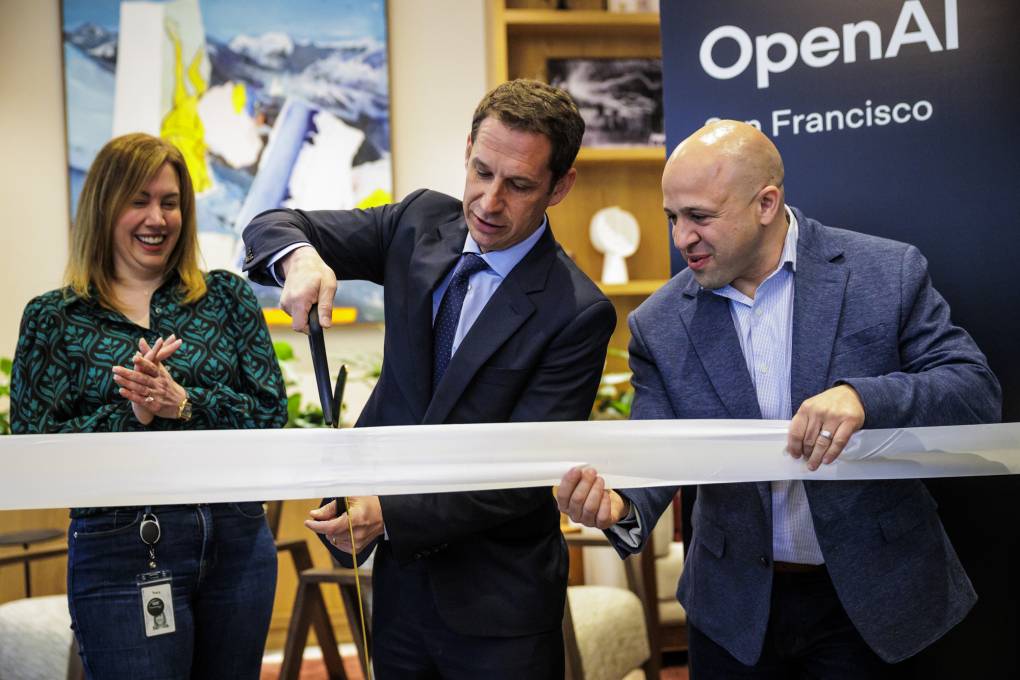
"caption": "OpenAI's Chief Commercial Officer Giancarlo Lionetti (right) helps San Francisco Mayor Daniel Lurie (center) cut a ceremonial ribbon at the opening of the new OpenAI headquarters in Mission Bay in San Francisco on March 10, 2025. The money flowing into local politics has deepened fractures in San Francisco’s Democratic Party, mirroring the national party’s struggle to unite.",
"credit": "Martin do Nascimento/KQED",
"altTag": null,
"description": null,
"imgSizes": {
"medium": {
"file": "https://cdn.kqed.org/wp-content/uploads/sites/10/2025/03/250310-TRUMP-SF-MD-02-KQED-800x533.jpg",
"width": 800,
"height": 533,
"mimeType": "image/jpeg"
},
"large": {
"file": "https://cdn.kqed.org/wp-content/uploads/sites/10/2025/03/250310-TRUMP-SF-MD-02-KQED-1020x680.jpg",
"width": 1020,
"height": 680,
"mimeType": "image/jpeg"
},
"thumbnail": {
"file": "https://cdn.kqed.org/wp-content/uploads/sites/10/2025/03/250310-TRUMP-SF-MD-02-KQED-160x107.jpg",
"width": 160,
"height": 107,
"mimeType": "image/jpeg"
},
"1536x1536": {
"file": "https://cdn.kqed.org/wp-content/uploads/sites/10/2025/03/250310-TRUMP-SF-MD-02-KQED-1536x1024.jpg",
"width": 1536,
"height": 1024,
"mimeType": "image/jpeg"
},
"post-thumbnail": {
"file": "https://cdn.kqed.org/wp-content/uploads/sites/10/2025/03/250310-TRUMP-SF-MD-02-KQED-672x372.jpg",
"width": 672,
"height": 372,
"mimeType": "image/jpeg"
},
"twentyfourteen-full-width": {
"file": "https://cdn.kqed.org/wp-content/uploads/sites/10/2025/03/250310-TRUMP-SF-MD-02-KQED-1038x576.jpg",
"width": 1038,
"height": 576,
"mimeType": "image/jpeg"
},
"full-width": {
"file": "https://cdn.kqed.org/wp-content/uploads/sites/10/2025/03/250310-TRUMP-SF-MD-02-KQED-1920x1280.jpg",
"width": 1920,
"height": 1280,
"mimeType": "image/jpeg"
},
"kqedFullSize": {
"file": "https://cdn.kqed.org/wp-content/uploads/sites/10/2025/03/250310-TRUMP-SF-MD-02-KQED.jpg",
"width": 2000,
"height": 1333
}
},
"isLoading": false,
"fetchFailed": false
},
"news_12032871": {
"type": "attachments",
"id": "news_12032871",
"meta": {
"index": "attachments_1716263798",
"site": "news",
"id": "12032871",
"found": true
},
"title": "People walk along the Great Highway in San Francisco on Feb. 14, 2024.",
"publishDate": 1742919583,
"status": "inherit",
"parent": 12032868,
"modified": 1742919593,
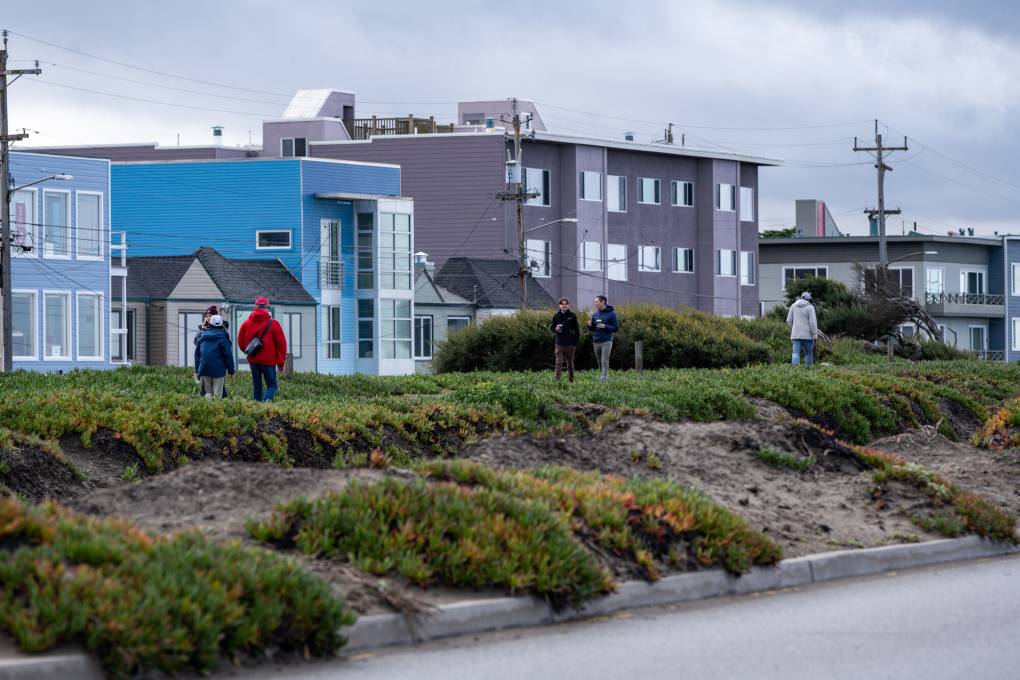
"caption": "People walk along the Great Highway in San Francisco on Feb. 14, 2024.",
"credit": "Beth LaBerge/KQED",
"altTag": null,
"description": null,
"imgSizes": {
"medium": {
"file": "https://cdn.kqed.org/wp-content/uploads/sites/10/2025/03/240214-CoastalCommission-33-BL_qed-1-800x533.jpg",
"width": 800,
"height": 533,
"mimeType": "image/jpeg"
},
"large": {
"file": "https://cdn.kqed.org/wp-content/uploads/sites/10/2025/03/240214-CoastalCommission-33-BL_qed-1-1020x680.jpg",
"width": 1020,
"height": 680,
"mimeType": "image/jpeg"
},
"thumbnail": {
"file": "https://cdn.kqed.org/wp-content/uploads/sites/10/2025/03/240214-CoastalCommission-33-BL_qed-1-160x107.jpg",
"width": 160,
"height": 107,
"mimeType": "image/jpeg"
},
"1536x1536": {
"file": "https://cdn.kqed.org/wp-content/uploads/sites/10/2025/03/240214-CoastalCommission-33-BL_qed-1-1536x1024.jpg",
"width": 1536,
"height": 1024,
"mimeType": "image/jpeg"
},
"post-thumbnail": {
"file": "https://cdn.kqed.org/wp-content/uploads/sites/10/2025/03/240214-CoastalCommission-33-BL_qed-1-672x372.jpg",
"width": 672,
"height": 372,
"mimeType": "image/jpeg"
},
"twentyfourteen-full-width": {
"file": "https://cdn.kqed.org/wp-content/uploads/sites/10/2025/03/240214-CoastalCommission-33-BL_qed-1-1038x576.jpg",
"width": 1038,
"height": 576,
"mimeType": "image/jpeg"
},
"full-width": {
"file": "https://cdn.kqed.org/wp-content/uploads/sites/10/2025/03/240214-CoastalCommission-33-BL_qed-1-1920x1280.jpg",
"width": 1920,
"height": 1280,
"mimeType": "image/jpeg"
},
"kqedFullSize": {
"file": "https://cdn.kqed.org/wp-content/uploads/sites/10/2025/03/240214-CoastalCommission-33-BL_qed-1.jpg",
"width": 2000,
"height": 1333
}
},
"isLoading": false,
"fetchFailed": false
},
"news_12032820": {
"type": "attachments",
"id": "news_12032820",
"meta": {
"index": "attachments_1716263798",
"site": "news",
"id": "12032820",
"found": true
},
"title": "National Institutes Of Health Cuts $4 Billion In Biomedical Research Funding",
"publishDate": 1742854143,
"status": "inherit",
"parent": 12032795,
"modified": 1744415960,
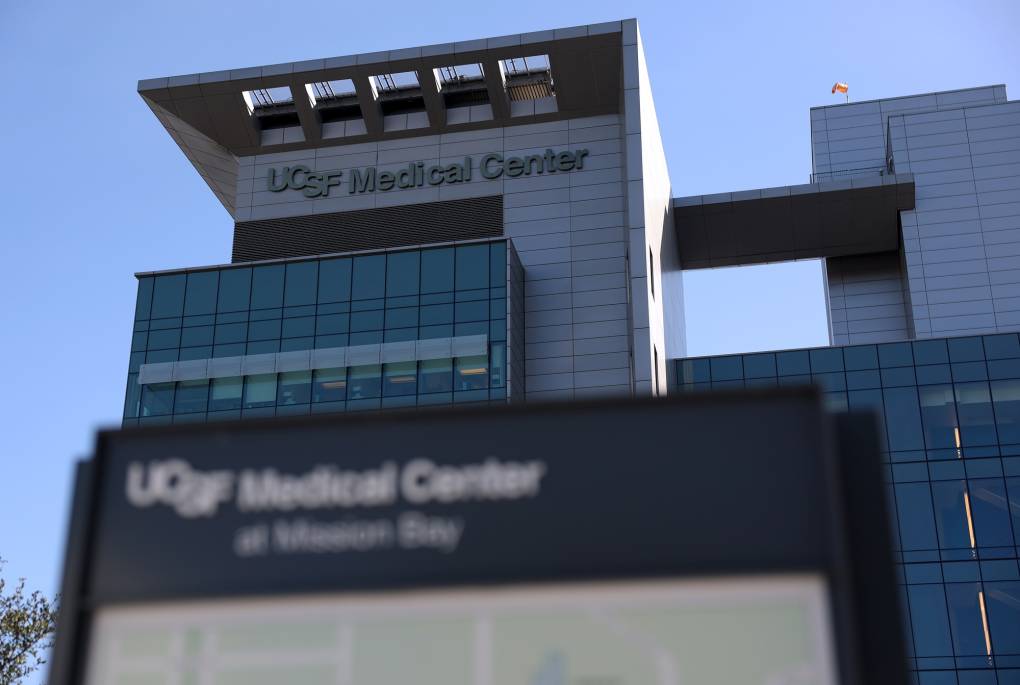
"caption": "UCSF Mission Bay campus on Feb. 10, 2025, in San Francisco, California. ",
"credit": "Justin Sullivan/Getty Images",
"altTag": null,
"description": null,
"imgSizes": {
"medium": {
"file": "https://cdn.kqed.org/wp-content/uploads/sites/10/2025/03/UCSFGetty-800x537.jpg",
"width": 800,
"height": 537,
"mimeType": "image/jpeg"
},
"large": {
"file": "https://cdn.kqed.org/wp-content/uploads/sites/10/2025/03/UCSFGetty-1020x685.jpg",
"width": 1020,
"height": 685,
"mimeType": "image/jpeg"
},
"thumbnail": {
"file": "https://cdn.kqed.org/wp-content/uploads/sites/10/2025/03/UCSFGetty-160x107.jpg",
"width": 160,
"height": 107,
"mimeType": "image/jpeg"
},
"1536x1536": {
"file": "https://cdn.kqed.org/wp-content/uploads/sites/10/2025/03/UCSFGetty-1536x1031.jpg",
"width": 1536,
"height": 1031,
"mimeType": "image/jpeg"
},
"post-thumbnail": {
"file": "https://cdn.kqed.org/wp-content/uploads/sites/10/2025/03/UCSFGetty-672x372.jpg",
"width": 672,
"height": 372,
"mimeType": "image/jpeg"
},
"twentyfourteen-full-width": {
"file": "https://cdn.kqed.org/wp-content/uploads/sites/10/2025/03/UCSFGetty-1038x576.jpg",
"width": 1038,
"height": 576,
"mimeType": "image/jpeg"
},
"full-width": {
"file": "https://cdn.kqed.org/wp-content/uploads/sites/10/2025/03/UCSFGetty-1920x1289.jpg",
"width": 1920,
"height": 1289,
"mimeType": "image/jpeg"
},
"kqedFullSize": {
"file": "https://cdn.kqed.org/wp-content/uploads/sites/10/2025/03/UCSFGetty.jpg",
"width": 2000,
"height": 1343
}
},
"isLoading": false,
"fetchFailed": false
},
"news_12029630": {
"type": "attachments",
"id": "news_12029630",
"meta": {
"index": "attachments_1716263798",
"site": "news",
"id": "12029630",
"found": true
},
"title": "20250227_TRANSGENDERSELFDEFENSE_GC-23-KQED",
"publishDate": 1741117440,
"status": "inherit",
"parent": 0,
"modified": 1741117644,
"caption": "Moss O’Neal, right, practices a technique during a self-defense training for transgender and gender nonconforming (TGNC) community members, at the Transgender District office, in San Francisco on Feb. 27, 2025. The training was organized by The Transgender District and Lyric SF.",
"credit": "Gina Castro/KQED",
"altTag": null,
"description": null,
"imgSizes": {
"medium": {
"file": "https://cdn.kqed.org/wp-content/uploads/sites/10/2025/03/20250227_TRANSGENDERSELFDEFENSE_GC-23-KQED-800x533.jpg",
"width": 800,
"height": 533,
"mimeType": "image/jpeg"
},
"large": {
"file": "https://cdn.kqed.org/wp-content/uploads/sites/10/2025/03/20250227_TRANSGENDERSELFDEFENSE_GC-23-KQED-1020x680.jpg",
"width": 1020,
"height": 680,
"mimeType": "image/jpeg"
},
"thumbnail": {
"file": "https://cdn.kqed.org/wp-content/uploads/sites/10/2025/03/20250227_TRANSGENDERSELFDEFENSE_GC-23-KQED-160x107.jpg",
"width": 160,
"height": 107,
"mimeType": "image/jpeg"
},
"1536x1536": {
"file": "https://cdn.kqed.org/wp-content/uploads/sites/10/2025/03/20250227_TRANSGENDERSELFDEFENSE_GC-23-KQED-1536x1024.jpg",
"width": 1536,
"height": 1024,
"mimeType": "image/jpeg"
},
"post-thumbnail": {
"file": "https://cdn.kqed.org/wp-content/uploads/sites/10/2025/03/20250227_TRANSGENDERSELFDEFENSE_GC-23-KQED-672x372.jpg",
"width": 672,
"height": 372,
"mimeType": "image/jpeg"
},
"twentyfourteen-full-width": {
"file": "https://cdn.kqed.org/wp-content/uploads/sites/10/2025/03/20250227_TRANSGENDERSELFDEFENSE_GC-23-KQED-1038x576.jpg",
"width": 1038,
"height": 576,
"mimeType": "image/jpeg"
},
"full-width": {
"file": "https://cdn.kqed.org/wp-content/uploads/sites/10/2025/03/20250227_TRANSGENDERSELFDEFENSE_GC-23-KQED-1920x1280.jpg",
"width": 1920,
"height": 1280,
"mimeType": "image/jpeg"
},
"kqedFullSize": {
"file": "https://cdn.kqed.org/wp-content/uploads/sites/10/2025/03/20250227_TRANSGENDERSELFDEFENSE_GC-23-KQED.jpg",
"width": 2000,
"height": 1333
}
},
"isLoading": false,
"fetchFailed": false
},
"news_11955692": {
"type": "attachments",
"id": "news_11955692",
"meta": {
"index": "attachments_1716263798",
"site": "news",
"id": "11955692",
"found": true
},
"title": "Pride Flag at San Francisco City Hall",
"publishDate": 1689298339,
"status": "inherit",
"parent": 11955680,
"modified": 1689314014,
"caption": "San Francisco-based attorney Courtney Liss advises businesses to make it very clear that they do want to provide services to LGBTQ+ communities, with signs and clear website notices. “I personally do not want to go anywhere where I'm not welcome,” she said.",
"credit": "JasonDoiy/Getty Images",
"altTag": "A rainbow flag hangs over a government building.",
"description": null,
"imgSizes": {
"medium": {
"file": "https://cdn.kqed.org/wp-content/uploads/sites/10/2023/07/GettyImages-972695008-800x533.jpg",
"width": 800,
"height": 533,
"mimeType": "image/jpeg"
},
"large": {
"file": "https://cdn.kqed.org/wp-content/uploads/sites/10/2023/07/GettyImages-972695008-1020x680.jpg",
"width": 1020,
"height": 680,
"mimeType": "image/jpeg"
},
"thumbnail": {
"file": "https://cdn.kqed.org/wp-content/uploads/sites/10/2023/07/GettyImages-972695008-160x107.jpg",
"width": 160,
"height": 107,
"mimeType": "image/jpeg"
},
"1536x1536": {
"file": "https://cdn.kqed.org/wp-content/uploads/sites/10/2023/07/GettyImages-972695008-1536x1024.jpg",
"width": 1536,
"height": 1024,
"mimeType": "image/jpeg"
},
"2048x2048": {
"file": "https://cdn.kqed.org/wp-content/uploads/sites/10/2023/07/GettyImages-972695008-2048x1365.jpg",
"width": 2048,
"height": 1365,
"mimeType": "image/jpeg"
},
"post-thumbnail": {
"file": "https://cdn.kqed.org/wp-content/uploads/sites/10/2023/07/GettyImages-972695008-672x372.jpg",
"width": 672,
"height": 372,
"mimeType": "image/jpeg"
},
"twentyfourteen-full-width": {
"file": "https://cdn.kqed.org/wp-content/uploads/sites/10/2023/07/GettyImages-972695008-1038x576.jpg",
"width": 1038,
"height": 576,
"mimeType": "image/jpeg"
},
"full-width": {
"file": "https://cdn.kqed.org/wp-content/uploads/sites/10/2023/07/GettyImages-972695008-1920x1280.jpg",
"width": 1920,
"height": 1280,
"mimeType": "image/jpeg"
},
"kqedFullSize": {
"file": "https://cdn.kqed.org/wp-content/uploads/sites/10/2023/07/GettyImages-972695008-scaled-e1742851504460.jpg",
"width": 2000,
"height": 1334
}
},
"isLoading": false,
"fetchFailed": false
},
"news_12032747": {
"type": "attachments",
"id": "news_12032747",
"meta": {
"index": "attachments_1716263798",
"site": "news",
"id": "12032747",
"found": true
},
"title": "heatwave",
"publishDate": 1742838898,
"status": "inherit",
"parent": 12032741,
"modified": 1742838936,
"caption": "Siblings enjoy the spray grounds at Prince Gateway Park in Santa Rosa as the temperature reached 100 degrees on July 11, 2024.",
"credit": "Gina Castro/KQED",
"altTag": null,
"description": null,
"imgSizes": {
"medium": {
"file": "https://cdn.kqed.org/wp-content/uploads/sites/10/2025/03/heatwave-800x546.jpg",
"width": 800,
"height": 546,
"mimeType": "image/jpeg"
},
"large": {
"file": "https://cdn.kqed.org/wp-content/uploads/sites/10/2025/03/heatwave-1020x696.jpg",
"width": 1020,
"height": 696,
"mimeType": "image/jpeg"
},
"thumbnail": {
"file": "https://cdn.kqed.org/wp-content/uploads/sites/10/2025/03/heatwave-160x109.jpg",
"width": 160,
"height": 109,
"mimeType": "image/jpeg"
},
"1536x1536": {
"file": "https://cdn.kqed.org/wp-content/uploads/sites/10/2025/03/heatwave-1536x1048.jpg",
"width": 1536,
"height": 1048,
"mimeType": "image/jpeg"
},
"post-thumbnail": {
"file": "https://cdn.kqed.org/wp-content/uploads/sites/10/2025/03/heatwave-672x372.jpg",
"width": 672,
"height": 372,
"mimeType": "image/jpeg"
},
"twentyfourteen-full-width": {
"file": "https://cdn.kqed.org/wp-content/uploads/sites/10/2025/03/heatwave-1038x576.jpg",
"width": 1038,
"height": 576,
"mimeType": "image/jpeg"
},
"full-width": {
"file": "https://cdn.kqed.org/wp-content/uploads/sites/10/2025/03/heatwave-1920x1309.jpg",
"width": 1920,
"height": 1309,
"mimeType": "image/jpeg"
},
"kqedFullSize": {
"file": "https://cdn.kqed.org/wp-content/uploads/sites/10/2025/03/heatwave.jpg",
"width": 2000,
"height": 1364
}
},
"isLoading": false,
"fetchFailed": false
},
"news_12032511": {
"type": "attachments",
"id": "news_12032511",
"meta": {
"index": "attachments_1716263798",
"site": "news",
"id": "12032511",
"found": true
},
"title": "250320-JAPANESEAMERICANSDENOUNCE-03-BL-KQED",
"publishDate": 1742590682,
"status": "inherit",
"parent": 0,
"modified": 1742590695,
"caption": "Joyce Nakamura, from the Japanese American Citizens League, speaks at the Japanese Cultural and Community Center in San Francisco on March 20, 2025, during a press conference condemning the use of the Alien Enemies Act to target immigrants.",
"credit": "Beth LaBerge/KQED",
"altTag": null,
"description": null,
"imgSizes": {
"medium": {
"file": "https://cdn.kqed.org/wp-content/uploads/sites/10/2025/03/250320-JAPANESEAMERICANSDENOUNCE-03-BL-KQED-800x533.jpg",
"width": 800,
"height": 533,
"mimeType": "image/jpeg"
},
"large": {
"file": "https://cdn.kqed.org/wp-content/uploads/sites/10/2025/03/250320-JAPANESEAMERICANSDENOUNCE-03-BL-KQED-1020x680.jpg",
"width": 1020,
"height": 680,
"mimeType": "image/jpeg"
},
"thumbnail": {
"file": "https://cdn.kqed.org/wp-content/uploads/sites/10/2025/03/250320-JAPANESEAMERICANSDENOUNCE-03-BL-KQED-160x107.jpg",
"width": 160,
"height": 107,
"mimeType": "image/jpeg"
},
"1536x1536": {
"file": "https://cdn.kqed.org/wp-content/uploads/sites/10/2025/03/250320-JAPANESEAMERICANSDENOUNCE-03-BL-KQED-1536x1024.jpg",
"width": 1536,
"height": 1024,
"mimeType": "image/jpeg"
},
"post-thumbnail": {
"file": "https://cdn.kqed.org/wp-content/uploads/sites/10/2025/03/250320-JAPANESEAMERICANSDENOUNCE-03-BL-KQED-672x372.jpg",
"width": 672,
"height": 372,
"mimeType": "image/jpeg"
},
"twentyfourteen-full-width": {
"file": "https://cdn.kqed.org/wp-content/uploads/sites/10/2025/03/250320-JAPANESEAMERICANSDENOUNCE-03-BL-KQED-1038x576.jpg",
"width": 1038,
"height": 576,
"mimeType": "image/jpeg"
},
"full-width": {
"file": "https://cdn.kqed.org/wp-content/uploads/sites/10/2025/03/250320-JAPANESEAMERICANSDENOUNCE-03-BL-KQED-1920x1280.jpg",
"width": 1920,
"height": 1280,
"mimeType": "image/jpeg"
},
"kqedFullSize": {
"file": "https://cdn.kqed.org/wp-content/uploads/sites/10/2025/03/250320-JAPANESEAMERICANSDENOUNCE-03-BL-KQED.jpg",
"width": 2000,
"height": 1333
}
},
"isLoading": false,
"fetchFailed": false
},
"news_12032245": {
"type": "attachments",
"id": "news_12032245",
"meta": {
"index": "attachments_1716263798",
"site": "news",
"id": "12032245",
"found": true
},
"title": "240903-OverdoseResponse-42-BL_qed",
"publishDate": 1742493644,
"status": "inherit",
"parent": 12032239,
"modified": 1742493658,
"caption": "Counselor Chantel Hernandez-Coleman (left) and paramedic Isaac James, members of the Street Overdose Response Team, speak with a woman sitting in the Tenderloin in San Francisco on Sept. 3, 2024.",
"credit": "Beth LaBerge/KQED",
"altTag": null,
"description": null,
"imgSizes": {
"medium": {
"file": "https://cdn.kqed.org/wp-content/uploads/sites/10/2025/03/240903-OverdoseResponse-42-BL_qed-800x533.jpg",
"width": 800,
"height": 533,
"mimeType": "image/jpeg"
},
"large": {
"file": "https://cdn.kqed.org/wp-content/uploads/sites/10/2025/03/240903-OverdoseResponse-42-BL_qed-1020x680.jpg",
"width": 1020,
"height": 680,
"mimeType": "image/jpeg"
},
"thumbnail": {
"file": "https://cdn.kqed.org/wp-content/uploads/sites/10/2025/03/240903-OverdoseResponse-42-BL_qed-160x107.jpg",
"width": 160,
"height": 107,
"mimeType": "image/jpeg"
},
"1536x1536": {
"file": "https://cdn.kqed.org/wp-content/uploads/sites/10/2025/03/240903-OverdoseResponse-42-BL_qed-1536x1024.jpg",
"width": 1536,
"height": 1024,
"mimeType": "image/jpeg"
},
"post-thumbnail": {
"file": "https://cdn.kqed.org/wp-content/uploads/sites/10/2025/03/240903-OverdoseResponse-42-BL_qed-672x372.jpg",
"width": 672,
"height": 372,
"mimeType": "image/jpeg"
},
"twentyfourteen-full-width": {
"file": "https://cdn.kqed.org/wp-content/uploads/sites/10/2025/03/240903-OverdoseResponse-42-BL_qed-1038x576.jpg",
"width": 1038,
"height": 576,
"mimeType": "image/jpeg"
},
"full-width": {
"file": "https://cdn.kqed.org/wp-content/uploads/sites/10/2025/03/240903-OverdoseResponse-42-BL_qed-1920x1280.jpg",
"width": 1920,
"height": 1280,
"mimeType": "image/jpeg"
},
"kqedFullSize": {
"file": "https://cdn.kqed.org/wp-content/uploads/sites/10/2025/03/240903-OverdoseResponse-42-BL_qed.jpg",
"width": 2000,
"height": 1333
}
},
"isLoading": false,
"fetchFailed": false
},
"news_12032139": {
"type": "attachments",
"id": "news_12032139",
"meta": {
"index": "attachments_1716263798",
"site": "news",
"id": "12032139",
"found": true
},
"title": "Speed cameras on Geary St. in San Francisco on March 19, 2025.",
"publishDate": 1742423076,
"status": "inherit",
"parent": 12041243,
"modified": 1748042683,
"caption": "A speed camera on Geary Street in San Francisco on March 19, 2025.",
"credit": "Martin do Nascimento/KQED",
"altTag": null,
"description": null,
"imgSizes": {
"medium": {
"file": "https://cdn.kqed.org/wp-content/uploads/sites/10/2025/03/250319-SF-SPEED-CAMERAS-MD-02-KQED-800x533.jpg",
"width": 800,
"height": 533,
"mimeType": "image/jpeg"
},
"large": {
"file": "https://cdn.kqed.org/wp-content/uploads/sites/10/2025/03/250319-SF-SPEED-CAMERAS-MD-02-KQED-1020x680.jpg",
"width": 1020,
"height": 680,
"mimeType": "image/jpeg"
},
"thumbnail": {
"file": "https://cdn.kqed.org/wp-content/uploads/sites/10/2025/03/250319-SF-SPEED-CAMERAS-MD-02-KQED-160x107.jpg",
"width": 160,
"height": 107,
"mimeType": "image/jpeg"
},
"1536x1536": {
"file": "https://cdn.kqed.org/wp-content/uploads/sites/10/2025/03/250319-SF-SPEED-CAMERAS-MD-02-KQED-1536x1024.jpg",
"width": 1536,
"height": 1024,
"mimeType": "image/jpeg"
},
"post-thumbnail": {
"file": "https://cdn.kqed.org/wp-content/uploads/sites/10/2025/03/250319-SF-SPEED-CAMERAS-MD-02-KQED-672x372.jpg",
"width": 672,
"height": 372,
"mimeType": "image/jpeg"
},
"twentyfourteen-full-width": {
"file": "https://cdn.kqed.org/wp-content/uploads/sites/10/2025/03/250319-SF-SPEED-CAMERAS-MD-02-KQED-1038x576.jpg",
"width": 1038,
"height": 576,
"mimeType": "image/jpeg"
},
"full-width": {
"file": "https://cdn.kqed.org/wp-content/uploads/sites/10/2025/03/250319-SF-SPEED-CAMERAS-MD-02-KQED-1920x1280.jpg",
"width": 1920,
"height": 1280,
"mimeType": "image/jpeg"
},
"kqedFullSize": {
"file": "https://cdn.kqed.org/wp-content/uploads/sites/10/2025/03/250319-SF-SPEED-CAMERAS-MD-02-KQED.jpg",
"width": 2000,
"height": 1333
}
},
"isLoading": false,
"fetchFailed": false
},
"news_12032255": {
"type": "attachments",
"id": "news_12032255",
"meta": {
"index": "attachments_1716263798",
"site": "news",
"id": "12032255",
"found": true
},
"title": "Enthusiasts Gather For Mass Pot-Smoking Celebration",
"publishDate": 1742495030,
"status": "inherit",
"parent": 12080068,
"modified": 1776283705,
"caption": "A cloud of smoke rests over the heads of a group of people during a 420 Day celebration on \"Hippie Hill\" in Golden Gate Park April 20, 2010, in San Francisco, California. ",
"credit": "Justin Sullivan/Getty Images",
"altTag": null,
"description": null,
"imgSizes": {
"medium": {
"file": "https://cdn.kqed.org/wp-content/uploads/sites/10/2025/03/98579521_qed-800x533.jpg",
"width": 800,
"height": 533,
"mimeType": "image/jpeg"
},
"large": {
"file": "https://cdn.kqed.org/wp-content/uploads/sites/10/2025/03/98579521_qed-1020x680.jpg",
"width": 1020,
"height": 680,
"mimeType": "image/jpeg"
},
"thumbnail": {
"file": "https://cdn.kqed.org/wp-content/uploads/sites/10/2025/03/98579521_qed-160x107.jpg",
"width": 160,
"height": 107,
"mimeType": "image/jpeg"
},
"1536x1536": {
"file": "https://cdn.kqed.org/wp-content/uploads/sites/10/2025/03/98579521_qed-1536x1024.jpg",
"width": 1536,
"height": 1024,
"mimeType": "image/jpeg"
},
"post-thumbnail": {
"file": "https://cdn.kqed.org/wp-content/uploads/sites/10/2025/03/98579521_qed-672x372.jpg",
"width": 672,
"height": 372,
"mimeType": "image/jpeg"
},
"twentyfourteen-full-width": {
"file": "https://cdn.kqed.org/wp-content/uploads/sites/10/2025/03/98579521_qed-1038x576.jpg",
"width": 1038,
"height": 576,
"mimeType": "image/jpeg"
},
"full-width": {
"file": "https://cdn.kqed.org/wp-content/uploads/sites/10/2025/03/98579521_qed-1920x1280.jpg",
"width": 1920,
"height": 1280,
"mimeType": "image/jpeg"
},
"kqedFullSize": {
"file": "https://cdn.kqed.org/wp-content/uploads/sites/10/2025/03/98579521_qed.jpg",
"width": 2000,
"height": 1333
}
},
"isLoading": false,
"fetchFailed": false
},
"news_12032159": {
"type": "attachments",
"id": "news_12032159",
"meta": {
"index": "attachments_1716263798",
"site": "news",
"id": "12032159",
"found": true
},
"title": "240410-BilalMahmood-041-BL_qed",
"publishDate": 1742425449,
"status": "inherit",
"parent": 12032039,
"modified": 1742425625,
"caption": "San Francisco Supervisor Bilal Mahmood poses for a portrait after a press conference about his strategy to end open-air drug markets in San Francisco on April 10, 2024.",
"credit": "Beth LaBerge/KQED",
"altTag": null,
"description": null,
"imgSizes": {
"medium": {
"file": "https://cdn.kqed.org/wp-content/uploads/sites/10/2025/03/240410-BilalMahmood-041-BL_qed-800x533.jpg",
"width": 800,
"height": 533,
"mimeType": "image/jpeg"
},
"large": {
"file": "https://cdn.kqed.org/wp-content/uploads/sites/10/2025/03/240410-BilalMahmood-041-BL_qed-1020x680.jpg",
"width": 1020,
"height": 680,
"mimeType": "image/jpeg"
},
"thumbnail": {
"file": "https://cdn.kqed.org/wp-content/uploads/sites/10/2025/03/240410-BilalMahmood-041-BL_qed-160x107.jpg",
"width": 160,
"height": 107,
"mimeType": "image/jpeg"
},
"1536x1536": {
"file": "https://cdn.kqed.org/wp-content/uploads/sites/10/2025/03/240410-BilalMahmood-041-BL_qed-1536x1024.jpg",
"width": 1536,
"height": 1024,
"mimeType": "image/jpeg"
},
"post-thumbnail": {
"file": "https://cdn.kqed.org/wp-content/uploads/sites/10/2025/03/240410-BilalMahmood-041-BL_qed-672x372.jpg",
"width": 672,
"height": 372,
"mimeType": "image/jpeg"
},
"twentyfourteen-full-width": {
"file": "https://cdn.kqed.org/wp-content/uploads/sites/10/2025/03/240410-BilalMahmood-041-BL_qed-1038x576.jpg",
"width": 1038,
"height": 576,
"mimeType": "image/jpeg"
},
"full-width": {
"file": "https://cdn.kqed.org/wp-content/uploads/sites/10/2025/03/240410-BilalMahmood-041-BL_qed-1920x1280.jpg",
"width": 1920,
"height": 1280,
"mimeType": "image/jpeg"
},
"kqedFullSize": {
"file": "https://cdn.kqed.org/wp-content/uploads/sites/10/2025/03/240410-BilalMahmood-041-BL_qed.jpg",
"width": 2000,
"height": 1333
}
},
"isLoading": false,
"fetchFailed": false
},
"news_12031870": {
"type": "attachments",
"id": "news_12031870",
"meta": {
"index": "attachments_1716263798",
"site": "news",
"id": "12031870",
"found": true
},
"title": "US-FRAUD-AUTOMOBILE-INTERNET-MUSK-TWITTER",
"publishDate": 1742324979,
"status": "inherit",
"parent": 12081802,
"modified": 1777579953,
"caption": "The exterior of the Phillip Burton Federal Building and U.S. Courthouse in San Francisco, California, on Jan. 20, 2019. ",
"credit": "Patrick T. Fallon/AFP via Getty Images",
"altTag": null,
"description": null,
"imgSizes": {
"medium": {
"file": "https://cdn.kqed.org/wp-content/uploads/sites/10/2025/03/GettyImages-1246387515-800x533.jpg",
"width": 800,
"height": 533,
"mimeType": "image/jpeg"
},
"large": {
"file": "https://cdn.kqed.org/wp-content/uploads/sites/10/2025/03/GettyImages-1246387515-1020x680.jpg",
"width": 1020,
"height": 680,
"mimeType": "image/jpeg"
},
"thumbnail": {
"file": "https://cdn.kqed.org/wp-content/uploads/sites/10/2025/03/GettyImages-1246387515-160x107.jpg",
"width": 160,
"height": 107,
"mimeType": "image/jpeg"
},
"1536x1536": {
"file": "https://cdn.kqed.org/wp-content/uploads/sites/10/2025/03/GettyImages-1246387515-1536x1024.jpg",
"width": 1536,
"height": 1024,
"mimeType": "image/jpeg"
},
"2048x2048": {
"file": "https://cdn.kqed.org/wp-content/uploads/sites/10/2025/03/GettyImages-1246387515-2048x1365.jpg",
"width": 2048,
"height": 1365,
"mimeType": "image/jpeg"
},
"post-thumbnail": {
"file": "https://cdn.kqed.org/wp-content/uploads/sites/10/2025/03/GettyImages-1246387515-672x372.jpg",
"width": 672,
"height": 372,
"mimeType": "image/jpeg"
},
"twentyfourteen-full-width": {
"file": "https://cdn.kqed.org/wp-content/uploads/sites/10/2025/03/GettyImages-1246387515-1038x576.jpg",
"width": 1038,
"height": 576,
"mimeType": "image/jpeg"
},
"full-width": {
"file": "https://cdn.kqed.org/wp-content/uploads/sites/10/2025/03/GettyImages-1246387515-1920x1280.jpg",
"width": 1920,
"height": 1280,
"mimeType": "image/jpeg"
},
"kqedFullSize": {
"file": "https://cdn.kqed.org/wp-content/uploads/sites/10/2025/03/GettyImages-1246387515-scaled-e1742325160899.jpg",
"width": 2000,
"height": 1334
}
},
"isLoading": false,
"fetchFailed": false
}
},
"audioPlayerReducer": {
"postId": "stream_live",
"isPaused": true,
"isPlaying": false,
"pfsActive": false,
"pledgeModalIsOpen": true,
"playerDrawerIsOpen": false,
"liveAudioPlayStartedAt": 0,
"liveAudioPlayContext": ""
},
"authorsReducer": {
"danbrekke": {
"type": "authors",
"id": "222",
"meta": {
"index": "authors_1716337520",
"id": "222",
"found": true
},
"name": "Dan Brekke",
"firstName": "Dan",
"lastName": "Brekke",
"slug": "danbrekke",
"email": "dbrekke@kqed.org",
"display_author_email": true,
"staff_mastheads": [
"news",
"science"
],
"title": "KQED Editor and Reporter",
"bio": "Dan Brekke is a reporter and editor for KQED News, responsible for coverage of topics ranging from California water issues to the Bay Area's transportation challenges. In a newsroom career that began in Chicago in 1972, Dan has worked for \u003cem>The San Francisco Examiner,\u003c/em> Wired and TechTV and has been published in The New York Times, The New York Times Magazine, Business 2.0, Salon and elsewhere.\r\n\r\nSince joining KQED in 2007, Dan has reported, edited and produced both radio and online features and breaking news pieces. He has shared as both editor and reporter in four Society of Professional Journalists Norcal Excellence in Journalism awards and one Edward R. Murrow regional award. He was chosen for a spring 2017 residency at the Mesa Refuge to advance his research on California salmon.\r\n\r\nEmail Dan at: \u003ca href=\"mailto:dbrekke@kqed.org\">dbrekke@kqed.org\u003c/a>\r\n\r\n\u003cstrong>Twitter:\u003c/strong> \u003ca href=\"https://twitter.com/danbrekke\" rel=\"noopener noreferrer\">twitter.com/danbrekke\u003c/a>\r\n\u003cstrong>Facebook:\u003c/strong> \u003ca href=\"https://www.facebook.com/danbrekke\" rel=\"noopener noreferrer\">www.facebook.com/danbrekke\u003c/a>\r\n\u003cstrong>LinkedIn:\u003c/strong> \u003ca href=\"https://www.linkedin.com/in/danbrekke\" rel=\"noopener noreferrer\">www.linkedin.com/in/danbrekke\u003c/a>",
"avatar": "https://secure.gravatar.com/avatar/8f1f0d2a978fb3b23426c922c7e2af558fa36905b49c4ce76a97dc3c72d27226?s=600&d=mm&r=g",
"twitter": "danbrekke",
"bluesky": null,
"facebook": null,
"instagram": "https://www.instagram.com/dan.brekke/",
"linkedin": "https://www.linkedin.com/in/danbrekke/",
"sites": [
{
"site": "news",
"roles": [
"administrator",
"create_posts"
]
},
{
"site": "stateofhealth",
"roles": [
"editor"
]
},
{
"site": "science",
"roles": [
"editor"
]
},
{
"site": "quest",
"roles": [
"contributor"
]
},
{
"site": "food",
"roles": [
"contributor"
]
},
{
"site": "forum",
"roles": [
"contributor"
]
},
{
"site": "elections",
"roles": [
"editor"
]
},
{
"site": "liveblog",
"roles": [
"editor"
]
}
],
"headData": {
"title": "Dan Brekke | KQED",
"description": "KQED Editor and Reporter",
"ogImgSrc": "https://secure.gravatar.com/avatar/8f1f0d2a978fb3b23426c922c7e2af558fa36905b49c4ce76a97dc3c72d27226?s=600&d=mm&r=g",
"twImgSrc": "https://secure.gravatar.com/avatar/8f1f0d2a978fb3b23426c922c7e2af558fa36905b49c4ce76a97dc3c72d27226?s=600&d=mm&r=g"
},
"isLoading": false,
"link": "/author/danbrekke"
},
"scottshafer": {
"type": "authors",
"id": "255",
"meta": {
"index": "authors_1716337520",
"id": "255",
"found": true
},
"name": "Scott Shafer",
"firstName": "Scott",
"lastName": "Shafer",
"slug": "scottshafer",
"email": "sshafer@kqed.org",
"display_author_email": false,
"staff_mastheads": [
"news"
],
"title": "KQED Contributor",
"bio": "Scott Shafer is the senior politics correspondent with the KQED Politics and Government desk. He is co-host of \u003cem>Political Breakdown\u003c/em>, the award-winning radio show and podcast with a personal take on the world of politics. Scott came to KQED in 1998 to host the statewide \u003cem>California Report\u003c/em>. Prior to that he had extended stints in politics and government. He uses that inside experience at KQED in his, reporting, hosting and analysis for the politics desk. Scott recently completed a 5-part podcast titled \u003cem>The Speaker\u003c/em>, examining Rep. Nancy Pelosi's life and legacy. Previously he collaborated on \u003cem>Political Breakdown\u003c/em> and on \u003cem>The Political Mind of Jerry Brown\u003c/em>, an eight-part series about the life and extraordinary political career of the former governor. For fun, he plays water polo and swims with the San Francisco Tsunami.",
"avatar": "https://secure.gravatar.com/avatar/a269f2db8e99b39bacd3dfb517e1aea56c8d9706cde1d375abfd9fba57eede2c?s=600&d=blank&r=g",
"twitter": "scottshafer",
"bluesky": null,
"facebook": null,
"instagram": null,
"linkedin": null,
"sites": [
{
"site": "news",
"roles": [
"editor"
]
},
{
"site": "stateofhealth",
"roles": [
"author"
]
},
{
"site": "science",
"roles": [
"author"
]
},
{
"site": "forum",
"roles": [
"subscriber"
]
},
{
"site": "liveblog",
"roles": [
"author"
]
}
],
"headData": {
"title": "Scott Shafer | KQED",
"description": "KQED Contributor",
"ogImgSrc": "https://secure.gravatar.com/avatar/a269f2db8e99b39bacd3dfb517e1aea56c8d9706cde1d375abfd9fba57eede2c?s=600&d=blank&r=g",
"twImgSrc": "https://secure.gravatar.com/avatar/a269f2db8e99b39bacd3dfb517e1aea56c8d9706cde1d375abfd9fba57eede2c?s=600&d=blank&r=g"
},
"isLoading": false,
"link": "/author/scottshafer"
},
"matthewgreen": {
"type": "authors",
"id": "1263",
"meta": {
"index": "authors_1716337520",
"id": "1263",
"found": true
},
"name": "Matthew Green",
"firstName": "Matthew",
"lastName": "Green",
"slug": "matthewgreen",
"email": "mgreen@kqed.org",
"display_author_email": false,
"staff_mastheads": [],
"title": "KQED Editor/Reporter",
"bio": "Matthew Green is a digital media producer for KQED News. He previously produced \u003ca href=\"http://www.kqed.org/lowdown\">The Lowdown\u003c/a>, KQED’s multimedia news education blog. Matthew's written for numerous Bay Area publications, including the Oakland Tribune and San Francisco Chronicle. He also taught journalism classes at Fremont High School in East Oakland.\r\n\r\nEmail: mgreen@kqed.org; Twitter: @MGreenKQED",
"avatar": "https://secure.gravatar.com/avatar/3bf498d1267ca02c8494f33d8cfc575e?s=600&d=blank&r=g",
"twitter": "MGreenKQED",
"facebook": null,
"instagram": null,
"linkedin": null,
"sites": [
{
"site": "news",
"roles": []
},
{
"site": "lowdown",
"roles": []
},
{
"site": "science",
"roles": []
},
{
"site": "education",
"roles": []
},
{
"site": "quest",
"roles": []
},
{
"site": "liveblog",
"roles": []
}
],
"headData": {
"title": "Matthew Green | KQED",
"description": "KQED Editor/Reporter",
"ogImgSrc": "https://secure.gravatar.com/avatar/3bf498d1267ca02c8494f33d8cfc575e?s=600&d=blank&r=g",
"twImgSrc": "https://secure.gravatar.com/avatar/3bf498d1267ca02c8494f33d8cfc575e?s=600&d=blank&r=g"
},
"isLoading": false,
"link": "/author/matthewgreen"
},
"mlagos": {
"type": "authors",
"id": "3239",
"meta": {
"index": "authors_1716337520",
"id": "3239",
"found": true
},
"name": "Marisa Lagos",
"firstName": "Marisa",
"lastName": "Lagos",
"slug": "mlagos",
"email": "mlagos@kqed.org",
"display_author_email": false,
"staff_mastheads": [
"news"
],
"title": "KQED Contributor",
"bio": "Marisa Lagos is a correspondent for KQED’s California Politics and Government Desk and co-hosts the award-winning show and podcast, Political Breakdown. At KQED, Lagos also conducts reporting, analysis and investigations into state, local and national politics for radio, TV, online and onstage. In 2022, she and co-host, Scott Shafer, moderated the only gubernatorial debate in California. In 2020, the \u003ci>Washington Post\u003c/i> named her one of the top political journalists in California; she was nominated for a Peabody and won several other awards for her work investigating the 2017 California wildfires. She has worked at the \u003ci>San Francisco Chronicle\u003c/i>, \u003ci>San Francisco Examiner\u003c/i> and \u003ci>Los Angeles Times\u003c/i>. A UC Santa Barbara graduate, she lives in San Francisco with her two sons and husband.",
"avatar": "https://secure.gravatar.com/avatar/a261a0d3696fc066871ef96b85b5e7d2?s=600&d=blank&r=g",
"twitter": "@mlagos",
"facebook": null,
"instagram": null,
"linkedin": null,
"sites": [
{
"site": "arts",
"roles": [
"author"
]
},
{
"site": "news",
"roles": [
"editor"
]
},
{
"site": "science",
"roles": [
"editor"
]
},
{
"site": "forum",
"roles": [
"author"
]
},
{
"site": "liveblog",
"roles": [
"author"
]
}
],
"headData": {
"title": "Marisa Lagos | KQED",
"description": "KQED Contributor",
"ogImgSrc": "https://secure.gravatar.com/avatar/a261a0d3696fc066871ef96b85b5e7d2?s=600&d=blank&r=g",
"twImgSrc": "https://secure.gravatar.com/avatar/a261a0d3696fc066871ef96b85b5e7d2?s=600&d=blank&r=g"
},
"isLoading": false,
"link": "/author/mlagos"
},
"clei": {
"type": "authors",
"id": "8617",
"meta": {
"index": "authors_1716337520",
"id": "8617",
"found": true
},
"name": "Cecilia Lei",
"firstName": "Cecilia",
"lastName": "Lei",
"slug": "clei",
"email": "clei@KQED.org",
"display_author_email": false,
"staff_mastheads": [],
"title": "KQED Contributor",
"bio": "Cecilia Lei is an on-call host and producer for KQED News and Podcasts. Previously, she was the executive producer and host of the San Francisco Chronicle's daily news podcast, 'Fifth and Mission'. Cecilia is a graduate of UC Berkeley’s Graduate School of Journalism and the former president of the Asian American Journalists Association San Francisco Bay Area chapter.",
"avatar": "https://secure.gravatar.com/avatar/e3a76b2dc2f3909307069a6040ca5baa74612590c1d837c8bff44fbe2294ed41?s=600&d=blank&r=g",
"twitter": null,
"bluesky": null,
"facebook": null,
"instagram": null,
"linkedin": null,
"sites": [
{
"site": "arts",
"roles": [
"contributor"
]
},
{
"site": "news",
"roles": [
"read_private_posts",
"editor"
]
},
{
"site": "about",
"roles": [
"editor"
]
}
],
"headData": {
"title": "Cecilia Lei | KQED",
"description": "KQED Contributor",
"ogImgSrc": "https://secure.gravatar.com/avatar/e3a76b2dc2f3909307069a6040ca5baa74612590c1d837c8bff44fbe2294ed41?s=600&d=blank&r=g",
"twImgSrc": "https://secure.gravatar.com/avatar/e3a76b2dc2f3909307069a6040ca5baa74612590c1d837c8bff44fbe2294ed41?s=600&d=blank&r=g"
},
"isLoading": false,
"link": "/author/clei"
},
"btaylor": {
"type": "authors",
"id": "11365",
"meta": {
"index": "authors_1716337520",
"id": "11365",
"found": true
},
"name": "Bianca Taylor",
"firstName": "Bianca",
"lastName": "Taylor",
"slug": "btaylor",
"email": "btaylor@KQED.org",
"display_author_email": false,
"staff_mastheads": [
"news"
],
"title": "Host and Producer ",
"bio": "Bianca Taylor is a news producer and host of KQED's The Latest podcast.\r\n\r\nHer work with KQED has been honored by the Society of Professional Journalists NorCal, the Webby's, the Regional Murrow Awards, and ONA. She has also worked with NPR, the BBC World Service, and the Washington Post Creative Group.\r\n\r\nBianca is represented by SAG-AFTRA.",
"avatar": "https://secure.gravatar.com/avatar/6b9d3f6552dd10470c5d1c2e58cfe717?s=600&d=blank&r=g",
"twitter": "SoundsLkeBianca",
"facebook": null,
"instagram": null,
"linkedin": null,
"sites": [
{
"site": "arts",
"roles": [
"editor"
]
},
{
"site": "news",
"roles": [
"edit_others_posts",
"editor"
]
},
{
"site": "pop",
"roles": [
"editor"
]
},
{
"site": "bayareabites",
"roles": [
"author"
]
},
{
"site": "science",
"roles": [
"editor"
]
},
{
"site": "forum",
"roles": [
"editor"
]
},
{
"site": "radio",
"roles": [
"editor"
]
},
{
"site": "podcasts",
"roles": [
"editor"
]
}
],
"headData": {
"title": "Bianca Taylor | KQED",
"description": "Host and Producer ",
"ogImgSrc": "https://secure.gravatar.com/avatar/6b9d3f6552dd10470c5d1c2e58cfe717?s=600&d=blank&r=g",
"twImgSrc": "https://secure.gravatar.com/avatar/6b9d3f6552dd10470c5d1c2e58cfe717?s=600&d=blank&r=g"
},
"isLoading": false,
"link": "/author/btaylor"
},
"adahlstromeckman": {
"type": "authors",
"id": "11785",
"meta": {
"index": "authors_1716337520",
"id": "11785",
"found": true
},
"name": "Azul Dahlstrom-Eckman",
"firstName": "Azul",
"lastName": "Dahlstrom-Eckman",
"slug": "adahlstromeckman",
"email": "adahlstrom-eckman@kqed.org",
"display_author_email": true,
"staff_mastheads": [],
"title": "Reporter",
"bio": "Azul is a reporter for KQED focusing on transportation and features. He joined KQED in 2021 as an alumnus of KALW's Audio Academy radio journalism training program.",
"avatar": "https://secure.gravatar.com/avatar/9cb750298435add7815a777f55bf1f46845c1386bb8452555c60a7b820b5aba3?s=600&d=blank&r=g",
"twitter": "@zuliemann",
"bluesky": "@azul415.bsky.social",
"facebook": null,
"instagram": null,
"linkedin": null,
"sites": [
{
"site": "arts",
"roles": [
"editor"
]
},
{
"site": "news",
"roles": [
"editor"
]
},
{
"site": "science",
"roles": [
"editor"
]
},
{
"site": "liveblog",
"roles": [
"author"
]
}
],
"headData": {
"title": "Azul Dahlstrom-Eckman | KQED",
"description": "Reporter",
"ogImgSrc": "https://secure.gravatar.com/avatar/9cb750298435add7815a777f55bf1f46845c1386bb8452555c60a7b820b5aba3?s=600&d=blank&r=g",
"twImgSrc": "https://secure.gravatar.com/avatar/9cb750298435add7815a777f55bf1f46845c1386bb8452555c60a7b820b5aba3?s=600&d=blank&r=g"
},
"isLoading": false,
"link": "/author/adahlstromeckman"
},
"sjohnson": {
"type": "authors",
"id": "11840",
"meta": {
"index": "authors_1716337520",
"id": "11840",
"found": true
},
"name": "Sydney Johnson",
"firstName": "Sydney",
"lastName": "Johnson",
"slug": "sjohnson",
"email": "sjohnson@kqed.org",
"display_author_email": false,
"staff_mastheads": [
"news"
],
"title": "KQED Reporter",
"bio": "Sydney Johnson is a general assignment reporter at KQED. She previously reported on public health and city government at the San Francisco Examiner, and before that, she covered statewide education policy for EdSource. Her reporting has won multiple local, state and national awards. Sydney is a graduate of the University of California, Berkeley and lives in San Francisco.",
"avatar": "https://secure.gravatar.com/avatar/97855f2719b72ad6190b7c535fe642c8?s=600&d=blank&r=g",
"twitter": "sydneyfjohnson",
"facebook": null,
"instagram": null,
"linkedin": null,
"sites": [
{
"site": "news",
"roles": [
"editor"
]
}
],
"headData": {
"title": "Sydney Johnson | KQED",
"description": "KQED Reporter",
"ogImgSrc": "https://secure.gravatar.com/avatar/97855f2719b72ad6190b7c535fe642c8?s=600&d=blank&r=g",
"twImgSrc": "https://secure.gravatar.com/avatar/97855f2719b72ad6190b7c535fe642c8?s=600&d=blank&r=g"
},
"isLoading": false,
"link": "/author/sjohnson"
},
"kdebenedetti": {
"type": "authors",
"id": "11913",
"meta": {
"index": "authors_1716337520",
"id": "11913",
"found": true
},
"name": "Katie DeBenedetti",
"firstName": "Katie",
"lastName": "DeBenedetti",
"slug": "kdebenedetti",
"email": "kdebenedetti@kqed.org",
"display_author_email": false,
"staff_mastheads": [
"news",
"science"
],
"title": "KQED Contributor",
"bio": "Katie DeBenedetti is a digital reporter covering daily news for the Express Desk. Prior to joining KQED as a culture reporting intern in January 2024, she covered education and city government for the Napa Valley Register.",
"avatar": "https://secure.gravatar.com/avatar/6e31073cb8f7e4214ab03f42771d0f45?s=600&d=blank&r=g",
"twitter": null,
"facebook": null,
"instagram": null,
"linkedin": null,
"sites": [
{
"site": "news",
"roles": [
"author"
]
},
{
"site": "science",
"roles": [
"author"
]
},
{
"site": "liveblog",
"roles": [
"author"
]
}
],
"headData": {
"title": "Katie DeBenedetti | KQED",
"description": "KQED Contributor",
"ogImgSrc": "https://secure.gravatar.com/avatar/6e31073cb8f7e4214ab03f42771d0f45?s=600&d=blank&r=g",
"twImgSrc": "https://secure.gravatar.com/avatar/6e31073cb8f7e4214ab03f42771d0f45?s=600&d=blank&r=g"
},
"isLoading": false,
"link": "/author/kdebenedetti"
},
"gzada": {
"type": "authors",
"id": "11929",
"meta": {
"index": "authors_1716337520",
"id": "11929",
"found": true
},
"name": "Gilare Zada",
"firstName": "Gilare",
"lastName": "Zada",
"slug": "gzada",
"email": "gzada@kqed.org",
"display_author_email": true,
"staff_mastheads": [
"news"
],
"title": null,
"bio": "Gilare Zada is a Kurdish-American from San Diego, CA. Storytelling, fitness, and binge reading are some of her passions outside of news reporting. Her work has appeared in Mission Local, the Peninsula Press, the San Francisco Press Club, and more. She also writes as a class correspondent for the Stanford Magazine - go Card!",
"avatar": "https://secure.gravatar.com/avatar/33a75f2b947669a488a805edec3fbf3838c1cedaedda710e983770633b4d6a75?s=600&d=blank&r=g",
"twitter": null,
"bluesky": null,
"facebook": null,
"instagram": null,
"linkedin": null,
"sites": [
{
"site": "",
"roles": [
"editor"
]
},
{
"site": "arts",
"roles": [
"editor"
]
},
{
"site": "news",
"roles": [
"administrator"
]
},
{
"site": "science",
"roles": [
"editor"
]
}
],
"headData": {
"title": "Gilare Zada | KQED",
"description": null,
"ogImgSrc": "https://secure.gravatar.com/avatar/33a75f2b947669a488a805edec3fbf3838c1cedaedda710e983770633b4d6a75?s=600&d=blank&r=g",
"twImgSrc": "https://secure.gravatar.com/avatar/33a75f2b947669a488a805edec3fbf3838c1cedaedda710e983770633b4d6a75?s=600&d=blank&r=g"
},
"isLoading": false,
"link": "/author/gzada"
}
},
"pagesReducer": {
"news_tag_san-francisco": {
"type": "terms",
"id": "news_38",
"meta": {
"index": "terms_1716263798",
"site": "news",
"id": "38",
"score": 6.726884
},
"featImg": null,
"name": "San Francisco",
"description": null,
"taxonomy": "tag",
"headData": {
"twImgId": null,
"twTitle": null,
"ogTitle": null,
"ogImgId": null,
"twDescription": null,
"description": null,
"title": "San Francisco Archives | KQED News",
"ogDescription": null
},
"ttid": 58,
"slug": "san-francisco",
"isLoading": false,
"title": "San Francisco",
"pageMeta": {
"site": "news",
"WpPageTemplate": "page-topic-editorial",
"currentPage": 79
},
"blocks": [
{
"blockName": "kqed/post-list",
"attrs": {
"layout": "cardArticle2",
"query": "posts/news?tag=san-francisco",
"seeMore": false,
"paginated": true,
"page": 79
}
},
{
"blockName": "kqed/ad"
}
]
}
},
"pfsSessionReducer": {},
"postsReducer": {
"stream_live": {
"type": "live",
"id": "stream_live",
"audioUrl": "https://hls.kqed.org/hls/kqed_app/playlist.m3u8",
"title": "Live Stream",
"excerpt": "Live Stream information currently unavailable.",
"link": "/radio",
"featImg": "",
"label": {
"name": "KQED Live",
"link": "/"
}
},
"stream_kqedNewscast": {
"type": "posts",
"id": "stream_kqedNewscast",
"audioUrl": "https://www.kqed.org/.stream/anon/radio/RDnews/newscast.mp3?_=1",
"title": "KQED Newscast",
"featImg": "",
"label": {
"name": "88.5 FM",
"link": "/"
}
},
"news_12032892": {
"type": "posts",
"id": "news_12032892",
"meta": {
"index": "posts_1716263798",
"site": "news",
"id": "12032892",
"score": null,
"sort": [
1742986832000
]
},
"guestAuthors": [],
"slug": "billionaire-influence-deepens-divisions-among-san-francisco-democrats",
"title": "Billionaire Influence Deepens Divisions Among San Francisco Democrats",
"publishDate": 1742986832,
"format": "standard",
"headTitle": "Billionaire Influence Deepens Divisions Among San Francisco Democrats | KQED",
"labelTerm": {
"site": "news"
},
"content": "\u003cp>Silicon Valley billionaires \u003ca href=\"https://www.kqed.org/news/12017551/is-san-francisco-a-bellwether-for-cryptocurrency-influence-on-local-elections\">poured millions of dollars\u003c/a> into San Francisco elections in November to increase policing, consolidate mayoral power and shift the city to the center politically.\u003c/p>\n\u003cp>The bets paid off — for some.\u003c/p>\n\u003cp>\u003ca href=\"https://www.kqed.org/news/tag/daniel-lurie\">Mayor Daniel Lurie\u003c/a> tapped OpenAI CEO Sam Altman, cryptocurrency CEO Chris Larsen and other business leaders to help lure major companies and their employees back to San Francisco.\u003c/p>\n\u003cp>The move is a boon for private sector leaders, who now have a direct line to City Hall, and comes as San Francisco’s economy struggles to rebound from the pandemic.\u003c/p>\n\u003cp>[ad fullwidth]\u003c/p>\n\u003cp>However, several billionaires shaping San Francisco are also working with \u003ca href=\"https://www.kqed.org/news/tag/donald-trump\">President Donald Trump\u003c/a>. The money flowing into local politics has deepened fractures among San Francisco Democratic leaders, mirroring the national Democratic Party’s struggle to unite behind a single strategy.\u003c/p>\n\u003cp>“San Francisco should be leading the resistance and opposition to Donald Trump, but we’re seeing how big money in San Francisco has kind of neutered the city. It has neutralized us on issues,” said Peter Gallotta, a member of San Francisco’s Democratic County Central Committee. “We’re struggling now with an identity crisis of ‘who are we?’”\u003c/p>\n\u003cfigure id=\"attachment_12030646\" class=\"wp-caption aligncenter\" style=\"max-width: 2000px\">\u003cimg loading=\"lazy\" decoding=\"async\" class=\"size-full wp-image-12030646\" src=\"https://cdn.kqed.org/wp-content/uploads/sites/10/2025/03/250310-TRUMP-SF-MD-06-KQED.jpg\" alt=\"\" width=\"2000\" height=\"1333\" srcset=\"https://cdn.kqed.org/wp-content/uploads/sites/10/2025/03/250310-TRUMP-SF-MD-06-KQED.jpg 2000w, https://cdn.kqed.org/wp-content/uploads/sites/10/2025/03/250310-TRUMP-SF-MD-06-KQED-800x533.jpg 800w, https://cdn.kqed.org/wp-content/uploads/sites/10/2025/03/250310-TRUMP-SF-MD-06-KQED-1020x680.jpg 1020w, https://cdn.kqed.org/wp-content/uploads/sites/10/2025/03/250310-TRUMP-SF-MD-06-KQED-160x107.jpg 160w, https://cdn.kqed.org/wp-content/uploads/sites/10/2025/03/250310-TRUMP-SF-MD-06-KQED-1536x1024.jpg 1536w, https://cdn.kqed.org/wp-content/uploads/sites/10/2025/03/250310-TRUMP-SF-MD-06-KQED-1920x1280.jpg 1920w\" sizes=\"auto, (max-width: 2000px) 100vw, 2000px\">\u003cfigcaption class=\"wp-caption-text\">San Francisco Mayor Daniel Lurie speaks at the opening of the new OpenAI headquarters in Mission Bay in San Francisco on March 10, 2025. \u003ccite>(Martin do Nascimento/KQED)\u003c/cite>\u003c/figcaption>\u003c/figure>\n\u003cp>The identity crisis was palpable shortly after Trump’s inauguration when Gallotta proposed a \u003ca href=\"https://drive.google.com/file/d/143yCoEPWOXYbmCVtUrH7K2GSLncG_ebm/view\">resolution condemning tech titans\u003c/a> who supported Democrats in San Francisco while cozying up to Republicans in Washington.\u003c/p>\n\u003cp>Gallotta, a DCCC member since 2017, sought to spotlight figures like Larsen, who contributed more than $1 million to moderate Democratic candidates in San Francisco’s November election, campaign finance records show. Ripple, the cryptocurrency company Larsen co-founded and chairs, donated $5 million to Trump’s inauguration fund.\u003c/p>\n\u003cp>WhatsApp CEO Jan Koum donated $250,000 to a PAC supporting Lurie for mayor and $5.1 million to Trump’s campaign. Venture capitalist William Oberndorf, co-founder of Neighbors for a Better San Francisco, a moderate organizing group, spent over $1 million on San Francisco elections in 2024, primarily backing mayoral candidate Mark Farrell. Oberndorf also contributed $100,000 to Mitch McConnell’s Senate Leadership Fund, according to Federal Election Commission data.[aside postID=news_12023569 hero='https://cdn.kqed.org/wp-content/uploads/sites/10/2025/01/240108-LurieInaugurationDay-34_qed-1020x680.jpg']Altman, who contributed $1 million to Trump’s inauguration, was \u003ca href=\"https://www.kqed.org/news/12014714/san-francisco-mayor-elect-daniel-lurie-taps-openai-founder-transition-team\">a key advisor\u003c/a> on Lurie’s City Hall transition team.\u003c/p>\n\u003cp>“Democrats really need to point to how this money is already influencing the policies of the Trump administration, and also just how big money continues to influence our political system here in California and in San Francisco,” Gallotta, one of the remaining progressives on the DCCC after moderates took over the majority in 2024, told KQED.\u003c/p>\n\u003cp>Gallotta’s resolution passed, but several members pushed back against language that called out leaders in tech, one of the city’s biggest industries for tax revenue. Nancy Tung, chair of the DCCC, voted against the resolution.\u003c/p>\n\u003cp>“If it was an indictment on the amount of money that gets spent in our political elections in San Francisco, then it was really one-sided,” Tung told KQED, pointing to money spent by organized labor on local races.\u003c/p>\n\u003cp>Silicon Valley’s spending power often outweighs that of organized labor, said Jane Kim, a member of the DCCC and director of the California Working Families Party.\u003c/p>\n\u003cp>“Billionaire wealth will vastly outpower labor’s ability to give,” she said. “What we see is an unfortunate imbalance of who gets influence in government today.”\u003c/p>\n\u003cfigure id=\"attachment_11656798\" class=\"wp-caption aligncenter\" style=\"max-width: 1920px\">\u003cimg loading=\"lazy\" decoding=\"async\" class=\"size-full wp-image-11656798\" src=\"https://cdn.kqed.org/wp-content/uploads/sites/10/2018/03/kim-20180319.jpg\" alt=\"\" width=\"1920\" height=\"1280\" srcset=\"https://cdn.kqed.org/wp-content/uploads/sites/10/2018/03/kim-20180319.jpg 1920w, https://cdn.kqed.org/wp-content/uploads/sites/10/2018/03/kim-20180319-160x107.jpg 160w, https://cdn.kqed.org/wp-content/uploads/sites/10/2018/03/kim-20180319-800x533.jpg 800w, https://cdn.kqed.org/wp-content/uploads/sites/10/2018/03/kim-20180319-1020x680.jpg 1020w, https://cdn.kqed.org/wp-content/uploads/sites/10/2018/03/kim-20180319-1180x787.jpg 1180w, https://cdn.kqed.org/wp-content/uploads/sites/10/2018/03/kim-20180319-960x640.jpg 960w, https://cdn.kqed.org/wp-content/uploads/sites/10/2018/03/kim-20180319-240x160.jpg 240w, https://cdn.kqed.org/wp-content/uploads/sites/10/2018/03/kim-20180319-375x250.jpg 375w, https://cdn.kqed.org/wp-content/uploads/sites/10/2018/03/kim-20180319-520x347.jpg 520w\" sizes=\"auto, (max-width: 1920px) 100vw, 1920px\">\u003cfigcaption class=\"wp-caption-text\">Former San Francisco Supervisor Jane Kim at a mayoral debate on March 19, 2018. Kim is a member of the DCCC and director of the California Working Families Party. \u003ccite>(Samantha Shanahan/KQED)\u003c/cite>\u003c/figcaption>\u003c/figure>\n\u003cp>Others wanted to dilute Galotta’s resolution to rebuke Trump rather than his donors who are influencing San Francisco.\u003c/p>\n\u003cp>“What we need to perpetuate is a united voice opposing Donald Trump, not having the same old tired fights,” DCCC member Trevor Chandler said during January’s meeting.\u003c/p>\n\u003cp>The DCCC later voted to create a \u003ca href=\"https://drive.google.com/file/d/1PuX1yWyVLI10gegryZPmnNZ_kzd6DN13/view\">separate resolution\u003c/a> based on Chandler’s proposal to denounce Trump’s agenda targeting the city’s sanctuary status, transgender rights and other issues. It passed in February after additional infighting.\u003c/p>\n\u003cp>“The resistance against Trump this time around is really going to be in the courts again,” Tung said. “I understand that people are very frustrated, and they want to be demonstrating in the streets, but it’s exhausting to do that.”[aside postID=news_12017551 hero='https://cdn.kqed.org/wp-content/uploads/sites/10/2024/12/GettyImages-2162428471-1020x680.jpg']Democrats in Washington are struggling to find a strategy for countering Trump. Their disagreements came to a head this month when Senate Minority Leader Chuck Schumer was one of 10 Democrats to vote for a Republican spending bill aimed at delaying a government shutdown.\u003c/p>\n\u003cp>“I myself don’t give away anything for nothing,” Speaker Emerita Nancy Pelosi told reporters in a dig at Schumer after the bill passed.\u003c/p>\n\u003cp>As representatives in Washington splinter over government funding, San Francisco faces its own nearly $1 billion budget deficit. Kim, a former San Francisco supervisor, compared agitation among San Francisco Democrats to intraparty fights at the national level.\u003c/p>\n\u003cp>“We see a lot of the same advisors and donors for both Lurie’s administration and the Trump administration, and the fact that he hasn’t spoken for that is disappointing,” Kim said. “Clearly, they’re very different in terms of the goals that they have.\u003c/p>\n\u003cp>“But they have a similar approach to government — that you don’t need any government experience in order to lead and that hiring the wealthiest people with private sector experience is going to fix the government.”\u003c/p>\n\u003cp>Lurie, who had no prior elected experience before becoming mayor, broke the city’s record for the \u003ca href=\"https://www.kqed.org/news/12013464/daniel-lurie-clinches-victory-become-sfs-next-mayor-unseating-london-breed\">most expensive mayoral campaign in history\u003c/a>, the majority coming from his own wealth as an heir of the Levi Strauss fortune.\u003c/p>\n\u003cfigure id=\"attachment_12020970\" class=\"wp-caption aligncenter\" style=\"max-width: 2000px\">\u003cimg loading=\"lazy\" decoding=\"async\" class=\"size-full wp-image-12020970\" src=\"https://cdn.kqed.org/wp-content/uploads/sites/10/2025/01/20250108_LurieInauguration_GC-13.jpg\" alt=\"\" width=\"2000\" height=\"1333\" srcset=\"https://cdn.kqed.org/wp-content/uploads/sites/10/2025/01/20250108_LurieInauguration_GC-13.jpg 2000w, https://cdn.kqed.org/wp-content/uploads/sites/10/2025/01/20250108_LurieInauguration_GC-13-800x533.jpg 800w, https://cdn.kqed.org/wp-content/uploads/sites/10/2025/01/20250108_LurieInauguration_GC-13-1020x680.jpg 1020w, https://cdn.kqed.org/wp-content/uploads/sites/10/2025/01/20250108_LurieInauguration_GC-13-160x107.jpg 160w, https://cdn.kqed.org/wp-content/uploads/sites/10/2025/01/20250108_LurieInauguration_GC-13-1536x1024.jpg 1536w, https://cdn.kqed.org/wp-content/uploads/sites/10/2025/01/20250108_LurieInauguration_GC-13-1920x1280.jpg 1920w\" sizes=\"auto, (max-width: 2000px) 100vw, 2000px\">\u003cfigcaption class=\"wp-caption-text\">Audience members attend Mayor-elect Daniel Lurie’s inauguration ceremony at Civic Center Plaza in San Francisco on Jan. 8, 2025. \u003ccite>(Gina Castro/KQED)\u003c/cite>\u003c/figcaption>\u003c/figure>\n\u003cp>Since taking office, Lurie has \u003ca href=\"https://www.kqed.org/news/12015128/sfs-next-mayor-wants-city-lean-into-ai-stay-out-regulating\">boosted the city as an artificial intelligence hub\u003c/a>. Accompanied by a live pianist, Lurie recently promised tech workers at the new Mission Bay headquarters of OpenAI, the artificial intelligence company and maker of ChatGPT, that San Francisco’s reputation as the tech capital of the world would soon rise again.\u003c/p>\n\u003cp>“OpenAI is leading our city’s latest tech resurgence,” he said. “My administration will ensure that our city is a place where companies can succeed and a place where your employees are proud to live.”\u003c/p>\n\u003cp>Lurie has \u003ca href=\"https://www.kqed.org/news/12023569/lurie-tiptoes-around-trump-as-sf-leaders-challenge-executive-orders\">remained quiet on Trump\u003c/a> and his relationship with Altman, Elon Musk, David Sachs and other Silicon Valley billionaires. Instead, City Attorney David Chiu and city supervisors have led resistance to Trump’s attacks on LGBTQ rights, immigrants and public funding as \u003ca href=\"https://www.sfchronicle.com/politics/article/california-democrats-constituents-resistance-20207038.php\">Bay Area residents\u003c/a> increasingly demand Democratic representatives in Washington press harder against executive orders from the White House.\u003c/p>\n\u003cp>“Daniel Lurie is the poster child of our politics becoming an oligarchy. But he didn’t pass Citizens United — he exploited it. And we need to give him a chance,” said political consultant Eric Jaye, referring to the 2010 Supreme Court ruling in \u003cem>Citizens United v. Federal Election Commission\u003c/em>, which allowed wealthy people and corporations to spend unlimited money on elections. “This country has been sliding away from a vigorous democracy. You can buy elections now.”\u003c/p>\n\u003cp>Without campaign finance reform, private interests will continue to wield and consolidate power locally and nationally, Jaye said.\u003c/p>\n\u003cp>“The richest people in the world want to control the San Francisco government, and they are spending virtually unlimited amounts of money in an attempt to do so,” he added.\u003c/p>\n\u003cp>[ad floatright]\u003c/p>\n",
"blocks": [],
"excerpt": "The money flowing into local politics has deepened fractures in San Francisco’s Democratic Party, mirroring the national party’s struggle to unite.",
"status": "publish",
"parent": 0,
"modified": 1743008765,
"stats": {
"hasAudio": false,
"hasVideo": false,
"hasChartOrMap": false,
"iframeSrcs": [],
"hasGoogleForm": false,
"hasGallery": false,
"hasHearkenModule": false,
"hasPolis": false,
"paragraphCount": 31,
"wordCount": 1374
},
"headData": {
"title": "Billionaire Influence Deepens Divisions Among San Francisco Democrats | KQED",
"description": "The money flowing into local politics has deepened fractures in San Francisco’s Democratic Party, mirroring the national party’s struggle to unite.",
"ogTitle": "",
"ogDescription": "",
"ogImgId": "",
"twTitle": "",
"twDescription": "",
"twImgId": "",
"schema": {
"@context": "https://schema.org",
"@type": "NewsArticle",
"headline": "Billionaire Influence Deepens Divisions Among San Francisco Democrats",
"datePublished": "2025-03-26T04:00:32-07:00",
"dateModified": "2025-03-26T10:06:05-07:00",
"image": "https://cdn.kqed.org/wp-content/uploads/2020/02/KQED-OG-Image@1x.png",
"isAccessibleForFree": "True",
"publisher": {
"@type": "NewsMediaOrganization",
"@id": "https://www.kqed.org/#organization",
"name": "KQED",
"logo": "https://cdn.kqed.org/wp-content/uploads/2020/02/KQED-OG-Image@1x.png",
"url": "https://www.kqed.org",
"sameAs": [
"https://www.facebook.com/KQED",
"https://twitter.com/KQED",
"https://www.instagram.com/kqed/",
"https://www.tiktok.com/@kqedofficial",
"https://www.linkedin.com/company/kqed",
"https://www.youtube.com/channel/UCeC0IOo7i1P_61zVUWbJ4nw"
]
}
}
},
"sticky": false,
"nprStoryId": "kqed-12032892",
"templateType": "standard",
"featuredImageType": "standard",
"excludeFromSiteSearch": "Include",
"articleAge": "0",
"path": "/news/12032892/billionaire-influence-deepens-divisions-among-san-francisco-democrats",
"audioTrackLength": null,
"parsedContent": [
{
"type": "contentString",
"content": "\u003cdiv class=\"post-body\">\u003cp>\u003cp>Silicon Valley billionaires \u003ca href=\"https://www.kqed.org/news/12017551/is-san-francisco-a-bellwether-for-cryptocurrency-influence-on-local-elections\">poured millions of dollars\u003c/a> into San Francisco elections in November to increase policing, consolidate mayoral power and shift the city to the center politically.\u003c/p>\n\u003cp>The bets paid off — for some.\u003c/p>\n\u003cp>\u003ca href=\"https://www.kqed.org/news/tag/daniel-lurie\">Mayor Daniel Lurie\u003c/a> tapped OpenAI CEO Sam Altman, cryptocurrency CEO Chris Larsen and other business leaders to help lure major companies and their employees back to San Francisco.\u003c/p>\n\u003cp>The move is a boon for private sector leaders, who now have a direct line to City Hall, and comes as San Francisco’s economy struggles to rebound from the pandemic.\u003c/p>\n\u003cp>\u003c/p>\u003c/div>",
"attributes": {
"named": {},
"numeric": []
}
},
{
"type": "component",
"content": "",
"name": "ad",
"attributes": {
"named": {
"label": "fullwidth"
},
"numeric": [
"fullwidth"
]
}
},
{
"type": "contentString",
"content": "\u003cdiv class=\"post-body\">\u003cp>\u003c/p>\n\u003cp>However, several billionaires shaping San Francisco are also working with \u003ca href=\"https://www.kqed.org/news/tag/donald-trump\">President Donald Trump\u003c/a>. The money flowing into local politics has deepened fractures among San Francisco Democratic leaders, mirroring the national Democratic Party’s struggle to unite behind a single strategy.\u003c/p>\n\u003cp>“San Francisco should be leading the resistance and opposition to Donald Trump, but we’re seeing how big money in San Francisco has kind of neutered the city. It has neutralized us on issues,” said Peter Gallotta, a member of San Francisco’s Democratic County Central Committee. “We’re struggling now with an identity crisis of ‘who are we?’”\u003c/p>\n\u003cfigure id=\"attachment_12030646\" class=\"wp-caption aligncenter\" style=\"max-width: 2000px\">\u003cimg loading=\"lazy\" decoding=\"async\" class=\"size-full wp-image-12030646\" src=\"https://cdn.kqed.org/wp-content/uploads/sites/10/2025/03/250310-TRUMP-SF-MD-06-KQED.jpg\" alt=\"\" width=\"2000\" height=\"1333\" srcset=\"https://cdn.kqed.org/wp-content/uploads/sites/10/2025/03/250310-TRUMP-SF-MD-06-KQED.jpg 2000w, https://cdn.kqed.org/wp-content/uploads/sites/10/2025/03/250310-TRUMP-SF-MD-06-KQED-800x533.jpg 800w, https://cdn.kqed.org/wp-content/uploads/sites/10/2025/03/250310-TRUMP-SF-MD-06-KQED-1020x680.jpg 1020w, https://cdn.kqed.org/wp-content/uploads/sites/10/2025/03/250310-TRUMP-SF-MD-06-KQED-160x107.jpg 160w, https://cdn.kqed.org/wp-content/uploads/sites/10/2025/03/250310-TRUMP-SF-MD-06-KQED-1536x1024.jpg 1536w, https://cdn.kqed.org/wp-content/uploads/sites/10/2025/03/250310-TRUMP-SF-MD-06-KQED-1920x1280.jpg 1920w\" sizes=\"auto, (max-width: 2000px) 100vw, 2000px\">\u003cfigcaption class=\"wp-caption-text\">San Francisco Mayor Daniel Lurie speaks at the opening of the new OpenAI headquarters in Mission Bay in San Francisco on March 10, 2025. \u003ccite>(Martin do Nascimento/KQED)\u003c/cite>\u003c/figcaption>\u003c/figure>\n\u003cp>The identity crisis was palpable shortly after Trump’s inauguration when Gallotta proposed a \u003ca href=\"https://drive.google.com/file/d/143yCoEPWOXYbmCVtUrH7K2GSLncG_ebm/view\">resolution condemning tech titans\u003c/a> who supported Democrats in San Francisco while cozying up to Republicans in Washington.\u003c/p>\n\u003cp>Gallotta, a DCCC member since 2017, sought to spotlight figures like Larsen, who contributed more than $1 million to moderate Democratic candidates in San Francisco’s November election, campaign finance records show. Ripple, the cryptocurrency company Larsen co-founded and chairs, donated $5 million to Trump’s inauguration fund.\u003c/p>\n\u003cp>WhatsApp CEO Jan Koum donated $250,000 to a PAC supporting Lurie for mayor and $5.1 million to Trump’s campaign. Venture capitalist William Oberndorf, co-founder of Neighbors for a Better San Francisco, a moderate organizing group, spent over $1 million on San Francisco elections in 2024, primarily backing mayoral candidate Mark Farrell. Oberndorf also contributed $100,000 to Mitch McConnell’s Senate Leadership Fund, according to Federal Election Commission data.\u003c/p>\u003c/div>",
"attributes": {
"named": {},
"numeric": []
}
},
{
"type": "component",
"content": "",
"name": "aside",
"attributes": {
"named": {
"postid": "news_12023569",
"hero": "https://cdn.kqed.org/wp-content/uploads/sites/10/2025/01/240108-LurieInaugurationDay-34_qed-1020x680.jpg",
"label": ""
},
"numeric": []
}
},
{
"type": "contentString",
"content": "\u003cdiv class=\"post-body\">\u003cp>Altman, who contributed $1 million to Trump’s inauguration, was \u003ca href=\"https://www.kqed.org/news/12014714/san-francisco-mayor-elect-daniel-lurie-taps-openai-founder-transition-team\">a key advisor\u003c/a> on Lurie’s City Hall transition team.\u003c/p>\n\u003cp>“Democrats really need to point to how this money is already influencing the policies of the Trump administration, and also just how big money continues to influence our political system here in California and in San Francisco,” Gallotta, one of the remaining progressives on the DCCC after moderates took over the majority in 2024, told KQED.\u003c/p>\n\u003cp>Gallotta’s resolution passed, but several members pushed back against language that called out leaders in tech, one of the city’s biggest industries for tax revenue. Nancy Tung, chair of the DCCC, voted against the resolution.\u003c/p>\n\u003cp>“If it was an indictment on the amount of money that gets spent in our political elections in San Francisco, then it was really one-sided,” Tung told KQED, pointing to money spent by organized labor on local races.\u003c/p>\n\u003cp>Silicon Valley’s spending power often outweighs that of organized labor, said Jane Kim, a member of the DCCC and director of the California Working Families Party.\u003c/p>\n\u003cp>“Billionaire wealth will vastly outpower labor’s ability to give,” she said. “What we see is an unfortunate imbalance of who gets influence in government today.”\u003c/p>\n\u003cfigure id=\"attachment_11656798\" class=\"wp-caption aligncenter\" style=\"max-width: 1920px\">\u003cimg loading=\"lazy\" decoding=\"async\" class=\"size-full wp-image-11656798\" src=\"https://cdn.kqed.org/wp-content/uploads/sites/10/2018/03/kim-20180319.jpg\" alt=\"\" width=\"1920\" height=\"1280\" srcset=\"https://cdn.kqed.org/wp-content/uploads/sites/10/2018/03/kim-20180319.jpg 1920w, https://cdn.kqed.org/wp-content/uploads/sites/10/2018/03/kim-20180319-160x107.jpg 160w, https://cdn.kqed.org/wp-content/uploads/sites/10/2018/03/kim-20180319-800x533.jpg 800w, https://cdn.kqed.org/wp-content/uploads/sites/10/2018/03/kim-20180319-1020x680.jpg 1020w, https://cdn.kqed.org/wp-content/uploads/sites/10/2018/03/kim-20180319-1180x787.jpg 1180w, https://cdn.kqed.org/wp-content/uploads/sites/10/2018/03/kim-20180319-960x640.jpg 960w, https://cdn.kqed.org/wp-content/uploads/sites/10/2018/03/kim-20180319-240x160.jpg 240w, https://cdn.kqed.org/wp-content/uploads/sites/10/2018/03/kim-20180319-375x250.jpg 375w, https://cdn.kqed.org/wp-content/uploads/sites/10/2018/03/kim-20180319-520x347.jpg 520w\" sizes=\"auto, (max-width: 1920px) 100vw, 1920px\">\u003cfigcaption class=\"wp-caption-text\">Former San Francisco Supervisor Jane Kim at a mayoral debate on March 19, 2018. Kim is a member of the DCCC and director of the California Working Families Party. \u003ccite>(Samantha Shanahan/KQED)\u003c/cite>\u003c/figcaption>\u003c/figure>\n\u003cp>Others wanted to dilute Galotta’s resolution to rebuke Trump rather than his donors who are influencing San Francisco.\u003c/p>\n\u003cp>“What we need to perpetuate is a united voice opposing Donald Trump, not having the same old tired fights,” DCCC member Trevor Chandler said during January’s meeting.\u003c/p>\n\u003cp>The DCCC later voted to create a \u003ca href=\"https://drive.google.com/file/d/1PuX1yWyVLI10gegryZPmnNZ_kzd6DN13/view\">separate resolution\u003c/a> based on Chandler’s proposal to denounce Trump’s agenda targeting the city’s sanctuary status, transgender rights and other issues. It passed in February after additional infighting.\u003c/p>\n\u003cp>“The resistance against Trump this time around is really going to be in the courts again,” Tung said. “I understand that people are very frustrated, and they want to be demonstrating in the streets, but it’s exhausting to do that.”\u003c/p>\u003c/div>",
"attributes": {
"named": {},
"numeric": []
}
},
{
"type": "component",
"content": "",
"name": "aside",
"attributes": {
"named": {
"postid": "news_12017551",
"hero": "https://cdn.kqed.org/wp-content/uploads/sites/10/2024/12/GettyImages-2162428471-1020x680.jpg",
"label": ""
},
"numeric": []
}
},
{
"type": "contentString",
"content": "\u003cdiv class=\"post-body\">\u003cp>Democrats in Washington are struggling to find a strategy for countering Trump. Their disagreements came to a head this month when Senate Minority Leader Chuck Schumer was one of 10 Democrats to vote for a Republican spending bill aimed at delaying a government shutdown.\u003c/p>\n\u003cp>“I myself don’t give away anything for nothing,” Speaker Emerita Nancy Pelosi told reporters in a dig at Schumer after the bill passed.\u003c/p>\n\u003cp>As representatives in Washington splinter over government funding, San Francisco faces its own nearly $1 billion budget deficit. Kim, a former San Francisco supervisor, compared agitation among San Francisco Democrats to intraparty fights at the national level.\u003c/p>\n\u003cp>“We see a lot of the same advisors and donors for both Lurie’s administration and the Trump administration, and the fact that he hasn’t spoken for that is disappointing,” Kim said. “Clearly, they’re very different in terms of the goals that they have.\u003c/p>\n\u003cp>“But they have a similar approach to government — that you don’t need any government experience in order to lead and that hiring the wealthiest people with private sector experience is going to fix the government.”\u003c/p>\n\u003cp>Lurie, who had no prior elected experience before becoming mayor, broke the city’s record for the \u003ca href=\"https://www.kqed.org/news/12013464/daniel-lurie-clinches-victory-become-sfs-next-mayor-unseating-london-breed\">most expensive mayoral campaign in history\u003c/a>, the majority coming from his own wealth as an heir of the Levi Strauss fortune.\u003c/p>\n\u003cfigure id=\"attachment_12020970\" class=\"wp-caption aligncenter\" style=\"max-width: 2000px\">\u003cimg loading=\"lazy\" decoding=\"async\" class=\"size-full wp-image-12020970\" src=\"https://cdn.kqed.org/wp-content/uploads/sites/10/2025/01/20250108_LurieInauguration_GC-13.jpg\" alt=\"\" width=\"2000\" height=\"1333\" srcset=\"https://cdn.kqed.org/wp-content/uploads/sites/10/2025/01/20250108_LurieInauguration_GC-13.jpg 2000w, https://cdn.kqed.org/wp-content/uploads/sites/10/2025/01/20250108_LurieInauguration_GC-13-800x533.jpg 800w, https://cdn.kqed.org/wp-content/uploads/sites/10/2025/01/20250108_LurieInauguration_GC-13-1020x680.jpg 1020w, https://cdn.kqed.org/wp-content/uploads/sites/10/2025/01/20250108_LurieInauguration_GC-13-160x107.jpg 160w, https://cdn.kqed.org/wp-content/uploads/sites/10/2025/01/20250108_LurieInauguration_GC-13-1536x1024.jpg 1536w, https://cdn.kqed.org/wp-content/uploads/sites/10/2025/01/20250108_LurieInauguration_GC-13-1920x1280.jpg 1920w\" sizes=\"auto, (max-width: 2000px) 100vw, 2000px\">\u003cfigcaption class=\"wp-caption-text\">Audience members attend Mayor-elect Daniel Lurie’s inauguration ceremony at Civic Center Plaza in San Francisco on Jan. 8, 2025. \u003ccite>(Gina Castro/KQED)\u003c/cite>\u003c/figcaption>\u003c/figure>\n\u003cp>Since taking office, Lurie has \u003ca href=\"https://www.kqed.org/news/12015128/sfs-next-mayor-wants-city-lean-into-ai-stay-out-regulating\">boosted the city as an artificial intelligence hub\u003c/a>. Accompanied by a live pianist, Lurie recently promised tech workers at the new Mission Bay headquarters of OpenAI, the artificial intelligence company and maker of ChatGPT, that San Francisco’s reputation as the tech capital of the world would soon rise again.\u003c/p>\n\u003cp>“OpenAI is leading our city’s latest tech resurgence,” he said. “My administration will ensure that our city is a place where companies can succeed and a place where your employees are proud to live.”\u003c/p>\n\u003cp>Lurie has \u003ca href=\"https://www.kqed.org/news/12023569/lurie-tiptoes-around-trump-as-sf-leaders-challenge-executive-orders\">remained quiet on Trump\u003c/a> and his relationship with Altman, Elon Musk, David Sachs and other Silicon Valley billionaires. Instead, City Attorney David Chiu and city supervisors have led resistance to Trump’s attacks on LGBTQ rights, immigrants and public funding as \u003ca href=\"https://www.sfchronicle.com/politics/article/california-democrats-constituents-resistance-20207038.php\">Bay Area residents\u003c/a> increasingly demand Democratic representatives in Washington press harder against executive orders from the White House.\u003c/p>\n\u003cp>“Daniel Lurie is the poster child of our politics becoming an oligarchy. But he didn’t pass Citizens United — he exploited it. And we need to give him a chance,” said political consultant Eric Jaye, referring to the 2010 Supreme Court ruling in \u003cem>Citizens United v. Federal Election Commission\u003c/em>, which allowed wealthy people and corporations to spend unlimited money on elections. “This country has been sliding away from a vigorous democracy. You can buy elections now.”\u003c/p>\n\u003cp>Without campaign finance reform, private interests will continue to wield and consolidate power locally and nationally, Jaye said.\u003c/p>\n\u003cp>“The richest people in the world want to control the San Francisco government, and they are spending virtually unlimited amounts of money in an attempt to do so,” he added.\u003c/p>\n\u003cp>\u003c/p>\u003c/div>",
"attributes": {
"named": {},
"numeric": []
}
},
{
"type": "component",
"content": "",
"name": "ad",
"attributes": {
"named": {
"label": "floatright"
},
"numeric": [
"floatright"
]
}
},
{
"type": "contentString",
"content": "\u003cdiv class=\"post-body\">\u003cp>\u003c/p>\n\u003c/div>\u003c/p>",
"attributes": {
"named": {},
"numeric": []
}
}
],
"link": "/news/12032892/billionaire-influence-deepens-divisions-among-san-francisco-democrats",
"authors": [
"11840"
],
"categories": [
"news_31795",
"news_8",
"news_13"
],
"tags": [
"news_34061",
"news_20251",
"news_34055",
"news_176",
"news_1323",
"news_27626",
"news_34377",
"news_736",
"news_33542",
"news_17968",
"news_38",
"news_34586",
"news_1631"
],
"featImg": "news_12030645",
"label": "news"
},
"news_12032868": {
"type": "posts",
"id": "news_12032868",
"meta": {
"index": "posts_1716263798",
"site": "news",
"id": "12032868",
"score": null,
"sort": [
1742929314000
]
},
"guestAuthors": [],
"slug": "sf-park-repeatedly-vandalized-after-great-highway-closed-cars",
"title": "SF Park Repeatedly Vandalized After Great Highway Closed to Cars",
"publishDate": 1742929314,
"format": "standard",
"headTitle": "SF Park Repeatedly Vandalized After Great Highway Closed to Cars | KQED",
"labelTerm": {
"site": "news"
},
"content": "\u003cp>“Your bringing trouble,” and “bad idea,” loopily spray-painted in blue, were among the ominous messages that greeted walkers, bikers and surfers flocking to the \u003ca href=\"https://www.kqed.org/news/tag/great-highway\">Upper Great Highway\u003c/a> on Sunday morning.\u003c/p>\n\u003cp>Overnight, the roadway-turned-park was \u003ca href=\"https://www.kqed.org/news/12031698/volunteers-restore-vandalized-mural-as-oceanfront-park-project-moves-forward\">vandalized for the second time\u003c/a> since it \u003ca href=\"https://www.kqed.org/news/12031300/this-stretch-san-franciscos-great-highway-now-permanently-closed-cars\">closed to cars\u003c/a> on March 14.\u003c/p>\n\u003cp>The fate of the highway, which has been a thoroughfare between Lake Merced and the Outer Richmond for decades, is controversial — as the tag “gentriffy,” misspelled on the pavement on Sunday morning, might suggest.\u003c/p>\n\u003cp>[ad fullwidth]\u003c/p>\n\u003cp>Voters passed Proposition K, which closed the 2-mile span to cars permanently, in November. The race divided the city, with most westside residents voting to keep the road open, while neighborhoods farther out opted for closure.\u003c/p>\n\u003cp>By Sunday evening, volunteers from Friends of Ocean Beach Park, which supported the proposition, and Recreation and Parks department painters had removed all traces of the vandalism, but anger and opposition over the park are only increasing as its official opening draws closer.\u003c/p>\n\u003cfigure id=\"attachment_12032902\" class=\"wp-caption aligncenter\" style=\"max-width: 2000px\">\u003cimg loading=\"lazy\" decoding=\"async\" class=\"size-full wp-image-12032902\" src=\"https://cdn.kqed.org/wp-content/uploads/sites/10/2025/03/Great-Hwy-Emily-Fromm1.jpg\" alt=\"\" width=\"2000\" height=\"1499\" srcset=\"https://cdn.kqed.org/wp-content/uploads/sites/10/2025/03/Great-Hwy-Emily-Fromm1.jpg 2000w, https://cdn.kqed.org/wp-content/uploads/sites/10/2025/03/Great-Hwy-Emily-Fromm1-800x600.jpg 800w, https://cdn.kqed.org/wp-content/uploads/sites/10/2025/03/Great-Hwy-Emily-Fromm1-1020x764.jpg 1020w, https://cdn.kqed.org/wp-content/uploads/sites/10/2025/03/Great-Hwy-Emily-Fromm1-160x120.jpg 160w, https://cdn.kqed.org/wp-content/uploads/sites/10/2025/03/Great-Hwy-Emily-Fromm1-1536x1151.jpg 1536w, https://cdn.kqed.org/wp-content/uploads/sites/10/2025/03/Great-Hwy-Emily-Fromm1-1920x1439.jpg 1920w\" sizes=\"auto, (max-width: 2000px) 100vw, 2000px\">\u003cfigcaption class=\"wp-caption-text\">More than 100 volunteers gathered at Ocean Beach to help restore Emily Fromm’s vibrant 60-foot mural at Judah Street and the Great Highway after it was defaced with graffiti. \u003ccite>(Courtesy Emily Fromm)\u003c/cite>\u003c/figcaption>\u003c/figure>\n\u003cp>Shortly after the election, a group of westside residents launched a recall campaign against their supervisor, Joel Engardio, who represents the Sunset and broke with his neighborhood to support the proposition.\u003c/p>\n\u003cp>Opponents also \u003ca href=\"https://www.kqed.org/news/12030751/days-before-san-franciscos-great-highway-closure-opponents-aim-block-it\">filed a lawsuit\u003c/a> against the city earlier this month, arguing that the measure was unlawful and asking for the city to halt the closure. The night that the road was officially shut off to cars, the \u003ca href=\"https://www.kqed.org/arts/13973169/temporary-public-art-great-highway-ocean-beach-plans\">first of 16 temporary artworks\u003c/a> being installed in preparation for the park’s April 12 grand opening was defaced with graffiti.[aside postID=news_12031698 hero='https://cdn.kqed.org/wp-content/uploads/sites/10/2024/11/241030-PropK-27-BL_qed-1020x680.jpg']“JOEL LIE$ #RECALL” — a reference to Engardio — was scrawled in what appeared to be the same paint on the highway surface.\u003c/p>\n\u003cp>Emily Fromm, the artist behind the 60-foot mural that was vandalized, said that she and another artist working at the site were verbally harassed by people opposed to the closure. Her work, “A History of Play,” was restored by volunteers, who Fromm said have stepped up to keep artists company and ward off negative comments from passersby as they work.\u003c/p>\n\u003cp>“Resorting to vandalism is both counterproductive & frankly, ridiculous,” said Phil Ginsburg, general manager of the San Francisco Recreation and Park department in a statement on Sunday, after the second incident. “There are countless constructive ways to engage in conversations about our city’s future, but spray-painting public spaces isn’t one of them.”\u003c/p>\n\u003cp>A spokesperson for the Recreation and Park department said that it would be stepping up official park ranger patrols in the area.\u003c/p>\n\u003cfigure id=\"attachment_12032903\" class=\"wp-caption aligncenter\" style=\"max-width: 2000px\">\u003cimg loading=\"lazy\" decoding=\"async\" class=\"wp-image-12032903 size-full\" src=\"https://cdn.kqed.org/wp-content/uploads/sites/10/2025/03/Great-Hwy-Emily-Fromm2.jpg\" alt=\"\" width=\"2000\" height=\"1500\" srcset=\"https://cdn.kqed.org/wp-content/uploads/sites/10/2025/03/Great-Hwy-Emily-Fromm2.jpg 2000w, https://cdn.kqed.org/wp-content/uploads/sites/10/2025/03/Great-Hwy-Emily-Fromm2-800x600.jpg 800w, https://cdn.kqed.org/wp-content/uploads/sites/10/2025/03/Great-Hwy-Emily-Fromm2-1020x765.jpg 1020w, https://cdn.kqed.org/wp-content/uploads/sites/10/2025/03/Great-Hwy-Emily-Fromm2-160x120.jpg 160w, https://cdn.kqed.org/wp-content/uploads/sites/10/2025/03/Great-Hwy-Emily-Fromm2-1536x1152.jpg 1536w, https://cdn.kqed.org/wp-content/uploads/sites/10/2025/03/Great-Hwy-Emily-Fromm2-1920x1440.jpg 1920w\" sizes=\"auto, (max-width: 2000px) 100vw, 2000px\">\u003cfigcaption class=\"wp-caption-text\">Volunteers work to restore Emily Fromm’s 60-foot mural at Judah Street and the Great Highway after it was defaced with graffiti. The effort comes as San Francisco Recreation and Park moves forward with plans to transform the space, including selecting a name for the new park and preparing for its opening next month. \u003ccite>(Courtesy Emily Fromm)\u003c/cite>\u003c/figcaption>\u003c/figure>\n\u003cp>Lucas Lux, who leads Friends of Ocean Beach Park, said that thousands of people were visiting the oceanfront weekly and that support remains strong.\u003c/p>\n\u003cp>“Destructive behavior by a few won’t get in the way of our work to make the coast enjoyable and accessible by all,” he said in a statement.\u003c/p>\n\u003cp>Despite the backlash, Rec and Park is making progress on the transformation of the space, including selecting a name for the park. A spokesperson said the department received more than 4,000 entries and is preparing for a community event on the official opening day next month.\u003c/p>\n\u003cp>\u003c/p>\n",
"blocks": [],
"excerpt": "More incidents of graffiti target the new oceanfront park on the site of the former Great Highway.",
"status": "publish",
"parent": 0,
"modified": 1742930605,
"stats": {
"hasAudio": false,
"hasVideo": false,
"hasChartOrMap": false,
"iframeSrcs": [],
"hasGoogleForm": false,
"hasGallery": false,
"hasHearkenModule": false,
"hasPolis": false,
"paragraphCount": 15,
"wordCount": 652
},
"headData": {
"title": "SF Park Repeatedly Vandalized After Great Highway Closed to Cars | KQED",
"description": "More incidents of graffiti target the new oceanfront park on the site of the former Great Highway.",
"ogTitle": "",
"ogDescription": "",
"ogImgId": "",
"twTitle": "",
"twDescription": "",
"twImgId": "",
"schema": {
"@context": "https://schema.org",
"@type": "NewsArticle",
"headline": "SF Park Repeatedly Vandalized After Great Highway Closed to Cars",
"datePublished": "2025-03-25T12:01:54-07:00",
"dateModified": "2025-03-25T12:23:25-07:00",
"image": "https://cdn.kqed.org/wp-content/uploads/2020/02/KQED-OG-Image@1x.png",
"isAccessibleForFree": "True",
"publisher": {
"@type": "NewsMediaOrganization",
"@id": "https://www.kqed.org/#organization",
"name": "KQED",
"logo": "https://cdn.kqed.org/wp-content/uploads/2020/02/KQED-OG-Image@1x.png",
"url": "https://www.kqed.org",
"sameAs": [
"https://www.facebook.com/KQED",
"https://twitter.com/KQED",
"https://www.instagram.com/kqed/",
"https://www.tiktok.com/@kqedofficial",
"https://www.linkedin.com/company/kqed",
"https://www.youtube.com/channel/UCeC0IOo7i1P_61zVUWbJ4nw"
]
}
}
},
"sticky": false,
"nprStoryId": "kqed-12032868",
"templateType": "standard",
"featuredImageType": "standard",
"excludeFromSiteSearch": "Include",
"articleAge": "0",
"path": "/news/12032868/sf-park-repeatedly-vandalized-after-great-highway-closed-cars",
"audioTrackLength": null,
"parsedContent": [
{
"type": "contentString",
"content": "\u003cdiv class=\"post-body\">\u003cp>\u003cp>“Your bringing trouble,” and “bad idea,” loopily spray-painted in blue, were among the ominous messages that greeted walkers, bikers and surfers flocking to the \u003ca href=\"https://www.kqed.org/news/tag/great-highway\">Upper Great Highway\u003c/a> on Sunday morning.\u003c/p>\n\u003cp>Overnight, the roadway-turned-park was \u003ca href=\"https://www.kqed.org/news/12031698/volunteers-restore-vandalized-mural-as-oceanfront-park-project-moves-forward\">vandalized for the second time\u003c/a> since it \u003ca href=\"https://www.kqed.org/news/12031300/this-stretch-san-franciscos-great-highway-now-permanently-closed-cars\">closed to cars\u003c/a> on March 14.\u003c/p>\n\u003cp>The fate of the highway, which has been a thoroughfare between Lake Merced and the Outer Richmond for decades, is controversial — as the tag “gentriffy,” misspelled on the pavement on Sunday morning, might suggest.\u003c/p>\n\u003cp>\u003c/p>\u003c/div>",
"attributes": {
"named": {},
"numeric": []
}
},
{
"type": "component",
"content": "",
"name": "ad",
"attributes": {
"named": {
"label": "fullwidth"
},
"numeric": [
"fullwidth"
]
}
},
{
"type": "contentString",
"content": "\u003cdiv class=\"post-body\">\u003cp>\u003c/p>\n\u003cp>Voters passed Proposition K, which closed the 2-mile span to cars permanently, in November. The race divided the city, with most westside residents voting to keep the road open, while neighborhoods farther out opted for closure.\u003c/p>\n\u003cp>By Sunday evening, volunteers from Friends of Ocean Beach Park, which supported the proposition, and Recreation and Parks department painters had removed all traces of the vandalism, but anger and opposition over the park are only increasing as its official opening draws closer.\u003c/p>\n\u003cfigure id=\"attachment_12032902\" class=\"wp-caption aligncenter\" style=\"max-width: 2000px\">\u003cimg loading=\"lazy\" decoding=\"async\" class=\"size-full wp-image-12032902\" src=\"https://cdn.kqed.org/wp-content/uploads/sites/10/2025/03/Great-Hwy-Emily-Fromm1.jpg\" alt=\"\" width=\"2000\" height=\"1499\" srcset=\"https://cdn.kqed.org/wp-content/uploads/sites/10/2025/03/Great-Hwy-Emily-Fromm1.jpg 2000w, https://cdn.kqed.org/wp-content/uploads/sites/10/2025/03/Great-Hwy-Emily-Fromm1-800x600.jpg 800w, https://cdn.kqed.org/wp-content/uploads/sites/10/2025/03/Great-Hwy-Emily-Fromm1-1020x764.jpg 1020w, https://cdn.kqed.org/wp-content/uploads/sites/10/2025/03/Great-Hwy-Emily-Fromm1-160x120.jpg 160w, https://cdn.kqed.org/wp-content/uploads/sites/10/2025/03/Great-Hwy-Emily-Fromm1-1536x1151.jpg 1536w, https://cdn.kqed.org/wp-content/uploads/sites/10/2025/03/Great-Hwy-Emily-Fromm1-1920x1439.jpg 1920w\" sizes=\"auto, (max-width: 2000px) 100vw, 2000px\">\u003cfigcaption class=\"wp-caption-text\">More than 100 volunteers gathered at Ocean Beach to help restore Emily Fromm’s vibrant 60-foot mural at Judah Street and the Great Highway after it was defaced with graffiti. \u003ccite>(Courtesy Emily Fromm)\u003c/cite>\u003c/figcaption>\u003c/figure>\n\u003cp>Shortly after the election, a group of westside residents launched a recall campaign against their supervisor, Joel Engardio, who represents the Sunset and broke with his neighborhood to support the proposition.\u003c/p>\n\u003cp>Opponents also \u003ca href=\"https://www.kqed.org/news/12030751/days-before-san-franciscos-great-highway-closure-opponents-aim-block-it\">filed a lawsuit\u003c/a> against the city earlier this month, arguing that the measure was unlawful and asking for the city to halt the closure. The night that the road was officially shut off to cars, the \u003ca href=\"https://www.kqed.org/arts/13973169/temporary-public-art-great-highway-ocean-beach-plans\">first of 16 temporary artworks\u003c/a> being installed in preparation for the park’s April 12 grand opening was defaced with graffiti.\u003c/p>\u003c/div>",
"attributes": {
"named": {},
"numeric": []
}
},
{
"type": "component",
"content": "",
"name": "aside",
"attributes": {
"named": {
"postid": "news_12031698",
"hero": "https://cdn.kqed.org/wp-content/uploads/sites/10/2024/11/241030-PropK-27-BL_qed-1020x680.jpg",
"label": ""
},
"numeric": []
}
},
{
"type": "contentString",
"content": "\u003cdiv class=\"post-body\">\u003cp>“JOEL LIE$ #RECALL” — a reference to Engardio — was scrawled in what appeared to be the same paint on the highway surface.\u003c/p>\n\u003cp>Emily Fromm, the artist behind the 60-foot mural that was vandalized, said that she and another artist working at the site were verbally harassed by people opposed to the closure. Her work, “A History of Play,” was restored by volunteers, who Fromm said have stepped up to keep artists company and ward off negative comments from passersby as they work.\u003c/p>\n\u003cp>“Resorting to vandalism is both counterproductive & frankly, ridiculous,” said Phil Ginsburg, general manager of the San Francisco Recreation and Park department in a statement on Sunday, after the second incident. “There are countless constructive ways to engage in conversations about our city’s future, but spray-painting public spaces isn’t one of them.”\u003c/p>\n\u003cp>A spokesperson for the Recreation and Park department said that it would be stepping up official park ranger patrols in the area.\u003c/p>\n\u003cfigure id=\"attachment_12032903\" class=\"wp-caption aligncenter\" style=\"max-width: 2000px\">\u003cimg loading=\"lazy\" decoding=\"async\" class=\"wp-image-12032903 size-full\" src=\"https://cdn.kqed.org/wp-content/uploads/sites/10/2025/03/Great-Hwy-Emily-Fromm2.jpg\" alt=\"\" width=\"2000\" height=\"1500\" srcset=\"https://cdn.kqed.org/wp-content/uploads/sites/10/2025/03/Great-Hwy-Emily-Fromm2.jpg 2000w, https://cdn.kqed.org/wp-content/uploads/sites/10/2025/03/Great-Hwy-Emily-Fromm2-800x600.jpg 800w, https://cdn.kqed.org/wp-content/uploads/sites/10/2025/03/Great-Hwy-Emily-Fromm2-1020x765.jpg 1020w, https://cdn.kqed.org/wp-content/uploads/sites/10/2025/03/Great-Hwy-Emily-Fromm2-160x120.jpg 160w, https://cdn.kqed.org/wp-content/uploads/sites/10/2025/03/Great-Hwy-Emily-Fromm2-1536x1152.jpg 1536w, https://cdn.kqed.org/wp-content/uploads/sites/10/2025/03/Great-Hwy-Emily-Fromm2-1920x1440.jpg 1920w\" sizes=\"auto, (max-width: 2000px) 100vw, 2000px\">\u003cfigcaption class=\"wp-caption-text\">Volunteers work to restore Emily Fromm’s 60-foot mural at Judah Street and the Great Highway after it was defaced with graffiti. The effort comes as San Francisco Recreation and Park moves forward with plans to transform the space, including selecting a name for the new park and preparing for its opening next month. \u003ccite>(Courtesy Emily Fromm)\u003c/cite>\u003c/figcaption>\u003c/figure>\n\u003cp>Lucas Lux, who leads Friends of Ocean Beach Park, said that thousands of people were visiting the oceanfront weekly and that support remains strong.\u003c/p>\n\u003cp>“Destructive behavior by a few won’t get in the way of our work to make the coast enjoyable and accessible by all,” he said in a statement.\u003c/p>\n\u003cp>Despite the backlash, Rec and Park is making progress on the transformation of the space, including selecting a name for the park. A spokesperson said the department received more than 4,000 entries and is preparing for a community event on the official opening day next month.\u003c/p>\n\u003cp>\u003c/p>\n\u003c/div>\u003c/p>",
"attributes": {
"named": {},
"numeric": []
}
}
],
"link": "/news/12032868/sf-park-repeatedly-vandalized-after-great-highway-closed-cars",
"authors": [
"11913"
],
"categories": [
"news_31795",
"news_28250",
"news_8"
],
"tags": [
"news_18538",
"news_17626",
"news_34055",
"news_3841",
"news_38",
"news_31584",
"news_6091"
],
"featImg": "news_12032871",
"label": "news"
},
"news_12032795": {
"type": "posts",
"id": "news_12032795",
"meta": {
"index": "posts_1716263798",
"site": "news",
"id": "12032795",
"score": null,
"sort": [
1742907628000
]
},
"guestAuthors": [],
"slug": "ucsf-loses-top-heart-surgeon-over-trumps-hostility-toward-canada",
"title": "UCSF Loses Top Heart Surgeon Over Trump’s Hostility Toward Canada",
"publishDate": 1742907628,
"format": "standard",
"headTitle": "UCSF Loses Top Heart Surgeon Over Trump’s Hostility Toward Canada | KQED",
"labelTerm": {
"site": "news"
},
"content": "\u003cp>Cross-border politics have cost the UCSF Medical Center a leading heart surgeon from Canada who was set to start his job this month but changed his mind. The reason: \u003ca href=\"https://www.kqed.org/forum/2010101909303/canadians-to-trump-we-are-not-having-it\">economic and political hostility toward our northern neighbor\u003c/a> emanating from the Trump administration.\u003c/p>\n\u003cp>UCSF touted the hiring of Dr. Marc Ruel late last year, saying he would be relocating from Canada to serve as the chief of the Division of Adult Cardiothoracic Surgery.\u003c/p>\n\u003cp>“Dr. Ruel is one of the world’s most highly regarded cardiac surgeons, and his leadership will undoubtedly elevate our division to new heights across all our missions,” Dr. Julie Ann Sosa, chair of the Department of Surgery at UCSF, wrote in its December newsletter.\u003c/p>\n\u003cp>[ad fullwidth]\u003c/p>\n\u003cp>Ruel, too, had notified colleagues in Canada that he was leaving his post at the \u003ca href=\"https://www.ottawaheart.ca/profile/ruel-marc\">University of Ottawa Heart Institute\u003c/a> (UOHI) to head up the division at UCSF, a position he accepted last fall. But a message from Sosa and another UCSF physician sent on March 4 to colleagues notified staff that Ruel had decided not to move to California, apparently influenced by President Donald Trump’s \u003ca href=\"https://www.kqed.org/news/12025404/canada-tariffs-paused-california-wineries-fear-trade-dispute-would-be-crushing\">threats of tariffs\u003c/a> and talk of annexing Canada as the 51st state.\u003c/p>\n\u003cp>The message, signed by Sosa and Dr. Joshua Adler, acknowledged that much preparation had been made for Ruel’s arrival, adding that he “made the personal decision not to move forward with his relocation, given the evolving political climate and his commitment to serving his current institution in Ottawa.”\u003c/p>\n\u003cfigure id=\"attachment_12024922\" class=\"wp-caption aligncenter\" style=\"max-width: 2000px\">\u003cimg loading=\"lazy\" decoding=\"async\" class=\"wp-image-12024922 size-full\" src=\"https://cdn.kqed.org/wp-content/uploads/sites/10/2025/01/GettyImages-2194989581.jpg\" alt=\"\" width=\"2000\" height=\"1333\" srcset=\"https://cdn.kqed.org/wp-content/uploads/sites/10/2025/01/GettyImages-2194989581.jpg 2000w, https://cdn.kqed.org/wp-content/uploads/sites/10/2025/01/GettyImages-2194989581-800x533.jpg 800w, https://cdn.kqed.org/wp-content/uploads/sites/10/2025/01/GettyImages-2194989581-1020x680.jpg 1020w, https://cdn.kqed.org/wp-content/uploads/sites/10/2025/01/GettyImages-2194989581-160x107.jpg 160w, https://cdn.kqed.org/wp-content/uploads/sites/10/2025/01/GettyImages-2194989581-1536x1024.jpg 1536w, https://cdn.kqed.org/wp-content/uploads/sites/10/2025/01/GettyImages-2194989581-1920x1280.jpg 1920w\" sizes=\"auto, (max-width: 2000px) 100vw, 2000px\">\u003cfigcaption class=\"wp-caption-text\">President Donald Trump signs executive orders in the Oval Office on Jan. 20, 2025, in Washington, D.C. \u003ccite>(Anna Monkeymaker/Getty)\u003c/cite>\u003c/figcaption>\u003c/figure>\n\u003cp>The message also noted the “tremendous effort” UCSF teams put into preparing for Ruel’s arrival, “laying the groundwork for his transition … and extending a warm welcome to him and his family.” Despite that lost effort, the physicians said the medical center “respects his decision.”\u003c/p>\n\u003cp>The impact of Ruel’s decision is being felt by patients in the Bay Area, including Jennifer Friedman of Berkeley. She has a hereditary condition leading to a partially blocked artery to her heart — a condition she was told could, at some point, require invasive open-heart surgery and a very long recovery.\u003c/p>\n\u003cp>She was excited to learn from UCSF that Ruel could treat her using a far less invasive procedure. The two connected by text, email and phone to get her on his schedule at UCSF.\u003c/p>\n\u003cp>“Dr. Ruel was the hero surgeon that was coming to teach everybody at UCSF how to do the magical procedure,” Friedman told KQED. “And I was so excited that he was coming.”[aside postID=news_12032263 hero='https://cdn.kqed.org/wp-content/uploads/sites/10/2025/03/250320-JAPANESEAMERICANSDENOUNCE-03-BL-KQED-1020x680.jpg']Friedman said it was her understanding that in preparation for Ruel’s arrival, UCSF was going to “send a team of people from UCSF to Canada to see what his whole operating room situation looked like so they could basically recreate it here in San Francisco. And I don’t know if that happened or not, but then Trump was elected.”\u003c/p>\n\u003cp>The internal UCSF letter to staff was careful not to weigh in on the U.S. political situation — not surprising given the enormous amount of federal dollars UCSF receives — but said, “We respect his need to adapt to changing circumstances — just as we do every day to advance our mission and provide world-class care to our patients.”\u003c/p>\n\u003cp>In 2023, UCSF received $789 million in grants from the National Institutes of Health (NIH), which the Trump administration is trying to slash. In February, the University of California announced its \u003ca href=\"https://www.universityofcalifornia.edu/press-room/uc-supports-legal-action-against-misguided-plan-cut-vital-nih-research-funds\">support for a lawsuit \u003c/a>filed by Attorney General Rob Bonta and 21 other states seeking to block the action. Earlier this month, a federal judge extended a temporary restraining order pausing \u003ca href=\"https://www.kqed.org/news/12026447/judge-blocks-trump-plan-cut-research-funding-after-california-other-states-sue\">efforts to cut NIH medical and scientific research grants\u003c/a> to universities and hospitals.\u003c/p>\n\u003cp>UCSF did not publicly announce the loss of Ruel and declined KQED’s repeated requests for comment while referring us to the doctor. A spokesperson for the University of Ottawa confirmed that Ruel changed his mind over political considerations and will likely stay there.\u003c/p>\n\u003cfigure id=\"attachment_11974804\" class=\"wp-caption aligncenter\" style=\"max-width: 1920px\">\u003cimg loading=\"lazy\" decoding=\"async\" class=\"size-full wp-image-11974804\" src=\"https://cdn.kqed.org/wp-content/uploads/sites/10/2024/02/UCSFHealth.jpg\" alt=\"The exterior shot of the UCSF Health building in San Francisco.\" width=\"1920\" height=\"1280\" srcset=\"https://cdn.kqed.org/wp-content/uploads/sites/10/2024/02/UCSFHealth.jpg 1920w, https://cdn.kqed.org/wp-content/uploads/sites/10/2024/02/UCSFHealth-800x533.jpg 800w, https://cdn.kqed.org/wp-content/uploads/sites/10/2024/02/UCSFHealth-1020x680.jpg 1020w, https://cdn.kqed.org/wp-content/uploads/sites/10/2024/02/UCSFHealth-160x107.jpg 160w, https://cdn.kqed.org/wp-content/uploads/sites/10/2024/02/UCSFHealth-1536x1024.jpg 1536w\" sizes=\"auto, (max-width: 1920px) 100vw, 1920px\">\u003cfigcaption class=\"wp-caption-text\">The outside of UCSF Health in San Francisco. \u003ccite>(Smith Collection/Gado/Getty Images)\u003c/cite>\u003c/figcaption>\u003c/figure>\n\u003cp>According to UOHI’s website, Ruel, who was trained at Harvard, led its Division of Cardiac Surgery for 11 years. The university notes that the focus of Ruel’s research and work has been to make cardiac surgery “less invasive, more evidence-based, and performed with better patient outcomes.” He is currently the director of Minimally Invasive Cardiac Surgery at UOHI.\u003c/p>\n\u003cp>In an email to Friedman sent on March 4, Ruel told her of his regrets that he would no longer be coming to UCSF, stressing that it was his personal affection for his nation that drove his decision.\u003c/p>\n\u003cp>“I am a proud Canadian, above all else, and I cannot in my patriotic conscience ignore what is happening,” Ruel wrote.\u003c/p>\n\u003cp>Now Friedman, 57, is back to square one, looking for a new surgeon. \u003cstrong>“\u003c/strong>I’m disappointed, I’m sad and I’m scared. And I feel like this is just the beginning of the ramifications” of Trump’s policies, she said.\u003c/p>\n\u003cp>\u003c/p>\n",
"blocks": [],
"excerpt": "A leading heart surgeon from Canada who was set to start at UCSF this month changed his mind, citing “the evolving political climate” in the U.S.",
"status": "publish",
"parent": 0,
"modified": 1742860485,
"stats": {
"hasAudio": false,
"hasVideo": false,
"hasChartOrMap": false,
"iframeSrcs": [],
"hasGoogleForm": false,
"hasGallery": false,
"hasHearkenModule": false,
"hasPolis": false,
"paragraphCount": 18,
"wordCount": 910
},
"headData": {
"title": "UCSF Loses Top Heart Surgeon Over Trump’s Hostility Toward Canada | KQED",
"description": "A leading heart surgeon from Canada who was set to start at UCSF this month changed his mind, citing “the evolving political climate” in the U.S.",
"ogTitle": "",
"ogDescription": "",
"ogImgId": "",
"twTitle": "",
"twDescription": "",
"twImgId": "",
"schema": {
"@context": "https://schema.org",
"@type": "NewsArticle",
"headline": "UCSF Loses Top Heart Surgeon Over Trump’s Hostility Toward Canada",
"datePublished": "2025-03-25T06:00:28-07:00",
"dateModified": "2025-03-24T16:54:45-07:00",
"image": "https://cdn.kqed.org/wp-content/uploads/2020/02/KQED-OG-Image@1x.png",
"isAccessibleForFree": "True",
"publisher": {
"@type": "NewsMediaOrganization",
"@id": "https://www.kqed.org/#organization",
"name": "KQED",
"logo": "https://cdn.kqed.org/wp-content/uploads/2020/02/KQED-OG-Image@1x.png",
"url": "https://www.kqed.org",
"sameAs": [
"https://www.facebook.com/KQED",
"https://twitter.com/KQED",
"https://www.instagram.com/kqed/",
"https://www.tiktok.com/@kqedofficial",
"https://www.linkedin.com/company/kqed",
"https://www.youtube.com/channel/UCeC0IOo7i1P_61zVUWbJ4nw"
]
}
}
},
"sticky": false,
"templateType": "standard",
"featuredImageType": "standard",
"excludeFromSiteSearch": "Include",
"articleAge": "0",
"path": "/news/12032795/ucsf-loses-top-heart-surgeon-over-trumps-hostility-toward-canada",
"audioTrackLength": null,
"parsedContent": [
{
"type": "contentString",
"content": "\u003cdiv class=\"post-body\">\u003cp>\u003cp>Cross-border politics have cost the UCSF Medical Center a leading heart surgeon from Canada who was set to start his job this month but changed his mind. The reason: \u003ca href=\"https://www.kqed.org/forum/2010101909303/canadians-to-trump-we-are-not-having-it\">economic and political hostility toward our northern neighbor\u003c/a> emanating from the Trump administration.\u003c/p>\n\u003cp>UCSF touted the hiring of Dr. Marc Ruel late last year, saying he would be relocating from Canada to serve as the chief of the Division of Adult Cardiothoracic Surgery.\u003c/p>\n\u003cp>“Dr. Ruel is one of the world’s most highly regarded cardiac surgeons, and his leadership will undoubtedly elevate our division to new heights across all our missions,” Dr. Julie Ann Sosa, chair of the Department of Surgery at UCSF, wrote in its December newsletter.\u003c/p>\n\u003cp>\u003c/p>\u003c/div>",
"attributes": {
"named": {},
"numeric": []
}
},
{
"type": "component",
"content": "",
"name": "ad",
"attributes": {
"named": {
"label": "fullwidth"
},
"numeric": [
"fullwidth"
]
}
},
{
"type": "contentString",
"content": "\u003cdiv class=\"post-body\">\u003cp>\u003c/p>\n\u003cp>Ruel, too, had notified colleagues in Canada that he was leaving his post at the \u003ca href=\"https://www.ottawaheart.ca/profile/ruel-marc\">University of Ottawa Heart Institute\u003c/a> (UOHI) to head up the division at UCSF, a position he accepted last fall. But a message from Sosa and another UCSF physician sent on March 4 to colleagues notified staff that Ruel had decided not to move to California, apparently influenced by President Donald Trump’s \u003ca href=\"https://www.kqed.org/news/12025404/canada-tariffs-paused-california-wineries-fear-trade-dispute-would-be-crushing\">threats of tariffs\u003c/a> and talk of annexing Canada as the 51st state.\u003c/p>\n\u003cp>The message, signed by Sosa and Dr. Joshua Adler, acknowledged that much preparation had been made for Ruel’s arrival, adding that he “made the personal decision not to move forward with his relocation, given the evolving political climate and his commitment to serving his current institution in Ottawa.”\u003c/p>\n\u003cfigure id=\"attachment_12024922\" class=\"wp-caption aligncenter\" style=\"max-width: 2000px\">\u003cimg loading=\"lazy\" decoding=\"async\" class=\"wp-image-12024922 size-full\" src=\"https://cdn.kqed.org/wp-content/uploads/sites/10/2025/01/GettyImages-2194989581.jpg\" alt=\"\" width=\"2000\" height=\"1333\" srcset=\"https://cdn.kqed.org/wp-content/uploads/sites/10/2025/01/GettyImages-2194989581.jpg 2000w, https://cdn.kqed.org/wp-content/uploads/sites/10/2025/01/GettyImages-2194989581-800x533.jpg 800w, https://cdn.kqed.org/wp-content/uploads/sites/10/2025/01/GettyImages-2194989581-1020x680.jpg 1020w, https://cdn.kqed.org/wp-content/uploads/sites/10/2025/01/GettyImages-2194989581-160x107.jpg 160w, https://cdn.kqed.org/wp-content/uploads/sites/10/2025/01/GettyImages-2194989581-1536x1024.jpg 1536w, https://cdn.kqed.org/wp-content/uploads/sites/10/2025/01/GettyImages-2194989581-1920x1280.jpg 1920w\" sizes=\"auto, (max-width: 2000px) 100vw, 2000px\">\u003cfigcaption class=\"wp-caption-text\">President Donald Trump signs executive orders in the Oval Office on Jan. 20, 2025, in Washington, D.C. \u003ccite>(Anna Monkeymaker/Getty)\u003c/cite>\u003c/figcaption>\u003c/figure>\n\u003cp>The message also noted the “tremendous effort” UCSF teams put into preparing for Ruel’s arrival, “laying the groundwork for his transition … and extending a warm welcome to him and his family.” Despite that lost effort, the physicians said the medical center “respects his decision.”\u003c/p>\n\u003cp>The impact of Ruel’s decision is being felt by patients in the Bay Area, including Jennifer Friedman of Berkeley. She has a hereditary condition leading to a partially blocked artery to her heart — a condition she was told could, at some point, require invasive open-heart surgery and a very long recovery.\u003c/p>\n\u003cp>She was excited to learn from UCSF that Ruel could treat her using a far less invasive procedure. The two connected by text, email and phone to get her on his schedule at UCSF.\u003c/p>\n\u003cp>“Dr. Ruel was the hero surgeon that was coming to teach everybody at UCSF how to do the magical procedure,” Friedman told KQED. “And I was so excited that he was coming.”\u003c/p>\u003c/div>",
"attributes": {
"named": {},
"numeric": []
}
},
{
"type": "component",
"content": "",
"name": "aside",
"attributes": {
"named": {
"postid": "news_12032263",
"hero": "https://cdn.kqed.org/wp-content/uploads/sites/10/2025/03/250320-JAPANESEAMERICANSDENOUNCE-03-BL-KQED-1020x680.jpg",
"label": ""
},
"numeric": []
}
},
{
"type": "contentString",
"content": "\u003cdiv class=\"post-body\">\u003cp>Friedman said it was her understanding that in preparation for Ruel’s arrival, UCSF was going to “send a team of people from UCSF to Canada to see what his whole operating room situation looked like so they could basically recreate it here in San Francisco. And I don’t know if that happened or not, but then Trump was elected.”\u003c/p>\n\u003cp>The internal UCSF letter to staff was careful not to weigh in on the U.S. political situation — not surprising given the enormous amount of federal dollars UCSF receives — but said, “We respect his need to adapt to changing circumstances — just as we do every day to advance our mission and provide world-class care to our patients.”\u003c/p>\n\u003cp>In 2023, UCSF received $789 million in grants from the National Institutes of Health (NIH), which the Trump administration is trying to slash. In February, the University of California announced its \u003ca href=\"https://www.universityofcalifornia.edu/press-room/uc-supports-legal-action-against-misguided-plan-cut-vital-nih-research-funds\">support for a lawsuit \u003c/a>filed by Attorney General Rob Bonta and 21 other states seeking to block the action. Earlier this month, a federal judge extended a temporary restraining order pausing \u003ca href=\"https://www.kqed.org/news/12026447/judge-blocks-trump-plan-cut-research-funding-after-california-other-states-sue\">efforts to cut NIH medical and scientific research grants\u003c/a> to universities and hospitals.\u003c/p>\n\u003cp>UCSF did not publicly announce the loss of Ruel and declined KQED’s repeated requests for comment while referring us to the doctor. A spokesperson for the University of Ottawa confirmed that Ruel changed his mind over political considerations and will likely stay there.\u003c/p>\n\u003cfigure id=\"attachment_11974804\" class=\"wp-caption aligncenter\" style=\"max-width: 1920px\">\u003cimg loading=\"lazy\" decoding=\"async\" class=\"size-full wp-image-11974804\" src=\"https://cdn.kqed.org/wp-content/uploads/sites/10/2024/02/UCSFHealth.jpg\" alt=\"The exterior shot of the UCSF Health building in San Francisco.\" width=\"1920\" height=\"1280\" srcset=\"https://cdn.kqed.org/wp-content/uploads/sites/10/2024/02/UCSFHealth.jpg 1920w, https://cdn.kqed.org/wp-content/uploads/sites/10/2024/02/UCSFHealth-800x533.jpg 800w, https://cdn.kqed.org/wp-content/uploads/sites/10/2024/02/UCSFHealth-1020x680.jpg 1020w, https://cdn.kqed.org/wp-content/uploads/sites/10/2024/02/UCSFHealth-160x107.jpg 160w, https://cdn.kqed.org/wp-content/uploads/sites/10/2024/02/UCSFHealth-1536x1024.jpg 1536w\" sizes=\"auto, (max-width: 1920px) 100vw, 1920px\">\u003cfigcaption class=\"wp-caption-text\">The outside of UCSF Health in San Francisco. \u003ccite>(Smith Collection/Gado/Getty Images)\u003c/cite>\u003c/figcaption>\u003c/figure>\n\u003cp>According to UOHI’s website, Ruel, who was trained at Harvard, led its Division of Cardiac Surgery for 11 years. The university notes that the focus of Ruel’s research and work has been to make cardiac surgery “less invasive, more evidence-based, and performed with better patient outcomes.” He is currently the director of Minimally Invasive Cardiac Surgery at UOHI.\u003c/p>\n\u003cp>In an email to Friedman sent on March 4, Ruel told her of his regrets that he would no longer be coming to UCSF, stressing that it was his personal affection for his nation that drove his decision.\u003c/p>\n\u003cp>“I am a proud Canadian, above all else, and I cannot in my patriotic conscience ignore what is happening,” Ruel wrote.\u003c/p>\n\u003cp>Now Friedman, 57, is back to square one, looking for a new surgeon. \u003cstrong>“\u003c/strong>I’m disappointed, I’m sad and I’m scared. And I feel like this is just the beginning of the ramifications” of Trump’s policies, she said.\u003c/p>\n\u003cp>\u003c/p>\n\u003c/div>\u003c/p>",
"attributes": {
"named": {},
"numeric": []
}
}
],
"link": "/news/12032795/ucsf-loses-top-heart-surgeon-over-trumps-hostility-toward-canada",
"authors": [
"255"
],
"categories": [
"news_31795",
"news_8",
"news_13"
],
"tags": [
"news_18538",
"news_20189",
"news_1323",
"news_34377",
"news_18543",
"news_17968",
"news_38",
"news_922"
],
"featImg": "news_12032820",
"label": "news"
},
"news_12032731": {
"type": "posts",
"id": "news_12032731",
"meta": {
"index": "posts_1716263798",
"site": "news",
"id": "12032731",
"score": null,
"sort": [
1742900404000
]
},
"guestAuthors": [],
"slug": "amid-rising-threats-transgender-community-builds-bonds-san-francisco-self-defense-class",
"title": "Amid Rising Threats, Transgender Community Builds Bonds at This SF Self-Defense Class",
"publishDate": 1742900404,
"format": "standard",
"headTitle": "Amid Rising Threats, Transgender Community Builds Bonds at This SF Self-Defense Class | KQED",
"labelTerm": {
"site": "news"
},
"content": "\u003cp>\u003cem>Updated 11:15 a.m. Tuesday\u003c/em>\u003c/p>\n\u003cp>Alexis Jimenez said a stalker came to her house and knocked on her door years ago.\u003c/p>\n\u003cp>“[It was] kind of scary,” she recalled. “After that incident, I thought about scenarios of what could have happened and whether or not I’m prepared to defend myself in those situations.”\u003c/p>\n\u003cp>Jimenez, who had taken a few years of taekwondo, wanted to gain new skills, so she registered for free self-defense training offered by \u003ca href=\"https://www.kqed.org/arts/13901451/the-worlds-first-transgender-district-creates-a-support-system-in-san-francisco\">the Transgender District\u003c/a>, a nonprofit in San Francisco’s Tenderloin neighborhood founded by and for trans women.\u003c/p>\n\u003cp>[ad fullwidth]\u003c/p>\n\u003cp>Carolina Osoria, program associate with the Transgender District, helped launch the inaugural training with support from the city’s \u003ca href=\"https://www.sf.gov/departments--city-administrator--office-transgender-initiatives\">Office of Transgender Initiatives and\u003c/a> the nonprofit \u003ca href=\"https://lyric.org/\">LYRIC SF. \u003c/a>She said the goal of the class is to empower trans people during the second \u003ca href=\"https://www.kqed.org/news/tag/donald-trump\">Trump administration\u003c/a>.\u003c/p>\n\u003cp>“Trans people are really resilient,” she said. “I hope that’s a facet we’re able to feed into because there’s a lot that’s trying to diminish us.”\u003c/p>\n\u003cfigure id=\"attachment_12029628\" class=\"wp-caption aligncenter\" style=\"max-width: 2000px\">\u003cimg loading=\"lazy\" decoding=\"async\" class=\"size-full wp-image-12029628\" src=\"https://cdn.kqed.org/wp-content/uploads/sites/10/2025/03/20250227_TRANSGENDERSELFDEFENSE_GC-2-KQED.jpg\" alt=\"\" width=\"2000\" height=\"1370\" srcset=\"https://cdn.kqed.org/wp-content/uploads/sites/10/2025/03/20250227_TRANSGENDERSELFDEFENSE_GC-2-KQED.jpg 2000w, https://cdn.kqed.org/wp-content/uploads/sites/10/2025/03/20250227_TRANSGENDERSELFDEFENSE_GC-2-KQED-800x548.jpg 800w, https://cdn.kqed.org/wp-content/uploads/sites/10/2025/03/20250227_TRANSGENDERSELFDEFENSE_GC-2-KQED-1020x699.jpg 1020w, https://cdn.kqed.org/wp-content/uploads/sites/10/2025/03/20250227_TRANSGENDERSELFDEFENSE_GC-2-KQED-160x110.jpg 160w, https://cdn.kqed.org/wp-content/uploads/sites/10/2025/03/20250227_TRANSGENDERSELFDEFENSE_GC-2-KQED-1536x1052.jpg 1536w, https://cdn.kqed.org/wp-content/uploads/sites/10/2025/03/20250227_TRANSGENDERSELFDEFENSE_GC-2-KQED-1920x1315.jpg 1920w\" sizes=\"auto, (max-width: 2000px) 100vw, 2000px\">\u003cfigcaption class=\"wp-caption-text\">Carolina Osoria, program associate at The Transgender District, poses for a portrait at the office in San Francisco on Feb. 27, 2025. \u003ccite>(Gina Castro/KQED)\u003c/cite>\u003c/figcaption>\u003c/figure>\n\u003cul>\n\u003cli>\u003cstrong>\u003ca href=\"#WhereLGBTQ+peoplecanfindself-defenseclassesintheBayArea\">Where LGBTQ+ people can find self-defense classes in the Bay Area\u003c/a> \u003c/strong>\u003c/li>\n\u003c/ul>\n\u003cp>President Donald Trump has issued several executive orders targeting the gender-expansive community, including \u003ca href=\"https://www.npr.org/sections/shots-health-news/2025/02/10/nx-s1-5292390/trump-transgender-gender-affirming-care-hospital\">defunding gender-affirming medical care\u003c/a> for transgender youth and \u003ca href=\"https://www.kqed.org/news/12023321/trumps-binary-gender-mandate-leaves-trans-californians-facing-mounting-risks\">banning trans, intersex, and nonbinary people from using the X gender marker on their passports\u003c/a>. There are legal challenges to these efforts, but Osoria said the federal actions have had an impact already, creating a climate of fear even in a \u003ca href=\"https://www.kqed.org/news/11989910/san-francisco-declares-itself-a-transgender-sanctuary-city\">transgender sanctuary city\u003c/a> like San Francisco.\u003c/p>\n\u003cp>“This time, it just feels a little bit worse,” she added. “The landscape he’s creating is very much rooted in violence.”\u003c/p>\n\u003cp>Research shows that trans women of color disproportionately bear the brunt of violence. According to a \u003ca href=\"https://pmc.ncbi.nlm.nih.gov/articles/PMC8173924/\">2021 study, \u003c/a>more than half of the physically violent crimes reported by trans women in the Bay Area were committed against Black and Latina trans women.\u003c/p>\n\u003cfigure id=\"attachment_12029632\" class=\"wp-caption aligncenter\" style=\"max-width: 2000px\">\u003cimg loading=\"lazy\" decoding=\"async\" class=\"wp-image-12029632 size-full\" src=\"https://cdn.kqed.org/wp-content/uploads/sites/10/2025/03/20250227_TRANSGENDERSELFDEFENSE_GC-32-KQED.jpg\" alt=\"\" width=\"2000\" height=\"1333\" srcset=\"https://cdn.kqed.org/wp-content/uploads/sites/10/2025/03/20250227_TRANSGENDERSELFDEFENSE_GC-32-KQED.jpg 2000w, https://cdn.kqed.org/wp-content/uploads/sites/10/2025/03/20250227_TRANSGENDERSELFDEFENSE_GC-32-KQED-800x533.jpg 800w, https://cdn.kqed.org/wp-content/uploads/sites/10/2025/03/20250227_TRANSGENDERSELFDEFENSE_GC-32-KQED-1020x680.jpg 1020w, https://cdn.kqed.org/wp-content/uploads/sites/10/2025/03/20250227_TRANSGENDERSELFDEFENSE_GC-32-KQED-160x107.jpg 160w, https://cdn.kqed.org/wp-content/uploads/sites/10/2025/03/20250227_TRANSGENDERSELFDEFENSE_GC-32-KQED-1536x1024.jpg 1536w, https://cdn.kqed.org/wp-content/uploads/sites/10/2025/03/20250227_TRANSGENDERSELFDEFENSE_GC-32-KQED-1920x1280.jpg 1920w\" sizes=\"auto, (max-width: 2000px) 100vw, 2000px\">\u003cfigcaption class=\"wp-caption-text\">Training instructor Joseph Bautista, center, demonstrates how to do a move to Skyler, left, and Moss O’Neal, right, during a self-defense training for transgender and gender nonconforming (TGNC) community members, at the Transgender District office, in San Francisco on Feb. 27, 2025. \u003ccite>(Gina Castro/KQED)\u003c/cite>\u003c/figcaption>\u003c/figure>\n\u003cp>That’s why Osoria said it’s important the self-defense class take place in the Tenderloin, where the majority of the neighborhood’s trans population is Black trans women.\u003c/p>\n\u003cp>“If we’re able to help Black trans women … feel empowered and we are able to guide them through resistance, we’ll be helping all folks,” she said.[aside postID=news_12029428 hero='https://cdn.kqed.org/wp-content/uploads/sites/10/2025/03/250226-NAMEGENDERMARKERS-12-BL-KQED-1020x680.jpg']The self-defense training, held in February at the Transgender District office on Market Street, drew around a dozen participants.\u003c/p>\n\u003cp>Martial arts instructor Joseph Bautista of \u003ca href=\"https://www.selfdefenseforthepeople.com/\">Self Defense for the People\u003c/a> ran partnered drills and gave lessons that touched on how to be aware of one’s surroundings, how to verbally de-escalate a situation, and, if things get physical, how to safely slap and push away attackers.\u003c/p>\n\u003cp>“Hopefully, you never have to use [it], but like insurance, it’s better to have it and not need it than to need it and not have it,” Bautista told the class.\u003c/p>\n\u003cp>Participants ran through scenarios, like practicing how to escape from being choked and how to use a ballpoint pen as a weapon. But people were also having fun. Laughter and squeals echoed through the room as people cheered on their partners to push harder, slap swiftly and repeat moves.\u003c/p>\n\u003cp>“I thought it was really good. I had a lot more fun interactions than I was expecting,” said Moss O’Neal, who was flushed and smiling after the two-hour training.\u003c/p>\n\u003cfigure id=\"attachment_12029633\" class=\"wp-caption aligncenter\" style=\"max-width: 2000px\">\u003cimg loading=\"lazy\" decoding=\"async\" class=\"wp-image-12029633 size-full\" src=\"https://cdn.kqed.org/wp-content/uploads/sites/10/2025/03/20250227_TRANSGENDERSELFDEFENSE_GC-35-KQED.jpg\" alt=\"\" width=\"2000\" height=\"1333\" srcset=\"https://cdn.kqed.org/wp-content/uploads/sites/10/2025/03/20250227_TRANSGENDERSELFDEFENSE_GC-35-KQED.jpg 2000w, https://cdn.kqed.org/wp-content/uploads/sites/10/2025/03/20250227_TRANSGENDERSELFDEFENSE_GC-35-KQED-800x533.jpg 800w, https://cdn.kqed.org/wp-content/uploads/sites/10/2025/03/20250227_TRANSGENDERSELFDEFENSE_GC-35-KQED-1020x680.jpg 1020w, https://cdn.kqed.org/wp-content/uploads/sites/10/2025/03/20250227_TRANSGENDERSELFDEFENSE_GC-35-KQED-160x107.jpg 160w, https://cdn.kqed.org/wp-content/uploads/sites/10/2025/03/20250227_TRANSGENDERSELFDEFENSE_GC-35-KQED-1536x1024.jpg 1536w, https://cdn.kqed.org/wp-content/uploads/sites/10/2025/03/20250227_TRANSGENDERSELFDEFENSE_GC-35-KQED-1920x1280.jpg 1920w\" sizes=\"auto, (max-width: 2000px) 100vw, 2000px\">\u003cfigcaption class=\"wp-caption-text\">Instructor Joseph Bautista, left, demonstrates a move with Cherry Javier, right, during self-defense training for transgender and gender nonconforming (TGNC) community members, at the Transgender District office, in San Francisco on Feb. 27, 2025. \u003ccite>(Gina Castro/KQED)\u003c/cite>\u003c/figcaption>\u003c/figure>\n\u003cp>O’Neal said he was interested in the class because he has been in situations where he wished he had known how to defend himself.\u003c/p>\n\u003cp>“[Now] I feel a lot more confident about walking home,” he said.\u003c/p>\n\u003cp>O’Neal also came hoping to find more queer community. After the training, he and some participants stuck around to hang out and eat pizza.\u003c/p>\n\u003cp>Spots for the self-defense class sold out just days after it was announced, so the Transgender District said it \u003ca href=\"https://transgenderdistrictsf.com/events\">plans to organize another training soon\u003c/a>.\u003c/p>\n\u003cp>“With everything going on, folks have kind of felt jolted and afraid,” Osoria said. “And the remedy to fear is being in power with other folks.”\u003c/p>\n\u003cfigure id=\"attachment_12029631\" class=\"wp-caption aligncenter\" style=\"max-width: 2000px\">\u003cimg loading=\"lazy\" decoding=\"async\" class=\"size-full wp-image-12029631\" src=\"https://cdn.kqed.org/wp-content/uploads/sites/10/2025/03/20250227_TRANSGENDERSELFDEFENSE_GC-24-KQED.jpg\" alt=\"\" width=\"2000\" height=\"1335\" srcset=\"https://cdn.kqed.org/wp-content/uploads/sites/10/2025/03/20250227_TRANSGENDERSELFDEFENSE_GC-24-KQED.jpg 2000w, https://cdn.kqed.org/wp-content/uploads/sites/10/2025/03/20250227_TRANSGENDERSELFDEFENSE_GC-24-KQED-800x534.jpg 800w, https://cdn.kqed.org/wp-content/uploads/sites/10/2025/03/20250227_TRANSGENDERSELFDEFENSE_GC-24-KQED-1020x681.jpg 1020w, https://cdn.kqed.org/wp-content/uploads/sites/10/2025/03/20250227_TRANSGENDERSELFDEFENSE_GC-24-KQED-160x107.jpg 160w, https://cdn.kqed.org/wp-content/uploads/sites/10/2025/03/20250227_TRANSGENDERSELFDEFENSE_GC-24-KQED-1536x1025.jpg 1536w, https://cdn.kqed.org/wp-content/uploads/sites/10/2025/03/20250227_TRANSGENDERSELFDEFENSE_GC-24-KQED-1920x1282.jpg 1920w\" sizes=\"auto, (max-width: 2000px) 100vw, 2000px\">\u003cfigcaption class=\"wp-caption-text\">Laurel Motosua, left, and Kai Rendon, right, practice moves during a self-defense training for transgender and gender nonconforming (TGNC) community members, at the Transgender District office, in San Francisco on Feb. 27, 2025. \u003ccite>(Gina Castro/KQED)\u003c/cite>\u003c/figcaption>\u003c/figure>\n\u003ch2>\u003ca id=\"WhereLGBTQ+peoplecanfindself-defenseclassesintheBayArea\">\u003c/a>Where LGBTQ+ people can find self-defense classes in the Bay Area\u003c/h2>\n\u003cp>Organizations offering regular or occasional self-defense classes that are inclusive of, or specifically geared toward, LGBTQ+ communities in the Bay Area include the following:\u003c/p>\n\u003cul>\n\u003cli>\u003ca href=\"https://transgenderdistrictsf.com/events\">The Transgender District\u003c/a>\u003c/li>\n\u003cli>\u003ca href=\"https://www.impactbayarea.org/lgbtq_course\">Impact Bay Area\u003c/a>\u003c/li>\n\u003cli>\u003ca href=\"https://misfitcombat.com/program-queercombat/\">Misfit Combat\u003c/a>\u003c/li>\n\u003cli>\u003ca href=\"https://www.instagram.com/transfighters/\">Trans Fighters\u003c/a>\u003c/li>\n\u003cli>\u003ca href=\"https://www.fourelementsfitness.com/\">Four Elements Fitness\u003c/a>\u003c/li>\n\u003c/ul>\n\u003cp>\u003c/p>\n",
"blocks": [],
"excerpt": "San Francisco advocates offer new self-defense training for transgender and gender-expansive communities in an effort to increase feelings of safety and solidarity. ",
"status": "publish",
"parent": 0,
"modified": 1742926621,
"stats": {
"hasAudio": false,
"hasVideo": false,
"hasChartOrMap": false,
"iframeSrcs": [],
"hasGoogleForm": false,
"hasGallery": false,
"hasHearkenModule": false,
"hasPolis": false,
"paragraphCount": 23,
"wordCount": 934
},
"headData": {
"title": "Amid Rising Threats, Transgender Community Builds Bonds at This SF Self-Defense Class | KQED",
"description": "San Francisco advocates offer new self-defense training for transgender and gender-expansive communities in an effort to increase feelings of safety and solidarity. ",
"ogTitle": "",
"ogDescription": "",
"ogImgId": "",
"twTitle": "",
"twDescription": "",
"twImgId": "",
"schema": {
"@context": "https://schema.org",
"@type": "NewsArticle",
"headline": "Amid Rising Threats, Transgender Community Builds Bonds at This SF Self-Defense Class",
"datePublished": "2025-03-25T04:00:04-07:00",
"dateModified": "2025-03-25T11:17:01-07:00",
"image": "https://cdn.kqed.org/wp-content/uploads/2020/02/KQED-OG-Image@1x.png",
"isAccessibleForFree": "True",
"publisher": {
"@type": "NewsMediaOrganization",
"@id": "https://www.kqed.org/#organization",
"name": "KQED",
"logo": "https://cdn.kqed.org/wp-content/uploads/2020/02/KQED-OG-Image@1x.png",
"url": "https://www.kqed.org",
"sameAs": [
"https://www.facebook.com/KQED",
"https://twitter.com/KQED",
"https://www.instagram.com/kqed/",
"https://www.tiktok.com/@kqedofficial",
"https://www.linkedin.com/company/kqed",
"https://www.youtube.com/channel/UCeC0IOo7i1P_61zVUWbJ4nw"
]
}
}
},
"audioUrl": "https://traffic.omny.fm/d/clips/0af137ef-751e-4b19-a055-aaef00d2d578/ffca7e9f-6831-41c5-bcaf-aaef00f5a073/48eba6f5-2ea2-43a0-8db7-b2ab010bca06/audio.mp3",
"sticky": false,
"nprStoryId": "kqed-12032731",
"templateType": "standard",
"featuredImageType": "standard",
"excludeFromSiteSearch": "Include",
"articleAge": "0",
"path": "/news/12032731/amid-rising-threats-transgender-community-builds-bonds-san-francisco-self-defense-class",
"audioTrackLength": null,
"parsedContent": [
{
"type": "contentString",
"content": "\u003cdiv class=\"post-body\">\u003cp>\u003cp>\u003cem>Updated 11:15 a.m. Tuesday\u003c/em>\u003c/p>\n\u003cp>Alexis Jimenez said a stalker came to her house and knocked on her door years ago.\u003c/p>\n\u003cp>“[It was] kind of scary,” she recalled. “After that incident, I thought about scenarios of what could have happened and whether or not I’m prepared to defend myself in those situations.”\u003c/p>\n\u003cp>Jimenez, who had taken a few years of taekwondo, wanted to gain new skills, so she registered for free self-defense training offered by \u003ca href=\"https://www.kqed.org/arts/13901451/the-worlds-first-transgender-district-creates-a-support-system-in-san-francisco\">the Transgender District\u003c/a>, a nonprofit in San Francisco’s Tenderloin neighborhood founded by and for trans women.\u003c/p>\n\u003cp>\u003c/p>\u003c/div>",
"attributes": {
"named": {},
"numeric": []
}
},
{
"type": "component",
"content": "",
"name": "ad",
"attributes": {
"named": {
"label": "fullwidth"
},
"numeric": [
"fullwidth"
]
}
},
{
"type": "contentString",
"content": "\u003cdiv class=\"post-body\">\u003cp>\u003c/p>\n\u003cp>Carolina Osoria, program associate with the Transgender District, helped launch the inaugural training with support from the city’s \u003ca href=\"https://www.sf.gov/departments--city-administrator--office-transgender-initiatives\">Office of Transgender Initiatives and\u003c/a> the nonprofit \u003ca href=\"https://lyric.org/\">LYRIC SF. \u003c/a>She said the goal of the class is to empower trans people during the second \u003ca href=\"https://www.kqed.org/news/tag/donald-trump\">Trump administration\u003c/a>.\u003c/p>\n\u003cp>“Trans people are really resilient,” she said. “I hope that’s a facet we’re able to feed into because there’s a lot that’s trying to diminish us.”\u003c/p>\n\u003cfigure id=\"attachment_12029628\" class=\"wp-caption aligncenter\" style=\"max-width: 2000px\">\u003cimg loading=\"lazy\" decoding=\"async\" class=\"size-full wp-image-12029628\" src=\"https://cdn.kqed.org/wp-content/uploads/sites/10/2025/03/20250227_TRANSGENDERSELFDEFENSE_GC-2-KQED.jpg\" alt=\"\" width=\"2000\" height=\"1370\" srcset=\"https://cdn.kqed.org/wp-content/uploads/sites/10/2025/03/20250227_TRANSGENDERSELFDEFENSE_GC-2-KQED.jpg 2000w, https://cdn.kqed.org/wp-content/uploads/sites/10/2025/03/20250227_TRANSGENDERSELFDEFENSE_GC-2-KQED-800x548.jpg 800w, https://cdn.kqed.org/wp-content/uploads/sites/10/2025/03/20250227_TRANSGENDERSELFDEFENSE_GC-2-KQED-1020x699.jpg 1020w, https://cdn.kqed.org/wp-content/uploads/sites/10/2025/03/20250227_TRANSGENDERSELFDEFENSE_GC-2-KQED-160x110.jpg 160w, https://cdn.kqed.org/wp-content/uploads/sites/10/2025/03/20250227_TRANSGENDERSELFDEFENSE_GC-2-KQED-1536x1052.jpg 1536w, https://cdn.kqed.org/wp-content/uploads/sites/10/2025/03/20250227_TRANSGENDERSELFDEFENSE_GC-2-KQED-1920x1315.jpg 1920w\" sizes=\"auto, (max-width: 2000px) 100vw, 2000px\">\u003cfigcaption class=\"wp-caption-text\">Carolina Osoria, program associate at The Transgender District, poses for a portrait at the office in San Francisco on Feb. 27, 2025. \u003ccite>(Gina Castro/KQED)\u003c/cite>\u003c/figcaption>\u003c/figure>\n\u003cul>\n\u003cli>\u003cstrong>\u003ca href=\"#WhereLGBTQ+peoplecanfindself-defenseclassesintheBayArea\">Where LGBTQ+ people can find self-defense classes in the Bay Area\u003c/a> \u003c/strong>\u003c/li>\n\u003c/ul>\n\u003cp>President Donald Trump has issued several executive orders targeting the gender-expansive community, including \u003ca href=\"https://www.npr.org/sections/shots-health-news/2025/02/10/nx-s1-5292390/trump-transgender-gender-affirming-care-hospital\">defunding gender-affirming medical care\u003c/a> for transgender youth and \u003ca href=\"https://www.kqed.org/news/12023321/trumps-binary-gender-mandate-leaves-trans-californians-facing-mounting-risks\">banning trans, intersex, and nonbinary people from using the X gender marker on their passports\u003c/a>. There are legal challenges to these efforts, but Osoria said the federal actions have had an impact already, creating a climate of fear even in a \u003ca href=\"https://www.kqed.org/news/11989910/san-francisco-declares-itself-a-transgender-sanctuary-city\">transgender sanctuary city\u003c/a> like San Francisco.\u003c/p>\n\u003cp>“This time, it just feels a little bit worse,” she added. “The landscape he’s creating is very much rooted in violence.”\u003c/p>\n\u003cp>Research shows that trans women of color disproportionately bear the brunt of violence. According to a \u003ca href=\"https://pmc.ncbi.nlm.nih.gov/articles/PMC8173924/\">2021 study, \u003c/a>more than half of the physically violent crimes reported by trans women in the Bay Area were committed against Black and Latina trans women.\u003c/p>\n\u003cfigure id=\"attachment_12029632\" class=\"wp-caption aligncenter\" style=\"max-width: 2000px\">\u003cimg loading=\"lazy\" decoding=\"async\" class=\"wp-image-12029632 size-full\" src=\"https://cdn.kqed.org/wp-content/uploads/sites/10/2025/03/20250227_TRANSGENDERSELFDEFENSE_GC-32-KQED.jpg\" alt=\"\" width=\"2000\" height=\"1333\" srcset=\"https://cdn.kqed.org/wp-content/uploads/sites/10/2025/03/20250227_TRANSGENDERSELFDEFENSE_GC-32-KQED.jpg 2000w, https://cdn.kqed.org/wp-content/uploads/sites/10/2025/03/20250227_TRANSGENDERSELFDEFENSE_GC-32-KQED-800x533.jpg 800w, https://cdn.kqed.org/wp-content/uploads/sites/10/2025/03/20250227_TRANSGENDERSELFDEFENSE_GC-32-KQED-1020x680.jpg 1020w, https://cdn.kqed.org/wp-content/uploads/sites/10/2025/03/20250227_TRANSGENDERSELFDEFENSE_GC-32-KQED-160x107.jpg 160w, https://cdn.kqed.org/wp-content/uploads/sites/10/2025/03/20250227_TRANSGENDERSELFDEFENSE_GC-32-KQED-1536x1024.jpg 1536w, https://cdn.kqed.org/wp-content/uploads/sites/10/2025/03/20250227_TRANSGENDERSELFDEFENSE_GC-32-KQED-1920x1280.jpg 1920w\" sizes=\"auto, (max-width: 2000px) 100vw, 2000px\">\u003cfigcaption class=\"wp-caption-text\">Training instructor Joseph Bautista, center, demonstrates how to do a move to Skyler, left, and Moss O’Neal, right, during a self-defense training for transgender and gender nonconforming (TGNC) community members, at the Transgender District office, in San Francisco on Feb. 27, 2025. \u003ccite>(Gina Castro/KQED)\u003c/cite>\u003c/figcaption>\u003c/figure>\n\u003cp>That’s why Osoria said it’s important the self-defense class take place in the Tenderloin, where the majority of the neighborhood’s trans population is Black trans women.\u003c/p>\n\u003cp>“If we’re able to help Black trans women … feel empowered and we are able to guide them through resistance, we’ll be helping all folks,” she said.\u003c/p>\u003c/div>",
"attributes": {
"named": {},
"numeric": []
}
},
{
"type": "component",
"content": "",
"name": "aside",
"attributes": {
"named": {
"postid": "news_12029428",
"hero": "https://cdn.kqed.org/wp-content/uploads/sites/10/2025/03/250226-NAMEGENDERMARKERS-12-BL-KQED-1020x680.jpg",
"label": ""
},
"numeric": []
}
},
{
"type": "contentString",
"content": "\u003cdiv class=\"post-body\">\u003cp>The self-defense training, held in February at the Transgender District office on Market Street, drew around a dozen participants.\u003c/p>\n\u003cp>Martial arts instructor Joseph Bautista of \u003ca href=\"https://www.selfdefenseforthepeople.com/\">Self Defense for the People\u003c/a> ran partnered drills and gave lessons that touched on how to be aware of one’s surroundings, how to verbally de-escalate a situation, and, if things get physical, how to safely slap and push away attackers.\u003c/p>\n\u003cp>“Hopefully, you never have to use [it], but like insurance, it’s better to have it and not need it than to need it and not have it,” Bautista told the class.\u003c/p>\n\u003cp>Participants ran through scenarios, like practicing how to escape from being choked and how to use a ballpoint pen as a weapon. But people were also having fun. Laughter and squeals echoed through the room as people cheered on their partners to push harder, slap swiftly and repeat moves.\u003c/p>\n\u003cp>“I thought it was really good. I had a lot more fun interactions than I was expecting,” said Moss O’Neal, who was flushed and smiling after the two-hour training.\u003c/p>\n\u003cfigure id=\"attachment_12029633\" class=\"wp-caption aligncenter\" style=\"max-width: 2000px\">\u003cimg loading=\"lazy\" decoding=\"async\" class=\"wp-image-12029633 size-full\" src=\"https://cdn.kqed.org/wp-content/uploads/sites/10/2025/03/20250227_TRANSGENDERSELFDEFENSE_GC-35-KQED.jpg\" alt=\"\" width=\"2000\" height=\"1333\" srcset=\"https://cdn.kqed.org/wp-content/uploads/sites/10/2025/03/20250227_TRANSGENDERSELFDEFENSE_GC-35-KQED.jpg 2000w, https://cdn.kqed.org/wp-content/uploads/sites/10/2025/03/20250227_TRANSGENDERSELFDEFENSE_GC-35-KQED-800x533.jpg 800w, https://cdn.kqed.org/wp-content/uploads/sites/10/2025/03/20250227_TRANSGENDERSELFDEFENSE_GC-35-KQED-1020x680.jpg 1020w, https://cdn.kqed.org/wp-content/uploads/sites/10/2025/03/20250227_TRANSGENDERSELFDEFENSE_GC-35-KQED-160x107.jpg 160w, https://cdn.kqed.org/wp-content/uploads/sites/10/2025/03/20250227_TRANSGENDERSELFDEFENSE_GC-35-KQED-1536x1024.jpg 1536w, https://cdn.kqed.org/wp-content/uploads/sites/10/2025/03/20250227_TRANSGENDERSELFDEFENSE_GC-35-KQED-1920x1280.jpg 1920w\" sizes=\"auto, (max-width: 2000px) 100vw, 2000px\">\u003cfigcaption class=\"wp-caption-text\">Instructor Joseph Bautista, left, demonstrates a move with Cherry Javier, right, during self-defense training for transgender and gender nonconforming (TGNC) community members, at the Transgender District office, in San Francisco on Feb. 27, 2025. \u003ccite>(Gina Castro/KQED)\u003c/cite>\u003c/figcaption>\u003c/figure>\n\u003cp>O’Neal said he was interested in the class because he has been in situations where he wished he had known how to defend himself.\u003c/p>\n\u003cp>“[Now] I feel a lot more confident about walking home,” he said.\u003c/p>\n\u003cp>O’Neal also came hoping to find more queer community. After the training, he and some participants stuck around to hang out and eat pizza.\u003c/p>\n\u003cp>Spots for the self-defense class sold out just days after it was announced, so the Transgender District said it \u003ca href=\"https://transgenderdistrictsf.com/events\">plans to organize another training soon\u003c/a>.\u003c/p>\n\u003cp>“With everything going on, folks have kind of felt jolted and afraid,” Osoria said. “And the remedy to fear is being in power with other folks.”\u003c/p>\n\u003cfigure id=\"attachment_12029631\" class=\"wp-caption aligncenter\" style=\"max-width: 2000px\">\u003cimg loading=\"lazy\" decoding=\"async\" class=\"size-full wp-image-12029631\" src=\"https://cdn.kqed.org/wp-content/uploads/sites/10/2025/03/20250227_TRANSGENDERSELFDEFENSE_GC-24-KQED.jpg\" alt=\"\" width=\"2000\" height=\"1335\" srcset=\"https://cdn.kqed.org/wp-content/uploads/sites/10/2025/03/20250227_TRANSGENDERSELFDEFENSE_GC-24-KQED.jpg 2000w, https://cdn.kqed.org/wp-content/uploads/sites/10/2025/03/20250227_TRANSGENDERSELFDEFENSE_GC-24-KQED-800x534.jpg 800w, https://cdn.kqed.org/wp-content/uploads/sites/10/2025/03/20250227_TRANSGENDERSELFDEFENSE_GC-24-KQED-1020x681.jpg 1020w, https://cdn.kqed.org/wp-content/uploads/sites/10/2025/03/20250227_TRANSGENDERSELFDEFENSE_GC-24-KQED-160x107.jpg 160w, https://cdn.kqed.org/wp-content/uploads/sites/10/2025/03/20250227_TRANSGENDERSELFDEFENSE_GC-24-KQED-1536x1025.jpg 1536w, https://cdn.kqed.org/wp-content/uploads/sites/10/2025/03/20250227_TRANSGENDERSELFDEFENSE_GC-24-KQED-1920x1282.jpg 1920w\" sizes=\"auto, (max-width: 2000px) 100vw, 2000px\">\u003cfigcaption class=\"wp-caption-text\">Laurel Motosua, left, and Kai Rendon, right, practice moves during a self-defense training for transgender and gender nonconforming (TGNC) community members, at the Transgender District office, in San Francisco on Feb. 27, 2025. \u003ccite>(Gina Castro/KQED)\u003c/cite>\u003c/figcaption>\u003c/figure>\n\u003ch2>\u003ca id=\"WhereLGBTQ+peoplecanfindself-defenseclassesintheBayArea\">\u003c/a>Where LGBTQ+ people can find self-defense classes in the Bay Area\u003c/h2>\n\u003cp>Organizations offering regular or occasional self-defense classes that are inclusive of, or specifically geared toward, LGBTQ+ communities in the Bay Area include the following:\u003c/p>\n\u003cul>\n\u003cli>\u003ca href=\"https://transgenderdistrictsf.com/events\">The Transgender District\u003c/a>\u003c/li>\n\u003cli>\u003ca href=\"https://www.impactbayarea.org/lgbtq_course\">Impact Bay Area\u003c/a>\u003c/li>\n\u003cli>\u003ca href=\"https://misfitcombat.com/program-queercombat/\">Misfit Combat\u003c/a>\u003c/li>\n\u003cli>\u003ca href=\"https://www.instagram.com/transfighters/\">Trans Fighters\u003c/a>\u003c/li>\n\u003cli>\u003ca href=\"https://www.fourelementsfitness.com/\">Four Elements Fitness\u003c/a>\u003c/li>\n\u003c/ul>\n\u003cp>\u003c/p>\n\u003c/div>\u003c/p>",
"attributes": {
"named": {},
"numeric": []
}
}
],
"link": "/news/12032731/amid-rising-threats-transgender-community-builds-bonds-san-francisco-self-defense-class",
"authors": [
"11365"
],
"categories": [
"news_31795",
"news_28250",
"news_8"
],
"tags": [
"news_32707",
"news_18538",
"news_27626",
"news_20004",
"news_20003",
"news_19345",
"news_22456",
"news_38",
"news_2486"
],
"featImg": "news_12029630",
"label": "news"
},
"news_12032765": {
"type": "posts",
"id": "news_12032765",
"meta": {
"index": "posts_1716263798",
"site": "news",
"id": "12032765",
"score": null,
"sort": [
1742852038000
]
},
"guestAuthors": [],
"slug": "lgbtq-nonprofits-fear-targeted-attacks-sf-will-consider-easing-disclosure-rules",
"title": "As LGBTQ Nonprofits Fear Targeted Attacks, SF Will Consider Easing Disclosure Rules",
"publishDate": 1742852038,
"format": "standard",
"headTitle": "As LGBTQ Nonprofits Fear Targeted Attacks, SF Will Consider Easing Disclosure Rules | KQED",
"labelTerm": {
"site": "news"
},
"content": "\u003cp>\u003ca href=\"https://www.kqed.org/news/tag/san-francisco\">San Francisco\u003c/a> city officials will consider removing some personal information from nonprofits’ financial disclosure requirements after LGBTQ organizations expressed concern that they could put staffers in danger in the \u003ca href=\"https://www.kqed.org/news/12029864/will-i-be-safe-transgender-california-youth-feel-threatened-by-trumps-executive-orders\">current political landscape\u003c/a>.\u003c/p>\n\u003cp>On Monday, the Board of Supervisors Rules Committee gave the first nod of approval to an amendment of the city administrative code that would strike requirements for organizations to include employees’ personal information and some financial documents in annual economic statements to the city.\u003c/p>\n\u003cp>Board President Rafael Mandelman introduced the amendment in December after he said multiple organizations raised worries about publishing reports that include the names of their executive officers and board members.\u003c/p>\n\u003cp>[ad fullwidth]\u003c/p>\n\u003cp>“As the mood of the country changed, and organizations, particularly queer organizations, found themselves under increasing and often violent threat, folks approached me about potentially amending that legislation to provide some protection for those LGBTQ-serving organizations,” he said during the committee meeting on Monday.\u003c/p>\n\u003cp>Among the organizations that could be affected by the policy change are family planning services, including Planned Parenthood. Such groups that provide reproductive health care have been \u003ca href=\"https://www.justice.gov/crt/recent-cases-violence-against-reproductive-health-care-providers\">targets\u003c/a> of political attacks in recent years. Crimes against LGBTQ people also surged in 2024, and advocates have raised alarms over hundreds of laws rolling back transgender rights in cities and states across the country.\u003c/p>\n\u003cfigure id=\"attachment_11933387\" class=\"wp-caption aligncenter\" style=\"max-width: 1920px\">\u003cimg loading=\"lazy\" decoding=\"async\" class=\"size-full wp-image-11933387\" src=\"https://cdn.kqed.org/wp-content/uploads/sites/10/2022/11/RS60550_DSC01205.jpg\" alt=\"A man wearing glasses and a coat hold a microphone outside around people.\" width=\"1920\" height=\"1280\" srcset=\"https://cdn.kqed.org/wp-content/uploads/sites/10/2022/11/RS60550_DSC01205.jpg 1920w, https://cdn.kqed.org/wp-content/uploads/sites/10/2022/11/RS60550_DSC01205-800x533.jpg 800w, https://cdn.kqed.org/wp-content/uploads/sites/10/2022/11/RS60550_DSC01205-1020x680.jpg 1020w, https://cdn.kqed.org/wp-content/uploads/sites/10/2022/11/RS60550_DSC01205-160x107.jpg 160w, https://cdn.kqed.org/wp-content/uploads/sites/10/2022/11/RS60550_DSC01205-1536x1024.jpg 1536w\" sizes=\"auto, (max-width: 1920px) 100vw, 1920px\">\u003cfigcaption class=\"wp-caption-text\">District 8 Supervisor Rafael Mandelman speaks to a crowd at Harvey Milk Plaza in the Castro on Nov. 27, 2022, to honor victims of the Q club shooting. \u003ccite>(Aryk Copley/KQED)\u003c/cite>\u003c/figcaption>\u003c/figure>\n\u003cp>Mandelman’s proposed amendment comes after supervisors amended the city administrative code in 2023 to increase transparency in nonprofits’ expense reporting. Organizations that receive more than $100,000 a year from the city for public use were required to post their annual statement on websites and report back to the city starting in 2024.\u003c/p>\n\u003cp>The new amendment would remove five of these statements’ requirements, including listing the names of the agencies’ chief executive officer, other officers or directors and a disclosure of any other boards of directors that they sit on. It also cuts the requirement for a program-by-program description of all funding expended or budgeted, a letter from the Internal Revenue Service confirming the organization’s status as a nonprofit and a public copy of its most recent tax return.\u003c/p>\n\u003cp>Mandelman said that the city will still require this information from organizations in “various forms,” but it will be less publicly available to people with questionable intentions.[aside postID=news_12031588 hero='https://cdn.kqed.org/wp-content/uploads/sites/10/2025/01/0M6A0870_qed-1020x680.jpg']The amendment also increases the minimum dollar amount that requires a statement from $100,000 to $1 million a year, in line with the federal standard, and widens the scope of when required information can be redacted.\u003c/p>\n\u003cp>The current language says that any of the information can be redacted to ensure that privacy-related laws aren’t violated. The amendment would add a second cause for removing information — allowing organizations to redact information that puts employees at risk if they have “received threats of violence” within the last year. It would allow the same protection to nonprofits that have similar duties to other agencies that have been the target of these threats.\u003c/p>\n\u003cp>A previous version of Mandelman’s amendments only included the expansion of when information could be redacted. He said that he worked on the larger package of amendments with local nonprofits after they expressed that the policy still made them more vulnerable to harassment and violence than they were prior to the original 2023 reporting legislation.\u003c/p>\n\u003cp>“We’re still requiring some additional information that was not required before 2023 to be submitted, but we’re not going to make it quite so easy for the potential harassers and ill-wishers to do harm to organizations serving vulnerable communities,” Mandelman said during the meeting.\u003c/p>\n\u003cfigure id=\"attachment_12020020\" class=\"wp-caption aligncenter\" style=\"max-width: 2000px\">\u003cimg loading=\"lazy\" decoding=\"async\" class=\"size-full wp-image-12020020\" src=\"https://cdn.kqed.org/wp-content/uploads/sites/10/2300/12/GettyImages-2174968250-e1736293413905.jpg\" alt=\"\" width=\"2000\" height=\"1333\">\u003cfigcaption class=\"wp-caption-text\">San Francisco City Hall in November 2024. \u003ccite>(James Carter-Johnson/Getty Images)\u003c/cite>\u003c/figcaption>\u003c/figure>\n\u003cp>Beverly Upton, the executive director of San Francisco’s Domestic Violence Consortium, said that the amendment also provides much-needed security for victims of domestic violence.\u003c/p>\n\u003cp>“Survivors of domestic violence, sexual assault, stalking, trafficking, and so many other areas and issues receive help in San Francisco and want to give back,” she said, thanking Mandelman and the city attorney’s office for “helping us to shape something that gives survivors and so many other people in other marginalized communities an opportunity to give back without fear.”\u003c/p>\n\u003cp>Upton said that as national attention toward San Francisco has intensified, people working within marginalized communities can feel less safe.\u003c/p>\n\u003cp>“San Francisco is being watched very closely,” she told the committee. “We just want to make sure that we keep people as safe as possible, and this will help us do that.”\u003c/p>\n\u003cp>Supervisors Stephen Sherrill and Mandelman both voted to approve the amendments to the legislation, but because it includes substantive changes, the ordinance will come back before the committee in April before being forwarded to the whole board.\u003c/p>\n\u003cp>\u003c/p>\n",
"blocks": [],
"excerpt": "San Francisco sought to make nonprofits’ financial reporting more transparent in 2023. Amid the current political climate, groups worry the disclosures could put staffers at risk.",
"status": "publish",
"parent": 0,
"modified": 1742853450,
"stats": {
"hasAudio": false,
"hasVideo": false,
"hasChartOrMap": false,
"iframeSrcs": [],
"hasGoogleForm": false,
"hasGallery": false,
"hasHearkenModule": false,
"hasPolis": false,
"paragraphCount": 18,
"wordCount": 856
},
"headData": {
"title": "As LGBTQ Nonprofits Fear Targeted Attacks, SF Will Consider Easing Disclosure Rules | KQED",
"description": "San Francisco sought to make nonprofits’ financial reporting more transparent in 2023. Amid the current political climate, groups worry the disclosures could put staffers at risk.",
"ogTitle": "",
"ogDescription": "",
"ogImgId": "",
"twTitle": "",
"twDescription": "",
"twImgId": "",
"schema": {
"@context": "https://schema.org",
"@type": "NewsArticle",
"headline": "As LGBTQ Nonprofits Fear Targeted Attacks, SF Will Consider Easing Disclosure Rules",
"datePublished": "2025-03-24T14:33:58-07:00",
"dateModified": "2025-03-24T14:57:30-07:00",
"image": "https://cdn.kqed.org/wp-content/uploads/2020/02/KQED-OG-Image@1x.png",
"isAccessibleForFree": "True",
"publisher": {
"@type": "NewsMediaOrganization",
"@id": "https://www.kqed.org/#organization",
"name": "KQED",
"logo": "https://cdn.kqed.org/wp-content/uploads/2020/02/KQED-OG-Image@1x.png",
"url": "https://www.kqed.org",
"sameAs": [
"https://www.facebook.com/KQED",
"https://twitter.com/KQED",
"https://www.instagram.com/kqed/",
"https://www.tiktok.com/@kqedofficial",
"https://www.linkedin.com/company/kqed",
"https://www.youtube.com/channel/UCeC0IOo7i1P_61zVUWbJ4nw"
]
}
}
},
"sticky": false,
"nprStoryId": "kqed-12032765",
"templateType": "standard",
"featuredImageType": "standard",
"excludeFromSiteSearch": "Include",
"articleAge": "0",
"path": "/news/12032765/lgbtq-nonprofits-fear-targeted-attacks-sf-will-consider-easing-disclosure-rules",
"audioTrackLength": null,
"parsedContent": [
{
"type": "contentString",
"content": "\u003cdiv class=\"post-body\">\u003cp>\u003cp>\u003ca href=\"https://www.kqed.org/news/tag/san-francisco\">San Francisco\u003c/a> city officials will consider removing some personal information from nonprofits’ financial disclosure requirements after LGBTQ organizations expressed concern that they could put staffers in danger in the \u003ca href=\"https://www.kqed.org/news/12029864/will-i-be-safe-transgender-california-youth-feel-threatened-by-trumps-executive-orders\">current political landscape\u003c/a>.\u003c/p>\n\u003cp>On Monday, the Board of Supervisors Rules Committee gave the first nod of approval to an amendment of the city administrative code that would strike requirements for organizations to include employees’ personal information and some financial documents in annual economic statements to the city.\u003c/p>\n\u003cp>Board President Rafael Mandelman introduced the amendment in December after he said multiple organizations raised worries about publishing reports that include the names of their executive officers and board members.\u003c/p>\n\u003cp>\u003c/p>\u003c/div>",
"attributes": {
"named": {},
"numeric": []
}
},
{
"type": "component",
"content": "",
"name": "ad",
"attributes": {
"named": {
"label": "fullwidth"
},
"numeric": [
"fullwidth"
]
}
},
{
"type": "contentString",
"content": "\u003cdiv class=\"post-body\">\u003cp>\u003c/p>\n\u003cp>“As the mood of the country changed, and organizations, particularly queer organizations, found themselves under increasing and often violent threat, folks approached me about potentially amending that legislation to provide some protection for those LGBTQ-serving organizations,” he said during the committee meeting on Monday.\u003c/p>\n\u003cp>Among the organizations that could be affected by the policy change are family planning services, including Planned Parenthood. Such groups that provide reproductive health care have been \u003ca href=\"https://www.justice.gov/crt/recent-cases-violence-against-reproductive-health-care-providers\">targets\u003c/a> of political attacks in recent years. Crimes against LGBTQ people also surged in 2024, and advocates have raised alarms over hundreds of laws rolling back transgender rights in cities and states across the country.\u003c/p>\n\u003cfigure id=\"attachment_11933387\" class=\"wp-caption aligncenter\" style=\"max-width: 1920px\">\u003cimg loading=\"lazy\" decoding=\"async\" class=\"size-full wp-image-11933387\" src=\"https://cdn.kqed.org/wp-content/uploads/sites/10/2022/11/RS60550_DSC01205.jpg\" alt=\"A man wearing glasses and a coat hold a microphone outside around people.\" width=\"1920\" height=\"1280\" srcset=\"https://cdn.kqed.org/wp-content/uploads/sites/10/2022/11/RS60550_DSC01205.jpg 1920w, https://cdn.kqed.org/wp-content/uploads/sites/10/2022/11/RS60550_DSC01205-800x533.jpg 800w, https://cdn.kqed.org/wp-content/uploads/sites/10/2022/11/RS60550_DSC01205-1020x680.jpg 1020w, https://cdn.kqed.org/wp-content/uploads/sites/10/2022/11/RS60550_DSC01205-160x107.jpg 160w, https://cdn.kqed.org/wp-content/uploads/sites/10/2022/11/RS60550_DSC01205-1536x1024.jpg 1536w\" sizes=\"auto, (max-width: 1920px) 100vw, 1920px\">\u003cfigcaption class=\"wp-caption-text\">District 8 Supervisor Rafael Mandelman speaks to a crowd at Harvey Milk Plaza in the Castro on Nov. 27, 2022, to honor victims of the Q club shooting. \u003ccite>(Aryk Copley/KQED)\u003c/cite>\u003c/figcaption>\u003c/figure>\n\u003cp>Mandelman’s proposed amendment comes after supervisors amended the city administrative code in 2023 to increase transparency in nonprofits’ expense reporting. Organizations that receive more than $100,000 a year from the city for public use were required to post their annual statement on websites and report back to the city starting in 2024.\u003c/p>\n\u003cp>The new amendment would remove five of these statements’ requirements, including listing the names of the agencies’ chief executive officer, other officers or directors and a disclosure of any other boards of directors that they sit on. It also cuts the requirement for a program-by-program description of all funding expended or budgeted, a letter from the Internal Revenue Service confirming the organization’s status as a nonprofit and a public copy of its most recent tax return.\u003c/p>\n\u003cp>Mandelman said that the city will still require this information from organizations in “various forms,” but it will be less publicly available to people with questionable intentions.\u003c/p>\u003c/div>",
"attributes": {
"named": {},
"numeric": []
}
},
{
"type": "component",
"content": "",
"name": "aside",
"attributes": {
"named": {
"postid": "news_12031588",
"hero": "https://cdn.kqed.org/wp-content/uploads/sites/10/2025/01/0M6A0870_qed-1020x680.jpg",
"label": ""
},
"numeric": []
}
},
{
"type": "contentString",
"content": "\u003cdiv class=\"post-body\">\u003cp>The amendment also increases the minimum dollar amount that requires a statement from $100,000 to $1 million a year, in line with the federal standard, and widens the scope of when required information can be redacted.\u003c/p>\n\u003cp>The current language says that any of the information can be redacted to ensure that privacy-related laws aren’t violated. The amendment would add a second cause for removing information — allowing organizations to redact information that puts employees at risk if they have “received threats of violence” within the last year. It would allow the same protection to nonprofits that have similar duties to other agencies that have been the target of these threats.\u003c/p>\n\u003cp>A previous version of Mandelman’s amendments only included the expansion of when information could be redacted. He said that he worked on the larger package of amendments with local nonprofits after they expressed that the policy still made them more vulnerable to harassment and violence than they were prior to the original 2023 reporting legislation.\u003c/p>\n\u003cp>“We’re still requiring some additional information that was not required before 2023 to be submitted, but we’re not going to make it quite so easy for the potential harassers and ill-wishers to do harm to organizations serving vulnerable communities,” Mandelman said during the meeting.\u003c/p>\n\u003cfigure id=\"attachment_12020020\" class=\"wp-caption aligncenter\" style=\"max-width: 2000px\">\u003cimg loading=\"lazy\" decoding=\"async\" class=\"size-full wp-image-12020020\" src=\"https://cdn.kqed.org/wp-content/uploads/sites/10/2300/12/GettyImages-2174968250-e1736293413905.jpg\" alt=\"\" width=\"2000\" height=\"1333\">\u003cfigcaption class=\"wp-caption-text\">San Francisco City Hall in November 2024. \u003ccite>(James Carter-Johnson/Getty Images)\u003c/cite>\u003c/figcaption>\u003c/figure>\n\u003cp>Beverly Upton, the executive director of San Francisco’s Domestic Violence Consortium, said that the amendment also provides much-needed security for victims of domestic violence.\u003c/p>\n\u003cp>“Survivors of domestic violence, sexual assault, stalking, trafficking, and so many other areas and issues receive help in San Francisco and want to give back,” she said, thanking Mandelman and the city attorney’s office for “helping us to shape something that gives survivors and so many other people in other marginalized communities an opportunity to give back without fear.”\u003c/p>\n\u003cp>Upton said that as national attention toward San Francisco has intensified, people working within marginalized communities can feel less safe.\u003c/p>\n\u003cp>“San Francisco is being watched very closely,” she told the committee. “We just want to make sure that we keep people as safe as possible, and this will help us do that.”\u003c/p>\n\u003cp>Supervisors Stephen Sherrill and Mandelman both voted to approve the amendments to the legislation, but because it includes substantive changes, the ordinance will come back before the committee in April before being forwarded to the whole board.\u003c/p>\n\u003cp>\u003c/p>\n\u003c/div>\u003c/p>",
"attributes": {
"named": {},
"numeric": []
}
}
],
"link": "/news/12032765/lgbtq-nonprofits-fear-targeted-attacks-sf-will-consider-easing-disclosure-rules",
"authors": [
"11913"
],
"categories": [
"news_31795",
"news_28250",
"news_8"
],
"tags": [
"news_3424",
"news_20296",
"news_25113",
"news_38",
"news_196"
],
"featImg": "news_11955692",
"label": "news"
},
"news_12032741": {
"type": "posts",
"id": "news_12032741",
"meta": {
"index": "posts_1716263798",
"site": "news",
"id": "12032741",
"score": null,
"sort": [
1742839191000
]
},
"guestAuthors": [],
"slug": "enjoy-sun-bay-area-brief-spring-heat-wave-another-chance-rain",
"title": "Enjoy the Sun, Bay Area. After Brief Spring Heat Wave Comes Another Chance of Rain",
"publishDate": 1742839191,
"format": "standard",
"headTitle": "Enjoy the Sun, Bay Area. After Brief Spring Heat Wave Comes Another Chance of Rain | KQED",
"labelTerm": {
"site": "news"
},
"content": "\u003cp>In the Bay Area, it’s time to bring short sleeves and sandals out of storage — but don’t \u003ca href=\"https://www.kqed.org/news/12031151/cold-bay-area-storm-could-dust-mount-diablo-with-snow-drop-hail-some-parts\">put your raincoats away\u003c/a> just yet.\u003c/p>\n\u003cp>Some parts of the region could hit record-high daily temperatures on Monday and Tuesday during a brief spring heat wave, bringing highs in the 70s and low 80s to much of the Bay Area. The weather service has issued a minor heat warning for particularly sensitive populations.\u003c/p>\n\u003cp>Oakland is expected to push toward 80 degrees on Monday, handily beating its former record of 75 degrees for the calendar date. Other locales will rival records from the 1920s, but those long-standing highs are likely to stay in place, said Brayden Murdock, a meteorologist at the \u003ca href=\"https://www.kqed.org/news/tag/national-weather-service\">National Weather Service\u003c/a>’s Bay Area office.\u003c/p>\n\u003cp>[ad fullwidth]\u003c/p>\n\u003cp>If you blink, you could miss the summer-like weather. Mild temperatures and even chances for rain will return by the end of the workweek and span the rest of the forecast period, according to the weather service.\u003c/p>\n\u003cp>“As Wednesday comes through, a cold front starts to arrive, and we’re actually going to have some chances for a drizzle, maybe some light rain finally accumulating later into the day,” Murdock said. “Compared to seeing the 80s across the board for today and tomorrow for a good portion of the region? Yeah, Wednesday is going to feel quite different.”[aside postID=science_1992036 hero='https://cdn.kqed.org/wp-content/uploads/sites/35/2024/03/iStock-501441083-1020x680.jpg']It will be a good time to store up some sunshine since the yo-yoing weather patterns that indicate \u003ca href=\"https://www.kqed.org/news/12031578/bay-area-set-for-sunny-spring-weekend-first-another-chance-rain\">spring in the Bay Area\u003c/a> will be on full display this week.\u003c/p>\n\u003cp>“We kind of call this the ‘shoulder’ season where you start seeing that mix of more summer-like patterns versus more winter-like patterns,” Murdock said. “There’s a lot more uneven heating and cooling as you go into the spring months.”\u003c/p>\n\u003cp>After midweek, current forecasts show a return to average seasonal temperatures — mostly in the high 50s and low 60s — spanning at least until the end of the month. Some weather models also predict a significant storm system during the first few days of April.\u003c/p>\n\u003cp>Murdock said that the longer forecast is pretty uncertain, especially given the transitional time of year. But weather suited to shorts and sandals, at least, will only last a few days, so be sure to enjoy some time in the sun before winds and rain clouds whisk it away.\u003c/p>\n\u003cp>\u003c/p>\n",
"blocks": [],
"excerpt": "As summer-like weather sweeps across Northern California, some places could hit record-high daily temperatures on Monday and Tuesday before a cold front arrives.",
"status": "publish",
"parent": 0,
"modified": 1742840719,
"stats": {
"hasAudio": false,
"hasVideo": false,
"hasChartOrMap": false,
"iframeSrcs": [],
"hasGoogleForm": false,
"hasGallery": false,
"hasHearkenModule": false,
"hasPolis": false,
"paragraphCount": 10,
"wordCount": 432
},
"headData": {
"title": "Enjoy the Sun, Bay Area. After Brief Spring Heat Wave Comes Another Chance of Rain | KQED",
"description": "As summer-like weather sweeps across Northern California, some places could hit record-high daily temperatures on Monday and Tuesday before a cold front arrives.",
"ogTitle": "",
"ogDescription": "",
"ogImgId": "",
"twTitle": "",
"twDescription": "",
"twImgId": "",
"schema": {
"@context": "https://schema.org",
"@type": "NewsArticle",
"headline": "Enjoy the Sun, Bay Area. After Brief Spring Heat Wave Comes Another Chance of Rain",
"datePublished": "2025-03-24T10:59:51-07:00",
"dateModified": "2025-03-24T11:25:19-07:00",
"image": "https://cdn.kqed.org/wp-content/uploads/2020/02/KQED-OG-Image@1x.png",
"isAccessibleForFree": "True",
"publisher": {
"@type": "NewsMediaOrganization",
"@id": "https://www.kqed.org/#organization",
"name": "KQED",
"logo": "https://cdn.kqed.org/wp-content/uploads/2020/02/KQED-OG-Image@1x.png",
"url": "https://www.kqed.org",
"sameAs": [
"https://www.facebook.com/KQED",
"https://twitter.com/KQED",
"https://www.instagram.com/kqed/",
"https://www.tiktok.com/@kqedofficial",
"https://www.linkedin.com/company/kqed",
"https://www.youtube.com/channel/UCeC0IOo7i1P_61zVUWbJ4nw"
]
}
}
},
"sticky": false,
"nprStoryId": "kqed-12032741",
"templateType": "standard",
"featuredImageType": "standard",
"excludeFromSiteSearch": "Include",
"articleAge": "0",
"path": "/news/12032741/enjoy-sun-bay-area-brief-spring-heat-wave-another-chance-rain",
"audioTrackLength": null,
"parsedContent": [
{
"type": "contentString",
"content": "\u003cdiv class=\"post-body\">\u003cp>\u003cp>In the Bay Area, it’s time to bring short sleeves and sandals out of storage — but don’t \u003ca href=\"https://www.kqed.org/news/12031151/cold-bay-area-storm-could-dust-mount-diablo-with-snow-drop-hail-some-parts\">put your raincoats away\u003c/a> just yet.\u003c/p>\n\u003cp>Some parts of the region could hit record-high daily temperatures on Monday and Tuesday during a brief spring heat wave, bringing highs in the 70s and low 80s to much of the Bay Area. The weather service has issued a minor heat warning for particularly sensitive populations.\u003c/p>\n\u003cp>Oakland is expected to push toward 80 degrees on Monday, handily beating its former record of 75 degrees for the calendar date. Other locales will rival records from the 1920s, but those long-standing highs are likely to stay in place, said Brayden Murdock, a meteorologist at the \u003ca href=\"https://www.kqed.org/news/tag/national-weather-service\">National Weather Service\u003c/a>’s Bay Area office.\u003c/p>\n\u003cp>\u003c/p>\u003c/div>",
"attributes": {
"named": {},
"numeric": []
}
},
{
"type": "component",
"content": "",
"name": "ad",
"attributes": {
"named": {
"label": "fullwidth"
},
"numeric": [
"fullwidth"
]
}
},
{
"type": "contentString",
"content": "\u003cdiv class=\"post-body\">\u003cp>\u003c/p>\n\u003cp>If you blink, you could miss the summer-like weather. Mild temperatures and even chances for rain will return by the end of the workweek and span the rest of the forecast period, according to the weather service.\u003c/p>\n\u003cp>“As Wednesday comes through, a cold front starts to arrive, and we’re actually going to have some chances for a drizzle, maybe some light rain finally accumulating later into the day,” Murdock said. “Compared to seeing the 80s across the board for today and tomorrow for a good portion of the region? Yeah, Wednesday is going to feel quite different.”\u003c/p>\u003c/div>",
"attributes": {
"named": {},
"numeric": []
}
},
{
"type": "component",
"content": "",
"name": "aside",
"attributes": {
"named": {
"postid": "science_1992036",
"hero": "https://cdn.kqed.org/wp-content/uploads/sites/35/2024/03/iStock-501441083-1020x680.jpg",
"label": ""
},
"numeric": []
}
},
{
"type": "contentString",
"content": "\u003cdiv class=\"post-body\">\u003cp>It will be a good time to store up some sunshine since the yo-yoing weather patterns that indicate \u003ca href=\"https://www.kqed.org/news/12031578/bay-area-set-for-sunny-spring-weekend-first-another-chance-rain\">spring in the Bay Area\u003c/a> will be on full display this week.\u003c/p>\n\u003cp>“We kind of call this the ‘shoulder’ season where you start seeing that mix of more summer-like patterns versus more winter-like patterns,” Murdock said. “There’s a lot more uneven heating and cooling as you go into the spring months.”\u003c/p>\n\u003cp>After midweek, current forecasts show a return to average seasonal temperatures — mostly in the high 50s and low 60s — spanning at least until the end of the month. Some weather models also predict a significant storm system during the first few days of April.\u003c/p>\n\u003cp>Murdock said that the longer forecast is pretty uncertain, especially given the transitional time of year. But weather suited to shorts and sandals, at least, will only last a few days, so be sure to enjoy some time in the sun before winds and rain clouds whisk it away.\u003c/p>\n\u003cp>\u003c/p>\n\u003c/div>\u003c/p>",
"attributes": {
"named": {},
"numeric": []
}
}
],
"link": "/news/12032741/enjoy-sun-bay-area-brief-spring-heat-wave-another-chance-rain",
"authors": [
"11913"
],
"categories": [
"news_31795",
"news_34165",
"news_8"
],
"tags": [
"news_1386",
"news_34945",
"news_18538",
"news_19204",
"news_18352",
"news_2929",
"news_18578",
"news_461",
"news_34054",
"news_38"
],
"featImg": "news_12032747",
"label": "news"
},
"news_12032263": {
"type": "posts",
"id": "news_12032263",
"meta": {
"index": "posts_1716263798",
"site": "news",
"id": "12032263",
"score": null,
"sort": [
1742670034000
]
},
"guestAuthors": [],
"slug": "bay-area-japanese-americans-condemn-trumps-use-of-alien-enemies-act",
"title": "Bay Area Japanese Americans Condemn Trump’s Use of Alien Enemies Act",
"publishDate": 1742670034,
"format": "standard",
"headTitle": "Bay Area Japanese Americans Condemn Trump’s Use of Alien Enemies Act | KQED",
"labelTerm": {
"site": "news"
},
"content": "\u003cp>More than 70 passionate community members, activists and organizational leaders gathered at the Japanese Cultural Community Center of Northern California in San Francisco’s Japantown to rebuke the use of the Alien Enemies Act of 1798 by \u003ca href=\"https://www.kqed.org/news/tag/donald-trump\">President Donald Trump\u003c/a>.\u003c/p>\n\u003cp>The room buzzed with a sense of urgency after Trump invoked the centuries-old law to \u003ca href=\"https://www.npr.org/2025/03/16/g-s1-54154/alien-enemies-el-salvador-trump\">deport more than 200 people\u003c/a> with alleged ties to a notorious Venezuelan gang last week.\u003c/p>\n\u003cp>For many at the cultural center on Thursday, the Trump administration’s immigration crackdown carried troubling echoes of history. The last time the Alien Enemies Act was invoked was 84 years ago, after the bombing of Pearl Harbor. The act, which led to the detention of Japanese, German and Italian nationals, was the precursor to the incarceration of over 120,000 people with Japanese ancestry during World War II.\u003c/p>\n\u003cp>[ad fullwidth]\u003c/p>\n\u003cp>It authorized then-President Franklin D. Roosevelt to detain any Japanese national who was suspected of sabotage or espionage and allowed the FBI to raid Japanese homes and businesses.\u003c/p>\n\u003cp>“In 1941, our religious leaders, our community leaders, our school teachers were branded criminals,” Jon Osaki, executive director of the Japanese Community Youth Council, said at the event. “We need to make sure that those who are targeted in this country right now know that there are people who support them and are looking out for them.”\u003c/p>\n\u003cp>In the weeks leading up to Trump’s inauguration, many \u003ca href=\"https://www.kqed.org/news/12021919/bay-area-japanese-americans-draw-on-wwii-trauma-resist-deportation-threats\">Bay Area Japanese American community members had been on edge\u003c/a>, fearing he would follow through on his campaign promise to resurrect the dormant law — which has been used only three times during wartime — as a tool for mass deportation.\u003c/p>\n\u003cfigure id=\"attachment_12032501\" class=\"wp-caption aligncenter\" style=\"max-width: 2000px\">\u003cimg loading=\"lazy\" decoding=\"async\" class=\"size-full wp-image-12032501\" src=\"https://cdn.kqed.org/wp-content/uploads/sites/10/2025/03/250320-JAPANESEAMERICANSDENOUNCE-09-BL-KQED.jpg\" alt=\"\" width=\"2000\" height=\"1333\" srcset=\"https://cdn.kqed.org/wp-content/uploads/sites/10/2025/03/250320-JAPANESEAMERICANSDENOUNCE-09-BL-KQED.jpg 2000w, https://cdn.kqed.org/wp-content/uploads/sites/10/2025/03/250320-JAPANESEAMERICANSDENOUNCE-09-BL-KQED-800x533.jpg 800w, https://cdn.kqed.org/wp-content/uploads/sites/10/2025/03/250320-JAPANESEAMERICANSDENOUNCE-09-BL-KQED-1020x680.jpg 1020w, https://cdn.kqed.org/wp-content/uploads/sites/10/2025/03/250320-JAPANESEAMERICANSDENOUNCE-09-BL-KQED-160x107.jpg 160w, https://cdn.kqed.org/wp-content/uploads/sites/10/2025/03/250320-JAPANESEAMERICANSDENOUNCE-09-BL-KQED-1536x1024.jpg 1536w, https://cdn.kqed.org/wp-content/uploads/sites/10/2025/03/250320-JAPANESEAMERICANSDENOUNCE-09-BL-KQED-1920x1280.jpg 1920w\" sizes=\"auto, (max-width: 2000px) 100vw, 2000px\">\u003cfigcaption class=\"wp-caption-text\">Annie Lee (center), from Chinese for Affirmative Action, speaks at the Japanese Cultural and Community Center. \u003ccite>(Beth LaBerge/KQED)\u003c/cite>\u003c/figcaption>\u003c/figure>\n\u003cp>A week ago, those fears became reality. Trump invoked the Alien Enemies Act to justify removing alleged Venezuelan gang members, likening them to a foreign invasion despite \u003ca href=\"https://www.npr.org/2025/03/15/nx-s1-5246028/trump-alien-enemies-act-tren-de-aragua-deportation\">a federal court order\u003c/a> to halt the deportations and the use of wartime powers.\u003c/p>\n\u003cp>Now, Japanese American community members say the stakes couldn’t be any clearer.\u003c/p>\n\u003cp>“We’re no longer in the place where we’re bracing,” Carl Takei of the Asian Law Caucus, told KQED. “This is the point where fundamental aspects of our freedoms are very clearly at risk.”[aside postID=news_12021919 hero='https://cdn.kqed.org/wp-content/uploads/sites/10/2025/01/20250115_JapaneseAmericanActivism_GC-47-1020x680.jpg']A panel that included representatives from social justice organizations such as Tsuru for Solidarity, Chinese for Affirmative Action and the San Francisco Labor Council drew parallels between Trump’s anti-immigration policies and the injustices Japanese Americans endured years ago.\u003c/p>\n\u003cp>Some audience members were moved to tears. Others cheered as speakers urged people to take action.\u003c/p>\n\u003cp>Mano Raju, one of the panelists and San Francisco’s Public Defender, underscored the troubling scope of Trump’s power grab. By invoking the Alien Enemies Act, he asserted, Trump had effectively stripped immigrants of their right to due process — critical protections for anyone accused of criminal activity.\u003c/p>\n\u003cp>“Some of the people — who were essentially kidnapped by the U.S. government and shipped off to El Salvador in violation of a federal court order — have pending civil court dates in order to obtain their immigration status,” Raju said.\u003c/p>\n\u003cp>Having represented individuals accused of gang affiliation, Raju called the mass deportations without a day in court “terrifying and outrageous.”\u003c/p>\n\u003cp>“If I were representing any of those individuals, I would actually be digging deep to understand the dynamics of who they are, and I bet you a lot of times we’re going to find that these allegations against them are actually not true,” Raju told KQED.\u003c/p>\n\u003cfigure id=\"attachment_12032493\" class=\"wp-caption aligncenter\" style=\"max-width: 2000px\">\u003cimg loading=\"lazy\" decoding=\"async\" class=\"size-full wp-image-12032493\" src=\"https://cdn.kqed.org/wp-content/uploads/sites/10/2025/03/250320-JAPANESEAMERICANSDENOUNCE-01-BL-KQED.jpg\" alt=\"\" width=\"2000\" height=\"1333\" srcset=\"https://cdn.kqed.org/wp-content/uploads/sites/10/2025/03/250320-JAPANESEAMERICANSDENOUNCE-01-BL-KQED.jpg 2000w, https://cdn.kqed.org/wp-content/uploads/sites/10/2025/03/250320-JAPANESEAMERICANSDENOUNCE-01-BL-KQED-800x533.jpg 800w, https://cdn.kqed.org/wp-content/uploads/sites/10/2025/03/250320-JAPANESEAMERICANSDENOUNCE-01-BL-KQED-1020x680.jpg 1020w, https://cdn.kqed.org/wp-content/uploads/sites/10/2025/03/250320-JAPANESEAMERICANSDENOUNCE-01-BL-KQED-160x107.jpg 160w, https://cdn.kqed.org/wp-content/uploads/sites/10/2025/03/250320-JAPANESEAMERICANSDENOUNCE-01-BL-KQED-1536x1024.jpg 1536w, https://cdn.kqed.org/wp-content/uploads/sites/10/2025/03/250320-JAPANESEAMERICANSDENOUNCE-01-BL-KQED-1920x1280.jpg 1920w\" sizes=\"auto, (max-width: 2000px) 100vw, 2000px\">\u003cfigcaption class=\"wp-caption-text\">San Francisco Public Defender Mano Raju speaking at the Japanese Cultural and Community Center. \u003ccite>(Beth LaBerge/KQED)\u003c/cite>\u003c/figcaption>\u003c/figure>\n\u003cp>Takei noted the chilling similarities between the deportations and the targeting of Japanese immigrants during World War II.\u003c/p>\n\u003cp>“These initial roundups of Japanese immigrants who were not U.S. citizens were based on very thin evidence,” said Takei, who shared how the FBI targeted his great-grandfather for speaking to civilian ship captains who were mistaken for Japanese naval officials.\u003c/p>\n\u003cp>Takei said last weekend’s deportations could be the first step in a dangerous progression that mirrors the blueprint of the gradual expansion of arrests and detentions during World War II.\u003c/p>\n\u003cp>“The first stage is the one that looks very much like what is happening right now — that is the roundups of the Issei (immigrant) generation on the basis of the Alien Enemies invocation, and the phase that came after that was a much bigger roundup of everybody, citizens and noncitizens alike,” he said.\u003c/p>\n\u003cfigure id=\"attachment_12032498\" class=\"wp-caption aligncenter\" style=\"max-width: 2000px\">\u003cimg loading=\"lazy\" decoding=\"async\" class=\"size-full wp-image-12032498\" src=\"https://cdn.kqed.org/wp-content/uploads/sites/10/2025/03/250320-JAPANESEAMERICANSDENOUNCE-22-BL-KQED.jpg\" alt=\"\" width=\"2000\" height=\"1333\" srcset=\"https://cdn.kqed.org/wp-content/uploads/sites/10/2025/03/250320-JAPANESEAMERICANSDENOUNCE-22-BL-KQED.jpg 2000w, https://cdn.kqed.org/wp-content/uploads/sites/10/2025/03/250320-JAPANESEAMERICANSDENOUNCE-22-BL-KQED-800x533.jpg 800w, https://cdn.kqed.org/wp-content/uploads/sites/10/2025/03/250320-JAPANESEAMERICANSDENOUNCE-22-BL-KQED-1020x680.jpg 1020w, https://cdn.kqed.org/wp-content/uploads/sites/10/2025/03/250320-JAPANESEAMERICANSDENOUNCE-22-BL-KQED-160x107.jpg 160w, https://cdn.kqed.org/wp-content/uploads/sites/10/2025/03/250320-JAPANESEAMERICANSDENOUNCE-22-BL-KQED-1536x1024.jpg 1536w, https://cdn.kqed.org/wp-content/uploads/sites/10/2025/03/250320-JAPANESEAMERICANSDENOUNCE-22-BL-KQED-1920x1280.jpg 1920w\" sizes=\"auto, (max-width: 2000px) 100vw, 2000px\">\u003cfigcaption class=\"wp-caption-text\">The Japanese Cultural and Community Center. \u003ccite>(Beth LaBerge/KQED)\u003c/cite>\u003c/figcaption>\u003c/figure>\n\u003cp>That second phase came when Roosevelt issued Executive Order 9066. A majority of the Japanese people sent to prison camps were American citizens.\u003c/p>\n\u003cp>“Knowing that progression took place during World War II is one of the reasons why Japanese Americans are so angered and afraid by what is going on right now,” said Takei, who warned that if the invocation of the Alien Enemies Act stands in the courts, the implications could be serious for other immigrant groups since it blurs the line between state and non-state actors who can be deemed an invasive enemy of the U.S.\u003c/p>\n\u003cp>Derrlyn Tom, a resident of San Francisco’s Mission District, said she attended the meeting because she wants to be an ally to vulnerable immigrant groups. She said that sense of responsibility came from her time as a science teacher at Mission High School, where she taught for over 25 years, and the majority of the student population was Latino. Many students were refugees and had minimal connections or access to resources.\u003c/p>\n\u003cfigure id=\"attachment_12032495\" class=\"wp-caption aligncenter\" style=\"max-width: 2000px\">\u003cimg loading=\"lazy\" decoding=\"async\" class=\"size-full wp-image-12032495\" src=\"https://cdn.kqed.org/wp-content/uploads/sites/10/2025/03/250320-JAPANESEAMERICANSDENOUNCE-05-BL-KQED.jpg\" alt=\"\" width=\"2000\" height=\"1333\" srcset=\"https://cdn.kqed.org/wp-content/uploads/sites/10/2025/03/250320-JAPANESEAMERICANSDENOUNCE-05-BL-KQED.jpg 2000w, https://cdn.kqed.org/wp-content/uploads/sites/10/2025/03/250320-JAPANESEAMERICANSDENOUNCE-05-BL-KQED-800x533.jpg 800w, https://cdn.kqed.org/wp-content/uploads/sites/10/2025/03/250320-JAPANESEAMERICANSDENOUNCE-05-BL-KQED-1020x680.jpg 1020w, https://cdn.kqed.org/wp-content/uploads/sites/10/2025/03/250320-JAPANESEAMERICANSDENOUNCE-05-BL-KQED-160x107.jpg 160w, https://cdn.kqed.org/wp-content/uploads/sites/10/2025/03/250320-JAPANESEAMERICANSDENOUNCE-05-BL-KQED-1536x1024.jpg 1536w, https://cdn.kqed.org/wp-content/uploads/sites/10/2025/03/250320-JAPANESEAMERICANSDENOUNCE-05-BL-KQED-1920x1280.jpg 1920w\" sizes=\"auto, (max-width: 2000px) 100vw, 2000px\">\u003cfigcaption class=\"wp-caption-text\">Attendees clap for speaker Joyce Nakamura. \u003ccite>(Beth LaBerge/KQED)\u003c/cite>\u003c/figcaption>\u003c/figure>\n\u003cp>Tom told KQED that she also attended to connect more deeply with her Japanese heritage by witnessing how the Japanese American community was mobilizing on behalf of others.\u003c/p>\n\u003cp>“I feel it’s an honor to just be here, to see that this is happening,” Tom, 67, said. “I feel like I can and should be proud of this.”\u003c/p>\n\u003cp>Rev. Deborah Lee of the Interfaith Movement for Human Integrity emphasized that Japanese Americans speaking up now will be crucial to resisting the Trump administration’s efforts to upend the nation’s immigration system.\u003c/p>\n\u003cp>“Their history is a marker on the U.S. It’s one of the few times the United States has ever \u003ca href=\"https://www.kqed.org/news/11906015/how-japanese-americans-in-the-bay-area-are-carrying-forward-the-legacy-of-reparations\">admitted doing wrong and apologized\u003c/a>,” Lee said. “It’s so powerful to see the way they’re using their experience. Each community in the United States has some piece of the story.”\u003c/p>\n\u003cfigure id=\"attachment_12032497\" class=\"wp-caption aligncenter\" style=\"max-width: 2000px\">\u003cimg loading=\"lazy\" decoding=\"async\" class=\"size-full wp-image-12032497\" src=\"https://cdn.kqed.org/wp-content/uploads/sites/10/2025/03/250320-JAPANESEAMERICANSDENOUNCE-18-BL-KQED.jpg\" alt=\"\" width=\"2000\" height=\"1333\" srcset=\"https://cdn.kqed.org/wp-content/uploads/sites/10/2025/03/250320-JAPANESEAMERICANSDENOUNCE-18-BL-KQED.jpg 2000w, https://cdn.kqed.org/wp-content/uploads/sites/10/2025/03/250320-JAPANESEAMERICANSDENOUNCE-18-BL-KQED-800x533.jpg 800w, https://cdn.kqed.org/wp-content/uploads/sites/10/2025/03/250320-JAPANESEAMERICANSDENOUNCE-18-BL-KQED-1020x680.jpg 1020w, https://cdn.kqed.org/wp-content/uploads/sites/10/2025/03/250320-JAPANESEAMERICANSDENOUNCE-18-BL-KQED-160x107.jpg 160w, https://cdn.kqed.org/wp-content/uploads/sites/10/2025/03/250320-JAPANESEAMERICANSDENOUNCE-18-BL-KQED-1536x1024.jpg 1536w, https://cdn.kqed.org/wp-content/uploads/sites/10/2025/03/250320-JAPANESEAMERICANSDENOUNCE-18-BL-KQED-1920x1280.jpg 1920w\" sizes=\"auto, (max-width: 2000px) 100vw, 2000px\">\u003cfigcaption class=\"wp-caption-text\">Derrlyn Tom (right) speaks with friends at the Japanese Cultural and Community Center. \u003ccite>(Beth LaBerge/KQED)\u003c/cite>\u003c/figcaption>\u003c/figure>\n\u003cp>Satsuki Ina, co-founder of Tsuru for Solidarity, a group that seeks to eliminate detention centers, said Trump’s use of the Alien Enemies Act should be a last-straw moment for Japanese Americans, a wake-up call to speak out on behalf of others facing the same fate their families once did — and to be the kind of allies that the Japanese community needed and did not have during World War II.\u003c/p>\n\u003cp>In recent weeks, she said, Japanese American community members, including elderly survivors of World War II incarceration, have increasingly stepped forward to resist Trump’s immigration policies. Some have joined her group and are participating in know-your-rights training to take action, such as serving as witnesses to Immigration and Customs Enforcement raids.\u003c/p>\n\u003cp>Her co-founder, Mike Ishii, echoed that call to resistance, emphasizing that standing up against injustice is a long-standing tradition in the Japanese American community.\u003c/p>\n\u003cp>“This moment may feel especially fraught with anxiety, but our community has risen to the occasion many times,” he said. “We are strong, powerful, loving and resilient people. And you should not make us angry. Because when our righteous indignation is activated, we become a force to be reckoned with.”\u003c/p>\n\u003cp>[ad floatright]\u003c/p>\n",
"blocks": [],
"excerpt": "Japanese Americans, including elderly survivors of World War II incarceration, are stepping forward to resist Trump’s immigration policies.",
"status": "publish",
"parent": 0,
"modified": 1742775535,
"stats": {
"hasAudio": false,
"hasVideo": false,
"hasChartOrMap": false,
"iframeSrcs": [],
"hasGoogleForm": false,
"hasGallery": false,
"hasHearkenModule": false,
"hasPolis": false,
"paragraphCount": 31,
"wordCount": 1391
},
"headData": {
"title": "Bay Area Japanese Americans Condemn Trump’s Use of Alien Enemies Act | KQED",
"description": "Japanese Americans, including elderly survivors of World War II incarceration, are stepping forward to resist Trump’s immigration policies.",
"ogTitle": "",
"ogDescription": "",
"ogImgId": "",
"twTitle": "",
"twDescription": "",
"twImgId": "",
"schema": {
"@context": "https://schema.org",
"@type": "NewsArticle",
"headline": "Bay Area Japanese Americans Condemn Trump’s Use of Alien Enemies Act",
"datePublished": "2025-03-22T12:00:34-07:00",
"dateModified": "2025-03-23T17:18:55-07:00",
"image": "https://cdn.kqed.org/wp-content/uploads/2020/02/KQED-OG-Image@1x.png",
"isAccessibleForFree": "True",
"publisher": {
"@type": "NewsMediaOrganization",
"@id": "https://www.kqed.org/#organization",
"name": "KQED",
"logo": "https://cdn.kqed.org/wp-content/uploads/2020/02/KQED-OG-Image@1x.png",
"url": "https://www.kqed.org",
"sameAs": [
"https://www.facebook.com/KQED",
"https://twitter.com/KQED",
"https://www.instagram.com/kqed/",
"https://www.tiktok.com/@kqedofficial",
"https://www.linkedin.com/company/kqed",
"https://www.youtube.com/channel/UCeC0IOo7i1P_61zVUWbJ4nw"
]
}
}
},
"sticky": false,
"nprStoryId": "kqed-12032263",
"templateType": "standard",
"featuredImageType": "standard",
"excludeFromSiteSearch": "Include",
"articleAge": "0",
"path": "/news/12032263/bay-area-japanese-americans-condemn-trumps-use-of-alien-enemies-act",
"audioTrackLength": null,
"parsedContent": [
{
"type": "contentString",
"content": "\u003cdiv class=\"post-body\">\u003cp>\u003cp>More than 70 passionate community members, activists and organizational leaders gathered at the Japanese Cultural Community Center of Northern California in San Francisco’s Japantown to rebuke the use of the Alien Enemies Act of 1798 by \u003ca href=\"https://www.kqed.org/news/tag/donald-trump\">President Donald Trump\u003c/a>.\u003c/p>\n\u003cp>The room buzzed with a sense of urgency after Trump invoked the centuries-old law to \u003ca href=\"https://www.npr.org/2025/03/16/g-s1-54154/alien-enemies-el-salvador-trump\">deport more than 200 people\u003c/a> with alleged ties to a notorious Venezuelan gang last week.\u003c/p>\n\u003cp>For many at the cultural center on Thursday, the Trump administration’s immigration crackdown carried troubling echoes of history. The last time the Alien Enemies Act was invoked was 84 years ago, after the bombing of Pearl Harbor. The act, which led to the detention of Japanese, German and Italian nationals, was the precursor to the incarceration of over 120,000 people with Japanese ancestry during World War II.\u003c/p>\n\u003cp>\u003c/p>\u003c/div>",
"attributes": {
"named": {},
"numeric": []
}
},
{
"type": "component",
"content": "",
"name": "ad",
"attributes": {
"named": {
"label": "fullwidth"
},
"numeric": [
"fullwidth"
]
}
},
{
"type": "contentString",
"content": "\u003cdiv class=\"post-body\">\u003cp>\u003c/p>\n\u003cp>It authorized then-President Franklin D. Roosevelt to detain any Japanese national who was suspected of sabotage or espionage and allowed the FBI to raid Japanese homes and businesses.\u003c/p>\n\u003cp>“In 1941, our religious leaders, our community leaders, our school teachers were branded criminals,” Jon Osaki, executive director of the Japanese Community Youth Council, said at the event. “We need to make sure that those who are targeted in this country right now know that there are people who support them and are looking out for them.”\u003c/p>\n\u003cp>In the weeks leading up to Trump’s inauguration, many \u003ca href=\"https://www.kqed.org/news/12021919/bay-area-japanese-americans-draw-on-wwii-trauma-resist-deportation-threats\">Bay Area Japanese American community members had been on edge\u003c/a>, fearing he would follow through on his campaign promise to resurrect the dormant law — which has been used only three times during wartime — as a tool for mass deportation.\u003c/p>\n\u003cfigure id=\"attachment_12032501\" class=\"wp-caption aligncenter\" style=\"max-width: 2000px\">\u003cimg loading=\"lazy\" decoding=\"async\" class=\"size-full wp-image-12032501\" src=\"https://cdn.kqed.org/wp-content/uploads/sites/10/2025/03/250320-JAPANESEAMERICANSDENOUNCE-09-BL-KQED.jpg\" alt=\"\" width=\"2000\" height=\"1333\" srcset=\"https://cdn.kqed.org/wp-content/uploads/sites/10/2025/03/250320-JAPANESEAMERICANSDENOUNCE-09-BL-KQED.jpg 2000w, https://cdn.kqed.org/wp-content/uploads/sites/10/2025/03/250320-JAPANESEAMERICANSDENOUNCE-09-BL-KQED-800x533.jpg 800w, https://cdn.kqed.org/wp-content/uploads/sites/10/2025/03/250320-JAPANESEAMERICANSDENOUNCE-09-BL-KQED-1020x680.jpg 1020w, https://cdn.kqed.org/wp-content/uploads/sites/10/2025/03/250320-JAPANESEAMERICANSDENOUNCE-09-BL-KQED-160x107.jpg 160w, https://cdn.kqed.org/wp-content/uploads/sites/10/2025/03/250320-JAPANESEAMERICANSDENOUNCE-09-BL-KQED-1536x1024.jpg 1536w, https://cdn.kqed.org/wp-content/uploads/sites/10/2025/03/250320-JAPANESEAMERICANSDENOUNCE-09-BL-KQED-1920x1280.jpg 1920w\" sizes=\"auto, (max-width: 2000px) 100vw, 2000px\">\u003cfigcaption class=\"wp-caption-text\">Annie Lee (center), from Chinese for Affirmative Action, speaks at the Japanese Cultural and Community Center. \u003ccite>(Beth LaBerge/KQED)\u003c/cite>\u003c/figcaption>\u003c/figure>\n\u003cp>A week ago, those fears became reality. Trump invoked the Alien Enemies Act to justify removing alleged Venezuelan gang members, likening them to a foreign invasion despite \u003ca href=\"https://www.npr.org/2025/03/15/nx-s1-5246028/trump-alien-enemies-act-tren-de-aragua-deportation\">a federal court order\u003c/a> to halt the deportations and the use of wartime powers.\u003c/p>\n\u003cp>Now, Japanese American community members say the stakes couldn’t be any clearer.\u003c/p>\n\u003cp>“We’re no longer in the place where we’re bracing,” Carl Takei of the Asian Law Caucus, told KQED. “This is the point where fundamental aspects of our freedoms are very clearly at risk.”\u003c/p>\u003c/div>",
"attributes": {
"named": {},
"numeric": []
}
},
{
"type": "component",
"content": "",
"name": "aside",
"attributes": {
"named": {
"postid": "news_12021919",
"hero": "https://cdn.kqed.org/wp-content/uploads/sites/10/2025/01/20250115_JapaneseAmericanActivism_GC-47-1020x680.jpg",
"label": ""
},
"numeric": []
}
},
{
"type": "contentString",
"content": "\u003cdiv class=\"post-body\">\u003cp>A panel that included representatives from social justice organizations such as Tsuru for Solidarity, Chinese for Affirmative Action and the San Francisco Labor Council drew parallels between Trump’s anti-immigration policies and the injustices Japanese Americans endured years ago.\u003c/p>\n\u003cp>Some audience members were moved to tears. Others cheered as speakers urged people to take action.\u003c/p>\n\u003cp>Mano Raju, one of the panelists and San Francisco’s Public Defender, underscored the troubling scope of Trump’s power grab. By invoking the Alien Enemies Act, he asserted, Trump had effectively stripped immigrants of their right to due process — critical protections for anyone accused of criminal activity.\u003c/p>\n\u003cp>“Some of the people — who were essentially kidnapped by the U.S. government and shipped off to El Salvador in violation of a federal court order — have pending civil court dates in order to obtain their immigration status,” Raju said.\u003c/p>\n\u003cp>Having represented individuals accused of gang affiliation, Raju called the mass deportations without a day in court “terrifying and outrageous.”\u003c/p>\n\u003cp>“If I were representing any of those individuals, I would actually be digging deep to understand the dynamics of who they are, and I bet you a lot of times we’re going to find that these allegations against them are actually not true,” Raju told KQED.\u003c/p>\n\u003cfigure id=\"attachment_12032493\" class=\"wp-caption aligncenter\" style=\"max-width: 2000px\">\u003cimg loading=\"lazy\" decoding=\"async\" class=\"size-full wp-image-12032493\" src=\"https://cdn.kqed.org/wp-content/uploads/sites/10/2025/03/250320-JAPANESEAMERICANSDENOUNCE-01-BL-KQED.jpg\" alt=\"\" width=\"2000\" height=\"1333\" srcset=\"https://cdn.kqed.org/wp-content/uploads/sites/10/2025/03/250320-JAPANESEAMERICANSDENOUNCE-01-BL-KQED.jpg 2000w, https://cdn.kqed.org/wp-content/uploads/sites/10/2025/03/250320-JAPANESEAMERICANSDENOUNCE-01-BL-KQED-800x533.jpg 800w, https://cdn.kqed.org/wp-content/uploads/sites/10/2025/03/250320-JAPANESEAMERICANSDENOUNCE-01-BL-KQED-1020x680.jpg 1020w, https://cdn.kqed.org/wp-content/uploads/sites/10/2025/03/250320-JAPANESEAMERICANSDENOUNCE-01-BL-KQED-160x107.jpg 160w, https://cdn.kqed.org/wp-content/uploads/sites/10/2025/03/250320-JAPANESEAMERICANSDENOUNCE-01-BL-KQED-1536x1024.jpg 1536w, https://cdn.kqed.org/wp-content/uploads/sites/10/2025/03/250320-JAPANESEAMERICANSDENOUNCE-01-BL-KQED-1920x1280.jpg 1920w\" sizes=\"auto, (max-width: 2000px) 100vw, 2000px\">\u003cfigcaption class=\"wp-caption-text\">San Francisco Public Defender Mano Raju speaking at the Japanese Cultural and Community Center. \u003ccite>(Beth LaBerge/KQED)\u003c/cite>\u003c/figcaption>\u003c/figure>\n\u003cp>Takei noted the chilling similarities between the deportations and the targeting of Japanese immigrants during World War II.\u003c/p>\n\u003cp>“These initial roundups of Japanese immigrants who were not U.S. citizens were based on very thin evidence,” said Takei, who shared how the FBI targeted his great-grandfather for speaking to civilian ship captains who were mistaken for Japanese naval officials.\u003c/p>\n\u003cp>Takei said last weekend’s deportations could be the first step in a dangerous progression that mirrors the blueprint of the gradual expansion of arrests and detentions during World War II.\u003c/p>\n\u003cp>“The first stage is the one that looks very much like what is happening right now — that is the roundups of the Issei (immigrant) generation on the basis of the Alien Enemies invocation, and the phase that came after that was a much bigger roundup of everybody, citizens and noncitizens alike,” he said.\u003c/p>\n\u003cfigure id=\"attachment_12032498\" class=\"wp-caption aligncenter\" style=\"max-width: 2000px\">\u003cimg loading=\"lazy\" decoding=\"async\" class=\"size-full wp-image-12032498\" src=\"https://cdn.kqed.org/wp-content/uploads/sites/10/2025/03/250320-JAPANESEAMERICANSDENOUNCE-22-BL-KQED.jpg\" alt=\"\" width=\"2000\" height=\"1333\" srcset=\"https://cdn.kqed.org/wp-content/uploads/sites/10/2025/03/250320-JAPANESEAMERICANSDENOUNCE-22-BL-KQED.jpg 2000w, https://cdn.kqed.org/wp-content/uploads/sites/10/2025/03/250320-JAPANESEAMERICANSDENOUNCE-22-BL-KQED-800x533.jpg 800w, https://cdn.kqed.org/wp-content/uploads/sites/10/2025/03/250320-JAPANESEAMERICANSDENOUNCE-22-BL-KQED-1020x680.jpg 1020w, https://cdn.kqed.org/wp-content/uploads/sites/10/2025/03/250320-JAPANESEAMERICANSDENOUNCE-22-BL-KQED-160x107.jpg 160w, https://cdn.kqed.org/wp-content/uploads/sites/10/2025/03/250320-JAPANESEAMERICANSDENOUNCE-22-BL-KQED-1536x1024.jpg 1536w, https://cdn.kqed.org/wp-content/uploads/sites/10/2025/03/250320-JAPANESEAMERICANSDENOUNCE-22-BL-KQED-1920x1280.jpg 1920w\" sizes=\"auto, (max-width: 2000px) 100vw, 2000px\">\u003cfigcaption class=\"wp-caption-text\">The Japanese Cultural and Community Center. \u003ccite>(Beth LaBerge/KQED)\u003c/cite>\u003c/figcaption>\u003c/figure>\n\u003cp>That second phase came when Roosevelt issued Executive Order 9066. A majority of the Japanese people sent to prison camps were American citizens.\u003c/p>\n\u003cp>“Knowing that progression took place during World War II is one of the reasons why Japanese Americans are so angered and afraid by what is going on right now,” said Takei, who warned that if the invocation of the Alien Enemies Act stands in the courts, the implications could be serious for other immigrant groups since it blurs the line between state and non-state actors who can be deemed an invasive enemy of the U.S.\u003c/p>\n\u003cp>Derrlyn Tom, a resident of San Francisco’s Mission District, said she attended the meeting because she wants to be an ally to vulnerable immigrant groups. She said that sense of responsibility came from her time as a science teacher at Mission High School, where she taught for over 25 years, and the majority of the student population was Latino. Many students were refugees and had minimal connections or access to resources.\u003c/p>\n\u003cfigure id=\"attachment_12032495\" class=\"wp-caption aligncenter\" style=\"max-width: 2000px\">\u003cimg loading=\"lazy\" decoding=\"async\" class=\"size-full wp-image-12032495\" src=\"https://cdn.kqed.org/wp-content/uploads/sites/10/2025/03/250320-JAPANESEAMERICANSDENOUNCE-05-BL-KQED.jpg\" alt=\"\" width=\"2000\" height=\"1333\" srcset=\"https://cdn.kqed.org/wp-content/uploads/sites/10/2025/03/250320-JAPANESEAMERICANSDENOUNCE-05-BL-KQED.jpg 2000w, https://cdn.kqed.org/wp-content/uploads/sites/10/2025/03/250320-JAPANESEAMERICANSDENOUNCE-05-BL-KQED-800x533.jpg 800w, https://cdn.kqed.org/wp-content/uploads/sites/10/2025/03/250320-JAPANESEAMERICANSDENOUNCE-05-BL-KQED-1020x680.jpg 1020w, https://cdn.kqed.org/wp-content/uploads/sites/10/2025/03/250320-JAPANESEAMERICANSDENOUNCE-05-BL-KQED-160x107.jpg 160w, https://cdn.kqed.org/wp-content/uploads/sites/10/2025/03/250320-JAPANESEAMERICANSDENOUNCE-05-BL-KQED-1536x1024.jpg 1536w, https://cdn.kqed.org/wp-content/uploads/sites/10/2025/03/250320-JAPANESEAMERICANSDENOUNCE-05-BL-KQED-1920x1280.jpg 1920w\" sizes=\"auto, (max-width: 2000px) 100vw, 2000px\">\u003cfigcaption class=\"wp-caption-text\">Attendees clap for speaker Joyce Nakamura. \u003ccite>(Beth LaBerge/KQED)\u003c/cite>\u003c/figcaption>\u003c/figure>\n\u003cp>Tom told KQED that she also attended to connect more deeply with her Japanese heritage by witnessing how the Japanese American community was mobilizing on behalf of others.\u003c/p>\n\u003cp>“I feel it’s an honor to just be here, to see that this is happening,” Tom, 67, said. “I feel like I can and should be proud of this.”\u003c/p>\n\u003cp>Rev. Deborah Lee of the Interfaith Movement for Human Integrity emphasized that Japanese Americans speaking up now will be crucial to resisting the Trump administration’s efforts to upend the nation’s immigration system.\u003c/p>\n\u003cp>“Their history is a marker on the U.S. It’s one of the few times the United States has ever \u003ca href=\"https://www.kqed.org/news/11906015/how-japanese-americans-in-the-bay-area-are-carrying-forward-the-legacy-of-reparations\">admitted doing wrong and apologized\u003c/a>,” Lee said. “It’s so powerful to see the way they’re using their experience. Each community in the United States has some piece of the story.”\u003c/p>\n\u003cfigure id=\"attachment_12032497\" class=\"wp-caption aligncenter\" style=\"max-width: 2000px\">\u003cimg loading=\"lazy\" decoding=\"async\" class=\"size-full wp-image-12032497\" src=\"https://cdn.kqed.org/wp-content/uploads/sites/10/2025/03/250320-JAPANESEAMERICANSDENOUNCE-18-BL-KQED.jpg\" alt=\"\" width=\"2000\" height=\"1333\" srcset=\"https://cdn.kqed.org/wp-content/uploads/sites/10/2025/03/250320-JAPANESEAMERICANSDENOUNCE-18-BL-KQED.jpg 2000w, https://cdn.kqed.org/wp-content/uploads/sites/10/2025/03/250320-JAPANESEAMERICANSDENOUNCE-18-BL-KQED-800x533.jpg 800w, https://cdn.kqed.org/wp-content/uploads/sites/10/2025/03/250320-JAPANESEAMERICANSDENOUNCE-18-BL-KQED-1020x680.jpg 1020w, https://cdn.kqed.org/wp-content/uploads/sites/10/2025/03/250320-JAPANESEAMERICANSDENOUNCE-18-BL-KQED-160x107.jpg 160w, https://cdn.kqed.org/wp-content/uploads/sites/10/2025/03/250320-JAPANESEAMERICANSDENOUNCE-18-BL-KQED-1536x1024.jpg 1536w, https://cdn.kqed.org/wp-content/uploads/sites/10/2025/03/250320-JAPANESEAMERICANSDENOUNCE-18-BL-KQED-1920x1280.jpg 1920w\" sizes=\"auto, (max-width: 2000px) 100vw, 2000px\">\u003cfigcaption class=\"wp-caption-text\">Derrlyn Tom (right) speaks with friends at the Japanese Cultural and Community Center. \u003ccite>(Beth LaBerge/KQED)\u003c/cite>\u003c/figcaption>\u003c/figure>\n\u003cp>Satsuki Ina, co-founder of Tsuru for Solidarity, a group that seeks to eliminate detention centers, said Trump’s use of the Alien Enemies Act should be a last-straw moment for Japanese Americans, a wake-up call to speak out on behalf of others facing the same fate their families once did — and to be the kind of allies that the Japanese community needed and did not have during World War II.\u003c/p>\n\u003cp>In recent weeks, she said, Japanese American community members, including elderly survivors of World War II incarceration, have increasingly stepped forward to resist Trump’s immigration policies. Some have joined her group and are participating in know-your-rights training to take action, such as serving as witnesses to Immigration and Customs Enforcement raids.\u003c/p>\n\u003cp>Her co-founder, Mike Ishii, echoed that call to resistance, emphasizing that standing up against injustice is a long-standing tradition in the Japanese American community.\u003c/p>\n\u003cp>“This moment may feel especially fraught with anxiety, but our community has risen to the occasion many times,” he said. “We are strong, powerful, loving and resilient people. And you should not make us angry. Because when our righteous indignation is activated, we become a force to be reckoned with.”\u003c/p>\n\u003cp>\u003c/p>\u003c/div>",
"attributes": {
"named": {},
"numeric": []
}
},
{
"type": "component",
"content": "",
"name": "ad",
"attributes": {
"named": {
"label": "floatright"
},
"numeric": [
"floatright"
]
}
},
{
"type": "contentString",
"content": "\u003cdiv class=\"post-body\">\u003cp>\u003c/p>\n\u003c/div>\u003c/p>",
"attributes": {
"named": {},
"numeric": []
}
}
],
"link": "/news/12032263/bay-area-japanese-americans-condemn-trumps-use-of-alien-enemies-act",
"authors": [
"8617"
],
"categories": [
"news_31795",
"news_1169",
"news_8",
"news_13"
],
"tags": [
"news_18538",
"news_1323",
"news_20466",
"news_33935",
"news_27626",
"news_34377",
"news_20202",
"news_6431",
"news_17856",
"news_2267",
"news_23056",
"news_17968",
"news_38",
"news_20529"
],
"featImg": "news_12032511",
"label": "news"
},
"news_12032239": {
"type": "posts",
"id": "news_12032239",
"meta": {
"index": "posts_1716263798",
"site": "news",
"id": "12032239",
"score": null,
"sort": [
1742554824000
]
},
"guestAuthors": [],
"slug": "overdoses-climb-lurie-orders-scaling-back-harm-reduction-programs",
"title": "As Overdoses Climb, Lurie Orders Scaling Back Harm Reduction Programs",
"publishDate": 1742554824,
"format": "standard",
"headTitle": "As Overdoses Climb, Lurie Orders Scaling Back Harm Reduction Programs | KQED",
"labelTerm": {
"site": "news"
},
"content": "\u003cp>\u003ca href=\"https://www.kqed.org/news/tag/daniel-lurie\">Mayor Daniel Lurie\u003c/a> planted a flag in the overdose debate by ordering the San Francisco Public Health Department to scale back some harm reduction programs as part of efforts to address the city’s drug crisis.\u003c/p>\n\u003cp>Lurie’s latest move, following the announcement of an upcoming behavioral health facility at 822 Geary for people experiencing a mental health or drug crisis, comes amid nighttime law enforcement raids targeting entrenched drug markets and a \u003ca href=\"https://media.api.sf.gov/documents/2025_03_OCME_Overdose_Report.pdf\">steady rise in overdose rates\u003c/a> since October 2024, according to data from the Office of the Chief Medical Examiner.\u003c/p>\n\u003cp>The city is specifically planning to cut back on publicly-funded programs that hand out safe smoking supplies, such as pipes, foil and straws, according to Department of Public Health Director Daniel Tsai, who announced the \u003ca href=\"https://www.kqed.org/news/12031847/sf-sees-decline-in-overdose-deaths-but-fentanyl-remains-a-major-threat\">most recent overdose data\u003c/a> at a press conference earlier this week. Clean needle exchanges and Narcan distribution will remain, he said.\u003c/p>\n\u003cp>[ad fullwidth]\u003c/p>\n\u003cp>Lurie’s directive has sparked controversy among health experts and harm reduction advocates, who say programs that offer supplies for safer smoking are proven to reduce overdoses and infections associated with drug use and can connect users to treatment.\u003c/p>\n\u003cp>“This idea that if you make smoking supplies disappear, people are going to stop using — it’s a smokescreen and really misguided,” said Laura Guzman, executive director of the National Harm Reduction Coalition.\u003c/p>\n\u003cp>San Francisco contracts with the DOPE project, a program of NHRC, to distribute Narcan and other harm reduction supplies across the city.\u003c/p>\n\u003cfigure id=\"attachment_12000177\" class=\"wp-caption aligncenter\" style=\"max-width: 2000px\">\u003cimg loading=\"lazy\" decoding=\"async\" class=\"size-full wp-image-12000177\" src=\"https://cdn.kqed.org/wp-content/uploads/sites/10/2024/08/230831-SAFE-USE-POP-UP-MD-05_qed.jpg\" alt=\"\" width=\"2000\" height=\"1333\" srcset=\"https://cdn.kqed.org/wp-content/uploads/sites/10/2024/08/230831-SAFE-USE-POP-UP-MD-05_qed.jpg 2000w, https://cdn.kqed.org/wp-content/uploads/sites/10/2024/08/230831-SAFE-USE-POP-UP-MD-05_qed-800x533.jpg 800w, https://cdn.kqed.org/wp-content/uploads/sites/10/2024/08/230831-SAFE-USE-POP-UP-MD-05_qed-1020x680.jpg 1020w, https://cdn.kqed.org/wp-content/uploads/sites/10/2024/08/230831-SAFE-USE-POP-UP-MD-05_qed-160x107.jpg 160w, https://cdn.kqed.org/wp-content/uploads/sites/10/2024/08/230831-SAFE-USE-POP-UP-MD-05_qed-1536x1024.jpg 1536w, https://cdn.kqed.org/wp-content/uploads/sites/10/2024/08/230831-SAFE-USE-POP-UP-MD-05_qed-1920x1280.jpg 1920w\" sizes=\"auto, (max-width: 2000px) 100vw, 2000px\">\u003cfigcaption class=\"wp-caption-text\">Boxes of Narcan, the overdose prevention drug, at a safe drug use pop-up site created by volunteers with Concerned Public Response in San Francisco on Aug. 31, 2023. \u003ccite>(Martin do Nascimento/KQED)\u003c/cite>\u003c/figcaption>\u003c/figure>\n\u003cp>“These directives, unfortunately, are just responding to political perspectives,” Guzman continued.\u003c/p>\n\u003cp>Fentanyl, an opioid about 50 times more potent than heroin, is the most common drug currently associated with overdose deaths in the city. The majority of fentanyl users in San Francisco and across California consume fentanyl by smoking, which is far less likely to lead to an overdose than injecting.\u003c/p>\n\u003cp>A recent study found that fentanyl injection users were 40% more likely to experience a non-fatal overdose and 253% more likely to have bacterial or viral infections caused by needle use. While both methods can lead to an accidental overdose, addiction experts say that the shift to smoking fentanyl has likely kept overdose rates from being even higher.\u003c/p>\n\u003cp>Vladimir Andreyev, who used heroin for several years before turning to smoking fentanyl, has lived on San Francisco’s streets for more than a decade. Craving shelter after a rainy weekend, Andreyev recently stopped by a \u003ca href=\"https://www.kqed.org/news/12026575/a-new-triage-center-opened-in-san-francisco-but-questions-remain\">pop-up triage center\u003c/a> on Sixth Street because he heard he might be able to find a shelter bed.[aside postID=news_12026575 hero='https://cdn.kqed.org/wp-content/uploads/sites/10/2025/02/20250211_SFPOLICETRIAGE_GC-26-KQED-1020x680.jpg']“The only good thing about fentanyl was it helped me get off needles. The needle… that’s really depressing,” Andreyev, 42, told KQED while waiting for a ride to a shelter that a social worker at the center found for him.\u003c/p>\n\u003cp>Guzman said new fentanyl users tend to smoke.\u003c/p>\n\u003cp>“Smoking supplies, in particular, engage communities that are not already engaged in needle exchange programs,” she said. “So that directive goes contrary to all evidence.”\u003c/p>\n\u003cp>Lurie’s administration is doubling down on law enforcement to disrupt outdoor drug markets.\u003c/p>\n\u003cp>“We are actively dismantling the illegal drug markets as part of our ongoing commitment to public safety. San Franciscans deserve safe and clean streets,” he \u003ca href=\"https://x.com/DanielLurie/status/1902799634722087069\">posted on social media platform X\u003c/a> on Thursday, after police arrested nearly 40 people for being near an outdoor drug market at Market and Van Ness streets.\u003c/p>\n\u003cp>It’s the third overnight raid the city has carried out in recent weeks. Police surveillance has also increased on Sixth Street and near the 16th Street BART station. Some residents and officials have applauded the crackdown for at least temporarily clearing chaotic public areas.\u003c/p>\n\u003cp>“If you drive by there now, things are definitely better,” Supervisor Stephen Sherrill said at a recent press conference, referring to an overnight drug market raid that led to dozens of arrests at Jefferson Square Park. “Residents are rightfully hesitant to declare victory, and I don’t think anybody here is ready to declare victory at all.”\u003c/p>\n\u003cfigure id=\"attachment_12029042\" class=\"wp-caption aligncenter\" style=\"max-width: 2000px\">\u003cimg loading=\"lazy\" decoding=\"async\" class=\"size-full wp-image-12029042\" src=\"https://cdn.kqed.org/wp-content/uploads/sites/10/2025/02/123_1-scaled-e1740692245681.jpg\" alt=\"\" width=\"2000\" height=\"900\">\u003cfigcaption class=\"wp-caption-text\">Police officers carried out a sweeping drug market raid on the evening of Feb. 26, 2025, in Jefferson Square Park. \u003ccite>(Courtesy Sebastian Luke)\u003c/cite>\u003c/figcaption>\u003c/figure>\n\u003cp>Police and supervisors have said that the actions have pushed dangerous activity to other areas, and they are developing longer-term deterrence strategies.\u003c/p>\n\u003cp>Andreyev, who sleeps outside near Sixth Street, has noticed the changes.\u003c/p>\n\u003cp>“It’s cleaned up a lot. I’ve had a lot of friends get arrested,” he said. “You just have to be careful and follow the rules [if you] don’t want to end up in jail.”\u003c/p>\n\u003cp>Overdose rates fluctuate, and no specific intervention can be easily attributed to increases or decreases on a month-to-month basis.\u003c/p>\n\u003cp>A spokesperson for the Department of Public Health told KQED that what matters is that overdose deaths “are preventable, and we must have a quick, accessible and effective treatment and sustainable recovery” to drive rates down “and make our communities healthier.”\u003c/p>\n\u003cp>Multiple health experts said they are concerned that winding down some harm reduction programs while increasing enforcement could lead to a sustained increase in overdose rates.\u003c/p>\n\u003cp>A \u003ca href=\"https://jamanetwork.com/journals/jamanetworkopen/fullarticle/2831697?resultClick=1\">study\u003c/a> released this week by RTI International, a nonpartisan research organization, found that overdose risk was significantly higher in the days shortly after police seized drugs in San Francisco. The study looked at time and location data for both police drug enforcement actions and overdose deaths from January 2020 to September 2023.\u003c/p>\n\u003cp>That increased risk can be due to a variety of factors, including, as the study points out, if a drug user looks for a new supply after a drug bust, they could accidentally consume something more potent than their tolerance is used to.\u003c/p>\n\u003cp>“These findings suggest that the enforcement of drug distribution laws to increase public safety for residents in San Francisco may be having an unintended negative consequence of increasing opioid overdose mortality,” the study concluded.\u003c/p>\n\u003cp>[ad floatright]\u003c/p>\n",
"blocks": [],
"excerpt": "San Francisco officials are leaning into law enforcement to target outdoor drug markets despite concerns from harm reduction advocates.",
"status": "publish",
"parent": 0,
"modified": 1742518708,
"stats": {
"hasAudio": false,
"hasVideo": false,
"hasChartOrMap": false,
"iframeSrcs": [],
"hasGoogleForm": false,
"hasGallery": false,
"hasHearkenModule": false,
"hasPolis": false,
"paragraphCount": 27,
"wordCount": 1069
},
"headData": {
"title": "As Overdoses Climb, Lurie Orders Scaling Back Harm Reduction Programs | KQED",
"description": "San Francisco officials are leaning into law enforcement to target outdoor drug markets despite concerns from harm reduction advocates.",
"ogTitle": "",
"ogDescription": "",
"ogImgId": "",
"twTitle": "",
"twDescription": "",
"twImgId": "",
"schema": {
"@context": "https://schema.org",
"@type": "NewsArticle",
"headline": "As Overdoses Climb, Lurie Orders Scaling Back Harm Reduction Programs",
"datePublished": "2025-03-21T04:00:24-07:00",
"dateModified": "2025-03-20T17:58:28-07:00",
"image": "https://cdn.kqed.org/wp-content/uploads/2020/02/KQED-OG-Image@1x.png",
"isAccessibleForFree": "True",
"publisher": {
"@type": "NewsMediaOrganization",
"@id": "https://www.kqed.org/#organization",
"name": "KQED",
"logo": "https://cdn.kqed.org/wp-content/uploads/2020/02/KQED-OG-Image@1x.png",
"url": "https://www.kqed.org",
"sameAs": [
"https://www.facebook.com/KQED",
"https://twitter.com/KQED",
"https://www.instagram.com/kqed/",
"https://www.tiktok.com/@kqedofficial",
"https://www.linkedin.com/company/kqed",
"https://www.youtube.com/channel/UCeC0IOo7i1P_61zVUWbJ4nw"
]
}
}
},
"sticky": false,
"templateType": "standard",
"featuredImageType": "standard",
"excludeFromSiteSearch": "Include",
"articleAge": "0",
"path": "/news/12032239/overdoses-climb-lurie-orders-scaling-back-harm-reduction-programs",
"audioTrackLength": null,
"parsedContent": [
{
"type": "contentString",
"content": "\u003cdiv class=\"post-body\">\u003cp>\u003cp>\u003ca href=\"https://www.kqed.org/news/tag/daniel-lurie\">Mayor Daniel Lurie\u003c/a> planted a flag in the overdose debate by ordering the San Francisco Public Health Department to scale back some harm reduction programs as part of efforts to address the city’s drug crisis.\u003c/p>\n\u003cp>Lurie’s latest move, following the announcement of an upcoming behavioral health facility at 822 Geary for people experiencing a mental health or drug crisis, comes amid nighttime law enforcement raids targeting entrenched drug markets and a \u003ca href=\"https://media.api.sf.gov/documents/2025_03_OCME_Overdose_Report.pdf\">steady rise in overdose rates\u003c/a> since October 2024, according to data from the Office of the Chief Medical Examiner.\u003c/p>\n\u003cp>The city is specifically planning to cut back on publicly-funded programs that hand out safe smoking supplies, such as pipes, foil and straws, according to Department of Public Health Director Daniel Tsai, who announced the \u003ca href=\"https://www.kqed.org/news/12031847/sf-sees-decline-in-overdose-deaths-but-fentanyl-remains-a-major-threat\">most recent overdose data\u003c/a> at a press conference earlier this week. Clean needle exchanges and Narcan distribution will remain, he said.\u003c/p>\n\u003cp>\u003c/p>\u003c/div>",
"attributes": {
"named": {},
"numeric": []
}
},
{
"type": "component",
"content": "",
"name": "ad",
"attributes": {
"named": {
"label": "fullwidth"
},
"numeric": [
"fullwidth"
]
}
},
{
"type": "contentString",
"content": "\u003cdiv class=\"post-body\">\u003cp>\u003c/p>\n\u003cp>Lurie’s directive has sparked controversy among health experts and harm reduction advocates, who say programs that offer supplies for safer smoking are proven to reduce overdoses and infections associated with drug use and can connect users to treatment.\u003c/p>\n\u003cp>“This idea that if you make smoking supplies disappear, people are going to stop using — it’s a smokescreen and really misguided,” said Laura Guzman, executive director of the National Harm Reduction Coalition.\u003c/p>\n\u003cp>San Francisco contracts with the DOPE project, a program of NHRC, to distribute Narcan and other harm reduction supplies across the city.\u003c/p>\n\u003cfigure id=\"attachment_12000177\" class=\"wp-caption aligncenter\" style=\"max-width: 2000px\">\u003cimg loading=\"lazy\" decoding=\"async\" class=\"size-full wp-image-12000177\" src=\"https://cdn.kqed.org/wp-content/uploads/sites/10/2024/08/230831-SAFE-USE-POP-UP-MD-05_qed.jpg\" alt=\"\" width=\"2000\" height=\"1333\" srcset=\"https://cdn.kqed.org/wp-content/uploads/sites/10/2024/08/230831-SAFE-USE-POP-UP-MD-05_qed.jpg 2000w, https://cdn.kqed.org/wp-content/uploads/sites/10/2024/08/230831-SAFE-USE-POP-UP-MD-05_qed-800x533.jpg 800w, https://cdn.kqed.org/wp-content/uploads/sites/10/2024/08/230831-SAFE-USE-POP-UP-MD-05_qed-1020x680.jpg 1020w, https://cdn.kqed.org/wp-content/uploads/sites/10/2024/08/230831-SAFE-USE-POP-UP-MD-05_qed-160x107.jpg 160w, https://cdn.kqed.org/wp-content/uploads/sites/10/2024/08/230831-SAFE-USE-POP-UP-MD-05_qed-1536x1024.jpg 1536w, https://cdn.kqed.org/wp-content/uploads/sites/10/2024/08/230831-SAFE-USE-POP-UP-MD-05_qed-1920x1280.jpg 1920w\" sizes=\"auto, (max-width: 2000px) 100vw, 2000px\">\u003cfigcaption class=\"wp-caption-text\">Boxes of Narcan, the overdose prevention drug, at a safe drug use pop-up site created by volunteers with Concerned Public Response in San Francisco on Aug. 31, 2023. \u003ccite>(Martin do Nascimento/KQED)\u003c/cite>\u003c/figcaption>\u003c/figure>\n\u003cp>“These directives, unfortunately, are just responding to political perspectives,” Guzman continued.\u003c/p>\n\u003cp>Fentanyl, an opioid about 50 times more potent than heroin, is the most common drug currently associated with overdose deaths in the city. The majority of fentanyl users in San Francisco and across California consume fentanyl by smoking, which is far less likely to lead to an overdose than injecting.\u003c/p>\n\u003cp>A recent study found that fentanyl injection users were 40% more likely to experience a non-fatal overdose and 253% more likely to have bacterial or viral infections caused by needle use. While both methods can lead to an accidental overdose, addiction experts say that the shift to smoking fentanyl has likely kept overdose rates from being even higher.\u003c/p>\n\u003cp>Vladimir Andreyev, who used heroin for several years before turning to smoking fentanyl, has lived on San Francisco’s streets for more than a decade. Craving shelter after a rainy weekend, Andreyev recently stopped by a \u003ca href=\"https://www.kqed.org/news/12026575/a-new-triage-center-opened-in-san-francisco-but-questions-remain\">pop-up triage center\u003c/a> on Sixth Street because he heard he might be able to find a shelter bed.\u003c/p>\u003c/div>",
"attributes": {
"named": {},
"numeric": []
}
},
{
"type": "component",
"content": "",
"name": "aside",
"attributes": {
"named": {
"postid": "news_12026575",
"hero": "https://cdn.kqed.org/wp-content/uploads/sites/10/2025/02/20250211_SFPOLICETRIAGE_GC-26-KQED-1020x680.jpg",
"label": ""
},
"numeric": []
}
},
{
"type": "contentString",
"content": "\u003cdiv class=\"post-body\">\u003cp>“The only good thing about fentanyl was it helped me get off needles. The needle… that’s really depressing,” Andreyev, 42, told KQED while waiting for a ride to a shelter that a social worker at the center found for him.\u003c/p>\n\u003cp>Guzman said new fentanyl users tend to smoke.\u003c/p>\n\u003cp>“Smoking supplies, in particular, engage communities that are not already engaged in needle exchange programs,” she said. “So that directive goes contrary to all evidence.”\u003c/p>\n\u003cp>Lurie’s administration is doubling down on law enforcement to disrupt outdoor drug markets.\u003c/p>\n\u003cp>“We are actively dismantling the illegal drug markets as part of our ongoing commitment to public safety. San Franciscans deserve safe and clean streets,” he \u003ca href=\"https://x.com/DanielLurie/status/1902799634722087069\">posted on social media platform X\u003c/a> on Thursday, after police arrested nearly 40 people for being near an outdoor drug market at Market and Van Ness streets.\u003c/p>\n\u003cp>It’s the third overnight raid the city has carried out in recent weeks. Police surveillance has also increased on Sixth Street and near the 16th Street BART station. Some residents and officials have applauded the crackdown for at least temporarily clearing chaotic public areas.\u003c/p>\n\u003cp>“If you drive by there now, things are definitely better,” Supervisor Stephen Sherrill said at a recent press conference, referring to an overnight drug market raid that led to dozens of arrests at Jefferson Square Park. “Residents are rightfully hesitant to declare victory, and I don’t think anybody here is ready to declare victory at all.”\u003c/p>\n\u003cfigure id=\"attachment_12029042\" class=\"wp-caption aligncenter\" style=\"max-width: 2000px\">\u003cimg loading=\"lazy\" decoding=\"async\" class=\"size-full wp-image-12029042\" src=\"https://cdn.kqed.org/wp-content/uploads/sites/10/2025/02/123_1-scaled-e1740692245681.jpg\" alt=\"\" width=\"2000\" height=\"900\">\u003cfigcaption class=\"wp-caption-text\">Police officers carried out a sweeping drug market raid on the evening of Feb. 26, 2025, in Jefferson Square Park. \u003ccite>(Courtesy Sebastian Luke)\u003c/cite>\u003c/figcaption>\u003c/figure>\n\u003cp>Police and supervisors have said that the actions have pushed dangerous activity to other areas, and they are developing longer-term deterrence strategies.\u003c/p>\n\u003cp>Andreyev, who sleeps outside near Sixth Street, has noticed the changes.\u003c/p>\n\u003cp>“It’s cleaned up a lot. I’ve had a lot of friends get arrested,” he said. “You just have to be careful and follow the rules [if you] don’t want to end up in jail.”\u003c/p>\n\u003cp>Overdose rates fluctuate, and no specific intervention can be easily attributed to increases or decreases on a month-to-month basis.\u003c/p>\n\u003cp>A spokesperson for the Department of Public Health told KQED that what matters is that overdose deaths “are preventable, and we must have a quick, accessible and effective treatment and sustainable recovery” to drive rates down “and make our communities healthier.”\u003c/p>\n\u003cp>Multiple health experts said they are concerned that winding down some harm reduction programs while increasing enforcement could lead to a sustained increase in overdose rates.\u003c/p>\n\u003cp>A \u003ca href=\"https://jamanetwork.com/journals/jamanetworkopen/fullarticle/2831697?resultClick=1\">study\u003c/a> released this week by RTI International, a nonpartisan research organization, found that overdose risk was significantly higher in the days shortly after police seized drugs in San Francisco. The study looked at time and location data for both police drug enforcement actions and overdose deaths from January 2020 to September 2023.\u003c/p>\n\u003cp>That increased risk can be due to a variety of factors, including, as the study points out, if a drug user looks for a new supply after a drug bust, they could accidentally consume something more potent than their tolerance is used to.\u003c/p>\n\u003cp>“These findings suggest that the enforcement of drug distribution laws to increase public safety for residents in San Francisco may be having an unintended negative consequence of increasing opioid overdose mortality,” the study concluded.\u003c/p>\n\u003cp>\u003c/p>\u003c/div>",
"attributes": {
"named": {},
"numeric": []
}
},
{
"type": "component",
"content": "",
"name": "ad",
"attributes": {
"named": {
"label": "floatright"
},
"numeric": [
"floatright"
]
}
},
{
"type": "contentString",
"content": "\u003cdiv class=\"post-body\">\u003cp>\u003c/p>\n\u003c/div>\u003c/p>",
"attributes": {
"named": {},
"numeric": []
}
}
],
"link": "/news/12032239/overdoses-climb-lurie-orders-scaling-back-harm-reduction-programs",
"authors": [
"11840"
],
"categories": [
"news_31795",
"news_457",
"news_8"
],
"tags": [
"news_34055",
"news_25968",
"news_30249",
"news_27626",
"news_22774",
"news_29747",
"news_19960",
"news_38",
"news_545"
],
"featImg": "news_12032245",
"label": "news"
},
"news_12032036": {
"type": "posts",
"id": "news_12032036",
"meta": {
"index": "posts_1716263798",
"site": "news",
"id": "12032036",
"score": null,
"sort": [
1742500353000
]
},
"guestAuthors": [],
"slug": "sf-speed-cameras-first-in-state-turn-on-today-heres-where-they-are",
"title": "SF Speed Cameras, First in the State, Turn on Today. Here’s Where They Are",
"publishDate": 1742500353,
"format": "standard",
"headTitle": "SF Speed Cameras, First in the State, Turn on Today. Here’s Where They Are | KQED",
"labelTerm": {
"site": "news"
},
"content": "\u003cp>\u003cem>Updated 4:34 p.m. Thursday\u003c/em>\u003c/p>\n\u003cp>If you drive in \u003ca href=\"https://www.kqed.org/news/tag/san-francisco\">San Francisco\u003c/a>, now might be a good time to slow your roll.\u003c/p>\n\u003cp>Twelve of the city’s 33 new speed cameras began operating at the stroke of midnight on Thursday amid efforts to \u003ca href=\"https://www.kqed.org/news/12020559/can-san-francisco-stop-traffic-violence-so-far-efforts-failing\">reduce traffic fatalities\u003c/a> following a particularly deadly year for the city’s pedestrians.\u003c/p>\n\u003cp>Installed in \u003ca href=\"https://www.kqed.org/news/12028444/sf-struggling-reduce-traffic-deaths-slow-streets-could-be-answer\">high-injury corridors \u003c/a>where speeding is common, the cameras will automatically snap photos of the rear license plates of motorists traveling 11 mph or more over the posted speed limit.\u003c/p>\n\u003cp>[ad fullwidth]\u003c/p>\n\u003cp>For the next 60 days, speeding drivers in the camera zones will receive no-fee warning notices.\u003c/p>\n\u003cp>“These cameras will immediately begin issuing warnings to educate drivers on the importance of lower speeds,” Michael Roccaforte, a spokesperson for the San Francisco Municipal Transportation Agency, told KQED in an email.\u003c/p>\n\u003cp>\u003c!-- iframe plugin v.4.3 wordpress.org/plugins/iframe/ -->\u003cbr>\n\u003ciframe loading=\"lazy\" title=\"San Francisco speed camera locations\" aria-label=\"Map\" id=\"datawrapper-chart-Ri5ud\" src=\"https://datawrapper.dwcdn.net/Ri5ud/2/\" scrolling=\"no\" frameborder=\"0\" style=\"border: none;\" width=\"1000\" height=\"637\" data-external=\"1\" class=\"iframe-class\">\u003c/iframe>\u003c/p>\n\u003cp>The city plans to start issuing \u003ca href=\"https://www.sfmta.com/blog/why-were-introducing-speed-safety-cameras-first-california\">real citations\u003c/a> in late May, with penalties ranging from $50 for drivers caught going 11 to 15 mph over the posted speed limit and going as high as $500 for the rare 100 mph instance. Tickets will be processed by \u003ca href=\"https://www.sfmta.com/blog/why-were-introducing-speed-safety-cameras-first-california\">Verra Mobility\u003c/a>, the contractor the city hired to install and maintain the devices.\u003c/p>\n\u003cp>The remaining 21 cameras will be activated on a rolling basis over the coming weeks, according to the SFMTA, which is overseeing the program and intends to update \u003ca href=\"https://www.sfmta.com/projects/speed-safety-cameras\">its website\u003c/a> daily to show which camera locations are live.\u003c/p>\n\u003cp>San Francisco is the first city in California to install automated speed-enforcement cameras, long an aspiration of street safety advocates frustrated by the city’s lack of progress in reaching its long-term goal of \u003ca href=\"https://www.kqed.org/news/12010882/tragic-sf-pedestrian-death-raises-question-vision-zero-failure\">eliminating traffic deaths\u003c/a> and serious injuries.\u003c/p>\n\u003cp>“It’s a big moment for all of us who’ve been pushing for this technology to be allowed in San Francisco,” said Marta Lindsey, a spokesperson with Walk San Francisco.\u003c/p>\n\u003cfigure id=\"attachment_12032140\" class=\"wp-caption aligncenter\" style=\"max-width: 2000px\">\u003cimg loading=\"lazy\" decoding=\"async\" class=\"size-full wp-image-12032140\" src=\"https://cdn.kqed.org/wp-content/uploads/sites/10/2025/03/250319-SF-SPEED-CAMERAS-MD-03-KQED.jpg\" alt=\"\" width=\"2000\" height=\"1333\" srcset=\"https://cdn.kqed.org/wp-content/uploads/sites/10/2025/03/250319-SF-SPEED-CAMERAS-MD-03-KQED.jpg 2000w, https://cdn.kqed.org/wp-content/uploads/sites/10/2025/03/250319-SF-SPEED-CAMERAS-MD-03-KQED-800x533.jpg 800w, https://cdn.kqed.org/wp-content/uploads/sites/10/2025/03/250319-SF-SPEED-CAMERAS-MD-03-KQED-1020x680.jpg 1020w, https://cdn.kqed.org/wp-content/uploads/sites/10/2025/03/250319-SF-SPEED-CAMERAS-MD-03-KQED-160x107.jpg 160w, https://cdn.kqed.org/wp-content/uploads/sites/10/2025/03/250319-SF-SPEED-CAMERAS-MD-03-KQED-1536x1024.jpg 1536w, https://cdn.kqed.org/wp-content/uploads/sites/10/2025/03/250319-SF-SPEED-CAMERAS-MD-03-KQED-1920x1280.jpg 1920w\" sizes=\"auto, (max-width: 2000px) 100vw, 2000px\">\u003cfigcaption class=\"wp-caption-text\">A speed camera on Geary Street in San Francisco on March 19, 2025. \u003ccite>(Martin do Nascimento/KQED)\u003c/cite>\u003c/figcaption>\u003c/figure>\n\u003cp>The activation of the cameras comes more than a year and a half after Gov. Gavin Newsom signed \u003ca href=\"https://leginfo.legislature.ca.gov/faces/billNavClient.xhtml?bill_id=202320240AB645\">AB 645\u003c/a> authorizing the devices in San Francisco, Oakland, San José, Los Angeles, Long Beach and Glendale.\u003c/p>\n\u003cp>Since New York City implemented the country’s first red-light safety camera program in 1992, more than 300 cities across the U.S. have installed traffic safety cameras, according to the \u003ca href=\"https://www.iihs.org/topics/speed/speed-camera-communities\">Insurance Institute for Highway Safety\u003c/a>, a nonprofit research group.\u003c/p>\n\u003cp>“We have been so eager for this solution to come to San Francisco, especially when it’s proven so successful in places like \u003ca href=\"https://www.nyc.gov/html/dot/html/pr2025/nyc-dot-speed-cameras.shtml\">New York City\u003c/a>, where it’s just dramatically shifted behavior and, most importantly, reduced traffic crashes,” Lindsey said.\u003c/p>\n\u003cp>Speeding is consistently the primary cause of severe and fatal traffic crashes, she noted.\u003c/p>\n\u003cp>“If you want to end these tragedies on our streets, you have to go after speed,” Lindsey said. “Drivers slow down, and then the crashes go down.”\u003c/p>\n\u003cp>[aside postID=news_12020559 hero='https://cdn.kqed.org/wp-content/uploads/sites/10/2025/01/250107-PedestrianDeathStepback-26-1020x680.jpg']\u003c/p>\n\u003cp>Last year, San Francisco experienced its \u003ca href=\"https://www.kqed.org/news/12020559/can-san-francisco-stop-traffic-violence-so-far-efforts-failing\">highest traffic death toll\u003c/a> in nearly two decades, with 41 people killed in vehicle collisions, 24 of them pedestrians.\u003c/p>\n\u003cp>The spike in fatalities has led to widespread calls for the city to intensify its traffic safety efforts, as activists, the public and some members of the Board of Supervisors increasingly criticize the SFMTA for falling behind on its ambitious program aimed at rapidly improving conditions for people walking and rolling at more than 900 locations across the city by the end of 2024.\u003c/p>\n\u003cp>About three-fourths of those projects, including improving crosswalks and resetting traffic signals to give pedestrians more time to cross, have been finished.\u003c/p>\n\u003cp>At a Dec. 17 meeting of San Francisco County transportation officials, Supervisor Rafael Mandelman asked Shannon Hake, SFMTA’s Vision Zero program manager, why the cameras were being deployed in March, even though the agency had set a target of February.\u003c/p>\n\u003cp>“There is a problem when we articulate a public goal and are very clear about it and respond to people who are concerned about whether we can make that goal and over and over again to reassure them that we can — and then don’t,” Mandelman said. “That’s something that I think drives our public a little nuts.”\u003c/p>\n\u003cfigure id=\"attachment_12032384\" class=\"wp-caption aligncenter\" style=\"max-width: 1999px\">\u003cimg loading=\"lazy\" decoding=\"async\" class=\"size-full wp-image-12032384\" src=\"https://cdn.kqed.org/wp-content/uploads/sites/10/2025/03/250105-LurieInaugurationCleanup-07_qed.jpg\" alt=\"\" width=\"1999\" height=\"1333\" srcset=\"https://cdn.kqed.org/wp-content/uploads/sites/10/2025/03/250105-LurieInaugurationCleanup-07_qed.jpg 1999w, https://cdn.kqed.org/wp-content/uploads/sites/10/2025/03/250105-LurieInaugurationCleanup-07_qed-800x533.jpg 800w, https://cdn.kqed.org/wp-content/uploads/sites/10/2025/03/250105-LurieInaugurationCleanup-07_qed-1020x680.jpg 1020w, https://cdn.kqed.org/wp-content/uploads/sites/10/2025/03/250105-LurieInaugurationCleanup-07_qed-160x107.jpg 160w, https://cdn.kqed.org/wp-content/uploads/sites/10/2025/03/250105-LurieInaugurationCleanup-07_qed-1536x1024.jpg 1536w, https://cdn.kqed.org/wp-content/uploads/sites/10/2025/03/250105-LurieInaugurationCleanup-07_qed-1920x1280.jpg 1920w\" sizes=\"auto, (max-width: 1999px) 100vw, 1999px\">\u003cfigcaption class=\"wp-caption-text\">Supervisor Rafael Mandelman speaks at Manny’s in San Francisco on Jan. 5, 2025, before a trash pickup in the Mission District, part of a weekend of service before the inauguration of Mayor-elect Daniel Lurie. \u003ccite>(Beth LaBerge/KQED)\u003c/cite>\u003c/figcaption>\u003c/figure>\n\u003cp>Hake attributed the extended deployment timeline to factors like identifying a contractor to run the system, completing electrical and structural engineering and working out an agreement with the city’s Public Works agency to mount the cameras on light poles.\u003c/p>\n\u003cp>“Speed cameras are a powerful solution. [They] will prevent tragedies, like what happened to my family,” said Jenny Yu, who became a pedestrian safety advocate after her mother was struck and permanently disabled by a speeding motorist in San Francisco 14 years ago.\u003c/p>\n\u003cp>Speaking at a press event on Thursday in the city’s North Beach neighborhood, Yu said her mother had been crossing Anza Street and Park Presidio Boulevard in the Richmond District and had the walk sign when an SUV made a left turn and collided into her. Yu’s mother suffered a ruptured spleen, multiple fractures and a traumatic brain injury and now requires round-the-clock care.\u003c/p>\n\u003cp>“I still sometimes wonder where my mother was going when she was hit by a speeding driver,” said Yu, who co-founded San Francisco Bay Area Families for Safe Streets.\u003c/p>\n\u003cp>“I don’t want this to happen to anyone else,” she continued, holding back tears. “But we’re going to need more solutions for the city to make Vision Zero the success story it can be.”\u003c/p>\n\u003cp>Lindsey similarly acknowledged that more needs to be done. But she emphasized that the new cameras marked a major milestone in the fight for safer streets.\u003c/p>\n\u003cp>“So many of the people who have pushed so hard for this are people who have had their loved ones hurt or killed by speeding drivers,” she said. “And I have been in the room with some of those folks in Sacramento with them, pleading with legislators to support this.\u003c/p>\n\u003cp>“This is their win.”\u003c/p>\n\u003cp>\u003ci>KQED’s Gilare Zada contributed reporting to this story.\u003c/i>\u003c/p>\n\u003cp>[ad floatright]\u003c/p>\n",
"blocks": [],
"excerpt": "San Francisco is the first city in California to install automated speed-enforcement cameras, long an aspiration of street safety advocates.",
"status": "publish",
"parent": 0,
"modified": 1742835591,
"stats": {
"hasAudio": false,
"hasVideo": false,
"hasChartOrMap": true,
"iframeSrcs": [
"https://datawrapper.dwcdn.net/Ri5ud/2/"
],
"hasGoogleForm": false,
"hasGallery": false,
"hasHearkenModule": false,
"hasPolis": false,
"paragraphCount": 33,
"wordCount": 1112
},
"headData": {
"title": "SF Speed Cameras, First in the State, Turn on Today. Here’s Where They Are | KQED",
"description": "San Francisco is the first city in California to install automated speed-enforcement cameras, long an aspiration of street safety advocates.",
"ogTitle": "",
"ogDescription": "",
"ogImgId": "",
"twTitle": "",
"twDescription": "",
"twImgId": "",
"schema": {
"@context": "https://schema.org",
"@type": "NewsArticle",
"headline": "SF Speed Cameras, First in the State, Turn on Today. Here’s Where They Are",
"datePublished": "2025-03-20T12:52:33-07:00",
"dateModified": "2025-03-24T09:59:51-07:00",
"image": "https://cdn.kqed.org/wp-content/uploads/2020/02/KQED-OG-Image@1x.png",
"isAccessibleForFree": "True",
"publisher": {
"@type": "NewsMediaOrganization",
"@id": "https://www.kqed.org/#organization",
"name": "KQED",
"logo": "https://cdn.kqed.org/wp-content/uploads/2020/02/KQED-OG-Image@1x.png",
"url": "https://www.kqed.org",
"sameAs": [
"https://www.facebook.com/KQED",
"https://twitter.com/KQED",
"https://www.instagram.com/kqed/",
"https://www.tiktok.com/@kqedofficial",
"https://www.linkedin.com/company/kqed",
"https://www.youtube.com/channel/UCeC0IOo7i1P_61zVUWbJ4nw"
]
}
}
},
"sticky": false,
"nprStoryId": "kqed-12032036",
"templateType": "standard",
"featuredImageType": "standard",
"excludeFromSiteSearch": "Include",
"articleAge": "0",
"path": "/news/12032036/sf-speed-cameras-first-in-state-turn-on-today-heres-where-they-are",
"audioTrackLength": null,
"parsedContent": [
{
"type": "contentString",
"content": "\u003cdiv class=\"post-body\">\u003cp>\u003cp>\u003cem>Updated 4:34 p.m. Thursday\u003c/em>\u003c/p>\n\u003cp>If you drive in \u003ca href=\"https://www.kqed.org/news/tag/san-francisco\">San Francisco\u003c/a>, now might be a good time to slow your roll.\u003c/p>\n\u003cp>Twelve of the city’s 33 new speed cameras began operating at the stroke of midnight on Thursday amid efforts to \u003ca href=\"https://www.kqed.org/news/12020559/can-san-francisco-stop-traffic-violence-so-far-efforts-failing\">reduce traffic fatalities\u003c/a> following a particularly deadly year for the city’s pedestrians.\u003c/p>\n\u003cp>Installed in \u003ca href=\"https://www.kqed.org/news/12028444/sf-struggling-reduce-traffic-deaths-slow-streets-could-be-answer\">high-injury corridors \u003c/a>where speeding is common, the cameras will automatically snap photos of the rear license plates of motorists traveling 11 mph or more over the posted speed limit.\u003c/p>\n\u003cp>\u003c/p>\u003c/div>",
"attributes": {
"named": {},
"numeric": []
}
},
{
"type": "component",
"content": "",
"name": "ad",
"attributes": {
"named": {
"label": "fullwidth"
},
"numeric": [
"fullwidth"
]
}
},
{
"type": "contentString",
"content": "\u003cdiv class=\"post-body\">\u003cp>\u003c/p>\n\u003cp>For the next 60 days, speeding drivers in the camera zones will receive no-fee warning notices.\u003c/p>\n\u003cp>“These cameras will immediately begin issuing warnings to educate drivers on the importance of lower speeds,” Michael Roccaforte, a spokesperson for the San Francisco Municipal Transportation Agency, told KQED in an email.\u003c/p>\n\u003cp>\u003c!-- iframe plugin v.4.3 wordpress.org/plugins/iframe/ -->\u003cbr>\n\u003ciframe loading=\"lazy\" title=\"San Francisco speed camera locations\" aria-label=\"Map\" id=\"datawrapper-chart-Ri5ud\" src=\"https://datawrapper.dwcdn.net/Ri5ud/2/\" scrolling=\"no\" frameborder=\"0\" style=\"border: none;\" width=\"1000\" height=\"637\" data-external=\"1\" class=\"iframe-class\">\u003c/iframe>\u003c/p>\n\u003cp>The city plans to start issuing \u003ca href=\"https://www.sfmta.com/blog/why-were-introducing-speed-safety-cameras-first-california\">real citations\u003c/a> in late May, with penalties ranging from $50 for drivers caught going 11 to 15 mph over the posted speed limit and going as high as $500 for the rare 100 mph instance. Tickets will be processed by \u003ca href=\"https://www.sfmta.com/blog/why-were-introducing-speed-safety-cameras-first-california\">Verra Mobility\u003c/a>, the contractor the city hired to install and maintain the devices.\u003c/p>\n\u003cp>The remaining 21 cameras will be activated on a rolling basis over the coming weeks, according to the SFMTA, which is overseeing the program and intends to update \u003ca href=\"https://www.sfmta.com/projects/speed-safety-cameras\">its website\u003c/a> daily to show which camera locations are live.\u003c/p>\n\u003cp>San Francisco is the first city in California to install automated speed-enforcement cameras, long an aspiration of street safety advocates frustrated by the city’s lack of progress in reaching its long-term goal of \u003ca href=\"https://www.kqed.org/news/12010882/tragic-sf-pedestrian-death-raises-question-vision-zero-failure\">eliminating traffic deaths\u003c/a> and serious injuries.\u003c/p>\n\u003cp>“It’s a big moment for all of us who’ve been pushing for this technology to be allowed in San Francisco,” said Marta Lindsey, a spokesperson with Walk San Francisco.\u003c/p>\n\u003cfigure id=\"attachment_12032140\" class=\"wp-caption aligncenter\" style=\"max-width: 2000px\">\u003cimg loading=\"lazy\" decoding=\"async\" class=\"size-full wp-image-12032140\" src=\"https://cdn.kqed.org/wp-content/uploads/sites/10/2025/03/250319-SF-SPEED-CAMERAS-MD-03-KQED.jpg\" alt=\"\" width=\"2000\" height=\"1333\" srcset=\"https://cdn.kqed.org/wp-content/uploads/sites/10/2025/03/250319-SF-SPEED-CAMERAS-MD-03-KQED.jpg 2000w, https://cdn.kqed.org/wp-content/uploads/sites/10/2025/03/250319-SF-SPEED-CAMERAS-MD-03-KQED-800x533.jpg 800w, https://cdn.kqed.org/wp-content/uploads/sites/10/2025/03/250319-SF-SPEED-CAMERAS-MD-03-KQED-1020x680.jpg 1020w, https://cdn.kqed.org/wp-content/uploads/sites/10/2025/03/250319-SF-SPEED-CAMERAS-MD-03-KQED-160x107.jpg 160w, https://cdn.kqed.org/wp-content/uploads/sites/10/2025/03/250319-SF-SPEED-CAMERAS-MD-03-KQED-1536x1024.jpg 1536w, https://cdn.kqed.org/wp-content/uploads/sites/10/2025/03/250319-SF-SPEED-CAMERAS-MD-03-KQED-1920x1280.jpg 1920w\" sizes=\"auto, (max-width: 2000px) 100vw, 2000px\">\u003cfigcaption class=\"wp-caption-text\">A speed camera on Geary Street in San Francisco on March 19, 2025. \u003ccite>(Martin do Nascimento/KQED)\u003c/cite>\u003c/figcaption>\u003c/figure>\n\u003cp>The activation of the cameras comes more than a year and a half after Gov. Gavin Newsom signed \u003ca href=\"https://leginfo.legislature.ca.gov/faces/billNavClient.xhtml?bill_id=202320240AB645\">AB 645\u003c/a> authorizing the devices in San Francisco, Oakland, San José, Los Angeles, Long Beach and Glendale.\u003c/p>\n\u003cp>Since New York City implemented the country’s first red-light safety camera program in 1992, more than 300 cities across the U.S. have installed traffic safety cameras, according to the \u003ca href=\"https://www.iihs.org/topics/speed/speed-camera-communities\">Insurance Institute for Highway Safety\u003c/a>, a nonprofit research group.\u003c/p>\n\u003cp>“We have been so eager for this solution to come to San Francisco, especially when it’s proven so successful in places like \u003ca href=\"https://www.nyc.gov/html/dot/html/pr2025/nyc-dot-speed-cameras.shtml\">New York City\u003c/a>, where it’s just dramatically shifted behavior and, most importantly, reduced traffic crashes,” Lindsey said.\u003c/p>\n\u003cp>Speeding is consistently the primary cause of severe and fatal traffic crashes, she noted.\u003c/p>\n\u003cp>“If you want to end these tragedies on our streets, you have to go after speed,” Lindsey said. “Drivers slow down, and then the crashes go down.”\u003c/p>\n\u003cp>\u003c/p>\u003c/div>",
"attributes": {
"named": {},
"numeric": []
}
},
{
"type": "component",
"content": "",
"name": "aside",
"attributes": {
"named": {
"postid": "news_12020559",
"hero": "https://cdn.kqed.org/wp-content/uploads/sites/10/2025/01/250107-PedestrianDeathStepback-26-1020x680.jpg",
"label": ""
},
"numeric": []
}
},
{
"type": "contentString",
"content": "\u003cdiv class=\"post-body\">\u003cp>\u003c/p>\n\u003cp>Last year, San Francisco experienced its \u003ca href=\"https://www.kqed.org/news/12020559/can-san-francisco-stop-traffic-violence-so-far-efforts-failing\">highest traffic death toll\u003c/a> in nearly two decades, with 41 people killed in vehicle collisions, 24 of them pedestrians.\u003c/p>\n\u003cp>The spike in fatalities has led to widespread calls for the city to intensify its traffic safety efforts, as activists, the public and some members of the Board of Supervisors increasingly criticize the SFMTA for falling behind on its ambitious program aimed at rapidly improving conditions for people walking and rolling at more than 900 locations across the city by the end of 2024.\u003c/p>\n\u003cp>About three-fourths of those projects, including improving crosswalks and resetting traffic signals to give pedestrians more time to cross, have been finished.\u003c/p>\n\u003cp>At a Dec. 17 meeting of San Francisco County transportation officials, Supervisor Rafael Mandelman asked Shannon Hake, SFMTA’s Vision Zero program manager, why the cameras were being deployed in March, even though the agency had set a target of February.\u003c/p>\n\u003cp>“There is a problem when we articulate a public goal and are very clear about it and respond to people who are concerned about whether we can make that goal and over and over again to reassure them that we can — and then don’t,” Mandelman said. “That’s something that I think drives our public a little nuts.”\u003c/p>\n\u003cfigure id=\"attachment_12032384\" class=\"wp-caption aligncenter\" style=\"max-width: 1999px\">\u003cimg loading=\"lazy\" decoding=\"async\" class=\"size-full wp-image-12032384\" src=\"https://cdn.kqed.org/wp-content/uploads/sites/10/2025/03/250105-LurieInaugurationCleanup-07_qed.jpg\" alt=\"\" width=\"1999\" height=\"1333\" srcset=\"https://cdn.kqed.org/wp-content/uploads/sites/10/2025/03/250105-LurieInaugurationCleanup-07_qed.jpg 1999w, https://cdn.kqed.org/wp-content/uploads/sites/10/2025/03/250105-LurieInaugurationCleanup-07_qed-800x533.jpg 800w, https://cdn.kqed.org/wp-content/uploads/sites/10/2025/03/250105-LurieInaugurationCleanup-07_qed-1020x680.jpg 1020w, https://cdn.kqed.org/wp-content/uploads/sites/10/2025/03/250105-LurieInaugurationCleanup-07_qed-160x107.jpg 160w, https://cdn.kqed.org/wp-content/uploads/sites/10/2025/03/250105-LurieInaugurationCleanup-07_qed-1536x1024.jpg 1536w, https://cdn.kqed.org/wp-content/uploads/sites/10/2025/03/250105-LurieInaugurationCleanup-07_qed-1920x1280.jpg 1920w\" sizes=\"auto, (max-width: 1999px) 100vw, 1999px\">\u003cfigcaption class=\"wp-caption-text\">Supervisor Rafael Mandelman speaks at Manny’s in San Francisco on Jan. 5, 2025, before a trash pickup in the Mission District, part of a weekend of service before the inauguration of Mayor-elect Daniel Lurie. \u003ccite>(Beth LaBerge/KQED)\u003c/cite>\u003c/figcaption>\u003c/figure>\n\u003cp>Hake attributed the extended deployment timeline to factors like identifying a contractor to run the system, completing electrical and structural engineering and working out an agreement with the city’s Public Works agency to mount the cameras on light poles.\u003c/p>\n\u003cp>“Speed cameras are a powerful solution. [They] will prevent tragedies, like what happened to my family,” said Jenny Yu, who became a pedestrian safety advocate after her mother was struck and permanently disabled by a speeding motorist in San Francisco 14 years ago.\u003c/p>\n\u003cp>Speaking at a press event on Thursday in the city’s North Beach neighborhood, Yu said her mother had been crossing Anza Street and Park Presidio Boulevard in the Richmond District and had the walk sign when an SUV made a left turn and collided into her. Yu’s mother suffered a ruptured spleen, multiple fractures and a traumatic brain injury and now requires round-the-clock care.\u003c/p>\n\u003cp>“I still sometimes wonder where my mother was going when she was hit by a speeding driver,” said Yu, who co-founded San Francisco Bay Area Families for Safe Streets.\u003c/p>\n\u003cp>“I don’t want this to happen to anyone else,” she continued, holding back tears. “But we’re going to need more solutions for the city to make Vision Zero the success story it can be.”\u003c/p>\n\u003cp>Lindsey similarly acknowledged that more needs to be done. But she emphasized that the new cameras marked a major milestone in the fight for safer streets.\u003c/p>\n\u003cp>“So many of the people who have pushed so hard for this are people who have had their loved ones hurt or killed by speeding drivers,” she said. “And I have been in the room with some of those folks in Sacramento with them, pleading with legislators to support this.\u003c/p>\n\u003cp>“This is their win.”\u003c/p>\n\u003cp>\u003ci>KQED’s Gilare Zada contributed reporting to this story.\u003c/i>\u003c/p>\n\u003cp>\u003c/p>\u003c/div>",
"attributes": {
"named": {},
"numeric": []
}
},
{
"type": "component",
"content": "",
"name": "ad",
"attributes": {
"named": {
"label": "floatright"
},
"numeric": [
"floatright"
]
}
},
{
"type": "contentString",
"content": "\u003cdiv class=\"post-body\">\u003cp>\u003c/p>\n\u003c/div>\u003c/p>",
"attributes": {
"named": {},
"numeric": []
}
}
],
"link": "/news/12032036/sf-speed-cameras-first-in-state-turn-on-today-heres-where-they-are",
"authors": [
"1263",
"222"
],
"categories": [
"news_31795",
"news_34167",
"news_8"
],
"tags": [
"news_32939",
"news_18538",
"news_17626",
"news_27626",
"news_5535",
"news_22456",
"news_38",
"news_545",
"news_20331"
],
"featImg": "news_12032139",
"label": "news"
},
"news_12032246": {
"type": "posts",
"id": "news_12032246",
"meta": {
"index": "posts_1716263798",
"site": "news",
"id": "12032246",
"score": null,
"sort": [
1742500209000
]
},
"guestAuthors": [],
"slug": "sfs-official-420-celebration-cancelled-for-2nd-year-in-a-row",
"title": "SF’s Official 420 Celebration Canceled for Second Year in a Row",
"publishDate": 1742500209,
"format": "standard",
"headTitle": "SF’s Official 420 Celebration Canceled for Second Year in a Row | KQED",
"labelTerm": {
"site": "news"
},
"content": "\u003cp>San Francisco’s festival about getting high has hit a low point.\u003c/p>\n\u003cp>Daniel Montes, San Francisco Recreation and Parks Department communications manager, told KQED that the city’s official 420 celebration has been canceled for a second year in a row — \u003ca href=\"https://www.kqed.org/news/11981277/san-franciscos-420-festival-cancellation-reveals-difficulties-in-cannabis-industry\">for all the same reasons. \u003c/a>\u003c/p>\n\u003cp>“ There were conversations with organizers early on to see the feasibility of having the 420 festival, but because of economic challenges within the cannabis industry, organizers couldn’t secure sponsorships,” Montes said. “City budget cuts have also affected Recreation and Park’s ability to cover staffing for the event.”\u003c/p>\n\u003cp>[ad fullwidth]\u003c/p>\n\u003cp>Instead, as it did last year, the city is replacing the big-name concerts and flashy cannabis brands that the festival had become known for with kickball and volleyball tournaments. It is partnering with coed sports league Volo Sports for the event called “Peace, Love and Volo Field Day.”\u003c/p>\n\u003cp>Before cannabis was legalized in California in 2016, 420 in San Francisco was an informal but \u003ca href=\"https://www.kqed.org/news/11663153/420-started-in-the-bay-area-meet-the-guys-who-invented-it\">well-attended cannabis culture event\u003c/a>. On April 20 of every year, cannabis enthusiasts would gather on a hill next to Robin Williams Meadow and collectively spark up at 4:20 p.m. The event’s increasing popularity brought growing pains. In 2016, there were reports of violence and theft, and 11 tons of trash were left behind by attendees, putting the event at “\u003ca href=\"https://www.420hippiehill.com/info\">risk of being shut down\u003c/a>.”\u003c/p>\n\u003cp>A 2016 statewide voter-approved measure legalizing cannabis provided an opportunity for organizers to apply for permits and seek the city’s blessing for a sanctioned bud-bonanza in 2017. Since then, 420 morphed from an informal gathering of Hacky Sacks and drum circles into a highly-produced event, including amenities like portable restrooms, medical services and security.\u003c/p>\n\u003cp>But pulling off such a production has its costs.[aside postID=news_11663153 hero='https://ww2.kqed.org/app/uploads/sites/10/2018/04/GettyImages-670837286-1180x787.jpg']“People don’t realize there’s a lot of infrastructure that needs to happen to be compliant with all the city departments and to have legal sales and consumption,” Alex Aquino, a longtime festival organizer, told KQED in 2024. “There’s a lot of restrictions and guidelines, and it’s expensive to do that.”\u003c/p>\n\u003cp>Aquino did not respond to multiple requests for comment but previously told KQED in an interview that “it’s really up to the sponsors to come and say, ‘Hey, we have the cash and the financing to fund this event.’”\u003c/p>\n\u003cp>Montes shied away from saying the 420 celebration was canceled. Instead, he said the Volo Field Day marked an exciting opportunity for the sports event, which attracted 400 people last year, to grow.\u003c/p>\n\u003cp>“There’ll be other activities like spike ball and corn hole, food trucks and giveaways, so it should be a fun day. Participants are also encouraged to wear their best 60s-themed costumes and tie-dye,” Montes said. “It is kind of following in the tradition of the wacky, kooky, fun 420 festival, but it’s not the same. It will be a little different this year.”\u003c/p>\n\u003cp>The cancellation does not mean the city will be without cannabis-focused 420 events. \u003ca href=\"https://sfspacewalk.com/about/\">SF Space Walk\u003c/a>, formerly known as SF Weed Week, launched last year and features a weeklong celebration of cannabis culture. It returns on April 13.\u003c/p>\n\u003cp>\u003ca href=\"https://www.420hippiehill.com/info\">When last year’s 420 event was canceled\u003c/a>, organizers assured the public it would be back this year.\u003c/p>\n\u003cp>Montes said it’s possible the city’s official 420 celebration could return in upcoming years, but not certain.\u003c/p>\n\u003cp>“ It all depends on the climate within the cannabis industry and also the city budget,” Montes said, “We don’t want to rule anything out.”\u003c/p>\n\u003cp>\u003c/p>\n",
"blocks": [],
"excerpt": "A sports tournament will again replace the city’s pot extravaganza.",
"status": "publish",
"parent": 0,
"modified": 1742504403,
"stats": {
"hasAudio": false,
"hasVideo": false,
"hasChartOrMap": false,
"iframeSrcs": [],
"hasGoogleForm": false,
"hasGallery": false,
"hasHearkenModule": false,
"hasPolis": false,
"paragraphCount": 16,
"wordCount": 655
},
"headData": {
"title": "SF’s Official 420 Celebration Canceled for Second Year in a Row | KQED",
"description": "A sports tournament will again replace the city’s pot extravaganza.",
"ogTitle": "",
"ogDescription": "",
"ogImgId": "",
"twTitle": "",
"twDescription": "",
"twImgId": "",
"schema": {
"@context": "https://schema.org",
"@type": "NewsArticle",
"headline": "SF’s Official 420 Celebration Canceled for Second Year in a Row",
"datePublished": "2025-03-20T12:50:09-07:00",
"dateModified": "2025-03-20T14:00:03-07:00",
"image": "https://cdn.kqed.org/wp-content/uploads/2020/02/KQED-OG-Image@1x.png",
"isAccessibleForFree": "True",
"publisher": {
"@type": "NewsMediaOrganization",
"@id": "https://www.kqed.org/#organization",
"name": "KQED",
"logo": "https://cdn.kqed.org/wp-content/uploads/2020/02/KQED-OG-Image@1x.png",
"url": "https://www.kqed.org",
"sameAs": [
"https://www.facebook.com/KQED",
"https://twitter.com/KQED",
"https://www.instagram.com/kqed/",
"https://www.tiktok.com/@kqedofficial",
"https://www.linkedin.com/company/kqed",
"https://www.youtube.com/channel/UCeC0IOo7i1P_61zVUWbJ4nw"
]
}
}
},
"sticky": false,
"nprStoryId": "kqed-12032246",
"templateType": "standard",
"featuredImageType": "standard",
"excludeFromSiteSearch": "Include",
"articleAge": "0",
"path": "/news/12032246/sfs-official-420-celebration-cancelled-for-2nd-year-in-a-row",
"audioTrackLength": null,
"parsedContent": [
{
"type": "contentString",
"content": "\u003cdiv class=\"post-body\">\u003cp>\u003cp>San Francisco’s festival about getting high has hit a low point.\u003c/p>\n\u003cp>Daniel Montes, San Francisco Recreation and Parks Department communications manager, told KQED that the city’s official 420 celebration has been canceled for a second year in a row — \u003ca href=\"https://www.kqed.org/news/11981277/san-franciscos-420-festival-cancellation-reveals-difficulties-in-cannabis-industry\">for all the same reasons. \u003c/a>\u003c/p>\n\u003cp>“ There were conversations with organizers early on to see the feasibility of having the 420 festival, but because of economic challenges within the cannabis industry, organizers couldn’t secure sponsorships,” Montes said. “City budget cuts have also affected Recreation and Park’s ability to cover staffing for the event.”\u003c/p>\n\u003cp>\u003c/p>\u003c/div>",
"attributes": {
"named": {},
"numeric": []
}
},
{
"type": "component",
"content": "",
"name": "ad",
"attributes": {
"named": {
"label": "fullwidth"
},
"numeric": [
"fullwidth"
]
}
},
{
"type": "contentString",
"content": "\u003cdiv class=\"post-body\">\u003cp>\u003c/p>\n\u003cp>Instead, as it did last year, the city is replacing the big-name concerts and flashy cannabis brands that the festival had become known for with kickball and volleyball tournaments. It is partnering with coed sports league Volo Sports for the event called “Peace, Love and Volo Field Day.”\u003c/p>\n\u003cp>Before cannabis was legalized in California in 2016, 420 in San Francisco was an informal but \u003ca href=\"https://www.kqed.org/news/11663153/420-started-in-the-bay-area-meet-the-guys-who-invented-it\">well-attended cannabis culture event\u003c/a>. On April 20 of every year, cannabis enthusiasts would gather on a hill next to Robin Williams Meadow and collectively spark up at 4:20 p.m. The event’s increasing popularity brought growing pains. In 2016, there were reports of violence and theft, and 11 tons of trash were left behind by attendees, putting the event at “\u003ca href=\"https://www.420hippiehill.com/info\">risk of being shut down\u003c/a>.”\u003c/p>\n\u003cp>A 2016 statewide voter-approved measure legalizing cannabis provided an opportunity for organizers to apply for permits and seek the city’s blessing for a sanctioned bud-bonanza in 2017. Since then, 420 morphed from an informal gathering of Hacky Sacks and drum circles into a highly-produced event, including amenities like portable restrooms, medical services and security.\u003c/p>\n\u003cp>But pulling off such a production has its costs.\u003c/p>\u003c/div>",
"attributes": {
"named": {},
"numeric": []
}
},
{
"type": "component",
"content": "",
"name": "aside",
"attributes": {
"named": {
"postid": "news_11663153",
"hero": "https://ww2.kqed.org/app/uploads/sites/10/2018/04/GettyImages-670837286-1180x787.jpg",
"label": ""
},
"numeric": []
}
},
{
"type": "contentString",
"content": "\u003cdiv class=\"post-body\">\u003cp>“People don’t realize there’s a lot of infrastructure that needs to happen to be compliant with all the city departments and to have legal sales and consumption,” Alex Aquino, a longtime festival organizer, told KQED in 2024. “There’s a lot of restrictions and guidelines, and it’s expensive to do that.”\u003c/p>\n\u003cp>Aquino did not respond to multiple requests for comment but previously told KQED in an interview that “it’s really up to the sponsors to come and say, ‘Hey, we have the cash and the financing to fund this event.’”\u003c/p>\n\u003cp>Montes shied away from saying the 420 celebration was canceled. Instead, he said the Volo Field Day marked an exciting opportunity for the sports event, which attracted 400 people last year, to grow.\u003c/p>\n\u003cp>“There’ll be other activities like spike ball and corn hole, food trucks and giveaways, so it should be a fun day. Participants are also encouraged to wear their best 60s-themed costumes and tie-dye,” Montes said. “It is kind of following in the tradition of the wacky, kooky, fun 420 festival, but it’s not the same. It will be a little different this year.”\u003c/p>\n\u003cp>The cancellation does not mean the city will be without cannabis-focused 420 events. \u003ca href=\"https://sfspacewalk.com/about/\">SF Space Walk\u003c/a>, formerly known as SF Weed Week, launched last year and features a weeklong celebration of cannabis culture. It returns on April 13.\u003c/p>\n\u003cp>\u003ca href=\"https://www.420hippiehill.com/info\">When last year’s 420 event was canceled\u003c/a>, organizers assured the public it would be back this year.\u003c/p>\n\u003cp>Montes said it’s possible the city’s official 420 celebration could return in upcoming years, but not certain.\u003c/p>\n\u003cp>“ It all depends on the climate within the cannabis industry and also the city budget,” Montes said, “We don’t want to rule anything out.”\u003c/p>\n\u003cp>\u003c/p>\n\u003c/div>\u003c/p>",
"attributes": {
"named": {},
"numeric": []
}
}
],
"link": "/news/12032246/sfs-official-420-celebration-cancelled-for-2nd-year-in-a-row",
"authors": [
"11785"
],
"categories": [
"news_31795",
"news_28250",
"news_8"
],
"tags": [
"news_32662",
"news_19963",
"news_22973",
"news_823",
"news_102",
"news_20089",
"news_38"
],
"featImg": "news_12032255",
"label": "news"
},
"news_12032039": {
"type": "posts",
"id": "news_12032039",
"meta": {
"index": "posts_1716263798",
"site": "news",
"id": "12032039",
"score": null,
"sort": [
1742481016000
]
},
"guestAuthors": [],
"slug": "san-franciscos-tenderloin-bringing-new-eid-festival",
"title": "San Francisco’s Tenderloin Is Bringing a New Eid Festival to Its Streets",
"publishDate": 1742481016,
"format": "standard",
"headTitle": "San Francisco’s Tenderloin Is Bringing a New Eid Festival to Its Streets | KQED",
"labelTerm": {
"site": "news"
},
"content": "\u003cp>San Francisco’s Chinatown has its iconic \u003ca href=\"https://www.kqed.org/news/12027348/san-francisco-celebrates-the-lunar-new-year-with-iconic-chinatown-parade\">Lunar New Year parade\u003c/a> and block party, North Beach boasts the Italian Heritage Parade and who could forget the \u003ca href=\"https://www.kqed.org/news/11987764/carnaval-san-francisco-celebrates-46-years-with-spectacular-mission-street-parade\">Mission’s Carnaval celebration\u003c/a>?\u003c/p>\n\u003cp>Now, thanks to local community organizers and the district’s first Muslim American supervisor, the Tenderloin will introduce its own cultural fete: the Eid Night Market Street Fair, slated for April 5.\u003c/p>\n\u003cp>It will fall approximately a week after the Islamic holiday Eid al-Fitr, which marks the end of Muslims’ \u003ca href=\"https://www.kqed.org/news/12029204/ramadan-2025-where-to-find-iftar-and-suhoor-in-the-bay-area\">holy month of fasting\u003c/a>.\u003c/p>\n\u003cp>[ad fullwidth]\u003c/p>\n\u003cp>“The Tenderloin is known for more than just what people see in the news,” San Francisco Supervisor Bilal Mahmood, who lives in and represents the Tenderloin, said in an interview with KQED. “We believe this will showcase that, and in some respect, also be a beacon for the 250,000 Muslims who live in the Bay Area.”\u003c/p>\n\u003cp>The street fair will feature local restaurants cooking and serving their food “bazaar-style,” as well as other small businesses and vendors. There will be games and activities, a live music performance by local Palestinian American performer MC Abdul, and a collaboration with the Golden State Warriors, whose academy coaches will be present to play with the children.\u003c/p>\n\u003cfigure id=\"attachment_12032161\" class=\"wp-caption aligncenter\" style=\"max-width: 1999px\">\u003cimg loading=\"lazy\" decoding=\"async\" class=\"size-full wp-image-12032161\" src=\"https://cdn.kqed.org/wp-content/uploads/sites/10/2025/03/250129-TenderloinMuseum-39-BL_qed.jpg\" alt=\"\" width=\"1999\" height=\"1333\" srcset=\"https://cdn.kqed.org/wp-content/uploads/sites/10/2025/03/250129-TenderloinMuseum-39-BL_qed.jpg 1999w, https://cdn.kqed.org/wp-content/uploads/sites/10/2025/03/250129-TenderloinMuseum-39-BL_qed-800x533.jpg 800w, https://cdn.kqed.org/wp-content/uploads/sites/10/2025/03/250129-TenderloinMuseum-39-BL_qed-1020x680.jpg 1020w, https://cdn.kqed.org/wp-content/uploads/sites/10/2025/03/250129-TenderloinMuseum-39-BL_qed-160x107.jpg 160w, https://cdn.kqed.org/wp-content/uploads/sites/10/2025/03/250129-TenderloinMuseum-39-BL_qed-1536x1024.jpg 1536w, https://cdn.kqed.org/wp-content/uploads/sites/10/2025/03/250129-TenderloinMuseum-39-BL_qed-1920x1280.jpg 1920w\" sizes=\"auto, (max-width: 1999px) 100vw, 1999px\">\u003cfigcaption class=\"wp-caption-text\">A sign that reads, “Tenderloin” hangs on a building in the Tenderloin neighborhood of San Francisco on Jan. 30, 2025. \u003ccite>(Beth LaBerge/KQED)\u003c/cite>\u003c/figcaption>\u003c/figure>\n\u003cp>Mahmood said it was a priority to ensure that the main focus of the festival would be on the kids.\u003c/p>\n\u003cp>“There are 3,500 \u003ca href=\"https://www.kqed.org/news/11991651/at-tenderloin-block-party-a-vision-for-sfs-car-free-pedestrian-oasis\">children who live in the Tenderloin\u003c/a>, and there’s not many activities for them to do,” Mahmood said. “And there’s not many programs that are necessarily geared towards activating this neighborhood for children, or Muslim children in that context.”\u003c/p>\n\u003cp>Although the Tenderloin’s Muslim community celebrates Eid with a block party every year, Mahmood said that after he was elected in November, its regular organizers approached him to ask for support in elevating the event, transforming it into a large-scale festival with sponsors and community partnerships.\u003c/p>\n\u003cp>Adnan Alemari, who leads the Tenderloin Muslim Youth group and owns Fanoos Grills in the district, regularly organized the past Eid celebrations. He said this year’s event is significant for many reasons, but mainly two.[aside postID=news_11991651 hero='https://cdn.kqed.org/wp-content/uploads/sites/10/2024/06/golden-gate-greenway-2-1020x765.jpg']“The image that has been painted over the neighborhood made it hard for us, as business owners, to survive,\u003cem>” \u003c/em>Alemari said in an interview. “It affected us as residents, mentally, and as a business, financially\u003cem>.\u003c/em>”\u003c/p>\n\u003cp>“We are a diversity in this neighborhood. I mean, you can find anything that you want, you know, from different cultures and at a decent price,” he said.\u003c/p>\n\u003cp>The other reason, Alemari said, is that as Muslim Americans face a number of biases and discriminatory preconceptions, this event is the perfect opportunity for people who aren’t in the community to see what being Muslim is really about.\u003c/p>\n\u003cp>“We are people of peace,” he said. “We’re people who care for each other, caring for our neighborhood, and have nothing against anybody else.\u003cem>”\u003c/em>\u003c/p>\n\u003cp>Mahmood echoed Alemari’s thoughts, also adding that amid recent turbulence in conflicts domestic and abroad, many of which directly affect Muslim Americans in the Bay Area, this festival can shine some light and bring positive elements back into focus.\u003c/p>\n\u003cp>\u003cstrong>“\u003c/strong>There’s a lot of things happening at the national level, from \u003ca href=\"https://www.kqed.org/news/12032046/as-anxiety-mounts-possible-new-trump-travel-ban-community-leaders-speak-out\">threats of a Muslim ban\u003c/a>,” Mahmood said. “There’s obviously the crisis unfolding in Gaza, and there’s so many Yemeni and Palestinian residents here.”\u003c/p>\n\u003cp>\u003cstrong>“\u003c/strong>They should be uplifted, and they should be held dear because they contribute so significantly to our communities,” he said. “This is to showcase all of those contributions and to celebrate them.”\u003c/p>\n\u003cp>Tickets are live now on Eventbrite and are free of charge. More information and tickets can be found \u003ca href=\"https://www.eventbrite.com/e/tenderloin-eid-street-fair-tickets-1292258272279\">here\u003c/a>.\u003c/p>\n\u003cp>\u003c/p>\n",
"blocks": [],
"excerpt": "The Tenderloin’s first Eid Night Market Street Fair aims to showcase the culture, food and celebration that the district’s Muslim community has to offer, coming after the holy month of Ramadan.",
"status": "publish",
"parent": 0,
"modified": 1742428350,
"stats": {
"hasAudio": false,
"hasVideo": false,
"hasChartOrMap": false,
"iframeSrcs": [],
"hasGoogleForm": false,
"hasGallery": false,
"hasHearkenModule": false,
"hasPolis": false,
"paragraphCount": 18,
"wordCount": 694
},
"headData": {
"title": "San Francisco’s Tenderloin Is Bringing a New Eid Festival to Its Streets | KQED",
"description": "The Tenderloin’s first Eid Night Market Street Fair aims to showcase the culture, food and celebration that the district’s Muslim community has to offer, coming after the holy month of Ramadan.",
"ogTitle": "",
"ogDescription": "",
"ogImgId": "",
"twTitle": "",
"twDescription": "",
"twImgId": "",
"schema": {
"@context": "https://schema.org",
"@type": "NewsArticle",
"headline": "San Francisco’s Tenderloin Is Bringing a New Eid Festival to Its Streets",
"datePublished": "2025-03-20T07:30:16-07:00",
"dateModified": "2025-03-19T16:52:30-07:00",
"image": "https://cdn.kqed.org/wp-content/uploads/2020/02/KQED-OG-Image@1x.png",
"isAccessibleForFree": "True",
"publisher": {
"@type": "NewsMediaOrganization",
"@id": "https://www.kqed.org/#organization",
"name": "KQED",
"logo": "https://cdn.kqed.org/wp-content/uploads/2020/02/KQED-OG-Image@1x.png",
"url": "https://www.kqed.org",
"sameAs": [
"https://www.facebook.com/KQED",
"https://twitter.com/KQED",
"https://www.instagram.com/kqed/",
"https://www.tiktok.com/@kqedofficial",
"https://www.linkedin.com/company/kqed",
"https://www.youtube.com/channel/UCeC0IOo7i1P_61zVUWbJ4nw"
]
}
}
},
"sticky": false,
"templateType": "standard",
"featuredImageType": "standard",
"excludeFromSiteSearch": "Include",
"articleAge": "0",
"path": "/news/12032039/san-franciscos-tenderloin-bringing-new-eid-festival",
"audioTrackLength": null,
"parsedContent": [
{
"type": "contentString",
"content": "\u003cdiv class=\"post-body\">\u003cp>\u003cp>San Francisco’s Chinatown has its iconic \u003ca href=\"https://www.kqed.org/news/12027348/san-francisco-celebrates-the-lunar-new-year-with-iconic-chinatown-parade\">Lunar New Year parade\u003c/a> and block party, North Beach boasts the Italian Heritage Parade and who could forget the \u003ca href=\"https://www.kqed.org/news/11987764/carnaval-san-francisco-celebrates-46-years-with-spectacular-mission-street-parade\">Mission’s Carnaval celebration\u003c/a>?\u003c/p>\n\u003cp>Now, thanks to local community organizers and the district’s first Muslim American supervisor, the Tenderloin will introduce its own cultural fete: the Eid Night Market Street Fair, slated for April 5.\u003c/p>\n\u003cp>It will fall approximately a week after the Islamic holiday Eid al-Fitr, which marks the end of Muslims’ \u003ca href=\"https://www.kqed.org/news/12029204/ramadan-2025-where-to-find-iftar-and-suhoor-in-the-bay-area\">holy month of fasting\u003c/a>.\u003c/p>\n\u003cp>\u003c/p>\u003c/div>",
"attributes": {
"named": {},
"numeric": []
}
},
{
"type": "component",
"content": "",
"name": "ad",
"attributes": {
"named": {
"label": "fullwidth"
},
"numeric": [
"fullwidth"
]
}
},
{
"type": "contentString",
"content": "\u003cdiv class=\"post-body\">\u003cp>\u003c/p>\n\u003cp>“The Tenderloin is known for more than just what people see in the news,” San Francisco Supervisor Bilal Mahmood, who lives in and represents the Tenderloin, said in an interview with KQED. “We believe this will showcase that, and in some respect, also be a beacon for the 250,000 Muslims who live in the Bay Area.”\u003c/p>\n\u003cp>The street fair will feature local restaurants cooking and serving their food “bazaar-style,” as well as other small businesses and vendors. There will be games and activities, a live music performance by local Palestinian American performer MC Abdul, and a collaboration with the Golden State Warriors, whose academy coaches will be present to play with the children.\u003c/p>\n\u003cfigure id=\"attachment_12032161\" class=\"wp-caption aligncenter\" style=\"max-width: 1999px\">\u003cimg loading=\"lazy\" decoding=\"async\" class=\"size-full wp-image-12032161\" src=\"https://cdn.kqed.org/wp-content/uploads/sites/10/2025/03/250129-TenderloinMuseum-39-BL_qed.jpg\" alt=\"\" width=\"1999\" height=\"1333\" srcset=\"https://cdn.kqed.org/wp-content/uploads/sites/10/2025/03/250129-TenderloinMuseum-39-BL_qed.jpg 1999w, https://cdn.kqed.org/wp-content/uploads/sites/10/2025/03/250129-TenderloinMuseum-39-BL_qed-800x533.jpg 800w, https://cdn.kqed.org/wp-content/uploads/sites/10/2025/03/250129-TenderloinMuseum-39-BL_qed-1020x680.jpg 1020w, https://cdn.kqed.org/wp-content/uploads/sites/10/2025/03/250129-TenderloinMuseum-39-BL_qed-160x107.jpg 160w, https://cdn.kqed.org/wp-content/uploads/sites/10/2025/03/250129-TenderloinMuseum-39-BL_qed-1536x1024.jpg 1536w, https://cdn.kqed.org/wp-content/uploads/sites/10/2025/03/250129-TenderloinMuseum-39-BL_qed-1920x1280.jpg 1920w\" sizes=\"auto, (max-width: 1999px) 100vw, 1999px\">\u003cfigcaption class=\"wp-caption-text\">A sign that reads, “Tenderloin” hangs on a building in the Tenderloin neighborhood of San Francisco on Jan. 30, 2025. \u003ccite>(Beth LaBerge/KQED)\u003c/cite>\u003c/figcaption>\u003c/figure>\n\u003cp>Mahmood said it was a priority to ensure that the main focus of the festival would be on the kids.\u003c/p>\n\u003cp>“There are 3,500 \u003ca href=\"https://www.kqed.org/news/11991651/at-tenderloin-block-party-a-vision-for-sfs-car-free-pedestrian-oasis\">children who live in the Tenderloin\u003c/a>, and there’s not many activities for them to do,” Mahmood said. “And there’s not many programs that are necessarily geared towards activating this neighborhood for children, or Muslim children in that context.”\u003c/p>\n\u003cp>Although the Tenderloin’s Muslim community celebrates Eid with a block party every year, Mahmood said that after he was elected in November, its regular organizers approached him to ask for support in elevating the event, transforming it into a large-scale festival with sponsors and community partnerships.\u003c/p>\n\u003cp>Adnan Alemari, who leads the Tenderloin Muslim Youth group and owns Fanoos Grills in the district, regularly organized the past Eid celebrations. He said this year’s event is significant for many reasons, but mainly two.\u003c/p>\u003c/div>",
"attributes": {
"named": {},
"numeric": []
}
},
{
"type": "component",
"content": "",
"name": "aside",
"attributes": {
"named": {
"postid": "news_11991651",
"hero": "https://cdn.kqed.org/wp-content/uploads/sites/10/2024/06/golden-gate-greenway-2-1020x765.jpg",
"label": ""
},
"numeric": []
}
},
{
"type": "contentString",
"content": "\u003cdiv class=\"post-body\">\u003cp>“The image that has been painted over the neighborhood made it hard for us, as business owners, to survive,\u003cem>” \u003c/em>Alemari said in an interview. “It affected us as residents, mentally, and as a business, financially\u003cem>.\u003c/em>”\u003c/p>\n\u003cp>“We are a diversity in this neighborhood. I mean, you can find anything that you want, you know, from different cultures and at a decent price,” he said.\u003c/p>\n\u003cp>The other reason, Alemari said, is that as Muslim Americans face a number of biases and discriminatory preconceptions, this event is the perfect opportunity for people who aren’t in the community to see what being Muslim is really about.\u003c/p>\n\u003cp>“We are people of peace,” he said. “We’re people who care for each other, caring for our neighborhood, and have nothing against anybody else.\u003cem>”\u003c/em>\u003c/p>\n\u003cp>Mahmood echoed Alemari’s thoughts, also adding that amid recent turbulence in conflicts domestic and abroad, many of which directly affect Muslim Americans in the Bay Area, this festival can shine some light and bring positive elements back into focus.\u003c/p>\n\u003cp>\u003cstrong>“\u003c/strong>There’s a lot of things happening at the national level, from \u003ca href=\"https://www.kqed.org/news/12032046/as-anxiety-mounts-possible-new-trump-travel-ban-community-leaders-speak-out\">threats of a Muslim ban\u003c/a>,” Mahmood said. “There’s obviously the crisis unfolding in Gaza, and there’s so many Yemeni and Palestinian residents here.”\u003c/p>\n\u003cp>\u003cstrong>“\u003c/strong>They should be uplifted, and they should be held dear because they contribute so significantly to our communities,” he said. “This is to showcase all of those contributions and to celebrate them.”\u003c/p>\n\u003cp>Tickets are live now on Eventbrite and are free of charge. More information and tickets can be found \u003ca href=\"https://www.eventbrite.com/e/tenderloin-eid-street-fair-tickets-1292258272279\">here\u003c/a>.\u003c/p>\n\u003cp>\u003c/p>\n\u003c/div>\u003c/p>",
"attributes": {
"named": {},
"numeric": []
}
}
],
"link": "/news/12032039/san-franciscos-tenderloin-bringing-new-eid-festival",
"authors": [
"11929"
],
"categories": [
"news_1758",
"news_28250",
"news_8"
],
"tags": [
"news_22960",
"news_22973",
"news_18545",
"news_4272",
"news_32915",
"news_1767",
"news_38",
"news_3181"
],
"featImg": "news_12032159",
"label": "news"
},
"news_12031821": {
"type": "posts",
"id": "news_12031821",
"meta": {
"index": "posts_1716263798",
"site": "news",
"id": "12031821",
"score": null,
"sort": [
1742468441000
]
},
"guestAuthors": [],
"slug": "legal-showdown-over-sanctuary-laws-tests-federal-vs-state-power-again",
"title": "Legal Showdown Over Sanctuary Laws Tests Federal vs. State Power Again",
"publishDate": 1742468441,
"format": "standard",
"headTitle": "Legal Showdown Over Sanctuary Laws Tests Federal vs. State Power Again | KQED",
"labelTerm": {
"site": "news"
},
"content": "\u003cp>\u003ca href=\"https://www.kqed.org/news/tag/donald-trump\">\u003cspan style=\"font-weight: 400\">President Donald Trump\u003c/span>\u003c/a>\u003cspan style=\"font-weight: 400\"> has made no secret of his disdain for sanctuary laws, but the first time he was president, his administration repeatedly ended up on the losing side of legal cases over whether states, cities and counties can be forced to participate in immigration enforcement.\u003c/span>\u003c/p>\n\u003cp>\u003cspan style=\"font-weight: 400\">In 2017, courts of appeals \u003c/span>\u003ca href=\"https://www.npr.org/sections/thetwo-way/2017/11/21/565678707/enter-title\">\u003cspan style=\"font-weight: 400\">sided\u003c/span>\u003c/a>\u003cspan style=\"font-weight: 400\"> with San Francisco and Santa Clara counties, as well as the city of Chicago, in two cases challenging Trump’s attempts to withhold federal law enforcement funds from sanctuary jurisdictions. An appeals court also \u003c/span>\u003ca href=\"https://www.scotusblog.com/2020/06/court-turns-down-governments-sanctuary-state-petition/\">\u003cspan style=\"font-weight: 400\">ruled\u003c/span>\u003c/a>\u003cspan style=\"font-weight: 400\"> that California’s statewide sanctuary law was legal in a suit brought by the Trump administration. \u003c/span>\u003c/p>\n\u003cp>\u003cspan style=\"font-weight: 400\">However, none of the cases went to the U.S. Supreme Court. Eight years later, the legal battle is being reprised. San Francisco and Santa Clara counties, along with 14 other jurisdictions, \u003c/span>\u003ca href=\"https://www.kqed.org/news/12026179/san-francisco-leads-lawsuit-against-trumps-threats-to-punish-sanctuary-cities\">\u003cspan style=\"font-weight: 400\">are suing again\u003c/span>\u003c/a>\u003cspan style=\"font-weight: 400\"> over Trump’s expanded order to strip sanctuary jurisdictions of all federal funding, not just law enforcement grants. The Trump administration has filed two lawsuits — one against the state of Illinois and one against the state of New York — over laws limiting cooperation with federal immigration enforcement officials.\u003c/span>\u003c/p>\n\u003cp>[ad fullwidth]\u003c/p>\n\u003cp>\u003cspan style=\"font-weight: 400\">Trump and the Department of Justice are also threatening to investigate and prosecute state and local officials who impede or interfere with the enforcement of federal immigration laws. Defenders of sanctuary laws argue that they do not obstruct immigration enforcement but simply prevent local police from carrying out the federal government’s responsibilities.\u003c/span>\u003c/p>\n\u003cp>\u003cspan style=\"font-weight: 400\">“This is the federal government coercing local officials to bend to their will or face defunding or prosecution and that is illegal,” San Francisco City Attorney David Chiu said as he introduced the latest San Francisco lawsuit last month. “Last I checked, we still live in a democracy under the rule of law.”\u003c/span>\u003c/p>\n\u003cfigure id=\"attachment_12024429\" class=\"wp-caption aligncenter\" style=\"max-width: 2000px\">\u003cimg loading=\"lazy\" decoding=\"async\" class=\"size-full wp-image-12024429\" src=\"https://cdn.kqed.org/wp-content/uploads/sites/10/2025/01/250128-SFImmigration-05-BL.jpg\" alt=\"\" width=\"2000\" height=\"1333\" srcset=\"https://cdn.kqed.org/wp-content/uploads/sites/10/2025/01/250128-SFImmigration-05-BL.jpg 2000w, https://cdn.kqed.org/wp-content/uploads/sites/10/2025/01/250128-SFImmigration-05-BL-800x533.jpg 800w, https://cdn.kqed.org/wp-content/uploads/sites/10/2025/01/250128-SFImmigration-05-BL-1020x680.jpg 1020w, https://cdn.kqed.org/wp-content/uploads/sites/10/2025/01/250128-SFImmigration-05-BL-160x107.jpg 160w, https://cdn.kqed.org/wp-content/uploads/sites/10/2025/01/250128-SFImmigration-05-BL-1536x1024.jpg 1536w, https://cdn.kqed.org/wp-content/uploads/sites/10/2025/01/250128-SFImmigration-05-BL-1920x1280.jpg 1920w\" sizes=\"auto, (max-width: 2000px) 100vw, 2000px\">\u003cfigcaption class=\"wp-caption-text\">San Francisco City Attorney David Chiu speaks during a press conference with elected and public safety officials and labor leaders in front of City Hall in San Francisco on Jan. 28, 2025, to reaffirm San Francisco’s commitment to being a Sanctuary City. \u003ccite>(Beth LaBerge/KQED)\u003c/cite>\u003c/figcaption>\u003c/figure>\n\u003cp>\u003cspan style=\"font-weight: 400\">At issue are decades-old policies that supporters say encourage immigrant communities to cooperate with police, as well as fundamental disagreements over the separation of powers between federal and state governments.\u003c/span>\u003c/p>\n\u003cp>\u003cspan style=\"font-weight: 400\">Backers of sanctuary laws say they exist to enhance public safety and they point to \u003c/span>\u003ca href=\"https://www.pnas.org/doi/10.1073/pnas.2014673117\">\u003cspan style=\"font-weight: 400\">studies\u003c/span>\u003c/a>\u003cspan style=\"font-weight: 400\"> showing no negative effects on crime rates. \u003c/span>\u003c/p>\n\u003cp>\u003cspan style=\"font-weight: 400\">“We are striving to create a culture of trust and security within our communities so that our residents know that they can come to the county when they are in need,” Santa Clara County Counsel Tony LoPresti said. “That includes feeling safe, coming to local law enforcement to report crimes or to participate in investigations without fearing that they or their loved ones face deportation.”\u003c/span>\u003c/p>\n\u003cp>\u003cspan style=\"font-weight: 400\">LoPresti and other local officials argue that immigration enforcement is the purview of the federal government and that state and local officials cannot be forced or coerced into doing that job. Chiu said the purpose of sanctuary laws is not to interfere with Immigration and Customs Enforcement, or ICE.\u003c/span>\u003c/p>\n\u003cfigure id=\"attachment_12024430\" class=\"wp-caption aligncenter\" style=\"max-width: 2000px\">\u003cimg loading=\"lazy\" decoding=\"async\" class=\"size-full wp-image-12024430\" src=\"https://cdn.kqed.org/wp-content/uploads/sites/10/2025/01/250128-SFImmigration-08-BL.jpg\" alt=\"\" width=\"2000\" height=\"1333\" srcset=\"https://cdn.kqed.org/wp-content/uploads/sites/10/2025/01/250128-SFImmigration-08-BL.jpg 2000w, https://cdn.kqed.org/wp-content/uploads/sites/10/2025/01/250128-SFImmigration-08-BL-800x533.jpg 800w, https://cdn.kqed.org/wp-content/uploads/sites/10/2025/01/250128-SFImmigration-08-BL-1020x680.jpg 1020w, https://cdn.kqed.org/wp-content/uploads/sites/10/2025/01/250128-SFImmigration-08-BL-160x107.jpg 160w, https://cdn.kqed.org/wp-content/uploads/sites/10/2025/01/250128-SFImmigration-08-BL-1536x1024.jpg 1536w, https://cdn.kqed.org/wp-content/uploads/sites/10/2025/01/250128-SFImmigration-08-BL-1920x1280.jpg 1920w\" sizes=\"auto, (max-width: 2000px) 100vw, 2000px\">\u003cfigcaption class=\"wp-caption-text\">A group of elected and public safety officials, labor leaders, and community members fill the steps in front of City Hall in San Francisco on Jan. 28, 2025, during a press conference to reaffirm San Francisco’s commitment to being a Sanctuary City. \u003ccite>(Beth LaBerge/KQED)\u003c/cite>\u003c/figcaption>\u003c/figure>\n\u003cp>\u003cspan style=\"font-weight: 400\">“ICE agents can come to all of our cities and states and enforce immigration law lawfully,” Chiu said. “What we are saying is under the Constitution, under the law, immigration enforcement is squarely a responsibility of the federal government, not a responsibility of state and local government … and we have a right to use our scarce law enforcement resources to actually solve crimes and promote public safety, not to be forced to have our law enforcement officers commandeered as ICE agents.”\u003c/span>\u003c/p>\n\u003cp>\u003cspan style=\"font-weight: 400\">Critics maintain sanctuary laws make people less safe.\u003c/span>\u003c/p>\n\u003cp>\u003cspan style=\"font-weight: 400\">“The main objection that I have to sanctuary policies is that they undermine public safety because they inevitably result in criminal aliens that ICE is trying to take custody of for removal being released back into the community,” said Jessica Vaughan, director of policy studies at the Center for Immigration Studies, which advocates for less immigration into the U.S.\u003c/span>\u003c/p>\n\u003cp>[aside postID=news_12030930 hero='https://cdn.kqed.org/wp-content/uploads/sites/10/2025/03/250312-RICHMOND-CITY-HALL-MD-02-KQED-1-1020x680.jpg']\u003c/p>\n\u003cp>\u003cspan style=\"font-weight: 400\">Vaughan was referring to the limits sanctuary policies place on prison and jail officials’ ability to communicate with ICE about people in their custody. While federal officials are automatically notified about every inmate booked into a jail or prison and sent their fingerprints, many sanctuary policies prohibit local and state officials from cooperating further, such as by providing a release date or holding someone in custody beyond that release date for ICE.\u003c/span>\u003c/p>\n\u003cp>\u003cspan style=\"font-weight: 400\">“ICE isn’t asking [local officials] to enforce immigration laws,” Vaughan said. “They’re asking them to give the kind of cooperation that these local agencies would give to any other — and every other — law enforcement agency.” \u003c/span>\u003c/p>\n\u003cp>\u003cspan style=\"font-weight: 400\">Vaughan rejects the argument that immigration communities will be scared to come forward and report crimes in the absence of sanctuary policies, saying federal surveys of victims show immigrants are actually \u003c/span>\u003ca href=\"https://cis.org/Report/Are-Immigrants-Less-Willing-Report-Crime\">\u003cspan style=\"font-weight: 400\">more likely than citizens\u003c/span>\u003c/a>\u003cspan style=\"font-weight: 400\"> to report crimes. \u003c/span>\u003c/p>\n\u003cp>\u003cspan style=\"font-weight: 400\">However, the legal cases do not focus on public safety; they largely center on how much power the federal government has to compel state and local governments to act — or to punish them for refusing to comply.\u003c/span>\u003c/p>\n\u003cp>\u003cspan style=\"font-weight: 400\">Liberal and conservative scholars agree that the Tenth Amendment of the Constitution, which divides power between the federal and state governments, offers sanctuary jurisdictions some legal protection.\u003c/span>\u003c/p>\n\u003cfigure id=\"attachment_12024757\" class=\"wp-caption aligncenter\" style=\"max-width: 2000px\">\u003cimg loading=\"lazy\" decoding=\"async\" class=\"wp-image-12024757 size-full\" src=\"https://cdn.kqed.org/wp-content/uploads/sites/10/2025/01/20250125_Immigration-Forum_DB_00985.jpg\" alt=\"\" width=\"2000\" height=\"1333\" srcset=\"https://cdn.kqed.org/wp-content/uploads/sites/10/2025/01/20250125_Immigration-Forum_DB_00985.jpg 2000w, https://cdn.kqed.org/wp-content/uploads/sites/10/2025/01/20250125_Immigration-Forum_DB_00985-800x533.jpg 800w, https://cdn.kqed.org/wp-content/uploads/sites/10/2025/01/20250125_Immigration-Forum_DB_00985-1020x680.jpg 1020w, https://cdn.kqed.org/wp-content/uploads/sites/10/2025/01/20250125_Immigration-Forum_DB_00985-160x107.jpg 160w, https://cdn.kqed.org/wp-content/uploads/sites/10/2025/01/20250125_Immigration-Forum_DB_00985-1536x1024.jpg 1536w, https://cdn.kqed.org/wp-content/uploads/sites/10/2025/01/20250125_Immigration-Forum_DB_00985-1920x1280.jpg 1920w\" sizes=\"auto, (max-width: 2000px) 100vw, 2000px\">\u003cfigcaption class=\"wp-caption-text\">People wait in line to register and enter an informational session about immigration services at Willow Cove Elementary in Pittsburg, California, on Jan. 29, 2025. More than 300 people attended the event organized by Stand Together Contra Costa and the Pittsburg Unified School District, which offered free, private consultation with immigration attorneys, medical services and a resource fair. \u003ccite>(David M. Barreda/KQED)\u003c/cite>\u003c/figcaption>\u003c/figure>\n\u003cp>\u003cspan style=\"font-weight: 400\"> \u003c/span>\u003cspan style=\"font-weight: 400\">“The federal government can’t force the states to enforce immigration law,” said Josh Blackman, a constitutional law professor at the South Texas College of Law Houston. “That’s called commandeering.”\u003c/span>\u003c/p>\n\u003cp>\u003cspan style=\"font-weight: 400\">Blackman, an adjunct scholar at the conservative Cato Institute, said that the constitutional principle — that the federal government cannot force state and local governments to use their resources for federal purposes — was the basis of court rulings in favor of sanctuary jurisdictions during Trump’s first term.\u003c/span>\u003c/p>\n\u003cp>\u003cspan style=\"font-weight: 400\">Trump’s first administration tried to cut off law enforcement grant funding, but the courts found that cooperation with immigration enforcement was not a condition Congress had placed on the grants. Trump’s recent executive order goes even further, threatening to cut off all federal funding to sanctuary jurisdictions. \u003c/span>\u003c/p>\n\u003cp>\u003cspan style=\"font-weight: 400\">The broadness of the executive order is giving some sanctuary supporters hope that they will prevail again. \u003c/span>\u003c/p>\n\u003cfigure id=\"attachment_12024505\" class=\"wp-caption aligncenter\" style=\"max-width: 2000px\">\u003cimg loading=\"lazy\" decoding=\"async\" class=\"size-full wp-image-12024505\" src=\"https://cdn.kqed.org/wp-content/uploads/sites/10/2025/01/05162019_Trump_qed.jpg\" alt=\"\" width=\"2000\" height=\"1316\" srcset=\"https://cdn.kqed.org/wp-content/uploads/sites/10/2025/01/05162019_Trump_qed.jpg 2000w, https://cdn.kqed.org/wp-content/uploads/sites/10/2025/01/05162019_Trump_qed-800x526.jpg 800w, https://cdn.kqed.org/wp-content/uploads/sites/10/2025/01/05162019_Trump_qed-1020x671.jpg 1020w, https://cdn.kqed.org/wp-content/uploads/sites/10/2025/01/05162019_Trump_qed-160x105.jpg 160w, https://cdn.kqed.org/wp-content/uploads/sites/10/2025/01/05162019_Trump_qed-1536x1011.jpg 1536w, https://cdn.kqed.org/wp-content/uploads/sites/10/2025/01/05162019_Trump_qed-1920x1263.jpg 1920w\" sizes=\"auto, (max-width: 2000px) 100vw, 2000px\">\u003cfigcaption class=\"wp-caption-text\">U.S. President Donald Trump gestures as he delivers remarks on immigration at the Rose Garden of the White House in Washington, D.C. on May 16, 2019. \u003ccite>(Mandel Ngan/AFP/Getty Images)\u003c/cite>\u003c/figcaption>\u003c/figure>\n\u003cp>\u003cspan style=\"font-weight: 400\">Fred Tsao, senior policy counsel with the Illinois Coalition for Immigrants and Refugee Rights, said even if Congress were to pass a law similar to the executive order, “they’re still going to run afoul of the 10th Amendment issue.”\u003c/span>\u003c/p>\n\u003cp>\u003cspan style=\"font-weight: 400\">Tsao noted that the current Supreme Court precedent on federal overreach was established through a lawsuit brought by Republican-led states challenging the Affordable Care Act’s requirement to expand Medicaid or risk losing funding. The court ruled in favor of the states.\u003c/span>\u003c/p>\n\u003cp>\u003cspan style=\"font-weight: 400\">Tsao helped write the Illinois and Chicago sanctuary laws, which the Trump administration is suing to overturn. He said the suit relies on another constitutional principle: the Supremacy Clause, which establishes that federal law takes precedence over state law if the two conflict. \u003c/span>\u003c/p>\n\u003cp>\u003cspan style=\"font-weight: 400\">But UCLA School of Law professor Hiroshi Motomura\u003c/span> \u003cspan style=\"font-weight: 400\">said it’s not clear that sanctuary laws actually conflict with federal immigration laws because they’ve been narrowly crafted to specify only what local officials cannot do.[aside postID=news_12026179 hero='https://cdn.kqed.org/wp-content/uploads/sites/10/2025/02/250128-SFImmigration-04-BL_qed-1020x680.jpg']\u003c/span>\u003cspan style=\"font-weight: 400\">Motomura, a scholar of immigration and citizenship, argued that the Trump administration’s goal in pursuing litigation likely goes beyond just winning the legal case: The suits are forcing sanctuary cities, counties and states to use their resources to mount costly legal battles.\u003c/span>\u003c/p>\n\u003cp>\u003cspan style=\"font-weight: 400\">UC Berkeley’s Caitlin Patler agreed, noting that the lawsuits send a message to other local and state officials who may be considering enacting their own sanctuary laws. \u003c/span>\u003c/p>\n\u003cp>\u003cspan style=\"font-weight: 400\">“I think there is some element of the federal government right now trying to put pressure on local governments,” said Patler, an associate professor at the Goldman School of Public Policy. “Litigation is costly. Litigation is time-consuming. Litigation can be politically detrimental for, say, an elected sheriff. And so, it could have a chilling effect on other jurisdictions.\u003c/span>\u003c/p>\n\u003cp>\u003cspan style=\"font-weight: 400\">“It’s bullying.”\u003c/span>\u003c/p>\n\u003cp>\u003cspan style=\"font-weight: 400\">Vaughan said litigation and funding threats may be the only tools at the federal government’s disposal to push local officials to change policies she believes “cross a line and undermine public safety.”\u003c/span>\u003c/p>\n\u003cp>\u003cspan style=\"font-weight: 400\">“We didn’t get any real (legal) impact on the sanctuary cities in the last administration,” Blackman said. “I think to the extent you have a different story now, it might actually be political more than legal.”\u003c/span>\u003c/p>\n\u003cp>\u003cspan style=\"font-weight: 400\">There have been several unsuccessful attempts in Chicago to repeal that city’s sanctuary laws. And in California, Republican lawmakers recently introduced legislation to \u003c/span>\u003ca href=\"https://www.kqed.org/news/12028147/republicans-seek-to-weaken-californias-sanctuary-law\">\u003cspan style=\"font-weight: 400\">weaken the state’s sanctuary law\u003c/span>\u003c/a>\u003cspan style=\"font-weight: 400\">. \u003c/span>\u003c/p>\n\u003cp>\u003cspan style=\"font-weight: 400\">The bill has not yet received a hearing. \u003c/span>\u003c/p>\n\u003cp>[ad floatright]\u003c/p>\n",
"blocks": [],
"excerpt": "The Trump administration is threatening to investigate and prosecute state and local officials who impede the enforcement of federal immigration laws. California cities and counties are in the crosshairs.",
"status": "publish",
"parent": 0,
"modified": 1742495450,
"stats": {
"hasAudio": false,
"hasVideo": false,
"hasChartOrMap": false,
"iframeSrcs": [],
"hasGoogleForm": false,
"hasGallery": false,
"hasHearkenModule": false,
"hasPolis": false,
"paragraphCount": 34,
"wordCount": 1683
},
"headData": {
"title": "Legal Showdown Over Sanctuary Laws Tests Federal vs. State Power Again | KQED",
"description": "The Trump administration is threatening to investigate and prosecute state and local officials who impede the enforcement of federal immigration laws. California cities and counties are in the crosshairs.",
"ogTitle": "",
"ogDescription": "",
"ogImgId": "",
"twTitle": "",
"twDescription": "",
"twImgId": "",
"schema": {
"@context": "https://schema.org",
"@type": "NewsArticle",
"headline": "Legal Showdown Over Sanctuary Laws Tests Federal vs. State Power Again",
"datePublished": "2025-03-20T04:00:41-07:00",
"dateModified": "2025-03-20T11:30:50-07:00",
"image": "https://cdn.kqed.org/wp-content/uploads/2020/02/KQED-OG-Image@1x.png",
"isAccessibleForFree": "True",
"publisher": {
"@type": "NewsMediaOrganization",
"@id": "https://www.kqed.org/#organization",
"name": "KQED",
"logo": "https://cdn.kqed.org/wp-content/uploads/2020/02/KQED-OG-Image@1x.png",
"url": "https://www.kqed.org",
"sameAs": [
"https://www.facebook.com/KQED",
"https://twitter.com/KQED",
"https://www.instagram.com/kqed/",
"https://www.tiktok.com/@kqedofficial",
"https://www.linkedin.com/company/kqed",
"https://www.youtube.com/channel/UCeC0IOo7i1P_61zVUWbJ4nw"
]
}
}
},
"audioUrl": "https://traffic.omny.fm/d/clips/0af137ef-751e-4b19-a055-aaef00d2d578/ffca7e9f-6831-41c5-bcaf-aaef00f5a073/dbbac2c9-4bd8-4252-b541-b2a301057c64/audio.mp3",
"sticky": false,
"nprStoryId": "kqed-12031821",
"templateType": "standard",
"featuredImageType": "standard",
"excludeFromSiteSearch": "Include",
"articleAge": "0",
"path": "/news/12031821/legal-showdown-over-sanctuary-laws-tests-federal-vs-state-power-again",
"audioTrackLength": null,
"parsedContent": [
{
"type": "contentString",
"content": "\u003cdiv class=\"post-body\">\u003cp>\u003cp>\u003ca href=\"https://www.kqed.org/news/tag/donald-trump\">\u003cspan style=\"font-weight: 400\">President Donald Trump\u003c/span>\u003c/a>\u003cspan style=\"font-weight: 400\"> has made no secret of his disdain for sanctuary laws, but the first time he was president, his administration repeatedly ended up on the losing side of legal cases over whether states, cities and counties can be forced to participate in immigration enforcement.\u003c/span>\u003c/p>\n\u003cp>\u003cspan style=\"font-weight: 400\">In 2017, courts of appeals \u003c/span>\u003ca href=\"https://www.npr.org/sections/thetwo-way/2017/11/21/565678707/enter-title\">\u003cspan style=\"font-weight: 400\">sided\u003c/span>\u003c/a>\u003cspan style=\"font-weight: 400\"> with San Francisco and Santa Clara counties, as well as the city of Chicago, in two cases challenging Trump’s attempts to withhold federal law enforcement funds from sanctuary jurisdictions. An appeals court also \u003c/span>\u003ca href=\"https://www.scotusblog.com/2020/06/court-turns-down-governments-sanctuary-state-petition/\">\u003cspan style=\"font-weight: 400\">ruled\u003c/span>\u003c/a>\u003cspan style=\"font-weight: 400\"> that California’s statewide sanctuary law was legal in a suit brought by the Trump administration. \u003c/span>\u003c/p>\n\u003cp>\u003cspan style=\"font-weight: 400\">However, none of the cases went to the U.S. Supreme Court. Eight years later, the legal battle is being reprised. San Francisco and Santa Clara counties, along with 14 other jurisdictions, \u003c/span>\u003ca href=\"https://www.kqed.org/news/12026179/san-francisco-leads-lawsuit-against-trumps-threats-to-punish-sanctuary-cities\">\u003cspan style=\"font-weight: 400\">are suing again\u003c/span>\u003c/a>\u003cspan style=\"font-weight: 400\"> over Trump’s expanded order to strip sanctuary jurisdictions of all federal funding, not just law enforcement grants. The Trump administration has filed two lawsuits — one against the state of Illinois and one against the state of New York — over laws limiting cooperation with federal immigration enforcement officials.\u003c/span>\u003c/p>\n\u003cp>\u003c/p>\u003c/div>",
"attributes": {
"named": {},
"numeric": []
}
},
{
"type": "component",
"content": "",
"name": "ad",
"attributes": {
"named": {
"label": "fullwidth"
},
"numeric": [
"fullwidth"
]
}
},
{
"type": "contentString",
"content": "\u003cdiv class=\"post-body\">\u003cp>\u003c/p>\n\u003cp>\u003cspan style=\"font-weight: 400\">Trump and the Department of Justice are also threatening to investigate and prosecute state and local officials who impede or interfere with the enforcement of federal immigration laws. Defenders of sanctuary laws argue that they do not obstruct immigration enforcement but simply prevent local police from carrying out the federal government’s responsibilities.\u003c/span>\u003c/p>\n\u003cp>\u003cspan style=\"font-weight: 400\">“This is the federal government coercing local officials to bend to their will or face defunding or prosecution and that is illegal,” San Francisco City Attorney David Chiu said as he introduced the latest San Francisco lawsuit last month. “Last I checked, we still live in a democracy under the rule of law.”\u003c/span>\u003c/p>\n\u003cfigure id=\"attachment_12024429\" class=\"wp-caption aligncenter\" style=\"max-width: 2000px\">\u003cimg loading=\"lazy\" decoding=\"async\" class=\"size-full wp-image-12024429\" src=\"https://cdn.kqed.org/wp-content/uploads/sites/10/2025/01/250128-SFImmigration-05-BL.jpg\" alt=\"\" width=\"2000\" height=\"1333\" srcset=\"https://cdn.kqed.org/wp-content/uploads/sites/10/2025/01/250128-SFImmigration-05-BL.jpg 2000w, https://cdn.kqed.org/wp-content/uploads/sites/10/2025/01/250128-SFImmigration-05-BL-800x533.jpg 800w, https://cdn.kqed.org/wp-content/uploads/sites/10/2025/01/250128-SFImmigration-05-BL-1020x680.jpg 1020w, https://cdn.kqed.org/wp-content/uploads/sites/10/2025/01/250128-SFImmigration-05-BL-160x107.jpg 160w, https://cdn.kqed.org/wp-content/uploads/sites/10/2025/01/250128-SFImmigration-05-BL-1536x1024.jpg 1536w, https://cdn.kqed.org/wp-content/uploads/sites/10/2025/01/250128-SFImmigration-05-BL-1920x1280.jpg 1920w\" sizes=\"auto, (max-width: 2000px) 100vw, 2000px\">\u003cfigcaption class=\"wp-caption-text\">San Francisco City Attorney David Chiu speaks during a press conference with elected and public safety officials and labor leaders in front of City Hall in San Francisco on Jan. 28, 2025, to reaffirm San Francisco’s commitment to being a Sanctuary City. \u003ccite>(Beth LaBerge/KQED)\u003c/cite>\u003c/figcaption>\u003c/figure>\n\u003cp>\u003cspan style=\"font-weight: 400\">At issue are decades-old policies that supporters say encourage immigrant communities to cooperate with police, as well as fundamental disagreements over the separation of powers between federal and state governments.\u003c/span>\u003c/p>\n\u003cp>\u003cspan style=\"font-weight: 400\">Backers of sanctuary laws say they exist to enhance public safety and they point to \u003c/span>\u003ca href=\"https://www.pnas.org/doi/10.1073/pnas.2014673117\">\u003cspan style=\"font-weight: 400\">studies\u003c/span>\u003c/a>\u003cspan style=\"font-weight: 400\"> showing no negative effects on crime rates. \u003c/span>\u003c/p>\n\u003cp>\u003cspan style=\"font-weight: 400\">“We are striving to create a culture of trust and security within our communities so that our residents know that they can come to the county when they are in need,” Santa Clara County Counsel Tony LoPresti said. “That includes feeling safe, coming to local law enforcement to report crimes or to participate in investigations without fearing that they or their loved ones face deportation.”\u003c/span>\u003c/p>\n\u003cp>\u003cspan style=\"font-weight: 400\">LoPresti and other local officials argue that immigration enforcement is the purview of the federal government and that state and local officials cannot be forced or coerced into doing that job. Chiu said the purpose of sanctuary laws is not to interfere with Immigration and Customs Enforcement, or ICE.\u003c/span>\u003c/p>\n\u003cfigure id=\"attachment_12024430\" class=\"wp-caption aligncenter\" style=\"max-width: 2000px\">\u003cimg loading=\"lazy\" decoding=\"async\" class=\"size-full wp-image-12024430\" src=\"https://cdn.kqed.org/wp-content/uploads/sites/10/2025/01/250128-SFImmigration-08-BL.jpg\" alt=\"\" width=\"2000\" height=\"1333\" srcset=\"https://cdn.kqed.org/wp-content/uploads/sites/10/2025/01/250128-SFImmigration-08-BL.jpg 2000w, https://cdn.kqed.org/wp-content/uploads/sites/10/2025/01/250128-SFImmigration-08-BL-800x533.jpg 800w, https://cdn.kqed.org/wp-content/uploads/sites/10/2025/01/250128-SFImmigration-08-BL-1020x680.jpg 1020w, https://cdn.kqed.org/wp-content/uploads/sites/10/2025/01/250128-SFImmigration-08-BL-160x107.jpg 160w, https://cdn.kqed.org/wp-content/uploads/sites/10/2025/01/250128-SFImmigration-08-BL-1536x1024.jpg 1536w, https://cdn.kqed.org/wp-content/uploads/sites/10/2025/01/250128-SFImmigration-08-BL-1920x1280.jpg 1920w\" sizes=\"auto, (max-width: 2000px) 100vw, 2000px\">\u003cfigcaption class=\"wp-caption-text\">A group of elected and public safety officials, labor leaders, and community members fill the steps in front of City Hall in San Francisco on Jan. 28, 2025, during a press conference to reaffirm San Francisco’s commitment to being a Sanctuary City. \u003ccite>(Beth LaBerge/KQED)\u003c/cite>\u003c/figcaption>\u003c/figure>\n\u003cp>\u003cspan style=\"font-weight: 400\">“ICE agents can come to all of our cities and states and enforce immigration law lawfully,” Chiu said. “What we are saying is under the Constitution, under the law, immigration enforcement is squarely a responsibility of the federal government, not a responsibility of state and local government … and we have a right to use our scarce law enforcement resources to actually solve crimes and promote public safety, not to be forced to have our law enforcement officers commandeered as ICE agents.”\u003c/span>\u003c/p>\n\u003cp>\u003cspan style=\"font-weight: 400\">Critics maintain sanctuary laws make people less safe.\u003c/span>\u003c/p>\n\u003cp>\u003cspan style=\"font-weight: 400\">“The main objection that I have to sanctuary policies is that they undermine public safety because they inevitably result in criminal aliens that ICE is trying to take custody of for removal being released back into the community,” said Jessica Vaughan, director of policy studies at the Center for Immigration Studies, which advocates for less immigration into the U.S.\u003c/span>\u003c/p>\n\u003cp>\u003c/p>\u003c/div>",
"attributes": {
"named": {},
"numeric": []
}
},
{
"type": "component",
"content": "",
"name": "aside",
"attributes": {
"named": {
"postid": "news_12030930",
"hero": "https://cdn.kqed.org/wp-content/uploads/sites/10/2025/03/250312-RICHMOND-CITY-HALL-MD-02-KQED-1-1020x680.jpg",
"label": ""
},
"numeric": []
}
},
{
"type": "contentString",
"content": "\u003cdiv class=\"post-body\">\u003cp>\u003c/p>\n\u003cp>\u003cspan style=\"font-weight: 400\">Vaughan was referring to the limits sanctuary policies place on prison and jail officials’ ability to communicate with ICE about people in their custody. While federal officials are automatically notified about every inmate booked into a jail or prison and sent their fingerprints, many sanctuary policies prohibit local and state officials from cooperating further, such as by providing a release date or holding someone in custody beyond that release date for ICE.\u003c/span>\u003c/p>\n\u003cp>\u003cspan style=\"font-weight: 400\">“ICE isn’t asking [local officials] to enforce immigration laws,” Vaughan said. “They’re asking them to give the kind of cooperation that these local agencies would give to any other — and every other — law enforcement agency.” \u003c/span>\u003c/p>\n\u003cp>\u003cspan style=\"font-weight: 400\">Vaughan rejects the argument that immigration communities will be scared to come forward and report crimes in the absence of sanctuary policies, saying federal surveys of victims show immigrants are actually \u003c/span>\u003ca href=\"https://cis.org/Report/Are-Immigrants-Less-Willing-Report-Crime\">\u003cspan style=\"font-weight: 400\">more likely than citizens\u003c/span>\u003c/a>\u003cspan style=\"font-weight: 400\"> to report crimes. \u003c/span>\u003c/p>\n\u003cp>\u003cspan style=\"font-weight: 400\">However, the legal cases do not focus on public safety; they largely center on how much power the federal government has to compel state and local governments to act — or to punish them for refusing to comply.\u003c/span>\u003c/p>\n\u003cp>\u003cspan style=\"font-weight: 400\">Liberal and conservative scholars agree that the Tenth Amendment of the Constitution, which divides power between the federal and state governments, offers sanctuary jurisdictions some legal protection.\u003c/span>\u003c/p>\n\u003cfigure id=\"attachment_12024757\" class=\"wp-caption aligncenter\" style=\"max-width: 2000px\">\u003cimg loading=\"lazy\" decoding=\"async\" class=\"wp-image-12024757 size-full\" src=\"https://cdn.kqed.org/wp-content/uploads/sites/10/2025/01/20250125_Immigration-Forum_DB_00985.jpg\" alt=\"\" width=\"2000\" height=\"1333\" srcset=\"https://cdn.kqed.org/wp-content/uploads/sites/10/2025/01/20250125_Immigration-Forum_DB_00985.jpg 2000w, https://cdn.kqed.org/wp-content/uploads/sites/10/2025/01/20250125_Immigration-Forum_DB_00985-800x533.jpg 800w, https://cdn.kqed.org/wp-content/uploads/sites/10/2025/01/20250125_Immigration-Forum_DB_00985-1020x680.jpg 1020w, https://cdn.kqed.org/wp-content/uploads/sites/10/2025/01/20250125_Immigration-Forum_DB_00985-160x107.jpg 160w, https://cdn.kqed.org/wp-content/uploads/sites/10/2025/01/20250125_Immigration-Forum_DB_00985-1536x1024.jpg 1536w, https://cdn.kqed.org/wp-content/uploads/sites/10/2025/01/20250125_Immigration-Forum_DB_00985-1920x1280.jpg 1920w\" sizes=\"auto, (max-width: 2000px) 100vw, 2000px\">\u003cfigcaption class=\"wp-caption-text\">People wait in line to register and enter an informational session about immigration services at Willow Cove Elementary in Pittsburg, California, on Jan. 29, 2025. More than 300 people attended the event organized by Stand Together Contra Costa and the Pittsburg Unified School District, which offered free, private consultation with immigration attorneys, medical services and a resource fair. \u003ccite>(David M. Barreda/KQED)\u003c/cite>\u003c/figcaption>\u003c/figure>\n\u003cp>\u003cspan style=\"font-weight: 400\"> \u003c/span>\u003cspan style=\"font-weight: 400\">“The federal government can’t force the states to enforce immigration law,” said Josh Blackman, a constitutional law professor at the South Texas College of Law Houston. “That’s called commandeering.”\u003c/span>\u003c/p>\n\u003cp>\u003cspan style=\"font-weight: 400\">Blackman, an adjunct scholar at the conservative Cato Institute, said that the constitutional principle — that the federal government cannot force state and local governments to use their resources for federal purposes — was the basis of court rulings in favor of sanctuary jurisdictions during Trump’s first term.\u003c/span>\u003c/p>\n\u003cp>\u003cspan style=\"font-weight: 400\">Trump’s first administration tried to cut off law enforcement grant funding, but the courts found that cooperation with immigration enforcement was not a condition Congress had placed on the grants. Trump’s recent executive order goes even further, threatening to cut off all federal funding to sanctuary jurisdictions. \u003c/span>\u003c/p>\n\u003cp>\u003cspan style=\"font-weight: 400\">The broadness of the executive order is giving some sanctuary supporters hope that they will prevail again. \u003c/span>\u003c/p>\n\u003cfigure id=\"attachment_12024505\" class=\"wp-caption aligncenter\" style=\"max-width: 2000px\">\u003cimg loading=\"lazy\" decoding=\"async\" class=\"size-full wp-image-12024505\" src=\"https://cdn.kqed.org/wp-content/uploads/sites/10/2025/01/05162019_Trump_qed.jpg\" alt=\"\" width=\"2000\" height=\"1316\" srcset=\"https://cdn.kqed.org/wp-content/uploads/sites/10/2025/01/05162019_Trump_qed.jpg 2000w, https://cdn.kqed.org/wp-content/uploads/sites/10/2025/01/05162019_Trump_qed-800x526.jpg 800w, https://cdn.kqed.org/wp-content/uploads/sites/10/2025/01/05162019_Trump_qed-1020x671.jpg 1020w, https://cdn.kqed.org/wp-content/uploads/sites/10/2025/01/05162019_Trump_qed-160x105.jpg 160w, https://cdn.kqed.org/wp-content/uploads/sites/10/2025/01/05162019_Trump_qed-1536x1011.jpg 1536w, https://cdn.kqed.org/wp-content/uploads/sites/10/2025/01/05162019_Trump_qed-1920x1263.jpg 1920w\" sizes=\"auto, (max-width: 2000px) 100vw, 2000px\">\u003cfigcaption class=\"wp-caption-text\">U.S. President Donald Trump gestures as he delivers remarks on immigration at the Rose Garden of the White House in Washington, D.C. on May 16, 2019. \u003ccite>(Mandel Ngan/AFP/Getty Images)\u003c/cite>\u003c/figcaption>\u003c/figure>\n\u003cp>\u003cspan style=\"font-weight: 400\">Fred Tsao, senior policy counsel with the Illinois Coalition for Immigrants and Refugee Rights, said even if Congress were to pass a law similar to the executive order, “they’re still going to run afoul of the 10th Amendment issue.”\u003c/span>\u003c/p>\n\u003cp>\u003cspan style=\"font-weight: 400\">Tsao noted that the current Supreme Court precedent on federal overreach was established through a lawsuit brought by Republican-led states challenging the Affordable Care Act’s requirement to expand Medicaid or risk losing funding. The court ruled in favor of the states.\u003c/span>\u003c/p>\n\u003cp>\u003cspan style=\"font-weight: 400\">Tsao helped write the Illinois and Chicago sanctuary laws, which the Trump administration is suing to overturn. He said the suit relies on another constitutional principle: the Supremacy Clause, which establishes that federal law takes precedence over state law if the two conflict. \u003c/span>\u003c/p>\n\u003cp>\u003cspan style=\"font-weight: 400\">But UCLA School of Law professor Hiroshi Motomura\u003c/span> \u003cspan style=\"font-weight: 400\">said it’s not clear that sanctuary laws actually conflict with federal immigration laws because they’ve been narrowly crafted to specify only what local officials cannot do.\u003c/p>\u003c/div>",
"attributes": {
"named": {},
"numeric": []
}
},
{
"type": "component",
"content": "",
"name": "aside",
"attributes": {
"named": {
"postid": "news_12026179",
"hero": "https://cdn.kqed.org/wp-content/uploads/sites/10/2025/02/250128-SFImmigration-04-BL_qed-1020x680.jpg",
"label": ""
},
"numeric": []
}
},
{
"type": "contentString",
"content": "\u003cdiv class=\"post-body\">\u003cp>\u003c/span>\u003cspan style=\"font-weight: 400\">Motomura, a scholar of immigration and citizenship, argued that the Trump administration’s goal in pursuing litigation likely goes beyond just winning the legal case: The suits are forcing sanctuary cities, counties and states to use their resources to mount costly legal battles.\u003c/span>\u003c/p>\n\u003cp>\u003cspan style=\"font-weight: 400\">UC Berkeley’s Caitlin Patler agreed, noting that the lawsuits send a message to other local and state officials who may be considering enacting their own sanctuary laws. \u003c/span>\u003c/p>\n\u003cp>\u003cspan style=\"font-weight: 400\">“I think there is some element of the federal government right now trying to put pressure on local governments,” said Patler, an associate professor at the Goldman School of Public Policy. “Litigation is costly. Litigation is time-consuming. Litigation can be politically detrimental for, say, an elected sheriff. And so, it could have a chilling effect on other jurisdictions.\u003c/span>\u003c/p>\n\u003cp>\u003cspan style=\"font-weight: 400\">“It’s bullying.”\u003c/span>\u003c/p>\n\u003cp>\u003cspan style=\"font-weight: 400\">Vaughan said litigation and funding threats may be the only tools at the federal government’s disposal to push local officials to change policies she believes “cross a line and undermine public safety.”\u003c/span>\u003c/p>\n\u003cp>\u003cspan style=\"font-weight: 400\">“We didn’t get any real (legal) impact on the sanctuary cities in the last administration,” Blackman said. “I think to the extent you have a different story now, it might actually be political more than legal.”\u003c/span>\u003c/p>\n\u003cp>\u003cspan style=\"font-weight: 400\">There have been several unsuccessful attempts in Chicago to repeal that city’s sanctuary laws. And in California, Republican lawmakers recently introduced legislation to \u003c/span>\u003ca href=\"https://www.kqed.org/news/12028147/republicans-seek-to-weaken-californias-sanctuary-law\">\u003cspan style=\"font-weight: 400\">weaken the state’s sanctuary law\u003c/span>\u003c/a>\u003cspan style=\"font-weight: 400\">. \u003c/span>\u003c/p>\n\u003cp>\u003cspan style=\"font-weight: 400\">The bill has not yet received a hearing. \u003c/span>\u003c/p>\n\u003cp>\u003c/p>\u003c/div>",
"attributes": {
"named": {},
"numeric": []
}
},
{
"type": "component",
"content": "",
"name": "ad",
"attributes": {
"named": {
"label": "floatright"
},
"numeric": [
"floatright"
]
}
},
{
"type": "contentString",
"content": "\u003cdiv class=\"post-body\">\u003cp>\u003c/p>\n\u003c/div>\u003c/p>",
"attributes": {
"named": {},
"numeric": []
}
}
],
"link": "/news/12031821/legal-showdown-over-sanctuary-laws-tests-federal-vs-state-power-again",
"authors": [
"3239"
],
"categories": [
"news_31795",
"news_8",
"news_13"
],
"tags": [
"news_34903",
"news_18538",
"news_1323",
"news_20466",
"news_34377",
"news_16",
"news_20202",
"news_17968",
"news_38",
"news_20445",
"news_18188"
],
"featImg": "news_12031870",
"label": "news"
}
},
"podcastsReducer": {
"isFetching": false,
"fetchFailed": false,
"hasFetched": false,
"podcasts": {}
},
"radioProgramsReducer": {
"isFetching": false,
"fetchFailed": false,
"hasFetched": false,
"radioPrograms": {}
},
"radioSearchSegmentsReducer": {},
"programsReducer": {
"all-things-considered": {
"id": "all-things-considered",
"title": "All Things Considered",
"info": "Every weekday, \u003cem>All Things Considered\u003c/em> hosts Robert Siegel, Audie Cornish, Ari Shapiro, and Kelly McEvers present the program's trademark mix of news, interviews, commentaries, reviews, and offbeat features. Michel Martin hosts on the weekends.",
"airtime": "MON-FRI 1pm-2pm, 4:30pm-6:30pm\u003cbr />SAT-SUN 5pm-6pm",
"imageSrc": "https://cdn.kqed.org/wp-content/uploads/2024/04/All-Things-Considered-Podcast-Tile-360x360-1.jpg",
"officialWebsiteLink": "https://www.npr.org/programs/all-things-considered/",
"meta": {
"site": "news",
"source": "npr"
},
"link": "/radio/program/all-things-considered"
},
"american-suburb-podcast": {
"id": "american-suburb-podcast",
"title": "American Suburb: The Podcast",
"tagline": "The flip side of gentrification, told through one town",
"info": "Gentrification is changing cities across America, forcing people from neighborhoods they have long called home. Call them the displaced. Now those priced out of the Bay Area are looking for a better life in an unlikely place. American Suburb follows this migration to one California town along the Delta, 45 miles from San Francisco. But is this once sleepy suburb ready for them?",
"imageSrc": "https://cdn.kqed.org/wp-content/uploads/2024/04/American-Suburb-Podcast-Tile-703x703-1.jpg",
"officialWebsiteLink": "/news/series/american-suburb-podcast",
"meta": {
"site": "news",
"source": "kqed",
"order": 19
},
"link": "/news/series/american-suburb-podcast/",
"subscribe": {
"npr": "https://rpb3r.app.goo.gl/RBrW",
"apple": "https://itunes.apple.com/WebObjects/MZStore.woa/wa/viewPodcast?mt=2&id=1287748328",
"tuneIn": "https://tunein.com/radio/American-Suburb-p1086805/",
"rss": "https://ww2.kqed.org/news/series/american-suburb-podcast/feed/podcast",
"google": "https://podcasts.google.com/feed/aHR0cHM6Ly9mZWVkcy5tZWdhcGhvbmUuZm0vS1FJTkMzMDExODgxNjA5"
}
},
"baycurious": {
"id": "baycurious",
"title": "Bay Curious",
"tagline": "Exploring the Bay Area, one question at a time",
"info": "KQED’s new podcast, Bay Curious, gets to the bottom of the mysteries — both profound and peculiar — that give the Bay Area its unique identity. And we’ll do it with your help! You ask the questions. You decide what Bay Curious investigates. And you join us on the journey to find the answers.",
"imageSrc": "https://cdn.kqed.org/wp-content/uploads/2024/04/Bay-Curious-Podcast-Tile-703x703-1.jpg",
"imageAlt": "KQED Bay Curious",
"officialWebsiteLink": "/news/series/baycurious",
"meta": {
"site": "news",
"source": "kqed",
"order": 3
},
"link": "/podcasts/baycurious",
"subscribe": {
"apple": "https://podcasts.apple.com/us/podcast/bay-curious/id1172473406",
"npr": "https://www.npr.org/podcasts/500557090/bay-curious",
"rss": "https://ww2.kqed.org/news/category/bay-curious-podcast/feed/podcast",
"amazon": "https://music.amazon.com/podcasts/9a90d476-aa04-455d-9a4c-0871ed6216d4/bay-curious",
"stitcher": "https://www.stitcher.com/podcast/kqed/bay-curious",
"spotify": "https://open.spotify.com/show/6O76IdmhixfijmhTZLIJ8k"
}
},
"bbc-world-service": {
"id": "bbc-world-service",
"title": "BBC World Service",
"info": "The day's top stories from BBC News compiled twice daily in the week, once at weekends.",
"airtime": "MON-FRI 9pm-10pm, TUE-FRI 1am-2am",
"imageSrc": "https://cdn.kqed.org/wp-content/uploads/2024/04/BBC-World-Service-Podcast-Tile-360x360-1.jpg",
"officialWebsiteLink": "https://www.bbc.co.uk/sounds/play/live:bbc_world_service",
"meta": {
"site": "news",
"source": "BBC World Service"
},
"link": "/radio/program/bbc-world-service",
"subscribe": {
"apple": "https://itunes.apple.com/us/podcast/global-news-podcast/id135067274?mt=2",
"tuneIn": "https://tunein.com/radio/BBC-World-Service-p455581/",
"rss": "https://podcasts.files.bbci.co.uk/p02nq0gn.rss"
}
},
"californiareport": {
"id": "californiareport",
"title": "The California Report",
"tagline": "California, day by day",
"info": "KQED’s statewide radio news program providing daily coverage of issues, trends and public policy decisions.",
"imageSrc": "https://cdn.kqed.org/wp-content/uploads/2024/04/The-California-Report-Podcast-Tile-703x703-1.jpg",
"imageAlt": "KQED The California Report",
"officialWebsiteLink": "/californiareport",
"meta": {
"site": "news",
"source": "kqed",
"order": 8
},
"link": "/californiareport",
"subscribe": {
"apple": "https://podcasts.apple.com/us/podcast/kqeds-the-california-report/id79681292",
"amazon": "https://music.amazon.com/podcasts/26099305-72af-4542-9dde-ac1807fe36d5/kqed-s-the-california-report",
"npr": "https://www.npr.org/podcasts/432285393/the-california-report",
"stitcher": "https://www.stitcher.com/podcast/kqedfm-kqeds-the-california-report-podcast-8838",
"rss": "https://ww2.kqed.org/news/tag/tcram/feed/podcast"
}
},
"californiareportmagazine": {
"id": "californiareportmagazine",
"title": "The California Report Magazine",
"tagline": "Your state, your stories",
"info": "Every week, The California Report Magazine takes you on a road trip for the ears: to visit the places and meet the people who make California unique. The in-depth storytelling podcast from the California Report.",
"airtime": "FRI 4:30pm-5pm, 6:30pm-7pm, 11pm-11:30pm",
"imageSrc": "https://cdn.kqed.org/wp-content/uploads/2024/04/The-California-Report-Magazine-Podcast-Tile-703x703-1.jpg",
"imageAlt": "KQED The California Report Magazine",
"officialWebsiteLink": "/californiareportmagazine",
"meta": {
"site": "news",
"source": "kqed",
"order": 10
},
"link": "/californiareportmagazine",
"subscribe": {
"apple": "https://podcasts.apple.com/us/podcast/the-california-report-magazine/id1314750545",
"google": "https://podcasts.google.com/feed/aHR0cHM6Ly9mZWVkcy5tZWdhcGhvbmUuZm0vS1FJTkM3NjkwNjk1OTAz",
"npr": "https://www.npr.org/podcasts/564733126/the-california-report-magazine",
"stitcher": "https://www.stitcher.com/podcast/kqed/the-california-report-magazine",
"rss": "https://ww2.kqed.org/news/tag/tcrmag/feed/podcast"
}
},
"city-arts": {
"id": "city-arts",
"title": "City Arts & Lectures",
"info": "A one-hour radio program to hear celebrated writers, artists and thinkers address contemporary ideas and values, often discussing the creative process. Please note: tapes or transcripts are not available",
"imageSrc": "https://ww2.kqed.org/radio/wp-content/uploads/sites/50/2018/05/cityartsandlecture-300x300.jpg",
"officialWebsiteLink": "https://www.cityarts.net/",
"airtime": "SUN 1pm-2pm, TUE 10pm, WED 1am",
"meta": {
"site": "news",
"source": "City Arts & Lectures"
},
"link": "https://www.cityarts.net",
"subscribe": {
"tuneIn": "https://tunein.com/radio/City-Arts-and-Lectures-p692/",
"rss": "https://www.cityarts.net/feed/"
}
},
"closealltabs": {
"id": "closealltabs",
"title": "Close All Tabs",
"tagline": "Your irreverent guide to the trends redefining our world",
"info": "Close All Tabs breaks down how digital culture shapes our world through thoughtful insights and irreverent humor.",
"imageSrc": "https://cdn.kqed.org/wp-content/uploads/2025/02/CAT_2_Tile-scaled.jpg",
"imageAlt": "KQED Close All Tabs",
"officialWebsiteLink": "/podcasts/closealltabs",
"meta": {
"site": "news",
"source": "kqed",
"order": 1
},
"link": "/podcasts/closealltabs",
"subscribe": {
"apple": "https://podcasts.apple.com/us/podcast/close-all-tabs/id214663465",
"rss": "https://feeds.megaphone.fm/KQINC6993880386",
"amazon": "https://music.amazon.com/podcasts/92d9d4ac-67a3-4eed-b10a-fb45d45b1ef2/close-all-tabs",
"spotify": "https://open.spotify.com/show/6LAJFHnGK1pYXYzv6SIol6?si=deb0cae19813417c"
}
},
"code-switch-life-kit": {
"id": "code-switch-life-kit",
"title": "Code Switch / Life Kit",
"info": "\u003cem>Code Switch\u003c/em>, which listeners will hear in the first part of the hour, has fearless and much-needed conversations about race. Hosted by journalists of color, the show tackles the subject of race head-on, exploring how it impacts every part of society — from politics and pop culture to history, sports and more.\u003cbr />\u003cbr />\u003cem>Life Kit\u003c/em>, which will be in the second part of the hour, guides you through spaces and feelings no one prepares you for — from finances to mental health, from workplace microaggressions to imposter syndrome, from relationships to parenting. The show features experts with real world experience and shares their knowledge. Because everyone needs a little help being human.\u003cbr />\u003cbr />\u003ca href=\"https://www.npr.org/podcasts/510312/codeswitch\">\u003cem>Code Switch\u003c/em> offical site and podcast\u003c/a>\u003cbr />\u003ca href=\"https://www.npr.org/lifekit\">\u003cem>Life Kit\u003c/em> offical site and podcast\u003c/a>\u003cbr />",
"airtime": "SUN 9pm-10pm",
"imageSrc": "https://cdn.kqed.org/wp-content/uploads/2024/04/Code-Switch-Life-Kit-Podcast-Tile-360x360-1.jpg",
"meta": {
"site": "radio",
"source": "npr"
},
"link": "/radio/program/code-switch-life-kit",
"subscribe": {
"apple": "https://podcasts.apple.com/podcast/1112190608?mt=2&at=11l79Y&ct=nprdirectory",
"google": "https://podcasts.google.com/feed/aHR0cHM6Ly93d3cubnByLm9yZy9yc3MvcG9kY2FzdC5waHA_aWQ9NTEwMzEy",
"spotify": "https://open.spotify.com/show/3bExJ9JQpkwNhoHvaIIuyV",
"rss": "https://feeds.npr.org/510312/podcast.xml"
}
},
"commonwealth-club": {
"id": "commonwealth-club",
"title": "Commonwealth Club of California Podcast",
"info": "The Commonwealth Club of California is the nation's oldest and largest public affairs forum. As a non-partisan forum, The Club brings to the public airwaves diverse viewpoints on important topics. The Club's weekly radio broadcast - the oldest in the U.S., dating back to 1924 - is carried across the nation on public radio stations and is now podcasting. Our website archive features audio of our recent programs, as well as selected speeches from our long and distinguished history. This podcast feed is usually updated twice a week and is always un-edited.",
"airtime": "THU 10pm, FRI 1am",
"imageSrc": "https://cdn.kqed.org/wp-content/uploads/2024/04/Commonwealth-Club-Podcast-Tile-360x360-1.jpg",
"officialWebsiteLink": "https://www.commonwealthclub.org/podcasts",
"meta": {
"site": "news",
"source": "Commonwealth Club of California"
},
"link": "/radio/program/commonwealth-club",
"subscribe": {
"apple": "https://itunes.apple.com/us/podcast/commonwealth-club-of-california-podcast/id976334034?mt=2",
"google": "https://podcasts.google.com/feed/aHR0cDovL3d3dy5jb21tb253ZWFsdGhjbHViLm9yZy9hdWRpby9wb2RjYXN0L3dlZWtseS54bWw",
"tuneIn": "https://tunein.com/radio/Commonwealth-Club-of-California-p1060/"
}
},
"forum": {
"id": "forum",
"title": "Forum",
"tagline": "The conversation starts here",
"info": "KQED’s live call-in program discussing local, state, national and international issues, as well as in-depth interviews.",
"airtime": "MON-FRI 9am-11am, 10pm-11pm",
"imageSrc": "https://cdn.kqed.org/wp-content/uploads/2024/04/Forum-Podcast-Tile-703x703-1.jpg",
"imageAlt": "KQED Forum with Mina Kim and Alexis Madrigal",
"officialWebsiteLink": "/forum",
"meta": {
"site": "news",
"source": "kqed",
"order": 9
},
"link": "/forum",
"subscribe": {
"apple": "https://podcasts.apple.com/us/podcast/kqeds-forum/id73329719",
"google": "https://podcasts.google.com/feed/aHR0cHM6Ly9mZWVkcy5tZWdhcGhvbmUuZm0vS1FJTkM5NTU3MzgxNjMz",
"npr": "https://www.npr.org/podcasts/432307980/forum",
"stitcher": "https://www.stitcher.com/podcast/kqedfm-kqeds-forum-podcast",
"rss": "https://feeds.megaphone.fm/KQINC9557381633"
}
},
"freakonomics-radio": {
"id": "freakonomics-radio",
"title": "Freakonomics Radio",
"info": "Freakonomics Radio is a one-hour award-winning podcast and public-radio project hosted by Stephen Dubner, with co-author Steve Levitt as a regular guest. It is produced in partnership with WNYC.",
"imageSrc": "https://ww2.kqed.org/news/wp-content/uploads/sites/10/2018/05/freakonomicsRadio.png",
"officialWebsiteLink": "http://freakonomics.com/",
"airtime": "SUN 1am-2am, SAT 3pm-4pm",
"meta": {
"site": "radio",
"source": "WNYC"
},
"link": "/radio/program/freakonomics-radio",
"subscribe": {
"npr": "https://rpb3r.app.goo.gl/4s8b",
"apple": "https://itunes.apple.com/us/podcast/freakonomics-radio/id354668519",
"tuneIn": "https://tunein.com/podcasts/WNYC-Podcasts/Freakonomics-Radio-p272293/",
"rss": "https://feeds.feedburner.com/freakonomicsradio"
}
},
"fresh-air": {
"id": "fresh-air",
"title": "Fresh Air",
"info": "Hosted by Terry Gross, \u003cem>Fresh Air from WHYY\u003c/em> is the Peabody Award-winning weekday magazine of contemporary arts and issues. One of public radio's most popular programs, Fresh Air features intimate conversations with today's biggest luminaries.",
"airtime": "MON-FRI 7pm-8pm",
"imageSrc": "https://cdn.kqed.org/wp-content/uploads/2024/04/Fresh-Air-Podcast-Tile-360x360-1.jpg",
"officialWebsiteLink": "https://www.npr.org/programs/fresh-air/",
"meta": {
"site": "radio",
"source": "npr"
},
"link": "/radio/program/fresh-air",
"subscribe": {
"npr": "https://rpb3r.app.goo.gl/4s8b",
"apple": "https://itunes.apple.com/WebObjects/MZStore.woa/wa/viewPodcast?s=143441&mt=2&id=214089682&at=11l79Y&ct=nprdirectory",
"tuneIn": "https://tunein.com/radio/Fresh-Air-p17/",
"rss": "https://feeds.npr.org/381444908/podcast.xml"
}
},
"here-and-now": {
"id": "here-and-now",
"title": "Here & Now",
"info": "A live production of NPR and WBUR Boston, in collaboration with stations across the country, Here & Now reflects the fluid world of news as it's happening in the middle of the day, with timely, in-depth news, interviews and conversation. Hosted by Robin Young, Jeremy Hobson and Tonya Mosley.",
"airtime": "MON-THU 11am-12pm",
"imageSrc": "https://cdn.kqed.org/wp-content/uploads/2024/04/Here-And-Now-Podcast-Tile-360x360-1.jpg",
"officialWebsiteLink": "http://www.wbur.org/hereandnow",
"meta": {
"site": "news",
"source": "npr"
},
"link": "/radio/program/here-and-now",
"subsdcribe": {
"apple": "https://itunes.apple.com/WebObjects/MZStore.woa/wa/viewPodcast?mt=2&id=426698661",
"tuneIn": "https://tunein.com/radio/Here--Now-p211/",
"rss": "https://feeds.npr.org/510051/podcast.xml"
}
},
"hidden-brain": {
"id": "hidden-brain",
"title": "Hidden Brain",
"info": "Shankar Vedantam uses science and storytelling to reveal the unconscious patterns that drive human behavior, shape our choices and direct our relationships.",
"imageSrc": "https://ww2.kqed.org/radio/wp-content/uploads/sites/50/2018/05/hiddenbrain.jpg",
"officialWebsiteLink": "https://www.npr.org/series/423302056/hidden-brain",
"airtime": "SUN 7pm-8pm",
"meta": {
"site": "news",
"source": "NPR"
},
"link": "/radio/program/hidden-brain",
"subscribe": {
"apple": "https://itunes.apple.com/us/podcast/hidden-brain/id1028908750?mt=2",
"tuneIn": "https://tunein.com/podcasts/Science-Podcasts/Hidden-Brain-p787503/",
"rss": "https://feeds.npr.org/510308/podcast.xml"
}
},
"how-i-built-this": {
"id": "how-i-built-this",
"title": "How I Built This with Guy Raz",
"info": "Guy Raz dives into the stories behind some of the world's best known companies. How I Built This weaves a narrative journey about innovators, entrepreneurs and idealists—and the movements they built.",
"imageSrc": "https://ww2.kqed.org/news/wp-content/uploads/sites/10/2018/05/howIBuiltThis.png",
"officialWebsiteLink": "https://www.npr.org/podcasts/510313/how-i-built-this",
"airtime": "SUN 7:30pm-8pm",
"meta": {
"site": "news",
"source": "npr"
},
"link": "/radio/program/how-i-built-this",
"subscribe": {
"npr": "https://rpb3r.app.goo.gl/3zxy",
"apple": "https://itunes.apple.com/us/podcast/how-i-built-this-with-guy-raz/id1150510297?mt=2",
"tuneIn": "https://tunein.com/podcasts/Arts--Culture-Podcasts/How-I-Built-This-p910896/",
"rss": "https://feeds.npr.org/510313/podcast.xml"
}
},
"hyphenacion": {
"id": "hyphenacion",
"title": "Hyphenación",
"tagline": "Where conversation and cultura meet",
"info": "What kind of no sabo word is Hyphenación? For us, it’s about living within a hyphenation. Like being a third-gen Mexican-American from the Texas border now living that Bay Area Chicano life. Like Xorje! Each week we bring together a couple of hyphenated Latinos to talk all about personal life choices: family, careers, relationships, belonging … everything is on the table. ",
"imageSrc": "https://cdn.kqed.org/wp-content/uploads/2025/03/Hyphenacion_FinalAssets_PodcastTile.png",
"imageAlt": "KQED Hyphenación",
"officialWebsiteLink": "/podcasts/hyphenacion",
"meta": {
"site": "news",
"source": "kqed",
"order": 15
},
"link": "/podcasts/hyphenacion",
"subscribe": {
"apple": "https://podcasts.apple.com/us/podcast/hyphenaci%C3%B3n/id1191591838",
"spotify": "https://open.spotify.com/show/2p3Fifq96nw9BPcmFdIq0o?si=39209f7b25774f38",
"youtube": "https://www.youtube.com/c/kqedarts",
"amazon": "https://music.amazon.com/podcasts/6c3dd23c-93fb-4aab-97ba-1725fa6315f1/hyphenaci%C3%B3n",
"rss": "https://feeds.megaphone.fm/KQINC2275451163"
}
},
"jerrybrown": {
"id": "jerrybrown",
"title": "The Political Mind of Jerry Brown",
"tagline": "Lessons from a lifetime in politics",
"info": "The Political Mind of Jerry Brown brings listeners the wisdom of the former Governor, Mayor, and presidential candidate. Scott Shafer interviewed Brown for more than 40 hours, covering the former governor's life and half-century in the political game – and Brown has some lessons he'd like to share. ",
"imageSrc": "https://cdn.kqed.org/wp-content/uploads/2024/04/The-Political-Mind-of-Jerry-Brown-Podcast-Tile-703x703-1.jpg",
"imageAlt": "KQED The Political Mind of Jerry Brown",
"officialWebsiteLink": "/podcasts/jerrybrown",
"meta": {
"site": "news",
"source": "kqed",
"order": 18
},
"link": "/podcasts/jerrybrown",
"subscribe": {
"npr": "https://www.npr.org/podcasts/790253322/the-political-mind-of-jerry-brown",
"apple": "https://itunes.apple.com/us/podcast/id1492194549",
"rss": "https://ww2.kqed.org/news/series/jerrybrown/feed/podcast/",
"tuneIn": "http://tun.in/pjGcK",
"stitcher": "https://www.stitcher.com/podcast/kqed/the-political-mind-of-jerry-brown",
"spotify": "https://open.spotify.com/show/54C1dmuyFyKMFttY6X2j6r?si=K8SgRCoISNK6ZbjpXrX5-w",
"amazon": "https://music.amazon.com/podcasts/44420f75-3b0e-4301-ab3b-16da6b09e543/the-political-mind-of-jerry-brown"
}
},
"latino-usa": {
"id": "latino-usa",
"title": "Latino USA",
"airtime": "MON 1am-2am, SUN 6pm-7pm",
"info": "Latino USA, the radio journal of news and culture, is the only national, English-language radio program produced from a Latino perspective.",
"imageSrc": "https://ww2.kqed.org/radio/wp-content/uploads/sites/50/2018/04/latinoUsa.jpg",
"officialWebsiteLink": "http://latinousa.org/",
"meta": {
"site": "news",
"source": "npr"
},
"link": "/radio/program/latino-usa",
"subscribe": {
"npr": "https://rpb3r.app.goo.gl/xtTd",
"apple": "https://itunes.apple.com/WebObjects/MZStore.woa/wa/viewPodcast?s=143441&mt=2&id=79681317&at=11l79Y&ct=nprdirectory",
"tuneIn": "https://tunein.com/radio/Latino-USA-p621/",
"rss": "https://feeds.npr.org/510016/podcast.xml"
}
},
"marketplace": {
"id": "marketplace",
"title": "Marketplace",
"info": "Our flagship program, helmed by Kai Ryssdal, examines what the day in money delivered, through stories, conversations, newsworthy numbers and more. Updated Monday through Friday at about 3:30 p.m. PT.",
"airtime": "MON-FRI 4pm-4:30pm, MON-WED 6:30pm-7pm",
"imageSrc": "https://cdn.kqed.org/wp-content/uploads/2024/04/Marketplace-Podcast-Tile-360x360-1.jpg",
"officialWebsiteLink": "https://www.marketplace.org/",
"meta": {
"site": "news",
"source": "American Public Media"
},
"link": "/radio/program/marketplace",
"subscribe": {
"apple": "https://itunes.apple.com/WebObjects/MZStore.woa/wa/viewPodcast?s=143441&mt=2&id=201853034&at=11l79Y&ct=nprdirectory",
"tuneIn": "https://tunein.com/radio/APM-Marketplace-p88/",
"rss": "https://feeds.publicradio.org/public_feeds/marketplace-pm/rss/rss"
}
},
"masters-of-scale": {
"id": "masters-of-scale",
"title": "Masters of Scale",
"info": "Masters of Scale is an original podcast in which LinkedIn co-founder and Greylock Partner Reid Hoffman sets out to describe and prove theories that explain how great entrepreneurs take their companies from zero to a gazillion in ingenious fashion.",
"airtime": "Every other Wednesday June 12 through October 16 at 8pm (repeats Thursdays at 2am)",
"imageSrc": "https://cdn.kqed.org/wp-content/uploads/2024/04/Masters-of-Scale-Podcast-Tile-360x360-1.jpg",
"officialWebsiteLink": "https://mastersofscale.com/",
"meta": {
"site": "radio",
"source": "WaitWhat"
},
"link": "/radio/program/masters-of-scale",
"subscribe": {
"apple": "http://mastersofscale.app.link/",
"rss": "https://rss.art19.com/masters-of-scale"
}
},
"mindshift": {
"id": "mindshift",
"title": "MindShift",
"tagline": "A podcast about the future of learning and how we raise our kids",
"info": "The MindShift podcast explores the innovations in education that are shaping how kids learn. Hosts Ki Sung and Katrina Schwartz introduce listeners to educators, researchers, parents and students who are developing effective ways to improve how kids learn. We cover topics like how fed-up administrators are developing surprising tactics to deal with classroom disruptions; how listening to podcasts are helping kids develop reading skills; the consequences of overparenting; and why interdisciplinary learning can engage students on all ends of the traditional achievement spectrum. This podcast is part of the MindShift education site, a division of KQED News. KQED is an NPR/PBS member station based in San Francisco. You can also visit the MindShift website for episodes and supplemental blog posts or tweet us \u003ca href=\"https://twitter.com/MindShiftKQED\">@MindShiftKQED\u003c/a> or visit us at \u003ca href=\"/mindshift\">MindShift.KQED.org\u003c/a>",
"imageSrc": "https://cdn.kqed.org/wp-content/uploads/2024/04/Mindshift-Podcast-Tile-703x703-1.jpg",
"imageAlt": "KQED MindShift: How We Will Learn",
"officialWebsiteLink": "/mindshift/",
"meta": {
"site": "news",
"source": "kqed",
"order": 12
},
"link": "/podcasts/mindshift",
"subscribe": {
"apple": "https://podcasts.apple.com/us/podcast/mindshift-podcast/id1078765985",
"google": "https://podcasts.google.com/feed/aHR0cHM6Ly9mZWVkcy5tZWdhcGhvbmUuZm0vS1FJTkM1NzY0NjAwNDI5",
"npr": "https://www.npr.org/podcasts/464615685/mind-shift-podcast",
"stitcher": "https://www.stitcher.com/podcast/kqed/stories-teachers-share",
"spotify": "https://open.spotify.com/show/0MxSpNYZKNprFLCl7eEtyx"
}
},
"morning-edition": {
"id": "morning-edition",
"title": "Morning Edition",
"info": "\u003cem>Morning Edition\u003c/em> takes listeners around the country and the world with multi-faceted stories and commentaries every weekday. Hosts Steve Inskeep, David Greene and Rachel Martin bring you the latest breaking news and features to prepare you for the day.",
"airtime": "MON-FRI 3am-9am",
"imageSrc": "https://cdn.kqed.org/wp-content/uploads/2024/04/Morning-Edition-Podcast-Tile-360x360-1.jpg",
"officialWebsiteLink": "https://www.npr.org/programs/morning-edition/",
"meta": {
"site": "news",
"source": "npr"
},
"link": "/radio/program/morning-edition"
},
"onourwatch": {
"id": "onourwatch",
"title": "On Our Watch",
"tagline": "Deeply-reported investigative journalism",
"info": "For decades, the process for how police police themselves has been inconsistent – if not opaque. In some states, like California, these proceedings were completely hidden. After a new police transparency law unsealed scores of internal affairs files, our reporters set out to examine these cases and the shadow world of police discipline. On Our Watch brings listeners into the rooms where officers are questioned and witnesses are interrogated to find out who this system is really protecting. Is it the officers, or the public they've sworn to serve?",
"imageSrc": "https://cdn.kqed.org/wp-content/uploads/2024/04/On-Our-Watch-Podcast-Tile-703x703-1.jpg",
"imageAlt": "On Our Watch from NPR and KQED",
"officialWebsiteLink": "/podcasts/onourwatch",
"meta": {
"site": "news",
"source": "kqed",
"order": 11
},
"link": "/podcasts/onourwatch",
"subscribe": {
"apple": "https://podcasts.apple.com/podcast/id1567098962",
"google": "https://podcasts.google.com/feed/aHR0cHM6Ly9mZWVkcy5ucHIub3JnLzUxMDM2MC9wb2RjYXN0LnhtbD9zYz1nb29nbGVwb2RjYXN0cw",
"npr": "https://rpb3r.app.goo.gl/onourwatch",
"spotify": "https://open.spotify.com/show/0OLWoyizopu6tY1XiuX70x",
"tuneIn": "https://tunein.com/radio/On-Our-Watch-p1436229/",
"stitcher": "https://www.stitcher.com/show/on-our-watch",
"rss": "https://feeds.npr.org/510360/podcast.xml"
}
},
"on-the-media": {
"id": "on-the-media",
"title": "On The Media",
"info": "Our weekly podcast explores how the media 'sausage' is made, casts an incisive eye on fluctuations in the marketplace of ideas, and examines threats to the freedom of information and expression in America and abroad. For one hour a week, the show tries to lift the veil from the process of \"making media,\" especially news media, because it's through that lens that we see the world and the world sees us",
"airtime": "SUN 2pm-3pm, MON 12am-1am",
"imageSrc": "https://ww2.kqed.org/radio/wp-content/uploads/sites/50/2018/04/onTheMedia.png",
"officialWebsiteLink": "https://www.wnycstudios.org/shows/otm",
"meta": {
"site": "news",
"source": "wnyc"
},
"link": "/radio/program/on-the-media",
"subscribe": {
"apple": "https://itunes.apple.com/us/podcast/on-the-media/id73330715?mt=2",
"tuneIn": "https://tunein.com/radio/On-the-Media-p69/",
"rss": "http://feeds.wnyc.org/onthemedia"
}
},
"pbs-newshour": {
"id": "pbs-newshour",
"title": "PBS NewsHour",
"info": "Analysis, background reports and updates from the PBS NewsHour putting today's news in context.",
"airtime": "MON-FRI 3pm-4pm",
"imageSrc": "https://cdn.kqed.org/wp-content/uploads/2024/04/PBS-News-Hour-Podcast-Tile-360x360-1.jpg",
"officialWebsiteLink": "https://www.pbs.org/newshour/",
"meta": {
"site": "news",
"source": "pbs"
},
"link": "/radio/program/pbs-newshour",
"subscribe": {
"apple": "https://itunes.apple.com/us/podcast/pbs-newshour-full-show/id394432287?mt=2",
"tuneIn": "https://tunein.com/radio/PBS-NewsHour---Full-Show-p425698/",
"rss": "https://www.pbs.org/newshour/feeds/rss/podcasts/show"
}
},
"perspectives": {
"id": "perspectives",
"title": "Perspectives",
"tagline": "KQED's series of daily listener commentaries since 1991",
"info": "KQED's series of daily listener commentaries since 1991.",
"imageSrc": "https://cdn.kqed.org/wp-content/uploads/2025/01/Perspectives_Tile_Final.jpg",
"imageAlt": "KQED Perspectives",
"officialWebsiteLink": "/perspectives/",
"meta": {
"site": "radio",
"source": "kqed",
"order": 14
},
"link": "/perspectives",
"subscribe": {
"apple": "https://podcasts.apple.com/us/podcast/id73801135",
"npr": "https://www.npr.org/podcasts/432309616/perspectives",
"rss": "https://ww2.kqed.org/perspectives/category/perspectives/feed/",
"google": "https://podcasts.google.com/feed/aHR0cHM6Ly93dzIua3FlZC5vcmcvcGVyc3BlY3RpdmVzL2NhdGVnb3J5L3BlcnNwZWN0aXZlcy9mZWVkLw"
}
},
"planet-money": {
"id": "planet-money",
"title": "Planet Money",
"info": "The economy explained. Imagine you could call up a friend and say, Meet me at the bar and tell me what's going on with the economy. Now imagine that's actually a fun evening.",
"airtime": "SUN 3pm-4pm",
"imageSrc": "https://ww2.kqed.org/radio/wp-content/uploads/sites/50/2018/04/planetmoney.jpg",
"officialWebsiteLink": "https://www.npr.org/sections/money/",
"meta": {
"site": "news",
"source": "npr"
},
"link": "/radio/program/planet-money",
"subscribe": {
"npr": "https://rpb3r.app.goo.gl/M4f5",
"apple": "https://itunes.apple.com/us/podcast/planet-money/id290783428?mt=2",
"tuneIn": "https://tunein.com/podcasts/Business--Economics-Podcasts/Planet-Money-p164680/",
"rss": "https://feeds.npr.org/510289/podcast.xml"
}
},
"politicalbreakdown": {
"id": "politicalbreakdown",
"title": "Political Breakdown",
"tagline": "Politics from a personal perspective",
"info": "Political Breakdown is a new series that explores the political intersection of California and the nation. Each week hosts Scott Shafer and Marisa Lagos are joined with a new special guest to unpack politics -- with personality — and offer an insider’s glimpse at how politics happens.",
"airtime": "THU 6:30pm-7pm",
"imageSrc": "https://cdn.kqed.org/wp-content/uploads/2024/04/Political-Breakdown-2024-Podcast-Tile-703x703-1.jpg",
"imageAlt": "KQED Political Breakdown",
"officialWebsiteLink": "/podcasts/politicalbreakdown",
"meta": {
"site": "radio",
"source": "kqed",
"order": 5
},
"link": "/podcasts/politicalbreakdown",
"subscribe": {
"apple": "https://podcasts.apple.com/us/podcast/political-breakdown/id1327641087",
"amazon": "https://music.amazon.com/podcasts/e0c2d153-ad36-4c8d-901d-f1da6a724824/political-breakdown",
"npr": "https://www.npr.org/podcasts/572155894/political-breakdown",
"stitcher": "https://www.stitcher.com/podcast/kqed/political-breakdown",
"spotify": "https://open.spotify.com/show/07RVyIjIdk2WDuVehvBMoN",
"rss": "https://ww2.kqed.org/news/tag/political-breakdown/feed/podcast"
}
},
"possible": {
"id": "possible",
"title": "Possible",
"info": "Possible is hosted by entrepreneur Reid Hoffman and writer Aria Finger. Together in Possible, Hoffman and Finger lead enlightening discussions about building a brighter collective future. The show features interviews with visionary guests like Trevor Noah, Sam Altman and Janette Sadik-Khan. Possible paints an optimistic portrait of the world we can create through science, policy, business, art and our shared humanity. It asks: What if everything goes right for once? How can we get there? Each episode also includes a short fiction story generated by advanced AI GPT-4, serving as a thought-provoking springboard to speculate how humanity could leverage technology for good.",
"airtime": "SUN 2pm",
"imageSrc": "https://cdn.kqed.org/wp-content/uploads/2024/04/Possible-Podcast-Tile-360x360-1.jpg",
"officialWebsiteLink": "https://www.possible.fm/",
"meta": {
"site": "news",
"source": "Possible"
},
"link": "/radio/program/possible",
"subscribe": {
"apple": "https://podcasts.apple.com/us/podcast/possible/id1677184070",
"spotify": "https://open.spotify.com/show/730YpdUSNlMyPQwNnyjp4k"
}
},
"pri-the-world": {
"id": "pri-the-world",
"title": "PRI's The World: Latest Edition",
"info": "Each weekday, host Marco Werman and his team of producers bring you the world's most interesting stories in an hour of radio that reminds us just how small our planet really is.",
"airtime": "MON-FRI 2pm-3pm",
"imageSrc": "https://cdn.kqed.org/wp-content/uploads/2024/04/The-World-Podcast-Tile-360x360-1.jpg",
"officialWebsiteLink": "https://www.pri.org/programs/the-world",
"meta": {
"site": "news",
"source": "PRI"
},
"link": "/radio/program/pri-the-world",
"subscribe": {
"apple": "https://itunes.apple.com/us/podcast/pris-the-world-latest-edition/id278196007?mt=2",
"tuneIn": "https://tunein.com/podcasts/News--Politics-Podcasts/PRIs-The-World-p24/",
"rss": "http://feeds.feedburner.com/pri/theworld"
}
},
"radiolab": {
"id": "radiolab",
"title": "Radiolab",
"info": "A two-time Peabody Award-winner, Radiolab is an investigation told through sounds and stories, and centered around one big idea. In the Radiolab world, information sounds like music and science and culture collide. Hosted by Jad Abumrad and Robert Krulwich, the show is designed for listeners who demand skepticism, but appreciate wonder. WNYC Studios is the producer of other leading podcasts including Freakonomics Radio, Death, Sex & Money, On the Media and many more.",
"airtime": "SUN 12am-1am, SAT 2pm-3pm",
"imageSrc": "https://ww2.kqed.org/radio/wp-content/uploads/sites/50/2018/04/radiolab1400.png",
"officialWebsiteLink": "https://www.wnycstudios.org/shows/radiolab/",
"meta": {
"site": "science",
"source": "WNYC"
},
"link": "/radio/program/radiolab",
"subscribe": {
"apple": "https://itunes.apple.com/us/podcast/radiolab/id152249110?mt=2",
"tuneIn": "https://tunein.com/radio/RadioLab-p68032/",
"rss": "https://feeds.wnyc.org/radiolab"
}
},
"reveal": {
"id": "reveal",
"title": "Reveal",
"info": "Created by The Center for Investigative Reporting and PRX, Reveal is public radios first one-hour weekly radio show and podcast dedicated to investigative reporting. Credible, fact based and without a partisan agenda, Reveal combines the power and artistry of driveway moment storytelling with data-rich reporting on critically important issues. The result is stories that inform and inspire, arming our listeners with information to right injustices, hold the powerful accountable and improve lives.Reveal is hosted by Al Letson and showcases the award-winning work of CIR and newsrooms large and small across the nation. In a radio and podcast market crowded with choices, Reveal focuses on important and often surprising stories that illuminate the world for our listeners.",
"airtime": "SAT 4pm-5pm",
"imageSrc": "https://ww2.kqed.org/radio/wp-content/uploads/sites/50/2018/04/reveal300px.png",
"officialWebsiteLink": "https://www.revealnews.org/episodes/",
"meta": {
"site": "news",
"source": "npr"
},
"link": "/radio/program/reveal",
"subscribe": {
"apple": "https://itunes.apple.com/us/podcast/reveal/id886009669",
"tuneIn": "https://tunein.com/radio/Reveal-p679597/",
"rss": "http://feeds.revealradio.org/revealpodcast"
}
},
"rightnowish": {
"id": "rightnowish",
"title": "Rightnowish",
"tagline": "Art is where you find it",
"info": "Rightnowish digs into life in the Bay Area right now… ish. Journalist Pendarvis Harshaw takes us to galleries painted on the sides of liquor stores in West Oakland. We'll dance in warehouses in the Bayview, make smoothies with kids in South Berkeley, and listen to classical music in a 1984 Cutlass Supreme in Richmond. Every week, Pen talks to movers and shakers about how the Bay Area shapes what they create, and how they shape the place we call home.",
"imageSrc": "https://cdn.kqed.org/wp-content/uploads/2024/04/Rightnowish-Podcast-Tile-500x500-1.jpg",
"imageAlt": "KQED Rightnowish with Pendarvis Harshaw",
"officialWebsiteLink": "/podcasts/rightnowish",
"meta": {
"site": "arts",
"source": "kqed",
"order": 16
},
"link": "/podcasts/rightnowish",
"subscribe": {
"npr": "https://www.npr.org/podcasts/721590300/rightnowish",
"rss": "https://ww2.kqed.org/arts/programs/rightnowish/feed/podcast",
"apple": "https://podcasts.apple.com/us/podcast/rightnowish/id1482187648",
"stitcher": "https://www.stitcher.com/podcast/kqed/rightnowish",
"google": "https://podcasts.google.com/feed/aHR0cHM6Ly9mZWVkcy5tZWdhcGhvbmUuZm0vS1FJTkMxMjU5MTY3NDc4",
"spotify": "https://open.spotify.com/show/7kEJuafTzTVan7B78ttz1I"
}
},
"science-friday": {
"id": "science-friday",
"title": "Science Friday",
"info": "Science Friday is a weekly science talk show, broadcast live over public radio stations nationwide. Each week, the show focuses on science topics that are in the news and tries to bring an educated, balanced discussion to bear on the scientific issues at hand. Panels of expert guests join host Ira Flatow, a veteran science journalist, to discuss science and to take questions from listeners during the call-in portion of the program.",
"airtime": "FRI 11am-1pm",
"imageSrc": "https://cdn.kqed.org/wp-content/uploads/2024/04/Science-Friday-Podcast-Tile-360x360-1.jpg",
"officialWebsiteLink": "https://www.wnycstudios.org/shows/science-friday",
"meta": {
"site": "news",
"source": "npr"
},
"link": "/radio/program/science-friday",
"subscribe": {
"apple": "https://itunes.apple.com/WebObjects/MZStore.woa/wa/viewPodcast?s=143441&mt=2&id=73329284&at=11l79Y&ct=nprdirectory",
"tuneIn": "https://tunein.com/radio/Science-Friday-p394/",
"rss": "http://feeds.wnyc.org/science-friday"
}
},
"snap-judgment": {
"id": "snap-judgment",
"title": "Snap Judgment",
"tagline": "Real stories with killer beats",
"info": "The Snap Judgment radio show and podcast mixes real stories with killer beats to produce cinematic, dramatic radio. Snap's musical brand of storytelling dares listeners to see the world through the eyes of another. This is storytelling... with a BEAT!! Snap first aired on public radio stations nationwide in July 2010. Today, Snap Judgment airs on over 450 public radio stations and is brought to the airwaves by KQED & PRX.",
"airtime": "SAT 1pm-2pm, 9pm-10pm",
"imageSrc": "https://cdn.kqed.org/wp-content/uploads/2024/05/Snap-Judgment-Podcast-Tile-703x703-1.jpg",
"imageAlt": "KQED Snap Judgment",
"officialWebsiteLink": "https://snapjudgment.org",
"meta": {
"site": "arts",
"source": "kqed",
"order": 4
},
"link": "https://snapjudgment.org",
"subscribe": {
"apple": "https://podcasts.apple.com/us/podcast/snap-judgment/id283657561",
"npr": "https://www.npr.org/podcasts/449018144/snap-judgment",
"stitcher": "https://www.pandora.com/podcast/snap-judgment/PC:241?source=stitcher-sunset",
"spotify": "https://open.spotify.com/show/3Cct7ZWmxHNAtLgBTqjC5v",
"rss": "https://snap.feed.snapjudgment.org/"
}
},
"soldout": {
"id": "soldout",
"title": "SOLD OUT: Rethinking Housing in America",
"tagline": "A new future for housing",
"info": "Sold Out: Rethinking Housing in America",
"imageSrc": "https://cdn.kqed.org/wp-content/uploads/2024/04/Sold-Out-Podcast-Tile-703x703-1.jpg",
"imageAlt": "KQED Sold Out: Rethinking Housing in America",
"officialWebsiteLink": "/podcasts/soldout",
"meta": {
"site": "news",
"source": "kqed",
"order": 13
},
"link": "/podcasts/soldout",
"subscribe": {
"npr": "https://www.npr.org/podcasts/911586047/s-o-l-d-o-u-t-a-new-future-for-housing",
"apple": "https://podcasts.apple.com/us/podcast/introducing-sold-out-rethinking-housing-in-america/id1531354937",
"rss": "https://feeds.megaphone.fm/soldout",
"spotify": "https://open.spotify.com/show/38dTBSk2ISFoPiyYNoKn1X",
"stitcher": "https://www.stitcher.com/podcast/kqed/sold-out-rethinking-housing-in-america",
"tunein": "https://tunein.com/radio/SOLD-OUT-Rethinking-Housing-in-America-p1365871/"
}
},
"spooked": {
"id": "spooked",
"title": "Spooked",
"tagline": "True-life supernatural stories",
"info": "",
"imageSrc": "https://cdn.kqed.org/wp-content/uploads/2024/10/Spooked-Podcast-Tile-703x703-1.jpg",
"imageAlt": "KQED Spooked",
"officialWebsiteLink": "https://spookedpodcast.org/",
"meta": {
"site": "news",
"source": "kqed",
"order": 7
},
"link": "https://spookedpodcast.org/",
"subscribe": {
"apple": "https://podcasts.apple.com/us/podcast/spooked/id1279361017",
"npr": "https://www.npr.org/podcasts/549547848/snap-judgment-presents-spooked",
"spotify": "https://open.spotify.com/show/76571Rfl3m7PLJQZKQIGCT",
"rss": "https://feeds.simplecast.com/TBotaapn"
}
},
"tech-nation": {
"id": "tech-nation",
"title": "Tech Nation Radio Podcast",
"info": "Tech Nation is a weekly public radio program, hosted by Dr. Moira Gunn. Founded in 1993, it has grown from a simple interview show to a multi-faceted production, featuring conversations with noted technology and science leaders, and a weekly science and technology-related commentary.",
"airtime": "FRI 10pm",
"imageSrc": "https://cdn.kqed.org/wp-content/uploads/2024/04/Tech-Nation-Radio-Podcast-Tile-360x360-1.jpg",
"officialWebsiteLink": "http://technation.podomatic.com/",
"meta": {
"site": "science",
"source": "Tech Nation Media"
},
"link": "/radio/program/tech-nation",
"subscribe": {
"rss": "https://technation.podomatic.com/rss2.xml"
}
},
"ted-radio-hour": {
"id": "ted-radio-hour",
"title": "TED Radio Hour",
"info": "The TED Radio Hour is a journey through fascinating ideas, astonishing inventions, fresh approaches to old problems, and new ways to think and create.",
"airtime": "SUN 3pm-4pm, SAT 10pm-11pm",
"imageSrc": "https://ww2.kqed.org/radio/wp-content/uploads/sites/50/2018/04/tedRadioHour.jpg",
"officialWebsiteLink": "https://www.npr.org/programs/ted-radio-hour/?showDate=2018-06-22",
"meta": {
"site": "news",
"source": "npr"
},
"link": "/radio/program/ted-radio-hour",
"subscribe": {
"npr": "https://rpb3r.app.goo.gl/8vsS",
"apple": "https://itunes.apple.com/WebObjects/MZStore.woa/wa/viewPodcast?s=143441&mt=2&id=523121474&at=11l79Y&ct=nprdirectory",
"tuneIn": "https://tunein.com/radio/TED-Radio-Hour-p418021/",
"rss": "https://feeds.npr.org/510298/podcast.xml"
}
},
"thebay": {
"id": "thebay",
"title": "The Bay",
"tagline": "Local news to keep you rooted",
"info": "Host Devin Katayama walks you through the biggest story of the day with reporters and newsmakers.",
"imageSrc": "https://cdn.kqed.org/wp-content/uploads/2024/04/The-Bay-Podcast-Tile-703x703-1.jpg",
"imageAlt": "KQED The Bay",
"officialWebsiteLink": "/podcasts/thebay",
"meta": {
"site": "radio",
"source": "kqed",
"order": 2
},
"link": "/podcasts/thebay",
"subscribe": {
"apple": "https://podcasts.apple.com/us/podcast/the-bay/id1350043452",
"amazon": "https://music.amazon.com/podcasts/d800ea4c-7a2c-42f2-b861-edaf78a5db0b/the-bay",
"npr": "https://www.npr.org/podcasts/586725995/the-bay",
"stitcher": "https://www.stitcher.com/podcast/kqed/the-bay",
"spotify": "https://open.spotify.com/show/4BIKBKIujizLHlIlBNaAqQ",
"rss": "https://feeds.megaphone.fm/KQINC8259786327"
}
},
"thelatest": {
"id": "thelatest",
"title": "The Latest",
"tagline": "Trusted local news in real time",
"info": "",
"imageSrc": "https://cdn.kqed.org/wp-content/uploads/2025/05/The-Latest-2025-Podcast-Tile-703x703-1.jpg",
"imageAlt": "KQED The Latest",
"officialWebsiteLink": "/thelatest",
"meta": {
"site": "news",
"source": "kqed",
"order": 6
},
"link": "/thelatest",
"subscribe": {
"apple": "https://podcasts.apple.com/us/podcast/the-latest-from-kqed/id1197721799",
"npr": "https://www.npr.org/podcasts/1257949365/the-latest-from-k-q-e-d",
"spotify": "https://open.spotify.com/show/5KIIXMgM9GTi5AepwOYvIZ?si=bd3053fec7244dba",
"rss": "https://feeds.megaphone.fm/KQINC9137121918"
}
},
"theleap": {
"id": "theleap",
"title": "The Leap",
"tagline": "What if you closed your eyes, and jumped?",
"info": "Stories about people making dramatic, risky changes, told by award-winning public radio reporter Judy Campbell.",
"imageSrc": "https://cdn.kqed.org/wp-content/uploads/2024/04/The-Leap-Podcast-Tile-703x703-1.jpg",
"imageAlt": "KQED The Leap",
"officialWebsiteLink": "/podcasts/theleap",
"meta": {
"site": "news",
"source": "kqed",
"order": 17
},
"link": "/podcasts/theleap",
"subscribe": {
"apple": "https://podcasts.apple.com/us/podcast/the-leap/id1046668171",
"npr": "https://www.npr.org/podcasts/447248267/the-leap",
"stitcher": "https://www.stitcher.com/podcast/kqed/the-leap",
"spotify": "https://open.spotify.com/show/3sSlVHHzU0ytLwuGs1SD1U",
"rss": "https://ww2.kqed.org/news/programs/the-leap/feed/podcast"
}
},
"the-moth-radio-hour": {
"id": "the-moth-radio-hour",
"title": "The Moth Radio Hour",
"info": "Since its launch in 1997, The Moth has presented thousands of true stories, told live and without notes, to standing-room-only crowds worldwide. Moth storytellers stand alone, under a spotlight, with only a microphone and a roomful of strangers. The storyteller and the audience embark on a high-wire act of shared experience which is both terrifying and exhilarating. Since 2008, The Moth podcast has featured many of our favorite stories told live on Moth stages around the country. For information on all of our programs and live events, visit themoth.org.",
"airtime": "SAT 8pm-9pm and SUN 11am-12pm",
"imageSrc": "https://ww2.kqed.org/radio/wp-content/uploads/sites/50/2018/04/theMoth.jpg",
"officialWebsiteLink": "https://themoth.org/",
"meta": {
"site": "arts",
"source": "prx"
},
"link": "/radio/program/the-moth-radio-hour",
"subscribe": {
"apple": "https://itunes.apple.com/us/podcast/the-moth-podcast/id275699983?mt=2",
"tuneIn": "https://tunein.com/radio/The-Moth-p273888/",
"rss": "http://feeds.themoth.org/themothpodcast"
}
},
"the-new-yorker-radio-hour": {
"id": "the-new-yorker-radio-hour",
"title": "The New Yorker Radio Hour",
"info": "The New Yorker Radio Hour is a weekly program presented by the magazine's editor, David Remnick, and produced by WNYC Studios and The New Yorker. Each episode features a diverse mix of interviews, profiles, storytelling, and an occasional burst of humor inspired by the magazine, and shaped by its writers, artists, and editors. This isn't a radio version of a magazine, but something all its own, reflecting the rich possibilities of audio storytelling and conversation. Theme music for the show was composed and performed by Merrill Garbus of tUnE-YArDs.",
"airtime": "SAT 10am-11am",
"imageSrc": "https://cdn.kqed.org/wp-content/uploads/2024/04/The-New-Yorker-Podcast-Tile-360x360-1.jpg",
"officialWebsiteLink": "https://www.wnycstudios.org/shows/tnyradiohour",
"meta": {
"site": "arts",
"source": "WNYC"
},
"link": "/radio/program/the-new-yorker-radio-hour",
"subscribe": {
"apple": "https://itunes.apple.com/us/podcast/id1050430296",
"tuneIn": "https://tunein.com/podcasts/WNYC-Podcasts/New-Yorker-Radio-Hour-p803804/",
"rss": "https://feeds.feedburner.com/newyorkerradiohour"
}
},
"the-sam-sanders-show": {
"id": "the-sam-sanders-show",
"title": "The Sam Sanders Show",
"info": "One of public radio's most dynamic voices, Sam Sanders helped launch The NPR Politics Podcast and hosted NPR's hit show It's Been A Minute. Now, the award-winning host returns with something brand new, The Sam Sanders Show. Every week, Sam Sanders and friends dig into the culture that shapes our lives: what's driving the biggest trends, how artists really think, and even the memes you can't stop scrolling past. Sam is beloved for his way of unpacking the world and bringing you up close to fresh currents and engaging conversations. The Sam Sanders Show is smart, funny and always a good time.",
"airtime": "FRI 12-1pm AND SAT 11am-12pm",
"imageSrc": "https://cdn.kqed.org/wp-content/uploads/2025/11/The-Sam-Sanders-Show-Podcast-Tile-400x400-1.jpg",
"officialWebsiteLink": "https://www.kcrw.com/shows/the-sam-sanders-show/latest",
"meta": {
"site": "arts",
"source": "KCRW"
},
"link": "https://www.kcrw.com/shows/the-sam-sanders-show/latest",
"subscribe": {
"rss": "https://feed.cdnstream1.com/zjb/feed/download/ac/28/59/ac28594c-e1d0-4231-8728-61865cdc80e8.xml"
}
},
"the-splendid-table": {
"id": "the-splendid-table",
"title": "The Splendid Table",
"info": "\u003cem>The Splendid Table\u003c/em> hosts our nation's conversations about cooking, sustainability and food culture.",
"imageSrc": "https://cdn.kqed.org/wp-content/uploads/2024/04/The-Splendid-Table-Podcast-Tile-360x360-1.jpg",
"officialWebsiteLink": "https://www.splendidtable.org/",
"airtime": "SUN 10-11 pm",
"meta": {
"site": "radio",
"source": "npr"
},
"link": "/radio/program/the-splendid-table"
},
"this-american-life": {
"id": "this-american-life",
"title": "This American Life",
"info": "This American Life is a weekly public radio show, heard by 2.2 million people on more than 500 stations. Another 2.5 million people download the weekly podcast. It is hosted by Ira Glass, produced in collaboration with Chicago Public Media, delivered to stations by PRX The Public Radio Exchange, and has won all of the major broadcasting awards.",
"airtime": "SAT 12pm-1pm, 7pm-8pm",
"imageSrc": "https://ww2.kqed.org/radio/wp-content/uploads/sites/50/2018/04/thisAmericanLife.png",
"officialWebsiteLink": "https://www.thisamericanlife.org/",
"meta": {
"site": "news",
"source": "wbez"
},
"link": "/radio/program/this-american-life",
"subscribe": {
"apple": "https://itunes.apple.com/WebObjects/MZStore.woa/wa/viewPodcast?s=143441&mt=2&id=201671138&at=11l79Y&ct=nprdirectory",
"rss": "https://www.thisamericanlife.org/podcast/rss.xml"
}
},
"tinydeskradio": {
"id": "tinydeskradio",
"title": "Tiny Desk Radio",
"info": "We're bringing the best of Tiny Desk to the airwaves, only on public radio.",
"airtime": "SUN 8pm and SAT 9pm",
"imageSrc": "https://cdn.kqed.org/wp-content/uploads/2025/04/300x300-For-Member-Station-Logo-Tiny-Desk-Radio-@2x.png",
"officialWebsiteLink": "https://www.npr.org/series/g-s1-52030/tiny-desk-radio",
"meta": {
"site": "news",
"source": "npr"
},
"link": "/radio/program/tinydeskradio",
"subscribe": {
"rss": "https://feeds.npr.org/g-s1-52030/rss.xml"
}
},
"wait-wait-dont-tell-me": {
"id": "wait-wait-dont-tell-me",
"title": "Wait Wait... Don't Tell Me!",
"info": "Peter Sagal and Bill Kurtis host the weekly NPR News quiz show alongside some of the best and brightest news and entertainment personalities.",
"airtime": "SUN 10am-11am, SAT 11am-12pm, SAT 6pm-7pm",
"imageSrc": "https://cdn.kqed.org/wp-content/uploads/2024/04/Wait-Wait-Podcast-Tile-300x300-1.jpg",
"officialWebsiteLink": "https://www.npr.org/programs/wait-wait-dont-tell-me/",
"meta": {
"site": "news",
"source": "npr"
},
"link": "/radio/program/wait-wait-dont-tell-me",
"subscribe": {
"npr": "https://rpb3r.app.goo.gl/Xogv",
"apple": "https://itunes.apple.com/WebObjects/MZStore.woa/wa/viewPodcast?s=143441&mt=2&id=121493804&at=11l79Y&ct=nprdirectory",
"tuneIn": "https://tunein.com/radio/Wait-Wait-Dont-Tell-Me-p46/",
"rss": "https://feeds.npr.org/344098539/podcast.xml"
}
},
"weekend-edition-saturday": {
"id": "weekend-edition-saturday",
"title": "Weekend Edition Saturday",
"info": "Weekend Edition Saturday wraps up the week's news and offers a mix of analysis and features on a wide range of topics, including arts, sports, entertainment, and human interest stories. The two-hour program is hosted by NPR's Peabody Award-winning Scott Simon.",
"airtime": "SAT 5am-10am",
"imageSrc": "https://cdn.kqed.org/wp-content/uploads/2024/04/Weekend-Edition-Podcast-Tile-360x360-1.jpg",
"officialWebsiteLink": "https://www.npr.org/programs/weekend-edition-saturday/",
"meta": {
"site": "news",
"source": "npr"
},
"link": "/radio/program/weekend-edition-saturday"
},
"weekend-edition-sunday": {
"id": "weekend-edition-sunday",
"title": "Weekend Edition Sunday",
"info": "Weekend Edition Sunday features interviews with newsmakers, artists, scientists, politicians, musicians, writers, theologians and historians. The program has covered news events from Nelson Mandela's 1990 release from a South African prison to the capture of Saddam Hussein.",
"airtime": "SUN 5am-10am",
"imageSrc": "https://cdn.kqed.org/wp-content/uploads/2024/04/Weekend-Edition-Podcast-Tile-360x360-1.jpg",
"officialWebsiteLink": "https://www.npr.org/programs/weekend-edition-sunday/",
"meta": {
"site": "news",
"source": "npr"
},
"link": "/radio/program/weekend-edition-sunday"
}
},
"racesReducer": {},
"racesGenElectionReducer": {},
"racesGenElection2026Reducer": {},
"racesGeneralEl2026Reducer": {},
"radioSchedulesReducer": {},
"listsReducer": {
"posts/news?tag=san-francisco": {
"isFetching": false,
"latestQuery": {
"from": 936,
"size": 12
},
"vitalsOnly": false,
"totalRequested": 12,
"isLoading": false,
"isLoadingMore": true,
"total": {
"value": 3312,
"relation": "eq"
},
"items": [
"news_12032892",
"news_12032868",
"news_12032795",
"news_12032731",
"news_12032765",
"news_12032741",
"news_12032263",
"news_12032239",
"news_12032036",
"news_12032246",
"news_12032039",
"news_12031821"
],
"complete": true
}
},
"recallGuideReducer": {
"intros": {},
"policy": {},
"candidates": {}
},
"savedArticleReducer": {
"articles": [],
"status": {}
},
"newslettersReducer": {
"isFetching": false,
"fetchFailed": false,
"hasFetched": false,
"newsletters": {},
"isSubscribing": false,
"isUnsubscribing": false,
"subscribedNewsletters": {}
},
"termsReducer": {
"about": {
"name": "About",
"type": "terms",
"id": "about",
"slug": "about",
"link": "/about",
"taxonomy": "site"
},
"arts": {
"name": "Arts & Culture",
"grouping": [
"arts",
"pop",
"trulyca"
],
"description": "KQED Arts provides daily in-depth coverage of the Bay Area's music, art, film, performing arts, literature and arts news, as well as cultural commentary and criticism.",
"type": "terms",
"id": "arts",
"slug": "arts",
"link": "/arts",
"taxonomy": "site"
},
"artschool": {
"name": "Art School",
"parent": "arts",
"type": "terms",
"id": "artschool",
"slug": "artschool",
"link": "/artschool",
"taxonomy": "site"
},
"bayareabites": {
"name": "KQED food",
"grouping": [
"food",
"bayareabites",
"checkplease"
],
"parent": "food",
"type": "terms",
"id": "bayareabites",
"slug": "bayareabites",
"link": "/food",
"taxonomy": "site"
},
"bayareahiphop": {
"name": "Bay Area Hiphop",
"type": "terms",
"id": "bayareahiphop",
"slug": "bayareahiphop",
"link": "/bayareahiphop",
"taxonomy": "site"
},
"campaign21": {
"name": "Campaign 21",
"type": "terms",
"id": "campaign21",
"slug": "campaign21",
"link": "/campaign21",
"taxonomy": "site"
},
"careers": {
"name": "Careers",
"type": "terms",
"id": "careers",
"slug": "careers",
"link": "/careers",
"taxonomy": "site"
},
"checkplease": {
"name": "KQED food",
"grouping": [
"food",
"bayareabites",
"checkplease"
],
"parent": "food",
"type": "terms",
"id": "checkplease",
"slug": "checkplease",
"link": "/food",
"taxonomy": "site"
},
"education": {
"name": "Education",
"grouping": [
"education"
],
"type": "terms",
"id": "education",
"slug": "education",
"link": "/education",
"taxonomy": "site"
},
"elections": {
"name": "Elections",
"type": "terms",
"id": "elections",
"slug": "elections",
"link": "/elections",
"taxonomy": "site"
},
"events": {
"name": "Events",
"type": "terms",
"id": "events",
"slug": "events",
"link": "/events",
"taxonomy": "site"
},
"event": {
"name": "Event",
"alias": "events",
"type": "terms",
"id": "event",
"slug": "event",
"link": "/event",
"taxonomy": "site"
},
"filmschoolshorts": {
"name": "Film School Shorts",
"type": "terms",
"id": "filmschoolshorts",
"slug": "filmschoolshorts",
"link": "/filmschoolshorts",
"taxonomy": "site"
},
"food": {
"name": "KQED food",
"grouping": [
"food",
"bayareabites",
"checkplease"
],
"type": "terms",
"id": "food",
"slug": "food",
"link": "/food",
"taxonomy": "site"
},
"forum": {
"name": "Forum",
"relatedContentQuery": "posts/forum?",
"parent": "news",
"type": "terms",
"id": "forum",
"slug": "forum",
"link": "/forum",
"taxonomy": "site"
},
"futureofyou": {
"name": "Future of You",
"grouping": [
"science",
"futureofyou"
],
"parent": "science",
"type": "terms",
"id": "futureofyou",
"slug": "futureofyou",
"link": "/futureofyou",
"taxonomy": "site"
},
"jpepinheart": {
"name": "KQED food",
"relatedContentQuery": "posts/food,bayareabites,checkplease",
"parent": "food",
"type": "terms",
"id": "jpepinheart",
"slug": "jpepinheart",
"link": "/food",
"taxonomy": "site"
},
"liveblog": {
"name": "Live Blog",
"type": "terms",
"id": "liveblog",
"slug": "liveblog",
"link": "/liveblog",
"taxonomy": "site"
},
"livetv": {
"name": "Live TV",
"parent": "tv",
"type": "terms",
"id": "livetv",
"slug": "livetv",
"link": "/livetv",
"taxonomy": "site"
},
"lowdown": {
"name": "The Lowdown",
"relatedContentQuery": "posts/lowdown?",
"parent": "news",
"type": "terms",
"id": "lowdown",
"slug": "lowdown",
"link": "/lowdown",
"taxonomy": "site"
},
"mindshift": {
"name": "Mindshift",
"parent": "news",
"description": "MindShift explores the future of education by highlighting the innovative – and sometimes counterintuitive – ways educators and parents are helping all children succeed.",
"type": "terms",
"id": "mindshift",
"slug": "mindshift",
"link": "/mindshift",
"taxonomy": "site"
},
"news": {
"name": "News",
"grouping": [
"news",
"forum"
],
"type": "terms",
"id": "news",
"slug": "news",
"link": "/news",
"taxonomy": "site"
},
"newsletters": {
"name": "newsletters",
"type": "terms",
"id": "newsletters",
"slug": "newsletters",
"link": "/newsletters",
"taxonomy": "site"
},
"perspectives": {
"name": "Perspectives",
"parent": "radio",
"type": "terms",
"id": "perspectives",
"slug": "perspectives",
"link": "/perspectives",
"taxonomy": "site"
},
"podcasts": {
"name": "Podcasts",
"type": "terms",
"id": "podcasts",
"slug": "podcasts",
"link": "/podcasts",
"taxonomy": "site"
},
"pop": {
"name": "Pop",
"parent": "arts",
"type": "terms",
"id": "pop",
"slug": "pop",
"link": "/pop",
"taxonomy": "site"
},
"pressroom": {
"name": "Pressroom",
"type": "terms",
"id": "pressroom",
"slug": "pressroom",
"link": "/pressroom",
"taxonomy": "site"
},
"quest": {
"name": "Quest",
"parent": "science",
"type": "terms",
"id": "quest",
"slug": "quest",
"link": "/quest",
"taxonomy": "site"
},
"radio": {
"name": "Radio",
"grouping": [
"forum",
"perspectives"
],
"description": "Listen to KQED Public Radio – home of Forum and The California Report – on 88.5 FM in San Francisco, 89.3 FM in Sacramento, 88.3 FM in Santa Rosa and 88.1 FM in Martinez.",
"type": "terms",
"id": "radio",
"slug": "radio",
"link": "/radio",
"taxonomy": "site"
},
"root": {
"name": "KQED",
"image": "https://ww2.kqed.org/app/uploads/2020/02/KQED-OG-Image@1x.png",
"imageWidth": 1200,
"imageHeight": 630,
"headData": {
"title": "KQED | News, Radio, Podcasts, TV | Public Media for Northern California",
"description": "KQED provides public radio, television, and independent reporting on issues that matter to the Bay Area. We’re the NPR and PBS member station for Northern California."
},
"type": "terms",
"id": "root",
"slug": "root",
"link": "/root",
"taxonomy": "site"
},
"science": {
"name": "Science",
"grouping": [
"science",
"futureofyou"
],
"description": "KQED Science brings you award-winning science and environment coverage from the Bay Area and beyond.",
"type": "terms",
"id": "science",
"slug": "science",
"link": "/science",
"taxonomy": "site"
},
"stateofhealth": {
"name": "State of Health",
"parent": "science",
"type": "terms",
"id": "stateofhealth",
"slug": "stateofhealth",
"link": "/stateofhealth",
"taxonomy": "site"
},
"support": {
"name": "Support",
"type": "terms",
"id": "support",
"slug": "support",
"link": "/support",
"taxonomy": "site"
},
"thedolist": {
"name": "The Do List",
"parent": "arts",
"type": "terms",
"id": "thedolist",
"slug": "thedolist",
"link": "/thedolist",
"taxonomy": "site"
},
"trulyca": {
"name": "Truly CA",
"grouping": [
"arts",
"pop",
"trulyca"
],
"parent": "arts",
"type": "terms",
"id": "trulyca",
"slug": "trulyca",
"link": "/trulyca",
"taxonomy": "site"
},
"tv": {
"name": "TV",
"type": "terms",
"id": "tv",
"slug": "tv",
"link": "/tv",
"taxonomy": "site"
},
"voterguide": {
"name": "Voter Guide",
"parent": "elections",
"alias": "elections",
"type": "terms",
"id": "voterguide",
"slug": "voterguide",
"link": "/voterguide",
"taxonomy": "site"
},
"guiaelectoral": {
"name": "Guia Electoral",
"parent": "elections",
"alias": "elections",
"type": "terms",
"id": "guiaelectoral",
"slug": "guiaelectoral",
"link": "/guiaelectoral",
"taxonomy": "site"
},
"news_tag_san-francisco": {
"isLoading": true
},
"news_38": {
"type": "terms",
"id": "news_38",
"meta": {
"index": "terms_1716263798",
"site": "news",
"id": "38",
"found": true
},
"relationships": {},
"featImg": null,
"name": "San Francisco",
"description": null,
"taxonomy": "tag",
"headData": {
"twImgId": null,
"twTitle": null,
"ogTitle": null,
"ogImgId": null,
"twDescription": null,
"description": null,
"title": "San Francisco Archives | KQED News",
"ogDescription": null
},
"ttid": 58,
"slug": "san-francisco",
"isLoading": false,
"link": "/news/tag/san-francisco"
},
"news_31795": {
"type": "terms",
"id": "news_31795",
"meta": {
"index": "terms_1716263798",
"site": "news",
"id": "31795",
"found": true
},
"relationships": {},
"featImg": null,
"name": "California",
"description": null,
"taxonomy": "category",
"headData": {
"twImgId": null,
"twTitle": null,
"ogTitle": null,
"ogImgId": null,
"twDescription": null,
"description": null,
"title": "California Archives | KQED News",
"ogDescription": null
},
"ttid": 31812,
"slug": "california",
"isLoading": false,
"link": "/news/category/california"
},
"news_8": {
"type": "terms",
"id": "news_8",
"meta": {
"index": "terms_1716263798",
"site": "news",
"id": "8",
"found": true
},
"relationships": {},
"featImg": null,
"name": "News",
"description": null,
"taxonomy": "category",
"headData": {
"twImgId": null,
"twTitle": null,
"ogTitle": null,
"ogImgId": null,
"twDescription": null,
"description": null,
"title": "News Archives | KQED News",
"ogDescription": null
},
"ttid": 8,
"slug": "news",
"isLoading": false,
"link": "/news/category/news"
},
"news_13": {
"type": "terms",
"id": "news_13",
"meta": {
"index": "terms_1716263798",
"site": "news",
"id": "13",
"found": true
},
"relationships": {},
"name": "Politics",
"slug": "politics",
"taxonomy": "category",
"description": null,
"featImg": null,
"headData": {
"title": "Politics | KQED News",
"description": null,
"ogTitle": null,
"ogDescription": null,
"ogImgId": null,
"twTitle": null,
"twDescription": null,
"twImgId": null
},
"ttid": 13,
"isLoading": false,
"link": "/news/category/politics"
},
"news_34061": {
"type": "terms",
"id": "news_34061",
"meta": {
"index": "terms_1716263798",
"site": "news",
"id": "34061",
"found": true
},
"relationships": {},
"featImg": null,
"name": "billionaires",
"description": null,
"taxonomy": "tag",
"headData": {
"twImgId": null,
"twTitle": null,
"ogTitle": null,
"ogImgId": null,
"twDescription": null,
"description": null,
"title": "billionaires Archives | KQED News",
"ogDescription": null
},
"ttid": 34078,
"slug": "billionaires",
"isLoading": false,
"link": "/news/tag/billionaires"
},
"news_20251": {
"type": "terms",
"id": "news_20251",
"meta": {
"index": "terms_1716263798",
"site": "news",
"id": "20251",
"found": true
},
"relationships": {},
"featImg": null,
"name": "California Democrats",
"description": null,
"taxonomy": "tag",
"headData": {
"twImgId": null,
"twTitle": null,
"ogTitle": null,
"ogImgId": null,
"twDescription": null,
"description": null,
"title": "California Democrats Archives | KQED News",
"ogDescription": null
},
"ttid": 20268,
"slug": "california-democrats",
"isLoading": false,
"link": "/news/tag/california-democrats"
},
"news_34055": {
"type": "terms",
"id": "news_34055",
"meta": {
"index": "terms_1716263798",
"site": "news",
"id": "34055",
"found": true
},
"relationships": {},
"name": "Daniel Lurie",
"slug": "daniel-lurie",
"taxonomy": "tag",
"description": null,
"featImg": null,
"headData": {
"title": "Daniel Lurie | KQED News",
"description": null,
"ogTitle": null,
"ogDescription": null,
"ogImgId": null,
"twTitle": null,
"twDescription": null,
"twImgId": null
},
"ttid": 34072,
"isLoading": false,
"link": "/news/tag/daniel-lurie"
},
"news_176": {
"type": "terms",
"id": "news_176",
"meta": {
"index": "terms_1716263798",
"site": "news",
"id": "176",
"found": true
},
"relationships": {},
"featImg": null,
"name": "Democrats",
"description": null,
"taxonomy": "tag",
"headData": {
"twImgId": null,
"twTitle": null,
"ogTitle": null,
"ogImgId": null,
"twDescription": null,
"description": null,
"title": "Democrats Archives | KQED News",
"ogDescription": null
},
"ttid": 183,
"slug": "democrats",
"isLoading": false,
"link": "/news/tag/democrats"
},
"news_1323": {
"type": "terms",
"id": "news_1323",
"meta": {
"index": "terms_1716263798",
"site": "news",
"id": "1323",
"found": true
},
"relationships": {},
"featImg": null,
"name": "Donald Trump",
"description": null,
"taxonomy": "tag",
"headData": {
"twImgId": null,
"twTitle": null,
"ogTitle": null,
"ogImgId": null,
"twDescription": null,
"description": null,
"title": "Donald Trump Archives | KQED News",
"ogDescription": null
},
"ttid": 1335,
"slug": "donald-trump",
"isLoading": false,
"link": "/news/tag/donald-trump"
},
"news_27626": {
"type": "terms",
"id": "news_27626",
"meta": {
"index": "terms_1716263798",
"site": "news",
"id": "27626",
"found": true
},
"relationships": {},
"featImg": null,
"name": "featured-news",
"description": null,
"taxonomy": "tag",
"headData": {
"twImgId": null,
"twTitle": null,
"ogTitle": null,
"ogImgId": null,
"twDescription": null,
"description": null,
"title": "featured-news Archives | KQED News",
"ogDescription": null
},
"ttid": 27643,
"slug": "featured-news",
"isLoading": false,
"link": "/news/tag/featured-news"
},
"news_34377": {
"type": "terms",
"id": "news_34377",
"meta": {
"index": "terms_1716263798",
"site": "news",
"id": "34377",
"found": true
},
"relationships": {},
"name": "featured-politics",
"slug": "featured-politics",
"taxonomy": "tag",
"description": null,
"featImg": null,
"headData": {
"title": "featured-politics Archives | KQED News",
"description": null,
"ogTitle": null,
"ogDescription": null,
"ogImgId": null,
"twTitle": null,
"twDescription": null,
"twImgId": null
},
"ttid": 34394,
"isLoading": false,
"link": "/news/tag/featured-politics"
},
"news_736": {
"type": "terms",
"id": "news_736",
"meta": {
"index": "terms_1716263798",
"site": "news",
"id": "736",
"found": true
},
"relationships": {},
"featImg": null,
"name": "Jane Kim",
"description": null,
"taxonomy": "tag",
"headData": {
"twImgId": null,
"twTitle": null,
"ogTitle": null,
"ogImgId": null,
"twDescription": null,
"description": null,
"title": "Jane Kim Archives | KQED News",
"ogDescription": null
},
"ttid": 745,
"slug": "jane-kim",
"isLoading": false,
"link": "/news/tag/jane-kim"
},
"news_33542": {
"type": "terms",
"id": "news_33542",
"meta": {
"index": "terms_1716263798",
"site": "news",
"id": "33542",
"found": true
},
"relationships": {},
"featImg": null,
"name": "OpenAI",
"description": null,
"taxonomy": "tag",
"headData": {
"twImgId": null,
"twTitle": null,
"ogTitle": null,
"ogImgId": null,
"twDescription": null,
"description": null,
"title": "OpenAI Archives | KQED News",
"ogDescription": null
},
"ttid": 33559,
"slug": "openai",
"isLoading": false,
"link": "/news/tag/openai"
},
"news_17968": {
"type": "terms",
"id": "news_17968",
"meta": {
"index": "terms_1716263798",
"site": "news",
"id": "17968",
"found": true
},
"relationships": {},
"name": "Politics",
"slug": "politics",
"taxonomy": "tag",
"description": null,
"featImg": null,
"headData": {
"title": "Politics | KQED News",
"description": null,
"ogTitle": null,
"ogDescription": null,
"ogImgId": null,
"twTitle": null,
"twDescription": null,
"twImgId": null
},
"ttid": 18002,
"isLoading": false,
"link": "/news/tag/politics"
},
"news_34586": {
"type": "terms",
"id": "news_34586",
"meta": {
"index": "terms_1716263798",
"site": "news",
"id": "34586",
"found": true
},
"relationships": {},
"name": "Silicon Valley",
"slug": "silicon-valley",
"taxonomy": "tag",
"description": null,
"featImg": null,
"headData": {
"title": "Silicon Valley | KQED News",
"description": null,
"ogTitle": null,
"ogDescription": null,
"ogImgId": null,
"twTitle": null,
"twDescription": null,
"twImgId": null
},
"ttid": 34603,
"isLoading": false,
"link": "/news/tag/silicon-valley"
},
"news_1631": {
"type": "terms",
"id": "news_1631",
"meta": {
"index": "terms_1716263798",
"site": "news",
"id": "1631",
"found": true
},
"relationships": {},
"name": "Technology",
"slug": "technology",
"taxonomy": "tag",
"description": null,
"featImg": null,
"headData": {
"title": "Technology | KQED News",
"description": null,
"ogTitle": null,
"ogDescription": null,
"ogImgId": null,
"twTitle": null,
"twDescription": null,
"twImgId": null
},
"ttid": 1643,
"isLoading": false,
"link": "/news/tag/technology"
},
"news_33734": {
"type": "terms",
"id": "news_33734",
"meta": {
"index": "terms_1716263798",
"site": "news",
"id": "33734",
"found": true
},
"relationships": {},
"featImg": null,
"name": "Local Politics",
"description": null,
"taxonomy": "interest",
"headData": {
"twImgId": null,
"twTitle": null,
"ogTitle": null,
"ogImgId": null,
"twDescription": null,
"description": null,
"title": "Local Politics Archives | KQED News",
"ogDescription": null
},
"ttid": 33751,
"slug": "local-politics",
"isLoading": false,
"link": "/news/interest/local-politics"
},
"news_33733": {
"type": "terms",
"id": "news_33733",
"meta": {
"index": "terms_1716263798",
"site": "news",
"id": "33733",
"found": true
},
"relationships": {},
"featImg": null,
"name": "News",
"description": null,
"taxonomy": "interest",
"headData": {
"twImgId": null,
"twTitle": null,
"ogTitle": null,
"ogImgId": null,
"twDescription": null,
"description": null,
"title": "News Archives | KQED News",
"ogDescription": null
},
"ttid": 33750,
"slug": "news",
"isLoading": false,
"link": "/news/interest/news"
},
"news_33729": {
"type": "terms",
"id": "news_33729",
"meta": {
"index": "terms_1716263798",
"site": "news",
"id": "33729",
"found": true
},
"relationships": {},
"featImg": null,
"name": "San Francisco",
"description": null,
"taxonomy": "interest",
"headData": {
"twImgId": null,
"twTitle": null,
"ogTitle": null,
"ogImgId": null,
"twDescription": null,
"description": null,
"title": "San Francisco Archives | KQED News",
"ogDescription": null
},
"ttid": 33746,
"slug": "san-francisco",
"isLoading": false,
"link": "/news/interest/san-francisco"
},
"news_28250": {
"type": "terms",
"id": "news_28250",
"meta": {
"index": "terms_1716263798",
"site": "news",
"id": "28250",
"found": true
},
"relationships": {},
"featImg": null,
"name": "Local",
"description": null,
"taxonomy": "category",
"headData": {
"twImgId": null,
"twTitle": null,
"ogTitle": null,
"ogImgId": null,
"twDescription": null,
"description": null,
"title": "Local Archives | KQED News",
"ogDescription": null
},
"ttid": 28267,
"slug": "local",
"isLoading": false,
"link": "/news/category/local"
},
"news_18538": {
"type": "terms",
"id": "news_18538",
"meta": {
"index": "terms_1716263798",
"site": "news",
"id": "18538",
"found": true
},
"relationships": {},
"featImg": null,
"name": "California",
"description": null,
"taxonomy": "tag",
"headData": {
"twImgId": null,
"twTitle": null,
"ogTitle": null,
"ogImgId": null,
"twDescription": null,
"description": null,
"title": "California Archives | KQED News",
"ogDescription": null
},
"ttid": 31,
"slug": "california",
"isLoading": false,
"link": "/news/tag/california"
},
"news_17626": {
"type": "terms",
"id": "news_17626",
"meta": {
"index": "terms_1716263798",
"site": "news",
"id": "17626",
"found": true
},
"relationships": {},
"featImg": null,
"name": "crime",
"description": null,
"taxonomy": "tag",
"headData": {
"twImgId": null,
"twTitle": null,
"ogTitle": null,
"ogImgId": null,
"twDescription": null,
"description": null,
"title": "crime Archives | KQED News",
"ogDescription": null
},
"ttid": 17660,
"slug": "crime",
"isLoading": false,
"link": "/news/tag/crime"
},
"news_3841": {
"type": "terms",
"id": "news_3841",
"meta": {
"index": "terms_1716263798",
"site": "news",
"id": "3841",
"found": true
},
"relationships": {},
"featImg": null,
"name": "Great Highway",
"description": null,
"taxonomy": "tag",
"headData": {
"twImgId": null,
"twTitle": null,
"ogTitle": null,
"ogImgId": null,
"twDescription": null,
"description": null,
"title": "Great Highway Archives | KQED News",
"ogDescription": null
},
"ttid": 3860,
"slug": "great-highway",
"isLoading": false,
"link": "/news/tag/great-highway"
},
"news_31584": {
"type": "terms",
"id": "news_31584",
"meta": {
"index": "terms_1716263798",
"site": "news",
"id": "31584",
"found": true
},
"relationships": {},
"featImg": null,
"name": "sunset district",
"description": null,
"taxonomy": "tag",
"headData": {
"twImgId": null,
"twTitle": null,
"ogTitle": null,
"ogImgId": null,
"twDescription": null,
"description": null,
"title": "sunset district Archives | KQED News",
"ogDescription": null
},
"ttid": 31601,
"slug": "sunset-district",
"isLoading": false,
"link": "/news/tag/sunset-district"
},
"news_6091": {
"type": "terms",
"id": "news_6091",
"meta": {
"index": "terms_1716263798",
"site": "news",
"id": "6091",
"found": true
},
"relationships": {},
"featImg": null,
"name": "vandalism",
"description": null,
"taxonomy": "tag",
"headData": {
"twImgId": null,
"twTitle": null,
"ogTitle": null,
"ogImgId": null,
"twDescription": null,
"description": null,
"title": "vandalism Archives | KQED News",
"ogDescription": null
},
"ttid": 6115,
"slug": "vandalism",
"isLoading": false,
"link": "/news/tag/vandalism"
},
"news_33738": {
"type": "terms",
"id": "news_33738",
"meta": {
"index": "terms_1716263798",
"site": "news",
"id": "33738",
"found": true
},
"relationships": {},
"featImg": null,
"name": "California",
"description": null,
"taxonomy": "interest",
"headData": {
"twImgId": null,
"twTitle": null,
"ogTitle": null,
"ogImgId": null,
"twDescription": null,
"description": null,
"title": "California Archives | KQED News",
"ogDescription": null
},
"ttid": 33755,
"slug": "california",
"isLoading": false,
"link": "/news/interest/california"
},
"news_20189": {
"type": "terms",
"id": "news_20189",
"meta": {
"index": "terms_1716263798",
"site": "news",
"id": "20189",
"found": true
},
"relationships": {},
"featImg": null,
"name": "canada",
"description": null,
"taxonomy": "tag",
"headData": {
"twImgId": null,
"twTitle": null,
"ogTitle": null,
"ogImgId": null,
"twDescription": null,
"description": null,
"title": "canada Archives | KQED News",
"ogDescription": null
},
"ttid": 20206,
"slug": "canada",
"isLoading": false,
"link": "/news/tag/canada"
},
"news_18543": {
"type": "terms",
"id": "news_18543",
"meta": {
"index": "terms_1716263798",
"site": "news",
"id": "18543",
"found": true
},
"relationships": {},
"featImg": null,
"name": "Health",
"description": null,
"taxonomy": "tag",
"headData": {
"twImgId": null,
"twTitle": null,
"ogTitle": null,
"ogImgId": null,
"twDescription": null,
"description": null,
"title": "Health Archives | KQED News",
"ogDescription": null
},
"ttid": 466,
"slug": "health",
"isLoading": false,
"link": "/news/tag/health"
},
"news_922": {
"type": "terms",
"id": "news_922",
"meta": {
"index": "terms_1716263798",
"site": "news",
"id": "922",
"found": true
},
"relationships": {},
"featImg": null,
"name": "ucsf",
"description": null,
"taxonomy": "tag",
"headData": {
"twImgId": null,
"twTitle": null,
"ogTitle": null,
"ogImgId": null,
"twDescription": null,
"description": null,
"title": "ucsf Archives | KQED News",
"ogDescription": null
},
"ttid": 932,
"slug": "ucsf",
"isLoading": false,
"link": "/news/tag/ucsf"
},
"news_32707": {
"type": "terms",
"id": "news_32707",
"meta": {
"index": "terms_1716263798",
"site": "news",
"id": "32707",
"found": true
},
"relationships": {},
"featImg": null,
"name": "audience-news",
"description": null,
"taxonomy": "tag",
"headData": {
"twImgId": null,
"twTitle": null,
"ogTitle": null,
"ogImgId": null,
"twDescription": null,
"description": null,
"title": "audience-news Archives | KQED News",
"ogDescription": null
},
"ttid": 32724,
"slug": "audience-news",
"isLoading": false,
"link": "/news/tag/audience-news"
},
"news_20004": {
"type": "terms",
"id": "news_20004",
"meta": {
"index": "terms_1716263798",
"site": "news",
"id": "20004",
"found": true
},
"relationships": {},
"featImg": null,
"name": "LGBTQ",
"description": null,
"taxonomy": "tag",
"headData": {
"twImgId": null,
"twTitle": null,
"ogTitle": null,
"ogImgId": null,
"twDescription": null,
"description": null,
"title": "LGBTQ Archives | KQED News",
"ogDescription": null
},
"ttid": 20021,
"slug": "lgbtq",
"isLoading": false,
"link": "/news/tag/lgbtq"
},
"news_20003": {
"type": "terms",
"id": "news_20003",
"meta": {
"index": "terms_1716263798",
"site": "news",
"id": "20003",
"found": true
},
"relationships": {},
"featImg": null,
"name": "LGBTQ community",
"description": null,
"taxonomy": "tag",
"headData": {
"twImgId": null,
"twTitle": null,
"ogTitle": null,
"ogImgId": null,
"twDescription": null,
"description": null,
"title": "LGBTQ community Archives | KQED News",
"ogDescription": null
},
"ttid": 20020,
"slug": "lgbtq-community",
"isLoading": false,
"link": "/news/tag/lgbtq-community"
},
"news_19345": {
"type": "terms",
"id": "news_19345",
"meta": {
"index": "terms_1716263798",
"site": "news",
"id": "19345",
"found": true
},
"relationships": {},
"featImg": null,
"name": "LGBTQ rights",
"description": null,
"taxonomy": "tag",
"headData": {
"twImgId": null,
"twTitle": null,
"ogTitle": null,
"ogImgId": null,
"twDescription": null,
"description": null,
"title": "LGBTQ rights Archives | KQED News",
"ogDescription": null
},
"ttid": 19362,
"slug": "lgbtq-rights",
"isLoading": false,
"link": "/news/tag/lgbtq-rights"
},
"news_22456": {
"type": "terms",
"id": "news_22456",
"meta": {
"index": "terms_1716263798",
"site": "news",
"id": "22456",
"found": true
},
"relationships": {},
"featImg": null,
"name": "public safety",
"description": null,
"taxonomy": "tag",
"headData": {
"twImgId": null,
"twTitle": null,
"ogTitle": null,
"ogImgId": null,
"twDescription": null,
"description": null,
"title": "public safety Archives | KQED News",
"ogDescription": null
},
"ttid": 22473,
"slug": "public-safety",
"isLoading": false,
"link": "/news/tag/public-safety"
},
"news_2486": {
"type": "terms",
"id": "news_2486",
"meta": {
"index": "terms_1716263798",
"site": "news",
"id": "2486",
"found": true
},
"relationships": {},
"featImg": null,
"name": "transgender",
"description": null,
"taxonomy": "tag",
"headData": {
"twImgId": null,
"twTitle": null,
"ogTitle": null,
"ogImgId": null,
"twDescription": null,
"description": null,
"title": "transgender Archives | KQED News",
"ogDescription": null
},
"ttid": 2501,
"slug": "transgender",
"isLoading": false,
"link": "/news/tag/transgender"
},
"news_3424": {
"type": "terms",
"id": "news_3424",
"meta": {
"index": "terms_1716263798",
"site": "news",
"id": "3424",
"found": true
},
"relationships": {},
"featImg": null,
"name": "nonprofits",
"description": null,
"taxonomy": "tag",
"headData": {
"twImgId": null,
"twTitle": null,
"ogTitle": null,
"ogImgId": null,
"twDescription": null,
"description": null,
"title": "nonprofits Archives | KQED News",
"ogDescription": null
},
"ttid": 3442,
"slug": "nonprofits",
"isLoading": false,
"link": "/news/tag/nonprofits"
},
"news_20296": {
"type": "terms",
"id": "news_20296",
"meta": {
"index": "terms_1716263798",
"site": "news",
"id": "20296",
"found": true
},
"relationships": {},
"featImg": null,
"name": "planned parenthood",
"description": null,
"taxonomy": "tag",
"headData": {
"twImgId": null,
"twTitle": null,
"ogTitle": null,
"ogImgId": null,
"twDescription": null,
"description": null,
"title": "planned parenthood Archives | KQED News",
"ogDescription": null
},
"ttid": 20313,
"slug": "planned-parenthood",
"isLoading": false,
"link": "/news/tag/planned-parenthood"
},
"news_25113": {
"type": "terms",
"id": "news_25113",
"meta": {
"index": "terms_1716263798",
"site": "news",
"id": "25113",
"found": true
},
"relationships": {},
"featImg": null,
"name": "Rafael Mandelman",
"description": null,
"taxonomy": "tag",
"headData": {
"twImgId": null,
"twTitle": null,
"ogTitle": null,
"ogImgId": null,
"twDescription": null,
"description": null,
"title": "Rafael Mandelman Archives | KQED News",
"ogDescription": null
},
"ttid": 25130,
"slug": "rafael-mandelman",
"isLoading": false,
"link": "/news/tag/rafael-mandelman"
},
"news_196": {
"type": "terms",
"id": "news_196",
"meta": {
"index": "terms_1716263798",
"site": "news",
"id": "196",
"found": true
},
"relationships": {},
"featImg": null,
"name": "San Francisco Board of Supervisors",
"description": null,
"taxonomy": "tag",
"headData": {
"twImgId": null,
"twTitle": null,
"ogTitle": null,
"ogImgId": null,
"twDescription": null,
"description": null,
"title": "San Francisco Board of Supervisors Archives | KQED News",
"ogDescription": null
},
"ttid": 204,
"slug": "san-francisco-board-of-supervisors",
"isLoading": false,
"link": "/news/tag/san-francisco-board-of-supervisors"
},
"news_34165": {
"type": "terms",
"id": "news_34165",
"meta": {
"index": "terms_1716263798",
"site": "news",
"id": "34165",
"found": true
},
"relationships": {},
"name": "Climate",
"slug": "climate",
"taxonomy": "category",
"description": null,
"featImg": null,
"headData": {
"title": "Climate Archives | KQED News",
"description": null,
"ogTitle": null,
"ogDescription": null,
"ogImgId": null,
"twTitle": null,
"twDescription": null,
"twImgId": null
},
"ttid": 34182,
"isLoading": false,
"link": "/news/category/climate"
},
"news_1386": {
"type": "terms",
"id": "news_1386",
"meta": {
"index": "terms_1716263798",
"site": "news",
"id": "1386",
"found": true
},
"relationships": {},
"featImg": null,
"name": "Bay Area",
"description": null,
"taxonomy": "tag",
"headData": {
"twImgId": null,
"twTitle": null,
"ogTitle": null,
"ogImgId": null,
"twDescription": null,
"description": null,
"title": "Bay Area Archives | KQED News",
"ogDescription": null
},
"ttid": 1398,
"slug": "bay-area",
"isLoading": false,
"link": "/news/tag/bay-area"
},
"news_34945": {
"type": "terms",
"id": "news_34945",
"meta": {
"index": "terms_1716263798",
"site": "news",
"id": "34945",
"found": true
},
"relationships": {},
"name": "bay area weather",
"slug": "bay-area-weather",
"taxonomy": "tag",
"description": null,
"featImg": null,
"headData": {
"title": "bay area weather | KQED News",
"description": null,
"ogTitle": null,
"ogDescription": null,
"ogImgId": null,
"twTitle": null,
"twDescription": null,
"twImgId": null
},
"ttid": 34962,
"isLoading": false,
"link": "/news/tag/bay-area-weather"
},
"news_19204": {
"type": "terms",
"id": "news_19204",
"meta": {
"index": "terms_1716263798",
"site": "news",
"id": "19204",
"found": true
},
"relationships": {},
"featImg": null,
"name": "climate",
"description": null,
"taxonomy": "tag",
"headData": {
"twImgId": null,
"twTitle": null,
"ogTitle": null,
"ogImgId": null,
"twDescription": null,
"description": null,
"title": "climate Archives | KQED News",
"ogDescription": null
},
"ttid": 19221,
"slug": "climate",
"isLoading": false,
"link": "/news/tag/climate"
},
"news_18352": {
"type": "terms",
"id": "news_18352",
"meta": {
"index": "terms_1716263798",
"site": "news",
"id": "18352",
"found": true
},
"relationships": {},
"featImg": null,
"name": "East Bay",
"description": null,
"taxonomy": "tag",
"headData": {
"twImgId": null,
"twTitle": null,
"ogTitle": null,
"ogImgId": null,
"twDescription": null,
"description": null,
"title": "East Bay Archives | KQED News",
"ogDescription": null
},
"ttid": 18386,
"slug": "east-bay",
"isLoading": false,
"link": "/news/tag/east-bay"
},
"news_2929": {
"type": "terms",
"id": "news_2929",
"meta": {
"index": "terms_1716263798",
"site": "news",
"id": "2929",
"found": true
},
"relationships": {},
"featImg": null,
"name": "heat",
"description": null,
"taxonomy": "tag",
"headData": {
"twImgId": null,
"twTitle": null,
"ogTitle": null,
"ogImgId": null,
"twDescription": null,
"description": null,
"title": "heat Archives | KQED News",
"ogDescription": null
},
"ttid": 2947,
"slug": "heat",
"isLoading": false,
"link": "/news/tag/heat"
},
"news_18578": {
"type": "terms",
"id": "news_18578",
"meta": {
"index": "terms_1716263798",
"site": "news",
"id": "18578",
"found": true
},
"relationships": {},
"featImg": null,
"name": "heat wave",
"description": null,
"taxonomy": "tag",
"headData": {
"twImgId": null,
"twTitle": null,
"ogTitle": null,
"ogImgId": null,
"twDescription": null,
"description": null,
"title": "heat wave Archives | KQED News",
"ogDescription": null
},
"ttid": 18595,
"slug": "heat-wave",
"isLoading": false,
"link": "/news/tag/heat-wave"
},
"news_461": {
"type": "terms",
"id": "news_461",
"meta": {
"index": "terms_1716263798",
"site": "news",
"id": "461",
"found": true
},
"relationships": {},
"featImg": null,
"name": "National Weather Service",
"description": null,
"taxonomy": "tag",
"headData": {
"twImgId": null,
"twTitle": null,
"ogTitle": null,
"ogImgId": null,
"twDescription": null,
"description": null,
"title": "National Weather Service Archives | KQED News",
"ogDescription": null
},
"ttid": 470,
"slug": "national-weather-service",
"isLoading": false,
"link": "/news/tag/national-weather-service"
},
"news_34054": {
"type": "terms",
"id": "news_34054",
"meta": {
"index": "terms_1716263798",
"site": "news",
"id": "34054",
"found": true
},
"relationships": {},
"featImg": null,
"name": "oakland",
"description": null,
"taxonomy": "tag",
"headData": {
"twImgId": null,
"twTitle": null,
"ogTitle": null,
"ogImgId": null,
"twDescription": null,
"description": null,
"title": "oakland Archives | KQED News",
"ogDescription": null
},
"ttid": 34071,
"slug": "oakland",
"isLoading": false,
"link": "/news/tag/oakland"
},
"news_33750": {
"type": "terms",
"id": "news_33750",
"meta": {
"index": "terms_1716263798",
"site": "news",
"id": "33750",
"found": true
},
"relationships": {},
"featImg": null,
"name": "Climate",
"description": null,
"taxonomy": "interest",
"headData": {
"twImgId": null,
"twTitle": null,
"ogTitle": null,
"ogImgId": null,
"twDescription": null,
"description": null,
"title": "Climate Archives | KQED News",
"ogDescription": null
},
"ttid": 33767,
"slug": "climate",
"isLoading": false,
"link": "/news/interest/climate"
},
"news_1169": {
"type": "terms",
"id": "news_1169",
"meta": {
"index": "terms_1716263798",
"site": "news",
"id": "1169",
"found": true
},
"relationships": {},
"featImg": null,
"name": "Immigration",
"description": null,
"taxonomy": "category",
"headData": {
"twImgId": null,
"twTitle": null,
"ogTitle": null,
"ogImgId": null,
"twDescription": null,
"description": null,
"title": "Immigration Archives | KQED News",
"ogDescription": null
},
"ttid": 1180,
"slug": "immigration",
"isLoading": false,
"link": "/news/category/immigration"
},
"news_20466": {
"type": "terms",
"id": "news_20466",
"meta": {
"index": "terms_1716263798",
"site": "news",
"id": "20466",
"found": true
},
"relationships": {},
"featImg": null,
"name": "Executive Order",
"description": null,
"taxonomy": "tag",
"headData": {
"twImgId": null,
"twTitle": null,
"ogTitle": null,
"ogImgId": null,
"twDescription": null,
"description": null,
"title": "Executive Order Archives | KQED News",
"ogDescription": null
},
"ttid": 20483,
"slug": "executive-order",
"isLoading": false,
"link": "/news/tag/executive-order"
},
"news_33935": {
"type": "terms",
"id": "news_33935",
"meta": {
"index": "terms_1716263798",
"site": "news",
"id": "33935",
"found": true
},
"relationships": {},
"featImg": null,
"name": "featured-california-reparations",
"description": null,
"taxonomy": "tag",
"headData": {
"twImgId": null,
"twTitle": null,
"ogTitle": null,
"ogImgId": null,
"twDescription": null,
"description": null,
"title": "featured-california-reparations Archives | KQED News",
"ogDescription": null
},
"ttid": 33952,
"slug": "featured-california-reparations",
"isLoading": false,
"link": "/news/tag/featured-california-reparations"
},
"news_20202": {
"type": "terms",
"id": "news_20202",
"meta": {
"index": "terms_1716263798",
"site": "news",
"id": "20202",
"found": true
},
"relationships": {},
"featImg": null,
"name": "immigration",
"description": null,
"taxonomy": "tag",
"headData": {
"twImgId": null,
"twTitle": null,
"ogTitle": null,
"ogImgId": null,
"twDescription": null,
"description": null,
"title": "immigration Archives | KQED News",
"ogDescription": null
},
"ttid": 20219,
"slug": "immigration",
"isLoading": false,
"link": "/news/tag/immigration"
},
"news_6431": {
"type": "terms",
"id": "news_6431",
"meta": {
"index": "terms_1716263798",
"site": "news",
"id": "6431",
"found": true
},
"relationships": {},
"featImg": null,
"name": "Japanese American internment",
"description": null,
"taxonomy": "tag",
"headData": {
"twImgId": null,
"twTitle": null,
"ogTitle": null,
"ogImgId": null,
"twDescription": null,
"description": null,
"title": "Japanese American internment Archives | KQED News",
"ogDescription": null
},
"ttid": 6455,
"slug": "japanese-american-internment",
"isLoading": false,
"link": "/news/tag/japanese-american-internment"
},
"news_17856": {
"type": "terms",
"id": "news_17856",
"meta": {
"index": "terms_1716263798",
"site": "news",
"id": "17856",
"found": true
},
"relationships": {},
"featImg": null,
"name": "Japanese Americans",
"description": null,
"taxonomy": "tag",
"headData": {
"twImgId": null,
"twTitle": null,
"ogTitle": null,
"ogImgId": null,
"twDescription": null,
"description": null,
"title": "Japanese Americans Archives | KQED News",
"ogDescription": null
},
"ttid": 17890,
"slug": "japanese-americans",
"isLoading": false,
"link": "/news/tag/japanese-americans"
},
"news_2267": {
"type": "terms",
"id": "news_2267",
"meta": {
"index": "terms_1716263798",
"site": "news",
"id": "2267",
"found": true
},
"relationships": {},
"featImg": null,
"name": "Japanese internment",
"description": null,
"taxonomy": "tag",
"headData": {
"twImgId": null,
"twTitle": null,
"ogTitle": null,
"ogImgId": null,
"twDescription": null,
"description": null,
"title": "Japanese internment Archives | KQED News",
"ogDescription": null
},
"ttid": 2282,
"slug": "japanese-internment",
"isLoading": false,
"link": "/news/tag/japanese-internment"
},
"news_23056": {
"type": "terms",
"id": "news_23056",
"meta": {
"index": "terms_1716263798",
"site": "news",
"id": "23056",
"found": true
},
"relationships": {},
"featImg": null,
"name": "japantown",
"description": null,
"taxonomy": "tag",
"headData": {
"twImgId": null,
"twTitle": null,
"ogTitle": null,
"ogImgId": null,
"twDescription": null,
"description": null,
"title": "japantown Archives | KQED News",
"ogDescription": null
},
"ttid": 23073,
"slug": "japantown",
"isLoading": false,
"link": "/news/tag/japantown"
},
"news_20529": {
"type": "terms",
"id": "news_20529",
"meta": {
"index": "terms_1716263798",
"site": "news",
"id": "20529",
"found": true
},
"relationships": {},
"featImg": null,
"name": "U.S. Immigration and Customs Enforcement",
"description": null,
"taxonomy": "tag",
"headData": {
"twImgId": null,
"twTitle": null,
"ogTitle": null,
"ogImgId": null,
"twDescription": null,
"description": null,
"title": "U.S. Immigration and Customs Enforcement Archives | KQED News",
"ogDescription": null
},
"ttid": 20546,
"slug": "u-s-immigration-and-customs-enforcement",
"isLoading": false,
"link": "/news/tag/u-s-immigration-and-customs-enforcement"
},
"news_33748": {
"type": "terms",
"id": "news_33748",
"meta": {
"index": "terms_1716263798",
"site": "news",
"id": "33748",
"found": true
},
"relationships": {},
"featImg": null,
"name": "Immigration",
"description": null,
"taxonomy": "interest",
"headData": {
"twImgId": null,
"twTitle": null,
"ogTitle": null,
"ogImgId": null,
"twDescription": null,
"description": null,
"title": "Immigration Archives | KQED News",
"ogDescription": null
},
"ttid": 33765,
"slug": "immigration",
"isLoading": false,
"link": "/news/interest/immigration"
},
"news_457": {
"type": "terms",
"id": "news_457",
"meta": {
"index": "terms_1716263798",
"site": "news",
"id": "457",
"found": true
},
"relationships": {},
"featImg": null,
"name": "Health",
"description": null,
"taxonomy": "category",
"headData": {
"twImgId": null,
"twTitle": null,
"ogTitle": null,
"ogImgId": null,
"twDescription": null,
"description": null,
"title": "Health Archives | KQED News",
"ogDescription": null
},
"ttid": 16998,
"slug": "health",
"isLoading": false,
"link": "/news/category/health"
},
"news_25968": {
"type": "terms",
"id": "news_25968",
"meta": {
"index": "terms_1716263798",
"site": "news",
"id": "25968",
"found": true
},
"relationships": {},
"featImg": null,
"name": "drug addiction",
"description": null,
"taxonomy": "tag",
"headData": {
"twImgId": null,
"twTitle": null,
"ogTitle": null,
"ogImgId": null,
"twDescription": null,
"description": null,
"title": "drug addiction Archives | KQED News",
"ogDescription": null
},
"ttid": 25985,
"slug": "drug-addiction",
"isLoading": false,
"link": "/news/tag/drug-addiction"
},
"news_30249": {
"type": "terms",
"id": "news_30249",
"meta": {
"index": "terms_1716263798",
"site": "news",
"id": "30249",
"found": true
},
"relationships": {},
"featImg": null,
"name": "drug overdoses",
"description": null,
"taxonomy": "tag",
"headData": {
"twImgId": null,
"twTitle": null,
"ogTitle": null,
"ogImgId": null,
"twDescription": null,
"description": null,
"title": "drug overdoses Archives | KQED News",
"ogDescription": null
},
"ttid": 30266,
"slug": "drug-overdoses",
"isLoading": false,
"link": "/news/tag/drug-overdoses"
},
"news_22774": {
"type": "terms",
"id": "news_22774",
"meta": {
"index": "terms_1716263798",
"site": "news",
"id": "22774",
"found": true
},
"relationships": {},
"featImg": null,
"name": "opioids",
"description": null,
"taxonomy": "tag",
"headData": {
"twImgId": null,
"twTitle": null,
"ogTitle": null,
"ogImgId": null,
"twDescription": null,
"description": null,
"title": "opioids Archives | KQED News",
"ogDescription": null
},
"ttid": 22791,
"slug": "opioids",
"isLoading": false,
"link": "/news/tag/opioids"
},
"news_29747": {
"type": "terms",
"id": "news_29747",
"meta": {
"index": "terms_1716263798",
"site": "news",
"id": "29747",
"found": true
},
"relationships": {},
"featImg": null,
"name": "overdose deaths",
"description": null,
"taxonomy": "tag",
"headData": {
"twImgId": null,
"twTitle": null,
"ogTitle": null,
"ogImgId": null,
"twDescription": null,
"description": null,
"title": "overdose deaths Archives | KQED News",
"ogDescription": null
},
"ttid": 29764,
"slug": "overdose-deaths",
"isLoading": false,
"link": "/news/tag/overdose-deaths"
},
"news_19960": {
"type": "terms",
"id": "news_19960",
"meta": {
"index": "terms_1716263798",
"site": "news",
"id": "19960",
"found": true
},
"relationships": {},
"featImg": null,
"name": "public health",
"description": null,
"taxonomy": "tag",
"headData": {
"twImgId": null,
"twTitle": null,
"ogTitle": null,
"ogImgId": null,
"twDescription": null,
"description": null,
"title": "public health Archives | KQED News",
"ogDescription": null
},
"ttid": 19977,
"slug": "public-health",
"isLoading": false,
"link": "/news/tag/public-health"
},
"news_545": {
"type": "terms",
"id": "news_545",
"meta": {
"index": "terms_1716263798",
"site": "news",
"id": "545",
"found": true
},
"relationships": {},
"featImg": null,
"name": "San Francisco Police Department",
"description": null,
"taxonomy": "tag",
"headData": {
"twImgId": null,
"twTitle": null,
"ogTitle": null,
"ogImgId": null,
"twDescription": null,
"description": null,
"title": "San Francisco Police Department Archives | KQED News",
"ogDescription": null
},
"ttid": 554,
"slug": "san-francisco-police-department",
"isLoading": false,
"link": "/news/tag/san-francisco-police-department"
},
"news_33747": {
"type": "terms",
"id": "news_33747",
"meta": {
"index": "terms_1716263798",
"site": "news",
"id": "33747",
"found": true
},
"relationships": {},
"featImg": null,
"name": "Health",
"description": null,
"taxonomy": "interest",
"headData": {
"twImgId": null,
"twTitle": null,
"ogTitle": null,
"ogImgId": null,
"twDescription": null,
"description": null,
"title": "Health Archives | KQED News",
"ogDescription": null
},
"ttid": 33764,
"slug": "health",
"isLoading": false,
"link": "/news/interest/health"
},
"news_34167": {
"type": "terms",
"id": "news_34167",
"meta": {
"index": "terms_1716263798",
"site": "news",
"id": "34167",
"found": true
},
"relationships": {},
"name": "Criminal Justice",
"slug": "criminal-justice",
"taxonomy": "category",
"description": null,
"featImg": null,
"headData": {
"title": "Criminal Justice Archives | KQED News",
"description": null,
"ogTitle": null,
"ogDescription": null,
"ogImgId": null,
"twTitle": null,
"twDescription": null,
"twImgId": null
},
"ttid": 34184,
"isLoading": false,
"link": "/news/category/criminal-justice"
},
"news_32939": {
"type": "terms",
"id": "news_32939",
"meta": {
"index": "terms_1716263798",
"site": "news",
"id": "32939",
"found": true
},
"relationships": {},
"featImg": null,
"name": "automated speeding tickets",
"description": null,
"taxonomy": "tag",
"headData": {
"twImgId": null,
"twTitle": null,
"ogTitle": null,
"ogImgId": null,
"twDescription": null,
"description": null,
"title": "automated speeding tickets Archives | KQED News",
"ogDescription": null
},
"ttid": 32956,
"slug": "automated-speeding-tickets",
"isLoading": false,
"link": "/news/tag/automated-speeding-tickets"
},
"news_5535": {
"type": "terms",
"id": "news_5535",
"meta": {
"index": "terms_1716263798",
"site": "news",
"id": "5535",
"found": true
},
"relationships": {},
"featImg": null,
"name": "pedestrian safety",
"description": null,
"taxonomy": "tag",
"headData": {
"twImgId": null,
"twTitle": null,
"ogTitle": null,
"ogImgId": null,
"twDescription": null,
"description": null,
"title": "pedestrian safety Archives | KQED News",
"ogDescription": null
},
"ttid": 5558,
"slug": "pedestrian-safety",
"isLoading": false,
"link": "/news/tag/pedestrian-safety"
},
"news_20331": {
"type": "terms",
"id": "news_20331",
"meta": {
"index": "terms_1716263798",
"site": "news",
"id": "20331",
"found": true
},
"relationships": {},
"featImg": null,
"name": "SFPD",
"description": null,
"taxonomy": "tag",
"headData": {
"twImgId": null,
"twTitle": null,
"ogTitle": null,
"ogImgId": null,
"twDescription": null,
"description": null,
"title": "SFPD Archives | KQED News",
"ogDescription": null
},
"ttid": 20348,
"slug": "sfpd",
"isLoading": false,
"link": "/news/tag/sfpd"
},
"news_33745": {
"type": "terms",
"id": "news_33745",
"meta": {
"index": "terms_1716263798",
"site": "news",
"id": "33745",
"found": true
},
"relationships": {},
"featImg": null,
"name": "Criminal Justice",
"description": null,
"taxonomy": "interest",
"headData": {
"twImgId": null,
"twTitle": null,
"ogTitle": null,
"ogImgId": null,
"twDescription": null,
"description": null,
"title": "Criminal Justice Archives | KQED News",
"ogDescription": null
},
"ttid": 33762,
"slug": "criminal-justice",
"isLoading": false,
"link": "/news/interest/criminal-justice"
},
"news_32662": {
"type": "terms",
"id": "news_32662",
"meta": {
"index": "terms_1716263798",
"site": "news",
"id": "32662",
"found": true
},
"relationships": {},
"featImg": null,
"name": "arts and culture",
"description": null,
"taxonomy": "tag",
"headData": {
"twImgId": null,
"twTitle": null,
"ogTitle": null,
"ogImgId": null,
"twDescription": null,
"description": null,
"title": "arts and culture Archives | KQED News",
"ogDescription": null
},
"ttid": 32679,
"slug": "arts-and-culture",
"isLoading": false,
"link": "/news/tag/arts-and-culture"
},
"news_19963": {
"type": "terms",
"id": "news_19963",
"meta": {
"index": "terms_1716263798",
"site": "news",
"id": "19963",
"found": true
},
"relationships": {},
"featImg": null,
"name": "Cannabis",
"description": null,
"taxonomy": "tag",
"headData": {
"twImgId": null,
"twTitle": null,
"ogTitle": null,
"ogImgId": null,
"twDescription": null,
"description": null,
"title": "Cannabis Archives | KQED News",
"ogDescription": null
},
"ttid": 19980,
"slug": "cannabis",
"isLoading": false,
"link": "/news/tag/cannabis"
},
"news_22973": {
"type": "terms",
"id": "news_22973",
"meta": {
"index": "terms_1716263798",
"site": "news",
"id": "22973",
"found": true
},
"relationships": {},
"featImg": null,
"name": "culture",
"description": null,
"taxonomy": "tag",
"headData": {
"twImgId": null,
"twTitle": null,
"ogTitle": null,
"ogImgId": null,
"twDescription": null,
"description": null,
"title": "culture Archives | KQED News",
"ogDescription": null
},
"ttid": 22990,
"slug": "culture",
"isLoading": false,
"link": "/news/tag/culture"
},
"news_823": {
"type": "terms",
"id": "news_823",
"meta": {
"index": "terms_1716263798",
"site": "news",
"id": "823",
"found": true
},
"relationships": {},
"featImg": null,
"name": "Golden Gate Park",
"description": null,
"taxonomy": "tag",
"headData": {
"twImgId": null,
"twTitle": null,
"ogTitle": null,
"ogImgId": null,
"twDescription": null,
"description": null,
"title": "Golden Gate Park Archives | KQED News",
"ogDescription": null
},
"ttid": 833,
"slug": "golden-gate-park",
"isLoading": false,
"link": "/news/tag/golden-gate-park"
},
"news_102": {
"type": "terms",
"id": "news_102",
"meta": {
"index": "terms_1716263798",
"site": "news",
"id": "102",
"found": true
},
"relationships": {},
"featImg": null,
"name": "marijuana",
"description": null,
"taxonomy": "tag",
"headData": {
"twImgId": null,
"twTitle": null,
"ogTitle": null,
"ogImgId": null,
"twDescription": null,
"description": null,
"title": "marijuana Archives | KQED News",
"ogDescription": null
},
"ttid": 106,
"slug": "marijuana",
"isLoading": false,
"link": "/news/tag/marijuana"
},
"news_20089": {
"type": "terms",
"id": "news_20089",
"meta": {
"index": "terms_1716263798",
"site": "news",
"id": "20089",
"found": true
},
"relationships": {},
"featImg": null,
"name": "recreational marijuana",
"description": null,
"taxonomy": "tag",
"headData": {
"twImgId": null,
"twTitle": null,
"ogTitle": null,
"ogImgId": null,
"twDescription": null,
"description": null,
"title": "recreational marijuana Archives | KQED News",
"ogDescription": null
},
"ttid": 20106,
"slug": "recreational-marijuana",
"isLoading": false,
"link": "/news/tag/recreational-marijuana"
},
"news_33736": {
"type": "terms",
"id": "news_33736",
"meta": {
"index": "terms_1716263798",
"site": "news",
"id": "33736",
"found": true
},
"relationships": {},
"featImg": null,
"name": "Arts and Culture",
"description": null,
"taxonomy": "interest",
"headData": {
"twImgId": null,
"twTitle": null,
"ogTitle": null,
"ogImgId": null,
"twDescription": null,
"description": null,
"title": "Arts and Culture Archives | KQED News",
"ogDescription": null
},
"ttid": 33753,
"slug": "arts-and-culture",
"isLoading": false,
"link": "/news/interest/arts-and-culture"
},
"news_1758": {
"type": "terms",
"id": "news_1758",
"meta": {
"index": "terms_1716263798",
"site": "news",
"id": "1758",
"found": true
},
"relationships": {},
"featImg": null,
"name": "Economy",
"description": null,
"taxonomy": "category",
"headData": {
"twImgId": null,
"twTitle": null,
"ogTitle": null,
"ogImgId": null,
"twDescription": null,
"description": "Full coverage of the economy",
"title": "Economy Archives | KQED News",
"ogDescription": null
},
"ttid": 2648,
"slug": "economy",
"isLoading": false,
"link": "/news/category/economy"
},
"news_22960": {
"type": "terms",
"id": "news_22960",
"meta": {
"index": "terms_1716263798",
"site": "news",
"id": "22960",
"found": true
},
"relationships": {},
"featImg": null,
"name": "community",
"description": null,
"taxonomy": "tag",
"headData": {
"twImgId": null,
"twTitle": null,
"ogTitle": null,
"ogImgId": null,
"twDescription": null,
"description": null,
"title": "community Archives | KQED News",
"ogDescription": null
},
"ttid": 22977,
"slug": "community",
"isLoading": false,
"link": "/news/tag/community"
},
"news_18545": {
"type": "terms",
"id": "news_18545",
"meta": {
"index": "terms_1716263798",
"site": "news",
"id": "18545",
"found": true
},
"relationships": {},
"featImg": null,
"name": "Economy",
"description": null,
"taxonomy": "tag",
"headData": {
"twImgId": null,
"twTitle": null,
"ogTitle": null,
"ogImgId": null,
"twDescription": null,
"description": null,
"title": "Economy Archives | KQED News",
"ogDescription": null
},
"ttid": 1771,
"slug": "economy",
"isLoading": false,
"link": "/news/tag/economy"
},
"news_4272": {
"type": "terms",
"id": "news_4272",
"meta": {
"index": "terms_1716263798",
"site": "news",
"id": "4272",
"found": true
},
"relationships": {},
"featImg": null,
"name": "Muslims",
"description": null,
"taxonomy": "tag",
"headData": {
"twImgId": null,
"twTitle": null,
"ogTitle": null,
"ogImgId": null,
"twDescription": null,
"description": null,
"title": "Muslims Archives | KQED News",
"ogDescription": null
},
"ttid": 4291,
"slug": "muslims",
"isLoading": false,
"link": "/news/tag/muslims"
},
"news_32915": {
"type": "terms",
"id": "news_32915",
"meta": {
"index": "terms_1716263798",
"site": "news",
"id": "32915",
"found": true
},
"relationships": {},
"featImg": null,
"name": "night market",
"description": null,
"taxonomy": "tag",
"headData": {
"twImgId": null,
"twTitle": null,
"ogTitle": null,
"ogImgId": null,
"twDescription": null,
"description": null,
"title": "night market Archives | KQED News",
"ogDescription": null
},
"ttid": 32932,
"slug": "night-market",
"isLoading": false,
"link": "/news/tag/night-market"
},
"news_1767": {
"type": "terms",
"id": "news_1767",
"meta": {
"index": "terms_1716263798",
"site": "news",
"id": "1767",
"found": true
},
"relationships": {},
"featImg": null,
"name": "Ramadan",
"description": null,
"taxonomy": "tag",
"headData": {
"twImgId": null,
"twTitle": null,
"ogTitle": null,
"ogImgId": null,
"twDescription": null,
"description": null,
"title": "Ramadan Archives | KQED News",
"ogDescription": null
},
"ttid": 1781,
"slug": "ramadan",
"isLoading": false,
"link": "/news/tag/ramadan"
},
"news_3181": {
"type": "terms",
"id": "news_3181",
"meta": {
"index": "terms_1716263798",
"site": "news",
"id": "3181",
"found": true
},
"relationships": {},
"featImg": null,
"name": "Tenderloin",
"description": null,
"taxonomy": "tag",
"headData": {
"twImgId": null,
"twTitle": null,
"ogTitle": null,
"ogImgId": null,
"twDescription": null,
"description": null,
"title": "Tenderloin Archives | KQED News",
"ogDescription": null
},
"ttid": 3199,
"slug": "tenderloin",
"isLoading": false,
"link": "/news/tag/tenderloin"
},
"news_33749": {
"type": "terms",
"id": "news_33749",
"meta": {
"index": "terms_1716263798",
"site": "news",
"id": "33749",
"found": true
},
"relationships": {},
"featImg": null,
"name": "Entertainment",
"description": null,
"taxonomy": "interest",
"headData": {
"twImgId": null,
"twTitle": null,
"ogTitle": null,
"ogImgId": null,
"twDescription": null,
"description": null,
"title": "Entertainment Archives | KQED News",
"ogDescription": null
},
"ttid": 33766,
"slug": "entertainment",
"isLoading": false,
"link": "/news/interest/entertainment"
},
"news_34903": {
"type": "terms",
"id": "news_34903",
"meta": {
"index": "terms_1716263798",
"site": "news",
"id": "34903",
"found": true
},
"relationships": {},
"name": "birthright citizenship",
"slug": "birthright-citizenship",
"taxonomy": "tag",
"description": null,
"featImg": null,
"headData": {
"title": "birthright citizenship | KQED News",
"description": null,
"ogTitle": null,
"ogDescription": null,
"ogImgId": null,
"twTitle": null,
"twDescription": null,
"twImgId": null
},
"ttid": 34920,
"isLoading": false,
"link": "/news/tag/birthright-citizenship"
},
"news_16": {
"type": "terms",
"id": "news_16",
"meta": {
"index": "terms_1716263798",
"site": "news",
"id": "16",
"found": true
},
"relationships": {},
"featImg": null,
"name": "Gavin Newsom",
"description": null,
"taxonomy": "tag",
"headData": {
"twImgId": null,
"twTitle": null,
"ogTitle": null,
"ogImgId": null,
"twDescription": null,
"description": null,
"title": "Gavin Newsom Archives | KQED News",
"ogDescription": null
},
"ttid": 16,
"slug": "gavin-newsom",
"isLoading": false,
"link": "/news/tag/gavin-newsom"
},
"news_20445": {
"type": "terms",
"id": "news_20445",
"meta": {
"index": "terms_1716263798",
"site": "news",
"id": "20445",
"found": true
},
"relationships": {},
"featImg": null,
"name": "Sanctuary Cities",
"description": null,
"taxonomy": "tag",
"headData": {
"twImgId": null,
"twTitle": null,
"ogTitle": null,
"ogImgId": null,
"twDescription": null,
"description": null,
"title": "Sanctuary Cities Archives | KQED News",
"ogDescription": null
},
"ttid": 20462,
"slug": "sanctuary-cities",
"isLoading": false,
"link": "/news/tag/sanctuary-cities"
},
"news_18188": {
"type": "terms",
"id": "news_18188",
"meta": {
"index": "terms_1716263798",
"site": "news",
"id": "18188",
"found": true
},
"relationships": {},
"featImg": null,
"name": "Santa Clara County",
"description": null,
"taxonomy": "tag",
"headData": {
"twImgId": null,
"twTitle": null,
"ogTitle": null,
"ogImgId": null,
"twDescription": null,
"description": null,
"title": "Santa Clara County Archives | KQED News",
"ogDescription": null
},
"ttid": 18222,
"slug": "santa-clara-county",
"isLoading": false,
"link": "/news/tag/santa-clara-county"
}
},
"userPermissionsReducer": {
"wpLoggedIn": false
},
"eventsReducer": {},
"fssReducer": {},
"tvDailyScheduleReducer": {},
"tvWeeklyScheduleReducer": {},
"tvPrimetimeScheduleReducer": {},
"tvMonthlyScheduleReducer": {},
"userAccountReducer": {
"user": {
"email": null,
"emailStatus": "EMAIL_UNVALIDATED",
"loggedStatus": "LOGGED_OUT",
"loggingChecked": false,
"articles": [],
"firstName": null,
"lastName": null,
"phoneNumber": null,
"fetchingMembership": false,
"membershipError": false,
"memberships": [
{
"id": null,
"startDate": null,
"firstName": null,
"lastName": null,
"familyNumber": null,
"memberNumber": null,
"memberSince": null,
"expirationDate": null,
"pfsEligible": false,
"isSustaining": false,
"membershipLevel": "Prospect",
"membershipStatus": "Non Member",
"lastGiftDate": null,
"renewalDate": null,
"lastDonationAmount": null
}
]
},
"authModal": {
"isOpen": false,
"view": "LANDING_VIEW"
},
"error": null
},
"youthMediaReducer": {},
"checkPleaseReducer": {
"filterData": {
"region": {
"key": "Restaurant Region",
"filters": [
"Any Region"
]
},
"cuisine": {
"key": "Restaurant Cuisine",
"filters": [
"Any Cuisine"
]
}
},
"restaurantDataById": {},
"restaurantIdsSorted": [],
"error": null
},
"userAgentReducer": {
"userAgent": "Mozilla/5.0 AppleWebKit/537.36 (KHTML, like Gecko; compatible; ClaudeBot/1.0; +claudebot@anthropic.com)",
"isBot": true
},
"requestOutcomesReducer": {
"notFound": []
},
"navPromosReducer": {
"isFetching": false,
"fetchFailed": false,
"hasFetched": true,
"promos": {
"news": {
"name": "2026 Voter Guide",
"link": "/voterguide",
"imageURL": "https://cdn.kqed.org/wp-content/uploads/2026/10/Nav-News-Nov2026ElectionCoverage@2x-7bd4aad4.png",
"description": "Get informed in minutes with our Voter Guide for California’s November 3 election."
},
"podcasts-radio": {},
"video-tv": {},
"events": {},
"support": {}
}
}
}