window.__IS_SSR__=true
window.__INITIAL_STATE__={
"attachmentsReducer": {
"audio_0": {
"type": "attachments",
"id": "audio_0",
"imgSizes": {
"kqedFullSize": {
"file": "https://ww2.kqed.org/news/wp-content/themes/KQED-unified/img/audio_bgs/background0.jpg"
}
}
},
"audio_1": {
"type": "attachments",
"id": "audio_1",
"imgSizes": {
"kqedFullSize": {
"file": "https://ww2.kqed.org/news/wp-content/themes/KQED-unified/img/audio_bgs/background1.jpg"
}
}
},
"audio_2": {
"type": "attachments",
"id": "audio_2",
"imgSizes": {
"kqedFullSize": {
"file": "https://ww2.kqed.org/news/wp-content/themes/KQED-unified/img/audio_bgs/background2.jpg"
}
}
},
"audio_3": {
"type": "attachments",
"id": "audio_3",
"imgSizes": {
"kqedFullSize": {
"file": "https://ww2.kqed.org/news/wp-content/themes/KQED-unified/img/audio_bgs/background3.jpg"
}
}
},
"audio_4": {
"type": "attachments",
"id": "audio_4",
"imgSizes": {
"kqedFullSize": {
"file": "https://ww2.kqed.org/news/wp-content/themes/KQED-unified/img/audio_bgs/background4.jpg"
}
}
},
"placeholder": {
"type": "attachments",
"id": "placeholder",
"imgSizes": {
"thumbnail": {
"file": "https://cdn.kqed.org/wp-content/uploads/2024/12/KQED-Default-Image-816638274-2000x1333-1-160x107.jpg",
"width": 160,
"height": 107,
"mimeType": "image/jpeg"
},
"medium": {
"file": "https://cdn.kqed.org/wp-content/uploads/2024/12/KQED-Default-Image-816638274-2000x1333-1-800x533.jpg",
"width": 800,
"height": 533,
"mimeType": "image/jpeg"
},
"medium_large": {
"file": "https://cdn.kqed.org/wp-content/uploads/2024/12/KQED-Default-Image-816638274-2000x1333-1-768x512.jpg",
"width": 768,
"height": 512,
"mimeType": "image/jpeg"
},
"large": {
"file": "https://cdn.kqed.org/wp-content/uploads/2024/12/KQED-Default-Image-816638274-2000x1333-1-1020x680.jpg",
"width": 1020,
"height": 680,
"mimeType": "image/jpeg"
},
"1536x1536": {
"file": "https://cdn.kqed.org/wp-content/uploads/2024/12/KQED-Default-Image-816638274-2000x1333-1-1536x1024.jpg",
"width": 1536,
"height": 1024,
"mimeType": "image/jpeg"
},
"fd-lrg": {
"file": "https://cdn.kqed.org/wp-content/uploads/2024/12/KQED-Default-Image-816638274-2000x1333-1-1536x1024.jpg",
"width": 1536,
"height": 1024,
"mimeType": "image/jpeg"
},
"fd-med": {
"file": "https://cdn.kqed.org/wp-content/uploads/2024/12/KQED-Default-Image-816638274-2000x1333-1-1020x680.jpg",
"width": 1020,
"height": 680,
"mimeType": "image/jpeg"
},
"fd-sm": {
"file": "https://cdn.kqed.org/wp-content/uploads/2024/12/KQED-Default-Image-816638274-2000x1333-1-800x533.jpg",
"width": 800,
"height": 533,
"mimeType": "image/jpeg"
},
"post-thumbnail": {
"file": "https://cdn.kqed.org/wp-content/uploads/2024/12/KQED-Default-Image-816638274-2000x1333-1-672x372.jpg",
"width": 672,
"height": 372,
"mimeType": "image/jpeg"
},
"twentyfourteen-full-width": {
"file": "https://cdn.kqed.org/wp-content/uploads/2024/12/KQED-Default-Image-816638274-2000x1333-1-1038x576.jpg",
"width": 1038,
"height": 576,
"mimeType": "image/jpeg"
},
"xxsmall": {
"file": "https://cdn.kqed.org/wp-content/uploads/2024/12/KQED-Default-Image-816638274-2000x1333-1-160x107.jpg",
"width": 160,
"height": 107,
"mimeType": "image/jpeg"
},
"xsmall": {
"file": "https://cdn.kqed.org/wp-content/uploads/2024/12/KQED-Default-Image-816638274-2000x1333-1-672x372.jpg",
"width": 672,
"height": 372,
"mimeType": "image/jpeg"
},
"small": {
"file": "https://cdn.kqed.org/wp-content/uploads/2024/12/KQED-Default-Image-816638274-2000x1333-1-672x372.jpg",
"width": 672,
"height": 372,
"mimeType": "image/jpeg"
},
"xlarge": {
"file": "https://cdn.kqed.org/wp-content/uploads/2024/12/KQED-Default-Image-816638274-2000x1333-1-1020x680.jpg",
"width": 1020,
"height": 680,
"mimeType": "image/jpeg"
},
"full-width": {
"file": "https://cdn.kqed.org/wp-content/uploads/2024/12/KQED-Default-Image-816638274-2000x1333-1-1920x1280.jpg",
"width": 1920,
"height": 1280,
"mimeType": "image/jpeg"
},
"guest-author-32": {
"file": "https://cdn.kqed.org/wp-content/uploads/2025/01/KQED-Default-Image-816638274-1333x1333-1-160x160.jpg",
"width": 32,
"height": 32,
"mimeType": "image/jpeg"
},
"guest-author-50": {
"file": "https://cdn.kqed.org/wp-content/uploads/2025/01/KQED-Default-Image-816638274-1333x1333-1-160x160.jpg",
"width": 50,
"height": 50,
"mimeType": "image/jpeg"
},
"guest-author-64": {
"file": "https://cdn.kqed.org/wp-content/uploads/2025/01/KQED-Default-Image-816638274-1333x1333-1-160x160.jpg",
"width": 64,
"height": 64,
"mimeType": "image/jpeg"
},
"guest-author-96": {
"file": "https://cdn.kqed.org/wp-content/uploads/2025/01/KQED-Default-Image-816638274-1333x1333-1-160x160.jpg",
"width": 96,
"height": 96,
"mimeType": "image/jpeg"
},
"guest-author-128": {
"file": "https://cdn.kqed.org/wp-content/uploads/2025/01/KQED-Default-Image-816638274-1333x1333-1-160x160.jpg",
"width": 128,
"height": 128,
"mimeType": "image/jpeg"
},
"detail": {
"file": "https://cdn.kqed.org/wp-content/uploads/2025/01/KQED-Default-Image-816638274-1333x1333-1-160x160.jpg",
"width": 160,
"height": 160,
"mimeType": "image/jpeg"
},
"kqedFullSize": {
"file": "https://cdn.kqed.org/wp-content/uploads/2024/12/KQED-Default-Image-816638274-2000x1333-1.jpg",
"width": 2000,
"height": 1333
}
}
},
"news_11959336": {
"type": "attachments",
"id": "news_11959336",
"meta": {
"index": "attachments_1716263798",
"site": "news",
"id": "11959336",
"found": true
},
"title": "California Schools-LGBTQ Policies",
"publishDate": 1693249568,
"status": "inherit",
"parent": 12032768,
"modified": 1747169937,
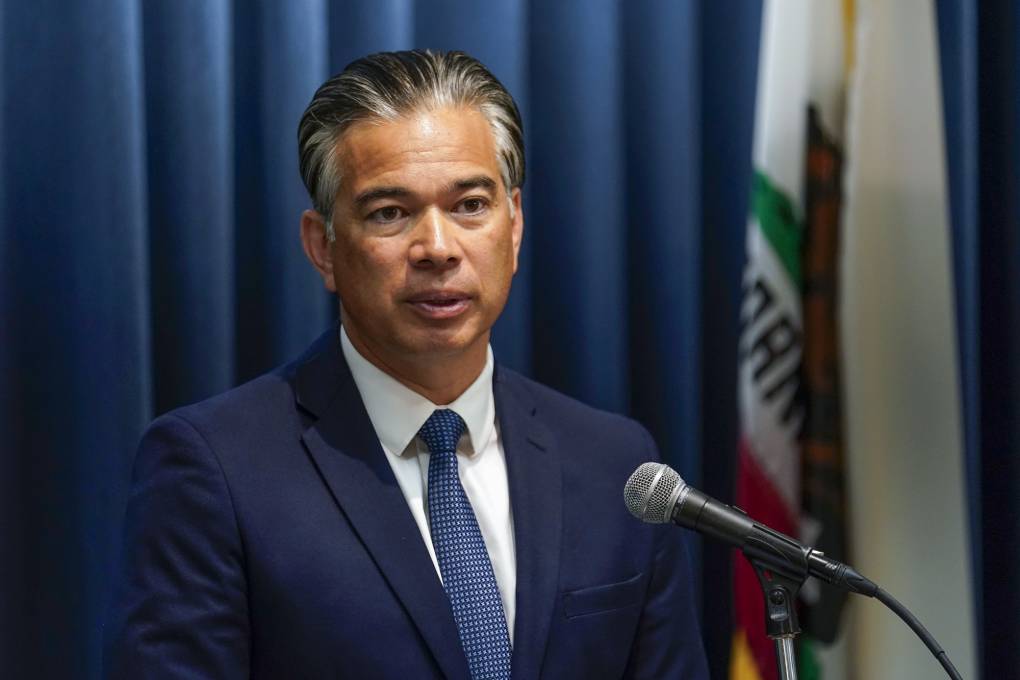
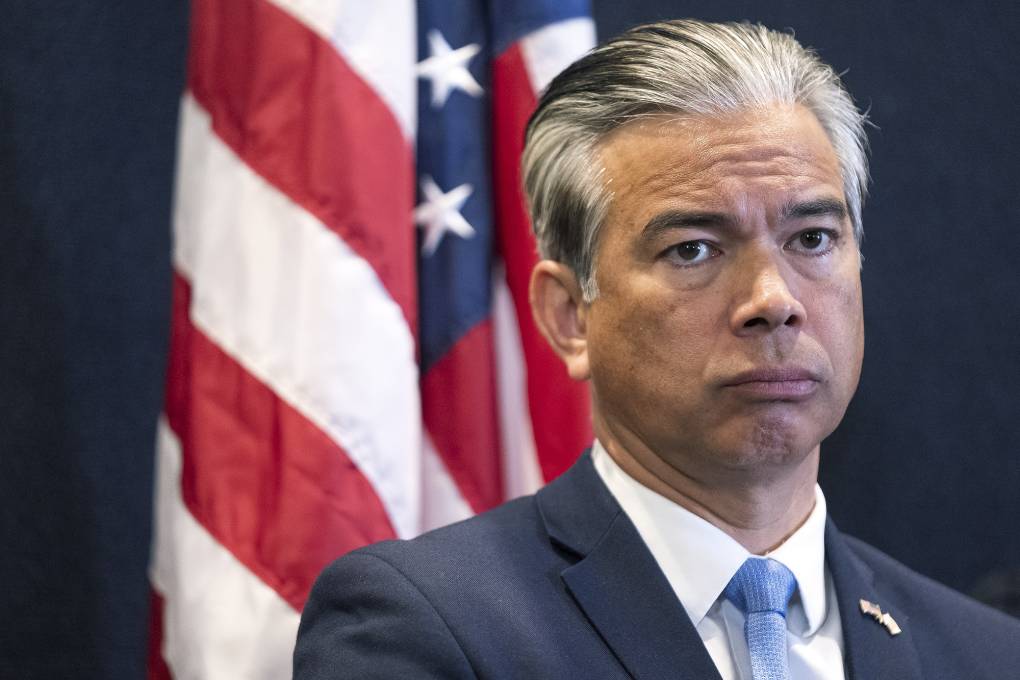
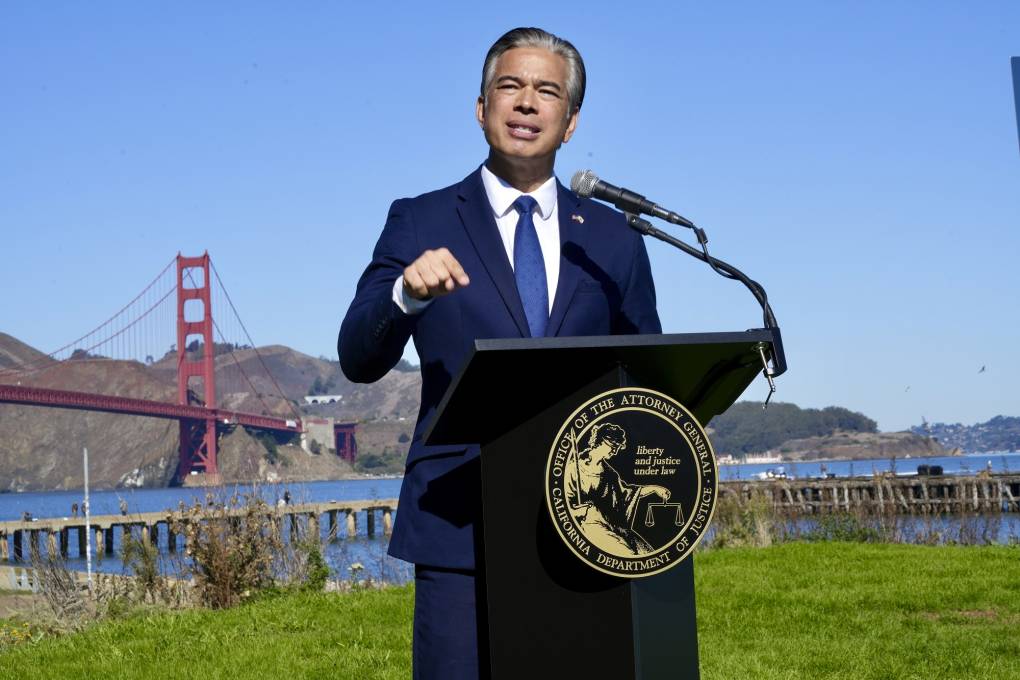
"caption": "California Attorney General Rob Bonta fields questions during a press conference on Monday, Aug. 28, 2023, in Los Angeles. California and seven other states announced Thursday that they are suing the Department of Education over the termination of $600 million in grants used to train teachers and nonprofits nationwide.",
"credit": "Marcio Jose Sanchez/AP Photo",
"altTag": "A man wearing a navy blue suit, white shirt and blue foulard tie speaks into a microphone.",
"description": null,
"imgSizes": {
"medium": {
"file": "https://cdn.kqed.org/wp-content/uploads/sites/10/2023/08/230828-ROB-BONTA-AP-MJS-KQED-800x533.jpg",
"width": 800,
"height": 533,
"mimeType": "image/jpeg"
},
"large": {
"file": "https://cdn.kqed.org/wp-content/uploads/sites/10/2023/08/230828-ROB-BONTA-AP-MJS-KQED-1020x680.jpg",
"width": 1020,
"height": 680,
"mimeType": "image/jpeg"
},
"thumbnail": {
"file": "https://cdn.kqed.org/wp-content/uploads/sites/10/2023/08/230828-ROB-BONTA-AP-MJS-KQED-160x107.jpg",
"width": 160,
"height": 107,
"mimeType": "image/jpeg"
},
"1536x1536": {
"file": "https://cdn.kqed.org/wp-content/uploads/sites/10/2023/08/230828-ROB-BONTA-AP-MJS-KQED-1536x1024.jpg",
"width": 1536,
"height": 1024,
"mimeType": "image/jpeg"
},
"post-thumbnail": {
"file": "https://cdn.kqed.org/wp-content/uploads/sites/10/2023/08/230828-ROB-BONTA-AP-MJS-KQED-672x372.jpg",
"width": 672,
"height": 372,
"mimeType": "image/jpeg"
},
"twentyfourteen-full-width": {
"file": "https://cdn.kqed.org/wp-content/uploads/sites/10/2023/08/230828-ROB-BONTA-AP-MJS-KQED-1038x576.jpg",
"width": 1038,
"height": 576,
"mimeType": "image/jpeg"
},
"full-width": {
"file": "https://cdn.kqed.org/wp-content/uploads/sites/10/2023/08/230828-ROB-BONTA-AP-MJS-KQED-1920x1280.jpg",
"width": 1920,
"height": 1280,
"mimeType": "image/jpeg"
},
"kqedFullSize": {
"file": "https://cdn.kqed.org/wp-content/uploads/sites/10/2023/08/230828-ROB-BONTA-AP-MJS-KQED.jpg",
"width": 2000,
"height": 1333
}
},
"isLoading": false,
"fetchFailed": false
},
"news_11861743": {
"type": "attachments",
"id": "news_11861743",
"meta": {
"index": "attachments_1716263798",
"site": "news",
"id": "11861743",
"found": true
},
"title": "RS1901_Chevron_Vapor_Cloud_010",
"publishDate": 1614118776,
"status": "inherit",
"parent": 11861741,
"modified": 1745279510,
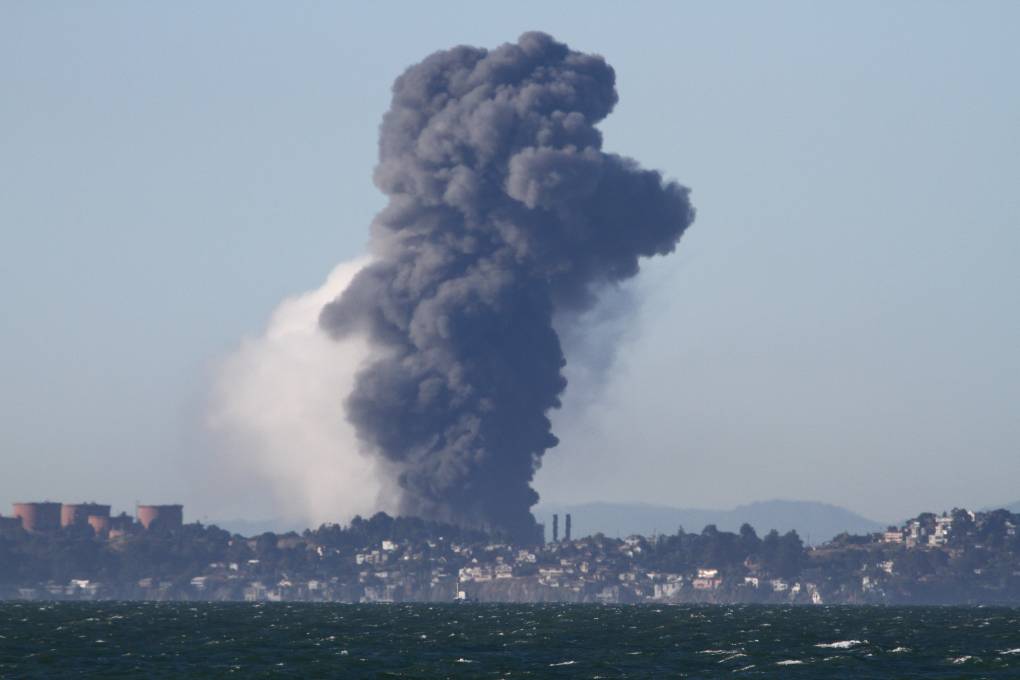
"caption": "A cracked pipe at Chevron’s oil refinery in Richmond, California, released a flammable white vapor that quickly ignited, sending a large cloud of black smoke across surrounding communities on August 6, 2012. The eruption led to stricter state safety rules for refineries, but now state officials are considering rolling back some of those provisions.",
"credit": "Courtesy of U.S. Chemical Safety Board",
"altTag": null,
"description": null,
"imgSizes": {
"medium": {
"file": "https://cdn.kqed.org/wp-content/uploads/sites/10/2021/02/RS1901_Chevron_Vapor_Cloud_010-800x533.jpeg",
"width": 800,
"height": 533,
"mimeType": "image/jpeg"
},
"large": {
"file": "https://cdn.kqed.org/wp-content/uploads/sites/10/2021/02/RS1901_Chevron_Vapor_Cloud_010-1020x680.jpeg",
"width": 1020,
"height": 680,
"mimeType": "image/jpeg"
},
"thumbnail": {
"file": "https://cdn.kqed.org/wp-content/uploads/sites/10/2021/02/RS1901_Chevron_Vapor_Cloud_010-160x107.jpeg",
"width": 160,
"height": 107,
"mimeType": "image/jpeg"
},
"1536x1536": {
"file": "https://cdn.kqed.org/wp-content/uploads/sites/10/2021/02/RS1901_Chevron_Vapor_Cloud_010-1536x1024.jpeg",
"width": 1536,
"height": 1024,
"mimeType": "image/jpeg"
},
"2048x2048": {
"file": "https://cdn.kqed.org/wp-content/uploads/sites/10/2021/02/RS1901_Chevron_Vapor_Cloud_010-2048x1365.jpeg",
"width": 2048,
"height": 1365,
"mimeType": "image/jpeg"
},
"post-thumbnail": {
"file": "https://cdn.kqed.org/wp-content/uploads/sites/10/2021/02/RS1901_Chevron_Vapor_Cloud_010-672x372.jpeg",
"width": 672,
"height": 372,
"mimeType": "image/jpeg"
},
"twentyfourteen-full-width": {
"file": "https://cdn.kqed.org/wp-content/uploads/sites/10/2021/02/RS1901_Chevron_Vapor_Cloud_010-1038x576.jpeg",
"width": 1038,
"height": 576,
"mimeType": "image/jpeg"
},
"full-width": {
"file": "https://cdn.kqed.org/wp-content/uploads/sites/10/2021/02/RS1901_Chevron_Vapor_Cloud_010-1920x1280.jpeg",
"width": 1920,
"height": 1280,
"mimeType": "image/jpeg"
},
"apple_news_ca_landscape_12_9": {
"file": "https://cdn.kqed.org/wp-content/uploads/sites/10/2021/02/RS1901_Chevron_Vapor_Cloud_010-1832x1374.jpeg",
"width": 1832,
"height": 1374,
"mimeType": "image/jpeg"
},
"apple_news_ca_landscape_9_7": {
"file": "https://cdn.kqed.org/wp-content/uploads/sites/10/2021/02/RS1901_Chevron_Vapor_Cloud_010-1376x1032.jpeg",
"width": 1376,
"height": 1032,
"mimeType": "image/jpeg"
},
"apple_news_ca_landscape_5_5": {
"file": "https://cdn.kqed.org/wp-content/uploads/sites/10/2021/02/RS1901_Chevron_Vapor_Cloud_010-1044x783.jpeg",
"width": 1044,
"height": 783,
"mimeType": "image/jpeg"
},
"apple_news_ca_landscape_4_7": {
"file": "https://cdn.kqed.org/wp-content/uploads/sites/10/2021/02/RS1901_Chevron_Vapor_Cloud_010-632x474.jpeg",
"width": 632,
"height": 474,
"mimeType": "image/jpeg"
},
"apple_news_ca_landscape_4_0": {
"file": "https://cdn.kqed.org/wp-content/uploads/sites/10/2021/02/RS1901_Chevron_Vapor_Cloud_010-536x402.jpeg",
"width": 536,
"height": 402,
"mimeType": "image/jpeg"
},
"apple_news_ca_portrait_12_9": {
"file": "https://cdn.kqed.org/wp-content/uploads/sites/10/2021/02/RS1901_Chevron_Vapor_Cloud_010-1122x1496.jpeg",
"width": 1122,
"height": 1496,
"mimeType": "image/jpeg"
},
"apple_news_ca_portrait_9_7": {
"file": "https://cdn.kqed.org/wp-content/uploads/sites/10/2021/02/RS1901_Chevron_Vapor_Cloud_010-840x1120.jpeg",
"width": 840,
"height": 1120,
"mimeType": "image/jpeg"
},
"apple_news_ca_portrait_5_5": {
"file": "https://cdn.kqed.org/wp-content/uploads/sites/10/2021/02/RS1901_Chevron_Vapor_Cloud_010-687x916.jpeg",
"width": 687,
"height": 916,
"mimeType": "image/jpeg"
},
"apple_news_ca_portrait_4_7": {
"file": "https://cdn.kqed.org/wp-content/uploads/sites/10/2021/02/RS1901_Chevron_Vapor_Cloud_010-414x552.jpeg",
"width": 414,
"height": 552,
"mimeType": "image/jpeg"
},
"apple_news_ca_portrait_4_0": {
"file": "https://cdn.kqed.org/wp-content/uploads/sites/10/2021/02/RS1901_Chevron_Vapor_Cloud_010-354x472.jpeg",
"width": 354,
"height": 472,
"mimeType": "image/jpeg"
},
"apple_news_ca_square_12_9": {
"file": "https://cdn.kqed.org/wp-content/uploads/sites/10/2021/02/RS1901_Chevron_Vapor_Cloud_010-1472x1472.jpeg",
"width": 1472,
"height": 1472,
"mimeType": "image/jpeg"
},
"apple_news_ca_square_9_7": {
"file": "https://cdn.kqed.org/wp-content/uploads/sites/10/2021/02/RS1901_Chevron_Vapor_Cloud_010-1104x1104.jpeg",
"width": 1104,
"height": 1104,
"mimeType": "image/jpeg"
},
"apple_news_ca_square_5_5": {
"file": "https://cdn.kqed.org/wp-content/uploads/sites/10/2021/02/RS1901_Chevron_Vapor_Cloud_010-912x912.jpeg",
"width": 912,
"height": 912,
"mimeType": "image/jpeg"
},
"apple_news_ca_square_4_7": {
"file": "https://cdn.kqed.org/wp-content/uploads/sites/10/2021/02/RS1901_Chevron_Vapor_Cloud_010-550x550.jpeg",
"width": 550,
"height": 550,
"mimeType": "image/jpeg"
},
"apple_news_ca_square_4_0": {
"file": "https://cdn.kqed.org/wp-content/uploads/sites/10/2021/02/RS1901_Chevron_Vapor_Cloud_010-470x470.jpeg",
"width": 470,
"height": 470,
"mimeType": "image/jpeg"
},
"kqedFullSize": {
"file": "https://cdn.kqed.org/wp-content/uploads/sites/10/2021/02/RS1901_Chevron_Vapor_Cloud_010-scaled-e1745279433555.jpeg",
"width": 2000,
"height": 1334
}
},
"isLoading": false,
"fetchFailed": false
},
"news_12036196": {
"type": "attachments",
"id": "news_12036196",
"meta": {
"index": "attachments_1716263798",
"site": "news",
"id": "12036196",
"found": true
},
"title": "250415-OAKLAND-MAYORAL-RESULTS-MD-06-KQED",
"publishDate": 1744780912,
"status": "inherit",
"parent": 12035332,
"modified": 1744827458,
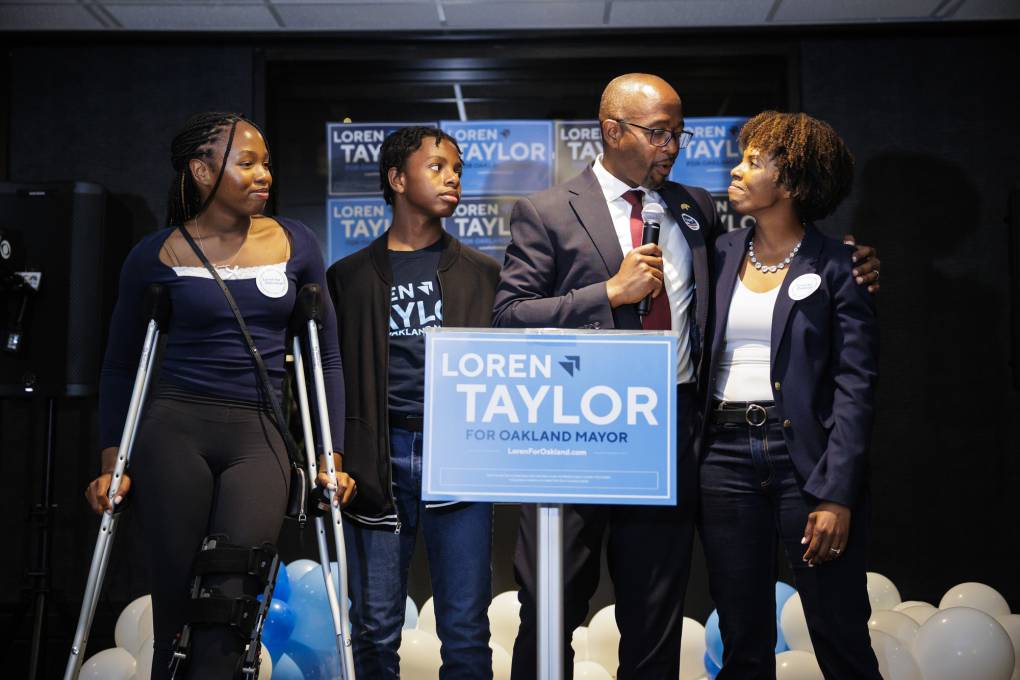
"caption": "Oakland mayoral candidate Loren Taylor speaks with his family beside him at his election night party in Oakland on April 15, 2025.",
"credit": "Martin do Nascimento/KQED",
"altTag": null,
"description": null,
"imgSizes": {
"medium": {
"file": "https://cdn.kqed.org/wp-content/uploads/sites/10/2025/04/250415-OAKLAND-MAYORAL-RESULTS-MD-06-KQED-800x533.jpg",
"width": 800,
"height": 533,
"mimeType": "image/jpeg"
},
"large": {
"file": "https://cdn.kqed.org/wp-content/uploads/sites/10/2025/04/250415-OAKLAND-MAYORAL-RESULTS-MD-06-KQED-1020x680.jpg",
"width": 1020,
"height": 680,
"mimeType": "image/jpeg"
},
"thumbnail": {
"file": "https://cdn.kqed.org/wp-content/uploads/sites/10/2025/04/250415-OAKLAND-MAYORAL-RESULTS-MD-06-KQED-160x107.jpg",
"width": 160,
"height": 107,
"mimeType": "image/jpeg"
},
"1536x1536": {
"file": "https://cdn.kqed.org/wp-content/uploads/sites/10/2025/04/250415-OAKLAND-MAYORAL-RESULTS-MD-06-KQED-1536x1024.jpg",
"width": 1536,
"height": 1024,
"mimeType": "image/jpeg"
},
"post-thumbnail": {
"file": "https://cdn.kqed.org/wp-content/uploads/sites/10/2025/04/250415-OAKLAND-MAYORAL-RESULTS-MD-06-KQED-672x372.jpg",
"width": 672,
"height": 372,
"mimeType": "image/jpeg"
},
"twentyfourteen-full-width": {
"file": "https://cdn.kqed.org/wp-content/uploads/sites/10/2025/04/250415-OAKLAND-MAYORAL-RESULTS-MD-06-KQED-1038x576.jpg",
"width": 1038,
"height": 576,
"mimeType": "image/jpeg"
},
"full-width": {
"file": "https://cdn.kqed.org/wp-content/uploads/sites/10/2025/04/250415-OAKLAND-MAYORAL-RESULTS-MD-06-KQED-1920x1280.jpg",
"width": 1920,
"height": 1280,
"mimeType": "image/jpeg"
},
"kqedFullSize": {
"file": "https://cdn.kqed.org/wp-content/uploads/sites/10/2025/04/250415-OAKLAND-MAYORAL-RESULTS-MD-06-KQED.jpg",
"width": 2000,
"height": 1333
}
},
"isLoading": false,
"fetchFailed": false
},
"news_12036217": {
"type": "attachments",
"id": "news_12036217",
"meta": {
"index": "attachments_1716263798",
"site": "news",
"id": "12036217",
"found": true
},
"title": "The Port of Oakland on March 6, 2025.",
"publishDate": 1744808969,
"status": "inherit",
"parent": 0,
"modified": 1744833789,
"caption": "A cargo ship docks at the Port of Oakland on March 6, 2025.",
"credit": "Martin do Nascimento/KQED",
"altTag": null,
"description": null,
"imgSizes": {
"medium": {
"file": "https://cdn.kqed.org/wp-content/uploads/sites/10/2025/04/250306-PORT-OF-OAKLAND-MD-01_qed-800x533.jpg",
"width": 800,
"height": 533,
"mimeType": "image/jpeg"
},
"large": {
"file": "https://cdn.kqed.org/wp-content/uploads/sites/10/2025/04/250306-PORT-OF-OAKLAND-MD-01_qed-1020x680.jpg",
"width": 1020,
"height": 680,
"mimeType": "image/jpeg"
},
"thumbnail": {
"file": "https://cdn.kqed.org/wp-content/uploads/sites/10/2025/04/250306-PORT-OF-OAKLAND-MD-01_qed-160x107.jpg",
"width": 160,
"height": 107,
"mimeType": "image/jpeg"
},
"1536x1536": {
"file": "https://cdn.kqed.org/wp-content/uploads/sites/10/2025/04/250306-PORT-OF-OAKLAND-MD-01_qed-1536x1024.jpg",
"width": 1536,
"height": 1024,
"mimeType": "image/jpeg"
},
"post-thumbnail": {
"file": "https://cdn.kqed.org/wp-content/uploads/sites/10/2025/04/250306-PORT-OF-OAKLAND-MD-01_qed-672x372.jpg",
"width": 672,
"height": 372,
"mimeType": "image/jpeg"
},
"twentyfourteen-full-width": {
"file": "https://cdn.kqed.org/wp-content/uploads/sites/10/2025/04/250306-PORT-OF-OAKLAND-MD-01_qed-1038x576.jpg",
"width": 1038,
"height": 576,
"mimeType": "image/jpeg"
},
"full-width": {
"file": "https://cdn.kqed.org/wp-content/uploads/sites/10/2025/04/250306-PORT-OF-OAKLAND-MD-01_qed-1920x1280.jpg",
"width": 1920,
"height": 1280,
"mimeType": "image/jpeg"
},
"kqedFullSize": {
"file": "https://cdn.kqed.org/wp-content/uploads/sites/10/2025/04/250306-PORT-OF-OAKLAND-MD-01_qed.jpg",
"width": 1999,
"height": 1333
}
},
"isLoading": false,
"fetchFailed": false
},
"news_12035840": {
"type": "attachments",
"id": "news_12035840",
"meta": {
"index": "attachments_1716263798",
"site": "news",
"id": "12035840",
"found": true
},
"title": "061121_SummerSchool_AW_CM_06",
"publishDate": 1744574510,
"status": "inherit",
"parent": 12035838,
"modified": 1746053532,
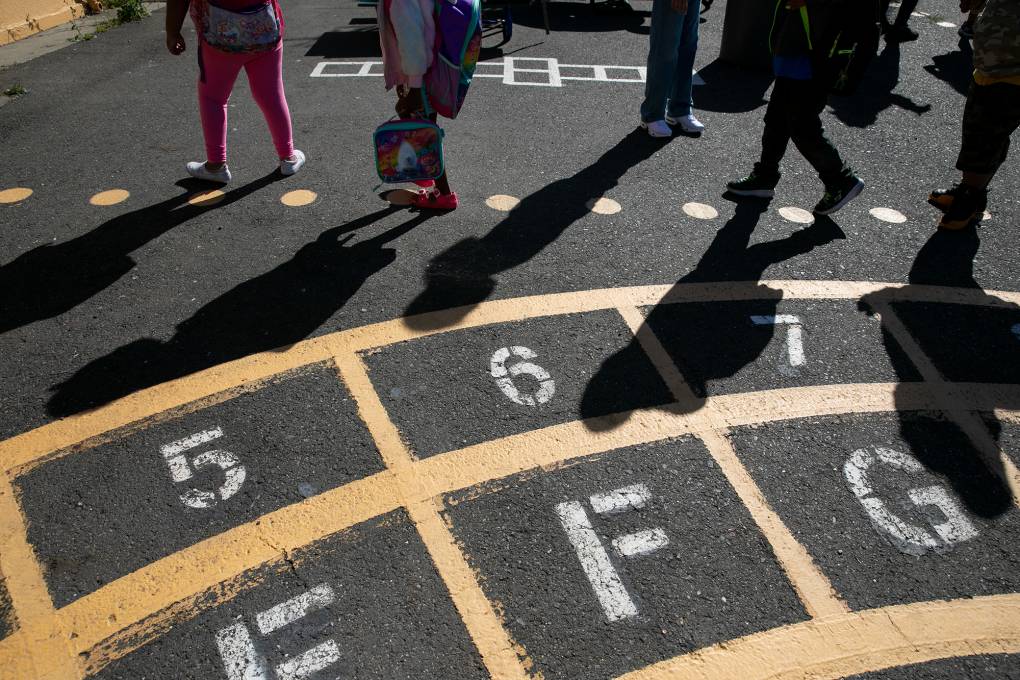
"caption": "Rising first graders walk to their classroom at the start of the day during summer session at Laurel Elementary in Oakland on June 11, 2021. ",
"credit": "Anne Wernikoff/CalMatters",
"altTag": "The bottom half of several children on a concrete playground with yellow chalk outlining numbers and letters is shown.",
"description": null,
"imgSizes": {
"medium": {
"file": "https://cdn.kqed.org/wp-content/uploads/sites/10/2025/04/061121_SummerSchool_AW_CM_06-800x533.jpg",
"width": 800,
"height": 533,
"mimeType": "image/jpeg"
},
"large": {
"file": "https://cdn.kqed.org/wp-content/uploads/sites/10/2025/04/061121_SummerSchool_AW_CM_06-1020x680.jpg",
"width": 1020,
"height": 680,
"mimeType": "image/jpeg"
},
"thumbnail": {
"file": "https://cdn.kqed.org/wp-content/uploads/sites/10/2025/04/061121_SummerSchool_AW_CM_06-160x107.jpg",
"width": 160,
"height": 107,
"mimeType": "image/jpeg"
},
"1536x1536": {
"file": "https://cdn.kqed.org/wp-content/uploads/sites/10/2025/04/061121_SummerSchool_AW_CM_06-1536x1024.jpg",
"width": 1536,
"height": 1024,
"mimeType": "image/jpeg"
},
"post-thumbnail": {
"file": "https://cdn.kqed.org/wp-content/uploads/sites/10/2025/04/061121_SummerSchool_AW_CM_06-672x372.jpg",
"width": 672,
"height": 372,
"mimeType": "image/jpeg"
},
"twentyfourteen-full-width": {
"file": "https://cdn.kqed.org/wp-content/uploads/sites/10/2025/04/061121_SummerSchool_AW_CM_06-1038x576.jpg",
"width": 1038,
"height": 576,
"mimeType": "image/jpeg"
},
"full-width": {
"file": "https://cdn.kqed.org/wp-content/uploads/sites/10/2025/04/061121_SummerSchool_AW_CM_06-1920x1280.jpg",
"width": 1920,
"height": 1280,
"mimeType": "image/jpeg"
},
"kqedFullSize": {
"file": "https://cdn.kqed.org/wp-content/uploads/sites/10/2025/04/061121_SummerSchool_AW_CM_06.jpg",
"width": 2000,
"height": 1333
}
},
"isLoading": false,
"fetchFailed": false
},
"news_12030844": {
"type": "attachments",
"id": "news_12030844",
"meta": {
"index": "attachments_1716263798",
"site": "news",
"id": "12030844",
"found": true
},
"title": "npr.brightspotcdn copy",
"publishDate": 1741733888,
"status": "inherit",
"parent": 12030839,
"modified": 1741886492,
"caption": "A man walks past the U.S. Department of Education building in Washington, D.C., on Feb. 7, 2025.",
"credit": "Gent Shkullaku/Zuma Press Wire via Alamy",
"altTag": null,
"description": null,
"imgSizes": {
"medium": {
"file": "https://cdn.kqed.org/wp-content/uploads/sites/10/2025/03/npr.brightspotcdn-copy-800x552.jpg",
"width": 800,
"height": 552,
"mimeType": "image/jpeg"
},
"large": {
"file": "https://cdn.kqed.org/wp-content/uploads/sites/10/2025/03/npr.brightspotcdn-copy-1020x703.jpg",
"width": 1020,
"height": 703,
"mimeType": "image/jpeg"
},
"thumbnail": {
"file": "https://cdn.kqed.org/wp-content/uploads/sites/10/2025/03/npr.brightspotcdn-copy-160x110.jpg",
"width": 160,
"height": 110,
"mimeType": "image/jpeg"
},
"1536x1536": {
"file": "https://cdn.kqed.org/wp-content/uploads/sites/10/2025/03/npr.brightspotcdn-copy-1536x1059.jpg",
"width": 1536,
"height": 1059,
"mimeType": "image/jpeg"
},
"post-thumbnail": {
"file": "https://cdn.kqed.org/wp-content/uploads/sites/10/2025/03/npr.brightspotcdn-copy-672x372.jpg",
"width": 672,
"height": 372,
"mimeType": "image/jpeg"
},
"twentyfourteen-full-width": {
"file": "https://cdn.kqed.org/wp-content/uploads/sites/10/2025/03/npr.brightspotcdn-copy-1038x576.jpg",
"width": 1038,
"height": 576,
"mimeType": "image/jpeg"
},
"kqedFullSize": {
"file": "https://cdn.kqed.org/wp-content/uploads/sites/10/2025/03/npr.brightspotcdn-copy.jpg",
"width": 1600,
"height": 1103
}
},
"isLoading": false,
"fetchFailed": false
},
"news_11969248": {
"type": "attachments",
"id": "news_11969248",
"meta": {
"index": "attachments_1716263798",
"site": "news",
"id": "11969248",
"found": true
},
"title": "231206-LateefahSimon-19-BL-KQED",
"publishDate": 1701973127,
"status": "inherit",
"parent": 12047037,
"modified": 1751576475,
"caption": "Lateefah Simon poses for a portrait on Dec. 6, 2023, after signing paperwork for her congressional campaign candidacy at the Alameda County Registrar of Voters Office in Oakland.",
"credit": "Beth LaBerge/KQED",
"altTag": null,
"description": null,
"imgSizes": {
"medium": {
"file": "https://cdn.kqed.org/wp-content/uploads/sites/10/2023/12/231206-LateefahSimon-19-BL-KQED-800x533.jpg",
"width": 800,
"height": 533,
"mimeType": "image/jpeg"
},
"large": {
"file": "https://cdn.kqed.org/wp-content/uploads/sites/10/2023/12/231206-LateefahSimon-19-BL-KQED-1020x680.jpg",
"width": 1020,
"height": 680,
"mimeType": "image/jpeg"
},
"thumbnail": {
"file": "https://cdn.kqed.org/wp-content/uploads/sites/10/2023/12/231206-LateefahSimon-19-BL-KQED-160x107.jpg",
"width": 160,
"height": 107,
"mimeType": "image/jpeg"
},
"1536x1536": {
"file": "https://cdn.kqed.org/wp-content/uploads/sites/10/2023/12/231206-LateefahSimon-19-BL-KQED-1536x1024.jpg",
"width": 1536,
"height": 1024,
"mimeType": "image/jpeg"
},
"post-thumbnail": {
"file": "https://cdn.kqed.org/wp-content/uploads/sites/10/2023/12/231206-LateefahSimon-19-BL-KQED-672x372.jpg",
"width": 672,
"height": 372,
"mimeType": "image/jpeg"
},
"twentyfourteen-full-width": {
"file": "https://cdn.kqed.org/wp-content/uploads/sites/10/2023/12/231206-LateefahSimon-19-BL-KQED-1038x576.jpg",
"width": 1038,
"height": 576,
"mimeType": "image/jpeg"
},
"full-width": {
"file": "https://cdn.kqed.org/wp-content/uploads/sites/10/2023/12/231206-LateefahSimon-19-BL-KQED-1920x1280.jpg",
"width": 1920,
"height": 1280,
"mimeType": "image/jpeg"
},
"kqedFullSize": {
"file": "https://cdn.kqed.org/wp-content/uploads/sites/10/2023/12/231206-LateefahSimon-19-BL-KQED.jpg",
"width": 2000,
"height": 1333
}
},
"isLoading": false,
"fetchFailed": false
},
"news_12007638": {
"type": "attachments",
"id": "news_12007638",
"meta": {
"index": "attachments_1716263798",
"site": "news",
"id": "12007638",
"found": true
},
"title": "Rob Bonta",
"publishDate": 1727912412,
"status": "inherit",
"parent": 12007627,
"modified": 1727912460,
"caption": "Attorney General Rob Bonta takes questions from the media as he announces charges made against suspects involved in an organized retail crime ring during a news conference in Los Angeles on March 19, 2024. ",
"credit": "Damian Dovarganes/AP Photo",
"altTag": null,
"description": null,
"imgSizes": {
"medium": {
"file": "https://cdn.kqed.org/wp-content/uploads/sites/10/2024/10/AGBontaAP1-800x533.jpg",
"width": 800,
"height": 533,
"mimeType": "image/jpeg"
},
"large": {
"file": "https://cdn.kqed.org/wp-content/uploads/sites/10/2024/10/AGBontaAP1-1020x680.jpg",
"width": 1020,
"height": 680,
"mimeType": "image/jpeg"
},
"thumbnail": {
"file": "https://cdn.kqed.org/wp-content/uploads/sites/10/2024/10/AGBontaAP1-160x107.jpg",
"width": 160,
"height": 107,
"mimeType": "image/jpeg"
},
"1536x1536": {
"file": "https://cdn.kqed.org/wp-content/uploads/sites/10/2024/10/AGBontaAP1-1536x1024.jpg",
"width": 1536,
"height": 1024,
"mimeType": "image/jpeg"
},
"post-thumbnail": {
"file": "https://cdn.kqed.org/wp-content/uploads/sites/10/2024/10/AGBontaAP1-672x372.jpg",
"width": 672,
"height": 372,
"mimeType": "image/jpeg"
},
"twentyfourteen-full-width": {
"file": "https://cdn.kqed.org/wp-content/uploads/sites/10/2024/10/AGBontaAP1-1038x576.jpg",
"width": 1038,
"height": 576,
"mimeType": "image/jpeg"
},
"full-width": {
"file": "https://cdn.kqed.org/wp-content/uploads/sites/10/2024/10/AGBontaAP1-1920x1280.jpg",
"width": 1920,
"height": 1280,
"mimeType": "image/jpeg"
},
"kqedFullSize": {
"file": "https://cdn.kqed.org/wp-content/uploads/sites/10/2024/10/AGBontaAP1.jpg",
"width": 2000,
"height": 1333
}
},
"isLoading": false,
"fetchFailed": false
},
"news_12026446": {
"type": "attachments",
"id": "news_12026446",
"meta": {
"index": "attachments_1716263798",
"site": "news",
"id": "12026446",
"found": true
},
"title": "020625-ICE-Arrest-AP-GB-01-CM",
"publishDate": 1739212388,
"status": "inherit",
"parent": 12026443,
"modified": 1739296136,
"caption": "A U.S. Immigration and Customs Enforcement (ICE) officer escorts a man in handcuffs during an operation in Escondido on July 8, 2019.",
"credit": "Gregory Bull/AP Photo",
"altTag": null,
"description": null,
"imgSizes": {
"medium": {
"file": "https://cdn.kqed.org/wp-content/uploads/sites/10/2025/02/020625-ICE-Arrest-AP-GB-01-CM-800x533.jpg",
"width": 800,
"height": 533,
"mimeType": "image/jpeg"
},
"large": {
"file": "https://cdn.kqed.org/wp-content/uploads/sites/10/2025/02/020625-ICE-Arrest-AP-GB-01-CM-1020x680.jpg",
"width": 1020,
"height": 680,
"mimeType": "image/jpeg"
},
"thumbnail": {
"file": "https://cdn.kqed.org/wp-content/uploads/sites/10/2025/02/020625-ICE-Arrest-AP-GB-01-CM-160x107.jpg",
"width": 160,
"height": 107,
"mimeType": "image/jpeg"
},
"1536x1536": {
"file": "https://cdn.kqed.org/wp-content/uploads/sites/10/2025/02/020625-ICE-Arrest-AP-GB-01-CM-1536x1024.jpg",
"width": 1536,
"height": 1024,
"mimeType": "image/jpeg"
},
"post-thumbnail": {
"file": "https://cdn.kqed.org/wp-content/uploads/sites/10/2025/02/020625-ICE-Arrest-AP-GB-01-CM-672x372.jpg",
"width": 672,
"height": 372,
"mimeType": "image/jpeg"
},
"twentyfourteen-full-width": {
"file": "https://cdn.kqed.org/wp-content/uploads/sites/10/2025/02/020625-ICE-Arrest-AP-GB-01-CM-1038x576.jpg",
"width": 1038,
"height": 576,
"mimeType": "image/jpeg"
},
"full-width": {
"file": "https://cdn.kqed.org/wp-content/uploads/sites/10/2025/02/020625-ICE-Arrest-AP-GB-01-CM-1920x1280.jpg",
"width": 1920,
"height": 1280,
"mimeType": "image/jpeg"
},
"kqedFullSize": {
"file": "https://cdn.kqed.org/wp-content/uploads/sites/10/2025/02/020625-ICE-Arrest-AP-GB-01-CM.jpg",
"width": 2000,
"height": 1333
}
},
"isLoading": false,
"fetchFailed": false
},
"news_12024152": {
"type": "attachments",
"id": "news_12024152",
"meta": {
"index": "attachments_1716263798",
"site": "news",
"id": "12024152",
"found": true
},
"title": "102425-Newsom-Trump-LA-Fires-AP-CM-03 copy",
"publishDate": 1737836365,
"status": "inherit",
"parent": 12024151,
"modified": 1739130531,
"caption": "President Donald Trump talks with Gov. Gavin Newsom after arriving on Air Force One at Los Angeles International Airport in Los Angeles, on Jan. 24, 2025. \n",
"credit": "Mark Schiefelbein/AP Photo",
"altTag": "Two men wearing jackets and the man on the right wearing a black hat stand near each other talking.",
"description": null,
"imgSizes": {
"medium": {
"file": "https://cdn.kqed.org/wp-content/uploads/sites/10/2025/01/102425-Newsom-Trump-LA-Fires-AP-CM-03-copy-800x534.jpg",
"width": 800,
"height": 534,
"mimeType": "image/jpeg"
},
"large": {
"file": "https://cdn.kqed.org/wp-content/uploads/sites/10/2025/01/102425-Newsom-Trump-LA-Fires-AP-CM-03-copy-1020x681.jpg",
"width": 1020,
"height": 681,
"mimeType": "image/jpeg"
},
"thumbnail": {
"file": "https://cdn.kqed.org/wp-content/uploads/sites/10/2025/01/102425-Newsom-Trump-LA-Fires-AP-CM-03-copy-160x107.jpg",
"width": 160,
"height": 107,
"mimeType": "image/jpeg"
},
"1536x1536": {
"file": "https://cdn.kqed.org/wp-content/uploads/sites/10/2025/01/102425-Newsom-Trump-LA-Fires-AP-CM-03-copy-1536x1026.jpg",
"width": 1536,
"height": 1026,
"mimeType": "image/jpeg"
},
"post-thumbnail": {
"file": "https://cdn.kqed.org/wp-content/uploads/sites/10/2025/01/102425-Newsom-Trump-LA-Fires-AP-CM-03-copy-672x372.jpg",
"width": 672,
"height": 372,
"mimeType": "image/jpeg"
},
"twentyfourteen-full-width": {
"file": "https://cdn.kqed.org/wp-content/uploads/sites/10/2025/01/102425-Newsom-Trump-LA-Fires-AP-CM-03-copy-1038x576.jpg",
"width": 1038,
"height": 576,
"mimeType": "image/jpeg"
},
"full-width": {
"file": "https://cdn.kqed.org/wp-content/uploads/sites/10/2025/01/102425-Newsom-Trump-LA-Fires-AP-CM-03-copy-1920x1283.jpg",
"width": 1920,
"height": 1283,
"mimeType": "image/jpeg"
},
"kqedFullSize": {
"file": "https://cdn.kqed.org/wp-content/uploads/sites/10/2025/01/102425-Newsom-Trump-LA-Fires-AP-CM-03-copy.jpg",
"width": 2000,
"height": 1336
}
},
"isLoading": false,
"fetchFailed": false
},
"news_12017252": {
"type": "attachments",
"id": "news_12017252",
"meta": {
"index": "attachments_1716263798",
"site": "news",
"id": "12017252",
"found": true
},
"title": "Election 2024 Blue State Reaction Explainer",
"publishDate": 1733768564,
"status": "inherit",
"parent": 12017249,
"modified": 1733768592,
"caption": "California Attorney General Rob Bonta speaks at a news conference in front of the Golden Gate Bridge in San Francisco on Thursday, Nov. 7, 2024.",
"credit": "Terry Chea/AP Photo",
"altTag": null,
"description": null,
"imgSizes": {
"medium": {
"file": "https://cdn.kqed.org/wp-content/uploads/sites/10/2024/12/RobBontaSFAP-800x533.jpg",
"width": 800,
"height": 533,
"mimeType": "image/jpeg"
},
"large": {
"file": "https://cdn.kqed.org/wp-content/uploads/sites/10/2024/12/RobBontaSFAP-1020x680.jpg",
"width": 1020,
"height": 680,
"mimeType": "image/jpeg"
},
"thumbnail": {
"file": "https://cdn.kqed.org/wp-content/uploads/sites/10/2024/12/RobBontaSFAP-160x107.jpg",
"width": 160,
"height": 107,
"mimeType": "image/jpeg"
},
"1536x1536": {
"file": "https://cdn.kqed.org/wp-content/uploads/sites/10/2024/12/RobBontaSFAP-1536x1024.jpg",
"width": 1536,
"height": 1024,
"mimeType": "image/jpeg"
},
"post-thumbnail": {
"file": "https://cdn.kqed.org/wp-content/uploads/sites/10/2024/12/RobBontaSFAP-672x372.jpg",
"width": 672,
"height": 372,
"mimeType": "image/jpeg"
},
"twentyfourteen-full-width": {
"file": "https://cdn.kqed.org/wp-content/uploads/sites/10/2024/12/RobBontaSFAP-1038x576.jpg",
"width": 1038,
"height": 576,
"mimeType": "image/jpeg"
},
"full-width": {
"file": "https://cdn.kqed.org/wp-content/uploads/sites/10/2024/12/RobBontaSFAP-1920x1280.jpg",
"width": 1920,
"height": 1280,
"mimeType": "image/jpeg"
},
"kqedFullSize": {
"file": "https://cdn.kqed.org/wp-content/uploads/sites/10/2024/12/RobBontaSFAP.jpg",
"width": 2000,
"height": 1333
}
},
"isLoading": false,
"fetchFailed": false
}
},
"audioPlayerReducer": {
"postId": "stream_live",
"isPaused": true,
"isPlaying": false,
"pfsActive": false,
"pledgeModalIsOpen": true,
"playerDrawerIsOpen": false,
"liveAudioPlayStartedAt": 0,
"liveAudioPlayContext": ""
},
"authorsReducer": {
"byline_news_12036965": {
"type": "authors",
"id": "byline_news_12036965",
"meta": {
"override": true
},
"slug": "byline_news_12036965",
"name": "\u003ca href=\"https://publichealthwatch.org/author/jimmorris/\" target=\"_blank\" rel=\"noopener noreferrer\"> Jim Morris \u003c/a> and \u003ca href=\"https://publichealthwatch.org/author/mollypeterson/\" target=\"_blank\" rel=\"noopener noreferrer\"> Molly Peterson\u003c/a>, Public Health Watch ",
"isLoading": false
},
"byline_news_12035838": {
"type": "authors",
"id": "byline_news_12035838",
"meta": {
"override": true
},
"slug": "byline_news_12035838",
"name": "\u003ca href=\"https://calmatters.org/author/carolyn-jones/\">Carolyn Jones, \u003c/a>CalMatters",
"isLoading": false
},
"byline_news_12026443": {
"type": "authors",
"id": "byline_news_12026443",
"meta": {
"override": true
},
"slug": "byline_news_12026443",
"name": "Jeanne Kuang, CalMatters",
"isLoading": false
},
"gmarzorati": {
"type": "authors",
"id": "227",
"meta": {
"index": "authors_1716337520",
"id": "227",
"found": true
},
"name": "Guy Marzorati",
"firstName": "Guy",
"lastName": "Marzorati",
"slug": "gmarzorati",
"email": "gmarzorati@KQED.org",
"display_author_email": true,
"staff_mastheads": [
"news"
],
"title": "Correspondent",
"bio": "Guy Marzorati is a correspondent on KQED's California Politics and Government Desk, based in San Jose. A graduate of Santa Clara University, Guy joined KQED in 2013. He reports on state and local politics and produces KQED's digital voter guide.",
"avatar": "https://secure.gravatar.com/avatar/e7038b8dbfd55b104369b76b1cd0b9de?s=600&d=blank&r=g",
"twitter": "guymarzorati",
"facebook": null,
"instagram": null,
"linkedin": null,
"sites": [
{
"site": "",
"roles": [
"editor"
]
},
{
"site": "news",
"roles": [
"editor"
]
},
{
"site": "science",
"roles": [
"editor"
]
},
{
"site": "forum",
"roles": [
"editor"
]
},
{
"site": "elections",
"roles": [
"editor"
]
},
{
"site": "liveblog",
"roles": [
"editor"
]
}
],
"headData": {
"title": "Guy Marzorati | KQED",
"description": "Correspondent",
"ogImgSrc": "https://secure.gravatar.com/avatar/e7038b8dbfd55b104369b76b1cd0b9de?s=600&d=blank&r=g",
"twImgSrc": "https://secure.gravatar.com/avatar/e7038b8dbfd55b104369b76b1cd0b9de?s=600&d=blank&r=g"
},
"isLoading": false,
"link": "/author/gmarzorati"
},
"scottshafer": {
"type": "authors",
"id": "255",
"meta": {
"index": "authors_1716337520",
"id": "255",
"found": true
},
"name": "Scott Shafer",
"firstName": "Scott",
"lastName": "Shafer",
"slug": "scottshafer",
"email": "sshafer@kqed.org",
"display_author_email": false,
"staff_mastheads": [
"news"
],
"title": "KQED Contributor",
"bio": "Scott Shafer is a senior editor with the KQED Politics and Government desk. He is co-host of Political Breakdown, the award-winning radio show and podcast with a personal take on the world of politics. Scott came to KQED in 1998 to host the statewide\u003cem> California Report\u003c/em>. Prior to that he had extended stints in politics and government\u003cem>.\u003c/em> He uses that inside experience at KQED in his, reporting, hosting and analysis for the politics desk. Scott collaborated \u003cem>Political Breakdown a\u003c/em>nd on \u003cem>The Political Mind of Jerry Brown, \u003c/em>an eight-part series about the life and extraordinary political career of the former governor. For fun, he plays water polo with the San Francisco Tsunami.",
"avatar": "https://secure.gravatar.com/avatar/a62ebae45b79d7aed1a39a0e3bf68104?s=600&d=blank&r=g",
"twitter": "scottshafer",
"bluesky": null,
"facebook": null,
"instagram": null,
"linkedin": null,
"sites": [
{
"site": "news",
"roles": [
"editor"
]
},
{
"site": "stateofhealth",
"roles": [
"author"
]
},
{
"site": "science",
"roles": [
"author"
]
},
{
"site": "forum",
"roles": [
"subscriber"
]
},
{
"site": "liveblog",
"roles": [
"author"
]
}
],
"headData": {
"title": "Scott Shafer | KQED",
"description": "KQED Contributor",
"ogImgSrc": "https://secure.gravatar.com/avatar/a62ebae45b79d7aed1a39a0e3bf68104?s=600&d=blank&r=g",
"twImgSrc": "https://secure.gravatar.com/avatar/a62ebae45b79d7aed1a39a0e3bf68104?s=600&d=blank&r=g"
},
"isLoading": false,
"link": "/author/scottshafer"
},
"matthewgreen": {
"type": "authors",
"id": "1263",
"meta": {
"index": "authors_1716337520",
"id": "1263",
"found": true
},
"name": "Matthew Green",
"firstName": "Matthew",
"lastName": "Green",
"slug": "matthewgreen",
"email": "mgreen@kqed.org",
"display_author_email": false,
"staff_mastheads": [],
"title": "KQED Editor/Reporter",
"bio": "Matthew Green is a digital media producer for KQED News. He previously produced \u003ca href=\"http://www.kqed.org/lowdown\">The Lowdown\u003c/a>, KQED’s multimedia news education blog. Matthew's written for numerous Bay Area publications, including the Oakland Tribune and San Francisco Chronicle. He also taught journalism classes at Fremont High School in East Oakland.\r\n\r\nEmail: mgreen@kqed.org; Twitter: @MGreenKQED",
"avatar": "https://secure.gravatar.com/avatar/3bf498d1267ca02c8494f33d8cfc575e?s=600&d=blank&r=g",
"twitter": "MGreenKQED",
"facebook": null,
"instagram": null,
"linkedin": null,
"sites": [
{
"site": "news",
"roles": []
},
{
"site": "lowdown",
"roles": []
},
{
"site": "science",
"roles": []
},
{
"site": "education",
"roles": []
},
{
"site": "quest",
"roles": []
},
{
"site": "liveblog",
"roles": []
}
],
"headData": {
"title": "Matthew Green | KQED",
"description": "KQED Editor/Reporter",
"ogImgSrc": "https://secure.gravatar.com/avatar/3bf498d1267ca02c8494f33d8cfc575e?s=600&d=blank&r=g",
"twImgSrc": "https://secure.gravatar.com/avatar/3bf498d1267ca02c8494f33d8cfc575e?s=600&d=blank&r=g"
},
"isLoading": false,
"link": "/author/matthewgreen"
},
"mlagos": {
"type": "authors",
"id": "3239",
"meta": {
"index": "authors_1716337520",
"id": "3239",
"found": true
},
"name": "Marisa Lagos",
"firstName": "Marisa",
"lastName": "Lagos",
"slug": "mlagos",
"email": "mlagos@kqed.org",
"display_author_email": false,
"staff_mastheads": [
"news"
],
"title": "KQED Contributor",
"bio": "Marisa Lagos is a correspondent for KQED’s California Politics and Government Desk and co-hosts the award-winning show and podcast, Political Breakdown. At KQED, Lagos also conducts reporting, analysis and investigations into state, local and national politics for radio, TV, online and onstage. In 2022, she and co-host, Scott Shafer, moderated the only gubernatorial debate in California. In 2020, the \u003ci>Washington Post\u003c/i> named her one of the top political journalists in California; she was nominated for a Peabody and won several other awards for her work investigating the 2017 California wildfires. She has worked at the \u003ci>San Francisco Chronicle\u003c/i>, \u003ci>San Francisco Examiner\u003c/i> and \u003ci>Los Angeles Times\u003c/i>. A UC Santa Barbara graduate, she lives in San Francisco with her two sons and husband.",
"avatar": "https://secure.gravatar.com/avatar/a261a0d3696fc066871ef96b85b5e7d2?s=600&d=blank&r=g",
"twitter": "@mlagos",
"facebook": null,
"instagram": null,
"linkedin": null,
"sites": [
{
"site": "arts",
"roles": [
"author"
]
},
{
"site": "news",
"roles": [
"editor"
]
},
{
"site": "science",
"roles": [
"editor"
]
},
{
"site": "forum",
"roles": [
"author"
]
},
{
"site": "liveblog",
"roles": [
"author"
]
}
],
"headData": {
"title": "Marisa Lagos | KQED",
"description": "KQED Contributor",
"ogImgSrc": "https://secure.gravatar.com/avatar/a261a0d3696fc066871ef96b85b5e7d2?s=600&d=blank&r=g",
"twImgSrc": "https://secure.gravatar.com/avatar/a261a0d3696fc066871ef96b85b5e7d2?s=600&d=blank&r=g"
},
"isLoading": false,
"link": "/author/mlagos"
},
"ahall": {
"type": "authors",
"id": "11490",
"meta": {
"index": "authors_1716337520",
"id": "11490",
"found": true
},
"name": "Alex Hall",
"firstName": "Alex",
"lastName": "Hall",
"slug": "ahall",
"email": "ahall@kqed.org",
"display_author_email": false,
"staff_mastheads": [
"news"
],
"title": "KQED Enterprise & Accountability Reporter",
"bio": "Alex Hall is KQED's Enterprise and Accountability Reporter. She previously covered the Central Valley for five years from KQED's bureau in Fresno. Before joining KQED, Alex was an investigative reporting fellow at Wisconsin Public Radio and the Wisconsin Center for Investigative Journalism. She has also worked as a bilingual producer for NPR's investigative unit and freelance video producer for Reuters TV on the Latin America desk. She got her start in journalism in South America, where she worked as a radio producer and Spanish-English translator for CNN Chile. Her documentary and investigation into the series of deadly COVID-19 outbreaks at Foster Farms won a national Edward R. Murrow award and was named an Investigative Reporters & Editors award finalist. Alex's reporting for Reveal on the Wisconsin dairy industry's reliance on undocumented immigrant labor was made into a film, Los Lecheros, which won a regional Edward R. Murrow award for best news documentary.",
"avatar": "https://secure.gravatar.com/avatar/defcbeb88b0bf591ff9af41f22644051?s=600&d=blank&r=g",
"twitter": "@chalexhall",
"facebook": null,
"instagram": null,
"linkedin": null,
"sites": [
{
"site": "news",
"roles": [
"editor"
]
},
{
"site": "liveblog",
"roles": [
"author"
]
}
],
"headData": {
"title": "Alex Hall | KQED",
"description": "KQED Enterprise & Accountability Reporter",
"ogImgSrc": "https://secure.gravatar.com/avatar/defcbeb88b0bf591ff9af41f22644051?s=600&d=blank&r=g",
"twImgSrc": "https://secure.gravatar.com/avatar/defcbeb88b0bf591ff9af41f22644051?s=600&d=blank&r=g"
},
"isLoading": false,
"link": "/author/ahall"
},
"kdebenedetti": {
"type": "authors",
"id": "11913",
"meta": {
"index": "authors_1716337520",
"id": "11913",
"found": true
},
"name": "Katie DeBenedetti",
"firstName": "Katie",
"lastName": "DeBenedetti",
"slug": "kdebenedetti",
"email": "kdebenedetti@kqed.org",
"display_author_email": false,
"staff_mastheads": [
"news",
"science"
],
"title": "KQED Contributor",
"bio": "Katie DeBenedetti is a digital reporter covering daily news for the Express Desk. Prior to joining KQED as a culture reporting intern in January 2024, she covered education and city government for the Napa Valley Register.",
"avatar": "https://secure.gravatar.com/avatar/6e31073cb8f7e4214ab03f42771d0f45?s=600&d=blank&r=g",
"twitter": null,
"facebook": null,
"instagram": null,
"linkedin": null,
"sites": [
{
"site": "news",
"roles": [
"author"
]
},
{
"site": "science",
"roles": [
"author"
]
},
{
"site": "liveblog",
"roles": [
"author"
]
}
],
"headData": {
"title": "Katie DeBenedetti | KQED",
"description": "KQED Contributor",
"ogImgSrc": "https://secure.gravatar.com/avatar/6e31073cb8f7e4214ab03f42771d0f45?s=600&d=blank&r=g",
"twImgSrc": "https://secure.gravatar.com/avatar/6e31073cb8f7e4214ab03f42771d0f45?s=600&d=blank&r=g"
},
"isLoading": false,
"link": "/author/kdebenedetti"
},
"slim": {
"type": "authors",
"id": "11920",
"meta": {
"index": "authors_1716337520",
"id": "11920",
"found": true
},
"name": "Samantha Lim",
"firstName": "Samantha",
"lastName": "Lim",
"slug": "slim",
"email": "slim@KQED.org",
"display_author_email": false,
"staff_mastheads": [],
"title": "KQED Contributor",
"bio": null,
"avatar": "https://secure.gravatar.com/avatar/82e592e6c15fe1a04d385e8ad0fb0b4e?s=600&d=blank&r=g",
"twitter": null,
"facebook": null,
"instagram": null,
"linkedin": null,
"sites": [
{
"site": "news",
"roles": []
}
],
"headData": {
"title": "Samantha Lim | KQED",
"description": "KQED Contributor",
"ogImgSrc": "https://secure.gravatar.com/avatar/82e592e6c15fe1a04d385e8ad0fb0b4e?s=600&d=blank&r=g",
"twImgSrc": "https://secure.gravatar.com/avatar/82e592e6c15fe1a04d385e8ad0fb0b4e?s=600&d=blank&r=g"
},
"isLoading": false,
"link": "/author/slim"
}
},
"pagesReducer": {
"news_tag_rob-bonta": {
"type": "terms",
"id": "news_3674",
"meta": {
"index": "terms_1716263798",
"site": "news",
"id": "3674",
"score": 9.892588
},
"featImg": null,
"name": "Rob Bonta",
"description": null,
"taxonomy": "tag",
"headData": {
"twImgId": null,
"twTitle": null,
"ogTitle": null,
"ogImgId": null,
"twDescription": null,
"description": null,
"title": "Rob Bonta Archives | KQED News",
"ogDescription": null
},
"ttid": 3692,
"slug": "rob-bonta",
"isLoading": false,
"title": "Rob Bonta",
"pageMeta": {
"site": "news",
"WpPageTemplate": "page-topic-editorial",
"currentPage": 5
},
"blocks": [
{
"blockName": "kqed/post-list",
"attrs": {
"layout": "cardArticle2",
"query": "posts/news?tag=rob-bonta",
"seeMore": false,
"paginated": true,
"page": 5
}
},
{
"blockName": "kqed/ad"
}
]
}
},
"pfsSessionReducer": {},
"postsReducer": {
"stream_live": {
"type": "live",
"id": "stream_live",
"audioUrl": "https://streams.kqed.org/kqedradio",
"title": "Live Stream",
"excerpt": "Live Stream information currently unavailable.",
"link": "/radio",
"featImg": "",
"label": {
"name": "KQED Live",
"link": "/"
}
},
"stream_kqedNewscast": {
"type": "posts",
"id": "stream_kqedNewscast",
"audioUrl": "https://www.kqed.org/.stream/anon/radio/RDnews/newscast.mp3?_=1",
"title": "KQED Newscast",
"featImg": "",
"label": {
"name": "88.5 FM",
"link": "/"
}
},
"news_12039912": {
"type": "posts",
"id": "news_12039912",
"meta": {
"index": "posts_1716263798",
"site": "news",
"id": "12039912",
"score": null,
"sort": [
1747169707000
]
},
"guestAuthors": [],
"slug": "california-sues-trump-over-efforts-link-federal-grants-immigration-enforcement",
"title": "California Sues Trump Over Efforts to Link Federal Grants to Immigration Enforcement",
"publishDate": 1747169707,
"format": "standard",
"headTitle": "California Sues Trump Over Efforts to Link Federal Grants to Immigration Enforcement | KQED",
"labelTerm": {
"site": "news"
},
"content": "\u003cp>Another day, another set of legal actions taken by California against \u003ca href=\"https://www.kqed.org/news/tag/donald-trump\">the Trump administration\u003c/a>.\u003c/p>\n\u003cp>State Attorney General \u003ca href=\"https://www.kqed.org/news/tag/rob-bonta\">Rob Bonta\u003c/a> filed two new lawsuits on Tuesday, along with a coalition of 19 other Democratic states, challenging the administration’s threat to withhold billions of dollars in federal transportation, counter-terrorism and emergency preparedness grants \u003ca href=\"https://www.kqed.org/news/12031821/legal-showdown-over-sanctuary-laws-tests-federal-vs-state-power-again\">if those states refuse to cooperate\u003c/a> with its immigration enforcement demands.\u003c/p>\n\u003cp>Bonta, who is leading the litigation, called the administration’s efforts a “blatantly illegal attempt to bully states” into falling in line with its hardline immigration agenda.\u003c/p>\n\u003cp>[ad fullwidth]\u003c/p>\n\u003cp>The crucial funding from the Departments of Homeland Security and Transportation has nothing to do with immigration enforcement, Bonta said.\u003c/p>\n\u003cp>“This is our money and the money of other states that he’s holding hostage for his own unlawful gain,” Bonta said during a press conference on Tuesday, held with the attorneys general of Illinois, Rhode Island and New Jersey. “President Trump can’t use these funds as his bargaining chip, as his way of ensuring states abide by his preferred policies. That’s not how a democracy works.”\u003c/p>\n\u003cfigure id=\"attachment_12024757\" class=\"wp-caption aligncenter\" style=\"max-width: 2000px\">\u003cimg loading=\"lazy\" decoding=\"async\" class=\"size-full wp-image-12024757\" src=\"https://cdn.kqed.org/wp-content/uploads/sites/10/2025/01/20250125_Immigration-Forum_DB_00985.jpg\" alt=\"\" width=\"2000\" height=\"1333\" srcset=\"https://cdn.kqed.org/wp-content/uploads/sites/10/2025/01/20250125_Immigration-Forum_DB_00985.jpg 2000w, https://cdn.kqed.org/wp-content/uploads/sites/10/2025/01/20250125_Immigration-Forum_DB_00985-800x533.jpg 800w, https://cdn.kqed.org/wp-content/uploads/sites/10/2025/01/20250125_Immigration-Forum_DB_00985-1020x680.jpg 1020w, https://cdn.kqed.org/wp-content/uploads/sites/10/2025/01/20250125_Immigration-Forum_DB_00985-160x107.jpg 160w, https://cdn.kqed.org/wp-content/uploads/sites/10/2025/01/20250125_Immigration-Forum_DB_00985-1536x1024.jpg 1536w, https://cdn.kqed.org/wp-content/uploads/sites/10/2025/01/20250125_Immigration-Forum_DB_00985-1920x1280.jpg 1920w\" sizes=\"auto, (max-width: 2000px) 100vw, 2000px\">\u003cfigcaption class=\"wp-caption-text\">People wait in line to register and enter an informational session about immigration services at Willow Cove Elementary in Pittsburg, California, Jan. 29, 2025. More than 300 people attended the event organized by Stand Together Contra Costa and the Pittsburg Unified School District, which offered free, private consultation with immigration attorneys, medical services and a resource fair. \u003ccite>(David M. Barreda/KQED)\u003c/cite>\u003c/figcaption>\u003c/figure>\n\u003cp>The two suits, filed in a Rhode Island federal court, argue that the administration’s order violates the U.S. Constitution’s Spending Clause that precludes the executive branch from overriding the authority granted by Congress, and from using spending power to coerce states.\u003c/p>\n\u003cp>The Constitution makes clear that Congress, not the president, decides how federal money is spent, Bonta said.\u003c/p>\n\u003cp>“At this point, I’d recommend the President take a course on American civics to get a refresher on how checks and balances and the separation of powers work,” he added.[aside postID=news_12039333 hero='https://cdn.kqed.org/wp-content/uploads/sites/10/2025/05/FarmersTrumpGetty-1020x680.jpg']The Departments of Homeland Security and Transportation did not respond to KQED’s requests for comment.\u003c/p>\n\u003cp>California receives over $15.7 billion in grant funding from the Department of Transportation to support and maintain its roads, railways, airports and bridges, and roughly $20 billion in funding from the Department of Homeland Security to protect against and respond to terrorist attacks and other national security threats, according to Bonta’s office.\u003c/p>\n\u003cp>None of that funding has so far been withheld from states, Bonta said, noting that the lawsuits are intended as a preemptive action.\u003c/p>\n\u003cp>Bonta has now filed \u003ca href=\"https://calmatters.org/politics/2025/01/california-trump-lawsuits/\">22 lawsuits\u003c/a> against the flurry of executive orders President Donald Trump has signed in the 16 weeks since he took office. Many of those suits — which push back against the administration’s efforts to roll back everything from offshore wind licenses, electric vehicle mandates and sanctuary cities — are still making their way through the federal court system.\u003c/p>\n\u003cp>In February, Trump issued an executive order to withhold federal funding for cities and counties across the country with sanctuary policies, a move\u003ca href=\"https://www.kqed.org/news/12037376/sf-santa-clara-counties-ask-us-court-halt-trumps-sanctuary-city-funding-freeze\"> subsequently blocked by a federal judge\u003c/a>. The administration also issued Department of Justice memos instructing federal law enforcement to investigate and prosecute local officials who don’t actively assist in immigration enforcement.\u003c/p>\n\u003cp>During the first Trump administration, San Francisco and Santa Clara sued the federal government for attempting to withhold federal funds based on their sanctuary policies; the two counties prevailed in that suit before the 9th Circuit Court of Appeals, which ruled that the policies were legal and the withholding of funds was not.\u003c/p>\n\u003cp>\u003cem>KQED’s \u003ca href=\"https://www.kqed.org/author/mlagos\">Marisa Lagos\u003c/a> contributed reporting.\u003c/em>\u003c/p>\n\u003cp>\u003c/p>\n",
"blocks": [],
"excerpt": "California and a coalition of 19 other Democratic states filed two lawsuits challenging the Trump administration’s latest threat to withhold billions in transportation and security funds.",
"status": "publish",
"parent": 0,
"modified": 1747170331,
"stats": {
"hasAudio": false,
"hasVideo": false,
"hasChartOrMap": false,
"iframeSrcs": [],
"hasGoogleForm": false,
"hasGallery": false,
"hasHearkenModule": false,
"hasPolis": false,
"paragraphCount": 16,
"wordCount": 644
},
"headData": {
"title": "California Sues Trump Over Efforts to Link Federal Grants to Immigration Enforcement | KQED",
"description": "California and a coalition of 19 other Democratic states filed two lawsuits challenging the Trump administration’s latest threat to withhold billions in transportation and security funds.",
"ogTitle": "",
"ogDescription": "",
"ogImgId": "",
"twTitle": "",
"twDescription": "",
"twImgId": "",
"schema": {
"@context": "https://schema.org",
"@type": "NewsArticle",
"headline": "California Sues Trump Over Efforts to Link Federal Grants to Immigration Enforcement",
"datePublished": "2025-05-13T13:55:07-07:00",
"dateModified": "2025-05-13T14:05:31-07:00",
"image": "https://cdn.kqed.org/wp-content/uploads/2020/02/KQED-OG-Image@1x.png",
"isAccessibleForFree": "True",
"publisher": {
"@type": "NewsMediaOrganization",
"@id": "https://www.kqed.org/#organization",
"name": "KQED",
"logo": "https://cdn.kqed.org/wp-content/uploads/2020/02/KQED-OG-Image@1x.png",
"url": "https://www.kqed.org",
"sameAs": [
"https://www.facebook.com/KQED",
"https://twitter.com/KQED",
"https://www.instagram.com/kqed/",
"https://www.tiktok.com/@kqedofficial",
"https://www.linkedin.com/company/kqed",
"https://www.youtube.com/channel/UCeC0IOo7i1P_61zVUWbJ4nw"
]
}
}
},
"sticky": false,
"nprStoryId": "kqed-12039912",
"templateType": "standard",
"featuredImageType": "standard",
"excludeFromSiteSearch": "Include",
"articleAge": "0",
"path": "/news/12039912/california-sues-trump-over-efforts-link-federal-grants-immigration-enforcement",
"audioTrackLength": null,
"parsedContent": [
{
"type": "contentString",
"content": "\u003cdiv class=\"post-body\">\u003cp>\u003cp>Another day, another set of legal actions taken by California against \u003ca href=\"https://www.kqed.org/news/tag/donald-trump\">the Trump administration\u003c/a>.\u003c/p>\n\u003cp>State Attorney General \u003ca href=\"https://www.kqed.org/news/tag/rob-bonta\">Rob Bonta\u003c/a> filed two new lawsuits on Tuesday, along with a coalition of 19 other Democratic states, challenging the administration’s threat to withhold billions of dollars in federal transportation, counter-terrorism and emergency preparedness grants \u003ca href=\"https://www.kqed.org/news/12031821/legal-showdown-over-sanctuary-laws-tests-federal-vs-state-power-again\">if those states refuse to cooperate\u003c/a> with its immigration enforcement demands.\u003c/p>\n\u003cp>Bonta, who is leading the litigation, called the administration’s efforts a “blatantly illegal attempt to bully states” into falling in line with its hardline immigration agenda.\u003c/p>\n\u003cp>\u003c/p>\u003c/div>",
"attributes": {
"named": {},
"numeric": []
}
},
{
"type": "component",
"content": "",
"name": "ad",
"attributes": {
"named": {
"label": "fullwidth"
},
"numeric": [
"fullwidth"
]
}
},
{
"type": "contentString",
"content": "\u003cdiv class=\"post-body\">\u003cp>\u003c/p>\n\u003cp>The crucial funding from the Departments of Homeland Security and Transportation has nothing to do with immigration enforcement, Bonta said.\u003c/p>\n\u003cp>“This is our money and the money of other states that he’s holding hostage for his own unlawful gain,” Bonta said during a press conference on Tuesday, held with the attorneys general of Illinois, Rhode Island and New Jersey. “President Trump can’t use these funds as his bargaining chip, as his way of ensuring states abide by his preferred policies. That’s not how a democracy works.”\u003c/p>\n\u003cfigure id=\"attachment_12024757\" class=\"wp-caption aligncenter\" style=\"max-width: 2000px\">\u003cimg loading=\"lazy\" decoding=\"async\" class=\"size-full wp-image-12024757\" src=\"https://cdn.kqed.org/wp-content/uploads/sites/10/2025/01/20250125_Immigration-Forum_DB_00985.jpg\" alt=\"\" width=\"2000\" height=\"1333\" srcset=\"https://cdn.kqed.org/wp-content/uploads/sites/10/2025/01/20250125_Immigration-Forum_DB_00985.jpg 2000w, https://cdn.kqed.org/wp-content/uploads/sites/10/2025/01/20250125_Immigration-Forum_DB_00985-800x533.jpg 800w, https://cdn.kqed.org/wp-content/uploads/sites/10/2025/01/20250125_Immigration-Forum_DB_00985-1020x680.jpg 1020w, https://cdn.kqed.org/wp-content/uploads/sites/10/2025/01/20250125_Immigration-Forum_DB_00985-160x107.jpg 160w, https://cdn.kqed.org/wp-content/uploads/sites/10/2025/01/20250125_Immigration-Forum_DB_00985-1536x1024.jpg 1536w, https://cdn.kqed.org/wp-content/uploads/sites/10/2025/01/20250125_Immigration-Forum_DB_00985-1920x1280.jpg 1920w\" sizes=\"auto, (max-width: 2000px) 100vw, 2000px\">\u003cfigcaption class=\"wp-caption-text\">People wait in line to register and enter an informational session about immigration services at Willow Cove Elementary in Pittsburg, California, Jan. 29, 2025. More than 300 people attended the event organized by Stand Together Contra Costa and the Pittsburg Unified School District, which offered free, private consultation with immigration attorneys, medical services and a resource fair. \u003ccite>(David M. Barreda/KQED)\u003c/cite>\u003c/figcaption>\u003c/figure>\n\u003cp>The two suits, filed in a Rhode Island federal court, argue that the administration’s order violates the U.S. Constitution’s Spending Clause that precludes the executive branch from overriding the authority granted by Congress, and from using spending power to coerce states.\u003c/p>\n\u003cp>The Constitution makes clear that Congress, not the president, decides how federal money is spent, Bonta said.\u003c/p>\n\u003cp>“At this point, I’d recommend the President take a course on American civics to get a refresher on how checks and balances and the separation of powers work,” he added.\u003c/p>\u003c/div>",
"attributes": {
"named": {},
"numeric": []
}
},
{
"type": "component",
"content": "",
"name": "aside",
"attributes": {
"named": {
"postid": "news_12039333",
"hero": "https://cdn.kqed.org/wp-content/uploads/sites/10/2025/05/FarmersTrumpGetty-1020x680.jpg",
"label": ""
},
"numeric": []
}
},
{
"type": "contentString",
"content": "\u003cdiv class=\"post-body\">\u003cp>The Departments of Homeland Security and Transportation did not respond to KQED’s requests for comment.\u003c/p>\n\u003cp>California receives over $15.7 billion in grant funding from the Department of Transportation to support and maintain its roads, railways, airports and bridges, and roughly $20 billion in funding from the Department of Homeland Security to protect against and respond to terrorist attacks and other national security threats, according to Bonta’s office.\u003c/p>\n\u003cp>None of that funding has so far been withheld from states, Bonta said, noting that the lawsuits are intended as a preemptive action.\u003c/p>\n\u003cp>Bonta has now filed \u003ca href=\"https://calmatters.org/politics/2025/01/california-trump-lawsuits/\">22 lawsuits\u003c/a> against the flurry of executive orders President Donald Trump has signed in the 16 weeks since he took office. Many of those suits — which push back against the administration’s efforts to roll back everything from offshore wind licenses, electric vehicle mandates and sanctuary cities — are still making their way through the federal court system.\u003c/p>\n\u003cp>In February, Trump issued an executive order to withhold federal funding for cities and counties across the country with sanctuary policies, a move\u003ca href=\"https://www.kqed.org/news/12037376/sf-santa-clara-counties-ask-us-court-halt-trumps-sanctuary-city-funding-freeze\"> subsequently blocked by a federal judge\u003c/a>. The administration also issued Department of Justice memos instructing federal law enforcement to investigate and prosecute local officials who don’t actively assist in immigration enforcement.\u003c/p>\n\u003cp>During the first Trump administration, San Francisco and Santa Clara sued the federal government for attempting to withhold federal funds based on their sanctuary policies; the two counties prevailed in that suit before the 9th Circuit Court of Appeals, which ruled that the policies were legal and the withholding of funds was not.\u003c/p>\n\u003cp>\u003cem>KQED’s \u003ca href=\"https://www.kqed.org/author/mlagos\">Marisa Lagos\u003c/a> contributed reporting.\u003c/em>\u003c/p>\n\u003cp>\u003c/p>\n\u003c/div>\u003c/p>",
"attributes": {
"named": {},
"numeric": []
}
}
],
"link": "/news/12039912/california-sues-trump-over-efforts-link-federal-grants-immigration-enforcement",
"authors": [
"1263"
],
"categories": [
"news_31795",
"news_1169",
"news_8",
"news_13"
],
"tags": [
"news_18538",
"news_1323",
"news_20466",
"news_20202",
"news_3674"
],
"featImg": "news_11959336",
"label": "news"
},
"news_12036965": {
"type": "posts",
"id": "news_12036965",
"meta": {
"index": "posts_1716263798",
"site": "news",
"id": "12036965",
"score": null,
"sort": [
1745323252000
]
},
"guestAuthors": [],
"slug": "secret-deal-california-would-weaken-regulations-oil-refineries",
"title": "‘Secret Deal’ in California Would Weaken Regulations for Oil Refineries",
"publishDate": 1745323252,
"format": "standard",
"headTitle": "‘Secret Deal’ in California Would Weaken Regulations for Oil Refineries | KQED",
"labelTerm": {
"site": "news"
},
"content": "\u003cp>\u003cem>This \u003ca href=\"https://publichealthwatch.org/2025/04/22/secret-deal-in-california-would-weaken-regulations-for-oil-refineries/\">article\u003c/a> was originally published by \u003c/em>\u003ca href=\"https://publichealthwatch.org/\">\u003cem>Public Health Watch\u003c/em>\u003c/a>\u003cem>, a nonprofit investigative news organization.\u003c/em>\u003c/p>\n\u003cp>On Aug. 6, 2012, a corroded, eight-inch pipe at Chevron’s oil refinery in \u003ca href=\"https://www.kqed.org/news/tag/richmond\">Richmond\u003c/a> cracked open, sending a white cloud hundreds of feet into the air. The cloud quickly engulfed the 19 refinery firefighters, managers and other workers who had been trying to fix what had been a small leak in the pipe.\u003c/p>\n\u003cp>Some of them went to ground, unable to see past their hands; most ran or crawled out of the way. Then the vapor ignited, trapping a firefighter in a truck. He, too, ran out, through what eyewitnesses called a wall of flame.\u003c/p>\n\u003cp>That was just the beginning. \u003ca href=\"https://www.kqed.org/news/73746/new-photos-chevron-refinery-fire-and-its-aftermath\">The fire burned for hours\u003c/a>; the smoke choked the Bay Area for days. Fifteen thousand people sought medical care for breathing problems and exposure to the toxic plume; hospitals admitted 20, including one refinery worker.\u003c/p>\n\u003cp>[ad fullwidth]\u003c/p>\n\u003cp>U.S. Chemical Safety Board investigators \u003ca href=\"https://www.csb.gov/assets/1/17/chevron_final_investigation_report_2015-01-28.pdf?15397\">concluded\u003c/a> that the fire could have been prevented if Chevron had heeded its own inspectors’ pleas to replace the decaying pipe, and if federal and California regulations had mandated better safety practices. Then-Gov. Jerry Brown convened a working group of 13 state agencies and departments to appraise the safety of California’s refineries, clustered in the Bay Area and Los Angeles.\u003c/p>\n\u003cp>The safety measures rolled out over the next five years were among the strongest in the nation, giving workers unprecedented power to halt operations they felt were unsafe. Other rules were designed to protect communities near refineries from accidental chemical releases.\u003c/p>\n\u003cfigure id=\"attachment_12037033\" class=\"wp-caption aligncenter\" style=\"max-width: 1586px\">\u003cimg loading=\"lazy\" decoding=\"async\" class=\"wp-image-12037033 size-full\" src=\"https://cdn.kqed.org/wp-content/uploads/sites/10/2025/04/PHOTO-2-Chevron-RUPTURED-PIPELINE-CSB.png\" alt=\"\" width=\"1586\" height=\"1084\" srcset=\"https://cdn.kqed.org/wp-content/uploads/sites/10/2025/04/PHOTO-2-Chevron-RUPTURED-PIPELINE-CSB.png 1586w, https://cdn.kqed.org/wp-content/uploads/sites/10/2025/04/PHOTO-2-Chevron-RUPTURED-PIPELINE-CSB-800x547.png 800w, https://cdn.kqed.org/wp-content/uploads/sites/10/2025/04/PHOTO-2-Chevron-RUPTURED-PIPELINE-CSB-1020x697.png 1020w, https://cdn.kqed.org/wp-content/uploads/sites/10/2025/04/PHOTO-2-Chevron-RUPTURED-PIPELINE-CSB-160x109.png 160w, https://cdn.kqed.org/wp-content/uploads/sites/10/2025/04/PHOTO-2-Chevron-RUPTURED-PIPELINE-CSB-1536x1050.png 1536w\" sizes=\"auto, (max-width: 1586px) 100vw, 1586px\">\u003cfigcaption class=\"wp-caption-text\">The Aug. 6, 2012, fire at the Chevron oil refinery in Richmond, California, began near the rupture of this 8-inch pipe, shown in this photo included in the U.S. Chemical Safety Board’s final investigative report. \u003ccite>(Courtesy of U.S. Chemical Safety Board)\u003c/cite>\u003c/figcaption>\u003c/figure>\n\u003cp>Now, more than 12 years after the Chevron fire, regulators are poised to weaken two key regulations that had been challenged in court by the Western States Petroleum Association, or WSPA, a trade association that lobbies heavily in California. A settlement of two lawsuits reached behind closed doors in September calls for easing some of those rules.\u003c/p>\n\u003cp>Union leaders and community advocates — who were excluded from the settlement negotiations — say the proposed changes would put workers and the public at greater risk.\u003c/p>\n\u003cp>“To be looking at the possibility of rolling back these regulations is dangerous and alarming for our communities,” said Marie Choi, communications director for the Asian Pacific Environmental Network, or APEN, a watchdog group. “We can’t let industry write the rules.”\u003c/p>\n\u003cp>\u003c!-- iframe plugin v.4.3 wordpress.org/plugins/iframe/ -->\u003cbr>\n\u003ciframe loading=\"lazy\" src=\"https://www.google.com/maps/d/u/1/embed?mid=1IWp_ArXOUH-HGhBlVqnqw8n3IFJPXAs&ehbc=2E312F&noprof=1\" width=\"675\" height=\"500\" scrolling=\"yes\" class=\"iframe-class\" frameborder=\"0\">\u003c/iframe>\u003c/p>\n\u003cp>The California Environmental Protection Agency, known as CalEPA, set a Tuesday deadline to \u003ca href=\"https://calepa.ca.gov/wp-content/uploads/2025/03/Final-CalARP-Notice-of-Proposed-Rulemaking.pdf\">accept public comment\u003c/a> on proposed changes to its accidental release program. The agency will make an internal decision afterward on whether to accept the changes.\u003c/p>\n\u003cp>At the same time, the state’s Occupational Safety and Health Standards Board, part of the Department of Industrial Relations, or DIR, is independently considering changes to safety rules affecting workers. A decision by the board may not come until 2026.\u003c/p>\n\u003cp>CalEPA said that the revisions are needed to provide clarity and consistency in applying the rules.[aside postID=news_12036242 hero='https://cdn.kqed.org/wp-content/uploads/sites/10/2025/03/ValeroBenicia-1020x765.jpg']“Petroleum refineries have stated that certain terms and provisions of the [accidental release program] regulations are vague and confusing, making it difficult for them to comply,” the agency wrote in a statement accompanying the proposed amendments.\u003c/p>\n\u003cp>In a statement to \u003cem>Public Health Watch\u003c/em>, a spokeswoman for DIR wrote that the agency and CalEPA “remain committed to protecting refinery workers and ensuring refinery operations meet all safety and environmental standards.”\u003c/p>\n\u003cp>California Attorney General Rob Bonta, whose office represented the state in the two lawsuits, responded to requests for comment from \u003cem>Public Health Watch\u003c/em> by referring the questions to the affected agencies. WSPA did not respond to requests for comment.\u003c/p>\n\u003cp>The moves have left environmental and labor advocates questioning the transparency of the negotiations. Lawyers for the Steelworkers were asked to sign off on the settlement of the lawsuit last September. They refused.\u003c/p>\n\u003cp>“At the end of the day, our biggest thing was that we were left out of a process in which we had the right to participate,” said Mike Smith, who heads the Steelworkers’ National Oil Bargaining Program in Pittsburgh and was a union staff representative for six years at Local 5 in Martinez.\u003c/p>\n\u003cp>“We don’t understand how this happened,” said Julia May, a senior scientist with Communities for a Better Environment, an advocacy group that helped craft the original process safety management rule. “We’ve had a bad history of [refinery] accidents in California due to cutting corners on maintenance, due to not listening to the workers.”\u003c/p>\n\u003cp>\u003cem>Read the full story at \u003c/em>\u003ca href=\"https://publichealthwatch.org/\">\u003cem>Public Health Watch\u003c/em>\u003c/a>\u003cem>.\u003c/em>\u003c/p>\n\u003cp>\u003c/p>\n",
"blocks": [],
"excerpt": "More than 12 years after the Chevron fire in Richmond, regulators are poised to weaken two key regulations that had been challenged in court by the Western States Petroleum Association.",
"status": "publish",
"parent": 0,
"modified": 1745341579,
"stats": {
"hasAudio": false,
"hasVideo": false,
"hasChartOrMap": true,
"iframeSrcs": [
"https://www.google.com/maps/d/u/1/embed"
],
"hasGoogleForm": false,
"hasGallery": false,
"hasHearkenModule": false,
"hasPolis": false,
"paragraphCount": 21,
"wordCount": 826
},
"headData": {
"title": "‘Secret Deal’ in California Would Weaken Regulations for Oil Refineries | KQED",
"description": "More than 12 years after the Chevron fire in Richmond, regulators are poised to weaken two key regulations that had been challenged in court by the Western States Petroleum Association.",
"ogTitle": "",
"ogDescription": "",
"ogImgId": "",
"twTitle": "",
"twDescription": "",
"twImgId": "",
"schema": {
"@context": "https://schema.org",
"@type": "NewsArticle",
"headline": "‘Secret Deal’ in California Would Weaken Regulations for Oil Refineries",
"datePublished": "2025-04-22T05:00:52-07:00",
"dateModified": "2025-04-22T10:06:19-07:00",
"image": "https://cdn.kqed.org/wp-content/uploads/2020/02/KQED-OG-Image@1x.png",
"isAccessibleForFree": "True",
"publisher": {
"@type": "NewsMediaOrganization",
"@id": "https://www.kqed.org/#organization",
"name": "KQED",
"logo": "https://cdn.kqed.org/wp-content/uploads/2020/02/KQED-OG-Image@1x.png",
"url": "https://www.kqed.org",
"sameAs": [
"https://www.facebook.com/KQED",
"https://twitter.com/KQED",
"https://www.instagram.com/kqed/",
"https://www.tiktok.com/@kqedofficial",
"https://www.linkedin.com/company/kqed",
"https://www.youtube.com/channel/UCeC0IOo7i1P_61zVUWbJ4nw"
]
}
}
},
"sticky": false,
"nprByline": "\u003ca href=\"https://publichealthwatch.org/author/jimmorris/\" target=\"_blank\" rel=\"noopener noreferrer\"> Jim Morris \u003c/a> and \u003ca href=\"https://publichealthwatch.org/author/mollypeterson/\" target=\"_blank\" rel=\"noopener noreferrer\"> Molly Peterson\u003c/a>, Public Health Watch ",
"nprStoryId": "kqed-12036965",
"templateType": "standard",
"featuredImageType": "standard",
"excludeFromSiteSearch": "Include",
"showOnAuthorArchivePages": "No",
"articleAge": "0",
"path": "/news/12036965/secret-deal-california-would-weaken-regulations-oil-refineries",
"audioTrackLength": null,
"parsedContent": [
{
"type": "contentString",
"content": "\u003cdiv class=\"post-body\">\u003cp>\u003cp>\u003cem>This \u003ca href=\"https://publichealthwatch.org/2025/04/22/secret-deal-in-california-would-weaken-regulations-for-oil-refineries/\">article\u003c/a> was originally published by \u003c/em>\u003ca href=\"https://publichealthwatch.org/\">\u003cem>Public Health Watch\u003c/em>\u003c/a>\u003cem>, a nonprofit investigative news organization.\u003c/em>\u003c/p>\n\u003cp>On Aug. 6, 2012, a corroded, eight-inch pipe at Chevron’s oil refinery in \u003ca href=\"https://www.kqed.org/news/tag/richmond\">Richmond\u003c/a> cracked open, sending a white cloud hundreds of feet into the air. The cloud quickly engulfed the 19 refinery firefighters, managers and other workers who had been trying to fix what had been a small leak in the pipe.\u003c/p>\n\u003cp>Some of them went to ground, unable to see past their hands; most ran or crawled out of the way. Then the vapor ignited, trapping a firefighter in a truck. He, too, ran out, through what eyewitnesses called a wall of flame.\u003c/p>\n\u003cp>That was just the beginning. \u003ca href=\"https://www.kqed.org/news/73746/new-photos-chevron-refinery-fire-and-its-aftermath\">The fire burned for hours\u003c/a>; the smoke choked the Bay Area for days. Fifteen thousand people sought medical care for breathing problems and exposure to the toxic plume; hospitals admitted 20, including one refinery worker.\u003c/p>\n\u003cp>\u003c/p>\u003c/div>",
"attributes": {
"named": {},
"numeric": []
}
},
{
"type": "component",
"content": "",
"name": "ad",
"attributes": {
"named": {
"label": "fullwidth"
},
"numeric": [
"fullwidth"
]
}
},
{
"type": "contentString",
"content": "\u003cdiv class=\"post-body\">\u003cp>\u003c/p>\n\u003cp>U.S. Chemical Safety Board investigators \u003ca href=\"https://www.csb.gov/assets/1/17/chevron_final_investigation_report_2015-01-28.pdf?15397\">concluded\u003c/a> that the fire could have been prevented if Chevron had heeded its own inspectors’ pleas to replace the decaying pipe, and if federal and California regulations had mandated better safety practices. Then-Gov. Jerry Brown convened a working group of 13 state agencies and departments to appraise the safety of California’s refineries, clustered in the Bay Area and Los Angeles.\u003c/p>\n\u003cp>The safety measures rolled out over the next five years were among the strongest in the nation, giving workers unprecedented power to halt operations they felt were unsafe. Other rules were designed to protect communities near refineries from accidental chemical releases.\u003c/p>\n\u003cfigure id=\"attachment_12037033\" class=\"wp-caption aligncenter\" style=\"max-width: 1586px\">\u003cimg loading=\"lazy\" decoding=\"async\" class=\"wp-image-12037033 size-full\" src=\"https://cdn.kqed.org/wp-content/uploads/sites/10/2025/04/PHOTO-2-Chevron-RUPTURED-PIPELINE-CSB.png\" alt=\"\" width=\"1586\" height=\"1084\" srcset=\"https://cdn.kqed.org/wp-content/uploads/sites/10/2025/04/PHOTO-2-Chevron-RUPTURED-PIPELINE-CSB.png 1586w, https://cdn.kqed.org/wp-content/uploads/sites/10/2025/04/PHOTO-2-Chevron-RUPTURED-PIPELINE-CSB-800x547.png 800w, https://cdn.kqed.org/wp-content/uploads/sites/10/2025/04/PHOTO-2-Chevron-RUPTURED-PIPELINE-CSB-1020x697.png 1020w, https://cdn.kqed.org/wp-content/uploads/sites/10/2025/04/PHOTO-2-Chevron-RUPTURED-PIPELINE-CSB-160x109.png 160w, https://cdn.kqed.org/wp-content/uploads/sites/10/2025/04/PHOTO-2-Chevron-RUPTURED-PIPELINE-CSB-1536x1050.png 1536w\" sizes=\"auto, (max-width: 1586px) 100vw, 1586px\">\u003cfigcaption class=\"wp-caption-text\">The Aug. 6, 2012, fire at the Chevron oil refinery in Richmond, California, began near the rupture of this 8-inch pipe, shown in this photo included in the U.S. Chemical Safety Board’s final investigative report. \u003ccite>(Courtesy of U.S. Chemical Safety Board)\u003c/cite>\u003c/figcaption>\u003c/figure>\n\u003cp>Now, more than 12 years after the Chevron fire, regulators are poised to weaken two key regulations that had been challenged in court by the Western States Petroleum Association, or WSPA, a trade association that lobbies heavily in California. A settlement of two lawsuits reached behind closed doors in September calls for easing some of those rules.\u003c/p>\n\u003cp>Union leaders and community advocates — who were excluded from the settlement negotiations — say the proposed changes would put workers and the public at greater risk.\u003c/p>\n\u003cp>“To be looking at the possibility of rolling back these regulations is dangerous and alarming for our communities,” said Marie Choi, communications director for the Asian Pacific Environmental Network, or APEN, a watchdog group. “We can’t let industry write the rules.”\u003c/p>\n\u003cp>\u003c!-- iframe plugin v.4.3 wordpress.org/plugins/iframe/ -->\u003cbr>\n\u003ciframe loading=\"lazy\" src=\"https://www.google.com/maps/d/u/1/embed?mid=1IWp_ArXOUH-HGhBlVqnqw8n3IFJPXAs&ehbc=2E312F&noprof=1\" width=\"675\" height=\"500\" scrolling=\"yes\" class=\"iframe-class\" frameborder=\"0\">\u003c/iframe>\u003c/p>\n\u003cp>The California Environmental Protection Agency, known as CalEPA, set a Tuesday deadline to \u003ca href=\"https://calepa.ca.gov/wp-content/uploads/2025/03/Final-CalARP-Notice-of-Proposed-Rulemaking.pdf\">accept public comment\u003c/a> on proposed changes to its accidental release program. The agency will make an internal decision afterward on whether to accept the changes.\u003c/p>\n\u003cp>At the same time, the state’s Occupational Safety and Health Standards Board, part of the Department of Industrial Relations, or DIR, is independently considering changes to safety rules affecting workers. A decision by the board may not come until 2026.\u003c/p>\n\u003cp>CalEPA said that the revisions are needed to provide clarity and consistency in applying the rules.\u003c/p>\u003c/div>",
"attributes": {
"named": {},
"numeric": []
}
},
{
"type": "component",
"content": "",
"name": "aside",
"attributes": {
"named": {
"postid": "news_12036242",
"hero": "https://cdn.kqed.org/wp-content/uploads/sites/10/2025/03/ValeroBenicia-1020x765.jpg",
"label": ""
},
"numeric": []
}
},
{
"type": "contentString",
"content": "\u003cdiv class=\"post-body\">\u003cp>“Petroleum refineries have stated that certain terms and provisions of the [accidental release program] regulations are vague and confusing, making it difficult for them to comply,” the agency wrote in a statement accompanying the proposed amendments.\u003c/p>\n\u003cp>In a statement to \u003cem>Public Health Watch\u003c/em>, a spokeswoman for DIR wrote that the agency and CalEPA “remain committed to protecting refinery workers and ensuring refinery operations meet all safety and environmental standards.”\u003c/p>\n\u003cp>California Attorney General Rob Bonta, whose office represented the state in the two lawsuits, responded to requests for comment from \u003cem>Public Health Watch\u003c/em> by referring the questions to the affected agencies. WSPA did not respond to requests for comment.\u003c/p>\n\u003cp>The moves have left environmental and labor advocates questioning the transparency of the negotiations. Lawyers for the Steelworkers were asked to sign off on the settlement of the lawsuit last September. They refused.\u003c/p>\n\u003cp>“At the end of the day, our biggest thing was that we were left out of a process in which we had the right to participate,” said Mike Smith, who heads the Steelworkers’ National Oil Bargaining Program in Pittsburgh and was a union staff representative for six years at Local 5 in Martinez.\u003c/p>\n\u003cp>“We don’t understand how this happened,” said Julia May, a senior scientist with Communities for a Better Environment, an advocacy group that helped craft the original process safety management rule. “We’ve had a bad history of [refinery] accidents in California due to cutting corners on maintenance, due to not listening to the workers.”\u003c/p>\n\u003cp>\u003cem>Read the full story at \u003c/em>\u003ca href=\"https://publichealthwatch.org/\">\u003cem>Public Health Watch\u003c/em>\u003c/a>\u003cem>.\u003c/em>\u003c/p>\n\u003cp>\u003c/p>\n\u003c/div>\u003c/p>",
"attributes": {
"named": {},
"numeric": []
}
}
],
"link": "/news/12036965/secret-deal-california-would-weaken-regulations-oil-refineries",
"authors": [
"byline_news_12036965"
],
"categories": [
"news_31795",
"news_457",
"news_8"
],
"tags": [
"news_20389",
"news_18538",
"news_424",
"news_2918",
"news_4223",
"news_29152",
"news_255",
"news_20023",
"news_31830",
"news_27626",
"news_18543",
"news_20455",
"news_21107",
"news_19960",
"news_26179",
"news_3674"
],
"featImg": "news_11861743",
"label": "news"
},
"news_12036619": {
"type": "posts",
"id": "news_12036619",
"meta": {
"index": "posts_1716263798",
"site": "news",
"id": "12036619",
"score": null,
"sort": [
1745013848000
]
},
"guestAuthors": [],
"slug": "legal-battle-over-trumps-tariffs-oakland-mayors-race-updates",
"title": "Legal Battle Over Trump’s Tariffs; Oakland Mayor’s Race Updates",
"publishDate": 1745013848,
"format": "audio",
"headTitle": "Legal Battle Over Trump’s Tariffs; Oakland Mayor’s Race Updates | KQED",
"labelTerm": {},
"content": "\u003cp>After weeks of trying to make nice with the president, Governor Gavin Newsom and Attorney General Rob Bonta head to court, saying Trump’s unilateral tariffs are messing up California’s trade-dependent economy. Scott, Marisa and Guy discuss California’s latest federal lawsuit against the Trump administration.\u003c/p>\n\u003cp>Plus, KQED’s Alex Hall joins to discuss the results so far in the Oakland mayoral election, which is still too close to call. The first batch of votes favor former City Councilmember Loren Taylor over former Congresswoman Barbara Lee, but there are still tens of thousands more ballots to be counted.\u003c/p>\n\u003cfigure id=\"attachment_12036276\" class=\"wp-caption alignnone\" style=\"max-width: 800px\">\u003cimg loading=\"lazy\" decoding=\"async\" class=\"size-medium wp-image-12036276\" src=\"https://cdn.kqed.org/wp-content/uploads/sites/10/2025/04/250415-OAKLAND-MAYORAL-RESULTS-AC-06-KQED-800x534.jpg\" alt=\"\" width=\"800\" height=\"534\" srcset=\"https://cdn.kqed.org/wp-content/uploads/sites/10/2025/04/250415-OAKLAND-MAYORAL-RESULTS-AC-06-KQED-800x534.jpg 800w, https://cdn.kqed.org/wp-content/uploads/sites/10/2025/04/250415-OAKLAND-MAYORAL-RESULTS-AC-06-KQED-1020x680.jpg 1020w, https://cdn.kqed.org/wp-content/uploads/sites/10/2025/04/250415-OAKLAND-MAYORAL-RESULTS-AC-06-KQED-160x107.jpg 160w, https://cdn.kqed.org/wp-content/uploads/sites/10/2025/04/250415-OAKLAND-MAYORAL-RESULTS-AC-06-KQED-1536x1025.jpg 1536w, https://cdn.kqed.org/wp-content/uploads/sites/10/2025/04/250415-OAKLAND-MAYORAL-RESULTS-AC-06-KQED-1920x1281.jpg 1920w, https://cdn.kqed.org/wp-content/uploads/sites/10/2025/04/250415-OAKLAND-MAYORAL-RESULTS-AC-06-KQED.jpg 2000w\" sizes=\"auto, (max-width: 800px) 100vw, 800px\">\u003cfigcaption class=\"wp-caption-text\">Barbara Lee takes the stage at her election night party on April 15, 2025. \u003ccite>(Aryk Copley for KQED)\u003c/cite>\u003c/figcaption>\u003c/figure>\n\u003cp> \u003c/p>\n\u003cp> \u003c/p>\n\u003cp>[ad fullwidth]\u003c/p>\u003cp>\u003c/p>\n",
"blocks": [],
"excerpt": null,
"status": "publish",
"parent": 0,
"modified": 1745013848,
"stats": {
"hasAudio": false,
"hasVideo": false,
"hasChartOrMap": false,
"iframeSrcs": [],
"hasGoogleForm": false,
"hasGallery": false,
"hasHearkenModule": false,
"hasPolis": false,
"paragraphCount": 4,
"wordCount": 127
},
"headData": {
"title": "Legal Battle Over Trump’s Tariffs; Oakland Mayor’s Race Updates | KQED",
"description": "After weeks of trying to make nice with the president, Governor Gavin Newsom and Attorney General Rob Bonta head to court, saying Trump’s unilateral tariffs are messing up California’s trade-dependent economy. Scott, Marisa and Guy discuss California’s latest federal lawsuit against the Trump administration. Plus, KQED's Alex Hall joins to discuss the results so far in the Oakland mayoral election, which is still too close to call. The first batch of votes favor former City Councilmember Loren Taylor over former Congresswoman Barbara Lee, but there are still tens of thousands more ballots to be counted. ",
"ogTitle": "",
"ogDescription": "",
"ogImgId": "",
"twTitle": "",
"twDescription": "",
"twImgId": "",
"schema": {
"@context": "https://schema.org",
"@type": "NewsArticle",
"headline": "Legal Battle Over Trump’s Tariffs; Oakland Mayor’s Race Updates",
"datePublished": "2025-04-18T15:04:08-07:00",
"dateModified": "2025-04-18T15:04:08-07:00",
"image": "https://cdn.kqed.org/wp-content/uploads/2020/02/KQED-OG-Image@1x.png",
"isAccessibleForFree": "True",
"publisher": {
"@type": "NewsMediaOrganization",
"@id": "https://www.kqed.org/#organization",
"name": "KQED",
"logo": "https://cdn.kqed.org/wp-content/uploads/2020/02/KQED-OG-Image@1x.png",
"url": "https://www.kqed.org",
"sameAs": [
"https://www.facebook.com/KQED",
"https://twitter.com/KQED",
"https://www.instagram.com/kqed/",
"https://www.tiktok.com/@kqedofficial",
"https://www.linkedin.com/company/kqed",
"https://www.youtube.com/channel/UCeC0IOo7i1P_61zVUWbJ4nw"
]
}
}
},
"source": "Political Breakdown",
"audioUrl": "https://www.podtrac.com/pts/redirect.mp3/chrt.fm/track/G6C7C3/traffic.megaphone.fm/KQINC6453159039.mp3?updated=1745012130",
"sticky": false,
"nprStoryId": "kqed-12036619",
"templateType": "standard",
"featuredImageType": "standard",
"excludeFromSiteSearch": "Include",
"articleAge": "0",
"path": "/news/12036619/legal-battle-over-trumps-tariffs-oakland-mayors-race-updates",
"audioTrackLength": null,
"parsedContent": [
{
"type": "contentString",
"content": "\u003cdiv class=\"post-body\">\u003cp>\u003cp>After weeks of trying to make nice with the president, Governor Gavin Newsom and Attorney General Rob Bonta head to court, saying Trump’s unilateral tariffs are messing up California’s trade-dependent economy. Scott, Marisa and Guy discuss California’s latest federal lawsuit against the Trump administration.\u003c/p>\n\u003cp>Plus, KQED’s Alex Hall joins to discuss the results so far in the Oakland mayoral election, which is still too close to call. The first batch of votes favor former City Councilmember Loren Taylor over former Congresswoman Barbara Lee, but there are still tens of thousands more ballots to be counted.\u003c/p>\n\u003cfigure id=\"attachment_12036276\" class=\"wp-caption alignnone\" style=\"max-width: 800px\">\u003cimg loading=\"lazy\" decoding=\"async\" class=\"size-medium wp-image-12036276\" src=\"https://cdn.kqed.org/wp-content/uploads/sites/10/2025/04/250415-OAKLAND-MAYORAL-RESULTS-AC-06-KQED-800x534.jpg\" alt=\"\" width=\"800\" height=\"534\" srcset=\"https://cdn.kqed.org/wp-content/uploads/sites/10/2025/04/250415-OAKLAND-MAYORAL-RESULTS-AC-06-KQED-800x534.jpg 800w, https://cdn.kqed.org/wp-content/uploads/sites/10/2025/04/250415-OAKLAND-MAYORAL-RESULTS-AC-06-KQED-1020x680.jpg 1020w, https://cdn.kqed.org/wp-content/uploads/sites/10/2025/04/250415-OAKLAND-MAYORAL-RESULTS-AC-06-KQED-160x107.jpg 160w, https://cdn.kqed.org/wp-content/uploads/sites/10/2025/04/250415-OAKLAND-MAYORAL-RESULTS-AC-06-KQED-1536x1025.jpg 1536w, https://cdn.kqed.org/wp-content/uploads/sites/10/2025/04/250415-OAKLAND-MAYORAL-RESULTS-AC-06-KQED-1920x1281.jpg 1920w, https://cdn.kqed.org/wp-content/uploads/sites/10/2025/04/250415-OAKLAND-MAYORAL-RESULTS-AC-06-KQED.jpg 2000w\" sizes=\"auto, (max-width: 800px) 100vw, 800px\">\u003cfigcaption class=\"wp-caption-text\">Barbara Lee takes the stage at her election night party on April 15, 2025. \u003ccite>(Aryk Copley for KQED)\u003c/cite>\u003c/figcaption>\u003c/figure>\n\u003cp> \u003c/p>\n\u003cp> \u003c/p>\n\u003cp>\u003c/p>\u003c/div>",
"attributes": {
"named": {},
"numeric": []
}
},
{
"type": "component",
"content": "",
"name": "ad",
"attributes": {
"named": {
"label": "fullwidth"
},
"numeric": [
"fullwidth"
]
}
},
{
"type": "contentString",
"content": "\u003cdiv class=\"post-body\">\u003cp>\u003c/p>\u003cp>\u003c/p>\n\u003c/div>\u003c/p>",
"attributes": {
"named": {},
"numeric": []
}
}
],
"link": "/news/12036619/legal-battle-over-trumps-tariffs-oakland-mayors-race-updates",
"authors": [
"255",
"3239",
"227",
"11490"
],
"programs": [
"news_33544"
],
"categories": [
"news_8"
],
"tags": [
"news_35031",
"news_22185",
"news_16",
"news_35116",
"news_210",
"news_22235",
"news_17968",
"news_34624",
"news_35337",
"news_3674",
"news_23908"
],
"featImg": "news_12036196",
"label": "source_news_12036619"
},
"news_12036199": {
"type": "posts",
"id": "news_12036199",
"meta": {
"index": "posts_1716263798",
"site": "news",
"id": "12036199",
"score": null,
"sort": [
1744833977000
]
},
"guestAuthors": [],
"slug": "trumps-tariffs-could-wreck-californias-economy-the-state-is-suing",
"title": "Trump’s Tariffs Could Wreck California’s Economy. The State Is Suing",
"publishDate": 1744833977,
"format": "standard",
"headTitle": "Trump’s Tariffs Could Wreck California’s Economy. The State Is Suing | KQED",
"labelTerm": {
"site": "news"
},
"content": "\u003cp>\u003cem>Updated 1:05 p.m. Wednesday\u003c/em>\u003c/p>\n\u003cp>California is challenging \u003ca href=\"https://www.kqed.org/news/tag/donald-trump\">President Donald Trump’s\u003c/a> tariffs in court, arguing in a \u003ca href=\"https://www.gov.ca.gov/wp-content/uploads/2025/04/FILE_8502.pdf\" target=\"_blank\" rel=\"noopener\">lawsuit\u003c/a> filed Wednesday morning that he lacks the authority to unilaterally impose the levies on foreign goods and that they are doing \u003ca href=\"https://www.kqed.org/news/12034827/bay-area-business-already-tough-trumps-tariffs-preparing-pain\">irreparable harm to the state’s economy\u003c/a>.\u003c/p>\n\u003cp>Gov. Gavin Newsom and Attorney General Rob Bonta are asking a federal court to pause the tariffs being levied against Mexico, China and Canada, as well as the across-the-board 10% tariff enacted by Trump. The suit argues that the law the president is relying on — the International Economic Emergency Powers Act — has never been used before to justify tariffs, and that Trump needs Congressional authorization for actions with such broad economic consequences.\u003c/p>\n\u003cp>Newsom and Bonta announced the lawsuit at Gemperle Orchards, a family-owned almond farm in Stanislaus County. Newsom called the tariffs a regressive sales tax that is hurting both businesses and consumers — including Trump’s own supporters.\u003c/p>\n\u003cp>[ad fullwidth]\u003c/p>\n\u003cp>He said California, the largest manufacturing state in the nation, has a responsibility to use its economic and political might to push back against the tariffs.\u003c/p>\n\u003cp>“Eighty years of economic dominance in just a matter of weeks being unwound by this kind of recklessness,” Newsom said. “We are very mindful of the anxiety that this has imposed on all of you and very mindful of our role and responsibility at this moment not to be bystanders and to try to shape this debate and shape this conversation.”\u003c/p>\n\u003cfigure id=\"attachment_12024152\" class=\"wp-caption aligncenter\" style=\"max-width: 2000px\">\u003cimg loading=\"lazy\" decoding=\"async\" class=\"size-full wp-image-12024152\" src=\"https://cdn.kqed.org/wp-content/uploads/sites/10/2025/01/102425-Newsom-Trump-LA-Fires-AP-CM-03-copy.jpg\" alt=\"Two men wearing jackets and the man on the right wearing a black hat stand near each other talking.\" width=\"2000\" height=\"1336\" srcset=\"https://cdn.kqed.org/wp-content/uploads/sites/10/2025/01/102425-Newsom-Trump-LA-Fires-AP-CM-03-copy.jpg 2000w, https://cdn.kqed.org/wp-content/uploads/sites/10/2025/01/102425-Newsom-Trump-LA-Fires-AP-CM-03-copy-800x534.jpg 800w, https://cdn.kqed.org/wp-content/uploads/sites/10/2025/01/102425-Newsom-Trump-LA-Fires-AP-CM-03-copy-1020x681.jpg 1020w, https://cdn.kqed.org/wp-content/uploads/sites/10/2025/01/102425-Newsom-Trump-LA-Fires-AP-CM-03-copy-160x107.jpg 160w, https://cdn.kqed.org/wp-content/uploads/sites/10/2025/01/102425-Newsom-Trump-LA-Fires-AP-CM-03-copy-1536x1026.jpg 1536w, https://cdn.kqed.org/wp-content/uploads/sites/10/2025/01/102425-Newsom-Trump-LA-Fires-AP-CM-03-copy-1920x1283.jpg 1920w\" sizes=\"auto, (max-width: 2000px) 100vw, 2000px\">\u003cfigcaption class=\"wp-caption-text\">President Donald Trump talks with Gov. Gavin Newsom after arriving on Air Force One at Los Angeles International Airport in Los Angeles, on Jan. 24, 2025. \u003ccite>(Mark Schiefelbein/AP Photo)\u003c/cite>\u003c/figcaption>\u003c/figure>\n\u003cp>White House spokesperson Kush Desai defended the tariffs in a statement and slammed Newsom.\u003c/p>\n\u003cp>“Instead of focusing on California’s rampant crime, homelessness and unaffordability, Gavin Newsom is spending his time trying to block President Trump’s historic efforts to finally address the national emergency of our country’s persistent goods trade deficits,” he said. “The entire Trump administration remains committed to addressing this national emergency that’s decimating America’s industries and leaving our workers behind with every tool at our disposal, from tariffs to negotiations.”\u003c/p>\n\u003cp>The lawsuit cites the U.S. Supreme Court’s “major questions doctrine,” a legal principle that assumes Congress must weigh in on issues of major political or economic significance. The Supreme Court relied on the doctrine to strike down laws related to pollution control and student loan forgiveness under Presidents Joe Biden and Barack Obama, the governor noted.[aside postID=news_12033446 hero='https://cdn.kqed.org/wp-content/uploads/sites/10/2025/03/DonaldTrump100DaysGetty-1020x680.jpg']“If they are consistent, then this lawsuit is a lock in terms of what the Attorney General has laid out and what this state is asserting,” Newsom said.\u003c/p>\n\u003cp>The governor’s office said the tariffs have already cost California billions of dollars in economic losses. Bonta said the state’s largest sectors — \u003ca href=\"https://www.kqed.org/news/12034501/tariffs-to-have-widespread-impact-on-california-businesses\">particularly manufacturing and agriculture\u003c/a> — are being hurt by the tariffs, along with consumers.\u003c/p>\n\u003cp>He noted that Mexico, Canada and China are California’s top trade partners.\u003c/p>\n\u003cp>“Trump’s rogue and erratic tariffs are wreaking havoc … and causing unique harm to the California economy, the fifth largest in the world and a major driver of the national economy,” Bonta said. “Trump does not have the authority to impose these tariffs. He must be stopped.”\u003c/p>\n\u003cp>Christine Gemperle, owner of the almond farm where the news conference took place, said she’s not sure if her business will still be able to afford the farm equipment and other supplies they need to grow their crops.\u003c/p>\n\u003cp>“Because seasons determine when crops are planted and harvested, we do not have the luxury to wait years for factories to be built or supply chains to grow,” she said. “Regardless of all the scientific and engineering advances, farming is still hard work. And the weather makes every year a gamble. The last thing we need is more uncertainty, and not knowing whether we can ride this one out.”\u003c/p>\n\u003cfigure id=\"attachment_12036403\" class=\"wp-caption aligncenter\" style=\"max-width: 2000px\">\u003cimg loading=\"lazy\" decoding=\"async\" class=\"wp-image-12036403 size-full\" src=\"https://cdn.kqed.org/wp-content/uploads/sites/10/2025/04/230928-EAGLE-ROCK-SETTLE-MD-09_qed.jpg\" alt=\"\" width=\"2000\" height=\"1333\" srcset=\"https://cdn.kqed.org/wp-content/uploads/sites/10/2025/04/230928-EAGLE-ROCK-SETTLE-MD-09_qed.jpg 2000w, https://cdn.kqed.org/wp-content/uploads/sites/10/2025/04/230928-EAGLE-ROCK-SETTLE-MD-09_qed-800x533.jpg 800w, https://cdn.kqed.org/wp-content/uploads/sites/10/2025/04/230928-EAGLE-ROCK-SETTLE-MD-09_qed-1020x680.jpg 1020w, https://cdn.kqed.org/wp-content/uploads/sites/10/2025/04/230928-EAGLE-ROCK-SETTLE-MD-09_qed-160x107.jpg 160w, https://cdn.kqed.org/wp-content/uploads/sites/10/2025/04/230928-EAGLE-ROCK-SETTLE-MD-09_qed-1536x1024.jpg 1536w, https://cdn.kqed.org/wp-content/uploads/sites/10/2025/04/230928-EAGLE-ROCK-SETTLE-MD-09_qed-1920x1280.jpg 1920w\" sizes=\"auto, (max-width: 2000px) 100vw, 2000px\">\u003cfigcaption class=\"wp-caption-text\">Trucks leave the Port of Oakland on Sept. 28, 2023. (Martin do Nascimento/KQED) \u003ccite>(Martin do Nascimento/KQED)\u003c/cite>\u003c/figcaption>\u003c/figure>\n\u003cp>The suit, and Newsom’s strident comments — at one point he accused Trump of “corruption” — mark a departure from the governor’s less aggressive posturing this year. For months, Newsom has avoided \u003ca href=\"https://www.kqed.org/news/12026230/after-years-of-attacks-newsom-tries-flattery-on-trump\">directly criticizing Trump\u003c/a> as California seeks federal emergency assistance to help recover from the devastating Los Angeles wildfires. However, in recent weeks, the governor has been vocal about his desire to \u003ca href=\"https://www.nytimes.com/2025/04/04/us/politics/newsom-trump-california-tariffs.html\">protect California’s economy\u003c/a> from Trump’s tariffs.\u003c/p>\n\u003cp>The lawsuit is California’s 14th against the Trump administration since January. Democratic Assembly Speaker Robert Rivas noted in a statement that lawmakers approved \u003ca href=\"https://www.kqed.org/news/12024851/california-legislature-approves-50m-to-fight-trump-administration-in-court\">a $50 million legal defense fund\u003c/a> earlier this year to push back against the Trump administration in court. Half of the fund was earmarked for the state Department of Justice, led by Bonta.\u003c/p>\n\u003cp>“Trump’s tariffs are the single largest tax increase in our lifetime, and they’re jamming Californians with higher prices on groceries, medicine and cars,” Rivas said. “This is why we enacted a legal defense fund: to fight Republican policies that harm taxpayers. We’re protecting our residents — and all American families — from unlawful economic chaos.”\u003c/p>\n\u003cp>Newsom said that fund was created as an insurance policy that he would prefer not to use.\u003c/p>\n\u003cp>“We didn’t want to go down this path. We were hoping we didn’t need to go down this path, but we prepared to go down this path,” he said of the legal challenges to Trump’s policies.\u003c/p>\n\u003cp>\u003c/p>\n",
"blocks": [],
"excerpt": "California is once again challenging the Trump administration in court — this time to halt tariffs and avert harm to the state’s economy.",
"status": "publish",
"parent": 0,
"modified": 1744910610,
"stats": {
"hasAudio": false,
"hasVideo": false,
"hasChartOrMap": false,
"iframeSrcs": [],
"hasGoogleForm": false,
"hasGallery": false,
"hasHearkenModule": false,
"hasPolis": false,
"paragraphCount": 21,
"wordCount": 995
},
"headData": {
"title": "Trump’s Tariffs Could Wreck California’s Economy. The State Is Suing | KQED",
"description": "California is once again challenging the Trump administration in court — this time to halt tariffs and avert harm to the state’s economy.",
"ogTitle": "",
"ogDescription": "",
"ogImgId": "",
"twTitle": "",
"twDescription": "",
"twImgId": "",
"schema": {
"@context": "https://schema.org",
"@type": "NewsArticle",
"headline": "Trump’s Tariffs Could Wreck California’s Economy. The State Is Suing",
"datePublished": "2025-04-16T13:06:17-07:00",
"dateModified": "2025-04-17T10:23:30-07:00",
"image": "https://cdn.kqed.org/wp-content/uploads/2020/02/KQED-OG-Image@1x.png",
"isAccessibleForFree": "True",
"publisher": {
"@type": "NewsMediaOrganization",
"@id": "https://www.kqed.org/#organization",
"name": "KQED",
"logo": "https://cdn.kqed.org/wp-content/uploads/2020/02/KQED-OG-Image@1x.png",
"url": "https://www.kqed.org",
"sameAs": [
"https://www.facebook.com/KQED",
"https://twitter.com/KQED",
"https://www.instagram.com/kqed/",
"https://www.tiktok.com/@kqedofficial",
"https://www.linkedin.com/company/kqed",
"https://www.youtube.com/channel/UCeC0IOo7i1P_61zVUWbJ4nw"
]
}
}
},
"sticky": false,
"nprStoryId": "kqed-12036199",
"templateType": "standard",
"featuredImageType": "standard",
"excludeFromSiteSearch": "Include",
"articleAge": "0",
"path": "/news/12036199/trumps-tariffs-could-wreck-californias-economy-the-state-is-suing",
"audioTrackLength": null,
"parsedContent": [
{
"type": "contentString",
"content": "\u003cdiv class=\"post-body\">\u003cp>\u003cp>\u003cem>Updated 1:05 p.m. Wednesday\u003c/em>\u003c/p>\n\u003cp>California is challenging \u003ca href=\"https://www.kqed.org/news/tag/donald-trump\">President Donald Trump’s\u003c/a> tariffs in court, arguing in a \u003ca href=\"https://www.gov.ca.gov/wp-content/uploads/2025/04/FILE_8502.pdf\" target=\"_blank\" rel=\"noopener\">lawsuit\u003c/a> filed Wednesday morning that he lacks the authority to unilaterally impose the levies on foreign goods and that they are doing \u003ca href=\"https://www.kqed.org/news/12034827/bay-area-business-already-tough-trumps-tariffs-preparing-pain\">irreparable harm to the state’s economy\u003c/a>.\u003c/p>\n\u003cp>Gov. Gavin Newsom and Attorney General Rob Bonta are asking a federal court to pause the tariffs being levied against Mexico, China and Canada, as well as the across-the-board 10% tariff enacted by Trump. The suit argues that the law the president is relying on — the International Economic Emergency Powers Act — has never been used before to justify tariffs, and that Trump needs Congressional authorization for actions with such broad economic consequences.\u003c/p>\n\u003cp>Newsom and Bonta announced the lawsuit at Gemperle Orchards, a family-owned almond farm in Stanislaus County. Newsom called the tariffs a regressive sales tax that is hurting both businesses and consumers — including Trump’s own supporters.\u003c/p>\n\u003cp>\u003c/p>\u003c/div>",
"attributes": {
"named": {},
"numeric": []
}
},
{
"type": "component",
"content": "",
"name": "ad",
"attributes": {
"named": {
"label": "fullwidth"
},
"numeric": [
"fullwidth"
]
}
},
{
"type": "contentString",
"content": "\u003cdiv class=\"post-body\">\u003cp>\u003c/p>\n\u003cp>He said California, the largest manufacturing state in the nation, has a responsibility to use its economic and political might to push back against the tariffs.\u003c/p>\n\u003cp>“Eighty years of economic dominance in just a matter of weeks being unwound by this kind of recklessness,” Newsom said. “We are very mindful of the anxiety that this has imposed on all of you and very mindful of our role and responsibility at this moment not to be bystanders and to try to shape this debate and shape this conversation.”\u003c/p>\n\u003cfigure id=\"attachment_12024152\" class=\"wp-caption aligncenter\" style=\"max-width: 2000px\">\u003cimg loading=\"lazy\" decoding=\"async\" class=\"size-full wp-image-12024152\" src=\"https://cdn.kqed.org/wp-content/uploads/sites/10/2025/01/102425-Newsom-Trump-LA-Fires-AP-CM-03-copy.jpg\" alt=\"Two men wearing jackets and the man on the right wearing a black hat stand near each other talking.\" width=\"2000\" height=\"1336\" srcset=\"https://cdn.kqed.org/wp-content/uploads/sites/10/2025/01/102425-Newsom-Trump-LA-Fires-AP-CM-03-copy.jpg 2000w, https://cdn.kqed.org/wp-content/uploads/sites/10/2025/01/102425-Newsom-Trump-LA-Fires-AP-CM-03-copy-800x534.jpg 800w, https://cdn.kqed.org/wp-content/uploads/sites/10/2025/01/102425-Newsom-Trump-LA-Fires-AP-CM-03-copy-1020x681.jpg 1020w, https://cdn.kqed.org/wp-content/uploads/sites/10/2025/01/102425-Newsom-Trump-LA-Fires-AP-CM-03-copy-160x107.jpg 160w, https://cdn.kqed.org/wp-content/uploads/sites/10/2025/01/102425-Newsom-Trump-LA-Fires-AP-CM-03-copy-1536x1026.jpg 1536w, https://cdn.kqed.org/wp-content/uploads/sites/10/2025/01/102425-Newsom-Trump-LA-Fires-AP-CM-03-copy-1920x1283.jpg 1920w\" sizes=\"auto, (max-width: 2000px) 100vw, 2000px\">\u003cfigcaption class=\"wp-caption-text\">President Donald Trump talks with Gov. Gavin Newsom after arriving on Air Force One at Los Angeles International Airport in Los Angeles, on Jan. 24, 2025. \u003ccite>(Mark Schiefelbein/AP Photo)\u003c/cite>\u003c/figcaption>\u003c/figure>\n\u003cp>White House spokesperson Kush Desai defended the tariffs in a statement and slammed Newsom.\u003c/p>\n\u003cp>“Instead of focusing on California’s rampant crime, homelessness and unaffordability, Gavin Newsom is spending his time trying to block President Trump’s historic efforts to finally address the national emergency of our country’s persistent goods trade deficits,” he said. “The entire Trump administration remains committed to addressing this national emergency that’s decimating America’s industries and leaving our workers behind with every tool at our disposal, from tariffs to negotiations.”\u003c/p>\n\u003cp>The lawsuit cites the U.S. Supreme Court’s “major questions doctrine,” a legal principle that assumes Congress must weigh in on issues of major political or economic significance. The Supreme Court relied on the doctrine to strike down laws related to pollution control and student loan forgiveness under Presidents Joe Biden and Barack Obama, the governor noted.\u003c/p>\u003c/div>",
"attributes": {
"named": {},
"numeric": []
}
},
{
"type": "component",
"content": "",
"name": "aside",
"attributes": {
"named": {
"postid": "news_12033446",
"hero": "https://cdn.kqed.org/wp-content/uploads/sites/10/2025/03/DonaldTrump100DaysGetty-1020x680.jpg",
"label": ""
},
"numeric": []
}
},
{
"type": "contentString",
"content": "\u003cdiv class=\"post-body\">\u003cp>“If they are consistent, then this lawsuit is a lock in terms of what the Attorney General has laid out and what this state is asserting,” Newsom said.\u003c/p>\n\u003cp>The governor’s office said the tariffs have already cost California billions of dollars in economic losses. Bonta said the state’s largest sectors — \u003ca href=\"https://www.kqed.org/news/12034501/tariffs-to-have-widespread-impact-on-california-businesses\">particularly manufacturing and agriculture\u003c/a> — are being hurt by the tariffs, along with consumers.\u003c/p>\n\u003cp>He noted that Mexico, Canada and China are California’s top trade partners.\u003c/p>\n\u003cp>“Trump’s rogue and erratic tariffs are wreaking havoc … and causing unique harm to the California economy, the fifth largest in the world and a major driver of the national economy,” Bonta said. “Trump does not have the authority to impose these tariffs. He must be stopped.”\u003c/p>\n\u003cp>Christine Gemperle, owner of the almond farm where the news conference took place, said she’s not sure if her business will still be able to afford the farm equipment and other supplies they need to grow their crops.\u003c/p>\n\u003cp>“Because seasons determine when crops are planted and harvested, we do not have the luxury to wait years for factories to be built or supply chains to grow,” she said. “Regardless of all the scientific and engineering advances, farming is still hard work. And the weather makes every year a gamble. The last thing we need is more uncertainty, and not knowing whether we can ride this one out.”\u003c/p>\n\u003cfigure id=\"attachment_12036403\" class=\"wp-caption aligncenter\" style=\"max-width: 2000px\">\u003cimg loading=\"lazy\" decoding=\"async\" class=\"wp-image-12036403 size-full\" src=\"https://cdn.kqed.org/wp-content/uploads/sites/10/2025/04/230928-EAGLE-ROCK-SETTLE-MD-09_qed.jpg\" alt=\"\" width=\"2000\" height=\"1333\" srcset=\"https://cdn.kqed.org/wp-content/uploads/sites/10/2025/04/230928-EAGLE-ROCK-SETTLE-MD-09_qed.jpg 2000w, https://cdn.kqed.org/wp-content/uploads/sites/10/2025/04/230928-EAGLE-ROCK-SETTLE-MD-09_qed-800x533.jpg 800w, https://cdn.kqed.org/wp-content/uploads/sites/10/2025/04/230928-EAGLE-ROCK-SETTLE-MD-09_qed-1020x680.jpg 1020w, https://cdn.kqed.org/wp-content/uploads/sites/10/2025/04/230928-EAGLE-ROCK-SETTLE-MD-09_qed-160x107.jpg 160w, https://cdn.kqed.org/wp-content/uploads/sites/10/2025/04/230928-EAGLE-ROCK-SETTLE-MD-09_qed-1536x1024.jpg 1536w, https://cdn.kqed.org/wp-content/uploads/sites/10/2025/04/230928-EAGLE-ROCK-SETTLE-MD-09_qed-1920x1280.jpg 1920w\" sizes=\"auto, (max-width: 2000px) 100vw, 2000px\">\u003cfigcaption class=\"wp-caption-text\">Trucks leave the Port of Oakland on Sept. 28, 2023. (Martin do Nascimento/KQED) \u003ccite>(Martin do Nascimento/KQED)\u003c/cite>\u003c/figcaption>\u003c/figure>\n\u003cp>The suit, and Newsom’s strident comments — at one point he accused Trump of “corruption” — mark a departure from the governor’s less aggressive posturing this year. For months, Newsom has avoided \u003ca href=\"https://www.kqed.org/news/12026230/after-years-of-attacks-newsom-tries-flattery-on-trump\">directly criticizing Trump\u003c/a> as California seeks federal emergency assistance to help recover from the devastating Los Angeles wildfires. However, in recent weeks, the governor has been vocal about his desire to \u003ca href=\"https://www.nytimes.com/2025/04/04/us/politics/newsom-trump-california-tariffs.html\">protect California’s economy\u003c/a> from Trump’s tariffs.\u003c/p>\n\u003cp>The lawsuit is California’s 14th against the Trump administration since January. Democratic Assembly Speaker Robert Rivas noted in a statement that lawmakers approved \u003ca href=\"https://www.kqed.org/news/12024851/california-legislature-approves-50m-to-fight-trump-administration-in-court\">a $50 million legal defense fund\u003c/a> earlier this year to push back against the Trump administration in court. Half of the fund was earmarked for the state Department of Justice, led by Bonta.\u003c/p>\n\u003cp>“Trump’s tariffs are the single largest tax increase in our lifetime, and they’re jamming Californians with higher prices on groceries, medicine and cars,” Rivas said. “This is why we enacted a legal defense fund: to fight Republican policies that harm taxpayers. We’re protecting our residents — and all American families — from unlawful economic chaos.”\u003c/p>\n\u003cp>Newsom said that fund was created as an insurance policy that he would prefer not to use.\u003c/p>\n\u003cp>“We didn’t want to go down this path. We were hoping we didn’t need to go down this path, but we prepared to go down this path,” he said of the legal challenges to Trump’s policies.\u003c/p>\n\u003cp>\u003c/p>\n\u003c/div>\u003c/p>",
"attributes": {
"named": {},
"numeric": []
}
}
],
"link": "/news/12036199/trumps-tariffs-could-wreck-californias-economy-the-state-is-suing",
"authors": [
"3239"
],
"categories": [
"news_31795",
"news_1758",
"news_8",
"news_13"
],
"tags": [
"news_1323",
"news_18545",
"news_34377",
"news_16",
"news_17968",
"news_3674",
"news_23908"
],
"featImg": "news_12036217",
"label": "news"
},
"news_12035838": {
"type": "posts",
"id": "news_12035838",
"meta": {
"index": "posts_1716263798",
"site": "news",
"id": "12035838",
"score": null,
"sort": [
1744579847000
]
},
"guestAuthors": [],
"slug": "trump-canceled-millions-in-california-school-grants-the-state-is-suing-to-reclaim-the-money",
"title": "Trump Canceled Millions in California School Grants. The State Is Suing to Reclaim the Money",
"publishDate": 1744579847,
"format": "standard",
"headTitle": "Trump Canceled Millions in California School Grants. The State Is Suing to Reclaim the Money | KQED",
"labelTerm": {
"term": 18481,
"site": "news"
},
"content": "\u003cp>The Trump administration overstepped its authority when it cut short pandemic relief grants for K–12 schools, a move that cost them hundreds of millions of dollars, according to a lawsuit filed today by California and a dozen other states.\u003c/p>\n\u003cp>The \u003ca href=\"https://oag.ca.gov/system/files/attachments/press-docs/1_0.pdf\">suit\u003c/a>, filed against the U.S. Department of Education in the Southern District of New York, is California Attorney General Rob Bonta’s 13th lawsuit against the Trump administration.\u003c/p>\n\u003cp>“When the president breaks the law, we sue. It’s that simple,” Bonta said. “And he’s broken the law again, unfortunately, this time harming children in the process.”\u003c/p>\n\u003cp>[ad fullwidth]\u003c/p>\n\u003cp>“Our students have congressionally appropriated funding coming their way post-pandemic to help with all the challenges,” Bonta added. “The funds had a rollout period of another year but (U.S. Secretary of Education Secretary Linda McMahon) cut them overnight, and she doesn’t have the authority to do that.”\u003c/p>\n\u003cp>The lawsuit stems from a March 28 letter McMahon sent to state education chiefs, saying that the government would no longer honor extensions of COVID relief grants. States can ask for new extensions for individual projects, but in general the government would no longer send out COVID-relief grant money.\u003c/p>\n\u003cp>“Extending deadlines for COVID-related grants, which are in fact taxpayer funds, years after the COVID pandemic ended is not consistent with the Department’s priorities and thus not a worthwhile exercise of its discretion,” McMahon wrote.\u003c/p>\n\u003cp>In California, schools would lose about $200 million, Bonta said.\u003c/p>\n\u003ch2>Tutoring and mental health\u003c/h2>\n\u003cp>During the pandemic, the federal government gave out \u003ca href=\"https://pandemicoversight.gov/data-interactive-tools/data-stories/states-received-1895-billion-relief-schools-heres-breakdown#:~:text=States%20received%20%24189.5%20billion%20in,Pandemic%20Oversight\">almost $200 billion\u003c/a> to K–12 schools to help students recover academically and emotionally from school closures related to COVID-19. Schools used the money for tablets, after-school programs, tutoring, summer school, mental health counseling and other initiatives. California schools received more than $13 billion through several rounds of grants.\u003c/p>\n\u003cp>Most of those grants expired last year, but the Biden administration extended the spending deadline until March 2026 for \u003ca href=\"https://calmatters.org/education/k-12-education/2024/09/pandemic-relief/\">districts that needed it\u003c/a>.[aside postID=news_12034707 hero='https://cdn.kqed.org/wp-content/uploads/sites/10/2024/12/230817-UC-BERKELEY-CAMPUS-MD-02_qed-1020x680.jpg']Bonta’s lawsuit argues that McMahon’s order is illegal because the money was approved by Congress and the Trump administration doesn’t have a right to slash it. The suit is asking that the Department of Education reinstate the original deadline of March 2026 and give schools the money they were originally allotted.\u003c/p>\n\u003cp>The pandemic had a \u003ca href=\"https://calmatters.org/education/k-12-education/2024/02/student-learning-loss/\">profound effect on schools\u003c/a>, as thousands closed their campuses for at least a year and switched to remote learning. Low-income students in particular fell behind academically, as they often lacked reliable Wi-Fi service or a quiet place to study. Many students also experienced depression and anxiety if a parent lost a job, a relative died, or they simply couldn’t see their friends.\u003c/p>\n\u003cp>Although test scores, discipline rates and attendance have all improved since 2020, most schools \u003ca href=\"https://calmatters.org/education/k-12-education/2024/10/test-scores/\">still lag behind\u003c/a> their pre-pandemic performance.\u003c/p>\n\u003cp>\u003c/p>\n",
"blocks": [],
"excerpt": "Schools had until March 2026 to spend remaining COVID relief money. The U.S. Department of Education cut those funds, amounting to about $200 million for California K–12 schools.",
"status": "publish",
"parent": 0,
"modified": 1744755446,
"stats": {
"hasAudio": false,
"hasVideo": false,
"hasChartOrMap": false,
"iframeSrcs": [],
"hasGoogleForm": false,
"hasGallery": false,
"hasHearkenModule": false,
"hasPolis": false,
"paragraphCount": 13,
"wordCount": 522
},
"headData": {
"title": "Trump Canceled Millions in California School Grants. The State Is Suing to Reclaim the Money | KQED",
"description": "Schools had until March 2026 to spend remaining COVID relief money. The U.S. Department of Education cut those funds, amounting to about $200 million for California K–12 schools.",
"ogTitle": "",
"ogDescription": "",
"ogImgId": "",
"twTitle": "",
"twDescription": "",
"twImgId": "",
"schema": {
"@context": "https://schema.org",
"@type": "NewsArticle",
"headline": "Trump Canceled Millions in California School Grants. The State Is Suing to Reclaim the Money",
"datePublished": "2025-04-13T14:30:47-07:00",
"dateModified": "2025-04-15T15:17:26-07:00",
"image": "https://cdn.kqed.org/wp-content/uploads/2020/02/KQED-OG-Image@1x.png",
"isAccessibleForFree": "True",
"publisher": {
"@type": "NewsMediaOrganization",
"@id": "https://www.kqed.org/#organization",
"name": "KQED",
"logo": "https://cdn.kqed.org/wp-content/uploads/2020/02/KQED-OG-Image@1x.png",
"url": "https://www.kqed.org",
"sameAs": [
"https://www.facebook.com/KQED",
"https://twitter.com/KQED",
"https://www.instagram.com/kqed/",
"https://www.tiktok.com/@kqedofficial",
"https://www.linkedin.com/company/kqed",
"https://www.youtube.com/channel/UCeC0IOo7i1P_61zVUWbJ4nw"
]
}
}
},
"sticky": false,
"nprByline": "\u003ca href=\"https://calmatters.org/author/carolyn-jones/\">Carolyn Jones, \u003c/a>CalMatters",
"nprStoryId": "kqed-12035838",
"templateType": "standard",
"featuredImageType": "standard",
"excludeFromSiteSearch": "Include",
"showOnAuthorArchivePages": "No",
"articleAge": "0",
"path": "/news/12035838/trump-canceled-millions-in-california-school-grants-the-state-is-suing-to-reclaim-the-money",
"audioTrackLength": null,
"parsedContent": [
{
"type": "contentString",
"content": "\u003cdiv class=\"post-body\">\u003cp>\u003cp>The Trump administration overstepped its authority when it cut short pandemic relief grants for K–12 schools, a move that cost them hundreds of millions of dollars, according to a lawsuit filed today by California and a dozen other states.\u003c/p>\n\u003cp>The \u003ca href=\"https://oag.ca.gov/system/files/attachments/press-docs/1_0.pdf\">suit\u003c/a>, filed against the U.S. Department of Education in the Southern District of New York, is California Attorney General Rob Bonta’s 13th lawsuit against the Trump administration.\u003c/p>\n\u003cp>“When the president breaks the law, we sue. It’s that simple,” Bonta said. “And he’s broken the law again, unfortunately, this time harming children in the process.”\u003c/p>\n\u003cp>\u003c/p>\u003c/div>",
"attributes": {
"named": {},
"numeric": []
}
},
{
"type": "component",
"content": "",
"name": "ad",
"attributes": {
"named": {
"label": "fullwidth"
},
"numeric": [
"fullwidth"
]
}
},
{
"type": "contentString",
"content": "\u003cdiv class=\"post-body\">\u003cp>\u003c/p>\n\u003cp>“Our students have congressionally appropriated funding coming their way post-pandemic to help with all the challenges,” Bonta added. “The funds had a rollout period of another year but (U.S. Secretary of Education Secretary Linda McMahon) cut them overnight, and she doesn’t have the authority to do that.”\u003c/p>\n\u003cp>The lawsuit stems from a March 28 letter McMahon sent to state education chiefs, saying that the government would no longer honor extensions of COVID relief grants. States can ask for new extensions for individual projects, but in general the government would no longer send out COVID-relief grant money.\u003c/p>\n\u003cp>“Extending deadlines for COVID-related grants, which are in fact taxpayer funds, years after the COVID pandemic ended is not consistent with the Department’s priorities and thus not a worthwhile exercise of its discretion,” McMahon wrote.\u003c/p>\n\u003cp>In California, schools would lose about $200 million, Bonta said.\u003c/p>\n\u003ch2>Tutoring and mental health\u003c/h2>\n\u003cp>During the pandemic, the federal government gave out \u003ca href=\"https://pandemicoversight.gov/data-interactive-tools/data-stories/states-received-1895-billion-relief-schools-heres-breakdown#:~:text=States%20received%20%24189.5%20billion%20in,Pandemic%20Oversight\">almost $200 billion\u003c/a> to K–12 schools to help students recover academically and emotionally from school closures related to COVID-19. Schools used the money for tablets, after-school programs, tutoring, summer school, mental health counseling and other initiatives. California schools received more than $13 billion through several rounds of grants.\u003c/p>\n\u003cp>Most of those grants expired last year, but the Biden administration extended the spending deadline until March 2026 for \u003ca href=\"https://calmatters.org/education/k-12-education/2024/09/pandemic-relief/\">districts that needed it\u003c/a>.\u003c/p>\u003c/div>",
"attributes": {
"named": {},
"numeric": []
}
},
{
"type": "component",
"content": "",
"name": "aside",
"attributes": {
"named": {
"postid": "news_12034707",
"hero": "https://cdn.kqed.org/wp-content/uploads/sites/10/2024/12/230817-UC-BERKELEY-CAMPUS-MD-02_qed-1020x680.jpg",
"label": ""
},
"numeric": []
}
},
{
"type": "contentString",
"content": "\u003cdiv class=\"post-body\">\u003cp>Bonta’s lawsuit argues that McMahon’s order is illegal because the money was approved by Congress and the Trump administration doesn’t have a right to slash it. The suit is asking that the Department of Education reinstate the original deadline of March 2026 and give schools the money they were originally allotted.\u003c/p>\n\u003cp>The pandemic had a \u003ca href=\"https://calmatters.org/education/k-12-education/2024/02/student-learning-loss/\">profound effect on schools\u003c/a>, as thousands closed their campuses for at least a year and switched to remote learning. Low-income students in particular fell behind academically, as they often lacked reliable Wi-Fi service or a quiet place to study. Many students also experienced depression and anxiety if a parent lost a job, a relative died, or they simply couldn’t see their friends.\u003c/p>\n\u003cp>Although test scores, discipline rates and attendance have all improved since 2020, most schools \u003ca href=\"https://calmatters.org/education/k-12-education/2024/10/test-scores/\">still lag behind\u003c/a> their pre-pandemic performance.\u003c/p>\n\u003cp>\u003c/p>\n\u003c/div>\u003c/p>",
"attributes": {
"named": {},
"numeric": []
}
}
],
"link": "/news/12035838/trump-canceled-millions-in-california-school-grants-the-state-is-suing-to-reclaim-the-money",
"authors": [
"byline_news_12035838"
],
"categories": [
"news_8"
],
"tags": [
"news_20013",
"news_31555",
"news_3674",
"news_35256"
],
"affiliates": [
"news_18481"
],
"featImg": "news_12035840",
"label": "news_18481"
},
"news_12031176": {
"type": "posts",
"id": "news_12031176",
"meta": {
"index": "posts_1716263798",
"site": "news",
"id": "12031176",
"score": null,
"sort": [
1741902943000
]
},
"guestAuthors": [],
"slug": "california-other-states-gear-up-fight-department-educations-dismantling",
"title": "California and Other States Gear Up to Fight Department of Education’s Dismantling",
"publishDate": 1741902943,
"format": "standard",
"headTitle": "California and Other States Gear Up to Fight Department of Education’s Dismantling | KQED",
"labelTerm": {
"site": "news"
},
"content": "\u003cp>California joined nearly two dozen other states in suing the U.S. Department of Education on Thursday over its move to almost halve its workforce, which Attorney General \u003ca href=\"https://www.kqed.org/news/tag/rob-bonta\">Rob Bonta\u003c/a> said would hamper funding for low-income students and anti-discrimination efforts in districts across the state and Bay Area.\u003c/p>\n\u003cp>The department announced Tuesday that it would place 1,350 employees on administrative leave next week. Combined with nearly 600 employees who have accepted voluntary buy-outs or resignations since President Trump took office, that constitutes a cut of almost 50% of the department’s workforce — what Education Secretary Linda McMahon \u003ca href=\"https://www.foxnews.com/video/6369901522112\">told Fox News\u003c/a> was the first step to shutting down the department entirely.\u003c/p>\n\u003cp>“This en masse firing exceeds any statutory authority granted by Congress,” Bonta said at a press conference announcing the suit, joined by 20 other Democratic attorneys general on Thursday morning. “Alongside numerous other actions the Trump administration has taken, this sweeping mass firing is, simply put, illegal.”\u003c/p>\n\u003cp>[ad fullwidth]\u003c/p>\n\u003cp>Created by Congress in 1979, the Department of Education administers federal education programs for K–12 schools and provides grants to local education agencies, including for special and early education services, among other duties. \u003ca href=\"https://www.kqed.org/mindshift/65178/what-does-the-us-department-of-education-do-some-facts-about-its-role-in-schools\">Unwinding it fully\u003c/a> would almost certainly require an act of Congress.\u003c/p>\n\u003cp>Thursday’s lawsuit alleges that the mass firings will impede the department’s ability to carry out those statutory functions.\u003c/p>\n\u003cp>The reductions will also gut the department’s civil rights division, which enforces anti-discrimination laws in school districts. Seven of the division’s 12 offices, including the one in San Francisco, will be closed.\u003c/p>\n\u003cfigure id=\"attachment_12013319\" class=\"wp-caption aligncenter\" style=\"max-width: 2000px\">\u003cimg loading=\"lazy\" decoding=\"async\" class=\"size-full wp-image-12013319\" src=\"https://cdn.kqed.org/wp-content/uploads/sites/10/2024/11/02052019_capitol_qed.jpg\" alt=\"\" width=\"2000\" height=\"1333\" srcset=\"https://cdn.kqed.org/wp-content/uploads/sites/10/2024/11/02052019_capitol_qed.jpg 2000w, https://cdn.kqed.org/wp-content/uploads/sites/10/2024/11/02052019_capitol_qed-800x533.jpg 800w, https://cdn.kqed.org/wp-content/uploads/sites/10/2024/11/02052019_capitol_qed-1020x680.jpg 1020w, https://cdn.kqed.org/wp-content/uploads/sites/10/2024/11/02052019_capitol_qed-160x107.jpg 160w, https://cdn.kqed.org/wp-content/uploads/sites/10/2024/11/02052019_capitol_qed-1536x1024.jpg 1536w, https://cdn.kqed.org/wp-content/uploads/sites/10/2024/11/02052019_capitol_qed-1920x1280.jpg 1920w\" sizes=\"auto, (max-width: 2000px) 100vw, 2000px\">\u003cfigcaption class=\"wp-caption-text\">The U.S. Capitol Building on Feb. 5, 2019, in Washington, D.C. \u003ccite>(Zach Gibson/Getty Images)\u003c/cite>\u003c/figcaption>\u003c/figure>\n\u003cp>The Office for Civil Rights protects students from race-based discrimination and sexual assault, and it supports students who have disabilities or are members of other protected classes — all obligations that Bonta said would be impossible for a diminished Department of Education to carry out.\u003c/p>\n\u003cp>“That is a congressionally required function of the Department of Education,” he said. “It must be fulfilled, and it is unlawful and unconstitutional for it to be dismantled the way that the Trump administration has sought to dismantle it.”\u003c/p>\n\u003cp>It’s unclear to what extent Bay Area schools will feel the effects of the cuts, but McMahon said that the department will retain the “right people” to ensure its grants and appropriations from Congress are being met.\u003c/p>\n\u003cp>San Francisco’s public school budget for 2024–25 included more than $45 million in federal funding — including millions for both early child development and care and nutrition programs. That’s just short of 4% of the district’s $1.3 billion budget.\u003c/p>\n\u003cp>[aside postID=news_12031166 hero='https://cdn.kqed.org/wp-content/uploads/sites/10/2025/01/DonaldTrumpEOGetty-1020x664.jpg']\u003c/p>\n\u003cp>The suit follows another Bonta joined against the Department of Education last week, which \u003ca href=\"https://www.kqed.org/news/12030028/trump-cut-education-grants-over-dei-it-will-worsen-teacher-shortages-lawsuit-says\">aimed to reverse funding cuts\u003c/a> for teacher training programs at universities, including eight California State and University of California campuses.\u003c/p>\n\u003cp>On Monday, U.S. District Judge Myong J. Joun granted a temporary two-week restraining order blocking the Trump administration from terminating $600 million worth of Teacher Quality Partnership (TQP) and Supporting Effective Educator Development (SEED) grants. That funding supports residency programs that train K–12 teachers in difficult-to-staff regions and specialties, such as special education.\u003c/p>\n\u003cp>Bonta said Thursday he was prepared to take action if that order wasn’t followed.\u003c/p>\n\u003cp>The attorneys general who have signed onto the suit against the mass firings also said the move was somewhat anticipatory, as the Trump administration has signaled that it will issue an executive order calling for McMahon to \u003ca href=\"https://www.npr.org/2025/03/05/nx-s1-5316227/trump-order-dismantling-education-department\">dismantle her agency\u003c/a> “to the maximum extent appropriate and permitted by law.”\u003c/p>\n\u003cp>“In many ways, we’re getting ahead of what may come,” Massachusetts Attorney General Andrea Campbell said. “What we know to be true is that you have a president and an education secretary where their goal is to dismantle this agency in its entirety.\u003c/p>\n\u003cp>“Number one, we are pointing out to this court and to the public that they do not have the authority to dismantle any agency that was created by Congress. [And] second … [the employees] who were recently suspended or let go, they have critical functions that they serve.”\u003c/p>\n\u003cp>\u003c/p>\n",
"blocks": [],
"excerpt": "California Attorney General Rob Bonta joined 20 counterparts in suing over the Department of Education’s mass firings as the Trump administration looks to unwind the agency entirely. ",
"status": "publish",
"parent": 0,
"modified": 1741905271,
"stats": {
"hasAudio": false,
"hasVideo": false,
"hasChartOrMap": false,
"iframeSrcs": [],
"hasGoogleForm": false,
"hasGallery": false,
"hasHearkenModule": false,
"hasPolis": false,
"paragraphCount": 19,
"wordCount": 745
},
"headData": {
"title": "California and Other States Gear Up to Fight Department of Education’s Dismantling | KQED",
"description": "California Attorney General Rob Bonta joined 20 counterparts in suing over the Department of Education’s mass firings as the Trump administration looks to unwind the agency entirely. ",
"ogTitle": "",
"ogDescription": "",
"ogImgId": "",
"twTitle": "",
"twDescription": "",
"twImgId": "",
"schema": {
"@context": "https://schema.org",
"@type": "NewsArticle",
"headline": "California and Other States Gear Up to Fight Department of Education’s Dismantling",
"datePublished": "2025-03-13T14:55:43-07:00",
"dateModified": "2025-03-13T15:34:31-07:00",
"image": "https://cdn.kqed.org/wp-content/uploads/2020/02/KQED-OG-Image@1x.png",
"isAccessibleForFree": "True",
"publisher": {
"@type": "NewsMediaOrganization",
"@id": "https://www.kqed.org/#organization",
"name": "KQED",
"logo": "https://cdn.kqed.org/wp-content/uploads/2020/02/KQED-OG-Image@1x.png",
"url": "https://www.kqed.org",
"sameAs": [
"https://www.facebook.com/KQED",
"https://twitter.com/KQED",
"https://www.instagram.com/kqed/",
"https://www.tiktok.com/@kqedofficial",
"https://www.linkedin.com/company/kqed",
"https://www.youtube.com/channel/UCeC0IOo7i1P_61zVUWbJ4nw"
]
}
}
},
"sticky": false,
"nprStoryId": "kqed-12031176",
"templateType": "standard",
"featuredImageType": "standard",
"excludeFromSiteSearch": "Include",
"articleAge": "0",
"path": "/news/12031176/california-other-states-gear-up-fight-department-educations-dismantling",
"audioTrackLength": null,
"parsedContent": [
{
"type": "contentString",
"content": "\u003cdiv class=\"post-body\">\u003cp>\u003cp>California joined nearly two dozen other states in suing the U.S. Department of Education on Thursday over its move to almost halve its workforce, which Attorney General \u003ca href=\"https://www.kqed.org/news/tag/rob-bonta\">Rob Bonta\u003c/a> said would hamper funding for low-income students and anti-discrimination efforts in districts across the state and Bay Area.\u003c/p>\n\u003cp>The department announced Tuesday that it would place 1,350 employees on administrative leave next week. Combined with nearly 600 employees who have accepted voluntary buy-outs or resignations since President Trump took office, that constitutes a cut of almost 50% of the department’s workforce — what Education Secretary Linda McMahon \u003ca href=\"https://www.foxnews.com/video/6369901522112\">told Fox News\u003c/a> was the first step to shutting down the department entirely.\u003c/p>\n\u003cp>“This en masse firing exceeds any statutory authority granted by Congress,” Bonta said at a press conference announcing the suit, joined by 20 other Democratic attorneys general on Thursday morning. “Alongside numerous other actions the Trump administration has taken, this sweeping mass firing is, simply put, illegal.”\u003c/p>\n\u003cp>\u003c/p>\u003c/div>",
"attributes": {
"named": {},
"numeric": []
}
},
{
"type": "component",
"content": "",
"name": "ad",
"attributes": {
"named": {
"label": "fullwidth"
},
"numeric": [
"fullwidth"
]
}
},
{
"type": "contentString",
"content": "\u003cdiv class=\"post-body\">\u003cp>\u003c/p>\n\u003cp>Created by Congress in 1979, the Department of Education administers federal education programs for K–12 schools and provides grants to local education agencies, including for special and early education services, among other duties. \u003ca href=\"https://www.kqed.org/mindshift/65178/what-does-the-us-department-of-education-do-some-facts-about-its-role-in-schools\">Unwinding it fully\u003c/a> would almost certainly require an act of Congress.\u003c/p>\n\u003cp>Thursday’s lawsuit alleges that the mass firings will impede the department’s ability to carry out those statutory functions.\u003c/p>\n\u003cp>The reductions will also gut the department’s civil rights division, which enforces anti-discrimination laws in school districts. Seven of the division’s 12 offices, including the one in San Francisco, will be closed.\u003c/p>\n\u003cfigure id=\"attachment_12013319\" class=\"wp-caption aligncenter\" style=\"max-width: 2000px\">\u003cimg loading=\"lazy\" decoding=\"async\" class=\"size-full wp-image-12013319\" src=\"https://cdn.kqed.org/wp-content/uploads/sites/10/2024/11/02052019_capitol_qed.jpg\" alt=\"\" width=\"2000\" height=\"1333\" srcset=\"https://cdn.kqed.org/wp-content/uploads/sites/10/2024/11/02052019_capitol_qed.jpg 2000w, https://cdn.kqed.org/wp-content/uploads/sites/10/2024/11/02052019_capitol_qed-800x533.jpg 800w, https://cdn.kqed.org/wp-content/uploads/sites/10/2024/11/02052019_capitol_qed-1020x680.jpg 1020w, https://cdn.kqed.org/wp-content/uploads/sites/10/2024/11/02052019_capitol_qed-160x107.jpg 160w, https://cdn.kqed.org/wp-content/uploads/sites/10/2024/11/02052019_capitol_qed-1536x1024.jpg 1536w, https://cdn.kqed.org/wp-content/uploads/sites/10/2024/11/02052019_capitol_qed-1920x1280.jpg 1920w\" sizes=\"auto, (max-width: 2000px) 100vw, 2000px\">\u003cfigcaption class=\"wp-caption-text\">The U.S. Capitol Building on Feb. 5, 2019, in Washington, D.C. \u003ccite>(Zach Gibson/Getty Images)\u003c/cite>\u003c/figcaption>\u003c/figure>\n\u003cp>The Office for Civil Rights protects students from race-based discrimination and sexual assault, and it supports students who have disabilities or are members of other protected classes — all obligations that Bonta said would be impossible for a diminished Department of Education to carry out.\u003c/p>\n\u003cp>“That is a congressionally required function of the Department of Education,” he said. “It must be fulfilled, and it is unlawful and unconstitutional for it to be dismantled the way that the Trump administration has sought to dismantle it.”\u003c/p>\n\u003cp>It’s unclear to what extent Bay Area schools will feel the effects of the cuts, but McMahon said that the department will retain the “right people” to ensure its grants and appropriations from Congress are being met.\u003c/p>\n\u003cp>San Francisco’s public school budget for 2024–25 included more than $45 million in federal funding — including millions for both early child development and care and nutrition programs. That’s just short of 4% of the district’s $1.3 billion budget.\u003c/p>\n\u003cp>\u003c/p>\u003c/div>",
"attributes": {
"named": {},
"numeric": []
}
},
{
"type": "component",
"content": "",
"name": "aside",
"attributes": {
"named": {
"postid": "news_12031166",
"hero": "https://cdn.kqed.org/wp-content/uploads/sites/10/2025/01/DonaldTrumpEOGetty-1020x664.jpg",
"label": ""
},
"numeric": []
}
},
{
"type": "contentString",
"content": "\u003cdiv class=\"post-body\">\u003cp>\u003c/p>\n\u003cp>The suit follows another Bonta joined against the Department of Education last week, which \u003ca href=\"https://www.kqed.org/news/12030028/trump-cut-education-grants-over-dei-it-will-worsen-teacher-shortages-lawsuit-says\">aimed to reverse funding cuts\u003c/a> for teacher training programs at universities, including eight California State and University of California campuses.\u003c/p>\n\u003cp>On Monday, U.S. District Judge Myong J. Joun granted a temporary two-week restraining order blocking the Trump administration from terminating $600 million worth of Teacher Quality Partnership (TQP) and Supporting Effective Educator Development (SEED) grants. That funding supports residency programs that train K–12 teachers in difficult-to-staff regions and specialties, such as special education.\u003c/p>\n\u003cp>Bonta said Thursday he was prepared to take action if that order wasn’t followed.\u003c/p>\n\u003cp>The attorneys general who have signed onto the suit against the mass firings also said the move was somewhat anticipatory, as the Trump administration has signaled that it will issue an executive order calling for McMahon to \u003ca href=\"https://www.npr.org/2025/03/05/nx-s1-5316227/trump-order-dismantling-education-department\">dismantle her agency\u003c/a> “to the maximum extent appropriate and permitted by law.”\u003c/p>\n\u003cp>“In many ways, we’re getting ahead of what may come,” Massachusetts Attorney General Andrea Campbell said. “What we know to be true is that you have a president and an education secretary where their goal is to dismantle this agency in its entirety.\u003c/p>\n\u003cp>“Number one, we are pointing out to this court and to the public that they do not have the authority to dismantle any agency that was created by Congress. [And] second … [the employees] who were recently suspended or let go, they have critical functions that they serve.”\u003c/p>\n\u003cp>\u003c/p>\n\u003c/div>\u003c/p>",
"attributes": {
"named": {},
"numeric": []
}
}
],
"link": "/news/12031176/california-other-states-gear-up-fight-department-educations-dismantling",
"authors": [
"11913"
],
"categories": [
"news_18540",
"news_34551",
"news_8"
],
"tags": [
"news_18538",
"news_25612",
"news_34975",
"news_1323",
"news_20013",
"news_20466",
"news_27626",
"news_34377",
"news_19904",
"news_21891",
"news_17968",
"news_3674",
"news_2044",
"news_21567"
],
"featImg": "news_12030844",
"label": "news"
},
"news_12030028": {
"type": "posts",
"id": "news_12030028",
"meta": {
"index": "posts_1716263798",
"site": "news",
"id": "12030028",
"score": null,
"sort": [
1741300636000
]
},
"guestAuthors": [],
"slug": "trump-cut-education-grants-over-dei-it-will-worsen-teacher-shortages-lawsuit-says",
"title": "Trump Cut Education Grants Over ‘DEI.’ It Will Worsen Teacher Shortages, Lawsuit Says",
"publishDate": 1741300636,
"format": "standard",
"headTitle": "Trump Cut Education Grants Over ‘DEI.’ It Will Worsen Teacher Shortages, Lawsuit Says | KQED",
"labelTerm": {
"site": "news"
},
"content": "\u003cp>\u003cstrong>Update, March 11:\u003c/strong> On Monday, U.S. District Judge Myong J. Joun granted a \u003ca href=\"https://oag.ca.gov/system/files/attachments/press-docs/41%20Order%20Granting%20TRO%20_%203.10.2025.pdf\">14-day temporary restraining order (PDF)\u003c/a> blocking the Trump administration from terminating the TQP and SEED grants in California and the other plaintiff states while the states seek a preliminary injunction.\u003c/p>\n\u003cp>“Today’s decision is a crucial early victory to ensure these grant dollars continue to flow and our kids get the passionate, qualified, good teachers they deserve,” California Attorney General Rob Bonta said in a statement. \u003c/p>\n\u003cp>\u003cstrong>Original story, March 6: \u003c/strong>California is suing the U.S. Department of Education over the termination of $600 million in grants used to train teachers and education nonprofits nationwide, Attorney General \u003ca href=\"https://www.kqed.org/news/tag/rob-bonta\">Rob Bonta\u003c/a> announced Thursday amid reports about President Trump’s efforts to \u003ca href=\"https://www.kqed.org/mindshift/65178/what-does-the-us-department-of-education-do-some-facts-about-its-role-in-schools\">unfurl the department\u003c/a>.\u003c/p>\n\u003cp>Bonta and seven other state attorneys general are asking the District Court in Massachusetts to immediately halt the funding cuts and ensure that money already approved by Congress continues flowing to teacher training programs, including at eight \u003ca href=\"https://www.kqed.org/news/tag/california-state-university\">California State\u003c/a> and \u003ca href=\"https://www.kqed.org/news/tag/university-of-california\">University of California\u003c/a> campuses.\u003c/p>\n\u003cp>“These are grants that our state is counting on to train and prepare qualified educators,” Bonta said during a press conference on Thursday. “Funds that are critical to addressing our state and nation’s teacher shortage crisis. Funds that are critical to getting teachers into rural schools, into urban schools, and into hard-to-fill positions. … Funds that improve the quality of education for our children.”\u003c/p>\n\u003cp>[ad fullwidth]\u003c/p>\n\u003cp>Bonta said the Trump administration canceled Teacher Quality Partnership (TQP) and Supporting Effective Educator Development (SEED) grants, which fund residency programs to train K–12 teachers in difficult-to-staff specialties and areas. The suit said the terminations have effectively eliminated the two programs, which are sorely needed as the country faces a teacher shortage.\u003c/p>\n\u003cp>The lawsuit alleges that the Education Department unlawfully terminated the grants without due process or a “transparent, internally consistent and reasonable explanation” and that it didn’t consider the impact that the cuts would have on teacher shortages, training programs and students. It follows another suit \u003ca href=\"https://www.k12dive.com/news/education-department-sued-cuts-teacher-training-grants/741560/\">seeking to overturn the terminations\u003c/a> filed Monday by three education nonprofits in the U.S District Court of Maryland.\u003c/p>\n\u003cfigure id=\"attachment_12025582\" class=\"wp-caption aligncenter\" style=\"max-width: 2000px\">\u003cimg loading=\"lazy\" decoding=\"async\" class=\"size-full wp-image-12025582\" src=\"https://cdn.kqed.org/wp-content/uploads/sites/10/2025/02/gettyimages-1298372564-scaled-e1741300214483.jpeg\" alt=\"A large gray building with the words 'U.S. Department of Education' on the front.'\" width=\"2000\" height=\"1391\">\u003cfigcaption class=\"wp-caption-text\">The U.S. Department of Education headquarters in Washington, D.C. \u003ccite>(Robert Knopes/Universal Images Group via Getty Images)\u003c/cite>\u003c/figcaption>\u003c/figure>\n\u003cp>A Department of Education spokesperson told KQED the department does not comment on pending litigation.\u003c/p>\n\u003cp>The eight states — California, Massachusetts, New Jersey, Colorado, Illinois, Maryland, New York and Wisconsin — would lose at least $250 million in grant funding, according to the lawsuit.\u003c/p>\n\u003cp>California’s terminated grants across universities and nonprofits total about $148 million. CSU and UC campuses awarded eight grants totaling about $56 million received termination letters in early February, according to the lawsuit. All of the letters included repetitive and “boilerplate” language related to diversity, equity and inclusion and “waste, fraud and abuse,” Bonta said.\u003c/p>\n\u003cp>Some of the funds have already been used, he said, and about $8 million is earmarked for programs between now and September to ensure that early-career teachers are prepared to enter the classroom next fall.\u003c/p>\n\u003cp>[aside postID=news_12029887 hero='https://cdn.kqed.org/wp-content/uploads/sites/10/2024/10/241008-UCB-CAMPUS-WALKOUT-MD-09-KQED-1020x680.jpg']\u003c/p>\n\u003cp>“The universities would have to look to layoffs, reduced hours for university staff and reduced or eliminated support and funding for aspiring teachers” without the money, Bonta said.\u003c/p>\n\u003cp>Cal Poly San Luis Obispo’s Innovative Support and Preparation of Inclusive and Resilient Educators program was supposed to receive a five-year, $2.2 million grant from the Department of Education. The money would help the campus provide living-wage stipends for training teachers in its program who agree to three-year jobs in 32 high-need schools in the surrounding Central Coast area, focusing on K–12 bilingual and special education.\u003c/p>\n\u003cp>Other multimillion-dollar grants would have funded programs at Cal State Los Angeles and Chico State that target these specialties, along with hard-to-staff subjects like math and science, and encourage teachers to work in their home communities.\u003c/p>\n\u003cp>“Sadly, the people Trump’s hurting most of all [are] kids in rural areas, kids in urban areas, kids in high-poverty communities and high-need schools, kids who need and deserve extra support and additional resources,” Bonta said.\u003c/p>\n\u003cp>Shireen Pavri, the CSU’s assistant vice chancellor for educator and leadership programs, said 1 in 25 teachers across the country studies at a CSU, including 50% of California teachers. Ahead of the 2024–25 school year, California had about 25,000 teaching position vacancies.\u003c/p>\n\u003cfigure id=\"attachment_12024922\" class=\"wp-caption aligncenter\" style=\"max-width: 2000px\">\u003cimg loading=\"lazy\" decoding=\"async\" class=\"size-full wp-image-12024922\" src=\"https://cdn.kqed.org/wp-content/uploads/sites/10/2025/01/GettyImages-2194989581.jpg\" alt=\"\" width=\"2000\" height=\"1333\" srcset=\"https://cdn.kqed.org/wp-content/uploads/sites/10/2025/01/GettyImages-2194989581.jpg 2000w, https://cdn.kqed.org/wp-content/uploads/sites/10/2025/01/GettyImages-2194989581-800x533.jpg 800w, https://cdn.kqed.org/wp-content/uploads/sites/10/2025/01/GettyImages-2194989581-1020x680.jpg 1020w, https://cdn.kqed.org/wp-content/uploads/sites/10/2025/01/GettyImages-2194989581-160x107.jpg 160w, https://cdn.kqed.org/wp-content/uploads/sites/10/2025/01/GettyImages-2194989581-1536x1024.jpg 1536w, https://cdn.kqed.org/wp-content/uploads/sites/10/2025/01/GettyImages-2194989581-1920x1280.jpg 1920w\" sizes=\"auto, (max-width: 2000px) 100vw, 2000px\">\u003cfigcaption class=\"wp-caption-text\">President Donald Trump signs executive orders in the Oval Office on Jan. 20, 2025, in Washington, D.C. \u003ccite>(Anna Monkeymaker/Getty)\u003c/cite>\u003c/figcaption>\u003c/figure>\n\u003cp>“These grants have greatly assisted our CSU campuses in recruiting teacher candidates, in funding their schooling, and in graduating highly prepared teachers to serve all young people in the state, especially in areas of particular teacher shortage,” she said.\u003c/p>\n\u003cp>The lawsuit comes as multiple news outlets report that the Trump administration is gearing up to issue an executive order that would direct Education Secretary Linda McMahon to take steps to dismantle the agency — a part of Project 2025. Trump \u003ca href=\"https://www.kqed.org/news/11998288/what-is-project-2025-donald-trump-heritage-foundation-director-steps-down\">attempted to distance himself\u003c/a> from the controversial Heritage Foundation playbook during his campaign, but he has \u003ca href=\"https://www.kqed.org/news/12028324/trumps-health-care-plans-are-straight-out-of-the-project-2025-blueprint\">followed it closely\u003c/a> in many of the policies he’s implemented since taking office.\u003c/p>\n\u003cp>White House press secretary Karoline Leavitt said on social media on Wednesday that no executive order related to the Education Department was expected Thursday.\u003c/p>\n\u003cp>Still, fears are swirling around public schools across the country, as Trump has made repeated threats to school districts that support DEI initiatives and LGBTQ-identifying students, doubling down in his address to a joint session of Congress on Tuesday night. Many are also already dealing with \u003ca href=\"https://www.kqed.org/news/12027158/how-oakland-and-sf-ended-up-among-7-ca-school-districts-who-cant-pay-their-bills\">budget crises\u003c/a> and staffing shortages as COVID-19 relief funds sunset and burnt-out teachers \u003ca href=\"https://www.kqed.org/mindshift/61179/teacher-turnover-hits-new-highs-across-the-u-s\">leave the field\u003c/a>.\u003c/p>\n\u003cp>In San Francisco, Superintendent Maria Su said the school district would continue to support vulnerable student populations with the help of City Attorney David Chiu and other city partners.\u003c/p>\n\u003cp>“We are fighting back, we are stating that the federal government does not have the ability to say what our values are In San Francisco,” Su told KQED in February. “We believe firmly that all students have the right to an education, regardless of how they identify themselves, how they want to show up in the classrooms, and we also firmly believe that all of our teachers have the right to identify how they choose to be and teach history, teach real history for our students. And we won’t change that.”\u003c/p>\n\u003cp>[ad floatright]\u003c/p>\n",
"blocks": [],
"excerpt": "California and seven other states are suing the Department of Education over the termination of $600 million in grants used to train teachers and nonprofits nationwide.",
"status": "publish",
"parent": 0,
"modified": 1741715180,
"stats": {
"hasAudio": false,
"hasVideo": false,
"hasChartOrMap": false,
"iframeSrcs": [],
"hasGoogleForm": false,
"hasGallery": false,
"hasHearkenModule": false,
"hasPolis": false,
"paragraphCount": 25,
"wordCount": 1140
},
"headData": {
"title": "Trump Cut Education Grants Over ‘DEI.’ It Will Worsen Teacher Shortages, Lawsuit Says | KQED",
"description": "California and seven other states are suing the Department of Education over the termination of $600 million in grants used to train teachers and nonprofits nationwide.",
"ogTitle": "",
"ogDescription": "",
"ogImgId": "",
"twTitle": "",
"twDescription": "",
"twImgId": "",
"schema": {
"@context": "https://schema.org",
"@type": "NewsArticle",
"headline": "Trump Cut Education Grants Over ‘DEI.’ It Will Worsen Teacher Shortages, Lawsuit Says",
"datePublished": "2025-03-06T14:37:16-08:00",
"dateModified": "2025-03-11T10:46:20-07:00",
"image": "https://cdn.kqed.org/wp-content/uploads/2020/02/KQED-OG-Image@1x.png",
"isAccessibleForFree": "True",
"publisher": {
"@type": "NewsMediaOrganization",
"@id": "https://www.kqed.org/#organization",
"name": "KQED",
"logo": "https://cdn.kqed.org/wp-content/uploads/2020/02/KQED-OG-Image@1x.png",
"url": "https://www.kqed.org",
"sameAs": [
"https://www.facebook.com/KQED",
"https://twitter.com/KQED",
"https://www.instagram.com/kqed/",
"https://www.tiktok.com/@kqedofficial",
"https://www.linkedin.com/company/kqed",
"https://www.youtube.com/channel/UCeC0IOo7i1P_61zVUWbJ4nw"
]
}
}
},
"sticky": false,
"nprStoryId": "kqed-12030028",
"templateType": "standard",
"featuredImageType": "standard",
"excludeFromSiteSearch": "Include",
"articleAge": "0",
"path": "/news/12030028/trump-cut-education-grants-over-dei-it-will-worsen-teacher-shortages-lawsuit-says",
"audioTrackLength": null,
"parsedContent": [
{
"type": "contentString",
"content": "\u003cdiv class=\"post-body\">\u003cp>\u003cp>\u003cstrong>Update, March 11:\u003c/strong> On Monday, U.S. District Judge Myong J. Joun granted a \u003ca href=\"https://oag.ca.gov/system/files/attachments/press-docs/41%20Order%20Granting%20TRO%20_%203.10.2025.pdf\">14-day temporary restraining order (PDF)\u003c/a> blocking the Trump administration from terminating the TQP and SEED grants in California and the other plaintiff states while the states seek a preliminary injunction.\u003c/p>\n\u003cp>“Today’s decision is a crucial early victory to ensure these grant dollars continue to flow and our kids get the passionate, qualified, good teachers they deserve,” California Attorney General Rob Bonta said in a statement. \u003c/p>\n\u003cp>\u003cstrong>Original story, March 6: \u003c/strong>California is suing the U.S. Department of Education over the termination of $600 million in grants used to train teachers and education nonprofits nationwide, Attorney General \u003ca href=\"https://www.kqed.org/news/tag/rob-bonta\">Rob Bonta\u003c/a> announced Thursday amid reports about President Trump’s efforts to \u003ca href=\"https://www.kqed.org/mindshift/65178/what-does-the-us-department-of-education-do-some-facts-about-its-role-in-schools\">unfurl the department\u003c/a>.\u003c/p>\n\u003cp>Bonta and seven other state attorneys general are asking the District Court in Massachusetts to immediately halt the funding cuts and ensure that money already approved by Congress continues flowing to teacher training programs, including at eight \u003ca href=\"https://www.kqed.org/news/tag/california-state-university\">California State\u003c/a> and \u003ca href=\"https://www.kqed.org/news/tag/university-of-california\">University of California\u003c/a> campuses.\u003c/p>\n\u003cp>“These are grants that our state is counting on to train and prepare qualified educators,” Bonta said during a press conference on Thursday. “Funds that are critical to addressing our state and nation’s teacher shortage crisis. Funds that are critical to getting teachers into rural schools, into urban schools, and into hard-to-fill positions. … Funds that improve the quality of education for our children.”\u003c/p>\n\u003cp>\u003c/p>\u003c/div>",
"attributes": {
"named": {},
"numeric": []
}
},
{
"type": "component",
"content": "",
"name": "ad",
"attributes": {
"named": {
"label": "fullwidth"
},
"numeric": [
"fullwidth"
]
}
},
{
"type": "contentString",
"content": "\u003cdiv class=\"post-body\">\u003cp>\u003c/p>\n\u003cp>Bonta said the Trump administration canceled Teacher Quality Partnership (TQP) and Supporting Effective Educator Development (SEED) grants, which fund residency programs to train K–12 teachers in difficult-to-staff specialties and areas. The suit said the terminations have effectively eliminated the two programs, which are sorely needed as the country faces a teacher shortage.\u003c/p>\n\u003cp>The lawsuit alleges that the Education Department unlawfully terminated the grants without due process or a “transparent, internally consistent and reasonable explanation” and that it didn’t consider the impact that the cuts would have on teacher shortages, training programs and students. It follows another suit \u003ca href=\"https://www.k12dive.com/news/education-department-sued-cuts-teacher-training-grants/741560/\">seeking to overturn the terminations\u003c/a> filed Monday by three education nonprofits in the U.S District Court of Maryland.\u003c/p>\n\u003cfigure id=\"attachment_12025582\" class=\"wp-caption aligncenter\" style=\"max-width: 2000px\">\u003cimg loading=\"lazy\" decoding=\"async\" class=\"size-full wp-image-12025582\" src=\"https://cdn.kqed.org/wp-content/uploads/sites/10/2025/02/gettyimages-1298372564-scaled-e1741300214483.jpeg\" alt=\"A large gray building with the words 'U.S. Department of Education' on the front.'\" width=\"2000\" height=\"1391\">\u003cfigcaption class=\"wp-caption-text\">The U.S. Department of Education headquarters in Washington, D.C. \u003ccite>(Robert Knopes/Universal Images Group via Getty Images)\u003c/cite>\u003c/figcaption>\u003c/figure>\n\u003cp>A Department of Education spokesperson told KQED the department does not comment on pending litigation.\u003c/p>\n\u003cp>The eight states — California, Massachusetts, New Jersey, Colorado, Illinois, Maryland, New York and Wisconsin — would lose at least $250 million in grant funding, according to the lawsuit.\u003c/p>\n\u003cp>California’s terminated grants across universities and nonprofits total about $148 million. CSU and UC campuses awarded eight grants totaling about $56 million received termination letters in early February, according to the lawsuit. All of the letters included repetitive and “boilerplate” language related to diversity, equity and inclusion and “waste, fraud and abuse,” Bonta said.\u003c/p>\n\u003cp>Some of the funds have already been used, he said, and about $8 million is earmarked for programs between now and September to ensure that early-career teachers are prepared to enter the classroom next fall.\u003c/p>\n\u003cp>\u003c/p>\u003c/div>",
"attributes": {
"named": {},
"numeric": []
}
},
{
"type": "component",
"content": "",
"name": "aside",
"attributes": {
"named": {
"postid": "news_12029887",
"hero": "https://cdn.kqed.org/wp-content/uploads/sites/10/2024/10/241008-UCB-CAMPUS-WALKOUT-MD-09-KQED-1020x680.jpg",
"label": ""
},
"numeric": []
}
},
{
"type": "contentString",
"content": "\u003cdiv class=\"post-body\">\u003cp>\u003c/p>\n\u003cp>“The universities would have to look to layoffs, reduced hours for university staff and reduced or eliminated support and funding for aspiring teachers” without the money, Bonta said.\u003c/p>\n\u003cp>Cal Poly San Luis Obispo’s Innovative Support and Preparation of Inclusive and Resilient Educators program was supposed to receive a five-year, $2.2 million grant from the Department of Education. The money would help the campus provide living-wage stipends for training teachers in its program who agree to three-year jobs in 32 high-need schools in the surrounding Central Coast area, focusing on K–12 bilingual and special education.\u003c/p>\n\u003cp>Other multimillion-dollar grants would have funded programs at Cal State Los Angeles and Chico State that target these specialties, along with hard-to-staff subjects like math and science, and encourage teachers to work in their home communities.\u003c/p>\n\u003cp>“Sadly, the people Trump’s hurting most of all [are] kids in rural areas, kids in urban areas, kids in high-poverty communities and high-need schools, kids who need and deserve extra support and additional resources,” Bonta said.\u003c/p>\n\u003cp>Shireen Pavri, the CSU’s assistant vice chancellor for educator and leadership programs, said 1 in 25 teachers across the country studies at a CSU, including 50% of California teachers. Ahead of the 2024–25 school year, California had about 25,000 teaching position vacancies.\u003c/p>\n\u003cfigure id=\"attachment_12024922\" class=\"wp-caption aligncenter\" style=\"max-width: 2000px\">\u003cimg loading=\"lazy\" decoding=\"async\" class=\"size-full wp-image-12024922\" src=\"https://cdn.kqed.org/wp-content/uploads/sites/10/2025/01/GettyImages-2194989581.jpg\" alt=\"\" width=\"2000\" height=\"1333\" srcset=\"https://cdn.kqed.org/wp-content/uploads/sites/10/2025/01/GettyImages-2194989581.jpg 2000w, https://cdn.kqed.org/wp-content/uploads/sites/10/2025/01/GettyImages-2194989581-800x533.jpg 800w, https://cdn.kqed.org/wp-content/uploads/sites/10/2025/01/GettyImages-2194989581-1020x680.jpg 1020w, https://cdn.kqed.org/wp-content/uploads/sites/10/2025/01/GettyImages-2194989581-160x107.jpg 160w, https://cdn.kqed.org/wp-content/uploads/sites/10/2025/01/GettyImages-2194989581-1536x1024.jpg 1536w, https://cdn.kqed.org/wp-content/uploads/sites/10/2025/01/GettyImages-2194989581-1920x1280.jpg 1920w\" sizes=\"auto, (max-width: 2000px) 100vw, 2000px\">\u003cfigcaption class=\"wp-caption-text\">President Donald Trump signs executive orders in the Oval Office on Jan. 20, 2025, in Washington, D.C. \u003ccite>(Anna Monkeymaker/Getty)\u003c/cite>\u003c/figcaption>\u003c/figure>\n\u003cp>“These grants have greatly assisted our CSU campuses in recruiting teacher candidates, in funding their schooling, and in graduating highly prepared teachers to serve all young people in the state, especially in areas of particular teacher shortage,” she said.\u003c/p>\n\u003cp>The lawsuit comes as multiple news outlets report that the Trump administration is gearing up to issue an executive order that would direct Education Secretary Linda McMahon to take steps to dismantle the agency — a part of Project 2025. Trump \u003ca href=\"https://www.kqed.org/news/11998288/what-is-project-2025-donald-trump-heritage-foundation-director-steps-down\">attempted to distance himself\u003c/a> from the controversial Heritage Foundation playbook during his campaign, but he has \u003ca href=\"https://www.kqed.org/news/12028324/trumps-health-care-plans-are-straight-out-of-the-project-2025-blueprint\">followed it closely\u003c/a> in many of the policies he’s implemented since taking office.\u003c/p>\n\u003cp>White House press secretary Karoline Leavitt said on social media on Wednesday that no executive order related to the Education Department was expected Thursday.\u003c/p>\n\u003cp>Still, fears are swirling around public schools across the country, as Trump has made repeated threats to school districts that support DEI initiatives and LGBTQ-identifying students, doubling down in his address to a joint session of Congress on Tuesday night. Many are also already dealing with \u003ca href=\"https://www.kqed.org/news/12027158/how-oakland-and-sf-ended-up-among-7-ca-school-districts-who-cant-pay-their-bills\">budget crises\u003c/a> and staffing shortages as COVID-19 relief funds sunset and burnt-out teachers \u003ca href=\"https://www.kqed.org/mindshift/61179/teacher-turnover-hits-new-highs-across-the-u-s\">leave the field\u003c/a>.\u003c/p>\n\u003cp>In San Francisco, Superintendent Maria Su said the school district would continue to support vulnerable student populations with the help of City Attorney David Chiu and other city partners.\u003c/p>\n\u003cp>“We are fighting back, we are stating that the federal government does not have the ability to say what our values are In San Francisco,” Su told KQED in February. “We believe firmly that all students have the right to an education, regardless of how they identify themselves, how they want to show up in the classrooms, and we also firmly believe that all of our teachers have the right to identify how they choose to be and teach history, teach real history for our students. And we won’t change that.”\u003c/p>\n\u003cp>\u003c/p>\u003c/div>",
"attributes": {
"named": {},
"numeric": []
}
},
{
"type": "component",
"content": "",
"name": "ad",
"attributes": {
"named": {
"label": "floatright"
},
"numeric": [
"floatright"
]
}
},
{
"type": "contentString",
"content": "\u003cdiv class=\"post-body\">\u003cp>\u003c/p>\n\u003c/div>\u003c/p>",
"attributes": {
"named": {},
"numeric": []
}
}
],
"link": "/news/12030028/trump-cut-education-grants-over-dei-it-will-worsen-teacher-shortages-lawsuit-says",
"authors": [
"11913"
],
"categories": [
"news_18540",
"news_8",
"news_13"
],
"tags": [
"news_18538",
"news_1323",
"news_20013",
"news_34377",
"news_17968",
"news_3674"
],
"featImg": "news_11959336",
"label": "news"
},
"news_12027149": {
"type": "posts",
"id": "news_12027149",
"meta": {
"index": "posts_1716263798",
"site": "news",
"id": "12027149",
"score": null,
"sort": [
1739565485000
]
},
"guestAuthors": [],
"slug": "california-battles-trumps-executive-orders-in-court-as-legal-and-political-tensions-rise",
"title": "California Battles Trump’s Executive Orders in Court as Legal and Political Tensions Rise",
"publishDate": 1739565485,
"format": "standard",
"headTitle": "California Battles Trump’s Executive Orders in Court as Legal and Political Tensions Rise | KQED",
"labelTerm": {
"site": "news"
},
"content": "\u003cp>After returning to the Oval Office in January, President Donald Trump unleashed a flurry of \u003ca href=\"https://www.kqed.org/news/12026245/can-trump-actually-change-federal-funding-rules-through-executive-orders\">executive orders\u003c/a>, sparking legal battles while raising alarms among some policy experts over the broader implications of Trump’s expanding authority.\u003c/p>\n\u003cp>“It’s unprecedented that this amount of executive power would be exercised over so many major elements of the national government,” said Larry Gerston, a professor emeritus of political science at San José State University. “It certainly has the potential of restructuring the way our government works.”\u003c/p>\n\u003cp>In recent weeks, Trump signed more than 60 executive orders, including federal funding freezes and a bid to \u003ca href=\"https://www.kqed.org/news/12026817/ice-schools-and-children-what-families-should-know\">end birthright citizenship for children of undocumented immigrants\u003c/a>, both temporarily blocked by federal courts. As legal battles unfold, political scientists, including Gerston, are watching whether congressional Republicans will push back or fall in line with Trump’s aggressive use of executive authority.\u003c/p>\n\u003cp>[ad fullwidth]\u003c/p>\n\u003cp>Presidents have used executive orders for hundreds of years to interpret and implement existing legislation, and they are fragile by design, Gerston said. He noted that a presidential order can be overturned if Congress chooses to pass legislation invalidating it. With Republicans controlling both the House of Representatives and the Senate, Congress has largely stayed silent, he said.\u003c/p>\n\u003cp>State leaders and civil rights groups from across the country have challenged Trump’s orders. In California, a \u003ca href=\"https://www.kqed.org/news/12026447/judge-blocks-trump-plan-cut-research-funding-after-california-other-states-sue\">federal judge\u003c/a> this week temporarily blocked the administration’s plan to slash research funding for institutions and universities after more than 20 attorneys general filed suit against top health agencies. Meanwhile, inspectors general from eight federal agencies are taking Trump to court over his abrupt dismissal of 17 watchdogs last month without notifying Congress.\u003c/p>\n\u003cfigure id=\"attachment_12025344\" class=\"wp-caption alignnone\" style=\"max-width: 1020px\">\u003ca href=\"https://cdn.kqed.org/wp-content/uploads/sites/10/2025/02/trump-with-executive-order.jpg\">\u003cimg loading=\"lazy\" decoding=\"async\" class=\"size-full wp-image-12025344\" src=\"https://cdn.kqed.org/wp-content/uploads/sites/10/2025/02/trump-with-executive-order.jpg\" alt=\"\" width=\"1020\" height=\"680\" srcset=\"https://cdn.kqed.org/wp-content/uploads/sites/10/2025/02/trump-with-executive-order.jpg 1020w, https://cdn.kqed.org/wp-content/uploads/sites/10/2025/02/trump-with-executive-order-800x533.jpg 800w, https://cdn.kqed.org/wp-content/uploads/sites/10/2025/02/trump-with-executive-order-160x107.jpg 160w\" sizes=\"auto, (max-width: 1020px) 100vw, 1020px\">\u003c/a>\u003cfigcaption class=\"wp-caption-text\">President Donald Trump signs executive orders in the Oval Office on Jan. 20, 2025, in Washington, DC. \u003ccite>(Anna Moneymaker/Getty Images)\u003c/cite>\u003c/figcaption>\u003c/figure>\n\u003cp>“People need to realize that much of what the president is doing could be stopped in a nanosecond if Congress stepped up,” Gerston said. “Congress — by virtue of doing nothing — is not only acceding to the president’s actions but emboldening him.”\u003c/p>\n\u003cp>The judicial branch can strike down a president’s actions as unconstitutional, but challenges must first work their way through the courts, a process that varies in length and outcome, Gerston said. With legal battles often uncertain, he emphasized that Congress must step up and fulfill its role in the system of checks and balances.\u003c/p>\n\u003cp>“To the extent that the executive branch and Trump’s power grows, it’s certainly going to lead to a different set of roles for the national government,” Gerston said. “I firmly expect that the elections in 2026 will give us a major insight into whether people find what’s done [is] acceptable or not … That will tell us much more about where our democracy is going.”\u003c/p>\n\u003cp>Vice President JD Vance said in a post on social media platform X last week that judges are not permitted to challenge a president’s executive powers, adding fuel to the debate over how far the authority of the president goes.\u003c/p>\n\u003cp>“If a judge tried to tell a general how to conduct a military operation, that would be illegal. If a judge tried to command the attorney general in how to use her discretion as a prosecutor, that’s also illegal,” Vance said in the post. “Judges aren’t allowed to control the executive’s legitimate power.”\u003c/p>\n\u003cp>https://twitter.com/JDVance/status/1888607143030391287\u003c/p>\n\u003cp>California Attorney General Rob Bonta has vigorously challenged Trump’s orders in court multiple times over the past few weeks, staunchly defending the state’s commitment to protecting transgender youth and immigrant communities. He’s also gone head-to-head with the Department of Government Efficiency, headed by \u003ca href=\"https://www.kqed.org/news/12026168/if-trump-and-musk-dismantle-noaa-scientists-say-lives-will-be-at-risk\">tech billionaire Elon Musk\u003c/a> after Trump appointed him to the unelected office, over federal funding cuts and raised concerns regarding data security.\u003c/p>\n\u003cp>The department, established by Trump early in his term to curb wasteful government spending, has advocated for federal employee layoffs, cuts to the Department of Education and pushing for the dismantling of USAID and other agencies. This has raised critical questions about whether the executive branch holds the authority to dictate the allocation of federal funding.\u003c/p>\n\u003cp>Congresswoman Lateefah Simon, D-CA, told KQED’s \u003cem>Forum\u003c/em> on Thursday that the idea of any government official appointing a “best friend” to dismantle departments and agencies without prior experience is unacceptable. The executive branch, she said, does not have control over the purse.\u003c/p>\n\u003cp>Trump has no qualms about violating the Constitution and the limits of his authority and has done so repeatedly since coming into office, Bonta said.\u003c/p>\n\u003cp>[aside postID=news_12023569 hero='https://cdn.kqed.org/wp-content/uploads/sites/10/2025/01/240108-LurieInaugurationDay-34_qed.jpg']\u003c/p>\n\u003cp>“The president has acted outside his executive authority, and he’s done it multiple times,” Bonta told KQED. “The Constitution sets forth what authority the president has. The Constitution has deliberately and intentionally dispersed power throughout different branches of government and between the federal government and the state so that power is not consolidated in one place. That is by design.”\u003c/p>\n\u003cp>Every government official has a responsibility to uphold the Constitution, he said. Attorneys general are exercising their powers to challenge Trump when necessary, and the courts are fulfilling their role in determining the constitutionality of his directives. However, he stressed that Congress must also take a stand when Trump issues orders that exceed his presidential power.\u003c/p>\n\u003cp>Trump “likes to do what he wants,” Bonta said. “That’s his version of executive authority, and it’s unconstitutional, and it’s unlawful.”\u003c/p>\n\u003cp>That’s why the system of checks and balances is a crucial part of protecting American democracy, Bonta said. When people hear about executive orders being challenged in court, that’s the system working as it should.\u003c/p>\n\u003cp>Bonta also warned people against giving into the flood zone of executive orders and directives issued by the Trump administration. If the president is violating the Constitution, there are safeguards in place to address illegal executive actions.\u003c/p>\n\u003cp>“Feelings of fatigue, defeat, anxiety, fear, sadness, it’s being created by design by the Trump administration,” Bonta said. “Instead of shrinking back, lean in and double down and fight in all the ways that you can. The president has authority, but the president does not have unlimited power … The democracy is for us.”\u003c/p>\n\u003cp>[ad floatright]\u003c/p>\n",
"blocks": [],
"excerpt": "California officials and civil rights groups are challenging Trump’s executive actions in court, raising concerns over federal authority, funding cuts and constitutional rights. \r\n\r\n",
"status": "publish",
"parent": 0,
"modified": 1739578672,
"stats": {
"hasAudio": false,
"hasVideo": false,
"hasChartOrMap": false,
"iframeSrcs": [],
"hasGoogleForm": false,
"hasGallery": false,
"hasHearkenModule": false,
"hasPolis": false,
"paragraphCount": 23,
"wordCount": 1108
},
"headData": {
"title": "California Battles Trump’s Executive Orders in Court as Legal and Political Tensions Rise | KQED",
"description": "California officials and civil rights groups are challenging Trump’s executive actions in court, raising concerns over federal authority, funding cuts and constitutional rights. \r\n\r\n",
"ogTitle": "",
"ogDescription": "",
"ogImgId": "",
"twTitle": "",
"twDescription": "",
"twImgId": "",
"schema": {
"@context": "https://schema.org",
"@type": "NewsArticle",
"headline": "California Battles Trump’s Executive Orders in Court as Legal and Political Tensions Rise",
"datePublished": "2025-02-14T12:38:05-08:00",
"dateModified": "2025-02-14T16:17:52-08:00",
"image": "https://cdn.kqed.org/wp-content/uploads/2020/02/KQED-OG-Image@1x.png",
"isAccessibleForFree": "True",
"publisher": {
"@type": "NewsMediaOrganization",
"@id": "https://www.kqed.org/#organization",
"name": "KQED",
"logo": "https://cdn.kqed.org/wp-content/uploads/2020/02/KQED-OG-Image@1x.png",
"url": "https://www.kqed.org",
"sameAs": [
"https://www.facebook.com/KQED",
"https://twitter.com/KQED",
"https://www.instagram.com/kqed/",
"https://www.tiktok.com/@kqedofficial",
"https://www.linkedin.com/company/kqed",
"https://www.youtube.com/channel/UCeC0IOo7i1P_61zVUWbJ4nw"
]
}
}
},
"sticky": false,
"nprStoryId": "kqed-12027149",
"excludeFromSiteSearch": "Include",
"articleAge": "0",
"path": "/news/12027149/california-battles-trumps-executive-orders-in-court-as-legal-and-political-tensions-rise",
"audioTrackLength": null,
"parsedContent": [
{
"type": "contentString",
"content": "\u003cdiv class=\"post-body\">\u003cp>\u003cp>After returning to the Oval Office in January, President Donald Trump unleashed a flurry of \u003ca href=\"https://www.kqed.org/news/12026245/can-trump-actually-change-federal-funding-rules-through-executive-orders\">executive orders\u003c/a>, sparking legal battles while raising alarms among some policy experts over the broader implications of Trump’s expanding authority.\u003c/p>\n\u003cp>“It’s unprecedented that this amount of executive power would be exercised over so many major elements of the national government,” said Larry Gerston, a professor emeritus of political science at San José State University. “It certainly has the potential of restructuring the way our government works.”\u003c/p>\n\u003cp>In recent weeks, Trump signed more than 60 executive orders, including federal funding freezes and a bid to \u003ca href=\"https://www.kqed.org/news/12026817/ice-schools-and-children-what-families-should-know\">end birthright citizenship for children of undocumented immigrants\u003c/a>, both temporarily blocked by federal courts. As legal battles unfold, political scientists, including Gerston, are watching whether congressional Republicans will push back or fall in line with Trump’s aggressive use of executive authority.\u003c/p>\n\u003cp>\u003c/p>\u003c/div>",
"attributes": {
"named": {},
"numeric": []
}
},
{
"type": "component",
"content": "",
"name": "ad",
"attributes": {
"named": {
"label": "fullwidth"
},
"numeric": [
"fullwidth"
]
}
},
{
"type": "contentString",
"content": "\u003cdiv class=\"post-body\">\u003cp>\u003c/p>\n\u003cp>Presidents have used executive orders for hundreds of years to interpret and implement existing legislation, and they are fragile by design, Gerston said. He noted that a presidential order can be overturned if Congress chooses to pass legislation invalidating it. With Republicans controlling both the House of Representatives and the Senate, Congress has largely stayed silent, he said.\u003c/p>\n\u003cp>State leaders and civil rights groups from across the country have challenged Trump’s orders. In California, a \u003ca href=\"https://www.kqed.org/news/12026447/judge-blocks-trump-plan-cut-research-funding-after-california-other-states-sue\">federal judge\u003c/a> this week temporarily blocked the administration’s plan to slash research funding for institutions and universities after more than 20 attorneys general filed suit against top health agencies. Meanwhile, inspectors general from eight federal agencies are taking Trump to court over his abrupt dismissal of 17 watchdogs last month without notifying Congress.\u003c/p>\n\u003cfigure id=\"attachment_12025344\" class=\"wp-caption alignnone\" style=\"max-width: 1020px\">\u003ca href=\"https://cdn.kqed.org/wp-content/uploads/sites/10/2025/02/trump-with-executive-order.jpg\">\u003cimg loading=\"lazy\" decoding=\"async\" class=\"size-full wp-image-12025344\" src=\"https://cdn.kqed.org/wp-content/uploads/sites/10/2025/02/trump-with-executive-order.jpg\" alt=\"\" width=\"1020\" height=\"680\" srcset=\"https://cdn.kqed.org/wp-content/uploads/sites/10/2025/02/trump-with-executive-order.jpg 1020w, https://cdn.kqed.org/wp-content/uploads/sites/10/2025/02/trump-with-executive-order-800x533.jpg 800w, https://cdn.kqed.org/wp-content/uploads/sites/10/2025/02/trump-with-executive-order-160x107.jpg 160w\" sizes=\"auto, (max-width: 1020px) 100vw, 1020px\">\u003c/a>\u003cfigcaption class=\"wp-caption-text\">President Donald Trump signs executive orders in the Oval Office on Jan. 20, 2025, in Washington, DC. \u003ccite>(Anna Moneymaker/Getty Images)\u003c/cite>\u003c/figcaption>\u003c/figure>\n\u003cp>“People need to realize that much of what the president is doing could be stopped in a nanosecond if Congress stepped up,” Gerston said. “Congress — by virtue of doing nothing — is not only acceding to the president’s actions but emboldening him.”\u003c/p>\n\u003cp>The judicial branch can strike down a president’s actions as unconstitutional, but challenges must first work their way through the courts, a process that varies in length and outcome, Gerston said. With legal battles often uncertain, he emphasized that Congress must step up and fulfill its role in the system of checks and balances.\u003c/p>\n\u003cp>“To the extent that the executive branch and Trump’s power grows, it’s certainly going to lead to a different set of roles for the national government,” Gerston said. “I firmly expect that the elections in 2026 will give us a major insight into whether people find what’s done [is] acceptable or not … That will tell us much more about where our democracy is going.”\u003c/p>\n\u003cp>Vice President JD Vance said in a post on social media platform X last week that judges are not permitted to challenge a president’s executive powers, adding fuel to the debate over how far the authority of the president goes.\u003c/p>\n\u003cp>“If a judge tried to tell a general how to conduct a military operation, that would be illegal. If a judge tried to command the attorney general in how to use her discretion as a prosecutor, that’s also illegal,” Vance said in the post. “Judges aren’t allowed to control the executive’s legitimate power.”\u003c/p>\u003c/p>\u003c/div>",
"attributes": {
"named": {},
"numeric": []
}
},
{
"type": "component",
"content": "",
"name": "singleTwitterStatus",
"attributes": {
"named": {
"id": "1888607143030391287"
},
"numeric": []
}
},
{
"type": "contentString",
"content": "\u003cdiv class=\"post-body\">\u003cp>\n\u003cp>California Attorney General Rob Bonta has vigorously challenged Trump’s orders in court multiple times over the past few weeks, staunchly defending the state’s commitment to protecting transgender youth and immigrant communities. He’s also gone head-to-head with the Department of Government Efficiency, headed by \u003ca href=\"https://www.kqed.org/news/12026168/if-trump-and-musk-dismantle-noaa-scientists-say-lives-will-be-at-risk\">tech billionaire Elon Musk\u003c/a> after Trump appointed him to the unelected office, over federal funding cuts and raised concerns regarding data security.\u003c/p>\n\u003cp>The department, established by Trump early in his term to curb wasteful government spending, has advocated for federal employee layoffs, cuts to the Department of Education and pushing for the dismantling of USAID and other agencies. This has raised critical questions about whether the executive branch holds the authority to dictate the allocation of federal funding.\u003c/p>\n\u003cp>Congresswoman Lateefah Simon, D-CA, told KQED’s \u003cem>Forum\u003c/em> on Thursday that the idea of any government official appointing a “best friend” to dismantle departments and agencies without prior experience is unacceptable. The executive branch, she said, does not have control over the purse.\u003c/p>\n\u003cp>Trump has no qualms about violating the Constitution and the limits of his authority and has done so repeatedly since coming into office, Bonta said.\u003c/p>\n\u003cp>\u003c/p>\u003c/div>",
"attributes": {
"named": {},
"numeric": []
}
},
{
"type": "component",
"content": "",
"name": "aside",
"attributes": {
"named": {
"postid": "news_12023569",
"hero": "https://cdn.kqed.org/wp-content/uploads/sites/10/2025/01/240108-LurieInaugurationDay-34_qed.jpg",
"label": ""
},
"numeric": []
}
},
{
"type": "contentString",
"content": "\u003cdiv class=\"post-body\">\u003cp>\u003c/p>\n\u003cp>“The president has acted outside his executive authority, and he’s done it multiple times,” Bonta told KQED. “The Constitution sets forth what authority the president has. The Constitution has deliberately and intentionally dispersed power throughout different branches of government and between the federal government and the state so that power is not consolidated in one place. That is by design.”\u003c/p>\n\u003cp>Every government official has a responsibility to uphold the Constitution, he said. Attorneys general are exercising their powers to challenge Trump when necessary, and the courts are fulfilling their role in determining the constitutionality of his directives. However, he stressed that Congress must also take a stand when Trump issues orders that exceed his presidential power.\u003c/p>\n\u003cp>Trump “likes to do what he wants,” Bonta said. “That’s his version of executive authority, and it’s unconstitutional, and it’s unlawful.”\u003c/p>\n\u003cp>That’s why the system of checks and balances is a crucial part of protecting American democracy, Bonta said. When people hear about executive orders being challenged in court, that’s the system working as it should.\u003c/p>\n\u003cp>Bonta also warned people against giving into the flood zone of executive orders and directives issued by the Trump administration. If the president is violating the Constitution, there are safeguards in place to address illegal executive actions.\u003c/p>\n\u003cp>“Feelings of fatigue, defeat, anxiety, fear, sadness, it’s being created by design by the Trump administration,” Bonta said. “Instead of shrinking back, lean in and double down and fight in all the ways that you can. The president has authority, but the president does not have unlimited power … The democracy is for us.”\u003c/p>\n\u003cp>\u003c/p>\u003c/div>",
"attributes": {
"named": {},
"numeric": []
}
},
{
"type": "component",
"content": "",
"name": "ad",
"attributes": {
"named": {
"label": "floatright"
},
"numeric": [
"floatright"
]
}
},
{
"type": "contentString",
"content": "\u003cdiv class=\"post-body\">\u003cp>\u003c/p>\n\u003c/div>\u003c/p>",
"attributes": {
"named": {},
"numeric": []
}
}
],
"link": "/news/12027149/california-battles-trumps-executive-orders-in-court-as-legal-and-political-tensions-rise",
"authors": [
"11920"
],
"categories": [
"news_31795",
"news_34167",
"news_8",
"news_13"
],
"tags": [
"news_35031",
"news_18538",
"news_1323",
"news_35030",
"news_27626",
"news_35032",
"news_3674"
],
"featImg": "news_11969248",
"label": "news"
},
"news_12026447": {
"type": "posts",
"id": "news_12026447",
"meta": {
"index": "posts_1716263798",
"site": "news",
"id": "12026447",
"score": null,
"sort": [
1739235264000
]
},
"guestAuthors": [],
"slug": "judge-blocks-trump-plan-cut-research-funding-after-california-other-states-sue",
"title": "Judge Blocks Trump Plan to Cut Research Funding After California, Other States Sue",
"publishDate": 1739235264,
"format": "standard",
"headTitle": "Judge Blocks Trump Plan to Cut Research Funding After California, Other States Sue | KQED",
"labelTerm": {
"site": "news"
},
"content": "\u003cp>A federal judge on Monday evening blocked the Trump administration’s plan to drastically reduce research funding for universities and research institutions, \u003ca href=\"https://www.npr.org/sections/shots-health-news/2025/02/08/g-s1-47383/nih-announces-new-funding-policy-that-rattles-medical-researchers\">issuing a temporary restraining order\u003c/a> hours after California Attorney General Rob Bonta and others filed a lawsuit.\u003c/p>\n\u003cp>The \u003ca href=\"https://oag.ca.gov/system/files/attachments/press-docs/ECF%20001%20Complaint%20-%20Mass.%20v.%20NIH.pdf\">lawsuit,\u003c/a> filed in the U.S. District Court for the District of Massachusetts by a coalition of more than two dozen states, alleges that the cuts, which were announced Friday to take effect Monday, violate federal grant regulations and would decimate public health research and result in thousands of layoffs and program closures.\u003c/p>\n\u003cp>“The stakes are especially high here in California,” Bonta said in a \u003ca href=\"https://oag.ca.gov/news/press-releases/attorney-general-bonta-sues-trump-administration-over-unlawful-nih-funding-cuts\">press release\u003c/a> on Monday. “Ours is a state known as a national and global leader in life-saving biomedical research, and I will not allow the Trump Administration to jeopardize the extraordinary work being done right now by scientists, scholars, medical professionals, and other workers.”\u003c/p>\n\u003cp>[ad fullwidth]\u003c/p>\n\u003cp>The judge’s temporary restraining order blocks the policy while the lawsuit is heard. Its next hearing is scheduled for Feb. 21.\u003c/p>\n\u003cp>The policy announced by the National Institutes of Health would set a 15% cap on overhead reimbursements going to research institutions. The money, also referred to as indirect cost reimbursements, is used by grantees to cover non-research-related costs such as waste management and electricity. Previously, reimbursement rates were determined through negotiations between the NIH and individual research institutions, and it is still unclear whether the agency has the legal authority to do away with those regulatory procedures.\u003c/p>\n\u003cp>Research institutions in California rely on federal funding to offset operating costs, and the NIH provides a significant portion of those federal grants, according to a press release issued by Bonta’s office. The University of California, for example, received over $2 billion in contract and grant funding in the last academic year. If the NIH’s new policy goes into effect, the university could lose hundreds of millions of dollars in annual funding.\u003c/p>\n\u003cp>[aside postID=news_12025963 hero='https://cdn.kqed.org/wp-content/uploads/sites/10/2025/02/250206-TrumpTariffs-11-BL-1020x680.jpg']\u003c/p>\n\u003cp>“These time-honored University partnerships have led to some of the most powerful and impactful research discoveries in human history,” the UC Office of the President said in a statement on Monday. “Life-saving treatments for cancer, diabetes, heart attacks, and strokes, including in children, and new technologies and industries that translate into hundreds of thousands of well-paying jobs are all at risk.”\u003c/p>\n\u003cp>Stanford University administration also expressed concerns about what the NIH’s indirect funding cap could mean for its research initiatives. In a statement released Saturday, Stanford leadership said the cuts would amount to $160 million, which would have otherwise gone toward research infrastructure, including lab equipment and staff.\u003c/p>\n\u003cp>Benjamin Good, an assistant professor of applied physics at Stanford who studies the evolution of the human microbiome, said the NIH provides his lab with the majority of its funding — the same is true for other small labs and research projects. Without sizable NIH grants, a lot of these labs are in jeopardy, and that could mean losing out on new research and medical advancements, he said.\u003c/p>\n\u003cp>“By cutting out investment in these basic discoveries now, we could really be hampering our nation’s competitiveness in the kinds of technologies we could have access to down the road,” Good said. “Science is a public good. … It’s really important that our country keeps contributing to it in the future. It’s one of the main ways we’ve been as successful as we have been.”\u003c/p>\n\u003cp>Officials at California State University, which received nearly $160 million in NIH funds in the last audited year, said in a statement on Monday that cuts to funding jeopardize not only critical groundbreaking research but also opportunities for student innovation. The reduction in administrative overhead cost reimbursements will short the university of millions of dollars.\u003c/p>\n\u003cp>According to the NIH policy announcement, the federal agency spent more than $35 billion on research grants in 2023, and nearly $9 billion of the allocated funds were used by institutions to cover administrative overhead, which can be difficult for the NIH to steward. Under the new policy, the NIH would change its rates to align with private grant institutions, many of which set indirect cost reimbursement rates at 15% or below.\u003c/p>\n\u003cp>However, NIH is the largest funder of biomedical research, and its reach and impact cannot be compared to that of private donors, said Dr. Elena Fuentes-Afflick, a chief officer at the Association of American Medical Colleges. Grant foundations fund a small percentage of research projects, and those research initiatives tend to be more narrow than the ones funded by the NIH.\u003c/p>\n\u003cp>“The impact of NIH funding on Americans cannot be overstated,” Fuentes-Afflick said. “If you have had diabetes, cancer, cardiovascular diseases … chances are that your treatment, your evaluation and your diagnostic testing has been impacted by research funded by the NIH.”\u003c/p>\n\u003cp>She added that cuts in research funding would affect the economy as well. The NIH funds over 400,000 jobs, according to a report by \u003ca href=\"https://www.unitedformedicalresearch.org/wp-content/uploads/2024/03/UMR-NIHs-Role-in-Sustaining-the-US-Economy-2024-Update.pdf\">United for Medical Research\u003c/a>, and the new policy could jeopardize thousands of opportunities for employment.\u003c/p>\n\u003cp>\u003cem>KQED’s \u003c/em>\u003ca href=\"https://www.kqed.org/author/shossaini\">\u003cem>Sara Hossaini\u003c/em>\u003c/a>\u003cem> contributed to this report.\u003c/em>\u003c/p>\n\u003cp>\u003c/p>\n",
"blocks": [],
"excerpt": "The temporary restraining order came hours after states sued over the National Institutes of Health funding cap, which attorneys general said would decimate public health research.",
"status": "publish",
"parent": 0,
"modified": 1739294297,
"stats": {
"hasAudio": false,
"hasVideo": false,
"hasChartOrMap": false,
"iframeSrcs": [],
"hasGoogleForm": false,
"hasGallery": false,
"hasHearkenModule": false,
"hasPolis": false,
"paragraphCount": 19,
"wordCount": 902
},
"headData": {
"title": "Judge Blocks Trump Plan to Cut Research Funding After California, Other States Sue | KQED",
"description": "The temporary restraining order came hours after states sued over the National Institutes of Health funding cap, which attorneys general said would decimate public health research.",
"ogTitle": "",
"ogDescription": "",
"ogImgId": "",
"twTitle": "",
"twDescription": "",
"twImgId": "",
"schema": {
"@context": "https://schema.org",
"@type": "NewsArticle",
"headline": "Judge Blocks Trump Plan to Cut Research Funding After California, Other States Sue",
"datePublished": "2025-02-10T16:54:24-08:00",
"dateModified": "2025-02-11T09:18:17-08:00",
"image": "https://cdn.kqed.org/wp-content/uploads/2020/02/KQED-OG-Image@1x.png",
"isAccessibleForFree": "True",
"publisher": {
"@type": "NewsMediaOrganization",
"@id": "https://www.kqed.org/#organization",
"name": "KQED",
"logo": "https://cdn.kqed.org/wp-content/uploads/2020/02/KQED-OG-Image@1x.png",
"url": "https://www.kqed.org",
"sameAs": [
"https://www.facebook.com/KQED",
"https://twitter.com/KQED",
"https://www.instagram.com/kqed/",
"https://www.tiktok.com/@kqedofficial",
"https://www.linkedin.com/company/kqed",
"https://www.youtube.com/channel/UCeC0IOo7i1P_61zVUWbJ4nw"
]
}
}
},
"audioUrl": "https://traffic.omny.fm/d/clips/0af137ef-751e-4b19-a055-aaef00d2d578/ffca7e9f-6831-41c5-bcaf-aaef00f5a073/d18b4d61-f871-46cb-8560-b280013da972/audio.mp3",
"sticky": false,
"nprStoryId": "kqed-12026447",
"excludeFromSiteSearch": "Include",
"articleAge": "0",
"path": "/news/12026447/judge-blocks-trump-plan-cut-research-funding-after-california-other-states-sue",
"audioTrackLength": null,
"parsedContent": [
{
"type": "contentString",
"content": "\u003cdiv class=\"post-body\">\u003cp>\u003cp>A federal judge on Monday evening blocked the Trump administration’s plan to drastically reduce research funding for universities and research institutions, \u003ca href=\"https://www.npr.org/sections/shots-health-news/2025/02/08/g-s1-47383/nih-announces-new-funding-policy-that-rattles-medical-researchers\">issuing a temporary restraining order\u003c/a> hours after California Attorney General Rob Bonta and others filed a lawsuit.\u003c/p>\n\u003cp>The \u003ca href=\"https://oag.ca.gov/system/files/attachments/press-docs/ECF%20001%20Complaint%20-%20Mass.%20v.%20NIH.pdf\">lawsuit,\u003c/a> filed in the U.S. District Court for the District of Massachusetts by a coalition of more than two dozen states, alleges that the cuts, which were announced Friday to take effect Monday, violate federal grant regulations and would decimate public health research and result in thousands of layoffs and program closures.\u003c/p>\n\u003cp>“The stakes are especially high here in California,” Bonta said in a \u003ca href=\"https://oag.ca.gov/news/press-releases/attorney-general-bonta-sues-trump-administration-over-unlawful-nih-funding-cuts\">press release\u003c/a> on Monday. “Ours is a state known as a national and global leader in life-saving biomedical research, and I will not allow the Trump Administration to jeopardize the extraordinary work being done right now by scientists, scholars, medical professionals, and other workers.”\u003c/p>\n\u003cp>\u003c/p>\u003c/div>",
"attributes": {
"named": {},
"numeric": []
}
},
{
"type": "component",
"content": "",
"name": "ad",
"attributes": {
"named": {
"label": "fullwidth"
},
"numeric": [
"fullwidth"
]
}
},
{
"type": "contentString",
"content": "\u003cdiv class=\"post-body\">\u003cp>\u003c/p>\n\u003cp>The judge’s temporary restraining order blocks the policy while the lawsuit is heard. Its next hearing is scheduled for Feb. 21.\u003c/p>\n\u003cp>The policy announced by the National Institutes of Health would set a 15% cap on overhead reimbursements going to research institutions. The money, also referred to as indirect cost reimbursements, is used by grantees to cover non-research-related costs such as waste management and electricity. Previously, reimbursement rates were determined through negotiations between the NIH and individual research institutions, and it is still unclear whether the agency has the legal authority to do away with those regulatory procedures.\u003c/p>\n\u003cp>Research institutions in California rely on federal funding to offset operating costs, and the NIH provides a significant portion of those federal grants, according to a press release issued by Bonta’s office. The University of California, for example, received over $2 billion in contract and grant funding in the last academic year. If the NIH’s new policy goes into effect, the university could lose hundreds of millions of dollars in annual funding.\u003c/p>\n\u003cp>\u003c/p>\u003c/div>",
"attributes": {
"named": {},
"numeric": []
}
},
{
"type": "component",
"content": "",
"name": "aside",
"attributes": {
"named": {
"postid": "news_12025963",
"hero": "https://cdn.kqed.org/wp-content/uploads/sites/10/2025/02/250206-TrumpTariffs-11-BL-1020x680.jpg",
"label": ""
},
"numeric": []
}
},
{
"type": "contentString",
"content": "\u003cdiv class=\"post-body\">\u003cp>\u003c/p>\n\u003cp>“These time-honored University partnerships have led to some of the most powerful and impactful research discoveries in human history,” the UC Office of the President said in a statement on Monday. “Life-saving treatments for cancer, diabetes, heart attacks, and strokes, including in children, and new technologies and industries that translate into hundreds of thousands of well-paying jobs are all at risk.”\u003c/p>\n\u003cp>Stanford University administration also expressed concerns about what the NIH’s indirect funding cap could mean for its research initiatives. In a statement released Saturday, Stanford leadership said the cuts would amount to $160 million, which would have otherwise gone toward research infrastructure, including lab equipment and staff.\u003c/p>\n\u003cp>Benjamin Good, an assistant professor of applied physics at Stanford who studies the evolution of the human microbiome, said the NIH provides his lab with the majority of its funding — the same is true for other small labs and research projects. Without sizable NIH grants, a lot of these labs are in jeopardy, and that could mean losing out on new research and medical advancements, he said.\u003c/p>\n\u003cp>“By cutting out investment in these basic discoveries now, we could really be hampering our nation’s competitiveness in the kinds of technologies we could have access to down the road,” Good said. “Science is a public good. … It’s really important that our country keeps contributing to it in the future. It’s one of the main ways we’ve been as successful as we have been.”\u003c/p>\n\u003cp>Officials at California State University, which received nearly $160 million in NIH funds in the last audited year, said in a statement on Monday that cuts to funding jeopardize not only critical groundbreaking research but also opportunities for student innovation. The reduction in administrative overhead cost reimbursements will short the university of millions of dollars.\u003c/p>\n\u003cp>According to the NIH policy announcement, the federal agency spent more than $35 billion on research grants in 2023, and nearly $9 billion of the allocated funds were used by institutions to cover administrative overhead, which can be difficult for the NIH to steward. Under the new policy, the NIH would change its rates to align with private grant institutions, many of which set indirect cost reimbursement rates at 15% or below.\u003c/p>\n\u003cp>However, NIH is the largest funder of biomedical research, and its reach and impact cannot be compared to that of private donors, said Dr. Elena Fuentes-Afflick, a chief officer at the Association of American Medical Colleges. Grant foundations fund a small percentage of research projects, and those research initiatives tend to be more narrow than the ones funded by the NIH.\u003c/p>\n\u003cp>“The impact of NIH funding on Americans cannot be overstated,” Fuentes-Afflick said. “If you have had diabetes, cancer, cardiovascular diseases … chances are that your treatment, your evaluation and your diagnostic testing has been impacted by research funded by the NIH.”\u003c/p>\n\u003cp>She added that cuts in research funding would affect the economy as well. The NIH funds over 400,000 jobs, according to a report by \u003ca href=\"https://www.unitedformedicalresearch.org/wp-content/uploads/2024/03/UMR-NIHs-Role-in-Sustaining-the-US-Economy-2024-Update.pdf\">United for Medical Research\u003c/a>, and the new policy could jeopardize thousands of opportunities for employment.\u003c/p>\n\u003cp>\u003cem>KQED’s \u003c/em>\u003ca href=\"https://www.kqed.org/author/shossaini\">\u003cem>Sara Hossaini\u003c/em>\u003c/a>\u003cem> contributed to this report.\u003c/em>\u003c/p>\n\u003cp>\u003c/p>\n\u003c/div>\u003c/p>",
"attributes": {
"named": {},
"numeric": []
}
}
],
"link": "/news/12026447/judge-blocks-trump-plan-cut-research-funding-after-california-other-states-sue",
"authors": [
"11920"
],
"categories": [
"news_31795",
"news_8",
"news_13"
],
"tags": [
"news_18538",
"news_1323",
"news_27626",
"news_34377",
"news_17968",
"news_3674"
],
"featImg": "news_12007638",
"label": "news"
},
"news_12026443": {
"type": "posts",
"id": "news_12026443",
"meta": {
"index": "posts_1716263798",
"site": "news",
"id": "12026443",
"score": null,
"sort": [
1739221243000
]
},
"guestAuthors": [],
"slug": "trumps-shock-and-awe-immigration-orders-are-creating-fear-experts-say-thats-the-point",
"title": "Trump’s Early Moves on Immigration Are Creating Fear. California Is Pushing Back",
"publishDate": 1739221243,
"format": "standard",
"headTitle": "Trump’s Early Moves on Immigration Are Creating Fear. California Is Pushing Back | KQED",
"labelTerm": {},
"content": "\u003cp>President Donald Trump returned to office last month with a major show of force on immigration, issuing numerous orders and directives to dramatically increase enforcement.\u003c/p>\n\u003cp>They’ve sparked glee from his supporters, condemnation from his opponents, fear from immigrant communities amid nationwide raids — and also \u003ca href=\"https://www.mynspr.org/news/2025-01-31/north-state-ice-sightings-circulating-on-social-media-likely-false-claims\">plenty of false alarms\u003c/a>.\u003c/p>\n\u003cp>The flurry of new policies — some pushing long-held legal boundaries — are part of a “shock and awe” strategy meant to amplify the promises of a military-assisted mass deportation, experts said. Among the administration’s goals is for fearful immigrants to “voluntarily depart.”\u003c/p>\n\u003cp>“The big issue is this basically full-court press (from the administration) on immigration enforcement and the fear it’s generated,” said UC Davis immigration law professor Kevin Johnson. “(The fear) probably is the biggest impact of all.”\u003c/p>\n\u003cp>The uncertainty over immigrants’ futures has led communities to question whether workers should continue to show up to businesses, children to school and patients to doctors’ offices — and whether there will be economic disruptions and school funding consequences as a result.\u003c/p>\n\u003cp>[ad fullwidth]\u003c/p>\n\u003cp>Many immigrants \u003ca href=\"https://www.nytimes.com/2025/01/30/us/immigrant-communities-hiding-ice.html\">are staying home\u003c/a>. Others have little choice but to continue their routines.\u003c/p>\n\u003cp>In Kern County, an immigrant citrus picker who spoke on the condition that her name not be used because she fears deportation said, like many of her coworkers, she stayed home for a day in the wake of \u003ca href=\"https://calmatters.org/economy/2025/01/kern-county-immigration-sweep/\">a Border Patrol operation last month\u003c/a> — conducted before Trump took office — that seemed to target farmworkers.\u003c/p>\n\u003cp>But she has bills to pay, so she’s continued going to work and sending her child to daycare. Rumors of immigration authority sightings have also continued to spread, including one that prompted the contractor she works for to keep her crew in the orange grove at the end of a recent workday. The contractor didn’t release them to go home until checking that the roads were clear, she said.\u003c/p>\n\u003cp>“Everybody goes out with fear,” she said. “But one has needs. And my needs are bigger than the fear.”\u003c/p>\n\u003cp>Trump’s actions have the potential to drastically remake the immigration landscape. Here’s what’s changed so far and how California is responding.\u003c/p>\n\u003cp>\u003cstrong>Targeting birthright citizenship\u003c/strong>\u003c/p>\n\u003cp>One of Trump’s first-day executive orders sought to end the century-plus-old practice of granting citizenship to all children born on U.S. soil, even if their parents are undocumented. Courts have affirmed the 14th Amendment’s guarantee of birthright citizenship since 1898, in the case of a San Francisco man whose parents were from China.\u003c/p>\n\u003cp>Two federal judges, responding to separate lawsuits, quickly halted the order.\u003c/p>\n\u003cp>A third lawsuit, brought by 18 states, including California and the city of San Francisco, was heard in a Massachusetts federal court last Friday. Attorney General Rob Bonta’s office says the executive order would strip citizenship rights from about 24,500 children who are born in California each year.\u003c/p>\n\u003cp>\u003cstrong>Expanding ICE’s reach\u003c/strong>\u003c/p>\n\u003cp>The administration has directed the Immigration and Customs Enforcement to \u003ca href=\"https://public-inspection.federalregister.gov/2025-01720.pdf\">expand\u003c/a> use of a process called “expedited removal”: deportations that are allowed to bypass immigration courts, where a judge would normally decide the merit of allowing someone to stay in the country. In the past, immigrants without legal status and who do not make an asylum claim can be placed in this process if they’re arrested within 14 days of entering the country and within 100 miles of the border.\u003c/p>\n\u003cp>That already covered most of California. The new order expands the process to the entire country and to immigrants arrested within two years of entering.\u003c/p>\n\u003cp>“That could have a huge effect” on the number of people authorities can arrest and put in the fast-tracked deportation process far from the border, said UCLA law professor Ahilan Arulanantham.\u003c/p>\n\u003cp>Immigration courts have a longstanding backlog that, in \u003ca href=\"https://crsreports.congress.gov/product/pdf/IN/IN12492\">late 2024, rose to 3.5 million cases\u003c/a>.\u003c/p>\n\u003cp>Other Trump actions could also dramatically increase those cases:\u003c/p>\n\u003cul>\n\u003cli>He revoked a policy prohibiting agents from making arrests in “sensitive locations” such as churches, schools and hospitals;\u003c/li>\n\u003cli>And he signed the Laken Riley Act, a GOP bill that had some Democratic support, directing ICE to detain and deport immigrants who are charged — not just convicted — with certain crimes.\u003c/li>\n\u003c/ul>\n\u003cp>Experts say much of how this is carried out still depends on how much Congress is willing to allow ICE to spend. The agency, which operates on about $9 billion a year, estimates it needs $27 billion to carry out the Laken Riley Act, \u003ca href=\"https://www.npr.org/2025/01/16/nx-s1-5262921/laken-riley-act-deportation-ice\">NPR has reported\u003c/a>.\u003c/p>\n\u003cp>The reach of ICE’s recent activity is also unclear. The agency in the last week of January posted daily arrest numbers on the social media platform X, showing nationwide an average of about 800 arrests a day. That’s far higher than daily arrests during the Biden administration, which \u003ca href=\"https://www.cbsnews.com/chicago/news/tracking-administrative-arrests-ice/\">averaged about 300 in 2024\u003c/a>, according to ICE.\u003c/p>\n\u003cp>But it’s not clear how many people have been held in detention, released with immigration court cases pending, or deported: ICE spokesperson Richard Beam said those figures aren’t available, nor was a state-by-state breakdown.\u003c/p>\n\u003cp>The agency also would not provide figures of how many of those arrested have the criminal convictions the administration says it’s targeting. An NBC News report in late January \u003ca href=\"https://www.nbcnews.com/news/latino/ice-trump-deportations-numbers-rcna188937\">found for one of the days\u003c/a>, nearly half of those arrested were nonviolent offenders or had no criminal record.\u003c/p>\n\u003ch2>Cancelling legal immigration paths\u003c/h2>\n\u003cp>In addition to targeting immigrants without legal status, Trump is revoking pathways for immigrants to arrive legally, often on humanitarian grounds.\u003c/p>\n\u003cp>Trump suspended refugee admissions in one Day-One order. In other actions, he’s gone after the temporary legal statuses of immigrants whom the Biden administration allowed to enter. Trump’s administration has called those statuses another way to allow illegal immigration under the guise of government support.\u003c/p>\n\u003cp>For example, his Homeland Security department canceled the temporary status of about 300,000 Venezuelans that had allowed them protections from deportation and work permits. That status, intended to protect people from tumultuous home countries, \u003ca href=\"https://www.npr.org/2025/02/04/nx-s1-5285470/venezuelans-florida-tps-immigration-trump\">expires in April\u003c/a>, and another 250,000 protected Venezuelans’ status expires in September.\u003c/p>\n\u003cp>The administration also is preparing, \u003ca href=\"https://www.nytimes.com/2025/01/23/us/politics/trump-immigrants-deportation.html\">according to the New York Times\u003c/a>, to strip the temporary legal status of immigrants from four countries (Cuba, Nicaragua, Venezuela and Haiti) that the Biden administration had allowed to enter — and gain work permits — if they found American sponsors, as a way to curb illegal border crossings.\u003c/p>\n\u003cp>Similarly, on Day One, Trump ended a Biden-era program allowing migrants at the border to schedule appointments to be temporarily allowed into the U.S. with work permits while they wait for immigration cases to be decided.\u003c/p>\n\u003cp>Because many of those immigrants are newer arrivals, Kathleen Bush-Joseph, policy analyst at the Migration Policy Institute, said, they’re particularly likely to be put in the fast-tracked deportation process.\u003c/p>\n\u003ch2>Trying to secure local cooperation\u003c/h2>\n\u003cp>The administration is again trying to overturn local and state sanctuary laws, meaning we’re likely to see a return to the California-versus-federal showdown from the first Trump administration on how much the state can be required to help immigration agents.\u003c/p>\n\u003cp>Those fights, Arulanantham said, “really are fundamental to balance of power between the federal government and states with respect to how immigration enforcement plays out on the ground.”\u003c/p>\n\u003cp>\u003cspan style=\"font-weight: 400\">[aside label=’Related Coverage' tag='immigration']\u003c/span>\u003c/p>\n\u003cp>From the arresting immigration agents to the detention bed space to the judges considering whether to order deportations, the Trump administration doesn’t have nearly the capacity to carry out the level of crackdown he vows.\u003c/p>\n\u003cp>So, his orders seek to sign on more local police as partners in the effort. The administration is also suing Chicago and Cook County over their non-cooperation policies, accusing the cities of “thwarting” enforcement, and has threatened to prosecute local officials who fail to cooperate with immigration agents.\u003c/p>\n\u003cp>On her first day as attorney general, Pam Bondi ordered the Justice Department to once again pause grants for sanctuary cities and states. That could include California, which in 2017 passed a law barring police and sheriffs from arresting or detaining immigrants on behalf of federal agents.\u003c/p>\n\u003cp>In the previous iteration of this standoff, California won in court when the federal government tried to withhold funding. On Friday, San Francisco and Santa Clara counties renewed the fight, suing Trump over his latest threats.\u003c/p>\n\u003cp>California Attorney General Rob Bonta on Friday said he hadn’t seen any interruptions to grants yet, but “if that happens, we will sue.”\u003c/p>\n\u003cp>California conservative sheriffs are now in an odd position between a blue state and a red federal administration. Riverside County Sheriff Chad Bianco, in a video Thursday, sought to quell fears and “misinformation” among constituents that his agency was involved in immigration enforcement. Yet, in the same video, he said he hoped to assist ICE “within the confines of the sanctuary state laws” with arresting undocumented immigrants who are being held in his jails.\u003c/p>\n\u003ch2>California’s response\u003c/h2>\n\u003cp>The Legislature this week passed $50 million in a special session Gov. Gavin Newsom called to help “Trump-proof” the state — $25 million for the state Department of Justice to sue the federal administration on a variety of matters, including immigration and $25 million toward legal aid to represent immigrants in deportation proceedings.\u003c/p>\n\u003cp>Democratic lawmakers have introduced a series of bills seeking to discourage the presence of immigration authorities near or at schools.\u003c/p>\n\u003cp>Newsom has scaled back his own criticisms of the president in recent weeks as he seeks to secure federal wildfire aid.\u003c/p>\n\u003cp>Bonta has continued to push back with a series of press statements encouraging immigrants to know their rights and advising school employees they don’t have to assist immigration agents in apprehending immigrant students.\u003c/p>\n\u003cp>California notched some big wins in court opposing many policies during the last Trump administration, including halting the Muslim ban and Trump’s efforts to undo temporary legal status for immigrants who were brought to the U.S. illegally as children.\u003c/p>\n\u003cp>But Bush-Joseph noted the Supreme Court in 2023 limited the states’ powers to challenge presidential immigration policies when Texas and other red states tried to sue Biden.\u003c/p>\n\u003cp>[ad floatright]\u003c/p>\n\u003cp>“The inverse can be true under the Trump administration if blue states try to bring lawsuits,” Bush-Joseph said.\u003c/p>\n\n",
"blocks": [],
"excerpt": "A flurry of changes on immigration promises a dramatic crackdown. California pushed back in court last time but may be in a tougher position now, experts say.",
"status": "publish",
"parent": 0,
"modified": 1742510737,
"stats": {
"hasAudio": false,
"hasVideo": false,
"hasChartOrMap": false,
"iframeSrcs": [],
"hasGoogleForm": false,
"hasGallery": false,
"hasHearkenModule": false,
"hasPolis": false,
"paragraphCount": 48,
"wordCount": 1774
},
"headData": {
"title": "Trump’s Early Moves on Immigration Are Creating Fear. California Is Pushing Back | KQED",
"description": "A flurry of changes on immigration promises a dramatic crackdown. California pushed back in court last time but may be in a tougher position now, experts say.",
"ogTitle": "",
"ogDescription": "",
"ogImgId": "",
"twTitle": "",
"twDescription": "",
"twImgId": "",
"schema": {
"@context": "https://schema.org",
"@type": "NewsArticle",
"headline": "Trump’s Early Moves on Immigration Are Creating Fear. California Is Pushing Back",
"datePublished": "2025-02-10T13:00:43-08:00",
"dateModified": "2025-03-20T15:45:37-07:00",
"image": "https://cdn.kqed.org/wp-content/uploads/2020/02/KQED-OG-Image@1x.png",
"isAccessibleForFree": "True",
"publisher": {
"@type": "NewsMediaOrganization",
"@id": "https://www.kqed.org/#organization",
"name": "KQED",
"logo": "https://cdn.kqed.org/wp-content/uploads/2020/02/KQED-OG-Image@1x.png",
"url": "https://www.kqed.org",
"sameAs": [
"https://www.facebook.com/KQED",
"https://twitter.com/KQED",
"https://www.instagram.com/kqed/",
"https://www.tiktok.com/@kqedofficial",
"https://www.linkedin.com/company/kqed",
"https://www.youtube.com/channel/UCeC0IOo7i1P_61zVUWbJ4nw"
]
}
}
},
"source": "CalMatters",
"sourceUrl": "https://calmatters.org/",
"sticky": false,
"nprByline": "Jeanne Kuang, CalMatters",
"nprStoryId": "kqed-12026443",
"templateType": "standard",
"featuredImageType": "standard",
"excludeFromSiteSearch": "Include",
"showOnAuthorArchivePages": "No",
"articleAge": "0",
"path": "/news/12026443/trumps-shock-and-awe-immigration-orders-are-creating-fear-experts-say-thats-the-point",
"audioTrackLength": null,
"parsedContent": [
{
"type": "contentString",
"content": "\u003cdiv class=\"post-body\">\u003cp>\u003cp>President Donald Trump returned to office last month with a major show of force on immigration, issuing numerous orders and directives to dramatically increase enforcement.\u003c/p>\n\u003cp>They’ve sparked glee from his supporters, condemnation from his opponents, fear from immigrant communities amid nationwide raids — and also \u003ca href=\"https://www.mynspr.org/news/2025-01-31/north-state-ice-sightings-circulating-on-social-media-likely-false-claims\">plenty of false alarms\u003c/a>.\u003c/p>\n\u003cp>The flurry of new policies — some pushing long-held legal boundaries — are part of a “shock and awe” strategy meant to amplify the promises of a military-assisted mass deportation, experts said. Among the administration’s goals is for fearful immigrants to “voluntarily depart.”\u003c/p>\n\u003cp>“The big issue is this basically full-court press (from the administration) on immigration enforcement and the fear it’s generated,” said UC Davis immigration law professor Kevin Johnson. “(The fear) probably is the biggest impact of all.”\u003c/p>\n\u003cp>The uncertainty over immigrants’ futures has led communities to question whether workers should continue to show up to businesses, children to school and patients to doctors’ offices — and whether there will be economic disruptions and school funding consequences as a result.\u003c/p>\n\u003cp>\u003c/p>\u003c/div>",
"attributes": {
"named": {},
"numeric": []
}
},
{
"type": "component",
"content": "",
"name": "ad",
"attributes": {
"named": {
"label": "fullwidth"
},
"numeric": [
"fullwidth"
]
}
},
{
"type": "contentString",
"content": "\u003cdiv class=\"post-body\">\u003cp>\u003c/p>\n\u003cp>Many immigrants \u003ca href=\"https://www.nytimes.com/2025/01/30/us/immigrant-communities-hiding-ice.html\">are staying home\u003c/a>. Others have little choice but to continue their routines.\u003c/p>\n\u003cp>In Kern County, an immigrant citrus picker who spoke on the condition that her name not be used because she fears deportation said, like many of her coworkers, she stayed home for a day in the wake of \u003ca href=\"https://calmatters.org/economy/2025/01/kern-county-immigration-sweep/\">a Border Patrol operation last month\u003c/a> — conducted before Trump took office — that seemed to target farmworkers.\u003c/p>\n\u003cp>But she has bills to pay, so she’s continued going to work and sending her child to daycare. Rumors of immigration authority sightings have also continued to spread, including one that prompted the contractor she works for to keep her crew in the orange grove at the end of a recent workday. The contractor didn’t release them to go home until checking that the roads were clear, she said.\u003c/p>\n\u003cp>“Everybody goes out with fear,” she said. “But one has needs. And my needs are bigger than the fear.”\u003c/p>\n\u003cp>Trump’s actions have the potential to drastically remake the immigration landscape. Here’s what’s changed so far and how California is responding.\u003c/p>\n\u003cp>\u003cstrong>Targeting birthright citizenship\u003c/strong>\u003c/p>\n\u003cp>One of Trump’s first-day executive orders sought to end the century-plus-old practice of granting citizenship to all children born on U.S. soil, even if their parents are undocumented. Courts have affirmed the 14th Amendment’s guarantee of birthright citizenship since 1898, in the case of a San Francisco man whose parents were from China.\u003c/p>\n\u003cp>Two federal judges, responding to separate lawsuits, quickly halted the order.\u003c/p>\n\u003cp>A third lawsuit, brought by 18 states, including California and the city of San Francisco, was heard in a Massachusetts federal court last Friday. Attorney General Rob Bonta’s office says the executive order would strip citizenship rights from about 24,500 children who are born in California each year.\u003c/p>\n\u003cp>\u003cstrong>Expanding ICE’s reach\u003c/strong>\u003c/p>\n\u003cp>The administration has directed the Immigration and Customs Enforcement to \u003ca href=\"https://public-inspection.federalregister.gov/2025-01720.pdf\">expand\u003c/a> use of a process called “expedited removal”: deportations that are allowed to bypass immigration courts, where a judge would normally decide the merit of allowing someone to stay in the country. In the past, immigrants without legal status and who do not make an asylum claim can be placed in this process if they’re arrested within 14 days of entering the country and within 100 miles of the border.\u003c/p>\n\u003cp>That already covered most of California. The new order expands the process to the entire country and to immigrants arrested within two years of entering.\u003c/p>\n\u003cp>“That could have a huge effect” on the number of people authorities can arrest and put in the fast-tracked deportation process far from the border, said UCLA law professor Ahilan Arulanantham.\u003c/p>\n\u003cp>Immigration courts have a longstanding backlog that, in \u003ca href=\"https://crsreports.congress.gov/product/pdf/IN/IN12492\">late 2024, rose to 3.5 million cases\u003c/a>.\u003c/p>\n\u003cp>Other Trump actions could also dramatically increase those cases:\u003c/p>\n\u003cul>\n\u003cli>He revoked a policy prohibiting agents from making arrests in “sensitive locations” such as churches, schools and hospitals;\u003c/li>\n\u003cli>And he signed the Laken Riley Act, a GOP bill that had some Democratic support, directing ICE to detain and deport immigrants who are charged — not just convicted — with certain crimes.\u003c/li>\n\u003c/ul>\n\u003cp>Experts say much of how this is carried out still depends on how much Congress is willing to allow ICE to spend. The agency, which operates on about $9 billion a year, estimates it needs $27 billion to carry out the Laken Riley Act, \u003ca href=\"https://www.npr.org/2025/01/16/nx-s1-5262921/laken-riley-act-deportation-ice\">NPR has reported\u003c/a>.\u003c/p>\n\u003cp>The reach of ICE’s recent activity is also unclear. The agency in the last week of January posted daily arrest numbers on the social media platform X, showing nationwide an average of about 800 arrests a day. That’s far higher than daily arrests during the Biden administration, which \u003ca href=\"https://www.cbsnews.com/chicago/news/tracking-administrative-arrests-ice/\">averaged about 300 in 2024\u003c/a>, according to ICE.\u003c/p>\n\u003cp>But it’s not clear how many people have been held in detention, released with immigration court cases pending, or deported: ICE spokesperson Richard Beam said those figures aren’t available, nor was a state-by-state breakdown.\u003c/p>\n\u003cp>The agency also would not provide figures of how many of those arrested have the criminal convictions the administration says it’s targeting. An NBC News report in late January \u003ca href=\"https://www.nbcnews.com/news/latino/ice-trump-deportations-numbers-rcna188937\">found for one of the days\u003c/a>, nearly half of those arrested were nonviolent offenders or had no criminal record.\u003c/p>\n\u003ch2>Cancelling legal immigration paths\u003c/h2>\n\u003cp>In addition to targeting immigrants without legal status, Trump is revoking pathways for immigrants to arrive legally, often on humanitarian grounds.\u003c/p>\n\u003cp>Trump suspended refugee admissions in one Day-One order. In other actions, he’s gone after the temporary legal statuses of immigrants whom the Biden administration allowed to enter. Trump’s administration has called those statuses another way to allow illegal immigration under the guise of government support.\u003c/p>\n\u003cp>For example, his Homeland Security department canceled the temporary status of about 300,000 Venezuelans that had allowed them protections from deportation and work permits. That status, intended to protect people from tumultuous home countries, \u003ca href=\"https://www.npr.org/2025/02/04/nx-s1-5285470/venezuelans-florida-tps-immigration-trump\">expires in April\u003c/a>, and another 250,000 protected Venezuelans’ status expires in September.\u003c/p>\n\u003cp>The administration also is preparing, \u003ca href=\"https://www.nytimes.com/2025/01/23/us/politics/trump-immigrants-deportation.html\">according to the New York Times\u003c/a>, to strip the temporary legal status of immigrants from four countries (Cuba, Nicaragua, Venezuela and Haiti) that the Biden administration had allowed to enter — and gain work permits — if they found American sponsors, as a way to curb illegal border crossings.\u003c/p>\n\u003cp>Similarly, on Day One, Trump ended a Biden-era program allowing migrants at the border to schedule appointments to be temporarily allowed into the U.S. with work permits while they wait for immigration cases to be decided.\u003c/p>\n\u003cp>Because many of those immigrants are newer arrivals, Kathleen Bush-Joseph, policy analyst at the Migration Policy Institute, said, they’re particularly likely to be put in the fast-tracked deportation process.\u003c/p>\n\u003ch2>Trying to secure local cooperation\u003c/h2>\n\u003cp>The administration is again trying to overturn local and state sanctuary laws, meaning we’re likely to see a return to the California-versus-federal showdown from the first Trump administration on how much the state can be required to help immigration agents.\u003c/p>\n\u003cp>Those fights, Arulanantham said, “really are fundamental to balance of power between the federal government and states with respect to how immigration enforcement plays out on the ground.”\u003c/p>\n\u003cp>\u003cspan style=\"font-weight: 400\">\u003c/p>\u003c/div>",
"attributes": {
"named": {},
"numeric": []
}
},
{
"type": "component",
"content": "",
"name": "aside",
"attributes": {
"named": {
"label": "Related Coverage'",
"tag": "immigration"
},
"numeric": [
"Coverage'"
]
}
},
{
"type": "contentString",
"content": "\u003cdiv class=\"post-body\">\u003cp>\u003c/span>\u003c/p>\n\u003cp>From the arresting immigration agents to the detention bed space to the judges considering whether to order deportations, the Trump administration doesn’t have nearly the capacity to carry out the level of crackdown he vows.\u003c/p>\n\u003cp>So, his orders seek to sign on more local police as partners in the effort. The administration is also suing Chicago and Cook County over their non-cooperation policies, accusing the cities of “thwarting” enforcement, and has threatened to prosecute local officials who fail to cooperate with immigration agents.\u003c/p>\n\u003cp>On her first day as attorney general, Pam Bondi ordered the Justice Department to once again pause grants for sanctuary cities and states. That could include California, which in 2017 passed a law barring police and sheriffs from arresting or detaining immigrants on behalf of federal agents.\u003c/p>\n\u003cp>In the previous iteration of this standoff, California won in court when the federal government tried to withhold funding. On Friday, San Francisco and Santa Clara counties renewed the fight, suing Trump over his latest threats.\u003c/p>\n\u003cp>California Attorney General Rob Bonta on Friday said he hadn’t seen any interruptions to grants yet, but “if that happens, we will sue.”\u003c/p>\n\u003cp>California conservative sheriffs are now in an odd position between a blue state and a red federal administration. Riverside County Sheriff Chad Bianco, in a video Thursday, sought to quell fears and “misinformation” among constituents that his agency was involved in immigration enforcement. Yet, in the same video, he said he hoped to assist ICE “within the confines of the sanctuary state laws” with arresting undocumented immigrants who are being held in his jails.\u003c/p>\n\u003ch2>California’s response\u003c/h2>\n\u003cp>The Legislature this week passed $50 million in a special session Gov. Gavin Newsom called to help “Trump-proof” the state — $25 million for the state Department of Justice to sue the federal administration on a variety of matters, including immigration and $25 million toward legal aid to represent immigrants in deportation proceedings.\u003c/p>\n\u003cp>Democratic lawmakers have introduced a series of bills seeking to discourage the presence of immigration authorities near or at schools.\u003c/p>\n\u003cp>Newsom has scaled back his own criticisms of the president in recent weeks as he seeks to secure federal wildfire aid.\u003c/p>\n\u003cp>Bonta has continued to push back with a series of press statements encouraging immigrants to know their rights and advising school employees they don’t have to assist immigration agents in apprehending immigrant students.\u003c/p>\n\u003cp>California notched some big wins in court opposing many policies during the last Trump administration, including halting the Muslim ban and Trump’s efforts to undo temporary legal status for immigrants who were brought to the U.S. illegally as children.\u003c/p>\n\u003cp>But Bush-Joseph noted the Supreme Court in 2023 limited the states’ powers to challenge presidential immigration policies when Texas and other red states tried to sue Biden.\u003c/p>\n\u003cp>\u003c/p>\u003c/div>",
"attributes": {
"named": {},
"numeric": []
}
},
{
"type": "component",
"content": "",
"name": "ad",
"attributes": {
"named": {
"label": "floatright"
},
"numeric": [
"floatright"
]
}
},
{
"type": "contentString",
"content": "\u003cdiv class=\"post-body\">\u003cp>\u003c/p>\n\u003cp>“The inverse can be true under the Trump administration if blue states try to bring lawsuits,” Bush-Joseph said.\u003c/p>\n\n\u003c/div>\u003c/p>",
"attributes": {
"named": {},
"numeric": []
}
}
],
"link": "/news/12026443/trumps-shock-and-awe-immigration-orders-are-creating-fear-experts-say-thats-the-point",
"authors": [
"byline_news_12026443"
],
"categories": [
"news_31795",
"news_34167",
"news_1169",
"news_28250",
"news_8",
"news_13"
],
"tags": [
"news_1323",
"news_17708",
"news_20202",
"news_24303",
"news_3674",
"news_20529"
],
"affiliates": [
"news_18481"
],
"featImg": "news_12026446",
"label": "source_news_12026443"
},
"news_12026230": {
"type": "posts",
"id": "news_12026230",
"meta": {
"index": "posts_1716263798",
"site": "news",
"id": "12026230",
"score": null,
"sort": [
1738975638000
]
},
"guestAuthors": [],
"slug": "after-years-of-attacks-newsom-tries-flattery-on-trump",
"title": "After Years of Attacks, Newsom Tries Flattery on Trump",
"publishDate": 1738975638,
"format": "audio",
"headTitle": "After Years of Attacks, Newsom Tries Flattery on Trump | KQED",
"labelTerm": {},
"content": "\u003cp>\u003cspan style=\"font-weight: 400\">After years of attacking President Donald Trump, Governor Gavin Newsom heads to Washington D.C. with compliments, gratitude and a request for Los Angeles wildfire recovery money.\u003c/span>\u003c/p>\n\u003cp>Plus, Attorney General Rob Bonta announced he won’t run for governor, saying he’s got his hands full taking on Trump. Scott and Marisa talk with Dustin Gardiner, co-author of Politico’s California Playbook.\u003c/p>\n\u003cp>[ad fullwidth]\u003c/p>\u003cp>\u003c/p>\n",
"blocks": [],
"excerpt": null,
"status": "publish",
"parent": 0,
"modified": 1738975638,
"stats": {
"hasAudio": false,
"hasVideo": false,
"hasChartOrMap": false,
"iframeSrcs": [],
"hasGoogleForm": false,
"hasGallery": false,
"hasHearkenModule": false,
"hasPolis": false,
"paragraphCount": 4,
"wordCount": 68
},
"headData": {
"title": "After Years of Attacks, Newsom Tries Flattery on Trump | KQED",
"description": "After years of attacking President Donald Trump, Governor Gavin Newsom heads to Washington D.C. with compliments, gratitude and a request for Los Angeles wildfire recovery money. Plus, Attorney General Rob Bonta announced he won't run for governor, saying he's got his hands full taking on Trump. Scott and Marisa talk with Dustin Gardiner, co-author of Politico's California Playbook.",
"ogTitle": "",
"ogDescription": "",
"ogImgId": "",
"twTitle": "",
"twDescription": "",
"twImgId": "",
"schema": {
"@context": "https://schema.org",
"@type": "NewsArticle",
"headline": "After Years of Attacks, Newsom Tries Flattery on Trump",
"datePublished": "2025-02-07T16:47:18-08:00",
"dateModified": "2025-02-07T16:47:18-08:00",
"image": "https://cdn.kqed.org/wp-content/uploads/2020/02/KQED-OG-Image@1x.png",
"isAccessibleForFree": "True",
"publisher": {
"@type": "NewsMediaOrganization",
"@id": "https://www.kqed.org/#organization",
"name": "KQED",
"logo": "https://cdn.kqed.org/wp-content/uploads/2020/02/KQED-OG-Image@1x.png",
"url": "https://www.kqed.org",
"sameAs": [
"https://www.facebook.com/KQED",
"https://twitter.com/KQED",
"https://www.instagram.com/kqed/",
"https://www.tiktok.com/@kqedofficial",
"https://www.linkedin.com/company/kqed",
"https://www.youtube.com/channel/UCeC0IOo7i1P_61zVUWbJ4nw"
]
}
}
},
"source": "Political Breakdown",
"audioUrl": "https://www.podtrac.com/pts/redirect.mp3/chrt.fm/track/G6C7C3/traffic.megaphone.fm/KQINC6622328558.mp3?updated=1738973310",
"sticky": false,
"nprStoryId": "kqed-12026230",
"excludeFromSiteSearch": "Include",
"articleAge": "0",
"path": "/news/12026230/after-years-of-attacks-newsom-tries-flattery-on-trump",
"audioTrackLength": null,
"parsedContent": [
{
"type": "contentString",
"content": "\u003cdiv class=\"post-body\">\u003cp>\u003cp>\u003cspan style=\"font-weight: 400\">After years of attacking President Donald Trump, Governor Gavin Newsom heads to Washington D.C. with compliments, gratitude and a request for Los Angeles wildfire recovery money.\u003c/span>\u003c/p>\n\u003cp>Plus, Attorney General Rob Bonta announced he won’t run for governor, saying he’s got his hands full taking on Trump. Scott and Marisa talk with Dustin Gardiner, co-author of Politico’s California Playbook.\u003c/p>\n\u003cp>\u003c/p>\u003c/div>",
"attributes": {
"named": {},
"numeric": []
}
},
{
"type": "component",
"content": "",
"name": "ad",
"attributes": {
"named": {
"label": "fullwidth"
},
"numeric": [
"fullwidth"
]
}
},
{
"type": "contentString",
"content": "\u003cdiv class=\"post-body\">\u003cp>\u003c/p>\u003cp>\u003c/p>\n\u003c/div>\u003c/p>",
"attributes": {
"named": {},
"numeric": []
}
}
],
"link": "/news/12026230/after-years-of-attacks-newsom-tries-flattery-on-trump",
"authors": [
"255",
"3239"
],
"programs": [
"news_33544"
],
"categories": [
"news_21291"
],
"tags": [
"news_16",
"news_22235",
"news_17968",
"news_34624",
"news_3674"
],
"featImg": "news_12024152",
"label": "source_news_12026230"
},
"news_12024387": {
"type": "posts",
"id": "news_12024387",
"meta": {
"index": "posts_1716263798",
"site": "news",
"id": "12024387",
"score": null,
"sort": [
1738097117000
]
},
"guestAuthors": [],
"slug": "california-22-other-states-sue-to-block-trumps-federal-funding-freeze",
"title": "Judge Temporarily Blocks Trump’s Federal Funding Freeze Amid Mass Confusion",
"publishDate": 1738097117,
"format": "standard",
"headTitle": "Judge Temporarily Blocks Trump’s Federal Funding Freeze Amid Mass Confusion | KQED",
"labelTerm": {
"site": "news"
},
"content": "\u003cp>\u003cem>Updated 2:49 p.m. Tuesday\u003c/em>\u003c/p>\n\u003cp>A federal judge in Washington on Tuesday temporarily halted a Trump administration \u003ca href=\"https://static01.nyt.com/newsgraphics/documenttools/da3a3829590efbb7/b0c025ff-full.pdf\">directive\u003c/a> that ordered a freeze on disbursements of nearly all federal funding.\u003c/p>\n\u003cp>The directive was \u003ca href=\"https://oag.ca.gov/system/files/attachments/press-docs/New%20York%20et%20al.%20v.%20Trump%20et%20al.%20Compl.pdf\">challenged in court Tuesday by a group of states\u003c/a>, including California — as well as in a separate lawsuit brought by nonprofits that receive funding from the federal government. It was the case brought by nonprofits that \u003ca href=\"https://apnews.com/article/donald-trump-pause-federal-grants-aid-f9948b9996c0ca971f0065fac85737ce\">resulted in the temporary halt to the funding freeze\u003c/a> just minutes before it was set to take effect at 2 p.m. Pacific. The judge ruled that it would be paused until Monday afternoon, when another hearing is scheduled.\u003c/p>\n\u003cp>In an interview, California Attorney General Rob Bonta slammed the directive, saying it “puts at risk a lot of very important, essential, critical social safety net services,” including health care, food assistance, housing programs and emergency funding for recovery from the Los Angeles fires.\u003c/p>\n\u003cp>[ad fullwidth]\u003c/p>\n\u003cp>The wide-ranging directive, issued late Monday by the acting director of the Office of Management and Budget, caused immediate confusion throughout the nation about which programs would and would not be affected.\u003c/p>\n\u003cp>Despite insistence from the White House that the move would not restrict funds directly provided to individuals, Democratic officials said Tuesday that they were \u003ca href=\"https://x.com/RonWyden/status/1884303421894975874\">receiving reports\u003c/a> that state portals for federally funded programs, including Medicaid, were not working. That was true briefly in California, Bonta said — but he added that the portal was reopened within hours “perhaps after the outcry and political blowback.”\u003c/p>\n\u003cfigure id=\"attachment_12023747\" class=\"wp-caption aligncenter\" style=\"max-width: 2000px\">\u003cimg loading=\"lazy\" decoding=\"async\" class=\"size-full wp-image-12023747\" src=\"https://cdn.kqed.org/wp-content/uploads/sites/10/2025/01/DonaldTrumpEOGetty.jpg\" alt=\"\" width=\"2000\" height=\"1302\" srcset=\"https://cdn.kqed.org/wp-content/uploads/sites/10/2025/01/DonaldTrumpEOGetty.jpg 2000w, https://cdn.kqed.org/wp-content/uploads/sites/10/2025/01/DonaldTrumpEOGetty-800x521.jpg 800w, https://cdn.kqed.org/wp-content/uploads/sites/10/2025/01/DonaldTrumpEOGetty-1020x664.jpg 1020w, https://cdn.kqed.org/wp-content/uploads/sites/10/2025/01/DonaldTrumpEOGetty-160x104.jpg 160w, https://cdn.kqed.org/wp-content/uploads/sites/10/2025/01/DonaldTrumpEOGetty-1536x1000.jpg 1536w, https://cdn.kqed.org/wp-content/uploads/sites/10/2025/01/DonaldTrumpEOGetty-1920x1250.jpg 1920w\" sizes=\"auto, (max-width: 2000px) 100vw, 2000px\">\u003cfigcaption class=\"wp-caption-text\">U.S. President Donald Trump signs an executive order in the Oval Office of the White House in Washington, D.C., on Jan. 20, 2025. \u003ccite>(Jim Watson/Pool/AFP via Getty Images)\u003c/cite>\u003c/figcaption>\u003c/figure>\n\u003cp>The lawsuit filed by the states challenges President Trump’s power to restrict funding already appropriated by Congress, the group of Democratic attorneys general said. In announcing the suit, they said Trump’s move threatens funding covering disaster relief, law enforcement grants, infrastructure projects, nutrition assistance, child care and more.\u003c/p>\n\u003cp>“We will not stand by while the president attempts to disrupt vital programs that feed our kids, provide medical care to our families and support housing in our communities. We won’t stand by while the president breaks the law and oversteps his authority,” Bonta said.\u003c/p>\n\u003cp>“It is reckless. It is dangerous, unprecedented in scope and devastating in its attendant effect. It’s thrown state programs into chaos and created confusion among our residents,” he added.\u003c/p>\n\u003cp>The Trump administration insisted that the order is simply aimed at ensuring that federal spending aligns with the new president’s priorities and is not going to what White House press secretary Karoline Leavitt called “illegal DEI programs … transgenderism and wokeness across our federal bureaucracy and agencies.”\u003c/p>\n\u003cp>[aside postID=news_12024194 hero='https://cdn.kqed.org/wp-content/uploads/sites/10/2025/01/SacramentoDelta-17_qed-1020x680.jpg']\u003c/p>\n\u003cp>“This is not a blanket pause on federal assistance and grant programs from the Trump administration. Individual assistance that includes — I’m not naming everything that’s included, but just to give you a few examples: Social Security benefits, Medicare benefits, food stamps, welfare benefits, assistance that is going directly to individuals will not be impacted by this pause,” Leavitt said at a briefing Wednesday.\u003c/p>\n\u003cp>While the Trump administration blamed the media for confusion over what funding the directive will affect, Bonta said he believes the ambiguity in the memo was intentional — both to test the bounds of the law and to confuse and scare federal officials.\u003c/p>\n\u003cp>“It’s very broad, and it’s very expansive. It’s very ambiguous and imprecise,” he said. “They could have enumerated with great precision everything that it included and everything that it didn’t. Instead, they wanted to play politics, and they used a bunch of buzzwords that mean different things to different people. Like what’s wokeism?”\u003c/p>\n\u003cp>Bonta said that if the directive is allowed to stand, it could result in states facing immediate cash shortfalls — something that could have particularly “devastating” impacts in California, where the state is working to \u003ca href=\"https://www.kqed.org/news/12024151/trump-and-newsom-embrace-in-fire-ravaged-la-but-the-president-wants-to-tie-federal-aid-to-voter-id\">respond to the recent Los Angeles wildfires\u003c/a>. Bonta said he believes the state’s FEMA funding would be at risk.\u003c/p>\n\u003cp>Other Democratic lawmakers also reacted in anger. California Sen. Alex Padilla called on Republican senators to halt the confirmation process of the man tapped to lead the Office of Management and Budget, Russell Vought, until Trump “reverses this reckless order.”\u003c/p>\n\u003cp>“Donald Trump is illegally blocking hundreds of billions of dollars for essential federal programs … all in his effort to pay for his tax cuts for large corporations and billionaires, like the ones he surrounded himself with during his inauguration,” Padilla said. “This overreach is unconstitutional and hurts the thousands of Californians who have been devastated by the recent fires. When Congress approves federal funds for programs to help communities, they are not optional; they are legal mandates.”\u003c/p>\n\u003cp>\u003c/p>\n",
"blocks": [],
"excerpt": "The wide-ranging budget directive caused immediate confusion, including reports of Medicaid portal outages, and spurred lawsuits from a group of nonprofits as well as California and 22 other states.",
"status": "publish",
"parent": 0,
"modified": 1738107282,
"stats": {
"hasAudio": false,
"hasVideo": false,
"hasChartOrMap": false,
"iframeSrcs": [],
"hasGoogleForm": false,
"hasGallery": false,
"hasHearkenModule": false,
"hasPolis": false,
"paragraphCount": 19,
"wordCount": 854
},
"headData": {
"title": "Judge Temporarily Blocks Trump’s Federal Funding Freeze Amid Mass Confusion | KQED",
"description": "The wide-ranging budget directive caused immediate confusion, including reports of Medicaid portal outages, and spurred lawsuits from a group of nonprofits as well as California and 22 other states.",
"ogTitle": "",
"ogDescription": "",
"ogImgId": "",
"twTitle": "",
"twDescription": "",
"twImgId": "",
"schema": {
"@context": "https://schema.org",
"@type": "NewsArticle",
"headline": "Judge Temporarily Blocks Trump’s Federal Funding Freeze Amid Mass Confusion",
"datePublished": "2025-01-28T12:45:17-08:00",
"dateModified": "2025-01-28T15:34:42-08:00",
"image": "https://cdn.kqed.org/wp-content/uploads/2020/02/KQED-OG-Image@1x.png",
"isAccessibleForFree": "True",
"publisher": {
"@type": "NewsMediaOrganization",
"@id": "https://www.kqed.org/#organization",
"name": "KQED",
"logo": "https://cdn.kqed.org/wp-content/uploads/2020/02/KQED-OG-Image@1x.png",
"url": "https://www.kqed.org",
"sameAs": [
"https://www.facebook.com/KQED",
"https://twitter.com/KQED",
"https://www.instagram.com/kqed/",
"https://www.tiktok.com/@kqedofficial",
"https://www.linkedin.com/company/kqed",
"https://www.youtube.com/channel/UCeC0IOo7i1P_61zVUWbJ4nw"
]
}
}
},
"sticky": false,
"nprStoryId": "kqed-12024387",
"excludeFromSiteSearch": "Include",
"articleAge": "0",
"path": "/news/12024387/california-22-other-states-sue-to-block-trumps-federal-funding-freeze",
"audioTrackLength": null,
"parsedContent": [
{
"type": "contentString",
"content": "\u003cdiv class=\"post-body\">\u003cp>\u003cp>\u003cem>Updated 2:49 p.m. Tuesday\u003c/em>\u003c/p>\n\u003cp>A federal judge in Washington on Tuesday temporarily halted a Trump administration \u003ca href=\"https://static01.nyt.com/newsgraphics/documenttools/da3a3829590efbb7/b0c025ff-full.pdf\">directive\u003c/a> that ordered a freeze on disbursements of nearly all federal funding.\u003c/p>\n\u003cp>The directive was \u003ca href=\"https://oag.ca.gov/system/files/attachments/press-docs/New%20York%20et%20al.%20v.%20Trump%20et%20al.%20Compl.pdf\">challenged in court Tuesday by a group of states\u003c/a>, including California — as well as in a separate lawsuit brought by nonprofits that receive funding from the federal government. It was the case brought by nonprofits that \u003ca href=\"https://apnews.com/article/donald-trump-pause-federal-grants-aid-f9948b9996c0ca971f0065fac85737ce\">resulted in the temporary halt to the funding freeze\u003c/a> just minutes before it was set to take effect at 2 p.m. Pacific. The judge ruled that it would be paused until Monday afternoon, when another hearing is scheduled.\u003c/p>\n\u003cp>In an interview, California Attorney General Rob Bonta slammed the directive, saying it “puts at risk a lot of very important, essential, critical social safety net services,” including health care, food assistance, housing programs and emergency funding for recovery from the Los Angeles fires.\u003c/p>\n\u003cp>\u003c/p>\u003c/div>",
"attributes": {
"named": {},
"numeric": []
}
},
{
"type": "component",
"content": "",
"name": "ad",
"attributes": {
"named": {
"label": "fullwidth"
},
"numeric": [
"fullwidth"
]
}
},
{
"type": "contentString",
"content": "\u003cdiv class=\"post-body\">\u003cp>\u003c/p>\n\u003cp>The wide-ranging directive, issued late Monday by the acting director of the Office of Management and Budget, caused immediate confusion throughout the nation about which programs would and would not be affected.\u003c/p>\n\u003cp>Despite insistence from the White House that the move would not restrict funds directly provided to individuals, Democratic officials said Tuesday that they were \u003ca href=\"https://x.com/RonWyden/status/1884303421894975874\">receiving reports\u003c/a> that state portals for federally funded programs, including Medicaid, were not working. That was true briefly in California, Bonta said — but he added that the portal was reopened within hours “perhaps after the outcry and political blowback.”\u003c/p>\n\u003cfigure id=\"attachment_12023747\" class=\"wp-caption aligncenter\" style=\"max-width: 2000px\">\u003cimg loading=\"lazy\" decoding=\"async\" class=\"size-full wp-image-12023747\" src=\"https://cdn.kqed.org/wp-content/uploads/sites/10/2025/01/DonaldTrumpEOGetty.jpg\" alt=\"\" width=\"2000\" height=\"1302\" srcset=\"https://cdn.kqed.org/wp-content/uploads/sites/10/2025/01/DonaldTrumpEOGetty.jpg 2000w, https://cdn.kqed.org/wp-content/uploads/sites/10/2025/01/DonaldTrumpEOGetty-800x521.jpg 800w, https://cdn.kqed.org/wp-content/uploads/sites/10/2025/01/DonaldTrumpEOGetty-1020x664.jpg 1020w, https://cdn.kqed.org/wp-content/uploads/sites/10/2025/01/DonaldTrumpEOGetty-160x104.jpg 160w, https://cdn.kqed.org/wp-content/uploads/sites/10/2025/01/DonaldTrumpEOGetty-1536x1000.jpg 1536w, https://cdn.kqed.org/wp-content/uploads/sites/10/2025/01/DonaldTrumpEOGetty-1920x1250.jpg 1920w\" sizes=\"auto, (max-width: 2000px) 100vw, 2000px\">\u003cfigcaption class=\"wp-caption-text\">U.S. President Donald Trump signs an executive order in the Oval Office of the White House in Washington, D.C., on Jan. 20, 2025. \u003ccite>(Jim Watson/Pool/AFP via Getty Images)\u003c/cite>\u003c/figcaption>\u003c/figure>\n\u003cp>The lawsuit filed by the states challenges President Trump’s power to restrict funding already appropriated by Congress, the group of Democratic attorneys general said. In announcing the suit, they said Trump’s move threatens funding covering disaster relief, law enforcement grants, infrastructure projects, nutrition assistance, child care and more.\u003c/p>\n\u003cp>“We will not stand by while the president attempts to disrupt vital programs that feed our kids, provide medical care to our families and support housing in our communities. We won’t stand by while the president breaks the law and oversteps his authority,” Bonta said.\u003c/p>\n\u003cp>“It is reckless. It is dangerous, unprecedented in scope and devastating in its attendant effect. It’s thrown state programs into chaos and created confusion among our residents,” he added.\u003c/p>\n\u003cp>The Trump administration insisted that the order is simply aimed at ensuring that federal spending aligns with the new president’s priorities and is not going to what White House press secretary Karoline Leavitt called “illegal DEI programs … transgenderism and wokeness across our federal bureaucracy and agencies.”\u003c/p>\n\u003cp>\u003c/p>\u003c/div>",
"attributes": {
"named": {},
"numeric": []
}
},
{
"type": "component",
"content": "",
"name": "aside",
"attributes": {
"named": {
"postid": "news_12024194",
"hero": "https://cdn.kqed.org/wp-content/uploads/sites/10/2025/01/SacramentoDelta-17_qed-1020x680.jpg",
"label": ""
},
"numeric": []
}
},
{
"type": "contentString",
"content": "\u003cdiv class=\"post-body\">\u003cp>\u003c/p>\n\u003cp>“This is not a blanket pause on federal assistance and grant programs from the Trump administration. Individual assistance that includes — I’m not naming everything that’s included, but just to give you a few examples: Social Security benefits, Medicare benefits, food stamps, welfare benefits, assistance that is going directly to individuals will not be impacted by this pause,” Leavitt said at a briefing Wednesday.\u003c/p>\n\u003cp>While the Trump administration blamed the media for confusion over what funding the directive will affect, Bonta said he believes the ambiguity in the memo was intentional — both to test the bounds of the law and to confuse and scare federal officials.\u003c/p>\n\u003cp>“It’s very broad, and it’s very expansive. It’s very ambiguous and imprecise,” he said. “They could have enumerated with great precision everything that it included and everything that it didn’t. Instead, they wanted to play politics, and they used a bunch of buzzwords that mean different things to different people. Like what’s wokeism?”\u003c/p>\n\u003cp>Bonta said that if the directive is allowed to stand, it could result in states facing immediate cash shortfalls — something that could have particularly “devastating” impacts in California, where the state is working to \u003ca href=\"https://www.kqed.org/news/12024151/trump-and-newsom-embrace-in-fire-ravaged-la-but-the-president-wants-to-tie-federal-aid-to-voter-id\">respond to the recent Los Angeles wildfires\u003c/a>. Bonta said he believes the state’s FEMA funding would be at risk.\u003c/p>\n\u003cp>Other Democratic lawmakers also reacted in anger. California Sen. Alex Padilla called on Republican senators to halt the confirmation process of the man tapped to lead the Office of Management and Budget, Russell Vought, until Trump “reverses this reckless order.”\u003c/p>\n\u003cp>“Donald Trump is illegally blocking hundreds of billions of dollars for essential federal programs … all in his effort to pay for his tax cuts for large corporations and billionaires, like the ones he surrounded himself with during his inauguration,” Padilla said. “This overreach is unconstitutional and hurts the thousands of Californians who have been devastated by the recent fires. When Congress approves federal funds for programs to help communities, they are not optional; they are legal mandates.”\u003c/p>\n\u003cp>\u003c/p>\n\u003c/div>\u003c/p>",
"attributes": {
"named": {},
"numeric": []
}
}
],
"link": "/news/12024387/california-22-other-states-sue-to-block-trumps-federal-funding-freeze",
"authors": [
"3239"
],
"categories": [
"news_31795",
"news_8",
"news_13"
],
"tags": [
"news_18538",
"news_1323",
"news_27626",
"news_34377",
"news_17968",
"news_3674"
],
"featImg": "news_12017252",
"label": "news"
}
},
"podcastsReducer": {
"isFetching": false,
"fetchFailed": false,
"hasFetched": false,
"podcasts": {}
},
"radioProgramsReducer": {
"isFetching": false,
"fetchFailed": false,
"hasFetched": false,
"radioPrograms": {}
},
"radioSearchSegmentsReducer": {},
"programsReducer": {
"all-things-considered": {
"id": "all-things-considered",
"title": "All Things Considered",
"info": "Every weekday, \u003cem>All Things Considered\u003c/em> hosts Robert Siegel, Audie Cornish, Ari Shapiro, and Kelly McEvers present the program's trademark mix of news, interviews, commentaries, reviews, and offbeat features. Michel Martin hosts on the weekends.",
"airtime": "MON-FRI 1pm-2pm, 4:30pm-6:30pm\u003cbr />SAT-SUN 5pm-6pm",
"imageSrc": "https://cdn.kqed.org/wp-content/uploads/2024/04/All-Things-Considered-Podcast-Tile-360x360-1.jpg",
"officialWebsiteLink": "https://www.npr.org/programs/all-things-considered/",
"meta": {
"site": "news",
"source": "npr"
},
"link": "/radio/program/all-things-considered"
},
"american-suburb-podcast": {
"id": "american-suburb-podcast",
"title": "American Suburb: The Podcast",
"tagline": "The flip side of gentrification, told through one town",
"info": "Gentrification is changing cities across America, forcing people from neighborhoods they have long called home. Call them the displaced. Now those priced out of the Bay Area are looking for a better life in an unlikely place. American Suburb follows this migration to one California town along the Delta, 45 miles from San Francisco. But is this once sleepy suburb ready for them?",
"imageSrc": "https://cdn.kqed.org/wp-content/uploads/2024/04/American-Suburb-Podcast-Tile-703x703-1.jpg",
"officialWebsiteLink": "/news/series/american-suburb-podcast",
"meta": {
"site": "news",
"source": "kqed",
"order": 19
},
"link": "/news/series/american-suburb-podcast/",
"subscribe": {
"npr": "https://rpb3r.app.goo.gl/RBrW",
"apple": "https://itunes.apple.com/WebObjects/MZStore.woa/wa/viewPodcast?mt=2&id=1287748328",
"tuneIn": "https://tunein.com/radio/American-Suburb-p1086805/",
"rss": "https://ww2.kqed.org/news/series/american-suburb-podcast/feed/podcast",
"google": "https://podcasts.google.com/feed/aHR0cHM6Ly9mZWVkcy5tZWdhcGhvbmUuZm0vS1FJTkMzMDExODgxNjA5"
}
},
"baycurious": {
"id": "baycurious",
"title": "Bay Curious",
"tagline": "Exploring the Bay Area, one question at a time",
"info": "KQED’s new podcast, Bay Curious, gets to the bottom of the mysteries — both profound and peculiar — that give the Bay Area its unique identity. And we’ll do it with your help! You ask the questions. You decide what Bay Curious investigates. And you join us on the journey to find the answers.",
"imageSrc": "https://cdn.kqed.org/wp-content/uploads/2024/04/Bay-Curious-Podcast-Tile-703x703-1.jpg",
"imageAlt": "KQED Bay Curious",
"officialWebsiteLink": "/news/series/baycurious",
"meta": {
"site": "news",
"source": "kqed",
"order": 3
},
"link": "/podcasts/baycurious",
"subscribe": {
"apple": "https://podcasts.apple.com/us/podcast/bay-curious/id1172473406",
"npr": "https://www.npr.org/podcasts/500557090/bay-curious",
"rss": "https://ww2.kqed.org/news/category/bay-curious-podcast/feed/podcast",
"amazon": "https://music.amazon.com/podcasts/9a90d476-aa04-455d-9a4c-0871ed6216d4/bay-curious",
"stitcher": "https://www.stitcher.com/podcast/kqed/bay-curious",
"spotify": "https://open.spotify.com/show/6O76IdmhixfijmhTZLIJ8k"
}
},
"bbc-world-service": {
"id": "bbc-world-service",
"title": "BBC World Service",
"info": "The day's top stories from BBC News compiled twice daily in the week, once at weekends.",
"airtime": "MON-FRI 9pm-10pm, TUE-FRI 1am-2am",
"imageSrc": "https://cdn.kqed.org/wp-content/uploads/2024/04/BBC-World-Service-Podcast-Tile-360x360-1.jpg",
"officialWebsiteLink": "https://www.bbc.co.uk/sounds/play/live:bbc_world_service",
"meta": {
"site": "news",
"source": "BBC World Service"
},
"link": "/radio/program/bbc-world-service",
"subscribe": {
"apple": "https://itunes.apple.com/us/podcast/global-news-podcast/id135067274?mt=2",
"tuneIn": "https://tunein.com/radio/BBC-World-Service-p455581/",
"rss": "https://podcasts.files.bbci.co.uk/p02nq0gn.rss"
}
},
"californiareport": {
"id": "californiareport",
"title": "The California Report",
"tagline": "California, day by day",
"info": "KQED’s statewide radio news program providing daily coverage of issues, trends and public policy decisions.",
"imageSrc": "https://cdn.kqed.org/wp-content/uploads/2024/04/The-California-Report-Podcast-Tile-703x703-1.jpg",
"imageAlt": "KQED The California Report",
"officialWebsiteLink": "/californiareport",
"meta": {
"site": "news",
"source": "kqed",
"order": 8
},
"link": "/californiareport",
"subscribe": {
"apple": "https://podcasts.apple.com/us/podcast/kqeds-the-california-report/id79681292",
"amazon": "https://music.amazon.com/podcasts/26099305-72af-4542-9dde-ac1807fe36d5/kqed-s-the-california-report",
"npr": "https://www.npr.org/podcasts/432285393/the-california-report",
"stitcher": "https://www.stitcher.com/podcast/kqedfm-kqeds-the-california-report-podcast-8838",
"rss": "https://ww2.kqed.org/news/tag/tcram/feed/podcast"
}
},
"californiareportmagazine": {
"id": "californiareportmagazine",
"title": "The California Report Magazine",
"tagline": "Your state, your stories",
"info": "Every week, The California Report Magazine takes you on a road trip for the ears: to visit the places and meet the people who make California unique. The in-depth storytelling podcast from the California Report.",
"airtime": "FRI 4:30pm-5pm, 6:30pm-7pm, 11pm-11:30pm",
"imageSrc": "https://cdn.kqed.org/wp-content/uploads/2024/04/The-California-Report-Magazine-Podcast-Tile-703x703-1.jpg",
"imageAlt": "KQED The California Report Magazine",
"officialWebsiteLink": "/californiareportmagazine",
"meta": {
"site": "news",
"source": "kqed",
"order": 10
},
"link": "/californiareportmagazine",
"subscribe": {
"apple": "https://podcasts.apple.com/us/podcast/the-california-report-magazine/id1314750545",
"google": "https://podcasts.google.com/feed/aHR0cHM6Ly9mZWVkcy5tZWdhcGhvbmUuZm0vS1FJTkM3NjkwNjk1OTAz",
"npr": "https://www.npr.org/podcasts/564733126/the-california-report-magazine",
"stitcher": "https://www.stitcher.com/podcast/kqed/the-california-report-magazine",
"rss": "https://ww2.kqed.org/news/tag/tcrmag/feed/podcast"
}
},
"city-arts": {
"id": "city-arts",
"title": "City Arts & Lectures",
"info": "A one-hour radio program to hear celebrated writers, artists and thinkers address contemporary ideas and values, often discussing the creative process. Please note: tapes or transcripts are not available",
"imageSrc": "https://ww2.kqed.org/radio/wp-content/uploads/sites/50/2018/05/cityartsandlecture-300x300.jpg",
"officialWebsiteLink": "https://www.cityarts.net/",
"airtime": "SUN 1pm-2pm, TUE 10pm, WED 1am",
"meta": {
"site": "news",
"source": "City Arts & Lectures"
},
"link": "https://www.cityarts.net",
"subscribe": {
"tuneIn": "https://tunein.com/radio/City-Arts-and-Lectures-p692/",
"rss": "https://www.cityarts.net/feed/"
}
},
"closealltabs": {
"id": "closealltabs",
"title": "Close All Tabs",
"tagline": "Your irreverent guide to the trends redefining our world",
"info": "Close All Tabs breaks down how digital culture shapes our world through thoughtful insights and irreverent humor.",
"imageSrc": "https://cdn.kqed.org/wp-content/uploads/2025/02/CAT_2_Tile-scaled.jpg",
"imageAlt": "KQED Close All Tabs",
"officialWebsiteLink": "/podcasts/closealltabs",
"meta": {
"site": "news",
"source": "kqed",
"order": 1
},
"link": "/podcasts/closealltabs",
"subscribe": {
"apple": "https://podcasts.apple.com/us/podcast/close-all-tabs/id214663465",
"rss": "https://feeds.megaphone.fm/KQINC6993880386",
"amazon": "https://music.amazon.com/podcasts/92d9d4ac-67a3-4eed-b10a-fb45d45b1ef2/close-all-tabs",
"spotify": "https://open.spotify.com/show/6LAJFHnGK1pYXYzv6SIol6?si=deb0cae19813417c"
}
},
"code-switch-life-kit": {
"id": "code-switch-life-kit",
"title": "Code Switch / Life Kit",
"info": "\u003cem>Code Switch\u003c/em>, which listeners will hear in the first part of the hour, has fearless and much-needed conversations about race. Hosted by journalists of color, the show tackles the subject of race head-on, exploring how it impacts every part of society — from politics and pop culture to history, sports and more.\u003cbr />\u003cbr />\u003cem>Life Kit\u003c/em>, which will be in the second part of the hour, guides you through spaces and feelings no one prepares you for — from finances to mental health, from workplace microaggressions to imposter syndrome, from relationships to parenting. The show features experts with real world experience and shares their knowledge. Because everyone needs a little help being human.\u003cbr />\u003cbr />\u003ca href=\"https://www.npr.org/podcasts/510312/codeswitch\">\u003cem>Code Switch\u003c/em> offical site and podcast\u003c/a>\u003cbr />\u003ca href=\"https://www.npr.org/lifekit\">\u003cem>Life Kit\u003c/em> offical site and podcast\u003c/a>\u003cbr />",
"airtime": "SUN 9pm-10pm",
"imageSrc": "https://cdn.kqed.org/wp-content/uploads/2024/04/Code-Switch-Life-Kit-Podcast-Tile-360x360-1.jpg",
"meta": {
"site": "radio",
"source": "npr"
},
"link": "/radio/program/code-switch-life-kit",
"subscribe": {
"apple": "https://podcasts.apple.com/podcast/1112190608?mt=2&at=11l79Y&ct=nprdirectory",
"google": "https://podcasts.google.com/feed/aHR0cHM6Ly93d3cubnByLm9yZy9yc3MvcG9kY2FzdC5waHA_aWQ9NTEwMzEy",
"spotify": "https://open.spotify.com/show/3bExJ9JQpkwNhoHvaIIuyV",
"rss": "https://feeds.npr.org/510312/podcast.xml"
}
},
"commonwealth-club": {
"id": "commonwealth-club",
"title": "Commonwealth Club of California Podcast",
"info": "The Commonwealth Club of California is the nation's oldest and largest public affairs forum. As a non-partisan forum, The Club brings to the public airwaves diverse viewpoints on important topics. The Club's weekly radio broadcast - the oldest in the U.S., dating back to 1924 - is carried across the nation on public radio stations and is now podcasting. Our website archive features audio of our recent programs, as well as selected speeches from our long and distinguished history. This podcast feed is usually updated twice a week and is always un-edited.",
"airtime": "THU 10pm, FRI 1am",
"imageSrc": "https://cdn.kqed.org/wp-content/uploads/2024/04/Commonwealth-Club-Podcast-Tile-360x360-1.jpg",
"officialWebsiteLink": "https://www.commonwealthclub.org/podcasts",
"meta": {
"site": "news",
"source": "Commonwealth Club of California"
},
"link": "/radio/program/commonwealth-club",
"subscribe": {
"apple": "https://itunes.apple.com/us/podcast/commonwealth-club-of-california-podcast/id976334034?mt=2",
"google": "https://podcasts.google.com/feed/aHR0cDovL3d3dy5jb21tb253ZWFsdGhjbHViLm9yZy9hdWRpby9wb2RjYXN0L3dlZWtseS54bWw",
"tuneIn": "https://tunein.com/radio/Commonwealth-Club-of-California-p1060/"
}
},
"forum": {
"id": "forum",
"title": "Forum",
"tagline": "The conversation starts here",
"info": "KQED’s live call-in program discussing local, state, national and international issues, as well as in-depth interviews.",
"airtime": "MON-FRI 9am-11am, 10pm-11pm",
"imageSrc": "https://cdn.kqed.org/wp-content/uploads/2024/04/Forum-Podcast-Tile-703x703-1.jpg",
"imageAlt": "KQED Forum with Mina Kim and Alexis Madrigal",
"officialWebsiteLink": "/forum",
"meta": {
"site": "news",
"source": "kqed",
"order": 9
},
"link": "/forum",
"subscribe": {
"apple": "https://podcasts.apple.com/us/podcast/kqeds-forum/id73329719",
"google": "https://podcasts.google.com/feed/aHR0cHM6Ly9mZWVkcy5tZWdhcGhvbmUuZm0vS1FJTkM5NTU3MzgxNjMz",
"npr": "https://www.npr.org/podcasts/432307980/forum",
"stitcher": "https://www.stitcher.com/podcast/kqedfm-kqeds-forum-podcast",
"rss": "https://feeds.megaphone.fm/KQINC9557381633"
}
},
"freakonomics-radio": {
"id": "freakonomics-radio",
"title": "Freakonomics Radio",
"info": "Freakonomics Radio is a one-hour award-winning podcast and public-radio project hosted by Stephen Dubner, with co-author Steve Levitt as a regular guest. It is produced in partnership with WNYC.",
"imageSrc": "https://ww2.kqed.org/news/wp-content/uploads/sites/10/2018/05/freakonomicsRadio.png",
"officialWebsiteLink": "http://freakonomics.com/",
"airtime": "SUN 1am-2am, SAT 3pm-4pm",
"meta": {
"site": "radio",
"source": "WNYC"
},
"link": "/radio/program/freakonomics-radio",
"subscribe": {
"npr": "https://rpb3r.app.goo.gl/4s8b",
"apple": "https://itunes.apple.com/us/podcast/freakonomics-radio/id354668519",
"tuneIn": "https://tunein.com/podcasts/WNYC-Podcasts/Freakonomics-Radio-p272293/",
"rss": "https://feeds.feedburner.com/freakonomicsradio"
}
},
"fresh-air": {
"id": "fresh-air",
"title": "Fresh Air",
"info": "Hosted by Terry Gross, \u003cem>Fresh Air from WHYY\u003c/em> is the Peabody Award-winning weekday magazine of contemporary arts and issues. One of public radio's most popular programs, Fresh Air features intimate conversations with today's biggest luminaries.",
"airtime": "MON-FRI 7pm-8pm",
"imageSrc": "https://cdn.kqed.org/wp-content/uploads/2024/04/Fresh-Air-Podcast-Tile-360x360-1.jpg",
"officialWebsiteLink": "https://www.npr.org/programs/fresh-air/",
"meta": {
"site": "radio",
"source": "npr"
},
"link": "/radio/program/fresh-air",
"subscribe": {
"npr": "https://rpb3r.app.goo.gl/4s8b",
"apple": "https://itunes.apple.com/WebObjects/MZStore.woa/wa/viewPodcast?s=143441&mt=2&id=214089682&at=11l79Y&ct=nprdirectory",
"tuneIn": "https://tunein.com/radio/Fresh-Air-p17/",
"rss": "https://feeds.npr.org/381444908/podcast.xml"
}
},
"here-and-now": {
"id": "here-and-now",
"title": "Here & Now",
"info": "A live production of NPR and WBUR Boston, in collaboration with stations across the country, Here & Now reflects the fluid world of news as it's happening in the middle of the day, with timely, in-depth news, interviews and conversation. Hosted by Robin Young, Jeremy Hobson and Tonya Mosley.",
"airtime": "MON-THU 11am-12pm",
"imageSrc": "https://cdn.kqed.org/wp-content/uploads/2024/04/Here-And-Now-Podcast-Tile-360x360-1.jpg",
"officialWebsiteLink": "http://www.wbur.org/hereandnow",
"meta": {
"site": "news",
"source": "npr"
},
"link": "/radio/program/here-and-now",
"subsdcribe": {
"apple": "https://itunes.apple.com/WebObjects/MZStore.woa/wa/viewPodcast?mt=2&id=426698661",
"tuneIn": "https://tunein.com/radio/Here--Now-p211/",
"rss": "https://feeds.npr.org/510051/podcast.xml"
}
},
"hidden-brain": {
"id": "hidden-brain",
"title": "Hidden Brain",
"info": "Shankar Vedantam uses science and storytelling to reveal the unconscious patterns that drive human behavior, shape our choices and direct our relationships.",
"imageSrc": "https://ww2.kqed.org/radio/wp-content/uploads/sites/50/2018/05/hiddenbrain.jpg",
"officialWebsiteLink": "https://www.npr.org/series/423302056/hidden-brain",
"airtime": "SUN 7pm-8pm",
"meta": {
"site": "news",
"source": "NPR"
},
"link": "/radio/program/hidden-brain",
"subscribe": {
"apple": "https://itunes.apple.com/us/podcast/hidden-brain/id1028908750?mt=2",
"tuneIn": "https://tunein.com/podcasts/Science-Podcasts/Hidden-Brain-p787503/",
"rss": "https://feeds.npr.org/510308/podcast.xml"
}
},
"how-i-built-this": {
"id": "how-i-built-this",
"title": "How I Built This with Guy Raz",
"info": "Guy Raz dives into the stories behind some of the world's best known companies. How I Built This weaves a narrative journey about innovators, entrepreneurs and idealists—and the movements they built.",
"imageSrc": "https://ww2.kqed.org/news/wp-content/uploads/sites/10/2018/05/howIBuiltThis.png",
"officialWebsiteLink": "https://www.npr.org/podcasts/510313/how-i-built-this",
"airtime": "SUN 7:30pm-8pm",
"meta": {
"site": "news",
"source": "npr"
},
"link": "/radio/program/how-i-built-this",
"subscribe": {
"npr": "https://rpb3r.app.goo.gl/3zxy",
"apple": "https://itunes.apple.com/us/podcast/how-i-built-this-with-guy-raz/id1150510297?mt=2",
"tuneIn": "https://tunein.com/podcasts/Arts--Culture-Podcasts/How-I-Built-This-p910896/",
"rss": "https://feeds.npr.org/510313/podcast.xml"
}
},
"hyphenacion": {
"id": "hyphenacion",
"title": "Hyphenación",
"tagline": "Where conversation and cultura meet",
"info": "What kind of no sabo word is Hyphenación? For us, it’s about living within a hyphenation. Like being a third-gen Mexican-American from the Texas border now living that Bay Area Chicano life. Like Xorje! Each week we bring together a couple of hyphenated Latinos to talk all about personal life choices: family, careers, relationships, belonging … everything is on the table. ",
"imageSrc": "https://cdn.kqed.org/wp-content/uploads/2025/03/Hyphenacion_FinalAssets_PodcastTile.png",
"imageAlt": "KQED Hyphenación",
"officialWebsiteLink": "/podcasts/hyphenacion",
"meta": {
"site": "news",
"source": "kqed",
"order": 15
},
"link": "/podcasts/hyphenacion",
"subscribe": {
"apple": "https://podcasts.apple.com/us/podcast/hyphenaci%C3%B3n/id1191591838",
"spotify": "https://open.spotify.com/show/2p3Fifq96nw9BPcmFdIq0o?si=39209f7b25774f38",
"youtube": "https://www.youtube.com/c/kqedarts",
"amazon": "https://music.amazon.com/podcasts/6c3dd23c-93fb-4aab-97ba-1725fa6315f1/hyphenaci%C3%B3n",
"rss": "https://feeds.megaphone.fm/KQINC2275451163"
}
},
"jerrybrown": {
"id": "jerrybrown",
"title": "The Political Mind of Jerry Brown",
"tagline": "Lessons from a lifetime in politics",
"info": "The Political Mind of Jerry Brown brings listeners the wisdom of the former Governor, Mayor, and presidential candidate. Scott Shafer interviewed Brown for more than 40 hours, covering the former governor's life and half-century in the political game – and Brown has some lessons he'd like to share. ",
"imageSrc": "https://cdn.kqed.org/wp-content/uploads/2024/04/The-Political-Mind-of-Jerry-Brown-Podcast-Tile-703x703-1.jpg",
"imageAlt": "KQED The Political Mind of Jerry Brown",
"officialWebsiteLink": "/podcasts/jerrybrown",
"meta": {
"site": "news",
"source": "kqed",
"order": 18
},
"link": "/podcasts/jerrybrown",
"subscribe": {
"npr": "https://www.npr.org/podcasts/790253322/the-political-mind-of-jerry-brown",
"apple": "https://itunes.apple.com/us/podcast/id1492194549",
"rss": "https://ww2.kqed.org/news/series/jerrybrown/feed/podcast/",
"tuneIn": "http://tun.in/pjGcK",
"stitcher": "https://www.stitcher.com/podcast/kqed/the-political-mind-of-jerry-brown",
"spotify": "https://open.spotify.com/show/54C1dmuyFyKMFttY6X2j6r?si=K8SgRCoISNK6ZbjpXrX5-w",
"amazon": "https://music.amazon.com/podcasts/44420f75-3b0e-4301-ab3b-16da6b09e543/the-political-mind-of-jerry-brown"
}
},
"latino-usa": {
"id": "latino-usa",
"title": "Latino USA",
"airtime": "MON 1am-2am, SUN 6pm-7pm",
"info": "Latino USA, the radio journal of news and culture, is the only national, English-language radio program produced from a Latino perspective.",
"imageSrc": "https://ww2.kqed.org/radio/wp-content/uploads/sites/50/2018/04/latinoUsa.jpg",
"officialWebsiteLink": "http://latinousa.org/",
"meta": {
"site": "news",
"source": "npr"
},
"link": "/radio/program/latino-usa",
"subscribe": {
"npr": "https://rpb3r.app.goo.gl/xtTd",
"apple": "https://itunes.apple.com/WebObjects/MZStore.woa/wa/viewPodcast?s=143441&mt=2&id=79681317&at=11l79Y&ct=nprdirectory",
"tuneIn": "https://tunein.com/radio/Latino-USA-p621/",
"rss": "https://feeds.npr.org/510016/podcast.xml"
}
},
"marketplace": {
"id": "marketplace",
"title": "Marketplace",
"info": "Our flagship program, helmed by Kai Ryssdal, examines what the day in money delivered, through stories, conversations, newsworthy numbers and more. Updated Monday through Friday at about 3:30 p.m. PT.",
"airtime": "MON-FRI 4pm-4:30pm, MON-WED 6:30pm-7pm",
"imageSrc": "https://cdn.kqed.org/wp-content/uploads/2024/04/Marketplace-Podcast-Tile-360x360-1.jpg",
"officialWebsiteLink": "https://www.marketplace.org/",
"meta": {
"site": "news",
"source": "American Public Media"
},
"link": "/radio/program/marketplace",
"subscribe": {
"apple": "https://itunes.apple.com/WebObjects/MZStore.woa/wa/viewPodcast?s=143441&mt=2&id=201853034&at=11l79Y&ct=nprdirectory",
"tuneIn": "https://tunein.com/radio/APM-Marketplace-p88/",
"rss": "https://feeds.publicradio.org/public_feeds/marketplace-pm/rss/rss"
}
},
"masters-of-scale": {
"id": "masters-of-scale",
"title": "Masters of Scale",
"info": "Masters of Scale is an original podcast in which LinkedIn co-founder and Greylock Partner Reid Hoffman sets out to describe and prove theories that explain how great entrepreneurs take their companies from zero to a gazillion in ingenious fashion.",
"airtime": "Every other Wednesday June 12 through October 16 at 8pm (repeats Thursdays at 2am)",
"imageSrc": "https://cdn.kqed.org/wp-content/uploads/2024/04/Masters-of-Scale-Podcast-Tile-360x360-1.jpg",
"officialWebsiteLink": "https://mastersofscale.com/",
"meta": {
"site": "radio",
"source": "WaitWhat"
},
"link": "/radio/program/masters-of-scale",
"subscribe": {
"apple": "http://mastersofscale.app.link/",
"rss": "https://rss.art19.com/masters-of-scale"
}
},
"mindshift": {
"id": "mindshift",
"title": "MindShift",
"tagline": "A podcast about the future of learning and how we raise our kids",
"info": "The MindShift podcast explores the innovations in education that are shaping how kids learn. Hosts Ki Sung and Katrina Schwartz introduce listeners to educators, researchers, parents and students who are developing effective ways to improve how kids learn. We cover topics like how fed-up administrators are developing surprising tactics to deal with classroom disruptions; how listening to podcasts are helping kids develop reading skills; the consequences of overparenting; and why interdisciplinary learning can engage students on all ends of the traditional achievement spectrum. This podcast is part of the MindShift education site, a division of KQED News. KQED is an NPR/PBS member station based in San Francisco. You can also visit the MindShift website for episodes and supplemental blog posts or tweet us \u003ca href=\"https://twitter.com/MindShiftKQED\">@MindShiftKQED\u003c/a> or visit us at \u003ca href=\"/mindshift\">MindShift.KQED.org\u003c/a>",
"imageSrc": "https://cdn.kqed.org/wp-content/uploads/2024/04/Mindshift-Podcast-Tile-703x703-1.jpg",
"imageAlt": "KQED MindShift: How We Will Learn",
"officialWebsiteLink": "/mindshift/",
"meta": {
"site": "news",
"source": "kqed",
"order": 12
},
"link": "/podcasts/mindshift",
"subscribe": {
"apple": "https://podcasts.apple.com/us/podcast/mindshift-podcast/id1078765985",
"google": "https://podcasts.google.com/feed/aHR0cHM6Ly9mZWVkcy5tZWdhcGhvbmUuZm0vS1FJTkM1NzY0NjAwNDI5",
"npr": "https://www.npr.org/podcasts/464615685/mind-shift-podcast",
"stitcher": "https://www.stitcher.com/podcast/kqed/stories-teachers-share",
"spotify": "https://open.spotify.com/show/0MxSpNYZKNprFLCl7eEtyx"
}
},
"morning-edition": {
"id": "morning-edition",
"title": "Morning Edition",
"info": "\u003cem>Morning Edition\u003c/em> takes listeners around the country and the world with multi-faceted stories and commentaries every weekday. Hosts Steve Inskeep, David Greene and Rachel Martin bring you the latest breaking news and features to prepare you for the day.",
"airtime": "MON-FRI 3am-9am",
"imageSrc": "https://cdn.kqed.org/wp-content/uploads/2024/04/Morning-Edition-Podcast-Tile-360x360-1.jpg",
"officialWebsiteLink": "https://www.npr.org/programs/morning-edition/",
"meta": {
"site": "news",
"source": "npr"
},
"link": "/radio/program/morning-edition"
},
"onourwatch": {
"id": "onourwatch",
"title": "On Our Watch",
"tagline": "Deeply-reported investigative journalism",
"info": "For decades, the process for how police police themselves has been inconsistent – if not opaque. In some states, like California, these proceedings were completely hidden. After a new police transparency law unsealed scores of internal affairs files, our reporters set out to examine these cases and the shadow world of police discipline. On Our Watch brings listeners into the rooms where officers are questioned and witnesses are interrogated to find out who this system is really protecting. Is it the officers, or the public they've sworn to serve?",
"imageSrc": "https://cdn.kqed.org/wp-content/uploads/2024/04/On-Our-Watch-Podcast-Tile-703x703-1.jpg",
"imageAlt": "On Our Watch from NPR and KQED",
"officialWebsiteLink": "/podcasts/onourwatch",
"meta": {
"site": "news",
"source": "kqed",
"order": 11
},
"link": "/podcasts/onourwatch",
"subscribe": {
"apple": "https://podcasts.apple.com/podcast/id1567098962",
"google": "https://podcasts.google.com/feed/aHR0cHM6Ly9mZWVkcy5ucHIub3JnLzUxMDM2MC9wb2RjYXN0LnhtbD9zYz1nb29nbGVwb2RjYXN0cw",
"npr": "https://rpb3r.app.goo.gl/onourwatch",
"spotify": "https://open.spotify.com/show/0OLWoyizopu6tY1XiuX70x",
"tuneIn": "https://tunein.com/radio/On-Our-Watch-p1436229/",
"stitcher": "https://www.stitcher.com/show/on-our-watch",
"rss": "https://feeds.npr.org/510360/podcast.xml"
}
},
"on-the-media": {
"id": "on-the-media",
"title": "On The Media",
"info": "Our weekly podcast explores how the media 'sausage' is made, casts an incisive eye on fluctuations in the marketplace of ideas, and examines threats to the freedom of information and expression in America and abroad. For one hour a week, the show tries to lift the veil from the process of \"making media,\" especially news media, because it's through that lens that we see the world and the world sees us",
"airtime": "SUN 2pm-3pm, MON 12am-1am",
"imageSrc": "https://ww2.kqed.org/radio/wp-content/uploads/sites/50/2018/04/onTheMedia.png",
"officialWebsiteLink": "https://www.wnycstudios.org/shows/otm",
"meta": {
"site": "news",
"source": "wnyc"
},
"link": "/radio/program/on-the-media",
"subscribe": {
"apple": "https://itunes.apple.com/us/podcast/on-the-media/id73330715?mt=2",
"tuneIn": "https://tunein.com/radio/On-the-Media-p69/",
"rss": "http://feeds.wnyc.org/onthemedia"
}
},
"pbs-newshour": {
"id": "pbs-newshour",
"title": "PBS NewsHour",
"info": "Analysis, background reports and updates from the PBS NewsHour putting today's news in context.",
"airtime": "MON-FRI 3pm-4pm",
"imageSrc": "https://cdn.kqed.org/wp-content/uploads/2024/04/PBS-News-Hour-Podcast-Tile-360x360-1.jpg",
"officialWebsiteLink": "https://www.pbs.org/newshour/",
"meta": {
"site": "news",
"source": "pbs"
},
"link": "/radio/program/pbs-newshour",
"subscribe": {
"apple": "https://itunes.apple.com/us/podcast/pbs-newshour-full-show/id394432287?mt=2",
"tuneIn": "https://tunein.com/radio/PBS-NewsHour---Full-Show-p425698/",
"rss": "https://www.pbs.org/newshour/feeds/rss/podcasts/show"
}
},
"perspectives": {
"id": "perspectives",
"title": "Perspectives",
"tagline": "KQED's series of daily listener commentaries since 1991",
"info": "KQED's series of daily listener commentaries since 1991.",
"imageSrc": "https://cdn.kqed.org/wp-content/uploads/2025/01/Perspectives_Tile_Final.jpg",
"imageAlt": "KQED Perspectives",
"officialWebsiteLink": "/perspectives/",
"meta": {
"site": "radio",
"source": "kqed",
"order": 14
},
"link": "/perspectives",
"subscribe": {
"apple": "https://podcasts.apple.com/us/podcast/id73801135",
"npr": "https://www.npr.org/podcasts/432309616/perspectives",
"rss": "https://ww2.kqed.org/perspectives/category/perspectives/feed/",
"google": "https://podcasts.google.com/feed/aHR0cHM6Ly93dzIua3FlZC5vcmcvcGVyc3BlY3RpdmVzL2NhdGVnb3J5L3BlcnNwZWN0aXZlcy9mZWVkLw"
}
},
"planet-money": {
"id": "planet-money",
"title": "Planet Money",
"info": "The economy explained. Imagine you could call up a friend and say, Meet me at the bar and tell me what's going on with the economy. Now imagine that's actually a fun evening.",
"airtime": "SUN 3pm-4pm",
"imageSrc": "https://ww2.kqed.org/radio/wp-content/uploads/sites/50/2018/04/planetmoney.jpg",
"officialWebsiteLink": "https://www.npr.org/sections/money/",
"meta": {
"site": "news",
"source": "npr"
},
"link": "/radio/program/planet-money",
"subscribe": {
"npr": "https://rpb3r.app.goo.gl/M4f5",
"apple": "https://itunes.apple.com/us/podcast/planet-money/id290783428?mt=2",
"tuneIn": "https://tunein.com/podcasts/Business--Economics-Podcasts/Planet-Money-p164680/",
"rss": "https://feeds.npr.org/510289/podcast.xml"
}
},
"politicalbreakdown": {
"id": "politicalbreakdown",
"title": "Political Breakdown",
"tagline": "Politics from a personal perspective",
"info": "Political Breakdown is a new series that explores the political intersection of California and the nation. Each week hosts Scott Shafer and Marisa Lagos are joined with a new special guest to unpack politics -- with personality — and offer an insider’s glimpse at how politics happens.",
"airtime": "THU 6:30pm-7pm",
"imageSrc": "https://cdn.kqed.org/wp-content/uploads/2024/04/Political-Breakdown-2024-Podcast-Tile-703x703-1.jpg",
"imageAlt": "KQED Political Breakdown",
"officialWebsiteLink": "/podcasts/politicalbreakdown",
"meta": {
"site": "radio",
"source": "kqed",
"order": 5
},
"link": "/podcasts/politicalbreakdown",
"subscribe": {
"apple": "https://podcasts.apple.com/us/podcast/political-breakdown/id1327641087",
"amazon": "https://music.amazon.com/podcasts/e0c2d153-ad36-4c8d-901d-f1da6a724824/political-breakdown",
"npr": "https://www.npr.org/podcasts/572155894/political-breakdown",
"stitcher": "https://www.stitcher.com/podcast/kqed/political-breakdown",
"spotify": "https://open.spotify.com/show/07RVyIjIdk2WDuVehvBMoN",
"rss": "https://ww2.kqed.org/news/tag/political-breakdown/feed/podcast"
}
},
"possible": {
"id": "possible",
"title": "Possible",
"info": "Possible is hosted by entrepreneur Reid Hoffman and writer Aria Finger. Together in Possible, Hoffman and Finger lead enlightening discussions about building a brighter collective future. The show features interviews with visionary guests like Trevor Noah, Sam Altman and Janette Sadik-Khan. Possible paints an optimistic portrait of the world we can create through science, policy, business, art and our shared humanity. It asks: What if everything goes right for once? How can we get there? Each episode also includes a short fiction story generated by advanced AI GPT-4, serving as a thought-provoking springboard to speculate how humanity could leverage technology for good.",
"airtime": "SUN 2pm",
"imageSrc": "https://cdn.kqed.org/wp-content/uploads/2024/04/Possible-Podcast-Tile-360x360-1.jpg",
"officialWebsiteLink": "https://www.possible.fm/",
"meta": {
"site": "news",
"source": "Possible"
},
"link": "/radio/program/possible",
"subscribe": {
"apple": "https://podcasts.apple.com/us/podcast/possible/id1677184070",
"spotify": "https://open.spotify.com/show/730YpdUSNlMyPQwNnyjp4k"
}
},
"pri-the-world": {
"id": "pri-the-world",
"title": "PRI's The World: Latest Edition",
"info": "Each weekday, host Marco Werman and his team of producers bring you the world's most interesting stories in an hour of radio that reminds us just how small our planet really is.",
"airtime": "MON-FRI 2pm-3pm",
"imageSrc": "https://cdn.kqed.org/wp-content/uploads/2024/04/The-World-Podcast-Tile-360x360-1.jpg",
"officialWebsiteLink": "https://www.pri.org/programs/the-world",
"meta": {
"site": "news",
"source": "PRI"
},
"link": "/radio/program/pri-the-world",
"subscribe": {
"apple": "https://itunes.apple.com/us/podcast/pris-the-world-latest-edition/id278196007?mt=2",
"tuneIn": "https://tunein.com/podcasts/News--Politics-Podcasts/PRIs-The-World-p24/",
"rss": "http://feeds.feedburner.com/pri/theworld"
}
},
"radiolab": {
"id": "radiolab",
"title": "Radiolab",
"info": "A two-time Peabody Award-winner, Radiolab is an investigation told through sounds and stories, and centered around one big idea. In the Radiolab world, information sounds like music and science and culture collide. Hosted by Jad Abumrad and Robert Krulwich, the show is designed for listeners who demand skepticism, but appreciate wonder. WNYC Studios is the producer of other leading podcasts including Freakonomics Radio, Death, Sex & Money, On the Media and many more.",
"airtime": "SUN 12am-1am, SAT 2pm-3pm",
"imageSrc": "https://ww2.kqed.org/radio/wp-content/uploads/sites/50/2018/04/radiolab1400.png",
"officialWebsiteLink": "https://www.wnycstudios.org/shows/radiolab/",
"meta": {
"site": "science",
"source": "WNYC"
},
"link": "/radio/program/radiolab",
"subscribe": {
"apple": "https://itunes.apple.com/us/podcast/radiolab/id152249110?mt=2",
"tuneIn": "https://tunein.com/radio/RadioLab-p68032/",
"rss": "https://feeds.wnyc.org/radiolab"
}
},
"reveal": {
"id": "reveal",
"title": "Reveal",
"info": "Created by The Center for Investigative Reporting and PRX, Reveal is public radios first one-hour weekly radio show and podcast dedicated to investigative reporting. Credible, fact based and without a partisan agenda, Reveal combines the power and artistry of driveway moment storytelling with data-rich reporting on critically important issues. The result is stories that inform and inspire, arming our listeners with information to right injustices, hold the powerful accountable and improve lives.Reveal is hosted by Al Letson and showcases the award-winning work of CIR and newsrooms large and small across the nation. In a radio and podcast market crowded with choices, Reveal focuses on important and often surprising stories that illuminate the world for our listeners.",
"airtime": "SAT 4pm-5pm",
"imageSrc": "https://ww2.kqed.org/radio/wp-content/uploads/sites/50/2018/04/reveal300px.png",
"officialWebsiteLink": "https://www.revealnews.org/episodes/",
"meta": {
"site": "news",
"source": "npr"
},
"link": "/radio/program/reveal",
"subscribe": {
"apple": "https://itunes.apple.com/us/podcast/reveal/id886009669",
"tuneIn": "https://tunein.com/radio/Reveal-p679597/",
"rss": "http://feeds.revealradio.org/revealpodcast"
}
},
"rightnowish": {
"id": "rightnowish",
"title": "Rightnowish",
"tagline": "Art is where you find it",
"info": "Rightnowish digs into life in the Bay Area right now… ish. Journalist Pendarvis Harshaw takes us to galleries painted on the sides of liquor stores in West Oakland. We'll dance in warehouses in the Bayview, make smoothies with kids in South Berkeley, and listen to classical music in a 1984 Cutlass Supreme in Richmond. Every week, Pen talks to movers and shakers about how the Bay Area shapes what they create, and how they shape the place we call home.",
"imageSrc": "https://cdn.kqed.org/wp-content/uploads/2024/04/Rightnowish-Podcast-Tile-500x500-1.jpg",
"imageAlt": "KQED Rightnowish with Pendarvis Harshaw",
"officialWebsiteLink": "/podcasts/rightnowish",
"meta": {
"site": "arts",
"source": "kqed",
"order": 16
},
"link": "/podcasts/rightnowish",
"subscribe": {
"npr": "https://www.npr.org/podcasts/721590300/rightnowish",
"rss": "https://ww2.kqed.org/arts/programs/rightnowish/feed/podcast",
"apple": "https://podcasts.apple.com/us/podcast/rightnowish/id1482187648",
"stitcher": "https://www.stitcher.com/podcast/kqed/rightnowish",
"google": "https://podcasts.google.com/feed/aHR0cHM6Ly9mZWVkcy5tZWdhcGhvbmUuZm0vS1FJTkMxMjU5MTY3NDc4",
"spotify": "https://open.spotify.com/show/7kEJuafTzTVan7B78ttz1I"
}
},
"science-friday": {
"id": "science-friday",
"title": "Science Friday",
"info": "Science Friday is a weekly science talk show, broadcast live over public radio stations nationwide. Each week, the show focuses on science topics that are in the news and tries to bring an educated, balanced discussion to bear on the scientific issues at hand. Panels of expert guests join host Ira Flatow, a veteran science journalist, to discuss science and to take questions from listeners during the call-in portion of the program.",
"airtime": "FRI 11am-1pm",
"imageSrc": "https://cdn.kqed.org/wp-content/uploads/2024/04/Science-Friday-Podcast-Tile-360x360-1.jpg",
"officialWebsiteLink": "https://www.wnycstudios.org/shows/science-friday",
"meta": {
"site": "news",
"source": "npr"
},
"link": "/radio/program/science-friday",
"subscribe": {
"apple": "https://itunes.apple.com/WebObjects/MZStore.woa/wa/viewPodcast?s=143441&mt=2&id=73329284&at=11l79Y&ct=nprdirectory",
"tuneIn": "https://tunein.com/radio/Science-Friday-p394/",
"rss": "http://feeds.wnyc.org/science-friday"
}
},
"snap-judgment": {
"id": "snap-judgment",
"title": "Snap Judgment",
"tagline": "Real stories with killer beats",
"info": "The Snap Judgment radio show and podcast mixes real stories with killer beats to produce cinematic, dramatic radio. Snap's musical brand of storytelling dares listeners to see the world through the eyes of another. This is storytelling... with a BEAT!! Snap first aired on public radio stations nationwide in July 2010. Today, Snap Judgment airs on over 450 public radio stations and is brought to the airwaves by KQED & PRX.",
"airtime": "SAT 1pm-2pm, 9pm-10pm",
"imageSrc": "https://cdn.kqed.org/wp-content/uploads/2024/05/Snap-Judgment-Podcast-Tile-703x703-1.jpg",
"imageAlt": "KQED Snap Judgment",
"officialWebsiteLink": "https://snapjudgment.org",
"meta": {
"site": "arts",
"source": "kqed",
"order": 4
},
"link": "https://snapjudgment.org",
"subscribe": {
"apple": "https://podcasts.apple.com/us/podcast/snap-judgment/id283657561",
"npr": "https://www.npr.org/podcasts/449018144/snap-judgment",
"stitcher": "https://www.pandora.com/podcast/snap-judgment/PC:241?source=stitcher-sunset",
"spotify": "https://open.spotify.com/show/3Cct7ZWmxHNAtLgBTqjC5v",
"rss": "https://snap.feed.snapjudgment.org/"
}
},
"soldout": {
"id": "soldout",
"title": "SOLD OUT: Rethinking Housing in America",
"tagline": "A new future for housing",
"info": "Sold Out: Rethinking Housing in America",
"imageSrc": "https://cdn.kqed.org/wp-content/uploads/2024/04/Sold-Out-Podcast-Tile-703x703-1.jpg",
"imageAlt": "KQED Sold Out: Rethinking Housing in America",
"officialWebsiteLink": "/podcasts/soldout",
"meta": {
"site": "news",
"source": "kqed",
"order": 13
},
"link": "/podcasts/soldout",
"subscribe": {
"npr": "https://www.npr.org/podcasts/911586047/s-o-l-d-o-u-t-a-new-future-for-housing",
"apple": "https://podcasts.apple.com/us/podcast/introducing-sold-out-rethinking-housing-in-america/id1531354937",
"rss": "https://feeds.megaphone.fm/soldout",
"spotify": "https://open.spotify.com/show/38dTBSk2ISFoPiyYNoKn1X",
"stitcher": "https://www.stitcher.com/podcast/kqed/sold-out-rethinking-housing-in-america",
"tunein": "https://tunein.com/radio/SOLD-OUT-Rethinking-Housing-in-America-p1365871/"
}
},
"spooked": {
"id": "spooked",
"title": "Spooked",
"tagline": "True-life supernatural stories",
"info": "",
"imageSrc": "https://cdn.kqed.org/wp-content/uploads/2024/10/Spooked-Podcast-Tile-703x703-1.jpg",
"imageAlt": "KQED Spooked",
"officialWebsiteLink": "https://spookedpodcast.org/",
"meta": {
"site": "news",
"source": "kqed",
"order": 7
},
"link": "https://spookedpodcast.org/",
"subscribe": {
"apple": "https://podcasts.apple.com/us/podcast/spooked/id1279361017",
"npr": "https://www.npr.org/podcasts/549547848/snap-judgment-presents-spooked",
"spotify": "https://open.spotify.com/show/76571Rfl3m7PLJQZKQIGCT",
"rss": "https://feeds.simplecast.com/TBotaapn"
}
},
"tech-nation": {
"id": "tech-nation",
"title": "Tech Nation Radio Podcast",
"info": "Tech Nation is a weekly public radio program, hosted by Dr. Moira Gunn. Founded in 1993, it has grown from a simple interview show to a multi-faceted production, featuring conversations with noted technology and science leaders, and a weekly science and technology-related commentary.",
"airtime": "FRI 10pm",
"imageSrc": "https://cdn.kqed.org/wp-content/uploads/2024/04/Tech-Nation-Radio-Podcast-Tile-360x360-1.jpg",
"officialWebsiteLink": "http://technation.podomatic.com/",
"meta": {
"site": "science",
"source": "Tech Nation Media"
},
"link": "/radio/program/tech-nation",
"subscribe": {
"rss": "https://technation.podomatic.com/rss2.xml"
}
},
"ted-radio-hour": {
"id": "ted-radio-hour",
"title": "TED Radio Hour",
"info": "The TED Radio Hour is a journey through fascinating ideas, astonishing inventions, fresh approaches to old problems, and new ways to think and create.",
"airtime": "SUN 3pm-4pm, SAT 10pm-11pm",
"imageSrc": "https://ww2.kqed.org/radio/wp-content/uploads/sites/50/2018/04/tedRadioHour.jpg",
"officialWebsiteLink": "https://www.npr.org/programs/ted-radio-hour/?showDate=2018-06-22",
"meta": {
"site": "news",
"source": "npr"
},
"link": "/radio/program/ted-radio-hour",
"subscribe": {
"npr": "https://rpb3r.app.goo.gl/8vsS",
"apple": "https://itunes.apple.com/WebObjects/MZStore.woa/wa/viewPodcast?s=143441&mt=2&id=523121474&at=11l79Y&ct=nprdirectory",
"tuneIn": "https://tunein.com/radio/TED-Radio-Hour-p418021/",
"rss": "https://feeds.npr.org/510298/podcast.xml"
}
},
"thebay": {
"id": "thebay",
"title": "The Bay",
"tagline": "Local news to keep you rooted",
"info": "Host Devin Katayama walks you through the biggest story of the day with reporters and newsmakers.",
"imageSrc": "https://cdn.kqed.org/wp-content/uploads/2024/04/The-Bay-Podcast-Tile-703x703-1.jpg",
"imageAlt": "KQED The Bay",
"officialWebsiteLink": "/podcasts/thebay",
"meta": {
"site": "radio",
"source": "kqed",
"order": 2
},
"link": "/podcasts/thebay",
"subscribe": {
"apple": "https://podcasts.apple.com/us/podcast/the-bay/id1350043452",
"amazon": "https://music.amazon.com/podcasts/d800ea4c-7a2c-42f2-b861-edaf78a5db0b/the-bay",
"npr": "https://www.npr.org/podcasts/586725995/the-bay",
"stitcher": "https://www.stitcher.com/podcast/kqed/the-bay",
"spotify": "https://open.spotify.com/show/4BIKBKIujizLHlIlBNaAqQ",
"rss": "https://feeds.megaphone.fm/KQINC8259786327"
}
},
"thelatest": {
"id": "thelatest",
"title": "The Latest",
"tagline": "Trusted local news in real time",
"info": "",
"imageSrc": "https://cdn.kqed.org/wp-content/uploads/2025/05/The-Latest-2025-Podcast-Tile-703x703-1.jpg",
"imageAlt": "KQED The Latest",
"officialWebsiteLink": "/thelatest",
"meta": {
"site": "news",
"source": "kqed",
"order": 6
},
"link": "/thelatest",
"subscribe": {
"apple": "https://podcasts.apple.com/us/podcast/the-latest-from-kqed/id1197721799",
"npr": "https://www.npr.org/podcasts/1257949365/the-latest-from-k-q-e-d",
"spotify": "https://open.spotify.com/show/5KIIXMgM9GTi5AepwOYvIZ?si=bd3053fec7244dba",
"rss": "https://feeds.megaphone.fm/KQINC9137121918"
}
},
"theleap": {
"id": "theleap",
"title": "The Leap",
"tagline": "What if you closed your eyes, and jumped?",
"info": "Stories about people making dramatic, risky changes, told by award-winning public radio reporter Judy Campbell.",
"imageSrc": "https://cdn.kqed.org/wp-content/uploads/2024/04/The-Leap-Podcast-Tile-703x703-1.jpg",
"imageAlt": "KQED The Leap",
"officialWebsiteLink": "/podcasts/theleap",
"meta": {
"site": "news",
"source": "kqed",
"order": 17
},
"link": "/podcasts/theleap",
"subscribe": {
"apple": "https://podcasts.apple.com/us/podcast/the-leap/id1046668171",
"npr": "https://www.npr.org/podcasts/447248267/the-leap",
"stitcher": "https://www.stitcher.com/podcast/kqed/the-leap",
"spotify": "https://open.spotify.com/show/3sSlVHHzU0ytLwuGs1SD1U",
"rss": "https://ww2.kqed.org/news/programs/the-leap/feed/podcast"
}
},
"the-moth-radio-hour": {
"id": "the-moth-radio-hour",
"title": "The Moth Radio Hour",
"info": "Since its launch in 1997, The Moth has presented thousands of true stories, told live and without notes, to standing-room-only crowds worldwide. Moth storytellers stand alone, under a spotlight, with only a microphone and a roomful of strangers. The storyteller and the audience embark on a high-wire act of shared experience which is both terrifying and exhilarating. Since 2008, The Moth podcast has featured many of our favorite stories told live on Moth stages around the country. For information on all of our programs and live events, visit themoth.org.",
"airtime": "SAT 8pm-9pm and SUN 11am-12pm",
"imageSrc": "https://ww2.kqed.org/radio/wp-content/uploads/sites/50/2018/04/theMoth.jpg",
"officialWebsiteLink": "https://themoth.org/",
"meta": {
"site": "arts",
"source": "prx"
},
"link": "/radio/program/the-moth-radio-hour",
"subscribe": {
"apple": "https://itunes.apple.com/us/podcast/the-moth-podcast/id275699983?mt=2",
"tuneIn": "https://tunein.com/radio/The-Moth-p273888/",
"rss": "http://feeds.themoth.org/themothpodcast"
}
},
"the-new-yorker-radio-hour": {
"id": "the-new-yorker-radio-hour",
"title": "The New Yorker Radio Hour",
"info": "The New Yorker Radio Hour is a weekly program presented by the magazine's editor, David Remnick, and produced by WNYC Studios and The New Yorker. Each episode features a diverse mix of interviews, profiles, storytelling, and an occasional burst of humor inspired by the magazine, and shaped by its writers, artists, and editors. This isn't a radio version of a magazine, but something all its own, reflecting the rich possibilities of audio storytelling and conversation. Theme music for the show was composed and performed by Merrill Garbus of tUnE-YArDs.",
"airtime": "SAT 10am-11am",
"imageSrc": "https://cdn.kqed.org/wp-content/uploads/2024/04/The-New-Yorker-Podcast-Tile-360x360-1.jpg",
"officialWebsiteLink": "https://www.wnycstudios.org/shows/tnyradiohour",
"meta": {
"site": "arts",
"source": "WNYC"
},
"link": "/radio/program/the-new-yorker-radio-hour",
"subscribe": {
"apple": "https://itunes.apple.com/us/podcast/id1050430296",
"tuneIn": "https://tunein.com/podcasts/WNYC-Podcasts/New-Yorker-Radio-Hour-p803804/",
"rss": "https://feeds.feedburner.com/newyorkerradiohour"
}
},
"the-sam-sanders-show": {
"id": "the-sam-sanders-show",
"title": "The Sam Sanders Show",
"info": "One of public radio's most dynamic voices, Sam Sanders helped launch The NPR Politics Podcast and hosted NPR's hit show It's Been A Minute. Now, the award-winning host returns with something brand new, The Sam Sanders Show. Every week, Sam Sanders and friends dig into the culture that shapes our lives: what's driving the biggest trends, how artists really think, and even the memes you can't stop scrolling past. Sam is beloved for his way of unpacking the world and bringing you up close to fresh currents and engaging conversations. The Sam Sanders Show is smart, funny and always a good time.",
"airtime": "FRI 12-1pm AND SAT 11am-12pm",
"imageSrc": "https://cdn.kqed.org/wp-content/uploads/2025/11/The-Sam-Sanders-Show-Podcast-Tile-400x400-1.jpg",
"officialWebsiteLink": "https://www.kcrw.com/shows/the-sam-sanders-show/latest",
"meta": {
"site": "arts",
"source": "KCRW"
},
"link": "https://www.kcrw.com/shows/the-sam-sanders-show/latest",
"subscribe": {
"rss": "https://feed.cdnstream1.com/zjb/feed/download/ac/28/59/ac28594c-e1d0-4231-8728-61865cdc80e8.xml"
}
},
"the-splendid-table": {
"id": "the-splendid-table",
"title": "The Splendid Table",
"info": "\u003cem>The Splendid Table\u003c/em> hosts our nation's conversations about cooking, sustainability and food culture.",
"imageSrc": "https://cdn.kqed.org/wp-content/uploads/2024/04/The-Splendid-Table-Podcast-Tile-360x360-1.jpg",
"officialWebsiteLink": "https://www.splendidtable.org/",
"airtime": "SUN 10-11 pm",
"meta": {
"site": "radio",
"source": "npr"
},
"link": "/radio/program/the-splendid-table"
},
"this-american-life": {
"id": "this-american-life",
"title": "This American Life",
"info": "This American Life is a weekly public radio show, heard by 2.2 million people on more than 500 stations. Another 2.5 million people download the weekly podcast. It is hosted by Ira Glass, produced in collaboration with Chicago Public Media, delivered to stations by PRX The Public Radio Exchange, and has won all of the major broadcasting awards.",
"airtime": "SAT 12pm-1pm, 7pm-8pm",
"imageSrc": "https://ww2.kqed.org/radio/wp-content/uploads/sites/50/2018/04/thisAmericanLife.png",
"officialWebsiteLink": "https://www.thisamericanlife.org/",
"meta": {
"site": "news",
"source": "wbez"
},
"link": "/radio/program/this-american-life",
"subscribe": {
"apple": "https://itunes.apple.com/WebObjects/MZStore.woa/wa/viewPodcast?s=143441&mt=2&id=201671138&at=11l79Y&ct=nprdirectory",
"rss": "https://www.thisamericanlife.org/podcast/rss.xml"
}
},
"tinydeskradio": {
"id": "tinydeskradio",
"title": "Tiny Desk Radio",
"info": "We're bringing the best of Tiny Desk to the airwaves, only on public radio.",
"airtime": "SUN 8pm and SAT 9pm",
"imageSrc": "https://cdn.kqed.org/wp-content/uploads/2025/04/300x300-For-Member-Station-Logo-Tiny-Desk-Radio-@2x.png",
"officialWebsiteLink": "https://www.npr.org/series/g-s1-52030/tiny-desk-radio",
"meta": {
"site": "news",
"source": "npr"
},
"link": "/radio/program/tinydeskradio",
"subscribe": {
"rss": "https://feeds.npr.org/g-s1-52030/rss.xml"
}
},
"wait-wait-dont-tell-me": {
"id": "wait-wait-dont-tell-me",
"title": "Wait Wait... Don't Tell Me!",
"info": "Peter Sagal and Bill Kurtis host the weekly NPR News quiz show alongside some of the best and brightest news and entertainment personalities.",
"airtime": "SUN 10am-11am, SAT 11am-12pm, SAT 6pm-7pm",
"imageSrc": "https://cdn.kqed.org/wp-content/uploads/2024/04/Wait-Wait-Podcast-Tile-300x300-1.jpg",
"officialWebsiteLink": "https://www.npr.org/programs/wait-wait-dont-tell-me/",
"meta": {
"site": "news",
"source": "npr"
},
"link": "/radio/program/wait-wait-dont-tell-me",
"subscribe": {
"npr": "https://rpb3r.app.goo.gl/Xogv",
"apple": "https://itunes.apple.com/WebObjects/MZStore.woa/wa/viewPodcast?s=143441&mt=2&id=121493804&at=11l79Y&ct=nprdirectory",
"tuneIn": "https://tunein.com/radio/Wait-Wait-Dont-Tell-Me-p46/",
"rss": "https://feeds.npr.org/344098539/podcast.xml"
}
},
"weekend-edition-saturday": {
"id": "weekend-edition-saturday",
"title": "Weekend Edition Saturday",
"info": "Weekend Edition Saturday wraps up the week's news and offers a mix of analysis and features on a wide range of topics, including arts, sports, entertainment, and human interest stories. The two-hour program is hosted by NPR's Peabody Award-winning Scott Simon.",
"airtime": "SAT 5am-10am",
"imageSrc": "https://cdn.kqed.org/wp-content/uploads/2024/04/Weekend-Edition-Podcast-Tile-360x360-1.jpg",
"officialWebsiteLink": "https://www.npr.org/programs/weekend-edition-saturday/",
"meta": {
"site": "news",
"source": "npr"
},
"link": "/radio/program/weekend-edition-saturday"
},
"weekend-edition-sunday": {
"id": "weekend-edition-sunday",
"title": "Weekend Edition Sunday",
"info": "Weekend Edition Sunday features interviews with newsmakers, artists, scientists, politicians, musicians, writers, theologians and historians. The program has covered news events from Nelson Mandela's 1990 release from a South African prison to the capture of Saddam Hussein.",
"airtime": "SUN 5am-10am",
"imageSrc": "https://cdn.kqed.org/wp-content/uploads/2024/04/Weekend-Edition-Podcast-Tile-360x360-1.jpg",
"officialWebsiteLink": "https://www.npr.org/programs/weekend-edition-sunday/",
"meta": {
"site": "news",
"source": "npr"
},
"link": "/radio/program/weekend-edition-sunday"
}
},
"racesReducer": {},
"racesGenElectionReducer": {},
"racesGenElection2026Reducer": {},
"radioSchedulesReducer": {},
"listsReducer": {
"posts/news?tag=rob-bonta": {
"isFetching": false,
"latestQuery": {
"from": 48,
"size": 12
},
"vitalsOnly": false,
"totalRequested": 12,
"isLoading": false,
"isLoadingMore": true,
"total": {
"value": 147,
"relation": "eq"
},
"items": [
"news_12039912",
"news_12036965",
"news_12036619",
"news_12036199",
"news_12035838",
"news_12031176",
"news_12030028",
"news_12027149",
"news_12026447",
"news_12026443",
"news_12026230",
"news_12024387"
],
"complete": true
}
},
"recallGuideReducer": {
"intros": {},
"policy": {},
"candidates": {}
},
"savedArticleReducer": {
"articles": [],
"status": {}
},
"newslettersReducer": {
"isFetching": false,
"fetchFailed": false,
"hasFetched": false,
"newsletters": {},
"isSubscribing": false,
"isUnsubscribing": false,
"subscribedNewsletters": {}
},
"termsReducer": {
"about": {
"name": "About",
"type": "terms",
"id": "about",
"slug": "about",
"link": "/about",
"taxonomy": "site"
},
"arts": {
"name": "Arts & Culture",
"grouping": [
"arts",
"pop",
"trulyca"
],
"description": "KQED Arts provides daily in-depth coverage of the Bay Area's music, art, film, performing arts, literature and arts news, as well as cultural commentary and criticism.",
"type": "terms",
"id": "arts",
"slug": "arts",
"link": "/arts",
"taxonomy": "site"
},
"artschool": {
"name": "Art School",
"parent": "arts",
"type": "terms",
"id": "artschool",
"slug": "artschool",
"link": "/artschool",
"taxonomy": "site"
},
"bayareabites": {
"name": "KQED food",
"grouping": [
"food",
"bayareabites",
"checkplease"
],
"parent": "food",
"type": "terms",
"id": "bayareabites",
"slug": "bayareabites",
"link": "/food",
"taxonomy": "site"
},
"bayareahiphop": {
"name": "Bay Area Hiphop",
"type": "terms",
"id": "bayareahiphop",
"slug": "bayareahiphop",
"link": "/bayareahiphop",
"taxonomy": "site"
},
"campaign21": {
"name": "Campaign 21",
"type": "terms",
"id": "campaign21",
"slug": "campaign21",
"link": "/campaign21",
"taxonomy": "site"
},
"careers": {
"name": "Careers",
"type": "terms",
"id": "careers",
"slug": "careers",
"link": "/careers",
"taxonomy": "site"
},
"checkplease": {
"name": "KQED food",
"grouping": [
"food",
"bayareabites",
"checkplease"
],
"parent": "food",
"type": "terms",
"id": "checkplease",
"slug": "checkplease",
"link": "/food",
"taxonomy": "site"
},
"education": {
"name": "Education",
"grouping": [
"education"
],
"type": "terms",
"id": "education",
"slug": "education",
"link": "/education",
"taxonomy": "site"
},
"elections": {
"name": "Elections",
"type": "terms",
"id": "elections",
"slug": "elections",
"link": "/elections",
"taxonomy": "site"
},
"events": {
"name": "Events",
"type": "terms",
"id": "events",
"slug": "events",
"link": "/events",
"taxonomy": "site"
},
"event": {
"name": "Event",
"alias": "events",
"type": "terms",
"id": "event",
"slug": "event",
"link": "/event",
"taxonomy": "site"
},
"filmschoolshorts": {
"name": "Film School Shorts",
"type": "terms",
"id": "filmschoolshorts",
"slug": "filmschoolshorts",
"link": "/filmschoolshorts",
"taxonomy": "site"
},
"food": {
"name": "KQED food",
"grouping": [
"food",
"bayareabites",
"checkplease"
],
"type": "terms",
"id": "food",
"slug": "food",
"link": "/food",
"taxonomy": "site"
},
"forum": {
"name": "Forum",
"relatedContentQuery": "posts/forum?",
"parent": "news",
"type": "terms",
"id": "forum",
"slug": "forum",
"link": "/forum",
"taxonomy": "site"
},
"futureofyou": {
"name": "Future of You",
"grouping": [
"science",
"futureofyou"
],
"parent": "science",
"type": "terms",
"id": "futureofyou",
"slug": "futureofyou",
"link": "/futureofyou",
"taxonomy": "site"
},
"jpepinheart": {
"name": "KQED food",
"relatedContentQuery": "posts/food,bayareabites,checkplease",
"parent": "food",
"type": "terms",
"id": "jpepinheart",
"slug": "jpepinheart",
"link": "/food",
"taxonomy": "site"
},
"liveblog": {
"name": "Live Blog",
"type": "terms",
"id": "liveblog",
"slug": "liveblog",
"link": "/liveblog",
"taxonomy": "site"
},
"livetv": {
"name": "Live TV",
"parent": "tv",
"type": "terms",
"id": "livetv",
"slug": "livetv",
"link": "/livetv",
"taxonomy": "site"
},
"lowdown": {
"name": "The Lowdown",
"relatedContentQuery": "posts/lowdown?",
"parent": "news",
"type": "terms",
"id": "lowdown",
"slug": "lowdown",
"link": "/lowdown",
"taxonomy": "site"
},
"mindshift": {
"name": "Mindshift",
"parent": "news",
"description": "MindShift explores the future of education by highlighting the innovative – and sometimes counterintuitive – ways educators and parents are helping all children succeed.",
"type": "terms",
"id": "mindshift",
"slug": "mindshift",
"link": "/mindshift",
"taxonomy": "site"
},
"news": {
"name": "News",
"grouping": [
"news",
"forum"
],
"type": "terms",
"id": "news",
"slug": "news",
"link": "/news",
"taxonomy": "site"
},
"newsletters": {
"name": "newsletters",
"type": "terms",
"id": "newsletters",
"slug": "newsletters",
"link": "/newsletters",
"taxonomy": "site"
},
"perspectives": {
"name": "Perspectives",
"parent": "radio",
"type": "terms",
"id": "perspectives",
"slug": "perspectives",
"link": "/perspectives",
"taxonomy": "site"
},
"podcasts": {
"name": "Podcasts",
"type": "terms",
"id": "podcasts",
"slug": "podcasts",
"link": "/podcasts",
"taxonomy": "site"
},
"pop": {
"name": "Pop",
"parent": "arts",
"type": "terms",
"id": "pop",
"slug": "pop",
"link": "/pop",
"taxonomy": "site"
},
"pressroom": {
"name": "Pressroom",
"type": "terms",
"id": "pressroom",
"slug": "pressroom",
"link": "/pressroom",
"taxonomy": "site"
},
"quest": {
"name": "Quest",
"parent": "science",
"type": "terms",
"id": "quest",
"slug": "quest",
"link": "/quest",
"taxonomy": "site"
},
"radio": {
"name": "Radio",
"grouping": [
"forum",
"perspectives"
],
"description": "Listen to KQED Public Radio – home of Forum and The California Report – on 88.5 FM in San Francisco, 89.3 FM in Sacramento, 88.3 FM in Santa Rosa and 88.1 FM in Martinez.",
"type": "terms",
"id": "radio",
"slug": "radio",
"link": "/radio",
"taxonomy": "site"
},
"root": {
"name": "KQED",
"image": "https://ww2.kqed.org/app/uploads/2020/02/KQED-OG-Image@1x.png",
"imageWidth": 1200,
"imageHeight": 630,
"headData": {
"title": "KQED | News, Radio, Podcasts, TV | Public Media for Northern California",
"description": "KQED provides public radio, television, and independent reporting on issues that matter to the Bay Area. We’re the NPR and PBS member station for Northern California."
},
"type": "terms",
"id": "root",
"slug": "root",
"link": "/root",
"taxonomy": "site"
},
"science": {
"name": "Science",
"grouping": [
"science",
"futureofyou"
],
"description": "KQED Science brings you award-winning science and environment coverage from the Bay Area and beyond.",
"type": "terms",
"id": "science",
"slug": "science",
"link": "/science",
"taxonomy": "site"
},
"stateofhealth": {
"name": "State of Health",
"parent": "science",
"type": "terms",
"id": "stateofhealth",
"slug": "stateofhealth",
"link": "/stateofhealth",
"taxonomy": "site"
},
"support": {
"name": "Support",
"type": "terms",
"id": "support",
"slug": "support",
"link": "/support",
"taxonomy": "site"
},
"thedolist": {
"name": "The Do List",
"parent": "arts",
"type": "terms",
"id": "thedolist",
"slug": "thedolist",
"link": "/thedolist",
"taxonomy": "site"
},
"trulyca": {
"name": "Truly CA",
"grouping": [
"arts",
"pop",
"trulyca"
],
"parent": "arts",
"type": "terms",
"id": "trulyca",
"slug": "trulyca",
"link": "/trulyca",
"taxonomy": "site"
},
"tv": {
"name": "TV",
"type": "terms",
"id": "tv",
"slug": "tv",
"link": "/tv",
"taxonomy": "site"
},
"voterguide": {
"name": "Voter Guide",
"parent": "elections",
"alias": "elections",
"type": "terms",
"id": "voterguide",
"slug": "voterguide",
"link": "/voterguide",
"taxonomy": "site"
},
"guiaelectoral": {
"name": "Guia Electoral",
"parent": "elections",
"alias": "elections",
"type": "terms",
"id": "guiaelectoral",
"slug": "guiaelectoral",
"link": "/guiaelectoral",
"taxonomy": "site"
},
"news_tag_rob-bonta": {
"isLoading": true
},
"news_3674": {
"type": "terms",
"id": "news_3674",
"meta": {
"index": "terms_1716263798",
"site": "news",
"id": "3674",
"found": true
},
"relationships": {},
"featImg": null,
"name": "Rob Bonta",
"description": null,
"taxonomy": "tag",
"headData": {
"twImgId": null,
"twTitle": null,
"ogTitle": null,
"ogImgId": null,
"twDescription": null,
"description": null,
"title": "Rob Bonta Archives | KQED News",
"ogDescription": null
},
"ttid": 3692,
"slug": "rob-bonta",
"isLoading": false,
"link": "/news/tag/rob-bonta"
},
"source_news_12036619": {
"type": "terms",
"id": "source_news_12036619",
"meta": {
"override": true
},
"name": "Political Breakdown",
"isLoading": false
},
"source_news_12026443": {
"type": "terms",
"id": "source_news_12026443",
"meta": {
"override": true
},
"name": "CalMatters",
"link": "https://calmatters.org/",
"isLoading": false
},
"source_news_12026230": {
"type": "terms",
"id": "source_news_12026230",
"meta": {
"override": true
},
"name": "Political Breakdown",
"isLoading": false
},
"news_31795": {
"type": "terms",
"id": "news_31795",
"meta": {
"index": "terms_1716263798",
"site": "news",
"id": "31795",
"found": true
},
"relationships": {},
"featImg": null,
"name": "California",
"description": null,
"taxonomy": "category",
"headData": {
"twImgId": null,
"twTitle": null,
"ogTitle": null,
"ogImgId": null,
"twDescription": null,
"description": null,
"title": "California Archives | KQED News",
"ogDescription": null
},
"ttid": 31812,
"slug": "california",
"isLoading": false,
"link": "/news/category/california"
},
"news_1169": {
"type": "terms",
"id": "news_1169",
"meta": {
"index": "terms_1716263798",
"site": "news",
"id": "1169",
"found": true
},
"relationships": {},
"featImg": null,
"name": "Immigration",
"description": null,
"taxonomy": "category",
"headData": {
"twImgId": null,
"twTitle": null,
"ogTitle": null,
"ogImgId": null,
"twDescription": null,
"description": null,
"title": "Immigration Archives | KQED News",
"ogDescription": null
},
"ttid": 1180,
"slug": "immigration",
"isLoading": false,
"link": "/news/category/immigration"
},
"news_8": {
"type": "terms",
"id": "news_8",
"meta": {
"index": "terms_1716263798",
"site": "news",
"id": "8",
"found": true
},
"relationships": {},
"featImg": null,
"name": "News",
"description": null,
"taxonomy": "category",
"headData": {
"twImgId": null,
"twTitle": null,
"ogTitle": null,
"ogImgId": null,
"twDescription": null,
"description": null,
"title": "News Archives | KQED News",
"ogDescription": null
},
"ttid": 8,
"slug": "news",
"isLoading": false,
"link": "/news/category/news"
},
"news_13": {
"type": "terms",
"id": "news_13",
"meta": {
"index": "terms_1716263798",
"site": "news",
"id": "13",
"found": true
},
"relationships": {},
"name": "Politics",
"slug": "politics",
"taxonomy": "category",
"description": null,
"featImg": null,
"headData": {
"title": "Politics | KQED News",
"description": null,
"ogTitle": null,
"ogDescription": null,
"ogImgId": null,
"twTitle": null,
"twDescription": null,
"twImgId": null
},
"ttid": 13,
"isLoading": false,
"link": "/news/category/politics"
},
"news_18538": {
"type": "terms",
"id": "news_18538",
"meta": {
"index": "terms_1716263798",
"site": "news",
"id": "18538",
"found": true
},
"relationships": {},
"featImg": null,
"name": "California",
"description": null,
"taxonomy": "tag",
"headData": {
"twImgId": null,
"twTitle": null,
"ogTitle": null,
"ogImgId": null,
"twDescription": null,
"description": null,
"title": "California Archives | KQED News",
"ogDescription": null
},
"ttid": 31,
"slug": "california",
"isLoading": false,
"link": "/news/tag/california"
},
"news_1323": {
"type": "terms",
"id": "news_1323",
"meta": {
"index": "terms_1716263798",
"site": "news",
"id": "1323",
"found": true
},
"relationships": {},
"featImg": null,
"name": "Donald Trump",
"description": null,
"taxonomy": "tag",
"headData": {
"twImgId": null,
"twTitle": null,
"ogTitle": null,
"ogImgId": null,
"twDescription": null,
"description": null,
"title": "Donald Trump Archives | KQED News",
"ogDescription": null
},
"ttid": 1335,
"slug": "donald-trump",
"isLoading": false,
"link": "/news/tag/donald-trump"
},
"news_20466": {
"type": "terms",
"id": "news_20466",
"meta": {
"index": "terms_1716263798",
"site": "news",
"id": "20466",
"found": true
},
"relationships": {},
"featImg": null,
"name": "Executive Order",
"description": null,
"taxonomy": "tag",
"headData": {
"twImgId": null,
"twTitle": null,
"ogTitle": null,
"ogImgId": null,
"twDescription": null,
"description": null,
"title": "Executive Order Archives | KQED News",
"ogDescription": null
},
"ttid": 20483,
"slug": "executive-order",
"isLoading": false,
"link": "/news/tag/executive-order"
},
"news_20202": {
"type": "terms",
"id": "news_20202",
"meta": {
"index": "terms_1716263798",
"site": "news",
"id": "20202",
"found": true
},
"relationships": {},
"featImg": null,
"name": "immigration",
"description": null,
"taxonomy": "tag",
"headData": {
"twImgId": null,
"twTitle": null,
"ogTitle": null,
"ogImgId": null,
"twDescription": null,
"description": null,
"title": "immigration Archives | KQED News",
"ogDescription": null
},
"ttid": 20219,
"slug": "immigration",
"isLoading": false,
"link": "/news/tag/immigration"
},
"news_33748": {
"type": "terms",
"id": "news_33748",
"meta": {
"index": "terms_1716263798",
"site": "news",
"id": "33748",
"found": true
},
"relationships": {},
"featImg": null,
"name": "Immigration",
"description": null,
"taxonomy": "interest",
"headData": {
"twImgId": null,
"twTitle": null,
"ogTitle": null,
"ogImgId": null,
"twDescription": null,
"description": null,
"title": "Immigration Archives | KQED News",
"ogDescription": null
},
"ttid": 33765,
"slug": "immigration",
"isLoading": false,
"link": "/news/interest/immigration"
},
"news_33734": {
"type": "terms",
"id": "news_33734",
"meta": {
"index": "terms_1716263798",
"site": "news",
"id": "33734",
"found": true
},
"relationships": {},
"featImg": null,
"name": "Local Politics",
"description": null,
"taxonomy": "interest",
"headData": {
"twImgId": null,
"twTitle": null,
"ogTitle": null,
"ogImgId": null,
"twDescription": null,
"description": null,
"title": "Local Politics Archives | KQED News",
"ogDescription": null
},
"ttid": 33751,
"slug": "local-politics",
"isLoading": false,
"link": "/news/interest/local-politics"
},
"news_33733": {
"type": "terms",
"id": "news_33733",
"meta": {
"index": "terms_1716263798",
"site": "news",
"id": "33733",
"found": true
},
"relationships": {},
"featImg": null,
"name": "News",
"description": null,
"taxonomy": "interest",
"headData": {
"twImgId": null,
"twTitle": null,
"ogTitle": null,
"ogImgId": null,
"twDescription": null,
"description": null,
"title": "News Archives | KQED News",
"ogDescription": null
},
"ttid": 33750,
"slug": "news",
"isLoading": false,
"link": "/news/interest/news"
},
"news_457": {
"type": "terms",
"id": "news_457",
"meta": {
"index": "terms_1716263798",
"site": "news",
"id": "457",
"found": true
},
"relationships": {},
"featImg": null,
"name": "Health",
"description": null,
"taxonomy": "category",
"headData": {
"twImgId": null,
"twTitle": null,
"ogTitle": null,
"ogImgId": null,
"twDescription": null,
"description": null,
"title": "Health Archives | KQED News",
"ogDescription": null
},
"ttid": 16998,
"slug": "health",
"isLoading": false,
"link": "/news/category/health"
},
"news_20389": {
"type": "terms",
"id": "news_20389",
"meta": {
"index": "terms_1716263798",
"site": "news",
"id": "20389",
"found": true
},
"relationships": {},
"featImg": null,
"name": "Bay Area refineries",
"description": null,
"taxonomy": "tag",
"headData": {
"twImgId": null,
"twTitle": null,
"ogTitle": null,
"ogImgId": null,
"twDescription": null,
"description": null,
"title": "Bay Area refineries Archives | KQED News",
"ogDescription": null
},
"ttid": 20406,
"slug": "bay-area-refineries",
"isLoading": false,
"link": "/news/tag/bay-area-refineries"
},
"news_424": {
"type": "terms",
"id": "news_424",
"meta": {
"index": "terms_1716263798",
"site": "news",
"id": "424",
"found": true
},
"relationships": {},
"featImg": null,
"name": "Chevron",
"description": null,
"taxonomy": "tag",
"headData": {
"twImgId": null,
"twTitle": null,
"ogTitle": null,
"ogImgId": null,
"twDescription": null,
"description": null,
"title": "Chevron Archives | KQED News",
"ogDescription": null
},
"ttid": 433,
"slug": "chevron",
"isLoading": false,
"link": "/news/tag/chevron"
},
"news_2918": {
"type": "terms",
"id": "news_2918",
"meta": {
"index": "terms_1716263798",
"site": "news",
"id": "2918",
"found": true
},
"relationships": {},
"featImg": null,
"name": "Chevron fire",
"description": null,
"taxonomy": "tag",
"headData": {
"twImgId": null,
"twTitle": null,
"ogTitle": null,
"ogImgId": null,
"twDescription": null,
"description": null,
"title": "Chevron fire Archives | KQED News",
"ogDescription": null
},
"ttid": 2936,
"slug": "chevron-fire",
"isLoading": false,
"link": "/news/tag/chevron-fire"
},
"news_4223": {
"type": "terms",
"id": "news_4223",
"meta": {
"index": "terms_1716263798",
"site": "news",
"id": "4223",
"found": true
},
"relationships": {},
"featImg": null,
"name": "Chevron refinery",
"description": null,
"taxonomy": "tag",
"headData": {
"twImgId": null,
"twTitle": null,
"ogTitle": null,
"ogImgId": null,
"twDescription": null,
"description": null,
"title": "Chevron refinery Archives | KQED News",
"ogDescription": null
},
"ttid": 4242,
"slug": "chevron-refinery",
"isLoading": false,
"link": "/news/tag/chevron-refinery"
},
"news_29152": {
"type": "terms",
"id": "news_29152",
"meta": {
"index": "terms_1716263798",
"site": "news",
"id": "29152",
"found": true
},
"relationships": {},
"featImg": null,
"name": "Chevron Richmond refinery",
"description": null,
"taxonomy": "tag",
"headData": {
"twImgId": null,
"twTitle": null,
"ogTitle": null,
"ogImgId": null,
"twDescription": null,
"description": null,
"title": "Chevron Richmond refinery Archives | KQED News",
"ogDescription": null
},
"ttid": 29169,
"slug": "chevron-richmond-refinery",
"isLoading": false,
"link": "/news/tag/chevron-richmond-refinery"
},
"news_255": {
"type": "terms",
"id": "news_255",
"meta": {
"index": "terms_1716263798",
"site": "news",
"id": "255",
"found": true
},
"relationships": {},
"featImg": null,
"name": "climate change",
"description": null,
"taxonomy": "tag",
"headData": {
"twImgId": null,
"twTitle": null,
"ogTitle": null,
"ogImgId": null,
"twDescription": null,
"description": null,
"title": "climate change Archives | KQED News",
"ogDescription": null
},
"ttid": 263,
"slug": "climate-change",
"isLoading": false,
"link": "/news/tag/climate-change"
},
"news_20023": {
"type": "terms",
"id": "news_20023",
"meta": {
"index": "terms_1716263798",
"site": "news",
"id": "20023",
"found": true
},
"relationships": {},
"featImg": null,
"name": "environment",
"description": null,
"taxonomy": "tag",
"headData": {
"twImgId": null,
"twTitle": null,
"ogTitle": null,
"ogImgId": null,
"twDescription": null,
"description": null,
"title": "environment Archives | KQED News",
"ogDescription": null
},
"ttid": 20040,
"slug": "environment",
"isLoading": false,
"link": "/news/tag/environment"
},
"news_31830": {
"type": "terms",
"id": "news_31830",
"meta": {
"index": "terms_1716263798",
"site": "news",
"id": "31830",
"found": true
},
"relationships": {},
"featImg": null,
"name": "environmental pollution",
"description": null,
"taxonomy": "tag",
"headData": {
"twImgId": null,
"twTitle": null,
"ogTitle": null,
"ogImgId": null,
"twDescription": null,
"description": null,
"title": "environmental pollution Archives | KQED News",
"ogDescription": null
},
"ttid": 31847,
"slug": "environmental-pollution",
"isLoading": false,
"link": "/news/tag/environmental-pollution"
},
"news_27626": {
"type": "terms",
"id": "news_27626",
"meta": {
"index": "terms_1716263798",
"site": "news",
"id": "27626",
"found": true
},
"relationships": {},
"featImg": null,
"name": "featured-news",
"description": null,
"taxonomy": "tag",
"headData": {
"twImgId": null,
"twTitle": null,
"ogTitle": null,
"ogImgId": null,
"twDescription": null,
"description": null,
"title": "featured-news Archives | KQED News",
"ogDescription": null
},
"ttid": 27643,
"slug": "featured-news",
"isLoading": false,
"link": "/news/tag/featured-news"
},
"news_18543": {
"type": "terms",
"id": "news_18543",
"meta": {
"index": "terms_1716263798",
"site": "news",
"id": "18543",
"found": true
},
"relationships": {},
"featImg": null,
"name": "Health",
"description": null,
"taxonomy": "tag",
"headData": {
"twImgId": null,
"twTitle": null,
"ogTitle": null,
"ogImgId": null,
"twDescription": null,
"description": null,
"title": "Health Archives | KQED News",
"ogDescription": null
},
"ttid": 466,
"slug": "health",
"isLoading": false,
"link": "/news/tag/health"
},
"news_20455": {
"type": "terms",
"id": "news_20455",
"meta": {
"index": "terms_1716263798",
"site": "news",
"id": "20455",
"found": true
},
"relationships": {},
"featImg": null,
"name": "Martinez Refinery",
"description": null,
"taxonomy": "tag",
"headData": {
"twImgId": null,
"twTitle": null,
"ogTitle": null,
"ogImgId": null,
"twDescription": null,
"description": null,
"title": "Martinez Refinery Archives | KQED News",
"ogDescription": null
},
"ttid": 20472,
"slug": "martinez-refinery",
"isLoading": false,
"link": "/news/tag/martinez-refinery"
},
"news_21107": {
"type": "terms",
"id": "news_21107",
"meta": {
"index": "terms_1716263798",
"site": "news",
"id": "21107",
"found": true
},
"relationships": {},
"featImg": null,
"name": "oil refineries",
"description": null,
"taxonomy": "tag",
"headData": {
"twImgId": null,
"twTitle": null,
"ogTitle": null,
"ogImgId": null,
"twDescription": null,
"description": null,
"title": "oil refineries Archives | KQED News",
"ogDescription": null
},
"ttid": 21124,
"slug": "oil-refineries",
"isLoading": false,
"link": "/news/tag/oil-refineries"
},
"news_19960": {
"type": "terms",
"id": "news_19960",
"meta": {
"index": "terms_1716263798",
"site": "news",
"id": "19960",
"found": true
},
"relationships": {},
"featImg": null,
"name": "public health",
"description": null,
"taxonomy": "tag",
"headData": {
"twImgId": null,
"twTitle": null,
"ogTitle": null,
"ogImgId": null,
"twDescription": null,
"description": null,
"title": "public health Archives | KQED News",
"ogDescription": null
},
"ttid": 19977,
"slug": "public-health",
"isLoading": false,
"link": "/news/tag/public-health"
},
"news_26179": {
"type": "terms",
"id": "news_26179",
"meta": {
"index": "terms_1716263798",
"site": "news",
"id": "26179",
"found": true
},
"relationships": {},
"featImg": null,
"name": "refineries",
"description": null,
"taxonomy": "tag",
"headData": {
"twImgId": null,
"twTitle": null,
"ogTitle": null,
"ogImgId": null,
"twDescription": null,
"description": null,
"title": "refineries Archives | KQED News",
"ogDescription": null
},
"ttid": 26196,
"slug": "refineries",
"isLoading": false,
"link": "/news/tag/refineries"
},
"news_33738": {
"type": "terms",
"id": "news_33738",
"meta": {
"index": "terms_1716263798",
"site": "news",
"id": "33738",
"found": true
},
"relationships": {},
"featImg": null,
"name": "California",
"description": null,
"taxonomy": "interest",
"headData": {
"twImgId": null,
"twTitle": null,
"ogTitle": null,
"ogImgId": null,
"twDescription": null,
"description": null,
"title": "California Archives | KQED News",
"ogDescription": null
},
"ttid": 33755,
"slug": "california",
"isLoading": false,
"link": "/news/interest/california"
},
"news_33747": {
"type": "terms",
"id": "news_33747",
"meta": {
"index": "terms_1716263798",
"site": "news",
"id": "33747",
"found": true
},
"relationships": {},
"featImg": null,
"name": "Health",
"description": null,
"taxonomy": "interest",
"headData": {
"twImgId": null,
"twTitle": null,
"ogTitle": null,
"ogImgId": null,
"twDescription": null,
"description": null,
"title": "Health Archives | KQED News",
"ogDescription": null
},
"ttid": 33764,
"slug": "health",
"isLoading": false,
"link": "/news/interest/health"
},
"news_33544": {
"type": "terms",
"id": "news_33544",
"meta": {
"index": "terms_1716263798",
"site": "news",
"id": "33544",
"found": true
},
"relationships": {},
"featImg": null,
"name": "Political Breakdown",
"description": null,
"taxonomy": "program",
"headData": {
"twImgId": null,
"twTitle": null,
"ogTitle": null,
"ogImgId": null,
"twDescription": null,
"description": null,
"title": "Political Breakdown Archives | KQED News",
"ogDescription": null
},
"ttid": 33561,
"slug": "political-breakdown",
"isLoading": false,
"link": "/news/program/political-breakdown"
},
"news_35031": {
"type": "terms",
"id": "news_35031",
"meta": {
"index": "terms_1716263798",
"site": "news",
"id": "35031",
"found": true
},
"relationships": {},
"name": "Attorney General",
"slug": "attorney-general",
"taxonomy": "tag",
"description": null,
"featImg": null,
"headData": {
"title": "Attorney General | KQED News",
"description": null,
"ogTitle": null,
"ogDescription": null,
"ogImgId": null,
"twTitle": null,
"twDescription": null,
"twImgId": null
},
"ttid": 35048,
"isLoading": false,
"link": "/news/tag/attorney-general"
},
"news_22185": {
"type": "terms",
"id": "news_22185",
"meta": {
"index": "terms_1716263798",
"site": "news",
"id": "22185",
"found": true
},
"relationships": {},
"featImg": null,
"name": "Barbara Lee",
"description": null,
"taxonomy": "tag",
"headData": {
"twImgId": null,
"twTitle": null,
"ogTitle": null,
"ogImgId": null,
"twDescription": null,
"description": null,
"title": "Barbara Lee Archives | KQED News",
"ogDescription": null
},
"ttid": 22202,
"slug": "barbara-lee",
"isLoading": false,
"link": "/news/tag/barbara-lee"
},
"news_16": {
"type": "terms",
"id": "news_16",
"meta": {
"index": "terms_1716263798",
"site": "news",
"id": "16",
"found": true
},
"relationships": {},
"featImg": null,
"name": "Gavin Newsom",
"description": null,
"taxonomy": "tag",
"headData": {
"twImgId": null,
"twTitle": null,
"ogTitle": null,
"ogImgId": null,
"twDescription": null,
"description": null,
"title": "Gavin Newsom Archives | KQED News",
"ogDescription": null
},
"ttid": 16,
"slug": "gavin-newsom",
"isLoading": false,
"link": "/news/tag/gavin-newsom"
},
"news_35116": {
"type": "terms",
"id": "news_35116",
"meta": {
"index": "terms_1716263798",
"site": "news",
"id": "35116",
"found": true
},
"relationships": {},
"name": "loren taylor",
"slug": "loren-taylor",
"taxonomy": "tag",
"description": null,
"featImg": null,
"headData": {
"title": "loren taylor | KQED News",
"description": null,
"ogTitle": null,
"ogDescription": null,
"ogImgId": null,
"twTitle": null,
"twDescription": null,
"twImgId": null
},
"ttid": 35133,
"isLoading": false,
"link": "/news/tag/loren-taylor"
},
"news_210": {
"type": "terms",
"id": "news_210",
"meta": {
"index": "terms_1716263798",
"site": "news",
"id": "210",
"found": true
},
"relationships": {},
"name": "Oakland Mayor Election",
"slug": "oakland-mayor-election",
"taxonomy": "tag",
"description": null,
"featImg": null,
"headData": {
"title": "Oakland Mayor Election | KQED News",
"description": null,
"ogTitle": null,
"ogDescription": null,
"ogImgId": null,
"twTitle": null,
"twDescription": null,
"twImgId": null
},
"ttid": 218,
"isLoading": false,
"link": "/news/tag/oakland-mayor-election"
},
"news_22235": {
"type": "terms",
"id": "news_22235",
"meta": {
"index": "terms_1716263798",
"site": "news",
"id": "22235",
"found": true
},
"relationships": {},
"featImg": null,
"name": "Political Breakdown",
"description": "\u003cimg class=\"alignnone size-medium wp-image-11638190\" src=\"https://ww2.kqed.org/news/wp-content/uploads/sites/10/2018/01/PB-for-FB-links.png\" alt=\"\" />\r\n\r\nJoin hosts\u003cstrong> Scott Shafer\u003c/strong> and \u003cstrong>Marisa Lagos\u003c/strong> as they unpack the week in politics with a California perspective. Featuring interviews with reporters and other insiders involved in the craft of politics—including elected officials, candidates, pollsters, campaign managers, fundraisers, and other political players—\u003ci>Political Breakdown \u003c/i>pulls back the curtain to offer an insider’s glimpse at how politics works today.\r\n\r\n\u003ca href=\"https://itunes.apple.com/us/podcast/political-breakdown/id1327641087?mt=2\">\u003cimg src=\"https://ww2.kqed.org/news/wp-content/uploads/sites/10/2018/01/Listen_on_Apple_Podcasts_sRGB_US-e1515635079510.png\" />\u003c/a>",
"taxonomy": "tag",
"headData": {
"twImgId": null,
"twTitle": null,
"ogTitle": null,
"ogImgId": null,
"twDescription": null,
"description": "Join hosts Scott Shafer and Marisa Lagos as they unpack the week in politics with a California perspective. Featuring interviews with reporters and other insiders involved in the craft of politics—including elected officials, candidates, pollsters, campaign managers, fundraisers, and other political players—Political Breakdown pulls back the curtain to offer an insider’s glimpse at how politics works today.",
"title": "Political Breakdown Archives | KQED News",
"ogDescription": null
},
"ttid": 22252,
"slug": "political-breakdown",
"isLoading": false,
"link": "/news/tag/political-breakdown"
},
"news_17968": {
"type": "terms",
"id": "news_17968",
"meta": {
"index": "terms_1716263798",
"site": "news",
"id": "17968",
"found": true
},
"relationships": {},
"name": "Politics",
"slug": "politics",
"taxonomy": "tag",
"description": null,
"featImg": null,
"headData": {
"title": "Politics | KQED News",
"description": null,
"ogTitle": null,
"ogDescription": null,
"ogImgId": null,
"twTitle": null,
"twDescription": null,
"twImgId": null
},
"ttid": 18002,
"isLoading": false,
"link": "/news/tag/politics"
},
"news_34624": {
"type": "terms",
"id": "news_34624",
"meta": {
"index": "terms_1716263798",
"site": "news",
"id": "34624",
"found": true
},
"relationships": {},
"name": "politics featured",
"slug": "politics-featured",
"taxonomy": "tag",
"description": null,
"featImg": null,
"headData": {
"title": "politics featured | KQED News",
"description": null,
"ogTitle": null,
"ogDescription": null,
"ogImgId": null,
"twTitle": null,
"twDescription": null,
"twImgId": null
},
"ttid": 34641,
"isLoading": false,
"link": "/news/tag/politics-featured"
},
"news_35337": {
"type": "terms",
"id": "news_35337",
"meta": {
"index": "terms_1716263798",
"site": "news",
"id": "35337",
"found": true
},
"relationships": {},
"name": "President Donald Trump",
"slug": "president-donald-trump",
"taxonomy": "tag",
"description": null,
"featImg": null,
"headData": {
"title": "President Donald Trump | KQED News",
"description": null,
"ogTitle": null,
"ogDescription": null,
"ogImgId": null,
"twTitle": null,
"twDescription": null,
"twImgId": null
},
"ttid": 35354,
"isLoading": false,
"link": "/news/tag/president-donald-trump"
},
"news_23908": {
"type": "terms",
"id": "news_23908",
"meta": {
"index": "terms_1716263798",
"site": "news",
"id": "23908",
"found": true
},
"relationships": {},
"featImg": null,
"name": "tariffs",
"description": null,
"taxonomy": "tag",
"headData": {
"twImgId": null,
"twTitle": null,
"ogTitle": null,
"ogImgId": null,
"twDescription": null,
"description": null,
"title": "tariffs Archives | KQED News",
"ogDescription": null
},
"ttid": 23925,
"slug": "tariffs",
"isLoading": false,
"link": "/news/tag/tariffs"
},
"news_1758": {
"type": "terms",
"id": "news_1758",
"meta": {
"index": "terms_1716263798",
"site": "news",
"id": "1758",
"found": true
},
"relationships": {},
"featImg": null,
"name": "Economy",
"description": null,
"taxonomy": "category",
"headData": {
"twImgId": null,
"twTitle": null,
"ogTitle": null,
"ogImgId": null,
"twDescription": null,
"description": "Full coverage of the economy",
"title": "Economy Archives | KQED News",
"ogDescription": null
},
"ttid": 2648,
"slug": "economy",
"isLoading": false,
"link": "/news/category/economy"
},
"news_18545": {
"type": "terms",
"id": "news_18545",
"meta": {
"index": "terms_1716263798",
"site": "news",
"id": "18545",
"found": true
},
"relationships": {},
"featImg": null,
"name": "Economy",
"description": null,
"taxonomy": "tag",
"headData": {
"twImgId": null,
"twTitle": null,
"ogTitle": null,
"ogImgId": null,
"twDescription": null,
"description": null,
"title": "Economy Archives | KQED News",
"ogDescription": null
},
"ttid": 1771,
"slug": "economy",
"isLoading": false,
"link": "/news/tag/economy"
},
"news_34377": {
"type": "terms",
"id": "news_34377",
"meta": {
"index": "terms_1716263798",
"site": "news",
"id": "34377",
"found": true
},
"relationships": {},
"name": "featured-politics",
"slug": "featured-politics",
"taxonomy": "tag",
"description": null,
"featImg": null,
"headData": {
"title": "featured-politics Archives | KQED News",
"description": null,
"ogTitle": null,
"ogDescription": null,
"ogImgId": null,
"twTitle": null,
"twDescription": null,
"twImgId": null
},
"ttid": 34394,
"isLoading": false,
"link": "/news/tag/featured-politics"
},
"news_20013": {
"type": "terms",
"id": "news_20013",
"meta": {
"index": "terms_1716263798",
"site": "news",
"id": "20013",
"found": true
},
"relationships": {},
"featImg": null,
"name": "education",
"description": null,
"taxonomy": "tag",
"headData": {
"twImgId": null,
"twTitle": null,
"ogTitle": null,
"ogImgId": null,
"twDescription": null,
"description": null,
"title": "education Archives | KQED News",
"ogDescription": null
},
"ttid": 20030,
"slug": "education",
"isLoading": false,
"link": "/news/tag/education"
},
"news_31555": {
"type": "terms",
"id": "news_31555",
"meta": {
"index": "terms_1716263798",
"site": "news",
"id": "31555",
"found": true
},
"relationships": {},
"featImg": null,
"name": "pandemic relief funds",
"description": null,
"taxonomy": "tag",
"headData": {
"twImgId": null,
"twTitle": null,
"ogTitle": null,
"ogImgId": null,
"twDescription": null,
"description": null,
"title": "pandemic relief funds Archives | KQED News",
"ogDescription": null
},
"ttid": 31572,
"slug": "pandemic-relief-funds",
"isLoading": false,
"link": "/news/tag/pandemic-relief-funds"
},
"news_35256": {
"type": "terms",
"id": "news_35256",
"meta": {
"index": "terms_1716263798",
"site": "news",
"id": "35256",
"found": true
},
"relationships": {},
"name": "Trump Administration",
"slug": "trump-administration",
"taxonomy": "tag",
"description": null,
"featImg": null,
"headData": {
"title": "Trump Administration | KQED News",
"description": null,
"ogTitle": null,
"ogDescription": null,
"ogImgId": null,
"twTitle": null,
"twDescription": null,
"twImgId": null
},
"ttid": 35273,
"isLoading": false,
"link": "/news/tag/trump-administration"
},
"news_18481": {
"type": "terms",
"id": "news_18481",
"meta": {
"index": "terms_1716263798",
"site": "news",
"id": "18481",
"found": true
},
"relationships": {},
"featImg": null,
"name": "CALmatters",
"description": null,
"taxonomy": "affiliate",
"headData": {
"twImgId": null,
"twTitle": null,
"ogTitle": null,
"ogImgId": null,
"twDescription": null,
"description": null,
"title": "CALmatters Archives | KQED Arts",
"ogDescription": null
},
"ttid": 18515,
"slug": "calmatters",
"isLoading": false,
"link": "/news/affiliate/calmatters"
},
"news_33746": {
"type": "terms",
"id": "news_33746",
"meta": {
"index": "terms_1716263798",
"site": "news",
"id": "33746",
"found": true
},
"relationships": {},
"featImg": null,
"name": "Education",
"description": null,
"taxonomy": "interest",
"headData": {
"twImgId": null,
"twTitle": null,
"ogTitle": null,
"ogImgId": null,
"twDescription": null,
"description": null,
"title": "Education Archives | KQED News",
"ogDescription": null
},
"ttid": 33763,
"slug": "education",
"isLoading": false,
"link": "/news/interest/education"
},
"news_18540": {
"type": "terms",
"id": "news_18540",
"meta": {
"index": "terms_1716263798",
"site": "news",
"id": "18540",
"found": true
},
"relationships": {},
"featImg": null,
"name": "Education",
"description": null,
"taxonomy": "category",
"headData": {
"twImgId": null,
"twTitle": null,
"ogTitle": null,
"ogImgId": null,
"twDescription": null,
"description": null,
"title": "Education Archives | KQED News",
"ogDescription": null
},
"ttid": 2595,
"slug": "education",
"isLoading": false,
"link": "/news/category/education"
},
"news_34551": {
"type": "terms",
"id": "news_34551",
"meta": {
"index": "terms_1716263798",
"site": "news",
"id": "34551",
"found": true
},
"relationships": {},
"name": "Labor",
"slug": "labor",
"taxonomy": "category",
"description": "We examine worker safety, workplace regulation, employment trends and union organizing.",
"featImg": null,
"headData": {
"title": "Labor | KQED News",
"description": "We examine worker safety, workplace regulation, employment trends and union organizing.",
"ogTitle": null,
"ogDescription": null,
"ogImgId": null,
"twTitle": null,
"twDescription": null,
"twImgId": null
},
"ttid": 34568,
"isLoading": false,
"link": "/news/category/labor"
},
"news_25612": {
"type": "terms",
"id": "news_25612",
"meta": {
"index": "terms_1716263798",
"site": "news",
"id": "25612",
"found": true
},
"relationships": {},
"featImg": null,
"name": "California Department of Education",
"description": null,
"taxonomy": "tag",
"headData": {
"twImgId": null,
"twTitle": null,
"ogTitle": null,
"ogImgId": null,
"twDescription": null,
"description": null,
"title": "California Department of Education Archives | KQED News",
"ogDescription": null
},
"ttid": 25629,
"slug": "california-department-of-education",
"isLoading": false,
"link": "/news/tag/california-department-of-education"
},
"news_34975": {
"type": "terms",
"id": "news_34975",
"meta": {
"index": "terms_1716263798",
"site": "news",
"id": "34975",
"found": true
},
"relationships": {},
"name": "doge",
"slug": "doge",
"taxonomy": "tag",
"description": null,
"featImg": null,
"headData": {
"title": "doge | KQED News",
"description": null,
"ogTitle": null,
"ogDescription": null,
"ogImgId": null,
"twTitle": null,
"twDescription": null,
"twImgId": null
},
"ttid": 34992,
"isLoading": false,
"link": "/news/tag/doge"
},
"news_19904": {
"type": "terms",
"id": "news_19904",
"meta": {
"index": "terms_1716263798",
"site": "news",
"id": "19904",
"found": true
},
"relationships": {},
"name": "Labor",
"slug": "labor",
"taxonomy": "tag",
"description": null,
"featImg": null,
"headData": {
"title": "Labor | KQED News",
"description": null,
"ogTitle": null,
"ogDescription": null,
"ogImgId": null,
"twTitle": null,
"twDescription": null,
"twImgId": null
},
"ttid": 19921,
"isLoading": false,
"link": "/news/tag/labor"
},
"news_21891": {
"type": "terms",
"id": "news_21891",
"meta": {
"index": "terms_1716263798",
"site": "news",
"id": "21891",
"found": true
},
"relationships": {},
"featImg": null,
"name": "lawsuits",
"description": null,
"taxonomy": "tag",
"headData": {
"twImgId": null,
"twTitle": null,
"ogTitle": null,
"ogImgId": null,
"twDescription": null,
"description": null,
"title": "lawsuits Archives | KQED News",
"ogDescription": null
},
"ttid": 21908,
"slug": "lawsuits",
"isLoading": false,
"link": "/news/tag/lawsuits"
},
"news_2044": {
"type": "terms",
"id": "news_2044",
"meta": {
"index": "terms_1716263798",
"site": "news",
"id": "2044",
"found": true
},
"relationships": {},
"featImg": null,
"name": "teachers",
"description": null,
"taxonomy": "tag",
"headData": {
"twImgId": null,
"twTitle": null,
"ogTitle": null,
"ogImgId": null,
"twDescription": null,
"description": null,
"title": "teachers Archives | KQED News",
"ogDescription": null
},
"ttid": 2059,
"slug": "teachers",
"isLoading": false,
"link": "/news/tag/teachers"
},
"news_21567": {
"type": "terms",
"id": "news_21567",
"meta": {
"index": "terms_1716263798",
"site": "news",
"id": "21567",
"found": true
},
"relationships": {},
"featImg": null,
"name": "U.S. Department of Education",
"description": null,
"taxonomy": "tag",
"headData": {
"twImgId": null,
"twTitle": null,
"ogTitle": null,
"ogImgId": null,
"twDescription": null,
"description": null,
"title": "U.S. Department of Education Archives | KQED News",
"ogDescription": null
},
"ttid": 21584,
"slug": "u-s-department-of-education",
"isLoading": false,
"link": "/news/tag/u-s-department-of-education"
},
"news_34167": {
"type": "terms",
"id": "news_34167",
"meta": {
"index": "terms_1716263798",
"site": "news",
"id": "34167",
"found": true
},
"relationships": {},
"name": "Criminal Justice",
"slug": "criminal-justice",
"taxonomy": "category",
"description": null,
"featImg": null,
"headData": {
"title": "Criminal Justice Archives | KQED News",
"description": null,
"ogTitle": null,
"ogDescription": null,
"ogImgId": null,
"twTitle": null,
"twDescription": null,
"twImgId": null
},
"ttid": 34184,
"isLoading": false,
"link": "/news/category/criminal-justice"
},
"news_35030": {
"type": "terms",
"id": "news_35030",
"meta": {
"index": "terms_1716263798",
"site": "news",
"id": "35030",
"found": true
},
"relationships": {},
"name": "executive powers",
"slug": "executive-powers",
"taxonomy": "tag",
"description": null,
"featImg": null,
"headData": {
"title": "executive powers | KQED News",
"description": null,
"ogTitle": null,
"ogDescription": null,
"ogImgId": null,
"twTitle": null,
"twDescription": null,
"twImgId": null
},
"ttid": 35047,
"isLoading": false,
"link": "/news/tag/executive-powers"
},
"news_35032": {
"type": "terms",
"id": "news_35032",
"meta": {
"index": "terms_1716263798",
"site": "news",
"id": "35032",
"found": true
},
"relationships": {},
"name": "Lateefa Simon",
"slug": "lateefa-simon",
"taxonomy": "tag",
"description": null,
"featImg": null,
"headData": {
"title": "Lateefa Simon | KQED News",
"description": null,
"ogTitle": null,
"ogDescription": null,
"ogImgId": null,
"twTitle": null,
"twDescription": null,
"twImgId": null
},
"ttid": 35049,
"isLoading": false,
"link": "/news/tag/lateefa-simon"
},
"news_28250": {
"type": "terms",
"id": "news_28250",
"meta": {
"index": "terms_1716263798",
"site": "news",
"id": "28250",
"found": true
},
"relationships": {},
"featImg": null,
"name": "Local",
"description": null,
"taxonomy": "category",
"headData": {
"twImgId": null,
"twTitle": null,
"ogTitle": null,
"ogImgId": null,
"twDescription": null,
"description": null,
"title": "Local Archives | KQED News",
"ogDescription": null
},
"ttid": 28267,
"slug": "local",
"isLoading": false,
"link": "/news/category/local"
},
"news_17708": {
"type": "terms",
"id": "news_17708",
"meta": {
"index": "terms_1716263798",
"site": "news",
"id": "17708",
"found": true
},
"relationships": {},
"featImg": null,
"name": "immigrants",
"description": null,
"taxonomy": "tag",
"headData": {
"twImgId": null,
"twTitle": null,
"ogTitle": null,
"ogImgId": null,
"twDescription": null,
"description": null,
"title": "immigrants Archives | KQED News",
"ogDescription": null
},
"ttid": 17742,
"slug": "immigrants",
"isLoading": false,
"link": "/news/tag/immigrants"
},
"news_24303": {
"type": "terms",
"id": "news_24303",
"meta": {
"index": "terms_1716263798",
"site": "news",
"id": "24303",
"found": true
},
"relationships": {},
"featImg": null,
"name": "immigration policy",
"description": null,
"taxonomy": "tag",
"headData": {
"twImgId": null,
"twTitle": null,
"ogTitle": null,
"ogImgId": null,
"twDescription": null,
"description": null,
"title": "immigration policy Archives | KQED News",
"ogDescription": null
},
"ttid": 24320,
"slug": "immigration-policy",
"isLoading": false,
"link": "/news/tag/immigration-policy"
},
"news_20529": {
"type": "terms",
"id": "news_20529",
"meta": {
"index": "terms_1716263798",
"site": "news",
"id": "20529",
"found": true
},
"relationships": {},
"featImg": null,
"name": "U.S. Immigration and Customs Enforcement",
"description": null,
"taxonomy": "tag",
"headData": {
"twImgId": null,
"twTitle": null,
"ogTitle": null,
"ogImgId": null,
"twDescription": null,
"description": null,
"title": "U.S. Immigration and Customs Enforcement Archives | KQED News",
"ogDescription": null
},
"ttid": 20546,
"slug": "u-s-immigration-and-customs-enforcement",
"isLoading": false,
"link": "/news/tag/u-s-immigration-and-customs-enforcement"
},
"news_33745": {
"type": "terms",
"id": "news_33745",
"meta": {
"index": "terms_1716263798",
"site": "news",
"id": "33745",
"found": true
},
"relationships": {},
"featImg": null,
"name": "Criminal Justice",
"description": null,
"taxonomy": "interest",
"headData": {
"twImgId": null,
"twTitle": null,
"ogTitle": null,
"ogImgId": null,
"twDescription": null,
"description": null,
"title": "Criminal Justice Archives | KQED News",
"ogDescription": null
},
"ttid": 33762,
"slug": "criminal-justice",
"isLoading": false,
"link": "/news/interest/criminal-justice"
},
"news_21291": {
"type": "terms",
"id": "news_21291",
"meta": {
"index": "terms_1716263798",
"site": "news",
"id": "21291",
"found": true
},
"relationships": {},
"featImg": null,
"name": "Uncategorized",
"description": null,
"taxonomy": "category",
"headData": {
"twImgId": null,
"twTitle": null,
"ogTitle": null,
"ogImgId": null,
"twDescription": null,
"description": null,
"title": "Uncategorized Archives | KQED News",
"ogDescription": null
},
"ttid": 21308,
"slug": "uncategorized",
"isLoading": false,
"link": "/news/category/uncategorized"
}
},
"userPermissionsReducer": {
"wpLoggedIn": false
},
"eventsReducer": {},
"fssReducer": {},
"tvDailyScheduleReducer": {},
"tvWeeklyScheduleReducer": {},
"tvPrimetimeScheduleReducer": {},
"tvMonthlyScheduleReducer": {},
"userAccountReducer": {
"user": {
"email": null,
"emailStatus": "EMAIL_UNVALIDATED",
"loggedStatus": "LOGGED_OUT",
"loggingChecked": false,
"articles": [],
"firstName": null,
"lastName": null,
"phoneNumber": null,
"fetchingMembership": false,
"membershipError": false,
"memberships": [
{
"id": null,
"startDate": null,
"firstName": null,
"lastName": null,
"familyNumber": null,
"memberNumber": null,
"memberSince": null,
"expirationDate": null,
"pfsEligible": false,
"isSustaining": false,
"membershipLevel": "Prospect",
"membershipStatus": "Non Member",
"lastGiftDate": null,
"renewalDate": null,
"lastDonationAmount": null
}
]
},
"authModal": {
"isOpen": false,
"view": "LANDING_VIEW"
},
"error": null
},
"youthMediaReducer": {},
"checkPleaseReducer": {
"filterData": {
"region": {
"key": "Restaurant Region",
"filters": [
"Any Region"
]
},
"cuisine": {
"key": "Restaurant Cuisine",
"filters": [
"Any Cuisine"
]
}
},
"restaurantDataById": {},
"restaurantIdsSorted": [],
"error": null
},
"userAgentReducer": {
"userAgent": "Mozilla/5.0 AppleWebKit/537.36 (KHTML, like Gecko; compatible; ClaudeBot/1.0; +claudebot@anthropic.com)",
"isBot": true
},
"requestOutcomesReducer": {
"notFound": []
}
}