window.__IS_SSR__=true
window.__INITIAL_STATE__={
"attachmentsReducer": {
"audio_0": {
"type": "attachments",
"id": "audio_0",
"imgSizes": {
"kqedFullSize": {
"file": "https://ww2.kqed.org/news/wp-content/themes/KQED-unified/img/audio_bgs/background0.jpg"
}
}
},
"audio_1": {
"type": "attachments",
"id": "audio_1",
"imgSizes": {
"kqedFullSize": {
"file": "https://ww2.kqed.org/news/wp-content/themes/KQED-unified/img/audio_bgs/background1.jpg"
}
}
},
"audio_2": {
"type": "attachments",
"id": "audio_2",
"imgSizes": {
"kqedFullSize": {
"file": "https://ww2.kqed.org/news/wp-content/themes/KQED-unified/img/audio_bgs/background2.jpg"
}
}
},
"audio_3": {
"type": "attachments",
"id": "audio_3",
"imgSizes": {
"kqedFullSize": {
"file": "https://ww2.kqed.org/news/wp-content/themes/KQED-unified/img/audio_bgs/background3.jpg"
}
}
},
"audio_4": {
"type": "attachments",
"id": "audio_4",
"imgSizes": {
"kqedFullSize": {
"file": "https://ww2.kqed.org/news/wp-content/themes/KQED-unified/img/audio_bgs/background4.jpg"
}
}
},
"placeholder": {
"type": "attachments",
"id": "placeholder",
"imgSizes": {
"thumbnail": {
"file": "https://cdn.kqed.org/wp-content/uploads/2024/12/KQED-Default-Image-816638274-2000x1333-1-160x107.jpg",
"width": 160,
"height": 107,
"mimeType": "image/jpeg"
},
"medium": {
"file": "https://cdn.kqed.org/wp-content/uploads/2024/12/KQED-Default-Image-816638274-2000x1333-1-800x533.jpg",
"width": 800,
"height": 533,
"mimeType": "image/jpeg"
},
"medium_large": {
"file": "https://cdn.kqed.org/wp-content/uploads/2024/12/KQED-Default-Image-816638274-2000x1333-1-768x512.jpg",
"width": 768,
"height": 512,
"mimeType": "image/jpeg"
},
"large": {
"file": "https://cdn.kqed.org/wp-content/uploads/2024/12/KQED-Default-Image-816638274-2000x1333-1-1020x680.jpg",
"width": 1020,
"height": 680,
"mimeType": "image/jpeg"
},
"1536x1536": {
"file": "https://cdn.kqed.org/wp-content/uploads/2024/12/KQED-Default-Image-816638274-2000x1333-1-1536x1024.jpg",
"width": 1536,
"height": 1024,
"mimeType": "image/jpeg"
},
"fd-lrg": {
"file": "https://cdn.kqed.org/wp-content/uploads/2024/12/KQED-Default-Image-816638274-2000x1333-1-1536x1024.jpg",
"width": 1536,
"height": 1024,
"mimeType": "image/jpeg"
},
"fd-med": {
"file": "https://cdn.kqed.org/wp-content/uploads/2024/12/KQED-Default-Image-816638274-2000x1333-1-1020x680.jpg",
"width": 1020,
"height": 680,
"mimeType": "image/jpeg"
},
"fd-sm": {
"file": "https://cdn.kqed.org/wp-content/uploads/2024/12/KQED-Default-Image-816638274-2000x1333-1-800x533.jpg",
"width": 800,
"height": 533,
"mimeType": "image/jpeg"
},
"post-thumbnail": {
"file": "https://cdn.kqed.org/wp-content/uploads/2024/12/KQED-Default-Image-816638274-2000x1333-1-672x372.jpg",
"width": 672,
"height": 372,
"mimeType": "image/jpeg"
},
"twentyfourteen-full-width": {
"file": "https://cdn.kqed.org/wp-content/uploads/2024/12/KQED-Default-Image-816638274-2000x1333-1-1038x576.jpg",
"width": 1038,
"height": 576,
"mimeType": "image/jpeg"
},
"xxsmall": {
"file": "https://cdn.kqed.org/wp-content/uploads/2024/12/KQED-Default-Image-816638274-2000x1333-1-160x107.jpg",
"width": 160,
"height": 107,
"mimeType": "image/jpeg"
},
"xsmall": {
"file": "https://cdn.kqed.org/wp-content/uploads/2024/12/KQED-Default-Image-816638274-2000x1333-1-672x372.jpg",
"width": 672,
"height": 372,
"mimeType": "image/jpeg"
},
"small": {
"file": "https://cdn.kqed.org/wp-content/uploads/2024/12/KQED-Default-Image-816638274-2000x1333-1-672x372.jpg",
"width": 672,
"height": 372,
"mimeType": "image/jpeg"
},
"xlarge": {
"file": "https://cdn.kqed.org/wp-content/uploads/2024/12/KQED-Default-Image-816638274-2000x1333-1-1020x680.jpg",
"width": 1020,
"height": 680,
"mimeType": "image/jpeg"
},
"full-width": {
"file": "https://cdn.kqed.org/wp-content/uploads/2024/12/KQED-Default-Image-816638274-2000x1333-1-1920x1280.jpg",
"width": 1920,
"height": 1280,
"mimeType": "image/jpeg"
},
"guest-author-32": {
"file": "https://cdn.kqed.org/wp-content/uploads/2025/01/KQED-Default-Image-816638274-1333x1333-1-160x160.jpg",
"width": 32,
"height": 32,
"mimeType": "image/jpeg"
},
"guest-author-50": {
"file": "https://cdn.kqed.org/wp-content/uploads/2025/01/KQED-Default-Image-816638274-1333x1333-1-160x160.jpg",
"width": 50,
"height": 50,
"mimeType": "image/jpeg"
},
"guest-author-64": {
"file": "https://cdn.kqed.org/wp-content/uploads/2025/01/KQED-Default-Image-816638274-1333x1333-1-160x160.jpg",
"width": 64,
"height": 64,
"mimeType": "image/jpeg"
},
"guest-author-96": {
"file": "https://cdn.kqed.org/wp-content/uploads/2025/01/KQED-Default-Image-816638274-1333x1333-1-160x160.jpg",
"width": 96,
"height": 96,
"mimeType": "image/jpeg"
},
"guest-author-128": {
"file": "https://cdn.kqed.org/wp-content/uploads/2025/01/KQED-Default-Image-816638274-1333x1333-1-160x160.jpg",
"width": 128,
"height": 128,
"mimeType": "image/jpeg"
},
"detail": {
"file": "https://cdn.kqed.org/wp-content/uploads/2025/01/KQED-Default-Image-816638274-1333x1333-1-160x160.jpg",
"width": 160,
"height": 160,
"mimeType": "image/jpeg"
},
"kqedFullSize": {
"file": "https://cdn.kqed.org/wp-content/uploads/2024/12/KQED-Default-Image-816638274-2000x1333-1.jpg",
"width": 2000,
"height": 1333
}
}
},
"news_131273": {
"type": "attachments",
"id": "news_131273",
"meta": {
"index": "attachments_1716263798",
"site": "news",
"id": "131273",
"found": true
},
"parent": 131250,
"imgSizes": {
"kqedFullSize": {
"file": "https://ww2.kqed.org/app/uploads/sites/10/2014/04/1000housing.jpg",
"width": 640,
"height": 360
}
},
"publishDate": 1396391860,
"modified": 1396391860,
"caption": "Lexie Scanlon doesn't fit the profile of young tech-workers looking to share houses. But, she can't afford anywhere else to live in the city. Photo: Sam Harnett/KQED",
"description": null,
"title": "1000housing",
"credit": null,
"status": "inherit",
"isLoading": false,
"fetchFailed": false
},
"news_130772": {
"type": "attachments",
"id": "news_130772",
"meta": {
"index": "attachments_1716263798",
"site": "news",
"id": "130772",
"found": true
},
"parent": 130707,
"imgSizes": {
"kqedFullSize": {
"file": "https://ww2.kqed.org/app/uploads/sites/10/2014/03/RS2979_IMG_0724.jpg",
"width": 1448,
"height": 1086
}
},
"publishDate": 1395968106,
"modified": 1395968106,
"caption": null,
"description": null,
"title": "RS2979_IMG_0724",
"credit": null,
"status": "inherit",
"isLoading": false,
"fetchFailed": false
},
"news_125915": {
"type": "attachments",
"id": "news_125915",
"meta": {
"index": "attachments_1716263798",
"site": "news",
"id": "125915",
"found": true
},
"parent": 125900,
"imgSizes": {
"kqedFullSize": {
"file": "https://ww2.kqed.org/app/uploads/sites/10/2014/02/tenants_convention.jpg",
"width": 900,
"height": 598
}
},
"publishDate": 1392148824,
"modified": 1392148824,
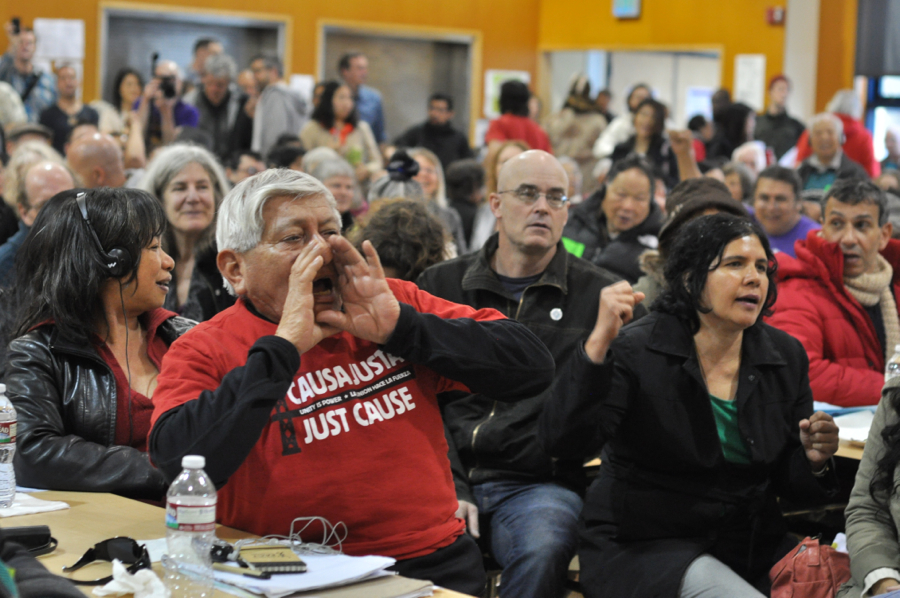
"caption": "Activists gathered Saturday to discuss and vote on a raft of legislative proposals to address the lack of affordable housing in San Francisco. (Josh Wolf / San Francisco Public Press)",
"description": "Activists gathered Saturday to discuss and vote on a raft of legislative proposals to address the lack of affordable housing in San Francisco. (Josh Wolf / San Francisco Public Press)",
"title": "_tenants_convention",
"credit": null,
"status": "inherit",
"isLoading": false,
"fetchFailed": false
},
"news_121446": {
"type": "attachments",
"id": "news_121446",
"meta": {
"index": "attachments_1716263798",
"site": "news",
"id": "121446",
"found": true
},
"parent": 121445,
"imgSizes": {
"kqedFullSize": {
"file": "https://ww2.kqed.org/app/uploads/sites/10/2013/12/photo-11-e1387561504967.jpg",
"width": 640,
"height": 480
}
},
"publishDate": 1387561410,
"modified": 1387561410,
"caption": "Anti-eviction protesters block a Silicon Valley bus -- this one carrying Apple employees -- at 24th and Valencia streets in San Francisco's Mission District (Vinnee Tong/KQED)",
"description": null,
"title": "photo 1",
"credit": null,
"status": "inherit",
"isLoading": false,
"fetchFailed": false
},
"news_116520": {
"type": "attachments",
"id": "news_116520",
"meta": {
"index": "attachments_1716263798",
"site": "news",
"id": "116520",
"found": true
},
"parent": 116475,
"imgSizes": {
"kqedFullSize": {
"file": "https://ww2.kqed.org/app/uploads/sites/10/2013/10/7291_transform.jpg",
"width": 640,
"height": 359
}
},
"publishDate": 1383169762,
"modified": 1383169762,
"caption": "File photo of San Francisco. (Justin Sullivan/Getty Images)",
"description": "A for rent sign July 8, 2009 in San Francisco, California.",
"title": "Vacancy Rate For U.S. Apartments Reaches Highest Rate In 20 Years",
"credit": null,
"status": "inherit",
"isLoading": false,
"fetchFailed": false
},
"news_103809": {
"type": "attachments",
"id": "news_103809",
"meta": {
"index": "attachments_1716263798",
"site": "news",
"id": "103809",
"found": true
},
"parent": 103615,
"imgSizes": {
"kqedFullSize": {
"file": "https://ww2.kqed.org/app/uploads/sites/10/2013/07/forrent.jpg",
"width": 640,
"height": 360
}
},
"publishDate": 1374008652,
"modified": 1374008652,
"caption": "(iStock image)",
"description": null,
"title": "forrent",
"credit": null,
"status": "inherit",
"isLoading": false,
"fetchFailed": false
},
"news_117532": {
"type": "attachments",
"id": "news_117532",
"meta": {
"index": "attachments_1716263798",
"site": "news",
"id": "117532",
"found": true
},
"parent": 117514,
"imgSizes": {
"kqedFullSize": {
"file": "https://ww2.kqed.org/app/uploads/sites/10/2013/11/sfatnight.jpg",
"width": 640,
"height": 360
}
},
"publishDate": 1383860900,
"modified": 1383860900,
"caption": null,
"description": null,
"title": "sfatnight",
"credit": null,
"status": "inherit",
"isLoading": false,
"fetchFailed": false
},
"news_106171": {
"type": "attachments",
"id": "news_106171",
"meta": {
"index": "attachments_1716263798",
"site": "news",
"id": "106171",
"found": true
},
"parent": 106104,
"imgSizes": {
"kqedFullSize": {
"file": "https://ww2.kqed.org/app/uploads/sites/10/2013/08/RS4967_forsale20130529-e1375978585531.jpg",
"width": 640,
"height": 436
}
},
"publishDate": 1375978543,
"modified": 1375978543,
"caption": null,
"description": null,
"title": "RS4967_forsale20130529",
"credit": null,
"status": "inherit",
"isLoading": false,
"fetchFailed": false
},
"news_103815": {
"type": "attachments",
"id": "news_103815",
"meta": {
"index": "attachments_1716263798",
"site": "news",
"id": "103815",
"found": true
},
"parent": 103615,
"imgSizes": {
"kqedFullSize": {
"file": "https://ww2.kqed.org/app/uploads/sites/10/2013/07/423445909_c0ab40fb5e_z.jpg",
"width": 640,
"height": 438
}
},
"publishDate": 1374009084,
"modified": 1374009084,
"caption": "Families find it expensive to live in San Francisco. Photo: GoGap/Flickr",
"description": null,
"title": "423445909_c0ab40fb5e_z",
"credit": null,
"status": "inherit",
"isLoading": false,
"fetchFailed": false
}
},
"audioPlayerReducer": {
"postId": "stream_live",
"isPaused": true,
"isPlaying": false,
"pfsActive": false,
"pledgeModalIsOpen": true,
"playerDrawerIsOpen": false,
"liveAudioPlayStartedAt": 0,
"liveAudioPlayContext": ""
},
"authorsReducer": {
"astupi": {
"type": "authors",
"id": "70",
"meta": {
"index": "authors_1716337520",
"id": "70",
"found": true
},
"name": "Amanda Stupi",
"firstName": "Amanda",
"lastName": "Stupi",
"slug": "astupi",
"email": "astupi@kqed.org",
"display_author_email": false,
"staff_mastheads": [],
"title": "Senior Engagement Producer",
"bio": "Amanda joined KQED Science’s engagement team as a Senior Audience Engagement Strategist in the spring of 2019. She has helped craft messaging around wildfires, the coronavirus pandemic, climate change and many other stories. She has also brought KQED Science to new platforms such as Reddit’s Ask Me Anything series. Prior to joining KQED Science, Amanda spent seven years as an engagement producer with Forum, KQED’s daily live call-in show. She got her start in radio at KALW's weekly call in show, City Visions, before going on to an internship and stint at NPR's Talk of the Nation.\r\n\r\nPrior to journalism, Amanda taught English at Lowell High School. She's a native of Petaluma and currently lives under the \"South San Francisco the Industrial City\" sign in South City. She believes that engagement is vital to news’s future and that good journalism listens as much as it asks questions.",
"avatar": "https://secure.gravatar.com/avatar/e981c503e5c162da701dcaccfbf87e35?s=600&d=blank&r=g",
"twitter": null,
"facebook": null,
"instagram": null,
"linkedin": null,
"sites": [
{
"site": "arts",
"roles": [
"Contributor"
]
},
{
"site": "news",
"roles": [
"editor"
]
},
{
"site": "pop",
"roles": [
"contributor"
]
},
{
"site": "stateofhealth",
"roles": [
"editor"
]
},
{
"site": "science",
"roles": []
},
{
"site": "perspectives",
"roles": [
"editor"
]
}
],
"headData": {
"title": "Amanda Stupi | KQED",
"description": "Senior Engagement Producer",
"ogImgSrc": "https://secure.gravatar.com/avatar/e981c503e5c162da701dcaccfbf87e35?s=600&d=blank&r=g",
"twImgSrc": "https://secure.gravatar.com/avatar/e981c503e5c162da701dcaccfbf87e35?s=600&d=blank&r=g"
},
"isLoading": false,
"link": "/author/astupi"
},
"ohubertallen": {
"type": "authors",
"id": "102",
"meta": {
"index": "authors_1716337520",
"id": "102",
"found": true
},
"name": "Olivia Allen-Price",
"firstName": "Olivia",
"lastName": "Allen-Price",
"slug": "ohubertallen",
"email": "oallenprice@kqed.org",
"display_author_email": false,
"staff_mastheads": [
"news"
],
"title": "Senior Editor",
"bio": "Olivia Allen-Price is senior editor and host of the award-winning Bay Curious podcast. Prior to joining KQED in 2013, Olivia worked at The Baltimore Sun and The Virginian-Pilot in Norfolk, Va. She holds degrees in journalism and political science from Elon University. Her work has earned awards from the Society of Professional Journalists, the Hearst Foundation and Hearken. She loves to talk about running and curly hair.\r\n\r\nFollow: \u003ca href=\"https://twitter.com/oallenprice\">@oallenprice\u003c/a>\r\nEmail: \u003ca href=\"mailto:oallenprice@kqed.org\">oallenprice@kqed.org\u003c/a>",
"avatar": "https://secure.gravatar.com/avatar/07f7803c1f6be56f3be58ef276dfa64dce898502e0554408ef4858451a8294f7?s=600&d=blank&r=g",
"twitter": "oallenprice",
"bluesky": null,
"facebook": null,
"instagram": null,
"linkedin": null,
"sites": [
{
"site": "",
"roles": [
"editor"
]
},
{
"site": "arts",
"roles": [
"subscriber"
]
},
{
"site": "news",
"roles": [
"administrator"
]
},
{
"site": "pop",
"roles": [
"administrator"
]
},
{
"site": "bayareabites",
"roles": [
"contributor"
]
},
{
"site": "stateofhealth",
"roles": [
"administrator"
]
},
{
"site": "science",
"roles": [
"editor"
]
}
],
"headData": {
"title": "Olivia Allen-Price | KQED",
"description": "Senior Editor",
"ogImgSrc": "https://secure.gravatar.com/avatar/07f7803c1f6be56f3be58ef276dfa64dce898502e0554408ef4858451a8294f7?s=600&d=blank&r=g",
"twImgSrc": "https://secure.gravatar.com/avatar/07f7803c1f6be56f3be58ef276dfa64dce898502e0554408ef4858451a8294f7?s=600&d=blank&r=g"
},
"isLoading": false,
"link": "/author/ohubertallen"
},
"bgoebel": {
"type": "authors",
"id": "214",
"meta": {
"index": "authors_1716337520",
"id": "214",
"found": true
},
"name": "Bryan Goebel",
"firstName": "Bryan",
"lastName": "Goebel",
"slug": "bgoebel",
"email": "bgoebel@kqed.org",
"display_author_email": false,
"staff_mastheads": [],
"title": null,
"bio": "Bryan Goebel is a reporter focused on transportation and housing issues. He was previously the editor of Streetsblog San Francisco, and an anchor/editor at KCBS Radio. He's a lifelong Californian and has also worked at radio stations in Barstow, Redding and Sacramento.",
"avatar": "https://secure.gravatar.com/avatar/7fdd6b065bfe9a23a71bcfa80848df88?s=600&d=blank&r=g",
"twitter": "velobry",
"facebook": null,
"instagram": null,
"linkedin": null,
"sites": [
{
"site": "news",
"roles": [
"subscriber"
]
},
{
"site": "stateofhealth",
"roles": [
"subscriber"
]
}
],
"headData": {
"title": "Bryan Goebel | KQED",
"description": null,
"ogImgSrc": "https://secure.gravatar.com/avatar/7fdd6b065bfe9a23a71bcfa80848df88?s=600&d=blank&r=g",
"twImgSrc": "https://secure.gravatar.com/avatar/7fdd6b065bfe9a23a71bcfa80848df88?s=600&d=blank&r=g"
},
"isLoading": false,
"link": "/author/bgoebel"
},
"danbrekke": {
"type": "authors",
"id": "222",
"meta": {
"index": "authors_1716337520",
"id": "222",
"found": true
},
"name": "Dan Brekke",
"firstName": "Dan",
"lastName": "Brekke",
"slug": "danbrekke",
"email": "dbrekke@kqed.org",
"display_author_email": true,
"staff_mastheads": [
"news",
"science"
],
"title": "KQED Editor and Reporter",
"bio": "Dan Brekke is a reporter and editor for KQED News, responsible for coverage of topics ranging from California water issues to the Bay Area's transportation challenges. In a newsroom career that began in Chicago in 1972, Dan has worked for \u003cem>The San Francisco Examiner,\u003c/em> Wired and TechTV and has been published in The New York Times, The New York Times Magazine, Business 2.0, Salon and elsewhere.\r\n\r\nSince joining KQED in 2007, Dan has reported, edited and produced both radio and online features and breaking news pieces. He has shared as both editor and reporter in four Society of Professional Journalists Norcal Excellence in Journalism awards and one Edward R. Murrow regional award. He was chosen for a spring 2017 residency at the Mesa Refuge to advance his research on California salmon.\r\n\r\nEmail Dan at: \u003ca href=\"mailto:dbrekke@kqed.org\">dbrekke@kqed.org\u003c/a>\r\n\r\n\u003cstrong>Twitter:\u003c/strong> \u003ca href=\"https://twitter.com/danbrekke\" rel=\"noopener noreferrer\">twitter.com/danbrekke\u003c/a>\r\n\u003cstrong>Facebook:\u003c/strong> \u003ca href=\"https://www.facebook.com/danbrekke\" rel=\"noopener noreferrer\">www.facebook.com/danbrekke\u003c/a>\r\n\u003cstrong>LinkedIn:\u003c/strong> \u003ca href=\"https://www.linkedin.com/in/danbrekke\" rel=\"noopener noreferrer\">www.linkedin.com/in/danbrekke\u003c/a>",
"avatar": "https://secure.gravatar.com/avatar/8f1f0d2a978fb3b23426c922c7e2af558fa36905b49c4ce76a97dc3c72d27226?s=600&d=mm&r=g",
"twitter": "danbrekke",
"bluesky": null,
"facebook": null,
"instagram": "https://www.instagram.com/dan.brekke/",
"linkedin": "https://www.linkedin.com/in/danbrekke/",
"sites": [
{
"site": "news",
"roles": [
"administrator",
"create_posts"
]
},
{
"site": "stateofhealth",
"roles": [
"editor"
]
},
{
"site": "science",
"roles": [
"editor"
]
},
{
"site": "quest",
"roles": [
"contributor"
]
},
{
"site": "food",
"roles": [
"contributor"
]
},
{
"site": "forum",
"roles": [
"contributor"
]
},
{
"site": "elections",
"roles": [
"editor"
]
},
{
"site": "liveblog",
"roles": [
"editor"
]
}
],
"headData": {
"title": "Dan Brekke | KQED",
"description": "KQED Editor and Reporter",
"ogImgSrc": "https://secure.gravatar.com/avatar/8f1f0d2a978fb3b23426c922c7e2af558fa36905b49c4ce76a97dc3c72d27226?s=600&d=mm&r=g",
"twImgSrc": "https://secure.gravatar.com/avatar/8f1f0d2a978fb3b23426c922c7e2af558fa36905b49c4ce76a97dc3c72d27226?s=600&d=mm&r=g"
},
"isLoading": false,
"link": "/author/danbrekke"
},
"davidweir": {
"type": "authors",
"id": "223",
"meta": {
"index": "authors_1716337520",
"id": "223",
"found": true
},
"name": "David Weir",
"firstName": "David",
"lastName": "Weir",
"slug": "davidweir",
"email": "dweir@kqed.org",
"display_author_email": false,
"staff_mastheads": [],
"title": "KQED Contributor",
"bio": "David Weir is KQED's senior editor for digital news. He previously worked at \u003cem>Rolling Stone,\u003c/em> Salon, Wired Digital, Excite@Home,\u003cem> Mother Jones,\u003c/em> and as a co-founder and executive director of the Center for Investigative Reporting.\r\n\r\nOver the past 40 years, he and his teams have won dozens of awards, including a National Magazine Award, an IRE Award and a Webby. He has authored or co-authored four books, including (with Mark Schapiro) \u003cem>Circle of Poison.\u003c/em>\r\n\r\nHe has a ba\u003cspan class=\"example\">chelor's degree\u003c/span> in journalism from the University of Michigan, and has taught journalism at the University of California at Berkeley, Stanford and San Francisco State.",
"avatar": "https://secure.gravatar.com/avatar/c6642c16c4d2d2de5e6f067edf92b9c8?s=600&d=blank&r=g",
"twitter": null,
"facebook": null,
"instagram": null,
"linkedin": null,
"sites": [
{
"site": "arts",
"roles": [
"editor"
]
},
{
"site": "news",
"roles": [
"subscriber"
]
},
{
"site": "lowdown",
"roles": [
"editor"
]
},
{
"site": "stateofhealth",
"roles": [
"administrator"
]
},
{
"site": "science",
"roles": [
"editor"
]
}
],
"headData": {
"title": "David Weir | KQED",
"description": "KQED Contributor",
"ogImgSrc": "https://secure.gravatar.com/avatar/c6642c16c4d2d2de5e6f067edf92b9c8?s=600&d=blank&r=g",
"twImgSrc": "https://secure.gravatar.com/avatar/c6642c16c4d2d2de5e6f067edf92b9c8?s=600&d=blank&r=g"
},
"isLoading": false,
"link": "/author/davidweir"
},
"kqed": {
"type": "authors",
"id": "236",
"meta": {
"index": "authors_1716337520",
"id": "236",
"found": true
},
"name": "KQED News Staff",
"firstName": "KQED News Staff",
"lastName": null,
"slug": "kqed",
"email": "faq@kqed.org",
"display_author_email": false,
"staff_mastheads": [],
"title": null,
"bio": null,
"avatar": "https://secure.gravatar.com/avatar/ef0e801a68c4c54afa9180db14084167?s=600&d=blank&r=g",
"twitter": null,
"facebook": null,
"instagram": null,
"linkedin": null,
"sites": [
{
"site": "arts",
"roles": [
"contributor"
]
},
{
"site": "news",
"roles": [
"editor"
]
},
{
"site": "futureofyou",
"roles": [
"author"
]
}
],
"headData": {
"title": "KQED News Staff | KQED",
"description": null,
"ogImgSrc": "https://secure.gravatar.com/avatar/ef0e801a68c4c54afa9180db14084167?s=600&d=blank&r=g",
"twImgSrc": "https://secure.gravatar.com/avatar/ef0e801a68c4c54afa9180db14084167?s=600&d=blank&r=g"
},
"isLoading": false,
"link": "/author/kqed"
},
"samharnett": {
"type": "authors",
"id": "253",
"meta": {
"index": "authors_1716337520",
"id": "253",
"found": true
},
"name": "Sam Harnett",
"firstName": "Sam",
"lastName": "Harnett",
"slug": "samharnett",
"email": "samharnett@gmail.com",
"display_author_email": false,
"staff_mastheads": [],
"title": "KQED Contributor",
"bio": "Sam Harnett covered tech and work at KQED. He is the co-creator of \u003cem>\u003ca href=\"http://www.theworldaccordingtosound.org\">The World According to Sound\u003c/a>,\u003c/em> a 90-second podcast that features different sounds and the stories behind them.\r\n\r\nBefore coming to KQED, Sam worked as an independent reporter who contributed regularly to \u003cem>The California Report, Marketplace,\u003c/em> \u003cem>The World \u003c/em>and NPR.",
"avatar": "https://secure.gravatar.com/avatar/2538b972ac02f2b9546c7a6c59a0f3d0?s=600&d=blank&r=g",
"twitter": "Samwharnett",
"facebook": null,
"instagram": null,
"linkedin": null,
"sites": [
{
"site": "news",
"roles": [
"edit_others_posts",
"subscriber"
]
},
{
"site": "stateofhealth",
"roles": [
"author"
]
},
{
"site": "science",
"roles": [
"editor"
]
},
{
"site": "quest",
"roles": [
"subscriber"
]
}
],
"headData": {
"title": "Sam Harnett | KQED",
"description": "KQED Contributor",
"ogImgSrc": "https://secure.gravatar.com/avatar/2538b972ac02f2b9546c7a6c59a0f3d0?s=600&d=blank&r=g",
"twImgSrc": "https://secure.gravatar.com/avatar/2538b972ac02f2b9546c7a6c59a0f3d0?s=600&d=blank&r=g"
},
"isLoading": false,
"link": "/author/samharnett"
},
"matthewgreen": {
"type": "authors",
"id": "1263",
"meta": {
"index": "authors_1716337520",
"id": "1263",
"found": true
},
"name": "Matthew Green",
"firstName": "Matthew",
"lastName": "Green",
"slug": "matthewgreen",
"email": "mgreen@kqed.org",
"display_author_email": false,
"staff_mastheads": [],
"title": "KQED Editor/Reporter",
"bio": "Matthew Green is a digital media producer for KQED News. He previously produced \u003ca href=\"http://www.kqed.org/lowdown\">The Lowdown\u003c/a>, KQED’s multimedia news education blog. Matthew's written for numerous Bay Area publications, including the Oakland Tribune and San Francisco Chronicle. He also taught journalism classes at Fremont High School in East Oakland.\r\n\r\nEmail: mgreen@kqed.org; Twitter: @MGreenKQED",
"avatar": "https://secure.gravatar.com/avatar/3bf498d1267ca02c8494f33d8cfc575e?s=600&d=blank&r=g",
"twitter": "MGreenKQED",
"facebook": null,
"instagram": null,
"linkedin": null,
"sites": [
{
"site": "news",
"roles": []
},
{
"site": "lowdown",
"roles": []
},
{
"site": "science",
"roles": []
},
{
"site": "education",
"roles": []
},
{
"site": "quest",
"roles": []
},
{
"site": "liveblog",
"roles": []
}
],
"headData": {
"title": "Matthew Green | KQED",
"description": "KQED Editor/Reporter",
"ogImgSrc": "https://secure.gravatar.com/avatar/3bf498d1267ca02c8494f33d8cfc575e?s=600&d=blank&r=g",
"twImgSrc": "https://secure.gravatar.com/avatar/3bf498d1267ca02c8494f33d8cfc575e?s=600&d=blank&r=g"
},
"isLoading": false,
"link": "/author/matthewgreen"
},
"kdomara": {
"type": "authors",
"id": "1459",
"meta": {
"index": "authors_1716337520",
"id": "1459",
"found": true
},
"name": "Kelly O'Mara",
"firstName": "Kelly",
"lastName": "O'Mara",
"slug": "kdomara",
"email": "komara@kqed.org",
"display_author_email": false,
"staff_mastheads": [
"news"
],
"title": "KQED Contributor",
"bio": "Kelly O'Mara is a writer and reporter in the San Francisco Bay Area. She writes about food, health, sports, travel, business and California news. Her work has appeared on KQED, online for Outside Magazine, epsnW, VICE and in Competitor Magazine, among others. Follow Kelly on Twitter \u003ca href=\"https://twitter.com/kellydomara\">@kellydomara\u003c/a>.",
"avatar": "https://secure.gravatar.com/avatar/768fec7412028b72f13bdd0f5f9d8186?s=600&d=blank&r=g",
"twitter": null,
"facebook": null,
"instagram": null,
"linkedin": null,
"sites": [
{
"site": "arts",
"roles": []
},
{
"site": "news",
"roles": []
},
{
"site": "bayareabites",
"roles": []
},
{
"site": "stateofhealth",
"roles": []
},
{
"site": "science",
"roles": []
},
{
"site": "checkplease",
"roles": [
"editor"
]
},
{
"site": "food",
"roles": []
},
{
"site": "forum",
"roles": [
"editor"
]
},
{
"site": "liveblog",
"roles": [
"editor"
]
}
],
"headData": {
"title": "Kelly O'Mara | KQED",
"description": "KQED Contributor",
"ogImgSrc": "https://secure.gravatar.com/avatar/768fec7412028b72f13bdd0f5f9d8186?s=600&d=blank&r=g",
"twImgSrc": "https://secure.gravatar.com/avatar/768fec7412028b72f13bdd0f5f9d8186?s=600&d=blank&r=g"
},
"isLoading": false,
"link": "/author/kdomara"
}
},
"pagesReducer": {
"news_tag_rent": {
"type": "terms",
"id": "news_20967",
"meta": {
"index": "terms_1716263798",
"site": "news",
"id": "20967",
"score": 9.105365
},
"featImg": null,
"name": "Rent",
"description": null,
"taxonomy": "tag",
"headData": {
"twImgId": null,
"twTitle": null,
"ogTitle": null,
"ogImgId": null,
"twDescription": null,
"description": null,
"title": "Rent Archives | KQED News",
"ogDescription": null
},
"ttid": 20984,
"slug": "rent",
"isLoading": false,
"title": "Rent",
"pageMeta": {
"site": "news",
"WpPageTemplate": "page-topic-editorial",
"currentPage": 7
},
"blocks": [
{
"blockName": "kqed/post-list",
"attrs": {
"layout": "cardArticle2",
"query": "posts/news?tag=rent",
"seeMore": false,
"paginated": true,
"page": 7
}
},
{
"blockName": "kqed/ad"
}
]
}
},
"pfsSessionReducer": {},
"postsReducer": {
"stream_live": {
"type": "live",
"id": "stream_live",
"audioUrl": "https://streams.kqed.org/kqedradio",
"title": "Live Stream",
"excerpt": "Live Stream information currently unavailable.",
"link": "/radio",
"featImg": "",
"label": {
"name": "KQED Live",
"link": "/"
}
},
"stream_kqedNewscast": {
"type": "posts",
"id": "stream_kqedNewscast",
"audioUrl": "https://www.kqed.org/.stream/anon/radio/RDnews/newscast.mp3?_=1",
"title": "KQED Newscast",
"featImg": "",
"label": {
"name": "88.5 FM",
"link": "/"
}
},
"news_131250": {
"type": "posts",
"id": "news_131250",
"meta": {
"index": "posts_1716263798",
"site": "news",
"id": "131250",
"score": null,
"sort": [
1396456249000
]
},
"guestAuthors": [],
"slug": "in-san-francisco-rooms-for-1000month-are-now-scarce",
"title": "In San Francisco, Rooms for $1,000/Month Are Now Scarce",
"publishDate": 1396456249,
"format": "aside",
"headTitle": "In San Francisco, Rooms for $1,000/Month Are Now Scarce | KQED",
"labelTerm": {
"term": 6944,
"site": "news"
},
"content": "\u003cfigure id=\"attachment_131273\" class=\"wp-caption aligncenter\" style=\"max-width: 640px\">\u003ca href=\"http://ww2.kqed.org/news/wp-content/uploads/sites/10/2014/04/1000housing.jpg\">\u003cimg loading=\"lazy\" decoding=\"async\" class=\"size-full wp-image-131273\" src=\"http://ww2.kqed.org/news/wp-content/uploads/sites/10/2014/04/1000housing.jpg\" alt=\"Lexie Scanlon doesn't fit the profile of young tech-workers looking to share houses. But, she can't afford anywhere else to live in the city. Photo: Sam Harnett/KQED\" width=\"640\" height=\"360\">\u003c/a>\u003cfigcaption class=\"wp-caption-text\">Lexie Scanlon doesn’t fit the profile of young tech workers looking to share houses. But she can’t afford anywhere else to live in the city. (Sam Harnett/KQED)\u003c/figcaption>\u003c/figure>\n\u003cp>If you can’t afford at least $1,000 in rent, then it may be difficult to find anywhere to live in San Francisco — even just a room. The average market rate per room on new leases has now gone well above $1,000 per month. Spots in shared-living situations with rent-controlled leases that make prices lower are few and coveted. And even some privately run single-room-occupancies (SRO), often a last resort before homelessness, are now charging $1,000 in rent for a room that doesn’t even have its own bathroom or kitchen.\u003c/p>\n\u003cp>Bedrooms for under $1,000 a month can still be found on the fringes of some less popular neighborhoods or with students near San Francisco State. But the only way to get a spot in one of the city’s trendier neighborhoods for that price is to convince a master tenant with a rent-controlled lease to let you move in. For these spots, applicants compete against dozens or, in some cases, hundreds of other candidates.\u003c/p>\n\u003cp>Getting selected to sublet a room in a shared-living situation depends on the whims of the leaseholders. Applicants send tailored cover letters, fight to win attention at open houses, and attempt to impress potential housemates during one-on-one interviews. The whole thing is a subjective process with little protection against prejudices like ageism, sexism or racism. If the master tenant doesn’t like you, you won’t get picked.\u003c/p>\n\u003cp>To beat the competition and get a hotly coveted room, applicants are trying anything they can. Some advertise themselves on Craigslist as great roommates. Others send LinkedIn and Facebook profiles. Francesco Mursia made a video introducing himself and describing his favorite pastimes. He is not getting many responses.\u003c/p>\n\u003cp>Mursia thinks part of the problem is his age. Many of the other applicants are 20-somethings in a period of transition. Mursia is 39. He would like to live alone, but with his budget ($1,000/month) that’s not possible in San Francisco. He’s been looking for a room since September. He checks Craigslist every day, sends out emails and goes to open houses. During this process, he said, “You ask yourself, why don’t I stand out?”\u003c/p>\n\u003cp>[ad fullwidth]\u003c/p>\n\u003cp>Even expensive rooms are highly contested. Eun-Joung Lee lives in a three-bedroom on the border between the Mission and Noe Valley. She recently put a room on Craigslist for $1,500 a month. That may sound like a lot, but according to Tracy Ballard from the \u003ca href=\"http://www.bayarearentaladvisors.com/\" target=\"_blank\">Bay Area Rental Advisors\u003c/a>, the average asking rate for a three-bedroom in San Francisco is around $5,000/month.\u003c/p>\n\u003cp>So, $1,500 for a room in a hot neighborhood isn’t that bad. Lee got 20 responses to her post, which suggests she could have probably priced the room even higher.\u003c/p>\n\u003cp>The standard financial advice is to not spend more than a third of your income on rent. For a $1,500 a month room you would need to earn $54,000 a year after taxes. Lexie Scanlon barely makes half that as an hourly employee. She says she cannot find anywhere affordable in the city to live, so she is considering an SRO.\u003c/p>\n\u003cp>Scanlon has lived in an SRO before. It was not a pleasant arrangement. The place had bedbugs, she said, but at least it was affordable — only $185 a week. She recently called to inquire about a room at the same place, and the price had gone up to $225 a week. But, $900 a month is too much to pay for those conditions, she said.\u003c/p>\n\u003cp>Scanlon has seen a few shared-living situations she can afford — mostly student houses or apartments that advertise themselves as “tech houses.” These places post on Craigslist as group living arrangements for people with startup ambitions. One such post was titled “the good life 2.0.”\u003c/p>\n\u003cp>Another reads: “We all went to top schools and work at the companies you read about.” Scanlon doesn’t fit that profile. She is 42 years old, transgender and a veteran. She works in the city and wants to know why there isn’t a place for her here.\u003c/p>\n\u003cp>Brian Harrigan is on the other side of the equation. He is on the lease of an iconic four-bedroom Victorian in the Lower Haight. He could probably rent the rooms out for as much as $1,500 each, but he doesn’t want to be greedy. At the same time, he said, “If I was to rent it out at like $500 I would have hundreds of emails. You would get everyone applying for it, and it wouldn’t be manageable.”\u003c/p>\n\u003cp>Harrigan recently had a room open up in the apartment and he decided to put it up at $1,000 — about double the rent-controlled rate and $500 below what he could have charged. Even with the inflated price, he received about 50 applications for the one room. The odds of getting selected from that pool are worse than obtaining undergraduate admission at Harvard.\u003c/p>\n\u003cp>Getting an affordable room has not always been so cutthroat. Twenty years ago, John Hattori paid $70 a month to rent on Valencia Street in the Mission. Today he lives in a rent-controlled apartment, which he can afford as a video artist and substitute teacher. “The type of people that moved when I moved here are very different people, and that’s an unfortunate thing. You can’t experiment with your life in the same way that we were able to,” he said.\u003c/p>\n\u003cp>That old San Francisco, he said, is long gone.\u003c/p>\n\u003cp>\u003c/p>\n\u003cp>\u003ciframe loading=\"lazy\" width=\"100%\" height=\"166\" scrolling=\"no\" frameborder=\"no\" src=\"https://w.soundcloud.com/player/?url=https%3A//api.soundcloud.com/tracks/142905710&color=ff5500&auto_play=false&hide_related=false&show_artwork=true\">\u003c/iframe>\u003c/p>\n\n",
"blocks": [],
"excerpt": "The time of affordable rooms in San Francisco may be long over.",
"status": "publish",
"parent": 0,
"modified": 1738787388,
"stats": {
"hasAudio": true,
"hasVideo": false,
"hasChartOrMap": false,
"iframeSrcs": [],
"hasGoogleForm": false,
"hasGallery": false,
"hasHearkenModule": false,
"hasPolis": false,
"paragraphCount": 18,
"wordCount": 1000
},
"headData": {
"title": "In San Francisco, Rooms for $1,000/Month Are Now Scarce | KQED",
"description": "The time of affordable rooms in San Francisco may be long over.",
"ogTitle": "",
"ogDescription": "",
"ogImgId": "",
"twTitle": "",
"twDescription": "",
"twImgId": "",
"schema": {
"@context": "https://schema.org",
"@type": "NewsArticle",
"headline": "In San Francisco, Rooms for $1,000/Month Are Now Scarce",
"datePublished": "2014-04-02T09:30:49-07:00",
"dateModified": "2025-02-05T12:29:48-08:00",
"image": "https://cdn.kqed.org/wp-content/uploads/2020/02/KQED-OG-Image@1x.png",
"isAccessibleForFree": "True",
"publisher": {
"@type": "NewsMediaOrganization",
"@id": "https://www.kqed.org/#organization",
"name": "KQED",
"logo": "https://cdn.kqed.org/wp-content/uploads/2020/02/KQED-OG-Image@1x.png",
"url": "https://www.kqed.org",
"sameAs": [
"https://www.facebook.com/KQED",
"https://twitter.com/KQED",
"https://www.instagram.com/kqed/",
"https://www.tiktok.com/@kqedofficial",
"https://www.linkedin.com/company/kqed",
"https://www.youtube.com/channel/UCeC0IOo7i1P_61zVUWbJ4nw"
]
}
}
},
"sticky": false,
"customPermalink": "2014/04/01/in-san-francisciorooms-for-1000-a-month-now-scarce-in-san-francisco/",
"path": "/news/131250/in-san-francisco-rooms-for-1000month-are-now-scarce",
"audioTrackLength": null,
"parsedContent": [
{
"type": "contentString",
"content": "\u003cdiv class=\"post-body\">\u003cp>\u003cfigure id=\"attachment_131273\" class=\"wp-caption aligncenter\" style=\"max-width: 640px\">\u003ca href=\"http://ww2.kqed.org/news/wp-content/uploads/sites/10/2014/04/1000housing.jpg\">\u003cimg loading=\"lazy\" decoding=\"async\" class=\"size-full wp-image-131273\" src=\"http://ww2.kqed.org/news/wp-content/uploads/sites/10/2014/04/1000housing.jpg\" alt=\"Lexie Scanlon doesn't fit the profile of young tech-workers looking to share houses. But, she can't afford anywhere else to live in the city. Photo: Sam Harnett/KQED\" width=\"640\" height=\"360\">\u003c/a>\u003cfigcaption class=\"wp-caption-text\">Lexie Scanlon doesn’t fit the profile of young tech workers looking to share houses. But she can’t afford anywhere else to live in the city. (Sam Harnett/KQED)\u003c/figcaption>\u003c/figure>\n\u003cp>If you can’t afford at least $1,000 in rent, then it may be difficult to find anywhere to live in San Francisco — even just a room. The average market rate per room on new leases has now gone well above $1,000 per month. Spots in shared-living situations with rent-controlled leases that make prices lower are few and coveted. And even some privately run single-room-occupancies (SRO), often a last resort before homelessness, are now charging $1,000 in rent for a room that doesn’t even have its own bathroom or kitchen.\u003c/p>\n\u003cp>Bedrooms for under $1,000 a month can still be found on the fringes of some less popular neighborhoods or with students near San Francisco State. But the only way to get a spot in one of the city’s trendier neighborhoods for that price is to convince a master tenant with a rent-controlled lease to let you move in. For these spots, applicants compete against dozens or, in some cases, hundreds of other candidates.\u003c/p>\n\u003cp>Getting selected to sublet a room in a shared-living situation depends on the whims of the leaseholders. Applicants send tailored cover letters, fight to win attention at open houses, and attempt to impress potential housemates during one-on-one interviews. The whole thing is a subjective process with little protection against prejudices like ageism, sexism or racism. If the master tenant doesn’t like you, you won’t get picked.\u003c/p>\n\u003cp>To beat the competition and get a hotly coveted room, applicants are trying anything they can. Some advertise themselves on Craigslist as great roommates. Others send LinkedIn and Facebook profiles. Francesco Mursia made a video introducing himself and describing his favorite pastimes. He is not getting many responses.\u003c/p>\n\u003cp>Mursia thinks part of the problem is his age. Many of the other applicants are 20-somethings in a period of transition. Mursia is 39. He would like to live alone, but with his budget ($1,000/month) that’s not possible in San Francisco. He’s been looking for a room since September. He checks Craigslist every day, sends out emails and goes to open houses. During this process, he said, “You ask yourself, why don’t I stand out?”\u003c/p>\n\u003cp>\u003c/p>\u003c/div>",
"attributes": {
"named": {},
"numeric": []
}
},
{
"type": "component",
"content": "",
"name": "ad",
"attributes": {
"named": {
"label": "fullwidth"
},
"numeric": [
"fullwidth"
]
}
},
{
"type": "contentString",
"content": "\u003cdiv class=\"post-body\">\u003cp>\u003c/p>\n\u003cp>Even expensive rooms are highly contested. Eun-Joung Lee lives in a three-bedroom on the border between the Mission and Noe Valley. She recently put a room on Craigslist for $1,500 a month. That may sound like a lot, but according to Tracy Ballard from the \u003ca href=\"http://www.bayarearentaladvisors.com/\" target=\"_blank\">Bay Area Rental Advisors\u003c/a>, the average asking rate for a three-bedroom in San Francisco is around $5,000/month.\u003c/p>\n\u003cp>So, $1,500 for a room in a hot neighborhood isn’t that bad. Lee got 20 responses to her post, which suggests she could have probably priced the room even higher.\u003c/p>\n\u003cp>The standard financial advice is to not spend more than a third of your income on rent. For a $1,500 a month room you would need to earn $54,000 a year after taxes. Lexie Scanlon barely makes half that as an hourly employee. She says she cannot find anywhere affordable in the city to live, so she is considering an SRO.\u003c/p>\n\u003cp>Scanlon has lived in an SRO before. It was not a pleasant arrangement. The place had bedbugs, she said, but at least it was affordable — only $185 a week. She recently called to inquire about a room at the same place, and the price had gone up to $225 a week. But, $900 a month is too much to pay for those conditions, she said.\u003c/p>\n\u003cp>Scanlon has seen a few shared-living situations she can afford — mostly student houses or apartments that advertise themselves as “tech houses.” These places post on Craigslist as group living arrangements for people with startup ambitions. One such post was titled “the good life 2.0.”\u003c/p>\n\u003cp>Another reads: “We all went to top schools and work at the companies you read about.” Scanlon doesn’t fit that profile. She is 42 years old, transgender and a veteran. She works in the city and wants to know why there isn’t a place for her here.\u003c/p>\n\u003cp>Brian Harrigan is on the other side of the equation. He is on the lease of an iconic four-bedroom Victorian in the Lower Haight. He could probably rent the rooms out for as much as $1,500 each, but he doesn’t want to be greedy. At the same time, he said, “If I was to rent it out at like $500 I would have hundreds of emails. You would get everyone applying for it, and it wouldn’t be manageable.”\u003c/p>\n\u003cp>Harrigan recently had a room open up in the apartment and he decided to put it up at $1,000 — about double the rent-controlled rate and $500 below what he could have charged. Even with the inflated price, he received about 50 applications for the one room. The odds of getting selected from that pool are worse than obtaining undergraduate admission at Harvard.\u003c/p>\n\u003cp>Getting an affordable room has not always been so cutthroat. Twenty years ago, John Hattori paid $70 a month to rent on Valencia Street in the Mission. Today he lives in a rent-controlled apartment, which he can afford as a video artist and substitute teacher. “The type of people that moved when I moved here are very different people, and that’s an unfortunate thing. You can’t experiment with your life in the same way that we were able to,” he said.\u003c/p>\n\u003cp>That old San Francisco, he said, is long gone.\u003c/p>\n\u003cp>\u003c/p>\n\u003cp>\u003ciframe loading=\"lazy\" width=\"100%\" height=\"166\" scrolling=\"no\" frameborder=\"no\" src=\"https://w.soundcloud.com/player/?url=https%3A//api.soundcloud.com/tracks/142905710&color=ff5500&auto_play=false&hide_related=false&show_artwork=true\">\u003c/iframe>\u003c/p>\n\n\u003c/div>\u003c/p>",
"attributes": {
"named": {},
"numeric": []
}
}
],
"link": "/news/131250/in-san-francisco-rooms-for-1000month-are-now-scarce",
"authors": [
"253"
],
"programs": [
"news_6944"
],
"series": [
"news_18549"
],
"categories": [
"news_6266"
],
"tags": [
"news_3921",
"news_5008",
"news_20967",
"news_38"
],
"featImg": "news_131273",
"label": "news_6944"
},
"news_130707": {
"type": "posts",
"id": "news_130707",
"meta": {
"index": "posts_1716263798",
"site": "news",
"id": "130707",
"score": null,
"sort": [
1396018839000
]
},
"guestAuthors": [],
"slug": "you-must-earn-29-83-an-hour-to-afford-a-1-bedroom-in-san-francisco",
"title": "Report: You Need to Earn $29.83 an Hour to Afford a 1-Bedroom in San Francisco",
"publishDate": 1396018839,
"format": "aside",
"headTitle": "Report: You Need to Earn $29.83 an Hour to Afford a 1-Bedroom in San Francisco | KQED",
"labelTerm": {
"term": 6944,
"site": "news"
},
"content": "\u003cp>To afford a market-rate one-bedroom apartment in San Francisco, you need to earn $29.83 an hour, or $62,046 annually, according to a new \u003ca href=\"http://nlihc.org/sites/default/files/oor/OOR2014.pdf\" target=\"_blank\">report \u003c/a>out this month from the \u003ca href=\"http://nlihc.org/\" target=\"_blank\">National Low Income Housing Coalition\u003c/a>. Add a second bedroom and your household hourly wage needs to hit $37.62 ($78,249 annually), the highest for any metro region in the country.\u003c/p>\n\u003cp>Things don’t get better in other parts of the Bay Area: San Mateo, Santa Clara and Marin join San Francisco atop the charts as four of the six most expensive counties in America. Oakland-Fremont, Santa Cruz-Watsonville and San Jose-Sunnyvale-Santa Clara join San Francisco in the top 10 most expensive metro regions.\u003c/p>\n\u003cfigure id=\"attachment_130734\" class=\"wp-caption aligncenter\" style=\"max-width: 640px\">\u003cimg loading=\"lazy\" decoding=\"async\" class=\"size-medium wp-image-130734 \" src=\"http://ww2.kqed.org/news/wp-content/uploads/sites/10/2014/03/most-expensive-jurisdictions-640x226.jpg\" alt=\"Several California cities and counties top the list of most expensive places to rent a home. (National Low Income Housing Coalition)\" width=\"640\" height=\"226\">\u003cfigcaption class=\"wp-caption-text\">Several California cities and counties top the list of most expensive places to rent a home. (National Low Income Housing Coalition)\u003c/figcaption>\u003c/figure>\n\u003cp>This report also contains dismal news for minimum-wage workers in California. Those earning the state minimum wage of $8 an hour would need to work 130 hours a week (there are 168 hours in a week total) to afford a market-rate two-bedroom in California based on the statewide real estate average. Though the minimum wage is higher in many California cities, including San Francisco and San Jose, there is still a wide gap between what minimum-wage workers earn and what they need for housing.\u003c/p>\n\u003cp>A campaign to raise the state minimum wage to $12 an hour \u003ca href=\"http://ww2.kqed.org/news/2014/03/17/ron-unz-minimum-wage-measure-unlikely-to-make-ballot\" target=\"_blank\">failed to gather enough financial support\u003c/a> to get on this year’s ballot. KQED’s Do Now project recently asked people across the country \u003ca href=\"http://blogs.kqed.org/education/2014/03/22/minimum-wage/\" target=\"_blank\">how much they think minimum wage should be. \u003c/a>\u003c/p>\n\u003cfigure id=\"attachment_130738\" class=\"wp-caption aligncenter\" style=\"max-width: 628px\">\u003cimg loading=\"lazy\" decoding=\"async\" class=\"size-full wp-image-130738\" src=\"http://ww2.kqed.org/news/wp-content/uploads/sites/10/2014/03/local-min-wage-rates.jpg\" alt=\"Minimum wage workers in San Francisco and San Jose still fall short of being able to afford housing. (National Low Income Housing Coalition)\" width=\"628\" height=\"340\">\u003cfigcaption class=\"wp-caption-text\">Minimum wage workers in San Francisco and San Jose still fall short of being able to afford housing. (National Low Income Housing Coalition)\u003c/figcaption>\u003c/figure>\n\u003cp>If you look at what people in the Bay Area are actually earning, the picture is a\u003cem> bit\u003c/em> less grim. The average renter in San Francisco, for example, earned $31.45 an hour – well above the $10.74 minimum wage. At that rate, it would take 1.2 full-time jobs to afford a two-bedroom in the city. Factor in a roommate or partner to split the rent with, and things look a bit more manageable – at least for those at or above the average.\u003c/p>\n\u003cp>[ad fullwidth]\u003c/p>\n\u003cp>In the San Jose metro region, the average renter is even better off, earning $32.99 an hour, but only $31.71 is needed for a market-rate two-bedroom.\u003c/p>\n\u003cp>Meanwhile, if all of these wage levels seem out of reach, we’ll leave you with a glimpse of all the cheaper places you could live. Hint: Can anybody give us a ride to Idaho?\u003c/p>\n\u003cfigure id=\"attachment_130773\" class=\"wp-caption aligncenter\" style=\"max-width: 640px\">\u003cimg loading=\"lazy\" decoding=\"async\" class=\"size-medium wp-image-130773\" src=\"http://ww2.kqed.org/news/wp-content/uploads/sites/10/2014/03/Screen-Shot-2014-03-27-at-11.00.00-AM-640x516.png\" alt=\"A nationwide view of housing affordability. (National Low Income Housing Coalition)\" width=\"640\" height=\"516\">\u003cfigcaption class=\"wp-caption-text\">A nationwide view of housing affordability. (National Low Income Housing Coalition)\u003c/figcaption>\u003c/figure>\n\u003cp>\u003c/p>\n\u003cp> \u003c/p>\n\n",
"blocks": [],
"excerpt": "Living in the Bay Area isn't easy, but for average-wage workers it could be worse.",
"status": "publish",
"parent": 0,
"modified": 1738785256,
"stats": {
"hasAudio": false,
"hasVideo": false,
"hasChartOrMap": false,
"iframeSrcs": [],
"hasGoogleForm": false,
"hasGallery": false,
"hasHearkenModule": false,
"hasPolis": false,
"paragraphCount": 9,
"wordCount": 472
},
"headData": {
"title": "Report: You Need to Earn $29.83 an Hour to Afford a 1-Bedroom in San Francisco | KQED",
"description": "Living in the Bay Area isn't easy, but for average-wage workers it could be worse.",
"ogTitle": "",
"ogDescription": "",
"ogImgId": "",
"twTitle": "",
"twDescription": "",
"twImgId": "",
"schema": {
"@context": "https://schema.org",
"@type": "NewsArticle",
"headline": "Report: You Need to Earn $29.83 an Hour to Afford a 1-Bedroom in San Francisco",
"datePublished": "2014-03-28T08:00:39-07:00",
"dateModified": "2025-02-05T11:54:16-08:00",
"image": "https://cdn.kqed.org/wp-content/uploads/2020/02/KQED-OG-Image@1x.png",
"isAccessibleForFree": "True",
"publisher": {
"@type": "NewsMediaOrganization",
"@id": "https://www.kqed.org/#organization",
"name": "KQED",
"logo": "https://cdn.kqed.org/wp-content/uploads/2020/02/KQED-OG-Image@1x.png",
"url": "https://www.kqed.org",
"sameAs": [
"https://www.facebook.com/KQED",
"https://twitter.com/KQED",
"https://www.instagram.com/kqed/",
"https://www.tiktok.com/@kqedofficial",
"https://www.linkedin.com/company/kqed",
"https://www.youtube.com/channel/UCeC0IOo7i1P_61zVUWbJ4nw"
]
}
}
},
"sticky": false,
"customPermalink": "2014/03/27/how-much-to-afford-a-1-bedroom-apartment-in-san-francisco/",
"path": "/news/130707/you-must-earn-29-83-an-hour-to-afford-a-1-bedroom-in-san-francisco",
"audioTrackLength": null,
"parsedContent": [
{
"type": "contentString",
"content": "\u003cdiv class=\"post-body\">\u003cp>\u003cp>To afford a market-rate one-bedroom apartment in San Francisco, you need to earn $29.83 an hour, or $62,046 annually, according to a new \u003ca href=\"http://nlihc.org/sites/default/files/oor/OOR2014.pdf\" target=\"_blank\">report \u003c/a>out this month from the \u003ca href=\"http://nlihc.org/\" target=\"_blank\">National Low Income Housing Coalition\u003c/a>. Add a second bedroom and your household hourly wage needs to hit $37.62 ($78,249 annually), the highest for any metro region in the country.\u003c/p>\n\u003cp>Things don’t get better in other parts of the Bay Area: San Mateo, Santa Clara and Marin join San Francisco atop the charts as four of the six most expensive counties in America. Oakland-Fremont, Santa Cruz-Watsonville and San Jose-Sunnyvale-Santa Clara join San Francisco in the top 10 most expensive metro regions.\u003c/p>\n\u003cfigure id=\"attachment_130734\" class=\"wp-caption aligncenter\" style=\"max-width: 640px\">\u003cimg loading=\"lazy\" decoding=\"async\" class=\"size-medium wp-image-130734 \" src=\"http://ww2.kqed.org/news/wp-content/uploads/sites/10/2014/03/most-expensive-jurisdictions-640x226.jpg\" alt=\"Several California cities and counties top the list of most expensive places to rent a home. (National Low Income Housing Coalition)\" width=\"640\" height=\"226\">\u003cfigcaption class=\"wp-caption-text\">Several California cities and counties top the list of most expensive places to rent a home. (National Low Income Housing Coalition)\u003c/figcaption>\u003c/figure>\n\u003cp>This report also contains dismal news for minimum-wage workers in California. Those earning the state minimum wage of $8 an hour would need to work 130 hours a week (there are 168 hours in a week total) to afford a market-rate two-bedroom in California based on the statewide real estate average. Though the minimum wage is higher in many California cities, including San Francisco and San Jose, there is still a wide gap between what minimum-wage workers earn and what they need for housing.\u003c/p>\n\u003cp>A campaign to raise the state minimum wage to $12 an hour \u003ca href=\"http://ww2.kqed.org/news/2014/03/17/ron-unz-minimum-wage-measure-unlikely-to-make-ballot\" target=\"_blank\">failed to gather enough financial support\u003c/a> to get on this year’s ballot. KQED’s Do Now project recently asked people across the country \u003ca href=\"http://blogs.kqed.org/education/2014/03/22/minimum-wage/\" target=\"_blank\">how much they think minimum wage should be. \u003c/a>\u003c/p>\n\u003cfigure id=\"attachment_130738\" class=\"wp-caption aligncenter\" style=\"max-width: 628px\">\u003cimg loading=\"lazy\" decoding=\"async\" class=\"size-full wp-image-130738\" src=\"http://ww2.kqed.org/news/wp-content/uploads/sites/10/2014/03/local-min-wage-rates.jpg\" alt=\"Minimum wage workers in San Francisco and San Jose still fall short of being able to afford housing. (National Low Income Housing Coalition)\" width=\"628\" height=\"340\">\u003cfigcaption class=\"wp-caption-text\">Minimum wage workers in San Francisco and San Jose still fall short of being able to afford housing. (National Low Income Housing Coalition)\u003c/figcaption>\u003c/figure>\n\u003cp>If you look at what people in the Bay Area are actually earning, the picture is a\u003cem> bit\u003c/em> less grim. The average renter in San Francisco, for example, earned $31.45 an hour – well above the $10.74 minimum wage. At that rate, it would take 1.2 full-time jobs to afford a two-bedroom in the city. Factor in a roommate or partner to split the rent with, and things look a bit more manageable – at least for those at or above the average.\u003c/p>\n\u003cp>\u003c/p>\u003c/div>",
"attributes": {
"named": {},
"numeric": []
}
},
{
"type": "component",
"content": "",
"name": "ad",
"attributes": {
"named": {
"label": "fullwidth"
},
"numeric": [
"fullwidth"
]
}
},
{
"type": "contentString",
"content": "\u003cdiv class=\"post-body\">\u003cp>\u003c/p>\n\u003cp>In the San Jose metro region, the average renter is even better off, earning $32.99 an hour, but only $31.71 is needed for a market-rate two-bedroom.\u003c/p>\n\u003cp>Meanwhile, if all of these wage levels seem out of reach, we’ll leave you with a glimpse of all the cheaper places you could live. Hint: Can anybody give us a ride to Idaho?\u003c/p>\n\u003cfigure id=\"attachment_130773\" class=\"wp-caption aligncenter\" style=\"max-width: 640px\">\u003cimg loading=\"lazy\" decoding=\"async\" class=\"size-medium wp-image-130773\" src=\"http://ww2.kqed.org/news/wp-content/uploads/sites/10/2014/03/Screen-Shot-2014-03-27-at-11.00.00-AM-640x516.png\" alt=\"A nationwide view of housing affordability. (National Low Income Housing Coalition)\" width=\"640\" height=\"516\">\u003cfigcaption class=\"wp-caption-text\">A nationwide view of housing affordability. (National Low Income Housing Coalition)\u003c/figcaption>\u003c/figure>\n\u003cp>\u003c/p>\n\u003cp> \u003c/p>\n\n\u003c/div>\u003c/p>",
"attributes": {
"named": {},
"numeric": []
}
}
],
"link": "/news/130707/you-must-earn-29-83-an-hour-to-afford-a-1-bedroom-in-san-francisco",
"authors": [
"102"
],
"programs": [
"news_6944"
],
"series": [
"news_18549"
],
"categories": [
"news_1758",
"news_6266"
],
"tags": [
"news_3921",
"news_1775",
"news_2141",
"news_20967"
],
"featImg": "news_130772",
"label": "news_6944"
},
"news_125900": {
"type": "posts",
"id": "news_125900",
"meta": {
"index": "posts_1716263798",
"site": "news",
"id": "125900",
"score": null,
"sort": [
1392149613000
]
},
"guestAuthors": [],
"slug": "activists-debate-fixes-for-san-francisco-affordable-housing-crisis",
"title": "San Francisco Housing Activists Debate Affordability Crisis",
"publishDate": 1392149613,
"format": "aside",
"headTitle": "San Francisco Housing Activists Debate Affordability Crisis | KQED",
"labelTerm": {
"term": 6944,
"site": "news"
},
"content": "\u003cp>\u003cstrong>By Josh Wolf\u003cbr>\n\u003ca href=\"http://sfpublicpress.org/news/2014-02/activists-call-for-revival-of-harvey-milks-anti-speculation-proposal\" target=\"_blank\">San Francisco Public Press\u003c/a>\u003c/strong>\u003c/p>\n\u003cfigure id=\"attachment_125915\" class=\"wp-caption aligncenter\" style=\"max-width: 640px\">\u003ca href=\"http://ww2.kqed.org/news/wp-content/uploads/sites/10/2014/02/tenants_convention.jpg\">\u003cimg loading=\"lazy\" decoding=\"async\" class=\"size-medium wp-image-125915\" src=\"http://ww2.kqed.org/news/wp-content/uploads/sites/10/2014/02/tenants_convention-640x425.jpg\" alt=\"Activists gathered Saturday to discuss and vote on a raft of legislative proposals to address the lack of affordable housing in San Francisco. (Josh Wolf/San Francisco Public Press)\" width=\"640\" height=\"425\">\u003c/a>\u003cfigcaption class=\"wp-caption-text\">Activists gathered Saturday to discuss and vote on a raft of legislative proposals to address the lack of affordable housing in San Francisco. (Josh Wolf/San Francisco Public Press)\u003c/figcaption>\u003c/figure>\n\u003cp>If Harvey Milk had not been assassinated in 1978, the rampant speculation raging across San Francisco might not have become the problem it is today. Or at least that is the perspective brought into focus by one leading San Francisco housing activist who wants to revive one of Milk’s unrealized tenant protection proposals.\u003c/p>\n\u003cp>Before his death, Milk proposed an “anti-speculation” plan that would have heavily taxed profits generated by quickly flipping properties in San Francisco. Now Brian Singer, a housing activist and former president of the nostalgically named \u003ca href=\"http://www.milkclub.org/\" target=\"_blank\">Harvey Milk Democratic Club\u003c/a>, is pushing for the city to resurrect the plan.\u003c/p>\n\u003cp>The idea is that speculators would lose half of their profits from the immediate sale of a newly purchased property. The tax hit would decrease proportionally over the first six years of ownership and drop off completely after six years.\u003c/p>\n\u003cp>“It’s almost overwhelming to think about being able to pass the very last thing Harvey Milk worked on during his life,” Singer said.\u003c/p>\n\u003cp>[ad fullwidth]\u003c/p>\n\u003cp>The proposal was one of seven considered at Saturday’s citywide Tenant Convention at the Tenderloin Community School auditorium. Participants were able to rank their preference for various proposals by ballot. The event was the culmination of a series of neighborhood tenant conventions that aimed to generate ideas to solve the city’s affordable housing crisis.\u003c/p>\n\u003cp>This is happening at the same time that the Board of Supervisors is uniting to pass stronger protections for tenants and encourage the development of both new market-rate and affordable housing. At the convention, which quickly reached legal capacity, six of the 11 supervisors were in attendance: John Avalos, David Campos, David Chiu, Malia Cohen, Jane Kim and Eric Mar.\u003c/p>\n\u003cp>“All of you tenants of San Francisco are angry and outraged and fearful and frustrated, and City Hall knows that,” Sara Shortt, executive director of the \u003ca href=\"http://www.hrcsf.org/\" target=\"_blank\">Housing Rights Committee of San Francisco\u003c/a>, told conventioneers. “You’ve helped us make a great statement that we can no longer wait around until this becomes more than just a crisis but a disaster of epic proportions.”\u003c/p>\n\u003cp>The organizers said they would lobby the supervisors to approve the proposals that receive the most support. And that if the Board of Supervisors ignores them, they would work to advance a ballot measure in November.\u003c/p>\n\u003cp>\u003c/p>\n\u003cp>Participants were asked to rank the following proposals and to suggest one of their own that was not listed:\u003c/p>\n\u003col>\n\u003cli>Anti-speculation tax: Impose a windfall profits tax on speculators who buy and sell housing without keeping their buildings for at least six years. The rate would decrease each year of ownership, starting at 50 percent of the gain. The quicker the “flip,” the higher the tax.\u003c/li>\n\u003cli>Eviction moratorium: One-year pause on certain no-fault evictions, including owner-move-in evictions for long-term tenants with more than 10 years tenancy. A pause also on demolition and capital improvement evictions, except for code compliance or safety upgrades. The moratorium would not apply to Ellis Act evictions. Other exception would apply.\u003c/li>\n\u003cli>Department of Rent Control Enforcement and Compliance: Create a new city office charged with assuring that policies comply with laws protecting tenants, monitoring enforcement — and supporting research on rental housing.\u003c/li>\n\u003cli>Upgrade relocation assistance: Increase relocation payments to tenants for no-fault evictions (aside from Ellis Act evictions) to cover the difference between a displaced tenant’s existing rent and market-rate rent for not less than two years. Proposal would complement currently pending Ellis Act relocation assistance legislation.\u003c/li>\n\u003cli>Excessive rents tax: Create a new tax on new rental agreements if rent exceeds affordability levels set by the city. The tax would increase with higher levels. Under some circumstances, tax costs could be passed through to existing tenants.\u003c/li>\n\u003cli>Housing balance requirement: Restrict or condition city approval of new market-rate housing based upon the developer’s ability to meet affordable housing goals, and replace housing lost because of Ellis Act evictions and demolitions. Policy would create incentives to build new affordable housing and preserve rent-controlled housing.\u003c/li>\n\u003cli>Legalize illegal units: Improve process to convert illegal rental units into legal-rent controlled housing. Restrict “removal of unit” evictions where units can be legalized. Waive nonessential zoning and code enforcements not related to safety.\u003c/li>\n\u003c/ol>\n\n",
"blocks": [],
"excerpt": "In weekend tenants' convention, an anti-speculation idea from the late Harvey Milk is resurrected. ",
"status": "publish",
"parent": 0,
"modified": 1738786070,
"stats": {
"hasAudio": false,
"hasVideo": false,
"hasChartOrMap": false,
"iframeSrcs": [],
"hasGoogleForm": false,
"hasGallery": false,
"hasHearkenModule": false,
"hasPolis": false,
"paragraphCount": 12,
"wordCount": 762
},
"headData": {
"title": "San Francisco Housing Activists Debate Affordability Crisis | KQED",
"description": "In weekend tenants' convention, an anti-speculation idea from the late Harvey Milk is resurrected. ",
"ogTitle": "",
"ogDescription": "",
"ogImgId": "",
"twTitle": "",
"twDescription": "",
"twImgId": "",
"schema": {
"@context": "https://schema.org",
"@type": "NewsArticle",
"headline": "San Francisco Housing Activists Debate Affordability Crisis",
"datePublished": "2014-02-11T12:13:33-08:00",
"dateModified": "2025-02-05T12:07:50-08:00",
"image": "https://cdn.kqed.org/wp-content/uploads/2020/02/KQED-OG-Image@1x.png",
"isAccessibleForFree": "True",
"publisher": {
"@type": "NewsMediaOrganization",
"@id": "https://www.kqed.org/#organization",
"name": "KQED",
"logo": "https://cdn.kqed.org/wp-content/uploads/2020/02/KQED-OG-Image@1x.png",
"url": "https://www.kqed.org",
"sameAs": [
"https://www.facebook.com/KQED",
"https://twitter.com/KQED",
"https://www.instagram.com/kqed/",
"https://www.tiktok.com/@kqedofficial",
"https://www.linkedin.com/company/kqed",
"https://www.youtube.com/channel/UCeC0IOo7i1P_61zVUWbJ4nw"
]
}
}
},
"sticky": false,
"customPermalink": "2014/02/11/san-francisco-housing-activists-debate-affordability-crisis/",
"path": "/news/125900/activists-debate-fixes-for-san-francisco-affordable-housing-crisis",
"audioTrackLength": null,
"parsedContent": [
{
"type": "contentString",
"content": "\u003cdiv class=\"post-body\">\u003cp>\u003cp>\u003cstrong>By Josh Wolf\u003cbr>\n\u003ca href=\"http://sfpublicpress.org/news/2014-02/activists-call-for-revival-of-harvey-milks-anti-speculation-proposal\" target=\"_blank\">San Francisco Public Press\u003c/a>\u003c/strong>\u003c/p>\n\u003cfigure id=\"attachment_125915\" class=\"wp-caption aligncenter\" style=\"max-width: 640px\">\u003ca href=\"http://ww2.kqed.org/news/wp-content/uploads/sites/10/2014/02/tenants_convention.jpg\">\u003cimg loading=\"lazy\" decoding=\"async\" class=\"size-medium wp-image-125915\" src=\"http://ww2.kqed.org/news/wp-content/uploads/sites/10/2014/02/tenants_convention-640x425.jpg\" alt=\"Activists gathered Saturday to discuss and vote on a raft of legislative proposals to address the lack of affordable housing in San Francisco. (Josh Wolf/San Francisco Public Press)\" width=\"640\" height=\"425\">\u003c/a>\u003cfigcaption class=\"wp-caption-text\">Activists gathered Saturday to discuss and vote on a raft of legislative proposals to address the lack of affordable housing in San Francisco. (Josh Wolf/San Francisco Public Press)\u003c/figcaption>\u003c/figure>\n\u003cp>If Harvey Milk had not been assassinated in 1978, the rampant speculation raging across San Francisco might not have become the problem it is today. Or at least that is the perspective brought into focus by one leading San Francisco housing activist who wants to revive one of Milk’s unrealized tenant protection proposals.\u003c/p>\n\u003cp>Before his death, Milk proposed an “anti-speculation” plan that would have heavily taxed profits generated by quickly flipping properties in San Francisco. Now Brian Singer, a housing activist and former president of the nostalgically named \u003ca href=\"http://www.milkclub.org/\" target=\"_blank\">Harvey Milk Democratic Club\u003c/a>, is pushing for the city to resurrect the plan.\u003c/p>\n\u003cp>The idea is that speculators would lose half of their profits from the immediate sale of a newly purchased property. The tax hit would decrease proportionally over the first six years of ownership and drop off completely after six years.\u003c/p>\n\u003cp>“It’s almost overwhelming to think about being able to pass the very last thing Harvey Milk worked on during his life,” Singer said.\u003c/p>\n\u003cp>\u003c/p>\u003c/div>",
"attributes": {
"named": {},
"numeric": []
}
},
{
"type": "component",
"content": "",
"name": "ad",
"attributes": {
"named": {
"label": "fullwidth"
},
"numeric": [
"fullwidth"
]
}
},
{
"type": "contentString",
"content": "\u003cdiv class=\"post-body\">\u003cp>\u003c/p>\n\u003cp>The proposal was one of seven considered at Saturday’s citywide Tenant Convention at the Tenderloin Community School auditorium. Participants were able to rank their preference for various proposals by ballot. The event was the culmination of a series of neighborhood tenant conventions that aimed to generate ideas to solve the city’s affordable housing crisis.\u003c/p>\n\u003cp>This is happening at the same time that the Board of Supervisors is uniting to pass stronger protections for tenants and encourage the development of both new market-rate and affordable housing. At the convention, which quickly reached legal capacity, six of the 11 supervisors were in attendance: John Avalos, David Campos, David Chiu, Malia Cohen, Jane Kim and Eric Mar.\u003c/p>\n\u003cp>“All of you tenants of San Francisco are angry and outraged and fearful and frustrated, and City Hall knows that,” Sara Shortt, executive director of the \u003ca href=\"http://www.hrcsf.org/\" target=\"_blank\">Housing Rights Committee of San Francisco\u003c/a>, told conventioneers. “You’ve helped us make a great statement that we can no longer wait around until this becomes more than just a crisis but a disaster of epic proportions.”\u003c/p>\n\u003cp>The organizers said they would lobby the supervisors to approve the proposals that receive the most support. And that if the Board of Supervisors ignores them, they would work to advance a ballot measure in November.\u003c/p>\n\u003cp>\u003c/p>\n\u003cp>Participants were asked to rank the following proposals and to suggest one of their own that was not listed:\u003c/p>\n\u003col>\n\u003cli>Anti-speculation tax: Impose a windfall profits tax on speculators who buy and sell housing without keeping their buildings for at least six years. The rate would decrease each year of ownership, starting at 50 percent of the gain. The quicker the “flip,” the higher the tax.\u003c/li>\n\u003cli>Eviction moratorium: One-year pause on certain no-fault evictions, including owner-move-in evictions for long-term tenants with more than 10 years tenancy. A pause also on demolition and capital improvement evictions, except for code compliance or safety upgrades. The moratorium would not apply to Ellis Act evictions. Other exception would apply.\u003c/li>\n\u003cli>Department of Rent Control Enforcement and Compliance: Create a new city office charged with assuring that policies comply with laws protecting tenants, monitoring enforcement — and supporting research on rental housing.\u003c/li>\n\u003cli>Upgrade relocation assistance: Increase relocation payments to tenants for no-fault evictions (aside from Ellis Act evictions) to cover the difference between a displaced tenant’s existing rent and market-rate rent for not less than two years. Proposal would complement currently pending Ellis Act relocation assistance legislation.\u003c/li>\n\u003cli>Excessive rents tax: Create a new tax on new rental agreements if rent exceeds affordability levels set by the city. The tax would increase with higher levels. Under some circumstances, tax costs could be passed through to existing tenants.\u003c/li>\n\u003cli>Housing balance requirement: Restrict or condition city approval of new market-rate housing based upon the developer’s ability to meet affordable housing goals, and replace housing lost because of Ellis Act evictions and demolitions. Policy would create incentives to build new affordable housing and preserve rent-controlled housing.\u003c/li>\n\u003cli>Legalize illegal units: Improve process to convert illegal rental units into legal-rent controlled housing. Restrict “removal of unit” evictions where units can be legalized. Waive nonessential zoning and code enforcements not related to safety.\u003c/li>\n\u003c/ol>\n\n\u003c/div>\u003c/p>",
"attributes": {
"named": {},
"numeric": []
}
}
],
"link": "/news/125900/activists-debate-fixes-for-san-francisco-affordable-housing-crisis",
"authors": [
"236"
],
"programs": [
"news_6944"
],
"series": [
"news_18549"
],
"categories": [
"news_6266",
"news_8"
],
"tags": [
"news_3921",
"news_1775",
"news_20967",
"news_5528"
],
"featImg": "news_125915",
"label": "news_6944"
},
"news_121445": {
"type": "posts",
"id": "news_121445",
"meta": {
"index": "posts_1716263798",
"site": "news",
"id": "121445",
"score": null,
"sort": [
1387576810000
]
},
"guestAuthors": [],
"slug": "anti-eviction-protesters-in-s-f-oakland-again-target-silicon-valley-buses",
"title": "Bus Vandalized as Protesters in S.F., Oakland Target Silicon Valley Shuttles",
"publishDate": 1387576810,
"format": "aside",
"headTitle": "Bus Vandalized as Protesters in S.F., Oakland Target Silicon Valley Shuttles | KQED",
"labelTerm": {
"term": 6944,
"site": "news"
},
"content": "\u003cfigure id=\"attachment_121446\" class=\"wp-caption aligncenter\" style=\"max-width: 640px\">\u003ca href=\"http://ww2.kqed.org/news/2013/12/20/eviction-protesters-oakland-san-francisco-target-silicon-valley-buses/photo-1-4/\" rel=\"attachment wp-att-121446\">\u003cimg loading=\"lazy\" decoding=\"async\" src=\"http://ww2.kqed.org/news/wp-content/uploads/sites/10/2013/12/photo-11-e1387561504967.jpg\" alt=\"Anti-eviction protesters block a Silicon Valley bus -- this one carrying Apple employees -- at 24th and Valencia streets in San Francisco's Mission District (Vinnee Tong/KQED)\" width=\"640\" height=\"480\" class=\"size-full wp-image-121446\">\u003c/a>\u003cfigcaption class=\"wp-caption-text\">Anti-eviction protesters block a Silicon Valley bus — this one carrying Apple employees — at 24th and Valencia streets in San Francisco’s Mission District (Vinnee Tong/KQED)\u003c/figcaption>\u003c/figure>\n\u003cp>\u003cstrong>Update 2 p.m.:\u003c/strong> Our local “Google bus” protests took a turn today as a total of three buses were stopped in actions in San Francisco and Oakland, where one of the vehicles was vandalized.\u003c/p>\n\u003cp>In San Francisco, a bus carrying Apple employees was blocked during the morning rush hour by protesters at 24th and Valencia streets. The action, carried out by activists seeking city action to halt evictions in the Mission District and elsewhere amid an influx of technology workers, was a sequel to one on Dec. 9 in which a Google bus was halted at the same corner.\u003c/p>\n\u003caside class=\"pullquote alignleft\">‘The people outside your Google bus serve you coffee, watch your kids, have sex with you for money, make you food, and are being driven out of their neighborhoods.’\u003cbr>\n\u003ccite>Oakland protesters’ flyer\u003c/cite>\u003c/aside>\n\u003cp>In Oakland, one bus was stopped at the MacArthur BART station. The second incident happened at 7th and Adeline streets near the West Oakland BART station. Demonstrators there not only displayed banners, including one that said “\u003ca href=\"https://twitter.com/craigsfrost/status/414074094578307072/photo/1\" target=\"_blank\" rel=\"noopener\">F*** Off Google\u003c/a>,” but also broke windows on one bus and caused other damage. Google confirmed the West Oakland incident to KQED News reporter Sam Harnett. \u003c/p>\n\u003cp>The character of the West Oakland incident seems much more aggressive and hostile toward Google and its employees than bus-related protests in San Francisco, which have been nonviolent and focused specifically on the displacement of residents from the Mission District as employees of technology firms bid up rents and home prices. During this morning’s San Francisco action, demonstrators went through the motions, at least, of reaching out to Apple employees inside the bus, urging them to join the protest. (None did, so far as we’ve heard.) \u003c/p>\n\u003cp>The Bay Area Council, a business group that reportedly represents 30 of the shuttle bus operators in their dealings with San Francisco officials, issued a statement saying “the vandalism and violence against employee shuttles and the workers who ride them is unfortunate and unacceptable.”\u003c/p>\n\u003cp>[ad fullwidth]\u003c/p>\n\u003cp>Activist media site IndyBay carried \u003ca href=\"https://www.indybay.org/newsitems/2013/12/20/18748143.php\" target=\"_blank\" rel=\"noopener\">this rather impressionistic account \u003c/a>of what happened at 7th and Adeline: \u003c/p>\n\u003cblockquote>\u003cp>At 8:15, a small group of people met at 7th and Adeline in West Oakland. Down the street, over 20 employees of Google were queued up, waiting for their giant white bus to take them to their Mountain View headquarters. When it arrived, a kind young man, homeless and unemployed, boarded the bus with the employees. \u003c/p>\n\u003cp>While they took their seats, several people unfurled two giant banners reading “TECHIES: Your World Is Not Welcome Here” and “F*** OFF GOOGLE.” They offered fliers to the passengers but they were refused. One passenger tried to take someone’s bicycle, but they were repelled. Inside the bus, the other passengers slowly became aware of what was happening outside. One female passenger suddenly remarked, “The protesters are at it again.”\u003cbr>\nThe kind young man on the bus urgently approached the bus driver and began asking, \u003c/p>\n\u003cp>“Bus driver, what are you gonna do, man? What are you gonna do?”\u003cbr>\n“Don’t worry. It’s freedom of speech, freedom of speech.”\u003cbr>\nThe kind young man then walked to the rear of the bus, saying,\u003cbr>\n“Oh my god! What’s gonna happen next?”\u003cbr>\nThe same female passenger took out her phone and began filming the blockade.\u003cbr>\n“At least we’re warm in here and they’re cold out there,” she said. \u003c/p>\n\u003cp>Almost on cue, a person appeared from behind the bus and quickly smashed the whole of the rear window, making glass rain down on the street. Cold air blew inside the bus and the blockaders with their banners departed. The kind young man left the bus and outside someone threw fliers with a smiley face logo and the message ‘disrupt google’ into the air. \u003c/p>\n\u003cp>After this the bus remained where it was, blocked for the time being. Several more people arrived while the stranded Google employees began collecting the fliers off the street. The bus remained where it was, the thought of driving to Mountain View with a broken window and flooded with cold air an unthinkable horror they could not endure. Another crowd assembled near the bus pickup zone and within the hour the blockade began again.\n\u003c/p>\u003c/blockquote>\n\u003cp>Here’s a link to a Twitter image of the protest as seen from inside the Google bus:\u003c/p>\n\u003cblockquote class=\"twitter-tweet\" lang=\"en\">\n\u003cp>My Gbus got hit by protesters in Oakland and they broke a window. \u003ca href=\"http://t.co/VGCyhBLgyd\">pic.twitter.com/VGCyhBLgyd\u003c/a>\u003c/p>\n\u003cp>— Craig Frost (@craigsfrost) \u003ca href=\"https://twitter.com/craigsfrost/statuses/414074094578307072\">December 20, 2013\u003c/a>\u003c/p>\u003c/blockquote>\n\u003cp>And here’s the beginning of the text of \u003ca href=\"http://t.co/HN96VRk5ey\" target=\"_blank\" rel=\"noopener\">the flyer\u003c/a> the West Oakland protesters were distributing:\u003c/p>\n\u003cblockquote>\u003cp>“In case you’re wondering why this happened, we’ll be extremely clear. The people outside your Google bus serve you coffee, watch your kids, have sex with you for money, make you food, and are being driven out of their neighborhoods. While you guys live fat as hogs with your free 24/7 buffets, everyone else is scraping the bottom of their wallets, b arely existing in this expensive world that you and your chums have helped create. \u003c/p>\u003c/blockquote>\n\u003cp>(Full text of the flyer: \u003ca href=\"http://ww2.kqed.org/news/2013/12/20/google-bus-protesters-manifesto-get-o/\" target=\"_blank\" rel=\"noopener\">Google Bus Protesters’ Manifesto: ‘Get Out of Oakland!’\u003c/a>)\u003c/p>\n\u003cp>In its statement on today’s bus incidents, the Bay Area Council said the protests do nothing to address the underlying causes of the housing challenges facing the region:\u003c/p>\n\u003cblockquote>\u003cp>The anger and frustration that some residents feel about rising home prices and rents, growing evictions, increasing traffic is understandable. But blaming a single industry and a single group of workers is unfair, misguided and misdirected. Many of these problems are directly related to the simple fact that the Bay Area over the past 30 years has failed to produce sufficient housing across all income levels to meet the needs of our growing economy. We also have failed to invest adequately to expand and maintain our transportation infrastructure. We must acknowledge the pain that many residents are feeling as our economy grows, but the solution to these issues resides in working together to expand our housing supply, invest in transit and transportation and helping those who are directly affected by the changes we’re experiencing.”\u003c/p>\u003c/blockquote>\n\u003cp>\u003cstrong>Original post:\u003c/strong> San Francisco anti-eviction activists have taken to the streets to block Silicon Valley-bound buses this morning. Several dozen protesters at 24th and Valencia streets in San Francisco blocked a bus carrying Apple employees. A \u003ca href=\"http://ww2.kqed.org/news/2013/12/09/activists/\" target=\"_blank\" rel=\"noopener\">protest at the same corner on Dec. 9\u003c/a> targeted a Google bus. (That action featured \u003ca href=\"http://ww2.kqed.org/news/2013/12/09/google-bus-protest-most-entertaining-moment-was-staged/\" target=\"_blank\" rel=\"noopener\">an apparently impromptu performance\u003c/a> by an Oakland labor activist who, suggesting he was a Google employee enraged at the delay in getting to work, told the protesters they needed to get out of San Francisco and find someplace they could afford to live.)\u003c/p>\n\u003cp>Some of those in this morning’s crowd carried banners, including one urging passengers to get off the bus and join the protest. The picture above is from KQED News producer Vinnee Tong, who just happened to be passing the corner of 24th and Valencia while the protest was under way.\u003c/p>\n\u003cp>A second bus, this one headed for Google’s Mountain View campus, was blocked this morning by protesters at Oakland’s MacArthur BART station. Here’s a picture of that from KQED News reporter Grace Rubenstein:\u003c/p>\n\u003cfigure id=\"attachment_121449\" class=\"wp-caption aligncenter\" style=\"max-width: 640px\">\u003ca href=\"http://ww2.kqed.org/news/2013/12/20/eviction-protesters-oakland-san-francisco-target-silicon-valley-buses/macarthurbus/\" rel=\"attachment wp-att-121449\">\u003cimg loading=\"lazy\" decoding=\"async\" src=\"http://ww2.kqed.org/news/wp-content/uploads/sites/10/2013/12/macarthurbus-e1387562289874.jpg\" alt=\"A Google bus halted by protesters Friday morning at Oakland's MacArthur BART station. (Grace Rubenstein/KQED)\" width=\"640\" height=\"360\" class=\"size-full wp-image-121449\">\u003c/a>\u003cfigcaption class=\"wp-caption-text\">A Google bus halted by protesters Friday morning at Oakland’s MacArthur BART station. (Grace Rubenstein/KQED)\u003c/figcaption>\u003c/figure>\n\u003cp>[ad floatright]\u003c/p>\n\u003cp>This month’s protests have carried a double-edged message. They’re focused partly on the displacement of apartment tenants across the city as well-paid technology sector workers crowding into the city drive up rental prices. And the actions are also targeting the fact that fleets of Silicon Valley buses are using Muni bus stops and other infrastructure without paying for it. Here’s \u003ca href=\"http://blog.sfgate.com/stew/2013/12/20/bus-blocked-again-in-tech-boom-backlash/\" target=\"_blank\" rel=\"noopener\">the San Francisco Chronicle’s Kurtis Alexander\u003c/a> on today’s protest and the background context: \u003c/p>\n\u003cblockquote>\u003cp>Friday’s action, taken by a few dozen demonstrators, began shortly before 9 a.m. on southbound Valencia Street at 24th Street. It wasn’t immediately clear which company the shuttle belonged to. The blockade didn’t last long, as police soon arrived and protesters followed their orders to move to the sidewalk. The bus departed at 9:20 a.m.\u003c/p>\n\u003cp>This time, nobody pretended to be an entitled techie.\u003c/p>\n\u003cp>Tony Robles, who works for a nonprofit group that advocates for seniors and the disabled , said he joined the rally to call attention to rising rents that displaced vulnerable residents. “We’re here to send a message to the rich tech companies that their business has ramifications and consequences,” he said.\u003c/p>\n\u003cp>Efforts to talk to the bus riders were unsuccessful.\u003c/p>\n\u003cp>Business leaders have said the backlash against the tech buses doesn’t make sense, as the buses take solo drivers off the roads. According to the Bay Area Council, a business group that represents the shuttle operators, 30 companies run the buses and make a combined total of 4,000 stops across San Francisco every weekday.\u003c/p>\n\u003cp>Currently, those buses are using Muni stops without permission and without paying a cent.\u003c/p>\u003c/blockquote>\n\n",
"blocks": [],
"excerpt": "Window smashed, tires slashed in Oakland incident as total of three buses are stopped in protests.",
"status": "publish",
"parent": 0,
"modified": 1738785262,
"stats": {
"hasAudio": false,
"hasVideo": false,
"hasChartOrMap": false,
"iframeSrcs": [],
"hasGoogleForm": false,
"hasGallery": false,
"hasHearkenModule": false,
"hasPolis": false,
"paragraphCount": 31,
"wordCount": 1586
},
"headData": {
"title": "Bus Vandalized as Protesters in S.F., Oakland Target Silicon Valley Shuttles | KQED",
"description": "Window smashed, tires slashed in Oakland incident as total of three buses are stopped in protests.",
"ogTitle": "",
"ogDescription": "",
"ogImgId": "",
"twTitle": "",
"twDescription": "",
"twImgId": "",
"schema": {
"@context": "https://schema.org",
"@type": "NewsArticle",
"headline": "Bus Vandalized as Protesters in S.F., Oakland Target Silicon Valley Shuttles",
"datePublished": "2013-12-20T14:00:10-08:00",
"dateModified": "2025-02-05T11:54:22-08:00",
"image": "https://cdn.kqed.org/wp-content/uploads/2020/02/KQED-OG-Image@1x.png",
"isAccessibleForFree": "True",
"publisher": {
"@type": "NewsMediaOrganization",
"@id": "https://www.kqed.org/#organization",
"name": "KQED",
"logo": "https://cdn.kqed.org/wp-content/uploads/2020/02/KQED-OG-Image@1x.png",
"url": "https://www.kqed.org",
"sameAs": [
"https://www.facebook.com/KQED",
"https://twitter.com/KQED",
"https://www.instagram.com/kqed/",
"https://www.tiktok.com/@kqedofficial",
"https://www.linkedin.com/company/kqed",
"https://www.youtube.com/channel/UCeC0IOo7i1P_61zVUWbJ4nw"
]
}
}
},
"sticky": false,
"customPermalink": "2013/12/20/eviction-protesters-oakland-san-francisco-target-silicon-valley-buses/",
"path": "/news/121445/anti-eviction-protesters-in-s-f-oakland-again-target-silicon-valley-buses",
"audioTrackLength": null,
"parsedContent": [
{
"type": "contentString",
"content": "\u003cdiv class=\"post-body\">\u003cp>\u003cfigure id=\"attachment_121446\" class=\"wp-caption aligncenter\" style=\"max-width: 640px\">\u003ca href=\"http://ww2.kqed.org/news/2013/12/20/eviction-protesters-oakland-san-francisco-target-silicon-valley-buses/photo-1-4/\" rel=\"attachment wp-att-121446\">\u003cimg loading=\"lazy\" decoding=\"async\" src=\"http://ww2.kqed.org/news/wp-content/uploads/sites/10/2013/12/photo-11-e1387561504967.jpg\" alt=\"Anti-eviction protesters block a Silicon Valley bus -- this one carrying Apple employees -- at 24th and Valencia streets in San Francisco's Mission District (Vinnee Tong/KQED)\" width=\"640\" height=\"480\" class=\"size-full wp-image-121446\">\u003c/a>\u003cfigcaption class=\"wp-caption-text\">Anti-eviction protesters block a Silicon Valley bus — this one carrying Apple employees — at 24th and Valencia streets in San Francisco’s Mission District (Vinnee Tong/KQED)\u003c/figcaption>\u003c/figure>\n\u003cp>\u003cstrong>Update 2 p.m.:\u003c/strong> Our local “Google bus” protests took a turn today as a total of three buses were stopped in actions in San Francisco and Oakland, where one of the vehicles was vandalized.\u003c/p>\n\u003cp>In San Francisco, a bus carrying Apple employees was blocked during the morning rush hour by protesters at 24th and Valencia streets. The action, carried out by activists seeking city action to halt evictions in the Mission District and elsewhere amid an influx of technology workers, was a sequel to one on Dec. 9 in which a Google bus was halted at the same corner.\u003c/p>\n\u003caside class=\"pullquote alignleft\">‘The people outside your Google bus serve you coffee, watch your kids, have sex with you for money, make you food, and are being driven out of their neighborhoods.’\u003cbr>\n\u003ccite>Oakland protesters’ flyer\u003c/cite>\u003c/aside>\n\u003cp>In Oakland, one bus was stopped at the MacArthur BART station. The second incident happened at 7th and Adeline streets near the West Oakland BART station. Demonstrators there not only displayed banners, including one that said “\u003ca href=\"https://twitter.com/craigsfrost/status/414074094578307072/photo/1\" target=\"_blank\" rel=\"noopener\">F*** Off Google\u003c/a>,” but also broke windows on one bus and caused other damage. Google confirmed the West Oakland incident to KQED News reporter Sam Harnett. \u003c/p>\n\u003cp>The character of the West Oakland incident seems much more aggressive and hostile toward Google and its employees than bus-related protests in San Francisco, which have been nonviolent and focused specifically on the displacement of residents from the Mission District as employees of technology firms bid up rents and home prices. During this morning’s San Francisco action, demonstrators went through the motions, at least, of reaching out to Apple employees inside the bus, urging them to join the protest. (None did, so far as we’ve heard.) \u003c/p>\n\u003cp>The Bay Area Council, a business group that reportedly represents 30 of the shuttle bus operators in their dealings with San Francisco officials, issued a statement saying “the vandalism and violence against employee shuttles and the workers who ride them is unfortunate and unacceptable.”\u003c/p>\n\u003cp>\u003c/p>\u003c/div>",
"attributes": {
"named": {},
"numeric": []
}
},
{
"type": "component",
"content": "",
"name": "ad",
"attributes": {
"named": {
"label": "fullwidth"
},
"numeric": [
"fullwidth"
]
}
},
{
"type": "contentString",
"content": "\u003cdiv class=\"post-body\">\u003cp>\u003c/p>\n\u003cp>Activist media site IndyBay carried \u003ca href=\"https://www.indybay.org/newsitems/2013/12/20/18748143.php\" target=\"_blank\" rel=\"noopener\">this rather impressionistic account \u003c/a>of what happened at 7th and Adeline: \u003c/p>\n\u003cblockquote>\u003cp>At 8:15, a small group of people met at 7th and Adeline in West Oakland. Down the street, over 20 employees of Google were queued up, waiting for their giant white bus to take them to their Mountain View headquarters. When it arrived, a kind young man, homeless and unemployed, boarded the bus with the employees. \u003c/p>\n\u003cp>While they took their seats, several people unfurled two giant banners reading “TECHIES: Your World Is Not Welcome Here” and “F*** OFF GOOGLE.” They offered fliers to the passengers but they were refused. One passenger tried to take someone’s bicycle, but they were repelled. Inside the bus, the other passengers slowly became aware of what was happening outside. One female passenger suddenly remarked, “The protesters are at it again.”\u003cbr>\nThe kind young man on the bus urgently approached the bus driver and began asking, \u003c/p>\n\u003cp>“Bus driver, what are you gonna do, man? What are you gonna do?”\u003cbr>\n“Don’t worry. It’s freedom of speech, freedom of speech.”\u003cbr>\nThe kind young man then walked to the rear of the bus, saying,\u003cbr>\n“Oh my god! What’s gonna happen next?”\u003cbr>\nThe same female passenger took out her phone and began filming the blockade.\u003cbr>\n“At least we’re warm in here and they’re cold out there,” she said. \u003c/p>\n\u003cp>Almost on cue, a person appeared from behind the bus and quickly smashed the whole of the rear window, making glass rain down on the street. Cold air blew inside the bus and the blockaders with their banners departed. The kind young man left the bus and outside someone threw fliers with a smiley face logo and the message ‘disrupt google’ into the air. \u003c/p>\n\u003cp>After this the bus remained where it was, blocked for the time being. Several more people arrived while the stranded Google employees began collecting the fliers off the street. The bus remained where it was, the thought of driving to Mountain View with a broken window and flooded with cold air an unthinkable horror they could not endure. Another crowd assembled near the bus pickup zone and within the hour the blockade began again.\n\u003c/p>\u003c/blockquote>\n\u003cp>Here’s a link to a Twitter image of the protest as seen from inside the Google bus:\u003c/p>\n\u003cblockquote class=\"twitter-tweet\" lang=\"en\">\n\u003cp>My Gbus got hit by protesters in Oakland and they broke a window. \u003ca href=\"http://t.co/VGCyhBLgyd\">pic.twitter.com/VGCyhBLgyd\u003c/a>\u003c/p>\n\u003cp>— Craig Frost (@craigsfrost) \u003ca href=\"https://twitter.com/craigsfrost/statuses/414074094578307072\">December 20, 2013\u003c/a>\u003c/p>\u003c/blockquote>\n\u003cp>And here’s the beginning of the text of \u003ca href=\"http://t.co/HN96VRk5ey\" target=\"_blank\" rel=\"noopener\">the flyer\u003c/a> the West Oakland protesters were distributing:\u003c/p>\n\u003cblockquote>\u003cp>“In case you’re wondering why this happened, we’ll be extremely clear. The people outside your Google bus serve you coffee, watch your kids, have sex with you for money, make you food, and are being driven out of their neighborhoods. While you guys live fat as hogs with your free 24/7 buffets, everyone else is scraping the bottom of their wallets, b arely existing in this expensive world that you and your chums have helped create. \u003c/p>\u003c/blockquote>\n\u003cp>(Full text of the flyer: \u003ca href=\"http://ww2.kqed.org/news/2013/12/20/google-bus-protesters-manifesto-get-o/\" target=\"_blank\" rel=\"noopener\">Google Bus Protesters’ Manifesto: ‘Get Out of Oakland!’\u003c/a>)\u003c/p>\n\u003cp>In its statement on today’s bus incidents, the Bay Area Council said the protests do nothing to address the underlying causes of the housing challenges facing the region:\u003c/p>\n\u003cblockquote>\u003cp>The anger and frustration that some residents feel about rising home prices and rents, growing evictions, increasing traffic is understandable. But blaming a single industry and a single group of workers is unfair, misguided and misdirected. Many of these problems are directly related to the simple fact that the Bay Area over the past 30 years has failed to produce sufficient housing across all income levels to meet the needs of our growing economy. We also have failed to invest adequately to expand and maintain our transportation infrastructure. We must acknowledge the pain that many residents are feeling as our economy grows, but the solution to these issues resides in working together to expand our housing supply, invest in transit and transportation and helping those who are directly affected by the changes we’re experiencing.”\u003c/p>\u003c/blockquote>\n\u003cp>\u003cstrong>Original post:\u003c/strong> San Francisco anti-eviction activists have taken to the streets to block Silicon Valley-bound buses this morning. Several dozen protesters at 24th and Valencia streets in San Francisco blocked a bus carrying Apple employees. A \u003ca href=\"http://ww2.kqed.org/news/2013/12/09/activists/\" target=\"_blank\" rel=\"noopener\">protest at the same corner on Dec. 9\u003c/a> targeted a Google bus. (That action featured \u003ca href=\"http://ww2.kqed.org/news/2013/12/09/google-bus-protest-most-entertaining-moment-was-staged/\" target=\"_blank\" rel=\"noopener\">an apparently impromptu performance\u003c/a> by an Oakland labor activist who, suggesting he was a Google employee enraged at the delay in getting to work, told the protesters they needed to get out of San Francisco and find someplace they could afford to live.)\u003c/p>\n\u003cp>Some of those in this morning’s crowd carried banners, including one urging passengers to get off the bus and join the protest. The picture above is from KQED News producer Vinnee Tong, who just happened to be passing the corner of 24th and Valencia while the protest was under way.\u003c/p>\n\u003cp>A second bus, this one headed for Google’s Mountain View campus, was blocked this morning by protesters at Oakland’s MacArthur BART station. Here’s a picture of that from KQED News reporter Grace Rubenstein:\u003c/p>\n\u003cfigure id=\"attachment_121449\" class=\"wp-caption aligncenter\" style=\"max-width: 640px\">\u003ca href=\"http://ww2.kqed.org/news/2013/12/20/eviction-protesters-oakland-san-francisco-target-silicon-valley-buses/macarthurbus/\" rel=\"attachment wp-att-121449\">\u003cimg loading=\"lazy\" decoding=\"async\" src=\"http://ww2.kqed.org/news/wp-content/uploads/sites/10/2013/12/macarthurbus-e1387562289874.jpg\" alt=\"A Google bus halted by protesters Friday morning at Oakland's MacArthur BART station. (Grace Rubenstein/KQED)\" width=\"640\" height=\"360\" class=\"size-full wp-image-121449\">\u003c/a>\u003cfigcaption class=\"wp-caption-text\">A Google bus halted by protesters Friday morning at Oakland’s MacArthur BART station. (Grace Rubenstein/KQED)\u003c/figcaption>\u003c/figure>\n\u003cp>\u003c/p>\u003c/div>",
"attributes": {
"named": {},
"numeric": []
}
},
{
"type": "component",
"content": "",
"name": "ad",
"attributes": {
"named": {
"label": "floatright"
},
"numeric": [
"floatright"
]
}
},
{
"type": "contentString",
"content": "\u003cdiv class=\"post-body\">\u003cp>\u003c/p>\n\u003cp>This month’s protests have carried a double-edged message. They’re focused partly on the displacement of apartment tenants across the city as well-paid technology sector workers crowding into the city drive up rental prices. And the actions are also targeting the fact that fleets of Silicon Valley buses are using Muni bus stops and other infrastructure without paying for it. Here’s \u003ca href=\"http://blog.sfgate.com/stew/2013/12/20/bus-blocked-again-in-tech-boom-backlash/\" target=\"_blank\" rel=\"noopener\">the San Francisco Chronicle’s Kurtis Alexander\u003c/a> on today’s protest and the background context: \u003c/p>\n\u003cblockquote>\u003cp>Friday’s action, taken by a few dozen demonstrators, began shortly before 9 a.m. on southbound Valencia Street at 24th Street. It wasn’t immediately clear which company the shuttle belonged to. The blockade didn’t last long, as police soon arrived and protesters followed their orders to move to the sidewalk. The bus departed at 9:20 a.m.\u003c/p>\n\u003cp>This time, nobody pretended to be an entitled techie.\u003c/p>\n\u003cp>Tony Robles, who works for a nonprofit group that advocates for seniors and the disabled , said he joined the rally to call attention to rising rents that displaced vulnerable residents. “We’re here to send a message to the rich tech companies that their business has ramifications and consequences,” he said.\u003c/p>\n\u003cp>Efforts to talk to the bus riders were unsuccessful.\u003c/p>\n\u003cp>Business leaders have said the backlash against the tech buses doesn’t make sense, as the buses take solo drivers off the roads. According to the Bay Area Council, a business group that represents the shuttle operators, 30 companies run the buses and make a combined total of 4,000 stops across San Francisco every weekday.\u003c/p>\n\u003cp>Currently, those buses are using Muni stops without permission and without paying a cent.\u003c/p>\u003c/blockquote>\n\n\u003c/div>\u003c/p>",
"attributes": {
"named": {},
"numeric": []
}
}
],
"link": "/news/121445/anti-eviction-protesters-in-s-f-oakland-again-target-silicon-valley-buses",
"authors": [
"222"
],
"programs": [
"news_6944"
],
"categories": [
"news_6266",
"news_8",
"news_248"
],
"tags": [
"news_3921",
"news_5046",
"news_5269",
"news_1775",
"news_20967",
"news_23370",
"news_23371",
"news_1631"
],
"featImg": "news_121446",
"label": "news_6944"
},
"news_118378": {
"type": "posts",
"id": "news_118378",
"meta": {
"index": "posts_1716263798",
"site": "news",
"id": "118378",
"score": null,
"sort": [
1384533550000
]
},
"guestAuthors": [],
"slug": "san-francisco-city-hall-hearing-puts-a-face-on-ellis-act-evictions",
"title": "San Francisco City Hall Hearing Puts a Face on Ellis Act Evictions",
"publishDate": 1384533550,
"format": "aside",
"headTitle": "San Francisco City Hall Hearing Puts a Face on Ellis Act Evictions | KQED",
"labelTerm": {
"term": 6944,
"site": "news"
},
"content": "\u003cfigure id=\"attachment_118413\" class=\"wp-caption alignleft\" style=\"max-width: 640px\">\u003ca href=\"http://ww2.kqed.org/news/2013/11/14/san-francisco-city-hall-hearing-puts-a-face-on-ellis-act-evictions/img_3160/\" rel=\"attachment wp-att-118413\">\u003cimg loading=\"lazy\" decoding=\"async\" class=\"size-full wp-image-118413\" src=\"http://ww2.kqed.org/news/wp-content/uploads/sites/10/2013/11/IMG_3160-e1384530074475.jpg\" alt=\"Tenants facing evictions hold a rally outside San Francisco City Hall Thursday (Bryan Goebel/KQED)\" width=\"640\" height=\"451\">\u003c/a>\u003cfigcaption class=\"wp-caption-text\">Tenants facing eviction hold a rally outside San Francisco City Hall Thursday (Bryan Goebel/KQED)\u003c/figcaption>\u003c/figure>\n\u003cp>Dozens of San Franciscans fearful of being uprooted from their homes, and some who have already been displaced, lined up at City Hall Thursday to tell their stories during a hearing on \u003ca href=\"http://ww2.kqed.org/news/2013/11/07/117540/Priced-Out-Ellis-Act-San-Francisco-eviction\">Ellis Act\u003c/a> evictions sweeping the city.\u003c/p>\n\u003cp>The sometimes emotional testimony included a man living with AIDS in the Castro, a mom who has been homeless for three months and a senior who has lived in the Mission for more than three decades.\u003c/p>\n\u003cp>“We are fighting, I think, for the soul of San Francisco,” said Supervisor David Campos, who called the hearing before the Neighborhood Services and Safety Committee “to put a human face to what’s happening.”\u003c/p>\n\u003cp>“We have a tale of two cities,” he said. “We have a small segment of the population that is doing extremely well, and the economy certainly is booming for many people, but the vast majority of individuals are, in fact, struggling to stay in San Francisco.”\u003c/p>\n\u003cp>Budget and legislative analyst Fred Brousseau presented \u003ca href=\"http://www.sfbos.org/Modules/ShowDocument.aspx?documentid=47040\" target=\"_blank\">a just-completed study\u003c/a> that found 162 \u003ca href=\"http://ww2.kqed.org/news/2013/11/07/117540/Priced-Out-Ellis-Act-San-Francisco-eviction\" target=\"_blank\">Ellis Act\u003c/a> evictions in the 12 months ending last Sept. 30. The act allows landlords to evict tenants in order to get out of the rental business.\u003c/p>\n\u003cp>[ad fullwidth]\u003c/p>\n\u003cp>[contextly_sidebar id=”20dea849ee67276a47c7386f7a35d71c”]\u003c/p>\n\u003cp>Brousseau noted the evictions through September amount to a 145 percent increase compared to the previous 12 months. The figure is likely much higher, he said, because it doesn’t account for tenants who accepted buyouts. The neighborhood with the highest number of Ellis Act evictions was the Mission, followed by the Castro.\u003c/p>\n\u003cp>The increased number of evictions is hitting a city where more and more residents are struggling to keep up with higher rents. Brousseau’s report says 42 percent of San Francisco households are “rent burdened,” meaning they spend more than 30 percent of their household income on rent. The number was highest in the Bayview, Excelsior and Visitacion Valley neighborhoods, where 57 percent of households are considered rent burdened.\u003c/p>\n\u003cp>“The fear is real and it’s based on facts that we now have,” said Supervisor Eric Mar.\u003c/p>\n\u003cp>Through a translator, Anna Gutierrez with the housing justice and immigrant rights nonprofit \u003ca href=\"http://www.cjjc.org/\">Just Cause\u003c/a>, described in Spanish how she is facing an imminent eviction from her Mission home, where she has lived for 35 years.\u003c/p>\n\u003cp>“This injustice has to end now,” she said. “I have seen too many of my neighbors evicted and it doesn’t seem to stop.”\u003c/p>\n\u003cp>Beverly Upton, who has helped women find shelter and housing in her role as director of the San Francisco Domestic Violence Consortium, said she and her neighbor are facing Ellis Act evictions from her building on Gough Street, where she has lived for 25 years.\u003c/p>\n\u003cp>“We’ve never been late on our rent. We’ve never asked for any big improvements,” she said. “Once the advocates and the organizers and the artists are gone, who will be left to care about our city?”\u003c/p>\n\u003cp>The testimony included a lone landlord, Andrew Long, who argued that small property owners are also hurting.\u003c/p>\n\u003cp>“Your rent laws need to be more even-handed for landlords,” he said. “You’re driving landlords, especially small landlords, out of business.”\u003c/p>\n\u003cp>\u003cstrong>Exploring ways to curb evictions\u003c/strong>\u003c/p>\n\u003cp>Campos said it’s important for the city “to have a united front to tackle this crisis.” He’s exploring a number of measures to curb evictions, including a moratorium on all Ellis Act evictions. That would require state legislation, which Campos said he is working on with Assemblymember Tom Ammiano.\u003c/p>\n\u003cp>Campos has also introduced legislation to create a mechanism for tenants to file complaints when they are harassed by landlords. He’s also asked the city attorney to draft a bill that would double the amount of relocation assistance landlords must provide to tenants under the Ellis Act, and is exploring a measure that would require landlords to report buyouts to the Rent Board.\u003c/p>\n\u003cp>Meantime, Mayor Ed Lee announced Thursday that he’s formed a “broad coalition” of elected officials, tenants groups and other organizations “to help address the issue of affordability for working-class families in California’s major metropolitan areas.”\u003c/p>\n\u003cp>“We have to protect our valuable housing stock and prevent Ellis Act evictions that displace longtime tenants and do nothing to add needed housing in our City,” Lee said in a statement.\u003c/p>\n\u003cp>\u003cstrong>Below: Report on evictions in San Francisco by budget and legislative analyst Fred Brousseau:\u003c/strong>\u003c/p>\n\u003cp>\u003c/p>\n\u003cp>\u003ciframe loading=\"lazy\" id=\"doc_46850\" src=\"//www.scribd.com/embeds/184465909/content?start_page=1&view_mode=scroll&show_recommendations=true\" frameborder=\"0\" scrolling=\"no\" width=\"100%\" height=\"600\">\u003c/iframe>\u003c/p>\n\n",
"blocks": [],
"excerpt": "With new data showing a rising tide of evictions, those struggling to hang on to housing speak out. ",
"status": "publish",
"parent": 0,
"modified": 1738785264,
"stats": {
"hasAudio": false,
"hasVideo": false,
"hasChartOrMap": true,
"iframeSrcs": [
"//www.scribd.com/embeds/184465909/content"
],
"hasGoogleForm": false,
"hasGallery": false,
"hasHearkenModule": false,
"hasPolis": false,
"paragraphCount": 24,
"wordCount": 793
},
"headData": {
"title": "San Francisco City Hall Hearing Puts a Face on Ellis Act Evictions | KQED",
"description": "With new data showing a rising tide of evictions, those struggling to hang on to housing speak out. ",
"ogTitle": "",
"ogDescription": "",
"ogImgId": "",
"twTitle": "",
"twDescription": "",
"twImgId": "",
"schema": {
"@context": "https://schema.org",
"@type": "NewsArticle",
"headline": "San Francisco City Hall Hearing Puts a Face on Ellis Act Evictions",
"datePublished": "2013-11-15T08:39:10-08:00",
"dateModified": "2025-02-05T11:54:24-08:00",
"image": "https://cdn.kqed.org/wp-content/uploads/2020/02/KQED-OG-Image@1x.png",
"isAccessibleForFree": "True",
"publisher": {
"@type": "NewsMediaOrganization",
"@id": "https://www.kqed.org/#organization",
"name": "KQED",
"logo": "https://cdn.kqed.org/wp-content/uploads/2020/02/KQED-OG-Image@1x.png",
"url": "https://www.kqed.org",
"sameAs": [
"https://www.facebook.com/KQED",
"https://twitter.com/KQED",
"https://www.instagram.com/kqed/",
"https://www.tiktok.com/@kqedofficial",
"https://www.linkedin.com/company/kqed",
"https://www.youtube.com/channel/UCeC0IOo7i1P_61zVUWbJ4nw"
]
}
}
},
"sticky": false,
"customPermalink": "2013/11/14/san-francisco-city-hall-hearing-puts-a-face-on-ellis-act-evictions/",
"path": "/news/118378/san-francisco-city-hall-hearing-puts-a-face-on-ellis-act-evictions",
"audioTrackLength": null,
"parsedContent": [
{
"type": "contentString",
"content": "\u003cdiv class=\"post-body\">\u003cp>\u003cfigure id=\"attachment_118413\" class=\"wp-caption alignleft\" style=\"max-width: 640px\">\u003ca href=\"http://ww2.kqed.org/news/2013/11/14/san-francisco-city-hall-hearing-puts-a-face-on-ellis-act-evictions/img_3160/\" rel=\"attachment wp-att-118413\">\u003cimg loading=\"lazy\" decoding=\"async\" class=\"size-full wp-image-118413\" src=\"http://ww2.kqed.org/news/wp-content/uploads/sites/10/2013/11/IMG_3160-e1384530074475.jpg\" alt=\"Tenants facing evictions hold a rally outside San Francisco City Hall Thursday (Bryan Goebel/KQED)\" width=\"640\" height=\"451\">\u003c/a>\u003cfigcaption class=\"wp-caption-text\">Tenants facing eviction hold a rally outside San Francisco City Hall Thursday (Bryan Goebel/KQED)\u003c/figcaption>\u003c/figure>\n\u003cp>Dozens of San Franciscans fearful of being uprooted from their homes, and some who have already been displaced, lined up at City Hall Thursday to tell their stories during a hearing on \u003ca href=\"http://ww2.kqed.org/news/2013/11/07/117540/Priced-Out-Ellis-Act-San-Francisco-eviction\">Ellis Act\u003c/a> evictions sweeping the city.\u003c/p>\n\u003cp>The sometimes emotional testimony included a man living with AIDS in the Castro, a mom who has been homeless for three months and a senior who has lived in the Mission for more than three decades.\u003c/p>\n\u003cp>“We are fighting, I think, for the soul of San Francisco,” said Supervisor David Campos, who called the hearing before the Neighborhood Services and Safety Committee “to put a human face to what’s happening.”\u003c/p>\n\u003cp>“We have a tale of two cities,” he said. “We have a small segment of the population that is doing extremely well, and the economy certainly is booming for many people, but the vast majority of individuals are, in fact, struggling to stay in San Francisco.”\u003c/p>\n\u003cp>Budget and legislative analyst Fred Brousseau presented \u003ca href=\"http://www.sfbos.org/Modules/ShowDocument.aspx?documentid=47040\" target=\"_blank\">a just-completed study\u003c/a> that found 162 \u003ca href=\"http://ww2.kqed.org/news/2013/11/07/117540/Priced-Out-Ellis-Act-San-Francisco-eviction\" target=\"_blank\">Ellis Act\u003c/a> evictions in the 12 months ending last Sept. 30. The act allows landlords to evict tenants in order to get out of the rental business.\u003c/p>\n\u003cp>\u003c/p>\u003c/div>",
"attributes": {
"named": {},
"numeric": []
}
},
{
"type": "component",
"content": "",
"name": "ad",
"attributes": {
"named": {
"label": "fullwidth"
},
"numeric": [
"fullwidth"
]
}
},
{
"type": "contentString",
"content": "\u003cdiv class=\"post-body\">\u003cp>\u003c/p>\n\u003cp>\u003c/p>\u003cp>\u003c/p>\u003cp>\u003c/p>\n\u003cp>Brousseau noted the evictions through September amount to a 145 percent increase compared to the previous 12 months. The figure is likely much higher, he said, because it doesn’t account for tenants who accepted buyouts. The neighborhood with the highest number of Ellis Act evictions was the Mission, followed by the Castro.\u003c/p>\n\u003cp>The increased number of evictions is hitting a city where more and more residents are struggling to keep up with higher rents. Brousseau’s report says 42 percent of San Francisco households are “rent burdened,” meaning they spend more than 30 percent of their household income on rent. The number was highest in the Bayview, Excelsior and Visitacion Valley neighborhoods, where 57 percent of households are considered rent burdened.\u003c/p>\n\u003cp>“The fear is real and it’s based on facts that we now have,” said Supervisor Eric Mar.\u003c/p>\n\u003cp>Through a translator, Anna Gutierrez with the housing justice and immigrant rights nonprofit \u003ca href=\"http://www.cjjc.org/\">Just Cause\u003c/a>, described in Spanish how she is facing an imminent eviction from her Mission home, where she has lived for 35 years.\u003c/p>\n\u003cp>“This injustice has to end now,” she said. “I have seen too many of my neighbors evicted and it doesn’t seem to stop.”\u003c/p>\n\u003cp>Beverly Upton, who has helped women find shelter and housing in her role as director of the San Francisco Domestic Violence Consortium, said she and her neighbor are facing Ellis Act evictions from her building on Gough Street, where she has lived for 25 years.\u003c/p>\n\u003cp>“We’ve never been late on our rent. We’ve never asked for any big improvements,” she said. “Once the advocates and the organizers and the artists are gone, who will be left to care about our city?”\u003c/p>\n\u003cp>The testimony included a lone landlord, Andrew Long, who argued that small property owners are also hurting.\u003c/p>\n\u003cp>“Your rent laws need to be more even-handed for landlords,” he said. “You’re driving landlords, especially small landlords, out of business.”\u003c/p>\n\u003cp>\u003cstrong>Exploring ways to curb evictions\u003c/strong>\u003c/p>\n\u003cp>Campos said it’s important for the city “to have a united front to tackle this crisis.” He’s exploring a number of measures to curb evictions, including a moratorium on all Ellis Act evictions. That would require state legislation, which Campos said he is working on with Assemblymember Tom Ammiano.\u003c/p>\n\u003cp>Campos has also introduced legislation to create a mechanism for tenants to file complaints when they are harassed by landlords. He’s also asked the city attorney to draft a bill that would double the amount of relocation assistance landlords must provide to tenants under the Ellis Act, and is exploring a measure that would require landlords to report buyouts to the Rent Board.\u003c/p>\n\u003cp>Meantime, Mayor Ed Lee announced Thursday that he’s formed a “broad coalition” of elected officials, tenants groups and other organizations “to help address the issue of affordability for working-class families in California’s major metropolitan areas.”\u003c/p>\n\u003cp>“We have to protect our valuable housing stock and prevent Ellis Act evictions that displace longtime tenants and do nothing to add needed housing in our City,” Lee said in a statement.\u003c/p>\n\u003cp>\u003cstrong>Below: Report on evictions in San Francisco by budget and legislative analyst Fred Brousseau:\u003c/strong>\u003c/p>\n\u003cp>\u003c/p>\n\u003cp>\u003ciframe loading=\"lazy\" id=\"doc_46850\" src=\"//www.scribd.com/embeds/184465909/content?start_page=1&view_mode=scroll&show_recommendations=true\" frameborder=\"0\" scrolling=\"no\" width=\"100%\" height=\"600\">\u003c/iframe>\u003c/p>\n\n\u003c/div>\u003c/p>",
"attributes": {
"named": {},
"numeric": []
}
}
],
"link": "/news/118378/san-francisco-city-hall-hearing-puts-a-face-on-ellis-act-evictions",
"authors": [
"214"
],
"programs": [
"news_6944"
],
"series": [
"news_18549"
],
"categories": [
"news_6266"
],
"tags": [
"news_1775",
"news_20967",
"news_38"
],
"featImg": "news_116520",
"label": "news_6944"
},
"news_117694": {
"type": "posts",
"id": "news_117694",
"meta": {
"index": "posts_1716263798",
"site": "news",
"id": "117694",
"score": null,
"sort": [
1384289992000
]
},
"guestAuthors": [],
"slug": "five-reasons-not-to-blame-landlords-for-hard-times-in-bay-area-rental-market",
"title": "5 Reasons Landlords Say They're Not to Blame for High Rents and Evictions",
"publishDate": 1384289992,
"format": "aside",
"headTitle": "5 Reasons Landlords Say They’re Not to Blame for High Rents and Evictions | KQED",
"labelTerm": {
"term": 6944,
"site": "news"
},
"content": "\u003cfigure id=\"attachment_103809\" class=\"wp-caption aligncenter\" style=\"max-width: 640px\">\u003ca href=\"http://ww2.kqed.org/news/2013/07/15/103615/84000-family-four-san-francisco/forrent/\" rel=\"attachment wp-att-103809\">\u003cimg loading=\"lazy\" decoding=\"async\" class=\"size-full wp-image-103809\" src=\"http://ww2.kqed.org/news/wp-content/uploads/sites/10/2013/07/forrent.jpg\" alt=\"(iStock image)\" width=\"640\" height=\"360\">\u003c/a>\u003cfigcaption class=\"wp-caption-text\">(iStock image)\u003c/figcaption>\u003c/figure>\n\u003cp>If you want a crowd to turn against you, then just tell people you’re a landlord. In some circles, those who own property and rent to others rank near the top of regional public enemies, alongside tech workers, Dodger fans, and oh, I don’t know, people who kick puppies for fun.\u003c/p>\n\u003cp>But are landlords really to blame for \u003ca href=\"http://www.sfgate.com/realestate/article/Rents-soaring-across-region-4924282.php\" target=\"_blank\">soaring rents\u003c/a>, \u003ca href=\"http://www.sfbos.org/Modules/ShowDocument.aspx?documentid=47040\" target=\"_blank\">increased evictions\u003c/a> and \u003ca href=\"http://www.modernluxury.com/san-francisco/story/how-much-tech-can-one-city-take\" target=\"_blank\">the much-bemoaned changing culture\u003c/a> of the Bay Area?\u003c/p>\n\u003cp>Without a doubt, they’re one of the big players at the table when we talk about increasing rents and evictions. But as a number of “Forum” commenters have pointed out, there are many factors that add to the problem of scarce, expensive housing, including the relatively small slice of land available for development in the inner Bay Area and the increased competition for housing as the regional economy improves.\u003c/p>\n\u003cp>As KQED’s “Priced Out” series continues, we’re hearing a whole spectrum of views on housing prices and evictions. Here’s a brief list of reasons landlords say they’re not responsible for the current rental housing crunch. The quotes below are from KQED’s “Forum” last Friday: \u003ca href=\"http://www.kqed.org/a/forum/R201311080900\" target=\"_blank\">Evictions on the Rise in San Francisco\u003c/a>. You can listen to the show in its entirety by \u003ca href=\"http://www.kqed.org/a/forum/R201311080900\" target=\"_blank\">clicking here\u003c/a>.\u003c/p>\n\u003cp>\u003cstrong>1. Not All Landlords Are Created Equal\u003c/strong>\u003c/p>\n\u003cp>[ad fullwidth]\u003c/p>\n\u003cp>The “Forum” hour featured lots of complaints about big real-estate firms and corporate-style landlords raising rents and evicting tenants. But the Bay Area has plenty of small landlords who have a completely different way of doing business.\u003c/p>\n\u003cp>One property owner, referred to only as “Jeanne” at her request, said she was a “mom-and-pop landlord” running a business “not any different than owning a bakery.” Jeanne’s family has been in San Francisco “for over a hundred years,” and her mother bought a building 40 years ago. “That’s what supported our family. We are not part of the affluent class. Now that I have a family, I cannot afford to move out of the one-bedroom apartment in this building.” Jeanne said her family has developed relationships with their tenants, helping to take care of them as they age.\u003c/p>\n\u003caside class=\"pullquote alignleft\">‘We are not part of the affluent class. Now that I have a family, I cannot afford to move out of my one-bedroom apartment.’\u003c/aside>\n\u003cp>\u003cstrong>2. Landlords Get Screwed, Too\u003c/strong>\u003c/p>\n\u003cp>Chances are that at some point, your landlord has suffered at the hands of bad tenants or life circumstances. Mike in San Francisco called in during the show to share the story of what sounds like a generous landlord who found himself needing money because of health problems:\u003c/p>\n\u003cblockquote>\u003cp>My wife’s uncle had two tenants in a building in the Marina and for 30 plus years he never raised the rent. He was a wonderful landlord. And he got dementia and needed to go into assisted care and the family needed to sell the building and what I don’t understand is — the two tenants who are in there — the longer you stay, you earn basically equity in the building. Because whoever wants to buy that building has to give those two tenants a huge payout in order to get them out of the building or keep them at $300 a month. You know, no matter whether you’re a teacher or whatever your role is in the community, at a certain point there has to be some way to measure the fact that you have been the beneficiary of when you have a great landlord.”\u003c/p>\u003c/blockquote>\n\u003cp>As easy as it is to vilify landlords for evicting tenants so that they can sell a property, some landlords may simply need the money. When you consider that possibility, selling to the highest bidder seems more a logical economic decision and less an act of greed.\u003c/p>\n\u003cp>And let’s not forget that just as all landlords are not created equal, neither are tenants. Jeanne praised many of her tenants but added, “We also have tenants who destroy the property, who harass other tenants, who steal and vandalize, and we can’t get them out.”\u003c/p>\n\u003cp>\u003cstrong>3. The Rules Have Changed for Many Landlords\u003c/strong>\u003c/p>\n\u003cp>The deal has changed for some longtime landlords in cities such as San Francisco, Berkeley and Oakland, which have approved rent control laws over the years. Sara Shortt, executive director of the Housing Rights Committee of San Francisco, a tenants’ group, said on the show that “landlords know what they’ve gotten into when they buy property, and they know what our laws are and they’ve decided to sign up.”\u003c/p>\n\u003cp>But that’s not always the case. As Jeanne and other listeners pointed out — many landlords bought their buildings before rent control was on the books.\u003c/p>\n\u003cp>\u003cstrong>4. Landlords Have Some Decent Ideas\u003c/strong>\u003c/p>\n\u003cp>Throughout \u003ca href=\"http://ww2.kqed.org/news/series/priced-out/\" target=\"_blank\">KQED’s Priced Out\u003c/a> series, many listeners and readers have asked about solutions to the issues of rising rents and evictions, only to be told that under current market conditions, there’s \u003ca href=\"http://www.kqed.org/a/forum/R201310311000\" target=\"_blank\">little hope\u003c/a> things will get better soon.\u003c/p>\n\u003cp>But there are some ideas out there. Janan New, executive director of the San Francisco Apartment Association, said there’s a lot San Francisco could learn from New York:\u003c/p>\n\u003cblockquote>\u003cp>“New York every year does a housing study, and they put out a book of statistics about the market and what rents are, what exists [in terms of] housing that’s available — we should be doing that here. … They have a department of housing and everything is run through there. We’re fragmentized here, where we have several different departments in housing — nobody knows what the other department is doing. …\u003c/p>\n\u003cp>“… The other thing that New York has that’s different than San Francisco is their owner-occupied buildings are exempt from rent control. Our owner-occupied buildings were put under rent control in 1991 and they were exempt prior to that. And it worked a lot better. It allowed for flexibility for mom-and-pop owners to cut deals with their tenants, feed their tenants and not be punished for that.”\u003c/p>\u003c/blockquote>\n\u003caside class=\"pullquote alignleft\">‘We created 13,000 jobs last year, and we put 120 new housing units on the market. I don’t think we can continue this way.’\u003c/aside>\n\u003cp>\u003cstrong>5. It’s Not All Their Fault\u003c/strong>\u003c/p>\n\u003cp>There are lots of causes for the lack of housing, especially affordable housing, in the Bay Area: the economy, the physical landscape and \u003ca href=\"http://articles.latimes.com/2012/aug/12/local/la-me-affordable-housing-20120813\" target=\"_blank\">the loss of redevelopment mone\u003c/a>y that allowed cities to help get more housing built.\u003c/p>\n\u003cp>Janan New of the San Francisco Apartment Association noted there’s a basic imbalance between what’s happening in the city’s labor market and what’s happening in the housing market:\u003c/p>\n\u003cblockquote>\u003cp>“We created basically 13,000 jobs last year” said New, “and we put 120 new housing units on the market. So I don’t think we can continue this way without further cannibalization of the rental housing stock because people want to come here, people are going to continue to come here. And they need a place to live.”\u003c/p>\u003c/blockquote>\n\u003cp>In a rare moment of agreement, both New and Sara Shortt, of the Housing Rights Committee, acknowledged that one must look at the “broader context” of the housing market.\u003c/p>\n\u003cp>[ad floatright]\u003c/p>\n\u003cp>Said Shortt:\u003c/p>\n\u003cblockquote>\u003cp>“We also have the hoarding issue… We also have people who have \u003ca href=\"http://en.wikipedia.org/wiki/Pied-%C3%A0-terre\" target=\"_blank\">pied-à-terres\u003c/a> in the city now, it’s their second, maybe third rental unit that they have, or they have it on top of a home ownership unit. We have people who are doing the \u003ca href=\"https://www.airbnb.com/\" target=\"_blank\">Airbnb\u003c/a> thing where they are holding the units off the market and they’re renting them out just as vacation rentals… We’re seeing more and more of those types of things.”\u003c/p>\u003c/blockquote>\n\n",
"blocks": [],
"excerpt": "Do property owners deserve all the blame for spiking rents and a rising number of evictions? Think again. ",
"status": "publish",
"parent": 0,
"modified": 1738786075,
"stats": {
"hasAudio": false,
"hasVideo": false,
"hasChartOrMap": false,
"iframeSrcs": [],
"hasGoogleForm": false,
"hasGallery": false,
"hasHearkenModule": false,
"hasPolis": false,
"paragraphCount": 29,
"wordCount": 1367
},
"headData": {
"title": "5 Reasons Landlords Say They're Not to Blame for High Rents and Evictions | KQED",
"description": "Do property owners deserve all the blame for spiking rents and a rising number of evictions? Think again. ",
"ogTitle": "",
"ogDescription": "",
"ogImgId": "",
"twTitle": "",
"twDescription": "",
"twImgId": "",
"schema": {
"@context": "https://schema.org",
"@type": "NewsArticle",
"headline": "5 Reasons Landlords Say They're Not to Blame for High Rents and Evictions",
"datePublished": "2013-11-12T12:59:52-08:00",
"dateModified": "2025-02-05T12:07:55-08:00",
"image": "https://cdn.kqed.org/wp-content/uploads/2020/02/KQED-OG-Image@1x.png",
"isAccessibleForFree": "True",
"publisher": {
"@type": "NewsMediaOrganization",
"@id": "https://www.kqed.org/#organization",
"name": "KQED",
"logo": "https://cdn.kqed.org/wp-content/uploads/2020/02/KQED-OG-Image@1x.png",
"url": "https://www.kqed.org",
"sameAs": [
"https://www.facebook.com/KQED",
"https://twitter.com/KQED",
"https://www.instagram.com/kqed/",
"https://www.tiktok.com/@kqedofficial",
"https://www.linkedin.com/company/kqed",
"https://www.youtube.com/channel/UCeC0IOo7i1P_61zVUWbJ4nw"
]
}
}
},
"sticky": false,
"customPermalink": "2013/11/08/bay-area-landlords-role-in-evictions-higher-rents/",
"path": "/news/117694/five-reasons-not-to-blame-landlords-for-hard-times-in-bay-area-rental-market",
"audioTrackLength": null,
"parsedContent": [
{
"type": "contentString",
"content": "\u003cdiv class=\"post-body\">\u003cp>\u003cfigure id=\"attachment_103809\" class=\"wp-caption aligncenter\" style=\"max-width: 640px\">\u003ca href=\"http://ww2.kqed.org/news/2013/07/15/103615/84000-family-four-san-francisco/forrent/\" rel=\"attachment wp-att-103809\">\u003cimg loading=\"lazy\" decoding=\"async\" class=\"size-full wp-image-103809\" src=\"http://ww2.kqed.org/news/wp-content/uploads/sites/10/2013/07/forrent.jpg\" alt=\"(iStock image)\" width=\"640\" height=\"360\">\u003c/a>\u003cfigcaption class=\"wp-caption-text\">(iStock image)\u003c/figcaption>\u003c/figure>\n\u003cp>If you want a crowd to turn against you, then just tell people you’re a landlord. In some circles, those who own property and rent to others rank near the top of regional public enemies, alongside tech workers, Dodger fans, and oh, I don’t know, people who kick puppies for fun.\u003c/p>\n\u003cp>But are landlords really to blame for \u003ca href=\"http://www.sfgate.com/realestate/article/Rents-soaring-across-region-4924282.php\" target=\"_blank\">soaring rents\u003c/a>, \u003ca href=\"http://www.sfbos.org/Modules/ShowDocument.aspx?documentid=47040\" target=\"_blank\">increased evictions\u003c/a> and \u003ca href=\"http://www.modernluxury.com/san-francisco/story/how-much-tech-can-one-city-take\" target=\"_blank\">the much-bemoaned changing culture\u003c/a> of the Bay Area?\u003c/p>\n\u003cp>Without a doubt, they’re one of the big players at the table when we talk about increasing rents and evictions. But as a number of “Forum” commenters have pointed out, there are many factors that add to the problem of scarce, expensive housing, including the relatively small slice of land available for development in the inner Bay Area and the increased competition for housing as the regional economy improves.\u003c/p>\n\u003cp>As KQED’s “Priced Out” series continues, we’re hearing a whole spectrum of views on housing prices and evictions. Here’s a brief list of reasons landlords say they’re not responsible for the current rental housing crunch. The quotes below are from KQED’s “Forum” last Friday: \u003ca href=\"http://www.kqed.org/a/forum/R201311080900\" target=\"_blank\">Evictions on the Rise in San Francisco\u003c/a>. You can listen to the show in its entirety by \u003ca href=\"http://www.kqed.org/a/forum/R201311080900\" target=\"_blank\">clicking here\u003c/a>.\u003c/p>\n\u003cp>\u003cstrong>1. Not All Landlords Are Created Equal\u003c/strong>\u003c/p>\n\u003cp>\u003c/p>\u003c/div>",
"attributes": {
"named": {},
"numeric": []
}
},
{
"type": "component",
"content": "",
"name": "ad",
"attributes": {
"named": {
"label": "fullwidth"
},
"numeric": [
"fullwidth"
]
}
},
{
"type": "contentString",
"content": "\u003cdiv class=\"post-body\">\u003cp>\u003c/p>\n\u003cp>The “Forum” hour featured lots of complaints about big real-estate firms and corporate-style landlords raising rents and evicting tenants. But the Bay Area has plenty of small landlords who have a completely different way of doing business.\u003c/p>\n\u003cp>One property owner, referred to only as “Jeanne” at her request, said she was a “mom-and-pop landlord” running a business “not any different than owning a bakery.” Jeanne’s family has been in San Francisco “for over a hundred years,” and her mother bought a building 40 years ago. “That’s what supported our family. We are not part of the affluent class. Now that I have a family, I cannot afford to move out of the one-bedroom apartment in this building.” Jeanne said her family has developed relationships with their tenants, helping to take care of them as they age.\u003c/p>\n\u003caside class=\"pullquote alignleft\">‘We are not part of the affluent class. Now that I have a family, I cannot afford to move out of my one-bedroom apartment.’\u003c/aside>\n\u003cp>\u003cstrong>2. Landlords Get Screwed, Too\u003c/strong>\u003c/p>\n\u003cp>Chances are that at some point, your landlord has suffered at the hands of bad tenants or life circumstances. Mike in San Francisco called in during the show to share the story of what sounds like a generous landlord who found himself needing money because of health problems:\u003c/p>\n\u003cblockquote>\u003cp>My wife’s uncle had two tenants in a building in the Marina and for 30 plus years he never raised the rent. He was a wonderful landlord. And he got dementia and needed to go into assisted care and the family needed to sell the building and what I don’t understand is — the two tenants who are in there — the longer you stay, you earn basically equity in the building. Because whoever wants to buy that building has to give those two tenants a huge payout in order to get them out of the building or keep them at $300 a month. You know, no matter whether you’re a teacher or whatever your role is in the community, at a certain point there has to be some way to measure the fact that you have been the beneficiary of when you have a great landlord.”\u003c/p>\u003c/blockquote>\n\u003cp>As easy as it is to vilify landlords for evicting tenants so that they can sell a property, some landlords may simply need the money. When you consider that possibility, selling to the highest bidder seems more a logical economic decision and less an act of greed.\u003c/p>\n\u003cp>And let’s not forget that just as all landlords are not created equal, neither are tenants. Jeanne praised many of her tenants but added, “We also have tenants who destroy the property, who harass other tenants, who steal and vandalize, and we can’t get them out.”\u003c/p>\n\u003cp>\u003cstrong>3. The Rules Have Changed for Many Landlords\u003c/strong>\u003c/p>\n\u003cp>The deal has changed for some longtime landlords in cities such as San Francisco, Berkeley and Oakland, which have approved rent control laws over the years. Sara Shortt, executive director of the Housing Rights Committee of San Francisco, a tenants’ group, said on the show that “landlords know what they’ve gotten into when they buy property, and they know what our laws are and they’ve decided to sign up.”\u003c/p>\n\u003cp>But that’s not always the case. As Jeanne and other listeners pointed out — many landlords bought their buildings before rent control was on the books.\u003c/p>\n\u003cp>\u003cstrong>4. Landlords Have Some Decent Ideas\u003c/strong>\u003c/p>\n\u003cp>Throughout \u003ca href=\"http://ww2.kqed.org/news/series/priced-out/\" target=\"_blank\">KQED’s Priced Out\u003c/a> series, many listeners and readers have asked about solutions to the issues of rising rents and evictions, only to be told that under current market conditions, there’s \u003ca href=\"http://www.kqed.org/a/forum/R201310311000\" target=\"_blank\">little hope\u003c/a> things will get better soon.\u003c/p>\n\u003cp>But there are some ideas out there. Janan New, executive director of the San Francisco Apartment Association, said there’s a lot San Francisco could learn from New York:\u003c/p>\n\u003cblockquote>\u003cp>“New York every year does a housing study, and they put out a book of statistics about the market and what rents are, what exists [in terms of] housing that’s available — we should be doing that here. … They have a department of housing and everything is run through there. We’re fragmentized here, where we have several different departments in housing — nobody knows what the other department is doing. …\u003c/p>\n\u003cp>“… The other thing that New York has that’s different than San Francisco is their owner-occupied buildings are exempt from rent control. Our owner-occupied buildings were put under rent control in 1991 and they were exempt prior to that. And it worked a lot better. It allowed for flexibility for mom-and-pop owners to cut deals with their tenants, feed their tenants and not be punished for that.”\u003c/p>\u003c/blockquote>\n\u003caside class=\"pullquote alignleft\">‘We created 13,000 jobs last year, and we put 120 new housing units on the market. I don’t think we can continue this way.’\u003c/aside>\n\u003cp>\u003cstrong>5. It’s Not All Their Fault\u003c/strong>\u003c/p>\n\u003cp>There are lots of causes for the lack of housing, especially affordable housing, in the Bay Area: the economy, the physical landscape and \u003ca href=\"http://articles.latimes.com/2012/aug/12/local/la-me-affordable-housing-20120813\" target=\"_blank\">the loss of redevelopment mone\u003c/a>y that allowed cities to help get more housing built.\u003c/p>\n\u003cp>Janan New of the San Francisco Apartment Association noted there’s a basic imbalance between what’s happening in the city’s labor market and what’s happening in the housing market:\u003c/p>\n\u003cblockquote>\u003cp>“We created basically 13,000 jobs last year” said New, “and we put 120 new housing units on the market. So I don’t think we can continue this way without further cannibalization of the rental housing stock because people want to come here, people are going to continue to come here. And they need a place to live.”\u003c/p>\u003c/blockquote>\n\u003cp>In a rare moment of agreement, both New and Sara Shortt, of the Housing Rights Committee, acknowledged that one must look at the “broader context” of the housing market.\u003c/p>\n\u003cp>\u003c/p>\u003c/div>",
"attributes": {
"named": {},
"numeric": []
}
},
{
"type": "component",
"content": "",
"name": "ad",
"attributes": {
"named": {
"label": "floatright"
},
"numeric": [
"floatright"
]
}
},
{
"type": "contentString",
"content": "\u003cdiv class=\"post-body\">\u003cp>\u003c/p>\n\u003cp>Said Shortt:\u003c/p>\n\u003cblockquote>\u003cp>“We also have the hoarding issue… We also have people who have \u003ca href=\"http://en.wikipedia.org/wiki/Pied-%C3%A0-terre\" target=\"_blank\">pied-à-terres\u003c/a> in the city now, it’s their second, maybe third rental unit that they have, or they have it on top of a home ownership unit. We have people who are doing the \u003ca href=\"https://www.airbnb.com/\" target=\"_blank\">Airbnb\u003c/a> thing where they are holding the units off the market and they’re renting them out just as vacation rentals… We’re seeing more and more of those types of things.”\u003c/p>\u003c/blockquote>\n\n\u003c/div>\u003c/p>",
"attributes": {
"named": {},
"numeric": []
}
}
],
"link": "/news/117694/five-reasons-not-to-blame-landlords-for-hard-times-in-bay-area-rental-market",
"authors": [
"70"
],
"programs": [
"news_6944"
],
"series": [
"news_18549"
],
"categories": [
"news_1758",
"news_6266",
"news_248"
],
"tags": [
"news_1775",
"news_20967",
"news_38"
],
"featImg": "news_103809",
"label": "news_6944"
},
"news_117540": {
"type": "posts",
"id": "news_117540",
"meta": {
"index": "posts_1716263798",
"site": "news",
"id": "117540",
"score": null,
"sort": [
1383926432000
]
},
"guestAuthors": [],
"slug": "the-ellis-act-and-san-francisco-evictions-a-primer",
"title": "Meet the Ellis Act, the Law Driving Many San Francisco Evictions",
"publishDate": 1383926432,
"format": "aside",
"headTitle": "Meet the Ellis Act, the Law Driving Many San Francisco Evictions | KQED",
"labelTerm": {
"term": 6944,
"site": "news"
},
"content": "\u003cp>\u003cem>This story is part of\u003cstrong> \u003ca href=\"http://ww2.kqed.org/news/tag/priced-out/\">Priced Out\u003c/a>, \u003c/strong>KQED’s series on the Bay Area housing crisis.\u003c/em>\u003c/p>\n\u003cp>\u003cstrong>By Matthew Green\u003c/strong>\u003c/p>\n\u003cfigure id=\"attachment_117654\" class=\"wp-caption alignnone\" style=\"max-width: 640px\">\u003ca href=\"http://ww2.kqed.org/news/2013/11/07/117540/Priced-Out-Ellis-Act-San-Francisco-eviction/rs7468_72898270-scr/\" rel=\"attachment wp-att-117654\">\u003cimg loading=\"lazy\" decoding=\"async\" class=\"size-full wp-image-117654\" src=\"http://ww2.kqed.org/news/wp-content/uploads/sites/10/2013/11/RS7468_72898270-scr-e1383878709870.jpg\" alt=\"San Francisco's Inner Mission area had the highest number of Ellis Act evictions in the past five years. (Gabriel Bouys/AFP/Getty Images)\" width=\"640\" height=\"423\">\u003c/a>\u003cfigcaption class=\"wp-caption-text\">San Francisco’s Inner Mission has had the most Ellis Act evictions in the past five years. (Gabriel Bouys/AFP/Getty Images)\u003c/figcaption>\u003c/figure>\n\u003cp>\u003cstrong>What is it?\u003c/strong>\u003c/p>\n\u003cp>On the books since 1986, the \u003ca href=\"http://www.leginfo.ca.gov/cgi-bin/displaycode?section=gov&group=07001-08000&file=7060-7060.7\">Ellis Act\u003c/a> allows California landlords to evict tenants in order to go out of business and remove units from the rental market, usually with the intent of selling them.\u003c/p>\n\u003cp>[contextly_sidebar id=”dc7d51e2e6959b724809370455955423″]\u003c/p>\n\u003cp>The law prohibits local governments from forcing rental property owners to continue offering their housing for rent. However, it does allow local governments to impose a variety of requirements on such property owners, which can include providing tenant relocation assistance, giving specific notice periods and having deed restrictions on future use of the property. For example, a city could require an owner who re-rents “Ellised” property within a certain period of time to first offer it to any displaced former tenants, at the original rental rates.\u003c/p>\n\u003cp>[ad fullwidth]\u003c/p>\n\u003cp>\u003cstrong>Local impact\u003c/strong>\u003c/p>\n\u003cp>There is little comprehensive data on Ellis Act evictions statewide. But in cities like San Francisco, with high rents and strict local rent control laws, Ellis Act evictions often go up during periods when home sales increase. That was the case during the dot-com boom that ended in 2000 and again during the housing bubble that peaked in 2005. Ellis Act evictions are up again now as the city’s real estate market recovers from the recession and as the tech boom spurs demand for housing.\u003c/p>\n\u003cp>The chart below, by San Francisco’s \u003ca href=\"http://dangrover.com/about\" target=\"_blank\">Dan Grover\u003c/a>, shows Ellis Act evictions in the city since 1998, comparing rates with all no-fault evictions (including Ellis but also those due to capital improvements, demolition, owner move-in or substantial rehabilitation) during the same period. The chart also shows all for-cause evictions, in which tenants violated rental agreements. The chart (also available in \u003ca href=\"http://dangrover.github.io/sf-ellis-evictions/\" target=\"_blank\">a larger version\u003c/a>) is overlaid with San Francisco median home price rates. Use the drop-down menus to change the variables, and mouse over the bars to see eviction numbers by year.\u003cbr>\n\u003ciframe loading=\"lazy\" src=\"http://dangrover.github.io/sf-ellis-evictions/embeddable.html\" frameborder=\"0\" scrolling=\"no\" width=\"640\" height=\"350\">\u003c/iframe>\u003c/p>\n\u003cp>Last week, San Francisco’s budget analyst issued a \u003ca href=\"http://www.sfbos.org/Modules/ShowDocument.aspx?documentid=47040\">report\u003c/a> on the number of Ellis Act evictions in the city by neighborhood (among other housing displacement issues). The report found that “while Ellis Act evictions have occurred in many neighborhoods over the last five years, approximately 64.1 percent of them occurred in” seven neighborhoods, which also saw increases in assessed property values and home prices: Inner Mission, Russian Hill/Polk Gulch, Castro/Eureka Valley, Outer Richmond, Inner Richmond, North Beach, Haight Ashbury/Western Addition.\u003c/p>\n\u003cp>The following map uses data from the report on Ellis Act evictions in most (but not all) San Francisco neighborhoods from 2009 to 2013.\u003c/p>\n\u003cp>\u003ciframe loading=\"lazy\" src=\"https://www.google.com/fusiontables/embedviz?q=select+col12%3E%3E2+from+1aInieSxglQz1f4vabFhrqI9045FxPS_gSy8FEB4&viz=MAP&h=false&lat=37.74408720928566&lng=-122.40319834631345&t=1&z=12&l=col12%3E%3E2&y=2&tmplt=2&hml=KML\" frameborder=\"no\" scrolling=\"no\" width=\"640\" height=\"520\">\u003c/iframe>\u003c/p>\n\u003cp>\u003cstrong>History\u003c/strong>\u003c/p>\n\u003cp>Adopted in direct response to a 1984 California Supreme Court decision, the Ellis Act was a backlash to strict local rent control laws.\u003c/p>\n\u003cp>In 1979, following a wave of condominium conversions in Santa Monica that removed many rental units from the market, voters adopted a measure meant to preserve the city’s remaining rental housing stock. It required that landlords who sought to exit the rental market first obtain a permit that could only be issued if a strict set of conditions were met. Among them, landlords were required to prove that the unit in question was not occupied by a person of low or moderate income and to demonstrate that the unit’s removal from the rental market would not adversely affect the city’s housing supply.\u003c/p>\n\u003cp>Jerome Nash, a 17-year-old student whose mother had bought him a $260,000 rental property in Santa Monica before the ordinance was adopted, sought to get out of the rental business and demolish the building. He initially applied for a permit to do so, but ended up suing the city to circumvent the process. In \u003ca href=\"http://scocal.stanford.edu/opinion/nash-v-city-santa-monica-28399\">court documents\u003c/a>, he’s quoted as stating:\u003c/p>\n\u003cp>“There is only one thing I want to do, and that is to evict the group of ingrates inhabiting my units, tear down the building, and hold on to the land until I can sell it at a price which will not mean a ruinous loss on my investment.”\u003c/p>\n\u003cp>Nash prevailed in trial court and on appeal. But his case was ultimately dismissed by California’s Supreme Court in 1984, which ruled in \u003ca href=\"http://scocal.stanford.edu/opinion/nash-v-city-santa-monica-28399\">\u003cem>Nash v. City of Santa Monica\u003c/em>\u003c/a> that the burdens imposed on Nash’s rights as a landlord were minimal and that they necessarily served the city’s greater goal in protecting its scarce stock of rental housing.\u003c/p>\n\u003cp>A year later, however, the state Legislature stepped in. Responding to the Nash decision, Sen. Jim Ellis, a Republican from San Diego, introduced a bill to prohibit any public entity from “compel[ling] the owners of any residential real property to offer, or continue to offer, accommodations in the property for rent or lease.” The bill, now known as the Ellis Act, was passed and signed into law.\u003c/p>\n\u003cp>\u003cstrong>Sources\u003c/strong>\u003c/p>\n\u003cp>\u003ca href=\"http://www.leginfo.ca.gov/cgi-bin/displaycode?section=gov&group=07001-08000&file=7060-7060.7\">Ellis Act\u003c/a>\u003c/p>\n\u003cp>\u003ca href=\"http://www.wehonews.com/z/wehonews/files/1General%20ellis%20overview.pdf\">California Apartment Association\u003c/a>\u003c/p>\n\u003cp>\u003ca href=\"http://digitalcommons.law.ggu.edu/cgi/viewcontent.cgi?article=1813&context=ggulrev&sei-redir=1&referer=http%3A%2F%2Fwww.google.com%2Furl%3Fsa%3Dt%26rct%3Dj%26q%3Dellis%20act%20history%26source%3Dweb%26cd%3D18%26ved%3D0CGEQFjAHOAo%26url%3Dhttp%3A%2F%2Fdigitalcommons.law.ggu.edu%2Fcgi%2Fviewcontent.cgi%3Farticle%3D1813%26context%3Dggulrev%26ei%3DHMV6Uuz3L8TTiwKY_ICICg%26usg%3DAFQjCNF1-Mu_fP9gx8xBgQyOKnI4mXY5cg%26sig2%3DiKEYxgWNZZ3C9yncg0tDRA%26bvm%3Dbv.56146854%2Cd.cGE#search=%22ellis%20act%20history%22\">Golden Gate University Law Review\u003c/a>\u003c/p>\n\u003cp>\u003ca href=\"http://scocal.stanford.edu/opinion/nash-v-city-santa-monica-28399\">Stanford Law School: Supreme Court of California Resources\u003c/a>\u003c/p>\n\u003cp>\u003c/p>\n\u003cp>\u003cem>Matthew Green is editor and chief blogger of KQED’s \u003cstrong>\u003ca href=\"http://blogs.kqed.org/lowdown/\">The Lowdown\u003c/a>\u003c/strong>, a multimedia guide to understanding big news from California and beyond. \u003c/em>\u003c/p>\n\n",
"blocks": [],
"excerpt": "Law passed in the '80s lets landlords 'go out of business' -- and force tenants out of their units. ",
"status": "publish",
"parent": 0,
"modified": 1738787390,
"stats": {
"hasAudio": false,
"hasVideo": false,
"hasChartOrMap": true,
"iframeSrcs": [
"http://dangrover.github.io/sf-ellis-evictions/embeddable.html",
"https://www.google.com/fusiontables/embedviz"
],
"hasGoogleForm": false,
"hasGallery": false,
"hasHearkenModule": false,
"hasPolis": false,
"paragraphCount": 27,
"wordCount": 903
},
"headData": {
"title": "Meet the Ellis Act, the Law Driving Many San Francisco Evictions | KQED",
"description": "Law passed in the '80s lets landlords 'go out of business' -- and force tenants out of their units. ",
"ogTitle": "",
"ogDescription": "",
"ogImgId": "",
"twTitle": "",
"twDescription": "",
"twImgId": "",
"schema": {
"@context": "https://schema.org",
"@type": "NewsArticle",
"headline": "Meet the Ellis Act, the Law Driving Many San Francisco Evictions",
"datePublished": "2013-11-08T08:00:32-08:00",
"dateModified": "2025-02-05T12:29:50-08:00",
"image": "https://cdn.kqed.org/wp-content/uploads/2020/02/KQED-OG-Image@1x.png",
"isAccessibleForFree": "True",
"publisher": {
"@type": "NewsMediaOrganization",
"@id": "https://www.kqed.org/#organization",
"name": "KQED",
"logo": "https://cdn.kqed.org/wp-content/uploads/2020/02/KQED-OG-Image@1x.png",
"url": "https://www.kqed.org",
"sameAs": [
"https://www.facebook.com/KQED",
"https://twitter.com/KQED",
"https://www.instagram.com/kqed/",
"https://www.tiktok.com/@kqedofficial",
"https://www.linkedin.com/company/kqed",
"https://www.youtube.com/channel/UCeC0IOo7i1P_61zVUWbJ4nw"
]
}
}
},
"sticky": false,
"customPermalink": "2013/11/07/117540/Priced-Out-Ellis-Act-San-Francisco-eviction/",
"path": "/news/117540/the-ellis-act-and-san-francisco-evictions-a-primer",
"audioTrackLength": null,
"parsedContent": [
{
"type": "contentString",
"content": "\u003cdiv class=\"post-body\">\u003cp>\u003cp>\u003cem>This story is part of\u003cstrong> \u003ca href=\"http://ww2.kqed.org/news/tag/priced-out/\">Priced Out\u003c/a>, \u003c/strong>KQED’s series on the Bay Area housing crisis.\u003c/em>\u003c/p>\n\u003cp>\u003cstrong>By Matthew Green\u003c/strong>\u003c/p>\n\u003cfigure id=\"attachment_117654\" class=\"wp-caption alignnone\" style=\"max-width: 640px\">\u003ca href=\"http://ww2.kqed.org/news/2013/11/07/117540/Priced-Out-Ellis-Act-San-Francisco-eviction/rs7468_72898270-scr/\" rel=\"attachment wp-att-117654\">\u003cimg loading=\"lazy\" decoding=\"async\" class=\"size-full wp-image-117654\" src=\"http://ww2.kqed.org/news/wp-content/uploads/sites/10/2013/11/RS7468_72898270-scr-e1383878709870.jpg\" alt=\"San Francisco's Inner Mission area had the highest number of Ellis Act evictions in the past five years. (Gabriel Bouys/AFP/Getty Images)\" width=\"640\" height=\"423\">\u003c/a>\u003cfigcaption class=\"wp-caption-text\">San Francisco’s Inner Mission has had the most Ellis Act evictions in the past five years. (Gabriel Bouys/AFP/Getty Images)\u003c/figcaption>\u003c/figure>\n\u003cp>\u003cstrong>What is it?\u003c/strong>\u003c/p>\n\u003cp>On the books since 1986, the \u003ca href=\"http://www.leginfo.ca.gov/cgi-bin/displaycode?section=gov&group=07001-08000&file=7060-7060.7\">Ellis Act\u003c/a> allows California landlords to evict tenants in order to go out of business and remove units from the rental market, usually with the intent of selling them.\u003c/p>\n\u003cp>\u003c/p>\u003cp>\u003c/p>\u003cp>\u003c/p>\n\u003cp>The law prohibits local governments from forcing rental property owners to continue offering their housing for rent. However, it does allow local governments to impose a variety of requirements on such property owners, which can include providing tenant relocation assistance, giving specific notice periods and having deed restrictions on future use of the property. For example, a city could require an owner who re-rents “Ellised” property within a certain period of time to first offer it to any displaced former tenants, at the original rental rates.\u003c/p>\n\u003cp>\u003c/p>\u003c/div>",
"attributes": {
"named": {},
"numeric": []
}
},
{
"type": "component",
"content": "",
"name": "ad",
"attributes": {
"named": {
"label": "fullwidth"
},
"numeric": [
"fullwidth"
]
}
},
{
"type": "contentString",
"content": "\u003cdiv class=\"post-body\">\u003cp>\u003c/p>\n\u003cp>\u003cstrong>Local impact\u003c/strong>\u003c/p>\n\u003cp>There is little comprehensive data on Ellis Act evictions statewide. But in cities like San Francisco, with high rents and strict local rent control laws, Ellis Act evictions often go up during periods when home sales increase. That was the case during the dot-com boom that ended in 2000 and again during the housing bubble that peaked in 2005. Ellis Act evictions are up again now as the city’s real estate market recovers from the recession and as the tech boom spurs demand for housing.\u003c/p>\n\u003cp>The chart below, by San Francisco’s \u003ca href=\"http://dangrover.com/about\" target=\"_blank\">Dan Grover\u003c/a>, shows Ellis Act evictions in the city since 1998, comparing rates with all no-fault evictions (including Ellis but also those due to capital improvements, demolition, owner move-in or substantial rehabilitation) during the same period. The chart also shows all for-cause evictions, in which tenants violated rental agreements. The chart (also available in \u003ca href=\"http://dangrover.github.io/sf-ellis-evictions/\" target=\"_blank\">a larger version\u003c/a>) is overlaid with San Francisco median home price rates. Use the drop-down menus to change the variables, and mouse over the bars to see eviction numbers by year.\u003cbr>\n\u003ciframe loading=\"lazy\" src=\"http://dangrover.github.io/sf-ellis-evictions/embeddable.html\" frameborder=\"0\" scrolling=\"no\" width=\"640\" height=\"350\">\u003c/iframe>\u003c/p>\n\u003cp>Last week, San Francisco’s budget analyst issued a \u003ca href=\"http://www.sfbos.org/Modules/ShowDocument.aspx?documentid=47040\">report\u003c/a> on the number of Ellis Act evictions in the city by neighborhood (among other housing displacement issues). The report found that “while Ellis Act evictions have occurred in many neighborhoods over the last five years, approximately 64.1 percent of them occurred in” seven neighborhoods, which also saw increases in assessed property values and home prices: Inner Mission, Russian Hill/Polk Gulch, Castro/Eureka Valley, Outer Richmond, Inner Richmond, North Beach, Haight Ashbury/Western Addition.\u003c/p>\n\u003cp>The following map uses data from the report on Ellis Act evictions in most (but not all) San Francisco neighborhoods from 2009 to 2013.\u003c/p>\n\u003cp>\u003ciframe loading=\"lazy\" src=\"https://www.google.com/fusiontables/embedviz?q=select+col12%3E%3E2+from+1aInieSxglQz1f4vabFhrqI9045FxPS_gSy8FEB4&viz=MAP&h=false&lat=37.74408720928566&lng=-122.40319834631345&t=1&z=12&l=col12%3E%3E2&y=2&tmplt=2&hml=KML\" frameborder=\"no\" scrolling=\"no\" width=\"640\" height=\"520\">\u003c/iframe>\u003c/p>\n\u003cp>\u003cstrong>History\u003c/strong>\u003c/p>\n\u003cp>Adopted in direct response to a 1984 California Supreme Court decision, the Ellis Act was a backlash to strict local rent control laws.\u003c/p>\n\u003cp>In 1979, following a wave of condominium conversions in Santa Monica that removed many rental units from the market, voters adopted a measure meant to preserve the city’s remaining rental housing stock. It required that landlords who sought to exit the rental market first obtain a permit that could only be issued if a strict set of conditions were met. Among them, landlords were required to prove that the unit in question was not occupied by a person of low or moderate income and to demonstrate that the unit’s removal from the rental market would not adversely affect the city’s housing supply.\u003c/p>\n\u003cp>Jerome Nash, a 17-year-old student whose mother had bought him a $260,000 rental property in Santa Monica before the ordinance was adopted, sought to get out of the rental business and demolish the building. He initially applied for a permit to do so, but ended up suing the city to circumvent the process. In \u003ca href=\"http://scocal.stanford.edu/opinion/nash-v-city-santa-monica-28399\">court documents\u003c/a>, he’s quoted as stating:\u003c/p>\n\u003cp>“There is only one thing I want to do, and that is to evict the group of ingrates inhabiting my units, tear down the building, and hold on to the land until I can sell it at a price which will not mean a ruinous loss on my investment.”\u003c/p>\n\u003cp>Nash prevailed in trial court and on appeal. But his case was ultimately dismissed by California’s Supreme Court in 1984, which ruled in \u003ca href=\"http://scocal.stanford.edu/opinion/nash-v-city-santa-monica-28399\">\u003cem>Nash v. City of Santa Monica\u003c/em>\u003c/a> that the burdens imposed on Nash’s rights as a landlord were minimal and that they necessarily served the city’s greater goal in protecting its scarce stock of rental housing.\u003c/p>\n\u003cp>A year later, however, the state Legislature stepped in. Responding to the Nash decision, Sen. Jim Ellis, a Republican from San Diego, introduced a bill to prohibit any public entity from “compel[ling] the owners of any residential real property to offer, or continue to offer, accommodations in the property for rent or lease.” The bill, now known as the Ellis Act, was passed and signed into law.\u003c/p>\n\u003cp>\u003cstrong>Sources\u003c/strong>\u003c/p>\n\u003cp>\u003ca href=\"http://www.leginfo.ca.gov/cgi-bin/displaycode?section=gov&group=07001-08000&file=7060-7060.7\">Ellis Act\u003c/a>\u003c/p>\n\u003cp>\u003ca href=\"http://www.wehonews.com/z/wehonews/files/1General%20ellis%20overview.pdf\">California Apartment Association\u003c/a>\u003c/p>\n\u003cp>\u003ca href=\"http://digitalcommons.law.ggu.edu/cgi/viewcontent.cgi?article=1813&context=ggulrev&sei-redir=1&referer=http%3A%2F%2Fwww.google.com%2Furl%3Fsa%3Dt%26rct%3Dj%26q%3Dellis%20act%20history%26source%3Dweb%26cd%3D18%26ved%3D0CGEQFjAHOAo%26url%3Dhttp%3A%2F%2Fdigitalcommons.law.ggu.edu%2Fcgi%2Fviewcontent.cgi%3Farticle%3D1813%26context%3Dggulrev%26ei%3DHMV6Uuz3L8TTiwKY_ICICg%26usg%3DAFQjCNF1-Mu_fP9gx8xBgQyOKnI4mXY5cg%26sig2%3DiKEYxgWNZZ3C9yncg0tDRA%26bvm%3Dbv.56146854%2Cd.cGE#search=%22ellis%20act%20history%22\">Golden Gate University Law Review\u003c/a>\u003c/p>\n\u003cp>\u003ca href=\"http://scocal.stanford.edu/opinion/nash-v-city-santa-monica-28399\">Stanford Law School: Supreme Court of California Resources\u003c/a>\u003c/p>\n\u003cp>\u003c/p>\n\u003cp>\u003cem>Matthew Green is editor and chief blogger of KQED’s \u003cstrong>\u003ca href=\"http://blogs.kqed.org/lowdown/\">The Lowdown\u003c/a>\u003c/strong>, a multimedia guide to understanding big news from California and beyond. \u003c/em>\u003c/p>\n\n\u003c/div>\u003c/p>",
"attributes": {
"named": {},
"numeric": []
}
}
],
"link": "/news/117540/the-ellis-act-and-san-francisco-evictions-a-primer",
"authors": [
"1263"
],
"programs": [
"news_6944"
],
"series": [
"news_18549"
],
"categories": [
"news_1758",
"news_6266"
],
"tags": [
"news_5046",
"news_20967",
"news_38"
],
"label": "news_6944"
},
"news_117514": {
"type": "posts",
"id": "news_117514",
"meta": {
"index": "posts_1716263798",
"site": "news",
"id": "117514",
"score": null,
"sort": [
1383861405000
]
},
"guestAuthors": [],
"slug": "s-f-among-best-places-to-live-if-youre-under-35-report-says",
"title": "S.F. Among Best Places to Live if You're Under 35, Report Says",
"publishDate": 1383861405,
"format": "aside",
"headTitle": "S.F. Among Best Places to Live if You’re Under 35, Report Says | KQED",
"labelTerm": {
"term": 6944,
"site": "news"
},
"content": "\u003cp>There seems to be a lot of negativity about San Francisco floating around recently. From \u003ca href=\"http://www.kqed.org/a/forum/R201310311000\" target=\"_blank\" rel=\"noopener\">ballooning rents and home prices\u003c/a> to gripes about gentrification … yes, even \u003ca href=\"http://www.thebolditalic.com/articles/3758-why-is-there-so-much-human-shit-on-the-streets\" target=\"_blank\" rel=\"noopener\">the poo problem\u003c/a> is getting press.\u003c/p>\n\u003cp>But friends, there’s good news too. Even if we don’t always think San Francisco is the greatest place to live, outsiders still think we’re pretty hip.\u003c/p>\n\u003cp>A listacle out today from \u003ca href=\"http://www.vocativ.com/\" target=\"_blank\" rel=\"noopener\">Voactiv\u003c/a> pins San Francisco as the \u003ca href=\"http://www.vocativ.com/11-2013/livability/#\" target=\"_blank\" rel=\"noopener\">#3 best city to live in if you’re under 35\u003c/a>.\u003c/p>\n\u003cp>What gives us the honor? Widely used public transportation, bike-friendly roadways, a high average salary and cheap pot, to name a few. A few factoids that helped propel San Francisco to the top:\u003c/p>\n\u003cfigure id=\"attachment_117527\" class=\"wp-caption aligncenter\" style=\"max-width: 586px\">\u003ca href=\"http://www.vocativ.com/11-2013/livability/#SanFrancisco\" rel=\"attachment wp-att-117527\">\u003cimg loading=\"lazy\" decoding=\"async\" class=\"size-full wp-image-117527 \" src=\"http://ww2.kqed.org/news/wp-content/uploads/sites/10/2013/11/Screen-Shot-2013-11-07-at-1.02.54-PM.png\" alt=\"A few of the rankings that helped propel us to number 3. Click for the full graphic. (Voactiv.com)\" width=\"586\" height=\"655\">\u003c/a>\u003cfigcaption class=\"wp-caption-text\">Click for the full graphic. (Voactiv.com)\u003c/figcaption>\u003c/figure>\n\u003cp>Other hipster-chic cities like Portland, Austin, Seattle and Minneapolis join S.F. in the top 5.\u003c/p>\n\u003cp>[ad fullwidth]\u003c/p>\n\u003cp>It’s not until you reach Las Vegas at No. 6 that things get interesting. They have cheap Wi-Fi, lots of young, single people (read: strippers) and cheap cigarettes. Pack your bags!\u003c/p>\n\u003cp>The list does acknowledge that San Francisco’s $4,000-a-month average for a 2-bedroom apartment was among the highest in the country, but apparently that doesn’t hurt us too much. (If you want the cheapest rent, \u003ca href=\"http://www.vocativ.com/11-2013/livability/#LowRent\" target=\"_blank\" rel=\"noopener\">head to Detroit\u003c/a>.)\u003c/p>\n\u003cp>I should add, as a recent East Coast transplant, I’ve seen firsthand how enamored the U.S. remains with San Francisco. When I told friends I was uprooting my life in Baltimore to move across the country, I was met with a wide-eyed look of delight. “I love San Francisco!” everyone would say, “You’re so lucky!” (Then they would tell me they had a cousin in San Diego that they should put me in touch with, to which I would fake a smile and say, “Oh yeah?” Geography, folks. It’s hard.)\u003c/p>\n\u003cp>\u003c/p>\n\u003cp>\u003cstrong>What do you think? Is San Francisco the place to be if you’re under 35? Why or why not?\u003c/strong>\u003c/p>\n\n",
"blocks": [],
"excerpt": "Residents may gripe about San Francisco's shortcomings, but outsiders still think we're pretty hip.",
"status": "publish",
"parent": 0,
"modified": 1738785280,
"stats": {
"hasAudio": false,
"hasVideo": false,
"hasChartOrMap": false,
"iframeSrcs": [],
"hasGoogleForm": false,
"hasGallery": false,
"hasHearkenModule": false,
"hasPolis": false,
"paragraphCount": 11,
"wordCount": 357
},
"headData": {
"title": "S.F. Among Best Places to Live if You're Under 35, Report Says | KQED",
"description": "Residents may gripe about San Francisco's shortcomings, but outsiders still think we're pretty hip.",
"ogTitle": "",
"ogDescription": "",
"ogImgId": "",
"twTitle": "",
"twDescription": "",
"twImgId": "",
"schema": {
"@context": "https://schema.org",
"@type": "NewsArticle",
"headline": "S.F. Among Best Places to Live if You're Under 35, Report Says",
"datePublished": "2013-11-07T13:56:45-08:00",
"dateModified": "2025-02-05T11:54:40-08:00",
"image": "https://cdn.kqed.org/wp-content/uploads/2020/02/KQED-OG-Image@1x.png",
"isAccessibleForFree": "True",
"publisher": {
"@type": "NewsMediaOrganization",
"@id": "https://www.kqed.org/#organization",
"name": "KQED",
"logo": "https://cdn.kqed.org/wp-content/uploads/2020/02/KQED-OG-Image@1x.png",
"url": "https://www.kqed.org",
"sameAs": [
"https://www.facebook.com/KQED",
"https://twitter.com/KQED",
"https://www.instagram.com/kqed/",
"https://www.tiktok.com/@kqedofficial",
"https://www.linkedin.com/company/kqed",
"https://www.youtube.com/channel/UCeC0IOo7i1P_61zVUWbJ4nw"
]
}
}
},
"sticky": false,
"customPermalink": "2013/11/07/117514/san-francisco-top-places-to-live-under-35/",
"path": "/news/117514/s-f-among-best-places-to-live-if-youre-under-35-report-says",
"audioTrackLength": null,
"parsedContent": [
{
"type": "contentString",
"content": "\u003cdiv class=\"post-body\">\u003cp>\u003cp>There seems to be a lot of negativity about San Francisco floating around recently. From \u003ca href=\"http://www.kqed.org/a/forum/R201310311000\" target=\"_blank\" rel=\"noopener\">ballooning rents and home prices\u003c/a> to gripes about gentrification … yes, even \u003ca href=\"http://www.thebolditalic.com/articles/3758-why-is-there-so-much-human-shit-on-the-streets\" target=\"_blank\" rel=\"noopener\">the poo problem\u003c/a> is getting press.\u003c/p>\n\u003cp>But friends, there’s good news too. Even if we don’t always think San Francisco is the greatest place to live, outsiders still think we’re pretty hip.\u003c/p>\n\u003cp>A listacle out today from \u003ca href=\"http://www.vocativ.com/\" target=\"_blank\" rel=\"noopener\">Voactiv\u003c/a> pins San Francisco as the \u003ca href=\"http://www.vocativ.com/11-2013/livability/#\" target=\"_blank\" rel=\"noopener\">#3 best city to live in if you’re under 35\u003c/a>.\u003c/p>\n\u003cp>What gives us the honor? Widely used public transportation, bike-friendly roadways, a high average salary and cheap pot, to name a few. A few factoids that helped propel San Francisco to the top:\u003c/p>\n\u003cfigure id=\"attachment_117527\" class=\"wp-caption aligncenter\" style=\"max-width: 586px\">\u003ca href=\"http://www.vocativ.com/11-2013/livability/#SanFrancisco\" rel=\"attachment wp-att-117527\">\u003cimg loading=\"lazy\" decoding=\"async\" class=\"size-full wp-image-117527 \" src=\"http://ww2.kqed.org/news/wp-content/uploads/sites/10/2013/11/Screen-Shot-2013-11-07-at-1.02.54-PM.png\" alt=\"A few of the rankings that helped propel us to number 3. Click for the full graphic. (Voactiv.com)\" width=\"586\" height=\"655\">\u003c/a>\u003cfigcaption class=\"wp-caption-text\">Click for the full graphic. (Voactiv.com)\u003c/figcaption>\u003c/figure>\n\u003cp>Other hipster-chic cities like Portland, Austin, Seattle and Minneapolis join S.F. in the top 5.\u003c/p>\n\u003cp>\u003c/p>\u003c/div>",
"attributes": {
"named": {},
"numeric": []
}
},
{
"type": "component",
"content": "",
"name": "ad",
"attributes": {
"named": {
"label": "fullwidth"
},
"numeric": [
"fullwidth"
]
}
},
{
"type": "contentString",
"content": "\u003cdiv class=\"post-body\">\u003cp>\u003c/p>\n\u003cp>It’s not until you reach Las Vegas at No. 6 that things get interesting. They have cheap Wi-Fi, lots of young, single people (read: strippers) and cheap cigarettes. Pack your bags!\u003c/p>\n\u003cp>The list does acknowledge that San Francisco’s $4,000-a-month average for a 2-bedroom apartment was among the highest in the country, but apparently that doesn’t hurt us too much. (If you want the cheapest rent, \u003ca href=\"http://www.vocativ.com/11-2013/livability/#LowRent\" target=\"_blank\" rel=\"noopener\">head to Detroit\u003c/a>.)\u003c/p>\n\u003cp>I should add, as a recent East Coast transplant, I’ve seen firsthand how enamored the U.S. remains with San Francisco. When I told friends I was uprooting my life in Baltimore to move across the country, I was met with a wide-eyed look of delight. “I love San Francisco!” everyone would say, “You’re so lucky!” (Then they would tell me they had a cousin in San Diego that they should put me in touch with, to which I would fake a smile and say, “Oh yeah?” Geography, folks. It’s hard.)\u003c/p>\n\u003cp>\u003c/p>\n\u003cp>\u003cstrong>What do you think? Is San Francisco the place to be if you’re under 35? Why or why not?\u003c/strong>\u003c/p>\n\n\u003c/div>\u003c/p>",
"attributes": {
"named": {},
"numeric": []
}
}
],
"link": "/news/117514/s-f-among-best-places-to-live-if-youre-under-35-report-says",
"authors": [
"102"
],
"programs": [
"news_6944"
],
"categories": [
"news_6266"
],
"tags": [
"news_1775",
"news_20967",
"news_38"
],
"featImg": "news_117532",
"label": "news_6944"
},
"news_106104": {
"type": "posts",
"id": "news_106104",
"meta": {
"index": "posts_1716263798",
"site": "news",
"id": "106104",
"score": null,
"sort": [
1375977547000
]
},
"guestAuthors": [],
"slug": "san-francisco-oakland-rents-and-home-prices-still-climbing",
"title": "San Francisco, Oakland Rents and Home Prices Still Climbing",
"publishDate": 1375977547,
"format": "aside",
"headTitle": "San Francisco, Oakland Rents and Home Prices Still Climbing | KQED",
"labelTerm": {
"term": 6944,
"site": "news"
},
"content": "\u003cp>Apartment hunters are well aware that prices in the city are at budget-busting levels. In San Francisco rents in July were up 8 percent over last year, according to a report out from real estate website Trulia.\u003c/p>\n\u003cp>Things aren’t much better in Oakland, which has seen a 5.6 percent hike.\u003c/p>\n\u003cp>That puts both cities in the top 10 hottest markets nationwide.\u003c/p>\n\u003cdiv>\n\u003ctable>\n\u003ccol>\n\u003ccol>\n\u003ccol>\n\u003ccol>\n\u003ctbody>\n\u003ctr>\n\u003ctd>\n\u003cdiv>\n\u003cdiv>\n\u003cp>\u003cstrong>#\u003c/strong>\u003c/p>\n\u003c/div>\n\u003c/div>\n\u003c/td>\n\u003ctd>\n\u003cdiv>\n\u003cdiv>\n\u003cp>\u003cstrong>U.S. Metro Area\u003c/strong>\u003c/p>\n\u003c/div>\n\u003c/div>\n\u003c/td>\n\u003ctd>\n\u003cdiv>\n\u003cdiv>\n\u003cp>\u003cstrong>Year-over-Year % change in rents\u003c/strong>\u003c/p>\n\u003c/div>\n\u003c/div>\n\u003c/td>\n\u003ctd>\n\u003cdiv>\n\u003cdiv>\n\u003cp>\u003cstrong>Year-over-Year % change in\u003c/strong>\u003c/p>\n\u003cp>\u003cstrong>home prices\u003c/strong>\u003c/p>\n\u003c/div>\n\u003c/div>\n\u003c/td>\n\u003c/tr>\n\u003ctr>\n\u003ctd>\n\u003cdiv>\n\u003cdiv>\n\u003cp>1\u003c/p>\n\u003c/div>\n\u003c/div>\n\u003c/td>\n\u003ctd>\n\u003cdiv>\n\u003cdiv>\n\u003cp>Seattle, WA\u003c/p>\n\u003c/div>\n\u003c/div>\n\u003c/td>\n\u003ctd>\n\u003cdiv>\n\u003cdiv>\n\u003cp>11.1%\u003c/p>\n\u003c/div>\n\u003c/div>\n\u003c/td>\n\u003ctd>\n\u003cdiv>\n\u003cdiv>\n\u003cp>16.0%\u003c/p>\n\u003c/div>\n\u003c/div>\n\u003c/td>\n\u003c/tr>\n\u003ctr>\n\u003ctd>\n\u003cdiv>\n\u003cdiv>\n\u003cp>2\u003c/p>\n\u003c/div>\n\u003c/div>\n\u003c/td>\n\u003ctd>\n\u003cdiv>\n\u003cdiv>\n\u003cp>Houston, TX\u003c/p>\n\u003c/div>\n\u003c/div>\n\u003c/td>\n\u003ctd>\n\u003cdiv>\n\u003cdiv>\n\u003cp>8.5%\u003c/p>\n\u003c/div>\n\u003c/div>\n\u003c/td>\n\u003ctd>\n\u003cdiv>\n\u003cdiv>\n\u003cp>10.2%\u003c/p>\n\u003c/div>\n\u003c/div>\n\u003c/td>\n\u003c/tr>\n\u003ctr>\n\u003ctd>\n\u003cdiv>\n\u003cdiv>\n\u003cp>3\u003c/p>\n\u003c/div>\n\u003c/div>\n\u003c/td>\n\u003ctd>\n\u003cdiv>\n\u003cdiv>\n\u003cp>San Francisco, CA\u003c/p>\n\u003c/div>\n\u003c/div>\n\u003c/td>\n\u003ctd>\n\u003cdiv>\n\u003cdiv>\n\u003cp>8.1%\u003c/p>\n\u003c/div>\n\u003c/div>\n\u003c/td>\n\u003ctd>\n\u003cdiv>\n\u003cdiv>\n\u003cp>17.2%\u003c/p>\n\u003c/div>\n\u003c/div>\n\u003c/td>\n\u003c/tr>\n\u003ctr>\n\u003ctd>\n\u003cdiv>\n\u003cdiv>\n\u003cp>4\u003c/p>\n\u003c/div>\n\u003c/div>\n\u003c/td>\n\u003ctd>\n\u003cdiv>\n\u003cdiv>\n\u003cp>Portland, OR-WA\u003c/p>\n\u003c/div>\n\u003c/div>\n\u003c/td>\n\u003ctd>\n\u003cdiv>\n\u003cdiv>\n\u003cp>7.7%\u003c/p>\n\u003c/div>\n\u003c/div>\n\u003c/td>\n\u003ctd>\n\u003cdiv>\n\u003cdiv>\n\u003cp>18.1%\u003c/p>\n\u003c/div>\n\u003c/div>\n\u003c/td>\n\u003c/tr>\n\u003ctr>\n\u003ctd>\n\u003cdiv>\n\u003cdiv>\n\u003cp>5\u003c/p>\n\u003c/div>\n\u003c/div>\n\u003c/td>\n\u003ctd>\n\u003cdiv>\n\u003cdiv>\n\u003cp>Denver, CO\u003c/p>\n\u003c/div>\n\u003c/div>\n\u003c/td>\n\u003ctd>\n\u003cdiv>\n\u003cdiv>\n\u003cp>7.1%\u003c/p>\n\u003c/div>\n\u003c/div>\n\u003c/td>\n\u003ctd>\n\u003cdiv>\n\u003cdiv>\n\u003cp>11.7%\u003c/p>\n\u003c/div>\n\u003c/div>\n\u003c/td>\n\u003c/tr>\n\u003ctr>\n\u003ctd>\n\u003cdiv>\n\u003cdiv>\n\u003cp>6\u003c/p>\n\u003c/div>\n\u003c/div>\n\u003c/td>\n\u003ctd>\n\u003cdiv>\n\u003cdiv>\n\u003cp>Miami, FL\u003c/p>\n\u003c/div>\n\u003c/div>\n\u003c/td>\n\u003ctd>\n\u003cdiv>\n\u003cdiv>\n\u003cp>5.8%\u003c/p>\n\u003c/div>\n\u003c/div>\n\u003c/td>\n\u003ctd>\n\u003cdiv>\n\u003cdiv>\n\u003cp>12.2%\u003c/p>\n\u003c/div>\n\u003c/div>\n\u003c/td>\n\u003c/tr>\n\u003ctr>\n\u003ctd>\n\u003cdiv>\n\u003cdiv>\n\u003cp>7\u003c/p>\n\u003c/div>\n\u003c/div>\n\u003c/td>\n\u003ctd>\n\u003cdiv>\n\u003cdiv>\n\u003cp>Oakland, CA\u003c/p>\n\u003c/div>\n\u003c/div>\n\u003c/td>\n\u003ctd>\n\u003cdiv>\n\u003cdiv>\n\u003cp>5.6%\u003c/p>\n\u003c/div>\n\u003c/div>\n\u003c/td>\n\u003ctd>\n\u003cdiv>\n\u003cdiv>\n\u003cp>31.0%\u003c/p>\n\u003c/div>\n\u003c/div>\n\u003c/td>\n\u003c/tr>\n\u003ctr>\n\u003ctd>\n\u003cdiv>\n\u003cdiv>\n\u003cp>8\u003c/p>\n\u003c/div>\n\u003c/div>\n\u003c/td>\n\u003ctd>\n\u003cdiv>\n\u003cdiv>\n\u003cp>Tampa-St. Petersburg, FL\u003c/p>\n\u003c/div>\n\u003c/div>\n\u003c/td>\n\u003ctd>\n\u003cdiv>\n\u003cdiv>\n\u003cp>5.0%\u003c/p>\n\u003c/div>\n\u003c/div>\n\u003c/td>\n\u003ctd>\n\u003cdiv>\n\u003cdiv>\n\u003cp>11.9%\u003c/p>\n\u003c/div>\n\u003c/div>\n\u003c/td>\n\u003c/tr>\n\u003ctr>\n\u003ctd>\n\u003cdiv>\n\u003cdiv>\n\u003cp>9\u003c/p>\n\u003c/div>\n\u003c/div>\n\u003c/td>\n\u003ctd>\n\u003cdiv>\n\u003cdiv>\n\u003cp>Dallas, TX\u003c/p>\n\u003c/div>\n\u003c/div>\n\u003c/td>\n\u003ctd>\n\u003cdiv>\n\u003cdiv>\n\u003cp>4.9%\u003c/p>\n\u003c/div>\n\u003c/div>\n\u003c/td>\n\u003ctd>\n\u003cdiv>\n\u003cdiv>\n\u003cp>12.6%\u003c/p>\n\u003c/div>\n\u003c/div>\n\u003c/td>\n\u003c/tr>\n\u003ctr>\n\u003ctd>\n\u003cdiv>\n\u003cdiv>\n\u003cp>10\u003c/p>\n\u003c/div>\n\u003c/div>\n\u003c/td>\n\u003ctd>\n\u003cdiv>\n\u003cdiv>\n\u003cp>Riverside-San Bernardino, CA\u003c/p>\n\u003c/div>\n\u003c/div>\n\u003c/td>\n\u003ctd>\n\u003cdiv>\n\u003cdiv>\n\u003cp>4.7%\u003c/p>\n\u003c/div>\n\u003c/div>\n\u003c/td>\n\u003ctd>\n\u003cdiv>\n\u003cdiv>\n\u003cp>24.7%\u003c/p>\n\u003c/div>\n\u003c/div>\n\u003c/td>\n\u003c/tr>\n\u003ctr>\n\u003ctd>\n\u003cdiv>\n\u003cdiv>\n\u003cp>11\u003c/p>\n\u003c/div>\n\u003c/div>\n\u003c/td>\n\u003ctd>\n\u003cdiv>\n\u003cdiv>\n\u003cp>Los Angeles, CA\u003c/p>\n\u003c/div>\n\u003c/div>\n\u003c/td>\n\u003ctd>\n\u003cdiv>\n\u003cdiv>\n\u003cp>4.3%\u003c/p>\n\u003c/div>\n\u003c/div>\n\u003c/td>\n\u003ctd>\n\u003cdiv>\n\u003cdiv>\n\u003cp>20.9%\u003c/p>\n\u003c/div>\n\u003c/div>\n\u003c/td>\n\u003c/tr>\n\u003ctr>\n\u003ctd>\n\u003cdiv>\n\u003cdiv>\n\u003cp>12\u003c/p>\n\u003c/div>\n\u003c/div>\n\u003c/td>\n\u003ctd>\n\u003cdiv>\n\u003cdiv>\n\u003cp>Orange County, CA\u003c/p>\n\u003c/div>\n\u003c/div>\n\u003c/td>\n\u003ctd>\n\u003cdiv>\n\u003cdiv>\n\u003cp>4.3%\u003c/p>\n\u003c/div>\n\u003c/div>\n\u003c/td>\n\u003ctd>\n\u003cdiv>\n\u003cdiv>\n\u003cp>23.3%\u003c/p>\n\u003c/div>\n\u003c/div>\n\u003c/td>\n\u003c/tr>\n\u003c/tbody>\n\u003c/table>\n\u003c/div>\n\u003cp>The news isn’t all bad for renters in the Bay Area. There is hope that a construction boom could give soaring prices some relief.\u003c/p>\n\u003cp>“As new multifamily buildings come onto the market and add to the rental supply, we might see rents cool down because renters will have more units to choose from,” said Jed Kolko, the chief economist at Trulia. \u003c!--more-->\u003cstrong>\u003c/strong>\u003c/p>\n\u003cp>[ad fullwidth]\u003c/p>\n\u003cp>\u003cstrong>Avoiding another bubble?\u003cbr>\n\u003c/strong>\u003c/p>\n\u003cp>In the for-sale market, home prices have left some concerned that we’re headed into another housing bubble. Home prices have jumped 31 percent in Oakland and 17.2 percent in San Francisco since July 2012.\u003c/p>\n\u003cp>But the latest data show that things may be cooling. Though asking prices were still increasing in the second quarter, they’ve slowed since earlier this year, said Kolko.\u003c/p>\n\u003cp>“That means prices aren’t yet going into reverse, but we’re taking the foot off the gas,” he said. “That’s good news if you were worried that we would be going into the next bubble.”\u003c/p>\n\u003cfigure id=\"attachment_106171\" class=\"wp-caption alignleft\" style=\"max-width: 300px\">\u003ca href=\"http://ww2.kqed.org/news/2013/08/07/106104/rs4967_forsale20130529/\" rel=\"attachment wp-att-106171\">\u003cimg loading=\"lazy\" decoding=\"async\" class=\"size-medium wp-image-106171 \" src=\"http://ww2.kqed.org/news/wp-content/uploads/sites/10/2013/08/RS4967_forsale20130529-300x204.jpg\" alt=\"A sign is posted in front of a home for sale during an open house. Increasing inventory could slowdown rising asking prices. (Justin Sullivan/Getty Images)\" width=\"300\" height=\"204\">\u003c/a>\u003cfigcaption class=\"wp-caption-text\">A sign is posted in front of a home for sale during an open house. Increasing inventory could slow down rising asking prices. (Justin Sullivan/Getty Images)\u003c/figcaption>\u003c/figure>\n\u003cp>\u003c/p>\n\u003cp>A number of factors may be contributing to the home price slowdown.\u003c/p>\n\u003cul>\n\u003cli>\u003cstrong>Rising mortgage rates.\u003c/strong> Rates are up more than 1 percentage point in the last two months, making it more expensive to buy. Though still low, they aren’t as low as they have been.\u003c/li>\n\u003cli>\u003cstrong>Increased inventory.\u003c/strong> Increasing home prices are encouraging more homeowners to sell. When buyers have more to choose from, they are less likely to get caught up in a bidding war.\u003c/li>\n\u003cli>\u003cstrong>Less demand from investors. \u003c/strong>Home prices are higher than they were a year ago, so investing in real estate is less of a bargain than it was this time last year.\u003c/li>\n\u003c/ul>\n\n",
"blocks": [],
"excerpt": null,
"status": "publish",
"parent": 0,
"modified": 1738785285,
"stats": {
"hasAudio": false,
"hasVideo": false,
"hasChartOrMap": false,
"iframeSrcs": [],
"hasGoogleForm": false,
"hasGallery": false,
"hasHearkenModule": false,
"hasPolis": false,
"paragraphCount": 65,
"wordCount": 491
},
"headData": {
"title": "San Francisco, Oakland Rents and Home Prices Still Climbing | KQED",
"description": "Apartment hunters are well aware that prices in the city are at budget-busting levels. In San Francisco rents in July were up 8 percent over last year, according to a report out from real estate website Trulia. Things aren't much better in Oakland, which has seen a 5.6 percent hike. That puts both cities in the top 10 hottest markets nationwide. # U.S. Metro Area Year-over-Year % change in rents Year-over-Year % change in home prices 1 Seattle, WA 11.1% 16.0% 2 Houston, TX 8.5% 10.2% 3 San Francisco, CA 8.1% 17.2% 4 Portland, OR-WA 7.7% 18.1% 5 Denver, CO",
"ogTitle": "",
"ogDescription": "",
"ogImgId": "",
"twTitle": "",
"twDescription": "",
"twImgId": "",
"schema": {
"@context": "https://schema.org",
"@type": "NewsArticle",
"headline": "San Francisco, Oakland Rents and Home Prices Still Climbing",
"datePublished": "2013-08-08T08:59:07-07:00",
"dateModified": "2025-02-05T11:54:45-08:00",
"image": "https://cdn.kqed.org/wp-content/uploads/2020/02/KQED-OG-Image@1x.png",
"isAccessibleForFree": "True",
"publisher": {
"@type": "NewsMediaOrganization",
"@id": "https://www.kqed.org/#organization",
"name": "KQED",
"logo": "https://cdn.kqed.org/wp-content/uploads/2020/02/KQED-OG-Image@1x.png",
"url": "https://www.kqed.org",
"sameAs": [
"https://www.facebook.com/KQED",
"https://twitter.com/KQED",
"https://www.instagram.com/kqed/",
"https://www.tiktok.com/@kqedofficial",
"https://www.linkedin.com/company/kqed",
"https://www.youtube.com/channel/UCeC0IOo7i1P_61zVUWbJ4nw"
]
}
}
},
"sticky": false,
"customPermalink": "2013/08/07/106104/san-francisco-rents-home-prices-still-climbing/",
"path": "/news/106104/san-francisco-oakland-rents-and-home-prices-still-climbing",
"audioTrackLength": null,
"parsedContent": [
{
"type": "contentString",
"content": "\u003cdiv class=\"post-body\">\u003cp>\u003cp>Apartment hunters are well aware that prices in the city are at budget-busting levels. In San Francisco rents in July were up 8 percent over last year, according to a report out from real estate website Trulia.\u003c/p>\n\u003cp>Things aren’t much better in Oakland, which has seen a 5.6 percent hike.\u003c/p>\n\u003cp>That puts both cities in the top 10 hottest markets nationwide.\u003c/p>\n\u003cdiv>\n\u003ctable>\n\u003ccol>\n\u003ccol>\n\u003ccol>\n\u003ccol>\n\u003ctbody>\n\u003ctr>\n\u003ctd>\n\u003cdiv>\n\u003cdiv>\n\u003cp>\u003cstrong>#\u003c/strong>\u003c/p>\n\u003c/div>\n\u003c/div>\n\u003c/td>\n\u003ctd>\n\u003cdiv>\n\u003cdiv>\n\u003cp>\u003cstrong>U.S. Metro Area\u003c/strong>\u003c/p>\n\u003c/div>\n\u003c/div>\n\u003c/td>\n\u003ctd>\n\u003cdiv>\n\u003cdiv>\n\u003cp>\u003cstrong>Year-over-Year % change in rents\u003c/strong>\u003c/p>\n\u003c/div>\n\u003c/div>\n\u003c/td>\n\u003ctd>\n\u003cdiv>\n\u003cdiv>\n\u003cp>\u003cstrong>Year-over-Year % change in\u003c/strong>\u003c/p>\n\u003cp>\u003cstrong>home prices\u003c/strong>\u003c/p>\n\u003c/div>\n\u003c/div>\n\u003c/td>\n\u003c/tr>\n\u003ctr>\n\u003ctd>\n\u003cdiv>\n\u003cdiv>\n\u003cp>1\u003c/p>\n\u003c/div>\n\u003c/div>\n\u003c/td>\n\u003ctd>\n\u003cdiv>\n\u003cdiv>\n\u003cp>Seattle, WA\u003c/p>\n\u003c/div>\n\u003c/div>\n\u003c/td>\n\u003ctd>\n\u003cdiv>\n\u003cdiv>\n\u003cp>11.1%\u003c/p>\n\u003c/div>\n\u003c/div>\n\u003c/td>\n\u003ctd>\n\u003cdiv>\n\u003cdiv>\n\u003cp>16.0%\u003c/p>\n\u003c/div>\n\u003c/div>\n\u003c/td>\n\u003c/tr>\n\u003ctr>\n\u003ctd>\n\u003cdiv>\n\u003cdiv>\n\u003cp>2\u003c/p>\n\u003c/div>\n\u003c/div>\n\u003c/td>\n\u003ctd>\n\u003cdiv>\n\u003cdiv>\n\u003cp>Houston, TX\u003c/p>\n\u003c/div>\n\u003c/div>\n\u003c/td>\n\u003ctd>\n\u003cdiv>\n\u003cdiv>\n\u003cp>8.5%\u003c/p>\n\u003c/div>\n\u003c/div>\n\u003c/td>\n\u003ctd>\n\u003cdiv>\n\u003cdiv>\n\u003cp>10.2%\u003c/p>\n\u003c/div>\n\u003c/div>\n\u003c/td>\n\u003c/tr>\n\u003ctr>\n\u003ctd>\n\u003cdiv>\n\u003cdiv>\n\u003cp>3\u003c/p>\n\u003c/div>\n\u003c/div>\n\u003c/td>\n\u003ctd>\n\u003cdiv>\n\u003cdiv>\n\u003cp>San Francisco, CA\u003c/p>\n\u003c/div>\n\u003c/div>\n\u003c/td>\n\u003ctd>\n\u003cdiv>\n\u003cdiv>\n\u003cp>8.1%\u003c/p>\n\u003c/div>\n\u003c/div>\n\u003c/td>\n\u003ctd>\n\u003cdiv>\n\u003cdiv>\n\u003cp>17.2%\u003c/p>\n\u003c/div>\n\u003c/div>\n\u003c/td>\n\u003c/tr>\n\u003ctr>\n\u003ctd>\n\u003cdiv>\n\u003cdiv>\n\u003cp>4\u003c/p>\n\u003c/div>\n\u003c/div>\n\u003c/td>\n\u003ctd>\n\u003cdiv>\n\u003cdiv>\n\u003cp>Portland, OR-WA\u003c/p>\n\u003c/div>\n\u003c/div>\n\u003c/td>\n\u003ctd>\n\u003cdiv>\n\u003cdiv>\n\u003cp>7.7%\u003c/p>\n\u003c/div>\n\u003c/div>\n\u003c/td>\n\u003ctd>\n\u003cdiv>\n\u003cdiv>\n\u003cp>18.1%\u003c/p>\n\u003c/div>\n\u003c/div>\n\u003c/td>\n\u003c/tr>\n\u003ctr>\n\u003ctd>\n\u003cdiv>\n\u003cdiv>\n\u003cp>5\u003c/p>\n\u003c/div>\n\u003c/div>\n\u003c/td>\n\u003ctd>\n\u003cdiv>\n\u003cdiv>\n\u003cp>Denver, CO\u003c/p>\n\u003c/div>\n\u003c/div>\n\u003c/td>\n\u003ctd>\n\u003cdiv>\n\u003cdiv>\n\u003cp>7.1%\u003c/p>\n\u003c/div>\n\u003c/div>\n\u003c/td>\n\u003ctd>\n\u003cdiv>\n\u003cdiv>\n\u003cp>11.7%\u003c/p>\n\u003c/div>\n\u003c/div>\n\u003c/td>\n\u003c/tr>\n\u003ctr>\n\u003ctd>\n\u003cdiv>\n\u003cdiv>\n\u003cp>6\u003c/p>\n\u003c/div>\n\u003c/div>\n\u003c/td>\n\u003ctd>\n\u003cdiv>\n\u003cdiv>\n\u003cp>Miami, FL\u003c/p>\n\u003c/div>\n\u003c/div>\n\u003c/td>\n\u003ctd>\n\u003cdiv>\n\u003cdiv>\n\u003cp>5.8%\u003c/p>\n\u003c/div>\n\u003c/div>\n\u003c/td>\n\u003ctd>\n\u003cdiv>\n\u003cdiv>\n\u003cp>12.2%\u003c/p>\n\u003c/div>\n\u003c/div>\n\u003c/td>\n\u003c/tr>\n\u003ctr>\n\u003ctd>\n\u003cdiv>\n\u003cdiv>\n\u003cp>7\u003c/p>\n\u003c/div>\n\u003c/div>\n\u003c/td>\n\u003ctd>\n\u003cdiv>\n\u003cdiv>\n\u003cp>Oakland, CA\u003c/p>\n\u003c/div>\n\u003c/div>\n\u003c/td>\n\u003ctd>\n\u003cdiv>\n\u003cdiv>\n\u003cp>5.6%\u003c/p>\n\u003c/div>\n\u003c/div>\n\u003c/td>\n\u003ctd>\n\u003cdiv>\n\u003cdiv>\n\u003cp>31.0%\u003c/p>\n\u003c/div>\n\u003c/div>\n\u003c/td>\n\u003c/tr>\n\u003ctr>\n\u003ctd>\n\u003cdiv>\n\u003cdiv>\n\u003cp>8\u003c/p>\n\u003c/div>\n\u003c/div>\n\u003c/td>\n\u003ctd>\n\u003cdiv>\n\u003cdiv>\n\u003cp>Tampa-St. Petersburg, FL\u003c/p>\n\u003c/div>\n\u003c/div>\n\u003c/td>\n\u003ctd>\n\u003cdiv>\n\u003cdiv>\n\u003cp>5.0%\u003c/p>\n\u003c/div>\n\u003c/div>\n\u003c/td>\n\u003ctd>\n\u003cdiv>\n\u003cdiv>\n\u003cp>11.9%\u003c/p>\n\u003c/div>\n\u003c/div>\n\u003c/td>\n\u003c/tr>\n\u003ctr>\n\u003ctd>\n\u003cdiv>\n\u003cdiv>\n\u003cp>9\u003c/p>\n\u003c/div>\n\u003c/div>\n\u003c/td>\n\u003ctd>\n\u003cdiv>\n\u003cdiv>\n\u003cp>Dallas, TX\u003c/p>\n\u003c/div>\n\u003c/div>\n\u003c/td>\n\u003ctd>\n\u003cdiv>\n\u003cdiv>\n\u003cp>4.9%\u003c/p>\n\u003c/div>\n\u003c/div>\n\u003c/td>\n\u003ctd>\n\u003cdiv>\n\u003cdiv>\n\u003cp>12.6%\u003c/p>\n\u003c/div>\n\u003c/div>\n\u003c/td>\n\u003c/tr>\n\u003ctr>\n\u003ctd>\n\u003cdiv>\n\u003cdiv>\n\u003cp>10\u003c/p>\n\u003c/div>\n\u003c/div>\n\u003c/td>\n\u003ctd>\n\u003cdiv>\n\u003cdiv>\n\u003cp>Riverside-San Bernardino, CA\u003c/p>\n\u003c/div>\n\u003c/div>\n\u003c/td>\n\u003ctd>\n\u003cdiv>\n\u003cdiv>\n\u003cp>4.7%\u003c/p>\n\u003c/div>\n\u003c/div>\n\u003c/td>\n\u003ctd>\n\u003cdiv>\n\u003cdiv>\n\u003cp>24.7%\u003c/p>\n\u003c/div>\n\u003c/div>\n\u003c/td>\n\u003c/tr>\n\u003ctr>\n\u003ctd>\n\u003cdiv>\n\u003cdiv>\n\u003cp>11\u003c/p>\n\u003c/div>\n\u003c/div>\n\u003c/td>\n\u003ctd>\n\u003cdiv>\n\u003cdiv>\n\u003cp>Los Angeles, CA\u003c/p>\n\u003c/div>\n\u003c/div>\n\u003c/td>\n\u003ctd>\n\u003cdiv>\n\u003cdiv>\n\u003cp>4.3%\u003c/p>\n\u003c/div>\n\u003c/div>\n\u003c/td>\n\u003ctd>\n\u003cdiv>\n\u003cdiv>\n\u003cp>20.9%\u003c/p>\n\u003c/div>\n\u003c/div>\n\u003c/td>\n\u003c/tr>\n\u003ctr>\n\u003ctd>\n\u003cdiv>\n\u003cdiv>\n\u003cp>12\u003c/p>\n\u003c/div>\n\u003c/div>\n\u003c/td>\n\u003ctd>\n\u003cdiv>\n\u003cdiv>\n\u003cp>Orange County, CA\u003c/p>\n\u003c/div>\n\u003c/div>\n\u003c/td>\n\u003ctd>\n\u003cdiv>\n\u003cdiv>\n\u003cp>4.3%\u003c/p>\n\u003c/div>\n\u003c/div>\n\u003c/td>\n\u003ctd>\n\u003cdiv>\n\u003cdiv>\n\u003cp>23.3%\u003c/p>\n\u003c/div>\n\u003c/div>\n\u003c/td>\n\u003c/tr>\n\u003c/tbody>\n\u003c/table>\n\u003c/div>\n\u003cp>The news isn’t all bad for renters in the Bay Area. There is hope that a construction boom could give soaring prices some relief.\u003c/p>\n\u003cp>“As new multifamily buildings come onto the market and add to the rental supply, we might see rents cool down because renters will have more units to choose from,” said Jed Kolko, the chief economist at Trulia. \u003c!--more-->\u003cstrong>\u003c/strong>\u003c/p>\n\u003cp>\u003c/p>\u003c/div>",
"attributes": {
"named": {},
"numeric": []
}
},
{
"type": "component",
"content": "",
"name": "ad",
"attributes": {
"named": {
"label": "fullwidth"
},
"numeric": [
"fullwidth"
]
}
},
{
"type": "contentString",
"content": "\u003cdiv class=\"post-body\">\u003cp>\u003c/p>\n\u003cp>\u003cstrong>Avoiding another bubble?\u003cbr>\n\u003c/strong>\u003c/p>\n\u003cp>In the for-sale market, home prices have left some concerned that we’re headed into another housing bubble. Home prices have jumped 31 percent in Oakland and 17.2 percent in San Francisco since July 2012.\u003c/p>\n\u003cp>But the latest data show that things may be cooling. Though asking prices were still increasing in the second quarter, they’ve slowed since earlier this year, said Kolko.\u003c/p>\n\u003cp>“That means prices aren’t yet going into reverse, but we’re taking the foot off the gas,” he said. “That’s good news if you were worried that we would be going into the next bubble.”\u003c/p>\n\u003cfigure id=\"attachment_106171\" class=\"wp-caption alignleft\" style=\"max-width: 300px\">\u003ca href=\"http://ww2.kqed.org/news/2013/08/07/106104/rs4967_forsale20130529/\" rel=\"attachment wp-att-106171\">\u003cimg loading=\"lazy\" decoding=\"async\" class=\"size-medium wp-image-106171 \" src=\"http://ww2.kqed.org/news/wp-content/uploads/sites/10/2013/08/RS4967_forsale20130529-300x204.jpg\" alt=\"A sign is posted in front of a home for sale during an open house. Increasing inventory could slowdown rising asking prices. (Justin Sullivan/Getty Images)\" width=\"300\" height=\"204\">\u003c/a>\u003cfigcaption class=\"wp-caption-text\">A sign is posted in front of a home for sale during an open house. Increasing inventory could slow down rising asking prices. (Justin Sullivan/Getty Images)\u003c/figcaption>\u003c/figure>\n\u003cp>\u003c/p>\n\u003cp>A number of factors may be contributing to the home price slowdown.\u003c/p>\n\u003cul>\n\u003cli>\u003cstrong>Rising mortgage rates.\u003c/strong> Rates are up more than 1 percentage point in the last two months, making it more expensive to buy. Though still low, they aren’t as low as they have been.\u003c/li>\n\u003cli>\u003cstrong>Increased inventory.\u003c/strong> Increasing home prices are encouraging more homeowners to sell. When buyers have more to choose from, they are less likely to get caught up in a bidding war.\u003c/li>\n\u003cli>\u003cstrong>Less demand from investors. \u003c/strong>Home prices are higher than they were a year ago, so investing in real estate is less of a bargain than it was this time last year.\u003c/li>\n\u003c/ul>\n\n\u003c/div>\u003c/p>",
"attributes": {
"named": {},
"numeric": []
}
}
],
"link": "/news/106104/san-francisco-oakland-rents-and-home-prices-still-climbing",
"authors": [
"102"
],
"programs": [
"news_6944"
],
"categories": [
"news_18540",
"news_6266"
],
"tags": [
"news_20013",
"news_3567",
"news_20967",
"news_38"
],
"featImg": "news_106171",
"label": "news_6944"
},
"news_104106": {
"type": "posts",
"id": "news_104106",
"meta": {
"index": "posts_1716263798",
"site": "news",
"id": "104106",
"score": null,
"sort": [
1374257904000
]
},
"guestAuthors": [],
"slug": "data-indicate-apartment-rents-falling-slightly-in-san-francisco",
"title": "Data Indicate Apartment Rents Falling (Slightly) in San Francisco",
"publishDate": 1374257904,
"format": "aside",
"headTitle": "Data Indicate Apartment Rents Falling (Slightly) in San Francisco | KQED",
"labelTerm": {
"term": 6944,
"site": "news"
},
"content": "\u003cfigure id=\"attachment_104107\" class=\"wp-caption alignnone\" style=\"max-width: 640px\">\u003ca href=\"http://ww2.kqed.org/news/2013/07/19/104106/-rents-falling-in-san-francisco/attachment/104107/\" rel=\"attachment wp-att-104107\">\u003cimg loading=\"lazy\" decoding=\"async\" class=\"size-large wp-image-104107\" src=\"http://ww2.kqed.org/news/wp-content/uploads/sites/10/2013/07/png-1024x731.\" alt=\"According to new data from the rental startup Zumper, median rents in San Francisco fell slightly. (Zumper)\" width=\"640\" height=\"456\">\u003c/a>\u003cfigcaption class=\"wp-caption-text\">According to new data from the rental startup Zumper, median rents in San Francisco fell slightly over the past two months. (Zumper)\u003c/figcaption>\u003c/figure>\n\u003cp>There is some early evidence that rents in San Francisco, which have generated widespread concern in recent years, might finally be leveling off.\u003c/p>\n\u003cp>According to data gathered by the rental startup \u003ca href=\"https://www.zumper.com\">Zumper,\u003c/a> median rents for one- and two-bedroom apartments actually fell slightly between May and July.\u003c/p>\n\u003cp>The company, which says it carries the “vast majority” of listings in the city, calculates the median one-bedroom rent at $2,695 in July (down from $2,764 in May). The median rent for a two-bedroom also dipped slightly, from $4,000 to $3,950 over that two-month period.\u003c!--more-->\u003c/p>\n\u003cp>The median is the numerical value separating the higher half of a data set from the lower half.\u003c/p>\n\u003cp>For the first time this year, according to the data, Russian Hill has edged out South Beach as the most expensive neighborhood in San Francisco for a one-bedroom apartment.\u003c/p>\n\u003cp>[ad fullwidth]\u003c/p>\n\u003cp>As of July, the median price for a one-bedroom in Russian Hill is $3,500, which is $50 more than a similar unit costs in South Beach.\u003c/p>\n\u003cp>While rents fell slightly for the city overall, Zumper co-founder and COO Taylor Glass-Moore says rents in northern parts of the city like Pacific Heights and Russian Hill are “likely due to people paying premiums for summer rentals during America’s Cup. I’d expect the prices in those areas to drop a bit once the race is over.”\u003c/p>\n\u003cp>“Zumper has the vast majority of (rental) data in San Francisco,” says co-founder & CEO Anthemos Georgiades, “and it’s all \u003ca href=\"http://www.zumper.com/pro\">posted to us directly\u003c/a> by landlords and brokers so we’re confident in the data.”\u003c/p>\n\u003cp>Georgiades cautions that when studying its data, people should know that ”these are for available units listed onto market this month, and not a reflection of what some people may be historically paying in these neighborhoods.”\u003c/p>\n\u003cp>He says the company uses median rents ”to discount outlier listings and so as to not over/understate the real prices.”\u003c/p>\n\u003cp>At the other end of the spectrum from Russian Hill and South Beach, according to Zumper, the most affordable neighborhoods to find a one-bedroom in the city include the Outer Richmond ($1,835), the Outer Sunset ($1,950), the Outer Mission/ Excelsior ($1,975) and the Bayview ($1,995).\u003c/p>\n\u003cp> \u003c/p>\n\u003cp>\u003c/p>\n\u003cp> \u003c/p>\n\n",
"blocks": [],
"excerpt": null,
"status": "publish",
"parent": 0,
"modified": 1738785291,
"stats": {
"hasAudio": false,
"hasVideo": false,
"hasChartOrMap": false,
"iframeSrcs": [],
"hasGoogleForm": false,
"hasGallery": false,
"hasHearkenModule": false,
"hasPolis": false,
"paragraphCount": 13,
"wordCount": 425
},
"headData": {
"title": "Data Indicate Apartment Rents Falling (Slightly) in San Francisco | KQED",
"description": "There is some early evidence that rents in San Francisco, which have generated widespread concern in recent years, might finally be leveling off. According to data gathered by the rental startup Zumper, median rents for one- and two-bedroom apartments actually fell slightly between May and July. The company, which says it carries the “vast majority” of listings in the city, calculates the median one-bedroom rent at $2,695 in July (down from $2,764 in May). The median rent for a two-bedroom also dipped slightly, from $4,000 to $3,950 over that two-month period.",
"ogTitle": "",
"ogDescription": "",
"ogImgId": "",
"twTitle": "",
"twDescription": "",
"twImgId": "",
"schema": {
"@context": "https://schema.org",
"@type": "NewsArticle",
"headline": "Data Indicate Apartment Rents Falling (Slightly) in San Francisco",
"datePublished": "2013-07-19T11:18:24-07:00",
"dateModified": "2025-02-05T11:54:51-08:00",
"image": "https://cdn.kqed.org/wp-content/uploads/2020/02/KQED-OG-Image@1x.png",
"isAccessibleForFree": "True",
"publisher": {
"@type": "NewsMediaOrganization",
"@id": "https://www.kqed.org/#organization",
"name": "KQED",
"logo": "https://cdn.kqed.org/wp-content/uploads/2020/02/KQED-OG-Image@1x.png",
"url": "https://www.kqed.org",
"sameAs": [
"https://www.facebook.com/KQED",
"https://twitter.com/KQED",
"https://www.instagram.com/kqed/",
"https://www.tiktok.com/@kqedofficial",
"https://www.linkedin.com/company/kqed",
"https://www.youtube.com/channel/UCeC0IOo7i1P_61zVUWbJ4nw"
]
}
}
},
"sticky": false,
"customPermalink": "2013/07/19/104106/-rents-falling-in-san-francisco/",
"path": "/news/104106/data-indicate-apartment-rents-falling-slightly-in-san-francisco",
"audioTrackLength": null,
"parsedContent": [
{
"type": "contentString",
"content": "\u003cdiv class=\"post-body\">\u003cp>\u003cfigure id=\"attachment_104107\" class=\"wp-caption alignnone\" style=\"max-width: 640px\">\u003ca href=\"http://ww2.kqed.org/news/2013/07/19/104106/-rents-falling-in-san-francisco/attachment/104107/\" rel=\"attachment wp-att-104107\">\u003cimg loading=\"lazy\" decoding=\"async\" class=\"size-large wp-image-104107\" src=\"http://ww2.kqed.org/news/wp-content/uploads/sites/10/2013/07/png-1024x731.\" alt=\"According to new data from the rental startup Zumper, median rents in San Francisco fell slightly. (Zumper)\" width=\"640\" height=\"456\">\u003c/a>\u003cfigcaption class=\"wp-caption-text\">According to new data from the rental startup Zumper, median rents in San Francisco fell slightly over the past two months. (Zumper)\u003c/figcaption>\u003c/figure>\n\u003cp>There is some early evidence that rents in San Francisco, which have generated widespread concern in recent years, might finally be leveling off.\u003c/p>\n\u003cp>According to data gathered by the rental startup \u003ca href=\"https://www.zumper.com\">Zumper,\u003c/a> median rents for one- and two-bedroom apartments actually fell slightly between May and July.\u003c/p>\n\u003cp>The company, which says it carries the “vast majority” of listings in the city, calculates the median one-bedroom rent at $2,695 in July (down from $2,764 in May). The median rent for a two-bedroom also dipped slightly, from $4,000 to $3,950 over that two-month period.\u003c!--more-->\u003c/p>\n\u003cp>The median is the numerical value separating the higher half of a data set from the lower half.\u003c/p>\n\u003cp>For the first time this year, according to the data, Russian Hill has edged out South Beach as the most expensive neighborhood in San Francisco for a one-bedroom apartment.\u003c/p>\n\u003cp>\u003c/p>\u003c/div>",
"attributes": {
"named": {},
"numeric": []
}
},
{
"type": "component",
"content": "",
"name": "ad",
"attributes": {
"named": {
"label": "fullwidth"
},
"numeric": [
"fullwidth"
]
}
},
{
"type": "contentString",
"content": "\u003cdiv class=\"post-body\">\u003cp>\u003c/p>\n\u003cp>As of July, the median price for a one-bedroom in Russian Hill is $3,500, which is $50 more than a similar unit costs in South Beach.\u003c/p>\n\u003cp>While rents fell slightly for the city overall, Zumper co-founder and COO Taylor Glass-Moore says rents in northern parts of the city like Pacific Heights and Russian Hill are “likely due to people paying premiums for summer rentals during America’s Cup. I’d expect the prices in those areas to drop a bit once the race is over.”\u003c/p>\n\u003cp>“Zumper has the vast majority of (rental) data in San Francisco,” says co-founder & CEO Anthemos Georgiades, “and it’s all \u003ca href=\"http://www.zumper.com/pro\">posted to us directly\u003c/a> by landlords and brokers so we’re confident in the data.”\u003c/p>\n\u003cp>Georgiades cautions that when studying its data, people should know that ”these are for available units listed onto market this month, and not a reflection of what some people may be historically paying in these neighborhoods.”\u003c/p>\n\u003cp>He says the company uses median rents ”to discount outlier listings and so as to not over/understate the real prices.”\u003c/p>\n\u003cp>At the other end of the spectrum from Russian Hill and South Beach, according to Zumper, the most affordable neighborhoods to find a one-bedroom in the city include the Outer Richmond ($1,835), the Outer Sunset ($1,950), the Outer Mission/ Excelsior ($1,975) and the Bayview ($1,995).\u003c/p>\n\u003cp> \u003c/p>\n\u003cp>\u003c/p>\n\u003cp> \u003c/p>\n\n\u003c/div>\u003c/p>",
"attributes": {
"named": {},
"numeric": []
}
}
],
"link": "/news/104106/data-indicate-apartment-rents-falling-slightly-in-san-francisco",
"authors": [
"223"
],
"programs": [
"news_6944"
],
"categories": [
"news_6266"
],
"tags": [
"news_4619",
"news_20967",
"news_38",
"news_4621",
"news_4441"
],
"label": "news_6944"
},
"news_103615": {
"type": "posts",
"id": "news_103615",
"meta": {
"index": "posts_1716263798",
"site": "news",
"id": "103615",
"score": null,
"sort": [
1373987040000
]
},
"guestAuthors": [],
"slug": "is-84000-enough-for-a-family-of-four-in-san-francisco",
"title": "Is $84,000 Enough for a Family of Four in San Francisco?",
"publishDate": 1373987040,
"format": "aside",
"headTitle": "Is $84,000 Enough for a Family of Four in San Francisco? | KQED",
"labelTerm": {
"term": 6944,
"site": "news"
},
"content": "\u003cfigure id=\"attachment_103815\" class=\"wp-caption alignright\" style=\"max-width: 300px\">\u003ca href=\"http://www.flickr.com/photos/gogap/423445909/sizes/z/in/photolist-DqgHx-49LF4a-7gRrEP-7gRrGg-7h7GXs-5HkHR8-Hie3c-6dvp5u-gZrFP-49QKWd-76LJfe-bktq8D-nLcAZ-7gUS5m-4SMiat-7NRkdD-5ChzWX-9WTo9p-9WWd5u-9WWdZS-9WTkMR-9WTjXK-9WWf9f-9WWcR3-9WWpQ5-9WTqaV-9WWfUU-9WWemu-9WTmVn-9WTpEH-9WTmxB-9WWbnG-9WTqAg-9WWpAA-9WTxBR-5YMUpC-7gQVTk-qANDE-qANEy-qANLs-RZwVF-RZqbt-RZyKz-qANBG-7gVoay-7gRrrM-7gRr3R-7gRrtx-7gVoru-7gVogL-7gVo7u/\">\u003cimg loading=\"lazy\" decoding=\"async\" class=\"size-medium wp-image-103815\" src=\"http://ww2.kqed.org/news/wp-content/uploads/sites/10/2013/07/423445909_c0ab40fb5e_z-300x205.jpg\" alt=\"Families find it expensive to live in San Francisco. Photo: GoGap/Flickr\" width=\"300\" height=\"205\">\u003c/a>\u003cfigcaption class=\"wp-caption-text\">Families find it increasingly expensive to live in San Francisco. Photo: GoGap/Flickr\u003c/figcaption>\u003c/figure>\n\u003cp>Last week, \u003ca title=\"How Much Does It Cost to Live Comfortably in the Bay Area?\" href=\"http://ww2.kqed.org/news/2013/07/11/cost-live-comfortably-bay-area/affordability-poverty\">we wrote about a new budget calculator released by the Economic Policy Institute (EPI)\u003c/a> that attempts to offer a contrast to the \u003ca href=\"http://www.familiesusa.org/resources/tools-for-advocates/guides/federal-poverty-guidelines.html\">Federal Poverty Guidelines\u003c/a>, which say a family of four is “officially” poor only if it earns less than $23,550.\u003c/p>\n\u003cp>What EPI hoped to do was illustrate that in plenty of places (the San Francisco Bay Area certainly being one of them), $23,550 isn’t even close to enough for that four-person family.\u003c/p>\n\u003cp>But, as many readers noted, the numbers that EPI comes up with might not be enough either.\u003c/p>\n\u003cp>\u003ca href=\"http://ww2.kqed.org/news/2013/07/15/103615/screen-shot-2013-07-15-at-1-27-08-pm/\" rel=\"attachment wp-att-103622\">\u003cimg loading=\"lazy\" decoding=\"async\" class=\"aligncenter size-large wp-image-103622\" src=\"http://ww2.kqed.org/news/wp-content/uploads/sites/10/2013/07/Screen-Shot-2013-07-15-at-1.27.08-PM-1024x278.png\" alt=\"Screen Shot 2013-07-15 at 1.27.08 PM\" width=\"640\" height=\"173\">\u003c!--more-->\u003c/a>\u003c/p>\n\u003cp>According to the calculator, a family of four needs to earn $84,133 to attain a “secure yet modest living standard” in San Francisco. The numbers are similar, but slightly lower, for San Jose-Sunnyvale at $79,261 and the Oakland-Fremont area at $75,064.\u003c/p>\n\u003cp>[ad fullwidth]\u003c/p>\n\u003cp>EPI’s \u003ca href=\"http://www.epi.org/resources/budget/\" target=\"_blank\">budget calculator\u003c/a> simply uses an algorithm based on housing, food, transportation, child care, health care and other necessities, as well as adding in taxes. Those rough numbers are calculated in each geographic area in order to provide varying benchmarks for different locations, based on the cost of living in those places.\u003c/p>\n\u003cp>The housing costs, for example, came from the Department of Housing and Urban Development’s (HUD) fair market rents, which represents the 40th percentile of housing prices in that region. That means that 60 percent of two-bedroom apartments in the San Francisco metro area are more expensive than the $1,795/month the EPI budget calculator used. In the Oakland-Fremont area, the HUD 40th percentile projected that a two-bedroom apartment would cost $1,361. These numbers are not averages, which would be slightly higher.\u003c/p>\n\u003cp>While the other costs are calculated from \u003ca href=\"http://www.epi.org/publication/ib368-basic-family-budgets/\" target=\"_blank\">different guidelines\u003c/a> and \u003ca href=\"http://www.epi.org/publication/wp297-2013-family-budget-calculator-technical-documentation/\" target=\"_blank\">methodology\u003c/a> — transportation costs are based on the average number of miles driven in that region, according to the National Household Travel Survey and child-care costs came from the annual Child Care Aware of America report — it was the housing prices that raised the most questions.\u003c/p>\n\u003cp>\u003ca href=\"http://ww2.kqed.org/news/2013/07/15/103615/84000-family-four-san-francisco/screen-shot-2013-07-15-at-1-28-51-pm/\" rel=\"attachment wp-att-103616\">\u003cimg loading=\"lazy\" decoding=\"async\" class=\"aligncenter size-large wp-image-103616\" src=\"http://ww2.kqed.org/news/wp-content/uploads/sites/10/2013/07/Screen-Shot-2013-07-15-at-1.28.51-PM-1024x627.png\" alt=\"Screen Shot 2013-07-15 at 1.28.51 PM\" width=\"640\" height=\"391\">\u003c/a>\u003c/p>\n\u003cp>The Bay Area has one of \u003ca href=\"http://ww2.kqed.org/news/2013/03/11/san-francisco-has-second-least-affordable-rental-market-in-us/\" target=\"_blank\">the least affordable housing markets in the country\u003c/a>, and \u003ca href=\"http://ww2.kqed.org/news/2013/05/24/98037/san-francisco-rent-prices-zumper\" target=\"_blank\">rents vary drastically by neighborhood and region\u003c/a>.\u003c/p>\n\u003cp>Certainly plenty of neighborhoods in San Francisco have few (or no) options for $1,795. But, some argued for the benefits of their lesser-known and cheaper neighborhoods, and others advocated for hidden gems outside the city.\u003c/p>\n\u003cp>\u003ca href=\"http://ww2.kqed.org/news/2013/07/15/103615/screen-shot-2013-07-15-at-1-28-58-pm/\" rel=\"attachment wp-att-103633\">\u003cimg loading=\"lazy\" decoding=\"async\" class=\"aligncenter size-large wp-image-103633\" src=\"http://ww2.kqed.org/news/wp-content/uploads/sites/10/2013/07/Screen-Shot-2013-07-15-at-1.28.58-PM-1024x689.png\" alt=\"Screen Shot 2013-07-15 at 1.28.58 PM\" width=\"640\" height=\"430\">\u003c/a>\u003c/p>\n\u003cp>\u003ca href=\"http://ww2.kqed.org/news/2013/07/15/103615/screen-shot-2013-07-15-at-1-27-37-pm/\" rel=\"attachment wp-att-103634\">\u003cimg loading=\"lazy\" decoding=\"async\" class=\"aligncenter size-large wp-image-103634\" src=\"http://ww2.kqed.org/news/wp-content/uploads/sites/10/2013/07/Screen-Shot-2013-07-15-at-1.27.37-PM-1024x410.png\" alt=\"Screen Shot 2013-07-15 at 1.27.37 PM\" width=\"640\" height=\"256\">\u003c/a>\u003c/p>\n\u003cp>EPI’s board chairman, Richard L. Trumka, is the former president of the AFL-CIO. \u003ca href=\"http://www.epi.org/about/board/\" target=\"_blank\">The board\u003c/a> also includes presidents of the United Steelworkers of America, SEIU and the United Auto Workers, as well as a former labor secretary, a current Democratic congressman and a number of professors. The organization’s mission is “to broaden discussions about economic policy to include the needs of low- and middle-income workers,” according to its website.\u003c/p>\n\u003cp>The goal of the budget calculator isn’t to prescribe a set amount that a family can live on. EPI’s family budgets — compared with the federal poverty guidelines — aims to “offer a higher degree of geographic customization and provide a more accurate measure of economic security,” says its website.\u003c/p>\n\u003cp>\u003c/p>\n\u003cp>Is the calculator perfect? No. But, does it help make clear that the poverty line of $23,550 isn’t enough in San Francisco? Absolutely.\u003c/p>\n\n",
"blocks": [],
"excerpt": null,
"status": "publish",
"parent": 0,
"modified": 1738786077,
"stats": {
"hasAudio": false,
"hasVideo": false,
"hasChartOrMap": false,
"iframeSrcs": [],
"hasGoogleForm": false,
"hasGallery": false,
"hasHearkenModule": false,
"hasPolis": false,
"paragraphCount": 18,
"wordCount": 587
},
"headData": {
"title": "Is $84,000 Enough for a Family of Four in San Francisco? | KQED",
"description": "Last week, we wrote about a new budget calculator released by the Economic Policy Institute (EPI) that attempts to offer a contrast to the Federal Poverty Guidelines, which say a family of four is "officially" poor only if it earns less than $23,550. What EPI hoped to do was illustrate that in plenty of places (the San Francisco Bay Area certainly being one of them), $23,550 isn't even close to enough for that four-person family. But, as many readers noted, the numbers that EPI comes up with might not be enough either.",
"ogTitle": "",
"ogDescription": "",
"ogImgId": "",
"twTitle": "",
"twDescription": "",
"twImgId": "",
"schema": {
"@context": "https://schema.org",
"@type": "NewsArticle",
"headline": "Is $84,000 Enough for a Family of Four in San Francisco?",
"datePublished": "2013-07-16T08:04:00-07:00",
"dateModified": "2025-02-05T12:07:57-08:00",
"image": "https://cdn.kqed.org/wp-content/uploads/2020/02/KQED-OG-Image@1x.png",
"isAccessibleForFree": "True",
"publisher": {
"@type": "NewsMediaOrganization",
"@id": "https://www.kqed.org/#organization",
"name": "KQED",
"logo": "https://cdn.kqed.org/wp-content/uploads/2020/02/KQED-OG-Image@1x.png",
"url": "https://www.kqed.org",
"sameAs": [
"https://www.facebook.com/KQED",
"https://twitter.com/KQED",
"https://www.instagram.com/kqed/",
"https://www.tiktok.com/@kqedofficial",
"https://www.linkedin.com/company/kqed",
"https://www.youtube.com/channel/UCeC0IOo7i1P_61zVUWbJ4nw"
]
}
}
},
"sticky": false,
"customPermalink": "2013/07/15/103615/84000-family-four-san-francisco/",
"path": "/news/103615/is-84000-enough-for-a-family-of-four-in-san-francisco",
"audioTrackLength": null,
"parsedContent": [
{
"type": "contentString",
"content": "\u003cdiv class=\"post-body\">\u003cp>\u003cfigure id=\"attachment_103815\" class=\"wp-caption alignright\" style=\"max-width: 300px\">\u003ca href=\"http://www.flickr.com/photos/gogap/423445909/sizes/z/in/photolist-DqgHx-49LF4a-7gRrEP-7gRrGg-7h7GXs-5HkHR8-Hie3c-6dvp5u-gZrFP-49QKWd-76LJfe-bktq8D-nLcAZ-7gUS5m-4SMiat-7NRkdD-5ChzWX-9WTo9p-9WWd5u-9WWdZS-9WTkMR-9WTjXK-9WWf9f-9WWcR3-9WWpQ5-9WTqaV-9WWfUU-9WWemu-9WTmVn-9WTpEH-9WTmxB-9WWbnG-9WTqAg-9WWpAA-9WTxBR-5YMUpC-7gQVTk-qANDE-qANEy-qANLs-RZwVF-RZqbt-RZyKz-qANBG-7gVoay-7gRrrM-7gRr3R-7gRrtx-7gVoru-7gVogL-7gVo7u/\">\u003cimg loading=\"lazy\" decoding=\"async\" class=\"size-medium wp-image-103815\" src=\"http://ww2.kqed.org/news/wp-content/uploads/sites/10/2013/07/423445909_c0ab40fb5e_z-300x205.jpg\" alt=\"Families find it expensive to live in San Francisco. Photo: GoGap/Flickr\" width=\"300\" height=\"205\">\u003c/a>\u003cfigcaption class=\"wp-caption-text\">Families find it increasingly expensive to live in San Francisco. Photo: GoGap/Flickr\u003c/figcaption>\u003c/figure>\n\u003cp>Last week, \u003ca title=\"How Much Does It Cost to Live Comfortably in the Bay Area?\" href=\"http://ww2.kqed.org/news/2013/07/11/cost-live-comfortably-bay-area/affordability-poverty\">we wrote about a new budget calculator released by the Economic Policy Institute (EPI)\u003c/a> that attempts to offer a contrast to the \u003ca href=\"http://www.familiesusa.org/resources/tools-for-advocates/guides/federal-poverty-guidelines.html\">Federal Poverty Guidelines\u003c/a>, which say a family of four is “officially” poor only if it earns less than $23,550.\u003c/p>\n\u003cp>What EPI hoped to do was illustrate that in plenty of places (the San Francisco Bay Area certainly being one of them), $23,550 isn’t even close to enough for that four-person family.\u003c/p>\n\u003cp>But, as many readers noted, the numbers that EPI comes up with might not be enough either.\u003c/p>\n\u003cp>\u003ca href=\"http://ww2.kqed.org/news/2013/07/15/103615/screen-shot-2013-07-15-at-1-27-08-pm/\" rel=\"attachment wp-att-103622\">\u003cimg loading=\"lazy\" decoding=\"async\" class=\"aligncenter size-large wp-image-103622\" src=\"http://ww2.kqed.org/news/wp-content/uploads/sites/10/2013/07/Screen-Shot-2013-07-15-at-1.27.08-PM-1024x278.png\" alt=\"Screen Shot 2013-07-15 at 1.27.08 PM\" width=\"640\" height=\"173\">\u003c!--more-->\u003c/a>\u003c/p>\n\u003cp>According to the calculator, a family of four needs to earn $84,133 to attain a “secure yet modest living standard” in San Francisco. The numbers are similar, but slightly lower, for San Jose-Sunnyvale at $79,261 and the Oakland-Fremont area at $75,064.\u003c/p>\n\u003cp>\u003c/p>\u003c/div>",
"attributes": {
"named": {},
"numeric": []
}
},
{
"type": "component",
"content": "",
"name": "ad",
"attributes": {
"named": {
"label": "fullwidth"
},
"numeric": [
"fullwidth"
]
}
},
{
"type": "contentString",
"content": "\u003cdiv class=\"post-body\">\u003cp>\u003c/p>\n\u003cp>EPI’s \u003ca href=\"http://www.epi.org/resources/budget/\" target=\"_blank\">budget calculator\u003c/a> simply uses an algorithm based on housing, food, transportation, child care, health care and other necessities, as well as adding in taxes. Those rough numbers are calculated in each geographic area in order to provide varying benchmarks for different locations, based on the cost of living in those places.\u003c/p>\n\u003cp>The housing costs, for example, came from the Department of Housing and Urban Development’s (HUD) fair market rents, which represents the 40th percentile of housing prices in that region. That means that 60 percent of two-bedroom apartments in the San Francisco metro area are more expensive than the $1,795/month the EPI budget calculator used. In the Oakland-Fremont area, the HUD 40th percentile projected that a two-bedroom apartment would cost $1,361. These numbers are not averages, which would be slightly higher.\u003c/p>\n\u003cp>While the other costs are calculated from \u003ca href=\"http://www.epi.org/publication/ib368-basic-family-budgets/\" target=\"_blank\">different guidelines\u003c/a> and \u003ca href=\"http://www.epi.org/publication/wp297-2013-family-budget-calculator-technical-documentation/\" target=\"_blank\">methodology\u003c/a> — transportation costs are based on the average number of miles driven in that region, according to the National Household Travel Survey and child-care costs came from the annual Child Care Aware of America report — it was the housing prices that raised the most questions.\u003c/p>\n\u003cp>\u003ca href=\"http://ww2.kqed.org/news/2013/07/15/103615/84000-family-four-san-francisco/screen-shot-2013-07-15-at-1-28-51-pm/\" rel=\"attachment wp-att-103616\">\u003cimg loading=\"lazy\" decoding=\"async\" class=\"aligncenter size-large wp-image-103616\" src=\"http://ww2.kqed.org/news/wp-content/uploads/sites/10/2013/07/Screen-Shot-2013-07-15-at-1.28.51-PM-1024x627.png\" alt=\"Screen Shot 2013-07-15 at 1.28.51 PM\" width=\"640\" height=\"391\">\u003c/a>\u003c/p>\n\u003cp>The Bay Area has one of \u003ca href=\"http://ww2.kqed.org/news/2013/03/11/san-francisco-has-second-least-affordable-rental-market-in-us/\" target=\"_blank\">the least affordable housing markets in the country\u003c/a>, and \u003ca href=\"http://ww2.kqed.org/news/2013/05/24/98037/san-francisco-rent-prices-zumper\" target=\"_blank\">rents vary drastically by neighborhood and region\u003c/a>.\u003c/p>\n\u003cp>Certainly plenty of neighborhoods in San Francisco have few (or no) options for $1,795. But, some argued for the benefits of their lesser-known and cheaper neighborhoods, and others advocated for hidden gems outside the city.\u003c/p>\n\u003cp>\u003ca href=\"http://ww2.kqed.org/news/2013/07/15/103615/screen-shot-2013-07-15-at-1-28-58-pm/\" rel=\"attachment wp-att-103633\">\u003cimg loading=\"lazy\" decoding=\"async\" class=\"aligncenter size-large wp-image-103633\" src=\"http://ww2.kqed.org/news/wp-content/uploads/sites/10/2013/07/Screen-Shot-2013-07-15-at-1.28.58-PM-1024x689.png\" alt=\"Screen Shot 2013-07-15 at 1.28.58 PM\" width=\"640\" height=\"430\">\u003c/a>\u003c/p>\n\u003cp>\u003ca href=\"http://ww2.kqed.org/news/2013/07/15/103615/screen-shot-2013-07-15-at-1-27-37-pm/\" rel=\"attachment wp-att-103634\">\u003cimg loading=\"lazy\" decoding=\"async\" class=\"aligncenter size-large wp-image-103634\" src=\"http://ww2.kqed.org/news/wp-content/uploads/sites/10/2013/07/Screen-Shot-2013-07-15-at-1.27.37-PM-1024x410.png\" alt=\"Screen Shot 2013-07-15 at 1.27.37 PM\" width=\"640\" height=\"256\">\u003c/a>\u003c/p>\n\u003cp>EPI’s board chairman, Richard L. Trumka, is the former president of the AFL-CIO. \u003ca href=\"http://www.epi.org/about/board/\" target=\"_blank\">The board\u003c/a> also includes presidents of the United Steelworkers of America, SEIU and the United Auto Workers, as well as a former labor secretary, a current Democratic congressman and a number of professors. The organization’s mission is “to broaden discussions about economic policy to include the needs of low- and middle-income workers,” according to its website.\u003c/p>\n\u003cp>The goal of the budget calculator isn’t to prescribe a set amount that a family can live on. EPI’s family budgets — compared with the federal poverty guidelines — aims to “offer a higher degree of geographic customization and provide a more accurate measure of economic security,” says its website.\u003c/p>\n\u003cp>\u003c/p>\n\u003cp>Is the calculator perfect? No. But, does it help make clear that the poverty line of $23,550 isn’t enough in San Francisco? Absolutely.\u003c/p>\n\n\u003c/div>\u003c/p>",
"attributes": {
"named": {},
"numeric": []
}
}
],
"link": "/news/103615/is-84000-enough-for-a-family-of-four-in-san-francisco",
"authors": [
"1459"
],
"programs": [
"news_6944"
],
"categories": [
"news_6266"
],
"tags": [
"news_854",
"news_20967",
"news_38"
],
"featImg": "news_103815",
"label": "news_6944"
},
"news_98037": {
"type": "posts",
"id": "news_98037",
"meta": {
"index": "posts_1716263798",
"site": "news",
"id": "98037",
"score": null,
"sort": [
1369421310000
]
},
"guestAuthors": [],
"slug": "san-francisco-apartment-rental-rates-vary-widely-by-neighborhood",
"title": "San Francisco Rents Vary Widely by Neighborhood",
"publishDate": 1369421310,
"format": "aside",
"headTitle": "San Francisco Rents Vary Widely by Neighborhood | KQED",
"labelTerm": {
"term": 6944,
"site": "news"
},
"content": "\u003cfigure id=\"attachment_98038\" class=\"wp-caption aligncenter\" style=\"max-width: 500px\">\u003ca href=\"https://www.zumper.com/\" rel=\"attachment wp-att-98038\">\u003cimg loading=\"lazy\" decoding=\"async\" class=\"size-full wp-image-98038 \" src=\"http://ww2.kqed.org/news/wp-content/uploads/sites/10/2013/05/tumblr_mn9yiqhAJT1rfm8t7o2_500.png\" alt=\"tumblr_mn9yiqhAJT1rfm8t7o2_500\" width=\"500\" height=\"357\">\u003c/a>\u003cfigcaption class=\"wp-caption-text\">Median rents for one-bedroom apartments by neighborhood in San Francisco (Zumper).\u003c/figcaption>\u003c/figure>\n\u003cp>The apartment rental startup \u003cstrong>\u003ca href=\"https://www.zumper.com/sf\">Zumper\u003c/a>\u003c/strong> has updated its maps of the median rents for one and two bedroom apartments in San Francisco by neighborhood. It found that the median price for a one-bedroom in the city is now $2,764. The median price for a two-bedroom is $4,000.\u003c/p>\n\u003cp>The median is the numerical value separating the higher half of a data set from the lower half.\u003c/p>\n\u003cp>In San Francisco, these rates vary substantially depending on which part of town you’re looking in. Much like its notorious micro-climates, the city features micro-pockets of relatively affordable rental units.\u003c/p>\n\u003cp>For example, here are the three \u003cem>most expensive\u003c/em> neighborhoods to rent a one-bedroom:\u003c/p>\n\u003cp>\u003cstrong>South Beach\u003c/strong> – $3500\u003cbr>\n\u003cstrong>Russian Hill\u003c/strong> – $3410\u003cbr>\n\u003cstrong>Financial District\u003c/strong> – $3350\u003c/p>\n\u003cp>[ad fullwidth]\u003c/p>\n\u003cp>And here are the three \u003cem>least expensive\u003c/em> neighborhoods to rent a one-bedroom:\u003c/p>\n\u003cp>\u003cstrong>Outer Richmond\u003c/strong> – $1850\u003cbr>\n\u003cstrong>Outer Sunset\u003c/strong> – $1975\u003cbr>\n\u003cstrong>Inner Richmond\u003c/strong> – $2015\u003c!--more-->\u003c/p>\n\u003cp>As for the three \u003cem>most expensive\u003c/em> neighborhoods to rent a two-bedroom:\u003c/p>\n\u003cp>\u003cstrong>Financial District\u003c/strong> – $5800\u003cbr>\n\u003cstrong>Marina\u003c/strong> – $5450\u003cbr>\n\u003cstrong>Cow Hollow\u003c/strong> – $5400\u003c/p>\n\u003cp>And the three\u003cem> least expensive\u003c/em> neighborhoods to rent a two-bedroom:\u003c/p>\n\u003cp>\u003cstrong>Outer Mission/Excelsior\u003c/strong> – $2460\u003cbr>\n\u003cstrong>Outer Sunset\u003c/strong> – $2525\u003cbr>\n\u003cstrong>Lakeshore\u003c/strong> – $2640\u003c/p>\n\u003cp>Zumper Co-Founder & CEO Anthemos Georgiades explained the methodology the company uses to construct these maps:\u003c/p>\n\u003cul>\n\u003cli>“We use medians for the average prices to discount outlier listings and so as to not over/understate the real prices.”\u003c/li>\n\u003cli>“These May 2013 asking rents are perhaps different to what some readers may currently be paying if they rented a few years ago or if they are still paying rent- controlled prices. However, these are the current prevailing prices for available apartments on the market today.”\u003c/li>\n\u003cli>“Most units on the market tend to be newer (read: non-rent controlled) developments built post-1979, since they experience more turnover. These units are often renovated with many more amenities than their rent-controlled counterparts, making them more expensive.”\u003c/li>\n\u003c/ul>\n\u003cp>As for the “least expensive” neighborhoods on the list, this too is a relative matter, especially for low-income families. Earlier this year, the National Low Income Housing Coalition reported that San Francisco is the \u003ca href=\"http://ww2.kqed.org/news/2013/03/11/san-francisco-has-second-least-affordable-rental-market-in-us/\" target=\"_blank\">second least affordable\u003c/a> rental market among all U.S.cities, after Honolulu.\u003c/p>\n\u003cp>The rental situation is driving some of those seeking apartments to take \u003ca href=\"http://www.kqed.org/news/story/2012/10/23/109957/san_francisco_rental_market_drives_applicants_to_extremes\" target=\"_blank\">extreme measures\u003c/a> to enhance their chances.\u003c/p>\n\u003cp>\u003c/p>\n\u003cp> \u003c/p>\n\n",
"blocks": [],
"excerpt": null,
"status": "publish",
"parent": 0,
"modified": 1738787393,
"stats": {
"hasAudio": false,
"hasVideo": false,
"hasChartOrMap": false,
"iframeSrcs": [],
"hasGoogleForm": false,
"hasGallery": false,
"hasHearkenModule": false,
"hasPolis": false,
"paragraphCount": 16,
"wordCount": 436
},
"headData": {
"title": "San Francisco Rents Vary Widely by Neighborhood | KQED",
"description": "The apartment rental startup Zumper has updated its maps of the median rents for one and two bedroom apartments in San Francisco by neighborhood. It found that the median price for a one-bedroom in the city is now $2,764. The median price for a two-bedroom is $4,000. The median is the numerical value separating the higher half of a data set from the lower half. In San Francisco, these rates vary substantially depending on which part of town you're looking in. Much like its notorious micro-climates, the city features micro-pockets of relatively affordable rental units. For example, here are the",
"ogTitle": "",
"ogDescription": "",
"ogImgId": "",
"twTitle": "",
"twDescription": "",
"twImgId": "",
"schema": {
"@context": "https://schema.org",
"@type": "NewsArticle",
"headline": "San Francisco Rents Vary Widely by Neighborhood",
"datePublished": "2013-05-24T11:48:30-07:00",
"dateModified": "2025-02-05T12:29:53-08:00",
"image": "https://cdn.kqed.org/wp-content/uploads/2020/02/KQED-OG-Image@1x.png",
"isAccessibleForFree": "True",
"publisher": {
"@type": "NewsMediaOrganization",
"@id": "https://www.kqed.org/#organization",
"name": "KQED",
"logo": "https://cdn.kqed.org/wp-content/uploads/2020/02/KQED-OG-Image@1x.png",
"url": "https://www.kqed.org",
"sameAs": [
"https://www.facebook.com/KQED",
"https://twitter.com/KQED",
"https://www.instagram.com/kqed/",
"https://www.tiktok.com/@kqedofficial",
"https://www.linkedin.com/company/kqed",
"https://www.youtube.com/channel/UCeC0IOo7i1P_61zVUWbJ4nw"
]
}
}
},
"sticky": false,
"customPermalink": "2013/05/24/98037/san-francisco-rent-prices-zumper/",
"path": "/news/98037/san-francisco-apartment-rental-rates-vary-widely-by-neighborhood",
"audioTrackLength": null,
"parsedContent": [
{
"type": "contentString",
"content": "\u003cdiv class=\"post-body\">\u003cp>\u003cfigure id=\"attachment_98038\" class=\"wp-caption aligncenter\" style=\"max-width: 500px\">\u003ca href=\"https://www.zumper.com/\" rel=\"attachment wp-att-98038\">\u003cimg loading=\"lazy\" decoding=\"async\" class=\"size-full wp-image-98038 \" src=\"http://ww2.kqed.org/news/wp-content/uploads/sites/10/2013/05/tumblr_mn9yiqhAJT1rfm8t7o2_500.png\" alt=\"tumblr_mn9yiqhAJT1rfm8t7o2_500\" width=\"500\" height=\"357\">\u003c/a>\u003cfigcaption class=\"wp-caption-text\">Median rents for one-bedroom apartments by neighborhood in San Francisco (Zumper).\u003c/figcaption>\u003c/figure>\n\u003cp>The apartment rental startup \u003cstrong>\u003ca href=\"https://www.zumper.com/sf\">Zumper\u003c/a>\u003c/strong> has updated its maps of the median rents for one and two bedroom apartments in San Francisco by neighborhood. It found that the median price for a one-bedroom in the city is now $2,764. The median price for a two-bedroom is $4,000.\u003c/p>\n\u003cp>The median is the numerical value separating the higher half of a data set from the lower half.\u003c/p>\n\u003cp>In San Francisco, these rates vary substantially depending on which part of town you’re looking in. Much like its notorious micro-climates, the city features micro-pockets of relatively affordable rental units.\u003c/p>\n\u003cp>For example, here are the three \u003cem>most expensive\u003c/em> neighborhoods to rent a one-bedroom:\u003c/p>\n\u003cp>\u003cstrong>South Beach\u003c/strong> – $3500\u003cbr>\n\u003cstrong>Russian Hill\u003c/strong> – $3410\u003cbr>\n\u003cstrong>Financial District\u003c/strong> – $3350\u003c/p>\n\u003cp>\u003c/p>\u003c/div>",
"attributes": {
"named": {},
"numeric": []
}
},
{
"type": "component",
"content": "",
"name": "ad",
"attributes": {
"named": {
"label": "fullwidth"
},
"numeric": [
"fullwidth"
]
}
},
{
"type": "contentString",
"content": "\u003cdiv class=\"post-body\">\u003cp>\u003c/p>\n\u003cp>And here are the three \u003cem>least expensive\u003c/em> neighborhoods to rent a one-bedroom:\u003c/p>\n\u003cp>\u003cstrong>Outer Richmond\u003c/strong> – $1850\u003cbr>\n\u003cstrong>Outer Sunset\u003c/strong> – $1975\u003cbr>\n\u003cstrong>Inner Richmond\u003c/strong> – $2015\u003c!--more-->\u003c/p>\n\u003cp>As for the three \u003cem>most expensive\u003c/em> neighborhoods to rent a two-bedroom:\u003c/p>\n\u003cp>\u003cstrong>Financial District\u003c/strong> – $5800\u003cbr>\n\u003cstrong>Marina\u003c/strong> – $5450\u003cbr>\n\u003cstrong>Cow Hollow\u003c/strong> – $5400\u003c/p>\n\u003cp>And the three\u003cem> least expensive\u003c/em> neighborhoods to rent a two-bedroom:\u003c/p>\n\u003cp>\u003cstrong>Outer Mission/Excelsior\u003c/strong> – $2460\u003cbr>\n\u003cstrong>Outer Sunset\u003c/strong> – $2525\u003cbr>\n\u003cstrong>Lakeshore\u003c/strong> – $2640\u003c/p>\n\u003cp>Zumper Co-Founder & CEO Anthemos Georgiades explained the methodology the company uses to construct these maps:\u003c/p>\n\u003cul>\n\u003cli>“We use medians for the average prices to discount outlier listings and so as to not over/understate the real prices.”\u003c/li>\n\u003cli>“These May 2013 asking rents are perhaps different to what some readers may currently be paying if they rented a few years ago or if they are still paying rent- controlled prices. However, these are the current prevailing prices for available apartments on the market today.”\u003c/li>\n\u003cli>“Most units on the market tend to be newer (read: non-rent controlled) developments built post-1979, since they experience more turnover. These units are often renovated with many more amenities than their rent-controlled counterparts, making them more expensive.”\u003c/li>\n\u003c/ul>\n\u003cp>As for the “least expensive” neighborhoods on the list, this too is a relative matter, especially for low-income families. Earlier this year, the National Low Income Housing Coalition reported that San Francisco is the \u003ca href=\"http://ww2.kqed.org/news/2013/03/11/san-francisco-has-second-least-affordable-rental-market-in-us/\" target=\"_blank\">second least affordable\u003c/a> rental market among all U.S.cities, after Honolulu.\u003c/p>\n\u003cp>The rental situation is driving some of those seeking apartments to take \u003ca href=\"http://www.kqed.org/news/story/2012/10/23/109957/san_francisco_rental_market_drives_applicants_to_extremes\" target=\"_blank\">extreme measures\u003c/a> to enhance their chances.\u003c/p>\n\u003cp>\u003c/p>\n\u003cp> \u003c/p>\n\n\u003c/div>\u003c/p>",
"attributes": {
"named": {},
"numeric": []
}
}
],
"link": "/news/98037/san-francisco-apartment-rental-rates-vary-widely-by-neighborhood",
"authors": [
"223"
],
"programs": [
"news_6944"
],
"categories": [
"news_6266"
],
"tags": [
"news_1775",
"news_20967",
"news_38",
"news_4441"
],
"label": "news_6944"
}
},
"podcastsReducer": {
"isFetching": false,
"fetchFailed": false,
"hasFetched": false,
"podcasts": {}
},
"radioProgramsReducer": {
"isFetching": false,
"fetchFailed": false,
"hasFetched": false,
"radioPrograms": {}
},
"radioSearchSegmentsReducer": {},
"programsReducer": {
"all-things-considered": {
"id": "all-things-considered",
"title": "All Things Considered",
"info": "Every weekday, \u003cem>All Things Considered\u003c/em> hosts Robert Siegel, Audie Cornish, Ari Shapiro, and Kelly McEvers present the program's trademark mix of news, interviews, commentaries, reviews, and offbeat features. Michel Martin hosts on the weekends.",
"airtime": "MON-FRI 1pm-2pm, 4:30pm-6:30pm\u003cbr />SAT-SUN 5pm-6pm",
"imageSrc": "https://cdn.kqed.org/wp-content/uploads/2024/04/All-Things-Considered-Podcast-Tile-360x360-1.jpg",
"officialWebsiteLink": "https://www.npr.org/programs/all-things-considered/",
"meta": {
"site": "news",
"source": "npr"
},
"link": "/radio/program/all-things-considered"
},
"american-suburb-podcast": {
"id": "american-suburb-podcast",
"title": "American Suburb: The Podcast",
"tagline": "The flip side of gentrification, told through one town",
"info": "Gentrification is changing cities across America, forcing people from neighborhoods they have long called home. Call them the displaced. Now those priced out of the Bay Area are looking for a better life in an unlikely place. American Suburb follows this migration to one California town along the Delta, 45 miles from San Francisco. But is this once sleepy suburb ready for them?",
"imageSrc": "https://cdn.kqed.org/wp-content/uploads/2024/04/American-Suburb-Podcast-Tile-703x703-1.jpg",
"officialWebsiteLink": "/news/series/american-suburb-podcast",
"meta": {
"site": "news",
"source": "kqed",
"order": 19
},
"link": "/news/series/american-suburb-podcast/",
"subscribe": {
"npr": "https://rpb3r.app.goo.gl/RBrW",
"apple": "https://itunes.apple.com/WebObjects/MZStore.woa/wa/viewPodcast?mt=2&id=1287748328",
"tuneIn": "https://tunein.com/radio/American-Suburb-p1086805/",
"rss": "https://ww2.kqed.org/news/series/american-suburb-podcast/feed/podcast",
"google": "https://podcasts.google.com/feed/aHR0cHM6Ly9mZWVkcy5tZWdhcGhvbmUuZm0vS1FJTkMzMDExODgxNjA5"
}
},
"baycurious": {
"id": "baycurious",
"title": "Bay Curious",
"tagline": "Exploring the Bay Area, one question at a time",
"info": "KQED’s new podcast, Bay Curious, gets to the bottom of the mysteries — both profound and peculiar — that give the Bay Area its unique identity. And we’ll do it with your help! You ask the questions. You decide what Bay Curious investigates. And you join us on the journey to find the answers.",
"imageSrc": "https://cdn.kqed.org/wp-content/uploads/2024/04/Bay-Curious-Podcast-Tile-703x703-1.jpg",
"imageAlt": "KQED Bay Curious",
"officialWebsiteLink": "/news/series/baycurious",
"meta": {
"site": "news",
"source": "kqed",
"order": 3
},
"link": "/podcasts/baycurious",
"subscribe": {
"apple": "https://podcasts.apple.com/us/podcast/bay-curious/id1172473406",
"npr": "https://www.npr.org/podcasts/500557090/bay-curious",
"rss": "https://ww2.kqed.org/news/category/bay-curious-podcast/feed/podcast",
"amazon": "https://music.amazon.com/podcasts/9a90d476-aa04-455d-9a4c-0871ed6216d4/bay-curious",
"stitcher": "https://www.stitcher.com/podcast/kqed/bay-curious",
"spotify": "https://open.spotify.com/show/6O76IdmhixfijmhTZLIJ8k"
}
},
"bbc-world-service": {
"id": "bbc-world-service",
"title": "BBC World Service",
"info": "The day's top stories from BBC News compiled twice daily in the week, once at weekends.",
"airtime": "MON-FRI 9pm-10pm, TUE-FRI 1am-2am",
"imageSrc": "https://cdn.kqed.org/wp-content/uploads/2024/04/BBC-World-Service-Podcast-Tile-360x360-1.jpg",
"officialWebsiteLink": "https://www.bbc.co.uk/sounds/play/live:bbc_world_service",
"meta": {
"site": "news",
"source": "BBC World Service"
},
"link": "/radio/program/bbc-world-service",
"subscribe": {
"apple": "https://itunes.apple.com/us/podcast/global-news-podcast/id135067274?mt=2",
"tuneIn": "https://tunein.com/radio/BBC-World-Service-p455581/",
"rss": "https://podcasts.files.bbci.co.uk/p02nq0gn.rss"
}
},
"californiareport": {
"id": "californiareport",
"title": "The California Report",
"tagline": "California, day by day",
"info": "KQED’s statewide radio news program providing daily coverage of issues, trends and public policy decisions.",
"imageSrc": "https://cdn.kqed.org/wp-content/uploads/2024/04/The-California-Report-Podcast-Tile-703x703-1.jpg",
"imageAlt": "KQED The California Report",
"officialWebsiteLink": "/californiareport",
"meta": {
"site": "news",
"source": "kqed",
"order": 8
},
"link": "/californiareport",
"subscribe": {
"apple": "https://podcasts.apple.com/us/podcast/kqeds-the-california-report/id79681292",
"amazon": "https://music.amazon.com/podcasts/26099305-72af-4542-9dde-ac1807fe36d5/kqed-s-the-california-report",
"npr": "https://www.npr.org/podcasts/432285393/the-california-report",
"stitcher": "https://www.stitcher.com/podcast/kqedfm-kqeds-the-california-report-podcast-8838",
"rss": "https://ww2.kqed.org/news/tag/tcram/feed/podcast"
}
},
"californiareportmagazine": {
"id": "californiareportmagazine",
"title": "The California Report Magazine",
"tagline": "Your state, your stories",
"info": "Every week, The California Report Magazine takes you on a road trip for the ears: to visit the places and meet the people who make California unique. The in-depth storytelling podcast from the California Report.",
"airtime": "FRI 4:30pm-5pm, 6:30pm-7pm, 11pm-11:30pm",
"imageSrc": "https://cdn.kqed.org/wp-content/uploads/2024/04/The-California-Report-Magazine-Podcast-Tile-703x703-1.jpg",
"imageAlt": "KQED The California Report Magazine",
"officialWebsiteLink": "/californiareportmagazine",
"meta": {
"site": "news",
"source": "kqed",
"order": 10
},
"link": "/californiareportmagazine",
"subscribe": {
"apple": "https://podcasts.apple.com/us/podcast/the-california-report-magazine/id1314750545",
"google": "https://podcasts.google.com/feed/aHR0cHM6Ly9mZWVkcy5tZWdhcGhvbmUuZm0vS1FJTkM3NjkwNjk1OTAz",
"npr": "https://www.npr.org/podcasts/564733126/the-california-report-magazine",
"stitcher": "https://www.stitcher.com/podcast/kqed/the-california-report-magazine",
"rss": "https://ww2.kqed.org/news/tag/tcrmag/feed/podcast"
}
},
"city-arts": {
"id": "city-arts",
"title": "City Arts & Lectures",
"info": "A one-hour radio program to hear celebrated writers, artists and thinkers address contemporary ideas and values, often discussing the creative process. Please note: tapes or transcripts are not available",
"imageSrc": "https://ww2.kqed.org/radio/wp-content/uploads/sites/50/2018/05/cityartsandlecture-300x300.jpg",
"officialWebsiteLink": "https://www.cityarts.net/",
"airtime": "SUN 1pm-2pm, TUE 10pm, WED 1am",
"meta": {
"site": "news",
"source": "City Arts & Lectures"
},
"link": "https://www.cityarts.net",
"subscribe": {
"tuneIn": "https://tunein.com/radio/City-Arts-and-Lectures-p692/",
"rss": "https://www.cityarts.net/feed/"
}
},
"closealltabs": {
"id": "closealltabs",
"title": "Close All Tabs",
"tagline": "Your irreverent guide to the trends redefining our world",
"info": "Close All Tabs breaks down how digital culture shapes our world through thoughtful insights and irreverent humor.",
"imageSrc": "https://cdn.kqed.org/wp-content/uploads/2025/02/CAT_2_Tile-scaled.jpg",
"imageAlt": "KQED Close All Tabs",
"officialWebsiteLink": "/podcasts/closealltabs",
"meta": {
"site": "news",
"source": "kqed",
"order": 1
},
"link": "/podcasts/closealltabs",
"subscribe": {
"apple": "https://podcasts.apple.com/us/podcast/close-all-tabs/id214663465",
"rss": "https://feeds.megaphone.fm/KQINC6993880386",
"amazon": "https://music.amazon.com/podcasts/92d9d4ac-67a3-4eed-b10a-fb45d45b1ef2/close-all-tabs",
"spotify": "https://open.spotify.com/show/6LAJFHnGK1pYXYzv6SIol6?si=deb0cae19813417c"
}
},
"code-switch-life-kit": {
"id": "code-switch-life-kit",
"title": "Code Switch / Life Kit",
"info": "\u003cem>Code Switch\u003c/em>, which listeners will hear in the first part of the hour, has fearless and much-needed conversations about race. Hosted by journalists of color, the show tackles the subject of race head-on, exploring how it impacts every part of society — from politics and pop culture to history, sports and more.\u003cbr />\u003cbr />\u003cem>Life Kit\u003c/em>, which will be in the second part of the hour, guides you through spaces and feelings no one prepares you for — from finances to mental health, from workplace microaggressions to imposter syndrome, from relationships to parenting. The show features experts with real world experience and shares their knowledge. Because everyone needs a little help being human.\u003cbr />\u003cbr />\u003ca href=\"https://www.npr.org/podcasts/510312/codeswitch\">\u003cem>Code Switch\u003c/em> offical site and podcast\u003c/a>\u003cbr />\u003ca href=\"https://www.npr.org/lifekit\">\u003cem>Life Kit\u003c/em> offical site and podcast\u003c/a>\u003cbr />",
"airtime": "SUN 9pm-10pm",
"imageSrc": "https://cdn.kqed.org/wp-content/uploads/2024/04/Code-Switch-Life-Kit-Podcast-Tile-360x360-1.jpg",
"meta": {
"site": "radio",
"source": "npr"
},
"link": "/radio/program/code-switch-life-kit",
"subscribe": {
"apple": "https://podcasts.apple.com/podcast/1112190608?mt=2&at=11l79Y&ct=nprdirectory",
"google": "https://podcasts.google.com/feed/aHR0cHM6Ly93d3cubnByLm9yZy9yc3MvcG9kY2FzdC5waHA_aWQ9NTEwMzEy",
"spotify": "https://open.spotify.com/show/3bExJ9JQpkwNhoHvaIIuyV",
"rss": "https://feeds.npr.org/510312/podcast.xml"
}
},
"commonwealth-club": {
"id": "commonwealth-club",
"title": "Commonwealth Club of California Podcast",
"info": "The Commonwealth Club of California is the nation's oldest and largest public affairs forum. As a non-partisan forum, The Club brings to the public airwaves diverse viewpoints on important topics. The Club's weekly radio broadcast - the oldest in the U.S., dating back to 1924 - is carried across the nation on public radio stations and is now podcasting. Our website archive features audio of our recent programs, as well as selected speeches from our long and distinguished history. This podcast feed is usually updated twice a week and is always un-edited.",
"airtime": "THU 10pm, FRI 1am",
"imageSrc": "https://cdn.kqed.org/wp-content/uploads/2024/04/Commonwealth-Club-Podcast-Tile-360x360-1.jpg",
"officialWebsiteLink": "https://www.commonwealthclub.org/podcasts",
"meta": {
"site": "news",
"source": "Commonwealth Club of California"
},
"link": "/radio/program/commonwealth-club",
"subscribe": {
"apple": "https://itunes.apple.com/us/podcast/commonwealth-club-of-california-podcast/id976334034?mt=2",
"google": "https://podcasts.google.com/feed/aHR0cDovL3d3dy5jb21tb253ZWFsdGhjbHViLm9yZy9hdWRpby9wb2RjYXN0L3dlZWtseS54bWw",
"tuneIn": "https://tunein.com/radio/Commonwealth-Club-of-California-p1060/"
}
},
"forum": {
"id": "forum",
"title": "Forum",
"tagline": "The conversation starts here",
"info": "KQED’s live call-in program discussing local, state, national and international issues, as well as in-depth interviews.",
"airtime": "MON-FRI 9am-11am, 10pm-11pm",
"imageSrc": "https://cdn.kqed.org/wp-content/uploads/2024/04/Forum-Podcast-Tile-703x703-1.jpg",
"imageAlt": "KQED Forum with Mina Kim and Alexis Madrigal",
"officialWebsiteLink": "/forum",
"meta": {
"site": "news",
"source": "kqed",
"order": 9
},
"link": "/forum",
"subscribe": {
"apple": "https://podcasts.apple.com/us/podcast/kqeds-forum/id73329719",
"google": "https://podcasts.google.com/feed/aHR0cHM6Ly9mZWVkcy5tZWdhcGhvbmUuZm0vS1FJTkM5NTU3MzgxNjMz",
"npr": "https://www.npr.org/podcasts/432307980/forum",
"stitcher": "https://www.stitcher.com/podcast/kqedfm-kqeds-forum-podcast",
"rss": "https://feeds.megaphone.fm/KQINC9557381633"
}
},
"freakonomics-radio": {
"id": "freakonomics-radio",
"title": "Freakonomics Radio",
"info": "Freakonomics Radio is a one-hour award-winning podcast and public-radio project hosted by Stephen Dubner, with co-author Steve Levitt as a regular guest. It is produced in partnership with WNYC.",
"imageSrc": "https://ww2.kqed.org/news/wp-content/uploads/sites/10/2018/05/freakonomicsRadio.png",
"officialWebsiteLink": "http://freakonomics.com/",
"airtime": "SUN 1am-2am, SAT 3pm-4pm",
"meta": {
"site": "radio",
"source": "WNYC"
},
"link": "/radio/program/freakonomics-radio",
"subscribe": {
"npr": "https://rpb3r.app.goo.gl/4s8b",
"apple": "https://itunes.apple.com/us/podcast/freakonomics-radio/id354668519",
"tuneIn": "https://tunein.com/podcasts/WNYC-Podcasts/Freakonomics-Radio-p272293/",
"rss": "https://feeds.feedburner.com/freakonomicsradio"
}
},
"fresh-air": {
"id": "fresh-air",
"title": "Fresh Air",
"info": "Hosted by Terry Gross, \u003cem>Fresh Air from WHYY\u003c/em> is the Peabody Award-winning weekday magazine of contemporary arts and issues. One of public radio's most popular programs, Fresh Air features intimate conversations with today's biggest luminaries.",
"airtime": "MON-FRI 7pm-8pm",
"imageSrc": "https://cdn.kqed.org/wp-content/uploads/2024/04/Fresh-Air-Podcast-Tile-360x360-1.jpg",
"officialWebsiteLink": "https://www.npr.org/programs/fresh-air/",
"meta": {
"site": "radio",
"source": "npr"
},
"link": "/radio/program/fresh-air",
"subscribe": {
"npr": "https://rpb3r.app.goo.gl/4s8b",
"apple": "https://itunes.apple.com/WebObjects/MZStore.woa/wa/viewPodcast?s=143441&mt=2&id=214089682&at=11l79Y&ct=nprdirectory",
"tuneIn": "https://tunein.com/radio/Fresh-Air-p17/",
"rss": "https://feeds.npr.org/381444908/podcast.xml"
}
},
"here-and-now": {
"id": "here-and-now",
"title": "Here & Now",
"info": "A live production of NPR and WBUR Boston, in collaboration with stations across the country, Here & Now reflects the fluid world of news as it's happening in the middle of the day, with timely, in-depth news, interviews and conversation. Hosted by Robin Young, Jeremy Hobson and Tonya Mosley.",
"airtime": "MON-THU 11am-12pm",
"imageSrc": "https://cdn.kqed.org/wp-content/uploads/2024/04/Here-And-Now-Podcast-Tile-360x360-1.jpg",
"officialWebsiteLink": "http://www.wbur.org/hereandnow",
"meta": {
"site": "news",
"source": "npr"
},
"link": "/radio/program/here-and-now",
"subsdcribe": {
"apple": "https://itunes.apple.com/WebObjects/MZStore.woa/wa/viewPodcast?mt=2&id=426698661",
"tuneIn": "https://tunein.com/radio/Here--Now-p211/",
"rss": "https://feeds.npr.org/510051/podcast.xml"
}
},
"hidden-brain": {
"id": "hidden-brain",
"title": "Hidden Brain",
"info": "Shankar Vedantam uses science and storytelling to reveal the unconscious patterns that drive human behavior, shape our choices and direct our relationships.",
"imageSrc": "https://ww2.kqed.org/radio/wp-content/uploads/sites/50/2018/05/hiddenbrain.jpg",
"officialWebsiteLink": "https://www.npr.org/series/423302056/hidden-brain",
"airtime": "SUN 7pm-8pm",
"meta": {
"site": "news",
"source": "NPR"
},
"link": "/radio/program/hidden-brain",
"subscribe": {
"apple": "https://itunes.apple.com/us/podcast/hidden-brain/id1028908750?mt=2",
"tuneIn": "https://tunein.com/podcasts/Science-Podcasts/Hidden-Brain-p787503/",
"rss": "https://feeds.npr.org/510308/podcast.xml"
}
},
"how-i-built-this": {
"id": "how-i-built-this",
"title": "How I Built This with Guy Raz",
"info": "Guy Raz dives into the stories behind some of the world's best known companies. How I Built This weaves a narrative journey about innovators, entrepreneurs and idealists—and the movements they built.",
"imageSrc": "https://ww2.kqed.org/news/wp-content/uploads/sites/10/2018/05/howIBuiltThis.png",
"officialWebsiteLink": "https://www.npr.org/podcasts/510313/how-i-built-this",
"airtime": "SUN 7:30pm-8pm",
"meta": {
"site": "news",
"source": "npr"
},
"link": "/radio/program/how-i-built-this",
"subscribe": {
"npr": "https://rpb3r.app.goo.gl/3zxy",
"apple": "https://itunes.apple.com/us/podcast/how-i-built-this-with-guy-raz/id1150510297?mt=2",
"tuneIn": "https://tunein.com/podcasts/Arts--Culture-Podcasts/How-I-Built-This-p910896/",
"rss": "https://feeds.npr.org/510313/podcast.xml"
}
},
"hyphenacion": {
"id": "hyphenacion",
"title": "Hyphenación",
"tagline": "Where conversation and cultura meet",
"info": "What kind of no sabo word is Hyphenación? For us, it’s about living within a hyphenation. Like being a third-gen Mexican-American from the Texas border now living that Bay Area Chicano life. Like Xorje! Each week we bring together a couple of hyphenated Latinos to talk all about personal life choices: family, careers, relationships, belonging … everything is on the table. ",
"imageSrc": "https://cdn.kqed.org/wp-content/uploads/2025/03/Hyphenacion_FinalAssets_PodcastTile.png",
"imageAlt": "KQED Hyphenación",
"officialWebsiteLink": "/podcasts/hyphenacion",
"meta": {
"site": "news",
"source": "kqed",
"order": 15
},
"link": "/podcasts/hyphenacion",
"subscribe": {
"apple": "https://podcasts.apple.com/us/podcast/hyphenaci%C3%B3n/id1191591838",
"spotify": "https://open.spotify.com/show/2p3Fifq96nw9BPcmFdIq0o?si=39209f7b25774f38",
"youtube": "https://www.youtube.com/c/kqedarts",
"amazon": "https://music.amazon.com/podcasts/6c3dd23c-93fb-4aab-97ba-1725fa6315f1/hyphenaci%C3%B3n",
"rss": "https://feeds.megaphone.fm/KQINC2275451163"
}
},
"jerrybrown": {
"id": "jerrybrown",
"title": "The Political Mind of Jerry Brown",
"tagline": "Lessons from a lifetime in politics",
"info": "The Political Mind of Jerry Brown brings listeners the wisdom of the former Governor, Mayor, and presidential candidate. Scott Shafer interviewed Brown for more than 40 hours, covering the former governor's life and half-century in the political game – and Brown has some lessons he'd like to share. ",
"imageSrc": "https://cdn.kqed.org/wp-content/uploads/2024/04/The-Political-Mind-of-Jerry-Brown-Podcast-Tile-703x703-1.jpg",
"imageAlt": "KQED The Political Mind of Jerry Brown",
"officialWebsiteLink": "/podcasts/jerrybrown",
"meta": {
"site": "news",
"source": "kqed",
"order": 18
},
"link": "/podcasts/jerrybrown",
"subscribe": {
"npr": "https://www.npr.org/podcasts/790253322/the-political-mind-of-jerry-brown",
"apple": "https://itunes.apple.com/us/podcast/id1492194549",
"rss": "https://ww2.kqed.org/news/series/jerrybrown/feed/podcast/",
"tuneIn": "http://tun.in/pjGcK",
"stitcher": "https://www.stitcher.com/podcast/kqed/the-political-mind-of-jerry-brown",
"spotify": "https://open.spotify.com/show/54C1dmuyFyKMFttY6X2j6r?si=K8SgRCoISNK6ZbjpXrX5-w",
"amazon": "https://music.amazon.com/podcasts/44420f75-3b0e-4301-ab3b-16da6b09e543/the-political-mind-of-jerry-brown"
}
},
"latino-usa": {
"id": "latino-usa",
"title": "Latino USA",
"airtime": "MON 1am-2am, SUN 6pm-7pm",
"info": "Latino USA, the radio journal of news and culture, is the only national, English-language radio program produced from a Latino perspective.",
"imageSrc": "https://ww2.kqed.org/radio/wp-content/uploads/sites/50/2018/04/latinoUsa.jpg",
"officialWebsiteLink": "http://latinousa.org/",
"meta": {
"site": "news",
"source": "npr"
},
"link": "/radio/program/latino-usa",
"subscribe": {
"npr": "https://rpb3r.app.goo.gl/xtTd",
"apple": "https://itunes.apple.com/WebObjects/MZStore.woa/wa/viewPodcast?s=143441&mt=2&id=79681317&at=11l79Y&ct=nprdirectory",
"tuneIn": "https://tunein.com/radio/Latino-USA-p621/",
"rss": "https://feeds.npr.org/510016/podcast.xml"
}
},
"marketplace": {
"id": "marketplace",
"title": "Marketplace",
"info": "Our flagship program, helmed by Kai Ryssdal, examines what the day in money delivered, through stories, conversations, newsworthy numbers and more. Updated Monday through Friday at about 3:30 p.m. PT.",
"airtime": "MON-FRI 4pm-4:30pm, MON-WED 6:30pm-7pm",
"imageSrc": "https://cdn.kqed.org/wp-content/uploads/2024/04/Marketplace-Podcast-Tile-360x360-1.jpg",
"officialWebsiteLink": "https://www.marketplace.org/",
"meta": {
"site": "news",
"source": "American Public Media"
},
"link": "/radio/program/marketplace",
"subscribe": {
"apple": "https://itunes.apple.com/WebObjects/MZStore.woa/wa/viewPodcast?s=143441&mt=2&id=201853034&at=11l79Y&ct=nprdirectory",
"tuneIn": "https://tunein.com/radio/APM-Marketplace-p88/",
"rss": "https://feeds.publicradio.org/public_feeds/marketplace-pm/rss/rss"
}
},
"masters-of-scale": {
"id": "masters-of-scale",
"title": "Masters of Scale",
"info": "Masters of Scale is an original podcast in which LinkedIn co-founder and Greylock Partner Reid Hoffman sets out to describe and prove theories that explain how great entrepreneurs take their companies from zero to a gazillion in ingenious fashion.",
"airtime": "Every other Wednesday June 12 through October 16 at 8pm (repeats Thursdays at 2am)",
"imageSrc": "https://cdn.kqed.org/wp-content/uploads/2024/04/Masters-of-Scale-Podcast-Tile-360x360-1.jpg",
"officialWebsiteLink": "https://mastersofscale.com/",
"meta": {
"site": "radio",
"source": "WaitWhat"
},
"link": "/radio/program/masters-of-scale",
"subscribe": {
"apple": "http://mastersofscale.app.link/",
"rss": "https://rss.art19.com/masters-of-scale"
}
},
"mindshift": {
"id": "mindshift",
"title": "MindShift",
"tagline": "A podcast about the future of learning and how we raise our kids",
"info": "The MindShift podcast explores the innovations in education that are shaping how kids learn. Hosts Ki Sung and Katrina Schwartz introduce listeners to educators, researchers, parents and students who are developing effective ways to improve how kids learn. We cover topics like how fed-up administrators are developing surprising tactics to deal with classroom disruptions; how listening to podcasts are helping kids develop reading skills; the consequences of overparenting; and why interdisciplinary learning can engage students on all ends of the traditional achievement spectrum. This podcast is part of the MindShift education site, a division of KQED News. KQED is an NPR/PBS member station based in San Francisco. You can also visit the MindShift website for episodes and supplemental blog posts or tweet us \u003ca href=\"https://twitter.com/MindShiftKQED\">@MindShiftKQED\u003c/a> or visit us at \u003ca href=\"/mindshift\">MindShift.KQED.org\u003c/a>",
"imageSrc": "https://cdn.kqed.org/wp-content/uploads/2024/04/Mindshift-Podcast-Tile-703x703-1.jpg",
"imageAlt": "KQED MindShift: How We Will Learn",
"officialWebsiteLink": "/mindshift/",
"meta": {
"site": "news",
"source": "kqed",
"order": 12
},
"link": "/podcasts/mindshift",
"subscribe": {
"apple": "https://podcasts.apple.com/us/podcast/mindshift-podcast/id1078765985",
"google": "https://podcasts.google.com/feed/aHR0cHM6Ly9mZWVkcy5tZWdhcGhvbmUuZm0vS1FJTkM1NzY0NjAwNDI5",
"npr": "https://www.npr.org/podcasts/464615685/mind-shift-podcast",
"stitcher": "https://www.stitcher.com/podcast/kqed/stories-teachers-share",
"spotify": "https://open.spotify.com/show/0MxSpNYZKNprFLCl7eEtyx"
}
},
"morning-edition": {
"id": "morning-edition",
"title": "Morning Edition",
"info": "\u003cem>Morning Edition\u003c/em> takes listeners around the country and the world with multi-faceted stories and commentaries every weekday. Hosts Steve Inskeep, David Greene and Rachel Martin bring you the latest breaking news and features to prepare you for the day.",
"airtime": "MON-FRI 3am-9am",
"imageSrc": "https://cdn.kqed.org/wp-content/uploads/2024/04/Morning-Edition-Podcast-Tile-360x360-1.jpg",
"officialWebsiteLink": "https://www.npr.org/programs/morning-edition/",
"meta": {
"site": "news",
"source": "npr"
},
"link": "/radio/program/morning-edition"
},
"onourwatch": {
"id": "onourwatch",
"title": "On Our Watch",
"tagline": "Deeply-reported investigative journalism",
"info": "For decades, the process for how police police themselves has been inconsistent – if not opaque. In some states, like California, these proceedings were completely hidden. After a new police transparency law unsealed scores of internal affairs files, our reporters set out to examine these cases and the shadow world of police discipline. On Our Watch brings listeners into the rooms where officers are questioned and witnesses are interrogated to find out who this system is really protecting. Is it the officers, or the public they've sworn to serve?",
"imageSrc": "https://cdn.kqed.org/wp-content/uploads/2024/04/On-Our-Watch-Podcast-Tile-703x703-1.jpg",
"imageAlt": "On Our Watch from NPR and KQED",
"officialWebsiteLink": "/podcasts/onourwatch",
"meta": {
"site": "news",
"source": "kqed",
"order": 11
},
"link": "/podcasts/onourwatch",
"subscribe": {
"apple": "https://podcasts.apple.com/podcast/id1567098962",
"google": "https://podcasts.google.com/feed/aHR0cHM6Ly9mZWVkcy5ucHIub3JnLzUxMDM2MC9wb2RjYXN0LnhtbD9zYz1nb29nbGVwb2RjYXN0cw",
"npr": "https://rpb3r.app.goo.gl/onourwatch",
"spotify": "https://open.spotify.com/show/0OLWoyizopu6tY1XiuX70x",
"tuneIn": "https://tunein.com/radio/On-Our-Watch-p1436229/",
"stitcher": "https://www.stitcher.com/show/on-our-watch",
"rss": "https://feeds.npr.org/510360/podcast.xml"
}
},
"on-the-media": {
"id": "on-the-media",
"title": "On The Media",
"info": "Our weekly podcast explores how the media 'sausage' is made, casts an incisive eye on fluctuations in the marketplace of ideas, and examines threats to the freedom of information and expression in America and abroad. For one hour a week, the show tries to lift the veil from the process of \"making media,\" especially news media, because it's through that lens that we see the world and the world sees us",
"airtime": "SUN 2pm-3pm, MON 12am-1am",
"imageSrc": "https://ww2.kqed.org/radio/wp-content/uploads/sites/50/2018/04/onTheMedia.png",
"officialWebsiteLink": "https://www.wnycstudios.org/shows/otm",
"meta": {
"site": "news",
"source": "wnyc"
},
"link": "/radio/program/on-the-media",
"subscribe": {
"apple": "https://itunes.apple.com/us/podcast/on-the-media/id73330715?mt=2",
"tuneIn": "https://tunein.com/radio/On-the-Media-p69/",
"rss": "http://feeds.wnyc.org/onthemedia"
}
},
"pbs-newshour": {
"id": "pbs-newshour",
"title": "PBS NewsHour",
"info": "Analysis, background reports and updates from the PBS NewsHour putting today's news in context.",
"airtime": "MON-FRI 3pm-4pm",
"imageSrc": "https://cdn.kqed.org/wp-content/uploads/2024/04/PBS-News-Hour-Podcast-Tile-360x360-1.jpg",
"officialWebsiteLink": "https://www.pbs.org/newshour/",
"meta": {
"site": "news",
"source": "pbs"
},
"link": "/radio/program/pbs-newshour",
"subscribe": {
"apple": "https://itunes.apple.com/us/podcast/pbs-newshour-full-show/id394432287?mt=2",
"tuneIn": "https://tunein.com/radio/PBS-NewsHour---Full-Show-p425698/",
"rss": "https://www.pbs.org/newshour/feeds/rss/podcasts/show"
}
},
"perspectives": {
"id": "perspectives",
"title": "Perspectives",
"tagline": "KQED's series of daily listener commentaries since 1991",
"info": "KQED's series of daily listener commentaries since 1991.",
"imageSrc": "https://cdn.kqed.org/wp-content/uploads/2025/01/Perspectives_Tile_Final.jpg",
"imageAlt": "KQED Perspectives",
"officialWebsiteLink": "/perspectives/",
"meta": {
"site": "radio",
"source": "kqed",
"order": 14
},
"link": "/perspectives",
"subscribe": {
"apple": "https://podcasts.apple.com/us/podcast/id73801135",
"npr": "https://www.npr.org/podcasts/432309616/perspectives",
"rss": "https://ww2.kqed.org/perspectives/category/perspectives/feed/",
"google": "https://podcasts.google.com/feed/aHR0cHM6Ly93dzIua3FlZC5vcmcvcGVyc3BlY3RpdmVzL2NhdGVnb3J5L3BlcnNwZWN0aXZlcy9mZWVkLw"
}
},
"planet-money": {
"id": "planet-money",
"title": "Planet Money",
"info": "The economy explained. Imagine you could call up a friend and say, Meet me at the bar and tell me what's going on with the economy. Now imagine that's actually a fun evening.",
"airtime": "SUN 3pm-4pm",
"imageSrc": "https://ww2.kqed.org/radio/wp-content/uploads/sites/50/2018/04/planetmoney.jpg",
"officialWebsiteLink": "https://www.npr.org/sections/money/",
"meta": {
"site": "news",
"source": "npr"
},
"link": "/radio/program/planet-money",
"subscribe": {
"npr": "https://rpb3r.app.goo.gl/M4f5",
"apple": "https://itunes.apple.com/us/podcast/planet-money/id290783428?mt=2",
"tuneIn": "https://tunein.com/podcasts/Business--Economics-Podcasts/Planet-Money-p164680/",
"rss": "https://feeds.npr.org/510289/podcast.xml"
}
},
"politicalbreakdown": {
"id": "politicalbreakdown",
"title": "Political Breakdown",
"tagline": "Politics from a personal perspective",
"info": "Political Breakdown is a new series that explores the political intersection of California and the nation. Each week hosts Scott Shafer and Marisa Lagos are joined with a new special guest to unpack politics -- with personality — and offer an insider’s glimpse at how politics happens.",
"airtime": "THU 6:30pm-7pm",
"imageSrc": "https://cdn.kqed.org/wp-content/uploads/2024/04/Political-Breakdown-2024-Podcast-Tile-703x703-1.jpg",
"imageAlt": "KQED Political Breakdown",
"officialWebsiteLink": "/podcasts/politicalbreakdown",
"meta": {
"site": "radio",
"source": "kqed",
"order": 5
},
"link": "/podcasts/politicalbreakdown",
"subscribe": {
"apple": "https://podcasts.apple.com/us/podcast/political-breakdown/id1327641087",
"amazon": "https://music.amazon.com/podcasts/e0c2d153-ad36-4c8d-901d-f1da6a724824/political-breakdown",
"npr": "https://www.npr.org/podcasts/572155894/political-breakdown",
"stitcher": "https://www.stitcher.com/podcast/kqed/political-breakdown",
"spotify": "https://open.spotify.com/show/07RVyIjIdk2WDuVehvBMoN",
"rss": "https://ww2.kqed.org/news/tag/political-breakdown/feed/podcast"
}
},
"possible": {
"id": "possible",
"title": "Possible",
"info": "Possible is hosted by entrepreneur Reid Hoffman and writer Aria Finger. Together in Possible, Hoffman and Finger lead enlightening discussions about building a brighter collective future. The show features interviews with visionary guests like Trevor Noah, Sam Altman and Janette Sadik-Khan. Possible paints an optimistic portrait of the world we can create through science, policy, business, art and our shared humanity. It asks: What if everything goes right for once? How can we get there? Each episode also includes a short fiction story generated by advanced AI GPT-4, serving as a thought-provoking springboard to speculate how humanity could leverage technology for good.",
"airtime": "SUN 2pm",
"imageSrc": "https://cdn.kqed.org/wp-content/uploads/2024/04/Possible-Podcast-Tile-360x360-1.jpg",
"officialWebsiteLink": "https://www.possible.fm/",
"meta": {
"site": "news",
"source": "Possible"
},
"link": "/radio/program/possible",
"subscribe": {
"apple": "https://podcasts.apple.com/us/podcast/possible/id1677184070",
"spotify": "https://open.spotify.com/show/730YpdUSNlMyPQwNnyjp4k"
}
},
"pri-the-world": {
"id": "pri-the-world",
"title": "PRI's The World: Latest Edition",
"info": "Each weekday, host Marco Werman and his team of producers bring you the world's most interesting stories in an hour of radio that reminds us just how small our planet really is.",
"airtime": "MON-FRI 2pm-3pm",
"imageSrc": "https://cdn.kqed.org/wp-content/uploads/2024/04/The-World-Podcast-Tile-360x360-1.jpg",
"officialWebsiteLink": "https://www.pri.org/programs/the-world",
"meta": {
"site": "news",
"source": "PRI"
},
"link": "/radio/program/pri-the-world",
"subscribe": {
"apple": "https://itunes.apple.com/us/podcast/pris-the-world-latest-edition/id278196007?mt=2",
"tuneIn": "https://tunein.com/podcasts/News--Politics-Podcasts/PRIs-The-World-p24/",
"rss": "http://feeds.feedburner.com/pri/theworld"
}
},
"radiolab": {
"id": "radiolab",
"title": "Radiolab",
"info": "A two-time Peabody Award-winner, Radiolab is an investigation told through sounds and stories, and centered around one big idea. In the Radiolab world, information sounds like music and science and culture collide. Hosted by Jad Abumrad and Robert Krulwich, the show is designed for listeners who demand skepticism, but appreciate wonder. WNYC Studios is the producer of other leading podcasts including Freakonomics Radio, Death, Sex & Money, On the Media and many more.",
"airtime": "SUN 12am-1am, SAT 2pm-3pm",
"imageSrc": "https://ww2.kqed.org/radio/wp-content/uploads/sites/50/2018/04/radiolab1400.png",
"officialWebsiteLink": "https://www.wnycstudios.org/shows/radiolab/",
"meta": {
"site": "science",
"source": "WNYC"
},
"link": "/radio/program/radiolab",
"subscribe": {
"apple": "https://itunes.apple.com/us/podcast/radiolab/id152249110?mt=2",
"tuneIn": "https://tunein.com/radio/RadioLab-p68032/",
"rss": "https://feeds.wnyc.org/radiolab"
}
},
"reveal": {
"id": "reveal",
"title": "Reveal",
"info": "Created by The Center for Investigative Reporting and PRX, Reveal is public radios first one-hour weekly radio show and podcast dedicated to investigative reporting. Credible, fact based and without a partisan agenda, Reveal combines the power and artistry of driveway moment storytelling with data-rich reporting on critically important issues. The result is stories that inform and inspire, arming our listeners with information to right injustices, hold the powerful accountable and improve lives.Reveal is hosted by Al Letson and showcases the award-winning work of CIR and newsrooms large and small across the nation. In a radio and podcast market crowded with choices, Reveal focuses on important and often surprising stories that illuminate the world for our listeners.",
"airtime": "SAT 4pm-5pm",
"imageSrc": "https://ww2.kqed.org/radio/wp-content/uploads/sites/50/2018/04/reveal300px.png",
"officialWebsiteLink": "https://www.revealnews.org/episodes/",
"meta": {
"site": "news",
"source": "npr"
},
"link": "/radio/program/reveal",
"subscribe": {
"apple": "https://itunes.apple.com/us/podcast/reveal/id886009669",
"tuneIn": "https://tunein.com/radio/Reveal-p679597/",
"rss": "http://feeds.revealradio.org/revealpodcast"
}
},
"rightnowish": {
"id": "rightnowish",
"title": "Rightnowish",
"tagline": "Art is where you find it",
"info": "Rightnowish digs into life in the Bay Area right now… ish. Journalist Pendarvis Harshaw takes us to galleries painted on the sides of liquor stores in West Oakland. We'll dance in warehouses in the Bayview, make smoothies with kids in South Berkeley, and listen to classical music in a 1984 Cutlass Supreme in Richmond. Every week, Pen talks to movers and shakers about how the Bay Area shapes what they create, and how they shape the place we call home.",
"imageSrc": "https://cdn.kqed.org/wp-content/uploads/2024/04/Rightnowish-Podcast-Tile-500x500-1.jpg",
"imageAlt": "KQED Rightnowish with Pendarvis Harshaw",
"officialWebsiteLink": "/podcasts/rightnowish",
"meta": {
"site": "arts",
"source": "kqed",
"order": 16
},
"link": "/podcasts/rightnowish",
"subscribe": {
"npr": "https://www.npr.org/podcasts/721590300/rightnowish",
"rss": "https://ww2.kqed.org/arts/programs/rightnowish/feed/podcast",
"apple": "https://podcasts.apple.com/us/podcast/rightnowish/id1482187648",
"stitcher": "https://www.stitcher.com/podcast/kqed/rightnowish",
"google": "https://podcasts.google.com/feed/aHR0cHM6Ly9mZWVkcy5tZWdhcGhvbmUuZm0vS1FJTkMxMjU5MTY3NDc4",
"spotify": "https://open.spotify.com/show/7kEJuafTzTVan7B78ttz1I"
}
},
"science-friday": {
"id": "science-friday",
"title": "Science Friday",
"info": "Science Friday is a weekly science talk show, broadcast live over public radio stations nationwide. Each week, the show focuses on science topics that are in the news and tries to bring an educated, balanced discussion to bear on the scientific issues at hand. Panels of expert guests join host Ira Flatow, a veteran science journalist, to discuss science and to take questions from listeners during the call-in portion of the program.",
"airtime": "FRI 11am-1pm",
"imageSrc": "https://cdn.kqed.org/wp-content/uploads/2024/04/Science-Friday-Podcast-Tile-360x360-1.jpg",
"officialWebsiteLink": "https://www.wnycstudios.org/shows/science-friday",
"meta": {
"site": "news",
"source": "npr"
},
"link": "/radio/program/science-friday",
"subscribe": {
"apple": "https://itunes.apple.com/WebObjects/MZStore.woa/wa/viewPodcast?s=143441&mt=2&id=73329284&at=11l79Y&ct=nprdirectory",
"tuneIn": "https://tunein.com/radio/Science-Friday-p394/",
"rss": "http://feeds.wnyc.org/science-friday"
}
},
"snap-judgment": {
"id": "snap-judgment",
"title": "Snap Judgment",
"tagline": "Real stories with killer beats",
"info": "The Snap Judgment radio show and podcast mixes real stories with killer beats to produce cinematic, dramatic radio. Snap's musical brand of storytelling dares listeners to see the world through the eyes of another. This is storytelling... with a BEAT!! Snap first aired on public radio stations nationwide in July 2010. Today, Snap Judgment airs on over 450 public radio stations and is brought to the airwaves by KQED & PRX.",
"airtime": "SAT 1pm-2pm, 9pm-10pm",
"imageSrc": "https://cdn.kqed.org/wp-content/uploads/2024/05/Snap-Judgment-Podcast-Tile-703x703-1.jpg",
"imageAlt": "KQED Snap Judgment",
"officialWebsiteLink": "https://snapjudgment.org",
"meta": {
"site": "arts",
"source": "kqed",
"order": 4
},
"link": "https://snapjudgment.org",
"subscribe": {
"apple": "https://podcasts.apple.com/us/podcast/snap-judgment/id283657561",
"npr": "https://www.npr.org/podcasts/449018144/snap-judgment",
"stitcher": "https://www.pandora.com/podcast/snap-judgment/PC:241?source=stitcher-sunset",
"spotify": "https://open.spotify.com/show/3Cct7ZWmxHNAtLgBTqjC5v",
"rss": "https://snap.feed.snapjudgment.org/"
}
},
"soldout": {
"id": "soldout",
"title": "SOLD OUT: Rethinking Housing in America",
"tagline": "A new future for housing",
"info": "Sold Out: Rethinking Housing in America",
"imageSrc": "https://cdn.kqed.org/wp-content/uploads/2024/04/Sold-Out-Podcast-Tile-703x703-1.jpg",
"imageAlt": "KQED Sold Out: Rethinking Housing in America",
"officialWebsiteLink": "/podcasts/soldout",
"meta": {
"site": "news",
"source": "kqed",
"order": 13
},
"link": "/podcasts/soldout",
"subscribe": {
"npr": "https://www.npr.org/podcasts/911586047/s-o-l-d-o-u-t-a-new-future-for-housing",
"apple": "https://podcasts.apple.com/us/podcast/introducing-sold-out-rethinking-housing-in-america/id1531354937",
"rss": "https://feeds.megaphone.fm/soldout",
"spotify": "https://open.spotify.com/show/38dTBSk2ISFoPiyYNoKn1X",
"stitcher": "https://www.stitcher.com/podcast/kqed/sold-out-rethinking-housing-in-america",
"tunein": "https://tunein.com/radio/SOLD-OUT-Rethinking-Housing-in-America-p1365871/"
}
},
"spooked": {
"id": "spooked",
"title": "Spooked",
"tagline": "True-life supernatural stories",
"info": "",
"imageSrc": "https://cdn.kqed.org/wp-content/uploads/2024/10/Spooked-Podcast-Tile-703x703-1.jpg",
"imageAlt": "KQED Spooked",
"officialWebsiteLink": "https://spookedpodcast.org/",
"meta": {
"site": "news",
"source": "kqed",
"order": 7
},
"link": "https://spookedpodcast.org/",
"subscribe": {
"apple": "https://podcasts.apple.com/us/podcast/spooked/id1279361017",
"npr": "https://www.npr.org/podcasts/549547848/snap-judgment-presents-spooked",
"spotify": "https://open.spotify.com/show/76571Rfl3m7PLJQZKQIGCT",
"rss": "https://feeds.simplecast.com/TBotaapn"
}
},
"tech-nation": {
"id": "tech-nation",
"title": "Tech Nation Radio Podcast",
"info": "Tech Nation is a weekly public radio program, hosted by Dr. Moira Gunn. Founded in 1993, it has grown from a simple interview show to a multi-faceted production, featuring conversations with noted technology and science leaders, and a weekly science and technology-related commentary.",
"airtime": "FRI 10pm",
"imageSrc": "https://cdn.kqed.org/wp-content/uploads/2024/04/Tech-Nation-Radio-Podcast-Tile-360x360-1.jpg",
"officialWebsiteLink": "http://technation.podomatic.com/",
"meta": {
"site": "science",
"source": "Tech Nation Media"
},
"link": "/radio/program/tech-nation",
"subscribe": {
"rss": "https://technation.podomatic.com/rss2.xml"
}
},
"ted-radio-hour": {
"id": "ted-radio-hour",
"title": "TED Radio Hour",
"info": "The TED Radio Hour is a journey through fascinating ideas, astonishing inventions, fresh approaches to old problems, and new ways to think and create.",
"airtime": "SUN 3pm-4pm, SAT 10pm-11pm",
"imageSrc": "https://ww2.kqed.org/radio/wp-content/uploads/sites/50/2018/04/tedRadioHour.jpg",
"officialWebsiteLink": "https://www.npr.org/programs/ted-radio-hour/?showDate=2018-06-22",
"meta": {
"site": "news",
"source": "npr"
},
"link": "/radio/program/ted-radio-hour",
"subscribe": {
"npr": "https://rpb3r.app.goo.gl/8vsS",
"apple": "https://itunes.apple.com/WebObjects/MZStore.woa/wa/viewPodcast?s=143441&mt=2&id=523121474&at=11l79Y&ct=nprdirectory",
"tuneIn": "https://tunein.com/radio/TED-Radio-Hour-p418021/",
"rss": "https://feeds.npr.org/510298/podcast.xml"
}
},
"thebay": {
"id": "thebay",
"title": "The Bay",
"tagline": "Local news to keep you rooted",
"info": "Host Devin Katayama walks you through the biggest story of the day with reporters and newsmakers.",
"imageSrc": "https://cdn.kqed.org/wp-content/uploads/2024/04/The-Bay-Podcast-Tile-703x703-1.jpg",
"imageAlt": "KQED The Bay",
"officialWebsiteLink": "/podcasts/thebay",
"meta": {
"site": "radio",
"source": "kqed",
"order": 2
},
"link": "/podcasts/thebay",
"subscribe": {
"apple": "https://podcasts.apple.com/us/podcast/the-bay/id1350043452",
"amazon": "https://music.amazon.com/podcasts/d800ea4c-7a2c-42f2-b861-edaf78a5db0b/the-bay",
"npr": "https://www.npr.org/podcasts/586725995/the-bay",
"stitcher": "https://www.stitcher.com/podcast/kqed/the-bay",
"spotify": "https://open.spotify.com/show/4BIKBKIujizLHlIlBNaAqQ",
"rss": "https://feeds.megaphone.fm/KQINC8259786327"
}
},
"thelatest": {
"id": "thelatest",
"title": "The Latest",
"tagline": "Trusted local news in real time",
"info": "",
"imageSrc": "https://cdn.kqed.org/wp-content/uploads/2025/05/The-Latest-2025-Podcast-Tile-703x703-1.jpg",
"imageAlt": "KQED The Latest",
"officialWebsiteLink": "/thelatest",
"meta": {
"site": "news",
"source": "kqed",
"order": 6
},
"link": "/thelatest",
"subscribe": {
"apple": "https://podcasts.apple.com/us/podcast/the-latest-from-kqed/id1197721799",
"npr": "https://www.npr.org/podcasts/1257949365/the-latest-from-k-q-e-d",
"spotify": "https://open.spotify.com/show/5KIIXMgM9GTi5AepwOYvIZ?si=bd3053fec7244dba",
"rss": "https://feeds.megaphone.fm/KQINC9137121918"
}
},
"theleap": {
"id": "theleap",
"title": "The Leap",
"tagline": "What if you closed your eyes, and jumped?",
"info": "Stories about people making dramatic, risky changes, told by award-winning public radio reporter Judy Campbell.",
"imageSrc": "https://cdn.kqed.org/wp-content/uploads/2024/04/The-Leap-Podcast-Tile-703x703-1.jpg",
"imageAlt": "KQED The Leap",
"officialWebsiteLink": "/podcasts/theleap",
"meta": {
"site": "news",
"source": "kqed",
"order": 17
},
"link": "/podcasts/theleap",
"subscribe": {
"apple": "https://podcasts.apple.com/us/podcast/the-leap/id1046668171",
"npr": "https://www.npr.org/podcasts/447248267/the-leap",
"stitcher": "https://www.stitcher.com/podcast/kqed/the-leap",
"spotify": "https://open.spotify.com/show/3sSlVHHzU0ytLwuGs1SD1U",
"rss": "https://ww2.kqed.org/news/programs/the-leap/feed/podcast"
}
},
"the-moth-radio-hour": {
"id": "the-moth-radio-hour",
"title": "The Moth Radio Hour",
"info": "Since its launch in 1997, The Moth has presented thousands of true stories, told live and without notes, to standing-room-only crowds worldwide. Moth storytellers stand alone, under a spotlight, with only a microphone and a roomful of strangers. The storyteller and the audience embark on a high-wire act of shared experience which is both terrifying and exhilarating. Since 2008, The Moth podcast has featured many of our favorite stories told live on Moth stages around the country. For information on all of our programs and live events, visit themoth.org.",
"airtime": "SAT 8pm-9pm and SUN 11am-12pm",
"imageSrc": "https://ww2.kqed.org/radio/wp-content/uploads/sites/50/2018/04/theMoth.jpg",
"officialWebsiteLink": "https://themoth.org/",
"meta": {
"site": "arts",
"source": "prx"
},
"link": "/radio/program/the-moth-radio-hour",
"subscribe": {
"apple": "https://itunes.apple.com/us/podcast/the-moth-podcast/id275699983?mt=2",
"tuneIn": "https://tunein.com/radio/The-Moth-p273888/",
"rss": "http://feeds.themoth.org/themothpodcast"
}
},
"the-new-yorker-radio-hour": {
"id": "the-new-yorker-radio-hour",
"title": "The New Yorker Radio Hour",
"info": "The New Yorker Radio Hour is a weekly program presented by the magazine's editor, David Remnick, and produced by WNYC Studios and The New Yorker. Each episode features a diverse mix of interviews, profiles, storytelling, and an occasional burst of humor inspired by the magazine, and shaped by its writers, artists, and editors. This isn't a radio version of a magazine, but something all its own, reflecting the rich possibilities of audio storytelling and conversation. Theme music for the show was composed and performed by Merrill Garbus of tUnE-YArDs.",
"airtime": "SAT 10am-11am",
"imageSrc": "https://cdn.kqed.org/wp-content/uploads/2024/04/The-New-Yorker-Podcast-Tile-360x360-1.jpg",
"officialWebsiteLink": "https://www.wnycstudios.org/shows/tnyradiohour",
"meta": {
"site": "arts",
"source": "WNYC"
},
"link": "/radio/program/the-new-yorker-radio-hour",
"subscribe": {
"apple": "https://itunes.apple.com/us/podcast/id1050430296",
"tuneIn": "https://tunein.com/podcasts/WNYC-Podcasts/New-Yorker-Radio-Hour-p803804/",
"rss": "https://feeds.feedburner.com/newyorkerradiohour"
}
},
"the-sam-sanders-show": {
"id": "the-sam-sanders-show",
"title": "The Sam Sanders Show",
"info": "One of public radio's most dynamic voices, Sam Sanders helped launch The NPR Politics Podcast and hosted NPR's hit show It's Been A Minute. Now, the award-winning host returns with something brand new, The Sam Sanders Show. Every week, Sam Sanders and friends dig into the culture that shapes our lives: what's driving the biggest trends, how artists really think, and even the memes you can't stop scrolling past. Sam is beloved for his way of unpacking the world and bringing you up close to fresh currents and engaging conversations. The Sam Sanders Show is smart, funny and always a good time.",
"airtime": "FRI 12-1pm AND SAT 11am-12pm",
"imageSrc": "https://cdn.kqed.org/wp-content/uploads/2025/11/The-Sam-Sanders-Show-Podcast-Tile-400x400-1.jpg",
"officialWebsiteLink": "https://www.kcrw.com/shows/the-sam-sanders-show/latest",
"meta": {
"site": "arts",
"source": "KCRW"
},
"link": "https://www.kcrw.com/shows/the-sam-sanders-show/latest",
"subscribe": {
"rss": "https://feed.cdnstream1.com/zjb/feed/download/ac/28/59/ac28594c-e1d0-4231-8728-61865cdc80e8.xml"
}
},
"the-splendid-table": {
"id": "the-splendid-table",
"title": "The Splendid Table",
"info": "\u003cem>The Splendid Table\u003c/em> hosts our nation's conversations about cooking, sustainability and food culture.",
"imageSrc": "https://cdn.kqed.org/wp-content/uploads/2024/04/The-Splendid-Table-Podcast-Tile-360x360-1.jpg",
"officialWebsiteLink": "https://www.splendidtable.org/",
"airtime": "SUN 10-11 pm",
"meta": {
"site": "radio",
"source": "npr"
},
"link": "/radio/program/the-splendid-table"
},
"this-american-life": {
"id": "this-american-life",
"title": "This American Life",
"info": "This American Life is a weekly public radio show, heard by 2.2 million people on more than 500 stations. Another 2.5 million people download the weekly podcast. It is hosted by Ira Glass, produced in collaboration with Chicago Public Media, delivered to stations by PRX The Public Radio Exchange, and has won all of the major broadcasting awards.",
"airtime": "SAT 12pm-1pm, 7pm-8pm",
"imageSrc": "https://ww2.kqed.org/radio/wp-content/uploads/sites/50/2018/04/thisAmericanLife.png",
"officialWebsiteLink": "https://www.thisamericanlife.org/",
"meta": {
"site": "news",
"source": "wbez"
},
"link": "/radio/program/this-american-life",
"subscribe": {
"apple": "https://itunes.apple.com/WebObjects/MZStore.woa/wa/viewPodcast?s=143441&mt=2&id=201671138&at=11l79Y&ct=nprdirectory",
"rss": "https://www.thisamericanlife.org/podcast/rss.xml"
}
},
"tinydeskradio": {
"id": "tinydeskradio",
"title": "Tiny Desk Radio",
"info": "We're bringing the best of Tiny Desk to the airwaves, only on public radio.",
"airtime": "SUN 8pm and SAT 9pm",
"imageSrc": "https://cdn.kqed.org/wp-content/uploads/2025/04/300x300-For-Member-Station-Logo-Tiny-Desk-Radio-@2x.png",
"officialWebsiteLink": "https://www.npr.org/series/g-s1-52030/tiny-desk-radio",
"meta": {
"site": "news",
"source": "npr"
},
"link": "/radio/program/tinydeskradio",
"subscribe": {
"rss": "https://feeds.npr.org/g-s1-52030/rss.xml"
}
},
"wait-wait-dont-tell-me": {
"id": "wait-wait-dont-tell-me",
"title": "Wait Wait... Don't Tell Me!",
"info": "Peter Sagal and Bill Kurtis host the weekly NPR News quiz show alongside some of the best and brightest news and entertainment personalities.",
"airtime": "SUN 10am-11am, SAT 11am-12pm, SAT 6pm-7pm",
"imageSrc": "https://cdn.kqed.org/wp-content/uploads/2024/04/Wait-Wait-Podcast-Tile-300x300-1.jpg",
"officialWebsiteLink": "https://www.npr.org/programs/wait-wait-dont-tell-me/",
"meta": {
"site": "news",
"source": "npr"
},
"link": "/radio/program/wait-wait-dont-tell-me",
"subscribe": {
"npr": "https://rpb3r.app.goo.gl/Xogv",
"apple": "https://itunes.apple.com/WebObjects/MZStore.woa/wa/viewPodcast?s=143441&mt=2&id=121493804&at=11l79Y&ct=nprdirectory",
"tuneIn": "https://tunein.com/radio/Wait-Wait-Dont-Tell-Me-p46/",
"rss": "https://feeds.npr.org/344098539/podcast.xml"
}
},
"weekend-edition-saturday": {
"id": "weekend-edition-saturday",
"title": "Weekend Edition Saturday",
"info": "Weekend Edition Saturday wraps up the week's news and offers a mix of analysis and features on a wide range of topics, including arts, sports, entertainment, and human interest stories. The two-hour program is hosted by NPR's Peabody Award-winning Scott Simon.",
"airtime": "SAT 5am-10am",
"imageSrc": "https://cdn.kqed.org/wp-content/uploads/2024/04/Weekend-Edition-Podcast-Tile-360x360-1.jpg",
"officialWebsiteLink": "https://www.npr.org/programs/weekend-edition-saturday/",
"meta": {
"site": "news",
"source": "npr"
},
"link": "/radio/program/weekend-edition-saturday"
},
"weekend-edition-sunday": {
"id": "weekend-edition-sunday",
"title": "Weekend Edition Sunday",
"info": "Weekend Edition Sunday features interviews with newsmakers, artists, scientists, politicians, musicians, writers, theologians and historians. The program has covered news events from Nelson Mandela's 1990 release from a South African prison to the capture of Saddam Hussein.",
"airtime": "SUN 5am-10am",
"imageSrc": "https://cdn.kqed.org/wp-content/uploads/2024/04/Weekend-Edition-Podcast-Tile-360x360-1.jpg",
"officialWebsiteLink": "https://www.npr.org/programs/weekend-edition-sunday/",
"meta": {
"site": "news",
"source": "npr"
},
"link": "/radio/program/weekend-edition-sunday"
}
},
"racesReducer": {},
"racesGenElectionReducer": {},
"racesGenElection2026Reducer": {},
"racesGenElection2026PresidentialReducer": {},
"radioSchedulesReducer": {},
"listsReducer": {
"posts/news?tag=rent": {
"isFetching": false,
"latestQuery": {
"from": 72,
"size": 12
},
"vitalsOnly": false,
"totalRequested": 12,
"isLoading": false,
"isLoadingMore": true,
"total": {
"value": 88,
"relation": "eq"
},
"items": [
"news_131250",
"news_130707",
"news_125900",
"news_121445",
"news_118378",
"news_117694",
"news_117540",
"news_117514",
"news_106104",
"news_104106",
"news_103615",
"news_98037"
],
"complete": true
}
},
"recallGuideReducer": {
"intros": {},
"policy": {},
"candidates": {}
},
"savedArticleReducer": {
"articles": [],
"status": {}
},
"newslettersReducer": {
"isFetching": false,
"fetchFailed": false,
"hasFetched": false,
"newsletters": {},
"isSubscribing": false,
"isUnsubscribing": false,
"subscribedNewsletters": {}
},
"termsReducer": {
"about": {
"name": "About",
"type": "terms",
"id": "about",
"slug": "about",
"link": "/about",
"taxonomy": "site"
},
"arts": {
"name": "Arts & Culture",
"grouping": [
"arts",
"pop",
"trulyca"
],
"description": "KQED Arts provides daily in-depth coverage of the Bay Area's music, art, film, performing arts, literature and arts news, as well as cultural commentary and criticism.",
"type": "terms",
"id": "arts",
"slug": "arts",
"link": "/arts",
"taxonomy": "site"
},
"artschool": {
"name": "Art School",
"parent": "arts",
"type": "terms",
"id": "artschool",
"slug": "artschool",
"link": "/artschool",
"taxonomy": "site"
},
"bayareabites": {
"name": "KQED food",
"grouping": [
"food",
"bayareabites",
"checkplease"
],
"parent": "food",
"type": "terms",
"id": "bayareabites",
"slug": "bayareabites",
"link": "/food",
"taxonomy": "site"
},
"bayareahiphop": {
"name": "Bay Area Hiphop",
"type": "terms",
"id": "bayareahiphop",
"slug": "bayareahiphop",
"link": "/bayareahiphop",
"taxonomy": "site"
},
"campaign21": {
"name": "Campaign 21",
"type": "terms",
"id": "campaign21",
"slug": "campaign21",
"link": "/campaign21",
"taxonomy": "site"
},
"careers": {
"name": "Careers",
"type": "terms",
"id": "careers",
"slug": "careers",
"link": "/careers",
"taxonomy": "site"
},
"checkplease": {
"name": "KQED food",
"grouping": [
"food",
"bayareabites",
"checkplease"
],
"parent": "food",
"type": "terms",
"id": "checkplease",
"slug": "checkplease",
"link": "/food",
"taxonomy": "site"
},
"education": {
"name": "Education",
"grouping": [
"education"
],
"type": "terms",
"id": "education",
"slug": "education",
"link": "/education",
"taxonomy": "site"
},
"elections": {
"name": "Elections",
"type": "terms",
"id": "elections",
"slug": "elections",
"link": "/elections",
"taxonomy": "site"
},
"events": {
"name": "Events",
"type": "terms",
"id": "events",
"slug": "events",
"link": "/events",
"taxonomy": "site"
},
"event": {
"name": "Event",
"alias": "events",
"type": "terms",
"id": "event",
"slug": "event",
"link": "/event",
"taxonomy": "site"
},
"filmschoolshorts": {
"name": "Film School Shorts",
"type": "terms",
"id": "filmschoolshorts",
"slug": "filmschoolshorts",
"link": "/filmschoolshorts",
"taxonomy": "site"
},
"food": {
"name": "KQED food",
"grouping": [
"food",
"bayareabites",
"checkplease"
],
"type": "terms",
"id": "food",
"slug": "food",
"link": "/food",
"taxonomy": "site"
},
"forum": {
"name": "Forum",
"relatedContentQuery": "posts/forum?",
"parent": "news",
"type": "terms",
"id": "forum",
"slug": "forum",
"link": "/forum",
"taxonomy": "site"
},
"futureofyou": {
"name": "Future of You",
"grouping": [
"science",
"futureofyou"
],
"parent": "science",
"type": "terms",
"id": "futureofyou",
"slug": "futureofyou",
"link": "/futureofyou",
"taxonomy": "site"
},
"jpepinheart": {
"name": "KQED food",
"relatedContentQuery": "posts/food,bayareabites,checkplease",
"parent": "food",
"type": "terms",
"id": "jpepinheart",
"slug": "jpepinheart",
"link": "/food",
"taxonomy": "site"
},
"liveblog": {
"name": "Live Blog",
"type": "terms",
"id": "liveblog",
"slug": "liveblog",
"link": "/liveblog",
"taxonomy": "site"
},
"livetv": {
"name": "Live TV",
"parent": "tv",
"type": "terms",
"id": "livetv",
"slug": "livetv",
"link": "/livetv",
"taxonomy": "site"
},
"lowdown": {
"name": "The Lowdown",
"relatedContentQuery": "posts/lowdown?",
"parent": "news",
"type": "terms",
"id": "lowdown",
"slug": "lowdown",
"link": "/lowdown",
"taxonomy": "site"
},
"mindshift": {
"name": "Mindshift",
"parent": "news",
"description": "MindShift explores the future of education by highlighting the innovative – and sometimes counterintuitive – ways educators and parents are helping all children succeed.",
"type": "terms",
"id": "mindshift",
"slug": "mindshift",
"link": "/mindshift",
"taxonomy": "site"
},
"news": {
"name": "News",
"grouping": [
"news",
"forum"
],
"type": "terms",
"id": "news",
"slug": "news",
"link": "/news",
"taxonomy": "site"
},
"newsletters": {
"name": "newsletters",
"type": "terms",
"id": "newsletters",
"slug": "newsletters",
"link": "/newsletters",
"taxonomy": "site"
},
"perspectives": {
"name": "Perspectives",
"parent": "radio",
"type": "terms",
"id": "perspectives",
"slug": "perspectives",
"link": "/perspectives",
"taxonomy": "site"
},
"podcasts": {
"name": "Podcasts",
"type": "terms",
"id": "podcasts",
"slug": "podcasts",
"link": "/podcasts",
"taxonomy": "site"
},
"pop": {
"name": "Pop",
"parent": "arts",
"type": "terms",
"id": "pop",
"slug": "pop",
"link": "/pop",
"taxonomy": "site"
},
"pressroom": {
"name": "Pressroom",
"type": "terms",
"id": "pressroom",
"slug": "pressroom",
"link": "/pressroom",
"taxonomy": "site"
},
"quest": {
"name": "Quest",
"parent": "science",
"type": "terms",
"id": "quest",
"slug": "quest",
"link": "/quest",
"taxonomy": "site"
},
"radio": {
"name": "Radio",
"grouping": [
"forum",
"perspectives"
],
"description": "Listen to KQED Public Radio – home of Forum and The California Report – on 88.5 FM in San Francisco, 89.3 FM in Sacramento, 88.3 FM in Santa Rosa and 88.1 FM in Martinez.",
"type": "terms",
"id": "radio",
"slug": "radio",
"link": "/radio",
"taxonomy": "site"
},
"root": {
"name": "KQED",
"image": "https://ww2.kqed.org/app/uploads/2020/02/KQED-OG-Image@1x.png",
"imageWidth": 1200,
"imageHeight": 630,
"headData": {
"title": "KQED | News, Radio, Podcasts, TV | Public Media for Northern California",
"description": "KQED provides public radio, television, and independent reporting on issues that matter to the Bay Area. We’re the NPR and PBS member station for Northern California."
},
"type": "terms",
"id": "root",
"slug": "root",
"link": "/root",
"taxonomy": "site"
},
"science": {
"name": "Science",
"grouping": [
"science",
"futureofyou"
],
"description": "KQED Science brings you award-winning science and environment coverage from the Bay Area and beyond.",
"type": "terms",
"id": "science",
"slug": "science",
"link": "/science",
"taxonomy": "site"
},
"stateofhealth": {
"name": "State of Health",
"parent": "science",
"type": "terms",
"id": "stateofhealth",
"slug": "stateofhealth",
"link": "/stateofhealth",
"taxonomy": "site"
},
"support": {
"name": "Support",
"type": "terms",
"id": "support",
"slug": "support",
"link": "/support",
"taxonomy": "site"
},
"thedolist": {
"name": "The Do List",
"parent": "arts",
"type": "terms",
"id": "thedolist",
"slug": "thedolist",
"link": "/thedolist",
"taxonomy": "site"
},
"trulyca": {
"name": "Truly CA",
"grouping": [
"arts",
"pop",
"trulyca"
],
"parent": "arts",
"type": "terms",
"id": "trulyca",
"slug": "trulyca",
"link": "/trulyca",
"taxonomy": "site"
},
"tv": {
"name": "TV",
"type": "terms",
"id": "tv",
"slug": "tv",
"link": "/tv",
"taxonomy": "site"
},
"voterguide": {
"name": "Voter Guide",
"parent": "elections",
"alias": "elections",
"type": "terms",
"id": "voterguide",
"slug": "voterguide",
"link": "/voterguide",
"taxonomy": "site"
},
"guiaelectoral": {
"name": "Guia Electoral",
"parent": "elections",
"alias": "elections",
"type": "terms",
"id": "guiaelectoral",
"slug": "guiaelectoral",
"link": "/guiaelectoral",
"taxonomy": "site"
},
"news_tag_rent": {
"isLoading": true
},
"news_20967": {
"type": "terms",
"id": "news_20967",
"meta": {
"index": "terms_1716263798",
"site": "news",
"id": "20967",
"found": true
},
"relationships": {},
"featImg": null,
"name": "Rent",
"description": null,
"taxonomy": "tag",
"headData": {
"twImgId": null,
"twTitle": null,
"ogTitle": null,
"ogImgId": null,
"twDescription": null,
"description": null,
"title": "Rent Archives | KQED News",
"ogDescription": null
},
"ttid": 20984,
"slug": "rent",
"isLoading": false,
"link": "/news/tag/rent"
},
"news_6944": {
"type": "terms",
"id": "news_6944",
"meta": {
"index": "terms_1716263798",
"site": "news",
"id": "6944",
"found": true
},
"relationships": {},
"featImg": "https://ww2.kqed.org/app/uploads/sites/10/2014/10/News-Fix-Logo-Web-Banners-04.png",
"name": "News Fix",
"description": null,
"taxonomy": "program",
"headData": {
"twImgId": null,
"twTitle": null,
"ogTitle": null,
"ogImgId": null,
"twDescription": null,
"description": "The News Fix is a daily news podcast from KQED that breaks down the latest headlines and provides in-depth analysis of the stories that matter to the Bay Area.",
"title": "News Fix - Daily Dose of Bay Area News | KQED",
"ogDescription": null
},
"ttid": 6968,
"slug": "news-fix",
"isLoading": false,
"link": "/news/program/news-fix"
},
"news_18549": {
"type": "terms",
"id": "news_18549",
"meta": {
"index": "terms_1716263798",
"site": "news",
"id": "18549",
"found": true
},
"relationships": {},
"featImg": null,
"name": "Priced Out",
"description": "It seems that almost everyone in the Bay Area has a housing horror story to tell. Anecdotes abound of renters spending months looking for a new place, and the pound of flesh extracted when they do find one. Equally scary are the stories from aspiring, seemingly qualified homeowners who are turned away by banks. \r\n \r\nThroughout 2014, KQED brought out the facts and stories behind the Bay Area housing crisis as part of our series called ‘Priced Out.’ We told the stories of people struggling and surviving amidst the increasing cost of living. We examined the changing neighborhoods and cities in the Bay Area, looked at who is getting evicted and why, as well as the potential solutions that have emerged.",
"taxonomy": "series",
"headData": {
"twImgId": null,
"twTitle": null,
"ogTitle": null,
"ogImgId": null,
"twDescription": null,
"description": "It seems that almost everyone in the Bay Area has a housing horror story to tell. Anecdotes abound of renters spending months looking for a new place, and the pound of flesh extracted when they do find one. Equally scary are the stories from aspiring, seemingly qualified homeowners who are turned away by banks. Throughout 2014, KQED brought out the facts and stories behind the Bay Area housing crisis as part of our series called ‘Priced Out.’ We told the stories of people struggling and surviving amidst the increasing cost of living. We examined the changing neighborhoods and cities in the Bay Area, looked at who is getting evicted and why, as well as the potential solutions that have emerged.",
"title": "Priced Out Archives | KQED News",
"ogDescription": null
},
"ttid": 5066,
"slug": "priced-out",
"isLoading": false,
"link": "/news/series/priced-out"
},
"news_6266": {
"type": "terms",
"id": "news_6266",
"meta": {
"index": "terms_1716263798",
"site": "news",
"id": "6266",
"found": true
},
"relationships": {},
"featImg": null,
"name": "Housing",
"description": null,
"taxonomy": "category",
"headData": {
"twImgId": null,
"twTitle": null,
"ogTitle": null,
"ogImgId": null,
"twDescription": null,
"description": null,
"title": "Housing Archives | KQED News",
"ogDescription": null
},
"ttid": 6290,
"slug": "housing",
"isLoading": false,
"link": "/news/category/housing"
},
"news_3921": {
"type": "terms",
"id": "news_3921",
"meta": {
"index": "terms_1716263798",
"site": "news",
"id": "3921",
"found": true
},
"relationships": {},
"featImg": null,
"name": "affordable housing",
"description": null,
"taxonomy": "tag",
"headData": {
"twImgId": null,
"twTitle": null,
"ogTitle": null,
"ogImgId": null,
"twDescription": null,
"description": null,
"title": "affordable housing Archives | KQED News",
"ogDescription": null
},
"ttid": 3940,
"slug": "affordable-housing",
"isLoading": false,
"link": "/news/tag/affordable-housing"
},
"news_5008": {
"type": "terms",
"id": "news_5008",
"meta": {
"index": "terms_1716263798",
"site": "news",
"id": "5008",
"found": true
},
"relationships": {},
"featImg": null,
"name": "Priced Out",
"description": "\u003cimg src=\"http://u.s.kqed.net/2013/10/30/pricedoutlogo.jpg\" width=\"640\" height=\"200\" alt=\" Priced Out logo\" border=\"0\">\r\n\r\n\u003cp>It seems that almost everyone in the Bay Area has a housing horror story to tell. Anecdotes abound of renters spending months looking for a new place, and the pound of flesh extracted when they do find one. Equally scary are the stories from aspiring, seemingly qualified homeowners who are turned away by banks.\u003c/p>\r\n\r\n\u003cp>Over the coming months KQED will bring you the facts and stories of the Bay Area housing crisis. We'll tell the stories of people struggling and surviving amidst the increasing cost of living. We'll take you into changing neighborhoods and cities, look at who is getting evicted and why, as well as show you what possible solutions look like.\u003c/p>",
"taxonomy": "tag",
"headData": {
"twImgId": null,
"twTitle": null,
"ogTitle": null,
"ogImgId": null,
"twDescription": null,
"description": "It seems that almost everyone in the Bay Area has a housing horror story to tell. Anecdotes abound of renters spending months looking for a new place, and the pound of flesh extracted when they do find one. Equally scary are the stories from aspiring, seemingly qualified homeowners who are turned away by banks. Over the coming months KQED will bring you the facts and stories of the Bay Area housing crisis. We'll tell the stories of people struggling and surviving amidst the increasing cost of living. We'll take you into changing neighborhoods and cities, look at who is getting evicted and why, as well as show you what possible solutions look like.",
"title": "Priced Out Archives | KQED News",
"ogDescription": null
},
"ttid": 5027,
"slug": "priced-out",
"isLoading": false,
"link": "/news/tag/priced-out"
},
"news_38": {
"type": "terms",
"id": "news_38",
"meta": {
"index": "terms_1716263798",
"site": "news",
"id": "38",
"found": true
},
"relationships": {},
"featImg": null,
"name": "San Francisco",
"description": null,
"taxonomy": "tag",
"headData": {
"twImgId": null,
"twTitle": null,
"ogTitle": null,
"ogImgId": null,
"twDescription": null,
"description": null,
"title": "San Francisco Archives | KQED News",
"ogDescription": null
},
"ttid": 58,
"slug": "san-francisco",
"isLoading": false,
"link": "/news/tag/san-francisco"
},
"news_1758": {
"type": "terms",
"id": "news_1758",
"meta": {
"index": "terms_1716263798",
"site": "news",
"id": "1758",
"found": true
},
"relationships": {},
"featImg": null,
"name": "Economy",
"description": null,
"taxonomy": "category",
"headData": {
"twImgId": null,
"twTitle": null,
"ogTitle": null,
"ogImgId": null,
"twDescription": null,
"description": "Full coverage of the economy",
"title": "Economy Archives | KQED News",
"ogDescription": null
},
"ttid": 2648,
"slug": "economy",
"isLoading": false,
"link": "/news/category/economy"
},
"news_1775": {
"type": "terms",
"id": "news_1775",
"meta": {
"index": "terms_1716263798",
"site": "news",
"id": "1775",
"found": true
},
"relationships": {},
"featImg": null,
"name": "housing",
"description": null,
"taxonomy": "tag",
"headData": {
"twImgId": null,
"twTitle": null,
"ogTitle": null,
"ogImgId": null,
"twDescription": null,
"description": null,
"title": "housing Archives | KQED News",
"ogDescription": null
},
"ttid": 1790,
"slug": "housing",
"isLoading": false,
"link": "/news/tag/housing"
},
"news_2141": {
"type": "terms",
"id": "news_2141",
"meta": {
"index": "terms_1716263798",
"site": "news",
"id": "2141",
"found": true
},
"relationships": {},
"featImg": null,
"name": "minimum wage",
"description": null,
"taxonomy": "tag",
"headData": {
"twImgId": null,
"twTitle": null,
"ogTitle": null,
"ogImgId": null,
"twDescription": null,
"description": null,
"title": "minimum wage Archives | KQED News",
"ogDescription": null
},
"ttid": 2156,
"slug": "minimum-wage",
"isLoading": false,
"link": "/news/tag/minimum-wage"
},
"news_8": {
"type": "terms",
"id": "news_8",
"meta": {
"index": "terms_1716263798",
"site": "news",
"id": "8",
"found": true
},
"relationships": {},
"featImg": null,
"name": "News",
"description": null,
"taxonomy": "category",
"headData": {
"twImgId": null,
"twTitle": null,
"ogTitle": null,
"ogImgId": null,
"twDescription": null,
"description": null,
"title": "News Archives | KQED News",
"ogDescription": null
},
"ttid": 8,
"slug": "news",
"isLoading": false,
"link": "/news/category/news"
},
"news_5528": {
"type": "terms",
"id": "news_5528",
"meta": {
"index": "terms_1716263798",
"site": "news",
"id": "5528",
"found": true
},
"relationships": {},
"name": "San Francisco Public Press",
"slug": "san-francisco-public-press",
"taxonomy": "tag",
"description": null,
"featImg": null,
"headData": {
"title": "San Francisco Public Press | KQED News",
"description": null,
"ogTitle": null,
"ogDescription": null,
"ogImgId": null,
"twTitle": null,
"twDescription": null,
"twImgId": null,
"metaRobotsNoIndex": "noindex"
},
"ttid": 5551,
"isLoading": false,
"link": "/news/tag/san-francisco-public-press"
},
"news_248": {
"type": "terms",
"id": "news_248",
"meta": {
"index": "terms_1716263798",
"site": "news",
"id": "248",
"found": true
},
"relationships": {},
"featImg": null,
"name": "Technology",
"description": null,
"taxonomy": "category",
"headData": {
"twImgId": null,
"twTitle": null,
"ogTitle": null,
"ogImgId": null,
"twDescription": null,
"description": null,
"title": "Technology Archives | KQED News",
"ogDescription": null
},
"ttid": 256,
"slug": "technology",
"isLoading": false,
"link": "/news/category/technology"
},
"news_5046": {
"type": "terms",
"id": "news_5046",
"meta": {
"index": "terms_1716263798",
"site": "news",
"id": "5046",
"found": true
},
"relationships": {},
"featImg": null,
"name": "Ellis Act",
"description": null,
"taxonomy": "tag",
"headData": {
"twImgId": null,
"twTitle": null,
"ogTitle": null,
"ogImgId": null,
"twDescription": null,
"description": null,
"title": "Ellis Act Archives | KQED News",
"ogDescription": null
},
"ttid": 5067,
"slug": "ellis-act",
"isLoading": false,
"link": "/news/tag/ellis-act"
},
"news_5269": {
"type": "terms",
"id": "news_5269",
"meta": {
"index": "terms_1716263798",
"site": "news",
"id": "5269",
"found": true
},
"relationships": {},
"featImg": null,
"name": "Google buses",
"description": null,
"taxonomy": "tag",
"headData": {
"twImgId": null,
"twTitle": null,
"ogTitle": null,
"ogImgId": null,
"twDescription": null,
"description": null,
"title": "Google buses Archives | KQED News",
"ogDescription": null
},
"ttid": 5291,
"slug": "google-buses",
"isLoading": false,
"link": "/news/tag/google-buses"
},
"news_23370": {
"type": "terms",
"id": "news_23370",
"meta": {
"index": "terms_1716263798",
"site": "news",
"id": "23370",
"found": true
},
"relationships": {},
"featImg": null,
"name": "SVidentity",
"description": null,
"taxonomy": "tag",
"headData": {
"twImgId": null,
"twTitle": null,
"ogTitle": null,
"ogImgId": null,
"twDescription": null,
"description": null,
"title": "SVidentity Archives | KQED News",
"ogDescription": null
},
"ttid": 23387,
"slug": "svidentity",
"isLoading": false,
"link": "/news/tag/svidentity"
},
"news_23371": {
"type": "terms",
"id": "news_23371",
"meta": {
"index": "terms_1716263798",
"site": "news",
"id": "23371",
"found": true
},
"relationships": {},
"featImg": null,
"name": "SVinequality",
"description": null,
"taxonomy": "tag",
"headData": {
"twImgId": null,
"twTitle": null,
"ogTitle": null,
"ogImgId": null,
"twDescription": null,
"description": null,
"title": "SVinequality Archives | KQED News",
"ogDescription": null
},
"ttid": 23388,
"slug": "svinequality",
"isLoading": false,
"link": "/news/tag/svinequality"
},
"news_1631": {
"type": "terms",
"id": "news_1631",
"meta": {
"index": "terms_1716263798",
"site": "news",
"id": "1631",
"found": true
},
"relationships": {},
"name": "Technology",
"slug": "technology",
"taxonomy": "tag",
"description": null,
"featImg": null,
"headData": {
"title": "Technology | KQED News",
"description": null,
"ogTitle": null,
"ogDescription": null,
"ogImgId": null,
"twTitle": null,
"twDescription": null,
"twImgId": null
},
"ttid": 1643,
"isLoading": false,
"link": "/news/tag/technology"
},
"news_18540": {
"type": "terms",
"id": "news_18540",
"meta": {
"index": "terms_1716263798",
"site": "news",
"id": "18540",
"found": true
},
"relationships": {},
"featImg": null,
"name": "Education",
"description": null,
"taxonomy": "category",
"headData": {
"twImgId": null,
"twTitle": null,
"ogTitle": null,
"ogImgId": null,
"twDescription": null,
"description": null,
"title": "Education Archives | KQED News",
"ogDescription": null
},
"ttid": 2595,
"slug": "education",
"isLoading": false,
"link": "/news/category/education"
},
"news_20013": {
"type": "terms",
"id": "news_20013",
"meta": {
"index": "terms_1716263798",
"site": "news",
"id": "20013",
"found": true
},
"relationships": {},
"featImg": null,
"name": "education",
"description": null,
"taxonomy": "tag",
"headData": {
"twImgId": null,
"twTitle": null,
"ogTitle": null,
"ogImgId": null,
"twDescription": null,
"description": null,
"title": "education Archives | KQED News",
"ogDescription": null
},
"ttid": 20030,
"slug": "education",
"isLoading": false,
"link": "/news/tag/education"
},
"news_3567": {
"type": "terms",
"id": "news_3567",
"meta": {
"index": "terms_1716263798",
"site": "news",
"id": "3567",
"found": true
},
"relationships": {},
"featImg": null,
"name": "home prices",
"description": null,
"taxonomy": "tag",
"headData": {
"twImgId": null,
"twTitle": null,
"ogTitle": null,
"ogImgId": null,
"twDescription": null,
"description": null,
"title": "home prices Archives | KQED News",
"ogDescription": null
},
"ttid": 3585,
"slug": "home-prices",
"isLoading": false,
"link": "/news/tag/home-prices"
},
"news_4619": {
"type": "terms",
"id": "news_4619",
"meta": {
"index": "terms_1716263798",
"site": "news",
"id": "4619",
"found": true
},
"relationships": {},
"name": "neighborbhoods",
"slug": "neighborbhoods",
"taxonomy": "tag",
"description": null,
"featImg": null,
"headData": {
"title": "neighborbhoods | KQED News",
"description": null,
"ogTitle": null,
"ogDescription": null,
"ogImgId": null,
"twTitle": null,
"twDescription": null,
"twImgId": null,
"metaRobotsNoIndex": "noindex"
},
"ttid": 4638,
"isLoading": false,
"link": "/news/tag/neighborbhoods"
},
"news_4621": {
"type": "terms",
"id": "news_4621",
"meta": {
"index": "terms_1716263798",
"site": "news",
"id": "4621",
"found": true
},
"relationships": {},
"name": "south beach",
"slug": "south-beach",
"taxonomy": "tag",
"description": null,
"featImg": null,
"headData": {
"title": "south beach | KQED News",
"description": null,
"ogTitle": null,
"ogDescription": null,
"ogImgId": null,
"twTitle": null,
"twDescription": null,
"twImgId": null,
"metaRobotsNoIndex": "noindex"
},
"ttid": 4640,
"isLoading": false,
"link": "/news/tag/south-beach"
},
"news_4441": {
"type": "terms",
"id": "news_4441",
"meta": {
"index": "terms_1716263798",
"site": "news",
"id": "4441",
"found": true
},
"relationships": {},
"name": "Zumper",
"slug": "zumper",
"taxonomy": "tag",
"description": null,
"featImg": null,
"headData": {
"title": "Zumper | KQED News",
"description": null,
"ogTitle": null,
"ogDescription": null,
"ogImgId": null,
"twTitle": null,
"twDescription": null,
"twImgId": null,
"metaRobotsNoIndex": "noindex"
},
"ttid": 4460,
"isLoading": false,
"link": "/news/tag/zumper"
},
"news_854": {
"type": "terms",
"id": "news_854",
"meta": {
"index": "terms_1716263798",
"site": "news",
"id": "854",
"found": true
},
"relationships": {},
"featImg": null,
"name": "Poverty Issues",
"description": null,
"taxonomy": "tag",
"headData": {
"twImgId": null,
"twTitle": null,
"ogTitle": null,
"ogImgId": null,
"twDescription": null,
"description": null,
"title": "Poverty Issues Archives | KQED News",
"ogDescription": null
},
"ttid": 864,
"slug": "poverty-issues",
"isLoading": false,
"link": "/news/tag/poverty-issues"
}
},
"userPermissionsReducer": {
"wpLoggedIn": false
},
"eventsReducer": {},
"fssReducer": {},
"tvDailyScheduleReducer": {},
"tvWeeklyScheduleReducer": {},
"tvPrimetimeScheduleReducer": {},
"tvMonthlyScheduleReducer": {},
"userAccountReducer": {
"user": {
"email": null,
"emailStatus": "EMAIL_UNVALIDATED",
"loggedStatus": "LOGGED_OUT",
"loggingChecked": false,
"articles": [],
"firstName": null,
"lastName": null,
"phoneNumber": null,
"fetchingMembership": false,
"membershipError": false,
"memberships": [
{
"id": null,
"startDate": null,
"firstName": null,
"lastName": null,
"familyNumber": null,
"memberNumber": null,
"memberSince": null,
"expirationDate": null,
"pfsEligible": false,
"isSustaining": false,
"membershipLevel": "Prospect",
"membershipStatus": "Non Member",
"lastGiftDate": null,
"renewalDate": null,
"lastDonationAmount": null
}
]
},
"authModal": {
"isOpen": false,
"view": "LANDING_VIEW"
},
"error": null
},
"youthMediaReducer": {},
"checkPleaseReducer": {
"filterData": {
"region": {
"key": "Restaurant Region",
"filters": [
"Any Region"
]
},
"cuisine": {
"key": "Restaurant Cuisine",
"filters": [
"Any Cuisine"
]
}
},
"restaurantDataById": {},
"restaurantIdsSorted": [],
"error": null
},
"userAgentReducer": {
"userAgent": "Mozilla/5.0 AppleWebKit/537.36 (KHTML, like Gecko; compatible; ClaudeBot/1.0; +claudebot@anthropic.com)",
"isBot": true
},
"requestOutcomesReducer": {
"notFound": []
}
}